Oklahoma's Latest Farm
and Ranch News
Wednesday, November 5, 2025
| | Dr. Brett Carver: OSU Wheat Varieties Show Strength Amid Drought and Disease Challenges | | |
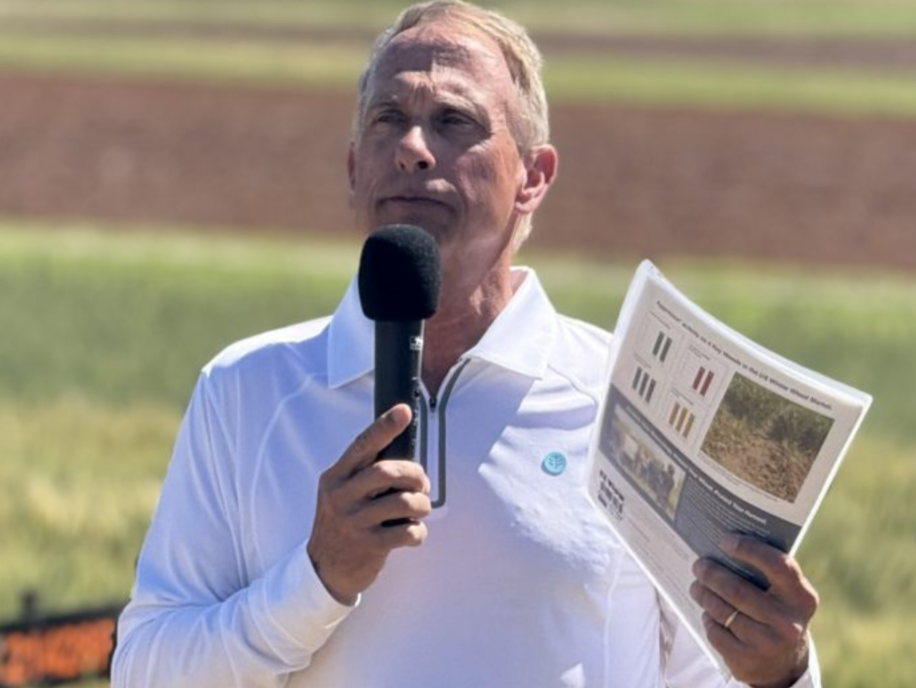
Following the 2025 wheat harvest, Oklahoma State University wheat breeder Dr. Brett Carver has finished digesting the data, and two clear, challenging trends have emerged: the persistence of dry winters and the arrival of new disease pressures in Central Oklahoma. In a conversation with Ron Hays, Dr. Carver explained how these factors are shaping the performance of current varieties and the future of the OSU wheat breeding program.
Trend 1: The “New Normal” of Dry Winters The first major takeaway from the 2025 crop was the impact of another “really dry winter,” a pattern Carver has seen emerge consistently since 2021. “My question is, well, how long is this going to persist?” Carver said. “We’ve gone about five years now, and so you kind of think, well, this may be a pattern that we’re going to be in for a while.” This climatic shift favors varieties with High Plains genetics, which are bred specifically for winter drought tolerance. “Any of our material that… had that High Plains influence, I could see it. I mean, it really came through,” Carver noted. As a result, the OSU program is shifting a portion of its germplasm to fit this environment, though Carver emphasizes it’s not a “wholesale” change.
Trend 2: New Diseases Arrive The second major trend is a new and concerning disease pressure, particularly Wheat Streak Mosaic (WSM), which has established itself in Central Oklahoma. “That’s wheat streak. Wheat streak mosaic,” Carver said. “Anything in the varieties that had a strong Jagger influence really looked good.”
While varieties with Jagger genetics—like OSU’s Showdown (which is 40% Jagger)—performed well, Carver notes this isn’t a simple fix. The disease pressure in the Panhandle is a more complex mix, often including Triticum Mosaic, which Showdown is not equipped to handle. Adding to the complexity, Carver identified “leaf spotting diseases” as a new major player. “It’s really starting to also rule the land,” he said. “And it’s become one of those top three diseases, I think.”
| | Livestock Sector Optimism Fuels a Modest Rise in Farmer Sentiment in October | | |
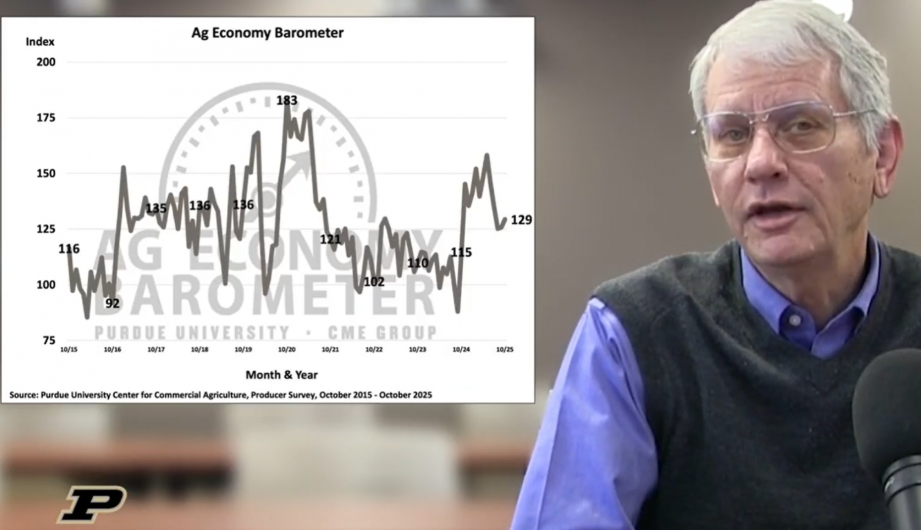
There was a modest uptick in U.S. farmer sentiment in October as the Purdue University-CME Group Ag Economy Barometer index of 129 was 3 points higher than September’s reading. The slight rise in the barometer was fueled primarily by an increase in the Index of Current Conditions to 130, which was 8 points above September’s index. Meanwhile, the Index of Future Expectations was virtually unchanged, rising just 1 point to 129. Farmer’s appraisal of current conditions on their farms continues to be a tale of two economies. Livestock producers remain very optimistic about conditions on their farms, fueled in part by record-high profitability in the beef sector. At the same time, poor profit margins across all major crop enterprises lead crop producers to provide a notably more pessimistic view of the current situation on their farms. The October barometer survey took place from October 13-17, 2025.
The Farm Financial Performance Index fell to 78, 10 points lower than in September. Farmers’ financial performance expectations fell sharply over the course of the late spring and summer. In May, the financial index stood at 109, 31 points higher than in October, and proceeded to fall throughout the rest of the spring and summer. Similar to results for the Current Conditions Index, there was a big disparity in financial performance expectations among crop and livestock producers. Crop producers expect financial performance on their farms to fall well below that of a year ago, while livestock producers look for their farms’ financial performance to mirror that of one year earlier.
In previous barometer surveys, producers overwhelmingly said they expect the USDA to provide compensation for weak commodity prices, similar to the 2019 Market Facilitation Program (MFP). This month’s barometer survey asked producers how they planned to use a supplementary payment from the USDA on their farms. Over half of respondents (53%) said it would be used to pay down debt, while one-fourth (25%) said it would be used to strengthen their farm’s working capital position. A small minority of farmers said they would use a payment from USDA to invest in farm machinery (12%) or to cover family living expenses (11%).
| | John Pfeiffer: Angus Association Stands Firm on Methane Research Decision | | |
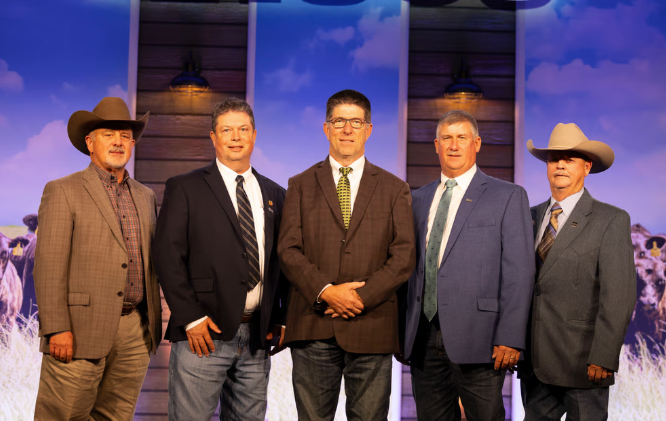
The 2025 American Angus Association Annual Meeting was held over this past weekend- and in today’s Beef Buzz, Senior Farm and Ranch Broadcaster Ron Hays talks with Oklahoma Angus Breeder and former American Angus National President John Pfeiffer, Jr. Pfeiffer was pleased with the outcome of the meeting, that saw the five incumbent Board members of the breed be reelected in a single vote, signaling support for the decisions made earlier this year in how money was accepted for a research project on beef cow efficiencies as it relates to methane gas produced.
Pfeiffer reflected on recent debates surrounding funding for methane and cow efficiency research tied to the Bezos Earth Fund. In Kansas city at the annual meeting “We did have some discussion on the funding,” Pfeiffer said, adding that the board and association “made some mistakes in the way we advertised it,” but emphasized that “the research needed to be done.” He explained that similar work had already been initiated by other organizations, noting, “Zoetis had been doing some, ST Genetics had been doing some… and in terms of being at the forefront, we’re actually really, really far behind.”
Pfeiffer defended the decision to participate in the research partnership, stressing both practicality and responsibility. “My take on it is, he’s got a whole lot of money, and we might as well use his money as ours,” he said, pointing out that the Angus Association “didn’t have $5 million laying around to do the research that’s going to happen with this.” He described the project as a rare chance to “get some real data on cows, their efficiency in grass and what methane they’re making,” shifting focus from previous feedlot studies to more accurate pasture-based findings.
| | Oklahoma FFA Claims Most Agriscience Champions of Any State at 2025 National FFA Convention | | |
The National FFA Agriscience Fair recognizes students who gain real-world, hands-on experiences in agricultural enterprises. Students use scientific principles and emerging technologies to solve complex problems related to agriculture, food and natural resources. The agriscience fair is for middle and high school students. Students compete in one of six categories in the agriscience fair and under one of the six divisions — either individually or in a team.
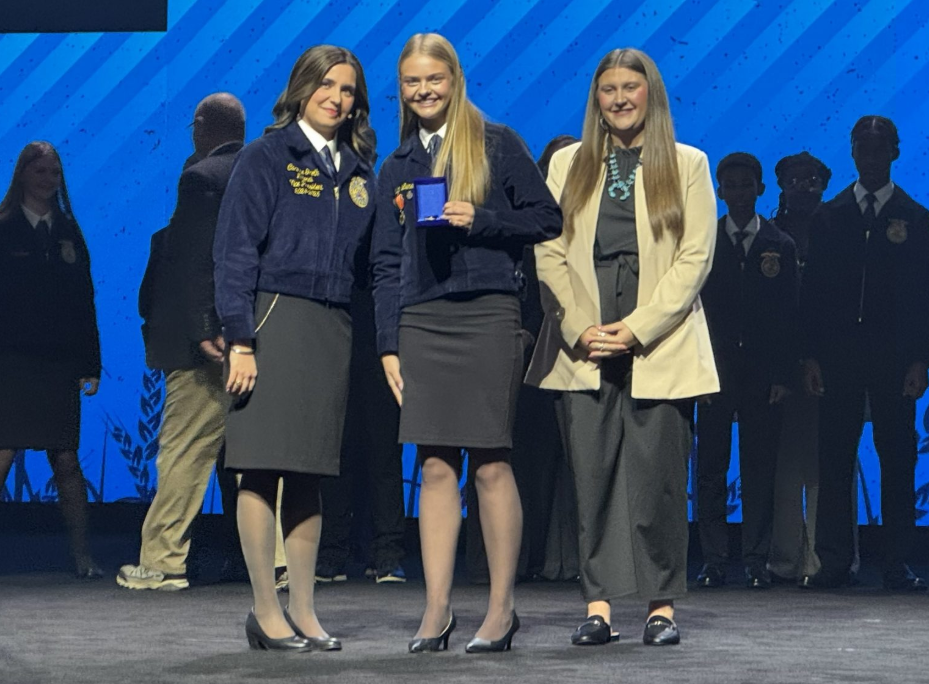
Oklahoma brought home 10 National Titles- the most of any state in the US. Ohio was second with six and Texas claimed five. Oklahoma was led by the seven earned by students from Stillwater FFA, two of the national titles were won by Oologah FFA Chapter members and one claimed by Jalyn Lundry of Haworth FFA.(pictured above)
The Stillwater FFA Chapter is once again the home of the most Agriscience Champions in the United States- with 7 National Titles- well ahead of the second highest count from within any single chapter- the Ridgemont FFA Chapter in Ohio taking home four. Our recap at the "Read More" will tell you more about Oklahoma's success in Agriscience last week in Indy.
| | As Oklahoma’s largest John Deere dealer, P&K Equipment is proud to serve our communities & the surrounding areas through 18 Oklahoma locations & 2 Arkansas locations. The entire P&K team is ready to keeping your equipment up & running. So, when it comes time to buy John Deere parts, look no further than GetGreenParts.com. Shop 24/7 from the convenience of wherever you are & have the parts shipped directly to you! This spring and summer- P&K is committed to making it easier than ever to really own your John Deere equipment. And long after the sale- P&K will be here to support you at every step. | |  | |
The Oklahoma Wheat Commission promotes greater use of wheat in domestic and international markets through research, market development and public education.
Our Commissioners develop policy and programs, direct the funding, represent producer interests and, of course, promote Oklahoma wheat!
Learn more about the Oklahoma Wheat Commission by clicking here for their website.
| | | Ben Hale Cattle Market Rebounds with Rain and Renewed Optimism | | |
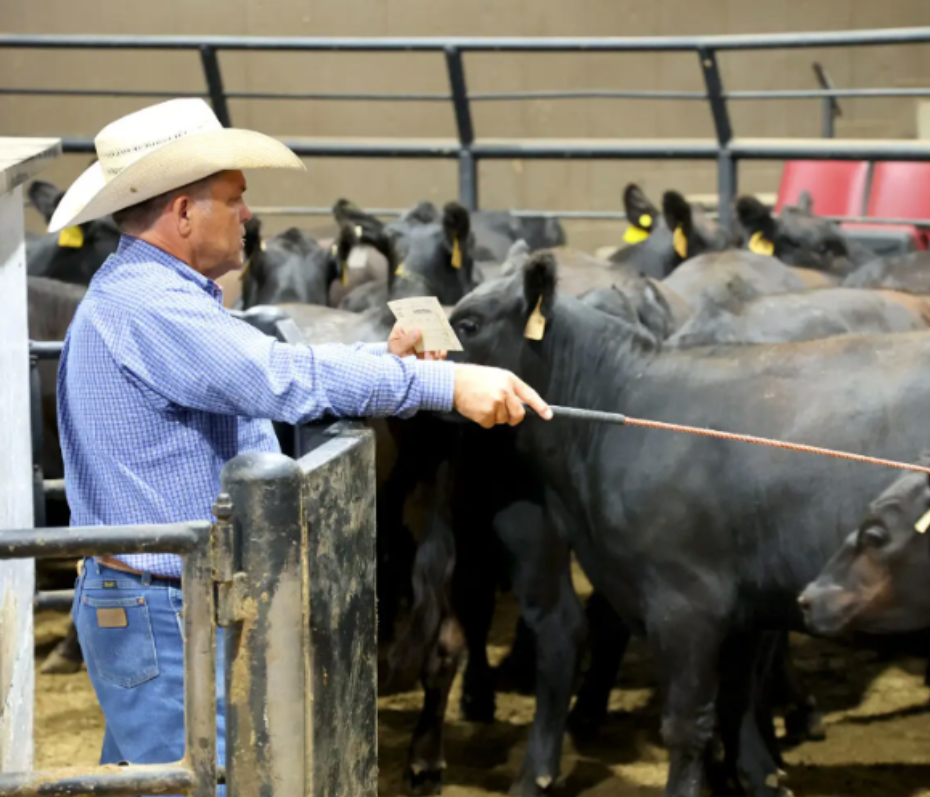
Hale said the cattle market has shown strong improvement in November after a tough October. “Not near as much verbiage coming out of D.C. that hurt us,” he noted, adding they “Had 5800 compared to 2000 a year ago… feeder over 810 higher and under was 25 higher.” Hale attributed stronger prices to recent rains and increased wheat pasture, saying it created “a lot of demand, these guys are wanting to do something, way better market than seven days ago, no doubt.”
While the market hasn’t fully recovered, Hale said producers have “got a good chunk of it back.” He observed that “not many feeders to pick from out there,” and that buyers still seem “awfully cautious about it.” However, he said calf prices remain strong: “If they’re weaned and, if, or they’re good and unweaned, those things will bring some money.”
Looking ahead, Hale described the general tone among producers as “cautiously optimistic,” adding that they just want to “get some of the rhetoric off the main stage” and “get back to doing what we do.” He emphasized that if feeder numbers “are truly tight like it seems to be, then just keep working towards that,” focusing on managing “the bred heifer and cow deal.”
| | Farm Bureau Welcomes Next Era of Supporting Farmer Mental Wellbeing | | |
The American Farm Bureau Federation is expanding the reach of its landmark Farm State of Mind initiative to a broader coalition of food and farming sector partners by joining forces with the Farm Family Wellness Alliance to launch the Farm State of Mind Alliance.
Building on the work started as a pilot project in 2020 by Farm Foundation and National 4-H Council, the Farm Family Wellness Alliance expanded in 2023 to support offering Togetherall and Personal Assistance Services products to farm families nationwide. Coming together under Farm State of Mind, managed by Farm Bureau, will centralize resources and amplify unified messaging, allowing for an even greater impact in rural communities.
“This is a critical time for mental health in rural America. Farmers and ranchers are facing economic uncertainty, the likes of which we haven’t seen in a generation,” said AFBF President Zippy Duvall. “I’ve heard firsthand from Farm Bureau members how our Farm State of Mind resources are changing lives in rural communities. I’m so proud to broaden our coalition and bring even more organizations alongside us to share the message that it’s okay not to be okay.”
| | Selecting Replacement Heifers: Building a Productive Cowherd for the Future | | |
As we all consider current cow herd dynamics and market trends, producers are evaluating options to rebuild or expand, making this a timely moment to revisit selection priorities. Thoughtful replacement heifer selection is essential to shaping the future of a cowherd. Heifers that fit the production environment, breed early, calve unassisted, and remain productive for years contribute significantly to long-term profitability. This article outlines key traits and tools to consider when making those selections.
Growth Rate to Achieve Early Puberty and Reproductive Readiness. Heifers that reach puberty early are more likely to conceive during their first breeding season and calve by 24 months of age. Early puberty is moderately to highly heritable and positively correlated with lifetime reproductive success. To support this, heifers should demonstrate consistent growth and reach target weights that promote reproductive readiness. Ideally, they should weigh approximately 65% of their projected mature weight at the start of the breeding season (typically between 13 and 15 months of age). For example, a heifer expected to mature at 1,400 pounds should weigh around 910 pounds at breeding. Reproductive tract scoring, conducted 4 to 6 weeks prior to the breeding season, is a valuable tool for assessing reproductive maturity. Selecting heifers that exhibit early reproductive development lays the foundation for a more fertile, efficient, and productive cowherd.
Fertility and Longevity. Although fertility has low heritability, it is one of the most economically important traits in beef production. Aim for a 60% first-service pregnancy rate and 90% pregnancy rate within a 60-day breeding season. Early pregnancy diagnosis allows for timely culling of open heifers, which can be marketed as yearlings. Over time, this strategy enhances herd fertility and longevity, as early-calving heifers tend to remain in the herd longer and wean more pounds of calf over their lifetime. Maintaining a buffer of 5–10% more heifers than needed allows producers to cull sub-fertile individuals without compromising replacement numbers.
| | U.S. Grains & BioProducts Council Responds To New Trade Deal Between U.S. And China | | |
The U.S. struck a trade deal with China, one of its most complex trading partners, that promises to open the Chinese market to U.S. soybeans and other agricultural exports. China agreed to purchase 12 million metric tons (MMT) of U.S. soybeans before the end of 2025 and at least 25 MMT of U.S. soybeans in each of 2026, 2027 and 2028 and the country will resume purchases of U.S. sorghum. In addition, according to the deal’s details, China will suspend all retaliatory tariffs it announced in March, including tariffs on U.S. corn, soybeans, wheat, chicken, pork, beef, dairy products and more.
In exchange, among other things, the U.S. has agreed to lower the tariffs on Chinese imports by removing 10 percentage points of the cumulative rate, effective Nov. 10, 2025, and will maintain its suspension of heightened reciprocal tariffs on Chinese imports until Nov. 10, 2026. It will also further extend the expiration of certain Section 301 tariff exclusions until Nov. 10, 2026.
The U.S. Grains & BioProducts Council responded to the news: “We are pleased to see the new trade deal the Trump Administration has struck with China and appreciate all the work that went into making it possible. China has been a top five trading partner with the United States for decades, and our relationship benefits the value chain globally, so we appreciate the Administration’s effort that should allow us to more easily continue to work with our partners there on behalf of the U.S. corn and sorghum industry and to benefit the entire agricultural community.”
| | |
The market gives- and then it takes it away- faster than Lucy can pull the football away as Charlie Brown runs up to kick it. Monday- we were dollars up on Cattle Futures- then unverified rumors about the Mexican border soon to be reopened pop up and we ended up dollars lower- February Live Cattle down $5.02 and January Feeder Cattle dropping $7.30.
On Tuesday, November 4, 2025, the Choice boxed beef cutout was $377.58, down $1.67 from Monday, while Select increased $1.32 to $361.25, narrowing the spread to $16.33 from $19.32. Load volume rose sharply to 167 from 77.
OKC West had their calf sale on Tuesday- it was a higher day as most of the auction took place before the futures market was decimated- The total calf run of 2,508 on Tuesday resulted in Steer and heifer calves 20.00-30.00 higher. For Wednesday- we are looking at 2,000 yearlings to be sold.
Beaver County Stockyards had 4,453 head on Tuesday- Compared to last sale: Feeder steers and heifers 5.00-15.00 higher, except for the 600lb steer weight class 30.00 higher on better quality. Steer calves 30.00-50.00 higher. Heifer calves 5.00-10.00 higher.
OKC West is our Market Links Sponsor- they sell cattle three days a week- Cows on Mondays, Stockers on Tuesday and Feeders on Wednesday- Call 405-262-8800 to learn more.
Click here for our Markets Page on OklahomaFarmReport.Com- there you will find many of the reports we have linked on the right hand column found on the previous format of our email.
| | |
© 2025 Oklahoma Farm Report - All rights reserved
|
| | | |