Oklahoma's Latest Farm
and Ranch News
Wednesday, November 12, 2025
| | Longest Government Shutdown Ever Poised to End Wednesday with House Vote | | |
The Senate passed legislation late Monday to reopen the government, bringing the longest shutdown in history closer to an end as a handful of Democrats joined with GOP Senators and voted out their CR by a 60 to 40 vote despite searing criticism from within their party. Both Oklahoma Senators voted throughout the shutdown to pass the clean CR sent to the Senate by the House.
The House vote to end the shutdown could come as early as Wednesday as Speaker Mike Johnson told members of the House on Monday to start returning to Washington ASAP. Reuters reports “With nearly 1,200 flights canceled on Tuesday due to the shutdown, lawmakers including Republican Representatives Rick Crawford of Arkansas and Trent Kelly of Mississippi said they were carpooling to the Capitol, while Representative Derrick Van Orden said he was making the 16-hour drive from Wisconsin on his motorcycle.” The House is slated to reconvene at 11 a.m. central time on Nov. 12. House Majority Whip Tom Emmer notified lawmakers that the first votes could occur as early as 3 p.m., but multiple series of votes are expected
For Agriculture- the end of the shutdown can not come too soon. Zippy Duvall, President of the American Farm Bureau, released a statement on Tuesday- “Farm Bureau commends the Senate for voting to end the government shutdown, ensuring that farmers and ranchers can continue to rely on critical USDA services and disaster relief to keep their farms running and also ensure Americans maintain access to food assistance programs. “We also appreciate the Senate’s action to extend the U.S. Grain Standards Act and key farm bill programs, as well as authorizing USDA’s 2026 budget.
| | Oklahoma Producer Aaron Schantz Gives Peanut, Cotton, and Soybean Harvest Update | | |
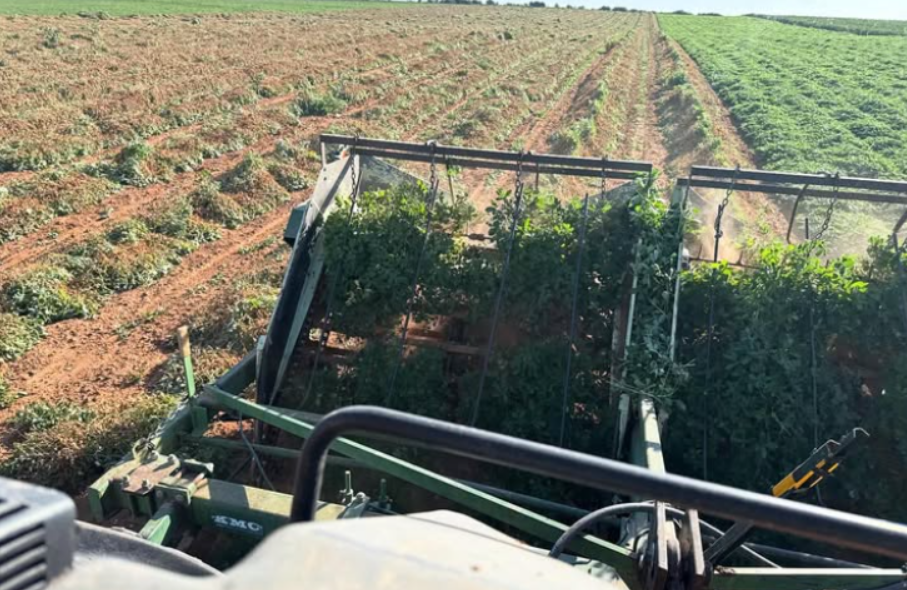
Oklahoma Producer Aaron Schantz Gives Peanut, Cotton, and Soybean Harvest Update. For diversified producers in western Oklahoma, harvest is a time of juggling crops, monitoring the weather, and managing complex rotations. For Aaron Schantz, an ag producer from Hydro, this year is a mixed bag, defined by high yields but tough commodity prices. Speaking with Farm Director KC Sheperd, Schantz provided an update on his operation, which has just wrapped up the peanut and soybean harvest and is now transitioning into cotton.
The peanut harvest was a clear bright spot for the farm. “We had a great growing season for peanuts specifically,” Schantz said. “I think we saw some really good yield.” He noted this year’s yields were “better than last year,” and the crop was harvested in a “really timely manner,” successfully beating the first freeze.
While peanuts aren’t a dominant crop in Oklahoma, Schantz continues to grow them due to the “great power in rotation.” It’s the only crop on his farm that utilizes a moldboard plow, which provides soil benefits.
With peanuts in the barn, the focus now shifts to cotton. Schantz said the recent freeze came in a “very good timely manner” after the crop was sprayed and ready.
“I think that we had good rains all throughout the summer,” he said, noting good potential for the crop. “We would have liked our fall to have stayed warmer a little bit longer… but I still think we’re looking at good potential.” While many in Oklahoma are calling it a “red letter year for cotton” in terms of production, Schantz points to a painful reality. “The price is hurting,” he said. “At the moment, we’re looking like we’re trading a good yield for poor price. So economics are probably going to be about the same as last year.”
| | Today’s Consumer – Watching Prices But Loving to Indulge With a Steak | | |
Danette Amstein, Managing Principal of the Midian Marketing Group. Midian Marketing, the only strategic marketing, research and creative agency that focuses solely on making a difference in the meat industry. Amstein is a sixth generation Kansas farmer/rancher. She is active in the management of her family’s commercial cow herd and row crop operation.
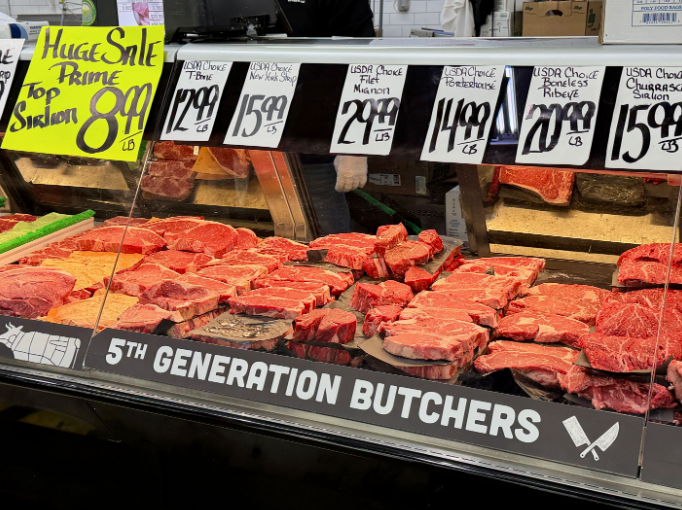
Amstein shared powerful insights into how today’s consumers view beef and what drives their purchasing decisions. She began by emphasizing that price remains front and center, noting, “Consumers do not understand that there are fewer cattle… They really care when they get to the grocery store and they see that price has gone up again.” Despite the strain of higher costs, she praised consumers for their loyalty, saying, “They’ve hung in there with us this far, and I’m hoping they’ll hang in for the full ride.” Amstein reminded producers that now, more than ever, it’s critical to communicate “what we are doing to address it and why it’s important to buy our product.”
Amstein described a fascinating behavior shaping beef demand today — what she calls “affordable indulgence.” She explained, “I might skimp on certain things this week… But then when I want to celebrate, or Friday has come and I just want to say that I’ve survived the week, I’m going to go with the affordable indulgence.” With more people eating at home instead of dining out, Amstein said this creates a major opportunity for beef, adding, “When I’m home and I want to celebrate as a consumer, one of the things that they like to celebrate with is a steak.” Beef, she said, is perfectly positioned to serve both the budget-conscious and those seeking a bit of luxury.
| | As Oklahoma’s largest John Deere dealer, P&K Equipment is proud to serve our communities & the surrounding areas through 18 Oklahoma locations & 2 Arkansas locations. The entire P&K team is ready to keeping your equipment up & running. So, when it comes time to buy John Deere parts, look no further than GetGreenParts.com. Shop 24/7 from the convenience of wherever you are & have the parts shipped directly to you! This spring and summer- P&K is committed to making it easier than ever to really own your John Deere equipment. And long after the sale- P&K will be here to support you at every step. | |  | |
The Oklahoma Wheat Commission promotes greater use of wheat in domestic and international markets through research, market development and public education.
Our Commissioners develop policy and programs, direct the funding, represent producer interests and, of course, promote Oklahoma wheat!
Learn more about the Oklahoma Wheat Commission by clicking here for their website.
| | | Market Steady and Selective: Ben Hale Breaks Down This Week’s Cattle Trends | | |
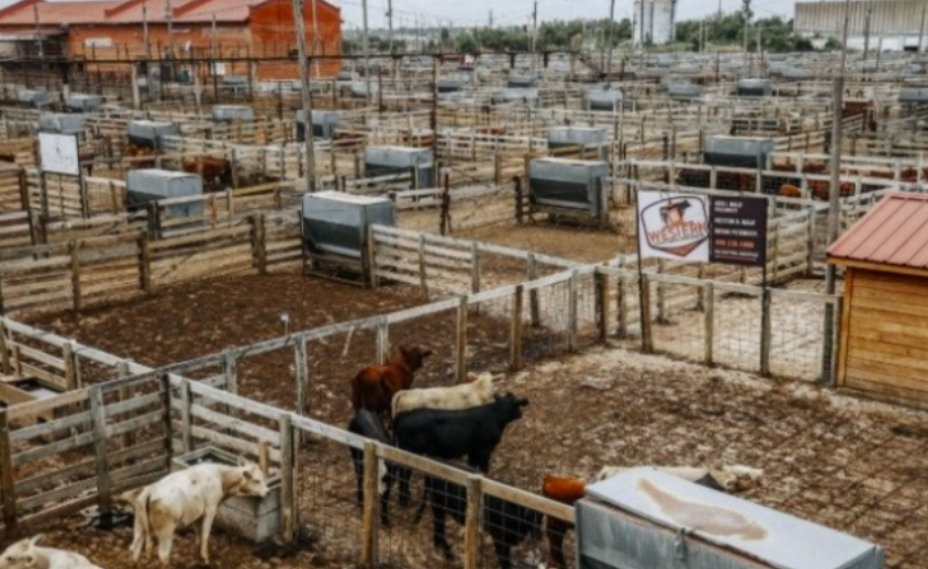
Hale shared an update this week from the Oklahoma National Stockyards, noting that the run was “a little over 6,000 head, and not much different than a year ago.” He said the sale “started out a little slow on some of those soft calves,” but emphasized that “the market was very snappy on those grazing cattle.” Hale explained that buyers were “very, very selective,” but good-quality, weaned calves “really got after them,” resulting in strong prices for top-end cattle.
Discussing recent market trends, Hale pointed out the uncertainty caused by fluctuating futures prices. “We’ve had several guys just wanting to buy,” he said, “but when the board did what it did, up and down and down and down, they’re kind of hesitant.” Still, he noted that “the calf deals kind of come back pretty stout,” and that producers are watching the weather closely. With more moisture and wheat growth, Hale believes “they would step back in this market,” adding that “the guy selling is liking what they’re bringing.”
Hale also touched on female cattle opportunities, suggesting that “if anybody’s wanting to buy some females, they might find some relative deals compared to what a month ago.” With the first freeze now behind them, he expects “the condition on these cattle will get better every week.” He noted that there were “some good Red Angus heifers yesterday, and some good black heifers,” making it a good time for buyers to “buy and grow into” future replacements.
| | Rollins Touts Trump Administration Milk Action Plan at NMPF Annual Meeting | | |
Agriculture Secretary Brooke Rollins touted the Trump administration’s milk action plan to support American dairy farmers today at NMPF’s annual meeting.
“I want to be very clear. We will never stop fighting for those of you in the dairy industry and across rural America we have reached that golden age for our producers,” said Rollins, a Texas native who keynoted the Joint Annual Meeting hosted by NMPF, the United Dairy Board and the United Dairy Industry Association. “Dairy farmers have delivered for America for 250 years, and now it’s time for us to deliver for you.”
Rollins spoke to roughly 750 farmers, cooperative leaders and industry professionals gathered to discuss industry topics ranging from an economic outlook to dairy labor challenges. NMPF, the largest U.S. dairy farmer group, is holding a series of discussions on policy issues throughout the meeting, ranging from the need to pass the Whole Milk for Healthy Kids Act to creating lasting labor solutions for U.S. dairy farmers.
| | Dr. Shannon Ferrell Speaks During Virtual Stockman & Stewardship | | |
Dr. Shannon Ferrell is a professor in the Oklahoma State University Department of Agricultural Economics, where he specializes in Agricultural Law. He grew up on a cattle and wheat operation in western Oklahoma and obtained his bachelor’s and master’s degrees in Agricultural Economics from OSU before obtaining his Juris Doctorate from the Oklahoma City University School of Law with endorsements in Estate Planning and Business and Financial Services Law.
Shannon spent a number of years in full-time private practice before joining OSU. As an educator and speaker, he helps audiences all over North America understand the fundamental legal elements of farm business management and farm transition planning. He has provided nearly 600 presentations and workshops to a cumulative audience of more than 37,000 across the U.S. and Canada while authoring more than 50 publications, including serving as lead author on the Farm Transition Workbook.
He has testified before Congress and the Oklahoma legislature on multiple policy issues involved in farm transitions from regulatory barriers in the transition process to retirement savings for farmers and ranchers. In private practice, he helps farm families with both the conversations involved in forming the best transition planning approach and creating the mechanisms to make their transitions successful.
| | Don’t Wait for Disease to Show — Jeff Ball Encourages Proactive Fungicide Planning | | |
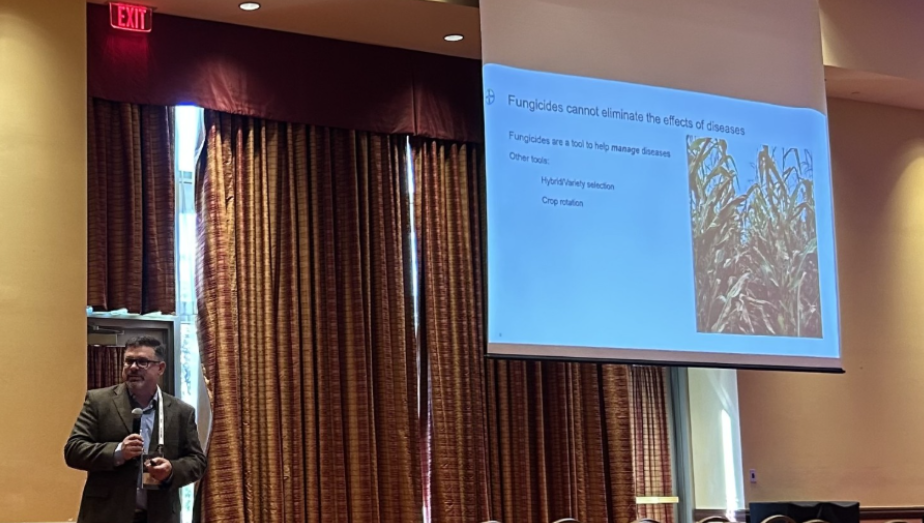
Associate Farm reporter Carli Davenport spoke with Jeff Ball of Bayer CropScience, who opened the conversation by emphasizing that fungicides cannot undo damage that has already occurred, explaining that “it’s basically timing.” He said, “If you’re a little late to the game, you can’t correct what’s already happened.” He pointed out that symptoms such as rust appearing on leaves mean the infection started weeks earlier. That’s why, he stressed, “It’s always best to be on the early side,” with fungicide applications planned and budgeted in advance to get the most benefit.
When it comes to early applications, Ball said applying fungicide around the V5 growth stage in corn can pay dividends. “An early season in corn is going to really help us with standability,” he explained, noting that soilborne pathogens can weaken stalks. At this stage, “the plant’s deciding a lot about reproduction,” and protecting it from disease allows it “to be on the aggressive side towards yield,” producing a healthier and more productive ear of corn.
Discussing disease challenges across Oklahoma, Ball said wheat growers often plant “a naked seed out there without a seed treatment,” which can lead to crown rot and Fusarium infections. “Our biggest competition is the untreated acre,” noting that black heads seen later in the season often trace back to infections at planting. For corn, this year’s “wet, cool spring” led to more stalk rots than usual, while “southern rust blew through late,” though yield impacts were minimal.
| | Build Back Better – Replacement Heifers Series | | |
In spite of market volatility over the past three weeks, the strong market fundamentals and current status of the U.S. beef industry remain unchanged, according to Paul Beck in his latest article in cow calf corner, and can be distilled down into a few short bullet points: The lowest beef cow inventory since the early 1960s. The lowest number of feeder calves in the production chain since the 1950s. Strongest consumer demand for beef in several decades. Very little evidence (over past several calf crops) of heifer calves being retained. to develop as the next generation of cows.
These factors indicate the robust values of all classes of cattle (and beef) we are seeing now should continue for several years. Why? Because of the biological time lag between heifers selected now to develop as replacements, and the 24 months before they would potentially wean their first calf to enter the production system. Furthermore, it is most likely the beef cow inventory of 2026 will be lower than 2025.
This current status is the result of droughts, the threat of New World screwworm, the resilience of cattle producers, high input cost and the great success story of cattle breeders improving the additive genetic merit of U.S. cattle to consistently yield a high quality, great tasting beef product to meet consumer demand.
| |
Checking the Markets...
Light trade was seen through most of the day Tuesday, due in part to Veterans Day, which kept markets moving in a "yo-yo" fashion through the session. Nearby feeder cattle futures were able to etch out gains at the closing bell, while firm losses developed in live cattle contracts. Oklahoma National Stockyards had 6,113 total receipts with Steer calves 5.00-10.00 lower.
December live cattle closed $1.35 lower at $227.2, February live cattle closed $0.60 lower at $226.4 and April live cattle closed $1.15 lower at $225.825. Tuesday's slaughter is estimated at 116,000 head, 2,000 head less than a week ago and 6,000 head less than a year ago.
Boxed beef prices closed higher: choice up $1.90 ($379.22) and select up $0.38 ($360.08) with a movement of 122.57 loads (84.76 loads of choice, 18.39 loads of select, 6.33 loads of trim and 13.09 loads of ground beef).
| | |
Click here for our Markets Page on OklahomaFarmReport.Com- there you will find our latest reports on cattle auctions, boxed beef, cash grains and market analysis.
OKC West is our Market Links Sponsor- they sell cattle three days a week- Cows on Mondays, Stockers on Tuesday and Feeders on Wednesday- Call 405-262-8800 to learn more.
| | |
© 2025 Oklahoma Farm Report - All rights reserved
|
| | | |