Oklahoma's Latest Farm
and Ranch News
Thursday, November 13, 2025
| |
House Passes Bill, Ending Record-Breaking 43-Day Government Shutdown
| | |
The U.S. House of Representatives passed a bipartisan compromise bill Wednesday evening, bringing an end to the longest and most contentious government shutdown in American history. The vote, called earlier in the day by Speaker Mike Johnson, was the final legislative hurdle needed to restore funding and reopen federal agencies after a 43-day shutdown. The vote was 213 to 209.
The bill, which was advanced by the Senate earlier this week, now heads to the President’s desk to be signed into law, which is expected to happen immediately.
The passage of the bill means that hundreds of thousands of federal employees who were either furloughed or working without pay—including TSA agents, air traffic controllers, and crucial USDA staff—can finally return to work and will receive back pay.
The legislation is not a simple extension, but a hybrid package that was negotiated in the Senate. It provides full, year-long funding for three key appropriations bills:
**Agriculture (funding the USDA and securing SNAP benefits)
**Military Construction and Veterans Affairs (MilCon-VA)
**The Legislative Branch
The remaining nine government agencies, including the Department of Homeland Security, will be funded by a Continuing Resolution (CR), keeping them open until a new deadline of January 30.
| | Oklahoma on Pace for 95% Broadband Connectivity by End of 2026, Aims to be “Best Connected State” | | |
Oklahoma is on Pace for 95% Broadband Connectivity by End of 2026, & Aims to be “Best Connected State” with a clear path to reaching 100%, according to Mike Sanders, Executive Director of the Oklahoma Broadband Office.
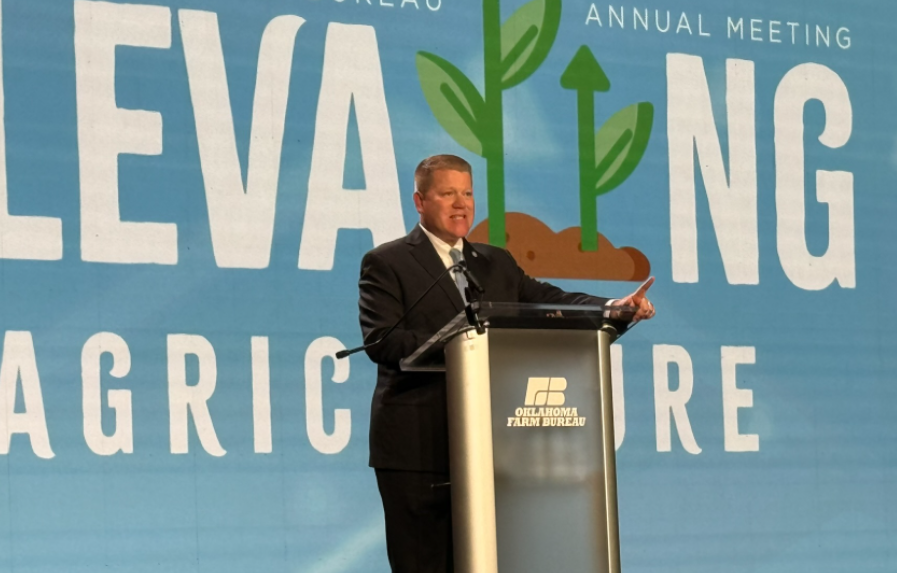
Speaking at the Oklahoma Farm Bureau’s annual meeting, Sanders delivered the “really exciting” news to Farm Director, KC Sheperd, emphasizing the transformative impact this will have on rural and agricultural communities.
“We’ve been waiting a long, long time. And as someone who lives in rural Oklahoma, I know exactly what that means,” Sanders said. He confirmed that 180 projects are currently underway across the state to build out the network. The plan also addresses the most difficult and costly areas to connect. “That last 5%—that’s the most expensive, that’s the hardest to get,” Sanders explained. He announced that a final program, valued at $655 million, will be awarded by the end of this year to tackle these “hardest, most difficult places.” He expects “shovels in the ground” for this final phase by the late first or early second quarter of 2026.
| | Oklahoma Cattlemen Stay Confident as Markets Hold Strong, Says Michael Kelsey | | |
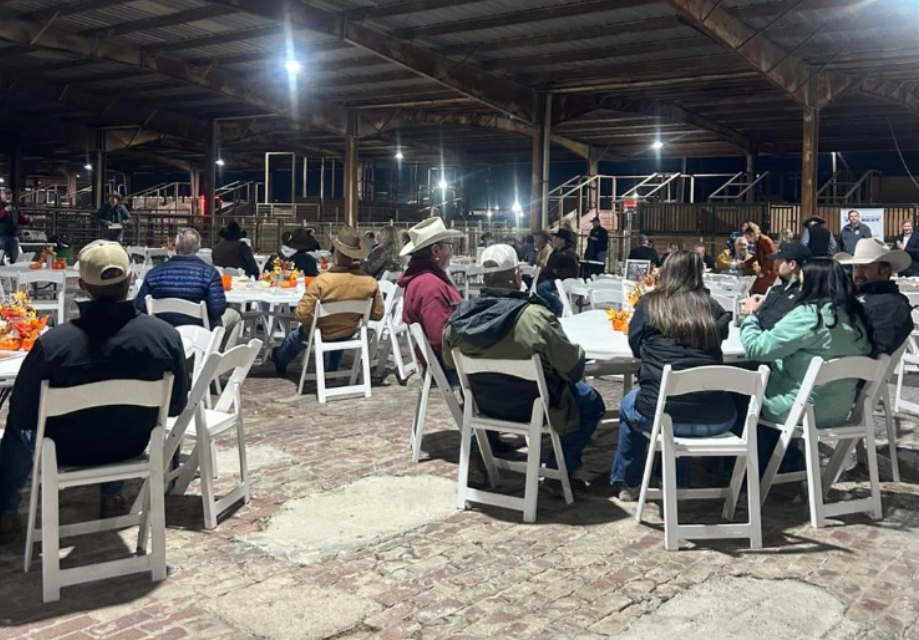
The Oklahoma Cattlemen’s Association (OCA) is midway through its annual fall gathering meetings across the state. Senior farm and ranch broadcaster Ron Hays spoke with Executive Vice President Michael Kelsey, who says the atmosphere has been upbeat. “Great crowds, a real mix of young and old, a lot of great discussion, and a lot of good attitudes,” he noted, describing the strong turnout and enthusiasm among members. Despite the positive mood, Kelsey said there has been “one rather large elephant in the room,” referring to recent comments from former President Donald Trump about the price of beef.
Kelsey explained that the President’s comments have caused unnecessary disruption in an otherwise strong market. “Up until about two weeks ago, nobody was talking about the price of beef,” he said. “Consumers certainly aren’t saying that beef is too high. And yet, when the President says beef is too high, that just wrecks our market.” He emphasized that while the cattle industry appreciates Trump’s support in many areas, “He’s wrong on this issue. Beef is not too high. It’s finally at a point where, in our opinion, it’s at the value that it should be.”
Despite the political noise, Kelsey remains confident in the underlying market fundamentals. “We still have a good market, considering the fundamentals—supply, demand, etc.—we’ll be okay,” he said. He noted that analysts continue to see “much, much stronger prices” ahead, pointing out that “the supply side is very much in our favor, and consumer demand is at an all 40-year time high.” According to Kelsey, as long as consumers continue to purchase beef, “the fundamentals are there. They’re great. We don’t need these interruptions and static… we’re in a good spot.”
| | |
Oklahoma Farm Bureau works to improve the lives of all Oklahomans by supporting our state’s agriculture community. As Oklahoma’s largest general farm organization led by Oklahoma farmers and ranchers, OKFB takes grassroots values and advocates for agriculture at the state Capitol and in Washington, D.C., to ensure our way of life continues for generations to come. Farm Bureau hosts leadership events, supports our state’s agricultural youth and connects consumers with agriculture in order to build a brighter future for our state. Become an OKFB member today online at okfarmbureau.org/join. Together, we are rural Oklahoma.
| |  | |
Oklahoma AgCredit supports rural Oklahoma with reliable and consistent credit, today and tomorrow. We offer loans for land, livestock, equipment, operating costs and country homes (NMLSR #809962) to farmers, ranchers and rural businesses across 60 counties. As a cooperative, we are owned by the members we serve. Through our Patronage Program, we have returned more than $74 million to our members since 1997.
For more information on our services or to find a location near you, visit our website here.
| | | Wheat Farmers Share Their Stories of Stewardship | | |
The concept of stewardship is deeply ingrained in the farmer. Their calling is to wisely use the gifts of soil, water, sun, and seed to produce a crop – and a livelihood. Wheat Farmers Share Their Stories of Stewardship as they feel responsible for nourishing and improving the land for the next generation while producing a sustainable source of high-quality wheat for the world.
In this Episode, Tom Cannon of the Goodson Ranch is featured. Inspired by the resilience of native grasses, some farmers are fundamentally changing their agricultural philosophy. Cannon said the new focus is not just on the plant’s yield but on the health of the ground it grows in. This “roots up” thinking is leading to significant environmental and productive benefits, particularly in states like Oklahoma, where water is the top limiting resource.
In Oklahoma, water is the single most critical and scarce resource for agriculture. Decades of traditional farming have, in some areas, left the soil with low organic matter (often 1% or less). This depleted soil has poor structure, meaning it cannot effectively absorb and store rainfall, leading to runoff and wasted moisture.
| | What WASDE Days Do to Grain Futures: Intraday Volatility Patterns You Can Plan Around | | |
When there isn’t a government shutdown that limits reporting activities, the World Agricultural Supply and Demand Estimates (WASDE) report is a once-a-month shock that does more than nudge the average price. On release days, the intraday volatility pattern—its level across the session, its midday spike, and how quickly that spike fades—differs from ordinary days in ways that traders, merchandisers, and risk managers can plan around. A recent research article evaluated the impact of the WASDE report on commodity futures markets’ volatility (Lee and Park, 2024). Here we translate this research into practical guidance for traders when a WASDE report is released.
Most trading plans benchmark a point estimate—an expected move or a single daily volatility number. But markets trade through time. On WASDE days, volatility is comparatively calm into late morning, jumps right after the 11:00 a.m. Central Time (CT) release, and then eases within about an hour. Treating the day like any other misses the timing and the intraday pattern that drives fills, slippage, and margin exposure.
We study corn and soybean futures from January 2013 through April 2023, focusing on regular trading hours (8:30 a.m. to 2:00 p.m. CT) and explicitly comparing three kinds of sessions: the release day itself, the day before, and the day after. Instead of averaging volatility across the whole day, we recover the intraday volatility curve—how volatility evolves minute by minute.
| |
Sesbania Vesicaria: A Toxic Plant for Oklahoma Cattle Producers to Watch
| | |
Driving around eastern Oklahoma, individuals may notice a tall, single-stemmed plant known as bladderpod or bagpod says Barry Whitworth in Cow Calf Corner. The scientific name is Sesbania vesicaria. Although the plant may appear desirable at certain times of the year, the seed pods are toxic. Cattle producers should be scouting pastures for any plants.
S. vesicaria is a legume that can grow up to six feet tall. It has pinnately compound leaves with numerous small, oval leaflets. Bladderpod produces bright yellow flowers with hints of red or pink. Following flowering, the seed pods develop. The seed pods are green to yellowish in color. By late summer or early fall, the pods turn brown and often rattle when shaken, signaling that the plant has reached its most toxic stage.
The plant is found in sandy soils in southeastern and central Oklahoma. It may appear in areas where it is not usually seen following wet summers or in areas that have flooded. Generally, bladderpod grows as scattered individual plants but, on occasion, will form dense stands.Since Oklahoma experienced a very wet summer, S. vesicaria may be a problem this winter. Cattle producers need to be scouting pastures for any bladderpod plants.
| | Land O’Lakes and Microsoft Partner to Accelerate AI Innovation in Agriculture | | |
Land O’Lakes Inc. and Microsoft today announced a multiyear strategic alliance, marking a new chapter in their shared commitment to agricultural innovation. Building on five years of successful collaboration, the alliance will focus on co-developing AI-powered tools including a digital assistant called “Oz.” This assistant is built on models within Azure AI Foundry and uses Land O’Lakes agricultural data to help farmers make informed decisions that aim to optimize operations, maximize yield potentials and mitigate risk.
U.S. farms are vital to the nation’s food supply but rising production costs, falling crop prices, and declining farmable land are squeezing margins across operations of all sizes. Technologies that improve efficiency and resiliency can help farmers manage costs and stabilize their operations, safeguarding the future of agriculture.
“Land O’Lakes has supported American agriculture for more than 100 years, and the AI-powered technologies we’re building with Microsoft will be key to the next 100,” said Teddy Bekele, SVP and Chief Technology Officer, Land O’Lakes. “The goal of our alliance is to deliver data-driven recommendations and solutions that lead to the best outcomes for farmers, who keep food on all of our tables.”
| | CattleCon 2026 Prepares Next Generation of Producers | | |
College students and recent graduates are encouraged to attend CattleCon 2026 in Nashville, Tennessee, Feb. 3-5, to help them prepare for careers in the cattle industry. Future agricultural leaders will have the opportunity to engage with potential employers during the new “Career Crawl” at the NCBA Trade Show on Thursday, Feb. 5.
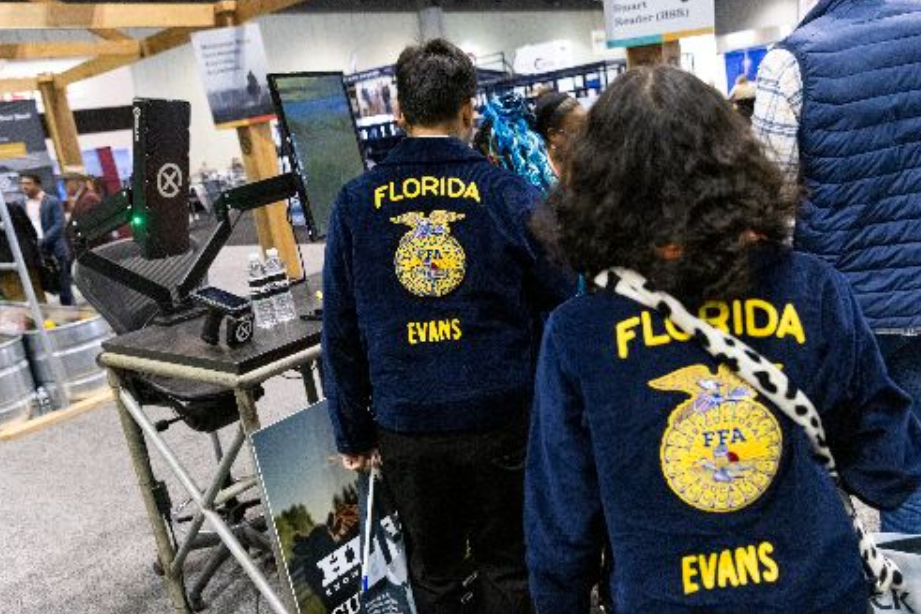
“The largest cattle industry event of the year is a great place for the next generation to network with some of our industry’s most impactful companies,” said National Cattlemen’s Beef Association President Buck Wehrbein. “We hope this new career event opens doors for future leaders.” Attendees can visit participating “Career Crawl” companies at the NCBA Trade Show on Thursday to explore internships, job openings and career opportunities while engaging in meaningful conversations with agriculture professionals. In addition, the first 250 FFA members and 250 4-H members to register will receive complimentary One-Day Thursday Registration, courtesy of Culver’s and Nationwide.
Collegiates are also invited to join American National CattleWomen for an engaging and educational session dedicated to shaping the future of the cattle and beef industries. During the Emerging Leaders event on Thursday morning, attendees can connect with industry leaders, gain valuable insights and explore exciting career and networking opportunities.
| |
Checking the Markets...
It was another mostly uneventful day for the live cattle complex as the contracts closed slightly lower, unable to find the support in the marketplace that traders were hoping to see to justify trading the contracts any higher. December live cattle closed $1.92 lower at $225.27, February live cattle closed $1.42 lower at $224.97 and April live cattle closed $1.32 lower at $224.50.
Boxed beef prices closed lower: choice down $4.77 ($374.45) and select down $0.14 ($359.94) with a movement of 183 loads (141.11 loads of choice, 24.05 loads of select, 8.72 loads of trim and 9.57 loads of ground beef).
The feeder cattle complex held the same weaker attitude that the live cattle market held throughout the day. Closing anywhere from $2.00 to $3.00 lower, the feeder cattle complex saw the biggest day-over-day declines in its furthest deferred months as time means risk in today's marketplace. November feeders closed $1.35 higher at $339.02, January feeders closed $1.67 lower at $327.47 and March feeders closed $2.30 lower at $321.02. At Oklahoma National Stockyards in Oklahoma City, Oklahoma, feeder steers and heifers traded steady to $5.00 lower compared to last week. Steer calves sold $5.00 to $10.00 lower.
| | |
Click here for our Markets Page on OklahomaFarmReport.Com- there you will find our latest reports on cattle auctions, boxed beef, cash grains and market analysis.
OKC West is our Market Links Sponsor- they sell cattle three days a week- Cows on Mondays, Stockers on Tuesday and Feeders on Wednesday- Call 405-262-8800 to learn more.
| | |
© 2025 Oklahoma Farm Report - All rights reserved
|
| | | |