Oklahoma's Latest Farm
and Ranch News
Monday, November 24, 2025
| | Market Outlook with Todd Hubbs: Wheat Volatility, Big Corn Supplies, and Bearish Cotton Trends | | |
Associate farm reporter Carli Davenport spoke with crop marketing specialist Todd Hubbs from Oklahoma State University, who began with an update on the wheat market, noting significant price movement throughout the week. He explains that early gains faded after the USDA report, which, in his words, “didn’t raise exports, which a lot of people were assuming,” but did incorporate late-September production numbers. This pushed domestic ending stocks higher while global production increased by “over 12 million tons.” Hubbs adds that winter wheat conditions were weaker than expected at 45% good-to-excellent, and planting progress was slower. He also mentions that a major rain event and rumors of a Russia–Ukraine peace deal “maybe…taken a little bit out of the market.”
Shifting to corn, Hubbs emphasizes the size of this year’s crop, saying, “We’ve got a big crop.” He notes that many still question the USDA’s yield forecast and are “a couple bushels, if not more, lower.” However, he stresses that the USDA’s demand projections may be overly ambitious, pointing to “over 3 billion bushels of exports” and feed-and-residual use that “a lot of people disagree with…because we don’t have a lot of cattle out there.” Given this balance, he believes corn prices will likely stay range-bound.
Regarding cotton, Hubbs explains that the global balance sheet last year was “pretty bearish” due to sharply higher production and increased beginning stocks. U.S. production alone rose by nearly a million bales. Although exports were raised by 200,000 bales, ending stocks were still up 700,000, which he describes as “somewhat bearish.” He suggests prices in the low-60-cent range may represent a bottom, but adds, “We’re probably going to need some non-fundamental outside factor to get us running.”
| | USDA’s Richard Fordyce on Post-Shutdown Recovery | | |
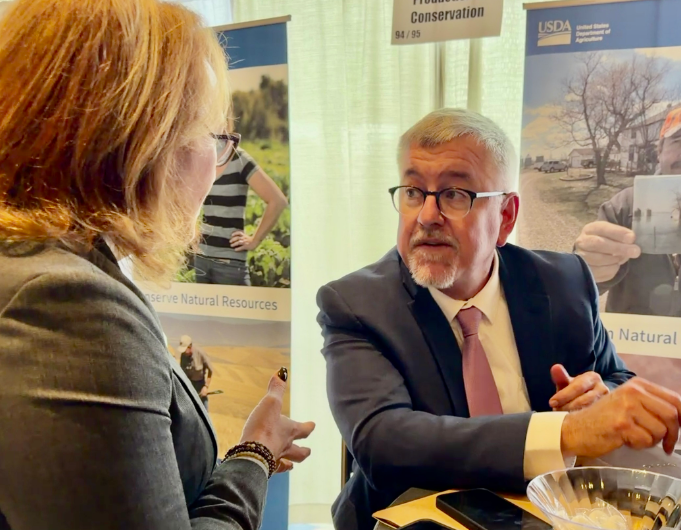
Senior farm and ranch broadcaster Ron Hays spoke with Richard Fordyce, Under Secretary of Agriculture for Farm Production and Conservation at USDA at the National Farm Broadcasters Convention in Kansas City. Questions about how the USDA recovered after the lengthy government shutdown started the conversation, and Fordyce explains that the department “had folks back in the day after the shutdown ended” and emphasized that USDA now has “a full year appropriation, so we’re not going to be subject to another government shutdown.” According to him, both FSA and NRCS employees were “ready to go to work that very next day,” allowing operations to resume quickly.
Fordyce acknowledges that a shutdown inevitably leaves farmers uncertain about their program status, loans, and payments, and that staff have had to work through backlogs. He notes that after 43 days of closure, “there’ll be some things that have kind of piled up,” although limited staffing during the shutdown allowed some essential processes to continue. He highlights that FSA employees were still able to issue marketing assistance loans and ARC/PLC payments, and that the agency had “started a payment run yesterday for CRP.” NRCS, which had fewer personnel working, faced more unfinished projects and producer questions.
Addressing operational status across the country, Fordyce stresses that with “320–350 county offices,” local conditions vary, but “by and large… things are going pretty well.” He adds that USDA is almost fully staffed at the state-executive-director level, reporting that only Nevada and Washington still lack permanent FSA directors. This near-complete staffing helps stabilize program delivery and responsiveness at the state level.
| | NCBA’s Ethan Lane on the Future of Beef Labeling | | |
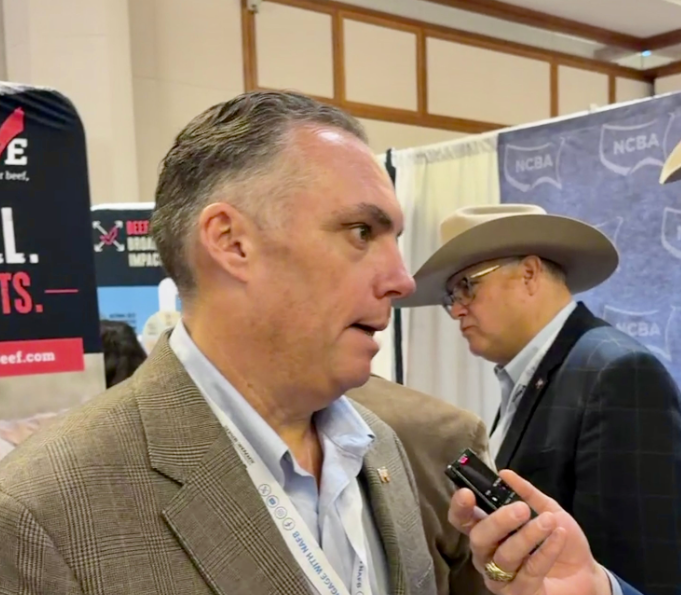
senior farm and ranch broadcaster Ron Hays speaks with Ethan Lane of the National Cattlemen’s Beef Association at the National Farm Broadcasters Convention in Kansas City. They discussed the ongoing debate over labeling in the beef industry. The conversation centered on tensions between mandatory Country of Origin Labeling (MCOOL) and voluntary labeling, a topic that continues to divide producers, policymakers, and industry groups. Lane was clear that he believes the industry must move forward based on evidence rather than nostalgia for policies that have struggled in the past.
Lane emphasized that MCOOL simply did not achieve its intended goals. “MCOOL didn’t work. The numbers show that MCOOL didn’t work.” In contrast, Lane argued that voluntary labeling systems have shown measurable success with consumers, who increasingly respond to local, regional, and value-added labels that highlight specific production attributes.
From the producer’s perspective, Lane stressed that voluntary labeling delivers real value where it matters—at the ranch level. He explained that broad national origin claims don’t benefit cattle producers directly, saying, “A large, broad national origin claim… might give a little tiny kicker to the packers… they do absolutely nothing for the U.S. cattle producer that I work for.” Instead, he believes the U.S. beef industry should focus on leveraging its unmatched product quality and capturing premiums that reward producers for the superior beef they raise.
| | |
The Oklahoma Cattlemen's Association is the trusted voice of the Oklahoma Cattle Industry. With headquarters in Oklahoma City, the OCA has a regular presence at the State Capitol to protect and defend the interests of cattlemen and cattlewomen.
Their Vision Statement explains the highest priority of the organization- "Leadership that serves, strengthens and advocates for the Oklahoma cattle industry."
To learn more about the OCA and how you can be a part of this forward-looking group of cattle producers, click here for their website. For more information- call 405-235-4391.
| |  | |
Midwest Farm Shows is proud to produce the two best Farm Shows in the State of Oklahoma annually- the Tulsa Farm Show each December and the Oklahoma City Farm Show each April.
The Tulsa Farm Show is Oklahoma’s premier agricultural and ranching event- and returns to the SageNet Center (Expo Square) December 11,12 & 13, 2025.
Now is the ideal time to contact the Midwest Farm Show Office at 507-437-7969 and book space at the 2025 Tulsa Farm Show. To learn more about the Tulsa Farm Show, click here.
| | | Billy Howe Texas Water Challenges: AI Centers, Groundwater Rights, and Conservation | | |
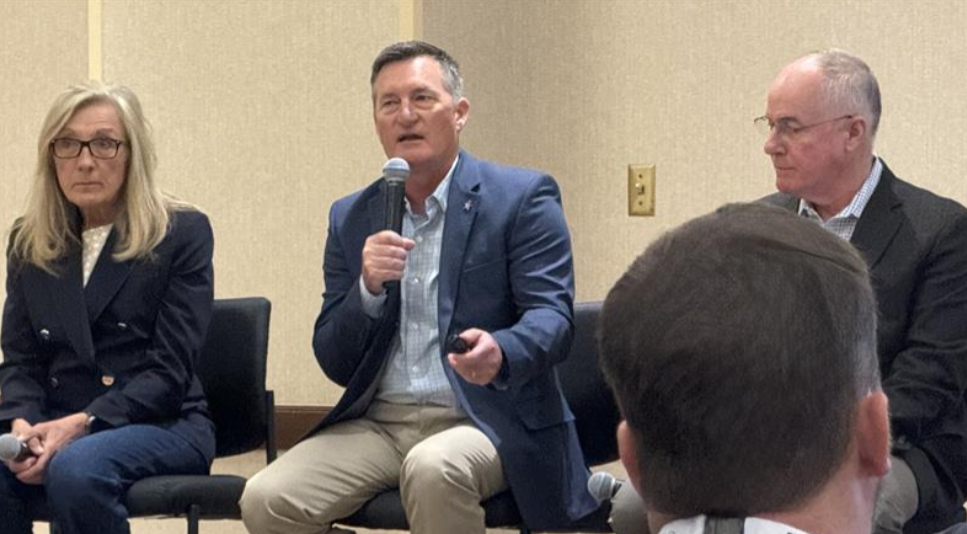
Farm Director KC Sheperd spoke with Billy Howe of the Texas Farm Bureau, who explained how Texas differs from most states regarding water rights. As he notes, “the landowner actually owns their groundwater. It’s part of their land, so it’s private property.” This framework, he adds, can easily generate disputes when one landowner wants to profit from pumping water while neighbors fear depletion or well impacts. According to Howe, this can lead to “a neighbor versus neighbor type situation.”
Discussion then shifts to emerging pressures on rural water supplies, particularly from technology infrastructure. Howe says Farm Bureau members are increasingly worried about “the AI data centers as water users,” even more than large metropolitan areas that previously drew concern. These data centers are entering rural regions and tapping local water sources, a trend Howe believes will be significant, noting that “it’s gonna be interesting to see how that develops.”
The conversation further examines how large tech companies are influencing rural communities by offering money and jobs, sometimes without producers fully understanding long-term water implications. Howe emphasizes producer skepticism, stating, “Our ag producers are very wary of those things coming in into their areas for sure.” He highlights the scale of planned development, pointing out that “Google announced that they’re going invest $40 billion in Texas” to build major complexes.
| | USDA Launches Screwworm.gov, Centralizing New World Screwworm Information Across the Federal Government | | |
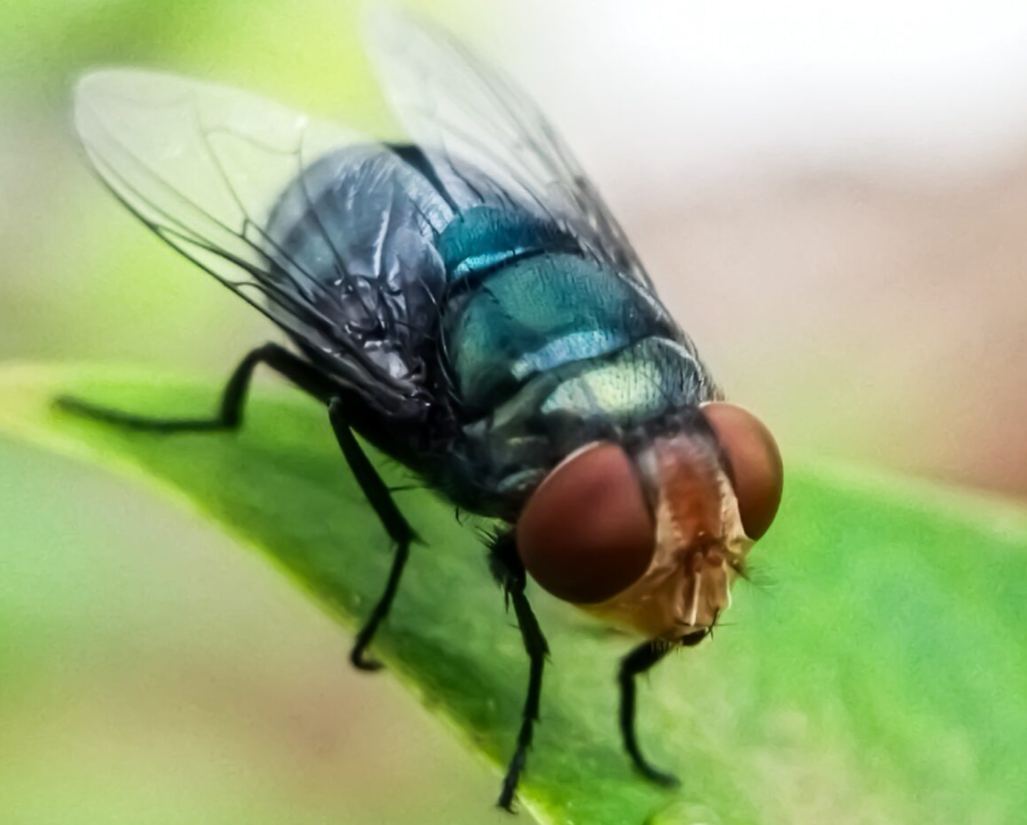
The U.S. Department of Agriculture (USDA) is excited to highlight the launch of the NEW Unified New World screwworm (NWS) website, screwworm.gov. This dynamic new site centralizes NWS information available across the federal government. It reflects our whole-of-government effort to fight this pest through the implementation of Secretary Rollins’ comprehensive five-pronged plan.
“The Trump Administration is leading a whole-of-government effort to protect our nation’s cattle industry from the New World Screwworm. To ensure timely and effective communications, this new unified website will be a one-stop shop for all screwworm-related information and will help our stakeholders be better informed as new information becomes available,” said Secretary Brooke Rollins. “We are grateful for the robust interagency collaboration, and we continue to work every day with our state and industry partners to implement our screwworm plan. This is a national security priority, and it has the full attention of our team.”
Screwworm.gov has targeted resources for a wide range of stakeholder,s including livestock producers, veterinarians, animal health officials, wildlife professionals, healthcare providers, pet owners, researchers, drug manufacturers, and the general public. It also includes the latest USDA-verified information on cases and response activities in Mexico, as well as U.S. preparedness efforts.
| | Hardin Addresses Concerns Over Potential Poultry Industry Changes | | |
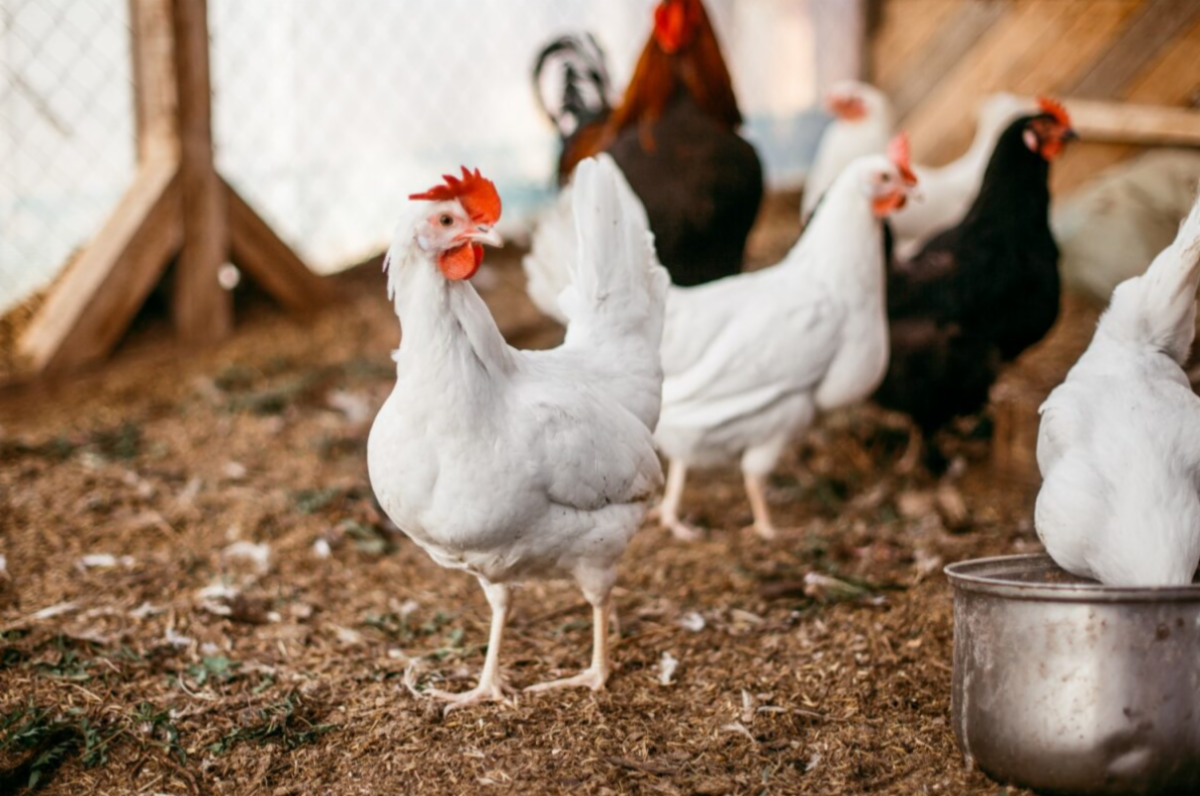
Rep. David Hardin, R-Stilwell, is addressing concerns raised by Adair County commissioners regarding the potential economic impact of major reductions in poultry operations in northeastern Oklahoma and the importance of the poultry industry to Oklahoma agriculture.
Adair County commissioners sent a letter to Attorney General Gentner Drummond outlining the role poultry production plays in local economies and the significant effect a large-scale reduction could have on county governments, school districts, farm families and small businesses across the region. The commissioners noted that poultry production has long been one of the primary economic drivers in Adair County and supports hundreds of families while generating revenue that helps sustain rural communities.
Reports indicating that Tyson Foods is evaluating possible changes to its Oklahoma operations come as the state continues navigating a long-running federal lawsuit over water quality in the Illinois River watershed. The litigation, now more than 20 years old, centers on pollution concerns shared by Oklahoma and Arkansas.
| | Updated- Tyson to Shutter Lexington, Nebraska Beef Plant- Make Amarillo a Single Shift Plant | | |
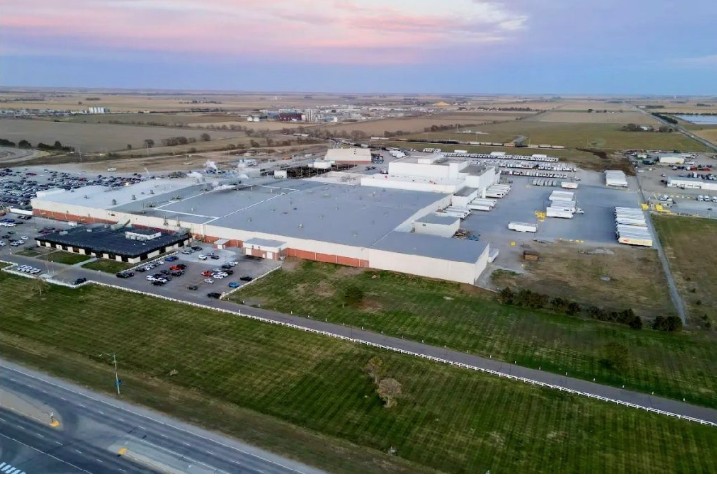
Tyson Meats announced major changes to its beef processing network, confirming fears within the cattle industry that historically low U.S. cattle herd numbers—at their lowest since 1951—are impacting processing capacity. Tyson released a statement detailing the decision to end operations at its beef facility in Lexington, Nebraska, and to convert its Amarillo, Texas, plant to a single, full-capacity shift. The company stated these moves are "designed to right size its beef business and position it for long-term success," while assuring customers that production will be increased at other company facilities to meet demand.
The closures and adjustments carry significant community and industry impact. The Lexington, Nebraska, plant, which first opened in 1990, had a daily slaughter capacity of 5,000 head and employed approximately 3,200 workers. The reduction to a single shift at the Amarillo, Texas, facility (which has a daily capacity of 5,500 head) could affect as many as 1,700 workers. Tyson stated it is committed to supporting impacted team members, including providing relocation benefits and assistance in applying for open positions at other facilities across its network. Industry leaders expressed immediate concern over the contraction in processing capacity.
Michael Kelsey with OCA stated he was "disappointed" by Tyson's decisions, noting that any reduction in national processing capacity "creates uncertainty throughout the beef supply chain." However, the OCA also maintained a long-term optimistic view, asserting that "The long-term outlook for the beef cattle industry remains strong," driven by robust demand for high-quality beef. The OCA pledged to continue monitoring the situation and supporting policy efforts aimed at strengthening processing capacity for cattle producers.
| |
Klobuchar, Luján, Colleagues Press USDA on Unnecessary SNAP Reapplications
| | |
U.S. Senators Amy Klobuchar (D-MN), Ranking Member of the Senate Committee on Agriculture, Nutrition, and Forestry, and Ben Ray Luján (D-NM), Ranking Member of the Subcommittee on Food and Nutrition, Specialty Crops, Organics, and Research, led 30 of their colleagues in pressing U.S. Department of Agriculture Secretary Brooke Rollins on the USDA’s plan to have all beneficiaries of the Supplemental Nutrition Assistance Program (SNAP) “reapply” for their benefits.
“We write to express serious concerns and request further details about the plan by the U.S. Department of Agriculture to have all beneficiaries of the Supplemental Nutrition Assistance Program (SNAP) ‘reapply’ for their benefits,” wrote the Senators. “These changes appear to be duplicative of existing SNAP rules and designed to create more red tape for families seeking to put food on the table.”
“This reapplication requirement comes after repeated efforts to deny Americans in need of essential nutrition assistance,” the Senators continued. “In addition to unprecedented cuts to SNAP enacted earlier this summer, decisions to disrupt food assistance during the shutdown have created additional uncertainty. We are therefore troubled that the Administration could choose, at this moment, to add additional red tape that creates duplicative and unnecessary barriers to accessing nutrition assistance for families.”
| |
Checking the Markets...
On Friday, the livestock complex closed fully lower, with the market's fundamentals simply not providing enough support to allow the contracts any other option ahead of the weekend. The only positive development late this week was Friday's Cattle on Feed report, which showed placements down 10% year over year.
From Friday to Friday, livestock futures scored the following changes: December live cattle down $4.70, February live cattle down $4.75; January feeder cattle down $6.32, March feeder cattle down $6.30. Boxed beef prices closed higher: choice up $0.20 ($371.48) and select up $2.80 ($356.98) with a movement of 145 loads
MONDAY'S CATTLE CALL: Lower. With packers currently having the upper hand in the fed cash cattle market, next week's trade will likely be lower, as it will be a holiday-shortened week.
| | |
Click here for our Markets Page on OklahomaFarmReport.Com- there you will find our latest reports on cattle auctions, boxed beef, cash grains and market analysis.
OKC West is our Market Links Sponsor- they sell cattle three days a week- Cows on Mondays, Stockers on Tuesday and Feeders on Wednesday- Call 405-262-8800 to learn more.
| | |
© 2025 Oklahoma Farm Report - All rights reserved
|
| | | |