Oklahoma's Latest Farm
and Ranch News
Wednesday, November 26, 2025
| | Navigating the Grain Market: Trade Truce, Soy Demand, and the Corn Conundrum | | |
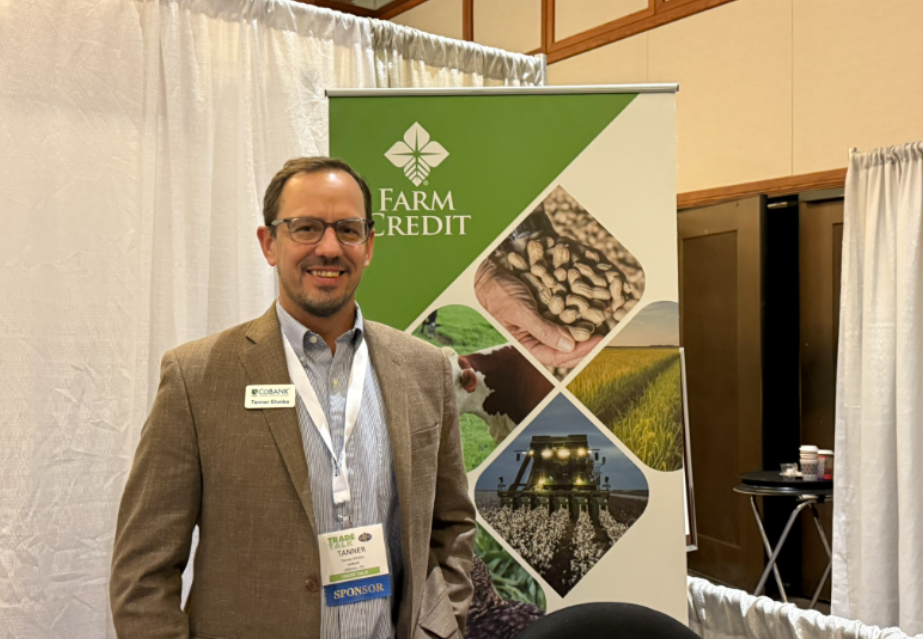
Farm Director KC Shepherd speaks with Tanner Ehmke, the Lead Economist for Grains and Oilseeds at Farm Credit, to discuss the latest developments shaping the market for U.S. soybeans, corn, and wheat. The conversation covers the volatile state of international trade, the surge in domestic demand, and the persistent challenges of massive grain inventories.
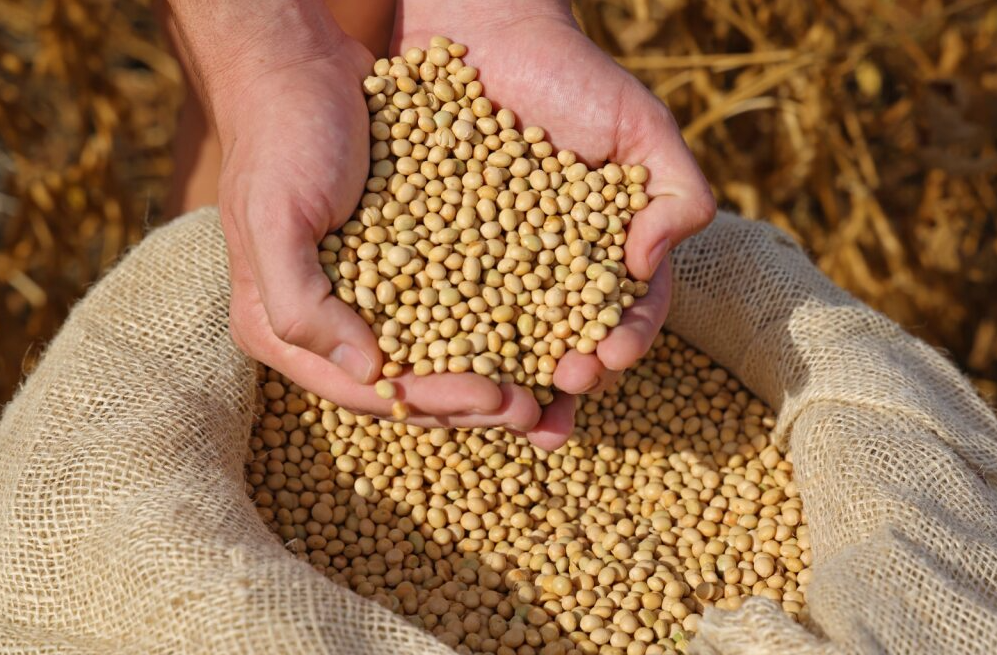
Ehmke characterizes the current U.S.-China trade situation not as a formalized deal, but as a trade truce, noting that a signed agreement is still forthcoming, possibly after the new year. The “great news” is the absence of further trade escalation and a positive shift in demand. Buying Resumption: China’s state-owned firms like COFCO and Sinograin have resumed buying U.S. soybeans. Ehmke calls this an “absolute win” that led to a recovery in soybean prices. Persistent Hurdles: Private crushers in China are still not buying U.S. soybeans because of the 13% tariff and the fact that Brazil continues to offer cheaper alternatives. Demand Sustained: While current purchases haven’t reached the 12 million tons previously promoted, the demand from state-owned firms is expected to provide a firmer floor under soybean prices.
In addition to foreign demand, U.S. soybeans benefit from a domestic boom: Biofuel Demand: The expansion of crush capacity in the U.S., driven by nationwide biofuel demand, is creating significant domestic demand. Price Strength: Soybeans have shown the strongest price retention compared to other commodities. Ehmke advises farmers to be cautiously optimistic, acknowledging that high prices rarely stick around long, especially given the instability of the current trade truce. Sustaining the rally requires new, consistent demand from China.
| | Tyson Beef Plant Closures: Dr. Derrell Peel Explains the Impact | | |
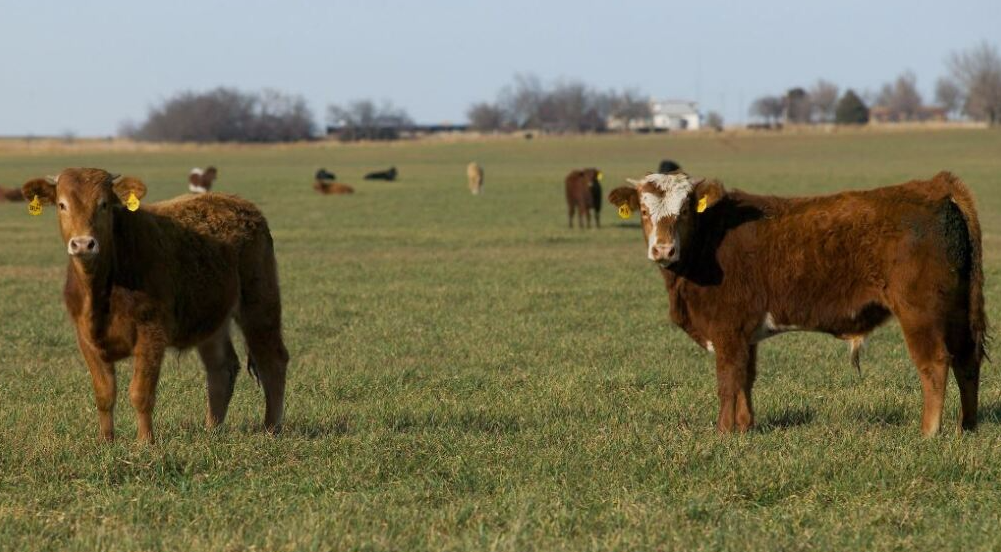
Senior farm and ranch broadcaster Ron Hays speaks with livestock market economist Dr. Derrell Peel about Tyson Foods’ recent announcement about shutting down its Lexington, Nebraska, beef plant and downsizing operations in Amarillo. This news follows months of losses in its beef division, driven largely by the smallest U.S. cattle herd in decades. Tyson Foods’ recent announcement about shutting down its Lexington, Nebraska, beef plant and downsizing operations in Amarillo. This news follows months of losses in its beef division, driven largely by the smallest U.S. cattle herd in decades.
Dr. Peel explained that the closure was not entirely unexpected within the industry. As he noted, “I’ve been getting questions for months from producers. Everybody was aware that this was a possibility.” With cattle numbers extremely tight, packers have operated far below capacity and “have been unable to operate at anywhere close to full capacity,” leading to sustained financial losses. According to Peel, the combined changes at the two Tyson plants represent a “seven to eight thousand head per day loss of packing capacity… probably somewhere in the range of seven and a half to nine percent of total U.S. packing capacity.”
While plants tend to operate regionally, Peel emphasized that cattle flows respond to market pressures. He acknowledged that cattle can travel substantial distances when numbers are low, remarking that “when numbers get tight… fed cattle will travel significant distances. It’s not as efficient to do that.”
| | Ben Hale: Cattle Markets Ahead Of Thanksgiving Holiday | | |
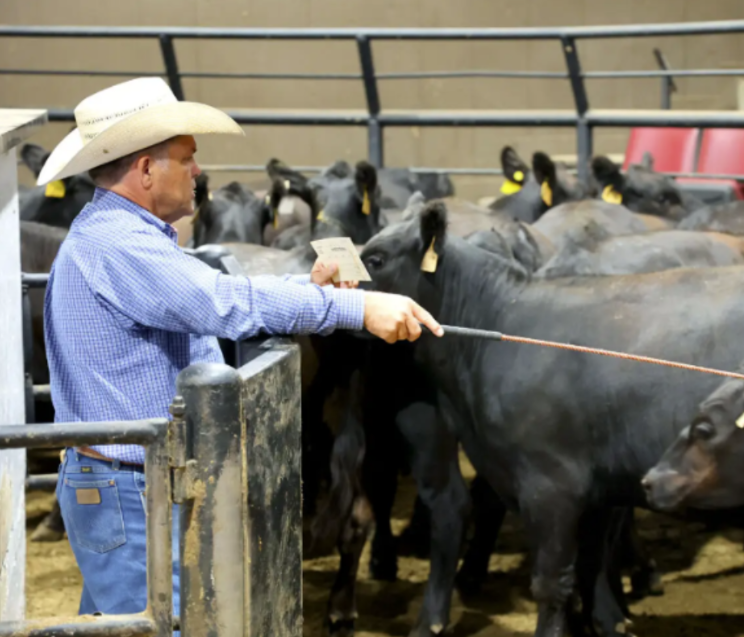
Hale noted a lighter-than-usual run of cattle ahead of Thanksgiving at the Oklahoma National Stockyards. he explains that the numbers were “a little over three” thousand compared to “about 6000 a year ago,” and he attributes the decline partly to “the rain and the market a little bit.” He notes that producers appear cautious in the face of market uncertainty and shifting conditions.
A major topic is the shockwave caused by Tyson Foods’ recent announcement of packing facility closures and reductions. Hale says the news has “thrown the market for a loop” and compares the disruption to the 2019 Holcomb plant fire. Still, he emphasizes that the situation shouldn’t fundamentally alter cattle flow, noting “they could move those cattle around,” and suggesting the reaction may be more psychological than structural. As he puts it, “It shouldn’t have had that effect… it’s just one more thing to pile on.”
Hale also weighs in on the latest Cattle on Feed report, which he felt “looked bullish, honestly” despite being labeled neutral. He argues that current volatility is driven more by sentiment than by supply fundamentals: “fundamentals don’t mean anything… it’s just the kind of negative news day after day.”
| | As Oklahoma’s largest John Deere dealer, P&K Equipment is proud to serve our communities & the surrounding areas through 18 Oklahoma locations & 2 Arkansas locations. The entire P&K team is ready to keeping your equipment up & running. So, when it comes time to buy John Deere parts, look no further than GetGreenParts.com. Shop 24/7 from the convenience of wherever you are & have the parts shipped directly to you! This spring and summer- P&K is committed to making it easier than ever to really own your John Deere equipment. And long after the sale- P&K will be here to support you at every step. | |  | |
The Oklahoma Wheat Commission promotes greater use of wheat in domestic and international markets through research, market development and public education.
Our Commissioners develop policy and programs, direct the funding, represent producer interests and, of course, promote Oklahoma wheat!
Learn more about the Oklahoma Wheat Commission by clicking here for their website.
| | | How BASF Fungicides Improve Crop Health and ROI | | |
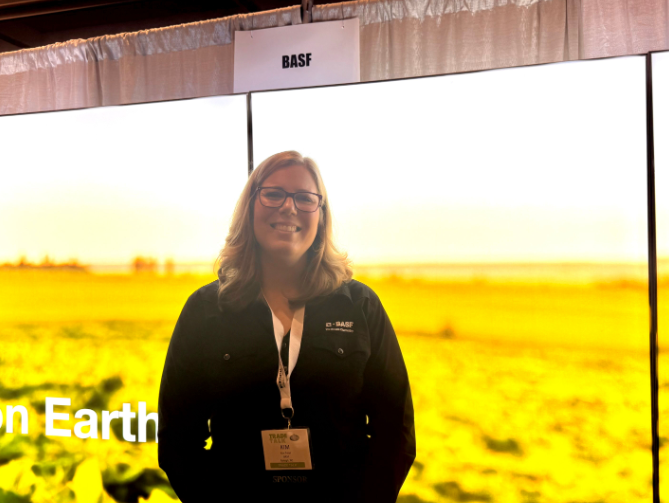
KC sheperd spoke with Kim Tutor, technical marketing manager for plant health who explains that her role at BASF focuses on fungicide performance. She notes, “I’m excited to be here talking about the performance of our fungicides.” She highlights their performance-driven fungicides and emphasizes their lead corn product, Veltyma.
Tutor discusses the significant disease pressures growers faced, especially tar spot and southern rust, stressing the value of fungicide application. She says that “if you didn’t treat your corn with a fungicide… you’ve left a lot of yield on the table, anywhere from 20 to 60 bushels an acre.” She also highlights Veltyma’s strong performance in soybeans, which has contributed to consistent yields and ROI across diverse geographies.
A major portion of Tutors’ discussion focuses on plant health benefits beyond disease control. She explains how Veltyma helps plants withstand heat and drought stress by keeping stomates open: “We’re going to help keep those little vents open… that gas exchange is what drives photosynthesis. Photosynthesis equals yield.” She adds that their products support both above-ground growth and “basal root growth,” contributing to cooler canopies and more resilient crops overall.
| | Todd Hubbs Crop Outlook Newsletter | | |
Happy Thanksgiving, everyone. I wish you the best over the holiday. Last week witnessed significant volatility across agricultural futures markets. The markets gave back many of the gains seen on last Monday. Uncertainty over Chinese buying and trade deals in general combined with geopolitical developments kept the futures markets under pressure through the end of the week.
KC hard red winter wheat prices fell over the last week as they were dragged down by uncertainty that leaned bearish in the wheat market. The KC December HRW futures contract closed Monday at $5.07 per bushel down approximately twenty cents over the last week. Basis in Oklahoma has remained stable in the lower range of the five-year average. A strong carry is still in place between nearby and deferred KC HRW contracts. The Crop Progress report on Monday showed moderate improvements in conditions as planting wrapped up. Recent rains across the Southern Plains may take some drought risk premium out of the market. At present, the market fundamentals look to keep wheat prices range bound.
Soybean prices saw massive levels of volatility over the last week. China and South America are expected to dominate the outlook on soybeans despite the potential domestically for crush. Prices drove higher last Monday on growing belief that China would indeed buy U.S. soybeans. China followed through, in a limited fashion, by buying approximately 58 million bushels over three straight days from November 18 – 20. An additional flash sale of 123,000 metric tons was announced on Monday. The total of those flash sales brought soybeans purchased for the marketing year to around 71 million bushels.
| | Cattlemen’s Column: The cattle market is not broken | | |
The following Op-Ed is written by Shelby Horn, a Board Member of the Texas and Southwestern Cattle Raisers. Recently, higher beef prices at the grocery store have become a hot topic. It’s made local and national news headlines and taken social media by storm. That attention has fueled a narrative that something is “wrong” with the beef supply chain, pulling ranchers, media, elected officials and industry critics into a fast-moving conversation.
For ranchers, it is frustrating. People outside our industry don’t always understand the cattle cycle, how prices move or why beef costs more at the grocery store right now. They do not see what ranchers see every day, and they rarely understand how quickly their comments can move markets.
Most ranchers understand these cycles. We know tight supplies and higher prices are part of a normal pattern. It is not a sign that the system is broken. Yet, that has not stopped people from looking for ways to fix a problem that is not there. For example, many of our political friends campaigned and were elected to make America more affordable, and with midterm elections around the corner, they’re understandably looking for ways to move the needle with voters.
| | |
In a recent cow calf article, Mark Johnson writes how do you develop breeding objectives and identify economically important traits on which to apply selection pressure in your cow-calf operation? The answer lies in understanding that your cattle (and their underlying genotype) are just one component of a much larger system. Your production system is a group interdependent components. Animal-related systems vary from large, extremely complex systems such as the beef industry as a whole, to smaller (but still complex) systems like an individual farm or ranch.
To analyze your own unique cow-calf production system, consider the following: Your cattle – specifically their genotypes, Your production environment, Your fixed resources and management, and economics. Your cow inventory and bulls used are the means to produce the calves marketed. How would you describe the genetic potential and phenotype of your cowherd, bull battery and calves produced? Is this description a good fit with the other components of your system?
Your production environment refers to all the elements involved in your cow-calf operation over which you have little influence. Examples would include altitude, soils, climate conditions like rainfall, wind and temperature, as well as the quantity and quality of your forage base. Cow-calf production takes place in an extremely wide variety of production environments. A cowherd of the correct genotype to fit their production environment will more efficiently convert grazed forage into pounds of calf raised.
| | USDA Launches 2025 National Study to Focus on Small and Mid-Sized Poultry Operations | | |
The U.S. Department of Agriculture (USDA), in collaboration with industry partners, has officially launched its 2025 national study on poultry health and management practices. The effort aims to gather crucial, contemporary data specifically from small and mid-sized commercial poultry enterprises, a segment of the industry often underrepresented in broad national surveys. The study, announced this week, seeks input to help federal agencies and veterinary organizations develop targeted support and biosecurity protocols that are practical and effective for smaller-scale operations.
The study is open to U.S. producers who manage flocks within the following commercial size ranges: Table Egg Layers: 300 to 74,999 birds, Broilers: 300 to 199,999 birds and Meat Turkeys: 300 to 59,999 birds. Producers who meet these criteria are strongly encouraged to participate to ensure their operational data and health challenges are accurately reflected in the national findings.
The primary goal of the 2025 study is to address the gap in national poultry health data, which often disproportionately reflects the management systems and disease challenges of the largest industrial farms. Information collected will focus on key areas, including: Biosecurity measures and protocols, Feed and water management practices, Flock health record keeping and Specific disease pressures and challenges faced by small enterprises. The data will be aggregated and analyzed by the USDA to inform future educational resources, disease mitigation strategies, and veterinary support programs designed to bolster the long-term economic stability and public health of the entire poultry sector.
| |
Checking the Markets...
Livestock markets were mixed but cautious. Feeder Cattle futures posted strong gains (January up $2.10, March up $3.07, April up $3.30), while Live Cattle futures were narrowly mixed (December/February down $0.20, April up $0.67).
Boxed beef was also mixed. Critically, cash trade at the Oklahoma National Stockyards saw drastic price cuts with feeder cattle down $10–$20 and calves down $20–$40, reflecting the "bewildered and very frustrated" reaction of buyers to the down-trending futures prices.
| | |
Click here for our Markets Page on OklahomaFarmReport.Com- there you will find our latest reports on cattle auctions, boxed beef, cash grains and market analysis.
OKC West is our Market Links Sponsor- they sell cattle three days a week- Cows on Mondays, Stockers on Tuesday and Feeders on Wednesday- Call 405-262-8800 to learn more.
| | |
© 2025 Oklahoma Farm Report - All rights reserved
|
| | | |