Oklahoma's Latest Farm
and Ranch News
Monday, December 1, 2025
| | USDA NASS Rushes to Catch Up: Why Farm Data is More Critical Than Ever | | |
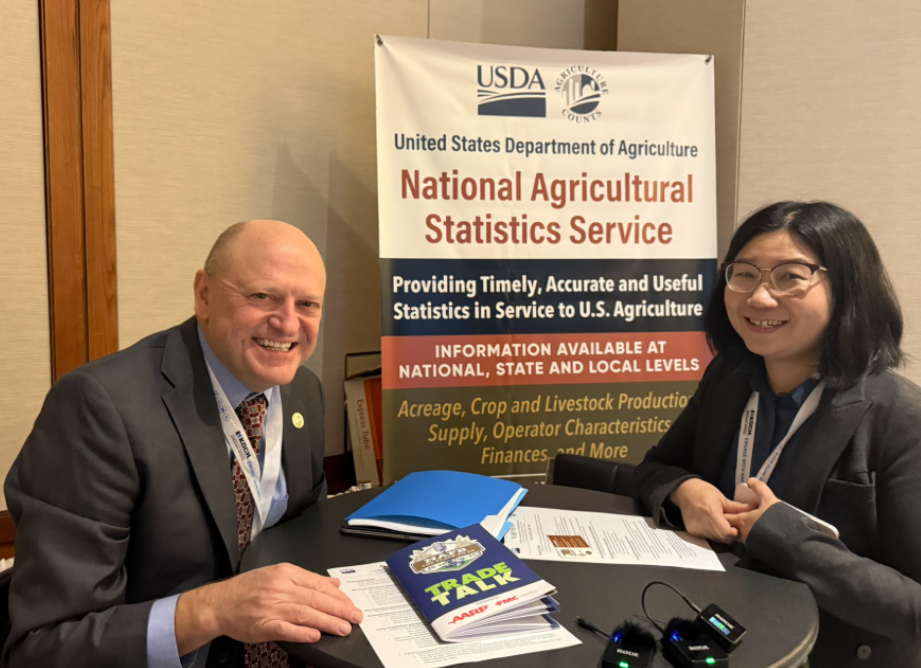
Following a recent lapse in government funding, the USDA National Agricultural Statistics Service (NASS) is working hard to bring its vital statistical reports back on schedule. In an interview with Farm Director KC Sheperd, Joe Parsons of USDA NASS discussed the agency’s mission to recover from the hiatus and underscored the irreplaceable value of farm data.
Parsons confirmed that while NASS successfully released key information like the November Crop Production report, the agency has significant work ahead. The pause necessitated the rescheduling of crucial market information. We do have some catching up to do,” Parsons stated. “We have about 60 reports that were scheduled to be released during the lapse in funding… we’re very busy trying to get back on track and also prepare for the other things that are coming down the pipe.
He confirmed that widely followed reports, including crop production numbers, the WASDE (World Agricultural Supply and Demand Estimates), and cattle on feed data, are being prioritized to be back on time. Additionally, NASS is gearing up for its essential year-end activities “We have a lot of data to get collected to… meet those end of what we call our end of year surveys,”
| |
| US Meat Export Performance Strong But China Issues Persist | | |
Senior farm and ranch broadcaster Ron Hays speaks with Dan Halstrom, president of the USMEF, who emphasized that global demand for U.S. red meat remains “very, very good, if not record-breaking,” even amid political and economic turbulence. He noted especially strong performance in markets tied to existing free trade agreements, saying regions such as Canada and Mexico under USMCA account for about 28% of U.S. beef and pork exports and are “growing, and have been for several years now.”
Halstrom highlighted that countries with long-standing trade agreements—Central America under CAFTA; Colombia and Chile; and South Korea under KORUS—continue to deliver robust results. Despite record-high beef prices, he said these partners “continue to buy, demanding our quality products.” Alongside these mature markets, he underscored the importance of expanding in developing regions, particularly Southeast Asia, Central America, and Africa, where USMEF sees strong long-term potential.
The most significant challenge he identified is restricted U.S. beef access in China. Halstrom called the situation “extremely frustrating,” pointing out that China was a $1.6 billion market last year and that customers like Sam’s Club are ready to resume chilled beef purchases “tomorrow” if the relisted plants are approved.
| |
| Oklahoma Drought Eases in Key Categories, But Extreme Conditions Persist in latest Drought Monitor | | |
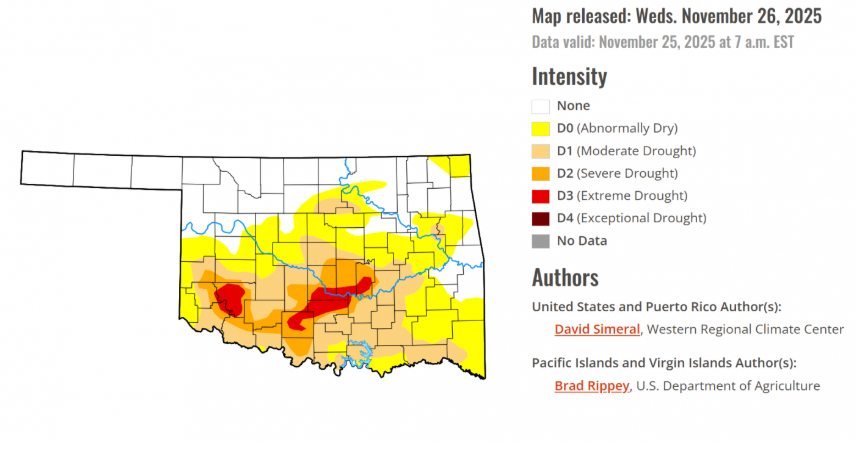
The latest U.S. Drought Monitor report delivers a mixed signal to Oklahoma’s agriculture sector. While rainfall and management efforts have helped reduce the overall extent of severe and moderate dryness, an entrenched area of Extreme Drought (D3) remains a major threat to winter wheat, forage, and water supplies in the southern and central parts of the state.
D0-D4 drought conditions in the current period indicate that nearly two-thirds of Oklahoma (61.37%) is experiencing conditions ranging from Abnormally Dry (D0) to Exceptional Drought (D4). The total area facing Moderate to Exceptional Drought (D1-D4) decreased by 3.39%, now covering 33.31% of the state. The area under Severe to Exceptional Drought (D2-D4) also declined, dropping 1.57% to 11.11%.
The 3.48% Extreme Drought (D3) coverage is concentrated in areas vital to Oklahoma’s agricultural production, particularly impacting ranchers and row-crop farmers. Counties now designated with new or persistent Extreme Drought include: Stephens, Kiowa, Garvin, McClain, Cleveland, Pottawatomie, and Seminole
| |
| Oklahoma Farm Bureau works to improve the lives of all Oklahomans by supporting our state’s agriculture community. As Oklahoma’s largest general farm organization led by Oklahoma farmers and ranchers, OKFB takes grassroots values and advocates for agriculture at the state Capitol and in Washington, D.C., to ensure our way of life continues for generations to come. Farm Bureau hosts leadership events, supports our state’s agricultural youth and connects consumers with agriculture in order to build a brighter future for our state. Become an OKFB member today online at okfarmbureau.org/join. Together, we are rural Oklahoma. | |  | |
Oklahoma AgCredit supports rural Oklahoma with reliable and consistent credit, today and tomorrow. We offer loans for land, livestock, equipment, operating costs and country homes (NMLSR #809962) to farmers, ranchers and rural businesses across 60 counties. As a cooperative, we are owned by the members we serve. Through our Patronage Program, we have returned more than $74 million to our members since 1997.
For more information on our services or to find a location near you, visit our website here.
| | | What 400 U.S. Farmers Really Think: Inside the Ag Economy Barometer’s Latest Findings | | |
Farm director KC Sheperd spoke with Michael Langemeier of Purdue University, who began with an introduction to the Ag Economy Barometer, a monthly survey conducted by Purdue to track the sentiment of U.S. agricultural producers. Langemeier explained that the survey has been ongoing for about a decade and involves polling 400 producers every month. “We survey folks in the middle of each month, and then we report the results the first Tuesday of each month,” he said, emphasizing the regularity and structure of the study.
Langemeier highlighted the differences in optimism between crop and livestock producers. Crop producers have shown relatively low optimism due to weaker net returns, while livestock producers remain highly optimistic, especially in the short term. Despite short-term differences, he noted that both groups are generally positive about the long-term outlook. He explained, “Part of the optimism is related to what I call the long-run policy environment,” suggesting that confidence in government policies has a strong influence on overall sentiment.
Trade policy emerged as a particularly significant factor this year. Langemeier pointed out that while crop producers were concerned about exports, particularly soybeans to China, many producers displayed patience.
| |
| AARP Advocates for Caregivers, Rural Support, and Medicare Updates | | |
Senior farm and ranch broadcaster Ron Hays spoke with Sean Voskhul from AARP. Voskhul began with recognition of the vital role caregivers play across the country. Voskhul highlighted that “835,000 caregivers in Oklahoma provide that labor of love every day, taking care of individuals so they can stay at home where they want to be and out of costly institutions.”
He emphasized the financial burden caregivers face, noting that “family caregivers, in our research spend on average $7,200 per year,” which has led Oklahoma to implement a caregiver tax credit. AARP is now advocating for a similar federal tax credit to ease financial strain on families who often have to reduce work hours or leave their jobs entirely.
Voskhul also discussed ongoing policy issues related to Medicare and Medicaid, particularly with open enrollment approaching. He stressed the importance of careful planning, saying, “Medicare is confusing, and you need that expert help to understand what you need to get.”
| |
| Drummond calls out Tyson’s misinformation campaign over poultry lawsuit | | |
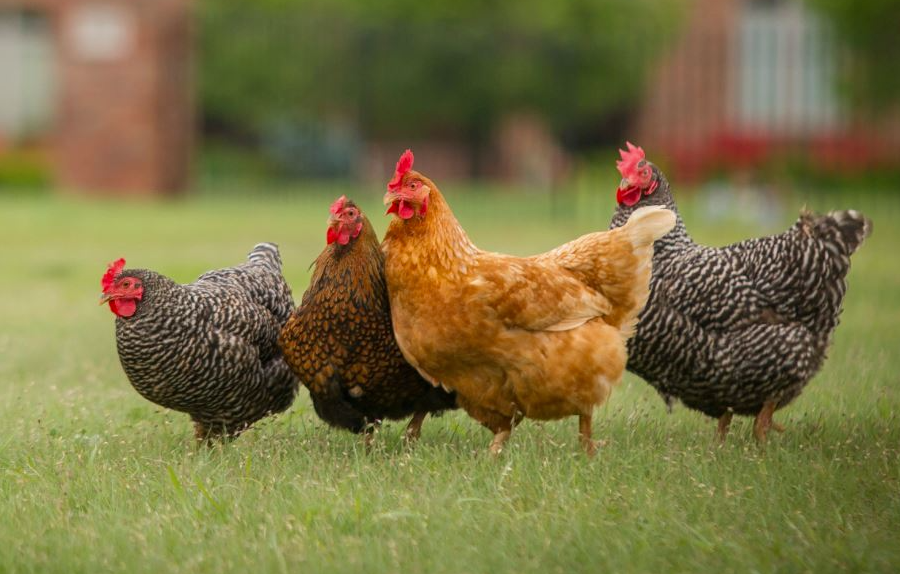
Attorney General Gentner Drummond is addressing inaccuracies surrounding the ongoing litigation to protect water quality in the Illinois River watershed, calling out what he describes as a coordinated misinformation campaign by Tyson Foods. The attorney general says the poultry company is trying to intimidate Oklahomans and deflect accountability.
“Tyson Foods is engaging in shameless gamesmanship, using Oklahoma’s hardworking farmers as pawns while threatening to withdraw contracts,” said Drummond. “But Tyson’s actions speak louder than their empty threats. Even as they claim to be concerned about this litigation, Tyson is actively working to acquire additional processing capacity in the watershed. Oklahomans deserve better than corporate intimidation tactics from a company that has repeatedly shown it prioritizes profits over people and environmental responsibility.”
The lawsuit, originally filed in 2005, seeks to hold major poultry companies accountable for polluting the Illinois River watershed with phosphorus from chicken waste. In 2023, U.S. District Judge Gregory Frizzell ruled in favor of the state and ordered each side to reach an agreement with regard to remedies imposed. After negotiations broke down, the court held a six-day evidentiary hearing and reaffirmed the findings that the watershed is still impaired.
| | Harvester Paul Paplow on Record Crops and Solving Farm Crises on the Road | | |
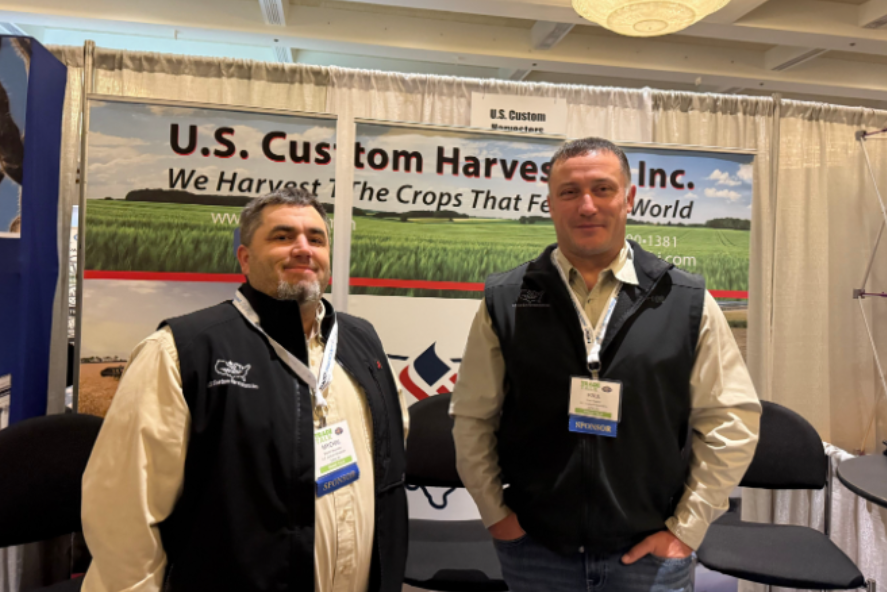
At the National Farm Broadcasters Convention, Farm Director KC Sheperd spoke with Paul Paplow of U.S. Custom Harvesters, Inc. (USCHI), to discuss the dynamic, high-stakes life of custom harvesting and the critical role these mobile crews play in American agriculture. Paplow’s own operation exemplifies the massive scale of the work, running a route that covers thousands of miles each season. “My operation itself works from North Texas all the way up to the Canadian line through Montana, North Dakota, harvesting wheat, any pulse crops, specialty crops as mustard, canola, and corn and soybeans back in Minnesota, South Dakota, Iowa,” Paplow explained.
Reflecting on the harvest season, Paplow noted that despite some early difficulties, the overall outcome was positive. “There was a lot of really good crops,” he confirmed. The season started with a struggle in the Southern Plains: “We started out the year kind of a crop failure down in North Texas, Southern Oklahoma. Drought then it got too wet.” However, conditions improved dramatically further north. “After we hit Kansas, everything was good from there on out… the wheat crop was really good in Montana,” he said, adding that they had an “awesome soybean crop and corn crop” in the Midwest states.
One of the most vital services USCHI members provide is acting as an emergency backup for farm operations. When equipment fails or a farmer faces a personal crisis, custom harvesters step in to save the crop.
| |
| Rabo Analyst Says Cattle Market Sees Pullback, But Fundamentals Remain Strong | | |
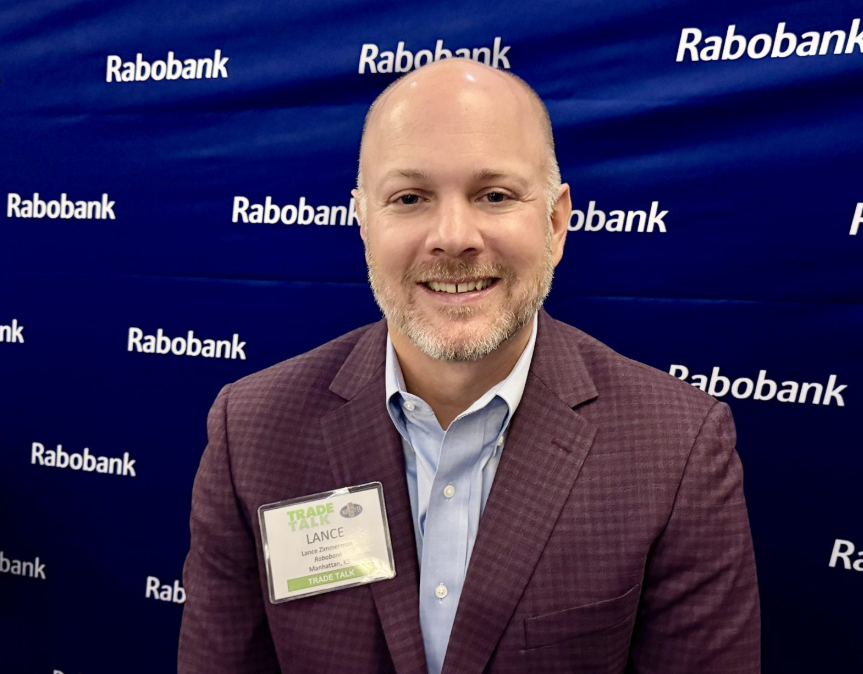
Despite recent market fluctuations, the cattle industry is still experiencing historically high prices, fueled by unprecedented consumer demand, according to Lance Zimmerman, Senior Beef Analyst for Rabobank. Zimmerman talked with Oklahoma Farm Report’s Ron Hays at the recent National Farm Broadcasters Trade Talk in Kansas City- you can hear part one of their conversation by clicking on the audio button above.
While the cattle market has experienced a notable correction in recent weeks, dropping approximately 15% over the past month, Zimmerman emphasizes that these levels remain “lifetime, wildly high profits” for the industry. He attributes the recent volatility to the psychology of the market, particularly the exit of speculative long positions on futures exchanges.
“When you have record high or near record high participation of longs… there’s always the risk of the unknown and the uncertainty that can creep into those markets that spooks those long positions and those fund traders when they want to exit the market,” Zimmerman explained. He described the current situation as a period of “capitulation,” where traders are exiting positions to await cooler market temperatures.
| |
Checking the Markets...
The cattle complex was thankfully met with tremendous demand again on Friday. From Friday to Friday, livestock contracts scored the following changes: December live cattle up $1.13, February live cattle up $3.07; January feeder cattle up $9.75, March feeder cattle up $10.80.
Boxed beef prices closed lower: choice down $1.46 ($366.82) and select down $4.46 ($351.05) with a movement of 82 loads.
MONDAY'S CATTLE CALL: Steady. It's tough to call next week's trend before knowing exactly how many cattle traded this week.
| |
| |
Click here for our Markets Page on OklahomaFarmReport.Com- there you will find our latest reports on cattle auctions, boxed beef, cash grains and market analysis.
OKC West is our Market Links Sponsor- they sell cattle three days a week- Cows on Mondays, Stockers on Tuesday and Feeders on Wednesday- Call 405-262-8800 to learn more.
| | |
© 2025 Oklahoma Farm Report - All rights reserved
|
| | | |