Oklahoma's Latest Farm
and Ranch News
Tuesday, December 9, 2025
| | Trump Administration Unveils $12 Billion Aid Package for Row Crop Farmers Amid Tariff Hikes | | |
President Donald J. Trump alongside U.S. Secretary of Agriculture Brooke L. Rollins, U.S. Secretary of the Treasury Scott Bessent, and others announced the U.S. Department of Agriculture (USDA) will make $12 billion available in one time bridge payments to American farmers in response to temporary trade market disruptions and increased production costs that are still impacting farmers following four years of disastrous Biden Administration policies that resulted in record high input prices and zero new trade deals.
These bridge payments are intended in part to aid farmers until historic investments from the One Big Beautiful Bill Act (OBBBA), including reference prices which are set to increase between 10-21% for major covered commodities such as soybeans, corn, and wheat and will reach eligible farmers on October 1, 2026.
Of the $12 billion provided, up to $11 billion will be used for the Farmer Bridge Assistance (FBA) Program, which provides broad relief to United States row crop farmers who produce Barley, Chickpeas, Corn, Cotton, Lentils, Oats, Peanuts, Peas, Rice, Sorghum, Soybeans, Wheat, Canola, Crambe, Flax, Mustard, Rapeseed, Safflower, Sesame, and Sunflower.
| | Ag Groups and Lawmakers react To Trump’s Farm Aid Plan | | |
Lucas on Economic Assistance for Farmers: “Trump never forgets our farmers”
Congressman Frank D. Lucas (OK-03) released the following statement after President Trump announced a $12 billion economic assistance package for American farmers. “Today’s timely announcement of economic assistance proves once again that President Trump never forgets our farmers. This much-needed relief will go a long way for the men and women who keep our country fed, and I know my fellow Oklahomans welcome this effort with open arms.”
Oklahoma Farm Bureau President Stacy Simunek: “Oklahoma Farm Bureau members appreciate the Trump administration’s commitment to support our nation’s farmers and ranchers with the announcement of Farmer Bridge Assistance Program payments.
Our state’s agricultural producers are committed to producing affordable, safe, and healthy food, which requires us to put seeds in the ground without knowing what the market for our crops will be like come harvest time. Rising farm input prices have also put pressure on our farm and ranch members who are feeling the economic squeeze just like the families who purchase our agricultural products.
“We appreciate the Administration’s recognition of the tough conditions farmers are navigating right now,” National Sorghum Producers Vice Chair Garrett Love, a sorghum grower from Montezuma, Kansas, said. “This support through the FBA Program will be vital for producers in the short term, and we are grateful it is moving quickly. Sorghum farmers are working hard to plan for next year, and this bridge will help keep operations steady as we transition into a new planting season.”
| |
| Country Music and Cattle: Pake McEntire’s Oklahoma Story | | |
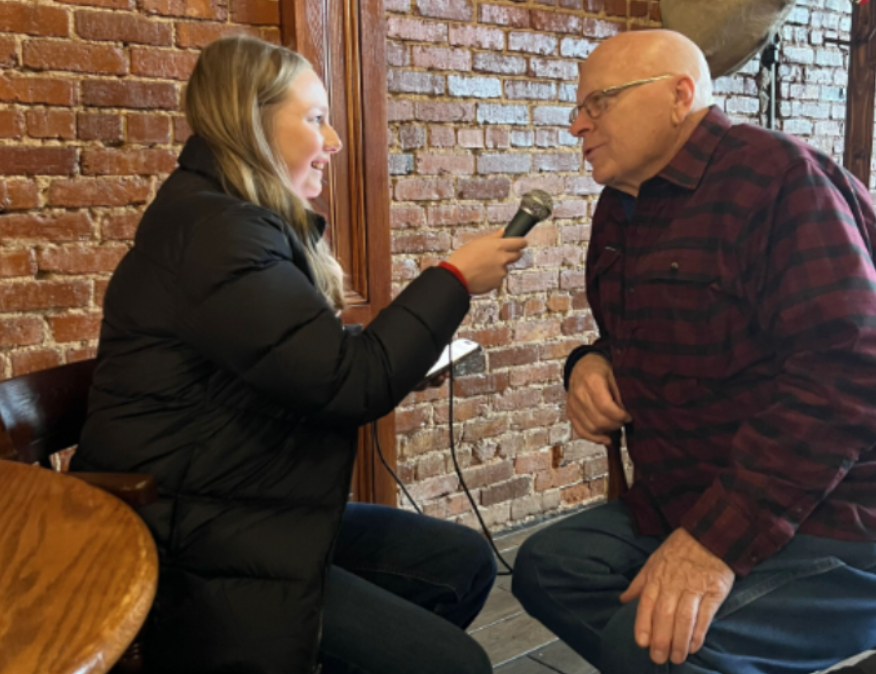
Amidst the festive atmosphere of the Stockyards City Cowboy Christmas Parade, Oklahoma Farm Reports’ Maci Carter had the chance to visit with Parade Marshal, Pake McEntire. A member of the legendary McEntire clan, Pake McEntire is as synonymous with Oklahoma agriculture and rodeo as the Stockyards themselves.
While the McEntire name is globally recognized for music, Pake made it clear that his heart belongs to the land and the livestock of southeastern Oklahoma.
“I’ve been in every state in the United States, and there’s no place I’d rather be than right here in Oklahoma,” McEntire told Carter. For McEntire, the Stockyards are more than just a parade route; they are a part of his personal history. He recalled dining at the Cattlemen’s Steakhouse as far back as the 1970s, a tradition that has spanned decades of family gatherings.
Currently, McEntire resides near Coalgate, operating a cattle business that spans Coal, Atoka, and Pittsburg counties. “This is my 57th year in the stocker steer yearling cattle business,” he noted. He reflected on the drastic changes in the industry over that half-century, contrasting the markets of 1974—where cattle delivered from Florida cost $38 a head—to the record highs producers are seeing today.
| | |
The vision of the Oklahoma Beef Council is to be a positive difference for Oklahoma's farming and ranching families and the greater beef community, and its mission is to enhance beef demand by strengthening consumer trust and exceeding consumer expectations.
To learn more, visit www.oklabeef.org. Also, don't forget to like its Facebook page at www.facebook.com/oklabeef for stories on Oklahoma's ranching families and great beef recipes.
And Check out this video below that helps you learn more about the Beef Checkoff- .
| |  | |
The Oklahoma Cattlemen's Association is the trusted voice of the Oklahoma Cattle Industry. With headquarters in Oklahoma City, the OCA has a regular presence at the State Capitol to protect and defend the interests of cattlemen and cattlewomen.
Their Vision Statement explains the highest priority of the organization- "Leadership that serves, strengthens and advocates for the Oklahoma cattle industry."
To learn more about the OCA and how you can be a part of this forward-looking group of cattle producers, click here for their website. For more information- call 405-235-4391.
| | | Animal Ag Alliance Highlights Threats to Animal Agriculture | | |
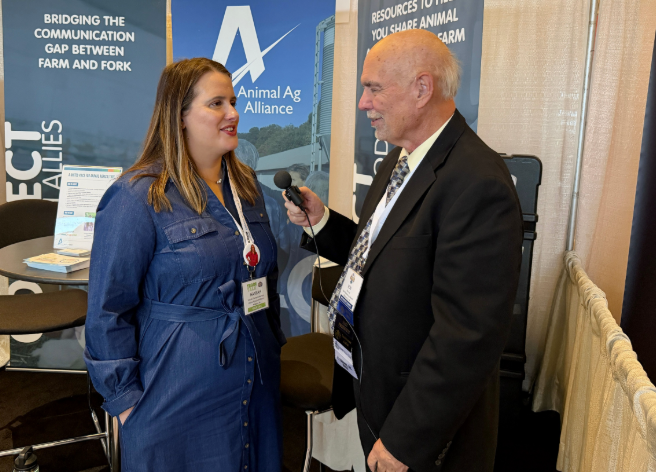
Senior farm and ranch broadcaster Ron Hays speaks with Hannah Thompson-Weeman, president and CEO of the Animal Agriculture Alliance, who sheds light on the growing, well-funded movement working against modern animal agriculture. Weeman emphasized that many activist groups aren’t interested in improving welfare or sustainability but in eliminating animal agriculture entirely.
As she put it, “For these organizations, it’s not about welfare. It’s not about sustainability, they just don’t believe [animal agriculture] has a place in the food system.” Weeman detailed the Alliance’s extensive monitoring work, noting that the movement is expanding both in influence and financial strength.
She highlighted the organization’s recently released Animal Activist Group Web, explaining that “just the 40 or so most active brought in $865 million in income in their most recent tax filings,” a nearly 10% increase from the prior year. While not all of that money goes directly into anti-ag campaigns, she said a “significant amount” is funding legislative and corporate pushes aimed at banning key production practices.
| | Little Indication of Heifer Retention in 2025 | | |
In a recent cow Calf article Dr. Derrell Peel says As 2025 wraps up there is still little indication of significant heifer retention for herd rebuilding though some retention may be beginning slowly. The July Cattle report showed the smallest beef replacement heifer inventory in the history of the report back to 1973, although no comparison to last year was possible (the report was not available last year).
The October Cattle on Feed showed that the percentage of heifers in feedlots was unchanged from July and still above average as it has been since late 2018.
It is true that heifer slaughter is down 6.6 percent so far this year and is falling faster than steer slaughter, which is down 4.4 percent for the year to date.
Average heifer slaughter peaked most recently in January 2023 and has declined 9.0 percent as of October 2025. Heifer slaughter is quite variable and does decrease during periods of herd expansion. However, at this point the decrease in heifer slaughter is not enough to indicate significant heifer retention.
| | Philip Good on Soybean Growth and Market Strategies | | |
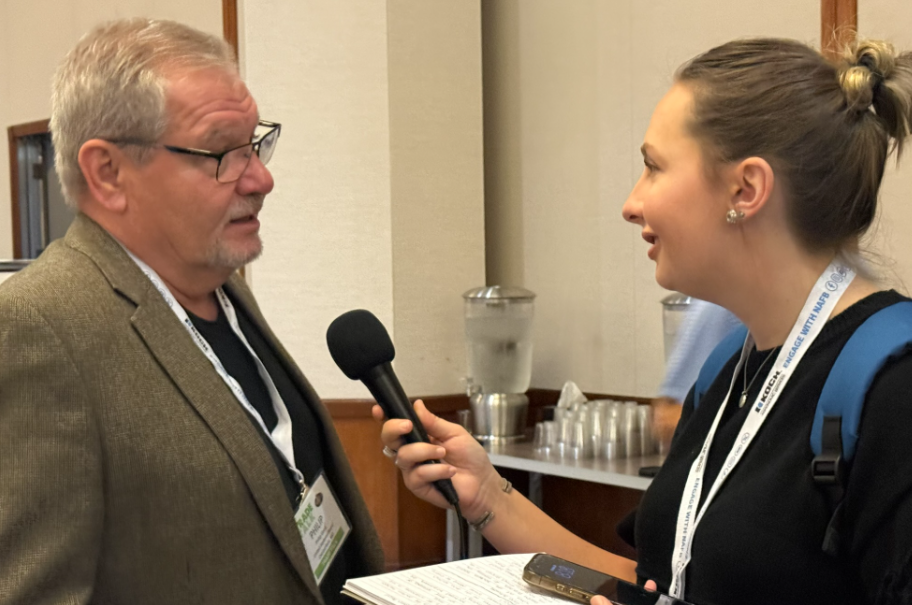
While speaking with intern Karleigh Erramouspe, Philip Good explained the structure and purpose of the United Soybean Board, emphasizing the dedication of its members. He said, “Each state has certain directors that they sendnso I get the opportunity this year to work right alongside 77 of some of the top farmers in the United States that are passionate about the soybean industry.
They literally leave their farms and family volunteering their time on behalf of all of us, the whole 500,000 farmers in the US.” He highlighted that the board’s mission is to invest checkoff funds into both supply and demand initiatives for the soybean industry.
Good elaborated on how the checkoff funds are used to improve yields and address challenges in soybean production. He explained, “On the supply side, we’re looking at research, education and promotion… looking at things like yield robbers. Soybean cyst nematode is the number one national yield robber. This year, we saw some red crown rot in the Midwest and upper Midwest raise its ugly head.” This demonstrates the board’s focus on tackling practical agricultural issues to ensure consistent and increased soybean production.
| | Oklahoma Agritourism Shines During Christmas Tree Season | | |
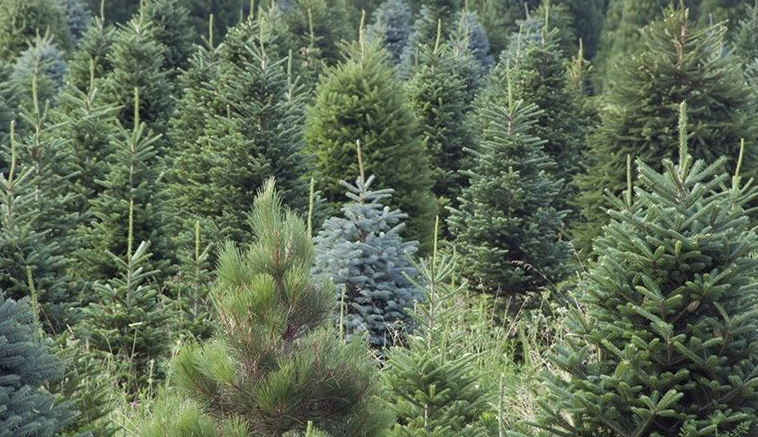
As Oklahomans shift from fall festivities to the Christmas season, associate farm reporter Carli Davenport caught up with Micaela Halverson, agritourism coordinator for the Oklahoma Department of Agriculture, to talk about the state’s growing interest in real Christmas trees. Halverson said families across Oklahoma still love the tradition of visiting a tree farm, and the state now has 19 farms registered in the Oklahoma Agritourism program.
Halverson described the experience these farms offer, explaining that they are “growing real live Christmas trees for you, the public, to come in and cut down your own and create those family traditions and Christmas holiday memories.” She noted that beyond the tree-cutting itself, families can enjoy gift shops, ornaments, hot chocolate, apple cider, and even s’mores. “You’re not just cutting down your tree,” she said. “You’re making memories and getting to explore.”
Halverson also discussed the challenges of growing Christmas trees in a state not known for an Alpine climate. She explained that Oklahoma relies heavily on one variety, saying the state has developed “the Oklahoma improved Virginia pines… specifically for Oklahoma soil.”
| | New Urban & Small Farm Hub to Transform Local Food Systems in Southern Oklahoma | | |
The Oklahoma Conservation Commission, Murray State College, Chickasaw Nation, the Oklahoma Association of Conservation Districts, and the Arbuckle Conservation District are proud to announce the groundbreaking for the Southern Oklahoma Urban and Small Farm Hub in Ardmore, Oklahoma.
This initiative is set to enhance the quality of life in southern Oklahoma by revolutionizing local food systems and supporting small and urban farms. The groups joined together at Murray State College on Friday for an official signing ceremony and celebration of the project.
Located at Murray State College’s Ardmore campus, the hub will serve as a critical resource site, offering technical assistance, individualized farm planning, educational training, grants, cost-share programs, and retail opportunities. By equipping producers with essential knowledge, skills, and resources, this collaborative effort aims to increase the availability of nutritious, locally grown fruits and vegetables while addressing challenges such as food desertification, lifestyle-related illnesses, and the economic sustainability of small urban farms.
| | |
The live cattle complex more or less held its breath through Monday's trade, trying to wait and see what was going to develop fundamentally this week before traders decided whether or not they possess enough support to challenge the market's resistance at its 40-day and 100-day moving averages. December live cattle closed $0.17 higher at $227.32, February live cattle closed $0.47 lower at $226.67 and April live cattle closed $0.97 lower at $226.70.
Boxed beef prices closed mixed: choice down $0.30 ($360.90) and select up $1.21 ($348.60) with a movement of 112 loads
January feeders closed $3.40 lower at $335.65, March feeders closed $2.87 lower at $330.42 and April feeders closed $2.50 lower at $329.72. At Joplin Regional Stockyards in Carthage, Missouri, compared to last week, and at their midsession point, feeder steers under 525 pounds were trading $35.000 to $60.00 higher than last week.
Click here for our Markets Page on OklahomaFarmReport.Com- there you will find our latest reports on cattle auctions, boxed beef, cash grains and market analysis.
OKC West is our Market Links Sponsor- they sell cattle three days a week- Cows on Mondays, Stockers on Tuesday and Feeders on Wednesday- Call 405-262-8800 to learn more.
| | |
© 2025 Oklahoma Farm Report - All rights reserved
|
| | | |