


Agricultural News
Oklahoma Association of Conservation Districts Say Flood Control Dams Kept Last Week's Flooding From Being Much Worst
Tue, 22 Jun 2010 7:36:55 CDT
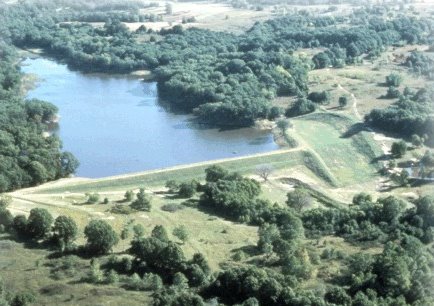 Oklahoma's system of upstream flood control dams saved the state over $16 million in flood damage that did not happen during the heavy rains that hit central Oklahoma this past week, a savings that can be directly attributed to the dollars the state government spends on conservation, according to Trey Lam, President of the Oklahoma Association of Conservation Districts (OACD).
"These huge rain events once again show the benefit our state receives every year from our flood control structures and the wisdom our state leaders have shown in providing the funding necessary to support their operation," Lam said. "Oklahoma has more flood control dams built under the USDA watershed program than any other state in the union, dams that economists at the USDA Natural Resources Conservation Service (NRCS) say saved our state an additional $16 million during these last storm events. This is on top of the over $70 million in protection these dams, on average, provide to Oklahoma every year. Once again our flood control system and the people who maintain it have proven their worth. This shows why the support of the state and federal government for conservation is so important, because it would be terrible if we had to furlough the folks who look after these structures or if we didn't have the dollars necessary to guarantee their safety."
Lam said that the passage of the conservation bond by the Oklahoma Legislature in 2009 and the recent influx of federal stimulus dollars into the state have provided much needed funding for the repair and maintenance of the state's 2,100 plus flood control dams. Even with these additional dollars, however, it is still necessary to provide the funding needed to pay the salaries of the state and local employees who are responsible for the operation and maintenance of these sites. According to Lam, that's why it is so critical that general revenue funding be made available to the Conservation Commission for allocation to local districts.
"The monies from the conservation bond and the federal stimulus package will go a long way toward repair and maintenance of these dams." Lam said. "What they don't do is pay for employee salaries. We need state appropriated funds for that. This last year Conservation in Oklahoma took roughly a 7% cut in appropriations, a cut we understand we had to take to help balance the state budget. The concern is that if we continue to see these kinds of cuts we will be forced to reduce the number of people working on our flood control system as well as other conservation programs. That's the bottom line."
Lam said that even with monies from the Conservation Bond and Federal Stimulus dollars, local conservation districts and the Conservation Commission are facing a backlog of over $22 million for operation and maintenance work on upstream flood control structures as well as needing additional dollars for repair of the state's aging dams. This work, along with other conservation initiatives include the ongoing work to improve water quality in Oklahoma and the delivery of farm bill programs that help farmers, ranchers and other landowners stay in compliance with their conservation plans on highly erodible land could be put at risk by additional budget cuts.
"This last year Oklahoma ranked in the top five states nationally in the reduction of non-point source pollution in our water and over $100 million was spent in Oklahoma to help protect and conserve our natural resources through USDA and state conservation programs," Lam said. "These efforts not only help protect our water, they also help protect farmers and ranchers who take part in farm bill programs because if you have highly erodible land, you have to stay in compliance with your conservation plan if you want to qualify for USDA farm program payments. We would not be able to do this work, however, if we had to lay employees off at the state and local level because of budget cuts. If we do this, we run the risk that producers will not have the help they need to stay in compliance with these plans and could possibly see themselves kicked out of the farm program. If that was to happen, many of our agriculture producers could face bankruptcy and the economy of rural Oklahoma could suffer a hit from this chain of events. When this is factored in with the safety provided by our system of upstream flood control dams, it shows that now more than ever we need to make sure that we keep our conservation delivery system in place. We have to make sure conservation has the funding necessary to protect people's lives and to help protect our rural economy."
WebReadyTM Powered by WireReady® NSI
Top Agricultural News
More Headlines...