
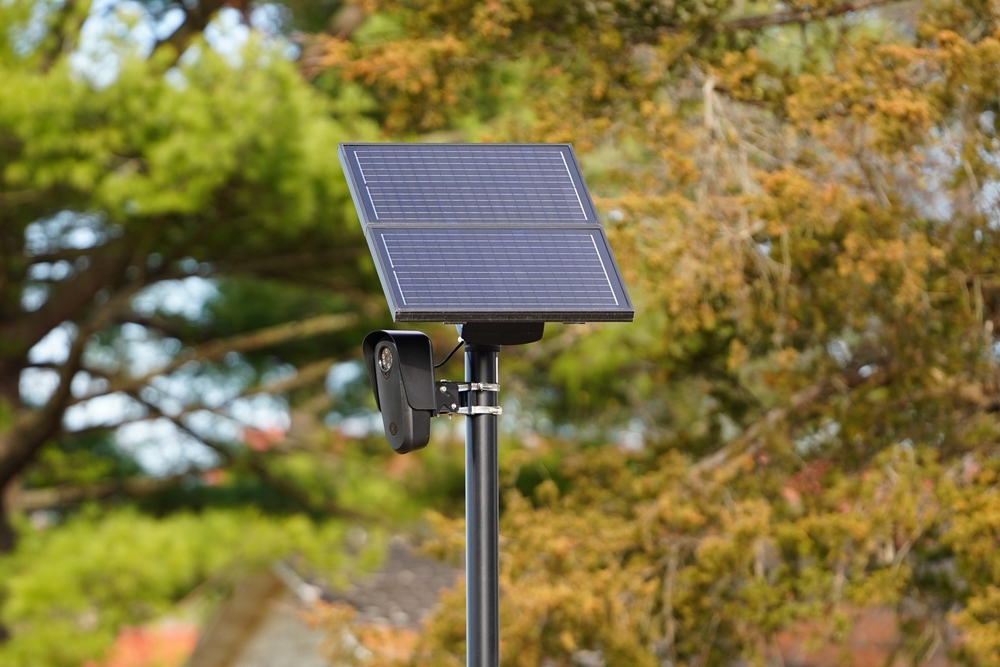
Automated license plate readers are expanding rapidly across the country, transforming how law enforcement tracks vehicles while raising significant questions about data privacy and civil liberties. In a recent SciLine briefing, criminologists and technology scholars examined how this surveillance tech works and what its growing reach means for both urban centers and rural communities.
In a media briefing hosted by SciLine and moderated by scientific outreach manager Taylor Seitz, criminologists and policing technology scholars discussed what automated license plate readers actually capture, how they are being deployed, and the broader implications for privacy across both urban centers and rural communities.
The panel featured Dr. Kimberly Przeszlowski, assistant professor of criminal justice at Quinnipiac University; Dr. Steven Keener, assistant professor of criminology and director of the Center for Crime, Equity, and Justice at Christopher Newport University; and Dr. Johnny Nhan, professor of criminology and criminal justice at Texas Christian University and a reserve police officer with the Fort Worth Police Department.
Beyond the Plate: How ALPR Systems Work
While traditional closed-circuit television (CCTV) simply recorded passive video footage, modern license plate readers pair high-speed cameras with specialized software to log vehicles instantly.
Dr. Przeszlowski explained that these systems capture far more than state-issued numbers. Beyond recording the plate, modern systems log vehicle make, model, color, body style, date-and-time stamps, and location coordinates. Vendors also quantify distinct physical characteristics, often referred to as a "vehicle fingerprint," such as bumper damage, decals, or bumper stickers.
"Traditionally, law enforcement officers were able to search and query vehicles on their own time, but the difference now with LPRs is the scale, but also the searchability," Dr. Przeszlowski said. "In a given hour, an officer could maybe search 100 plates, whereas an LPR can scan thousands of plates in real time."
Law enforcement agencies typically use the technology in two ways: real-time alerts that ping officers when a scanned plate matches active lists (such as stolen vehicles, wanted persons, or Amber Alerts via the National Crime Information Center) and retrospective investigations where detectives query vehicle movements across time.
However, Dr. Przeszlowski emphasized common misconceptions about the tech. The cameras generally cannot positively identify the person behind the wheel, nor does a camera hit automatically prove criminal involvement. Furthermore, because NCIC database feeds may update only twice a day, hits require manual verification by an officer before generating probable cause for an arrest.
Where Cameras Go and Disparities in Deployment
Dr. Keener’s research has focused on where ALPR cameras are physically placed. Following a federal court order in the Eastern District of Virginia (Schmidt v. Norfolk) that released the exact geographic coordinates of 614 publicly funded cameras in the Hampton Roads region, Keener mapped their distribution against socio-demographic data.
The findings showed heavy concentrations in lower-income and predominantly Black neighborhoods, often encircling public housing complexes and overlapping with historically redlined boundaries. In those areas, residents face continuous surveillance simply conducting their daily commutes.
"If you live in a predominantly Black neighborhood in this region, your default is surveillance," Dr. Keener said, noting that while surveillance has been rationalized under the guise of public safety, it risks creating feedback loops where heavily monitored neighborhoods generate more data, prompting even more police presence.
The Question of Crime Reduction and Patchwork Policy
When evaluating whether ALPR networks definitively lower overall crime rates, researchers urge caution. Dr. Nhan noted that while the cameras prove effective for locating stolen vehicles and providing situational awareness to protect officer safety before arriving on scene, comprehensive data proving broad crime deterrence remains incomplete.
"The data in the research is incomplete," Dr. Nhan explained. "There’s no standardization in terms of how it’s collected... For some departments, it’s automatic—there’s something they check off: 'This was a Flock-initiated event.' In other departments, they might write down in their narrative: 'Flock was used.' To extract that data across thousands of mentions is virtually impossible."
The policy landscape is equally fragmented. While some departments require strict user access controls, annual recertification, and short data-retention windows, others grant department-wide access with little oversight. In some jurisdictions, vendors market hardware aggressively using free trials or bundled software packages that create rapid adoption before local governments implement binding guardrails.
Dr. Keener highlighted legislative friction in Virginia under House Bill 2724, which placed statutory limits on data retention and interstate sharing. Despite the law, an initial state crime commission review discovered departments were still sharing data across state lines or retaining it past deadlines. Concurrently, public records exemptions added to surveillance bills have made it increasingly difficult for journalists and citizens to obtain detailed audit logs showing who searches the database and why.
What ALPR Surveillance Means for Farmers, Ranchers, and Rural Communities
While urban and suburban communities have seen the fastest rollout, the expansion of automated license plate readers and real-time crime centers carries unique practical and legal considerations for farmers, ranchers, and rural residents:
- Equipment and Livestock Theft Recovery: For producers dealing with the persistent threat of trailer, implement, and livestock theft, ALPR cameras along key rural corridors, state highways, and interstate junctions can offer law enforcement a tool to spot stolen stock trailers or flatbeds moving through major transit routes before they leave the region.
- Routine Movement Across Boundary Lines: Unlike passenger vehicles confined to suburban streets, farm trucks, feed haulers, and livestock trailers move between properties, pastures, sale barns, and grain elevators at all hours. Because ALPR data networks pool camera reads regionally and share them through multi-agency databases, routine agricultural travel through rural choke points leaves a permanent digital trail.
- Fourth Amendment and Property Privacy: Dr. Keener pointed out that ALPR data can inadvertently reveal private routines—such as when a resident enters or leaves an isolated property on a dead-end road. For rural landowners who value privacy and boundary integrity, centralized location logging presents constitutional questions regarding vehicle tracking without a judicial warrant.
- Interstate Commerce and Cross-Border Travel: Farm operations frequently cross state lines to deliver grain, purchase machinery, or move cattle to out-of-state auctions. Dr. Keener noted that ALPR databases are routinely queried by outside jurisdictions through network sharing agreements, raising concerns among citizens across the political spectrum over unauthorized federal access, administrative overreach, and the surveillance of lawful interstate travel.
- Weather and Practical Limitations in the Field: Dr. Nhan referenced studies demonstrating that optical plate readers struggle with harsh weather conditions, including heavy rain, fog, and road grime. On unpaved county roads where farm vehicles regularly travel through dust and mud, camera readability drops significantly compared to clear highway corridors.
Looking Ahead
As surveillance technology evolves, panelists stressed that automated plate readers are only the baseline. Law enforcement technology is rapidly converging, connecting camera networks to automated drone deployment, artificial intelligence analytics, and municipal video feeds.
For communities weighing whether to adopt these systems, Dr. Keener pointed to municipalities like Harrisonburg, Virginia, which took down their cameras and enacted ordinances requiring transparent public input before any future surveillance technology can be deployed.
Panelists emphasized that keeping communities safe requires both objective data on equipment efficacy and robust, transparent policies that protect the constitutional rights of all citizens—whether they travel city avenues or rural county roads.