
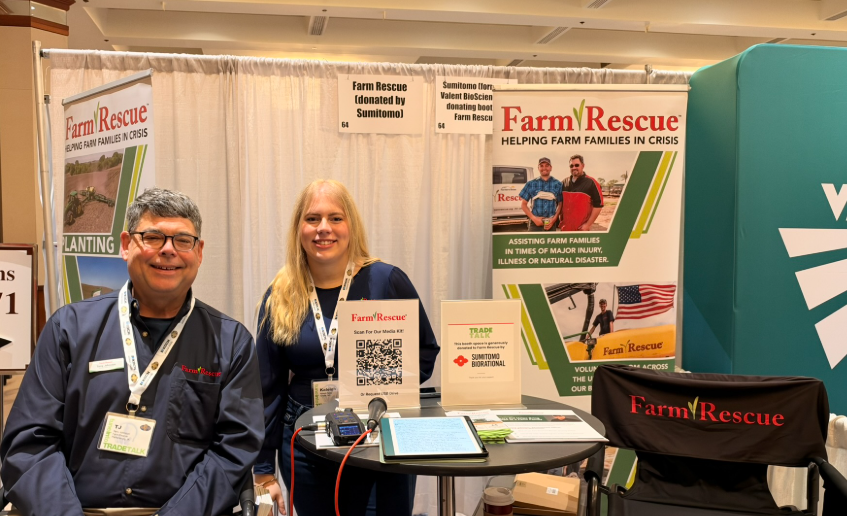
Farmers and ranchers facing unexpected emergencies often struggle with the decision to ask for outside assistance. Farm Director KC Sheperd spoke with Terry Johnston, development officer at Farm Rescue, to discuss how the organization overcomes hesitation to provide critical agricultural relief.
Founded in North Dakota in 2005, Farm Rescue is a nonprofit, volunteer-based organization that assists farm and ranch families experiencing major crises. When an injury, illness, or natural disaster prevents producers from planting, harvesting, or feeding livestock, Farm Rescue deploys experienced volunteers and equipment to complete the necessary fieldwork at no cost to the family.
According to Johnston, reaching producers requires overcoming two main hurdles: general awareness of the program and the deep-seated independence common in agriculture.
"Other than overall awareness of maybe never having heard of Farm Rescue, the number two reason would definitely be shyness or pride," Johnston said.
While producers are frequently hesitant to request or accept aid initially, Johnston noted that the relief is immediate once operations begin. Stepping in to manage daily chores allows families to focus entirely on medical recoveries, hospital visits, or rebuilding after severe weather events like tornadoes and wildfires without losing their livelihood.
"Their business is going to keep going, and I think that's special," Johnston said, noting that relieving operational stress helps families navigate insurance adjusters, cleanup, and personal recovery.
Since its inception, Farm Rescue has grown to cover 11 states, recently expanding its official coverage area into Missouri. While Oklahoma and Texas are not yet within the organization's formal territory, Farm Rescue has repeatedly stepped in to haul hay to both states during severe droughts and wildfires.
Johnston stated that the organization aims to expand into contiguous states with similar agricultural profiles—such as small grains, row crops, and cattle—where its current volunteers and equipment can be easily replicated. However, expansion depends directly on funding to grow its 10-person staff and acquire additional machinery, such as the second combine the organization recently purchased to serve Iowa, Missouri, Illinois, and Nebraska.
"We have a lot to do," Johnston said. "It's simply the resources, and we would love to just keep right on growing."