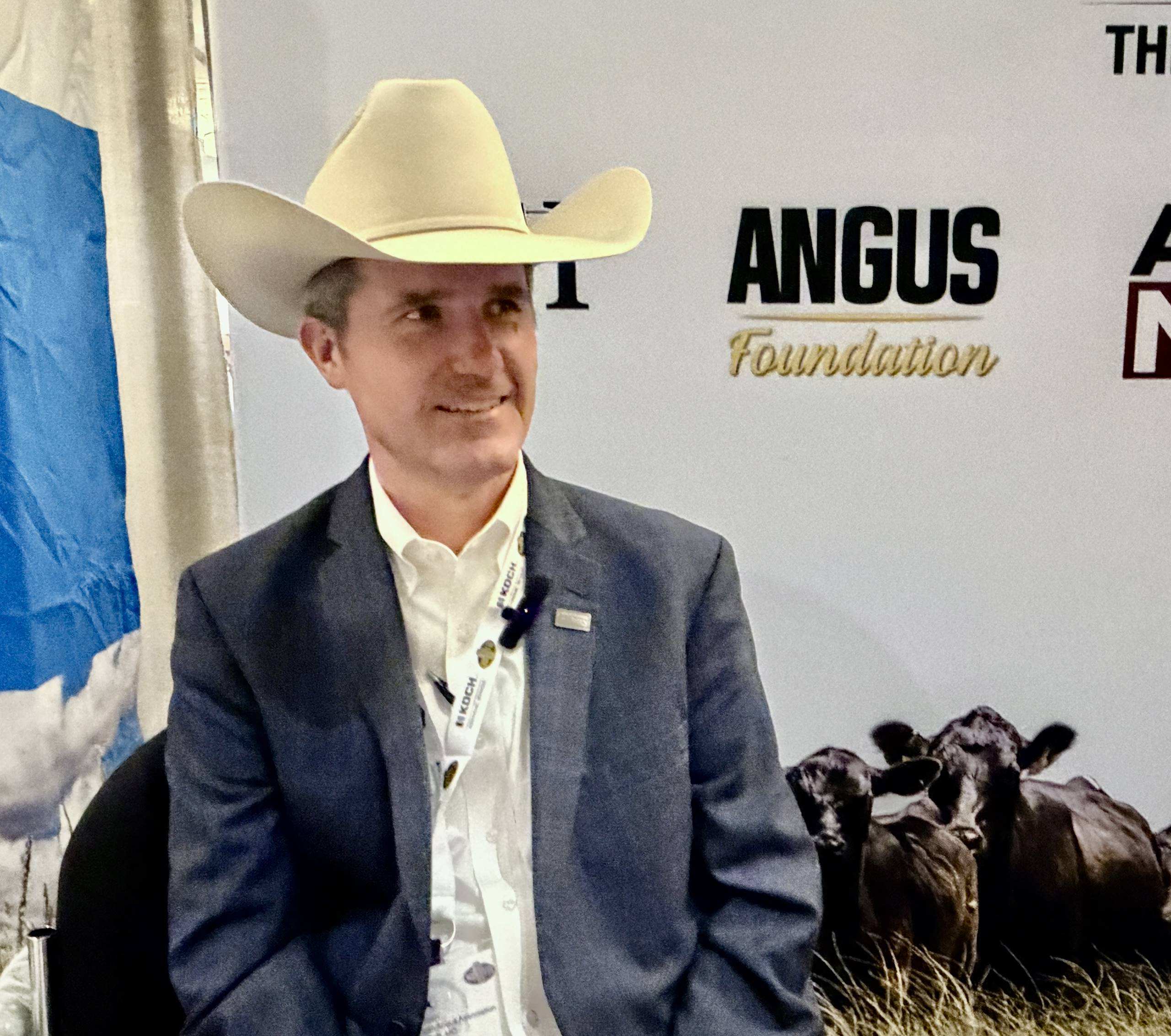
In today’s Beef Buzz, senior farm and ranch broadcaster Ron Hays speaks with Alex Tolbert, director of commercial relations for the American Angus Association, about the organization's efforts to better serve commercial cattle producers. From helping producers capture premiums through Angus Link to using genetic tools to make better breeding decisions, Tolbert says the focus is on delivering more value to the commercial cattle industry.
Commercial Producers Are the Backbone of the Angus Business
Tolbert says the seedstock industry exists to meet the needs of commercial cattle producers, making those relationships essential to the future of the Angus breed. “Any time I talk to producers, that's what I remind them because without the commercial producer, we don't have a business,” Tolbert said. “Without those commercial producers buying Angus genetics, buying that Angus bull, we don't have a business.”
He says one major priority is continuing to improve the data and genetic tools available to commercial producers. Last year, Angus breeders submitted 1.4 million data points on their seedstock, helping producers make more informed decisions about improving certain traits while maintaining others.
Another priority is helping commercial producers see a return on their investment, especially with bull prices reaching record levels.
Angus Link Helps Producers Capture More Value
One program designed to help commercial producers capture additional value is Angus Link, which includes Angus Verified and the Genetic Merit Scorecard.
Angus Verified confirms that a calf crop is 100% sired by registered Angus bulls. Tolbert says the program recently enrolled its one-millionth head.
The Genetic Merit Scorecard takes that effort a step further by communicating the genetic value of feeder cattle to buyers, providing information about how cattle are expected to perform in the feedlot and at harvest.
Tolbert says producers enrolled in Angus Link saw an average premium of $21 per hundredweight over commodity cattle during the last year. “Traditionally, when we get into a high market, people will opt out of programs because they're too valuable, and a lot of times that premium erodes,” Tolbert said. “But the ones who've stayed hooked up have really seen that premium.”
He says the program helps identify cattle with the potential to earn Certified Angus Beef premiums, ultimately helping meet consumer demand for quality beef.
Genetic Tools Help Commercial Producers Make Better Decisions
As the beef industry looks toward rebuilding the nation's cow herd, Tolbert says relationships and customer service remain central to the American Angus Association's strategy.
One tool gaining traction among commercial producers is GeneMax Advantage, a DNA test designed specifically for commercial females. Tolbert says adoption of the program has grown more than 100% year over year as producers look for ways to make better decisions about replacement females and future breeding plans.
The test helps identify genetic traits that cannot necessarily be evaluated by looking at an animal, including hair shedding and marbling potential. “If I'm in the Southeast and in Missouri in the fescue belt, there's a trait for hair shed. I can't necessarily see that,” Tolbert said. “And then we think about those Certified Angus Beef premiums. Well, there's a trait for marbling, and so I can't see that in my weaned calves.”
He says having that information gives producers a baseline to evaluate their cattle and make more informed breeding decisions.
When it comes to rebuilding the beef herd, Tolbert says the focus should not just be on how many cattle producers add back, but on the quality of the genetics they use. “It's not a number, but it's what we're rebuilding with,” Tolbert said.
Angus Sees Growth Among Producers Across the Country
Tolbert previously served as a regional manager before moving into his national role with the American Angus Association. He says enthusiasm for the beef business is particularly strong in the eastern part of the country, where many producers are returning to cattle production.
He noted that 31% of the association's membership has been involved with the Angus breed for less than five years, with much of that growth occurring in the eastern United States.
Many of those producers operate smaller herds, often around 20 to 27 head, and are returning to the business after growing up around cattle or having the opportunity to purchase land.
Tolbert also pointed to a major milestone announced at the association's convention: reported Angus sales across the country reached $1 billion for the first time. “It's profitable if we can manage our expenses,” Tolbert said. “There is room to make some profit, and that really helps people get excited about the business, especially back out east.”
He added that today's producers have more genetic tools available than previous generations, helping them make the most of limited land resources. “It's not granddad's farm, so we've got more tools available today to help make those decisions because ultimately we're still dealing with the same amount of land,” Tolbert said. “The value of that land is a big thing.”
Tolbert says producing more with less will continue to be an important part of the cattle business moving forward.
The Beef Buzz is a regular feature heard on radio stations around the region on the Radio Oklahoma Ag Network and is a regular audio feature found on this website as well. Click on the LISTEN BAR above for today’s show and check out our archives for older Beef Buzz shows covering the gamut of the beef cattle industry today.