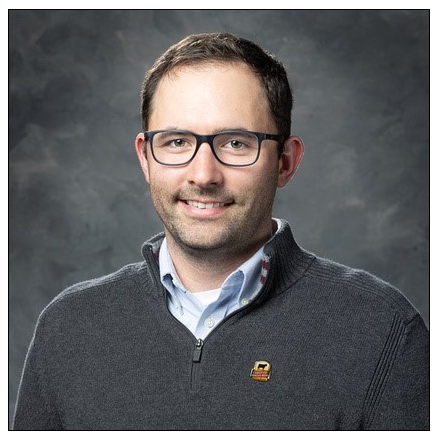
Regional manager Landon Andrews will start mid-September for Arizona, California, Nevada, and Utah.
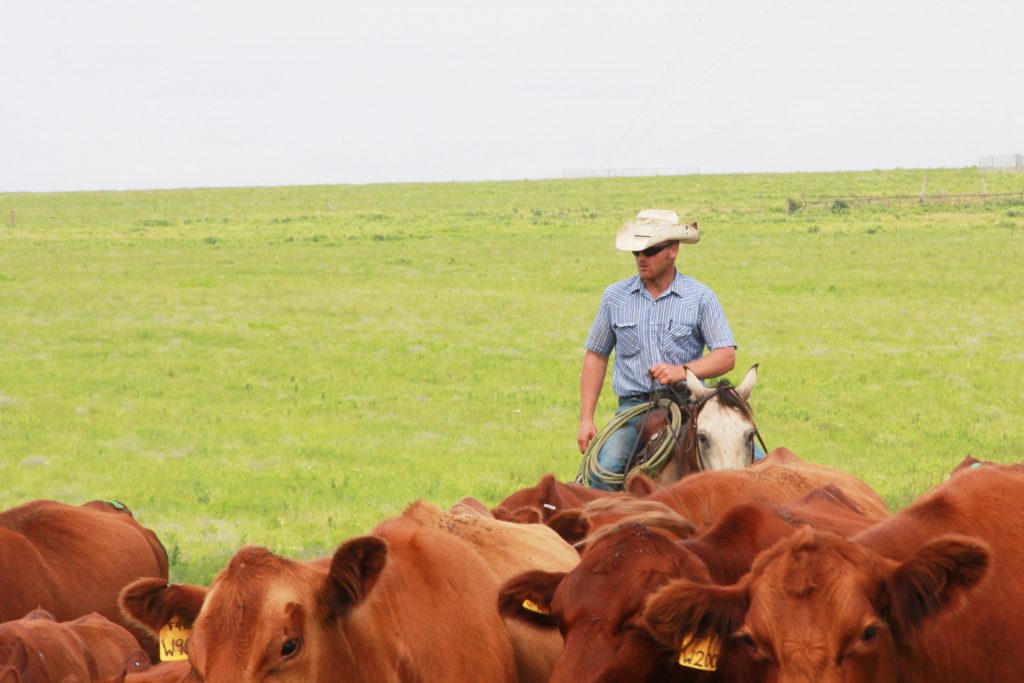
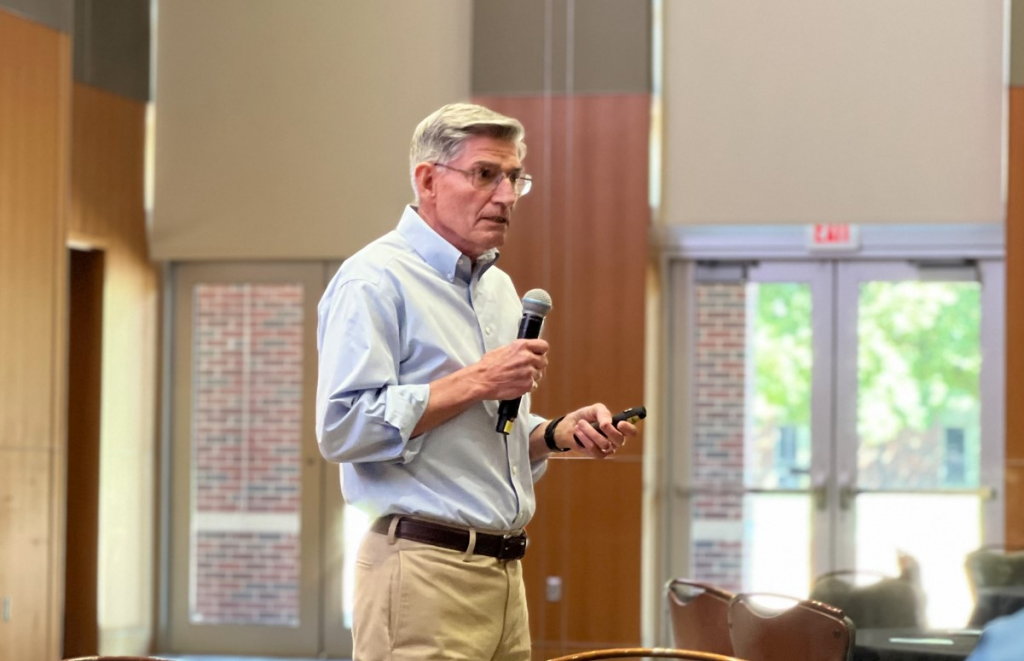
Arizona, California, Nevada and Utah will welcome a newly hired regional manager with the American Angus Association in mid-September 2023. Landon Andrews of Spanish Fork City, Utah, brings industry experience to the position as the co-owner and manager of Shandar Angus Ranch.
"There is no other cattle breed with stronger genetics, valuable seedstock and marketability like the Angus breed," Andrews said.
Landon Andrews will start on Sept. 18 as the regional manager for the American Angus Association's Region 11, serving Arizona, California, Nevada and Utah.
He said he looks forward to working as a resource to support members throughout the four-state Region 11.
"I have deep family roots in the western cattle industry," Andrews said. "I hope to educate members and commercial breeders of the great programs our association offers."
All 13 regional managers are full-time staff members of the Association. They work with cattle breeders in their designated regions to promote Angus cattle, improve management practices and assist breeders who want to get started in the Angus business.
Regional managers also work with breeders to make sure their advertising needs are being met through the Angus Journal and Angus Beef Bulletin. They can often be found working Angus sales and shows or representing the Association at livestock conventions, while serving as a liaison between the organization, its membership, users of Angus genetics, industry partners and academia.
"Landon brings a wealth of knowledge to the Association regarding the beef industry," said Levi Landers, director of field services. "His long-time ties to the breed will serve him well in his new role, and he is undeniably committed to the beef industry and the Angus breed."
Until Andrews officially starts on September 18, members in the western region should contact Landers at llanders@angus.org or the Association's member services at 816-383-5100.
Producers outside of the western region can find contact information for their local regional manager at https://www.angus.org/assoc/RM. Anyone needing assistance is encouraged to contact regional managers.
U.S. Department of Agriculture (USDA) Rural Development and Oklahoma State Director Kenneth Corn announced today more than $4 million in grants to agriculture producers and rural small businesses to make investments in renewable energy and energy efficiency improvements that will lower their energy costs, generate new income, and strengthen the resilience of their operation. This funding is made possible in part by President Biden's Inflation Reduction Act, the nation's largest-ever investment in combatting the climate crisis.
"President Biden is creating newfound opportunity for economic growth for small businesses, agriculture producers, while working to sustain our environment right here in Oklahoma," Corn said. "A key pillar of the Biden-Harris Investing in America agenda is ensuring our producers and business owners are not only a part of the clean energy economy but are directly benefitting from it. These grants are a once in a lifetime opportunity to reinvest in our main streets and aide our producers in being able to sustain their land for future generations of Oklahoma producers."
USDA is investing $266 million in 1,334 renewable energy and energy-efficiency projects in 47 states, Guam and Puerto Rico. The Department is awarding the loans and grants through the Rural Energy for America Program (REAP), including funding from the landmark Inflation Reduction Act.
In Oklahoma 38 businesses, entities and agricultural producers received grant funding. These projects include wind turbines, solar panels, energy efficient heating and cooling systems and other energy efficiency improvements.
"Thanks to President Biden delivering on his economic promises, we can expect these Oklahoma businesses and agriculture producers to save more than $690,000 a year on their energy costs," Corn said. "These are real dollars that will make real impacts for strengthening our Oklahoma economy for years to come. There is still an opportunity for applicants to reach out to us for future grant announcements by contacting our State Office at okenergy@usda.gov."
The following businesses, producers and entities in Oklahoma received grant funding during this round:
Oklahoma State University, $99,896, This Rural Development investment will be used to help fund the Industrial Assessment Center housed within the Mechanical Engineering Technology program at Oklahoma State University.
Base, Michael J., $43,900, This Rural Development investment will be used to help install a 15 kW wind turbine at an agriculture producer in Geary, Oklahoma.
Bishop Farms LLC, $39,800, This Rural Development investment will be used to assist an agriculture producer located in Yukon, Oklahoma install a 15 kilowatt (kW) wind turbine.
Howard Genetics Inc., $28,598, This Rural Development investment will be used to install a 15 kilowatt (kW) wind turbine for an agriculture producer in Ardmore, Oklahoma.
Wood, Ricky, $79,600, This Rural Development investment will be used to assist a gas station in Welch, Oklahoma install a 85.3 kilowatt (kW) solar system.
Woodshed Antique Mall LLC, $78,400, This Rural Development investment will be used to assist a gas station located in Big Cabin, Oklahoma install a 100.86 kilowatt (kW) solar system.
Woodshed of Vinita LLC, $134,000, This Rural Development investment will be used to install a 108.7 kilowatt (kW) solar system in a small business in Vinita, Oklahoma.
Orizon Aerostructures LLC, $500,000, This Rural Development investment will be used to assist a small business in Grove, Oklahoma, install a energy efficient improvement upgrades.
Lindly's Hardware LLC, $29,550, This Rural Development investment will be used to install a 34 kilowatt (kW) solar system in a small business located in Jay, Oklahoma.
Johnson, Mike, $19,176, This Rural Development investment will be used to assist Mike Johnson, an agriculture producer located in Paoli, Oklahoma, install a 15 kW wind turbine.
Freeman, CR, $139,400, This Rural Development investment will be used to install a 45 kilowatt (KW) wind turbine for an agriculture producer in Lone Wolf, Oklahoma.
4T's Discount Grocery, $95,222, This Rural Development investment will be used to help install a 149 kW solar system at a small business in Hennessey, Oklahoma.
Duff Farms LLC, $22,912, This Rural Development investment will be used to assist an agriculture producer located in Hobart, Oklahoma install a 15 kilowatt (kW) wind turbine.
Power Plus Genetics LLC, $43,800, This Rural Development investment will be used to help install a 15 kW wind turbine at a small business in Hobart, Oklahoma.
Duff, Kirk, $23,674, This Rural Development investment will be used to assist an agriculture producer in Hobart, Oklahoma install a 15 kilowatt (kW) wind turbine.
Country Ford Mercury Inc., $246,008, This Rural Development investment will be used to assist a small business in Guthrie, Oklahoma, install a 149 kilowatt (kW) solar system.
John Vance Motors Inc., $283,739, This Rural Development investment will be used to assist a small business in Guthrie, Oklahoma install a 285.16 kilowatt (kW) solar system.
Jensen's Inc., $66,352, This Rural Development investment will be used to install a 63.8 kilowatt (kW) solar system in a small business located in Fairview, Oklahoma.
C&C Affiliated LLC, $23,504, This Rural Development investment will be used to install a solar photovoltaic system. C&C Affiliated LLC. is a rural small business located in Madill, Oklahoma.
Woodshed of Langley LLC, $200,000, This Rural Development investment will be used to assist a gas station in Langley, Oklahoma install a 159.9 kilowatt (kW) solar system.
Matador Foods LLC, $254,401, This Rural Development investment will be used to assist a small business in Blanchard, Oklahoma install energy efficiency improvement coolers and LED lights.
AJD Investments LLC, $145,000, This Rural Development investment will be used to assist a small business located in Norman, Oklahoma install a 96.2 kilowatt (kW) solar system.
Checotah Business Park LLC, $69,828, This Rural Development investment will be used to install a 75.9 kilowatt (kW) solar system for a small business located in Checotah, Oklahoma.
American Heritage Beef Company LLC, $31,588, This Rural Development investment will be used to install a solar photovoltaic system for American Heritage Beef Company, a rural small business in Nowata, Oklahoma.
Woodshed of Monkey Island LLC, $228,000, This Rural Development investment will be used to assist a gas station located in Afton, Oklahoma install a 165.56 kilowatt (kW) solar system.
Progressive Development Corporation LLC, $140,000, This Rural Development investment will be used to assist a small business located in Stillwater, Oklahoma install a 52.8 kilowatt (kW) solar system.
Viand Farms LLC, $22,000, This Rural Development investment will be used to assist an agriculture producer located in Cushing, Oklahoma install a 15 kilowatt (kW) solar system.
3B Industries Inc., $77,070, This Rural Development investment will be used to install an EEI HVAC system at a small business in Comanche, Oklahoma.
Gray, Lyndon, $43,800, This Rural Development investment will be used to install a 15 kilowatt (kW) wind turbine for an agriculture producer in Marlow, Oklahoma.
Milo's Tea Company Inc., $547,960, This Rural Development investment will be used to assist a tea company in Owasso, Oklahoma install a 721 kilowatt (kW) solar system.
Graf, Mark, $77,600, This Rural Development investment will be used to assist an agriculture producer located in Colony, Oklahoma install a 15 kilowatt (kW) Wind Turbine.
Graf, Mitchell, $43,800, This Rural Development investment will be used to help install a 15 kW wind turbine at an agriculture producer in Carnegie, Oklahoma.
Sanctuary on 4th LLC, $23,476, This Rural Development investment will be used to assist a small business in Alva, Oklahoma install energy efficiency improvement windows.
CSCO Properties LLC, $19,965, This Rural Development investment will be used to assist CSCO Properties LLC Inc. a rural small business in Enid, Oklahoma, install energy efficient improvements.
Delbert Joyner, $3,600, This Rural Development investment will be used to assist a cattle and crop farming operation in Carrier, Oklahoma, install a 2.8 kilowatt (kW) solar system.
Joshua Winn, $12,600, This Rural Development investment will be used to assist a cattle and crop farming operation in Welling, Oklahoma, install a roof mount solar system.
McAlester-Union Marketing Company Inc., $12,313, This Rural Development investment will be used to assist McAlester-Union Marketing Company Inc., a rural small business in McAlester, Oklahoma, install energy efficient lighting.
Boehs Building Supply LLC, $36,162, This Rural Development investment will be used to install a 46 kilowatt (kW) solar system in a small business located in Helena, Oklahoma.
Since December 2022, USDA has made up to $1.3 billion available in REAP funding through the Inflation Reduction Act. Eligible applicants include rural small business owners and agricultural producers. The program is part of the Justice40 Initiative, which is working to ensure that 40 percent of the benefits of certain federal investments reach communities that are marginalized, underserved and overburdened by pollution and underinvestment.
The Department expects to make additional awards in the coming months.
USDA continues to accept applications and will hold funding competitions quarterly through Sept. 30, 2024. The funding includes $144.5 million for underutilized renewable energy technologies. For additional information on application deadlines and submission details, see page 19239 of the March 31 Federal Register.
USDA Rural Development provides loans and grants to help expand economic opportunities, create jobs and improve the quality of life for millions of Americans in rural areas. This assistance supports infrastructure improvements; business development; housing; community facilities such as schools, public safety and health care; and high-speed internet access in rural, tribal and high-poverty areas. To learn more, visit https://www.rd.usda.gov/ok.
Learn more about capturing maximum value for the cattle you raise regeneratively.
More and more consumers want to buy beef that has been raised in a sustainable way, and they are willing to pay for it. This affects everyone in the beef industry, from the producer to the final beef supplier, whether it be a grocer or restaurant.
Ranchers applying regenerative practices on their ranch are at an advantage to capture these emerging premiums while also ensuring their ranch is sustainable for generations to come.
A proponent of these practices, Robert Wells, joined the Noble Research Institute as a livestock consultant in 2005. During his lifetime in the business, he has seen regenerative principles and practices offer value to producers time and time again.
He says the value is not solely seen in extra money made, but also in money saved. In either event, here are a few tips he offers for ranchers who want to maximize value in their regeneratively raised calves and finished cattle.
1. RECOGNIZE VALUE TO YOUR RANCH AND AT MARKET
As Wells often reminds ranchers he encounters, payments come to producers in many forms.
"One is the actual-dollar cash payment for the purchase of that animal," he says. "But we have to remember that there are aspects that are less easily quantifiable that regenerative brings to the table."
Over time, the soil gets healthier, the forage gets more nutritious and the carrying capacity of the land should increase, while at the same time inputs decrease, saving money.
Beyond these savings, there are more opportunities all the time for ranchers to receive premiums in the marketplace. Today, a rancher can capture value in a few different ways depending on their herd size.
"The main thing is, you must find a venue where your animals are going to get recognized for the value-added traits you built," he says.
For example, a producer taking cattle to a typical auction market may not see a premium, because when a buyer is filling an order, he likely isn't filling the entire order with regeneratively raised cattle. By going to a venue where other producers are marketing cattle raised under the same stipulations, ranchers have more opportunity for value.
These marketing alliances with other like-minded producers in the area offer more potential for profit as there is strength in numbers. In other words, working with an order buyer securing a truckload of cattle all raised with the same value-added characteristics offers a higher likelihood of a premium.
2. FIND BEST DIRECT-TO-CONSUMER MARKETING OUTLET FOR YOU
If a rancher decides to market directly to the consumer, Wells recommends starting small.
"Test the water, because there is more work involved in marketing this way," he says. "You've got to find the customer, and you've got to cultivate that customer. You can convey the story that goes along with the cattle to them and confidently convey that message to a customer who finds value in those animals."
Often, marketing directly to the consumer means the cattle are delivered to the processor, and the consumer picks up the beef processed to their specification. Some producers sell face-to-face at traditional farmer's markets. While these are popular options for selling direct, Wells says they are not the only way to gain extra value from beef sales.
Companies like ButcherBox and Barn2Door are in the business of partnering with and supporting farmers and ranchers adhering to regenerative practices. These websites offer producers a platform to market their beef product to consumers seeking beef harvested from regenerative operations.
"Those are the two largest formats out there that allow a producer who wants to try to direct-sell to the customer to have a venue online," he describes.
He doesn't discount the value in brick-and-mortar establishments like local restaurants or meat markets, though. More and more, these businesses are seeking cattle raised with a holistic mindset. One limiting factor in this marketing choice is a rancher's ability to provide a consistent supply of beef to a retailer. That is a fundamental consideration when determining the best marketing avenue, because the rancher's supply must match the demand of the marketing outlet he or she has selected.
Retail grocery chains, like Whole Foods or Sprouts, can also be an option for smaller producers, since their meat buyer likely will be able to source cattle from enough different ranches to meet their demand. That way they can look to several like-minded producers to fill their order as opposed to sourcing all their product from one ranch.
3. KEEP GOOD RECORDS AND TELL YOUR STORY
No matter the journey you select to market your product, Wells says keeping good records and telling the story are two key components to finding marketing success. Today, many customers demand a full history.
"We're not only marketing the calf, but we're marketing everything that we've done for that calf as we've gone through the process," he says. "And that means we've got to have records."
In fact, a third-party verification of the management claims a rancher makes is often required by marketing outlets in response to consumer demand. In some cases, this means an on-farm visit by an auditor representing the buyer. If consumers are going to pay a premium at the meat case, they want validation that the claims of regenerative practices are true.
Keeping records goes hand-in-hand with telling the ranch's story. Wells says there is strategy involved there, too.
"Highlight the advantages of what you are doing to make your product special," he says. "Highlight those things that set your cattle and ranch apart from others, without being negative" about other operations.
The beef industry is all on the same team, so marketing beef as a high-quality protein before pointing out the disadvantages of differing management strategies benefits the entire industry. Specifically for those managing regeneratively, Wells says some points to emphasize would be talking about how the cattle live on a ranch their entire lives and play a role in enhancing the health of the land.
Wells encourages producers to continue their good work toward soil health as part of their operation, because more premiums are on the way.
"There will be numerous programs developed to help producers capture value for their cattle being raised regeneratively," he says.
Listen to Ron Hays talk with Keef Felty about the 2023 Farm Bill.
Senior Farm and Ranch Broadcaster, Ron Hays, is talking with the vice president of the National Association of Wheat Growers, Keeff Felty, about the 2023 Farm Bill.
Keeff Felty is a fourth-generation family farmer in the Altus area. He is also very active with state commodity boards and agriculture organizations including the Oklahoma Wheat Growers Association, Cotton Incorporated Oklahoma State Support Committee and has served on various commodity committees within the American Farm Bureau Federation and the Oklahoma Farm Bureau PAC Board.
"NAWG's priorities, number one, is to protect our crop insurance and enhance it where we possibly can because that really is the cornerstone of our farm safety net," Felty said. "Following that, we are seeking a reasonable increase in reference price for ARC (Agricultural Risk Coverage) and PLC (Price Loss Coverage), and also in the trade regards of doubling of the MAP (Market Access Program) and FMD (Foreign Market Development Program) funding."
Felty talked about why it would be beneficial to see an increase in reference price.
"The cost of production has gotten so high on everything, as everybody knows," Felty said. "Inflation has hit everybody and everything. Cost of inputs, cost of especially fuel and fertilizer, and equipment are the main things that go into that. It is just a relative measure of cost of production and trying to get it to more closely represent our true cost of production."
The workings so far in the 2023 Farm Bill, Felty said, are directed toward the continuation of those in the last farm bill- and improving them where possible.
Felty also talked about why increasing promotion program funds would be effective.
"Fifty percent of our (wheat) production is exported and needs to be exported because we are a global economy, it is important, and we need to have the ability to move the product off our shores and into the kitchen and homes around the world where food security is a concern," Felty said. "This is important in that it helps the overall process of the industry."
As a National officer of NAWG, Felty said he is grateful to exercise his ability to serve in such a role for those in the industry.
"Everything that is important takes time and effort, and this is truly important because there is so much of everything that is impacted by either legislation and/or regulation," Felty said.
Prolonged drought and record heat are threatening soybean yields in several key growing states across the Midwest. With most of the soybean crop still in the critical pod-setting phase that depends on moisture in August, persistent dry conditions are lowering yield projections and raising concerns about the availability of supplies.
Scouts participating in the recent Pro Framer Crop Tour found sporadic and highly variable yields for both corn and soybeans, especially across the western Corn Belt. Record high temperatures and dry conditions in August have negatively impacted both crops. At this stage of the growing season, yield loss due to ongoing heat stress is a much greater risk for soybeans than for corn.
According to a new research brief from CoBank's Knowledge Exchange, soybeans have a much tighter supply situation than corn due to the loss of planted acres. USDA estimates soybean planted acreage fell 4.6% year-over-year this spring to the lowest level since 2020.
"If hot and dry conditions in the Midwest continue and yield loss for soybeans increases, the U.S. soybean supply will tighten further, resulting in stronger interior cash basis and lower exports," said Tanner Ehmke, lead grains and oilseeds economist for CoBank.
Ehmke was among the scouts participating in the crop tour who observed soybean pods being aborted in the triple-digit heat. Although pod counts were higher in many states compared to last year and the three-year average, more pods will likely be aborted if hot and dry conditions continue. In addition to drought and heat stress, sudden death syndrome was widely noticed by scouts, as was white mold.
However, high temperatures late in the growing season are associated with a higher soybean oil content, according to the United States Soybean Quality Annual Report. This coincides with historically strong soybean oil prices relative to soybean meal prices, driven by the expansion in demand for renewable diesel.
"While hot temperatures during the growing season tend to cause lower protein levels in soybeans and lower soybean meal values, the combination of higher oil extraction and higher soybean oil prices will benefit processors," said Ehmke. "Buy basis for co-ops and processors will be higher in the forthcoming crop year for soybeans, but processor margins are expected to remain strong." Read the research brief, Tour Reveals Risk to Soybean Crop, but Greater Potential for Soybean Oil
Below is an analysis of the wheat markets from Oklahoma State University Extension grain market economist, Dr. Kim Anderson:
The market has knocked another 35 to 40 cents off the price of wheat. The price of wheat is $6.56 in Pond Creek, $6.11 in Altus and $6.21 in Perryton, Texas. Wheat may be forward contracted for 2024 harvest delivery for $6.52 in Pond Creek, $6.27 in Altus and $6.67 in Perryton, Texas.
Egypt bought 4.4 million bushels of wheat from Romania (rather than Russia) for $7.10 (FOB-Free on-board vessel). The per bushel price delivered to Egypt (C&F-Cost and Freight) was $7.50. This implies that it costs about 40 cents per bushel to ship wheat from Romania (Black Sea port) to Egypt.
The cost of ocean freight from the Texas Gulf to Egypt is roughly double the ocean freight cost from the Black Sea to Egypt. This implies that for U.S. wheat to be competitive with Romanian wheat, the Texas gulf price loaded on a vessel would be $6.20 ($7.10 - $0.80).
Russia is reported to have nearly 1.8 billion bushels of wheat to export. That's 24 percent of total world wheat exports. Russia's 5-year average wheat exports are 1.4 billion bushels.
The point is that Oklahoma wheat prices could continue the downtrend. The bottom could be below $6. I don't think it's very likely that nearby wheat prices will decline to $6, but it is possible.
Adair County men face charges in Cherokee Nation Tribal Court
Texas & Southwestern Cattle Raisers Association special rangers arrested James Glenn Sawney and Donnie Lee Nail for larceny of equipment, implement of husbandry, and possession of stolen property this July.
The arrests stem from an investigation conducted by Texas & Southwestern Cattle Raisers Association Special Ranger Cody Hyde, who received a report of a vandalized metal fabricated gate on a ranch in southern Adair County.
Donnie Nail
After being contacted by the property owner who noticed damage to his fence, Hyde made contact with a vehicle transporting a rear bucket attachment for a backhoe in the bed of the truck near the scene. He identified the drivers as Native American tribal members Sawney and Nail, but he released the suspects due to the McGirt Tribal Jurisdiction Law.
Hyde continued to survey the property, finding fresh equipment tracks near the vandalized gate and a 2023 Caterpillar 420 4X4 backhoe with a missing rear bucket attachment concealed in a heavily wooded area. Further investigation revealed the backhoe was reported stolen by law enforcement the day prior.
James Sawney
With assistance from the Adair County Sheriff's Office and the Cherokee Nation Marshall's Service, DNA evidence was collected and submitted from the backhoe. Law enforcement officials later found the bucket attachment at a Stillwell, Oklahoma pawn shop where it had been sold by Sawney.
Warrants were issued for Sawney and Nail. Sawney was arrested July 11 by the Adair County Sheriff's Department. Nine days later, during a traffic stop, Nail fled the scene leading to a vehicle pursuit. Nail crashed his vehicle near Evansville, Arkansas during the pursuit. Nail was taken into custody by the Washington County Sheriff's Department and awaits extradition.
Texas & Southwestern Cattle Raisers Association thank Adair County Sheriff Jason Ritchie, Adair County Deputy Skylar Sellers, Adair County Deputy Austin Cluck, and the Cherokee Nation Marshall's Service for their joint efforts in this investigation bringing the case to prosecution.
Over the past two decades, the United States has been importing more and more avocados each year, underlining a growing obsession with the nutrient-dense fruit. Simultaneously, the U.S. and the rest of the world have been dealing with a growing environmental crisis spurred on by an overreliance on plastic. Could avocados—specifically avocado peels—provide a potential solution?
The original article was published on South Dakota State University website and is reprinted here with permission.
According to a study conducted by Srinivas Janaswamy, an associate professor in South Dakota State University's Department of Dairy and Food Science, and Shafaet Ahmed, a graduate research assistant working under Janaswamy's tutelage, the fibers of avocado peels could possibly be used to make biodegradable films—something that could ultimately replace plastic as a packaging material.
"Plastic's inability to biodegrade has amassed waste, known as white pollution, causing severe environmental damage," Janaswamy said. "Consequently, the demand for alternate, environment-friendly, biodegradable, clean and green plastic-replacing material is rising."
Janaswamy began this work over two years ago after receiving funding from USDA's National Institute of Food and Agriculture (NIFA) to create a strong, sustainable and flexible packaging material that biodegrades relatively quickly and is made from agricultural residues.
Srinivas Janaswamy, an associate professor in South Dakota State University's Department of Dairy and Food Science. Credit SDSU.
"Our modern society uses plastics in many forms as part of daily life. However, plastic waste is an environmental and economic problem as is food waste," said Dr. Victoria Finkenstadt, a national program leader with NIFA. "Dr. Janaswamy's work on quickly biodegradable bioplastics from food waste tackles two problems at once and provides more functionality than commodity plastics."
While plastics are a desirable packaging material used in nearly every sector of American life, it takes nearly 700 years for plastic to biodegrade in the environment. Further, less than 20% of plastics are recycled. Plastic pollution is a worldwide problem, and finding potential solutions continue to be a focal point for researchers.
"We cannot even imagine our lives without plastic right now," Ahmed said. "From the morning until the evening, we are constantly using plastic. A viable alternative needs to be addressed, and biodegradable films from bio-based materials are a prudent choice."
Cellulose extraction
Previous research has found cellulose, an agricultural biomass, to have properties that make it a suitable replacement candidate for plastic. Cellulose is also widely available, with almost 700 billion tons produced annually. A large majority originates from fruit residue, like avocado peels, which are approximately 28% cellulose.
For this project, the researchers extracted cellulose fibers from the avocado peel to create a powdered peel extract. A "green" chemical modification process then improved the properties of the extract and made the film more suitable for packaging. The films had both strong and transparent properties.
"Our avocado peel fiber films are strong and biodegrade within 30 days at 22% soil moisture," Janaswamy said.
The films made by the research team were five times stronger than polyethylene, one of the most widely produced plastics in the world.
"The outcome opens up novel opportunities for developing plastic replacement and biodegradable packaging films," Janaswamy added.
The results of this research provide Janaswamy and Ahmed with future avenues for their work. They will now work to improve the properties of their films while also studying what role plasticizers may play in biodegradable packaging.
Fall is right around the corner, and for many of us that means baking goodies with pecans. Pecans are native to the Southern region of the US, particularly along the Mississippi River flood plain. In 2022, Georgia was the top producer of improved varieties of pecans, contributing almost 43% of the US value of production[1]. Native pecans are a much smaller portion of total US pecan production. Oklahoma was the top producer of native varieties of pecans, contributing 72% of the US value of production.
Pecan producers, like other agricultural sectors, have been faced with rising input costs in the last 3 years. Pests, diseases, and predation are big challenges in pecan production, and the costs of managing those challenges are forcing producers to make hard management decisions. Native pecan grove owners have been particularly hard hit since their groves also have lower yields as compared to improved pecan varieties. This, along with higher maintenance costs for existing trees, leads to issues for those hoping to draw a profit from their pecan harvest. Higher input costs open producers to greater risks when it comes to price and yield declines. Insurance exists to help cover essential costs should a disaster event happen.
Whether a producer is involved in managing a native pecan grove or an improved pecan orchard, the risks for each can be equally damaging to profitability. Insurance can be combined with disaster programs in many cases in extreme events. There are many risks that affect the health and yield of a pecan operation; however, some of the main factors are listed below:
Freeze – An early fall freeze prior to shuck split can reduce yields. Shucks may be frozen and incapable of opening to release the pecans.
Drought – Oklahoma has been in a drought for several years. This can stunt the growth of trees, trigger nut drop, and cause yield reductions for 3-5 years.
Insects – The pecan weevil and other pests can be controlled with approved pesticides and maintenance practices. View additional fact sheets for more information here.
Disease – Make sure to spray fungicides at the proper rate and time for maximum effectiveness.
Predation – Utilize various methods including sound deterrents, trapping, or hunting for multiple species, and make sure to pick up harvested nuts as quickly as possible to reduce loss.
Pecans are considered to be a specialty crop which means they are not eligible for commodity safety net programs like Agricultural Risk Coverage and Price Loss Coverage. Pecan producers are primarily dependent on crop insurance, disaster programs like the Tree Assistance Program (TAP), and more traditional risk management like operation diversification. USDA RMA offers a variety of insurance coverage plans for specialty crop producers. How much insurance a farm will need is determined, in part, by the level of costs that are "essential" in any given year. This will vary widely from farm to farm. An improved pecan farm that does its own processing and sells directly to retail will have quite different risks and costs of production than a native pecan farm selling primarily wholesale.
In Oklahoma, pecans can be insured if the grove or orchard is at least one acre and the insured trees have produced a minimum production, which is: 600 pounds in one of the last 4 years for improved variety pecans in irrigated orchards, and 300 pounds in one of the last 4 years for native pecans or improved variety pecans without irrigation. The Pecan Revenue Insurance product covers unfavorable weather, declines in market prices, irrigation failure, fire, insects, disease, and other acts of God. If you are interested in Pecan Revenue Insurance, ask your neighbors about nearby crop insurance agents that offer that coverage.
Pecan Revenue Insurance can provide a needed safety net in the event of a significant weather event. As shown in the figure, the 2018 drought which was severe for Southwestern pecan producers, in particular, resulted in insurance payouts to help cover production costs. Similarly, Pecan Revenue Insurance meant the difference in paying the bills for producers in Oklahoma that were impacted by drought in 2022. As an example of how the insurance product might work, consider an improved variety pecan operation based in Northeast Oklahoma. Starting with an estimated production cost for 2023 of $1,546 per acre for a producer that has irrigated, improved pecan groves and sells in the premium market. In a year where the weather cooperates and prices are reasonable (not the best but not the worst), the producer might make a net profit of $506/acre. However, what about a drought year that reduces yield by 26% and prices remain around the same level? That producer could experience a 163% reduction in net returns or a net loss of $800 per acre. What if they purchase Pecan Revenue Insurance? In this particular scenario, the producer has a cost of insurance that reduces the net return per acre in a typical year to $369/acre; however, in a drought year, the producer experiences a shallower financial loss (132% reduction in net returns). Risk management for specialty crop producers has come up in several of the 2023 farm bill listening sessions. Supply chain disruptions and restaurant closures hit the pecan sector in 2020, followed by severe weather events that impacted regional production. It takes years for pecan groves to recover from tree damage or to establish replacement trees. Risk management is individual to a farm, and insurance may play a role in that overall risk management plan. For more information on Pecan Revenue Insurance in your local area, contact your local crop insurance agent.
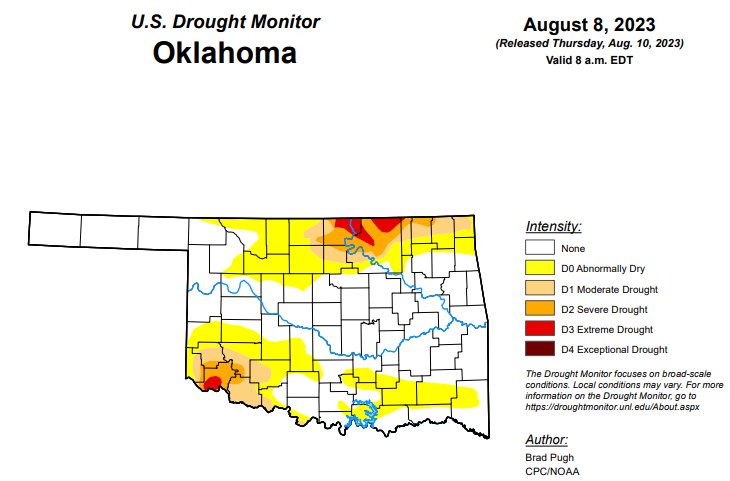
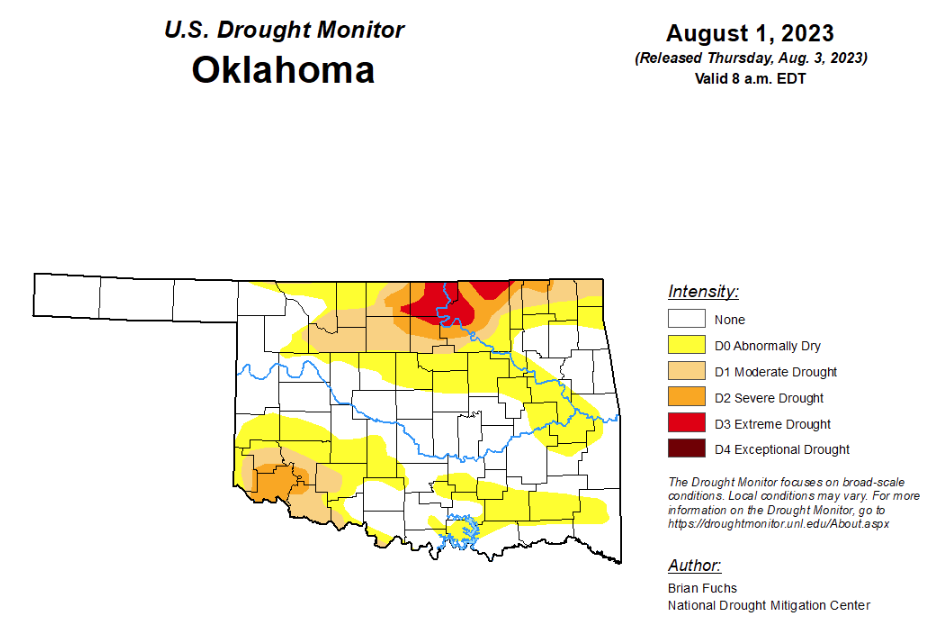
According to the latest Oklahoma Drought Monitor, exceptional drought remains at zero percent, unchanged for the past few weeks.
Extreme drought or worse is now at 1.97 percent, up from last week's 1.69 percent.
Severe drought or worse is now at 19.70 percent, up significantly from last week's 8.28 percent.
Moderate drought or worse is also up from last week, now at 35.98 percent- last week's percentage was 28.14.
Abnormally dry or worse conditions have worsened since last week and are now at 58.27 percent, up from last week's 50.32 percent.
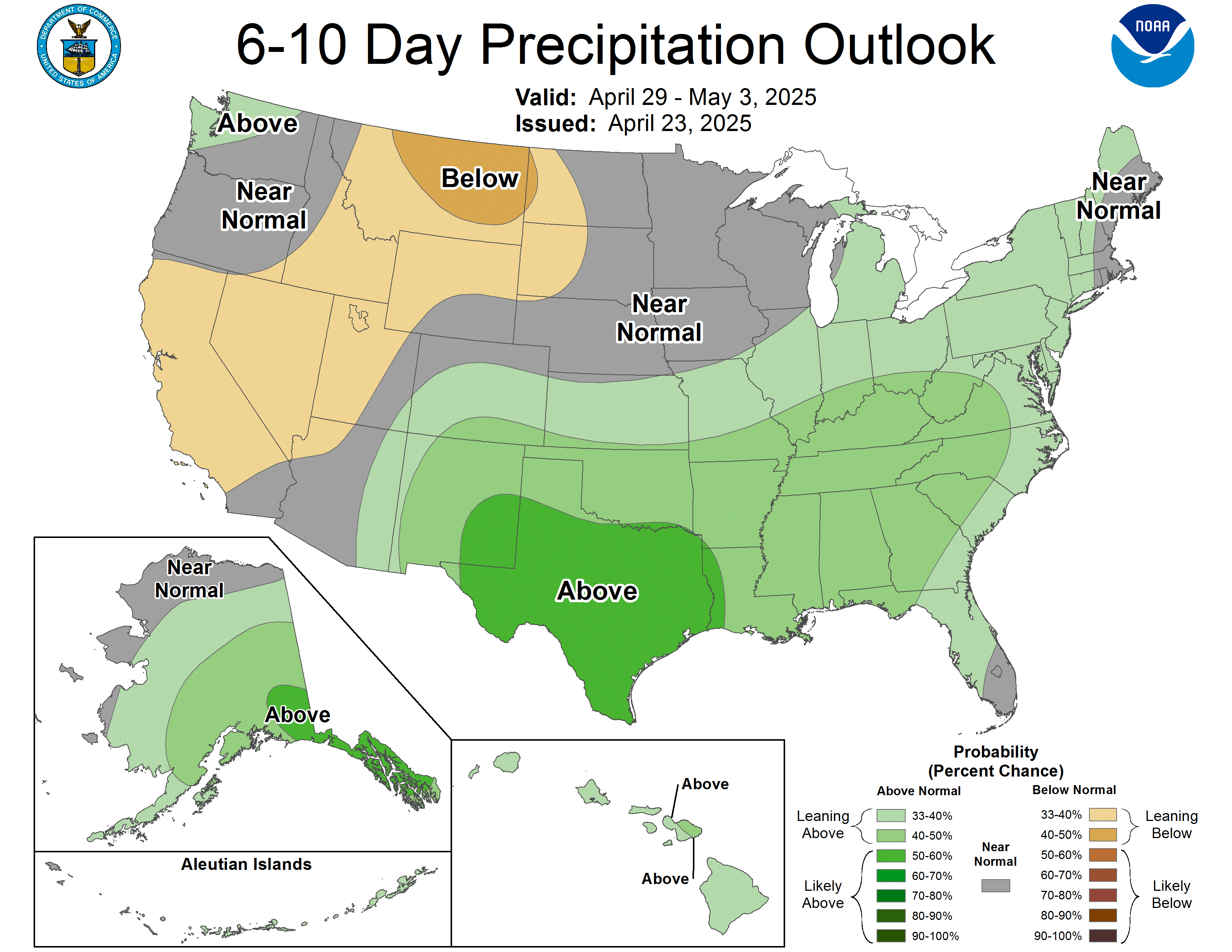
According to the 6 to 10-day precipitation outlook map, the majority of the panhandle is leaning below a 40 to 50 percent chance of precipitation through September 9. The northeast part of the state, dipping down into the southeastern border, stands at a near-normal chance of precipitation through that date. The remaining parts of the state are leaning below a 33 to 40 percent chance of precipitation through that September 9 date.
To view the United States Drought Map, click here.
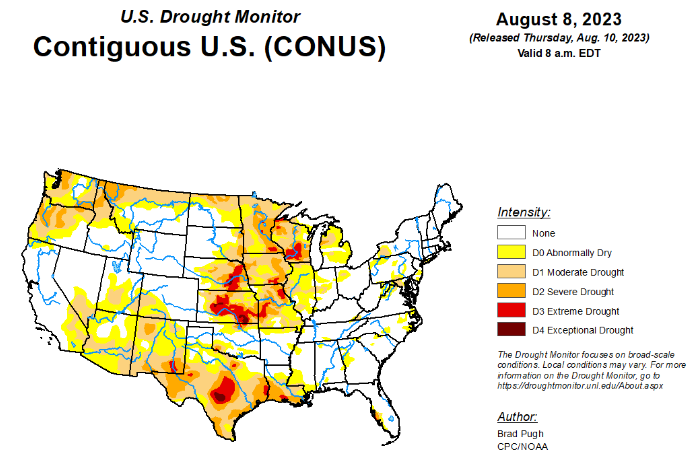
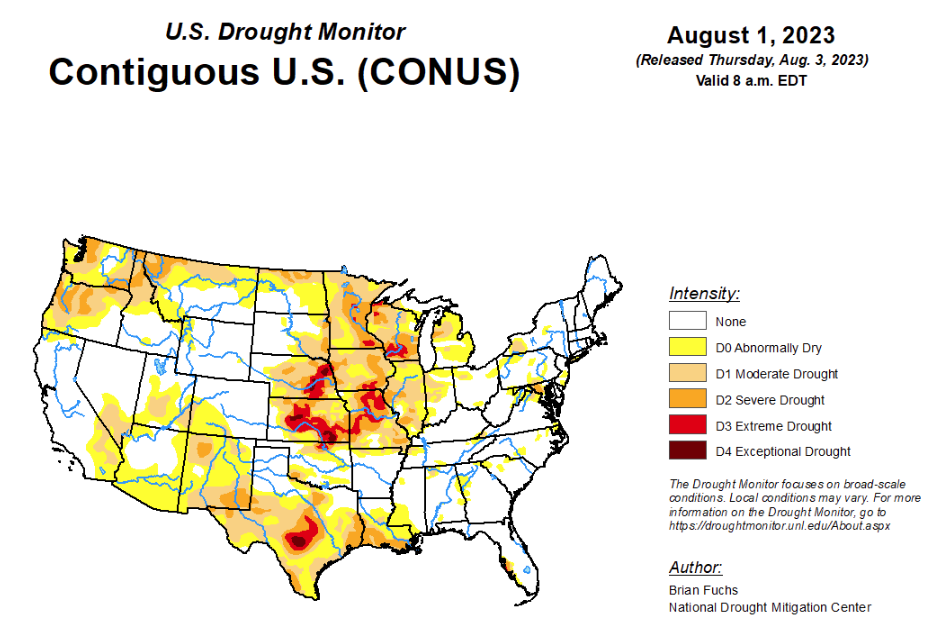
According to the latest U.S. drought monitor, this week saw continued intensification of drought across areas of the Midwest, South, Southwest, and the Pacific Northwest. In the Midwest, extreme heat impacted areas of the region including Minnesota, Iowa, Missouri, Wisconsin, and Illinois with temperatures soaring 6 to 10+ degrees F above normal. Daily high temperature records were broken across the region during the past week including in Chicago (98), Milwaukee (101), Minneapolis (101), and Des Moines (100). Similarly, areas of the South including the northern Gulf Coast of Texas, Louisiana, and southern Mississippi saw continued drought-related deterioration on this week's map as the heatwave continued to push high temperatures over 100 degrees F with numerous records broken during the past week. Record daily highs were set or tied in various southern cities including Houston (109), San Antonio (104), Austin (107), Dallas (109), Baton Rouge (106), New Orleans (103), Jackson (106), and Mobile (101). In Louisiana and southern Mississippi, the continued hot and dry conditions have led to numerous wildfire outbreaks as well as widespread poor hydrologic conditions and severe impacts within the agricultural sector. In the Southwest, monsoon precipitation has been well below normal across much of the region with areas of southern Arizona and New Mexico reporting rainfall deficits ranging from 3 to 6 inches since the beginning of July. In the Pacific Northwest, areas of drought expanded on the map in Oregon, Washington, and Montana in response to a combination of above-normal temperatures over the past 90-day period, precipitation shortfalls, and poor surface water conditions. Conversely, some areas saw improved drought-related conditions on the map, including southern Texas where heavy rains, in association with Tropical Storm Harold last week, provided much-needed moisture to the region. Rainfall accumulations along the southern Gulf Coast and South Texas Plains regions ranged from 2 to 6 inches. In the Southeast, areas of Florida braced themselves for the impacts of Hurricane Idalia as it intensified rapidly early this week. The hurricane made landfall in the Big Bend region of Florida early Wednesday morning (8/30) as a dangerous Category3 hurricane bringing a life-threatening storm surge, catastrophic winds, and severe flooding.
In the Southern Plains, the heatwave continued across the region during the past week with record-breaking temperatures observed across the eastern half of Texas, Louisiana, and Mississippi. On the map, areas of Extreme Drought (D3) and Exceptional Drought (D4) expanded along the northern Gulf Coast of Texas and Louisiana as well as areas of Severe Drought (D2) and Extreme Drought (D3) in southern Mississippi. According to the latest U.S Department of Agriculture (USDA) Weekly Weather and Crop Progress Bulletin (8/29), the percentage of topsoil in Texas rated short to very short was 92%, while neighboring Louisiana was rated 88% short to very short. In addition, Water Data for Texas was reporting (8/30) reservoirs in the Edwards Plateau Climate Division were 35.9% full, while the South-Central Climate Division reservoirs were 44.2% full. In terms of drought-related impacts, the National Drought Mitigation Center's Condition Monitoring Observer Reports (CMOR) were reporting hundreds of impact reports from across Louisiana and Mississippi during the past 30 days. For the week, average temperatures across the region were well above normal across most of the region with temperature departures ranging from 2 to 10+ degrees F above normal. In terms of precipitation, the region was generally very dry except for some isolated areas of light to moderate accumulations observed in areas of Texas (East Texas, Trans-Pecos), Louisiana, and southern Mississippi. In South Texas, some locally heavy rainfall was observed in association with Tropical Storm Harold making landfall and providing beneficial rainfall to drought-affected areas.
In the High Plains, on this week's map, degradations were made in northern portions of North Dakota and in eastern Kansas. Conversely, recent precipitation during the past 30-60-day period led to some minor improvements on the map in drought-affected areas of southeastern Nebraska. Across most of the Plains, hot and dry conditions prevailed this week except for some isolated shower activity along the Kansas-Nebraska border region where 1 to 3 inches were observed. Average temperatures for the week were well above normal (2 to 8 degrees F) with the greatest departures observed in northwestern North Dakota and eastern portions of Nebraska and Kansas.
In the West, on the map, degradations were made across areas of the Southwest and Pacific Northwest including New Mexico, Oregon, Washington, and Montana. In the Pacific Northwest, an area of Extreme Drought (D3) was added in the North Cascades where precipitation has been below normal both in the short and long term. Moreover, 7-day average streamflows on numerous creeks and rivers were below the 10th percentile and numerous other drought indices were supporting deterioration in the Cascades as well as other areas in the state. Likewise, poor soil moisture and low streamflow levels led to expansion of Extreme Drought (D3) in northwestern Montana. In New Mexico, the combination of short- and long-term precipitation deficits, poor soil moisture, and impacts in the agricultural sector (eastern New Mexico) led to continued deterioration on the map across parts of the state. For the week, some light precipitation accumulations (generally < 1 inch) were observed in isolated areas of the Four Corners states and Intermountain West.
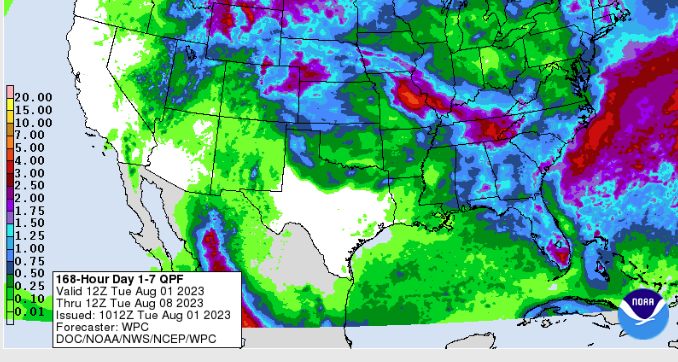
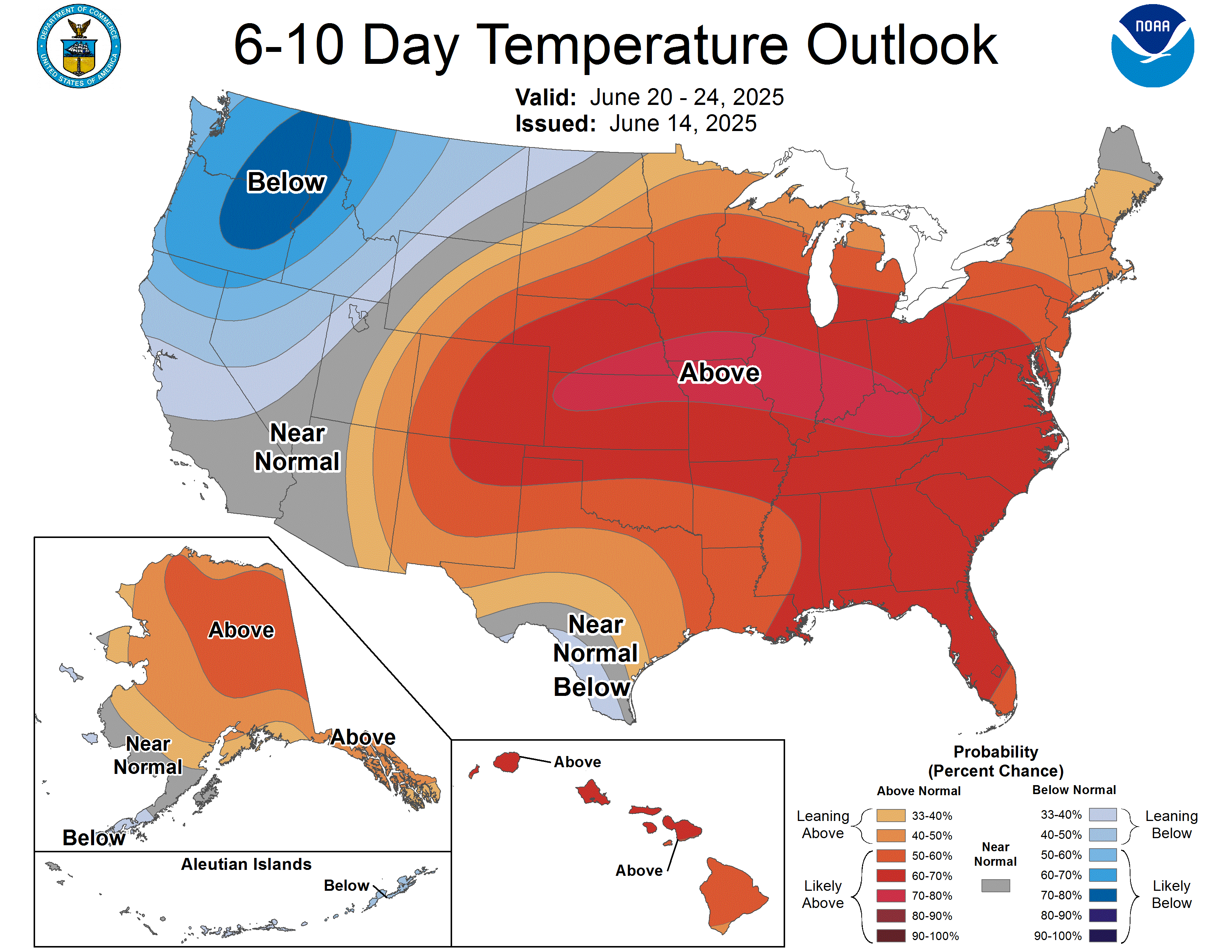
Looking ahead, the NWS WPC 7-Day Quantitative Precipitation Forecast (QPF) calls for heavy precipitation accumulations ranging from 4 to 10+ inches in association with impacts of Hurricane Idalia, which is forecast to bring very heavy rains across the Big Bend region of Florida as well as across areas of the Coastal Plain of Georgia and the Carolinas. In the Northeast, dry conditions are expected, while most of the South, Midwest, and the Plains states are forecasted to experience generally dry conditions. In the West, some light to moderate accumulations ranging from 1 to 3 inches are expected across portions of Arizona, Utah, and in isolated areas of the central and northern Rockies. The CPC 6-10 Day Outlooks call for a moderate-to-high probability of above-normal temperatures across much of the conterminous U.S. in an area extending from the Rocky Mountains to the Eastern Seaboard, while near-normal temperatures are expected over the remainder of the West except in Washington state where temperatures are forecasted to be below normal. In terms of precipitation, below-normal precipitation is expected across much of the southern tier of the conterminous U.S. as well as portions of the Mid-Atlantic, Great Basin, and Intermountain West. Meanwhile, above-normal precipitation is forecasted for areas of the Upper Midwest, Northern Plains, and the Pacific Northwest.
To view the 6-10 Day Precipitation Outlook Map, click here.
To view the 6-10 Day Temperature Outlook Map, click here.
To view the Monthly Drought Outlook Map, click here.
Listen to Ron Hays talk with Mary-Thomas Hart about EPA's revised WOTUS rule.
Senior Farm and Ranch Broadcaster, Ron Hays, is talking with the National Cattlemen's Beef Association Chief Counsel Mary-Thomas Hart about the latest update on the Waters of the U.S. rule.
On August 29, the Biden Administration issued their revised WOTUS rule. While many ag groups have voiced their displeasure with the revised rule, NCBA sees potential.
"Earlier this year, we got a really favorable decision from the Supreme Court in Sackett v. EPA that required EPA to take the Biden Administration's WOTUS definition back to the drawing board," Hart said. "We heard from EPA a couple of months ago that they were planning some 'surgical adjustments' to the rule, and that is exactly what we got..."
These adjustments made by the EPA, Hart said, were quite impactful. One important takeaway, Hart said, is that there is no reference to a significant nexus in the latest rule, which is a massive achievement.
"We saw the redlining of any reference to the significant nexus test," Hart said. "That rule, that change that we saw yesterday significantly narrows the number of features that are subject to federal Clean Water Act jurisdiction, and I think it provides a lot of additional clarity for farmers, ranchers, and landowners across the country."
There are still some terms that will need to be defined, Hart said, but it is important to acknowledge the progress that has been made in the last few months coming off of the Sackett v. EPA decision. Some of those terms that will need defining include continuous surface connection, relative permanence, and interstate waters.
"For farmers and ranchers today, if you have an isolated feature, if you have an ephemeral feature on your property, you should be able to effectively manage those features without worrying about EPA showing up and saying that you violated the Clean Water Act," Hart said.
Hart said it is critical to remain engaged and involved in the conversation as EPA defines some of those important terms, and it is helpful to know that the Sackett v. EPA decision can be used as a cornerstone to refer to.
"We will also be watching how they enforce this definition when it comes to working with landowners on the ground," Hart said. "When we look at the text of the WOTUS definition that we got yesterday, I am not disappointed. I think there is work still to be done, but I think we are moving in the right direction."
Hart has even more to say- so click on the Listen Bar for the entire conversation on where we now stand with WOTUS between Hays and Mary-Thomas Hart.
The Beef Buzz is a regular feature heard on radio stations around the region on the Radio Oklahoma Ag Network and is a regular audio feature found on this website as well. Click on the LISTEN BAR at the top of the story for today's show and check out our archives for older Beef Buzz shows covering the gamut of the beef cattle industry today.
Brian Barker named new CEO and David Pugh announced as CFO
AgReliant Genetics has announced senior leadership changes to position the company for long-term success, while continuing to have a seed-only focus delivering high-performing hybrids for farmers.
Brian Barker has been named the chief executive officer and president of AgReliant Genetics, effective August 31. Joining Brian on the executive leadership team is recently announced chief financial officer and vice president of finance, David Pugh, who began August 7.
Brian Barker, Chief Executive Officer and President Brian brings a strong background in the seed industry and a proven record of delivering new business growth. With over two decades of seed and leadership experience, Brian has demonstrated his aptitude for building and nurturing high-performing teams.
Brian Barker has been named the Chief Executive Officer and President of AgReliant Genetics, effective August 31.
"Brian is the right leader for AgReliant's future," said Régis Fournier, chairman of AgReliant Genetics. "His exceptional track record, strategic acumen, and commitment to excellence make him the ideal choice to guide our company through the evolving landscape and drive us toward new levels of achievement."
Brian began his career with The Dow Chemical Company in a series of chemical business roles including market research, customer service and sales. He later moved to the Dow Elanco agricultural joint venture, eventually becoming Dow AgroSciences, with successive roles in crop protection marketing, sales management, and global program management. In later years, he led the U.S. seeds business through significant operational improvements.
In 2017 following the Dow/DuPont merger, eventually becoming Corteva Agriscience, he led restructuring of the newly merged U.S. seeds business, and Corteva's combined retail brand, regional brand, and technology licensing businesses as Vice President, Multi-Channel Seeds business unit. Most recently, he was Vice President, Future ERP Global Business Leader, where he led Corteva's new global SAP implementation as business liaison.
Brian holds a Master of Business Administration (MBA) and a Bachelor of Science in Business and Marketing, both from Indiana University's Kelley School of Business. He recently served on the executive board of the American Seed Trade Association, as well as the Purdue University Center for Agribusiness Board and School of Agriculture Deans Advisory Board.
David Pugh, Chief Financial Officer and Vice President of Finance Pugh joins AgReliant Genetics from Elanco, a global leader in animal health, where he served as treasurer and vice president of finance strategy and risk management. While at Elanco, David also secured funding for the acquisition of Bayer Animal Health. Prior to that, Pugh spent 24 years with Eli Lilly & Company where he held a number of positions in finance and information technology including director of global financial planning, CFO of Lilly Russia, and executive director of Lilly diabetes finance.
David Pugh has been named Chief Financial Officer and Vice President of Finance of AgReliant Genetics, effective August 7.
As vice president of finance and chief financial officer, David Pugh steers the direction of the company on the development of key, long-range strategies ensuring financial performance objectives are achieved. Through his leadership, David is poised to advance our financial position and build our information technology and data analytics capabilities.
"David brings a wealth of relevant experience to AgReliant. But more importantly, his key personality traits and leadership style make him a great fit for the AgReliant Genetics team and the role. He is entrepreneurial, analytical and results oriented. And he also has a passion for developing people and creating a positive culture," shared Cecile Richard, CEO Limagrain Americas.
David has a bachelor's degree in computer science from Purdue University and an MBA from the Kelley School of Business at Indiana University. He serves on Elements Financial Credit Union's Supervisory Committee.
Kincannon & Reed, a leading executive search firm focused on the food, agribusiness, and biosciences sectors, supported AgReliant Genetics in the recruitment of Brian Barker and David Pugh.
ABOUT AGRELIANT GENETICS AgReliant Genetics is committed to providing trusted seed solutions that help farmers grow. We do this by focusing solely on seed and delivering one-of-a-kind, high performing hybrids. Founded in 2000 by global seed companies KWS and Limagrain, AgReliant Genetics benefits from direct access to a global corn germplasm pool and has a top four corn research program. Through our seed brands — AgriGold® and LG Seeds in the U.S. and PRIDE® Seeds in Canada, we proudly offer the latest innovation to our farmer customers, whether they grow corn, soybeans, sorghum or alfalfa. Discover more at AgReliantGenetics.com.
On August 23, USDA began hearing testimony on proposals to amend the Federal Milk Marketing Order system. The 21 submitted proposals have been categorized under six different subjects by USDA. The second subject, Surveyed Commodity Products, will consider changes and updates to the National Dairy Products Survey Report (NDPSR). Current data reveals the percentage of product volume and number of processing plants captured in the NDPSR remains a small portion of total product sales volumes and total number of plants.
The Federal Milk Marketing Order system establishes provisions under which dairy processors purchase milk from dairy farmers supplying specific marketing areas. One of the primary functions of the federal order structure is the calculation of minimum uniform prices paid to farmers. Prices calculated are intended to reflect fair market prices based on current supply and demand for a variety of dairy products. To accomplish this, USDA surveys the weekly sales price, quantity and moisture content of certain dairy commodities sold by processors who sell 1 million pounds or more of those dairy commodities. The average prices collected from these surveys are then used as the basis for the first step in calculating minimum prices paid to farmers. Higher prices captured in the marketplace for surveyed products would generally lead to a higher price paid to farmers while the opposite is true of lower prices. If the prices of the surveyed products do not adequately reflect the mix and value of products purchased by consumers, the price being paid to farmers may not be reflective of the market and could lead to the undervaluing of farmers' milk.
Currently, the NDPSR collects data on the products listed below. The data is released no later than 3:00 p.m. EST each Wednesday (unless affected by a federal holiday).
Salted butter (80% butterfat), fresh or storage, in 25-kilogram and 68-pound boxes meeting USDA Grade AA standards.
Cheddar cheese in 40-pound blocks, colored between 6 and 8 on the National Cheese Institute color chart, meeting Wisconsin State Brand, USDA Grade A or better standards. Sales of cheddar cheese 4 to 30 days of age.
Cheddar cheese in 500-pound barrels, white, meeting Wisconsin State Brand, USDA Grade A or better standards. Sales of cheddar cheese 4 to 30 days of age.
Edible non-hygroscopic dry whey in 25-kilogram bags, 50-pound bags, totes and tankers meeting USDA Extra Grade standards. Dry whey must be less than 180 days old and must not be certified organic.
Non-fortified, nonfat dry milk in 25-kilogram bags, 50-pound bags, totes and tankers meeting USDA Extra Grade or USPH Grade A standards. Nonfat dry milk must be less than 180 days old.
In addition to these product specifications on packaging and color, USDA also requests that manufacturers exclude product sold under the terms of a forward contract negotiated 30 or more days prior to the transaction, as well as any product sold for export and receiving export assistance payments, e.g., Cooperatives Working Together. Other value-added attributes such as supervised faith-based production or certified organic are also not captured.
Current price reporting does not authorize USDA to survey prices and sales volumes for any other dairy products including protein concentrate, whole milk powder, 640-pound cheddar blocks, unsalted butter, casein, buttermilk powder or lactose. Other dairy products are not authorized because they do not directly contribute to USDA's current FMMO end-product pricing formulas.
Milk and Dairy Products Captured in the Survey
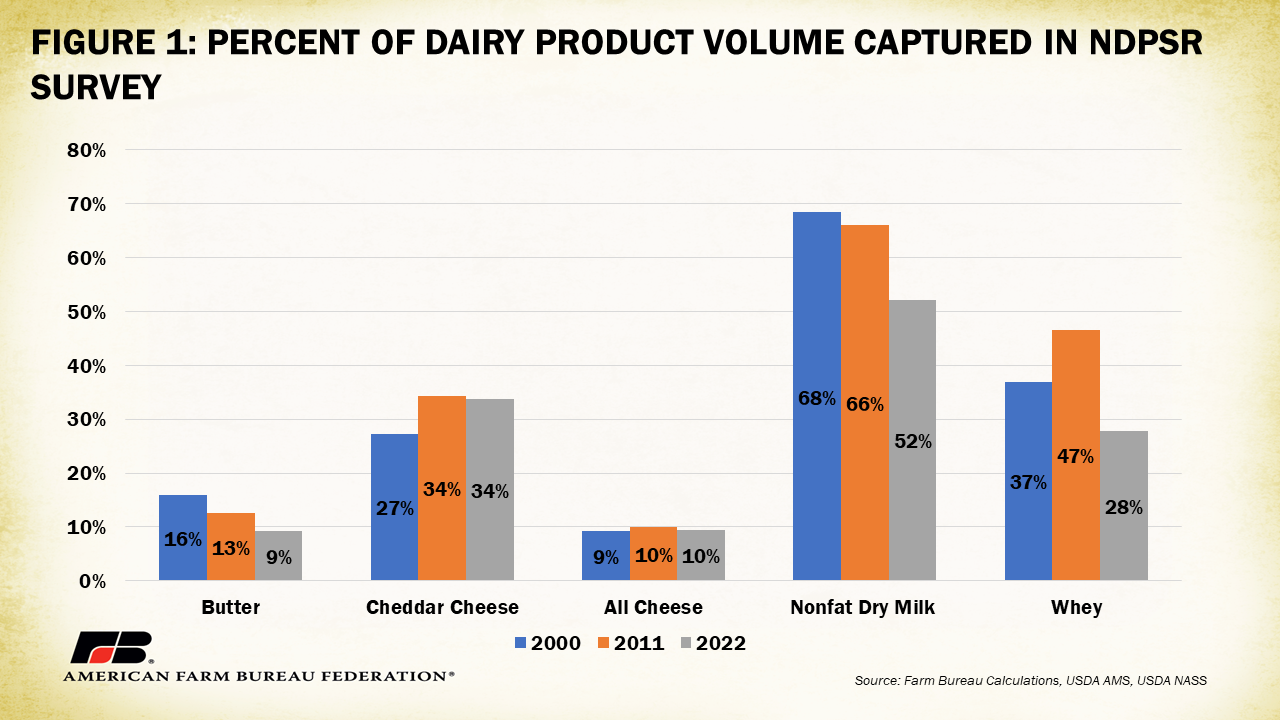
To determine the volume of milk and dairy products captured by USDA's mandatory price reporting survey, NDPSR sales volumes were compared to USDA estimates of dairy product production. Figure 1 compares and displays the percentage of dairy product volume captured in the NDPSR in 2000 (when end-product pricing began), 2011 and 2022.
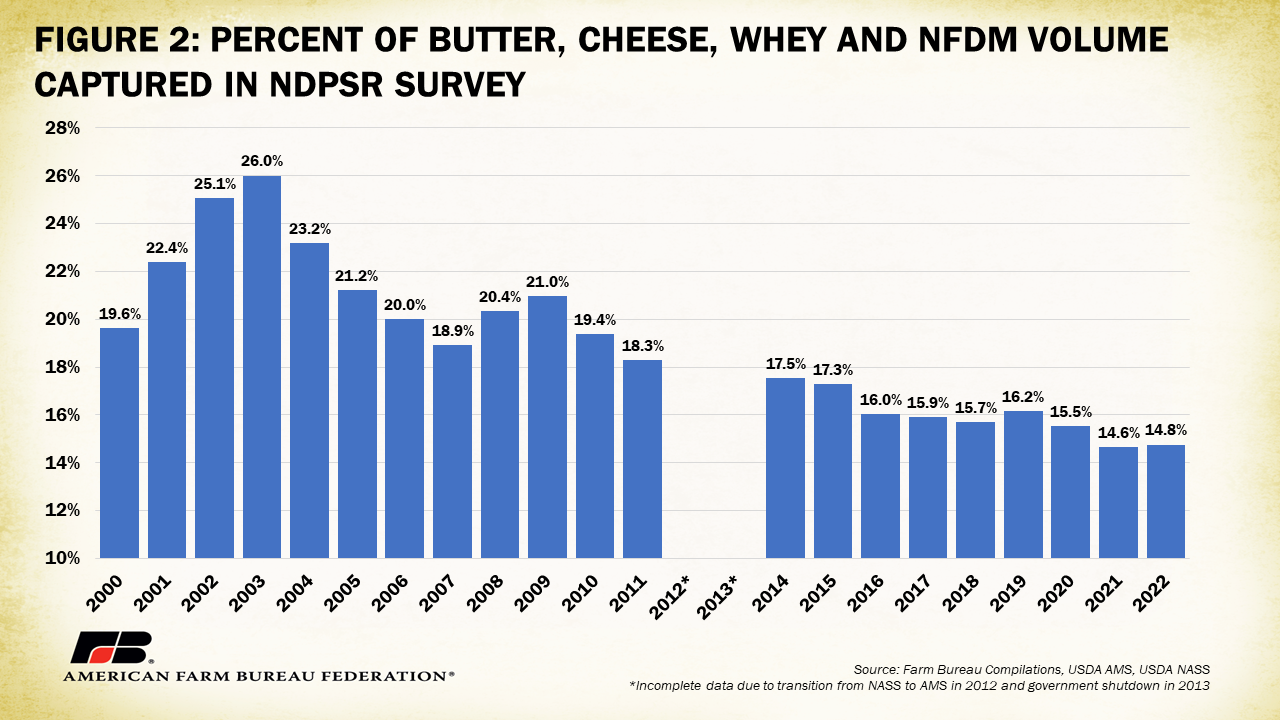
Between 2000 and 2022, the volume of butter captured by the NDPSR dropped from 16% of total production to 9% of total production; the volume of cheddar cheese captured increased from 27% to 34% of total production; the volume of all cheese captured hovered around 10% of total production; the volume of nonfat dry milk captured dropped from 68% to 52% of total production; and the volume of whey captured dropped from 37% to 28% of total production. Combined, for the presented commodities, the NDPSR captured 19.6% of total production in 2000, 18.3% of total production in 2011 and 14.8% of total production in 2022 for an average annual decline of 1.1% in total production captured. On average, less than 20% of the total production of cheese, butter, nonfat dry milk and whey have been captured in the NDPSR survey, with a clear decline in the percentage of butter, whey and nonfat dry milk captured. Considering the various other dairy products that are sold and not included in the NDPSR, the true volume of dairy products captured by the NDPSR is likely much lower than 14.8%. Prior to the Agricultural Marketing Service collecting and reporting the information it was released by USDA's National Agricultural Statistics Service.
Number of Manufacturers in Survey
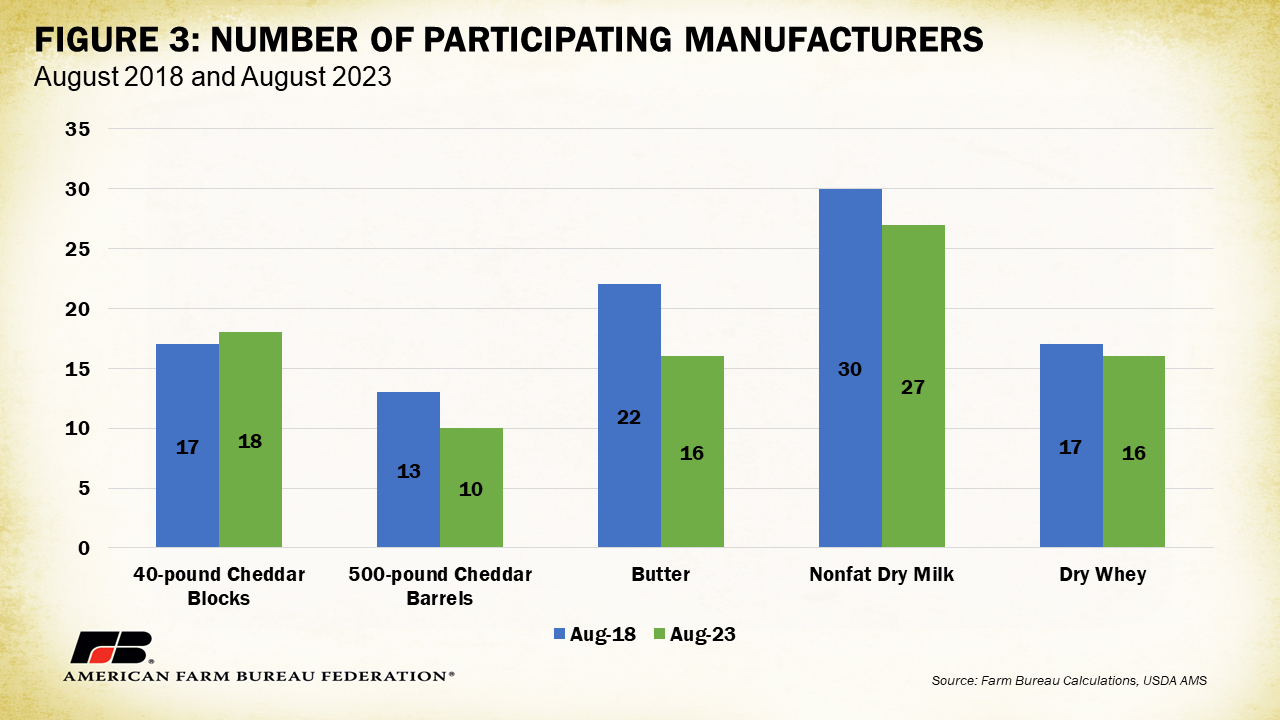
Based on the August 29, 2018, NDPSR, there were 99 reporting entities selling 1 million pounds or more of dairy products as defined by the existing federal order statute. In the August 23, 2023, NDPSR, there were 87 entities that fit the same definition, a 12% decline from 2018, due to closures and industry consolidation. Except for manufacturers reporting on 40-pound cheddar blocks, which increased from 17 to 18, between 2018 and 2023 the number of NDPSR participating manufacturers dropped across the board: those reporting on 500-pound cheddar barrels decreased from 13 to 10, while the number of participating manufacturers reporting on salted butter decreased from 22 to 16 and the number of participating manufacturers reporting on nonfat dry milk dropped from 30 to 27. Those reporting on dry whey dropped from 17 to 16 plants.
According to USDA's annual Dairy Products report, in 2023 there are 1,201 manufacturers that produced one or more dairy products. Breaking this number down further, there are 93 butter plants, 515 cheese plants, 44 nonfat dry milk plants, 30 dry whey plants and 285 other plants producing dairy products.
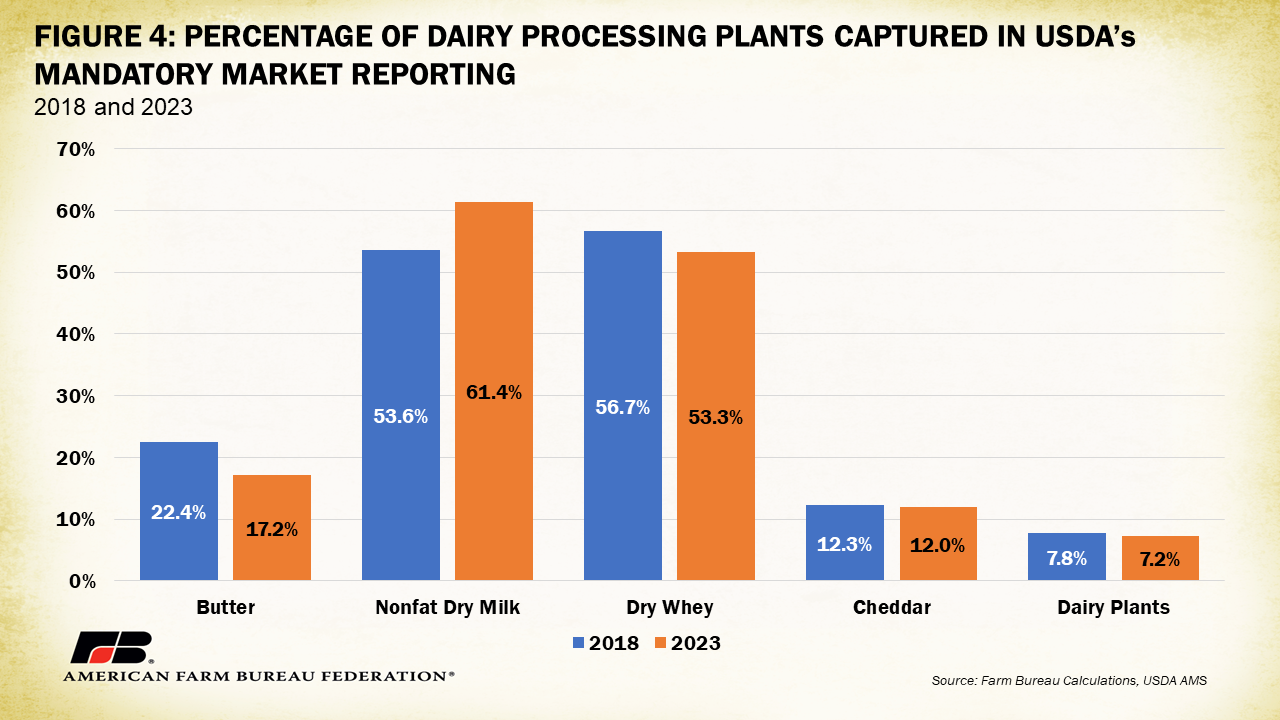
A comparison of the 2023 NDPSR survey to the latest NASS dairy products survey reveals that 17.2% of butter processing plants, 61.4% of nonfat dry milk plants, 53.3% of dry whey plants and 12% of cheddar cheese plants are captured by the NDPSR survey. In total, 7.2% (a drop from 7.8% in 2018) of all manufacturers that produced one or more dairy products are captured in USDA's mandatory price reporting. This implies that more than 92% of dairy processing plants are not required to report the prices for the dairy products they manufacture and sell.
Data from USDA reveals that a small percentage of the dairy plants in the U.S., and a small percentage of the milk solids and dairy products produced, are captured by USDA's mandatory pricing survey that is used to determine the regulated value of milk and milk components. Data also reveals that, on average, the portion of production volume captured and total number of plants participating in the survey has decreased over the analyzed period, meaning that the sample size used to reflect market prices has gotten smaller in recent years.
The small share of products captured in USDA's surveys has led many farmer groups, including the American Farm Bureau Federation (AFBF), to pursue changes to the NDPSR through the current Federal Milk Marketing Order hearing, the usual method for amending milk formula-related rules. For example, AFBF will be testifying on its proposals, 4 and 5, in the federal order hearing notice to add 640-pound blocks and unsalted butter to the NDPSR and associated Class price calculations. The addition of these products is expected to strengthen price discovery, contributing to a broader, more market-reflective basket of products being surveyed. The collection and publication of the prices and volumes would also improve market transparency, which is a key to farmers' understanding how their milk is marketed.
AFBF is also advocating dropping 500-pound barrels from the survey. This may seem counterintuitive, though currently 500-lb barrels are overrepresented, skewing the cheese price downward. For example, approximately 90% of natural cheese produced in the United States is sold using the CME 40-pound block price as a pricing index, with the remaining 10% indexed to barrel cheese. Barrel cheese represents only an estimated 7% of U.S. manufactured natural cheese meaning its current weight in the NDPSR survey is overrepresented.
Conclusion
The National Dairy Products Survey Report has been an integral part of establishing minimum pricing for dairy farmers since end-product pricing began in 2000. Over this period, less than 20% of the total production of cheese, butter, nonfat dry milk and whey have been captured, with a clear decline in the percent of butter, whey and nonfat dry milk captured by the survey. Additionally, only 7.2% of all manufacturers that produced one or more dairy products are reflected in USDA's mandatory price reporting as of the latest NDPSR survey. Given these statistics, it is no surprise that farmers have expressed concerns over how the NDPSR may be impacting their milk checks. Survey samples that do not accurately reflect the value of dairy products sold in the market can mean farmers are not receiving the full value of the milk they are producing. These dynamics have also contributed to arguments surrounding make allowances, or the credit within the milk pricing to reflect the cost to process raw milk into value-added products. Though processors have maintained they cannot increase prices without those prices being reflected in the NDPSR, and arguably not retain any hypothetical increase in price, the small fraction of dairy products included in the survey should mean processors can retain value from the numerous products and plants not currently surveyed. In either case, it is important to understand how the NDPSR functions to understand milk pricing under the federal order system.
AFBF's Federal Milk Marketing Order policy priorities stem from the grassroots policy development process maintained by its many active dairy farmer members. Many of these priorities were also consensus items out of last year's Federal Milk Marketing Order Forum hosted by AFBF in Kansas City, Missouri.
This article serves as an update to a previous AFBF background document on the NDPSR survey, which can be found here.
As Oklahomans gear up for Labor Day Weekend football games and trips to the lake, AAA emphasizes the importance of safe driving practices and vehicle preparation. Taking steps to prevent vehicle breakdowns and not driving while intoxicated or "intexticated" can be the difference in making holiday weekend memories great. Odds of distracted and impaired drivers on the road will increase.
During the 2021 Labor Day holiday, 483 crashes occurred throughout the state, with 53 of those identified as alcohol and/or drug-related, according to a report from the Oklahoma Highway Safety Office. Twelve people died; the highest in five years.AAA reminds drivers to have a plan if drinking or using drugs is likely to be part of holiday activities.
"Before you head out, have a plan on how you are getting home," warns Rylie Mansuetti, AAA Oklahoma spokesperson. "Select a designated driver for the day, use a ride share service or cab or stay over with a friend instead of taking a chance with your life and others'."
In recent years, distracted driving has become as great a concern as impaired driving, according to AAA. Wrecks due to "intextication" kill an average of nine people and injure 1,000 each day, nationally*. Game days and lake travel increase road congestion and require intense driving concentration.
"Using an electronic device in any way while driving increases your risk of a crash as much as eight times. Put it out of reach before you leave," says Mansuetti.
*****AAA Oklahoma expects to respond to nearly 3,000 roadside rescues due to vehicle issues*****
Based on last year, AAA Oklahoma expects to get calls for rescues from nearly 3,000 motorists over the four-day Labor Day weekend. Other drivers passing by can endanger lives of those with roadside breakdowns. Get out of your car and as far away from oncoming traffic as possible while contacting help or trying to make repairs. Motorists approaching disabled vehicles on the shoulders or roadsides must move over a lane, if possible, or at least slow down, following Oklahoma state law.
Dead batteries, lockouts and flat tires will be the leading reasons AAA members will experience car trouble.Ahead of Labor Day weekend travel, AAA recommends motorists take their vehicles to a trusted repair facility such as AAA Car Care Centers in metro-Oklahoma City and Approved Auto Repair shops statewide. Free inspections are often available by appointment to prevent problems that might not be apparent. Oil changes, fluid level checks, battery tests and tire inspections go a long way toward reducing the chance of a breakdown and expensive repairs.
"Have a plan for unforeseen car problems before you head out," Mansuetti says. "A AAA membership gives peace of mind for only a few dollars a month. Our trained car technicians will respond around the clock and are much more reliable than family or friends to help you get on your way quickly."
Download the AAA Mobile App Before Labor Day Weekend
Before heading out, download the free AAA Mobile app for iPhone, iPad and Android. Travelers can use the app to map a route, find the lowest gas prices, access exclusive member discounts, make travel arrangements, request AAA roadside assistance, find AAA Approved Auto Repair facilities and more. Learn more at AAA.com/mobile.
About AAA:AAA provides automotive, travel, and insurance services to more than 63 million members nationwide and more than 400,000 members in Oklahoma. AAA advocates for the safety and mobility of its members and has been committed to outstanding road service for more than 100 years. AAA is a non-stock, membership corporation working on behalf of motorists, who can map a route, find local gas prices and electric vehicle charging stations, discover discounts, book a hotel, and track their roadside assistance service with the AAA Mobile app (AAA.com/mobile) for iPhone, iPad and Android. For more information on joining or renewing a Membership, visit www.AAA.com.
NIAA is now accepting applications and nominations for the 3rd cohort of the Advanced Training for Animal Agriculture Leaders.
The National Institute for Animal Agriculture (NIAA) is now accepting nominations for the second cohort of the Advanced Training for Animal Agriculture Leadersprogram. Nominations are due Wednesday, November 15 by 11:59 p.m.
The 16-month leadership program blends in-person and virtual working sessions to focus on key areas of leadership development. Members of the program work together on applied-learning and small-group capstone projects, which incorporate topics identified by the cohort members. "The NIAA Leadership Cohort is beyond what I imagined and has been a challenging and rewarding experience," said Madison Simmons Hopcia, Upstate Niagara Cooperative, Inc. and inaugural cohort participant. " NIAA's cohort is one of the few that lets you plan your experiences and is geared towards what you are interested in growing in and highly recommend participating if you are looking to grow in your profession and in your understanding of agriculture."
The United Soybean Board serves as the founding sponsor of the Advanced Training for Animal Agriculture Leaders program, with additional financial support provided by Farm Credit, NIAA and its members and partners. Participant investment for the leadership program is $2,500. With sponsor and participant investments, the leadership program provides an estimated $10,000 in training and resources and NIAA membership during the length of the program.
In 2021, NIAA launched the program to provide emerging leaders a new opportunity to gain next-level leadership and professional development training specifically focused on the animal agriculture segment of the industry. Since then, the program has represented a wide range of agricultural sectors. The program empowers professionals in the early to midpoint of their careers to build on previous leadership development experiences and collaborate with peers across the industry to advance animal agriculture's role in today's food system.
The selection process begins with an application or nomination from a sponsoring organization. More information about how to nominate an individual for the program or become an applicant is available at www.animalagriculture.org/leadership-program/.
The fed cattle market has stagnated since mid-July, encumbered primarily by exceptionally small slaughter head counts. Last week's $183/cwt. fed steer price was the smallest since mid-July.
In the meantime packing sector margins are solidly in the black again after dipping below breakeven levels from late July through most of August. Three weeks ago fed cattle slaughter reached the smallest non-holiday weekly total (471K head) since January. The two following weeks brought on increases of 13,000 head and 10,000 head, respectively.
With slaughter productivity depressed, carcass cutout values responded as expected. The comprehensive boxed beef cutout value increased from the early August low of $297.17/cwt. to last week's $310.79/cwt., a 4.6% move. The CAB cutout touched a seasonal low the first week of August at $312.49/cwt. before rallying 3.5% through last week to average $323.33/cwt.
Besides the inflationary impact of restricted steer and heifer slaughter, the uptick in prices is within seasonal expectations as well. Just ahead of Labor Day the market typically experiences price increases as spot market fill-in orders from end users pulls prices up from early August lows.
The upward price action was seen on many chuck and round items last week even though many of them are typically not in high demand by consumers for Labor Day. However, ribeyes and tenderloins are simultaneously posting higher price points in the latest report, with prices just below the 2021 record-high prices for this time of year.
Several thin meats have recently seen price cuts from historically high price points, such as flank and skirt meats. Short loins, strip loins and top butts all priced lower last week within the seasonally anticipated trend for each of these items.
SHORT SUPPLIES, HIGHER BEEF PRICES
In the waning days ahead of Labor Day spot market beef prices are posting positive numbers, boosting a bit of optimism into the total beef complex. Historically, the uptrend will subside following the holiday, and wholesale prices will seek an early fall low mid-October. In the last 5 years, the CAB cutout price dropped 7% from the last week in August to the third week in October.
The five-year average also shows the fourth quarter trend brings on a nearly 5% price recovery from the October low through early December. Interestingly, the August CAB cutout value has consequently been higher than the fourth quarter high in this period. This is a result of the increasing trend toward forward sales of middle meats in the August timeframe for fourth quarter demand discussed in the previous Insider.
While we could expect cutout prices to follow the outlined historic pattern, fed cattle supplies are set to be tighter for the period. As well, weekly spot market beef sales in the fourth quarter will center on holiday middle-meat roast demand due to highlight items capturing high prices.
This discussion factors back to grid pricing for fed cattle and expected quality price spreads. CattleFax recently points out that the Prime cutout premium over Choice, roughly $35/cwt., is nearly half what it was a year ago. This is a sign of buyer price sensitivity and pushback for the highest priced, highest quality beef (disregarding niche products). However, the weighted average grid premium across packers for Prime carcasses this week is $18.49/cwt., just 25% lower than a year ago.
This narrowing premium gap is typical of a market where short supplies result in higher prices across all quality offerings. The CAB traditional (Premium Choice) cutout premium above Choice is currently record-wide, pulling back from $21.93/cwt. to $18.00/cwt. in the past two weeks. One might estimate that this premium spread could also be subject to further compression in the near term given what we've observed with the Prime premium.
The Choice/Select spread remains historically robust at $26.07/cwt. in today's USDA report. While lack of demand for Select carcasses is an archaic price measure for carcass values, the Choice/Select spread remains the foundational and most seasonally variable quality grade component on most packer grids. Thus, the feedyard's realized price for every carcass at, or above, Low Choice quality grade is highly dependent on the Choice/Select spread. With the feedyard's share of the Choice/Select spread typically ranging near 30% of the total, a spread value larger than $20/cwt., for instance, is a key driver to motivate high quality carcass production. Current market values are providing confidence in this direction.
U.S. Department of Agriculture (USDA) Secretary Tom Vilsack today announced that USDA is awarding $266 million in loans and grants to agriculture producers and rural small businesses to make investments in renewable energy and energy efficiency improvements that will lower their energy costs, generate new income, and strengthen the resilience of their operation. This funding is made possible in part by President Biden's Inflation Reduction Act, the nation's largest-ever investment in combatting the climate crisis.
"Creating opportunity for rural communities means investing in farmers, ranchers, and small businesses," Secretary Vilsack said. "A key pillar of Bidenomics, President Biden's Investing in America agenda is ensuring our producers and business owners are not only a part of the clean energy economy but are directly benefitting from it. These once-in-a-generation investments in renewable energy, like wind and solar, and energy efficient technologies create new markets and deliver real cost savings for our small and mid-sized agricultural operations and Main Street businesses, building and keeping wealth in rural America."
USDA is investing $266 million in 1,334 renewable energy and energy-efficiency projects in 47 states, Guam and Puerto Rico. The Department is awarding the loans and grants through the Rural Energy for America Program (REAP), including funding from the landmark Inflation Reduction Act.
Since December 2022, USDA has made up to $1.3 billion available in REAP funding through the Inflation Reduction Act. Eligible applicants include rural small business owners and agricultural producers. The program is part of the Justice40 Initiative, which is working to ensure that 40 percent of the benefits of certain federal investments reach communities that are marginalized, underserved and overburdened by pollution and underinvestment.
The funding announced today is part of President Biden's Investing in America agenda, a key pillar of Bidenomics, to grow the American economy from the middle-out and bottom up – from rebuilding our nation's infrastructure, to driving over $500 billion in private sector manufacturing and clean energy investments in the United States, to creating good-paying jobs and building a clean-energy economy that will combat climate change and make our communities more resilient.
For example:
Verde Light Community Solar LLC in Ontario, Oregon will use a $1 million grant to purchase and install a 4.51-megawatt solar photovoltaic renewable energy system. The new system will produce enough energy to power 440 homes per year and is expected to generate $557,000 in income annually for the company.
D & M Farm Ventures LLC, a chicken broiler operation in Quarryville, Pennsylvania, will use a $130,500 grant to purchase and install a 198-kilowatt solar photovoltaic system. This project is expected to generate approximately $10,800 per year.
Leonard Road Thorndike Solar LLC in Thorndike, Maine will use a $1 million grant to install a 1.58-megawatt solar array expected to offset over 950,700 pounds of coal, reducing carbon emissions by 859 metric tons annually. This project will also help the business generate nearly $358,000 annually.
USDA is making awards in Alabama, Alaska, Arkansas, Arizona, California, Colorado, Connecticut, Delaware, Georgia, Hawaii, Iowa, Idaho, Illinois, Indiana, Kansas, Kentucky, Louisiana, Maine, Massachusetts, Maryland, Michigan, Minnesota, Missouri, Mississippi, Montana, North Carolina, North Dakota, Nebraska, New Jersey, New Mexico, Nevada, New York, Ohio, Oklahoma, Oregon, Pennsylvania, South Carolina, South Dakota, Tennessee, Texas, Utah, Virginia, Vermont, Washington, Wisconsin, West Virginia, Wyoming, Guam and Puerto Rico.
The Department expects to make additional awards in the coming months.
USDA continues to accept applications and will hold funding competitions quarterly through Sept. 30, 2024. The funding includes $144.5 million for underutilized renewable energy technologies. For additional information on application deadlines and submission details, see page 19239 of the March 31 Federal Register.
Background: Inflation Reduction Act
As a core pillar of Bidenomics and the President's Investing in America agenda, the Inflation Reduction Act makes the largest investment in climate action in history and is lowering energy costs, bringing opportunity to communities across America and tackling the climate crisis through investments in agriculture, forest restoration, and rural communities.
The Biden-Harris Administration championed the Inflation Reduction Act to help provide new funding and unprecedented incentives to expand clean energy, transform rural power production, create jobs and spur economic growth. It is the largest single investment in rural electrification since the Rural Electrification Act of 1936.
Through the Inflation Reduction Act, the Administration is delivering on its promise to fight climate change and reduce greenhouse gas emissions across America.
It provides funding to USDA Rural Development to help eligible organizations invest in renewable energy infrastructure and zero-emission systems and make energy-efficiency improvements that will significantly reduce greenhouse gas emissions.
It will boost the long-term resiliency, reliability and affordability of rural electric systems. It will help families save money on utility bills, and it will expand rural opportunities in the clean- energy economy.
USDA Rural Development provides loans and grants to help expand economic opportunities, create jobs and improve the quality of life for millions of Americans in rural areas. This assistance supports infrastructure improvements; business development; housing; community facilities such as schools, public safety and health care; and high-speed internet access in rural, tribal and high-poverty areas. For more information, visit www.rd.usda.gov. To subscribe to USDA Rural Development updates, visit GovDelivery subscriber page
Growth Energy, the nation's largest biofuels trade association, filed briefs to intervene in three cases this week in support the U.S. Environmental Protection Agency (EPA) and its decisions to deny small-refinery exemptions (SREs) for refiners seeking to avoid complying with their blending obligations under the Renewable Fuel Standard (RFS).
"Petitioners have tried over and over again to avoid complying with the RFS because less biofuel in America's fuel mix means more money for them," said Growth Energy CEO Emily Skor. "Thankfully, EPA has continued to rightly deny SREs, having demonstrated again and again that refiners have no good reason not to meet their blending obligations. In this week's filings, Growth Energy continues to seek to defend the RFS—the nation's most successful climate policy to date—from any attempts to weaken it." The cases are Calumet Montana Refining LLC v. EPA in the U.S. Court of Appeals for the District of Columbia Circuit, and San Antonio Refinery LLC v. EPA and Wynnewood Refining Co. LLC v. EPA, both in the U.S. Court of Appeals for the Fifth Circuit. Read Growth Energy's briefs in Calumet here, San Antonio Refinery here, and Wynnewood here.
Since 1963, the Federation of State Beef Councils has been committed to building beef demand by inspiring, unifying and supporting an effective and coordinated state and national Checkoff partnership. By working together with one unified vision and plan, the National Cattlemen's Beef Association, a contractor to the Beef Checkoff, and state beef councils continue to set a positive course for beef's future.
Here are a few examples of recent program successes:
Nutrition Research Research continues to serve as the foundation for all Beef Checkoff-funded initiatives. Nutrition research provides proof that beef has a role in a healthy, sustainable diet. Current projects focus on human clinical trials investigating healthy diets, across the lifespan, where beef is the primary source of dietary protein, and focuses on the impact of cardiometabolic health, strength, and performance, and the benefits of beef in the diets of children and adolescents.
National Beef Quality Audit The National Beef Quality Audit (NBQA), conducted approximately every five years since 1991, is foundational research that provides an understanding of what quality means to the various industry sectors, and the value of those quality attributes. This research helps the industry make modifications necessary to increase the value of its products. The findings from the 2022 NBQA serve to improve quality, minimize economic loss, and aid in advancements in producer education for the U.S. beef industry.
Results from the 2022 NBQA indicate that the beef cattle industry is producing a high-quality product that consumers want more efficiently and the industry's primary focus across the supply chain remains food safety. In addition, there was an increase in the frequency of Prime and Choice quality grades, with 7.5% of carcasses grading Prime, the highest since audits began. Market sectors also reported that their companies strive to increase their sustainability, and work with the entire beef supply chain to do so.
Beef Quality Assurance Cow-calf producers, stockers and feedyards implement Beef Quality Assurance (BQA) practices on their operations to produce the highest quality cattle and provide consumers with the best possible eating experience. BQA principles don't end at the farm gate, and cattle haulers can also become BQA Transportation (BQAT) certified through recently updated modules. Since BQAT began in 2017, more than 32,000 certifications have been completed.
E-Commerce With consumers making more shopping decisions online, e-commerce efforts are essential to driving beef sales. National e-commerce campaigns during the holidays and summer grilling months helped put beef front and center for consumers shopping online. These e-commerce campaigns delivered impressive results, generating more than $22 million in incremental beef sales and reaching nearly 16 million households.
Advocacy Ten Trailblazers from eight states were selected for the second cohort of beef community spokespeople, beginning the year-long program which includes in-person and virtual training opportunities to prepare the next generation of advocates who will help protect the reputation of the beef industry.
The unified vision of the Federation of State Beef Councils continues to drive Beef Checkoff success. For more information, visit www.ncba.org/federation.
Listen to KC Sheperd talk with Brian Whitacre about improving broadband in Oklahoma.
Farm Director, KC Sheperd, is visiting with Oklahoma State University's Brian Whitacre, about an update on broadband in Oklahoma. Whitacre is on the state's Broadband Expansion Council, which provides recommendations to the newly formed Oklahoma Broadband Office.
Whitacre said the state recently received some additional broadband funding through the USDA ReConnect Program.
"That went to a couple of cooperatives, really all across the state, but I think the bigger news is that there is a big chunk of money coming late this year into early 2024, and our State Oklahoma Broadband Office just released a map of what they are calling the unserved and underserved locations- the places that really need that broadband infrastructure," Whitacre said.
In the snapshot, the numbers in the red circles are the number of buildings (households and businesses) in those locations currently considered "unserved" (i.e. no broadband service or only very slow service). Many of these have already received funding to provide service that should be built out over the next several years (shown in the legend at the top left).
Almost 400 million dollars should be released by the end of this year through the Oklahoma broadband office, Whitacre said, and another 800 million is expected to be available in 2024.
"We really are hopeful that all these places without good broadband are going to get them in the coming three to five years," Whitacre said. "If you look at the actual data on this, it shows that we have about 1.6 million buildings, either residential or business buildings across Oklahoma, and of those, the data shows there are about 150,000 that have no official broadband provider at all, and another 150,000 where the maximum speed is something like 30 megabits per second or 50 megabits per second which is officially 'broadband,' but not as good as the 100 megabits per second that we are targeting."
Overall, Whitacre said the broadband office is targeting about 300,000 buildings over the next five years.
The new broadband map is interactive, so Whitacre said Oklahomans can find their location and see what service looks like in their area. Whitacre urges individuals who see unserved or underserved locations in their county on the broadband map to reach out to their local provider or local electric cooperative to inform them.
"Let them know this money is coming up, so they don't have to put in the money themselves," Whitacre said. "The state broadband office is going to be able to fund millions of dollars of broadband infrastructure, and those providers will be the ones to apply for it."
You can scroll in on the map to see the exact locations of unserved buildings, and whether or not they have already received funding. Here is an example from rural Payne county where some houses have "good" (green) broadband service but others are considered "underserved" (yellow, speeds < 100 Mbps) and "unserved" (red, speeds < 25 Mbps).
Whitacre said the biggest obstacle, according to service providers across the state, is going to be the workforce and inflation.
"We already have relatively low unemployment across the state, and now we are going to need to hire all these people not just to go out and actually lay wires and things like that, but to do some of the technical aspects, you know, talking about mapping and all of the planning that goes into this kind of infrastructure," Whitacre said. "So, the workforce is going to be a big challenge. We think that is going to increase the cost of some of our projects."
Whitacre said he is positive about what is ahead and is looking forward to opportunities to hire recent graduates and bring more jobs into the state.
USW Vice President of Finance Kevin McGarry has announced position changes in his team.
Norman Karlson has been hired as Fiscal Officer effective August 29, 2023. Kurt Coppens has been promoted to Director of Finance from his current position as Fiscal Officer. And current Senior Staff Accountant Adam Kiely has been promoted to Comptroller.
USW is the export market development organization for the U.S. wheat industry.
"We are very pleased to have Norman Karlson join the finance team in Arlington," said McGarry. "With strong experience in non-profit financial management, Norman will bring a new perspective to our efforts. His ability to earn a master's degree in accountancy at a young age shows his initiative and determination. We're confident that he'll begin his career at U.S. Wheat Associates with diligence and enthusiasm."
Karlson most recently was a project accountant with Reading is Fundamental, or RIF, the nation's largest children's literacy non-profit organization based in Washington, D.C. He also served as an accounting intern at Digital Promise, a global nonprofit working to expand learning opportunities by fostering innovative educational programs. While earning his bachelor's degree in accountancy and master's degree in 2022 at The George Washington University (GWU), Karlson was a billing assistant in the university's events and venues finance department.
Before joining USW as Fiscal Officer in July 2016, Kurt Coppens was an accounting manager at Agora, Inc., and Bridgestreet Corporate Housing Worldwide. Coppens earned a business administration degree in finance and international business from GWU. Originally from Belgium, Coppens became a U.S. citizen in 2018. Adam Kiely joined USW in 1996 as staff accountant after working as a bookkeeper at Strauss Photo Technical Services. He earned a bachelor's degree in accounting from Appalachian State University.
U.S. Wheat Associates' (USW) mission is to "develop, maintain, and expand international markets to enhance wheat's profitability for U.S. wheat producers and its value for their customers." USW activities in more than 100 countries are made possible through producer checkoff dollars managed by 17 state wheat commissions and cost-share funding provided by USDA's Foreign Agricultural Service. USW maintains 15 offices strategically located around the world to help wheat buyers, millers, bakers, wheat food processors and government officials understand the quality, value and reliability of all six U.S. wheat classes. For more information, visit www.uswheat.org.
Listen to Ron Hays talk with Dr. Kathy Simmons about NBAF.
Senior Farm and Ranch Broadcaster, Ron Hays, is talking with the Chief Veterinarian of the National Cattlemen's Beef Association, Dr. Kathy Simmons, about the National Bio and Agro-Defense Facility.
Located in Manhattan, Kansas, the National Bio and Agro-Defense Facility is a state-of-the-art animal disease laboratory to be operated by the U.S. Department of Agriculture to help protect the nation's agriculture, farmers, and citizens against the threat and potential impact of serious animal diseases.
"This facility has a BSL-3 level lab, and then the most threatening pathogen lab, the BSL-4 level lab within the nucleus of the building," Simmons said. "We were able to tour NBAF and it looks like a wonderful facility. It seems to be very well staffed, and I think the transition is going to be made here this fall of all of the scientists and the pathogens to come over from Plum Island."
The Department of Homeland Security has already given USDA APHIS (Animal & Plant Health Inspection Service) and ARS (Agricultural Retail Service) the keys to the facility, Simmons said, and USDA is now working to facilitate the start of the work to be done.
"It gives us a state-of-the-art facility, we have become one of the big five now who have BSL-4 animal disease facilities," Simmons said. "Globally, there are only five countries that do, and we are one of them. I think that gives us a leg up in a lot of work that we can do now that maybe couldn't have as easily in the past with brand new facilities and much of the staff that have come over from Plum Island."
NBAF had the dedication and ribbon-cutting activities in May, and now many of the scientists from Plum Island are moving to Manhattan. Now, some of the pathogens are in the process of being moved from Plum Island to the facility in Manhattan.
The Beef Buzz is a regular feature heard on radio stations around the region on the Radio Oklahoma Ag Network and is a regular audio feature found on this website as well. Click on the LISTEN BAR at the top of the story for today's show and check out our archives for older Beef Buzz shows covering the gamut of the beef cattle industry today.
Statewide Discussion: Overall dry conditions and the persistence of the heat dome through August has resulted in notable stress on both herbaceous and woody fuels and increasing fuels availability. Flash drought development resulting from above normal temperatures and the absence of moisture, most notably across the southern counties, has enhanced fire danger noted by increasing new wildfire occurrence. While initial attack efforts have been largely successful to date, recent fire behavior is exhibiting increased resistance to control efforts and large fire potential is expected to increase in the southern third of Oklahoma where mounting precipitation deficits, lack of soil moisture and enhanced fuels availability have become concerning. Energy Release Component values in this area have eclipsed the 90th percentile where resistance to control and heavier resource commitment is expected as an upper level ridge builds back in over the area later this week ushering in a return to above normal temperatures and expectation of dry conditions.
Today: Generally light winds through the day will limit rates of fire spread with temperatures in the 90°'s, afternoon relative humidity values 24-37% and fine-dead fuel moisture values 5-6% over most of Oklahoma and potential for 4% observation nearer to the Red River. The highest fire danger indices today will reside in southwestern and south-central Oklahoma where head fire rates if spread in grass-dominated fuels around 95 ft/min with flame lengths 6-9 ft. High-risk fuels (brush/juniper) will exhibit ROS 35-65 ft/min with flame lengths 6-16 ft and problematic fire behavior in oak/juniper fuels. Pine and Pine/Hardwood fuels in southeastern Oklahoma will continue to exhibit problematic fire behavior including single and group tree torching including short-duration crown runs in pine plantations. Fire behavior will moderate into the evening as temperatures cool into the 60°'s with fair overnight moisture recovery.
Thursday: Temperatures will again be in the 90°'s with potential for 100° in far southwestern Oklahoma coupled with afternoon relative humidity values ranging from 20% southwest to 42% northeast under clear skies yielding fine-dead fuel moisture values again 4-6%. Rather light and somewhat variable east component winds will limit rates spread in grass-dominated fuels to less than 90 ft/min south and less than 50 ft/min further north. Initial attack efforts are expected to be successful noting that problematic fire behavior across the southern counties should be anticipated in high-risk fuels.
Near-Term: The heat dome is expected to build back in later this week and into the Labor Day weekend with above normal temperatures and continued dry conditions. Elevated fire danger is expected across southern Oklahoma expanding into western Oklahoma with Energy Release Component values increasing raising concern as >90th percentile observations expand.
On today's Cow-Calf Corner, Kellie Curry Raper, OSU Livestock Marketing Specialist and David Lalman, OSU Beef Cattle Extension Specialist, talk about the Master Cattlemen program.
Maybe you've seen the gate signs on a neighbor's fence or barn. Maybe you've seen a promotional flyer at the county fair or posted on social media. Maybe you've heard someone refer to something they learned in their Master Cattleman class. And maybe you are asking "what is Master Cattleman and why should I consider it?"
Oklahoma State University's Master Cattleman program is in its 20th year and, to date, has over 1500 graduates. Master Cattleman is a producer education program conducted through OSU Extension at the county level. The course focuses on research-based learning made practical for "on the ranch" implementation. Producers interact with experts across multiple topic areas, and – just as importantly – the group setting also allows them to learn from each other.
The Oklahoma Beef Cattle Manual is used as the textbook for the course and is provided as part of the course materials at enrollment. Note that the Manual is also available in Spanish. Cattlemen work through a minimum of 28 hours (i.e., chapters) in a mix of in-person lecture, discussion, and hands-on learning. Sixteen of those hours are required chapters for every Master Cattleman class and cover topics ranging from business planning and marketing to forage management and animal health. You can see the Oklahoma Beef Cattle Manual Table of Contents at https://extension.okstate.edu/programs/master-cattleman/beef-cattle-manual.html. The other 12 credit hours are flexible, so Extension educators and class members can choose which chapters are most useful for the class based on the group's interests and needs. Those who complete the 28-hour requirement receive a graduation certificate, a portfolio notebook embossed with the Master Cattleman logo, and a personalized Master Cattleman gate sign.
So why should you consider becoming a Master Cattleman? In program evaluation surveys, 2018 graduates estimated annual improvement in their cattle operation's profitability at an average of $3,700 per year. Nearly 90% of Master Cattleman graduates say they still refer to their Beef Cattle Manual at least once a month. Classes are composed of men, women, neighbors, husbands, wives, sons, daughters...and producers of all sizes. Chances are there is someone in the class who faces some of the same challenges that you face in your cattle operation. A few folks have found it so practical that they've taken it twice!
You can find more information on the Master Cattleman program at https://extension.okstate.edu/programs/master-cattleman/. If you are interested in taking the Master Cattleman course, contact your county Extension educator or let us know through the contact form on the website or at mastercattleman@okstate.edu and we'll share that information with them.
Compared to the last report: Hay is slow to steady. The demand in eastern Oklahoma is high. The central and western part trade is slow to moderate.
Trends so far: Alfalfa Large squares $200-$225 a ton, Alfalfa Rounds - No Tred, Grinding hay - $170-$180 a ton, Bermuda 5x6 rounds - $100-$120 a bale, Bermuda Large Squares - No Trend, Grass Hay 4x5-4x6 - $60-$70 a bale, Grass Hay 5x6 - $70-$80 a bale.
The Oklahoma Mesonet Drought Monitor shows we are at 0 percent in exceptional drought, 1.60 percent in an extreme drought, 5.35 percent in severe drought, 12.75 percent in moderate, 35.99 percent in abnormally dry conditions, 64.01 percent that has no drought conditions.
Physical loss loans through the United States Department of Agriculture's (USDA) Farm Service Agency (FSA) can help producers repair or replace damaged or destroyed physical property essential to the success of the agricultural operation, including livestock losses. Examples of property commonly affected include essential farm buildings, fixtures to real estate, equipment, livestock, perennial crops, fruit and nut bearing trees, and harvested or stored crops and hay.
Impacted Area: Texas
Triggering Disaster: losses caused by wildfires occurring on July 14, 2023
Application Deadline: April 22, 2024
Primary Counties Eligible: Llano
Contiguous Counties Also Eligible:
Texas: Blanco, Burnet, Gillespie, Mason, San Saba
Triggering Disaster 2: losses caused by wildfires occurring on August 5, 2023
Application Deadline: April 22, 2024
Primary Counties Eligible: Archer, Jack, Wichita, Young
Preputial injuries in bulls can cause considerable economic loss and significantly impact a producer's breeding plans. Understanding the severity of a prepuce injury is critical to the outcome of the condition.
Bulls with pendulous sheaths and polled breeds have a high incidence of preputial injuries. A significant relationship appears to exist between a pendulous sheath and the tendency of habitual eversion of the prepuce. In polled breeds, this tendency may be due to incomplete development of the preputial muscles. Polled breeds with pendulous sheaths, such as Brangus, Beefmasters and Santa Gertrudis, are the most susceptible to preputial injuries.
Prepuce injuries can be categorized as lacerations, avulsions, contusions, frostbite and abrasions. Lacerations, contusions and abrasions are most common in range conditions. Habitual eversion can cause injury and infection that eventually results in phimosis of stenosis of the prepuce. If there are plans to use the bull for future breeding, surgery is often necessary.
Infection of the prepuce may also lead to abscess formation. The location of the abscess is usually midway between the preputial opening and the scrotum. Bulls with preputial abscesses seldom recover enough to be used for breeding purposes. Paraphimosis (prolapsed penis) due to injury of the penis or frostbite is serious and often results in the bull being sold for slaughter at a considerable economic loss.
Acute preputial prolapse should be managed conservatively. Therapy involves cleaning the area and prolapse reduction. The author recommends preputial massage using a formula of 0.5 kg of lanolin containing 60 ml scarlet oil and 60 ml of oxytetracycline (100mg or 200mg) called "Petercillin" or "Petermycin." The lanolin protects the tissue and prevents dehydration. The scarlet oil promotes epithelialization and healing, while the tetracycline provides a broad-spectrum antibiotic.
The benefits of preputial massage for acute cases of preputial prolapse cannot be over-emphasized. Fifteen to 20 minutes of continuous massage will have a marked effect in reducing edema. The objective is to massage the edema or swelling of the prolapsed tissue and replace the prolapse in the sheath, thus protecting the tissue from exposure and additional trauma. Once reduction is accomplished, preputial retention is necessary and can be done by using either a purse string suture or the tape/tube retention technique. The preputial retention device is left on for two weeks to let the prepuce heal and reduce the edema. Then, the preputial retention device should be removed and the bull observed closely for two to three days to ensure it does not prolapse.
If prolapse recurs, it should be reduced and therapy continued for 10 to 14 days. If the prepuce heals and the bull still cannot keep the prepuce inside the sheath, surgery is recommended. In this case, owners should let the prepuce heal and give the bull sexual rest for at least eight weeks. This should allow enough time for the prepuce to heal and shrink the amount of scar tissue if surgery is needed. After the healing process, reefing surgery or preputial amputation surgery is indicated to remove the excess prepuce or phimosis of the preputial cavity.
Chronic preputial prolapse with severe tissue damage, edema and necrosis is often the result of neglect or poor observation. Often, the inflammation and necrotic tissue on the prepuce is so extensive at the time of initial examination, it is extremely difficult to make an accurate prognosis. In these cases, a poor prognosis must be given, and the owner should be advised that seven to 10 days of therapy may be necessary before attempting prognosis. Often, chronic prolapses cannot be reduced initially and require extensive therapy before reduction can be accomplished.
If extensive fibrosis and stenosis are present, reduction may not be possible. Treatment involves hydrotherapy, soaking the prolapsed prepuce with Epsom salt and betadine solution for 30 minutes, then massaging with the previously described formula for 10 to 15 minutes to reduce the prolapse. In cases where reduction cannot be accomplished after every treatment, the lanolin formula should be applied to the prolapsed tissue, a two-inch stockinette rolled over the prepuce and a pressure bandage applied. Rubber tubing such as a garden hose or endotracheal tube is placed in the prolapsed prepuce to provide an opening for urine. A pressure bandage is applied using gauze over the stockinette. A pressure bandage can be created using vet wrap and elastic tape applied with moderate pressure. The pendulous prolapse is then supported with either a diaper or sling depending on the temperament of the bull. The dressing should be changed daily and accompanied by attempts to reduce the prolapse. Once the inflammation and swelling have subsided, the degree of fibrosis can be evaluated.
Surgical intervention is usually considered if fibrosis and stenosis have occurred. However, caution should be exercised to allow sufficient time for complete healing to occur. This often requires six to eight weeks of sexual rest. Reevaluation after the rest period allows not only a better assessment of the need for surgery but also the opportunity to reevaluate genetic and economic factors. Clients should be advised that a positive breeding outcome is not guaranteed and obtaining another bull should be considered.
The British breeds often do not possess enough preputial tissue to permit the removal of a fibrotic or stenotic section and still allow for sufficient penile extension to accomplish intromission. Surgery is common in Bos. indicus and exotic breeds, which have pendulous sheaths and extensive amounts of preputial tissue.
In summary, prompt and appropriate care is key to the successful management of preputial injuries in bulls. Clients must be made aware of the serious nature of preputial injuries and the importance of prompt medical attention. The objective of the therapy is to control contamination, prevent further trauma and reduce fibrosis. This requires prompt reduction of the prolapsed prepuce. Once reduced, the bovine prepuce has a tremendous healing capacity.
About the author: Lionel J. Dawson, BVSc, MS, DACT, is a professor and small ruminant and swine specialist at the Oklahoma State University College of Veterinary Medicine and an extension veterinarian at Langston University.
Agricultural Retailers Association (ARA) President & CEO Daren Coppock released the following statement expressing serious concern with the final "Waters of the United States" (WOTUS) rule announced today by the U.S. Environmental Protection Agency (EPA) and the Army Corps of Engineers: "ARA is extremely disappointed in the missed opportunity by the EPA and Army Corps of Engineers to follow the law and direction of the U.S. Supreme Court following the Sackett v. EPA decision to clearly define the jurisdiction of the Clean Water Act (CWA).
"The agencies failed to fully address all of the issues raised by the Supreme Court without adequately engaging impacted stakeholders and state agencies serving as co-regulators. Repeating mistakes will only lead to the continuation of flawed, unworkable regulations that will be litigated in the federal courts.
"ARA and other impacted stakeholders from the agricultural industry remain interested and able to work with the agencies on regulations that follow both the spirit and intent of the court."
"NCFC is disappointed that the U.S. Environmental Protection Agency and the U.S. Army Corps of Engineers did not fully adhere to the ruling issued by the Supreme Court decision earlier this year with their new 'waters of the United States' (WOTUS) rule announced today. This action is a missed opportunity to follow the Court's guidance and resolve a longstanding issue in a commonsense way.
"By picking and choosing what to address in this new definition, the Agencies continue to further inject uncertainty for farmers and ranchers across the country. NCFC calls on the Biden administration to work with the agricultural community and other stakeholders in a meaningful way to develop a long-term solution that reflects the Supreme Court's decision, protects true navigable waters and provides producers with the certainty they need for their operations."
About NCFC
Since 1929, NCFC has been the voice of America's farmer cooperatives. Our members are regional and national farmer cooperatives, which are in turn consist of nearly 2,000 local farmer cooperatives across the country. NCFC members also include 17 state and regional councils of cooperatives. Farmer cooperatives allow individual farmers the ability to own and lead organizations that are essential for continued competitiveness in both the domestic and international markets.
America's farmer-owned cooperatives provide a comprehensive array of services for their members. These diverse organizations handle, process and market virtually every type of agricultural commodity. They also provide farmers with access to infrastructure necessary to manufacture, distribute and sell a variety of farm inputs. Additionally, they provide credit and related financial services, including export financing.
The National Corn Growers Association (NCGA) expressed disappointment with the revised Waters of the U.S. (WOTUS) rule that was issued today by the Environmental Protection Agency (EPA) and the Army Corps of Engineers.
"U.S. corn growers are disappointed by EPA's revised WOTUS rule," said NCGA President Tom Haag. "The agency failed to open the process to public comment and engagement, which would have been extremely valuable. Instead, the agency has released a rule that does not fully respect the holdings from the recent U.S. Supreme Court case on WOTUS. "
EPA released the revised rule after the U.S. Supreme Court issued a ruling in Sackett v. EPA earlier this summer that narrowed the scope of the Clean Water Act's jurisdiction by, among other things, a unanimous decision that "significant nexus" was unlawful.
With today's release of their revised 'Waters of the U.S.' rule, the U.S. Environmental Protection Agency (EPA) and Army Corps of Engineers have disregarded the U.S. Supreme Court, local regulators and public stakeholders' expertise and concerns. National Association of State Departments of Agriculture Ted McKinney shares the frustration agriculture departments across the country feel.
"The ruling in Sackett v. EPA was a chance for EPA and the Army Corps to correct a deeply flawed, prematurely released rule and work to truly improve water quality outcomes. It is baffling that the revised rule does not accurately address all the issues and questions raised by the Supreme Court in the Sackett decision, nor does it address many of the questions stakeholder groups raised about the WOTUS rule EPA released at the end of last year," McKinney said.
NASDA repeatedly asked for engagement with and offered input to EPA and Army Corps, yet the agencies made the decision to exclude active participation not only from regulated stakeholders but also from states who share in the regulatory responsibility.
NASDA remains ready and willing to work with the agencies on a durable, clearly defined rule and aiding farmers, ranchers and local regulators in interpreting how to implement the current rule.
NASDA is a nonpartisan, nonprofit association which represents the elected and appointed commissioners, secretaries and directors of the departments of agriculture in all 50 states and four U.S. territories. NASDA enhances American food and agricultural communities through policy, partnerships and public engagement. To learn more about NASDA, please visit www.nasda.org.
The American Soybean Association released a statement today in response to the Environmental Protection Agency's announcement of its final Waters of the U.S. (WOTUS) rule: "When EPA and the Army Corps announced they planned to tweak the flawed WOTUS regulations on the heels of the Sackett decision, we were concerned this could be the outcome," said ASA President Daryl Cates, a soybean farmer in Illinois. "These revisions are unfortunately window dressings and leave in place much of the rule's confusing and harmful foundations. It is even more unsettling that EPA and the Corps plan to finalize this rule without public comment. This revision is a missed opportunity to address very real and impactful farmer concerns."
American Farm Bureau Federation President Zippy Duvall commented today on the Biden Administration's revised Waters of the U.S. Rule.
"EPA had a golden opportunity to write a Waters of the U.S. Rule that's fair to farmers and stands the test of time, but instead chose to continue government overreach and revise only a small slice of the rule that was rejected by the Supreme Court.
"We're pleased the vague and confusing 'significant nexus' test has been eliminated as the Supreme Court dictated. But EPA has ignored other clear concerns raised by the Justices, 26 states, and farmers across the country about the rule's failure to respect private property rights and the Clean Water Act. "Farmers and ranchers share the goal of protecting the resources they're entrusted with. They deserve a rule that respects farmers as partners in that effort
The National Oilseed Processors Association (NOPA) and the United Soybean Board (USB) are pleased to announce the availability of a new study, The Economic Impact of the U.S. Soybeans & End Products on the U.S. Economy, that examines the value of the American soybean industry. To develop the study, NOPA and USB commissioned LMC International Ltd., an independent economic consulting firm specializing in global agricultural commodity and agribusiness sectors.
NOPA's President Thomas Hammer observes, "As indicated by this study's findings, the economic contributions of the soybean processing and refining sectors to the U.S. economy are substantial, connecting soybean farmers with end users. Soybean processors convert soybeans into meal and oil. These value-added products are used in food, feed, industrial products and biofuels, supporting billions of dollars in domestic wages and tens of thousands of good paying jobs in the United States."
This 33-page study analyzes the soybean value chain's impact on the U.S. economy based on data from crop years 2019/20 to 2021/22. As highlighted in the report summary, during this period:
The total economic impact on the U.S. economy from the soybean sector averaged $124 billion, including $85.7 billion from soy production and $9.8 billion from soybean processing — the U.S. soy sector accounts for approximately 0.6 percent of the U.S. gross domestic product.
There are more than 500,000 individuals involved in soy farm decision-making. This includes 223,000 paid, full-time equivalent jobs and an additional 62,000 family members, beyond growers, who reside on farms and are integral to soybean farming operations.
The total wage impact of the sector averaged $10 billion.
"It's reaffirming to see that the U.S. soybean industry has such a tremendous impact on U.S. farmers and the economy overall," says USB Chair and Missouri farmer Meagan Kaiser. "When we think about soy's role in food security, renewable energy and more than 1,000 products on the market, it may be surprising to the everyday consumer how our product extends across multiple sectors. This report, funded by our U.S. soybean farmers, allows soy as an often invisible ingredient to become a visible contribution and sustainable solution for our future."
Economic impacts highlighted in the study are quantified in terms of revenue, wages, jobs and the number of people dependent on the sector — all focused on the production, distribution and use of soybeans and soybean products, spanning across the value chain, from soybean farming and production to consumers and exports. Findings are presented, with educational intent, at the national and state level and by congressional district. The study also includes one-page summaries for key states where the soybean industry primarily operates.
A copy of the complete study and related national and state summary sheets are available for download from NOPA's website at www.nopa.org.
ABOUT NOPA: Founded in 1930, NOPA represents the U.S. soybean, canola, flaxseed, safflower seed and sunflower seed crushing industries. NOPA members include 13 companies that operate a total of 61 soybean and 5 softseed solvent extraction plants across 21 states. Products from these companies include meal and oil used in human food, animal feed, fuel and industrial applications. Collectively, our members process approximately 94 percent of all soybeans in the United States. For further information on NOPA, visit www.nopa.org.ABOUT UNITED SOYBEAN BOARD: United Soybean Board's 77 volunteer farmer-leaders work on behalf of all U.S. soybean farmers to achieve maximum value for their soy checkoff investments. These volunteers create value by investing in research, education and promotion with the vision to deliver sustainable soy solutions to every life, every day, across the three priority areas of Infrastructure & Connectivity, Health & Nutrition, and Innovation & Technology. As stipulated in the federal Soybean Promotion, Research and Consumer Information Act, the USDA Agricultural Marketing Service has oversight responsibilities for USB and the soy checkoff. For more information on the United Soybean Board, visit unitedsoybean.org.
Today, National Cattlemen's Beef Association (NCBA) Chief Counsel Mary-Thomas Hart released a statement following the Environmental Protection Agency's revised Waters of the United States (WOTUS) rule that is intended to conform with the Supreme Court's decision in Sackett v. EPA:
"The entire cattle industry breathed a sigh of relief when the Supreme Court curtailed the EPA's overreach under the Clean Water Act. Today's revised WOTUS definition is an important step toward bringing the EPA more in line with the Supreme Court's ruling. NCBA looks forward to working with the agency to protect farmers and ranchers from burdensome regulations and provide them with lasting certainty on WOTUS.
"NCBA was proud to lead the fight against burdensome WOTUS rules from Congress to the courts. We will continue analyzing this latest development to ensure that cattle producers are protected."
Listen to KC Sheperd's full conversation with Oklahoma cotton grower, Austin Leverett.
Farm Director, KC Sheperd, is talking with a cotton grower from Altus, Austin Leverett, about his recent farm tour, Oklahoma's cotton crop, and the benefits of the Climate Smart Cotton Program. Leverett has just returned from the Mid-South P.I.E. Tour.
The P.I.E. Tour was set up to help producers get to meet other producers from multiple states, Leverett said, and to travel around the country to see how producers grow their crops.
One of the main differences Leverett said he saw while on tour was production goals.
"I was fairly taken back that they don't shoot for higher yields, but after sitting through the research center and talking to producers, a lot of their problem is too much water," Leverett said. "Too much water at inopportune times and having to spray for plant bugs. They just have a lot worse cases of plant bugs."
Where in Oklahoma, a producer might spray two or three times, Leverett said other states, such as Louisiana and Mississippi, are spraying seven to ten times.
"Some of the first guys we saw had gone to 60-inch-wide beds, so they could do cotton down the middle and come back with corn or beans on 30's on either side of it," Leverett said. "Just getting to see several of the guys that are trying things. A lot of times, you don't know until you try it. I don't think it would work around here, but it was interesting to see how these guys are trying to double crop in their areas."
While Leverett said he learned a lot about different methods, most of it depends on location. Many places he visited on the tour have an abundance of water and topsoil, he said, which is very different from Oklahoma conditions.
Now that he has returned to Altus, Leverett said conditions are still hot and dry.
"Some of this cotton is still holding on quite a bit," Leverett said. "We will see if it will go on ahead and fill the rest of these bolls and hold onto what it has got... if you don't have water down here, it is looking pretty rough."
The Trust Protocol announced the appointment of Averum to provide additional Third-Party verification support after seeing the highest number of grower enrolments to date. With a 120% increase in grower enrolment since its launch three years ago, the program now requires a significantly higher number of independent verifications.
This announcement is important as demand for sustainably grown, verified cotton continues to increase by global brands and retailers. Averum specializes in assisting agricultural companies to assess, manage, and communicate their environmental and social sustainability. Their auditors, located throughout the United States, have extensive experience in the food and agriculture industry.
"The people that buy our cotton are more and more looking to prove where that cotton came from, that it was grown sustainably," Leverett said. "These people, when they buy a shirt, they want to know that this cotton was grown in America, that it was grown right, and it was grown trying to preserve as much water and nutrients and everything else."
It is important for the marketability of U.S. cotton, Leverett said, that producers take the time to enroll in the U.S. Cotton Trust Protocol.
To be eligible for the Climate Smart Cotton Program, growers must first complete enrolment and data entry in the Trust Protocol by the September 1, 2023 deadline and upload their 2023 bales by March 1, 2024. Applications will be approved on a first-come, first-served basis. Growers can also view this video for step-by-step instructions on how to apply and complete their enrolment at www.TrustUSCotton.org.
The National Oilseed Processors Association (NOPA) and the United Soybean Board (USB) are pleased to announce the availability of a new study, The Economic Impact of the U.S. Soybeans & End Products on the U.S. Economy, that examines the value of the American soybean industry. To develop the study, NOPA and USB commissioned LMC International Ltd., an independent economic consulting firm specializing in global agricultural commodity and agribusiness sectors.
NOPA's President Thomas Hammer observes, "As indicated by this study's findings, the economic contributions of the soybean processing and refining sectors to the U.S. economy are substantial, connecting soybean farmers with end users. Soybean processors convert soybeans into meal and oil. These value-added products are used in food, feed, industrial products and biofuels, supporting billions of dollars in domestic wages and tens of thousands of good paying jobs in the United States."
This 33-page study analyzes the soybean value chain's impact on the U.S. economy based on data from crop years 2019/20 to 2021/22. As highlighted in the report summary, during this period:
The total economic impact on the U.S. economy from the soybean sector averaged $124 billion, including $85.7 billion from soy production and $9.8 billion from soybean processing — the U.S. soy sector accounts for approximately 0.6 percent of the U.S. gross domestic product.
There are more than 500,000 individuals involved in soy farm decision-making. This includes 223,000 paid, full-time equivalent jobs and an additional 62,000 family members, beyond growers, who reside on farms and are integral to soybean farming operations.
The total wage impact of the sector averaged $10 billion.
"It's reaffirming to see that the U.S. soybean industry has such a tremendous impact on U.S. farmers and the economy overall," says USB Chair and Missouri farmer Meagan Kaiser. "When we think about soy's role in food security, renewable energy and more than 1,000 products on the market, it may be surprising to the everyday consumer how our product extends across multiple sectors. This report, funded by our U.S. soybean farmers, allows soy as an often invisible ingredient to become a visible contribution and sustainable solution for our future."
Economic impacts highlighted in the study are quantified in terms of revenue, wages, jobs and the number of people dependent on the sector — all focused on the production, distribution and use of soybeans and soybean products, spanning across the value chain, from soybean farming and production to consumers and exports. Findings are presented, with educational intent, at the national and state level and by congressional district. The study also includes one-page summaries for key states where the soybean industry primarily operates.
A copy of the complete study and related national and state summary sheets are available for download from NOPA's website at www.nopa.org.
ABOUT NOPA: Founded in 1930, NOPA represents the U.S. soybean, canola, flaxseed, safflower seed and sunflower seed crushing industries. NOPA members include 13 companies that operate a total of 61 soybean and 5 softseed solvent extraction plants across 21 states. Products from these companies include meal and oil used in human food, animal feed, fuel and industrial applications. Collectively, our members process approximately 94 percent of all soybeans in the United States. For further information on NOPA, visit www.nopa.org.ABOUT UNITED SOYBEAN BOARD: United Soybean Board's 77 volunteer farmer-leaders work on behalf of all U.S. soybean farmers to achieve maximum value for their soy checkoff investments. These volunteers create value by investing in research, education and promotion with the vision to deliver sustainable soy solutions to every life, every day, across the three priority areas of Infrastructure & Connectivity, Health & Nutrition, and Innovation & Technology. As stipulated in the federal Soybean Promotion, Research and Consumer Information Act, the USDA Agricultural Marketing Service has oversight responsibilities for USB and the soy checkoff. For more information on the United Soybean Board, visit unitedsoybean.org.
Texas & Southwestern Cattle Raisers Association supported investigation leading to arrest of Belinda Perez.
Texas & Southwestern Cattle Raisers Association Special Rangers arrested Belinda Perez for the theft of four head of cattle and two trailers. Perez was charged with theft of livestock, a third-degree felony, and interfering with emergency request, a class A misdemeanor.
The arrest comes after an investigation led by Texas & Southwestern Cattle Raisers Association Special Rangers Joe Aguilar and Steve Martin. Special Rangers received reports of the stolen property and livestock from a victim in Hebbronville in February. The victim reported that her daughter had stolen livestock and equipment from her property without permission and suspected she was being monitored by a surveillance camera.
During the investigation, Aguilar and Martin received a confession from the victim's daughter, Perez. They were able to successfully seize and return the two stolen trailers. The four head of cattle could not be returned as they were sold through a livestock auction by Perez. The Special Ranger team also located the surveillance camera on the victim's property.
Perez is booked at the Jim hogg County Jail in lieu of bond.
Texas & Southwestern Cattle Raisers Association thank the Jim Hogg County police department for their joint work in the apprehension of the culprit.
Texas & Southwestern Cattle Raisers Association's special rangers are an elite group of law enforcement officers who have extensive knowledge of the cattle industry. While they primarily investigate cattle theft and other agricultural crimes, they are well-trained in all facets of law enforcement. The association has 30 special rangers stationed throughout Texas and Oklahoma who are commissioned through the Texas Department of Public Safety or Oklahoma State Bureau of Investigation. The special rangers also oversee more than 80 market inspectors who collect data, such as brands and other identifying marks on about 5 million cattle sold at 100 Texas livestock markets each year. That information is entered into the association's recording and retrieval system, which is a vital tool for law enforcement when investigating theft cases. For more information, visit tscra.org.
Today, the U.S. Environmental Protection Agency (EPA) and the U.S. Department of the Army (the agencies) announced a final rule amending the 2023 definition of "waters of the United States" to conform with the recent Supreme Court decision in Sackett v. EPA. The agencies are committed to following the law and implementing the Clean Water Act to deliver the essential protections that safeguard the nation's waters from pollution and degradation. This action provides the clarity that is needed to advance these goals, while moving forward with infrastructure projects, economic opportunities, and agricultural activities.
"While I am disappointed by the Supreme Court's decision in the Sackett case, EPA and Army have an obligation to apply this decision alongside our state co-regulators, Tribes, and partners," said EPA Administrator Michael S. Regan. "We've moved quickly to finalize amendments to the definition of 'waters of the United States' to provide a clear path forward that adheres to the Supreme Court's ruling. EPA will never waver from our responsibility to ensure clean water for all. Moving forward, we will do everything we can with our existing authorities and resources to help communities, states, and Tribes protect the clean water upon which we all depend."
"We have worked with EPA to expeditiously develop a rule to incorporate changes required as a result of the Supreme Court's decision in Sackett," said Michael L. Connor, Assistant Secretary of the Army for Civil Works. "With this final rule, the Corps can resume issuing approved jurisdictional determinations that were paused in light of the Sackett decision. Moving forward, the Corps will continue to protect and restore the nation's waters in support of jobs and healthy communities.
The Supreme Court's Decision in Sackett v. EPA, issued on May 25, 2023, created uncertainty for Clean Water Act implementation. The agencies are issuing this amendment to the 2023 rule expeditiously—three months after the Supreme Court decision—to provide clarity and a path forward consistent with the ruling. With this action, the Army Corps of Engineers will resume issuing all jurisdictional determinations. Because the sole purpose of this rule is to amend specific provisions of the 2023 Rule that are invalid under Sackett, the rule will take effect immediately.
The agencies will work with state, Tribal and local partners to safeguard waters in need of protection following the Sackett v. EPA decision and will continue to use all available tools to protect public health and provide clarity for stakeholders.
The agencies will host a public webinar on September 12, 2023 to provide updates on the definition of "waters of the United States." For registration information, please visit EPA's webpage for the amendments rule. The agencies also plan to host listening sessions this fall with co-regulators and stakeholders, focusing on identifying issues that may arise outside this limited rule to conform the definition of "waters of the United States" with the Sackett v. EPA decision.
Background On January 18, 2023, the agencies published afinal rule revising the definition of "waters of the United States", which became effective on March 20, 2023. On May 25, 2023, the Supreme Court issued a decision in the case of Sackett v. EPA.
The Clean Water Act prohibits the discharge of pollutants from a point source into "navigable waters" unless otherwise authorized under the Act. "Navigable waters" are defined in the Act as "the waters of the United States, including the territorial seas." Thus, "waters of the United States" is a threshold term establishing the geographic scope of federal jurisdiction under the Clean Water Act. The term "waters of the United States" is not defined by the Act but has been defined by the agencies in regulations since the 1970s and jointly implemented in the agencies' respective programmatic activities.
The University of Wisconsin-Extension will be hosting a Spot Spray Technologies Extension Zoom Webinar on Wednesday, September 6 from noon to 2 p.m. CT. It will address the use of novel technologies with real-time camera-based weed detection systems for site-specific weed management (aka spot spraying) such as the Blue River Technology John Deere See & Spray Ultimate, One Smart Spray (Bosch-BASF joint venture), and the Greeneye technology. Each technology accounts for spatial variation in weed density by spraying foliar herbicides only on areas with weed infestation ("green-on-brown" for burndown PRE-emergence applications and "green-on-green" for foliar POST-emergence applications).
The goal is to generate awareness and address agricultural stakeholder questions regarding these novel technologies. This FREE technical webinar is being organized by Rodrigo Werle and Glenn Nice, University of Wisconsin-Madison; Chris Proctor, University of Nebraska-Lincoln; and Anita Dille, Kansas State University as part of a research and education grant funded by the National Corn Growers Associationand the North Central Soybean Research Program. All are welcome to register and attend this event!
Presenters include:
Rodrigo Werle, University of Wisconsin-Madison, Welcome to our Extension Webinar and Stakeholder Perception on Targeted Spraying Technologies: Survey Results
William Patzoldt, Blue River Technology John Deere, See & Spray™ Ultimate – A New Tool for Weed Management
Matt Leininger, One Smart Spray, The ONE Integrated Reliable Solution for Smart Weed Control
Nadav Bocher, Greeneye Technology, Precision spraying – How to Maximize Savings and Efficacy Through an Aftermarket Approach
Tom Wolf, Agrimetrix Research & Training and Sprayers 101,What Does Spot Spray Success Look Like?
This program has been approved to provide 2 CCA CEUs in Integrated Pest Management. Attendees should register online by Friday, September 1here. Questions? Contact rwerle@wisc.edu.
Content provided by Glenn Nice, University of Wisconsin-Madison
Listen to Steve Swaffar talk about maximizing forage quality and quantity.
Senior Farm and Ranch Broadcaster, Ron Hays, is back featuring comments from Steve Swaffar of the Noble Research Institute. Swaffar talks to Farm Director, KC Sheperd, about pasture management to maximize forage quality and quantity.
"When we open up a pasture, and we put them (cattle) out there, and they can just go anywhere at any time all the time, they are going to find that particular spot of that particular plant that gives them the highest nutritional value and really makes them feel good as an animal," Swaffar said.
In a day or two, when the animal returns to that part of the pasture to eat the same preferred plant that is now growing again, Swaffar said not allowing that plant to grow causes stress to the root system and more.
"If we don't give them free choice all of the time, we can have some greater recovery on those plants and we can maybe get them to eat a few less-desirable species that are still nutritious, and we get some better distribution across the pasture with our manure and our urine," Swaffar said. "We have the ability to manage animal behavior. If we let animals manage themselves, they are going to do what is the easiest thing for them to do. They are going to take the easiest route, and they are going to walk down that same path every time."
With fencing, distribution of hay, and distribution of water, Swaffar said animals can be moved around to help increase pasture health.
"Cover crops are one of the ways we can improve soil health in farm ground, on our pastures, and even in our introduced grasses," Swaffar said. "What that is doing is adding diversity to the landscape. That is another root that is down in the soil feeding microbes- they are putting sugars down in there."
The Beef Buzz is a regular feature heard on radio stations around the region on the Radio Oklahoma Ag Network and is a regular audio feature found on this website as well. Click on the LISTEN BAR at the top of the story for today's show and check out our archives for older Beef Buzz shows covering the gamut of the beef cattle industry today.
CH4 Global, Inc., a climate tech company on the path to radically reducing GHG emissions in animal agriculture, today announced it has raised US$29 million in Series B funding. The company will use the funds to build and validate the CH4 Global EcoPark™, an aquaculture and production facility that will make CH4 Global's signature product, Methane Tamer™, at scale.
This round, led by DCVC, DCVC Bio, and Cleveland Avenue – with participation from other investors with a strong interest in climate change – brings the total raised to date to nearly US$47 million. It also underscores market demand for safe, viable solutions to vastly reduce enteric methane from ruminant livestock.
When added to cattle feed, Methane Tamer—which uses a red seaweed (Asparagopsis)—reduces the animals' methane emissions by up to 90% while also reducing the feed energy lost to methane emissions. With the development of its CH4 Global EcoPark, the company is poised for expansion in key markets and with key partners throughout all six inhabitable continents.
This is a key development in the fight against climate change. The 1.5 billion cows on the planet produce more than 150 million tons of methane annually -- the largest single source of methane globally. At more than 12 billion tons CO2-e per year (at an average of 100 kg methane/cow), this is a larger GHG output than from the US, the EU, and India combined. Moreover, the UN cites methane as over 80 times more impactful than CO2 on global warming over the next 20 years.
"We are receiving massive interest from governments, food producers and farmers of all sizes, fueling our sense of urgency that we must act now to avoid a climate tipping point. The pressure is on with new regulations and the desire to produce at a measurably lower impact. What we've developed at CH4 Global is what we call a CH4 Global EcoPark, which enables low-cost growth and processing of Asparagopsis," said Steve Meller, PhD, co-founder and CEO, CH4 Global. "We are formulating our unique feed supplement products, Methane Tamer, to meet the specific needs of each cattle market segment, starting with feedlot operations, beef and dairy, as well as for grazing dairies. Eventually, we will also formulate for remote and generally unattended cattle around the world."
"CH4 Global's secret sauce is its product, plain and simple: the feed additive it has expertly formulated stands apart from other seaweed-based offerings," said John Hamer PhD, Managing Partner at DCVC Bio and a member of the CH4 Global board of directors. "DCVC Bio is thrilled to back Steve and his exceptional team: they are ready to scale up a critical solution to climate change."
"CH4 is exactly the kind of deep tech company the world urgently needs," said Zachary Bogue, DCVC Co-founder and Managing Partner. "Their natural and proprietary solution to the vexing global problem of methane from cattle can have a material environmental impact quickly and at scale."
As part of this funding round, Cleveland Avenue, LLC will join the CH4 Global Board of Directors. "We are excited about the opportunity that CH4 Global represents in addressing the major global problem of methane gas emissions. Cleveland Avenue looks forward to supporting CH4 Global's world-class team in this endeavor," said Randall Lewis, Managing Partner at Cleveland Avenue, LLC.
Over 150 countries have signed the Global Methane Pledge, which aims to reduce methane emissions by 30%. This followed the IPCC's May 2021 report that stated that "methane is the single biggest lever for climate change impact in the next 25 years." According to the IPCC, methane emissions must be reduced by 45% by 2030 relative to projected levels in order to put the world on a path consistent with the Paris Agreement 1.5˚C target.
DCVC backs entrepreneurs using deep tech to solve problems and multiply the benefits of capitalism for everyone while reducing its cost. DCVC Bio invests in early-stage life science companies driven by deep-tech approaches.
Founded by Don Thompson, the former President & CEO of McDonald's Corporation, Cleveland Avenue is a Chicago-based venture capital firm that invests in lifestyle consumer brands and technology companies that positively disrupt large and growing markets. To learn more, visit www.clevelandavenue.com.
CH4 Global, founded in 2018, is on an urgent mission to bend the climate curve, through collaboration with strategic partners worldwide. Led by a world-class team of senior business builders, scientists and entrepreneurs, the company delivers market-disruptive products that enable the food industry value chain to radically reduce GHG emissions. The company's first innovation, Methane Tamer™ feed additives for feedlot cattle, harnesses the power of Asparagopsis seaweed to reduce enteric methane emissions by up to 90%. CH4 Global is headquartered in Henderson, NV, with current subsidiaries in Australia and New Zealand. Learn more about CH4 Global and our recent news.
On Friday, the U.S. Department of Agriculture's Farm Service Agency (FSA) announced that they will be updating the 2023 Livestock Indemnity Program (LIP) payment rate for beef calves over 800 pounds will increase from $1244 per head to $1618, an increase of $374.
The payment will apply retroactively to all qualifying losses since January 1, 2023. No action is necessary for retroactive payments, producers will receive an additional payment if applicable.
For current losses, payments will be queued up by as early as next week. FSA acknowledged that some animals might have lost weight due to extreme weather conditions, and they are working on how to handle those cases.
FSA will also be exploring ways for LIP to react better react to current market conditions when establishing payment rates in the future.
The U.S. Cattlemen's Association (USCA) President Justin Tupper issued the following statement:
"USCA applauds the timeliness with which FSA Administrator Zach Ducheneaux addressed this issue, which had been raised by our producer members experiencing significant weather-related events this year.
"A loss in today's market has a significantly higher impact on a producer's bottom line, and the updated indemnity better reflects the value of that animal. USCA would like to thank the entire FSA staff for their role in these changes, and especially appreciates the local FSA offices for being on the frontlines in these tough climate conditions."
Listen to Ron Hays talk with Kim Anderson about changes in Oklahoma's wheat industry over the years.
From the Editor- Oklahoma Farm Report's Ron Hays has been asked to speak on Wednesday at the annual meeting of the Oklahoma Wheat Growers Association in Stillwater. Ron is speaking on "A Half Century of Wheat Policy, Production, and Personalities!" Ron has turned to OSU Extension Grain Market Economist Dr. Kim Anderson to reminisce about some of the events that have shaped the ability of Oklahoma wheat growers to survive and thrive. This interview captures some of those important mile markers impacting Oklahoma wheat producers.
When Anderson got his start working with OSU Extension in 1982, he said he knew very little about the Oklahoma wheat industry. Today, one might argue that Anderson is the "go-to" when it comes to Oklahoma wheat information.
"If you go back to '92, we had a very tight, rigorous government program where wheat went into storage, and we had, at one time, 2.8 billion bushels in the government program- in other words, a year's crop because U.S. production was around that much," Anderson said.
Looking back, Anderson said he has seen some major changes come to the wheat industry, for the good, from a government program standpoint, a national wheat industry standpoint, and the world.
Based on the historic farm programs before 1996, Anderson said producers had base acres that they had to plant wheat on to be eligible for government programs.
"If they didn't plant wheat, they were not eligible for the programs and the protection that the programs gave them," Anderson said. "The programs limited producers' ability to react to changes in the market situation."
Now, farmers have the ability to plant based on market conditions rather than having to plant continuous wheat. Freedom to Farm, Anderson said, made major changes to the Oklahoma wheat marketing system and the farmers' ability to react to changes in prices.
Anderson said while Oklahoma and the U.S., in general, produce a large amount of winter wheat, the planted acres and production have declined over the years.
"I think the next big change in the marketing system was when we went to ethanol," Anderson said. "When we went to ethanol production, we had to have significantly more acres of corn and soybeans to a certain degree with biodiesel. You go back to 2006 and 2007, I remember traveling around the states telling Oklahoma wheat producers, 'You have got a $1.25 to $1.50 free increase in your price simply because of the corn industry and bean industry.' The corn industry has to increase their acreage dramatically, and soybeans have got to come in there and protect their acres."
The increase in prices of soybeans and corn, Anderson said, brought up the price of wheat. Looking at the 2006-2007 time period, Anderson said wheat acres were reduced, but this resulted in higher prices.
Another note, Andeson added, is that due to increased production in the Black Sea area, the U.S. does not play as big of a role in the world market as it used to.
"I think the relatively high beef prices and the increased world demand for beef have resulted in the poor crop acres going into pasture and hay for the livestock industry," Anderson said. "That is something that has been kind of hidden between the lines and is difficult to fair out. If you look hard, that is another market factor that has resulted in some of these changes."
Anderson said the Oklahoma farmer and rancher has adjusted well to changes in the market over the years to maintain profitability.
"It has been an incredible experience over the 40-plus years that I have been here and, in this job, to watch and learn from Oklahoma farmers and ranchers," Anderson said. "I tell producers that what I teach and what I share is what I have learned from them."
Well, the Summer Started off with some great, drought-busting Rains, but has quickly turned back to the dry, hot desert. According to State Climatologist Gary McManus the 6-10 day Precipitation Outlook shows below normal chances of rain, "Just looking at some of the forecast model output for that time frame tells me the chances for SIGNIFICANT rainfall, those that would put the flash drought on the back burner for a bit, are pretty slim as of now."
McManus says if we don't see any pattern changes take place, the flash drought could continue, "I'll just say that the pessimistic forecast means our flash drought (and long-term drought for those in far SW and NC Oklahoma) will continue unabated for awhile longer. The non-official "official" beginning of this flash drought would be traced back to around July 12, so as we look at the stats going forward from there, we see that it will probably approach 2 months long before it has a chance to get better."
McManus said our best chance for up to an inch of rain or more between now and September 12 would be 2 months from the beginning of the flash drought. There is always the possibility of catching rainfall from tropical storms, so we will hold onto that hope for the time being, and the thought that it DOES "usually" rain at the State Fair of Oklahoma!
Mark Johnson, Oklahoma State University Extension Beef Cattle Breeding Specialist, offers herd health advice as part of the weekly series known as the "Cow Calf Corner" published electronically by Dr. Peel, Mark Johnson, and Paul Beck. Today, Johnson talks about Anaplasmosis.
Anaplasmosis is a common disease in cattle with worldwide distribution. The disease is regularly found in cattle in the state of Oklahoma. Accordingly, Anaplasmosis will occur every year within Oklahoma with some variation on the intensity of this disease usually based on the strain of Anaplasma marginale which is a bacteria that infects red blood cells and once an animal becomes infected they are infected for life. Anaplasmosis is transmitted through the bite of ticks and flies, as well as blood contaminated instruments like needles, tattoo tools, castration equipment and dehorning instruments. This bacteria does not harm the red blood cells directly but the cow's immune response recognizes it when it reaches certain levels which then causes anemia due to the immune system killing the red blood cells that are infected. This will limit the amount of oxygen that is transported throughout the animal's blood, which can then lead to aggressive behaviors exhibited by normally docile cows or bulls. Other clinical signs that animals are infected with the bacteria are extreme lethargy, yellowing of the mucous membranes, abortions, weight loss, and difficulty breathing. Most producers will not know they have an anaplasmosis problem until they see dead cows or bulls that are older than 2-years of age. This disease can be devastating with death losses in some herds approaching 50%.
Best Management Practices for Treatment and Prevention
First, consult with your veterinarian so that they can develop a comprehensive plan to limit the impact of anaplasmosis. This relationship is important because the most commonly utilized control plan is to administer tetracycline antibiotics through mineral supplements or feed and the only access to this preventative treatment is to obtain a Veterinary Feed Directive (VFD). Clinical signs of infections can be treated with injectable antibiotics via an intramuscular injection of oxytetracycline administered multiple days and should be given under a veterinarian's directions. Successful antibiotic therapy curing the clinical signs of infection results in a carrier animal. Carrier cattle will be immune to further disease from anaplasmosis but will remain a source from which needles, flies and ticks can spread the disease. A vaccine is available in some states and Oklahoma is approved for this vaccine. This vaccine does not prevent infection but anecdotal evidence demonstrates a reduction in clinical signs.
In Oklahoma it is not a matter of "if" but rather a matter of "when" anaplasmosis will impact your cattle herd. Best management practices to prevent and control the transmission of this this disease include:
• Feeding tetracycline antibiotic during the fly and tick seasons (essential)
• Rotating pastures (when possible) to avoid pastures with a history of tick issues during tick season
• Burning pastures in the spring to control ticks
• Controlling fly and tick populations to the extent possible
• Changing needles and disinfecting any instruments which may result in transmitting blood from animal to animal when working cattle.
Below, Dr Mark Johnson and Dr Justin Talley discuss prevention and treatment of anaplasmosis in beef cows on SunUpTV from July 31, 2021.
R-CALF USA just completed its 24th annual convention held August 17 - 18 in Rapid City, South Dakota. It was a huge success with about 350 members in attendance and over 2,000 viewers watching and listening over the internet live streaming service provided by CattleUSA.
Next year we're moving our convention up to June 20 - 21 and it will be held in Deadwood, South Dakota. Our reason for moving from August to June is to free up members with school-age children so they can begin attending what is truly a family-oriented event.
But this year's convention was phenomenal. Our keynote speaker was a journalist and social media phenomenon from the Netherlands, Eva Vlaardingerbroek. Her presentation was titled, "The Global War on Farming: Control the Food, Control the People."
As everyone knows, the Dutch government has targeted its farmers and decided to reduce nitrogen emissions by eliminating farmers, particularly cattle producers. Eva cautioned U.S. cattle producers not to do what Dutch cattle producers did – they initially sat silent as their government began imposing more and more costly regulations upon them.
No one has bothered to answer the question who's going to feed the people when farmers are eliminated, and farmers in the Netherlands and elsewhere in Europe are protesting en masse.
R-CALF USA has publicly supported their protests and that's why Eva wanted to come and speak to our membership. Her message was both clear and compelling; but ominous as well as the threat is real.
Although it started in the Netherlands it's truly a global effort determined to overburden and overregulate farmers. A stark example in the United States is the U.S. Department of Agriculture's ongoing effort to force U.S. cattle producers to increase their production costs by affixing unnecessary radio frequency identification (RFID) eartags to their cattle, at the producers' expense and without any potential of cost recovery in the marketplace.
Congresswoman Harriet Hageman (R-Wyo.) told our membership that she is building a coalition to stop the USDA's RFID mandate. She has an amendment ready to defund the USDA's RFID program and we're certainly going to work to help get that amendment passed.
Wyoming rancher and attorney Tracy Hunt explained how globalism, as perpetuated by the Global Roundtable for Sustainable Beef (GRSB), is working to impose unnecessary social, environmental and governance standards on domestic producers to bring them into compliance with what global banks and global processors want so they can increase their shareholder's profits. Tracy said RFID, third-party verification and the ability to limit market access were all that was necessary for the GRSB to force compliance with its standards and control how American ranchers ranch.
Senator Mike Rounds (R-S.D.) emphatically stated that the time for Congress to enact mandatory country of origin labeling (MCOOL) is now. And he described how three separate and bipartisan bills have now been introduced in Congress to accomplish just that. With three bipartisan MCOOL bills introduced prior to the development of the 2023 Farm Bill, our prospects for MCOOL's enactment within the farm bill are now greatly enhanced.
A sober and compelling story was told during this year's sheep committee panel. The commercial U.S. sheep industry has now been decimated by unrestrained imports and R-CALF USA's petition to the U.S. Trade Ambassador for an investigation was fully explained as an effort to prevent the complete dismantling of the critical competitive infrastructure needed to sustain a competitive domestic industry.
The sheep industry is the first American livestock sector to be outsourced, as evidenced by the fact that American consumers are far more dependent on imported lamb than the beleaguered domestic sheep industry can anymore produce. Presently, 74% of lamb and mutton consumed in America is imported from foreign countries – a clear threat to the United States food security interests.
Unique to R-CALF USA is our program intended to address the mental attitudes of cattle producers faced with extreme financial or weather-related challenges. Coy Young, a rancher whose lender recently forced him to sell out his cow herd, decided to assist fellow ranchers by sponsoring the "No Rancher Left Behind" project that began immediately after the Chairman of the U.S. House agriculture committee called upon Coy to be a key hearing witness. Soon a documentary was made about Coy and his challenges, and Coy shared his heartfelt and inspiring story with attending members.
There just isn't time to cover all the unique and outstanding speakers who graced our convention. YouTube videos of every presentation are now available on our YouTube channel. Those recordings include presentations on private property rights, animal health, USDA Farm Service Agency programs, the need for tariffs and tariff rate quotas for domestic livestock producers, and antitrust and monopoly challenges in the U.S. cattle industry. We hope you find the time to watch the videos that interest you!
The USDA's Farm Service Agency (FSA) announced today it is updating the Livestock Indemnity Program (LIP) payment rate to support livestock producers in the Midwest who have lost cattle to the extreme heat and humidity experienced this summer. To help indemnify ranchers to reflect a trend towards higher cattle weights in feedlots, the 2023 LIP payment rate for beef calves over 800 pounds will increase from $1244 per head to $1618, an increase of $374.
"The recent heat domes plaguing many parts of the country have proven to be unsurvivable for some animals and temperatures are not expected to let up any time soon. This is one of the latest, many examples of how a changing climate is creating immediate challenges for farmers and ranchers, and we're finding that our emergency relief programs need to adapt accordingly," said FSA Administrator Zach Ducheneaux. "Given these circumstances and the trend towards higher weights in feedlots, it became clear that USDA's Livestock Indemnity Payment rates were not reflective of the true market value for cattle. This change will better indemnify the investments producers have in the livestock they raise, and we will continue to find flexibilities where possible to help our farmers and ranchers in the wake of climate-related impacts."
LIP provides benefits to livestock owners and some contract growers for livestock deaths exceeding normal mortality from eligible adverse weather events, certain predation losses and reduced sales prices due to injury from an eligible loss. Indemnity payments are made at a rate of 75% of the prior year's average fair market value of the livestock.
The updated LIP payment rate is effective immediately and will be applied retroactively starting Jan.1, 2023, for all eligible causes of loss including excessive heat, tornado, winter storms, and other qualifying adverse weather. Producers who have already received LIP payments for 2023 losses will receive an additional payment, if applicable, commensurate with this updated rate. For details on eligibility and payment rates, review the LIP fact sheet.
FSA recognizes that an annual update of LIP payment rates does not account for the volatile nature of livestock markets and is further exploring flexibilities to establish more current payment rates.
American Farm Bureau Federation Chief Economist Roger Cryan presented the first round of testimony on behalf of AFBF and its membership today at the ongoing Federal Milk Marketing Order Pricing Formula hearing. AFBF anticipates testifying numerous times during the hearing, which is expected to continue for several weeks.
Cryan provided testimony on the first category of issues outlined by USDA for the hearing, milk composition. AFBF submitted nine proposals for consideration during the hearing, and four were accepted by USDA. Additionally, AFBF largely supports four of the five proposals submitted by the National Milk Producers Federation, and the testimony provided today is in support of NMPF's proposal to incorporate updated component values into Class III and IV price formulas.
"AFBF supports the updating of the component values in the Class III and IV skim price formulas," Cryan said in the written testimony. "Adjusting these values will more accurately define the market value of skim milk used in the skim/butterfat markets and in Class I in all markets. In component markets, it will ensure that Class I milk prices reflect at least the national average component value, rather than a low outdated value, which undermines the premium for Class I milk intended by FMMO pricing formulas."
The hearing, which began on August 23, comes after several calls from AFBF and other dairy groups to begin the process of much-needed reform to Federal Milk Marketing Orders. AFBF brought together representatives from all sectors of the industry last October for a Federal Milk Marketing Order Forum, held in Kansas City, Missouri.
USDA has announced that the hearing will examine milk marketing issues in six subject areas: milk composition; surveyed commodity products; Class III and Class IV formula factors; base Class I skim milk price; Class I and Class II differentials; and a final category for Agricultural Marketing Service changes required to accommodate implementation of other proposals. AFBF has submitted proposals within the surveyed commodity products, base Class I skim milk price and Class I and Class II differentials categories.
AFBF's proposals are based on years of work by dairy farmer members, policy established through AFBF's grassroots policy development process, and recommendations developed during the FMMO Forum.
Farmers and ranchers are encouraged to testify in person at the hearing, being held in Carmel, Indiana, at any time or virtually during one of the time slots available every Friday. Signup is available starting on the Monday of each week via the hearing website.
Full AFBF testimony on milk composition as submitted to the hearing is available here. An explanation of the four AFBF proposals accepted for consideration is available here. For more information on all AFBF proposals, including those rejected by USDA, read Market Intel.
Ron Hays reports on the latest Crop Progress Numbers for the week- and features comments from Dr. Kim Anderson of OSU on the huge shift in the crop growing landscape in Oklahoma over the years.
Despite the extreme heat that blasted much of the Corn Belt last week, national corn and soybean condition ratings declined just slightly, USDA-NASS reported in its weekly Crop Progress report on Monday.
In Oklahoma, extreme temperatures and limited rainfall continued to cause crop, livestock, and pasture and range conditions to worsen across the state. Rainfall totals in Oklahoma averaged 0.04 inches. According to the August 22nd US Drought Monitor Report, drought conditions were rated 50 percent abnormally dry to exceptional drought, down 50 points from last year. Additionally, 28 percent of the state was in the moderate drought to exceptional drought categories, down 71 points from the previous year. Statewide, temperatures averaged in the mid to upper 80's. Topsoil moisture conditions were rated short to very short and subsoil moisture conditions were rated adequate to short. There were 6.6 days suitable for fieldwork.
Corn dough reached 88 percent, up 4 percentage points from the previous year and up 2 points from the five-year average. Corn dented reached 51 percent, up 7 points from the previous year and up 2 points from the average. Corn mature reached 9 percent, up 2 points from the previous year and up 1 point from the average. Corn conditions rated 56 percent good to excellent, 27 percent fair and 17 percent poor to very poor. Last week's conditions rated 58 percent good to excellent, 27 percent fair, and 15 percent poor to very poor.
Soybeans setting pods reached 91 percent, up 1 point from the previous year and the average. Soybeans dropping leaves reached 5 percent, up 1 point from the previous year and down 1 point from the average. Soybean conditions rated 58 percent good to excellent, 28 percent fair and 14 percent poor to very poor. Last week's conditions rated 59 percent good to excellent, 28 percent fair, and 13 percent poor to very poor.
Cotton setting bolls reached 90 percent, down 3 points from the previous year and even with the average. Cotton bolls opening reached 25 percent, down 2 points from the previous year and even with the average. Cotton conditions rated 33 percent good to excellent, 23 percent fair, and 44 percent poor to very poor. Last week's conditions rated 33 percent good to excellent, 21 percent fair and 46 percent poor to very poor.
Corn dough reached 86 percent, up 9 points from the previous year and up 6 points from normal. Corn dented reached 47 percent, down 5 points from the previous year and down 1 point from normal. Corn conditions rated 69 percent good to excellent, 22 percent fair and 9 percent poor to very poor. Last week's conditions rated 74 percent good to excellent, 18 percent fair, and 8 percent poor to very poor.
Sorghum headed reached 68 percent, down 15 points from the previous year and down 17 points from normal. Sorghum coloring reached 30 percent, down 23 points from the previous year and down 13 points from normal. Sorghum conditions rated 56 percent good to excellent, 31 percent fair and 13 percent poor to very poor. Last week's conditions rated 56 percent good to excellent, 28 percent fair and 16 percent poor to very poor.
Soybeans blooming reached 84 percent, up 5 points from the previous year and up 3 points from normal. Soybeans setting pods reached 60 percent, up 7 points from the previous year and up 8 points from normal. Soybean conditions rated 54 percent good to excellent, 39 percent fair and 7 percent poor to very poor. Last week's conditions rated 69 percent good to excellent, 24 percent fair and 7 percent poor to very poor.
Peanuts pegging reached 90 percent, down 4 points from the previous year and down 1 point from normal. Peanuts mature reached 8 percent, down 7 points from the previous year and down 4 points from normal. Peanut conditions rated 97 percent good to excellent and 3 percent fair. Last week's conditions rated 98 percent good to excellent and 2 percent fair.
Cotton setting bolls reached 83 percent, down 6 points from the previous year and down 3 points from normal. Cotton bolls opening reached 7 percent, up 3 points from the previous year but down 3 points from normal. Cotton conditions rated 14 percent good to excellent, 11 percent fair and 75 percent poor to very poor. Last week's conditions rated 14 percent good to excellent, 21 percent fair and 65 percent poor to very poor.
Livestock conditions rated 57 percent good to excellent, 24 percent fair and 19 percent poor to very poor. Last week's conditions rated 62 percent good to excellent, 24 percent fair and 14 percent poor to very poor.
Pasture and range conditions rated 45 percent good to excellent, 30 percent fair and 25 percent poor to very poor. Last week's conditions rated 49 percent good to excellent, 31 percent fair and 20 percent poor to very poor.
Hay: The third cutting of alfalfa hay reached 92 percent, up 10 points from the previous week. The fourth cutting of alfalfa hay reached 33 percent, down 1 point from the previous year and down 9 from normal. The second cutting of other hay reached 72 percent, down 17 points from the previous year and down 3 points from normal. The third cutting of other hay reached 12 percent, down 22 points from the previous year and down 5 points from normal.
Corn dough was 89 percent, ahead of 83 percent last year, and equal to the five-year average. Dented was 64 percent, ahead of 59 percent last year, and near 62 percent average. Mature was 20 percent, near 22 percent last year and 16 percent average. Corn conditions rated 35 percent good to excellent, 34 percent fair and 31 percent poor to very poor. Last week's conditions rated 41 percent good to excellent, 33 percent fair and 26 percent poor to very poor.
Soybeans blooming was 96 percent, near 94 percent both last year and average. Setting pods was 84 percent, ahead of 76 percent last year, and near 81 percent average. Dropping leaves was 6 percent, near 3 percent last year and 4 percent average. Soybean conditions rated 37 percent good to excellent, 33 percent fair and 30 percent poor to very poor. Last week's conditions rated 40 percent good to excellent, 34 percent fair and 26 percent poor to very poor.
Sorghum headed was 84 percent, ahead of 78 percent last year, but near 88 percent average. Coloring was 33 percent, ahead of 24 percent last year, but near 35 percent average. Mature was 4 percent, near 1 percent average. Sorghum conditions rated 37 percent good to excellent, 39 percent fair and 24 percent poor to very poor. Last week's conditions rated 47 percent good to excellent, 33 percent fair and 20 percent poor to very poor.
Cotton setting bolls was 89 percent, behind 99 percent last year, but near 86 percent average. Bolls opening was 26 percent, ahead of 20 percent last year and 12 percent average. Cotton conditions rated 44 percent good to excellent, 45 percent fair and 11 percent poor to very poor. Last week's conditions rated 5 percent good to excellent, 35 percent fair and 10 percent poor to very poor.
Pasture and range conditions rated 22 percent good to excellent, 37 percent fair and 41 percent poor to very poor. Last week's conditions rated 29 percent good to excellent, 34 percent fair and 37 percent poor to very poor.
Corn dough reached 93 percent, even with the previous year and down 1 percentage point from the five-year average. Corn dented reached 83 percent, even with the previous year and down 2 points from the average. Corn mature reached 67 percent, down 4 points from the previous year and up 6 from the average. Corn harvested reached 53 percent, up 1 point from the previous year and up 3 from the average. Corn conditions rated 49 percent good to excellent, 27 percent fair and 24 percent poor to very poor. Last week's conditions rated 54 percent good to excellent, 27 percent fair and 19 percent poor to very poor.
Cotton setting bolls reached 87 percent, down 4 points from the previous year and even with the average. Cotton bolls opening reached 30 percent, down 4 points from the previous year and up 2 from the average. Cotton harvested reached 13 percent, up 9 points from the average. Cotton conditions rated 12 percent good to excellent, 21 percent fair and 67 percent poor to very poor. Last week's conditions rated 10 percent good to excellent, 19 percent fair and 71 percent poor to very poor.
Peanuts pegging reached 92 percent, even with the previous year and the average. Peanuts mature reached 8 percent, up 3 points from the previous year and up 2 from the average. Peanut conditions rated 34 percent good to excellent 47 percent fair and 19 percent poor to very poor. Last week's conditions rated 33 percent good to excellent, 56 percent fair and 11 percent poor to very poor.
Sorghum coloring reached 85 percent, down 4 points from the previous year and even with the average. Sorghum mature reached 73 percent, down 1 point from the previous year and even with the average. Sorghum harvested reached 63 percent, up 2 points from the previous year and down 1 from the average. Sorghum conditions rated 45 percent good to excellent, 22 percent fair and 33 percent poor to very poor. Last week's conditions rated 45 percent good to excellent, 22 percent fair and 33 percent poor to very poor.
Soybeans setting pods reached 85 percent, down 4 points from the previous year and up 2 from the average. Soybeans dropping leaves reached 47 percent, down 12 points from the previous year and up 2 from the average. Soybean conditions rated 34 percent good to excellent, 29 percent fair and 37 percent poor to very poor. Last week's conditions rated 46 percent good to excellent, 27 percent fair and 27 percent poor to very poor.
Newest edition predicts snow, seasonable cold, and all of winter's delights! Also: sea secrets to Earth's climate; a recipe for the best bread for toast; the least-grown, easiest-grown garden edible; and more!
The 2024 Old Farmer's Almanac has arrived with a winter forecast sure to excite snow bunnies and sweater lovers alike: The coming season promises a whole lot of cold and snow across North America! The Almanac, which has been issuing its 80 percent–accurate forecasts since 1792, is available everywhere starting on August 29, 2023.
WINTER WONDERLAND: Most areas of the United States that typically see snow should be prepared for crisp temperatures and oodles of fluffy white throughout the season. Snow totals will be at or slightly above normal, with just the right amount of chill in the air for an afternoon of adventurous snow sports or enjoying a big ol' mug of hot cocoa by a crackling fire.
Keep a shovel at the ready early, especially in the Northeast and Midwest, where snow will arrive beginning in November with storms, showers, and flurries continuing through the start of spring.
REFRESHING RELIEF is coming to the southern portions of the Deep South, Texas, and California, with mild to cool temperatures and potentially drought-quenching rain.
SWEATER WEATHER is theme for the coastline of the Pacific Northwest, which will be relatively dry and cold throughout the season. While storm clouds will typically deliver rain, snow is possible for late December and mid-January. There's even the possibility of a rare (for the region) White Christmas!
After you come in from the cold, you'll find The 2024 Old Farmer's Almanac perfect for cozying up with plenty that's "useful, with a pleasant degree of humor," including . . .
When oceans bring snow: Ocean currents move atmospheric moisture, which affects the location and strengths of storms. As these currents slow, weather all over the planet is impacted, sometimes in extreme ways that may extend across centuries.
Gardening for everyone (even those who don't): Learn about the easiest garden edible that most aren't growing (hint: it's a key ingredient in baked goods), plants that go up in an actual puff of smoke, and the gardening trends blooming in 2024, including scratch-and-sniff plants and the continued push for no-lawn landscapes.
Recipes for breakfast lovers: Enjoy fun facts about "warm cakes" while making blueberry buttermilk pancakes or traditional latkes, then try out a recipe for the hands-down, absolutely best bread for toast. It takes 18 hours, but it's worth it! (Really.)
Anecdotes & Pleasantries from Almanac readers: step-by-step instructions for hypnotizing your own foot, the protocol for when Groundhog Day goes horribly wrong, and a scientific study that settles the long-debated question of "What is America's favorite pie?" (hint: it's not apple).
Stories that only the Almanac can tell: cures for colds, aches, and pains in a world of hurt; "mad" angling advice; nature's creepiest wild things; memorable Olympic moments; the origin of Arlington National Cemetery; tips on how to enjoy 2024's total solar eclipse; and much, much more!
The 2024 Old Farmer's Almanac is available for just $8.99 wherever books and magazines are sold. Support local booksellers whenever possible! A full list of stores that carry The Old Farmer's Almanac is available at Almanac.com/Wheretobuy. Print and digital copies of The 2024 Old Farmer's Almanac are also available online at Almanac.com/Shop and on Amazon.com.
Listen to Maci Carter talk with Kirby Smith about her career and how agriculture plays a role.
At the 2023 AgHERculture conference hosted by the Oklahoma Department of Agriculture, Food and Forestry, Radio Oklahoma Ag Network Intern Maci Carter had the chance to speak with the Chief of Staff for the Oklahoma Lieutenant Governor, Kirby Smith. Carter and Smith talk about her background in agriculture and what fueled her passion for her career today.
The event, Smith said, was aimed at bringing young college women from across Oklahoma to the Capitol to network and find opportunities for mentorship.
"I am a rural western Oklahoma Beckham County girl," Smith said. "Fourth generation. I love being known as an 'ag girl.' In my professional daily life, it is not ag on the surface, but that is what I am known as, and that is the very foundation of who I am."
FFA was a large part of Smith's background, as she talked about how her involvement with the organization helped shape who she is today. Smith said FFA was the first thing to push her out of her comfort zone and made a lasting impact.
"My FFA jacket today hangs in my office at the state Capitol because it had such a profound impact and put me on the path that I believe I am walking to this day," Smith said. "It gave me the skillset and helped me understand that being a good communicator, being a good networker, and understanding how the world around you works is always a good thing."
Smith said she would not be sitting where she is today if she had not been an FFA member. Because her job working for Matt Pinnell is not per se an 'ag job,' Smith talked about how her background still makes an impact.
"When I got the call to come work for the Lieutenant Governor, it was not something that I was expecting," Smith said. "I was so flattered, but really, it was born out of just being someone who really worked hard in the area that I cared about, which was rural Oklahoma. It led me to where I am now because I am working for a statewide elected official who knew that was an area he wanted to emphasize and be about, and to use his time in his office to do what he could do to help all 77 counties thrive. That is important to me."
While Smith said each person might not get to work in agriculture every day, agriculture is still part of everyone's every day.
"I like being someone in the room who has that point of view, and I can be prepared to speak on it and advocate about what that looks like when you are in conversations that might not normally have that perspective brought to life," Smith said.
Oklahoma Angus breeder to receive prestigious award during North American International Livestock Expo.
What do purple banners, board room gavels and steno pads have in common? They're all items that epitomize Jarold Callahan's significant influence on the beef industry. Aptly, the Edmond Oklahoma cattleman has been chosen as 2023 inductee into the Saddle & Sirloin Portrait Gallery.
The Saddle & Sirloin club has selected Jarold Callahan as the 2023 inductee into their prestigious portrait gallery.
Largely considered one of the highest honors in the livestock industry, the Saddle and Sirloin Gallery was established in 1903 and recognizes one individual each year for their lifetime of exceptional service to the livestock business both nationally and internationally.
"I am extremely honored and humbled to receive this prestigious award," said Callahan when told he would be the 2023 inductee.
Callahan grew up near Welch, Oklahoma on a diversified family farm and cattle operation where he developed his passion for farming and ranching. He continued on to be a member of the Northeast Oklahoma (NEO) A&M Livestock Judging team and the Oklahoma State University (OSU) Livestock Judging team where he was second high individual overall at both Fort Worth and Houston, as well as third high individual overall at Chicago.
Capitalizing on his livestock judging abilities, Callahan coached judging teams at both NEO and OSU that found large amounts of success, allowing Callahan to be recognized as the National Intercollegiate Livestock Judging Coach of the Year four times while at OSU. Apart from his time as a judging coach, Callahan helped to secure a substantial donation of equipment and Angus cattle to OSU which included the famed DF Empress 6079, a cow that would produce more than $1,000,000 of progeny at OSU.
"Many have benefitted from Jarold Callahan's willingness to share his time, expertise, and leadership skills. His collective accomplishments as a teacher, coach, administrator, lobbyist, businessman, cattle breeder and industry leader are unparalleled," says Dr. Mark Johnson, chairman of Callahan's nominating committee.
For more than a quarter of a century, Callahan served as the President of Express Ranches, a diversified purebred operation headquartered in Yukon, Oklahoma. Under Callahan's leadership, Express Ranches contributed a larger volume of genomic test results or large contemporary group phenotypic weights and measures to the American Angus Association® and American Hereford Association databases than any other purebred breeding establishment over the past decade.
Callahan's involvement in the cattle industry is vast, encompassing commercial cow-calf production, stocker grazing and cattle finishing in addition to his internationally recognized success in the purebred sector of multiple breeds. Jarold and his wife Jennifer have personally owned and fed as many as 20,000 head of cattle per year for much of their married life and they are as invested in all aspects of the beef production chain as any family in the beef industry.
Jarold served as a member of the American Angus Association® Board of Directors from 2004 through 2012, serving as President and Chairman of the Board in 2012.
During his tenure on the American Angus Association Board of Directors, Jarold was an influential driver in the formation of the for-profit subsidiary Angus Genetics Inc. (AGI®) which allowed the American Angus Association to become the purebred industry leader in the development and application of genomic-enhanced EPD predictions and bio-economic indexes.
The Saddle & Sirloin Club will honor Callahan and his many industry contributions during a portrait presentation and banquet on Nov. 12 in conjunction with the North American International Livestock Exposition at the Kentucky State Fair and Exposition Center in Louisville, Kentucky.
The Saddle and Sirloin Club has set the goal of raising $150,000 to fund the expenses of the portrait and presentation, and to establish the Callahan Endowment Fund to ensure that future livestock industry leaders have access to the educational opportunities offered by the Oklahoma State University Purebred Beef Center.
Dr. Derrell Peel, Oklahoma State University Extension Livestock Marketing Specialist, offers his economic analysis of the beef cattle industry as part of the weekly series known as the "Cow Calf Corner" published electronically by Dr. Peel and Mark Johnson. Today, Dr. Peel and Kellie Curry Raper, Oklahoma State University Extension Livestock Market Economist talk about value-added calf marketing.
Calves that are preconditioned at weaning are healthier and more resilient to withstand the rigors of shipping and commingling prior to introduction in subsequent production programs. Preconditioning can add significant value to calves but requires planning and management. The Oklahoma Quality Beef Network (OQBN) is one program that allows producers to capture added value for calves. Table 1 shows the OQBN sales scheduled for the remainder of 2023 and the associated weaning dates. A 45-day weaning period is the minimum required for calves to qualify for OQBN. However, research has confirmed a significant premium for fall-marketed calves weaned 60 days or more.
Preconditioning adds value to calves due to the weaning, health and other management protocols that are included in the programs. Certification adds additional value by providing assurance to buyers that preconditioning programs have been completely and properly implemented. The value of each of the preconditioning program components has been verified by years of data and research along with the additional value of certification. More information about OQBN programs, protocols and sales is available at Oklahoma Quality Beef Network | Oklahoma State University (okstate.edu).
As with any economic decision, producers should evaluate the costs and returns of preconditioning programs. Additional costs of preconditioning vary across operations and situations and, while there is no guarantee of positive returns, the probability of positive returns is higher and more consistent in recent years. Figure 1 shows the average premiums of OQBN calves compared to calves sold without preconditioning. Over the previous 12 years, OQBN premiums have averaged $13.05/cwt. It is important to remember that OQBN calves sell at a premium to calves not preconditioned and, also at heavier weights compared to the beginning of weaning. Producers may feel that the current high prices for calves makes the value of preconditioning less, but Figure 1 shows that the highest average premium for OQBN occurred in 2014 at the time of the previous record high cattle prices. For buyers, the reduced risk of animal morbidity and mortality due to preconditioning is more valuable when the cost of the animals is higher.
Marketing calves for added value requires two steps: first, complete the health and management requirements of the preconditioning program and second, market the animals in a manner that buyers who demand and value preconditioned calves will have the best opportunity for purchase. OQBN sales are scheduled with partner auctions to attract the volume of both buyers and certified preconditioned cattle to result in better markets and value for the calves.
Below, listen to Dr. Derrell Peel talk about the cattle markets and pasture and range conditions on SunUpTV from August 26, 2023.
Oklahoma Farm Bureau's Oklahoma Grassroots Rural and Ag Business Accelerators program has launched a new customized development program with six Oklahoma companies in the inaugural cohort.
The customized development program provides tailored resources and mentorship plans in the form of three to four action items for companies that have already completed at least 60% of the work covered by the existing Activate Oklahoma rural development pipeline or Cultivate Oklahoma agricultural innovation pipeline.
The following businesses comprise the inaugural cohort:
Newalla Fish Company of Newalla uses cutting-edge recirculating aquaculture technology to produce superior pond-ready sportfish and organic fish-manure-based biological fertilizer boosters.
Rich Consulting PLLC of Muskogee is a military and United States Department of Defense contractor focusing on service member health, psychological resiliency and defense readiness.
ISEEYOU360 Inc. of Grove is a targeted safety and security solutions company engaged in the research, design, development, integration and sustainment of advanced-technology products, including mixed-reality goggles for use with unmanned aerial and ground vehicles.
UpTerra of Cordell improves crop health and input efficiency through resonance and water. The UpTerra technology allows plants to use their native intelligence to respond, creating a naturally healthy growing environment with higher yields, more consistency and better crop quality.
Symbiotic Aquaponic LLC of McAlester builds and operates recirculating aquaponics systems to raise fish and produce in controlled environments.
Finally, 33 Processing of Spiro is a bioplastic producer rooted in large-scale hemp agriculture and manufacturing.
The businesses in the program's customized development initiative receive input, consultation and resources from program partners including AgLaunch, Oklahoma Small Business Development Centers, Oklahoma i2E, Oklahoma CareerTech, Oklahoma State University Food and Agricultural Products Center and the Noble Research Institute.
The customized development program also connects some cohort members with fellow Oklahoma-based innovators to receive mentorship from entrepreneurs who have developed successful businesses in the state.
The Oklahoma Grassroots Rural and Ag Business Accelerators program is a collaborative rural development initiative from Oklahoma Farm Bureau along with national and state-level partners that develops Oklahoma-based innovators creating ideas, technologies and products creating economic opportunities in rural Oklahoma. To learn more, visit okfarmbureau.org/accelerator
As a young girl, Trinity Brown remembers a pile of freshly picked green beans stacked so tall on the table that she couldn't see her cousins sitting on the other side of it. At the time, Brown didn't realize the food preservation skills she was learning from her grandmother would become an integral part of her professional career.
Brown is the Oklahoma State University Extension family and consumer sciences educator and county Extension director in Pawnee County, a profession she's had for 19 years. At the tender age of 4 or 5, Brown, along with her siblings and cousins, would help their grandmother can the garden bounty.
"There were 17 of us grandkids, and we all had a job," Brown said. "We worked hard, but we had fun. During gardening season, the boys were the harvesters and the girls helped with the canning. I was the bean snapper, and as I got older I moved up to jar packer. My older cousins helped Grandma with the actual canning process. Although it wasn't my favorite thing to do, she made it fun by singing and dancing and saying old rhymes. It kept us busy and out of trouble."
Brown said her grandma, Minerva Kelley, grew up in a time when nothing went to waste. She canned everything – pickles, pickled eggs, okra, corn and even beef, but she distinctly remembers that seemingly endless mountain of green beans.
"I think grandma canned for other people, too. She was a very giving person and loved helping people and her community. There always was something sweet on the table, and no one ever left her house hungry," she said. "I remember going to her house after school and she was in her kitchen teaching someone how to make a pie crust. She was an educator but without the degree. She was a member of what is now Oklahoma Home and Community Education and would tell us what she learned at 'club.'"
Using the knowledge she gained from her grandmother, college classes and food safety trainings through OSU Extension, Brown teaches canning workshops every year, demonstrating both the water bath and pressure canner techniques. The class makes jams and jellies, and she helps participants learn about all aspects of canning safety.
"There is a triangle when it comes to canning. People must consider the delicate balance between acidity, temperature and time," Brown said. "They have to know the acidity of the type of food they are canning, making sure the internal temperature gets to the correct degree to destroy bacteria, as well as how long to process in the canner. These factors are vital for canning safety prevention of foodborne illnesses."
Pawnee resident Misty Stossel said a friend introduced her to canning four years ago after her son planted a garden.
"I thought, 'What am I going to do with all of this?'" Stossel said. "My friend helped me get started, and we've continued to can together since then."
She learned about Brown's canning workshop on Facebook and decided to attend to learn more about the science behind canning.
"I did some canning with my grandmother when I was young, but I hadn't had any formal training," Stossel said. "I wanted to learn the reason why certain steps needed to be taken, why weight pressures mattered and how the acidic level in foods mattered. I learned a lot in the workshop, and I would recommend anyone wanting to learn more about canning and preserving food to look for a class offered through their OSU Extension office."
Stossel puts up about 100 jars of food each year, including traditional fruits and vegetables. Pickles and pickled okra are a couple of her favorite foods to can, but she also preserves beef stroganoff, stew, taco soup and ham and beans.
"These make mealtime really easy," she said. "Not only is canning fun, but the most important part to me is I know exactly what's in my jars, and I know what my family is eating."
Not only does Brown provide canning enthusiasts with important information, but she also can test pressure canners to ensure their safety. Educators at OSU Extension offices assist with the safety audit, which includes checking the gauge, vent pipe and gaskets.
"I have a checklist I go through. It's a good idea to have pressure canners checked every two years," she said.
Staring at that pile of green beans for canning all those years ago, Brown had no idea the experience would lead her to a career she loved.
"I didn't realize the things my grandmother taught me when I was a kid would help me in my career, but it did," Brown said. "That background has made me comfortable in the areas of family and consumer sciences and in my ability to teach others. Everything comes full circle. Going to work for OSU Extension was like coming back to my roots."
OSU Extension has a new food safety assistant state specialist on the Stillwater campus. Contact Christi Evans at christi.evans@okstate.edu for canning/food preservation and other food safety questions.
OSU Extension uses research-based information to help all Oklahomans solve local issues and concerns, promote leadership and manage resources wisely throughout the state's 77 counties. Most information is available at little to no cost.
Listen to Steve Swaffar talk about improving pasture and range conditions.
Senior Farm and Ranch Broadcaster, Ron Hays, is featuring comments from Farm Director KC Sheperd's visit with Steve Swaffar of the Noble Research Institute about improving pasture conditions.
For the past few years, Swaffar said it has been a challenge to exceed 50 percent good to excellent pasture and range conditions across the Southern Plains. For example, Oklahoma stands at 49 percent good to excellent conditions, according to USDA's Crop Progress Report released on August 21, 2023.
"The statistics show that from 1982 to 1992, in Oklahoma and across this region, our pasture and range conditions were, for the most part, either fair or poor," Swaffar said. "Very rarely did we come up above 50 percent of those acres being either in good or excellent condition."
Looking into the more recent past, from 2011 to 2022 in Oklahoma, Swaffar said there were only two years in that time period where conditions were above 50 percent good to excellent.
"That is a pretty good indication that we are going to be challenged with our pasture and range conditions for the foreseeable future," Swaffar said. "Understanding how our pastures react in drier conditions and stockpiling forages, and improving soil health to improve those forages is a big part of what I think Oklahoma's future looks like in our pasture and range."
One of the biggest issues for most forages, Swaffar said, is the amount of recovery and rest they get.
"Finding some alternatives to get animals off the acres that need rest and recovery is a big part of that," Swaffar said. "Using crop ground, using some of our timber area, planting forages specifically for grazing into our crop grounds, using some alternative small grains other than wheat graze out, adding some other species like turnups and radishes to our wheat- these are all ways we can defer some grazing off of these more fragile acres and still get the gain we need off the cattle and still keep the resources there, and improve soil health all at the same time."
Rest for forage means that no animals are grazing and can occur any time of the year, Swaffar said, and recovery means no animals are grazing and it is the growing season.
"When you have recovery, you are getting back to the point where those forages can be grazed again," Swaffar said. "Rest has done none of that for you. All that did was move animals to another place. If you want your forages to be vigorous and healthy every year, you must let them rest and recover during the growing season."
Swaffar also talked about opportunities to graze more than just cattle on pasture ground.
"We have got some areas of this state where if we don't get animal impact out there, we got species that are just going to create a jungle that is difficult to get any grazing value out of," Swaffar said. "A goat or a sheep is a tool to open some of those areas up, take down some of those less desirable species...we can use these animals as tools to achieve some of the goals we are looking for."
The Beef Buzz is a regular feature heard on radio stations around the region on the Radio Oklahoma Ag Network and is a regular audio feature found on this website as well. Click on the LISTEN BAR at the top of the story for today's show and check out our archives for older Beef Buzz shows covering the gamut of the beef cattle industry today.
Funding to benefit nearly 480,000 people and advance President Biden's Investing in America agenda – a key pillar of BidenomicsInvestment includes $78 million for lead pipe remediation, furthering the Biden-Harris Administration's Lead Pipe and Paint Action Plan.
U.S. Department of Agriculture (USDA) Secretary Tom Vilsack today announced that USDA is investing $808 million to help rural cooperatives and utilities build and improve electric infrastructure and increase electric grid reliability and security, connecting hundreds of thousands of people in rural areas. This funding will also help provide clean drinking water and sanitary wastewater systems in rural areas for years to come.
Today's announcement will benefit nearly 480,000 people in 36 states and two U.S. territories while building and strengthening rural infrastructure, and creating good-paying jobs.
The funding announced today advances President Biden's Investing in America agenda, a key pillar of Bidenomics, to grow the American economy from the middle-out and bottom up – from rebuilding our nation's infrastructure, to driving over $500 billion in private sector manufacturing and clean energy investments in the United States, to creating good-paying jobs and building a clean-energy economy that will combat climate change and make our communities more resilient.
"USDA invests in rural America because we know strong communities are rooted in their people," Secretary Vilsack said. "Powering people with modern infrastructure creates good-paying jobs and supports opportunities for people to build brighter futures. The investments we're announcing today demonstrate the Biden-Harris Administration's commitment to ensuring that people who live and work in rural areas have every opportunity to succeed – and that they can find those opportunities right at home."
The 139 investments announced today will help people living in Alabama, Alaska, Arizona, California, Florida, Iowa, Idaho, Illinois, Indiana, Kansas, Kentucky, Louisiana, Maine, Massachusetts, Michigan, Minnesota, Missouri, Mississippi, Montana, Nebraska, New Hampshire, New Mexico, New York, Nevada, North Carolina, North Dakota, Ohio, Oklahoma, Pennsylvania, South Dakota, Tennessee, Texas, Vermont, Virginia, Washington, West Virginia, Puerto Rico and the Marshall Islands.
For example:
In the West, 10,000 people in Safford, Arizona will get access to safe and reliable drinking water.
In the South, more than 800 people in the town of Star, North Carolina will benefit from water improvements that will remove all lead-based paint from the elevated storage tank, reducing health hazards for the community.
In the Midwest, more than 300 people in Irwin, Iowa will get access to safe and dependable drinking water while replacing steel, cast iron and lead service lines with copper lines in their water distribution system. Additionally, households and businesses in northern Indiana will connect to 132 miles of reliable electric infrastructure.
In the Northeast, people in Waterloo, New York will get access to safe and reliable drinking water. People in Northumberland County, Pennsylvania will receive upgrades to their sewer televising system allowing the municipality to provide better service to the community.
Today's announcement further advances the groundbreaking Biden-Harris Lead Pipe and Paint Action Plan with $78 million in new awards for lead pipe remediation. With up to 10 million American households connecting to water through lead pipes and service lines, the Administration is working aggressively to replace all lead service lines in America in the next decade. USDA is partnering with communities to address this challenge through its various programs.
Under the Biden-Harris Administration, Rural Development provides loans and grants to help expand economic opportunities, create jobs and improve the quality of life for millions of Americans in rural areas. This assistance supports infrastructure improvements; business development; housing; community facilities such as schools, public safety and health care; and high-speed internet access in rural, tribal and high-poverty areas. For more information, visit www.rd.usda.gov.
USDA touches the lives of all Americans each day in so many positive ways. Under the Biden-Harris Administration, USDA is transforming America's food system with a greater focus on more resilient local and regional food production, fairer markets for all producers, ensuring access to safe, healthy and nutritious food in all communities, building new markets and streams of income for farmers and producers using climate-smart food and forestry practices, making historic investments in infrastructure and clean energy capabilities in rural America, and committing to equity across the Department by removing systemic barriers and building a workforce more representative of America. To learn more, visit www.usda.gov.
The results of a checkoff-initiated smoothie program pilot showed increased consumption of milk and yogurt and will be offered to more schools this fall.
Dairy Management Inc. (DMI) pitched the smoothie program concept in 2022 to Chartwells K12, a food management company that serves more than 2 million meals in 4,500 schools representing 665 districts across the U.S. every day.
General Mills joined the effort by providing culinary support and training materials for the school nutrition staff and Hubert, a foodservice equipment manufacturer, offered blenders and other materials at a discounted rate.
The pilot took place in 130 Chartwells K12 schools in 15 states and while the specific results are proprietary, they were encouraging enough for the company to make the smoothie program available to its entire suite of schools this year.
"Chartwells is always looking for innovative ways to make sure students leave the cafeteria happier and healthier than they came in," said Lindsey Palmer, vice president of nutrition and industry relations for Chartwells K12. "We took insights heard directly from students when we launched the smoothie pilot, offering a popular, delicious, on-the-go meal to help kids power through their day. Smoothies also have the unique benefit of providing multiple meal components and a great opportunity for kids to consume more milk, yogurt and fruits."
Lisa Hatch, vice president of school channel sales and business development for DMI, said smoothies are a hot trend among kids. Technomic, which provides consumer insights and other services to the foodservice industry, found that fruit smoothies are more popular than energy drinks, flavored water, juices and soft drinks with Gen Z consumers.
Another group, Modor Intelligence, said among the limited-service restaurants that Gen Z visits, three of the top four are smoothie companies: Smoothie King, Tropical Smoothie Café and Jamba Juice.
Chefs from Chartwells and General Mills collaborated to produce 30 recipes (15 each for breakfast and lunch) that contain at least one of the daily recommended servings of dairy and fruit. The smoothies are part of the reimbursable school breakfast and lunch meals and meet USDA's nutrition guidelines. Students in the pilot were offered options including dragon fruit banana, mango chili lime, avocado kale mango and others.
"The goal was to give students something they're seeking outside of schools and is trendy," Hatch said. "This smoothie program strengthens the checkoff's mission of nourishing youth through innovative ways that drives dairy demand in schools."
A survey conducted after the pilot showed a very positive response from students, school foodservice staff and administrators. Chartwells K12 joined the dairy checkoff at the recent School Nutrition Association's Annual National Conference in Colorado and shared the pilot program's results in an educational session for school nutrition professionals.
Sarah Maver, director of wellness and sustainability for Chartwells K12, is excited to see more schools adopt the program for the new school year and credits the all-around collaboration of the companies that made it a reality.
"Through pairing the checkoff's research with our insights to the evolving preferences of kids, the smoothie pilot provided a great solution for bringing even more excitement to the school cafeteria," Maver said. "DMI's goals aligned with ours of looking for creative ways to promote school meals and making sure kids have a variety of choices available."
The merger of Farm Credit of New Mexico and American AgCredit Farm Credit cooperatives will be effective Oct. 1, 2023, creating one Farm Credit Association with enhanced marketplace stability, increased funding capacity, and better access to technology. The voting stockholders of Farm Credit of New Mexico re-voted for the proposed merger after a reconsideration process established by the Farm Credit Administration (FCA).
"This merger makes us a better partner for our customers," said Curt Hudnutt, CEO, American AgCredit. "With an asset base of nearly $21 billion and a diverse agricultural portfolio, we're able to better fulfill our mission – serving the farmers, ranchers, and agribusinesses in our seven-state territory. And now especially throughout New Mexico, helping them grow their future."
According to James Duffey, Board of Directors Chair, Farm Credit of New Mexico, this merger means more for customers, employees, and the Farm Credit mission. The size and scale of the merged Association helps ensure the future of agriculture in New Mexico.
Hudnutt will lead the merged American AgCredit, which will have more than 900 employees. The Oct. 1, 2023 effective merger date is pending final FCA approval.
ABOUT AMERICAN AGCREDIT
American AgCredit was chartered in 1916 as part of the nationwide Farm Credit System and is the nation's fourth-largest Farm Credit association. American AgCredit specializes in providing financial services to agricultural and rural customers in California, Colorado, Hawaii, Kansas, New Mexico, Nevada and Oklahoma, and serves capital market customers throughout the United States.
American AgCredit's financial services include production and mortgage financing, equipment and vehicle leasing, crop and life insurance, lines of credit, and the Young, Beginning and Small Farmer Program. American AgCredit also provides interest-free loans for qualifying 4-H and FFA AgYouth programs, and college scholarships to students interested in agriculture. Learn more at AgLoan.com.
ABOUT FARM CREDIT OF NEW MEXICO Farm Credit of New Mexico is the largest agricultural lender in New Mexico a $2 billion cooperative that specializes in agricultural lending and related services. Farm Credit of New Mexico is a full-service Ag lender, providing agricultural real estate loans, operating loans, equipment and livestock loans, rural home loans, and insurances products to New Mexico farmers and ranchers. Visit us online at www.farmcreditnm.com. Farm Credit of New Mexico is a member of the Farm Credit System, a nationwide network of retail lending associations chartered to support the borrowing needs of U.S. agriculture and the nation's rural economy.
The 24th Annual R-CALF USA National Convention themed "American Spirit" ended last week in Rapid City, South Dakota, after two impactful days of remarkable speakers, a producer-aimed trade show and a variety of networking opportunities.
Hundreds of American cattle and sheep farmers and ranchers from across the nation gathered in the Black Hills to learn more about the issues their respective industries are currently facing. The convention echoed throughout the country as thousands of additional guests livestreamed the event on CattleUSA.com.
At its business session, members drafted proposed policy on subjects such as animal health, private property rights, checkoff and marketing. And nominations were received to replace outgoing directors in Regions IV (Ariz. and N.M.), V (Texas), VI (Kan., Mo., and Okla.), and IX (Ala., Fla., and Ga.). Cattle-owning members will vote by ballot to approve the proposed policies and director nominees in the coming months.
Attendees and online viewers heard 15 presentations focused on defending the United States cattle and sheep industries against ongoing consolidation, protecting private property rights, resolving price-depressing imports and soaring input costs, and curbing the globalized effort to control the food supply and the independent farmers and ranchers who produce it.
Dutch farmers' advocate and political commentator Eva Vlaardingerbroek gave the keynote address. Other speakers included: U.S. Sen. Mike Rounds (R-S.D.); U.S. Rep. Harriet Hageman (R-Wyo.); USDA Farm Service Agency Administrator Zach Ducheneaux; and more.
The event also included a sheep industry panel featuring Carson Jorgensen, Bill Kluck, Michael Bardsley and John Espil; and a cattle industry panel featuring R-CALF USA board members.
"As I took in the convention, something that stood out to me is we have a globalization problem," said R-CALF USA President Brett Kenzy. "R-CALF has been leery of globalism for years and it's clear this issue is at our doorstep, and we must fight for our sovereignty.
"Globalism is a genie we can't put back in a bottle, everything from Erica Valdez speaking about ranching at the border, Charles Benoit explaining how tariffs can rebalance trade, how long and hard we've fought for accurate labeling, the lack of clear ground rules between cattlemen and global corporations that control them, and then our troubles in fixing the mandatory beef checkoff program that can't even promote American beef in America, It's clear we have some work to do when it comes to globalism, and I am thankful R-CALF USA has been at the forefront of these issues."
"I'm so glad I made the trek and told my story," said rancher and advocate Coy Young about his experience speaking at the event. "I really connected with a lot of unbelievable, humble, grateful, and true farmers and ranchers.
Young, a founder of the No Rancher Left Behind virtual support group, said he had countless people come up and thank him for fighting and sharing his story, and that attending the convention was one of the best experiences he's ever had.
"I'm more than ready and available to lead any fight to save the very industry that drove me to almost taking my own life, because there are so many good people in this industry," Young said adding, "USA beef is not to be taken advantage of any longer."
"The speakers, vendors and venue were all so good. All-in-all just a great convention," said attendee Nina Weinreis. "I don't know anywhere else where you could hear all the information that was presented.
"There is a great need for this organization," Weinreis commented. "The general population is so unaware of what is going on."
Award recipients included: Grossenburg Implement, Fort Pierre Livestock Auction, Coy Young, Cattle Producers of Washington, La Junta Livestock Commission Inc., Matt Paulsen, Dr. Zane and Barb Leininger, Dean and Delia Johnson, Dennis Hanson, and Dr. Max Thornsberry, DVM.
"What an honor it is to host an event that surrounds you with salt of the earth people that share the same passion for such an amazing industry," said R-CALF USA Marketing Director Jaiden Moreland. "We look forward to doing it again in 2024!"
R-CALF USA will host its 25th Anniversary National Convention and Trade Show, June 19-21, 2024, at The Lodge at Deadwood in Deadwood, South Dakota. Sponsor and trade show vendor spots are available, for more information visit www.RCALFconvention.com. View the 2023 Convention photos here.
AAA expects Labor Day weekend travel to be busier this year than in 2022, on the road, in the air and for those who are cruising as well.
As usual, most Labor Day travelers will drive to their holiday destinations, closing out the summer with one more Great American Road Trip. Gas prices, which have been on the rise since mid-July, are not expected to deter those who want to get away. Despite the recent increase, the price at the pump is actually about the same as it was over the holiday weekend last year.
It's not just roads that will be busy. According to AAA booking data, flights, hotels, rental cars, and cruises are all up over 2022.
"Whether you are hitting the road, headed to the airport or getting ready to set to sail over the holiday weekend, travelers should expect a lot of company and plan accordingly," says Rylie Mansuetti, AAA spokesperson in Oklahoma. "Drivers, in particular, should ensure their vehicles are road ready, especially given the toll summer heat can take on batteries and tires."
Last year, AAA responded to over 2,700 Emergency Roadside Service calls in Oklahoma over the Labor Day weekend, and almost half those calls required a tow. Rescue crews are gearing up for what is anticipated to be an even busier weekend this year.
Best and Worst Times to Travel by Car
INRIX, a global provider of transportation data and insights, expects Thursday, Aug. 31, between 2 and 6 p.m. to be the busiest time on the roads during the long Labor Day weekend. Friday, Sept. 1, is also expected to have higher than normal traffic volumes between 11 a.m. and 9 p.m.
"Drivers who have flexibility in planning are encouraged to travel at off-peak hours - before 7 a.m. or after 8 p.m.," Mansuetti adds.
Labor Day Weekend Flights
According to AAA Travel, bookings to domestic destinations over the holiday weekend are up 4%, and international bookings are up 44%.
Seattle, Orlando, Anchorage, New York, and Las Vegas rank as the Top 5 domestic destinations. Seattle tourism has received a boost related to strong demand for Alaskan cruises. Florida destinations are popular not only for their beaches and theme parks but also for their cruise ports in Central Florida, Fort Lauderdale, Tampa, and Miami. AAA data shows domestic cruise bookings over Labor Day weekend are up 19% compared to 2022.
Vancouver, Rome, London, Dublin, and Paris mark the Top 5 international destinations over Labor Day weekend. Canada is popular this time of year because of its cooler temperatures and stunning scenery. Europe has seen a surge in travel all year, with more people eager to see the world again without restrictions.
International hotel bookings for the holiday are up 82% compared to 2022, and international cruise bookings are up 44% over last year.
AAA encourages anyone flying over the holiday weekend to check airline schedules for delays or cancellations before leaving for the airport. Travelers are encouraged to arrive at the airport at least two hours before any domestic travel and three hours early for international travel.
Slow Down Move Over
AAA reminds all drivers to 'Slow Down and Move Over' for first responders working at the roadside over the holiday weekend. The Move Over law requires motorists to slow down and, when possible, to change lanes, moving away from police, fire and emergency personnel on the roadside, including tow drivers. Here in Oklahoma, the law requires that drivers 'move over' for all disabled vehicles as well.
The Enid Regional Development Alliance has hired Marcie Mack as the organization's new executive director, voting on her hiring during a special meeting on Friday, Aug. 25, 2023.
Mack has been director of talent acquisition and development for MidAmerica Industrial Park in Pryor since January 2022. She was director of Oklahoma CareerTech from 2015 to 2022.
During the special meeting on Friday, the final candidates for the executive director position were interviewed by the ERDA Board of Directors in executive session. Once the board returned to open session, a motion to hire Mack was approved. The board also voted to give authority to Kyle Williams, vice chair of the board, to negotiate Mack's salary and benefits package. Williams also served as chair of the executive director search committee.
"The search committee worked diligently to bring worthy candidates to the board for consideration. We look forward to continuing the mission of ERDA with a new and extremely qualified leader at the helm," Matt Parrish chairman of the ERDA board, said after the meeting.
During her time at CareerTech, Mack was awarded the 2017 Star of Education Rising Star Award, which is presented to an Oklahoma CareerTech director who demonstrates strong commitment to the goals and mission of CareerTech. Mack also was named to The Journal Record's 50 Making a Difference list for 2021 and its Power 2021 Education list.
Before joining CareerTech, Mack served as assistant superintendent at Autry Tech, and worked there for more than 19 years, serving in many roles, including support, instructor, information systems and administration.
Mack earned a doctorate in educational administration from Oklahoma State University, where she also received her master's degree in telecommunications management and a bachelor's in education.
The national average for a gallon of gas dropped four cents since last week, despite growing gas demand. However, the price of oil has declined several dollars per barrel and is holding steady below $80, contributing to lower pump prices. As Labor Day approaches, gas demand and volatile oil prices, particularly during an active hurricane season, could limit how much lower prices descend in the weeks ahead.
In Oklahoma, the gas average is $3.54 today, down seven cents in the last week and two cents higher than one year ago. Today's national average of $3.82 is 19 cents more than a month ago but five cents less than a year ago.
According to new data from the Energy Information Administration (EIA), gas demand jumped from 8.85 to 8.91 million b/d last week. Meanwhile, total domestic gasoline stocks increased slightly from 216.2 to 217.6 million bbl. Although demand increased, growing stock levels contributed to pushing prices lower.
At the close of today's formal trading session, WTI decreased by $1.27 to settle at $79.98. Oil prices have declined this week amid market concerns that an economic slowdown in China, the world's largest importer of crude oil, could push global oil demand down, which could also lead to lower prices. The price of oil has declined despite the EIA reporting that total domestic commercial crude inventories decreased from 439.7 to 433.5 million bbl last week.
The Weekend
"Although the national average did a U-turn this week, the road ahead could lead to higher prices," said Rylie Mansuetti, AAA Oklahoma spokesperson. "Ongoing concerns regarding potential storm activity could hinder falling pump prices this fall."
AAA has a variety of resources to help motorists save on fuel:
The USDA's Farm Service Agency (FSA) announced today it is updating the Livestock Indemnity Program (LIP) payment rate to support livestock producers in the Midwest who have lost cattle to the extreme heat and humidity experienced this summer. To help indemnify ranchers to reflect a trend towards higher cattle weights in feedlots, the 2023 LIP payment rate for beef calves over 800 pounds will increase from $1244 per head to $1618, an increase of $374.
LIP provides benefits to livestock owners and some contract growers for livestock deaths exceeding normal mortality from eligible adverse weather events, certain predation losses and reduced sales prices due to injury from an eligible loss. Indemnity payments are made at a rate of 75% of the prior year's average fair market value of the livestock.
The updated LIP payment rate is effective immediately and will be applied retroactively starting Jan.1, 2023, for all eligible causes of loss including excessive heat, tornado, winter storms, and other qualifying adverse weather. Producers who have already received LIP payments for 2023 losses will receive an additional payment, if applicable, commensurate with this updated rate. For details on eligibility and payment rates, review the LIP fact sheet.
FSA recognizes that an annual update of LIP payment rates does not account for the volatile nature of livestock markets and is further exploring flexibilities to establish more current payment rates.
Caption:(left to right: John Stika, Certified Angus Beef; Steve Hunt, 2023 Industry Achievement Award honoree; Mark Gardiner, Gardiner Angus Ranch) "USPB has pressed me in every single way–mentally and physically and intellectually–just to accomplish this," Steve Hunt says. But every person he met was a learning opportunity, from producers at the ranch to the people on Wall Street.
When the cattle industry needed a leader, Steve Hunt stepped up.
Sure, it was a group effort to launch U.S. Premium Beef (USPB) – ranchers, cattle feeders and allied industry – but they all say one man made the difference between success and failure.
USPB board member Jerry Bohn calls Hunt "a leader, an innovator, an entrepreneur, an idea guy and an executer." All of that and more made Hunt shine. He was honored on August 22 with the Certified Angus Beef (CAB) 2023 Industry Achievement Award, presented at the Feeding Quality Forum event.
The beef industry was in trouble in the 1980s and '90s when more than 400,000 ranchers exited. Choice and Prime were no more than 55% of fed cattle production, so "it was a coin toss whether a steak was going to be good or bad," says Randy Blach, CattleFax CEO. "Beef demand was cut in half from 1979 to 1998. The industry was like a buoy in the ocean, directionless."
Fear of irrelevance had sparked conversations among a group of 21 cow-calf producers in 1995. Always with economics in mind, Hunt says he saw an opportunity to integrate from the bottom up.
First need: value-based pricing to pay on individual carcass merit. Second, information back to producers from the packer to guide changes at the ranch and feedyard. Third, they needed to gain a direct influence on processing. The group embarked on what they called the "Blue Sky Tour" to share their vision with potential stakeholders.
"As you can imagine, a lot of eyes fogged over when we mentioned that we wanted to become a processor," Hunt says. Trust was a major challenge.
"Steve would tell you he's the worst salesman, but he's very good at explaining the big concept and relating it to producers, too," says Stan Linville, current CEO of USPB. "He broke down barriers and effectively communicated with each partner what they had to do to make this idea work."
Hesitancy often met the campaign to find nearly 500 cattlemen to purchase at least 100 shares at $55 apiece. That would secure 100 carcass hooks and payment on their individual merit. Perseverance paid.
"His confidence gave the rest of us confidence to buy in," says Mark Gardiner, partner at Gardiner Angus Ranch and founding USPB member.
With nearly a million cattle lined up, Hunt and this rogue group of cattlemen negotiated an opportunity to buy up to 50% ownership of the fourth largest beef processor in the U.S.
Naturally, Hunt was named CEO.
"Steve was a bridge builder," says Tracy Thomas, vice president of marketing for USPB. "He built relationships so that all segments would talk to each other. Everybody involved learned the quality of their cattle, what we were doing well and what we needed to improve." "The biggest thing Steve did for producers was say, 'Do what you do best: produce,'" says Linville. "And he let National Beef do what they do best, which was run the beef processing side."
Caption: Hunt may not be involved directly in production agriculture today, but his largest investment is still with USPB
It was a journey to grow pounds efficiently while marbling also increased. While USPB members received feedback from the packer first, Hunt realized improvements in quality and opportunity for value-based marketing were important for the whole industry.
"I like to say it was synergistic: when we incentivized quality cattle, the other processors did, too," Gardiner says. "We egged them on to do the same thing to compete. That is what has changed the demand equation for beef cattle today."
For 15 years, Hunt led USPB with its shareholders in mind as the company continued to grow and succeed. He oversaw USPB becoming a majority owner and parent company of the packer and renamed it National Beef Packing Company in 2003. Then in 2004, he restructured USPB into a limited liability company to allow for more market opportunities. Hunt's last mark as CEO was leading negotiations for USPB to sell the majority interest in the packing company to Leucadia National Corporation. This gave USPB members liquidity to pass along to the next generation while maintaining the value-based pricing and information transfer.
Some would look at the data to define success. Numbers like $730 million in premiums USPB members earned through 2022 by delivering more than 18.3 million cattle. Members who made the equity investment, plus associates who lease and deliver cattle total 2,900 producers from 38 states.
Value-based marketing might have saved beef demand, Hunt says. "But the measure of success is looking at our members and seeing their sons and daughters in business with them."
The Center for Rural Affairs applauds U.S. Reps. Zach Nunn (IA-3) and Angie Craig (MN-2), who on Friday introduced the Rural Microentrepreneur Assistance Act of 2023. The legislation proposes changes to the Rural Microentrepreneur Assistance Program (RMAP) and would expand opportunities for rural small businesses for years to come.
RMAP benefits rural entrepreneurs who are unable to access credit from traditional lenders by providing loans and technical assistance through intermediary organizations, such as the Center. The program, which was established in the 2008 farm bill, has provided critical support to small businesses in at least 45 states.
"Rural entrepreneurship continues to evolve, and it is important that programs like RMAP do the same," said Johnathan Hladik, policy director for the Center. "Reps. Nunn and Craig understand how important small businesses are for rural communities and recognize what it takes to succeed."
Rep. Nunn introduced the legislation alongside three small business owners and the Center in Ottumwa, Iowa.
"Small businesses are the backbone of our rural areas, providing needed services and a sense of community that drive the economy," Rep. Nunn said. "As costs climb for businesses, we need to adapt to ensure additional support to these job creators throughout the areas that need it most."
With language developed alongside stakeholders across the country, the legislation includes key program changes that would provide direct benefits to entrepreneurs. These updates increase the maximum loan amount from $50,000 to $75,000 and allow small businesses to use loan funds for construction and renovation projects.
"Raising the loan cap is a direct response to the increased cost of doing business since 2008," Hladik said. "In addition, the legislation will make it easier for entrepreneurs to update and revitalize rural main street storefronts."
If successful, the legislation will be included in the nation's next farm bill.
"We commend Reps. Nunn and Craig for their leadership on behalf of rural small businesses, and encourage congressional leaders to include provisions of the Rural Microentrepreneur Assistance Act in the final farm bill package," Hladik said.
Brian Arnall, professor in the OSU Department of Plant and Soil Sciences and an OSU Extension specialist for precision nutrient management, was named a 2023 ASA Fellow by the American Society of Agronomy. (Photo by OSU Agriculture)
By Alisa Boswell-Gore
The American Society of Agronomy has awarded Brian Arnall, an Oklahoma State University faculty member, with a 2023 ASA Fellowship, the highest recognition bestowed by the organization.
Arnall is a professor in the OSU Department of Plant and Soil Sciences and an OSU Extension specialist for precision nutrient management. He is internationally recognized for his work on nitrogen fertilization using sensor technologies.
ASA Fellowship awards are presented for outstanding contributions to agronomy through education, national and international service and research. Up to 3% of the society's active and emeritus members may be elected Fellow.
Arnall has published 77 peer-reviewed publications and helped acquire $60 million worth of grant funding for OSU with over $4.3 million directly supporting his program. He has given 752 presentations to audiences of over 50,000 in total. He maintains four websites, multiple social media accounts and a blog related to nutrient management. Arnall teaches courses in soil nutrient management and precision agriculture and has chaired committees for 27 graduate students. He currently chairs eight active graduates.
Arnall is involved with multiple professional committees, such as the ASA, Crop Science Society of America and Soil Science Society of America. He is also the incoming editor of the Agrosystems Geosciences and Environment journal.
"Since I came to OSU 20 years ago, I have been looking at a third-floor conference room wall that has photos of all of the plant and soil sciences faculty who have received Fellow," Arnall said. "Those individuals were not only my mentors, but they were people I looked up to as leaders of the scientific community. It's honestly hard for me to believe that I was nominated for Fellow, much less awarded the honor."
Listen to KC Sheperd talk with Bob Rodenberger about the latest in the cattle markets.
KC Sheperd, Farm Director, is back talking with Bob Rodenberger, a partner with Stockman Oklahoma Livestock Marketing, as he gives the latest on the cattle markets.
The market is good, Rodenberger said, but he is seeing a little bit of drawback in the fat market. The feeder market is still showing plenty of strength, he added.
"Getting a lot of calls about drought and how dry we are getting again," Rodenberger said. "If you are south of the Red River, they are calling, needing to move calves, and needing to sell extra cows."
Due to the drought situation, Rodenberger said he has seen runs of up to 400 cows at Apache in the past two weeks.
"Overall, our generalized run is less than a year ago, which is to be expected," Rodenberger said. "We all expect that. The only reason it would be close to steady is I think we would be pulling calves forward..."
While producers are not in the same sentiment they were this time last year, Rodenberger said they are still being cautious. Oklahoma's cow numbers are down, Rodenberger added, and he expects to see that trend carry on through next May.
"As far as rebuilding the herd yet, we are not seeing that in Oklahoma," Rodenberger said.
Coming into December and January, Rodenberger said feedlots are preparing for less cattle availability.
Rodenberger said he does not expect too much change regarding runs in the next few weeks.
Listen to Ron Hays talk with Jimmy Taylor about the 2024 Beef Checkoff Programs
Senior Farm and Ranch Broadcaster, Ron Hays is talking with the Chairman of the Cattlemen's Beef Board and Oklahoma Rancher, Jimmy Taylor. Hays and Taylor talk about the upcoming Beef Promotion Operating Committee meeting in Denver on September 6-7.
Our coverage from the 2023 Cattle Industry Summer Business Meeting in San Diego is being powered by Farm Data Services of Stillwater.
Coming up after Labor Day, the Beef Promotion Operating Committee will be holding their annual September meeting where they come together to decide which projects will be funded for the fiscal year of 2024, which starts October 1. The Beef Promotion Operating Committee consists of 20 cattle producers- ten from the beef board and ten from the federation.
At the summer business meeting back in July, Taylor told Hays the beef board and federation had six program committees that beef producers and contractors met in. After hearing these presentations- beef producers were able to give their ideas on how those need to be changed to be better, what they don't like- they might get some things taken out. They had input on each one of those programs.
Ahead of the September meeting, Taylor said the contractors will take the programs and tweak them based on producer comments. After this, Taylor said the new and improved versions will be taken to the September operating committee meeting to decide which projects to use.
"It is going to be a little tougher this year; as we have talked before, our funding is a little less each year because of inflation," Taylor said. "A dollar in 1985 is worth 35 cents today, so we don't have the buying power that we had when this program first started. So, every year, we are eight to ten million dollars short on what projects we can do and what money we have available. This year, it is actually 12 million dollars that we are short."
Being short on funding means some difficult decisions will be made, Taylor said, as the projects are competitive.
"They are all good projects; we are going to have to decide where we can get the most bang for our buck, which ones will benefit our industry the most, and then the producers will make those decisions to select the projects that will move us forward," Taylor said.
There are approximately 36 million dollars to work with for programs, Taylor said, and there are almost 49 million dollars in requests.
"Cuts are going to have to be made," Taylor said. "We will select the best ones, and the ones we select, they might have to pair them back a little bit to fit our budget."
Once the Operating Committee comes up with a overall proposal- the full Beef Board will vote on approval and then that will be forwarded to USDA for their approval to comply with the act and the order under which the Beef Checkoff operates.
The Beef Buzz is a regular feature heard on radio stations around the region on the Radio Oklahoma Ag Network and is a regular audio feature found on this website as well. Click on the LISTEN BAR at the top of the story for today's show and check out our archives for older Beef Buzz shows covering the gamut of the beef cattle industry today.
Listen to KC Sheperd's full conversation with Gary McManus.
Farm Director, KC Sheperd, caught up with State Climatologist, Gary McManus, and talked about a lookout on the drought in Oklahoma.
Looking at the latest Oklahoma drought monitor report issued on August 24, McManus said the drought saw big changes this week. McManus said lack of rain, plus extreme heat, means flash drought.
"We did more than double our drought coverage in the state in one week," McManus said. "The good news is, we were starting out at a very low level of about 13 percent, a little bit under that, but now we are up about 28 percent all in one week."
McManus said the severe and extreme drought or worse categories didn't' see significant changes, but the moderate and abnormally dry or worse categories saw some big increases.
"In this case, that drought is just about two years long," McManus said. "It really started back in August of 2021."
While some parts of the state saw some relief during that two-year time frame, McManus said there are other parts that did not get a break. Soil moisture has also begun to deteriorate, he added.
"When you start to dry the soil out a little bit, then we lose the ability for the sun's energy to go towards evaporating that soil moisture, which is a cooling process," McManus said. "Then, more of that heat goes toward just heating the ground and causes us to lose more soil moisture."
McManus also talked about what that soil moisture is going to mean for those planning on planting wheat.
"In the next couple of weeks, people are going to start thinking about planting wheat seed in for forage later on... without that soil moisture there, that is a classic case of just probably having to dust it in and hope for rainfall," McManus said. "I think most of the time, we succeed when we do that, but sometimes we wait too long for that next rainfall."
During his interview, McManus also talked about the impacts of El Niño and La Niña, and what those will mean for Oklahoma.
"It will probably get worse before it gets better," McManus said.
He said inevitably, it will get cooler, which would help, but more forage growth would be ideal before the fall and winter seasons.
ASA this week submitted comments to the Fish and Wildlife Service and National Marine Fisheries Service outlining concerns with proposed rules to revise regulations for Endangered Species Act implementation. The three rules are largely aimed at rolling back Trump-era regulatory revisions.
In the comments, ASA reiterates farmers' commitment to conservation and general support for efforts to protect endangered and threatened species but emphasizes that protection measures must be reasonable and grounded in the best scientific and commercial data available, as required by the law.
"Regulatory efforts based on overly conservative assumptions or those that do not balance the protection of species with the coexistence of agricultural production should be rejected," ASA explains to the agencies.
FWS intends to reimpose the "blanket rule," which would allow the agencies to put in place the same restrictions for both threatened and endangered species. In the comments, ASA states this is inconsistent with statute and expresses concern with how this plan would result in greater restrictions on growers who farm in threatened species ranges, which they may not otherwise be subjected to if there were two separate sets of regulations.
ASA raises issue with another proposed rule allowing the designation of critical habitat that does not consider economic impacts and allows greater designation of habitat that is currently unoccupied by species. Similarly, ASA is concerned that these proposals are inconsistent with the law and would impose greater restrictions on farmers without consideration for economic impacts. Finally, ASA questions a proposed rule that would create an unnecessary hierarchy of mitigations, with greater priority placed on avoidance and minimization over offsets, among other issues. ASA is concerned this could direct FWS to impose future restrictions on pesticide use versus allowing offsets, such as planting new habitat on roadsides. Read the full comments here.
In a classic case of the student surpassing the teacher, Total Acre grower Alex Harrell of Smithville, Ga. has bested the current soybean yield record holder, Randy Dowdy. Harrell has established a new world soybean yield record at an astonishing 206.7997 bu/ac.
With a goal of raising 200 bu/ac, Harrell was looking to push his field's potential. And with the help of his crop consultant, Caleb Traugh, he did that and more. They formulated the perfect plan and executed it to perfection, making only a few alterations when tissue samples revealed specific nutrient demands.
Harrell called it a testament to the Total Acre grower camps led by Randy Dowdy and David Hula and their pay-it-forward approach to crop production strategies.
"Randy Dowdy truly set the bar and gave me something to chase," said Harrell. "He made me realize that it was possible to achieve record yields here in Georgia."
Harrell and his father strive to make the most of their acres using learnings from Total Acre camps. To pair population and variety, they planted AG 48X9 coated in their standard practice seed treatment with the addition of BRANDT Seed Zone® Zn. They planted on 30" row width. Despite their prayers for good weather, the Harrell farm received a packing rain shortly after planting, resulting in a final stand of 77,000. Mother Nature threw another setback at the crop with a 10-day flooding rain in early June. From there, the crop saw ideal weather the rest of the way.
As the season progressed, Harrell realized the potential of his crop. Initially predicting at least 150 bu/ac soybeans, the Georgia farmer began to understand the crop's potential after he desiccated it and saw pod load and bean size. Still uncertain he would best Dowdy's yield record of 191 bu/ac, Harrell knew he had something special. After celebrating his record with his father, Harrell said he wanted his first phone call to be to Randy Dowdy to share the news personally.
"Randy Dowdy and I would like to congratulate Alex on breaking the milestone of 200 bu/ac for soybeans," said David Hula. "Alex represents a portion of the Total Acre members who are not only focused on ROI but are also driven to push yields to the limit."
About Total Acre
Total Acre is an independent and unbiased program for teaching farmers the critical thinking skills necessary to help them raise every acre. Each Total Acre grower benefits from four 2-day farm camps yearly, access to a proprietary software system customized to the Total Acre program, and an engaged community of other growers. For more information, visit totalacre.com.
Listen to Kim Anderson talk about the latest in the grain markets.
This Week on SUNUP is Oklahoma State University Extension grain market economist Kim Anderson. During this week's edition, Anderson talks about the latest in the grain markets.
Since the middle of July, Anderson said wheat prices have dropped $1.75. Since a few weeks ago, Andreson said those prices have been between $6.70 and $7.10.
"You can forward contract 2024 harvested wheat for $6.70, and the current price is around $6.75," Anderson said.
Argentina and Australia's harvest will start in September and go through December, Anderson said, and both Argentina and Australia are projected to produce an average crop.
Canada's harvest of hard spring wheat is starting up relatively soon, Anderson said, and they are projected to have an above-average crop, as is the European Union.
"Germany and France and the EU are the biggest wheat producers and exporters," Anderson said. "They are having a wet harvest, and that has been reducing the yield and the quality of that product. Russia is projected to harvest the second-largest wheat crop ever. They came into this marketing year with above average ending stocks, and they have a tremendous amount of wheat to export."
Right now, Anderson said, Russia is projected to be at 1.73 billion bushels of wheat, but it will probably go higher than that. Ukraine is looking at harvesting 50 to 60 percent of their crop, Anderson added.
"The average Oklahoma harvest price since 2008 has been right at $6.00," Anderson said. "The market is offering $6.60 to $6.70 in northern Oklahoma, less than that in southern Oklahoma and maybe a little more in the panhandle."
That $6.60 price is a good mid-point range right now, Anderson said, but the next few weeks will tell what the wheat will trend for the next few months.
Wes Lee, OSU Extension Mesonet agricultural coordinator, discusses the recent heat wave. State climatologist Gary McManus explains how this wave is impacting the drought monitor.
Josh Lofton, OSU Extension cropping systems specialist, explains how the recent heat wave is impacting summer crops.
Derrell Peel, OSU Extension livestock marketing specialist, says even though this heat wave is rough, pasture conditions should hold up well for the rest of the summer in many parts of the state.
Kim Anderson, OSU Extension grain marketing specialist, breaks down the latest move in the crop markets.
Finally, SUNUP welcomes the new vice president and dean of OSU Agriculture, Dr. Jayson Lusk.
There is a new blog post out at the Southern Plains Perspective. Read below! The Southern Plains Perspective is authored by Clay Pope- who farms with his wife Sarah and is a contractor for the USDA Southern Plains Climate Hub in the area of outreach.
Another week, another story about how the changing climate is impacting insurance.
Another Story hit the press this month about how the cost of natural disasters impacts the insurance industry. It seems that companies that "reinsure" insurance policies—that is those companies that provide the financial backstop to the company that issues your home insurance—are getting more and more concerned about how major storm events are taking a bite out of their bottom lines.
When an area gets hit with a catastrophic event like a hurricane, wildfire, or tornado, reinsurance companies step in with cash (generally large amounts of cash) to cover the cost if the damage is too widespread and pricey for an insurance company to cover on their own. These companies are now raising their prices due to the losses that have continued to grow as extreme storm events become more and more common.
In the weeks leading up to January 1, when about half of these reinsurance policies are generally renewed, it was reported that many reinsurers broke the news to the insurance companies they underwrite that their prices were going up. It seems that reinsurers have lost money over the last four or five years as they competed to offer the best terms to customers and still deal with disasters like the wildfires that devastated the Hawaiian town of Lahaina and the storms that tore apart roofs from Alabama to Massachusetts in early August.
This story went on to say that since the beginning of the year, insurance companies have paid out $40 billion to U.S. customers, putting them on track for another record in yearly losses. These losses were then passed on to reinsurers. According to a report by Gallagher Re, a brokerage firm that puts together reinsurance coverage deals, this hit to the bottom line of reinsurance companies has resulted in an increase in reinsurance policies of as much as 40 percent. This was one of the factors that some insurance companies cited when they stopped writing homeowner policies in parts of California due to wildfire risk.
And if you think this is just hitting homeowners in certain places, you should know that last month the Des Moines Register reported that these same costs were also forcing one agriculture insurance company to pull out of Iowa. Granted, Federal Crop Insurance works a little differently than homeowners' insurance, and farmers in Iowa may still get coverage, but this drives home the point that risks from extreme weather ARE increasing, and there are economic consequences that we are all going to have to deal with from all of this.
So what do we do?
Obviously, we can't control the weather. We can, however, take steps that can help us reduce the impact extreme events can have on our homes, our outbuildings, our livestock and our crops. I would again remind folks that help is available to help harden your operation to extreme weather. You would do well to talk to the folks at your local USDA Service Center to see what options you have to better manage your soil to hold on to moisture when it rains and to control erosion with the help of NRCS. You also can make sure you are taking full advantage of the risk management tools available through the USDA RMA and FSA. You also should ask your local cooperative extension folks for tips on how to fire-wise your farmstead or better prepare for extreme events like swings in heat and cold.
This issue is not going away. The more we ignore it, the more likely it will cost us in the future.
2023 has already yielded its fair share of major weather disasters. The National Oceanic and Atmospheric Administration has confirmed 15 weather disasters with total economic losses exceeding $1 billion each as of August 8. This does not include potential billion-dollar events still being assessed, such as the extensive flooding in Vermont and New Hampshire in July and ongoing drought conditions in the Midwest. Additionally, more recent disasters such as Hurricane Hilary in California and the disastrous Maui fire in Hawaii have not yet been considered. In any case, the onslaught of weather and climate disasters continues to challenge farmers and ranchers, contributing to market uncertainty as we enter prime harvest season for some of the nation's most popular crops. Dry conditions have also returned to the Mississippi River region, lowering water levels, which could again complicate transportation during the most important agricultural shipping period of the year. Extreme heat in the Southwest and along the Gulf Coast further risks crop quality as well as the health of rural residents and livestock.
Drought conditions in the United States in 2023 have differed from previous years. The severe (D3) and exceptional (D4) drought conditions that have plagued Western states since 2020 was drastically reduced after substantial winter precipitation restored mountain snowpack and inundated parched fields. In the first quarter of the year, prominent agricultural communities in California faced devastating flooding that destroyed high-value specialty crop fields, drowned dairy cattle and chickens and left many without a path forward. Initial estimates, even before Hilary, put total economic losses at more than $4.6 billion across affected regions of California.
Drought conditions, however, are still present in other regions of the nation. Western sections of the Midwest, in states such as Kansas and Nebraska, have faced exceptional drought conditions since summer 2022. Last year, drought conditions resulted in $2 billion and $3.4 billion in crop losses in those states, respectively, and fueled vast liquidations of beef cattle. Drought conditions in other Midwest states such as Iowa, Missouri, Wisconsin and Minnesota have worsened since the end of May. Additionally, drought has intensified along the coastal regions of Texas and Louisiana throughout the summer. As of August 8, over 50% of the nation is categorized as abnormally dry or worse. Drilling down, 65% of the Midwest, 63% of the South and 50% of the West face abnormally dry conditions.
Drought in some regions has been paired with excessive heat. In Alexandria, Louisiana, for instance, during the 22-day span between July 25 and August 15, the daily high temperature was 100°F or higher. Mean temperatures in July were at a 128-year record high for much of the Gulf Coast, Southwest and parts of Florida and Maine. Reports out of Louisiana describe the direct deaths of livestock associated with heat exposure as well as forced liquidations and early calf weaning due to abysmal forage conditions. Louisiana State University economists estimated forced downsizing and cattle losses could result in between $135 million and $291 million in losses representing between 35 and 75% of the annual farm gate value of the Louisiana beef cattle industry with national impacts likely much higher. Dry conditions also make farmers more reliant on irrigation to water crops and prevent yield and quality losses. Farmers with access to water must consider the costly decision of purchasing more fuel to run irrigation equipment more intensely or risk revenue losses. Dry and hot conditions have also increased the prevalence of fires that often destroy crops and endanger livestock and rural families.
As harvest intensifies in some of these impacted regions, heat and drought will impact the ending quality and quantity of yields. Between June and August there were modest improvements in drought conditions on corn and soybean acreage. Acreage of corn under abnormally dry conditions or worse moved from 83% in mid-June to 71% in mid-August. Similarly, acreage of soybeans under abnormally dry conditions or worse moved from 81% to 66% during the same timeframe. Other crops' conditions have not improved. For example, 7% of rice acreage was affected by drought in mid-April compared to 45% and 44% in June and August, respectively. Cotton production has remained steadily impacted by drought with between 47% and 53% of acreage affected since April. Over 60% of spring and winter wheat production remains on acreage impacted by drought conditions, contributing to near-record abandonment rates. In 2022 $4.52 billion in corn, $3.25 billion in cotton and $2.64 billion in wheat were lost to drought and other major weather disasters.
Dryness in the Midwest has also once again dropped water levels on the Mississippi River, a major thoroughfare for grain, to levels threatening barges' ability to effectively navigate. According to the U.S. Army Corps of Engineers, the stage, or height of the river's surface relative to the zero-stage level of 379 feet above standard sea level at St. Louis is 1.13 ft as of August 22, 46% lower than the prior three-year average of 4.37 feet and 24% below last year's level of 1.49 feet on the same day. Average stage levels for the month of August remain slightly above last year's, though levels may drop lower. Between 2015 and 2019, 95% of corn, 94% of soybeans and 45% of wheat moved by barge traveled through the Mississippi River system to Louisiana, making the river the most significant inland waterway for grain movements. This corresponds to an average annual volume of 32 million tons of corn, 33 million tons of soybeans and 9 million tons of wheat traveling to Louisiana.
The industry generally responds to low water levels by reducing draft allowances (i.e., the depth a barge may sink into the water), which reduces the volume of goods moved (the greater the volume on a barge the deeper it sinks). Beyond draft allowances, the industry often reduces tow sizes, or the number of barges a single boat can tow. Combined, this means more barges will be needed to move the same quantity of products and more boats will be needed to move smaller groups of barges, pressuring capacity and slowing downstream user efficiency. Pressured capacity in barges and boats usually increases competition for transportation, pushing up costs for shippers looking to get product moved. Fortunately for farmers, shipping costs on the Mississippi River have not responded to impacts of low water levels, yet.
USDA's Agricultural Marketing Service tracks weekly barge rates for downbound freight originating from seven locations along the Mississippi River system. The seven locations are: Twin Cities, a stretch along the upper Mississippi; Mid-Mississippi, a stretch between eastern Iowa and western Illinois; Illinois River, along the lower portion of the Illinois River; St. Louis; Cincinnati, along the middle third of the Ohio River; Lower Ohio, approximately the final third of the Ohio River; and Cairo-Memphis, from Cairo, Illinois, to Memphis, Tennessee. Carriers on the U.S. inland waterway system utilize a percent-of-tariff system to establish barge freight rates. The tariffs were originally from the Bulk Grain and Grain Products Freight Tariff No. 7, which were issued by the Waterways Freight Bureau (WFB) of the Interstate Commerce Commission (ICC). In 1976, the United States Department of Justice entered into an agreement with the ICC that deregulated barge rates and made Tariff No. 7 no longer applicable. Today, the WFB no longer exists, and the ICC has become the Surface Transportation Board, which does not have jurisdiction over barge rates on inland waterways. However, the barge industry continues to use the tariffs as benchmarks for rate units. Each city on the river has its own benchmark, with the northernmost cities having the highest benchmarks. They are as follows: Twin Cities = $6.19/ton; Mid-Mississippi = $5.32/ton; St. Louis = $3.99/ton; Illinois = $4.64/ton; Cincinnati = $4.69/ton; Lower Ohio = $4.46/ton; and Cairo-Memphis = $3.14/ton.
Figure 3 displays weekly average downbound barge rates for the seven locations since 2019. The rate represents the percent increase over the reference benchmark. During the week of August 16, average barge tariffs reached 401% over the underlying tariff, well in line with previous years but reflecting an eighth consecutive weekly increase. It is important to note, last year's barge rates did not react to low river levels until September and October when rates soared to record levels over 2,000% of their underlying benchmark.
USDA's grain transportation report indicated lower-than-average demand for grain transportation this summer, lessening the impact of low water levels on prices so far. For instance, barged grain movements in the second quarter of 2023 were down both from second quarter 2022 and the previous five-year average. For the week ending August 12, year-to-date 2023 total downbound barged grain tonnage at St. Louis was 10 million tons—28% lower than the same week last year and 25% lower than the previous four-year average. Part of this is linked to weaker export demand for marketing year 2022/23 and lower domestic grain stocks. When viewing Figure 3, recall the severe and widespread flooding that entirely stopped barge traffic for a total of 38 consecutive days between May and June 2019. It is estimated that approximately 6.3 million tons of grain worth almost $1 billion went unshipped due to closures that year.
Other parts of the country have received excessive levels of precipitation this summer. In mid-July parts of Vermont and New Hampshire received 9 inches of rain in 48 hours, flooding cropland and pastureland. In areas adjacent to overflowing rivers, farmers reported water levels over 10 feet. While a comprehensive assessment of total losses is not yet available for impacted states, an ongoing survey by Vermont's Agency of Agriculture, Food & Markets has reported live results from impacted producers. As of August 23, 251 producers in Vermont reported over $15.3 in million agricultural-related losses. Of that total, 7% ($1.07 million) was attributed to damage to infrastructure or equipment, 19% ($2.92 million) was attributed to damage to soil and or land, 40% ($6.14 million) was attributed to loss of crops meant for feed, and 34% ($5.22 million) was attributed to loss of crops meant for retail or wholesale markets. Note, this is a small fraction of Vermont's over 6,000 farms and does not include losses from adjacent states. Over a third of respondents expect their cash flow to go negative within three months of the flooding with an additional 18.5% expecting negative cash flows within six months.
Hurricane Hilary was the first (at landfall) tropical storm to hit Southern and central California in over 80 years, a region that supplies much of the nation's fruits, vegetables and tree nuts. High winds and heavy rains flooded waterways and fields and battered high-value crops nearing harvest maturity. California produces nearly 95% of grapes grown in the nation, with a value of over $5.2 billion. Grapes within several weeks of harvest can face quality and flavor decline if exposed to rain and muddy conditions. Footage of uprooted or bent vineyards from high winds signal expected losses with the storm. Many farmers also invested in preventative measures such as plastic coverings for orchards, a labor-intensive process, to protect crops prior to the storm taking place. This comes as many California farmers continue to recover from floodwaters.
Devasting wildfires on the Hawaiian island of Maui add to the long list of weather-related issues. High winds of Hurricane Dora swept fires across the island, in many places leaving only ash and skeletons of vehicles in its path. Hawaii Farm Bureau reports impacts to Hawaiian famers and residents below:
"While much of the attention is focused on the devastation in Lahaina, wildfires are continuing to burn in other areas of Maui. The wildfire in Upcountry Maui, where the town of Kula is located, is only 75% contained. Approximately 700 acres have burned, claiming 19 homes. We have farmers and ranchers in Kula that have been affected by wildfires and high winds from Hurricane Dora. In Kula, ranchers have lost pastureland and farmers have lost crops, structures and equipment. Farmers and ranchers across Maui have also lost sales to the restaurants, hotels and other businesses that were destroyed in Lahaina. Some farms lost their retail stores in Lahaina. The Hawaii Farm Bureau, along with the Maui County Farm Bureau, continues to assess the damage to our farmers and ranchers."
Randy Cabral President, Hawaii Farm Bureau, August 20th, 2023
Conclusion
Weather and climate-related disasters in 2023 continue to impact farms and ranches across the United States. These disasters come in addition to complex regulatory environments, above-average operating expenses, labor challenges and numerous other hurdles to operating a successful farm or ranch. Much uncertainty remains for farmers currently harvesting or planning to harvest crops in the near future, which will determine final 2023 farm income levels. The additional uncertainty of potential barge transportation disruptions due to low water levels in the Mississippi River is especially problematic during the harvest season, when farmers are looking to move grain to storage facilities.
U.S. farms and ranches must be resilient under an array of climate and weather conditions. The 2023 farm bill will give lawmakers a chance to fill gaps in existing risk management programs, providing similar risk management support for farmers regardless of what they grow. The sure and timely payments associated with crop insurance, disaster assistance, and other farm bill programs are often critical for farm-level stability, and ultimately for a safe and secure domestic food supply.
Agriculture, forestry, and fishing workers face life-threatening hazards daily. Their labor-intensive work often takes place outdoors in remote locations, where access to emergency medical services is sparse. But it is not just job hazards that impact their well-being – most workers live in rural areas, where health disparities further exacerbate their health risks.
In 2021, there were 19.5 industry-related deaths per 100,000 workers in the Agriculture, Forestry, Fishing, and Hunting sectors, and 4.6 workers per every 100 were ill or injured at some point on the job (BLS 2021). In 2019, death rates for rural Americans were 19% higher for males and 21% higher for females compared to their urban counterparts (NCHS 2021). When looking at these numbers, it is clear that we need to take action. But it is also worth noting that the death rates have been steadily declining since 1999 (NCHS 2021).
Since 1944, the United States has observed National Farm Safety and Health Week (NFSHW) during the third week of September. By raising awareness and educating communities on health and safety hazards, risk reduction, and accident prevention, we can improve the health outcomes for agriculture, forestry, and fishing workers. This year, NFSHW will take place from September 17-23, 2023. Each weekday has its own topic: Monday is Equipment & Rural Roadway Safety; Tuesday is Health & Wellness; Wednesday is Priority Populations; Thursday is Confined Spaces; and Friday is Brain Health.
AgriSafe will provide 10 free educational webinars from Monday the 18th through Friday the 22nd. All webinars will have live Spanish interpretation, and will take place on Zoom from noon-1pm CDT and 2pm-3pm CDT. Topics include ATV safety, chainsaw safety, infectious disease prevention on farms, cardiovascular health, mental health access for farmworkers, confined spaces on dairy farms, grain entrapment prevention and response, mental health, and stress.
For more information or to register for these free webinars, visit: https://www.agrisafe.org/nfshw. Check out AgriSafe's marketing materials for the webinars in our Dropbox, view the NFSHW promotional toolkit from the Upper Midwest Agricultural Safety and Health Center (UMASH) on their website, and access the NFSHW logos from the National Education Center for Agricultural Safety (NECAS) on their website.
AgriSafe is grateful to our sponsors for helping to support the wide distribution of this week's events: CHS, AgriServices Agency (ASA), Successful Farming, Pork Checkoff, Scoular, and the following NIOSH Agricultural Centers- the Central States Center for Agricultural Safety and Health (CS-CASH), the Southwest Center for Agricultural Health, Injury Prevention, and Education (SW Ag Center), the Southeast Center for Agricultural Health and Injury Prevention (SCAHIP), and the Northeast Center for Occupational Health and Safety (Northeast Center). For media inquiries, please contact Laura Siegel, AgriSafe's Health Communications Officer, at lsiegel@agrisafe.org. To explore options for sponsoring AgriSafe initiatives, please contact Allison Flynn, AgriSafe's Development Coordinator, at aflynn@agrisafe.org
Rep. Sherrie Conley, R-Newcastle, announced Thursday she would not seek a fourth term in 2024. Conley, whose district covers parts of McClain and Cleveland counties, was first elected in 2018, and was reelected in 2020, and 2022.
"It has been the honor of my life to serve my family, friends and neighbors in House District 20," Conley said. "I have had amazing successes and incredible challenges, which I know will allow me to continue to serve the state of Oklahoma and the communities I represent as I move into my next chapter."
Conley has been a certified teacher for 33 years and is currently working as an adjunct professor at Southwestern Christian University. Her focus during her time in office has been on improving educational outcomes for students across the state of Oklahoma, fighting against sexually explicit content in schools, and fighting for parental rights
"As God leads me to my next assignment, I look back on my time in office and am so grateful to the voters that allowed me to speak for them for the last five years," Conley said. "As it always has been, my focus is on the students of our great state and providing them with the opportunities to have the bright and successful future they deserve."
Conley thanks her husband Paden of 34 years, her sons Lake and Gant, and daughters-in-law Alex and Alaina, as well as her father Ike and late mother Marie for all their support. Conley this week welcomed the birth of her first granddaughter Reagan. "Thank you to the amazing people of House District 20, the people from across the state and my amazing colleagues for your prayers, encouragement and support over the last five years and that I know will continue in the last year of my tenure. I have been truly blessed," she said
It's prime cover crop planting season, a time when farmers can feel at a loss when it comes to seed choices. A desire to simplify and improve that decision-making with cover crop mixes that work for both livestock operations and grain farms inspired Renovo Seed's Rye Cocktail mixes.
Each proprietary mix is anchored with hearty rye, a winter annual and nutrient-catching cover crop workhorse that does well both in the Upper Midwest and Corn Belt states. The Rye Cocktails add other broadleaves and legumes based on a producer's specific end goal, such as increasing soil biology and plant diversity or decreasing water erosion.
"Cover crops add diversity with multiple species in one planting," explains Renovo Seed Product Expert Justin Fruechte. "That improves land resiliency and helps mitigate risk stemming from each season's unique weather, weed, and pest challenges."
Renovo Seed's Mellow Maker Rye Cocktail is a deep-rooted cover crop mix that will keep the ground mellow by loosening the soil to increase water infiltration and decrease soil compaction.
"No matter the situation, you're giving yourself an opportunity to be covered," he adds. "Pun intended."
It starts with a need
Most farmers, ranchers and landowners try a cover crop after being presented with a need — often a livestock farmer in need of feed, according to Fruechte. "If that farmer is going to plant rye as a forage, it makes sense to add something to it to make it work even harder."
That was the case for David Larson, a row-crop and beef producer in Stevens County, Minnesota. He used the Mellow Maker Rye Cocktail in a field where cattle grazed over winter and corn followed in spring. "The seedbed was much better and more ideal to plant into," shares Larson. "The corn came out of the ground faster and with a better stand. It tasselled earlier. I even had a slight increase in yield."
The long-term return on investment is building organic matter, Larson says. "I want the soil to be here for the next couple hundred years and as healthy and productive as possible."
Those results don't surprise Fruechte. The Mellow Maker Rye Cocktail is made for acres that need increased water infiltration and decreased compaction. The cocktail's radish, turnip and rapeseed work together to create alleyways for water to seep into the soil. Species in this mix also work to suppress weeds and keep necessary nutrients in the soil for cash crops.
The All-American Rye Cocktail is a classic, dual purpose diverse mix that works great for both livestock grazing and nitrogen capture.
A smarter way to use cover crops
Renovo Seed's expert team and robust supply chain have simplified the buying process and taken out the guesswork of trying cover crops. Other cocktail mixes include the All-American, a good all-around mix that builds nitrogen levels for cash crops to utilize, and Winter Wonder that gets fields ready for a green spring and minimizes early weeds.
Farmers, ranchers, and landowners can learn more about how Renovo Seed and its pre-built seed mixes can help mitigate risk, maximize profitability, and establish long-term resiliency at renovoseed.com.
Listen to KC Sheperd talk with Dell Kerbs about the latest funds allocated for drought relief.
At the latest meeting of the Emergency Drought Commission, Farm Director KC Sheperd caught up with Representative Dell Kerbs and talked about the new funds allocated to the drought commission.
After the legislature first allocated 20 million dollars to the Emergency Drought Commission, Kerbs said that when that money ran out, there was work to be done to make sure producers who did not yet receive funding had that opportunity.
"The legislative body did not want to stop there," Kerbs said. "Out of that, there were some additional applications that were going to be unfunded from the 20 million dollars, so the legislative body added another 17 million dollars to take care of those existing applications that were already in the queue."
Through the budgetary process, Kerbs said, the legislative body then saw the importance of those funds as drought will continue to be an issue.
"We added, in the budget, we put in 20 million dollars, additional into that," Kerbs said. "So, over this last legislative cycle, it has been roughly around 57 million dollars that the legislative body has added to help mitigate drought issues all over the state."
As the commission was previously a three-member commission, Kerbs said at the meeting that two more commissioners were added: Pete Nichols of Washita County (appointed by the Speaker of the House) and Josh Emerson of McIntosh County (appointed by the Pro Tem).
"To continue working through that process and getting that funding out there is the most important thing for us to help these producers in the agriculture industry," Kerbs said.
At the meeting, Kerbs said the legislature asked the commission for a report of unfunded projects. The commission provided this information to the legislative body.
"We are going to have drought to some level all the time," Kerbs said.
With the commission's help, Kerbs said the legislative body was made aware of the continuous drought issues so they can continue to allocate funds for producers.
"At the end of the day, if our producers aren't out there raising their cattle, and running production agriculture, it is going to affect all of us in the grocery store, and everywhere on our tables for food," Kerbs said. "We need to make sure we are doing everything we can to help mitigate the issues that are ongoing and challenges every day."
The goal of the legislature, Kerbs said, is to be proactive rather than reactive.
"It (drought) is going to always be here in some form or fashion, so let's just stay on top of that as much as we can, and move from a reactionary position to a proactive position," Kerbs said
State departments of agriculture comprise a wide variety of divisions and responsibilities, many of which are not what are typically pictured when thinking of agriculture. One such division is weights and measures, which plays a critical role in ensuring shoppers get what they pay for and sellers – like farmers and ranchers – receive fair payment for their products.
As part of the National Association of State Departments of Agriculture's recent campaign to highlight careers in agriculture, NASDA sat down with Stephen Benjamin, the director of standards division at North Carolina Department of Agriculture and Consumer Services to learn more about his department, his role and how weights and measures regulations benefit Americans nationwide.
"I'm a shopper too, so I'm out there watching out for everybody in the grocery stores to make sure you're getting what you pay for."
State agriculture departments weights and measures officials' day-to-day never looks the same. Benjamin shared that whether in a grocery store checking packages and scales or at the gas station checking pumps and fuel quality, officials respond to questions across the states. In his role, Benjamin supports the community through leading the response to recalls and working directly with regulators and local media to share information and answer questions.
"Where I may get involved more directly with the community is when we have recalls, when we have a media request or when something's going on either nationwide or locally," Benjamin said. "So much of my interface is more question-related from the community, usually the inspected community where they may have had some problems or they have some questions about compliance."
"I'm very much behind the scenes, but I'm watching out basically for every citizen in the state in different roles in doing that and most of them are completely oblivious to our existence, which I guess means we're doing our job. But when you need us, for oil and gas or if something's not right at the register, you have someone to call. We get out there quickly and we look at the situation."
While Benjamin did not originally set out to work in weights and measures regulations, he quickly learned more about the department and its importance to communities in the U.S. when he started with the North Carolina Department of Agriculture and Consumer Services.
"They were looking for someone with a degree to test fuels in the field," Benjamin said. "It didn't occur to me until I went to the interview that someone was even out taking those samples and watching out for me as a customer."
"I'm very much behind the scenes, but I'm watching out basically for every citizen in the state in different roles in doing that and most of them are completely oblivious to our existence, which I guess means we're doing our job. But when you need us, for oil and gas or if something's not right at the register, you have someone to call. We get out there quickly and we look at the situation."
Benjamin along with his team working in weights and measures are crucial in ensuring fairness, accuracy and quality for shoppers. Benjamin summed up his mission.
"Basically I'm a shopper too, so I'm out there watching out for everybody in the grocery stores to make sure you're getting what you pay for," Benjamin said.
NASDA is a nonpartisan, nonprofit association which represents the elected and appointed commissioners, secretaries and directors of the departments of agriculture in all 50 states and four U.S. territories. NASDA enhances American food and agricultural communities through policy, partnerships and public engagement. To learn more about NASDA, please visit www.nasda.org.
The agricultural sector encompasses a vast and diverse array of career opportunities, both on and off the farm. Careers in agriculture can span across various sectors and disciplines, from business, research and development, environment, food safety, technology, engineering, technology and more. Learn more about careers in agriculture at nasda.org/WorkInAg.
Fields-of-Corn.com, the official photo contest of the National Corn Growers Association (NGCA), is set to relaunch on the first of September. Along with a new look built to showcase the rich history of visual storytelling comes a more robust interface for entry. The reboot comes just in time for the tenth photo contest.
"Fields-of-Corn.com site will house voting for the first time with higher reliability than we had through social media in the past," said Graphic Communications Manager Beth Musgrove. "With a shared vision for a better experience for photographers, voters, and end-users, the developers assigned to the original 2014 contest were eager to return and take the site to a higher level."
Open to all, NCGA invites photographers to help tell the story of farming field corn in America. Through this contest, NCGA seeks high-resolution photos to document the rich history of growing corn, captured from seed to harvest as well as the tenacious families that grow it. Entries will be accepted through the end of November and will be available to accumulate votes directly through the website, closing on December 31.
Photographers will be competing for 26 awards over eight categories. Visa gift card prizes range up to $500. Winners will be announced in January 2024.
Congressman Tom Cole (OK-04) today announced an hourlong telephone town hall for Fourth District constituents on Thursday, September 7 at 5:30p.m. CT.
"I have enjoyed being back in Oklahoma for the customary August district work period to meet with constituents in person, visit with community leaders and hear firsthand from small business owners," said Cole. "There is much work Congress must complete before the end of the year, and I look forward to providing an update to Fourth District constituents and hearing from them before I head back to Washington, D.C."
Details for participation:
Date: Thursday, September 7, 2023
Time: 5:30 – 6:30 p.m. CT
Dial-In: (833) 305-1727
Livestream: cole.house.gov/telephone-town-halls
For more information or questions, constituents can call Cole's Norman office at (405) 329-6500.
Having an Oklahoma 529 plan is a great way for families in Oklahoma to save for college. From the time you open and fund a 529 account for your son, daughter or other family member or friend, you can watch the investment balance grow over the years until they are old enough to attend their chosen institution of higher learning. The use of tax-free earnings to pay for college tuition is certainly a significant benefit of a 529 plan.
However, what may be less commonly known is that you do not have to wait for your children, or other designated beneficiaries, to pursue higher education before they start enjoying the perks of Oklahoma 529. It can begin in grade school. If you decide that a religious or other private school is best suited for your children, you can use 529 funds to cover as much as $10,000 of tuition per year for each student. This benefit applies to those at any grade level, whether the student is a kindergartener or a senior in high school, and to any 529 beneficiary still in school.
Another benefit of a 529 plan is the ability to pay for apprenticeship expenses from your account. According to the U.S. Department of Labor, apprenticeship programs registered with the department can begin at age 16 and allow young people to receive on-the-job training for a trade while completing related coursework in the classroom or online. Apprentices are employed full-time with participating companies, and their classes can be paid with 529 funds. These opportunities can lead to long-term employment and quite possibly an exciting and lifelong career for your Oklahoma 529 beneficiary.
The unique benefits provided by 529 account funding for K-12 private school and apprenticeships can be quite invaluable for those preparing for the rigors of college academics or a full-time job. With the new school year beginning for most schools in Oklahoma this month, there's no better reminder for you to sign up for a 529 plan to help the young students in your life. Visit Oklahoma529.com and open your account online today.
Contribution supports education for spouses and children of military service members.
Zoetis donated $250,000 in the first half of 2023 to Folds of Honor. This is the second year of partnership with the nonprofit, bringing Zoetis' overall total contribution to $830,000 which has funded 166 scholarships to deserving recipients.
Folds of Honor was founded in 2007 by Lt. Col. Dan Rooney and is based in Owasso, Oklahoma. Folds of Honor provides academic scholarships to the families of men and women who have fallen or been disabled while serving in the U.S. armed forces.
Zoetis' donation to the scholarship program is based upon sales of select Zoetis products. "With the continues support of our beef and dairy producers, Zoetis helps fund scholarship programs for the families of heroes who help protect our rights and freedoms as Americans," said Jared Shriver, U.S. Livestock Senior Vice President at Zoetis.
Long-time Zoetis customer and rancher, Tyler Petrak of Martin, South Dakota, feels it's his duty as an American patriot to support programs like Folds of Honor.
"Having the largest animal health company join this program speaks volumes," Petrak said. "Anyone can sell pharmaceuticals, but the help Zoetis is able to provide to those families in need is extremely meaningful."
Since 2022, Zoetis has contributed $830,000
Those donations have funded 166 scholarships
Through the first half of 2023, Zoetis has donated $250,000
50 scholarships have been awarded in 2023
Zoetis is committed to supporting the legacy of military service members in agriculture and communities across the United States. Zoetis will donate a portion of sales of select cattle products through Dec. 31, 2023, to Folds of Honor. Qualifying products are Draxxin® (tulathromycin injection) Injectable Solution, Draxxin® KP (tulathromycin and ketoprofen injection) Injectable Solution, Excede® (ceftiofur crystalline free acid) Sterile Suspension and Excenel® RTU EZ (ceftiofur hydrochloride) Sterile Suspension.
About Zoetis As the world's leading animal health company, Zoetis is driven by a singular purpose: to nurture our world and humankind by advancing care for animals. After innovating ways to predict, prevent, detect, and treat animal illness for more than 70 years, Zoetis continues to stand by those raising and caring for animals worldwide — from veterinarians and pet owners to livestock farmers and ranchers. The company's leading portfolio and pipeline of medicines, vaccines, diagnostics and technologies make a difference in over 100 countries. A Fortune 500 company, Zoetis generated revenue of $8.1 billion in 2022 with approximately 13,800 employees. For more, visit zoetis.com.
About Folds of Honor Folds of Honor is a 501(c) (3) nonprofit organization who provides educational scholarships to the spouses and children of military members who have fallen or been disabled while serving in the United States Armed Forces. Beginning in 2022, it expanded its mission to include first responders. Our educational scholarships support private school tuition or tutoring in grades K-12, tuition for college, technical or trade school and post-graduate work, including a master's degree, doctorate, or professional program. Funds for a second bachelor's degree or trade/technical program certification are also available. Since its inception in 2007, Folds of Honor has awarded about 44,000 scholarships totaling about $200 million in all 50 states. Among the students served, 41 percent are minorities. It is rated a four-star charity by Charity Navigator and Platinum on GuideStar. It was founded by Lt Col Dan Rooney, the only-ever F-16 fighter pilot (with three combat tours in Iraq) and PGA Professional. He is currently stationed at Headquarters Air Force Recruiting Service Detachment 1, at Joint Base San Antonio-Randolph, Texas. For more information or to donate in support of a Folds of Honor scholarship visit foldsofhonor.org.
According to the latest Oklahoma Drought Monitor, exceptional drought remains at zero percent, unchanged for the past few weeks.
Extreme drought or worse has worsened just slightly from last week, moving from last week's 1.60 percent to this week's 1.69 percent.
Severe drought or worse has worsened, moving from last week's 5.35 percent to this week's 8.28 percent.
Moderate drought or worse has become significantly worse, moving from last week's 12.75 percent to this week's 28.14.
Abnormally dry or worse conditions have worsened quite a bit since last week, moving from last week's 35.99 percent to this week's 50.32 percent.
According to the 6 to 10-day precipitation outlook map, the left half of the panhandle is leaning below a 33 to 40 percent chance of precipitation through September 2. The rest of the state, aside from a large majority of northeastern Oklahoma, is leaning below 40 to 50 percent of precipitation. The northeastern part of the state and some surrounding counties are likely below a 50 to 60 chance of precipitation through September 2.
To view the United States Drought Map, click here.
According to the latest U.S. drought monitor, this U.S. Drought Monitor (USDM) week saw drought-related improvements on the map across southern portions of California and Nevada in association with the impacts of Tropical Storm Hilary, which made landfall in Southern California over the weekend and into Monday. The tropical storm, the first to make landfall in Southern California since 1939, brought record-breaking rainfall accumulations leading to widespread life-threatening flash flooding, mud and rockslides, and debris flows to parts of the region. Rainfall totals for the event ranged from 2 to 12 inches with the heaviest accumulations observed in higher elevations including the San Gabriel and San Bernardino Ranges, southern Sierra Nevada, Panamint Range in Death Valley National Park, and in the Spring Mountains near Las Vegas. In terms of the urban areas, the Los Angeles Basin received totals ranging from 2 to 5 inches, while the greater San Diego area received 1 to 3 inches and Palm Springs 2 to 4 inches. The rainfall led to removal of lingering areas of drought across the Mojave Desert and southern Nevada. In the Southwest, conditions in New Mexico saw statewide degradation on the map in response to a combination of both short- and long-term dryness across the state, including a weak monsoon season with 60-day rainfall deficits ranging from 2 to 6-inches. In the South, drought-related conditions have deteriorated rapidly during the past month across areas of Texas and Louisiana where persistent heat and rainfall shortfalls have led to drought expansion and intensification on the map this week. During the past two weeks, average maximum temperatures were 6 to 10+ degrees F above normal across Texas, southern Oklahoma, Louisiana, and southern Mississippi with reports of impacts related to human health as well as severe impacts to agriculture, vegetation health, and surface water conditions. Looking at the latest climatological data released by NOAA NCEI (through July 2023), Louisiana Climate Division 7 (Southwest Louisiana) observed its warmest May-July period on record, while Texas Climate Division 8 (Upper Coast) experienced its warmest June-July period on record. In the Midwest, continued areas of dryness led to degradations in portions of Minnesota, Iowa, and Wisconsin. In the Eastern Tier, some minor deterioration in drought-related conditions occurred in areas of the Carolinas as well as in the Panhandle of Florida.
In the Southern Plains, in the South, drought-related conditions continued to deteriorate as the hot and dry pattern continued across most of the region. Many impact reports came in this week emphasizing the rate at which the impact of the persistent heat is taking its toll. In both Louisiana and areas of Texas, numerous impacts are being observed including declining soil moisture, poor vegetation health, impacts within the agricultural sector, and poor surface and groundwater conditions. The combination of these factors led to expansive deterioration on the map in areas of Texas, Louisiana, and southern Oklahoma including expansion of areas of Extreme Drought (D3) and the introduction of Exceptional Drought (D4). For the week, average temperatures across the region were above normal with Louisiana, Oklahoma, and Texas observing temperatures ranging from 4 to 10+ degrees F above normal. Conversely, temperatures were near to slightly below normal across northern portions of Arkansas, Mississippi, and Tennessee. In terms of precipitation, the region was very dry except for some isolated areas of South Texas and southeastern Louisiana which received light accumulations.
In the High Plains, on this week's map, no changes were made across the Plains states while some minor improvements were made in northwestern Wyoming and some degradations in south-central Colorado. Across the Plains, hot and dry conditions prevailed across much of the region this week with well-above normal temperatures (2 to 8 degrees F) observed, except for areas of the Dakotas where temperatures were a few degrees below normal. In terms of the overall drought situation, the past 60-day period has been marked with some improvements in response to above-normal precipitation across areas of Kansas and Nebraska. However, the longer-term dry signal has remained intact across areas of the region and continues to be reflected in various drought indicators including soil moisture and streamflow levels.
In the West, on the map, widespread improvements were made in drought-affected areas of southern California and Nevada in response to heavy rainfall accumulations associated with Tropical Storm Hilary and its remnant moisture that pushed northward across the Mojave Desert, Great Basin, and into the Pacific Northwest. The severe weather event helped to eliminate areas of lingering drought on the map across the Mojave Desert and in areas of southern Nevada. Likewise, conditions improved on the map in west-central Idaho and northeastern Oregon in response to this week's rainfall. Conversely, continued dryness and below-normal streamflow activity led to an introduction of Extreme Drought (D3) in the Northern Rockies around Glacier National Park where streamflows on the North Fork of the Flathead River at Columbia Falls, Montana were in the 4th percentile. In north-central Montana, areas of Severe Drought (D2) expanded on the map due to a combination of factors including dry soils and below-normal precipitation during the past 60-day period. In the Four Corners states, the poor monsoon season and related precipitation shortfalls led to introduction of areas of Moderate Drought (D1) in southern and central Arizona as well as in south-central Colorado in the San Luis Valley. In New Mexico, the combination of short- and long-term precipitation deficits, poor soil moisture, and rangeland conditions led to widespread deterioration on the map across much of the state.
Looking ahead, the NWS WPC 7-Day Quantitative Precipitation Forecast (QPF) calls for light-to-moderate precipitation accumulations ranging from 1 to 3+ inches across portions of the Four Corners states as well as areas of Far West Texas. Likewise, similar accumulations are expected across areas of the Southeast, Mid-Atlantic, and the Northeast. In the eastern and northern portions of the Midwest, lighter accumulations (< 1 inch) are forecasted. The CPC 6-10Day Outlooks call for a moderate-to-high probability of above-normal temperatures across much of the conterminous U.S. including the West, South, Southeast, Plains states, and western portions of the Midwest. Conversely, below-normal temperatures are expected across the Lower Midwest, Mid-Atlantic, and the Northeast. In terms of precipitation, below-normal precipitation is expected across the Plains states, Midwest, and far western extent of the Northeast, while above-normal precipitation is forecasted for much of the western U.S. and across much of the Eastern Seaboard.
To view the 6-10 Day Precipitation Outlook Map, click here.
To view the 6-10 Day Temperature Outlook Map, click here.
To view the Monthly Drought Outlook Map, click here.
Listen to Ron Hays talk with Donnell Brown about opportunities in the beef cattle business.
Senior Farm and Ranch Broadcaster is back talking with Donnell Brown of the R.A. Brown Ranch. For a part three, Hays and Brown look at the challenges and the opportunities in the beef cattle business.
"I think the consumer is going to demand us to be more sustainable, whether that is greenhouse gasses- cattle do produce methane, there is no doubt about it, so if we can make them more efficient and we can use breeding and technologies that will help them to produce more with less, then we are helping the environment, and we are doing our part to better feed a growing global population," Brown said. "To me, it all fits together. I look at sustainability as a great opportunity."
Some producers may look at sustainability as pressure that outsiders are putting on the industry, but Brown said it is about doing the right thing to produce more with less.
"I believe it is our responsibility to do that as stewards of all natural resources and all creation, to do more with less," Brown said. "That is the way I define sustainability."
Regarding the markets, Brown said the industry is seeing prices like never before, and he expects those to stick around for an extended period of time. As ranchers might be able to see some good profits, Brown said now is the time to think about how to reinvest those profits to make the business more profitable moving forward.
Brown also talked about an update on the generational transfer the R.A. Brown ranch has worked through.
"Ten years ago, mom and dad led us through a generational transfer," Brown said. "I am the youngest of four kids. Mom and Dad did an amazing job of avoiding as much tax hindrance to pass on the family business from one generation to the next. They did it with a lot of planning, a lot of hard work, and a lot of assistance from professionals in accounting and tax work."
Brown said he is thankful his parents took a proactive approach rather than waiting until it is too late.
The Beef Buzz is a regular feature heard on radio stations around the region on the Radio Oklahoma Ag Network and is a regular audio feature found on this website as well. Click on the LISTEN BAR for today's show and check out our archives for older Beef Buzz shows covering the gamut of the beef cattle industry today.
U.S. Secretary of Agriculture Thomas Vilsack and U.S. Trade Representative Katherine Tai today announced the appointment of 130 new private-sector representatives to serve on seven agricultural trade advisory committees that represent the diversity of U.S. agriculture. The new group of advisors will join the 70 existing committee members whose terms have not expired.
Complete rosters of the committees, including the 130 new appointees and 70 members already serving, are available at:
The newly appointed committee members will serve until August 2027 and the committees will be supplemented by additional appointments over the next four years. Individuals are encouraged to apply for committee membership at any time and applications will be reviewed periodically. More information about the committees and the application process is available at www.fas.usda.gov/topics/trade-advisory-committees.
USDA touches the lives of all Americans each day in so many positive ways. In the Biden-Harris Administration, USDA is transforming America's food system with a greater focus on more resilient local and regional food production, fairer markets for all producers, ensuring access to safe, healthy, and nutritious food in all communities, building new markets and streams of income for farmers and producers using climate smart food and forestry practices, making historic investments in infrastructure and clean energy capabilities in rural America, and committing to equity across the Department by removing systemic barriers and building a workforce more representative of America. To learn more, visit www.usda.gov.
Dairy Management Inc. (DMI), the planning and management organization that oversees the national dairy checkoff program on behalf of America's dairy farmers and importers, has posted its 2022 annual report at www.usdairy.com/for-farmers/resources.
The report provides checkoff funders and other members of the dairy community an audited financial report and highlights from 2022 focused on strategies and programs including:
Accelerating incremental dairy sales growth
Building trust in dairy, dairy foods and dairy farming with youth and other important consumer audiences
Positioning dairy in a global food system
"Farmers and importers seek transparency in their checkoff strategies and the 2022 annual report is a great way to deliver on those expectations," said Marilyn Hershey, Pennsylvania dairy farmer and DMI chair. "Our checkoff team works daily to fulfill its goal of building sales and trust of dairy, and this report offers a comprehensive overview of how the plan is delivering results."
Following the U.S FDA's announcement of Jim Jones as Deputy Commissioner for Human Foods, the National Association of State Departments of Agriculture CEO Ted McKinney released the following statement:
"NASDA congratulates Jim Jones on being selected to serve as U.S. FDA Deputy Commissioner for Human Foods. We look forward to seeing his leadership and depth of experience in administration, science and chemical safety contribute to meaningful impacts at FDA and create stronger food safety for all Americans. As co-regulators with FDA on food safety requirements, NASDA looks forward to working with Jones to collectively ensure the U.S. food supply remains the safest in the world. NASDA thanks FDA for its careful choice of a new leader for the U.S. food system."
Farming is truly a special walk of life. As the saying goes, "Man – despite artistic pretensions, his sophistication, and accomplishments, owes his existence to a 6-inch layer of topsoil and the fact that it rains." Farmers tap into biology, using soil, sun, water and nutrients that have existed for millions of years to produce food that sustains people all over the world. One aspect of farming that is often overlooked is the evolution of agricultural technology. Advancements in knowledge, biology and technology have allowed farmers to produce more food with fewer resources for 12,000 years, though the technological advancements of recent decades make the gains of the previous 11,000 or so years seem small. When agriculture began at the end of the Stone Age, the world had approximately 5 million people to feed, and few, if any, farmers were feeding people beyond their extended family. Farmers today use technology to plant and harvest mile-long fields with equipment guided by satellites for sub-inch accuracy, allowing them to feed nearly 8 billion people across the world with fewer resources than ever before. This Market Intel will dive into the evolution and importance of precision agriculture and how policy can help to continue the research, development and adoption of the technology farmers need to continue to feed our growing population using fewer inputs and conserving our natural resources.
Beginnings
The term "precision agriculture" means managing, tracking or enhancing crop or livestock production inputs, including seed, feed, fertilizer, chemicals, water and time, at a heightened level of spatial and temporal accuracy to improve efficiencies, commodity quality and yield, and positively impact environmental stewardship. To understand advancements in precision agriculture technology, we have to start at the beginning when precision agriculture wasn't yet guided by GPS. Dr. Pierre Robert, sometimes referred to as "the father of precision agriculture," conducted some of the earliest research on soil variability. In 1983, Dr. Robert was the first to research variable rate fertilizer spreading, which acknowledges that different areas of a field have different crop yields and thus have different nutrient requirements to obtain optimal yields. This understanding eventually led to the variable rate field management systems that farmers use today. According to a publication by USDA's Economic Research Service, variable rate technology (VRT) is used to plant between 5-25% of total U.S. planted acreage for winter wheat, cotton, sorghum and rice.
Through much of the 1990s, data was gearing up to become the new crop of the 21st century. Now farmers just needed a method to gather information more efficiently. The first yield monitor, created in 1992, did just that. Yield monitors allowed farmers to record observable changes in crop yields throughout an entire field. This data could be paired with grid sampling, taking soil samples from grid points mapped out on a field to create a map of input adjustments needed to improve yields.
Advancement – pairing GPS with field variability
The remaining piece of the puzzle was how to make applying variable rate technology more efficient. GPS auto-guidance systems revolutionized the way farmers operate machinery. The first GPS auto-guidance system was usedon a salt harvester in 1996. By the early 2000s precision farming began to pick up speed. According to the previously referenced ERS report, today, the majority of corn, cotton, rice, sorghum, soybeans and winter wheat acres are planted using auto-guidance. These guidance systems are the foundation of precision agriculture across all brands of equipment and electronics that are used to produce food, fiber and renewable fuel for the world.
GPS systems are environmentally friendly and allow for more efficient use of inputs. These technologies deliver exactly what a plant needs, exactly where it's needed, reducing waste and runoff that would be the result of excessive use. Thanks to auto-guidance systems that allowed a GPS signal to steer tractors with pinpoint accuracy, this can all be done while simultaneously gathering and recording field data.
Precision Agriculture Today
Most precision agriculture systems operate today using real-time kinematic (RTK) positioning signals. These satellite signals use measurements from the signal's carrier wave in addition to information sent from a base station to correct errors in positioning for sub-inch or even sub-centimeter accuracy. These systems are also capable of using a wide-area augmentation system (WAAS) signal with 6–8-inch accuracy as a backup if RTK is having problems.
RTK can be used for field operations such as tillage, planting, harvesting, spraying and a wide range of other field activities. This technology is used to collect data relating to soil temperature, soil moisture, seeding depth, seeds per acre, yield and more while a farmer carries out normal operations. This data is accumulated and can be used to provide production performance over time. Topography data can even be gathered and used to design tile drainage systems that help more efficiently manage water.
Precision agriculture allows farmers to deliver exactly what a plant needs, exactly when and where it needs it and in the exact amount. This increases efficiency for chemical and fertilizer use and helps avoid excess application, making it more environmentally friendly. Chemicals aren't wasted and fertilizer is utilized by the plant rather than empty space where roots are not able to reach. In addition, utilizing less inputs means more efficient use of money, which in turn helps farmers' bottom lines.
Cost
RTK signals can be accessed via satellite or internet connections. But what does it cost to deploy a private system like this on a farm? CoBank published a report in May 2022 that estimates the upfront cost of a private wireless 5G system with precision agriculture capabilities would be about $55,000. This includes costs such as Radio Access Network (RAN) equipment, a base tower and labor. In addition, there are recurring costs such as subscriptions that require an additional $6,000 annually.
With the cost of precision agriculture technology, it's more important than ever to be sure it works properly. When these systems work, they are more effective and efficient than ever. However, when things go wrong, downtime is expensive, and it often takes expertise to troubleshoot problems. Access to technicians is as important to operation as the satellites used to deliver the signal.
Policy Considerations:
Connectivity
The farm bill is critically important to bringing connectivity to the rural areas that most American farmers call home. Farmers need access to resources to use precision ag technologies. Setting up a private network is expensive and comes with recurring costs for things like subscriptions. And that's if the farm's location can access these resources. According to a report by USDA's National Agricultural Statistics Service, nearly 20% of U.S. farms lacked access to broadband internet in 2021.
Title VI of the farm bill is Rural Development. This title, among other things, authorizes programs that help provide broadband access to unserved and underserved areas across the United States. People who live in places with smaller populations or geographic isolation often struggle with access to services and other economic development hurdles that those living in more urban communities do not. Access to services such as broadband internet is also essential to using precision agriculture technology and employing all the private and public benefits that flow from that technology.
Lawmakers highlighted the importance of precision agriculture by including the Precision Agriculture Connectivity Act of 2018 in the 2018 farm bill. This legislation created a task force housed at the Federal Communications Commission to focus on the connectivity and technology needs of precision agriculture. The task force established four working groups charged with researching and developing recommendations to address current challenges in connectivity. For more details on the task force and its findings click here.
Introduced on July 26, 2023, the Linking Access to Spur Technology for Agriculture Connectivity in Rural Environments (LAST ACRE) Act (S. 2542) would establish a new Rural Development competitive grant and loan broadband program dedicated specifically to extending connectivity to farms and ranches. The program would allow eligible farmers and ranchers to work with internet providers to submit bid applications for projects.
Cost Assistance
As addressed earlier, the upfront costs can be a major hurdle to farmers adopting precision agriculture technology. These investments offer returns over time, but it can be difficult to sacrifice the necessary capital when income is tight, and operational costs such as land rent are higher than ever before. Thankfully there is assistance available to help overcome these obstacles.
The Precision Agriculture Loan Program (PAL) Act (S. 719/H.R. 1495) is a bipartisan bill that would establish a loan program within the Farm Service Agency to help farmers purchase precision agriculture equipment. This would be the first federal loan program dedicated specifically to precision agriculture and would provide loans to farmers at interest rates of 2% or less with terms ranging from three to 12 years. These loans cover any precision agriculture technology that improves efficiency or reduces inputs.
The Producing Responsible Energy and Conservation Incentives and Solutions for the Environment (PRECISE) Act (S. 720/H.R. 1459) is another bipartisan bill that would expand farmers' access to precision agriculture tools through existing USDA programs including the Conservation Stewardship Program and Environmental Quality Incentives Program.
Summary & Conclusions
As the world population grows there is constant demand for farmers and ranchers to produce more food with fewer resources. Technology has helped to propel farmers forward faster than ever before. It is monumentally important to support technology in agriculture and its adoptability in the rural communities where most farming takes place. Proposed policy would provide robust resources for rural communities to access assistance when needed and provide education to become literate in using emerging farming technologies.
National Corn Growers Association (NCGA) President Tom Haag testified today before an Environmental Protection Agency Scientific Advisory Panel about the importance of atrazine to corn farmers.
"NCGA commends the scientific and risk-based analysis and conclusions of the EPA in this reevaluation of the 11 atrazine studies identified by the 2012 Scientific Advisory Panel as calling for further review to assess the effects to aquatic plant communities," Haag noted in the testimony. "NCGA points to the conclusions in the white paper, which continue to affirm scientific evidence which supports the safe use of atrazine while protecting the vital aquatic plant communities and their related ecosystems."
The purpose of the SAP is to seek feedback on the draft white paper, Examination of the Microcosm/Mesocosm Studies for Evaluating the Effects of Atrazine on Aquatic Plant Communities, which is being submitted to the Federal Insecticide, Fungicide, and Rodenticide Act SAP for peer review.
During the hearing, Haag touched on the positive environmental benefits of using atrazine.
"Effective management of weeds and their resistance to herbicides is a constant challenge to corn farmers," he said. "Access to atrazine puts an important tool in the hands of U.S. corn growers to effectively adopt conservation practices while managing destructive weeds and delivering an abundant and quality crop. NCGA advocated for EPA to hold this SAP because atrazine is critical to thousands of farmers and millions of acres, it is imperative that EPA fully reviews the complete library of science related to atrazine and the aquatic plant community."
EPA expects to receive the SAP's report in late November.
USDA Grows Private Sector Tech Innovation in Food and Agriculture
Today, the U.S. Department of Agriculture (USDA) announced an investment of over $12.5 million as part of the USDA Small Business Innovation Research (SBIR) and Small Business Technology Transfer (STTR) programs. The Phase I awards will support 76 small businesses conducting high-quality research that addresses critical scientific challenges and opportunities in agriculture.
"The Biden-Harris Administration is committed to investing, growing and supporting small businesses through increased market opportunities that also strengthen the food system nationally and locally," said Chief Scientist and Under Secretary for Research, Education and Economics Dr. Chavonda Jacobs-Young. "Science-based innovations from federally funded research, often developed through public-private partnerships, create products and services that increase productivity and enhance global competitiveness for the U.S. agriculture sector."
The awards announced today include the first round of USDA National Institute of Food and Agriculture (NIFA)-funded STTR awards, which accelerate projects led by small businesses partnering with nonprofit research institutions to transfer technology to the marketplace. The STTR program supports 15 businesses in 12 states, from Georgia to Washington, with a $2.5 million investment.
"Small businesses play a key role driving innovation in the food and agriculture sectors," said USDA NIFA Director Dr. Manjit K. Misra. "By partnering with research institutions, these small businesses are bridging an important gap between where science is conducted and how it is made available to the public."
In addition to the STTR projects, NIFA is investing $9.9 million in 61 SBIR projects, supporting research addressing challenges in areas including conserving natural resources, plant and animal production, and developing biobased products.
Among awards in both programs, 20 go to minority- or woman-owned small businesses. Twenty-two of the small businesses are in HUBZones, which are urban or rural communities located in economically distressed areas.
Some of the funded businesses include Evergreen Aquatics in Washington to improve the viability of burbot, a cod-like freshwater fish, as a new U.S. aquaculture species; Home Grown Fuels in Vermont, in partnership with the University at Albany, to use plants to clean up contamination from "forever chemicals;" Padma Agrobotics in Arizona to develop an automated robotic harvester for cilantro and other specialty crops harvested in bunches; and Shende LLC in South Dakota to develop a novel heat transfer fluid system that converts solar energy into thermal energy to support an energy-efficient, wind and hail-resistant solar greenhouse usable in extreme winter temperatures.
Phase I request for SBIR and STTR funding is currently accepting proposals until September 19, 2023. The STTR program was implemented by NIFA in 2022 after USDA reached a $1 billion threshold in extramural research funding. Learn more about USDA's SBIR-STTR programs on the NIFA website.
USDA also released its Fiscal Year 2022 Technology Transfer Annual Report. The report highlights science-based, innovative research outcomes from various USDA agencies that benefit farmers, ranchers, producers, foresters, the agricultural sector and the greater public good. This year's report showcases 156 new inventions, 79 patent applications, 38 newly issued patents and 653 licenses.
Some outcomes highlighted in this year's report include: NovolBio, a recipient of USDA SBIR funding, who is developing the world's first sustainable prescription eyeglass lenses and zero-waste production platform; USDA-certified biobased personal care ingredients made from renewable vegetable oils; Intellisense Systems LLC who is developing a novel Fire Weather Observation Sensor system to facilitate detection and management of wildfires on forest lands; and USDA's release of six new conservation plants to the public and commercial growers.
Technology transfer functions are critical to accelerating public research and development investments, enhancing economic opportunities, and creating jobs. Continued investments in research and development are instrumental components of the newly released USDA Science and Research Strategy, 2023-2026: Cultivating Scientific Innovation. The Strategy (PDF, 21.4 MB) details how science and technology can shape the future of U.S. agriculture and forestry to be more prosperous, profitable and sustainable.
USDA touches the lives of all Americans each day in so many positive ways. In the Biden-Harris administration, USDA is transforming America's food system with a greater focus on more resilient local and regional food production, fairer markets for all producers, ensuring access to safe, healthy, and nutritious food in all communities, building new markets and streams of income for farmers and producers using climate smart food and forestry practices, making historic investments in infrastructure and clean energy capabilities in rural America, and committing to equity across the Department by removing systemic barriers and building a workforce more representative of America. To learn more, visit www.usda.gov.
Listen to Radio Oklahoma's Dale Forbis talk with Blayne Arthur about the Emergency Drought Commission.
After the Oklahoma Emergency Drought Commission meeting, Radio Oklahoma's Dale Forbis caught up with Secretary of Agriculture Blayne Arthur about the highlights from the meeting.
Highlights from the meeting include:
An additional 17 million dollars from the legislature (to fund existing and Non funded projects), plus another 20 million for continuing projects and drought.
4025 applications have been funded so far, and 1683 applications have been funded but not completed out of a total of 6047 applications. (2022 unfunded applications remain)
New members added to the commission: Pete Nichols of Washita County (appointed by the Speaker of the House) and Josh Emerson of McIntosh County (appointed by the Pro Tem)
The commission is looking at simplifying the process for applicants.
Discussion on making the Emergency Drought Commission permanent
Arthur is the Chairman of the Emergency Drought Commission and said there was plenty of discussion at the meeting involving making the Emergency Drought Commission permanent.
"I think that is a tremendous opportunity for our producers in the state," Arthur said. "As many of the folks said today, there is always going to be some type of drought in the state of Oklahoma, depending on where you live."
As the legislature may be looking into funding the drought commission in more of a permanent capacity, Arthur said this gives the commission the ability to be more prepared to mitigate the impacts of the severe drought and take time to plan.
"These funds are directed to us by the legislature, so these are appropriated funds, and we have a fiduciary responsibility in all of those dollars and want to make sure we are making the best decisions from a taxpayer standpoint, but also ultimately helping ag producers as much as we can," Arthur said.
There are over 86 thousand farms in the state of Oklahoma, Arthur said, so the funds go quickly when you start dividing them up among producers in the state.
"When you start doing your division pretty quick, to an individual producer, that may not be as significant as you think, but I know we have heard lots of very good success stories of how those dollars have really helped them to navigate through that," Arthur said.
Many of the dollars allocated have helped producers make long-term improvements to their properties, such as pond cleanouts, that will help in the next drought.
Several producers were in the audience and requested that the process for applying for/receiving drought funds be simplified. Arthur requested some clarity from the districts on what was outstanding and still needed to be completed. That project should be complete in the next two weeks before the drought commission meets again.
Mark Johnson, Oklahoma State University Extension Beef Cattle Breeding Specialist, offers herd health advice as part of the weekly series known as the "Cow Calf Corner," published electronically by Dr. Peel, Mark Johnson, and Paul Beck. Today, Johnson talks about late summer supplementation for growing calves.
From a moisture standpoint, the summer of 2023 has been good for many Oklahoma cattle producers. As a result, many of us have ample standing forage. This week we address the Oklahoma Gold and Oklahoma SuperGold supplementation programs as a means of adding profit potential. Both programs were designed to cost effectively improve the growth of calves and stocker cattle grazing pastures in late summer and fall. Both are based on limit feeding high protein supplements. Crude Protein (CP) content and digestibility of warm season grasses declines during mid-summer and fall. No doubt many Oklahoma producers watched green pastures turn brown during the past few weeks of intense heat and this corresponds with declining quality of standing forage. In late spring and early summer calves can gain 2 – 3 lbs./day on the same pastures that now may be limiting gains to less than half that amount, even with ample standing forage. Why? Because cattle's growth performance is based on the most limiting nutrient in their diet. The same grasses that would have contained over 10% CP in May now are likely closer to 7% CP. A 500 lb. calf gaining 1.5 lbs./day requires a diet containing a minimum of 10% CP. Bottomline: at this point in the summer, CP has become the growth limiting factor in a calf's diet.
The Solution
The key to improving growth rates is protein supplementation. As opposed to high energy creep feeds, Gold and SuperGold programs are designed to improve growth rate through high protein supplementation when ample standing forage is available. The Oklahoma Gold program includes a 38% CP supplement at a rate of 1 lb./day and includes an ionophore additive along with vitamins and minerals. The Oklahoma SuperGold program is similar as it includes supplementing a 25% CP at a rate of 2.5 lbs./day. The Oklahoma Gold program is one of the most cost effective and industry proven supplementation programs ever developed. From early June to October, several trials conducted at OSU, indicate feeding 1 lb./day of Gold can increase gains of stockers grazing summer pastures by up to 0.6 lb./day. Furthermore, the Gold program is based on a low volume of feed and offers the flexibility of feeding every-other-day. In some situations the SuperGold feeding program may offer advantages. Remember, both of these feeding strategies work based on ample standing forage. More details for both feeding strategies can be found at http://osufacts.okstate.edu in the fact sheets referenced below.
The U.S. Department of Agriculture's (USDA) Agricultural Marketing Service (AMS) today announced $72.9 million awarded to 55 states and territories through the Specialty Crop Block Grant Program (SCBGP). The grant program provides funding to enhance the competitiveness of specialty crops and support specialty crop growers through marketing, education, and research.
"USDA is excited to announce that this year's Specialty Crop Block Grant awards marks over $1 billion invested in nearly 12,000 projects that support the U.S. specialty crop industry," said Agriculture Secretary Tom Vilsack. "The Specialty Crop Block Grant Program is a critical piece of USDA and the Biden-Harris Administration's efforts to support small and mid-sized producers and ensure Americans have sustained access to fresh, locally grown specialty crop products."
Fiscal year 2023 SCBGP funding is awarded to the departments of agriculture in the 50 states, the District of Columbia, the Commonwealth of Puerto Rico, U.S. Virgin Islands, American Samoa, and the Commonwealth of the Northern Mariana Islands. Funding for SCBGP is authorized by the 2018 Farm Bill.
States are encouraged to subaward funding to projects that address the needs of U.S. producers of fruits, vegetables, tree nuts, dried fruits, horticulture, and nursery crops. Funded projects include investing in food safety, specialty crop research, including research to focus on conservation and environmental outcomes, developing new and improved seed varieties and specialty crops, and pest and disease control. Additional projects focus on increasing child and adult nutrition knowledge and consumption of specialty crops; and improving efficiency and reducing costs of distribution systems.
More information on the projects is included in the individual press releases for each state and territory. The press releases can be viewed on the SCBGP 2023 Grant Awards webpage.
USDA touches the lives of all Americans each day in so many positive ways. Under the Biden-Harris Administration, USDA is transforming America's food system with a greater focus on more resilient local and regional food production, fairer markets for all producers, ensuring access to safe, healthy and nutritious food in all communities, building new markets and streams of income for farmers and producers using climate smart food and forestry practices, making historic investments in infrastructure and clean energy capabilities in rural America, and committing to equity across the Department by removing systemic barriers and building a workforce more representative of America. To learn more, visit www.usda.gov.
Listen to Reagan Calk talk with David Hayden about misconceptions when it comes to buying beef.
With misinformation being spread recently questioning the safety and quality of beef products sold in the United States, Associate Farm Editor Reagan Calk talked with Marination and Cured Meats Product Manager at JBT FoodTech, David Hayden, about the facts, and why it is safe to buy beef at the grocery store and directly from a farmer and rancher.
Originally from Kentucky, Hayden grew up on a commercial cow-calf and poultry operation. He majored in animal science at Murray State University and then went on to Oklahoma State University to pursue a master's degree in meat science. Since graduating with his master's in 2010, Hayden has been working in the meat processing realm. He now works for JBT FoodTech, manufacturing meat and food processing equipment, which is distributed around the globe for processors of all sizes.
Hayden first talked about misconceptions regarding the color of beef at the grocery store as it relates to quality.
"You see a lot of posts flying around social media trying to compare ground beef from the store to ground beef from your local farmer or rancher," Hayden said. "The first thing I want to say is that ground beef is ground beef, whether it comes from the store or it comes directly from the farmer or rancher."
Hayden said there is a scientific explanation as to why beef bought directly from the farmer or rancher may be a different color than the beef at the grocery store.
"The product you are buying from your farmer or rancher is typically packaged in what we call a 'chub,'" Hayden said. "It is a plastic casing with a pound of ground beef and a clip on the end. That packaging is not oxygen permeable, versus the store package that has a nice film over the top..."
The product at the grocery store will typically be a bright cherry red color, Hayden said, while the product from the farmer or rancher will be more of a purple color.
"The reason being is that package at the grocery store is an oxygen permeable package," Hayden said. "It allows oxygen to free flow through the film that you see over the top of ground beef. It allows the oxygen to actually bind to the myoglobin protein in the product, allowing it to bloom into a nice, bright cherry red."
This means, Hayden said, that if you take ground beef in "chub" packaging and open it up, allowing it to sit and breathe for around ten to fifteen minutes, it will turn from that purple color to bright cherry red, just like the beef at the grocery store.
Grocery store beef (left) and direct from rancher beef (right). The ground beef on the left is more of a cherry red color due to being exposed to oxygen longer than the beef on the right, which was packaged in a "chub," not allowing oxygen in. Both are safe and delicious!
There is a lot of regulation around ground beef, Hayden said, and ground beef from the grocery store is not pumped full of additives and moisture.
"No ground beef sold on the market straight from the source from your farmer or rancher or from the grocery store can have anything other than ground beef in it," Hayden said. "The USDA just will not allow it. That is part of the regulation around ground beef."
In addition, Hayden said ground beef cannot be any less than 70 percent lean.
"That means the product you are purchasing has to be at least 70 percent protein and no more than 30 percent fat," Hayden said.
Another misconception about beef bought directly from the farmer or rancher or the grocery store is that the red liquid in the meat is blood.
"It is not blood," Hayden said. "When we are harvesting the animals, the animals are exsanguinated, and the blood is pumped out the animal."
The red liquid seed protruding from the meat, Hayden said, is myoglobin and water.
"Standard protein is comprised of about 75 percent water, another 20 percent protein, and that last five percent kind of comes from fats and various connected tissues," Hayden said.
Hayden also talked about why the United States imports beef from other countries.
"A lot of our farmers and ranchers know they can walk out in the pastures and see fields full of cattle all throughout the Midwest, the Great Plains, and the mountain states," Hayden said.
The United States is one of the top consumers of beef in the world, Hayden said, and the number one ground beef consumer in the world.
"The reason why we do have to import some beef products is mainly geared toward our ground beef consumption and demand here in the United States," Hayden said. "It is not very economical for us as farmers, ranchers, and processors to take high-quality whole muscle cuts like your ribeye's and your chuck roasts and your sirloins and ground those up specifically to meet a ground beef demand."
Hayden said his family sells beef directly to consumers and commercially, so he fully supports both methods, as they are both a great choice for consumers to purchase.
"The majority of our product ends up in the grocery store," Hayden said. "When we talk specifically around ground beef, you could be consuming some Hayden Farms product when you go to the grocery store and buy your ground product."
Not every person has access to a farmer or a rancher that sells direct, Hayden said, so demonizing consumers who do not have that option is only going to create a greater divide between the end consumer and modern-day agrarian agriculturalist. Consumers can support hard-working American ranchers by buying beef from the grocery store, or directly from the rancher. Eat beef!
Why ground beef turns brown with David Hayden | Ag and STEM Video Learning Series
Listen to Ron Hays talk with Donnell Brown about gene editing.
Senior Farm and Ranch Broadcaster, Ron Hays, is back talking with Donnell Brown of the R.A. Brown Ranch located in Throckmorton, Texas. Hays and Brown talk in more detail about the potential of gene editing in the cattle industry.
"Gene editing is a new frontier I am super excited about," Brown said. "We are using a technology called precision breeding, where we are using CRISPR-Cas9 technology to edit an animal's own DNA. All we are doing is switching their genetic code."
Using this technology to rework an animal's genetic code, Brown said, can change specific traits such as hide color and hair density to help cattle handle hotter climates better. This technology does not add to their DNA, Brown said, but simply edits the code that already exists.
"Seventy percent of the globe's cattle are in the tropics and subtropics closer to the equator," Brown said. "We can utilize the technology of the great genetics we have in America and export that to where those cattle fit so much better in those tropics and subtropics."
Aside from changing the physical traits of cattle through gene editing, Brown said the best thing about this technology is that it can enhance the immunity of cattle. More immunity, Brown added, means less antibiotic use and more beef to the finish line.
"FDA has already approved the slick hair gene to go into the food supply," Brown said.
This technology isn't bringing in any new traits, Brown said, as it is only recoding an animal's traits to give them the best possible.
"I am excited about the future of what we will be able to do to enhance the sustainability and profitability of cattle with advanced technologies like precision breeding of gene editing," Brown said.
It is also important to make sure consumers understand these processes, Brown said, because gene editing does not make these animals genetically modified organisms.
"We are not bringing DNA from another animal of any kind, even its own kind," Brown said "We are just recoding the animal's own DNA. All we are doing is increasing the speed at which we can make genetic change through generations of breeding."
The Beef Buzz is a regular feature heard on radio stations around the region on the Radio Oklahoma Ag Network and is a regular audio feature found on this website as well. Click on the LISTEN BAR for today's show and check out our archives for older Beef Buzz shows covering the gamut of the beef cattle industry today.
Change is not easy, especially when it involves financial risk. That's the situation farmers and ranchers find themselves in when considering innovative, climate-smart agricultural practices. Sure, in the long run, many farmers find that adopting practices like cover crops, no-till and prescribed grazing build soil health and pay off. But, in the short term, when the unknowns—and the bills—pile higher than the knowns, it is no wonder farmers are hesitant to make changes in their operations.
That is why it is essential that farmers and ranchers have access to conservation programs that grant them funds to make climate-smart improvements on their operations. These programs make it possible for producers to take risks, to try new practices, and to work toward long-term land improvement and climate resiliency goals without sacrificing what they and their families need to survive today.
As part of the Inflation Reduction Act (IRA) signed into law in August 2022, conservation programs received an additional $19.5 billion over five years for climate-smart agriculture. Programs benefiting include:
Environmental Quality Incentives Program (EQIP), $8.45 billion
Regional Conservation Partnership Program (RCPP), $4.95 billion
Conservation Stewardship Program (CSP), $3.25 billion
Agricultural Conservation Easement Program (ACEP), $1.4 billion
Conservation Technical Assistance, $1 billion
The IRA also provided $300 million in funding to quantify carbon sequestration and greenhouse gases through the collection and use of field-based data to assess conservation outcomes, according to a USDA press release from February 2023.
"This is the best chance we've ever had to actually incentivize farmers to try something new without exposing them to a lot of risk of losing money," says Fred Yoder, co-chair of Solutions from the Land. "Incentivizing farmers to adopt climate-smart practices is the common-sense approach, and we need to keep all tools in the toolbox for farmers to work with as they continually adapt and improve their operations."
The EQIP, CSP, ACEP and RCPP programs are already oversubscribed, meaning more producers want to participate than funding is available. Farmers want to make changes that will benefit them, their land and society, making them more resilient in drought and other shifts in weather patterns. If we as a society want to ensure agriculture can provide us with nutritious food, clean water, clean air and other ecosystem services, we need to ensure agricultural producers have the funds and tools they need to do so. For this reason, we need to stay the course so these much needed resources remain available for the purposes for which they were authorized.
Ranchers with both sheep and goats can market four combined lamb-and-kid crops annually – with proper planning.
Twice is nice when it comes to lamb and kid crops. With sheep and goats both having about a five-month gestation period, ranchers can feasibly raise two crops of small ruminants yearly.
But doubling the saleable offspring also means doubling the planning to ensure your herd health, conception rates and marketing are managed well enough to potentially double your ranch's small-ruminant income. According to Kevin Lynch, a Noble research associate with more than three decades of sheep experience, ranchers should keep these five questions in mind when planning for two sheep- and goat-breeding seasons a year.
1. ARE MY FEMALES IN GOOD BODY CONDITION?
Whether you're raising sheep, goats or both, small-ruminant females need to be in good body condition to conceive and have multiples twice a year. This is especially important because the females will be lactating during the breeding season, which means their nutritional demands will be higher at the time when they're trying to conceive — hopefully with multiples to increase income.
"Body condition score is imperative. Sheep and goats cycle a little thinner than cows, but you want multiple births. You're really hoping for twins," Lynch says.
He says ranchers can likely be profitable if they average a lamb or kid crop of more than 125% twice a year. Monitoring body condition optimizes the number of offspring the females produce annually.
Like cattle, sheep and goats' body condition is evaluated through a scoring system. Unlike cattle, it is a five-point scale, not a 9-point scale. Lynch says small-ruminant females expected to give birth twice in one year shouldn't dip below a body condition score (BCS) 3. He notes that maintaining a proper BCS is much easier if ranchers rotate their livestock through a well-managed rotational grazing system, bolstering herd health.
2. ARE MY EWES AND DOES (NANNIES) HEALTHY ENOUGH FOR TWO PREGNANCIES EACH YEAR?
Lynch notes that much of herd health comes down to proper management and hardy genetics. He recommends ranchers raising small ruminants use a rotational grazing system. Rotational grazing not only provides the animals with high-quality, nutrient-rich forage, but it also helps reduce the parasitic load. The added parasite control comes from animals not ingesting parasites left on forages through the droppings of other infected animals.
Even with access to quality grasses, Lynch recommends providing ewes and does (nannies) with a mineral supplement to ensure the herd gets the proper vitamins and minerals. Additionally, he vaccinates his herd, but still credits a large portion of herd health to adequate care and management.
"If you have your mineral and a good grazing plan, most of the time, you won't have any problems," Lynch says.
3. WHAT MARKETING OPPORTUNITIES ARE AVAILABLE IN MY AREA?
Knowing how you would market a second crop of lambs or kids is an integral part of the equation. Lynch notes that fall and spring lambs often are ready to be harvested during certain religious holidays and festivals that traditionally serve lamb, which adds value to offspring born during those windows. But, he also stresses the importance of ranchers understanding the markets available in their area.
Can you sell your lambs or kids directly to the consumer, through a local sale barn, or after harvest, hanging on the rail? Lynch says some ranchers can even sell finished animals on-the-hoof by live weight to local packers who then harvest the animals and sell the meat at retail.
It's also important to note the demand for certain animals and any discounts given at your chosen market. Today, Lynch says a growing demand for mutton has kickstarted a fat nanny and fat ewe cull market, adding another way to generate income. Additionally, the demand for lamb cuts continues to increase and stretch beyond the traditional leg and rack of lamb.
"They have really grown the market," Lynch says.
4. WHEN WILL I TURN THE RAMS AND BILLIES (BUCKS) OUT WITH MY FEMALES?
While spring and fall lambing/kidding are the most popular choices for ranchers wanting to capitalize on two lamb and/or kid crops a year, Lynch notes that a rancher's schedule should be heavily weighted by his or her available markets.
Noble's commercial herds follow the traditional spring and fall model. After giving birth in the spring, females are introduced to rams and billies over the summer to breed for fall lambs and kids. Once the females lamb and kid in the fall, the males are then turned out in either November or December to breed for spring lambs.
Regardless of when ranchers decide to breed and birth their respective herds, Lynch recommends having the lambs and kids arrive in a short, tight window. That means short breeding seasons.
"I would do a 45-day period," he says.
5. DO I HAVE THE BEST TYPE OF SHEEP AND/OR GOATS FOR MY OPERATION?
When ranchers expect more out of their stock, such as two breeding seasons a year, their herd must be optimized to their environment. Lynch notes that certain breeds of sheep and goats have characteristics that make them well-suited for such a commercial ranching operation.
For example, Kiko, Spanish and Savanna goats tend to be more parasitic-resistant than some of their peers. While they may not be the most heavily muscled goats, their added hardiness often pays off.
Another example is hair sheep, or sheep which naturally shed and don't need to be shorn. Managing hair sheep herds is much easier without the added hassle of shearing, and often ranchers don't have to dock their tails, either. Katahdin, St. Croix and Dorper are all examples of hardy hair sheep breeds. Still, some traditionally wooled breeds thrive in commercial operations, such as Texel and Cheviot sheep.
Most importantly, ranchers should choose livestock that can rise to the challenges of their environment, whether that means extreme temperatures, limited forages or heavier parasitic loads. With proper planning and the right choice in livestock, Lynch says ranchers can add income with two small-ruminant breeding seasons each year.
Sheep and goats may seem unconventional to traditionalists, but he says he believes cattle ranch managers should look seriously at small ruminants.
"Everybody wants to be a cowboy, but there's nothing wrong with sheep and goats. They can make as much money as cattle, but it is a different process," Lynch says. "You can run them with your cattle and add another income and enterprise to your ranch to help offset expenses, add diversity and help fertilize pastures."
The U.S. Cotton Trust Protocol is pleased to appoint Averum to provide additional Third-Party verification support after seeing the highest number of grower enrollment to date. With a 120% increase in grower enrollment since launch three years ago, the program now requires a significantly higher number of independent verifications.
Averum specializes in assisting agricultural companies to assess, manage, and communicate their environmental and social sustainability. Their auditors, located throughout the United States, have extensive experience in the food and agriculture industry. Averum's auditing philosophy revolves around striking a balance that respects the time of agricultural professionals and is minimally invasive. They operate as a subsidiary of Pinion, a leading national food and agriculture business consulting and accounting firm. Averum will be working in conjunction with Control Union Certifications who have been assisting with the Trust Protocol's third-party verifications since 2020.
"Verifications play a critical role for the Trust Protocol as they bridge the gap between growers' self-reporting and actual data, providing assurances to the brands and retailers on the sustainability of their raw cotton sourcing," said Dr. Gary Adams, President of the U.S. Cotton Trust Protocol. "To ensure we are staying committed to our independent verification methodology as we see continued growth in grower participation, we have chosen to partner with Averum who specializes in environmental and social sustainability, both of which are fundamental components of the Trust Protocol."
The Trust Protocol utilizes the square root model for proportional sampling to better represent grower members throughout the Cotton Belt. As participation increases, the methodology remains valid and statistically significant. Visit the Trust Protocol's website to learn more about the program's verification process.
The Trust Protocol is also the only system that provides quantifiable, verifiable goals and measurement and drives continuous improvement in six key sustainability metrics: land use; soil carbon; water management; soil loss; greenhouse gas emissions, and energy efficiency.
The program captures key environmental and social data under a farm-level, science-based system, and reports these annually on an aggregated basis.
The first day of USDA's once-in-a-generation hearing on federal milk pricing represents a critical moment for dairy's future, one in which the National Milk Producers Federation intends to lead, President and CEO Jim Mulhern said today.
"Thanks to the tireless efforts of dairy farmers and their cooperatives, this industry is poised for progress as Federal Milk Marketing Order modernization is now in sight," Mulhern said, as dairy experts and government officials gathered in Carmel, IN, for what's expected to be five to seven weeks of testimony and discussion of proposals to update and improve the FMMO system, which last saw a major revision in 2000. "NMPF's comprehensive proposal for improvements to the system forms the basis of this hearing, and through our members' depth of expertise and unmatched team of dairy farmers and cooperative analysts, we are prepared to advance our industry's need for these updates."
Following USDA's initial presentations, the hearing will then launch into discussions of specific issues placed within the scope of the hearing, including; milk composition; surveyed commodity products; Class III and Class IV formula factors; the Base Class I skim milk price; and Class I and Class II price differentials.
After the hearing's conclusion, entities involved in the hearing then have a period of time to respond to the testimony, followed by a USDA draft decision, then more discussion, and ultimately a vote among dairy farmers on a final proposal, likely in the second half of 2024.
Because of the hearing's complexity and the multi-step process of formulating and approving a final plan afterward, Mulhern noted that the hearing itself is far from the culmination of the process. Still, as the centerpiece of milk-pricing efforts, the next few weeks will be the most intense for public discussion of how to create a better milk-price system for dairy farmers – a moment NMPF has spent literally years waiting for. "Though far from the final word, this national hearing stage is a critical phase that starts a foreseeable timeline for a new system to become real," Mulhern said. "That's exciting for our industry. It took a long time, and incredible effort, to get to where we are today. With the leadership I know our member cooperatives will provide, it can only lead to a brighter tomorrow."
With funding support provided by the National Corn Growers Association, the U.S. Meat Export Federation (USMEF) brought meat importers from Mexico and Central and South America to Nebraska for an extensive, hands-on education on the attributes and advantages of U.S. beef and pork.
A two-day seminar at the University of Nebraska-Lincoln (UNL) covered a wide range of topics, including meat quality characteristics, processing techniques, the importance of proper freezing and thawing of meat products, and packaging methods for ready-to-cook and ready-to-eat items. UNL's Loeffel Meat Laboratory offered importers the opportunity to experiment with cutting, flavoring and processing methods using U.S. pork loin and U.S. beef cuts from the round primal.
Following the seminar, pork and beef merchandising techniques were highlighted in visits to a specialty meat shop and supermarket. Importers also got a firsthand look at cattle feeding practices at Champion Feeders near Mead, Neb., and toured the Wholestone Farms pork plant near Fremont, Neb.
Highlights from the seminar and industry tours are captured in this video:
Certified Angus Beef awards 23 recipients $81,500 in pursuit of a career in agriculture.
By Courtney Weekley
The Colvin Scholarship Fund supports the next generation of leaders in agriculture who are devoting their studies and careers to making the beef industry better. This year, 23 students were awarded $81,500 through the Colvin Scholarship Fund.
Each recipient strives for a career in production agriculture, industry research or an agricultural pursuit that influences the beef business. The students recognized for this scholarship are carrying the legacy of the Certified Angus Beef ® (CAB) brand's co-founder and executive director for 22 years, Louis "Mick" Colvin.
The 24-year-old fund has now reached 144 students with $500,000 in scholarships.
The recipients recognized are impact leaders who have a strong commitment and passion for the beef industry.
"We are so impressed by them because they have shown a true, servant leadership heart," Danielle Matter says, CAB director of brand experience and education. "They will be the industry's next movers and shakers by impacting on many tiers from agricultural communication to meat science to production agriculture. And we get to support it all."
The top recipients in each category were awarded $7,500 with additional scholarships recognizing educational merit and community involvement for production agriculture, undergraduate and graduate students. The 2023 recipients include:
Production Agriculture awards: • $7,500 – Lizzie Schafer – Butler Community College • $5,000 – Karlee Sailer – Dickinson State University • $4,000 – Tucker Huseman – West Texas A&M University • $3,000 – Justina Slim – Colorado State University • $2,000 – Tanner Mickey – University of Illinois • $2,000 – Audrey Tarochione – Kansas State University • $2,000 – Will Hauerland – West Texas A&M University
Graduate awards: • $7,500 – Lindsey Decker – Kansas State University • $5,000 – Keayla Harr – Oklahoma State University • $4,000 – Megan Eckhardt – West Texas A&M University • $3,000 – Anna Scott – Oklahoma State University • $2,000 – Anna Kobza – University of Nebraska Lincoln • $2,000 – Jade Edwards – Oklahoma State University
Undergraduate awards: • $7,500 – Ava Perrier – Kansas State University • $5,000 – Bailee Schiefelbein – Oklahoma State University • $4,000 – Madison Bemisderfer – The Pennsylvania State University • $3,000 – Clay Pelton – Kansas State University • $2,500 – Alexis Lake – Oklahoma State University • $2,500 – Nikki Keeton – Texas Tech University • $2,000 – Amelia Miller – Texas A&M University • $2,000 – Katelyn Engel – University of Illinois Urbana-Champaign • $2,000 – Chloe Hamaker – West Texas A&M University • $2,000 – James Ulmer – Clemson University
All applicants were asked how they would strive to better serve the beef industry. They each expressed their desired role to grow the brand's reputation through their education and studies.
Influenced by 15 years in the beef industry is top graduate scholarship winner, Lindsey Decker. The Kansas State University student focuses on thawing methods in meat science research. She wanted to see the effect on the eating quality of steaks after various thawing methods.
"This study provides information to allow purchasers of frozen beef products to obtain the best overall eating experience, in turn continuing to create a high demand for beef," Decker says.
Decker graduates in Dec. 2023 to then further her education in obtaining a Ph.D. at Texas Tech University. Her goal? To educate students through her research in meat science and the beef industry.
Ava Perrier, top undergraduate scholarship winner and student at Kansas State University, also shares a similar passion. She expressed how relating with beef production is an important communication and marketing tool.
"I truly believe the Certified Angus Beef program and its producers are on the right track," Perrier says. "Sharing feature stories and videos of families who raise Certified Angus Beef is a very important part of building beef demand. Consumers want to be able to relate to the people raising their food, so showing parts of ranchers' real lives is one of the best things to share on social media."
2022 scholarship recipients Alexandria Cozzitorto and Forest Francis at Certified Angus Beef ® Annual Conference holding an item for the Colvin Scholarship auction
Lizzie Schafer, top production agriculture recipient, was three years old when she took her very first steps in the livestock industry. After that, she's had immense involvement and a life passion for the production agriculture industry.
After studying animal science and agricultural communication at Butler Community College, Schafer has big plans to take her family farm to the next level.
"I hope to come back to the family farm and continue my family legacy, continue creating food for the growing population and expand Farm Family Meats into a corporation," Schafer says. "While farming and running my business, I plan to showcase what I do on a daily basis through promotional videos, encouraging articles and daily social media posts. By becoming a writer and broadcaster within the agriculture industry, I hope to promote the dedicated farmers and ranchers who work hard to feed families around the globe."
Top award winners receive an all-expense-paid trip to the CAB Annual Conference. Recipients get the opportunity to network with leaders in the beef industry and share their story.
The largest fundraisers for this fund are auctions and a golf tournament held at the brand's Annual Conference in September. Generous donation efforts from partners help the brand's growing contributions to the Colvin Scholarship Fund.
"This is all credited to our partners and committee members," Matter says. "It's humbling to see how everyone involved chose this to be near and dear to their hearts."
Tim Hussman, a Colvin Scholarship Fund committee member, was the first full time employee that Colvin hired at the brand. After retiring in 2018 as president of the specialty meat division for Sysco, he now serves on the Colvin Scholarship Fund selection committee.
Hussman shares his excitement for the positive influence this fund has on the next generation of beef industry leaders.
"In the spirit of Mick Colvin, I hope this scholarship continues to grow," he says. "I think this is just the beginning and we were really excited to see the level of talent and interest. The more we can grow, the more interested students can benefit from the scholarship. I'm happy to give back and bring more young people into the industry."
Alexandria Cozzitorto and Forest Francis with Virginia and Mick Colvin at the 2022 golf outing for Colvin Scholarship fundraiser in Phoenix, Arizona.
Oklahoma Farm Bureau has named Kinsey Westwood senior public policy consultant in the organization's public policy division.
Westwood will help implement OKFB's member-driven grassroots advocacy efforts to support Oklahoma's agriculture community. She will assist with the organization's public policy efforts on the state and national levels in addition to planning and implementing a variety of advocacy-related programs.
"I am honored to be back home at Oklahoma Farm Bureau, serving my first love: agriculture and the community that encompasses it," Westwood said.
Westwood returns to OKFB, where she worked in the public policy division from 2011-2012, after a wide and varied career in the public policy sphere. She worked most recently at the State Chamber of Oklahoma where she served as vice president of government affairs. Westwood is a graduate of Oklahoma State University where she earned her bachelor's and master's degrees in agricultural communications. She earned her Juris Doctor degree from the University of Oklahoma College of Law. Westwood and her two daughters live in Piedmont.
Women play a vital role in all agriculture farm and ranch operations, from bookkeepers to mechanics and everything in between. Hear from women who are overcomers in the ag industry and meet others who can relate to your struggles and achievements. This will be a night of innovation, encouragement and unification of women in agriculture in northeast Oklahoma.
Speakers:
Carolyn Piguet, Piguet's Prime Time Restaurant
Martha Armitage, A- Ranch
Alex Peschell, Coram Deo Flower Farm
Heather Mills and Nichole Dorsey , D- Beef and Dorsey Processing
Menu:
Steak Diane
Filet Mignon in butter, basted in cognac sauce with sliced mushrooms
Listen to KC Sheperd talk with Mark Nichols about Oklahoma's cotton crop.
Farm Director, KC Sheperd, is visiting with Mark Nichols about Oklahoma's cotton crop. Nichols is the President of Jess Mark Nichols Farms, Inc. and President of Hess Farms, Inc., a fourth-generation farm he has managed since 1980. He farms with his brother-in-law, son, and son-in-law, growing irrigated cotton, wheat, and milo. Recently, the Cotton Board elected a new slate of officers to serve one-year terms, including Nichols.
The Cotton Board, Nichols said, is the arm of the industry that collects the fees on the bales produced. The Cotton Board contracts with Cotton Incorporated for research and promotion, he added.
"The big deal right now in the industry is traceability," Nichols said. "That all came from the China issues. So, there was legislation passed in Washington that restricts the imports coming in from that part of China. That turned into a big traceability issue in the industry, and how do you trace where these products are coming from."
There is also a lot of focus on regenerative agriculture, Nichols said, and what that means to different people.
"We are not sure exactly what regenerative means," Nichols said. "They are actually working on a definition of what that means right now."
Nichols also talked about the condition of Oklahoma's cotton crop.
"It is pretty tough out here, even when we have water, or had water, a lot of the wells in Tillman County, western Jackson County, Harmon County- a lot of those wells are starting to give out on guys," Nichols said. "It is so tough because we had such a beautiful crop to start out with."
With enough rain through the spring to help last year's crop along, Nichols said that when it turned hot and dry, the crop collapsed in a hurry.
"I think we are looking at the same kind of crop we had last year in Oklahoma," Nichols said. "There is going to be a little bit harvested. There is just not going to be a lot of acres harvested."
Nichols said he expects Oklahoma's cotton crop to be ready to harvest around October.
"Dairy Every Day is a Healthy Way – Keeping Kids' Health on Track" is the theme of the 55th Annual Butter Sculpture at the New York State Fair. This year's butter sculpture, sponsored by Wegmans, highlights the important nutritional role dairy foods play in helping brains, bones and bodies grow.With a whimsical approach, the butter sculpture depicts a train being conducted by a cow and carrying young passengers fueling up on dairy foods. The train's signage calls out "milk, yogurt and cheese" as vital ingredients in children's diets, all of which are essential to achieve healthy growth, strengthen immune systems and reduce the risk of chronic disease.
According to Keith Ayoob, Associate Clinical Professor Emeritus at the Albert Einstein College of Medicine in New York City, who participated in today's unveiling, children are falling short of the essential nutrients provided by milk and dairy foods. "Many studies show that kids are not getting enough calcium and Vitamin D, and milk along with dairy foods like yogurt are a top source of these essential nutrients."
"As kids head back to school, it's an ideal time for parents to get their children's health on track by pairing dairy products with other nutrient rich foods to fuel their days for learning in the classroom and playing sports," said John Chrisman, CEO American Dairy Association North East. "Dairy farmers are strong supporters of children's health through school nutrition programs and programs that combat food insecurity."
Richard A. Ball, New York State Department of Agriculture and Markets Commissioner noted, "Unveiling the Butter Sculpture is one of my favorite traditions at The Fair and a wonderful way to honor our dairy farmers who work so hard to feed our families and bring healthy products to our communities every day. I encourage all of our parents and children to get on board with building healthy habits through dairy—it's a great way to ensure our young people are getting the nutritional benefits they need to succeed and to support New York's dairy community."
"Wegmans is once again proud to sponsor the annual Butter Sculpture and delighted to be a part of this long-standing tradition," said Evelyn Ingram, Director of Community Relations at Wegmans Food Markets. "This year's theme is an important reminder to parents and caregivers as they prepare meals and snacks for their kids both in-home and on the go."
This year's kid-focused sculpture incorporates colors on the station sign and rail cars. Artists Jim Victor and Marie Pelton of Conshohocken, Pennsylvania constructed the sculpture over an 11-day period using more than 800 pounds of butter from O-AT-KA Milk Products in Western New York.
Along with viewing the butter sculpture and enjoying some delicious dairy products, fairgoers can visit American Dairy Association North East's website for tips on pairing nutritious dairy foods with fruits, vegetables and protein for healthy back to school meals and snacks.
After The Fair, the sculpture will be deconstructed, with assistance from the Cornell Cooperative Extension Master Gardeners, and transported to Noblehurst Farms in Linwood, N.Y., where it will be recycled into renewable energy.
Each month, Noblehurst Farm's massive recycling program turns over 500 tons of food waste from supermarkets, universities and schools into enough energy to power the farm and over 300 local homes in the community. The recycling program not only reduces the farm's carbon footprint, it diverts food waste from landfills, reducing greenhouse gas emissions.
Arvest Bank, a leading community-focused bank serving retail and commercial customers, today announced that Levi Price will serve as general manager for the company's new center of excellence focused on serving industry customers in the food value chain.
As an established, top-20 bank supporting agriculture by dollar volume, Arvest's existing expertise makes it a natural focus area for the bank as it continues to identify opportunities to further support business owners in the Food Value Chain industry. This center of excellence will enable Arvest to create new products and solutions tailored specifically to the needs of business owners in this industry and provide a team of expert associates with deep understanding of the industry and its specific needs.
"Arvest is well-known for its community focus, so while it's unique for a bank of our size to establish dedicated centers of excellence, doing so will allow us to use that strength to better serve our customers," said Laura Merling, Arvest's chief transformation and operations officer. "Levi has the experience and industry reputation to successfully lead this initiative and we're excited for the opportunity this will bring to our customers in the food value chain."
Price has been an Arvest employee for nearly 12 years, beginning as a credit analyst before swiftly becoming a commercial banker and eventually loan manager for the Siloam Springs, Arkansas, region. As a trusted banker and advisor to many of the area's largest poultry operators, and an owner/operator of his own cow/calf operation, Price's exceptional leadership and ability to build relationships makes him well-positioned to lead Arvest's new center of excellence in the food value chain.
"After more than a decade working closely with customers and community members in agriculture, I understand how important it is to have a financial partner you can turn to," Price said. "I'm grateful for the opportunity to lead this new center for excellence and look forward to applying my experience and relationships in this space to bring solutions to new and existing customers."
About Arvest
With more than $27 billion in assets, Arvest Bank is a community-based financial institution serving more than 110 communities in Arkansas, Kansas, Missouri and Oklahoma. Established in 1961, Arvest Bank is committed to meeting the needs of its more than 830,000 retail and business customer households by continually investing in the digital tools and services customers expect. Its extensive network of more than 200 banking locations provides loans, deposits, treasury management, wealth management, credit cards, mortgage loans and mortgage servicing as a part of its growing list of digital services. Arvest is known for its commitment to the communities it serves and to attracting, hiring and retaining a diverse group of talented people. Arvest is an Equal Housing Lender and Member FDIC. To learn more please visit www.arvest.com.
Click here to listen to KC Sheperd's full conversation with Dr. Temple Grandin.
Recently, Farm Director, KC Sheperd had the chance to visit with academic and animal behaviorist Temple Grandin about animal handling, education and more.
Among other trades, including authoring many books about visual thinking and more, Grandin is also a professor of animal sciences at Colorado State University.
Grandin said that in her classes, one thing she focuses on is teaching students how to apply tools such as scientific databases to their work.
"I am finding that the majority of students don't know what the scientific databases are," Grandin said. "I think it is a really big problem."
Regarding her books on animal behavior, Grandin talked about some of the big takeaways.
"An animal lives in a sensory-based world, not a word-based world," Grandin said.
In her new book on visual thinking, Grandin said she talks about how animals are visual thinkers, but also that there are many different types of thinkers when it comes to people, and each plays an important role in society.
"I am getting concerned that visual thinkers like me who feel very good at building things also are getting screened out because we have difficulty with higher math," Grandin said. "We need the visual thinkers."
Grandin shared some of the most important things to keep in mind when handling livestock from her perspective.
"The first thing you have got to do is to calm down," Grandin said. "Don't yell at them. I am finding we still have to talk about basics."
Factors such as people standing in the wrong place, noise, shadows, and vehicles parked in a distracting spot can all impact the behavior of livestock.
"Lot of times, slow is faster," Grandin said.
Grandin said she teaches her students to be observant and notice distractions in handling facilities and to consider principles such as the animal's flight zone.
"A common mistake that happens is you have animals in a single file chute, is somebody stands at the head of the animal and pokes it on the butt with a paddle," Grandin said. "That doesn't work. You have got to get behind the shoulder if you want it to go forward in a single-file chute."
Foreign objects found in beef have become a larger issue lately, Grandin said, and one thing contributing to this problem is the use of dart guns to deliver medicine. Using dart guns in the right scenario is okay, Grandin said, but she does not recommend using them for routine medication.
"That is just doing to be a meat-wrecker," Grandin said. "It is something that should only be used in a very specialized situation."
Listen to Ron Hays talk with Donnell Brown about survivability, sustainability, and the joy of life.
Senior Farm and Ranch Broadcaster, Ron Hays, is talking with Donnell Brown, a past president of the National FFA Organization and rancher at the R.A. Brown Ranch out of Throckmorton, Texas.
Our coverage from the 2023 Cattle Industry Summer Business Meeting in San Diego is being powered by Farm Data Services of Stillwater.
At the recent Oklahoma Cattlemen's Association convention, Brown talked about survivability, sustainability, and the joy of life. Those three things, Brown said, must work together.
"In my 54 years, I have learned so many things, and the more I learn the more I realize there is less that I really know," Brown said. "What I am really starting to understand better than ever before is that we need to look at a holistic approach to make sure that we are sustainable."
Sustainability, Brown said, means doing more with less.
"When we do more with less, the land is better, the water is better, the livestock is better," Brown said. "With that, we can increase profitability, while finding true joy not only in the workplace, but in our family. To me, that is essential."
The R.A. Brown Ranch has been an early adopter of many kinds of technology, Brown said, as they are partaking in virtual fencing, invitro fertilization, gene editing and more.
"We are doing some exciting things that I think are going to help us make faster genetic progress," Brown said. "What is really exciting about it is we have better tools today to identify the most superior genetics better and more accurate than ever before."
DNA testing, Brown said, helps to identify the superior genetics to use advanced reproductive technologies and make them better.
"Better means to me, more profitable," Brown said. "Cattle that grow well with less cost and produce a great product with better fertility."
While the industry puts a lot of focus on the carcass side, Brown said, too often, it has been at the expense of the commercial cattlemen that may have cows that are bigger than what his environment can sustain.
"It is more than just about output," Brown said. "It is also about input because the profit equation says it is income minus expenses, and we have got to keep that in mind."
In most breeding systems, Brown said, the cow is about the same size as the finished steer.
"Most of our environments will not handle a 1700-pound cow," Brown said.
Looking at competing protein industries, Brown said those industries are over 95 percent hybrid. It is important to remember, Brown said, that the cow is what pays the bills on the ranch, so raising hybrids may be a good way to increase efficient fertile longevity on the ranch.
The Beef Buzz is a regular feature heard on radio stations around the region on the Radio Oklahoma Ag Network and is a regular audio feature found on this website as well. Click on the LISTEN BAR for today's show and check out our archives for older Beef Buzz shows covering the gamut of the beef cattle industry today.
With the sizzling days of late summer in full force, AAA reminds motorists that high temperatures can take their toll not only on people and animals, but also vehicles.
"While many drivers think about the importance of readying their vehicle for cold weather when winter nears, AAA actually receives more emergency roadside service calls for help from members in the summer," says Rylie Mansuetti, public affairs manager, AAA Oklahoma.
Last summer in Oklahoma alone, AAA emergency roadside service crews responded to more than 80,000 requests for assistance. Over half of those calls involved some sort of engine breakdown requiring the vehicle to be towed, nearly 18% of the calls were battery related and over 13% involved tire troubles.
"A few preventive maintenance steps can help keep your vehicle running smoothly," Mansuetti says.
AAA says there are five key areas to focus on:
1. Batteries
Summer's heat can zap the life from your car's battery, even more than the bitter cold of winter. Faster evaporation of the battery fluid can lead to corrosion on terminals and connections. Clean any corrosive build up from the battery terminals and cable clamps, and ensure the clamps are tight enough that they will not move.
If a car's battery is more than three years old, it is a good idea to have it tested by a trained technician to be sure it is still road ready. This test can be done at any AAA Approved Auto Repair facility. AAA members can request a AAA Mobile Battery Service technician come to them and test their battery free of charge. For more information on the AAA Mobile Battery Service, visit AAA.com/Battery.
2. Coolant
Vehicle engines work extra hard in the summer and it is the cooling system's job to protect the engine from overheating. In addition, additives in the coolant protect the radiator and internal engine components against wear and corrosion. However, over time, coolant becomes contaminated and its protective additives depleted. Without proper cooling system maintenance, the odds of long-term engine damage, and a summer time boil over or increase.
Flush the system and replace the coolant periodically as recommended by the vehicle manufacturer. See the owner's manual to determine the service interval appropriate for your vehicle.
Between flushes, make sure to fill coolant to the proper levels by checking the overflow reservoir. If necessary, top off the reservoir with a 50/50 mix of water and the coolant type specified by the vehicle manufacturer.
CAUTION! Never remove the radiator cap when the engine is hot – boiling coolant under pressure could cause serious burns.
Inspect hoses and drive belts for cracking, soft spots or other signs of poor condition, accelerated by extreme heat. Worn parts are more susceptible to failure in hot conditions and need replacing.
3. Tires
Driving on under-inflated tires not only affects the handling and braking of a vehicle, it can cause tires to overheat and increase the likelihood of a blowout. This problem becomes even more of a concern when road temperatures are extremely high.
According to the U.S. Tire Manufacturers Association, under-inflated tires generate excessive heat build-up and stress, causing irregular wear and internal damage.
Inflate tires to the pressure recommended by the vehicle manufacturer—not the number molded into the tire. Recommended tire pressures are located in the owner's manual or on a sticker normally located on the driver's doorjamb or the inside of the glove compartment door.
While checking the tire pressures—including the spare—drivers also should inspect tire treads for adequate depth and any signs of uneven wear that might indicate a suspension or alignment problem.
4. Engine fluids
Engine fluids are essential to keeping a vehicle running smoothly. Most fluids not only lubricate, they also serve as coolants by helping carry heat away from critical components. When fluid levels are low, this cooling effect reduces, and the possibility of overheating increases. Drivers should check all vehicle fluids including motor oil, transmission fluid, power steering fluid and brake fluid to ensure they are filled to the appropriate levels. If any fluids need to be topped off, be sure to use the type of fluid specified in the owner's manual.
5. Air conditioning
Maintaining a comfortable driving environment reduces fatigue, which can play an important part in driver alertness and vehicle safety. During extreme summer heat, a properly operating air conditioning system can be more than just a pleasant convenience. If a car's air conditioning is not maintaining the interior temperature as well as it did in the past, it may mean the refrigerant level is low or there is another problem. Have the air conditioning system checked by a certified technician.
Many automotive climate control systems today are equipped with a cabin filter that prevents outside debris from entering. If present, this filter should be inspected and replaced as needed to ensure maximum airflow and cooling during the summer months.
Pack a Summer Emergency Kit―Just in Case
Even with proper preventive maintenance, summer breakdowns can still occur, so AAA recommends every driver have a well-stocked emergency kit in their vehicle. The kit should include water, non-perishable food items, jumper cables, a flashlight with extra batteries, road flares or an emergency beacon, basic hand tools and a first aid kit.
In extreme heat, it is also important to have a plan in place in case a vehicle breakdown occurs. AAA membership includes emergency roadside assistance, and drivers can download the AAA app so they can easily request roadside service, as well as utilize other features.
Mark Johnson, Oklahoma State University Extension Beef Cattle Breeding Specialist, offers herd health advice as part of the weekly series known as the "Cow Calf Corner" published electronically by Dr. Peel, Mark Johnson, and Paul Beck. Today, Johnson talks about calving in the heat.
The Oklahoma heat has arrived just as fall calving herds will begin seeing calves hit the ground. With this in mind, this week we focus on the challenges faced in fall calving herds in hot weather. The primary challenge is the impact high temperatures have on new born and young calves. While fall calving is often easier than calving in the winter and early spring, when temperatures are high, it can create unhealthy conditions for calves. The thermoneutral zone for a young calf is between 50 – 77 degrees Fahrenheit. Likewise, cows calving in hot weather are more likely to become overheated and exhausted sooner in the process than a cow calving in cooler temperatures. This can lead to prolonged calving and more stress on both cow and calf. When fall calving is taking place during high temperatures, beware of the following:
Heat stress is actually harder on young calves than cold stress. When calves are heat stressed they lose appetite, eat less and are quicker to become dehydrated.
New born calves have an immature "thermostat" and accordingly have more problems regulating body temperature during weather extremes.
Shade and fresh water is critical. In addition to milk, calves need more fresh, cool water in hot weather to prevent dehydration, keep their rumen functioning correctly and maintaining health and appetite.
Effects of heat stress on the dam can also negatively impact calves by reducing the transfer of passive immunity and subsequent weaning weights.
Black hided calves are more susceptible to heat stress than calves of lighter shades.
Critical "Best Practices" for fall calving herds include providing ample shade for calving cows and the young calves. Shade and plenty of fresh water is vital. If calves don't have access to streams or ponds and are therefore dependent on water tanks, make sure the tank sits low enough and water levels inside are high enough for baby calves to have access.
Ron Hays reports on the USDA Broadband grants and loans for Oklahoma and surrounding states- checks Crop Progress stats and hears from Dr. Lynn Phillips- the announcer at the 2023 OCA Ranch Rodeo.
The return of hot, dry weather over larger portions of the central U.S. late last week halted the recent rise in corn and soybean conditions, USDA-NASS reported in its weekly Crop Progress report on Monday. And with record heat forecast from Texas to Minnesota to Maryland to Florida this week, crop conditions appear likely to take another hit.
Corn dough reached 78 percent, up 5 percentage points from the previous year and down one from the five-year average. Corn dented reached 35 percent, up 6 points from the previous year and up 2 from the average. Corn mature reached 4 percent, even with the previous year and the average. Corn conditions rated 58 percent good to excellent, 27 percent fair, and 15 percent poor to very poor. Last week's conditions rated 59 percent good to excellent, 28 percent fair, and 13 percent poor to very poor.
Soybeans blooming reached 96 percent, even with the previous year and the average. Soybeans setting pods reached 86 percent, up 3 points from the previous year and up 2 from the average. Soybean conditions rated 59 percent good to excellent, 28 percent fair, and 13 percent poor to very poor. Last week's conditions rated 59 percent good to excellent, 29 percent fair, and 12 percent poor to very poor.
Cotton setting bolls reached 81 percent, down 6 percentage points from the previous year and down 3 from the average. Cotton bolls opening reached 18 percent, even with the previous year and down 1 point from the average. Cotton conditions rated 33 percent good to excellent, 21 percent fair and 46 percent poor to very poor. Last week's conditions rated 36 percent good to excellent, 21 percent fair, and 43 percent poor to very poor.
OKLAHOMA:
Rainfall totals in Oklahoma averaged 0.10 inches. According to the August 15th US Drought Monitor Report, drought conditions were rated 36 percent abnormally dry to exceptional drought, down 64 points from last year. Additionally, 13 percent of the state was in the moderate drought to exceptional drought categories, down 86 points from the previous year. Statewide, temperatures averaged in the low to mid 80's. Topsoil and subsoil moisture conditions were rated adequate to short.
Corn dough reached 72 percent, up 11 points from the previous year and up 4 points from normal. Corn conditions rated 74 percent good to excellent, 18 percent fair, and 8 percent poor to very poor. Last week's conditions rated 74 percent good to excellent, 20 percent fair, and 6 percent poor to very poor.
Sorghum headed reached 50 percent, down 19 points from the previous year and down 25 points from normal. Sorghum coloring reached 16 percent, down 23 points from the previous year and down 17 points from normal. Sorghum conditions rated 56 percent good to excellent, 28 percent fair and 16 percent poor to very poor. Last week's conditions rated 56 percent good to excellent, 34 percent fair and 10 percent poor to very poor.
Soybeans blooming reached 82 percent, up 9 points from the previous year and up 7 points from normal. Soybeans setting pods reached 44 percent, up 4 points from the previous year and up 5 points from normal. Soybean conditions rated 69 percent good to excellent, 24 percent fair and 7 percent poor to very poor. Last week's conditions rated 66 percent good to excellent, 26 percent fair, and 8 percent poor to very poor.
Peanuts pegging reached 83 percent, down 6 points from the previous year and down 2 points from normal. Peanuts mature reached 5 percent, down 4 points from the previous year and down 2 points from normal. Peanut conditions rated 98 percent good to excellent and 2 percent fair. Last week's conditions rated the same.
Cotton setting bolls reached 80 percent, up 3 points from the previous year and from normal. Cotton bolls opening reached 5 percent, up 5 points from the previous year but down 1 point from normal. Cotton conditions rated 14 percent good to excellent, 21 percent fair and 65 percent poor to very poor. Last week's conditions rated 27 percent good to excellent, 10 percent fair and 63 percent poor to very poor.
Livestock conditions rated 62 percent good to excellent, 24 percent fair and 14 percent poor to very poor. Last week's conditions rated 64 percent good to excellent, 24 percent fair and 12 percent poor to very poor.
Range and pasture conditions rated 49 percent good to excellent, 31 percent fair and 20 percent poor to very poor. Last week's conditions rated 48 percent good to excellent, 32 percent fair and 20 percent poor to very poor.
Corn silking was 97 percent, near 93 percent last year and 98 percent for the five-year average. Dough was 80 percent, ahead of 72 percent last year, but near 81 percent average. Dented was 48 percent, near 44 percent last year and 47 percent average. Mature was 7 percent, near 11 percent last year and 8 percent average. Corn conditions rated 41 percent good to excellent, 33 percent fair and 26 percent poor to very poor.
Soybeans blooming was 94 percent, near 90 percent last year and 91 percent average. Setting pods was 76 percent, ahead of 66 percent last year, and near 72 percent average. Soybean conditions rated 40 percent good to excellent, 34 percent fair and 26 percent poor to very poor. Last week's conditions rated 46 percent good to excellent, 33 percent fair, and 21 percent poor to very poor.
Sorghum headed was 76 percent, ahead of 66 percent last year, but near 78 percent average. Coloring was 22 percent, ahead of 15 percent last year, and equal to average. Mature was 1 percent. Sorghum conditions rated 47 percent good to excellent, 33 percent fair and 20 percent poor to very poor.
Cotton squaring was 95 percent, behind 100 percent last year, and near 97 percent average. Setting bolls was 85 percent, behind 95 percent last year, but ahead of 76 percent average. Bolls opening was 10 percent, behind 16 percent last year, but near 7 percent average. Cotton conditions rated 55 percent good to excellent, 35 percent fair and 10 percent poor to very poor. Last week's conditions rated 62 percent good to excellent, 31 percent fair, and 7 percent poor to very poor.
Pasture and range conditions rated 29 percent good to excellent, 34 percent fair and 37 percent poor to very poor. Last week's conditions rated 33 percent good to excellent, 34 percent fair and 33 percent poor to very poor.
Corn dough reached 86 percent, up one percentage point from the previous year and down 4 points from the five-year average. Corn dented reached 78 percent, up 3 points from the previous year and down one from the average. Corn mature reached 62 percent, down 4 points from the previous year and up 4 points from the average. Corn harvested reached 45 percent, up 3 points from the previous year and up 5 from the average. Corn conditions rated 54 percent good to excellent, 27 percent fair and 19 percent poor to very poor. Last week's conditions rated 56 percent good to excellent, 30 percent fair, and 14 percent poor to very poor.
Cotton setting bolls reached 74 percent, down 10 percentage points from the previous year and down 6 from the average. Cotton conditions rated 10 percent good to excellent, 19 percent fair and 71 percent poor to very poor. Last week's conditions rated 14 percent good to excellent, 20 percent fair and 66 percent poor to very poor.
Peanuts pegging reached 85 percent, down 1 point from the previous year and rand down 2 from the average. Peanut conditions rated 33 percent good to excellent, 56 percent fair and 11 percent poor to very poor. Last week's conditions rated 42 percent good to excellent, 55 percent fair and 3 percent poor to very poor.
Sorghum headed reached 95 percent, down 2 points from the previous year and up 2 from the average. Sorghum coloring reached 80 percent, even with the previous year and up 1 point from the average. Sorghum mature reached 65 percent, down 1 point from the previous year and down 3 from the average. Sorghum harvested reached 53 percent, up 2 points from the previous year and down 3 from the average. Sorghum conditions rated 45 percent good to excellent, 22 percent fair and 33 percent poor to very poor. Last week's conditions rated 51 percent good to excellent, 27 percent fair, and 22 percent poor to very poor.
Soybeans setting pods reached 77 percent, down 7 points from the previous year and down 3 from the average. Soybeans dropping leaves reached 35 percent, down 11 points from the previous year and down 1 point from the average. Soybean conditions rated 46 percent good to excellent, 27 percent fair and 27 percent poor to very poor.
Range and pasture conditions rated 7 percent good to excellent, 16 percent fair, and 77 percent poor to very poor. Last week's conditions rated 12 percent good to excellent, 18 percent fair, and 70 percent poor to very poor.
Karen Poindexter became a major gift donor to the New Frontiers campaign because of her late husband's devotion to education and agriculture. Pictured are the late John Poindexter and wife Karen with their three children: Kara, Jacob and Kirstin. (Photo Provided)
By Mandy Gross
As avid Oklahoma State University fans, the Poindexter family spends most weekends wearing orange and supporting OSU Cowboys at athletic events.
After the late John Poindexter, a 1980 OSU agricultural economics graduate, and his wife, Karen, married in 1984, they followed the Cowboys wherever they went.
"When we had our three kids, there was no question that they would go to OSU," Karen Poindexter said. "When they were younger, they understood that's what their mom and dad do – go to OSU football and basketball games."
All three of their children –– Jacob, Kirstin and Kara –– followed in their dad's footsteps, graduating from OSU.
Karen Poindexter said education was always important to her husband, and they made sure to instill that in their children.
Because of her husband's devotion to education and agriculture, she decided to become a major gift donor to the New Frontiers campaign to build a state-of-the-art teaching, research and Extension facility for OSU Agriculture.
Karen Poindexter named the Quantitative Analysis Teaching Lab, located on the third floor of the New Frontiers Agricultural Hall. The John Poindexter Lab will be a 48-seat, multi-purpose computer class and laboratory that will provide the OSU Department of Agricultural Economics and Department of Natural Resource Ecology and Management with a state-of-the-art learning environment for hands-on computer instruction.
"My kids and I thought naming a space in his memory would be a great tribute to their dad," she said. "John enjoyed agriculture so much, and he had a tremendous impact on the industry during his time at Farm Credit."
After graduating from OSU, John Poindexter launched his career in 1981 as a trainee at Farm Credit in Pauls Valley.
In 1998, he and his family moved to Broken Arrow where John Poindexter worked his way up the ranks of Farm Credit of East Central Oklahoma. He became president and chief executive officer in April 2007 and was described as a driver of many changes in the association.
In a tribute to John Poindexter in a Farm Credit publication, Patrick Zeka, who succeeded him as CEO, wrote that the cooperative grew loan volume from $396 million to more than $737 million, an 86% increase, under John Poindexter's leadership.
"This growth allowed the cooperative to become more efficient, resulting in improved earnings, a stronger capital position and larger patronage distributions," Zeka said.
To honor his legacy, Karen Poindexter initiated a memorial fund with the OSU Foundation in honor of her husband after his passing in 2014. In 2020, she established the John Poindexter Memorial Endowed Scholarship in the Ferguson College of Agriculture to support students in agricultural economics.
"With Karen's support to OSU, she is very determined to honor John's legacy and recognize how he cared for students and impacted them in ways that would propel them to be successful in future careers," said Megan Smith, associate director of development for the OSU Foundation. "This is what led her to establish the scholarship and name the space in the New Frontiers Agricultural Hall as it would benefit students in agricultural economics."
Karen Poindexter's gift to New Frontiers helped OSU surpass the $50 million campaign goal in record time.
"It's an honor to be able to contribute to OSU in memory of my husband and to help the future of agriculture," Karen Poindexter said. "The future is very bright, and the New Frontiers name says it all."
Visit New Frontiers to learn more about getting involved in the campaign, naming opportunities, construction updates and donor stories.
The New Frontiers campaign was launched in January 2020 to build a new state-of-the-art facility for OSU Agriculture. The New Frontiers Agricultural Hall, expected to open in fall 2024, further advances teaching, research and Extension efforts that are critical to the state's economy, citizens' safety and quality of life. By advancing OSU Agriculture and its programs, New Frontiers is fostering innovation to help feed the world.
Rate Increase Due to continued increases in inflation and the cost of doing business the previous three years, the North American Limousin Foundation (NALF) Board of Directors have approved a modest increase in registration fees that will become effective September 1, 2023. Non-Lim registrations will increase $3.00 per head and LIMS registrations will increase $1.00 per head for the upcoming 2023-2024 fiscal year. All other fees will remain the same.
Annual average increases with inflation rates averaging nearly 6% over the previous three years has increased cost for NALF like other businesses. Utilities, travel, postage, rent among other items have impacted the cost of doing business like other industries. The NALF board desires to maintain the level of services provided by the association.
Registrations look to end the 2022-2023 fiscal year slightly higher than the previous year but increases in actual normal business cost have offset registration totals the previous three years. The NALF board desires to keep the finances of the association on sound footing while providing a full array of services to its membership in the upcoming years.
New EPDs Release During the summer of 2022, the NALF board voted to move forward with the build and production of five new EPDs and two new indexes which are anticipated to be released over the next three months. Look for the additional EPDs of Dry Matter Intake, Feed Conversion, Average Daily Gain, Cost of Gain and Mature Cow weight to be released this fall. NALF will soon provide details of these new EPDs to membership prior to their release.
Soon after the release of these five EPDs, the board also approved the release of two new indexes that will be more reflective of today's current cattle marketing conditions. The production of a new terminal index and maternal index will be released through the IGENDEC software owned by the Beef Improvement Federation. The production of NALF's mainstream terminal index will continue into the future as well.
North American Limousin Research Foundation The North American Limousin Research Foundation (NALRF) research project is also moving forward. Calves at our Montana ranch cooperators are scheduled to ship to South Dakota State University this fall. Feed performance data and carcass data will be collected and analyzed in an effort to measure the effects of heterosis among contemporary breed groups of Limousin, Lim-Flex and Angus sires when bred to commercial Angus cows.
NALF Board of Director Candidates The Nominating Committee reported to the board it had slated three new candidates for the NALF Board of directors for 2024. They include Dr. Matt Spangler, Neb., Trent Coleman, Mont. and Brian Duplaga, Ohio. In addition to three new slates, the board also approved two candidates to re-up for their second three-year term which included Rob Brawner, Neb., and Joey Freund, Colo.
Annual Meeting The board also approved to move the NALF annual business meeting at the Embassy Suites in Oklahoma City to the grounds of the Cattlemen's Congress for members and exhibitors to attend the annual meeting more easily. Details of the annual meeting, Ken Holloway Genetics on Ice Annual Auction, National Limousin Sale, as well as the hill and pen show at the National Western Stock Show will be made available this fall via Limousin Latest and NALF's social media outlets.
For more information about the North American Limousin Foundation, or to locate a Limousin or Lim-Flex breeder near you, visit www.NALF.org or call 303-220-1693.
Dr. Derrell Peel, Oklahoma State University Extension Livestock Marketing Specialist, offers his economic analysis of the beef cattle industry as part of the weekly series known as the "Cow Calf Corner" published electronically by Dr. Peel and Mark Johnson. Today, Dr. Peel talks about forage production in Oklahoma.
Although drought persists north and south of Oklahoma, forage conditions have improved greatly in the state this summer. In late April, at the peak of drought this spring, over 64 percent of Oklahoma had some degree of dry or drought conditions with about 50 percent of the state in D2-D4 drought in the Drought Monitor. In mid-August, just 5.35 percent of the state had D2 or worse drought.
In May, the first seasonal NASS conditions report for 2023 showed that 54 percent of Oklahoma range and pastures were in poor or very poor condition. July was the seventh wettest July on record in Oklahoma. Most of the rain fell in the first half of July and by mid-July just eight percent of ranges and pastures were rated poor to very poor. By mid-August, hot, dry summer weather decreased range and pasture ratings in Oklahoma pastures to 20 percent poor to very poor.
In the August Crop Production report, USDA-NASS provided estimates of alfalfa and other hay production for major hay producing states. Oklahoma total hay production in 2023 is estimated to be up 58.2 percent year over year from the drought-reduced levels of 2022 and up 18.3 percent over the twenty-year average from 2002-2021. Total U.S. hay production is up 5.3 percent year over year.
Other hay production in Oklahoma is up 60.3 percent year over year and alfalfa hay production is up 41.8 percent over one year ago. Other hay typically makes up about 88 percent of total hay production in Oklahoma and 2023 production of other hay in Oklahoma is the highest on record in data back to 1974. Other hay production is up due to both a 17.9 percent increase in harvested other hay acreage over last year and a 36 percent year over year increase in other hay yield. In 2023, Oklahoma is the number two hay producing state following Texas and out-ranks several major hay producing states that typically produce more hay than Oklahoma, including Missouri, California, Nebraska, and South Dakota.
The sharp increase in hay production will restore the hay supply in Oklahoma to more typical levels after the drought-reduced level last year. This is despite the May 1 hay stocks level that was equal to the low level in 2007 and the lowest since 1979. The total hay supply for the coming year is the sum of May 1 hay stocks (beginning of hay crop year) plus current year hay production (Figure 1). Recover in forage conditions should allow cattle producers to stabilize herd inventories and likely begin some heifer retention.
The Oklahoma Beef Council is pleased to announce an online payment system for the Beef Checkoff. The payment process is facilitated by the Bank of Oklahoma through its partnership with Transfund, one of the leading ATM networks and debit, credit, and merchant payments processors in the nation. A secure system for credit card and ACH payments was OBC's priority when setting up this system. Payment by check will continue to be accepted, but OBC wanted to make payment as easy as possible for all producers.
From OBC's website, you will be able to download forms for payment by check or click to report online and then be directed to the payment portal. The site includes links to reporting for private treaty, direct sales/butcher beef, special sales and monthly remitters. Visit www.oklabeef.org/paycheckoff to learn more.
By law, all producers selling cattle or calves, for any reason and regardless of age or sex, must pay $1 per head to support beef/veal promotion, research and information through the Beef Promotion and Research Act. These dollars are used for consumer advertising, marketing partnerships, public relations, education, research and new-product development.
The Oklahoma Beef Council is committed to helping Oklahoma beef farmers and ranchers know how Beef Checkoff dollars are invested. Visit www.oklabeef.org/cattlemens-corner/annual-reports to find the annual reports for the following: Oklahoma Beef Council, the Cattlemen's Beef Board, US Meat Export Federation and the Federation of State Beef Councils.
If you ever have any questions about the Beef Checkoff or paying your Beef Checkoff, reach out to OBC by email, info@oklabeef.org, or phone, 405-840-3777.
2023 Oklahoma Cattlemens Association Ranch Rodeo Champions- Whitmire Ranch & Sumner Cattle Co. Ranch team members included Kevin Lawson, TJ Davis, Kyle Rasberry, Keith Sumner, Heston Perkins, and Wilder Davis.
Listen to Reagan Calk talk with Lynn Phillips about the 39th Annual OCA Ranch Rodeo.
On the second night of the Oklahoma Cattlemen's Association's Annual Ranch Rodeo at the Lazy E Arena in Guthrie, Associate Farm Editor Reagan Calk caught up with announcer Dr. Lynn Phillips and talked about the event.
Phillips has been in the announcer's stand for all 39 years of the OCA Ranch Rodeo.
"All of these ranches are members of the Oklahoma Cattlemen's Association," Phillips said. "They are some of the oldest, largest, and most historic ranches in the state of Oklahoma. There are a lot that come back year after year, but we always add new ranches to bring in because a lot of ranches want to compete, but we only have 12 ranches that can compete."
After the Friday night performance, Phillips said Daube Cattle Co. & 3C Cattle Co. were in the lead. Fast forward through the Saturday night performance, the overall winner of the ranch rodeo was awarded to the Whitmire Ranch & Sumner Cattle Co.
Whitmire Ranch & Sumner Cattle Co. are located in Deleware, Oklahoma. Together they put together a six-person team to compete. This year, the 2023 team included: TJ Davis, Kevin Lawson, Kyle Rasberry, Keith Sumner, Heston Perkins and Wilder Davis.
Aside from the fellowship the OCA Ranch Rodeo provides for ranchers and working cowboys across the state, Phillips also talked about how the event is put on to help raise funds for the Children's Hospital Foundation.
"Since its inception, the proceeds for this event go to the Miracle Network- the Oklahoma Children's Foundation," Phillips said. "Over the years, they have raised $630,000 for the Miracle Network, and that is a big part of it."
At the Saturday night performance, two individuals who benefited from the funds raised for the Children's Hospital Foundation were introduced to the crowd in the arena.
"Earlier today, we had our ranch horse competition," Phillips said. "A lot of those children came out, they got to ride horses, meet the cowboys, and it pulls at your heartstrings when you see that."
At each night's performance, Phillips said "pass the boot" takes place, where rodeo attendees can place donations to the Children's Hospital Foundation into the boot.
"That is the neat thing about this event," Phillips said. "It is like a family reunion. They come from all over the state. Many of these cowboys only get to see each other about once a year."
See full press release from the Oklahoma Cattlemen's Association below, including full results:
When the dust settled and the scored were tallied, the Whitmire Ranch & Sumner Cattle Company ranch team was named Champion at the 2023 Oklahoma Cattlemen's Association (OCA) Ranch Rodeo.
Whitmire Ranch & Sumner Cattle Co. are located in Deleware, Oklahoma. Together they put together a six-person team to compete. This year, the 2023 team included: TJ Davis, Kevin Lawson, Kyle Rasberry, Keith Sumner, Heston Perkins and Wilder Davis.
These cowboys competed against 11 other Oklahoma ranch teams in two days of performances at the Lazy E in Guthrie, Oklahoma. The Whitmire Ranch & Sumner Cattle Co. team placed first in two events, saddle bronc riding and team penning and third in wild cow milking.
The 2023 runner up went to Quarter Circle 99 & Rafter D Ranch from Loco and consisted of these members; Whitney Hall, Kord Kelly, Cooper Crago, Jeff Dees, Jakob Dees.
This years "Top Horse" and "Top Hand" award went to Bud Walker of Daube Cattle Co./3C Cattle Co, Ardmore Okla. The Top Horse award is given to the most impressive AQHA registered working cowhorse and Top Hand is given to the cowboy or cowgirl who the judges find to be an impressive "all-around" competitor.
The other participating ranches include; A Bar Ranch, Claremore; Barron-Highsmith Cattle Co./T and R Ranch, Oologah; Drummond Land & Cattle Co., Pawhuska; Stuart Ranch, Waurika; Daube Cattle Co. & 3C Cattle Co., Ardmore; 4V Cattle & Cross V, Bristow; Buford Ranches, Hominy; Gray G Bar Ranch, Shidler; Quarter Circle 99 Ranch/Rafter D Ranch, Loco; Lazy Rafter Slash Ranch, Lenapah; Trentman Ranch, Pawhuska/Stierwalt Ranch & Cattle Co., Shidler and Whitmire Ranch/Sumner Cattle Co., Delaware.
The results from all five events are listed below.
Saddle Bronc Riding:
1st – Whitmire Ranch & Sumner Cattle Co.
2nd – Daube Cattle Co. / 3C Cattle Co.
3rd – Drummond Land and Cattle Co.
Stray Gathering:
1st – Daube Cattle Co. / 3C Cattle Co.
2nd – Barron-Highsmith Ranch & T and R Ranches
3rd – Quarter Circle 99 / Rafter D Ranches
Team Penning:
1st – Whitmire Ranch & Sumner Cattle Co.
2nd – Drummond Land and Cattle Co.
3rd – Gray G Bar
Team Branding:
1st – Quarter Circle 99 / Rafter D Ranches
2nd – Buford Ranches
3rd – Stuart Ranches
Wild Cow Milking:
1st – Trentman / Stierwalt Ranches
2nd – Barron-Highsmith & T and R Ranches
3rd – Whitmire Ranch & Sumner Cattle Co.
Top Hand:
Bud Walker – Daube Cattle Co. / 3C Cattle CO.
Lane Stierwalt - Trentman / Stierwalt Ranches
Top Horse:
Bud Walker – Daube Cattle Co. / 3C Cattle Co.
Jakob Dees – Quarter Circle 99 / Rafter D Ranches
Despite it being a fierce competition being the cowboys, they don't take home much more than bumps and bragging rights. The event is known as "Cowboys helping kids", the reason behind this event is to raise money for the Children's Health Foundation.
The Children's Health Foundation has been the selected charity since 1997. Since then OCA has donated more than $630,000 to CHF to help fund children's medical research and treatments for children here at home in Oklahoma.
During halftime, cowboy boots are passed through the crowd so that spectators can make additional contributions to the CHF. This year at the OCA Ranch Rodeo, more than $10,000 was collected during the 'Pass the Boot' campaign. This money will be added to the donation to CHF, as well as the proceeds of the rodeo.
Since the start of the OCA Ranch Rodeo, the Oklahoma Ford Dealers have supported the Ranch Rodeo. Because of their generous support, the Ranch Rodeo continues every year and is able to continue to help out the CHF.
Funding is Part of President Biden's Investing in America Agenda
U.S. Department of Agriculture (USDA) Rural Development and Oklahoma State Director Kenneth Corn announced today $67.6 million in grants and loans to connect thousands of rural residents, farmers and business owners across rural Oklahoma to affordable high-speed internet through the ReConnect Program, funded by President Biden's Bipartisan Infrastructure Law. This program is uniquely designed to fund the most difficult high-speed internet projects in the nation, which are the most rural, remote and unserved communities. In total nearly $700 million is being utilized to provide high-speed broadband to rural and tribal communities across the Nation.
Connecting all communities across the United States to high-speed internet is a central part of President Biden's Investing in America agenda to rebuild the economy from the bottom up and middle out by rebuilding our nation's infrastructure. This agenda is driving more than $500 billion in private-sector manufacturing investments, rebuilding America's infrastructure, lowering costs, and creating good-paying jobs. And it's transforming our country for the better – reaching communities in every corner of the United States, including those that have too often been left behind.
"Ensuring our rural and tribal communities can connect with the same high-speed internet resources as their counterparts in more populated regions of the state is absolutely critical for the long-term success of small towns across Oklahoma," Corn said. "Thanks to the Biden-Harris Administration this expansion of broadband will mean more Oklahomans will have improved access to vital sectors such as healthcare, banking and education services."
Today's announcement has investments with the following projects:
Pawnee Nation of Oklahoma, $24.9 million grant, and will serve the Pawnee Nation Tribal Statistical Areas and socially vulnerable communities in Pawnee and Payne Counties.
Oklahoma Western Telephone Company, $24.9 million grant, and will serve the Choctaw Tribal statistical area and socially vulnerable communities in Atoka, Latimer, Le Flore, Pittsburg and Pushmataha Counties.
Cimarron Telephone Company, $8.8 million grant and $8.8 million loan, and will serve the Muscogee Creek Tribal statistical area.
Many residents and businesses in rural areas would not have high-speed internet service without the ReConnect Program, as the program is a key part of the Administration's Internet for All initiative to connect everyone in America to high-speed internet by 2030. Today's announcement includes $667 million in USDA investments in Alaska, Arkansas, Arizona, California, Illinois, Iowa, Kansas, Michigan, Minnesota, Mississippi, Missouri, Nevada, New Mexico, North Carolina, Ohio, Oklahoma, Oregon, South Carolina, Texas, Virginia, Washington, Wisconsin and the Marshall Islands.
"President Biden has continued to prove that he is delivering on his promise to transform America and rebuild our economy with American ingenuity," Corn said. "I am genuinely excited to see how this project not only improves the day-to-day needs of our rural Oklahomans and tribal members, but also how it will positively impact the next generation of Oklahomans to come."
USDA Rural Development provides loans and grants to help expand economic opportunities, create jobs and improve the quality of life for millions of Americans in rural areas. This assistance supports infrastructure improvements; business development; housing; community facilities such as schools, public safety and health care; and high-speed internet access in rural, tribal and high-poverty areas. To learn more, visit https://www.rd.usda.gov/ok.
– In case you missed it, Congressman Josh Brecheen published the below op-ed in the McCarville Report after hosting 60 in-person town halls in his first eight months in office.
"During my first eight months in office, I have had the privilege of hosting 60 in-person town halls throughout Oklahoma's 2nd Congressional District.
From Washington and Ottawa all the way down to Bryan and McCurtain counties, it has been an honor to travel throughout the district and meet so many wonderful people.
As a former field representative for the late Senator Tom Coburn, I have always believed that in-person town halls are the best way for Members of Congress to learn and hear from their constituents.
Unfortunately, the COVID-19 pandemic has made in-person town halls almost a thing of the past.
While holding these town halls, I have had the opportunity to meet so many constituents from all walks of life—many of whom share the same concerns. Whether a Republican, Independent, or Democrat, constituents are understandably worried about where our nation is headed.
Our national debt now stands at more than $32 trillion as we have a federal government that is living beyond its means. This spending addiction has helped fuel an inflation crisis that has led the average Oklahoma family to spend roughly $7,000 more than they did the year before. The sad reality is that our growing national debt means that our children and grandchildren will have a lower standard of living than previous generations unless we change course quickly.
Our federal government is increasingly being weaponized against the American people. Whether you are a law-abiding gunowner, a Bible-loving Christian, or a parent who is concerned about what their child is being taught in schools, the Biden Administration has gone above and beyond to punish Americans who do not think like them.
We have a crisis on our Southern border which has allowed deadly fentanyl to flow into our communities, poisoning more than 300 Oklahomans in 2022 alone.
The solutions to these problems are not easy. It will take politicians in Washington who are willing to put the interests of the country ahead of their own self-interest.
But it will also take everyone. Politics is downstream of culture and it is up to all of us to be a part of the solution.
I look forward to hosting more town halls in the near future so we can continue to work to solve some of America's toughest challenges together.
As you may have already heard, the United States Department of State is currently experiencing significant backlogs and delays in issuing both new and renewal passports. Due to this, if you plan to travel abroad in the coming weeks or months, please use the information and tips below to ensure you have an up-to-date passport.
First, before you make plans to travel internationally, check the expiration date on your passport. If it is set to expire soon, be sure to apply for a new passport or passport renewal several months in advance. Because of delays, the processing time for renewing your passport is currently taking a minimum of 10 to 13 weeks and the expedited time is seven to nine weeks. To follow updated processing times as they change and for frequently asked questions, go to travel.state.gov/content/travel/en/passports/how-apply/processing-times.html. To check the status of your passport including State Department processing times at the time they received your application, go to travel.state.gov/content/travel/en/passports/need-passport/status.html if you applied in person or by mail, or sign in to your MyTravelGov account at caprovservice.state.gov/c1/www/customer-portal/ if you applied online.
There are several cases in which a person is required to apply for a passport in person. Adults applying for their first U.S. passport, children below the age of 16, children in the 16-17 age range, anyone whose previous passport was lost, stolen or damaged or anyone whose passport was issue more than 15 years ago must apply for a passport in person. For instructions for applying for a passport in person, visit travel.state.gov/content/travel/en/passports/need-passport/apply-in-person.html. To find the nearest facility where you can apply in person, go to iafdb.travel.state.gov.
As you begin planning your trip, it is also critical to be aware of entry requirements from countries around the globe. Many countries are now requiring U.S. citizens to have a passport that is valid for six months beyond the time of travel. If your passport does not meet the validation length requirements, you could be denied entry to a country you are visiting. The 27 countries located in Europe's Schengen Area strictly enforce the six-month validity rule. The countries in this area can be found at www.schengenvisainfo.com/schengen-visa-countries-list/.
Finally, before your trip, make sure you visit https://travel.state.gov/content/travel/en/international-travel.html for important resources to protect yourself and your loved ones as you travel abroad. Enrolling in the Department of State's Smart Traveler Enrollment Program (STEP) is a free service provided to travelers with the latest safety and security information, as well as current information about your destination. Enroll in STEP at step.state.gov/step/.
While my office cannot guarantee a desired outcome, we might be able to help by reaching out to the Department of State about your passport status if you find yourself with limited time before your planned travels. If you have questions or need assistance in the passport process, do not hesitate to contact my Norman office at 405-329-6500. Save travels!
This Presidential disaster declaration allows the United States Department of Agriculture (USDA) Farm Service Agency (FSA) to extend much-needed emergency credit to producers recovering from natural disasters through emergency loans. Emergency loans can be used to meet various recovery needs including the replacement of essential items such as equipment or livestock, reorganization of a farming operation, or to refinance certain debts. FSA will review the loans based on the extent of losses, security available, and repayment ability.
Impacted Area: Oklahoma
Triggering Disaster: Severe storms, straight-line winds, and tornadoes
NSP CEO Tim Lust, right, at a Farm Bill listening session in Lubbock hosted by Congressman Jodey Arrington (TX).
NSP Takes Part in Pair of Farm Bill Roundtables
National Sorghum Producers Past Chair Kody Carson from Olton, Texas, CEO Tim Lust and Policy Analyst Sydney Lundberg attended farm bill roundtables in the Texas Panhandle this week, including an Amarillo event hosted by Congressman Jodey Arrington (R-TX) and Congressman Ronny Jackson (R-TX), both meeting with constituents in their districts during the August Recess. A farm bill listening session hosted by Arrington also took place in Lubbock, giving NSP the opportunity to meet with other agriculture leaders and discuss sorghum priorities for the next farm bill.
Agricultural Labeling Uniformity Act Introduced
Earlier this year, National Sorghum Producers and other agricultural organizations sent a letter to Congress asking for legislation that assures growers have continued access to vital crop protection tools. Now, we need you to show your support as well. You can send a letter of support to your representatives here
The American Society of Agricultural Consultants will hold its 2023 Annual Conference in Fresno, Calif., beginning with a reception on Sunday, November 5. Conference sessions will begin on Monday and continue through Tuesday morning. That afternoon, attendees will be touring local agriculture from noon to 6 p.m.
The venue for the conference is the Wyndham Garden Fresno Airport, 5090 E. Clinton Way, directly across from the airport.
Early Registration Ends October 15:
Members - $595 ($635 after October 15)
Non-Members - $695 ($735 after October 15)
Spouse/Guest - $295
Discount available for attendees sponsored by ASAC members (contact an ASAC member for details). For discounts for first-time conference attendees and students, contact evp@agconsultants.org.
Sunday, November 5
Welcome to Fresno, the city of the first conference in 1963!
3:30 - 5:00 p.m.: ASAC Board of Directors Meeting (open to all)
5:30 - 7:30 p.m.: Opening Reception and Get Acquainted Activities
Dinner: On Your Own
Monday, November 6
7:00 - 8:00 a.m.: Registration & Breakfast
8:00 - 8:45 a.m.: Welcome
8:45 - 9:45 a.m.: "Opportunities for U.S. Agricultural Sector in Africa & Importance of Greater U.S. Economic Engagement " - Gary Hirsch, President, Global Opportunities, Inc.
9:45 - 10:00 a.m.: Networking Break
10:00 - 10:45 a.m.: "How to Ask the Next Question" - Don Tyler, Tyler & Associates
10:45 - 11:45 a.m.: "Programs & Priority Issues 2024" - Rusty Rumley, J.D., LL.M. Senior Staff Attorney, National Agricultural Law Center
11:45 a.m. - 1:00 p.m.: Past Presidents' Luncheon
1:00 - 2:00 p.m.: "Insights & Take-homes from Four Decades of Consulting - Dick Wittman, Wittman Consulting
2:00 - 2:45: "Autonomous Technologies: The Evolving Role for Consultants" - Alon Ascher, CBO, BlueWhite Robotics
2:45 - 3:15 p.m.: Break
3:15 - 4:45 p.m.: Panel Discussion - "Water Rights & Regulation" - Don Wright, WaterWrights.net; Mike Ming, Alliance Ag Services; & Elizabeth Jonasson, Westlands Water District
5:30 - 6:30 p.m.: Reception
6:30 - 9:00 p.m.: ASAC Banquet - "California Agriculture: What Makes It Special" - Ryan Jacobsen, Fresno Farm Bureau
Tuesday, November 7
6:30 - 8:00 a.m.: Breakfast
8:00 - 9:00 a.m.: "Economic Forces Shaping the Future of U.S. Agribusiness - David Magaña, Rabo Finance
9:00 - 9:30 a.m.: "What the Certified Ag Consultant Designation Means for You" - ASAC Board Members
9:30 - 10:00 a.m.: Break
10:00 - 11:00 a.m.: "Cultivating Ethical Practices in Ag Consulting" - Paige Gilligan, Risk Mitigators
11:00 - Noon: ASAC Business Meeting
12:15 - 6:00 p.m.: Tours (Depart Hotel at 12:15 - Box lunches provided)
Confirmed Tour:
Fresno State California Water Institute, CIT, & WET Center (Academic/Industry partnership for ag tech & water)
Tours in the process of being confirmed:
Caglia Environmental (Green Waste - Food waste and organic recycling)
The national average for a gallon of gas increased 3 cents since last week, despite lower demand and the price of oil falling several dollars per barrel and struggling to stay above $80. But the potential for hurricane development and forecasts of an expanding heat dome over Texas, Oklahoma, and Kansas next week could push oil prices higher. Refineries in these states may have to curb production to deal with the sizzling temperatures.
In Oklahoma, the gas average is $3.61 today, up one cent in the last week and 11 cents higher than one year ago. Today's national average of $3.87 is up three cents since last week and six cents more than a year ago.
According to new data from the Energy Information Administration (EIA), gas demand slid from 9.30 to 8.85 million b/d last week. Meanwhile, total domestic gasoline stocks slightly decreased from 216.4 to 216.2 million bbl. Although demand has fallen, fluctuating oil prices have kept pump prices elevated.
CURRENT AND PAST GAS PRICE AVERAGES
Regular Unleaded Gasoline (*indicates record high)
08/18/23
Week Ago
Year Ago
National
$3.87
$3.84
$3.93
Oklahoma
$3.61
$3.62
$3.50
Oklahoma City
$3.60
$3.61
$3.54
Tulsa
$3.60
$3.64
$3.34
Lawton
$3.42
$3.34
$3.17
Crude Oil
$81.25 per barrel (08/18/23)
$83.19 per barrel (08/11/23)
$90.77 per barrel (08/19/22)
At the close of today's formal trading session, WTI decreased by $1.94 to settle at $81.25. Oil prices declined this week amid ongoing concern that if interest rates continue to increase, the economy could tip into a recession. If it does, oil demand and prices would likely decline. Additionally, the EIA reported that total domestic commercial crude inventories decreased from 445.6 to 439.7 million bbl.
The Weekend
"The heat is returning, and we are also entering the heart of hurricane season," said Rylie Mansuetti, spokesperson for AAA Oklahoma. "While fewer drivers are fueling up at the moment, these looming weather concerns are a roadblock to falling pump prices. Gas Prices may keep waffling until mid-September or longer."
AAA has a variety of resources to help motorists save on fuel:
Funding is Part of President Biden's Investing in America Agenda
U.S. Department of Agriculture (USDA) Secretary Tom Vilsack today announced nearly $700 million in grants and loans to connect thousands of rural residents, farmers and business owners in 22 states and the Marshall Islands to reliable, affordable high-speed internet through the ReConnect Program, funded by President Biden's Bipartisan Infrastructure Law. This program is uniquely designed to fund the most difficult high-speed internet projects in the nation, which are the most rural, remote and unserved communities.
Three projects in Oklahoma are receiving almost $68 million in funding. The projects stretch across 8 Oklahoma counties and mention serving the Choctaw, Muscogee and Pawnee Tribal Statistical Areas in the description of the grants and loans announced.
Connecting all communities across the United States to high-speed internet is a central part of President Biden's Investing in America agenda to rebuild the economy from the bottom up and middle out by rebuilding our nation's infrastructure.This agenda is driving more than $500 billion in private-sector manufacturing investments, rebuilding America's infrastructure, lowering costs, and creating good-paying jobs. And it's transforming our country for the better – reaching communities in every corner of the United States, including those that have too often been left behind.
"Keeping the people of rural America connected with reliable, high-speed internet brings new and innovative ideas to the rest of our country and creates good-paying jobs along the way," Secretary Vilsack said. "Thanks to President Biden's Bipartisan Infrastructure Law, we are connecting rural communities to a global marketplace. These investments will support economic growth and prosperity for generations to come."
Today's high-speed internet investments are part of the fourth funding round of the ReConnect Program. Many residents and businesses in rural areas would not have high-speed internet service without the ReConnect Program, as the program is a key part of the Administration's Internet for Allinitiative to connect everyone in America to high-speed internet by 2030. Today's announcement includes $667 million in USDA investments in Alaska, Arkansas, Arizona, California, Illinois, Iowa, Kansas, Michigan, Minnesota, Mississippi, Missouri, Nevada, New Mexico, North Carolina, Ohio, Oklahoma, Oregon, South Carolina, Texas, Virginia, Washington, Wisconsin and the Marshall Islands.
Today's announcement includes several investments that will benefit people living in Rural Partners Network (RPN) communities. RPN works with hundreds of federal, state and local partners to address specific needs in rural communities that have long struggled to access government programs and funding. RPN helps these communities carry out locally driven plans to create jobs, build infrastructure and support economic growth and stability.
Examples of projects in this announcement include:
In North Carolina, Star Telephone Membership Corporation is receiving a $24.9 million grant to benefit 2,674 people, 84 businesses, 117 farms and four educational facilities in Bladen, Columbus and Sampson counties. Bladen and Columbus are part of an RPN community.
In Oregon, Pioneer Telephone Cooperative is receiving a $24.9 million grant to benefit 2,239 people, 50 businesses, 205 farms and one educational facility in Lincoln, Lane and Benton counties.
In New Mexico, SWC Telesolutions Inc. is receiving a $9.2 million grant to benefit 4,962 people, 106 businesses, 11 farms and 17 educational facilities in Doña Ana and Sierra counties. Doña Ana County is part of an RPN community.
Also, as part of USDA's commitment to expand high-speed internet access, the Hood Canal Telephone Co. Inc. is receiving a $3.8 million loan through the Telecommunications Infrastructure Loan & Loan Guarantee Program. This investment will help construct 16 miles of fiber to provide high-speed internet access to 800 households and 10 businesses in Union, Washington.
Applicants to ReConnect Program funding must serve a rural area that lacks access to service at speeds of 100 megabits per second (Mbps) download and 20 Mbps upload. Applicants must also commit to building facilities capable of providing high-speed internet service with speeds of 100 Mbps (download and upload) to every location in the proposed service area. Additionally, to ensure that rural households that need internet service can afford it, all awardees will be required to apply to participate in the Bipartisan Infrastructure Law's Affordable Connectivity Program (ACP). The ACP offers a discount of up to $30 per month toward internet service to qualifying low-income households and up to $75 per month for households on qualifying Tribal Lands.
Background: Bipartisan Infrastructure Law
President Biden forged consensus and compromise between Democrats, Republicans and Independents to demonstrate our democracy can deliver big wins for the American people. After decades of talk on rebuilding America's crumbling infrastructure, President Biden delivered the Bipartisan Infrastructure Law – a historic investment in America that will change people's lives for the better and get America moving again.
The Bipartisan Infrastructure Law provides $65 billion to ensure every American has access to affordable, reliable high-speed internet through a historic investment in broadband infrastructure deployment. The legislation also lowers costs for internet service and helps close the digital divide, so that more Americans can take full advantage of the opportunities provided by internet access.
USDA Rural Development provides loans and grants to help expand economic opportunities, create jobs and improve the quality of life for millions of Americans in rural areas. This assistance supports infrastructure improvements; business development; housing; community facilities such as schools, public safety and health care; and high-speed internet access in rural, tribal and high-poverty areas. For more information, visit
Pork Leaders gather in Oklahoma for a FAD Preparedness Exercise
Oklahoma's recent hyper-realistic Foreign Animal Disease (FAD) preparedness exercise concluded this past week after four days of collaboration and learning. With the drill run on a working hog production site provided by the HANOR Company, more than 50 people were able to progress through the stages of disease confirmation from animal testing to humane depopulation and approved carcass disposal.
The project brought together a large coalition of pork production stakeholders, including The HANOR Company, the Oklahoma Pork Council, the Oklahoma Department of Agriculture, Food and Forestry (ODAFF), the United States Department of Agriculture (USDA), the National Pork Board (NPB), Envirotech Engineering and Consulting, and agriculture emergency response consultant SES, Inc. Several participants even traveled from other states, including several HANOR leaders from across the country, Texas animal health officials, and water-based foam Subject Matter Expert (SME) Dr. Andrew Bowman from the Ohio State University.
Beginning last week, the exercise's first day focused on the process of internal and external reporting of a suspected FAD on the host farm. The second and third days centered on planning and staging for the required on-site depopulation and disposal if the mock disease testing had confirmed the presence of African Swine Fever (ASF) or a comparable disease. The exercise culminated this Tuesday by implementing the chosen depopulation and disposal methods. Biosecurity, safety and all exercise functions were handled as if this was a true catastrophic disease event. Although the after-action report is still being compiled, the Oklahoma Pork Council feels confident the research gathered from the hands-on exercise will help pork producers be better prepared for the future.
To learn more about getting ready for a foreign animal disease(FAD)- click here for the web pages found on the Oklahoma Pork website.
Ron Hays Beef Buzzes with Dr. Derrell Peel of OSU as they discuss the latest USDA Cattle on Feed Report released on Friday, August 18, 2023.
According to the August USDA Cattle on Feed report- out on Friday August 18, 2023- Cattle and calves on feed for the slaughter market in the United States for feedlots with capacity of 1,000 or more head totaled 11.0 million head on August 1, 2023. The inventory was 2 percent below August 1, 2022.
Placements in feedlots during July totaled 1.62 million head, 8 percent below 2022. Net placements were 1.55 million head. During July, placements of cattle and calves weighing less than 600 pounds were 365,000 head, 600-699 pounds were 250,000 head, 700-799 pounds were 370,000 head, 800-899 pounds were 373,000 head, 900-999 pounds were 185,000 head, and 1,000 pounds and greater were 75,000 head.
Marketings of fed cattle during July totaled 1.73 million head, 5 percent below 2022.
Other disappearance totaled 65,000 head during July, 16 percent above 2022.
Oklahoma State University Extension Livestock Market Economist Dr. Derrell Peel told Oklahoma Farm Report's Ron Hays that the key number is obviously the smaller than expected Placement number- 8% less than a year ago versus the pre report guesses that averaged 5% under a year ago. "It's been hard to figure out the timing of these placements on a month to month basis" and saying this sharp drop tells us "it does mean that we working on pulling these on feed inventories down - that's what is going to happen over the next several months."
Dr. Peel adds that this might suggest heifer slaughter will start to happen- although we don't have any specifics on that in this monthly report.
Dr. Peel adds that "we have been heading into tighter supplies and that has been obvious for awhile" and this report of tighter placements means feedlot feedlot cattle to market in the first quarter of 2024. This report shows a two percent smaller feedlot inventory nationally as of August first and Peel adds "I do think that we will see that cattle feedlot inventory drop more sharply in the second half of the year- it always takes a little longer than I think but I think we are now at the turning point where we will see that happen."
Looking to some other comments from Twitter on the Friday report:
Kenny Burdine- University of Kentucky Livestock Market Economist- "While we won't get another breakout of steers vs heifers until October, the 8% year-over-year decrease in placements in Friday's CattleonFeed report bucks the recent trend and might be a sign of early heifer retention. Fall will paint a clearer picture."
Rich Nelson with Allendale opines "Monthly CattleonFeed showed a swing back to lower placements. July inflows were -8.3% yr/yr, under the -5.5% trade estimate. It stops the two prior months of higher numbers. July inflows determine a part of January - April fed cattle supply." He adds that this gets us trending right back down again with the August numbers.
The Beef Buzz is a regular feature heard on radio stations around the region on the Radio Oklahoma Ag Network and is a regular audio feature found on this website as well. Click on the LISTEN BAR above for today's show and check out our archives for older Beef Buzz shows covering the gamut of the beef cattle industry today.
Listen to Morgan Pfeiffer talk about the National Beef Quality Audit.
Senior Farm and Ranch Broadcaster, Ron Hays, is featuring comments from Farm Director, KC Sheperd's interview with Oklahoma State University's Morgan Pfeiffer about the National Beef Quality Audit.
The National Beef Quality Audit (NBQA) is a comprehensive survey that evaluates beef industry efforts to improve beef quality. Conducted every five years since 1991, the checkoff-funded Audit assesses progress the industry makes on a variety of production issues that ultimately affect consumer demand for beef. Pfeiffer is one of the researchers who aided in the 2022 National Beef Quality Audit.
"It actually started with a research paper that was released in 1990 that was talking about all of these lost opportunities in the beef industry and the millions and millions of dollars that we were not capturing that we could," Pfeiffer said. "From there, they decided, 'We really need to know where we are at.'"
During this time in the 90s, Pfeiffer said individuals came together to assess what changes could be made in the industry to improve on the value that was not being captured.
"From there, they set those five benchmarks," Pfeiffer said. "The number one benchmark from the federal side was that we had to improve quality. Now, if we look at the data, that is our biggest positive in the industry, is our quality."
With the release of the latest audit report, Pfeiffer said there are some takeaways that cattle producers should be aware of.
"For producers, there are some opportunities to make sure we are doing things, marketing at the right time, is a big one, especially on the cow and bull side," Pfeiffer said. "So, making sure our cows and bulls that we are marketing are in the right condition to actually be sent to market."
Pfeiffer also talked about educational opportunities.
"Consumers are changing, we know that, and we have got to educate them on this high-quality product that is extremely nutritious that we can provide them," Pfeiffer said.
One "lost opportunity" seen in the 2022 data, Pfeiffer said, is bruising found in the meat.
"We are losing a lot of product when talk about bruising, and unfortunately, bruising has just continued to go up," Pfeiffer said. "We think a lot of that is attributed to cattle size. We can't make the trucks any bigger. They have to be able to get down the road, and when we unload those cattle, there are a lot of challenges as they continue to get bigger and bigger."
Pfeiffer said Cattle weights have gone up an average of 27 pounds since the last audit.
Pfeiffer said this report underscores things to still work on, but at the end of the day, cattle producers are providing more and more product that gives a great eating experience to consumers each time.
"I think one of the biggest positives, by far, is the quality of our product," Pfeiffer said.
We are at an all-time high for prime and choice on the fed cattle side, Pfeiffer said, and retailers say they can sell more if given the opportunity.
"The biggest negative is we have got to continue to focus on sending those cattle at the right time, so we have the right amount of muscle, we have the right amount of fat on those cows and bulls, and we have got to be aware of things that happen with foreign objects and things with bruising," Pfeiffer said.
The Beef Buzz is a regular feature heard on radio stations around the region on the Radio Oklahoma Ag Network and is a regular audio feature found on this website as well. Click on the LISTEN BAR for today's show and check out our archives for older Beef Buzz shows covering the gamut of the beef cattle industry today.
KC Sheperd, Farm Director, is back talking with Bob Rodenberger, a partner with Stockman Oklahoma Livestock Marketing, as he gives the latest on the cattle markets.
"We're pretty steady to what we were a year ago. I don't know how that's gonna pan out," Rodenberger said. "I mean, I know, overall, we're down numbers, but we're seeing pretty general runs right now."
Runs seem to be comparable from this time last year, Rodenberger said, as he is seeing softness in demand, but the market is still good, in his opinion.
"People are trying to get their fields worked," Rodenberger said. "Some people got some rain, and, you know, it's that time of year where people kind of get to do two things at once, and they're kind of backing off the calf market a little bit."
Rodenberger thinks the softness in the market has to do with people who both farm and run cattle having to switch gears and put more hours in the fields.
"A lot of our cattle are coming from north out of Texas, southeast Oklahoma, and Arkansas," Rodenberger said. " We're gonna see more brahman inputs, you know, and that will be part of the tweak on the market."
Rodenberger said due to the environment of the region that is supplying a lot of cattle in the market currently, there are different types of cattle coming through. A Brahman influence in north Texas and southeast Oklahoma is putting a tweak in the market, he added.
"They're slow and they're trying to play their cards to slow down you know that they don't need them as bad as we think they do," Rodenberger said.
Recently, there's been a slowdown in slaughter speeds, Rodenberger said, as he thinks this is a type of bluff from the slaughter industry to continue keeping meat prices high.
"This was probably 80% of the calls this week," Rodenberger said. "'Hey, I'm in good shape on grass. I got a good hay supply. My water's decently adequate. I've got these calves. It's 45 days early. You tell him what they're worth. I'm gonna go out and sell them because it could quit raining, and we'll be in trouble again."
Rodenberger said he is seeing a lot of people have adequate supplies to keep cattle around and not take them to market. His advice is to still sell them, unless you have the availability to put the cattle on wheat and hold them out until the spring.
Listen to KC Sheperd talk with Alex Rocateli about planting alfalfa and more.
In preparation for alfalfa planting season, Farm Broadcaster, KC Sheperd, visited with Alex Rocateli, an OSU Extension Forage Systems Specialist, about alfalfa varieties, the upcoming planting season, and what will allow alfalfa to thrive this year.
"Make sure that you are getting alfalfa that has a winter survival rate of three and four, and the fall dormancy between four to six," Rocateli said.
While it is hard to say the exact traits each producer should select for, Rocateli said that winter survival rate and fall dormancy will be the most critical.
"Make sure that if you are new in a location and you don't know the type of pests and diseases that you have in your location that are very common, go to the coffee shop, talk with our county educators, try to learn and try to find an alfalfa variety that is resistant," Rocateli said.
When farming a new area, Rocateli recommends doing your research before putting seed in the ground. He said that planting high-yielding varieties that don't have resistance to the problems of your environment is often not worth it.
"Talking about Oklahoma, now is the time to start thinking about planting alfalfa most," Rocateli said. "Most of the time when we talk about planting alfalfa, we think about, let's say, the end of August, early September, or during the spring. I say much better that we do it now in the fall because we give right now the alfalfa time enough to develop and to begin before November the 31st."
Rocateli said planting early in the fall, gives plenty of time to allow that alfalfa to grow before a frost and gives it a better chance at survival through the winter. He also recommends fall planting over the spring because it doesn't have to compete with as many weeds or pests that flourish in the springtime.
Producers shouldn't have any issue getting their hands on alfalfa seed in Oklahoma this year, according to Rocateli.
"Alfalfa demands lots of water," Rocateli said. "It really demands the loss of water, but the success of alfalfa relies on the roots because alfalfa roots can really scavenger the soil very deep, five meters down, or even more."
Three years of drought have been hard for such a water-demanding crop, like alfalfa, Rocateli said, but luckily, it has a very deep, robust root system. He described the role that the roots play as 'magic', allowing the alfalfa to continue growing on very little water because it is able to store so much.
More than 50 Oklahoma Farm Bureau members and guests attended the first Cultivating Healthy Minds webinar on Friday, Aug. 11.
How to Have the Conversation, the first in OKFB's three-part mental wellness series, featured Adrienne DeSutter of Sow Hope, Grow Hope. Adrienne works with agriculture organizations and businesses to promote mental health in agriculture.
Part of a family farm herself, Adrienne is no stranger to the struggles farmers and ranchers face every day. She also knows how resilient the agriculture community is.
"We know that if something were to happen, or if some tragedy or some last-minute issues came up, there would be people around because of the community we have in agriculture," she said.That same community that comes together to support each other in times of need does not always do the same when it comes to talking about mental health.
Adrienne emphasized the importance of having conversations about mental health but noted many shy away from these uncomfortable conversations, even with close friends and family.
"Talking about stress is really uncomfortable," she said.
Adrienne has seen numerous times where the conversation comes far too late – like talking with surviving family at a funeral. She encourages others to have those important conversations before tragedy strikes.
"What if we got a little uncomfortable before a tragedy?" she said. "What if we got a little uncomfortable and had those conversations before we're in a visitation line, before someone experiences loss, or even before someone has to go through those severe depressive episodes? What if we made it more normal to have conversations when people just look like they are struggling?"
Farmers and ranchers practice vigilant observation on their operations every day, whether it be noticing early signs of pests in their fields or spotting a sick animal before they display symptoms, and Adrienne believes that same vigilance can be used to notice when family, friends or neighbors are not themselves.
For Adrienne, recognizing something is wrong is only half of the equation – acting on the observation and talking with the person is crucial.
"We have to be the people that are comfortable with getting uncomfortable," she said.
Adrienne shared three strategies to employ when talking with someone about their mental health and wellbeing, starting with listening to understand.
"Hear the words, and also hear the needs behind the words," Adrienne said.
People often want to jump to problem-solving mode when they talk with someone in need, but rather than offering suggestions, the most important part is to listen, she said.
"When you are talking to someone you are concerned about, they may not even need your advice," she said.
The second strategy Adrienne recommended is to use empathy when talking with someone to better understand them. She emphasized how people want to feel connected but often feel like others do not understand what they are going through.
"When you feel connected to someone or seen, it can help deter symptoms of suicide and symptoms of depression," Adrienne said.
The final strategy she recommended is to validate the person's feelings and to remember the person's feelings are real, even when the cause behind them may not be.
"No matter how wrong or right a person is, their feelings are still real," she said.
Adrienne said people often feel they don't have the answers or the right things to say when they encounter someone in need, but she stressed the importance of simply listening and making them feel heard.
"You don't have to be a doctor or therapist to show someone you care," she said. "Our job is to be that front line of defense."
In some instances, individuals may need to seek professional help, but that is something Adrienne recommends to everyone she encounters, whether they have a diagnosed condition or not.
"Therapists are for everyone," she said. "It does not matter how stressed out you are or where you are on that continuum of your mental health. Anyone who wants to be a better human, a better parent or a better spouse can see a therapist, and a lot of good can be done."
As a farmer's wife, Adrienne knows farmers and ranchers can do hard things, and while she recognizes the conversations are uncomfortable, she is confident the agriculture community can learn to step up and help.
"Agriculture doesn't only just step up," she said. "We also seek. We seek to step up."
As someone who talks with people daily about mental health, Adrienne's motivation lies with the hope that follows these important conversations and encourages others to focus on hope, too.
"Where there is talk of stress, where there is talk of depression, where there is talk of suicide, there is also hope," she said.
The Cotton Board recently held its 2023 Annual Meeting in Durham, North Carolina, along with Cotton Incorporated's Board of Directors. During this meeting, board members serving the Cotton Research and Promotion Program reviewed, analyzed, and voted to recommend Cotton Incorporated's 2024 budget of $89 million to the Secretary of Agriculture. This budget recommendation reflects a $2 million increase from 2023.
Addressing both Boards during the meeting's General Session, Cotton Incorporated President and CEO Berrye Worsham said, "The 2024 Cotton Incorporated plan and budget remain focused on addressing several key industry issues to increase cotton's market share and ensure long-term profitability. Key priorities include enhancing supply chain transparency and cotton's traceability, increasing producer profitability, enhancing cottonseed's value, addressing contamination issues, and using marketing to build demand for cotton." For a full recap of Worsham's commentary on the 2024 plan and budget, please view the recording of his August 15th Cotton & Coffee episode here.
Jenny Lester Moffitt, the Under Secretary for Marketing and Regulatory Programs at the United States Department of Agriculture, attended the meeting and addressed the Boards during the General Session. "One of the best parts of the Cotton Research and Promotion Program is that your decisions are informed by what's happening in the field. The members of the boards that make up your Program represent the voices from your communities," she said.
During its Business Session, The Cotton Board elected a new slate of officers to serve one-year terms, including Mark Nichols, a cotton producer from Altus, Oklahoma, to serve as Chairman of the Board. Mark Nichols is the President of Jess Mark Nichols Farms, Inc. and President of Hess Farms, Inc., a fourth-generation farm he has managed since 1980. He farms with his brother-in-law, son, and son-in-law, growing irrigated cotton, wheat, and milo.
Nichols commented on his new role, "I am honored to serve as Chairman. During the upcoming year, we will continue to work closely with Cotton Incorporated to ensure our industry is moving forward and leading the way to increase the demand for and profitability of cotton."
The full slate of Cotton Board officers is as follows: Mark Nichols, Producer from Altus, Oklahoma, Chairman Akiko Inui, Importer from New York City, New York, Vice Chairman Matt Famer, Producer from Lamesa, Texas, Secretary Rusty Darby, Producer from Chester, South Carolina, Treasurer
This week, ASA and USB leaders participated in the Producer and Industry Information Exchange program in North Dakota. USB and the National Oilseed Processors Association sponsored the program.
PIIE tour participants had a firsthand look at agriculture in the western plains while engaging in important conversations about agriculture and energy. North Dakota provided the perfect backdrop given its role at the intersection of those two industries. The PIIE tour provided an overview of the expansion of soybean acres, the construction of world-class crushing facility Green Bison Soy Processing and tours of Marathon Petroleum Renewable Diesel Refinery, Red Trail Energy, Carbon Capture and Underground Sequestration and ONEOK Gas Production Plant. Tour participants also enjoyed farm tours, saw the prairie potholes, visited NDSU's Dickenson Research and Extension Center, and saw bison in Teddy Roosevelt National Park.
Throughout the week, guests including NDSU President Dr. David Cook, Dr. Greg Lardy, VP Agriculture, NDSU; Miki Miheguli, NDSC Research Programs Coordinator; Dr. Sam Markell, Dr. Wade Webster, Dr. Barney Geddes, Dr. Janet Knodel, Julie Hochhalter, NDSU; Bill McBee, ND Soybean Processors; Mike Keller, Green Bison Soy Processing; Doug Goehring, Commissioner, ND Department of Agriculture; Sara Otte Coleman, ND Director Tourism and Marketing; Clark Coleman, past chair, National Sunflower Association; Tamra Heins, Executive Director, ND Pork Council; Tony Heins, NDPC Board; and Ryan Taylor, Director of Public Policy, ND Ducks Unlimited joined the group for meals and fellowship. USB Directors Matt Gast and Ryan Richard, North Dakota Soybean Council Director Rob Rose and ASA Directors Monte Peterson (ND) and Justin Sherlock (ND) also joined the program.
Participants in the tour were USB director (and former ASA director) Sam Butler (AL); ASA directors Ken Boswell (NE), ASA Vice President Josh Gackle (ND), Don Lutz (WI), Phil Ramsey (IN), Jordan Scott (SD), Jerry Slocum (MS), and Jimmy Thomas (NC). ASA Executive Director of Government Affairs Christy Seyfert also participated in the tour hosted by North Dakota Soybean Association Executive Director Nancy Johnson.
If your state would like to host PIIE in 2025, please contact Christine Luelf, cluelf@soy.org.
Farmers in 20 states can now enroll in cost-share programs through Farmers for Soil Health. This corn, pork and soy commodity initiative, in partnership with the National Fish and Wildlife Foundation and USDA's Partnerships for Climate-Smart Commodities, establishes financial and technical assistance for corn and soybean farmers who adopt cover crops.
This farmer-led cover crop program is available for three years. Crop fields in a corn and/or soybean rotation will be eligible for transition incentives totaling $50 per new acre of cover crops across three years. Incentives of $2 per acre are available for existing cover crops. The focus is to bring money directly back to farmers, where sustainability is happening at the farm level.
To serve the increased demand and acre expansion of the company's flagship product, Envita, Azotic Technologies, Ltd. has made key personnel changes and additions to its U.S. sales and agronomic services teams.
The new positions, as well as the restructuring of existing roles, have been strategically aligned with the areas of growth and increased technical service needs to better support expansion into new crops, regions, and retail partnerships.
"It is an exciting time at Azotic Technologies, Ltd. The retail partnerships we have worked to build and grow since day one, along with the incredible performance and ROI growers are seeing, has quickly fueled aggressive growth into new crops and regions," says National Sales Manager, Aaron Eddy. "It's time to make Envita easily accessible to every grower in the U.S."
Both Scott Bishop and Troy Dean are uniquely qualified to step into the newly created role of Regional Sales Manager. In their new roles, each will focus on sales activities, leading the newly created Technical Service team, and continuing to build and foster relationships with key influencers, retailers, and distribution networks.
John Squire, who has been with the Envita team since 2020, brings more than 30 years of agronomic experience to his new role as U.S. Commercial Agronomist.
"As an experienced agronomist, I sought out Azotic Technologies in 2020 because I wanted to work with Envita," Squire says of his commitment to helping more U.S. farmers learn the nitrogen fixing benefits of the product. "We have seen a response from many different crops treated with Envita, and this expansion will allow more farmers to access and see the results on their own crops."
In Squire's new role, he will work closely with the sales team to develop opportunities within the alfalfa market.
Rounding out the Envita team's expansion is the addition of Technical Service Representative (TSR) positions. Reporting to Bishop, Tom Kupke (IA/NE) and Vicki Schuler (MO/KS) will service the Midwest while Duane Melton (GA/FL/AL) and Charles Hoover (AR/LA/MS) will report to Dean to serve the south and southeastern U.S.
"The main objective of our new TSR team is to work with the channel to ensure growers have access to Envita when they need it," says Eddy. "These are service oriented roles, not sales roles. Our goal is to ensure the channel has Envita and product support for any questions that may arise. This new team is well equipped to provide that support and comes to us with many years of experience and a solid ag background."
As Azotic Technologies Ltd. looks to 2024, the new team additions will work to expand focus on additional crops, including rice and cotton, while continuing to serve and support Envita performance and ROI on the product's key focus: corn, soybeans, and potatoes.
To add Envita to your 2024 crop management plan, reach out to your local retailer or visit www.azotic-na.com
About Envita
Focusing our efforts on developing and commercializing the use of sustainable nitrogen in agricultural applications, Azotic™ North America's management and scientific teams work to revolutionize world food production methods.
After nearly 20 years of research, Azotic Technologies' leading researcher, Professor Edward Cocking FRS, pioneered the development of a nitrogen-fixing bacteria, allowing farmers to enjoy reduced production costs while protecting their local environments. With this n-fixing technology, our advances in agricultural science have been globally recognized for their part in sustainable farming practices.
Envita®, Azotic North America's flagship product, is a naturally occurring, food-grade bacteria - Gluconacetobacter diazotrophicus, that was originally discovered in sugarcane. Envita forms a symbiotic relationship with the host plant and provides nitrogen to cells throughout the plant, both above and below ground, all season long.
Envita is registered for all row crops, including corn, soybeans, cereals, pulses, canola, cotton, and potatoes.
For more information on Envita, reach out to your local retailer.
American Farm Bureau Federation President Zippy Duvall commented today on the Environmental Protection Agency's decision to reject two petitions seeking stricter regulation of animal feeding operations.
"America's farmers are committed to growing safe and affordable food while protecting the resources they're entrusted with. AFBF appreciates EPA for recognizing those efforts by rejecting attempts to unfairly target farmers who take care of herds and ultimately help meet America's nutritional needs.
"As EPA moves forward with plans to study the issue further, we urge the agency to carefully consider the benefits animal feeding operations provide in America's sustainability efforts."
U.S. Secretary of Agriculture Tom Vilsack issued the following statement regarding today's announcement by the Office of the U.S. Trade Representative (USTR) that the United States has requested the establishment of a dispute settlement panel with Mexico under the United States-Mexico-Canada Agreement (USMCA) in regard to Mexico's agricultural biotechnology policies.
"Mexico's approach to biotechnology is not based on science and runs counter to decades' worth of evidence demonstrating its safety and the rigorous, science-based regulatory review system that ensures it poses no harm to human health and the environment. Innovations in agricultural biotechnology play a key role in advancing solutions to our shared global challenges, including food and nutrition insecurity, the climate crisis and the lingering effects of food price inflation," said Agriculture Secretary Tom Vilsack. "By requesting the establishment of a dispute settlement panel with Mexico, the United States is continuing to exercise its rights under the USMCA to ensure that U.S. producers and exporters have full and fair access to the Mexican market. We will continue to support fair, open, science- and rules-based trade, which serves as the foundation of the USMCA as it was agreed to by all parties."
Today's announcement is the latest action USDA and USTR have taken to address the United States' concerns with Mexico's biotechnology policies.
This Week on SUNUP is Oklahoma State University Extension grain market economist Kim Anderson. During this week's edition, Anderson talks about the latest in the grain markets.
Wheat prices are down about $1.75 looking back to late July, Anderson said, and about 30 cents have been dropped in the past week or so.
"If you look at the average price over that period, it has been $7.60, and the current price is now down around $6.75," Anderson said.
The country with the largest impact on the wheat market is Russia, Anderson said, because it is the largest exporter of wheat.
"Russia has 37 percent of the market, Canada 20 (percent), Australia 17 (percent), and the U.S. and Ukraine is about 8 percent," Anderson said.
While Russia does have a large impact, Anderson said changes in any country are going to impact prices because it is a world market.
"If you are looking at risk and you have a problem in any country, it is going to be Russia or Canada," Anderson said.
This week on SUNUP:
Alex Rocateli, OSU Extension forage systems specialist, has guidance for producers planting alfalfa this August.
Wes Lee, OSU Extension Mesonet agricultural coordinator, discusses new tools available on the Mesonet website. State climatologist Gary McManus says the heat is on its way back to Oklahoma, and a flash drought could result.
American Farm Bureau Federation President Zippy Duvall commented today on the U.S. Trade Representative establishing a dispute panel in Mexico's biotech corn import ban.
"AFBF appreciates U.S. Trade Representative Katherine Tai for her continued commitment to ensuring Mexico lives up to its responsibilities under the U.S.-Mexico-Canada trade agreement by allowing fair trade from the United States.
"Mexico's ban on bioengineered corn is not only a clear violation of USMCA, it also ignores science and denies families in Mexico safe and affordable food. America's farmers are upholding their obligations by meeting demand while achieving important sustainability goals. Mexico must do the same."
The U.S. Trade Representative today requested a panel formation under the U.S.-Mexico-Canada Agreement over Mexico's decision to ban imports of biotech corn used for human consumption.
"Mexico's decree, which runs counter to scientific findings and is in direct violation of USMCA, is negatively impacting American corn growers," said NCGA President Tom Haag. "U.S. officials have exhausted every avenue trying to resolve this conflict and are left with no other choice but to turn to a third-party panel in hopes of quickly rectifying this issue. We are deeply appreciative of USTR for standing up for America's corn growers."
If USTR's request is granted, a group of objective experts will be empaneled to hear the case and make a final determination based on the commitments both parties signed as part of the free trade agreement.
The dispute stems from a 2020 decree by Mexican President Andrés Manuel López Obrador that sought to ban imports of biotech corn beginning in January 2024. Mexico issued a revised decree in February of this year that banned biotech corn for human consumption effective immediately and left the door open for a future ban on biotech corn for feed.
Mexico is a top market for corn, the number one agricultural export from the U.S., which has led to strong concerns over how the ban would impact U.S. farmers, rural economies and food security for the people of Mexico. Given the high stakes, NCGA and corn grower leaders across the country began sounding the alarm last fall and have been calling on the Biden administration to initiate a dispute settlement under USMCA.
United States Trade Representative Katherine Tai today announced the United States is formally requesting a dispute panel with the Government of Mexico under the Sanitary and Phytosanitary Measures (SPS) Chapter of the United States–Mexico–Canada Agreement (USMCA) to address genetically modified (GMO) corn restrictions by Mexico contrary to its USMCA commitments.
In a press release issued this afternoon, Tai cited concerns with Mexico's February 13, 2023, decree that bans the use of biotech corn in tortillas and other food products. Specifically, Ambassador Tai stated: "It is critical that Mexico eliminate its USMCA-inconsistent biotechnology measures so that American farmers can continue to access the Mexican market and use innovative tools to respond to climate and food security challenges."
From U.S. Grains Council President and CEO Ryan LeGrand:
"The U.S. Grains Council thanks the Office of the U.S. Trade Representative for requesting this dispute panel through the USMCA. Mexico's policies on biotechnology are not based on sound science and are ultimately designed to block U.S. corn exports," said USGC President and CEO Ryan LeGrand. "We have had a long and productive relationship with Mexico. It is our number one market for U.S. corn, and we support this action because it will likely be the most expedient way to ensure that positive relationship continues."
Last Thursday, the Women In Agriculture and Small Business Conference was hosted in Edmond, Oklahoma. At the conference, Dr. Courtney Bir talked about Business Management and Strategic Planning. Radio Oklahoma Ag Network Intern, Maci Carter, had the opportunity to talk to Dr. Bir about understanding the value of a small business, the needs, and desires of customers, what to consider when calculating your worth, and more.
"Taking time out to plan strategically how you are going to market things, who your customers are, how you're adding value to them, those sorts of things," Bir said. "It's not everyone's favorite, but it's really important if your goal is profitability."
Bir described that oftentimes it is easy to get caught up in the mechanical parts of the business, like getting seed in the ground or animals fed. However, strategically planning the purpose of your business and how to market it is just as crucial to the success and profitability of a small business.
"A lot of lenders require a business plan," Bir said. "What we talked about today was more about strategic decision planning. So it's more of an internal look at what your business is and what you want to be and where you want it to go."
Bir said that lenders require a business plan, and while it is not a one size fits all model, it is important to think about.
"I think it's important to remember that you cannot be everything to everyone," Bir said. "So, realizing where your strengths are as a business and then identifying your customer base."
According to Bir, important things to focus on when making a business plan are understanding what your business brings to the market and identifying what your customer is looking for. She said having the lowest price isn't always feasible, but understanding that you're adding a story, providing a local aspect, doing your practice a certain way, and more all add value to your products and services.
"if you are a successful business, it happens where you have a lot of demand all of a sudden, and so there may not be enough hours in the day," Bir said. "Letting go of some of that, and having clear plans in terms of the roles of employees."
Growing pains are natural for any successful small business, Bir said, and having enough hours in the day, too much demand, feeling like only you can do a job right, not knowing how to utilize employees, and more are all-natural struggles that businesses have to overcome. However, she added, letting go of some of those worries and having a clear plan can optimize a business.
"Talking to consumers and understanding why they're even interested in your product is a good first start," Bir said. "So your goal is to help solve pains that your customers have and create gains for them."
Understanding your customer market is something that Bir highlighted at the conference. She said it all starts with understanding why your customer is interested and how exactly your product is helping them.
"It can be uncomfortable, but talking to your clients is really the first step," Bir said.
Whether it's an informal conversation or a formal survey, Bir recommends getting to the bottom of those uncomfortable questions.
"The first step to profitability is knowing your costs," Bir said. "You really have to make sure that you're accounting for all the work that you're putting into your product."
Too often, Bir said she has seen costs calculated incorrectly. Understanding that your own labor is worth something is the biggest fault she said she finds.
"We got into a conversation about kind of the 'warm fuzzies,' and I understand, especially when you're selling a food product, you may feel like you need to have the lowest price because you want people in your community to be able to afford your product," Bir said. "I think in ag, we tend to undervalue what we're providing to people."
Bir said many times the "feel goods" of providing for your small community can make it hard to make difficult financial and pricing decisions. Bir said it's important to understand your community can't support you if you're out of business, so profitability has to take precedence too.
The center pivot irrigation system at the Oklahoma State University McCaull Research and Demonstration Farm will be one of the topics discussed at this year's Panhandle Crops & Forages Field Day in Eva. The Aug. 31 event kicks off the fall field day events with topics like sorghum varieties, nitrogen management, soil moisture monitoring and managing spider mites in corn. (Photo by Todd Johnson, OSU Agriculture)
By Alisa Boswell-Gore
Oklahoma State University Agriculture will kick off its fall season of field day events with the Panhandle Crops & Forages Field Day in Eva, Oklahoma.
The event will be held 8:30 a.m. to 1 p.m. Aug. 31 at the OSU McCaull Research and Demonstration Farm where producers will learn about regenerative agriculture, range drought recovery, water use efficiency and more.
"Water use efficiency – basically, how to do more with less – is the biggest deal in the high plains, and that is a large part of what we focus on at McCaull station," said Cameron Murley, the facility's senior superintendent. "Our water table is dwindling, so we are always trying to figure out ways to conserve water and do more with less to extend the life of Ogallala aquifer."
A portion of the field day will introduce cotton results from the Testing Ag Performance Solutions Program, which allows producers to try out research-based improved technologies and strategies at OSU Ag Research sites in the Oklahoma Panhandle before investing their own money in similar systems.
This year's TAPS Program will focus on participants' experiences with cotton using the variable rate center pivot irrigation system at the research station.
"It's also a competition in a sense because we give out awards to the participating producers with the highest yield and who are the most efficient with water use," Murley said.
Attendees will also learn about options for moisture control in future crops, sorghum varieties, nitrogen management, soil moisture monitoring and managing spider mites in corn.
The Peanut & Cotton Field Day will be held from 5 to 8 p.m. on Sept. 14 in Fort Cobb. The Fall Turf & Landscape Field Day is scheduled from 8:30 to 11:30 a.m. on Sept. 20 in Stillwater.
The Peanut & Cotton Field Day will include information on peanut and cotton weed management, cotton harvest aids, peanut variety development, disease evaluations of peanut cultivars and advanced breeding lines, cover crops, and a soil fertility project update.
"The field day at our Ft. Cobb Research Station always provides a wealth of information about diseases and weed control in cotton and peanuts," said Chris Richards, director of the OSU Field and Research Service Unit. "For those growing peanuts, we also have our peanut blasting in the afternoon before the field day to evaluate crop development."
The Fall Turf & Landscape Field Day will be divided into two tours – one with emphasis on turfgrass research, and one with information on gardening and landscaping. Onsite registration will begin at 8:30 a.m.
"Earlier this year, we held a field day focused on turfgrass research conducted at the experiment station. For the fall field day, we will expand our offering and showcase the great work being done by our colleagues in the ornamentals, nursery and landscape management programs," said Charles Fontanier, associate professor of horticulture and landscape architecture. "This provides repeat attendees something new to see and hopefully will draw a few new faces from other areas of the green industry."
For more information on field days and to view the panhandle field day's full schedule, visit the field days website.
U.S. rice producers and exporters stand to benefit from India's recent decision to ban exports of white rice, as global demand for U.S. rice is expected to rise. Increased demand will temporarily lift prices for U.S. rice producers and the industry is well-positioned to meet higher demand for exports. However, the short-term benefits of India's rice export ban will give way to the longer-term consequence of an oversupplied global market and severe price correction when the ban is ultimately reversed.
According to a new research brief from CoBank's Knowledge Exchange, higher global rice prices resulting from India's export ban will prompt other countries to expand rice production, increasing global supplies. When India's ban is reversed, presumably after the country's elections next May, the growing rice surplus in India will be dumped on the export market and world rice prices will over-correct from the sudden flood in supply.
"The good news is that the ban will benefit U.S. rice producers with stronger export demand, particularly from Iraq and possibly the Caribbean, as well as Central and South America," said Tanner Ehmke, lead grains and oilseeds economist for CoBank. "Unfortunately, a prolonged period of abnormally depressed rice prices and lower incomes among rice farmers, including in the U.S., will likely follow the reversal of India's rice export ban."
India's government imposed a ban on non-basmati rice exports on July 20 following a jump in food inflation in June and erratic weather that negatively impacted the country's spring-planted rice crop. The move was made to contain rising domestic rice prices amid higher overall food costs, geopolitical risk in the Black Sea raising wheat prices and the threat of El Nino diminishing Indian rice harvests.
The threat of reduced global rice supplies sent India's top importers across Asia, West Africa and the Middle East scrambling to secure supplies in anticipation of global shortages. Prices of white 5% broken rice in Thailand, the second largest rice exporter with about 13% of global market share, have climbed 18% since the Indian export ban was imposed. Should other rice-exporting countries also restrict exports, world rice prices - including in the U.S. - would become extremely volatile.
So far, U.S. rough rice prices on the Chicago Mercantile Exchange have been virtually unchanged relative to other global exporters like Thailand since India's export ban was imposed. However, the U.S. likely will see new demand emerge to backfill into markets that are more price-sensitive to higher Asian rice prices.
The U.S. will be well-positioned to meet higher export demand with all-rice production expected to reach 203.6 million cwt., a year-over-year increase of 26.9%, according to USDA. Potential new export business that emerges because of the ban will most likely be for long-grain rice, which is projected at 146.8 million cwt., up 14.5% year-over-year. Longer term, the U.S. rice industry should prepare for a period of heightened market volatility.
American Farm Bureau Federation President Zippy Duvall commented today on the World Trade Organization ruling that China had no right to issue retaliatory tariffs on U.S. exports five years ago in response to U.S. tariffs on steel and aluminum.
"AFBF is pleased that the WTO dispute panel ruled against China's imposition of unjust retaliatory tariffs on U.S. agricultural products. Agricultural trade is necessary for food security around the world and should not be endangered by retaliation for unrelated concerns."
Senior Farm and Ranch Broadcaster, Ron Hays, talks with Executive Vice President of the Oklahoma Cattlemen's Association, Michael Kelsey, about the event.
"We are just so excited about this event and the legacy that it shows," Kelsey said.
The Annual OCA Ranch Rodeo is not only a comradery between Oklahoma ranchers and working cowboys, Kelsey said, but it is a great benefit event for the Children's Hospital Foundation.
"We have been blessed over the about 19, almost 20 years, that we have been working with them to exceed 635,000 dollars that we have raised for the Children's Hospital Foundation," Kelsey said. "Cowboys Helping Kids. That is what this is all about. The competition is intense, but it is really about that opportunity to help out such a great resource here in the state of Oklahoma, and that is the Children's Hospital Foundation."
Kelsey also talked about a new spin on the ranch rodeo involving the order of teams to run in the last event.
"Saturday night, the last event is the wild cow milking," Kelsey said. "Normally, the way we run the order of ranches in the event is an alphabetical process. On Friday, we go A to Z, and then on Saturday, we flip it and go Z to A, and then we kind of just snake, rotate, through the events."
This year, in the Saturday wild cow milking, Kelsey said the teams will be up in the order they currently sit in placing. The 12th-place team will be the first to run, Kelsey said, and the last team to run will be the first-place team.
"We think it is going to add a spark of competition, and excitement," Kelsey said. "Last year, we had the biggest crowd ever. This year, our ticket sales are already outpacing last year. We are just anticipating a lot of fun, a lot of intensity."
"Then, we go to the children's rodeo, which we have some of the Miracle Kids come in from the Children's Hospital, and that is the first time some of them have seen a horse," Kelsey said. "To see their eyes and their expressions as they climb onto a horse, or they hold a branding iron and paint brand a piece of paper just like a cowboy... it just makes the day for them."
Aside from the two rodeo performances, the event also hosts a trade show made up of over 50 vendors, with something for everyone!
"It is just a really good, fun event that emphasizes legacy, emphasizing our ranching heritage, and is also a great opportunity to help the Children's Hospital, and it is just an honor to be able to do it," Kelsey said.
The Beef Buzz is a regular feature heard on radio stations around the region on the Radio Oklahoma Ag Network and is a regular audio feature found on this website as well. Click on the LISTEN BAR for today's show and check out our archives for older Beef Buzz shows covering the gamut of the beef cattle industry today.
Today, agricultural engineering includes the wide range of technologies and disciplines that must be employed to meet the challenges of a new century. A hundred years ago, agricultural engineers were developing and refining the machines and mechanical methods that would transform agriculture in the 20th century. Machines are still central to agriculture, but many ag engineers now focus on machine learning and other artificial intelligence methods that will transform agriculture in the 21st century. With these and many other tools, ag engineers are helping producers adapt agricultural practice to a world confronting an ever-increasing population and its food needs in a context of climate change and environmental stewardship.
The original article was published on UF/IFAS Blogs and is reprinted here with permission.
Machine learning is a type of artificial intelligence software capable of helping to understand complex situations that involve many factors at the same time. Machine learning algorithms examine data and extract patterns. The operator provides input that guides the software in seeking patterns in the data, but the software itself gets better as it checks more data – it learns. It's a powerful technique, and it has been used in many applications, including image and facial recognition, translation, medical diagnosis, traffic patterns, and a host of others.
Applying AI and Machine Learning to Irrigation
Dr. Sandra Guzmán with the University of Florida Institute of Food and Agricultural Sciences specializes in applying solutions that include artificial intelligence (AI) and machine learning to irrigation and hydrology problems in agriculture. Guzmán is an assistant professor at the Indian River Research and Education Center (IRREC), where she leads the Smart Irrigation and Hydrology program. The Indian River district and nearby coastal counties form one of the most important citrus-producing areas of Florida. In addition to her research in the smart irrigation and hydrology lab at IRREC, Guzmán works directly with citrus producers to manage water more effectively, helping save a valuable resource and money while they increase productivity.
Guzman's work is supported in part by the USDA's National Institute of Food and Agriculture (USDA-NIFA).
"AI and machine learning techniques being implemented by Dr. Guzman through her Capacity project funded by USDA-NIFA have great potential of bridging gaps for acceptance of beneficial technologies that support water management," said Dr. Steve Thomson, NIFA national program leader for agricultural and biosystems engineering. "These techniques can increase trust in management recommendations and facilitate participation by producers."
With new technology coming at us all the time, producers may not be clear on how to incorporate new high-tech methods. Smart irrigation systems built on irrigation apps and soil moisture sensors have already found their place in Florida agriculture. Producers that use them can see how they make a difference in applying water more precisely, which reduces water use and improves plant health. But there was a time when even this technology was new and unproven on a production scale and required an investment of time and money. It can take a season or two to see if the investment is worth it. But time after time, the technology has demonstrated its value.
Similarly, at this point, artificial intelligence and machine learning might seem like a step too far. This is where the relationship between the producers and the IFAS Extension Service comes in. That relationship has been forged during more than a century of Extension support and innovation that has helped producers grow and compete successfully. Guzmán brings that credibility in her visits with producers in the form of a friendly face and expert knowledge. She can help producers get past the new-tech jitters and explain how machine learning can be a powerful addition to irrigation practices that producers have become familiar with.
Guzmán and her team find a very mixed picture in the Indian River area and other agricultural areas where they work in Florida. Some producers are not yet using smart irrigation, while others have systems that are not up to date with the latest sensors. Up-to-date sensors that can collect and communicate moisture data provide the essential input for Guzmán's machine learning software. The software can produce a variety of information for producers that can guide their irrigation practices and help ensure the health of their trees.
Addressing the Global Water Challenge
Guzmán explains that in Florida, we have two "water seasons": one when we are getting too little water and one when we are getting too much. Either situation stresses plants and reduces productivity. Smart irrigation helps the producer even out the water that crops are receiving to help maintain optimum plant condition.
Guzmán can work with producers to get them started with smart irrigation or to help them create the system they need to control irrigation and to generate the data needed for the advanced tools she can provide. Guzmán knows this is not always easy for producers, so her team focuses on ease of use; in fact, her team has a slogan: "If it's easy; it's useful."
Guzmán is one of many IFAS faculty working on different aspects of citrus and specialty crops such as disease resistance and grove management to begin to reverse the damage done to the industry by huanglongbing, also called citrus greening, and other pests. As part of this effort, the Guzmán lab developed a water management tool called IrrigMonitor. This decision support system software "combines data from different types and brands of in-field sensors, including soil moisture and weather sensors for the assessment of the water status of the orchard." The software allows the grower to quickly assess the water status of the topsoil layers where most plant roots are located. This can guide the grower to irrigate more frequently at lower volumes, which has been found to reduce stress in trees affected by huanglongbing. IrrigMonitor's visual displays also advise growers about excess water applied, nutrients being lost, or water table rise.
According to the latest Oklahoma Drought Monitor, exceptional drought remains at zero percent, unchanged from the past few weeks.
Extreme drought or worse is unchanged from last week's 1.60 percent.
Severe drought or worse has improved slightly from last week's 5.84 percent and is now sitting at 5.35 percent.
Moderate drought or worse has improved slightly from last week's 12.81 percent and is now at 12.75 percent.
Abnormally dry or worse conditions have improved from last week's 37.75 percent and are now at 35.99 percent this week.
According to the 6-10-day precipitation outlook map, the panhandle of Oklahoma is leaning below a 33 to 40 percent chance of precipitation through August 26. The rest of the state is leaning below a 40 to 50 percent chance of precipitation through that date.
To view the United States Drought Map, click here.
According to the latest U.S. drought monitor, conditions continued from last week with the southern part of the country, where above-normal temperatures and mostly dry weather across the Rio Grande Valley, Texas, and the lower Mississippi Valley saw drought conditions continue to deteriorate. Drought intensified across Texas and the lower Mississippi Valley, particularly in eastern Texas, Louisiana and south-central Mississippi. The Monsoon remains suppressed with increasing short-term drought across Arizona, New Mexico and southwest Colorado. Frequent rounds of heavy rainfall occurred from the Northeast into the central Mississippi valley, into southern Missouri and the upper Midwest. The continuing west conditions are improving drought across parts of the Corn Belt and much of the southern and central Midwest. Farther to the north, drought continues to intensify across northern Wisconsin, North Dakota, Montana and Washington. Hawai'i continued to experience dry conditions, particularly on the leeward side of the islands. Conditions that came to a peak on August 8th with deadly Lahaina Fire on Maui.
In the Southern Plains, much of the South, from Texas to Mississippi, saw temperatures of 4 to 6 degrees above normal for the past two weeks. While northeastern Mississippi, Tennessee, northern Arkansas, and northeast Oklahoma, much of the rest of the south missed out. Northern Oklahoma and Arkansas benefited from this above-normal precipitation, allowing for the removal of D0 conditions. Meanwhile, D0 expanded in eastern Arkansas into northwest Mississippi due to continued dryness over the last 30 days, combined with extreme temperatures. A widespread expansion of dry conditions occurred from southern Mississippi into east-central Texas due to a continued lack of rainfall (about 8 – 14 inches over the last 90 days) combined with above normal temperatures. For example, rainfall in Southern Mississippi is well below normal for the year, with Crystal Springs only seeing 2.99 inches of rain for July and August. At the same time high temperatures of over 95 degrees have been recorded over 26 days — with 14 of those days over 100 degrees. Nearly all counties in southeastern and south-central Mississippi are in a burn ban, a commonality seen across the rest of the South. Many livestock producers are having to feed hay and have begun selling their livestock, leading to record cattle sales in various communities. Conditions from western Louisiana into eastern Texas continued to deteriorate, with D3 (extreme drought) expanding from the Louisiana boot heel into Houston, down to Corpus Christi. In Shelby County, Texas, little to no rain has fallen in the last 30 days, which has been accompanied by weeks of triple-digit heat. Agriculture across the southern Gulf Coast has seen enormous impacts due to this lack of precipitation and extreme heat. Eastern and central Texas also had extensive degradations with expansions of D2 (severe drought) through D4 (exceptional drought). Presently, Austin's precipitation from June 1 to August 15 ranks as the fourth driest on record. Belton and Stillhouse Hollow reservoirs are also the driest on record for this time of year. Near Midland, Texas, conditions have been compared to the record-breaking drought of 2011. To the far West, parts of the Big Bend region have received 600% of normal weekly rainfall in the last week, resulting in improvement from D1 to D0. The Edwards Plateau saw some rainfall, but it was not enough to improve the long-term regional dryness. Soil moisture and streamflows through the region continue to decline. Southern Oklahoma also felt the effects of low precipitation and high temperatures, resulting in widespread expansion of D0 and degradation of areas of D0 into D1.
In the High Plains, eastern parts of the High Plains saw the benefits of this week's precipitation along with below-normal temperatures. Kansas saw heavy precipitation continue from last week, bringing further improvements to the east and central regions. Areas near Kansas City saw upwards of 3 inches of precipitation, while the southeast areas received 4 to 7 inches of rain, carrying over improvements seen in Oklahoma. Some improvements occurred along parts of the Nebraska-South Dakota border. Both southeast and northeast South Dakota saw improvement from heavy rainfall and improving soil moisture. This improvement bled over in southeast North Dakota, where areas of D0 were removed due to heavy precipitation. Little precipitation was received further north. Continual soil moisture and streamflow impacts led to D1 and D2 expansions. Southeastern Colorado received spotty precipitation, adding to the already-degrading conditions and resulting in expansion of D1 and D0.
In the West, much of the continental West remained status quo, with small improvements in central Utah and near Yellowstone National Park into Butte, Montana. Areas in The Helena-Lewis and Clak National Forest and in the east near Fort Peck Indian Reservation also saw improvements with the removal of D0 conditions. Northwestern Washington state saw continued above-normal temperatures, as high as 8 degrees above normal, and little measurable precipitation, resulting in slight expansion of D0-D2 from the Okanoga-Wenatchee National Forest to Puget Sound. The dry conditions experienced in Texas continued into New Mexico. Above-normal temperatures and below-normal precipitation in the eastern part of the state has led to further degradations, with the expansion of D1 near De Baca, Chaves and Lincoln counties. New Mexico has been on water restrictions for several months, with lake levels falling further below average.
Looking ahead, according to the Weather Prediction Center (WPC), during the next five days (Aug. 17-22, 2023), significant rainfall is expected across parts of the Southwest and California as Tropical Storm Hillary approaches the California-Mexico border. While the storm is expected to reach hurricane status, forecasts call for it to weaken before making landfall due to cooler ocean temperatures and land interactions. Rainfall totals of 2–4 inches with isolated areas over 6 inches are expected — a considerable amount of rain for the dry Southwest. Rain is also expected across the Northwest and northern Rockies. Much of the rest of the country looks to remain mostly dry, with the exception of Florida and the Gulf Coast. Meanwhile, a heat wave will build over the southern and central U.S. into the Midwest. Daytime highs are expected to be 10-20 degrees above normal in some places, equating to highs near 100 degrees in places such as the upper Midwest.
Moving into next week, the Climate Prediction Center's 6-10 day outlook (valid Aug. 22-26, 2023) calls for an increased probability of above-normal temperatures throughout most of the Lower 48 states and much of Alaska. The only areas where below- or near-normal temperatures are favored include the Northeast, western Alaska and parts of the Southwest. Above-normal precipitation is favored across much of the western half of the U.S., parts of the Northeast, south Texas, South Florida and much of Alaska.
To view the 6-10 Day Precipitation Outlook Map, click here.
To view the 6-10 Day Temperature Outlook Map, click here.
To view the Monthly Drought Outlook Map, click here.
Advanced driver assistance systems (ADAS) are the eyes and ears of your car. They use sensors and cameras to detect potential hazards, warn drivers, and can take corrective action automatically. These safety systems are common on new vehicles, and they have the potential to save lives by preventing crashes – but how many?
New research by the AAA Foundation for Traffic Safety estimates that available ADAS technologies could prevent approximately 37 million crashes, 14 million injuries, and nearly 250,000 deaths over the next 30 years. This would represent 16% of crashes and injuries and 22% of deaths that would otherwise occur on U.S. roads without these technologies.
"The findings from this latest study on the AAA Foundation's work in emerging technologies suggest that ADAS have the potential to transform road safety," said Dr. David Yang, president and executive director of the AAA Foundation. "However, the full safety benefits of ADAS will not be realized unless they are fully understood by the consumer, used properly, and widely adopted.
The future safety benefits of ADAS could be larger or smaller, depending on many factors, including the rates of consumer uptake, use, and the future development of these technologies, as well as many other factors. But technology limitations still exist, and while ADAS may save 250,000 lives over the next 30 years, nearly 900,000 lives will be lost on our roads if current trends continue.
So how do these systems work? Here are a few of the most common ADAS features:
Forward Collision Warning: Detects a potential collision with a vehicle ahead and alerts the driver. Some systems also provide alerts for pedestrians or other objects.
Adaptive Cruise Control: Cruise control that also assists with acceleration and braking to maintain a driver-selected gap to the vehicle in front. Some systems can come to a stop and continue, while others cannot.
Automatic Emergency Braking: Detects potential collisions with a vehicle ahead, provides forward collision warning, and automatically brakes to avoid a collision or lessen the severity of impact. Some systems also detect pedestrians or other objects.
Lane Departure Warning: Monitors vehicle's position within the driving lane and alerts the driver as the vehicle approaches or crosses lane markers.
Lane Keeping Assistance: Provides steering support to assist the driver in keeping the vehicle in the lane. The system reacts only when the vehicle approaches or crosses a lane line or road edge.
Blind Spot Monitoring: Detects vehicles in the blind spot while driving and notifies the driver of their presence. Some systems provide an additional warning if the driver activates the turn signal.
Unlike full automation, which is not yet commercially available, ADAS works to form a vehicle's "safety net." The study found that the safety benefits of ADAS will vary depending on the type of system and how it is used. Last year, AAA engineers examinedautomatic emergency braking systems, which effectively prevent rear-end crashes but less so when encountering bicyclists or vehicles crossing paths.
According to recent Foundation research featuring Adaptive Cruise Control (ACC), drivers may initially lack the appropriate knowledge to use it properly. This can lead to misuse or mistrust, especially in situations beyond the system's capability (i.e., edge cases). But with time and exposure to various edge-case events, drivers may better understand and use ACC more effectively.
The Foundation's research reinforces the importance of the Safe System Approach (SSA). It's a strategic way of leveraging the engineering and behavioral countermeasures proven effective at preventing traffic crashes and the injuries that can result from them. Learn more about the SSA HERE.
"The future for ADAS is bright, but it's not a cure-all," said Jake Nelson, AAA's director of traffic safety advocacy. "While these technologies offer substantial safety benefits, we cannot engineer our way out of traffic injuries and deaths on U.S. roads. Investments in a diversity of proven traffic safety measures, including but not limited to vehicle technology, is in order."
AAA urges automakers to adopt a standard naming convention for vehicle technology to ensure drivers understand the capabilities of catchy, marketing-driven branded names for popular systems.
About AAA Foundation for Traffic Safety
Established in 1947 by AAA, the Foundation for Traffic Safety is a nonprofit, publicly funded 501(c)(3) charitable research and educational organization. The AAA Foundation's mission is to prevent traffic deaths and injuries by researching their causes and by educating the public about strategies to prevent crashes and reduce injuries when they do occur. This research informs the development of educational materials for drivers, pedestrians, bicyclists, and other road users.
Country delegation leads showcase the signed joint communiqué to conclude the accord. From left to right: NASDA Vice President, Oklahoma Secretary of Agriculture Blayne Arthur, Saskatchewan Agriculture Minister David Marit and Mexican Association of Secretaries of Agriculture CEO Octavio Jurado.
Members of the National Association of State Departments of Agriculture and their state and provincial counterparts from Mexico and Canada today issued a joint communiqué underscoring the role of states and provinces in protecting food security and improving the competitiveness of North American trade during the 32nd annual Tri-National Agricultural Accord.
NASDA Vice President, Oklahoma Secretary of Agriculture Blayne Arthur led the U.S. delegation for the conference.
Blayne Arthur
"By collaborating as a North American alliance, we have and will continue to expand opportunities for trade and increase resources available to farmers and ranchers to produce our food, fiber and fuel. We look forward to continuing to advance food security in our states, countries and across the world," Arthur said.
The three countries held productive sessions on the importance of regulatory harmonization across North America, giving particular attention to improving the reliability of international supply chains, using science-and-evidence-based decision making for establishing policies and expanding North American trade with emerging markets globally. Delegates also discussed ways to ensure all farmers and ranchers have access to new technologies and developing agricultural and economic opportunities for indigenous communities.
The Tri-National Agricultural Accord is the primary opportunity for senior state and provincial agricultural officials of the United States, Canada and Mexico to work together on agricultural trade and development issues. The accord represents a longstanding commitment to collaboration on trade between the three countries, and the current meeting arrangement dates back to 1992.
NASDA will host the 33rd annual Tri-National Agricultural Accord on behalf of the United States in 2024.
At the Washington Port of Longview, American farmers, port workers, millers, mariners, and state and federal policymakers, stood together to commemorate the significant humanitarian shipment of 28,000 metric tons of American-grown wheat on the LIBERTY GLORY as part of the U.S. Agency for International Development's (USAID) Food for Peace program. The shipment comes as Food for Peace is under intense pressure from lawmakers working to eliminate shipments of food produced by American farmers aimed at alleviating the worst hunger emergencies around the world.
American-grown food has been the cornerstone of America's foreign aid policy since Food for Peace was launched in the 1950s with crops like corn, sorghum, rice and wheat. The shipment represents an "unbroken chain of humanity" that stretches from America's fertile fields to families facing an unprecedented crisis. Over the last three years, the United States has donated more than 1,000,000 tons of American-grown wheat per year to the region through Food for Peace. Much of that wheat has gone to support hunger hotspots in the Middle East and East Africa, where food insecurity still persists.
"Food for Peace is one of the most successful humanitarian programs because of the enduring commitment of America's farmers, millers, port workers, longshoremen and merchant mariners to feeding the world," said William P. Campbell, Vice President of Operations, Liberty Maritime Corporation. "However, there are some out there who want to eliminate the contribution of America's farmers and mariners to Food for Peace or end the program entirely. World hunger is at its peak as conflict persists and the traditional breadbasket of Ukraine is disrupted. Against this backdrop, America must stand up and fight hunger and once again be the shining beacon of hope for those around the world. Food for peace is that hope."
Caption: Crewmember displays wheat grain during a tour of the LIBERTY GLORY for members of the public (Photo Credit - American Maritime Congress)
"America's farmers feed the world and this shipment will feed one million people facing starvation for an entire year; focusing on families who need it most," said Washington Grain Commissioner Gary Bailey, a wheat grower in Whitman County. "Washington's wheat farmers are proud to have connected America's home-grown food to hungry families half a world away for 70 years and counting."
According to the latest data from the World Bank, across the Middle East and North Africa, one in five people are severely food insecure including eight million children.
Caption: Southwest Washington-grown white wheat is loaded onto the LIBERTY GLORY (Photo Credit - American Maritime Congress)
Through Food for Peace, American farmers, millers, port workers, longshoremen and mariners sailing under the U.S. flag have played a critical role in the program to fight global food insecurity.
Caption: The LIBERTY GLORY departs the Port of Longview to bring humanitarian aid to those in need for USAID (Photo Credit - American Maritime Congress)
Congressional Representatives and other stakeholders offered their support for Food for Peace's mission:
Congresswoman Cathy McMorris Rodgers (WA-05) - "Eastern Washington's agricultural community has a rich history of feeding the world, especially those in need. Thanks to the Columbia-Snake River system, our wheat farmers are able to send their products to hungry nations around the world, preserving their hard-earned legacy and ensuring America continues to shine as a beacon of hope. Thank you to our farmers, industry stakeholders, and maritime partners who helped make this tremendous humanitarian effort possible."
Congresswoman Pramila Jayapal (WA-07) - "The United States must continue to provide robust international aid to meet the scale of need in the fight against hunger. I am inspired by the partnership of the maritime labor, carriers, and agriculture sectors in Washington and across the country to make this momentous contribution to global food security."
Congressman Adam Smith (WA-09) - "I commend partners throughout Washington State for their continued commitment to USAID's Food for Peace Program. Food for Peace plays an integral role in alleviating hunger throughout the world while also strengthening the United States' diplomatic efforts. Thank you to the many partners, including Washington State agricultural producers and union workers, who make these efforts possible."
Congresswoman Marilyn Strickland (WA-10) - "Washington State has long been a leader in agricultural production and has put us in a position to create positive change. With eight billion dollars in agricultural exports last year and partnerships between public, private, trade groups, and labor, our state is well positioned to extend beyond our geographic boundaries and touch the lives of individuals and families facing hunger emergencies."
Jane Shey, Senior Policy Consultant, World Food Program USA - "Food security is national security. We must increase our collective efforts to access the funding and commodities needed to meet the challenge of a food-insecure world. Committed leadership on the part of the United States, from Capitol Hill to the docks where we stand today, is essential to securing a peaceful and prosperous future."
Dan McKisson, President, Washington Area District Council of the International Longshore and Warehouse Union - "American-grown commodities, like the soft, white wheat loaded on the U.S. flagged vessel Liberty Glory here today, have saved lives all over the world. This is a tangible symbol of our nation's generosity, loading these cargos and sending them to those in need overseas, also provides much-needed living wage jobs for our union members and for their families."
Randy Suess, on behalf of the Washington Grain Commission and Washington Association of Wheat Growers -"Food aid not only benefits everyone around the world and American farmers, but it also involves everybody in the supply chain: the truckers, the warehousemen, the shippers and the longshoremen...Right now, one U.S. farmer feeds 166 others across the country and around the world. I am proud to be part of this program, working to achieve long-lasting and sustainable food security for the world."
CAPTION: Crew of the Liberty Glory pose for a photo shortly before departing the Longview Harbor to bring humanitarian aid to those in need (Photo Credit - American Maritime Congress)
The 28,000 metric tons of American-grown soft white wheat were loaded onboard the U.S.-flag vessel LIBERTY GLORY, under the support and execution of the U.N. World Food Programme and the U.S. Agency for International Development. The event at the Port of Longview was attended by local, state and federal leaders, labor and other stakeholders from around the country.
More than $20,000 in scholarship awards available to participants
August 16, 2023 – The Animal Agriculture Alliance's 2023 College Aggies Online (CAO) program kicks off on September 11, beginning with a dairy theme during week one. Emily Schaapman, known online as @DairyGirlFitness, and Pennsylvania dairy farmer and social media influencer Jessica Peters (@seejessfarm) will mentor students through the initial week. Undergraduate, graduate, and doctoral students, collegiate clubs and classes are encouraged to sign up for the chance to win scholarship awards: https://animalagalliance.org/initiatives/college-aggies-online/.
CAO helps participants become confident and effective communicators for agriculture. The continued success of the program would not be possible without the support of platinum sponsor Dairy Management Inc. (DMI). "As the average American gets further and further removed from the farm, programs like College Aggies Online are even more important as they cultivate the next generation of agriculture communicators and advocates," said Don Schindler, senior vice president of digital innovations. "Dairy Management Inc. is proud to be a continued sponsor because of how these students develop and expand their skills throughout the nine-week program."
CAO consists of an individual and club division. The individual division is a completely virtual experience with students receiving guidance from industry experts and farmer mentors on how to create viral social media posts, edit TikTok and Instagram Reels, design eye-catching infographics, and so much more. Peters will share recommendations on how to engage about dairy online, and Schaapman will provide tips and tricks for creating short-form videos for social media.
The club division provides both in-person and virtual engagement opportunities for collegiate clubs and classes to connect with peers about agriculture. The "Undeniably Dairy" challenge sponsored by DMI is one of several challenges available for participating groups to choose from to earn points toward scholarship awards. In the "Undeniably Dairy" challenge, groups are encouraged to partner with local dairy farmers and checkoffs to share the nutritional benefits of dairy and how its produced with students on campus who may not be familiar with agriculture. Additional examples of club challenges include a farm tour, hosting an "Ask a Farmer" panel, bringing agriculture to a local K-12 class, and collaborating with the campus dining community.
Top individuals and one representative from each of the top clubs at the conclusion of the program will be invited to attend the Alliance's 2024 Stakeholders Summit, set for May 8-9 in Kansas City, Missouri, for national recognition. More than $20,000 in scholarship awards are available to participating students and clubs.
Students interested in networking with industry professionals and learning from successful agriculture influencers while strengthening their communication skills are invited to sign up today at https://animalagalliance.org/initiatives/college-aggies-online/.
Show your support for CAO participants by becoming an official CAO sponsor. For sponsorship opportunities, go to https://animalagalliance.org/initiatives/college-aggies-online/ or email Casey Kinler at ckinler@animalagalliance.org. In addition to DMI, the Alliance also thanks 2023 CAO sponsors: CHS Foundation, National Pork Industry Foundation, U.S. Poultry and Egg Association, National Pork Board, Institute for Feed Education and Research, Culver Franchising System, Domino's Pizza, Ohio Poultry Association, National Chicken Council, and Pennsylvania Beef Council.
Click here to listen to KC Sheperd talk with Alex Rocatelli about Bermuda grass hay
Farm Director, KC Sheperd, had the chance to visit with Oklahoma State University Extension forage systems specialist, Alex Rocateli, about Bermuda grass hay and more.
"All the rain that we didn't get last year is coming this year," Rocateli said. "It has been amazing the amount of rain that we are having. I see lots of Bermuda grass pastures that were in a bad condition last year come and recover this year."
Rocateli said that around Oklahoma, one could see the great amount of hay that has been baled, so producers are feeling some relief about winter hay storage.
"Perhaps some of them are even experiencing an excess of forage where they already have hay, and after this coming rain, more forage is going to grow," Rocateli said.
There are several different types of Bermuda grass grown in Oklahoma, Rocateli said, some in particular that produce more hay than others. Rocateli said producers who already have enough hay stocked up and baled could save some money by leaving the remaining Bermuda standing in the field.
When it comes to rotational grazing, Rocatelli said that standing Bermuda grass can play a valuable role because less is wasted than when continuously grazing. Leaving Bermuda grass standing in the pasture, Rocateli said, is called stockpiling.
Rocateli said it is better to use and graze this stockpiled Bermuda in November and December.
"I would utilize 60 to 65 percent of that forage, because if you go using more than that, then we start to use portions of the stockpiled Bermuda grass that is going to be low in quality so that we will lose on gain," Rocateli said.
The Oklahoma Wheat Growers Association's Annual Meeting is coming up on Wednesday, August 30, 2023, at the Meridian Technology Center in Stillwater. See the full meeting schedule below.
Attorney General Gentner Drummond is calling on U.S. Congressional leadership to pass the Ending Agricultural Trade Suppression (EATS) Act. The bill prevents California from burdening farmers and ranchers across the country with radical anti-agriculture regulations.
"It is outrageous that California should have the authority to impose its regulations on Oklahoma farmers and ranchers," Drummond said. "As a fifth-generation rancher myself, I will always fight for my fellow farmers and ranchers. I will fight for our state's right to regulate agriculture within our own jurisdiction, free from the interference of other states."
In a recent letter to Congressional leaders, Drummond and 15 other state attorneys general advocated for passage of the EATS Act. In 2018, California passed Proposition 12, a law that requires out-of-state pork producers to comply with strict farming regulations if they want to sell their products in the state. California accounts for approximately 13 percent of the nation's pork consumption and has major influence over the market. Proposition 12 sets harsh regulations that spike prices for consumers and may force many pork producers who are unable to comply with the new standards to close their businesses. Read the full letter here.
Growth Energy, the nation's largest biofuels trade association, marked the one-year anniversary of the Inflation Reduction Act (IRA) by releasing new data on the economic, employment, and agriculture market potential of the bill's Section 45Z clean fuel production tax credit.
"45Z represents an historic opportunity for the American bioeconomy, but the bill's final impact will depend on its implementation," said Growth Energy CEO Emily Skor. "This new research not only illustrates the enormous economic potential of this key tax credit—it also underscores why it is so important for the U.S. Treasury to adopt the right approach in administering the credit. To deliver on its potential, 45Z must reward the full array of innovations taking place on the farm and in America's bioprocessing facilities, including technologies like carbon capture and sequestration and climate smart agriculture."
When it was enacted a year ago, the biofuels industry praised key IRA provisions, including $500 million earmarked for biofuels infrastructure, a sustainable aviation fuel (SAF) tax credit (40B), an expanded carbon capture tax credit (45Q), and the clean fuel production tax credit (45Z). According to Growth Energy's new data, if implemented properly the 45Z tax credit alone would add $21.2 billion to the U.S. economy, generate nearly $13.4 billion in household income, support more than 192,000 jobs across all sectors of the national economy, and provide farmers with a 10 percent premium price on low carbon corn used at an ethanol plant.
"The U.S. Treasury can unleash these benefits by fully adopting the U.S. Department of Energy's (DOE) Greenhouse Gases, Regulated Emissions, and Energy Use in Technologies (GREET) model—the best, most accurate lifecycle analysis (LCA) model available today-for both aviation and non-aviation fuels," Skor added. "Regulators cannot afford to miss this opportunity. We look forward to working with our champions in Congress and the administration to make sure we implement the IRA in a way that maximizes both its environmental and its economic benefits."
The research was commissioned by Growth Energy and prepared by Agriculture and Biofuels Consulting LLP. To read the full report, click here.
On August 15th, 2021, Kabul fell to the Taliban following the Biden administration's near-total withdrawal of American troops from Afghanistan. Two years ago, the world watched as our commander in chief, Joe Biden presided over some of the most tragic and deadly policy decisions in American history. Yet in the years since that fateful withdrawal, not one person has been held accountable for the reckless decisions that claimed innocent lives and forever tarnished our position on the world stage.
While there is room for debate about the timing and necessity of a complete U.S. withdrawal, there can be no doubt that the way in which the Biden administration executed the withdrawal was reckless – directly leading to the loss of 13 brave U.S. service members and countless innocent people.
The American withdrawal from Kabul was a complete and utter disaster brought on by systemic failures from the top down across multiple agencies. However, it's not enough to say this was a disaster and move on. Lives were lost, our global reputation was shattered, and the Biden administration's legacy will forever be defined by the disastrous withdrawal.
One motto of our military is to 'leave no man behind.' There is no greater tragedy than leaving American troops and trusted allies in harm's way before the mission is complete. And that is exactly what Joe Biden did. He said abandoned our Armed Forces' sacred creed and turned his back on prior commitments to evacuate anyone wanting to leave Afghanistan. Biden said whoever needed help would get it. We knew that wasn't true.
For weeks, our government told American citizens in the country and our Afghan allies, including interpreters who served as a lifeline for our military, that they could come to the United States on Special Immigrant Visas (SIVs) or go to Kabul, where they would be safely evacuated, only to be abandoned by this administration.
In the past two years, multiple reports have been published regarding the Biden administration's mishandling of the withdrawal on every level.
Most recently, a report from the U.S. Department of State released this past June noted the Biden administration's "insufficient senior-level consideration of worst-case scenarios and how quickly those might follow" and lack of clarity as to who had the lead on preparations for a complete evacuation of the country.
Despite these findings, not a single person has been held accountable. The American people, and our Gold Star Families deserve better.
To Defense Secretary Lloyd Austin, Secretary of State Antony Blinken, and to our commander in chief – we cannot learn from this catastrophic failure if no individual or agency takes responsibility.
This Congress, I've cosponsored a bipartisan bill to provide support for Afghan nationals who directly aided the United States' mission in Afghanistan, including by allowing Afghan allies who fought alongside our troops, such as Afghan special forces, to obtain special immigrant status. In the Senate Armed Services Committee, my Republican colleagues and I continue to stress the need for transparency and oversight over the Afghanistan disaster. We will continue to do so until we hear from the Biden administration.
History will never forget the Biden administration's handling of this tragedy – during, before, and after. The blood remains on Joe Biden's hands. True accountability is the only way to right this wrong and prevent a future tragedy of this magnitude from ever happening again.
Fifty-five students have been selected to receive scholarships totaling $2,000 each through the GROWMARK Foundation. More than 500 students from across the United States and Ontario, Canada, applied for the scholarships. Students who received the scholarships will have those funds available for the fall 2023 semester.
"At GROWMARK, we recognize the value of investing in students pursuing careers in agriculture or business-related fields. By doing so, we not only assist students in achieving their academic goals but also cultivate a potential future workforce for GROWMARK and FS member cooperatives," Mark Orr, CEO of GROWMARK, Inc.
Scholarship recipients are divided into three categories:
Agriculture focus– students earning an associate degree from a community college or technical school. Recipients of this scholarship are:
Kaylee Anderson, The Ohio State University - ATI
Emma Ascheman, Ridgewater College
Kaylee Blackford, Lake Land College
Shelby Einhaus, Illinois Valley Community College
Cristy Enlow, Potomac State College of West Virginia
Connor Gibb, Southeastern Community College
Braylee Gilmore, Lincoln Land Community College
Carter Hibma, Mitchell Technical College
Maddie Karcher, Rend Lake College
Anna Kistner, Rend Lake College
Lauren Monk, Heartland Community College
Haley Mouser, Butler Community College
Alexanndria Osborne, Lake Land College
Cole Paulek, Butler Community College
Ethan Ringelberg, Conestoga College
Jenna Siegel, Joliet Junior College
Landon Stolte, Kirkwood Community College
Sophie Trader, Rend Lake College
Blake Twenhafel, Kaskaskia College
Anna Webel, Lake Land College
Agriculture focus– students earning a bachelor's degree or higher from a university. Recipients of this scholarship are:
Molly Biggs, Kansas State University
Emily Brooks, University of Illinois at Urbana-Champaign
Taylor Burke, University of Tennessee at Martin
Madisen Carns, Purdue University
Julia Corzine, University of Illinois at Urbana-Champaign
Rashmi Dangol, Illinois State University
Nevin Erbsen, Iowa State University
Annalyn Harper, Murray State University
Kelsey Henderson, Iowa State University
Ava Isaacs, Murray State University
Kassidi Metcalf, Murray State University
Peter Metivier, University of Illinois at Urbana-Champaign
Gage Miller, University of Illinois at Urbana-Champaign
Holly Neigfergol, SUNY College of Agriculture and Technology at Cobleskill
Kylie Saathoff, Iowa State University
Emma Seiboldt, Iowa State University
Nathan Spangler, University of Illinois at Urbana-Champaign
Paige Van Dyke, Oklahoma State University
Lauren Zaabel, Iowa State University
Dylan Zwilling, Parkland College – Pathways to University of Illinois at Urbana-Champaign
Business focus – students earning a bachelor's degree or higher from a university. Recipients of this scholarship are:
Calvin Cao, Western University - Canada
Dorothy Deans, Loras College
Paulina Fuentes, University of San Diego
Nolan Geest, University of Illinois at Urbana-Champaign
Christopher Ghita, Purdue University
Dilara Hahn, Oakland University
Samantha Kempel, Purdue University
Rachel Labi, Purdue University
Dana London, Kennesaw State University
Natalie Mallett, Muskingum University
Maria Aracely Martinez Gonzalez, Wichita State University
Sara McGehee, University of Central Missouri
Ani Mkrtchyan, University of Maryland
Katherine Rader, University of Arkansas Grantham
Michael Yearby, University of Arizona Global Campus
About the GROWMARK Foundation:
The GROWMARK Foundation was formally incorporated in 2005 and supports 501(c)(3) not-for-profit charitable organizations. The Foundation is focused on programs and activities which support: the vitality of the industry of agriculture; agriculture education and consumer understanding of agriculture's contributions to society and the economy; agricultural leadership development; and education about the benefits of the cooperative way of doing business. The GROWMARK System has been involved in a variety of philanthropic efforts, including youth and young leader education and development and scholarships, for decades. More information is available at growmark.com.
Listen to Reagan Calk talk with Dr. Terry Gipson about introducing goats to an operation.
Associate Farm Editor, Reagan Calk, had the chance to visit with Langston University Goat Extension Leader Dr. Terry Gipson, about the benefits of adding small ruminants to a property or operation.
Right now, Gipson said, the market prices for goats are incredible. Looking at an economic analysis of goat production, Gipson said there is a greater return on investment in goats over cattle.
Gipson said it has been estimated that you can add one goat for every cow on the farm and not reduce carrying capacity.
"I am not saying that you make more money on goats than you do cattle, but for the investment that you put into it, you get a greater return on that investment," Gipson said.
Goats can be a beneficial addition to a cattle operation, Gipson said, because cattle and goats eat different vegetation.
"Right now, in Oklahoma, we are having a real problem with invasive species, such as the eastern redcedar," Gipson said.
Cattle will not eat eastern redcedar, Gipson said, but goats will. From a vegetation standpoint, Gipson added, there is not much competition between cattle and goats.
Gipson also said that cattle and goats do not share the same internal parasites.
"Any goat parasites that a cow eats will be a biological dead-end for that parasite, and vice versa," Gipson said.
When it comes to managing those internal parasites in goats, Gipson said producers need to be aware of the health status of their goat herd, with the use of a FAMACHA system.
"This is a little card that is one to five with colors of sort of pink on it, that you would look at the mucus membranes of the eye and be able to ascertain the anemia level of the goat," Gipson said.
While many cattle producers deworm on a calendar schedule, Gipson said he does not recommend using the same method for goats.
"What we would recommend is doing selective deworming, so we would look at our goats and then screen them using the FAMACHA, and only deworm those animals that need to be dewormed," Gipson said. "We would suggest that every two to three weeks that producers look at their goats, do the FAMACHA score, and then selectively deworm those animals and not the entire herd."
Regarding the purchasing of goats for your herd, Gipson said he does not recommend buying from the sale barn.
"Most of the goats at a sale barn are there because they are culls, so we always recommend that you go to a reputable breeder," Gipson said. "Those are fairly easy to find through word of mouth or different breed associations, and when you are going and looking at breeding stock, we recommend that you are choosing young animals, that are going to stay in your herd longer."
When it comes to culling goats in the herd, Gipson said that if a female does not have a kid for one season, not to cull her immediately. But, if it has been two years, Gipson said to go ahead and cull her.
"Goats can handle twins very well," Gipson said. "Triplets, not as well. For meat goats, we want to look at twins being the optimal and really try to avoid those females that are giving us singles, or triplets or more."
To read more info from Langston University on goat research, CLICK HERE.
With the 2023-24 school year getting under way and students returning to campuses and classrooms, transportation will undoubtedly be impacted. Back-to-school transportation affects not only students and parents, but also other motorists, bicyclists and pedestrians using the roads.
"This time of year is particularly dangerous. Young, inexperienced drivers heading to high school, school buses, commuters, parents doing drop-offs, and pedestrians and bicyclists are all sharing the road," says Rylie Mansuetti, public affairs manager, AAA Oklahoma. "While traffic patterns may change, the responsibility for keeping students safe does not. It's important that all drivers, as well as students, remain alert and follow basic precautions for a safe return back to school."
AAA advises all drivers to be mindful of changes in traffic in and around school zones.
"This time of year, school bus safety becomes a priority," says Mansuetti. "Students, parents, teachers, administrators, transportation personnel and the motoring public all play important roles in keeping children safe while on or around a school bus. Motorists especially need to follow the rules of the road when it comes to stopping for school buses. School bus stopping laws are in place to protect our children going to and from school."
AAA reminds that Oklahoma law requires motorists from any direction to stop when a school bus is stopped along a roadway, picking up or letting off passengers, with the stop arm and signal lights activated. Drivers should not proceed again until the bus is back in motion.
According to the National Highway Traffic Safety Administration, all 50 states have a law that makes it illegal to pass a school bus with its red flashing lights on and its stop-arm extended.
AAA offers the following tips as the new school year gets under way:
AAA School Bus Safety Tips
Always Stop for School Buses – Flashing yellow lights on a school bus indicate it is preparing to stop to load or unload children and motorists should slow down and prepare to stop. Red flashing lights and extended stop arms indicate the bus has stopped and children are getting on and off. Motorists are required to stop their vehicles and wait until the red lights stop flashing, the extended stop sign is withdrawn and the bus begins moving before they can start driving again.
Keep Track of Time – Be aware of the time of day you're on the road and how that coincides with the school day. More school-age pedestrians are killed from 7 to 8 a.m. and from 3 to 4 p.m. than any other hours of the day.
Slow Down – Whether in a school zone or residential neighborhood, drivers should keep their speed low and be prepared to stop quickly for increased vehicle or pedestrian traffic.
Come to a complete stop – Always come to a complete stop, checking carefully for children on sidewalks and in crosswalks before proceeding.
Eliminate distractions – Research shows that taking your eyes off the road for just two seconds doubles your chances of crashing. Children can be quick, crossing the road unexpectedly or emerging suddenly between two parked cars. Reduce risk by not using your cell phone while driving.
Obey Traffic Signs and Signals – Unfortunately, many motorists violate stop signs in school zones and residential neighborhoods, with many failing to come to a complete stop, rolling through a stop sign or not slowing down at all. Motorists are also running red stoplights, putting pedestrians and other motorists at risk.
AAA Drop-Off/Pick-Up Safety Tips
Follow school drop-off and pick-up procedures, and be mindful that these may have changed from the previous year.
Don't double park. It blocks visibility for other children and vehicles.
Don't load or unload children across the street from the school.
Have children exit the vehicle on the "curb side" every time (so they aren't opening the car door into an oncoming traffic lane or crossing around the front/back of car to get to curb)
Slow down, eliminate distractions, and watch for children.
AAA Pedestrian Safety Tips
Cross only at corners so drivers can see you. Never cross between parked cars or mid-block.
Use a crosswalk when it's available. Don't assume that because you can see the driver, the driver can see you. Always use caution when crossing.
Look all ways before crossing. Look and listen for cars, pedestrians and bicyclists.
Once you have confirmed traffic has stopped, cross when the light indicates it is safe to cross without further hesitation so you have time to cross safely.
Use the crosswalk push-button signal when possible, and cross when the signal allows.
Watch for cars that are turning left or right when you are crossing.
Walk on a sidewalk when it is provided. If you must walk in the street, walk facing traffic, on the left side of the road and as far to the left as possible.
Make it easy for drivers to see you – dress in light colors, wear reflective material or use a flashlight.
Remove headphones and don't use cell phones or electronic devices when crossing the street.
Watch for white lights on the rear of vehicles, signaling backing up in driveways or parking lots.
Avoid walking alone. Walk with a friend.
AAA Bicycle Safety Tips
Make sure your child has the skills to ride a bike safely, such as riding in a straight line and signaling to vehicles when turning.
Choose the safest route to bike to school, one with less traffic and slower speeds. Use bike paths if they are available and sidewalks if local ordinances allow it.
Make sure your cyclists understand traffic safety rules, such as riding in the same direction as traffic and stopping at all stop signs and signals.
Explain the importance of wearing a bike helmet to your child. They're critical to minimizing injury in case of a crash. According to the Insurance Institute of Highway Safety, wearing a helmet can reduce the odds of head injury by half.
Ride focused and alert. Never use earbuds or electronics while riding.
"No matter the plan, no matter the mode of transportation, everyone needs to remain vigilant – put down the phone, look up, and pay attention to help students get to and from school safely," says Mansuetti.
About AAA:
AAA provides automotive, travel, and insurance services to more than 63 million members nationwide and more than 400,000 members in Oklahoma. AAA advocates for the safety and mobility of its members and has been committed to outstanding road service for more than 100 years. AAA is a non-stock, membership corporation working on behalf of motorists, who can map a route, find local gas prices and electric vehicle charging stations, discover discounts, book a hotel, and track their roadside assistance service with the AAA Mobile app (AAA.com/mobile) for iPhone, iPad and Android. For more information on joining or renewing a Membership, visit www.AAA.com.
Smithfield Foods, in partnership with Kroger, donated 30,000 pounds of protein to Gleaners Food Bank to help fight hunger in central Indiana. The donation, which included Smithfield bacon and ham, will provide 120,000 servings to food insecure individuals in Gleaners' 21-county service area.
Aric Almirola, driver of the No. 10 Smithfield Ford Mustang for Stewart-Haas Racing, was on hand at the event prior to Sunday's NASCAR Cup Series race in Indianapolis to help raise awareness of hunger and food insecurity.
"I'm proud to stand with Smithfield and Kroger in the fight against hunger," Almirola said. "This donation will provide access to high-quality, nutritious food for people who need assistance. With so much energy and excitement during race weekend, it's important for us to take a step back and remember these important issues in our community."
"Smithfield is keenly aware of the issues of hunger and food insecurity, and the role we can play as part of the solution," said Jonathan Toms, senior community development manager for Smithfield. "On behalf of our hundreds of employees in Indiana, we're joining together with our incredible partners Gleaners and Kroger to make a real impact for those experiencing hunger."
"As a member of the Gleaners board, I'm grateful for this donation from our friends at Smithfield," said Colleen Juergensen, president of Kroger's central division. "It will mean so much to the thousands of Hoosiers the food bank serves across central Indiana and is a perfect partnership for Kroger's Zero Hunger | Zero Waste hunger relief plan. We thank Smithfield for making such a difference in the lives of the people we serve."
"Protein is greatly desired by the neighbors we serve," said Fred Glass, president and CEO of Gleaners. "Protein donations like these, along with bulk fresh and frozen protein that we process in our USDA certified protein repack room, provide neighbors with needed servings of highly nutritious foods. With need increasing and food costs still very high, this donation will allow our neighbors to create balanced meals for their families."
Helping Hungry Homes®, Smithfield's signature hunger relief program, has provided hundreds of millions of servings of protein in all 50 U.S. states, as well as in Poland, Romania and Mexico, since 2008. In 2022, the company donated nearly 25 million servings of protein to food banks, disaster relief efforts and community outreach programs across the U.S. To reflect its continued commitment to fighting food insecurity, Smithfield has pledged to donate 200 million servings of protein by 2025.
Kroger's Zero Hunger | Zero Waste initiative reflects the company's commitment to build a more resilient, equitable and sustainable food system that improves access to affordable, fresh food for everyone – for generations to come. Kroger donated 94 million pounds of surplus food to Feeding America's network of food banks and agency partners in 2021 and is committed to creating #ZeroHungerZeroWaste communities by 2025.
About Smithfield Foods, Inc. Headquartered in Smithfield, Virginia, since 1936, Smithfield Foods, Inc. is a U.S. food company that employs nearly 60,000 people in seven countries and partners with thousands of American farmers. As one of the world's leading vertically integrated protein companies, we are dedicated to producing "Good food. Responsibly.®" to feed a growing world population. We have pioneered sustainability standards for more than two decades, including our industry-leading commitments to become carbon negative in our U.S. company-owned operations and reduce GHG emissions 30% across our entire U.S. value chain by 2030. We believe in the power of protein to end food insecurity and have donated hundreds of millions of food servings to food banks, disaster relief efforts and community outreach programs in all 50 U.S. states. Smithfield boasts a portfolio of high-quality iconic brands, such as Smithfield®, Eckrich®, Gwaltney® and Nathan's Famous®, among many others. For more information, visit www.smithfieldfoods.com and connect with us on Facebook, Twitter, LinkedIn and Instagram.
About Gleaners Food Bank of Indiana, Inc. Gleaners was founded in 1980 and is a respected leader within Feeding America, the nation's food bank network. Since that time, Gleaners has distributed more than 800 million pounds of food and critical grocery products through nearly 250 hunger relief agencies, schools and community partners serving needy Hoosiers. In addition to food distribution to agencies, we serve our most vulnerable populations, seniors and children, through specialty programs such as Gleaners2Go, Home Delivery, School-Based Pantries, Mobile Pantries, Summer Meals for Kids, and Senior Hunger Initiative programs. Fresh Connect Central, operated by Gleaners and serving the Feeding America network of food banks, sources and distributes fresh produce, protein, dairy, and dry goods too hunger-relief organizations throughout the Midwest and beyond. Charity Navigator has recognized Gleaners as a 4-Star organization, the highest rating for charity demonstrating fiscal management and accountability. In addition, Gleaners is an accredited charity with the Better Business Bureau and has earned a Platinum Seal of Transparency from GuideStar. To learn more, visit www.gleaners.org.
About The Kroger Co.
At The Kroger Co. (NYSE: KR), we are Fresh for Everyone™ and dedicated to our Purpose: To Feed the Human Spirit®. We are, across our family of companies, nearly half a million associates who serve over 11 million customers daily through a seamless shopping experience under a variety of banner names. We are committed to creating #ZeroHungerZeroWaste communities by 2025.
On this edition of Cow-Calf Corner, Paul Vining, Oklahoma Quality Beef Network Program Coordinator, talks about weaning calves.
Oklahoma Quality Beef Network (OQBN) Vac-45 sales will continue, beginning in November. Like many certified calf preconditioning programs, the OQBN Vac-45 program requires that calves be weaned a minimum of 45 days before sale. This 45-day period provides calves an opportunity to overcome the stress associated with weaning, bolsters immune function, and provides proper nutrition, allowing for maintained health and performance upon entering the next phase of the beef supply chain.
Weaning stressors include removal from the dam, nutritional changes, a new environment, and altered social structure. These stressors are often referred to collectively as "weaning stress", however, each is unique and provides its own challenge to calf welfare. Understanding this critical time will allow a better understanding of the importance of a 45-day weaning period.
In cow-calf production systems, it is necessary to wean calves, usually between 6 and 8 months of age to increase cow reproductive performance and herd economic efficiency.
Many cow-calf production systems involve abrupt weaning, in which the calf is transitioned to a new environment away from the dam. While it is a necessary part of life, breaking the maternal bond by removing access to the udder and/or dam is a major stressor for a calf. Some weaning strategies such as fence-line weaning or the use of nose flaps to prevent nursing seek to mitigate stress caused by removal from the dam. While these methods provide the benefit of maintained contact with the dam, research indicates that calves fitted with nose flaps to prevent suckling still exhibit stress-related behavior such as increased vocalization, decreased time playing, and decreased rumination indicating that access to the udder is a critical component of calf contentment.
Calves experience nutritional changes as they transition away from access to milk, which is a protein and energy-dense food source and can account for up to 30% of a six-seven-month-old calf's caloric intake. Prior to weaning nursing is a calf's primary source of social interaction is the dam. Following weaning calves must learn to interact with their peers, which leads to brief social stress as each calf seeks to find its place within the group. Calves are usually transitioned to an unfamiliar pasture or dry lot during the weaning process resulting in environmental stress as the calf seeks to orientate to its new surroundings.
A weaning period of 45 days or more ensures calves can cope with weaning stressors and remain healthy. An Iowa State University study found that calves that had been weaned for a minimum of 30 days had a 15% lesser incidence of bovine respiratory disease compared to calves that had been weaned for less than 30 days.
Weaning stress cannot be attributed to a single stressor, but involves multiple stressors including severing the maternal bond, loss of access to the udder, altered diet and available nutrients, social challenges, and environmental changes. A weaning period of at least 45 days, lays the foundation to maintain and improve calf health. Evaluating the weaning period through the eyes of a calf provides understanding regarding this unique period of life.
Today, the National Cattlemen's Beef Association (NCBA) thanked the Environmental Protection Agency (EPA) for supporting farmers and ranchers by rejecting two petitions from environmental activist groups.
"NCBA appreciates the EPA recognizing that America's farmers and ranchers are committed to ensuring clean water and investing in a sustainable future," said NCBA Chief Counsel Mary-Thomas Hart. "By rejecting these two petitions that sought to directly attack animal agriculture, the EPA is protecting cattle producers from frivolous distractions and allowing them to return to the important job of stewarding our natural resources and feeding the nation."
Listen to Ron Hays talk with Jennifer Nealson about Beef Checkoff's marketing strategy and a new campaign.
Senior Farm and Ranch Broadcaster, Ron Hays, is back visiting with the senior vice president of global marketing and research at the National Cattlemen's Beef Association, Jennifer Nealson, about the Beef Checkoff's marketing strategy and a new campaign.
Earlier, in 2023, a brand-new beef industry marketing campaign was rolled out called "Together, We Bring More."
According to the Beef Checkoff, to continue with the visionary reputation that sets Beef. It's What's For Dinner. apart, "Together We Bring More" is forming a deeper emotional connection with audiences by celebrating life's milestones and focusing on how beef can transform our experiences, big or small, into meaningful moments. From a first job promotion to a welcome-home party, all of these memorable events can be more valuable with beef.
This campaign also has the ability to communicate messages that focus on beef's eating experience, nutrition, how it's raised and grown, convenience, and versatility – all areas that Checkoff-funded research has identified as directly driving consumer demand for beef.
"This is a new campaign that we are very excited to bring to the market that just launched in April," Nealson said. "The whole idea of the campaign is that beef brings people together, and we want to connect people with beef and really put those personal stories up for show."
The checkoff has produced eight different commercials, Nealson said that will roll out on network TV and digital advertising.
"Eighty-five percent of the tested consumers shared that they liked the commercial, and 78 percent found it appealing," Nealson said.
Because "Together We Bring More" is a three-year campaign, Beef. It's What's For Dinner. has the ability to optimize and grow campaign messaging and compile a library of creative assets like never before.
"What we found in our early research before we launched the campaign is every person that we talked to in our focus groups was able to cite a special occasion that is special because of beef," Nealson said. "Beef brings families together."
Beef isn't just a protein, Nealson said, but an emotional tie to how people spend special occasions. The new challenge is not only connecting for those special occasion events, Nealson said, but also everyday moments.
Nealson also talked about how the Beef Checkoff has changed its campaign strategy by increasing the campaign time frame.
"We think by having a longer time horizon in this work we are doing, not only will it be more efficient with the checkoff dollar, but we think consumers will start to recognize it over time," Nealson said.
The Beef Buzz is a regular feature heard on radio stations around the region on the Radio Oklahoma Ag Network and is a regular audio feature found on this website as well. Click on the LISTEN BAR at the top of the story for today's show, and check out our archives for older Beef Buzz shows covering the gamut of the beef cattle industry today.
The Kerr Center for Sustainable Agriculture will hold a free elderberry workshop on September 14, 2023, from 4 - 7 P.M., at the Kerr Center offices in Poteau, Oklahoma. Attendees will tour the elderberry research plots at the Kerr Center Horticulture Farm.
The plots contain twelve different selected elderberry varieties in a scientific design, and are part of a multi-state research grant directed by the University of Missouri, with additional plots located in Missouri, Illinois, and Wisconsin.
The workshop will cover current elderberry research, production, and marketing. Several regional experts in the field will make presentations, including Dr. Andrew Thomas of the University of Missouri.
Snacks will be provided. Registration is limited to 30. Though there is no charge for the workshop, registration is required by September 12.
For more information or to register, visit the online workshop page at https://kerrcenter.com/event/elderberry-workshop/, or contact the Kerr Center by email (mailbox@kerrcenter.com) or phone (918.647.9123).
One year ago, President Biden signed the Inflation Reduction Act, which makes the largest investment in climate action in history. As a core pillar of Bidenomics and the President's Investing in America agenda, the law is lowering energy costs, bringing opportunity to communities across America and tackling the climate crisis through investments in agriculture, forest restoration, and rural communities.
The law increases access to lower cost clean energy and improves energy efficiency, expands climate-smart agriculture and conservation while creating good paying jobs. The legislation also protects communities from the increasing risks of wildfires and extreme heat. Combined with President Biden's historic Bipartisan Infrastructure Law, American Rescue Plan, and other investments already underway, the Inflation Reduction Act makes a once-in-a-generation investment that supports rural communities and their infrastructure needs, while adapting to the climate crisis and creating better health outcomes for rural communities.
"The Inflation Reduction Act is creating a future that is equitable, sustainable, and full of opportunity for the farmers, ranchers and rural Americans who provide the food and fuel that power our nation," said Agriculture Secretary Tom Vilsack. "With the Inflation Reduction Act, the Biden-Harris Administration provided historic resources that allow USDA to deliver for the American people by expanding clean energy and supporting American energy independence, investing in popular conservation programs and climate-smart agriculture, and fostering economic opportunities in rural communities."
Since President Biden signed the law one year ago, the Inflation Reduction Act has given the U.S. Department of Agriculture (USDA) resources to better serve every American.
Building a Clean Energy Future
USDA is making the largest single investment in rural electrification since the Rural Electrification Act of 1936, with nearly $11 billion available to build electrification infrastructure in rural America with clean, affordable, reliable energy and enhance the quality of life in rural communities. The Inflation Reduction Act also invests in America's clean energy future.
With Inflation Reduction Act funding, USDA:
Made $9.7 billion available to support rural electric cooperatives through the Empowering Rural America (New ERA) program to update and transform their energy systems to support the purchase or ownership of renewable energy, renewable energy systems, zero-emission systems, and carbon capture systems to help rural America achieve economic development, better health outcomes and reduce climate pollution.
Announced the availability of $1 billion to fund dozens of new clean energy projects and energy storage to serve rural Americans across the U.S. through partially forgivable loans through the Powering Affordable Clean Energy (PACE) program.
Investing in Climate-Smart Agriculture and Forestry
The Inflation Reduction Act takes aggressive action to address the climate crisis by making unprecedented funding available for USDA conservation, forestry and climate-smart agriculture programs.
The Inflation Reduction Act made nearly $20 billion available over five years for USDA's Natural Resources Conservation Service (NRCS) to address oversubscription in popular conservation programs. For Fiscal Year 2023, NRCS made $850 million available for the Environmental Quality Incentives Program (EQIP), Conservation Stewardship Program (CSP), the Regional Conservation Partnership Program (RCPP) and the Agricultural Conservation Easement Program (ACEP). In addition, NRCS launched an improved RCPP to advance partner-driven solutions to conservation on agricultural land thanks to funding from the Inflation Reduction Act.
Reliable science is key to understanding the impact of climate change and addressing its impacts. The Inflation Reduction Act dedicated $300 million to allow USDA to quantify and track carbon sequestration and greenhouse gas emissions and gathering field-based data to evaluate the effectiveness of climate-smart mitigation practices in reducing these emissions.
Building on the investments made in the Bipartisan Infrastructure Law, the Inflation Reduction Act made $5 billion in additional funding available to the Forest Service for forest health treatments to protect communities from wildfire and other investments. This money also goes toward the creation of competitive grants to non-Federal forest landowners and state and private Forestry programs. With funding from the Inflation Reduction Act, the Forest Service:
Made $1 billion in grants available to increase equitable access to trees and green spaces in urban and community forests, boosting urban tree cover for 84% of Americans that live, work and play in urban communities.
Announced $100 million through the Forest Legacy Program for 34 projects to conserve 245,000 acres of the most economically and ecologically significant forestlands across the nation.
Invested $63 million in fuel breaks and wildfire barriers to protect communities and firefighters in the West.
The Inflation Reduction Act continues to invest in the future of producers by creating a diverse and equitable workforce, improving access to land and capital, and helping farmers stay farming. Recognizing producers have faced historic challenges as they work to feed and fuel our nation and world, USDA:
Provided $1.15 billion to date to over 20,000 distressed direct and guaranteed Farm Service Agency (FSA) loan borrowers, helping them reach long-term stability and operate successful, thriving agricultural businesses.
Launched the Increasing Land Access Program and selected 50 innovative projects totaling $300 million to help improve access to land, capital, and markets for underserved farmers, ranchers, and forest landowners.
Opened the financial assistance application process for eligible farmers, ranchers, and forest landowners who experienced discrimination in USDA farm lending programs prior to January 2021.
Launched the NextGen program to build and sustain the next generation of food, agriculture, natural resources and human sciences workforce by investing $262.5 million in training and support for more than 20,000 food and agricultural leaders through 33 project partners.
For more information on the USDA's implementation of the Inflation Reduction Act, visit: www.usda.gov/ira. USDA touches the lives of all Americans each day in so many positive ways. Under the Biden-Harris Administration, USDA is transforming America's food system with a greater focus on more resilient local and regional food production, fairer markets for all producers, ensuring access to safe, healthy and nutritious food in all communities, building new markets and streams of income for farmers and producers using climate-smart food and forestry practices, making historic investments in infrastructure and clean energy capabilities in rural America, and committing to equity across the Department by removing systemic barriers and building a workforce more representative of America. To learn more, visit www.usda.gov.
Land management decisions have consequences – both good and bad – for your ranch's watershed and the health of your bodies of water.
When you peer into your ranch's stream, pond or lake, what do you see? Does clear water flow over a rocky substrate teaming with fish, crayfish and other organisms? Or is the water muddied or overrun with algae with only a few water bugs skittering across the surface?
A ranch's watershed – the land from which water runs off into bodies of water – and its water sources can tell a lot about how the land is managed. Healthy bodies of water reflect proper, regenerative management techniques. As the saying goes, everything runs downstream, which is undoubtedly the case with ranch management, according to Steve Swaffar, ag consultant at Noble Research Institute.
"If you see a lot of bare soil in a native-grass system or along your watersheds, then you've probably overstocked, and it's affecting your entire watershed. If you see a bunch of attached algae on the streambed or rocks that is 30 feet from your cornfield, you're probably sending a heck of a lot of very expensive fertilizer down that stream," he says.
As with ecosystems on land, aquatic ecosystems are involved in a constant cycle of complex physical, chemical and biological processes. Any disruptions to these aquatic ecosystems and their delicate cycles have consequences, and there are no quick fixes or "Band-Aids" for an unhealthy watershed — only better management.
WATER, WATER EVERYWHERE
As Swaffar points out, most ranches in the Great Plains are limited by water.
"Water is the most valuable resource you have. If you're not doing everything that you can to capture every drop that falls on your ranch and to make sure that the water is usable, you're losing value," he says.
Properly managing your ranch's watershed is imperative to capturing water. Just consider that for every 1% increase in organic matter, soil can capture up to 25,000 more gallons per acre, per year. That figure is even more mind-boggling when considering how much 25,000 gallons of water would cost if billed through a city water system. Or, as Swaffar points out, many ranchers whose operations are limited by water might just be letting it slip away with improper management.
"Maybe you do have enough water; you're just not capturing it," he says.
Luckily, the same management needed to bolster soil health can heal a damaged watershed, it starts with soil cover. Having adequate soil cover along with living roots for as many days as possible allows more water to infiltrate into the soil instead of running off during precipitation events. As the soil absorbs more water and the amount of runoff is reduced, so is the amount of soil and nutrients washed away.
Soil and nutrients swept downstream to the nearest body of water can throw off the precious balance of the aquatic ecosystem. Nitrogen and phosphorus are the two nutrients of primary concern when managing watersheds. Aquatic plants respond to these nutrients like terrestrial plants, and an excess of available nutrients can lead to bodies of water matted with harmful algae or overrun with other aquatic plants.
UNINTENDED CONSEQUENCES
"Every action has consequences, both positive and negative, in the watershed. They may not always see it, but when ranchers make a management decision, it is going to impact their watershed and, ultimately, where the water ends up that's on their ranch," Swaffar says.
Ranchers need to limit the amount of soil and nutrients washed into a body of water on their land, he says.
"When we limit the amount of soil being deposited into a water body, water itself is going to be a more diverse place. It's going to have more species of fish. It's going to have more species of zooplankton. It's going to have more types of aquatic vegetation. It will be a more balanced community. And, it's going to be a healthier resource for wildlife watering, for livestock watering and for all of those species that would be depending on that body of water.
"By applying the soil health principles to the landscape within the watershed, we're now benefiting that body of water and the species utilizing it."
An overabundance of aquatic vegetation due to excess nutrients can create a higher demand on available oxygen in the water body. There are times when certain species of algae, like blue-green algae, outcompete other species due to an excess amount of phosphorus, creating a higher demand for oxygen in the water. In fact, in shallow, calm, water, oftentimes blue-green algae growth will explode, then rapidly die off. This creates an even higher oxygen demand, and uses up the oxygen normally available for fish, beneficial aquatic plants and insects with an aquatic phase in their life cycle.
Balanced aquatic communities and soil health can be disturbed in other ways by synthetic chemicals and fertilizers used in a watershed. Swaffar notes that by using synthetic chemicals on a landscape, ranchers are often rocking the ecological boat unintentionally.
"When we use some sort of synthetic chemical ... we have unintended consequences," he says.
For example, eliminating unwanted plant species can mean losing some beneficial species at the same time.
"By eliminating certain plant species, typically forbs, we've probably exposed the soil more," Swaffar says. "Now we're going to have a greater chance for runoff and a greater chance for that soil to get too hot and kill the microbiology."
Synthetic commercial fertilizers can also have negative effects by "short-circuiting" the nutrient cycle, the ecosystem process that occurs to cycle nutrients.
"We obviously don't want to eliminate synthetic chemicals," Swaffar says. "We need those in our toolbox, but we just need to be aware of the unintended consequences. So instead of going out and spraying an entire pasture for this, maybe we spot-spray as much of it as we can. These are management decisions that can be made on a regenerative operation."
GRAZING FOR THE GREATER GOOD
Unintended damage to a ranch's watershed isn't limited to chemicals, though. Cattle and other grazing livestock can cause disruptions of their own. One of the most common watershed management mistakes Swaffar sees on ranches is the mismanagement of livestock during the dormant season.
"We tend to think, 'Well, when the grass has gone dormant, we're not doing any harm to the grass, so we can concentrate our livestock in this area, and we won't hurt our forages.' It is likely damage is occurring to forages and the soil when livestock are concentrated for long periods during the dormant season," he says. "Manage (pastures) the same during dormancy as during the growing season."
Ranchers should avoid letting cattle, and other grazing livestock, have full access to a natural water source. When they graze on the banks, they can trample vegetation, encouraging runoff and erosion. Or the herd can congregate in shallow water, muddying up the water and throwing off the nutrient balance with their manure.
Instead, Swaffar encourages ranchers to manage the time their livestock can graze near water and set up a specific spot for animals to access the water, such as a frost-free tank below the pond dam.
"What we're trying to do when we're managing around the body of water, in particular with livestock, is to manage their behavior," he says. "So, by limiting access to the water, only letting them have one watering point and making it so that a very limited number of cattle can get to it, you can limit their impact on the landscape. Then the watershed is going to be much healthier."
STREAMS OF INCOME
With a healthier watershed could come diversified income opportunities for ranchers who think outside of the box. Landowners with bigger bodies of water can create added income opportunities with fishing club membership, sport-fishing day passes, primitive waterside campsites and even canoeing.
"Just like any other income-stream resource, it has got to be managed properly," Swaffar cautions. "So, you don't want to over-harvest the number of fish that are out there. You've got to limit the number of people that can have access, limit the number of fish that they can take, limit the size of fish that they can take, and so on. It's just wildlife management principles in a lot of ways."
And, like most sports game, the most-sought-after fish also need special management and care. In the Great Plains, sport fish include a certain suite of species, such as largemouth bass, white crappie, bluegill and walleye, which all need highly oxygenated water to survive and thrive. These species also need a certain level of water clarity, or low turbidity, to breed. Clear water is much preferred by sports-fish species and makes it easier for them to hunt and breed.
"When I manage the watershed better upstream, my water is clear, and my fish species are healthier," Swaffar says. "Ultimately, when I throw my worm and hook out there, I have greater success. And it's a much more pleasant experience."
To see how regenerative ranching and good soil health benefit watersheds and grazing lands, see our rainfall simulator video:
Organizations representing Pacific Northwest wheat growers and the U.S. milling industry are celebrating the latest Food for Peace donation of 28,000 metric tons of U.S. soft white (SW) wheat. On August 15, 2023, longshoremen at the Port of Longview, Wash., loaded the wheat on the U.S.-flag vessel "Liberty Glory" now bound for the Arabian Peninsula in the Middle East to help alleviate one of the worst hunger emergencies on the planet.
U.S. wheat farmers, U.S. Wheat Associates (USW), the National Association of Wheat Growers (NAWG), and the North American Millers' Association (NAMA) have been partners in U.S. international food assistance programs for 70 years. Since 2020, in fact, the American people have donated more than 1 million metric tons of wheat and millions of dollars in food aid every year. The soft white wheat donation loaded on August 15 was grown in Washington state, Oregon, and Idaho.
The U.S. has a long history of administering the largest, most diverse, reliable, safe, and effective food assistance programs in the world. Today, the worst hunger crisis in a generation makes U.S. support of food aid programs more important than ever. Yet humanitarian programs like USAID's Food for Peace program are under intense pressure from some policymakers seeking to cut program funding and divert resources away from emergency hunger needs. In July 2023, USW, NAWG, and NAMA sent a letter with 128 other organizations urging lawmakers to support international food aid programs.
Full funding for Food for Peace and other U.S. food assistance programs is critical to addressing the substantial humanitarian feeding needs around the world. Food for Peace demonstrates the success of starting American foreign policy at home, with American farmers and industry, and ending with food in the hands of those who need it the most.
"The U.S. food and agricultural community are unique stakeholders in the international food aid conversation," Kansas wheat farmer Ron Suppes said in congressional testimony after visiting Kenya and Tanzania on a trip to monitor U.S. wheat food aid programs in 2017. "I want to see us continue our trend of excellence in providing food aid to the countries that need it most."
Additionally, wheat growers and the milling industry applauded the introduction of the American Farmers Feed the World Act in June 2023. This legislation would "put the food back into food aid" by restoring Food for Peace to its roots as a purely in-kind commodity donation program and requiring that at least half of all Food for Peace funds be used to purchase American commodities and ship them overseas, minimizing administrative costs and restoring accountability and transparency.
"U.S. millers are proud of the role they play in alleviating world hunger through food aid. Today's wheat shipment is a moving reminder of the need to both protect Food for Peace from harmful budget cuts and support the American Farmers Feed the World Act to ensure Food for Peace funding goes toward feeding as many people as possible in this time of unprecedented hunger," said NAMA Senior Director of Government Affairs Kim Cooper.
"This recent donation of U.S. wheat symbolizes our commitment to combating hunger and fostering global food security," said Nicole Berg, a Washington wheat farmer and Past President of the National Association of Wheat Growers. "During a journey to Kenya and Tanzania in 2019, I saw firsthand the effects of these life-changing programs and U.S. commodities. In testimony before Congress, I shared the story of a man I met there who emphasized his community is always so happy with the high quality of the U.S. food and wheat flour they receive. NAWG encourages lawmakers to protect funding for Food for Peace and include the American Farmers Feed the World Act as part of the Farm Bill to help feed the world with high-quality American wheat and continue paving the way for excellence in food security and assistance."
Oklahoma State Treasurer Todd Russ today released an updated list of the institutions that remain on the restricted financial company list, following further analysis of their environmental, social and governance (ESG) policies. The companies include:
BlackRock, Inc.
Wells Fargo & Co.
JPMorgan Chase & Co.
Bank of America, N.A.
State Street Corp.
Climate First Bank
HB 2034, the Energy Discrimination Elimination Act of 2022, requires that the Oklahoma State Treasurer maintain a list of financial institutions that boycott oil and gas companies. According to the definition of boycott in the legislation, companies "without an ordinary business purpose, refusing to deal with, terminating business activities with, or otherwise taking any action that is intended to penalize, inflict economic harm on, or limit commercial relations with a company because the company: a. engages in the exploration, production, utilization, transportation, sale, manufacturing of fossil-fuel-based energy and does not commit or pledge to meet environmental standards beyond applicable federal and state law..."
Such institutions may be excluded from doing business with the state.
"The State of Oklahoma should not be investing money with companies that boycott one of our own industries. These financial companies are using ESG policies to promote a political, social agenda instead of allowing the free enterprise system to work," Russ said. "When a state boycotts a major industry like oil and gas, the result is less diversification of funds, which can lead to more risks and potentially lower returns for investors."
Under state law, the Treasurer must update the list annually, but not more often than quarterly. It also states that restricted financial companies must cease engaging in boycotting energy companies within 90 days of receiving notice to avoid potential divestment with the state.
Listen to Reagan Calk talk with Dr. Hartfield about common injuries and illnesses in cattle and more.
Associate Farm Editor, Reagan Calk, had the chance to visit with Dr. Rebekah Hartfield about common illnesses and injuries in cattle that she sees on a weekly basis at her clinic, Holdenville Veterinary Clinic.
Lameness in cattle is one of the most common issues, Hartfield said, and while foot rot is not the only cause of lameness, it is a frequent cause. Hartfield said lameness can also be caused by abscesses and overgrowth of the hooves.
"The other thing I love talking about is anaplasmosis, which is very common here in Oklahoma," Hartfield said.
Anaplasmosis is seen weekly, Hartfield said and is caused by Horn Flies and can lead to severe anemia.
Hartfield said for issues that a producer is not completely confident about, she recommends bringing cattle into the clinic rather than diagnosing and treating the problem at home. One example Hartfield provided was foot rot- many times, the root of the problem is something else, she said, such as an abscess causing symptoms similar to foot rot.
"We are able to actually treat that animal more efficiently and minimize the number of times we are giving antibiotics," Hartfield said. "You should be able to identify the problem, give it an antibiotic, treat the issue topically with things, and it should clear up. Hopefully, minimize the amount of antibiotics that are actually going into that animal."
Hartfield also talked about the importance of breeding soundness exams for bulls. At her clinic, Hartfield said she only charges $65 per bull, which is less expensive than losing an entire calf crop due to a bull that is not sound enough to breed.
"I want those bulls to be healthy, and I want my producers to have a great calf crop," Hartfield said. "If your bull isn't checked whenever you turn them out once or twice a year, or whenever you turn them out, then obviously you could go a whole season without a calf crop."
Serving on the Oklahoma Veterinary Board, Hartfield said her duties involve being a voice for veterinarians and the general public.
"We are here to protect the public and make sure veterinarians are doing their job, and make sure if there is a complaint or issue against a veterinarian, that we are looking into that and making sure that we take care of those patients that were maybe affected, or support the veterinarian in different situations," Hartfield said.
Another topic Hartfield talked about is clients having a relationship with their veterinarian. Veterinarians must follow laws that are in place regarding prescribing certain medications, Hartfield added, and they could lose their license from prescribing medications to producers without knowing them or seeing their cattle.
"This is so important because we want to be able to give you the antibiotics that you need, but we also have to help regulate what antibiotics are getting into our production system to help with the production later on with public health," Hartfield said. "That is why these laws are in place, and we want to help enforce those, but to do that, we have to have a relationship with the producer so we know what they need, we know what their cattle need, and we can prescribe the right medication."
Hartfield has also written a series of children's books to teach kids about veterinary medicine.
"I take these books to schools and actually take the animal with me that I am reading about, and then these kids get to pet, touch and learn about farm animals and what we do," Hartfield said.
As there is a shortage of veterinarians in Oklahoma, Hartfield said she wants to encourage kids to go to vet school.
"It is an awesome career, I love my job, and I love sharing that with others," Hartfield said.
The Oklahoma Farm Bureau Foundation for Agriculture is proud to join the Sand County Foundation to recognize Oklahoma agriculturists who work to improve soil health, water resources and wildlife habitats within their operation. Applications and nominations are now open for the 2023 Oklahoma Leopold Conservation Award.
Recipients receive a $10,000 award for their dedication to conserving and preserving soil, water resources and wildlife habitats.
Nominations may be submitted on behalf of a landowner, or landowners may apply themselves. Applications are reviewed by an independent panel of agricultural and conservation leaders from Oklahoma. The application can be found at sandcountyfoundation.org/ApplyLCA.
The Oklahoma Leopold Conservation Award application deadline is August 15, 2023. Applications must be emailed to award@sandcountyfoundation.org.
The recipient will be revealed in early 2024 at the Oklahoma Association of Conservation Districts' Legislative Evening in Oklahoma City.
Oklahoma Farm Bureau members are invited to attend the Oklahoma Water Resources Board's upcoming stakeholder input meetings this month. As the largest user of water in Oklahoma, it is crucial for agriculture to have a voice in these meetings.
The stakeholder meetings will center on the impending updates to Oklahoma's Comprehensive Water Plan with discussions on water policy, future water supply and demand, water challenges and more.
Two virtual meetings will be offered on Aug. 18 and Aug. 31 for participants who are unable to attend an in-person meeting. More details will be shared on these virtual meetings soon.
For more information on the stakeholder input meetings and OCWP changes, visit the OWRB website.
Upcoming in-person meeting dates
August 15 | Southwest Technology Center | 711 W. Tamarack Rd., Altus, OK 73521
August 16 | Chickasaw Nation Community Center | 700 N. Mississippi Ave., Ada, OK 74820
August 17 | Rogers State University | 1701 W. Will Rogers Blvd., Claremore, OK 74017
August 29 | High Plains Technology Center | 3921 34th St., Woodward, OK 73801
August 30 | OSU-Oklahoma City | 9900 N. Portland Ave., Oklahoma City, OK 73107
Oklahoma Farm Bureau is teaming up with the Oklahoma State Chamber Research Foundation to host an informal luncheon on Tuesday, Aug. 22 to dissect the Occupational Safety and Health Administration's proposed rule on temperature regulations for outdoor and indoor occupations.
OSHA's Heat Injury and Illness Prevention in Outdoor and Indoor Work Settings seeks to establish heat-specific workplace standards for all industries, including agricultural occupations. Farm Bureau members are encouraged to attend the Aug. 22 "Legal Lunchbox" featuring employment attorney Courtney Warmington to learn more about the ruling and how it would impact agriculture.
The luncheon is set for noon on Aug. 22 at the Oklahoma State Chamber in Oklahoma City. A virtual option is available, and lunch will be provided to in-person attendees.
For more information and to register for the event, visit okfb.news/3YwXHHG.
Registration and housing are now open for CattleCon24, the cattle industry's largest event of the year. It's "Onward to Orlando" where cattle producers from across the country will gather, January 31-February 2, for business meetings, educational sessions, engaging speakers and family fun.
"By opening registration early this year, we hope to give producers the ability to plan a family vacation in conjunction with CattleCon," said Kristin Torres, executive director of Meetings and Events with the National Cattlemen's Beef Association (NCBA). "Orlando and the surrounding areas offer a variety of family-friendly activities, and we want attendees to take advantage of this great location."
CattleCon attendees can look forward to a variety of educational opportunities including the CattleFax Outlook Seminar, weather and industry updates, grazing management workshop, sessions featuring guest speakers on the NCBA Trade Show floor and the 31st annual Cattlemen's College. Cattlemen's College is being reimagined in 2024 with classroom sessions and hands-on demonstrations throughout all three days of CattleCon. Also new are trade show cooking demos and a beef culinary tour.
The cattle industry will be hard at work guiding both Beef Checkoff and NCBA policy programs. The National Cattlemen's Beef Association, the Cattlemen's Beef Board, American National CattleWomen, CattleFax and National Cattlemen's Foundation will hold annual meetings during the event.
Leaders in sustainability, quality and cattle feeding will be recognized during the Environmental Stewardship Award Program reception, Beef Checkoff-funded Beef Quality Assurance Awards program and Cattle Feeders Hall of Fame Banquet. CattleCon24 will conclude at Universal Studios for "Cowboys and Coasters" where producers can wind down the week with friends and family and experience theme park thrills.
CattleCon24 is designed to offer value for producers attending with their families. Discounted tickets for area theme parks and multi-day cruises before and after the event are available to attendees. Kids 12 and under will also be admitted to the NCBA Trade Show for free.
A variety of ticket packages are available, as well as payment plan options. For more information and to register and reserve housing, visit https://convention.ncba.org/.
Listen to Maci Carter talk with Dr. Shannon Ferrell about transitional planning.
Last Thursday, the Women In Agriculture and Small Business Conference was hosted in Edmond, Oklahoma. At this conference, Dr. Shannon Ferrell presented two talks on farm and family transition planning. Radio Oklahoma Ag Network Intern, Maci Carter, got the opportunity to talk to Dr. Ferrell about family farm and ranch transition planning, how to make the transition easier, where to start, and much more.
"What we're really talking about is not only how do we move a person's property after they've passed away, but how do we successfully move an intact business from one generation to the next," Ferrell said.
Most people think of this topic as just estate planning, and while that's true, it is certainly not the only piece to the puzzle. Ferrel explains that farm transition planning is more of a transfer of livelihood.
"We want to make sure that we've got a nice smooth pathway for every part of the farm that is vital to its economic well-being," Ferrell said.
Ferrell explained that gradual and smooth transitions are vital to ensuring the best outcome possible. Slow transitions over time and in advance allow for adjustments as needed and proper preparation as people take on this new role in their life.
"The more that people have that information, the better decisions they make and the less nasty surprises I think we have opportunities for in the process as well," Ferrell said.
Oftentimes, farm and ranch operations happen in a "black box", according to Ferrell, and that doesn't usually set up the next generation for success. He says one of the most important things families can do when facing this challenge is to communicate, communicate, communicate! The more that that can be shared, the better that recipients can be prepared and manage their own expectations.
"If you have that information, you can make so many better decisions than if you were just walking around almost intentionally ignorant of what those answers might be," Ferrell said. "So, it's the answer for making this process easy is to do the hard things, but you find out that if you do the hard things, you can make the whole process actually a lot easier."
No one is arguing that these conversations are not hard; however, if we have these difficult conversations and have the bravery to ask uncomfortable questions, the process becomes a lot easier, according to Ferrell.
"I think one of the biggest problems I run into is that people think if I have two kids or three kids or four kids, I've got to treat them exactly equally," Ferrel said. "And if I treat them equally, that'll avoid all the fights, and just nothing in my personal or professional experience bears that out."
Equity and equality are two different things, Ferrell said, as oftentimes folks think the only way to make things fair to their beneficiaries is to split up their own assets equally when in reality, that's not always equitable to everyone, and it doesn't stop family feuds. Finding out what equity means to your family is a good step in proceeding and handling breaking up estates and assets.
"People think that transition planning or estate planning is only for people that have 'a lot of assets', or whatever that means, but it's every bit as important for somebody who doesn't have a lot or maybe is just starting out and has a lot of debt, and they're really trying to turn that debt into equity over time," Ferrell said. "It's every bit, if not more important, for them to have a plan as it is for that well-established operator that's in a great equity position."
A big misconception with farm transition planning, Ferrell said, is that it's not important unless you have "a lot of assets." Ferrel said that is far from the truth, and transition planning is just as, if not even more important, for folks who don't have as much to give their beneficiaries. Everyone can benefit from transition planning, he added.
"The first thing is really maybe the simplest thing you can do, and that's just getting a really good handle on where you're at right now," Ferrel said.
Ferrell described it as a GPS being able to tell where you're at in order to be able to tell you how to get somewhere. This means taking a deep dive inventory and rounding up all of your assets, no matter how small so that you can determine what the role of that asset is and where it's going to go.
"Then last but not least, everybody needs to have a will," Ferrell said. "So, if nothing else, if you can just get those pieces in place. You've done a tremendous service for your family."
During his presentation, Dr. Ferrell shared a list of a few things that EVERYONE needs to have. These included a guardian nomination, durable power of attorney, advanced directive, long-term care plan, a contractual tool for any savings or investments, and most importantly, a will. If nothing else, these few things will save your family some heartache.
Listen to Ron Hays talk with Jennifer Nealson about beef promotion and marketing.
Senior Farm and Ranch Broadcaster, Ron Hays, is visiting with the senior vice president of global marketing and research at the National Cattlemen's Beef Association, Jennifer Nealson, about beef promotion.
With tighter supplies and higher prices, Nealson said one of the efforts the Beef Checkoff has focused on is teaching consumers how they can stretch their dollar and do more with the beef they purchase at the grocery store.
"The strategy we are deploying now is to help people understand how you cook beef once and serve it twice, and also beginning to reduce the barriers to entry," Nealson said. "I think when you have higher prices, people are less likely to buy because they are worried they don't know how to cook it."
Nealson said more content is being released to help people choose what to buy at the supermarket and prepare it properly. A big message being pushed, Nealson said, is that beef can be cooked for more than just special occasions.
"They are still getting that great taste and that nutritional value and maybe even making it stretch further, bringing the price down for them, having it for many meals," Nealson said.
On the positive side of things, Nealson said ground beef seems to be of good value.
"Our ground beef prices are very competitive with chicken and other proteins, so even though we talk about price sensitivity, we recognize and are thankful that in the cuts, it is still very price competitive," Nealson said. "Also, some of the higher-end cuts, the prime cuts, they are for very niche markets. There isn't as much price sensitivity in those niche markets."
The overarching goal, Nealson said, is that consumers are not only purchasing beef for dinner, but also for lunch, breakfast, and numerous other occasions.
From Memorial Day to Labor Day is valuable marketing time, Nealson said, as a significant amount of money is spent on promotion during summer months when people are grilling and cooking out.
"There are words that consumers associate when enjoying grilled, barbequed, and smoked beef," Nealson said. "One is that they have positive emotional connections with fun experiences. If you think about the connection with fun and beef, we want to capitalize on that."
Nealson said consumers also associate positive sensory experiences with beef.
"The taste, aroma, and smokey flavors- these are things people identify with beef," Nealson said.
Of all the households that were surveyed, Nealson said 96 percent of them are planning to have beef at their social gathering.
"We almost have 100 percent of the market when it comes to summer grilling," Nealson said. "We are sitting pretty good and want to continue to use those checkoff dollars in smart and efficient ways so we can be sure it is not the chicken breast they are grabbing when they have a summer cookout."
The Beef Buzz is a regular feature heard on radio stations around the region on the Radio Oklahoma Ag Network and is a regular audio feature found on this website as well. Click on the LISTEN BAR at the top of the story for today's show, and check out our archives for older Beef Buzz shows covering the gamut of the beef cattle industry today.
Congressman Frank Lucas, along with astronauts aboard the International Space Station, spoke virtually to high school students in Oklahoma.
NASA astronauts Steve Bowen and Frank Rubio answered pre-recorded questions from students in Kingfisher, Oklahoma. The event, hosted by Kingfisher High School, allowed students to express their curiosity of daily life in space and learn firsthand from astronauts on mission. U.S. Rep. Frank Lucas, Chairman of the House Committee on Science, Space and Technology, gave opening and closing remarks. You can watch the entire session here or by clicking on the image below.
Rep. Lucas's Remarks:
Opening Remarks:Hi, I'm Frank Lucas, Chairman of the House Science, Space, and Technology Committee, and I am proud to represent Kingfisher in Congress. And I am excited that our students have the chance to ask questions about life aboard the International Space Station. Conversations like this spark an interest in the STEM field that can last a lifetime. This is a very exciting time in our nation's space program as the Artemis missions begin our journey back to the Moon and then onto Mars. Who knows? Maybe one of the students we hear from today will land on Mars. Let's dream big. Now, let's get to the first question.
Closing Remarks: I'd like to thank our students for taking part in this event today, and for asking those insightful questions. And I'd like to thank NASA for giving the students of Kingfisher the chance to express their curiosity and learn firsthand from astronauts about life in space. I encourage you keep that sense of curiosity and keep learning throughout your lives.
President Joe Biden and Vice President Kamala Harris are already on the campaign trail touting the so-called success of their economic plan, which they refer to as Bidenomics. However, the Fitch Ratings' decision from earlier this month to downgrade the U.S. government's credit rating from AAA to AA+, the first downgrade since 2011, shows our economy has not been mended and restored quite yet.
Bidenomics have been disastrous for the American people and is pushing our country toward bankruptcy. What Bidenomics has really brought us is the worst inflation rate in 40 years, the highest deficit in American history and an economy where the average Americans' real wages are declining rather than improving. In addition, our economy has also struggled to return to the booming pre-pandemic employment levels. In fact, last month fewer jobs were added than economists expected, and labor force participation has remained flat for five months in a row.
Due to Bidenomics, the American people are now paying the most for groceries, household items, fuel, homes and just about everything else than they have in 40 years. Indeed, since President Biden has taken office, prices on everything have risen at an average of 16.6 percent. This is costing the average American family nearly $10,000 a year.
President Biden and congressional Democrats' spend now, pay later scheme has not only led to record-high inflation, but it has also increased the 10-year spending trajectory by $10 trillion, causing the United States to reach the statutory debt ceiling more quickly than expected. President Biden and Democrats' refusal earlier this year to address the debt limit crisis almost put our country in a position to disastrously default on our debts. Their initial refusal to include any constraints to spending and needless delays to come to the table and work out a sensible and responsible deal to raise the debt limit certainly led to Fitch's downgrade of the United States' credit rating.
Now, in order to cool inflation, the U.S. Federal Reserve has been forced to turn to raising interest rates. However, while they are having some effect, they are also making the deficit worse due to the increase in cost to pay interest on the debt. These high interest rates are also putting U.S. banks in danger by pushing up the cost of maintaining deposits and could even lead to a recession, which economists are predicting to occur early next year.
Republicans now in control of the House of Representatives are trying to rein in the out-of-control spending and inflation from Democrats that were in control of both chambers of Congress and the White House for the past two years. However, we cannot truly make significant changes in the trajectory of the deficit without making reforms to Social Security and Medicare. Congress has a duty to preserve these programs for those who have paid into them during their working lives, but without real reforms, these funds will run dry.
Saving Social Security and Medicare is something both sides of the aisle must get serious about. That is why earlier this year, I reintroduced the Bipartisan Social Security Commission Act that would require lawmakers to form a commission and develop bipartisan solutions to avoid these critical programs from going bankrupt. This legislation, modeled after the 1983 Social Security Commission, would create a bicameral and bipartisan commission, chaired by a presidential appointee, to ensure that Social Security is fully funded for decades to come.
According to a CBS poll from July, 70 percent of Americans say their income has not kept up with inflation, 65 percent say prices have gone up in the past few weeks and 65 percent would rate the economy as "bad." More evidence points to a weak and struggling economy than otherwise. Instead of touting the disastrous "Bidenomics" plan, the president should listen to these Americans and change course.
Mark Johnson, Oklahoma State University Extension Beef Cattle Breeding Specialist, offers herd health advice as part of the weekly series known as the "Cow Calf Corner," published electronically by Dr. Peel, Mark Johnson, and Paul Beck. Today, Johnson talks about adding value to your calf crop.
After addressing last week's question of retained ownership, this week we look at our calf crop from the standpoint of your buyer. Cattle markets remain robust with the promise of getting even better. Even with that being the case, there is no excuse for leaving $ behind when marketing your calves. Understanding what has value to your calf buyer is key to capturing the most possible $ in the market place.
If I were buying calves, what would I want?
Uniformity. Calves of similar weight (less than 100 lbs.). Similar age (less than 90 days). Same sex. Similar condition (not too fat, not too thin). Uniformity in quantity adds even more value. Uniform semi-load lots of 50,000 lbs. is best. If this is not possible from your operation alone consider collaborating with other cattlemen to pool calves or investigate the marketing potential of the Oklahoma Quality Beef Network sales (website link below).
Management. Buyers want calves that are polled or dehorned. Steers that are castrated and heifers that are open. When these conditions are not met, calves will be discounted. Furthermore, calves weaned for 45 days, vaccinated (twice), bunk broke and pre-conditioned have more appeal to buyers and accordingly potentially sell at a premium.
Genetics. Calves sired by bulls of similar genetics that appear to be from the same cow herd adds to uniformity. Documentation of genetic potential in the form records of past calf crops health, growth and cost of gain, dressing percentage, carcass weight, carcass quality and cutability add potential value.
The weekly price reports we read in Oklahoma and from around the country indicate the value of various ages of cattle when sold as a commodity. That commodity price is based on the above standards being met. The potential to market your calves at a premium to the commodity price exists if you are willing to provide the management to meet these standards, and document the health and genetic potential of your calves. What has value to the buyer of your calves translates to profit potential for you.
Mendizabal's research on red meat yield earns the Dr. Bobby VanStavern Award. By Savannah Peterson, Public Relations Intern
Gretchen Mafi, president of the American Meat Science Association, presented Andres Mendizabal the Dr. Bobby VanStavern Award during the Reciprocal Meats Conference
Certified Angus Beef created the Dr. Bobby VanStavern Award for Beef Quality Research to recognize and support student researchers focused on beef quality. This year, the brand recognizes Andres Mendizabal as the recipient and acknowledges other successful researchers for their contribution to improving beef quality.
The brand considers Dr. VanStavern the "Father of the Brand Specifications" because of his involvement in establishing the brand's original carcass standards. After his passing in 2020, Certified Angus Beef wanted to continue his legacy by creating this award to honor students committed to improving beef quality.
"Dr. VanStavern was instrumental to the creation of the brand, so it is only fitting we continue our dedication to the highest quality beef by recognizing students whose research will help advance beef quality," Certified Angus Beef Meat Scientist Daniel Clark, Ph.D. says. "This year's applicants specifically outlined relevant and applicable research that will impact beef quality, and they deserve to be recognized."
First-place honors go to Mendizabal, an international student pursuing a Ph.D. in animal science at Texas Tech University (TTU). His research is titled, "The Accuracy of USDA Yield Grade and Beef Carcass Components as Predictors of Red Meat Yield."
"I assessed different cross-sections of a carcass to develop new techniques and models to predict red meat yield that could be used to produce market signals for the beef industry, resulting in new carcass composition and value predictions," Mendizabal says.
Value discovery is always at the front of beef producers' and packers' minds and yield grade generates market signals and feedback for making production decisions. While lack of marbling is the No. 1 reason cattle don't qualify for CAB, the brand recognizes Mendizabal's research as a way to continue to improve the overall value of a beef carcass.
"As we continue to improve marbling and quality grade, identifying more accurate and precise ways to predict red meat yield only stands to benefit producers and the profitability of the entire industry," Clark says.
Certified Angus Beef would also like to recognize other students who outlined research pertinent to the beef industry.
Jacob Bagby is a Masters student in meat science at TTU and his research, "Effect of Bloom Time on Preliminary Yield Grade, Ribeye Color, Ribeye Area, Marbling Score, and Calculated Yield Grade for the VBG-Smartcam and the VBG7L Grading Instruments," evaluated the changes in camera assessments during different bloom times.
Colorado State University (CSU) Animal Science Masters Student Abbey Schiefelbein found potential pathways for trimmings of Suspended Fresh products as the trimmings are currently discarded. In her research, "The Effect of Incorporating Suspended Fresh Beef Trimmings on Ground Beef Retail Shelf-Life," Schiefelbein hopes to reduce the cost of this trending premium product.
Alexander Norwood is an animal science Masters student at TTU. His research, "Evaluation of Current USDA Beef Yield Equation for Predicting Subprimal Yield and the Use of Cutout Data to Predict Lean, Bone, and Fat Percentages in Beef Carcass," will be used to form new equations to predict the saleable yield of beef carcasses.
Melissa Davis is a Ph.D. candidate in animal science at CSU. Her research is titled "Benchmarking Current Pre-Slaughter Practices, Welfare Indicators, and Meat Quality Outcomes at Commercial Fed Cattle Processing Facilities in the United States." Davis studied critical pre-slaughter management factors related to animal welfare and accessed its impact on meat quality to create a nationwide benchmark.
Master of Animal Science student at TTU, Tayler Hays, research titled, "Evaluation of Lubabegron Fed to Conventional Heifers and its Effects on Beef Palatability," studied the products effects on palatability and dimensional changes to the Longissimus luborum of heifers fed this grow promoting technology.
The research by today's students will affect the future of beef quality by generating insights for more efficient and accurate management at the ranch, feedyard, packer and beyond.
Over the weekend, sculptors Jim Victor and Marie Pelton began to create the annual sculpture, a process that will take approximately 11 days onsite to complete.
"For 55 years, the butter sculpture has been an iconic, can't-miss attraction that has entertained millions of fairgoers," says John Chrisman, CEO, American Dairy Association North East. "This unique tradition pays tribute to our hardworking dairy farm families who work 365 days a year to sustainably and responsibly produce milk."
The butter used for the sculpture comes from Batavia, N.Y.-based producer O-AT-KA Milk Products and is out of specification for retail sale for a variety of reasons, so American Dairy Association North East works with the sculptors to put it to good use by creating a beautiful piece of art.
Following its 13-day stint at The Fair, the butter will return to Western New York where it will be recycled into renewable energy at Noblehurst Farms, a dairy farm in Pavilion, N.Y. Noblehurst Farm's vast recycling program turns over 500 tons of food waste from supermarkets, universities and schools each month into enough energy to power the farm and over 300 local homes. The recycling program not only reduces the farm's carbon footprint, it diverts all of that food waste from landfills, reducing greenhouse gas emissions.
Last year's butter sculpture was "Refuel Her Greatness" and it celebrated the 50th Anniversary of Title IX.
American Dairy Association North East will unveil the 55th Annual Butter Sculpture to the media and live on their Facebook page https://www.facebook.com/AmericanDairyNE/ on Tuesday, August 22nd, the day before The Fair officially opens. It will then be on display in the Dairy Products Building for the duration of The Fair.
The farmer-led, farmer-driven initiative offers cost-share programs and technical assistance to farmers in 20 states who plant cover crops for three years
Farmers in 20 states can now enroll in cost-share programs through Farmers for Soil Health. This corn, pork and soy commodity initiative, in partnership with the National Fish and Wildlife Foundation and USDA's Partnerships for Climate-Smart Commodities, establishes financial and technical assistance for corn and soybean farmers who adopt cover crops. The focus is to bring money directly back to farmers, where sustainability is happening at the farm level.
Participating farmers who plant cover crops will receive payments to help transition totaling $50 (spanning three years) per new acre of cover crops planted. These payments of $2 per acre are available for up to 600,000 acres of existing cover crops. Eligible farmers will participate in measurement, reporting and verification to highlight progress toward the goal of expanding adoption of cover crops.
"Protecting the soils we farm is so important. Cover crops and conservation tillage are key tools that can be used to prevent erosion by keeping living roots in the ground," said Neal Bredehoeft, soy checkoff farmer-leader from Missouri. "In partnership with my brothers, we have been practicing no-till on our farms for 30 years and using cover crops for almost 10 years. Cover crops are another conservation measure that helps us keep our soils in place and crop nutrients in the fields where they belong."
Farmers can enroll at farmersforsoilhealth.com. Farmers in Delaware, Illinois, Indiana, Iowa, Kansas, Kentucky, Maryland, Michigan, Minnesota, Missouri, Nebraska, New York, North Carolina, North Dakota, Ohio, Pennsylvania, South Dakota, Tennessee, Virginia and Wisconsin are eligible for enrollment.
A hallmark of the program is simplicity of enrollment and monitoring. Farmers will be able to enroll quickly and easily through the online enrollment platform, and all the monitoring/verification is done remotely via satellites.
"As farmers continue to experience and adjust to extreme weather swings, they can, through the Farmers for Soil Health initiative, adopt conservation measures like cover crops to increase crop resiliency," said Ben West, Farmers for Soil Health executive director. "Through regional technical assistance led by the state corn, pork, and soy commodity organizations, U.S. farmers will strengthen their best management practices as they feed and fuel an expanding population while protecting the environment."
Farmers for Soil Health is a collaboration between the National Corn Growers Association, National Pork Board and United Soybean Board. Its goal is to advance conservation practices to improve soil health across the U.S., including doubling cover crop acres in the U.S. to 30 million acres by 2030. The primary purpose is to deliver examples-based, science-focused initiatives recognizing farmers nationwide. For more information on Farmers for Soil Health, visit farmersforsoilhealth.com.
About Farmers for Soil Health: Farmers for Soil Health is a collaboration between the National Corn Growers Association, National Pork Board and United Soybean Board to create a farmer-led cover crop program that advances the use of soil health practices, meets sustainability goals and improves farmer profitability. Our goal is to improve soil health by encouraging farmers to expand their adoption of cover crops to 30 million acres by 2030.
The Legal Services Corporation (LSC) announced today that it is awarding $527,051 to Legal Aid Services of Oklahoma (LASO) to support the delivery of legal services to low-income Oklahomans impacted by severe storms, tornadoes, and flooding in 2022. LASO will also receive a grant for $42,391 to cover costs already incurred from providing services related to these natural disasters.
LASO is one of 14 organizations around the country receiving grants for this purpose. LSC, the largest funder of civil legal aid in the United States, received $20 million of supplemental funding in the Consolidated Appropriations Act of 2023 passed by Congress to support this widespread natural disaster response.
After extreme weather events, victims often require immediate legal assistance to file for FEMA and insurance benefits, deal with landlord/tenant issues, access unemployment, or apply for replacements of important documents needed for education and medical benefits. Legal issues caused by disasters can persist for years. Cases involving FEMA appeals, bankruptcy, public housing and domestic violence can emerge, and disaster victims are vulnerable to predatory scams and fraud.
"Disaster response involves so much more than physical repairs, as millions of Americans find out each year when their home or family is impacted by one of these devastating events," said LSC President Ron Flagg. "Legal aid providers are integral in helping low-income families access vital services and resources that set them on the path to recovery."
LASO will use the funding to enhance its services to disaster survivors throughout the state. Staff members will provide legal services to disaster-impacted clients in Oklahoma via direct representation and dozens of substantive clinics. They will also boost disaster-related education through improvements to the Oklahoma Disaster Legal Help website. LASO will continue to develop successful faith-based outreach to educate Oklahoma faith communities and leaders about the critical nature of post-disaster civil legal services.
LASO will also develop curriculum and training materials with other LSC-funded disaster response programs to assist organizations who are new to the disaster response field.
Representative Tom Cole (OK-4) commended LASO on the grant and its vital disaster relief work.
"The tornadoes and severe storms and flooding from last year deeply affected many lives across our state," said Rep. Cole. "As many are still trying to recover from the destruction, I am delighted that the Legal Aid Services of Oklahoma and Oklahoma Indian Legal Services will receive these substantial grants to help Oklahomans and our state's Native communities get back on their feet. These worthwhile investments will certainly bring some good back to Oklahoma."
Legal Services Corporation (LSC) is an independent nonprofit established by Congress in 1974 to provide financial support for civil legal aid to low-income Americans. The Corporation currently provides funding to 131 independent nonprofit legal aid programs in every state, the District of Columbia, and U.S. territories.
Want to be part of an annual National Corn Growers Association (NCGA) tradition that dates back to 1965? Well, there is still time to enter the National Corn Yield Contest (NCYC) and be part of its history-making. With ten classes—nine standard and one new Nitrogen Management pilot, the contest has options for growers willing to accept the NCYC challenge!
"Our family has taken part in the Corn Yield Contest for more than 25 years, and the last five of those being in the strip-till category," said Maryland grower and 2022 NCYC First Place Winner (Class E) Andrea Rigdon. "We have also been utilizing cover crops for the last 15 years to improve soil health and provide nutrients back to our crop. Growing corn successfully requires trial and innovation . . . and the contest is one way to test out improvements and best practices."
Don't miss your chance for Innovation + Dedication = Personal Success! The 2023 entry period officially closes this Wednesday, August 16. Harvest entries will then be accepted Thursday, August 17 through Thursday, November 30. Visit ncga.com/NCYC for resources, plus entry and harvest rules.
NCYC winners will be announced on Wednesday, December 13 and will receive national recognition in publications, such as the NCYC Corn Yield Guide. All 2023 winners will be honored at Commodity Classic 2024 in Houston, Texas.
Vive Crop Protection is excited to announce the onboarding of Chris Garvey as Global Business Development Director. Garvey will help identify and develop new profitable market opportunities with 3rd parties that will build Vive's B2B in- and out-licensing strategies for our patented Allosperse® Delivery Technology and bring opportunities to expand its biological portfolio.
"I'm thrilled to join the Vive team to support the development of new B2B relationships and drive the awareness and co-collaboration of unique products utilizing Allosperse," says Garvey.
Garvey has 40 years of industry experience in corporate strategy, business general management, sales and marketing, business development, and technology leadership roles. His most recent roles included founder/principle of his consulting firm, numerous roles at Corteva Agriscience, and Mycogen Seeds General Manager as well as leading M&A (acquisition and integration) and sales and operations planning projects.
"We couldn't be more excited to have Chris on board the Vive team," says Vive's VP of Sales and Business Development David Rummel. "He will make great strides in leading us toward more collaborative and strategic partnerships that will assist in expanding our Allosperse presence in the market, as well as, embrace new innovative technologies and products."
A graduate of the University of Delaware, Garvey holds a Bachelor of Science degree in entomology/plant pathology, an MBA, and holds four US patents. He has served on the Board of Directors of Illinois Foundation Seeds (IFSI), Precision Soya, and the American Seed Trade Association (ASTA). He continues to serve as the president of Maplelawn Farmstead, a nonprofit historic restoration and preservation organization in Zionsville, Indiana, and a board member of the Indiana Barn Foundation.
Ron reviews the latest stats from the USDA Crop Progress Report released on August 14th- and reminds listeners of the Oklahoma Farm Bureau August Area Meetings now underway.
Another week of mostly beneficial weather boosted national crop condition ratings for both corn and soybeans for a second week in a row, USDA-NASS reported in its weekly Crop Progress report on Monday.
In Oklahoma, parts of the state received much needed rainfall and experienced slightly cooler temperatures. Recent rains allowed some crops to progress and improve, while other crops are still showing signs of stress. Rainfall totals in Oklahoma averaged 1.56 inches. According to the August 8th US Drought Monitor Report, drought conditions were rated 38 percent abnormally dry to exceptional drought, down 62 points from last year. Additionally, 13 percent of the state was in the moderate drought to exceptional drought categories, down 86 points from the previous year. Statewide, temperatures averaged in the upper 70's to lower 80's.
Corn silking reached 96 percent, up 3 percentage points from the previous year and even with the five-year average. Corn dough reached 65 percent, up 5 percentage points from the previous year and up 2 points from the average. Corn dented reached 18 percent, up 3 percent from the previous year and even with the average. Corn conditions rated 59 percent good to excellent, 28 percent fair, and 13 percent poor to very poor. Last week's conditions rated 57 percent good to excellent, 29 percent fair, and 14 percent poor to very poor.
Soybeans blooming reached 94 percent, up 2 percentage points from the previous year and the average. Soybeans setting pods reached 78 percent, up 6 percent from the previous year and up 3 from the average. Soybean conditions rated 59 percent good to excellent, 29 percent fair, and 12 percent poor to very poor. Last week's conditions rated 54 percent good to excellent, 32 percent fair, and 14 percent poor to very poor.
Cotton squaring reached 96 percent, down 2 percentage points from the previous year and down 1 point from the average. Cotton setting bolls reached 72 percent, down 6 percent from the previous year and down 5 from the average. Cotton bolls opening reached 13 percent, down 1 point from the previous year and the average. Cotton conditions rated 36 percent good to excellent, 21 percent fair, and 43 percent poor to very poor. Last week's conditions rated 41 percent good to excellent, 25 percent fair, and 33 percent poor to very poor.
Corn silking reached 95 percent. Corn dough reached 62 percent, up 9 points from the previous year and up 6 points from normal. Corn dented reached 18 percent, up 2 points from the previous year. Corn conditions rated 74 percent good to excellent, 20 percent fair, and 6 percent poor to very poor. Last week's conditions rated 63 percent good to excellent, 32 percent fair, and 5 percent poor to very poor.
Sorghum headed reached 40 percent, down 19 points from the previous year and down 23 points from normal. Sorghum coloring reached 15 percent, down 14 points from the previous year and down 9 points from normal. Sorghum conditions rated 56 percent good to excellent, 34 percent fair and 10 percent poor to very poor. Last week's conditions rated 55 percent good to excellent, 38 percent fair and 7 percent poor to very poor.
Soybeans blooming reached 77 percent, up 13 points from the previous year and up 14 points from normal. Soybeans setting pods reached 32 percent, up 1 point from the previous year and up 3 points from normal. Soybean conditions rated 66 percent good to excellent, 26 percent fair, and 8 percent poor to very poor. Last week's conditions rated 60 percent good to excellent, 29 percent fair, and 11 percent poor to very poor.
Peanuts pegging reached 75 percent, down 4 points from the previous year and down 2 points from normal. Peanut conditions rated 98 percent good to excellent and 2 percent fair. Last week's conditions rated the same.
Cotton squaring reached 96 percent, unchanged from the previous year but down 1 point from normal. Cotton setting bolls reached 70 percent, up 12 points from the previous year and up 5 points from normal. Cotton conditions rated 27 percent good to excellent, 10 percent fair and 63 percent poor to very poor. Last week's conditions rated 42 percent good to excellent, 21 percent fair and 37 percent poor to very poor.
Hay: The third cutting of alfalfa hay reached 77 percent, down 7 points from the previous year and down 2 points from normal. The fourth cutting of alfalfa hay reached 15 percent, up 1 point from the previous year but down 2 points from normal. The second cutting of other hay reached 54 percent, down 20 points from the previous year and down 8 points from normal.
Livestock conditions rated 64 percent good to excellent, 24 percent fair and 12 percent poor to very poor. Last week's conditions rated 64 percent good to excellent, 26 percent fair and 10 percent poor to very poor.
Pasture and range conditions rated 48 percent good to excellent, 32 percent fair and 20 percent poor to very poor. Last week's conditions rated 49 percent good to excellent, 34 percent fair and 17 percent poor to very poor.
Corn silking reached 94 percent, up 5 percentage points from the previous year and down 1 point from the five-year-average. Corn dough reached 68 percent, up 7 percentage points from the previous year and down 1 from the average. Corn dented reached 24 percent, up 2 points from the previous year and down 5 from the average. Corn conditions rated 73 percent good to excellent, 22 percent fair and 5 percent poor to very poor. Last week's conditions rated 48 percent good to excellent, 31 percent fair and 21 percent poor to very poor.
Soybeans blooming reached 90 percent, up 6 points from the previous year and up 5 from the average. Soybeans setting pods reached 66 percent, up 11 percentage points from the previous year and up 6 from the average. Soybean conditions rated 46 percent good to excellent, 33 percent fair, and 21 percent poor to very poor. Last week's conditions rated 44 percent good to excellent, 34 percent fair and 22 percent poor to very poor.
Cotton squaring reached 94 percent, down 6 points from the previous year and even with the average. Cotton setting bolls reached 79 percent, down 11 points from the previous year and down 16 points from the average. Cotton bolls opening reached 8 percent, down 3 points from the previous year and up 4 from the average. Cotton conditions rated 62 percent good to excellent, 31 percent fair, and 7 percent poor to very poor. Last year's conditions rated 63 percent good to excellent, 31 percent fair and 6 percent poor to very poor.
Range and pasture conditions rated 33 percent good to excellent, 34 percent fair and 33 percent poor to very poor.
Corn dough reached 83 percent, up 4 percentage points from the previous year and down 2 points from the average. Corn dented reached 75 percent, up 5 percentage points from the previous year and up 2 points from the average. Corn mature reached 58 percent, even with the previous year, and up 5 points from the average. Corn harvested reached 28 percent, up 1 point from the previous year and up 4 points from the average. Corn conditions rated 56 percent good to excellent, 30 percent fair, and 14 percent poor to very poor. Last week's conditions rated 62 percent good to excellent, 28 percent fair and 10 percent poor to very poor.
Cotton squaring reached 95 percent, down 1 point from the previous year and even with the average. Cotton setting bolls reached 64 percent, down 10 percentage points from the previous year and down 8 from the average. Cotton conditions rated 14 percent good to excellent, 20 percent fair and 66 percent poor to very poor. Last week's conditions rated 17 percent good to excellent, 28 percent fair and 56 percent poor to very poor.
Peanuts pegging reached 75 percent, down 4 points from the previous year and down 5 from the average. Peanut conditions rated 42 percent good to excellent, 55 percent fair and 3 percent poor to very poor. Last week's conditions rated 5 percent good to excellent, 47 percent fair and 8 percent poor to very poor.
Sorghum headed reached 92 percent, down 1 percentage point from the previous year and down 3 from the average. Sorghum coloring reached 75 percent, up 2 points from the previous year and up 1 from the average. Sorghum mature reached 60 percent, up 1 point from the previous year and down 3 points from the average. Sorghum harvested reached 48 percent, up 1 point from the previous year and down 1 from the average. Sorghum conditions rated 51 percent good to excellent, 27 percent fair, and 22 percent poor to very poor. Last week's conditions rated 56 percent good to excellent, 21 percent fair, and 23 percent poor to very poor.
Range and pasture conditions rated 12 percent good to excellent, 18 percent fair, and 70 percent poor to very poor. Last week's conditions rated 14 percent good to excellent, 22 percent fair, and 64 percent poor to very poor.
Ron Jones of Film Solutions SRQ installs Feather Friendly window tint at Noble Research Center at Oklahoma State University. The University is now one of the first major research universities in the U.S. to prioritize the reduction of bird-window collisions. (Photo by Mitchell Alcala, OSU Agriculture)
Oklahoma State University is now one of the first major research universities in the U.S. to prioritize the reduction of bird-window collisions with the completion of a $118,000 project.
"Advancing on past research on the bird-window collision issue, we began intensive research here at OSU, identifying characteristics of buildings and their surroundings that led to high numbers of collisions, as well as identifying particular times of the year when we see more of these collisions happening," said Scott Loss, professor in the OSU Department of Natural Resource Ecology and Management.
Loss and collaborators estimate that windows are the largest source of bird collision mortality in North America, killing up to a billion birds annually in the U.S. alone and affecting more than 300 species.
Former graduate student Corey Riding conducted collision surveys at 17 OSU buildings from April 2015 to October 2017. It was determined that the Noble Research Center and the Gallagher-Iba Arena were the two most dangerous OSU buildings for bird collisions.
"We often associate bird collisions with big city skyscrapers, but more birds are dying at smaller buildings in communities all over the country," said Tim O'Connell, associate professor in the OSU Department of Natural Resource Ecology and Management. "Corey's work helped us determine which buildings on campus were killing the most birds and what parts of those buildings were most dangerous."
The university recently finished installing Feather Friendly window markers on the two buildings, which are small white dots placed in 2-inch x 2-inch increments to let birds know there is an object. A previous study at OSU bus shelters treated with the same markers estimated they reduced collisions by 64%.
Moving forward, OSU graduate student Riley Lawson will track bird collisions at buildings with and without the markers to evaluate the effectiveness of these markers.
"I think this project is just one of many examples of how OSU and the Department of Natural Resource Ecology and Management are really pioneering research like this in so many ways, especially with wildlife and environmental conservation techniques," Lawson said of the window marker project. "There are few other institutions that have committed to this type of project on such a huge scale. I think it shows how unique OSU is in its commitment to helping conserve bird populations."
The following experts are available for interviews on bird-window collisions, related research and preventative measures:
Scott Loss, professor in the OSU Department of Natural Resource Ecology and Management.
Tim O'Connell, associate professor in the OSU Department of Natural Resource Ecology and Management.
Higher rates of abandonment could lead to stronger cotton prices
USDA's August World Agricultural Supply and Demand Estimates (WASDE) Report is the first report of the year to incorporate survey-based yield estimates for summer crops based on the simultaneously published August Crop Production Report from the National Agricultural Statistics Service. Both reports are predominantly sourced from a telephone survey. Wheat yields were based on samples from field plot surveys. In this Market Intel, we will dive into a few major insights gleaned from the August WASDE Report.
Corn
The report is neutral for corn, falling in line with industry expectations. The new yield estimate for the 2023/24 marketing year is 175.1 bushels per acres, slightly below industry average expectations of 175.5 bushels per acre and a drop of 2.4 bushels from the July WASDE report. The newly projected yield would be 1% higher than the 2022/23 marketing year yield of 173.3 bushels per acre. While initially projected as a record-breaking corn crop, it is now projected to be the second-largest corn crop on record. Corn was off to a poor start early this season due to drought, but has rebounded with 57% being rated as good to excellent condition in the latest (August 7) Crop Progress report. This is in line with the 2019 and 2022 marketing years, but still well below the 2018, 2021 and 2020 marketing years.
At the state level, Indiana is projected to have a record-high yield of 195 bushels per acre, a 2.6% increase over 2022. Iowa is expected to have the highest yield in the country at 203 bushels per acre, and Texas is projected to have the largest year-over-year increase in yields, increasing 40% to 133 bushels per acre. Missouri has the largest projected reduction, falling 11.2% to bushels per acre.
While the 2023 crop is still expected to return to sub-$5 prices after two years of prices at or above $6 a bushel, the average farm price estimate was raised to $4.90 a bushel in the report, a 10 cent and 2.1% increase from the July WASDE projection. By close on August 11, December futures for corn had fallen to $4.74 a bushel.
Cotton
2023 cotton production projections dropped significantly from the July report, falling 15.2% to 13.99 million 480-pound bales. Year-over-year, this would indicate a reduction in production of 3.3% or 2.51 million bales. The 2023 production projection is far below industry expectations before the report release, which ranged from approximately 15.25 million to 16.25 million bales. The dramatic drop in production was caused by higher abandonment and lower yield estimates, with the national abandonment rate now projected at 22.2% and yields reduced to 779 pounds per acre. While still a high rate of abandonment, it is nowhere near the high rate of abandonment estimated in the 2022 crop, where 46.9% of planted cotton fields went unharvested.
Cotton abandonment rates have been rising, with a steady increasing trendline over the past 50 years and increasing year-on-year variability. The problem is particularly acute in Texas, the country's largest cotton producer, which has had an average abandonment rate of 21% since 1980. An analysis from Texas Tech found that the biggest factor related to abandonment rates in Texas has been temperature, as measured by growing degree days, which have also been on an upward trend since 1980. As projected, 2023 will be the seventh straight year with national abandonment rates over 10%.
Revisions to other country's cotton production did not make up for the drop in U.S. production, and total foreign ending stocks fell 2.22 million bales (2.4%) to 90.72 million bales.
Soybeans
Like corn, both soybean production and yields fell slightly below expectations and dipped from July's report, falling 2% each to 4.205 billion bushels produced and yields of 50.9 bushels per acre. Despite an increase in projected beginning stocks (+2%, 260 million bushels) and imports (+50%, 30 million bushels), estimated supply is still expected to fall 2% to 4.496 billion bushels. While projected usage was also adjusted down, it fell only 1%, which led to projected ending stocks decreasing 18% to 245 million bushels.
Multiple states are projected to have a record soybean yield including Indiana (60 bushels per acre), Ohio (57 bushels per acre), Mississippi (56 bushels per acre), Arkansas (53 bushels per acre), North Carolina (40 bushels per acre) and South Carolina (40 bushels per acre). The largest projected percentage increase in yields is in Oklahoma, where they are projected 82.4% higher than last year's at 31 bushels per acre. The largest decrease is projected in Wisconsin, which falls 7.4% year-over-year to 50 bushels per acre.
Like corn again, the new crop average farm price is significantly down year-over-year, falling 10.6% to $12.70 a bushel. However, with tightening projected supplies, the price rose 2% from the July WASDE report and is up nearly 5% since the 2023/24 marketing year crop was first projected in the May WASDE at $12.10.
Wheat
Wheat's overall domestic production for the 2023/24 marketing year, beginning June 1, shifted minimally, down only 0.3% (5 million bushels) over the July WASDE report. However, the total wheat production number hides movement between winter and spring wheat. Hard red winter wheat is projected up 8 million bushels (+1.4%), hard red spring is down 28 million bushels (-6.3%), soft red winter is up 18 million bushels (+4.3%), white is down 6 million bushels (-2.4%), and durum wheat is up 3 million bushels (+5.6%).
The 2023 winter wheat crop had the third-highest abandonment rate on record, and the highest since 1933, with 30.7% of planted acres abandoned. High rates of abandonment were due to extremely dry conditions in Kansas this spring and winter. While conditions recovered somewhat toward the end of the season, in the last winter wheat condition report of the season, published on July 10, 51% of Kansas winter wheat was rated very poor to poor.
As Kansas has the most winter wheat acres of any state at 8,100 planted in 2023 (22% of national total), it dominates the national wheat numbers. Many other states are having a better year than last year when six states had 30% or more of the winter wheat crop rated very poor to poor. In 2023, only four states reached a similar level.
Globally, the wheat supply projections were reduced by 4.3 million tons (0.4%), with falling production predominantly in the European Union, Canada and China partially offset by increases in estimated production in Ukraine and Kazakhstan. Despite the increase in Ukrainian production, its export levels were kept the same due to the ending of the Black Sea Grain Initiative. Notably, global 2023/34 projected ending stocks were reduced by 0.3% (0.9 million tons), which would be the lowest ending stocks since the 2015/16 marketing year.
Conclusion
The August WASDE report is the first report to incorporate survey data to set projected yield figures for the new corn and soybean crops. Yields for both crops have dropped significantly since initial May projections, falling to 175.1 bushels per acre for corn and 50.9 bushels per acre for soy. These adjustments have reduced forecasted corn production 1.4%, or 209 million bushels. This makes it the second-largest corn crop on record. And while production was reduced 1.4%, an increase in beginning stocks along with decreases in projected usage led ending stocks to decrease only 2.7%. For soy, production will be at an estimated 4.21 billion bushels, which besides 2019, will be the smallest soy crop since 2015 but still the seventh-largest crop on record. As compared to corn, the dip in ending stocks was much greater at 18% since the July report and a decrease of 5.7% year-over-year, indicating a tighter soybean supply.
The most surprising information in the WASDE report was in cotton, where reduced yields and abandoned acres led to a significant reduction in projected cotton production, dropping 15.2% since the July report. The reduction is projected to tighten global cotton supplies and lead to increased prices.
In wheat, an increase in projected winter wheat was counterbalanced by a decline in projected spring wheat production. While winter wheat had a historically bad crop, with the highest levels of abandonment since 1933, concentration in Kansas may obscure a less dire situation in the rest of the country. Globally, we will see continuing tightening wheat supplies with the lowest ending stock projection since the 2015/16 marketing year.
This Presidential disaster declaration allows the United States Department of Agriculture (USDA) Farm Service Agency (FSA) to extend much-needed emergency credit to producers recovering from natural disasters through emergency loans. Emergency loans can be used to meet various recovery needs including the replacement of essential items such as equipment or livestock, reorganization of a farming operation, or to refinance certain debts. FSA will review the loans based on the extent of losses, security available, and repayment ability.
Impacted Area: Oklahoma
Triggering Disaster: Severe storms, Straight-line winds, and tornadoes
FEMA offers different assistance programs for individual citizens, public groups including government agencies and private nonprofit organizations. To find the FEMA help you need following a disaster event, visit fema.gov/assistance.
USDA is an equal opportunity provider, employer and lender.
Sen. Cody Rogers, R-Tulsa, announced Monday that he would not be seeking reelection to the Oklahoma Senate. Rogers was elected to the state's upper chamber in 2020 and his current term is set to end in 2024.
Rogers said after much careful consideration, he has decided to pursue other options, but expressed his gratitude to his constituents for allowing him to represent them in the Senate.
"First and foremost, I'd like to thank my constituents for this opportunity, trusting me to serve as their voice, and for their input and support," Rogers said. "It has been an honor to represent the people of Senate District 37, and I will continue to work with and serve them through the end of my term."
Rogers added that he'd also like to thank his colleagues in the Senate for their guidance, support and friendship.
"I cannot thank Senate leadership and my fellow senators enough for their support and camaraderie over the past few years," Rogers said. "I am very thankful for the connections and friendships I've made with my colleagues and hope to continue those relationships long after our tenures in the Legislature."
Rogers' district includes a portion of Tulsa, as well as parts of Sand Springs, Glenpool and Jenks.
Physical loss loans through the United States Department of Agriculture's (USDA) Farm Service Agency (FSA) can help producers repair or replace damaged or destroyed physical property essential to the success of the agricultural operation, including livestock losses. Examples of property commonly affected include essential farm buildings, fixtures to real estate, equipment, livestock, perennial crops, fruit and nut bearing trees, and harvested or stored crops and hay.
Impacted Area: Arkansas
Triggering Disaster: Damage and losses caused by excessive rain, hail,, high winds, lightning, and a tornado that occurred June 7 through July 14 of 2023.
U.S. consumers remain interested in plant-based meat alternatives, but higher prices have led many prospective return consumers to taper off their purchases. The price of plant-based meats is often several dollars a pound higher than for equivalent meat and poultry products. Beyond cost, lingering negative perceptions surrounding taste, value and versatility are also obstacles the category has yet to overcome.
According to a new report from CoBank's Knowledge Exchange, the market for plant-based meats has likely reached a tipping point as the initial period of exceptional sales growth appears to be over.
Plant-based meat sales peaked in 2020 when consumers had more discretionary income and were curious about broadening their food spend in the wake of pandemic-era food shortages. But fewer than half of Americans who tried the products at the time repeated their purchase, per data from consumer research firm Mintel.
"Whatever their reason for purchase, plant-based offerings appear to have fallen short of consumers' expectations in terms of either cost or performance," said Billy Roberts, senior food and beverage economist for CoBank. "Market participants should be able to address the cost issues with greater economies of scale and minimized supply chain expenses. However, innovation around taste, texture and mouthfeel will be essential to capture more mass-market consumers."
Sales of meat alternatives have fallen steadily since 2021 and more sharply over the last year. Volume sales dropped 20.9% for the 52-week period ending July 2, 2023, according to consumer behavior research firm Circana.
Key to a higher consumer conversion rate will be a greater diversity of formats for plant-based meats, an area where the category has made some progress over the past year. Though still dominated by frozen and refrigerated options, category participants have thrown considerable investment into shelf-stable varieties, which grew by 82% in 2022. Those products include plant-based versions of tuna, ham and chicken that provide the benefit of convenience missing from some other options.
Due to the typically higher price point, plant-based consumers tend to be from higher-income households, limiting the category's household penetration to the range of roughly 10%. Those income levels may attract certain supermarkets, but larger growth will require new products and technologies that can add diversity to category offerings and scale-up existing product lines.
Consumers have consistently cited health as a top reason for purchasing plant-based offerings. However, shoppers who initially sought plant-based meats thinking these were healthier options would later voice doubts about the healthfulness of the products, specifically as it relates to their typically complex ingredient legend. Innovation in plant-based proteins will need to focus on replacing highly processed varieties with healthier alternatives.
The environmental benefit of plant-based alternatives is another primary driver of consumer interest, particularly among younger demographics. However, while the environmental and health benefits of plant-based solutions play a role in the products' appeal, the key to plant-based success will be speed, convenience, cost and familiarity.
"Lower price points and quality improvements in the category will resonate with a large portion of consumers interested in a more flexitarian approach to eating, whether due to environmental concerns or an interest in health," said Roberts. "These consumers will not abandon animal-based meats entirely but augment their diets with plant-based options as occasions warrant and the products can meet their needs."
Dr. Derrell Peel, Oklahoma State University Extension Livestock Marketing Specialist, offers his economic analysis of the beef cattle industry as part of the weekly series known as the "Cow Calf Corner," published electronically by Dr. Peel and Mark Johnson. Today, Dr. Peel talks about winter wheat forage.
In Oklahoma, winter wheat is used for three different crops: wheat for grain only, wheat for forage only, and dual-purpose wheat for grazing and grain. Producers interested in grazing winter wheat for dual-purpose or forage only will be thinking about planting wheat by late August and into early September. Much of the state has better soil moisture and soil temperature conditions for early-planted winter wheat than in recent years. The exception is a few counties along the Red River in the south-central part of the state which have received relatively little rain this summer.
Wheat forage production conditions are only some of the challenges for winter wheat stocker producers. Dynamic cattle and grain market conditions mean that producers will need to carefully and frequently evaluate stocker budget prospects this fall prior to stocker purchase. Calf prices are moving counter-seasonally higher this summer suggesting that stocker purchase costs will continue to increase this fall. The Oklahoma combined auction price for 450-500 pounds Medium/Large #1 steers in the second week of August reached $302.05/cwt., the highest weekly price since June 2015 and just 6.4 percent below the record high of $322.56/cwt. in November 2014.
As cattle numbers continue to tighten this year, the general incentive in the market is to push cattle into feedlots sooner and through the beef production system faster to keep beef production as high as possible. Beef production is down about 4.8 percent year over year thus far in 2023 but is falling more sharply recently, with July beef production down 6.7 percent compared to one year ago. Heifer slaughter decreased more sharply in July, down 5.5 percent year over year and contributing to a 6.1 percent year over year decrease in total yearling (steer + heifer) slaughter for the month. Additionally, beef cow slaughter was down 21.4 percent year over year in July, contributing to the faster pace of declining beef production. In this beef production environment, holding cattle in relatively slow-paced stocker production will be less feasible. However, among stocker production systems, high quality wheat forage produces relatively rapid gains that may still be economical. Careful monitoring of rapidly changing market conditions is essential.
After two years of high feedlot cost of gain, corn prices may moderate with the current crop. December corn futures peaked as high as $6.28/bushel in late June but are currently around $4.85/bushel. Grain markets remain very volatile with summer weather conditions and the feedgrain supply and price for the coming year are uncertain. Still, the prospect of moderating feedlot cost of gain will be a further challenge for stocker producers. Cheaper cost of gain will give feedlots more ability to compete for limited feeder cattle supplies and further enhance the general need to push cattle through the system faster. A lower feedlot cost of gain generally means feedlots can purchase lighter weight feeder cattle and place them in feedlot earlier.
In an environment of limited feeder cattle supplies and lower feedlot cost of gain, the role of stocker production is squeezed more to the very lightweight end of feeder cattle and an incentive to market sooner rather than later with less weight gain prior to feedlot placement. In the short run this general tendency may be partially offset by the strong uptrend in feeder cattle prices. In short, cattle and feed markets are extremely dynamic and require constant evaluation and nimble response to changing conditions.
Deadline for W.D. Farr Scholarship Program is September 22
The National Cattlemen's Foundation (NCF) is accepting applications for the annual W.D. Farr Scholarship program. Established in 2007, the scholarship recognizes outstanding graduate students pursuing careers in meat science and animal agriculture.
Two $15,000 grants are awarded to graduate students who demonstrate superior achievement in academics and leadership and are committed to the advancement of the beef industry. Scholarship recipients recognize that the program not only benefits their work but also the entire industry.
"This scholarship is giving me the opportunity to holistically investigate some of the greatest challenges and opportunities for future agriculturalists and to expand my knowledge of livestock systems and the innovations that will support future agri-food supply chains," said 2022 recipient and Colorado State University graduate student Ashley Schilling.
Graduate students must apply online by submitting a cover letter, curriculum vitae, description of applicant's goals and experience, a short essay, statement of belief in the industry, as well as a review of the applicant's graduate research and three letters of recommendation by September 22, 2023. The 2023 scholarship recipients will be recognized at CattleCon 2024 in Orlando, January 31-February 2.
The scholarship honors the successful career of the late W.D. Farr, a third-generation Coloradan, pioneer rancher, statesman and banker who was known for his extraordinary vision. His dedication to improving agriculture, livestock and water development resulted in significant changes in farming methods that have influenced the practices of ranchers and farmers throughout the nation. Farr was the first president of the NCF and served as president of the American National Cattlemen's Association, which would later become the National Cattlemen's Beef Association (NCBA). Farr died at age 97 in August 2007.
The NCF advances the future of the beef industry by assisting in the education of the next generation of beef industry professionals. For more information and to apply for the scholarship, visit www.nationalcattlemensfoundation.org.
Listen to KC Sheperd talk with Cheyenne Sparks about the Ag Mediation Program.
Farm Director, KC Sheperd, is visiting with the operations and communications manager at the Oklahoma Ag Mediation Program, Cheyenne Sparks, about what the program has to offer to ag producers in Oklahoma.
"The Ag Mediation Program was founded and created so we could assist producers that are in any kind of conflict need," Sparks said.
This "need" Sparks described can range from all kinds of conflicts, such as conflicts with a neighbor, the feed company, family farm transitions, and more.
"We are here to help because we understand that anytime that you are in conflict, that is money out of your operation, no matter what type of agricultural operation that is," Sparks said. "If you are having turmoil within a feed producer or a family member, that takes away from your operation."
The Ag Mediation Program, Sparks said, is a non-profit, non-biased mediator to help ag producers facilitate and come to resolutions in these situations.
"If you already have a lawyer on retainer that you want to bring, you are welcome to do that, but if you are wanting to try to stay out of the courts and resolve this without having all of that financial burden like you do when you go through litigation, mediation is the place for you," Sparks said.
One of the most common conflicts Sparks said she sees in the mediation program involves family farm and ranch transitions. Because family conflict can be more complicated, Sparks said the program offers an unbiased mediator to help move the conversation along.
"Sometimes we get wrapped up in the small details rather than the bigger picture," Sparks said. "Having that mediator there helps to facilitate the conversation."
Sparks said each issue can be mediated as many times as necessary.
"You come to us, or we come to you if we can, and we try to facilitate it in the most efficient way possible," Sparks said.
Sparks said producers with questions can reach them by calling 405-521-3934 at any time or emailing mediation@ag.ok.gov
To visit the Oklahoma Ag Mediation Program's website, click here.
To visit the Oklahoma Ag Mediation Program's Facebook page, click here.
Listen to Ron Hays talk with Michael Kelsey about prompt payment and more.
Senior Farm and Ranch Broadcaster, Ron Hays, is talking with the Executive Vice President of the Oklahoma Cattlemen's Association, Michael Kelsey, about the prompt payment conversation and more at the 2023 Cattle Industry Summer Business Meeting.
"There was a resolution process regarding prompt payment," Kelsey said. "This deals with, under Packers and Stockyards Act, when a person sells cattle at a livestock market or to a packer or to an entity, there are rules regarding how soon they have to pay- prompt payment."
Many know, Kelsey said, that when cattle are sold at the sale barn, there must be a check issued by the next business day. With new technology such as direct deposit, Kelsey said the Packers and Stockyards Act would have to be amended to utilize these different methods of payment.
"Our policy is, we want to help our members get their money as quickly and efficiently as possible," Kelsey said.
The debate about this policy at the summer business meeting, Kelsey said, was extremely robust as there was plenty of disagreement.
"The votes were very close, and we wound up having two policies," Kelsey said. "One was a resolution, and one was a directive that were in contradiction. The board had to deal with those, and at the end of the day, wound up sending them back to the committee."
Through the voting process at the meeting, Kelsey said he was reaffirmed in his opinions of how well cattle producers are able to have their voices heard within the National Cattlemen's Beef Association.
The Beef Buzz is a regular feature heard on radio stations around the region on the Radio Oklahoma Ag Network and is a regular audio feature found on this website as well. Click on the LISTEN BAR at the top of the story for today's show and check out our archives for older Beef Buzz shows covering the gamut of the beef cattle industry today.
Attorney General Drummond has joined a coalition of 21 states opposing the U.S. Environmental Protection Agency's (EPA) proposed new rule on existing coal-, natural gas- and oil-fired power plants.
The proposal attempts to regulate those plants under the Clean Air Act by imposing more stringent emissions standards. The would-be rule ignores last year's rebuke from the U.S. Supreme Court in West Virginia v. EPA, which warned that the EPA should not use a narrow regulatory provision to force coal-fired power plants into retirement en masse.
"In a flagrant dismissal of the Supreme Court's ruling in West Virginia v. EPA, the EPA is clearly stacking the deck here to force the closure of power plants," Drummond said. "This rule, if allowed to stand, would cut jobs and raise energy costs for American families and businesses. The never-ending federal overreach of the Biden administration knows no bounds, particularly when it comes to America's energy production."
The coalition's letter, led by West Virginia, explains how EPA's proposal violates the U.S. Supreme Court's decision on West Virginia v. EPA because Congress still hasn't given EPA clear statutory authorization to remake the electricity grids. As a result, the agency cannot sidestep Congress to exercise broad regulatory power that would radically transform the nation's energy grids — and force states to fundamentally shift their energy portfolios away from fossil fuel-fired generation.
"The EPA's anti-oil and gas agenda is a clear and present danger to the American economy," Drummond said. "As Attorney General, the people of Oklahoma can count on me to fight against EPA's radical climate agenda and protect our oil and gas industry."
After touring Edesia, a group of soybean supply chain representatives and soy farmer-leaders representing the World Initiative for Soy in Human Health stop for a group picture in front of Edesia's headquarters in Rhode Island.
U.S. farmers produce a safe, reliable and consistent supply of food for our country and, through U.S. exports, for many countries globally. While there may be food deserts in the United States where pockets of citizens need periodic food assistance, there are no vast underserved or malnourished populations like those existing in countries where access to quality food and protein is unavailable or limited at best.
In many parts of Africa, Asia and Latin America, thousands of children are not just going to bed hungry — severe malnutrition is widespread and frequently a precursor to life-threatening diseases. The statistics are staggering and hard to fathom. According to the UN World Food Programme, over 30 million children across 15 countries are severely hungry, meaning they suffer from extreme weight loss due to lack of nourishment. Global food security is a crisis of unimaginable magnitude in which America's 515,000 soybean farmers are playing a vital role to address.
For 15 years, Edesia, a nonprofit social enterprise, has been manufacturing protein-rich food products fortified with U.S. Soy flour at their production facility in North Kingstown, Rhode Island. The packets are shipped around the world and deliver nourishment to millions of malnourished children. Through the World Initiative for Soy in Human Health (WISHH) program, the soy checkoff funds research to verify the advantages of increasing the content of soy in formulations of Edesia's life-saving products.
Boxes travel down an assembly line at Edesia's manufacturing facility that will be packed with ready-to-use food products enriched with nutrient-rich U.S. Soy.
These packets are helping build a nutritional bridge to improved health for children in these developing and emerging market countries. It takes almost 170,000 bushels of soybeans to meet Edesia's annual demand for soy flour in their food products.
Gena Perry, executive director, WISHH, has witnessed the increase in demand for U.S. Soy as Edesia's efforts to address food security expanded globally.
"Edesia's research and development team understands soy offers their nutritional product line competitive advantages," said Perry. "Those advantages include soy's ability to deliver excellent nutrition and good taste at a competitive price."
A compelling video, The Power of Protein: U.S. Soybean Growers Take Action for Global Food Security, highlights how the partnership between U.S. soybean growers, WISHH and Edesia is addressing the global food insecurity issue. The video also provides a look inside Edesia's manufacturing process and how soybean growers are supporting that effort.
"U.S. Soy is an essential ingredient in these packets and so important in this food aid assistance effort. Edesia expects to use 7.5 million pounds of soy flour this year alone. That equates to 170,000 bushels of soybeans," said Perry. "Public Law 480, signed into law by President Dwight D. Eisenhower after World War II, created the Food and Peace program and laid the groundwork for export of U.S. agricultural products benefiting the United States and people worldwide."
Because of U.S. Soy's high nutritional content, it holds great potential to improve the health of malnourished children around the world, leading to increased food security. Through WISHH, that effort to provide food security also extends to helping farmers around the world.
Therein lies the inherent value and flexibility of soy. Whether it is adding value to soy's No. 1 customer, animal agriculture, or being a vital nutrient ingredient in human food products, the work being done through the soy checkoff, WISHH and its many partnering organizations is improving the health and life of people around the world while solidifying long-term demand for U.S. Soy.
There is a new blog post out at the Southern Plains Perspective. Read below! The Southern Plains Perspective is authored by Clay Pope- who farms with his wife Sarah and is a contractor for the USDA Southern Plains Climate Hub in the area of outreach.
Extreme weather continues making headlines in the region. Are we giving enough thought on how to get ready for it?
"Heat, humidity kills hundreds of US cattle during world's hottest month."
That was the headline from the first story that popped up on my computer this morning when I started searching for topics to write about. The article went on to talk about how hundreds of cattle died in Iowa from extreme heat and humidity in late July 2023—what now is being touted as the world's hottest recorded month ever.
As of this writing, the Iowa Department of Natural Resources is reporting that it received requests on July 31 to dispose of approximately 370 cows that died due to heat in western Iowa. The article also stated that the Kanas Department of Health and Environment said that it had received requests for the disposal of 50 head of cattle that died due to the heat—a far cry from the over 2,000 head that died from an extreme heat wave (and the lack of wind) in June of 2022—but a sizeable one-month number none the less.
This article was followed by another story describing a recent presentation made by Dr. Amanda Silva, small grains extension specialist from Oklahoma State University, about the 2023 wheat crop. Silva said this year has been extremely challenging for winter wheat in Oklahoma. According to Dr. Silva there were issues with drought almost the entire season until harvest when there was too much moisture.
"That was the longest harvest we have had in a long time in the program," Silva was quoted as saying.
Moving further south, I came across an article that asked in big, bold type, "Is the current drought in Central Texas worse than the disastrous one of 2011?" It seems that the city of Austin has dealt with 28 straight days of 100-degree-plus weather. This sets a record that beats the previous string of 27 consecutive days of 100 degree or more weather that was set in the horrible, horrible drought year of 2011 and there appears to be no let-up in sight.
If all that isn't enough, consider what's going on in the High Plains of Texas because it's just as strange. Lubbock and its surrounding area received over 130% of its normal rainfall in May and June while the Panhandle received over 200% of normal precipitation. This helped keep the region slightly cooler than the rest of the state at the start of the summer and free from drought. Now, however, heat waves are sapping the moisture from the ground.
"Unless some rainfall appears soon, these high-temperature anomalies will increase through the end of July," said Victor Murphy with the National Weather Service (Mr. Murphy is often a guest on our podcast—if you are interested you hear past episodes with him here). According to Victor, the average low nighttime temperature for Lubbock this month has been 71.2 degrees Fahrenheit, about 2.4 degrees warmer than normal, making it the ninth-warmest period on record. This is leading to concerns about how crops and livestock aren't getting relief from the heat at night.
He goes on to say that this warming trend is being seen nationwide. In the last 30 days, there have been more than 2,800 times a city or town's coolest nighttime temperature was hotter than previous records.
"One of the prevailing wisdoms with climate change is that the biggest impact, at least initially, will be felt in warmer nighttime temperatures," Murphy said. "It's especially difficult on cattle and livestock, they have a difficult time cooling off at night."
So, what does this all mean?
It means that the crazy weather we have always seen on the Southern Plains has been shot full of steroids. It means that we need to take seriously the advice that we have been hearing for years now to prepare for extreme weather swings that are becoming more and more prevalent as our climate changes. We need to consider "hardening" our farming and ranching operation to extreme weather by implementing management practices that help us hold on to more water when we do get heavy rains (while also controlling soil erosion). These same practices also allow us a cushion of additional soil moisture to better weather extended dry periods. We also need to consider what changes we can make to better prepare our livestock for stress from extreme heat and cold. Your local USDA Service Center can help you with suggestions on what steps you can take and what funding might be available to help you make changes. You can also touch base with the extension service in your state for tips and suggestions. The news about crazy weather just keeps coming. We have to do all we can to be ready.
The national average for a gallon of gas has been hovering around $3.82 for the past ten days, a noteworthy length for price stability. This lack of price movement came despite an uptick in gas demand and rising oil prices approaching the mid-$80s per barrel. Today's national average of $3.84 is 30 cents more than a month ago but 15 cents less than a year ago.
In Oklahoma, the gas average is $3.62 today, up five cents in the last week and seven cents higher than one year ago.
According to new data from the Energy Information Administration (EIA), gas demand jumped from 8.84 to 9.30 million barrels per day last week. Meanwhile, total domestic gasoline stocks decreased from 219.1 to 216.4 million barrels. Higher demand, amid tighter supply, has helped to keep pump prices elevated. If gas demand remains high, alongside increasing oil prices, drivers should brace for increases in pump prices.
At the close of today's formal trading session, WTI increased less than $1.00 week over week to settle at $83.19. Oil prices hit a seventh straight weekly increase as a result of tightening supplies as a result of production cuts by Saudi Arabia and Russia.
The Weekend "We appear to be at a fork in the road when it comes to which direction gas prices will take – up or down," said Rylie Mansuetti, AAA Oklahoma spokesperson. "The summer heat that kept people home and suppressed refinery production has eased for now, so we have to look at the cost of oil to determine if the recent price climb is ending. More expensive oil will likely lead to higher prices, so stay tuned."
AAA has a variety of resources to help motorists save on fuel: • Fuel Price Finder (http://www.AAA.com/fuelfinder) locates the lowest fuel price in your area. • AAA Gas Cost Calculator (http://gasprices.aaa.com/aaa-gas-cost-calculator/) helps budget travel expenses. • TripTik Mobile (http://www.aaa.com/mobile) plots fuel prices along your travel route.
The August Crop Production report of USDA reflected a small amount of abandoned acres across Oklahoma compared to the July Report- resulting in a crop that is virtually the same size as the one that was produced in 2022. NASS reduced the harvested acres by 50,000 acres(the trade reporting that farmers had to abandon those acres due to rains that caused mud and weed problems) with 2.55 million acres being harvested- the yield per acre was left unchanged from July to August resulting in Oklahoma's winter wheat crop called 68.85 million bushels- up from 68.6 million bushels in 2022.
Even though there was a sizable amount of wheat still to be harvested in early July in Kansas- the estimates in July were held in place in the August report for the nation's largest wheat producing state- with Kansas farmers harvesting 6.5 million acres with a disappointing 32 bushels per acre for a 208 million bushel crop. That's fifteen percent less than the 2022 crop for Kansas and well under their long term average of 330 million bushels.
The Texas winter wheat crop is well above the 2022 crop- up 79% from the 39 million bushel crop of 2022- the 2023 crop harvested by Texas producers comes from 2 million acres with a yield of 35 bushels per acre, resulting in 70 million bushels produced this year.
Nationally, Hard Red Winter production, at 585 million bushels, is up 1 percent from last month.
Beyond the 2023 winter wheat crop- USDA also had production estimates on several of the spring planted crops in Oklahoma.
Cotton
Oklahoma Upland cotton production is forecast at 520 thousand bales, 71 percent higher than 2022. Yield averaged 594 pounds per acre, compared with 634 pounds last year. Acreage harvested, at 420 thousand acres, is up 83 percent from last year.
Corn
Oklahoma corn production is forecast at 44.6 million bushels, up 83 percent from the previous year. Statewide yields averaged 135 bushels per acre, 13.0 bushels higher than 2022. Acres harvested for grain, at 330 thousand, is up 65 percent from last year.
Sorghum
Oklahoma sorghum production is forecast at 19.2 million bushels, up 234 percent from last year. Yield averaged 52.0 bushels per acre, up 28.0 bushels from the previous year. Acres harvested, at 370 thousand acres, is 54 percent higher than 2022.
Soybeans
Oklahoma soybean production is forecast at 16.1 million bushels, up 146 percent from last year. Yield is expected to average 31.0 bushels per acre, compared with 17.0 bushels in 2022. Harvested acreage, at 520 thousand acres, is 35 percent higher than last year.
Peanuts
Oklahoma peanut production is forecast at 3 percent lower than last year, at 60.0 million pounds. Yield is forecast at 4,000 pounds per acre, up 350 pounds from 2022. Harvested acres are down 12 percent from last year to 15.0 thousand acres.
This map shows changes in Ogallala water levels from the period before the aquifer was tapped to 2015. Declining levels appear in red and orange, and rising levels appear in shades of blue.
Sens. Michael Bennet (D-CO), Jerry Moran (R-KS), and Martin Heinrich (D-NM), introduced the Voluntary Groundwater Conservation Act, aimed specifically to protect the Great Plains' Ogallala Aquifer.
The Ogallala Aquifer underlies parts of Colorado, Kansas, Nebraska, New Mexico, Oklahoma, South Dakota, Texas, and Wyoming. From wheat and cows to corn and cotton, the regional economy depends almost exclusively on agriculture irrigated by Ogallala groundwater. But according to the Fourth National Climate Assessment (NCA4), producers are extracting water faster than it is being replenished, which means that parts of the Ogallala Aquifer should be considered a nonrenewable resource.
The Voluntary Groundwater Conservation Act creates a new voluntary groundwater easement program at the United States Department of Agriculture's (USDA) Natural Resource Conservation Service (NRCS) within the Agricultural Conservation Easements Program (ACEP). This easement program is modeled after the experience of Colorado Open Lands, who signed the first-ever ground water easement in 2022 in the Rio Grande River Basin. This easement locks in permanent reductions to the amount of groundwater that farmers pump while compensating them at a fair market value for the water savings.
This flexible and enforceable tool will help protect groundwater sources while keeping agricultural lands in production, rather than requiring a dry-up of irrigated lands or fallowing farm fields to meet aquifer recovery goals. A groundwater conservation easement would be tailored to the needs of a specific water rights holder to reduce their groundwater use at the level they choose for the entire operation. These groundwater easements will provide an important tool for irrigators and water managers to meet challenges of water scarcity and help sustain and recover aquifers to healthy levels without sacrificing the benefits to ecosystems and the rural economy associated with farming.
Specifically, the Voluntary Groundwater Conservation Act would: ● Create a new Groundwater Conservation Easement Program at USDA to encourage voluntary, compensated reductions in groundwater consumption on agricultural land and advance local, regional, or state groundwater management goals; ● Allow NRCS to reimburse transaction costs up to 5 percent of the federal share and requires an advance payment for limited resource producers to cover these costs; ● Guarantee long-term management flexibility for a producer to continue farming and choose how they reduce their water use, as long as they conserve the amount they've committed to reducing each year; ● Ensure that farmers are fairly compensated using a payment based on the market value for the water right instead of a per acre payment; and ● Clarify that easement funds shall not be counted towards a farm's adjusted gross income and that producers with an adjusted gross income of more than $900,000 are eligible for a waiver from the Secretary to participate in groundwater conservation easements.
This legislation is supported by: Colorado Open Lands, Colorado Cattlemen's Agricultural Land Trust, Colorado Farm Bureau, Rocky Mountain Farmers Union, Colorado Potato Administrative Committee, Ogallala Land & Water Conservancy of New Mexico, Southwest Kansas Groundwater Management District No. 3, Big Bend Groundwater Management District No. 5 of Kansas, Texas Agricultural Land Trust, National Wild Turkey Federation, National Audubon Society, the Theodore Roosevelt Conservation Partnership, and Western Landowners Alliance.
Join the Beef Cattle Extension team, experienced ranchers, and scientists to learn and share beef cattle production, management, and marketing tips. These free Zoom webinar sessions are scheduled for Thursdays at Noon.
"In the wake of historic wildfire seasons in recent years, even this state has taken note of the value livestock bring to wildfire resilience," Dr. Daley testified. "Wildfire resilience practices such as livestock grazing work, and confronted with the very real threat of worsening wildfire conditions, there ought to be bipartisan consensus endorsing these effective tools."
Dr. Daley's testimony focused on the need for the federal government to look holistically at land management and recognize that livestock grazing is an important tool for reducing the risk of catastrophic wildfires. He also recommended that Congress utilize federal legislation, like the forestry title of the 2023 Farm Bill, to strengthen tools like grazing, prescribed fire, timber thinning, and other effective forestry management practices. In addition, Dr. Daley acknowledged the need for federal agencies to conduct post-fire operations, the importance of federal use of fuel breaks, and historic management failures that have hampered the federal government's ability to make meaningful improvements in landscape resiliency.
"Cattle producers are in a unique position to help reduce the threat of wildfire if the federal government only acknowledged their critical role and relied on their land management expertise," said NCBA Vice President of Government Affairs Ethan Lane. "NCBA appreciates the House Natural Resources Committee traveling away from Washington to see conditions on the ground and hear from local producers like Dr. Daley."
"Decades of mismanagement have left the West ravaged by catastrophic wildfires, especially as federal agencies ignore one of the most helpful tools at their disposal—livestock grazing," said Public Lands Council Executive Director Kaitlynn Glover. "The Public Lands Council is proud of our Ecosystem and Environment Committee Chair Dr. Daley for delivering the message to Congress that federal agencies should work with ranchers and local land managers to protect these landscapes across the West."
"The Daley family experienced the devastating impacts of a catastrophic wildfire three years ago when their cattle herd and the forest lands they love were decimated by the Bear Fire," CCA Vice President of Government Affairs Kirk Wilbur said. "We appreciate policy makers taking the opportunity to visit California, hear Dr. Daley's firsthand experience with wildfire, and discuss solutions. We urge decisionmakers to include grazing and California cattle ranchers in the toolbox of solutions for mitigating extreme wildfires."
The USDA released the August WASDE (World Agricultural Demand and Supply Estimates) and the Crop Production reports. The reports were most positive for corn and soybeans. The WASDE report was slightly negative, price wise, for hard red winter (HRW) wheat.
The initial market reaction to the reports were miniscule, which indicates USDA's estimates were near the market's expectations.
Oklahoma's wheat production was lowered from 70.2 million bushels (Mb) to 68.85 Mb. All HRW wheat production was increased from 577 Mb to 588 Mb, and HRW 2023/24 marketing year ending stocks were increased to 246 Mb from 227 Mb. The five-year averages are 689 Mb for U.S. HRW production and 411 Mb for ending stocks. The increases are expected to have little impact on wheat prices.
World wheat ending stocks were lowered from 9.79 billion bushels (Bb) to 9.76 Bb.
U.S. corn production was estimated to be 15.1 Bb, which was only 209 Mb lower than July's estimate, and ending stocks declined 0.3%. The changes in world production and ending stocks were also small. No price impact is expected.
The reductions in soybean production and ending stocks were also very small and are not expected to impact prices.
For wheat, the market will continue to watch foreign wheat production and wheat exports out of the Black Sea area.
The market will continue to watch both U.S. and world (mostly Brazil) corn and soybean production. Weather will probably be the biggest price factor for corn and beans.
U.S. Wheat Associates (USW) has hired Mr. Yi-I Huang (pronounced "E.E. Huang") as Country Director for Taiwan, succeeding Boyuan Chen who plans to retire in September 2023.
"Working with Boyuan Chen the past seven years, we have come to rely on his steady disposition and solid leadership," said Jeff Coey, USW Regional Vice President. "He has been a good ambassador for U.S. wheat and the farmers we represent in Taiwan. His retirement comes sooner than we expected, but we wish him health and happiness.
"At the same time, we are excited to welcome Yi-I Huang to our team in the important Taiwanese market," Coey added.
Huang comes to USW after a fourteen-year career in grain merchandizing at Mitsui & Company, at both the company's Taipei and Tokyo offices. Mitsui is the parent company of United Grain Corporation, Vancouver, Wash., which is a major grain supplier to several Asian markets.
In addition to his professional experience, Huang is fluent in Mandarin, Taiwanese, Japanese, and English. He holds bachelor's and master's degrees in agriculture from National Taiwan University in Taipei, and he participated in an international exchange program at Keio University of Tokyo, Japan.
USW has maintained an office in Taipei for more than 50 years, with strong demand for U.S. hard red spring, soft white, and hard red winter wheat from Taiwan's milling and baking industries. Taiwan has imported an average of more than 1.2 million metric tons of U.S. wheat per year the past five years. U.S. wheat sales to Taiwan in the first two months of marketing year 2023/24 have already reached 452,000 metric tons.
U.S. Wheat Associates' (USW) is to "develop, maintain, and expand international markets to enhance wheat's profitability for U.S. wheat producers and its value for their customers." USW activities in more than 100 countries are made possible through producer checkoff dollars managed by 17 state wheat commissions and cost-share funding provided by USDA's Foreign Agricultural Service. USW maintains 15 offices strategically located around the world to help wheat buyers, millers, bakers, wheat food processors and government officials understand the quality, value and reliability of all six U.S. wheat classes. For more information, visit www.uswheat.org.
As expected, USDA on Friday lowered both corn and soybean yields and production, dropping corn yields to 175.1 bushels per acre (bpa), and lowering soybean yields to 50.9 bpa.
Corn production was pegged at 15.11 billion bushels (bb), and soybean production was forecast at 4.2 billion bushels.
Listen to KC Sheperd and Allendale's Rich Nelson discuss the latest WASDE report
Farm Director KC Sheperd had the chance to visit with Allendale's Rich Nelson after the Report. He said there were some interesting discussions around the Wheat number, "USDA did both a resurvey effort for acreage for small grains and really for wheat that didn't change the story too much, only 180,000 acres that was offset by yield decline 0.3 bushels an acre. So production in this case was lowered by 5 million bushels, not a big surprise there."
Nelson said USDA did address some export concerns, and therefore stocks are raised by 592 to now 615, but said that was the standard trade expectation. However, Nelson did say on the Hard Red Winter side, we saw some pretty big numbers, "We will point out that numbers were raised, and a lot of us might wonder with active harvest what type of discussion that would have been here in prior weeks. But our discussion now is that we're wrapping up our argument here that perhaps this hard red did relatively well considering our weather challenges earlier this year. So overall, some stout numbers but not too out of balance here."
Regarding the livestock numbers, Nelson said those discussions were also interesting, "That was a really interesting discussion, especially on the cattle side. As a primer, remember the last month we've been discussing the idea that USDAs prior views on 2024 beef production were pretty out there, so to speak, they were suggesting a 9% cut in next year's beef production, and most of us on the private side are at maybe a 4 or 5% cut for next year. So even though USDA did raise their beef production number for next year, stout 465 million pounds, it's still not really that much of a bearish argument. They're still suggesting the 7% cut."
To read more from Rich Nelson at Allendale, click here:
USDA estimates U.S. wheat production at 1.734 billion bushels, a decrease from 1.739 bb in the July report.
USDA puts ending stocks for 2023-2024 wheat at 615 million bushels, an increase from 592 mb in July.
Wheat farm-gate prices were left unchanged at $7.50 per bushel.
Globally, USDA decreased ending stocks to 265.61 million metric tons from 266.53 mmt in July.
Beginning stocks decreased to 268.31 mmt, production fell to 793.37 mmt.
India's production is estimated at 113.50 mmt, unchanged from July. India exports were estimated at 1 mmt, unchanged from July.
USDA estimates China production at 137.0 mmt, a decrease from 140 mmt in July. Chinese exports are estimated at 900,000 mmt, unchanged from July.
USDA estimates production in Ukraine at 21.0 mmt, with exports at 10.5 mmt.
Russia production is estimated at 85.0 mmt, unchanged from July. Russian exports were estimated at 48.0 mmt.
All wheat production for grain is forecast at 1.73 billion bushels, down less than 1% percent from the previous forecast but up 5% from 2022.
Based on Aug. 1 conditions, yields are expected to average 45.8 bushels per harvested acre, down 0.3 bushel from the previous forecast and down 0.7 bushels from 2022. Area harvested for grain is forecast at 37.9 million acres, up less than 1% from the previous forecast and up 7% from 2022.
Winter wheat production is forecast at 1.23 billion bushels, up 2% from the July 1 forecast and up 11% from 2022. As of Aug. 1, the United States yield is forecast at 48.1 bushels per acre, up 1.2 bushels from last month and up 1.1 bushels from last year's average yield of 47.0 bushels per acre. Area expected to be harvested for grain or seed totals 25.5 million acres, down 1% from the acreage report released on June 30, 2023, but up 9% from last year.
Hard red winter production, at 585 million bushels, is up 1% from last month. Soft red winter, at 440 million bushels, is up 4% from the July forecast. White winter, at 202 million bushels, is down 2% from last month. Of the White winter production, 11.9 million bushels are hard white and 190 million bushels are soft white.
Durum wheat production is forecast at 57.4 million bushels, up 6% from the previous forecast but down 10% from 2022. Based on Aug. 1 conditions, yields are expected to average 35.5 bushels per harvested acre, down 2.4 bushels from the previous forecast and down 5.0 bushels from 2022.
Area expected to be harvested for grain or seed totals 1.62 million acres, up 13% from the acreage report released on June 30, 2023, and up 2% from 2022.
Other spring wheat production for grain is forecast at 450 million bushels, down 6% from the previous forecast and down 7% from last year. Based on Aug. 1 conditions, yields are expected to average 41.8 bushels per harvested acre, down 3.4 bushels from the previous forecast and down 4.4 bushel from 2022.
Area harvested for grain or seed is expected to total 10.8 million acres, up 2% from the acreage report released on June 30, 2023, and up 3% from 2022. Of the total production, 413 million bushels are hard red spring wheat, down 7% from 2022.
CORN
USDA continued lowering its 2023-24 yield estimates, dropping it to 175.1 bpa, down 2.4 bpa from the July forecast. Production for the 2023-24 corn crop was also lowered to 15.11 billion bushels, down 209 million bushels (mb) from last month.
Both the yield and production declines came in lower than the average pre-report estimates from analysts.
USDA actually bumped up old-crop ending stocks by 55 million bushels, essentially increasing new-crop beginning stocks to 1.457 billion bushels.
New-crop ending stocks were lowered 60 million bushels to 2.202 billion bushels.
On the demand side, USDA projects the 2023-24 food, seed and industrial use at 6.715 bb, down 20 mb from last month. Ethanol use was held at 5.3 billion bushels. Total domestic use is forecast at 12.340 bb, down 45 mb.
Exports for the new crop were lowered 50 mb to 2.05 bb.
The farmgate price for the 2023-24 crop is projected at $4.90 a bushel, a 10-cent bump from last month.
Globally, beginning stocks for the 2023-24 new crop were increased 1.62 million metric tons (mmt) to 297.92 mmt. Production globally was lowered 10.97 mmt to 1,1213.5 mmt. Global exports were lowered by 2.07 mmt to 196.19 mmt. Global ending stocks for the new crop are forecast at 311.05 mmt, down 3.07 mmt.
Ukraine's production was increased 2.5 mmt to 27.5 mmt and despite the shutdown of the Black Sea ports, Ukraine's exports were held steady at 19.5 mmt.
Looking at global 2022-23 crop, Brazil's production was bumped up 2 mmt to 135 mmt and exports held pat at 56 mmt. Argentina's production was held at 34 mmt and Argentina's exports were held pat at 22 mmt as well.
SOYBEANS
USDA lowered its soybean yield estimate to 50.9 bushels per acre, 1.1 bushels less than last month, within the range of pre-report expectations. That lowers production to 4.205 billion bushels.
USDA raised beginning stocks for the 2023-24 season by 5 million bushels. The result was overall supply of 4.496 bb, 79 mb lower than last month's estimate. On the demand side, USDA lowered exports by 25 mb, dropping total use correspondingly. The net result was a 55-mb decline in ending stocks to 245 mb, which was also within the range of pre-report estimates.
The national average farm gate price increased 30 cents to $12.70 per bushel.
Globally, USDA's forecast for 2023-24 ending stocks for soybeans declined by 1.6 million metric tons to 119 mmt "mainly on lower U.S. stocks," USDA said.
For the old-crop 2022-23 year, USDA raised global ending stocks to 103.1 mmt, toward the high end of pre-report expectation.
The HRW harvest is gaining momentum in the north and northwest; protein decreased to 11.6% (12% mb). SRW composite testing continues with final flour, dough and bake results to come; the final grade average for the 2023 crop is U.S. No. 1 SRW. The SW harvest continues apace under hot, dry conditions. HRS harvest is underway with sample data expected in the coming weeks. The Northern Durum harvest started this week in Montana.
The U.S. Department of Agriculture (USDA) today announced it will begin providing additional, automatic financial assistance for qualifying guaranteed Farm Loan Programs (FLP) borrowers who are facing financial risk. The announcement is part of the $3.1 billion to help certain distressed farm loan borrowers that was provided through Section 22006 of the Inflation Reduction Act.
"USDA continues to make progress on our goal to provide producers access to the tools they need to help get back to a financially viable path and ultimately succeed as thriving agricultural businesses," said Agriculture Secretary Tom Vilsack. "The financial assistance included in today's announcement will provide a fresh start for distressed borrowers with guaranteed farm loans and will give them the opportunity to generate long-term stability and success."
Since the Inflation Reduction Act was signed into law by President Biden in August 2022, USDA has provided approximately $1.15 billion in assistance to more than 20,000 distressed borrowers as a part of an ongoing effort to keep borrowers farming, remove obstacles that currently prevent many borrowers from returning to their land, and improve the way that USDA approaches borrowing and loan servicing in the long-term. The financial assistance announced today will provide qualifying distressed guaranteed loan borrowers with financial assistance similar to what was already provided to distressed direct loan borrowers. Based on current analysis, the financial assistance announced today will assist an estimated approximately 3,500 eligible borrowers, subject to change as payments are finalized.
An FLP guaranteed loan borrower is distressed if they qualify under one of the options below. FLP guaranteed borrowers who qualify under multiple options will receive a payment based on the option that provides the greatest payment amount:
Payment of any outstanding delinquency on all qualifying FLP guaranteed loans as of Oct. 18, 2022. This includes any guaranteed loan borrowers who did not receive an automatic payment in 2022 on that loan because they were not yet 60 days delinquent as of Sept. 30, 2022, as well as guaranteed borrowers that became delinquent on a qualifying FLP guaranteed loan between September 30, 2022, and Oct.18, 2022.
Payment on a qualifying FLP guaranteed loan for which a guaranteed loan borrower received a loan restructure, which modified the guaranteed loan maturity date, between March 1, 2020, and Aug. 11, 2023. The payment amount will be the lesser of the post-restructure annual installment or the amount required to pay the loan in full. The guaranteed loan must not have been paid in full prior to Aug. 11, 2023.
Payments on certain deferred amounts on qualifying FLP guaranteed loans, not to exceed $100,000, for guaranteed borrowers who received a deferral or another type of payment extension, for at least 45 days, between March 1, 2020, and Sept. 30, 2022, from their guaranteed lender on that qualifying guaranteed loan in response to COVID-19, disasters, or other revenue shortfalls. The Inflation Reduction Act payment amount will be the lesser of the most recent deferral or extension amount on the qualifying FLP guaranteed loan, or the amount required to pay that loan in full. The guaranteed loan must not have been paid in full prior to Aug. 11, 2023.
This assistance is only available for FLP guaranteed loan borrowers who did not or will not receive an initial payment on the same FLP guaranteed loan under Inflation Reduction Act assistance announced in October 2022.
Distressed guaranteed borrowers qualifying for this assistance will receive a United States Department of the Treasury check that is jointly payable to the borrower and the lender. These borrowers will also receive a letter from FSA informing them of Inflation Reduction Act assistance they will receive as well as instructions to make an appointment with their lender to process the payment and apply it to their qualifying guaranteed loan accounts. Guaranteed lenders will receive an email in the coming days informing them of this assistance and any next steps. Lenders will also receive letters informing them which borrowers will receive assistance and the amount of assistance they will receive.
Any distressed guaranteed borrowers who qualify for these forms of assistance and are currently in bankruptcy will be addressed using the same case-by-case review process announced in October 2022 for complex cases.
FSA will also provide relief to qualifying FLP guaranteed loan borrowers determined to be distressed borrowers based on liability for remaining federal debt subject to debt collection and garnishment after the liquidation of their guaranteed loan account as of July 31, 2023. This will allow some borrowers to potentially return to farming. Guaranteed borrowers who qualify for this assistance will have their federal debt paid automatically by FSA and will receive a letter informing them of the payment made on their federal debt.
All letters to qualifying guaranteed loan borrowers will contain instructions for opting out of assistance if a borrower chooses to do so.
Important Tax Information
Similar to other USDA Inflation Reduction Act assistance, payments provided to borrowers and payments to be applied to FSA farm loan accounts will be reported to the Internal Revenue Service (IRS). Borrowers receiving this assistance will receive a 1099 form from FSA. Please note that payments over $600 are subject to Federal and State Income Taxes and will be reflected on your annual 1099 form. Borrowers are encouraged to consult a tax professional with all tax-related questions regarding any Inflation Reduction Act assistance received. USDA also has tax-related resources at farmers.gov/taxes.
Individual Requests for Farmers Seeking Assistance
In addition to the automatic payments announced today for distressed guaranteed loan borrowers, FSA continues to accept and review individual distressed borrower assistance requests from direct loan borrowers who missed a recent installment or are unable to make their next scheduled installment on a qualifying direct FLP loan. All FSA direct borrowers should have received a letter detailing the eligibility criteria and process for seeking this type of assistance, which is available even before they become delinquent. As the letter details, borrowers who are within two months of their next installment may seek a cash flow analysis from FSA using a recent balance sheet and operating plan to determine their eligibility.
FSA direct borrowers also received a letter detailing an opportunity to receive assistance if they took certain extraordinary measures to avoid delinquency on their qualifying direct FLP loans, such as taking on or refinancing more debt, selling property, or cashing out retirement or college savings accounts.
Borrowers can submit requests for extraordinary measures or cash flow-based assistance in person at their local FSA office or by sending in a direct request using the farmers.gov 22006 assistance request portals at farmers.gov/loans/inflation-reduction-investments/assistance. All requests for assistance must be received by Dec. 31, 2023.
As USDA learns more about the types of situations financially distressed farmers are facing, the Department will continue to update borrowers and the public about new assistance for distressed borrowers. USDA will also provide regular updates about its progress in deploying this funding to farmers who need it.
USDA touches the lives of all Americans each day in so many positive ways. In the Biden-Harris administration, USDA is transforming America's food system with a greater focus on more resilient local and regional food production, fairer markets for all producers, ensuring access to safe, healthy and nutritious food in all communities, building new markets and streams of income for farmers and producers using climate smart food and forestry practices, making historic investments in infrastructure and clean energy capabilities in rural America, and committing to equity across the Department by removing systemic barriers and building a workforce more representative of America. To learn more, visit www.usda.gov.
Sen. Joe Newhouse, R-Tulsa, announced Friday that he would not be seeking a third term in 2024. Newhouse, whose district covers Bixby, south Tulsa, and parts of Jenks and Glenpool, was first elected in 2016 and then ran unopposed in 2020.
"Serving in our Oklahoma Legislature has been both rewarding and demanding, and I'm grateful to my constituents who entrusted me to represent them," Newhouse said.
Newhouse is a Commander in the U.S. Navy Reserve and currently is serving on Reserve military orders to Fleet Cyber Command, the Navy's presence at the National Security Agency outside of Washington, D.C.
"It has been an honor to represent the citizens of Senate District 25. I look forward to serving them and my country in a new role," Newhouse said. "I will continue to work closely with my constituents and my fellow members as I complete my eighth and final year in the Oklahoma Senate."
He added that this is his first assignment to a government intelligence agency. Newhouse's 23-year military career has included combat missions as a Navy carrier pilot during the Iraq War and several recent deployments with U.S. Special Operations to Africa, including Niger, Libya, and Somalia.
The U.S. Department of Agriculture Deputy Secretary Xochitl Torres Small will lead the first-ever U.S. agribusiness trade mission to Luanda, Angola on Nov. 28 – Dec. 1. USDA Foreign Agricultural Service is now accepting applications from U.S. exporters who wish to participate in this trade mission.
"When it comes to trade opportunity, Sub-Saharan Africa is both promising and often over-looked, and the USDA trade mission to Angola presents an incredible prospect for U.S. food and agriculture exporters to expand and explore new business opportunities," said Torres Small. "Angola is one of the largest markets in Africa, and with imports making up more than half of its food market, Angola is a perfect location for U.S. exporters to introduce more American-made products to African consumers."
While in Angola, participants will conduct business-to-business meetings with potential buyers, receive in-depth market briefings from FAS and industry trade experts, and participate in site visits and other networking opportunities. In addition to meeting with importers in Angola, U.S. participants will also meet with buyers from neighboring Democratic Republic of the Congo and the Republic of the Congo.
With a population of nearly 36 million people, many of whom are middle- and high-income consumers, Angola is looking for high-quality imported products. In 2022, U.S. food and agriculture exports to Angola totaled $236.8 million, making it the 7th largest African market for U.S. exporters. Consumer-oriented products accounted for more than 99 percent of U.S. agricultural and food exports to Angola in 2022. Angola was the largest U.S. poultry market in Africa, and the sixth largest globally last year, importing more than $232 million of American poultry and poultry products.
The Angolan market presents strong export opportunities including poultry, pulses and dry beans, wheat, and wine. Local and U.S. industry partners also see opportunities for other products, including rice and soy and vegetable oils, and other consumer-oriented products, including beef, pork, sauces and condiments, and distilled spirits.
The deadline to apply for the Angola trade mission is Friday, August 25. The application form is available online. To learn more about this and other USDA agribusiness trade missions, visit fas.usda.gov/topics/trade-missions.
USDA touches the lives of all Americans each day in so many positive ways. In the Biden-Harris Administration, USDA is transforming America's food system with a greater focus on more resilient local and regional food production, fairer markets for all producers, ensuring access to safe, healthy, and nutritious food in all communities, building new markets and streams of income for farmers and producers using climate smart food and forestry practices, making historic investments in infrastructure and clean energy capabilities in rural America, and committing to equity across the Department by removing systemic barriers and building a workforce more representative of America. To learn more, visit www.usda.gov.
Listen as KC and Bob Rodenberger cover the cattle markets for the week
The Cattle Markets continue to stay good, according to Bob Rodenberger at Stockman's Livestock Auction in Apache. Farm Director KC Sheperd talked with Rodenberger, and he said, "The Market is extreme. We couldn't ask for anything any better. We're selling cattle at historical highs, We've got fat cattle at historical highs; I mean, everything's very positive. I don't think if you get out there and do a lot of looking, you'll see much heifer retention yet, The main thing is we've got to maintain moisture. There are already people starting to sell another end of cows. A lot of its precautionary because they don't know what we're going to look like this fall."
Even though much of Oklahoma has seen moisture, Rodenberger says the cow numbers are not getting much more significant, and he's not seeing a lot of heifer retention either, "So until you see complete retention, the market will stay about where it's at, which is an excellent market. "
Rodenberger reminds producers this is an excellent market and encourages them to look into locking these prices,
And even as high as these kids are locked in a tremendous margin and still have the upside. So, I mean, for if it looks like you're going to start buying calves to get ready for wheat pasture, which we've already got a lot of people doing, they're buying the government insurance option program and locking in their margin and then looking to make sure we get ample rain, and they'll continue to stock. With that in mind, that's what's keeping this calf market high."
Rodenberger said he is starting to see the quality dip just a little bit in places, but that has been happening over the past year or so, "There's a big spread between the front-end genetic cattle and the next cut, especially, you know the calves coming out in northeast Texas and southeast Oklahoma that have more brahman influence in them, they're considerably farther back than the straight English cattle, but they're still considerably higher than they were a year ago."
Over the next few weeks, Rodenberger says he expects the market to stay good, barring any Black Swan Event, "Of course, it's out there, it can happen, I mean every time we have a black swan, nobody for seeing it coming so that's why I'm saying by this risk protection. It will protect you against the Black Swan; you go to bed and sleep well at night, and everybody is happy."
Listen to Maci Carter talk with Julia Laughlin about alternative crops for direct marketing.
At the Women in Ag Conference in Edmond, Oklahoma, Radio Oklahoma Ag Network Intern, Maci Carter, had the opportunity to talk with Julia Laughlin, Horticulture Specialist at Oklahoma County Extension, after Laughlin's presentation on Alternative Crops for Direct Marketing.
Together they discussed what direct marketing is, different avenues for producers, crops that will set growers apart, and more.
"This is where a producer is going to sell directly to a consumer instead of having a middleman," Laughlin said.
Laughlin said some examples of direct marketing include using farmers' markets or selling directly to chefs at restaurants rather than selling to a corporation grocery store. She disclaimed that it may be harder than it sounds, and often times finding someone to sell for you can be an easier avenue.
"One thing is it can be sold directly to the consumer, which is generally a higher quality for the consumer," Laughlin said. "But for the vendor or the producer themselves, they're going to make more money because they can get a full price for the product without going through a second market."
While direct marketing has its challenges, Laughlin described a few benefits for producers who chose this route, including higher profit margins.
"As far as trends, I think the example is that young people today, the ones that grew up with their mom taking them to the farmers market or whatever, they see the value of local food," Laughlin said. "There's a whole different mindset with consumers and in urban areas or in rural areas where it's like, 'you know, why not get my tomatoes from the person that I know at the farmers market?'"
Laughlin said that she believes there is an uptick in demand for direct marketing. She said while many producer's first thought is to sell at a farmers market, today, we are also seeing things like local trading, selling directly to restaurants, selling online, or being a part of a CSA program or subscription that provides a fresh basket of produce from a local producer every week.
"I think people are branching out into things that they can do as well with a greenhouse, like perhaps I do microgreens or shoots, or maybe they're adding mushrooms or honey," Laughlin said. "So, it's neat to see producers diversifying what they're producing for direct markets."
Not only are trends changing in how we produce food, but also trends are sweeping through the producer community. Laughlin said diversifying production has become more popular, and she is seeing the addition of unique crops.
"The other thing is probably greenhouse production of transplants," Laughlin said. "Other non-traditional crops like things that might seem a little bit unusual, like mustards, are not really unusual, but maybe not always available at a farmers market."
For producers who are interested in marketing their products direct-to-consumer, Laughlin offered some tips.
"Definitely on-farm consultations, if you're trying to start a market garden," Laughlin said. "You can talk to your local ag agent in your county, and we even have, in some cases, the availability of state specialists to help you, but there are educational programs throughout the state as well for market gardeners."
The resources are nearly endless, Laughlin said, as she suggests taking advantage of consultation services, education courses, fact sheets, research, and more through Oklahoma State Extension.
Listen to Ron Hays talk with Bray Haven about the 2024 Cattlemen's Congress.
Senior Farm and Ranch Broadcaster, Ron Hays, had the chance to talk with Bray Haven about the 2024 Cattlemen's Congress, coming up on December 30, 2023, through January 11, 2024. Coming up on year four of Cattlemen's Congress, Haven talks with Hays about what to expect in 2024.
"I think we are really continuing our positive momentum that Cattlemen's Congress has had since its inception," Haven said. "That first year, we were the only show in town, and then as we progressed, the other shows came back online, but people kept their interest with Cattlemen's Congress."
One advantage of Cattlemen's Congress, Haven said, is the location, as it sits right in the middle of cattle country. Looking at physical upgrades to the facility, Haven said there is a lot to be excited about.
"If you drive downtown by the OKC Fairgrounds, you will see the new coliseum is already going up, and so we will look forward to showing in there in the next couple of years," Haven said. "There will be a little construction and things like that during the show for the next year or so, but I think the end result will be good."
Regarding the schedule, Haven said they will be shortening the show by one day in 2024.
"Not that we expect numbers to fluctuate much, but just to be a little more efficient," Haven said.
Haven also talked about positive feedback received from breed associations and said one breed was added to the 2024 show. Aside from the breeds and exhibitors expected to return in 2024, Haven said he is also excited about improving other aspects of the show, including the trade show.
"The next couple of years could really be exciting for Cattlemen's Congress, especially when you think about just some of the physical attributes that are going to be changing in the OKC fairgrounds," Haven said.
The 2024 Premium Book has been posted for Cattlemen's Congress- including details on entering open or junior entries. CLICK HERE to check it out. Entries may be submitted after November first.
The Beef Buzz is a regular feature heard on radio stations around the region on the Radio Oklahoma Ag Network and is a regular audio feature found on this website as well. Click on the LISTEN BAR for today's show and check out our archives for older Beef Buzz shows covering the gamut of the beef cattle industry today.
The National Pork Board halls are somber this week, mourning the sudden loss of our cherished colleague Kara Behlke Ungerman.
Kara's absence is deeply felt by all of us who had the privilege to work alongside her. She passed unexpectedly on August 4, just after bringing a beautiful baby boy into this world. Our heartfelt condolences go out to her family, especially her husband and newborn son.
A Beacon in Nutrition and Wellness
Kara's professional journey is one that has inspired and touched many. Serving as the vice president of nutrition, health and wellness transformation at NPB, Kara's visionary leadership was pivotal and uniquely combined agriculture, food, health and nutrition.
As a registered dietitian nutritionist, she developed a health and wellness platform to build trust in and add value to the pork industry. She was the force behind many successful initiatives, always driving innovative progress in research and behavior change.
"Let's put health at the heart of what we do to help create a sustainable industry for producers and partners to thrive — a pork industry that can withstand the test of time and strengthen industry collaboration on a valence issue."– Kara Behlke Ungerman
Building a Health and Wellness Competency for Pork
Kara spent three years developing a long-term health and wellness strategy for the pork industry. Knowing that people's eating habits and attitudes are changing, Kara's approach was designed to ensure pork plays a role in a healthy diet and lifestyle choices.
Calling: To help the pork industry be part of the solution to feed and nourish the world for healthier people and a happier planet.
Mission: To support research and education on the important role of eating fresh pork in happier, healthier lives. She encouraged industry and partner collaboration to compound efforts for a greater good and a bigger impact.
Goal: Be proactive and positive; to generate evidence with rigor that advances science and transforms people's perceptions about pork.
Using Pork Checkoff funds, she invested in three core pillars to create a bedrock for the health and wellness competency at NPB that also serves as a springboard for industry collaboration.
Human Nutrition Research
Guided by a producer task force and experts, Kara crafted a research roadmap to champion nutritious eating worldwide. This guide helps NPB allocate resources efficiently and collaborate effectively. The focus is highlighting pork as a versatile and sustainable protein choice for all. Among the projects, Kara was exploring pork's cognitive benefits and its role in the USDA Thrifty Food Plan [ watch the webinar]. She was making strides in positioning pork prominently on the global nutrition map.
Consumer Outreach
Kara worked to establish a strong health and wellness identity and help pork take control of our own story. Instead of constantly defending our stance, her guidance was to forge ahead proactively, connecting research to relevant topics for consumers. The Surprisingly Pork initiative, guided by an NPB board working group, translates health and wellness research into engaging content that challenges existing beliefs about pork. The final strategy blueprint is currently rolling out initial projects. Through consistent efforts, the goal is to shift perceptions, reach wider audiences and position pork as a top protein choice.
Kara makes pancakes to serve to producers at World Pork Expo 2023.
Health Professional Engagement
To ignite meaningful change, Kara envisioned amplifying pork's mission through targeted advocacy. Her plan was to pinpoint common interests and values across individuals, businesses and sectors. Using Pork & Partners as a catalyst, she was encouraging health professionals to see pork's wellness potential in a new way. Through ongoing dialogues on current topics, she was fostering community and advocacy. This unified approach streamlines efforts and paves the way for impactful, proactive changes.
Memories from Pork Producers
While her professional accolades are many, to those of us at NPB, she was more than just a colleague. In these tough times, pork producers reflect on their time with her and the lasting legacy she leaves behind.
"The first word that comes to mind when I think of Kara is 'passionate.' From the moment she addressed the Board, it was evident that she would be an invaluable asset to the National Pork Board and all pork producers. I had the privilege of collaborating with her on the 'Well Being Working Group' and 'Pork and Partners.' Kara consistently showcased thorough preparation, often surprising me with the depth of research she brought to each project. I always seized any opportunity to work alongside her.
Beyond her passion for work, Kara was genuinely a wonderful person and friend. We often exchanged stories about our mutual love for Disney, family farming, our personal families and the experiences of motherhood. I still have a cherished photo on my phone from when she shared her engagement news with me. We often offered prayers for each other. My profound sorrow lies in the realization that she won't be able to share her future joys with me and the countless others her life touched."Deb Ballance, pork producer from North Carolina and NPB board member
"When I first met Kara, I was struck by how open, inviting and genuine she was. It was impossible not to like her. Then, I saw her take the stage. Watching her command a room with her wit, intelligence and vivacity made me so proud to have her on my team. Her knowledge and passion drew people in, and her enthusiasm and obvious love for people kept their attention. Words are inadequate to describe the loss felt by so many who knew Kara. She has left an amazing legacy."– Jan Archer, pork producer from North Carolina and NPB past president
Pictured left to right: Kara, Amy Busch, & Trisha Brooks at World Pork Expo 2022.
"I so appreciated Kara's vision for the future of pork and the strategy to get there. She not only had an amazing ability to create strategy and vision herself, but she also brought in exceptional people who shared her enthusiasm for the work on behalf of pork producers. She introduced her team to pork producers with pride, ensuring these agencies knew just how honored she was to work every day on behalf of America's pork producers.
As we move on without Kara, her hard work, planning, strategy, and vision ensure that we are not a ship without a rudder, drifting away from our purpose. We have a charted course, a plan, a vision, and a strategy that will guide those of us left behind to promote tasty, nutritious pork to America. However, we all would have preferred to have her at the helm. Thank you, Kara. I will miss you dearly."Charlotte Rommereim, pork producer from South Dakota, registered dietitian nutritionist
In the second quarter of 2023, drought was a big concern for corn growers. Despite drought concerns throughout the growing season, the U.S. is on track for record corn production, as of the July projections. While earlier in the season many were expecting corn yields to drop further from the initial trend yield projections, that isn't as clear now as weather has turned more positive. The outlook for record corn production for 2023/24 is dampening price expectations. The USDA is projecting a $4.80 per bushel market year average price for 2023/24, a drop of $1.80 per bushel from 2022/23. Although the most recent cost of production forecast for 2023 shows relief in farm inputs, higher costs for interest and overhead expenses are keeping the total cost of growing corn elevated. Price expectations for 2023/24 are 27% lower than last year while the total cost of production is only 2.5% lower, putting pressure on farm margins for many corn farmers. Tomorrow USDA will release the August supply and demand report that may bring additional adjustments to the 2023 corn balance sheet.
This week, ASA led coalition comments raising "grave concern" with EPA's vulnerable species pilot project proposed under the Endangered Species Act. The comment letter, which drew 206 signers, expressed multiple ways in which grower and other pesticide user operations potentially would be subject to irreparable harm should the pilot take effect as proposed. The comments raised concern that the proposal "will effectively result in a de facto pesticide ban for many farmers." Additionally, the comments expressed alarm with ways in which the proposal likely violates EPA's legal obligations under ESA, FIFRA, the Administrative Procedure Act, and other federal statutes.
The vulnerable species pilot, which seeks to protect 27 species EPA alleges are uniquely vulnerable to pesticide exposures, would impose geographical use restrictions on pesticide users within the species ranges. The pilot would establish pesticide use limitation areas (PULA) with varying restrictions depending on the species.
While the proposal is complicated and largely species-specific, there are many general trends regarding the restrictions that would apply to pesticide users affected by the pilot. For example, many farmers in the PULAs would have to coordinate with their local Fish and Wildlife Service (FWS) offices three months ahead of making any pesticide applications on fields or rangelands. The comments highlight how this could create an enormous regulatory bottleneck if the local FWS office has limited capacity to handle hundreds of coordination requests. It is also impossible for growers to predict their pest pressures and application needs three months in advance. Most farmers under the proposal would have to adopt four runoff/erosion mitigations as well, many of which would be incredibly expensive or impractical for growers to implement. The comments highlight that the collective impact of this proposal would be an effective pesticide ban for many growers.
The effects on growers and communities in the PULAs would be enormous. Many growers would be unable to protect their crops from significant crop damage, which would harm their ability to qualify for crop insurance and financing. For most producers, these impacts would affect their ability to continue farming.
The comment letter also highlights concerns that the proposal is likely inconsistent with the agency's legal obligations. For example, given that EPA did not conduct a risk assessment or effects determination ahead of proposing any of these restrictions, the signers are concerned EPA has not satisfied its responsibilities under ESA to use the "best available science" or FIFRA to conduct risk assessments. There is also concern the restrictions the agency is proposing are not "reasonable and prudent," as required by ESA. Read the full comment letter here.
Self-propelled combine sales continued to increase in the U.S., while total farm tractor unit sales in the U.S. and Canada declined in July, according to the latest data from the Association of Equipment Manufacturers (AEM).
Overall unit sales of U.S. combines climbed 10.6 percent compared to July 2022, while sales of tractors declined 5.2 percent in the same month in 2022, driven largely by softness in the smaller horsepower segment. Canadian tractors saw slower July sales with an overall decline approaching 20 percent, with combines declining 16 percent year over year for the month of July.
"We're still seeing moderate growth in the traditional ag market that has shown a steady rise all year in North America" said Curt Blades, senior vice president, at the Association of Equipment Manufacturers. "The softness in the compact and sub-compact tractor market in both the U.S. and Canada is something we have been experiencing for some time after record growth in the segment during the recent pandemic."
In the U.S., 100+hp 2WD tractors, 4WD tractors and combines were the only segments to grow year over year, the same segments that have been positive year to date. The biggest overall growth among tractors was 4WD units, growing just over 1 percent for the month.
In Canada, every segment declined, with the 40-100hp 2WD segment leading losses, at more than 24 percent. Despite the decline in comparative July sales, year-to-date tractor and combine sales continue to show strength in larger ag specific equipment like row crop tractors, 4WD tractors as well as self-propelled combines.
So far this year, tractors are down more than 9 percent in the U.S., while combines are up 41.2 percent. Canadian tractor unit sales are down more than 15 percent, with combines up 48.2 percent.
The full reports can be found in the Market Data section of the AEM website under Ag Tractor and Combine Reports.
Listen as KC Visits with Oklahoma Beef Councils Nikki Snyder about the Steak and Grape Event coming up, and KC Also discusses the latest drought monitor for Oklahoma.
Lower oil and gas collections for July push Gross Receipts to the state Treasury down, State Treasurer Todd Russ announced.
When comparing this July to last July, the totals reveal a drop of $61.1 million or 4.4 percent. The monthly comparison also shows the Gross Production Taxes from energy production fell from $187.2 million to $88.3 million, a decline of $98.9 million or 52.8 percent.
While the downward trend from the March record annual high of $17.64 billion continues, the 12-month total of $17.38 billion is still $758.07 million or 4.6 percent higher than the previous year's July total.
Other indicators
The U.S. jobless rate dropped to 3.6 percent in June, down by 0.1 percent from the prior month. Oklahoma's unemployment rate fell another 0.1 percent from the month before, settling at 2.7 percent for June.
As measured by the Consumer Price Index, the U.S. Bureau of Labor Statistics reports the annual inflation rate stayed on a downward trajectory, dropping to 3.0 percent in June. The energy component of the index still showed a decline over the year, but the food index remained higher than the overall inflation rate, ending June at a rate of 5.7 percent.
Regional trends continue to indicate economic uncertainty. In July, the Creighton University Mid-America Business Conditions Index for the nine-state region decreased to 46.1 from 50.8 the previous month, dropping to its lowest level since 2020. The Oklahoma component of the index stayed below a growth neutral score of 50, falling from 45.1 to 41.1.
July collections
July 2023 collections compared to gross receipts from July 2022 show:
Total monthly gross collections are $1.32 billion, down by $61.1 million, or 4.4 percent.
Gross income tax collections, a combination of individual and corporate income taxes, generated $392.6 million, an increase of $20.5 million, or 5.5 percent.
Individual income tax collections total $364.4 million, up by $19.4 million, or 5.6 percent.
Corporate collections are $28.2 million, up by $1.2 million, or 4.3 percent.
Combined sales and use tax collections – including remittances on behalf of cities and counties – total $614.1 million, an increase of $23.9 million, or 4.1 percent.
Sales tax collections are $521.0 million, up by $18.0 million, or 3.6 percent.
Use tax receipts, collected on out-of-state purchases including internet sales, generated $93.0 million, up by $5.9 million, or 6.8 percent.
Gross production taxes on oil and natural gas total $88.3 million, a decrease of $98.9 million, or 52.8 percent.
Motor vehicle taxes produced $74.9 million, a decrease of $2.3 million, or 3.0 percent.
Other collections composed of some 60 different sources produced $147.0 million, a decrease of $4.4 million, or 2.9 percent.
Twelve-month collections
Combined gross receipts for the past 12 months compared to the prior year show:
Gross revenue totals $17.38 billion. That is $758.1 million, or 4.6 percent, above collections from the previous 12 months.
Gross income taxes generated $6.04 billion, an increase of $241.3 million, or 4.2 percent.
Individual income tax collections total $5.05 billion, up by $239.9 million, or 5.0 percent.
Corporate collections are $986.4 million, up by $1.4 million, or 0.1 percent.
Combined sales and use taxes produced $7.1 billion, an increase of $436.6 million, or 6.6 percent.
Gross sales tax receipts total $5.97 billion, up by $325.3 million, or 5.8 percent.
Use tax collections generated $1.1 billion, an increase of $111.3 million, or 11.2 percent.
Oil and gas gross production tax collections are $1.74 billion, an increase of $101.4 million, or 6.2 percent.
Motor vehicle collections total $879.7 million, up by $6.6 million, or 0.8 percent.
Other sources generated $1.65 billion, down by $27.9 million, or 1.7 percent.
About Gross Receipts to the Treasury
The monthly Gross Receipts to the Treasury report, developed by the State Treasurer's Office, provides a timely and broad view of the state's economy.
It is released in conjunction with the General Revenue Fund report from the Office of Management and Enterprise Services, which provides information to state agencies for budgetary planning purposes.
The General Revenue Fund, the state's main operating account, receives less than half of the state's gross receipts with the remainder apportioned to other state funds, remitted to cities and counties, and paid in rebates and refunds.
Listen to Kim Anderson talk about the latest in the grain markets.
This Week on SUNUP is Oklahoma State University Extension grain market economist Kim Anderson. During this week's edition, Anderson talks about the latest in the global wheat markets.
In summary, Anderson said Russia's actions to close the grain corridor for Ukraine have caused an increase in wheat prices. Ukraine retaliated against Russia, Anderson said, and is now assuming all ships coming into ports have military equipment.
"That has increased the cost for Russia to get ships into the port and exports with higher insurance," Anderson said. "There are some shippers that are no longer sending ships to the Black Sea area. So, it has increased the cost of wheat coming out of that area, and of course, that should be supportive of our prices."
There is world-record wheat production estimated for this year, Anderson said, and slightly lower ending stocks.
The average wheat price in Oklahoma since 2008, Anderson said, is $5.75.
"So, we still have a relatively high price, but with what is going on with Ukraine and the Black Sea, I expected prices to go up, and they went down," Anderson said.
This week on SUNUP:
Maira Duffeck, OSU Extension row crop pathologist, says soybean, corn and peanut producers need to start scouting now for possible diseases in their fields.
Wes Lee, OSU Extension Mesonet agricultural coordinator, discusses the recent rains that covered a good portion of the state. State climatologist Gary McManus says some areas are seeing drought relief, but it is creeping back up in other parts of Oklahoma.
Listen to Dr. David Anderson talk about cattle markets and beef demand.
Senior Farm and Ranch Broadcaster, Ron Hays, is featuring comments from Dr. David Anderson, professor and extension economist for livestock and food product marketing at Texas A&M University. Oklahoma Farm Report colleague, Carey Martin with the Texas Farm Bureau Radio Network, talked to Anderson about cattle markets and beef demand on the sidelines of the Texas A&M Beef Cattle Shortcourse.
"Even with everything we talk about in the economy, folks are still buying beef," Anderson said. "Beef is something that is in demand."
Part of the reason for record-high beef prices, Anderson said, is because beef is in demand and there are tighter supplies. In the next few years, Anderson said it will be a test to see consumers' ability to continue purchasing beef.
"We are set up for tighter and tighter supplies, which on its own suggests higher prices, and we are going to find a price point that people will pull back from," Anderson said. "So far, we have not really found that in any broad sense."
Anderson said one of the "unknowns" when it comes to beef demand is where the price point is that will trigger consumers to move to pork and poultry purchasing over beef.
"There is evidence in the last couple of years of certain cuts that have just gotten too expensive, and you can see it in the data," Anderson said.
Anderson also talked about rebuilding the cow herd.
"So far, we don't have a lot of evidence for expansion," Anderson said. "We have historically low numbers of heifers held back for replacement; we continue to send older cows to market at rates that really suggest we will have fewer cows next year than this year. It doesn't suggest, so far, a big rebuilding starting."
The drought will limit some areas of the country, Anderson said, as far as expansion goes.
"That may still be next year off from now," Anderson said.
The Beef Buzz is a regular feature heard on radio stations around the region on the Radio Oklahoma Ag Network and is a regular audio feature found on this website as well. Click on the LISTEN BAR at the top of the story for today's show and check out our archives for older Beef Buzz shows covering the gamut of the beef cattle industry today.
The workshop's featured guest speaker, Jon Zawislak, will discuss the basics of raising bees and producing honey. (Photo by Todd Johnson, OSU Agriculture)
The event will provide basic information on honey production as well as the care and maintenance of bees. Members of the public are welcome to learn about basic bee and hive care, equipment needs, bee types, hive diseases and health. The workshop will also cover making and selling honey and offer budget guidance on financially managing a beehive operation. Featured speakers include Jon Zawislak, apiculture and urban entomology specialist at the University of Arkansas.
A $20 registration fee will cover the cost of lunch. To reserve a spot at the workshop, contact the Tulsa County Extension office at 918-746-3700. The class size is limited to 50 participants.
The event is sponsored by the Southern Risk Management Education Center. For more information, contact JJ Jones at 580-332-7011 or jj.jones@okstate.edu.
OSU Extension uses research-based information to help all Oklahomans solve local issues and concerns, promote leadership and manage resources wisely throughout the state's 77 counties. Most information is available at little to no cost.
Each week, Beltway Beef brings you the latest policy news affecting the U.S. cattle and beef industry. Hear from subject-matter experts, producers, and industry leaders on the topics that impact the business viability of farms and ranches across the country.
On this episode, we hear from NCBA Policy Division Vice Chair and Indiana cattle producer Tim Schwab on the issues facing cattle producers in the Midwest. Schwab discusses his support for the Beef Checkoff program, provides some insight into his experience with NCBA and the Indiana Beef Cattle Association, and shares some ways his operation is sustainable.
A team of Michigan, Ohio, and Wisconsin researchers and Extension professionals has recently been awarded funding from USDA and the National Fish and Wildlife Foundation to help support use of agroforestry practices and markets by small and medium sized farms in the region.
"This project involves a team of passionate and dedicated researchers and Extension professionals who have worked with farmers and woodland owners in the Upper Midwest for decades. This is a unique opportunity to support synergy between forestry and agriculture professionals and landowners to expand use of agroforestry practices through the region," said Dr. Emily Huff, the project lead and Associate Professor in the Department of Forestry at Michigan State University.
Much is known about the characteristics, attitudes, and behaviors of U.S. family forest owners and agricultural landowners independently. However, little is known about those who own both woodland and farmland, and what, if any, agroforestry and woodland management practices are used by these Farmer Woodland Owners (FWOs).
The project will provide opportunities for FWOs in each state to gather in Agroforestry Exchanges and connect with agriculture and natural resource professionals to identify innovative uses of trees and forests within agricultural systems that can improve farm viability and increase environmental and social benefits.
An initial pilot project conducted in Michigan in 2022 demonstrated the need for better connections between professionals who advise farmers and forest landowners (respectively) and to improve access to agroforestry resources among farmers.
Alyse Wilson, of Mischief Makers Farm, LLC was active in the early pilot phase of this project. "It's being a steward of the land and working with it for our goals to either support the homestead, support a business, support whatever, but also for the health of the forest and the land. You can't complete one without eventually depleting the other," said Wilson.
This grant provides an opportunity to address these gaps through Peer-to-Peer Agroforestry Exchanges, improved decision support tools, cost-share for agroforestry planning and practices, and development of case study videos to highlight agroforestry and woodland management options as well as opportunities to get paid for providing environmental benefits in emerging ecosystem service markets.
The team aims to develop agroforestry demonstration farms in each state where the ecological, social, and economic impacts of agroforestry on farmers' land, businesses, and households can be evaluated.
The impact of this project on the region's farming and forestry industries is significant. Farm viability will improve by increasing the diversity of products coming from farms. Increased carbon sequestration, biodiversity, and water quality will enhance environmental outcomes, and provide opportunities for small and medium sized farms to participate in new ecosystem service markets.
This project began summer 2023 and will continue until the end of 2028. Major milestones in the first year include recruitment of farmers to participate in Agroforestry Exchanges, and development of research protocols for demonstration farms.
If you or anyone you know might be interested in participating in this project - either research or event opportunities - please contact the Project Manager, Amanda Curton at curtonam@msu.edu.
Click here to listen to KC Sheperd's full conversation with Oklahoma Beef Council's Nikki Snider.
Farm Director KC Sheperd is talking with the Director of Marketing and Communications at the Oklahoma Beef Council, Nikki Snider. As there are many events coming up for the Oklahoma Beef Council, Snider gives Sheperd a rundown.
The Oklahoma Beef Council will host the second annual Steak & Grape wine pairing event on Friday, September 15, at Will Rogers Theater in Oklahoma City. The beneficiary of this year's event is Pepper's Ranch, Oklahoma's premiere foster care community.
"We are so excited about this event," Snider said. "It is our second year to do it. This year is coming up on September 15, and it will be at Will Rogers Theatre here in Oklahoma City."
Located on 240 serene acres near Guthrie, Oklahoma, Pepper's Ranch is home to tenured foster families providing love and care for youth within the foster care system. Peppers Ranch seeks to break the cycle of child abuse and neglect through a neighborhood of loving homes, counseling, and growth-oriented activities. Their safe and nurturing community inspires and equips each child to break the cycle, reach their full potential, and become productive citizens of society.
"Steak and Grape- it is a beef and wine pairing," Snider said. "So we are going to have a four-course dinner. Each course will be paired with wine."
The meal will be developed by Chef Kurt Fleischfresser and paired with Premium Brand wines. The night will also feature an opportunity to further support Pepper's Ranch through a live auction with offerings of incredible trips, original artwork, and BEEF! Individuals can purchase tickets and sponsorships online at https://www.oklabeef.org/steak-and-grape.
"Everything from Steak and Grapes- the proceeds are going to go to benefit Pepper's Ranch," Snider said.
The Oklahoma Beef Council also has its annual "Beef Up the Blood Supply" blood drive coming up ahead of Labor Day weekend.
"This has been going on for more than 20 years," Snider said.
Blood donors who save lives before Labor Day will enjoy a hotdog picnic at Oklahoma Blood Institute's donor centers statewide! This year's Pre-Labor Day blood drive is a two-day event.
On Thursday, August 31, and Friday, September 1, from 9 a.m. to 4 p.m., donors will receive OBI's annual spooky t-shirt. The Oklahoma Beef Council is providing all-beef hot dogs as it teams up with the Oklahoma Blood Institute to 'beef up' the blood supply for the Labor Day weekend. All blood donors on these days will be entered to win $500 in beef from Callison Ranch Beef.
"The need for blood never goes down," Snider said. "Especially on these summer holiday weekends, that is one reason we like to kind of help them boost their supply right before going into Labor Day."
Oklahoma Blood Institute has nine donor centers statewide, including four in the Oklahoma City metro:
Central OKC, 901 N. Lincoln Blvd.
North OKC, 5105 N. Portland Ave.
Edmond, 3409 S. Broadway, Suite 300
Norman, 1004 24th Ave., N.W., Suite 101
Ada, Ardmore, Enid, Lawton and Tulsa (addresses on obi.org)
Anyone who is healthy and age 16 or older can give blood. * However, of those eligible to donate blood in the U.S., less than ten percent actually donate each year. Each blood donation can save the lives of up to 3 Oklahomans.
Snider also talked about the Oklahoma Beef Passport promotion, which allows individuals to earn points when they order beef at restaurants, allowing them to be eligible to win prizes. The passport will be active from May 1 to September 30.
Prizes include:
PITBOSS GRILL + $250 BEEF GIFT CARD
· YETI COOLER + $150 BEEF GIFT CARD
· WEBBER GRILL SET + $100 BEEF GIFT CARDS
Drawings will be held in early October for the prize packages. To get your Oklahoma Beef Passport, click here.
Snider also talked about how many Oklahomans like to purchase beef local. The Oklahoma Beef Council website offers a directory that allows visitors to find locally produced beef near them by selecting their county.
One Oklahoma cattle-producing family, the Burtrum's (Burtrum Cattle, LLC of Oklahoma), was recently featured on the first episode of the docuseries "Cattle Calling."
According to the latest Oklahoma Drought Monitor, exceptional drought remains at zero percent, unchanged from the past few weeks.
Extreme drought or worse improved from last week's 2.58 and is now at 1.60 percent this week.
Severe drought or worse has improved from last week's 7.58 percent and is now at 5.84 percent this week.
Moderate drought or worse has improved from last week's 17.90 percent and is now at 12.81 percent this week.
Abnormally dry or worse conditions have improved from last week's 47.67 percent and are now at 37.75 percent this week.
According to the 6-to-10-day precipitation outlook map, the entire state, aside from the northeast corner, is leaning below a 33 to 40 percent chance of precipitation through August 19. The northeast corner stands at a near-normal chance of precipitation through that date.
To view the United States Drought Map, click here.
According to the latest U.S. drought monitor, A strong area of mid-level high pressure, anchored over the southern tier of the country, continued to promote above-normal temperatures and mostly dry weather across the Rio Grande Valley, Texas, and the lower Mississippi Valley. Weekly temperatures (August 2 to 8) averaged more than 6 degrees F above normal across portions of Louisiana, Texas, and southern New Mexico. The persistence of this pattern led to rapidly developing and intensifying drought across Texas and the lower Mississippi Valley. The Monsoon remains suppressed with increasing short-term drought across Arizona, New Mexico and southwest Colorado. Frequent rounds of heavy rainfall occurred from the central Great Plains southeastward to the middle Mississippi Valley. During the first week of August, parts of Missouri received 5 to 10 inches (locally more) of rainfall. The wet start to August resulted in improving drought across parts of the Corn Belt. Farther to the north, drought continues to intensify across Wisconsin. On August 7, a severe weather outbreak with heavy rainfall affected the East. Short-term drought expanded this past week across parts of the Hawaiian Islands.
In the Southern Plains, increasing 30 to 60-day precipitation deficits coupled with excessive heat and high evapotranspiration rates support a widespread 1-category degradation across Texas, Louisiana, and southwest Mississippi. 30 to 60-day SPI/SPEI, NDMC's short-term blend, and soil moisture were leaned on for these degradations. During the past two months, temperatures have averaged 2 to 6 degrees F above normal across parts of Texas and Louisiana. Heavy rainfall (more than 2 inches) resulted in a 1-category improvement to northern and eastern Oklahoma along with parts of Tennessee.
In the High Plains, above-normal precipitation since the beginning of July and a lack of support from the long-term indicators led to a 1-category improvement to west-central Nebraska and bordering areas of Kansas. Recent beneficial precipitation also resulted in improving conditions across parts of the Dakotas and Wyoming. Short-term drought was expanded across northeast North Dakota which remained to the north of the storm track. The lack of Monsoon rainfall this summer resulted in the addition of short-term drought to southwestern Colorado.
In the West, the suppressed Monsoon and associated above-normal temperatures resulted in a 1-category degradation across Arizona and New Mexico. Recent rainfall supported a decrease in abnormal dryness (D0) in southeast Montana, while a 1-category degradation was made to parts of northern Montana based on worsening short-term indicators. Following 1-category degradations to parts of Oregon and Washington the previous week, no changes were made.
Looking ahead, according to the Weather Prediction Center (WPC), during the next five days (August 10 - 14, 2023), moderate to heavy precipitation (0.5 to 2 inches, locally more) is forecast for the Midwest, Ohio and Tennessee Valleys, and Northeast. Farther to the south, little to no precipitation and above-normal temperatures are forecast to persist across the lower Mississippi Valley and Texas. Scattered thunderstorms may result in local amounts in excess of 0.5 inches for the Four Corners region. A warming trend is expected for the Pacific Northwest and intermountain West during mid-August.
The Climate Prediction Center's 6-10 day outlook (valid August 15 - 19, 2023) depicts large probabilities (more than 60 percent) for above-normal temperatures throughout much of the West, southern Great Plains, and Gulf Coast. Probabilities for above-normal temperatures decrease farther to the north with a slight lean towards below-normal temperatures across the northern Great Plains. Above-normal precipitation is slightly favored across the northern Rockies, northern Great Plains, upper Mississippi Valley, and New England, while below-normal precipitation is more likely across the southern Great Plains and lower Mississippi Valley
To view the 6-10 Day Precipitation Outlook Map, click here.
To view the 6-10 Day Temperature Outlook Map, click here.
To view the Monthly Drought Outlook Map, click here.
Trailblazers representing eight state beef councils are (from L to R): Tucker Brown, Texas; Macey Hurst, Missouri; Joe Lowe, Kentucky; Ally Spears, Texas; Sam Cossio, Washington; Colt Coffee, Montana; Alli Fender, California; Paige Schmidt, Kansas. Not pictured are: Rocky Forseth, Montana and Erin Perkins, New York
Blazing New Trails with Beef Community Spokespeople The Trailblazers program, developed by the National Cattlemen's Beef Association (NCBA), a contractor to the Beef Checkoff, continues to take advocacy to an unprecedented level by giving participants the tools and training they need to promote beef to new audiences while addressing and correcting myths.
In May, the 2023 cohort of ten Trailblazers from eight states traveled to NCBA's office in Denver for a three-day orientation training to prepare them to serve as industry spokespeople. The yearlong program kicked-off with a multi-day training, providing the Trailblazers with resources and information they need to become expert communicators, excel in media interviews and understand how to build confidence in beef related practices when talking to consumers.
In addition to preparing Trailblazers for media interviews, the program provided a pragmatic environment for new knowledge to be applied through hands-on learning. One way the group worked together was to execute panel discussions focused on an issue in the beef industry. The panel discussion gave the cohort an opportunity to implement key talking points and share short stories that would resonate well with producer and consumer audiences.
As a group, the Trailblazers worked together to broadcast one's message beyond the echo chamber of their reach on social media by participating in a teams-based social media and culinary challenge.
Trailblazers were grouped into teams of two to create a beef-centered dish in 30-minutes or less, while sharing resources on social media in a unique and creative delivery format. The Trailblazers quickly put their skills to use by sharing their experiences and knowledge with followers on various social media platforms. From this single, social media and culinary challenge, over 19,000 people were reached across multiple platforms.
Throughout the year, Trailblazers will receive additional training from subject matter experts, learning how to effectively engage on various social media platforms, interact with the media, and enhance public speaking skills. Trailblazers continue to meet both online and in-person to foster constant growth and refinement of skillsets when speaking about beef. If you are interested in applying for the Trailblazers program, please complete the waiting list in order to be notified when the application opens later this year. For more information on the Trailblazers program, contact Chandler Mulvaney at cmulvaney@beef.org.
Over a decade ago, R-CALF USA began warning the U.S. cattle and sheep industries that the sheep industry was the canary in the coal mine. Where the sheep industry is going, so will go the cattle industry.
The first chart I used to demonstrate the plight of the sheep industry was created in 2012. It showed that since the early 90s, U.S. lamb production had been declining drastically. But at the same time, lamb imports from Australia and New Zealand were exploding year after year.
It was the year 2006 which R-CALF USA declared as the year the U.S. sheep industry became the first livestock sector in America to be outsourced. The proof was that in 2006, American consumers ate more foreign lamb than the beleaguered domestic sheep industry could produce. That year foreign lamb imports exceeded domestic lamb production.
We cried wolf! But no one listened. Instead, they said we were a bunch of radicals trying to establish relevance in a world when globalization was king, and every new free trade agreement was touted as America's next economic savior.
Well, we might have been a bit hard-headed, or perhaps we just thought we were right, but either way we updated our sheep chart each year and presented it to Congress, the Administration, and to the cattle and sheep industries. The updated charts showed the situation for the sheep industry was getting progressively worse – domestic production continued to drastically decline, and imports continued to skyrocket.
Even in the face of exceptionally strong demand for lamb as American consumers began consuming more and more lamb, imports captured all the growth while domestic production continued falling.
Still, no one listened. So, what do you do when that happens? Well, you either quit or you fight harder. We chose the latter.
In early May we called an emergency sheep meeting to develop a strategy to Save American Lamb, which is the name of the project we undertook on behalf of the sheep industry.
We decided we would petition the U.S. International Trade Commission (USITC) to initiate what is called a Global Safeguard Investigation under the Tariff Act of 1974 to seek relief from mounting imports. To be successful in obtaining such import relief such as tariffs, tariff rate quotas, or some type of quantity restrictions, we would have to prove that the sheer volume of imports were a substantial cause of serious injury to the U.S. sheep industry.
And so we immediately set out to prove that and after three months we completed a comprehensive research paper that we submitted to the Office of the U.S. Trade Representative on August 3.
What we submitted was a Petition for Relief to Save American Lamb, and we believe the petition meets our burden of having to prove that imports are a substantial cause of the serious injury the U.S. sheep industry is experiencing.
Here are some highlights:
-The U.S. sheep industry has declined 62% since 1980; and with only 5 million sheep, we now have the smallest sheep inventory in history.
-The number of full-time American sheep producers has fallen 60%.
-Lamb and mutton imports primarily from Australia and New Zealand have increased 2,363% in dollar value and 543% in quantity.
-Today, 74% of the lamb consumed in America is derived from foreign soil and all of the increases in domestic consumption over the last several years have been met with imports – meaning imports have captured 74% of our domestic market away from domestic sheep producers. That means that Americans are now dependent on foreign supply chains for this important staple.
-We found that foreign imports do not have to meet America's higher production standards. For example, the poison compound 1080 is widely used in Australia and New Zealand to kill predators, but it has been all but banned in the U.S. due to environmental concerns.
-We also found that the global sheep market is severely distorted by three factors: First, is because foreign imports do not have to meet America's higher sheep production standards. Second, the global sheep packing and processing industry is highly concentrated. And third, the much weaker value of the Australian dollar versus the U.S. dollar allows foreign imports to severely undercut the value of domestic lamb for no other reason than misaligned currency values.
And with all this, the domestic sheep industry has been hard-hit by inflation, which has driven up fuel and feed prices and the cost of virtually all inputs.
Our goal is this: to stop the ongoing destruction of our domestic sheep industry and to provide an opportunity for it to reestablish a dominant market share position so American consumers no longer have to rely on foreign supply chains for this important protein. Thus, we are fighting to strengthen America's food security
U.S. pork exports concluded an excellent first half with another strong performance in June, according to data released by USDA and compiled by the U.S. Meat Export Federation (USMEF). While well below the record pace established in 2022, June beef exports topped $900 million in value, pushing first-half export value to nearly $5 billion.
June pork exports totaled 245,964 metric tons (mt), up 12% from a year ago, while export value climbed 6% to $691.4 million. Through the first half of 2023, exports were 14% above last year's pace at 1.47 million mt, valued at $4.05 billion (up 12%).
Pork exports to Mexico are on a record pace, with first-half value up 21% to more than $1 billion. First-half exports increased sharply year-over-year to the ASEAN region, Australia, Taiwan, the Dominican Republic and Chile, while also posting gains in China/Hong Kong, South Korea and Central America. Pork variety meat exports surged by 32% in the first half to more than 297,000 mt, led by record-large shipments to China.
"Mexico is certainly the 2023 pacesetter for U.S. pork exports but what's really exciting is that the industry is achieving such broad-based growth internationally," said Dan Halstrom, USMEF president and CEO. "Exports are making impressive gains in the Western Hemisphere and reclaiming market share in many Asia-Pacific markets, and U.S. pork is well-positioned to continue gaining momentum in the second half."
Other first-half export results for U.S. pork include:
Pork exports to Japan edged above year-ago levels in June, increasing 1% in volume (32,420 mt) and 3% in value ($131.7 million). First-half export volume was slightly below last year (187,270 mt, down 1%), while export value fell 6% to $749.4 million. Japan is importing more frozen pork from the U.S. and less chilled pork and ground seasoned pork, due in part to the weak yen and persistent shipping and logistical challenges.
While pork exports to South Korea took a step back in June, first-half shipments still increased 10% from a year ago to 101,969 mt, while value was up 2% to $332.8 million. U.S. pork, which enters Korea at zero duty under the Korea-U.S. Free Trade Agreement, achieved this growth despite imports from Canada, Mexico and Brazil benefiting from Korea's recent implementation of duty-free import quotas. Korea also recently reinstated access for pork originating from regions of Germany that are free of African swine fever (ASF), including one German slaughter plant, but exports have not yet materialized. Similar to other Asian markets, Korea's imports of European pork are down significantly in 2023, reflecting higher EU prices.
Despite China's persistently low first-half hog prices and large supplies of domestic pork, U.S. pork exports to China/Hong Kong – a majority of which is pork variety meat – have increased in 2023. First-half exports to the region totaled 275,358 mt, up 24% from a year ago, valued at $716.2 million (up 20%). Pork variety meat exports to China are on a record pace through June, totaling 173,647 mt, up 30% year-over-year, valued at $461 million (up 24%). China's hog prices have increased sharply since mid-July, but any impact from this trend is not reflected in first-half export results.
Led by China/Hong Kong and Mexico, global exports of U.S. pork variety meat reached 297,013 mt in the first half, up 32% from a year ago. Export value increased 22% to $703.9 million. First-half export growth was also fueled by larger shipments to the Philippines, Canada, Colombia, the Dominican Republic and Taiwan.
Although pork exports to the Dominican Republic trended lower in May and June, shipments to the DR still increased impressively in the first half. January-June volume was up 29% from a year ago to 55,934 mt, while value increased 38% to $149.4 million. This nearly matches the full-year value total achieved in 2021, when exports to the DR were valued at $150.8 million.
Robust growth in the Philippines and Malaysia pushed first-half pork exports to the ASEAN region to 35,855 mt, up 55% from a year ago, while value climbed 35% to $86.2 million. ASF has significantly impacted domestic pork production in both countries and the U.S. industry has capitalized on tighter supplies and higher prices for European pork. The Philippines has emerged as a major destination for pork variety meat exports, with first-half shipments up 67% to 13,612 mt, valued at $19 million (up 39%).
Widespread growth in Central America pushed first-half pork exports up 3% to 61,690 mt, while value climbed 10% to $175.9 million. Shipments increased to Honduras, Guatemala, El Salvador, Nicaragua and Costa Rica, offsetting a decline to Panama.
Pork exports to South America trended lower in the first half as shipments to Colombia slowed (42,960 mt, down 17% from a year ago; $109.3 million, down 9%). But exports to Chile rebounded strongly, up 61% to 7,327 mt, valued at $25.29 million (up 21%). Exports to Peru increased as well, increasing 6% to 1,229 mt, valued at $3.2 million (up 11%). Total exports to the region were down 10% to 52,442 mt, valued at $142.6 million (down 3%).
Pork export value equated to $66.31 per head slaughtered in June, up 8% from a year ago. The first-half average was $63.87 per head, up 10%. Exports accounted for 31% of total June pork production, up four full percentage points from a year ago. For muscle cuts only, exports accounted for 26.7% of production – up three full percentage points. The first-half ratios were 30% of total production and 25.7% for muscle cuts, up from 26.6% and 23.5%, respectively.
First-half beef exports lower overall, but bright spots emerge
Beef exports totaled 115,107 mt in June, down 12% from a year ago and slightly below the May volume. Export value was $909.5 million, down 13% year-over-year but the highest since October and 4% above the value posted in May. First-half beef exports were 10% below last year's record pace at 669,176 mt. Export value was just under $5 billion – down 19% from a year ago but still 8% above the first half of 2021.
June beef exports to Taiwan were the largest in 14 months, while exports to Mexico continued to build momentum and shipments to Canada, Hong Kong, South Africa and the Dominican Republic posted year-over-year gains. June exports to South Korea, China and Japan were below last year's large totals, though shipments to Japan improved notably in value from the previous month.
"It was a challenging first half for beef exports, especially when compared to the blistering pace established a year ago," Halstrom said. "But we are encouraged to see that exports are still accounting for a consistently high percentage of total beef production, and variety meat exports have held up very well considering the decline in U.S. slaughter. These metrics continue to illustrate the important contribution of exports in maximizing beef carcass value."
Other first-half export results for U.S. beef include:
As noted above, beef exports to South Africa continued to strengthen in June. Shipments consisted entirely of variety meat, climbing 126% above last year to 1,733 mt. June export value was $1.7 million (up 7%). First-half exports to South Africa were 134% above last year at 10,413 mt, with value up 88% to $11.1 million.
·Beef exports to Canada also followed a strong May performance with a solid June total of 10,165 mt, up 13% from a year ago. June export value increased 20% to $90.3 million. First-half exports to Canada were steady with last year at 51,964 mt, valued at $417.6 million (down 1%).
Exports to leading market Korea totaled 21,410 mt in June, down 14% from a year ago, while export value fell 19% to $186.9 million. First-half exports to Korea were 11% below last year's record pace at 133,775 mt, valued at $1.09 billion (down 28%).
First-half beef exports to China/Hong Kong totaled 119,810 mt, down 12% from a year ago, while value declined 17% to $1.04 billion. But exports to Hong Kong have strengthened in 2023, partially bolstered by a long-awaited uptick in tourism and business travel. First-half exports to Hong Kong increased 28% to 19,526 mt, valued at $201.3 million (up 10%).
June beef exports to Japan remained significantly below last year but improved from the previous month. June shipments totaled 20,685 mt, down 25%, while export value was $166.4 million – down 20% from a year ago but notably higher (up 21%) than in May. First-half exports to Japan were down 17% year-over-year to 129,044 mt, valued at $924 million (down 26%).
Despite taking a step back in June, first-half beef exports to the European Union, including product for use by cruise lines, increased 8% from a year ago in both volume (10,890 mt) and value ($143.2 million).
The Dominican Republic took larger beef volumes in June (up 3% to 740 mt), bringing the first half total to 4,894 mt, up 6%. Export value climbed 10% to $53 million, reflecting strong demand in the tourism sector.
Beef export value equated to $407.12 per head of fed slaughter in June, down 9% from a year ago. The first-half average was $394.39, down 17%. Exports accounted for 14.3% of total June beef production, down from 15.5% a year ago, while the ratio of muscle cuts exported fell only slightly to 12%. First-half ratios were 14.4% of total production and 12.2% for muscle cuts, each down about one percentage point from the first half of 2022.
Lamb exports trend lower, fall below year-ago level
After a strong start in 2023, exports of U.S. lamb muscle cuts trended sharply lower in the second quarter. June exports were just 109 mt, down 56% from a year ago, while value fell 45% to $843,000. First-half exports were down 5% in volume (1,067 mt) and 6% in value ($6.35 million). Exports trended higher to the Netherlands Antilles, the Bahamas, Guatemala and Canada, and volume increased slightly to Mexico.
A detailed summary of the January-June export results for U.S. beef, pork and lamb, including market-specific highlights, is available from the USMEF website.
For the month of June, the Farm Service Agency reported a $3.65 per hundredweight milk margin above feed costs, the smallest margin since the Dairy Margin Coverage program was authorized in the 2018 farm bill. High 2022 milk prices dropped precipitously through much of 2023, shrinking thousands of dairy farm families' milk checks. A combination of increased production in the first half of the year, depressing export demand and persistently high operating expenses have contributed to the fall in prices. With an impending national Federal Milk Marketing Order hearing scheduled to begin in late August and ongoing farm bill discussions, much focus will be on the dairy industry in the coming weeks and months.
The Dairy Margin Coverage (DMC) program provides a level of risk protection to dairy producers under low margin conditions, which is when milk prices are low and/or feed costs, on average, are high. This voluntary program provides payments when the calculated national margin falls below a producer's selected coverage trigger. The margin is the difference between the average price of feedstuffs (the price of hay, corn, and soybean meal) and the national all-milk price.
June was the sixth consecutive month with calculated margins below the upper $9.50 per hundredweight trigger cutoff, at just $3.65 per hundredweight. This marks the 31st month of margins below the $9.50 per hundredweight top trigger level out of the 54 total active months of DMC, meaning at least some payments have been triggered for 57% of the program's duration. It also marks the first time the program's "catastrophic" $4.00 margin level has been breached, a premium-free level of protection. Prior to May ($4.83/cwt) and June ($3.65/cwt) of this year, DMC milk margins were lowest in August 2021 ($5.03/cwt). In the analyzed period, DMC milk margins were at their highest in May 2022 at $12.51 per hundredweight.
You may notice the all milk price, which represents the average gross price farmers received in the given month per hundredweight of milk sold at an average fat test, was not at its lowest in June ($17.90/cwt). In May 2020, during the peak of COVID-19 lockdowns, all milk prices hit $13.60/cwt, their lowest level since DMC became active. Even at that much lower all milk price level, margins were $5.16/cwt or $1.51/cwt higher than they were in June 2023; unworkable but still higher.
Several factors are at play in the outcome of the June DMC margin. A significant one being feed costs, the basis of the DMC margin calculation, which have remained elevated. The June corn price of $6.49/bu, although down from spring 2022 highs, remains 29% above the 2019-2023 average. Similarly, June blended premium alfalfa costs remain 28% above the 2019-2023 average at $310/ton. Alfalfa values represent the 2021 retroactive adjustment within the feed cost calculation using 100% premium alfalfa hay rather than 50%. Soybean meal costs are a more modest 9% above the 2019-2023 average at $413/ton. Combined and adjusted per hundredweight of milk produced, the Farm Service Agency calculated the June factored average feed cost at $14.25, 24% higher than the 2019-2023 average. These elevated feed costs bite into any price farmers receive, diminishing profit margins. Atop continued uncertainty between Russia and Ukraine, high crop input expenses and unclear harvest expectations, feedstuff prices are expected to remain above average.
Even with high feed costs, total U.S. milk production in the first half of 2023 surpassed 2022 production by 747 million pounds (0.7%). Milk production per cow was up 0.4%, or about 47 pounds during the same timeframe, a testament to the continued improvement of nutrition, genetics and other animal care and production practices farmers have invested in and implemented. Importantly, dairy production includes numerous other inputs and operating expenses not included in the DMC calculation, reducing take home margins further.
In order to buffer against possible price declines, any increase in production must be offset with demand through dairy product sales and consumption. Many U.S. dairy product manufacturers had bet on the American consumer's growing appetite for cheese, investing in capacity expansions and new plant construction across the nation and particularly the Midwest. Indeed, domestic consumption of cheese since January 2019 has increased 32 million pounds at an increase of about 0.33% each month.
Unfortunately, production from the myriad of new cheese plants across the nation combined with existing stocks and cheese imports are outpacing domestic consumption. Between January and May of 2019, monthly domestic cheese production averaged 653 million pounds. Between January and May of this year, monthly domestic cheese production averaged 694 million pounds, a 6% (42 million pound) increase over the same period in 2019. Average monthly ending cold storage stocks between January and May of this year averaged 629 million pounds, 37 million pounds higher (6%) than the same period in 2019. Cold storage metrics show the end-of-month volume in longer-term (30+ days) cooled storage throughout the U.S. This excess supply depresses the cheese market, contributing to declines in milk prices received by farmers. January to May monthly cheese imports, which make up a much smaller portion of total supply, are up 5% over January-May of 2019 levels, shifting from about 20 million pounds a month to over 21 million pounds a month. Domestic purchases of foreign dairy products further burden the U.S. cheese market.
In periods of excess supply, the hope is that export markets can soak up the difference. This was the case in 2021 when exports of dairy products in the first half of the year exceeded the prior three-year average by 14% or 365 million pounds of dairy products. It was also the case in the first half of 2022, when dairy product exports surpassed 2021 levels by 119 million pounds (4%). The first half of 2023 has been a different story. Exports have dropped 184 million pounds (6%) in terms of quantity and $482 million (10%) in terms of value. Improved production in the European Union and countries like New Zealand has made foreign products more competitively priced, sending buyers to competitor nations. Demand in places like Southeast Asia has been more depressed than expected. U.S. exports in terms of volume for the first half of 2023 have been down 6% in China, 16% in Japan, 32% in the Philippines, 17% in Indonesia and 45% in South Korea. These countries makeup the third, fourth, fifth, sixth and seventh top dairy product export markets for the United States, respectively. In addition, exports to our northern neighbor and second-largest market, Canada, have slumped 8% in terms of volume, though they are up 7% in terms of value. Mexico, our leading dairy export market, has been a silver lining in the cloud of declining exports, with the first half of 2023 up 22% (149 million pounds) in terms of volume and up 7% ($75 million) in terms of value. Without foreign consumption of excess U.S. dairy supply the resulting price received by farmers has faced strong downward pressures, yet another factor contributing to the lowest DMC margin yet.
So, what comes next? Will margins drop even lower? Signs do show a likely bottom in the recent price declines for dairy products. One of the best measures for future declines in production is the weekly dairy cow slaughter rate: The more milking cows going to slaughter, the lower the resulting milk production, all else held equal. Average weekly dairy cow slaughter is up 4% in the first half of 2023 over the prior three-year average. Isolating the past seven weeks, this metric jumps to a slaughter rate 9% higher than the prior three-year average. Correspondingly, the dairy herd has contracted from its 2023 March peak of 9.44 million head to a bit over 9.4 million head in June – a drop of 36,000 cows. This is below the levels during the same month in both 2022 and 2021 and signals a drop in future milk production. August and September often yield the lowest milk production numbers due to seasonal production characteristics.
Domestic demand dynamics will also play a role in improving milk margins. Schools, a large market for fluid milk and dairy products, begin reopening to students in August. Fall also marks the start of the holiday season, which is also associated with increased dairy product purchases. We will see how this seasonal boost interacts with broader market trends in the coming months.
Conclusion
Risk management programs like DMC provide a revenue buffer for producers feeling the tight squeeze of shrunken operational margins. Persistently high feed prices, strong domestic supply and large product stocks will continue to pressure these farmer margins from both the cost of production and market price angle. Weakening export markets further depress the outlook for market improvements. The June $3.65/cwt above feed cost milk margin erases much of the prior year gains that, at the time, brought needed optimism to the industry. With a long way to go to a margin higher than $9.50, at least some producers will continue to receive DMC program payouts, though even those who do receive payments are restricted by a tier one 5-million-pound limit – about 3 million pounds below average U.S. dairy farm production of 8 million pounds (compare to 6 million pound per farm average in 2018). Farm bill programs like DMC are vital to ensuring a stable farm economy that provides food security to millions of consumers domestically and abroad.
Fed cattle prices continued their relatively strong trading range again last week with late Friday sales closing out the small negotiated cash trade. The Iowa/Minnesota fed steer price was $187/cwt. while Nebraska's $188/cwt. average topped the major reporting states.
Further south the negotiated price head counts remain very small with Kansas and Texas feedlots selling at $179 to $180/cwt. Given the much larger negotiated headcount in the north, the weighted average price favored the upper end of the price range with a $187.60/cwt. weekly average for the five-area report. The extremely small negotiated cash trade volume in the south remains an impediment to fed cattle values in KS/TX region.
In the past three weeks fed cattle slaughter head counts averaged just 483,000 head, down 6.3% (32,700 head per week) from the same period a year ago. Until fed cattle prices abate, or boxed beef values increase, packers won't be incentivized to increase throughput.
The wholesale boxed beef trade may have posted the summer low prices last week with incrementally lower cutout values from Prime through Select grades. With Labor Day four weeks away the historic tendency is for beef prices to modestly increase through the next two weeks as retailers fill their short term needs for the holiday.
CHRISTMAS PLANS IN AUGUST
Early August in the beef market generally sees lackluster fed cattle prices and the final throes of the summer slump in boxed beef values. However, in the modern retail grocery business, it's high time that end users make their plans for fourth-quarter holiday beef features.
Indeed, the short-term spot market beef trade will immediately be focused on Labor Day needs. Yet diligent grocery operations are looking toward fourth quarter holiday beef sale features and booking product today to fulfill expected volume needs. More and more retailers have turned to locking in their orders as early as August in the past handful of years with two motivations for this trend. First, reserving an allocation of middle meats such as ribeyes and tenderloins for holiday roasts is wise, this assures quantities needed to fulfill ad features. Second, pricing is much more advantageous for these items today, as middle meat demand is weaker during the "dog days" of summer. Businesses willing to store holiday roasts in their almost frozen state can take delivery now and draw on those supplies later for their fresh meat case offering. This practice further restricts spot market supplies in December.
Smaller feeder cattle supplies placed against the fourth quarter marketing timeframe promise to generate spikes in both fed cattle values and boxed beef prices. Since ribeyes and tenderloins are winter holiday favorites, prices for these items are likely to spike acutely beginning in October.
Just as ribeye and tenderloin values drift higher, CAB strip loin prices reliably decline into the fourth quarter. In the past five years strip loin prices dropped, on average, 20.5% from the third week in August to the second week in December. This seasonal trend is quite strong and the resulting opportunity for retailers to feature "strip loin roasts" at a competitive price advantage to Prime rib roasts and tenderloins is a good one.
With wholesale strip loin prices typically $4/lb. cheaper than ribeyes and $7/lb. cheaper than tenderloins, retailers have far more margin opportunity with strip loin roasts than with the pricier middle meat companions. Retail ad designs and marketing plans need to start now, accompanied with forward purchases at cheaper December prices. That's why Christmas should be on their minds in August.
On Friday, August 4, 2023, the Oklahoma Pork Council hosted the 64th Oklahoma Pork Congress at the Sheraton Hotel in Downtown Oklahoma City. The event brought together more than 100 pork producers and supporters for educational sessions, an awards luncheon, and Oklahoma Pork's annual business meeting to elect new leadership.
One highlight included celebrating six award recipients for outstanding performance or support of Oklahoma's pork industry. The 2023 Oklahoma Pork Council slate of award winners are as follows:
Greg Stephens of Prestage Farms received the Oklahoma Pork Council Golden Pig Award for 30 years of distinguished service within U.S. pork production. This career achievement recognition is reserved for leaders who exhibit a longstanding example of character, knowledge and dedication to the industry.
Dr. Jared Harshman of Oklahoma State University earned the Oklahoma Pork Council Ambassador Award for his passionate advocacy of pork production throughout his exemplary academic career. Oklahoma Pork's Ambassador Award was created to recognize individuals who may not directly raise pigs but have made a significant impact on our state's pork industry.
Representative Dell Kerbs of House District 26 was chosen as this year's Oklahoma Pork Council Outstanding Legislator to honor his heartfelt work as a champion of pork producers at the State Capitol. This award is given only to policymakers who consistently work with the agricultural community to protect our producers' freedom to operate.
Alan Mattson of Seaboard Foods was the first recipient of the 2023 Oklahoma Pork Council Excellence Award. As a farm manager near Hinton, Alan sets an example in animal health and biosecurity through his servant leadership and devotion to his pigs. The Excellence Award is a peer-recommended accolade for pork producers who have made the daily work of raising pigs more than a job, but a true calling to take care of their animals and their teams.
Cathy Vaughan of Smithfield Foods also earned the 2023 Oklahoma Pork Council Excellence Award. During Cathy's 18-year tenure within pork production, she has taken on impressive local, state and national roles to serve the broader industry beyond her own farms. The Excellence Award is a peer-recommended accolade for pork producers who have made the daily work of raising pigs more than a job, but a true calling to take care of their animals and their teams.
Kyle Schwerdtfeger of Schwerdtfeger Show Pigs was this year's final recipient of the 2023 Oklahoma Pork Council Excellence Award. In addition to his full-time job with P&K Equipment, Kyle has raised quality show pigs with his family for 25 years. He works to champion herd health and strong biosecurity practices throughout the livestock showing community. The Excellence Award is a peer-recommended accolade for pork producers who have made the daily work of raising pigs more than a job, but a true calling to take care of their animals and their teams.
"Oklahoma pig farmers produce affordable, nutritious pork to feed families around the world," Kylee Deniz, executive director of the Oklahoma Pork Council shared. "This year's award winners represent a perfect cross- section of the passion, integrity and commitment we see across our industry. For our board and our staff, it's an honor to celebrate these six champions within Oklahoma's agriculture community."
To learn more about Oklahoma Pork's Excellence Award recipients, watch their recognition videos on the Oklahoma Pork Council YouTube page.
Listen to Ron Hays talk with Steve Thompson about the upcoming OKFB August Area Meetings.
Senior Farm and Ranch Broadcaster, Ron Hays, is visiting with the Oklahoma Farm Bureau Vice President of Public Policy, Steve Thompson, about the OKFB August Area Meetings.
Oklahoma Farm Bureau members are invited to attend one of the 11 August Area Meetings held across the state, signifying the beginning of the grassroots organization's policy process. Members will be able to consider some of the leading issues facing agriculture and rural Oklahoma as they prepare to develop an organizational policy for 2023. Members also will receive various organizational updates.
These meetings will help with the process of developing new policy for the annual OKFB meeting in November.
"That is the question, and that is the point is to find out what is on their (member's) minds," Thompson said. "I think that it will vary a lot depending on what part of the state you are in."
As many parts of the state have received some rain, Thompson said he is curious to see OKFB members' positions on policy.
"That is a key point of these meetings is to start our policy development process and talk about those and share information so that when they go back to their county resolutions meetings and their annual meetings and up the chain, what ideas they want to push," Thompson said.
Thompson also gave a preview of what discussions will take place at these meetings regarding federal and state legislation.
"I think we have seen a flurry of activity from the Federal Government this summer, different agencies proposing rules, and they are very scary from the EPA's new pesticide guidelines that are set to come out soon having to do with endangered species that Oklahoma is really squarely in the bullseye of...," Thomspon said.
There is fear in Oklahoma, Thompson said, that the Federal Government aims to take away the right to use pesticides and herbicides completely.
In the western part of Oklahoma, Thompson said he feels that a big conversation in those meetings will include the Emergency Drought Commission and drought relief funds. In the eastern part of the state, Thompson said producers are battling activist groups, water permits, property taxes, and more.
"We are very excited to hear what particular issues our folks are dealing with so we can take them back to the Governor's staff and legislative leadership so they can hear directly from what is going on," Thompson said.
One of the big issues at the top of the list, Thompson said, involves medical marijuana. Thompson said there has been some progress on this front.
"Our calls for quite a while now have been more about the abandonment of those grow houses in certain places rather than new ones popping up," Thompson said.
View the schedule for OKFB August Area Meetings below:
Today, the Soil Health Institute and National Association of Conservation Districts announced the results of a nationwide study that demonstrates how improving soil health can help farmers build resilience and improve profitability across a diversity of soil types, geographies, and cropping systems.
"We know practices like cover crops and no-till benefit the environment by storing soil carbon, reducing greenhouse gas emissions, and improving water quality," said Dr. Wayne Honeycutt, President and CEO of the Soil Health Institute. "However, investing in soil health is also a business decision. This project provides farmers with the economic information they need to feel confident when making that decision."
This multi-year and data-driven collaboration among the Soil Health Institute (SHI), the National Association of Conservation Districts (NACD), and the United States Department of Agriculture (USDA) Natural Resources Conservation Service (NRCS) assessed the economics of soil health management systems (SHMS) for a range of crops including canola, chickpea, corn, cotton, dried bean, grain sorghum, millet, pea, peanut, rye, soybean, sunflower, walnut, and wheat. Some of the operations also raised dairy cows, beef cattle, chickens, and hogs. SHI and NACD conducted extensive interviews with 30 farmers with an established history of successful implementation of a wide range of SHMS, including cover crops, no-till, reduced till, strip till, planting green, rotational grazing, livestock integration, and manure incorporation across 20 states. Interviews were designed to learn about farmers' experiences with adopting those systems and to evaluate their economics by comparing the costs and benefits before and after practice adoption.
"Increasing the efficiency as well as resilience of farms and farm communities has never been more important," said Jeremy Peters, NACD Chief Executive Officer. "We recognize that farmers must weigh the costs, risks, and overall benefits when introducing new practices into their operations. This project shows that soil health management systems are both feasible and profitable. Conservation Districts can provide hands-on technical assistance to producers to design a system of practices that make sense for their land, while helping enroll producers into programs that offer financial incentives that fit their business model."
Key findings include:
Across 29 farms, SHMS increased net farm income by an average of $65/acre (1 organic farm was excluded due to high revenue from price premiums).
On average, when implementing SHMS, it cost producers $14/acre less to grow corn, $7/acre less to grow soybean and $16/acre less to grow all other crops.
Yield increases due to SHMS were reported for 42% of farms growing corn, 32% of farms growing soybean, and 35% of farms growing other crops.
Farmers also reported additional benefits of adopting SHMS, such as decreased erosion and soil compaction, earlier access to fields in wet years, and increased resilience to extreme weather.
"Soil health management practices help producers increase profits, reduce costs, and limit risks while conserving our nation's resources," said NRCS Chief Terry Cosby. "The results experienced by these 30 diverse farmers from across the country show the financial benefits of implementing soil health management systems across many different production systems, and highlight how critical voluntary conservation programs are to the viability of U.S. agriculture."
Individual farmer videos, 2-page economic factsheets, and 1-page narratives have been created for each of the 30 farmers interviewed to support soil health education and outreach. Results from the wide range of farms, production systems, and geographies included in this national study indicate that many more farmers may also benefit economically from adopting SHMS, thereby expanding the associated on-farm and environmental benefits for farmers and society.
Click here to listen to Reagan Calk talk with Earl Ward about optimizing efficiency and profitability in your operation.
Associate Farm Editor, Reagan Calk, had the chance to talk with OSU Extension Northeast Area Livestock Specialist, Earl Ward, about ways that cattle producers can reduce their feeding costs and more.
One of the first things producers need to evaluate, Ward said, is how much forage they have available. Taking action to improve forage quantity and quality, Ward added, will make a big difference in the long run when it comes to minimizing haying days.
"That gets you your percent dry matter, percent crude protein, and percent total digestible nutrients, which is our energy value," Ward said. "By getting that 14-dollar forage analysis, that allows us to fine-tune your supplementation program and pick the right supplement that best matches that forage. Therefore, you are not underfeeding and overfeeding the animal."
The type of hay feeder used can also make a difference when it comes to hay waste, Ward said, as some feeders are designed to prevent waste.
"If we see an open bottom ring feeder, we see a lot of waste as that cow takes a bite and steps backward, some of it falls on the ground, and she steps on it," Ward said. "We waste up to 20 percent on some of those types of feeders."
Selecting a feeder which separates the animal from the bale, such as a cone feeder, allows the animal to take a bite, but when they step back, the hay falls back into the feeder.
"Every day that we feed hay, that increases our total annual cow cost," Ward said. "Nobody really wants to talk about it, but you could also sell cows and get down to the level where it is manageable. A lot of big ranches run way below their carrying capacity to offset the times where we are really short on forage and things like that."
Ward also talked about how a producer's grazing system can have an impact on profitability. In a regular pasture, Ward said cattle will be more selective, but when put in a smaller area in a rotational grazing plan, they will graze on plants they would not have shown much interest in before.
"When we do that, they can no longer be as selective," Ward said. "So, we are going to force them to eat, maybe different plants that they don't want to."
In summary, Ward said more rotational grazing means a greater increase in efficiency.
The World needs agriculture to reduce emissions to avoid the worst effects of climate change, farmers need carbon market programs to work for farming.
American Farmland Trust and Sierra View Solutions release Agricultural Carbon Programs: From Chaos to Systems Change at today's meeting of the Soil and Water Conservation Society annual conference in Des Moines, IA. Lead authors Michelle Perez, AFT Water Initiative Director and Robert Parkhurst, President of Sierra View Solutions will present their analysis of 22 agricultural carbon market programs and recommended changes that would help these programs succeed.
Over the next decade, the current agricultural system will need to fundamentally transform in order to produce enough food for 9.8 billion people, mitigate and adapt to climate change, protect water resources, and support farmers. According to the U.S. Environmental Protection Agency, agriculture is the fifth largest source of GHG emissions in the nation accounting for 9.4% of the nation's emissions. According to World Resources Institute, GHG emissions from agriculture must be reduced by more than 75% compared to projected 2050 levels to prevent global emissions from increasing by more than 1.5°C above pre-industrial temperatures. Leading scientists have determined that improved cropland and grassland management practices have the potential to store more than 250 MtCO2e annually in the U.S. alone; equal to about 4% of total annual U.S. GHG emissions.
Carbon market programs could be key to emission reductions, but agricultural carbon reductions from these programs currently represent just 1% of the global carbon market according to the Voluntary Registry Offsets Database developed by the Berkeley Carbon Trading Project. Farmer participation is low in the 22 U.S. agricultural carbon programs created over the last 28 years (more than half created in just the last 5 years) -- despite intense marketing and communications efforts.
The challenge was underscored by USDA Secretary Tom Vilsack at the Agri-Pulse Communications annual Ag & Food Policy Summit in March 2021 when he stated that the "carbon market is not designed and set up for farmers."
"Among the many reasons why farmers are not enrolling in ag carbon programs, one of the most obvious reasons is that the payments being offered are too low. The highest paying carbon programs and pilots have paid producers up to $30 per acre for implementing no-till and cover crops which is far less than the $50 per acre that federal and state conservation financial assistance programs pay," said Parkhurst.
Farmers also do not flock to participate because the ag carbon programs do not adequately define what a "new practice" is, and they are setting arbitrary caps on participation in areas where adoption of no-till or cover crops reaches what they call a "common practice baseline." A third problem area is that carbon programs originally designed for forestry projects are being applied to farmers creating unrealistic requirements to sequester carbon for 40 to 100 years. Finally, the enrollment data requirements can be quite difficult for the 79 percent of farmers who use non-structured data management systems and/or have poor rural internet access.
The paper offers an in-depth analysis of the above challenges and more issues which are organized into the four critical barriers we think are preventing widespread farmer participation:
the economics of the programs,
concerns about additionality (whether a practice is new to the farmer or already in place),
requirements for permanence (the permanence standard, i.e., length of time, also ways to handle unintentional and intentional reversals), and
data and technology barriers for agriculture.
"In our analysis, we focus on cropland and grasslands practices because they have the smallest adoption rate. If implemented, we hope the recommendations in this paper lead to systemic change that will transform agriculture from a source of greenhouse gas emissions to a sink," said Parkhurst.
Below are recommendations to address each of the four barriers to producer participation in agricultural carbon programs. The following changes would serve to attract and retain producers in agricultural carbon programs.
Economics
Support policies that increase the price of carbon
Create data standards for agricultural carbon programs and associated data
Design and implement insetting programs that eliminate free riding and double counting
Pay early adopters to provide peer-to-peer training
Additionality Concerns
Improve definitions of "new" practices
Adopt crediting practices that account for the variability in agriculture
Eliminate common practice ceilings
Create additional opportunities to reward early adopters
Permanence Requirements
Include buffers for intentional reversals in agricultural carbon programs
Data and Technology Barriers for Agriculture
Expand producers' broadband access
Modernize USDA data collection and management systems and create a national model calibration dataset
Adopt national agricultural data policies
"If implemented, we hope the recommended changes will provide the public and producers with the assurance that the emerging agricultural carbon programs are a credible and cost-effective approach to climate mitigation and adaptation," said Perez. "Agricultural practices (cover crops, low-till and no-till, and nutrient management) that are the primary focus of the newly emerging ag carbon programs have the potential to not only reduce GHG emissions and sequester carbon in the soil but also increase food production resilience to more extreme weather events by increasing soil health and reducing water, soil, and fertilizer runoff. We hope our analysis will help farm trade associations, environmental groups, carbon program developers, and policymakers better understand some of the specific barriers to enrollment that agriculture faces and embrace changes that could lead to widespread adoption of farm conservation practices."
The National Association of Conservation Districts (NACD) announced a call for concept papers today as it launches the first phase of a $90 million program funded by the U.S. Department of Agriculture's (USDA) Partnerships for Climate-Smart Commodities.
NACD's program will advance grassroots efforts to ensure producers and local communities are prepared to meet growing demand for climate-smart commodity markets. Through its network of 3,000 conservation districts and partners, NACD anticipates reaching more than 1,400 producers, over half of which are expected to be small and underserved producers. With nearly half of the program budget dedicated to producer incentives and payments, it aims to implement climate-smart practices on over 430,000 acres and reduce or sequester over 1.5 million metric tons of CO2 equivalent.
The first phase of the program fosters private-public partnerships via a call for concept papers and a unique matchmaking process. Through the call for concept papers, NACD is seeking innovative ideas that scale implementation of climate-smart practices, advance greenhouse gas measurement, monitoring, reporting, and verification (MMRV), or support producer participation in resulting markets. NACD will then support project development through a matchmaking process. This will align concepts, as well as link potential partners with local conservation districts and other organizations. The formal request for proposals is anticipated in Fall 2023.
"Nature-based solutions are one of the most powerful tools we have to mitigate climate change," said NACD Chief Executive Officer Jeremy Peters. "With over 60% of land in the U.S. being privately owned, we rely on America's farmers, ranchers, and forest owners to conserve our natural resources. They are our most important partners."
"NACD's selection as a partner for Climate-Smart Commodities is a testament to the enduring legacy of our nation's voluntary, locally-led conservation delivery system. There is no one-size-fits-all approach to building climate resilience. Conservation districts provide producers with the technical assistance and financial incentives that make sense for their operation," said NACD President Kim LaFleur. "NACD will be creating a diverse portfolio of projects that impact a wide range of agricultural operations and producers. We also look forward to developing projects and partnerships that advance innovative approaches to MMRV and expand markets for climate-smart commodities."
To implement this project, NACD is partnering with the Indian Nations Conservation Alliance (INCA), Rural Coalition, the Kansas Black Farmers Association, the Rural Advancement Fund of the National Sharecroppers Fund, Ecosystem Services Market Consortium (ESMC), Field to Market: The Alliance for Sustainable Agriculture, HabiTerre, and the Cornell University Atkinson Center for Sustainability. NACD is also pleased to develop and strengthen additional partnerships through this competitive project development and selection phase.
Climate-smart practices are not new to the locally-led conservation district system. For decades, conservation districts nationwide have helped producers implement practices such as no-till farming, cover crops, and sustainable forestry on working lands. These practices reduce greenhouse gas emissions, enhance carbon sequestration, improve soil health, protect ecosystems, and increase resilience to extreme weather events. They benefit both producers and our environment through improved water quality and quantity, wildlife habitat, crop yields, and farm income, supporting the production of climate-smart commodities.
To learn more about this opportunity and submit a concept paper, visit NACD's website.
It may not be literally everything, but the pesky brush species goats do eat make them a powerful land management tool. Here are tips for making their diet work in your favor.
Goats are the Swiss Army knife of grazers—they offer a diverse selection of land management tools for those willing to navigate their complexities. One twist for many is that goats are surprisingly picky about what they eat.
"They are very selective and delicate grazers," says Joe Pokay, Noble Research Institute general ranch manager. "They move across the landscape browsing their preferred plants first before returning to eat less-desirable species later."
The power of goats for land management purposes is rooted in the fact that brush is at the top of their grazing preference sheet. They eat well at Oswalt Ranch, one of seven Noble Ranches. Only about 50% of the 5,100-acre ranch can be grazed by cattle, due to aggressive brush encroachment. Pokay and his team are working out how they can best integrate goats to use the landscape as it is, to slow or stop brush encroachment, and to regenerate grasslands.
SELECTIVE GRAZERS
Pokay has had two years to observe goat grazing behavior in an intensive rotational grazing system. When turned into a new paddock, goats target their preferred brush species first and avoid some brush entirely.
"They don't like blackberries. I thought they would eat the blackberries first, but unfortunately, it's the last thing they're interested in," Pokay says. They will eat blackberries when other options are exhausted, but the fence better be tight to keep them on task.
Higher on the menu are plenty of other aggressive brush species, including greenbrier, sumac, honey locust, persimmon and elms.
"They really like sericea lespedeza, which is another significant problem woody species, so we're excited about that," he says.
Timing determines goats' preference for some species. In the case of sumac, Pokay observed the goats would ignore the plant early in the grazing season when the plant's leaves were green and waxy. When leaves dried out later in the year, sumac is one of the first things they seek out, he says.
Stocking rate and rotation strategies need to account for the fact that while goats prefer brush, they will eat forbs and grass, too. If the goal is to leave grass for cattle or restoration purposes, goats need to be rotated to new pastures before their preferred foodstuff runs out.
"We learned that the hard way," Pokay says. When deciduous trees dropped their leaves in the fall, the Oswalt Ranch goat herd quickly switched to eating grass. "The carrying capacity was cut in half once the leaves dropped. Brush leaves make up at least 50% of the forage base for goats, so you have to think ahead and plan for that."
MAXIMIZING POTENTIAL
On the Oswalt Ranch—as on many ranches in the region—brush encroachment is a major problem.
"If grazing management isn't appropriate, or brush is not intensively controlled, brush will take over," Pokay says. Regular fire used to hold the system in balance, he says, but decades of fire suppression and improper grazing practices have given brush the advantage. "The land is trying to cover itself so it can heal."
Pokay sees goats as a grazing tool that can use existing brush as a resource while also improving grazing for other livestock.
In a rotation system, he prefers running goats and cattle together. Labor is used more efficiently, in that there's only one water supply and one area of fencing to maintain at a time. Pastures can be fully utilized and then fully rested when the mixed herd moves on.
"Diverse pastures should have diverse livestock. When you're a mono-livestock operation, you're missing the opportunity to capture more value from the same acres," he says.
In a mixed herd, goats use the brush as forage, which clears the path for cattle to gain access to grass intermixed with the woody species. They can browse brush up to 4 or 5 feet from the ground, opening paths for cattle to graze and access shade.
"I love watching goats graze. When you turn them out in a new pasture, they'll climb on the trees, pull limbs down and jump on each other's backs to browse higher," Pokay says. "There's great synergy between cattle and goats."
When pasture reclamation is the goal, concentrating the goat herd to hit small sections of brush hard can yield quicker results.
In 2022, they used 500 goats to intensively graze 10-acre paddocks of mulched brush regrowth on one-week intervals. They built smaller paddocks to further concentrate grazing but building 3-wire polywire fences in challenging conditions meant larger paddocks. Moving goats once a week seemed to find the balance between labor efficiency, grazing density, and overall goat health and performance.
"Before mulching, these areas were impenetrable walls of greenbriers, thorn trees and vines. Livestock wouldn't go in there, and the ground was completely shaded, preventing grass from growing," Pokay says. The mulched brush produced aggressive regrowth. "The goal was to have the goats eat all the regrowth and set it back again to give grass a chance to out-compete the brush."
Goats grazed each 10-acre paddock for one week before rotating to the next. They were able to graze down the regrowth, however the brush did produce additional regrowth once goats rotated to the next paddock. Pokay says they potentially would have had greater long-term impact on the brush if they had rotated back to the paddocks again more quickly.
"The regrowth was overwhelming. It was very challenging to fully utilize it with the number of goats we were using. It's also a balance. The goal is to set the brush back, so we want to take all the brush, but aggressive intensive grazing affects grasses and forbs too," he says.
CHALLENGES AND BENEFITS
Adding goats to the Noble Ranches grazing system has presented numerous challenges for Pokay and his crew to navigate, including:
Fencing
Cost management and cash flow
Parasite management
Maintaining enough numbers to have meaningful impact on brush.
Grazing the 10-acre paddocks proved goats could be held at a high density with polywire electric fences. Goats were kept in a training paddock with a permanent net fence before moving to the three-wire polywire system in the regrowth areas. Once feed runs short, though, the fence isn't as effective, Pokay says.
Training goats to electric fence and running them with cattle helps maximize labor efficiency for goat management. Predation is a concern during birthing, so guardian dogs are often needed. Parasites can also result in significant losses if not managed properly. For goats and hair sheep, a good mineral program including ample copper can help with parasites and overall health, Pokay says.
The benefits of adding goats to the grazing system are worth the extra work, he says, thanks to:
Multiple species grazing to more fully utilize a diverse landscape.
Providing an additional income stream
Natural brush management
Nutrient-spreading through manure
Goat manure uniquely benefits grazing systems. Instead of concentrating nutrients in one large pat like cattle, goats spread pellets of manure throughout the landscape, resulting in a broader impact. Pokay anecdotally noted improved grass production where goats have grazed.
Pokay and his team continue to work out the best strategies for capitalizing on the benefits goats offer while navigating the challenges. To get more impact on more acres, they've leased out brush grazing to another goat producer to increase the number of goats. Leasing or running stocker goats is appealing, as Pokay says it helps better match their environment. Goats can graze all summer, then either the grazing lease season ends, or the goats are sold when the leaves — and carrying capacity — drop in the fall.
"Adding goats is not free money, but it's close. You have to work to get along with them, and you need to use resources efficiently," he says.
For more on using goats for brush encroachment and more, see:
Weekly, Oklahoma State University Extension Beef Cattle Nutrition Specialist Paul Beck offers his expertise on the beef cattle industry. This is a part of the weekly series known as the "Cow-Calf Corner." Today, he talks about cattle implants.
Over the last few weeks I have been describing the new rules from the FDA regarding reimplanting beef cattle. Last week I showed the implants labeled for use during the stocker and "Growing Calves in Drylot" phase of production.
The new FDA rules affect the use of implants in grower/starter yards and finishing operations the most. Look for new implant programs and approvals for products in the near future to address these rulings.
The FDA provided a list of currently approved and marketed implants available.
Growing Beef Cattle Fed in Confinement for Slaughter
Implant Name
Approved use
Approved for Reimplant in this class
Component TE-IS w/ Tylan‡ (trenbolone acetate and estradiol and tylosin tartrate implants)
For increased rate of weight gain and improved feed efficiency in growing beef steers fed in confinement for slaughter
No
Component TE-IH w/ Tylan‡ (trenbolone acetate and estradiol and tylosin tartrate implants)
For increased rate of weight gain in growing beef heifers fed in confinement for slaughter
No
Component TE-200 w/ Tylan‡ (trenbolone acetate and estradiol and tylosin tartrate implants)
For increased rate of weight gain and improved feed efficiency in growing beef steers and heifers fed in confinement for slaughter
No
Compudose (estradiol extended-release implants)
For increased rate of weight gain and improved feed efficiency for up to 200 days in growing beef steers and heifers fed in confinement for slaughter
No
Encore (estradiol extended-release implants)
For increased rate of weight gain and improved feed efficiency for up to 400 days in growing beef steers and heifers fed in confinement for slaughter
No
Ralgro (zeranol implants)
For increased rate of weight gain and improved feed efficiency in growing beef steers and heifers fed in confinement for slaughter
No
Revalor-IS (trenbolone acetate and estradiol implants)
For increased rate of weight gain and improved feed efficiency in growing beef steers fed in confinement for slaughter
No
Revalor-S (trenbolone acetate and estradiol implants)
For increased rate of weight gain and improved feed efficiency in growing beef steers fed in confinement for slaughter
No
Revalor-XS (trenbolone acetate and estradiol extended-release implants)
For increased rate of weight gain and improved feed efficiency for up to 200 days after implantation in growing beef steers fed in confinement for slaughter
No
Revalor-IH (trenbolone acetate and estradiol implants)
For increased rate of weight gain in growing beef heifers fed in confinement for slaughter
No
Revalor-H (trenbolone acetate and estradiol implants)
For increased rate of weight gain and improved feed efficiency in growing beef heifers fed in confinement for slaughter
No
Revalor-XH (trenbolone acetate and estradiol extended-release implants)
For increased rate of weight gain and improved feed efficiency for up to 200 days after implantation in growing beef heifers fed in confinement for slaughter
No
Revalor-200 (trenbolone acetate and estradiol implants)
For increased rate of weight gain and improved feed efficiency in growing beef steers and heifers fed in confinement for slaughter
No
Synovex C (progesterone and estradiol benzoate implants)
Synovex C is only approved for use in growing beef steers fed in confinement for slaughter when it is used as part of a reimplantation program with Synovex S (see next column).
Yes
Synovex C is approved for increased rate of weight gain in growing beef steers fed in confinement for slaughter in a reimplantation program where Synovex C is the first implant and a Synovex S implant is administered approximately 70 days later.
Synovex S (progesterone and estradiol benzoate implants)
For increased rate of weight gain and improved feed efficiency in growing beef steers fed in confinement for slaughter
Yes
Synovex S is also approved for increased rate of weight gain in growing beef steers fed in confinement for slaughter in a reimplantation program where Synovex C or Synovex S is the first implant and a Synovex S implant is administered approximately 70 days later.
Synovex H (testosterone propionate and estradiol benzoate implants)
For increased rate of weight gain and improved feed efficiency in growing beef heifers fed in confinement for slaughter
No
Synovex One Grower (trenbolone acetate and estradiol benzoate extended-release implants)
For increased rate of weight gain for up to 200 days in growing beef steers and heifers fed in confinement for slaughter
No
Synovex Choice (trenbolone acetate and estradiol benzoate implants)
For increased rate of weight gain in growing beef steers fed in confinement for slaughter and for increased rate of weight gain and improved feed efficiency in growing beef heifers fed in confinement for slaughter
Yes
Synovex Choice is also approved for increased rate of weight gain for up to 200 days in growing beef steers and heifers fed in confinement for slaughter in a reimplantation program where Synovex Choice is the first implant and a Synovex Choice, Synovex Plus, or Synovex ONE Feedlot implant is administered 60 to 120 days later.
Synovex Plus (trenbolone acetate and estradiol benzoate implants)
For increased rate of weight gain and improved feed efficiency in growing beef steers fed in confinement for slaughter and for increased rate of weight gain in growing beef heifers fed in confinement for slaughter
Yes
Synovex Plus is also approved for increased rate of weight gain for up to 200 days in growing beef steers and heifers fed in confinement for slaughter in a reimplantation program where Synovex Choice is the first implant and a Synovex Plus implant is administered 60 to 120 days later.
Synovex One Feedlot (trenbolone acetate and estradiol benzoate extended-release implants)
For increased rate of weight gain and improved feed efficiency for up to 200 days in growing beef steers and heifers fed in confinement for slaughter
Yes
Synovex One Feedlot is also approved for increased rate of weight gain for up to 200 days in growing beef steers and heifers fed in confinement for slaughter in a reimplantation program where Synovex Choice is the first implant and a Synovex One Feedlot implant is administered 60 to 120 days later.
My take home messages from this list:
Ralgro is approved for the preweaning "Beef Calves"; "Growing Beef Cattle on Pasture" and "Growing Beef Cattle Fed in Confinement for Slaughter" stages as well, but has no reimplant label claims.
2) Synovex-S and Synovex-H are only approved for "Growing Beef Cattle Fed in Confinement for Slaughter".
3) Until the finishing phase of production both Compudose and Encore are only approved in steers.
4) All Component brand implants containing Tylan (Elanco Animal Health products) will now have to be approved and scripted by a veterinarian due to the VMD ruling.
5) The only implants labeled for reimplanting during finishing are Synovex brand implants and these reimplant labels are very specific regarding products and timing of reimplanting cattle.
Here are some resources available for further information:
Listen to Ron Hays talk with Greg Hanes about all-things Beef Checkoff.
Senior Farm and Ranch Broadcaster, Ron Hays, is visiting with Greg Hanes, the CEO of the Cattlemen's Beef Promotion Board, about the review of the current fiscal year by the beef board members and the new fiscal year, which starts the first of October.
Our coverage from the 2023 Cattle Industry Summer Business Meeting in San Diego is being powered by Farm Data Services of Stillwater.
"We are about three-quarters of the way through our current fiscal year, so projects are coming along and wrapping up," Hanes said.
During the Summer Business Meeting, Hanes said beef board members had the chance to meet and talk about what the next fiscal year will look like.
"This is really the chance for a lot of that producer feedback and into it," Hanes said.
In several different meetings, the nine different contractors of the checkoff had the chance to talk about what they have done during the current year, Hanes said, and the feedback was well received. Hanes said much of this work includes education, promotion, and research.
"This is why this meeting is so important because all of these contractors are coming up with their new ideas and putting them out there and getting that feedback from producers," Hanes said. "This is their time, and it is also the time for the producers to ask questions and kind of grill the contractors..."
After producer input, Hanes said contractors are able to think about how their projects align with producer expectations. These projects must be reviewed and approved by several committees, Hanes added, before they can be put into action.
"This is going to be a very challenging one because collections are down just with the reduction in the herd side, so we are looking at really a gap of at least right now of about 13 million dollars of funds that we have available versus requests for funds," Hanes said. "That will probably drop down a little bit by the time we get to September, but still, a 12-million-dollar gap is a very big gap. The operating committee is really going to have to be thorough."
Hanes also talked about ways the Beef Checkoff is held accountable through audits, third-party evaluations, and more. Being held accountable, Hanes said, ensures that producer dollars are being used correctly and that the programs are effective.
"There is really a lot to make sure there is transparency with the programs...," Hanes said.
The Beef Buzz is a regular feature heard on radio stations around the region on the Radio Oklahoma Ag Network and is a regular audio feature found on this website as well. Click on the LISTEN BAR at the top of the story for today's show and check out our archives for older Beef Buzz shows covering the gamut of the beef cattle industry today.
-Auguste Escoffier School of Culinary Arts (Escoffier) and the American Farm Bureau Federation (AFBF) announce a new national collaboration designed to support the vital connection between farmers, ranchers and the culinary industry with education-focused programs, interactive events and training sessions.
Through this joint effort, AFBF will offer Escoffier culinary students unprecedented opportunities to interact with farmers across the country to better understand and experience sustainable farming practices and innovations in agriculture, including virtual learning sessions that augment Escoffier's curriculum as well as live farm-to-table events. In addition, the culinary-farmer collaboration includes Escoffier's participation in AFBF's Convention, "Target Training" conference, "Amplify Agriculture" online series and networking events. Escoffier also becomes the preferred culinary school of AFBF throughout the duration of the relationship.
"This new alliance opens the door for us to cultivate meaningful relationships with aspiring chefs and culinary thought leaders and share advances and innovations in farming," said AFBF President Zippy Duvall. "Farmers and ranchers produce the food that chefs choose and prepare every day. We look forward to sharing our stories and perspectives with those writing the menus that shape consumer dining trends."
With nearly 6 million member families and 2,800 county Farm Bureaus, AFBF is the country's largest general farm organization. AFBF's national Promotion and Education Committee will lead the collaborative effort for the federation. The committee works to equip grassroots farmer and rancher members with effective tools to increase consumer awareness and understanding of agriculture. Escoffier currently has more than 7,300 students and is the largest culinary school brand in the U.S., with campuses in Austin and Boulder, including their degree and diploma programs offered online.
"It is essential to understand where our food comes from, how it's grown and produced, and who better than farmers and ranchers to bring lessons on agriculture and best practices to life," said Bachmann. "Escoffier's commitment to farm-to-table and teaching sustainable practices is a natural fit with the goals of Farm Bureau members who are passionate about conveying the significance of agriculture. We are grateful for this opportunity to work together," he added.
More about Escoffier
Auguste Escoffier School of Culinary Arts (Escoffier) is the largest culinary school brand in the U.S. (based on comparable student population data currentlyreported in IPEDS). It is the only U.S. accredited institution, available through its Boulder campus, to offer 100 percent online culinary degrees which include culinary classes and hands-on industry externships. Ranked in the top 10 culinary schools in the United States byUSA Today andnumber one in the world by Chef's Pencil, the school's professional programs offer the proven combination of a classic and contemporary approach to industry skills training as well as sustainability-centered and business-focused curriculum. Escoffier is aGreat Place to Work-Certified™ institution, aNewsweek Top Online Learning School and its Boulder (includes online programs) and Austin campuses are designated asMilitary Friendly® Schools.
Escoffier offers diploma programs for culinary arts, pastry arts, food entrepreneurship and plant-based culinary arts as well as Associate of Applied Science degrees in culinary arts, pastry arts and Associate of Occupational Studies degrees in culinary arts, baking and pastry, plant-based culinary arts, hospitality and restaurant operations management, holistic nutrition and wellness and food entrepreneurship. Click for more information on Auguste Escoffier School of Culinary Artsaccreditations anddegree and diploma programs.
More about American Farm Bureau Federation
As the nation's largest general farm organization, Farm Bureau is a grassroots membership agricultural non-profit. Farm Bureau organizes farmers and ranchers at the local, state and national levels to serve as the voice of agriculture. The issues and concerns that are most important to Farm Bureau's grassroots membership drive the work of the organization. Farm Bureau's mission is to build a sustainable future of safe and abundant food, fiber and renewable fuel for our nation and our world. Learn more at http://facebook.com/FarmBureau or follow @FarmBureau on Twitter or @farmbureau on Instagram.
: Consumers who purchase beef directly from ranchers can custom order their cuts of meat at the processing plant to fill home freezers with product not intended for individual sale. (Photo by Mitchell Alcala, OSU Agriculture)
By Gail Ellis
As more consumers seek locally sourced products to connect with the land, many farmers and ranchers are stepping up to meet demand.
The market for direct-to-consumer beef has grown substantially during the past decade, sustaining the need for processing facilities. COVID-19 fueled even more business for processors, and Oklahoma's regulatory agency took notice.
"In 2019, we had roughly 20 inspected plants across the state, and now we're up over 30," said Scott Yates, director of the Food Safety division at the Oklahoma Department of Agriculture, Food and Forestry. "We had 15 inspectors in 2019, and we just hired the 30th a few weeks ago."
Educating ranchers and buyers
The industry is experiencing significant growth, but starting as early as the 1970s, processing plants were in decline in Oklahoma communities as people retired from the trade. Children chose other career paths over the family business, and many facilities closed their doors for good, Yates said. Meat consumers began to connect with producers, but the custom processing business had its seasonal ebbs and flows.
However, the pandemic gave mom-and-pop facilities another chance. Joel Jackson, pilot plant manager at the Oklahoma State University Robert M. Kerr Food and Agricultural Products Center, said that by May 2020, custom processing orders were through the roof.
"In April and May of 2020, when the big plants started shutting down, you couldn't walk into a grocery store and get what you wanted," he said. "If you didn't have a freezer full of meat, that made people nervous."
Processors were quickly booked through the end of the year into 2021 and even 2022. By the end of 2020, cancelations began popping up, but Jackson said the overall panic of a tight meat supply changed consumers' habits.
"People who had never had an animal processed before asked producers if they could buy one," he said. "For first-timers, it led to a big learning curve and an opportunity for education by producers and processors."
Jackson wrote an OSU Extension fact sheet that details the basics of animal processing, including why a 1,000-pound steer will not produce 1,000 pounds of meat, how to select cutting instructions and what cuts are available. The information is not only valuable to the buyer but also to those ranchers who might be new to custom processing.
"If you're going to sell beef, you should be familiar with what to expect on a side, quarter or whole animal in terms of yields," Jackson said. "You're going to get asked all those questions. Most people aren't going to pay $1,000 to $3,000 if they don't know what they're going to get."
Jackson and his colleagues are offering learning opportunities for producers interested in direct-to-consumer meat sales with two workshops in August and September. Ranchers will learn about the regulatory aspects of the business, including what type of processor is required for each type of sale.
"If you want to keep it simple, pre-selling your livestock is the best option," Jackson said. "Custom exempt processing removes the need for inspection, permits and even label approvals. It's just like you're selling a live animal to a neighbor or family member, and it can be processed at a local custom plant."
For those who want to take their beef business to the next level and sell meat at local stores or farmers markets, the workshops will cover state and federal meat inspections, proper permitting, labeling and other associated regulations.
"If you're storing inspected meats that will enter into commerce, you'll need to register with the state," Jackson said. "We'll give you everything you need to know to start selling product and make sure you're doing it right."
An economic force
Although custom processing has returned to pre-COVID numbers, Yates at ODAFF said interest in processing facilities continues to climb, especially in the eastern half of the state. The Coronovirus Aid, Relief, and Economic Security Act and other economic grants that stemmed from the pandemic gave meat processors the cash they needed to build from scratch or expand.
"We're still getting calls from folks who are wanting to build plants," he said. "We've got people building or getting their Hazard Analysis and Critical Control Point plans ready for inspection, and some facilities are transitioning from state inspected to federal, so they can ship to other states."
Yates said ODAFF has a good working relationship with the USDA's Food Safety and Inspection Service. Custom processing plants that sell freezer beef not packaged for individual sale only require quarterly inspections, but those used to process meat marketed individually to the public are regularly inspected on days when processing occurs. Plants in Oklahoma with a Talmadge-Aiken federal classification can export overseas and are inspected by Oklahoma regulatory officials who are familiar with the community.
"It's a good thing we're getting back to more local processors," Yates said. "It's good for small-town economies. Most of our establishments have anywhere from five to 10 or 25 to 30 employees."
New opportunities in agriculture
Outwest Farms, near Cleveland, Oklahoma, is one of the many value-added farming and ranching operations contributing to this growing niche market. When 32-year-old Jake Miller finished his bachelor's degree a few years ago, he wanted to find a job and stay in Oklahoma. His family had always raised cattle as a food source for themselves, but Miller saw potential in a different group of customers.
"You can buy a whole or half beef pretty much everywhere, but I had not seen a lot of people sell by the pound," he said. "A lot of families don't have freezer space for a whole animal, and selling it by the pound gives them a chance to buy local."
Miller, his parents and his two siblings established Outwest Farms and processed their first animals at an Oklahoma-based federal facility in 2018. Building the business took time, but it quickly expanded after the pandemic forced the family to shift their marketing efforts.
"In 2021, we did a complete rebuild of our customer base and moved from mainly focusing on Facebook to Instagram and Google ads," Miller said.
With the help of a couple of employees, Outwest Farms offers beef, pork, lamb and chicken with free home delivery in the Oklahoma City, Tulsa and Stillwater areas. Because it uses a federal processing facility, the farm can also ship out of state. Miller said the biggest hurdle now is competing with national distributors.
"The main thing all customers want is a connection to where their food comes from," he said. "They just need to know you exist. More people my age are finding new opportunities to continue to farm and do family business."
Listen to KC Sheperd talk with Bryan Humphreys about the latest from NPPC.
At the Oklahoma Pork Congress in Oklahoma City, Farm Director, KC Sheperd had the chance to talk with the CEO of the National Pork Producer's Council, Bryan Humphreys, about NPPC's priorities regarding the 2023 Farm Bill and more.
"As we talk about the Farm Bill, our priorities wrap around the need for foreign animal disease prevention and preparedness," Humphreys said. "A lot of that goes toward funding for the national veterinary stockpile that goes towards funding for the disease labs and the vaccine banks out there. It also goes out to things like feral swine eradication, which is certainly an issue right here in Oklahoma."
Other asks for the 2023 Farm Bill, Humphreys said, include the Beagle Brigade, which he said is one of the best lines of defense to keep products from African Swine Fever positive countries out of the U.S.
"These little dogs will run around and smell the bags and do a phenomenal job, if folks have seen it, at smelling bags and travelers coming into the country and ensuring we are able to identify if they have those products on them and to dispose of those products properly to keep them out of the country," Humphreys said.
To summarize, Humphreys said the NPPC's most important "asks" in the 2023 Farm Bill involve the success of foreign animal disease prevention, foreign animal disease preparedness, feral swine eradication, and the Beagle Brigade.
"As we look at what states are now doing, looking at the Supreme Court's ruling and their ability to legislate outside of their state borders and the challenges that it is going to create not just for the swine industry but candidly for our entire economy- we would call on Congress to find a solution to that through federal preemption of some sort," Humphreys said.
Proposition 12 is being implemented in California, Humphreys said, and as of July 1st, those products moving into the state will have to be compliant with Proposition 12.
"That means farms are going to have made that conversion; they are going to have to have those pigs in the system to be able to get that product into California," Humphreys said. "We are also dealing with the challenge in Massachusetts on Question 3. There has been a delay of that until August 23."
Humphreys said NPPC continues to have conversations with Massachusetts in efforts to come to a solution.
"We know there are other states looking at doing similar things but different, but again regulating outside of their borders," Humphreys said.
Humphreys urges producers to call on members of Congress, if given the chance to help in these solutions for the pork industry and animal ag in general.
"This is not an issue for Republicans, and it is not an issue for Democrats," Humphrey said. "This is an issue for the American consumer, and I think everyone in Oklahoma agriculture could get behind that."
Listen to KC Sheperd talk with Josh Bushong about the canola industry.
Farm Director, KC Sheperd, had the chance to catch up with Oklahoma State University Extension Area Agronomist Specialist Josh Bushong about growing canola in Oklahoma.
Bushong said 10 to 20 thousand acres of Canola could be planted in Oklahoma this year. In Oklahoma, Bushong said canola makes a great wheat management tool and does well in crop rotation.
"We have seen anywhere from a five to 20 percent increase in wheat yield, 20 to 25 percent more wheat forage following those canola crops, so it is kind of a game changer for someone who has always been continuous wheat," Bushong said.
Because in Oklahoma, winter canola is grown, Bushong said the harvest is earlier than up north, where the bulk of canola is grown in the U.S.
"We usually get the best price at harvest, but when we are looking at it to decide whether or not we want to plant this fall... the price is at its lowest," Bushong said.
As Bushong has been working with canola for the past 20 years, he talked to Sheperd about lessons he has learned and management tips for producers.
The interest is there for canola in Oklahoma, Bushong said, and as long as the price is there, it may be worth considering.
"Some guys are still growing it as a change for a cover crop, to maybe be a cash crop if it does produce something," Bushong said.
There are a few meetings coming up regarding canola, Bushong said, across the state for producers interested in learning more about the benefits of this crop.
Showing how a Rotation of Canola then Wheat can Improve Yeild
Informational meetings to be held on Aug. 9 in Oklahoma and Kansas
The recent announcement that the grain processing company Scoular will reopen its oilseed crushing plant in Goodland, Kansas, renewed producer interest in winter canola and has increased demand for opportunities to learn more about the crop.
To set the stage for the upcoming growing season, Oklahoma State University and Kansas State University Research and Extension and industry partners are joining forces to enable producers to be successful.
KSU canola breeder Mike Stamm said timing is critical for canola planting.
"Producers who are planning to grow winter canola know when Sept. 1 rolls around, they need to be ready," Stamm said. "We want to provide the tools necessary for them to be successful."
Ron Sholar with the Great Plains Canola Association said the association, Scoular and Bayer will co-sponsor the canola meetings for both new and experienced growers. The meetings are scheduled for Aug. 9 in Enid, Oklahoma, and Wichita, Kansas.
Specialists from OSU and KSU Research and Extension will share their experiences working with the crop. Attendees will hear a refresher on common canola production practices and receive updates on variety development and availability. Scoular will provide an update on their marketing and pricing strategies and share delivery point options across the region.
"Anyone thinking about growing canola this fall will benefit greatly from attending this meeting," said Josh Bushong, OSU agronomist and canola and oilseed production specialist.
The meetings are free to attend, but reservations are encouraged because a meal will be provided. The meetings are as follows:
• 10 a.m. Aug. 9: at the Hoover Building, 300 E Oxford Ave, in Enid, Oklahoma. RSVP to Ron Sholar at 405-780-0113 or jrsholar@aol.com or to Josh Bushong at 405-361-6941 or josh.bushong@okstate.edu • 5: 30 p.m. Aug. 9 at the Sedgwick County Extension Office, Sunflower Room, 7001 W 21st St., in Wichita, Kansas. RSVP to the Sedgwick County Extension Office at 316-660-0100 or to Jeff Seiler at jseiler4@ksu.edu.
Blood donors who save lives before Labor Day will enjoy a hotdog picnic at Oklahoma Blood Institute's donor centers statewide! This year's Pre-Labor Day blood drive is a two-day event.
On Thursday, August 31 and Friday, September 1, from 9 a.m. to 4 p.m.,donors will receive OBI's annual spooky t-shirt. The Oklahoma Beef Council is providing all-beef hot dogs as it teams up with the Oklahoma Blood Institute to 'beef up' the blood supply for the Labor Day weekend. All blood donors on these days will be entered to win $500 in beef from Callison Ranch Beef.
Oklahoma Blood Institute has nine donor centers statewide including four in the Oklahoma City metro:
Central OKC, 901 N. Lincoln Blvd.
North OKC, 5105 N. Portland Ave.
Edmond, 3409 S. Broadway, Suite 300
Norman, 1004 24th Ave., N.W., Suite 101
Ada, Ardmore, Enid, Lawton and Tulsa (addresses on obi.org)
"Oklahoma's beef farmers and ranchers care about Oklahomans and are excited to continue this 20-year partnership with the Oklahoma Blood Institute," said Heather Buckmaster, OBC Executive Director. "We hope everyone takes a moment before their Labor Day activities to help us Beef Up the Blood Supply."
In general, fewer people make time to donate blood around holiday weekends. "Although we have fun with this event, saving the lives of our family, friends and neighbors is a serious matter," said Dr. John Armitage, President and CEO of Oklahoma Blood Institute. "We are grateful for Oklahoma Beef Council for helping us to encourage donors to take time before Labor Day Weekend to help us prepare for any emergency that may occur."
Anyone who is healthy and age 16 or older can give blood.* However, of those eligible to donate blood in the U.S., less than ten percent actually donate each year. Each blood donation can save the lives of up to 3 Oklahomans.
Oklahoma Blood Institute provides every drop of blood used by 160 hospitals and medical facilities statewide, as well as all air ambulances in Oklahoma. For more information or to schedule an appointment to give blood, visit obi.org or call 877-340-8777.
*16 year olds must weigh at least 125 pounds and provide signed parental permission; 17 year olds must weigh at least 125 pounds; 18+ year olds must weigh at least 110 pounds. Vouchers must be redeemed online at yourbloodinstitue.org
Oklahoma Cattle Producer Bob Drake Serving as a member of the Cattlemen's Beef Board in 2010.
Listen to Ron Hays talk with Bob Drake about his views of the cattle industry as it moves forward.
Senior Farm and Ranch Broadcaster, Ron Hays, is back talking with Bob Drake about the Beef Checkoff. Drake has served as the president of the Oklahoma Cattlemen's Association, the last President of the old National Cattlemen's Association, and vice president of the Oklahoma Farm Bureau.
Drake played a big role in the efforts to have the dollar head Beef Checkoff approved by a vote of cattle producers in the mid-1980s. While Drake said he is a strong supporter of the dollar head Beef Checkoff, it is time to move to the next level.
"We need desperately to increase the Checkoff," Drake said. "The dollar of 1987, and that is when this was passed- the dollar was worth a dollar. Today that same dollar is worth 35 cents."
This solution, Drake said, must come from the producer side of the equation.
"The majority of producers that I deal with are for an increase, but that is the people that understand how important it is," Drake said.
Half of the dollar head Beef Checkoff goes to the Cattlemen's Beef Board, Drake said, and the other goes to state beef councils.
"It is hard to do with 35 cents what you did with a dollar," Drake said.
Looking into the future of the cattle industry, Drake said he sees the need to ensure producers stay involved and stay alert to what is happening around them. Political involvement has become increasingly important over the years, Drake said, as he urges individuals to participate in these conversations.
"If you don't say your piece and present your case, somebody will present it for you," Drake said.
The Beef Buzz is a regular feature heard on radio stations around the region on the Radio Oklahoma Ag Network and is a regular audio feature found on this website as well. Click on the LISTEN BAR for today's show and check out our archives for older Beef Buzz shows covering the gamut of the beef cattle industry today.
Today, the National Cattlemen's Beef Association (NCBA) slammed President Biden's use of the Antiquities Act to put sweeping federal designations on over a million additional acres of land in Arizona, amounting to yet another presidential land grab.
"This kind of use of the Antiquities Act is one of the most appallingly political moves to lock up millions of acres of land across the country. Today's latest designation follows a concerning trend of Washington politicians trampling local communities, land managers, farmers, and ranchers with the stroke of a pen," said NCBA President Todd Wilkinson, a South Dakota cattle producer. "NCBA is strongly opposed to the continued abuse of the Antiquities Act, and we urge President Biden to listen to the local communities that will be hurt by this designation."
This designation adds insult to injury for communities that are unheard and intentionally removed from land management conversations. Additionally, the Biden administration failed to communicate with the affected landowners prior to the designation and their so-called public opinion meeting and poll failed to gather perspective from the people most impacted by this decision.
The Antiquities Act gives the President of the United States broad power establish national monuments from existing federal lands. These designations are especially harmful to rural communities that rely on federal lands for their livelihood, such as public lands ranchers. Public lands ranching has existed since the early days of exploration in the West and is governed today by the Taylor Grazing Act of 1934. Nearly 40 percent of cattle spend their time on public lands and public lands ranchers protect water sources, safeguard open space, promote forage growth, limit invasive species, and reduce the risk of catastrophic wildfires.
Noble Research Institute's inaugural two-day training event, Essentials of Regenerative Ranching, brought together farmers and ranchers who are eager to improve the health of their land, livestock, and livelihood. This first delivery of the course, held July 11-12, 2023, at Tarleton State University in Stephenville, Texas, provided producers with an immersive experience that combined facilitator-led classroom learning with hands-on activities in the field, as well as ample opportunities for ranchers to connect and problem-solve with their peers.
"I gained some real practical, hands-on knowledge that I'll definitely be going back and implementing," said Brendan Bennett, a rancher from San Augustine, Texas. "Also, there's a wealth of information and experience from the other producers here. I look forward to being able to go back home to the farm and know that I have them as a resource if I have questions."
Through classroom sessions and engaging field demonstrations, Noble's facilitators guided ranchers to a deeper understanding of regenerative principles and how to effectively implement regenerative practices in their own operations.
"We've designed Essentials of Regenerative Ranching to offer farmers and ranchers guidance in using core principles and proven monitoring methods," said Hugh Aljoe, director of ranches, outreach and partnerships at Noble Research Institute. "This program allows them to overcome obstacles, become more informed problem-solvers and be more resilient to the highs and lows of the industry."
By participating in Essentials, ranchers join a community of like-minded producers who are shaping the future of ranching and leaving a lasting impact on their land and families. During the training, collaborative discussions and the exchange of ideas create a vibrant learning environment, fostering a sense of community and support among participants.
"We are delighted to have hosted the Essentials of Regenerative Ranching training at Tarleton State University," said Zhan Aljoe, director of the Tarleton Agriculture Center at the university. "It was a privilege to witness the enthusiasm and commitment of the participating farmers and ranchers in learning innovative techniques to enhance their ranching operations. We are proud to contribute to their success and support the noble cause of regenerative agriculture."
The Essentials of Regenerative Ranching program is one of many solutions offered as part of Noble's ongoing commitment to advancing regenerative agricultural practices and empowering farmers and ranchers to thrive in a rapidly changing industry. By equipping participants with the tools and knowledge needed to implement regenerative ranching techniques, Noble Research Institute continues to be at the forefront of driving positive change in the agriculture sector.
Upcoming Essentials of Regenerative Agriculture two-day courses are scheduled for Aug. 15-16 in Mt. Pleasant, Texas and Oct. 31-Nov. 1 in Ardmore. For more information and to register, visit www.noble.org/essentials.
Our nation's veterans who served during war and peace have sacrificed tremendously to protect our freedoms, and I am committed to supporting policies to ensure promises made to them are kept. In keeping these promises, last year, both chambers of Congress passed, and the president signed into law, the bipartisan Sergeant First Class Heath Robinson Honoring Our Promise to Address Comprehensive Toxics (PACT) Act. This important legislation provides and expands health benefits including disability compensation, free toxic exposure screenings and more to veterans who were exposed to burn pits, Agent Orange or other toxins while serving our country.
The Oklahoma Department of Veteran Affairs (VA) Healthcare System is working diligently to ensure veterans who are eligible to receive these benefits get screened and signed up. While there is no deadline for veterans to apply for PACT Act benefits, by filing your PACT Act claim or submitting your intent to file by August 9, 2023, you may receive backdated benefits to August 10, 2022. To file a disability claim online, visit www.va.gov/disability/file-disability-claim-form-21-526ez/introduction. For instructions to submit your intent to file, visit www.va.gov/resources/your-intent-to-file-a-va-claim/.
If you are a veteran who served during the Vietnam, Gulf War or post-9/11 era and believe you are eligible for these benefits, you must first be screened for toxic exposure. All veterans can be screened for PACT Act benefits, whether already enrolled for VA benefits or not. To be screened for eligibility, schedule an appointment with your primary care provider, or with the Toxic Exposure Screening Navigator Bincy Abraham at 405-456-1912. To begin the screening process, the only document needed is a photo ID.
The screening process is completed in three levels. The first can be done in person, or even over the phone, and consists of a questionnaire about a veteran's service and health care. The second requires specialty care appointments to be made to further investigate the level one screening. Finally, in level three, a primary care provider will provide more specific and intrusive care to identify the medical needs of the veteran.
To schedule an online or in-person appointment with a VA benefits specialist, visit va.my.site.com/VAVERA. For questions about the PACT Act and benefits you or a veteran you know might be eligible for, speak to a VA benefits specialist by calling 1-800-MyVA411 (1-800-698-2411). For more tips and frequently asked questions, visit www.va.gov/resources/the-pact-act-and-your-va-benefits/.
I was proud to support the final passage of the PACT Act last year which will provide generations of veterans and their survivors with the benefits they certainly earned. I am glad to see that VA systems, and especially our own state's, are working to get these benefits to those who deserve them. For any additional questions or assistance, please do not hesitate to contact my office at 405-329-6500.
Mark Johnson, Oklahoma State University Extension Beef Cattle Breeding Specialist, offers herd health advice as part of the weekly series known as the "Cow Calf Corner" published electronically by Dr. Peel, Mark Johnson, and Paul Beck. Today, Johnson talks about talks about holding onto weaned calves for yearlings.
The August 1, 2023 Oklahoma Market Report indicates 525 lb. steer calves are currently worth $1,475/head, 861 lb. yearling steers are worth $2,040/head and with fed cattle worth $185/cwt, a 1,400 lb. finished steer has a live value of $2,600. I have seen headlines this week of "Historically Strong Profit Opportunities" and "Strong Cattle Prices." Recently my colleague, Dr. Derrell Peel predicted $4/lb. weaned calves, $3/lb. yearlings and $2/lb. fed cattle in the future. Overall, 2023 looks to be a very profitable year for all segments of the beef industry (cow-calf producers, stockers operations and cattle feeders). Low cattle inventories indicate high value of cattle of all classes for the next several years. Wow! This is great news and it leads to the question: Is retained ownership right for your operation?
To a commercial cow-calf operation retained ownership simply means holding onto your weaned calves and turning them into yearlings and/or fed cattle that will be marketed at a later date. When all industry segments are profitable (which is rare), it makes economic sense to capture more value and profit potential from your calf crop through retained ownership. As is so often the case, your answer to this question should be based on answering several other questions and financial analysis of what's going on in your operation.
Consider the following:
Can you afford to move a portion of your income into the next calendar year? Does your financial situation permit you to withstand the change in cash flow?
Are you comfortable managing stocker calves? Does your schedule permit you the time to check on and treat calves during the high risk time post-weaning?
Does you operation have the potential for planting and establishing a cool season forage base to be used for grazing calves and turning them into yearlings to be marketed next spring? Is daily feeding of a growing ration an option?
Does your inventory permit you to put together semi-load lots (approximately 50,000 lbs.) to economize the transportation cost to feedlots?
Are you comfortable turning over management responsibility of your calves or yearlings to someone else? Cattle finishing is a highly specialized business. Even if you are capable of turning your weaned calf crop into yearlings, it is not practical for most cow-calf operations to run a finishing operation.
What do you know about the post-weaning genetic potential of your calves? Have you collected the cost of gain, health, carcass weight, carcass quality or yield grade data from past calf crops needed to assess the profit potential of retained ownership? Are you willing to make the commitment to collecting this type of information to base your decisions on in the future?
The OSU Beef Cattle Extension team will offer weekly webinars throughout the next month to educate producers on parasite management in their herds. (Photo by Todd Johnson, OSU Agriculture)
The series features timely information on beef production, management and marketing from the OSU Extension beef cattle team, experienced ranchers and scientists. The following sessions are free and begin at noon.
August 17 – New Guidelines for Use of Antibiotic Products in Beef Production Systems
Dr. Rosslyn Biggs, Extension veterinarian and clinical assistant professor, veterinary clinical sciences, OSU
August 24 – Internal Parasite Management in the Cow Herd
Dr. Christine Navarre, Extension veterinarian, Louisiana State University AgCenter
August 31 – Parasite Resistance to Anthelmintic Products
Dr. John Gilliam, clinical professor of food animal production medicine and field service, veterinary clinical sciences, OSU
September 7 – New Implant Guidelines in Beef Production Systems
Brad Johnson, Gordon W. Davis Chair and professor, animal and food sciences, Texas Tech University
OSU Extension uses research-based information to help all Oklahomans solve local issues and concerns, promote leadership and manage resources wisely throughout the state's 77 counties. Most information is available at little to no cost.
The high temperatures and limited rainfall in Oklahoma have caused some crops to begin to show signs of stress. Rainfall totals in Oklahoma averaged 0.53 inches. According to the August 1st US Drought Monitor Report, drought conditions were rated 48 percent abnormally dry to exceptional drought, down 52 points from last year. Additionally, 18 percent of the state was in the moderate drought to exceptional drought categories, down 81 points from the previous year. Statewide, temperatures averaged in the mid to upper 80's. Topsoil and subsoil moisture conditions were rated adequate to short. There were 6.3 days suitable for fieldwork.
U.S. corn and soybean conditions were both back up 2 percentage points last week, according to USDA NASS' weekly Crop Progress report released Monday.
Corn silking reached 93 percent, up 4 percentage points from the previous year and down 2 points from the five-year average. Corn dough reached 47 percent, up 5 points from the previous year and up 1 point from the average. Corn dented reached 8 percent, up 2 points from the previous year and even with the average. Corn conditions rated 57 percent good to excellent, 29 percent fair and 14 percent poor to very poor. Last week's conditions rated 55 percent good to excellent, 30 percent fair and 15 percent poor to very poor.
Soybeans blooming reached 90 percent, up 2 percentage points from the previous year and up 3 points from the average. Soybeans setting pods reached 66 percent, up 7 points from the previous year and up 3 from the average. Soybean conditions rated 54 percent good to excellent, 32 percent fair and 14 percent poor to very poor. Last week's conditions rated 52 percent good to excellent, 33 percent fair and 15 percent poor to very poor.
Cotton squaring reached 92 percent, down 2 percentage points from the previous year and down 1 from the average. Cotton setting bolls reached 63 percent, down 4 percentage points from the previous year and even with the average. Cotton bolls opening reached 8 percent, down 1 point from the previous year and the average. Cotton conditions rated 41 percent good to excellent, 25 percent fair and 33 percent poor to very poor. Last week's conditions rated 41 percent good to excellent, 28 percent fair and 31 percent poor to very poor.
Corn silking reached 89 percent, down 5 points from the previous year and down 1 point from normal. Corn dough reached 55 percent, up 13 points from the previous year and up 14 points from normal. Corn conditions rated 63 percent good to excellent, 32 percent fair and 5 percent poor to very poor. Last week's conditions rated 77 percent good to excellent, 16 percent fair and 7 percent poor to very poor.
Sorghum headed reached 37 percent, down 12 points from the previous year and down 11 points from normal. Sorghum coloring reached 13 percent, down 6 points from the previous year and down 5 points from normal. Sorghum conditions rated 55 percent good to excellent, 38 percent fair and 7 percent poor to very poor. Last week's conditions rated 70 percent good to excellent, 23 percent fair and 7 percent poor to very poor.
Soybeans blooming reached 68 percent, up 10 points from the previous year and up 16 points from normal. Soybeans setting pods reached 17 percent, down 6 points from the previous year and down 2 points from normal. Soybean conditions rated 60 percent good to excellent, 29 percent fair and 11 percent poor to very poor. Last week's conditions rated 64 percent good to excellent, 31 percent fair and 5 percent poor to very poor.
Peanuts pegging reached 67 percent, down 2 points from the previous year and from normal. Peanut conditions rated 98 percent good to excellent and 2 percent fair. Last week's conditions rated the same.
Cotton squaring reached 90 percent, down 4 points from the previous year but unchanged from normal. Cotton setting bolls reached 67 percent, up 21 points from the previous year and from normal. Cotton conditions rated 42 percent good to excellent, 21 percent fair and 37 percent poor to very poor. Last week's conditions rated 57 percent good to excellent, 20 percent fair, and 23 percent poor to very poor.
Hay: The third cutting of alfalfa hay reached 68 percent, down 5 points from the previous year and down 2 points from normal. The second cutting of other hay reached 48 percent, down 15 points from the previous year and down 5 points from normal.
Livestock conditions rated 64 percent good to excellent, 26 percent fair and 10 percent poor to very poor. Last week's conditions rated 65 percent good to excellent, 24 percent fair and 11 percent poor to very poor.
Pasture and range conditions rated 49 percent good to excellent, 34 percent fair and 17 percent poor to very poor. Last week's conditions rated 58 percent good to excellent, 27 percent fair and 15 percent poor to very poor.
Corn silking was 91 percent, ahead of 82 percent last year, and near 90 percent for the five-year average. Dough was 57 percent, ahead of 46 percent last year, and near 55 percent average. Dented was 11 percent, ahead of 6 percent last year, but near 15 percent average. Corn conditions rated 48 percent good to excellent, 31 percent fair and 21 percent poor to very poor. Last week's conditions rated 50 percent good to excellent, 32 percent fair and 18 percent poor to very poor.
Soybeans blooming was 85 percent, ahead of 74 percent last year and 77 percent average. Setting pods was 54 percent, ahead of 40 percent last year and 48 percent average. Soybean conditions rated 44 percent good to excellent, 34 percent fair and 22 percent poor to very poor. Last week's conditions rated 49 percent good to excellent, 31 percent fair and 20 percent poor to very poor.
Sorghum headed was 47 percent, ahead of 33 percent last year, and equal to average. Coloring was 9 percent, ahead of 4 percent last year, and near 6 percent average. Sorghum conditions rated 53 percent good to excellent, 34 percent fair and 13 percent poor to very poor. Last week's conditions rated 54 percent good to excellent, 33 percent fair and 13 percent poor to very poor.
Cotton squaring was 92 percent, behind 100 percent last year, but near 90 percent average. Setting bolls was 72 percent, near 76 percent last year, but well ahead of 47 percent average. Bolls opening was 1 percent, near 2 percent last year, and equal to average. Cotton conditions rated 63 percent good to excellent, 31 percent fair and 6 percent poor to very poor. Last week's conditions rated 61 percent good to excellent, 34 percent fair and 5 percent poor to very poor.
Corn silking reached 92 percent, down 2 percentage points from the previous year and down 3 points from the average. Corn dough reached 78 percent, up 6 percent from the previous year and down 1 from the average. Corn dented reached 71 percent, up 8 points from the previous year and up 6 from the average. Corn conditions rated 62 percent good to excellent, 28 percent fair and 10 percent poor to very poor. Last week's conditions rated 61 percent good to excellent, 29 percent fair and 10 percent poor to very poor.
Cotton squaring reached 90 percent, down 3 percentage points from the previous year and down 1 from the average. Cotton setting bolls reached 53 percent, down 8 percent from the previous year and down 2 points from the average. Cotton bolls opening reached 12 percent, down 1 percentage point from the previous year and even with the average. Cotton conditions rated 17 percent good to excellent, 28 percent fair and 56 percent poor to very poor. Last week's conditions rated 17 percent good to excellent, 33 percent fair and 50 percent poor to very poor.
Sorghum headed reached 88 percent, down 1 percentage point from the previous year and up 2 from the average. Sorghum coloring reached 70 percent, even with the previous year and down 1 point from the average. Sorghum conditions rated 56 percent good to excellent, 21 percent fair and 23 percent poor to very poor. Last week's conditions rated 55 percent good to excellent, 29 percent fair and 16 percent poor to very poor.
Peanuts pegging reached 65 percent, down 4 percentage points from the previous year and down 5 from the average. Peanut conditions rated 45 percent good to excellent, 47 percent fair and 8 percent poor to very poor. Last week's conditions rated 43 percent good to excellent, 48 percent fair and 9 percent poor to very poor.
Range and pasture conditions rated 14 percent good to excellent, 22 percent fair and 64 percent poor to very poor. last week's conditions rated 16 percent good to excellent, 26 percent fair and 58 percent poor to very poor.
Red meat buyers from Central and South America and the Caribbean recently met with U.S. suppliers in Cartagena, Colombia, during the 11th edition of the U.S. Meat Export Federation (USMEF) Latin American Product Showcase. With 70 U.S. exporting companies exhibiting at the showcase, 220 importers had the opportunity to meet U.S. suppliers and arrange purchases of a wide range of U.S. red meat products.
"We are a family company in Colombia for 45 years. This show is very important to us, because we can find new suppliers," said Laura De Bedout with Colombia-based importer Vitamar. "We are looking to have more brands of beef and pork to complete our portfolio for foodservice."
The value and versatility of underutilized pork, beef and lamb cuts were a focus of the educational activities during the showcase. U.S. industry leaders in attendance also toured a distribution center and several types of retail outlets.
Randy Spronk, a farmer from Edgerton, Minn., who serves as USMEF chair-elect, attended his third Latin American Product Showcase.
"It's just phenomenal seeing the growth that's happening in these countries," Spronk said. "It's great for those that fund USMEF to be able to see what those funds actually do and show the return on their investment."
Funding for the showcase was provided by USDA's Market Access Program, the Beef Checkoff Program, Nebraska Beef Council, Texas Beef Council, United Soybean Board, Illinois Soybean Association and Indiana Soybean Alliance.
Dr. Derrell Peel, Oklahoma State University Extension Livestock Marketing Specialist, offers his economic analysis of the beef cattle industry as part of the weekly series known as the "Cow Calf Corner" published electronically by Dr. Peel and Mark Johnson. Today, Dr. Peel talks about herd expansion.
The mid-year cattle inventory report showed that cattle numbers continue to get smaller and there is no significant indication of herd rebuilding so far. Despite sharply higher cattle prices this year, there is no data to suggest heifer retention or enough decrease in beef cow slaughter to initiate herd expansion, although the most recent weekly slaughter data are encouraging. The process thus far is considerably slower than the herd expansion after the drought in 2011-2013 pushed cattle inventories to a cyclical low in 2014. There are several reasons why producers are moving more slowly and cautiously thus far.
Continuing Drought is still an issue in significant regions of cattle country. While drought is not likely causing a great deal of additional herd liquidation from a broader market perspective, it surely is preventing herd expansion in those drought-stricken areas.
Drought Recovery - Pastures and ranges in locations recently emerged from drought need time to heal after 2-3 years of drought damage and stress. Hay supplies are depleted and must be replenished. Many regions are still vulnerable to redeveloping drought and there is uncertainty that forage production may remain restricted.
Financial Recovery - Many cattle operations have suffered from considerable financial stress from drought and high input costs. The short run need to realize immediate returns from higher cattle prices may be causing continued heifer and cull cow sales for now.
Input Cost Uncertainty - High, and in many cases record high, input prices were a particular challenge in 2022. Record hay prices and elevated supplemental feed costs have had a huge impact in drought regions. Record or near-record high fertilizer, chemical and fuel costs have been a significant challenge for producers, especially in regions of introduced pastures. Though some input prices have moderated in 2023, input price uncertainty has producers reacting cautiously to higher cattle prices.
Interest Rates - Not only are inputs costs higher but sharply higher interest rates creates a different economic climate that may temper the pace of herd expansion compared to the 2014-2019 period. Higher finance costs will be a much more significant factor as breeding heifer and cow costs rise in the coming months.
Producer Expectations - All of the above factors contribute to the economic backdrop of the industry and become part of the producer expectations that are the key to herd rebuilding. Until enough cow-calf producers anticipate enough returns for a long enough period of time, herd expansion will be tempered. In the meantime, cattle supplies will continue to tighten. Market prices for calves and feeder cattle will continue to increase as the market provides more price incentives that will eventually strengthen producer expectations and jump-start herd expansion. That process is likely to begin in earnest in the remainder of 2023 and into 2024.
Oklahoma junior Gage Long presents his heifer during the grand drive for the Phenotype-Genotype Show at the 2023 National Junior Angus Show in Grand Island, Neb.
Angus junior members show in national Phenotype-Genotype Show in Grand Island, Neb.
Can something really be the best of both worlds? When it comes to evaluating phenotypes and genotypes of cattle, there is a show that looks for the answer.
The Phenotype-Genotype Show, or PGS for short, asks judges to evaluate cattle based on looks and expected performance through EPDs. In its fourth year at the National Junior Angus Show (NJAS), the PGS slowly, but surely grows.
"Part of the Phenotype-Genotype Show is providing juniors an educational opportunity to learn about EPDs and $Values as part of the process in selecting seedstock," said Caitlyn Brandt, American Angus Association® director of events and junior activities. "The PGS brings the selection of an animal for the show ring full circle."
The first PGS held at the NJAS was in 2020 during the COVID-19 pandemic, and 76 exhibitors entered. By 2023 for the NJAS in Grand Island, Nebraska, numbers rose to 100 exhibitors.
Oklahoma junior Gage Long has participated in all four of the National Junior Angus Shows that have had a PGS and the Eastern Regional Junior Angus Show's PGS several times, and this year he exhibited the grand champion female in the national PGS.
"The grandma to this heifer that won here, she was a division winner at the Eastern Regional," he said, explaining the lineage. "Then this heifer's mom was the first PGS winner at nationals."
The banners and recognition are nice, but Long said he enjoys the show's added emphasis on production and the teamwork he experiences with his family.
"I like being able to breed them, see the numbers and how it all shakes out," he said. "It's a team effort on everything. It takes all of us at home to get them ready, to breed them, halter break them and get them clipped up and everything for the show."
Judge Joe Myers of Kentucky gives reasons during the grand drive for the Phenotype-Genotype Show at the 2023 National Junior Angus Show in Grand Island, Neb.
He sees himself in the seedstock business long-term and said he finds the aims of the PGS are well-aligned with his herd goals. Both of Long's heifers at the 2023 NJAS were also shown as bred and owned.
"We've always been doing this, aiming for the numbers and trying to get production out of them," Long said.
Other juniors identify with this as well and are attracted to participating. North Carolina junior Maddie Carpenter is one such member. She says the PGS is a better match for her and her family's herd strategy than typical shows.
"We want to make sure that they have the structure, the look in the show ring, and that they can also produce," Maddie said.
She first became involved with the PGS program when North Carolina hosted the Eastern Regional show in 2021. She then went to NJAS to watch a PGS show and compete in some of the contests without cattle. In 2022, Carpenter was all in, showing at the Eastern Regional PGS and the NJAS's PGS in Kansas City.
"Before the PGS, we would normally just pick the prettiest one, even if it didn't have good (EPD) numbers," she said. "Now that we're more involved with the PGS, we do take and print out all of the heifers' numbers and we will mix looks with the best numbers. The look does play a lot into it, but the judges want to see the numbers as well."
Both of Carpenter's heifers benefitted from the inclusion of genotype placings during the show.
"One of my heifers placed third in genotype and third in its class, and she was sixth or seventh in phenotype," she said. "That was super rewarding. Not only did you put time into her to make her look pretty, but she also had something behind her to tell the judge she's good, and she's going to go home and make a good cow."
Carpenter takes an active role in helping with herd management, learning all that she can. Although, she cannot show her females as bred and owned because the cattle are registered in her grandpa Bruce Shankle's name, she said she likes the change to highlight bred and owned winners at this year's show. When she saw the announcement about the addition to select bred-and-owned champions during the PGS, she immediately called her grandpa to share.
"It's a good way to showcase the work that you've put in," she said. "Most of the PGS winners this year were actually bred and owned heifers, and I think that's awesome because they're getting to show and make sure everyone knows it's from your cow."
With the show being a newer addition to the Angus junior programs, American Angus Association® board member Mark Ahearn, who serves as the junior advisor to the National Junior Angus Association board and chairman of the activities committee, finds himself answering an increasing number of questions about the PGS.
"We're getting more and more interest, and what I think is positive is we're getting more questions," he said. "This show week I've had people stopping me in the barns and asking about it."
He said facility and staff challenges come with the addition of a second ring, used to hold the PGS, but he remains optimistic.
"I think we're prepared to expand this in the future if interest continues," Ahearn said. "I envision in the next few years, we're going to capture a whole other group of juniors that are going to be excited to show in this."
– Written by Sarah Kocher, Angus Communications
About the National Junior Angus Association The NJAA promotes the involvement of young people in raising Angus cattle while also providing leadership and self-development opportunities for more than 4,500 active members nationwide.
Associate Farm Editor, Reagan Calk, had the chance to talk with OCA Ranch Rodeo board chairman Kent Trentman about his year's event.
Ten ranch teams will be returning from last year's event, Trentman said, and there will be two new teams invited to this year's event. Those new teams include the A Bar Ranch out of Claremore and the Barron-Highsmith Cattle Co/T and R Ranch out of Oologah.
Aside from the two rodeo performances, the event also hosts a trade show made up of over 50 vendors, with something for everyone!
"This year, we have upped the game a little bit," Trentman said. "There are new vendors."
The selected charity for the Annual OCA Ranch Rodeo is the Children's Hospital Foundation, as each year, proceeds from the event are donated to the miracle network. Because of this, many refer to the event as "cowboys helping kids."
Trentman said close to 630,000 dollars have been raised at the OCA Ranch Rodeo for the Children's Hospital Foundation over the past 25 years. For those who cannot attend the event in person and would like to donate to the Children's Hospital Foundation, donations can also be made online at https://www.okcattlemen.org/oca-annual-ranch-rodeo#donate.
"This is kind of OCA's charity event of the year," Trentman said. "We have great partners with this Lazy E and also Ford Motor Company."
As part of a cooperative agreement to develop and implement the U.S. Department of Agriculture's Healthy Meals Incentives Initiative, Action for Healthy Kids today announced that it is awarding nearly $30 million in subgrants to 264 school districts across 44 states and the District of Columbia, reaching students in some of our nation's highest need schools. These funds are being provided by USDA's Food and Nutrition Service.
"Students in every community deserve access to healthy and nutritious meals," said USDA Deputy Secretary Xochitl Torres Small. "Today's announcement demonstrates the Biden-Harris Administration's commitment to creating healthier, brighter futures for our children. With these funds, small and rural school districts will be able to modernize their operations and provide more nutritious meals, helping students succeed in the classroom and beyond."
Each small and/or rural school district will receive up to $150,000 to support them in improving the nutritional quality of their meals and modernizing their operations, through efforts which could include:
Innovative staff training programs;
Kitchen updates and renovations;
Redesigning food preparation and service spaces;
Other school-district led efforts to support school meals and school nutrition professionals.
"When we strengthen school meal quality, we strengthen child health," said USDA Deputy Under Secretary for Food, Nutrition, and Consumer Services Stacy Dean. "These grants are the largest targeted investment USDA has ever made for school meal programs in small and rural communities. We want to ensure every child in America has the opportunity to attend a school with high quality, nutritious meals, and this support is a step in that direction."
An online map features the selected school districts and their grant amounts. The map will be updated on a rolling basis as schools formalize their grant agreements.
"Offering healthier school meals is key to helping our nation's kids get the nutrients they need today and for their long-term development," said Action for Healthy Kids CEO Rob Bisceglie. "Through this historic investment in school nutrition, we will help school districts across the country overcome challenges and develop solutions to provide nutritious foods for the children they serve."
USDA and Action for Healthy Kids also recently opened applications for the Healthy Meals Incentives Recognition Awards, which celebrate school districts that have made significant improvements to the nutritional quality of their school meals. All school districts in the United States, the District of Columbia, Puerto Rico, Guam, and the United States Virgin Islands are invited to apply. Applications will be reviewed on a rolling basis through June 30, 2025.
School districts that meet Recognition Award criteria will receive benefits such as national and local recognition; travel stipends to attend a national Healthy Meals Summit; access to diverse best practices, training activities; and more.
Action for Healthy Kids will manage the grants to school districts, Recognition Awards, and Healthy Meals Summits with the support ofThe Chef Ann Foundation
USDA's Healthy Meals Incentives Initiative also includes the School Food System Transformation Challenge Grants, which aim to support innovation in the school meals market by increasing collaboration between schools, food producers and suppliers, and other partners. Applications for the Challenge Grants are expected to open in late 2023 or early 2024.
FNS works to end hunger and improve food and nutrition security through a suite of 16 nutrition assistance programs, such as the National School Breakfast and National School Lunch Programs, the Special Supplemental Program for Women, Infants, and Children and the Supplemental Nutrition Assistance Program. Together, these programs serve 1 in 4 Americans over the course of a year, promoting consistent and equitable access to healthy, safe, and affordable food essential to optimal health and well-being. FNS also provides science-based nutrition recommendations through the co-development of the Dietary Guidelines for Americans. FNS's report, "Leveraging the White House Conference to Promote and Elevate Nutrition Security: The Role of the USDA Food and Nutrition Service," released in conjunction with the historic White House Conference on Hunger, Nutrition, and Health in September 2022, highlights ways the agency will support the Biden-Harris Administration's National Strategy. To learn more about FNS, visit www.fns.usda.gov and follow @USDANutrition.
Action for Healthy Kids is dedicated to improving children's health and well-being by bringing together and mobilizing educators, families, and other key stakeholders to help children lead healthy lives. Through its core programming and family-school partnerships, AFHK has impacted more than 20 million children in 55,000 schools nationwide to address systemic challenges in underserved communities. To learn more about its growing network of volunteers and champions, visit www.actionforhealthykids.org.
Agricultural land values increased by $280 an acre over 2022, according to USDA's National Agricultural Statistics Service. The Land Values 2023 Summary report, released on August 4, shows a 7.4% increase following 2022's record-breaking numeric increase of $420 per acre (12%) over 2021. Cash rent values for cropland were up 4.7% to a record $155 per acre and up 7.1% to $15 per acre for pastureland. This annual report provides one of many indicators of the overall health of the agricultural economy and illustrates yet another heightened production cost and barrier to profitability faced by farmers and ranchers.
Farm Real Estate Value
The U.S. average farm real estate value, a measurement that includes the value of all land and buildings on farms, clocked in at a record $4,080 per acre. This 7.4% increase over last year is less than the 12% bump between 2021 and 2022, which was the largest change since 2006, when values increased 14% over 2005. Excluding last year, 2023 farm real estate values had the largest percentage increase since 2014. Looking at the dollar value of the change, the $280 per acre increase over 2022 is the second-highest increase since the USDA began the survey in 1997.
These levels vary significantly throughout the country, with the highest real estate values concentrated in areas with larger volumes of high-value crops (think wine grapes and tree nuts in California), as well as areas experiencing upward pressure due to proximity to urban areas with little remaining developable land, like the small states of the Northeast. Much of the Midwest had higher real estate values, followed by the South and Pacific Northwest, and finally the Plains and Mountain states. Part of this increase can be linked to high 2021/2022 commodity prices that have translated to a higher farming value for land in row crop-heavy heartland states like Iowa, Illinois, Nebraska, Kansas and Indiana. New government program incentives that provide financial compensation to landowners who voluntarily enroll and retire highly erodible and environmentally sensitive lands, such as those added in 2021 to the Conservation Reserve Program, also contributed to increased competition for active cropland, increasing land prices. Other factors contributing to rising land values are competing land-use interests, which includes urban and suburban sprawl, and increased investments into hard assets, like land, for a safer return on investment during an extended period of inflation. On a state-by-state basis, (excluding Northeast states with urban pressure), Kansas experienced the largest percent increase (+16%), followed by Indiana (+14%) and Nebraska (+13%). Nine states experienced double digit-percentage increases in 2023 farm real estate values, five of which are in the Midwest.
Like overall agricultural real estate values, average U.S. cropland values increased in 2023, rising to $5,460 per acre. This increase came in as an 8.1% jump over 2022, which is marginally higher than the 7.8% increase in cropland values in 2021 but is below double-digit percentage increases between 2005-2007, 2011-2013 and in 2022. In dollar values, this year-over-year increase was $410 per acre, the third highest behind 2022 and 2013. The distribution across the country follows a similar pattern as overall farmland value, with California and Northeastern states claiming the highest average cropland values. Following that top category is much of the Midwest, Florida and Arizona, the latter of which are both areas of high specialty crop value and residential development pressures. The top three states in terms of percentage growth are Kansas, Nebraska and the Dakotas, posting gains of 17%, 14% and 13%, respectively.
Pastureland Value
Similar to overall agricultural real estate values and cropland values, pastureland values posted strong gains from the previous year, coming in at $1,760 per acre on average for the U.S. This is an increase of 6.7% over 2022, a drop from 2022's 11.5% increase from 2021 after seven years of little to no increases in value. However, the distribution of pastureland values across the country differs from cropland values and real estate values. Instead of the Midwest and California, some of the more valuable pastureland state averages are concentrated along the East Coast and in the mid-South, with the Midwest and the Plains toward the bottom of pastureland values. A very high percentage of grazeable land in the West is owned by the federal government, a portion of which is leased to ranchers using grazing permits. These dynamics limit the role of real estate competition for pastureland in many Western states. States with higher pastureland values tend to be those with higher competition for open land. As has been the case historically, the East Coast states are the most densely populated parts of the country and have correspondingly faced development pressures resulting in the slicing and dicing of properties at a higher magnitude than the rest of the country. This results in competition for a small number of plots that can provide adequate grazing features at a much higher cost.
Cash Rent Increases
On August 4, NASS also released data on cash rents, with the increases in land values translating to increases in cash rent. Cash rent tends to be more of a lagging indicator, and likely will be reflected in future producer-landlord negotiations. Average U.S. cropland rent increased to $155 per acre this year, a 4.7% rise over 2022. Irrigated cropland rents increased 4.4% to $237 per acre, while non-irrigated cropland rents increased 5.2% to $142 per acre. Cash rents for pastureland increased 7.7% this year, reaching $15 per acre. As pressures on open land intensify across the nation for residential and energy development, leasing cropland becomes less profitable. These trends have been strengthened by the preference of office-based workers to work at home or away from a central urbanized office location, which provides people flexibility to work from rural communities and buy properties that compete with agricultural land use. Periods of heightened commodity prices also lead to higher leasing rates set by landowners.
Washington and Georgia led the country in highest percent increases in cropland cash rental rates in 2023 at of 10% each followed by Florida (9%). Decreases in cropland cash rental rates occurred in Oklahoma (-8%) and parts of the West like Wyoming (-5%) and Nevada (-5%). By value, the highest cropland rental rates were in California ($344/acre), Arizona ($347/acre) and Hawaii ($295/acre), all states with high-value orchard and specialty crops often linked to the existence of water rights that contribute to more valuable contracts. Washington and heartland states of Iowa, Illinois and Indiana made up the next highest cropland rental rate category, linked to higher value specialty crops for the former and a high density of high-value commodity crops in the latter. Correspondingly, irrigated cropland rent explains the bulk of cropland rental rates in California, Arizona, Washington and other Western states primarily reliant on surface water irrigation, while non-irrigated cropland rent explains that of Midwest states that rely heavily on dryland farming. The access to and cost of water play a large role in regional operating expenses as well as land value costs.
Margins for many producers who rely on rented land are jeopardized by even minimal changes in rental rates. This can threaten annual production output. More broadly, those who lack equity from land ownership have reduced access to operating lines of credit needed to fund annual equipment and input purchases; and rising land prices and rents often take away the benefits of high crop prices.
Conclusion
USDA's land value report shows continued increases across the board in agricultural real estate values, cropland values and pastureland values. The average U.S. farm real estate value increased by $280 per acre, or 7.4% over 2022, while the cropland value and pastureland value increased by 8.1% and 6.7%, respectively. Cash rents have also jumped, ranging from 4.4% to 7.1% increases across cropland, irrigated and non-irrigated, and pastureland. In a continued period of heightened input costs across the board further exacerbated by inflationary pressures, high rent and land costs are yet another hurdle for farmers and ranchers working to produce more crops and raise more livestock. Fortunately for producers who own land, their equity has increased, but for those just starting out or reliant on the acres they rent to make ends meet, these increases can become an unbreachable barrier to entry.
We are still a few months away, but its time to mark your calendar for some fun upcoming events in Stockyards City!
Stockyards City Main Street would like to invite everyone to attend the annual Stockyards Stampede event that will be held on Saturday, October 21st from 10:00 a.m. to 3:00 p.m. Activities will be held throughout the district.
The Slash O' Ranch Longhorns will kick off the event at 10:00 a.m. by parading down the street. They will begin at the iconic Oklahoma National Stockyards archway on Exchange.
An authentic Chuck Wagon camp will be set up where you can view demonstrations of traditional cooking. At noon, samplings of cobbler, stew, cornbread and more will be on hand.
The Oklahoma Opry stage will feature live music by many talented entertainers. The Little Miss and Mr. Stockyards City pageant will begin at noon.
A Made in Oklahoma Market will include locally made and produced items.
The Kids Corral will have many fun activities for kids of all ages! Come get your picture made with some adorable alpacas and a llama. It will also be an opportunity to learn about the importance of agriculture in Oklahoma.
Equestrian groups will be stationed throughout the event and sharing their love of horses.
This will be a perfect opportunity to experience all that is Stockyards City! Visit the restaurants, shops, and get pictures of the things you can only see in Stockyards City!
The entire event is family friendly. Join us on Saturday, October 21st for this year's Stockyards Stampede.
Stockyards City Tree Lighting
Come to Stockyards City on Friday, November 17th to help us light the Stockyards City Christmas Tree!
There will be entertainment, Cowboy Santa and hot chocolate for everyone!
Cowboy Christmas Parade
Stockyards City Main Street invites you to Historic Stockyards City for the annual Cowboy Christmas Parade on Saturday, December 2nd! The festivities kick off at 10:00 a.m. with the Slash O Ranch Longhorns leading the parade. Also included in the parade are equestrian groups, marching bands, antique cars, community groups, law enforcement, pageant royalty, the famous Cowboy Santa, and much more!
Following the parade, there will be lots of other activities. You can get your picture made with Cowboy Santa, enjoy live entertainment and hot chocolate.
Shop the unique locally owned stores. You might even find a few surprises, so plan on stayin' a while!
Agriculture plays a key role in everyday life. As the membership in the National FFA Organization continues to grow, it's evident that students today understand the important role they can also play in agriculture.
Today, the National FFA Organization has a record-high student membership of 945,988, an increase of 11 percent from last year. In addition, the number of FFA chapters continues to grow — increasing by 168 this year, resulting in 9,163 chapters in the U.S., Puerto Rico and the U.S. Virgin Islands.
The top five membership states of the organization are Texas, California, Georgia, Illinois and North Carolina. This year, the organization has more than 150,000 Latino members, more than 50,000 Black members, more than 9,000 Asian members, more than 14,000 American Indian and Alaska Native members, and more than 2,400 Native Hawaiian and Pacific Islander members. More than 43% of the membership is female, and 49.8% is male, with .6% reporting as nonbinary and 6.4% undisclosed.
The National FFA Organization is a school-based national youth leadership development organization of more than 945,000 student members as part of 9,163 local FFA chapters in all 50 states, Puerto Rico and the U.S. Virgin Islands.
Listen to Maci Carter's full conversation with Hope Harrington.
Radio Oklahoma Ag Network Intern, Maci Carter, had the opportunity to talk with Hope Harrington of Merck after the 2023 Bovine Health and Technology Summit put on by Oklahoma State University and Merck. Harrington and Carter discussed Merck's role in the summit, what they presented to the veterinarians, and Merck's plans moving forward.
"The Bovine Health and Technology Summit was an idea that our group had because, in our conversations with veterinarians, we noticed that there was a real lack of large amounts, 10 plus hours of CE (Continuing Education), really focusing on cattle medicine, and their role in a bovine practice," Harrington said.
Harrington said their realization led to a successful first summit at Texas A&M last year, providing practical, applicable Continuing Education. After receiving great feedback, Merck partnered with OSU to bring the same thing to Stillwater.
"I'm hoping that producers are taking or veterinarians are taking home today is just the knowledge of the precision agriculture elements that are available to them, as well as an update in veterinary medicine and industry challenges," Harrington said.
With Merck recently buying Allflex, a technology company, Harrington said she is hoping that the veterinarians at the summit are really taking home a better understanding of what resources there are out there available for them.
"Currently, we are implementing or integrating with Merck Animal Health intelligence," Harrington said. "So, we have several different technology companies under our Merck umbrella."
From Vence (virtual fencing) to SenseHub Cow-Calf, Merck has several different recent technologies. Those are what Harrington said Merck Animal Health is currently most excited about.
"The things that I'm hoping that they take away from this summit are practical applications for their producers in order to bring dollar value back to their herds," Harrington said.
"Hopefully, this is going to be a reoccurring meeting every summer," Harrington said. " I'm offering anywhere from 12 to 15 hours of cattle see for our veterinarians."
According to Harrington, having OSU host the summit was a large success. After this year, although next year's location has not been released yet, Merck looks forward to continuing this program.
The dairy checkoff marked its 13th year of impact through Fuel Up to Play 60 – a school wellness program in partnership with the NFL – while preparing an evolved strategy that will bring more partners together to support dairy's role in youth wellness and improve education of the contributions of America's dairy farmers.
Beginning this school year, the checkoff will shift to the "Fuel Up" platform with a goal of bringing new and diverse partners together to expand opportunities to increase access to dairy with other nutritious foods and engage youth around healthy eating and food production.
With this change, Dairy Management Inc. (DMI) is transitioning from a partnership with the NFL to a no-cost collaboration, which paves the way to co-create programs that support youth wellness. In addition, as students' food choices and understanding of nutrition is increasingly impacted by factors outside the school building, Fuel Up will allow for a more integrated approach to engaging youth and their parents.
"This is our opportunity to reinforce dairy's support for greater access to nutrition in cafeterias and classrooms but do it in new and more effective ways," said Barbara O'Brien, CEO and president of DMI. "Fuel Up to Play 60 helped secure the reputation and legacy of dairy farmers for being champions of youth wellness, but the school environment has changed dramatically the last few years. We need to think differently to protect farmers' ability to deliver long-term value to children and in schools."
Fuel Up will work with schools and partners to deliver solutions and resources that increase access to milk and other dairy products, expand meal participation and find ways to educate students on how nutrition plays an important role in physical wellness and academic achievement. The checkoff also is introducing learning resources, including dairy-focused STEM (science, technology, engineering and mathematics) curriculum.
O'Brien said dairy's strong place in schools is driven through the state and regional network, which has had longtime relationships with educators, administrators, school food service leaders and others.
"While milk's nutrition is universal, schools are local and look different across the country, which is why relationships are so crucial," O'Brien said. "Instead of working through a singular school program, we are building a multi-partner, more flexible model that allows farmers to connect with the next generation, whether it's a big city district far from agriculture or a small rural one."
Since its debut, Fuel Up to Play 60 grew its presence in more than 73,000 schools nationwide, reaching at least 40 million students. The program has inspired millions of participants to team with community leaders, parents, other educators and students to build strong school environments. The program often incorporated dairy farmers at school visits to help bridge the connection to the true source of food.
Pennsylvania dairy farmer and DMI Chair Marilyn Hershey was among the farmers who worked closely with the program but understands the need for a strategic shift.
"We talk a lot about evolving and modernizing the checkoff and this is one way we're doing that," Hershey said. "Fuel Up to Play 60 and our partnership with the NFL met the needs of thousands of schools nationwide for many years, however it's important to recognize times have changed.
"A multi-partner approach through Fuel Up will better position us to meet the ever-changing needs of our communities, while ensuring we have the opportunity to build healthy schools and thriving kids." For information about the dairy checkoff, visit www.usdairy.com/for-farmers
The office of Congressman Josh Brecheen will be holding Satellite Office Hours throughout Oklahoma's 2nd Congressional District later this month.
Constituents are invited to attend to meet with our Field Representatives and help inform us how Congressman Josh Brecheen's office can best serve you.
Congressman Brecheen will also be holding 16 in-person town halls next week. To learn more about the in-person town halls, please click here.
The Cow-Calf Corner (CCC) newsletter completed 20 years of providing production and market information to producers earlier in 2023. In the spring of 2003, Dr. Glenn Selk started the CCC newsletter and shortly after asked me to begin contributing to the publication. My first article was in April 2003 and has grown to be regular weekly articles for the past 11 years leading to a total of 870 articles and counting.
Dr. Glenn Selk, Professor Emeritus and former Extension Beef Reproductive Specialist, ended his tenure with the CCC in 2021, after 18 years. Dr. Paul Beck, Professor and Extension Beef Cattle Nutrition Specialist became co-editor with me. Dr. Beck and Dr. Mark Johnson, Professor and Extension Beef Cattle Breeding Specialist are weekly contributors now, along with guest articles from a variety of other Oklahoma State University extension specialists.
The CCC is currently distributed directly to a list of over 1450 subscribers, including media organizations, state extension services, industry organizations and state cattlemen's associations. CCC articles are widely distributed through rebroadcasts and redistribution of articles resulting in an incalculable national and international reach.
The Cow-Calf Corner newsletter continues its mission of providing timely and practical cattle production and market information into the 21st year of publication. The newsletter is available for direct subscription at Beef Extension | Oklahoma State University (okstate.edu) or by scanning the following QR code:
Dryness and potassium deficiency make corn crop vulnerable this fall.
While recent rains have eased some of the drought stress for farmers in southern Iowa, AgriGold Agronomist Emily Prevo warns they are not out of the woods yet. Nutrient deficiencies – of potassium (K), in particular – along with root constriction could cause problems for those farmers this fall.
Drought and soil compaction fuel potassium deficiency "Roots have a harder time pulling up potassium when soils are dry," Prevo explains, noting that her area was gripped by drought during the V6 to silking period of peak potassium usage. While farmers may have had enough potassium in the soil, it wasn't accessible to the plant.
The combination of drought and soil compaction resulted in tomahawked roots in southern Iowa that hindered potassium uptake.
"Tomahawked" or "hatchet" roots added to the problem. A three-week cooldown after planting during which some areas received no rain and others received too much rain caused soil crusting, sidewall compaction and a tight soil profile. The resulting root constriction compounded nutrient constriction.
"The role of potassium in the plant is to open and close the millions of pore-like structures in the leaves known as stomata that let water in and out, helping with energy production and moving water and protein through that plant," Prevo explains. "But when potassium availability is restricted, those stomata don't work as efficiently."
Unfortunately, remedies for dryness-related potassium deficiencies are limited. "I would love to say there is an easy fix or solid rescue strategy, but a good rain is about your best bet," Prevo says. In normal years, farmers should make sure to have enough potassium upfront, she adds.
"Field GX™ Family F products appeared to handle these environments well versus other genetic families thanks to its fibrous root system," says AgriGold Agronomist Kevin Gale. "These roots typically are more prolific and can access additional nutrients in stressful environments."
AgriGold agronomists classify their hybrids into families based on agronomic traits. This approach helps farmers understand performance outcomes and the best management strategies for each product.
K deficiencies tend to coincide with other issues It's often said when you have a potassium deficiency, nitrogen deficiency will also show up, according to Prevo. That held true in her area of southern Iowa this season.
Stalk viability is another concern for Prevo. "As we entered key points of the growing season, we already had compromised root systems, and with the added drought stress stalk strength declines," she points out. "A wind event, wet weather or lodging could threaten yields this fall."
With that in mind, she says, "This is not the season to sit back and wait for perfect harvest conditions. Prioritize fields and be ready to roll."
Detecting a nutrient deficiency "I encourage farmers to get in the fields and dig roots to assess root structure," Prevo says. Telltale signs of potassium deficiency include yellowing or necrosis that starts with the tips of the lower leaves and slowly works its way along the outer edge of the leaf toward the base. That contrasts with nitrogen deficiency, which causes an inverted V down the middle of the plant.
Testing can also help farmers detect nutrient deficiencies so they can adjust for seasons to come. For potassium, a soil test can indicate whether the deficiency stems from dryness or the soil fertility level itself, Prevo says, emphasizing the importance of testing on a consistent basis.
"Tissue sampling is another option and is one of the best ways of seeing what is actually getting pulled up into the plant versus what's in the soil," Prevo continues. The AgriGold process takes six tissue samples at precise points in the growing season based on growing degree units, giving agronomists and farmers a season-long take rather than a single moment in time. They can use that to remedy dips, imbalances and shortfalls in nutrient management.
If you're interested in tissue sampling or any additional support getting the most out of your crops, reach out to your local AgriGold agronomist.
Listen to Ron Hays talk with Bob Drake about his service in the cattle industry.
Senior Farm and Ranch Broadcaster, Ron Hays, is talking with cattle industry leader, Bob Drake. Drake has served as the president of the Oklahoma Cattlemen's Association, the last President of the old National Cattlemen's Association, and vice president of the Oklahoma Farm Bureau.
Drake tells Hays he did not grow up with dreams of being in the cattle business, but he was pulled in any way in the 1960s.
"It wasn't intentional," Drake said. "My father passed away when I came out of the service, and I was going to law school."
After his father's passing, Drake said everything changed.
"My brother, myself, and my mother became partners with a very unforgiving partner- one that no one wants to deal with," Drake said. "The name of that is the IRS. I say that because if anyone is listening and they haven't done their estate work, get an expert to do it for you. Don't try to think you can do it yourself."
In 1965, Drake said, with the help of the Noble Foundation, his family was able to smooth everything over to enhance their management practices and be successful in the cattle business.
"I started getting involved more with the Farm Bureau and the Oklahoma Cattlemen," Drake said. "That was the part I enjoyed the most. The organizations and the people. Mainly the people."
During his involvement in several organizations, Drake said he enjoyed the political side of things. He tells Hays that looking back on his time spent with lawmakers- Republican or Democrat, he remembers mutual respect, which is hard to find in today's political world at times.
The Beef Buzz is a regular feature heard on radio stations around the region on the Radio Oklahoma Ag Network and is a regular audio feature found on this website as well. Click on the LISTEN BAR for today's show and check out our archives for older Beef Buzz shows covering the gamut of the beef cattle industry today.
Transition with NFL allows for broader partnership impact
Barbara O'Brien
The dairy checkoff marked its 13th year of impact through Fuel Up to Play 60 – a school wellness program in partnership with the NFL – while preparing an evolved strategy that will bring more partners together to support dairy's role in youth wellness and improve education of the contributions of America's dairy farmers.
Beginning this school year, the checkoff will shift to the "Fuel Up" platform with a goal of bringing new and diverse partners together to expand opportunities to increase access to dairy with other nutritious foods and engage youth around healthy eating and food production.
With this change, Dairy Management Inc. (DMI) is transitioning from a partnership with the NFL to a no-cost collaboration, which paves the way to co-create programs that support youth wellness. In addition, as students' food choices and understanding of nutrition is increasingly impacted by factors outside the school building, Fuel Up will allow for a more integrated approach to engaging youth and their parents.
"This is our opportunity to reinforce dairy's support for greater access to nutrition in cafeterias and classrooms but do it in new and more effective ways," said Barbara O'Brien, CEO and president of DMI. "Fuel Up to Play 60 helped secure the reputation and legacy of dairy farmers for being champions of youth wellness, but the school environment has changed dramatically the last few years. We need to think differently to protect farmers' ability to deliver long-term value to children and in schools."
Fuel Up will work with schools and partners to deliver solutions and resources that increase access to milk and other dairy products, expand meal participation and find ways to educate students on how nutrition plays an important role in physical wellness and academic achievement. The checkoff also is introducing learning resources, including dairy-focused STEM (science, technology, engineering and mathematics) curriculum.
O'Brien said dairy's strong place in schools is driven through the state and regional network, which has had longtime relationships with educators, administrators, school food service leaders and others.
"While milk's nutrition is universal, schools are local and look different across the country, which is why relationships are so crucial," O'Brien said. "Instead of working through a singular school program, we are building a multi-partner, more flexible model that allows farmers to connect with the next generation, whether it's a big city district far from agriculture or a small rural one."
Since its debut, Fuel Up to Play 60 grew its presence in more than 73,000 schools nationwide, reaching at least 40 million students. The program has inspired millions of participants to team with community leaders, parents, other educators and students to build strong school environments. The program often incorporated dairy farmers at school visits to help bridge the connection to the true source of food.
Pennsylvania dairy farmer and DMI Chair Marilyn Hershey was among the farmers who worked closely with the program but understands the need for a strategic shift.
"We talk a lot about evolving and modernizing the checkoff and this is one way we're doing that," Hershey said. "Fuel Up to Play 60 and our partnership with the NFL met the needs of thousands of schools nationwide for many years, however it's important to recognize times have changed.
"A multi-partner approach through Fuel Up will better position us to meet the ever-changing needs of our communities, while ensuring we have the opportunity to build healthy schools and thriving kids."
Today, House Agriculture Committee Ranking Member David Scott (D-GA-13) led Agriculture Committee Democrats in a letter to Speaker Kevin McCarthy (R-CA-20), signed by every Democratic Member of the Committee, regarding continued proposals by members of the House Republican leadership to take food away from hungry Americans by weakening SNAP, the nation's most effective anti-hunger program.
"You have seen what happens when leadership gets involved in dictating the details of the farm bill, particularly when the issue involved is SNAP, the safety net for America's working poor and elderly," the lawmakers wrote. The letter writers continued, cautioning: "The failures of the 2014 and 2018 House versions of the farm bill their first time up for consideration caused a great deal of anxiety in rural America. That should be enough of a reminder to you that playing partisan SNAP politics does nothing to address the needs of our farm and ranch families who depend on the other components of the farm bill, whether it's the farm safety net, conservation, trade or other titles."
Read the full letter here. The Democratic Members of the House Agriculture Committee who joined Ranking Member Scott as signatories of the letter are: Representatives Jim Costa (D-CA-21), James P. McGovern (D-MA-02), Dr. Alma S. Adams (D-NC-12), Abigail Spanberger (D-VA-07), Jahana Hayes (D-CT-05), Shontel Brown (D-OH-12), Sharice L. Davids (D-KS-03), Elissa Slotkin (D-MI-08), Dr. Yadira Caraveo (D-CO-08), Andrea Salinas (D-OR-06), Marie Gluesenkamp Perez (D-WA-03), Donald G. Davis (D-NC-01), Jill Tokuda (D-HI-02), Nikki Budzinski (D-IL-13), Eric Sorensen (D-IL-17), Gabe Vasquez (D-NM-02), Jasmine Crockett (D-TX-30), Jonathan Jackson (D-IL-01), Greg Casar (D-TX-35), Chellie Pingree (D-ME-01), Salud Carbajal (D-CA-24), Angie Craig (D-MN-02), Darren Soto (D-FL-09), and Sanford Bishop (D-GA-02).
The letter follows a statement delivered by Ranking Member Scott to Republican leaders last week that read in part: "House Democrats stand united to protect America's food supply and reduce food insecurity... Republican attacks on our most successful anti-hunger program imperil America's food security, hungry families, and the farm bill."
Becky Clark didn't always picture a farm life for herself. After graduating with a health science degree, she pursued a career in the medical field. But as a fourth-generation dairy farmer, when the opportunity arose to return to the farm, Clark didn't think twice. "I've always loved farming, and so I automatically said yes" when her father asked her if she wanted to assume a vacant manager position on the Rollingstone, MN farm.
Nine years later, she's made major improvements to farm infrastructure and cow comfort. Clark Farms' herd has grown from 370 to now-600 milking cows, incorporated sand-bedded freestalls and brisket tubes, and improved transition cow comfort. Clark recently became sole proprietor of the Land O'Lakes member farm after buying out her parents' share of the business in 2022.
Ron Hays talks Right to Farm with Ben Weinheimer of TCFA
The right to farm and ranch in Texas is set as Proposition 1 on the November 7 General Election ballot.
One of the groups strongly supporting it's passage is the Texas Cattle Feeders Association.
On the ballot, Prop 1 will read:
"The constitutional amendment protecting the right to engage in farming, ranching, timber production, horticulture, and wildlife management."
Oklahoma Farm Report's Ron Hays caught up with CEO and President of the Texas Cattle Feeders Association Ben Weinheimer while they were both in San Diego for the Cattle Industry Summer Business Meeting- and they discussed the legislation advanced earlier in 2023 in the Texas legislature that has put into place the proposal in November by Texas voters that will add the right to farm to the Texas constitution.
Listen to Weinheimer's comments by clicking on the listen bar above.
Texas Farm Bureau is strongly in favor of the proposal- click here to see a release from the organization on their support.
Congressman Frank Lucas's office released the following statement:
"Friday morning, Congressman Lucas was injured while working at his ranch in Roger Mills County. He was admitted to the University of Oklahoma Medical Center in Oklahoma City for non-life threatening injuries. Frank and his family are in good spirits and are sincerely grateful to the tremendous team of doctors, nurses, and others taking care of him." Congressman Lucas will be back on the ranch and in the district soon and expects to make a speedy recovery.
The right to farm and ranch in Texas is set as Proposition 1 on the Nov. 7 General Election ballot.
The proposition is supported by Texas Farm Bureau (TFB).
"It's great to have a proposition number for the right to farm and ranch constitutional amendment. There are 14 propositions on the ballot, so it is very helpful to remind voters which proposition is the right to farm and ranch constitutional amendment," TFB President Russell Boening said. "The proposition number will be an important part of messaging going forward as we promote this monumental opportunity to protect the future of Texas family farms and ranches."
On the ballot, Prop 1 will read:
"The constitutional amendment protecting the right to engage in farming, ranching, timber production, horticulture, and wildlife management."
The constitutional amendment is a once-in-a-generation opportunity to protect farming and ranching and the future of food security in the state.
"Prop 1 isn't about protecting the past. It's about ensuring Texans' access to safe and affordable food in the future," Boening said.
In Texas, about 97% of farms and ranches are owned and operated by families, and one in seven Texans has a job related to agriculture. That shows how vital farming and ranching are to a healthy Texas.
"The amendment protects all farmers and ranchers—large and small. Only responsible, normal day-to-day agricultural practices are protected, not practices employed by bad actors," Boening said.
But the state loses over 240,000 acres of agricultural land each year to development, according to a recent study, making Prop 1 even more important. It ensures the land, natural resources, livestock, and wildlife are protected, too.
After peaking at historic highs in the second quarter of 2022, prices for major fertilizer products have trended consistently downward over the past year. Supply and demand fundamentals, as well as some resolution of the ongoing impacts and uncertainties associated with the Russia-Ukraine conflict, have been contributing factors. With market expectations pointing towards lower commodity prices for 2024, and higher natural gas prices over the next 6 months, pricing at least a portion of 2024 fertilizer needs may warrant some consideration at this time.
Recent Fertilizer Price Trends
The prices of major fertilizer products in Illinois began increasing in 2021, peaking at various points in the 2nd quarter of 2022. Figure 1 reports average prices for fertilizer products in Illinois from the USDA's Ag Marketing Service's bi-weekly production cost report. Anhydrous ammonia topped at $1,635 per ton in June of 2022, and has since declined by nearly 47% to $870 per ton on July 27th, 2023. Urea and liquid nitrogen, at $497 per ton and $536 per ton as of July 27th, have declined just over 50% and nearly 22%, respectively, from their peaks in 2022.
Di-ammonium Phosphate (DAP) prices have fallen by 20% from over $1,000 per ton in June 2022 to $822 per ton as of July 27th. Potash prices have fallen over 35% to $558 per ton from their peak of $865 per ton in April of 2022.
Reasons for Declining Fertilizer Prices
Previous articles have discussed the fundamental relationship between nitrogen fertilizers, natural gas, and corn prices (farmdoc daily, June 14, 2016; December 14, 2021). The cost of natural gas, the key energy input in the processing of anhydrous ammonia as well as other fertilizer products, has also trended downward over the past year after peaking in 2022. Average corn prices have also declined, reaching $6.49 in June 2023. This remains high by historical standards, but down 12% from last year's high of $7.38 per bushel in June 2022.
As the saying goes "the cure for high prices, is high prices", and the sharp increase in fertilizer and energy prices in 2022 led to demand destruction as farmers and consumers made adjustments to high price levels. Coupling that with investments in expanding fertilizer production capacities that either have come online over the past year or are expected to impact capacity in the coming year, has also helped to moderate fertilizer prices (farmdoc daily, February 28, 2023; USDA, 2023).
Much of the rise in fertilizer prices in the first half of 2022 was associated with uncertainty and trade disruptions stemming from the Russia-Ukraine conflict as sanctions were placed on exports from Russia and Belarus, and other global producers implemented export restrictions to protect fertilizers for domestic use (Hedebrand and Glauber, 2023). Markets have seemingly been able to adjust to disruptions better than were initially anticipated at the start of the conflict, helping to bring prices down. However, the ongoing risk of conflict escalation or other geopolitical developments which lead to global trade flow disruptions remain. This could cause further supply chain disruptions and higher prices.
Implications
Declining fertilizer prices should, on their own, point to improved prospects for farm-level returns in 2023 and 2024. However, prices remain relatively high by historical standards and the extent to which individual farm operations were able to take advantage of price declines for fertilizers used for the 2023 crop depends on the timing of their purchases over the past year.
Looking ahead to 2024, current price levels might provide some opportunities to lock in prices at levels last experienced in mid to late 2021 prior to when any risk premiums associated with the Russia-Ukraine conflict. The year-long downward trends in prices may tempt producers to continue to take a wait-and-see approach to booking any fertilizers for the 2024 crop year. However, natural gas futures indicate market expectations for prices to move from the current $2 range back to the the mid- to high-$3 range over the next 6 months, while corn futures currently suggest cash prices near or just below $5 per bushel for the 2024 crop.
These market expectations for corn and natural gas prices and current price levels for fertilizer products seem consistent with conditions during late-summer and fall of 2021, prior to the turmoil introduced by the Russia-Ukraine conflict in February of 2022. Thus, it may be prudent to consider pricing at least a portion of 2024 fertilizer needs given the ongoing risks in the market.
Conclusions
Fertilizer prices, while still at historically high levels, have continued what is now a year-long decline from peak levels reached in the second quarter of 2022. Demand destruction from high prices, investments in expanding global production capacity, and market adjustments to the Russia-Ukraine conflict have all been contributing factors in the decline in fertilizer prices.
The extended downward trend in prices might arguably suggest a wait-and-see approach to pricing 2024 fertilizer needs. However, current futures bids for the 2024 corn crop and natural gas suggest markets may be headed back to conditions last experienced in mid- to late-2021. Fertilizer prices are also approaching levels experienced in 2021. Therefore, market expectations and ongoing risks suggest considering the pricing of at least a portion of fertilizer needs for the upcoming year.
This article was released on Farmdoc from the University of Illinois Ag Economics Department- and the full article can be viewed here.
Listen to KC Sheperd talk with Bill Even about the latest issues and updates from the pork industry.
At the Oklahoma Pork Congress in Oklahoma City, Farm Director, KC Sheperd had the chance to talk with the CEO of the National Pork Board, Bill Even, about sustainability in the pork industry and more.
The Pork Checkoff is currently focusing on three main areas on behalf of pork producers, Even said, including nutrition, sustainability, and ethics.
"The only sustainability producers want to talk about is economic sustainability, and that is number one," Even said. "If you are not in business and you are not saving money, you are never sustainable over the long run."
The issue around sustainability, Even said, is telling that story to consumers. Producers are stewards of the land, Even said, and they practice sustainability every day, so that message needs to leave the farm for others to hear.
Regarding California's Proposition 12, Even said the California Department of Food and Agriculture is now tasked with the regulatory enforcement of Proposition 12.
"The National Pork Producer's Council did talk with the state of California and delayed not imposition of Proposition 12, but essentially meat that is on the shelves in California here this late summer and this fall is still able to be sold because you need to make sure people have food to eat," Even said.
The bottom line, Even said, is that Proposition 12 is causing turmoil in the pork industry, and many measures have yet to play out.
"The supply chain is realigning, and it is still a bit of an open question as to how people are going to adapt to it," Even said.
The good news is that ground pork is not subject to Proposition 12, Even said, nor are any ready-to-eat meats in pork.
"Our ability to move ground pork, which is a very popular value item right now, is one way that we are looking at the California market," Even said.
Kylee Deniz, Executive Director
Even said, the pork industry also continues to strengthen protections against foreign animal disease. The National Pork Board, Even added, is working on putting renewed efforts on foreign animal disease as well as stepping up work on domestic disease.
"I think the next step, though, is there are endemic diseases in the pork industry, diseases that are already here in the U.S., that producers are looking to us to try to help bring the research forward to help solve them because when you are not making money, and then you also have a herd health problem, that is just adding insult to injury," Even said.
Even also talked with Sheperd about pork exports and trade policy.
"The trade policy of this nation has been changing, and the trade access component that the National Pork Producer's Council works on is becoming increasingly difficult," Even said. "The pork board that does the market development work- we are really focused, primarily, I would say, in Latin America and Southeast Asia. Places where they are friendly to the United States, and we also have some existing free trade agreements we can implement."
The Pork Council gave out several awards, including Excellence Awards to the following individuals:
As part of the U.S. Department of Agriculture's (USDA) participation in the Asia-Pacific Economic Cooperation Forum (APEC) U.S. Host Year, Agriculture Secretary Tom Vilsack today chaired the Food Security Ministerial and highlighted the relationship between agri-food systems and climate change, food security, and sustainable productivity growth.
Building on USDA's 2023 APEC agricultural sub-theme, "Together Achieving Sustainable, Equitable, and Resilient Agri-Food Systems," Secretary Vilsack led engagement with APEC member economy leaders, delegates, and industry representatives on the importance of building a more resilient and interconnected region that advances broad-based economic prosperity through sustainable, resilient agri-food systems. He also emphasized the important role innovation plays in seeking solutions through climate change adaptation and mitigation, sustainable agricultural productivity growth and global food security.
"The time is now, and together we can achieve sustainable, equitable, and resilient agri-food systems. The APEC shares a commitment to addressing global food needs now so that we can build resilient systems that can absorb future shocks, like pandemics, conflict, severe weather, and climate change," said Secretary Vilsack. "We must work to collaborate with other nations to share best practices and information as we all learn more about how to mitigate and adapt to a changing climate, and in order to produce more, while minimizing environmental impacts, we must leverage innovation and foster new ways of doing things."
Secretary Vilsack shared with APEC member economies U.S. leadership on climate solutions in agriculture, including USDA's Partnerships for Climate-Smart Commodities funding opportunity, which is investing more than $3 billion to support 141 projects that will expand markets for climate-smart commodities, leverage greenhouse gas benefits, and provide direct, meaningful benefits to producers of all sizes in all 50 states. The United States will be sharing information, best practices, and resources with the international community through the International Climate Hub.
During APEC, USDA also announced two new initiatives:
Food Security Dashboard
USDA is standing up a new Food Security Dashboard to provide decision-makers with access to a wide range of indicators reflecting several facets of food and nutrition security, such as: indicators of food insecurity, trade disruption vulnerability, importance of imports to food security, daily caloric intake per person, and calorie content of a diet broken down by food groups. The dashboard provides policymakers with information on the role of trade in food security and gives a roadmap to which foods are needed and how to get countries those foods. It also provides policymakers with a greater grasp of the data by presenting it in an easy to-understand and analyze format.
USDA touches the lives of all Americans each day in so many positive ways. In the Biden-Harris Administration, USDA is transforming America's food system with a greater focus on more resilient local and regional food production, fairer markets for all producers, ensuring access to safe, healthy, and nutritious food in all communities, building new markets and streams of income for farmers and producers using climate smart food and forestry practices, making historic investments in infrastructure and clean energy capabilities in rural America, and committing to equity across the Department by removing systemic barriers and building a workforce more representative of America. To learn more, visit www.usda.gov.
Listen to KC's full conversation with Dr. Silva at the Women in Ag Conference.
At the 2023 Women in Agriculture Conference, Farm Director KC Sheperd caught up with Oklahoma State University small grains extension specialist, Dr. Amanda Silva, and talked about the 2023 wheat crop and the upcoming planting season.
Silva said this year has been one of the most challenging years for winter wheat overall in the state of Oklahoma. There were issues with planting to drought almost the entire season, Silva said, and then when it came time to harvest, there was too much moisture.
"That was the longest harvest we have had in a long time in the program," Silva said.
Considering the conditions, Silva said the wheat ended up doing pretty well. For the fields that were able to survive the harsh environment, Silva said, the yields were good.
"This year, it seems like we saw a change in pattern," Silva said. "Usually, in our north-central area, it does a lot better than our southern-southwest area. I think this year we kind of had a switch, and that was just because of moisture."
Looking at different varieties, Silva said there was definitely a genetic component in some varieties that grew better in the drought.
"Our growers can see on the results we posted on our website," Silva said. "You can see in different locations some that tend to do a little bit better in those environments."
Silva also talked about what producers should consider as they enter this next planting season.
"One of the things I really like to remind growers is about volunteer wheat, especially with all the late rains we have had," Silva said. "Controlling that volunteer wheat is not only important for our own farm but also protecting our neighbors."
Silva said viruses can be transmitted from volunteer wheat to different wheat crops.
"Managing herbicide or tillage to kill that volunteer wheat is extremely important, and keep in mind that volunteer wheat needs to be brown-dead for two weeks before planting," Silva said.
Silva also talked with Sheperd about planting wheat earlier and using it for dual-purpose wheat and varieties to consider as they enter this next planting season. Click the audio above to hear the full conversation!
Listen to Ron Hays talk with Ben Weinheimer about electronic ID and traceability.
Senior Farm and Ranch Broadcaster, Ron Hays, is talking with the president and CEO of the Texas Cattle Feeders Association, Ben Weinheimer, about electronic ID and traceability.
TCFA represents feedlots in Texas, New Mexico, and Oklahoma.
Our coverage from the 2023 Cattle Industry Summer Business Meeting in San Diego is being powered by Farm Data Services of Stillwater.
"Our longstanding support for efforts to move the cattle herd to an electronic identification system is important for TCFA members," Weinheimer said. "This move by USDA to have that proposed rule out here recently to transition the adult cattle identification traceability program from one that uses physical tags to electronic tags is an effort we support."
There are costs associated with this switch from physical tags to electronic tags, Weinheimer said, as these electronic tags will also require reading devices.
"I think our expectation here is that we let this adult cattle ID program transition to electronic ID and then work from the learnings of that program to see how we can lift that over to the entire herd so that we have a really robust traceability system utilizing electronic ID for both adult cattle and feeder cattle," Weinheimer said.
Regarding livestock mandatory price reporting, Weinheimer said the TCFA supports reauthorization.
"We would sure like to see LMR be renewed for a full five-year term," Weinheimer said. "It is one of the reasons here why we brought forward a directive to encourage the state affiliates at NCBA to repackage and refresh all of our recommendations when it comes to LMR. That way, when the opportunity presents itself for a five-year reauthorization, we can put some of those things into the conversation and continue to improve what we have within the LMR program."
For the time being, Weinheimer said it appears that there will have to be another one-year extension to keep LMR up and running past September 30.
The Beef Buzz is a regular feature heard on radio stations around the region on the Radio Oklahoma Ag Network and is a regular audio feature found on this website as well. Click on the LISTEN BAR for today's show and check out our archives for older Beef Buzz shows covering the gamut of the beef cattle industry today.
Listen to KC Sheperd talk with Bob Rodenberger as he gives his weekly cattle market update.
KC Sheperd, Farm Director, is back talking with Bob Rodenberger, a partner with Stockman Oklahoma Livestock Marketing, as he gives the latest on the cattle markets.
"The markets continue to stay good, and we continue to inch higher in the feeder market," Rodenberger said. "There are no problems with our feeder market or our stocker market or killing cow market. The fat market has continued to stay pretty progressive. The livestock market is good."
Runs this week were down compared to a year ago, Rodenberger said, ranging from 25 percent decreases to 50 percent decreases.
"I don't know if you would contribute that to the weather or that everybody has got rain, and they are going ahead and holding cattle," Rodenberger said. "In general, we are still down, I am going to say, probably 25 percent of our normal runs."
Around September and October, Rodenberger expects runs to pick up the pace as producers start selling their spring calves.
"Normally, we are selling our fall-born calves in July and August," Rodenberger said. "I think we have already moved all those. I think we moved a lot of those in May and June because the market was so good."
Rodenberger said he has not seen a lot of heifer retention.
"Maybe ten percent of our producers are holding," Rodenberger said.
The National FFA Organization and Minorities in Agriculture, Natural Resources, and Related Science (MANRRS) recently signed a memorandum of understanding to create a formative alliance with the shared goal of growing diversity, equity and inclusion in the industry of agriculture.
"One of our goals at the National FFA Organization is to partner with like-minded organizations to expand our collective impact on agriculture, food and natural resources, especially with underrepresented and marginalized populations," said Scott Stump, CEO of the National FFA Organization. "This partnership with MANRRS will be a catalyst for advancing our shared goals."
As a result of the MOU, FFA and MANRRS will work together to build a more equitable, diverse and inclusive talent pipeline for agriculture.
"As a result of nearly 40 years of organization and intentional efforts, MANRRS has earned its place as the premier recruiting venue for diverse, cultivated talent to supply the needs of government, industry, and academia in agriculture and related fields. Today we build on the MANRRS network and formalize a relationship with the National FFA Organization. There is a critical need for synergizing efforts to improve the prospects of an equitable and inclusive future. This MOU is an exciting step in that process because if we want to impart real change in the world, we must welcome everyone to the process," said Dr. Derris Burnett, MANRRS national president. "This shared approach between MANRRS and FFA is important for making agriculture more accessible, removing barriers for young people and supporting the advancement of NextGen careers in the industry."
The National FFA Organization is a school-based national youth leadership development organization of more than 850,000 student members as part of 8,995 local FFA chapters in all 50 states, Puerto Rico and the U.S. Virgin Islands.
*Photos are available at this link. Please credit Rebecca Drobis.
Listen to Kim Andreson talk about the latest in the crop markets.
This Week on SUNUP is Oklahoma State University Extension grain market economist Kim Anderson. During this week's edition, Anderson talks about the latest in the wheat markets.
Looking at wheat prices, Anderson said there has been quite a dip. Going back to June 1, Anderson said prices were around $7.50, then around mid-July, when Russia announced they were stopping exports out of Ukraine, the prices increase to $8.50.
"We have now taken about $1.40 off of that," Anderson said. "I think it is important that we watch what is going on in Russia and Ukraine. I think right now what they are saying is that we are going to get that wheat out of there."
Anderson said it is important to remember that the world is projected to harvest a record wheat crop of 29.3 billion bushels. The U.S. is projected to harvest around a 1.7-billion-bushel crop, which is above the last crop. Hard red winter wheat is estimated at 577 million, he added.
"Watch those numbers as that August 11 report comes out next week," Anderson said.
Anderson said Drought in Europe, Africa, and Australia could impact prices going into the fall.
This week on SUNUP:
Kris Hiney, OSU Extension equine specialist, discusses why blister beetles can pose a threat to horses.
Wes Lee, OSU Extension Mesonet agricultural coordinator, explains how many consecutive days we have had over 100 degrees so far this year. State climatologist Gary McManus says the drought outlook for the month of August shows more relief could be on the way.
Janice Hermann, OSU Extension nutrition specialist, has information on Alpha-gal syndrome, commonly called the red meat allergy, that is caused by ticks.
Kim Anderson, OSU Extension grain marketing specialist, discusses the latest movements in the corn and wheat markets.
The 2024 Angus Foundation Heifer Package will be donated by Yon Family Farms of Ridge Spring, S.C. The sale of the Angus Foundation Heifer Package will take place Friday, January 5, 2024, prior to the start of the 85th National Angus Bull Sale during Cattlemen's Congress.
The 2024 Angus Foundation Heifer Package will be donated by Yon Family Farms of Ridge Spring, South Carolina. The heifer, Yon Sarah K1233 (AAA *20450734), is a maternal sister to both Yon Top Cut G730 (AAA +*19476453) and Yon Saluda (AAA +*20336998). Yon Sarah K1233 is safe in calf to Yon Toccoa F1054 (AAA +*19306162), with an anticipated due date of March 21, 2024.
The heifer, offered for sale in January at the 2024 Cattlemen's Congress, will support the Foundation's mission of furthering Angus education, youth and research efforts.
"It was very humbling for our family to even be asked to donate the heifer package to the Angus Foundation," said Kevin Yon. "The Sarah cow family is one of those families here at Yon Family Farms that has done extremely well."
Yon Family Farms is a first-generation seedstock operation whose focus is to provide high quality, value-added cattle to satisfied customers. They aim for their customers to believe that honesty, quality, service and value are synonymous with their name.
Kevin and Lydia Yon started the operation in 1996, and now work alongside their three children, Sally, Drake and Corbin, who each returned to the farm after attending college. The Yons host both a spring and fall production sale, selling around 425 registered Angus bulls and 200 females annually.
"We feel incredibly fortunate to have the Yon family offer this bred female from their proven donor, Yon Sarah D668," said Jaclyn Boester, Angus Foundation executive director. "The Yon family is a testament to our mission, having participated in many opportunities supported by the Angus Foundation themselves. We can't thank them enough for their dedication to the future of our breed."
The sale of the heifer package benefits the Angus Fund, which provides unrestricted funding for a variety of programs supported by the Angus Foundation. Beef Leaders Institute, Leaders Engaged in Angus Development (LEAD) conference, Angus University and several ongoing research projects are among the numerous efforts funded by the Foundation.
Again, the Angus Foundation Heifer Package will sell Friday, January 5, 2024, prior to the start of the 85th National Angus Bull Sale during Cattlemen's Congress. The sale will start at 2 p.m. at the Oklahoma State Fairgrounds, in Oklahoma City, Oklahoma.
U.S. Department of Agriculture (USDA) Rural Development and Oklahoma State Director Kenneth Corn participated today with the Director, Indian Health Services, and the Pawnee Nation leadership in a groundbreaking for a new behavioral health center in Pawnee.
Funding assistance from USDA Rural Development was made under the Emergency Rural Health Care Grant program and provided $1 million for the approx. $12 million project.
"Providing better access to care in rural and tribal communities has been a priority of the Biden-Harris Admiration, as they continue to follow thru on their promise to make real progress in tackling the mental health care crisis in our Nation," Corn said. "It is wonderful today to see this project begin to take flight for our valued partners in the Pawnee Nation and provide much a much-needed service to rural Oklahomans in North Central Oklahoma."
Emergency Rural Health Care Grants during the past year have been responsible for providing more than $11 million in direct funding for rural Oklahoma hospitals, first responders, communities and tribal nations. Healthcare organizations and first responders have been able to utilize some of the funding to provide their rural communities with:
New healthcare facilities
Ambulances
X-Ray machines
CT machines
Defibrillators
Other essential healthcare equipment
Electronic health record transitioning
Expanded services
"These rural health grants have already made a major impact in Oklahoma by saving lives and delivering better health services every Oklahoman and tribal community member in the Sooner State deserves," Corn said. "This investment by President Biden will resonate in Oklahoma for decades, because of his willingness to follow through on his commitment to deliver a better future for all Americans regardless of their zip code or financial status."
USDA touches the lives of all Americans each day in so many positive ways. Under the leadership of the Biden-Harris Administration, USDA is transforming America's food system with a greater focus on more resilient local and regional food production, fairer markets for all producers, ensuring access to safe, healthy and nutritious food in all communities, building new markets and streams of income for farmers and producers using climate-smart food and forestry practices, making historic investments in infrastructure and clean energy capabilities in rural America, and committing to equity across the Department by removing systemic barriers and building a workforce more representative of America. To learn more, visit https://www.rd.usda.gov/ok.
Service Oklahoma (SOK) will soon partner with independent driving schools to expand access to driver's licenses services, including testing, issuance of licenses and out-of-state transfers.
Rep. Mike Osburn, R-Edmond, worked with a group of elected officials, SOK and driving school leadership across the state to develop the pilot program, which is anticipated to launch Aug. 21. The pilot program, developed in coordination with Merkley's Driving School, would allow their trained staff to utilize SOK terminals past office hours to enter drive test score and transfer drivers from permits to intermediate licenses.
If successful, the program would reduce the number of intermediate upgrades in line at SOK locations each day and could be applied to other drive schools at SOK locations across the state.
"The demand is so high right now that unfortunately hundreds of Oklahomans have had difficulty resolving their license issues promptly," Osburn said. "Enabling driving schools to provide select services after regular business hours will provide more flexibility, making the process more efficient by reducing lines and wait times. Collaborations between public and private entities provide an innovative approach to issues people across the state are facing right now. I applaud Jay Doyle and his team at Service Oklahoma for recognizing this need and working with us to find a solution."
To develop the pilot program, Osburn worked with Rep. Dell Kerbs, R-Shawnee; Rep. Eric Roberts, R-Oklahoma City; Rep. Nicole Miller, R-Edmond; Rep. Preston Stinson, R-Edmond; Sen. Kristen Thompson, R-Edmond; Sen. Jessica Garvin, R-Duncan; Sen. Adam Pugh, R-Edmond; Edmond City Councilmember Tom Robins; Service Oklahoma Chief Executive Officer Jay Doyle and Chief Strategy & Operating Officer Diedra O'Neil; and Edmond businessman Scott Merkley.
"Service Oklahoma is thrilled to engage with partners who share our commitment to serving Oklahomans," said Doyle. "As we continue to find ways to improve the experience for our customers, we appreciate the state legislature's support and look forward to this new partnership."
"I've heard from numerous parents and student drivers who have had frustrations with the long waits and grueling processes, and I hope this pilot program will address the immediate needs of our communities," said Merkley. "I want to thank Representative Osburn for bringing everyone to the table to develop a solution that will offer Oklahomans additional opportunities to take their driving exams, upgrade their license and transfer out-of-state licenses." SOK has updated its website to include the nearly 60 driving schools that perform Class D drive tests, including options to filter by service required and information about the nearest location
Listen to Maci Carter's full conversation with Dr. Biggs.
Radio Oklahoma Ag Network Intern, Maci Carter, had the opportunity to attend the 2023 Bovine Health and Technology Summit, where she was able to visit with Dr. Rosslyn Biggs, a Beef Cattle Extension Specialist at the Oklahoma State University College of Veterinary Medicine. Biggs and Carter discussed the summit, the conclusion of this year's Integrated Beef Cattle Program, upcoming events for the college, and more.
"There were about 80 veterinarians from across Oklahoma, Texas, Missouri, Arkansas, Louisiana, that were with us, as well as about 20 of our current veterinary students that are interested in beef cattle medicine," Biggs said.
The event took place in Stillwater at the Oklahoma State University College of Veterinary Medicine and was sponsored by Merck Health and hosted by the OSU Vet Medicine Animal Medicine Team, and OSU Extension. It reached a large group of individuals from the regional vet industry.
"Dr. Peel gave us an economic outlook on cattle that are going to be worth a lot of money," Biggs said. "New technologies in veterinary medicine in animal health, animal identification, and traceability was a discussion point. Got updates from our Merck partners on bovine respiratory disease, and invasive parasites as well. "
This summit was vast and covered a lot of ground in terms of topics concerning the beef industry. Attendees had the opportunity to hear from folks from different aspects of the beef and animal health industries.
Not only was this a great summit for building skill sets for veterinarians, but it also concluded the Integrated Beef Cattle Program for this year.
"We have shortages in many areas of the country and really across food supply veterinary medicine," Biggs said. "So, we're trying to encourage future veterinarians to understand what they're getting into, make them more marketable to the practices that they're likely to go to following graduation, but also, put more tools in the toolkit of veterinary practices."
This program hosted 20 veterinarians and 20 vet students and allowed them to work together as partners.
"At least anecdotally, we're seeing those connections that are really, really important in matching veterinary graduates with future employers, but also for those veterinarians that are looking to, you know, transition, maybe sell a practice at some point," Biggs said. "This is giving them the connections that they need for potential individuals that would buy those practices."
Biggs said that this program has been a big success for the past two years, helping folks make a lot of connections. The program will run for at least one more year; however, OSU is hoping to make it continue beyond that.
"We are about to welcome our next class of veterinary students," Biggs said. "Our fourth-year students, in just a couple of months, we'll be taking their national board exam, so maybe say a prayer or two for them and their success on that. From our continuing education standpoint, we will have a fall conference in November for veterinarians and veterinary technicians. And then for the general public, we have an open house that will be October 21."
The college of veterinary medicine also has a lot of exciting things in the works for the next upcoming few months. Biggs said she looks forward to the success of the new and outgoing classes at Oklahoma State University as well as conferences and the open house.
"I just got back from D.C. with veterinarians," Biggs said. "We were on the Hill visiting with our Congressionals about things that need to change to support those in the food supply, veterinary medicine, and in particular, that serve our small town producers here in Oklahoma."
Aside from all these ventures that Dr. Biggs has had a hand in, she also visited Washington D.C., recently to advocate for food supply and rural veterinary supply. Dr. Biggs passion for moving the needle for vet medicine in the state of Oklahoma truly shows.
Given in honor of renowned conservationist Aldo Leopold, the prestigious award recognizes farmers, ranchers, forestland owners, and other landowners who inspire others with their dedication to land, water, and wildlife resources in their care.
The New Mexico Leopold Conservation Award will be presented this fall. The award recipient receives $10,000 and a crystal award.
The finalists are:
JX Ranch of Tucumcari in Quay County: Tom and Mimi Sidwell have adopted grazing practices that create a resilient landscape and mitigate drought. These efforts have increased ground cover, which means more forage for livestock and wildlife, and less sediment in the air and water. It also pulls carbon out of the atmosphere and increases soil's ability to infiltrate and store water.
Lanford Livestock of Truth or Consequences in Sierra County: Dick and Meagan Lanford rotationally graze beef cattle and raise pastured poultry to improve their soil's health. They have installed bat boxes, stacked large brush piles for quail habitat, and planted wildlife-friendly legumes in their farm fields. The Lanfords installed solar pumps to conserve electricity while providing drinking water for livestock and wildlife.
Philmont Scout Ranch of Cimarron in Colfax County: Since its inception in 1938 the Philmont Scout Ranch has hosted 20,000 youth and championed wise use of water, timber, wildlife, and fisheries. The ranch works to eliminate noxious weeds in pastureland and riparian zones. Since 2018 more than 1,000 acres of forest land have been hand-thinned and cleared to allow regrowth of native forbs and grasses.
Earlier this year, New Mexico landowners were encouraged to apply (or be nominated) for the award. Applications were reviewed by an independent panel of agricultural and conservation leaders. Last year's recipient of the New Mexico Leopold Conservation Award was Sid Goodloe of Capitan in Lincoln County.
The New Mexico Leopold Conservation Award is made possible through the generous support of American Farmland Trust, Sand County Foundation, New Mexico Association of Conservation Districts, Quivira Coalition, New Mexico Coalition to Enhance Working Lands, Tri-State Generation & Transmission Association, USDA Natural Resources Conservation Services of New Mexico, American AgCredit, John Duncan and Anita Sarafa, and Taos Ski Valley Foundation.
In his influential 1949 book, A Sand County Almanac, Leopold called for an ethical relationship between people and the land they own and manage, which he called "an evolutionary possibility and an ecological necessity."
ACCOLADES
"We at Quivira and New Mexico Coalition to Enhance Working Lands aim to celebrate the work of ranchers and farmers who really steward the land. We are thrilled to highlight producers across New Mexico who foster health for communities, watersheds, and ecosystems," said Sarah Wentzel-Fisher, Quivira Coalition Executive Director.
"The New Mexico Association of Conservation Districts (NMACD) is proud to work through our local Soil and Water Conservation Districts along with the Quivira Coalition to recognize the hard work that our New Mexico farmers and ranchers do every day to improve our natural resources," said Willard Hall, NMACD President.
"These award finalists are examples of how Aldo Leopold's land ethic is alive and well today. Their dedication to conservation shows how individuals can improve the health of the land while producing food and fiber," said Kevin McAleese, Sand County Foundation President and CEO.
"As the national sponsor for Sand County Foundation's Leopold Conservation Award, American Farmland Trust celebrates the hard work and dedication of the New Mexico award finalists," said John Piotti, AFT President and Chief Executive Officer. "At AFT we believe that conservation in agriculture requires a focus on the land, the practices and the people and this award recognizes the integral role of all three."
Vive Crop Protection is pleased to announce the addition of Dr. Martha Schlicher to its Board of Directors.
In her role as an Executive in Residence at BioGenerator, Dr. Schlicher serves as the CEO of Impetus Agriculture, as Chairman of the Board of Plastomics, and as a co-founder and Chairman of the Board of Solis Agrosciences. She works closely with the BioGenerator Ag Ventures team to advance new innovations in agriculture by making the region attractive to agricultural startups and fostering the formation and advancement of new companies.
"I have been watching Vive for some time, and I am pleased to be joining their board to lend my expertise in the agtech space and support this rapidly growing company," says Dr. Schlicher. "I feel fortunate to be joining Vive at a period when their growth is really taking off and we are starting to see the real-world impact Vive's Precision Chemistry solutions have on the acre."
Weekly, Oklahoma State University Extension Beef Cattle Nutrition Specialist Paul Beck offers his expertise on the beef cattle industry. This is a part of the weekly series known as the "Cow-Calf Corner." Today, he talks about cattle implants.
The last couple of weeks we discussed the new rules put forth by the U. S. Food and Drug Administration regarding reimplanting of growth promoting implants. In brief, reimplanting within a production phase is now (as of July 1, 2023) off-label unless the label specifically states it is approved for reimplanting.
The FDA provided a list of currently approved and marketed implants available.
There are no implants available with reimplant claims on the label for used during the stocker or grower phase of production.
Compudose and Encore are only labeled for use in steers during the stocker and grower phase.
Ralgro is the only implant approved for the "Drylot" phase of production.
Ralgro is approved for the preweaning "Beef Calves"; "Growing Beef Cattle on Pasture" and "Growing Beef Cattle Fed in Confinement for Slaughter" stages as well, but has no reimplant label claims.
2) Synovex-S and Synovex-H are not approved as pasture implants.
3) Until the finishing phase of production both Compudose and Encore are only approved in steers.
4) All Component brand implants containing Tylan (Elanco Animal Health products) will now have to be approved and scripted by a veterinarian due to the VMD ruling.
It appears there will be a lot of research focused on the label claims for finishing cattle, since that segment will be the most impacted. Therefore, there is not likely going to be any new implant products for cattle in the pre-finishing stages of production.
American Farmers & Ranchers (AFR) Cooperative hosted more 270 Oklahoma students last week as they learned to be effective leaders in their homes, schools and communities. Held at the Heartland Conference Center in Midwest City, the 2023 AFR Leadership Summit was divided into two sessions: Teen Session for students entering grades 7-9 and Senior Session for students entering grades 10-12.
The theme for this year's AFR Leadership Summit was "Mission I'M Possible." Summit attendees participated in development activities that will benefit them now and in the future. Students learned life skills, such as setting and achieving short- and long-term goals and working in teams. They also learned the value of personal responsibility, respect for their peers and many other positive attributes.
Senior Summit
"The AFR Leadership Summit is a great way for the youth of Oklahoma to learn skills that will benefit them throughout their lives," said AFR Cooperative President Scott Blubaugh. "We are proud to invest in the future of Oklahoma through our state's agricultural youth. This is just one way of demonstrating that investment in communities across our state."
In addition to this year's leadership development activities, Summit attendees participated in a camp-wide service project. For this year's Summit project, students prepared more than 500 care boxes for active military personnel serving overseas.
The AFR Youth Leadership Summit is just one of many AFR Youth Program traditions. The organization also hosts an agriculture achievement contest, statewide scholarships, speech contests, livestock judging and grading competitions, and many other development opportunities. For more information on this contest or other AFR Youth Program projects, contact AFR Youth Development Coordinator Tailor Atkinson at (405)218-5566 or tailor.atkinson@afrmic.com.
AFR Cooperative is a membership services organization established in 1905 as Oklahoma Farmers Union. AFR provides educational, legislative and cooperative programs across the state and serves as a watchdog for Oklahoma's family farmers and ranchers and rural communities. The organization is actively supportive of the state's agricultural industry and rural population with membership consisting of farmers actively involved in production agriculture and non-farmers adding their voice in support of AFR principles.
Certain clothing and footwear items will be exempt from sales tax Friday, August 4 through August 6.
Ahead of the annual Tax-Free Weekend, the National Federation of Independent Business (NFIB) here in Oklahoma is encouraging consumers to shop small. The sales tax holiday, which begins on Friday, August 4 and runs through Sunday, is a great opportunity to support local businesses, NFIB State Director Jerrod Shouse said in a statement.
"Study after study demonstrates that shopping small keeps more hard-earned dollars within a community. Local job creators sponsor everything from school fundraisers to little league teams. As families purchase new clothes for the school year, our hope is that they'll take advantage of the tax-free weekend and consider purchasing from small businesses."
Background:
According to the Oklahoma Tax Commission, items that qualify for Tax-Free Weekend include any article of clothing or footwear designed to be worn on or about the body, and the sales price is less than $100.
For more information on the tax holiday and qualifying purchases, CLICK HERE.
About NFIB:
For 80 years, NFIB has been the voice of small business, advocating on behalf of America's small and independent business owners, both in Washington, D.C., and in all 50 state capitals. NFIB is nonprofit, nonpartisan, and member driven. Since our founding in 1943, NFIB has been exclusively dedicated to small and independent businesses and remains so today. For more information, please visit www.NFIB.com.
According to the latest Oklahoma drought monitor, exceptional drought is still at zero, unchanged from the past three weeks.
Extreme drought or worse is unchanged from last week at 2.58 percent.
Severe drought or worse conditions have increased from last week's 6.64 percent and are now at 7.58 percent.
Moderate drought or worse has worsened slightly since last week, moving from last week's 17.76 percent to this week's 17.90 percent.
Abnormally dry or worse conditions have worsened slightly from last week's 47.61 percent and are now at 47.67 percent.
According to the 6-10-day precipitation outlook map, the western half of the state is leaning above a 33 to 40 percent chance of precipitation through August 12. Central Oklahoma, along with the eastern half of the state, is leaning above a 40 to 50 percent chance of precipitation through that August 12 date.
To view the United States Drought Map, click here.
According to the latest U.S. drought monitor, dry conditions dominated the West and southern Plains, coupled with above-normal temperatures. Precipitation was most widespread throughout much of the upper Midwest and central Plains and into the Northeast. Almost the entire country had near- to above-normal temperatures this last week, with the greatest departures over the Southwest and central Plains where temperatures were at least 4-7 degrees above normal. Cooler-than-normal temperatures were recorded in the Pacific Northwest with departures of 3-6 degrees below normal. At the end of the current U.S. Drought Monitor period, significant rains developed over portions of the Midwest and central Plains, and they will be accounted for in the next analysis.
In the Southern Plains, temperatures were near normal to slightly above over most of the region, with the greatest departures from normal in west Texas and the Texas and Oklahoma panhandles, where departures were 4-6 degrees above normal. It was an incredibly dry week over the region with only a few pockets of showers over northern Arkansas and coastal areas of Texas. Most of the region recorded zero precipitation for the week. Severe drought expanded over east Texas and southern Louisiana and a new area of severe drought was introduced over far west Texas. Moderate drought expanded over southwest Oklahoma and northern Texas.
In the High Plains, precipitation was mixed in the region for the week. Areas of northwest North Dakota and throughout much of Nebraska recorded above-normal precipitation while most of Kansas, eastern South Dakota and eastern Colorado were below normal for the week. Temperatures were above normal for the week along with some areas of high dew point temperatures too. Departures were generally 2-4 degrees above normal for the week, with areas of central Kansas, western North Dakota and eastern Nebraska 6-8 degrees above normal. The recent trend of wetter conditions over Nebraska allowed for improvements to be made to the drought depiction this week. Extreme and severe drought were improved over north central Nebraska and southeast Nebraska. Drought expanded and intensified over most of northern North Dakota where moderate drought conditions now cover much of the northern tier of the state. Abnormally dry conditions expanded over northern South Dakota.
In the West, temperatures were mixed in the region with areas of the Pacific Northwest recording below-normal temperatures with departures of 3-6 degrees below normal. Most of the rest of the region was near normal to above normal, with the greatest departures over the Southwest with temperatures generally 3-6 degrees above normal. The monsoon moisture became more widespread throughout the Southwest, with areas of the Four Corners states all seeing scattered rain events. The central valley of California as well as the Pacific Northwest also recorded above-normal precipitation. Moderate drought was introduced in southeast Utah into southwest Colorado and expanded in southern New Mexico. Abnormally dry conditions expanded over northern New Mexico and southwest Utah and southwest Colorado. Montana had an expansion of severe and moderate drought and a large expansion of abnormally dry conditions. In the Pacific Northwest, severe drought was expanded in Washington and Oregon, moderate drought expanded in northeast and southwest Oregon and abnormally dry conditions expanded into more of central Washington.
Looking ahead, over the next 5-7 days, precipitation chances are anticipated to be best over the northern Rocky Mountains, central Plains and into the Southeast where forecasted rain totals could approach 3-4 inches in places. Dry conditions will dominate the southern Plains, Southwest and along the West Coast. Temperatures will be 12-15 degrees below normal over the central Plains to the northern Rocky Mountains and 8-12 degrees above normal in the southern Plains and Southwest.
The 6–10 day outlooks show a high probability of cooler-than-normal temperatures over the Northern Rocky Mountains, central and northern Plains and into the Midwest. The best chances of above-normal temperatures are over the Southwest, southern Plains and into the Southeast. Much of the country is showing an above-normal chance of above-normal precipitation, with only the Southwest and far southern Plains having high probabilities of below-normal precipitation.
To view the 6-10 Day Precipitation Outlook Map, click here.
To view the 6-10 Day Temperature Outlook Map, click here.
To view the Monthly Drought Outlook Map, click here.
Cell-Based Meat Seen by Class XX of the Oklahoma Ag Leadership Program in Israel this past February During Visit to Aleph Farm Headquarters in Tel Aviv
Listen to Ron Hays talk with Colin Woodall about the proper labeling of cell-based proteins.
Senior Farm and Ranch Broadcaster, Ron Hays, is back talking with National Cattlemen's Beef Association's CEO, Colin Woodall, about cell-based proteins.
Our coverage from the 2023 Cattle Industry Summer Business Meeting in San Diego is being powered by Farm Data Services of Stillwater.
"This is not necessarily about being afraid of cell-based protein, but it is making sure they have to follow the same rules we do," Woodall said. "That is why the announcement from USDA, that a certificate of inspection had been provided for this cell-based chicken product, was actually a win for us."
Woodall said FDA is the company that these cell-based protein-producing entities wanted to be inspected by. Click here for an Associated Press story on the two companies that are producing the cell based chicken products that are now available on a very limited basis.
"If you are a food manufacturer that has FDA inspection, you might be inspected once a week or maybe once a year based upon your risk assessment," Woodall said. "That is unacceptable for somebody that is going to be in supposedly the meat or protein business because we have to be inspected every single day."
Now, Woodall said NCBA's focus is making sure the label is clear to the consumer on what they are actually buying. Clear labeling might include verbiage such as "lab-grown," "synthetic," and "cell-cultured," Woodall added.
"We have to be very careful here that whatever we come up with, there is not a loophole, like so many times you find in federal regulations, that they can circumvent it and come up with something like 'slaughter-free beef,'" Woodall said. "That just makes things even harder."
Woodall made sure to emphasize that NCBA is not slamming cell-based products on the market but instead is concerned with confusion about the labeling aspect when it comes to customers who may be looking to purchase beef.
After all, Woodall said, because of beef's unique and competitive taste, demand remains high.
"If we are out there saying that some product shouldn't be on the shelf, that same tactic could be used against us in the future by a lot of the groups we just talked about," Woodall said. "We believe in competition, but that competition has to be on a level playing field. That is why making sure that it is clear what the product is, and making sure they are being inspected the same way we are, provides that competition."
Woodall said the introduction of cell-based proteins on the market gives the beef industry a great opportunity to showcase all of the great attributes of beef the way God intended it.
The Beef Buzz is a regular feature heard on radio stations around the region on the Radio Oklahoma Ag Network and is a regular audio feature found on this website as well. Click on the LISTEN BAR for today's show and check out our archives for older Beef Buzz shows covering the gamut of the beef cattle industry today.
There is a new blog post out at the Southern Plains Perspective. Read below! The Southern Plains Perspective is authored by Clay Pope- who farms with his wife Sarah and is a contractor for the USDA Southern Plains Climate Hub in the area of outreach. Read below!
You can always tell where a person is from based on how they respond to a severe weather warning. Years ago, I was at a national organization meeting in Wichita, Kansas when the national weather service issued a tornado watch for our area. Now for those of us who grew up in "tornado alley" this was no big deal—heck, until you get a tornado warning you basically are dealing with a typical spring day in Oklahoma.
Even so, it was obvious that the people from other parts of the country were a little nervous. In an effort to elevate their tension, the gentleman presiding over the meeting told everyone to take this opportunity to find out where the people at their table were from.
"If we hear the tornado sirens and the people at your table say 'lets go to the shelter in an orderly manner,' they are from Kansas," He said. "If they say 'let's go the shelter but the women and children should go first' they are from Texas. But if they say 'hey, let's go outside and see if we can get a good look at that thing' they are from Oklahoma."
Needless to say, severe weather warnings are a way of life in the Southern Plains. If you grew up in this part of the country, you know about the spring-time ritual of thunderstorms and tornado warnings on television and radio. They are so ever-present that we often times forget just how important they are and just many lives they save every year. We have grown accustomed to these early weather warnings and have come to trust them when it comes to taking necessary precautions to protect lives and property.
With the shifts we are seeing in weather patterns, you have to wonder how this system will evolve to deal with the new challenges presented by our changing climate. Can we build on the success we have seen in our early weather warning system to help deal with the new challenges we are seeing from extreme weather events?
When it comes to wildfire at least, it seems the answer is yes.
In our latest Southern Plains Podcast episode, we had the chance to interview Oklahoma State Forester Mark Goeller about the work his agency has been doing, in partnership with Texas A&M Forestry Service and the National Weather Service, to improve wildfire warning in the region as part of the Southern Great Plains Wildfire Outbreak Group (Group).
Beginning as a way to improve the red flag warning system, the Group has since developed a system that now allows state agency personnel to pre-position wildfire suppression resources in the areas that are most likely to see a fire at least three to seven days prior to a likely outbreak. They also have developed a system where National Weather Service satellites can identify "hot spots" on high fire danger days to pinpoint a fire within a quarter of a mile of its initial outbreak-often times before the general public even sees smoke on the horizon. This gives firefighters a tremendous advantage in their ability to get to a fire and put it out while it is still relatively small. But they weren't done yet.
Building on this success, the Group was next able to begin the process of developing a wildfire warning system designed to mimic the thunderstorm and tornado warning systems that many of us are so familiar with.
To many times in the past, wildfire warnings and evacuation orders have been issued in a manner that gave those evacuating little time to prepare and often resulted in folks literally running for their lives from an oncoming fire. Now, however, with the weather prediction and monitoring capabilities of the National Weather Service, combined with the real-time weather and atmospheric condition data provided by the Oklahoma Mesonet system and fire direction simulation technology at the Oklahoma Forestry Service, citizens can receive a severe wildfire warning on how a wildfire is moving over a 2 to 24 to 36 hours out. This allows a warning to go out through the state emergency management system to those in the direct path of a wildfire in the same way a tornado warning goes out to tell people the danger of an oncoming severe storm.
While the system is relatively new, it has already come into use. The first wildfire warning generated by this partnership was issued in Oklahoma this past November. And while the system continues to evolve and improve over time, it already has shown its ability to provide citizens with advanced warning of a potentially dangerous wildfire and allow them ample time to take proper precautions including, if necessary, evacuation. Anyone who knows the weather history of the southern plains can tell you how the advanced tornado warning system at the National Weather Service has saved countless lives over the years. It is good to know that as our climate continues to change, there are agencies and individuals out there working to provide similar protection to meet the new challenges we are seeing.
The Plains Ginners Association Annual Meeting will be held at the FiberMax Center for Discovery (1121 Canyon Lake Drive, Lubbock, TX 79403) on August 21, 2023. Lunch will be provided for attendees.
The speaker lineup consists of Clovis Horse Sales Auctioneer Steve Friskup, National Cotton Council President and Chief Operating Officer Gary Adams, Texas Tech University Larry Combest Chair of Agricultural and Applied Economics Darren Hudson and more.
To RSVP for this event, email Dava Denson or call 806-792-4904.
Annual membership dues are $25 — please bring your check to the event.
Ryan Goodman, also known online as "The Beef Runner," and Jen Sorenson, former president of the National Pork Producers Council, will mentor 2023 College Aggies Online (CAO) participants as they compete for scholarship awards and build resume experience. The 2023 program kicks off on September 11. Registration is now open for undergraduate, graduate, and PhD students studying in the U.S., as well as collegiate clubs and classes. Last year, nearly $20,000 in scholarships and prizes were awarded to participants. Sign up for this year's competition here: https://animalagalliance.org/initiatives/college-aggies-online/.
Reflecting on the 2022 competition, Morgan Elia, student at California Polytechnic State University and second place individual, said, "I thoroughly enjoyed every week of the competition, and I feel like I walked away with a lot of experience and knowledge. I'm definitely glad I participated. I have had numerous friends and family tell me they learned a lot from my posts and thought it was really cool I was spreading that kind of knowledge."
Ryan Goodman
CAO is an initiative of the Animal Agriculture Alliance connecting college students from across the country who are passionate about sharing positive, factual information about agriculture. Participants receive nine interactive and educational weeks of content to help them become confident and effective communicators for agriculture with guidance from farmer and industry mentors. Goodman will support students as they are challenged to write and publish a blog post, and Sorenson will share her tips for engaging online about pork and pig farming.
Goodman works to bridge the gap between cattle farmers and ranchers in his role as director of communications and community engagement at Certified Angus Beef. He engages the brand's network of fans to grow its global presence and helps make topics like cattle care and sustainability easier to discuss and understand. He has worked in the beef community with family farmers and cow-calf, stocker, and feeder farms, and as a freelance writer for agriculture publications. Before joining the brand in 2022, he served as director of grassroots advocacy and spokesperson development for the National Cattlemen's Beef Association. Goodman has been a longtime leader in agriculture advocacy as an early adopter of social media and blogging, reaching global audiences through his writing and digital content.
Jen Sorenson
Sorenson grew up on a pig farm in southeastern Iowa and has always had a passion for telling the story of agriculture. After receiving degrees in animal science and journalism from Iowa State University, she worked in several communications departments, including at the Iowa Pork Producers Association, Christensen Farms, and McCormick Company. She is now Iowa Select Farms' director of communications. Sorenson has been with Iowa Select Farms for ten years and is responsible for all facets of internal and external communications, media relations, public relations and industry outreach. She is the immediate past president of the National Pork Producers Council.
Goodman and Sorenson will help the Alliance in selecting weekly scholarship winners. The top participants at the conclusion of the program will be invited to attend the Alliance's 2024 Stakeholders Summit, set for May 8-9 in Kansas City, Missouri, for national recognition. Students interested in networking with industry professionals and learning from successful agriculture influencers while strengthening their communication skills are invited to sign up today at https://animalagalliance.org/initiatives/college-aggies-online-sign-up/.
Providing a welcoming habitat for quail and other upland game birds can benefit soil health and your bottom line.
The first sharp, upward trill of a bobwhite quail in southern Oklahoma marks the sure sign of a new season. It's a signal that marks time and fond memories for Noble Research Institute Ag Consultant Will Moseley.
"That classic bobwhite call is such a special part of springtime in the country," Moseley says. "Most people enjoy seeing and hearing these birds, and hunting them is an important part of our social and cultural history and heritage in America."
Bobwhite and other quail, along with varieties of wild turkey, pheasants, dove, grouse and more, are considered upland game birds, depending on classifications by state fish and game commissions. Often, their prime habitat is found on private ranchland.
"If you see those species on the landscape, you know you're probably doing a good job of managing for healthy ecosystems and healthy soil," Moseley says.
The game birds may also add an economic value to your ranch. In southern Oklahoma and Texas, "It's not unheard of to get $10-$20 per acre per year for a recreational lease," he says. Lease rates vary depending on the location and targeted species, but still, "that's a lot of money sitting on the landscape."
Here are Moseley's tips to capture these social, ecological and financial benefits of managing for upland game birds on your regenerative ranch.
KNOW YOUR CONTEXT, AND THEIRS
Start by taking stock of the game birds you've noticed on your property. What time of year do you see them, and where do they tend to congregate? Next, think about the scale and connectivity of habitat the species need in order to thrive.
If your ranch is an island of healthy habitat in a sea of monoculture cropland, take caution. Birds like wild turkeys may range over more than 1,000 acres in a day, Moseley says, so the land health and habitat availability around you may impact your ability to consistently attract and maintain a sustained bird population.
The inverse is true, too. If your grazing pastures are a manicured field of bermudagrass, you may occasionally spot bobwhite quail passing through, but they're probably on their way to habitat that better suits their needs.
Once you have an idea about which species your ranch and management may be most suitable for, take some time to better understand those species' requirements. What do they eat? What kind of shelter do they prefer? Where and when do they nest? What kind of water sources do they need? How much space do they require to thrive?
MANAGE FOR DIVERSITY + COVER
It may sound simplistic, but when managing for upland game birds, remember that wildlife loves a wild landscape.
"In our human psyche, we want things neat. We like the look of land that's very manicured, tidy," Moseley says. "But wildlife species want a messy landscape."
First and foremost, that means adding diversity.
"They want diversity in plant species, diversity in plant structure, diversity in applications of management, diversity in timing of use. It's about diversity, diversity, diversity," he says.
In his region, a "messy" landscape beneficial to upland game would be a native plant community filled with bunch grasses like little bluestem, Indiangrass, big bluestem, and more; plus forbs like sunflowers, clovers and ragweed. Wild turkeys roost in trees in night, so some tree component for them and shrubs for quail help provide cover.
As a land manager, reducing or eliminating herbicides and mowing may be the top strategies to help enhance wildlife habitat.
"That's a really hard step for a lot of guys, and I understand that," Moseley says. "But it does have a massive impact on wildlife species."
Consider the tradeoff of reducing input costs with less herbicide application while adding the value of a recreational lease in a wilder habitat. More diversity may reduce some grazing productivity, but the tradeoffs could still result in greater profitability in the end.
Keep an eye on the ground cover upland birds need for healthy habitat to help guide grazing management toward more regenerative rest and recovery time, too. Many ground-nesting birds nest in the previous year's growth each spring, which gives land managers more incentive to leave adequate cover in their fall and winter grazing plans. A more conservative grazing plan should also yield a healthier grass stand in subsequent seasons, Moseley points out.
"These are the principles for soil health, too, so we're making win-win decisions here."
START SMALL, ENHANCE WHAT YOU HAVE
Managing land for more upland game birds and adding a resulting recreational enterprise to the ranch is a time and energy commitment.
"You have to be realistic in what you can achieve," Moseley advises. "Start small, experiment, make a long-term commitment to enhancing the habitat and growing the enterprise. It's not going to happen overnight."
Make management changes gradually to enhance habitat and create opportunities for leasing, such as designing a grazing plan that moves livestock away from the prime habitat during hunting season. Plan to commit the time you'll need to work with potential lessees and hunters.
"It's all about planning and communication between the landowner or manager and the lessee," Moseley says.
There's no such thing as a 'typical' hunting or recreational lease, he says, as each situation and personality offers different opportunities. The enterprise may start as a simple lease contract where one individual or a group pays for access throughout the upland game bird season for a flat, per-acre rate. Other landowners or managers may want to grow the enterprise into scheduled, guided hunts that provide lodging and meals, too. Regardless, the level of your involvement has to fit your management and financial goals.
No matter what the agreement looks like, seek out lessees who value and care for your land as much as you do, and who value the time and effort you've committed to caring for it.
"It's something really special, knowing there are ranches out there with these really healthy ecosystems providing habitat for wildlife and these services to our country that so few people even know about," Moseley says. As a hunter, recreationist and ecologist, he says, "I'm often in awe and left really grateful for how much I can see a landowner cares about their land and how much it means to them to care for these game species, too."
Oklahoma 4-H members from Grady County were selected to represent the state at the national competition at the Texas State Fair in Dallas on Oct. 3. Pictured left to right are Katie Jones, Shane Williamson and KenLynn Chaney as they compete in the 4-H Food Showdown during State 4-H Roundup. (Photo by Mitchell Alcala, OSU Agriculture)
By Kirsten Hollansworth
Oklahoma State University's Robert M. Kerr Food and Agricultural Products Center staff hosted the Oklahoma 4-H Food Showdown on July 27 in which teams of two or three 4-H members created their own dishes using four secret key ingredients and items from the common pantry.
The 4-H Food Showdown has been a collaborative program as FAPC provides resources for the event in support of the Oklahoma 4-H Youth Development program.
Cathy Allen, Oklahoma 4-H curriculum specialist, said FAPC has been a large contributor to the success of the Oklahoma 4-H Food Showdown.
"Since the beginning of the program in 2009, FAPC has hosted the state contest," Allen said. "This partnership has allowed many of our participants to visit the FAPC facility for the first time – sparking an interest in some of our members for careers in the food industry."
Many 4-H'ers begin participating in food and nutrition projects in their home kitchen at an early age with a family member or caring adult.
"Over time, members increase their skills beyond food preparation to include food and kitchen safety, food science, meal planning and nutrition," Allen said. "The 4-H Food Showdown incorporates all of those with creativity and teamwork."
Andrea Graves, business planning and marketing specialist, said it's imperative to provide opportunities for the next generation of the food industry workforce.
"In support of the next generation of food innovators, the contest challenges youth to be resourceful of ingredients they already have in their pantry at home," Graves said. "This youth culinary challenge supports FAPC's vision of adding value to the state of Oklahoma."
The four secret ingredients were half a rotisserie chicken, one naval orange, local honey and cabbage.
Household staples such as vegetable oil and shredded cheese were items found in the common pantry. By utilizing items from the common pantry and the four secret ingredients, teams prepared a main dish within a 40-minute time limit.
The three-member team comprised of Katie Jones, Shane Williamson and KenLynn Chaney from Grady County placed first and will represent Oklahoma 4-H at the National 4-H Food Challenge at the Texas State Fair on Oct. 3. Sunflower Outlaws of Grady County placed second and Pontotoc County placed third.
FAPC, a part of OSU's Division of Agricultural Sciences and Natural Resources, helps to discover, develop and deliver technical and business information that will stimulate and support the growth of value-added food and agricultural products and processing in Oklahoma.
Picture courtesy of Mark Nichols of Cotton Near Tipton, Oklahoma
Listen to KC Sheperd talk with Mark Nichols about Oklahoma's cotton crop.
Farm Director, KC Sheperd, had the chance to catch up with Mark Nichols, a cotton grower from Altus, Oklahoma. Nichols serves as ACP (American Cotton Producers) Producer Chairman for Oklahoma.
"It started off really well," Nichols said. "We, you know, all across the state got pretty good rains, but these temperatures that we've been experiencing in the last couple of weeks have really taken a toll on the cotton crop."
Nichols said that although rain has been spotty across the state, most places received decent rains to start off the cotton crop well this year. Hot temperatures in the 100-110 range have taken a toll on it since.
"All those rains were just kind of to the north and to the east of our watershed," Nichols said. "We, again, are not going to have enough water in there to make a water run."
Although Nichols is in irrigation country, he said, unfortunately, the rains missed the watershed, only hurting the crop and limiting the options of producers this year.
"We've got lots of pivots down in Tillman County, and the cotton in Tilman County actually looks really good," Nichols said.
Nichols said that he's looking forward to attending the National Cotton Council American Cotton Producers Meeting later this week to hear more about what cotton looks like in other parts of the country. In Oklahoma, Nichols said Tillman County has shown the most promise with this year's cotton crop.
Although optimism is running low for the cotton this year, Nichols said that if we get a little rain, there might be hope for some cotton to make a crop this year.
Cotton Crop South of Canute
"It went to wheat and came out of cotton and didn't go back to cotton," Nichols said. "So, we are down about 100,000 acres. But overall, I think the cotton got off to a better start than it did last year."
With many producers putting wheat in behind failed cotton, numbers are down for cotton in Oklahoma this year.
Nichols said that other parts of the country have more options. Between soybeans and corn north of Oklahoma and peanuts and wheat in the midsouth and southeast, rotating crops is a lot easier, making crops a lot better than what our Oklahoma producers have to work with.
Nichols also talked with Sheperd about the latest work of the National Cotton Council.
"Farm bill is the is the big focus with the National Cotton Council right now," Nichols said.
Like many parts of the agricultural industry, Nichols said the Farm Bill is a large priority for the National Cotton Council. Nichols said that Chairman Thompson is trying to work on what that could look like unless an extension is put in place.
American Farmers & Ranchers (AFR) Cooperative has announced its 2023-2024 AFR Youth Advisory Council. This year's council members were chosen by popular vote during the organization's 2023 Senior Leadership Summit, which was held July 26-29.
Members of the 2023-2024 AFR Youth Advisory Council are Cooper Kline, North Rock Creek; Kennedy Clark, Minco; Ruby Bell, Bristow; Jamison McNiel, Bristow; and Titus Montgomery, Red Oak.
The AFR Youth Advisory Council is an opportunity for high school seniors who are active in the AFR Youth Program to further their leadership and program management skills. Council members assist in planning many AFR Youth Program events, facilitate general AFR events and act as mentors for younger Oklahoma youth. Council members also participate in agriculture-based service projects throughout the year.
"The AFR Cooperative is proud to invest in the future of Oklahoma through our state's youth," said AFR President Scott Blubaugh. "The AFR Youth Council is a unique opportunity to recognize and encourage some of our exceptional program participants."
To become an AFR Youth Advisory Council member, the student or an immediate family member must be an AFR Insurance policyholder and have attended a Senior Leadership Summit prior to the year applying.
The AFR Youth Advisory Council is just one of many AFR Youth Program traditions. The organization also hosts a youth leadership summit, statewide scholarships, speech contests, livestock judging and grading competitions, and many other development opportunities. For more information, visit the AFR Cooperative website at www.afrcoop.org.
For more information about the 2023 -2024 Youth Advisory Council, contact AFR Youth Coordinator Tailor Atkinson at 405-218-5566.
AFR Cooperative is a membership services organization established in 1905 as Oklahoma Farmers Union. AFR provides educational, legislative and cooperative programs across the state and serves as a watchdog for Oklahoma's family farmers and ranchers and rural communities. The organization is actively supportive of the state's agricultural industry and rural population with membership consisting of farmers actively involved in production agriculture and non-farmers adding their voice in support of AFR principles.
The American Hereford Association (AHA) launched a new publication in August — Baldy Advantage — highlighting the experiences and insights of commercial cow-calf producers using Hereford-sired baldy cattle to their benefit.
"Heterosis is tough to beat and harder to ignore in commercial cow-calf production," says Bill Goehring, AHA president. "Commercial producers' firsthand experience across decades backs up the research documenting the many production and economic benefits of hybrid vigor. The same can be said of research and experience verifying the added value of using Hereford genetics to optimize direct and maternal heterosis." Goehring and his family raise Hereford seedstock, run commercial cows and operate a sale barn near Libertyville, Iowa.
Direct heterosis in first-generation (F1) crossbred cattle offers multiple advantages compared to the average of straightbred parents. Among them: increased survivability to weaning, increased feed efficiency, weaning weight and yearling weight.
Maternal heterosis benefits shine even brighter when comparing F1 breeding females to the average of straightbred parents. Among them: increased longevity, calving rate, number of calves and cumulative weaning weight of calves weaned.
Breed choice in complementary crossbreeding can extend the advantage of maternal and direct heterosis even more. Besides its unique genetic strengths, Hereford is the least related of the Bos Taurus breeds, according to the U.S. Meat Animal Research Center. This offers added hybrid punch, another reason why commercial cow-calf producers commonly tout the virtues of venerable Hereford-sired F1 baldies.
"The commercial producers we serve recognize the extra production efficiency and added market leverage that come with Hereford-sired baldy calves," explains Wyatt Agar, AHA vice president. "Baldy Advantage furthers AHA's commitment to the commercial producer. It's an opportunity to share more information about baldy cattle, be they black baldies, red baldies or tiger stripes." Agar and his family raise Hereford seedstock, run commercial cows and operate a backgrounding operation near Thermopolis, Wyo.
Each issue of Baldy Advantage includes news, industry analysis and market information of interest to commercial cattle producers. It will be published four times each year. AHA invites commercial producers to request a free copy of Baldy Advantage with the opportunity to sign-up for a free three-year subscription. Call 816-842-3757 or email hworld@hereford.org.
Listen to Ron Hays talk with Colin Woodall about animal activist group agendas.
Senior Farm and Ranch Broadcaster, Ron Hays, is talking with National Cattlemen's Beef Association's CEO, Colin Woodall, about agendas that do not support animal agriculture.
While many recognize groups such as PETA and the Humane Society of the U.S. for their agendas against animal agriculture, Woodall said one group that has come to the forefront recently is the ASPCA (American Society for the Prevention of Cruelty to Animals.)
"People kind of saw them (ASPCA) as truly being that group just helping dogs and cats," Woodall said. "All you have to do is look at the commercials they have on TV for just 19 dollars a month- you can help them with dogs and cats."
Woodall said NCBA has found that ASPCA is not different from HSUS and PETA when it comes to their agenda.
"It is their political agenda, not an actual helpful agenda that they are pursuing," Woodall said. "That is what we are trying to expose."
The Opportunities for Fairness in Farming Act, supported by these animal rights activist groups, aims to rework checkoff programs. The majority of this legislation they want to introduce, Woodall said, is already in practice today.
"For example, it says that checkoffs need to post their financials for the public to review," Woodall said. "All you have to do is go to the Cattlemen's Beef Board website and you can find that today."
The OFF Act also says that the office of the Inspector General should be able to audit these checkoffs, Woodall said, but that is something that is already in action.
"That happens today," Woodall said. "In fact, NCBA was the subject of an office of the Inspector General audit just not too long ago."
The legislation also states that checkoffs should not be able to disparage other agricultural commodities. Checkoffs cannot do that anyways, Woodall said, which is the reason the Checkoff cannot go after plant-based meat, because those are other agricultural commodities.
"So, it does a lot of things that already exist," Woodall said.
The main reason these groups are in support of this legislation, Woodall said, is because the OFF Act states that groups that hire lobbyists can also not be contractors.
"That is really aimed squarely at us because they believe if they take the Checkoff away from groups like NCBA and our ability to contract, they will hurt not only the Checkoff, but also us," Woodall said.
The Beef Buzz is a regular feature heard on radio stations around the region on the Radio Oklahoma Ag Network and is a regular audio feature found on this website as well. Click on the LISTEN BAR for today's show and check out our archives for older Beef Buzz shows covering the gamut of the beef cattle industry today.
-Findings demonstrate a key advancement in the developmentof proprietary Camelina varieties tolerant to application of broadleaf weed control as well as to Group 2 soil residual herbicide chemistries
-Yield10 RSR filing pending under USDA-APHIS's SECURE Rule for stacked herbicide tolerant Camelina
Yield10 Bioscience, Inc. (Nasdaq:YTEN) ("Yield10" or the "Company"), an agricultural bioscience company, today announced positive results in the first field test of stacked herbicide tolerance ("HT") traits in Camelina. These proprietary stacked HT Camelina varieties developed by Yield10 demonstrate tolerance to the application of an over-the-top herbicide for weed control as well as tolerance to Group 2 herbicide soil residues. These results represent a key advancement for supporting grower adoption of stacked HT Camelina for the biofuel feedstock market by enabling weed control and increased access to acreage previously treated with Group 2 herbicides. Yield10 is executing a program to develop and commercialize spring and winter Camelina varieties with stacked herbicide traits to achieve large acreage adoption of the crop in North America.
In the second quarter of 2023, Yield10 researchers initiated the first field tests of candidate E3902 spring Camelina lines deployed with stacked HT traits intended to provide the plants with tolerance to the application of an over-the-top broadleaf herbicide for weed control as well as tolerance to soil residues of Group 2 herbicides, specifically including tolerance to both imidazolinones ("IMI") and sulfonylureas ("SU"). Preliminary results of these field tests indicate that these Camelina lines demonstrate tolerance to both target herbicide chemistries. By comparison, significant injury was observed to control E3902 Camelina plants following application of an over-the-top herbicide and exposure to increasing concentrations of IMI or SU soil residues. Group 2 herbicides are commonly used to manage weeds in cereal and other crop rotations and can persist in the soil for months following use. Yield10 intends to harvest the plants and collect seed yield and oil yield data in the weeks ahead with the goal of selecting lead and back-up stacked HT spring E3902 Camelina lines for commercial development and seed scale-up.
In addition to its program for spring Camelina, Yield10 researchers have also developed candidate stacked HT traits in a winter Camelina variety, and the first field tests of these stacked HT Camelina lines are planned for the fall of 2023. In the second quarter of 2023, Yield10 filed a request for Regulatory Status Review (RSR) with USDA-APHIS Biotechnology Regulatory Services (BRS) for stacked herbicide tolerant Camelina under the SECURE Rule, and a response from the agency is pending.
"The positive field test results with our stacked HT spring Camelina underscore the significant progress we are making in the development of elite herbicide tolerant Camelina varieties," said Kristi Snell, Ph.D., Chief Science Officer of Yield10 Bioscience. "Based on these positive field trial results, we remain firmly on-track executing our program to develop and commercialize stacked herbicide tolerant spring and winter Camelina varieties. The combination of over-the-top broad leaf weed control and tolerance to Group 2 soil residues is intended to provide significant differentiation of our elite Camelina varieties from common types and enable growers to plant Yield10 elite Camelina with confidence on a large-scale." "Yield10's commercial vision for our Camelina feedstock oil program is well aligned with the climate impact and sustainability needs of the biofuel market," said Oliver Peoples, Ph.D., President and Chief Executive Officer of Yield10 Bioscience. "Our proprietary HT Camelina varieties and stacked HT varieties are designed to be an excellent fit for growers in cover cropping as well as a seamless fit into crop rotations with other major crops in the U.S. and Canada. Based on the positive field test results we have reported over the last year, we remain on track with our plan to launch our first commercial HT Camelina varieties in 2025 and following soon thereafter with stacked HT Camelina varieties."
Drone photo of a portion of Yield10 Bioscience's field planted with stacked HT Camelina demonstrating tolerance to an over-the-top herbicide application as well as tolerance to soil residual Group 2 herbicides. Control plants show signficant injury to soil residual Group 2 herbicides. Elite Camelina events (E1-E6) show tolerance to both herbicide chemistries. To prepare the field for planting, Group 2 IMI or SU herbicides were incorporated into the soil at a rate of 0.5X or 1X the typical commercial rate.
Ninety-five percent of consumers said that price per pound and overall price are more important or as important compared to a year ago when purchasing fresh chicken, according to research presented today at the 2023 Chicken Marketing Summit. Fresh chicken is the protein of choice because it delivers value, taste and contributes to a healthful lifestyle, even as consumers react to inflationary pressures.
The National Chicken Council (NCC) and WATT Global Media presented the results of a study that focused on current and anticipated U.S. consumer behavior, specifically, consumption of fresh chicken. Circana provided supporting data from its retail databases. The results suggested several opportunities for chicken to maintain market share.
The study was commissioned by NCC and conducted online by Circana June 22 – 27, 2023, among 520 U.S. adults. Funding was provided by Elanco Animal Health, Evonik Animal Nutrition, NCC and WATT Global Media. A full copy of the presentation is available by clicking here.
Generations differ Younger consumers have different drivers for choosing chicken. Organic and antibiotic-free claims are more important to younger consumers compared to a year ago, while Boomers place less importance on these. "More than three-quarters of Millennials reported that chicken is their favorite protein in a home-cooked meal," reported Joyce Neth, Watt Global Media.
In addition, organic and antibiotic-free claims are more important purchase drivers for Millennials, even as they face rising prices with other purchases. "Millennials and Gen Z are organic natives," said Neth, "they have grown up with organics' halo of 'better for me and better for the planet' and are willing to make tradeoffs in other purchases to buy organic chicken."
According to data provided by Erkin Peksoz, Circana, this commitment to organic chicken is reflected in increased dollar sales and decreased volume. Peksoz said, "organic share has been declining since first quarter 2022 but is still above 2020 levels."
Peksoz presented data that shows that Millennials over-index for chicken and under-index for pork, beef and turkey compared to Boomers. "Chicken is well-positioned with the generations that will soon have more income to spend," he added.
Eating at home In the survey, 95% of those surveyed say they will eat at home more or the same amount in the next six months compared to previous six months. Further, 78% say they will continue or increase eating at the homes of friends and family and 50% will host dinner parties at their home.
Chances are high that these meal occasions will include fresh chicken. Weekday dinner is the most popular meal occasion including fresh chicken. 84% have prepared a weekday dinner with fresh chicken, followed by 62% preparing weekend dinner with fresh chicken. Top reasons cited for cooking fresh chicken are easy, delicious and healthy.
Expanding the definition of health In this year's findings, health was among the top reasons selected, yet nutritious and leaner were selected by fewer respondents.
"While we typically associate those characteristics with health, it's clear that consumers are seeing more than those aspects as part of 'healthy,'" said Neth. "Other research has shown that today's consumers view health as overall well-being, including mental health, minimizing stress and occasionally indulging cravings. Many recipes for 'comfort food' include chicken."
Telling the sustainability story Among a list of attributes, just four of ten respondents said they associated "more environmentally friendly and sustainable than other types of protein" with chicken. However, twice as many, or eight in ten, associated that attribute with plant-based meat alternatives.
"Chicken has a great sustainability story that must be told so that consumers, particularly those organic natives, can see this is another way that chicken aligns with their values," said Tom Super, National Chicken Council.
Programs include long-awaited solution for long-term adopters, Truterra's first cotton-specific and nitrogen management programs and more
Truterra, LLC, a leading agricultural sustainability business that offers consultation, tools and solutions for the ag and food value chain, today announced the launch of four new data-driven regional and crop-specific programs to support farmers as they adopt regenerative growing practices.
The offerings include a long-awaited solution for long-term adopters, Truterra's first cotton-specific program, first nitrogen management program following a successful pilot and more. These programs build on Truterra's mission to support farmers wherever they are on their sustainability journey and provide flexible, farmer-friendly programs.
"Everything Truterra does is with the farmer at the center, backed by the network of ag retailers they trust," said Tom Ryan, President of Truterra. "Each of these programs is designed to support farmers as they adopt customized conservation management practices to help them make the best informed agronomic, economic and environmental decisions for their farms."
Truterra's new 2023 sustainability programs include:
Field Data Management – Cotton
Truterra's Cotton Field Data Management program is available for eligible Tennessee farmers to enroll in the heart of the cotton belt.
In exchange for providing field management data and signing a one-year commitment, eligible farmers will receive compensation as well as exposure to the transformative power of data-driven agriculture.
This program provides a critical entry point for farmers at the start of their sustainability journeys, enabling them to try a sustainability program without agreeing to a long-term commitment.
Field Data Management – Wheat
Truterra's Wheat Field Data Management program is available to eligible farmers in Ohio, Maryland and Kansas at the start of their sustainability journeys, with wheat in rotation between 2018-2023.
As part of this flexible one-year commitment, eligible enrolled farmers may be compensated for providing field data management and receive insights for enrolled acres while building the baseline data required to potentially participate in future Truterra™ programs.
Supply Shed Benefits
This program offers a long-awaited solution for long-term adopters of sustainable practices.
Farmers in Indiana are eligible if they have implemented strip-till or no-till and/or added cover crops on fields with corn. The practice must be in place for crop year 2023, regardless of the date of practice change.
Eligible farmers who participate in the 2023 Truterra™ supply shed benefits program could potentially receive $5/acre while also building the baseline data required to potentially participate in future Truterra™ programs.
Nitrogen Management Incentive
Truterra's Nitrogen Management Incentive is available for eligible farmers with corn fields in Illinois having met the qualifying practice changes.
This is the first nitrogen reduction incentive program for Truterra and completely independent of tillage reduction or addition of cover crops, which builds on Truterra's purpose to meet the farmer where they're at on their sustainability journey.
The program is designed to be flexible in how a farmer may be incentivized, with either the reduction of fertilizer and/or addition of stabilizer.
This program is targeting an important GHG that is more than 270x more potent than CO2.
Beyond these new programs, Truterra also offers a range of solutions for farmers, from a soil health assessment, which provides a comprehensive report with actionable insights for farmers to understand the biological, chemical and physical health of their fields, and then create a roadmap for improving their soil health, to our farmer-centric, retail-driven carbon program. Sustainability is not a one-sized-fits-all approach and Truterra is committed to supporting farmers with customized tools, insights and pathways to plan, make and maintain regenerative practices on their operations for the long-term.
Ninety-five percent of consumers said that price per pound and overall price are more important or as important compared to a year ago when purchasing fresh chicken, according to research presented today at the 2023 Chicken Marketing Summit. Fresh chicken is the protein of choice because it delivers value, taste and contributes to a healthful lifestyle, even as consumers react to inflationary pressures.
The National Chicken Council (NCC) and WATT Global Media presented the results of a study that focused on current and anticipated U.S. consumer behavior, specifically, consumption of fresh chicken. Circana provided supporting data from its retail databases. The results suggested several opportunities for chicken to maintain market share.
The study was commissioned by NCC and conducted online by Circana June 22 – 27, 2023, among 520 U.S. adults. Funding was provided by Elanco Animal Health, Evonik Animal Nutrition, NCC and WATT Global Media. A full copy of the presentation is available by clicking here.
Generations differ Younger consumers have different drivers for choosing chicken. Organic and antibiotic-free claims are more important to younger consumers compared to a year ago, while Boomers place less importance on these. "More than three-quarters of Millennials reported that chicken is their favorite protein in a home-cooked meal," reported Joyce Neth, Watt Global Media.
In addition, organic and antibiotic-free claims are more important purchase drivers for Millennials, even as they face rising prices with other purchases. "Millennials and Gen Z are organic natives," said Neth, "they have grown up with organics' halo of 'better for me and better for the planet' and are willing to make tradeoffs in other purchases to buy organic chicken."
According to data provided by Erkin Peksoz, Circana, this commitment to organic chicken is reflected in increased dollar sales and decreased volume. Peksoz said, "organic share has been declining since first quarter 2022 but is still above 2020 levels."
Peksoz presented data that shows that Millennials over-index for chicken and under-index for pork, beef and turkey compared to Boomers. "Chicken is well-positioned with the generations that will soon have more income to spend," he added.
Eating at home In the survey, 95% of those surveyed say they will eat at home more or the same amount in the next six months compared to previous six months. Further, 78% say they will continue or increase eating at the homes of friends and family and 50% will host dinner parties at their home.
Chances are high that these meal occasions will include fresh chicken. Weekday dinner is the most popular meal occasion including fresh chicken. 84% have prepared a weekday dinner with fresh chicken, followed by 62% preparing weekend dinner with fresh chicken. Top reasons cited for cooking fresh chicken are easy, delicious and healthy.
Expanding the definition of health In this year's findings, health was among the top reasons selected, yet nutritious and leaner were selected by fewer respondents.
"While we typically associate those characteristics with health, it's clear that consumers are seeing more than those aspects as part of 'healthy,'" said Neth. "Other research has shown that today's consumers view health as overall well-being, including mental health, minimizing stress and occasionally indulging cravings. Many recipes for 'comfort food' include chicken."
Telling the sustainability story Among a list of attributes, just four of ten respondents said they associated "more environmentally friendly and sustainable than other types of protein" with chicken. However, twice as many, or eight in ten, associated that attribute with plant-based meat alternatives.
"Chicken has a great sustainability story that must be told so that consumers, particularly those organic natives, can see this is another way that chicken aligns with their values," said Tom Super, National Chicken Council.
The Oklahoma Cattlemen's Association announces a new Communications Director. Sisson graduated from Oklahoma State University in 2021 with a Bachelor's Degree in Agricultural Sciences and Natural Resources. While at OSU she majored in Animal Sciences and Agricultural Communications.
Sisson also owns her own photography business, Andrea Dawn Imaging, specializing in livestock imaging and communications freelance.
"I am excited to be back working with an industry that has given me so much," said Sisson. "I am looking forward to being a part of the team at Oklahoma Cattlemen's Association and stretching the voice of the Oklahoma cattle industry through my efforts as director of communications"
OCA is a member-led and driven organization with a vision to be the leadership that serves, strengthens and advocates for the Oklahoma cattle industry. OCA exists to defend the beef cattle industry at our Nation's Capitol, our State Legislature and in the media. The OCA represents about 5,000 Oklahoma ranching families. Cattlemen share common interests, including respect for the land and livestock entrusted to us. Standing together we can protect those common interests.For more information about OCA membership, the theft reward program or activities call 405-235-4391 or visit www.okcattlemen.org.
The recent announcement that the grain processing company Scoular will reopen its oilseed crushing plant in Goodland, Kansas, renewed producer interest in winter canola and has increased demand for opportunities to learn more about the crop.
To set the stage for the upcoming growing season, Oklahoma State University and Kansas State University Research and Extension and industry partners are joining forces to enable producers to be successful.
KSU canola breeder Mike Stamm said timing is critical for canola planting.
"Producers who are planning to grow winter canola know when Sept. 1 rolls around, they need to be ready," Stamm said. "We want to provide the tools necessary for them to be successful."
Ron Sholar with the Great Plains Canola Association said the association, Scoular and Bayer will co-sponsor the canola meetings for both new and experienced growers. The meetings are scheduled for Aug. 9 in Enid, Oklahoma, and Wichita, Kansas.
Specialists from OSU and KSU Research and Extension will share their experiences working with the crop. Attendees will hear a refresher on common canola production practices and receive updates on variety development and availability. Scoular will provide an update on their marketing and pricing strategies and share delivery point options across the region.
"Anyone thinking about growing canola this fall will benefit greatly from attending this meeting," said Josh Bushong, OSU agronomist and canola and oilseed production specialist.
The meetings are free to attend, but reservations are encouraged because a meal will be provided. The meetings are as follows:
10 a.m. Aug. 9: at the Hoover Building, 300 E Oxford Ave, in Enid, Oklahoma. RSVP to Ron Sholar at 405-780-0113 or jrsholar@aol.com or to Josh Bushong at 405-361-6941 or josh.bushong@okstate.edu
5: 30 p.m. Aug. 9 at the Sedgwick County Extension Office, Sunflower Room, 7001 W 21st St., in Wichita, Kansas. RSVP to the Sedgwick County Extension Office at 316-660-0100 or to Jeff Seiler at jseiler4@ksu.edu.
Chile Trade Group Signing MOU with Secretary of Ag Blayne Arthur- Front row, left to right: Javier Heredia, Heredia Molinos; Rafael Thomas, Importadora de Granos G9; Michael Peters, President US Wheat Associates, OWC board member; Secretary of Agriculture Blayne Arthur, ODAFF; Miguel Galdos, USW Santiago; Keeff Felty, NAWG Vice President, OWGA board member; Second row, left to right: Jose Grohnert , Molino La Estampa; Andres Bustos, Molinera San Cristobal; Jose Vargas, Molinos Cunaco; Mike Schulte, Oklahoma Wheat Commission; Troy Rigel, Co-Mark Equity
The Oklahoma Wheat Commission hosted a Chilean trade delegation last week in Southwest Oklahoma. This delegation sought information to understand all levels of the marketing chain of the Southern Plains region of the US, particularly looking at locations to source Hard Red Winter Wheat. The group was greeted at Will Rogers Airport and then toured locations in Southwest Oklahoma, on Thursday, July 27th, with meetings held at Cenex, Harvest States in Frederick, Oklahoma.
CHS meeting with Chilean Trade delegation
A lunch meeting followed at Museum of the Plains in Altus, with Farmrail Corporation, presenting transportation and logistic routes for sourcing grain in regions of Southwest Oklahoma. After lunch members of the group toured Muller Farms with Matt and Kellie Muller discussing crop rotations with wheat and cotton production.
Chile Wheat Trade Group hearing from Oklahoma Producer Matt Muller
The delegation then met in Headrick, Oklahoma at a loading facility operated by Co-Mark Equity, with discussions on sourcing from other locations that included Coop Services, Lawton, OK and Planters Coop, Lone Wolf, OK. Discussions were held on wheat quality data from this region and outlook for market potential for this coming year.
Co-Mark Loading Facility in Headrick- Left to Right: Andres Bustos, Molinera San Cristobal; Javier Heredia, Heredia Molinos; Troy Rigel, Co-Mark Equity; Rafael Thomas, Importadora de Granos G9; Brandon Bryer Great Plains Commodity, Jose Grohnert, Molino La Estampa; Miguel Galdos, USW Santiago and Jose Vargas, Molinos Cunaco pose for a photograph in front of the loading facility in Headrick, Oklahoma.
The group wrapped up the day with a trade dinner hosted by the Oklahoma Wheat Commission and Oklahoma Wheat Growers Association in Medicine Park, OK. A Memorandum of Understanding was entered into by the Chilean Millers, the Oklahoma Department of Agriculture, Food and Forestry, (ODAFF) the Oklahoma Wheat Commission (OWC) and Oklahoma Wheat Growers Association (OWGA). It was signed by Oklahoma Secretary of Agriculture Blayne Arthur, ODAFF; Miguel Galdos, USW Wheat Offices in Santigo, Chile; Michael Peters, OWC Board Member and current President of US Wheat Associates, Okarche, OK; and Keeff Felty, OWGA board member and current Vice-Chairman, National Association of Wheat Growers, Altus, OK. Read the MOU by scrolling to the bottom of this story.
Chile's wheat imports range between 1.0 to 1.3 million metric tons per year, which is around 42.25 million bushels of wheat. Of those imports the US market share is usually between 20% to 40%, which ranges from 8 million to 16 million bushels of grain purchased from the United States. Factors that impact purchases of US wheat from Chile often depend on Argentine and Canadian wheat prices. The US exported 256,684 metric tons in 2022 which amounted to a little over 9.4 million bushels of wheat purchased from US wheat producers by this region. This amount was 19% higher than in 2021. Chile has purchased combined cargoes of Hard Red Winter wheat from the Gulf and Soft White wheat from the Pacific Northwest, as well as purchases of Soft Red Winter wheat from Atlantic ports depending on price opportunities.
Total wheat consumption (including food, seed and industrial use) has been relatively flat for several years at about 2.1 to 2.4 million metric tons per year. Chile is not a significant wheat exporting country as they are limited on excess wheat grown from their region, therefore they look to Argentina, the US and Canada for wheat to imports to feed their citizens. Flour use in this region is estimated to be 76% for bread, 10% for pasta, 5% for cookies/crackers/confectionary and 9% for animal feed. "Regular bread" is sold in bulk in every bakery in the country. Sub categories are "marraqueta", a French style bread and "hallulla". Chile has 68 mills located primarily in the central area, with an installed milling capacity of 2.9 million metric tons of wheat per year. Chile's annual per capita bread consumption of 90-93 kg is the highest in South America region. Major wheat milling companies are San Cristobal and Cunaco, each with 25-28% of total wheat imports, and Grupo G9, a wheat purchasing agency with eight member mills, with 30-35% of total imports.
Representatives on the delegation from Chile included:
José Vargas, Molinos Cunaco, Finance Manager
Andrés Bustos, Molinera San Cristobal, Operation Manager
Javier Heredia, Heredia Molinos, Executive Director
Rafael Thomas, Importadora de Granos G9, General Manager
Listen to KC Sheperd talk with JanLee Rowlett about Oklahoma's cattle-exhibiting youth.
Several friends and family members gathered at the Oklahoma Capital to Honor the Oklahoma Junior National Champions today. Legislators were on hand along with Ag Secretary Blayne Arthur, OCA's Michael Kelsey, Heather Buckmaster, the Oklahoma Beef Council, and Governor Kevin Stitt to celebrate the winnings of these young showmen.
At the Capitol, Farm Director, KC Sheperd, had the chance to talk with the Deputy Commissioner of the Oklahoma Department of Ag, Food, and Forestry, JanLee Rowlett, about a special event recognizing Oklahoma's youth who have won awards for exhibiting cattle across the country in livestock shows.
"We are here celebrating Oklahoma's youth that have been exhibiting cattle all summer across the country," Rowlett said. "We have the National Junior Champion and Reserve Champions from several different breeds represented here. Oklahoma is, of course, a strong livestock state, especially when it comes to those youth programs. We are really fortunate to have so many great cattle and great kids represented here today."
This experience allows the individuals at the event to get a behind-the-scenes look at the state Capitol, Rowlett said, and meet the Governor, state legislators, and more. Each youth award recipient had the chance to take a photo with Governor Kevin Stitt as he and Ag Secretary Blayne Arthur took the time to congratulate and get to know the families at the event.
"Of course, these are the kid's accomplishments, but there is always a family that is behind all of their hard work," Rowlett said.
There were over 30 livestock competitors invited to the event, Rowlett said, many of those representing multiple awards and breeds.
The winners got to take pictures with Governor Kevin Stitt at the Capital and then were treated to lunch at the Governor's Mansion, where they were able to tour the facilities and received recognition letters from The Governor as well.
"This really does highlight how competitive and just the strength in the youth livestock programs we have in our state," Rowlett said.
OCA's Michael Kelsey offering words of encouragement Winners with Governor Kevin Stitt
Exhibitor
Show
Award
Jake Cox
Black Hereford Junior National
Supreme Champion
Mitchell Barros
National Junior Shorthorn Show
Reserve Bred & Owned Shorthorn Plus Bull
Merideth Behrens
National Junior Shorthorn Show
Champion Shorthorn Plus Prospect Steer
Addison Dick
National Junior Shorthorn Show
Reserve Champion Bred & Owned Shorthorn Plus Prospect Steer
Congressman Tom Cole (OK-04) today announced an upcoming hour-long telephone town hall for Fourth District Constituents. The call will take place on Monday, August 7 at 5:30p.m. CT.
"Since my last telephone town hall, House Republicans have been hard at work," said Cole. "Not only has the House has passed several pieces of key legislation, but the appropriations process continues to move forward each week. Hearing from my constituents is an essential part of my job, and I look forward to the upcoming conversation."
Renovo Seed™ will enter the seed market in October 2023, offering farmers, ranchers, and landowners across the U.S. a diverse seed portfolio focused on maximizing profitability and long-term land resiliency.
Backed by MillbornTM, a vertically integrated seed supply chain powerhouse with over 35 years in the seed industry, Renovo Seed brings a unique vision for positive land use solutions. The Renovo Seed team is rooted in the land themselves and focused on ensuring its continued productivity for generations to come.
With Renovo Seed, farmers, ranchers, and landowners can keep their seed choices simple and achieve their land use and profit goals. From forages, to cover crops, to conservation and restoration projects, Renovo Seed's practical solutions include tried-and-true recommendations for success. With a robust lineup of more than 1,200 products, Renovo Seed offers prebuilt, proven to work seed mixes that are tailored to specific goals.
"We are on a mission to help farmers, ranchers, and landowners turn their challenging land use scenarios into tailored and profitable solutions," says Shannon Kubik, brand president of Renovo Seed. "We are land use linchpins, taking a commonsense, get-it-done approach to any land need.
"Historically, our products have been considered specialty seed, but they aren't just for special uses anymore. At Renovo Seed our name means renewal, and our experience means peace of mind for anyone who wants to ensure the continued profitability and resiliency of their land," she adds.
Beginning October 2023, Renovo Seed will be available at select seed dealerships and cooperatives nationwide. Farmers, ranchers, and landowners can find more information about Renovo Seed and how to maximize profitability and long-term resiliency at renovoseed.com.
House Agriculture Committee Ranking Member David Scott released the below statement in response to reports that senior Members of the House Republican Leadership are continuing their attacks on SNAP, our nation's most effective anti-hunger program.
"Even as a bipartisan delegation of the House Agriculture Committee held a farm bill listening session in Maine, senior House Republicans are openly sharing their plans with members of the media to take food away from vulnerable Americans by weakening SNAP.
"My defense of SNAP is as unambiguous as it is unwavering. Continued attempts by extreme Republicans to take food away from hungry children, seniors, veterans, and people with disabilities will not stand.
"House Democrats stand united to protect America's food supply and reduce food insecurity. The farm bill is the best and most appropriate vehicle to achieve these twin ends. Republican attacks on our most successful anti-hunger program imperil America's food security, hungry families, and the farm bill.
"I urge my Republican colleagues to proceed with caution. If they want to pass a farm bill that supports America's farmers and families, they need to keep their hands off SNAP."
Payne County 4-H'er Abigail Logan, center, was inducted into the Oklahoma 4-H Hall of Fame during the Masonic Charity Foundation of Oklahoma Honor Night Assembly during the 102nd State 4-H Roundup at Oklahoma State University. She is pictured with her family, from left, Ethan Logan, Linda Logan, Vickie Logan and Andy Logan. (Photo by Mitchell Alcala, OSU Agriculture)
By Trisha Gedon
Kind, dedicated and hardworking are three words used to describe Abigail Logan. The Payne County 4-H'er inspires others, is devoted to service and is 100% committed to the Oklahoma 4-H Youth Development program.
All of these qualities and more were recognized when Logan was inducted into the Oklahoma 4-H Hall of Fame, the most prestigious state 4-H Award. She was recognized at the Masonic Charity Foundation of Oklahoma Honor Night Assembly during the 102nd State 4-H Roundup at Oklahoma State University. She received a $5,000 scholarship sponsored by Farm Credit Associations of Oklahoma.
Logan, a nine-year veteran of 4-H, was also awarded the $1,200 Advanced Family and Consumer Sciences Scholarship sponsored by the Oklahoma Extension Association of Family and Consumer Sciences and the Oklahoma Association for Extension 4-H Youth Development Professionals, and the $1,200 Larry D. Anderson Memorial Scholarship sponsored by the Larry D. Anderson Memorial Endowment. In addition, she was named a member of the Blue Award Group.
Active in the Heritage 4-H Club, Logan has always had a love for trying new things and pushing herself out of her comfort zone. She found many opportunities to do this throughout her 4-H career.
"4-H has allowed me to gain confidence in public speaking, shown me how I can be a better leader and citizen in my community, and so much more," Logan said. "Every life skill and lesson I have learned will help me throughout my life. I believe being the type of person who isn't afraid to try something new or challenging will allow me to continue to grow and develop throughout my life. Trying new things has created some of my favorite memories."
One of Logan's favorite 4-H projects is baking, and she puts those skills to good use. She has shared her talent by making and donating bread to a program that helps people fight addiction and to the Stillwater Fire Department. Logan also uses her culinary skills when participating in the 4-H Food Showdown and teaching bread-making workshops. She put her baking skills to the test and took home grand champion ribbons from the Payne County Fair with her Italian herb and cheese bread and her maple pumpkin bread. In 2022, she was named the state record book winner in the breads project.
She doesn't spend all of her time in the kitchen. Some of Logan's other 4-H activities include participating in the Payne County Horse Judging Club, teaching leatherworks workshops, judging the Cupcake Wars contest at the Oklahoma State Fair, assisting at 4-H camps and volunteering at Turning Point Ranch, a facility that uses horses as a form of therapy for people with special needs.
Other 4-H activities include serving as a delegate to National 4-H Conference, State 4-H Roundup, Citizenship Washington Focus and Capitol Camp, and serving as a State 4-H Ambassador. She has served in leadership roles at the local, county, district and state levels.
Logan spent the past year serving as president of the 4-H Leadership Council. Early during her time in office, she was given the opportunity to speak with members of the Oklahoma 4-H Foundation. She realized her 4-H goal as president remained the same – encouraging youth to become more involved in the organization, and that was the topic of her presentation.
"I feel like many youth are enrolled but they aren't actively participating," Logan said. "I presented some of my ideas to help with this challenge and the board members were enthusiastic. Finding a way to increase enrollment and activity was the beginning of my Shark Tank: Increasing 4-H Enrollment in Your Community workshop project."
This workshop is an interactive experience in which participants compete to create a detailed plan for hosting an event or an opportunity to increase enrollment and activity. Logan said she can see the excitement in club members who attend her workshop and are eager to take their new-found knowledge back to their own county. She also presented this idea to New Mexico 4-H'ers at a leadership retreat.
This type of experience has allowed Logan to further develop and strengthen her leadership skills, which will help her throughout life.
Summer Leister, OSU Extension 4-H educator in Payne County, said Logan is the textbook definition of what an Oklahoma 4-H Hall of Fame inductee and president of the leadership council should be.
"Abby has an unmatched passion for 4-H and its members," Leister said. "It has always been Abby's goal to inspire, encourage and help others. She goes above and beyond no matter the situation and is able to turn her failures into successes. This is what has made her the leader she is today."
Cathleen Taylor, state leadership and civic engagement specialist with the state 4-H office and 4-H leadership team advisor, said Logan is a true servant leader.
"She's been a wonderful leader for the state council as president, but she also showcased her leadership in other roles such as when visiting with National 4-H Council CEO Jennifer Sirangelo," Taylor said. "I truly believe Abby leaves a lasting impact on me and the Oklahoma 4-H program."
Logan said her time in 4-H has changed her life and allowed her to gain confidence in many different areas.
"Though a large amount of hard work and personal motivation was required, if it were not for my family and friends who have walked alongside me every step of the way, I would not be where I am today in my 4-H career, and more importantly, where I am today as a person," Logan said.
She is the daughter of Andy and Vickie Logan and will attend OSU this fall.
OSU Extension uses research-based information to help all Oklahomans solve local issues and concerns, promote leadership and manage resources wisely throughout the state's 77 counties. Most information is available at little to no cost.
The Oklahoma Grassroots Rural and Ag Business Accelerators program is a collaborative rural development initiative from Oklahoma Farm Bureau along with national and state-level partners that develops Oklahoma-based innovators creating ideas, technologies and products creating economic opportunities in rural Oklahoma.
Bartel explained the goal of the Oklahoma Grassroots Rural and Ag Business Accelerators program is to bolster, refine, and empower agricultural innovations of communities with populations of 50,000 individuals or less. These accelerators are educational curricula that Oklahoma Farm Bureau is using to strengthen and support businesses and build up small Oklahoma communities in return.
Within the program, Bartell said there are two different tracks for innovators to be involved in. The first track, she said, is called Cultivate Oklahoma, and the second is called Activate Oklahoma.
Cultivate Oklahoma, a pre-accelerator, provides an agriculture-focused curriculum powered by OKFB's partner AgLaunch to bring innovations that have on-farm applications to reality through a farmer innovation model. From cultivating transformative ideas and technologies through collaboration with a national network of farmers to preparing innovators for the national AgLaunch365 accelerator, Cultivate Oklahoma brings the next generation of agricultural innovation to life.
"Then we've also got a cohort called Activate Oklahoma, which is a true business accelerator for off-farm innovations," Bartel said. "They are innovations that could have happened anywhere, but they just so happen to take place in a rural community."
The Activate Oklahoma pipeline connects innovative rural Oklahoma businesses with numerous resources and assistance with curriculum provided by Oklahoma Small Business Development Centers. The Activate Oklahoma track is designed for any rural-based business with an innovation or product that will bring economic opportunities to Oklahoma's rural communities.
For the entire program, Bartel said 43 applications were received across the state between both cohorts. Bartel said that Oklahoma Farm Bureau accepted six applicants for Cultivate Oklahoma and six applicants for Activate Oklahoma.
"They have already gone through a business basics boot camp in each curriculum, which was essentially designed to make sure we were all building on a firm foundation so that we could move forward," Bartel said. "We covered things like customer discovery, market opportunity and intellectual property, ensuring they all had that firm knowledge to build off of."
Each individual accepted for the program, Bartel said, has been paired with a product mentor, which she described as a "thought leader" in their field, to help with areas such as research development and refinement of the product.
"For our Activate Oklahoma folks, we will be hosting a demo day in late November where they can put out all that they have worked so hard on for the folks in the ecosystem," Bartel said. "Then, we will wrap up and get ready to go again with the program in the future."
Coming up for OKFB is their demo day for these innovators before they wrap up for the year.
"Well, we think that there's a need, so we are going to ramp up to do it again," Bartell said. "In fact, we're looking to run two cohorts for each program next year, so looking to open applications in early January, and we will hit the ground running in 2024."
Bartel said for those looking to apply for the next Oklahoma Grassroots Rural and Ag Business Accelerators program, applications will be available in January.
Congressman Tom Cole (OK-04) released the following statement after the introduction of the Prevent Discrimination in Title X Act in the U.S. House of Representatives last week. The introduction of this bill follows the Biden Administration's suspension of the Title X family planning grant in response to some states' efforts to protect life. This would clarify that the U.S. Department of Health and Human Services (HHS) cannot discriminate against Title X grantees, including states, for their stance on protecting life.
"I am disappointed in the Biden Administration's decision to rescind Title X funds from grantee states such as Oklahoma for their stance to protect life," said Cole. "Title X family planning grants go above and beyond just the protection of life by providing life-saving preventative screenings and other health care services in rural areas. These funds are vital to many areas in Oklahoma, and I am proud to join my colleagues in the introduction of this critical legislation to ensure Oklahomans can continue to have access to affordable health care."
Original cosponsors of the legislation include Representatives Kevin Hern (OK-01), Josh Brecheen (OK-02), Stephanie Bice (OK-05), Brian Babin (TX-36), Ann Wagner (MO-02), Blaine Leutkemeyer (MO-03), Jake LaTurner (KS-02), Tim Burchett (TN-02), Andy Ogles (TN-05) and John Rutherford (FL-05). Earlier this week, Senators James Lankford (R-OK), Markwayne Mullin (R-OK), Marsha Blackburn (R-TN) and Bill Hagerty (R-TN) introduced the Senate companion bill.
Its been a HOT July in Oklahoma, but According to State Climatologist Gary McManus relief is coming and bringing with it a chance of rain, " Rain chances should come back as early as Thursday up north, and spreading to the south as we get into the weekend. Maybe not as monumental as we saw in July, but enough to keep the clouds around and the dust settled."
We did see quite a bit of Rain throughout July, which is not typical for Oklahoma, "The unusually wet and mild weather Oklahoma enjoyed through much of May and June continued into July, providing the state with uncharacteristic summertime drought relief. The Southern Plains heat dome still managed to meander its way However, over Oklahoma for short periods, basting the state in intense heat and stifling humidity."
In fact the rainfall in July did set a few records according to McManus, " The statewide average rainfall total for the month was 5.19 inches, 1.99 inches above normal and ranked as the 13th wettest July since records began in 1895. Nearly the entire state finished the month with a surplus, save for localized areas across far southern and northern Oklahoma where deficits of up to an inch were reported. The surplus rain totals from the eastern Panhandle through central Oklahoma were tremendous, however, at 3-7 inches above normal. Each of the 10 highest July rainfall totals were at Mesonet sites within that swath, from Woodward's 9.71 inches to Norman's 7.62 inches. The Panhandle, west central, and central Oklahoma all enjoyed top 10 wettest July rankings of sixth, third, and seventh, respectively. Sixty-one of the Mesonet's 120 sites recorded at least 5 inches of rain for the month, and another 31 saw at least 4 inches. Burneyville in far south central Oklahoma reported the lowest total at 1.42 inches. Grandfield and Hollis also received less than two inches during July at 1.94 and 1.89 inches, respectively. The January-July statewide average of 22.83 inches was 0.81 inches above normal and ranked as the 43rd wettest such period on record."
Thanks to the timely rains drought coverage in Oklahoma Dropped throughout the state from 36: a the end of June to around 18% at the end of July, " Still, those regions remained in severe to extreme drought, exacerbated by longer-term deficits that stretch back to August 2021 and amplified by the summer of 2022's disastrous flash drought. The Climate Prediction Center's August outlooks show increased odds for above normal temperatures across the entire state, and above normal precipitation across far north central Oklahoma. CPC's corresponding August drought outlook sees it being relieved—and partially eradicated—across the area of drought in northern Oklahoma, but persisting across far southwestern sections of the state. However, no new areas of drought are expected to develop through August."
Agricultural producer sentiment improved slightly in July as the Purdue University/CME Group Ag Economy Barometer index rose two points to a reading of 123. Farmers were also more optimistic about their perception of current conditions and future expectations on their farms. The Index of Current Conditions rose 5 points to a reading of 121, while the Index of Future Expectations was up one point to 124. The Ag Economy Barometer is calculated each month from 400 U.S. agricultural producers' responses to a telephone survey. This month's survey was conducted between July 10-14.
"Producers were slightly more confident about the farming economy in July, despite recent crop price volatility and continued concerns about rising interest rates," said James Mintert, the barometer's principal investigator and director of Purdue University's Center for Commercial Agriculture.
The improvement in farmers' perspective on current conditions spilled over into a modest rise in July's Farm Capital Investment Index, up 3 points to a reading of 45. However, the index has greatly improved, up 14 points, since bottoming out in November 2022. Comparing July's responses to last fall's low point, the percentage of producers saying now is a good time for large investments has improved from 10% who felt that way in November to 17% in July. Additionally, the percentage of farmers who feel it's a bad time to invest was down from 79% who felt that way in November to 72% in July.
Surprisingly, the improvement in this month's investment index occurred despite a rise in the percentage of producers who expect interest rates to rise over the next year. Nearly two-thirds (65%) of producers in July said they expect interest rates to increase, up from 57% in June. Among those who indicated that now is a bad time to make large investments, their top reason was concern about rising interest rates.
Given the volatility in commodity prices, especially crop prices, this spring and early summer, it's notable that more producers expressed concern about rising interest rates than declining output prices. Producers' top concern for their farming operations in the upcoming year is still higher input costs (37% of respondents), followed by rising interest rates (24% of respondents) and lower output prices (19% of respondents).
Confidence among farmers regarding the future direction of farmland values continues, even as nearly two-thirds of survey respondents expect interest rates to rise over the next year. The Long-Term Farmland Value Expectations Index remained unchanged in July at a reading of 151 while the Short-Term Farmland Value Expectations Index declined just one point to 125. This month, corn and soybean producers were once again asked about their farmland cash rental rate expectations for 2024. Similar to last month, nearly one-quarter (24%) of respondents expect rental rates to rise, compared to 2023, while just over 7 out of 10 (71%) of producers look for no change in rental rates.
Farmers' rating of financial conditions on their farms was virtually unchanged in July, as the Farm Financial Conditions Index rose just one point to a reading of 87. When asked to look ahead one year, there was a one percentage point increase in farmers expecting farm financial conditions to improve over the previous month and a one-point decline in the percentage of farmers expecting conditions to worsen. Farmers' longer-term perspective on the U.S. agricultural economy did improve somewhat in July. The percentage of respondents expecting bad times in the upcoming 5 years fell two-percentage points to 39% in July.
This month's survey included several questions about crop farmers' perspectives on cover crop usage. Nearly-half (45%) of corn/soybean farmers in this month's survey indicated they currently use cover crops. This compares with responses from 2021 and 2022 barometer surveys, where a range between 41 to 57% of respondents reported planting cover crops. Among cover crop users, the two most commonly cited reasons for using cover crops were to improve soil health and erosion control (65% of July respondents), which is in line with prior barometer surveys in 2021 and 2022 when 58 to 70% of respondents choose soil health and erosion control as their motivation for using cover crops.
Those who indicated using cover crops were also asked to describe their experience. Four out of five (80%) farmers said it improved soil health and yields, while 15% of respondents said cover crops improved soil health, but did not improve yields. In prior barometer surveys, a range of 74 to 84% of respondents said cover crops improved soil health and yields, while 9 to 18% of respondents said it improved soil health, but did not improve yields.
Read the full Ag Economy Barometer report at https://purdue.ag/agbarometer. The site also offers additional resources – such as past reports, charts and survey methodology – and a form to sign up for monthly barometer email updates and webinars.
Each month, the Purdue Center for Commercial Agriculture provides a short video analysis of the barometer results, available at https://purdue.ag/barometervideo. For more information, check out the Purdue Commercial AgCast podcast available at https://purdue.ag/agcast, which includes a detailed breakdown of each month's barometer and a discussion of recent agricultural news that affects farmers.
The Ag Economy Barometer, Index of Current Conditions and Index of Future Expectations are available on the Bloomberg Terminal under the following ticker symbols: AGECBARO, AGECCURC and AGECFTEX.
About the Purdue University Center for Commercial Agriculture The Center for Commercial Agriculture was founded in 2011 to provide professional development and educational programs for farmers. Housed within Purdue University's Department of Agricultural Economics, the center's faculty and staff develop and execute research and educational programs that address the different needs of managing in today's business environment.
About CME Group As the world's leading derivatives marketplace, CME Group (www.cmegroup.com) enables clients to trade futures, options, cash and OTC markets, optimize portfolios, and analyze data – empowering market participants worldwide to efficiently manage risk and capture opportunities. CME Group exchanges offer the widest range of global benchmark products across all major asset classes based on interest rates, equity indexes, foreign exchange, energy, agricultural products and metals. The company offers futures and options on futures trading through the CME Globex® platform, fixed income trading via BrokerTec and foreign exchange trading on the EBS platform. In addition, it operates one of the world's leading central counterparty clearing providers, CME Clearing.
CME Group, the Globe logo, CME, Chicago Mercantile Exchange, Globex, and, E-mini are trademarks of Chicago Mercantile Exchange Inc. CBOT and Chicago Board of Trade are trademarks of Board of Trade of the City of Chicago, Inc. NYMEX, New York Mercantile Exchange and ClearPort are trademarks of New York Mercantile Exchange, Inc. COMEX is a trademark of Commodity Exchange, Inc. BrokerTec and EBS are trademarks of BrokerTec Europe LTD and EBS Group LTD, respectively. The S&P 500 Index is a product of S&P Dow Jones Indices LLC ("S&P DJI"). "S&P®", "S&P 500®", "SPY®", "SPX®", US 500 and The 500 are trademarks of Standard & Poor's Financial Services LLC; Dow Jones®, DJIA® and Dow Jones Industrial Average are service and/or trademarks of Dow Jones Trademark Holdings LLC. These trademarks have been licensed for use by Chicago Mercantile Exchange Inc. Futures contracts based on the S&P 500 Index are not sponsored, endorsed, marketed, or promoted by S&P DJI, and S&P DJI makes no representation regarding the advisability of investing in such products. All other trademarks are the property of their respective owners.
The weather outside is frightful ... with heat! Cold temperatures may seem far off in the distance, but in the travel world, now is the time to think about those cooler days and year-end holidays. AAA travel advisors say even though most people book holiday travel in September and October, summer is the best time to make holiday plans. They explain why it pays to plan ahead and share which destinations are the most popular.
Nonstop Flights Fill Up Quickly
Most travelers want to skip layovers and get right to their destination. That means nonstop flights, especially those going cross-country and internationally, will fill up fast.
"Sometimes travelers wait to book airline tickets to get a better deal, but prices fluctuate, and the longer they wait, the fewer options they'll have for nonstop flights and premium seats," said Jodi Abata, AAA travel advisor, who frequently books international trips for AAA members.
Book Now Before Most Families Do
With summer vacations and camps in full swing, most families aren't thinking about the holidays. That's why you should be! "Beat the rush and start planning for the holidays now! Many families with kids wait to book until early fall, when schools resume and they're back into their routine," said Cady DeBlois, AAA travel advisor, who books many theme park vacations for AAA members. "But ideally, they should start getting their holiday trips on the books now to get the best selection."
More People are Gifting Experiences Instead of Presents
AAA travel advisors say they're seeing more people gift travel experiences to loved ones instead of presents. That means those people are already thinking about the holidays. "I just booked travel for one family who's surprising their children on Christmas morning with a trip to Disney World, leaving later that same day! That family was sure to book early to get exactly what they wanted," DeBlois shared.
YOLO (You Only Live Once) is Replacing Bucket Lists
After three years of a pandemic, many travelers are tackling their bucket lists now! "I've had travelers tell me, I don't know what my health will be in 5 or 10 years, let's go abroad this year," Abata said. "There seems to be a sense of adventure from more people now. They don't want to delay travel any longer."
Europe, Cruises, and Theme Parks Sell Out in Advance
European travel is booming this year, and the holidays will be no exception. AAA travel advisors say touring Christmas markets in Europe is extremely popular and itineraries sell out in advance. River cruises are also in high demand during the holidays, along with Caribbean cruises. Theme parks are a holiday favorite among families with kids when students are on winter break. DeBlois added, "I've already booked theme park vacations for Christmas 2024! That's how eager many families are to get their holiday plans on the books."
For holiday travel ideas and vacation bookings, reach out to a AAA travel advisor or browse Trip Canvas for inspiration and top trending destinations. Check out AAA Diamond hotels and restaurants for the best places to stay and dine during your trip.
– Congressman Josh Brecheen and Senator James Lankford demanded answers from the Special Inspector General for Pandemic Recovery after it was discovered Planned Parenthood received $20 million in COVID relief through the Provider Relief Fund (PRF).
"It is obvious that Planned Parenthood did not need or qualify for COVID relief money when these taxpayer funds were designed to assist health care providers who were negatively affected by COVID lockdowns. Planned Parenthood should not be receiving any of our tax dollars in the first place and it would be incredibly concerning if it provided false or misleading information in order to get these funds. I am proud to join fellow Oklahoman, Senator James Lankford in demanding answers and accountability for Americans' hard-earned taxpayer dollars," said Congressman Josh Brecheen.
It has come to our attention that Planned Parenthood and its affiliates were provided with over $20 million from the Provider Relief Fund (PRF). We request that you review the PRF applications submitted by Planned Parenthood and its affiliates to determine whether the organization provided false or misleading information to obtain access to PRF funds.
The PRF was established by Congress through the Coronavirus Aid, Relief, and Economic Security (CARES) Act. This fund was designed to provide financial assistance to healthcare providers and health systems that were limited with in-person visits and were forced to cancel elective procedures to reduce the spread of COVID-19. Furthermore, entities that received these funds needed to certify that they provided testing or care for COVID-19 cases.
Congress intentionally designed the CARES Act so that no federal funding appropriated through the bill could be used on abortion. As the Inspector General for the Department of Health and Human Services (HHS), you have the authority to conduct audits and investigations into allegations of waste, fraud, and abuse for HHS-administered programs and funding opportunities.
Planned Parenthood and its affiliates' efforts are centered around abortion. Despite the pandemic and lockdown policies, in its 2020-2021 annual report, Planned Parenthood and its affiliates performed 383,460 abortions. This was an increase from the previous year, a time when Planned Parenthood performed 354,871 abortions. Planned Parenthood also provided fewer health services during the pandemic. Breast screenings fell by more than 30%, gynecological exams decreased by 39%, and total pregnancy tests decreased by 14%.
While most healthcare providers were financially strained by the pandemic, Planned Parenthood's financial records show that the organization was not significantly impacted. In its 2020-2021 Annual Report, Planned Parenthood boasted $1.7 billion in revenue and possessed more than $2.5 billion in net assets. Even during the height of the pandemic, Planned Parenthood was able to maintain positive cash flow when many small businesses and actual healthcare providers were forced to close their doors to patients.
Planned Parenthood's financial statements speak for themselves. This organization did not possess a financial need for funds distributed through the PRF, nor should taxpayer dollars be given toward the provision of abortions. We request that you review the applications submitted by Planned Parenthood to determine whether the organization provided false or misleading information to obtain access to PRF funds. If it is discovered that Planned Parenthood intentionally falsified information on its applications, we ask that you submit a criminal or civil referral to the U.S. Department of Justice.
Thank you for your important work and attention to this matter.
Mark Johnson, Oklahoma State University Extension Beef Cattle Breeding Specialist, offers herd health advice as part of the weekly series known as the "Cow Calf Corner" published electronically by Dr. Peel, Mark Johnson, and Paul Beck. Today, Johnson talks about heat stress.
Heat stress is caused by a combination of environmental factors including temperature, relative humidity, solar radiation, air movement and precipitation. During the summer we need to assess the heat stress that cattle are under. Cattle on pasture are not as susceptible to heat stress as feedlot cattle because they have the ability to seek shade, water and air movement to cool themselves. In addition, radiant heat from dirt or concrete surface is increased for feedlot cattle. At temperatures above 80 degrees Fahrenheit cattle can endure physiologic stress trying to deal with their heat load. Although cattle at this temperature are not at risk of dying they will have an increased maintenance requirement to cope with the heat.
Compared to other animals, cattle can't dissipate their heat load very effectively. Cattle do not sweat effectively and rely on respiration to cool themselves. A compounding factor on top of climatic conditions is the fermentation process within the rumen generates additional heat that cattle need to dissipate. Heat production from feed intake peaks 4 to 6 hours after feeding. Since cattle do not dissipate heat effectively they accumulate a heat load during the day and dissipate heat at night when it is cooler. Any time the Temperature-Humidity Index (THI) is above 80 cattle will be under heat stress. Hot weather following precipitation can increase the THI dramatically. Just as importantly, when overnight temperatures are above 70 degrees Fahrenheit cattle will have increased heat stress. During extreme weather conditions with insufficient environmental cooling at night cattle will accumulate heat that they cannot disperse. Therefore, a temperature-humidity index (THI) alone may not predict cattle heat stress because it does not account for accumulated heat load. Another short fall of THI is that it does not account for solar radiation and wind speed which can affect heat load of cattle. During times of increased heat stress cattle should be observed closely to identify if additional strategies need to be implemented. Initially feed intake will drop off and cattle become restless. As heat stress increases cattle will begin to slobber and respiration rates will increase. Eventually, cattle will begin to group together. In severe heat stress cattle will begin open mouth breathing with a labored effort.
Actions to Minimize Heat Stress
In the summer months, cattle should be worked only early in the morning. Working and handling cattle will elevate their body temperature and cattle should not wait in processing areas longer than 30 minutes when it is hot. Do not work cattle in the evening, even if it has cooled off, it is not recommended. Cattle's core temperature peaks 2 hours after peak environmental temperature. It also takes at least 6 hours for cattle to dissipate their heat load. Therefore, if peak temperature occurred at 4:00 pm cattle will not have recovered from that heat load until after 12:00 am and it will be later than that before cattle have fully recovered from the entire days heat load.
Provide ample amounts of cool water. The water requirements of cattle increase during heat stress. Cattle lose water from increased respiration and perspiration. Additionally, consumption of water is the quickest method for cattle to reduce their core body temperature. Rule of thumb is that cattle need 3 inches of linear water space per head during the summer. Extra water tanks should be introduced prior to extreme heat events so that cattle become accustomed to them. Multiple cattle need to be able to drink at the same time. Waterers need to be kept clean and cool. Water intake actually decreases when water temperature exceeds 80 degrees Fahrenheit. Ideally water sources should not be exposed directly to the sun.
Shade is critical, especially for black cattle. To be effective there needs to be 20 to 40 square feet of shade per animal. If using a mechanical shade structure, an east-west orientation will permit the ground under the shade will remain cooler. However, if mud is an issue then a north-south orientation will increase drying as the shade moves across the ground during the day. The height of the shade structure should be greater than 8 feet tall to allow sufficient air movement under the shade.
Increasing the air flow can help cattle cope with extreme heat events. Wind speed has been shown to be associated with ability of cattle to regulate their heat load. Although we cannot influence wind speed we can ensure that there are no restrictions to air movement such as hay storage, tall vegetation or wind breaks.
Control flies. Biting flies cause cattle to bunch up which decreases cooling. Minimizing breeding areas for flies and applying insecticides to decrease fly populations prior to heat stress is a valuable management practice.
The Cattle Comfort Index, available through the Oklahoma Mesonet can be used to monitor heat stress or cold stress in beef cattle.
Reference: Heat Stress In Beef Cattle. Dr. Grant Dewell. ISU Beef Extension Veterinarian. August, 2010.
Listen to Ron Hays talk with Dan Halstrom about U.S. meat exports around the globe.
Senior Farm and Ranch Broadcaster, Ron Hays, is talking with the president and CEO of the United States Meat Export Federation, Dan Halstrom, about meat exports around the globe.
Starting with South Korea, Halstrom said it continues to be a significant market as it had one of the largest inventories entering the year.
"The early year numbers probably don't look so good, but we are starting to see momentum come back there," Halstrom said. "The food service actually is probably a notch ahead of Japan and way ahead of China."
As South Korea is well positioned, Halstrom said he expects to see a significant rebound.
In Japan, Halstrom said there is potential in the food service sector.
"The U.S. dollar has been pretty strong in a lot of these Asian countries, especially Japan," Halstrom said. "We reached upwards of 145 yen to the dollar a few months ago; we are back down a little over 140 now, but that compares to 120 just a year ago."
Japan and South Korea rely heavily on U.S. imports, Halstrom said and will continue to be solid markets. The past few years of China importing U.S. beef, Halstrom said, have been a huge success.
"There is no high-quality beef comparable to ours that is in the market, besides maybe some Wagyu that is much higher priced," Halstrom said.
There is room for expansion in China, Halstrom said, as U.S. beef has made an impact quality-wise and reputation-wise.
"The other thing that is noteworthy of China is if you look at Asia, China has the largest product mix of any country, so they are taking more of the animal, which is another selling point," Halstrom said.
Mexico is showing growth this year, Halstrom said, especially on the pork side, which is setting records.
"You can't ignore Mexico and Canada," Halstrom said. "They are very solid trading partners, and we are seeing the benefit on the beef side this year in both Canada and Mexico."
Globally, Halstrom said the overarching selling point of U.S. beef is the safety aspect.
"Combining safety with our eating experience, obviously, we have a very unique and high-quality taste; these are all attributes that need to be focused on," Halstrom said.
Aside from producing a high-quality product, Halstrom said the U.S. has also mastered producing that product more sustainably with fewer resources.
"Telling that story has really been one of our focuses," Halstrom said.
The Beef Buzz is a regular feature heard on radio stations around the region on the Radio Oklahoma Ag Network and is a regular audio feature found on this website as well. Click on the LISTEN BAR for today's show and check out our archives for older Beef Buzz shows covering the gamut of the beef cattle industry today.
Oklahoma House Speaker Charles McCall, R-Atoka, today released the following statement in response to the governor's lawsuit filed against the Speaker and Senate President Pro Tem Greg Treat, R-Oklahoma, regarding tribal compacts:
"Today, Gov. Stitt filed the latest in a series of lawsuits that waste taxpayer dollars and attempt to undermine legitimate compact negotiations with our state's federally recognized tribes. A plain reading of the decisions in Treat I and II shows that his legal questions have already been answered by the court and the governor simply fails or refuses to accept the answer and recognize the law. This is further evidenced by the litigation currently filed in the District of Columbia. Rather than accept the Oklahoma Supreme Court's decision, and work with the Legislature and our state's tribal partners on a way forward, Gov. Stitt has spent tens of thousands of taxpayer dollars on D.C. attorneys in an attempt to give up Oklahoma sovereignty to the Biden Administration in hopes that they will agree with him and undermine Oklahoma law.
In his comments to the media, the governor called into question the legitimacy of the special session that was held to override his vetoes regarding legislation extending compacts with our tribal partners. The Legislature's ability to call a special session, and the particular special session call itself, are well within the Legislature's constitutional authority.
Both the House and Senate followed the law and the Governor simply does not agree with the result. But the legislators, those closest to all 4 million Oklahomans, know that the citizens are counting on them to find solutions rather than to simply fear monger and cost the state tens of millions of tax dollars that go to important core services like education. Rather than simply allowing compacts to lapse and wasting time, and more importantly taxpayer dollars, on frivolous lawsuits, the governor should focus on ways to work with all parties, including our tribal partners, to find solutions that make sense for our entire state.
I look forward to continuing negotiations on tribal compacts with all interested parties, and await the court's decision on the most recently filed lawsuit."
The National Corn Growers Association (NCGA) announced today the hiring of Jennifer Sharkey as Membership Operations Manager. In this role, Sharkey will be responsible for implementing and administering NCGA's Customer Relationship Management System and will play a key role in membership recruitment and retention strategy.
Jenn brings over 16 years of experience in association membership, chapter management, and database management. Jenn's focus on member management and customer service has allowed her to use those skills to support members at the national and chapter level. Most recently, Jenn led a team of staff during an association-wide migration to a new database and has spent the last 3 years molding and updating the database to meet the association's needs as well as training and guiding staff.
"We are thrilled to have Jenn join our team," said Gaylen Holloway, Director of Member Insights and Engagement. "Her experience and expertise in membership management will be invaluable as we implement a new membership database and continue to grow our membership program."
Jenn was born and raised in Huntingdon Valley, Pennsylvania, and is a graduate of Temple University with a B.A. in Religious Studies.
As the Oklahoma Pork Council Board of Directors and staff prepare for Oklahoma Pork Congress this Friday, August 4, in Oklahoma City, we want to make sure you have all the details to join us for a meaningful day of learning, networking and planning for the future.
If you are arriving Thursday, August 3, join us beginning at 5:30 p.m. for our "On Tap: Open Bar and Pork Snacks" Welcome Reception in the Sheraton's Century Ballroom. On Friday, we will get started bright and early with a breakfast buffet and registration both opening at 7:15 a.m. in the second floor conference area. Morning education sessions will go from 8:00 a.m. to noon in the Plaza Ballroom, then we will break to celebrate several industry all-stars at our Annual Awards Luncheon in the Century Ballroom.
Oklahoma Pork's Annual Business Meeting will begin at 1:00 p.m. back in the Plaza Ballroom, including board elections for five open seats. The five announced candidates for Oklahoma Pork's 2023-2024 Board of Directors include:
Dr. Suzanne Genova of Stillwater, swine veterinarian and niche producer
Cathy Vaughan of Laverne, safety coordinator at Smithfield Foods
Joe Locke of Henryetta, director of operations at Tyson Foods
Rich Robinson of Holdenville, contract grower with Tyson Foods
Roy Cansler of Seiling, production manager at Seaboard Foods
Please note additional nominations for board candidates can be made from the floor.
Once the business meeting concludes, members will also be able to elect Pork Act Delegates to represent Oklahoma at next year's National Pork Industry Forum in Chicago, Illinois.
If you have additional questions as you prepare for Friday, click here to send the Oklahoma Pork Council team a note, or give us a call at 405-232-3781. Thank you for your involvement with the Oklahoma Pork Council – either as a member or supporter of our state's devoted pork producers. On behalf of our board and staff, we look forward to spending time with you this Friday, August 4, in Oklahoma City!
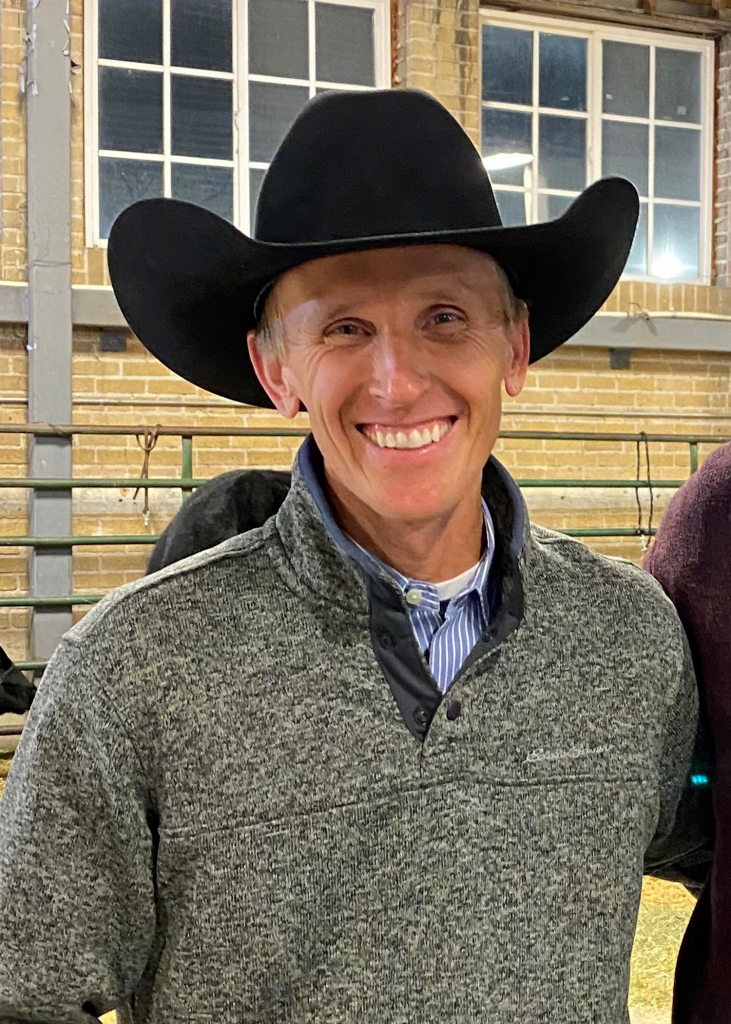



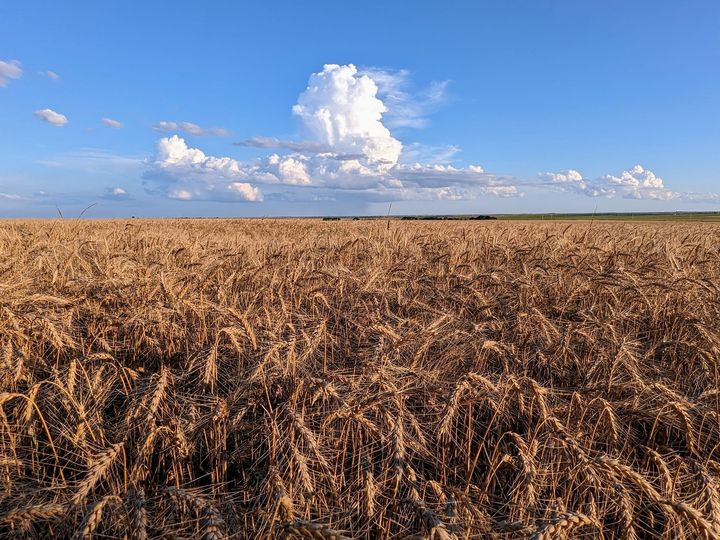



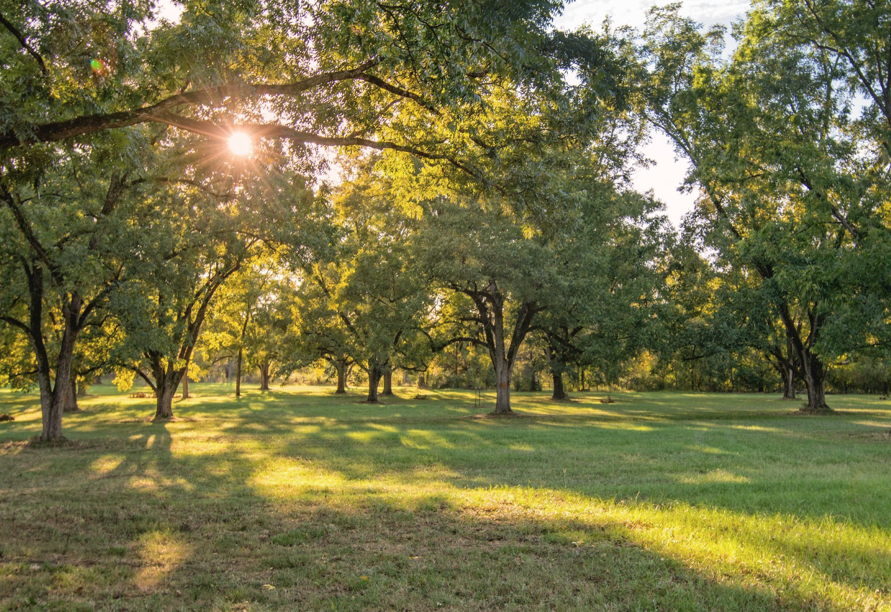
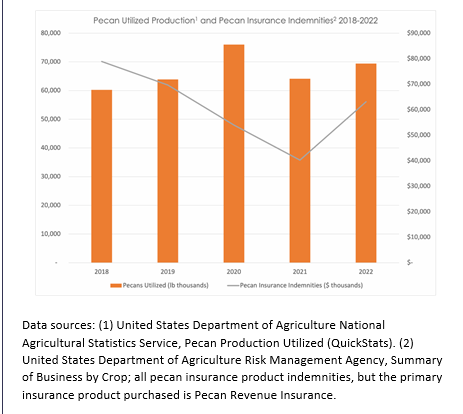
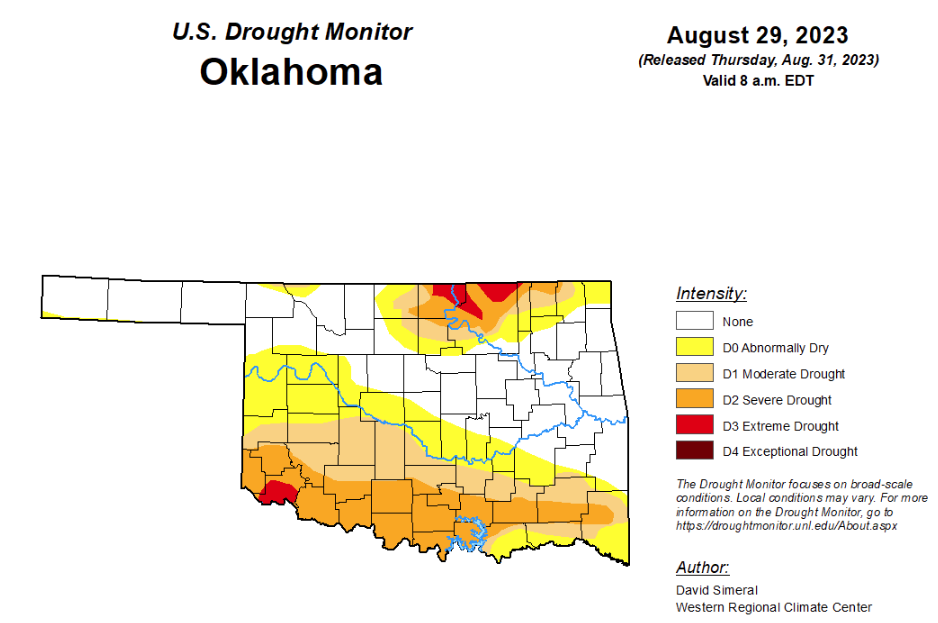
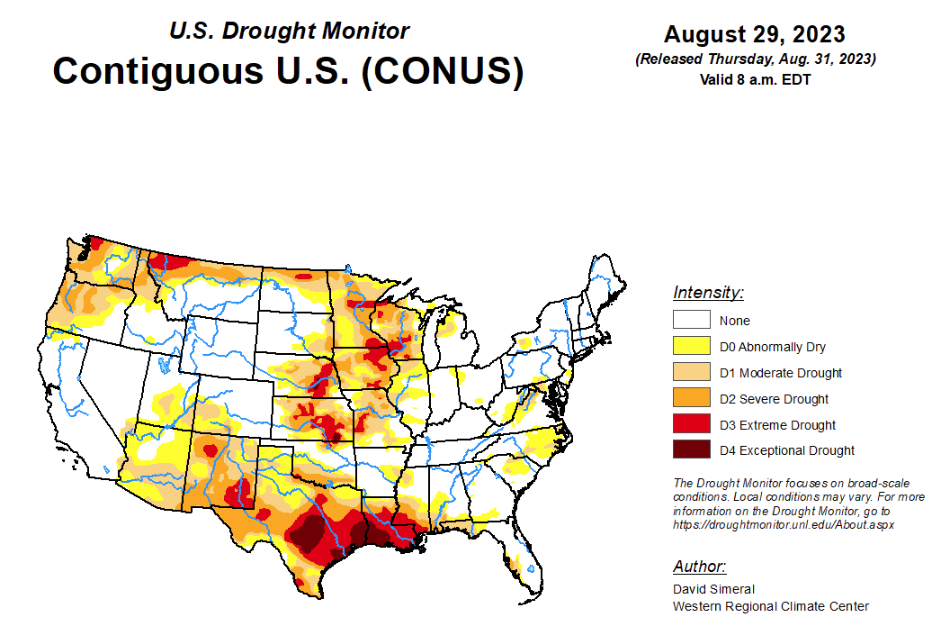
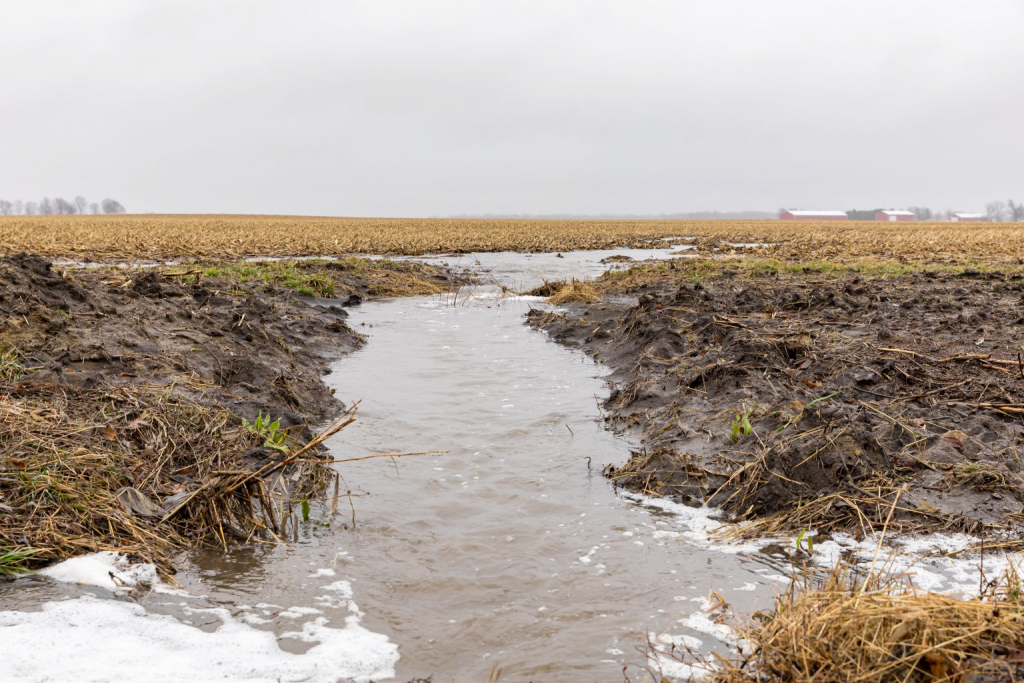


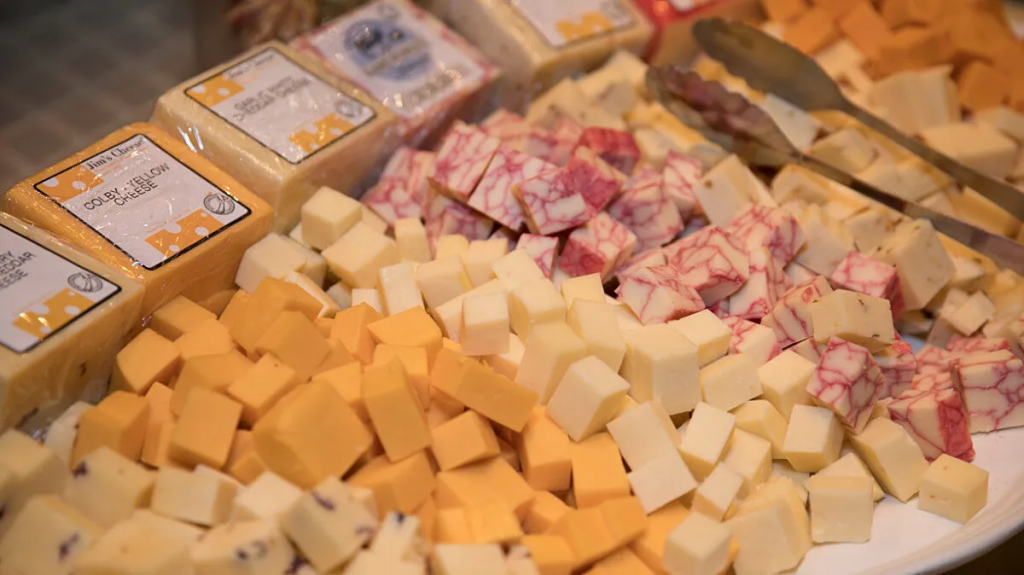
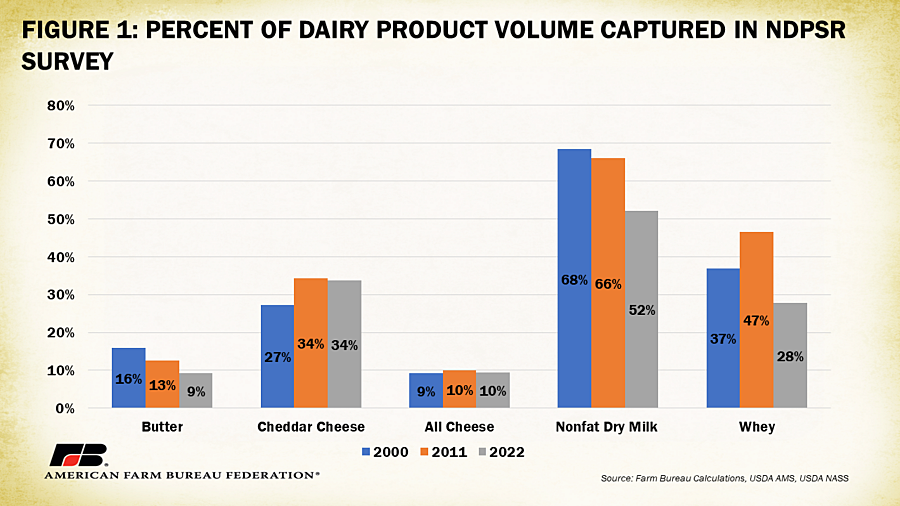
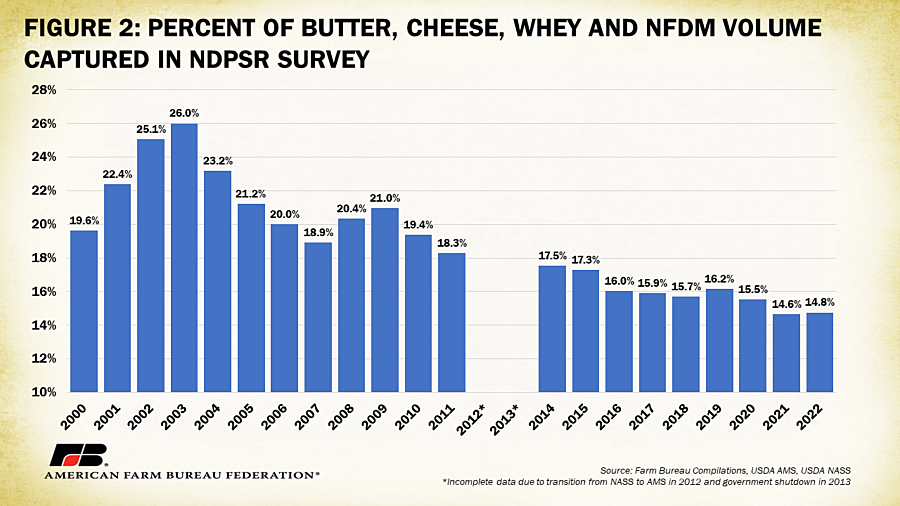
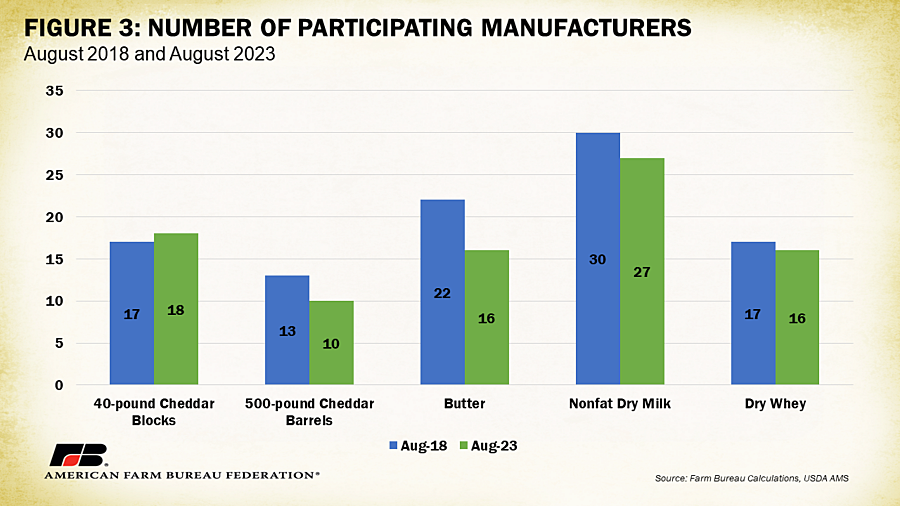
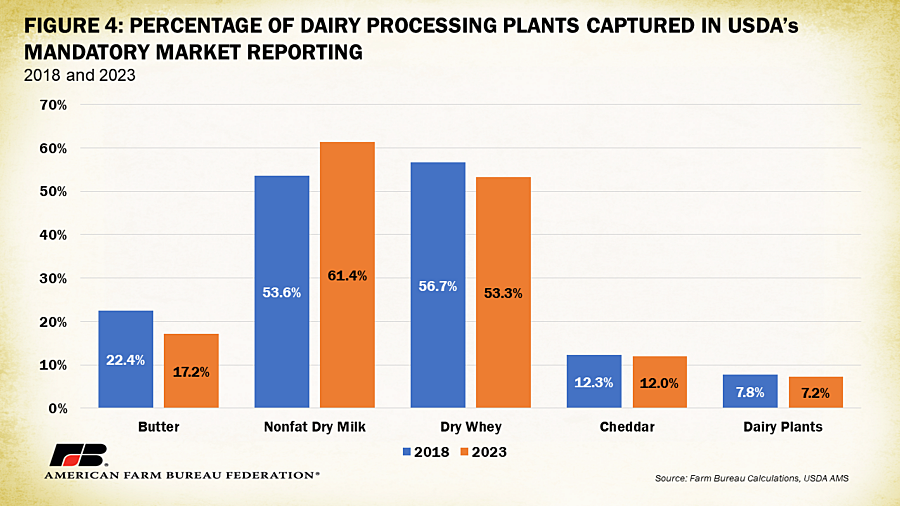

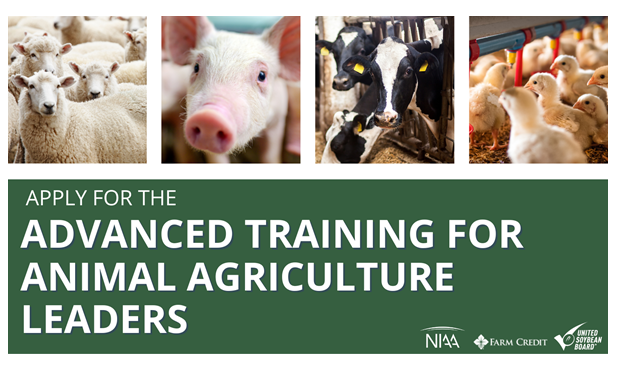





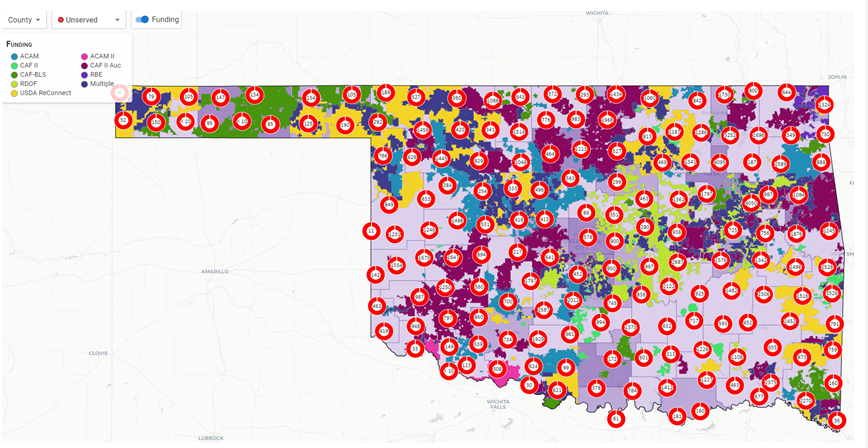
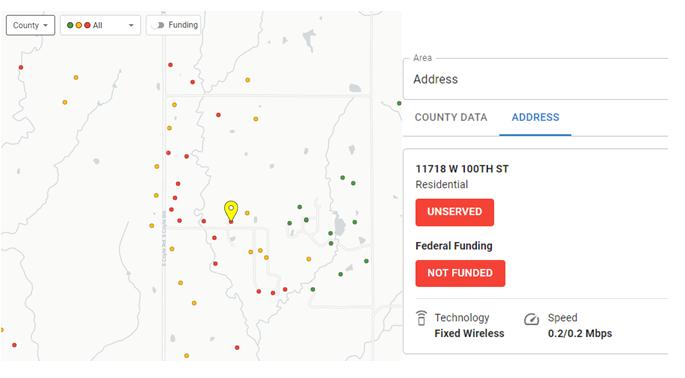

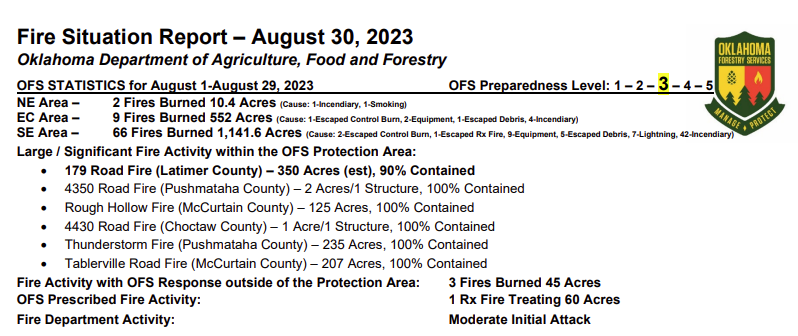
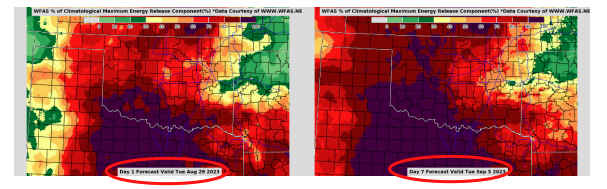
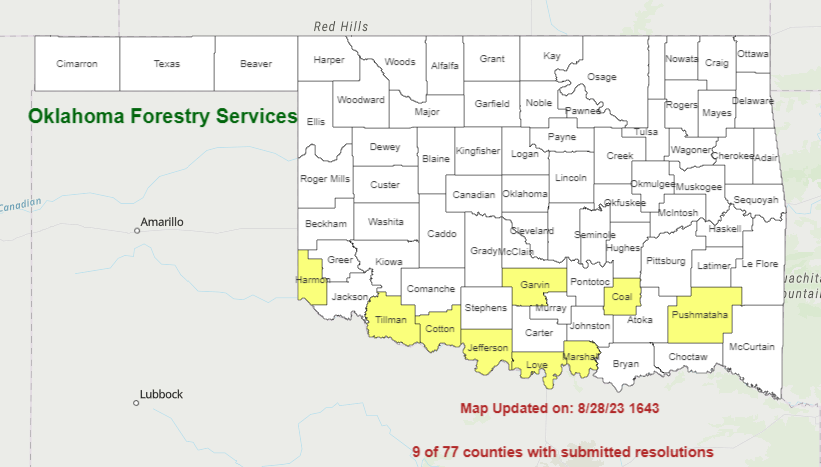
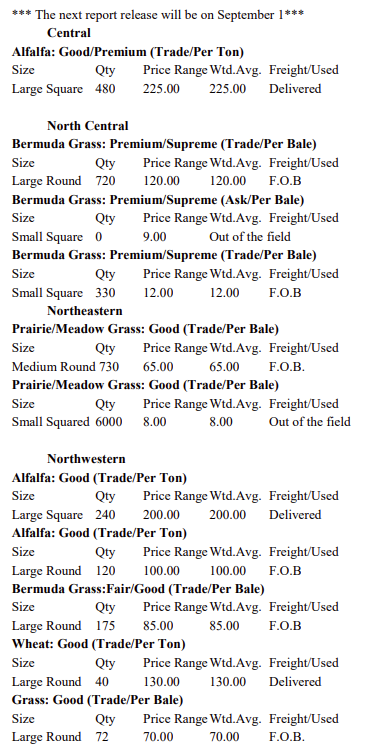
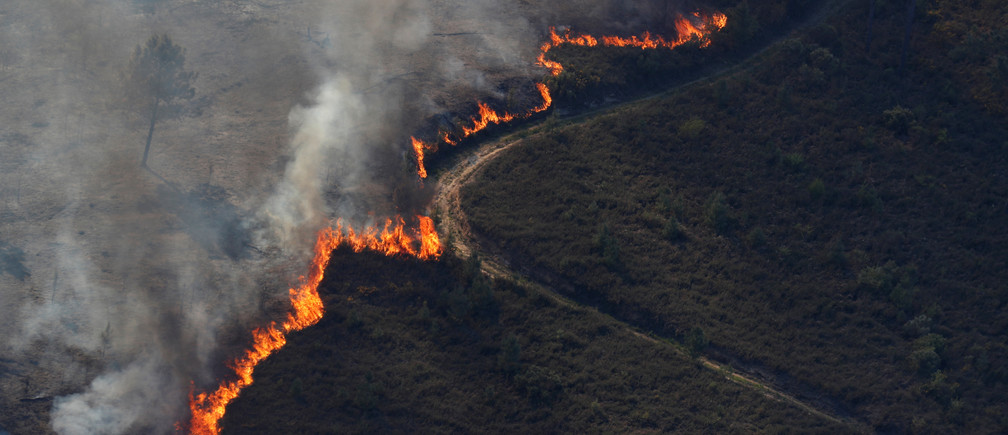
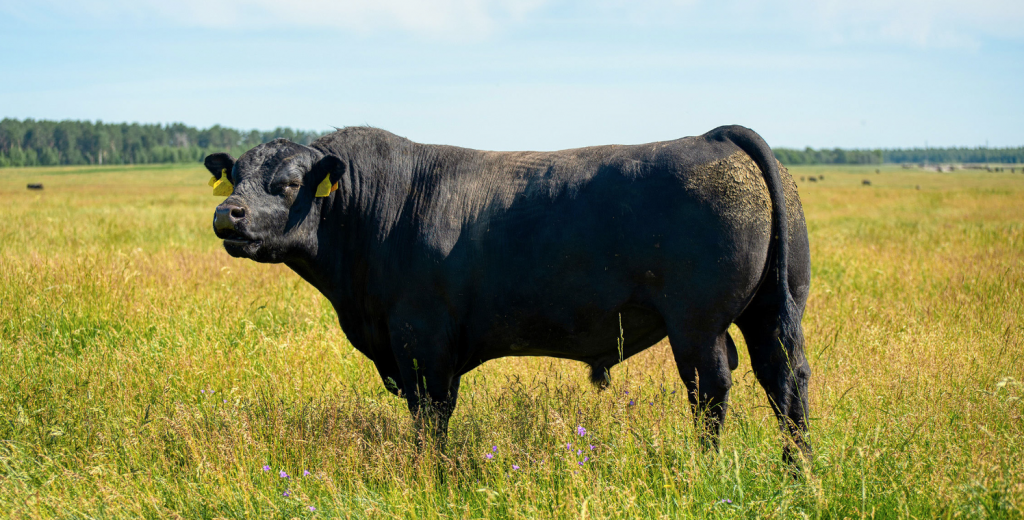
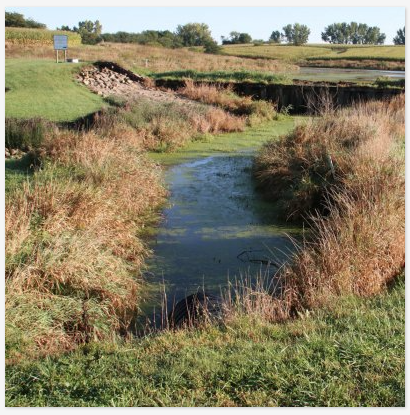


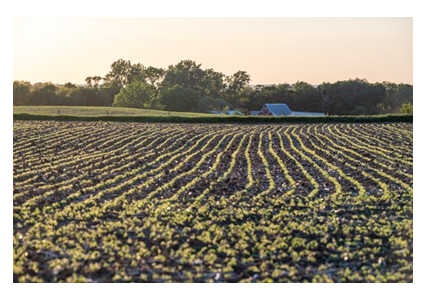
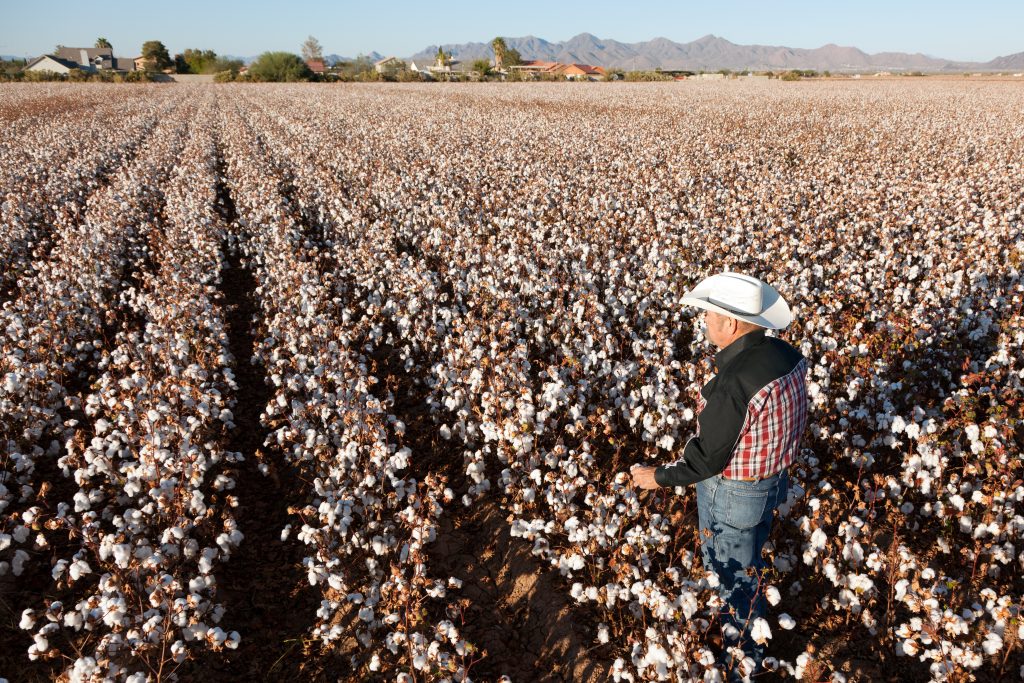
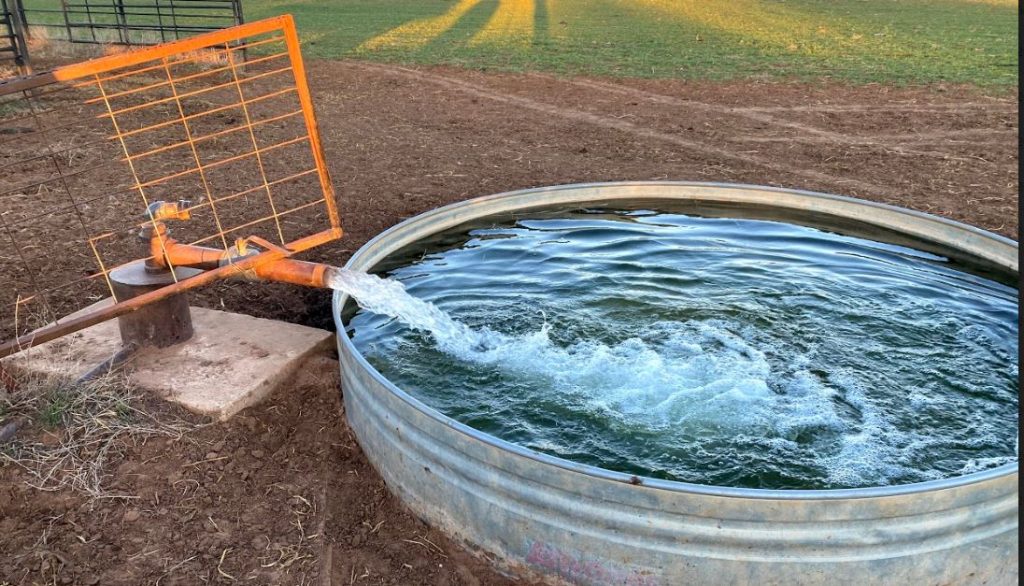

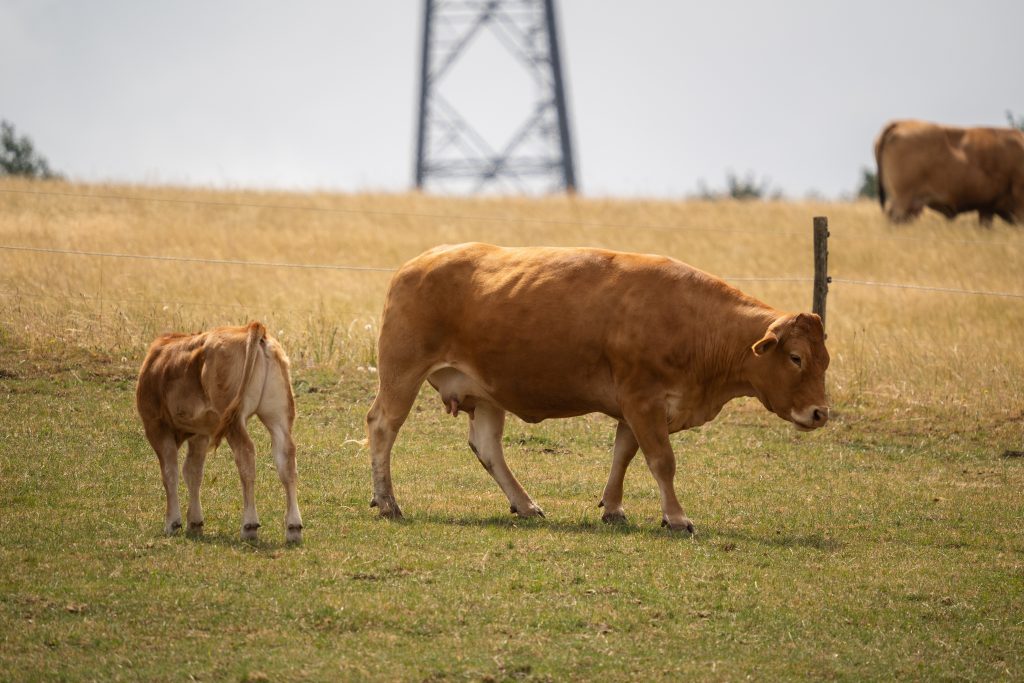

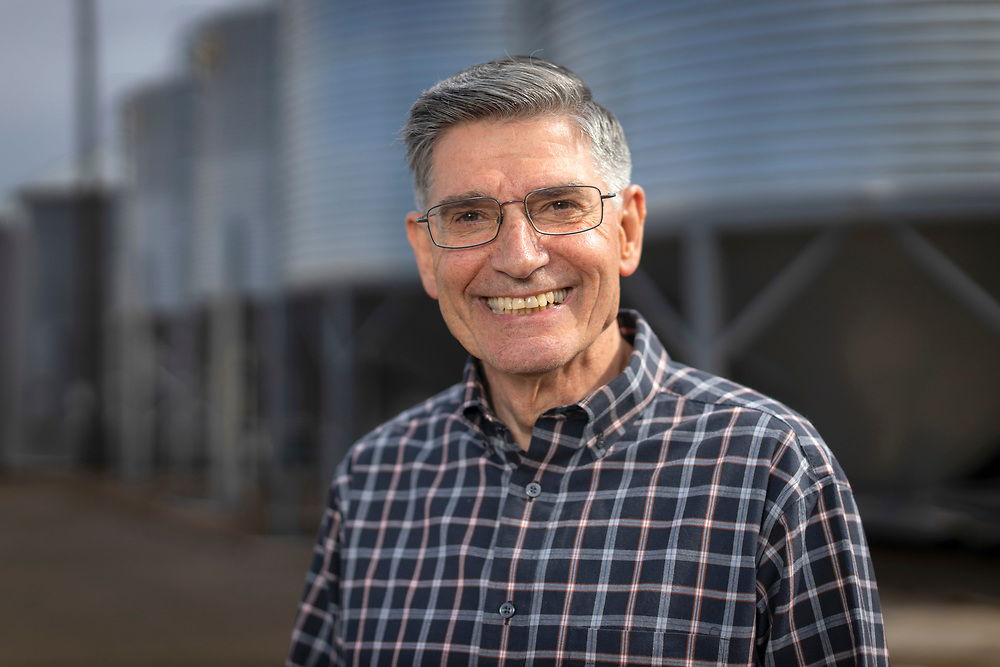
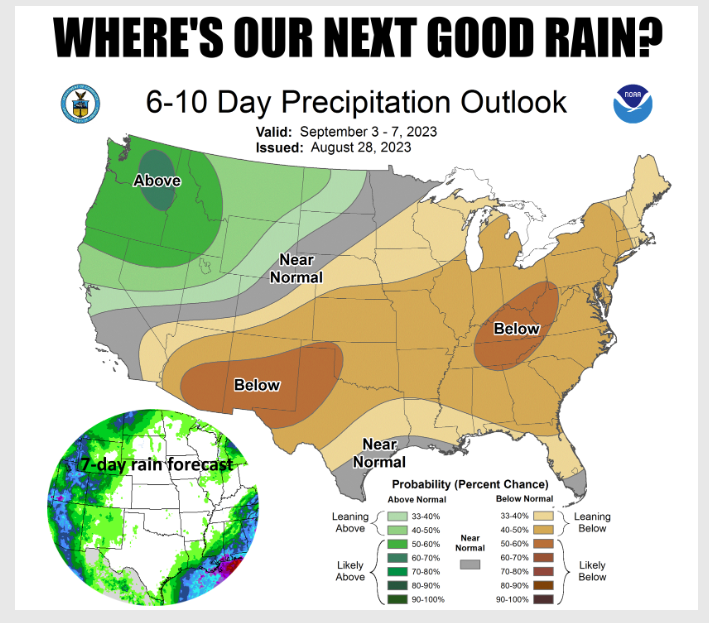
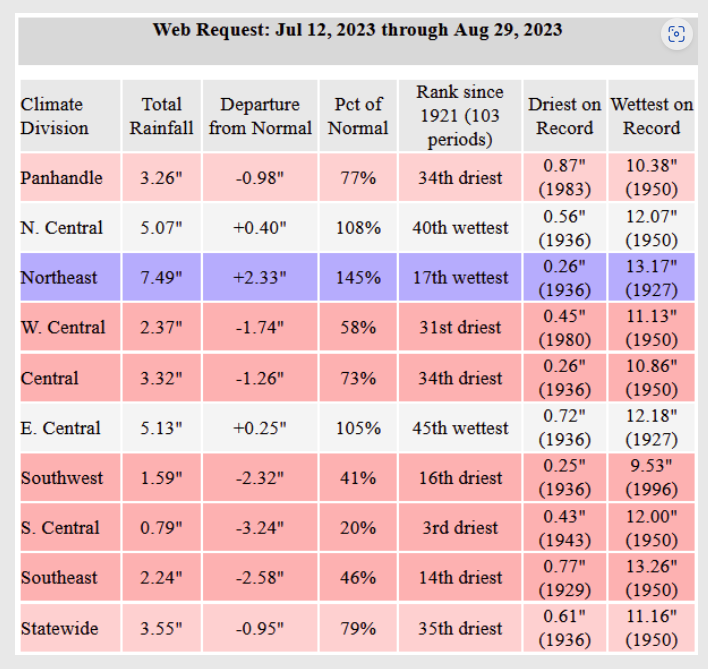
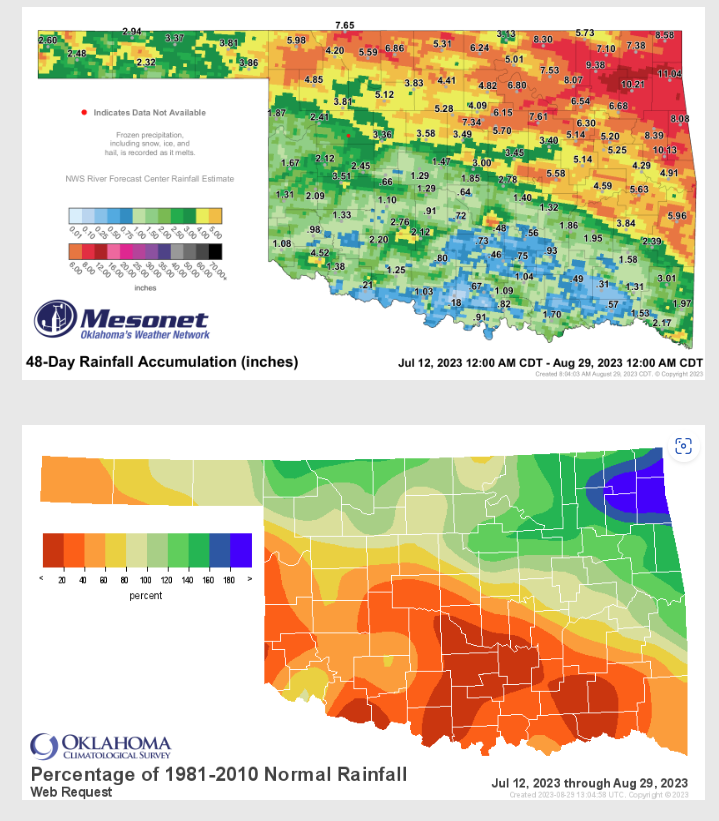

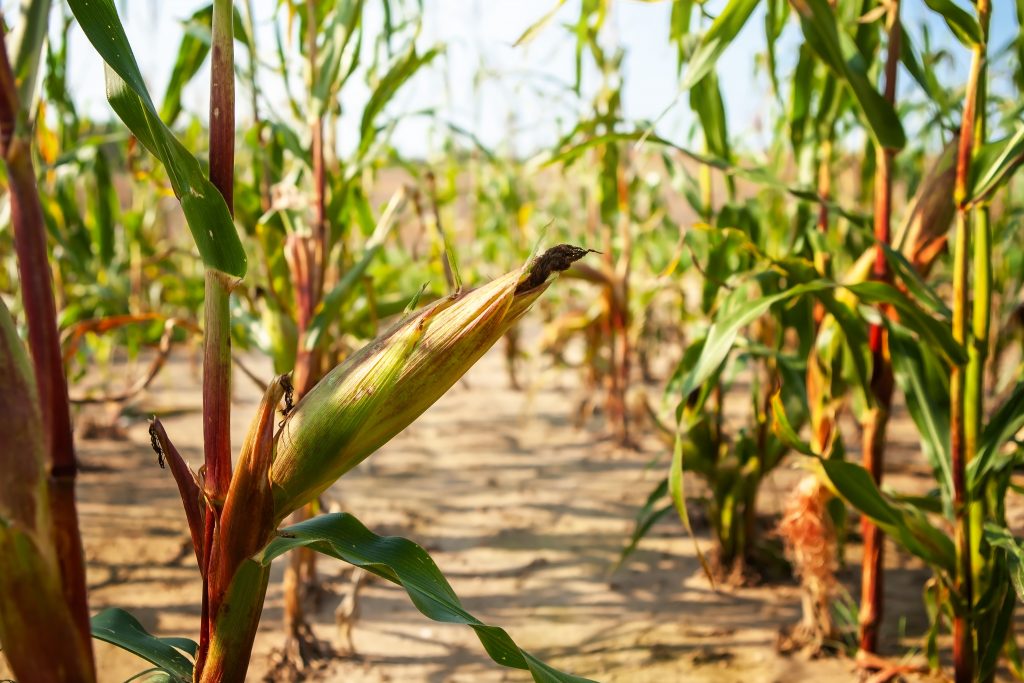
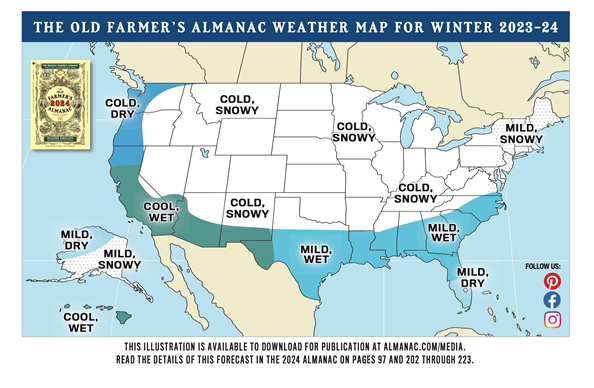


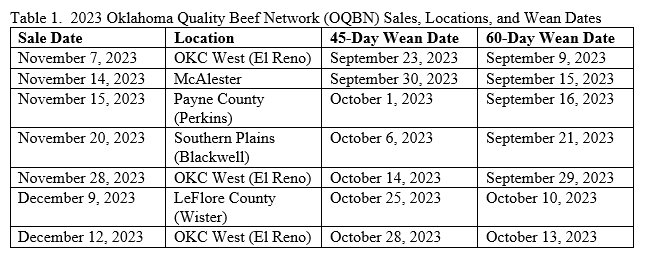
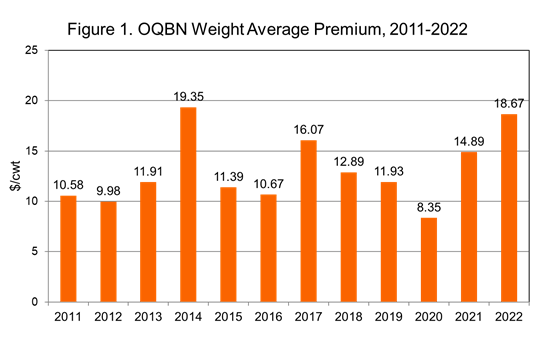
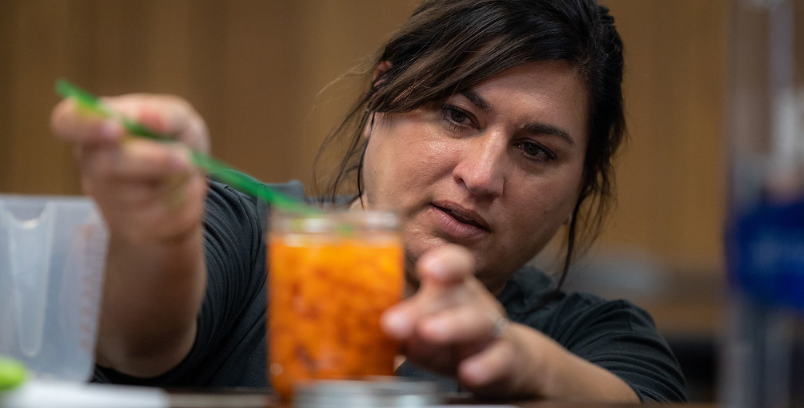
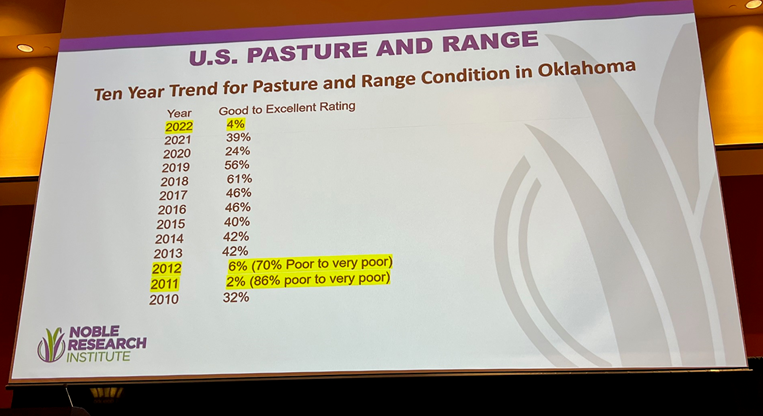
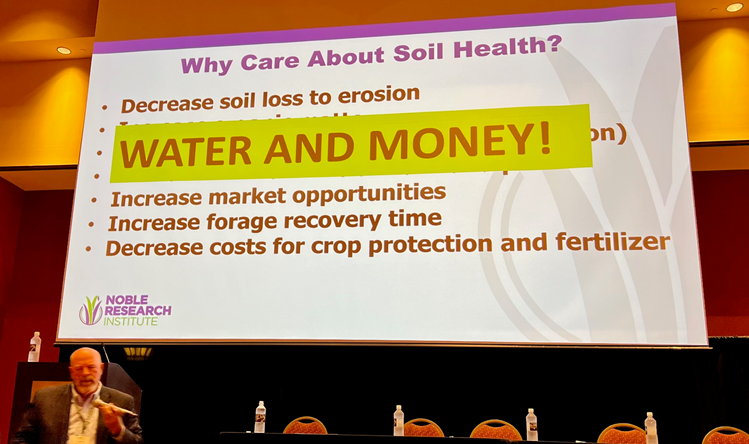

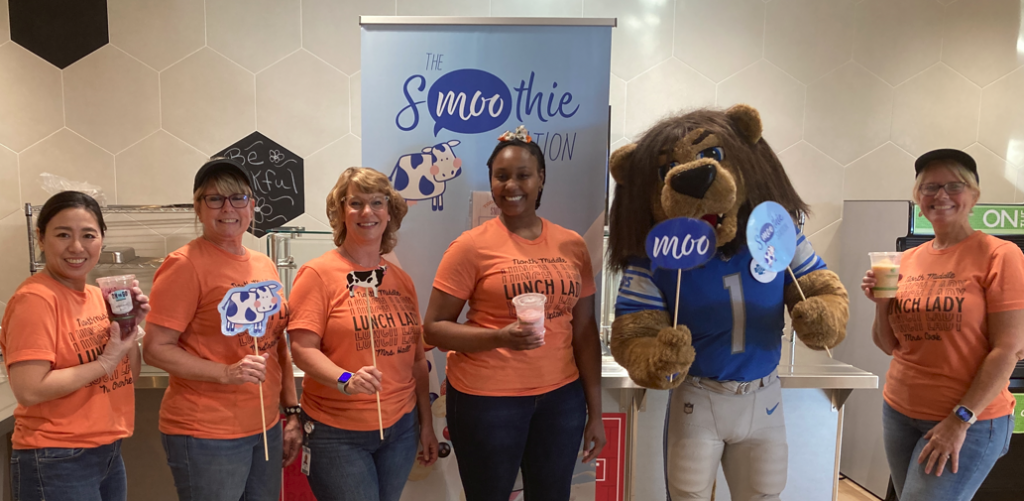
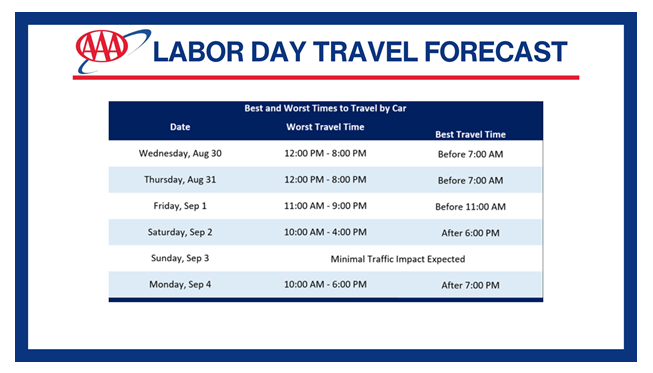
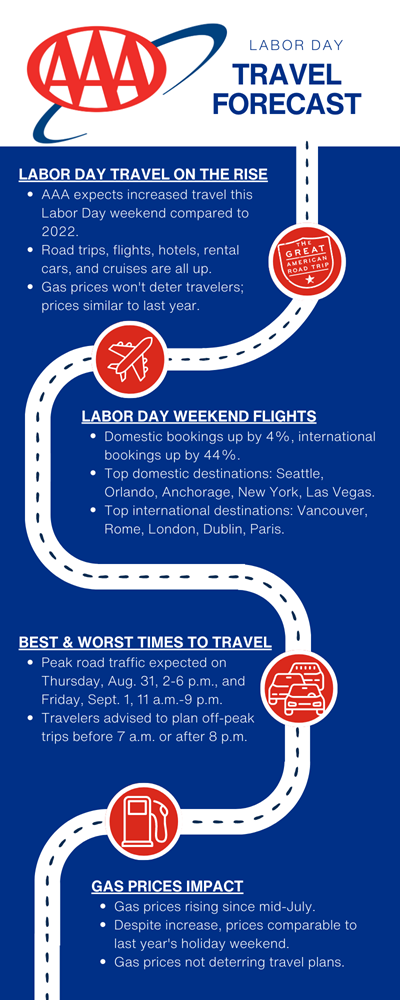
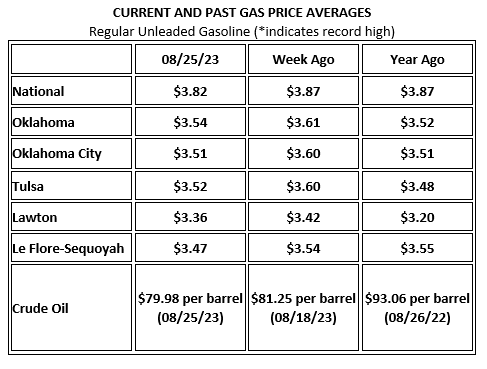
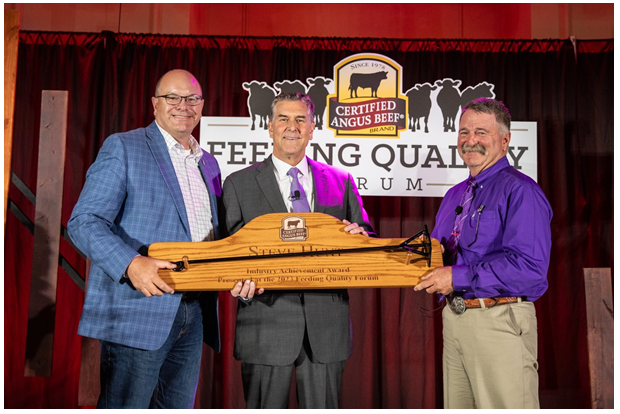
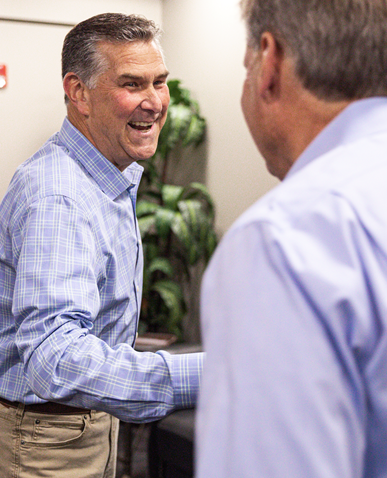
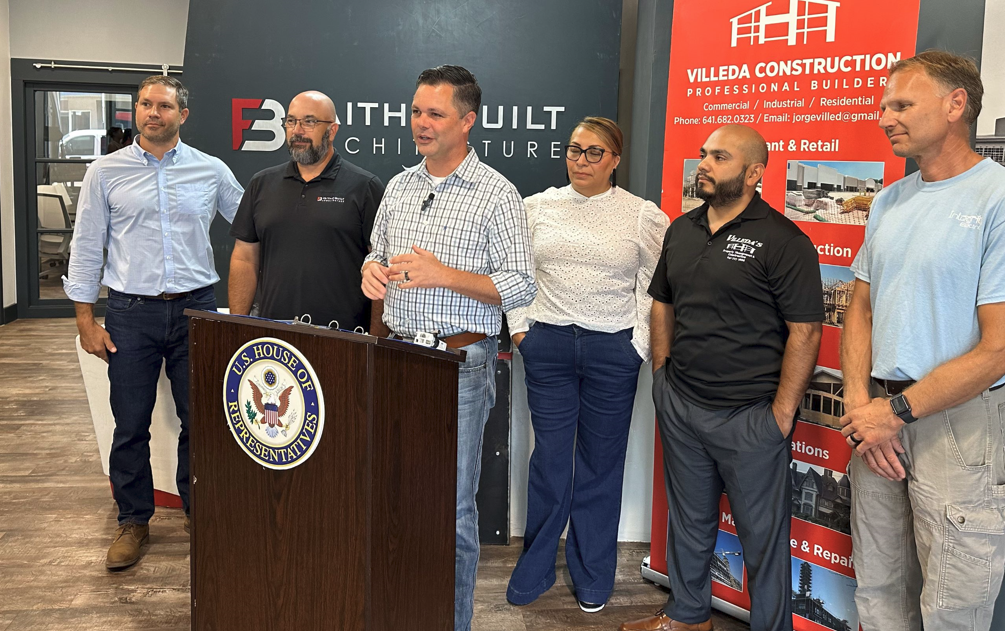
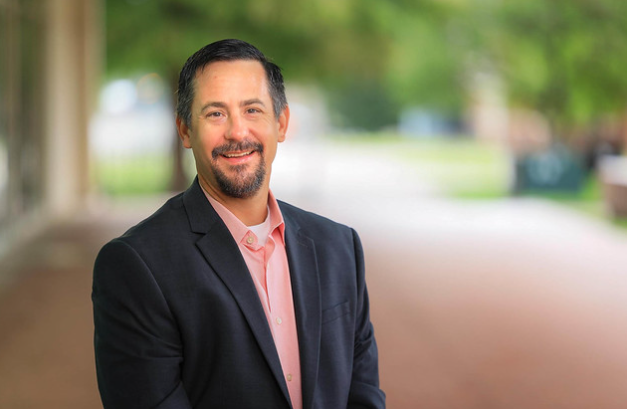
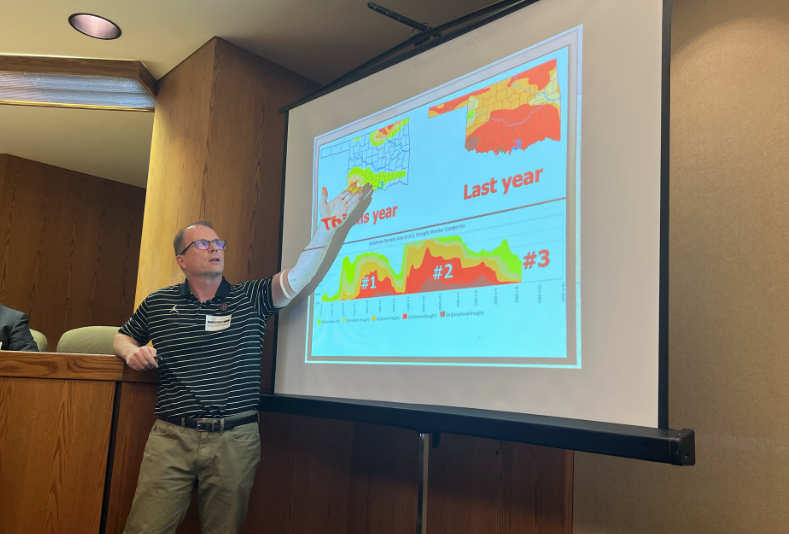
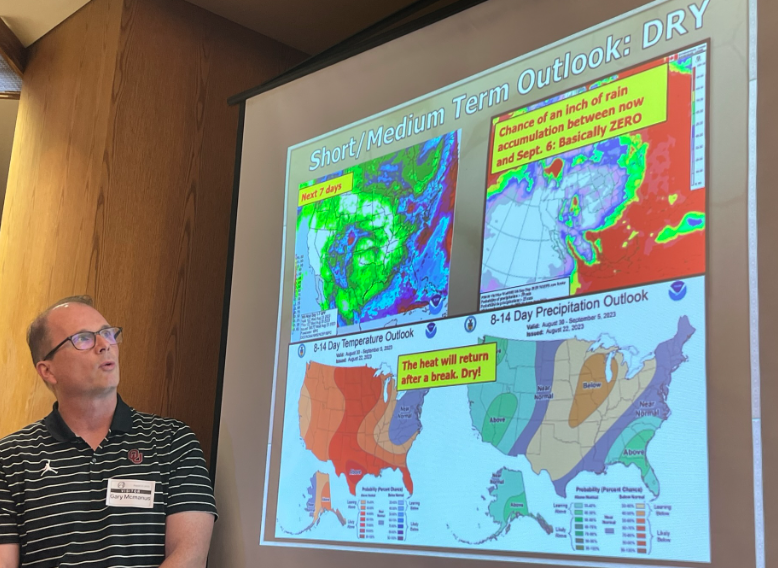
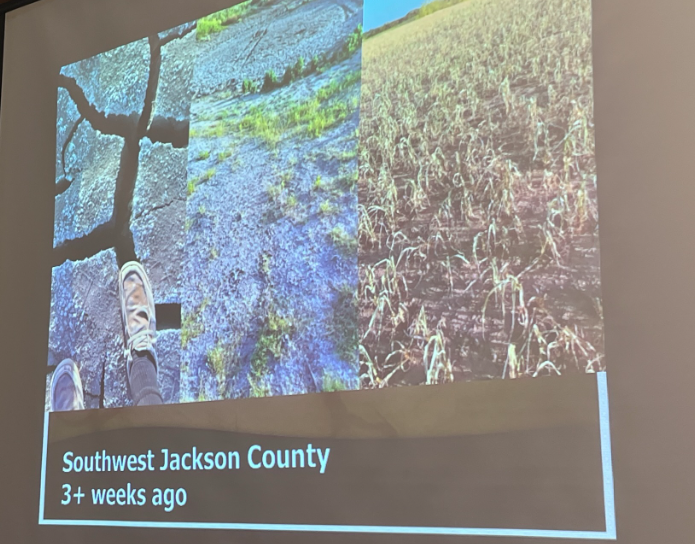
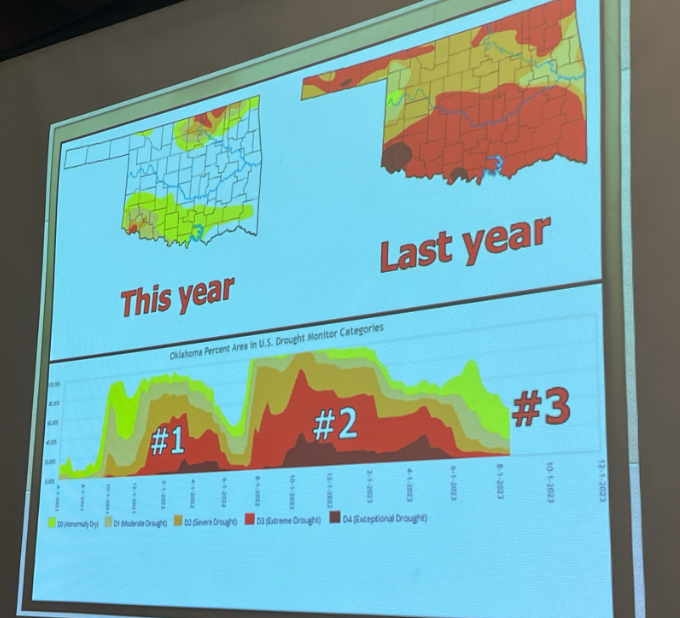
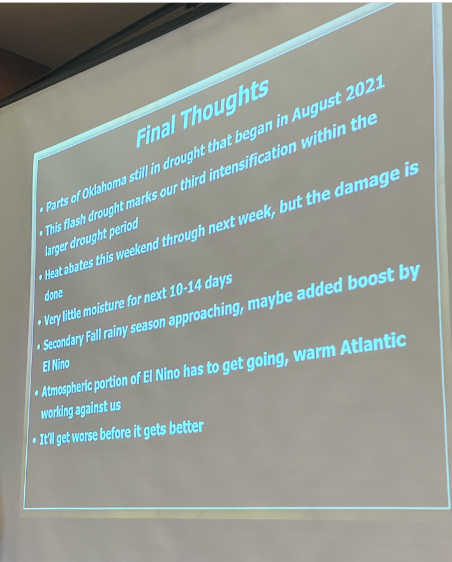

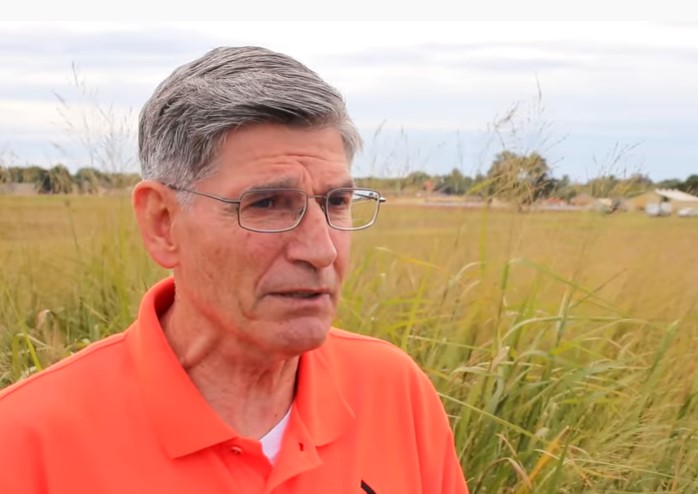
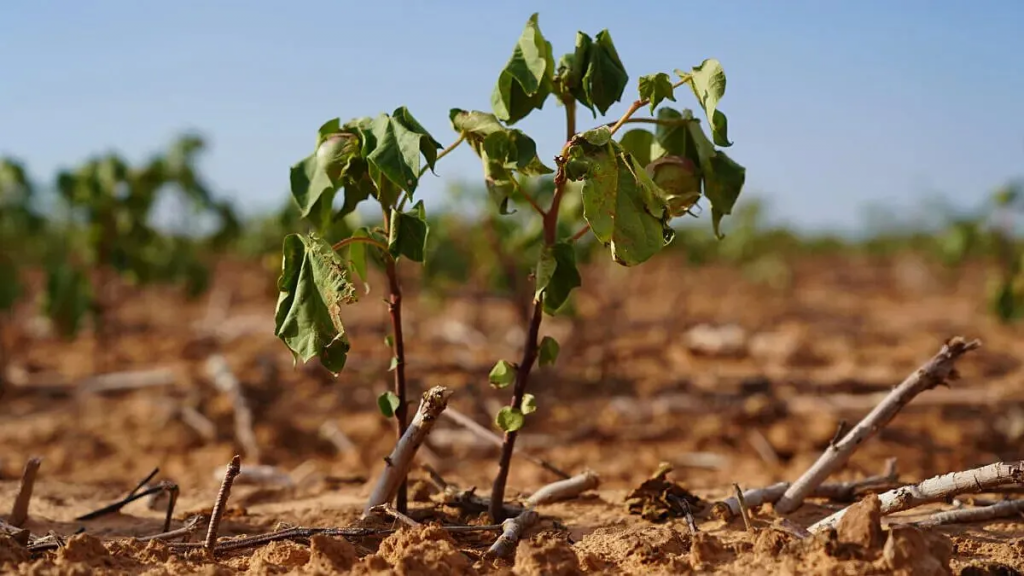
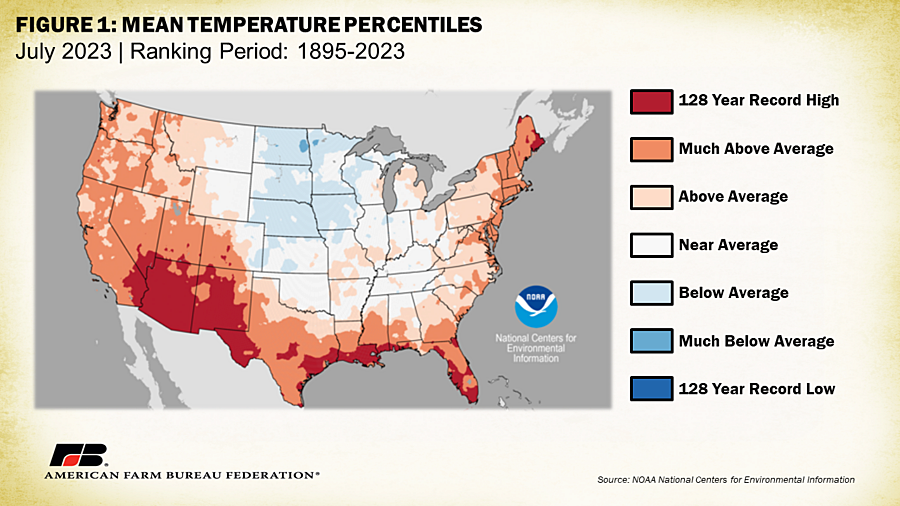
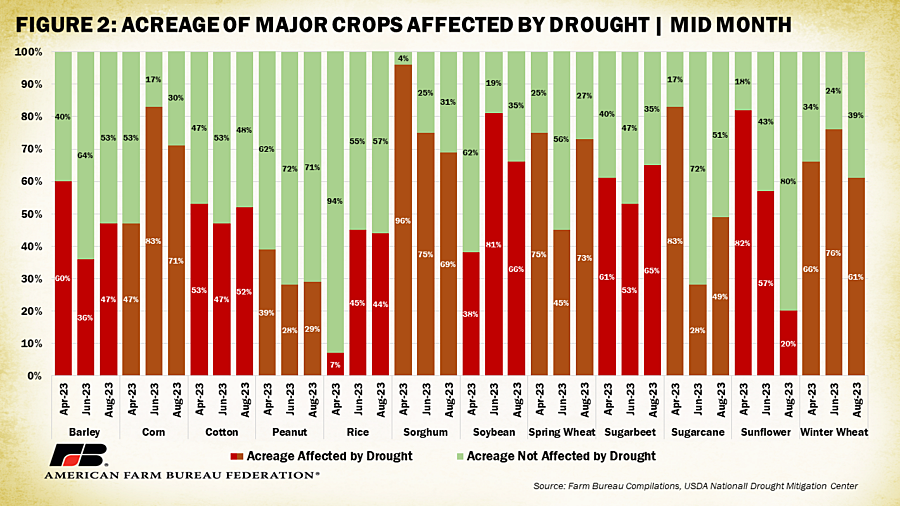
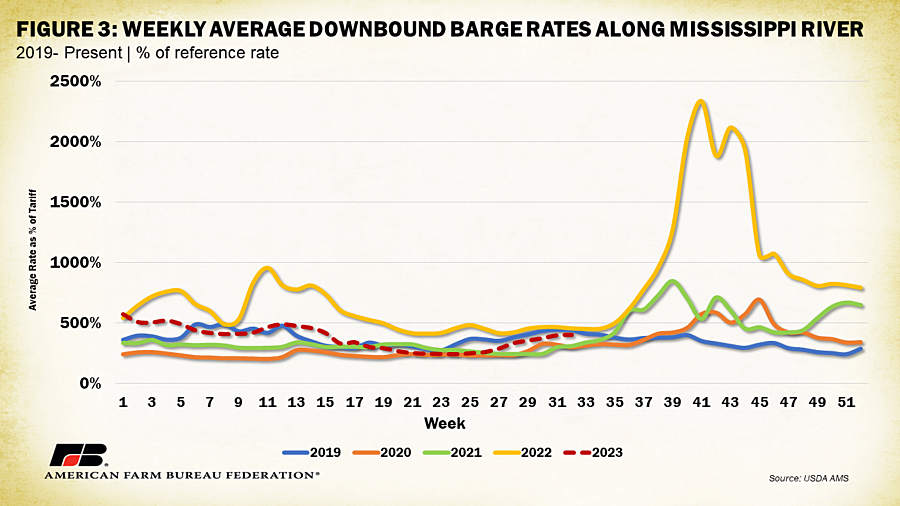
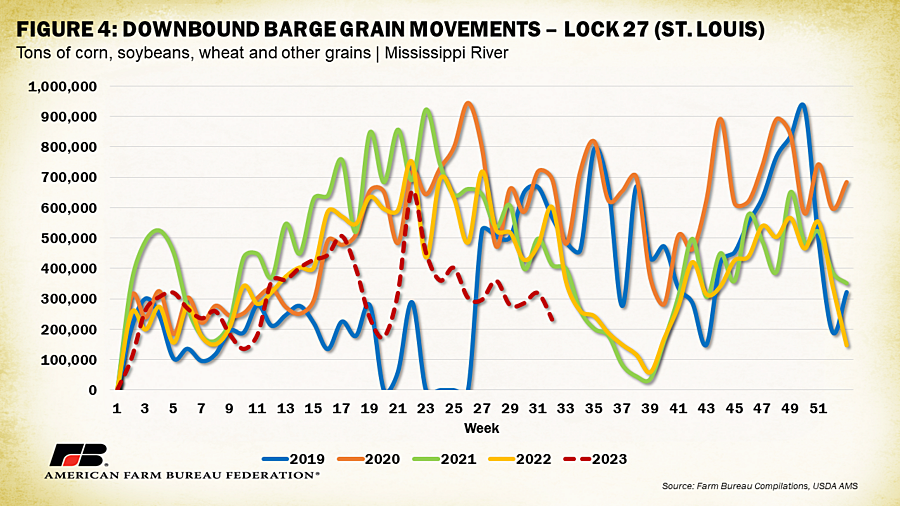

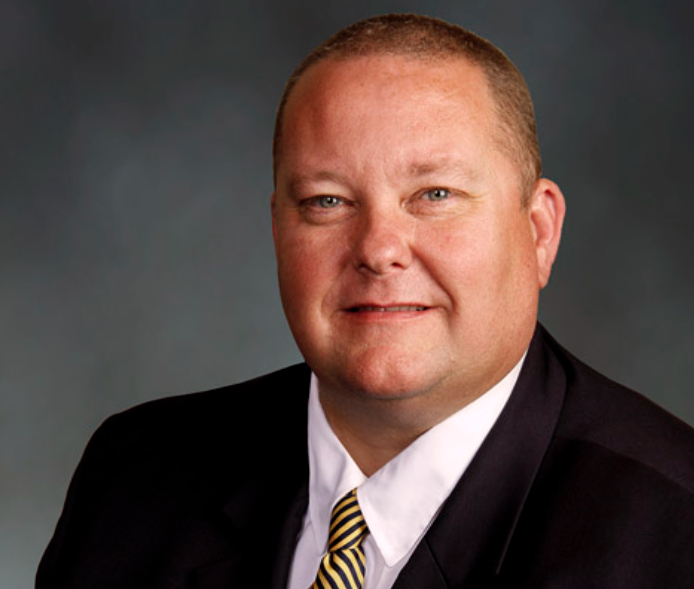
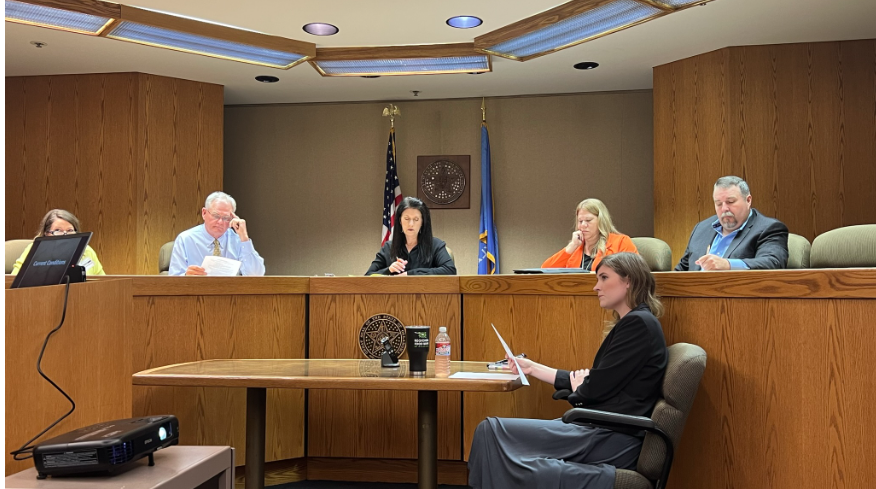




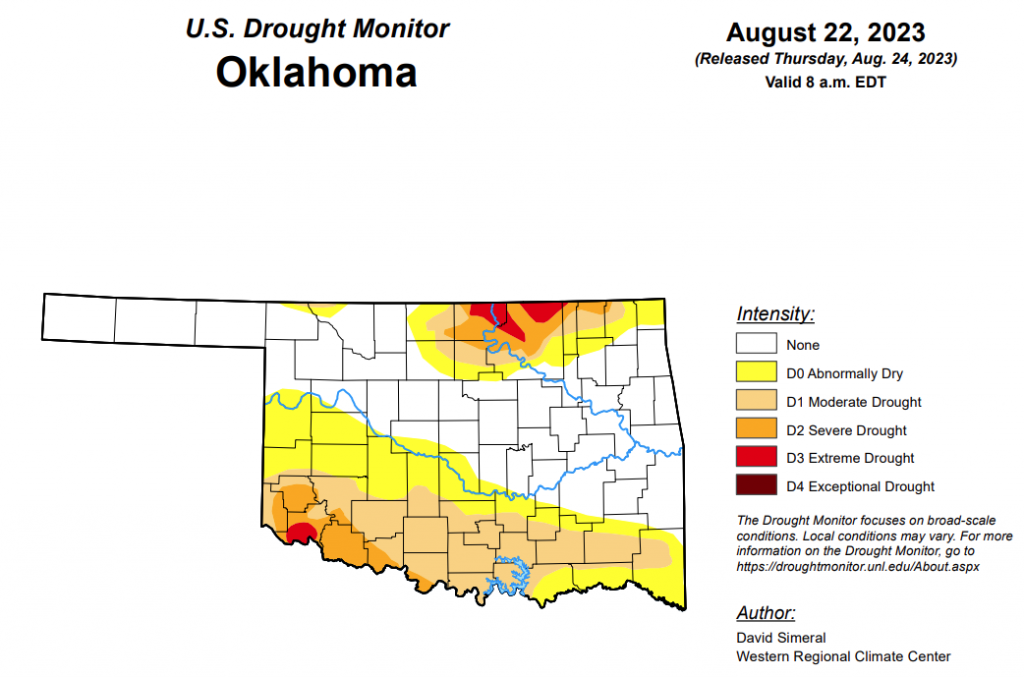
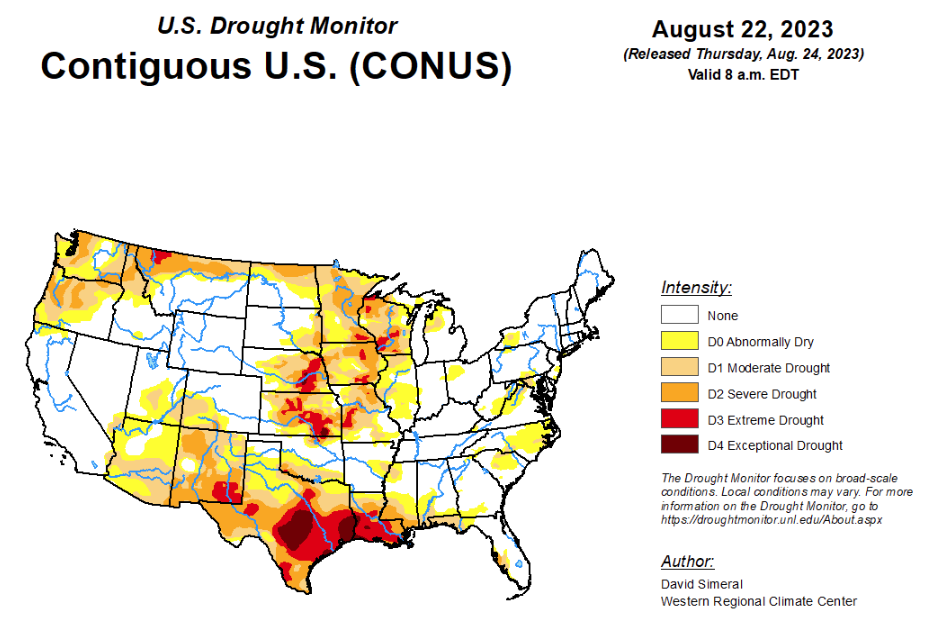
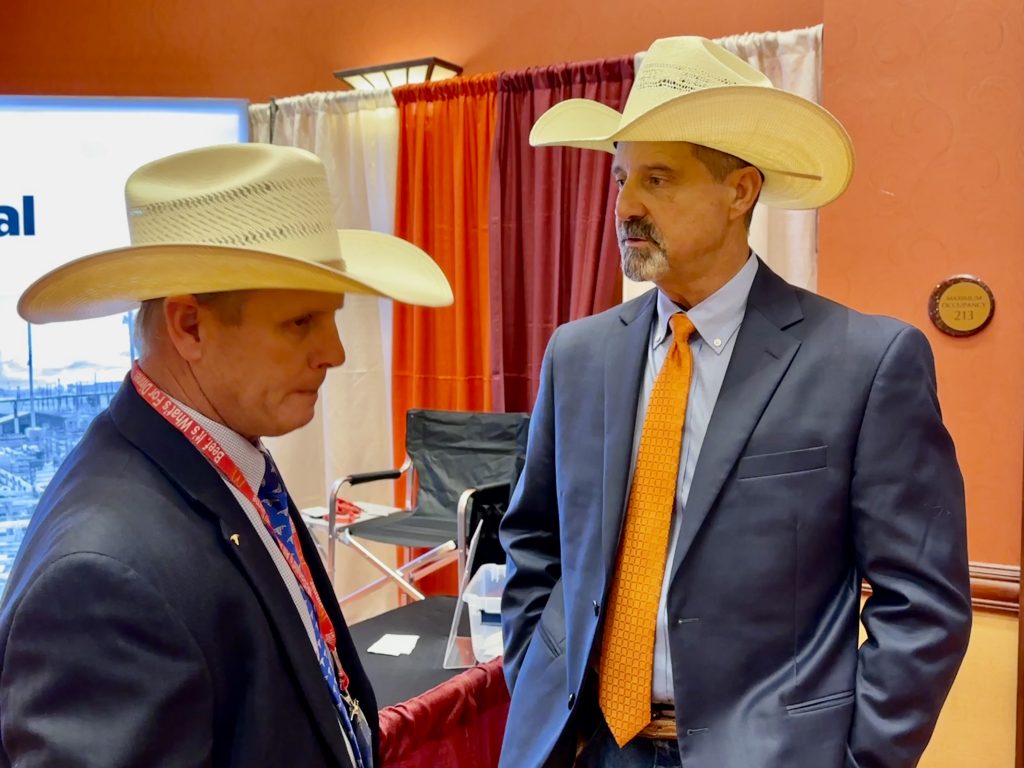



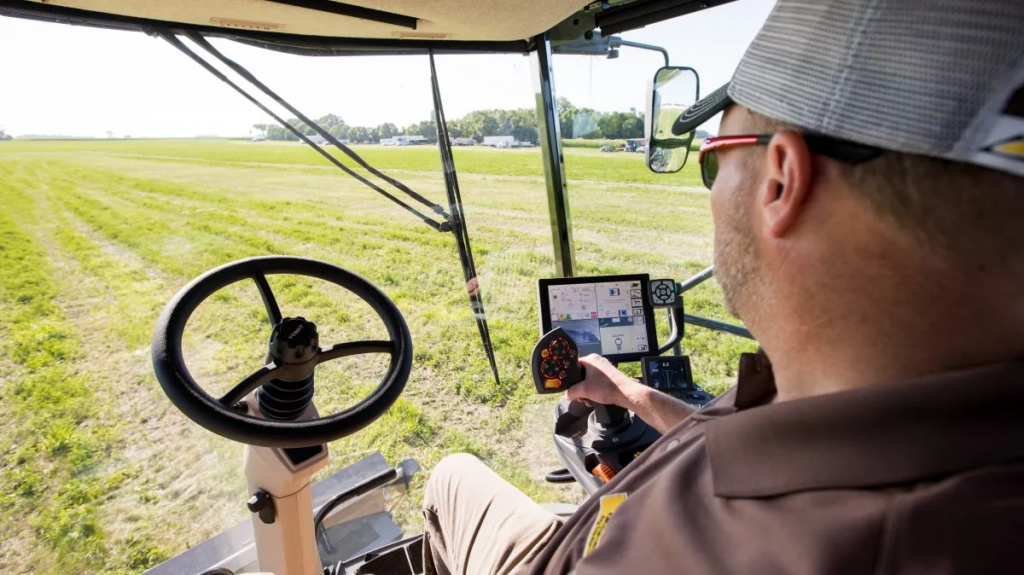

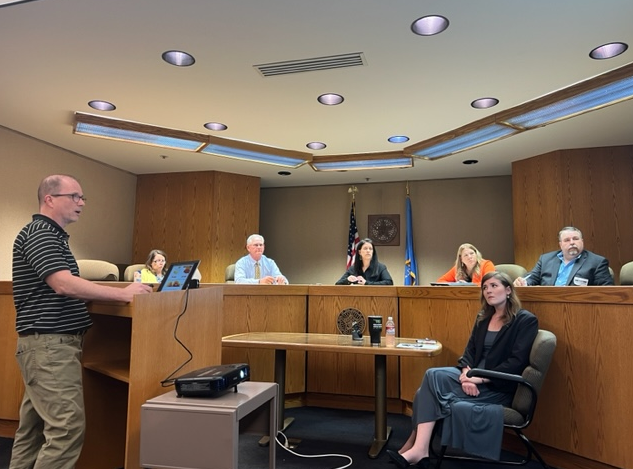
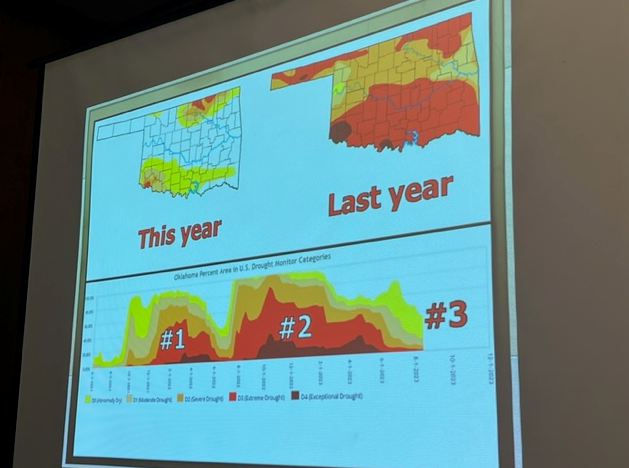
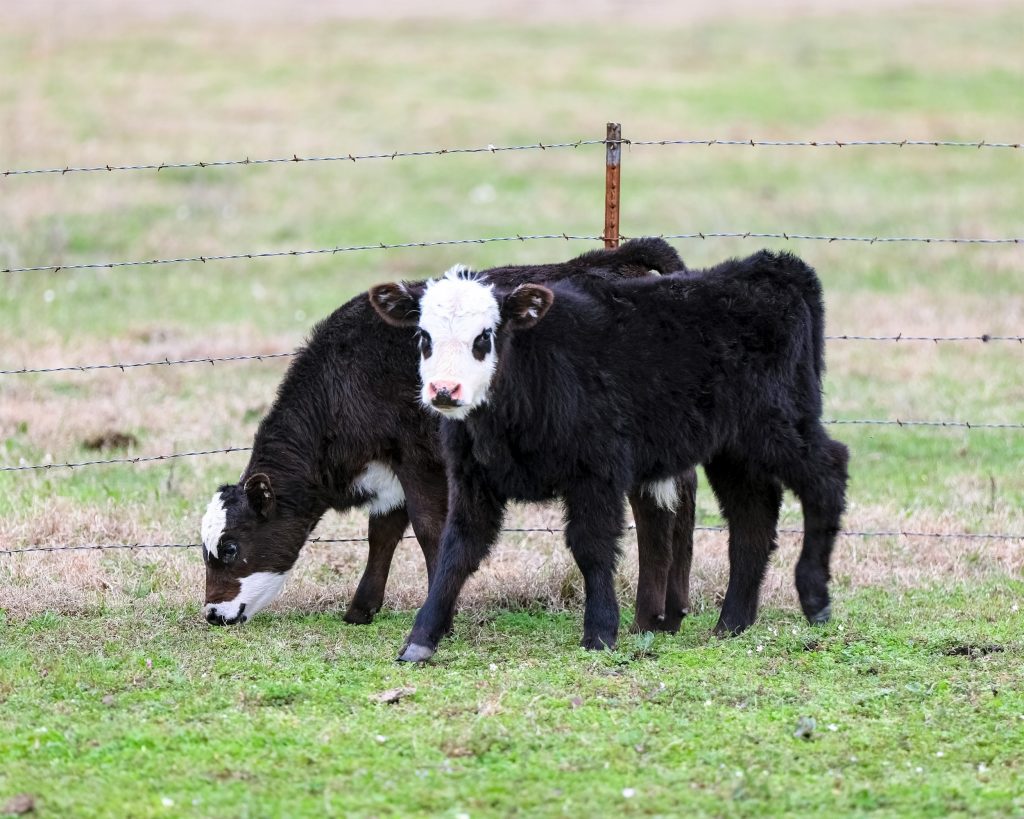
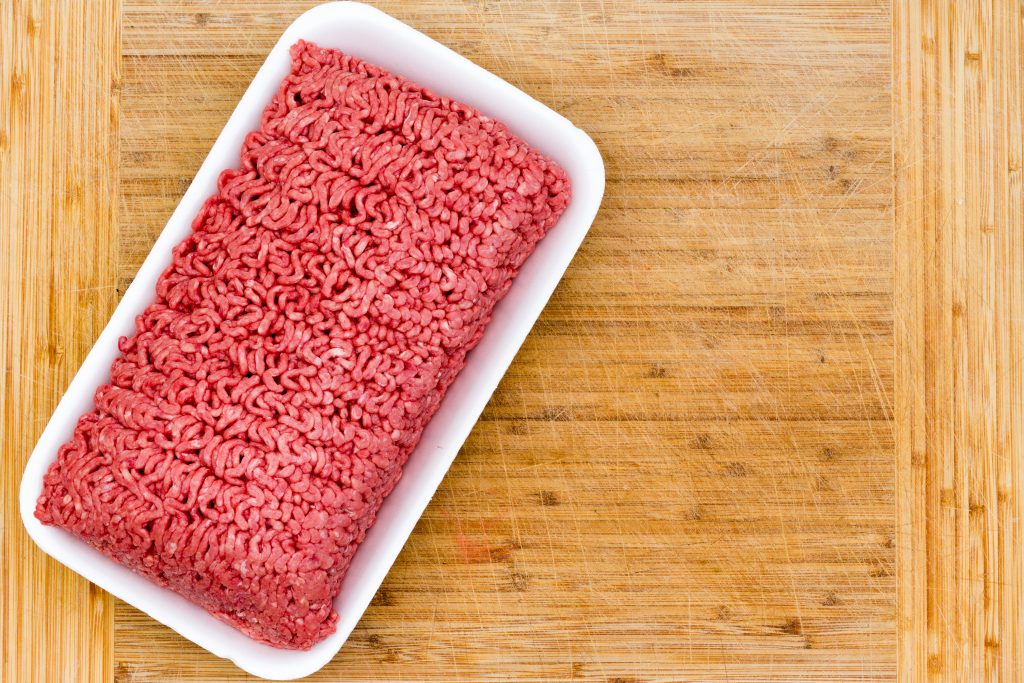
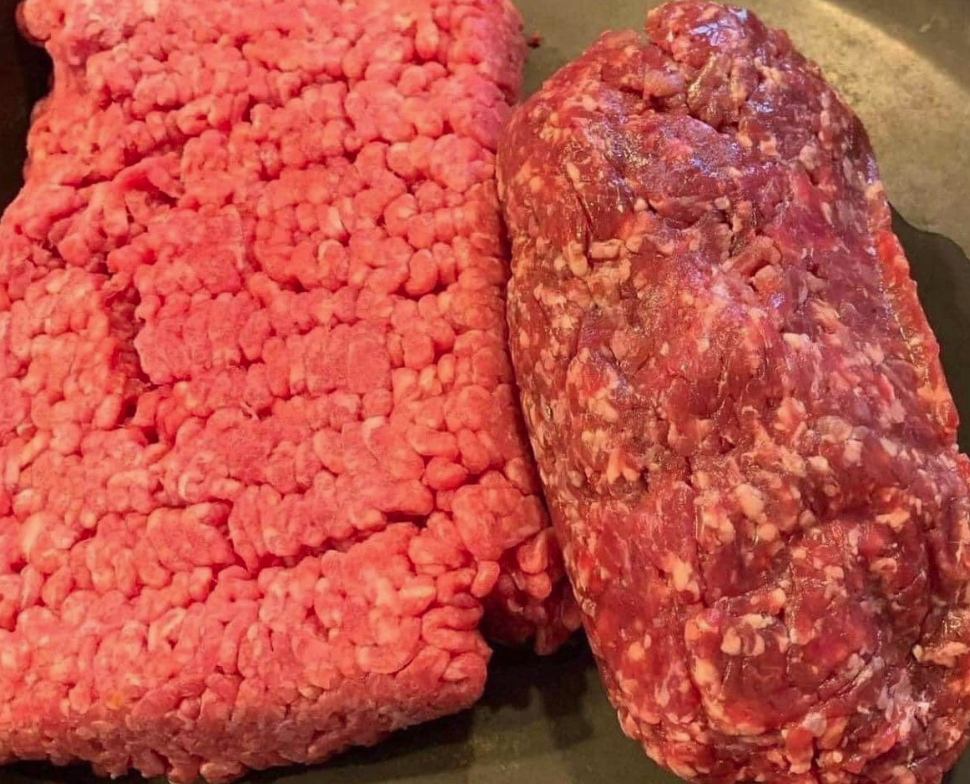



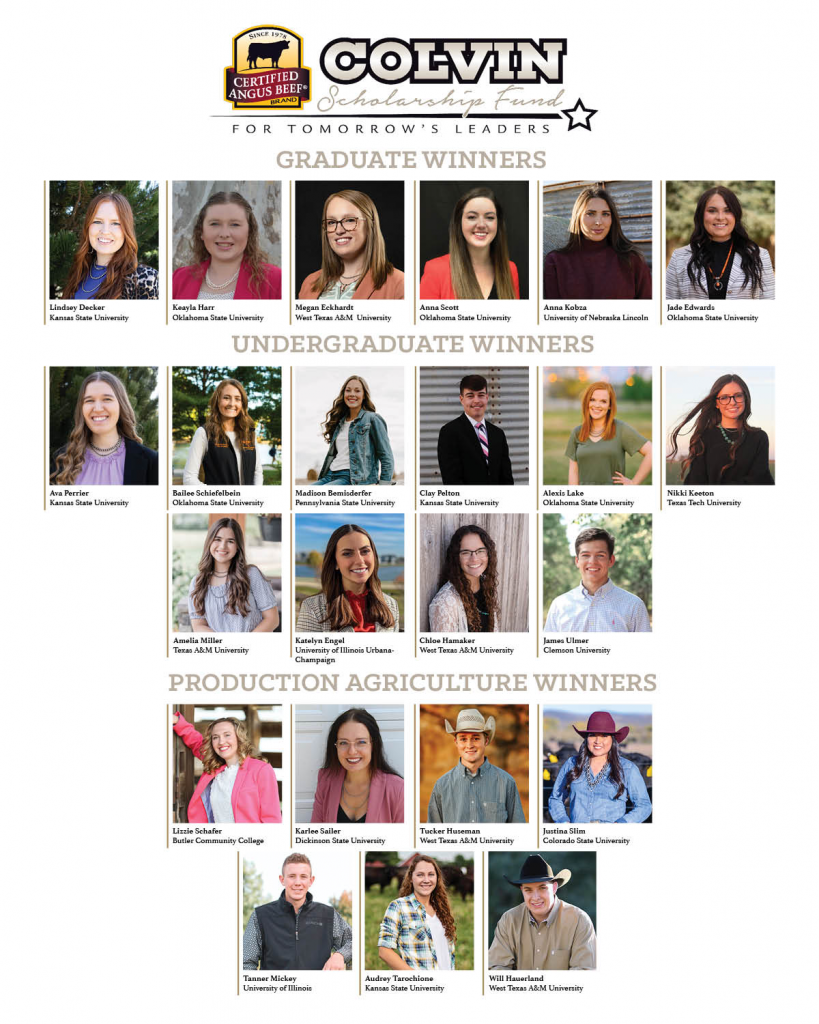



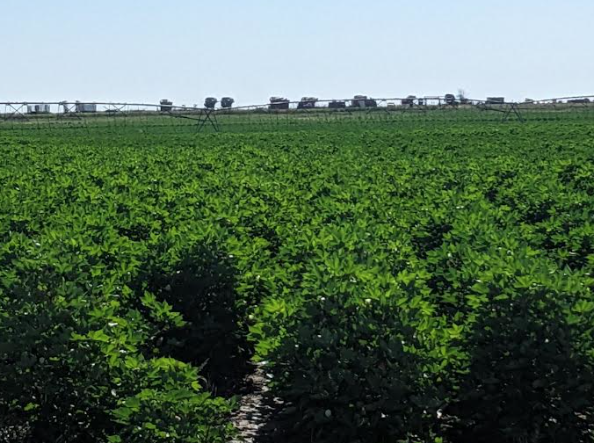





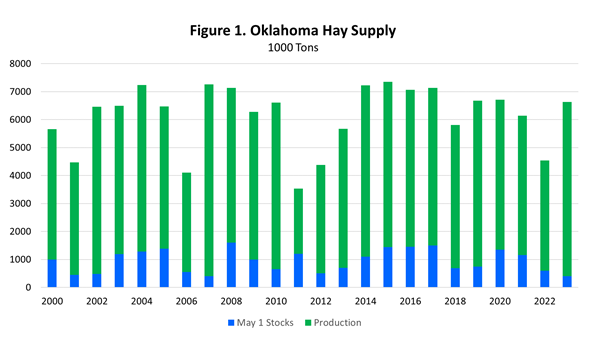
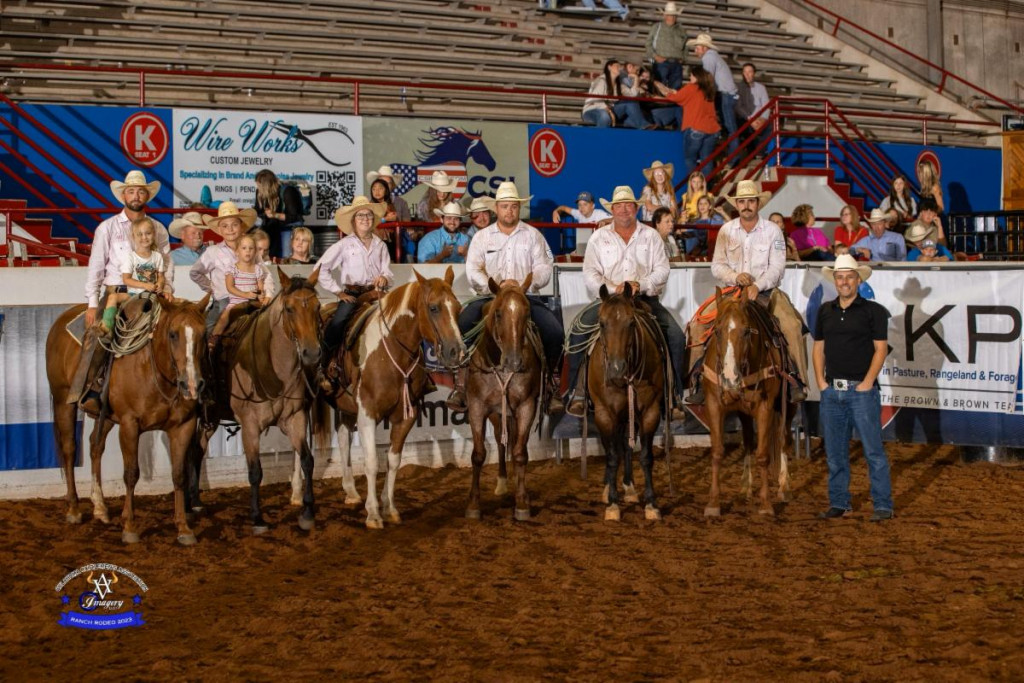
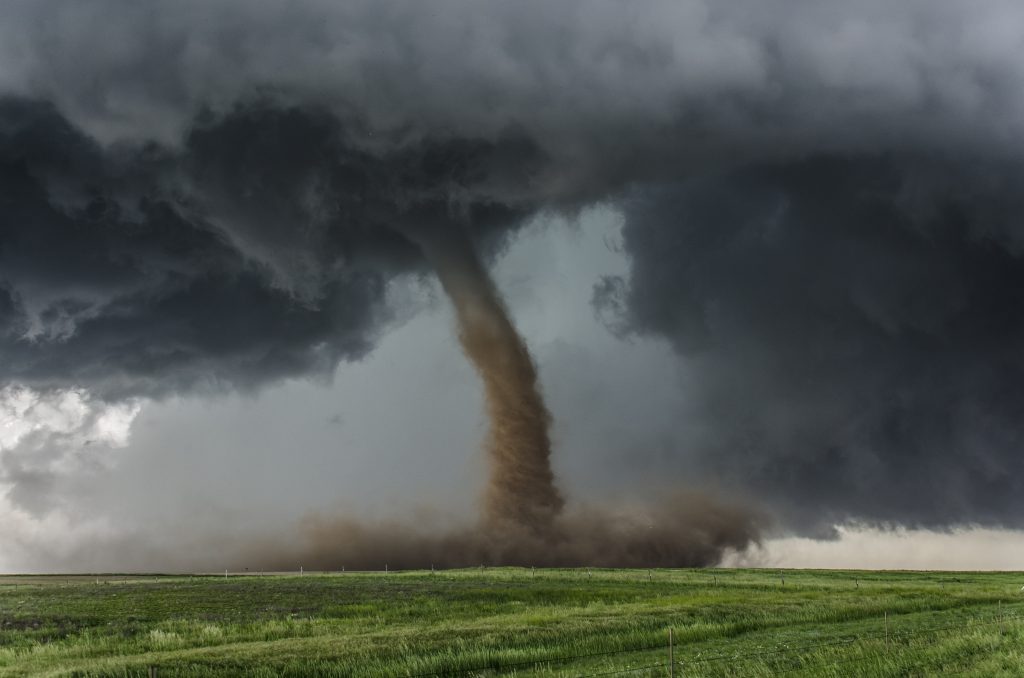
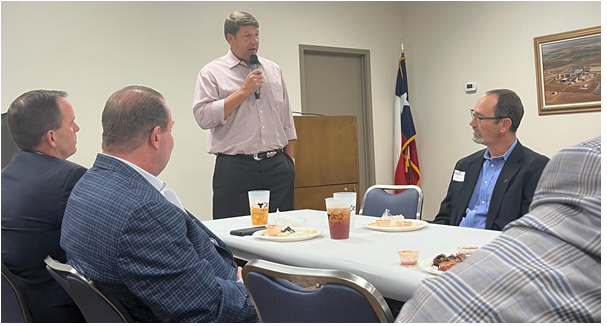
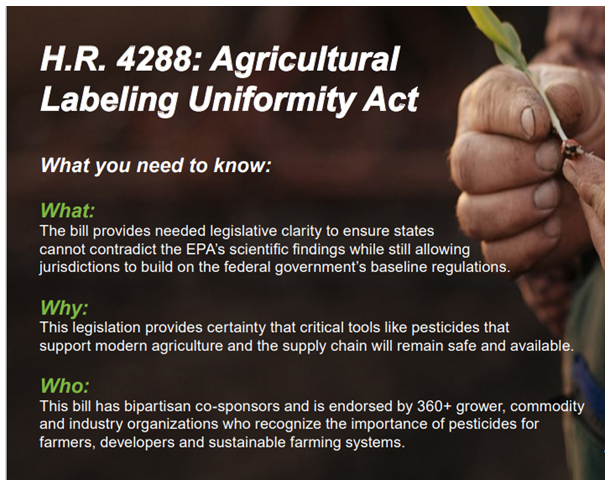


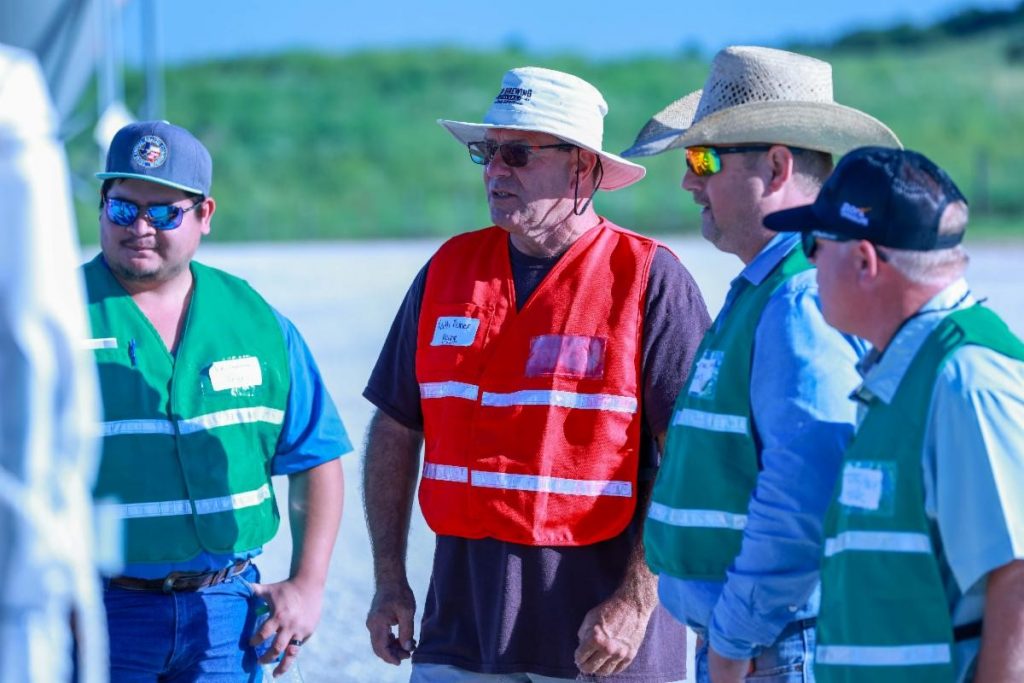
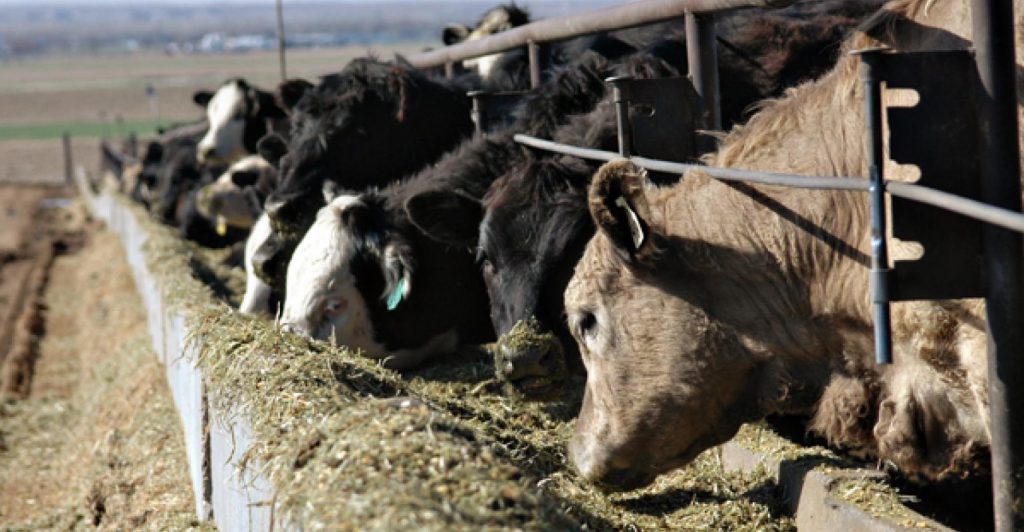
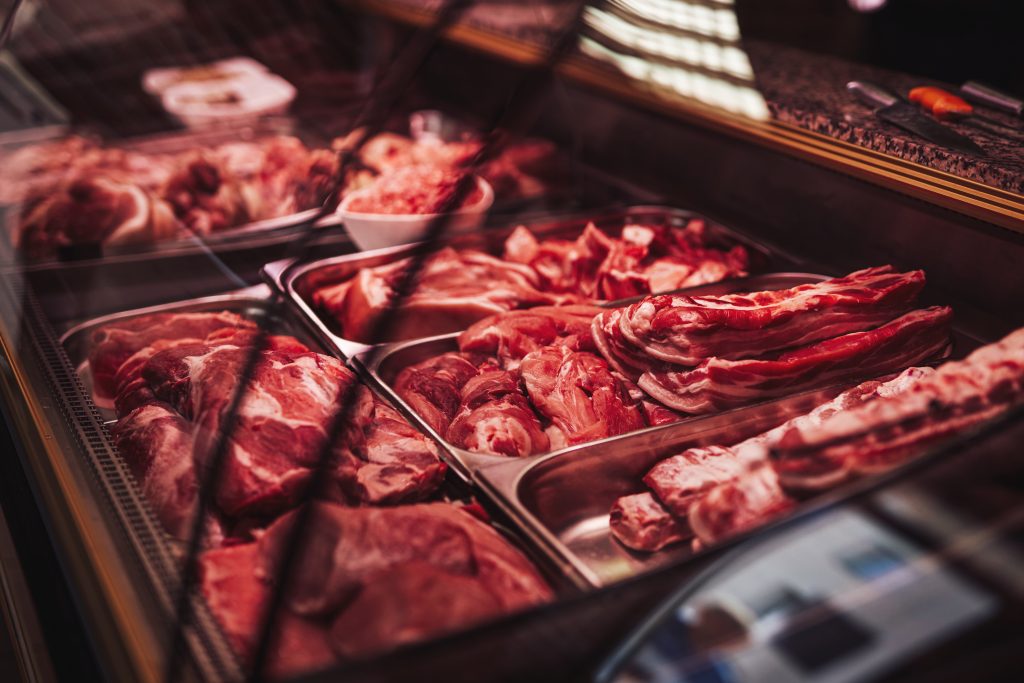


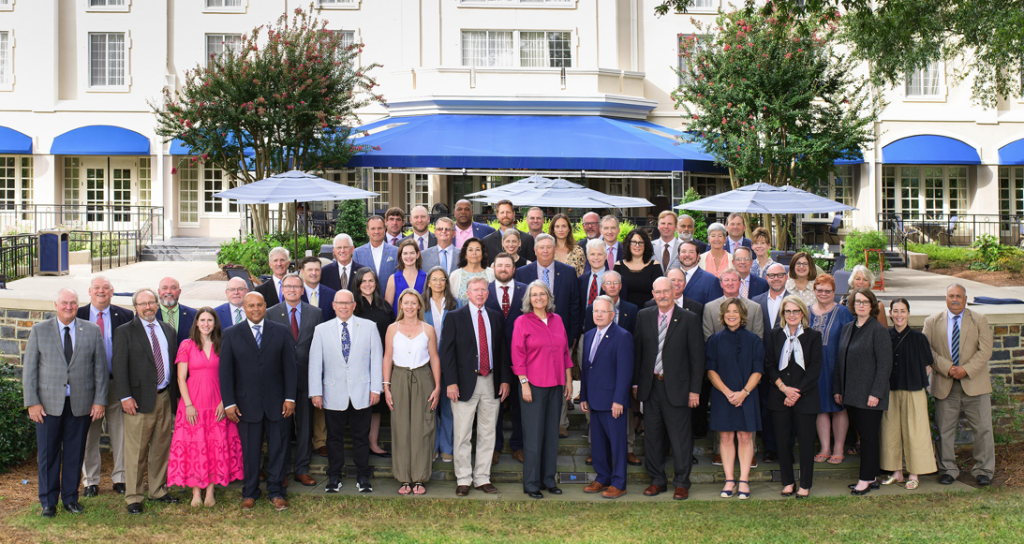
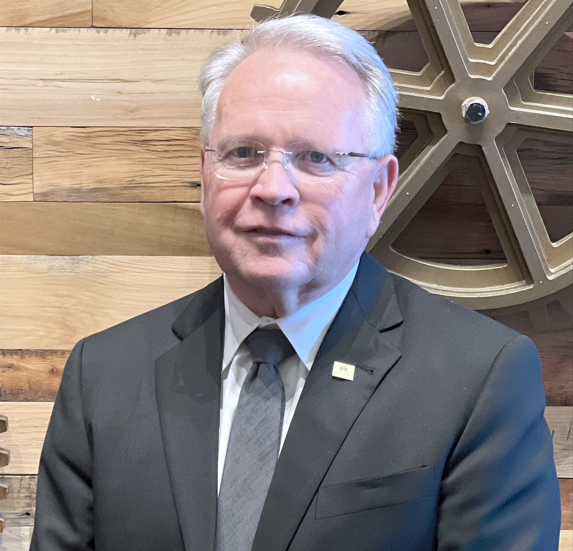




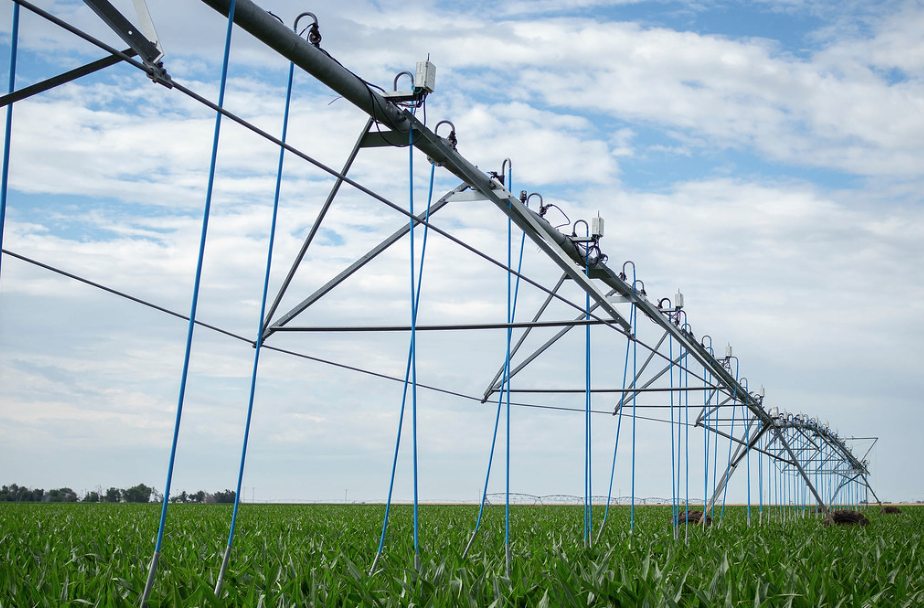
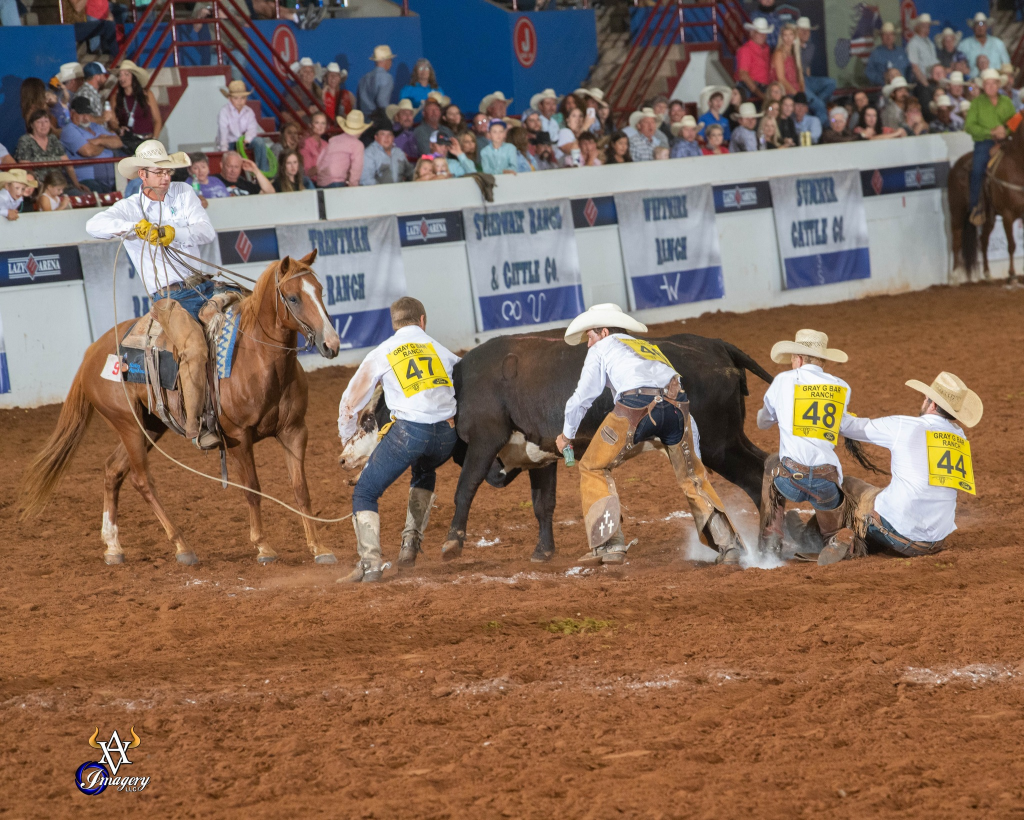
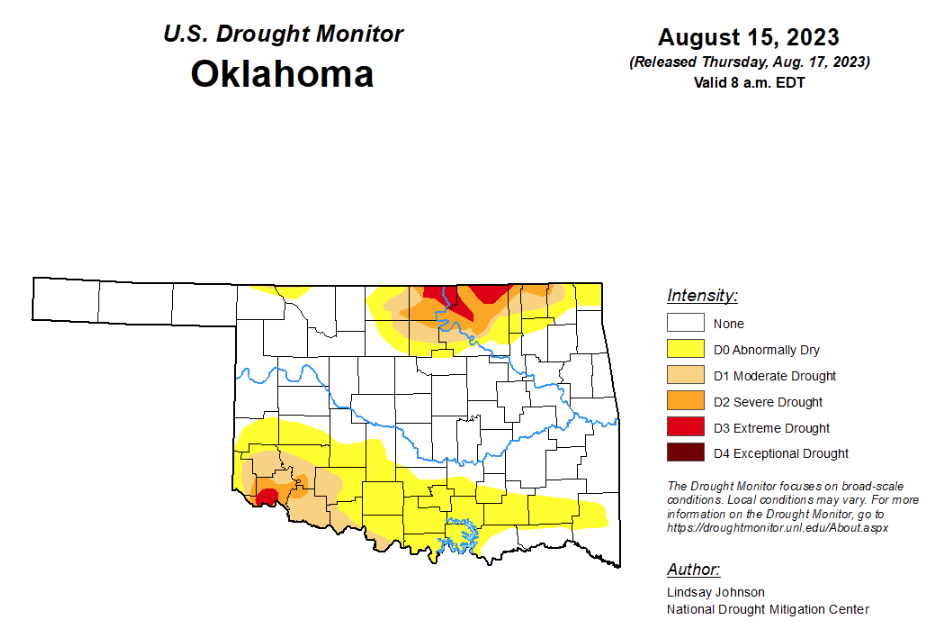
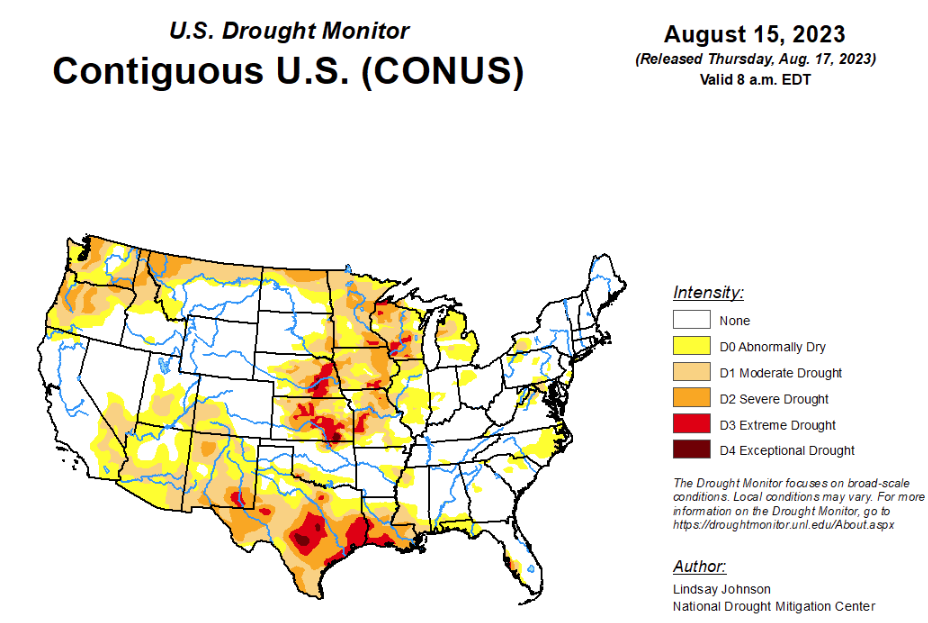

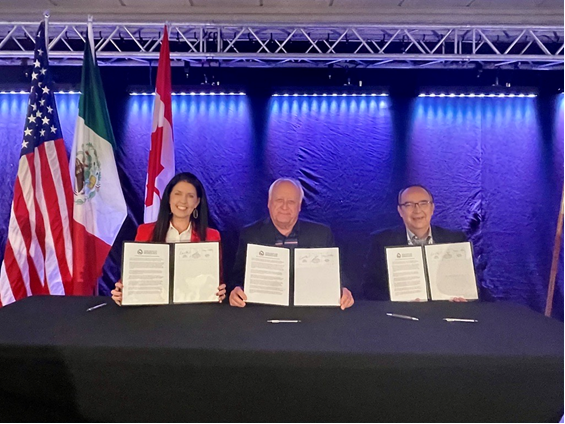
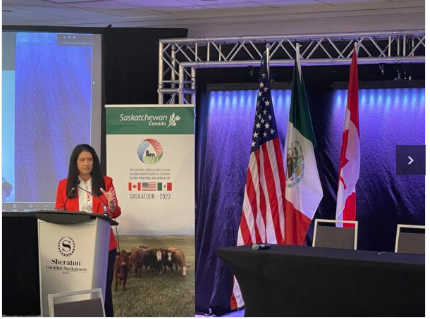



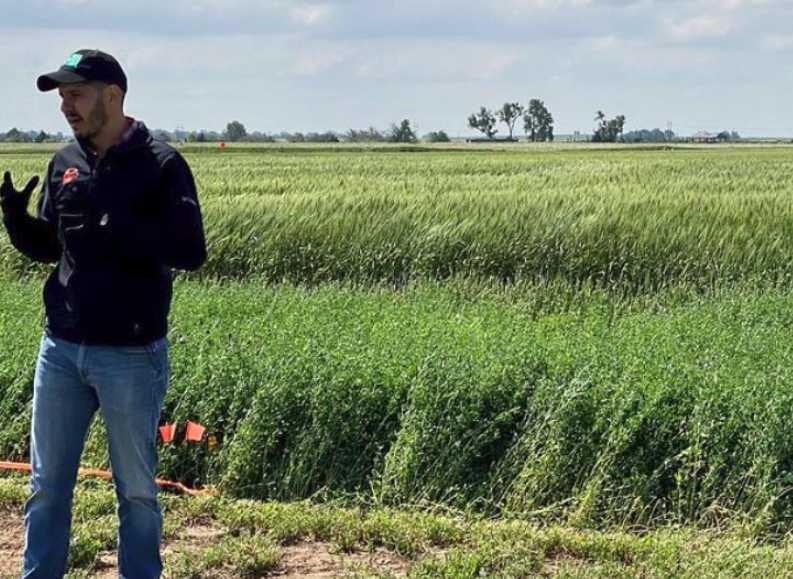
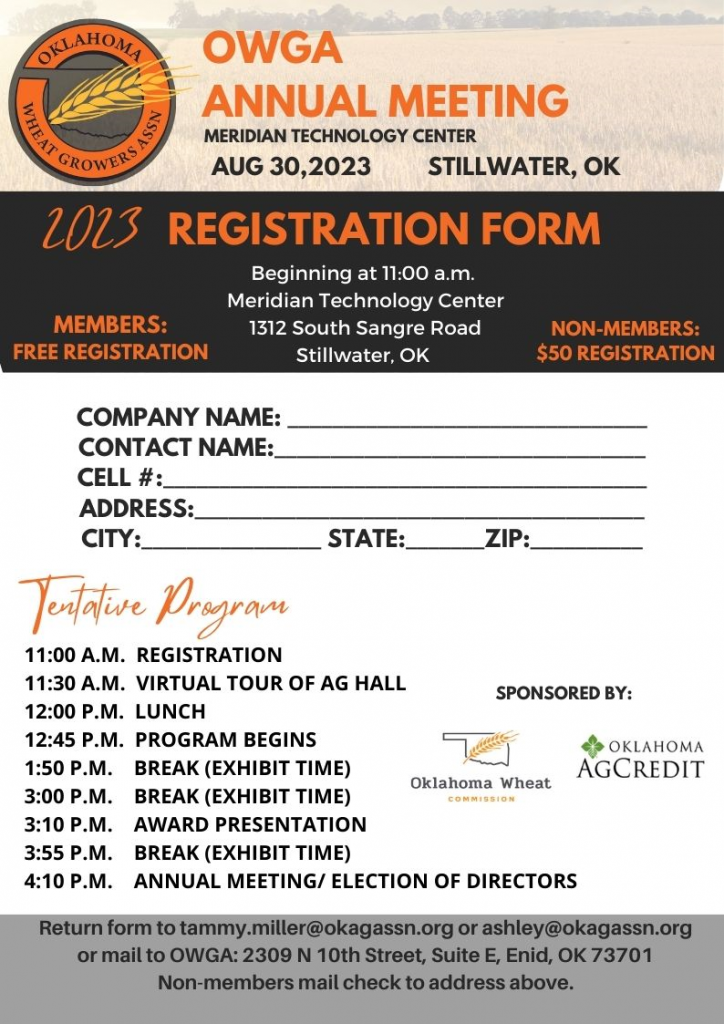



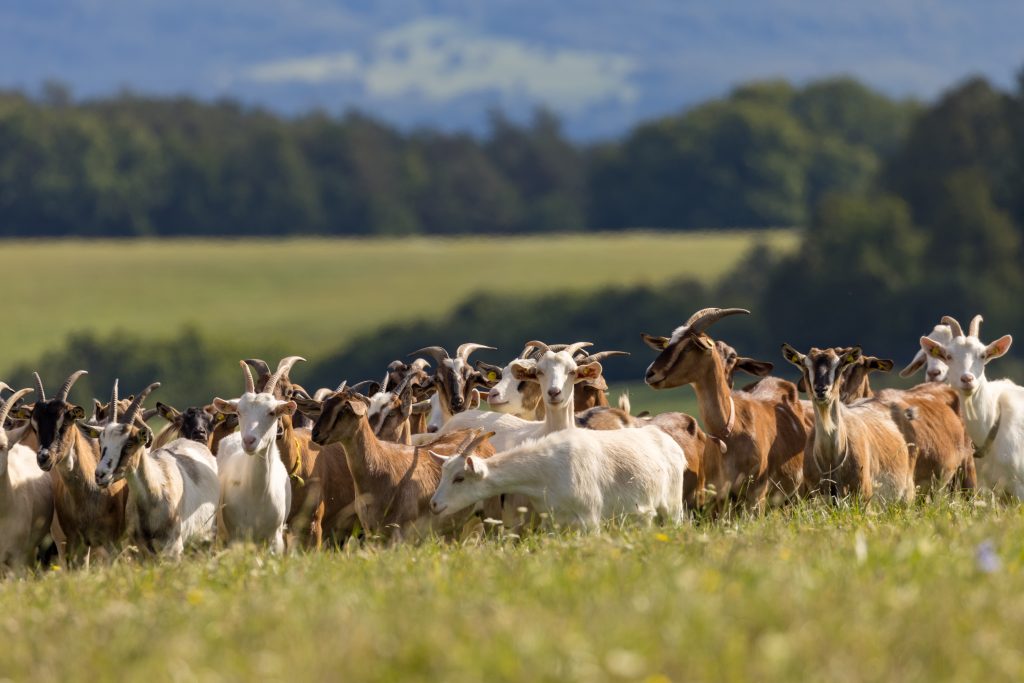


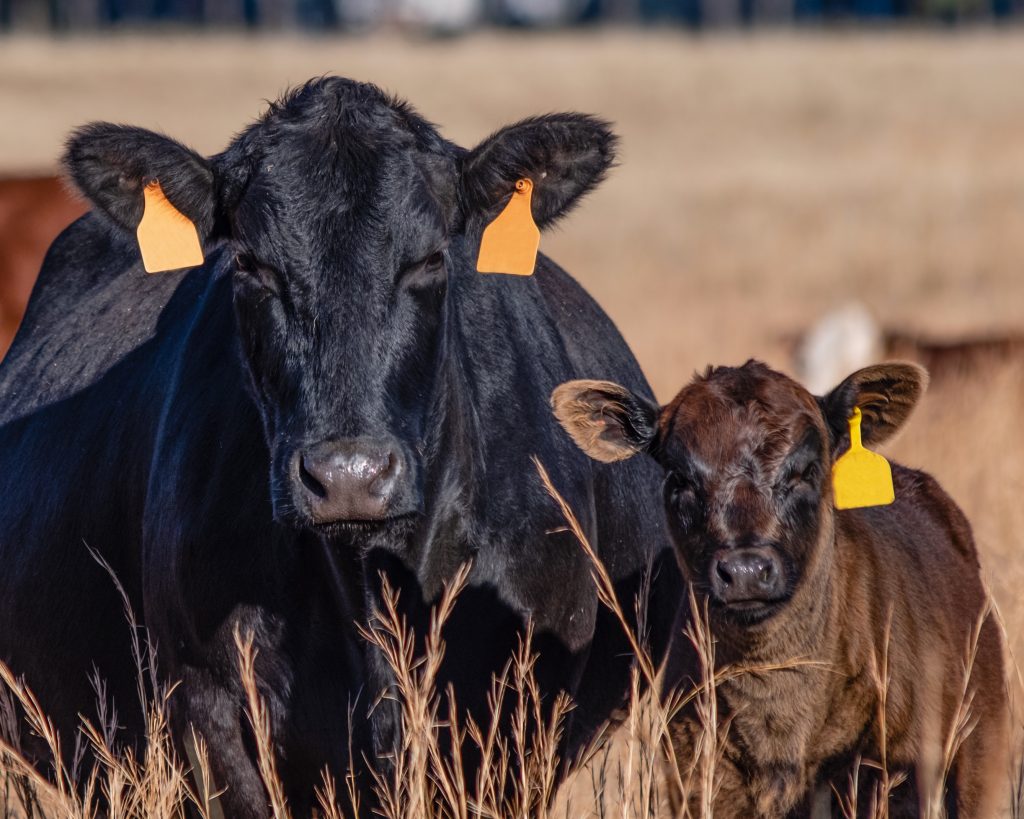
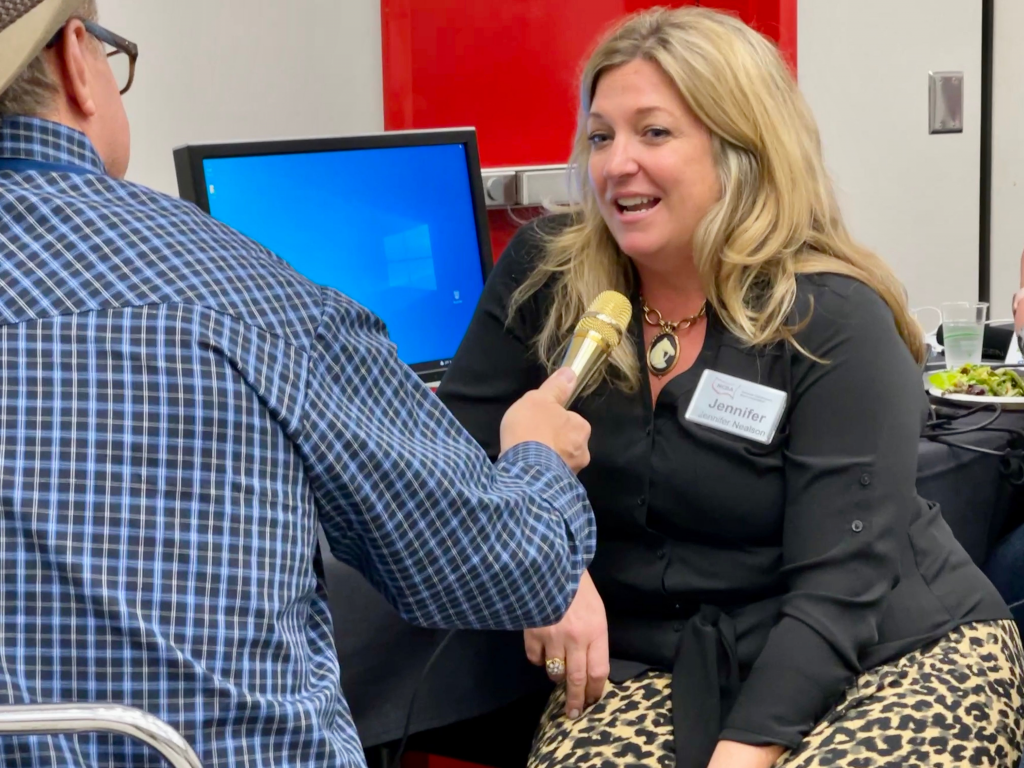




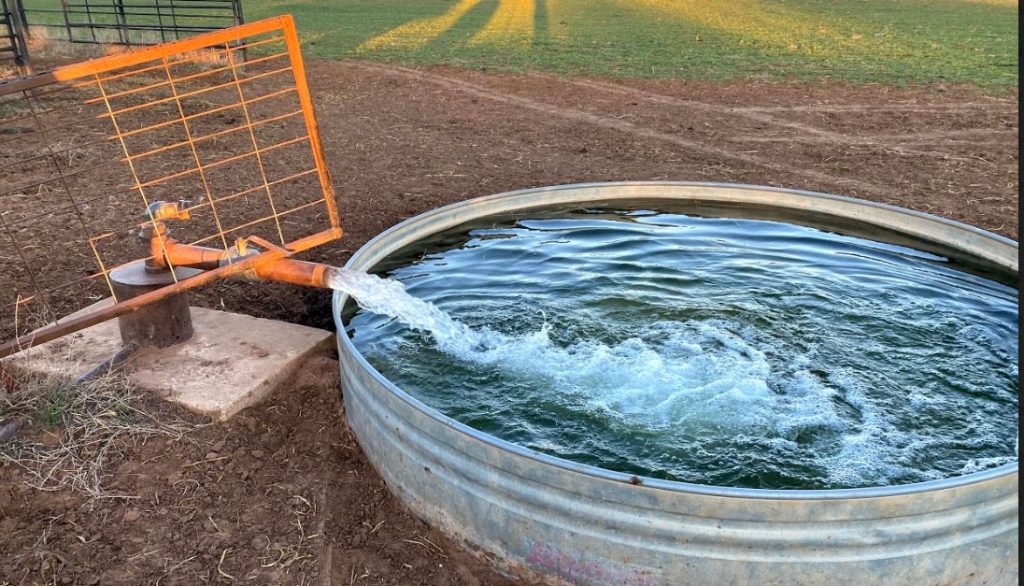
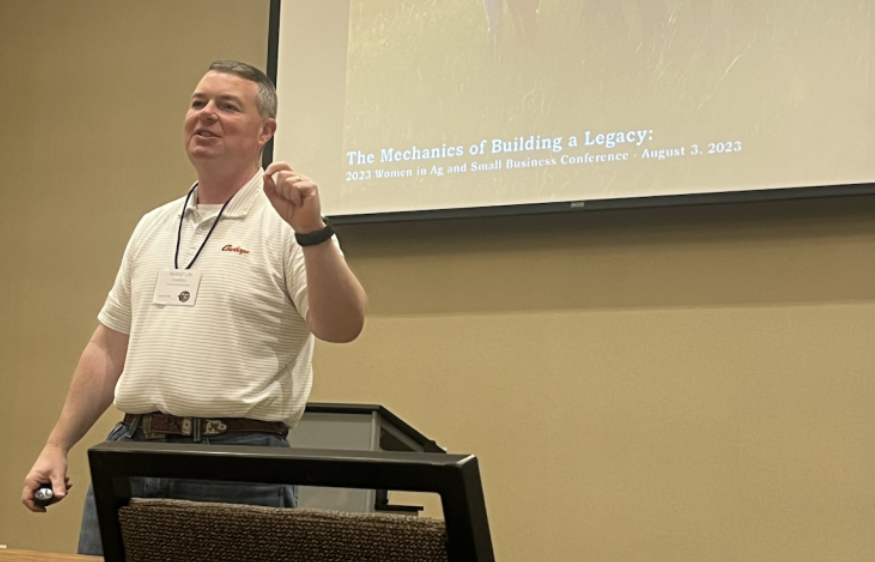
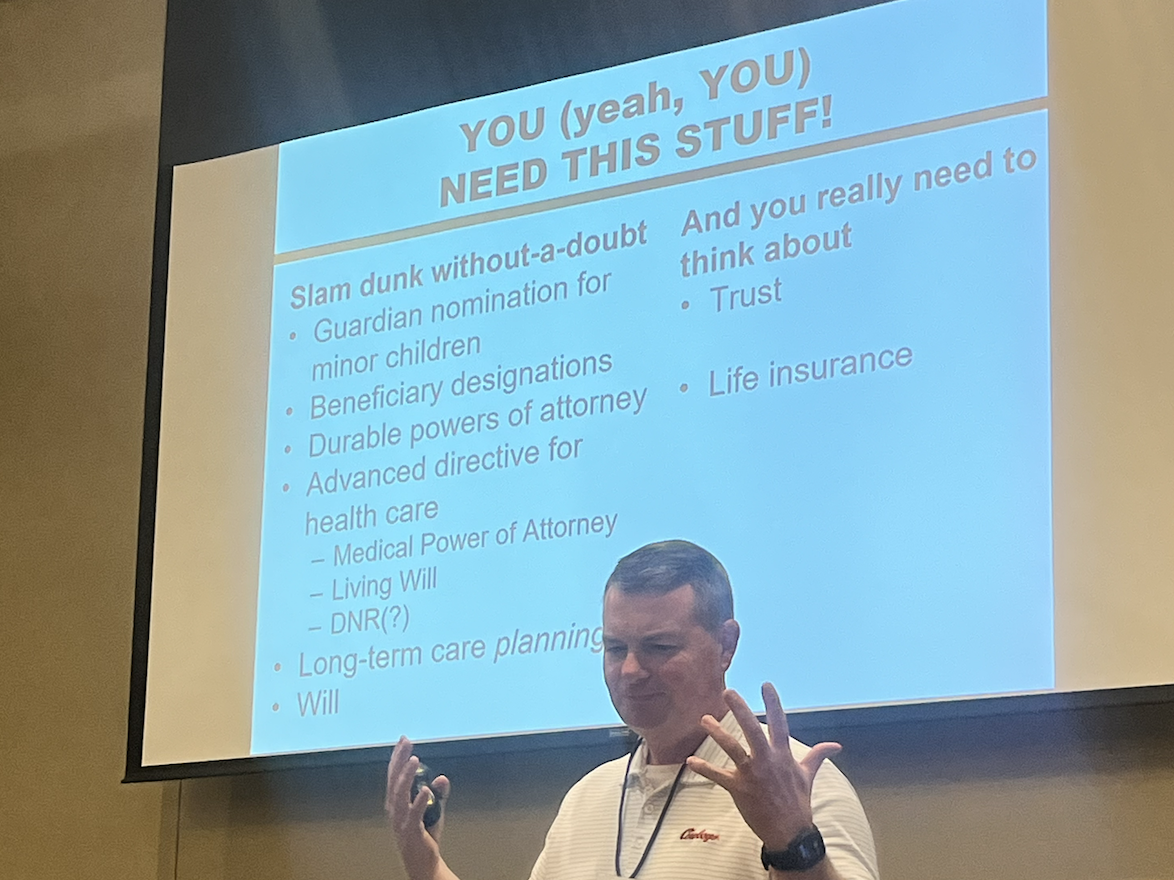

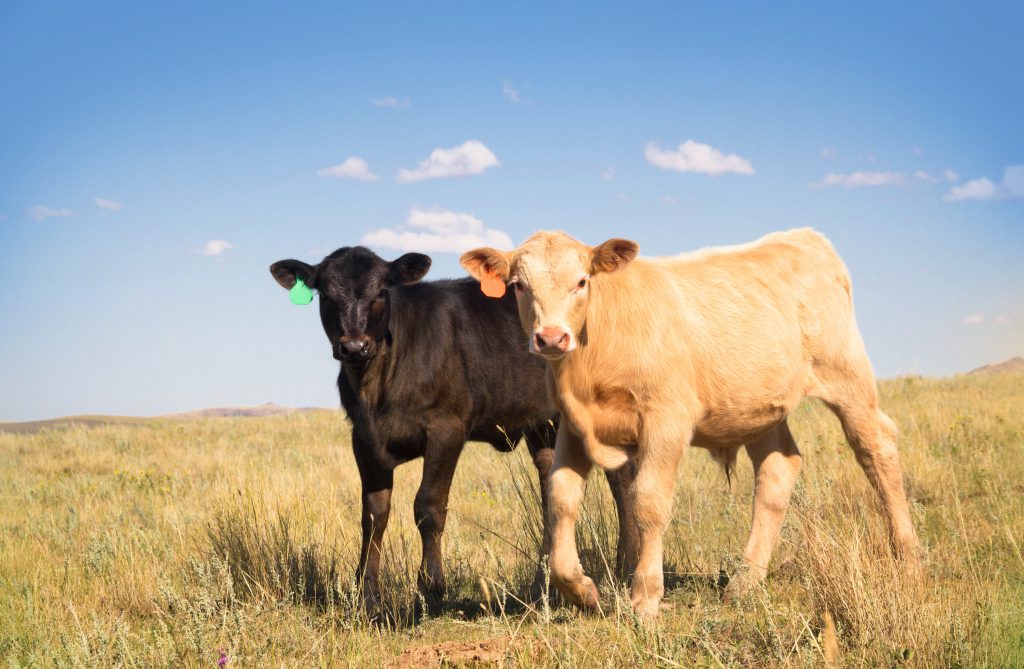
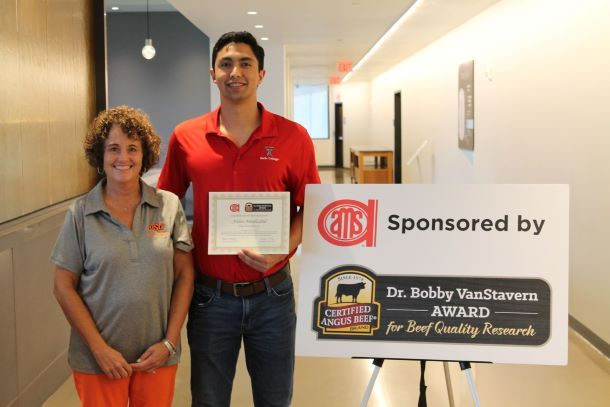
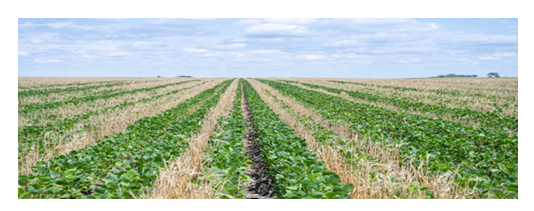

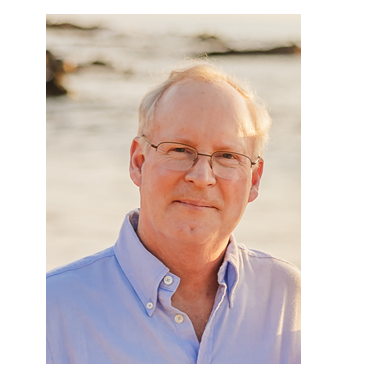

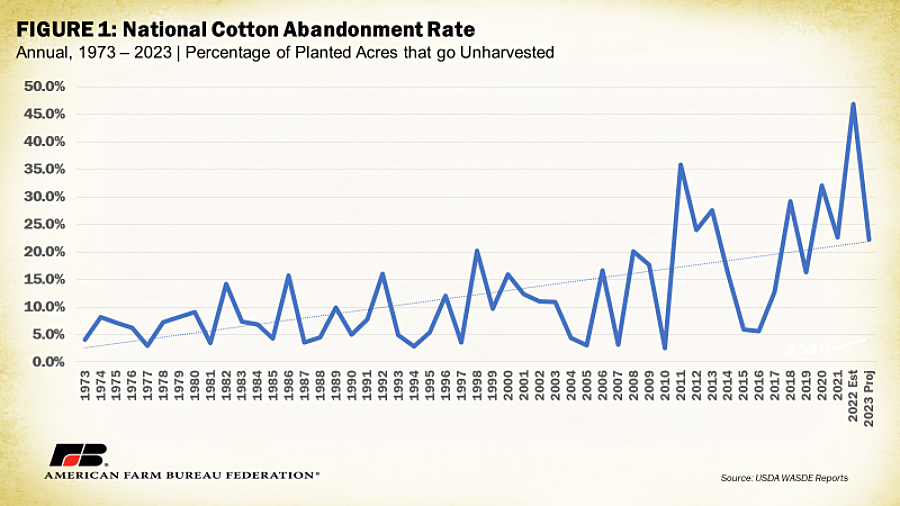
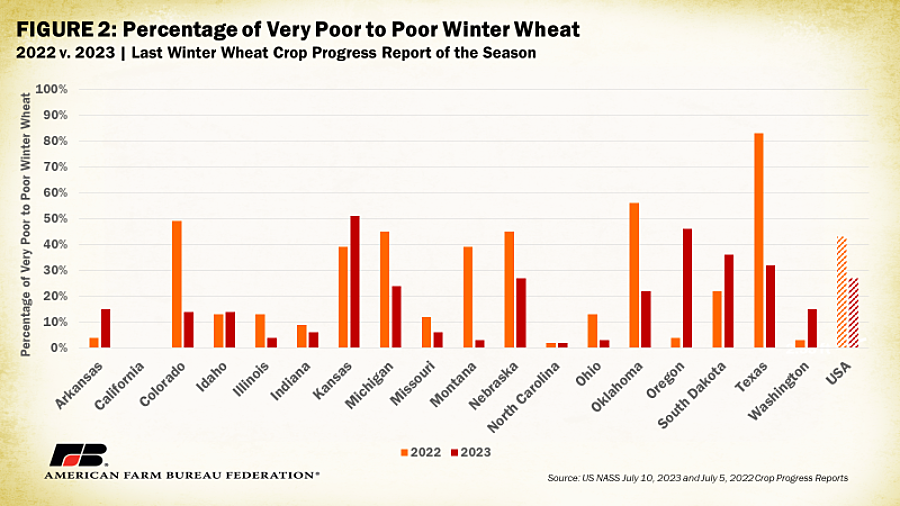

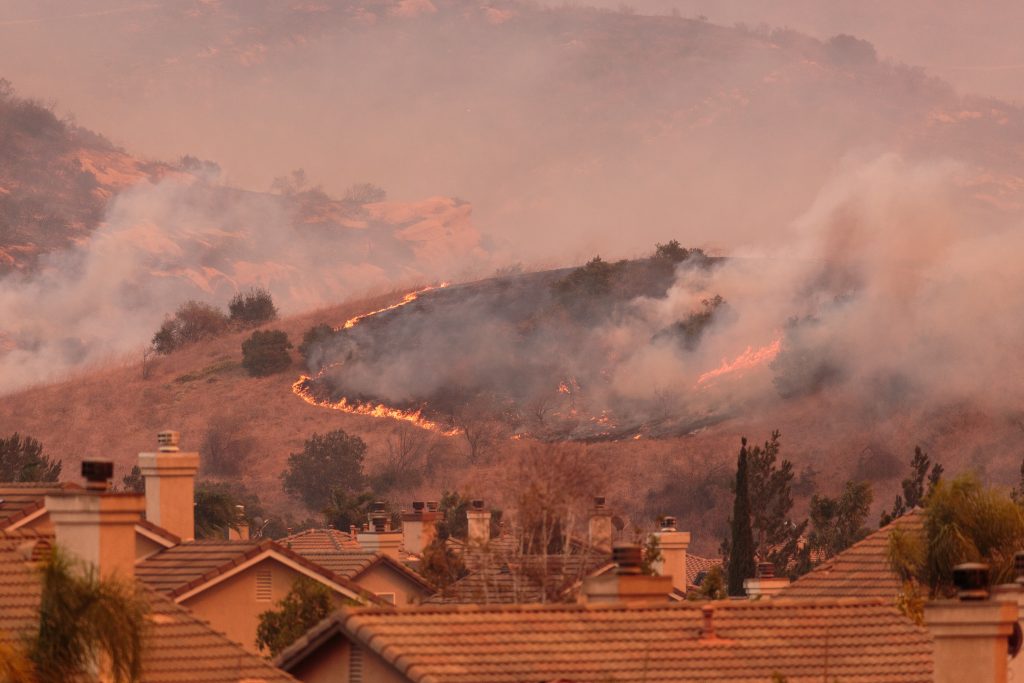
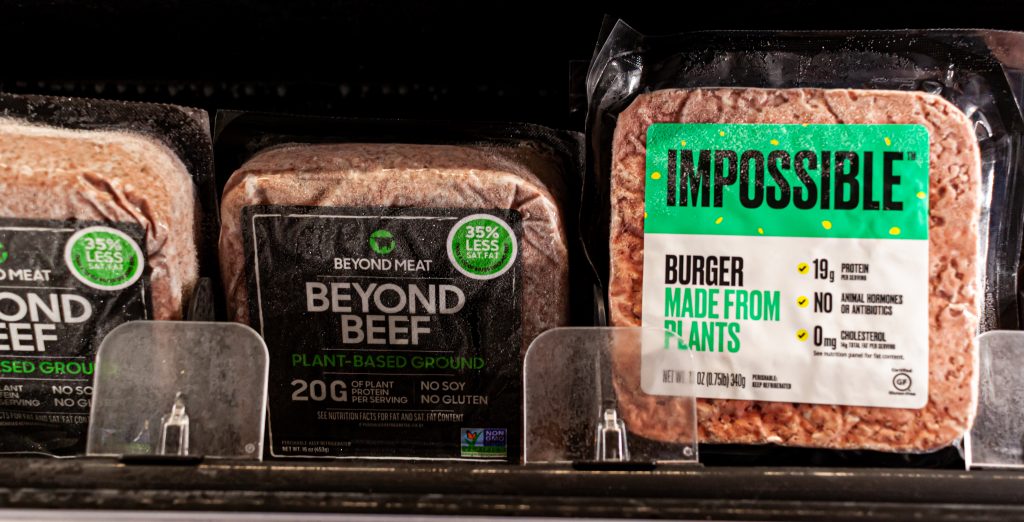
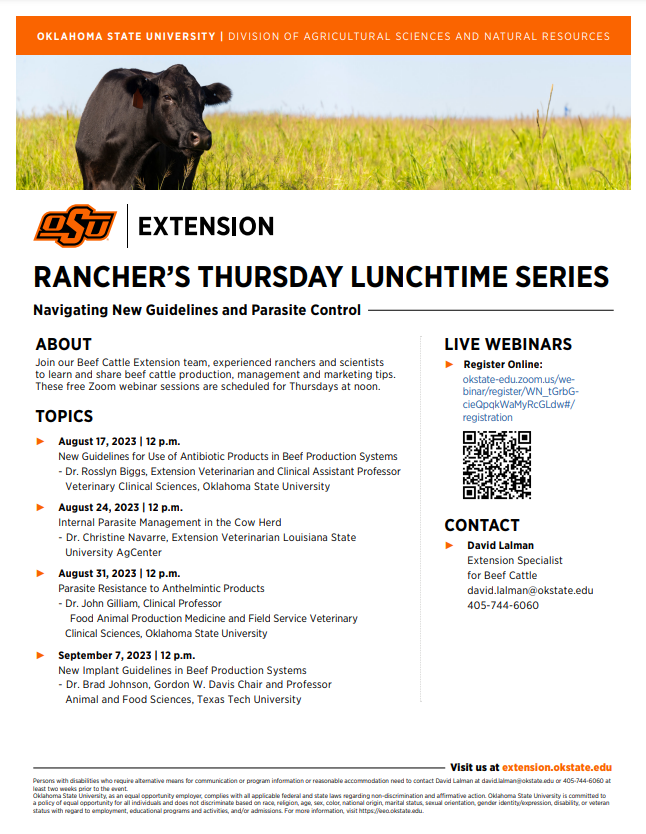



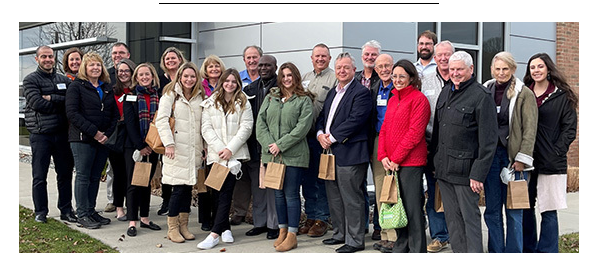
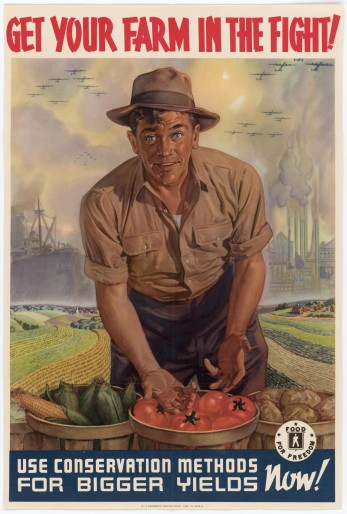
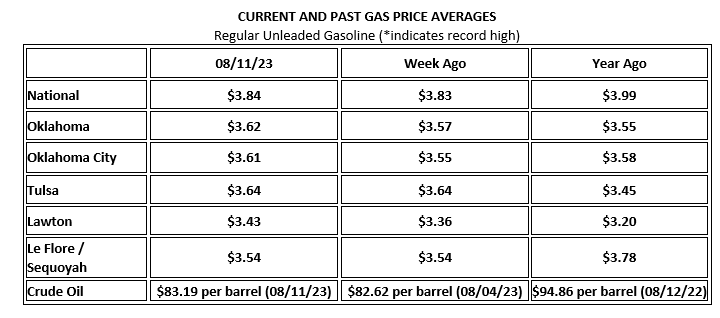
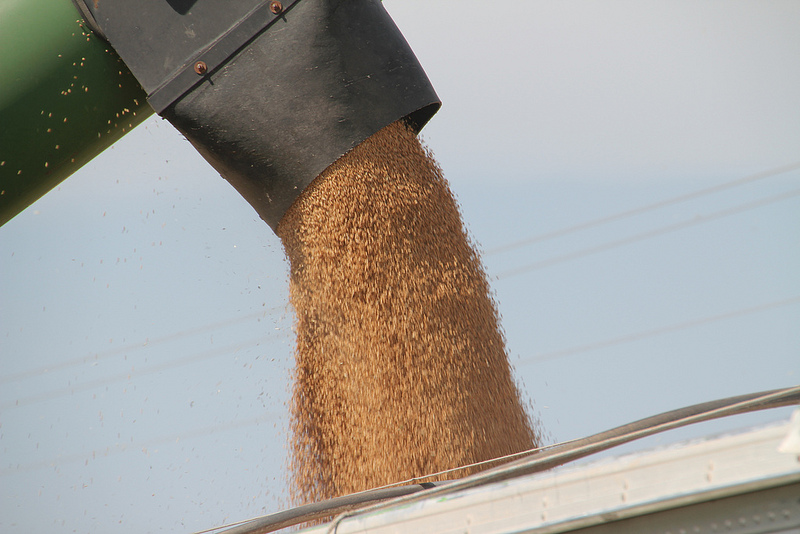
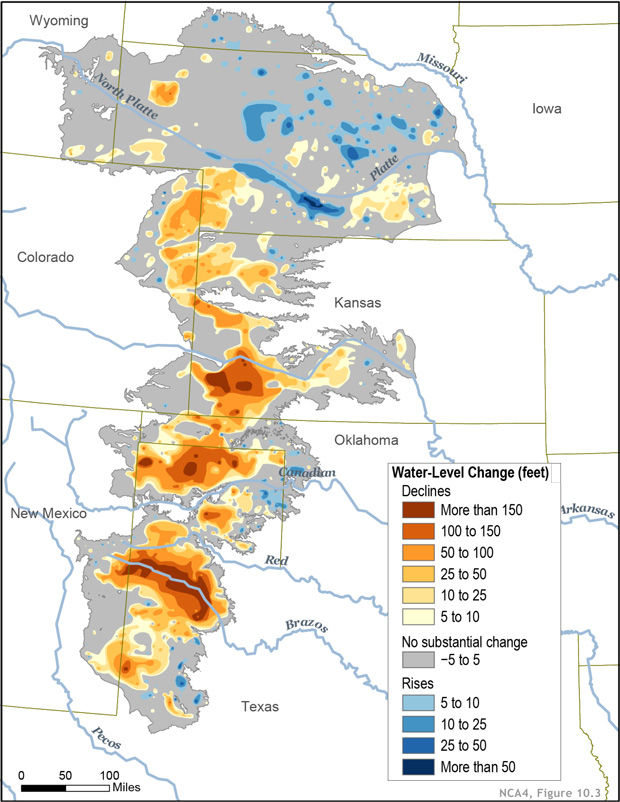
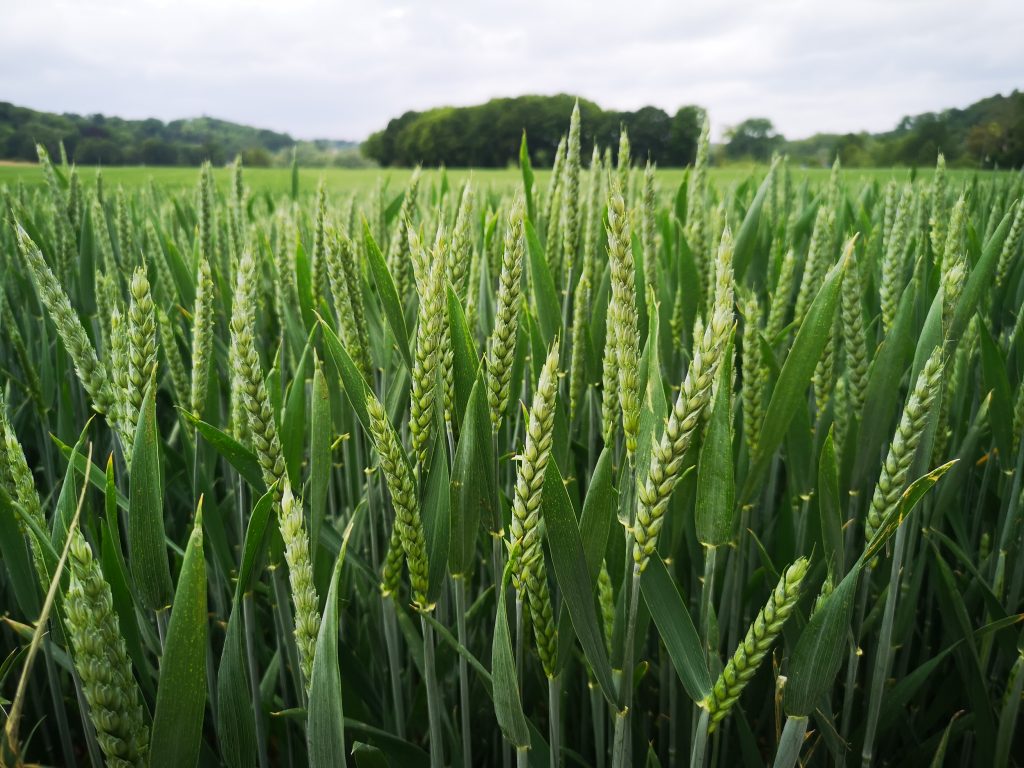
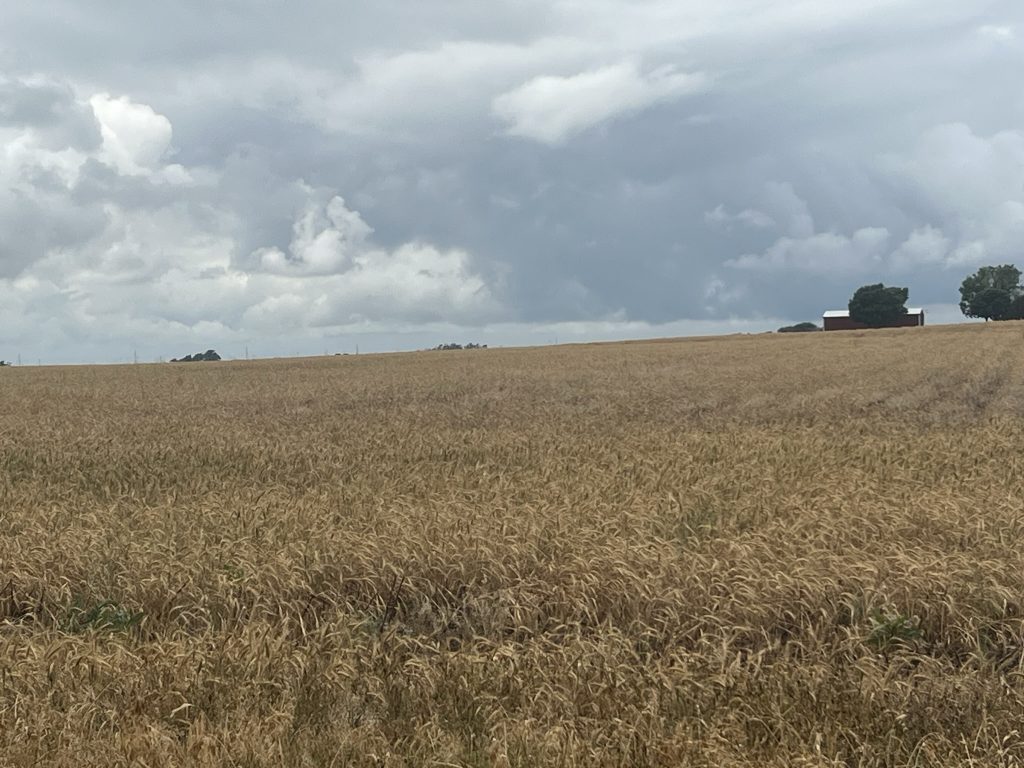
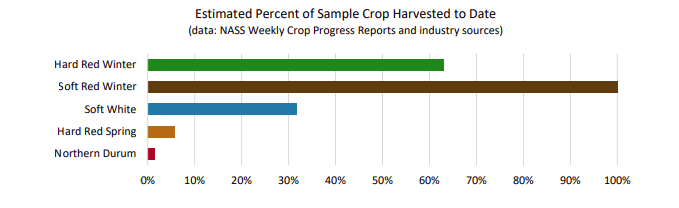
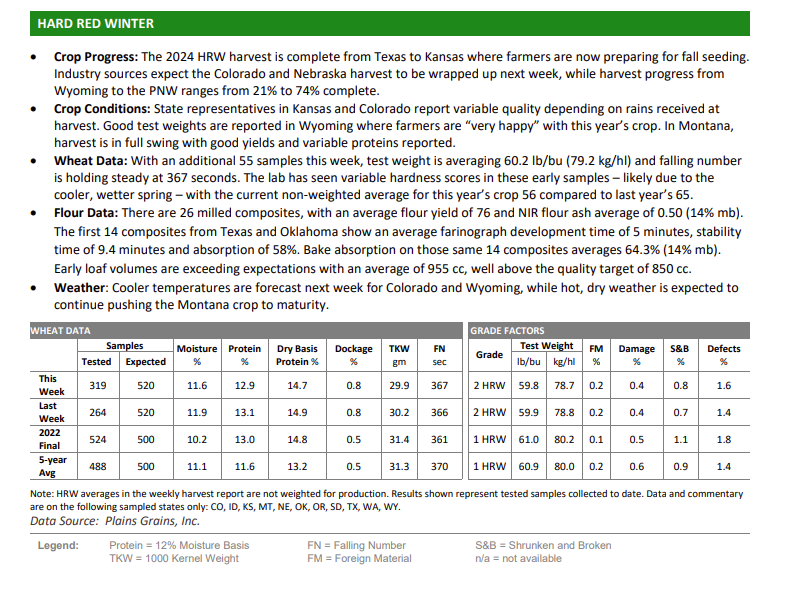
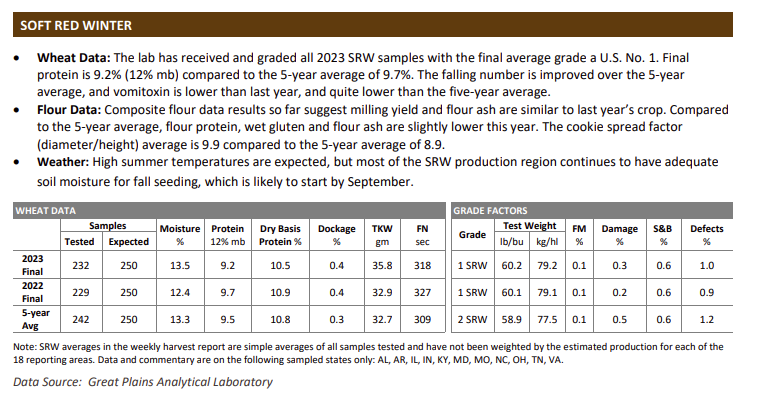
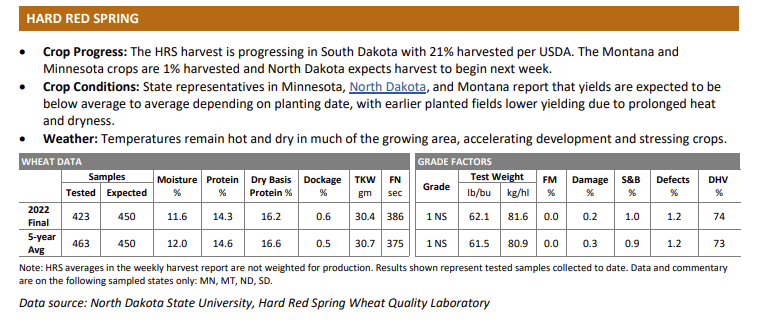



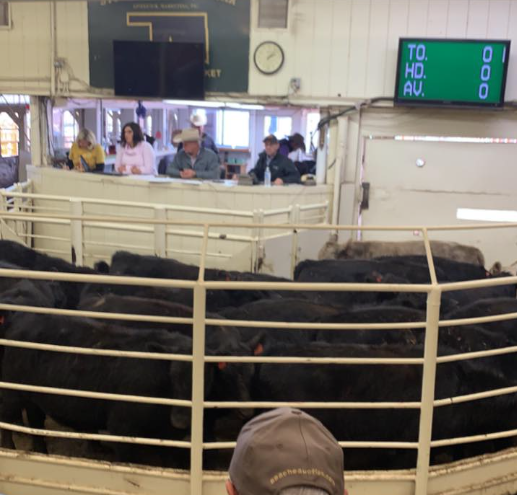
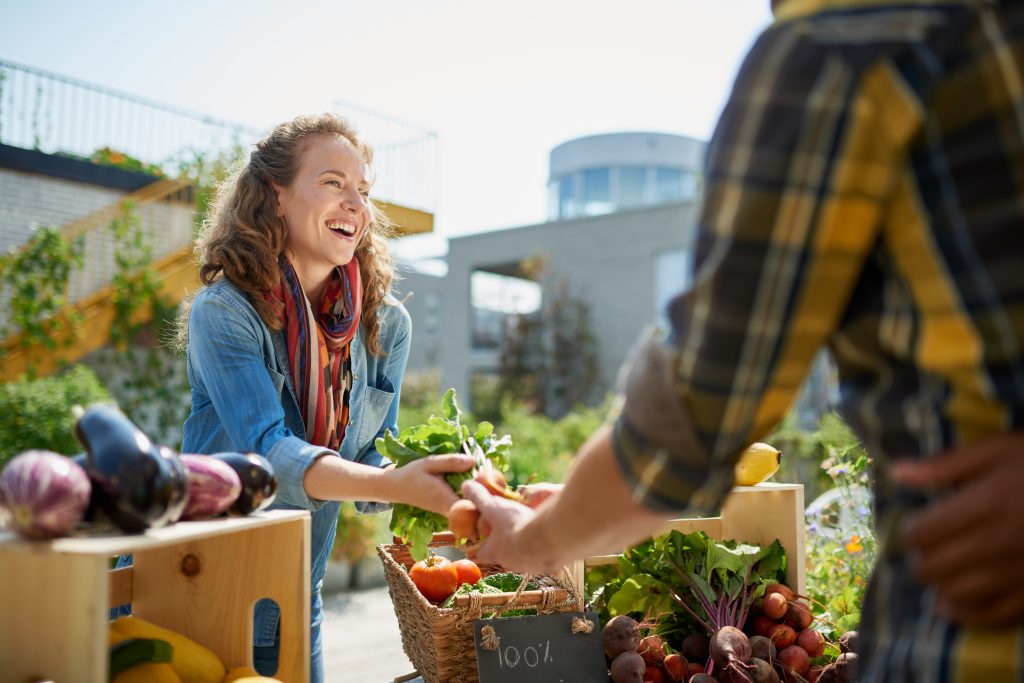



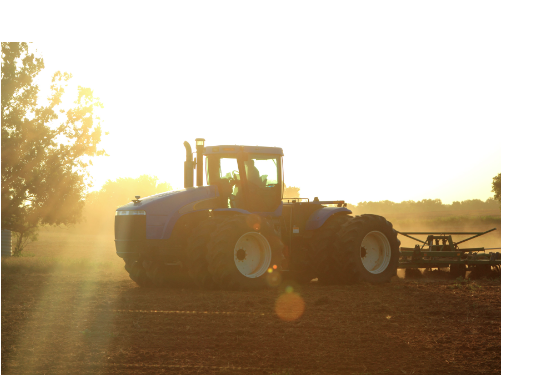
 In the U.S., 100+hp 2WD tractors, 4WD tractors and combines were the only segments to grow year over year, the same segments that have been positive year to date. The biggest overall growth among tractors was 4WD units, growing just over 1 percent for the month.
 In Canada, every segment declined, with the 40-100hp 2WD segment leading losses, at more than 24 percent. Despite the decline in comparative July sales, year-to-date tractor and combine sales continue to show strength in larger ag specific equipment like row crop tractors, 4WD tractors as well as self-propelled combines.