Ag News Archives for 2025-02

Description of News Story Image

ASA Congratulates the 2025 Regional Conservation Legacy Award Winners

The American Soybean Association congratulates this year's regional winners of the 2025 Conservation Legacy Award:

  • Benjamin and Shannon Tignor Ellis, Champlain, Virginia (South Region)
  • Jim O'Connell, Cedar Rapids, Iowa (Midwest Region)
  • Kurt Stiefvater, Salem, South Dakota (Upper Midwest Region)
  • Aaron Thompson, Hartly, Delaware (Northeast Region)

The award winners will be recognized at the annual ASA Awards Celebration during Commodity Classic on March 1, 2025. During the event, one of the regional winners will be announced as the national winner.

The Conservation Legacy Award is a national program designed to recognize the outstanding environmental achievements of soybean farmers, which help produce more sustainable U.S. soybeans.

A national selection committee, composed of soybean farmers, conservationists, agronomists and natural resource professionals, evaluated nominees based on their on-farm environmental and economic plans and contributions to the conservation community. The program is sponsored by ASA, BASF, Bayer, Nutrien, the United Soybean Board/Soy Checkoff and Valent USA.

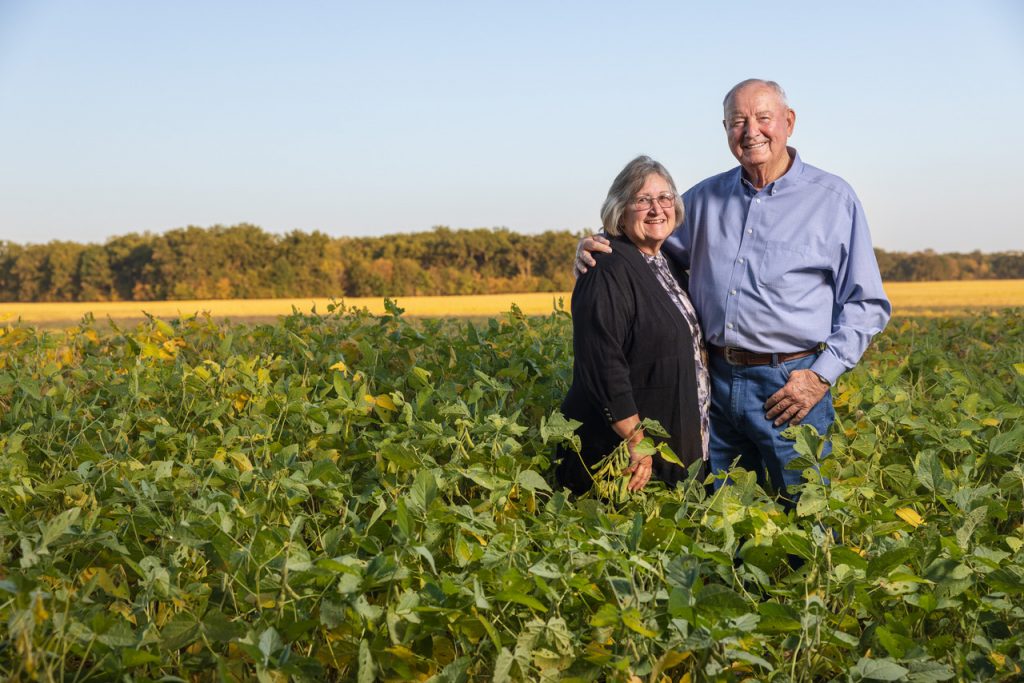
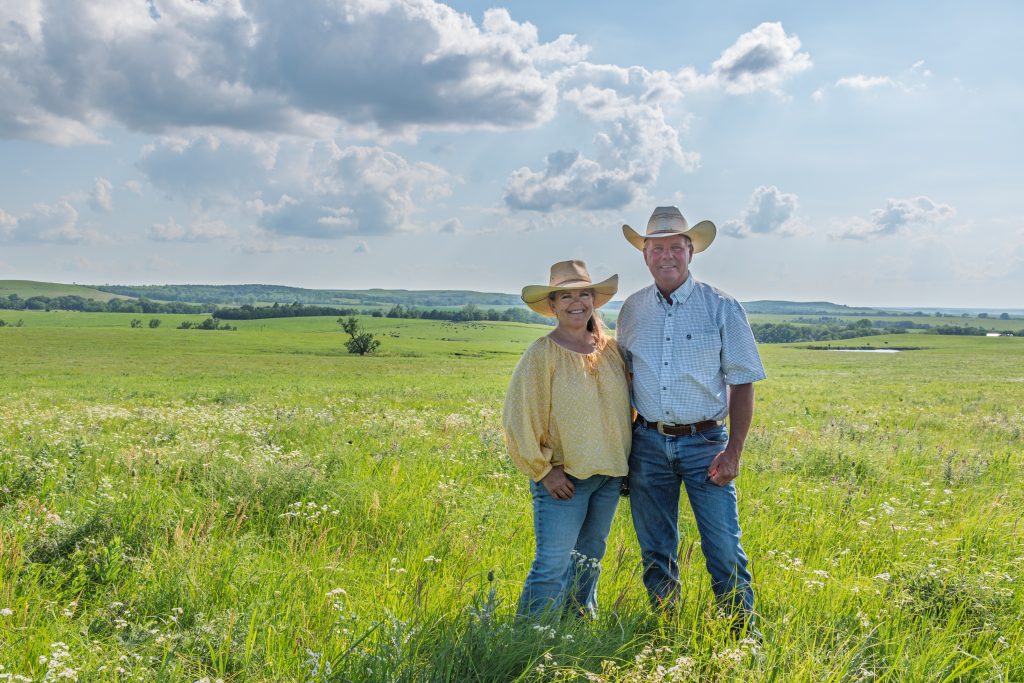
Benjamin Ellis & Shannon Tignor Ellis, Champlain (South Region)

Building upon the stewardship of forefathers who were ahead of their time, Benjamin and Shannon Ellis have crafted a conservation legacy amid farming in the environmentally sensitive and highly regulated Chesapeake Bay Watershed.

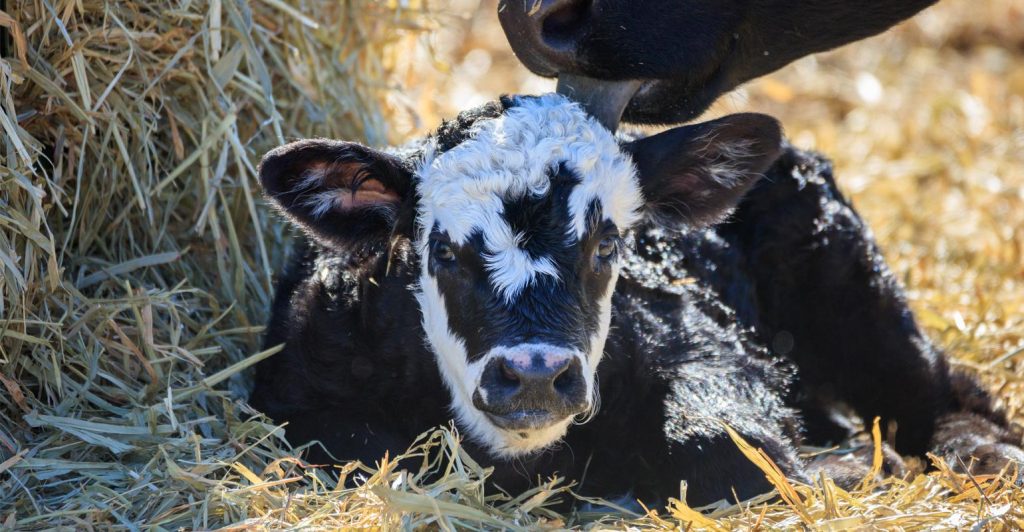
Operating as Thomas Neck Agricultural Enterprises, the Ellis operation in Champlain, Virginia, is a culmination of two multi-generational family farms. Shannon represents the 10th farming generation in her family. Their operation is designated a Virginia Century Farm, a program recognizing farms that have been in operation for at least 100 consecutive years. Production on her family's operation includes soybeans, corn, wheat and beef cattle. The couple's son, Tripp, works alongside Shannon and helps manage the commercial cow-calf operation. Benjamin's family farm has been in operation since 1683 and includes soybeans, corn and wheat production.

Prioritizing conservation is nothing new to Shannon's family. In the late 1970s and early 1980s, her father began using minimum and mostly no-till practices in the farm's management plan.

"Our farming venture spans four counties," Shannon says. "We believe in taking care of the land that has provided for both of our families for generations."

Goals for the farm couple's operation include improved soil health and structure while reducing soil runoff and erosion. The Ellises also work to reduce operation expenses by optimizing the use of protectants and fertilizers, minimizing weed pressure and improving water quality and infiltration. They are passionate about maintaining wildlife and pollinator habitats and work to improve yield and profitability while stepping up the overall environmental and economic resilience of their family farm.

"We strive to create a legacy that includes continually researching and implementing the most effective conservation practices for our farming operation," Shannon says. Read more.

Jim O'Connell, Cedar Rapids, Iowa (Midwest Region)

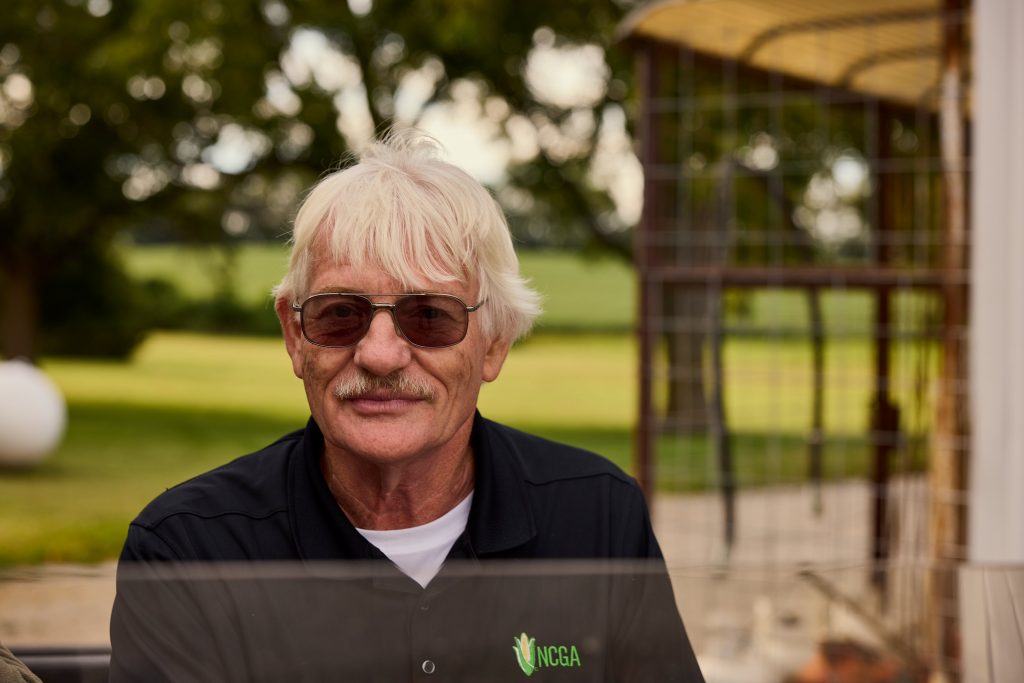
Jim O'Connell's conservation story began on his family farm outside Cedar Rapids, Iowa. With more than three decades of experience under his belt, the farmer grows food-grade waxy corn, soybeans and hay and manages a small cow herd.

O'Connell's mission is to positively impact other people's lives through land stewardship. His father was one of the first in their area to adopt no-till, and though he passed away two decades ago, O'Connell strives to carry on his innovative legacy.

"We look at the farm the same way," O'Connell says. "Our farm is a valuable gift that we hope to pass on for generations. We need to work on protecting that."

Through many challenges, including a derecho storm in August 2020 that left his corn crop a total loss, O'Connell has continued to ensure his operation makes a positive impact in his community and remains committed to conservation. Notably, he works with the City of Cedar Rapids to ensure the water coming off their farm is clean and high quality for those who might be using it downstream.

When O'Connell talks about conservation and how stewardship practices can make a difference in soil preservation and water quality, he steps on his "soapbox." He says he cares deeply about conservation, making a difference and leaving the land in better shape than before.

O'Connell says the best way to get others to take notice is simply being a committed caretaker. His lead-by-example approach naturally showcases the stewardship practices he implements on his farm. Farmers are often more open to adopting new practices and management styles if they can see their success firsthand. Read more.

Kurt Stiefvater, Salem, South Dakota (Upper Midwest Region)

Kurt Stiefvater began his conservation efforts while farming alongside his parents and siblings. Today, he cares for that same land with his wife and daughters. In addition to corn and soybeans, the Stiefvaters grow oats, grain sorghum, winter wheat, alfalfa and cover crops while managing a cattle operation.

In the late 1990s, the South Dakota farmer was ready to give up on the transition to no-till. He'd been no-tilling crops for a decade but admits he didn't fully understand how it worked.

Rather than give up, the fourth-generation grower instead pressed on. Through analyzing the impact of every activity on his farm, he can now closely monitor the soil, air and livestock under his care and has generated a positive economic return to his operation by doing so. His long-term vision to improve the soil truly leaves its mark as the core asset of his stewardship legacy.

"The bottom line is making [the land] better for the next generation," he says simply. "Going forward, it's about improving the soil and by growing that biology, keeping it protected and making it a resilient soil for the future."

A staunch believer in conservation, Stiefvater is also mentor and advocate for soil health across his home state. Whether he's speaking at South Dakota State University to agronomy and farm business classes about farm production practices or hosting soil health schools, his stewardship journey is an open book. Read more.

Aaron Thompson, Hartly, Delaware, (Northeast Region)

Aaron Thompson's conservation story began in 1996 when confronted with a huge challenge for his Delaware farm. He knew regulations would soon impact him and other farmers in the Delaware and Chesapeake Bay regions of the Northeastern United States due to a sizable Pfiesteria outbreak that caused a large fish kill.

Thompson, a fourth-generation farmer, knew he would need to make changes in how he'd grown accustomed to doing business. He implemented a nutrient management plan as a result of the new regulations. Despite Thompson's initial concerns, this new way of farming brought many opportunities.

"At the time, it was a huge challenge trying to adjust to all of the demands [of a nutrient management plan], going through schooling and training to get certified," Thompson says. "It's created better farmers for those of us operating under those conditions. It's made us learn our soil, understand what we're doing and why."

Adopting stewardship practices like conservation tillage and planting cover crops has helped him re-establish the foundation of his farm business, making it more sustainable for the future.

Thompson farms the land his great-grandfather settled in 1909. The property has seen its share of diversity over the generations. What began with tomatoes, wheat, dairy cattle, laying hens and row crops has grown into today's Thompson Farm, LLC, currently home to corn, soybeans, wheat and organic broiler chickens. The partnership includes Thompson, his parents and brother.

"We farm to increase the basics of air, water and carbon through cover crops and vertical tillage," Thompson says. "Every trip we make across the field has a purpose, as we aim to purchase the correct nutrient sources, in the correct amount, at the correct time." Read more.

Watch for a special insert about this year's winners in the February issue of Farm Journal or click here to see videos and articles on each farmer's operation.

EPA Administrator Zeldin Celebrates First Month of Trump Administration Accomplishments

 In the one month since U.S. Environmental Protection Agency (EPA) Administrator Lee Zeldin was sworn in, the Trump EPA has made major strides to Power the Great American Comeback. This plan outlines the agency's priorities under the leadership of President Trump and Administrator Zeldin. The newly announced Powering the Great American Comeback initiative consists of five pillars that will guide the EPA's work over the first 100 days and beyond. 

Uncovering Extensive Issues with $20 Billion in "Gold Bars" 

During his first week at EPA, Administrator Zeldin uncovered extensive troubling developments with $20 billion in "gold bars" the Biden EPA "tossed off the Titanic." These taxpayer funds were parked at an outside financial institution to rush out the door and circumvent proper oversight. The Justice Department has been working hard to assist the EPA and the American taxpayers. 

More Than $170 Million in Taxpayer Savings 

In the first round of savings for taxpayers, Administrator Zeldin announced the cancelation of nine contracts related to DEI, environmental justice, and more, resulting in $59,776,673.70 in savings, and another $1 million in media subscription cancellations. In the second round, Administrator Zeldin canceled 20 grants totaling $60,958,537.30 in savings. EPA also identified and canceled a $50 million Biden-era environmental justice grant to the Climate Justice Alliance which believes "climate justice travels through a Free Palestine." Much of this work was done with assistance from the Department of Government Efficiency (DOGE).  

LA Wildfire Hazardous Material Cleanup Complete in Less Than 30 Days 

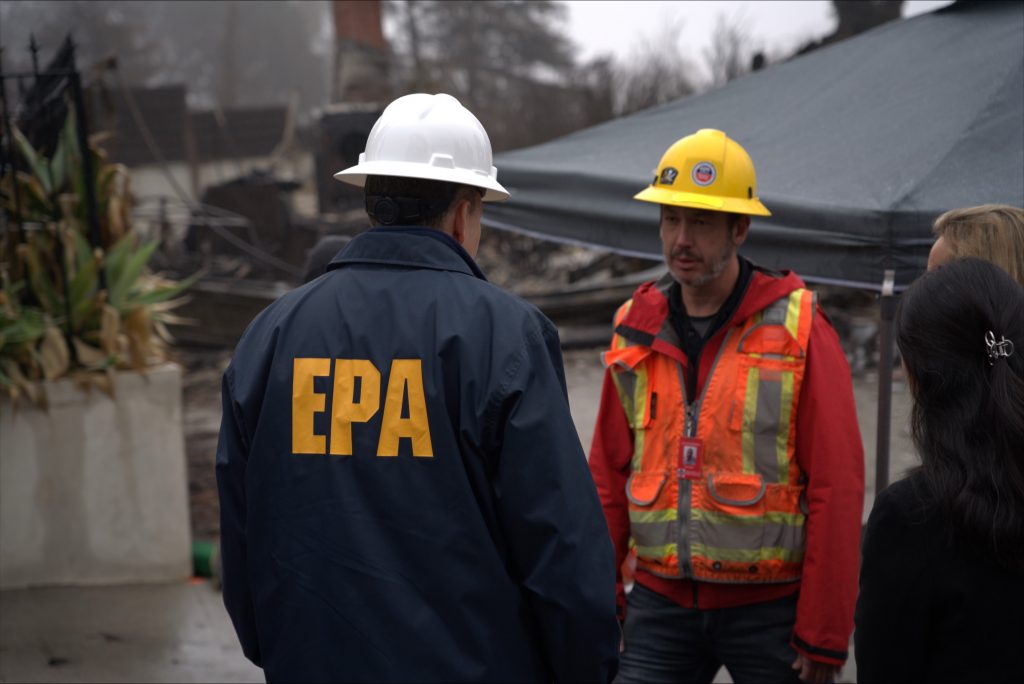
EPA oversaw the agency's largest ever wildfire hazardous waste cleanup following the catastrophic California wildfires. The Administrator worked to ensure that the EPA was compliant with President Trump's Executive Order on Emergency Measures for California, directing the agency to complete the hazardous materials mission within 30 days. Thanks to the leadership of President Trump and Administrator Zeldin and the thousands of EPA staff on the ground working around the clock to get as many properties cleared of hazardous material as quickly and safely as possible, Californians are one step closer to being able to rebuild and come back stronger than ever.  

Administrator Zeldin Leading the Way on the Ground 

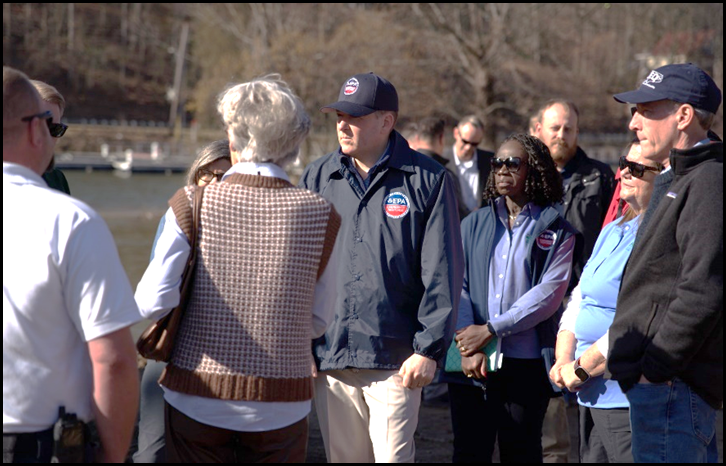
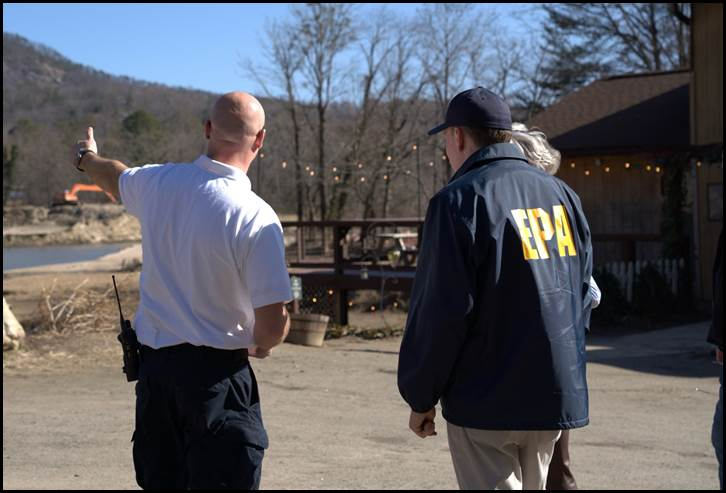
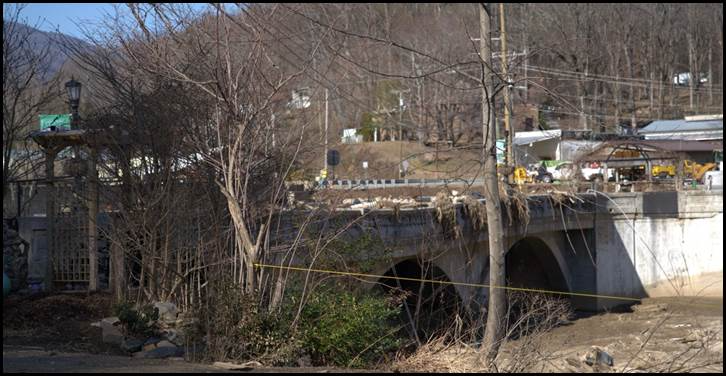
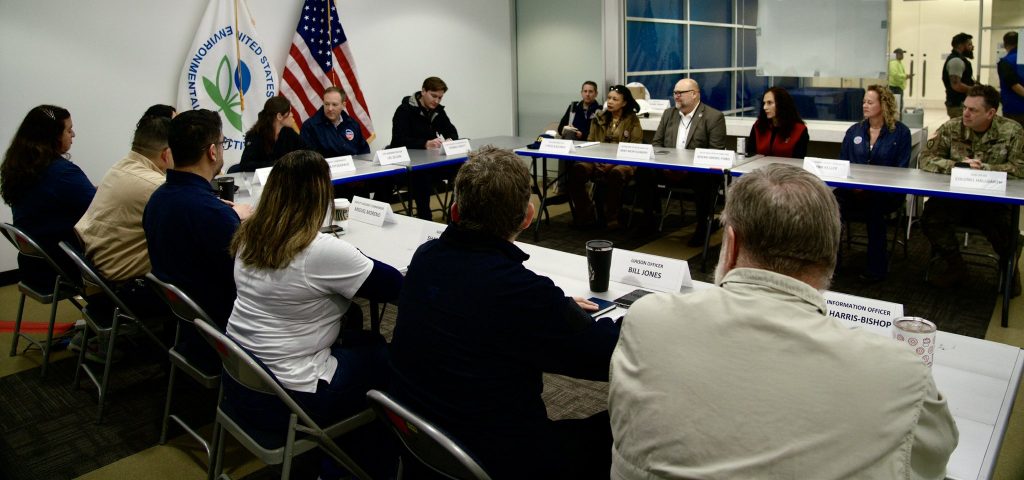
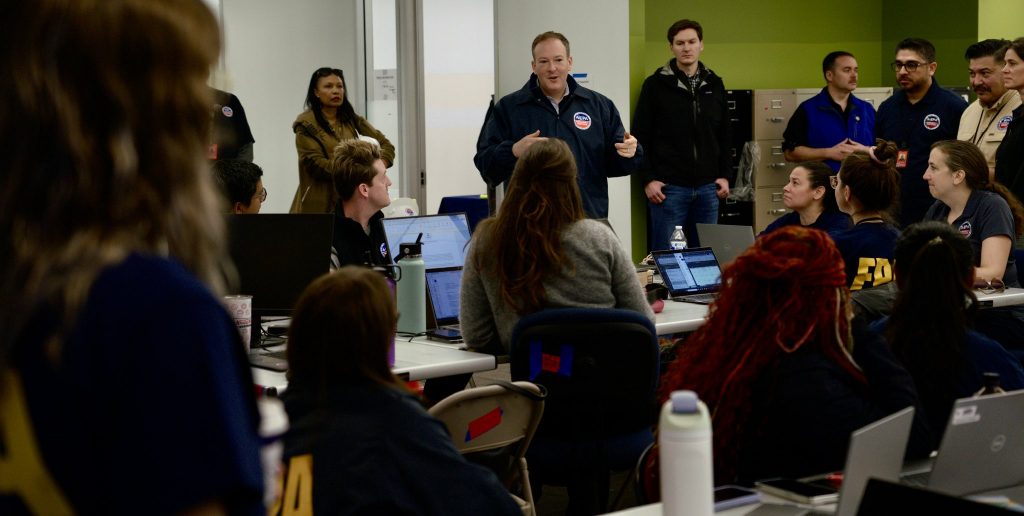
In his first full week at EPA, Administrator Zeldin visited three priority disaster sites to survey recovery efforts: East Palestine (Ohio) alongside Vice President JD Vance, Los Angeles (Calif.), and Western North Carolina. He also visited Flint, Michigan, as well. Administrator Zeldin also initiated his visits to EPA's regional offices, starting in Region 2 in New York City to meet with EPA career staff and Regional Administrator Mike Martucci.  

West Virginia Class VI Primacy 

Administrator Zeldin signed a final rule approving West Virginia's Class VI primacy application alongside U.S. Department of the Interior Secretary Doug Burgum, Senator Shelley Moore Capito (R-WV), and Congressman Riley Moore (R-WV-02). By granting State primacy for Class VI Wells under the Safe Drinking Water Act, EPA recognizes that West Virginia is best positioned to protect underground sources of drinking water while bolstering energy independence and dominance. This marks the fourth time a state has received primacy for Class VI wells since 2018 and the third approval under President Trump's leadership.     

California Waivers 

Alongside President Trump and the newly created National Energy Dominance Council, Administrator Zeldin announced the agency will be transmitting to Congress the Biden Administration's rules granting waivers that allowed California to preempt federal car and truck standards promulgated by EPA and the U.S. Department of Transportation's National Highway Traffic Safety Administration. The Biden Administration failed to send rules on California's waivers to Congress, preventing Members of Congress from deciding on extremely consequential actions that have massive impacts and costs across the entire United States. The Trump EPA is transparently correcting this wrong and rightly following the rule of law. 

Gulf of America 

In accordance with President Trump's Executive Order, "Restoring Names That Honor American Greatness," EPA took immediate action to rename its Gulf of Mexico Division to the Gulf of America Division. The Gulf of America is a flourishing economic resource critical to our nation's economy. This body of water is one of the most abundant oil and gas regions in the world, providing roughly 14% of America's crude-oil production and a wealth of natural gas. EPA is committed to protecting the 1,630 miles of this watershed, comprised of a vibrant marine ecosystem made from 33 rivers draining from 31 U.S. states. The Gulf of America will help power our Great American Comeback.  

Lowering Costs of Household Appliances & Increasing Consumer Choice  

Administrator Zeldin took action to overhaul all Biden-Harris Administration WaterSense specifications. These specifications developed during the last administration drive up the cost of living for American consumers and lower the quality of household appliances. At the same time, the U.S. Department of Energy (DOE) is also undertaking a process of postponing seven home appliance rules that were finalized under the last administration, including energy efficiency standards for central air conditioners, clothes washers and dryers, general service lamps, walk-in coolers and freezers, gas instantaneous water heaters, commercial refrigeration equipment, and air compressors.  

Return to Work - Ending DEI/EJ

Within less than a month, more than 5,000 EPA employees in Washington, D.C., and across the country returned to the office. In accordance with President Trump's Return to Work Executive Order, Administrator Zeldin announced the end of full time, COVID-era remote work policies. The American people rely on EPA employees to help protect their access to clean air, land and water. With the return to in person work, EPA can better partner, collaborate and deliver for all Americans. Additionally, EPA placed 171 employees working on Diversity, Equity, Inclusion, and Accessibility, and Environmental Justice, on administrative leave in accordance with President Trump's Executive Order "Ending Radical and Wasteful Government DEI Programs and Preferencing." 

"It has been a very active first month, but we are just getting started. It's exciting to see how much great work EPA is in the middle of right now to deliver clean air, land and water, and Power the Great American Comeback. I am proud to do my part at EPA to help President Trump usher in a Golden Age of American success," said Administrator Zeldin. 

Administrator Zeldin is committed to delivering for the American people by being a good steward of taxpayer dollars and enacting common sense policies that safeguard public health and the environment while tapping into American innovation, creating jobs, and Making America Energy Dominant Again.

Farm Bureau Urges Delay in Tariff Deadline

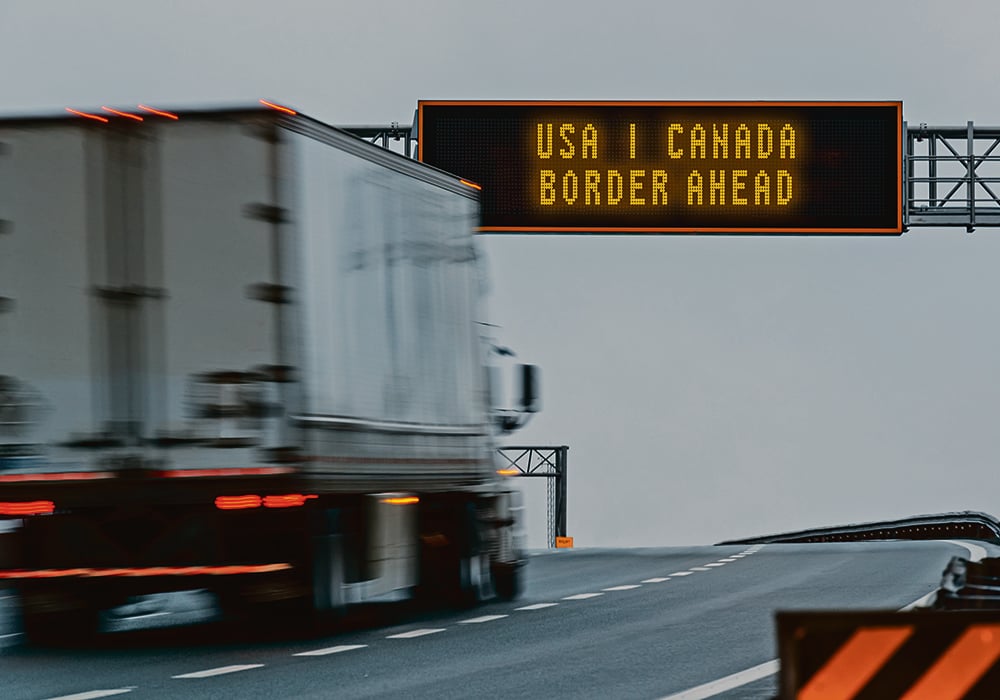
American Farm Bureau Federation President Zippy Duvall commented today on next week's tariff deadline set by the Trump administration. Canada, Mexico and China face increased tariffs on imports beginning March 4.

"Farm Bureau supports the goals of security and ensuring fair trade, but farmers and rural communities often bear the brunt of tariffs and tariff retaliation. Mexico, Canada and China are the three largest agricultural trading partners. Canada is also the leading supplier of potash, a key ingredient in fertilizer.

"We appreciate President Trump for delaying tariffs earlier this month to allow for more negotiations between the U.S. and its trading partners. It gave farmers and ranchers some certainty as they prepare for planting season.

"For a third straight year, farmers are losing money on almost every major crop planted. As the new deadline approaches, we ask the president to continue to look for ways to avoid imposing tariffs that will further drive up the cost of fertilizer and other supplies, and could reduce access to markets for the farm and ranch families dedicated to keeping America's pantries stocked."

Keep America Beautiful Calls for Volunteers to Replant Trees in Pottawatomie County

Keep America Beautiful®, in partnership with Keep Oklahoma Beautiful, Pottawatomie Go (Pogo), and United Way of Eastern Frontier Country, is seeking volunteers for the Pottawatomie County RETREET initiative on March 8th. The effort will involve planting up to 200 large native trees to help restore the area's beauty and resilience following the April 2023 tornado.

"This effort is about more than just planting trees—it's about restoring hope, rebuilding our community, and coming together to create a more vibrant future for Pottawatomie County," said John Bobb-Semple, director of Pottawatomie Go. "Every volunteer plays a vital role in making this possible, and their dedication will leave a lasting impact on the residents affected by the April 19 tornado."

On March 8th at 9am, volunteers will gather along the Oval of Oklahoma Baptist University before heading to homesites to plant trees. They will receive expert guidance on planting techniques and work with a RETREET leader to ensure the trees are planted correctly.

Afterward, volunteers and residents will be invited to a community celebration to honor the renewal and resilience of Pottawatomie County. The celebration will feature food, music, and local activities, providing an opportunity for everyone to come together and celebrate the collective effort to restore the area.

To sign up as a volunteer and learn more about how you can participate in the tree planting event, visit kab.org/retreet. United Way of Eastern Frontier Country (formerly United Way of Pottawatomie County) is accepting local donations to fund this initiative. To donate online, visit www.gopogo.org/retreet and click "Donate". To donate by mail, make checks payable to United Way of Eastern Frontier Country and send to PO Box 697, Shawnee, OK 74802 with the memo line: RETREET.

RETREET, a signature program of Keep America Beautiful, is the only program of its kind dedicated to post-disaster tree planting. Over the past decade, it has helped restore more than 7,000 trees for communities across the country as they recover from natural disasters.

This tree planting event is made possible through generous support from the lead funder, Pottawatomie County Board of County Commissioners, along with Oklahoma Baptist University, Oklahoma State University Extension Office of Pottawatomie County, Shawnee Feed and Garden Center, United Way of Eastern Frontier Country, City of Shawnee, Citizen Potawatomi Nation, OG&E, The Home Depot Foundation, and the Pottawatomie Go Built Environment Committee.

Ranking Member Angie Craig Announces Final Members of the Agriculture Committee for the 119th Congress

Today, House Agriculture Committee Ranking Member Angie Craig (D-MN-02) announced that Representatives Salud Carbajal (D-CA-24) and Chellie Pingree (D-ME-01) will serve on the Committee for the 119th Congress.

"I am happy to welcome Congressman Carbajal and Congresswoman Pingree back to the Agriculture Committee for the 119th Congress. Their voices are crucial to our work serving America's family farmers and the communities they feed."

Daily Email for February 28, 2025


Oklahoma's Latest Farm

And Ranch News

Friday, February 28, 2025


Davis Angus Value Genetic$ Sale Saturday March 1

 
Howdy Neighbors!

Here is Your Daily Oklahoma Farm and Ranch News Update: 


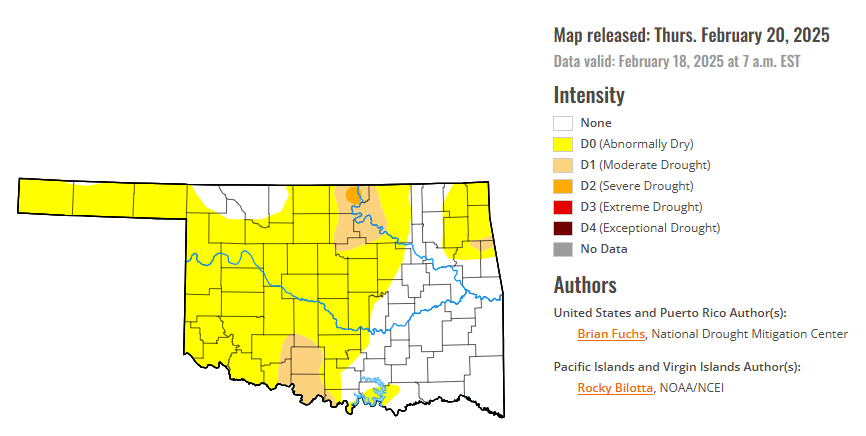
  • Drought is Expanding Ahead of This Time Last Year in Oklahoma


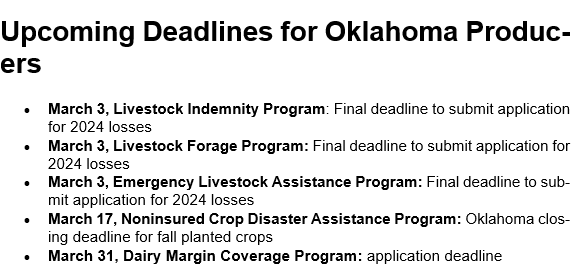
  • Oklahoma Producers Face Tight Deadlines and USDA Changes: What You Need to Know


  • NCBA's Mary-Thomas Hart Discusses the Outlook of WOTUS in Trump 2.0


  • Oklahoma Drought Commission Addresses Ongoing Crisis, Prepares for Future Needs


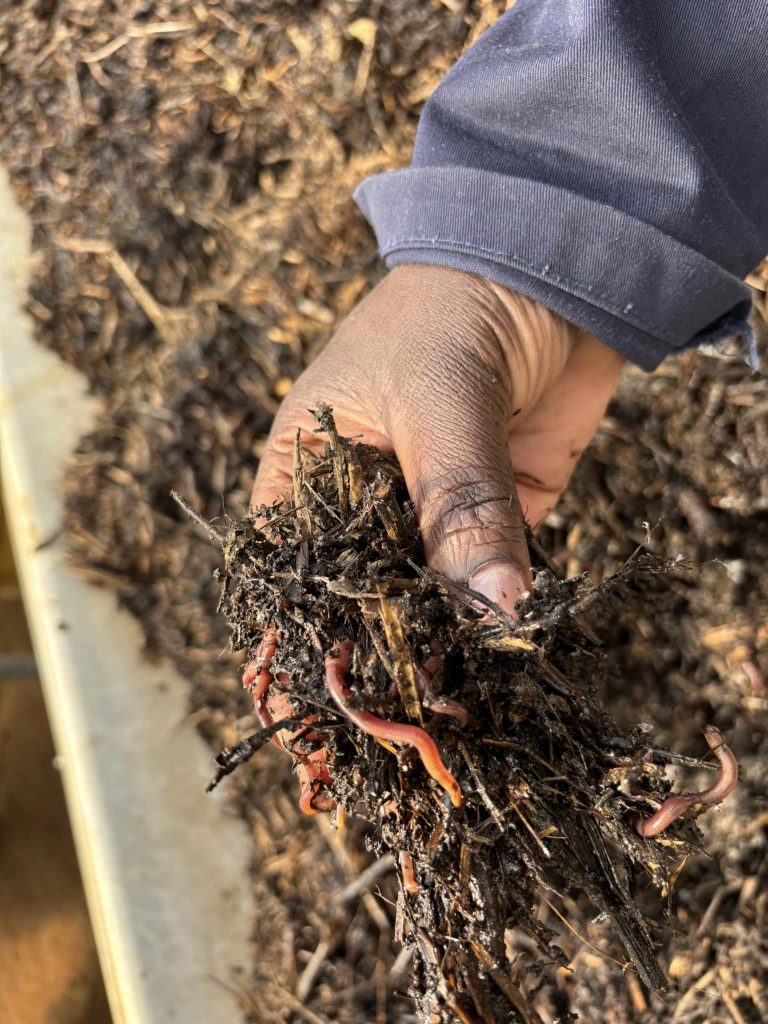
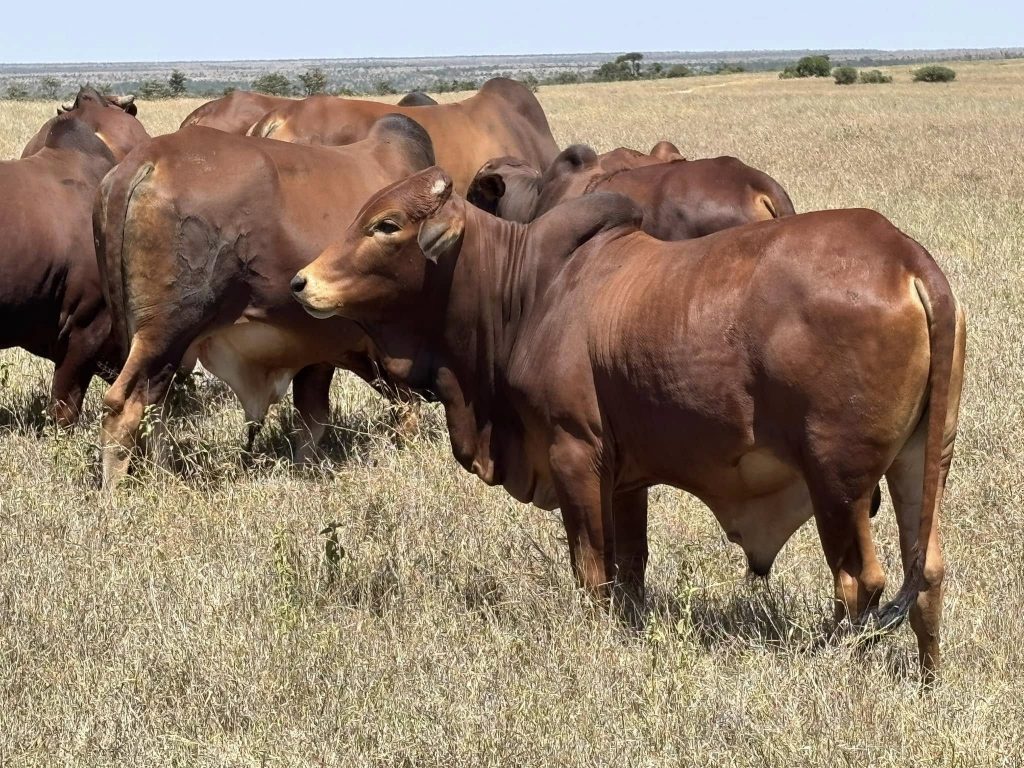
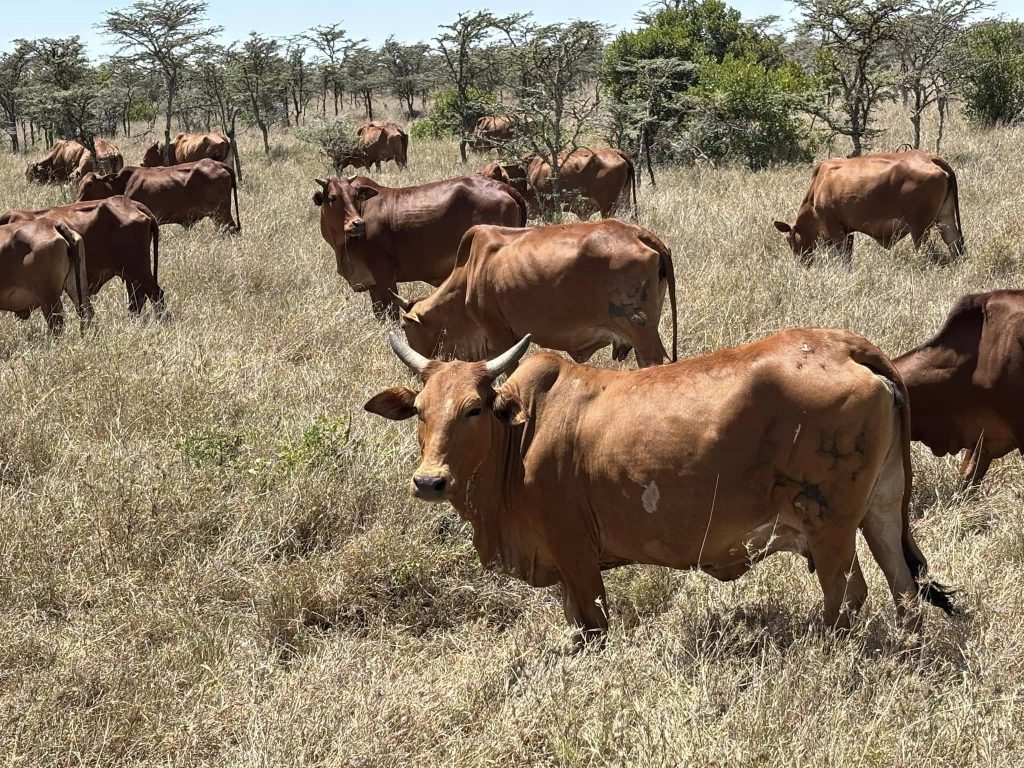
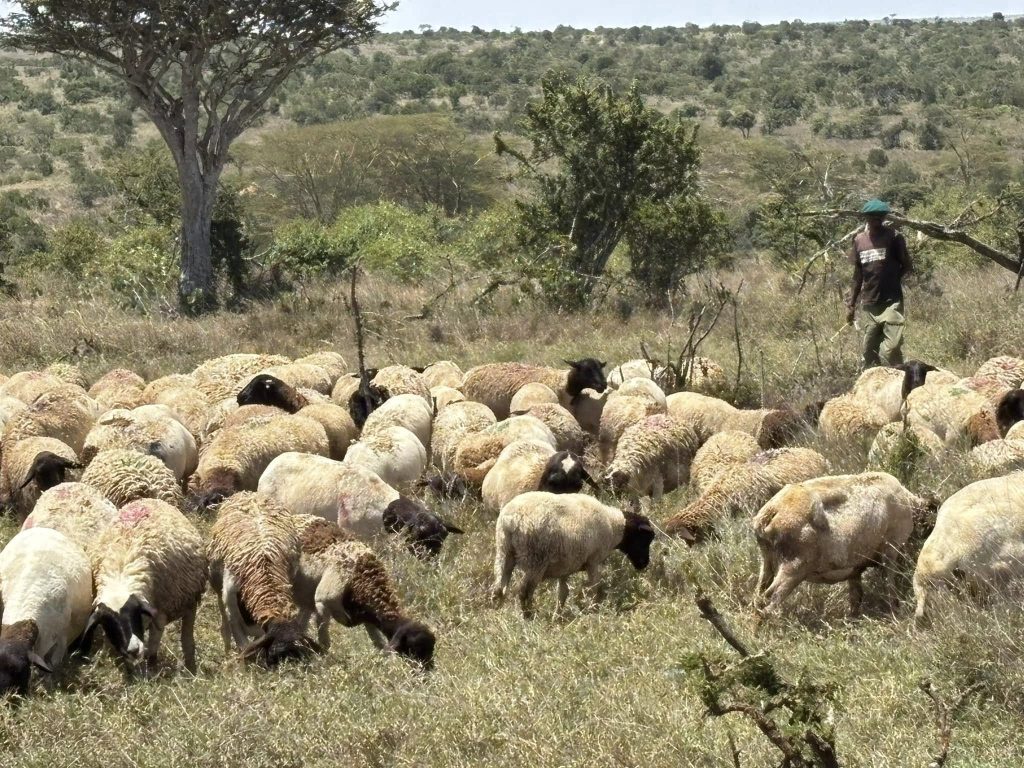
  • OALP's Class XXI Studies "Environmentally Intelligent Farming: as They Near End of Time in Kenya


  • This Week on SUNUP: Analyzing the Latest WASDE Report and Weather Impacts with John Michael Riley


  • Alternative Falling Number Measurement Tested by Wheat Marketing Center


  • USDA Secretary Brooke Rollins to Address Commodity Classic Sunday
 

Drought is Expanding Ahead of This Time Last Year in Oklahoma

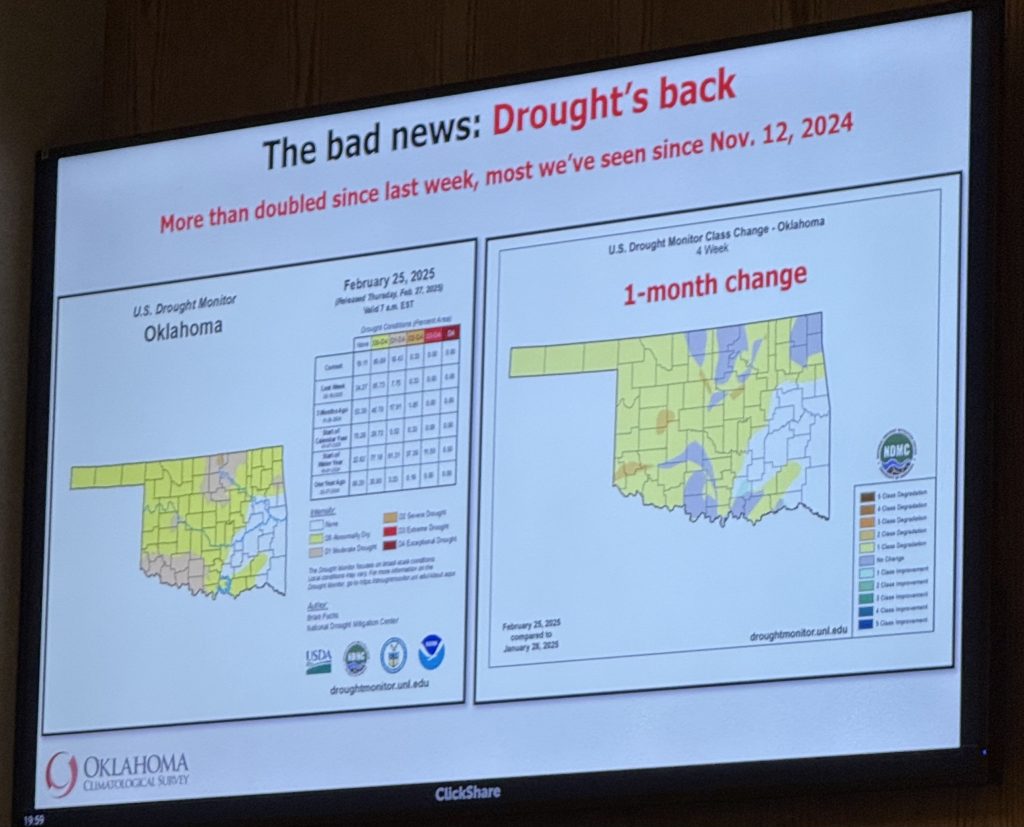
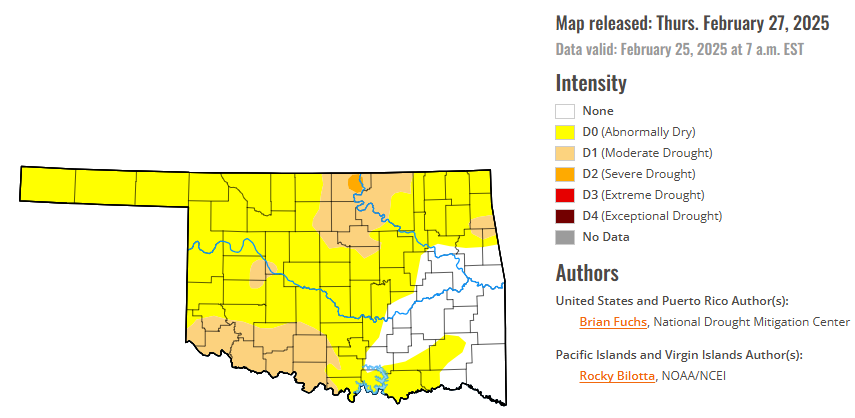
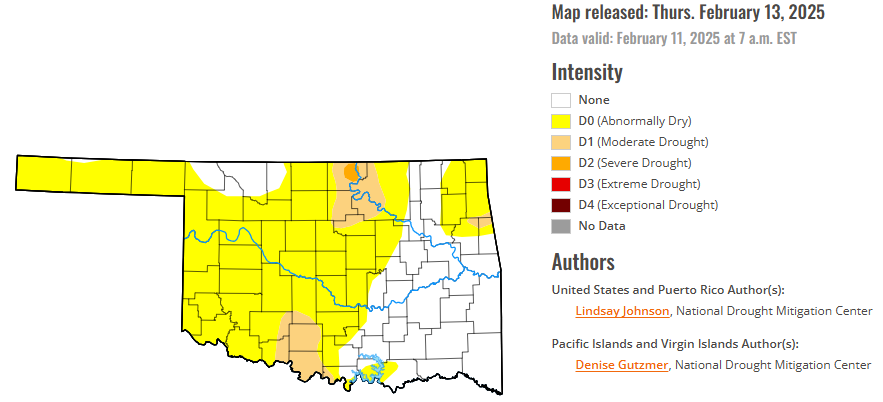
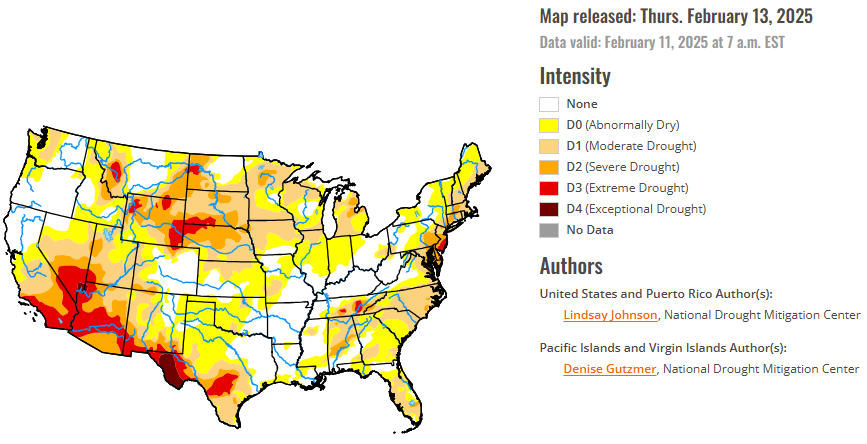
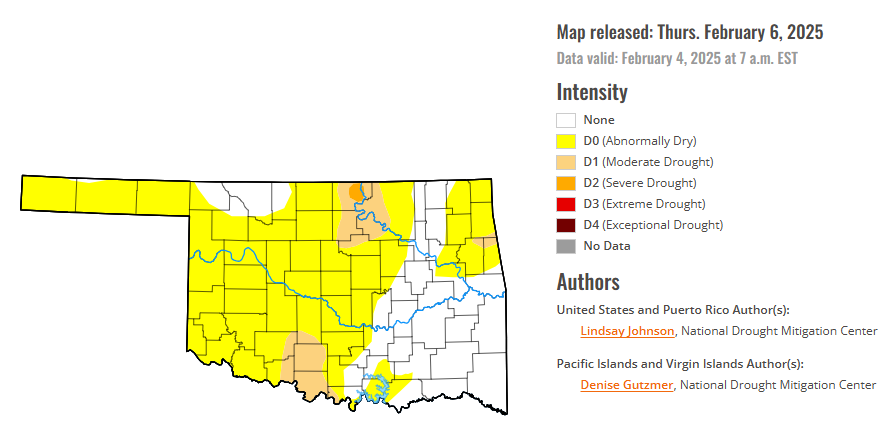
According to the latest Oklahoma drought monitor report, exceptional drought remains at zero percent, unchanged from the start of the calendar year.


Extreme drought or worse conditions remain at zero percent, unchanged since the week of October 29, 2024.


Severe drought or worse conditions are unchanged at 0.33 percent, since January 2.


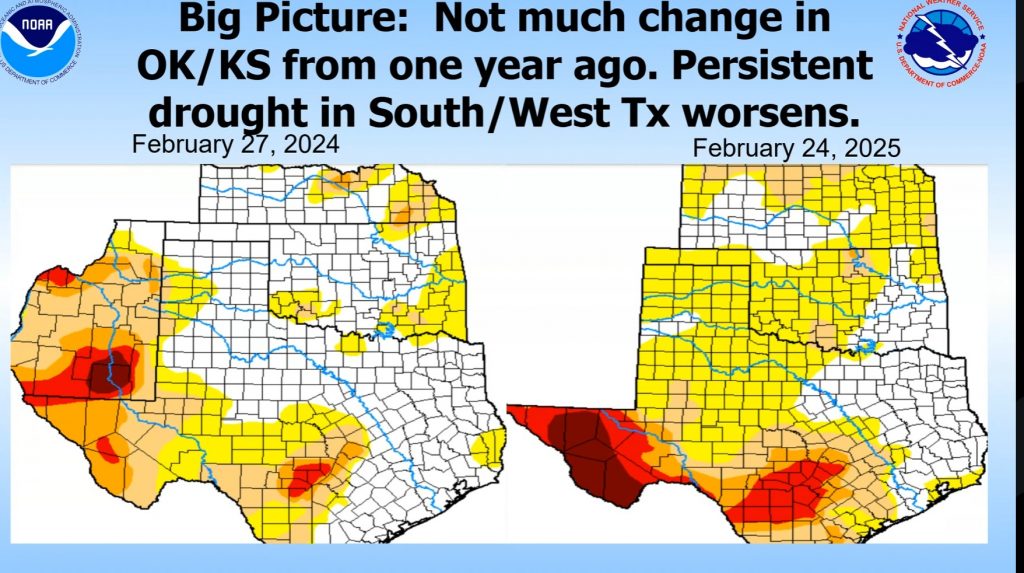
Moderate drought or worse conditions have increased to 18.43 percent, up from 7.75 percent last week. At this point a year ago- Oklahoma has at 3.23 percent in moderate drought.


Abnormally dry or worse conditions have increased to 80.89, up from 65.73 percent last week. At this time a year ago- we were at 30.8 percent.


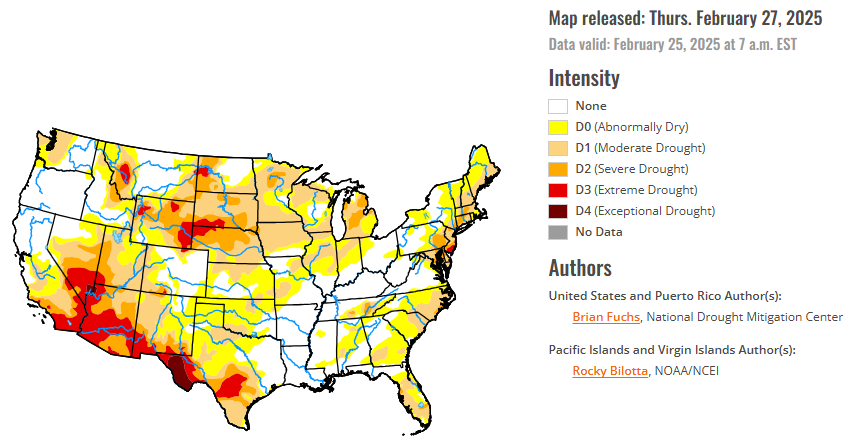
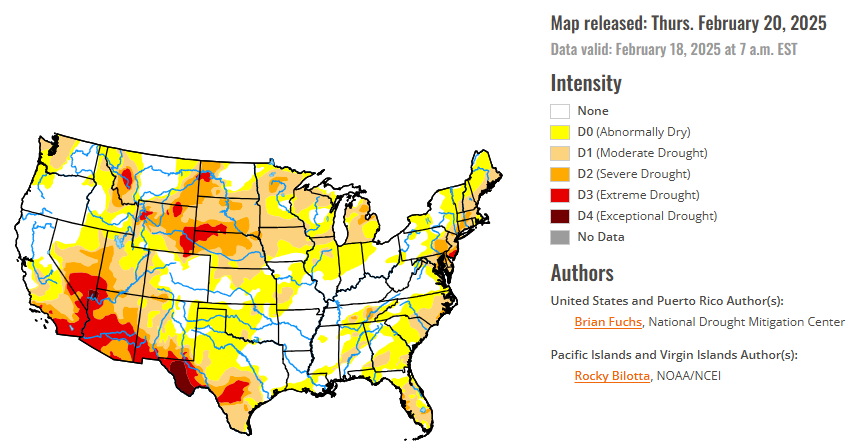
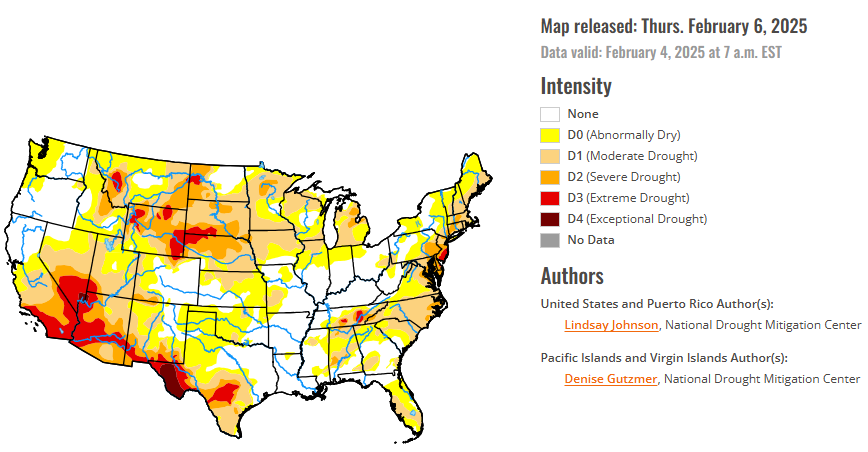
As for our neighbors, the greatest rain occurred across the coastal areas of east Texas, and Louisiana. Due to ongoing hydrological drought issues in south Texas, drought expanded this week with more moderate, severe and extreme drought conditions. Abnormally dry conditions were improved over east Texas but were not removed completely due to some lingering dryness being observed at longer timescales. The recent rains allowed for the removal of the abnormally dry conditions over southern Louisiana and some improvements in southern Mississippi, where both moderate drought and abnormally dry conditions were improved.


In Kansas, light precipitation was measured in the Northeast. Most other areas were dry for the week. Colder-than-normal temperatures dominated the region with areas of southeast Kansas 20-25 degrees below normal for the week. With the dry conditions, moderate drought levels were expanded over southern Kansas along with additional abnormally dry conditions being shown.


Kansas Drought Monitor shows Moderate Drought has increased from 21.55 percent last week to 24.82. Texas Drought ratings increased slightly from 42.52 percent a week ago to 49.01 percent.


Click here for the Kansas Drought Monitor Page and Click here for the Texas Drought Monitor Page.


Click here for the US Drought Monitor details for this week.

Read More About the Latest Drought Monitor Report Here

Sponsor Spotlight

The Oklahoma Wheat Commission promotes greater use of wheat in domestic and international markets through research, market development and public education.


Our Commissioners develop policy and programs, direct the funding, represent producer interests and, of course, promote Oklahoma wheat!


Learn more about the Oklahoma Wheat Commission by clicking here for their website.

Oklahoma Producers Face Tight Deadlines and USDA Changes: What You Need to Know

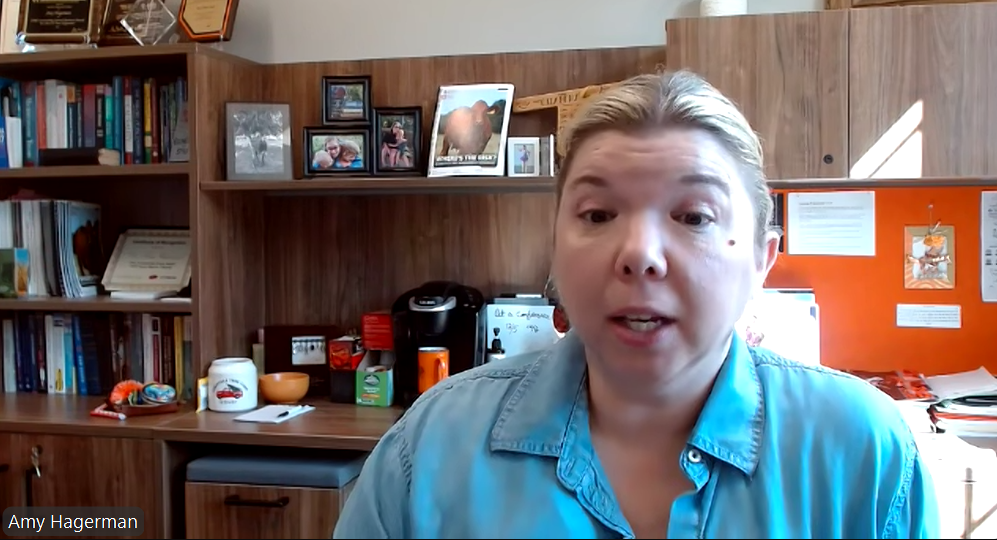
Oklahoma agricultural producers are facing a period of uncertainty amidst USDA turnover and upcoming program deadlines. Dr. Amy Hagerman of Oklahoma State University (OSU) recently visited with Farm Director KC Sheperd and shared valuable insights, emphasizing the need for patience, meticulous record-keeping, and proactive engagement with USDA offices.


"This administration came in with a stated intention of decreasing the footprint of the federal government and then also decreasing spending in the federal government," Dr. Hagerman explained. This has led to staff reductions at USDA, creating potential bottlenecks in program delivery. "As we begin to lose USDA employees, this is going to create some openings and some holes across the state that are going to make it harder to get programs out the door."


With potential staffing shortages, Dr. Hagerman advised producers to "be patient with these offices that may find themselves with relatively short notice being pretty short-staffed."


She recommended scheduling appointments well in advance and keeping meticulous records. "Do the best you can to keep track of your records," Dr. Hagerman stressed. Producers should be aware of deadlines and keep detailed documentation of losses.

Listen to KC's Inerview with Dr. Amy Hagerman and Read More Here

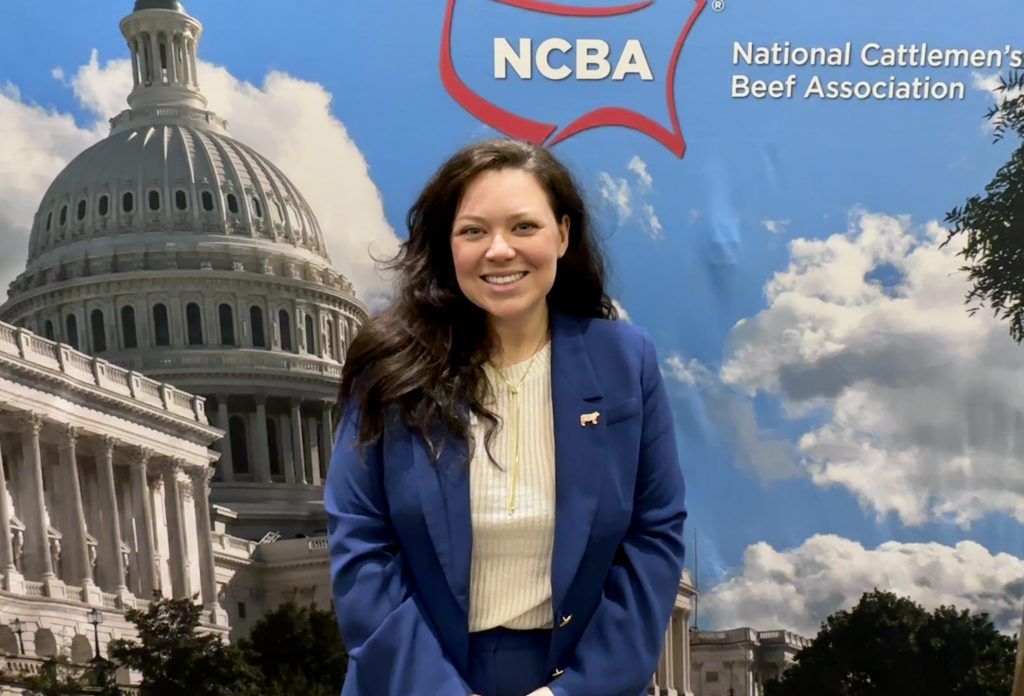
NCBA's Mary-Thomas Hart Discusses the Outlook of WOTUS in Trump 2.0

Senior Farm and Ranch Broadcaster, Ron Hays, is continuing his conversation with the National Cattlemen's Beef Association Chief Counsel Mary-Thomas Hart about WOTUS or "Waters of the United States." WOTUS is a term used in the Clean Water Act (CWA) to define which bodies of water are subject to federal regulation. To listen to part one of the discussion where they were talking about how recent Supreme Court decisions may impact the new Trump Administration, click here.


Hart responded positively when she said, "I hope we are seeing the light at the end of the tunnel. As far as rulemakings go, I think we are in a good place. Now, the Biden Administration and the Biden EPA reacted, kind of, out of spite after the Sackett decision. They implemented the rule that they were required to implement but then sent out some internal guidance to staff across the country, instructing them to take a pretty aggressive approach to implementing WOTUS. Staff across the country did that."


Hart hopes that the new Trump administration will rein in those aggressive guidance initiatives to ensure the behavior of EPA staff across the country aligns with the true intent of the Sackett v. EPA decision.


Additionally, Hart expects the EPA to adjust its response on other fronts concerning things like herbicides, pesticides, and rodenticides.

Click Here to Listen to Ron's BeefBuzz with Mary-Thomas Hart & Read More
 
 
Sign Up for Our Daily Email- Free Because of Our Sponsors!

Support Our Sponsors!


KIS logo


Advertise With Us!
 

For our farmers who have either- always have had cotton on their farms- or those who have more recently have added the fiber crop to their operations- we have a daily report heard on several of our Radio Stations- It's Called Cotton Talk!

Click on the Button below to listen to our most recent report
Click here for our Latest Cotton Talk- Hosted by KC Sheperd
 

The latest news from the Oklahoma State Capitol is available daily on the Radio Oklahoma News Network.


Click on the blue button to hear from our Radio Oklahoma Network News Director Jacquelyn Farris

Click here for the latest report from the State Capitol on RON


Oklahoma Drought Commission Addresses Ongoing Crisis, Prepares for Future Needs

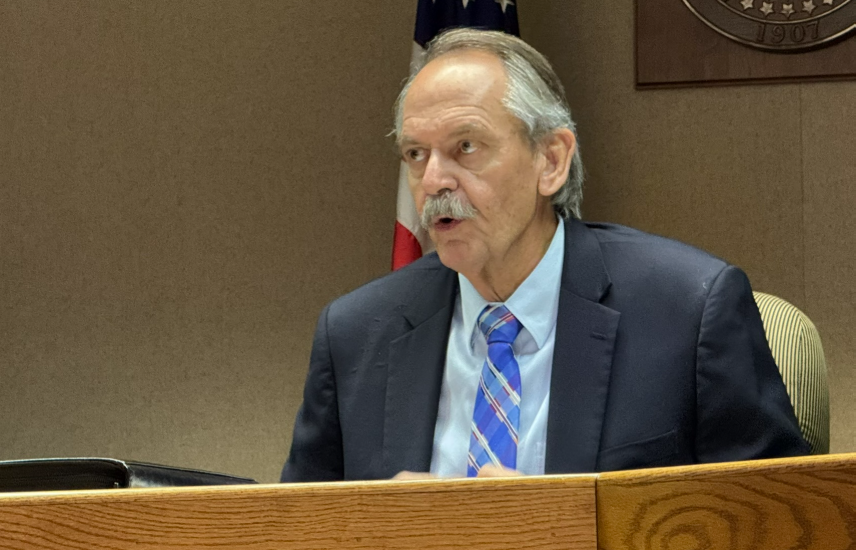
The Oklahoma Drought Commission met today, hearing updates on current drought relief efforts and bracing for potentially worsening conditions. Farm Director KC Sheperd was on hand to visit with Trey Lam of the Oklahoma Conservation Commission after the meeting as he provided insights into the state's financial commitments and future strategies.


Lam detailed the completion of the "Emergency Drought Program Two," revealing that $33 million had been allocated for conservation practices across the state. "So far, we have spent $33 million for conservation practices all across the state of Oklahoma," Lam stated, noting the regional variations in needs: "more pond clean out in the eastern part of the state, more water wells, pipes, and pumps in the western part of the state."


The current "Emergency Drought Program Three" has already distributed over $3 million and obligated an additional $17 million, totaling $21 million.


However, the commission received a sobering update from State Climatologist Gary McManus, who warned of persistent and expanding drought conditions. "It's not like this drought is going away," Lam acknowledged, prompting a focus on future preparedness. "I think it's a wake-up call that we better be ready for the next drought, and we better be ready to have another drought program."

Listen to KC's Interview with Trey Lam and Read More Here
 

We invite you to listen to us on great radio stations across the region on the Radio Oklahoma Ag Network weekdays-

if you missed this morning's Farm News - or you are in an area where you can't hear it- click below for this morning's Farm news from Ron Hays and KC Sheperd on RON.
Listen to our Friday morning farm and ranch news with KC Sheperd
 
 
Subscribe To the Daily Email


Sponsor Spotlight


P&K Equipment is the largest John Deere dealer across Oklahoma, with 18 locations, as well as an additional two locations in Arkansas. We are proud to serve our communities & the surrounding areas. P&K is committed to keeping your equipment running strong. In these colder months, sign up for our P&K Advantage maintenance & inspection specials. And year-round, it's easier than ever before to buy genuine John Deere parts online at GetGreenParts.com. Pick up your order in stores or have it shipped directly to you! P&K Equipment is committed to taking care of you long after the sale.


OALP's Class XXI Study Concept of "Environmentally Intelligently Farming"

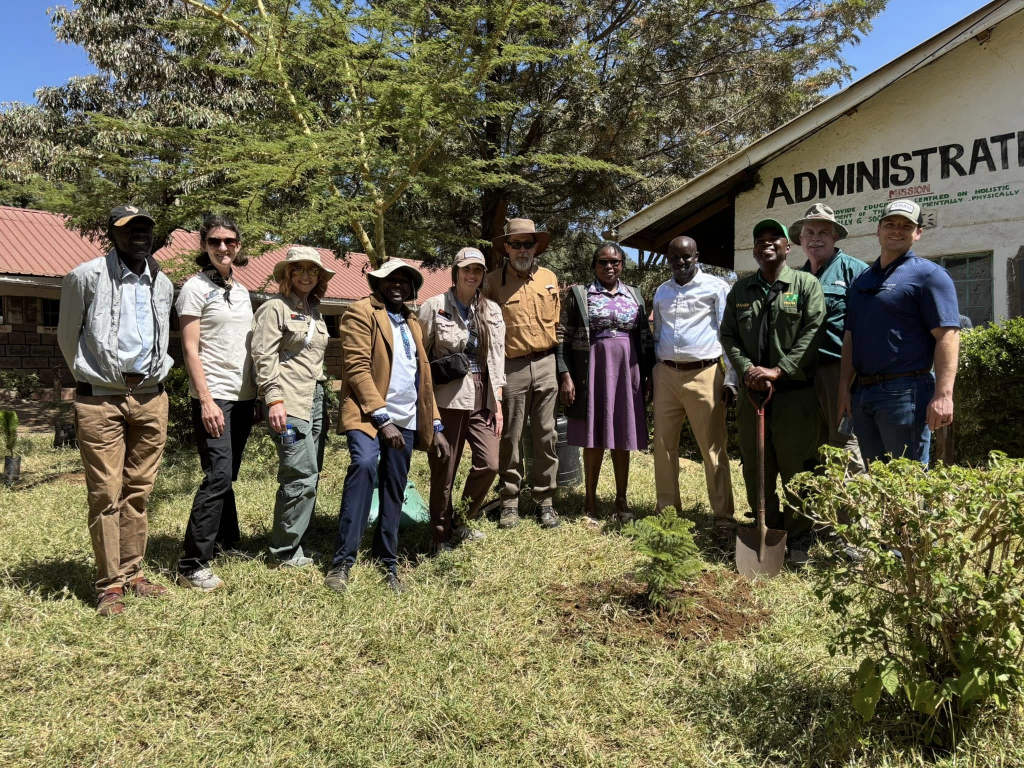
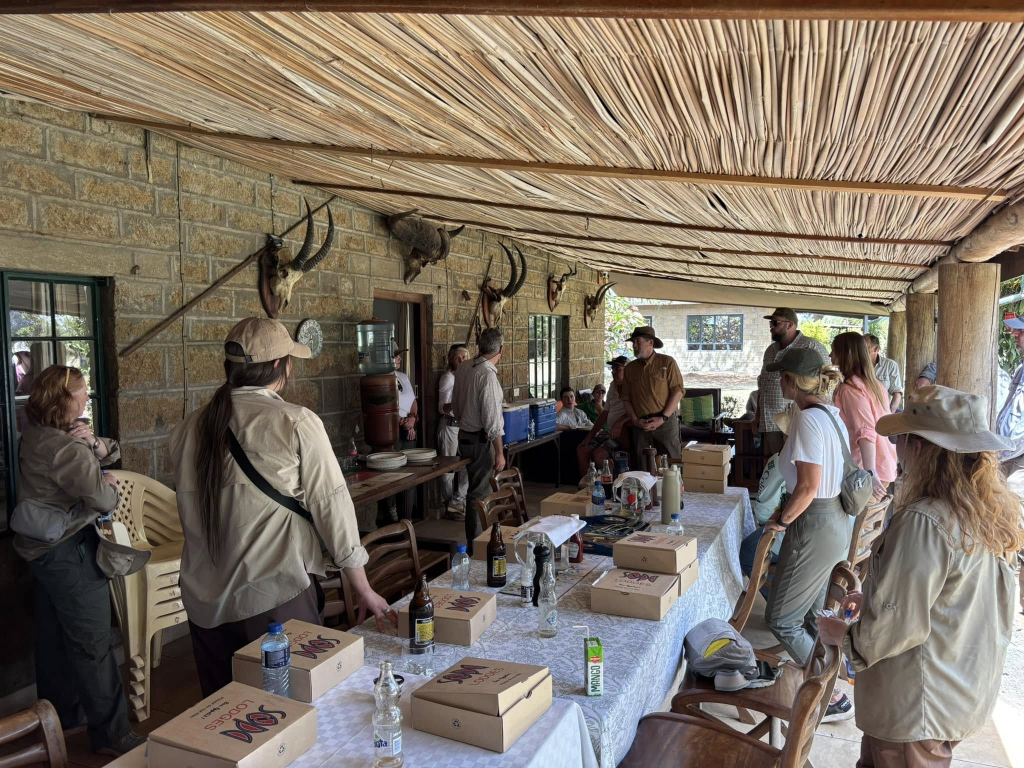
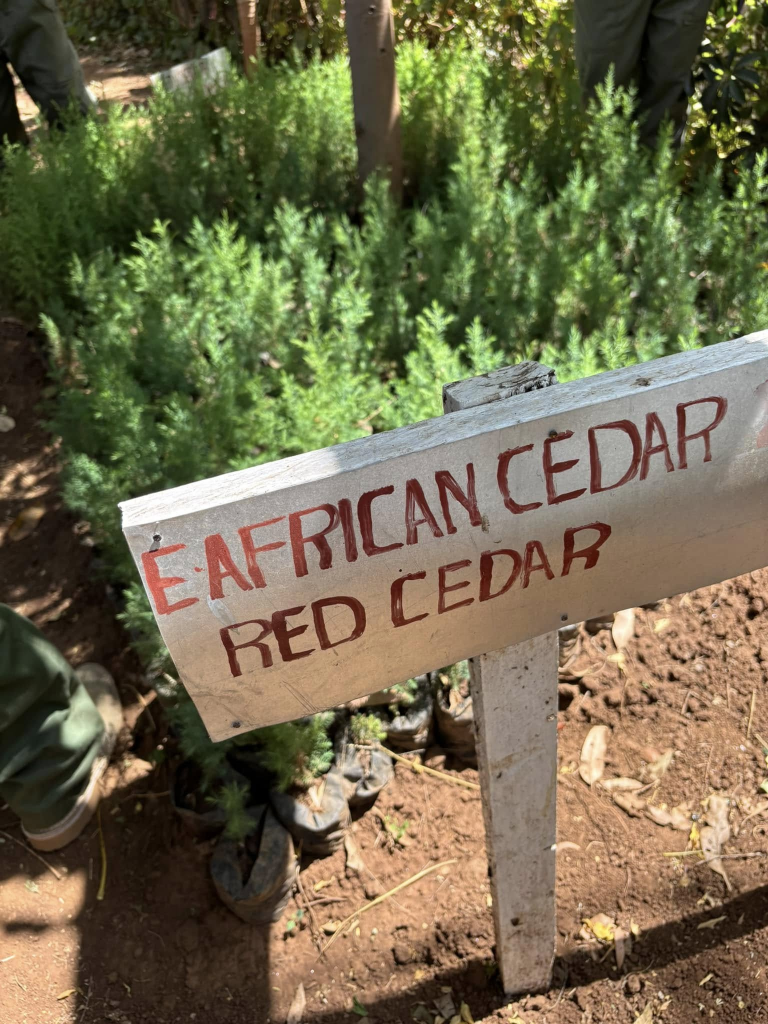
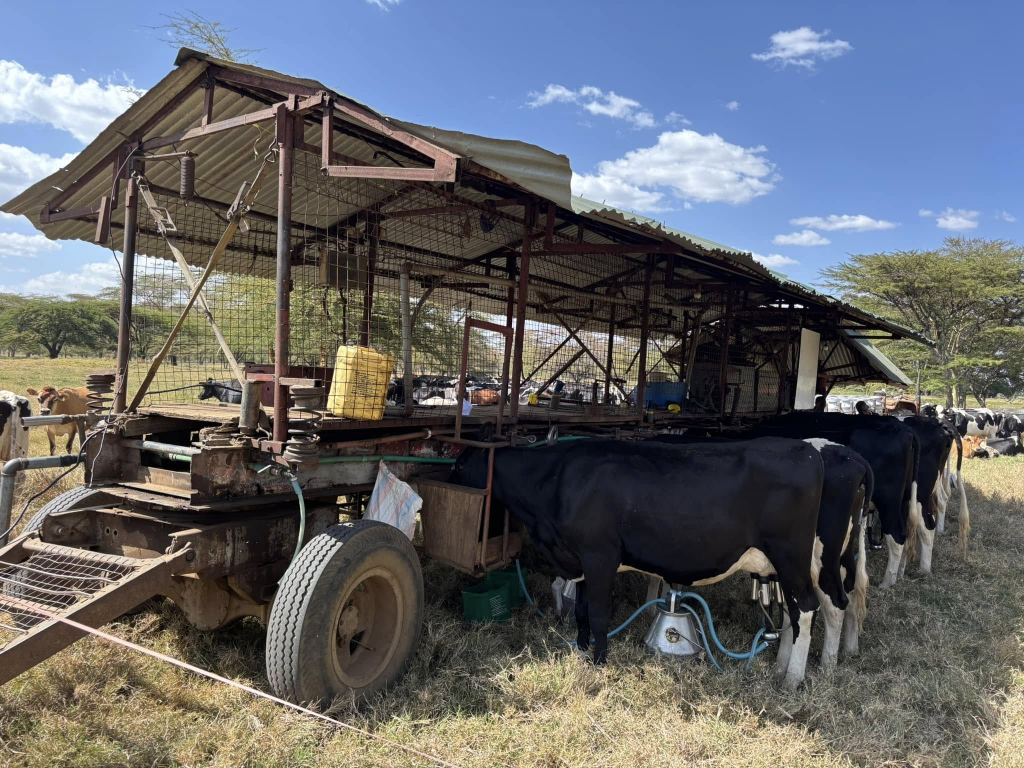
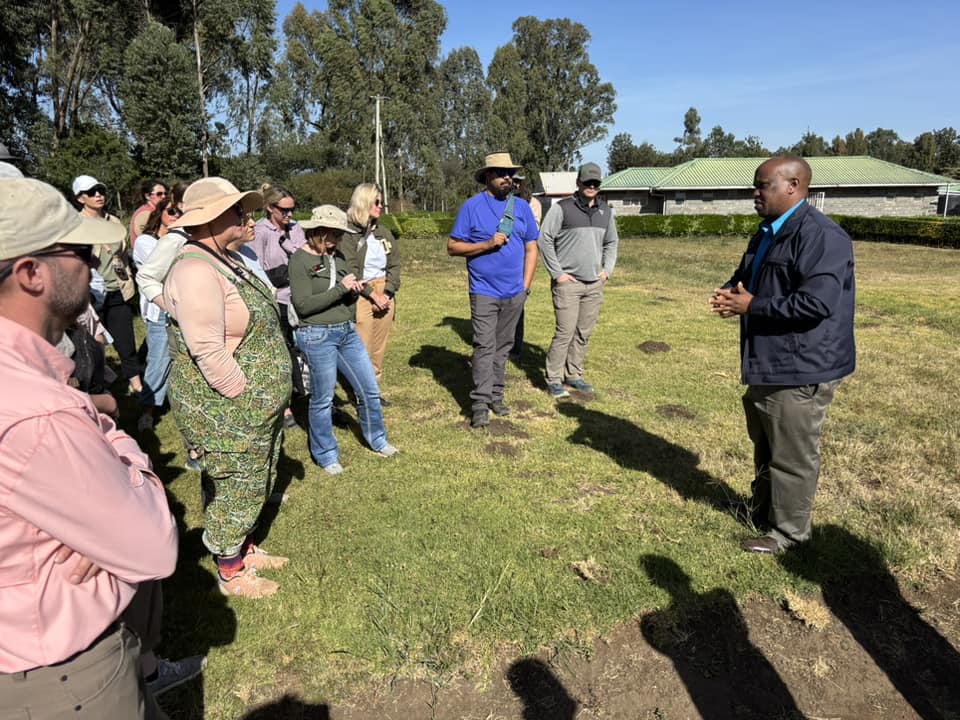
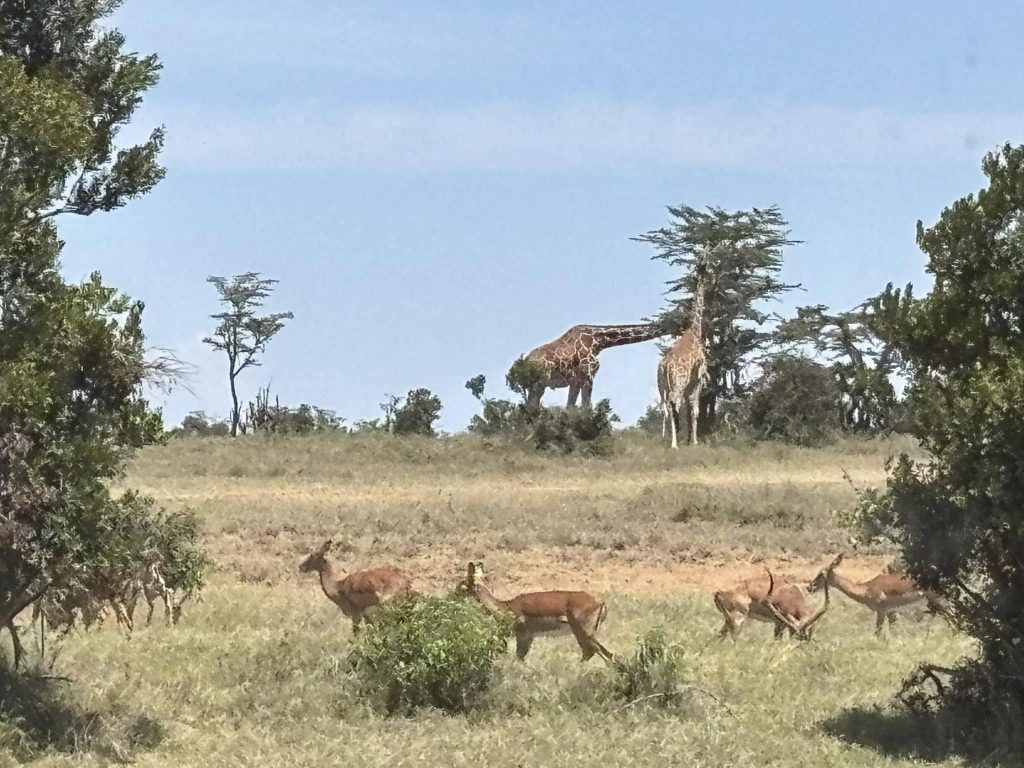
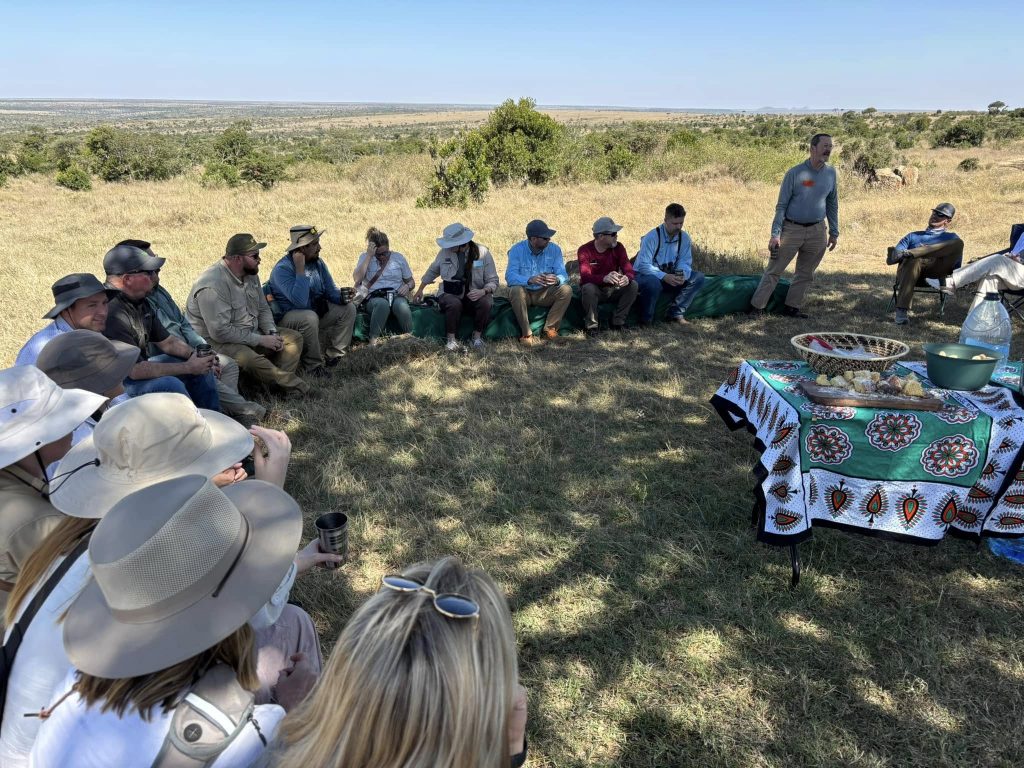
We continue to share comments from the Director of the Oklahoma Ag Leadership Program Edmond Bonjour (and also from Rose Bonjour) as Class XXI travels across parts of Kenya for their International Capstone study experience. This story includes stops made on Thursday, February 27, 2025.


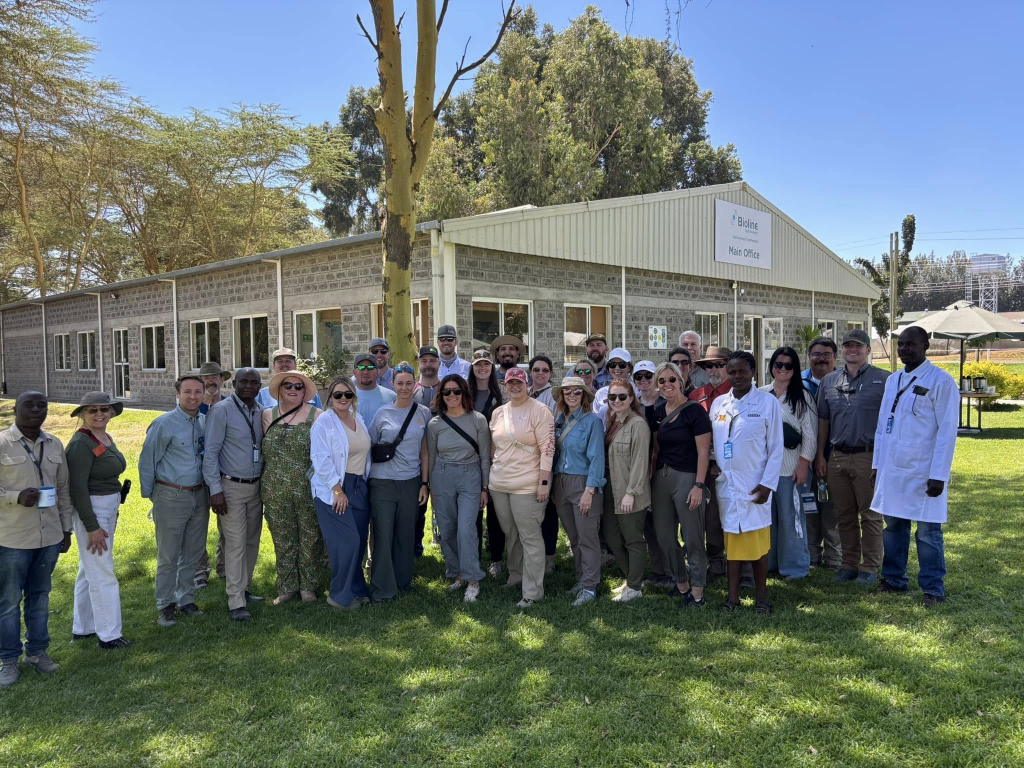
Thursday, the OALP began the day with a visit to Dudutech, a Bioline Agrosciences group company – the largest biological production facility in sub-Saharan Africa. (Rose points out that Dudu means insects in Zahili.) They are leaders in Integrated Pest Management (IPM) with a wealth of experience in designing and delivering about 50 control products of which 17 are biological control agents.


Integrated Pest Management (IPM) is quite complex. Education is a huge component of what they do. With the need to feed 10 billion people by 2050, solutions must to be created. Climate change is impacting production, conventional ag may add to the greenhouse effect, and soil degradation is happening. It's time for a paradigm shift.


Physical (trapping), biological (natural predators), cultural (crop rotation), companion crops and chemicals are all ways to control pests. Steps to successful IPM includes 1) identifying pest, 2) understanding the pest, 3) monitor crops (which is the backbone of IPM), 4) make a decision – when to act, 5) take action, 6) assess results.


Click Here To Read More about the travels of OALP in Kenya

This Week on SUNUP: Analyzing the Latest WASDE Report and Weather Impacts with John Michael Riley

This week on SUNUP, OSU Agriculture Economist Dr. John Michael Riley discusses the highs and lows of current grain and cotton markets.


In the time since the grain and cotton markets were last discussed, a new WASDE report was published, and although it held no big surprises, an inevitable bounce in the marketplace was still felt.


"That is why I have always said and continue to say, 'If you can stay out of making any pricing decisions when that report is in the midst of being released, try to do your best to do that.'"


According to Riley, the market expects the recent extremely cold temperatures to impact wheat yields. "We started getting that cold weather about the time that the WASDE report was released, but since then, the market really rallied for a couple of days. A lot of that had to do with the winter freeze, but we are also getting a lot of positive news about exports."

Wheat exports are on pace with normal but above expectations.

Click Here to Read More from John Michael Riley & See What Else is on SUNUP This Week

Alternative Falling Number Measurement Tested by Wheat Marketing Center

An alternative way of measuring falling numbers that would benefit U.S. wheat farmers and customers around the world who rely on U.S. crop quality earned positive reviews during product testing late last year at the Wheat Marketing Center (WMC), Portland, Oregon.


Meanwhile, there is renewed hope for a "rapid" system that will allow farmers to test falling numbers in the field as they harvest their wheat.


In January, during the U.S. Wheat Associates (USW) Winter Board of Directors meeting, WMC Technical Director Dr. Jayne Bock provided an update on her team's participation in the project. Bock credited Washington State University (WSU) for developing the system, which is described as "faster and more accurate" than the decades-old falling number test currently being used.


U.S. wheat farmers also played a role in the product testing – WMC used samples of soft white (SW), hard red winter (HRW), hard red spring (HRS) and hard white (HW) wheat.


Amber Hauvermale, a research assistant professor in Washington State University's (WSU) Department of Crop and Soil Sciences, led a team that was behind the project.


Read More about the Alternative Falling Number Measurement Here

USDA Secretary Brooke Rollins to Address Commodity Classic Sunday

Commodity Classic attendees will have a seat at the table to hear directly from U.S. Secretary of Agriculture Brooke Rollins, who will attend the convention being held in Denver this year. Secretary Rollins is scheduled to visit the Commodity Classic Main Stage on Sunday, March 2, 5:00 p.m. (MST) at the Colorado Convention Center in downtown Denver.


The 2025 show, entitled "Elevating Excellence in Agriculture," runs March 2-4 and will also feature keynote speaker Jeff B. Evans in the esteemed General Session speaker lineup. Evans is a world-class mountaineer, guide and emergency medic whose global experiences have helped him master the skills of servant leadership, handling adversity, teamwork, communication and trust. The session will retain a longstanding crowd-pleaser and again include a panel discussion with leaders of the five associations that present Commodity Classic each year: Show owners American Soybean Association and National Corn Growers Association and hosts National Association of Wheat Growers, National Sorghum Producers and the Association of Equipment Manufacturers.


The list of issues affecting agriculture and that are important to U.S. farmers remains long and varied. Attendees can expect to hear from Secretary Rollins and other Commodity Classic speakers on a range of topics that may include farm bill, pesticide regulations, biofuels, trade and tariffs, bioeconomy and more.


Read More on Secretary Rollins at Commodity Classic Here
Let's Check The Markets!
OKC West is our Market Links Sponsor- they sell cattle three days a week- Cows on Mondays, Stockers on Tuesday and Feeders on Wednesday- Call 405-262-8800 to learn more.
 
Today's First Look:
Ron on RON Markets as heard on K101  
mornings with cash and futures reviewed- includes where the Cash Cattle market stands, the latest Feeder Cattle Markets Etc.
Hear Today's First Look
 

Wholesale Boxed Beef Prices were lower - Choice Beef was down $1.72 and Select Beef was down $1.11 on 2/27/2025.


Click on the Button below for the latest report from USDA Market News

Boxed Beef Report
 

Weekly Cattle Auction Reports


The buttons below allow you to check out the weekly Cattle Auctions in the region that we post on our website and here in our daily email update:

Oklahoma National Stockyards Market Report from 02/24/2025
 
Tulsa Stockyards February 24, 2025
 
Joplin Regional Stockyards Market from Monday 02/24/2025
 
OKC West in El Reno Market Report from 02/25 and 02/25/2025
 
Woodward Livestock Market from Thursday 02/27/2025
 
 
Okla Cash Grain:  
Daily Oklahoma Cash Grain Prices- as reported by the Oklahoma Dept. of Agriculture- The report available after the close of the Futures Trade for that day.
Read Cash Grains Report from 2/27/2025
 
Our Daily Market Wrapup from the Radio Oklahoma Ag Network - analyzing the Futures Markets for that trading day- as reported by KC Sheperd.
Click to Listen to Our Weekday Wrap with KC
 
Slaughter Cattle Recap: 
The National Daily Slaughter Cattle Summary- as prepared by the USDA Market News
Read Report
 
TCFA Feedlot Recap:  
Finally, here is the Daily Volume and Price Summary from the Texas Cattle Feeders Association.
Read Report

Our Oklahoma Farm Report Team!!!!


Ron Hays, Senior Farm/Ranch Broadcaster and Editor


KC Sheperd, Farm Director and Editor


Dave Lanning, Markets and Production


Stevie White, Farm News and Email Editor


Pam Arterburn, Calendar and Template Manager

Podcasts From Oklahoma Farm Report and More

Two of our regular reports are also podcasts that you can subscribe to- Our daily Farm and Ranch News with KC Sheperd- available here on the Apple Podcast Platform


The second is our daily Beef Buzz with Ron Hays- available here on the Apple Podcast Platform


Periodically- we offer interviews on our Ag Perspectives Podcast series- this podcast is available here.


Ron has also has a series of podcasts from interviews with newsmakers at the Cattlemen's Congress- Click here or you can find them on your favorite Podcast platform- look for them by searching for Cattlemen's Congress Conversations.


We are making plans to jump back into regular installments of what has been called the Road to Rural Prosperity- a new name and fresh content is in the works- for now- click on the blue button below for one of our favorites that is a timeless classic.


The link below is one of our most recent podcasts- Ron spotlighting the Life and Times of Dr. Kim Anderson, who has just retired from OSU.

Listen to Ron Hays talking with Kim Anderson about his 42 years in OSU Extension and the Famous "A Third A Third A Third" Advice he has given.
 
 
Listen to Ron
Beef Buzz
 
Blue Green Gazette
Calendar
Auctions
Market Links
Facebook  Twitter  Youtube  

Our thanks to Midwest Farms Shows, P & K Equipment, Oklahoma Farm Bureau, Great Plains Kubota, Stillwater Milling Company, National Livestock Credit Corporation, Oklahoma Beef Council, Oklahoma Pork Council, Oklahoma Wheat Commission, Oklahoma AgCredit, the Oklahoma Cattlemens Association, and  KIS Futures for their support of our daily Farm News Update.


For your convenience, we have our sponsors' websites linked here- just click on their name to jump to their website- check their sites out and let these folks know you appreciate the support of this daily email, as their sponsorship helps us keep this arriving in your inbox on a regular basis- at NO Charge!


We also appreciate our Market Links Sponsor - OKC West Livestock! 


We invite you to check out our website at the link below too that includes an archive of these daily emails, audio reports and top farm news story links from around the globe.

Head to Our Website OklahomaFarmReport.Com
God Bless!
Reach Out To Us:
Tim West
President/General Manager
Rural Oklahoma Networks

405-317-6361

***************

Mike Henderson
Director of Sales

405-615-4922

KC Sheperd
Farm Director
Radio Oklahoma Ag Network

405-443-5717

Email KC
Ron Hays
Senior Farm/Ranch Broadcaster
Radio Oklahoma Ag Network

405.473.6144
Email Ron

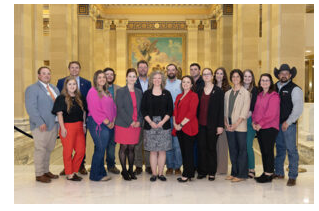
OKFB Young Farmers and Ranchers, Collegiate members to host legislative day April 1 in OKC

Oklahoma Farm Bureau Young Farmers and Ranchers members and Collegiate Farm Bureau members will advocate for agriculture at the Oklahoma State Capitol in Oklahoma City Tuesday, April 1, during the OKFB YF&R and Collegiate Day at the Capitol.

The event is an opportunity for young agriculturalists to learn about the issues Oklahoma's legislature is considering that have policy implications for Oklahoma agriculture and our state's rural communities.

The event will begin with an option evening of fellowship at Top Golf in Oklahoma City Monday, March 31, beginning at 6:30 p.m.

The legislative day will kick off at 8:30 a.m. with a briefing from OKFB's public policy staff at the Farm Bureau home office in Oklahoma City. Event attendees will then travel to the Oklahoma State Capitol to visit with lawmakers and elected officials about OKFB's priority legislation and other issues the grassroots Farm Bureau members are facing.

YF&R and Collegiate Farm Bureau members can register online by Friday, March 28, to attend the event using the form below. Hotel rooms at the Embassy Suites Downtown Oklahoma City Medical Center are available and can be requested when registering for the event. The deadline to request a hotel room is Wednesday, March 15.

For questions about the event, OKFB's YF&R program or Collegiate Farm Bureau, Contact Burton Harmon online or by calling (405) 523-2300.

For more information, click here:

Farmers Struggle as Oklahoma Drought Intensifies in Western and North Central Regions

Listen to KC Sheperd talking with Gary McManus about drought conditions in Oklahoma.

The Oklahoma Drought Commission met in Oklahoma City on Thursday, and Farm Director KC Sheperd caught up with state climatologist Gary McManus for an update on the drought conditions in Oklahoma.

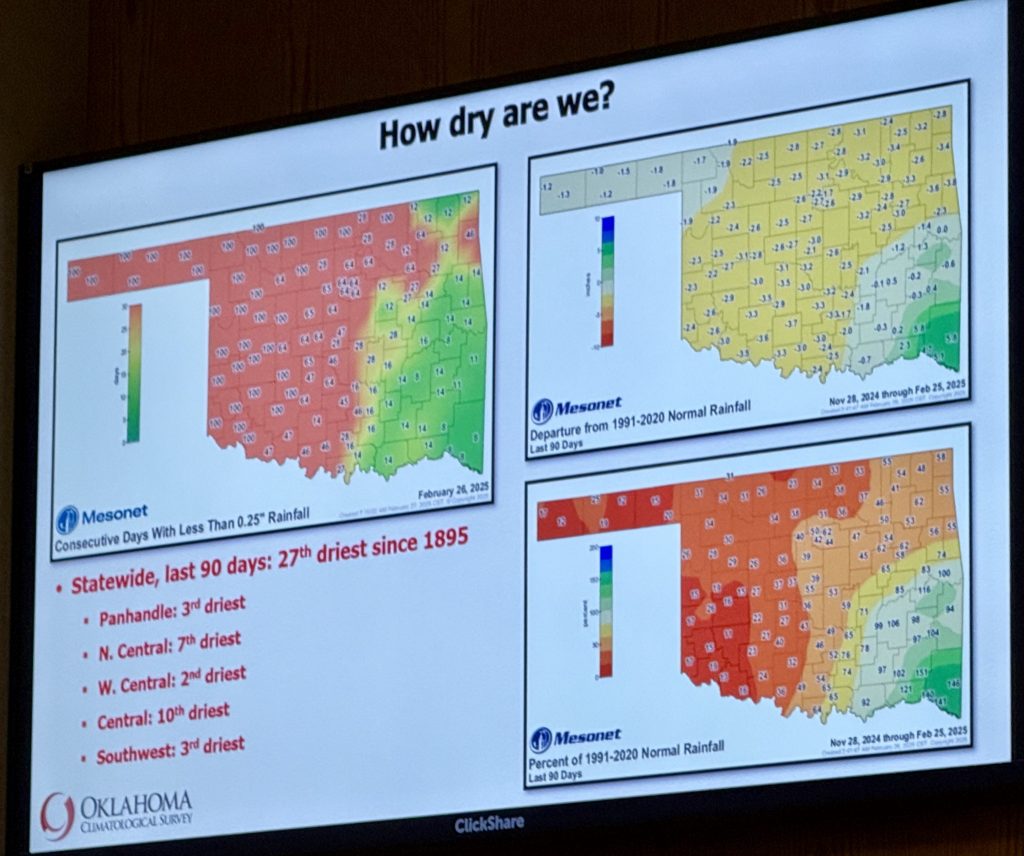
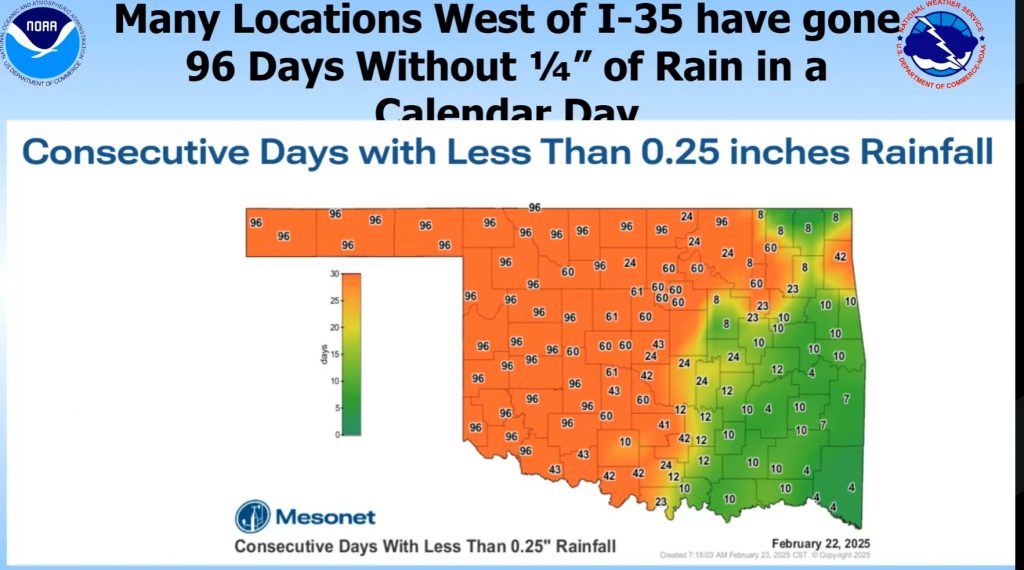
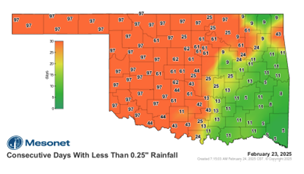
According to McManus, things are looking dire for the western part of the state and into North Central Oklahoma, neither of which have received a quarter inch of rain in more than 100 days. It appears that the relief provided in early November has dried up.

"In just the last week, we have nearly tripled the amount of drought in Oklahoma," McManus said. "It is still only eighteen percent, but that is a significant growth from what we had last week – about seven percent."

Since August 2021, McManus has observed a series of flash droughts that have kept an ongoing drought status for the state despite occasional and unusually intense rainfall events.

Drought relief is paramount at this time as wheat farmers need to rejuvenate their fields, and livestock producers need their pastures to grow.

"I don't know that there is a good time for drought, but there are a few periods in the year where it is not good, like when you are planting the wheat, and now, definitely in the spring, we need that moisture," McManus stated. "Not only for [crops and pastures] but also to prevent the wildfire season from getting out of control."

According to McManus, producers in Jefferson County say that things are worse than they seem. Their wheat never became viable enough to graze cattle, so they are supplementing more and selling more cattle.

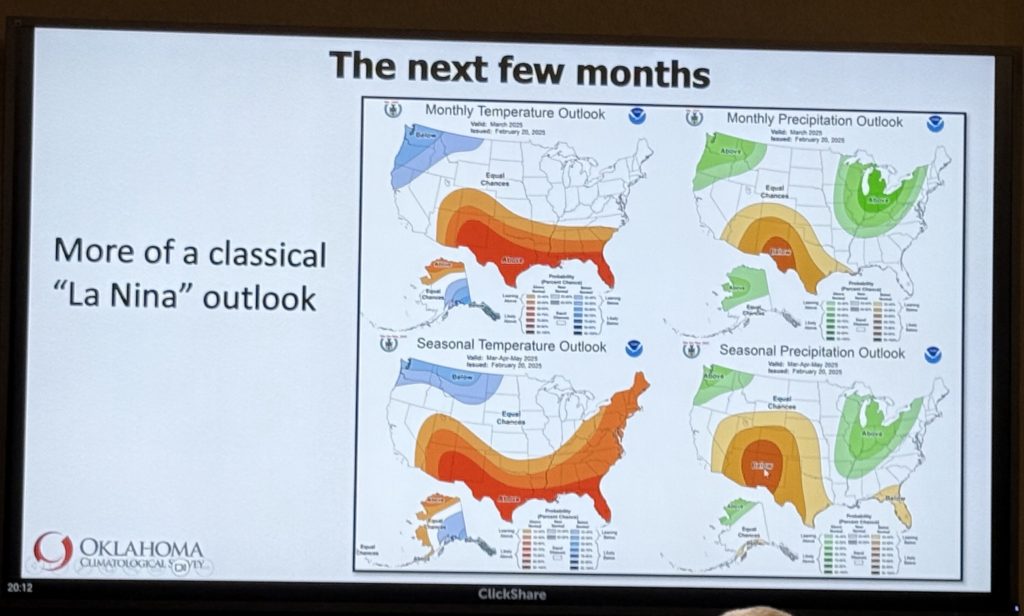
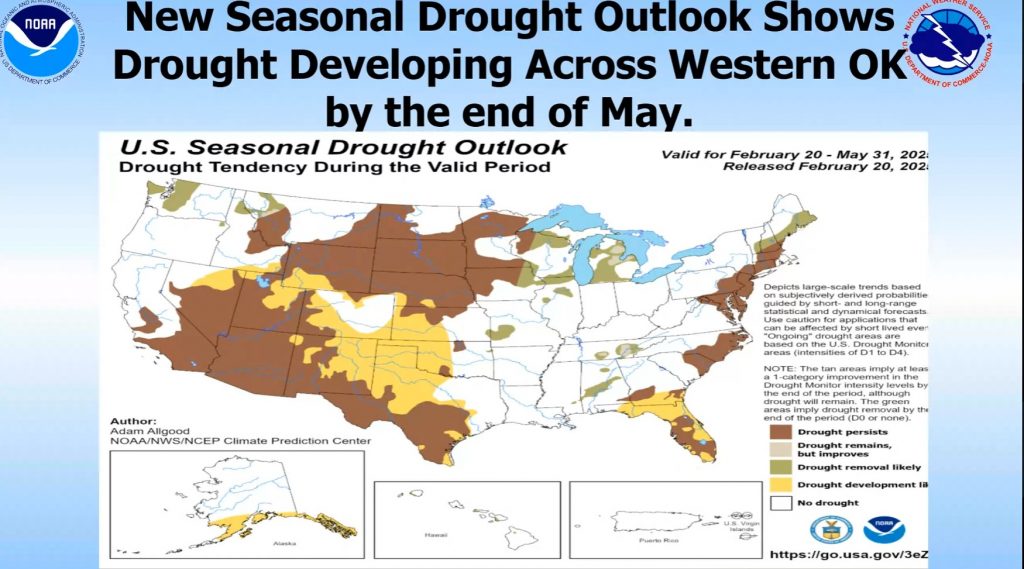
While spring – the wettest time of the year for most of the state – is coming, the overall forecast is calling for warmer and drier conditions across the state, especially in the western half.

Rain is expected to fall early next week and through the middle of next week, providing a glimmer of hope; however, like many weather patterns in Oklahoma, the outlook is a double-edged sword.

"You know how that works. If we get one of those storm systems come through, that gives us a chance of rain in the springtime, but it will also come with fire danger ahead of that storm system," McManus warned.

The heavy rains in early November are still evident in soil moisture measurements due to the cooler temperatures of winter, but McManus warned of drier conditions as temperatures warm and plants come out of dormancy.

He said that reservoirs in Southwest, North Central, and some in South Central Oklahoma still need a few feet of rain to return to close to normal levels.

The information in the weekly Drought Monitor Report comes largely from producers, and McManus expects to begin to hear more from them as springtime conditions develop.

"I use that information and provide it to the U.S. Drought Monitor National author who actually controls the depiction for the state," McManus shared. "They can use that information accordingly to what my recommendations are."

Producers can share conditions in their area with McManus by emailing him. The Oklahoma Mesonet website also has a link to provide information directly to the National Drought Monitor author.

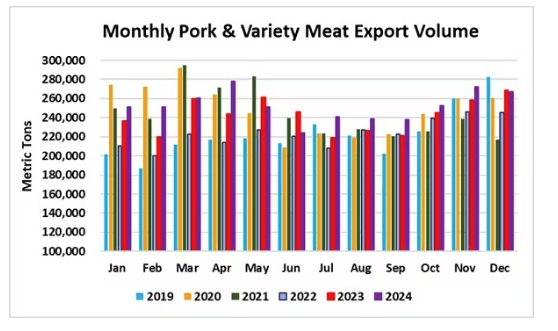
U.S. Pork Exports to Central America Soar to New Heights

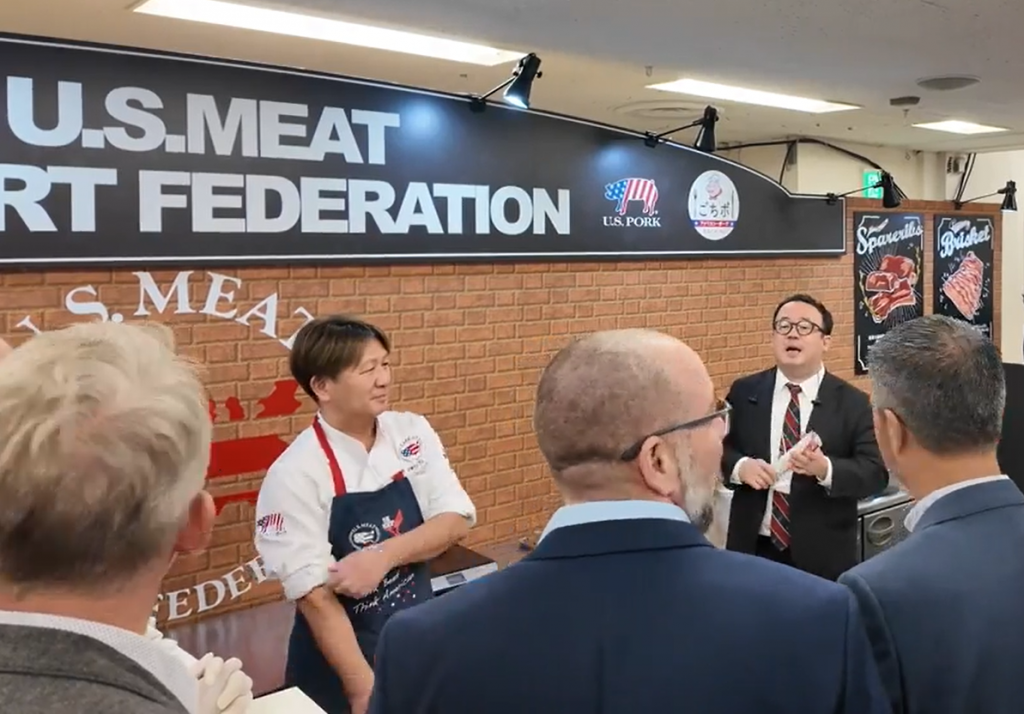
U.S. pork exports to Central America were record-large in 2024, breaking previous highs in both volume and value. Lucia Ruano, U.S. Meat Export Federation (USMEF) representative in the region, says consumer education programs, made possible through support from USDA and the National Pork Board, have helped position U.S. pork as a high-quality, center-of-the-plate protein.

The record performance for U.S. pork was achieved despite some obstacles in Panama, which has imposed a cap on pork imports that is inconsistent with its obligations under the U.S.-Panama Trade Promotion Agreement. Ruano says this has frustrated importers and led to some product shortages, including pork ribs sought by restaurant chains.

U.S. pork has full, duty-free access to all other Central American countries under the Central America-Dominican Republic-U.S. Free Trade Agreement (CAFTA-DR). 

In 2024, pork exports to Central America increased 21% year-over-year, reaching 166,000 metric tons. Export value climbed 29% to $523 million.

From Youth Summit to National Stage: Coy Davidson's Passion for Agriculture and FFA

Listen to KC Sheperd and Coy Davidson talk about his role in AFR and His award-winning Speech

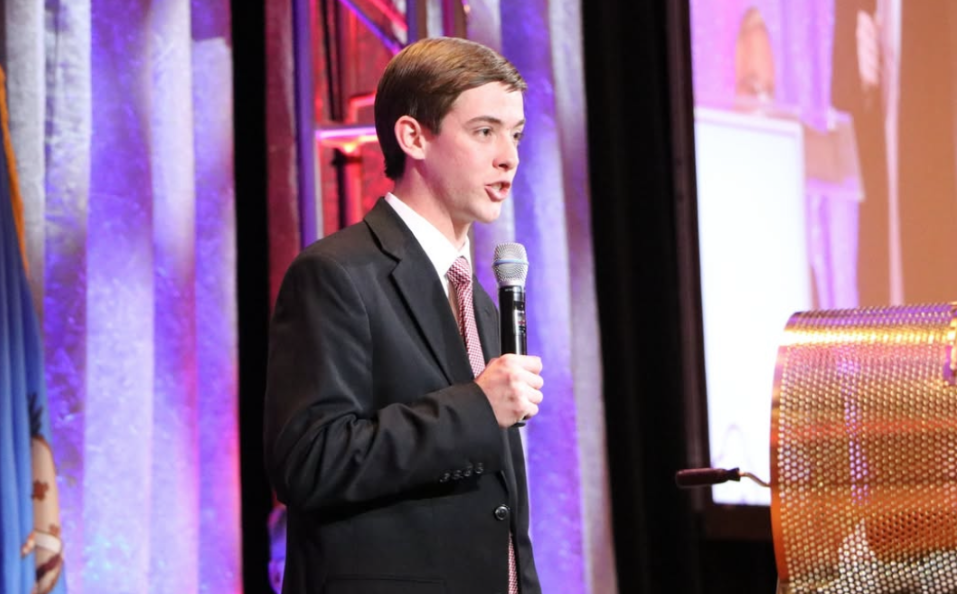
At the AFR Convention, Coy Davidson, a rising star in Oklahoma's agricultural scene, shared his FFA journey with Farm Director KC Sheperd. A senior at Elgin High School and a member of the AFR Youth Council, Davidson's story is one of dedication, passion, and a commitment to serving the agricultural community.

"I hold this really near to my heart," Davidson explained, reflecting on his involvement with the American Farmers and Ranchers (AFR) organization. "Ever since I think it was sixth grade, I've been at the AFR youth summit every single year, speaking at AFR speech competitions and just about everything I can do through AFR."

Davidson's connection to public speaking began in fifth grade after moving to Elgin. "I was approached by the ag teacher there at the time to give an AFR speech, and I never thought I'd be where I am today," he said. This initial spark ignited a passion that led him to excel in FFA speech competitions. "I found my passion through the AFR, and then as soon as I joined my first ag class, I knew that's what I wanted to do through the FFA," he recounted.

His dedication culminated in remarkable achievements. "Over the past couple of years, my goal was to win the state speech competition. I finally accomplished that my junior year last year, and then this past October, I was able to represent Oklahoma at the national FFA speech competition and actually won the national championship for prepared public speaking," Davidson proudly stated. That is something that I'll always hold close to my heart."

Davidson emphasized the invaluable experiences gained along the way. "The people that I met, and the people I was able to give my speech to, and the places I got to go to meet with people was just incredible," he said.

At the convention, Davidson was set to deliver a speech on a timely and critical topic: cybersecurity in agriculture. "This speech is about cybersecurity and espionage in agriculture," he explained. I always try to find something unique, you know, something that not everyone talks about."

His inspiration stemmed from personal experience. "My bank account got hacked, and I lost some money there. Never would I have thought that my little business could've been hacked," he revealed. This incident spurred him to delve into the issue. "When I dove into cyber security and espionage in agriculture, I realized the impact that it had on the US agriculture, Oklahoma agriculture, and so I realized it's something that needed to be brought to awareness."

Davidson highlighted the lack of awareness among farmers and ranchers. "I remember one statistic, for sure, and it was that 52% of farmers and ranchers don't understand the risk that they are at," he noted. "We're in the day and age of technology and everything nowadays is connected to the Internet. We're tied back to technology and so it's something that everyone's at risk of. Everyone has a cell phone, so everyone's at risk of cyber security so this is something that needed to be brought to people's attention."

Beyond his speaking engagements, Davidson plays an active role in the AFR Youth Council. "I serve as one of five members on the youth council and the big event we do each year is obviously the Youth Summit," he explained. He also enjoys participating in the AFR speech competitions and the poster contests. "We go to all five areas in Oklahoma and then we have the state contest there in Stillwater and so I get to represent the council and go to each of those speech competitions and mingle with the kids and talk to them about their speeches that's really cool."

Looking ahead, Davidson has ambitious plans. "One of my big goals right now is to run for state office," he shared. "I was selected as one of the three candidates for the office of State Secretary and so the next couple months will be campaigning for that office."

Regardless of the outcome, Davidson's future is firmly rooted in agriculture. "My ultimate goal is to attend Oklahoma State University next fall and major in Ag Economics with a minor in Political Science," he said. "My goal is to be able to come back to Oklahoma and represent a big ag company here in the state and advocate for them. I love ag policy. I love everything to do with agriculture and I want to be able to advocate for them."

Coy Davidson's journey is a testament to the power of passion and dedication, and his commitment to serving the agricultural community is sure to make a lasting impact.

Our own Ron Hays also visited with Davidson at this year's National Convention, when he was crowned the champion in Prepared Public Speaking. To hear that conversation, click here.

EPA Announces RFS Implementation Deadline Extensions for South Dakota, Ohio

Today, the U.S. Environmental Protection Agency (EPA) announced its intent to act on requests from South Dakota and Ohio seeking a one-year extension of the current implementation date to remove the 1-psi volatility waiver for E10. This action follows the February 26, 2025 deadline for states to submit written requests for delay. Kansas, which was not among the eight states addressed in the final rule, submitted a similar request.  

The agency intends to act expeditiously to delay implementation for South Dakota and Ohio until the spring of 2026. This will be the last year an extension can be provided to any of the eight states addressed in the final rule. 

A legislative solution before the summer driving season to allow for the permanent, year-round sale of E15 nationwide is an option being negotiated in Congress. In the absence of congressional action, EPA is still considering issuing emergency fuel waivers to allow the year-round sale of E15. EPA is closely monitoring fuel market conditions and considering potential emergency fuel waivers under the Clean Air Act to prevent supply disruptions and protect consumers from price volatility.

Wind energy regulation FAQs added to Attorney General's website

In the wake of growing unrest and controversy over the proliferation of wind farms in rural Oklahoma, Attorney General Gentner Drummond has unveiled a related Frequently Asked Questions section on his agency's website.

The FAQs address the authority of voters, including through locally elected county and municipal officials, to regulate wind, solar and other construction projects regarding renewable energy.

"I am hearing concerns from Oklahomans all across our state about the development of wind farms and similar projects, everything from the noise they generate to their impact on property values," Drummond said. "Our Frequently Asked Questions were developed to help individuals understand how these projects are regulated and what can be done about them."

Drummond said local regulation of wind farms is a growing trend throughout the United States. Limits include bans, moratoriums and other deterrents to development.

Controversy over wind farms has prompted a flurry of legislation being considered this legislative session.

Read the FAQs.

Bob Rodenberger Observes Strong Performance and Steady Demand in Cattle Markets

Listen to KC Sheperd talk with Bob Rodenberger about the latest in the cattle markets.

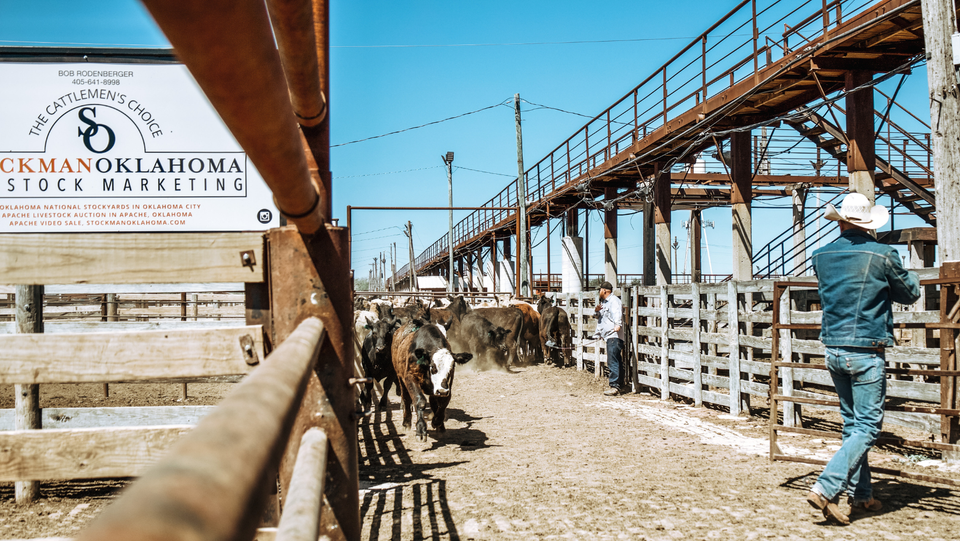
KC Sheperd, Farm Director, is back talking with Bob Rodenberger, a Stockman Oklahoma Livestock Marketing partner, as he gives the latest on the cattle markets.

Rodenberger discussed the cattle market's strong performance, with prices at their highest since 2014 and 2015, even though the runs were lighter at Oklahoma City's sale. The sale at Apache experienced better than average run,s with feeders of all sizes still in high demand.

"If you have an old cow and a calf, you can sell that pair and go buy a young cow with no extra money," Rodenberger noted. "It's the first time I've seen that since I've been in the business. Normally, you'd have to put $500 to $1,000 with that old pair to go buy a young cow, but right now, you can swap, even money."

He advised cow-calf men to consider risk protection as demand remains steady. He also highlighted the current drought situation and the need for substantial rainfall from April to June to improve pasture conditions and hay production.

Despite challenges, the market's positive outlook was discussed, with expectations of an 8,000-head run next week in Oklahoma City's cattle sales.

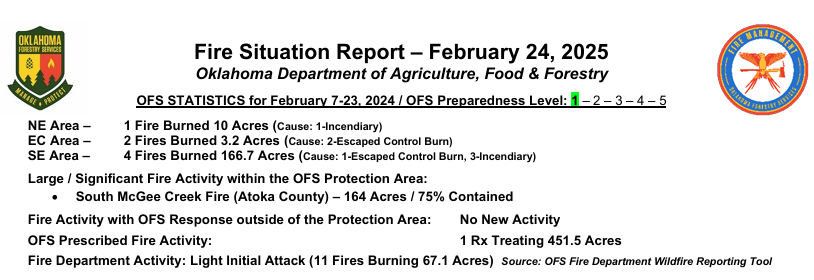
Most Recent Fire Situation Report Warns of Increasing Fire Danger Throughout the Day

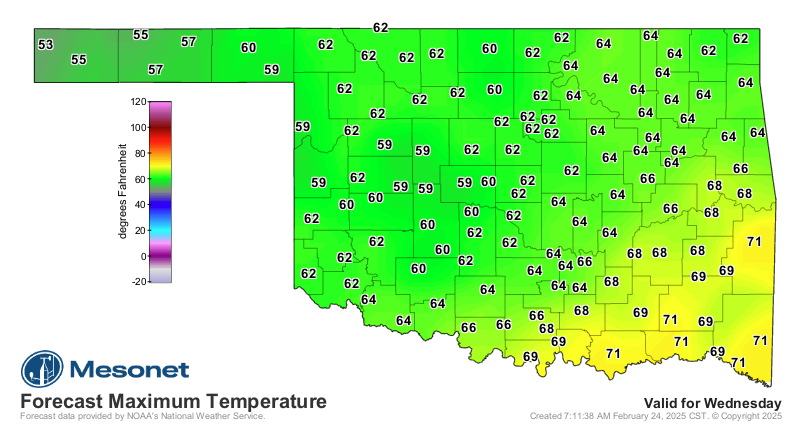
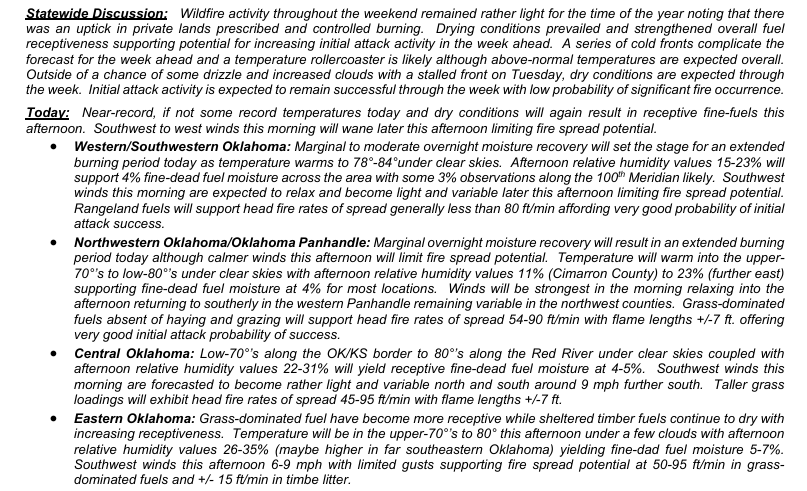
Statewide Discussion: Fire danger continues to ratchet up today with warmer air temperatures and low dew point temperature will drive afternoon relative humidity values below 25% across Oklahoma. Winds will also increase as they have returned to a southwest flow in the overnight increasing fire spread potential today. Unsettled weather late weekend will provide opportunity for rainfall, even some wetting potential for locations where the separation from a 0.25" rain event has eclipsed 100 days. Location, duration and amount of rainfall will be a critical factor in determining the wildfire threat as a potent weather system arrives on Tuesday (March 4) that has the indicators of a known weather pattern supporting significant wildfire potential for the western half of the state.

Today: A very dry airmass remains in place over Oklahoma coupled with increased temperature and a shift in wind direction and intensification. An uptick in initial attack activity and a number of prescribed or controlled burns on the landscape merit thorough patrol and mop-up today emphasizing efforts on the eastern and northern control lines.

  • Oklahoma Panhandle/Northwestern Oklahoma: Temperature will warm to 67°-74° under clear skies with afternoon relative humidity values 10-16%, yielding very receptive fine-dead fuel moisture of 3% at most locations. Unlike much of the state, winds will likely become northerly this afternoon, sustained 9-13 mph with some higher gusts. Rangeland fuels will support head fire rates of spread 90-150 ft/min and flame lengths 10-13 ft during peak burning conditions this afternoon. Initial attack efforts will be challenging with some large fire potential present, although calm winds following sunset hold good probability of initial attack success.
  • Western Oklahoma: Wind direction pulled back around to a west-southwest flow in the overnight hours and will increase some during the day with W-SW winds sustained 10-15 mph coupled with some gusts over 20 mph during peak heating. Fire spread potential will also increase over previous days. Temperature will warm to 73°-78° under clear skies with afternoon relative humidity 11-17% driving 1-Hr fuel moisture to 3% for most locations. The more heavily loaded rangeland fuels (approx. 2 ft. fuelbed depth) will exhibit head fire rates of spread 100-155 ft/min and flame lengths 10-14 ft. Lighter load grass fuels where grazing has occurred will support ROS nearer 50-95 ft/min and FL +/-6 ft. Initial attack =efforts are expected to be successful considering the calming of conditions with sunset although large fire potential (>300 acres) is present with conditions today.
  • Central Oklahoma: Numerous prescribed fire/controlled burns occurred on the landscape yesterday meriting thorough mop-up and patrol efforts today as fine-dead fuel moisture taps 3% at some locations with 4% observations broadly. Given the strength of drying conditions in recent days and very dry conditions today, fuels (even timber fuels) will be very receptive. Temperature will top out in the mid- to upper-70°s under clear skies with afternoon relative humidity values 16-20%, again yielding very receptive 1-Hr. fuels. West-southwest winds sustained 10-14 mph with some higher gusts will support head fire rates of spread in grass-dominated fuels generally 90-140 ft/min and flame lengths 8-12 ft. The taller, more heavily loaded grasses in the northern counties will exhibit ROS nearer 160 ft/min and FL 12-15 ft during peak burning conditions. Mixed-fuels (grass/brush) will exhibit ROS 50-75 ft/min and FL +/-9 ft with single and group tree torching yielding short-range spotting.
  • Eastern Oklahoma: Much lower relative humidity values in a dry-return flow environment will support a notable increase in fire behavior potential today with near-critical fire weather in place today. Temperature 74°-80° under clear skies with relative humidity values dipping into the 15-19% range north and 17-23% south will yield fine-dead fuel moisture at 3% and 4%, respectively. Southwest to west winds sustained 10-17 mph with some gusts nearing 25 mph will support potential for moderate to rapid rates of fire spread. The heavier grass loadings in the northern counties will support head fire rates of spread 120-165 ft/min and flame lengths 11-17 ft., noting that ROS may reach +185 ft/min (2.1 mph) during peak burning conditions in the heavier grass loadings where 2.5 ft. fuel bed depth is present. Timber-litter will exhibit ROS +/- 25 ft/min with FL 3.5-5 ft. Initial attack efforts will be challenging and large fire potential is present, although conditions calm with sunset providing good opportunity to contain ongoing wildfires.

Outlook:

Saturday - Overnight moisture recovery will only be moderate as a weak cold front pushes into the area leading into Saturday, offering slightly cooler temperatures and a bit of a boost in relative humidity combined with calmer easterly winds. Fire spread potential will relax somewhat as well with grass-dominated fuels supporting head fire rates of spread generally 90-120 ft/min supporting improved initial attack probability of success.

Sunday - Presents several challenges in the forecast with both fire weather and precipitation forecasts. There is potential for rain chances increasing in the afternoon, but also significantly increasing wind speeds potentially supporting a limited and conditional wildfire threat. Based on the current forecast resolution, fire danger is expected to be muted. Rainfall occurring Sunday/Monday will be a critical input for gauging the wildfire threat on Tuesday for the western half of Oklahoma.

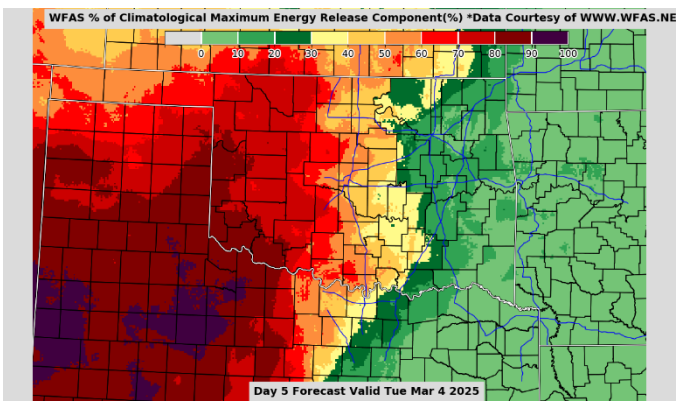
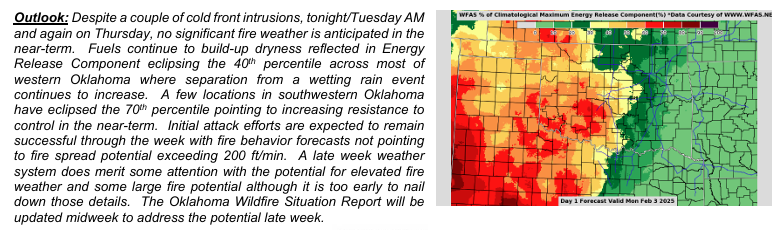
Given the absence of meaningful rainfall across western Oklahoma, Energy Release Component values have steadily increased. In the graphic to the right is the forecast ERC Percentile ranking for Tuesday, showing much of western Oklahoma eclipsing the 70th percentile and 80th percentile in the far west and southwest. Fires occurring in this environment will require additional resources and extended resource commitment to fully contain going wildfires due to increased resistance to control, which is one of the contributors to overall fire suppression difficulty. This reinforces the criticality of location, amount, and duration of rainfall that may occur Sunday and Monday.

County Burn Bans: None - Click HERE for the most current burn ban information.

See the original Oklahoma Forrestry Service's Fire Situation Report here.

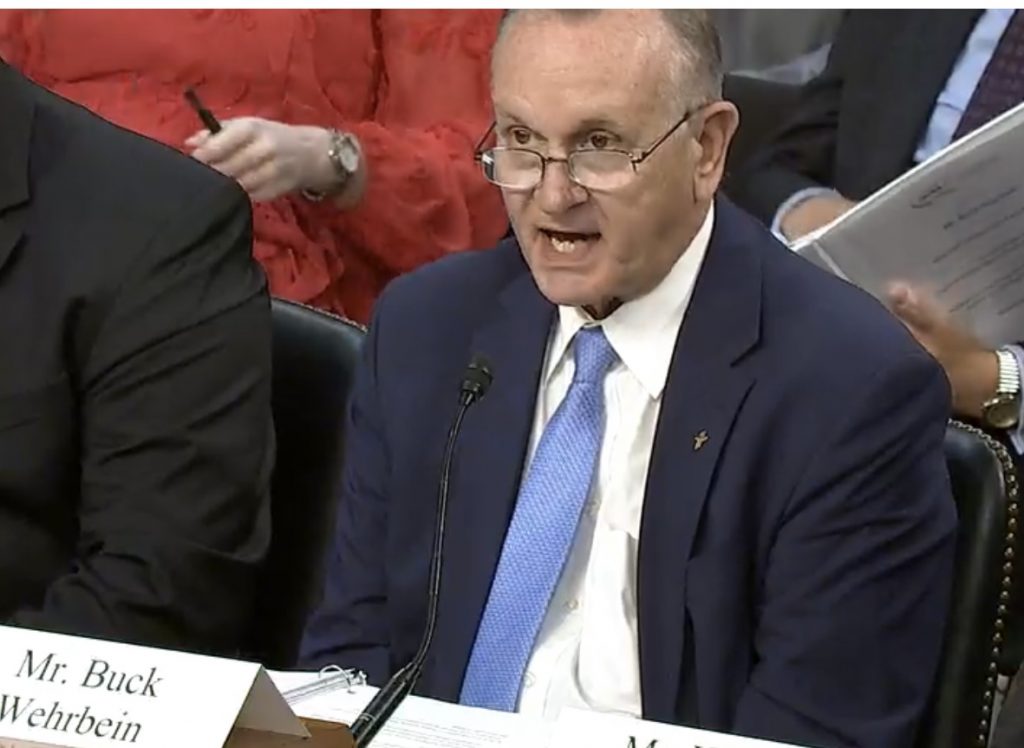
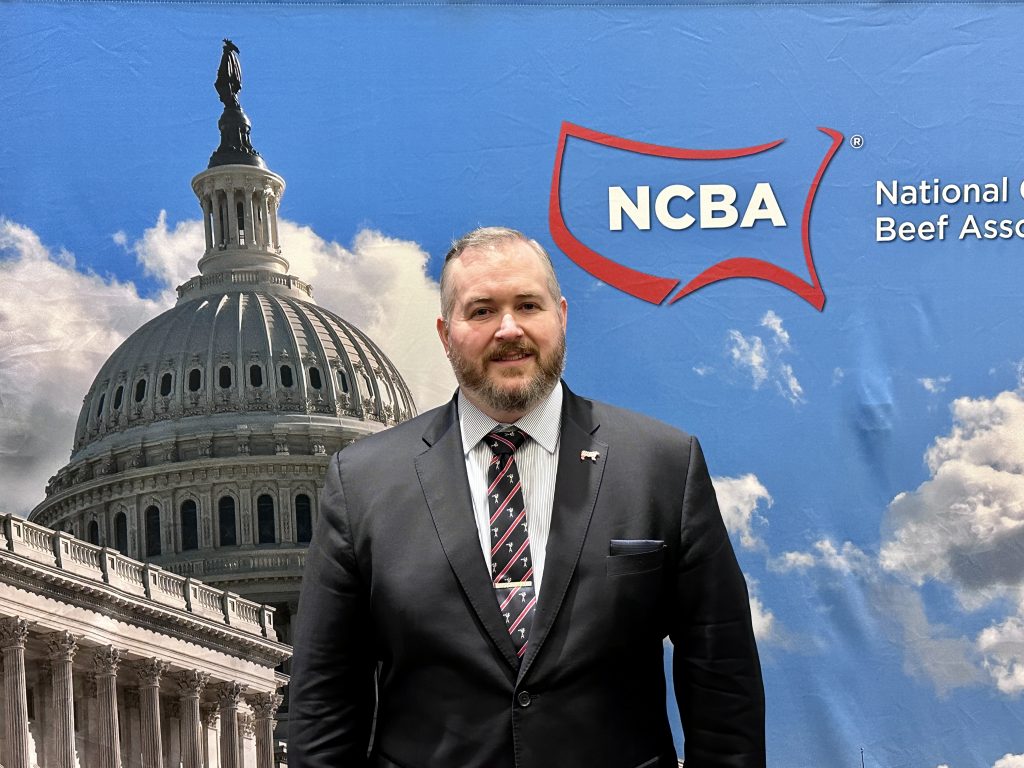
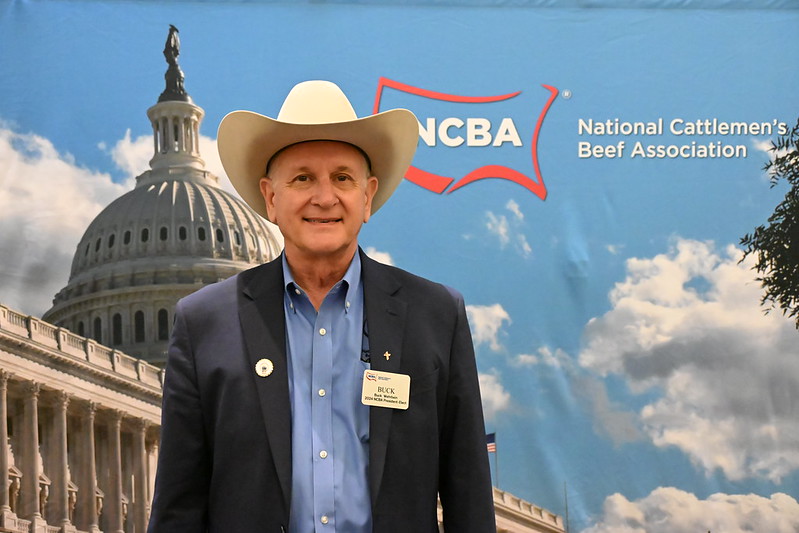
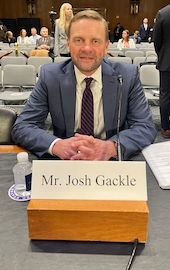
NCBA President Buck Wehrbein Addresses Congress about Beef Industry Challenges

Screenshot

Listen to Ron Hays's featured comments from Buck Wehrbein's opening statements at the Perspective from the Field meeting on Capitol Hill.

Buck Wehrbein, a Nebraska cattleman, recently ascended to the role of NCBA president during CattleCon 2025. Wehrbein, with a 45-year career in the cattle feeding sector, brings decades of dedication to the industry and leadership experience to NCBA's top leadership post, which served him well when he testified at the "Perspective from the Field Part 2" meeting on Capitol Hill this week.

Oklahoma Farm Report's Ron Hays features comments from Wehrbein's opening statement in today's BeefBuzz.

After briefly introducing himself and NCBA, Wehrbein spoke on behalf of NCBA's nationwide membership. He said, "Overall, I am pleased to report that the state of the cattle industry is strong. Strong cattle prices and beef demand have made the marketing environment for cattle better than virtually any time in the last five years. It is worth noting that these market improvements have occurred without any new legislation or regulation aimed at the cattle markets."

Detailed that while there is reason for optimism, the continually rising cost of feed, fuel, and other essentials still pose a challenge for producers. He expressed hope that the new Trump administration would help mitigate those challenges.

He both touted the success of the beef checkoff to the assembly and defended its work, saying, "One of the most effective tools designed to put dollars back into the pockets of farmers and ranchers is the beef checkoff. This immensely popular program has come under fire from the animal rights industry and the fake farm groups they bankroll. The truth is that the beef checkoff works for producers, and it does all of this with the pooled resources of cattle producers across the country at zero cost to the taxpayer. The beef checkoff is the model, public-private partnership and NCBA urges Congress to reject measures aimed at dismantling it."

He emphasized the importance of quickly adopting a farm bill, stating NCBA's support of Chairman G.T. Thompson's bipartisan legislation.  Citing the limited time for opening statements, he referenced other issues addressed in his complete written testimony, which can be viewed here.

His closing statement was as follows:

"NCBA is ready to work alongside this committee, this administration, and anyone else to ensure the future of the cattle industry remains strong."

During the Q&A session, Senator Cindy Hyde-Smith asked Wehrbein about the death tax. He answered, "The way land is appreciated and the value of it, now, is a good thing for the owner of it, but when it changes hands at the owner's death, they either have to sell or take great debt on it to pay the tax on it, so this is a huge issue. We were very pleased with what the Trump Administration did in its first term and we know that he wants to reauthorize the Tax Cuts and Jobs Act – and maybe even improve on it – so even with the higher level that is in it now, that even needs to be more, so I couldn't agree with you more that that is a big one for land owners. In agriculture, which is high volume, low margin, it is especially a hardship. We appreciate your concern, and we will be working closely with the administration toward that end."

The Beef Buzz is a regular feature heard on radio stations around the region on the Radio Oklahoma Ag Network and is a regular audio feature found on this website as well. Click on the LISTEN BAR for today's show and check out our archives for older Beef Buzz shows covering the gamut of the beef cattle industry today.

Chairman Thompson Congratulates Tom Schultz on Appointment as U.S. Forest Service Chief

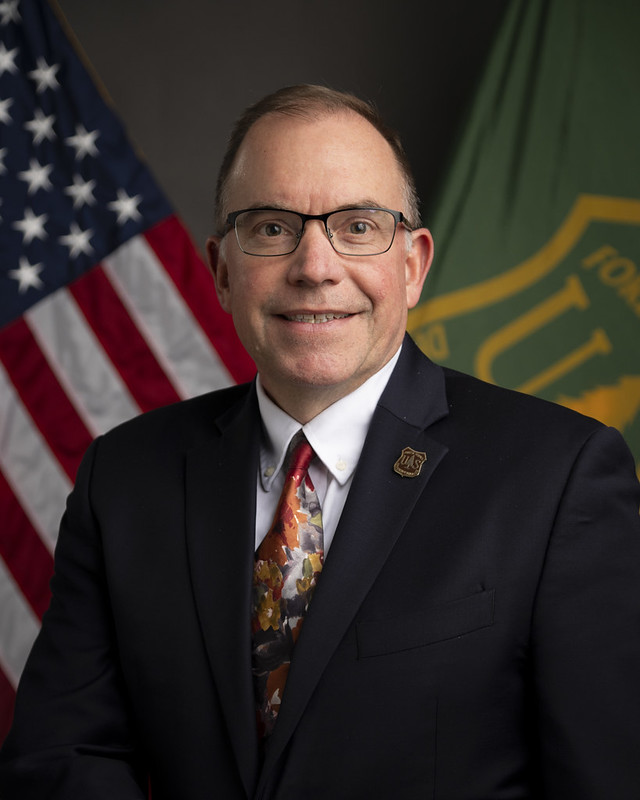
House Committee on Agriculture Chairman Glenn 'GT' Thompson (PA-15) issued the following statement on Tom Schultz' appointment as Chief of the U.S. Department of Agriculture's Forest Service:

"Congratulations to Tom Schultz on being named Chief of the U.S. Forest Service. Tom's deep commitment to active forest management will be instrumental in tackling our nation's challenges of forest health, resilience, and catastrophic wildfires. I have no doubt he will do an excellent job, and I look forward to working with him to restore the health and productivity of America's forests."

Weekly Zoom Series to Cover a Range of Topics for Beginning Producers

Josh Campbell, beginning farmers and ranchers state specialist for Oklahoma State University Extension, will host a weekly webinar series for new producers each Wednesday from March 5 through May 14, from noon to 1 p.m.

The free webinar series will provide opportunities for beginning farmers and ranchers to engage with a variety of topics important for new agricultural enterprises. Sessions range from business planning, farm taxes, enterprise budgeting, grants and loans to wholesale and e-commerce platforms

These sessions are designed to create a relationship between the next generation of producers and OSU Extension because new farmers and ranchers need support and resources as they build their operations.

Anyone who is interested in starting a farm or ranch operation of any size is encouraged to attend the weekly Zoom. Campbell will host the series through his experience as a county Extension educator of nine years and now in his role as state specialist for almost a year.

For more information or to register for the free series, contact Josh Campbell at 405-744-1721 or joshua.campbell@okstate.edu.

Ag in the Classroom Gear Now Available!

Fundraiser Support for Oklahoma Ag in the Classroom Join us in promoting agricultural literacy by purchasing an exclusive Oklahoma Ag in the Classroom  gear! Wear your support for Oklahoma Ag in the Classroom and help cultivate knowledge in classrooms across Oklahoma!

We are blessed that so many Oklahoma teachers go to the National Conference with us every summer.  We try and help offset some of those costs for the attendees each year-as you all know travel gets expensive!  We are trying something new this year to help with some of those costs.  AITC is offering the opportunity to purchase new AITC gear and part of the price will go to offset a portion of the cost for the teachers who attend the National Conference--

This sale is for a limited time--Get yours today!! 

There are lots of ways to order--SCAN the QR Code, Use the URL, or CLICK the Order Today button!!

As always, thank you for your support of our program!!

ORDER TODAY!!

OALP Class XXI Studies "Environmentally Intelligent Farming" as They Near End of Kenya Travel Study Experience

We continue to share comments from the Director of the Oklahoma Ag Leadership Program Edmond Bonjour (and also from Rose Bonjour) as Class XXI travels across parts of Kenya for their International Capstone study experience. This story includes stops made on Thursday, February 27, 2025

Thursday, the OALP began the day with a visit to Dudutech, a Bioline Agrosciences group company - the largest biological production facility in sub-Saharan Africa. (Rose points out that Dudu means insects in Zahili.) They are leaders in Integrated Pest Management (IPM) with a wealth of experience in designing and delivering about 50 control products of which 17 are biological control agents.

Integrated Pest Management (IPM) is quite complex. Education is a huge component of what they do. With the need to feed 10 billion people by 2050, solutions must to be created. Climate change is impacting production, conventional ag may add to the greenhouse effect, and soil degradation is happening. It's time for a paradigm shift.

Physical (trapping), biological (natural predators), cultural (crop rotation), companion crops and chemicals are all ways to control pests. Steps to successful IPM includes 1) identifying pest, 2) understanding the pest, 3) monitor crops (which is the backbone of IPM), 4) make a decision - when to act, 5) take action, 6) assess results.

Established in 2001, Dudutech has rapidly grown into a global biotechnology business, employing leading entomologists, agronomists, and microbiologists to develop solutions to reduce pesticide use, and improve soil health and long-term sustainability in agriculture. Sustainability is achieved when balance is created with the three Ps - people, profit, and planet. They have 18 hectares of greenhouses and over 400 employees. The products reach their world-wide customers within 72 hours.

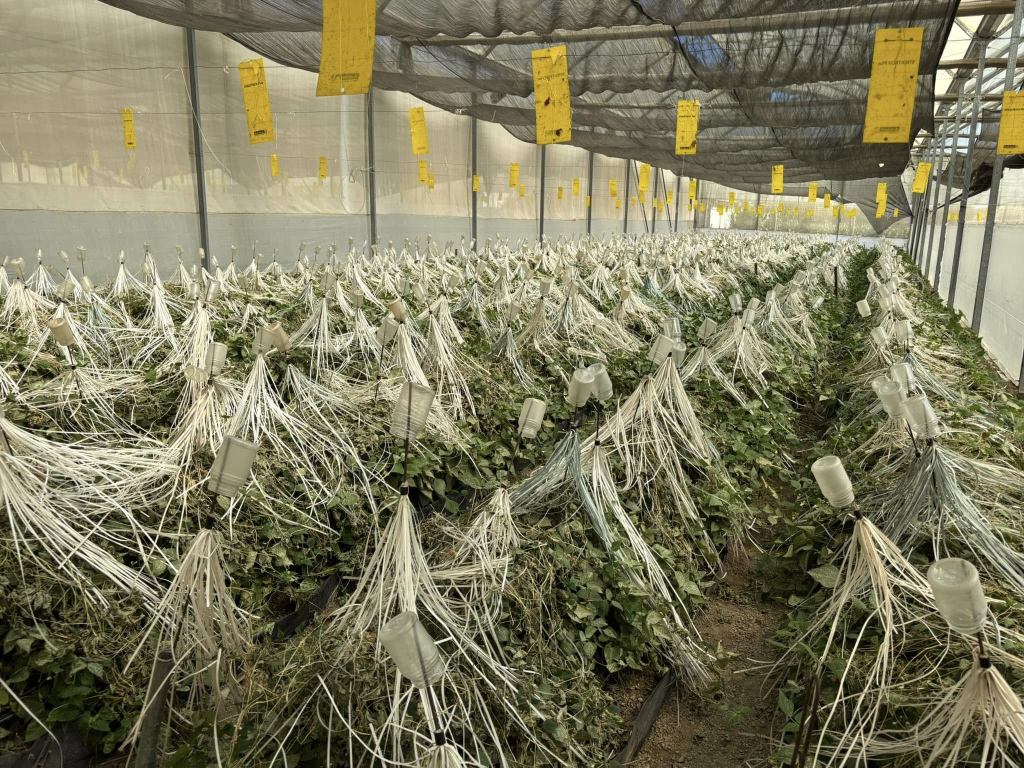
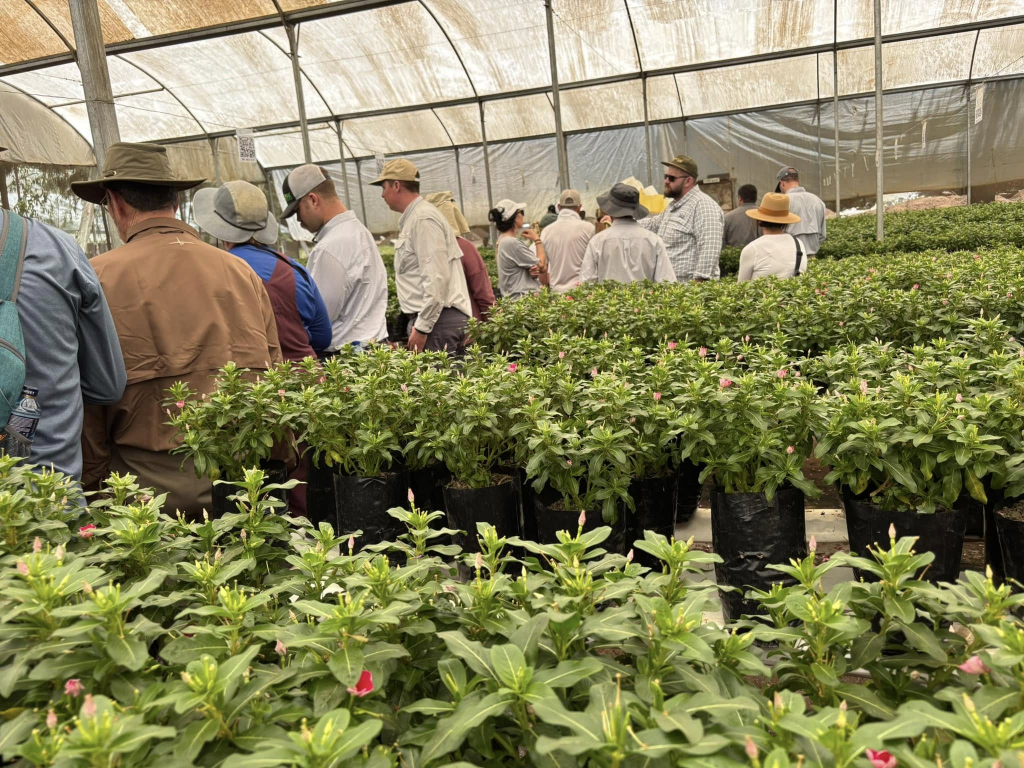
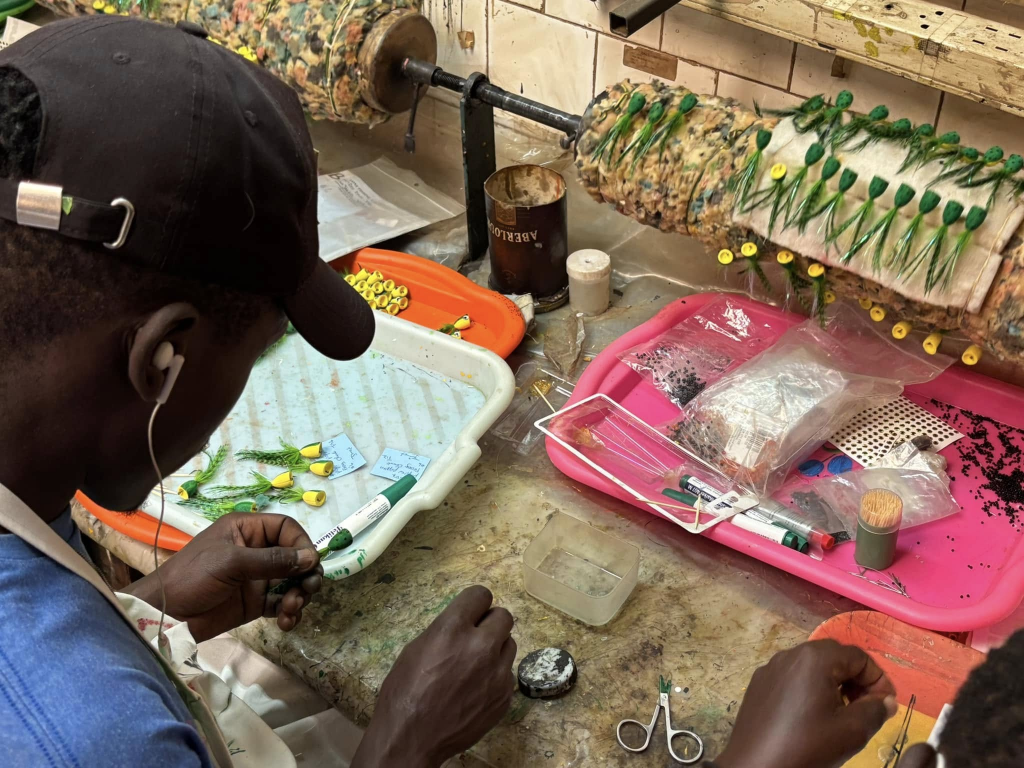
We toured the greenhouses growing red spider mites and its predatory mite, Phytoseiulus persimilis. It takes 8 weeks to grow the mites. They harvest the predatory mites by allowing them to crawl up white spider-looking strips into a bottle. These mites are maintained in a cold environment from the greenhouse to processing. One gram of predatory mites contains 100,000 mites and sells for $1.20 USD per 1,000 mites. They also grow fungi for the control of whiteflies, thrips, snails, slugs, snails, and nematodes. Mating disruption and sterile male techniques are used to control coddling moths in orchards.

In the Greenhouse- collecting predatory mites
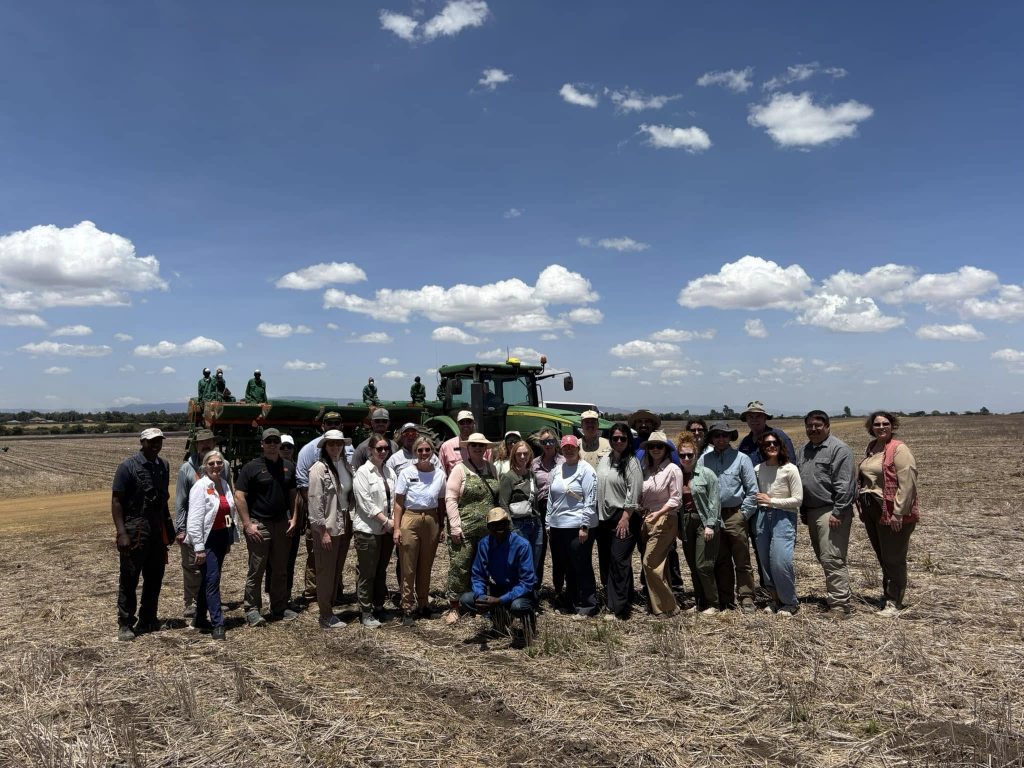
Class XXI on the campus of Dudutech

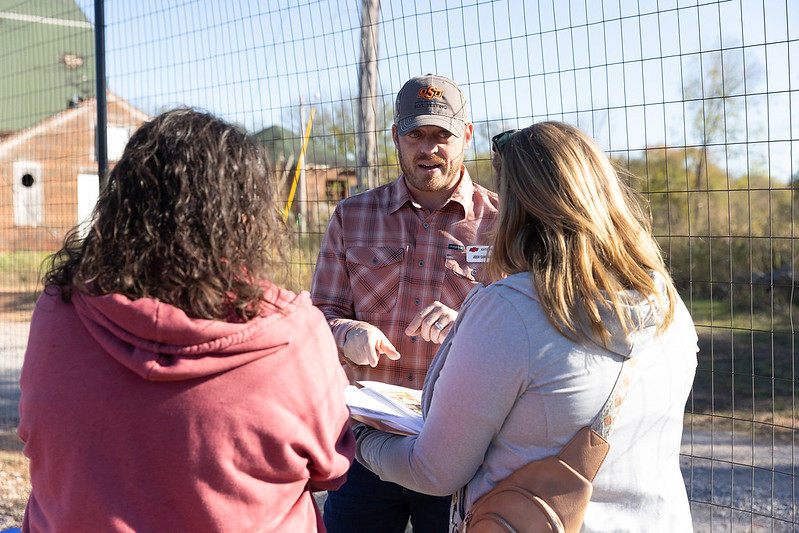
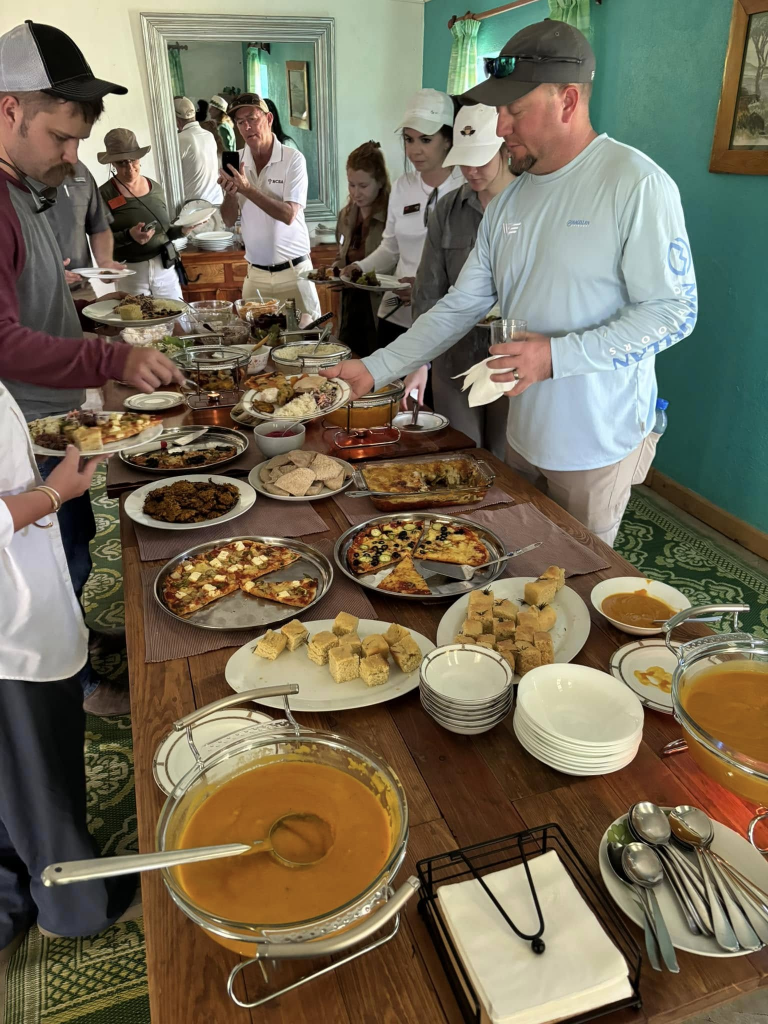
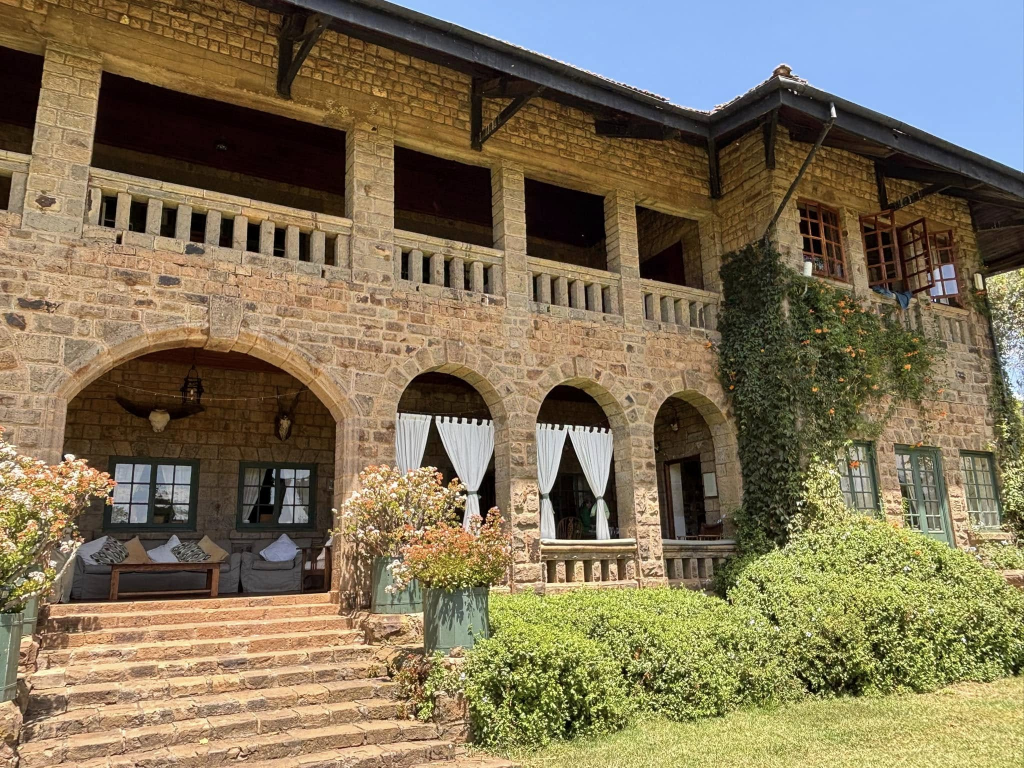
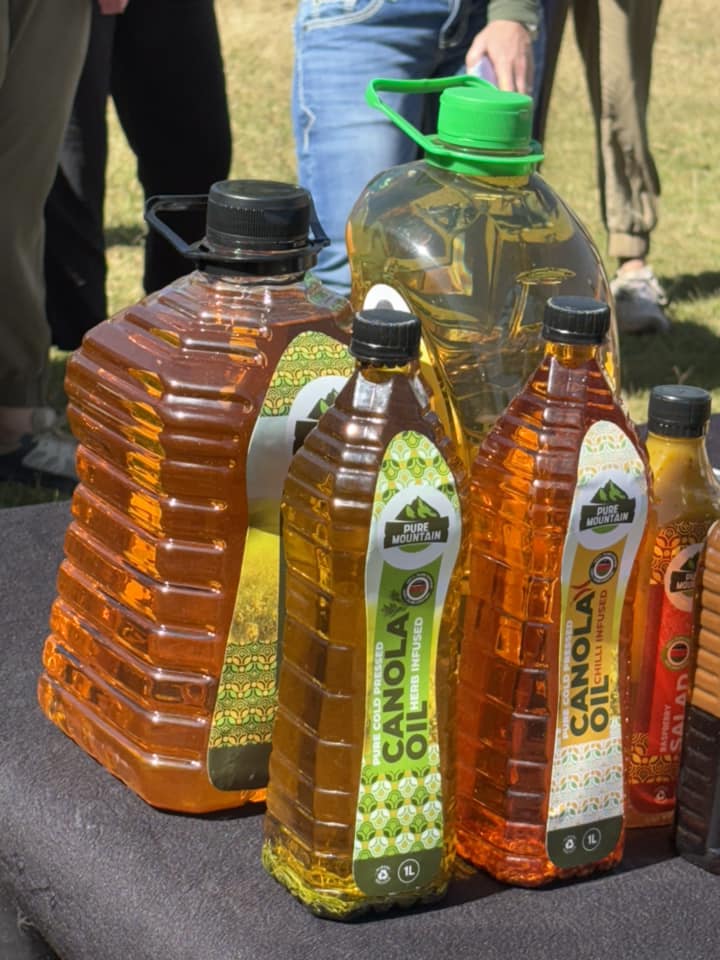
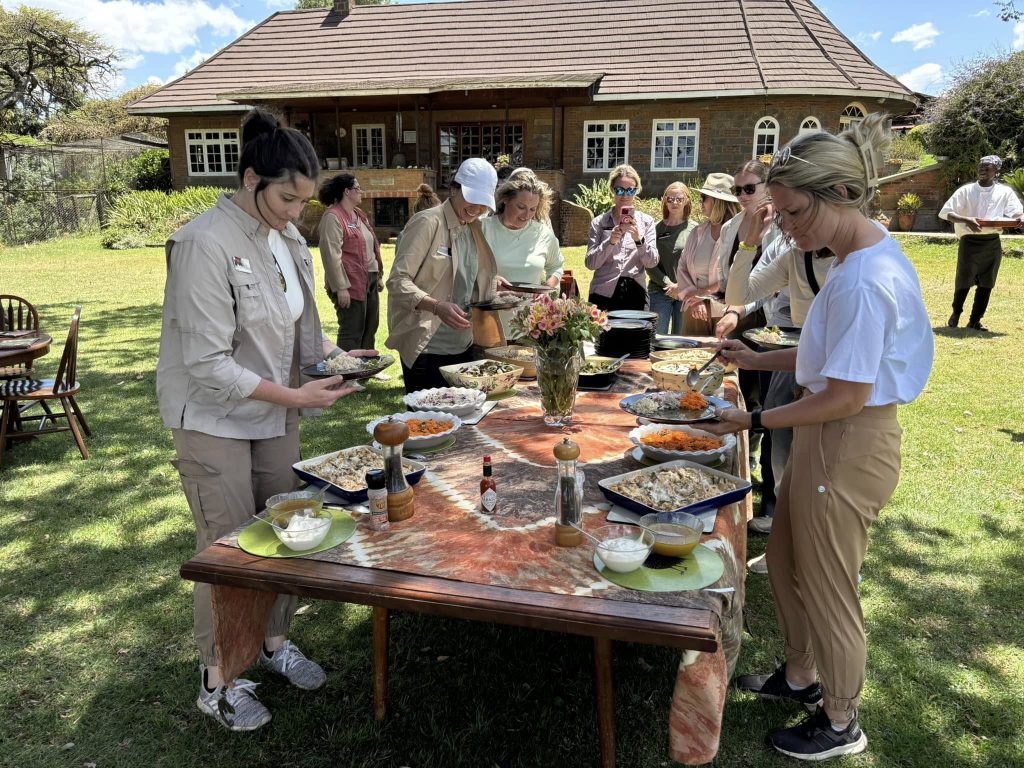
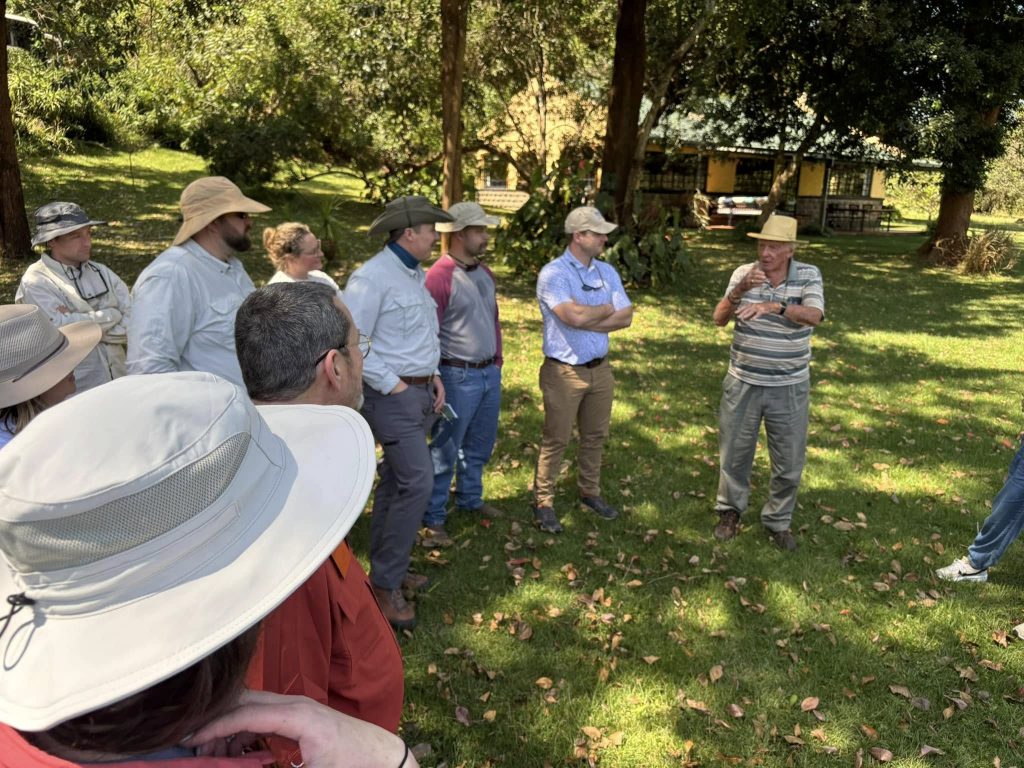
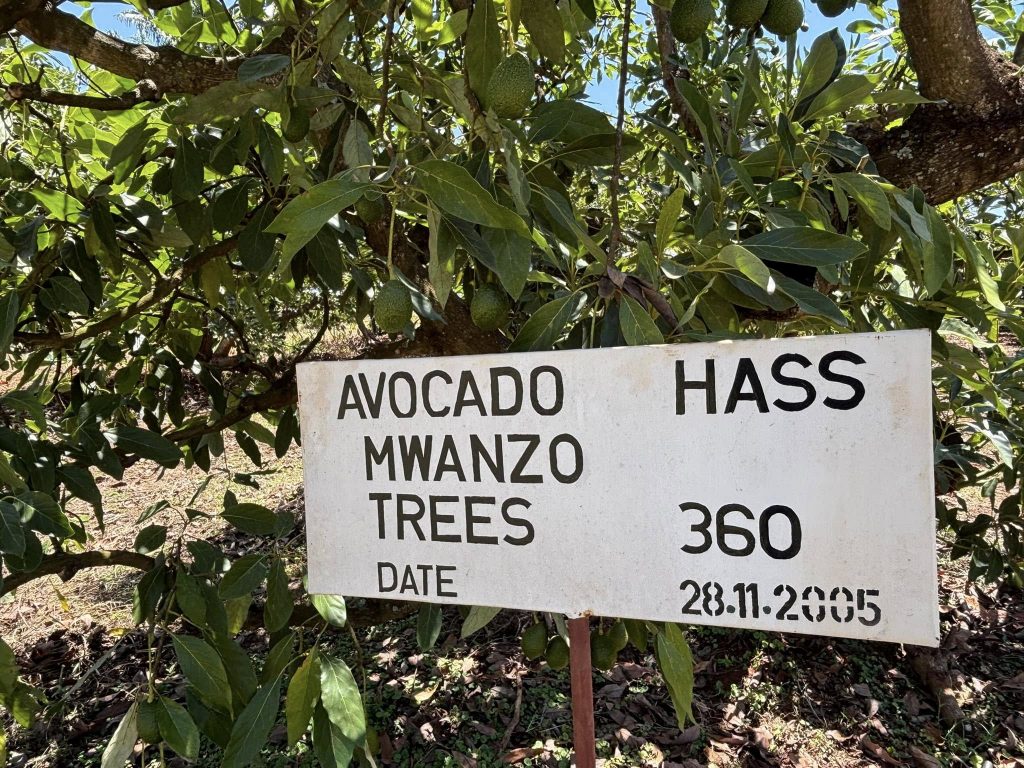
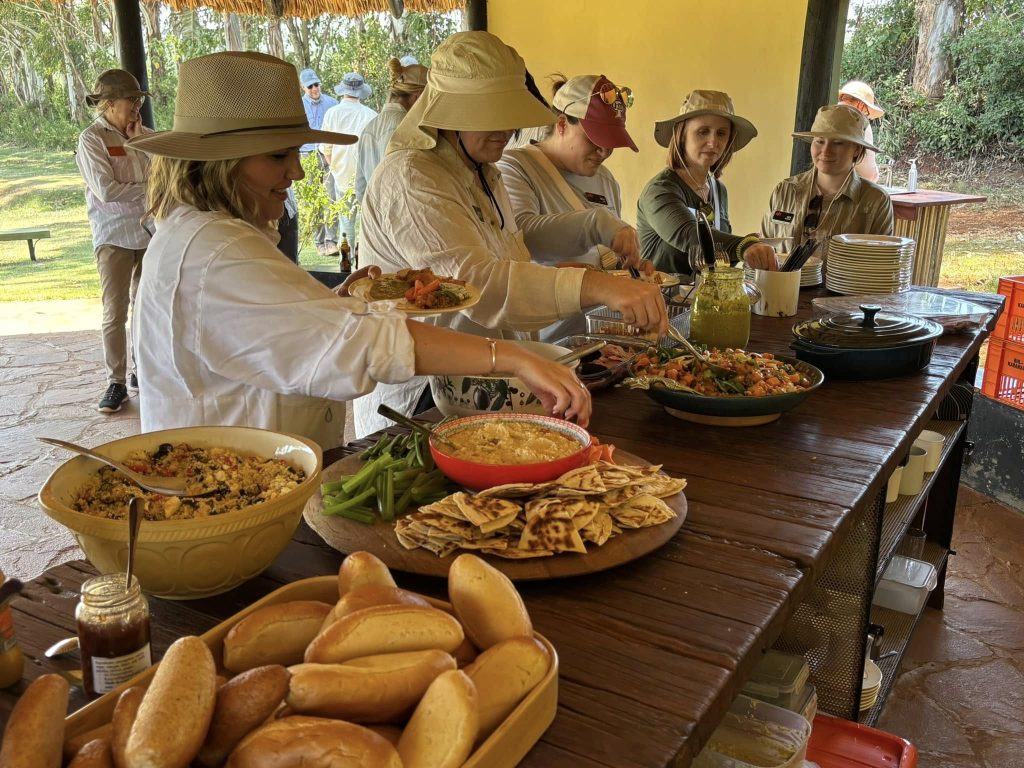
The OALP had an organic lunch at Ecoscapes followed by a tour of the property. Richard and Alexandra Bell bought a 180-acre soybean farm in 2014 on the west shore of Lake Naivasha and from it they developed a unique mixed-use community called Ecoscapes Sanctuary.

May be an image of 1 person and hat
Alex Bell


The owners took out a massive loan to buy the 180 acre farm. They converted 30 acres for organic vegetables in 2015. Organic farming was relatively new in Kenya and it was a disaster. After a year they shut down, stepped back and assessed what to do. They sold off two-acre lots invest into Ecoscape. "You battle on. Pick yourself up and march on." They are down to 20 acres of organic vegetables (too small and need to diversify), 80 acre wildlife sanctuary with an easement so nobody can buy too close. There has been a lot of human/wildlife conflict and they wanted to protect the wildlife.

Security is a huge cost. If you buy a plot, you have full permission to visit the sanctuary. They have been watching a 92 acre plot and recently signed a longterm lease on that land. 60% sanctuary, 40% organic and the tourism.

Our host's husband is over cloud implementation for Amazon of Middle East and Africa infrastructure. They have four kids. Her husband drives the infrastructure and she does the farming. "This is us."

She wants to make a difference and. "Let food be thy medicine and medicine be your food."

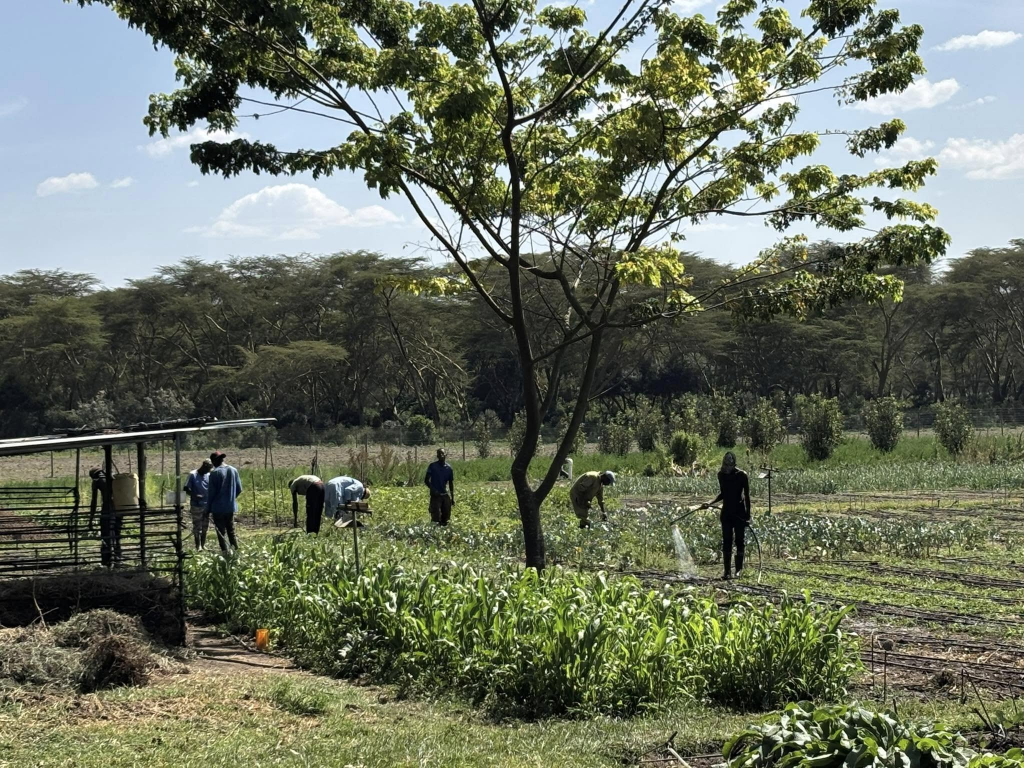
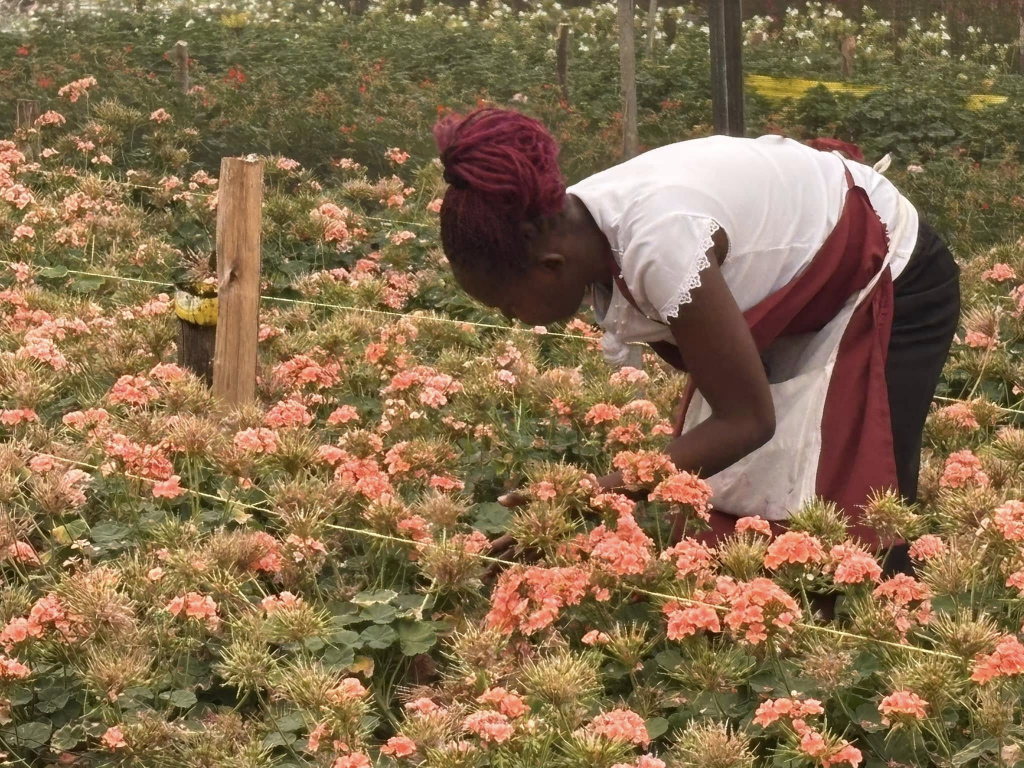
Alex states that they are growing organically because there are many unregulated pesticides in Kenya, climate change, environmental degradation, and pest resistance to pesticides. They are trying to build the soil through minimum tillage, crop rotation, and utilizing compost. Healthy soil = Healthy plants. Propagation of plants is conducted on-site. Ecoscspes employs 75 people, over 50% of which are women and youth.

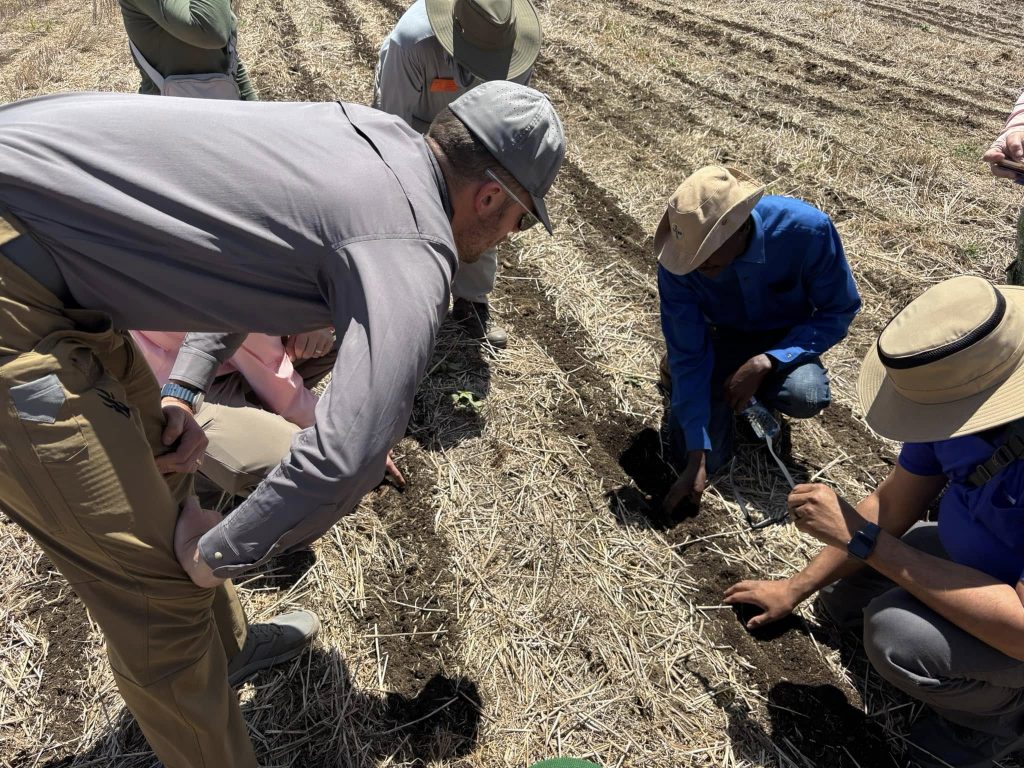
Workers in one of the organic plots at Ecoscapes

As Class XXI continues to travel across Kenya- the application for Class XXII is now available on line at the OALP website. Click here for that application– which is due by May first, 2025. In person interviews will happen in June and the XXII will meet for the first time in August of this year.

This Week on SUNUP: Analyzing the Latest WASDE Report and Weather Impacts with John Michael Riley

Dr. John Michael Riley discusses the highs and lows of current grain markets.

This week on SUNUP, OSU Agriculture Economist Dr. John Michael Riley discusses the highs and lows of current grain and cotton markets.

In the time since the grain and cotton markets were last discussed, a new WASDE report was published, and although it held no big surprises, an inevitable bounce in the marketplace was still felt.

"That is why I have always said and continue to say, 'If you can stay out of making any pricing decisions when that report is in the midst of being released, try to do your best to do that.'"

According to Riley, the market expects the recent extremely cold temperatures to impact wheat yields. "We started getting that cold weather about the time that the WASDE report was released, but since then, the market really rallied for a couple of days. A lot of that had to do with the winter freeze, but we are also getting a lot of positive news about exports."

Wheat exports are on pace with normal but above expectations.

Corn prices have experienced a strong push and are currently much stronger than soybean prices since late January or early February.

"As farmers are making their decisions, I think that we are possibly going to see some of that strength in the corn price play a role in our acreage numbers. In regards to acreage, some early numbers from CoBank say that corn acreage should come up about four percent, and the loss there is going to be soybean acres, so I think we are seeing that strength in the corn price play out there."

According to CoBank's early numbers as well as numbers from the National Cotton Council, cotton acreage will be down this year.

Riley went on to give his advice to producers, which centers on being mindful of expenses. Click the listen bar at the top of the page to listen to the complete audio.

This week on SUNUP:

  • Amanda De Oliveira Silva, OSU Extension grain marketing specialist, says the recent cold weather has kept much of the wheat crop from reaching first hollow stem, but snow helped insulate many grain-only productions from freeze damage. Dr. Silva also shares her research on wheat grazing study.
  • Barry Whitworth, OSU Extension state veterinarian, has information when it comes to safety when buying chickens and eggs with avian influenza impacting the poultry industry.
  • State climatologist Gary McManus says rain chances return in a few days, but a dry pattern is likely this spring.
  • John Michael Riley, OSU agricultural economist, explains how the markets reacted to the recent cold snap.
  • Finally, Ty Gregson, OSU Extension assistant opioid and substance misuse specialist, explains how seasonal depression can set in and introduces OSU Extension tools available to combat the issue. 

WHAT THEY ARE SAYING: Strong Support for USDA's Actions to Combat Avian Flu

Following the U.S. Department of Agriculture's announcement of new measures to combat highly pathogenic avian influenza (HPAI), elected leaders and industry stakeholders from around the country are applauding the five-pronged strategy.

U.S. Secretary of Agriculture Brooke Rollins joined FOX News to outline the Department's strategy to strengthen biosecurity, support farmers, and ensure affordable food prices for American families.

Image showing USDA Secretary Rollins speaking with FOX News

Secretary Rollins also outlined her strategy in a Wall Street Journal op-ed and spoke with media about the plan following President Trump's first Cabinet Meeting of this term.

Agriculture and Government Leaders Applaud USDA's Plan to Address Avian Flu

Gov. Spencer Cox (UT) "I was grateful to meet with @SecRollins last week to review this plan, which is a huge win for American agriculture! @USDA is investing $1 billion to protect poultry farmers, strengthen biosecurity, and lower egg prices for families. This is a smart, necessary step to keep food affordable and secure in Utah."

Gov. Brad Little (ID) "This is exactly the type of leadership we have been looking for from @USDA. I applaud @SecRollins & her team for taking on a literal kitchen table issue that Americans care about."

Gov. Jim Pillen (NE) "Thank you @SecRollins & USDA for taking the lead on this critical animal health issue. We need an active response to skyrocketing prices and an immediate strategy to addressing avian flu."

Gov. Kim Reynolds (IA) "Thank you, @SecRollins, for your strong leadership and bold strategy to combat HPAI. Iowa is ready to work with @USDA to fight this disease, support our farmers, and bring down egg prices for Americans."

Gov. Larry Rhoden (SD) "@SecRollins' plan to lower egg prices and address Avian Flu will be a tremendous benefit to us here in South Dakota. I appreciate her leadership and am very encouraged by what I'm seeing!"

Sen. John Boozman (AR) "Before we get started, I want to take a moment to thank Agriculture Secretary Brooke Rollins for her announcement today on a bold strategy to address avian influenza. This virus continues to threaten our poultry and dairy farmers, with ripple effects throughout the food supply chain. I applaud the Trump administration for prioritizing a response from day one."

Sen. Amy Klobuchar (MN) "The Department of Agriculture's avian flu strategy is an important step to support our farmers who are losing flocks and help consumers facing skyrocketing egg prices. The administration must also confirm it has rehired all avian response staff fired in recent weeks, and ensure that no other avian flu and animal disease response efforts are impacted by recent firings and funding freezes."

Sen. Joni Ernst (IA) "Thank you to @SecRollins for taking swift action to combat avian influenza and incorporating some of my ideas into USDA's response strategy to mitigate this outbreak. Together we will protect our poultry farmers and reduce egg prices for American consumers."

Sen. Tommy Tuberville (AL) "Thank you, @SecRollins and the whole administration for fighting for our broiler chicken and egg producers. Alabama and other poultry-producing states across the country have been devastated by the bird flu, and this bold strategy is exactly what we need."

Sen. Roger Marshall (KS) "This is real leadership at work. @SecRollins and I discussed this during her visit to Kansas last week. Good to see swift action from @USDA to address a crisis affecting farmers and all Americans. This move will improve biosecurity and lower food prices. That's how it's done."

Chairman Glenn 'GT' Thompson (PA) "I want to thank President Trump and Secretary Rollins for laying out a clear and effective strategy to combat the avian flu outbreak. Today's announcement and investment will help bring relief to consumers and better tools for industry and I look forward to assisting the Administration, states, and stakeholders address animal health and bring stability to egg prices."

Rep. Dave Taylor (OH) "Congress must support @USDA to combat high egg prices & keep food affordable for Ohio families. I'm eager to work with @SecRollins & the Trump Administration to drive grocery prices down for American families & bolster our Nation's agriculture industry."

Rep. Tracey Mann (KS) "When President Biden botched his response to the HPAI problem, he also lost the trust of our trading partners, forced American families to pay more for eggs and other goods at the grocery store, and made America less safe. President Trump and Secretary Rollins are providing a new direction in their decisive actions to provide overdue relief for America's poultry and dairy producers and all consumers. For years, I underscored to the Biden Administration the importance of investing in animal health research and allocating resources to outbreak prevention rather than outbreak control. Instead of working with farm-district representatives like me, the Biden Administration continued to implement overreaching regulations that further hindered America's agricultural producers and drove up costs. I am grateful that President Trump and Secretary Rollins have rejected that nonsense. As the representative in Congress for part of the animal health corridor, which leads the U.S. in world renown research and development, I am confident in President Trump's direction to protect our food supply and limit animal disease outbreaks. This is the type of leadership America deserves."

Rep. Randy Feenstra (IA) "I applaud the Trump administration's announcement of its HPAI strategy to end the surge of bird flu cases, support our producers, and lower egg prices for our families. I am glad to see many provisions that I have called for outlined in this strategy, including fairer indemnity payments for our producers, increased biosecurity measures on our farms, and an aggressive, yet voluntary, vaccination strategy to prevent mass depopulation of chickens and turkeys. I thank Secretary Rollins for her rapid work and response to the bird flu outbreak and look forward to working with USDA and the Trump administration to bring egg prices down, stand with our producers, and prevent and mitigate the spread of foreign animal disease."

Rep. Brandon Gill (TX) "Thank you @SecRollins for putting Americans first at the Department of Agriculture. Texas is proud."

Rep. Lisa McClain (MI) "President Trump inherited a run-down economy and a supply chain crisis. Unlike the Biden administration, President Trump and @SecRollins already have a plan to address the rising egg prices. Thank you, @POTUS and @USDA, for putting together this comprehensive strategy."

Rep. Ashley Hinson (IA) "I'm grateful to @SecRollins for laying out a strong plan to lower egg prices, protect America's farmers and producers, and meaningfully combat avian influenza. This is the type of transparency and clarity Americans deserve. Poultry farms are essential to Iowa's economy, and I will continue working with @USDA as we explore ways to protect our food supply chain, health, and the livelihood of farmers."

Oklahoma Secretary of Agriculture Blayne Arthur "The plan put forth by @SecRollins and her team at @USDA will provide immediate relief to poultry producers and to families at the grocery store. We appreciate her fast action and concern for consumers and farmers and ranchers."

Kentucky Commissioner of Agriculture Jonathan Shell "Poultry is Kentucky's number 1 Ag commodity! Thank you @SecRollins and @POTUS for this quick, positive and effective leadership on such a pressing issue! Let's get these egg prices down, Making Groceries Great Again!"

The White House "@USDA, @SecRollins' plan to fix egg prices after Biden failed to act on repeated outbreaks: - $500M for farm biosecurity - $400M for farmer relief - $100M for R&D - Cutting red tape & costly regs - Safe imports to lower prices Help is on the way for Americans!"

House Committee on Agriculture "@SecRollins plan to fix egg prices after Biden failed to respond to the outbreaks: - $500M for farm biosecurity - $400M for farmer relief $100M for R&D - Cutting red tape & costly regulations - Importing safe eggs to lower prices."

House Committee on Agriculture "Under @SecRollins, @USDA is wasting no time to tackle the avian flu and get egg prices under control."

Senate Ag Committee Republicans "Chairman @JohnBoozeman applauds @SecRollins for prioritizing a strategy to combat avian influenza."

Texas Department of Agriculture "Texas Agriculture Commissioner Sid Miller applauds United States Department of Agriculture (USDA) Secretary Brooke Rollins for her decisive action in addressing the ongoing avian influenza outbreak. Her five-prong plan makes it clear that tackling this crisis is the USDA's number one priority—something that was sorely lacking under the Biden Administration. For too long, Washington has ignored the impact of this outbreak on farmers, ranchers, and consumers. The Biden Administration allowed egg prices to skyrocket while doing little to curb the spread of the virus. Rather than finding and investing in better solutions for limiting the spread and treating the virus, we've been forced to cull over 166 million birds. That's not a strategy—it's a failure of leadership, one that our poultry producers and consumers are paying for. Secretary Rollins is taking action by sharpening biosecurity measures, developing vaccines tailored to this evolving strain, and applying critical funding to research to prepare better and protect our agricultural industry. This is the type of leadership we need—bold, proactive, and focused on results. I stand ready to work alongside Secretary Rollins and her team to ensure Texas farmers and ranchers have the tools to fight this disease, protect their livestock, and keep food prices stable for American families."

Iowa Department of Agriculture and Land Services "Iowa's poultry farmers have been hit hard by H5N1 HPAI. I am grateful to Secretary Rollins and USDA for making this issue a top priority. Secretary Rollins and her team at USDA have introduced a broad, five-pronged plan to better support poultry producers and tackle rising egg prices for families. Enhanced biosecurity is the best way to protect our flocks from any virus. Secretary Rollins has pledged $500 million to support on-farm biosecurity assessments and cost-share funding, which will help farmers make necessary infrastructure improvements. The plan also commits $400 million to update indemnity tables, something I called on USDA to do last year, to ensure farmers are receiving fair market rates for impacted birds. I am supportive of exploring an effective H5N1 HPAI vaccination strategy. I encourage USDA to work closely with state animal health officials, farmers and industry to formulate an implementation strategy, incorporate valuable lessons learned, and minimize potential negative trade impacts. Our team at the Iowa Department of Agriculture and Land Stewardship appreciates the strong partnership we have with USDA. We look forward to working together to create a modern and effective H5N1 HPAI response strategy."

National Association of State Departments of Agriculture "U.S. Secretary of Agriculture Brooke Rollins' remarks made to NASDA members this morning announced that these steps are already underway, and NASDA stands ready to collaborate with USDA and federal agencies to ensure the United States' collective response to HPAI is coordinated, efficient and effective at all levels."

American Farm Bureau President Zippy Duvall "We appreciate USDA's blueprint for tackling avian influenza America's farmers are committed to ensuring a safe and abundant food supply, and these investments to advance biosecurity and research will further equip them to combat the threat of HPAI."

American Farm Bureau Federation "America's farmers are committed to ensuring a safe and abundant food supply, and they take the threat of Highly Pathological Avian Influenza (HPAI) seriously," said AFBF economist Bernt Nelson. "Strict biosecurity measures on the farm and the depopulation of infected birds are evidence of the extreme lengths' farmers go to protect the health of the national flock and the American public. Farm Bureau supports research to develop a safe, effective, and practical vaccine for HPAI in birds. In the meantime, containing the spread of the virus is a priority."

Texas Farm Bureau "Texas Farm Bureau (TFB) thanks President Donald Trump and U.S. Secretary of Agriculture Brooke Rollins for working on a comprehensive strategy to combat the avian flu outbreak and providing common sense solutions to stabilize egg prices. We also thank Secretary Rollins for taking time to recently meet with TFB county leaders and other agricultural organizations in East Texas to hear firsthand about the issues facing the poultry sector. TFB looks forward to our continued work with the administration to create more opportunities for Texas farmers, ranchers and consumers."

National Milk Producers Federation "Dairy farmers and cooperatives appreciate USDA's leadership in supporting American agriculture and safeguarding animal health as it deals with what soon will be a second year of H5N1 bird flu disruptions in dairy cattle. Dairy farmers and all of agriculture takes biosecurity seriously, and we thank USDA and the Trump Administration for actions that will further those efforts. "We support the department's initiatives to advance vaccine development and deployment that will help control, and ultimately eliminate, the virus in dairy cattle. And we also want to remind consumers that, even as dairy farmers are working with veterinarians and officials at all levels of government to eliminate this animal health threat, milk for consumers remains safe to drink because of the effectiveness of pasteurization."

International Dairy Foods Association "The International Dairy Foods Association is grateful to Agriculture Secretary Rollins for investing up to $100 million in new and ongoing research into animal vaccinations and therapeutic tools to manage highly pathogenic avian influenza in our nation's dairy herds and commercial poultry flocks. We continue to urge USDA and its federal partners to act quickly to develop and approve the use of safe, effective bovine vaccines to guard against current and future strains of avian influenza affecting U.S. dairy. It is essential that the federal government work with our industry to ensure a vaccination strategy is feasible and cost-effective for farmers while working with international trading partners to assure the use of vaccines does not limit or disrupt U.S. agricultural exports."

The National Chicken Council "We applaud Secretary Rollins and the Trump administration for their desire and commitment to combat HPAI across all species – a common goal shared by U.S. broiler producers. Particularly, we appreciate the measured and science-based approach for the potential use of an effective and applicable vaccine for laying hens and turkeys, and the administration's commitment to work with our trading partners to minimize any potential negative trade effects should a vaccine ever be used. As the administration works to remove unnecessary burdens to bring down the price of eggs, we will continue to encourage FDA to act on our petition to modify an Obama-era regulation that would release up to 400 million surplus broiler hatching eggs into the egg breaking market. We look forward to working with the administration, states, public health professionals and veterinarians to be part of the solution."

United Egg Producers "UEP's farmer-members thank President Donald Trump and the administration for stepping up to take action in the extraordinary fight against highly pathogenic avian influenza (HPAI). President Trump and USDA Secretary Brooke Rollins have demonstrated their commitment to working alongside America's egg farmers in addressing the devastation of HPAI on the U.S. egg industry by driving resources and expertise to where they are most needed."

The Food Industry Association "We appreciate the strategy that U.S. Department of Agriculture Secretary Rollins and her team outlined to reduce avian flu outbreaks and look forward to working with USDA to maintain a safe, affordable and stable egg supply. Eggs are a critically important protein source for families and a key ingredient in many recipes. Consumers rely on all of us – producers, USDA, and food retailers and wholesalers – to keep eggs stocked, safe and affordable. We are optimistic that the strategy Secretary Rollins outlined along with the commitment of so many key players to work closely together and share information, strategies and tactics will result in the improved management and mitigation of avian flu."

American Veterinary Medical Association "New USDA Secretary Brooke Rollins, just weeks into her role, is focused on combating avian flu, which has caused egg prices to soar nearly 53% in the past year. She aims to collaborate on solutions like vaccines, but warns there's no quick fix."

The Pet Food Institute "PFI thanks USDA Secretary Brooke Rollins for introducing a comprehensive strategy to combat HPAI, which has been devastating for America's poultry farmers, who are trusted by U.S. pet food makers to provide the high-quality ingredients used in cat and dog food," said Dana Brooks, president and CEO of PFI. Nebraska "U.S. pet food makers look forward to participating in discussions on how to best support USDA in implementing this critical five-point plan over the coming months. This includes working to ensure that egg imports meet strict U.S. safety standards so they can be used in safe, complete and balanced pet food that is fed to dogs and cats in 82 million U.S. households, as well as expanding the Wildlife Biosecurity Assessments pilot program and working with partners to explore possible vaccine and therapeutics options."

The Meat Institute "We are glad to see @SecRollins swift and comprehensive actions on biosecurity for HPAI. We look forward to helping Sec. Rollins, President Trump and @USDA ensure there are no trade concerns as we work together to protect livestock and poultry."

National Pork Producers Council "Egg prices have soared, and costly state mandates like CA Prop. 12 have only made it worse." Thank you, @SecRollins, for taking action to reduce regulatory burdens and lower food costs. There is bipartisan agreement for a fix to support farmers, consumers, and affordability."

Oklahoma Drought Commission Addresses Ongoing Crisis, Prepares for Future Needs

Listen to KC Sheperd talking with Trey Lam about current and future drought programs.

The Oklahoma Drought Commission met today, hearing updates on current drought relief efforts and bracing for potentially worsening conditions. Farm Director KC Sheperd was on hand to visit with Trey Lam of the Oklahoma Conservation Commission after the meeting as he provided insights into the state's financial commitments and future strategies.

Lam detailed the completion of the "Emergency Drought Program Two," revealing that $33 million had been allocated for conservation practices across the state. "So far, we have spent $33 million for conservation practices all across the state of Oklahoma," Lam stated, noting the regional variations in needs: "more pond clean out in the eastern part of the state, more water wells, pipes, and pumps in the western part of the state."

The current "Emergency Drought Program Three" has already distributed over $3 million and obligated an additional $17 million, totaling $21 million.

However, the commission received a sobering update from State Climatologist Gary McManus, who warned of persistent and expanding drought conditions. "It's not like this drought is going away," Lam acknowledged, prompting a focus on future preparedness. "I think it's a wake-up call that we better be ready for the next drought, and we better be ready to have another drought program."

Lam highlighted the proactive measures already taken: "A lot of the practices that we've done or put in place over these last two programs have been in anticipation of this. So where people have water wells now, where they have rural pasture taps and ponds that have caught water, especially in the eastern part of the state, they're gonna have livestock water."

In the meantime, the Oklahoma Drought Commission will be fulfilling practices for the applicants of the current program. Once the program is completed, invoices have been received, and producers have been paid, the Drought Commission will reassess and most likely open applications for another program.

Looking ahead, the commission is forming a working group to refine its drought response strategies. "We want to take comments from our committee members, from our staff, but also from producers and conservation districts that are dealing in the program and see if there's any changes that need to be made," Lam explained. The group will explore potential adjustments to program triggers and drought level assessments.

Lam anticipates the commission will reconvene in the coming months, particularly if conditions worsen. "I would say probably in April or early May," he said, noting that the Secretary of Agriculture will ultimately determine the timing of future meetings. "Of course, the way that the committee is set up, the Secretary of Agriculture is the chairperson of the committee, and she will call the drought committee together when she sees it's necessary."

John Deere Introduces New Rate Controller 3 to Enhance Efficiency and Precision in Liquid and NH3 Applications

John Deere (NYSE: DE) announced today the release of a new rate controller, the John Deere Rate Controller 3, an option to control two liquid and/or anhydrous ammonia (NH3) products and up to 16 sections. The new Rate Controller 3 builds upon the strong foundation of precision ag technology components, including the Precision Essentials kit that contains the G5 or G5Plus universal display, StarFire® 7500 receiver and JDLink® M or R modem. 

The new John Deere Rate Controller 3 delivers an integrated user experience by featuring a new rate controller app within the John Deere display menu. This app will give farmers a similar experience as operating a self-propelled sprayer with a controller with a built-in base from the factory. With this new experience, farmers can now monitor their planter and rate controller functions on one screen on the display and execute easy adjustments.   

Customers can now apply two products (liquid or NH3) simultaneously with the John Deere Rate Controller 3, decreasing the number of trips through the field to get the same application work completed. With rising input costs, this controller is designed for ease of use and adoption to help farmers of all types improve their efficiency. The rate controller is versatile and suitable for a variety of customer segments, including row crops, ranches, high-value crops and golf courses. The rate controller is fully compatible with Gen 4 v2 and G5 displays. 

Serviceability and installation of the rate controller have been improved. The new rate controller has a new harness and 48-pin connector, which expands the compatibility with third-party equipment. This connector also creates a strong seal for better protection of the wiring from weathering or other damage. 

For more information on the new Rate Controller 3, contact your local John Deere dealer or visit deere.com. 

Secretary Rollins names Tom Schultz Chief of the U.S. Department of Agriculture's Forest Service

U.S. Secretary of Agriculture Brooke Rollins today announced Tom Schultz will serve as the 21st chief of the U.S. Department of Agriculture (USDA) Forest Service.

"Tom is the right person to lead the Forest Service right now, and I know he will fight every day to restore America's national forests," said Secretary Rollins. "Together, Tom and the incredible employees at the Forest Service will work to execute the agenda of President Donald J. Trump to make America's forests healthy and productive again."

Upon being sworn in, Schultz will replace Chief Randy Moore, who recently announced his retirement in a message to all Forest Service employees after serving the agency for over four decades.

"I'm incredibly grateful for the opportunity to be the next chief of the Forest Service. I will work tirelessly to further support and protect our rural communities. Working with our partners, we will actively manage national forests and grasslands, increase opportunities for outdoor recreation, and suppress wildfires with all available resources emphasizing safety and the importance of protecting resource values," said incoming Forest Service Chief Tom Schultz. "Chief Moore has been a diligent public servant and has demonstrated his steadfast commitment to stewarding our national forests and grasslands. We thank him for his dedication and leadership."

Kristin Sleeper, deputy under secretary for the Natural Resources and Environment mission area at USDA, added, "Schultz is a respected leader, who has more than 25 years of land management experience in the West and the South. I am excited to work closely with Secretary Rollins and him as we optimize our workforce and return to our fundamental mission of caring for the land and serving people."

"Working to further healthier forests and a better Forest Service on behalf of the American people has been the honor of my life," retiring Forest Service Chief Randy Moore said. "I am confident that Tom will continue to take steps to ensure the longevity, productivity, and splendor of our national forests and grasslands."

The Forest Service Chief is responsible for the leadership and success in accomplishing the mission of the Forest Service. Established in 1905, the Forest Service manages 154 national forests and 20 grasslands across 43 states and is the foremost leader in federal forest management, research and development and wildland firefighting.

Background:

Schultz previously served as vice president of resources and government affairs at Idaho Forest Group, where he led timber procurement operations and managed relationships with government officials at all levels. A former U.S. Air Force officer, Schultz also served as director of the Idaho Department of Lands, overseeing the management of several million surface acres of endowment lands and minerals. He held leadership roles in Montana's Department of Natural Resources and Conservation, managing the Trust Lands and Water Resources Divisions.

Schultz holds a bachelor's degree in government from the University of Virginia, a master's degree in political science from the University of Wyoming, and a master's degree in forestry from the University of Montana.

Alternative Falling Number Measurement Tested by Wheat Marketing Center – May Benefit U.S. Farmers, Global Customers

An alternative way of measuring falling numbers that would benefit U.S. wheat farmers and customers around the world who rely on U.S. crop quality earned positive reviews during product testing late last year at the Wheat Marketing Center (WMC), Portland, Oregon.

Meanwhile, there is renewed hope for a "rapid" system that will allow farmers to test falling numbers in the field as they harvest their wheat.

Washington State University leading the way

In January, during the U.S. Wheat Associates (USW) Winter Board of Directors meeting, WMC Technical Director Dr. Jayne Bock provided an update on her team's participation in the project. Bock credited Washington State University (WSU) for developing the system, which is described as "faster and more accurate" than the decades-old falling number test currently being used.

U.S. wheat farmers also played a role in the product testing – WMC used samples of soft white (SW), hard red winter (HRW), hard red spring (HRS) and hard white (HW) wheat.

Amber Hauvermale, a research assistant professor in Washington State University's (WSU) Department of Crop and Soil Sciences, led a team that was behind the project.

A team at the Wheat Marketing Center in Portland conducted tests on the new equipment using wheat samples from the 2024 harvest. WMC Technical Director Dr. Jayne Bock (far right), was involved in that process.

A team at the Wheat Marketing Center in Portland conducted tests on the new equipment using wheat samples from the 2024 harvest. WMC Technical Director Dr. Jayne Bock (far right), was involved in that process and had positive things to say about the new test.

"Amber and the WSU team were the drivers of this project, and they worked hard to develop the test and the technology itself," Bock said. "The Wheat Marketing Center became involved when WSU and its commercial partner, EnviroLogix, had developed a prototype and needed to perform beta testing on the new equipment and the method. We had wheat samples coming through our lab during the 2024 harvest, and we regularly test for falling number. So we agreed to test the WSU test."

Importance of measuring falling numbers

In general, the falling number is a factor that helps define the quality of wheat for buyers. It also affects the price farmers receive. A low falling number, resulting from high alpha-amylase levels in the sample, significantly lowers the price paid to growers.

The current method, called the Hagberg-Perten Falling Numbers Test, originated about 70 years ago. It requires mixing a wheat meal sample with water, then putting that mixture on an instrument that heats water to the boiling point. A falling number is the time that it takes for a plunger to fall through a test tube of the wheat meal "gravy."

In the wheat industry, prices can be discounted when falling numbers go below 300 seconds. According to one estimate, low falling numbers cost the grain industry millions of dollars each year.

The new method of measurement aims to be more accurate.

"The grain industry needs accessible tools that are deployable across diverse testing environments (farms, elevators, labs) to quickly identify low falling numbers in a time frame that allows for effective quality management," Hauvermale said. "The immediate goal with the new rapid test is to preserve grain quality at harvest every year. Additionally, we hope this test will help wheat breeders select for improved wheat varieties with fewer falling number problems. We are encouraged by the performance of the new rapid test in the first year of pilot studies and have received positive industry and grower feedback about its potential usefulness."

Grain science and practicality

One of the big issues with the Hagberg-Perten Falling Number Test has been that it is based on an indirect measure of enzyme activity – starch viscosity – and that viscosity varies with altitude

One of the issues with the traditional falling number test has been that it is based on an indirect measure of enzyme activity – starch viscosity – and that viscosity varies with altitude and pressure.

One of the issues with the traditional falling number test has been that it is based on an indirect measure of enzyme activity – starch viscosity – and that viscosity varies with altitude and pressure.

and pressure. As a result, testing varies in different places, Bock explained.

"One of the issues with the falling number instrument can be sensitivity to testing elevation, so just like baking a cake, you have to follow different baking instructions at different elevations," she added. "It's kind of the same thing with the falling number test in that you have to apply a correction, and while it's gotten better with the transition from elevation correction to barometric pressure correction, it's still something that you have to apply every single time you run the test."

Another issue with the current method is that it can capture more than just enzyme activity.

"We assume that when we have a low falling number it's due to preharvest sprouting. We make that universal assumption," Bock said. "But there are other reasons there might be a low falling number. Maybe there was some kind of weather event that affected starch, and those don't necessarily imply that the wheat is not suitable for baking. And so the main challenge is there are other causes of low falling number that don't necessarily reflect what the baking potential is of the wheat being tested."

A different way of measuring

The WSU project is based on a direct measurement.

"Basically they have created a test that directly measures the alpha amylase using little test strips, and it provides correlated number values," Bock said. "The number test is based on gelatinizing the starch and seeing what kind of viscosity you get. If that viscosity is low, you get an exceptionally low falling number. What this new test is doing is directly measuring the presence of that alpha amylase. It does not rely on the cause of viscosity. There are many things that can affect starch viscosity."

Bock and WMC received a prototype device at their office in Portland right before the 2024 harvest and trained on how to run the test. As wheat samples came in, WMC staff ran the traditional falling number test – and then ran the new alternative test.

Promising results, discoveries

"We had those tests side by side to see how they compared to one another," Bock said.
"At the end of harvest, we shared our results with the Washington State team and the EnviroLogix team. The agreement was quite good. What we found was that, depending on the class of wheat, protein content can influence how well the results correlate. Again, the falling number is based on viscosity and protein will influence that viscosity. So, we are finding that there is a little bit of a correction factor that needs to be applied for protein content. We were also able to identify samples where the old test measured a low falling number, and the alternative test identified it as good, sound wheat."

The samples were pulled, and it was discovered there was a weather event, a freeze, which happened sometime in the spring.

"We don't know how, but the freeze influenced the starch in a way that gave us a low falling number," Bock said. "The alternative falling test correctly identified that there was no amylase present and when we baked using those same samples, we got nice cake performance. We could see that the baking quality was not impacted. It was an example where the new alternative test correctly classified those samples, whereas the traditional test did not."

The new alternative method of falling number measurement aims to be more accurate, benefitting both U.S. farmers and customers around the world who rely on the quality of U.S. wheat.

The new alternative method of falling number measurement aims to be more accurate, benefitting both U.S. farmers and customers around the world who rely on the quality of U.S. wheat.

Good reviews from testing

Overall, Bock described the new test as "a bit more sensitive and more accurate in correctly classifying samples relative to the falling number."

Still, she expects there will be more testing and more possibilities for the new test, even as EnviroLogix moved forward and made test kits commercially available starting in January.

"They obviously have greatest confidence with soft white wheat right now, but they're expanding their data set to include more hard wheats, and soft red winter (SRW) wheat," she said. "As time goes on and they have more samples to work with, I expect we'll continue beta testing to make sure correlations are set up properly for all hard and soft wheat classes, and eventually durum."

Allowing farmers to test could become a reality.

"My understanding is that moving forward they will be looking to develop a faster version of the test, one that eventually will allow growers to be able to use out in the field," Bock said. "I know that is one of the goals and they are working toward it."

Article and photos provided by U.S. Wheat Associates. View the original article here.

Beltway Beef Podcast: NCBA President Testifies Before Congress

NCBA President Buck Wehrbein testifies before the U.S. Senate Committee on Agriculture, Nutrition, and Forestry (Photo Credit: U.S. Senate Committee on Agriculture, Nutrition, and Forestry)

Each week, Beltway Beef brings you the latest policy news affecting the U.S. cattle and beef industry. Hear from subject-matter experts, producers, and industry leaders on the topics that impact the business viability of farms and ranches across the country.

In this episode, NCBA President and Nebraska cattleman Buck Wehrbein shares an update on his testimony before the U.S. Senate Committee on Agriculture, Nutrition, and Forestry. Wehrbein explains what it was like to testify before Congress and highlights some of the key issues he focused on, including the need for further tax relief, the importance of protecting the Beef Checkoff, and the need to protect the U.S. cattle herd from the New World screwworm.

Text, audio, and photo provided by NCBA.

Drought is Expanding Ahead of This Time Last Year in Oklahoma

To view the latest Oklahoma drought map, CLICK HERE.

According to the latest Oklahoma drought monitor report, exceptional drought remains at zero percent, unchanged from the start of the calendar year.

Extreme drought or worse conditions remain at zero percent, unchanged since the week of October 29, 2024.

Severe drought or worse conditions are unchanged at 0.33 percent, since January 2.

Moderate drought or worse conditions have increased to 18.43 percent, up from 7.75 percent last week.

Abnormally dry or worse conditions have increased to 80.89, up from 65.73 percent last week.

According to the 6-to-10-day precipitation outlook map, the vast majority of the state is leaning above a 33 – 40% chance of precipitation through March 8, except for the western half of the panhandle which is leaning above a 40-50% chance of precipitation, as is a small pocket in the far Northeastern corner of the state. A small sliver along the Red River in the far Southwestern portion of the state is near normal chances of precipitation through that March 8 date.

To view the United States Drought Map, CLICK HERE.

With limited precipitation during the week, most of the country was dry after a fairly active week prior. The week was highlighted by the wild temperature swings from the first part of the period to the end. The current period started off with temperatures that were well below normal over much of the country and ended with temperatures that were well above normal. Valentine, Nebraska, had an observed low temperature of -33°F on Feb. 20, and this rebounded to 69°F on Feb. 25, a swing of 102 degrees over that five-day span. Precipitation was greatest over the coastal areas of the Pacific Northwest as well as along the Gulf Coast and Florida. In southern Louisiana, 4-6 inches of rain was common for the region. Even with cold temperatures over much of the eastern half of the country, the West was normal to slightly above normal for the week.

In the Southern Plains, it was a colder-than-normal week with temperatures in the 10-20 degrees below normal range over the entire area. The greatest rain occurred across the coastal areas of east Texas, Louisiana and portions of northeast Oklahoma. The region has been dry over much of the winter after a few very wet weeks in the autumn. The short-term data are picking up the dryness that also was prevalent prior to the wet November. As the dryness persists, moderate drought was expanded into more of southwest Oklahoma and into northern and central Texas. Abnormally dry conditions were expanded over much of southern Oklahoma and north Texas. Due to ongoing hydrological drought issues in south Texas, drought expanded this week with more moderate, severe and extreme drought conditions. Abnormally dry conditions were improved over east Texas but were not removed completely due to some lingering dryness being observed at longer timescales. The recent rains allowed for the removal of the abnormally dry conditions over southern Louisiana and some improvements in southern Mississippi, where both moderate drought and abnormally dry conditions were improved.

In the High Plains, light precipitation was measured from eastern Wyoming into Kansas and Nebraska as well as in portions of western North Dakota and the plains of eastern Montana. Most other areas were dry for the week. Colder-than-normal temperatures dominated the region with areas of southeast Kansas 20-25 degrees below normal for the week. With the dry conditions, moderate drought levels were expanded over southern Kansas along with additional abnormally dry conditions being shown.

The West was a very divided region with wetter-than-normal conditions in the north and zero precipitation in the south. The most abundant precipitation was along the coastal areas of Washington and Oregon and into Idaho and western Montana. Unlike the rest of the country, much of the West had near- to slightly-above-normal temperatures this week. The wetter pattern in Oregon allowed for abnormally dry conditions to improve in the west and both moderate drought and abnormally dry conditions improved in the northeast. No changes in Washington occurred this week as the most recent rains helped to stabilize conditions that had been deteriorating. In Idaho, abnormally dry conditions were improved over much of western and southern portions of the state. Abnormally dry conditions were improved over northern portions of Nevada. In Wyoming, abnormally dry conditions improved over the southwest part of the state while moderate, severe and extreme drought conditions improved over the northern and western parts of the state. Montana had improvements to moderate, severe and extreme drought over eastern portions of the state in response to the improving indicators. In Colorado, some abnormally dry conditions improved in the northcentral areas while they were expanded in the south. Moderate and severe drought expanded in the south along with a new pocket of extreme drought due to the long-term drought indicators and the poor snow season to date. In New Mexico, moderate drought expanded over the west and abnormally dry conditions expanded in the east.

Looking ahead, over the next five to seven days, it is anticipated that the best chances of precipitation will be over the West coast and into the Great Basin, the Mid-Atlantic into the Northeast, the upper Midwest and across the Ozark plateau and into portions of the southern Plains. Temperatures are anticipated to be above normal over most of the Plains and into the Southeast with coastal areas of the West below normal. The greatest departures from normal are expected over the southern Plains with departures of 10-13 degrees above normal.

The 6-10 day outlooks show the high probability of above-normal temperatures over the upper Midwest and from south Texas and along the Gulf Coast as well as Alaska. The best chances of cooler-than-normal temperatures will be over much of California and into the Four Corners region. Most of the country will have above-normal chances of above-normal precipitation, with the greatest chances over southern California and from the Ohio Valley into the Northeast. West and southern Texas has the best chances of below-normal precipitation.

To view the 6-10 Day Precipitation Outlook Map, click here.

To view the 6-10 Day Temperature Outlook Map, click here.

To view the Monthly Drought Outlook Map, click here.

Daily Email for February 27, 2025


Oklahoma's Latest Farm

And Ranch News

Thursday, February 27, 2025

 
Howdy Neighbors!

Here is Your Daily Oklahoma Farm and Ranch News Update: 


  • NFU President Rob Larew on Beef Lawsuit Settlement, Farm Bill Delays, and Upcoming Convention in OKC


  • USDA Invests Up To $1 Billion to Combat Avian Flu and Reduce Egg Prices


  • Impact of Supreme Court Rulings on Trump 2.0: Insights from NCBA's Mary-Thomas Hart


  • Ag Groups Cheer USDA's Efforts to Battle Avian Influenza


  • OALP Visits Premiere Ag School in Kenya- Egerton University


  • AFBF & USMEF Praise Confirmation of Jamieson Greer as U.S. Trade Representative


  • NPPC President Lori Stevermer to Senate: Prop. 12 Puts All American Agriculture at Risk
 

NFU President Rob Larew Discusses Lawsuit Settlement, Farm Bill Delays, and Upcoming Convention in OKC

At the AFR Convention, National Farmers Union President Rob Larew provided updates on key issues affecting farmers and ranchers, ranging from a significant lawsuit settlement to concerns about USDA cutbacks and the stalled Farm Bill. After his time on a panel with Congressman Frank Lucas discussing these issues, Farm Director KC Sheperd sat down with him to talk further.


Beef Industry Lawsuit Settlement:

Larew announced a significant development in the lawsuit against major beef packers. He explained, "The Farmers Union has been in a lawsuit with R-CALF against the four major packers in the beef industry, and the case, itself, continues to kind of move its way through the courts. We do have preliminary approval for a settlement in that case by JBS to the tune of about $83.5 million."


He explained that "those who have sold fed cattle directly to any of the four defendants in this case will ultimately be eligible to recoup some losses." He urged producers to "continue to watch this case very carefully, and additional news will be coming out with the details."


Larew expressed excitement about the upcoming National Farmers Union Convention in Oklahoma City next month. "We are so excited not only to see you but to be back here in Oklahoma for our national convention. This will be the culmination of pulling together policy positions on all kinds of issues like the Farm Bill, fairness for farmers, and the new administration, bringing that all together to develop national policy positions. It'll be a great time. We're looking forward to celebrating and kicking back here in Oklahoma City."

Listen to KC's Conversation with Rob Larew & Read More Here

Sponsor Spotlight

National Livestock was founded in 1932 in Oklahoma City. National's Marketing Division offers cattle for sale weekly at the Oklahoma National Stockyards in Oklahoma City. The Finance Division lends money to ranchers across several states for cattle production. The Grazing Division works with producers to place cattle for grazing on wheat or grass pastures. 


National also owns and operates other livestock marketing subsidiaries including Southern Oklahoma Livestock Auction in Ada, Oklahoma, OKC West Livestock Market in El Reno, Oklahoma, and the nation's premier livestock video sale, Superior Livestock Auction. National offers customers many services custom made for today's producer. To learn more, click here for the website or call the Oklahoma City office at 1-800-310-0220.

USDA Invests Up To $1 Billion to Combat Avian Flu and Reduce Egg Prices

U.S. Secretary of Agriculture Brooke Rollins today announced a $1 billion comprehensive strategy to curb highly pathogenic avian influenza (HPAI), protect the U.S. poultry industry, and lower egg prices. This is in addition to funding already being provided to indemnify growers for depopulated flocks.


As the Secretary detailed in the Wall Street Journal, the five-pronged strategy includes an additional $500 million for biosecurity measures, $400 million in financial relief for affected farmers, and $100 million for vaccine research, action to reduce regulatory burdens, and exploring temporary import options.


"The Biden administration did little to address the repeated outbreaks and high egg prices that followed. By contrast, the Trump administration is taking the issue seriously," Secretary Rollins wrote. "American farmers need relief, and American consumers need affordable food. To every family struggling to buy eggs: We hear you, we're fighting for you, and help is on the way."


USDA's Five-Pronged Approach to Address Avian Flu:


  • Invest in Gold-Standard Biosecurity Measures for all U.S. Poultry Producers
  • Increase Relief to Aid Farmers and Accelerate Repopulation
  • Remove Unnecessary Regulatory Burdens on the Chicken and Egg Industry to Further Innovation and Reduce Consumer Prices
  • Explore Pathways toward Vaccines, Therapeutics, and Other Strategies for Protecting Egg Laying Chickens to Reduce Instances of Depopulation
  • Consider Temporary Import-Export Options to Reduce Costs on Consumers and Evaluate International Best Practices
Read More About USDA's Five-Pronged Approach to Battle Avian Influenza Here

Impact of Supreme Court Rulings on the New Trump Administration: Insights from NCBA's Mary-Thomas Hart

Senior Farm and Ranch Broadcaster, Ron Hays, is talking with the National Cattlemen's Beef Association Chief Counsel Mary-Thomas Hart about the new Trump administration and what has changed.


"There have been some pretty significant changes, especially coming down from the Supreme Court in the last four years," Hart pointed out. "These are changes that the Trump administration is going to have to make some effort to conform to, and a new structure that they are operating within."


Hart was primarily referring to the Supreme Court Loper Bright Enterprises v. Raimondo decision from 2024 which overturned the Chevron deference holding that courts must exercise their independent judgment in deciding whether an agency has acted within its statutory authority.


"There are layers to this Chevron question because only a couple of months after the Supreme Court dropped the Chevron decision, they dropped the decision in U.S. V. Trump – his criminal case – and endorsed the concept of the unitary executive theory which, in short, means that if the president does something, it is legal and constitutional because they are the president. It is going to be really interesting to see how these two decisions play out in court because we have gotten a ton of executive orders just in the first couple of weeks of this term, and a lot of them are the subjects of litigation," Hart detailed. "I think it is going to be really interesting to see how this really newly established Supreme Court precedent is implemented by lower courts across the country."

Click Here to Listen to Ron's BeefBuzz with Mary-Thomas Hart and to Read More
 
 
Sign Up for Our Daily Email- Free Because of Our Sponsors!

Support Our Sponsors!


KIS logo


Advertise With Us!
 

For our farmers who have either- always have had cotton on their farms- or those who have more recently have added the fiber crop to their operations- we have a daily report heard on several of our Radio Stations- It's Called Cotton Talk!

Click on the Button below to listen to our most recent report
Click here for our Latest Cotton Talk- Hosted by KC Sheperd


The latest news from the Oklahoma State Capitol is available daily on the Radio Oklahoma News Network.


Click on the blue button to hear from our Radio Oklahoma Network News Director Jacquelyn Farris

Click here for the latest report from the State Capitol on RON


Ag Groups Cheer USDA's Efforts to Battle Avian Influenza

U.S. Secretary of Agriculture Brooke Rollins has announced a $1 billion comprehensive strategy to curb highly pathogenic avian influenza (HPAI), protect the U.S. poultry industry, and lower egg prices. This is in addition to funding already being provided to indemnify growers for depopulated flocks.


National Chicken Council President Harrison Kircher says in their reaction to the news-

"We applaud Secretary Rollins and the Trump administration for their desire and commitment to combat HPAI across all species – a common goal shared by U.S. broiler producers."


Click on the Blue Buttons below to read several reactions to this plan advanced by Secretary Rollins.

Click Here to Read NCC's statement
Read AFBF's Statement Here
Visit our Website to Read GT Thompson's Statement by Clicking Here
 

We invite you to listen to us on great radio stations across the region on the Radio Oklahoma Ag Network weekdays-

if you missed this morning's Farm News - or you are in an area where you can't hear it- click below for this morning's Farm news from Ron Hays and KC Sheperd on RON.
Listen to our Thursday morning farm and ranch news with KC Sheperd
 
 
Subscribe To the Daily Email


Sponsor Spotlight


The Oklahoma Pork Council, a farmer-led organization, represents the interests of all Oklahoma pig farmers. From large-scale commercial operators to first-time 4-H and FFA exhibitors, our mission is to positively impact every Oklahoman who raises pigs.


At Oklahoma Pork, we focus our efforts within four strategic intentions to serve our farmers: foreign animal disease preparedness, workforce at all levels, image enhancement, and freedom to operate. Learn more by visiting okpork.org.


OALP Visits Kenya's Premiere Ag Learning/Research Institution- Egerton University

We continue to share comments from the Director of the Oklahoma Ag Leadership Program Edmond Bonjour as Class XXI travels across parts of Kenya for their International Capstone study experience. 


On the second Wednesday of their international travel, the OALP visited Egerton University, the oldest institution of higher learning in Kenya. It was founded as a Farm School in 1939 by Lord Maurice Egerton of Tatton, and became a university in 1987. The university has 19,000 students and 1,450 staff. About 30% of the university faculty are in agriculture. We initially met with the CESAAM (Centre of Excellence in Sustainable Agriculture and Agribusiness Management) core-team and the Division of Research and Extension team.


There are 24 Centers of Excellence supported by the World Bank. This center was established in 2016. They have had 272 graduate students sponsored, 52% of which are women. Some of the issues they are working on include food insecurity and persistent hunger, and youth unemployment. Some of the innovations of the center are sorghum bread, cassava beer certification (8% alcohol), reduced-sugar jam, capsules to detect antibiotic residues in raw milk, and bean seed varieties for the market. They are very innovative, but there are challenges getting these innovations to farmers and the public. The center has farm internships where students live and work with farmers.


As Class XXI continues to travel across Kenya- the application for Class XXII is now available on line at the OALP website. Click here for that application - which is due by May first, 2025. In person interviews will happen in June and the XXII will meet for the first time in August of this year.


Click Here To Read more About the continuing travel of Class XXI of the Oklahoma Ag Leadership Program

AFBF & USMEF Praise Confirmation of Jamieson Greer as U.S. Trade Representative

Yesterday, the U.S. Senate, on a vote of 56-43, confirmed Jamieson Greer as U.S. Trade Representative.


U.S. Meat Export Federation (USMEF) President and CEO Dan Halstrom issued the following statement:


USMEF congratulates Ambassador Greer on his confirmation and we look forward to working with him to expand global opportunities for U.S. beef, pork and lamb. Though often overlooked, significant market access improvements for U.S. red meat were achieved under the previous Trump administration in critical markets such as Japan, China and Europe, with Ambassador Greer playing a key role at USTR.


American Farm Bureau Federation President Zippy Duvall commented the following:


"AFBF congratulates Jamieson Greer on his confirmation to serve as the next United States Trade Representative. He steps into the job at a critical time for American agriculture. Growing trade imbalances and potential tariffs by trading partners threaten to hit rural Americans with more economic hardships at a time when they are already dealing with high supply costs and shrinking paychecks.


"Mr. Greer's experience with trade issues will help create a level playing field to help farmers and ranchers compete internationally and continue to address food needs around the world."

PPC President Lori Stevermer to Senate: Prop. 12 Puts All American Agriculture at Risk

The National Pork Producers Council (NPPC) President Lori Stevermer, a pork producer from Easton, Minn., brought the industry's point of view to the U.S. Senate Agriculture, Nutrition, and Forestry Committee today through her "Perspectives from the Field" hearing testimony. 


Stevermer highlighted the top pork industry issue – California Proposition 12, a state regulation posing an existential threat to all of U.S. agriculture. 


"We must fix the problems caused by Prop. 12, which has increased farmers' operating costs, created business uncertainty, and raised pork prices at the grocery store," said Stevermer. "We stand with farmers and consumers across the country, grateful to have the support of both President Trump and former President Biden in clearly and decisively opposing Prop. 12."

Read More from Lori Stevermer Here
Let's Check The Markets!
OKC West is our Market Links Sponsor- they sell cattle three days a week- Cows on Mondays, Stockers on Tuesday and Feeders on Wednesday- Call 405-262-8800 to learn more.
 
Today's First Look:
Ron on RON Markets as heard on K101  
mornings with cash and futures reviewed- includes where the Cash Cattle market stands, the latest Feeder Cattle Markets Etc.
Hear Today's First Look
 

Wholesale Boxed Beef Prices were lower - Choice Beef was down $1.42 and Select Beef was down $0.09 on 2/26/2025.


Click on the Button below for the latest report from USDA Market News

Boxed Beef Report
 

OKC West  had 10,820 head on Tuesday and Wednesday of this week.


According to USDA Market News- "Compared to the last sale two weeks ago: Feeder steers sold 6.00-12.00 higher. Feeder heifers traded 15.00-20.00 higher demand very good for feeders. d Steer and heifer calves sold 15.00-20.00 higher, instances of up to 25.00 higher on heifers. Demand very good, especially for heifer calves."


Meanwhile- Bill Barnhart writes on the OKC West Facebook Page- "After spending the last two weeks in the deep freeze the weather turned nice and the market surged sharply higher. Grazing types were 10.00-20.00 higher Tuesday as buyers pinned their ears back to acquire all the better quality offerings. Check some of these prices out, most are all time records. The market continued to surge ahead Wednesday on feeder cattle as the early wheat run gets started. Big gains were seen particularly on the heifer turn. Some of those were a full 20.00 higher than two weeks ago. Cattle feeders will price cattle higher than last week's disappointing 199."


Click below for the complete closing report.

OKC West in El Reno Market Report from 02/25 and 02/26/2025
 

Weekly, Ron Hays gets the latest market commentary from Ben Hale of Western Livestock Auctions.


This commentary is posted on our website-click here for this Tuesday's story featuring Hale's comments.


Learn more about Western Livestock Auctions, Click Here.

 
Listen to Ron Hays talk with Ben Hale about the cattle Market
 
Each afternoon we are posting a recap of that day's markets as analyzed by Justin Lewis of KIS futures - click below for the latest update on the Livestock and Grain Futures Trade..
Click Here to Listen to Justin's Commentary From 2/26/2025
 
Okla Cash Grain:  
Daily Oklahoma Cash Grain Prices- as reported by the Oklahoma Dept. of Agriculture- The report available after the close of the Futures Trade for that day.
Read Cash Grains Report from 2/26/2025
 
Our Daily Market Wrapup from the Radio Oklahoma Ag Network - analyzing the Futures Markets for that trading day- as reported by KC Sheperd.
Click to Listen to Our Weekday Wrap with KC
 
Slaughter Cattle Recap: 
The National Daily Slaughter Cattle Summary- as prepared by the USDA Market News
Read Report
 
TCFA Feedlot Recap:  
Finally, here is the Daily Volume and Price Summary from the Texas Cattle Feeders Association.
Read Report

Our Oklahoma Farm Report Team!!!!


Ron Hays, Senior Farm/Ranch Broadcaster and Editor


KC Sheperd, Farm Director and Editor


Dave Lanning, Markets and Production


Stevie White, Farm News and Email Editor


Pam Arterburn, Calendar and Template Manager

Podcasts From Oklahoma Farm Report and More

Two of our regular reports are also podcasts that you can subscribe to- Our daily Farm and Ranch News with KC Sheperd- available here on the Apple Podcast Platform


The second is our daily Beef Buzz with Ron Hays- available here on the Apple Podcast Platform


Periodically- we offer interviews on our Ag Perspectives Podcast series- this podcast is available here.


Ron has also has a series of podcasts from interviews with newsmakers at the Cattlemen's Congress- Click here or you can find them on your favorite Podcast platform- look for them by searching for Cattlemen's Congress Conversations.


We are making plans to jump back into regular installments of what has been called the Road to Rural Prosperity- a new name and fresh content is in the works- for now- click on the blue button below for one of our favorites that is a timeless classic.


The link below is one of our most recent podcasts- Ron spotlighting the Life and Times of Dr. Kim Anderson, who has just retired from OSU.

Listen to Ron Hays talking with Kim Anderson about his 42 years in OSU Extension and the Famous "A Third A Third A Third" Advice he has given.
 
 
Listen to Ron
Beef Buzz
 
Blue Green Gazette
Calendar
Auctions
Market Links
Facebook  Twitter  Youtube  

Our thanks to Midwest Farms Shows, P & K Equipment, Oklahoma Farm Bureau, Great Plains Kubota, Stillwater Milling Company, National Livestock Credit Corporation, Oklahoma Beef Council, Oklahoma Pork Council, Oklahoma Wheat Commission, Oklahoma AgCredit, the Oklahoma Cattlemens Association, and  KIS Futures for their support of our daily Farm News Update.


For your convenience, we have our sponsors' websites linked here- just click on their name to jump to their website- check their sites out and let these folks know you appreciate the support of this daily email, as their sponsorship helps us keep this arriving in your inbox on a regular basis- at NO Charge!


We also appreciate our Market Links Sponsor - OKC West Livestock! 


We invite you to check out our website at the link below too that includes an archive of these daily emails, audio reports and top farm news story links from around the globe.

Head to Our Website OklahomaFarmReport.Com
God Bless!
Reach Out To Us:
Tim West
President/General Manager
Rural Oklahoma Networks

405-317-6361

***************

Mike Henderson
Director of Sales

405-615-4922

KC Sheperd
Farm Director
Radio Oklahoma Ag Network

405-443-5717

Email KC
Ron Hays
Senior Farm/Ranch Broadcaster
Radio Oklahoma Ag Network

405.473.6144
Email Ron

NFU Applauds EPA's Decision to Allow Sale of E15 Fuel Through Summer Months

National Farmers Union (NFU) President Rob Larew today gave the following statement regarding U.S. Environmental Protection Agency (EPA) Administrator Lee Zeldin's decision to uphold the April 28, 2025, implementation date for the year-round sale of E15 in Midwestern states: 

"Administrator Zeldin's announcement is a welcome reassurance to corn growers and ethanol producers in the Midwest. Expanding access to E15 year-round strengthens the American biofuels economy, giving farmers new market opportunities while delivering lower fuel costs and greater choice for consumers. 

"Family farmers and ranchers outside the Midwest also look for federal guidance to build year-long markets for E15 and higher level blends like E30. NFU was proud to endorse the Nationwide Consumer and Fuel Retailer Choice Act re-introduced in the Senate, as well as in the House of Representatives. We urge Congress to act swiftly to pass this critical legislation, ensuring stronger, more reliable biofuels markets and a more sustainable future for rural communities."

Oklahoma CattleWomen Celebrate 70th Anniversary March 13th

You are invited to join the Oklahoma CattleWomen for their 70th Anniversary Celebration at the Skirvin Hotel in Downtown OKC on Thursday, March 13, beginning at 11:00 a.m.

RSVP online at https://okcattlewomen.org/page-1075169 by March 5.

Terry Stuart Forst, Blayne Arthur, and Heather Buckmaster will be special guest speakers. Our fireside panel moderator will be Kelli Payne.

There is a small room block available at the hotel if you would like to stay overnight. Use the link https://www.hilton.com/.../okcskhf-911-2105f460-16c0.../ before March 2 to reserve your room for March 12.

2025 Dairy MAX Scholarship Applications Now Open

 Dairy MAX is committed to strengthening agriculture and sustaining a viable future for dairy farming. One-way Dairy MAX shows this commitment is through the Dairy MAX scholarship program, which supports local dairy farm families while investing in future generations. Dairy MAX will continue the program this spring and award three $2,500 academic scholarships. Scholarship applications are now open until March 31, 2025. 

"In the past 18 years, Dairy MAX has awarded more than $95,000 in scholarships to students committed to the future of the dairy industry," said Todd Green, Dairy MAX vice president of industry image and relations. "The Dairy MAX scholarship program allows the organization to support the dairy industry's next generation and play a role in these young people advancing their education." 

To be eligible for the Dairy MAX scholarship, students must reside in the Dairy MAX region, be a graduating high school senior or an undergraduate student currently enrolled in college and be a child of a dairy farmer, child of a dairy farm employee, or an FFA/4-H dairy show participant. 

"The dairy industry is full of hardworking and talented young people who are committed to strengthening the dairy industry," said Green. "Dairy MAX is proud to support students who will one day be leaders in the industry." 

Investing in the recipients' education drives dairy farmers to feed the world while nourishing communities. The 2025 scholarship applications are now open and will close on March 31, 2025. For a complete list of eligibility requirements and information about applying, visit DairyMAX.org/dairy/scholarships.

Oklahoma Producers Face Tight Deadlines and USDA Changes: What You Need to Know

Listen to KC Visit with OSU's Dr. Amy Hagerman about essential programs and deadlines for Ag Producers.

Oklahoma agricultural producers are facing a period of uncertainty amidst USDA turnover and upcoming program deadlines. Dr. Amy Hagerman of Oklahoma State University (OSU) recently visited with Farm Director KC Sheperd and shared valuable insights, emphasizing the need for patience, meticulous record-keeping, and proactive engagement with USDA offices.

"This administration came in with a stated intention of decreasing the footprint of the federal government and then also decreasing spending in the federal government," Dr. Hagerman explained. This has led to staff reductions at USDA, creating potential bottlenecks in program delivery. "As we begin to lose USDA employees, this is going to create some openings and some holes across the state that are going to make it harder to get programs out the door."

Key Takeaways for Producers:

With potential staffing shortages, Dr. Hagerman advised producers to "be patient with these offices that may find themselves with relatively short notice being pretty short staffed."

She recommended scheduling appointments well in advance and keeping meticulous records. "Do the best you can to keep track of your records," Dr. Hagerman stressed. Producers should be aware of deadlines and keep detailed documentation of losses.

There are deadlines in early March, which are crucial for producers who experienced losses in 2024 due to drought, tornadoes, wildfires, or other disasters. "If you had events that occurred in 2024, that's what these deadlines are for. It's like your last chance to turn in applications for those drought losses last year, for example," she stated. "Also, be aware that the deadlines are a little different this year than they have been in the past."

In a broader sense, Hagerman warned that while some programs may be "frozen," they are not necessarily canceled, however, the timing of payments may be negatively affected.

Livestock Indemnity Program (LIP): With recent ice and snow storms during calving season, the LIP is vital and Hagerman recommends turning in losses as soon as possible rather than waiting on the deadline. Producers should document losses and proof of ownership and turn them.

ARC and PLC Enrollment: The deadline for ARC and PLC enrollment is April 15th, a shift from the previous March 15th deadline. "If you don't get your enrollment in by April 15th, but you do have an election on file with them, that will continue forward into 2025," Dr. Hagerman pointed out. "Think about how you can match up your ARC and PLC decisions with your crop insurance decisions to give yourself the best protections in this uncertain crop price environment."

Amidst uncertainty regarding the Farm Bill and other changes, Dr. Hagerman encourages producers to "focus on what you can control." This includes managing risk, keeping good records, and staying on top of programs. "There's a lot of things we don't know. There are a lot of things that are, are up in the air right now, so focus on the things you can control in the near term, and the rest of it is going to work out however it is going to work out. We will adjust. We will adapt. We will overcome as we learn more about what those consequences are."

By staying informed and proactive, Oklahoma producers can navigate these challenging times and ensure they receive the support they need.

For more information on all of these programs, click here.

NCBA's Mary-Thomas Hart Discusses the Outlook of WOTUS in Trump 2.0

Listen to Ron Hays talking to Mary-Thomas Hart about the outlook for WOTUS under the new Trump Administration.

Senior Farm and Ranch Broadcaster, Ron Hays, is continuing his conversation with the National Cattlemen's Beef Association Chief Counsel Mary-Thomas Hart about WOTUS or "Waters of the United States." WOTUS is a term used in the Clean Water Act (CWA) to define which bodies of water are subject to federal regulation. To listen to part one of the discussion where they were talking about how recent Supreme Court decisions may impact the new Trump Administration, click here.

Hart responded positively when she said, "I hope we are seeing the light at the end of the tunnel. As far as rulemakings go, I think we are in a good place. Now, the Biden Administration and the Biden EPA reacted, kind of, out of spite after the Sackett decision. They implemented the rule that they were required to implement but then sent out some internal guidance to staff across the country instructing them to take a pretty aggressive approach to implementing WOTUS. Staff across the country did that."

Hart hopes that the new Trump administration will rein in those aggressive guidance initiatives to ensure the behavior of EPA staff across the country aligns with the true intent of the Sackett v. EPA decision.

Additionally, Hart expects the EPA to adjust its response on other fronts concerning things like herbicides, pesticides, and rodenticides.

NCBA will also be watching the action of the Department of Health and Human Services to monitor rules and regulations regarding feed, additives, antibiotics, and more.

"Our goal is to ensure that we don't have RFK [Robert F. Kennedy, Jr.] trying to simultaneously run the EPA or USDA while he's running HHS," Hart said. "He made some statements in his confirmation hearing that I think were promising. I think he understands the value of agriculture and farmers and ranchers to our economy, culture, and country. We see it as an opportunity to work with this FDA and this HHS to ensure that whole foods, like beef, are given the place that they deserve on the plate if we are thinking about things like dietary guidelines or school nutrition."

She emphasized the importance of maintaining the structures that were created within the federal government and the reasons they were created, by preventing overreach from other departments.

The Beef Buzz is a regular feature heard on radio stations around the region on the Radio Oklahoma Ag Network and is a regular audio feature found on this website as well. Click on the LISTEN BAR for today's show and check out our archives for older Beef Buzz shows covering the gamut of the beef cattle industry today.

John Deere Unveils Next-Gen Combine Front-End Equipment to Boost Harvest Efficiency

Farmers need to capture as much crop as possible during harvest and, today, John Deere (NYSE: DE) helped move that progress with the release of new combine headers, including a three-piece hinge draper reel system and a new 18-row corn head with 30" spacing. The new front-end equipment is designed to improve productivity – no matter the crop situation. 

"Our goal is to ensure John Deere combines are as productive as possible, and that all starts with the header," said Bergen Nelson, go-to-market manager for harvest equipment. "These headers are built to consistently feed the combine, keeping harvest productive and efficient. We know that how the crop is taken off the field is as important as how the field is left behind and all that starts with the front end." 

Hinged Draper

For model year 2026, John Deere introduces a new three-piece CAM reel with dense pack fingers. This three-piece CAM reel is engineered for high performance harvesting, particularly in challenging crops such as pulses and edibles, which have a shorter stature and lower podding. The innovative design helps recover down and lodged crops, minimizing grain loss and increasing productivity. The dense pack fingers have 32% more tines compared with previous flip-over reels, providing an efficient material sweep from the knife to maximize grain capture. With an ability to maintain consistent reel-to-knife relationship, the three-piece reel helps enhance feeding capacity, ensuring every seed counts. 

Corn Head

The new CF18 30 is an 18-row, 30-inch-spaced folding corn head – the industry's first folding corn head with this row size and spacing. The header is designed to optimize the production system for growers to match the frame width of 36-row planters to eliminate having to harvest a wide/narrow "guess" row. The CF18 30 can decrease the number of passes by 11% per quarter section, compared with the CF16 30. The CF18 30 is compatible with StalkMaster™ and is engineered for use with the John Deere X9 combine series. 

For more information on combine headers from John Deere or to determine the best header for your operation, visit your local John Deere dealer or deere.com.

John Deere's Next Generation Perception System Brings Autonomy to Tillage

John Deere (NYSE: DE) announced today the release of the next generation perception system, an autonomy precision upgrade kit for select tractor models that brings autonomy to tillage work. This system is available as a precision upgrade for model year 2022 and newer 9R and 9RX tractors and model year 2020.5 and newer 8R and 8RX tractors. Select model year 2025 John Deere tractors are autonomy ready from the factory. 

"We have been working with test customers for five years to bring an autonomous solution to the market," said Christopher Murray, John Deere go-to-market manager for embedded technology. "Autonomy helps farmers hit their ideal operating window by extending their working day and freeing up labor so they can complete additional tasks, particularly during busy times of the year. Whether they need to get to planting in the spring or tillage after harvest, having an autonomous option helps allocate labor to higher-value tasks." 

The new perception system includes 16 cameras mounted to the tractor cab roof that allows for a complete 360-degree view around the tractor and the tillage tool. To add autonomy to the tillage tool, precision upgrade kits are available for 2017 and newer John Deere tillage implements with additional lighting, StarFire® receiver mast and harnessing. The autonomy ready solutions are factory installed in base for select MY25 tillage tools. 

To help farmers make a smooth transition to autonomy, John Deere has integrated its autonomy solution into existing precision ag technologies used by farmers today. John Deere autonomy leverages proven advanced technology such as AutoPath™, AutoTrac™ Turn Automation and John Deere Operations Center™ Mobile – tools essential to maximizing infield productivity. 

"Customer feedback has lauded the value of this technology, extending the workday without putting in additional hours," Murray said. "With autonomy, farmers can command the tractor and tillage tool to continue working overnight or when they have other high-value tasks to complete. This allows them to finish work in a shortened operating window, increasing their productivity." 

For more information and to find out how autonomy can be used on your farm, contact a local John Deere dealer for fall 2025 availability or demonstration opportunities. You can learn more about John Deere autonomy at deere.com/autonomy.  

NCGA: Eager to Work with New Trade Negotiator

The U.S. Senate today confirmed Jamieson Greer to serve as chief U.S. Trade Representative. In his new role, Greer will work to develop market opportunities and promote U.S. foreign trade policies.
 

In response to this development, Illinois farmer and National Corn Growers Association (NCGA) President Kenneth Hartman Jr. released the following statement:
 

"Given his experience and negotiating skills, Jamieson Greer will no doubt do an outstanding job of advancing the U.S. trade agenda. We look forward to working with Ambassador Greer as we seek to address unfair trading practices and open new markets abroad for America's corn growers."

NASDA Members urge Congress to Initiate Labor Reform for Agriculture

Today at the 2025 Winter Policy Conference, members of the National Association of State Departments of Agriculture called on the Congress to develop strategies to address agricultural labor stability challenges along with border security.

The new policy item states comprehensive agricultural labor reform is needed to allow access to the H-2A program for year-round agriculture industries, create a pathway to legal status for agriculture and agri-business workers who are employed and provide greater border security.

"Labor shortages in the agricultural industry affect the entire supply chain, making it more difficult for the country to compete in the global marketplace and weakening our local economies," NASDA CEO Ted McKinney said. "Given the range of agricultural production represented by NASDA members and the nonpartisan nature of our organization, NASDA intends to continue to be actively engaged on labor reform at the national level."

Read more about NASDA's work to seek labor reform at nasda.org.

U.S. Ethanol and SAF Leaders React to Court Decision on EU SAF Regulations

Leaders of the U.S. ethanol and sustainable aviation fuel (SAF) industry today expressed disappointment in Tuesday's decision by the General Court of the European Union to dismiss a challenge against the ReFuelEU Aviation regulations brought by European biofuel producers. The court ruled that ePURE and Pannonia Bio lacked standing to bring the challenge, which asserted the EU's sustainable aviation fuel (SAF) regulation illegally discriminates against crop-based biofuels.

In May 2024, the U.S. Grains Council, Growth Energy, LanzaJet and the Renewable Fuels Association, petitioned the court to intervene in support of the European biofuel interests. But because the underlying challenge was dismissed, the objections to the EU regulation raised by the U.S. groups were not considered by the court.

"We are disappointed by the Court's decision and strongly disagree with its finding that biofuel producers in the EU and Unites States—who manufacture the renewable fuels that become SAF—are somehow not harmed or affected by the EU's unfair and unscientific SAF requirements," the U.S. groups said. "We will continue exploring options with our partners in Europe to address the biased nature and punitive effects of the ReFuelEU Aviation regulation."

By essentially banning crop-based SAF from qualifying, the ReFuelEU Aviation regulation harms ethanol and SAF producers around the world by denying them access to an emerging low-carbon fuel market. And, because commercial aviation is a global marketplace, the EU regulations also have extraterritorial effects on operations outside of Europe.

RFA also petitioned the Court to intervene in a separate challenge brought by EU producers against the FuelEU Maritime regulation, which similarly blocks crop-based biofuels from participating in the EU's regulatory program to decarbonize maritime fuels.

The underlying challenge to the FuelEU Maritime regulation—and RFA's petition to intervene—were also dismissed by the Court on Tuesday.

Secretary Rollins Initiates New Public-Private Partnership to Reduce Wildfire Risk

U.S. Secretary of Agriculture Brooke Rollins announced that the U.S. Department of Agriculture (USDA) is embarking on a new era of effectiveness as we continue to move away from the status quo.

Secretary Rollins, along with USDA Forest Service Chief Randy Moore and Sierra Pacific Industries (SPI) CEO Mark Emmerson, announced a $75 million Stewardship Agreement for the construction and maintenance of strategically placed fuel breaks on national forests in California and Oregon. This investment significantly expands upon unprecedented efforts to create a network of fuel breaks across private and federal land to protect communities, reduce wildfire risk, and pave the way for historic rural prosperity.

"Protecting the people and communities we serve is one of our most sacred trusts, and this partnership with Sierra Pacific Industries stands as a testament to that commitment," said Secretary Rollins. "Our team estimates this groundbreaking public-private partnership will slash the time in half compared to the standard timeframe to complete this critical wildfire mitigation."

"Sierra Pacific Industries is well-versed in what must be done to tackle the ongoing threats facing forests and towns in California and Oregon," said Forest Service Chief Randy Moore. "This partnership will leverage our collective expertise to do strategically focused work and add to our broader collaboration on both prevention and post-fire restoration aimed at keeping our forests productive and healthy."

"This public-private partnership represents a major step forward in wildfire prevention, creating an interconnected network of fuel breaks that will slow fire progression, improve firefighter safety, and better protect communities, watersheds, and critical infrastructure," said Sierra Pacific Industries CEO Mark Emmerson. "We are grateful to Secretary Rollins, USFS Chief Moore, and the Administration for their leadership in this effort. By strategically linking fuel breaks across both public and private lands, we can maximize their effectiveness in reducing wildfire risk. This partnership to expand the fuel break network demonstrates our shared commitment to protecting the people of California from catastrophic wildfires."

The agreement will initiate the process to develop, construct and maintain shaded fuel break projects over a three-year period in California, adding about 400 miles to the existing 2,200-mile network of interconnected fuel breaks across private and federal land. The agreement also provides for construction and maintenance of fuel breaks in Oregon.

State and community leaders have praised this historic partnership as a vital step in strengthening wildfire resilience and protecting California's most vulnerable communities.

Fuel break project locations were selected in partnership with the Forest Service and CAL FIRE to protect lives, property, critical water infrastructure, and the environment.

Rosslyn Biggs on the New World Screwworm in Mexico

Occasionally, DVM, Oklahoma State University Cooperative Extension Beef Cattle Specialist Rosslyn Biggs offers her expertise on the beef cattle industry as part of the weekly series known as the "Cow Calf Corner," published electronically by Dr. Derrell Peel, Mark Johnson, and Paul Beck. Today, she provides insights about the New World Screwworm in Mexico.

Cattle producers face an ever-evolving list of challenges in maintaining the health and safety of their herds. Now, a threat has reemerged in Mexico that could impact the livelihood of many ranchers—New World Screwworm (NWS). This parasitic fly is known for infesting open wounds on livestock, especially cattle. NWS also poses a significant threat to other mammals, including humans, and occasionally, birds.

In November 2024, reports confirmed that the pest had resurfaced in the southern Mexico state of Chiapas. Prior to this time NWS had effectively been eradicated from the continental United States (US) since the 1970s with partnerships between the US and Mexico pushing the pest to Mexico's southern border by 1986. Although due to the pest's ability to be unknowingly transported there have been isolated incidents of NWS in the US such as the 2016 identification in the Florida Keys in Key deer, pets, and swine.

NWS, Cochliomyia hominivorax, is a parasitic fly native to parts of Central and South America. Its larvae infest open wounds on mammals and feed on live tissue, unlike other maggots that feed on dead tissue. Infected animals experience significant pain, swelling, foul odor, and infection. If left untreated, the infestation can lead to severe tissue damage and even death within two weeks.

A female fly typically lays eggs near open wounds, mucous membranes, or body orifices. In cattle, the primary risk of screwworm infestation comes from exposed tissue such as areas created during branding, tagging, dehorning, or castration. Even minor cuts and the umbilicus of newborns are vulnerable.

The NWS female fly only mates once in its lifetime. With this understanding, the sterile insect technique has been utilized for the eradication of the pest. The US and Panama operate the sterile male fly production facility in Panama through the US Commission for Eradication and Prevention of Screwworm. This facility has historically produced 100 million sterile flies per week. Male flies are irradiated at the facility and then released to mate with wild females. Over time, along with stringent treatment of infected animals and movement restrictions, the fly was maintained at the biological barrier in Panama. Multiple factors played a role in the re-emergence of the pest into Costa Rica, Nicaragua, Honduras, Guatemala, El Salvador, Belize and now Mexico.

To protect the US, ruminant movement from Mexico was halted after the identification of NWS in the country. In February 2025, the USDA announced a protocol to resume imports. The comprehensive protocol involves significant inspection and treatment procedures. Additionally, the USDA is working to release sterile flies at strategic locations in Mexico and Central America.

NWS is a state and federally reportable Foreign Animal Disease in the US. If producers suspect NWS, they should contact their veterinarian and animal health authorities for instructions on how to submit samples for confirmation.

The resurgence of the New World Screwworm is a real threat to the cattle industry. By taking proactive steps to protect livestock, cattlemen and animal health officials can help prevent the spread of this destructive pest.

With Sales Closing Dates Looming, Supplemental Crop Insurance Decisions Are Upon Us

Crop insurance sales closing dates for the 2025 crop year are fast approaching for much of the country.  On top of multi-peril crop insurance (MPCI) decisions, producers have supplemental policies to consider such as the Supplemental Coverage Option (SCO) and the Stacked Income Protection Plan for upland cotton (STAX).  STAX and SCO are area-wide crop insurance tools that serve as complements to underlying MPCI policies but have implications for other safety net programs: Agriculture Risk Coverage (ARC) and Price Loss Coverage (PLC).  Enrollment of seed cotton base acres on a farm in ARC or PLC makes the farm ineligible for STAX.  Enrollment in SCO makes a producer ineligible for ARC.  Therefore, producers have the following options:

  • Purchase STAX (upland cotton only), with or without a companion policy;
  • Purchase SCO, with an underlying policy, and enroll base acres in PLC;
  • Enroll base acres in ARC only;
  • Enroll base acres in PLC only. 

Producers must consider these options carefully, as risk management decisions may significantly impact a farm's bottom line.  A July 2024 Southern Ag Today article by Stiles and Biram took a closer look at the case of STAX for upland cotton.  They illustrated that STAX generally provides more protection against an area yield loss or a revenue loss due to both area yield and price effects rather than a price decline alone.  Both STAX and SCO indemnities are triggered by loss in area revenue (or a loss in area yield for SCO if the underlying MPCI policy is a yield protection policy).  Findings highlighted in this article along with other available research may help guide producers as they decide if they prefer more protection against price loss, yield loss, or revenue loss.  Producers should always evaluate their individual situations and consult their crop insurance agent or other trusted professionals to ensure they are fully informed of all available policies and products.

The following tables highlight sales closing dates and provide the current RMA projected prices (used for STAX for upland cotton and SCO for other commodities) from each price discovery period across Southern states for cotton, corn, soybeans, and grain sorghum.  The tables also include effective reference prices and the most recent marketing year average (MYA) price projections provided by FAPRI for use in the AFPC online ARC-CO/PLC Decision Aid.  These MYA prices are components in both ARC and PLC payment calculations.

Table 1. Cotton – Sales Closing Dates and 2025 Projected Prices

StatesProjected Price Discovery PeriodSales Closing Date2025 Projected PriceEffective Reference Price3Projected MYA Price3
Southern TX12/15 – 1/1431-Jan$ 0.70$ 0.3670$ 0.3402
AL, AR, FL, GA, LA, MS, NC, SC, Central TX1/15 – 2/1428-Feb$ 0.69
OK, TN, VA, Northern TX2/1 – 2/2815-Mar$ 0.691
1. Projected price in discovery
2. FAPRI price projection from AFPC ARC-CO/PLC Decision Aid
3. Effective Reference Price and Projected MYA Prices shown are for Seed Cotton

Table 2. Corn – Sales Closing Dates and 2025 Projected Prices

StatesProjected Price Discovery PeriodSales Closing Date2025 Projected PriceEffective Reference PriceProjected MYA Price
Southern TX12/15 – 1/1431-Jan$ 4.41$ 4.26$ 4.282
Central TX1/1 – 1/3115-Feb$ 4.55
AL, FL, GA, LA, SC1/15 – 2/1428-Feb$ 4.66
AR, MS, NC1/15 – 2/1428-Feb$ 4.65
KY, OK, TN, VA, Northern TX2/1 – 2/2815-Mar$ 4.721
1. Projected price in discovery
2. FAPRI price projection from AFPC ARC-CO/PLC Decision Aid

Table 3. Soybeans – Sales Closing Dates and 2025 Projected Prices

StatesProjected Price Discovery PeriodSales Closing Date2025 Projected PriceEffective Reference PriceProjected MYA Price
Southern TX12/15 – 1/1431-Jan$ 10.08$ 9.66$ 10.062
AR, LA, MS, Central TX1/15 – 2/1428-Feb$ 10.51
AL, FL, GA, NC, SC1/15 – 2/1428-Feb$ 10.60
KY, TN, Northern TX2/1 – 2/2815-Mar$ 10.571
OK, VA2/1 – 2/2815-Mar$ 10.661
1. Projected price in discovery
2. FAPRI price projection from AFPC ARC-CO/PLC Decision Aid

Table 4. Grain Sorghum – Sales Closing Dates and 2025 Projected Prices

StatesProjected Price Discovery PeriodSales Closing Date2025 Projected PriceEffective Reference PriceProjected MYA Price
Southern TX12/15 – 1/1431-Jan$ 4.43$ 4.51$ 3.842
Central TX1/1 – 1/3115-Feb$ 4.57
AL, AR, FL, GA, LA, MS, NC, SC1/15 – 2/1428-Feb$ 4.67
KY, OK, TN, VA, Northern TX2/1 – 2/2815-Mar$ 4.741
1. Projected price in discovery
2. FAPRI price projection from AFPC ARC-CO/PLC Decision Aid

Article courtesy of Southern Ag Today: Nelson, Henry, Natalie Graff, and J. Marc Raulston. "With Sales Closing Dates Looming, Supplemental Crop Insurance Decisions Are Upon Us." Southern Ag Today 5(9.4). February 27, 2025. Permalink

State agriculture departments seek to support new farmers with business and technical assistance services

State agriculture officials expressed the need for farm technical assistance resources to support farmers in business management and farm transitions during the National Association of State Departments of Agriculture 2025 Winter Policy Conference.

Members passed a policy amendment that specifically supports the creation of state block grant programs that provide technical assistance to farmers. These grants would be applied to agriculture-specific business development services, effective farm transitions, risk management, record keeping and more.

"State agriculture departments are invested in ensuring that farming and ranching families can successfully pass down their businesses to future generations, as well as lifting up new and young farmers entering this field of work," NASDA CEO Ted McKinney said. "Arming individuals with information and business training creates a more resilient farm economy when unavoidable weather and market challenges are presented."

According to USDA National Agricultural Statistics Service, beginning farmers now make up 30% of all U.S. producers, with over one-million farming for 10 years or less. However, they face significant hurdles, including financial instability, with 72% reporting a primary occupation outside of farming to supplement their income.

"Providing targeted funding, technical assistance and policy support is key to ensuring new farmers' success and the future stability of American agriculture," McKinney said.

OALP's Class XXI Visits Egerton University- the Premiere Ag Learning Institution in Kenya

We continue to share comments from the Director of the Oklahoma Ag Leadership Program Edmond Bonjour as Class XXI travels across parts of Kenya for their International Capstone study experience. 

On the second Wednesday of their international travel, the OALP visited Egerton University, the oldest institution of higher learning in Kenya. It was founded as a Farm School in 1939 by Lord Maurice Egerton of Tatton, and became a university in 1987. The university has 19,000 students and 1,450 staff. About 30% of the university faculty are in agriculture. We initially met with the CESAAM (Centre of Excellence in Sustainable Agriculture and Agribusiness Management) core-team and the Division of Research and Extension team.

There are 24 Centers of Excellence supported by the World Bank. This center was established in 2016. They have had 272 graduate students sponsored, 52% of which are women. Some of the issues they are working on include food insecurity and persistent hunger, and youth unemployment. Some of the innovations of the center are sorghum bread, cassava beer certification (8% alcohol), reduced-sugar jam, capsules to detect antibiotic residues in raw milk, and bean seed varieties for the market. They are very innovative, but there are challenges getting these innovations to farmers and the public. The center has farm internships where students live and work with farmers.

Fish Farm at Egerton University

We then took a short walking tour of some of the agricultural center including the fish farm, black soldier fly project, vegetable greenhouse production, and yogurt processing. Before lunch, a few of us met with Professor Bernard Aduda, Deputy Vice-Chancellor of Academic Affairs.

Because of a miscommunication about lunch, Egerton University provided the OALP a buffet, so we had box lunches that we did not need. Through our tour guide's daughter, we were able to make a connection with Shalom Gate Children's Home to donate the lunch boxes. Shalom Gate started in 1998 by Margaret Nyokabi Muchiri, with two children whom she took into custody. Then in 2000, four orphans were added. In 2015, Margaret was approached by a well-wisher who gave her a small piece of land to put up a temporary structure for orphans and the vulnerable.

Since 2019, it has been officially registered as a Community Based Organization. They currently have 60 orphans and vulnerable children up to age 18. The center is built on a strong Christian foundation and all members live as an integrated family. Margaret shared about the center, the children sang to us, we gave them the boxed lunches, and then Margaret prayed for us. It was a moving, impromptu visit.

As Class XXI continues to travel across Kenya- the application for Class XXII is now available on line at the OALP website. Click here for that application– which is due by May first, 2025. In person interviews will happen in June and the XXII will meet for the first time in August of this year.

State Agriculture Officials to Support Programs for Increasing Economic Growth via Access to Local Foods

At the 2025 Winter Policy Conference today National Association of State Departments of Agriculture members passed several policy amendments promoting increased programs for local and regional foods through federal policies and programs for states.

Members adopted policy supporting the permanent establishment and funding of the Local Food Purchase Assistance Cooperative Agreement Programs, or any successor programs, administered by the USDA.  In addition, members supported easing procurement regulations for schools participating in the National School Lunch and Breakfast Programs, increasing their ability to purchase more food from in-state sources or nearby regions. Members also supported policies and programs that reduce administrative burdens on school districts as well as increase resources to support the preparation, storage and introduction of local and regional foods into school meals.

"Investing in local and regional food systems not only strengthens the connections between farmers and their local communities, it bolsters supply chain resiliency as well. By connecting our farmers with school nutrition programs, we create meaningful economic incentives that strengthen local food systems, supports producers, and stabilizes our communities nationwide." NASDA President, Arkansas Secretary of Agriculture, Wes Ward said. "Securing continuity of these programs and reducing unnecessary regulatory requirements is crucial to ensuring children have access to a variety of nutritious meals while at school."

Background

Local Food Purchase Assistance Cooperative Agreement Program helps strengthen regional food supply chain resiliency by providing funding for state and local governments to purchase and distribute food grown within their region. Through a non-competitive, cooperative agreement model, the program provides funding to enable farmers, ranchers and food producers to meet the unique needs of the local population with a variety of nutritious foods.

In 2024, NASDA testified in a Senate Agriculture Subcommittee on Food and Nutrition hearing on programmatic changes to the National School Lunch and Breakfast Program. Currently, USDA allows schools to use "local" sourcing as a component of food procurement. NASDA believes it is important to build on that momentum and allow greater flexibility and support for local and regional sourcing so that schools can more easily take advantage of in-state sources for meal preparation.

NCBA Congratulates Jamieson Greer on Confirmation as United States Trade Representative

Today, National Cattlemen's Beef Association's (NCBA) Senior Vice President of Government Affairs Ethan Lane congratulated Jamieson Greer on his confirmation as the U.S. Trade Representative.

"The National Cattlemen's Beef Association congratulates Jamieson Greer on his confirmation as the United States Trade Representative. Ambassador Greer has extensive experience in trade policy, and we are grateful to have a trade ambassador who will continue to fight for America's cattle producers, hold our trade partners accountable, and secure new and expanded market access abroad. Ambassador Greer's first-hand experience working on key negotiations like the U.S-China Phase One Agreement and the U.S.-Mexico-Canada Agreement proves that he has the skills to deliver key wins and level the playing field for U.S. cattle producers. U.S. beef is in strong demand around the world with exports alone adding $415 per head of cattle, and that is due to the success of effective trade policy. We look forward to working with President Trump and Ambassador Greer to secure new opportunities for American cattle producers and to hold our trade partners accountable."

NAWG and USW Welcome USTR Jamieson Greer Confirmation

U.S. Wheat Associates (USW) and the National Association of Wheat Growers (NAWG) welcome the U.S. Senate's confirmation of Jamieson Greer to fill the position of U.S. Trade Representative.

Both organizations are pleased with Greer's past work in the Office of the U.S. Trade Representative. As chief of staff for former U.S. Trade Representative Robert Lighthizer, Greer was involved in many important trade negotiations, including those that led to the U.S.-Mexico-Canada Agreement.

"We are pleased to see an appointment who has extensive experience advocating for U.S. farmers, and someone who is aware of trade barriers facing U.S. agriculture," said USW President Vince Peterson. "We look forward to working with Mr. Greer to open new markets and grow existing markets for U.S. wheat."

"With over 50 percent of U.S. wheat heading to overseas markets, trade is a major priority for wheat growers. NAWG looks forward to working with U.S. Trade Representative Jamieson Greer to promote free trade and expand export markets for our nation's producers," said NAWG CEO Chandler Goule.

State Agriculture Departments Call for an Integrated, National Response to Avian Influenza

Today at the National Association of State Departments of Agriculture 2025 Winter Policy Conference, NASDA members amended the organization's policy to support the implementation of a robust national action plan for the detection, surveillance, response and containment of highly pathogenic avian influenza (HPAI).
 
"U.S. Secretary of Agriculture Brooke Rollins' remarks made to NASDA members this morning announced that these steps are already underway, and NASDA stands ready to collaborate with USDA and federal agencies to ensure the United States' collective response to HPAI is coordinated, efficient and effective at all levels," NASDA CEO Ted McKinney said.
 
In addition to the new policy, members also passed two action items to initiate first steps on the amended policy. One calling for a national vaccine strategy led by USDA Animal and Plant Health Inspection Service, coordinated with industry and the National Association of State Animal Health Officials. The second action item urges Congress to enact comprehensive legislation that supports the USDA APHIS indemnity and compensation program for foreign animal disease outbreaks.
 
"Swift, collective action is needed to implement a consistent plan, including resources to take needed measures to protect farms and livestock from highly pathogenic avian influenza and limit spread further," McKinney said. "Equally important, we must help farmers who have been impacted mitigate the effects of highly pathogenic avian influenza on their farms."
 
Combating the spread of diseases, protecting animal health and welfare and guarding against the spread of invasive species are key responsibilities of state departments of agriculture. State departments of agriculture regulate and oversee animal health programs in their states to protect against an animal disease outbreak and secure our food supply. NASDA is committed to working with intergovernmental agencies and industry stakeholders to foster a collaborative approach to animal health initiatives.
 
NASDA is a nonpartisan, nonprofit association which represents the elected and appointed commissioners, secretaries and directors of the departments of agriculture in all 50 states and four U.S. territories. NASDA grows and enhances American food and agricultural communities through policy, partnerships and public engagement. To learn more about NASDA, please visit www.nasda.org.
 

Klobuchar Statement on Department of Agriculture Avian Flu Strategy

Senator Amy Klobuchar (D-MN), Ranking Member of the Senate Committee on Agriculture, Nutrition, and Forestry, released the following statement on the avian flu strategy released by the U.S. Department of Agriculture (USDA) today.

"The Department of Agriculture's avian flu strategy is an important step to support our farmers who are losing flocks and help consumers facing skyrocketing egg prices. The administration must also confirm it has rehired all avian response staff fired in recent weeks, and ensure that no other avian flu and animal disease response efforts are impacted by recent firings and funding freezes."

USDA Invests Up To $1 Billion to Combat Avian Flu and Reduce Egg Prices

U.S. Secretary of Agriculture Brooke Rollins today announced a $1 billion-dollar comprehensive strategy to curb highly pathogenic avian influenza (HPAI), protect the U.S. poultry industry, and lower egg prices. This is in addition to funding already being provided to indemnify growers for depopulated flocks.

As the Secretary detailed in the Wall Street Journal, the five-pronged strategy includes an additional $500 million for biosecurity measures, $400 million in financial relief for affected farmers, and $100 million for vaccine research, action to reduce regulatory burdens, and exploring temporary import options.

"The Biden administration did little to address the repeated outbreaks and high egg prices that followed. By contrast, the Trump administration is taking the issue seriously," Secretary Rollins wrote. "American farmers need relief, and American consumers need affordable food. To every family struggling to buy eggs: We hear you, we're fighting for you, and help is on the way."

USDA's Five-Pronged Approach to Address Avian Flu

Invest in Gold-Standard Biosecurity Measures for all U.S. Poultry Producers

  • USDA will expand its highly successful Wildlife Biosecurity Assessments to producers across the nation, beginning with egg-layer facilities, to safeguard farms from the cause of 83% of HPAI cases: transmission from wild birds. These additional safety measures have proven to minimize flu cases; the approximately 150 facilities that follow these protocols have had only one outbreak.
  • Biosecurity audits will be expanded. Free biosecurity audits will continue for all HPAI-affected farms. Shortcomings for HPAI-affected farms must be addressed to remain eligible for indemnification for future infections within this outbreak. Biosecurity audits will be encouraged and made available to surrounding, non-affected farms.
  • USDA will deploy 20 trained epidemiologists as part of its increased biosecurity audits and Wildlife Biosecurity Assessments to provide actionable and timely advice to producers on how to reduce HPAI risk at their facilities. These experts will help improve current biosecurity measures to focus on protecting against spread through wild birds in addition to lateral spread.
  • USDA will share up to 75% of the costs to fix the highest risk biosecurity concerns identified by the assessments and audits, with a total available investment of up to $500 million.

Increase Relief to Aid Farmers and Accelerate Repopulation

  • APHIS will continue to indemnify producers whose flocks must be depopulated to control the further spread of HPAI.
  • New programs are being explored to aid farmers to accelerate the rate of repopulation, including ways to simplify the approval process to speed recovery.
  • Up to $400 million will be available to support these costs for the remainder of the fiscal year.

Remove Unnecessary Regulatory Burdens on the Chicken and Egg Industry to Further Innovation and Reduce Consumer Prices

  • USDA is working alongside our partners at the U.S. Food and Drug Administration to examine strategies to safely expand supply in the commercial market for eggs.
  • USDA will minimize burdens on individual farmers and consumers who harvest homegrown eggs.
  • USDA will work with farmers and scientists to develop innovative strategies to limit the extent of depopulations in HPAI outbreaks.
  • USDA will educate consumers and Congress on the need to fix the problem of geographical price differences for eggs, such as in California, where recent regulatory burdens, in addition to avian flu, have resulted in the price of eggs being 60% higher than other regions of the country.

Explore Pathways toward Vaccines, Therapeutics, and Other Strategies for Protecting Egg Laying Chickens to Reduce Instances of Depopulation

  • USDA will be hyper-focused on a targeted and thoughtful strategy for potential new generation vaccines, therapeutics, and other innovative solutions to minimize depopulation of egg laying chickens along with increased bio-surveillance and other innovative solutions targeted at egg laying chickens in and around outbreaks. Up to a $100 million investment will be available for innovation in this area.
  • Importantly, USDA will work with trading partners to limit impacts to export trade markets from potential vaccination. Additionally, USDA will work alongside the U.S. Department of Health and Human Services to ensure the public health and safety of any such approaches include considerations of tradeoffs between public health and infectious disease strategy.
  • USDA will solicit public input on solutions, and will involve Governors, State Departments of Agriculture, state veterinarians, and poultry and dairy farmers on vaccine and therapeutics strategy, logistics, and surveillance. USDA will immediately begin holding biweekly discussions on this and will also brief the public on its progress biweekly until further notice.

Consider Temporary Import-Export Options to Reduce Costs on Consumers and Evaluate International Best Practices

  • USDA will explore options for temporarily increasing egg imports and decreasing exports, if applicable, to supplement the domestic supply, subject to safety reviews.
  • USDA will evaluate international best practices in egg production and safety to determine any opportunities to increase domestic supply.

Thompson Praises USDA's Action to Prevent Illegal Aliens from Accessing SNAP

House Committee on Agriculture Chairman Glenn 'GT' Thompson (PA-15) issued the following statement praising Secretary of Agriculture Brooke Rollins' directive enforcing eligibility restrictions for food and nutrition programs, ensuring benefits are reserved for American citizens and legal residents, not illegal aliens:  

"I applaud Secretary Rollins for her leadership and commitment to upholding the rule of law. Federal nutrition programs exist to support U.S. citizens and legal residents in need, not those who have broken our laws to enter the country. By enforcing these eligibility requirements, USDA is restoring integrity to these programs and ensuring assistance goes to those it was intended to help." 

Farm Bureau Appreciates USDA Strategy to Fight Avian Influenza

American Farm Bureau Federation President Zippy Duvall commented today on USDA's strategy to combat Highly Pathogenic Avian Influenza.

"We appreciate USDA's blueprint for tackling avian influenza. America's farmers are committed to ensuring a safe and abundant food supply, and these investments to advance biosecurity and research will further equip them to combat the threat of HPAI. Additionally, efforts to prevent state and federal trade and regulatory barriers that unfairly hit consumers' pocketbooks will benefit all Americans.

"Farm Bureau looks forward to working with Secretary Rollins and the expert team at USDA to bring HPAI under control while ensuring solutions are safe, effective and practical."

NMPF's Statement on Jamieson Greer's Confirmation as U.S. Trade Representative

From Gregg Doud, President and CEO of NMPF:

"On behalf of the U.S. dairy industry, congratulations to Jamieson Greer on his confirmation as U.S. Trade Representative. 

Exports play an indispensable role in supporting America's dairy farmers and workers across the country. As I know first-hand from my prior work with him at USTR, Ambassador Greer will be a strong advocate for American farmers and American-made products. His talents as a trade lawyer are exceptional. We are eager to work with him and his team to secure opportunities for U.S. dairy producers to compete on a level global playing field and grow export markets."

USMEF Statement on Jamieson Greer Confirmation

Today the U.S. Senate, on a vote of 56-43, confirmed Jamieson Greer as U.S. Trade Representative.

U.S. Meat Export Federation (USMEF) President and CEO Dan Halstrom issued the following statement:

USMEF congratulates Ambassador Greer on his confirmation and we look forward to working with him to expand global opportunities for U.S. beef, pork and lamb. Though often overlooked, significant market access improvements for U.S. red meat were achieved under the previous Trump administration in critical markets such as Japan, China and Europe, with Ambassador Greer playing a key role at USTR.

Bice Reintroduces Bill to Streamline and Improve Energy Development Permitting

Congresswoman Stephanie Bice (R-OK) introduced the Bureau of Land Management (BLM) Mineral Spacing Act this week. The bill would streamline and improve the permitting process for energy development, remove duplicative regulations, and better respect the rights of private mineral holders. A companion bill was reintroduced in the Senate by Senator John Hoeven (R-N.D.). 

"I remain committed to cutting bureaucratic red tape for our energy producers, who have faced relentless attacks from the Biden Administration," said Congresswoman Bice. "The BLM Mineral Spacing Act will streamline the permitting process, eliminate unnecessary regulations, and empower private mineral owners. By ensuring the BLM can better allocate its resources, we can strengthen domestic energy production and reinforce America's role as a leader in affordable, reliable, and sustainable energy. I appreciate Senator Hoeven's partnership on this critical issue." 

"As part of our efforts to make the U.S. energy dominant again, this legislation will empower the development of privately-held and state-owned energy resources, but which can't currently be accessed due to federal bureaucratic hurdles," said Senator Hoeven. "It makes no sense that the federal government can block development when it only has a minority share of minerals in a given formation and no surface acre rights. This enabled the Biden administration to lock away vast areas of non-federal minerals, particularly in split-estate areas like North Dakota. Our legislation corrects this issue, better enabling private individuals and states to exercise their property rights, while strengthening our nation's energy security." 

Specifically, the BLM Mineral Spacing Act:  

  • Removes the BLM permitting requirement in instances when: 
  • Less than half of the subsurface minerals within a drilling spacing unit are owned by the federal government; and 
  • The federal government does not own or lease any surface rights within the impacted area. 
  • Allows the federal government to receive royalties from energy production within the particular drilling or spacing unit. 
  • Subjects energy producers to all state laws, regulations and guidance governing energy activity in each relevant jurisdiction.  

In 2022, the Biden Administration significantly reduced access to federal oil and gas reserves, only allowing 20 percent of available acreage for oil and gas leasing, while also raising production fees on the lands by 50 percent. 

Oklahoma Voters: iVoterGuide provides in-depth Coverage of March 4 Special Election Primary Candidates

As the country welcomed President Trump back into the White House and many other state and government leaders into their newly elected positions, a few states are gearing up for special elections to fill open positions. In order to equip voters with the most up-to-date information, iVoterGuide (iVoterGuide.com),the nation's premier Christian voting guide, is providing accurate, meticulously researched data on impending special primary election candidates.

"God has given us unique opportunities over the next two years," said iVoterGuide President Debbie Wuthnow. "As Trump rapidly nominates candidates to serve in his administration, the positions they currently hold will need to be replaced with individuals who share our biblical values. The chance to do that will come through special elections, which are usually decided by fewer than 10% of voters! iVoterGuide is tracking and covering these elections and stands ready to help voters remain vigilant so they can make the most of this special time in history."

WHO:      iVoterGuide.com

WHAT:    Helpful voter guide to equip Oklahoma voters to make informed voting decisions in the upcoming Oklahoma special primary election for State Senate, District 8.

WHERE:  View iVoterGuide's Oklahoma's special primary election guide here.

WHEN:    Tuesday, March 4, 2025

WHY:       iVoterGuide.com offers election dates, links to voter registration sites, polling locations and other information needed to help Americans vote wisely and identify candidates on the ballot who share their values. Related tools are also available to help family, neighbors and business associates vote wisely. iVoterGuide.com is helping to restore the principles of limited government, free enterprise, and traditional American values.

HOW:      Providing the most comprehensive, educational information on races across the country, iVoterGuide.com has researched thousands of candidates and educated millions of voters through personalized voting information and candidate evaluations. In 2024, iVoterGuide's expert researchers gave an in-depth analysis — and overall rating — for 12,000+ candidates in 5,290 races nationwide. Learn more at iVoterGuide.com.

For those unsure of which candidates have earned their vote, iVoterGuide.com, a division of AFA Action, provides accurate, up-to-date information on thousands of candidates. iVoterGuide.com's research and ratings can be extremely valuable in helping voters determine the distinctions between candidates.

iVoterGuide.com is dedicated to equipping Americans to be informed, educated voters and is a one-stop resource for candidate ratings and election information. iVoterGuide.com is known for its accuracy and integrity in researching and evaluating candidates and equipping Christians to vote wisely and be good stewards of their citizenship.

For more information on iVoterGuide.com, visit iVoterGuide.com or follow iVoterGuide.com on Facebook, X or Instagram.

NCC Statement on Trump Administration's Actions to Respond to Highly Pathogenic Avian Influenza

The National Chicken Council today released the following statement after USDA announced federal actions to combat Highly Pathogenic Avian Influenza (HPAI or bird flu).

Attributable to NCC President Harrison Kircher:

"We applaud Secretary Rollins and the Trump administration for their desire and commitment to combat HPAI across all species – a common goal shared by U.S. broiler producers. Particularly, we appreciate the measured and science-based approach for the potential use of an effective and applicable vaccine for laying hens and turkeys, and the administration's commitment to work with our trading partners to minimize any potential negative trade effects should a vaccine ever be used.

"As the administration works to remove unnecessary burdens to bring down the price of eggs, we will continue to encourage FDA to act on our petition to modify an Obama-era regulation that would release up to 400 million surplus broiler hatching eggs into the egg breaking market.

"We look forward to working with the administration, states, public health professionals and veterinarians to be part of the solution."

NCBA President Testifies Before Congress on State of the Cattle Industry

Today, Nebraska cattle producer and National Cattlemen's Beef Association (NCBA) President Buck Wehrbein testified before the U.S. Senate Committee on Agriculture, Nutrition, and Forestry to share an update on policy priorities for the American cattle industry.

"The cattle industry is seeing better market conditions, strong consumer demand for beef, and optimism for the future of our industry yet challenges still remain," said Wehrbein. "Congress must always remember that food security is national security and the policy decisions they make will impact the hardworking cattlemen and women who produce our nation's food. Passing a Farm Bill, axing the Death Tax, protecting beef in the Dietary Guidelines, rolling back excessive regulations, holding our trade partners accountable, combatting the New World screwworm, and protecting the Beef Checkoff are all tangible steps Congress can take to support American farmers and ranchers and protect our food security."  

In his testimony, Wehrbein urged Congress to pass a Farm Bill that supports animal health, voluntary conservation, and risk management tools. He also explained the importance of the Beef Checkoff program, which strengthens beef demand, educates consumers, and funds critical research. The Beef Checkoff has faced renewed attacks from radical animal rights activists and Wehrbein urged Congress to stand with real farmers and ranchers instead of activists.

Additionally, Wehrbein asked Congress to protect the cattle industry from the new threat of New World screwworm by investing in sterile fly production facilities that will help eradicate the screwworm. The U.S. has been free of New World screwworms for over 60 years, but the pest is currently in Mexico and could move north. Wehrbein also addressed the importance of passing legislation to lower taxes and eliminate the Death Tax, protecting beef in the Dietary Guidelines for Americans, supporting public lands ranching, and reducing overregulation on American cattle producers.

View full written testimony here.

Watch the full hearing here.

CAB Drives Brand Relevance with Specification Update

Total beef cattle harvest last week was slightly larger than the prior week at 563,000 head, an increase of 2,000 head. Cull cow processing was the laggard with winter weather impacting movement of cattle, resulting in cow harvest pulling back 8.9% from the week before.

Spot-market prices for fed steers and heifers remained under pressure last week with Live Cattle futures contracts on the Chicago Mercantile Exchange continuing to lead the cash market lower. Further pressure on cattle prices traces to lower boxed beef values that persist despite the smaller harvest volume and tighter supplies. Firming prices in Live Cattle futures early this week brought an end to the multi-day downward correction from recent record highs. The April contract remains a $3.63/cwt. discount to the February contract, signaling weaker fed cattle market expectations by traders near term.

Create emails quickly with structures

The February 1 Cattle on Feed report, issued last Friday, contained no surprises relative to analysts' earlier forecasts. The number of cattle in feedyards with 1,000 head or larger capacity was 11.7 million, 99% of a year ago, on February 1. The head count placed in feedyards through January was 102% of the number placed in January 2024, a blizzard-stricken month in cattle feeding regions that resulted in a record-low placement number for that period last year.

Combined Choice and Prime quality grade rates are even with a year ago with a slightly higher USDA Prime grade recently at 10.8% of fed cattle and USDA Choice slightly lower at 72.9% of total. The Certified Angus Beef ® brand acceptance rate has ranged slightly above and below a year ago in recent weeks, averaging near 38% of carcasses from Angus-influenced cattle meeting all 10 of the brand's quality specifications.

CAB Drives Brand Relevance With Specification Update

Evolution of cattle type, management technology and production economics continue to shape the beef business. As a pioneer in the branded beef space, the Certified Angus Beef ® brand has remained relevant throughout the supply chain via continued innovation.    

Effective the first week of March, the brand will modify its ribeye area (REA) specification from the current 10 to 16 square inch acceptable range to include carcasses wth ribeyes measuring up to 17 square inches.

Innovating to drive industry relevance has been a focus of Certified Angus Beef since it's inception. For instance, in 2007 the brand transitioned from the "yield grade of 3.9 or leaner" standard to specifications for each of the yield grade component traits, including carcass weight, REA and backfat thickness.

Adapting to increasing fed cattle finished weights generated incremental shifts in the brand's upper hot carcass weight (HCW) limit in 2014 and 2022. While heavier carcasses have inevitably resulted in larger beef cut sizes, we have been purposefully slower in modifying the REA specification until now.

In the past three years, our packing partners have shared data with us on six million carcasses, allowing us to evaluate marbling, fat thickness, REA and HCW—tracking seasonal effects and overall industry trends. The data reveals that, since shifting our maximum HCW  50 lb., up to 1,100 lb. in 2022, the proportion of carcasses excluded from CAB certification due to excessive REA size has increased by 30%. This means that in 2024, ribeye size has been the reason carcasses don't qualify in 20% of the cases where Angus-eligible carcasses fail to meet brand standards.

Increasing the REA target by an inch represents a subtle shift in the distribution of ribeye sizes across all CAB carcasses. Data on more than two million carcasses in 2024 shows that just 7.4% of the brand's certified carcasses would have fallen within the range of 16.1 to 17.0 square inches. As well, the shift will have little impact on middle meat steak thickness. The difference from a 12 oz. center-cut strip steak will vary less than one tenth of an inch between carcasses measuring a 16.1 inch ribeye versus a 17.0 inch ribeye. (Schiefelbein et. al., Colorado State University 2024)

It's this research and examination that have culminated into the decision to further evolve the brand's standards with this adjustment. As total fed cattle supplies trend lower in the short term, this move will positively impact everyone in the brand's supply chain, alleviating some downstream supply pressure.

From a cattlemen's view, the shift embraces current, and most likely future, production trends. It is not a directive toward larger cattle, rather a logical shift to sharpen the brand's relevance in response to the evolving cattle population.

Increasingly important carcass-based cattle values will reward a few more of the highest quality carcasses previously constrained by ribeye size, especially those near the upper end of the allowable weight limit. It's also important that producers realize that insufficient marbling is easily the primary reason that Angus-type carcasses are unsuccessful in meeting CAB specifications, with 82% of failures owing to that reason alone in 2024.

Lori_Stevermer_Testifying_at_Perspectives_From_the_Field_Hearing_-_2.26.25_-_Resized_3020119.png

NPPC President Lori Stevermer to Senate: Prop. 12 Puts All American Agriculture at Risk

NPPC President and Minnesota pork producer Lori Stevermer testifies before the U.S. Senate Agriculture, Nutrition, and Forestry Committee, sharing insights in her 'Perspectives from the Field' hearing testimony.

The National Pork Producers Council (NPPC) President Lori Stevermer, a pork producer from Easton, Minn., brought the industry's point of view to the U.S. Senate Agriculture, Nutrition, and Forestry Committee today through her "Perspectives from the Field" hearing testimony. 

Stevermer highlighted the top pork industry issue – California Proposition 12, a state regulation posing an existential threat to all of U.S. agriculture. 

"We must fix the problems caused by Prop. 12, which has increased farmers' operating costs, created business uncertainty, and raised pork prices at the grocery store," said Stevermer. "We stand with farmers and consumers across the country, grateful to have the support of both President Trump and former President Biden in clearly and decisively opposing Prop. 12."

 
Developed without input from pork producers, veterinarians, or experts in animal welfare, Prop. 12 prohibits the sale of uncooked whole pork meat not produced under the law's arbitrary and costly housing dimensions. 

The regulation is inconsistent. Under Prop. 12, a package of uncooked bacon is illegal to be sold in California if it comes from a pig raised on any farm across the nation that does not follow California's arbitrary, unscientific regulations. However, if that same bacon from that same pig on that same farm is first cooked and packaged prior to sale (i.e. microwave bacon), the bacon is legal in California.

Prop. 12 requires producers to have outside auditors certify their farms, which is costly and burdensome, and threatens to put pork-producing families out of business by significantly increasing the cost of raising pigs. 

Other pork industry priorities discussed include the prevention of the growing threat of foreign animal diseases, ongoing market access and trade issues, and employment challenges, including the need for year-round H-2A visas 

Stevermer emphasized the success and resiliency of the U.S. pork industry, which in 2023 marketed more than 149 million hogs valued at over $27 billion while supporting more than 573,000 U.S. jobs. 

Click here to read Stevermer's full testimony.

Farm Bureau Congratulates Jamieson Greer on USTR Confirmation

American Farm Bureau Federation President Zippy Duvall commented today on the confirmation of Jamieson Greer as United States Trade Representative.

"AFBF congratulates Jamieson Greer on his confirmation to serve as the next United States Trade Representative. He steps into the job at a critical time for American agriculture. Growing trade imbalances and potential tariffs by trading partners threaten to hit rural Americans with more economic hardships at a time when they are already dealing with high supply costs and shrinking paychecks.

"Mr. Greer's experience with trade issues will help create a level playing field to help farmers and ranchers compete internationally and continue to address food needs around the world."

Chairman Thompson Applauds USDA's Avian Flu Strategy

House Committee on Agriculture Chairman Glenn 'GT' Thompson (PA-15) released the following statement after Secretary Brooke Rollins announced the United States Department of Agriculture's five-point plan to combat avian flu and stabilize egg prices: 

"I want to thank President Trump and Secretary Rollins for laying out a clear and effective strategy to combat the avian flu outbreak. Today's announcement and investment will help bring relief to consumers and better tools for industry and I look forward to assisting the Administration, states, and stakeholders address animal health and bring stability to egg prices."

Growth Energy Welcomes Jamieson Greer as New USTR

Growth Energy, the nation's largest biofuel trade association, congratulated Jamieson Greer today after his confirmation by the U.S. Senate as U.S. Trade Representative.  

"After a record-setting year for ethanol exports, the U.S. biofuels industry is more focused than ever on accelerating growth through international sales," said Growth Energy CEO Emily Skor. "Accomplishing this goal, however, will require a strong voice to speak on behalf of America's farmers and biofuel producers when negotiating new trade agreements, expanding export markets, and addressing unfair trade issues facing U.S. ethanol. Mr. Greer is qualified to represent the American ethanol industry and its farm partners on the global stage, and we look forward to working with him and with our champions in Congress to make trade fairer and more beneficial for the rural economy." 

NMPF Board Member Advocates for H5N1 Vaccine, Dairy Priorities at Senate Hearing

Vermont dairy farmer Harold Howrigan, a member of the NMPF Board of Directors, urged the Senate Agriculture Committee to swiftly advance a five-year farm bill that renews the Dairy Margin Coverage program. He also addressed other major dairy issues, including the need for effective H5N1 vaccines for dairy cattle.  

Howrigan, a sixth-generation farmer who also serves on the board of NMPF member cooperative Dairy Farmers of America, testified on NMPF's behalf at a hearing held today. 

Howrigan in his testimony focused on the dairy industry's ongoing work with USDA and the Food and Drug Administration to safeguard dairy herds and farm employees from Highly Pathogenic Avian Influenza A H5N1, a.k.a bird flu. NMPF is pressing for swift advancement of effective H5N1 vaccines for dairy cattle as part of a risk-based vaccine deployment strategy that mitigates trading partner concerns.  

"We appreciate USDA's work to accelerate vaccine development and urge that a vaccine be made available as soon as possible," Howrigan said. 

Howrigan also touted the revamped dairy safety net authorized in the 2018 Farm Bill and strengthened by subsequent legislative and administrative actions. "The Dairy Margin Coverage program has served farmers well during difficult times. Since it was implemented six years ago, my farm has consistently purchased the maximum $9.50 coverage," he said. 

Howrigan also emphasized how important labor and trade issues are to dairy farmers and the cooperatives they own. He urged Congress to pass long-overdue immigration legislation that meets dairy's unique labor needs and to work with the administration to seek new market access worldwide. "Failing to act risks damaging the vitality of our entire sector," Howrigan said. 

Finally, Howrigan urged the committee to pass the bipartisan Whole Milk for Healthy Kids Act, spearheaded by Sen. Roger Marshall, R-KS, and Sen. Peter Welch, D-VT.  "Dairy is a nutrition powerhouse, but continues to be under consumed by most Americans," he said.

NFU President Rob Larew Discusses Lawsuit Settlement, Farm Bill Delays, and Upcoming Convention in OKC

Listen as KC And NFU President Rob Larew discuss the upcoming Convention and critical issues.

At the AFR Convention, National Farmers Union President Rob Larew provided updates on key issues affecting farmers and ranchers, ranging from a significant lawsuit settlement to concerns about USDA cutbacks and the stalled Farm Bill. After his time on a panel with Congressman Frank Lucas discussing these issues, Farm Director KC Sheperd sat down with him to talk further.

Beef Industry Lawsuit Settlement:

Larew announced a significant development in the lawsuit against major beef packers. He explained, "The Farmers Union has been in a lawsuit with R-CALF against the four major packers in the beef industry, and the case, itself, continues to kind of move its way through the courts. We do have preliminary approval for a settlement in that case by JBS to the tune of about $83.5 million."

He explained that "those who have sold fed cattle directly to any of the four defendants in this case will ultimately be eligible to recoup some losses." He urged producers to "continue to watch this case very carefully, and additional news will be coming out with the details."

Frustration Over Farm Bill Delays:

Larew expressed disappointment over failing to pass a new farm bill last year. "Boy, not getting a farm bill done last year really put the 'lame' in the lame duck," he remarked. He emphasized the importance of the Farm Bill for providing certainty to producers facing challenging economic times. "Without the certainty of that five-year farm bill, it's making this year, and what was already kind of financially tough times, even worse for a lot of folks."

He stressed the need for congressional action, stating, "I certainly hope that members of Congress, and certainly Congressman Lucas here at the convention heard very clearly, that we need that certainty, and we can't let Congress forget it this year."

Concerns About USDA Cutbacks:

Larew addressed concerns about reported cutbacks at the USDA, highlighting the difficulty in obtaining concrete information. "Quite frankly, it's getting some real information here. There's a lot of just kind of reporting about cuts and different programs without any specifics about exactly what they are."

He outlined NFU's efforts to gather information from impacted producers. "Farmers Union is working with a lot of our states and at the national office through NFU.org to collect information from folks who have been directly impacted, either from conservation contracts that they've had a question about, or maybe it's been put on hold or canceled. We also have folks who have been hearing about staffing challenges and so forth."

He underscored the far-reaching impact of USDA cuts, particularly in rural communities. "These cuts have a big impact on those communities in the world," Larew said this was a call to action and noted the connection between USDA programs and local issues. "As the news about programs being canceled that help control wildlife pressures here in Oklahoma, for example, or the mediation program or any number of programs, including wastewater programs for small communities, these things all have a direct connection."

He urged producers to voice their concerns. "Right now, we're asking folks to speak up, let us know what's being impacted so that we can work with Capitol Hill to make sure that folks understand and hopefully that can be reinstated."

Opportunities with the New Administration:

Larew expressed optimism about potential opportunities with the current administration, particularly in addressing market fairness. "I think there are a lot of opportunities right now. I know we certainly are continuing our fight for fairness for farmers which centers around things like the cattle markets and so forth."

He highlighted appointments focused on anti-trust and right-to-repair issues, indicating a potential for stronger enforcement of fair market practices. "We're really encouraged that the administration is putting in place somebody who's a strong anti-trust fighter fighting against monopolies at the Department of Justice. They also have somebody who strongly believes in the right-to-repair at FTC. So I think some of the work that we've been building on to push back and to create a fairer market for farmers and ranchers; this administration can take that even further."

National Convention in Oklahoma City:

Larew expressed excitement about the upcoming National Farmers Union Convention in Oklahoma City. "We are so excited not only to see you but to be back here in Oklahoma for our national convention. This will be the culmination of pulling together policy positions on all kinds of issues like the Farm Bill, fairness for farmers, and the new administration, bringing that all together to develop national policy positions. It'll be a great time. We're looking forward to celebrating and kicking back here in Oklahoma City."

He finished by reminding those who were interested that more information is on the NFU.org website.

Daily Email for February 26, 2025


Oklahoma's Latest Farm

And Ranch News

Wednesday, February 26, 2025


Quartermaster Creek Angus 21st Annual

Spring Bull Sale- Today in Leedey

 
Howdy Neighbors!

Here is Your Daily Oklahoma Farm and Ranch News Update: 


  • Oklahoma Drought Update: Western Dryness Raises Concerns


  • Scotty and Jo Herriman Receive Oklahoma Leopold Conservation Award


  • Outlook for 2025: Dr. Derrell Peel Discusses Future Trends in the Beef Industry


  • Mark Johnson: Temperature Variation and Baby Calf Health


  • OALP Goes to School at the Start of Their Second Tuesday in Kenya


  • Emerging Data Begins to Quantify Value Beef and Dairy Crossbred Cattle Bring to US Beef Supply Chain


  • NMPF's Doud Urges More Dairy Trade Opportunities Before Subcommittee


  • Secretary Rollins Tours Egg Laying Facility, Hosts Avian Flu Roundtable in Texas

Oklahoma Drought Update: Western Dryness Raises Concerns

Oklahoma, while currently experiencing relatively low drought levels, is facing increasing dryness in the western part of the state, raising concerns about potential wildfires. Victor Murphy with the National Weather Service provided an update during the Southern Plains Climate Hub seminar, highlighting the rapid changes that can occur in the Southern Plains.


Current Drought Status:

Oklahoma's Drought Severity Coverage Index (DSCI) was at 20 this time last year, and is currently at 74 which is still a relatively low level of drought. Approximately 7.5% of the state is currently in drought, compared to only 3% at the same time last year.


"Being springtime in Oklahoma and the Southern Plains, things could change quickly," Murphy mentioned wryly.


Growing Dryness in Western Oklahoma:

Significant dryness has been observed across Western Oklahoma over the past 30 to 60 days which has received less than half of normal precipitation over the past thirty days. This is a cause for concern for Oklahoma's producers.

Read More from Victor Murphy Here

Sponsor Spotlight

Dating back to 1891, Stillwater Milling Company has been supplying ranchers with the highest quality feeds made from the highest quality ingredients. Their full line of A & M Feeds can be delivered direct to your farm, found at their Agri-Center stores in Stillwater, Davis, Claremore and Perry or at more than 125 dealers in Oklahoma, Arkansas, Kansas and Texas. 


We appreciate Stillwater Milling Company's long time support of the Radio Oklahoma Ag Network and we encourage you to click here to learn more about their products and services.

Scotty and Jo Herriman Receive Oklahoma Leopold Conservation Award

Scotty and Jo Herriman of South Coffeyville have been selected as the recipients of the Oklahoma Leopold Conservation Award®.


The $10,000 award honors farmers, ranchers, and forestland owners who go above and beyond in their management of soil health, water quality, and wildlife habitat on working land.


The Herrimans, farmers from Nowata County, were revealed as the award's recipient at the Oklahoma Association of Conservation Districts' Annual Meeting on February 25.


The Harrimans have been a part of the Nowata County farm scene for decades- but came close to losing it all in a historic flood on the Verdigris River in 2007. That pushed Scotty to rethink how to farm- and to survive.


Inspired by other farmers having success with reduced tillage, in 2010 he adopted no-till soybeans and strip-till corn. In addition to time savings and less equipment maintenance, Scotty noticed positive changes in his soil. The prior year's plant-root channels that dig deep into the ground were improving soil infiltration and creating a more stable and resilient soil structure. Future crops were less stressed by drought and pests due to increased crop vigor.


To reduce herbicide use, Scotty planted a cover crop of cereal rye in 2016. Cover crops suppress weeds and leave a mulch layer an inch thick, which further increases soil moisture retention and moderates the soil's temperature. Today, he sells cereal rye seed to farmers for cover crops and has hosted many farm tours to showcase the soil health benefits of cover crops.


Read More About the Herrimans and the Oklahoma Leopold Conservation Award Here

Outlook for 2025: Dr. Derrell Peel Discusses Future Trends in the Beef Industry

Senior Farm and Ranch Broadcaster Ron Hays talked to OSU Extension Livestock Market Economist Dr. Derrell Peel after the latest USDA Cattle of Feed Report was released on Friday afternoon, and this is part two of that conversation where they are discussing the beef industry outlook for 2025. To see part one of the conversation, click here.


Dr. Peel noted the relatively small supply of bred heifers added to the nation's cow herd this year and said that the outlook is really dependent on what producers do with their cows. Will cow slaughter tick upwards? Will drought conditions demand more liquidation and an upward trend of cow slaughter?


"By my estimation, if cow slaughter drops, on top of the near nineteen percent decrease last year on a year-over-year basis, if we drop cow slaughter another seven or eight percent this year, we can hold the cow herd stable this year," he said. "If we drop it more than that, we can see a small amount of growth in the beef cow herd, but that is going to be pretty minimal at this point."


The other side of that is drought causing further liquidation of cows and an even smaller cow herd.

Click Here to Listen to Ron's BeefBuzz with Dr. Derrell Peel and Read More
 
 
Sign Up for Our Daily Email- Free Because of Our Sponsors!

Support Our Sponsors!


KIS logo


Advertise With Us!
 

For our farmers who have either- always have had cotton on their farms- or those who have more recently have added the fiber crop to their operations- we have a daily report heard on several of our Radio Stations- It's Called Cotton Talk!

Click on the Button below to listen to our most recent report
Click here for our Latest Cotton Talk- Hosted by KC Sheperd


The latest news from the Oklahoma State Capitol is available daily on the Radio Oklahoma News Network.


Click on the blue button to hear from our Radio Oklahoma Network News Director Jacquelyn Farris

Click here for the latest report from the State Capitol on RON


Mark Johnson: Temperature Variation and Baby Calf Health

Mark Johnson, Oklahoma State University Extension Beef Cattle Breeding Specialist, offers herd health advice as part of the weekly series known as the "Cow Calf Corner," published electronically by Dr. Derrell Peel, Johnson, and Paul Beck. Today, Johnson discusses calf health as it relates to temperature variation.


After the extremely cold temperatures across Oklahoma over the past couple of weeks when many are in the middle of calving season, our near-term forecasts now call for daytime highs of 70 degrees F (or higher). It is important to remember that the calves born in single-digit temperatures need to be monitored closely as the weather becomes dramatically warmer. A calf's health is significantly impacted by ambient temperature. The most comfortable range for young calves being between 55 and 70 degrees F. This range is considered the thermoneutral zone for young calves where a calf can maintain its body temperature without expending extra energy. Heat or cold stress results in direct economic losses because of increased calf mortality and morbidity, as well as indirect costs caused by reduced weight gain, performance, and long-term survival.

Read More from Mark Johnson Here
 

We invite you to listen to us on great radio stations across the region on the Radio Oklahoma Ag Network weekdays-

if you missed this morning's Farm News - or you are in an area where you can't hear it- click below for this morning's Farm news from Ron Hays and KC Sheperd on RON.
Listen to our Wednesday morning farm and ranch news with KC Sheperd
 
 
Subscribe To the Daily Email


Sponsor Spotlight


Midwest Farm Shows is proud to produce the two best Farm Shows in the State of Oklahoma annually- the Tulsa Farm Show each December and the Oklahoma City Farm Show each April. 


They would like to thank all of you who participated in their 2024 Tulsa Farm Show this past December. 


Up next will be the Oklahoma City's premier spring agricultural and ranching event with returns to the State Fair Park April 3-4-5, 2025.


Now is the ideal time to contact the Midwest Farm Show Office at 507-437-7969 and book space at the 2025 Oklahoma City Farm Show.  To learn more about the Oklahoma City Farm Show, click here. 


OALP Goes to School at the Start of Their Second Tuesday in Kenya

We continue to share comments from the Director of the Oklahoma Ag Leadership Program Edmond Bonjour as Class XXI travels across parts of Kenya for their International Capstone study experience. There were multiple stops on the second Tuesday of the travel across Kenya- the first had Class XXI going to school:


Tuesday morning, the OALP visited Leldet Primary School located at Deloraine Farm. It was established in the 1950s. The school has 500-600 children ages 6-14. A few of the students had bouquets of flowers to present to each of us, sang us a couple of songs, and then went back to their classroom because it was exam day.


We had over two suitcases worth of school supplies such as pencils, pencil sharpeners, erasers, colors, markers, and books, some from the Ag in the Classroom program of the Oklahoma Department of Agriculture, Food and Forestry. Some pencils were handed out to two classes and the rest of the supplies left to be distributed later.

Finally on Tuesday- the last visit for the OALP was to the extremely old fashioned, but efficient mobile dairy at Gogar Farm. The mobile dairy is taken to the field for milking at 2:00 a.m. and 2:00 p.m.


 Each shift has six milkers and two herdsmen. They are currently milking just over 400 cows. The milk production averages 18 liters per cow. The milk is tested for mastitis on site and then taken to Bio Foods for processing. Cows are fed silage, canola, wheat bran, molasses, and sunflower. 


As Class XXI continues to travel across Kenya- the application for Class XXII is now available on line at the OALP website. Click here for that application– which is due by May first, 2025. In person interviews will happen in June and the XXII will meet for the first time in August of this year.

Emerging Data Begins to Quantify Value Beef and Dairy Crossbred Cattle Bring to US Beef Supply Chain

As the U.S. cattle herd continues to shrink to the lowest inventory since 1951, feedlots are pulling cattle from nearly every source they can find. Tight supplies and unwavering consumer demand have pushed cattle prices to new record highs, further straining packer margins. However, on the bright side, consumers have more access to Choice and Prime grade U.S. beef than ever before, which is strengthening demand, thanks to the genetic improvements in beef cattle.


Dairy producers have taken notice of these higher cattle prices and accelerated the use of beef genetics on their dairy cows over the past seven years. Roughly 20% of the beef supply is contributed by the dairy industry. As dairy farmer mindsets shifted from producing extra replacements to producing more calves primed for the beef supply, U.S. dairy-bred fed slaughter has grown to be more than 4 million head annually and over half are beef-on-dairy cattle.


Cattle analysts had limited pricing data to quantify the impact of beef-on-dairy in the cattle market until March 2024 when the USDA Agricultural Marketing Service started tracking "dairy/beef" animals sold at auction in addition to the historic "beef" and "dairy" categories. An evaluation of this data through February 2025 reveals new patterns.

Read More about Beef-on-Dairy Crossbreeds from CoBank Here

NMPF's Doud Urges More Dairy Trade Opportunities Before Subcommittee

Gregg Doud, president and CEO of the National Milk Producers Federation (NMPF), told the House Ways and Means Trade Subcommittee today that expanding market access and enforcing existing trade agreements to America's dairy producers, workers and exporters is of paramount importance.


"To keep up with our competitors from Europe and New Zealand, U.S. dairy exporters need new trade deals that cut tariffs and tackle nontariff trade barriers," Doud said in his written testimony. "Whether the U.S. government prioritizes the enforcement the trade agreements it has negotiated and addresses trade barriers targeting U.S. exports will determine whether American farmers and workers will actually benefit from the market access that has and will be promised."


The U.S. dairy industry last year exported close to $8.3 billion in dairy products overseas, supporting thousands of jobs across the country, despite competing against global counterparts who benefit from more recent and expansive trade agreements. Doud highlighted the critical role of existing U.S. trade agreements and called on Congress and the Trump Administration to pursue and enforce trade policies that empower the U.S dairy industry to grow its business internationally.

Read More about Trace Policy Affecting Dairy from Gregg Doud Here

Secretary Rollins Tours Egg Laying Facility, Hosts Avian Flu Roundtable in Texas

Today, U.S. Secretary of Agriculture Brooke Rollins met with poultry farmers and industry leaders as part of the U.S. Department of Agriculture's ongoing response to highly pathogenic avian influenza (HPAI). Secretary Rollins toured a Cal-Maine Foods egg-laying facility in Bogata, Texas before traveling to Mount Pleasant, Texas, where she hosted a farmer roundtable focused on avian flu response efforts.


"It's great to be back in Texas and see firsthand the incredible work farmers are doing to protect their flocks," said Secretary Rollins. "The Biden administration failed to lead on avian flu, and families across America are paying the price. President Trump understands the importance of addressing this issue head-on, and USDA is taking action to support farmers, strengthen supply chains, and bring egg prices down."


During her visit to Cal-Maine Foods, Secretary Rollins saw firsthand how strong biosecurity measures are being implemented to combat outbreaks, support poultry farmers, and stabilize record-high egg prices.

Read More About Brooke Rollins's Tour Here Here
Let's Check The Markets!
OKC West is our Market Links Sponsor- they sell cattle three days a week- Cows on Mondays, Stockers on Tuesday and Feeders on Wednesday- Call 405-262-8800 to learn more.
 
Today's First Look:
Ron on RON Markets as heard on K101  
mornings with cash and futures reviewed- includes where the Cash Cattle market stands, the latest Feeder Cattle Markets Etc.
Hear Today's First Look
 

Wholesale Boxed Beef Prices were higher- Choice Beef was up $0.59 and Select Beef was up $0.16 on 2/25/2025.


Click on the Button below for the latest report from USDA Market News

Boxed Beef Report
 

OKC West in El Reno had 3,000 head of stockers and calves on Tuesday, February 25 2025.


Compared to the last sale two weeks ago: Steer an heifer calves sold 15.00-20.00 higher, instances of up to 25.00 higher on heifers. Demand very good, especially foe heifer calves.


It will be a big day today- Wednesday 2/26/25

Expecting 7,000

2,500 Feeder Heifers @ 9:00

4,500 Feeder Steers @ noon


Click below for the complete Tuesday calf report.


Each afternoon we are posting a recap of that day's markets as analyzed by Justin Lewis of KIS futures - click below for the latest update on the Livestock and Grain Futures Trade..
Click Here to Listen to Justin's Commentary From 2/25/2025
 
Okla Cash Grain:  
Daily Oklahoma Cash Grain Prices- as reported by the Oklahoma Dept. of Agriculture- The report available after the close of the Futures Trade for that day.
Read Cash Grains Report from 2/25/2025
 
Our Daily Market Wrapup from the Radio Oklahoma Ag Network - analyzing the Futures Markets for that trading day- as reported by KC Sheperd.
Click to Listen to Our Weekday Wrap with KC
 
Slaughter Cattle Recap: 
The National Daily Slaughter Cattle Summary- as prepared by the USDA Market News
Read Report
 
TCFA Feedlot Recap:  
Finally, here is the Daily Volume and Price Summary from the Texas Cattle Feeders Association.
Read Report

Our Oklahoma Farm Report Team!!!!


Ron Hays, Senior Farm/Ranch Broadcaster and Editor


KC Sheperd, Farm Director and Editor


Dave Lanning, Markets and Production


Stevie White, Farm News and Email Editor


Pam Arterburn, Calendar and Template Manager

Podcasts From Oklahoma Farm Report and More

Two of our regular reports are also podcasts that you can subscribe to- Our daily Farm and Ranch News with KC Sheperd- available here on the Apple Podcast Platform


The second is our daily Beef Buzz with Ron Hays- available here on the Apple Podcast Platform


Periodically- we offer interviews on our Ag Perspectives Podcast series- this podcast is available here.


Ron has also has a series of podcasts from interviews with newsmakers at the Cattlemen's Congress- Click here or you can find them on your favorite Podcast platform- look for them by searching for Cattlemen's Congress Conversations.


We are making plans to jump back into regular installments of what has been called the Road to Rural Prosperity- a new name and fresh content is in the works- for now- click on the blue button below for one of our favorites that is a timeless classic.


The link below is one of our most recent podcasts- Ron spotlighting the Life and Times of Dr. Kim Anderson, who has just retired from OSU.

Listen to Ron Hays talking with Kim Anderson about his 42 years in OSU Extension and the Famous "A Third A Third A Third" Advice he has given.
 
 
Listen to Ron
Beef Buzz
 
Blue Green Gazette
Calendar
Auctions
Market Links
Facebook  Twitter  Youtube  

Our thanks to Midwest Farms Shows, P & K Equipment, Oklahoma Farm Bureau, Great Plains Kubota, Stillwater Milling Company, National Livestock Credit Corporation, Oklahoma Beef Council, Oklahoma Pork Council, Oklahoma Wheat Commission, Oklahoma AgCredit, the Oklahoma Cattlemens Association, and  KIS Futures for their support of our daily Farm News Update.


For your convenience, we have our sponsors' websites linked here- just click on their name to jump to their website- check their sites out and let these folks know you appreciate the support of this daily email, as their sponsorship helps us keep this arriving in your inbox on a regular basis- at NO Charge!


We also appreciate our Market Links Sponsor - OKC West Livestock! 


We invite you to check out our website at the link below too that includes an archive of these daily emails, audio reports and top farm news story links from around the globe.

Head to Our Website OklahomaFarmReport.Com
God Bless!
Reach Out To Us:
Tim West
President/General Manager
Rural Oklahoma Networks

405-317-6361

***************

Mike Henderson
Director of Sales

405-615-4922

KC Sheperd
Farm Director
Radio Oklahoma Ag Network

405-443-5717

Email KC
Ron Hays
Senior Farm/Ranch Broadcaster
Radio Oklahoma Ag Network

405.473.6144
Email Ron

Klobuchar Addresses Problems Facing Farmers at Senate Agriculture Committee Hearing

U.S. Senator Amy Klobuchar (D-MN), Ranking Member of the Senate Committee on Agriculture, Nutrition, and Forestry, today delivered the following opening statement at the Committee hearing on Perspectives from the Field: Farmer and Rancher Views on the Agricultural Economy, Part 2. In her remarks, Senator Klobuchar addressed challenges farmers are facing, including avian flu and potential tariffs, and the importance of ensuring farmers have the tools they need to thrive. The panel features two Minnesotans, Lori Stevermer, President of the National Pork Producers Council, and John Zimmerman, Chairman of the National Turkey Federation.

A rough transcript of Klobuchar's full opening statement is available below and a video can be downloaded here. 

Senator Klobuchar: Thank you very much, Chair Boozman, and thank you to all our witnesses, including Lori Stevermer, who's here from Minnesota with our pork producers, as well as John Zimmerman from our state with the turkey producers, so we're excited to have them here. 

There was bipartisan agreement during our last hearing that our committee should continue to work together to ensure that farmers and consumers have the certainty that they need in a difficult economy. 

This means passing a bipartisan Farm Bill that is reflective of the needs of the people of this Nation. It also means tackling today's challenges head-on. Whether they are avian flu, whether they're input costs, whether they're these potential tariffs that I do not agree with, just want to put a footnote on that, or whether they are ensuring that our farmers and ranchers have the tools they need to thrive. 

Our witnesses today are going to shed light on the challenges facing our farmers, including those who grow fruits and vegetables, and I really appreciated the words of Chair Boozman about the headwinds that these farmers face. We also are going to focus on those who milk cows, day in and day out, those who raise the high-quality beef, and pork, and poultry that fuels us.

Today's first panel, as noted, is going to focus on specialty crops. And I think instead of calling them "specialty crops," given that they're everything from potato to asparagus to apples to the chilies from New Mexico, which is way too hot for Minnesota, but I can't wait to try them. We should call them omnipresent crops or crops that really matter to the people of this country. 

According to the most recent census of agriculture, there are over 5,000 farms in Senator Smith and my state growing these crops, representing over $3 billion in market value, and that's why the Specialty Crop Block Grant Program is so important. 

Other things we can do as we look at the challenges ahead is we can improve crop insurance options for these growers and give them the tools they need to prevent devastating pests and disease outbreaks. And we can protect our investments in critical nutrition programs, allowing Americans to afford more fruits and vegetables. 

We must stand with these farmers as they face the workforce shortages, emerging diseases, import pressures that threaten their economic viability, and what the one thing we don't want to do is to make things worse. 

Our second panel will focus on our poultry, livestock, and dairy farmers. 

Now more than ever, we must support our poultry and livestock producers as their farms are hit by avian flu. This outbreak has impacted more than 160 million birds and nearly 1,000 dairy herds across the country, causing economic hardship for producers and driving up food costs for their families. 

I look forward to reading and learning about the proposal set forward by the Secretary of Agriculture today. It was the number one thing I raised with her, and we look forward to reviewing it, and I'm sure we'll always have suggestions. 

We must follow the science to build on the existing national testing strategies and support for farmers, engaging with experts to develop new prevention and response methods and a thoughtful vaccine strategy. Any vaccine strategy must be supported by, of course, field trials, a clear plan for outreach and deployment, and proactive engagement with our trading partners to mitigate market disruptions. 

This also means keeping nonpartisan experts in the federal government - including veterinarians, animal disease researchers, front-line animal disease responders. My colleagues and I, of course, have pressed when some of these people were laid off. I understand some of them are being rehired, but we just can't mess around with this right now. We must make sure that the USDA has the resources available to respond to this outbreak. 

This outbreak also underscores the need to invest in the National Animal Health Lab Network, National Animal Vaccine Bank, and the National Animal Disease Preparedness and Response Program. Senator Cornyn and I established these programs in the 2018 Farm Bill and they were of help during these last outbreaks. But we have to do more.

In addition to giving livestock producers the support they need on their farms, we need to make it easier, not harder, to reach new markets. 

The recent proposal to implement sweeping tariffs on Canada and Mexico, even if delayed 30 days, has already caused chaos in the marketplace and threatens farmers' livelihoods. Our farmers in our state, in particular, stand to suffer from these tariffs. Around a million pigs cross our border with Canada every single year. 

On top of that, almost two weeks ago, the President announced new plans to develop reciprocal tariffs on all countries that would go into effect as soon as April. Well, we don't know the details of where and how high these new tariffs would be, we do know that agriculture often bears the brunt of retaliatory tariffs, and this puts more markets in jeopardy as farmers try to plan this year. 

The bottom line is that our farmers need certainty: the certainty of a fair playing field and transparent practices for all, the certainty that we are investing in the research and response programs that protect their crops and their flocks, and the certainty in trade policy to continue doing what they do best, feeding and fueling the world. 

All of this will be important to keep in mind as we continue the Committee's tasks of passing a bipartisan Farm Bill. 

As I've said often, I am so excited to work with Senator Boozman and our team. Excited about our new members, there's Senator Slotkin at the end of the row, that are on this committee, and Senator Justice, and work together to get a Farm Bill that couldn't be more important. 

So thank you very much, Chair Boozman. 

Build a Winning Recipe for Communications at the Animal Agriculture Alliance's 2025 Stakeholders Summit!

Just like your favorite family recipe, a successful trust-building communications strategy requires key ingredients. If prepared properly, this strategy can help foster and strengthen genuine connections that positively move the needle in consumer perceptions of food and agriculture.

At the Animal Agriculture Alliance's 2025 Stakeholders Summit, Christophe Pelletier of The Food Futurist will help attendees discover effective communication strategies, identify common mistakes, and explore new opportunities to strengthen relationships.

Join us April 30-May 2 in Arlington, Va. so you don't miss out on thought-provoking sessions and vital conversations to advance animal agriculture. The theme of the 2025 Summit is "Food for Thought: Dishing on Sustainability."

Register by Friday, February 28 to take advantage of the lowest rates!

Make your commute to Summit even easier by booking your hotel room at the Renaissance Arlington Capital View Hotel – availability is limited! All Summit events will be held at this hotel.

Alliance members receive a discounted registration rate. Learn more about the benefits of membership and join today.

Vote: Who do you want to see at Summit?

We're offering one farmer or rancher a FREE trip to the 2025 Summit – and you get to help us decide who it is! Through Friday, vote on your favorite photo contest entry. We'll announce the winner on social media on March 6.

Cast your vote!

Ben Hale: Western Livestock Commission Firm Celebrates 30-years of Business amidst Rising Cattle Prices

Listen to Ron Hays talk with Ben Hale about the latest in the cattle markets.

On Tuesdays, Senior Farm and Ranch Broadcaster, Ron Hays, visits with Ben Hale of Western Livestock Auctions as he talks about the latest in the markets and more. Established in 1995, Western has grown into a multi-generational family-owned and operated business and stands as a symbol of tradition, excellence, and a deep-rooted passion for the cattle industry. Western Livestock Auctions operates the Western Livestock Commission Firm, which sells cattle on Mondays and Tuesdays. They also operate the livestock auction markets in Woodward, Comanche and Knoxville, Iowa.

After extremely cold temperatures virtually halted the movement of cattle in Oklahoma, Hale reports that although numbers were down, prices were up. Forty-three hundred cattle were sold compared to 11,000 head a year ago. With wheat pasture cattle coming off of the fields, Hale expects upcoming sales to experience much larger runs.

The prices of all classes of cattle were the big news of the week, though. "They called it from $2 to $20 higher," Hale said. "We had crossbred, colored-up steers selling extremely well, then of course, we saw some front-end. We are starting to see some guys buy heifers to breed. We had some good, six hundred sixty-four pound black heifers bring right at three-bucks. Everything, whether they were weaned or un-weaned, light or big or whatever, has lots of demand."

He also mentioned five-weight steers that brought $3.70-$3.75 and five-fifty-weight steers that brought $3.79. Six-weight cattle brought $3.30 - $3.40.

Western Livestock Commission celebrated 30 years of business. Hale said, "It seems like it went in the blink of an eye. Everybody did a great job putting all of that together. It's been a true blessing. I've had lots of people help us along the way and come on board with us. It's been a great time. We have a lot of great customers, memories, and people coming by visiting. It's just a fun time to be in business."

Hale's sons run sale barns across the state and in Iowa, and as time has passed Hale says that not much has changed otherwise except there are few cattle to sell now than when he started in 1995. "The main way of doing business is still the same," he said. "Everybody wants to be treated fairly and honestly and upfront the best you can, and we try to do that every week, every day at the sale. We try to treat people like we want to be treated. Honestly, we fall short sometimes, no doubt, but that is not the intention."

He expects 1,800 to 2,000 head, including lots of nice yearlings, to sell at Comanche today. Woodward also expects a number of good yearlings tomorrow. He expects numbers to return to normal in Oklahoma City's sale on Monday.

Hale can be contacted at 940-631-2333. Check out more about the marketing options that Western offers by clicking here.

Vincenzina Caputo - Picture.jpg

MSU Scientist Researching ways to Educate Consumers on Health, Food Security Benefits of Foods Developed with Biotechnologies

Vincenzina Caputo, MSU professor in the Department of Agricultural, Food and Resource Economics (AFRE) and Homer Nowlin Chair in Consumer and Food Economics.

Vincenzina Caputo is using a $650,000 USDA NIFA grant to examine how consumers view agri-food biotechnologies and the key players who communicate the science behind them.

The U.S. Department of Agriculture's (USDA) Economic Research Service projects that by 2050, the total production of global agriculture will need to equal between 14,060-15,410 trillion crop calories based on medium- and high-population growth scenarios. That estimate is a 47%-61% increase from 2011 production. 

To achieve this mark, food systems across the world are adapting accordingly. One approach available to them includes the advancements made in crop breeding and genetics.

Genetic engineering and gene editing integrate technologies that allow for a quicker and more efficient breeding process to occur compared to conventional breeding. These tools are particularly helpful when looking to incorporate specific traits into crops that contribute to their prosperity, such as improved yields, heightened nutrition and enhanced disease and pest resistance.

Genetic engineering refers to the broad action of altering an organism's DNA through the addition of new strands from other organisms, deletion of regions or restructuring of base pairs. Gene editing is the precise method of targeting a specific location within a gene to make a minor insertion, cut or edit in its sequence.

Since being made available to consumers in the early 1990s, genetically engineered foods have continued to be thoroughly reviewed by the Environmental Protection Agency, Food and Drug Administration and USDA to ensure safety for people, animals and the environment.

However, Vincenzina Caputo, a Michigan State University professor in the Department of Agricultural, Food and Resource Economics (AFRE) and Homer Nowlin Chair in Consumer and Food Economics, has confirmed through her research that there remains a level of distrust among consumers about foods developed with these technologies. She said this is partly due to how information is communicated when consumers look to buy.

"If we want to achieve our sustainable goals and increase food production, we can't do that by just using traditional agricultural techniques," said Caputo, whose work is supported by MSU AgBioResearch. "The use of new agricultural and food technologies is the key to the future, but the way we communicate these technologies is important because how people perceive them is how they'll be affected and, ultimately, accepted or rejected."

In 2020, the Food Industry Association (FMI) funded two of Caputo's research projects. The first explored ways food industries could educate people on genetically engineered foods such as genetically modified organisms (GMOs) — now referred to as "bioengineered foods" under the National Bioengineered Food Disclosure Standard — to increase consumer acceptance.

Her team learned that labels and other messaging on the packaging of bioengineered food are important to reduce confusion about the science and raise awareness about its benefits.

"We found that if food industries communicate to consumers about how these technologies work and produce foods that are, for example, more nutritious or better for the environment, the acceptance among consumers increases," Caputo said.

The second project analyzed which communication tools — such as labels, text and QR codes — influenced consumer behavior. Findings showed that consumers tend to not interact with QR codes. While consumers preferred gene-edited foods over bioengineered foods for not containing inserted genes from other organisms, they still favored foods labeled as "organic" or "non-GMO."  

"What is technically feasible is not always accepted by the community, including both consumers and farmers, so the success of these technologies relies heavily on those two groups," Caputo said. "My team wants to understand what the negative perceptions they have are. Usually, food that has been genetically modified or gene-edited is perceived as unsafe or unnatural.

"There are many scientists who believe that gene editing can overcome those negative perceptions because the way the technology works is different from how other genetic engineering technology works."

Caputo and her team's research led to two national reports published by the FMI detailing consumers' acceptance and attitudes toward bioengineered and gene-edited foods. It also led to an article published in 2024 in Food Policy, a leading journal evaluating the economic and social aspects of food policy.

David Fikes, executive director of the FMI Foundation, said industry leaders appreciate and have used Caputo's research to make decisions and create effective and meaningful ways of sharing information.

"As consumers seek to know more about how their food is produced, packaged and delivered, it's imperative that the information food producers and retailers provide them is relevant, reliable, credible and accurate," Fikes said. "We at FMI have engaged with Dr. Caputo on numerous research projects to help us gauge consumer thinking so we can better know what their questions are, what sources they find credible and how best to craft responses that ring with authenticity and value. 

"As a partner who's gotten into the trenches with Dr. Caputo on many of these research projects, I can say that I implicitly trust her judgment, character and commitment to accuracy. I know FMI members value the trustworthiness of her research findings and use them to help shape their business decisions. The caliber of her character shines through the high quality of her work."

Caputo is now building upon what she's discovered from these studies with a $650,000 grant awarded to her in 2023 from the USDA National Institute of Food and Agriculture (NIFA). The project aims to further understand and boost consumers' trust in agri-food biotechnologies, as well as the food supply chain actors who play a role in their communication.

From MSU, John Besley, the Ellis N. Brandt Professor of Public Relations in the Department of Advertising and Public Relations, and Paul Thompson, professor emeritus in the departments of Philosophy, Community Sustainability and AFRE, join Caputo on the project. Valerie Kilders, a Purdue University assistant professor of agribusiness marketing, is also a collaborator.

Addressing the negative perceptions consumers have regarding genetic engineering and gene editing can promote a greater acceptance for their use and prevent a more pervasive distrust for food systems overall, Caputo said. That's why she and her team are creating a means for the public to engage with and share thoughts on key players across food and agriculture sectors, specifically those involved with biotechnologies. 

Using a monitoring survey, the team is tracking consumers' trust in scientists, food retailers, food companies, policymakers, advocacy groups and farmers. Each edition of the survey will focus on one of these groups and include special topics for input.

The data collected will be shared publicly through dashboards and other forums, allowing people to learn more about agri-food biotechnologies and stakeholders to develop communication strategies that could help cultivate an expanded trust among consumers. 

Additionally, food industry professionals will have opportunities to interact with other experts across the food supply chain using an online platform where they can answer questions and take part in conversations.

"Communication should not only be upstream and downstream, but it should also be midstream between all the different actors involved in the food supply chain — between farmers and retailers, retailers and policymakers, farmers and food companies, and so on," Caputo said.

The first edition of the survey is scheduled to be released at the beginning of 2025. The project itself is funded through the summer of 2026. Caputo said the funding she's received over the years from both the FMI and USDA NIFA has been critical to examine and advance public trust in food science.

"As an applied food economist, it's important to see that the work my research team does is valued by both the industry and the government," Caputo said. "When these key sectors invest in our research, it not only validates our efforts but also amplifies the potential to drive meaningful change and innovation in food systems."

Mike Trammel discusses Legumes in Grass-Based Grazing Systems

On today's Cow-Calf Corner, Mike Trammell, Oklahoma State University Southeast Regional Forage Agronomist, talks about legumes in grass-based grazing systems. Cow Calf Corner is the weekly series known as the "Cow Calf Corner," published electronically by Dr. Derrell Peel, Mark Johnson, and Paul Beck.

There are several important benefits associated with establishing other forage crops into existing sods. Over the years, research and on-farm experience have shown that the addition of legumes to grass-based grazing systems can result in a number of potential improvements such as diversity, stand productivity, improved forage quality and extended grazing season. Legumes and grasses have unique herbage and root morphology traits that allow for a greater combined use of environmental resources such as light, moisture and minerals. One of the more compelling reasons to use pasture mixtures containing both legumes and grasses is nitrogen (N) fixation.

Nitrogen is required for high levels of forage production and N deficiency is a common limitation to forage/livestock production. The atmosphere consists of about 80 percent N. However, the N in the atmosphere is in the form of an inert gas that is unavailable to plants. Nature provides some N production from sources such as soil bacteria, blue-green algae, and atmospheric lightning. Most commercially available N is synthetically made using the Haber-Bosch process which combines atmospheric N with hydrogen gas under high pressure and temperature to produce ammonium nitrate and urea. Legume plants also have the ability to produce substantial quantities of low-cost N.

Most legumes have a symbiotic or mutually beneficial relationship with Rhizobium type bacteria. The bacteria infect the roots of legumes from which they obtain food, and the bacteria obtain N from the soil air and fix it into a form usable by plants. This fixed N is accumulated in small appendages called nodules that form on the roots of the legume plant. This allows them to provide enough N for their own growth as well as some or all of the N needed for associated plants growing in the same field. Most fixed N is found in leaves and stems. In a pasture, this fixed N is primarily available as protein and is consumed by grazing livestock. Much of the N consumed as forage is recycled through urine and manure. As roots, stems, and leaves decay over time, N is released for use by other plants. In numerous studies, the amount of N produced per acre by a good stand of alfalfa or clover ranges from 50 to 200 pounds per acre (Table 1). With N at $0.60 pound (urea at $555 per ton) this would be equivalent to $30 to $120 per acre.

Table 1. Seed cost, seeding rate, potential nitrogen fixed, and value of the fixed nitrogen produced by common legume species.

The range of N fixation potential for the legume species listed in Table 1 is wide and partially related to the percentage of legumes growing in the grass stand. The lower end of the range in Table 1 would represent the amount of N fixed when about 30% of the stand consists of legumes, whereas the upper end would reflect pure stands of legumes under ideal growing conditions. Legume plants should be well distributed across the pasture to see a more uniform response and it is recommended that legumes make up at least 30% of the pasture for no additional N to be applied to the system. Over time, consistent use of legumes in grass pastures will help build soil quality, increase plant diversity, boost productivity, improve forage quality and help extend the grazing system.

Dairy Groups Applaud Administration Vaccine Support, Thank USDA for Plan

 Leaders from the National Milk Producers Federation (NMPF) and the International Dairy Foods Association (IDFA) released the following statements today in response to the Trump Administration's updated response plan for highly pathogenic avian influenza (HPAI) that is affecting our nation's dairy herds.

NMPF President and CEO Gregg Doud said the following: "Dairy farmers and cooperatives appreciate USDA's leadership in supporting American agriculture and safeguarding animal health as it deals with what soon will be a second year of H5N1 bird flu disruptions in dairy cattle. Dairy farmers and all of agriculture takes biosecurity seriously, and we thank USDA and the Trump Administration for actions that will further those efforts.

"We support the department's initiatives to advance vaccine development and deployment that will help control, and ultimately eliminate, the virus in dairy cattle. And we also want to remind consumers that, even as dairy farmers are working with veterinarians and officials at all levels of government to eliminate this animal health threat, milk for consumers remains safe to drink because of the effectiveness of pasteurization."

IDFA President and CEO Michael Dykes, D.V.M., said the following: "The International Dairy Foods Association is grateful to Agriculture Secretary Rollins for investing up to $100 million in new and ongoing research into animal vaccinations and therapeutic tools to manage highly pathogenic avian influenza in our nation's dairy herds and commercial poultry flocks. We continue to urge USDA and its federal partners to act quickly to develop and approve the use of safe, effective bovine vaccines to guard against current and future strains of avian influenza affecting U.S. dairy. It is essential that the federal government work with our industry to ensure a vaccination strategy is feasible and cost-effective for farmers while working with international trading partners to assure the use of vaccines does not limit or disrupt U.S. agricultural exports."

ARA Honors Chairman Glenn "GT" Thompson with Legislator of the Year Award

The Agricultural Retailers Association (ARA) honors House Agriculture Committee Chairman Glenn "GT" Thompson, R-Pa., with the 2024 Legislator of the Year award for his support of agricultural retailers.

"Rep. Thompson's leadership has promoted policies that help to protect ARA member companies' freedom to operate profitably as they deliver essential services and products to their farmer customers when they need it," says ARA President & CEO Daren Coppock.

"His staunch support for the ag retail industry, specifically his sponsorship of the Farm, Food, and National Security Act of 2024, aimed to reauthorize essential Farm Bill programs through 2029 and secure critical financial and disaster assistance for the agricultural community.

"ARA looks forward to continuing to work with Rep. Thompson and his colleagues in Congress to advance ARA's public policy priorities established by our membership."

Each year, ARA recognizes two legislators who have championed the issues of importance to agriculture and agriculture suppliers.

"I'm honored to receive this recognition from the Agricultural Retailers Association," says Chairman Thompson.

"ARA is a tremendous advocate for policies that support farmers and the businesses that keep American agriculture moving forward. I appreciate their partnership in pushing for a strong farm bill, which will ensure producers and the entire agricultural supply chain get the tools, certainty, and resources they need."

ARA unites its members and their interests to advocate and educate on their behalf, provide services to improve their businesses and preserve their freedom to operate and innovate, ensuring a safe and plentiful food supply for all.

To view other recipients of this award, visit the ARA's website.

Bill to Shift School Board Election Dates Advances in Committee

 House Bill 1151, authored by Rep. Chris Banning, R-Bixby, passed through the House Government Oversight Committee Tuesday, moving one step closer to making school board elections more accessible for Oklahoma voters.

The bill proposes shifting school board elections from February and April to June and November, aligning them with larger election cycles. It also standardizes term lengths for school board members, setting four-year terms for both elementary and independent district boards.

Banning emphasized the importance of increasing voter participation by making the voting process more convenient and accessible.

"This bill will create more accessibility for Oklahomans to vote by aligning school board elections with general election cycles," Banning said. "By reducing the number of separate trips to the polls, we can enhance voter turnout and ensure community voices are better represented in school board decisions."

Low voter turnout in school board elections has been an ongoing concern. In April 2024, only 146 voters participated in the Union Public Schools Board election for Zone 4. Banning believes aligning these elections with larger cycles will lead to greater community engagement and a more accurate reflection of public sentiment.

"This change isn't just about convenience—it's about strengthening our democracy," Banning added. "When more people participate, we ensure that school board decisions reflect the needs and priorities of the entire community."

Additionally, HB1151 would help school districts save on election costs. In 2023, Oklahoma school districts spent $16.8 million on off-cycle school elections. By consolidating election dates, districts could redirect significant funds toward educational needs.

With today's committee approval, HB1151 is eligible to be heard on the House floor.

Impact of Supreme Court Rulings on the New Trump Administration: Insights from NCBA's Mary-Thomas Hart

Listen to Ron Hays talking with Mary-Thomas Hart about the impact of recent Supreme Court decisions on the new Trump Administration.

Senior Farm and Ranch Broadcaster, Ron Hays, is talking with the National Cattlemen's Beef Association Chief Counsel Mary-Thomas Hart about the new Trump administration and what has changed.

"There have been some pretty significant changes, especially coming down from the Supreme Court in the last four years," Hart pointed out. "These are changes that the Trump administration is going to have to make some effort to conform to, and really a new structure that they are operating within."

Hart was primarily referring to the Supreme Court Loper Bright Enterprises v. Raimondo decision from 2024 which overturned the Chevron deference holding that courts must exercise their independent judgment in deciding whether an agency has acted within its statutory authority.

"There are layers to this Chevron question because only a couple of months after the Supreme Court dropped the Chevron decision, they dropped the decision in U.S. V. Trump – his criminal case - and endorsed the concept of the unitary executive theory which, in short, means that if the president does something, it is legal and constitutional because they are the president. It is going to be really interesting to see how these two decisions play out in court because we have gotten a ton of executive orders just in the first couple of weeks of this term, and a lot of them are the subjects of litigation," Hart detailed. "I think it is going to be really interesting to see how this really newly established Supreme Court precedent is implemented by lower courts across the country."

Hart expects to see the outcome of the Loper Bright decision versus the Trump decision in district courts across the country.

Regarding the DOGE cleanout process, Hart believes that the executive branch will be fundamentally altered, and she believes that was always the goal. "I think the people who came into the new White House, this new administration, and see the real inefficiencies of our current Federal Government as it is structured right now, the inability of the federal government to manage its own personnel, and the money that gets spent and maybe is or isn't accounted for. Every federal employee got an email basically offering them an early buyout."

According to Hart, employees were also given the option to take paid leave through September 2025, and the resulting effect has been a renewed motivation within the federal government's career staff to show up and do things well.

She said, "Even if the Trump administration didn't get its Plan A solution, which is a lot of people leaving, I think they are going to get a lot of people being more efficient and productive in their day-to-day jobs because they see that this is not a White House that is going to accept anything less than that."

The Beef Buzz is a regular feature heard on radio stations around the region on the Radio Oklahoma Ag Network and is a regular audio feature found on this website as well. Click on the LISTEN BAR for today's show and check out our archives for older Beef Buzz shows covering the gamut of the beef cattle industry today.

American Bankers Association joins Nationals Sorghum Producers'Industry Partner program

National Sorghum Producers (NSP) welcomes the American Bankers Association (ABA) as a Contributor Level sponsor in the NSP Industry Partner program. 

"We are excited to welcome ABA to the NSP Industry Partner program," said NSP Industry Relations Director Jamaca Battin. "Reliable financial resources are essential for sorghum producers, and ABA's support reinforces the importance of strong banking partnerships in agriculture."

ABA represents banks of all sizes, including the nation's farm banks, which specialize in agricultural lending.

"There are nearly 1,500 banks in this country that specialize in agricultural lending, and more than 80% of all U.S. banks have agricultural loans in their portfolio," said Ed Elfmann, senior vice president, agricultural policy at ABA. "America's Banks are committed to the success of our nation's farmers and ranchers, and partnerships like this one with NSP strengthen that connection with rural communities. We look forward to working with NSP and its members to continue advocating on behalf of rural America."

"Whether sitting across the desk or at a community event, lenders and farmers are vital to rural America. We are grateful to ABA for seeing the significance of coming alongside National Sorghum Producers in our mission to support sorghum farmers," said NSP Chairwoman Amy France. "Solid financing and good banker friendships are critical to farming another year." 

Support from industry partners like ABA helps NSP advocate for farm-friendly policies, expand market access, and provide valuable resources to growers. For more information on the NSP Industry Partner program, visit SorghumGrowers.com/industry-partners or contact Jamaca Battin at jamaca@sorghumgrowers.com.

EPA Administrator Lee Zeldin Cancels 20 Grants in 2nd Round of Cuts with DOGE, Saving Americans More than $60M

Yesterday, U.S. Environmental Protection Agency (EPA) Administrator Lee Zeldin, with the assistance of the Department of Government Efficiency (DOGE), identified and cancelled an additional 20 grants totaling $60,958,537.30 in taxpayer savings. This marks the second round of EPA-DOGE partnered cancellations as the Administrator oversees a line-by-line review of spending, bringing the total taxpayer dollars saved to more than $171 million since being sworn in.

"The EPA, in partnership with DOGE, have wasted no time clawing back the waste and abuse of the previous administration. The American people elected President Trump with a mandate to restore accountability of government and ensure that dollars spent represent taxpayer interests. Today's announcement of 20 cancelled grants and another $60,958,537.30 in immediate taxpayer savings reinforces our commitment to transparency," Administrator Zeldin said.

"Without question, we will continue to account for every penny spent by the agency, and through President Trump's leadership, we will ensure taxpayer dollars spent bolster our commitment to safeguarding human health and the environment and our Powering the Great American Comeback initiative to unleash energy dominance, implement permitting reform, make America the AI capital of the world, and bring back American auto jobs," Administrator Zeldin continued.

These grant cancellations represent more than $60 million saved as the EPA puts a stop to wasteful DEI and environmental justice programs being funded by taxpayers.

Just last week, Administrator Zeldin announced that the agency found $20 billion parked at a financial institution by the Biden-Harris Administration in an effort to obligate money with reduced oversight, cancelled grants and contracts related to DEI, environmental justice and more resulting in nearly $60 million in immediate taxpayer savings, terminated a $50 million Biden-era environmental justice grant to the Climate Justice Alliance, and ended  more than a million dollars in media subscriptions.

EPA continues to work diligently to implement President Trump's executive orders and implementation memos.

ARA Honors Rep. David Rouzer with Legislator of the Year Award

The Agricultural Retailers Association (ARA) honors U.S. Representative David Rouzer, R-NC, with the 2024 Legislator of the Year award for his support of agricultural retailers.

"Rep. Rouzer's leadership has promoted policies that help to protect ARA member companies' freedom to operate profitably as they deliver essential services and products to their farmer customers when they need it," says ARA President & CEO Daren Coppock.

"His steady support for the ag retail industry when it comes to tackling our nation's economic and regulatory challenges, specifically his sponsorship of the Reducing Regulatory Burdens Act of 2023, has brought about important permitting reform legislation to reduce the regulatory burdens impacting ARA members.

"ARA looks forward to continuing to work with Rep. Rouzer and his colleagues in Congress to advance ARA's public policy priorities established by our membership."

Each year, ARA recognizes two legislators who have championed the issues of importance to agriculture and agriculture suppliers.

"It is an honor to be recognized with the Legislator of the Year award by ARA," says Rep. Rouzer. 

"Agriculture retailers ensure our country's producers have the tools and products necessary to feed and clothe the world. I remain committed in supporting our agriculture retailers, farmers and ranchers, and the supply chain which ensures America has the most abundant and affordable food supply in the world."

ARA unites its members and their interests to advocate and educate on their behalf, provide services to improve their businesses, and preserve their freedom to operate and innovate, ensuring a safe and plentiful food supply for all.

To view other recipients of this award, visit the ARA's website.

Tom Cole Votes in Favor of House GOP Budget Resolution

 Today, Congressman Tom Cole (OK-04) released the following statement after voting in favor of the House GOP Budget Resolution:

"Last November, the American people gave us a very clear mandate. Today, with my 'yes' vote on the House Republican budget resolution, I voted to help President Trump deliver on this mandate," said Congressman Cole. "This budget framework invests in border security, strengthens our national security, roots out waste, fraud, and abuse of taxpayer dollars, increases domestic energy production, and prevents the American people from possibly seeing the largest tax increase in history. I am proud of my vote today, as it is a crucial step towards fulfilling on the promises we made to the American people."

Weekly Zoom Series to Cover a Range of Topics for Beginning Producers

Josh Campbell begins weekly Zoom sessions to support new farmers and ranchers. (Photo by Mia Reinert, OSU Agriculture)

 Josh Campbell, beginning farmers and ranchers state specialist for Oklahoma State University Extension, will host a weekly webinar series for new producers from March 5 through May 14.

The free webinar series will provide opportunities for beginning farmers and ranchers to engage with a variety of topics important for new agricultural enterprises. Sessions range from business planning, farm taxes, enterprise budgeting, grants and loans to wholesale and e-commerce platforms.

Who and what: Anyone who is interested in starting a farm or ranch operation of any size is encouraged to attend the weekly Zoom. Campbell will host the series through his experience as a county Extension educator of nine years and now in his role as state specialist for almost a year.

When and where: Wednesdays,March 5 through May 14, noon-1 p.m. via Zoom.

Why: New farmers and ranchers need support and resources as they build their operations. These sessions are designed to create a relationship between the next generation of producers and OSU Extension.

For more information or to register for the free series, contact Josh Campbell at 405-744-1721 or joshua.campbell@okstate.edu.

OSU Extension uses research-based information to help all Oklahomans solve local issues and concerns, promote leadership and manage resources wisely throughout the state's 77 counties. Most information is available at little to no cost.

Article and photo provided by OSU Division of Agriculture and Natural Resources. Written By Macy Shoulders.

Ranking Member Angie Craig Statement on Republican Budget Resolution

Today, House Agriculture Committee Ranking Member Angie Craig (D-MN-02) released the following statement after voting against the House Republican budget resolution that betrayed the middle class by deeply cutting Medicaid and SNAP to pay for tax breaks for billionaires and large corporations.

"Today, House Republicans voted to increase the national debt, cut health care for children, gut nursing home care for seniors, take food away from struggling families and screw over the middle class – all to lower taxes for billionaire campaign donors and Wall Street bankers. Cutting $230 billion from SNAP hurts the farmers who grow our food, the truckers who haul it, the manufacturers that produce its packaging and the grocery stores that sell it. These cuts endanger hundreds of thousands of jobs along a food supply chain that starts in rural America and ends at dinner tables in every community across the country. This betrayal of hardworking Americans will hurt the economy and threatens the farm bill coalition necessary to pass a bipartisan farm bill."

Ranking Member Craig spoke out against the budget resolution before the vote. Watch the video here.

Rep. Bice Votes to Begin the Process of Budget Reconciliation

Today, the House of Representatives voted to open the process for budget reconciliation. Tonight's vote is a step in a long process and simply sets deficit reduction targets and instructs committees to draft reconciliation legislation. As a part of this process, no changes can be made to Social Security. This proposal seeks to address our national debt, which is currently over $36 trillion dollars, and contains additional provisions which will help the Trump Administration fully close our southern border and safeguard our nation against foreign adversaries. It also seeks to extend key tax provisions within the Tax Cuts and Jobs Act which will help maintain American competitiveness across the globe and prevent a tax hike for American families. Additionally, President Trump and House Republicans have made a commitment to protect Medicare benefits. 

Congresswoman Bice issued the following statement:   

"The vote today is only the beginning of the reconciliation process, and we still have a long way to go until we get the final bill text to the House floor. Through this process, my colleagues and I are trying to help secure the border, restore American energy production, and extend necessary tax cuts for American families and businesses. As we continue with the process, we must ensure we are taking a close look at the programs we are cutting, focus on fraud and abuse, and invest American taxpayer dollars properly. At $36 trillion dollars in debt, the path we are on is unsustainable." 

Specific Stats on the Tax Cuts and Jobs Act (TCJA): 

  • If TCJA were allowed to expire: 
  • The Average Oklahoma family's federal bill would increase by $1911.
  • Average Oklahoma business taxes would increase by $748. 
  • Due to TCJA, the bottom 20% of earners saw their federal tax rate fall to its lowest level in 40 years. 
  • Working families making between $20,000 and $30,000 saw their taxes cut by 13.5% – the largest of any income group. 
  • As a result of the TCJA, the bottom 50% of earners paid LESS income taxes than ever before. 

The passage of tonight's vote is only step two in the reconciliation process-  

  1. Budget Committee Passes Budget Resolution.
  2. House Votes on Budget Resolution.
  3. House and Senate Agree to Budget Resolution.
  4. Instructed Committees draft legislative recommendations meeting the reconciliation targets in the Budget Resolution and submit recommendations to the Budget Committee.  
  5. Budget Committee combines all submissions together, without substantive revision, into one bill and reports the bill to the House.  
  6. House Considers and passes the bill.
  7. Bill is sent to the Senate.  
  8. House and Senate pass the same bill (conference committee or amendments between the House).  
  9. Bill is sent to be signed by President Trump.
Copy of Jan 28 - 2025 (3)

Averland® FC Nematicide to Build on Proven Performance in Corn and Cotton with Expansion into Soybeans for 2026

 Averland® FC nematicide – a proven, high-performing solution in corn and cotton, provides growers with a convenient, in-furrow application to combat yield-robbing nematodes. Vive Crop Protection is seeking EPA approval to expand its label for use in soybeans, targeting soybean cyst nematodes (SCN). This expansion would bring soybean growers the same hassle-free, effective nematode protection that corn and cotton growers have come to trust.

Designed for ease of use and compatibility, Averland FC seamlessly integrates into liquid in-furrow programs, reducing handling complexity while maximizing active ingredient placement, delivering enhanced root health and improved plant vigor. Growers using Averland FC report better stand establishment, improved nutrient uptake, and increased yields, reinforcing its position as an essential tool for nematode management in row crops.

Building on this success in corn and cotton, Vive Crop Protection is now pursuing EPA approval to expand Averland FC's label for use in soybeans. Targeting soybean cyst nematodes (SCN), root knot nematodes, and other yield-robbing nematodes, Averland FC delivers proven protection through a liquid in-furrow application at planting. Years of extensive field trial research have shown strong, consistent results, and Vive anticipates approval in time for the 2026 growing season.

"Averland FC has been delivering exceptional results in corn and cotton for years, and growers appreciate having a liquid in-furrow nematicide that fits seamlessly into their planting operations," said Duane Canfield, Senior Product Manager at Vive Crop Protection. "Soybean growers battling nematodes need a convenient, effective solution, and we're excited to bring them the same proven performance that corn and cotton growers have already come to trust."

Pending approval, the soybean label expansion for Averland FC will further reinforce the company's commitment to providing easy-to-use, targeted solutions for every acre.

For more information about Vive Crop Protection, visit www.vivecrop.com.

Trump Administration Finishes Phase 1 of EPA's Largest Ever Wildfire Cleanup in Record 28 Days, Ahead of President Trump's Ambitious Timeline

 U.S. Environmental Protection Agency (EPA) Administrator Lee Zeldin announced the agency completed its Phase 1 hazardous materials mission related to the catastrophic Los Angeles County wildfires in under 30 days, as directed by President Donald J. Trump in an Executive Order. This effort has been the largest wildfire hazardous waste cleanup in the history of the EPA.  

"President Trump set an extremely ambitious deadline for EPA to clean up all hazardous materials in the wake of the deadly California wildfires. Thanks to his leadership and the hard work of countless personnel in the field, we got it done in record time. There is still a long road ahead for thousands of residents who lost everything just a few weeks ago, but EPA is proud to do our part in the recovery process. The community will rebuild stronger than ever before," said Administrator Zeldin.  

At the direction of President Trump, EPA partnered with the U.S. military and U.S. Department of Homeland Security to develop and execute a response plan. Under EPA leadership, crews identified and cleared hazardous materials from 13,612 residential properties and 305 commercial properties, paving the way for debris removal and other stages of the recovery effort to move forward. Administrator Zeldin traveled to Los Angeles on February 6, 2025, to survey damage and meet with EPA personnel on the ground. 

Phase 2 will be conducted by the U.S. Army Corps of Engineers (USACE), as coordinated by the Federal Emergency Management Agency (FEMA). Properties deferred to Phase 2 means that due to the presence of unsafe conditions at the property, hazardous waste removal crews cannot complete Phase 1 work. In this case, hazardous waste removal, if required on a particular site, will be completed by the USACE as part of their Phase 2 debris removal work.  

FEMA assigned EPA the first phase of the overall recovery and cleanup: to survey, remove, and dispose of hazardous materials and to remove lithium-ion batteries. This work, conducted at no cost to residents, ensured the safety of residents and the workers who will — after the household hazardous materials are gone — undertake Phase 2 of the post-fire recovery. For more information on EPA's Phase 1 work, visit the EPA California Wildfires webpage. Learn more about EPA's lithium-ion battery removal work. 

Additionally, EPA convened a working group to coordinate with utilities, state, local and federal stakeholders to expedite cleanup operations and meet unmet needs in the sector. At the request of water utilities, EPA also is providing technical assistance to help bring systems back online. EPA offered technical assistance as local air authorities monitor for air pollution in the communities impacted by both fires. 

EPA secured temporary storage, or staging, locations for materials from each fire site. Staging areas are essential to the hazardous material removal process and will enable residents to rebuild their homes faster.  

Once the staging areas are no longer needed for EPA's Phase 1 work, EPA will sample the soil in staging areas to ensure no negative impact to the property and provide the owner with a summary report. Some staging areas may remain during Phase 2 to ensure proper handling and disposal of materials collected from deferred properties. In those cases, USACE will complete the breakdown and sampling of the staging areas when their work is complete. Please visit EPA's staging areas for the LA wildfires to learn more. 

The public can find more information about EPA's hazardous material removal operations at EPA's 2025 California Wildfires website.

School Kids, Flowers for Seed, Mobile Dairy and More Make Up OALP's Second Tuesday in Kenya

Children Line up to Give Flowers to Class XXI at Leldet Primary School

We continue to share comments from the Director of the Oklahoma Ag Leadership Program Edmond Bonjour as Class XXI travels across parts of Kenya for their International Capstone study experience. There were multiple stops on the second Tuesday of the travel across Kenya- and here are the highlights:

Tuesday morning, the OALP visited Leldet Primary School located at Deloraine Farm. It was established in the 1950s. The school has 500-600 children ages 6-14. A few of the students had bouquets of flowers to present to each of us, sang us a couple of songs, and then went back to their classroom because it was exam day.

We had over two suitcases worth of school supplies (thanks to Jen for coordinating the collection of supplies) such as pencils, pencil sharpeners, erasers, colors, markers, and books, some from the Ag in the Classroom program of the Oklahoma Department of Agriculture, Food and Forestry. Some pencils were handed out to two classes and the rest of the supplies left to be distributed later. We were able to plant a tree to commemorate our visit and they are going to name it Oklahoma! It was a great community service project and a meaningful experience from both sides.

The OALP then drove to the house on Deloraine Farm. The two-story house was built in 1920. The farm operates 5,000 acres and has 700 acres of corn, 200 acres of wheat, and bales a total of 25,000 bales of Rhodes grass hay in two cuttings. They can cut hay today and bale it tomorrow. The hay is cut with drum mowers because of the terrain, gather it with a hay bob, and bale it with Claas balers - used from Europe at ten times the price. Livestock includes Ayrshire cross and Jersey cows in their dairy, Dorper sheep, and 85 horses for safaris, riding, and pony horses.

House on the Deloraine Farm

The OALP's next visit was to Redshank Farm, where flowers are grown for seed. Begun in 1992, Redshank seeds is a market leader in the production of high-quality hybrid seed under plastic for the European and American market. Flower varieties such as geranium, impatiens, snap dragons, petunias, and dianthus are grown on four hectares in greenhouses.

They produce F1 ornamental seed of about 100 varieties for seven customers in The Netherlands, Czech Republic, Japan,Thailand, and the U.S. Abiut 60-70% of their production is geraniums. They have to adjust growing techniques for this environment. A hydroponic medium is used to grow the plants - 70% pumice stone, 20% cocoa peat, and worm castings - and this requires less fungicide. Biocontrol is used to control pests.

The market demands that seed purity must be 99.9% and the germination rate must be a minimum of 85%. Seeds are stored at 60 degrees Fahrenheit and less than 40% humidity. Shipments occur every two months and they ship 1.5 tons. For petunias, there are 5,000 seeds per gram. They employ 380 people - 150 for pollination and the rest for making soil, crop production, post harvest, and security - and their turnover rate is only 1-3%. Most all of their employees walk to work and are within one hour's walk.

Lunch at Gogar Farm

We had a traditional Kenyan lunch of ugali and vegetables on the verandah of Hamish Grant's house, owner of Gogar Farm. The farm has a variety of crops including lucerne and maize, and also has a large production dairy herd. After lunch, we met with FOMAWA (Friends of the Mau Watershed), a non-profit organization committed to the conservation and restoration of the Mau Forest, one of Kenya's largest and most vital forest ecosystems. The East African Cedar is used for fence posts because the wood is termite resistant.

East African Red Cedar

The OALP then walked over to Gone Fishing for a tour of the fly-tying factory. Kenya is the leading producer of fishing flies worldwide. Hundreds of different styles are made here They have recipes for dies, temperature, and length of dying time for different feathers. Ostrich feathers are sourced from India and China. Flies are ship worldwide including the United Kingdom, Denmark, South Africa, and the United States.

Worker at Gone Fishing

The final days's visit for the OALP was to the extremely old fashioned, but efficient mobile dairy at Gogar Farm. The mobile dairy is taken to the field for milking at 2:00 a.m. and 2:00 p.m. Each shift has six milkers and two herdsmen. They are currently milking just over 400 cows. The milk production averages 18 liters per cow. The milk is tested for mastitis on site and then taken to Bio Foods for processing. Cows are fed silage, canola, wheat bran, molasses, and sunflower. The day ended with a celebratory cake.

Mobile Dairy- Gogar Farm in Kenya

As Class XXI continues to travel across Kenya- the application for Class XXII is now available on line at the OALP website. Click here for that application– which is due by May first, 2025. In person interviews will happen in June and the XXII will meet for the first time in August of this year.

Klobuchar and All Agriculture Committee Democrats Press USDA on Indiscriminate Layoffs

Senator Amy Klobuchar (D-MN), Ranking Member of the Senate Agriculture, Nutrition, and Forestry Committee, led all Committee Democrats in pressing the U.S. Department of Agriculture (USDA) to explain recent mass layoffs at the Department. The Senators asked how many USDA employees were fired and for a breakdown by state, agency, job position, and veteran status—all details the Administration has not provided to date.

In a letter to Secretary of Agriculture Brooke Rollins, the Senators wrote: "These widespread layoffs jeopardize USDA's ability to respond to the ongoing avian flu outbreak, process farm loans, disaster relief and other assistance for farmers, and distribute grants and loans for infrastructure and services that rural Americans rely on."

The Senators continued: "We have deep concerns that the termination of thousands of nonpartisan USDA employees and contracts in less than a month will hinder the Department's ability to address the challenges facing American agriculture and rural America."

The letter was joined by Senators Michael Bennet (D-CO), Tina Smith (D-MN), Dick Durbin (D-IL), Cory Booker (D-NJ), Ben Ray Luján (D-NM), Raphael Warnock (D-GA), Peter Welch (D-VT), John Fetterman (D-PA), Adam Schiff (D-CA), and Elissa Slotkin (D-MI).

Full text of the letter is available here and below.

Dear Secretary Rollins,

Amid layoffs across the federal government, we write to express grave concerns regarding the recent layoffs at the U.S. Department of Agriculture (USDA) and how they will affect the Department's ability to serve farmers, ranchers, and rural America.

On February 14, USDA issued a statement outlining the actions USDA has taken to eliminate positions at the Department and has reportedly terminated or put on administrative leave thousands of nonpartisan public servants across the Department, including at the Animal and Plant Health Inspection Service's (APHIS) National Animal Health Laboratory program office, the Forest Service (FS), the National Resources Conservation Service (NRCS), the Farm Service Agency (FSA), and the Rural Development mission area (RD).

These widespread layoffs jeopardize USDA's ability to respond to the ongoing avian flu outbreak, process farm loans, disaster relief and other assistance for farmers, and distribute grants and loans for infrastructure and services that rural Americans rely on.

We request that USDA respond to the following questions:

  1. Please provide a list of the total number of USDA employees terminated or placed on administrative leave since January 20, 2025, with a break down by state, by USDA agency or office (e.g., APHIS, FSA, RD's Rural Utilities Service and Rural Business and Cooperative Service, FS, NRCS, Food Safety and Inspection Service, Agricultural Research Service, Food and Nutrition Service, Office of General Counsel) by job position, and by veteran status. Please include any individuals whom USDA may have rehired after February 14, 2025.
    1. For the Animal and Plant Health Inspection Service, please provide a breakdown of the number of employees terminated or placed on leave who worked as part of the National Animal Health Laboratory Network, worked in an office handling animal disease prevention or control, or worked as a veterinarian.
    2. For the Food Safety and Inspection Service, please provide a breakdown of the number of employees terminated or placed on leave who worked as a veterinarian.
    3. For the Agricultural Research Service, please provide a breakdown of the number of employees terminated or placed on leave who worked on research related to animal diseases.
    4. For the Farm Service Agency, please provide a breakdown of the number of employees terminated or placed on leave in each state who processed or handled farm loans.
  2. What criteria and process did the Administration use when determining which employees to terminate or put on leave?
    1. Please provide examples of the termination notices sent out by each USDA agency or office, with any personal identification information removed.
    2. Please provide details on any employees exempted from terminations or leave.
  3. Has the Administration conducted any assessments of how the terminations will impact the services provided by each USDA agency and office? If so, please provide a copy of any such assessments.
  4. Has USDA rescinded any termination letters or rehired any individuals who were terminated on or after January 20, 2025?
    1. If so, what is the total number of individuals USDA attempted to rehire? Please provide a list of the positions that USDA rehired or rescinded termination letters to, with a breakdown by state, USDA agency or office, whether the individual was successfully rehired, as well as an explanation for why the individual was rehired.
  5. Does USDA intend to hire new employees to replace the employees who have recently been terminated? If so, please describe in detail the timeline and expected hiring process to replace employees.
  6. Does USDA have any plans to terminate any additional employees? If so, please describe in detail what criteria and process USDA will use to terminate additional employees and the estimated number of employees that will be terminated in each USDA agency and office.

We have deep concerns that the termination of thousands of nonpartisan USDA employees and contracts in less than a month will hinder the Department's ability to address the challenges facing American agriculture and rural America. Please provide responses to the information requested in questions 1, 2, 3, and 4 not later than Friday, February 28, and responses to questions 5 and 6 not later than Friday, March 7. Thank you for your attention to this urgent matter.

Angus Foundation to Award Five Students from a Commercial Cattle Operation

Commercial cattlemen and women are the backbone of the beef industry, and as the next generation of cattlemen prepares to lead the industry forward, the Angus Foundation is providing much-needed support through its Commercial Cattlemen Scholarship program. This spring, five students will receive scholarships to help further their education and enhance their careers in agriculture. These scholarships are awarded to those who use Angus genetics in their commercial cattle operations and must be pursuing an undergraduate degree or enrolled in a vocational program at an accredited institution of higher education.  

"This scholarship program is designed to support students with a commercial cattle background in the beef industry," said Jaclyn Boester, executive director of the Angus Foundation. "Supporting youth in their education is an important part of the Foundation's mission."

In 2024, applicants discussed how they incorporate Angus genetics into their breeding programs, noting the benefits they have seen to both the quality of their herd and to their bottom line.

"When it's time to sell, the Angus calves consistently outperform other cattle in the market, indicating their high demand and superior performance," said Coy Stamm of Washington, Kansas, and 2024 Angus Foundation Commercial Cattlemen Scholarship recipient.  

Stamm is a student at Kansas State University, majoring in agronomy and plans to return to his family's farm as the fifth generation to manage the operation.

"Thank you to the Angus Foundation," Stamm expressed. "The financial support provided by this scholarship has reduced the burden of my college expenses, allowing me to devote myself to a well-rounded college experience. I am honored to be recognized by successful Angus breeders. After college, my goal is to continue and further develop my family's Angus breeding operation."

Two Angus Foundation representatives, two Angus industry representatives and one beef cattle industry leader make up the Commercial Cattlemen Scholarship selection committee, which reviews applications. Emphasis is placed on the applicant's knowledge of the cattle industry and their perspective of the Angus breed.  

Boester elaborated on the scholarship program noting, "The scholarship program is one of the most prominent and consistent ways our donors support Angus youth. Our scholarships pave the way for a bright future for our industry by ensuring young people can reach their full potential."  

Since 1998, the Angus Foundation has awarded over $4.9 million in undergraduate and graduate scholarships. For more information on the Commercial Cattlemen scholarship, visit angus.org/foundation. Applications for the 2025 Commercial Cattlemen Scholarship are due May 1, 2025.

January Portfolio Delivers: 3.59% Return, Significant Asset Growth for Oklahoma

PORTFOLIO PERFORMANCE, DIVERSIFICATION, AND STRATEGY

January portfolio yielded 3.59%, up from 3.12% last year, with a weighted average maturity of 826 days.

Total assets under management of $17.9 billion, up $1.7 billion in comparison to January 2024.

Total portfolio contained 66.1% in U.S. Treasurys, 2.7% in U.S. government agencies, 11.8% in mortgage-backed securities, 18.5% money market mutual funds, 0.2% in certificates of deposit, and 0.8% in state bond issues and foreign bonds, comprising the balance of funds invested.

"Total portfolio yields are lower than current yields due to the laddered structure of the investments over a 3-year average." STATE TREASURER, TODD RUSS

STRATEGY

TOTAL FUNDS INVESTED

Funds available for investment at market value include the State Treasurer's investments at $12,626,821,663 and State Agency balances in OK Invest at $3,303,889,812, American Rescue Plan investments at $1,139,214,945, and the Oklahoma Capitol Improvement Authority Legacy Fund at $795,909,153 for a total of $17,865,835,573.

MARKET CONDITIONS

SM

In January the 2-year and 10-year treasury notes fell 0.04% and 0.03% respectively to 4.20% and 4.54%. Treasury yields were mixed and essentially unchanged for the month as the Fed left their target rates unchanged. In January the S&P 500, Dow Jones, and Nasdaq have posted respective monthly gains of 2.7%, 4.7%, and 1.6%.

The Fed maintained its target range at the January 29th meeting. Federal Reserve Chair Jerome Powell told members of the Senate Banking Committee, "We're in a pretty good place with this economy. We want to make more progress on inflation. And we think our policy rate is in a good place, and we don't see any reason to be in a hurry to reduce it further". With marginally increasing inflation and a strong labor market, rate cuts in the near future are unlikely. Consensus forecasts two quarter-point rate cuts this year, one in September and another in December while the Fed enters a 'wait and see' period until new economic data supports a decision supporting maximum employment and returning inflation to its 2% objective.

ECONOMIC DEVELOPMENTS

In January, unemployment fell to 4.0% from 4.1% in December. According to the Bureau of Labor Statistics, total non-farm payroll employment increased by 143,000 jobs in January, coming in below consensus expectations of 175,000 jobs. Employment trended up in the health care, retail trade, and social assistance job markets. Employment declined in the mining, quarrying, and the oil and gas extraction industry.

The consumer price index (CPI) rose 0.5% in January and 3.0% for the year. The Bureau of Labor Statistics writes, "the index for shelter rose 0.4% in January account for nearly 30% of the monthly all items increase". Core personal consumption expenditures (PCE), the Fed's preferred measure of inflation increased 2.5% in Q4. The producer price index (PPI) increased 0.4% in January. The index for final demand services led growth and increased 0.3% and prices for final demand goods moved up 0.6%. The Bureau of Labor Statistics writes, the increase, "over one-third of the January rise in the index for final demand services can be traced to prices for traveler accommodation services, which advanced 5.7%".

Retail sales adjusted for seasonal variation fell 0.9% in January and revised up to 0.7% for December. This month came in below expectations down 0.2%, according to the Wall Street Journal. A component of the surprise drop was the unexpected upward revision of December retail sales. Analysts believe that cold weather could have depressed spending by staying home but online sales fell 1.9% and restaurant sales were up 0.9%. Aside from the January retail sales data, there are no other significant signs of consumer stress, so retail sales are expected to rebound.

In December, the National Association of Realtors reported that existing home sales increased 2.2% to a seasonally adjusted annual rate of 4.24 million homes, up 9.3% from last year. Total housing inventory fell to 1.15 million, the equivalent of 3.1-month supply at the current sales pace. At the end of December, the average 30-year fixed rate mortgage was 6.95%, up 3.9% from a year ago. The median existing home sales price in December was $409,300, up 6.1% from last year.

The U.S. economy, measured by real GDP, expanded at a 2.3% annualized rate in Q4. Growth was held back by a slower stockpiling in inventories, but boosted by solid consumer spending, both of which may partially reflect a pull forward in demand ahead of potential tariffs. Tariff policy is at the front of economist interpretation of economic activity and will have an unknown final effect on imports and inventories. The Bureau of Economic Analysis writes, "the increase in real GDP in the fourth quarter primarily reflected increases in consumer spending and government spending that were partly offset by a decrease in investment. Imports, which are a subtraction in the calculation of GDP, decreased."

COLLATERALIZATION

All funds under the control of this office requiring collateralization were secured at rates ranging from 100% to 110%, depending on the type of investment.

Best regards,

TODD RUSS
STATE TREASURER 

View full report below.

Mosaic_Biosciences_Primary

Higher Yields and ROI Drive Results of Frontier Fields Trials

Biologicals remain one of the fastest growing segments in agriculture, but questions remain about which ones work, and how. Ever committed to transparency, Mosaic BiosciencesTM launched the Frontier Fields program in 2024, a docuseries on YouTube, to share the authentic opinions and experiences of farmers using their BioPath® bio crop nutrition product. Throughout the 2024 growing season, the six farmers in the inaugural Frontier Fields program discovered the yield advantages and return on fertilizer investment BioPath can provide.

"Biologicals are extremely beneficial for crop nutrition, but what we've learned through our research at Mosaic Biosciences is that not all bio crop nutrition solutions are the same," said Matt Sowder, Director of Field Solutions at Mosaic Biosciences. "Soil types, moisture levels, growing conditions, even existing microbial activity in the soil all impact if and how a biological product will work. With the Frontier Fields program, we put BioPath to the test in six real-world trials, and we're pleased with the results."

Delivering a Return on the Fertilizer Investment

BioPath is a bio-crop nutrition product intended to help improve nutrient use efficiency in the soil by making nutrients more accessible and available to the crop. With additional nutrients taken up and utilized during the growing season, maximizing yield potential becomes more attainable. For southern Illinois farmer Granvil Travis, yielding extra bushels comes down to making his more challenging soils perform better.

"I used BioPath this season to see if I could unlock some of the nutrients to help improve the health of my plants in my challenging soils," said Travis. "If I can make my tougher soils produce more with more available bio crop nutrition, I can improve the overall yields on the farm."

Brooks Reid, a farmer in western Missouri, says there isn't a lot of difference in how the BioPath-treated crop looks visually, but he found a big difference when he looked deeper.

"It's tough to see a four-bushel increase when you're walking in the field, but I've been seeing more fibrous roots in my root digs, which can make more nutrients available to my plants," said Reid. "Fertilizer is more efficient because of these types of biologicals, which I believe may be the key to increased yields."

In addition to increased yields, several of the Frontier Fields participants also noted a positive return on their investment.

"If you put too much onto four-dollar corn, you can end up upside down really quick," said Travis. "With the price of BioPath and the returns I'm seeing, it's an easy decision," said Travis.

North Central Indiana farmer Dave Schrock agrees. "I want to see an ROI of at least 3-to-1 when I'm trialing any product," says Schrock. "Our BioPath trial field ended up about four or five bushels higher than other fields, so with the price of BioPath, that's a win in my book."

Still More to Learn

Even with these six farm trials, Mosaic Biosciences and the Frontier Fields farmers believe there is still more to learn about how biologicals work in the soil. Brothers Jake and Ryan Drozd, who both farm near the Great Lakes in Michigan, didn't see much difference in their fields with the naked eye. But harvest proved them wrong.

"We saw about a four-bushel increase during harvest from BioPath in our Frontier Fields trial," said Jake Drozd. "I wasn't sure there was going to be a noticeable difference based on what we saw in the fields, but it was pretty clear once we compared the numbers."

The learning won't stop with the soil activity though. Biologicals consist of living organisms that may adapt their behavior based on environmental factors. Understanding how certain biologicals act and react with different seeds, fertilizers, environmental conditions and moisture levels will help move agriculture forward.

"I ended up doing two field trials using different seed varieties," said Iowa farmer Andrew Focht. "In one of those field trials, I saw about a 25-bushel increase, and in the other, I saw an almost two-bushel loss. So, with that discrepancy, it's clear there are other factors in the field that impact how the biologicals work. The trick now is to solve the puzzle and find what works well together to maximize yield potential in each field."

Even with this difference in results between hybrids, Focht felt the trial provided valuable insights about how BioPath fits into his operation. "Overall, it was a great success. Now I know where to push and maybe where not to," he said.

"There are a variety of factors that can influence yields and ROI. If we can figure out that perfect systems approach — the one where we say this type of soil requires this type of seed, and that seed needs this type of fertility, and that fertility needs this bio-crop nutrition product — then we're cooking with gas," said Sowder. "The Frontier Fields trials this year are helping to get us closer."

Overall, the 2024 Frontier Fields program provided valuable insights into how biologicals work on real-world farms. On average, the farmers observed a yield advantage of 5.12 bu/ac and an ROI of 3.9-1. The participants' results are consistent with what Mosaic has observed through its robust field trials of BioPath, which have shown a win rate of 80% over the untreated check.

Throughout the season, the Frontier Fields farmers documented their learnings and experiences in a 12-episode docuseries. To date, the series has garnered more than 1 million views on YouTube. The Frontier Fields program will return for Season 2 in the 2025 growing season as six new farmers trial Mosaic biologicals to discover the benefits and improve the return on their fertilizer investments. To learn more, watch bonus content from the 2024 growing season and meet the 2025 Frontier Fields farmers, visit FrontierFields.com.

Emerging Data Begins to Quantify Value Beef and Dairy Crossbred Cattle Bring to US Beef Supply Chain

As the U.S. cattle herd continues to shrink to the lowest inventory since 1951, feedlots are pulling cattle from nearly every source they can find. Tight supplies and unwavering consumer demand have pushed cattle prices to new record highs, further straining packer margins. However, on the bright side, consumers have more access to Choice and Prime grade U.S. beef than ever before, which is strengthening demand, thanks to the genetic improvements in beef cattle.

Dairy producers have taken notice of these higher cattle prices and accelerated the use of beef genetics on their dairy cows over the past seven years. Roughly 20% of the beef supply is contributed by the dairy industry. As dairy farmer mindsets shifted from producing extra replacements to producing more calves primed for the beef supply, U.S. dairy-bred fed slaughter has grown to be more than 4 million head annually and over half are beef-on-dairy cattle.

Source: USDA

New data to track the market evolution

Cattle analysts had limited pricing data to quantify the impact of beef-on-dairy in the cattle market until March 2024 when the USDA Agricultural Marketing Service started tracking "dairy/beef" animals sold at auction in addition to the historic "beef" and "dairy" categories. An evaluation of this data through February 2025 reveals new patterns.

While the data series is still relatively young and thin because not all cattle move through livestock auctions, dairy appears to not only be benefitting from strong beef demand but also contributing to higher cattle prices overall. Though auction sales account for a small portion of overall sales, the data is worth reviewing. Dairy-beef feeder cattle auction prices averaged $216/cwt., between dairy at $208/cwt. and native beef animals at $253/cwt. For slaughter cattle auction prices, the dairy-beef animals were nearly equal in price per hundredweight to beef at $175 versus $176. Dairy cattle slaughter prices fell considerably to $150/cwt.

Even though dairy cattle were at the lowest price point sold at both feeder and slaughter cattle auctions, they were also the heaviest largely due to having bigger skeletal frames. Dairy feeder cattle averaged 670 lbs./head, beef cattle were the lightest at 600 pounds and dairy-beef at 630 pounds. Slaughter cattle weights followed the same pattern with a larger spread between the weights. Dairy cattle averaged 1,475 lbs./head, nearly 60 pounds heavier than dairy-beef cattle at 1,416 pounds, and approximately 125 pounds heavier than beef cattle at 1351 lbs./head.

On a dollars per head basis, beef feeder cattle were priced the highest at $1,519, followed by dairy at $1,393, and dairy-beef at $1,358. However, once those cattle were sold for slaughter the rankings for price changed and widened. Dairy-beef were sold at auction for the highest average price of $2,485/head. This was $100 more expensive per head than for beef and $275 more per head compared to dairy.

Source: USDA-AMS, CoBank

Beef-on-dairy brings added value to feedlots and processors

Comparing feeder price to slaughter cattle auction price, dairy-beef cattle maintained the largest proportion of their value in this analysis at 81.3% compared to 72.1% for dairy and 69.6% for beef on a per hundredweight basis. For feedlots, owning cattle that sustain their price value from feeder to slaughter is important for business financial health.

On the meat packer side, the dairy-beef and beef slaughter cattle were nearly identical in price per hundredweight, but the size and weight of the animal are not the only two measurements to determine value. Animals sourced from the dairy industry with pure Holstein or Jersey genetics have traditionally produced higher meat grade such as Choice or Prime.

However, there are some limitations, including increased prevalence of liver abscesses, less desirable shapes and sizes of important steak cuts, and reduced yield from end cuts compared to native beef cattle. Utilizing Angus, Limousine or other breeds with more desirable meat characteristics enhances dairy's contributions to beef production on many levels, which is now quantifiable through public auction data available through USDA.

Beef quality is surging

Consumer beef demand has been exceptional in recent years, and a major reason is quality. Cattle producers have collectively excelled in delivering high quality beef while maintaining production efficiency. A "prime" example is the top grade of beef, USDA Prime. One decade ago, only 4.4% of U.S. beef production graded Prime. In 2024, Prime grade beef was 9.6% of total production at 2.02 billion pounds. Choice beef grew 20% and makes up over three-quarters of market share with 15.77 billion pounds produced in 2024. Production of lower grade meat like Select was cut by 37% from 2014 to 2024 to end at 3.17 billion pounds.

While the contributions from the dairy sector are not necessarily discernible from publicly sourced data, many of the animals from dairy programs that utilize native beef genetics such as Angus can qualify for branded premium programs. In the past, these animals may have had attributes that nullified their eligibility.

Source: LMIC, USDA

Innovating within the cattle sector

While beef-on-dairy animals are not a new phenomenon, the ability to track their performance metrics will enhance efficiencies and profitability in the cattle sector. Being able to track and categorize animals based on their genetic makeup within the three buckets of dairy, beef and beef-on-dairy will help market analysis to determine the makeup of the cattle supply and eventual beef available to consumers. This also applies to the improvements in meat quality and grading as more cattle are graded as Prime and Choice. With less than a year of data to evaluate, the initial assessment is crossbred dairy-beef animals are bringing more value to market for all participants in the supply chain.

Daily Email for February 25, 2025


Oklahoma's Latest Farm

And Ranch News

Tuesday, February 25, 2025

 
Howdy Neighbors!

Here is Your Daily Oklahoma Farm and Ranch News Update: 


  • From AFR- Congressman Lucas Addresses Budget Battles and Farm Bill Quagmire


  • OALP's Class XXI Visits Kenyan Canola Cooperative and No Till Corn Farm


  • Dr. Shalene McNeill Challenges Dietary Guideline Committee's Proposal to Swap Beans for Meat


  • Dr. Derrell Peel gives a Review of Feedlot Structure and 2024 Marketings


  • Warm Days Ahead: Oklahoma Gets a Taste of Spring


  • Register for NCBA's Next Webinar: Managing Risk Takes a Team


  • Quartermaster Creek Spring Bull Sale Slated for February 26, 2025, in Leedey, Oklahoma


  • Rural Affairs Group Cries Foul- Calls on Congress for Help
 

From 2025 AFR Convention: Congressman Lucas Addresses Budget Battles and Farm Bill Quagmire

At the 2025 AFR Convention held in Norman this past weekend. Congressman Frank Lucas set in on a Panel with National Farmers Union President Rob Larew to talk about current issues farmers are facing throughout the Nation. After the panel, Farm Director KC Sheperd caught up with Congressman Lucas to talk about the upcoming March 14 deadline to fund the government, USDA cuts, and more. Lucas emphasized the challenges of navigating a politically divided Washington while striving to support agricultural producers. 


With critical deadlines approaching on March 14th, Congress faces the daunting task of passing a budget resolution and a continuing resolution (CR) to fund the government until the end of September. Lucas acknowledged the difficulty of this task, stating, "The struggle it will face this week when we go back to Washington DC is to pass a budget resolution and the CRCR to fund the government for the rest of the year till the end of September."


He highlighted the importance of these measures, not just for agriculture but for all essential government functions. "It's important not just for ag, but defense – everything – we need to not have a shutdown on March 14," he stressed. Despite the potential for gridlock, Lucas, a Western Oklahoma wheat farmer, remains "eternally optimistic."

To Listen to KC's Interview with Frank Lucas and Read More, Click Here

Sponsor Spotlight

The Oklahoma Cattlemen's Association is the trusted voice of the Oklahoma Cattle Industry. With headquarters in Oklahoma City, the OCA has a regular presence at the State Capitol to protect and defend the interests of cattlemen and cattlewomen.


Their Vision Statement explains the highest priority of the organization- "Leadership that serves, strengthens and advocates for the Oklahoma cattle industry."


To learn more about the OCA and how you can be a part of this forward-looking group of cattle producers, click here for their website. For more information- call 405-235-4391.


OALP's Class XXI Visits Kenyan Canola Cooperative- and No Till Corn Farm

We continue to share comments from the Director of the Oklahoma Ag Leadership Program Edmond Bonjour as Class XXI travels across parts of Kenya for their International Capstone study experience.


"Monday morning saw the OALP visiting the Mountain Oil Canola Factory which produces oil under the brand name Pure Mountain. The factory is owned by Agventure, a food production company that uses sustainable farming practices. They use a hot press process for removing oil from canola, sunflowers, and flax. There are ten large farmer shareholders and about 500 small farmers. They are currently receiving about 50 tons of canola seed per day which will yield 20 tons of oil. 


"The OALP then toured Madrugada Farm, also part of Agventure, which is at an elevation of 1.900 meters. They showed us so old and current machinery before going to the field. The farm boasts extremely fertile, porous soil from using a rotational system. They have 3,000 acres and grow wheat, barley, corn, sorghum, canola, peas, lupine, and sunflowers, all using the zero till method. They have been using this tilling method since 2010.


As Class XXI continues to travel across Kenya- the application for Class XXII is now available on line at the OALP website. Click here for that application– which is due by May first, 2025. In person interviews will happen in June and the XXII will meet for the first time in August of this year.

Read About the Monday Travels of Class XXI of the OALP in Kenya across the Great RIft Valley

Dr. Shalene McNeill Challenges Dietary Guideline Committee's Proposal to Swap Beans for Meat

During CattleCon 2025, Senior Farm and Ranch Broadcaster, Ron Hays, caught up with the Executive Director of Nutrition Research at the National Cattlemen's Beef Association, Dr. Shalene McNeill, to follow up on a previous discussion about USDA's recommended dietary guidelines.


Coverage of CattleCon 2025 is powered by Farm Data Services of Stillwater, Oklahoma.


The scientific committee has made its dietary guideline recommendations to USDA and has stepped back. It is now up to the new Trump administration to review the recommendations and decide whether or not to use them in the final guidelines to be released at the end of 2025.


Dr. McNeill noted that the initial report was both surprising and disappointing. She said, "This committee wasn't as transparent as committees that we have seen in the past, so we got some surprises towards the end about how far they were going to go with this idea that the American population would be better off if we swapped meat out for beans, peas, and lentils."

Click Here to Listen to Ron's BeefBuzz with Dr. Shalene McNiell & Read More
 
 
Sign Up for Our Daily Email- Free Because of Our Sponsors!

Support Our Sponsors!


KIS logo


Advertise With Us!
 

For our farmers who have either- always have had cotton on their farms- or those who have more recently have added the fiber crop to their operations- we have a daily report heard on several of our Radio Stations- It's Called Cotton Talk!

Click on the Button below to listen to our most recent report
Click here for our Latest Cotton Talk- Hosted by KC Sheperd


The latest news from the Oklahoma State Capitol is available daily on the Radio Oklahoma News Network.


Click on the blue button to hear from our Radio Oklahoma Network News Director Jacquelyn Farris

 
Click here for the latest report from the State Capitol on RON


Dr. Derrell Peel gives a Review of Feedlot Structure and 2024 Marketings

Dr. Derrell Peel, Oklahoma State University Extension Livestock Marketing Specialist, offers his economic analysis of the beef cattle industry as part of the weekly series known as the "Cow Calf Corner," published electronically by Dr. Peel, Mark Johnson, and Paul Beck. Today, Dr. Peel discusses feedlot structure and 2024 marketing.


The latest USDA-NASS Cattle on Feed report pegged the February 1 feedlot inventory at 11.716 million head in feedlots with 1,000+ capacity, down 0.7 percent year over year. January marketings were 101.4 percent of one year ago and placements were 101.7 percent of last year. The report was well anticipated with values close to pre-report estimates.


The February report also contained a summary of 2024 feedlot production and the structure of the feedlot industry coming into 2025. The total U.S. feedlot inventory on January 1, 2025, was 14.297 million head, including 2.474 million head in feedlots with a capacity less than 1,000 head (Table 1).  Since cattle inventories peaked in the mid-1970s, feedlot inventories have represented a growing percentage of cattle inventories (Figure 1). Feedlot inventories represented 16.5 percent of total cattle inventories on January 1, 2025, down fractionally from the peak of 16.6 percent last year. 

Read More from Dr. Derrell Peel Here
 

We invite you to listen to us on great radio stations across the region on the Radio Oklahoma Ag Network weekdays-

if you missed this morning's Farm News - or you are in an area where you can't hear it- click below for this morning's Farm news from Ron Hays and KC Sheperd on RON.
Listen to our Tuesday morning farm and ranch news with KC Sheperd
 
 
Subscribe To the Daily Email


Sponsor Spotlight


The vision of the Oklahoma Beef Council is to be a positive difference for Oklahoma's farming and ranching families and the greater beef community, and its mission is to enhance beef demand by strengthening consumer trust and exceeding consumer expectations. 


To learn more, visit www.oklabeef.org. Also, don't forget to like its Facebook page at www.facebook.com/oklabeef for stories on Oklahoma's ranching families and great beef recipes. 


And Check out this video below that helps you learn more about the Beef Checkoff- .


Warm Days Ahead: Oklahoma Gets a Taste of Spring

Oklahoma residents are experiencing a brief respite from the frigid temperatures that have dominated much of early 2025, but State Climatologist Gary McManus is urging caution, reminding everyone that "false spring" is a familiar and often deceptive phenomenon.


"Any Okie worth their salt (I prefer pepper) knows not to fall for false spring #2," McManus stated, referencing the early February warm spell that was quickly followed by another blast of winter. He noted, "See, we had false spring #1 back in early February, and then the winter hit the fan again. Now that I look at that it appears 2025 has been mostly pretty darned cold."


The recent Arctic blast, which saw temperatures plummet to record lows, left a lasting impression. McManus detailed the severity of the cold, saying, "Nobody wants to revisit last week's Arctic blast, so I will. Miami was the last Mesonet site to break back above freezing, right at about 113 hours."


The numbers paint a stark picture. "And it got cold, ladies and gentlemen (and most of the rest of ya). How cold, you ask? Well, the statewide average temperature on Feb. 19 was 9.6F, which is the 33rd-coldest day on record in Oklahoma, dating back to at least 1920," McManus explained. He also compared it to the extreme cold of 2021, saying, "Of course, that pales in comparison to Feb. 16 and 15, 2021, which came in at -0.6F and -0.2F, respectively, to take the top-2 spots."

Click Here To Read More from Gary McManus and To View His Maps

Register for NCBA's Next Webinar: Managing Risk Takes a Team- Happening Tonight

Tuesday, February 25th 6:00 – 7:00 CST


Creating and managing a biosecurity plan in a stocker operation requires a collaborative team effort to effectively address both financial and health risks. By working together, team members can anticipate and mitigate potential threats to cattle health and business stability.


Dr. Kenny Burdine will discuss business considerations for risk programs and Clay Burtrum will provide experience from a stocker operator perspective. Dr. Misty Edmondson will discuss why biosecurity planning and the Secure Beef Supply are important to the cattle industry from a state veterinarian's perspective.

Click Here to Register

Quartermaster Creek Spring Bull Sale Slated for February 26, 2025, in Leedey, Oklahoma

The Quartermaster Creek Spring Bull Sale is slated for Wednesday, February 26, 2025, at 12:30 p.m. at 19564 E. 840 Road, Leedey, Oklahoma 73654.


Selling 150 Two-Year-Old Bulls, Commercial Two-Year-Old Pairs, and Open Yearling Heifers carrying QC Genetics.


For More Information, call or email Mike Switzer at 580-445-8275 or mike@quartermastercreek.com or Annie at 580-374-4170 or annie@quartermastercreek.com or visit the website at www.quartermastercreek.com to view the catalog.


If you cannot attend the sale, view and bid online: CCI.LIVE

Rural Afairs Group Cries Foul- Calls on Congress to Help

The Center for Rural Affairs calls on members of Congress to uphold federal funding obligations. Last month, President Trump ordered a federal spending freeze that halted payments for federal grants and loans, jeopardizing the financial stability of agencies, organizations, programs, and projects that serve rural communities across the country.


Despite a judge's order stopping the freeze, many organizations such as the Center remain unable to access contracted funds, creating major disruptions to their work that supports family farms, small businesses, civic infrastructure, and economic development in rural areas.


"These dollars have been appropriated by Congress and have far-reaching impacts for rural communities, including access to health care, supporting infrastructure projects, bolstering agriculture and conservation, and ensuring citizens have reliable and affordable electricity," said Brian Depew, the executive director of the Center. "The funds are under contract and have been legally obligated. Congress needs to ensure those monies reach their intended purpose."


Administrative actions have resulted in freezes, delays, or even cancellations of grants and loans awarded through the Bipartisan Infrastructure Law and Inflation Reduction Act.

Read More from the Center for Rural Affairs Here
Let's Check The Markets!
OKC West is our Market Links Sponsor- they sell cattle three days a week- Cows on Mondays, Stockers on Tuesday and Feeders on Wednesday- Call 405-262-8800 to learn more.
 
Today's First Look:
Ron on RON Markets as heard on K101  
mornings with cash and futures reviewed- includes where the Cash Cattle market stands, the latest Feeder Cattle Markets Etc.
Hear Today's First Look
 

Wholesale Boxed Beef Prices were higher- Choice Beef was up $2.96 and Select Beef was up $1.41 on 2/24/2025.


Click on the Button below for the latest report from USDA Market News

Boxed Beef Report
 

Oklahoma National Stockyards had 4,335 head on Monday, February 24, 2025.


Compared to the last full test two weeks ago: Feeder steers steady to 3.00 higher. Feeder heifers mostly steady to 2.00 higher. Stocker steers 10.00-15.00 higher. Steer calves 3.00-8.00 higher. Stocker heifers and heifer calves 10.00-20.00 higher. Very good demand for stocker cattle and calves. Demand moderate to good for feeder cattle. A few true wheat cattle included in supply. Lighter receipts today as 2 weeks of winter storms had cattle gains backing up. Producers having to recover weight before they sell. Temperatures more spring like and will be in the upper 60's and low 70's for the week. Quality average to attractive


Click below for the complete closing report.

Oklahoma National Stockyards Market Report from 02/24/2025
 

The Joplin Regional Stockyards had a total run of 5,403 head on Monday February 24, 2025.


Compared to last week feeder steers and heifers sold 8.00-25.00 higher. Supply was moderate with very good demand. A small package of light three weight steers sold for 530.00/cwt.. A large percentage of the offering was high quality. 


Click on the button below for details of the trade as compiled by the USDA Market News Service.

Joplin Regional Stockyards Market from Monday 02/24/2025
 
OKC West in El Reno Cow and Bull Market Report from 02/24/2025= Cows and Bulls were $2 to $4 Higher
 
Each afternoon we are posting a recap of that day's markets as analyzed by Justin Lewis of KIS futures - click below for the latest update on the Livestock and Grain Futures Trade..
Click Here to Listen to Justin's Commentary From 2/24/2025
 
Okla Cash Grain:  
Daily Oklahoma Cash Grain Prices- as reported by the Oklahoma Dept. of Agriculture- The report available after the close of the Futures Trade for that day.
Read Cash Grains Report from 2/24/2025
 
Our Daily Market Wrapup from the Radio Oklahoma Ag Network - analyzing the Futures Markets for that trading day- as reported by KC Sheperd.
Click to Listen to Our Weekday Wrap with KC
 
Slaughter Cattle Recap: 
The National Daily Slaughter Cattle Summary- as prepared by the USDA Market News
Read Report
 
TCFA Feedlot Recap:  
Finally, here is the Daily Volume and Price Summary from the Texas Cattle Feeders Association.
Read Report

Our Oklahoma Farm Report Team!!!!


Ron Hays, Senior Farm/Ranch Broadcaster and Editor


KC Sheperd, Farm Director and Editor


Dave Lanning, Markets and Production


Stevie White, Farm News and Email Editor


Pam Arterburn, Calendar and Template Manager

Podcasts From Oklahoma Farm Report and More

Two of our regular reports are also podcasts that you can subscribe to- Our daily Farm and Ranch News with KC Sheperd- available here on the Apple Podcast Platform


The second is our daily Beef Buzz with Ron Hays- available here on the Apple Podcast Platform


Periodically- we offer interviews on our Ag Perspectives Podcast series- this podcast is available here.


Ron has also has a series of podcasts from interviews with newsmakers at the Cattlemen's Congress- Click here or you can find them on your favorite Podcast platform- look for them by searching for Cattlemen's Congress Conversations.


We are making plans to jump back into regular installments of what has been called the Road to Rural Prosperity- a new name and fresh content is in the works- for now- click on the blue button below for one of our favorites that is a timeless classic.


The link below is one of our most recent podcasts- Ron spotlighting the Life and Times of Dr. Kim Anderson, who has just retired from OSU.

Listen to Ron Hays talking with Kim Anderson about his 42 years in OSU Extension and the Famous "A Third A Third A Third" Advice he has given.
 
 
Listen to Ron
Beef Buzz
 
Blue Green Gazette
Calendar
Auctions
Market Links
Facebook  Twitter  Youtube  

Our thanks to Midwest Farms Shows, P & K Equipment, Oklahoma Farm Bureau, Great Plains Kubota, Stillwater Milling Company, National Livestock Credit Corporation, Oklahoma Beef Council, Oklahoma Pork Council, Oklahoma Wheat Commission, Oklahoma AgCredit, the Oklahoma Cattlemens Association, and  KIS Futures for their support of our daily Farm News Update.


For your convenience, we have our sponsors' websites linked here- just click on their name to jump to their website- check their sites out and let these folks know you appreciate the support of this daily email, as their sponsorship helps us keep this arriving in your inbox on a regular basis- at NO Charge!


We also appreciate our Market Links Sponsor - OKC West Livestock! 


We invite you to check out our website at the link below too that includes an archive of these daily emails, audio reports and top farm news story links from around the globe.

Head to Our Website OklahomaFarmReport.Com
God Bless!
Reach Out To Us:
Tim West
President/General Manager
Rural Oklahoma Networks

405-317-6361

***************

Mike Henderson
Director of Sales

405-615-4922

KC Sheperd
Farm Director
Radio Oklahoma Ag Network

405-443-5717

Email KC
Ron Hays
Senior Farm/Ranch Broadcaster
Radio Oklahoma Ag Network

405.473.6144
Email Ron

Checkoff Showcasing Dairy Innovation At Natural Products Trade Show

The dairy checkoff is returning to Natural Products Expo West to highlight the innovation and nutritional benefits of dairy to more than 65,000 industry professionals, investors and leaders from consumer-packaged goods (CPG) and retail companies.

Dairy farmers and Dairy Management Inc. (DMI) team members will showcase new dairy products and lead an educational session titled "What Women Really Want: Cracking the Code for Food and Beverages," offering insights on how dairy can meet the modern health and wellness needs of women.

The California Milk Advisory Board (CMAB) will join DMI in presenting a cohesive "Innovate with U.S. Dairy" approach. The event, recognized as the country's leading trade show for the natural, organic and healthy products industry, runs March 4-7 in Anaheim, Calif.

DMI attended Expo West for the first time last year and represented dairy in a space where the industry previously had little presence.

"In the past, plant-based products dominated Expo West and dairy had less presence," said Norrie Wilson, who serves as an innovation and insights consultant for DMI. "Dairy made its mark last year, with interest in innovation, which is driving distribution and investment. Retailers, CPG companies and investors are starting to take a second look at dairy, and this is accelerating growth in the marketplace."

DMI's booth will feature its successful partnership with General Mills in the development and launch of YoBark, a refrigerated snack that blends yogurt with Nature Valley granola in a convenient stand-up pouch and is available in retailers nationwide. This collaboration exemplifies DMI's unique role in accelerating innovation, offering the checkoff's expertise and resources to help brands deliver products that meet changing consumer needs.

Other DMI features at Expo West include:

  • Alise Sjostrom, a Minnesota dairy farmer and CEO of Redhead Creamery, will participate in DMI's educational session and provide premium cheese samples at the booth.
  • DMI is featuring a company that makes low-carb, high-protein cheesecakes.
  • Dairy farmers from DMI's board of directors will be on-site to speak with attendees about their commitments to sustainable farming and animal care.
  • CMAB will highlight new products, including milk-based energy shots, cheeses, kefir and gelato.

Marla Buerk, executive vice president of innovation for DMI, said Expo West provides an opportunity to stay informed of emerging trends where dairy can play a key role.

"Expo West is where trends emerge, and by having a strong dairy presence, we're not just following trends but setting them," she said. "There's growing interest in products that target women's health, and dairy is a key player in this space. We're already seeing dairy products targeted toward women's health and wellness, and it's only going to grow."

The natural and organics market is valued at $317 billion, according to Nutrition Business Journal's 2023 State of Natural Report. Buerk said a goal of the DMI team, which will include product and nutrition scientists as well as marketing experts, is to remind attendees of dairy's natural attributes.

"Our products are made with clean ingredients and real, high-quality dairy," Buerk said. "At the end of the day, dairy is as natural as it gets, and people appreciate that and are seeking our delicious product samples at Expo West."

Wilson added that in addition to seeing whey protein prominently featured in innovations across several categories, there is a shift toward products with functional ingredients such as probiotics, prebiotics, adaptogens and nootropics to support everything from gut health to mood enhancement and cognitive function. These ingredients are becoming increasingly popular and are being incorporated into dairy products.

"We're positioning dairy to be a trendsetter in health and wellness, and Expo West is the perfect place to showcase this," Wilson said. "We're making sure dairy has a strong voice in the conversation happening at Expo West, and dairy is here to stay."

For more information about how the dairy checkoff is driving sales and building trust, visit www.dairycheckoff.com.

Shane Jett

Sen. Jett Secures Committee Approval for Four Key Bills

Sen. Shane Jett, R-Shawnee, has secured committee approval for four key measures.

Senate Bill 561 was approved by the Senate Agriculture and Wildlife Committee and provides that any person who raises quail for personal consumption or noncommercial purposes shall not be required to obtain a license.

"With this bill, we're eliminating unnecessary barriers for Oklahomans who raise quail for eggs or meat," Jett said. "By eliminating the license requirement for raising quail for personal consumption, the process becomes easier for producers and encourages the practice of growing and raising their own food."

Senate Bill 777 was also approved by the Agriculture and Wildlife Committee. The bill authorizes the commercial harvest of wild fish in public waters for use in aquaculture by licensed persons.

"From creating jobs to preserving the paddlefish population, this legislation will create many opportunities for aquaculturists throughout our state," Jett said. "My district is proud to be home to a remarkable veteran-owned business that is at the forefront of this field, and I'm eager to see the innovation that is fostered amongst this business and others upon the implementation of this legislation."

The Senate Public Safety Committee approved Senate Bill 780, which creates a felony for any person found to have removed the United States flag on public or private property owned by another person or entity without permission and puts up the flag, standard, colors, or ensign of any other entity.

"Our flag is not only a symbol of our great nation, but an embodiment of the sacrifices made by those who fought to protect the freedoms it represents," Jett said. "Senate Bill 780 ensures that the United States flag is protected from those aim to defile it by increasing the criminal punishment for such acts."

The Local and County Government Committee approved Senate Bill 935, which creates the Citizen Access to County Facilities Act. The measure aims to ensure that residents and local organizations can utilize county facilities while minimizing the county's liability.

"This legislation allows for local organizations to utilize county facilities, while also safeguarding the county from excessive liability," Jett added. "It's a win for communities across our state, providing them with greater access to essential resources while protecting the county's interests."

Senate Bills 561, 777, 780, and 935 are now eligible for consideration by the full Senate.

Outlook for 2025: Dr. Derrell Peel Discusses Future Trends in the Beef Industry

Listen to Ron Hays talking with Dr. Derrell Peel about the beef industry outlook for 2025.

Senior Farm and Ranch Broadcaster Ron Hays talked to OSU Extension Livestock Market Economist Dr. Derrell Peel after the latest USDA Cattle of Feed Report was released on Friday afternoon, and this is part two of that conversation where they are discussing the beef industry outlook for 2025. To see part one of the conversation, click here.

Dr. Peel noted the relatively small supply of bred heifers added to the nation's cow herd this year and said that the outlook is really dependent on what producers do with their cows. Will cow slaughter tick upwards? Will drought conditions demand more liquidation and an upward trend of cow slaughter?

"By my estimation, if cow slaughter drops, on top of the near nineteen percent decrease last year on a year-over-year basis, if we drop cow slaughter another seven or eight percent this year, we can hold the cow herd stable this year," he said. "If we drop it more than that, we can see a small amount of growth in the beef cow herd, but that is going to be pretty minimal at this point."

The other side of that is drought causing further liquidation of cows and an even smaller cow herd.

He pointed out that the calving numbers on the latest report were the highest seen in more than twenty years by about one percent. Dr. Peel believes that is due to the high prices that calves are bringing in the marketplace incentivizing the production of more calves and managing the cows and calves better.

"The thing that has changed in the world is not only do beef producers have that incentive, but dairy producers do as well with these cross-bred calves and the value they are bringing on the beef side of things," he mentioned.

Dr. Peel advised each producer to determine their potential in the current markets and consider restocking while being cognizant of upcoming weather trends. He said, "I think producers are just trying to find ways to take advantage of this market and we certainly expect it to continue through 2025 and even beyond."

He referenced the currently short supply of cattle saying that they will remain in high demand for, at least, the next two or three years.

Regarding concerns that beef will soon reach its peak, despite short-term decreases in cutout values Dr. Peel doesn't see it as a sign of any fundamental change in beef demand going forward. Once again, the shortened supply of beef will drive the market upward.

If heifer retention begins in earnest, the shortage will only intensify as feedlot numbers decrease.

The Beef Buzz is a regular feature heard on radio stations around the region on the Radio Oklahoma Ag Network and is a regular audio feature found on this website as well. Click on the LISTEN BAR for today's show and check out our archives for older Beef Buzz shows covering the gamut of the beef cattle industry today.

NMPF's Doud Urges More Dairy Trade Opportunities Before Subcommittee

Gregg Doud, president and CEO of the National Milk Producers Federation (NMPF), told the House Ways and Means Trade Subcommittee today that expanding market access and enforcing existing trade agreements to America's dairy producers, workers and exporters is of paramount importance.

"To keep up with our competitors from Europe and New Zealand, U.S. dairy exporters need new trade deals that cut tariffs and tackle nontariff trade barriers," Doud said in his written testimony. "Whether the U.S. government prioritizes the enforcement the trade agreements it has negotiated and addresses trade barriers targeting U.S. exports will determine whether American farmers and workers will actually benefit from the market access that has and will be promised."

The U.S. dairy industry last year exported close to $8.3 billion in dairy products overseas, supporting thousands of jobs across the country, despite competing against global counterparts who benefit from more recent and expansive trade agreements. Doud highlighted the critical role of existing U.S. trade agreements and called on Congress and the Trump Administration to pursue and enforce trade policies that empower the U.S dairy industry to grow its business internationally.

Doud also detailed specific agreements for the U.S. government to prioritize greater enforcement, including:

  • Fixing the United States' deeply imbalanced agricultural trade relationship with the European Union.
  • Ensuring Canada holds up its end of the bargain on dairy in USMCA by fixing both the export issues into Canada and the excessive offloading of artificially low-price Canadian dairy protein into the U.S. and global markets.
  • Following through with China on increasing its purchases of U.S. dairy products, ensuring timely facility listing updates, and providing protection for common names.
  • Resolving India's longstanding high tariffs and unscientific certification requirements.

"Our competitors are not slowing down," Doud said. "They are targeting highly valuable and important dairy markets, with the backing of their governments' proactive trade agendas. We are hopeful that the U.S. government will take this as a challenge to stand up for U.S. dairy and U.S. agriculture. Our farmers deserve a level playing field and are counting on their government to deliver."

Oklahoma Drought Update: Western Dryness Raises Concerns

Victor Murphy with the National Weather Service talks about drought in Oklahoma

Oklahoma, while currently experiencing relatively low drought levels, is facing increasing dryness in the western part of the state, raising concerns about potential wildfires. Victor Murphy with the National Weather Service provided an update during the Southern Plains Climate Hub seminar, highlighting the rapid changes that can occur in the Southern Plains.

Current Drought Status:

Oklahoma's Drought Severity Coverage Index (DSCI) was at 20 this time last year, and is currently at 74 which is still a relatively low level of drought. Approximately 7.5% of the state is currently in drought, compared to only 3% at the same time last year.

"Being springtime in Oklahoma and the Southern Plains, things could change quickly," Murphy mentioned wryly.

Growing Dryness in Western Oklahoma:

Significant dryness has been observed across Western Oklahoma over the past 30 to 60 days which has received less than half of normal precipitation over the past thirty days. This is a cause for concern for Oklahoma's producers.

Wildfire Risk:

Despite the current low drought levels, the potential for wildfires remains a significant concern, especially as the state approaches the time of year when they are more likely. "All it takes is one significant event with the right conditions or wrong conditions, and you can have major wildfires developing," Murphy warned.

He referenced the devastating wildfires of February 2023, where 150,000 acres were burned in Northwest Oklahoma with drought ratings near zero. "You know, as good as things we're looking right now for Oklahoma, the wildfire danger is just right around the corner. It's always possible if you get the right conditions."

He highlighted the extreme conditions that fueled the 2023 fires, which included high temperatures, low humidity, and strong winds. "It doesn't take a whole lot to get wildfires burning, and I'm sure the forestry officials of Oklahoma are keenly aware of that."

Seasonal Drought Outlook:

The Climate Prediction Center forecasts drought development across Western Oklahoma and West Texas between now and the end of May.

"As good as things are right now from a drought perspective - very little drought ongoing right now - things are forecast to take a turn for the worst in that regard," Murphy noted.

The map below indicates areas in Western Oklahoma that have gone more than 96 days without 1/4" of rainfall, and with no rain in the forecast for the next week or so, some areas will be without significant rainfall for more than 100 days. This dryness, combined with the potential for strong winds and high temperatures, creates a heightened risk of wildfires. Residents are urged to remain vigilant and take precautions to prevent wildfires.

Below is an excerpt from the Fire Situation Report released yesterday detailing fire danger risks in each region of the state:

  • Oklahoma Panhandle: Strong drying conditions through the weekend (Rh values in the teens) have resulted in increased fuel receptiveness. Today – Marginal to moderate overnight moisture recovery will set the stage for an earlier onset of active burning conditions as temperatures warm into the low- to mid-70°s under mostly clear skies with afternoon relative humidity values 15-22%. 1 Hr. fuels will tap 3% briefly in the western Panhandle while 4% observations are more likely east. Light northerly winds sustained 5-9 mph with limited gust potential will present head fire rates of spread 62-92 ft/min with flame lengths 7-10 ft offering very good probability of initial attack success. Tuesday – Moderate overnight moisture recovery is again expected ahead of temperature again warming into the mid-70°'s under clear skies with afternoon relative humidity values 16-21% yielding fine-dead fuel moisture at 4% for most locations. Light and variable winds become southerly in the afternoon remaining rather light for the area 6-11 mph (a bit higher in western Cimarron County). During peak burning conditions on established fires, rangeland fuels will support head fire rates of spread generally around 90 ft/min noting that areas with heavier fuel loading will likely express ROS +/-125 ft/min and FL 9-12 ft.
  • Western Oklahoma: It is anticipated that prescribed fire activity will ramp up early in the week ahead of a frontal boundary on Wednesday coupled with an uptick in initial attack activity. Today – following a cool start and moderate overnight moisture recovery, temperature will warm into the 74° (north) to 79° (south) range under mostly-clear skies with afternoon relative humidity values 12-22% prompting intensified drying and yielding fine-dead fuel moisture at 3-4%. Light winds this morning will become southwesterly to variable in direction this afternoon sustained 4-9 mph limiting fire spread potential. Grass-dominated rangeland fuels will support head fire rates of spread generally +/-85 ft/min noting that heavier fuel loadings on far western Oklahoma may support ROS nearer to 100 ft/min and flame lengths 10-12 ft. Tuesday – Following moderate overnight moisture recovery, afternoon temperatures will again register in the mid-70°s under mostly clear skies with relative humidity values 21-28% yielding 1-Hr fuel moisture at 4-5%. Variable winds in the AM will become southeast sustained 7-12 mph gusting to 17 in the afternoon. Rangeland fuels will exhibit head fire rates of spread 80-120 ft/min with flame lengths +/-10 ft.
  • Central Oklahoma: Initial attack will increase this week and scouting of engine access is merited given areas wet ground limiting rubber-tire vehicle access. Today - Good overnight, moisture recovery will stall the development of active burning conditions until the afternoon, when drying conditions settle in. Temperature will warm into the 70-74° range under clearing skies with afternoon relative humidity values 21% (west) to 35% (east) yielding fine-dead fuel moisture at 5-6%. Southwest to west winds sustained 5-9 mph with limited gust potential will hold grassland rates of spread to under 110 ft/min and
    flame lengths +/- 10 ft. Very good overnight moisture recovery will again stall active burning conditions on Tuesday before temperatures again warm into the 70°s with afternoon relative humidity values 26-37% yielding 1-Hr fuel moisture at 6-7%. Light and variable winds in the AM will become southeasterly in the afternoon sustained 6-11 mph. Head fire ROS in grass-dominated fuels at +/- 95 ft/min and FL around 9 ft. should be anticipated during peak burning conditions.
  • Eastern Oklahoma: Today - Good overnight moisture recovery and lingering scattered sky cover will serve to stall active burning conditions until later this afternoon. Temperature will warm into the mid-60°s to low-70°s with afternoon relative humidity values 30-41% and fine-dead fuel moisture at 7%. Southwest winds sustained 4-9 mph will limit fire spread potential overall. Grass-dominated fuels will support head fire rates of spread topping out around 100 ft/min with flame lengths 10-12 ft. while timber-litter will retain elevated moisture limiting fire behavior. Timber-litter will likely support max head fire ROS +/-18 ft/min and FL 4 ft. On Tuesday, active burning conditions will again be stalled with good overnight moisture recovery prior to temperature warming into the 70°s with afternoon relative humidity values 30-42% and 1-hr fuel moisture at 6-7%. Light and variable winds will remain rather light through the afternoon becoming southerly sustained 3-6 mph. Fire spread potential will be hampered by the low wind speeds facilitating very good initial attack success opportunity.

Outlook: A frontal boundary is expected to slide across Oklahoma on Wednesday. Temperatures will be just a bit cooler than Tuesday although north winds will increase, especially in the western one-third of the state where winds sustained around 20 mph and gusts near 30 mph will challenge control lines from fire activity on Monday and Tuesday. Rangeland fuels will support more rapid rates of spread nearer to 250 ft/min (2.8 mph) on fully established fires where continuous, heavy-load fuel is present. While large fire potential is in the mix, significant fire potential continues to remain low. Energy Release Component has remained below
the 70th Percentile through February, although by Wednesday afternoon we are expecting to see those values creep into the 70th percentile range in southwestern Oklahoma. ERC values above the 70th percentile point to increasing resistance to control and longer duration of firefighting resources to fully contain wildfires.

Fire danger indices will continue to ratchet up each day through Friday ahead of the next chance of meaningful precipitation late in the weekend/early next week. Will this rainfall opportunity break the current stretch of dryness in the west, remains in question. The Percent of Normal Rainfall since December 1, 2024, will require an extended period of wetting rainfall to sway the current building dryness on the landscape. The current U.S. Seasonal Drought Outlook points to 'Drought Development Likely' coupled with an increasing concern for significant fire potential later in March.

To view the latest Oklahoma Drought Monitor Report published last Thursday, click here.

Dan Hennessy Joins Meristem Team as Chief Financial Officer

Veteran Ag Leader Brings Deep Experience in Financial Management, Data Analytics and Customer Focus

The Hennessy Family

Agribusiness leader Dan Hennessy has joined the senior management team at Meristem Crop Performance as Chief Financial Officer (CFO). In the new role, Hennessy will apply his deep experience in finance, data analytics, and operations management to boost Meristem's efforts to build the most efficient platform for driving farm business success and accelerating innovation.

"Dan is known for bringing powerful, straightforward solutions for scaling up to handle business growth, and that's critical to seeing more farmers benefit from the innovation we are bringing to the marketplace," said Mitch Eviston, Meristem Founder and CEO today in the announcement. "We are excited he's joined our all-star team of proven agribusiness leaders helping farmers earn more from every acre they farm."

Hennessy says he's looking forward to applying his experience to Meristem's mission of helping farmers raise more bushels at less cost per bushel. "It's clear to me that Meristem has built a high-performance company that is laser-focused on farmer success, and that's what it's all about," says Hennessy. "I'm eager to leverage my skill in financial management and what I've learned about data analytics and customer engagement to grow the business."

Dan grew up in a small North Dakota town where his father was the manager of the North Dakota State Mill and Elevator while other close relatives operated the family farm. He earned his undergraduate degree in marketing from the University of Northwestern in St. Paul and his MBA in finance from the Opus College of Business at the University of St. Thomas. His early career path saw him in accounting for Honeywell and a stint as a financial analyst for a consumer electronics company. "I'm grateful for the diversity of experience I got early on, but I'm also glad that I worked my way back to food and agriculture," he says.

Hennessy came to Meristem from 18 years at Land O'Lakes, Inc. in various senior management roles where he led teams in crop protection, turf products, and animal nutrition. Most recently, Hennessy served as VP of Marketing for the Animal Nutrition Business.  Prior to that role, he was VP of International for Land O'Lakes after returning from four years living in Africa.  During his time in Africa, he was CFO and later CEO of Villa Crop Protection, the leading crop protection company in South Africa.  He was also CEO for Bidco Land O'Lakes, a Land O Lakes start-up animal feed business located in Nakuru, Kenya.

"I've been fortunate to work with and learn from some extraordinary people all over the world.  I'm excited to bring that experience back to better serve farmers and the help the industry deliver on the big goals we have in front of us." says Hennessy. "We have a massive opportunity to leverage global insights, especially in biologicals, and help accelerate innovation and performance for our farmers and dealers."

Hennessy and his wife Rochelle will celebrate 20 years of marriage in the coming year, and they currently reside in Blaine, Minnesota. They have a son in college and a daughter in high school, along with two Great Danes, a cocker spaniel, three cats and a bearded dragon. "Yes, there are not many dull moments at our house," he smiles, "and I do enjoy golf and traveling when I can find the time."

Hennessy says that boosting farm success and reducing waste in the distribution system are key motivators for him in the days ahead, and he sees it happening at an important time for American farmers.  "I'm excited to roll up my sleeves and work to help American farmers compete globally," says Hennessy. "With Meristem Crop Performance, I look forward to being a part of a solution that will positively impact both growers and the Meristem dealer partner channel that serves them."

About Meristem Crop Performance

Meristem® Crop Performance, Inc. 
(www.meristemag.com) helps farmers produce more bushels for less cost per bushel. Meristem is the global leader in delivering live, in-field biologicals through the patented BIO-CAPSULE™ Technology platform. Meristem significantly reduces waste and increases productivity in crop input systems through accelerated access to innovation, improved supply chain efficiency, and advanced concentrates. Learn more at www.meristemag.com.

Lucas, Gonzalez Introduce Bill to Hold China Accountable and Protect Taiwan

Yesterday, Congressmen Frank D. Lucas (R-OK) and Vicente Gonzalez (D-TX) re-introduced the Pressure Regulatory Organizations To End Chinese Threats to Taiwan Act, or the PROTECT Taiwan Act, which passed the House last Congress.

Currently, under the Taiwan Relations Act, the President is required to notify Congress if China poses an immediate threat to Taiwan's security. If this notification is triggered, the PROTECT Taiwan Act states that it is U.S. policy to exclude Chinese representatives from key international organizations – such as the G20, the Financial Stability Board, and the Basel Committee on Banking Supervision.

"The Chinese Communist Party poses an enormous economic, political, and national security threat to the United States," said Congressman Lucas. "We must take the necessary steps to ensure Beijing would be subject to significant financial, diplomatic, and economic consequences should it threaten our allies in Taiwan. The PROTECT Taiwan Act will do exactly that."

"The Chinese Communist Party's brazen aggression towards Taiwan cannot stand," said Congressman Gonzalez. "I thank Congressman Lucas for his help in introducing the bipartisan PROTECT Taiwan Act. This legislation sends a message to Beijing that it will face economic consequences for its increased intrusive military operations. Congress must defend Taiwanese security."

BACKGROUND:

  • 90% of advanced semiconductor chips are made at the Taiwan Semiconductor Manufacturing Campus (TSMC).
  • The PROTECT Taiwan Act passed on the House floor last Congress.
  • Congressman Lucas spoke on the House floor last Congress in support of the PROTECT Taiwan Act, which you can watch by clicking here.
Warren Hamilton Email

Senator Hamilton's Bills Unanimously Approved by Senate Committees

Two measures authored by Sen. Warren Hamilton, R-McCurtain, were unanimously approved by Senate Committees.

The Senate Agriculture and Wildlife Committee unanimously approved Senate Bill 96 on Monday. The measure requires cell-cultured meats or insect-protein food products to be labeled as such.

"This legislation fosters transparency and promotes informed consent by requiring clear labeling of food products made from cell-cultured meats or insect protein, ensuring consumers are fully aware of what they are purchasing and consuming," Hamilton said. "The provisions of this measure will eliminate any confusion amongst consumers about which products are made through traditional agricultural production and processing, versus products made in a lab or with insect parts. By implementing these labeling requirements, consumers can make informed choices based on their preferences and dietary needs."

Senate Bill 445 was unanimously approved by the Senate Judiciary Committee. The measure raises the age of consent from 16 to 18 years of age.

"It is our responsibility to protect the most vulnerable members of our society—our children," Hamilton said. "I extend my appreciation to my colleagues who have already supported this measure, and I look forward to continuing to work on this critical piece of legislation that will put further safeguards in place for Oklahoma's youth."

Senate Bills 96 and 445 are now eligible for consideration by the full Senate.

Secretary Rollins Tours Egg Laying Facility, Hosts Avian Flu Roundtable in Texas

Today, U.S. Secretary of Agriculture Brooke Rollins met with poultry farmers and industry leaders as part of the U.S. Department of Agriculture's ongoing response to highly pathogenic avian influenza (HPAI). Secretary Rollins toured a Cal-Maine Foods egg-laying facility in Bogata, Texas before traveling to Mount Pleasant, Texas, where she hosted a farmer roundtable focused on avian flu response efforts.

"It's great to be back in Texas and see firsthand the incredible work farmers are doing to protect their flocks," said Secretary Rollins. "The Biden administration failed to lead on avian flu, and families across America are paying the price. President Trump understands the importance of addressing this issue head-on, and USDA is taking action to support farmers, strengthen supply chains, and bring egg prices down."

During her visit to Cal-Maine Foods, Secretary Rollins saw firsthand how strong biosecurity measures are being implemented to combat outbreaks, support poultry farmers, and stabilize record-high egg prices.

Secretary Rollins then traveled to Mount Pleasant, Texas for a roundtable discussion with poultry farmers, veterinarians and industry leaders. The discussion focused on ongoing avian flu outbreaks, USDA's response, and the need for proactive disease mitigation strategies.

Secretary Rollins then traveled to Mount Pleasant, Texas for a roundtable discussion with poultry farmers, veterinarians and industry leaders. The discussion focused on ongoing avian flu outbreaks, USDA's response, and the need for proactive disease mitigation strategies.

Following today's roundtable, Secretary Rollins sat down with local media to discuss USDA's response to avian flu and what it means for the state of Texas.

Scotty and Jo Herriman Receive Oklahoma Leopold Conservation Award

Scotty and Jo Herriman of South Coffeyville have been selected as the recipients of the Oklahoma Leopold Conservation Award®.

The $10,000 award honors farmers, ranchers, and forestland owners who go above and beyond in their management of soil health, water quality, and wildlife habitat on working land.

The Herrimans, farmers from Nowata County, were revealed as the award's recipient at the Oklahoma Association of Conservation Districts' Annual Meeting on February 25.

Sand County Foundation and national sponsor American Farmland Trust present Leopold Conservation Awards to private landowners in 28 states. In Oklahoma the award is presented with ITC Great Plains, Noble Research Institute, Oklahoma Conservation Commission, Oklahoma Farm Bureau Foundation for Agriculture, and the U.S. Department of Agriculture's Natural Resources Conservation Service.

Given in honor of renowned conservationist Aldo Leopold, the award recognizes landowners who inspire others to consider conservation opportunities on their land. In his influential 1949 book, A Sand County Almanac, Leopold advocated for "a land ethic," an ethical relationship between people and the land they own and manage.

Oklahoma landowners were encouraged to apply, or be nominated, for the award. Nominations were reviewed by an independent panel of agricultural and conservation leaders from Oklahoma.

ABOUT SCOTTY AND JO HERRIMAN

Having weathered droughts and the 1980s farm crisis, Scotty and Jo Herriman thought they knew the ups and downs of farming. Although agile in the face of adversity, nothing could have prepared them for a historic flood's wrath.

The heart of their 2,000-acre farm in northeast Oklahoma sits along the Verdigris River. Fertile river bottom land was cleared and terraced for growing corn, soybeans, wheat and milo in the 1970s, and a riparian area was maintained to prevent soil erosion and provide habitat for wildlife.

It began raining on June 26, 2007, and five days later the Verdigris River crested over 30 feet. A broken levee flooded the Herriman's home and deluged a local refinery, dumping 42,000 gallons of oil into the river. Everything along the float line turned black, and the flood washed away the topsoil the Herrimans had worked three decades to preserve.

Their farm was nearly decimated with just 13 acres of crops left to harvest. That was followed by poor crop yields in 2008. Scotty says he was pushed to consider changing how he farmed. 

Inspired by other farmers having success with reduced tillage, in 2010 he adopted no-till soybeans and strip-till corn. In addition to time savings and less equipment maintenance, Scotty noticed positive changes in his soil. The prior year's plant-root channels that dig deep into the ground were improving soil infiltration and creating a more stable and resilient soil structure. Future crops were less stressed by drought and pests due to increased crop vigor.

To reduce herbicide use, Scotty planted a cover crop of cereal rye in 2016. Cover crops suppress weeds and leave a mulch layer an inch thick, which further increases soil moisture retention and moderates the soil's temperature. Today, he sells cereal rye seed to farmers for cover crops and has hosted many farm tours to showcase the soil health benefits of cover crops.

The Herriman Farm was also one site for the Oklahoma Conservation Commission and American Farmland Trust's "Soil Health Case Studies" in 2022. The study analyzed the financial impacts of conservation practices on 350 acres of the farm. It found the farm's net income increased by $4 per acre, per year, achieving a 7 percent return on investment.

The Herrimans have been repeat winners in the National Corn Growers Association's yield contest for dryland corn in Oklahoma. Other sources of pride for Scotty and Jo are their three grown sons, each with agricultural careers.

The Herrimans have always been willing to try innovative techniques, such as terracing, prescribed burning, and brush management. In 1978, they purchased land that included 26-acre Chouteau Lake, the largest lake in Nowata County. The land was full of scattered timber and had poor drainage. Three acres of large trees along the lake act as a riparian area and natural buffer. Several fishing clinics have been hosted at the lake that serves as a popular community resource.

Scotty's passion for working with other conservation-minded people led the governor to appoint him to the Oklahoma Conservation Commission where he served for a decade, two years as chairman. He also served as president of the Oklahoma Soybean Association.

"Scotty is truly inspirational, full of wisdom and counsel, willing to share and gently guide those around him," said Kevin Norton, a retired associate chief with the USDA's Natural Resources Conservation Service. "He is absolutely the most humble, peaceful, and optimistic farmer I have ever encountered."

ACCOLADES

"Scotty and Jo Herriman have a true passion for land stewardship. Their land management practices provide continual improvement of their lands across multiple land resource uses," said Hugh Aljoe, Noble Research Institute Director of Ranches, Outreach and Partnerships. "Their contributions include serving as leaders in their local community, as well as across the state, and inspiring others to be better conservationists and land stewards."

"Adversity is inherent to Oklahoma agriculture, and Scotty and Jo Herriman have led the way in finding new ways to overcome the challenges through conservation practices," said Jeanne Jasper, Oklahoma State Conservationist for the USDA-Natural Resources Conservation Service. "They have also prioritized sharing the benefits these practices have had for their land and their farm business, so their fellow farmers can succeed as well."

"Scotty Herriman is the epitome of a conservation and agriculture statesman for Oklahoma. I have known and worked with Scotty and Jo for the last 40 years. Scotty has been a mentor of mine in soybean production, conservation, and soil health. I have often witnessed Scotty proactively seeking out young farmers to establish a relationship. He has counseled flood and drought victims," said Trey Lam, Oklahoma Conservation Commission Executive Director. "The Herriman family truly preserves the conservation ethic of Aldo Leopold."

"The Herriman family has long been at the forefront of implementing sustainable conservation efforts on their farm while sharing the importance of conservation efforts with their fellow Oklahoma agriculturalists," said Kerry Givens, Oklahoma Farm Bureau Foundation for Agriculture President. "Their love of the land along with their passion to share their knowledge with fellow agriculturalists has made Scott and Jo pillars in Oklahoma's agricultural community."

"ITC Great Plains extends its congratulations to Scotty and Jo Herriman for being named the 2024 recipients of the Oklahoma Leopold Conservation Award," said Dusky Terry, President of ITC Great Plains. "Our enduring dedication to promoting land stewardship and conservation allows us to collaborate effectively for the benefit of our communities. We commend both Scotty and Jo for their unwavering commitment to environmental responsibility. Their efforts truly reflect the core values of the Leopold Conservation Award, and we are honored to acknowledge their dedication."

"Leopold Conservation Award recipients are examples of how Aldo Leopold's land ethic is alive and well today," said Kevin McAleese, Sand County Foundation President and CEO. "Their dedication to conservation is both an inspiration to their peers as well as a reminder to all how important thoughtful agriculture is to clean water, healthy soil, and wildlife habitat."

"As the national sponsor for Sand County Foundation's Leopold Conservation Award, American Farmland Trust celebrates the hard work and dedication of the award recipients," said John Piotti, AFT President and CEO. "At AFT we believe that exemplary conservation involves the land itself, the practices employed on the land, and the people who steward it. This award recognizes the integral role of all three."

Among the many outstanding Oklahoma landowners nominated for the award was finalist Cody Sloan of Gore in Sequoyah, Muskogee and LeFlore counties. The first Oklahoma Leopold Conservation Award was presented to Jimmy and Ginger Emmons of Leedey. Last year's award was presented to Marty Williams of Red Rock.

The Oklahoma Leopold Conservation Award is made possible thanks to the generous contributions from American Farmland Trust, ITC Great Plains, Noble Research Institute, Oklahoma Conservation Commission, Oklahoma Farm Bureau Foundation for Agriculture, U.S. Department of Agriculture's Natural Resources Conservation Service, Sand County Foundation, Oklahoma Association of Conservation Districts, the Emmons Family, and McDonald's.

For more information on the award, visit www.leopoldconservationaward.org.

Mark Johnson: Temperature Variation and Baby Calf Health

Mark Johnson, Oklahoma State University Extension Beef Cattle Breeding Specialist, offers herd health advice as part of the weekly series known as the "Cow Calf Corner," published electronically by Dr. Derrell Peel, Johnson, and Paul Beck. Today, Johnson discusses calf health as it relates to temperature variation.

After the extremely cold temperatures across Oklahoma over the past couple of weeks when many are in the middle of calving season, our near-term forecasts now call for daytime highs of 70 degrees F (or higher). It is important to remember that the calves born in single-digit temperatures need to be monitored closely as the weather becomes dramatically warmer. A calf's health is significantly impacted by ambient temperature. The most comfortable range for young calves being between 55 and 70 degrees F. This range is considered the thermoneutral zone for young calves where a calf can maintain its body temperature without expending extra energy. Heat or cold stress results in direct economic losses because of increased calf mortality and morbidity, as well as indirect costs caused by reduced weight gain, performance, and long-term survival.

Thermic stress in calves is observed not only with extremely high or low temperatures, but also extreme temperature variations. Variables such as relative humidity and wind speed can also contribute to thermic stress. Heat stress is actually harder on young calves than cold stress. When calves are heat stressed they lose appetite, eat less and are quicker to become dehydrated. Thermoregulation in calves is similar to that of adult cattle, but newborn calves have an immature "thermostat" and accordingly have more problems regulating body temperature during weather extremes. Thermoregulation is the ability of homeothermic animals to keep their body temperature within a certain range despite being exposed to different ambient temperatures. A physiological core temperature is maintained by generating metabolic heat as well as exchanging heat with the environment. Cattle are able to adjust to adverse climates by means of acclimatization and adaptation. Extreme climatic conditions that cannot be compensated by thermoregulatory mechanisms result in thermic stress.

As the weather becomes more pleasant and daytime highs approach 70 degrees F, keep an eye on your young claves soaking up the sun. The signs of overheating may not be as dramatic as the signs of cold stress but can be just as damaging to a calf's health.  

February Cattle on Feed

The February Cattle on Feed report was released this past Friday afternoon and reported 11.7 million head of cattle in feedlots on February 1st. This was a 0.7 percent decrease from February 1, 2024. Marketings were up 1.4 percent year-over-year. There were no big surprises in the report relative to pre-report expectations, but there were some interesting points in the report. 

Placements of cattle into feedlots during January were up 1.7 percent above January 2024. Weather and winter storms delayed January 2024 placements, so the increase shown for 2025 is partially driven by a lower 2024 number. In 2024, placements were higher in February than they were in January which was the first time that had occurred since 1996. We have not seen those same challenges so far in 2025, but February placements are likely to be impacted by the lingering impacts of the Mexico cattle import ban. 

A regional look at the data implies an impact of the Mexico import ban on January placements. January 2025 placements of cattle into feedlots in Texas were 50,000 head lower than a year ago which is a 14.5 percent decrease. This was offset by a 60,000 head (15.4 percent) increase in Kansas and a 30,000 head (5.9 percent) increase in Nebraska during January.  

The largest increase in placements was in the 700-799 pound weight range which were up 30,000 head (6.3 percent) from a year ago. Placements were up across all weight classes in Nebraska and Kansas and lower across all weight classes in Texas. Placements of cattle into Texas feedlots weighing less than 699 pounds were down 35,000 head during January compared to a year ago. 

The data mentioned above comes from feedlots with at least 1,000 head capacity. However, another interesting part of the February report is the detail about the distribution of cattle across feedlot sizes. There are 2,105 feedlots with at least 1,000 head feeding capacity. These feedlots housed 83 percent of cattle on feed as of January 1, 2025. The remaining 17 percent of cattle on feed were located across the 24,000 feedlots with a capacity of less than 1,000 head. Of the 1,000+ capacity feedlots, there were 80 that have a capacity of 50,000 head or more, and these were home to 35 percent of the total U.S. cattle on feed on January 1.


Article courtesy of Southern Ag Today: Maples, Josh. "February Cattle on Feed." Southern Ag Today 5(9.2). February 25, 2025. Permalink

Monday Found OALP Stopping at Canola Cooperative Operative in the Great Rift Valley of Kenya

We continue to share comments from the Director of the Oklahoma Ag Leadership Program Edmond Bonjour as Class XXI travels across parts of Kenya for their International Capstone study experience.

"Monday morning saw the OALP visiting the Mountain Oil Canola Factory which produces oil under the brand name Pure Mountain. The factory is owned by Agventure, a food production company that uses sustainable farming practices. They use a hot press process for removing oil from canola, sunflowers, and flax. There are ten large farmer shareholders and about 500 small farmers. They are currently receiving about 50 tons of canola seed per day which will yield 20 tons of oil. When canola arrives, it is checked and must have a moisture content of less than 8% and fewer than 3% impurities. They have two 280 metric ton storage bins. A 15 metric ton dryer is available, mainly for small farmers who sometimes bring in moister grain.

"The canola goes through pre-conditioning at 60-70 degrees Centigrade, then a flaker to increase surface area, then through an organic hot roller press at 80 degrees Centigrade for extraction. The residual cake goes through a second extraction to remove more oil. The resulting oil goes through filtration where it is spun to remove any sludge and finally to a 600 metric storage tank. The residual dry cake is cooled, then ground, and finally packed into 50 kg bags. It is used for animal feed. The oil is mainly used to make margarine. The entire process is mechanical - there are no solvents used. It takes two days to clean the system to switch to a different grain for oil processing.

"Their farmers use crop rotation, minimum tillage, and retention of residue in the fields. They focus on soil health including soil biology, building up of micronutrients, and reduction of traffic in the fields. Their planter is an all-in-one implement - chisel, harrow, fertilizer, planter, and packer. They seed canola at a rate of 1 kg per hectare at a maximum depth of 1/2 inch. Fungicide is spayed on the crop once. They also have a cold press for canola at another facility where they make cooking oil, infused oils, and salad dressing."

OALP Class XXI at Madrugada Farm

"The OALP then toured Madrugada Farm, also part of Agventure, which is at an elevation of 1.900 meters. They showed us so old and current machinery before going to the field. The farm boasts extremely fertile, porous soil from using a rotational system. They have 3,000 acres and grow wheat, barley, corn, sorghum, canola, peas, lupine, and sunflowers, all using the zero till method. They have been using this tilling method since 2010.

Corn being planted the day OALP Visits- class sees moist soil even with no recent rain

Before this, they were a fully cultivated farm, growing wheat and running beef and dairy cattle since 1927. They have 320 hectares of corn and it is de-tasseled using 800 female workers. Drones are used to spray the crops. The wheat and corn is used for seed. Wheat yield is 6.5-7.0 tons per acre (approximately 100 bushels per acre) and corn yield is 7 tons per acre.

Corn Planter no till rig

Midday- "The OALP visited Kenana Farm near Njoro where we met Bruce Nightingale. The Nightingale family have farmed in Kenya for many years. We enjoyed a delicious lunch outdoors hosted by Andrew (Bruce's son) and Zoe Nightingale on the lawn in their stunning garden with lovely views across the Great Rift Valley.

"After lunch, we walked across the farm to Kenana Knitters which was founded by Paddy (Bruce's wife) in 1998. Kenana Knitters was established to help rural women find some much needed income using their spinning and knitting skills. Kenana Knitters was founded on the premise of "changing lives stitch by stitch" by directly providing them with a source of income, thus enabling them to improve the quality of their own lives as well as those of their extended families.

"The knit items are made at home from Tuesday through Friday and then come to this site to have their items inspected. Currently, Kenana supports 150 regular women workers, but has 622 spinners and weavers. This organization also provides the women with adult literacy, free meals for high risk, pregnant, and elderly women, financial literacy, and free healthcare and well-being.

The OALP had a quick impromptu visit with Janet and Jess Peek whose home church is in Jenks, Oklahoma! They operate Crown of Beauty Ministries in Kenya. Its goal is to empower and support abandoned and widowed women who are seeking to rebuild their lives. There is a women's sewing program in which women ultimately start their own business. Forty women have graduated from this program. They also support 70 children in primary schools and churches. We then drove back through Lake Nakuru National Park to our lodging.

Janet Peek of Crown of Beauty Ministries

As Class XXI continues to travel across Kenya- the application for Class XXII is now available on line at the OALP website. Click here for that application– which is due by May first, 2025. In person interviews will happen in June and the XXII will meet for the first time in August of this year.

Beefing Up Dairy: The Rise of Crossbreeding

Beef-on-dairy crossbreeding is the latest step in the evolution of dairy genetics and is now a key driver of the U.S. supply of both beef and dairy cattle. Some 72% of dairy farms are now incorporating beef genetics into their breeding programs, enhancing the marketability of dairy-origin calves by improving carcass quality and feed efficiency — traits highly valued by feedlots and packers. Crossbreeding, along with the widespread use of sexed semen, is helping stabilize beef supply while creating a reliable revenue stream for dairy producers. This article examines the rapid expansion of beef-on-dairy crossbreeding and its growing economic influence across the dairy and beef industries.

Background: A Shift in Breeding Strategies

Historically, dairy farmers bred their herds using dairy bulls in the herd, ensuring a steady supply of replacement heifers. Bulls were otherwise unable to contribute to milk production but made up about half of the calves born, so all but the best were sold into the beef market for veal, since they otherwise held little value in the beef market due to their lighter muscling and lower-quality carcass traits. The introduction of artificial insemination (AI) in the mid-20th century revolutionized dairy breeding, allowing farmers to access superior genetics without the need for on-farm bulls — except for "clean-up" to ensure all cows are bred. This innovation allowed producers to improve milk yields and herd efficiency while reducing the logistical and safety challenges associated with housing and maintaining bulls. During this period, breeding efforts remained centered on dairy genetics to enhance milk production, while surplus male calves continued to be sold for veal, which was falling out of favor with consumers.

The advent of sexed semen in the 2000s further refined breeding strategies by allowing farmers to selectively produce heifers by pairing the best bulls with the best cows in the herd. Meanwhile, lower-performing cows were still bred — often with any available bull — not to improve genetics, but simply to ensure they calved again and remained in milk production for another cycle. This shift also allowed dairy farmers to take advantage of the emerging market for beef-on-dairy crossbred calves through AI. Once the opportunity became clear, they began using high-quality sexed semen on their best dairy cows to maximize milk production while breeding the rest of the herd with high-quality beef semen. This approach produced calves with better muscling and carcass quality while maintaining a productive and efficient dairy herd.

This shift has fundamentally changed the economic landscape of dairy farming. Male dairy calves, once a liability, are now a valuable revenue source. Beef-on-dairy crossbreeding allows farmers to command premiums for their male calves, offering a financial cushion against volatile milk markets. Between 2002 and 2019, researchers from the University of Wisconsin estimated that dairy-origin animals, including finished dairy steers (castrated male cattle), beef-on-dairy crossbreds and cull cows, account for 18% to 24% of U.S. beef production.

Economic Implications of Beef-on-Dairy Crossbreeding

Beef-on-dairy crossbreeding can provide significant economic benefits to dairy farmers. Unlike purebred Holsteins, which face heavy beef market discounts, crossbreds offer consistent carcass traits that better meet packer and consumer expectations. Additionally, these calves convert feed more efficiently than purebred dairy steers, reaching market weight at lower cost and ultimately lowering the overall resource footprint of beef production.

A 2024 survey completed by Purina found that 80% of dairy farmers and 58% of calf raisers receive a premium for beef-on-dairy calves compared to pure-bred dairy calves, with some reporting additional revenues of $350 to $700 per head. These premiums have helped offset lower revenues during periods of reduced milk prices and provided dairy farms with a diversified income stream. Crossbred calves also achieve higher quality grades compared to traditional dairy steers, increasing profitability at the feedlot level.

Additional Purina research highlights the widespread adoption of beef-on-dairy crossbreeding across the dairy industry. Among surveyed producers, 72% reported they are actively implementing crossbreeding programs, while another 16% indicated they are not yet involved but are considering it. Six percent stated they had previously engaged in crossbreeding but are not currently participating and only a small fraction — 6% — expressed no interest in adopting the practice.

For the beef industry, the rise of beef-on-dairy programs has been timely. With the U.S. cattle inventory at its lowest level in 73 years, crossbred calves sourced from dairy farms have become a critical source of supply. These calves help fill the gaps left by declining beef cow numbers, which have been exacerbated by years of drought-induced herd liquidations across the central Plains and the West. As beef-on-dairy crossbreeding becomes a key part of the beef supply chain, measurable indicators confirm its rapid expansion and growing influence.

Trends Supporting the Growth of Beef-on-Dairy

The rapid growth of beef-on-dairy crossbreeding is evident in several key metrics. One major indicator comes from data provided by the National Association of Animal Breeders, which tracks the sale of semen used for artificial insemination in cattle. Domestic sales of beef semen have surged from 1.2 million units in 2010 to 9.4 million units in 2023. Of these sales, 7.9 million units were used in dairy cattle, while only 1.5 million units were used in beef herds. This increase reflects the growing adoption of beef-on-dairy crossbreeding among dairy farmers, who are using beef semen to produce calves with greater market value. CattleFax estimates crossbred calf production rose from just 50,000 head in 2014 to 3.22 million in 2024. (Figure 1).

Meanwhile, dressed weights for steers and heifers (young female cattle that have not calved) have steadily increased, which can be at least partly attributed to the genetic advantages of crossbreeding. Dressed weight refers to the weight of an animal's carcass after inedible parts have been removed for retail or further processing. All steer dressed weights rose from 741 pounds in 1990 to 908 pounds in 2023 (+22.5%), while heifers increased from 672 to 829 pounds (+23.3%). These improvements partly reflect enhanced muscling and carcass quality in beef-on-dairy calves, which yield more lean red meat and higher-value products than pure dairy breeds. Genetic gains not only improve processing efficiency for packers who get more meat per animal but also enhance feedlot performance and profitability, ultimately delivering greater market value for dairies. Lower feed costs and strong beef prices have also encouraged feeders to push cattle to heavier weights more broadly, meaning these gains aren't solely driven by beef-on-dairy crossbreeding.

Identifying additional metrics to gauge the use of beef-on-dairy crossbreeding presents a challenge, as USDA does not specifically track these crossbred animals within the supply chain. One option is comparing dairy cow inventory numbers to the overall calf crop. Assuming one calf per dairy cow, one can estimate dairy cow contribution to the total cattle calf crop annually. Between 1990 and 2023, dairy cow inventories declined by 660,000 head (6.6%), going from 10.1 million to 9.35 million. The calf crop during the same timeframe declined by 5.1 million head or 13.1%, dropping from 38.6 million to 33.5 million. The dairy cow contribution during that period started at 26%, dropped to 24% by 1995 and has since increased steadily to 28% as both dairy cow inventories and the total calf crop have declined. This trend highlights the increasing reliance on dairy-origin calves to bolster the beef industry, driven by a shrinking beef cow herd and the growing adoption of beef-on-dairy crossbreeding, which contributes to a more stable beef supply.

Additionally, the proportion of calves transitioning from farm inventory to feedlots can be estimated by dividing the number of cattle on feed by the previous year's calf crop. This metric helps assess whether a greater share of calves is moving into feedlots earlier rather than being retained for breeding or other uses. In 1990, about 33% of the calf crop transitioned directly into feedlots, but by 2023, this figure had climbed to 43%. Some of this increase is likely tied to strong beef prices, which incentivize producers to market calves for beef rather than retaining them for breeding or future sales. Additionally, the sharp decline in veal production — calf slaughter dropped from 1.79 million head in 1990 to just 293,600 head in 2023, a 84% decline — has likely redirected more dairy-origin calves toward beef production rather than traditional veal markets. The rising share of dairy-origin calves, particularly beef-on-dairy crossbreds, eventually entering the feedlot system has further contributed to the long-term increase in cattle on feed.

This metric does have limitations. Calves are not placed in feedlots immediately after birth, with a typical lag of six to 12 months between birth and feedlot placement. As a result, some of the previous year's calf crop may not enter feedlots until the following year, complicating direct comparisons. Additionally, dairy and beef calves historically do not enter feedlots at the same rate, as purebred beef calves often remain on pasture longer before transitioning, while dairy calves — especially crossbreds — are more likely to be placed in feeding systems at an earlier stage. Despite these nuances, this trend suggests that as beef cow numbers decline, feedlots are relying more heavily on dairy-origin calves to maintain supply, reinforcing the growing economic significance of beef-on-dairy crossbreeding in both the dairy and beef sectors.

Potential Implications for Milk Markets

The rise of beef-on-dairy crossbreeding may also have significant long-term effects on milk price dynamics. Historically, when milk prices rose, dairy farmers expanded their herds by retaining more replacement heifers, increasing milk production. However, this cycle often led to an oversupply of milk, eventually pushing prices back down. With more dairy farmers now using beef semen on a portion of their herd, the number of purebred dairy heifers being raised has declined, inherently slowing the industry's ability — and perhaps desire — to rapidly expand milk production in response to modest price increases.

This shift represents a fundamental change in risk management for dairy farms. Instead of being fully exposed to the volatility of the milk market, dairy producers now have an alternative revenue stream through beef-on-dairy crossbreeding. This dynamic could help stabilize milk markets by naturally curbing oversupply during periods of high prices, creating a more balanced production cycle.

Today, exceptionally high beef prices are reinforcing this trend, as more dairy farmers opt to breed beef-on-dairy calves to capture what appears to be a more reliable and immediate return. As a result, fewer dairy heifers are being raised, further limiting the potential for rapid milk production expansion in the near term.

Conclusion

The widespread adoption of beef-on-dairy crossbreeding is transforming both the dairy and beef industries, creating new economic opportunities for farmers while addressing supply challenges in the beef sector. By leveraging genetic advancements, including artificial insemination and sexed semen, dairy producers can now produce crossbred calves with improved beef traits, enhancing market value and offering a reliable revenue stream beyond milk production. As dairy-origin crossbreds become essential to U.S. beef supply, they are reshaping cattle production and potentially providing better price and supply stability to both markets. Beef-on-dairy strategies will continue shaping herd management, markets and risk mitigation in livestock production.

Article written by Daniel Munch, Economist, and provided by AFBF Market Intel.

Bill to Increase Transparency from State Agencies Fails to Advance Committee

HB 1943 by Rep. Michelle McCane, D-Tulsa, failed to advance out of the General Government Committee and now remains property of the committee.

The bill would require state agencies to maintain plain writing in all covered documents produced by the agency.

"This bill would allow the general public to comprehend writing from state agencies better by requiring plain writing from these agencies," McCane said. "I appreciate the chair and the members of the General Government Committee for hearing this bill, though it did not pass. Measures such as this one are meant to increase transparency from state agencies, and I will continue to advocate for Oklahomans to have more accountability from their tax-funded services. Transparency is a value shared by our Governor and representatives on both sides of the aisle, so I am hopeful this measure or one like it still has a path to get to the Governor's desk."

When a bill does not advance out of a committee, it becomes the property of the committee. This means that it can be taken up by the committee anytime while policy is still being considered.

The final day for policy to be considered in committee for the 60th Oklahoma Legislature is Monday, Feb. 24.

Daily Email for February 24, 2025


Oklahoma's Latest Farm

And Ranch News

Monday, February 24, 2025

 
Howdy Neighbors!

Here is Your Daily Oklahoma Farm and Ranch News Update: 


  • Scott Blubaugh Re-Elected as AFR President- Talks Policy With KC Sheperd


  • Dr. Derrell Peel Sees No Surprises in the February Cattle on Feed Report: On-Feed Numbers Down One Percent from Year Ago


  • Ag Groups Cheer USDA's Release of Paused Funding 


  • Oklahoma Conservation Commission Exec Concerned About Federal Firings


  • OALP Class XXI Focus on Livestock and Roses as they Hit Midpoint in Kenyan Travels


  • Application for Class XXII of OALP Now Online


  • Dr. Jeff Sarchet on Enhancing Cattle Growth and Efficiency with Implants


  • Governor Stitt Issues Statement on the Passing of Former Governor Boren, Orders Flags to Half-Staff


  • Buyers Show Avid Interest in U.S. Beef at Gulfood Trade Show in Dubai 

Scott Blubaugh Re-Elected to Third Term as AFR President- Talks Policy with KC Sheperd

The annual American Farmers & Ranchers (AFR) Convention was held this weekend in Norman. Farm Director KC Sheperd talked with Re-Elected AFR President Scott Blubaugh about key issues facing Oklahoma farmers and ranchers. Fresh off his reelection, Blubaugh outlined the organization's priorities and concerns.


"Well, thank you," Blubaugh began, acknowledging his recent reelection. "I just finished up my second term, so today, I guess I'll start my third term as president."


The convention's policy session focused on several critical areas. "A lot of the things, education, the education system here in Oklahoma and all the challenges going on with that, our members are very concerned about that," Blubaugh explained. "We're also [concerned about] private property rights; you know, that's kind of a big deal across the state right now." He emphasized the complexities of these issues, stating, "Where one person's property rights start, and another one's end is a real grey area, and so it's difficult sometimes to sort all that out." However, he praised the policy committee's work, saying, "I think our policy committee did a great job. It's sorting that out and coming up with some really good policy that we can now use the lobby at the state capital on our property rights."


Looking ahead, Blubaugh discussed the upcoming National Farmers Union convention in Oklahoma City. "I think it's probably been 30 years or longer since the National Farmers Union had their convention here in Oklahoma City, and in two weeks, we will have that," he said. "We'll get to take our policy and try to get as much of it in the national policy as we can, and all the other states are trying to do the same, and there's usually a compromise in there somewhere." 


Read More and Listen to KC and Scott talk policy and more from AFR Convention Here

Sponsor Spotlight

Oklahoma AgCredit supports rural Oklahoma with reliable and consistent credit, today and tomorrow. We offer loans for land, livestock, equipment, operating costs and country homes (NMLSR #809962) to farmers, ranchers and rural businesses across 60 counties. As a cooperative, we are owned by the members we serve. Through our Patronage Program, we have returned more than $74 million to our members since 1997.


For more information on our services or to find a location near you, visit our website here.

Dr. Derrell Peel Sees No Surprises in the February Cattle on Feed Report: On-Feed Numbers Down One Percent from Year Ago

Senior Farm and Ranch Broadcaster Ron Hays talked to OSU Extension Livestock Market Economist Dr. Derrell Peel after the latest USDA Cattle of Feed Report was released on Friday afternoon, and Dr. Peel expects no significant market reaction from it.


January placements were up 2% from last year, marketings were up 1% from last year, and total on-feed numbers were down 8/10 of a percent.


"This report was pretty well anticipated," Dr. Peel said. "There were no real surprises in it, so I don't really anticipate any significant market reaction as a result of this report."


While it is still too early to say, Dr. Peel has been anticipating cattle on-feed numbers to decline due to lower cattle numbers. January's high prices brought cattle out of the countryside allowing feedlots to find the numbers they needed, but Peel believes that it is only a matter of time.

Listen to Ron's BeefBuzz with Dr. Derrell Peel and Read More Here

Ag Groups Cheer USDA's Release of Paused Funding 

Last week, U.S. Secretary of Agriculture Brooke Rollins announced that USDA will release the first tranche of funding that was paused due to the review of funding in the Inflation Reduction Act (IRA).


Specifically, USDA is releasing approximately $20 million in contracts for the Environmental Quality Incentive Program, the Conservation Stewardship Program, and the Agricultural Conservation Easement Program.


Today, multiple ag groups issued statements of appreciation for the release of funds.

Click Here to Read the American Farm Bureau's Statement
Click Here to Read the National Farmers Union's Statement
Click Here to Read the National Association of Conservation District's Statement
 
 
Sign Up for Our Daily Email- Free Because of Our Sponsors!

Support Our Sponsors!


KIS logo


Advertise With Us!
 

For our farmers who have either- always have had cotton on their farms- or those who have more recently have added the fiber crop to their operations- we have a daily report heard on several of our Radio Stations- It's Called Cotton Talk!

Click on the Button below to listen to our most recent report
Click here for our Latest Cotton Talk- Hosted by KC Sheperd


The latest news from the Oklahoma State Capitol is available daily on the Radio Oklahoma News Network.


Click on the blue button to hear from our Radio Oklahoma Network News Director Jacquelyn Farris

Click here for the latest report from the State Capitol on RON


Oklahoma Conservation Commission Exec Concerned About Federal Firings

Oklahoma Conservation Commission Executive Director Trey Lam is worried about the recent layoffs at NRCS and gave the following response, "For nearly 90 years, Local Conservation Districts, the Oklahoma Conservation Commission, and the USDA Natural Resources Conservation Service have worked together to provide Oklahomans with soil and water conservation assistance and education. The dust doesn't blow, flooding is less damaging and the water is cleaner and more plentiful because of this locally led, focused, and voluntary cooperative approach.


"When one of the partners is weaker or has fewer resources, however, not only the partnership but Oklahoma in general suffers. The recent terminations of 35 Oklahoma NRCS staff and potentially another 20+ buy-outs may create a huge hole in the conservation delivery system. Challenges such as deteriorating soil health, invasive cedar trees, older flood control dams, frequent drought and flooding along with urban sprawl must be addressed or Oklahomans will pay the price. These terminations have eliminated an entire generation of conservationists who were up for taking on that challenge. Local Conservation Districts and OCC are ready to step up where we can, but we cannot fully fill in the gap with our current capacity.


"With the pause in funding for several conservation programs, we understand why farmers' and ranchers' trust is dwindling. Many producers who applied for EQIP cost-share assistance are confused because some of them have not yet been paid. This is because these programs were funded through two different pools — The Inflation Reduction Act and the Farm Bill. Practices funded by the Inflation Reduction Act have been paused, while Farm Bill practices are being paid out. Many farmers were not made aware of which pool their application was funded through when they signed up and are now rightfully confused and upset as to why they aren't receiving their funds after spending tens of thousands of dollars on qualified practices. We hope this trust can be rebuilt and the relationships between producers and conservationists remain strong.


"The Oklahoma Conservation Commission hopes to ease Oklahomans' transition and provide assistance wherever possible. We remain committed to the philosophy of leaving our land and water better than how we found it."


Editors Note: On Thursday, U.S. Secretary of Agriculture Brooke Rollins announced that USDA will release the first tranche of funding that was paused due to the review of funding in the Inflation Reduction Act (IRA). The first tranche of released funding and additional announcements are forthcoming as soon as USDA continues to review IRA funding to ensure that we honor our sacred obligation to American taxpayers (See full story from Ag Secretary Brooke Rollins here).


We invite you to listen to us on great radio stations across the region on the Radio Oklahoma Ag Network weekdays-

if you missed this morning's Farm News - or you are in an area where you can't hear it- click below for this morning's Farm news from Ron Hays and KC Sheperd on RON.
Listen to our Monday morning farm and ranch news with KC Sheperd
 
 
Subscribe To the Daily Email


Sponsor Spotlight


Oklahoma Farm Bureau works to improve the lives of all Oklahomans by supporting our state's agriculture community. As Oklahoma's largest general farm organization led by Oklahoma farmers and ranchers, OKFB takes grassroots values and advocates for agriculture at the state Capitol and in Washington, D.C., to ensure our way of life continues for generations to come.


Farm Bureau hosts leadership events, supports our state's agricultural youth and connects consumers with agriculture in order to build a brighter future for our state. Become an OKFB member today online at okfarmbureau.org/join. Together, we are rural Oklahoma.


OALP Focuses on Livestock Roses Friday and Saturday in Kenya

We continue to share comments from the Director of the Oklahoma Ag Leadership Program Edmond Bonjour as Class XXI travels across parts of Kenya for their International Capstone study experience.


On Friday, "the OALP drove out across the Laikipia plateau and visited El Karama Wildlife Conservancy, owned by Bella Nicholson and the Grant Family. The 15,000-acre land area under the conservancy allows for sustainable production of valuable livestock and agricultural products. Using methods compatible with wildlife, El Karama produces and sells regionally important livestock.


"Sahiwal cattle(Pictured above) are hardy and dual purpose – beef and milk. Fleckvieh cattle, which have a German origin, are used in their dairy. There are about 1,200 cattle on this property. Dorper sheep, about 500, are used for meat in the local market."


Click here for more from this visit at El Karama- including more pictures.

The Saturday travels of Class XX focused more on Roses and Hogs. Edmond writes "The OALP visited Tambuzi Farm, established 28 years ago. They are specialists in the production of traditional scented garden roses, mainly for events, and they sell worldwide. Tambuzi has 25 hectares of 150 commercial varieties of roses, plus complimentary production of sustainable forestry, bee keeping, and livestock.


"They plant roses on raised beds and release 10 new varieties every year. After new roses are planted, they make bending plants of the lower shoots after eight weeks which adds secondary storage for the plants. About 14-16 weeks after planting, the first roses are harvested, and the again at 12 weeks, etc. Re-bending is a continuous process. Roses have a 10-year lifespan and are then dug up. Roots go seven feet deep. Roses require weeding, water, and nutrition – compost, liquid fertilizer from worms, and organic manure from cows, sheep, and pigs. All watering is by drip irrigation from recycled water."


Click here for the recap of the Saturday, February 22nd travel of OALP in Kenya.

Application Forms Now Online for Class XXII of the OALP

As Class XXI continues to travel across Kenya- the application for Class XXII is now available on line at the OALP website.


Click here for that application– which is due by May first, 2025. In person interviews will happen in June and the XXII will meet for the first time in August of this year.

Dr. Jeff Sarchet on Enhancing Cattle Growth and Efficiency with Implants

While attending CattleCon 2025, Senior Farm and Ranch Broadcaster Ron Hays had the opportunity to speak with Dr. Jeff Sarchet, Zoetis Beef Technical Services Senior Veterinarian, about his role with the company.


Coverage of CattleCon 2025 is powered by Farm Data Services of Stillwater, Oklahoma.


Dr. Sarchet covers a lot of country, supporting sales in Eastern Texas, Louisiana, Arkansas, Oklahoma, Eastern Kansas, and Western Missouri. Growing up on a 5,000-head feedyard in the Oklahoma Panhandle, he gained firsthand insight into stocker cattle management.


"I've really enjoyed traveling from Missouri to Texas and seeing different pastures and ways they raise cattle," Dr. Sarchet said. "It is amazing to me how much our producers adapt to their resources and use the forages that are there to their benefit."


Zoetis cattle implants are one technology that helps producers make the most of their resources. Synovex® One Feedlot and Synovex One Grower beef implants provide up to 200 days of improved weight gain, and Synovex One Feedlot also increases feed efficiency. FDA-approved with no meat withdrawal times, implants produce more beef, safely.

Listen to Ron's Conversation with Dr. Jeff Sarchet and Read More About It Here

Governor Stitt Issues Statement on the Passing of Former Governor Boren, Orders Flags to Half-Staff

This past week, Governor Kevin Stitt issued the following statement on the passing of former Governor David Boren and announced flags on state property have been lowered to half-staff to honor his life and legacy.


"Today, I join Oklahomans in mourning the loss of former Governor David Boren, who dedicated his life to serving our state. His love of Oklahoma was evident in everything he did. Sarah and I extend our heartfelt condolences to his wife, Molly, and the entire Boren family."


"As a sign of respect, I've ordered all flags on state property to be flown at half-staff until his interment."


Executive Order 2025-05 can be found here.

Buyers Show Avid Interest in U.S. Beef at Gulfood Trade Show in Dubai 

Gulfood is one of the largest food trade shows in the world, attracting tens of thousands of prospective buyers to Dubai, United Arab Emirates. Reporting from a busy USA Pavilion at Gulfood, U.S. Meat Export Federation (USMEF) President and CEO Dan Halstrom says the Gulf Region's rebounding foodservice sector has heightened interest in U.S. beef. Gulfood also offers opportunities to meet with buyers from Africa, Europe and other regions. USMEF's participation in Gulfood is made possible through support from USDA, the Beef Checkoff Program and the Texas Beef Council. 


In addition to promoting the unique attributes of U.S. beef, the visit to Dubai also provided an opportunity to address market access obstacles that slowed last year's beef exports to the UAE, which is traditionally the region's highest-value destination for U.S. beef exports. Halstrom says efforts are ongoing to help the U.S. industry meet the UAE's halal certification requirements and to reduce interruptions in trade.


Despite a fourth-quarter slowdown in the UAE, beef exports to the Middle East rebounded in 2024, climbing 19% year-over-year to more than 52,000 metric tons. Export value also increased 12% to $230 million.

Listen to Dan Halstrom's Comments Here
Let's Check The Markets!
OKC West is our Market Links Sponsor- they sell cattle three days a week- Cows on Mondays, Stockers on Tuesday and Feeders on Wednesday- Call 405-262-8800 to learn more.
 
Today's First Look:
Ron on RON Markets as heard on K101  
mornings with cash and futures reviewed- includes where the Cash Cattle market stands, the latest Feeder Cattle Markets Etc.
Hear Today's First Look
 

Wholesale Boxed Beef Prices were lower - Choice Beef was down $1.86 and Select Beef was down $0.62 on 2/21/2025.


Click on the Button below for the latest report from USDA Market News

Boxed Beef Report
 

Oklahoma National Stockyards 3,930 head on the yards as of 9 PM. The sale will start at 8:00 am. We are expecting to start with 3,800 to 4,000.


On February 17, Compared to the previous week: All classes of feeder cattle and calves were lightly tested but a steady to firm undertone was noted. Demand good on limited receipts due to bad weather. A strong winter storm is in the forecast for the rest of the week. Slaughter Cows and bulls were too lightly tested for a trend.


Click below for the complete closing report.

Oklahoma National Stockyards Market Report from 02/17/2025


Each afternoon we are posting a recap of that day's markets as analyzed by Justin Lewis of KIS futures - click below for the latest update on the Livestock and Grain Futures Trade..
Click Here to Listen to Justin's Commentary From 2/21/2025
 
Okla Cash Grain:  
Daily Oklahoma Cash Grain Prices- as reported by the Oklahoma Dept. of Agriculture- The report available after the close of the Futures Trade for that day.
Read Cash Grains Report from 2/21/2025
 
Our Daily Market Wrapup from the Radio Oklahoma Ag Network - analyzing the Futures Markets for that trading day- as reported by KC Sheperd.
Click to Listen to Our Weekday Wrap with KC
 
Slaughter Cattle Recap: 
The National Daily Slaughter Cattle Summary- as prepared by the USDA Market News
Read Report
 
TCFA Feedlot Recap:  
Finally, here is the Daily Volume and Price Summary from the Texas Cattle Feeders Association.
Read Report

Our Oklahoma Farm Report Team!!!!


KC Sheperd, Farm Director and Editor


Ron Hays, Senior Farm/Ranch Broadcaster and Editor


Dave Lanning, Markets and Production


Stevie White, Farm News and Email Editor


Pam Arterburn, Calendar and Template Manager

Podcasts From Oklahoma Farm Report and More

Two of our regular reports are also podcasts that you can subscribe to- Our daily Farm and Ranch News with KC Sheperd- available here on the Apple Podcast Platform


The second is our daily Beef Buzz with Ron Hays- available here on the Apple Podcast Platform


Periodically- we offer interviews on our Ag Perspectives Podcast series- this podcast is available here.


Ron has also has a series of podcasts from interviews with newsmakers at the Cattlemen's Congress- Click here or you can find them on your favorite Podcast platform- look for them by searching for Cattlemen's Congress Conversations.


We are making plans to jump back into regular installments of what has been called the Road to Rural Prosperity- a new name and fresh content is in the works- for now- click on the blue button below for one of our favorites that is a timeless classic.


The link below is one of our most recent podcasts- Ron spotlighting the Life and Times of Dr. Kim Anderson, who has just retired from OSU.

Listen to Ron Hays talking with Kim Anderson about his 42 years in OSU Extension and the Famous "A Third A Third A Third" Advice he has given.
 
 
Listen to Ron
Beef Buzz
 
Blue Green Gazette
Calendar
Auctions
Market Links
Facebook  Twitter  Youtube  

Our thanks to Midwest Farms Shows, P & K Equipment, Oklahoma Farm Bureau, Great Plains Kubota, Stillwater Milling Company, National Livestock Credit Corporation, Oklahoma Beef Council, Oklahoma Pork Council, Oklahoma Wheat Commission, Oklahoma AgCredit, the Oklahoma Cattlemens Association, and  KIS Futures for their support of our daily Farm News Update.


For your convenience, we have our sponsors' websites linked here- just click on their name to jump to their website- check their sites out and let these folks know you appreciate the support of this daily email, as their sponsorship helps us keep this arriving in your inbox on a regular basis- at NO Charge!


We also appreciate our Market Links Sponsor - OKC West Livestock! 


We invite you to check out our website at the link below too that includes an archive of these daily emails, audio reports and top farm news story links from around the globe.

Head to Our Website OklahomaFarmReport.Com
God Bless!
Reach Out To Us:
Tim West
President/General Manager
Rural Oklahoma Networks

405-317-6361

***************

Mike Henderson
Director of Sales

405-615-4922

KC Sheperd
Farm Director
Radio Oklahoma Ag Network

405-443-5717

Email KC
Ron Hays
Senior Farm/Ranch Broadcaster
Radio Oklahoma Ag Network

405.473.6144
Email Ron

Frigid or Mild, We Break Down the Pros and Cons of Winter Weather

After a dry fall, Weihmeir says central Illinois could use several more snows to replenish soil moisture reserves.  

Winter weather can tempt corn farmers to adjust their 2025 plans.   

While a harsh winter may feel unpleasant, it does come with agronomic advantages. "Farmers can gather insights from their weather patterns," says AgriGold Agronomist Brian Weihmeir. "But we don't want to rely on the winter weather to make any drastic management decisions."  

Whether they experience warmer or cooler temperatures, farmers should be aware of the pros, cons and potential consequences of their winter weather.  

Impacts of frigid temps
From decreased pest pressure to reduced soil compaction, the agronomic benefits of a colder winter are significant. Through January, Weihmeir's territory of central Illinois has seen unusually cold temperatures and little to average snowfall — prime conditions to eliminate soil compaction. 

"When we have moisture within the soil profile and it freezes, we get expansion and we loosen up that soil," Weihmeir says. "Alleviating compaction early in the season allows roots to go deeper in the soil profile, accessing that moisture and setting up our corn and soybean plants for success." 

Along with reduced compaction, colder winters can also lower disease and insect presence — but don't assume the pressure is gone.  

"You may assume that diseases will break down and not survive the winter, but they are resilient — even to harsh winters or mild winters," Weihmeir says. Diseases like gray leaf spot, Northern corn leaf blight and tar spot can overwinter and reappear the following season.

Insect pressure works in a similar way. "If we have an unusually long cold stretch, we may see some insect suppression coming into the spring," Weihmeir says. "But farmers should stick with their typical management strategies for limiting disease or insect risk." Strategies could include seed selection, crop rotation and residue management.  

The biggest risk with colder winters is delayed planting, as lower temperatures slow the soil from drying out. "When we have later cold spells that stretch into early spring, people start farming by the calendar rather than farming by soil conditions," Weihmeir says. "We don't want the sins from planting in the wetter conditions."  

Yield-robbing corn diseases like tar spot can overwinter in crop residue, causing problems in future seasons.  

When winter is warm
What about farmers experiencing a warmer winter? Weihmeir says there are benefits for them, too. The primary advantage is residue breakdown. 

"More farmers are utilizing traits and fungicides on productive ground, creating more residue that needs to be managed," he says. "We see more microbial activity in warmer temperatures to break down residue, which helps with residue management." However, the drawbacks of warmer winters are notable. 

"Winter annuals can overwinter, take off in early spring and create a mat in our fields that prevents the soil from drying out, which delays planting dates," Weihmeir warns. "If we have an abnormally warm winter, consider a spring burndown and prioritizing fields with excessive vegetative growth of winter annuals." 

Increased weed pressure can also create a habitat for pests like cutworms and armyworms to thrive. "Even after a burndown, farmers need to monitor and scout for insects because they can still have higher pressure in those environments," Weihmeir says.  

Seed solutions for every scenario
While they can't control the weather, farmers can plant a diverse lineup of genetics to spread their risk. "When you mix your tried-and-true corn seed solutions with newer products and focus on ones with good disease tolerance, you're helping mitigate risk across your entire farming operation and upping your odds of success," he says. "A diverse lineup of genetics is incredibly important moving into the next cropping season." 

With planting season approaching, Weihmeir says there's still time for farmers to connect with agronomists and review their 2025 plans. "We want to help farmers align their seed decisions with their farm's management practices to make sure they have the most success in 2025." 

For season-long support across your acres, reach out to your local AgriGold agronomist.  

Warm Days Ahead: Oklahoma Gets a Taste of Spring

Oklahoma residents are experiencing a brief respite from the frigid temperatures that have dominated much of early 2025, but State Climatologist Gary McManus is urging caution, reminding everyone that "false spring" is a familiar and often deceptive phenomenon.

"Any Okie worth their salt (I prefer pepper) knows not to fall for false spring #2," McManus stated, referencing the early February warm spell that was quickly followed by another blast of winter. He noted, "See, we had false spring #1 back in early February, and then the winter hit the fan again. Now that I look at that it appears 2025 has been mostly pretty darned cold."

The recent Arctic blast, which saw temperatures plummet to record lows, left a lasting impression. McManus detailed the severity of the cold, saying, "Nobody wants to revisit last week's Arctic blast, so I will. Miami was the last Mesonet site to break back above freezing, right at about 113 hours."

The numbers paint a stark picture. "And it got cold, ladies and gentlemen (and most of the rest of ya). How cold, you ask? Well, the statewide average temperature on Feb. 19 was 9.6F, which is 33rd-coldest day on record in Oklahoma, dating back to at least 1920," McManus explained. He also compared it to the extreme cold of 2021, saying, "Of course, that pales in comparison to Feb. 16 and 15, 2021, which came in at -0.6F and -0.2F, respectively, to take the top-2 spots."

However, he also reminded us that 2024 also had really cold temperatures, saying, "Now keep in mind that January 14 and 15, 2024, were both colder than last Wednesday at 7.4F and 8.8F, respectively again (more like DISrespectively being that cold), so maybe not the coldest air we've seen since 2021. I've tried to reflect on that January 2024 cold air outbreak several times, but it hasn't really taken hold. The Rodney Dangerfield of Oklahoma cold air outbreaks, I guess."

Despite the recent cold, a warming trend is underway. "Anyway, we're talking spring again. While we will see some ups and downs, as per usual in Oklahoma weather, we won't be seeing anything like last week again this season," McManus assured.

While the immediate forecast promises warmer days, McManus emphasized the unpredictable nature of Oklahoma weather. "That's not to say it won't get cold again, which it definitely will, or even that it won't get DANGED cold again, which it probably will, but we have a good 7-10 days of 'hey, it feels like spring' weather."

He highlighted the immediate forecast, saying, "Heck (no, it's not raining right now, for crying out loud!), tomorrow looks even better than today! Then we get a more normal late-February day--but still above normal--on Wednesday."

Looking ahead, McManus acknowledged the need for precipitation. "We do need rain. We'll talk more about that tomorrow. Until then, enjoy spring whilst it's here. It'll be summer in a couple of weeks. Then winter again."  

In essence, Oklahomans are advised to enjoy the current warm spell while remaining vigilant, as the state's weather patterns remain notoriously fickle. To read more from Gary McManus on his daily Ticker, click here:

CattleCon 2026 Heads to the Heart of Nashville

Downtown Nashville, Tennessee, will host CattleCon 2026, Feb. 3-5, 2026. The largest cattle industry event of the year will be held in the heart of Music City, home of honky-tonks, history and hearty food. Thousands of cattlemen and women will gather to learn, conduct business, network and enjoy the sights, sounds and flavors in the "songwriting capital of the world."

"Nashville has always been a popular location for CattleCon, and we are excited to bring everyone downtown to be close to everything the city has to offer," said Kristin Torres, executive director of meetings and events at the National Cattlemen's Beef Association. "We are planning several special events including an exclusive evening at the historic Ryman Auditorium." 

CattleCon 2026 will feature popular events such as Cattlemen's College, CattleFax Outlook Session, D.C. Issues Update, Cattle Feeders Hall of Fame Banquet, Environmental Stewardship Regional Awards, and Beef Quality Assurance Awards, along with a few surprises to be announced. 

The award-winning NCBA Trade Show will include acres of displays as well as live cattle handling demonstrations, educational sessions and entertainment. Trade show exhibitors will feature the latest advancements, from equipment and technology to pharmaceuticals and feed supplements, all conveniently located under one roof.

Registration will open in August, and additional information will be available at convention.ncba.org.

Windy, Warm Temps Increase chances for Fires

Statewide Discussion: Wildfire activity across Oklahoma has been subdued through much of February with cold temperatures and some precipitation events although underlying dryness remains a concern as warmer conditions
have returned coupled with more fire conducive weather. Over half of the state is registering 61-97 days separated from a wetting event. A large portion of western Oklahoma failed to accumulate 0.10" of rainfall equivalent in the last
two weeks. Fire environment conditions will be supportive of prescribed fire activities early in the week, noting that a frontal passage on Wednesday will prompt a switch in wind direction and potential for gusty north winds emphasized in western Oklahoma, meriting attention to mop-up efforts. Initial attack activity is expected to increase along with low/moderate large fire potential (>300 Acres). Significant fire potential remains low.

  • Oklahoma Panhandle: Strong drying conditions through the weekend (Rh values in the teens) have resulted in increased fuel receptiveness. Today – Marginal to moderate overnight moisture recovery will set the stage for an earlier onset of active burning conditions as temperature warms into the low- to mid-70°s under mostly clear skies with afternoon relative humidity values 15-22%. 1 Hr. fuels will tap 3% briefly in the western Panhandle while 4% observations are more likely east. Light northerly winds sustained 5-9 mph with limited gust potential will present head fire rates of spread 62-92 ft/min with flame lengths 7-10 ft offering very good probability of initial attack success. Tuesday – Moderate overnight moisture recovery is again expected ahead of temperature again warming into the mid-70°'s under clear skies with afternoon relative humidity values 16-21% yielding fine-dead fuel moisture at 4% for most locations. Light and variable winds become southerly in the afternoon remaining rather light for the area 6-11 mph (a bit higher in western Cimarron County). During peak burning conditions on established fires, rangeland fuels will support head fire rates of spread generally around 90 ft/min noting that areas with heavier fuel loading will likely express ROS +/-125 ft/min and FL 9-12 ft.
  • Western Oklahoma: It is anticipated that prescribed fire activity will ramp up early in the week ahead of a frontal boundary on Wednesday coupled with an uptick in initial attack activity. Today – following a cool start and moderate overnight moisture recovery, temperature will warm into the 74° (north) to 79° (south) range under mostly-clear skies with afternoon relative humidity values 12-22% prompting intensified drying and yielding fine-dead fuel moisture at 3-4%. Light winds this morning will become southwesterly to variable in direction this afternoon sustained 4-9 mph limiting fire spread potential. Grass-dominated rangeland fuels will support head fire rates of spread generally +/-85 ft/min noting that heavier fuel loadings on far western Oklahoma may support ROS nearer to 100 ft/min and flame lengths 10-12 ft. Tuesday – Following moderate overnight moisture recovery, afternoon temperatures will again register in the mid-70°s under mostly clear skies with relative humidity values 21-28% yielding 1-Hr fuel moisture at 4-5%. Variable winds in the AM will become southeast sustained 7-12 mph gusting to 17 in the afternoon. Rangeland fuels will exhibit head fire rates of spread 80 120 ft/min with flame lengths +/-10 ft.
  • Central Oklahoma: Initial attack will increase this week and scouting of engine access is merited given areas wet ground limiting rubber-tire vehicle access. Today - Good overnight, moisture recovery will stall development of active burning conditions until the afternoon, when drying conditions settle in. Temperature will warm into the 70-74° range under clearing skies with afternoon relative humidity values 21% (west) to 35% (east) yielding fine-dead fuel moisture at 5-6%. Southwest to west winds sustained 5-9 mph with limited gust potential will hold grassland rates of spread to under 110 ft/min and flame lengths +/- 10 ft. Very good overnight moisture recovery will again stall active burning conditions on Tuesday before temperatures again warm into the 70°s with afternoon relative humidity values 26-37% yielding 1-Hr fuel moisture at 6 7%. Light and variable winds in the AM will become southeasterly in the afternoon sustained 6-11 mph. Head fire ROS in grass-dominated fuels at +/- 95 ft/min and FL around 9 ft. should be anticipated during peak burning conditions.
  • Eastern Oklahoma: Today - Good overnight moisture recovery and lingering scattered sky cover will serve to stall active burning conditions until later this afternoon. Temperature will warm into the mid-60°s to low-70°s with afternoon relative humidity values 30-41% and fine-dead fuel moisture at 7%. Southwest winds sustained 4-9 mph will limit fire spread potential overall. Grass-dominated fuels will support head fire rates of spread topping out around 100 ft/min with flame lengths 10-12 ft. while timber-litter will retain elevated moisture limiting fire behavior. Timber-litter will likely support max head fire ROS +/-18 ft/min and FL 4 ft. On Tuesday, active burning conditions will again be stalled with good overnight moisture recovery prior to temperature warming into the 70°s with afternoon relative humidity values 30-42% and 1-hr fuel moisture at 6-7%. Light and variable winds will remain rather light through the afternoon becoming southerly sustained 36 mph. Fire spread potential will be hampered by the low wind speeds facilitating very good initial attack success opportunity.


Outlook: A frontal boundary is expected to slide across Oklahoma on Wednesday. Temperatures will be just a bit cooler than Tuesday although north winds will increase, especially in the western one-third of the state where winds sustained around 20 mph and gusts near 30 mph will challenge control lines from fire activity on Monday and Tuesday. Rangeland fuels will support more rapid rates of spread nearer to 250 ft/min (2.8 mph) on fully established fires where continuous, heavy-load fuel is present. While large fire potential is in the mix, significant fire potential continues to remain low. Energy Release Component has remained below the 70th Percentile through February, although by Wednesday afternoon we are expecting to see those values creep into the 70th % range in southwestern Oklahoma. ERC values above the 70th %tile point to increasing resistance to control and longer duration of firefighting resources to fully contain wildfires.


  • Fire danger indices will continue to ratchet up each day through Friday ahead of the next chance of meaningful precipitation late in the weekend/early next week. Will this rainfall opportunity break the current stretch of dryness in the west remains in question. The Percent of Normal Rainfall since December 1, 2024 will require an extended period of wetting rainfall to sway the current building dryness on the landscape. The current U.S. Seasonal Drought Outlook points to 'Drought Development Likely' coupled with an increasing concern for significant fire potential later in March.

OKFB members honed leadership skills with guest speakers at 2025 Leadership Conference

OKFB members braved the cold and gathered in Oklahoma City for the organization's 2025 Leadership Conference held Tuesday, Feb. 13, at the downtown Embassy Suites.

The annual event brings Farm Bureau members together for a day of learning and fellowship with a variety of speakers and guests throughout the conference.

The event kicked off with Iowa Farm Bureau's Vice President Brian Feldpaush giving an update on the impacts that California's Proposition 12, which specified space requirements for hog farm,s has had on pork producers across the nation.

Feldpaush discussed how pork distribution has been affected by the Prop. 12 restrictions limiting how pork can be sold in California. He shared that certain stores across the country that only want Prop. 12 certified pork.

He also gave an update on how Farm Bureaus across the nation have been working together to prevent legislation like California's Prop. 12 to be in the next Farm Bill.

Farm Bureau members also heard from Johnna Miller, senior director of media and advocacy training for American Farm Bureau, who provided a training on how to share the agriculture story effectively.

Miller advised that active listening is the key to gaining trust with someone to share the agriculture story while also being open minded in order to listen to others that may not know anything about agriculture.

The main session speaker lineup concluded with Donelle Harder, senior vice president of Pinkston, who provided OKFB members with a primer on social media. She walked attendees through what social media is, an overview of each platform including Instagram and Facebook, and she shared the key demographic groups who use each platform.

Harder said that 70% of the population is on social media of some form and 54% of the population uses social media as a place to receive news and do their fact-checking.

She gave an example of a TikTok post from Oklahoma farmer and ranch Gatlin Didier that went viral as he gave a tutorial in a humorous way of how to break ice in a water tank.

The afternoon began with two different breakout session opportunities for members to attend.

Miller hosted a breakout session on media training and Harder taught members how to build their brand on social media.

Miller's session focused on advising members how to prepare themselves to speak to the media when asked about their farming operation or their agricultural practices.

Harder's session focused on teaching members how to build their brand on social media and how to work with the algorithms to be seen more across platforms.

The evening concluded with an awards banquet to honor the recipients of the 2024 OKFB Champion award, which is given to state lawmakers who serve as exemplary advocates for Oklahoma agriculture, going above and beyond for the state's farmers and ranchers during the 2024 legislative session.

Following the awards, longtime friend of Farm Bureau Congressman Tom Cole shared with members an update on the action taking place on Capitol Hill since the 2025 election.

Cole also shared how the state of Oklahoma has federal entities, military bases and how important agriculture is to the entire state.

The evening wrapped up with Speaker of the House Kyle Hilbert and Senate Pro Tem Lonnie Paxton sharing legislative updates and policy priorities through the first three weeks of the 2025 Oklahoma legislative session.

Terrain™ Launches "The Big Shrink" Report Series

 In the not-so-distant future, the global population will peak. The impacts to food and agricultural demand will be felt sooner as populations trend older. "The Big Shrink," a new multi-report series from Terrain, examines what these realities mean for the U.S. agricultural industry and what opportunities may arise.

Terrain is a team of ag economists and analysts who provide expert analysis and confident forecasting to the customers of AgCountry® Farm Credit Services, American AgCredit®, Farm Credit Services of America® and Frontier Farm Credit®. The team helps farmers and ranchers anticipate what may lie ahead, whether that's three months or 30 years from now.

"Populations have already peaked in many of the U.S.'s major trade-partner countries," explains John Newton, Ph.D., executive head of Terrain. "What will drive success for farmers and ranchers in just a few decades will likely look very different than what has worked for the last 30 years. Historically, success was defined by growing on-farm yield and productivity, knowing that the agricultural supply chain could export the 'extra' production to feed the world. While the need for on-farm efficiency won't go away, the revenue streams and value drivers will likely change as populations around the world reach their peak. U.S. farmers and ranchers are the best in the world, and they can rise to this occasion."

In Terrain's projections, the global population will peak between 2065 and 2070 at 9.38 billion people. These figures are sooner and lower than the U.N.'s current "most likely scenario" projections — 2084 at 10.3 billion people — after its last set of downward revisions due to global fertility rates and population estimates. As explained in report No. 1 of "The Big Shrink,""How Will Agriculture Navigate the Baby Bust?" the driving factor for Terrain's projections is rapidly falling fertility rates around the world. 

Report No. 2, "Best Trade Friends Forever?" analyzes the risk associated with the export portfolios for corn, sorghum, soybeans and wheat. This report outlines why investments to diversify and modernize exports over the next decade will be important for success in American agriculture.

Read the first two reports of "The Big Shrink" at TheBigShrink.terrainag.com. More reports will be added throughout 2025 to help the industry consider how a peaking population may impact demand for products such as tree nuts, animal protein and dairy; how agricultural policy may evolve to help farmers navigate these new challenges and opportunities; and more.

Register for NCBA's Next Webinar: Managing Risk Takes a Team

Tuesday, February 25th 6:00 - 7:00 CST

Creating and managing a biosecurity plan in a stocker operation requires a collaborative team effort to effectively address both financial and health risks. By working together, team members can anticipate and mitigate potential threats to cattle health and business stability. Dr. Kenny Burdine will discuss business considerations for risk programs and Clay Burtrum will provide experience from a stocker operator perspective. Dr. Misty Edmondson will discuss why biosecurity planning and the Secure Beef Supply are important to the cattle industry from a state veterinarian's perspective.

Dr. Derrell Peel gives a Review of Feedlot Structure and 2024 Marketings

Dr. Derrell Peel, Oklahoma State University Extension Livestock Marketing Specialist, offers his economic analysis of the beef cattle industry as part of the weekly series known as the "Cow Calf Corner," published electronically by Dr. Peel, Mark Johnson, and Paul Beck. Today, Dr. Peel discusses feedlot structure and 2024 marketings.

The latest USDA-NASS Cattle on Feed report pegged the February 1 feedlot inventory at 11.716 million head in feedlots with 1,000+ capacity, down 0.7 percent year over year.  January marketings were 101.4 percent of one year ago and placements were 101.7 percent of last year.  The report was well anticipated with values close to pre-report estimates.

The February report also contained a summary of 2024 feedlot production and the structure of the feedlot industry coming into 2025.  The total U.S. feedlot inventory on January 1, 2025 was 14.297 million head, including 2.474 million head in feedlots with capacity less than 1,000 head (Table 1).   Since cattle inventories peaked in the mid-1970s, feedlot inventories have represented a growing percentage of cattle inventories (Figure 1).  Feedlot inventories represented 16.5 percent of total cattle inventories on January 1, 2025, down fractionally from the peak of 16.6 percent last year.  

Table 1 shows the size distribution of feedlots and their contribution to total feedlot production.  A total of 2105 feedlots with capacity of 1,000+ head (included in monthly Cattle on Feed reports) accounted for 82.7 percent of the January 1 feedlot inventory and 87.2 percent of total feedlot production in 2024.  A total of 24,000 feedlots with less than 1,000 head capacity accounted for 17.3 percent of feedlot inventory on January 1 and 12.8 percent of total feedlot marketings in 2024. Feedlots with capacity over 50,000 head made up 3.8 percent of feedlots over 1,000 head capacity but accounted for 34.8 percent of inventory and 35.1 percent marketings last year.  Over 50 percent of feedlot inventories on January 1 and annual marketings in 2024 were in feedlots over 32,000 head of capacity, 6.9 percent of feedlots with 1000+ head. 

Table 1. Feedlot Size Distribution, Inventory and Marketings.

Feedlot Capacity Feedlots% of Feedlots >1000 Hd.InventoryJan. 1, 2025% of Total InventoryMarketings2024% of Total Marketings
HeadNumber 1,000 Head 1,000 Head 
<1,00024,000 2,473.717.33,180.012.8
       
1,000 – 1,99974035.5363.02.5610.02.5
2,000 – 3,99953025.2630.04.41,220.04.9
4,000 – 7,99937027.6930.06.51,790.07.2
8,000 – 15,9991909.01,040.07.31,990.08.0
16,000 – 23,999854.0940.06.61,840.07.4
24,000 – 31,999452.1760.05.31,550.06.2
32,000 – 49,999653.12,190.015.33,920.015.8
>50,000803.84,970.034.88,720.035.1
       
Subtotal >1,0002,105 11,823.082.721,640.087.2
       
Total26,105 14,296.7 24,820.0 

The estimated total feedlot capacity (1,000+ head) on January 1, 2025 was 17.2 million head, up fractionally from the previous year.  Total feedlot capacity has not changed significantly in recent years and has averaged 17.13 million head since 2011.  Figure 2 shows the January 1 feedlot inventory as a percentage of feedlot capacity. 

The cattle on feed percentage of feedlot capacity on January 1, 2025 was 68.7 percent, down from 69.8 percent in 2024 and from the recent peak of 70.4 percent in 2022.  For the past fifteen years, feedlot inventories have averaged 66.7 percent of the feedlot capacity (red dotted line).  The percentage dropped significantly from 2014-2017 during herd expansion.  Ever tighter feeder cattle supplies and the prospect of heifer retention for herd rebuilding mean that the percentage is likely to decrease in the future.

Navigating the Roller Coaster: Congressman Lucas Addresses Budget Battles and Farm Bill Uncertainties

Listen to KC Sheperd talking with Frank Lucas about many legislative issues facing Oklahoma Ag Producers today.

At the 2025 AFR Convention held in Norman this past weekend. Congressman Frank Lucas set in on a Panel with National Farmers Union President Rob Larew to talk about current issues farmers are facing throughout the Nation. After the panel, Farm Director KC Sheperd caught up with Congressman Lucas to talk about the upcoming March 14 deadline to fund the government, USDA cuts, and more. Lucas emphasized the challenges of navigating a politically divided Washington while striving to support agricultural producers.  

Budgetary Challenges and Potential Government Shutdown

With critical deadlines approaching on March 14th, Congress faces the daunting task of passing a budget resolution and a continuing resolution (CR) to fund the government until the end of September. Lucas acknowledged the difficulty of this task, stating, "The struggle it will face this week when we go back to Washington DC is to pass a budget resolution and the CR to fund the government for the rest of the year till the end of September."

He highlighted the importance of these measures, not just for agriculture but for all essential government functions. "It's important not just for ag, but defense - everything - we need to not have a shutdown on March 14," he stressed. Despite the potential for gridlock, Lucas, a Western Oklahoma wheat farmer, remains "eternally optimistic."

USDA Staffing Concerns and Political Appointees

Concerns about USDA staffing cuts in Oklahoma were also a key topic. Lucas acknowledged farmers' worries regarding Ag Mediation, FSA, and NRCS, stating, "That's part of the challenge we face as members of the delegation on the Ag committee and in the Oklahoma delegation is to work through and with the various federal entities, in this case, USDA, to explain to them why these positions are critically important and why they cannot be dismissed."

He attributed some of the staffing challenges to the current political climate, explaining, "Right now I've got a problem where I have a secretary and I've got career people because on inauguration day present Trump fired all the political appointees so I don't have a bunch of deputies and assisted secretaries." He assured constituents that he and his colleagues are "working it every day and every way" to address these issues. Lucas also mentioned that many of the terminations are "subject to challenge in courts" which will "slow the process down."

Farm Bill Extension and Future Considerations

The Farm Bill, a perennial topic of discussion, remains a work in progress. Lucas confirmed that the December extension pushed the deadline to September 2025, with $10 billion allocated for disaster relief. "Unfortunately, in December, when we couldn't get a new comprehensive farm bill, we got a one-year extension to the end of September 2025 and $10 billion to address a variety of disasters that occurred around the country," he explained. He emphasized the urgency of distributing these funds, stating, "Now we need to get that money out the door 'cause that's the mandate to have it out in the next few weeks."

Looking ahead, Lucas expressed a desire to refine the existing Farm Bill rather than starting from scratch. "We don't have to reinvent the farm bill it's turning the knobs to reflect what inflation and Covid and European wars and all manner of things have done to producers out in the field trying to raise food and fiber," he said.

He also addressed the challenges of working with a slim majority in both houses of Congress, noting, "Today out of 435 members I am a part of a two-seat Republican Majority." He pointed out the potential for unforeseen events to disrupt the legislative process, emphasizing the delicate balance of power.

Tax Code and Future Outlook

Regarding tax issues, Lucas expressed support for maintaining the current tax code, stating, "I think there's a strong body of support for just continuing the tax code as it was plugged into place in 2017 and that's beneficial to us as producers both, on income taxes and estate taxes." However, he acknowledged the challenge of finding funding mechanisms for extensions.

In closing, Lucas acknowledged the "roller coaster ride" ahead, citing factors such as trade issues, federal budget decisions, and the Farm Bill. He urged farmers and producers to remain resilient, stating, "It's a necessary roller coaster, and we've gotta ride it to conclusion because we can't fail."

staff photo

AFR Holds Annual Convention, Elects Leadership

American Farmers & Ranchers/Oklahoma Farmers Union (AFR/OFU) hosted the organization's 120th annual state convention at the Embassy Suites & Conference Center – Norman Feb. 21-23. The event features educational speakers and entertainment, the annual business meeting of Oklahoma Farmers Union and American Farmers & Ranchers Mutual Insurance Company, discussion and adoption of AFR legislative policy and officer elections. This year's convention theme is "R.A.I.L.S."

Celebrating 120 years of AFR, we proudly embrace the theme R.A.I.L.S — Responsibility, Accountability, Integrity, Loyalty, and Service — as the guiding principles that have shaped our legacy and continue to drive us forward into a future of excellence.

"This year's convention theme speaks to our history as an organization, always doing what we can to help rural people during troubled times," said AFR Cooperative President Scott Blubaugh.

This year, member delegates voted on one contested seat on the AFR Board of Directors—District 3 Northeast Independent Director. Two additional seats were up for reelection, with candidates running unopposed—District 2 Southwest Agent Director and Statewide Independent Director. In addition, AFR Cooperative President Scott Blubaugh, Tonkawa, ran unopposed and will retain his current position for a three-year term.

In the race for District 3 Northeast Independent Director, incumbent Jim Shelton, Vinita, was defeated by challenger Raymond Schiltz, Ponca City. Schiltz will begin his first three-year term.

Schiltz is a life-long farmer and rancher from Kay County, managing a diverse cow-calf operation with sheep, hay, and small grains. A graduate of Ponca City High School and Oklahoma State University, he holds a degree in mechanized agriculture. Schiltz worked for Conoco in Ponca City for 30 years before retiring in 2013.

District 2 Southwest Agent Director Dustin Tackett, Fort Cobb, was renewed for a three-year term. Tackett has been an AFR Insurance agent since 2004, raises commercial Red Angus cattle and grows wheat, hay and pumpkins. Tackett was a member of Class 12 of the Oklahoma Agricultural Leadership Program and holds an agricultural economics degree and an MBA from Oklahoma State University. In addition to his service to AFR, Tackett has served on the Caddo Kiowa Technology Center Board of Education since 2004 and has been board president since 2009. He has also served as president of the Oklahoma State School Boards Association Board of Directors and was selected to the OSSBA All-State Board of Education in 2015.

Ron Ramming, Warner, was elected AFR Statewide Independent Director and will serve a three-year term. Ron Ramming was raised on a diversified farm in Hinton, Okla. Ramming was named the 17th president of Connors State College by the Oklahoma A&M Board of Regents in April 2017 after serving as interim president for the 2016-2017 academic year. He began his career at Connors in August 1990 in the agriculture faculty. Before assuming his present responsibilities, he held several administrative positions in CSC Enrollment Management, Student Services and Academic Affairs.

In addition to elections, 2025 AFR State Convention attendees learned about rural economic and environmental issues, connected with the next generation of AFR members during the youth program, learned about new opportunities available through the Oklahoma Certified Beef Association and much more.

This year's three-day event features speakers like Oklahoma Rep. Frank Lucas (R-03); Rep. John Pfeiffer (R-Mulhall); Oklahoma Insurance Commissioner Glen Mulready; National Farmers Union President Rob Larew; DVAuction Livestock Market Analyst Corbitt Wall; National Farmers Union Vice President Jeff Kippley; OSU Department of Ag Economics and Professor of Ag Law Dr. Shannon Ferrell; Justin Boots Content Manager Taylor McAdams; Dairy MAX Director of Issues and Crisis Communications Jayce Winters; and more. Convention attendees will learn about timely legislative issues, such as inflation in agriculture, industry economic trends and much more.

During this year's convention banquet, AFR Youth Advisory Council member and National FFA Prepared Speech winner Coy Davidson addressed the crowd with his speech titled "Securing the Future of American Agriculture."

AFR Cooperative is a membership services organization established in 1905 as Oklahoma Farmers Union. AFR provides educational, legislative and cooperative programs across the state and serves as a watchdog for Oklahoma's family farmers and ranchers and rural communities. The organization is actively supportive of the state's agricultural industry and rural population with membership consisting of farmers actively involved in production agriculture and non-farmers adding their voice in support of AFR principles.

Center calls on Lawmakers to Uphold Federal Contracts and Obligations

The Center for Rural Affairs calls on members of Congress to uphold federal funding obligations. Last month, President Trump ordered a federal spending freeze that halted payments for federal grants and loans, jeopardizing the financial stability of agencies, organizations, programs, and projects that serve rural communities across the country.

Despite a judge's order stopping the freeze, many organizations such as the Center remain unable to access contracted funds, creating major disruptions to their work that supports family farms, small businesses, civic infrastructure, and economic development in rural areas.

"These dollars have been appropriated by Congress and have far-reaching impacts for rural communities, including access to health care, supporting infrastructure projects, bolstering agriculture and conservation, and ensuring citizens have reliable and affordable electricity," said Brian Depew, the executive director of the Center. "The funds are under contract and have been legally obligated. Congress needs to ensure those monies reach their intended purpose."

Administrative actions have resulted in freezes, delays, or even cancellations of grants and loans awarded through the Bipartisan Infrastructure Law and Inflation Reduction Act.

"Rural states are significantly benefiting from these investments," said Depew. "Nebraska alone has been slated to receive more than $1.4 billion in investments to address infrastructure needs such as levee repairs to reduce flooding risks, wildfire mitigation, energy efficiency grants and loans for small businesses and farmers, and deployment of community, multifamily, and rooftop solar projects."

Depew says funding disruptions will result in programs or projects that rural residents are relying on ending with no notice or plan for replacement.

"Rural areas that have received these awards have already budgeted based on committed funding," he said. "Lapses in this support creates uncertainty and places an undue strain on local communities, organizations, and projects."

The Center urges lawmakers to ensure funds are unfrozen, that existing contracts are not arbitrarily canceled, and that priorities targeted through the Inflation Reduction Act, such as funds for working lands conservation and investments in energy infrastructure for rural communities, are included in the Congressional budget.

"Rural life can be precarious. It is common for rural areas to lack access to services and opportunities that are much more prevalent in urban areas," said Depew. "Federal funding—in various forms—plays an essential role for improving the lives of many rural Americans."

Dairy Defined: Milk-Drinking is Having a Moment

The good news keeps coming for fluid milk.

According to year-end USDA data, fluid milk consumption, in a slow decline for the past five decades, increased in 2024. The 0.6% increase to 42.98 billion pounds is the first year-over-year gain since 2009. And unlike that year, it didn't happen because low prices and a bad dairy economy prompted grocery stores to practically give it away. Milk prices are relatively high these days, and people are drinking more milk because... well, because they want to.

And the story isn't just that they're drinking more milk. It's also about why they're drinking milk, as well as what kind of milk they're drinking.

Driving much consumer interest in real milk consumption is the awareness that it's a protein powerhouse. And that's only part of the unique package of essential nutrients milk has to offer that leaves over-engineered, nutritionally inferior plant-based substitutes in the dust. (Not to mention their many weird ingredients.)

Fluid milk's gains are built on whole milk, also known as "the milk that tastes most like milk." Not to begrudge lower-fat varieties — dairy farmers support whatever milk you choose, as long as it's actual milk and not one of the misnamed beverages — but whole milk's popularity shows just how intrinsically tasty dairy is, as well as how much more popular milk could be if it, say, were offered on a school lunch menu to children who drink it at home.

The increase also accentuates the lie of the plant-based imposters, which fell in sales for the third straight year. After years of their misinformation, painting their gains as inevitable, milk isn't just getting back its market share — it's adding to its already overwhelming preference in the marketplace. And no amount of over-processing of nut-of-the-moment re-engineering is going to change that.

And with that, it's time for government policy to match consumer reality. The Whole Milk for Healthy Kids Act (which you can support here) would bring whole and 2% back to schools, giving schoolkids access to the same popular, healthy varieties they drink at home. And FDA's enforcement of its own rules on milk's Standard of Identity (or congressional passage of the Dairy PRIDE Act), would do a lot to clear up consumer confusion over nutrition in the marketplace.

Milk has a lot of momentum heading into the year, which really puts it in the same position as the rest of dairy, the popularity of which remains the highest it's been since the 1950s. So really — literally — raise a glass to this today. Because the number of glasses being raised is only growing. 

Chung-Ang University Uncovers Porcine Reproductive and Respiratory Syndrome virus's Impact on Swine Immunity

Understanding the immune responses triggered upon infection with porcine reproductive and respiratory syndrome virus (PRRSV) will facilitate vaccine development and disease management, protecting the swine industry and associated economy. Scientists in Korea reveal changes in immune cell composition in lungs during infection with PRRSV of varying severity. They identified regulators of cell death in severe infections, and protective immune cells in infection with virus of intermediate strength, paving the way for targeted disease management.

Porcine reproductive and respiratory syndrome virus (PRRSV) infection in pigs is economically devastating for the global swine industry. The viral infection leads to reproductive disorder in sows and respiratory problems in infected newborn and growing pigs. Unfortunately, high genetic variability of the virus and differing disease-causing strength or virulence hinders vaccine development and complicates disease management. Not much is known of the factors contributing to viral disease severity or the anti-viral immune responses.

Dr. Jun-Mo Kim, Associate Professor at the Department of Animal Science and Technology, Chung-Ang University, Korea has focused his research efforts on filling this gap in understanding. "Using a PRRSV infection model, our goal is to advance the comprehensive understanding of the infection and response mechanism in order to minimize industrial damage," shared Dr. Kim. Recently, his group analyzed protein-coding RNA transcripts isolated from single cells and fluid collected from lungs of PRRSV-infected pigs. They monitored immune cell alterations triggered by PRRSV strains of varying virulence. This paper was made available online on January 28, 2025 and was published in Volume 16 Issue 1 of Nature Communications.

The study shows that a high-virulence PRRSV strain triggered early, severe lung damage and an overall immune imbalance marked by a significant reduction in macrophages. In contrast, a PRRSV strain of intermediate strength led to delayed lung damage with fewer immune alterations. Importantly, higher numbers of protective anti-inflammatory M2-like macrophages (SPP1-CXCL14high) were observed in less virulent infections, suggesting a potential role in promoting lung healing.

While fewer than 5% of macrophages were directly infected by virus, cell death and immune responses were widespread indicating that extracellular vesicles or exosomes containing microRNAs released from the PRRSV-infected cells likely contributed to pathogenesis and cell death in non-infected bystander cells.

"Our study findings will aid the development of innovative therapeutic strategies with the potential to mitigate severe lung damage and promote efficient recovery in PRRSV-infected animals, paving the way for effective viral disease management," explains Dr. Kim, elaborating on the long-term implications of their findings. In addition to the obvious impact on livestock health, global food security, and in securing the economy of the swine industry, the findings from this study may find a parallel in other human respiratory viruses and therapeutic strategies are likely to be applicable and effective broadly.

With these insights, researchers are one step closer to turning scientific discovery into real-world solutions that safeguard both animal and human health.

Reference

Title of original paper:Single-cell transcriptomics of bronchoalveolar lavage during PRRSV infection with different virulence
Journal:Nature Communications
DOI: 10.1038/s41467-024-54676-2

OALP's Class XXI Hitting Midpoint of their Kenyan International Travel Experience

Commercial Rose Production in Kenya

We continue to share comments from the Director of the Oklahoma Ag Leadership Program Edmond Bonjour as Class XXI travels across parts of Kenya for their International Capstone study experience. These comments are from the Saturday tour stops for Class XXI as they hit the half way point on their Kenyan travels.

"The OALP visited Tambuzi Farm, established 28 years ago. They are specialists in the production of traditional scented garden roses, mainly for events, and they sell worldwide. Tambuzi has 25 hectares of 150 commercial varieties of roses, plus complimentary production of sustainable forestry, bee keeping, and livestock. Our first stop was to a greenhouse where red wiggler worms made compost and liquid fertilizer on an 8-week cycle.

"They plant roses on raised beds and release 10 new varieties every year. After new roses are planted, they make bending plants of the lower shoots after eight weeks which adds secondary storage for the plants. About 14-16 weeks after planting, the first roses are harvested, and the again at 12 weeks, etc. Re-bending is a continuous process. Roses have a 10-year lifespan and are then dug up. Roots go seven feet deep. Roses require weeding, water, and nutrition - compost, liquid fertilizer from worms, and organic manure from cows, sheep, and pigs. All watering is by drip irrigation from recycled water. They focus on integrated pest control for spider mites, thrips, and diseases. High-pressure water helps control spider mites; sticky traps for thrips; some trap cropping; bio-pesticides; predatory mites; rosemary, garlic, and neem to repel moths; and lastly chemicals. Waste vegetative material is burned to make charcoal which is incorporated into the beds to make the soil acidic."

Roses Packaged for Shipment

"The OALP then visited the abattoir at Highland Castle Farms where hogs at about 35-weeks old come before slaughter to rest for at least 24 hours to decrease stress and ultimately have better meat. They use a stun gun, then scald the body, split the carcass, and then make the cuts. Five employees process four pigs daily for a total of 20 head per week. They also make sausage using leeks as a binder, and raise all their own spices. Casings are made of collagen. The entire process is organic.

The OALP then visited the sow farm of Highland Castle Farms. They have 62 sows and two boars. The breeds are Large White and Duroc. Sows are fed 8 kg of feed per day. They cull two sows every month and replace them with two gilts. They feel successful when they wean 10 piglets per sow. Farrowing is in open areas, however they just established their first farrowing pen. Coccidiosis is controlled by vaccination. The most important predator is humans - either people from the community or staff. Piglets are weaned at eight weeks and 20 per week are taken to Toraco Farms, the farm we visited two days ago, for finishing. The sow is then serviced five days later. The gestation period is 114 days.

The OALP had a nice leisurely lunch at Soames Hotel, close to Nanyuki. James Soames came to Kenya at age 32 in 1920, the year that Kenya became a British colony. He bought many thousands of acres in the Burguret area near Nanyuki, on the western Foot of Mount Kenya. It is a beautiful place and location.

The last tour for the OALP on Saturday was to the famous Mount Kenya Safari Club where we visited the Animal Orphanage. It was a fun visit.

As Class XXI continues to travel across Kenya- the application for Class XXII is now available on line at the OALP website. Click here for that application– which is due by May first, 2025. In person interviews will happen in June and the XXII will meet for the first time in August of this year.

OALP Focuses on Livestock on Laikipia Plateau in Kenya

Sahiwal Cattle- Raised for meat and milk production

We continue to share comments from the Director of the Oklahoma Ag Leadership Program Edmond Bonjour as Class XXI travels across parts of Kenya for their International Capstone study experience.

"Today, the OALP drove out across the Laikipia plateau and visited El Karama Wildlife Conservancy, owned by Bella Nicholson and the Grant Family. The 15,000-acre land area under the conservancy allows for sustainable production of valuable livestock and agricultural products. Using methods compatible with wildlife, El Karama produces and sells regionally important livestock. Sahiwal cattle are hardy and dual purpose - beef and milk. Fleckvieh cattle, which have a German origin, are used in their dairy. There are about 1,200 cattle on this property. Dorper sheep, about 500, are used for meat in the local market.

Fleckvieh Breed- used for milk production

"Wildlife and livestock are managed and roam together. There are threats from lions attacking cattle and therefore watchmen are with them during the day and are posted at night. Each herdsman has a maximum of 180 head. Lions have become less afraid of humans because of tourism. A night watchman was recently killed by a lion. The money from the OALP contribution to visit this conservancy will be used to buy materials to build the very first small shelter for night watchmen on this property.

Dorper Sheep
Lambs being kept in cages to protect them from predators

Sheep are destructive to grasses because they pull out the roots, so herdsmen keep them moving. Sheep are put in enclosed pens at night to protect them from leopards. Lambs are kept in the pens during the day. El Karama employs about 160 people from all over Kenya, plus some local part-time people. They provide movable housing for the herdsmen, and housing in permanent lodges for other employees. Although there are many national parks and conservancies in Kenya, they occupy only 18% of the country's landmass.

Giraffes and impalas

As Class XXI continues to travel across Kenya- the application for Class XXII is now available on line at the OALP website. Click here for that application- which is due by May first, 2025. In person interviews will happen in June and the XXII will meet for the first time in August of this year.

Class XXI meeting with Conservancy Officials at El Karama

Secretary Rollins Wraps a Packed First Week on the Job

U.S. Secretary of Agriculture Brooke Rollins wrapped up her first week on the job. Secretary Rollins traveled to four states to hear directly from farmers and ranchers and to see their operations firsthand. Additionally, she hosted a roundtable for roughly a dozen Governors to discuss their collaboration in combatting Avian flu; met with Forest Service firefighters to thank them for their service and to hear their perspective on preventing and curtailing fires; spoke at the Republican Governors Association, the Western Governors Association, and the National Governors Association; and convened multiple policy briefings with her team, including on trade, Avian flu, and work with the Department of Government Efficiency to optimize USDA.

Below is a quick recap of Secretary Rollins' activity over the past week. Watch the video recap here.

DAY ONE

On Secretary Rollins' first full day at USDA, she:

  • Addressed over 400 USDA employees, laying out her priorities for the department.
  • Issued a memorandum to rescind all DEIA programs and celebrations.
  • Sent a letter to governors outlining her vision and asking for their collaboration.
  • Began the process of SNAP reform by encouraging states to participate in pilot programs.
  • Convened a briefing on the Avian flu and egg prices.
  • Dispatched a letter of gratitude and a video message to the U.S Forest Service firefighters.
  • Reviewed and implemented findings from the Department of Government Efficiency (DOGE) to optimize the USDA workforce and stop wasteful spending.
  • Held a press gaggle at the White House.
  • Departed Washington, D.C. for Kentucky to address more than 15,000 patriots at the National Farm Machinery Show and Tractor Pull.

DAY TWO

On day two, Secretary Rollins met with farmers in Kentucky. During this trip, she:

  • Addressed 15,000 freedom-loving patriots in Louisville, Kentucky at the National Farm Machinery Show.
  • Joined Fox and Friends to discuss her plan for tackling Avian flu and lowering the price of egg prices.
  • Held a fireside chat with over 100 farmers at Galrein Farms in Shelbyville, Kentucky.

DAY THREE

Secretary Rollins traveled to western Kansas, where she:

  • Joined U.S. Senator Roger Marshall and U.S. Representative Tracey Mann for a tour and roundtable discussion at High Plains Ponderosa Dairy in Plains, Kansas.
  • Observed operations at Finney's County Feeder in Garden City.
  • Toured the National Beef Packing Plant in Liberal, Kansas.

DAY FOUR

In Kansas City, Missouri, Secretary Rollins:

  • Spoke to 600 farmers at the Top Producer Summit, where she discussed international market expansion and the state of the farm economy.
  • Met with roughly a dozen top producers in America.
  • Announced her intention to seek a federal solution to bar China from buying U.S. farmland.

From Kansas City, Secretary Rollins traveled back to Washington, D.C. to meet with U.S Forest Service firefighters, who helped fight the recent wildfires in California. During an hour-long discussion, she thanked them for their service and heard their perspective on how the U.S. Forest Service can better serve those serving on the frontlines while also preventing and putting out fires in record time.

DAY FIVE

Secretary Rollins traveled back to Texas to:

DAY SIX

Back in Washington, D.C., Secretary Rollins:

  • Discussed Avian flu and other critical issues with farmers from seven states.
  • Released the first tranche of funding after completing a review of IRA funds to ensure that these funds are serving America's farmers and ranchers.
  • Convened multiple briefings with her policy team, including a 10:00 pm meeting with the DOGE-USDA team, where they slashed additional fraud and waste.

DAY SEVEN

During multiple events in Washington, D.C., Secretary Rollins:

  • Had lunch with Secretary Bobby Kennedy to discuss how they can work together to Make America Healthy Again.
  • Hosted a roundtable with Governors at the White House to discuss their strategy and partnership to combat Avian Flu.
  • Participated in the Governors' Business Meeting at the White House.
  • Addressed the Republican Governors Association.

AFR President Scott Blubaugh Discusses Policy, Funding Cuts, and Upcoming National Convention

Listen to KC and Scott Blubaugh discuss current issues at AFR Convention

The annual American Farmers & Ranchers (AFR) Convention was held this weekend in Norman. Farm Director KC Sheperd talked with Re-Elected AFR President Scott Blubaugh about key issues facing Oklahoma farmers and ranchers. Fresh off his reelection, Blubaugh outlined the organization's priorities and concerns.

"Well, thank you," Blubaugh began, acknowledging his recent reelection. "I just finished up my second term, so today, I guess I'll start my third term as president."

The convention's policy session focused on several critical areas. "A lot of the things, education, the education system here in Oklahoma and all the challenges going on with that, our members are very concerned about that," Blubaugh explained. "We're also [concerned about] private property rights; you know, that's kind of a big deal across the state right now." He emphasized the complexities of these issues, stating, "Where one person's property rights start, and another one's end is a real grey area, and so it's difficult sometimes to sort all that out." However, he praised the policy committee's work, saying, "I think our policy committee did a great job. It's sorting that out and coming up with some really good policy that we can now use the lobby at the state capital on our property rights."

Looking ahead, Blubaugh discussed the upcoming National Farmers Union convention in Oklahoma City. "I think it's probably been 30 years or longer since the National Farmers Union had their convention here in Oklahoma City, and in two weeks, we will have that," he said. "We'll get to take our policy and try to get as much of it in the national policy as we can, and all the other states are trying to do the same, and there's usually a compromise in there somewhere." He encouraged participation, adding, "If you really wanna see how policy made, the National Farmers Union policy is quite a show, and they there's a lot of people with a lot of opinions, and they are loud about it." Blubaugh also commended the National Farmers Union officers, "We've got a great Parliamentarian, and its actually just an art to watch him work that that group, but it'll be fun; I encourage anybody that would like to know more about the Farmers Union or AFR to come out to that national convention it's gonna be down at the Omni downtown."

However, the conversation quickly turned to pressing concerns regarding federal funding cuts. Blubaugh expressed alarm over recent layoffs and funding reductions, particularly within the USDA. "We're very concerned, and just in the last two days, I've heard of an incident here in the state where we've lost some funding," he revealed. "One was our ag mediation program here in the state that's funded by about a third of that comes from the state of Oklahoma, about 2/3 from USDA funding, and the USDA part has been that contracts were canceled." He called for intervention, stating, "We hope that Congressman Lucas will work on trying to get it back because they are breaking things, and they don't know what they're breaking, and they're having to come back and try to repair the damage other places."

Blubaugh highlighted the challenges of obtaining accurate data, saying, "I'm also hearing stories, and it's really difficult to get good data because the government is not turning loose of it." He cited reports of significant staff reductions within the Farm Service Agency. He said, "We're hearing that at the farm service agencies may have a cut of 600, and that would just be devastating. I don't know how in the world we would ever be able to administer a farm bill or get the money out the door that Congress has already approved."

Blubaugh talked about getting an extension to the farm bill last year. Still, He expressed skepticism about the timely disbursement of economic loss assistance, stating, "In that law, it called for a 90-day window that the Department of Ag would have to pay out those benefits within 90 days; well, that's rolling up here in March, and it's right around the corner, and there's no one even working on that. So I'm very skeptical that that money will get out in time like Congress intended." He warned, "If they don't have employees in those county offices, in the state offices, I've heard as much as 50% cuts there, it's just gonna be very, very difficult to get the help out to the farmers who need it that Congress is already approved."

On the topic of EPA regulations, Blubaugh acknowledged potential benefits to this administration and emphasized the need for a strategic approach to budget cuts, stating, "We know there's frivolous spending—we all know that—but let's be a little more strategic and find that stuff and get it out. Let's just don't break the whole system and then say, oh well, we gotta, we gotta go back and fix it now."

Despite the challenges, Blubaugh highlighted the strong sense of community at the AFR Convention. "We have around 900 delegates here at the convention. There are 60,000 members across the state, and it's great to get everybody together and talk about the issues learned. We have a lot of education sessions during our convention. Congressman Lucas is going to be addressing us here just shortly. We also had a national cattle speaker earlier; we will have the attorney who represents us in the cattle lawsuit here this afternoon to give a presentation. Part of that suit has been settled; the JBS firm and the Big Four were all named in the suit by the National Farmers Union and R-calf. That was five years ago, and so now JBS has settled their portion of that case, and so the attorney will be bringing us up-to-date on that and how ranchers that were damaged selling fat cattle at that time can apply for the courts for some of that money."

Blubaugh concluded with a reminder of the National Farmers Union Convention coming up in OKC March 9-11th in Oklahoma City at the Omni Hotel.

Democratic Leader Celebrates Grand Opening of OKANA Resort & Indoor Waterpark

House Democratic Leader Cyndi Munson, D-Oklahoma City, attended the grand opening of the Chickasaw Nation's OKANA Resort and Indoor Waterpark.

"Congratulations to the Chickasaw Nation on the grand opening of OKANA," Leader Munson said. "This project is a shining example of the tribe's continued commitment to creating new economic opportunities, promoting tourism, and enhancing the quality of life for citizens of the Chickasaw Nation and all Oklahomans. 

"OKANA is not just a world-class destination for fun and relaxation, but also a testament to the vision and leadership of Governor Anoatubby. I'm excited to see how this new venture will positively impact the Chickasaw Nation, the City of Oklahoma City, and the State of Oklahoma for years to come. Governor Anoatubby said it best: when we work together, we get so much more done–and I look forward to continuing to find ways to partner with our tribal nations to do even more."

Dr. Derrell Peel Sees No Surprises in the February Cattle on Feed Report: On-Feed Numbers Down One Percent from Year Ago

Listen to Ron Hays talking with Dr. Derrell Peel about the latest Cattle-On-Feed Report.

Senior Farm and Ranch Broadcaster Ron Hays talked to OSU Extension Livestock Market Economist Dr. Derrell Peel after the latest USDA Cattle of Feed Report was released on Friday afternoon, and Dr. Peel expects no significant market reaction from it.

January placements were up 2% from last year, marketings were up 1% from last year, and total on-feed numbers were down 8/10 of a percent.

"This report was pretty well anticipated," Dr. Peel said. "There were no real surprises in it, so I don't really anticipate any significant market reaction as a result of this report."

While it is still too early to say, Dr. Peel has been anticipating cattle on-feed numbers to decline due to lower cattle numbers. January's high prices brought cattle out of the countryside allowing feedlots to find the numbers they needed, but Peel believes that it is only a matter of time.

"The feeder cattle supply has only been tightening for several years and we have found various ways to, sort of, make them look like more cattle, but in fact, there really aren't more cattle out there," Dr. Peel said. "Feedlots have been placing fewer cattle on average as a general trend and they have offset that by slowing those cattle down moving through the feedlots. In the short run, that holds those inventories up, but you can only do that for so long."

The wildcard remains when heifer retention will begin. Dr. Peel anticipates that if the availability of forage is there, heifer retention should begin soon which will further impact supplies for feedlots.

The extreme cold front last week caused a significant, but temporary, reduction in cattle movement and also likely caused some losses in the countryside for cow calf producers in Oklahoma and surrounding areas.

"The other part of it would be on the feedlot side," Dr. Peel explained. "This cold weather will probably have some impacts on fed cattle performance and that will probably show up here in the coming weeks. I wouldn't be surprised if we don't see a little moderation on the carcass weights as a result of the impacts of this winter weather."

The Beef Buzz is a regular feature heard on radio stations around the region on the Radio Oklahoma Ag Network and is a regular audio feature found on this website as well. Click on the LISTEN BAR for today's show and check out our archives for older Beef Buzz shows covering the gamut of the beef cattle industry today.

Governor Stitt Issues Statement on the Passing of Former Governor Boren, Orders Flags to Half-Staff

Yesterday, Governor Kevin Stitt issued the following statement on the passing of former Governor David Boren and announced flags on state property have been lowered to half-staff to honor his life and legacy.

"Today, I join Oklahomans in mourning the loss of former Governor David Boren, who dedicated his life to serving our state. His love of Oklahoma was evident in everything he did. Sarah and I extend our heartfelt condolences to his wife, Molly, and the entire Boren family."

"As a sign of respect, I've ordered all flags on state property to be flown at half-staff until his interment."

Executive Order 2025-05 can be found here.

Krista Swanson Promoted to NCGA Chief Economist

The National Corn Growers Association (NCGA) announced today that it has promoted Krista Swanson to serve as chief economist for the organization. Swanson previously served for over two years as NCGA's lead economist.

NCGA leaders say the development is a natural progression for a person who is a standout in her profession.

"Krista brings a level of economic insight and expertise to her role that is unmatched," said NCGA CEO Neil Caskey. "She has developed a stellar economic program at NCGA that has been vital in helping corn grower leaders advance their strategic goals. I am eager to see her take this program to the next level."

As the nation's capital welcomed a new administration and Congress earlier this year, Caskey noted, Swanson authored a report detailing the types of legislative targets that could make corn growers more competitive, shaping NCGA's legislative agenda in Washington.

Swanson also wrote and published articles on the adverse effects Mexico's ban on genetically modified corn from the U.S. would have on both nations. Swanson has authored a variety of reports for NCGA, which can all be found on its website.

The new chief economist says she's ready to take on this new leadership role.
 

"For growers, decision-makers and public policymakers to make sound decisions, they need good economic data," Swanson said. "The work we've done over the last few years has established NCGA as an organization that generates thoughtful economic analysis. I look forward to building on that success."

Swanson came to NCGA in 2023 from the University of Illinois Urbana-Champaign where she served as a research specialist for the Gardner Agricultural Policy Program. Her responsibilities there included researching data on economic and policy topics, designing models for projecting future farm income under specific policy scenarios and writing articles for the farmdoc website.

She holds a B.A. in crop science and an M.A. in agricultural applied economics from University of Illinois Urbana-Champaign.

NACD Applauds USDA for Release of First Tranche of IRA Funding to Producers

The National Association of Conservation Districts (NACD) commends the U.S. Department of Agriculture's (USDA) release of the first tranche of Inflation Reduction Act (IRA) funding to our nation's producers. 

On Thursday evening, U.S. Secretary of Agriculture Brooke Rollins announced that USDA would honor existing contracts with producers and release $20 million in Environmental Quality Incentives Program (EQIP), Conservation Stewardship Program (CSP), and Agricultural Conservation Easement Program (ACEP) funds. USDA will continue to assess federal obligations and make additional announcements. 

"NACD supports this important first step," said NACD President Gary Blair. "We strongly encourage Secretary Rollins to expand USDA's commitments to producers and provide long-term security in conservation programs. Producers plan for conservation and make land management decisions well in advance of planting season. Funding uncertainty has multi-year impacts on agricultural production and the security of our food chain. NACD encourages the administration to fund future contracts, to include full commitment to disbursing financial assistance provided through IRA Farm Bill programs and the Partnerships for Climate Smart Commodities."  

NACD recognizes each administration's right to assess obligations under contracts and financial assistance vehicles. However, the current pause in funding has widespread impacts on the partners in conservation and agriculture who work side-by-side with USDA across the nation. Livelihoods are at stake and there have already been rounds of layoffs, exacerbating the impact of USDA terminations. This has an even greater impact on the quality and timeliness of services that USDA and its partners provide to producers and landowners across the country. NACD encourages the expedited release of funds owed to partners, in concurrence with a review of these contracts and financial assistance vehicles.  

NACD also encourages USDA to consider rehiring recently terminated employees, including Natural Resources Conservation Service (NRCS) positions that provide important technical and enrollment assistance to producers. NACD is proud of our historic partnership with USDA leading the voluntary, locally led conservation delivery system.

Daily Email for February 21, 2025


Oklahoma's Latest Farm

And Ranch News

Friday, February 21, 2025

 
Howdy Neighbors!

Here is Your Daily Oklahoma Farm and Ranch News Update: 


  • Questions Abound After Trump Administration Fires Over 1,700 NRCS Employees


  • NACD Calls for Immediate Action to Mitigate Effects of Layoffs on Conservation Delivery


  • Preparing for the Future: Dr. Shannon Ferrell's Insights on Farm Succession Planning


  • USDA Secretary Rollins Releases First Tranche of Funding Under Review


  • USAID Dismantling: What It Means for Farmers and Ag Research


  • OALP's Thursday Travels Features Ripe Wheat, Seed Potatoes and the Rose of Christ


  • K-State to Host Cattlemen's Day, March 7, Registration Now Open


  • Oklahoma's Big Thaw: A Rollercoaster Ride From Record Cold to Spring Drought Concerns
 

Questions Abound After Trump Administration Fires Over 1,700 NRCS Employees

How will the various agencies within the US Department of Agriculture best serve farmers and ranchers in the near term after the Trump Administration has fired thousands of government workers as they plan to slash a significant part of the US government workforce. That includes the NRCS - The Natural Resource Conservation Service.


Specifically - the stakeholders who depend upon the agency are asking that with 1,700 NRCS employees that were terminated in the last few days nationally - which includes 37 employees in Oklahoma - how will conservation programs be delivered effectively?


Sarah Blaney, Executive Director of the Oklahoma Association of Conversation Districts (she also serves as the President of the Association of Conservation Executive Directors), tells the Oklahoma Farm Report that in talking with her peers across the US - it appears that most have seen 30 to 50 employees terminated in each state.


Blaney tells us, "My understanding is that in the state of Oklahoma, 37 NRCS employees were fired per the Trump Administration's request on Friday, February 14, 2025. These were across-the-board cuts that were not based on merit. This directly impacts the ability of remaining NRCS employees to complete their workload and directly affects conservation district employees as a partner of NRCS. My sources are telling me that these cuts were part of a larger nationwide decision where 1,700 NRCS employees were fired and over 290 FSA employees. Farmers and ranchers may be impacted by the reduction in this workforce and should plan accordingly. One simple piece of advice for producers would be to make electronic requests of your records from USDA so that you have those on file in case there are further reductions in the workforce."

Read More About the Questions Raised About DOGE Layoffs and How Conservation Programs Will be Affected 

Sponsor Spotlight

P&K Equipment is the largest John Deere dealer across Oklahoma, with 18 locations, as well as an additional two locations in Arkansas. We are proud to serve our communities & the surrounding areas. P&K is committed to keeping your equipment running strong. In these colder months, sign up for our P&K Advantage maintenance & inspection specials. And year-round, it's easier than ever before to buy genuine John Deere parts online at GetGreenParts.com. Pick up your order in stores or have it shipped directly to you! P&K Equipment is committed to taking care of you long after the sale.

NACD Calls for Immediate Action to Mitigate Effects of Freezes and Layoffs on Conservation Delivery

The National Association of Conservation Districts (NACD) is deeply concerned about the severe impacts recent federal layoffs are having on our nation's ability to conserve the natural resources that sustain us all. 


"NACD is very concerned about the loss of local staff and technical capacity in conservation districts across the country due to recent executive actions," said NACD Chief Executive Officer Jeremy Peters.


The recent terminations of over 1,000 federal employees and the termination of agreements that fund the staff of cooperating partner organizations are having a significant impact on the U.S. Department of Agriculture's (USDA) Natural Resources Conservation Service (NRCS) and conservation districts nationwide. These positions, many located in rural and remote communities, provide important services to farmers, ranchers, and forest stewards across the country.  


NRCS and conservation district offices are already operating leanly and efficiently, with staff covering multiple counties in some areas. The recent terminations disrupt the quality and timeliness of the technical assistance provided to farmers and ranchers. The loss of qualified employees is also exacerbating service backlogs. As USDA continues processing 2025 Farm Bill program applications, offices are facing growing queues for technical assistance and enrollment support. 


NACD also expressed worry over the freezing of conservation dollars that the previous administration and Congress placed under the IRA- the Inflation Reduction Act.(Editor's Note- Thursday evening- USDA announced that they have reviewed and are releasing $20 million in money earmarked for Environmental Quality Incentive Program, the Conservation Stewardship Program, and the Agricultural Conservation Easement Program- and that more will be released soon once reviewed by the Trump Administration) 

Read more from the NACD Release- which came out before the USDA Announcement on Releasing Conservation Dollars from the IRA

Preparing for the Future: Dr. Shannon Ferrell's Insights on Farm Succession Planning

At CattleCon 2025 in San Antonio, Texas, Oklahoma State University's Dr. Shannon Ferrell addressed cattle producers about the importance of getting their affairs in order earlier rather than later. Senior Farm and Ranch Broadcaster Ron Hays caught up with him to bring the details to you.


Coverage of CattleCon 2025 is powered by Farm Data Services of Stillwater, Oklahoma.


When asked to speak at the event, NCBA asked Ferrell to help position the industry for success in 2050. To Ferrell, that equates to one or two generational changes in many operations.


His presentation began with being ready for change with technological advancements happening so quickly. The next topic he covered was unifying the industry, our families, and communities to ensure that the message of environmental sustainability is getting out to consumers. Lastly, he discussed taking steps to ensure a smooth transition from current ownership to the hands of whoever is to run the operation next.


"We live in a world where we can put fifty billion transistors on a chip," Ferrell detailed. "We have all sorts of AI innovations that we can apply even on our farms, but if you aren't adept at adapting to technological change, either you need to get there or you need to start involving young people on your operation that can do that to help you stay ahead of that curve."

Listen to Ron's BeefBuzz with Dr. Shannon Ferrell and Read More Here
 
 
Sign Up for Our Daily Email- Free Because of Our Sponsors!

Support Our Sponsors!


KIS logo


Advertise With Us!
 

For our farmers who have either- always have had cotton on their farms- or those who have more recently have added the fiber crop to their operations- we have a daily report heard on several of our Radio Stations- It's Called Cotton Talk!

Click on the Button below to listen to our most recent report
Click here for our Latest Cotton Talk- Hosted by KC Sheperd


The latest news from the Oklahoma State Capitol is available daily on the Radio Oklahoma News Network.


Click on the blue button to hear from our Radio Oklahoma Network News Director Jacquelyn Farris

Click here for the latest report from the State Capitol on RON


USDA Secretary Rollins Releases First Tranche of Funding Under Review

On Thursday evening, U.S. Secretary of Agriculture Brooke Rollins announced that USDA will release the first tranche of funding that was paused due to the review of funding in the Inflation Reduction Act (IRA).


In alignment with White House directives, Secretary Rollins will honor contracts that were already made directly to farmers. Specifically, USDA is releasing approximately $20 million in contracts for the Environmental Quality Incentive Program, the Conservation Stewardship Program, and the Agricultural Conservation Easement Program.


"American farmers and ranchers are the backbone of our nation," said Secretary Rollins. "They feed, fuel, and clothe our nation—and millions of people around the world. The past four years have been among the most difficult for American Agriculture, due in no small measure to Biden's disastrous policies of over-regulation, extreme environmental programs, and crippling inflation. Unfortunately, the Biden administration rushed out hundreds of millions of dollars of IRA funding that was supposed to be distributed over eight years. After careful review, it is clear that some of this funding went to programs that had nothing to do with agriculture—that is why we are still reviewing—whereas other funding was directed to farmers and ranchers who have since made investments in these programs. We will honor our commitments to American farmers and ranchers, and we will ensure they have the support they need to be the most competitive in the world."


This is the first tranche of released funding, and additional announcements are forthcoming as soon as USDA continues to review IRA funding to ensure that we honor our sacred obligation to American taxpayers—and to ensure that programs are focused on supporting farmers and ranchers, not DEIA programs or far-left climate programs.


We invite you to listen to us on great radio stations across the region on the Radio Oklahoma Ag Network weekdays-

if you missed this morning's Farm News - or you are in an area where you can't hear it- click below for this morning's Farm news from Ron Hays and KC Sheperd on RON.
Listen to our Friday morning farm and ranch news with KC Sheperd
 
 
Subscribe To the Daily Email


Sponsor Spotlight


The Oklahoma Wheat Commission promotes greater use of wheat in domestic and international markets through research, market development and public education.


Our Commissioners develop policy and programs, direct the funding, represent producer interests and, of course, promote Oklahoma wheat!


Learn more about the Oklahoma Wheat Commission by clicking here for their website.


OALP's Thursday Kenyan Travel Experience Features Ripe Wheat, Seed Potatoes and the Rose of Christ

OALP started their Thursday at another family farm producing wheat and numerous other crops, then headed to a rose producer, followed by an interesting farm operation that included roses, alstroemeria, a black soldier fly project, and a swine operation.


The Wheat seen by the class was ripe and almost ready for harvest- and at that first farm stop of the day- they also saw a large potato operation.

At the second farm stop the day- the group saw the Rose operation at the Uhuru Flowers. Edmond writes "Our group first visited the area where Damascus rose petals are distilled into rose water and rose oil. One container of petals weighs 200 pounds and will produce about 10 liters of rose water and a little oil. They process two containers daily. Rose water sells for $8-10 per liter, whereas rose oil sells for $8-10,000 per liter and is usually sold by the gram for export. This rose is supposedly the one in the crown of thorns of Jesus."


Two more farm stops were on the agenda for the day- read the highlights from each stop by clicking on the Blue Button below.

Read More about Class XXI's Capstone Educational Travel to Kenya Here

USAID Dismantling: What It Means for Farmers and Ag Research

In Pawnee County, Kan., some farmers are rethinking their spring planting plans. With the sudden dismantling of the U.S. Agency for International Development (USAID), sorghum farmers are worried there won't be a market for their product. They're not alone. At least 400 producers around the country rely on contracts with USAID, and many more rely on the agency without even knowing it.


"USAID often buys from grain elevators, so that impacts smaller farmers," says Jordan Schermerhorn, a recently furloughed USAID contractor who worked with two countries in Asia. "Tons of small farmers provide USAID assistance without even knowing it."


USAID spends about $2 billion annually on food for its international humanitarian relief work with about 7% of that provided by U.S. farmers.


According to a former deputy assistant administrator at USAID's Feed the Future program, the agency purchased 1.1 million metric tons of food from U.S. farmers and ranchers last fiscal year, including sorghum, corn, beans, rice and vegetable oil, for distribution to 45 million people in need of emergency food and acute nutrition assistance in 35 countries.

Click Here To Read More About the Effects of USAID Dismantling

K-State to Host Cattlemen's Day, March 7, Registration Now Open

Kansas State University is preparing to host its annual Cattlemen's Day, a premier event for producers, industry representatives, and students. Farm Director KC Sheperd recently spoke with Justin Waggoner, Cattlemen's Day Chair, about what attendees can expect.


This year's event boasts a packed agenda, including educational sessions covering a range of topics relevant to the beef industry. Featured speakers include Dr. Glynn Tonsor of K-State with a market outlook as well as Dr. Alison Van Eenennaam of UC-Davis- who is considered one of the world's experts in Gene editing for beef cattle. Also on the program is Dr. Dale Woerner of Texas Tech speaking on the latest Yield Grade Technology.


Due to ongoing renovations at Weber Hall, this year's Cattlemen's Day will be held at a new location: the National Guard Armory at 721 Levy Drive in Manhattan. Waggoner emphasized the importance of noting the change in venue. "We want to make sure everyone knows where to go," he stated.


Note- an early registration discount is available through NOON today- February 21st.

Listen to KC's Interview with Justin Waggoner & Read More Here

Oklahoma's Big Thaw: A Rollercoaster Ride From Record Cold to Spring Drought Concerns

On this Friday morning- this may be the last of our single digit temps of the season- this map above is as of five am- it's linked to the Mesonet Air Temp map online so you can check temperatures across the state by clicking on it in real time.


Oklahoma has endured a brutal stretch of record-breaking cold, but relief is finally on the horizon. According to State Climatologist Gary McManus, the long-awaited thaw is set to begin today However, the journey to warmer temperatures has been a frigid one, marked by historic lows and a lingering concern for potential drought.


"Twenty-five degrees below normal, outside of summer, never looked so good!" McManus quipped, highlighting the extreme nature of the recent cold snap. But the road to that relief wasn't without its final, icy hurdles. "But here we go again with another COLD record-breaking day. Or a record-breaking COLD day.(Referring to Thursday's weather)


The bone-chilling conditions resulted in record-low temperatures, with Foraker and Vinita hitting a staggering -7 degrees. "In fact, if not for a somewhat suspect -12 from Upper Spavinaw Port in 2021, that -7 at Foraker and Vinita would be the lowest temperature ever recorded on a Feb. 20 dating back to the 1880s," McManus revealed.

Read More from Gary McManus and View His Maps Here
Let's Check The Markets!
OKC West is our Market Links Sponsor- they sell cattle three days a week- Cows on Mondays, Stockers on Tuesday and Feeders on Wednesday- Call 405-262-8800 to learn more.
 
Today's First Look:
Ron on RON Markets as heard on K101  
mornings with cash and futures reviewed- includes where the Cash Cattle market stands, the latest Feeder Cattle Markets Etc.
Hear Today's First Look
 

Wholesale Boxed Beef Prices were lower - Choice Beef was down $1.26 and Select Beef was down $0.58 on 2/20/2025.


Click on the Button below for the latest report from USDA Market News

Boxed Beef Report
 

Weekly Cattle Auction Reports


The buttons below allow you to check out the weekly Cattle Auctions in the region that we post on our website and here in our daily email update:


Pleases note that only Oklahoma National, Joplin and Tulsa had Monday stocker/feeder markets- OKC West did operate a cow and Bull Turn on Monday- after Monday- everything was closed because of the winter storm.

Oklahoma National Stockyards Market Report from 02/17/2025
 
Tulsa- Not Enough for a Market Test- February 17, 2025
 
Joplin Regional Stockyards Market from Monday 02/17/2025
 
OKC West in El Reno Market Report from 02/12 and 02/13/2025
 
Woodward Livestock Market from Thursday 02/06/2025
 
Okla Cash Grain:  
Daily Oklahoma Cash Grain Prices- as reported by the Oklahoma Dept. of Agriculture- The report available after the close of the Futures Trade for that day.
Read Cash Grains Report from 2/20/2025
 
Our Daily Market Wrapup from the Radio Oklahoma Ag Network - analyzing the Futures Markets for that trading day- as reported by KC Sheperd.
Click to Listen to Our Weekday Wrap with KC
 
Slaughter Cattle Recap: 
The National Daily Slaughter Cattle Summary- as prepared by the USDA Market News
Read Report
 
TCFA Feedlot Recap:  
Finally, here is the Daily Volume and Price Summary from the Texas Cattle Feeders Association.
Read Report

Our Oklahoma Farm Report Team!!!!


Ron Hays, Senior Farm/Ranch Broadcaster and Editor


KC Sheperd, Farm Director and Editor


Dave Lanning, Markets and Production


Stevie White, Farm News and Email Editor


Pam Arterburn, Calendar and Template Manager

Podcasts From Oklahoma Farm Report and More

Two of our regular reports are also podcasts that you can subscribe to- Our daily Farm and Ranch News with KC Sheperd- available here on the Apple Podcast Platform


The second is our daily Beef Buzz with Ron Hays- available here on the Apple Podcast Platform


Periodically- we offer interviews on our Ag Perspectives Podcast series- this podcast is available here.


Ron has also has a series of podcasts from interviews with newsmakers at the Cattlemen's Congress- Click here or you can find them on your favorite Podcast platform- look for them by searching for Cattlemen's Congress Conversations.


We are making plans to jump back into regular installments of what has been called the Road to Rural Prosperity- a new name and fresh content is in the works- for now- click on the blue button below for one of our favorites that is a timeless classic.


The link below is one of our most recent podcasts- Ron spotlighting the Life and Times of Dr. Kim Anderson, who retired from OSU last year.

Listen to Ron Hays talking with Kim Anderson about his 42 years in OSU Extension and the Famous "A Third A Third A Third" Advice he has given.
 
 
Listen to Ron
Beef Buzz
 
Blue Green Gazette
Calendar
Auctions
Market Links
Facebook  Twitter  Youtube  

Our thanks to Midwest Farms Shows, P & K Equipment, Oklahoma Farm Bureau, Great Plains Kubota, Stillwater Milling Company, National Livestock Credit Corporation, Oklahoma Beef Council, Oklahoma Pork Council, Oklahoma Wheat Commission, Oklahoma AgCredit, the Oklahoma Cattlemens Association, and  KIS Futures for their support of our daily Farm News Update.


For your convenience, we have our sponsors' websites linked here- just click on their name to jump to their website- check their sites out and let these folks know you appreciate the support of this daily email, as their sponsorship helps us keep this arriving in your inbox on a regular basis- at NO Charge!


We also appreciate our Market Links Sponsor - OKC West Livestock! 


We invite you to check out our website at the link below too that includes an archive of these daily emails, audio reports and top farm news story links from around the globe.

Head to Our Website OklahomaFarmReport.Com
God Bless!
Reach Out To Us:
Tim West
President/General Manager
Rural Oklahoma Networks

405-317-6361

***************

Mike Henderson
Director of Sales

405-615-4922

KC Sheperd
Farm Director
Radio Oklahoma Ag Network

405-443-5717

Email KC
Ron Hays
Senior Farm/Ranch Broadcaster
Radio Oklahoma Ag Network

405.473.6144
Email Ron

Dr. Jeff Sarchet on Enhancing Cattle Growth and Efficiency with Implants

Listen to Ron Hays talking about implants with Dr. Jeff Sarchet.

While attending CattleCon 2025, Senior Farm and Ranch Broadcaster Ron Hays had the opportunity to speak with Dr. Jeff Sarchet, Zoetis Beef Technical Services Senior Veterinarian, about his role with the company.

Coverage of CattleCon 2025 is powered by Farm Data Services of Stillwater, Oklahoma.

Dr. Sarchet covers a lot of country, supporting sales in Eastern Texas, Louisiana, Arkansas, Oklahoma, Eastern Kansas, and Western Missouri. Growing up on a 5,000-head feedyard in the Oklahoma Panhandle, he gained firsthand insight into stocker cattle management.

"I've really enjoyed traveling from Missouri to Texas and seeing different pastures and ways they raise cattle," Dr. Sarchet said. "It is amazing to me how much our producers adapt to their resources and use the forages that are there to their benefit."

Zoetis cattle implants are one technology that helps producers make the most of their resources. Synovex® One Feedlot and Synovex One Grower beef implants provide up to 200 days of improved weight gain, and Synovex One Feedlot also increases feed efficiency. FDA-approved with no meat withdrawal times, implants produce more beef, safely.

"As adult males, our bodies make hundreds of times more hormones every day than what is in those implants," Dr. Sarchet assured. "They are perfectly safe. We are just harnessing the science to turn on targets in the muscle cells where the muscle cells get bigger with the same nutrients."

FDA has approved four segments of cattle that implants can be labeled for: nursing calves (Synovex® C), cattle on pasture or grass (Synovex Primer™, Synovex Choice®, and Synovex One Grower), and dry-lotted cattle (Synovex Primer™, Synovex Choice®), and feedlot cattle (Synovex Choice®, Synovex® One Feedlot, and Synovex Plus®).

"I grew up in the seventies when implants were somewhat new, and it was amazing," Dr. Sarchet shared. "You can almost watch the cattle get bigger once they've been implanted, especially with the more potent ones that we use in the feedyard. They almost explode right in front of your eyes which seems unnatural, but as one CattleCon panelist said, 'We are allowing the cattle to meet their genetic potential.'"

 For more information about Zoetis Synovex implants, click here.

Administrator Lee Zeldin Finds Gold Bars from EPA at Stacey Abrams' Connected Group, Biden-Harris Ethical Red Flags

Less than a month in office, U.S. Environmental Protection Agency (EPA) Administrator Lee Zeldin has made progress in uncovering waste and abuse at the agency. This week, he shined a light on $2 billion of the $20 billion gold bars parked by the Biden-Harris administration at an outside organization to reduce oversight set to be distributed to Stacey Abram's Power Forward Communities. It was also revealed that major beneficiaries of the Democrats' Green New Deal include former employers and major donors. 

Administrator Zeldin told the Free Beacon: 

"I made a commitment to members of Congress and to the American people to be a good steward of tax dollars and I've wasted no time in keeping my word. When we learned about the Biden Administration's scheme to quickly park $20 billion outside the agency, we suspected that some organizations were created out of thin air just to take advantage of this.  

"As we continue to learn more about where some of this money went, it is even more apparent how far-reaching and widely accepted this waste and abuse has been. It's extremely concerning that an organization that reported just $100 in revenue in 2023, was chosen to receive $2 billion. That's 20 million times the organization's reported revenue.  

"President Trump was elected with a mandate from the American people to stop the fraud and abuse by leaders who irresponsibly shoveled boat loads of cash to far-left, activist groups in the name of environmental justice and climate equity, instead of serving the American people. Those days are over." 

Here's a breakdown of the coverage:  

Free Beacon Breaking Report: DOGE Finds $2 Billion in Taxpayer Funds Earmarked for Stacey Abrams-Linked Group 

"Power Forward Communities' grant was one of just eight Greenhouse Gas Reduction Fund grants that the EPA doled out in April 2024 and that, altogether, totaled $20 billion. EPA administrator Lee Zeldin announced on Feb. 13 that his staff and Department of Government Efficiency officials discovered that the Biden administration parked that same $20 billion at an outside financial institution before leaving office, limiting the federal government's oversight of the program. 

"The revelation that Power Forward Communities is among the beneficiaries of the funds Zeldin's team located raises ethics questions about how the Biden administration selected recipients of such massive grants and whether it played favorites when doling those grants out. Abrams was a vocal proponent of the Biden administration's green energy agenda and campaigned for former vice president Kamala Harris. 

"It also appears to validate concerns expressed for years by Republicans that Biden administration allies would prop up organizations that were specifically designed to receive federal funding under programs like the Greenhouse Gas Reduction Fund, which was created to operate as a 'green bank' by Democrats' behemoth Inflation Reduction Act of 2022." 

Free Beacon Breaking Follow-up: 'Serious Conflicts of Interest': Biden EPA Official Oversaw $5B Grant to His Former Employer 

"The senior Biden administration official tasked with directing former President Joe Biden's $27 billion climate grant program oversaw a $5 billion grant from the program to his former employer, the Washington Free Beacon has learned. 

"Jahi Wise joined the Environmental Protection Agency in December 2022 as the founding director of the newly created Greenhouse Gas Reduction Fund, or GGRF, according to his LinkedIn profile. In April 2024, while Wise served in that role, the EPA announced that it would award GGRF grants totaling $20 billion to just eight nonprofits, including the Coalition for Green Capital, a Washington, D.C.-based group that received $5 billion as part of the announcement and where Wise previously worked as the director of policy. There is no indication that Wise recused himself from that process. 

... 

"'The story of the Biden EPA's gold bars never stops,' EPA administrator Lee Zeldin told the Free Beacon. 'The waste and abuse was so deeply interwoven in the last administration that not only did the leaders who oversaw this not bat an eye at billions of your taxpayer dollars going towards partisan pet projects, but serious conflicts of interest were ignored. That should have raised red flags.'" 

 Blaze Media: Biden admin gave $2 billion to Stacey Abrams-linked climate outfit as part of 'gold bar' scheme: Zeldin  

"Zeldin has raised questions about one of the intended recipients of the funds — a new nonprofit linked to a staunch ally of the former president and vice president, failed gubernatorial candidate Stacey Abrams... 

"The Abrams-linked nonprofit, Power Forward Communities, was founded in 2023 by several groups, including Rewiring America, a climate alarmist outfit focused on electrifying American homes and businesses. Abrams serves as senior counsel at Rewiring America, and she made clear online in October 2023 that she was an engaged player in Rewiring America and the PFC 'coalition.' 

"The Beacon indicated that PFC also counts among its partners at least two leftist nonprofits founded by Abrams, the Tides Center-sponsored Southern Advancement Project and Fair Count." 

Breitbart: 'Extremely Concerning': EPA Uncovers $2 Billion Set Aside for Climate Group Linked to Stacey Abrams 

"The Environmental Protection Agency (EPA) has uncovered $2 billion set aside for a climate group linked to Democrat Stacey Abrams –Power Forward Communities — despite the fact the organization reported just $100 in total revenue, raising eyebrows... 

"'As we continue to learn more about where some of this money went, it is even more apparent how far-reaching and widely accepted this waste and abuse has been,' Zeldin said, emphasizing how 'extremely concerning' it is that 'an organization that reported just $100 in revenue in 2023 was chosen to receive $2 billion. That's 20 million times the organization's reported revenue.' 

The news comes on the heels of Zeldin announcing that they discovered the 'gold bars off the Titanic' that the Biden administration tried to waste before President Donald Trump assumed office. On February 12, he announced the EPA found the 'gold bars.'" 

Newsmax: Zeldin: EPA Paid Over $2B to NGOs Before Inauguration 

"EPA Administrator Lee Zeldin on Wednesday said he's discovered that the agency made over $2 billion in payments that went to non-governmental organizations (NGOs) in the weeks leading up to President Donald Trump's inauguration last month. 

"'I haven't had a chance to talk about this one publicly because I just read this about an hour ago,' Zeldin said in an interview with Andrew Wilkow... 'I was reading through one of the grant agreements. On page one, it was telling this entity that they have 21 days to distribute $2.29 billion. But that's not the worst part. On page six, it gives the recipient 90 days to complete their 'How To Develop a Budget' training.'" 

... 

"'This is something that by design took great measure to reduce significantly oversight and accountability... Many of those sub-grantees are also pass-throughs,' said Zeldin. 'They were amending the account control agreements right up to the inauguration. I reviewed three amended account control agreements [dated] Jan. 13.'" 

New York Post: Zeldin EPA discovers $2 billion Biden admin stashed away for Stacey Abrams-linked climate group  

"'It's extremely concerning that an organization that reported just $100 in revenue in 2023 was chosen to receive $2 billion,' EPA Administrator Lee Zeldin told the outlet, referring to Power Forward Communities' latest tax filings. 'That's 20 million times the organization's reported revenue.'" 

... 

"'As we continue to learn more about where some of this money went, it is even more apparent how far-reaching and widely accepted this waste and abuse has been.' 

"Abrams was a vocal advocate of the Biden administration's green energy push, and last July, as calls grew for Biden to drop out of the presidential race, she penned an op-ed in the Atlanta Journal-Constitution declaring that Democrats' "path to victory lies in standing by Biden."  

"'It's time to stop the Joe Biden doom loop,' she tweeted that same month. Power Forward Communities was awarded the grant the following month..." 

RealClear Politics: EPA's Zeldin: We Have A Grant Where An NGO Had 21 Days To Distribute $2 Billion, But Was Given 3 Months To Develop A Budget | Video  

The Daily Wire: Stacey Abrams-Linked Group Received $2B From Biden Admin Slush Fund, DOGE Finds 

"Power Forward Communities (PFC), the nonprofit, was established in October 2023 and received the $2 billion grant in April 2024, just six months after it began operating, The Washington Free Beacon reported. During its first three months of operation, it reported just $100 in revenue, tax filings revealed. 

"PFC had never managed any amount of money near $2 billion, yet it was one of eight organizations that received grants from the Environmental Protection Agency's Greenhouse Gas Reduction Fund. Those eight groups received $20 billion, which the Biden administration had stashed at an outside financial institution to ensure the government couldn't oversee the funds' allocation. 

"The $20 billion slush fund was discovered by EPA administrator Lee Zeldin's staff and DOGE earlier this month. 

"'Roughly twenty billion of your tax dollars were parked at an outside financial institution by the Biden EPA,' Zeldin announced. 'This scheme was the first of its kind in EPA history and it was purposefully designed to obligate all of the money in a rush job with reduced oversight.'" 

Washington Examiner: $2 billion in 'gold bars' sent to Abrams-linked climate organization: Zeldin 

"The $20 billion in grants doled out by the Biden administration with funds from the Inflation Reduction Act were found 'parked' in an outside financial institution in a bid to give the grant money out without oversight, according to EPA Administrator Lee Zeldin. 

"A report from the Washington Free Beacon found that $2 billion in grants were earmarked for Power Forward Communities, which has ties to Abrams, despite having only reported $100 in revenue during its first three months after its founding in late 2023. The grant was awarded in April 2024. 

"'I made a commitment to members of Congress and to the American people to be a good steward of tax dollars, and I've wasted no time in keeping my word,' Zeldin said. 'When we learned about the Biden administration's scheme to quickly park $20 billion outside the agency, we suspected that some organizations were created out of thin air just to take advantage of this.'"

Buyers Show Avid Interest in U.S. Beef at Gulfood Trade Show in Dubai

(left to right) At the Gulfood trade show in Dubai, USDA Foreign Agricultural Service Administrator Daniel Whitley speaks with Eric Gaudiosi, deputy chief of mission at the U.S. Embassy in Abu Dhabi, USMEF President and CEO Dan Halstrom and PMI Foods President Darin Parker, who serves as USMEF secretary-treasurer

Gulfood is one of the largest food trade shows in the world, attracting tens of thousands of prospective buyers to Dubai, United Arab Emirates. Reporting from a busy USA Pavilion at Gulfood, U.S. Meat Export Federation (USMEF) President and CEO Dan Halstrom says the Gulf Region's rebounding foodservice sector has heightened interest in U.S. beef. Gulfood also offers opportunities to meet with buyers from Africa, Europe and other regions. USMEF's participation in Gulfood is made possible through support from USDA, the Beef Checkoff Program and the Texas Beef Council. 

In addition to promoting the unique attributes of U.S. beef, the visit to Dubai also provided an opportunity to address market access obstacles that slowed last year's beef exports to the UAE, which is traditionally the region's highest value destination for U.S. beef exports. Halstrom says efforts are ongoing to help the U.S. industry meet the UAE's halal certification requirements and to reduce interruptions in trade.

Despite a fourth-quarter slowdown in the UAE, beef exports to the Middle East rebounded in 2024, climbing 19% year-over-year to more than 52,000 metric tons. Export value also increased 12 % to $230 million.

Text, article, and photo provided by USMEF.

Farm Bureau Appreciates USDA Upholding Commitments to Farmers

American Farm Bureau Federation President Zippy Duvall commented today on the Trump administration decision to release $20 million in Inflation Reduction Act funding for conservation program contracts signed with farmers under the Environmental Quality Incentives Program, the Conservation Stewardship Program and the Agricultural Conservation Easement Program.

"Farm Bureau appreciates the decision by Agriculture Secretary Brooke Rollins to release funds for conservation program contracts that USDA entered into with farmers and ranchers. The freezing of funds created uncertainty for farm families who had already invested in improvements to their land after receiving a financial commitment from the federal government.

"I met with Secretary Rollins yesterday and conveyed concerns over this issue and others, along with priorities on the minds of rural Americans. I was glad to hear this news as well as her strong commitment to continue to champion the issues of America's farmers and ranchers. We're thankful the administration recognized the importance of making good on the first tranche of agreements. We look forward to future announcements about fulfilling previously signed contracts. We stand ready to work with her to address the growing list of challenges facing agriculture."

Agritourism: A Growing Economic Opportunity for Rural Communities

KC Sheperd Features Comments from Rod Bain as he looks at some recent trends in agritourism in this edition of "Agriculture USA".

Agritourism continues to expand as a valuable economic driver for agricultural producers and rural communities. As this sector grows, so does the data available to understand its trends and maximize its benefits. Oklahoma's Agriculture Secretary, Blayne Arthur, has long championed the advantages of agritourism and value-added agriculture. Recent trends highlight the diverse nature of this industry and its potential for growth.  

Rod Bain looks at some recent trends in agritourism in this edition of "Agriculture USA" with Audrey Comerford of Oregon State University Extension.

"Large, diverse opportunities there, and it really depends on your situation, your farm, and what you produce," Comerford said.

This diversity is a key characteristic of agritourism, making it somewhat challenging to define precisely. Comerford explains, "Anytime the visiting public is coming onto a farm or ranch. This could be for things like direct sales - so farm stands, you-picks, and you-cuts. It could be for entertainment, such as festivals or pumpkin patches. It could be for hospitality reasons. These could be tastings, farm-to-table dinners, outdoor recreation, hiking, birding, and horseback riding. We also have education, which is classes, demonstrations, those types of things."

She noted the wide range of agritourism offerings within just 50 miles of her home, from tulip farms and small dairies to blueberry farms offering frozen products. "We're seeing a lot of ingenuity here with the farms," she observed.

Data from the USDA's 2022 Census of Agriculture provides valuable insights into these trends. "1.9 million US farms were estimated to basically report, and one and a half percent reported themselves being engaged in some sort of agritourism and 6% of direct to consumer sales. The national data looks at those two things separately," Ford explains.

The latest census reported Agritourism operations in 57% of US counties. Even more telling is the increase in income generated by this sector. Total income generated from agritourism and recreational services through the 2017 census was $1.26 billion, according to the 2022 census, reflecting a 12% increase. However, this income is concentrated in certain areas. Almost 25% of the total agritourism income originated from counties in just four states: California, Texas, Colorado, and Hawaii.  

Beyond national statistics, data is also being gathered at the cooperative extension level. A national survey conducted by the University of Vermont Extension in 2019 and 2020 revealed an encouraging trend: "We're seeing a lot of these agritourism operations identifying as either woman-owned or woman-led," Comerford said. "That is really encouraging to see that this may be a place that could be a strong avenue for women in ag to make their mark."

Research also sheds light on the consumers who participate in agritourism. An Oregon State Extension study in the Willamette Valley found that "The majority of Agritourism customers work within 50 miles of the farm, so we're looking at 66% of that. Your local community, the folks that are regularly visiting these farms, know about them, and then we're looking at the folks coming from farther away. That's still a pretty good percentage. 19% are coming from more than 50 miles, and 15% are overnight visits."

Comerford acknowledges the need for more comprehensive data on agritourism due to its broad definition. "Because of the very broad nature of the loose definition of agritourism, it doesn't have as much data behind it as we would like, and so extension services are looking to see how best we can provide numbers to further these conversations."

Oklahoma offers a wealth of agritourism experiences, from You-Pick farms and farmers markets to farm-to-table dining, vineyards, breweries, and more.

The state encourages residents and visitors to explore its diverse agritourism offerings, including museums, heritage centers, country stays, and its burgeoning craft brewery and wine scene.  

You can check out all of the Oklahoma Agritourism Events here.

Oklahoma State Conservation Director Concerned About Federal Firings

Oklahoma Conservation Commission Executive Director Trey Lam is worried about the recent layoffs at NRCS and gave the following response, "For nearly 90 years, Local Conservation Districts, the Oklahoma Conservation Commission, and the USDA Natural Resources Conservation Service have worked together to provide Oklahomans with soil and water conservation assistance and education. The dust doesn't blow, flooding is less damaging and the water is cleaner and more plentiful because of this locally led, focused, and voluntary cooperative approach.

When one of the partners is weaker or has fewer resources, however, not only the partnership but Oklahoma in general suffers. The recent terminations of 35 Oklahoma NRCS staff and potentially another 20+ buy-outs may create a huge hole in the conservation delivery system.   Challenges such as deteriorating soil health, invasive cedar trees, older flood control dams, frequent drought and flooding along with urban sprawl must be addressed or Oklahomans will pay the price. These terminations have eliminated an entire generation of conservationists who were up for taking on that challenge. Local Conservation Districts and OCC are ready to step up where we can, but we cannot fully fill in the gap with our current capacity.

With the pause in funding for several conservation programs, we understand why farmers' and ranchers' trust is dwindling. Many producers who applied for EQIP cost-share assistance are confused because some of them have not yet been paid. This is because these programs were funded through two different pools — The Inflation Reduction Act and the Farm Bill. Practices funded by the Inflation Reduction Act have been paused, while Farm Bill practices are being paid out. Many farmers were not made aware of which pool their application was funded through when they signed up and are now rightfully confused and upset as to why they aren't receiving their funds after spending tens of thousands of dollars on qualified practices. We hope this trust can be rebuilt and the relationships between producers and conservationists remain strong.

The Oklahoma Conservation Commission hopes to ease Oklahomans' transition and provide assistance wherever possible. We remain committed to the philosophy of leaving our land and water better than how we found it."

Editors Note: On Thursday, U.S. Secretary of Agriculture Brooke Rollins announced that USDA will release the first tranche of funding that was paused due to the review of funding in the Inflation Reduction Act (IRA).The first tranche of released funding and additional announcements are forthcoming as soon as USDA continues to review IRA funding to ensure that we honor our sacred obligation to American taxpayers (See full story from Ag Secretary Brooke Rollins here)

Dr. Shalene McNeill Challenges Dietary Guideline Committee's Proposal to Swap Beans for Meat

Listen to Ron Hays talking with Dr. Shalene McNeill about problems with the recommended dietary guidelines.

During CattleCon 2025, Senior Farm and Ranch Broadcaster, Ron Hays, caught up with the Executive Director of Nutrition Research at the National Cattlemen's Beef Association, Dr. Shalene McNeill, to follow up on a previous discussion about USDA's recommended dietary guidelines.

Coverage of CattleCon 2025 is powered by Farm Data Services of Stillwater, Oklahoma.

The scientific committee has made its dietary guideline recommendations to USDA and has stepped back. It is now up to the new Trump administration to review the recommendations and decide whether or not to use them in the final guidelines to be released at the end of 2025.

Dr. McNeill noted that the initial report was both surprising and disappointing. She said, "This committee wasn't as transparent as committees that we have seen in the past, so we got some surprises towards the end about how far they were going to go with this idea that the American population would be better off if we swapped meat out for beans, peas, and lentils."

From her perspective as a registered dietitian, these recommendations don't make any sense to Dr. McNeill. "They are different foods," she said. "A high-quality protein in beef isn't the same as the protein in beans. Beef has iron; beans don't have iron. It doesn't really make sense to use them interchangeably."

To ensure that the outlandish recommendations don't make it into policy, McNeill said that they must ensure that scientific facts remain the focus of the discussion. "One of the things that this committee did is they made really strong recommendations about beef on very weak evidence," she said. "They didn't even look at the clinical trials where we can document cause and effect relationships between higher beef eating and positive health outcomes."

During the oral comment period, stakeholders, such as ranchers and beef advocates, weighed in on their concerns. "We even saw people that we didn't know were going to be submitting comments," Dr. McNeill said. "For example, in Oklahoma, a dietician who works with the tribes talked about how important beef eating is to her population and how there would be nutritional consequences for cutting back on beef."

The Beef Checkoff has documented decades of research about heart health, diabetes, weight management, and healthy growth and development in children. Repeatedly, the findings have reported that people who eat higher amounts of beef will be just as healthy or better off than people who do not.

"We don't really see that eating beef as part of a healthy diet does anything negative for your health," Dr. McNeill summarized.

A recent Beef Checkoff Systematic Review and Meta-Analysis – the highest form of scientific evidence – proved that beef doesn't increase risks of cardiovascular disease. "We want the dietary guidelines to look at this evidence and acknowledge the health benefits of beef eating as part of a balanced diet," Dr. McNeill insisted.

The final report expected at the end of the year will be a joint effort between Health and Human Services and the United States Department of Agriculture. "They have to agree on what that final report is, and they jointly issue it out to the public, so we have the course of this year to continue to inform the new staff that is coming in to re-look at that science," Dr. McNeill said.

The Beef Checkoff is also expanding its message to other scientific communities to keep the focus on what science has proven.

"As we have had nutrition advice, we have seen obesity go up and diabetes go up, so we are obviously headed in the wrong direction," Dr. McNeill pointed out. "We have seen more ultra-processed foods in the diet, so we do need to examine the advice that we are given and maybe reset a little bit."

The Beef Buzz is a regular feature heard on radio stations around the region on the Radio Oklahoma Ag Network and is a regular audio feature found on this website as well. Click on the LISTEN BAR for today's show and check out our archives for older Beef Buzz shows covering the gamut of the beef cattle industry today.

NFU Statement on USDA's Release of Paused Funding

National Farmers Union (NFU) President Rob Larew made the following statement about the U.S. Department of Agriculture's (USDA) announcement releasing the first tranche of IRA funding that was under review:

"Secretary Rollins' action yesterday is a welcome first step in ensuring USDA honors its commitments to farmers and rural communities. America's family farmers and ranchers are facing a year of economic uncertainty, exacerbated by the uncertainty of the administration's pause on federal funding and staff dismissals.

"Farmers are now making business decisions for the coming year and can't wait much longer. We urge USDA to quickly complete its review, release all remaining funds, and ensure continuity in these essential programs."

Drones Flying over my Property: What can I do?

Unmanned Aerial Vehicles (UAVs), often referred to as drones, create cheaper and more efficient ways to gather agronomic data and to apply pesticides to crops.  This new technology shows a great deal of promise for agriculture, but it also creates privacy concerns for neighboring landowners.  What are the legal aspects of privacy, and what can a worried landowner do about strange UAVs flying over their property?

Privacy

Privacy concerns from aerial surveillance are nothing new.  We have case law about aerial surveillance from law enforcement going back more than fifty years (click here for one example). A simplified explanation of this concept can be illustrated through examples using traditional aircraft. In the case referenced above, law enforcement was tipped off that an individual was growing marijuana on their property, so they flew a helicopter twenty feet off of the ground to capture images of the plants.  In this case, the court held that law enforcement violated the "serenity and privacy of the backyard[,]" and this constituted a search without a valid warrant. In another example, you have an individual flying over your property in an aircraft at an altitude of 500 feet and taking pictures of your property with a powerful camera. This example likely does not constitute a violation of someone's right to privacy. What is the takeaway from these examples? Someone can violate your right to privacy, and potentially even commit trespass, by flying too low over your property, but your rights are greatly diminished when the aerial surveillance is conducted at higher altitudes.

What about UAVs? Recreational UAVs typically operate in Class G airspace which is 400 feet and below.  There are other restrictions such as flying around airports, military installations and prisons, but we will use 400 feet for the sake of simplicity. This puts UAVs in a gray area.  One question that we are struggling with legally is how low is too low? This question may end up being moot because of rapidly advancing technology.  The laws surrounding aerial privacy have changed in recent years (to see a compilation of state UAV laws click here), but technology is evolving even quicker.  UAVs have not changed the laws surrounding privacy, but they have made it much cheaper and easier to conduct aerial surveillance.  For the price of operating a helicopter for one day, an individual can buy a UAV equipped with an excellent camera and use it for weeks on end. Many early cases about aerial surveillance were against law enforcement because only the government was able to afford it. Modern UAVs and mass production have placed this technology in the hands of the general public.

Can I Shoot Down a UAV?

A common question we have received with the proliferation of UAVs is whether a landowner can shoot down a UAV that is flying low over their property. The answer is an emphatic "No!" The Federal Aviation Administration (FAA) is in charge of regulating aircraft and the airspace where they operate. UAVs are classified as aircraft by the FAA (unmanned, but still aircraft), and under federal law, 18 U.S.C.A. § 32, it is a felony to "damage, destroy, disable, or wreck any aircraft," and the potential punishment is up to twenty years in federal prison. What can a landowner legally do about a UAV flying over their property?  The answer is very little in most cases. You can report suspicious UAV activity to the FAA. UAVs are required to display their registration numbers on the outside of the aircraft (14 CFR Section 48.205(c)). For low flying UAVs it should be possible to capture an image of this registration number to go with your complaint.  Other actions, such as capturing images through windows of residences, may also open avenues for local law enforcement to become involved. Documenting and reporting remain the safest legal way to deal with problematic UAVs around your property.


Article courtesy of Southern Ag Today: Rumley, Rusty. "Drones Flying over my Property: What can I do?" Southern Ag Today 5(8.5). February 21, 2025. Permalink

OALP Class XXI Tour Farms Morning to Night in Kenya on Thursday

Class XXI of the OALP started early and kept working well after dinner on Thursday as their Kenya travel experience continued. Dr. Edmond Bonjour offers us his thoughts at each of the stops:

The first farm visit today for the OALP was to Kisima Farm on the slopes of Mount Kenya at 2,800 meters Kisima is an extensive, highly productive, mixed working farm in Timau, Meru County. Founded in 1919, and incorporated in 1943, the agribusiness is 100% Kenyan owned and operated, with 26 shareholders. While arable crops and floriculture are the primary focus, Kisima also manages a successful forestry program and supports numerous thriving community development projects. Buzz shared that they farm 2,000 hectares in total, but plant twice per year in two seasons where they plant about 1,400 acres in each. They use a four-way rotation of wheat, canola, barley, and peas. Other crops include sunflowers, lupines, buckwheat, and rape. Their main income is from wheat and barley. They were going to start planting barley today with a 9-meter direct drill planter using 7.5 inch spacing at a variable rate (they talk in both imperial and metric units). Their grain storage facility holds 3,000 tons and they produce 5,000 tons annually. About 25 people work in the cleaning shed. Barley seed goes to brewers and wheat goes to millers. They keep their own seeds for planting which is done mainly in April and September. They plant two varieties of wheat in September at a rate of 90-130 kg per hectare. Their typical yield is 80 bushels per acre and they use two Claas combines for harvest. Rust is found year-round so they are looking at planting variety mixes to minimize this disease. They also have an experimental area where CIMMYT has 7,000 variety trials.

Kisima also grows seed potatoes in two seasons - harvesting now and planting in March. They plant 100 hectares per season. Forestry is part of their diversified growing strategy and they grow eucalyptus, pine, and cypress trees. Eucalyptus is used for fuel and fence posts. They employ 200-220 people of which 90 are for security - mainly petty theft of crops directly from the fields which are then used to feed their families or to sell at markets. They advertised for five jobs and 300 people showed up so they put all their IDs in a bucket and then drew out five. Those five had to meet minimum qualifications. For community development they have a Farm Foundation which feeds 6,000 children in 26 schools. They also give stone-ground brown flour to the schools.

Next - The OALP toured Uhuru Flowers, which was founded in 2007. It comprises seven acres of greenhouses where about 70 varieties of cut roses are grown by 350 employees. The big green houses are 100 x 300 meters. They pick twice daily every day of the week. Our group first visited the area where Damascus rose petals are distilled into rose water and rose oil. One container of petals weighs 200 pounds and will produce about 10 liters of rose water and a little oil. They process two containers daily. Rose water sells for $8-10 per liter, whereas rose oil sells for $8-10,000 per liter and is usually sold by the gram for export. This rose is supposedly the one in the crown of thorns of Jesus. Rose beds in the greenhouse last about 10 years. About 80% of the water utilized for growing is from roof runoff. Most of their roses are grown specifically for length and big heads. Every additional 10 cm adds increased income. After they are planted, the first rose will be harvested in three months. They average 90 heads per square meter, but the best varieties produce 220 heads per square meter. After they are cut, roses are placed in a cold room at 3 degrees Centigrade within 15-20 minutes, and then cooled farther to 1 degree Centigrade for storage. From the time they are cut until they are at international markets is four days. During processing, they are sorted by size and quality. A standard shipping box holds 260 rose stems.

The third farm of the day was Tambuzi Farms which are specialists in the production of traditional scented garden roses, in addition to spray roses which have 3-5 heads per stem, and alstroemeria. They grow eight types of spray roses. Soil health is extremely important so they use compost, a bio-slurry, and frass (insect poop) to improve the soil. They plan to be organic in three years. The farm has three hectares of alstroemeria in greenhouses and they use heavy mulch to keep the soil moist and cool.

The fourth tour for the OALP today was to Turaco Farm that raises pigs for meat. Pigs arrive to the farm at 10-weeks old, fed milk starter for four weeks, and then fed a grower formulation, which has less protein, until they are 40-weeks old and ready for slaughter. They are housed 10 pigs per paddock and are moved every five days to a new paddock. There are 50 paddocks. Pigs are slaughtered when they weigh 60-65 kg. We then learned about their Black Soldier Fly Project which converts organic waste into fertilizer and animal protein. Black soldier flies (BSF) live seven days and are housed in a net-covered "love cage" to produce eggs. Eggs are layed on a medium referred to as eggies. Eggies are placed over pungent decomposing material in which the female lays eggs. Eggies are collected daily and placed in hatching containers filled with a high quality food source. Much of the food is made from waste vegetables. Once the eggs hatch, the larvae are raised in a controlled environment with adequate food, moisture, and temperature to support their growth and development. When larger, the larvae are reared in outside trays. When mature at fifth instar, they then pupate. The pupae (45% protein) are either processed for feeding to animals such as the pigs, or put in the dark room behind the love cage to become adults and start the life cycle over.

After dinner, we had two special speakers that were not part of our agenda. Tracy Bunch, Special Agent in Charge/Attache Force Protection Detachment, and Mathew Kimokiy, Security Specialist, both with the Department of Defense with the Embassy of the United States of America in Nairobi, Kenya, are staying at the same hotel as the OALP. Tracy shared that he is here for counterterrorism and security support for the U.S. military in Kenya. There is active terrorism in the northern counties near Ethiopia and Somalia, not anywhere near where we are touring, and livestock thefts north of here. They work closely with the Anti-terrorism police and the Kenya Wildlife police. Mathew specializes in seamless interactions with multinationals. He also enjoys bringing together agencies and building relationships between leaders of Kenya and the U.S.

Jambo means hello in Swahili.

USDA Secretary Rollins Releases First Tranche of Funding Under Review

On Thursday, U.S. Secretary of Agriculture Brooke Rollins announced that USDA will release the first tranche of funding that was paused due to the review of funding in the Inflation Reduction Act (IRA).

In alignment with White House directives, Secretary Rollins will honor contracts that were already made directly to farmers.  Specifically, USDA is releasing approximately $20 million in contracts for the Environmental Quality Incentive Program, the Conservation Stewardship Program, and the Agricultural Conservation Easement Program.

"American farmers and ranchers are the backbone of our nation," said Secretary Rollins. "They feed, fuel, and clothe our nation—and millions of people around the world. The past four years have been among the most difficult for American Agriculture, due in no small measure to Biden's disastrous policies of over-regulation, extreme environmental programs, and crippling inflation. Unfortunately, the Biden administration rushed out hundreds of millions of dollars of IRA funding that was supposed to be distributed over eight years. After careful review, it is clear that some of this funding went to programs that had nothing to do with agriculture—that is why we are still reviewing—whereas other funding was directed to farmers and ranchers who have since made investments in these programs. We will honor our commitments to American farmers and ranchers, and we will ensure they have the support they need to be the most competitive in the world."

This is the first tranche of released funding, and additional announcements are forthcoming as soon as USDA continues to review IRA funding to ensure that we honor our sacred obligation to American taxpayers—and to ensure that programs are focused on supporting farmers and ranchers, not DEIA programs or far-left climate programs.

Secretary Rollins Hosts a Roundtable with Farmers to Discuss Avian Flu and Other Critical Issues


Today, Secretary Brooke Rollins hosted a roundtable with two dozen farmers to hear their perspective on the best approaches to combat avian flu and ultimately lower egg prices. They also discussed other issues facing farmers, including the importance of disaster relief, expanding markets, reducing input costs, and decreasing regulation.

"President Trump is committed to supporting our great American farmers," said Secretary Rollins. "He understands that rural communities were crippled by Biden's disastrous inflationary policies, and he is taking swift action to restore opportunity across our country—especially in rural communities. The era of Biden inflation is over. We will create a new era of prosperity for American farmers. We will also work to reduce grocery costs for families, especially egg prices. This problem wasn't created overnight, and it will take us a little time to tackle this issue, but we will take aggressive action to help our poultry farmers combat avian flu and to make eggs affordable again."

As Secretary Rollins discussed, the Biden administration failed to lead on this issue. The data reveals that over the past 40 years, egg prices were the highest during the Biden years. See the chart below.Chart showing retail egg pricesSecretary Rollins is working with the White House on a comprehensive strategy to aggressively combat Avian flu and to give poultry farmers the support and tools they need to protect their farms and to recover from outbreaks.Secretary Rollins roundtable with farmersIn addition to discussing avian flu, participants shared thoughts about expanding access to capital for young farmers, lowering input costs, and disaster relief.

Secretary Rollins pledged to work with her team to address these challenges, and she also reassured them that she would honor financial commitments that have been made to farmers.

The farmers present were from seven different states: Virginia, Pennsylvania, Delaware, Maryland, Iowa, Arkansas and West Virginia. They included egg layers, dairy, beef, and row crop farmers, among others.Secretary Rollins writing on paper as people look on

Sen. Mary Boren issues statement honoring the late David L. Boren

Sen. Mary Boren issued the following statement following the passing of former Governor, State Representative, U.S. Senator and President of the University of Oklahoma, David L. Boren.

"The life and legacy of David L. Boren left a lasting impact of excellence. His contributions to his family and community were a blessing, and I had the privilege of calling him my cousin and constituent.

"Many hearts, including my own, feel profoundly grateful for President Boren as we sing, 'Live on University.' May his loved ones find comfort in his loving memory and from our collective gratitude for his dedication to public service."– Sen. Mary Brown Boren, D-Norman.

House Democrats protect local control, defend Oklahomans' property rights

This week, Oklahoma House Democrats voted on and debated against two bills that impact Oklahomans' property rights and local control.

Both bills increase regulations, suppress local control, and foster a confusing business environment for the energy industry by creating new setback requirements and disempowering local elected officials to make the best decisions for their communities.

The first bill, HB 1989, was heard in Energy Committee on Feb. 19 where it failed.

The second bill, HB 2751, was heard in Utilities Committee on Feb. 20 where it passed.

Democratic Leader Cyndi Munson, D-Oklahoma City, debated against HB 2751 in Utilities Committee, claiming both bills infringed on Oklahomans' property rights and local control within counties.

"House Democrats stood up for Oklahomans' private property rights and local control," Leader Munson said. "By voting against both bills, we upheld these two values that are shared across our state, regardless of where we live. We want to remain a leader in the energy industry, and in order to do that, we can't change the rules of engagement because of tired rhetoric. In order to keep costs low, we need to ensure competition and keep our word to the industries we are doing business with today. By prioritizing an all of the above energy approach, with our abundance of energy sources, we will lower costs, create jobs, and bring more resources to communities across our state."

Democratic Caucus Vice Chair Rep. John Waldron, D-Tulsa, debated against HB 1989 in Energy Committee.

"This bill distorts free markets, reduces local control, adds governmental burdens and restricts property rights–but only for one industry," Waldron said. "It will raise rates in my district and reduce investment in rural districts. And they claim to be a party of free enterprise."

Rep. Ellyn Hefner, D-Oklahoma City, is a member of the Energy Committee and voted against HB 1989.

"This legislation severely limits landowners' ability to use their own property in ways that can support their families," Hefner said. "Private property rights and the ability to manage their own land are important to all Oklahomans."

Democratic Caucus Secretary Rep. Arturo Alonso-Sandoval, D-Oklahoma City also debated against HB 2751 in Utilities Committee.

"This bill weakens our state's ability to use all our resources to maintain leadership in both energy and clean energy," Alonso-Sandoval said. "It hurts Oklahoma families by preventing them from accessing wind energy benefits: new jobs for our communities, increased local tax revenue, and an important additional source of income that helps landowners support their families."

NACD Calls for Immediate Action to Mitigate Effects of Freezes and Layoffs on Conservation Delivery

The National Association of Conservation Districts (NACD) is deeply concerned about the severe impacts recent federal layoffs are having on our nation's ability to conserve the natural resources that sustain us all. 

"NACD is very concerned about the loss of local staff and technical capacity in conservation districts across the country due to recent executive actions," said NACD Chief Executive Officer Jeremy Peters. "Our hearts go out to the staff whose careers have been impacted. The current funding freeze will have long-term effects on farmers and ranchers. There is tremendous uncertainty right now, and we risk losing an entire generation of farmers if they are unable to access funding that Congress has authorized to conserve our nation's soil and water resources that provide us all with food and water. Natural resources conservation is critical for our nation's health, wealth, and security and delivery must continue before it is too late." 

The recent terminations of over 1,000 federal employees and the termination of agreements that fund the staff of cooperating partner organizations are having a significant impact on the U.S. Department of Agriculture's (USDA) Natural Resources Conservation Service (NRCS) and conservation districts nationwide. These positions, many located in rural and remote communities, provide important services to farmers, ranchers, and forest stewards across the country.  

NRCS and conservation district offices are already operating leanly and efficiently, with staff covering multiple counties in some areas. The recent terminations disrupt the quality and timeliness of the technical assistance provided to farmers and ranchers. The loss of qualified employees is also exacerbating service backlogs. As USDA continues processing 2025 Farm Bill program applications, offices are facing growing queues for technical assistance and enrollment support.  

"These actions erode producers' trust and confidence in our nation's locally led, voluntary conservation delivery system," said NACD President Gary Blair. "The loss of these employees is a considerable setback. It takes years to recruit, hire, and train dedicated individuals with a passion for public service and the specialized skills needed to provide high quality technical assistance to producers. NACD calls on USDA and Congress to take immediate action to mitigate the long-term effects on vital Farm Bill conservation programs and ensure that critical support continues for America's producers."

Oklahoma Energy First: HB 2747 to Accelerate Natural Gas Generation, Reinstate State Oversight of Critical Infrastructure and Keep Electric Rates Affordable

Oklahoma took a significant step towards securing its affordable energy future today with the passage of House Bill 2747 out of the House Utilities Committee.

The legislation promotes affordable and reliable energy generation by championing Oklahoma's abundant natural gas resources while also restoring state control over high-voltage transmission infrastructure to ensure ratepayer and landowner protections.

"HB 2747 is a crucial step towards ensuring that Oklahoma's energy future is secure, reliable, and affordable for all Oklahomans," said House Appropriations and Budget Chairman Trey Caldwell, R-Faxon. "Oklahoma ratepayers and landowners have been disadvantaged by policies of previous federal administrations for way too long. HB 2747 creates a level playing field for reliable natural gas generation to outshine federally subsidized renewable resources and support economic growth. This will help us protect ratepayers and landowners from unregulated transmission developers who have no accountability to Oklahomans while ensuring free market competition on the construction of these projects."

HB 2747 protects Oklahomans and encourages economic growth by:

  • Modernizing state regulations to increase new natural gas generation. HB2747 gives natural gas a fair chance to compete against federally-subsidized renewables by reducing the cost of building natural gas plants and enabling them to be built faster.
  • Enhancing existing natural gas power plants and other key critical infrastructure, such as distribution lines and equipment, to boost efficiency and provide more reliable power now and in the future.
  • Keeping rates affordable by requiring any changes to critical infrastructure to be reviewed through the traditional rate review process at the Oklahoma Corporation Commission.
  • Preventing ratepayers from funding subsidies used to switch from one fuel source appliance to another in furtherance of liberal energy policies.
  • Requiring a state-administered competitive bidding process for high-voltage transmission lines constructed in Oklahoma and reinstating the OCC's right to oversee the costs before a single cent can be passed on to Oklahoma ratepayers.
  • Ensuring landowners are protected from out-of-state developers placing high-voltage transmission on their property for 50 years or more with no oversight by or accountability to the State.

"At the end of the day, this bill will increase fair competition in the generation and transmission sector, while promoting economic development and faster market entry for much-needed critical infrastructure. As leaders, we have a duty to protect Oklahomans and establish policies that ensure safe, reliable, and affordable energy," said Caldwell.

The bill passed out of the House Utilities Committee with a vote of 8-2 and will next be considered by the full House Energy and Natural Resources Oversight Committee.

House Committee Passes Wind Setback Bill

The House Utilities Committee today passed legislation that will put in place a setback from wind turbines in counties that meet certain wind speed and population density requirements.

House Bill 2751, by Rep. Trey Caldwell, is the culmination of work being done by multiple House members who filed wind setback bills this session.

"I appreciate the work of our Republican House members who came together to find a compromise that, while it doesn't make everyone happy, addresses this issue in a way that works for all of Oklahoma," said Hilbert, R-Bristow. "Our two-tiered committee process is intended to ensure work like this is done at the committee level, and this is a great example of the process working."

The legislation puts in place:

  • A setback of 2.5x the fall down height of a wind turbine from the property line or a quarter mile from an occupied dwelling, whichever is greater, in the counties that meet the criteria
    • average wind speed below 9.5 mph according to Oklahoma Climatological Survey and;
    • population density greater than 8.5 per square mile according to the 2020 US Census

"This bill is about property rights at its core. We are trying to use common sense to mitigate disputes between property owners, some of which may want wind and some who don't," said Caldwell, R-Faxon. "This balances private property rights with the desire to encourage economic development in Oklahoma."

The bill includes a local opt-in/opt-out option, allowing counties to, by popular vote, change their status of being subject to this wind setback. The bill also requires the Oklahoma Corporation Commission to maintain a list of counties and their wind setback status.

"This legislation ensures that wind turbines can be where the wind blows consistently and at certain speeds in our state so they can generate efficient energy," said Rep. Tim Turner, R-Kinta. "This does not restrict wind projects but makes sure the projects are placed in areas where if subsidies were taken – per President Trump's America First agenda – they are financially viable on their own."

"This well thought piece of legislation allows the state to set uniform policy while giving counties local control," said Rep. Mark Chapman, R-Broken Arrow. "This solution to the setback issue provides some clarity and a framework that all affected parties can work within."

The bill applies to future projects and those that are not currently under construction. How "under construction" is defined will continue to be worked on prior to the bill being heard in oversight committee.

"This legislation ensures projects will not happen in eastern Oklahoma where the population density and wind speeds do not make these wind projects viable or make any sense," said Rep. Neil Hays, R-Checotah. "This legislation is a win for eastern Oklahoma."

The House Utilities Committee passed the bill 8-3 and it will now move to the House Energy and Natural Resources Oversight Committee for further consideration.

USAID Dismantling: What It Means for Farmers and Ag Research

In Pawnee County, Kan., some farmers are rethinking their spring planting plans. With the sudden dismantling of the U.S. Agency for International Development (USAID), sorghum farmers are worried there won't be a market for their product. They're not alone. At least 400 producers around the country rely on contracts with USAID, and many more rely on the agency without even knowing it.

"USAID often buys from grain elevators, so that impacts smaller farmers," says Jordan Schermerhorn, a recently furloughed USAID contractor who worked with two countries in Asia. "Tons of small farmers provide USAID assistance without even knowing it."

USAID spends about $2 billion annually on food for its international humanitarian relief work with about 7% of that provided by U.S. farmers.

According to a former deputy assistant administrator at USAID's Feed the Future program, the agency purchased 1.1 million metric tons of food from U.S. farmers and ranchers last fiscal year, including sorghum, corn, beans, rice and vegetable oil, for distribution to 45 million people in need of emergency food and acute nutrition assistance in 35 countries.

Sorghum Sits In Storage
Kim Barnes, chief financial officer with the Pawnee County Cooperative Association (PCCA) in Larned, Kan., says the 2,200-member cooperative currently has 1.5 million bushels of sorghum in storage and no one to buy it given the Chinese market is dissipating right along with the Food for Peace program, the longest standing permanent program for international in-kind food aid, which is administered by USAID.

The 120-year-old PCCA's members grow not only sorghum but wheat, corn and soybeans. "If we kept all those commodities at home, we couldn't afford to eat," says Barnes, who indicates the local economy is dependent on Pawnee County producers' access to global markets.

"[Our association] is the largest property taxpayer with a corporate office in Pawnee County," Barnes adds, contributing $3.2 million in property taxes the last 10 years, and the organization generates some $300 million in revenue. "When the farm economy is hurting, it hurts all of us.

"My concern is with another crop coming, will the economy be affected that much more?" Barnes adds. "These farmers may not have any place to go with their product."

He's heard local producers talk about planting dryland corn instead of sorghum, but "you've got to have moisture to do that," he notes.

Sorghum is a critical cash crop in western Kansas, where the Ogallala Aquifer is shrinking because it requires less water to grow than corn, soybeans or wheat.

While a federal judge has extended a restraining order preventing the Trump administration from fully dismantling USAID until Feb. 21, $489 million of food assistance and more than 500,000 metric tons of food sourced from American producers is currently sitting in ports or in transit, much of it at risk of spoiling, according to a Feb. 10 report from USAID's Office of Inspector General.

Schermerhorn says even if that food gets moving, with all the furloughed USAID staff and contractors, there is no one to get it where it needs to go.

"It's really hard to drive a car with two wheels," she says. "You need all the other parts. You can't just put it on a ship. Someone has to be there to receive it and work with local non-government agencies in that country to distribute it."

Bill Introduced to Transfer Program to USDA
Last week Republican Representative Tracey Mann of Kansas introduced H.R.1207, which, if passed, would transfer the functions of USAID's Food for Peace program to USDA. The bill is currently in committee. While Mann's office declined to comment on the bill, PCCA's Barnes says he's hopeful that, if passed, the legislation would relieve some of the economic concerns of farmers who rely on the Food for Peace program as a market for their products: "I very much believe that it will make a difference to get it out of the hands of USAID and to USDA, which has the money to run this program."

It doesn't matter who runs the program, Barnes says, as long as it's an agency that can make things happen.

"If you can stabilize the economy in these [developing] countries, then you'll create consumers," he adds.

Research Programs — and Market Access — Take a Hit
However, with the dismantling of USAID, the likelihood of developing consumers in places like Africa or Southeast Asia diminishes greatly. Among the other impacts of USAID's dismantling are cuts to agricultural research programs across the U.S. USAID provides significant funding to 19 land-grant university-based innovation labs across 17 states conducting thousands of ag research projects, many of them directed at helping develop agricultural markets abroad.

Kerry Clark, Ph.D., associate research professor at the University of Missouri and director of International Programs for the College Agriculture, says, "helping countries thrive enough to become consumers" is a critical part of the innovation labs' missions. Until USAID funding was cut off Jan. 25, Clark oversaw research, in partnership with the Soybean Innovation Lab (SIL) based at the University of Illinois Urbana-Champaign, focused on building the mechanization of farms in sub-Saharan Africa. Another SIL-affiliated research project at the University of Missouri was working on developing soybean lines with natural resistance to rust.

The innovation labs essentially "de-risk the market" by conducting research, developing new seed varieties, mechanizing agriculture and opening markets in emergent nations the private sector cannot afford to do, explains Peter Goldsmith, Ph.D., SIL director. Among other projects that halted with USAID's dismantling was funding for developing a pull-behind combine that a U.S. agribusiness was looking to license in Africa.

"But now that's done; nobody is going to see those plans," Goldsmith says, "and the American company has no market."

Goldsmith indicates Africa is the new frontier for soybeans, as an export market for U.S. growers.

"One of the most important things the innovation labs were doing was providing market access to U.S. farmers," Clark says, "not just in trade negotiations but also in indirect ways by creating a populace that is not starving so they have extra income to buy poultry, for example, which in turn expands the global market for soybean-based feeds."

Clark also fears impacts could be far-reaching and long-term even if universities can ultimately gain other funding for ag research.

"With USAID pulling out of these countries, those programs are all going to be left to China," she says. "If a country is looking at importing grain, they're going to look at what benefits come with grain. USAID was providing more benefits than just food."

Article Courtesy of Ag Web/Farm Journal

National Chicken Council Offers Measure to Help Alleviate Egg Shortage in Wake of Bird Flu

In light of the pressure the current highly pathogenic avian influenza (HPAI or "bird flu") outbreak is putting on the nation's egg supply, and resulting record egg prices, the National Chicken Council (NCC) today petitioned the Food & Drug Administration (FDA) to reverse or modify an Obama-era regulation that forces the broiler industry (chickens raised for meat) to discard perfectly nutritious and safe eggs.

"With government risk assessments affirming their safety, and the fact that surplus broiler hatching eggs would be pasteurized (cooked), we respectfully request FDA to immediately exercise its enforcement discretion to allow these eggs to be sent for breaking, helping to ease costs and inflationary pressures for consumers," said Ashley Peterson, Ph.D., NCC senior vice president of scientific and regulatory affairs.

NCC also petitioned the FDA early on during the current HPAI outbreak but was rejected by the Biden administration in 2023.

Granting NCC's request would release almost 400 million eggs into the egg breaking supply each year, thus preventing the much-coveted table eggs from having to be used as ingredients in items such as salad dressings, bread, cake mix, pasta, pancake mix, mayonnaise, ice cream, pie crusts, sauces, and many other everyday food products.

"Is this a silver bullet that will bring down the cost of eggs tomorrow? No," Peterson said, "but it is one option that could be part of a broader plan to help relieve some pressure on the egg supply as the situation worsens. And it's just common sense we shouldn't be throwing away eggs at a time like this, especially when the government says they're safe.

"We are eager to get to work with the Trump administration to advance policies that provide relief to American consumers who are struggling with inflation and high food prices, including record egg prices exacerbated by the HPAI outbreak. An exemption to the FDA's 'Shell Egg Rule,' will do just that," Peterson added.

The full petition can be read by clicking here.

Background

"Broilers" are chickens raised for meat. "Layers" are hens that lay the eggs that go to grocery stores, restaurants, and to breakers to be pasteurized for egg products. These eggs are known as "table eggs" or "shell eggs." Broilers and layers are different, separate industries.

Due to fluctuating market conditions, broiler hatcheries, in some instances, have more eggs on hand than what they want to hatch. These are known as "surplus" hatching eggs. Before 2009, when the FDA, under President Obama, implemented a new rule, broiler producers could sell these surplus eggs to egg processors, known as "breakers," to be pasteurized (cooked) and used in egg products.

When eggs are delivered from a breeding farm to a broiler hatchery, they are stored in a room kept at 65°F before they are placed in incubators to be hatched. Research has shown this is the ideal temperature to store these eggs prior to incubation – warmer temperatures would induce the incubation process too soon, and colder temperatures comprise the viability of an eventual hatch. But the 2009 FDA rule, which was focused on the safety of "table eggs," or the eggs you buy in your grocery store, stated that all eggs sent anywhere in the U.S. food supply must be kept at 45°F within 36 hours after being laid.

The refrigeration requirement is unnecessary for broiler hatching eggs since breakers already pasteurize egg products and are held to the same standard as table eggs.

As a direct result of the 2009 FDA rule, broiler producers stopped selling surplus hatching eggs to egg breakers and instead are forced to render or throw these eggs away, often at an additional cost. NCC estimates that more than 5.4 billion eggs have been wasted and sent to landfills rather than tables since the rule was implemented. At a cost to the broiler industry of $27 million annually, for a total of $350 million.

FDA never suggested these surplus broiler eggs were unsafe or that pasteurization was ineffective. The FDA rule was focused on table eggs, which are raw products and present a very different risk profile than pasteurized surplus broiler eggs. In fact, under FDA's rule, table eggs that fail to meet certain requirements can be sent to egg breakers to be pasteurized, which is exactly what NCC is asking for now for surplus broiler eggs. NCC objected to FDA's rule when it was implemented on this and related grounds.

"Egg products" are defined by the U.S. Department of Agriculture (USDA) as "eggs that are removed from their shells for processing." Producing egg products includes breaking eggs, filtering, mixing, stabilizing, blending, pasteurizing, cooling, freezing or drying, and packaging. This is done at USDA-inspected facilities under the oversight of federal inspectors. Liquid, frozen, and dried egg products are widely used by food manufacturers and the foodservice industry and as ingredients in items such as salad dressings, bread, cake mix, pasta, pancake mix, mayonnaise, ice cream, pie crusts, sauces, and many other everyday food products.

Because egg products are pasteurized, they are ensured a high level of food safety.  A 2020 joint FDA/USDA risk assessment confirmed these products present extremely low public risk due to the "extremely high pasteurization efficiency" of the egg breaking pasteurization process.

Timeline

  • September 2004: FDA published: "Egg Safety; Proposed Rule for Prevention of Salmonella Enteritidis in Shell Eggs During Production," commonly known as the "Shell Egg Rule." The proposed rule did not apply to broiler hatching eggs, so NCC did not provide public comment.
  • July 2009: FDA, under the Obama administration, published the final rule, and without warning, changed it to apply to broiler hatching eggs in such a way as to prevent them from being sold to egg processors known as "breakers."
  • February 2010: NCC petitioned FDA to amend the final rule or reopen the comment period with respect to the new application of the rule to broiler hatching eggs. The request was denied. 
  • October 2015: In the wake of the first HPAI outbreak, NCC, the Grocery Manufacturers Association, and the Association for Dressings and Sauces petitioned FDA to reverse or modify this policy to allow surplus broiler hatching eggs to be sold to breakers. FDA, still under the Obama administration, never responded to this petition.
  • February 2023: In the wake of the second HPAI outbreak, NCC re-petitioned FDA to modify this policy to allow surplus broiler hatching eggs to be sold to breakers.
  • June 2023: FDA, under the Biden administration, officially declined NCC's petition.
  • February 2025: As the HPAI situation worsens and egg prices hit an all-time high, NCC again petitions FDA to allow surplus broiler hatching eggs to be sold to breakers.

Williams Honors David Boren on House Floor

Rep. Danny Williams, R-Seminole, spoke on the House Floor today, issuing the following statements on the passing of former Representative, U.S. Senator, Governor and University of Oklahoma President David Boren.

"I want to say thanks to David Boren for the contributions he's made to the great state of Oklahoma and for the community he lived in and loved, Seminole," Williams said. "He was a unique Oklahoman. He did things most people only dream of doing. When he served in the House of Representatives from 1967-1974, had a desk in the back of the chamber. Back then, members were far more colorful than they are today. He would get on top of his desk to debate. That was David Boren—our former Governor, Senator, and friend—making his point."

Boren served as Oklahoma's 21st Governor from 1975 to 1979, during which he implemented significant government reforms, including tax reductions and the reorganization of state agencies. In 1979, he was elected to the U.S. Senate, where he served until 1994 and was the longest-serving chairman of the Senate Select Committee on Intelligence. After his tenure in the Senate, Boren became the 13th President of the University of Oklahoma in 1994, a position he held until 2018.

"David Boren dedicated his life to public service, leaving behind a lasting legacy of contributions," said Williams. "He championed tax cuts, worked to reform issues within the Department of Corrections, and stood firmly against government corruption. By today's standards, he might have sounded like a pretty good Republican. He was an outstanding man—not a perfect one, and neither am I—but he was a great Oklahoman whose contributions will live on for a lifetime and beyond."

Spring Acreage Outlook: Corn to Gain Acres from Multiple Crops

US Farmers Expected to Increase Corn Acreage as Prices Remain Resilient

Key Points

  • Corn has maintained an impressive price run in recent months while competing crops have struggled to maintain the same price strength.
  • While farmers tend to stick to historical crop rotations for agronomic reasons and market diversification, corn's price rally against soybeans, spring wheat, cotton and grain sorghum suggests a major shift in acres is in the offing.
  • Low hay prices are also discouraging planting of competing roughages like corn silage. With silage acres likely to shift to corn for grain, the corn harvested acreage for grain number will rise.
  • U.S. corn planted acreage is projected to be 94.55 million, up 4.2% YoY, with corn harvested for grain acreage up 5% YoY. Meanwhile, harvested acreage for corn silage is seen falling 8.2% YoY to 5.6 million.
  • U.S. soybean planted acreage is expected to fall 3.6% YoY to 84.0 million, spring wheat (excluding durum), is seen falling 5.9% YoY to 10.0 million, cotton acres are expected to fall 7.8% YoY to 10.3 million, and grain sorghum planted acreage is seen falling 9.5% YoY to 5.7 million.

Corn remains king as prices and price competitiveness have increased over the last several months amid tight global stocks and an impressive export pace led particularly by Mexico, record ethanol production, and profitable feeding margins in the livestock and poultry sectors. Corn is expected to pull acres from soybeans, spring wheat, cotton and grain sorghum, based on statistical regression analysis and conversations with cooperatives and merchandisers across the U.S. that market the major crops.

Source: USDA-NASS; CoBank

Corn acres are expected to climb 4.2% YoY to 94.55 million as corn gains acreage from soybeans, wheat, cotton, and grain sorghum. Notably, low hay prices are expected to shift acres out of corn harvested for silage to corn harvested for grain, raising the corn-for-grain harvested acreage to 87.06 million acres, up 5.0%, while even some perennial alfalfa acres in rotational transition may also migrate to corn-for-grain. 

Source: USDA-NASS; CoBank

While soybeans are expected to experience the biggest loss of acreage nationwide, the loss will be somewhat blunted by last fall's expansion of winter wheat acres that will create more opportunity for farmers to double-crop soybeans behind winter wheat harvest. U.S. winter wheat acreage was tallied at 34.12 million acres, up 2.1% YoY, according to USDA-NASS.

Source: USDA-NASS; CoBank

Spring wheat acreage in the northern Plains is expected to fall 5.9% YoY to 10.0 million acres as wheat prices continue to struggle from a strong dollar and greater supply in the U.S. following last year's bigger harvest. Most of the reduction in spring wheat acres will go to corn, though soybeans will also stand to gain some wheat acres. However, potential major losses to the Russian crop and losses to the U.S. winter wheat crop may quickly change the market dynamics for wheat with the world wheat balance sheet already historically tight.

Source: USDA-NASS; CoBank

Cotton acres are forecast to fall 7.8% YoY to 10.3 million with cotton prices continuing to struggle under the weight of a slowing global economy, growing concern over the Chinese economy, a strong U.S. dollar, and continued growth in competition from Brazil. The shift of cotton acres to corn will likely be greater in the Southeast than in the Texas plains. Texas cotton producers shifted acres to wheat and other fall forages for grazing cattle, which are currently trading at record high prices.

Source: USDA-NASS; CoBank

The loss of Chinese demand, which typically accounts for 90%-95% of grain sorghum's annual export book, has pulled cash grain sorghum prices well below corn prices on the Plains. Although grain sorghum, or milo, has the advantage of being a low-cost alternative to other row crops, planted acres of grain sorghum are expected to drop 9.5% YoY to 5.7 million due to the lack of export demand.

Source: USDA-NASS; CoBank

Outlook

Planting season is still several weeks away, which means the acreage balance is still in flux. Multiple factors could shift how acres are traded around the U.S. For soybeans, tariffs on imports of used cooking oil from China and potential tariffs on canola oil from Canada would lift demand for soybean oil and encourage farmers to hold on to soybean acres.

For corn, volatile trade relations with neighbors to the north and south creates potential for trade disruptions and tariffs. A trade dispute with Canada may disrupt exports of U.S. ethanol to the largest export market accounting for nearly a third of U.S. ethanol exports. A disruption to the important Mexican market could severely impact corn shipments, accounting for more than 40% of all U.S. corn export sales. The potential loss of feed demand on the Plains to wheat and grain sorghum may also reduce demand for corn thereby weakening the demand for corn acres.

In wheat, drought and frost damage to the winter wheat crop in the Black Sea region may ignite world wheat prices with world stocks-to-use ratios already historically tight. A strengthening Russian ruble could also slow Russian wheat exports and shift export demand to U.S. wheat. Growing concern over the U.S. winter wheat crop in the central and southern Plains over drought and winterkill may also underpin a recovery in wheat prices and limit the loss of spring wheat acres.

Cotton remains at the mercy of a slowing world economy and weakening consumer demand. The continual growth in demand for synthetic fibers further frustrates cotton's profitability. An economic recovery in China and around the world, or a shorter than expected crop in Brazil, may underpin cotton prices and protect acres from shifting.

Grain sorghum remains highly vulnerable to Chinese buying. As long as Chinese demand for U.S. grain sorghum remains tepid, falling grain sorghum prices will encourage a shift to corn. Livestock feeders, though, are opting to include more grain sorghum into feed rations and ethanol plants are using more sorghum for ethanol production. Higher domestic usage – and the potential for Chinese demand returning to take advantage of historically low sorghum prices – may lift prices and protect sorghum acreage from losses.

Article and images provided by CoBANK.

2024 Farm Bankruptcies Highlight Worsening Farm Credit

An indicator of farm financial health across the country, Chapter 12 bankruptcy provides farmers and ranchers with increased flexibility for paying off debt, and is used when all other options have been exhausted. AFBF Market Intel reports have long followed annual filings of Chapter 12 farm bankruptcies, through good and bad years for the farm economy.

Unfortunately, as we look ahead to another year of declining farm receipts, particularly in crop markets, we can look back to 2024 and see the impacts of that drop in income in the increase in the number of farms filing for bankruptcy.

The U.S. Courts reports that 216 farm bankruptcies were filed in 2024, up 55% from 2023. This is still 64% lower than the all-time high of 599 filings in 2019. However, 2024 is the end of a four-year downward trend in bankruptcies, which appears to mark a turning point in long-term farm financial health.

Farm Bankruptcies by Region

All but one region had increases in Chapter 12 bankruptcy filings last year. Bankruptcy filings in territories and states outside the contiguous 48 states – designated "Other" by the U.S. Courts – more than tripled in 2024, hitting a five-year high of 14 bankruptcies. However, this is still lower than any year between 2007 and 2019.

Chapter 12 bankruptcies filed in the Northwest doubled from 2023 to 2024. With 12 filings, they tied the Southwest for the region with the second fewest filings. The Southwest was the only region with a decrease in filings (down 14% from 2023) after being the only region to increase in Chapter 12 filings in 2023. After experiencing significant droughts and weather-related losses in the Southwest in 2023, all states except Utah had lower weather losses in 2024.

All other regions – Southeast, West, Northeast, Mid-Atlantic and Midwest – had double-digit increases in filings from 2023 to 2024. The number of filings in each of these regions varies drastically. The Northeast had a 25% increase to five Chapter 12 filings in 2024, one more than in 2023. The Midwest had a 69% increase in 2024 to 71 filings. The Southeast followed closely behind with 62 filings, a 55% increase.

As Row Crop Revenue Declines, Farm Bankruptcies Rise in Certain Regions

Row crop markets have experienced sharp decreases in cash receipts for three years, with expected further declines of over 4% and 6% in corn and soybean receipts, respectively, in 2025. Cotton had a nearly 24% decrease in cash receipts in 2024 but is the only major row crop forecast to post an increase in cash receipts in 2025. Chapter 12 bankruptcies lag declines in farm income as farms must exhaust their ability to pay back debt before filing. It is likely that the downward trend in net farm market returns, combined with even longer-term declines in government payments in 2024 due to an outdated farm bill, drove more farmers in the Grain Belt and South to their last resort of farm bankruptcy in 2024.

Chapter 12 Bankruptcies by State

On a state level, the total number of bankruptcies widely varies. Thirteen states/territories had no bankruptcies, while California had the most at 17.

The states and territories that had no filings in 2024 differ from 2023. In 2024, 14 states and territories had zero filings. Seven states went from having no filings in 2023 to at least one in 2024. Washington, D.C., had its first farm bankruptcy filing in the 21st century, and the first instance in the same time frame that Tennessee has not had a filing.

Only 10 states had a decrease in filings in 2024. Pennsylvania and North Carolina tied for the largest decrease in filings, three less than 2023, for both to have three filings in 2024.

Twenty-eight states and territories had an increase in filings in 2024, nine more than last year. Michigan had the largest increase in filings with 12 cases, up from zero in 2023. Eight other states and territories had double-digit filings in 2024: California (17), Nebraska (15), Kansas (10), Arkansas (16), Louisiana (13), Puerto Rico (12), Georgia (11) and New York (10).

A Struggling Farm Economy

Net farm income in 2024 reached a four-year low, decreasing nearly 24% in just two years. Lowered revenues and above-average production costs continue to squeeze farmers and ranchers on both sides of the balance sheet, threatening farm liquidity – their ability to pay off their financial obligations. As such, farm operating loans continue to surge to cover expenses.

According to the Kansas City Federal Reserve, non-real estate farm loans at commercial banks rose 25% from the end of 2023 to 2024. At the same time, interest rates on agricultural loans remain at decade-high levels. Interest expenses rose nearly 4% in 2024 to over $29.5 billion, closely following a 4% increase in farm debt in 2024. Farm debt is expected to continue to increase in 2025 to nearly $562 billion. As farms continue to carry larger debt loads without increasing net cash revenue, they also experience worsening credit. Loans across farm country, including real estate, production and agribusiness loans, increased in "less than acceptable" loan ratings, signifying a larger share of loans at risk of nonpayment. Loans facing serious risk of default in the Seventh District of the Federal Reserve, which covers much of the Midwest, rose to the highest level since 2020. Fortunately, farm delinquency rates remained under 1% in 2024.

Bankruptcy filing may not always be a solution for farms facing financial hardship. While ad hoc assistance is expected to buoy net farm income through 2025, long-term trends continue to dampen farm financials, particularly credit conditions. Nearly 2% of farmers will be unable to qualify in 2025 for the loans they received in 2024, according to the Federal Reserve Bank of Chicago. In previous years, farmers and ranchers supported their credit with continuously increasing farmland values, but those increases have slowed. The Federal Reserve Bank of Chicago's estimates show farmland values in their district declining 1% in 2024 due to lower crop values. As farms lose options to support continued borrowing and use up their limited working capital, many farms may close before reaching the point of bankruptcy.

Conclusion

Increasing Chapter 12 bankruptcy filings provide a glimpse into the long-term conditions in farm country. Farmers and ranchers filing for bankruptcy have exhausted all other resources for covering their debt and expenses, and as the farm economy continues to be squeezed by decreased receipts and increased expenses, farm financials will be strained.

As we enter the start of another planting season, many farmers are surely making tough decisions on how to finance their operations. With all these factors in mind, they are also still waiting on the ad hoc economic and disaster aid from the American Relief Act of 2025 to be dispersed to sustain their short-term operations. Long-term, these worsening credit conditions highlight the calls for updated support for farmers as we enter the third year of farm bill negotiations.

Provided by AFBF Market Intel and written by Samantha Ayoub, Associate Economist.

Cole Statement on Passing of Former OU President, Oklahoma Senator, and Oklahoma Governor, David Boren

Today, Congressman Tom Cole (OK-04) released the following statement after former OU President, Oklahoma Senator, and Oklahoma Governor David Boren passed at the age of 83:

"In spite of the controversies about David Boren's personal life, there is no question that he was one of the most consequential political and academic leaders in Oklahoma history. As a reform minded legislator, a popular two-term governor, and a pragmatic, deal-making senator, Boren really did accomplish much that benefited not only our state, but also our country as a whole throughout his long career in elective politics," said Congressman Cole.

"Boren was equally effective as the University of Oklahoma President. In fact, his impact is still visible today on the OU campus through academic programs, architecture, infrastructure, and the university's dynamic role in the civic, cultural, and economic life of the state," said Congressman Cole.

"While David Boren and I belonged to different political parties and never served together at neither the state or federal level, our paths did cross many times over the years. We often worked together on matters we both saw as beneficial to Oklahoma and to OU. I always found him to be insightful, pragmatic, and dedicated to advancing the public good," said Congressman Cole.

"I extend my sincere sympathy to the Boren family, his friends, and his associates. May he rest in peace," said Congressman Cole.

County USDA Service Center- Includes FSA and NRCS

Questions Abound After Trump Administration Fires Over 1,700 NRCS Employees

How will the various agencies within the US Department of Agriculture best serve farmers and ranchers in the near term after the Trump Administration has fired thousands of government workers as they plan to slash a significant part of the US government workforce. That includes the NRCS- The Natural Resource Conservation Service.

Specifically- the stakeholders who depend upon the agency are asking that with 1,700 NRCS employees that were terminated in the last few days nationally- which includes 37 employees in Oklahoma- how will conservation programs be delivered effectively?

Sarah Blaney, Executive Director of the Oklahoma Association of Conversation Districts(she also serves as the President of the Association of Conservation Executive Directors), tells the Oklahoma Farm Report that in talking with her peers across the US- it appears that most states have seen 30 to 50 employees terminated in each state.

Blaney tells us "My understanding is that in the state of Oklahoma 37 NRCS employees were fired per the Trump Administration's request on Friday February 14, 2025. These were across the board cuts that were not based on merit. This directly impacts the ability of remaining NRCS employees to complete their workload and directly affects conservation district employees as a partner of NRCS. My sources are telling me that these cuts were part of a larger nationwide decision where 1,700 NRCS employees were fired and over 290 FSA employees. Farmers and ranchers may be impacted by the reduction in this work force and should plan accordingly. One simple piece of advice for producers would be to make electronic requests of your records from USDA so that you have those on file in case there are further reductions in the workforce."

Jamey Wood, who worked for NRCS in Oklahoma up until 2023 when he retired, is concerned for those who have been terminated. And Wood has told the Oklahoma Farm Report that he is also concerned about stakeholders who depend upon NRCS to provide the conservation programs that Congress has authorized over the years. He says "The assistance and service that your clientele will receive over the next 10-15 years will be dramatically decreased.  Recruiting new employees will be much more difficult without having the job security a federal position normally entails.  It was tough enough to compete to get the best and brightest to take a look at positions with the NRCS because we are scattered very thinly across the US and positions in certain locales were not always available. Whenever the NRCS is allowed to hire new employees (which I doubt will be before another 2-3 years) you think the best and brightest will take a chance with a probationary position when an arbitrary decision can be made to wipe out their job at the drop of a hat."

Nationally- Agri-Pulse has reported on the USDA terminations- including that of the NRCS- "The firings will be a setback for NRCS, which has been trying for years to increase its workforce to help producers implement conservation practices. Many of the impacted staff work in county offices, often serving as farmers' first points of contact when applying for a federal program, the source said."

Trey Lam with the Oklahoma Conservation Commission provided this response, "For nearly 90 years, Local Conservation Districts, the Oklahoma Conservation Commission, and the USDA Natural Resources Conservation Service have worked together to provide Oklahomans with soil and water conservation assistance and education. The dust doesn't blow, flooding is less damaging and the water is cleaner and more plentiful because of this locally led, focused, and voluntary cooperative approach.

When one of the partners is weaker or has fewer resources, however, not only the partnership but Oklahoma in general suffers. The recent terminations of 35 Oklahoma NRCS staff and potentially another 20+ buy-outs may create a huge hole in the conservation delivery system.   Challenges such as deteriorating soil health, invasive cedar trees, older flood control dams, frequent drought and flooding along with urban sprawl must be addressed or Oklahomans will pay the price. These terminations have eliminated an entire generation of conservationists who were up for taking on that challenge. Local Conservation Districts and OCC are ready to step up where we can, but we cannot fully fill in the gap with our current capacity.

With the pause in funding for several conservation programs, we understand why farmers' and ranchers' trust is dwindling. Many producers who applied for EQIP cost-share assistance are confused because some of them have not yet been paid. This is because these programs were funded through two different pools — The Inflation Reduction Act and the Farm Bill. Practices funded by the Inflation Reduction Act have been paused, while Farm Bill practices are being paid out. Many farmers were not made aware of which pool their application was funded through when they signed up and are now rightfully confused and upset as to why they aren't receiving their funds after spending tens of thousands of dollars on qualified practices. We hope this trust can be rebuilt and the relationships between producers and conservationists remain strong.

The Oklahoma Conservation Commission hopes to help ease this transition for Oklahomans and provide help wherever we can. We remain committed to the philosophy of leaving our land and water better than how we found it."

Attributable to a USDA Spokesperson: "Secretary Rollins fully supports President Trump's directive to optimize government operations, eliminate inefficiencies, and strengthen USDA's ability to better serve American farmers, ranchers, and the agriculture community. We have a solemn responsibility to be good stewards of Americans' hard-earned taxpayer dollars and to ensure that every dollar is being spent as effectively as possible to serve the people, not the bureaucracy.

As part of this effort, USDA has released individuals in their probationary period of employment. Secretary Rollins understands the array of mission critical positions and programs at the Department, and she will ensure that those areas have the resources and personnel they need to continue serving the American people."

2025 Market Development Summer Internships Now Available

The Oklahoma Department of Agriculture, Food and Forestry is looking for qualified collegiate students to join the Market Development team throughout the summer.

The Oklahoma Ag in the Classroom intern will promote the program through written and digital communications, assisting with events, organizing resources for educators and completing goals set forth by the program.

Additionally, a Social Media and Photography intern will support marketing initiatives and work closely with Oklahoma Agritourism, Viticulture and Enology and Made in Oklahoma program staff. The intern will spend the summer growing brand awareness for all three programs that benefit Oklahoma producers.

Both paid internships offer practical agriculture experience working directly with industry leaders.

Here is how to apply:

  1. Apply for the State Internship Program HERE
  • You must be accepted into the State Internship Program to be eligible
  1. Fill out and submit the Oklahoma Ag in the Classroom Internship Application HERE and/or the Social Media and Photography Internship Application HERE

Applications are due March 15, 2025, at 5:00 p.m.

Please email kirsten.hollansworth@ag.ok.gov with any questions.

Daily Email for February 20, 2025


Oklahoma's Latest Farm

And Ranch News

Thursday, February 20, 2025


Superior Livestock's Great Plains Classic Day Two

Starts at 8 AM This Morning


Howdy Neighbors!

Here is Your Daily Oklahoma Farm and Ranch News Update: 


  • OKFB Recognizes Six Oklahoma Legislators with Champion Award for 2024 Legislative Efforts


  • Colin Woodall Has High Hopes for New Secretary of Ag Rollins & Pleased with Unexpected Gift from Former Secretary Vilsack


  • Another COLD Morning- But Wind Chills Are Easing a Bit


  • First-Ever Sorghum Research Supplement in Journal of Food Science Fuels CPG Innovation


  • OALP's Class XXI Continues Travel in Kenya


  • Cotton Conference Highlights Drought Concerns, Explores New Techniques


  • Sen. Frix Gains Committee Approval for Bill Expanding Freedoms for Local Producers


  • OYE Entry Deadline is Tomorrow- Friday 2/21/2025
 

OKFB Recognizes Six Oklahoma Legislators with Champion Award for 2024 Legislative Efforts

Oklahoma Farm Bureau presented six Oklahoma legislators with the organization's Champion Award during OKFB's annual leadership conference on Tuesday, Feb. 18, for their commitment to agriculture and Oklahoma's rural communities during the 2024 legislative session.


OKFB's Champion Award recognizes legislators who served as exemplary advocates for Oklahoma agriculture, going above and beyond for the state's farmers and ranchers during Oklahoma's 2024 legislative session.


OKFB's 2024 Champion Award winners included Speaker of the House Rep. Kyle Hilbert, Bristow; Rep. David Hardin, Stilwell; Rep. John Pfeiffer, Orlando; President Pro Tempore of the Senate Sen. Lonnie Paxton, Tuttle; Sen. Brent Howard, Altus; and Sen. Adam Pugh, Edmond.


"We are proud to recognize the hard work these six legislators invested during the 2024 legislative session to ensure the voices of Oklahoma agriculturalists and our rural residents were represented at the state Capitol," said OKFB President Rodd Moesel. "Each of our Champion Award winners went the extra mile to ensure that our family farmers and ranchers can continue to feed our world while keeping rural Oklahoma a vibrant place to live."

Read More About These Awards & the Recipients Here

Sponsor Spotlight

The Oklahoma Pork Council, a farmer-led organization, represents the interests of all Oklahoma pig farmers. From large-scale commercial operators to first-time 4-H and FFA exhibitors, our mission is to positively impact every Oklahoman who raises pigs.


At Oklahoma Pork, we focus our efforts within four strategic intentions to serve our farmers: foreign animal disease preparedness, workforce at all levels, image enhancement, and freedom to operate. Learn more by visiting okpork.org.

Colin Woodall Has High Hopes for New Secretary of Ag Rollins & Pleased with Unexpected Gift from Former Secretary Vilsack

At CattleCon 2025 in San Antonio, Texas, Senior Farm and Ranch Broadcaster Ron Hays had the chance to talk with National Cattlemen's Beef Association CEO Colin Woodall. The two men covered many topics including the new U.S. Secretary of Agriculture Brooke Rollins, the repeal of the Packers and Stockyards Act proposal, and anti-animal agriculture groups.


Coverage of CattleCon 2025 is powered by Farm Data Services of Stillwater, Oklahoma.


"She's a fellow Texas and a fellow Aggie," Woodall said. "We think she's going to do a fantastic job. The thing we like about Brooke is she knows policy issues, and which end of the animal does what. That is a great thing to be Secretary of Agriculture. I think she's going to be a tremendous advocate for everybody in ag, but especially for the cattle business." Rollins's own children show cattle.


During all 12 years of former Secretary of Agriculture Tom Vilsack's two terms in office, NCBA has battled his desire to implement a Fairness Rule which would remove premiums on higher-quality cattle and carcasses to create a level playing field for cattlemen. While it may sound like a noble endeavor at first glance, it would remove all incentives to produce a high-quality product for consumers. Vilsack backed away from this pursuit in the time leading up to the 2024 election season.

Listen to Ron's BeefBuzz with Colin Woodall and Read More Here

Another COLD Morning- But Winds are Easing Helping With Wind Chills

Despite diminishing wind speeds this morning, wind chill values remain as low as -10 to -15 degrees this morning. As temperatures warm, these values will increase to above zero today. The Extreme Cold Warning remains in effect until noon.


The coldest spot in Oklahoma this morning is Miami- two below air temp and 18 below for a wind chill.


One casualty from the cold is the sale planned for today at the Woodward Livestock Auction. Seth Hale writes on their Facebook page "Due to frigid cold and extremely slick roads, we will not have a sale Thursday, February 20th. Stay safe and warm. We will see everyone next week."


The hints of a warm up start today with partly to mostly sunny conditions- Broken Bow will break above freezing with a predicted high of 35 while most of the state will top out in the high teens to mid 20s.

Friday morning lows will see a lot of single digits for the third morning but wind chills won't be quite as a big of a factor.


Much of southern Oklahoma will be up close to freezing by Friday afternoon- and warmer yet by Saturday and Sunday- Monday many parts of the state will get close to or above 70!


Sign Up for Our Daily Email- Free Because of Our Sponsors!

Support Our Sponsors!


KIS logo


Advertise With Us!
 

For our farmers who have either- always have had cotton on their farms- or those who have more recently have added the fiber crop to their operations- we have a daily report heard on several of our Radio Stations- It's Called Cotton Talk!

Click on the Button below to listen to our most recent report
Click here for our Latest Cotton Talk- Hosted by KC Sheperd


The latest news from the Oklahoma State Capitol is available daily on the Radio Oklahoma News Network.


Click on the blue button to hear from our Radio Oklahoma Network News Director Jacquelyn Farris

 
Click here for the latest report from the State Capitol on RON


First-Ever Sorghum Research Supplement in Journal of Food Science Fuels CPG Innovation

The United Sorghum Checkoff Program (USCP) announces the publication of a special supplement in the Journal of Food Science, titled "Sorghum in Human Health." This milestone marks the first-ever comprehensive compilation of research about sorghum's nutrition benefits and its role in improving human health.


Funded by the USCP, this supplement aims to showcase sorghum's potential as a nutrient-rich ingredient for both food manufacturers and consumers. By outlining the consumer health benefits and highlighting the role that sorghum plays as a domestic, drought-tolerant crop, it underscores the potential of sorghum to positively impact diet quality and health outcomes.


"Sorghum provides a nutrient-dense food source for humans and should be considered as a nutrient-dense ingredient when developing new food products for human consumption," said James Painter, PhD, RDN, the issue's Guest Editor. "This compilation of sorghum's health benefits is designed to encourage food innovators to incorporate sorghum ingredients into new food products.

Read More About the First-Ever Sorghum Research Supplement Here
 

We invite you to listen to us on great radio stations across the region on the Radio Oklahoma Ag Network weekdays-

if you missed this morning's Farm News - or you are in an area where you can't hear it- click below for this morning's Farm news from Ron Hays and KC Sheperd on RON.
Listen to our Thursday morning farm and ranch news with KC Sheperd
 
 
Subscribe To the Daily Email


Sponsor Spotlight


National Livestock was founded in 1932 in Oklahoma City. National's Marketing Division offers cattle for sale weekly at the Oklahoma National Stockyards in Oklahoma City. The Finance Division lends money to ranchers across several states for cattle production. The Grazing Division works with producers to place cattle for grazing on wheat or grass pastures. 


National also owns and operates other livestock marketing subsidiaries including Southern Oklahoma Livestock Auction in Ada, Oklahoma, OKC West Livestock Market in El Reno, Oklahoma, and the nation's premier livestock video sale, Superior Livestock Auction. National offers customers many services custom made for today's producer. To learn more, click here for the website or call the Oklahoma City office at 1-800-310-0220.


OALP's Class XXI See Wildlife and Livestock at Famed Conservancy in Kenya

Our thanks to Edmond Bonjour, the Director of the Oklahoma Ag Leadership Program at Oklahoma State University. He is allowing us to share with you his daily thoughts from the Capstone experience in Kenya for Class XXI. Day two was all about the Safari.


"The OALP had a stop in the Ol Pejeta Conservancy where they described the rhinoceros rescue. Baraka is a blind black rhino. The Conservancy also operates a livestock program that serves to benefit local pastoralists and wildlife. Through the conservancy's community development program, it provides funding to surrounding communities to aid health, education, water, and infrastructure projects. They also support the provision of agriculture and livestock extension services and the development of community-based conservation tourism venture."


The class learned a lot about the efforts of the Conservancy in protecting the many different species that can be found on the African plains. After this day of safari- the class is now in the midst of a multi stop day looking at some of the different types of farms that are common to Kenya- more on that in tomorrow's email.

Click Here To Read More About Class XXI of OALP in Kenya

Cotton Conference Highlights Drought Concerns, Explores New Techniques

Oklahoma State University (OSU) Extension cotton specialist Jenny Dudak recently returned from the Southwest Cotton Physiology Conference in Lubbock, Texas, and shared insights into the discussions and concerns of cotton producers across the region with Oklahoma Farm Report's KC Sheperd.


"It was a joint conference that's put on by the cotton specialists in Texas, myself, and Kansas Extension Specialist Ken Lege," Dudak explained.


The conference had a wide array of speakers and good attendance with nearly 150 registrants. Topics ranged from industry updates from companies like FMC, BASF, Bayer, NexGen, Phytogen, and Americot, to discussions on nematodes, cotton growth, development, and maturity.


A highlight of the conference was the consultant panel, featuring representatives from Kansas, Oklahoma, and Texas. OSU's Brian Arnall was one of them. He discussed soil microbial project findings.

Listen to KC's Interview with Jenny Dudak and Read More Here

Sen. Frix Gains Committee Approval for Bill Expanding Freedoms for Local Producers

The Senate Agriculture and Wildlife Committee approved Senate Bill 939 on Monday. The measure, by Sen. Avery Frix, R-Muskogee, aims to expand opportunities for producers to sell homemade goods and farm products.


Senate Bill 939 ensures that the provisions of the Homemade Food Freedom Act will not prohibit the sale of homemade food for home consumption from a retail space at the ranch, farm, or home where it is produced. The measure also aims to enhance producers' ability to deliver their products or sell their goods at farmers' markets.


"This measure will ensure Oklahoma producers are able to market, sell, and deliver their products in areas outside of the farm or home where they are produced or made," Frix said. "By providing producers with greater freedoms and more flexibility, more Oklahomans will have access to local products. I look forward to continuing to work on this measure that will create new opportunities for producers, allowing them to grow their small businesses and reach more consumers with high-quality, locally made goods."


Under the provisions of SB 939, retailers selling homemade or farm products must display signage indicating to informed end consumers that the products are homemade and have not been inspected.


Senate Bill 939 is now eligible for consideration by the full Senate.

OYE Entry Deadline is Friday, February 21st

The entry deadline for the world's largest Junior Livestock show is tomorrow- Friday, February 21st.


Entries must be completed by the extension agents and ag teachers only using their club login.


Click here for the Entry page on the OYE website-


The 2025 OYE is set for March 10-21, 2025- it will be the last OYE to be held in the "Big House" as the Jim Norick Arena will be torn down later this year- making way for the new OG&E Coliseum that is nearing completion.

Let's Check The Markets!
OKC West is our Market Links Sponsor- they sell cattle three days a week- Cows on Mondays, Stockers on Tuesday and Feeders on Wednesday- Call 405-262-8800 to learn more.
 
Today's First Look:
Ron on RON Markets as heard on K101  
mornings with cash and futures reviewed- includes where the Cash Cattle market stands, the latest Feeder Cattle Markets Etc.
Hear Today's First Look
 

Wholesale Boxed Beef Prices were mixed - Choice Beef was down $1.88 and Select Beef was up $0.05 on 2/19/2025.


Click on the Button below for the latest report from USDA Market News

Boxed Beef Report
 
No Woodward Livestock Market for Thursday February 20- Too Cold and Too Slick- Back Next Week!
Oklahoma National Stockyards Market Report from 02/17/2025
 
Joplin Regional Stockyards Market from Monday 02/17/2025


Each afternoon we are posting a recap of that day's markets as analyzed by Justin Lewis of KIS futures - click below for the latest update on the Livestock and Grain Futures Trade..
Click Here to Listen to Justin's Commentary From 2/19/2025
 
Okla Cash Grain:  
Daily Oklahoma Cash Grain Prices- as reported by the Oklahoma Dept. of Agriculture- The report available after the close of the Futures Trade for that day.
Read Cash Grains Report from 2/19/2025
 
Our Daily Market Wrapup from the Radio Oklahoma Ag Network - analyzing the Futures Markets for that trading day- as reported by KC Sheperd.
Click to Listen to Our Weekday Wrap with KC
 
Slaughter Cattle Recap: 
The National Daily Slaughter Cattle Summary- as prepared by the USDA Market News
Read Report
 
TCFA Feedlot Recap:  
Finally, here is the Daily Volume and Price Summary from the Texas Cattle Feeders Association.
Read Report

Our Oklahoma Farm Report Team!!!!


Ron Hays, Senior Farm/Ranch Broadcaster and Editor


KC Sheperd, Farm Director and Editor


Dave Lanning, Markets and Production


Stevie White, Farm News and Email Editor


Pam Arterburn, Calendar and Template Manager

Podcasts From Oklahoma Farm Report and More

Two of our regular reports are also podcasts that you can subscribe to- Our daily Farm and Ranch News with KC Sheperd- available here on the Apple Podcast Platform


The second is our daily Beef Buzz with Ron Hays- available here on the Apple Podcast Platform


Periodically- we offer interviews on our Ag Perspectives Podcast series- this podcast is available here.


Ron has also has a series of podcasts from interviews with newsmakers at the Cattlemen's Congress- Click here or you can find them on your favorite Podcast platform- look for them by searching for Cattlemen's Congress Conversations.


We are making plans to jump back into regular installments of what has been called the Road to Rural Prosperity- a new name and fresh content is in the works- for now- click on the blue button below for one of our favorites that is a timeless classic.


The link below is one of our most recent podcasts- Ron spotlighting the Life and Times of Dr. Kim Anderson, who has just retired from OSU.

Listen to Ron Hays talking with Kim Anderson about his 42 years in OSU Extension and the Famous "A Third A Third A Third" Advice he has given.
 
 
Listen to Ron
Beef Buzz
 
Blue Green Gazette
Calendar
Auctions
Market Links
Facebook  Twitter  Youtube  

Our thanks to Midwest Farms Shows, P & K Equipment, Oklahoma Farm Bureau, Great Plains Kubota, Stillwater Milling Company, National Livestock Credit Corporation, Oklahoma Beef Council, Oklahoma Pork Council, Oklahoma Wheat Commission, Oklahoma AgCredit, the Oklahoma Cattlemens Association, and  KIS Futures for their support of our daily Farm News Update.


For your convenience, we have our sponsors' websites linked here- just click on their name to jump to their website- check their sites out and let these folks know you appreciate the support of this daily email, as their sponsorship helps us keep this arriving in your inbox on a regular basis- at NO Charge!


We also appreciate our Market Links Sponsor - OKC West Livestock! 


We invite you to check out our website at the link below too that includes an archive of these daily emails, audio reports and top farm news story links from around the globe.

Head to Our Website OklahomaFarmReport.Com
God Bless!
Reach Out To Us:
Tim West
President/General Manager
Rural Oklahoma Networks

405-317-6361

***************

Mike Henderson
Director of Sales

405-615-4922

KC Sheperd
Farm Director
Radio Oklahoma Ag Network

405-443-5717

Email KC
Ron Hays
Senior Farm/Ranch Broadcaster
Radio Oklahoma Ag Network

405.473.6144
Email Ron

Oklahoma House Passes REINS Act

The Oklahoma House of Representatives today passed House Bill 2728, a measure designed to enhance transparency and legislative oversight in the state's administrative rulemaking process.

House Bill 2728, authored by Rep. Gerrid Kendrix, R-Altus, creates the Regulations from the Executive in Need of Scrutiny (REINS) Act of 2025, modeled after similar federal legislation. The bill ensures that state agency regulations receive greater legislative review before taking effect.

"This is a major step toward ensuring the people's elected representatives—not unelected agencies—have the final say on costly regulations," said Kendrix. "State agencies hold significant power in implementing laws, and this bill makes sure the Legislature plays a more active role in the process."

If enacted, HB2728 would require all proposed agency rules to be submitted with an economic impact statement. Additionally, any rule projected to cost at least $1 million over five years would require separate legislative approval before it could take effect.

"The rise of decentralized movements like DOGE shows that people value transparency, accountability, and freedom from unchecked control," said John Tidwell, state director with Americans for Prosperity Oklahoma. "The REINS Act embodies these same principles by ensuring that unelected bureaucrats can't impose costly regulations without legislative approval. State and federal governments must remain accountable to the people they serve. By passing the REINS Act, Oklahoma is reinforcing the fundamental idea that power should rest with the representatives elected by the people—not with runaway regulatory agencies."

The bill establishes the Legislative Economic Analysis Unit (LEAU) within the Legislative Office of Fiscal Transparency (LOFT) to provide independent reviews of agencies' economic impact statements. This ensures accuracy and prevents unnecessary regulatory burdens. Similar models in other states have successfully cut excess red tape and saved taxpayers millions.

"This legislation strengthens accountability by making sure agency rules receive independent review before becoming law," said House Speaker Kyle Hilbert, R-Bristow. "This is the second House priority bill we have passed in the first three weeks of the legislative session and I appreciate the speed at which the House has passed these important bills."

House Bill 2728 passed 86-3 and now advances to the Oklahoma Senate for further consideration. The House also passed House Bill 1276, banning cell phones in schools, and sent it to the Senate with the title on, meaning it is ready to become law if approved by the Senate.

Oklahomans Can Now Schedule a Virtual Driver License Reinstatement Visit

Oklahomans with a suspended Driver's License now have three convenient options for reinstatement. In addition to in-person service and the ability to submit a Reinstatement Request online, Service Oklahoma now offers same-day Reinstatement Virtual Visits. This virtual option provides more flexibility for customers, often eliminating the need for an in-person visit. 

Virtual Visits and Online Reinstatement Requests streamline the process for citizens whose Driver's Licenses have been suspended due to various violations, allowing them to easily speak with a Service Oklahoma team member and submit a reinstatement request quickly and efficiently from the comfort of their homes or mobile devices.  

"Same-day Reinstatement Virtual Visits are a way we are able to meet Oklahomans where they are," said Diedra O'Neil, Chief Strategy & Operating Officer of Service Oklahoma. "These virtual options not only provide flexibility for citizens who may not be able to visit in person, but they also help reduce traffic at our locations, optimize staffing and create a more seamless service experience. By modernizing our approach, we're enhancing both accessibility and efficiency." 

Service Oklahoma has made requesting a same-day Reinstatement Virtual Visit or submitting a Reinstatement Request online simple and user-friendly. Oklahomans can get started online at service.ok.gov or by visiting the License Suspensions page. Those who prefer in-person service can find the nearest location with the shortest wait and check in online at service.ok.gov/locations.  

Service Oklahoma encourages those needing a Driver's License reinstated to first start with the Reinstatement Eligibility Check Form. This form guides users through which documents are needed for each suspension type while also answering the most frequent questions. 

When an online or digital reinstatement request is submitted, Service Oklahoma will process the reinstatement within 72 business hours and send an invoice by email. Service Oklahoma encourages citizens to begin the reinstatement process online at service.ok.gov/reinstatements.  

Service Oklahoma: Oklahomans Helping Oklahomans   
Service Oklahoma's mission is to ease the stress of navigating government services while providing a best-in-class customer experience. Service Oklahoma provides driver's license and motor vehicle services on behalf of the state both online and in-person. Service Oklahoma's partnership with licensed operators (formerly tag agents) provides essential services in all 77 counties at 270+ locations across the state.    

Oklahoma's Big Thaw: A Rollercoaster Ride From Record Cold to Spring Drought Concerns

Oklahoma has endured a brutal stretch of record-breaking cold, but relief is finally on the horizon. According to State Climatologist Gary McManus, the long-awaited thaw is set to begin this Friday. However, the journey to warmer temperatures has been a frigid one, marked by historic lows and a lingering concern for potential drought.

"25 degrees below normal, outside of summer, never looked so good!" McManus quipped, highlighting the extreme nature of the recent cold snap. But the road to that relief wasn't without its final, icy hurdles. "But here we go again with another COLD record-breaking day. Or a record-breaking COLD day. Either way, it's making me hot around the collar," he added, expressing the frustration many Oklahomans felt.

The bone-chilling conditions resulted in record-low temperatures, with Foraker and Vinita hitting a staggering -7 degrees. "In fact, if not for a somewhat suspect -12 from Upper Spavinaw Port in 2021, that -7 at Foraker and Vinita would be the lowest temperature ever recorded on a Feb. 20 dating back to the 1880s," McManus revealed. Even today's highs were predicted to break records, and the cold was expected to continue through Thursday morning.

Finally, the shift is coming. "Those highs on Friday on that top map will actually be the final end of this stretch, which continues to, uhhhhhh, stretch. Friday looks manageable. Saturday not bad. Sunday good. Monday great. Tuesday? Fantastic," McManus outlined, painting a picture of a gradual but welcome warming trend. "After this, 50s are the new 70s, so those 70s will be like 90s. Now come summer (which starts March 18th), 90s will be the new 70s."

However, with the warmth comes a new set of concerns. The Climate Prediction Center's (CPC) spring outlook paints a potentially troubling picture for western Oklahoma. "CPC's spring outlook is none too kind for the western half or so of the state, with above normal temps AND below normal precip most likely, which then leads to drought development through that period," McManus warned.

While the odds aren't overwhelmingly tilted, the lingering effects of a weak La Niña are a factor. "Although impacts from La Nina and El Nino tend to dampen quite a bit during the spring season, there are often still lingering impacts. The caveat here is that it IS a weak La Nina, so the impacts are less likely to occur, with higher variability. However, those impacts are still more likely than not," he explained.

The lack of significant precipitation in certain areas is already a cause for concern. "I know we just had widespread snow and ice, but not much across those orange areas on the map, and we do have a large part of the state in 'Abnormally Dry' D0 conditions on the Drought Monitor map, signaling areas in this case of being in danger of drought development," McManus stated.

He also acknowledged the unexpected benefit of the recent extreme cold. "It might not seem like it, but we've been extremely lucky we've been so cold over the last 2 months, or drought would be sprouting like weeds," he admitted. The solution, he emphasized, is simple: "The cure is pretty simple. Rain (or snow or ice). It does look dry through the end of February, however."

As Oklahoma prepares to shed its icy coat, residents hope for a spring that brings warmth and much-needed moisture. Only time will tell if the state can avoid the threat of drought after enduring such a historic cold snap.

To read more from Gary McManus on his mesonet ticker, click here:

Leader Munson expresses condolences for former Oklahoma Governor and University of Oklahoma President David Boren

Democratic Leader Cyndi Munson, D-Oklahoma City, issued condolences after the passing of former Oklahoma Governor and University of Oklahoma President David Boren at 83.

"I am saddened to learn of the loss of David Boren," Leader Munson said. "He made significant contributions to Oklahoma as Governor, University President, and United States Senator—but more importantly as a husband, father, and grandfather. He has, without a doubt, left his mark on our state and country. I send my love to the Boren family, his friends, and colleagues. May he rest in peace."

Zoetis Partners With Customers to Support FFA Through Industry Support Program

For 17 years, Zoetis has proudly partnered with veterinarians and animal health distributors to nurture the next generation of agricultural leaders through its Industry Support Program. From Feb. 1 through April 30, 2025, customers may designate a portion of sales from eligible Zoetis Cattle and Equine products to their local chapters of the National FFA Organization.

"We owe the year-over-year success of the Industry Support Program to our customers," said Kristin Kasselman, Senior Vice President, Head of U.S. Livestock and Equine, Zoetis. "FFA chapters use program funds in numerous ways, including covering travel costs for conferences, funding scholarships, and supporting community projects. Zoetis is proud to offer a unique way for customers to make a difference in their own communities, and support the future leaders of agriculture."

In 2024, the program raised over $375,000 with 689 FFA chapters benefiting from the contributions. A significant majority of participating chapters said the Industry Support Program provided crucial assistance for defraying travel costs and fees associated with member activities.

"This funding allows FFA members to access opportunities and experiences that will serve them well as they develop leadership skills and prepare for agriculture careers," added Molly Ball, President of the National FFA Foundation. "Zoetis' Industry Support Program exemplifies how businesses can make a tangible impact on local FFA chapters, opening doors for young leaders to develop essential skills and prepare for impactful careers in agriculture."

The 2025 Industry Support Program started Feb. 1, 2025, and will conclude April 30, 2025. Zoetis customers have until May 5, 2025, to enroll and designate their preferred FFA chapters. To learn more about the program and how to contribute, please contact your local Zoetis representative or visit ZoetisUS.com/IndustrySupport.

About Zoetis

As the world's leading animal health company, Zoetis is driven by a singular purpose: to nurture our world and humankind by advancing care for animals. After innovating ways to predict, prevent, detect, and treat animal illness for more than 70 years, Zoetis continues to stand by those raising and caring for animals worldwide – from veterinarians and pet owners to livestock farmers and ranchers. The company's leading portfolio and pipeline of medicines, vaccines, diagnostics and technologies make a difference in over 100 countries. A Fortune 500 company, Zoetis generated revenue of $8.5 billion in 2023 with approximately 14,100 employees. For more information, visit www.zoetis.com.

About National FFA Organization

The National FFA Organization is a school-based national youth leadership development organization of more than 945,000 student members as part of 9,163 local FFA chapters in all 50 states, Puerto Rico and the U.S. Virgin Islands. The FFA mission is to make a positive difference in the lives of students by developing their potential for premier leadership, personal growth and career success through agricultural education. For more, visit the National FFA Organization online at FFA.org and on Facebook, Instagram and LinkedIn.

About National FFA Foundation

The National FFA Foundation builds partnerships with industry, education, government, other foundations and individuals to secure financial resources that recognize FFA member achievements, develop student leaders and support the future of agricultural education. A separately registered nonprofit organization, the foundation is governed by a board of trustees that includes the national FFA president, educators, business leaders and individual donors. For more, visit FFA.org/Give.

K-State to Host Cattlemen's Day, March 7, Registration Now Open

Listen as KC Sheperd visits with Justin Waggoner about this year's Cattlemen's Day.

Kansas State University is preparing to host its annual Cattlemen's Day, a premier event for producers, industry representatives, and students. Farm Director KC Sheperd recently spoke with Justin Waggoner, Cattlemen's Day Chair, about what attendees can expect.

This year's event boasts a packed agenda, including educational sessions covering a range of topics relevant to the beef industry, a bustling trade show showcasing the latest products and services, a networking lunch, and the highly anticipated legacy bull sale. "We're excited to offer a comprehensive program that addresses the key issues and opportunities facing cattle producers today," said Waggoner.

Due to ongoing renovations at Weber Hall, this year's Cattlemen's Day will be held at a new location: the National Guard Armory at 721 Levy Drive in Manhattan. Waggoner emphasized the importance of noting the change in venue. "We want to make sure everyone knows where to go," he stated.

Early registration is encouraged, with a discounted rate of $25 for attendees who register by February 21st. Students can attend for free, but must also register by the February 21st deadline. "We encourage everyone to register early to take advantage of the discounted rate and to help us with planning," Waggoner added. To see the full schedule, click here.

For complete event details and registration information, interested parties are encouraged to visit the K-State Beef website at www.ksubeef.com. "All the information you need, including the agenda and registration details, can be found on the website," Waggoner confirmed.

Clean Fuels, API, and Others Urge EPA Administrator Zeldin to Set Robust, Multiyear RFS Volumes

Today, Clean Fuels Alliance America joined 10 other national trade groups in a letter to EPA Administrator Lee Zeldin urging the agency to set robust, timely, multiyear Renewable Fuel Standards for 2026 and beyond. The groups – which include the American Petroleum Institute – represent fuel producers, marketers, and agricultural feedstock suppliers who agree that strong RFS volumes will help deliver U.S. energy dominance.

"Since the enactment of the Renewable Fuel Standard (RFS), our nation has benefited from increased energy security, an enhanced agricultural industry, and lower carbon fuel options," the groups write. "We believe strong, steady volumes for conventional biofuel targets, biomass-based diesel, and advanced fuels would more accurately reflect the availability and ongoing investments in feedstocks and production capacity. Additionally, it would reflect the increased demand in new markets, such as marine, rail and aviation. Our industries will work to continue providing liquid fuels with the significant renewable fuel volumes that our country needs to fuel American growth."

Kurt Kovarik, Clean Fuels Vice President of Federal Affairs, stated, "We appreciate the recognition across a diverse set of stakeholders that the Renewable Fuel Standard continues to deliver increased energy security, agricultural prosperity, and choice for American consumers. Biodiesel, renewable diesel, and sustainable aviation producers along with industry partners in the U.S. agricultural feedstock industry have made significant investments to increase production and deliver affordable, reliable advanced biofuels to meet growing demand for clean energy."

A copy of the letter is available at cleanfuels.org.

In December 2024, Clean Fuels filed a lawsuit to compel EPA to establish a timeline for setting the 2026 RFS volumes, which by statute were due in November 2024. In June 2024, Clean Fuels also petitioned EPA to reconsider the 2024 and 2025 RFS biomass-based diesel volumes, which were set significantly below production trends.

Fluid Milk Sales Rise as Cheese Exports Hit Record Highs

Fluid milk sales in the United States showed their first year-over-year gain in 15 years during 2024, rising by 0.6% over 2023. 2024's fourth quarter was a rather weak one for U.S. dairy exports, but cheese exports were a bright spot, reaching a new high for exports as a percentage of domestic production, at 7.9% for the entire year.
Following the first two months of last year's fourth quarter with significant increases in U.S. dairy cow numbers, December's number was only 3,000 head above the previous year's, raising questions about what previously appeared to be an unambiguous and rather vigorous growth trend emerging in the national dairy cow herd. Total milk solids growth was almost a full percentage point higher than growth of liquid milk production during the quarter.

Overall retail price inflation ticked up again in January, up 3% from a year earlier. The CPI for all dairy and related products came close in January to matching the all-time high it reached in February 2023, but some major dairy products, including whole milk and cheese, remain below the records they reached late in 2022.

The December margin under the Dairy Margin Coverage (DMC) Program was $13.38/cwt.

Preparing for the Future: Dr. Shannon Ferrell's Insights on Farm Succession Planning

Listen to Ron Hays talking with Dr. Shannon Ferrell about the importance of planning for farm succession.

At CattleCon 2025 in San Antonio, Texas, Oklahoma State University's Dr. Shannon Ferrell addressed cattle producers about the importance of getting their affairs in order earlier rather than later. Senior Farm and Ranch Broadcaster Ron Hays caught up with him to bring the details to you.

Coverage of CattleCon 2025 is powered by Farm Data Services of Stillwater, Oklahoma.

When asked to speak at the event, NCBA asked Ferrell to help position the industry for success in 2050. To Ferrell, that equates to one or two generational changes in many operations.

His presentation began with being ready for change with technological advancements happening so quickly. The next topic he covered was unifying the industry, our families, and communities to ensure that the message of environmental sustainability is getting out to consumers. Lastly, he discussed taking steps to ensure a smooth transition from current ownership to the hands of whoever is to run the operation next.

"We live in a world where we can put fifty billion transistors on a chip," Ferrell detailed. "We have all sorts of AI innovations that we can apply even on our farms, but if you aren't adept at adapting to technological change, either you need to get there or you need to start involving young people on your operation that can do that to help you stay ahead of that curve."

He explained that in order to get the message of sustainability out, producers need to have meaningful conversations with their communities. "We all know how polarized the communications environment is today, and facts and figures are good if the ground is fertile and ready to receive that seed that we are planting," he said. "To get to that point, we just have to sit down and have face-to-face conversations with folks to understand their concerns because that makes them more receptive to our stories."

He related how great social media is for broadcasting facts to the public and stories, too. He told how the audience won't be receptive to the facts until they have a good story to pair them with. Fortunately, the cattle industry is resplendent with good stories to tell. They just need to be told.

He noted that there is approximately a trillion dollars' worth of farm wealth that will have to transition to new ownership over the next twenty years due to aging operators. A survey found that nearly 64% of farmers and ranchers lack any sort of estate planning documentation.

"That is a recipe for disaster, and for our farms and ranches to get broken apart," he pointed out. "That has implications, not just for our farm families, but for the structure of our industry and for the structure of our rural communities."

Acknowledging that planning for one's own death is scary, he advised producers to begin with one small step. "What we always encourage people to do as that first step is just take inventory," he said. "Look around and gather all of the pieces of your operation, how they fit together, who is involved with your operation, and look at that. The next small step is talking with those folks and asking what they think the operation's future is and what they think their role in that future looks like."

Step three is coming up with the transition plan for the assets that will help smooth the change and increase the chances of success for the operation under its new owner. The fourth step is implementing the intentions into one's estate planning.  Step five is building the professional team that will execute the transition.

"Then you are going to go back, evaluate, revise, implement, repeat," Ferrell said. "You have to keep that cycle going because things are going to change; people change, the industry will change, laws will change, and so having one plan in place now is excellent, but we have to keep going back and making sure that plan is still working for us."

Noting how little farmers like to spend money, Ferrell cautioned against going cheap on the professional team that will oversee the transition of such important assets. "We are talking about trying to preserve something that may have been built over three, four, five, six, seven, eight generations. We don't want to cheap out on it at that point. If you really want to accomplish a successful transition, you need to have an attorney who understands the ag industry, estate planning, and business planning. You need to have a tax professional who gets the ins and outs of agricultural issues, and you probably want to have a business consultant to help you figure out making sure you have the cash flow that you need to support the number of families that this farm might need to support in the future. If we are really concerned about those potentially difficult family conversations, let's get a family communications specialist to help us or maybe a mediator. If we see that there are going to be contentious issues on the horizon, let's have someone in there who can at least help us fight fair and have productive conversations that aren't just shouting matches."

The Beef Buzz is a regular feature heard on radio stations around the region on the Radio Oklahoma Ag Network and is a regular audio feature found on this website as well. Click on the LISTEN BAR for today's show and check out our archives for older Beef Buzz shows covering the gamut of the beef cattle industry today. 

Oklahoma Drought Conditions Remain Unchanged from Last Week

To view the latest Oklahoma drought map, CLICK HERE.

According to the latest Oklahoma drought monitor report, exceptional drought remains at zero percent, unchanged from the start of the calendar year.

Extreme drought or worse conditions remain at zero percent, unchanged since the week of October 29, 2024.

Severe drought or worse conditions are unchanged at 0.33 percent, since January 2.

Moderate drought or worse conditions are unchanged at 7.75 percent, since February 6.

Abnormally dry or worse conditions are unchanged at 65.73 percent, since last week.

According to the 6-to-10-day precipitation outlook map, the entire state is leaning below a 40-50% chance of precipitation through March 1, 2025.

To view the United States Drought Map, CLICK HERE.

A significant storm system moved through the South and into the Southeast during the week, which was associated with flooding rains over the Tennessee Valley and into Kentucky where some of these areas recorded 7-8 inches of rain or more. Portions of northwest Tennessee had CoCoRaHS reports of over 10 inches of rain over the previous week, with the greatest amount of 11.35 inches outside of Clarksville, TN. Many reports of 3 or more inches of rain were observed from northern Louisiana up to southern Virginia with pockets of northern South Carolina with widespread 6+ inches of rain recorded. With recent dryness and a prolonged rain event, many areas had good infiltration into the soil and even some runoff which helped the local hydrological conditions. The Northern and Southern Plains were mostly dry, with areas of east Texas seeing some benefits of rain. Rain returned to the lower elevations of California and up the West Coast as well as snow in the upper elevations in the West. Temperatures were colder than normal over most of the country, with the greatest departures over Montana and North Dakota where temperatures were greater than 25 degrees below normal. The warmest areas this week were in the Southwest and Southeast, where temperatures were near normal in the Southwest and 5-10 degrees above normal in Florida and southern Georgia.

In the Southern Plains, the cold from the north made its way into the region with most areas of Oklahoma, north Texas and northern Arkansas all being below normal for temperatures with departures of 6-12 degrees below normal. Areas of central to east Texas, eastern Oklahoma and most areas east of here had the greatest precipitation this week, with some areas of northeast Arkansas and northern Mississippi and Louisiana at greater than 800% of normal. Much of central and western Oklahoma and southern, western and northern Texas were dry this week. Improvements to moderate drought and abnormally dry conditions were made over northern Mississippi and northern Louisiana. A full category improvement was made to all drought and abnormally dry conditions in Tennessee. It was suggested that some of these areas could see more improvement and it was hoped that the hydrological response would allow for this in the coming weeks. The areas that missed out on the rain again did see some degradation, which included the expansion of severe and extreme drought in south Texas and abnormally dry conditions expanded in southern Louisiana.

In the High Plains, the wettest areas were from eastern Colorado into western Kansas and most of Nebraska where over 200% of normal precipitation was measured. The driest areas were in North Dakota and South Dakota as well as in southern Kansas. It was a cold week for the region with areas of western North Dakota recording departures from normal of 25 degrees or more. Almost all of the High Plains were at least 15 degrees below normal for the week. Only a few slight changes occurred in the region this week, with far southeast Nebraska and far northeast improvements to Kansas' abnormally dry and moderate drought conditions and abnormally dry conditions removed from northeast Colorado along the Kansas and Nebraska borders..

In the West, widespread precipitation occurred over much of the region with only pockets of Nevada, Utah, Wyoming, southern California, southern Arizona and New Mexico missing out. Temperatures were below normal for the region outside of the southern deserts of California, Arizona, and New Mexico where they were near to slightly above normal. The coldest air was over Montana and into Wyoming where departures were greater than 25 degrees below normal. The wetter conditions over California allowed for some improvements in areas where the current water year indicators improved and eased some of the drought conditions. In Washington, continued dryness allowed the expansion of moderate drought in the western portions of the state. Nevada had degradation along the eastern areas, where severe drought expanded, while improvements were made to the moderate drought and abnormally dry conditions of western Nevada. Severe drought expanded over more of western Utah while extreme drought expanded into more of southern Arizona. The last few months have been dry over much of New Mexico coming off a wetter period prior. In looking at the values for the current water year, most areas were holding status quo but degradation to the drought status was made in southwest New Mexico into south-central areas of the state. In Colorado, several small snow events occurred, which allowed for some chipping away at the drought designations as conditions showed some improvement. In southwest Colorado, moderate and severe drought improved and in western areas, abnormally dry and moderate drought improved. Northern Colorado continued to have a sharp gradient of areas where drought has developed, and some improvements were made here this week into southern Wyoming. Western areas of Wyoming continue to record better snowfall totals, improving the upper-elevation snow numbers for this season. Improvements were made to the abnormal dryness and moderate drought in southern and western Wyoming while in northwest Wyoming, severe and extreme drought improved this week. With the active pattern over Montana as well, the recent improvements made over the last several weeks allowed for minimal changes with only some improvements to moderate drought over western Montana.

Looking ahead over the next five to seven days, it is anticipated much of the area in the Southeast and into portions of the South will see additional precipitation with some areas that missed out on the last event potentially recording up to an inch of precipitation with this next storm system. Areas along the East Coast also are anticipated to see additional precipitation while much of the Pacific Northwest and into the northern Rocky Mountains is anticipated to see additional precipitation during this period. Much of the Plains, Midwest and Southwest are anticipated to be dry. In a reversal of recent weeks, warmer-than-normal temperatures are expected over much of the area from the Plains westward with departures of 13-16 degrees above normal over much of the Southwest. The areas east of the Plains are anticipated to be near normal.

The 6-10 day outlooks show the high probability of warmer-than-normal temperatures over the western half of the country, with the best probability of above-normal temperatures over the Southwest and portions of the High Plains. The greatest chances of below-normal temperatures will be over Florida. The greatest probability of above-normal precipitation will be along the Canadian border with the best chances of above-normal precipitation in portions of the High Plains, Midwest and New England. Above-normal chances of below-normal precipitation will be over much of the West, southern Rocky Mountains and southern Plains.

To view the 6-10 Day Precipitation Outlook Map, click here.

To view the 6-10 Day Temperature Outlook Map, click here.

To view the Monthly Drought Outlook Map, click here.

National Cotton Council Names 2025 Directors

The National Cotton Council directors for 2025 were announced at the NCC's recent 2025 annual meeting in Dallas, Texas. Elected to the NCC Board during segment caucuses were:

Producers – David Dunlow, Gaston, N.C.; Lewis Everett, Capron, Va.; Gerald Rovey, Buckeye, Ariz.; Matthew Hyneman, Jonesboro, Ark.; and Sutton Page, Avoca, Texas.
Ginners – Ben Evans, Douglas, Ga.; J. Bradley Williams, Burlison, Tenn.; Larry Black, Roscoe, Texas; Tom Pires, Riverdale, Calif.; and Gary Feist, Anthony, Kansas.
Warehousers – Shane Stephens, Greenwood, Miss.; Ray Doroff, Memphis, Tenn.; Scott Mitchell, Donalsonville, Ga.; Eric Wanjura, Lubbock, Texas; and Robert Swize, Corpus Christi, Texas.
Merchants – John C. King, III, Richardson, Texas; Darren Long, New York, N.Y.; Azeez Syed, Richardson, Texas; Tommy Hayden, Cordova, Tenn.; and Krista Rickman, Memphis, Tennessee.
Cottonseed – Aaron Pena, Harlingen, Texas; Fred Serven, Chattanooga, Tenn.; Joe Gribble, Altus, Okla.; John Chisum, Lubbock, Texas; and Brad Chapman, Tipton, Iowa.
Cooperatives – Reid Nichols, Altus, Okla.; Kevin Brinkley, Lubbock, Texas; Paul Bush, Glendale, Ariz.; Wayne Boseman, Garner, N.C.; and David Camp, Greenwood, Mississippi.
Manufacturers – Anderson Warlick and James Martin, both of Gastonia, N.C.; Dan Sistrunk, Spartanburg, S.C.; William Bowen, Jr., Inman, S.C.; and Marc Doyon, Salisbury, North Carolina.

As the unifying force of the U.S. cotton industry, the Memphis-based NCC brings together industry representatives from the 17 cotton-producing states to establish policies reflecting the common interests and promoting mutual benefits for its broad membership and ancillary industries. The NCC's mission is to ensure the ability of all industry segments to compete effectively and profitably in the raw cotton, oilseed, and U.S.-manufactured product markets at home and abroad.

GROWMARK Announces Enduring Farm Winners & Endure Sustainability Report

Enduring Farm Plus winners, the Grigsby Family, Illinois

GROWMARK and its FS-affiliated companies have named the Enduring Farm winners for the 2024 calendar year in addition to publishing its annual Endure Report detailing the GROWMARK System's environmental, social, and governance engagement for the prior calendar year, as part of the System's sustainability efforts.

Enduring Farms recognizes farms that go above and beyond in their commitment to preserve and improve their land and natural resources for future generations by adopting best management practices that optimize nutrient utilization, leading to long-term soil and water quality.

To be considered for the award, FS companies nominate farms using certain sustainable best management practices on their farms. Farms that implement additional agronomic and environmental management practices can also earn the Enduring Farms Plus designation. Enduring Farms winner, the Grigsby family, who farms in Illinois, in Cass and Menard Counties, along with their management team, take pride in embracing conservation techniques that help make them an Enduring Farms winner.

"Our legacy is one of conservation," said Robby Grigsby. "We use conservation practices like water sediment control structures, field buffer strips, selective placement of CRP acres, topsoil regeneration through the use of cover crops, and many other practices to help preserve our soil, manage and protect our water, and ensure this farmland remains viable and healthy for future generations."

For the 2024 calendar year, 76 farms earned the Enduring Farms designation while 96 farms earned the Enduring Farms Plus designation which represents an overall increase of nearly 17% for total farms receiving one of the Enduring Farms designations. A complete list of winners can be viewed here.

"We're proud of the conservation practices the Enduring Farms farm families are implementing to ensure their farmland remains healthy for future generations," said GROWMARK Executive Vice President and COO, Brad Drake. "Their commitment to conservation is something we hope will inspire others."

The Endure Report, published alongside the Enduring Farm designations, details the GROWMARK System's sustainability efforts while also serving our farmer-customers. These efforts include supporting and implementing smart stewardship and safety practices throughout the System, supporting decarbonization technology and initiatives, and engaging with our communities in ways that support youth education and young farmers, offer scholarships, and provide support for other industry advocates.

"In the Endure Report, you'll read about our efforts to introduce new and innovative products and technology to help us reduce carbon output, empower our farmer customers to participate in carbon markets, build safety into the foundation of everything we do, and prepare the next generation of leaders in agriculture, " Drake said. "Our mission to help feed and fuel the world drives our initiatives in these areas and motivates us to build on our successes each year."

GROWMARK is an agricultural cooperative serving almost 400,000 customers across North America, providing agronomy, energy, facility engineering and construction, and logistics products and services, as well as grain marketing and risk management services. Headquartered in Bloomington, Illinois, GROWMARK owns the FS trademark, which is used by member cooperatives. More information is available at GROWMARK.com.

Day Two in Kenya- OALP's Class XXI Experience Africa on Safari

Our thanks to Edmond Bonjour, the Director of the Oklahoma Ag Leadership Program at Oklahoma State University. He is allowing us to share with you his daily thoughts from the Capstone experience in Kenya for Class XXI. Day two was all about the Safari.

"The OALP had a stop in the Ol Pejeta Conservancy where they described the rhinoceros rescue. Baraka is a blind black rhino. The Conservancy also operates a livestock program that serves to benefit local pastoralists and wildlife. Through the conservancy's community development program, it provides funding to surrounding communities to aid health, education, water, and infrastructure projects. They also support the provision of agriculture and livestock extension services and the development of community-based conservation tourism venture. We then drove to see a black rhino and her baby, crossed the equator, and saw an elephant in the marsh."

Water Buffalo were plentiful in the Conservancy
Description of Ol Pejeta Conservancy work with Livestock

"The next stop for the OALP in Ol Pejeta Conservancy was the Sweetwaters Chimpanzee Sanctuary. Chimpanzees are 98.6% similar to humans. This 250-acre facility provides a haven for orphaned, abandoned, and rescued chimpanzees. It is the only place in Kenya where chimpanzees can be seen. They currently have 17 chimps, but none are bred here. The gestation period for a chimp is 8 months and they are breastfeed for 2.5 years. They have two chimps who are 45 years old and chimps can live to 60 years. They are omnivores and eat three meals per day. However, they are not fed meat at this facility.

"The final quest for the OALP was to find a lion at Ol Pejeta Conservancy. Luckily, we were successful! There are 7-8 prides on this property. The lone female we saw was resting, but then started to stalk some nearby wandering warthogs. We think it was too hot (mid/upper 80s, sorry Oklahomans) so she did not pursue. We also saw a few spotted hyenas and more elephants on our way out.

Lioness on the hunt- OALP travels in Kenya

Kenya is nine hours ahead of Oklahoma time- and Class XXI is already well into their third day of traveling- three farms will be visited by the class- including Kisima Farm on the slopes of Mt Kenya. Kisima is an extensive, highly productive, mixed working farm in Timau, Meru County, Kenya. Founded in 1919, and incorporated in 1943, the agribusiness is 100% Kenyan owned and operated. While arable crops and floriculture are the primary focus, Kisima also manages a successful forestry program and supports numerous thriving community development projects. We look forward to reports on the Thursday travels of OALP in our next update.

More information can be found on the Oklahoma Agricultural Leadership Program website. Applications will soon be open for Class XXII.

Klobuchar Joins Ernst, Fetterman, Colleagues to Press USDA to Address Avian Flu Outbreak

Senator Amy Klobuchar (D-MN), Ranking Member of the Senate Agriculture, Nutrition, and Forestry Committee, joined Senators Joni Ernst (R-IA), John Fetterman (D-PA) and 13 other Senators to press the U.S. Department of Agriculture (USDA) to address the ongoing outbreak of highly pathogenic avian influenza (HPAI), which is one of the largest animal health outbreaks U.S. poultry producers and dairy farmers have ever faced.

In a letter to Secretary of Agriculture Brooke Rollins, the Senators write: "The United States is now entering the fourth year of an outbreak of HPAI that has devastated farms, required the depopulation of more than 136 million birds on commercial poultry operations, and infected a small but growing number of farm workers. A new urgency is required from the USDA to address the evolving situation."

The Senators are pushing USDA to take action to address the outbreak, specifically:

  • An aggressive, forward-looking strategy for vaccination in affected laying hens and turkeys, including the acquisition of vaccine stockpiles, field trials of vaccines, the development of more practical methods of vaccine administration, and outreach to trading partners to ensure trade is not significantly impacted and that they understand the need for vaccines and abide by international standards for maintaining trade;
  • An HPAI Strategic Initiative to engage experts within industry, universities, and government to expand knowledge and develop novel methods of prevention, detection, and response; and
  • Movement controls that apply to all animals that present risks and support for states moving quickly through the first four stages of USDA's National Milk Testing Strategy.

Also signing the letter were Senators Chuck Grassley (R-IA), John Cornyn (R-TX), Tina Smith (D-MN), Thom Tillis (R-NC), Mark Warner (D-VA), Ted Budd (R-NC), Raphael Warnock (D-GA), Todd Young (R-IN), Jon Ossoff (D-GA), Bernie Moreno (R-OH), Roger Marshall (R-KS), David McCormick (R-PA), Jerry Moran (R-KS). Representative Randy Feenstra (R-IA) led a companion letter in the House.

Full text of the letter is available here and below:

Dear Madam Secretary:

Congratulations on your confirmation as Secretary of Agriculture. We know many pressing concerns await you as you begin your new role. We write to ask that you enhance the U.S. Department of Agriculture's (USDA) response to the ongoing outbreak of highly pathogenic avian influenza (HPAI) in our nation's animal agriculture sector, which we greatly appreciate you announcing as a top priority in your testimony before the Senate Committee on Agriculture, Nutrition, and Forestry.

The United States is now entering the fourth year of an outbreak of HPAI that has devastated farms, required the depopulation of more than 136 million birds on commercial poultry operations, and infected a small but growing number of farm workers. A new urgency is required from the USDA to address the evolving situation.

We support measures that have been proposed to you by egg and turkey farmers, many of whose operations have suffered HPAI outbreaks. These measures include the following:

  • An aggressive, forward-looking strategy for vaccination in affected laying hens and turkeys, including the acquisition of vaccine stockpiles, field trials of vaccines, the development of more practical methods of vaccine administration, and outreach to trading partners to ensure trade is not significantly impacted and that they understand the need for vaccines and abide by international standards for maintaining trade;
  • An HPAI Strategic Initiative to engage experts within industry, universities, and government to expand knowledge and develop novel methods of prevention, detection, and response; and
  • Movement controls that apply to all animals that present risks and support for states moving quickly through the first four stages of USDA's National Milk Testing Strategy.

Two related matters also require USDA's attention. First, an interim rule issued in December 2024 requires biosecurity audits on previously infected farms, or farms placed within a buffer zone of a control area, to be eligible for indemnities. In principle, this change would appear to enhance biosecurity measures and accountability for indemnity, but the rule was rushed. As a result, nearly no auditors have been trained to complete these audits, and the audit itself was posted in draft form. USDA should provide adequate numbers of qualified auditors prior to enforcement of the rule.

Second, current indemnity rates for laying hens and pullets are based on inaccurate data and are artificially low. We support a proposal by the egg industry to revise these calculations, relying entirely on data from USDA and land-grant institutions, in order to make indemnities fairer. HPAI indemnities are similar to disaster assistance for crops and livestock—the funds respond to a catastrophic situation that producers could not have averted and never fully make up for the entire loss. The indemnities also recognize that producers are legally compelled to depopulate their flocks in an HPAI infection—they do not have a choice. Even with revisions to indemnity formulas proposed by egg farmers, these payments will not come close to making producers whole for their losses. In reviewing indemnity activities, we would also urge you to ensure proper outreach to all farmers.

We stand ready to work with you as you provide leadership on this vitally important issue, the largest animal health outbreak that the department has ever dealt with. Thank you for making the HPAI response a priority.

Secretary Rollins Hosts a Roundtable with Forest Service Firefighters

U.S. Secretary of Agriculture Brooke Rollins hosted a roundtable with U.S. Forest Service wildland firefighters to thank them for their heroic service during the recent California fires. She also spent time hearing their perspective on ways in which the Forest Service could better support our firefighters.

"Every time you respond to a call, you risk your lives to protect our people, our communities, and our beautiful homeland—and it doesn't go unnoticed," said Secretary Rollins. "Our entire country was horrified by the images of the raging winds, smoke, and flames during the fire that you all were fighting, most recently in the Palisades and Eaton. But in the middle of all of it—the sorrow and devastating loss—all of America was inspired by your bravery."

Watch the brief recap video.

During the roundtable, Secretary Rollins spoke with the firefighters about their experience on the ground. She asked them for their recommendations to prevent and put out fires as swiftly as possible. She also listened to their input on ways in which the Forest Service could ensure that firefighters have the support and resources they need to do their jobs.

U.S. Secretary of Agriculture Brooke Rollins hosted a roundtable with U.S. Forest Service wildland firefighters

The firefighters were from two exemplary crews that both played a critical role in the recent California fires: The Mark Twain National Forest Veteran's Crew based in Missouri—whose members are military veterans—and firefighters from a wildland fire engine in the Angeles National Forest in California. These crews travel across the country to respond to wildfires.

Secretary Rollins values the perspectives and feedback of firefighters and frontlines workers, and she looks forward to meeting with additional crews as she travels across the country. She is committed to ensuring that the United States has the strongest and most prepared wildland firefighting force in the world to save lives and protect our beautiful homeland.

U.S. Secretary of Agriculture Brooke Rollins with U.S. Forest Service wildland firefighters

In addition to the roundtable this week, on her first day in office Secretary Rollins sent a video message and a letter (PDF, 35.7 KB) to all U.S. Forest Service firefighters to thank them for their service.

Bringing Congress Into the 21st Century

With one month under their collective belts, the 66 new members of the U.S. House of Representatives are now working to fulfill the pledge they took to support and defend the Constitution and to "faithfully discharge the duties of this office."

While most of the duties assigned to members are standard in scope, the way they "faithfully discharge" these responsibilities reflects the unique nature of the people they represent. Decisions about how to manage casework, what bills to introduce, what policy positions to take, and how to vote are informed and guided by a member's constituents. The Framers' vision of the People's House depended on members giving voice to the people who elected them.

Members also bear an institutional responsibility to ensure that the House works for the American people as a whole. This requires members to uphold the House's essential role in our government and to jointly prioritize efficiency and effectiveness across all House functions.

The Framers' understanding of members as both representatives of the people and as stewards of the institution guides modernization efforts in the House. For the past two years, these efforts have centered on strengthening how constituents engage with members, and on modernizing workplace processes and operations so that the House can better serve the American people.

All of this work is led by the Committee on House Administration's Subcommittee on Modernization and Innovation. This subcommittee is charged with finding bipartisan solutions to the problems that make it challenging for members to work effectively and efficiently on behalf of their constituents. These problems include everything from outdated technologies and processes to overly burdensome rules and regulations to inadequate accommodations for persons with disabilities and more.

Last December, the subcommittee released a report detailing its wide-ranging efforts to improve and modernize the way the House works. These efforts include making it easier for members to help organize and host constituent service events, developing new tools and platforms to improve a range of constituent services, streamlining open-casework transfers from departing members to new members, creating a centrally located, ADA-compliant drop-off and pick-up zone for visitors with disabilities, and ensuring that congressional websites are accessible to the visually impaired. More broadly, the subcommittee is also focused on updating technology and on improving access to the latest digital tools and services.

While much of the subcommittee's work takes place outside of public view, it serves a critical public purpose. When constituents can more easily access and engage with their members, whether in D.C., the district, or online, the ties between members and the people they represent are strengthened. Preserving this bond is key to upholding the Framers' vision of the People's House.

As a new session of Congress gets underway, the subcommittee has renewed its efforts to improve the way Congress works for the American people. Priorities include additional accessibility enhancements to improve the way disabled constituents interact with Congress, modernizing how members engage and communicate with their constituents, and developing new systems to help staff work smarter and more efficiently.

Congress needs to continually evolve if it is to remain an effective and responsive institution. The subcommittee's work recognizes that the way members represent and legislate on behalf of their constituents must also evolve. This means ensuring that members are equipped to consistently serve and engage with constituents, even as constituent preferences and expectations shift, and the digital landscape transforms. If Congress is to effectively give voice to the people, both the institution and its members must have the ability to adapt and the willingness to change.

Provided by Rep. Stephanie Bice.

The business of Sustainability set to Headline 2025 Cattle Raisers Convention & Expo

Texas & Southwestern Cattle Raisers Association announced a powerhouse panel of global agricultural leaders from Costco, McDonalds and Nestlé will take center stage April 12 at the 2025 Cattle Raisers Convention & Expo in downtown Fort Worth. The keynote session, The business of sustainability: Strengthening beef's future through industry partnerships, will explore the evolving relationship between cattle raisers and agricultural stakeholders working toward a resilient, high-quality beef supply.

The session will be moderated by Texas & Southwestern Cattle Raisers Association natural resources & wildlife committee chairman James Clement III.

"With a global footprint, these companies have a major influence over the future of the beef supply chain," said Texas & Southwestern Cattle Raisers Association President Carl Ray Polk Jr. "Understanding their priorities and programs gives valuable insight into where the industry is headed."

This conversation comes as more corporations invest in agriculture through ecosystem services, such as carbon-offset programs that leverage stewardship practices for financial incentives. Attendees can expect to learn how carbon fits into larger sustainability initiatives and how developing sectors including biodiversity, water and other resources can build on these emerging financial markets.

"There's common ground in big business and sustainable agriculture but finding that common ground means asking the tough questions," said Polk. "I'm excited to hear directly from these corporations to learn how they are approaching partnerships with cattle raisers to better understand what is ahead for the future of ranching."

The Cattle Raisers Convention & Expo will take place April 11-13 as the largest industry event in the Southwest drawing more than 4,000 ranchers, landowners, wildlife managers and those with a passion for the industry.

To register to attend, visit cattleraisersconvention.com.

NewLeaf's Corn Rootworm Repelling Biological Shows Up Strong in 2024

Late-season root comparisons of TS201 vs. Grower Standard Practice from an on-farm trial in Centreville, Maryland.

Kelly Garrett discusses the ROI of TS201 during the January 22nd episode of Cutting the Curve podcast. Garrett noted both the technology's price point and the results as key factors to consider.

Just one season into its commercial release, NewLeaf Symbiotics' EPA-registered bioinsecticide TS201 – scientifically-proven to repel corn rootworm – is turning heads and yield monitors. Planted on nearly 450,000 acres in 2024, this first-of-its-kind biocontrol option delivered an average 9 bu/A* yield advantage over Grower Standard Practice. These results demonstrate the data-backed, performance-driven biologicals the industry has come to expect from NewLeaf's industry-leading PPFM technology (Pink-Pigmented Facultative Methylotrophs).

"Corn rootworm has proven to be an unpredictable yield robber for growers," says Aaron Kelley, Ph.D., Chief Commercial Officer with NewLeaf. "What makes TS201 standout is its performance with or without corn rootworm (CRW) pressure, something growers can benefit from when margins are tight. We've paired it with a specific-to-corn PPFM-powered biostimulant that helps boost yields even without CRW larvae feeding. It's about helping give growers that return on investment they need."

NewLeaf first launched the planter box-ready CRW bioinsecticide in Spring 2024, after years of rigorous testing in labs, greenhouses and in-field trials. Feedback from growers has been overwhelmingly positive, with the roots speaking for themselves.

Mid-season root comparisons of TS201 vs. Grower Standard Practice from an on-farm trial in Dow City, Iowa.
Temple Rhodes prides himself in making the most out of the tools he has for his Centreville, Maryland farm. He sees value in TS201 becoming part of his Grower Standard Practice, even without the threat of CRW in his area. He explained his thoughts on the January 22nd episode of Cutting the Curve podcast.

"TS201 is proving that it can win over even the most skeptical farmers," adds Kelley. "Last season, we ran TS201 trials with two national corn yield contest 'yield chasers.' They do a lot of technology trials and they're not easy to impress. They've both announced that TS201 is part of their grower standard practice for 2025. That's a pretty big testament to the efficacy of our technology."

Applied at planting, TS201 works with the plant's natural defenses to repel corn rootworm larvae from feeding on the root. In the event of rootworm feeding, the technology has also demonstrated root regrowth capabilities, helping a plant recover from the damage.

NewLeaf's PPFM-powered corn biostimulant, which comes with TS201, helps deliver improved nutrient uptake during critical stages of development and protects against abiotic stress. The unique microbes colonize the plant, providing benefits all season long.

The revolutionary TS201 EPA-registered corn bioinsecticide technology is available now for 2025 under an expanding number of products through NewLeaf's partners. To learn more, visit NewLeafSym.com.

About Newleaf Symbiotics

NewLeaf Symbiotics is a biological technology provider known as the pioneer and global leader of Pink-Pigmented Facultative Methylotrophs (PPFMs) and methanotrophs, a closely related microbe. NewLeaf has released six technologies on eight crops over the last decade and has a pipeline backed by more than 250 patents focused on sustainable and yield-based outcomes in crop production. Ranging from row crops to specialty operations, NewLeaf is dedicated to a science-led, performance-driven and data-backed approach that delivers results to its partners and the growers they support. For more information, visit www.newleafsym.com.

Article, images, and audio provided by New Leaf Symbiotics.

OKFB Recognizes Six Oklahoma Legislators with Champion Award for 2024 Legislative Efforts

Oklahoma Farm Bureau President Rodd Moesel (left) and Senior Director of Public Policy Kinsey Westwood (right) present Oklahoma Speaker of the House Rep. Kyle Hilbert of Bristow with his 2024 OKFB Champion Award during the 2025 OKFB Leadership Conference in Oklahoma City Tuesday, Feb. 18.

Oklahoma Farm Bureau presented six Oklahoma legislators with the organization's Champion Award during OKFB's annual leadership conference Tuesday, Feb. 18, for their commitment to agriculture and Oklahoma's rural communities during the 2024 legislative session.

OKFB's Champion Award recognizes legislators who served as exemplary advocates for Oklahoma agriculture, going above and beyond for the state's farmers and ranchers during Oklahoma's 2024 legislative session.

Oklahoma Farm Bureau President Rodd Moesel (left) and Senior Director of Public Policy Kinsey Westwood (right) present Rep. David Hardin of Stilwell with his 2024 OKFB Champion Award during the 2025 OKFB Leadership Conference in Oklahoma City Tuesday, Feb. 18.

OKFB's 2024 Champion Award winners included Speaker of the House Rep. Kyle Hilbert, Bristow; Rep. David Hardin, Stilwell; Rep. John Pfeiffer, Orlando; President Pro Tempore of the Senate Sen. Lonnie Paxton, Tuttle; Sen. Brent Howard, Altus; and Sen. Adam Pugh, Edmond.

Oklahoma Farm Bureau President Rodd Moesel (left) and Senior Director of Public Policy Kinsey Westwood (right) present Oklahoma Senate President Pro Tempore Sen. Lonnie Paxton of Tuttle with his 2024 OKFB Champion Award during the 2025 OKFB Leadership Conference in Oklahoma City Tuesday, Feb. 18.

"We are proud to recognize the hard work these six legislators invested during the 2024 legislative session to ensure the voices of Oklahoma agriculturalists and our rural residents were represented at the state Capitol," said OKFB President Rodd Moesel. "Each of our Champion Award winners went the extra mile to ensure that our family farmers and ranchers can continue to feed our world while keep rural Oklahoma a vibrant place to live."

Oklahoma Farm Bureau President Rodd Moesel (left) and Senior Director of Public Policy Kinsey Westwood (right) present Oklahoma Sen. Brent Howard of Altus with his 2024 OKFB Champion Award during the 2025 OKFB Leadership Conference in Oklahoma City Tuesday, Feb. 18.

Each legislator received a customized belt buckle to commemorate their commitment to agricultural policy and representing family farmers and ranchers. The awards were presented during the legislative dinner at OKFB's leadership conference in Oklahoma City.

Oklahoma Farm Bureau President Rodd Moesel (left) and Senior Director of Public Policy Kinsey Westwood (right) present Oklahoma Sen. Adam Pugh of Edmond with his 2024 OKFB Champion Award during the 2025 OKFB Leadership Conference in Oklahoma City Tuesday, Feb. 18.

Legislators who received awards:

  • Rep. Kyle Hilbert, Bristow
  • Rep. David Hardin, Stilwell
  • Rep. John Pfeiffer, Orlando
  • Sen. Lonnie Paxton, Tuttle
  • Sen. Brent Howard, Altus
  • Sen. Adam Pugh, Edmond

Rep. John Pfeiffer was not available for a photo

First-Ever Sorghum Research Supplement in Journal of Food Science Fuels CPG Innovation

The United Sorghum Checkoff Program (USCP) announces the publication of a special supplement in the Journal of Food Science, titled "Sorghum in Human Health." This milestone marks the first-ever comprehensive compilation of research about sorghum's nutrition benefits and its role in improving human health.

Funded by the USCP, this supplement aims to showcase sorghum's potential as a nutrient-rich ingredient for both food manufacturers and consumers. By outlining the consumer health benefits and highlighting the role that sorghum plays as a domestic, drought-tolerant crop, it underscores the potential of sorghum to positively impact diet quality and health outcomes.

"Sorghum provides a nutrient-dense food source for humans and should be considered as a nutrient-dense ingredient when developing new food products for human consumption," said James Painter, PhD, RDN, the issue's Guest Editor. "This compilation of sorghum's health benefits is designed to encourage food innovators to incorporate sorghum ingredients into new food products." 

The supplement features three impactful research articles: 

  • A Review of the Health Benefits and Food Science Applications of Sorghum
  • Sorghum Phytonutrients and Their Health Benefits: A Systematic Review from Cell to Clinical Trials
  • Current and Potential Future Uses of Sorghum to Increase Nutrient Density for Human Foods 

"We are proud of the rigorous research demonstrating sorghum's robust health benefits, particularly in the prevention and management of America's leading chronic diseases, including diabetes, heart disease and cancer," said Lanier Dabruzzi, MS, RD, LD, Director of Nutrition & Food Innovation at Sorghum Checkoff. "This supplement underscores sorghum's essential role in a food as medicine approach to health and serves as a roadmap for food manufacturers to include sorghum in products across their portfolio." 

For more information on sorghum's health benefits and its potential in food innovation, please visit the USCP website. To view the "Sorghum in Human Health" supplement, visit https://ift.onlinelibrary.wiley.com/toc/17503841/89/S1.

Fresh Insights from Nutrition Experts on the 2025 Summit Menu

​​​​​Every great idea starts with a conversation. And when those conversations happen across the food chain, they don't just add up – they multiply.

At the Animal Agriculture Alliance's 2025 Stakeholders Summit, April 30 – May 2 in Arlington, Va., leaders will be dishing on one of the biggest topics in the industry – sustainability. That includes how we serve up science-based insights in a way that truly resonates with today's consumers.

​​​​​One session you won't want to miss is "Nourishing the Future: Conversations and Connections on Sustainability."

Tessa Nguyen, RD, and Cara Harbstreet, RD, will explore:

  • How to craft compelling messages that make nutrition and sustainability approachable
  • Using data insights to understand consumer beliefs and behaviors
  • Breaking down bias and stigma to build trust in food conversations

With their expertise in sustainable food systems, nutrition communication, and health equity, Cara and Tessa will give you the tools to make every conversation count.

Early bird rates end February 28 – grab your seat today to take advantage of the lowest rates!

Check out the full agenda and see why the 2025 Summit is a can't-miss event for food and agriculture leaders.

Alliance members receive a discounted registration rate. Learn more about the benefits of membership and join today.

Richard Lindsey Is National Ginner Award Recipient

Distinguished Service Award Goes to Tim Price

Richard Lindsey, a veteran Alabama ginner who has provided outstanding service and leadership to the U.S. cotton industry, is the 2024 Horace Hayden National Cotton Ginner of the Year. He was recognized at the recent 2025 National Cotton Ginners Association's (NCGA) annual meeting in Dallas, Texas.

The annual NCGA award is presented to a ginner in recognition of: 1) able, efficient and faithful service to the ginning industry and 2) continuing those principles exemplified and practiced by Horace Hayden, a former NCGA executive secretary.

Lindsey partnered with Brent Tidwell and his son Richard Lindsey, Jr. in their family farming operation known as Coosa River Land Co. He is active on several boards, including First Southern State Bank, Cherokee County Alfa Organization, and Howell Cemetery Association. Richard is the current President of the National Cotton Ginners Association, having served as a Vice President for the previous three years. He has served on numerous National Cotton Ginners and National Cotton Council committees, is a National Cotton Council Director, a member of the Council's Executive Committee, and a member of the Cotton Council International Board of Directors. Additionally, he has served in
numerous roles within the Southeastern Ginners Association, including President, and was selected as the Southeastern Ginner of the Year in 2010.

Lindsey, a native of Cherokee County, Alabama, has a rich history in cotton farming, beginning with his first harvest in 1957 as a 4H project. Over the past 58 years, he has been a dedicated cotton producer and remains active in managing Cherokee Gin and Cotton Company, the largest gin in Alabama.

He also served in the Alabama House of Representatives for 35 years, holding key positions such as Chair of Appropriations and Agriculture Committees. His legislative achievements include bringing a satellite campus of Gadsden State Community College to Cherokee County, with the sports arena named in his honor. Richard retired from legislative service in 2018 but continues to contribute to the cotton industry.

The NCGA also recognized Tim Price as recipient of the NCGA's 2024-25 Charles C. Owen Distinguished Service Award. That award honors those who have provided a career of distinguished service to the U.S. ginning industry.

Price, born in 1952 in Calvin, Louisiana, has a distinguished career in agriculture. Active in FFA during high school, he became the state president and later earned degrees from Louisiana State University and Texas A&M. He worked at the Federal Land Bank in New Orleans before joining the American Farm Bureau Federation, where he handled commodity and marketing issues and national farm program legislation.

In 2003, he became the Executive Vice President of the Southern Cotton Ginners Association and Manager of the Mid-South Farm and Gin Show. His contributions earned him the 2023 National Agriculture Marketing Association Ag Association Leader of the Year Award. He remains a strong supporter of the National Cotton Ginners Association.

Price has made substantial contributions to the NCGA through his active role in the National Cotton Ginner Committee and his advisory capacities within the National Cotton Council.

During its annual meeting, the NCGA elected as its 2025 officers: president – Larry Black, Roscoe, Texas; first vice president – Brad Williams, Burlison, Tenn.; second vice president, Tom Pires, Riverdale, Calif.; and third vice president, Ben Evan, Douglas, Georgia. Richard Lindsey will become chairman of the board. Harrison Ashley, Cordova, Tenn., is NCGA's executive vice president.

Daily Email for February 19, 2025


Oklahoma's Latest Farm

And Ranch News

Wednesday, February 19, 2025


Superior Livestock's Great Plains Classic

Starts at 8 AM This Morning

 
Howdy Neighbors!

Here is Your Daily Oklahoma Farm and Ranch News Update: 


  • NCC Survey Suggests Oklahoma, Texas, and Kansas Cotton Acreage Down for 2025


  • Brutally COLD After a Day of Ice and Snow Across Oklahoma


  • CAB's John Stika Discusses Consumers' Willingness to Pay for High-Quality Beef


  • Important Deadline Reminders for Oklahoma Farm Service Agency


  • OALP's Class XXI Kicks Off Kenyan Adventure at the Equator


  • Hurricanes, Heat and Hardship: Counting 2024's Crop Losses


  • OSU Wheat Improvement Team Feeds the World
 

NCC Survey Suggests Oklahoma, Texas, and Kansas Cotton Acreage Down for 2025

U.S. cotton producers intend to plant 9.6 million cotton acres this spring, down 14.5 percent from 2024, according to the National Cotton Council's 44th Annual Early Season Planting Intentions Survey. (see table attached).


Upland cotton intentions are 9.4 million acres, down 14.4 percent from 2024, while extra-long staple (ELS) intentions of 158,000 acres represent a 23.5 percent decline. The detailed survey results were announced today during the 2025 National Cotton Council Annual Meeting.


Both Texas and Oklahoma are projected to have significant declines- Oklahoma is projected to have a five percent drop in acres to 413,000 acres in 2025- while Texas could see an eye popping 900,000 acre drop this season to just over 5 million acres this year- versus 5.95 million acres in 2024.


Dr. Jody Campiche, the NCC's Vice President, Economics & Policy Analysis, said, "Planted acreage is just one of the factors that will determine supplies of cotton and cottonseed. Ultimately, weather and agronomic conditions are among the factors that play a significant role in determining crop size."


Based on ten-year average abandonment rates along with a few state-level adjustments, Cotton Belt harvested area totals 7.8 million acres for 2025. Using the five-year average yield for each state generates a cotton crop of 13.9 million bales, with 13.5 million upland bales and 392,000 ELS bales.

Listen to Dr. Jody Campiche's Comments and Read More About the NCC Survey Findings

Sponsor Spotlight

Midwest Farm Shows is proud to produce the two best Farm Shows in the State of Oklahoma annually- the Tulsa Farm Show each December and the Oklahoma City Farm Show each April. 


They would like to thank all of you who participated in their 2024 Tulsa City Farm Show. 


Up next will be the Oklahoma City's premier spring agricultural and ranching event with returns to the State Fair Park April 3-4-5, 2025.


Now is the ideal time to contact the Midwest Farm Show Office at 507-437-7969 and book space at the 2025 Oklahoma City Farm Show.  To learn more about the Oklahoma City Farm Show, click here. 


Brutally COLD This Morning After a Day of Ice and Snow Across Oklahoma

Much of the state of Oklahoma is locked in wind chills well below zero this morning- the air temps are mostly in the single digits as we write this at 5 AM- and the roads are in rough shape- they are in the worse shape in northeastern Oklahoma where the heaviest snow rolled in Tuesday afternoon into the evening.


The winter precipitation is now moved out of the state- and now we deal a couple of days of the polar air- the National Weather Service reminds us "Frigid air and breezy winds will lead to dangerous wind chill values today through tomorrow morning across Oklahoma and into western north Texas. Several locations will experience continuous sub-zero wind chills through tomorrow morning."


Temps will only climb into the 10 to 15 degree range-at best today- and then we will be as cold or colder early Thursday morning. Winds will be lighter overnight so the wind chills won't be as bad tomorrow morning.


By the weekend- we push the coldest air away- and will actually see daytime highs back into the 60s- so keep checking on those cattle- keep hay and water available and the weekend will soon arrive.

CAB's John Stika Discusses Consumers' Willingness to Pay for High-Quality Beef

During CattleCon 2025, Senior Farm and Ranch Broadcaster, Ron Hays, visited with the President of Certified Angus Beef, John Stika, about domestic beef demand and the willingness of consumers to pay for quality.


Coverage of CattleCon 2025 is powered by Farm Data Services of Stillwater, Oklahoma.


"We are producing a record percent of choice and prime at around eighty-three to eighty-four percent of our inventory is choice and prime," Stika shared. "We have listened to what consumers have said they wanted, and that is taste and quality, and that has translated into being reflected in our genetics, management, and ultimately into the carcasses that we send to the packer. It gets translated into real dollars. It has been really exciting to see."


He noted how many more requests for CAB have been received under the current market than in years before which is indicative of a customer who is price-conscious but also willing to pay more for a higher quality product.


He detailed how retailers and food service establishments want to deliver price value and taste quality to customers, but that value proposition is also influenced by how consumers feel about how producers raise their cattle from a humane treatment and environmental stewardship standpoint.

Listen to Ron's BeefBuzz with John Stika and Read More About It Here
 
 
Sign Up for Our Daily Email- Free Because of Our Sponsors!

Support Our Sponsors!


KIS logo


Advertise With Us!
 

For our farmers who have either- always have had cotton on their farms- or those who have more recently have added the fiber crop to their operations- we have a daily report heard on several of our Radio Stations- It's Called Cotton Talk!

Click on the Button below to listen to our most recent report
Click here for our Latest Cotton Talk- Hosted by KC Sheperd


The latest news from the Oklahoma State Capitol is available daily on the Radio Oklahoma News Network.


Click on the blue button to hear from our Radio Oklahoma Network News Director Jacquelyn Farris.

Click here for the latest report from the State Capitol on RON


Important Deadline Reminders for Oklahoma Farm Service Agency

USDA's Farm Service Agency (FSA) is accepting enrollments and elections for the Agriculture Risk Coverage (ARC) and Price Loss Coverage (PLC) for 2025 from Jan. 21 to April 15. ARC and PLC provide financial protections to farmers from substantial drops in crop prices or revenues and are vital economic safety nets for most American farms. The American Relief Act, of 2025 extended many Farm Bill-authorized programs for another year, including ARC and PLC.


Producers can elect coverage and enroll in ARC-County (ARC-CO) or PLC, which provide crop-by-crop protection, or ARC-Individual (ARC-IC), which protects the entire farm. Although election changes for 2025 are optional, producers must enroll through a signed contract each year. Also, if a producer has a multi-year contract on the farm it will continue for 2025 unless an election change is made.


If producers do not submit their election revision by the April 15 deadline, their election remains the same as their 2024 election for commodities on the farm from the prior year. Farm owners cannot enroll in either program unless they have a shared interest in the cropland.


Covered commodities include barley, canola, large and small chickpeas, corn, crambe, flaxseed, grain sorghum, lentils, mustard seed, oats, peanuts, dry peas, rapeseed, long grain rice, medium grain rice, safflower seed, seed cotton, sesame, soybeans, sunflower seed and wheat.

Read More of FSA's Deadline Reminders Here
 

We invite you to listen to us on great radio stations across the region on the Radio Oklahoma Ag Network weekdays-

if you missed this morning's Farm News - or you are in an area where you can't hear it- click below for this morning's Farm news from Ron Hays and KC Sheperd on RON.
Listen to our Wednesday morning farm and ranch news with KC Sheperd
 
 
Subscribe To the Daily Email


Sponsor Spotlight


Dating back to 1891, Stillwater Milling Company has been supplying ranchers with the highest quality feeds made from the highest quality ingredients. Their full line of A & M Feeds can be delivered direct to your farm, found at their Agri-Center stores in Stillwater, Davis, Claremore and Perry or at more than 125 dealers in Oklahoma, Arkansas, Kansas and Texas. We appreciate Stillwater Milling Company's long time support of the Radio Oklahoma Ag Network and we encourage you to click here to learn more about their products and services.


Class XXI of OALP Kicks off Kenyan Adventure at the Equator

We will be following the travels of Class XXI of the Oklahoma Ag Leadership Program in the tropical country of Kenya this week and next- Program Director Edmond Bonjour offers these insights on their first full day in Kenya- "The OALP's first farm visit was at the farm of Mike Harries(seen above) - Karamaini Estate near Thika. His grandfather came from South Africa in 1904 and he and his son-in-law had 5,000 acres each. They started with ostriches, then had African buffalo which were important for meat, fat, and hides, and then they grew coffee until 2000 when the coffee prices collapsed.


"Mike inherited 1,300 acres of the farm after his father died in 1963. That same year, Kenya received independence and 95% of the whites left the country. He ultimately sold 800 acres back to the native Kikuyu tribe. He has 160 acres today and after the coffee crash started growing avocados. He planted 45 acres over a five-year period. Their largest harvest has been 400 tons in one year. Trees are pruned to 4 meters. They are irrigated with sprinklers and each tree receives 20 liters per week. Most of the harvesting is done by females. They can pick 25-30 crates per day and each crate weighs 19-20 kg. Harvest occurs in June - August, and occasionally, like this year, the trees are flowering now and they will harvest again in December - January. They hand-harvest in canvas bags. The price ranges from 35-130 shillings per kg. They are currently shipping to Europe around the Cape because of the turmoil in the Suez Canal. Culled avocados are used for oil production."


Learn more about the Oklahoma Ag Leadership Program by clicking here.

Click Here To Read more about Class XXI of OALP and their first full day in Kenya

Hurricanes, Heat and Hardship: Counting 2024's Crop Losses

AFBF has calculated crop and rangeland damage estimates since 2021 to provide a window into the impacts of natural disasters on domestic food production. This Market Intel updates total crop loss estimates across major weather events for 2024. AFBF's methodologies changed between 2023 and 2024 to cover more causes-of-loss types. Therefore, totals between years are not directly comparable. The methodology for these calculations is described at the end of this article.


Weather-associated production risk is a part of life for farmers and ranchers. Through heavy rain, hail, snow, winds, fire and drought, farming families prepare land, plant and harvest knowing their livelihoods are reliant on local weather conditions. In 2024, 27 weather disasters, each with damages exceeding $1 billion, struck the U.S. coast-to-coast. The National Oceanic and Atmospheric Administration (NOAA) reported that 2024 ranked fourth in terms of the total inflation-adjusted economic impact of these events, with industries across the economy experiencing an estimated $182.7 billion hit (compared to $92.9 billion in 2023). With nearly 570 lives lost, these disasters will haunt impacted communities for years to come.


Updated 2024 crop and rangeland damage estimates highlight the devastating impact of natural disasters on U.S. farm production. Total losses to crops and rangeland (including apiculture) from major 2024 weather and fire events exceeded $20.3 billion, accounting for 11.1% of NOAA's total economic impact from disasters. Of this total, $10.9 billion in losses were covered by Risk Management Agency (RMA) programs as of February 2024, while approximately $9.4 billion remained uninsured, fell outside policy coverage limits, or did not qualify under existing risk management programs.

Read More of AFBF's Market Intel Report Here

OSU Wheat Improvement Team Feeds the World

In 1892, A.C. Magruder initiated a soil fertility study to evaluate Oklahoma wheat production. In 1930, H.J. Harper established 10 separate fertilization treatments on these plots. The rest is history.


Wheat research on the Magruder plots continues today, and the Oklahoma State University wheat research program has earned international acclaim for its ability to locate specific wheat genes that contribute to nutrient-use efficiency and disease and pest resistance.


Brett Carver, regents professor and wheat genetics chair in the OSU Department of Plant and Soil Sciences, took over the modern wheat breeding program in 1998, following the retirement of Ed Smith. Twenty-six years later, Carver is one of the most recognized faces nationwide in wheat breeding and genetics.


"I had the idea going into this that we needed to have a more concerted effort for our scientists to work in a more collaborative way rather than in a competitive way," Carver said. "It's not unusual for researchers at universities to compete for research funding, but I thought, why don't scientists just get together and say, 'This is what we're going to do?'"

Read More About the OSU Wheat Improvement Team Here

Story # 8

Content


Read More Here
Let's Check The Markets!
OKC West is our Market Links Sponsor- they sell cattle three days a week- Cows on Mondays, Stockers on Tuesday and Feeders on Wednesday- Call 405-262-8800 to learn more.
 
Today's First Look:
Ron on RON Markets as heard on K101  
mornings with cash and futures reviewed- includes where the Cash Cattle market stands, the latest Feeder Cattle Markets Etc.
Hear Today's First Look
 

Wholesale Boxed Beef Prices were mixed - Choice Beef was up $0.07 and Select Beef was down $2.52 on 2/18/2025.


Click on the Button below for the latest report from USDA Market News

Boxed Beef Report
 

Oklahoma National Stockyards had 2,800 head on Monday, February 17, 2025.


ONSY consolidated their cow and bull sale with the Monday auction and were closed on Tuesday because of the winter storm conditions


Compared to last week: All classes of feeder cattle and calves were lightly tested but a steady to firm undertone was noted. Demand good on limited receipts due to bad weather. A strong winter storm is in the forecast for the rest of the week. Slaughter Cows and bulls were to lightly tested for a trend. 


Click below for the complete closing report.

Oklahoma National Stockyards Market Report from 02/17/2025
 

On Tuesdays, Ron Hays gets the latest market commentary from Ben Hale of Western Livestock Auctions.


This commentary is posted on our website-click here for this Tuesday's story featuring Hale's comments.


Learn more about Western Livestock Auctions, Click Here.

 
Listen to Ron Hays talk with Ben Hale about the cattle Market


Each afternoon we are posting a recap of that day's markets as analyzed by Justin Lewis of KIS futures - click below for the latest update on the Livestock and Grain Futures Trade..
Click Here to Listen to Justin's Commentary From 2/18/2025
 
Okla Cash Grain:  
Daily Oklahoma Cash Grain Prices- as reported by the Oklahoma Dept. of Agriculture- The report available after the close of the Futures Trade for that day.
Read Cash Grains Report from 2/18/2025
 
Our Daily Market Wrapup from the Radio Oklahoma Ag Network - analyzing the Futures Markets for that trading day- as reported by KC Sheperd.
Click to Listen to Our Weekday Wrap with KC
 
Slaughter Cattle Recap: 
The National Daily Slaughter Cattle Summary- as prepared by the USDA Market News
Read Report
 
TCFA Feedlot Recap:  
Finally, here is the Daily Volume and Price Summary from the Texas Cattle Feeders Association.
Read Report

Our Oklahoma Farm Report Team!!!!


Ron Hays, Senior Farm/Ranch Broadcaster and Editor


KC Sheperd, Farm Director and Editor


Dave Lanning, Markets and Production


Stevie White, Farm News and Email Editor


Pam Arterburn, Calendar and Template Manager

Podcasts From Oklahoma Farm Report and More

Two of our regular reports are also podcasts that you can subscribe to- Our daily Farm and Ranch News with KC Sheperd- available here on the Apple Podcast Platform


The second is our daily Beef Buzz with Ron Hays- available here on the Apple Podcast Platform


Periodically- we offer interviews on our Ag Perspectives Podcast series- this podcast is available here.


Ron has also has a series of podcasts from interviews with newsmakers at the Cattlemen's Congress- Click here or you can find them on your favorite Podcast platform- look for them by searching for Cattlemen's Congress Conversations.


We are making plans to jump back into regular installments of what has been called the Road to Rural Prosperity- a new name and fresh content is in the works- for now- click on the blue button below for one of our favorites that is a timeless classic.


The link below is one of our most recent podcasts- Ron spotlighting the Life and Times of Dr. Kim Anderson, who has just retired from OSU.

Listen to Ron Hays talking with Kim Anderson about his 42 years in OSU Extension and the Famous "A Third A Third A Third" Advice he has given.
 
 
Listen to Ron
Beef Buzz
 
Blue Green Gazette
Calendar
Auctions
Market Links
Facebook  Twitter  Youtube  

Our thanks to Midwest Farms Shows, P & K Equipment, Oklahoma Farm Bureau, Great Plains Kubota, Stillwater Milling Company, National Livestock Credit Corporation, Oklahoma Beef Council, Oklahoma Pork Council, Oklahoma Wheat Commission, Oklahoma AgCredit, the Oklahoma Cattlemens Association, and  KIS Futures for their support of our daily Farm News Update.


For your convenience, we have our sponsors' websites linked here- just click on their name to jump to their website- check their sites out and let these folks know you appreciate the support of this daily email, as their sponsorship helps us keep this arriving in your inbox on a regular basis- at NO Charge!


We also appreciate our Market Links Sponsor - OKC West Livestock! 


We invite you to check out our website at the link below too that includes an archive of these daily emails, audio reports and top farm news story links from around the globe.

Head to Our Website OklahomaFarmReport.Com
God Bless!
Reach Out To Us:
Tim West
President/General Manager
Rural Oklahoma Networks

405-317-6361

***************

Mike Henderson
Director of Sales

405-615-4922

KC Sheperd
Farm Director
Radio Oklahoma Ag Network

405-443-5717

Email KC
Ron Hays
Senior Farm/Ranch Broadcaster
Radio Oklahoma Ag Network

405.473.6144
Email Ron

Cotton Conference Highlights Drought Concerns, Explores New Techniques

Oklahoma State University (OSU) Extension cotton specialist Jenny Dudak recently returned from the Southwest Cotton Physiology Conference in Lubbock, Texas, and shared insights into the discussions and concerns of cotton producers across the region with Oklahoma Farm Report's KC Sheperd.

"It was a joint conference that's put on by the cotton specialists in Texas, myself, and Kansas Extension Specialist Ken Lege," Dudak explained.

The conference had a wide array of speakers and good attendance with nearly 150 registrants. Topics ranged from industry updates from companies like FMC, BASF, Bayer, NexGen, Phytogen, and Americot, to discussions on nematodes, cotton growth, development, and maturity.

Pic from Jenny Dudak's Facebook page

A highlight of the conference was the consultant panel, featuring representatives from Kansas, Oklahoma, and Texas. OSU's Brian Arnall was one of them. He discussed soil microbial project findings.

"Each cotton specialist invited a consultant from their representative state to come and sit in on a panel," Dudak said. The panel proved to be "very lively" with many questions from attendees.

Dudak noted the discussion around cotton's expansion into new areas, stating, "Cotton is expanding into Colorado. A cotton consultant from Kansas will be extending their services into Colorado next year. We'll have to stay tuned to see how that goes."

Drought and water management were concerning topics among the panelists. The consultant from Kansas also said they were lucky this year with timely rains. The consultant from the upper Gulf Coast area in Texas also felt fortunate with rainfall.

Looking ahead to the upcoming planting season, Dudak offered advice to cotton producers. "Your pre-residual herbicides - coming up with what your plan is gonna be with your weed management is pretty critical, right now," she said. She also emphasized the importance of monitoring soil temperatures and preparing planting equipment for optimal planting times.

Dudak also touched on the discussion surrounding cover crops at the conference. "Wheat is a big cover crop that they plant," she explained, noting that the focus was on water usage and soil moisture with cover crops.

When asked about solutions to the drought, Dudak acknowledged the challenge. "Just say a prayer," she said.

Dudak announced an upcoming field day hosted by the Soil Health Institute at Smith Family Farms in Elk City on March 12th. "Topics will include carbon credits," she said, along with her own presentation on early-season cotton management.

The event, slated for 9 a.m. to 12 p.m., is open to the public. "They're just hoping to get a lot of producers in there just to learn about the Soil Health Institute and what they do," Dudak concluded.

Avery Frix

Sen. Frix Gains Committee Approval for Bill Expanding Freedoms for Local Producers

The Senate Agriculture and Wildlife Committee approved Senate Bill 939 Monday. The measure, by Sen. Avery Frix, R-Muskogee, aims to expand opportunities for producers to sell homemade goods and farm products.

Senate Bill 939 ensures that the provisions of the Homemade Food Freedom Act will not prohibit the sale of homemade food for home consumption from a retail space at the ranch, farm, or home where it is produced. The measure also aims to enhance producers' ability to deliver their products or sell their goods at farmers markets.

"This measure will ensure Oklahoma producers are able to market, sell, and deliver their products in areas outside of the farm or home where they are produced or made," Frix said. "By providing producers with greater freedoms and more flexibility, more Oklahomans will have access to local products. I look forward to continuing to work on this measure that will create new opportunities for producers, allowing them to grow their small businesses and reach more consumers with high-quality, locally made goods."

Under the provisions of SB 939, retailers selling homemade or farm products must display signage indicating to informed end consumers that the products are homemade and have not been inspected.

Senate Bill 939 is now eligible for consideration by the full Senate.

Okfuskee County Cattleman's Association Carcass Contest and Beef Auction postponed to February 27, 2025

DUE TO TERRIBLE DRIVING CONDITIONS, the Okfuskee County Cattleman's Association (OCCA) would like to invite everyone to attend their February 27, 2025 CARCASS CONTEST AND BEEF AUCTION at 6 p.m. at the Okfuskee County Fairgrounds. The event has been postponed from February 20 to February 27, 2025. No membership is required to attend and a 10-ounce New York Strip steak dinner is provided for all in attendance.

Eleven students from area schools are competing for the coveted belt buckle, cash prizes, and other awards as well as 100% percent of the proceeds from auctioning their beef to the donors in the audience. The OCCA is happy to provide this contest for their community for young cattlemen to learn, practice, and evaluate different feeding and finishing techniques. Young men and women weigh their cattle in September and keep a log of their costs to raise the beef for butchering. Students participated in the Okfuskee County Spring Livestock Show on February 8 in Okemah. The meat is evaluated and presented at the Carcass Contest on February 27, and those in attendance have the opportunity to make a donation to the student for their half of a beef.

During the event, guests will enjoy a free steak dinner, presentations from the contestants, and have the opportunity to bid on the contestant's beef. Twenty-two halves of beef will be up for auction. RingMaster House of Meats LLC, of Bristow, will be processing the animals. Local experts will be grading the meat for the contest. Buyers will be responsible for the processing costs and pickup from the processor of their auction winnings.

OCCA is excited to announce a partnership with GoBob Pipe & Steel - America's Farm & Ranch Equipment. GoBob is donating a "Scientific Hay Conserver" to add on at the end of the beef auction as an auction item to raise extra funds for the OCCA prizes and scholarships. He also issued a CHALLENGE. GoBob has donated these around the country and Cattlemen's Associations have been competing to see how much money they can raise with each donation. Check GoBob's website for the prices on these with multiple lifetime warranties. Come join in the fun this week to promote the beef industry, youth competitions, and our local community.

If you or your business would like to make a cash donation for prizes, please contact Tom Goode at (940) 393-9815. We look forward to seeing you all at our CARCASS CONTEST AWARDS AND BEEF AUCTION on February 27th - as well as at our quarterly meetings on June 21, September 13, and November 15 at 6 p.m. at the Okfuskee County Fairgrounds in Okemah. Join our group on Facebook at Okfuskee County Cattlemen's Association for up-to-date information.

Cotton Council International Elects 2025 Officers

Carlo Bocardo, a cooperative official from Bakersfield, Calif., will serve as Cotton Council International's (CCI) president for 2025. CCI is the National Cotton Council's (NCC) export promotion arm and carries out programs in 50 plus countries under the COTTON USA™ trademark. Bocardo and other CCI officers were elected at CCI's Board Meeting held as part of the NCC's 2025 Annual Meeting in Dallas, Texas. Lee Cromley, a Brooklet, Ga., producer, will serve as CCI chairman.
 
"CCI is driving innovation and technology to lead the world to cotton's next level, and I'm eager to serve as CCI President and show our export customers that U.S. cotton remains the global cotton leader," Bocardo said. "CCI is an integral partner to our mill customers, offering personal and curated services that are unique to COTTON USA™ and valuable to our customers' business, which can only increase U.S. cotton demand and loyalty."
 
Bocardo is the executive vice president of sales for Calcot, Ltd., a cotton marketing cooperative, and has traveled extensively in the U.S. and around the world promoting U.S. cotton. He joined the cotton industry in 2000, when Calcot hired him as an assistant export sales manager. Bocardo received a master's degree in agribusiness from Texas A&M University and a bachelor's degree in economics from Universidad Anáhuac in Mexico City. 

Other CCI officers elected were first vice president John C. King, III, a merchant from Richardson, TX; second vice president Richard Gaona, a producer from Roby, Texas; secretary Gary Adams, Cordova, Tenn.; and assistant secretary Bruce Atherley, Washington, D.C. Newly elected as CCI treasurer was Wayne Boseman, a cooperative official from Garner, N.C.

Newly elected CCI directors were Paul E. Bush, a cooperative official from Glendale, Ariz.; and Brad Williams, a ginner from Bells, Tenn.

Re-elected as 2025 CCI directors were: PRODUCERS – Philip Edwards, Smithfield, Va.; Barry W. Evans, Kress, Texas; Matthew R. (Matt) Hyneman, Jonesboro, Ark.; Donny Lassiter, Conway, N.C.; John F. Lindamood, Tiptonville, Tenn.; Mark Nichols, Altus, Okla.; and Paul (Paco) Ollerton, Casa Grande, Ariz.; GINNER – Richard J. Lindsey, Centre, Ala.; COTTONSEED HANDLER – Aaron Pena, Harlingen, Texas; MERCHANTS – Matt Dunbar, Memphis, Tenn.; Nick Kastle, Corcoran, Calif.; Neeraj Rana, Cordova, Tenn.; Wesley Rentz, Greenville, S.C.; and Beau Stephenson, Richardson, Texas; COOPERATIVES – Frederick Barrier, Greenwood, Miss.; and Kevin Brinkley, Lubbock, Texas; WAREHOUSE – Vance C. Shoaf, Milan, Tenn.; and MANUFACTURERS – James (Jim) Martin, Gastonia, N.C.; and Mike Quinn, Sanford, N.C.

Oklahoma Endures Record-Breaking Cold Snap

Oklahoma has experienced some of its coldest temperatures in recent years, with a particularly frigid morning marking a significant late-February cold snap. According to State Climatologist Gary McManus, this event is one of the most severe late-February outbreaks of frigid air the state has seen.

While McManus noted that the "warm" air right after midnight slightly skewed some temperature readings, numerous records were still broken. The state saw record lows and, if predicted high temperatures materialize, could potentially set a new all-time lowest high temperature for February 19th. The current record of 15 degrees, set in 2006, is in jeopardy.

While this cold snap is undeniably significant, it's being compared to other historical cold events in Oklahoma. McManus pointed out that the February 2021 deep freeze remains a benchmark event for mid- to late-February cold air outbreaks. Other notable cold periods, like the February 2003 and the early March 2014 Siberian blast, also serve as reminders of Oklahoma's susceptibility to extreme temperature swings.

Despite the current chill, there's a light at the end of the tunnel. McManus predicts a warming trend for the weekend, with temperatures expected to climb back above normal by early next week. Until then, Oklahomans are advised to continue to take precautions against the cold.

To read more from State Climatologist Gary McManus on his Mesonet ticker, click here.

Colin Woodall Has High Hopes for New Secretary of Ag Rollins & Pleased with Unexpected Gift from Former Secretary Vilsack

Listen to Ron Hays talking with Colin Woodall about the new Ag Secretary, the former Ag Secretary, and other agricultural issues.

At CattleCon 2025 in San Antonio, Texas, Senior Farm and Ranch Broadcaster Ron Hays had the chance to talk with National Cattlemen's Beef Association CEO Colin Woodall. The two men covered many topics including the new U.S. Secretary of Agriculture Brooke Rollins, the repeal of the Packers and Stockyards Act proposal, and anti-animal agriculture groups.

Coverage of CattleCon 2025 is powered by Farm Data Services of Stillwater, Oklahoma.

"She's a fellow Texas and a fellow Aggie," Woodall said. "We think she's going to do a fantastic job. The thing we like about Brooke is she knows policy issues, and which end of the animal does what. That is a great thing to be Secretary of Agriculture. I think she's going to be a tremendous advocate for everybody in ag, but especially for the cattle business." Rollins's own children show cattle.

During all 12 years of former Secretary of Agriculture Tom Vilsack's two terms in office, NCBA has battled his desire to implement a Fairness Rule which would remove premiums on higher-quality cattle and carcasses to create a level playing field for cattlemen. While it may sound like a noble endeavor at first glance, it would remove all incentives to produce a high-quality product for consumers. Vilsack backed away from this pursuit in the time leading up to the 2024 election season.

"We have to be fair in thanking [Secretary Vilsack] for making that decision," Woodall said. "He finally realized that what he was proposing was going to fundamentally change everything that this industry has done to put in branded beef programs. Forty years, we've been working on this, and his proposal was going to take all of that out because, in essence, anything that you were going to do to differentiate your product was going to be a liability under the Packers and Stockyard's Act."

Both Hays and Woodall were surprised that Secretary Vilsack actively pulled his proposal from consideration rather than allowing it to expire or get set aside by the Trump administration.

"I'm hoping that he finally realized that when you are talking about competition, you can't lump us all together," Woodall said. "Our concerns are different from those of our friends in the poultry and the pork industry. When you lump everybody together, someone is going to get the short end of the stick."

The topic of the Humane Society of the United States's decision to change its name supposedly due to the negative connotations that the original name has become associated with was brought up.

Woodall said that he was not surprised. "We, and others in agriculture, have done a really good job of exposing them for the frauds that they are," he said pointing out how NCBA has helped to hurt the organization's fundraising efforts by exposing how little of their budget they spend actually helping animals.

 "They are desperate for the money, and they are hoping that this name change will fool people into thinking that they are somebody new," he said. "They'll come out and ask for $19 per month, again, and we are going to make sure everybody understands that this is just the same wolf in a different sheep's clothing."

Woodall expects anti-animal agriculture groups to continue to engage on the farm bill, especially on the Opportunity for Fairness in Farming Act which has more to do with restructuring checkoffs than opportunity, fairness, or farming.

"The reason why they are attacking the checkoffs, especially the National Beef Checkoff has been very successful in increasing beef demand," Woodall explained. "The last thing they want is more people eating beef. They hope that by attacking the checkoff, they can hit that."

In addition to HSUS, ASPCA is another organization masquerading as an animal rights group while using the money for activism and Woodall intends to continue to expose them and groups like them as the frauds they have been proven to be.

The Beef Buzz is a regular feature heard on radio stations around the region on the Radio Oklahoma Ag Network and is a regular audio feature found on this website as well. Click on the LISTEN BAR at the top of the story for today's show and check out our archives for older Beef Buzz shows covering the gamut of the beef cattle industry today.

OKFB members to advocate for agriculture in Washington, D.C., April 7-10 during annual congressional fly-in

Oklahoma Farm Bureau members will travel to Washington, D.C., to advocate for agriculture in the nation's capital April 7-10 during the organization's annual Washington, D.C., Summit.

The trip fill feature visits with Oklahoma's congressional delegation, industry briefings and national policy updates to share Oklahoma agricultural perspectives with national leaders and industry representatives.

Farm Bureaus around the country and the agriculture industry are working together on a wide variety of issues and bills including the farm bill, labor availability, agricultural market access and more, making it a critical time for Farm Bureau members to make their grassroots voices heard.

The trip will also feature an opportunity for members to visit the International Spy Museum, and a special tour, reception and dinner is planned at George Washington's Mount Vernon.

OKFB members can register to attend through March 15 using the form on OKFB's website.

The cost for Farm Bureau members to attend is $1,500 for a single-occupancy room or $2,000 for a double-occupancy room. Hotel accommodations will be provided at the Intercontinental Hotel on The Wharf. The trip cost includes hotel stays, admission to the International Spy Museum and the group tour and dinner at Mount Vernon.

OKFB members can book their own air travel, or they can book airfare through OKFB on a direct Southwest airlines flight leaving Oklahoma City on April 7 at 11:40 a.m. and departing Washington, D.C., at 3:35 p.m. on April 11. The number of seats available through OKFB is limited and are available on a first-come, first-served basis until the block is full. The cost per traveler is $887.38. The deadline to book air travel through OKFB is March 7 or as long as seats are available. Members who register after OKFB's group air travel block is full will be responsible for booking their own air travel.

Get Registered here:

Hay Trade Remains Light to Moderate

Compared to the last report, demand for hay remains light to moderate, and prices remain steady. Winter weather helped trade, and it will continue over the next couple of weeks. Ok-lahoma hay remains highly available, as most hay producers still have barns full. However, the snow and ice might help the demand rise for trade.


Trends: Alfalfa Large rounds & squares $130-$150 a ton - 2024 Grinding hay - No Trend
Bermuda 5x6 rounds - $70-$90 a bale - 2024
Bermuda 5x6 rounds - $50-$55 a bale - Year Old Hay
Bermuda Large Squares - No Trend
Wheat Hay 5x6 Round and Large Squares - $80-$90 a Ton - 2024 Grass Hay 4x5-4x6 - $45-$55 a bale - 2024
Grass Hay 4x5-4x6 Unfertilized hay - $25-$35 - 2024
Grass Hay 5x6 - No Trend Rough Grass
Hay any size $25 a bale - Year Old Hay
The Oklahoma Mesonet Drought Monitor shows that 0 percent of the state is in exceptional drought, 0 percent is in extreme drought, 0.33 percent is in severe drought, 7.75 percent is moderate, 65.73 percent is abnormally dry conditions, and 34.27 percent has no drought conditions.
*** The next report release will be on February 28 ***

How Might Trade Disputes Αffect the US Peanut Industry?

2010 Peanut Harvest north of Carnegie, Oklahoma 73015 in Caddo County. Amadas Peanut combine picks up turned and dried peanuts from the field of Barry Squires.

On January 31, 2025, the White House announced a 25% import tariff on products from Canada and Mexico that was set to take effect on February 1st but was soon after delayed for one month. Before the pause, Canada announced retaliatory tariffs on several agricultural products including peanut butter. Then on February 10th, the White House announced a 25% tariff on aluminum and steel imports, and the European Union responded with a list of products that could be targeted with retaliatory tariffs, also including peanut butter. The recent trade disputes raise the question of how U.S. peanuts could potentially be affected.

While the U.S. only produces about 5% of the world's peanuts, it exports 14% of the world's peanuts. In the 2023/2024 marketing year, 22% of the 3.27 million tons of peanuts that the U.S. produced were exported to other countries. In contrast, 58% of U.S. peanuts went to domestic food production. The U.S. also exports significant amounts of processed peanuts, including peanut butter, which totaled over $256 million in the 2023/2024 marketing year. Thus, while export markets are not the largest destination for U.S. peanuts, they are still a significant portion, and the U.S. is a major peanut exporter. 

Figure 1 shows the top destinations for U.S. exported peanuts and processed peanut products over the past five marketing years. Mexico has been the top export destination for raw U.S. peanuts each of the past three years, at an average of 147,000 tons of peanuts per year. Canada ranks second over the same period, at 112,000 tons, on average. In the 2023/2024 marketing year, the European Union had a 126% increase in peanut imports from the U.S., totaling 142,000 tons. Lastly, China was the largest peanut export destination from 2019-2021, but has decreased its peanut imports from the U.S. the past three years. Overall, Mexico, Canada, China, and the European Union account for 90% of raw U.S. peanut exports. In contrast, 57% of U.S. processed peanut exports have gone to Canada and Mexico over the past five marketing years. The European Union nearly quadrupled its imports of processed peanut products from the U.S. this past marketing year. In sum, any reduction of U.S. raw or processed peanut exports to Canada, Mexico, and the European Union could present challenges to the U.S. peanut industry.

Figure 1: U.S. Peanut Exports by Destination, Form, and Marketing Year (thousand tons)

Data Source: U.S. Census Bureau Trade Data; Compiled by USDA-FAS.
Note: Marketing years shown are the ending year (Aug through July)

Article courtesy of Southern Ag Today: Sawadgo, Wendiam. "How Might Trade Disputes Affect the U.S. Peanut Industry?" Southern Ag Today 5(8.3). February 19, 2025. Permalink

Class XXI of the Oklahoma Ag Leadership Program See Avocado Production on the Equator in Kenya

86 Year old Kenyan farmer Mike Harries talks with members of Class XXI of the OALP

We will be following the travels of Class XXI of the Oklahoma Ag Leadership Program in the tropical country of Kenya this week and next- Program Director Edmond Bonjour offers these insights on their first full day in Kenya-

"The OALP's first farm visit was at the farm of Mike Harries - Karamaini Estate near Thika. His grandfather came from South Africa in 1904 and he and his son-in-law had 5,000 acres each. They started with ostriches, then had African buffalo which were important for meat, fat, and hides, and then they grew coffee until 2000 when the coffee prices collapsed. Mike inherited 1,300 acres of the farm after his father died in 1963. That same year, Kenya received independence and 95% of the whites left the country. He ultimately sold 800 acres back to the native Kikuyu tribe.

"He has 160 acres today and after the coffee crash started growing avocados. He planted 45 acres over a five-year period. Their largest harvest has been 400 tons in one year. Trees are pruned to 4 meters. They are irrigated with sprinklers and each tree receives 20 liters per week. Most of the harvesting is done by females. They can pick 25-30 crates per day and each crate weighs 19-20 kg. Harvest occurs in June - August, and occasionally, like this year, the trees are flowering now and they will harvest again in December - January. They hand-harvest in canvas bags. The price ranges from 35-130 shillings per kg.

Avocado Production on the Karamaini Estate in Kenya

"They are currently shipping to Europe around the Cape because of the turmoil in the Suez Canal. Culled avocados are used for oil production. Additionally, he has an order of 40 tons of habanero chilies, so they are currently planting 5 acres of chilis. 24,000 plants came today and will be planted on 0.8 hectares. They have the field surrounded by netting and are using drip irrigation.

The Class had a picnic lunch at the at the farm of Mike Harries - Karamaini Estate

Mike was also a bush pilot who flew eye surgeons on medical missionary work throughout the country and he realized that many of the issues were eye infections from lack of fresh water. Therefore, he then built traditional windmills for 40 years to provide fresh water. He is also co-writing, with a local tribal member and an historian, a book about the farm and Kenyan history called, "The Last Pineapple for the President." At 86 years, he shows no signs of slowing down!"

OALP crossed the equator on their first full day of traveling across the country of Kenya

Dr. Bonjour adds "After the farm visit, the OALP drove to Kongoni Camp in Nanyuki. We saw various fruits and vegetables, cassava, rice, moo fodder, and charcoal being sold along the roads. School children were walking home in every community. Because of the teacher shortage, the elementary-aged students go early in the morning until about 11:00 a.m., the middle schoolers go next, and finally high school students later in the day, since the same teachers are utilized for all grades."

Learn more about the Oklahoma Ag Leadership Program by clicking here.

Secretary Rollins participated in a tour of the facility and met with leaders and workers of the plant

Secretary Rollins Highlights Policy Priorities in Kansas Agriculture Roundtable and Top Producer Summit Fireside Chat

U.S. Secretary of Agriculture Brooke Rollins traveled to Kansas and Missouri, respectively, meeting with farmers, ranchers, and members of the agricultural community to discuss the challenges and opportunities shaping the industry. Conversations focused on expanding market access, strengthening rural economies, and ensuring producers have the tools to remain competitive on a global scale.

"Kansas is at the heart of American agriculture, and its farmers and ranchers play a critical role in feeding the world," said Secretary Rollins. "The meaningful discussions I participated in over the last two days will help shape policies that support long-term success, not just for Midwest producers, but for agriculture across the country."

On Monday, Secretary Rollins joined U.S. Senator Roger Marshall, M.D., and U.S. Representative Tracey Mann for a tour and roundtable discussion at High Plains Ponderosa Dairy in Plains, KS. Producers shared insights on the current economic landscape, regulatory concerns, and disaster assistance.

Secretary Rollins joined U.S. Senator Roger Marshall, M.D., and U.S. Representative Tracey Mann

Secretary Rollins also visited Finney's County Feeder in Garden City, where she observed feedlot operations firsthand.

Secretary Rollins also visited Finney's County Feeder in Garden City

Her third and final stop in Western Kansas was to the National Beef Packing Plant in Liberal, Kansas. Secretary Rollins participated in a tour of the facility and met with leaders and workers of the plant.

Secretary Rollins participated in a tour of the facility and met with leaders and workers of the plant

On Tuesday, Secretary Rollins participated in a fireside chat at the Top Producer Summit in Kansas City, MO, where she and Senator Marshall spoke with leading agricultural producers about international market expansion and the state of the farm economy.

Secretary Rollins participated in a fireside chat at the Top Producer Summit in Kansas City, MO

Following the event, Secretary Rollins hosted a roundtable discussion with farmers spanning multiple states and sectors to discuss policy priorities for USDA.

Stay up to date with Secretary Rollins' latest news and engagements by following @SecRollins on X and Instagram.

February TTH 2025

Join Stephanie Bice on February 20th for a Telephone Town Hall!

Since being elected, I have regularly hosted Telephone Town Halls in an effort to provide updated information on what's happening in Congress and to hear directly from constituents.

Join me for my next Telephone Town Hall on February 20th at 7 p.m. CT. I'll provide a brief update, then we will open the phone lines to take your questions.

To call in to the town hall, dial: (833) 305 1731

I look forward to hearing from you!

Stephanie Bice Signature

Stephanie Bice
Member of Congress

Oklahoma 4-H Rising Leaders Conference

Are you a Rising Leader in 4-H? Join us at the Oklahoma 4-H Rising Leaders Conference! This exciting new event is designed for 4-H'ers in 3rd-7th grade who want to explore the many opportunities that 4-H has to offer. Participants will engage in hands-on experiences across a variety of projects, develop essential leadership skills and make lasting friendships with fellow 4-H'ers. Whether you're looking to grow as a leader or discover new passions, this conference is a perfect opportunity to connect, learn and lead in the 4-H community.

The Rising Leaders Conference will be held Saturday, April 5, in Agricultural Hall at Oklahoma State University. The cost will be $20. Parents and volunteers may attend lunch for an additional $20 per adult. Please register on ZSuite by March 16. 

Registration is limited and may close before the deadline if we reach 120 registrants before March 16.

REGISTER NOW

Smithfield Commonwealth Clash Brings Rival Universities Together to Benefit On-Campus Food Pantries

For the second year, Smithfield Commonwealth Clash rivals ̶ University of Virginia and Virginia Tech ̶ brought their competition off the court and into the campus community to fight food insecurity. At the Feb. 1 game at UVA and the Feb. 15 game at Virginia Tech, both institutions encouraged fans to donate nonperishable food items to support their respective campus food pantries. In recognition of their commitment to this cause, Smithfield contributed $5,000 to both the UVA Community Food Pantry and the Market of Virginia Tech.

Virginia Tech fans showed their overwhelming support again this year by providing nearly 350 pounds of canned goods to support The Market of Virginia Tech in the friendly yet unofficial Commonwealth Clash competition. In total, the schools collected more than 500 pounds of food to support the campus food pantries.

"The Smithfield sponsorship of the Commonwealth Clash is special to Smithfield because just as both Virginia Tech and University of Virginia were founded and thrive in the Commonwealth, so does Smithfield," said Jessica Scarlett, brand manager for Smithfield at Smithfield Foods. "Our roots run deep in Virginia and we're proud to celebrate two significant schools with this fun and friendly rivalry. These donations will provide much-needed hunger relief to these campus communities."

Since the 2014-2015 academic year, Smithfield has partnered with the University of Virginia and Virginia Tech in the rivalry between the schools across all school-sponsored sports — becoming the presenting sponsor of the Smithfield Commonwealth Clash in the 2021-2022 season. Throughout the year under this sponsorship, Smithfield supports the communities surrounding UVA and Virginia Tech, donating 60,000 pounds of protein – more than 250,000 servings – to Feeding Southwest Virginia and Blue Ridge Area Food Bank during football season.

"Smithfield donating $5,000 and hosting the food drive to benefit The Market at Virginia Tech again shows the brand's true dedication to fighting food insecurity," said Isabelle Largen, assistant director for food access initiatives for The Market at Virginia Tech. "With this contribution, we will be able to provide essentials to those who need it most and the Commonwealth Clash is a great way to bring the community together."

"We are so thankful to Smithfield for the support with the $5,000 donation and over 250 pounds of nonperishable goods collected to benefit the UVA Community Food Pantry," said Eleanor Steiner, executive director at UVA Community Food Pantry. "The Commonwealth Clash continues to bring our two schools together for sports and community support."

The UVA Community Food Pantry is a student-run initiative that aims to eliminate the financial hardships of UVA students and staff in attempting to access adequate food by providing essential food and hygiene items and services to a greater portion of the 23% of undergraduates struggling with food insecurity.

Supported by a $1.5 million donation from alumni couple Hema and Mehul Sanghani, the program launched in 2020 to provide up to 115 students at a time with weekly grocery shopping. The Market's top preferred foods are rice, pasta, peanut butter, canned chicken or tuna, canned soup and granola bars.

U.S. Soy Announces National NEXTILE Design Challenge Winners

What's the next wave of sustainable fashion? The answer...soy-based textiles which are on the rise. To spur innovation in this space, U.S. Soy announces Clara Padgham from the University of Wisconsin-Madison as the national winner of the NEXTILE: The Soy in Textile Design Challenge. In its second year, the NEXTILE competition is designed to highlight the creativity and originality of students studying design by encouraging the use of sustainable textiles, namely soy-based products.

This year's competitors were provided with a soy-based product design kit, which included soy silk, soy cashmere, organic pigment, soy wax and other soy products. Participants then had three weeks to submit a textile that could be used in fashion, furniture, décor, or another outlined area for consideration.

Judges included representatives from design and textile industries, U.S. soybean farmers, and Qualified State Soybean Boards. They based their decision on several key areas, including originality, innovation, practicality, and execution.

"We saw another year of incredible talent in the NEXTILE Challenge," said Carla Schultz, Michigan soybean farmer and United Soybean Board director, who served as a judge of the competition. "The students who participated really displayed creativity and innovation in their designs. It was exciting to see how their soy-based textiles could be utilized in the sustainable products market."

Padgham's winning design is a soy woven textile bucket hat which utilizes a number of soy-based components, including soy silk yarn. As the competition winner, Padgham will receive a $1,000 scholarship.

"Consumers value sustainability - they want to know their money is going to a purchase that is both eco-friendly and can last," said Padgham. "The benefits of soy lend themselves very well to the summer hat I designed. It is a breathable textile, with moisture wicking abilities and low heat retention. Further, soy yarn is durable, creating a long-lasting product."

Students from 21 universities, colleges, and institutes participated in this year's competition. Brooke Cowan from Washington University-St. Louis was selected as this year's runner-up. Cowan will receive a $500 scholarship for their Bio-vera™ clutch with accents.

U.S. Soy has long been a critical ingredient for product innovation, going all the way back to Henry Ford, who used soy-based paints, textile materials and plastics for automobile design. Soy is used in every industry. Farmers can find their products in the streets they drive on, the shoes they wear and the biofuels for their vehicles. The possibilities are endless. There are more than 1,000 soy-based products currently on the market – from tires and firefighting foam to fabrics and turf. You name an industry, and U.S. Soy is almost always an essential component.

U.S. soybean farmers and industry partners consistently push the limits of innovation to discover and deliver solutions to the most significant challenges our world faces, such as food security and climate change. NEXTILE was created to put sustainable soy materials into the hands of the brightest young minds in design to create the next generation of eco-friendly and biobased textile solutions.

Ranking Members Craig, Klobuchar Seek Answers on International Food Aid Disruptions

Congresswoman Angie Craig (D-MN-02), ranking member of the House Agriculture Committee, and Senator Amy Klobuchar (D-MN), ranking member of the Senate Committee on Agriculture, Nutrition, and Forestry, are pressing the Administration for answers following actions — including a stop work order — that halted delivery and distribution of hundreds of millions of metric tons of American-grown food aid, which could impact American farmers and U.S. agricultural markets. 

In a letter to U.S. Department of Agriculture (USDA) Secretary Brooke Rollins, Craig and Klobuchar write: "We received reports in recent weeks of American-grown commodities sitting in storage without the ability to monitor whether this aid will get to the more than 75,000 children who would have otherwise received school meals. Similarly, with Food for Progress, buyers in other countries have purchased U.S. commodities but have been unable to receive them due to this pause. It is our understanding that this pause encompasses hundreds of thousands of metric tons of U.S. wheat, rice, and soy product."

Craig and Klobuchar continued, "The disruptions to critical international food assistance programs have sown confusion and frustration among the federal government's partners – farmers, millers, longshoreman and sailors, and nonprofits – in implementing these programs. Even with USDA's recent clarification regarding McGovern Dole and Food for Progress, and the rescission of some stop work orders in the Food for Peace Program, many questions remain about the decisions of the last several weeks, as well as the future of American food aid. ... We are concerned about the impact on farmers and US agricultural markets if the USDA does not resume food aid in FY 2025."

The full letter is available here and below. 

Dear Secretary Rollins, 

We write with strong concerns about the Administration's recent actions to pause international food assistance programs, including those administered by the U.S. Department of Agriculture (USDA). The Administration's actions – including a stop work order – halted the delivery and distribution of hundreds of millions of metric tons of U.S. food aid and disrupted critical program operations. While it appears that the Administration has in recent days taken steps to resume some global food aid both at USDA and the United States Agency for International Development (USAID), significant questions remain both about the resumption of food aid activities and the long-term future of U.S. food aid.

USDA is responsible for administering the McGovern-Dole Food for Education Program. This program uses U.S. commodities, which are purchased by the federal government for use in the school meal programs of developing, food-insecure countries. The McGovern-Dole Program has demonstrated its effectiveness in combating hunger, improving literacy rates, keeping children in school, and ensuring greater stability and security in developing countries. Similarly, USDA's Food for Progress program monetizes U.S. commodities to fund agricultural, economic, and infrastructure development projects.

While we are encouraged to see that the Foreign Agricultural Service has clarified that it is continuing activities for projects funded by the McGovern-Dole Program and the Food for Progress Program, the Administration's stop work order on foreign assistance has needlessly disrupted these programs. We received reports in recent weeks of American-grown commodities sitting in storage without the ability to monitor whether this aid will get to the more than 75,000 children who would have otherwise received school meals. Similarly, with Food for Progress, buyers in other countries have purchased U.S. commodities but have been unable to receive them due to this pause. It is our understanding that this pause encompasses hundreds of thousands of metric tons of U.S. wheat, rice, and soy product. Even with the resumption of these programs, the pause created chaos and uncertainty for the organizations that implement these programs and the people that rely on this food.

USDA is also responsible for procuring commodities for use in the Food for Peace Program, administered by USAID. The sudden nature of the stop work order for the Food for Peace Program spread confusion and delayed U.S-grown food like wheat, rice, and sorghum from reaching those facing hunger. Even with the apparent resumption of some Food for Peace programming, implementing partners are uncertain about their ability to pay for the delivery of U.S.-grown commodities. 

The disruptions to critical international food assistance programs have sown confusion and frustration among the federal government's partners – farmers, millers, longshoreman and sailors, and nonprofits – in implementing these programs. Even with USDA's recent clarification regarding McGovern Dole and Food for Progress, and the rescission of some stop work orders in the Food for Peace Program, many questions remain about the decisions of the last several weeks, as well as the future of American food aid. These are programs that Congress created and for which Congress appropriates money, and it remains unclear that USAID can administer the designated funds given the current situation at USAID. Accordingly, we ask for responses to the following questions by February 28, 2025.

1.     President Trump's Executive Order titled "Reevaluating and Realigning United States Foreign Aid" instituted a 90-day pause on foreign assistance and called on all department and agency heads with foreign assistance responsibilities to pause new program obligations and disbursements.

a.     What has USDA's role been to date in implementing this Executive Order?

b.     Did USDA receive guidance from the State Department on conducting reviews of foreign assistance under USDA's jurisdiction?

c.     If so, what criteria has the USDA used in determining whether to continue, modify, or cease its international food assistance programs?

2.     USDA partners with USAID in implementing the Food for Peace Program. Has USDA cancelled solicitations for commodities to be used in the Food for Peace Program? If so, please provide the type and amount of commodities.

3.     Despite USDA's clarification regarding continuation of activities under McGovern-Dole and Food for Progress and USAID's actions to lift some work orders under Food for Peace, we are aware of significant disruptions to food aid and related programming since the President's pause on foreign aid. Please provide detailed information on:

a.     Demurrage fees, penalties, or other charges incurred by the implementing partners or the U.S. government due to the pause in food aid;

b.     Food spoilage, waste, or degradation due to delayed or halted delivery of food aid during the pause in foreign aid.

4.     Though USAID has, in theory, allowed for the resumption of programming and delivery of food aid under Food for Peace, the recent turmoil at USAID has resulted in concerns about USAID's ability to resume its responsibilities to administer food aid programming.

a.     Please describe what, if any, coordination or communications have occurred between USDA and USAID regarding the resumption of activities to ensure that USAID has the capacity to administer its responsibilities under the Food for Peace Program.

b.     Similarly, please describe what, if any, coordination or communications have occurred between USDA and USAID regarding future FY 2025 food aid programming or commodity procurement.

5.     We are concerned about the impact on farmers and US agricultural markets if the USDA does not resume food aid in FY 2025.  Please provide a full list of commodities, as well as tonnage and the value of those commodities, purchased by USDA in each of the last five years for the Food for Peace Program, the Food for Progress Program, the McGovern Dole Program, and any additional commodity purchases for international food aid through the Commodity Credit Corporation.

Sincerely,

Hurricanes, Heat and Hardship: Counting 2024's Crop Losses

AFBF has calculated crop and rangeland damage estimates since 2021 to provide a window into the impacts of natural disasters on domestic food production. This Market Intel updates total crop loss estimates across major weather events for 2024. AFBF's methodologies changed between 2023 and 2024 to cover more causes-of-loss types. Therefore, totals between years are not directly comparable. The methodology for these calculations is described at the end of this article.

Weather-associated production risk is a part of life for farmers and ranchers. Through heavy rain, hail, snow, winds, fire and drought, farming families prepare land, plant and harvest knowing their livelihoods are reliant on local weather conditions. In 2024, 27 weather disasters, each with damages exceeding $1 billion, struck the U.S. coast-to-coast. The National Oceanic and Atmospheric Administration (NOAA) reported that 2024 ranked fourth in terms of the total inflation-adjusted economic impact of these events, with industries across the economy experiencing an estimated $182.7 billion hit (compared to $92.9 billion in 2023). With nearly 570 lives lost, these disasters will haunt impacted communities for years to come.

Overview of Estimated Crop Losses

Updated 2024 crop and rangeland damage estimates highlight the devastating impact of natural disasters on U.S. farm production. Total losses to crops and rangeland (including apiculture) from major 2024 weather and fire events exceeded $20.3 billion, accounting for 11.1% of NOAA's total economic impact from disasters. Of this total, $10.9 billion in losses were covered by Risk Management Agency (RMA) programs as of February 2024, while approximately $9.4 billion remained uninsured, fell outside policy coverage limits, or did not qualify under existing risk management programs.

Of the $158 billion in total RMA-insured crop value (liabilities), 7% resulted in indemnity payments in 2024. Notably, crop insurance played a critical role in mitigating these losses, covering over 53% of weather-related damages, providing essential financial relief to affected farmers. Drought, excessive heat and wildfires led to over $11 billion in crop losses, while excessive precipitation, flooding and hurricanes accounted for $6.7 billion. Hailstorms caused $1.2 billion in losses, while freezes, cold, wet weather and frost resulted in $854 million in damages and tornadoes and excessive wind led to $291 million in crop losses.

AFBF crop loss estimates do not include infrastructure damage, livestock losses (besides apiculture), complete horticulture crop losses or timber losses associated with the selected causes of loss. Estimates should be viewed as a minimum baseline since data to estimate these other categories are not readily available. More comprehensive analysis on individual storms may be available from local land-grant universities. For example the University of Georgia estimated a total ag economic impact of $5.58 billion from Hurricane Helene and the University of Florida estimated ag production losses up to $643 million from Hurricane Milton. In both cases, estimates include losses across additional categories (such as livestock and timber) that are not included in this AFBF analysis.

Additional factors also contributed to significant crop losses, many of which were exacerbated by challenging weather conditions and are only partially reflected in RMA data. At least $43 million was lost to insects, $34 million to plant diseases, $24 million to wildlife and $19 million — primarily in wheat — was lost due to mycotoxins, toxins produced by fungi and other molds. However, these figures vastly underestimate the true extent of losses due to insurance coverage limitations, exclusions and reporting challenges. Many federal crop insurance policies do not cover wildlife damage unless explicitly included, and even when coverage exists, indemnities may be capped or denied if the loss is deemed preventable. Similarly, insect damage, plant diseases and mold-related losses are often intertwined with other covered causes, such as drought or flooding. For example, if drought weakens a crop and makes it more susceptible to insect infestations or wildlife foraging, the primary reported cause of loss may be drought, leaving the actual damage from insects or wildlife unaccounted for in indemnity data. As a result, these figures are likely to represent only a fraction of the total economic impact of these additional loss factors.

In 2024, Texas suffered the most significant agricultural losses for the third consecutive year, with total incurred damages exceeding $3.4 billion. Cotton was the hardest-hit crop, sustaining $1.8 billion in losses, followed by $768 million in forage and rangeland damage and $257 million in wheat losses. More than 66% of Texas' total losses were attributed to widespread drought, excessive heat and hot wind, with the most severe impacts occurring between June and September.

Minnesota ranked second, with $1.45 billion in weather-related crop losses, including $678 million in corn, $528 million in soybeans, and $113 million in forage. Intense flooding in June drove more than 80% of the state's total losses, severely impacting agricultural production across the Upper Midwest.

California followed closely behind, with $1.4 billion in crop losses. Over $660 million was attributed to drought and heat-related damage, while $500 million resulted from flooding and excessive precipitation. The state's fruit and nut industry suffered over $860 million in losses, including $272 million in grapes, $204 million in pistachios, $94 million in almonds, and $66 million in mandarins and tangerines. Additionally, California rice losses totaled $176 million in 2024.

Losses by Crop Type

Figure 3 displays overall crop losses by type across all major weather events in 2023. The other grains category includes crops like oats and sorghum, the other oilseeds category includes canola, mustard, flaxseed, etc. and the all other category includes miscellaneous crops like tobacco, sugarcane, sugar beets and mint. Flooding and excessive precipitation across the Upper Midwest, combined with corn's dominant role in U.S. agriculture, kept corn losses at the top, totaling $3.85 billion in 2024. Forage losses ranked second, reaching $3.8 billion, driven primarily by widespread drought conditions in states such as Texas, South Dakota, Kansas and Oklahoma. Soybeans followed in third, with $3.2 billion in losses, largely due to the same flood-induced conditions that impacted corn. Cotton ranked fourth, with $2.5 billion in losses, primarily attributed to drought in Texas and Oklahoma and hurricane-related damage across the Southeast.

Losses Due to Drought, Wildfire and Other Heat-Related Causes

Despite the widespread impact of flooding and hurricanes throughout 2024, drought and heat-related conditions — including excessive heat, prolonged sun exposure, hot wind and wildfires — accounted for the largest share of total crop losses, reaching over $11 billion. Of this amount, $5.3 billion (47%) was covered by RMA insurance policies, while $5.7 billion (53%) fell outside of coverage.

While drought wasn't as dominant a concern as in previous years, it remained a significant challenge, particularly in late September and October, when more than 27% of the country was classified under severe (D2) drought or worse. The hardest hit crops in this category were forage and rangeland, which suffered $3.7 billion in losses, cotton at $1.7 billion and soybeans at $1.5 billion.

Losses Due to Hurricanes, Tropical Storms, Flooding and Excessive Precipitation

Record flooding across the Upper Midwest and horrific hurricanes across the Southeast drove much of the year's agricultural natural disaster-related news cycle. When combined with the numerous other torrential rain and severe storms across the country these causes resulted in $6.7 billion in crop losses. Of this, $4.3 billion (63%) was covered by RMA insurance policies while $2.5 (38%) billion fell outside of coverage. Corn faced the biggest hit under this category at over $2 billion, followed by soybeans at $1.5 billion, fruits and nuts at $707 million and cotton at $621 million, with the former two linked to Midwest flooding and latter two linked to Southeast hurricanes.

Hurricanes

Hurricanes Helene and Milton devastated the Southeast in September and October, respectively, claiming at least 251 lives and destroying hundreds of homes and vital infrastructure. NOAA estimated total economic damages of Hurricane Helene at $78.7 billion and Hurricane Helene at $34.3 billion. When combined with the economic toll of hurricanes Francine, Debby and Beryl, the 2024 hurricane season inflicted over $124 billion in total losses — accounting for 68% of NOAA's total 2024-billion-dollar weather disaster damages estimate.

Isolating individual hurricane-related losses is challenging, as many claims were reported within the same months and under broader cause-of-loss categories. However, across the Southeast, at least $3 billion in crop production was lost. An important reminder, this figure excludes damages to infrastructure, equipment, timber and livestock, meaning total agricultural impacts are far greater.

In Georgia, Hurricane Helene alone caused over $195 million in peanut losses, $164 million in cotton, $51 million in pecans and $49 million in blueberries. In Florida, hurricanes destroyed $155 million in peppers, $50 million in nursery crops, $48 million in peanuts, $42 million in sugarcane, $40 million in fresh market tomatoes and over $7 million in strawberries.

Louisiana bore the brunt of Hurricane Francine, leading to $141 million in sugarcane losses, $78 million in rice and $70 million in soybeans. In North Carolina, Hurricane Helene wiped out $151 million in flue-cured tobacco, $13 million in blueberries and $10 million in apples. In South Carolina and Tennessee, corn, cotton and soybeans suffered the most damage, while Virginia saw $9.6 million in tobacco losses.

Texas also faced extensive agricultural losses, with these causes contributing to $227 million in cotton losses, $108 million in corn and $91 million in rice losses. The 2024 hurricane season was one of the most destructive in U.S. history, with severe consequences for farmers, rural communities and agricultural supply chains.

Disaster Assistance in the Pipeline

For the past three years, farmers have faced billions in uncovered losses due to natural disasters, highlighting critical gaps in federal disaster relief. In 2022, producers suffered over $10.4 billion in uncovered losses, representing damages that either fell outside crop insurance coverage levels or did not qualify under existing risk management programs. To address these challenges, President Biden signed the Disaster Relief Supplemental Appropriations Act on Dec. 29, 2022, allocating $3.74 billion in aid for producers who lost crops, trees, bushes and vines due to qualifying disasters that year. However, this assistance covered only 36% of the total uncovered losses, leaving a $6.74 billion shortfall that has yet to be fully addressed.

In 2023, farmers faced $9.9 billion in uncovered losses, followed by the estimated $9.4 billion in 2024, bringing the three-year uncovered total to over $26 billion in losses left outside insurance and past disaster aid programs.

A major step forward came with the passage of the American Relief Act of 2025, signed into law in the early hours of Dec. 21, 2024, which provides $21 billion in natural disaster aid. This funding is intended to cover losses of revenue, quality and production for crops — including milk, on-farm stored commodities, prevented planting acres and harvested but adulterated wine grapes — as well as losses to trees, bushes and vines caused by disasters in 2023 and 2024.

While this funding is a much-needed lifeline for struggling farmers, it still leaves a gap of at least $4 billion to make crop producers whole, dating back to 2022. Additionally, as of Feb. 12, 2025, USDA has not yet released details on how or when the $21 billion in disaster aid will be distributed, prolonging the financial uncertainty for farmers who continue to grapple with unpaid bills from previous years. With 2025 shaping up to be another unpredictable year, timely implementation of these funds will be critical to stabilizing farm operations and supporting rural economies.

Market Intel Methodology

This analysis leverages RMA crop insurance data to estimate total crop losses as if all acreage was fully insured at 100% coverage. The methodology closely follows the approach used by NOAA's National Climatic Data Center in its annual "Billion Dollar Climate and Weather Disasters" reports, originally outlined by Smith and Katz (2011).

For 2024, though, AFBF analysis was expanded to incorporate indemnities from all weather-related causes of loss, rather than limiting the assessment to states experiencing NOAA-designated billion-dollar disasters or those included in the Federal Emergency Management Agency's presidential disaster list. This broader approach captures weather-related crop losses across all states, providing a more comprehensive picture of the economic impact on U.S. agriculture.

RMA reports on total indemnities (total insurance compensation) paid for each cause of loss (drought, hurricane, flooding, fire, excess moisture, frost, etc.) in a given month for each crop type by state. Different cause of loss categories were combined to reflect different categories of weather events. For example, drought, heat, hot wind, fire and excessive sun were selected for the drought, wildfire and heat category. Once indemnity payments for crops were totaled, adjustments were made for losses outside insured acreage and coverage levels.

This is achieved by first calculating the percent of insured acres in each state (using 2022 data from USDA's National Agricultural Statistics Service and 2023 RMA summary of business data). We assume all acreage of a given crop within a state has been equally impacted by a particular disaster. Then RMA coverage level data is used to find the average coverage rate for each crop in each state. Based on these stats, a factor approach defined as 1/ [(% acres insured) (average coverage level %)] is used to come up with a multiplier to estimate 100% of losses. This was repeated for crops in each affected state and totaled.

Using a real-life example: In Florida, 56% of pepper acreage was insured in 2022. Of the covered pepper acreage in Florida, insurance covered an average of 62% of losses. Following the formula described above, Florida pepper indemnities were multiplied by 1/(0.56*0.62), or 2.88, to estimate 100% of losses.

One particularly complex cause of loss category, "ARPI/SCO/STAX/MP/HIP WI Crops Only," reflects indemnities paid under specialized crop insurance programs that extend beyond traditional individual farm policies. Of the indemnities recorded under this category, 91% are tied to pasture, rangeland, forage (PRF) and annual forage, which rely on area-based, rather than farm-specific, assessments. While it is difficult to assign a specific weather-related cause of loss to these indemnities, in this analysis it is assumed that the majority stem from drought conditions. This assumption is based on the fact that PRF and annual forage policies under this category are structured around Rainfall Index insurance, which compensates producers when precipitation falls below historical averages. Given the extensive use of these policies in drought-prone regions, indemnities in this category likely reflect widespread precipitation deficits rather than localized disaster events.

Daily Email for February 18, 2025


Oklahoma's Latest Farm

And Ranch News

Tuesday, February 18, 2025

 
Howdy Neighbors!

Here is Your Daily Oklahoma Farm and Ranch News Update: 


  • Extreme Cold Forces Cattle Market Changes This Week


  • OSU's Dr. Brett Carver introduces the New Orange Blossom CL+ Wheat Variety


  • The Importance of Permanent Death Tax Reforms for Agriculture: Insights from Kent Bacus


  • Dr. Derrell Peel says Beef Demand Continues Strong in 2025


  • Ensuring Biosecurity: Dr. Rosslyn Biggs on Preparing for the Oklahoma Youth Expo


  • BASF introduces new FiberMax and Stoneville cotton seed varieties for the 2025 season


  • OALP Class XXI Has Arrived Safely in Kenya
 

Extreme Cold Plus Snow Forces Cattle Market Changes This Week

The cold weather has arrived and precipitation is starting to fall in northern parts of the state.


Snow is the most likely precipitation type across northern OK today, while a wintry mix in the form of sleet and/or freezing rain is possible across central and southern OK and into western north TX. The graphic above courtesy of News9 in Oklahoma City shows possible snow fall totals.


Lots of Cold Temps ahead both Wednesday and Thursday morning- and even Friday- we won't see temps above freezing in many parts of Oklahoma until Saturday. This map is showing Wednesday AM Lows!

As for our Cattle markets- The Oklahoma National Stockyards proactively combined its normally scheduled Tuesday Cow and Bull sale with its Monday sale. They are closed today.


Similarly, OKC West is also responding to the extreme temperatures. They held their Monday Cow Sale as planned but have canceled their Tuesday and Wednesday sales. This decision prioritizes the safety of employees and the cattle themselves amidst the potentially dangerous conditions.


Further south, the Comanche Livestock Market has announced the cancellation of its Wednesday, February 19th sale due to the forecasted extreme cold. They anticipate resuming their regular schedule next Wednesday.


Stockman's Livestock Auction in Apache will hold its online sale on Wednesday but will be closed on Thursday.


Southern Oklahoma Livestock Auction in Ada will be closed on Wednesday and Thursday this week as well.


There will also be no Cow Sale on Tuesday at Woodward Livestock Auction, they will be selling cows after the stockers/feeders sale on Thursday.


Joplin Regional will not hold their regular cow sale on Wednesday of this week- again because of snow and cold conditions.


Sponsor Spotlight

The vision of the Oklahoma Beef Council is to be a positive difference for Oklahoma's farming and ranching families and the greater beef community, and its mission is to enhance beef demand by strengthening consumer trust and exceeding consumer expectations. 


To learn more, visit www.oklabeef.org. Also, don't forget to like its Facebook page at www.facebook.com/oklabeef for stories on Oklahoma's ranching families and great beef recipes. 


And Check out this video below that helps you learn more about the Beef Checkoff-

OSU's Dr. Brett Carver introduces the New Orange Blossom CL+ Wheat Variety

At the Oklahoma Genetics Inc. Meeting in Oklahoma City, Senior Farm and Ranch Broadcaster Ron Hays had the chance to catch up with regents professor and wheat genetics chair in the Oklahoma State University Department of Plant and Soil Sciences, Dr. Brett Carver.


In recent years, High Cotton has been the OSU Wheat Variety most sought after and Dr. Carver says that even with a new wheat variety about to be released, it remains high on his list of favorites. "We had enough testing of it before we released it to know that this was a legitimate variety for much of Oklahoma and southward."


He was pleased with last year's crop saying that although it was dinged by stripe rust, it fought off the fungus and produced a good yield. With genetic toughness and a high yield ceiling, the variety is well suited for both grazing and grain-only production.


The big news of the day was the announcement from Dr. Carver of a new named variety is official- Orange Blossom CL+ is going to be a next generation prodigy of Doublestop CL+

Listen to Ron's Interview with Dr. Brett Carver and Read More About It Here

The Importance of Permanent Death Tax Reforms for Agriculture: Insights from Kent Bacus

At CattleCon 2025, Senior Farm and Ranch Broadcaster, Ron Hays, spoke with National Cattlemen's Association executive director of government affairs, Kent Bacus, about the challenges surrounding legislative tax policies in Congress.


Coverage of CattleCon 2025 is powered by Farm Data Services of Stillwater, Oklahoma.


Most agricultural groups agree that extending the 2017 Trump Tax Cuts would be ideal, however, Bacus, believes that the most important component of that package is the death tax exemption which he would like to see made permanent.


Bacus said that accomplishing that will be tough, but House and Senate leadership is on their side. He listed Iowa State Representative Randy Feensta, House Chairman Jason Smith, and Senate Majority Leader John Thune as major supporters of that agenda.

Click Here to Listen to Ron's BeefBuzz with Kent Bacus and Read More
 
 
Sign Up for Our Daily Email- Free Because of Our Sponsors!

Support Our Sponsors!


KIS logo


Advertise With Us!
 

For our farmers who have either- always have had cotton on their farms- or those who have more recently have added the fiber crop to their operations- we have a daily report heard on several of our Radio Stations- It's Called Cotton Talk!

Click on the Button below to listen to our most recent report
Click here for our Latest Cotton Talk- Hosted by KC Sheperd


The latest news from the Oklahoma State Capitol is available daily on the Radio Oklahoma News Network.


Click on the blue button to hear from our Radio Oklahoma Network News Director Jacquelyn Farris.


Click here for the latest report from the State Capitol on RON


Dr. Derrell Peel says Beef Demand Continues Strong in 2025

Dr. Derrell Peel, Oklahoma State University Extension Livestock Marketing Specialist, offers his economic analysis of the beef cattle industry as part of the weekly series known as the "Cow Calf Corner," published electronically by Dr. Peel, Mark Johnson, and Paul Beck. Today, Dr. Peel discusses beef demand in 2025.


The all-fresh retail beef price for January was $8.15/lb., up 4.3 percent year over year. All-fresh beef retail prices have averaged 5.2 percent higher month over month for the last year leading to retail all-fresh beef prices for the past twelve months at a record average level of $8.27/lb. Per capita beef consumption in 2024 was unexpectedly higher at 59.7 pounds as a result of constant domestic beef production and larger net imports of beef. The combination of increased beef consumption and higher prices indicates stronger beef demand. 


All-fresh retail beef prices continue to increase relative to pork and broiler prices as shown in Figure 1. For the past twelve months, the average ratio of all-fresh beef to broiler retail prices has been 3.31 and for beef to pork prices has been 1.65. Retail broiler prices were unchanged year over year in January while retail pork prices were up 3.3 percent from one year ago.

Read More from Dr. Derrell Peel Here and to See his Figures
 

We invite you to listen to us on great radio stations across the region on the Radio Oklahoma Ag Network weekdays-

if you missed this morning's Farm News - or you are in an area where you can't hear it- click below for this morning's Farm news from Ron Hays and KC Sheperd on RON.
Listen to our Tuesday morning farm and ranch news with KC Sheperd
 
 
Subscribe To the Daily Email


Sponsor Spotlight


KIS FUTURES specializes in Futures and Options for Institutions, Commercials, Hedgers, and Individual Traders and executes trades for its clients in the following markets: Livestock, Grains, Energy, Metals, Softs, Financials, Currencies, and Stock Index Futures. For more information, please give them a call Toll Free at (800) 256-2555. Click here for their website to learn more.

And- their iPhone App, which provides all electronic futures quotes is available at the App Store- click here for the KIS Futures App for your iPhone.  


Ensuring Biosecurity: Dr. Rosslyn Biggs on Preparing for the Oklahoma Youth Expo

Farm Director KC Sheperd caught up with OSU Extension Beef Cattle Specialist Dr. Rosslyn Biggs to discuss the upcoming Oklahoma Youth Expo (OYE) and the biosecurity measures involved with it.


According to Dr. Biggs, the time to begin is now as exhibitors prepare for local and county shows. Animal owners should be checking their equipment, making sure their animals are properly vaccinated, planning medications and first-aid supplies to take to the shows, and obtaining certificates of veterinary inspection or health certificates.


"There is a purpose to those health certificates," Dr. Biggs explained. "We want an inspection on that day to confirm that that animal is showing no signs of illness or communicable disease because it is not only our animals at stake. It is everybody at the show and potentially our entire Oklahoma herd."


To speed up the check-in process at the show, Dr. Biggs advised exhibitors to double-check their health certificates to ensure that the animals being shown are the animals that were inspected and indicated on the certificate. Additionally, hog exhibitors need to be sure that their hogs received both their pseudorabies and brucellosis vaccines. Sheep and goat exhibitors need to be sure their scrapie tags are in place.

Listen to KC's Conversation with Dr. Rosslyn Biggs and Read More Here

BASF Introduces new FiberMax and Stoneville Cotton Seed Varieties for the 2025 Season

BASF is further expanding its industry-leading FiberMax® and Stoneville® cotton seed portfolio with the addition of six new varieties for the 2025 growing season.


With these new additions, the FiberMax and Stoneville cotton seed portfolio features a total of 13 varieties. All new varieties for 2025 include Axant™ Flex herbicide tolerance technology, cotton's first quad-stacked herbicide trait*, and three-gene insect control with TwinLink® Plus trait.


"At BASF, we know cotton farmers doing the Biggest Job on Earth need top-end genetics and leading traits to combat the many challenges that threaten yield potential," said Andrew Adams, Cotton Marketing Manager for BASF Agricultural Solutions. "Every year, new BASF varieties are introduced after thorough testing and on-farm Agronomic Performance Trials, and we are thrilled to introduce six new varieties to the FiberMax and Stoneville cotton seed portfolio this year."

Read More About the High-Performing Varieties Here

OALP Class XXI Arrived Safely in Kenya

The travels of Class XXI of the OALP are underway- they spent their first night in Kenya- a short night- in Nairobi- and have been traveling by bus to get in position for several days in and around Nanyuki.


We will be posting highlights from Dr. Edmond Bonjour's reports from Facebook here in our email- it should be a great ten days for this capstone experience for Class XXI.

Let's Check The Markets!
OKC West is our Market Links Sponsor- they sell cattle three days a week- Cows on Mondays, Stockers on Tuesday and Feeders on Wednesday- Call 405-262-8800 to learn more.
 
Today's First Look:
Ron on RON Markets as heard on K101  
mornings with cash and futures reviewed- includes where the Cash Cattle market stands, the latest Feeder Cattle Markets Etc.
Hear Today's First Look
 

Wholesale Boxed Beef Prices were mixed - Choice Beef was up up $1.00 and Select Beef was down $0.91 on 2/17/2025.


Click on the Button below for the latest report from USDA Market News

Boxed Beef Report for Monday 2/17/2025
 

Oklahoma National Stockyards had 2,800 head on Monday, February 17, 2025.


ONSY consolidated their cow and bull sale with the Monday auction and will be closed on Tuesday because of the winter storm conditions


Compared to last week: All classes of feeder cattle and calves were lightly tested but a steady to firm undertone was noted. Demand good on limited receipts due to bad weather. A strong winter storm is in the forecast for the rest of the week. Slaughter Cows and bulls were to lightly tested for a trend. 


Click below for the complete closing report.

Oklahoma National Stockyards Market Report from 02/17/2025
 

The Joplin Regional Stockyards had a total run of 2,970 head on Monday February 17, 2025.


Compared to last week feeder steers sold unevenly from 8.00 higher to 15.00 lower. Feeder heifers sold steady to 10.00 lower. The market was uneven as heavy snow and below zero temperatures are on the way tonite. 


Joplin will be closed on Wednesday of this week because of the weather conditions


Click on the button below for details of the trade as compiled by the USDA Market News Service.

 
Joplin Regional Stockyards Market from Monday 02/17/2025
 
OKC West in El Reno Cow and Bull Market Report from 02/17/2025- NO Tuesday or Wednesday Sale This Week Due to Weather
 
Woodward Livestock Market is planning to be open and selling cattle on Thursday on 2/20/205
 
Each afternoon we are posting a recap of that day's markets as analyzed by Justin Lewis of KIS futures - click below for the latest update on the Livestock and Grain Futures Trade..
Click Here to Listen to Justin's Commentary From 2/14/2025
 
Okla Cash Grain:  
Daily Oklahoma Cash Grain Prices- as reported by the Oklahoma Dept. of Agriculture- The report available after the close of the Futures Trade for that day.
Read Cash Grains Report from 2/14/2025
 
Our Daily Market Wrapup from the Radio Oklahoma Ag Network - analyzing the Futures Markets for that trading day- as reported by KC Sheperd.
Click to Listen to Our Weekday Wrap with KC
 
Slaughter Cattle Recap: 
The National Daily Slaughter Cattle Summary- as prepared by the USDA Market News
Read Report
 
TCFA Feedlot Recap:  
Finally, here is the Daily Volume and Price Summary from the Texas Cattle Feeders Association.
Read Report

Our Oklahoma Farm Report Team!!!!


Ron Hays, Senior Farm/Ranch Broadcaster and Editor


KC Sheperd, Farm Director and Editor


Dave Lanning, Markets and Production


Stevie White, Farm News and Email Editor


Pam Arterburn, Calendar and Template Manager

Podcasts From Oklahoma Farm Report and More

Two of our regular reports are also podcasts that you can subscribe to- Our daily Farm and Ranch News with KC Sheperd- available here on the Apple Podcast Platform


The second is our daily Beef Buzz with Ron Hays- available here on the Apple Podcast Platform


Periodically- we offer interviews on our Ag Perspectives Podcast series- this podcast is available here.


Ron has also has a series of podcasts from interviews with newsmakers at the Cattlemen's Congress- Click here or you can find them on your favorite Podcast platform- look for them by searching for Cattlemen's Congress Conversations.


We are making plans to jump back into regular installments of what has been called the Road to Rural Prosperity- a new name and fresh content is in the works- for now- click on the blue button below for one of our favorites that is a timeless classic.


The link below is one of our most recent podcasts- Ron spotlighting the Life and Times of Dr. Kim Anderson, who has just retired from OSU.

Listen to Ron Hays talking with Kim Anderson about his 42 years in OSU Extension and the Famous "A Third A Third A Third" Advice he has given.
 
 
Listen to Ron
Beef Buzz
 
Blue Green Gazette
Calendar
Auctions
Market Links
Facebook  Twitter  Youtube  

Our thanks to Midwest Farms Shows, P & K Equipment, Oklahoma Farm Bureau, Great Plains Kubota, Stillwater Milling Company, National Livestock Credit Corporation, Oklahoma Beef Council, Oklahoma Pork Council, Oklahoma Wheat Commission, Oklahoma AgCredit, the Oklahoma Cattlemens Association, and  KIS Futures for their support of our daily Farm News Update.


For your convenience, we have our sponsors' websites linked here- just click on their name to jump to their website- check their sites out and let these folks know you appreciate the support of this daily email, as their sponsorship helps us keep this arriving in your inbox on a regular basis- at NO Charge!


We also appreciate our Market Links Sponsor - OKC West Livestock! 


We invite you to check out our website at the link below too that includes an archive of these daily emails, audio reports and top farm news story links from around the globe.

Head to Our Website OklahomaFarmReport.Com
God Bless!
Reach Out To Us:
Tim West
President/General Manager
Rural Oklahoma Networks

405-317-6361

***************

Mike Henderson
Director of Sales

405-615-4922

KC Sheperd
Farm Director
Radio Oklahoma Ag Network

405-443-5717

Email KC
Ron Hays
Senior Farm/Ranch Broadcaster
Radio Oklahoma Ag Network

405.473.6144
Email Ron

Important deadline reminders for Oklahoma Farm Service Agency

USDA's Farm Service Agency (FSA) is accepting enrollments and elections for the Agriculture Risk Coverage (ARC) and Price Loss Coverage (PLC) for 2025 from Jan. 21 to April 15. ARC and PLC provide financial protections to farmers from substantial drops in crop prices or revenues and are vital economic safety nets for most American farms. The American Relief Act, 2025 extended many Farm Bill-authorized programs for another year, including ARC and PLC.

Producers can elect coverage and enroll in ARC-County (ARC-CO) or PLC, which provide crop-by-crop protection, or ARC-Individual (ARC-IC), which protects the entire farm. Although election changes for 2025 are optional, producers must enroll through a signed contract each year. Also, if a producer has a multi-year contract on the farm it will continue for 2025 unless an election change is made.

If producers do not submit their election revision by the April 15 deadline, their election remains the same as their 2024 election for commodities on the farm from the prior year. Farm owners cannot enroll in either program unless they have a share interest in the cropland.

Covered commodities include barley, canola, large and small chickpeas, corn, crambe, flaxseed, grain sorghum, lentils, mustard seed, oats, peanuts, dry peas, rapeseed, long grain rice, medium grain rice, safflower seed, seed cotton, sesame, soybeans, sunflower seed and wheat.

USDA also reminds producers that ARC and PLC elections and enrollments can impact eligibility for some crop insurance products including Supplemental Coverage Option, Enhanced Coverage Option and, for cotton producers, the Stacked Income Protection Plan (commonly referred to as STAX).

For more information on ARC and PLC, producers can visit the ARC and PLC webpage or contact your County USDA Service Center with the Service Center Locator.

  • March 3, Livestock Indemnity Program: Final deadline to submit application for 2024 losses
  • March 3, Livestock Forage Program: Final deadline to submit application for 2024 losses
  • March 3, Emergency Livestock Assistance Program: Final deadline to submit application for 2024 losses
  • March 17, Noninsured Crop Disaster Assistance Program: Oklahoma closing deadline for fall planted crops
  • March 31, Dairy Margin Coverage Program: application deadline

Producers Can Now Enroll in Dairy Margin Coverage

USDA's Farm Service Agency (FSA) is accepting applications for Dairy Margin Coverage (DMC) for the 2025 coverage year from Jan. 29 to March 31. DMC is a voluntary risk management program that offers protection to dairy producers when the difference between the all-milk price and the average feed price (the margin) falls below a certain dollar amount selected by the producer. The American Relief Act, 2025 extended many Farm Bill-authorized programs for another year, including DMC.

DMC offers different levels of coverage, even an option that is free to producers, minus a $100 administrative fee. The administrative fee is waived for dairy producers who are considered limited resource, beginning, socially disadvantaged or a military veteran.

DMC payments are calculated using updated feed and premium hay costs, making the program more reflective of actual dairy producer expenses. These updated feed calculations use 100% premium alfalfa hay. For more information on DMC, visit the DMC webpage or contact your County USDA Service Center.

USDA Aligns Deadlines, Streamlining Delivery of Livestock Disaster Assistance Programs Deadlines


The U.S. Department of Agriculture (USDA) updated three livestock disaster assistance programs to synchronize deadlines and streamline program delivery. The changes take effect for the 2024 program applications for the Emergency Assistance for Livestock, Honeybees and Farm-raised Fish Program (ELAP), Livestock Forage Disaster Program (LFP)and Livestock Indemnity Program (LIP).
USDA's Farm Service Agency (FSA) is now accepting applications for ELAP, LFP and LIP until March 1 following the end of the calendar year in which the disaster circumstances occurred. For 2024 program applications, which are being accepted at FSA offices across the nation right now, the deadline to apply for this assistance is March 3, 2025, because March 1 falls on a Saturday.

ELAP Policy Clarification
FSA is clarifying the feed transportation provisions of the program. In 2022, ELAP policy was revised to recognize the impact of adverse weather, including drought, on producer expenses associated with the need to transport feed to livestock, or livestock to new forage resources. To be eligible for assistance, producers must have a loss resulting from the cost to transport livestock feed to eligible livestock for mileage above normal or transport livestock to feed resources outside the adversely impacted area. The policy clarifies what is considered an eligible feed expense under the feed transportation provisions and what is considered eligible documentation for claiming feed transportation expenses. This clarification also provides a program standard for calculating feed transportation costs based on the expected feed needs of eligible animals.

Programs Overview
ELAP provides financial assistance to producers of livestock, honeybees and farm-raised fish to assist with the impacts of adverse weather and disease that are not covered by other FSA programs. ELAP also helps dairy producers who incur milk production losses due to H5N1 infections in their dairy herds. LFP provides financial assistance to livestock producers who suffer eligible grazing losses on land impacted by qualifying droughts or are restricted from grazing federally managed lands due to wildfire. LIP provides financial assistance to producers who face livestock deaths in excess of normal mortality due to adverse weather or attacks by animals reintroduced into the wild by the federal government.


More Information The updates to ELAP, LFP and LIP are detailed in this Jan. 17, 2025, notice in the Federal Register.
Producers who have questions about these program policy changes, including producers who previously submitted ELAP, LFP or LIP applications for 2024, should contact the FSA at their local USDA Service Center for additional information prior to the March 3, 2025, application deadline.

NCC Survey Suggests Oklahoma, Texas, and Kansas Cotton Acreage Down for 2025

Listen to   Dr. Jody Campiche, the NCC's Vice President of Economics & Policy Analysis, talk about the decline of Cotton Acres

U.S. cotton producers intend to plant 9.6 million cotton acres this spring, down 14.5 percent from 2024, according to the National Cotton Council's 44th Annual Early Season Planting Intentions Survey. (see table attached)

Upland cotton intentions are 9.4 million acres, down 14.4 percent from 2024, while extra-long staple (ELS) intentions of 158,000 acres represent a 23.5 percent decline. The detailed survey results were announced today during the 2025 National Cotton Council Annual Meeting.

  Dr. Jody Campiche, the NCC's Vice President, Economics & Policy Analysis, said, "Planted acreage is just one of the factors that will determine supplies of cotton and cottonseed. Ultimately, weather and agronomic conditions are among the factors that play a significant role in determining crop size."

Based on ten-year average abandonment rates along with a few state-level adjustments, Cotton Belt harvested area totals 7.8 million acres for 2025. Using the five-year average yield for each state generates a cotton crop of 13.9 million bales, with 13.5 million upland bales and 392,000 ELS bales.

The NCC questionnaire, mailed in January to producers across the 17-state Cotton Belt, asked producers for the number of acres devoted to cotton and other crops in 2024 and the acres planned for the coming season. Survey responses were collected through the end of January.

Campiche noted, "History has shown that U.S. farmers respond to relative prices when making planting decisions. As compared to average futures prices during the first quarter of 2024, all commodity prices were lower during the survey period, but cotton had the largest decline. As a result, the price ratios of cotton to corn and soybeans were lower than in 2024. Based on historical price relationships, this would generally suggest a decline in cotton acreage."

Growers in the Southwest intend to plant 14.5 percent less cotton. Kansas growers expect to plant 12.5 percent more cotton at the expense of wheat and soybeans. Oklahoma producers expect to reduce cotton acreage by 5.0 percent and plant more corn, sorghum and other crops. Texas acreage is expected to decline by 15.8 percent. South Texas growers expect to plant more sorghum and other crops. In the Blacklands, growers intend to plant more corn, wheat and sorghum. West Texas growers reported an increase in wheat, sorghum, corn, peanuts, and other crops.

Southeast respondents indicate a 19.3 percent decline in cotton acreage to 1.9 million acres. In Alabama, the survey responses indicate a 10.5 percent decrease in cotton acreage. In Florida, respondents indicated 17.0 percent less cotton. Georgia growers expect to reduce acreage by 21.5 percent to 864 thousand acres. If realized, this would represent the lowest level of Georgia cotton acreage since 1993. The survey indicates a decline in cotton acreage of 26.9 percent in North Carolina, 15.0 percent in South Carolina, and 8.8 percent in Virginia. According to the survey responses from Southeast growers, the expected decline in cotton acres is due to an increase in corn, soybeans, wheat, sorghum, and peanuts.

Mid-South growers intend to plant 1.8 million acres, a decline of 8.2 percent from the previous year. In Arkansas, acreage is expected to decline by 7.0 percent, while Louisiana growers expect to plant 12.7 percent less cotton. In Mississippi, cotton acreage is expected to decline by 9.0 percent. Missouri growers expect to plant 9.0 percent less cotton, while Tennessee acreage is expected to decline by 6.1 percent. Survey responses suggest an increase in corn, peanuts, and other crops. Growers in Louisiana, Mississippi, and Missouri also expect to plant fewer soybeans, while Tennessee growers indicated an increase in soybean acreage.

In the West, upland cotton acreage is expected to decline by 12.3 percent. Upland cotton acreage is expected to decline by 18.8 percent in Arizona and 40.8 percent in California. New Mexico growers intend to plant 17.3 percent more upland cotton in 2025. According to the survey responses, the expected decline in upland cotton acres in the West is due to an increase in corn, wheat, and other crops.

ELS acreage is expected to decline by 23.5 percent in 2025. Arizona growers expect to plant 2.6 percent more ELS cotton, while California growers expect to plant 27.6 percent less ELS cotton. Water availability is impacting cotton acreage decisions in 2025. New Mexico ELS cotton acreage is expected to decline by 20.0 percent, while Texas growers expect to plant 18.2 percent less ELS cotton. Overall, U.S. cotton growers intend to plant 158,000 ELS acres in 2025. NCC delegates were reminded the expectations are a snapshot of intentions based on market conditions at survey time with actual plantings influenced by changing market conditions and weather. Producers will continue to monitor changes in commodity prices and input costs before finalizing their 2025 acreage decisions.

Prospective 2025 U.S. Cotton Area

 2024 Actual (Thou.) 1/2025 Intended (Thou.) 2/Percent Change
SOUTHEAST2,311 1,866 -19.3% 
  Alabama400 358 -10.5% 
  Florida85 71 -17.0% 
  Georgia1,100 864 -21.5% 
  North Carolina410 300 -26.9% 
  South Carolina225 191 -15.0% 
  Virginia91 83 -8.8% 
MID-SOUTH1,990 1,826 -8.2% 
  Arkansas650 604 -7.0% 
  Louisiana155 135 -12.7% 
  Mississippi520 473 -9.0% 
  Missouri400 364 -9.0% 
  Tennessee265 249 -6.1% 
SOUTHWEST6,516 5,568 -14.5% 
  Kansas131 147 12.5% 
  Oklahoma435 413 -5.0% 
  Texas5,9505,008-15.8%
WEST158 138 -12.3% 
  Arizona96 78 -18.8% 
  California21 12 -40.8% 
  New Mexico41 48 17.3% 
TOTAL UPLAND10,975 9,399 -14.4% 
TOTAL ELS207 158 -23.5% 
  Arizona14 14 2.6% 
  California145 105 -27.6% 
  New Mexico15 12 -20.0% 
  Texas33 27 -18.2% 
ALL COTTON11,182 9,557 -14.5% 
    

Register for Tonight's NCBA Webinar!

Building a More Resilient Cow Herd
Tuesday, February 18th 6:00 - 7:00 CST

Biosecurity is essential in a cow-calf operation to protect the investment in bull selection and ensure the overall health of the herd. By partnering with a reliable seedstock provider, producers can enhance genetics and animal health, reducing the risk of disease introduction and building a resilient cow herd. Join Casey Fanta and Dr. Erik Holum as they discuss how they use genetics and biosecurity to impact their seedstock at Wulf Cattle. Lisa Pederson, extension specialist with North Dakota State University, will discuss how to producers can use biosecurity plans and the Secure Beef Supply to improve their herds.

Image

Agronomists Share Top 10 Corn Seed Questions

With LG Seeds' PCR trials, corn seed products benefit from a few more years of testing before they are distributed to growers. Any seed that makes the LG Seeds bag has been proven in these trials.  

Growers ask their agronomists a lot of questions about corn seed — and that's a good thing.  

Getting seed placement right requires the discussion of many factors — from soil types to yield goals to management styles. Working through those questions and drawing on agronomists' extensive product knowledge can make a big difference in profitability.   

The most important question, according to LG Seeds Agronomist Steve Crafton, is how to optimize seed placement field by field. "Getting the right seed on the right acre can add bushels," he says. Answering the following questions can help growers place seed right.  

1. What are your yield goals for a field?
What's your top-yielding corn hybrid? That's the question LG Seeds Agronomist Shane Irlbeck gets most often, but it sparks a whole new line of questioning that dives into the nitty-gritty of what that grower is seeking.  

"Knowing a grower's yield goals and expectations for each field helps us get a better idea what seed will best fit that piece of ground," Irlbeck explains.  

2. What's your management style?
A seed choice should fit a grower's management style — whether they're in fields every day or prefer a corn seed that requires less monitoring. Some products do best when nitrogen is applied up front; others thrive when they are spoon-fed nutrients throughout the season. 

"We have products well suited for either end of the spectrum and everywhere in between," Irlbeck says. "Aligning those choices to a grower's management style is important."  

Image
Some Minnesota growers who experienced tar spot for the first time in 2024 are looking for corn seed options with tolerance to the disease for the coming season.

3. What's your soil type?
Across the Midwest and even within fields, there are many different soil types. "If you have heavier, wetter soils, you need corn seed that can handle that situation," Crafton says. "A poor product match can result in disease pressure and yield loss." 

4. Have you thought about populations?
Crafton says the optimal planting population depends on soil type, the grower's fertility plans and the seed — specifically, how it flexes its ears. Growers can work with their local agronomists to determine the best seeding rate for their fields.  

5. What disease tolerances do you need?
In recent years, Irlbeck has received many questions about disease ratings. "In 2024, tar spot moved into some areas of Minnesota for the first time," Irlbeck says. Managing that yield-robbing disease is a major concern heading into 2025.  

"The first line of defense for tar spot is a tolerant corn seed like LG58C73 or LG59C72," Irlbeck says. "We have great tar spot options throughout our lineup."  

Tar spot, northern corn leaf blight and gray leaf spot top Crafton's list of concerns for Illinois. Growers should take a proactive approach to these diseases, taking stock of their threats and incorporating disease ratings in seed choices.  

 6. What pest protections do you need?
Corn rootworm is also top of mind for Irlbeck's growers. "We have options from SmartStax® PRO to conventional, with DuracadeViptera™ and SmartStax® and VT Double PRO®, along with AgrisureViptera® traits," he says.  

Determining the best corn seed solution for corn rootworm requires digging a little deeper, looking into what crop rotation growers have used and the level of pressure, Irlbeck says.   

7. Are weed issues likely?
Growers dealing with weed issues should also think through their chemistry options with various seed choices in case a rescue treatment is needed. "If weeds are an issue, growers may want to consider an option like SmartStax or POWERCORE® so they can come in with a Liberty® rescue treatment," Crafton explains. 

8. What maturities do you plan to use?
Corn maturities should also come into play. The 2024 growing season drove this home, with corn and soybeans drying down fast, resulting in some phantom yield loss and shattering, Crafton says.  

"We simply can't harvest everything at the same time. Planting a mix of maturities spreads your risk and allows you to capture more bushels," Crafton says. "I like a four- to five-day spread in maturities. It lengthens that pollination window out and helps at harvest."  

Logistics also come into play. Irlbeck points out a grower will likely plant something different in a high-fertility field located right next to the grain dryer versus one that's 20 miles away that will largely dry down in the field before being trucked to the elevator.  

9. Is it proven?
"Growers get tired of switching seed every few years," Crafton says. "They are more comfortable sticking with seed they've used before."  

LG Seeds' pre-commercial research (PCR) trials provide that with an extra year or two of testing. That gives growers the confidence to incorporate some of those new products.  

10. How does LG Seeds compare?
Another common question is how LG Seeds compares to other companies. "In many cases, I can run side-by-sides and show growers just how we stack up to the competition," Irlbeck says. "LG Seeds' advantage is our ability to place seed in a way that gets the most yield potential out of them."  

To make that happen, LG Seeds agronomists meet with growers throughout the year to understand their unique needs and goals so they can capture the most bushels possible from each acre. Reach out to your local LG Seeds agronomist to optimize your seed plans.

5 Ways to Improve Breeding Efficiencies in 2025 from Zoetis

"The health and success of your cow-calf herd is dependent on the care your cows and heifers receive from the start," says Dr. Dan Tracy, beef technical services veterinarian with Zoetis.

"The right nutritional plane leading up to the breeding season lays the foundation for cows and replacement heifers to be in the best condition for reproductive success," he says. "We must also incorporate sound herd health practices that boost immunity and mitigate risks along the way."

Dr. Sam Ingram, Range & Pasture field scientist with Corteva Agriscience, agrees. "Properly conditioned cows breed back quicker, and tighter calving windows produce more uniform groups of calves that command a premium at market," he says.

The good news is that a comprehensive herd health program and your pasture management efforts can work in tandem to boost herd performance and drive profitability this year.

"It comes down to finding the right mix of practices and products that fit the management style of your herd," Tracy says.

Here are their top tips for improving breeding efficiencies on your cow-calf operation: 

1)   Evaluate your prebreeding vaccination program. A well-planned heifer and cow vaccination program builds immunity to help protect the cow and her unborn calf. Prebreeding vaccinations can help protect the cow herd from costly reproductive diseases that challenge breeding efficiencies. Work with your herd veterinarian to find products that balance efficacy and safety to match the risk of disease exposure for your herd.

2)   Consider a reproduction synchronization program. Utilizing a reproduction synchronization program helps support higher fertility cycles by enabling easier, more accurate heat detection so heifers and cows can come into heat and be bred in a narrower window of time.

A timed artificial insemination program can help tighten the calving window, and the labor requirements that go with it. Even when a producer isn't using A.I., synchronization programs still provide a shorter calving period and more cows bred earlier via natural service.

"A synchronization program helps define the breeding season and frontload calving as much as possible," Tracy says. "This practice not only provides labor efficiencies during calving, but it also allows calves more time on the cow and more pounds of beef produced at the end of the season."

3)   Monitor pastures early, even before they start to green up. "This practice allows you to address potential pasture problems while weeds are still small," Ingram says. A high-quality forage base will keep breeding stock in good body condition, which can help improve conception rates, increase milk production and boost daily gains.

"Watch for early emerging annual weeds and biennial thistles," Ingram explains. "Treating early allows grasses more time and space to grow, which will help suppress any additional weeds."

He recommends a proven pasture herbicide with residual control to manage new weed flushes that pop up well into the grazing season.

4)   Maximize forage production with sound summer pasture management practices. Consider cross-fencing to facilitate cattle movement based on the level of forage production and allow a rest period for the previously grazed pasture. This can increase utilization and per-acre production.

5)   Implement an effective parasite control program. If you have cattle grazing, then you also have a risk of exposure to internal parasites. Control of internal and external parasites is an essential building block for healthy cattle. The goal of a parasite management program is to reduce the parasite burden in the animal and on the pasture. Proper pasture management and not grazing too close to the ground can help here, too.

There are many variables and practices that can contribute to improved reproductive efficiency and more pounds of beef produced per acre. But Ingram and Tracy recognize each herd is unique, with different management practices already in place.

"There is more than one way to manage a successful cattle operation," Tracy says. "Be sure to take full advantage of local expertise to identify and customize management protocols for your herd." He encourages producers to regularly consult with their local veterinarian, Zoetis representative, nutritionist and pasture management specialist for the best results.

Learn more about herd health programs at BuildingHealthyHerds.com.

About Zoetis

As the world's leading animal health company, Zoetis is driven by a singular purpose: to nurture our world and humankind by advancing care for animals. After innovating ways to predict, prevent, detect, and treat animal illness for more than 70 years, Zoetis continues to stand by those raising and caring for animals worldwide – from veterinarians and pet owners to livestock farmers and ranchers. The company's leading portfolio and pipeline of medicines, vaccines, diagnostics and technologies make a difference in over 100 countries. A Fortune 500 company, Zoetis generated revenue of $8.5 billion in 2023 with approximately 14,100 employees. For more information, visit www.zoetis.com.

Patrick Johnson to Lead National Cotton Council in 2025

Patrick Johnson, a Tunica, Miss., producer, who previously served as National Cotton Council (NCC) vice chairman, was elected NCC chairman for 2025 during the organization's annual meeting in Dallas, Texas.

Nathan Reed, a producer from Marianna, Ark., will serve as NCC vice chairman for 2025.

Johnson is an NCC Cotton Leadership Program graduate and past participant in the NCC's Producer Information Exchange program. He has served as an NCC director and on multiple NCC committees, as well as serving as the American Cotton Producers chairman.

Johnson is a partner in Cypress Brake Planting Co., a family farming operation in the Mississippi Delta. The diversified farm produces cotton, rice, corn, soybeans and wheat. Joining the operation in 1996, Johnson has sought to improve conservation and efficiency in the operation through the implementation of new technology and best management practices. In addition to the farming enterprise, Johnson is involved in several ag-related businesses including Buck Island Seed Co., Three Way Gin, and Tunica Air Inc., an aerial application service.

He previously served on the EPA Farm Ranch and Rural Communities Committee and currently is a member of the EPA's Pesticide Policy Dialogue Committee. He recently completed a term as President of Delta Council, a regional organization promoting agriculture and economic development in the Mississippi Delta. Johnson has served on the FSA County Committee in Tunica, is a director for Tunica County Farm Bureau, and is a Commissioner for the Mississippi Department of Environmental Quality.  

Elected as an NCC vice president was David Blakemore, a ginner from White Oak, Mo.; and Joe Tillman, a warehouser from Oakland, Tennessee.

Re-elected as NCC vice presidents were Hank N. Reichle, Jr., a Greenwood, Miss., cooperative official; Raymond Faus, a Richardson, Texas, merchant; Sammy Wright, a Tifton, Ga., cottonseed processor; and Mike Quinn, a Sanford, N.C. manufacturer. Re-elected as secretary-treasurer is Mark McKean, a producer from Riverdale, California.

Re-elected as NCC staff officers were Gary Adams, president and chief executive officer; Marjory Walker, vice president, operations; Jody Campiche, vice president, economics and policy analysis; John Gibson, vice president, member services; Tas Smith, vice president, producer affairs; Harrison Ashley, vice president, ginner services; Chad Brewer, vice president, technical services; and Robbie Minnich, vice president, Washington operations.

OKFB WLC hosts annual Farm City Festival at the Oklahoma State Capitol Thursday, Feb. 13

The Oklahoma Farm Bureau Women's Leadership Committee Served more than 400 meals during their annual Farm City Festival at the Oklahoma State Capitol, Thursday Feb. 13.

WLC members shared the agriculture story with legislators during the group's annual event that connects Farm Bureau women with state legislators and their staff.

"We are proud to feed Oklahoma's legislators as Oklahoma's farmers and ranchers," said Mignon Bolay, OKFB WLC chair. "This is the largest we group we have ever served, and we are very proud of that."

WLC members hosted a lunch in the second-floor rotunda of the Capitol for legislators, their staff and Capitol employees to thank them for supporting policies that enable Oklahoma farmers and ranchers to continue providing food, fuel and fiber for a growing world.

The meal featured made-in-Oklahoma foods, which included home-baked desserts provided by county Farm Bureau members. OKFB Vice President David VonTungeln baked fresh bread that was served with each meal.

The meal was served to legislators, staff and guests by nine members of the state WLC committee along with 35 county WLC members from around the state. The Farm Bureau women took the opportunity to visit with legislators and share the importance of the role agriculture plays in Oklahoma and how Farm Bureau supports family farmers and ranchers.

"It's so important for us to do this, it's a way for our women to say, 'Thank you,' and let them know we are helping feed the world," Bolay said.

Fewer Cattle on Feed?

USDA will release the February Cattle on Feed report on Friday, February 21st.  It's following closely on the heels of the cattle inventory report released at the end of January.  There are several interesting things to look for in this report, including overall placements, the impact of border restrictions on placements in Texas, and the number of cattle in feedlots.

In a sense, marketings and placements are related.  We can think of cattle leaving the feedlot for a packer (marketings), making way for new cattle to enter (placements).  Marketings are estimated to be up about 2.5 percent in January compared to last January.  Given the same number of working days as a year ago, daily average marketings were faster than last year.  

In my pre-report estimates, I expect placements to be about the same as a year ago.  Placements equal to last January would imply a fairly small number of feeder cattle placed compared to marketings.  This estimate balances larger numbers of feeder cattle in the CME feeder cattle index and no cattle entering the U.S. from Mexico in January.  The U.S. imported 107,000 fewer feeder cattle in January 2025.  Feeder cattle imports only resumed in the second week of February, at very low levels compared to last year.  The number of lightweight placements in Texas will provide some good insight into the impact of the ban on placements.  Texas placements in December were down 23 percent, with much of that decline coming in the lightest weight categories.

The combination of larger marketings and no change in placements would pull down the number of cattle on feed on February 1st to 98.8 percent of the prior February.  Sooner or later, fed cattle supplies will begin to decline dramatically due to fewer calves and herd rebuilding.  The market likely can't continue to rob Peter to pay Paul by pulling animals ahead and placing heifers, and when that ends, the number of cattle on feed will decline dramatically.  That will lead to another increase in calf and feeder cattle prices this year.

Two other interesting pieces of information will be included in this report.  The February report includes an estimate of total feedlot capacity in the U.S.  We often talk about packer capacity but rarely feedlot capacity.  Feedlot capacity has not been a limiting factor in the market.  This report will also include data on the number of fed cattle marketings and cattle on feed by size of feedlot.  That data provides some insight on concentration in the feedlot sector.  


Article Courtesy of Southern Ag Today: Anderson, David. "Fewer Cattle on Feed?" Southern Ag Today 5(8.2). February 18, 2025. Permalink

Arctic Blast Grips Oklahoma, Bringing Extreme Cold and Winter Mix

Oklahoma has plunged into the teeth of an arctic blast, prompting widespread warnings and advisories from the state climatologist. Gary McManus issued a stark warning, emphasizing the severity of the incoming weather and urging residents to prepare for dangerously cold conditions.

An Extreme Cold Warning is in effect for most of the state, with wind chills expected to plummet between -15 and -30 degrees over the next couple of days. These frigid wind chills pose a significant risk of hypothermia and frostbite, making it crucial for Oklahomans to take precautions.

Adding to the wintry mix, a Winter Storm Warning has been issued for the northern part of the state, while much of the remaining areas are under a Traveler's/Winter Weather Advisory. These advisories indicate that hazardous winter weather conditions are expected, potentially impacting travel. Residents should be prepared for icy roads, reduced visibility, and the possibility of travel delays.

McManus noted that temperatures will continue to drop throughout the day, further exacerbating the already dangerous situation. He also cautioned that icing could knock out many wind sensors, making it difficult to get real-time readings. "You'll just have to trust me...it's gonna be epic (not in a good way)," he stated, underscoring the severity of the impending weather.

The climatologist also shared historical context, providing the all-time record low minimum and maximum temperatures for the date. He indicated that the current weather system could potentially break some of those records before midnight. This adds another layer of concern, suggesting the intensity of the cold snap is truly exceptional.

Oklahomans are urged to stay informed about the latest weather updates, take necessary precautions to protect themselves from the extreme cold, and avoid travel if possible. This arctic blast is a serious weather event, and residents should be prepared for potentially hazardous conditions.

To read more from State Climatologist Gary McManus on his Mesonet Ticker, click here:

Ben Hale Confirms Cattle Market Interruptions Due to Extreme Cold

Listen to Ron Hays talk with Ben Hale about the latest in the cattle markets.

On Tuesdays, Senior Farm and Ranch Broadcaster, Ron Hays, visits with Ben Hale of Western Livestock Auctions as he talks about the latest in the markets and more. Established in 1995, Western has grown into a multi-generational family-owned and operated business and stands as a symbol of tradition, excellence, and a deep-rooted passion for the cattle industry. Western Livestock Auctions operates the Western Livestock Commission Firm, which sells cattle on Mondays and Tuesdays. They also operate the livestock auction markets in Woodward, Comanche and Knoxville, Iowa.

More than 3,000 head sold on Monday in Oklahoma City and according to Hale, it was a good market. He described five-weight steers that brought $3.60, six-weight steers as bringing $3.24, nine-weight steers at $2.48, and mid-eight-weight heifers that brought $2.41-$2.44.

"It was a strong market even though it was a lighter run," Hale said. "With the board down like it was, I would call it even softer than last week, but it is still an awfully stout market, especially with the weather that they are talking about coming in."

He said sellers are pleased with the prices they got, and with having fewer animals to care for during the extreme cold front expected to move in tonight.

Woodward's sale is closed today but will resume on Thursday with yearlings and calves that were already consigned to the Tuesday sale, then finishing with cows. Comanche's Wednesday sale has also been canceled due to the extreme cold expected.

Hale can be contacted at 940-631-2333. Check out more about the marketing options that Western offers by clicking here.

OSU Wheat Improvement Team Feeds the World

From left, Wheat Improvement Team members Brett Carver, Meriem Aoun and Liuling Yan look over wheat varieties in Aoun's greenhouse at Oklahoma State University in Stillwater. The team has released 37 wheat varieties since 2000. (Photo by Mitchell Alcala, OSU Agriculture)

In 1892, A.C. Magruder initiated a soil fertility study to evaluate Oklahoma wheat production. In 1930, H.J. Harper established 10 separate fertilization treatments on these plots. The rest is history.

Wheat research on the Magruder plots continues today, and the Oklahoma State University wheat research program has earned international acclaim for its ability to locate specific wheat genes that contribute to nutrient-use efficiency and disease and pest resistance.

Brett Carver, regents professor and wheat genetics chair in the OSU Department of Plant and Soil Sciences, took over the modern wheat breeding program in 1998, following the retirement of Ed Smith. Twenty-six years later, Carver is one of the most recognized faces nationwide in wheat breeding and genetics.

"I had the idea going into this that we needed to have a more concerted effort for our scientists to work in a more collaborative way rather than in a competitive way," Carver said. "It's not unusual for researchers at universities to compete for research funding, but I thought, why don't scientists just get together and say, 'This is what we're going to do?'"

Thus, the Wheat Improvement Team was born. The team of 11 is dedicated to improving protection against 14 or more fungal, bacterial and viral diseases and four insect species. The team also focuses on tolerance to drought and low soil pH, optimizing growth stages for dual-purpose or grain-only wheat production, and improving other agronomic and quality traits.

Navigating the Oklahoma landscape

In 2000, the team identified stripe rust for the first time in breeding nurseries.

"Before then, I had never given stripe rust a thought because it was so novel. Little did I know it would become a full-blown nuisance," Carver said.

The team released variety OK102 in 2002. That same year, stripe rust hit Oklahoma with a vengeance and decimated OK102.

"I'll never forget going to a wheat commission meeting in 2002, and a producer looked me straight in the face and said, 'That's the sorriest variety I've ever grown,'" Carver said. "That's never what you want to hear. It turned out that it was susceptible to early infections of stripe rust, but we had no real data to go on with the disease until 2001. We knew we had to put more resources into that disease. To date, we haven't shut it down, but we have a good handle on it now with varieties like Smith's Gold, OK Corral, Paradox and Big Country."

The first big breakthrough variety from the WIT team was Endurance, released in 2004.

"It laid the groundwork for the success that was to come later. That variety is still out there today being used in dual-purpose acres," Carver said. "That was the breakthrough moment for dual-purpose wheat. We had dual-purpose wheat varieties before, but that one raised the bar on how well a variety could tolerate and extend grazing."

Next came Duster in 2006, a variety with not only grazing tolerance but also Hessian fly and leaf rust resistance.

"Something all too common back then was releasing a variety with leaf rust resistance, then two years later, it's out there in a lot of acres, but the pathogen has adapted, and you no longer have the same level of resistance," Carver said. "Duster had such a deep genetic package that the pathogen was not going to adapt to it quickly. To this day, it still has effective resistance."

The first widely adopted OSU Clearfield variety, Centerfield, was co-released with Duster in 2006, a banner year for OSU wheat commercialization. Like other Clearfield varieties at the time, Centerfield only carried one gene for tolerance to the grassy weed herbicide Imazamox. That changed dramatically in 2013 with OSU's first two-gene Clearfield variety, Doublestop CL Plus. No Clearfield variety has dominated Oklahoma wheat acres like Doublestop CL Plus, the No. 1 planted variety in Oklahoma since 2022, which offers protection against multiple Oklahoma weeds.

"That was a milestone that took many miles to figure out," Carver said of the variety. "The challenge was two-fold – breed a two-gene herbicide-tolerant variety with higher yield but with bread quality befitting the hard red winter wheat class. As it turned out, Doublestop CL Plus didn't just have muster; it gassed the competition, especially in the bakery."

Digging deeper

Liuling Yan, regents professor and geneticist in the OSU Department of Plant and Soil Sciences, is responsible for finding the genetic packages that create these varieties. He discovers the functions of a single gene to explain how a gene produces a certain trait.

When realizing that OSU varieties 2174 and Duster exhibited resistance to leaf rust in different ways, Carver asked Yan to find the genes that caused the resistance. That's when Yan discovered a critical variant of the Lr34 gene, which has become one of the most important disease-resistant wheat genes worldwide. The Lr34ab gene resists leaf rust, stripe rust, stem rust, powdery mildew and barley yellow dwarf.

By detecting multiple variations of the Lr34 gene, Yan created tools for identifying different versions of the gene in wheat varieties. These genetic tools allow scientists to see the entire genetic picture around Lr34.

"Whatever breeding lines Dr. Carver has, we use these genetic markers to tell him which varieties have the resistant gene," Yan said. "Now, many of the OSU wheat varieties have the Lr34 gene. A wheat breeder can breed a resistant variety with one resistance gene, but it's going to be a doomed variety somewhere down the road. You have to have genetic diversity."

A more recent addition to the Wheat Improvement Team is Meriem Aoun, an assistant professor and small grains pathologist in the OSU Department of Entomology and Plant Pathology.

"Like Dr. Yan, my work is in targeting genes, but for me, I want to understand all the genes that we have in hard red winter wheat," Aoun said. "We determine all the genomic regions that are associated with leaf rust and stripe rust resistance so we can find the critical genes responsible for these traits."

Aoun works with breeding lines across the Great Plains. She scans the entire wheat genome to see which genes are present. Along with Yan, Aoun designs markers to identify these resistance genes in future breeding lines.

"We have identified so many other genes like Lr46 and Lr77 that are present in hard red winter wheat, but we've also identified other gene locations that we don't fully understand yet," she said.

Education everywhere for everyone

Aoun also plays an Extension role by presenting across the state on wheat diseases in Oklahoma and the appropriate management of those diseases.

Amanda Silva, assistant professor and Extension specialist for small grains, serves as the primary Extension specialist on the team. She coordinates the Small Grains Variety Performance trials in Oklahoma and conducts the applied research and Extension program, which focuses on improving wheat variety traits and crop management strategies.

"I research nitrogen management and seeding rates for late-planted varieties, and I provide recommendations for developing management practices for late-planting and dual-purpose wheat," Silva said. "I also study nitrogen accumulation within wheat plants to help develop varieties with both high yield and high protein."

Silva conducts her research at OSU research stations and in fields in partnership with wheat producers. Based on this research, she educates producers on best practices for dual-purpose and late-planted wheat.

"At field days, wheat producers can walk our research fields and see the research we are conducting," she said.

To wheat-finity and beyond

While the Wheat Improvement Team continues to breed stronger wheat varieties for Oklahoma producers, it also brings to life other unique innovations.

The wheat breeding team began working with a genetic protein called Bx7oe in 2012. The gene was bred with the OSU Gallagher variety, and the three varieties that resulted from the match had a shocking effect.

Flour from OSU's Paradox, Breadbox and Firebox wheat varieties provides an uncommonly high level of dough strength while maintaining flexibility. The goal is to drastically replace additives over time with natural flour, extending the use and value of hard red winter wheat to the U.S. baking industry.

Anthocyanins give dark-colored foods – such as blueberries, pomegranates and black beans – their color pigment, and anthocyanins have health benefits by creating antioxidants in the human body. The anthocyanin content in red wheat is only about 6 micrograms per gram compared to berries, which have about 20-25 micrograms per gram of anthocyanins.

The OSU wheat breeding team bred a purple wheat from a Romanian wheat program with the OSU Smith's Gold progeny that was crossed with a white OSU wheat called Big Country. The resulting variety measured about 20 micrograms per gram of anthocyanins. Carver hopes to soon place the new purple wheat variety on the commercial market.

"Whether the priority is enhanced nutrition for consumers or better-adapted varieties for Oklahoma farmers, the OSU Wheat Improvement Team has the expertise to apply and communicate science for all to benefit," Carver said.

OSU Ag Research is Oklahoma's premier research and technology development agency in agriculture, natural resources and the life sciences.

By Alisa Boswell-Gore

CAB's John Stika Discusses Consumers' Willingness to Pay for High Quality Beef

Listen to Ron Hays talking with John Stika about high beef demand and consumers' willingness to pay for quality.

During CattleCon 2025, Senior Farm and Ranch Broadcaster, Ron Hays, visited with the President of Certified Angus Beef, John Stika, about domestic beef demand and the willingness of consumers to pay for quality.

Coverage of CattleCon 2025 is powered by Farm Data Services of Stillwater, Oklahoma.

"We are producing a record percent of choice and prime at around eighty-three to eighty-four percent of our inventory is choice and prime," Stika shared. "We have listened to what consumers have said they wanted, and that is taste and quality, and that has translated into being reflected in our genetics, management, and ultimately into the carcasses that we send to the packer. It gets translated into real dollars. It has been really exciting to see."

He noted how many more requests for CAB have been received under the current market than in years before which is indicative of a customer who is price-conscious but also willing to pay more for a higher quality product.

He detailed how retailers and food service establishments want to deliver price value and taste quality to customers, but that value proposition is also influenced by how consumers feel about how producers raise their cattle from a humane treatment and environmental stewardship standpoint.

Stika shared, "We continue to stay very focused on communicating those messages and earlier this year, we launched a partnership with the Noble Research Institute with an online educational program focused on land stewardship. The other thing we have done is we have been behind the Beef Quality Assurance program for a long, long time."

As a brand, CAB doesn't have direct contact with consumers, but retailers, food service distributors, the restaurant community, and meat case butchers are the ones communicating these messages about the products.

"We have been heavily focused on training them and arming them with the talking points that we know can make them more effective at getting a customer to trade up to Certified Angus Beef, because that value in taste and quality is there for a higher price," Stika said.

CAB Prime experienced the largest growth in the brand in 2024. Prime makes up about 50 to 55 million pounds of CAB's total 1.2 – 1.3 billion pounds of beef sold. "It is one of the fastest growing, highest demand categories of our business," Stika detailed. "When you look at where we are at as an industry, with regards to percent Choice and Prime, we believe that even as cattle numbers come down, when you look at the genetic focus on quality and where the dollars are on a grid, we are going to see an increase on Prime carcass availability this next year even as the total population of fed cattle goes down."

Stika's evaluation of the coming market conditions portrays tight cattle numbers, economic support for high-quality products will remain, and demand for Angus genetics will continue to grow.

"We believe that there is still ample room to continue to grow from a brand-sales standpoint," he said. "I mentioned Certified Angus Beef Prime; we believe that is a significant growth tool for us during a period of tight supplies for our overall business. We just ask our partners to not trade down in quality. Don't make the decision for the consumer that price has exceeded value and find yourself selling a lower quality product for a lower margin when you could have put a higher quality product at a higher margin, but fair price and benefitted the consumer and their own bottom lines."

The premiums are then driven back to feeders and producers across the country. "Quality is important regardless of if we have a lot of cattle or a handful of cattle, and consumers want it, and they are willing to pay more for it," Stika concluded.

The Beef Buzz is a regular feature heard on radio stations around the region on the Radio Oklahoma Ag Network and is a regular audio feature found on this website as well. Click on the LISTEN BAR at the top of the story for today's show and check out our archives for older Beef Buzz shows covering the gamut of the beef cattle industry today.

NIAA's Annual Conference Will Focus on Protecting Animal Agriculture

The National Institute for Animal Agriculture (NIAA) will host the 2025 Annual Conference – Securing Our Future: Don't Just Talk...Act! at the Kauffman Foundation Conference Center in Kansas City, Missouri from April 7 – 9, 2025. The agenda focuses on maintaining trust across animal agriculture's value chain.

For more than 100 years, NIAA has convened animal agriculture leaders to address the most pressing questions and issues in animal agriculture. Work from NIAA's Councils and Working Groups allow stakeholders to work on topic-specific issues that affect social license and trust in animal agriculture. The 2025 conference theme and agenda will provide a space for deeper dives into topics like agriculture legislation, license to operate, the latest consumer insights, and having a united voice to secure animal agriculture's future.

"Year after year, we see new ballot initiatives taking steps toward ending animal agriculture," said Dr. Karen Jordan, Dairy Farmers of America, former NIAA board member, Animal Disease Issues and Emergency Management Council co-chair, and a member of the Annual Conference planning committee. "The best way to move forward is with a united front from animal agriculture, and our agenda has pulled experts from our industry to help us come together. The goal of this year's Annual Conference is to build on other organizations' work on activism and trust in agriculture and provide guidance on creating an organizational plan for social license."

In the spirit of the conference theme, Securing Our Future: Don't Just talk...Act!, Andy Curliss, National Pork Producers Council, will open the program as the keynote discussing the current state of activism against animal agriculture and how to create a collective voice to secure the future of animal agriculture. Board members from The U.S. Agriculture Partnership Fund will also speak about their initiatives to preserve the industry. Other confirmed speakers include:

  • Rick Stott, Superior Farms
  • Dr. Jim Heird, Texas A&M University
  • Danette Amstein, Midan Marketing
  • Michael Schumpp, The Meat Institute
  • Julie Broadway, American Horse Council
  • Andrew Beardslee, NPPC
  • Joel Leftwich, U.S. Agriculture Partnership Fund
  • Justina Graff, U.S. House of Agriculture Committee

The Annual Conference will commence on Monday, April 7, with NIAA's Council meetings and speakers. Tuesday, April 8 will host a majority of the Annual Conference agenda and will close with an awards gala. There will be three post-conference convenings on Wednesday, April 9: What's Next After Scrapie Eradication? facilitated by the American Sheep Industry Association,  Convening & Coalescing National Animal Disease Preparedness and Responses facilitated by NIAA for USDA National Animal Disease Preparedness & Response Program (NADPRP) stakeholders, and the NIAA board of directors meeting.  Join leaders at NIAA's Annual Conference to secure the future of animal agriculture. For more information about the 2025 Annual Conference, please visit AnimalAgriculture.org. Early bird registration ends March 15. For assistance or a media pass, please contact Morgan Young, Director of Communications and Outreach for NIAA at morgan.young@animalagriculture.org.

EPA Administrator Zeldin's Message to Agency Staff: "It's Time to Return to the Office"

On Tuesday, February 18, 2025, U.S. Environmental Protection Agency (EPA) Administrator Lee Zeldin released a video on social media urging staff to return to full-time work in the office.

"To the dedicated employees who have been showing up to the office every day, thank you! Your commitment to our mission does not go unnoticed. To all of the other great members of the team, it's time to return to the office. To partner. To collaborate. And to deliver," said Administrator Zeldin.

"Our spacious, beautiful EPA Headquarters spans two city blocks in DC across five buildings, but our hallways have been too vacant, desks are empty, and cubicles are filled with unoccupied chairs. The American people rely on every single one of us to protect their access to clean air, land, and water. Our mission of protecting human health and the environment is far too important for any of us to ever come up short," continued Administrator Zeldin.

Since January 2024, the highest single-day attendance rate for the agency was a mere 37%. On Mondays and Fridays, attendance averaged 8.9%. EPA is working to diligently implement President Trump's executive orders, including Return to In Person Work. EPA employees are beginning to return to agency worksites full-time on February 24, 2025.

AFR Cooperative Announces 120th Annual Convention

American Farmers & Ranchers/Oklahoma Farmers Union (AFR/OFU) will host its 120th annual state convention at the Embassy Suites & Conference Center – Norman Feb. 21-23. This year's convention theme is "R.A.I.L.S."

This year's three-day event features speakers like Oklahoma Third Congressional District Representative Frank Lucas; Oklahoma State Representative John Pfeiffer; Oklahoma Insurance Commissioner Glen Mulready; National Farmers Union President Rob Larew; DVAuction Livestock Market Analyst Corbitt Wall; National Farmers Union Vice President Jeff Kippley; OSU Department of Ag Economics and Professor of Ag Law Dr. Shannon Ferrell; Justin Boots Content Manager Taylor McAdams; Dairy MAX Director of Issues and Crisis Communications Jayce Winters; and more. Convention attendees will learn about timely legislative issues, such as inflation in agriculture, industry economic trends and much more.

Convention attendees will also hear from state winners of the annual AFR Speech Contest and will honor those cooperative members who have passed in the last calendar year. In addition to special guests, the convention features the annual business meeting of Oklahoma Farmers Union and AFR Mutual Insurance Company, as well as discussion and adoption of AFR/OFU legislative policy.

"Our annual state convention is a great time of year," said AFR Cooperative President Scott Blubaugh. "It is a time to fellowship with other AFR members and direct the future of our organization."

American Farmers & Ranchers Cooperative is a membership services organization established in 1905 as Oklahoma Farmers Union. AFR provides educational, legislative and cooperative programs across the state and serves as a watchdog for Oklahoma's family farmers and ranchers and rural communities. The organization is actively supportive of the state's agricultural industry and rural population with membership consisting of farmers actively involved in production agriculture and non-farmers adding their voice in support of AFR principles.

Mark Johnson shares Takeaways from 2025 Cattle Industry Convention & NCBA Trade Show

Mark Johnson, Oklahoma State University Extension Beef Cattle Breeding Specialist, offers herd health advice as part of the weekly series known as the "Cow Calf Corner," published electronically by Dr. Derrell Peel, Johnson, and Paul Beck. Today, Johnson shares his takeaways from CattleCon 2025.

I recently attended the 2025 Cattle Industry Convention and National Cattlemen's Beef Association Trade Show in San Antonio, TX. Outstanding event with interesting topics covered by an excellent group of speakers from which I pull some information together for this article. What were the most interesting take-away points for me?

  • The USDA Beef Yield Grade equation needs an update. Beef yield grades (which indicate cutability and red meat yield from a beef carcass) are based on the U.S. cattle population from 60 years ago. While the Yield Grade system has served the industry well, an updated system, based on our current population of cattle is needed.
  • Consumers of beef (the product) are willing to pay for quality! The market signal is clear: Consumers want and will pay more for higher quality (tasty and consistent) beef!
  • The demand for beef is high. This demand is driving the current market. From 1998 until 2025, increased consumer demand for beef has added an additional $800/head in value.
  • Over the past 20 years, the beef industry has shifted from producing beef as a commodity to a much higher quality beef product. Over this time, the industry has seen a dramatic increase in the amount of upper 2/3rds Choice and Prime Quality Grade beef carcasses.   
  • The market outlook for continued "robust" prices for cattle of all ages is favorable.

References:

Cattlemen's College. The Science of Yield: Research-Driven Innovations. Cattle Industry Convention and NCBA Trade Show. February 4, 2025.

CattleFax 2025 U.S. & Global Protein & Grain Outlook Seminar. Cattle Industry Convention and NCBA Trade Show. February 6, 2025.

OSU's Dr. Brett Carver introduces the New Orange Blossom CL+ Wheat Variety

Listen to Ron Hays talking with Dr. Brett Carver about OSU's newest wheat variety.

At the Oklahoma Genetics Inc. Meeting in Oklahoma City, Senior Farm and Ranch Broadcaster Ron Hays had the chance to catch up with regents professor and wheat genetics chair in the Oklahoma State University Department of Plant and Soil Sciences, Dr. Brett Carver.

In recent years, High Cotton has been the OSU Wheat Variety most sought after and Dr. Carver says that even with a new wheat variety about to be released, it remains high on his list of favorites. "We had enough testing of it before we released it to know that this was a legitimate variety for much of Oklahoma and southward."

He was pleased with last year's crop saying that although it was dinged by strike rust, it fought off the fungus and produced a good yield. With genetic toughness and a high yield ceiling, the variety is well suited for both grazing and grain-only production.

It was improving tenacity that led to the development of the new variety which has been dubbed Orange Blossom CL+. "We have the official release to move forward with the commercialization of it," Dr. Carver said. "We have even named it, but farmers may still see its experimental name out there: OK198417C. This is a Doublestop CL+ derivative; it is about sixty-six percent Doublestop."

The new variety encompasses the tenacity and acid soil tolerance of Doublestop. "It is a good, tough wheat variety that we have not been able to take advantage of because it was Clearfield and I wanted to keep the Clearfield trait in Clearfield germplasm. I finally said, 'Okay. We are going to start breeding more with Doublestop, not just as a Clearfield donor, but as a wheat background donor.' However, the OK198417C is still Clearfield. It just turned out that way. We were looking for a non-Clearfield Doublestop, and didn't find it."

The Clearfield system is a non-genetically modified crop herbicide tolerance technology and not a genetically modified organism (GMO). As the name implies, two-gene Clearfield wheat varieties have two copies of the gene that confers resistance to imidazolinone herbicides.

Initially, back in 2018-2019, it was the impressive yields of OK198417C that caught Dr. Carver's attention. Then, after a strong blight of stripe rust and leaf rust in 2021, he noticed how unaffected the variety was by those issues. Then, in 2024, stripe rust appeared earlier in the season than usual, and the new variety still resisted it well.

"This one really stood out," he said. "It is a lot like OK Corral in terms of its reaction – very strong – but I think this one is even better than OK Corral because it can take stripe rust earlier in its development before it turned into heading, which is really the critical period in which that stripe rust resistance kicks in. It doesn't wait for heading to kick in. That is a game-changer for me. So, if it has a yield, if it has everything else we want, let's put it out there for farmers to enjoy!"

Roughly 20 seed producers are currently growing Orange Blossom CL+ and Dr. Carver expects there to be 2000 bushels of foundation seed available in the fall of 2025 - so long as the 40 bushels per acre yield is accomplished. Certified seed should become commercially available to farmers in the fall of 2026.

While he expects Orange Blossom CL+ to exceed Doublestop CL+ in performance, he knows that many producers will choose to stick with Doublestop early on. "We are talking about a 14 percent yield average across every possible environment that includes usually with no fungicide, so maybe you won't get that 14 percent yield bump with a fungicide, but for those who don't want to mess with a fungicide, this provides the protection they need to get that yield up that you are just not going to get with Doublestop."

Another positive that Orange Blossom inherited from Doublestop is its impressive test weight advantage. "I was okay in dropping the quality ceiling down a little bit because Doublestop's was so high. I think we still have good quality. It is just not as good as Doublestop, but I was really glad to see test weight hang on like it has."

Daily Email for February 17, 2025


Oklahoma's Latest Farm

And Ranch News

Monday, February 17, 2025


Happy President's Day!

Check our story below on Extreme Cold Cancellations

 
Howdy Neighbors!

Here is Your Daily Oklahoma Farm and Ranch News Update: 


  • Class XXI of Oklahoma Ag Leadership Program Headed for Kenya


  • Secretary Rollins Goes Warp Speed on Her Fist Full Day as USDA Secretary


  • Dan Halstrom on U.S. Beef's Record-Breaking Global Demand


  • Corn Growers Support Legislation Extending Access to Higher Ethanol Blends


  • Cordell Native Appointed as EPA Region 6 Administrator


  • Sadler wins Land-Grant Award for Excellence for Well Owner Network Project


  • A Cattlemen's Balancing Act


  • U.S. Sales of Ag Tractors & Combines Drop During First Month of 2025


  • Presidents Day Reminder- and EXTREME COLD Cancellations
 

Class XXI of Oklahoma Ag Leadership Program Ready For Capstone Experience in Kenya

The Oklahoma Agricultural Leadership Program assists potential leaders to develop a deeper understanding of themselves and of people. This includes personal and group study and interaction, improving skills in communications, and developing a commitment to future leadership roles in Oklahoma agriculture.


The Program Director, Edmond Bonjour, is leading the current class to Kenya for two weeks of agricultural immersion. Oklahoma Farm Report's Ron Hays caught up with Bonjour to hear about the trip.


The group departed yesterday on Sunday, February 16. Bonjour said, "We have a really good program lined up for Class 21 that will stretch them tremendously by some of the visits that we have planned."


During the trip, the class will be exposed to everything from roses to mobile dairies to interactions between Kenyan wildlife and livestock and an animal orphanage. They will also observe conservation aspects and participate in tree plantings and will spend time in the Great Rift Valley where a variety of ag enterprises are located at in Kenya.


We will be keeping up with the Class over the next couple of weeks here in the email- if my memory serves me correctly- it is the third time that an OALP class will be in Africa- and the second time that the entire trip will be on the continent.

Listen to Ron's Conversation with Edmond Bonjour and Read More Here

Sponsor Spotlight

Oklahoma Farm Bureau works to improve the lives of all Oklahomans by supporting our state's agriculture community. As Oklahoma's largest general farm organization led by Oklahoma farmers and ranchers, OKFB takes grassroots values and advocates for agriculture at the state Capitol and in Washington, D.C., to ensure our way of life continues for generations to come.


Farm Bureau hosts leadership events, supports our state's agricultural youth and connects consumers with agriculture in order to build a brighter future for our state. Become an OKFB member today online at okfarmbureau.org/join. Together, we are rural Oklahoma.


Secretary Rollins Goes Warp Speed on Her First Full Day as USDA Secretary

It has been a busy first few days on the job for USDA Secretary Brooke Rollins.


Last Friday morning, U.S. Secretary of Agriculture Brooke Rollins delivered opening remarks at the Department of Agriculture to more than 400 USDA employees, stakeholders, and congressional members and staff as they welcomed her to her first full day on the job.


A recording of Secretary Rollins' remarks can be found on the USDA website.

The Secretary's first road trip was to Kentucky- meeting with a group of farmers there(the pic above) and attending the National Farm Machinery Show and speaking to the crowd gathered for their Tractor Pull- 15,000 at Freedom Hall at their State Fairgrounds.


Ahead of that- the USDA released to the media details of a variety of actions she took on Day One- dealing with rolling back DEI actions from Biden Administration, getting up to the speed on HPAI which is the reason for decimated egg laying flocks and higher egg prices, interacting with state level officials on SNAP reforms and working with DOGE to trim government outlays at USDA.

Dan Halstrom on U.S. Beef's Record-Breaking Global Demand

During CattleCon 2025, Senior Farm and Ranch Broadcaster, Ron Hays caught up with the president and CEO of the United States Meat Export Federation, Dan Halstrom, and talked about the U.S. beef export market of today.


Coverage of CattleCon 2025 is powered by Farm Data Services of Stillwater, Oklahoma.


Halstrom noted that while the Trump Administration's talk of tariffs is noteworthy, the cattle industry needs to hang tight and focus on things it can control – the record-high beef demand being one.


"Demand, globally, for U.S. beef and pork is record-breaking," he said. "Especially when you look at the beef side with the shorter supplies and extremely high prices. Given all of the headwinds, we've got a strong U.S. dollar, uncertainty of what might or might not happen with tariffs, but despite all of that, demand is good, so we are fairly optimistic."


Halstrom contributed the strong demand for U.S. beef across the world to its reputation as the safest supply source in the world in not only meat quality but also animal health. Also, the extremely marbled, grain-fed beef is a unique product in many foreign markets. He added that the global expansion of middle-class populations across the globe is also bolstering the demand and the ability of consumers to pay for the quality of U.S. beef.

Listen to Ron's BeefBuzz with Dan Halstrom and Read More Here
 
 
Sign Up for Our Daily Email- Free Because of Our Sponsors!

Support Our Sponsors!


KIS logo


Advertise With Us!
 

For our farmers who have either- always have had cotton on their farms- or those who have more recently have added the fiber crop to their operations- we have a daily report heard on several of our Radio Stations- It's Called Cotton Talk!

Click on the Button below to listen to our most recent report
Click here for our Latest Cotton Talk- Hosted by KC Sheperd


The latest news from the Oklahoma State Capitol is available daily on the Radio Oklahoma News Network.


Click on the blue button to hear from our Radio Oklahoma Network News Director Ken Johnson.

Click here for the latest report from the State Capitol on RON


Corn Growers Support Legislation Extending Access to Higher Ethanol Blends

The National Corn Growers Association (NCGA) applauded members of the House and Senate today for introducing legislation that would extend year-round consumer access to fuels with up to 15 percent blends of ethanol, often referred to as E15.


The legislation, called the Nationwide Consumer and Fuel Retailer Choice Act, would remove an obsolete policy that prevents the sale of E15 during the summer months.


The legislation was met with praise from the nation's corn grower leaders.


"Extending nationwide consumer access to E15 would save drivers money at the pump while boosting the farm economy," said Illinois farmer and National Corn Growers Association President Kenneth Hartman Jr. "We applaud our allies in the House and Senate for sponsoring and co-sponsoring this legislation."


The current policy preventing summer sales of E15 has left corn growers who rely on the sale of ethanol with a great deal of uncertainty. Drivers have also been faced with higher gas prices during the summer vacation season.

Read More About Corn Grower Support of Higher Ethanol Blends Here
 

We invite you to listen to us on great radio stations across the region on the Radio Oklahoma Ag Network weekdays-

if you missed this morning's Farm News - or you are in an area where you can't hear it- click below for this morning's Farm news from Ron Hays and KC Sheperd on RON.
Listen to our Monday morning farm and ranch news with KC Sheperd
 
 
Subscribe To the Daily Email


Sponsor Spotlight


Oklahoma AgCredit supports rural Oklahoma with reliable and consistent credit, today and tomorrow. We offer loans for land, livestock, equipment, operating costs and country homes (NMLSR #809962) to farmers, ranchers and rural businesses across 60 counties. As a cooperative, we are owned by the members we serve. Through our Patronage Program, we have returned more than $74 million to our members since 1997.


For more information on our services or to find a location near you, visit our website here.


Cordell Native Appointed as EPA South Central Regional Administrator

U.S. Environmental Protection Agency (EPA) Administrator Lee Zeldin announced that President Donald Trump has appointed Scott Mason IV to serve as the 14th regional administrator of the EPA's South-Central Region, also known as Region 6.


"It's a tremendous honor to be appointed by President Trump to be EPA Region 6 Administrator under the leadership of Administrator Zeldin," said Scott Mason IV. "I'm grateful for the opportunity to serve the people of Oklahoma, Texas, Arkansas, Louisiana, New Mexico, and 66 Tribal Nations who are looking to EPA to fulfill our mission to protect human health and the environment while fostering economic growth. As someone with deep roots in this region, I am committed to working hard each and every day to make a difference in the lives of the people we serve by implementing the President's agenda and the Administrator's 'Powering the Great American Comeback' Initiative."


This is Mason's second appointment to EPA, having served as the Director of EPA's American Indian Environmental Office during President Trump's first administration. Most recently, Mason was the Deputy Secretary of Energy of Oklahoma under Governor Kevin Stitt.


Mason is a Citizen of the Cherokee Nation and a 5th generation Oklahoman, from Cordell. He earned his Bachelor's and Master's Degrees from The University of Oklahoma.


Sadler wins Land-Grant Award for Excellence for Well Owner Network Project

A water well testing project that recently gained university-wide recognition continues to gain statewide exposure while supporting rural health.


Jeff Sadler, a water resources specialist for Oklahoma State University Extension and an assistant professor in the OSU Department of Biosystems and Agricultural Engineering, received the Land-Grant Award for Excellence during the Oklahoma State University Awards Convocation ceremony in December. He and researchers and specialists from the Oklahoma Water Resources Center established the Oklahoma Well Owner Network in 2023.


The project provides free residential well-water testing and training to Oklahomans. At Oklahoma Well Owner Network events, landowners can submit a water sample from their private well. The Oklahoma Water Resources Center coordinates testing for nitrates, total dissolved solids (salts), pH levels and bacteria. Results are shared with the well owners within one to two weeks.


"For those using a private well, the water is not tested, so we're trying to support those landowners," Sadler said. "It's great to meet a lot of people and hear their water concerns. More than half the people who have submitted samples have never tested their well before."

Click Here To Read More About the Project

A Cattlemen's Balancing Act

Sometimes being a cattleman feels like walking up to a buffet with endless options. Where do I start? Should I focus on the big picture or the details? How do I focus on just one thing?


Through educational sessions sponsored by the Colorado Angus Association at the 2025 National Western Stock Show, industry experts and boots-on-the-ground cattlemen discussed the value of balancing trait selection to achieve forward progress.


The session kicked off with a presentation by Kara Lee, director of producer engagement at Certified Angus Beef (CAB), followed by a panel discussion. The panel was comprised of moderator Kevin Ochsner, host of Cattlemen to Cattlemen on RFDTV, and industry perspectives including — David Brown of Montana Angus Ranch, Darrell Stevenson of Stevenson Angus, Anton Hermes of Hermes Livestock who is also an ABS Global representative, and Oakley Kelley, herd manager of Double RL Ranch.


The American Angus Associationâ offers a suite of 30+ EPDs and dollar indexes to help measure an animal's performance. But what's top priority when given such vast information? For Stevenson, the nucleus of the herd is the cow, and every input should focus on her continuous improvement.

Read More from Kara Lee Here

U.S. Sales of Ag Tractors & Combines Drop During First Month of 2025

According to new data from the Association of Equipment Manufacturers (AEM), U.S. sales of Ag tractors and combines fell during January 2025 compared to the year before.  


U.S. sales of Ag tractors dropped 15.8%, while U.S. sales of combines fell 78.9%.


"As we enter 2025, we're seeing a continuation of slow sales saw throughout 2024." said AEM Senior Vice President Curt Blades. "The Ag industry continues to face uncertainties including global trade concerns, tariffs, and the lack of assurance that a farm bill provides. These uncertainties are reflected in the softness of the ag equipment market." 


Canadian sales also fell in January 2025, with sales of Ag tractors dropping 3.1%, while sales of combines fell 82.9%.  


The Ag Tractor and Combine reports can be found on the AEM Market Share Statistics page. The U.S. report can be downloaded from this page, while the Canadian report is available for download here. 

U.S. President's Day Reminder- and Extreme Cold Cancellations

Our February national holiday is today as we celebrate Presidents Day in the US. Most Government offices are closed on Monday- no mail delivery- the stock market and Ag Futures are closed- BUT the regional cash cattle auction markets will be operating and pretty well every retail store across the country will be open for business as well.


One note that we are reporting over in our markets section- the Oklahoma National Stockyards will combine their Cow and Bull sale that is normally held on Tuesdays with their Monday sale today- to avoid the extreme cold that is forecast for Oklahoma starting Tuesday through Thursday.


OKC West is also responding to the extreme cold- they are only having a Monday Cow Sale this week- Due to the threat of inclement weather, they have decided to cancel their sales for Tuesday and Wednesday to ensure the safety of our employees and cattle.


We are also hearing that the Comanche Livestock Market will not have a sale on Wednesday of this week- February 19- because of the extreme cold in the forecast- they plan to resume next Wednesday


It's safe to say that if you were planning on moving cattle and selling on Tuesday through Thursday of this week- check with your market BEFORE you load up- I suspect many locations will not be operating because of single digit temps and wind chills twenty to thirty below.

Let's Check The Markets!
OKC West is our Market Links Sponsor- they sell cattle three days a week- Cows on Mondays, Stockers on Tuesday and Feeders on Wednesday- Call 405-262-8800 to learn more.
 
Today's First Look:
Ron on RON Markets as heard on K101  
mornings with cash and futures reviewed- includes where the Cash Cattle market stands, the latest Feeder Cattle Markets Etc.
Hear Today's First Look
 
Wholesale Boxed Beef Prices were higher- Choice Beef was up 65 cents and Select Beef was up $1.09 on Friday 11/20/2020.

Click on the Button below for the latest report from USDA Market News
Boxed Beef Report
 

Oklahoma National Stockyards had 2,795 head on the yards as of 9 PM. The sale will start at 8:00 am. We are expecting to start with 2,800 to 3,000.


Due to the extreme cold forecast Tuesday- THERE WILL BE NO SALE ON TUESDAY - FEBRUARY 18, 2025 - WE WILL SELL ALL CATTLE ON MONDAY - FEBRUARY 17, 2025.


According to USDA Market News last Monday- Compared to the previous week: Feeder steers and steer calves steady to 5.00 lower expect 500-600lbs up to 12.00 lower. Feeder heifers steady to 5.00 higher. Heifer calves 3.00-6.00 lower except 500-600lbs up to 10.00 lower. Demand moderate. Quality not as good as last week. Buyers were cautious today with the forecasted ice and snow coming in this week. 


Click below for the complete closing report.

Oklahoma National Stockyards Market Report from 02/10/2025
 

Here's our regular feature that is a part of the Monday Daily Email- market commentary from Bob Rodenberger, a partner with Stockman Oklahoma Livestock Marketing.


Bob talks Fridays with our own KC Sheperd with his commentary and is posted on our website-click here for this past Friday's story featuring Rodenberger's comments.


Learn more about Stockman Oklahoma by clicking here.

 
Click here to listen to KC and Bob Rodenberger talk about the cattle markets of this past week
 
 
Each afternoon we are posting a recap of that day's markets as analyzed by Justin Lewis of KIS futures - click below for the latest update on the Livestock and Grain Futures Trade..
Click Here to Listen to Justin's Commentary From 2/14/2025
 
Okla Cash Grain:  
Daily Oklahoma Cash Grain Prices- as reported by the Oklahoma Dept. of Agriculture- The report available after the close of the Futures Trade for that day.
Read Cash Grains Report from 2/14/2025
 
Our Daily Market Wrapup from the Radio Oklahoma Ag Network - analyzing the Futures Markets for that trading day- as reported by KC Sheperd.
Click to Listen to Our Weekday Wrap with KC
 
Slaughter Cattle Recap: 
The National Daily Slaughter Cattle Summary- as prepared by the USDA Market News
Read Report
 
TCFA Feedlot Recap:  
Finally, here is the Daily Volume and Price Summary from the Texas Cattle Feeders Association.
Read Report

Our Oklahoma Farm Report Team!!!!


Ron Hays, Senior Farm/Ranch Broadcaster and Editor


KC Sheperd, Farm Director and Editor


Dave Lanning, Markets and Production


Stevie White, Farm News and Email Editor


Pam Arterburn, Calendar and Template Manager

Podcasts From Oklahoma Farm Report and More

Two of our regular reports are also podcasts that you can subscribe to- Our daily Farm and Ranch News with KC Sheperd- available here on the Apple Podcast Platform


The second is our daily Beef Buzz with Ron Hays- available here on the Apple Podcast Platform


Periodically- we offer interviews on our Ag Perspectives Podcast series- this podcast is available here.


Ron has also has a series of podcasts from interviews with newsmakers at the Cattlemen's Congress- Click here or you can find them on your favorite Podcast platform- look for them by searching for Cattlemen's Congress Conversations.


We are making plans to jump back into regular installments of what has been called the Road to Rural Prosperity- a new name and fresh content is in the works- for now- click on the blue button below for one of our favorites that is a timeless classic.


The link below is one of our most recent podcasts- Ron spotlighting the Life and Times of Dr. Kim Anderson, who has just retired from OSU.

Listen to Ron Hays talking with Kim Anderson about his 42 years in OSU Extension and the Famous "A Third A Third A Third" Advice he has given.
 
 
Listen to Ron
Beef Buzz
 
Blue Green Gazette
Calendar
Auctions
Market Links
Facebook  Twitter  Youtube  

Our thanks to Midwest Farms Shows, P & K Equipment, Oklahoma Farm Bureau, Great Plains Kubota, Stillwater Milling Company, National Livestock Credit Corporation, Oklahoma Beef Council, Oklahoma Pork Council, Oklahoma Wheat Commission, Oklahoma AgCredit, the Oklahoma Cattlemens Association, and  KIS Futures for their support of our daily Farm News Update.


For your convenience, we have our sponsors' websites linked here- just click on their name to jump to their website- check their sites out and let these folks know you appreciate the support of this daily email, as their sponsorship helps us keep this arriving in your inbox on a regular basis- at NO Charge!


We also appreciate our Market Links Sponsor - OKC West Livestock! 


We invite you to check out our website at the link below too that includes an archive of these daily emails, audio reports and top farm news story links from around the globe.

Head to Our Website OklahomaFarmReport.Com
God Bless!
Reach Out To Us:
Tim West
President/General Manager
Rural Oklahoma Networks

405-317-6361

***************

Mike Henderson
Director of Sales

405-615-4922

KC Sheperd
Farm Director
Radio Oklahoma Ag Network

405-443-5717

Email KC
Ron Hays
Senior Farm/Ranch Broadcaster
Radio Oklahoma Ag Network

405.473.6144
Email Ron

Rethinking Rations: Unlock Dairy Efficiency with Ingredient Flexibility

Ingredient costs, availability and maintaining the status quo of what's worked well for you in the past often drive ration decisions. But only using rations that have worked well in the past may result in overlooking opportunities to enhance production or lower cost.

To truly optimize rations and achieve production and efficiency advantages, it's essential to work with your nutritionist to explore all available ingredient options.

"Rations are formulated by selecting commonly available ingredients and using the ingredients that best support the available forages and meet the cows' needs," said Essi Evans, Ph.D., E+E Technical Advisory Services. "If the ingredient options are limited – and potentially limited to only the ingredients you've already used – then cows may not get the best possible diet."

She added, "By opening up the selection of ingredients to include more ingredient options, the nutrient balancing process becomes easier." For example, evaluate multiple protein sources. If you're only supplying soybean meal or premium soybean meal products, the selection of additional proteins, such as canola meal, may result in a ration containing the new protein or a mixture of the two proteins that better serves the needs of the herd.

Here are four tips to help you rethink dairy rations and maximize ration efficiency and effectiveness using different ingredients like canola meal:

Have a curious mindset

It's easy for you and your nutritionist to stay in your comfort zone when it comes to your farm's rations. But while your ration is good, can it be better and help cows produce more milk and/or lower costs? 

"A nutritionist might be hesitant to incorporate an ingredient like canola meal into the ration if they haven't had experience with it or are unsure how it will perform," said Dr. Evans. "Let your nutritionist know that you're open to trying new things and they will not be in trouble if the results are not as good as your previous ration."

It's also important for you, not just your nutritionist, to be actively involved in ration decisions and bringing new ideas to the table.

"Ask how your nutritionist balances rations and have them walk you through the process so you can ask questions as to why certain ingredients are included," suggested Dr. Evans. "Seek out resources that can help you learn more about ration ingredients and share learning with your nutritionist to start a conversation."

The Canola Meal Dairy Feeding Guide is a great resource for learning more about canola meal, its benefits and how to best incorporate it into dairy rations.  

Be flexible in your ingredient choices

Cow nutrient needs are consistent, but the ingredients to meet those needs don't have to be.

For example, the nutrient makeup of forages differs with season, cut, soil quality, etc. The concentrate part of the ration should also be flexible to get the best results from your farm's current forage supply.

"By being open and flexible in ingredient choices, you can also be in a better position to adapt to shifts in the market and ingredient availability," said Dr. Evans. "If you know an ingredient like canola meal works in the diet, you can easily swap it in when it makes sense based on market dynamics and create a more efficient ration."  

Work with your nutritionist to determine what ration ingredients are fixed and which are flexible. Some formulators may always add certain additives, like yeast, vitamins or microminerals. These are important and often do not have a large cost associated with them, nor do they take up significant ration space.

However, other formulators always add specific ingredients at a specific amount, like soybean hulls, almond hulls or beet pulp. These take up more space in the ration, so meeting nutrient requirements becomes more difficult. Dr. Evans suggests flexibility with these ingredients.

Don't only focus on the low-cost ingredients

Feed formulation programs have an optimization function that allows the formulator to generate a "best cost" ration. The results can be surprising. Sometimes ingredients that cost more per ton meet nutrient needs better at lower inclusion levels than a less expensive ingredient.  

For example, soybean meal may cost less per unit of protein than canola meal. However, if a specific nutrient, such as methionine, is limiting, canola meal, which contains greater quantities of that nutrient than soybean meal or distillers' grains, may be the most economical choice. A limiting nutrient can result in higher ration costs. By having a greater selection of ingredients, even when they may seem costly, may improve outcomes.

"It only takes a bit of time to run different ration scenarios in a ration balancing program's optimization function to see what your ration might look like with some new ingredient substitutions," said Dr. Evans. "Talk to your nutritionist about how they use this function and its results."

Use data to make ingredient decisions

Lastly, consistently gathering and analyzing data helps make trialing new feed ingredients easier.

Not everyone can set up a feed trial in the most ideal, scientific way. However, consistent data points tracked over time to evaluate results from ration ingredient changes allows you to verify the true impact of the change.

"If you're testing canola meal in the ration, ensure you have metrics for key performance goals prior to the ration change, note the date the ration was adjusted and compare those same metrics before, during and after the ration change," said Dr. Evans.

She recommends tracking production by cow (not bulk tank) with results taking into account lactation heifers vs. mature cows, stage of lactation (early, mid, late) and, if possible, dry matter consumption.

Ultimately, ingredient flexibility is key to optimizing dairy rations for better performance, efficiency and cost-effectiveness. By working closely with your nutritionist, exploring ingredient options like canola meal, and using data-driven decisions, you can create a ration that supports your herd's needs while adapting to market changes.

Visit canolamazing.com for more information and to download the Canola Meal Dairy Feeding Guide. 

Warren Hamilton Email

Sen. Hamilton Advances Three Key Bills Through Senate Committees

Sen. Warren Hamilton, R-McCurtain, has secured committee approval for Senate Bills 448, 603, and 869.

Senate Bill 448 was unanimously approved by the Senate Agriculture and Wildlife Committee. The measure aims to ensure resident hunters have priority access to Oklahoma's Wildlife Management Areas by requiring non-resident hunters to obtain a permit from the Department of Wildlife Conservation before hunting in Oklahoma's Wildlife Management Areas or federal wildlife refuges. The measure also provides that the cost of the permit is not to exceed $100.

"Outdoorsmanship is an integral part of Oklahoma's culture, history, and way of life," Hamilton said. "This legislation will ensure that residents of our state are able to fully utilize and enjoy our Wildlife Management Areas without the challenges of overcrowding or depleted resources and game. I look forward to continuing work on this legislation to ensure Oklahomans have primary access to our WMAs, while still allowing outdoor enthusiasts from neighboring states to enter the established lottery system and enjoy Oklahoma's abundant hunting lands."

The Senate Judiciary Committee unanimously approved Senate Bill 603, which requires any action brought as a result of disputes relating to repairs or improvements made on real property or fixtures attached to real property to be brought in the county where the real property is located.

"This legislation will ensure that both contractors and clients can seek justice without the inconvenience of traveling to another county for legal proceedings, making it easier for all parties involved to resolve disputes efficiently and fairly," Hamilton said.

Senate Bill 869 was approved by the Senate Public Safety Committee. The measure raises the crime of prostitution from a misdemeanor to a felony and provides that those found guilty may face up to two years of imprisonment and up to $3000 in fines.

"This measure will be a tool we will use to squash the sex trade industry and improve public safety across our state. This is a critical step toward protecting vulnerable individuals, and sending a strong message that our state will not tolerate exploitation, human trafficking or other associated crimes." Hamilton added.

Senate Bill 448 is being carried in the House of Representatives by Rep. Jim Grego, R-Wilburton. Rep. Tim Turner, R-Kinta, is serving as the House author of Senate Bills 603 and 869.

"I'm excited to collaborate with these great lawmakers as we work together to advance these key pieces of legislation," Hamilton said.

The three measures are now eligible for consideration by the full Senate.

Attorney General's Office to Monitor Natural Gas Supply, Marketing Activity during Winter Storm

As Oklahomans brace for a week of dangerously cold temperatures, Attorney General Gentner Drummond said today his office will be paying close attention to natural gas supply and marketing activity. He said the agency is committed to making sure Oklahomans are not exploited as they were during 2021's crippling winter storm.

"It is important that ratepayers be protected from price manipulation to ensure fair costs that reflect market conditions," Drummond said. "While I understand the natural volatility of energy prices during inclement weather, such fluctuations do not justify predatory behavior."

The Attorney General is asking public utilities to notify his office if natural gas marketers fail to meet their obligations as specified by contact.

Drummond is pursuing litigation against various entities for soaring natural gas prices during Winter Storm Uri in February 2021.

EnduraPro

BASF introduces new FiberMax and Stoneville cotton seed varieties for the 2025 season

BASF is further expanding its industry-leading FiberMax® and Stoneville® cotton seed portfolio with the addition of six new varieties for the 2025 growing season.

With these new additions, the FiberMax and Stoneville cotton seed portfolio features a total of 13 varieties. All new varieties for 2025 include Axant™ Flex herbicide tolerance technology, cotton's first quad-stacked herbicide trait*, and three-gene insect control with TwinLink® Plus trait.

"At BASF, we know cotton farmers doing the Biggest Job on Earth need top-end genetics and leading traits to combat the many challenges that threaten yield potential," said Andrew Adams, Cotton Marketing Manager for BASF Agricultural Solutions. "Every year, new BASF varieties are introduced after thorough testing and on-farm Agronomic Performance Trials, and we are thrilled to introduce six new varieties to the FiberMax and Stoneville cotton seed portfolio this year."

The high-performing new varieties include:

  • FM 757AXTP:  A new early-maturing variety for the southwestern United States, featuring very good fiber quality, good resistance to bacterial blight, easy to manage growth and strong performance on a variety of soil types.
  • FM 814AXTP: An early-to-mid-maturing variety for the Northern High Plains, Southern High Plains, Rolling Plains regions and Oklahoma. This new variety provides excellent Verticillium wilt tolerance, has resistance to bacterial blight, and delivers good tolerance to root-knot nematode and Fusarium wilt, plus easy growth management.
  • ST 4215AXTP: An early-maturing variety recommended for the North Delta, South Delta, Mid-Atlantic, and Far West regions of the United States. ST 4215AXTP features easy-to-manage plant height, is well-suited for irrigated production and has good resistantance to bacterial blight.
  • ST 4833AXTP: A new early-to-mid-maturing variety built for the North Delta, South Delta, Southeast, Mid-Atlantic and Far West regions of the United States. ST 4833AXTP has tall plant height, large seed size with excellent emergence, the ability to perform well on dryland and sandy soils and a great disease package with tolerance to root-knot nematodes, Verticillium wilt, Fusarium wilt and strong resistance to bacterial blight.
  • ST 5855AXTP: A new mid-to-full-maturing variety for the South Delta, Southeast, Mid-Atlantic, Rolling Plains and Far West regions of the United States, as well as east Texas, south Texas, and Oklahoma. This variety produces a good stalk on sandier soils, has tolerance to root-knot nematodes with resistance to bacterial blight and features great micronaire and strength.
  • ST 5931AXTP: A mid-to-full-maturing variety to be used in the South Delta, Southeast, Mid-Atlantic, Southern High Plains, Far West and Rolling Plains regions of the United States, as well as east Texas, south Texas, and Oklahoma. This new variety features good performance on many soil types, resistance against reniform and root-knot nematodes, outstanding disease tolerance against Fusarium wilt, Verticillium wilt, resistance to bacterial blight and a large seed size with excellent emergence.

For more information on seed varieties, please visit FiberMax.com or Stoneville.com.

For more information on performance trial data, please visit https://yields.basf.us/cotton.html.

Dr. Derrell Peel says Beef Demand Continues Strong in 2025

Dr. Derrell Peel, Oklahoma State University Extension Livestock Marketing Specialist, offers his economic analysis of the beef cattle industry as part of the weekly series known as the "Cow Calf Corner," published electronically by Dr. Peel, Mark Johnson, and Paul Beck. Today, Dr. Peel discusses beef demand in 2025.

The all-fresh retail beef price for January was $8.15/lb., up 4.3 percent year over year.  All-fresh beef retail prices have averaged 5.2 percent higher month over month for the last year leading to retail all-fresh beef prices for the past twelve months at a record average level of $8.27/lb.  Per capita beef consumption in 2024 was unexpectedly higher at 59.7 pounds as a result of constant domestic beef production and larger net imports of beef.  The combination of increased beef consumption and higher prices indicates stronger beef demand. 

All-fresh retail beef prices continue to increase relative to pork and broiler prices as shown in Figure 1.  For the past twelve months, the average ratio of all-fresh beef to broiler retail prices has been 3.31 and for beef to pork prices has been 1.65.  Retail broiler prices were unchanged year over year in January while retail pork prices were up 3.3 percent from one year ago.

Wholesale Choice beef cutout prices have averaged 11.8 percent higher year over year for the first six weeks of 2025. Prices are higher for all primals with stronger prices for end meats relative to middle meats.  Prices for rib primals are up 9.2 percent year over year with loins prices up 4.6 percent compared to the first six weeks on year ago.  Chuck prices are 14.8 percent higher and round primal prices are up 22.3 percent year over year.

Prices for most wholesale beef cuts are higher thus far in 2025 compared to one year ago (Table 1).  Most steak prices are higher, including Strip Loins and Ribeye. The most notable exception is weaker prices for Tenderloin in recent weeks.  Strong prices numerous lean carcass cuts, primarily from the round, are supported by increased grinding demand for ground beef production.  

Table 1.  Wholesale Beef Prices, Selected Products, Six Week Average

PrimalProductIMPSPrice% Change from one year ago
ChuckTop Blade114D$503.6514.0
Arm Roast114E$519.4331.5
Petite Tender114F$556.54-23.4
Mock Tender116B$400.1426.8
Chuck Flap116G$792.23-4.0
BrisketBrisket120A$644.402.5
RoundKnuckle167A$413.4025.1
Top Inside Round168$381.3327.6
Bottom Round170$380.8119.3
Outside Round171B$389.6513.7
Eye of Round171C$393.3316.4
LoinStrip Loin180$890.8014.1
Top Butt Sirloin184$425.057.1
Tri-Tip185D$656.9216.2
Tenderloin189A$1262.33-9.1
FlankFlank193$581.558.9
RibRibeye112A$1020.093.2
Trim90 % Lean Trim$358.0925.3
50 % Lean Trim$110.5026.7

Derrell Peel, OSU Extension livestock marketing specialist, looks at how cattle markets are performing one month into the new year on SunUpTV from February 8, 2025 at https://www.youtube.com/watch?v=llgALnrsyB4&list=PLglOSpV-TcadvUT94k2ZDaOvQF9BRvTGs&index=1

The Importance of Permanent Death Tax Reforms for Agriculture: Insights from Kent Bacus

Click here to listen to Ron Hays talk to Kent Bacus about the possibility of permanently repealing the Death Tax.

At CattleCon 2025, Senior Farm and Ranch Broadcaster, Ron Hays, spoke with National Cattlemen's Association executive director of government affairs, Kent Bacus, about the challenges surrounding legislative tax policies in Congress.

Coverage of CattleCon 2025 is powered by Farm Data Services of Stillwater, Oklahoma.

Most agricultural groups agree that extending the 2017 Trump Tax Cuts would be ideal, however, Bacus, believes that the most important component of that package is the death tax exemption which he would like to see made permanent.

Bacus said that accomplishing that will be tough, but House and Senate leadership is on their side. He listed Iowa State Representative Randy Feensta, House Chairman Jason Smith, and Senate Majority Leader John Thune as major supporters of that agenda.

"The death tax is an egregious double tax that unfairly targets American family farms and small businesses and directly threatens long-held farming traditions in rural Iowa and across the country. It is ridiculous that the federal government sends grieving families a massive tax bill when a loved one passes away," said Rep. Feenstra in a news release his office released on the introduction of his Death Tax Repeal Act. "I introduced the Death Tax Repeal Act to put an end to this double taxation, help our farmers and small business owners pass their businesses onto the next generation, and ensure that we can keep our family traditions alive across America. By permanently repealing the death tax, my bill will offer financial relief when it's most needed and ensure that our families, farmers, and small businesses can keep more of their hard-earned money — just as it should be."

"I feel pretty good knowing that we have all of that strong support, but when these bills get introduced, you are going to see a lot of support from the get-go," Bacus cautioned. "On the other side, you are going to have people saying, 'This is a tax break for the wealthy.' Anybody in agriculture knows that your greatest asset is your land, so this is not about taxing liquid assets. That is a complete misconception."

Completely repealing the death tax permanently will help multi-generational agricultural operations remain intact.

He also listed 199A, a deduction for small businesses, 179, or bonus depreciation, as tax cuts worthy of protection. "These are all great tools that our people are using, and we have to make sure that our voice is heard," Bacus stated.

Along with the rising costs of inputs is the rising cost of real estate.  "We have great farm and ranch land here," Bacus said, "This country is custom-built for agriculture. Everyone else in the world is jealous of what we have, and we are really good at using it. The problem is, as that value goes up if the tax code doesn't reflect that, then you will have a lot of people who are caught up in it."

NCBA released the findings of a tax study conducted last year and it showed that 61% of the 1,200 respondents would suffer from failing to update tax codes.

"That is reflective of the whole industry," Bacus insisted. "This is not a handful of people that are going to get caught up in it. If this reverts back to that five million dollar -adjusted for inflation – that is going to hit a ton of people. That is concerning considering all of the other pressures on agriculture.

While NCBA's goal is for all of the tax cut measures to become permanent, Bacus said it is still too early to tell whether or not Congress will be able to pay for all of it. They have taken the position of fighting for the full and permanent repeal of the death tax for future generations.

"We need the government to get out of that mindset of taxing people their entire lives on property that has already been taxed for others' entire lives," Bacus pointed out. "We need to look at having a more dynamic economy that isn't punishing people for being successful but is encouraging investment and family small businesses to thrive."

Resolving the tax package is a first 100-day priority for Congress. According to Bacus, the Senate may take longer. Bacus is hopeful that a resolution will be found this year and is pushing for a spring deadline.

The Beef Buzz is a regular feature heard on radio stations around the region on the Radio Oklahoma Ag Network and is a regular audio feature found on this website as well. Click on the LISTEN BAR at the top of the story for today's show and check out our archives for older Beef Buzz shows covering the gamut of the beef cattle industry today.

Megan Janus recognized with OSU Leave the Ladder Down Award

Mark, Megan, Ethan and Ashlyn Janus at the 2024 University Awards Convocation ceremony. (Photo courtesy of Megan Janus)

Megan Janus, academic programs coordinator in the Oklahoma State University Ferguson College of Agriculture, was recognized with the Leave the Ladder Down Award at the 2024 University Awards Convocation.

The Leave the Ladder Down Award is given to a staff or faculty member who has mentored and encouraged others to reach their fullest potential.

"Megan exemplifies the values of this award through her commitment to mentoring others," said Cynda Clary, associate dean of the Ferguson College of Agriculture. "She is a role model for the students and staff who work with her and has made a tremendous impact on those around her."

A member of the Ferguson College staff since 2016, Janus manages a variety of programs and events within the college's academic programs office and supervises several staff members and undergraduate student workers. As a supervisor, she nurtures her team's growth by recognizing each person's potential and developing opportunities for them to succeed in their roles.

Bri Cooper-Kordinak, Ferguson College academic programs specialist, said Janus was instrumental in building her confidence when working with students and empowering her to step into leadership roles.

"With her support and leadership, I have helped lead student employee training sessions and feel confident building balanced working relationships," Cooper-Kordinak said.

Janus' comprehensive training sessions for her students focus on professional preparedness and personal growth.

"Megan goes above and beyond to provide guidance that extends beyond our current positions," said Easton Fraser, an animal science senior. "She often shares personal experiences and career insights that help us envision our future paths and motivate us toward our own goals."

Dani Bellmer, assistant dean of the Ferguson College, described Janus as people-centered and an invaluable resource to faculty, staff and students.

"It is not uncommon to walk by her office and find a student talking about club treasurer details or a faculty member discussing curriculum change forms," Bellmer said. "They are always greeted with a friendly face and a pleasant demeanor."

Janus said the people within the Ferguson College are like a second family to her.

"We care so much about our students, our families, and our faculty and staff in the Ferguson College," she said. "It's a wonderful place with an incredible work environment."

In fall 2024, Janus' oldest son, Mark, began his freshman year at OSU studying agribusiness and agricultural communications. Janus said having her son enrolled in the Ferguson College has made her career even more meaningful.

On the day she was honored with the prestigious award, Ferguson College administration and staff arranged for Janus' family to attend the ceremony.

"It was really great that my family got to be there," Janus said. "For them to be proud of me and to be excited for this honor was truly an incredible experience."

Janus said she was honored to receive the Leave the Ladder Down Award, which deepened her appreciation for her role and the connections she has made.

"To have the opportunity to receive an award like this has been a huge blessing," Janus said. "I'm thankful that I get to be in such a supportive role and am able to provide resources to the people I work with and the guidance to help them grow."

The Ferguson College of Agriculture believes in the value of hands-on education and the importance of having a well-rounded student experience. The college's award-winning faculty members are dedicated to developing students and are passionate about adding value to the total educational experience. With 16 majors, a variety of study options and more than 60 student organizations, the college is committed to expanding minds and inspiring purpose. Learn more at agriculture.okstate.edu.

Alva FFA Kicks Off 2025 with Service, Competition, and Community

Alva FFA had a month filled with fun events, hard work, and competition. As livestock show and competition season comes nearer, FFA members work tirelessly to get their livestock ready, write speeches, and study their Career Development Events. As always, Alva FFA members continue to grow in their leadership skills.

The Agronomy Team started the semester with an agronomy workout at Oklahoma State University on January eighth. Members of the Agronomy Team are Kayla Leeper, Katelee Martin, Jansen Shirley, and Kase Martin. Dr. Beatrix Haggard taught these members how to grain grade according to contest guidelines and took them through the greenhouse to identify plants.

The annual Alva FFA Trophy Auction was held on January 13, 2025. This event sponsors local FFA and 4H showmen at the Alva Local Show. This sponsorship allows showmen to continue their livestock projects into the future. Alva livestock showmen are grateful to all those who sponsored them at this auction.

On January 15, Alva FFA members joined with the AHS Key Club and Monte Stewart to participate in Stamp Out Starvation. Stamp Out Starvation is a community service project created by Monte Stewart to help feed the hungry in Haiti despite the extreme political unrest there. This year, members packaged 11,880 meals while rocking some bright red hairnets.

Martin Luther King Jr. Day, on January 20, marked the beginning of Alva FFA Week. FFA Week is a week to celebrate agriculture, FFA, and the things this organization does for the community of Alva. Highlights of the week include the Alva High School Teacher Breakfast, the January Alva FFA Chapter Meeting, and Drive Your Tractor to School Day.

Drive Your Tractor to School Day is a favorite event among many Alva FFA Members. During this event, FFA members met at the Value Added Products parking lot at 7:00 AM on January 24. At 7:15, Tractors started rolling out of the parking lot and down College Boulevard towards Alva High School. Some members braved the 20-degree weather in their open-cab tractors. In all, 17 tractors and two combines were driven to Alva High School. The Chapter's 2024 Tractor Restoration Project, a John Deere model B named "Carl," made an appearance driven by member Jaxon Headlee. AHS Principal Vicki Neighswonger and APS Superintendent Jeremy Brasherears joined FFA members for Tractor Day.

On January 28, the FFA Officer Team attended the Goodwill Tour at the Garfield County Fairgrounds. Four Oklahoma FFA State Officers came to talk to FFA members about leadership and the importance of what is on the inside, not the outside.

Upcoming events include the Local Livestock Show, County Livestock Show, District Livestock and Ag Mechanics Show, and the Oklahoma Youth Expo. Stay updated on Alva FFA events by following Alva FFA on Instagram and Facebook.

Written and provided by Alva FFA Reporter Katelee Martin.

Outstanding Demand for U.S. Beef in Mexico's Foodservice Sector

U.S. beef is thriving in Mexico's foodservice and hospitality sectors, but each major destination in Mexico has specific product needs. In this audio report, Gerardo Rodriguez, U.S. Meat Export Federation (USMEF) regional director for Mexico, Central America and the Dominican Republic, speaks to the differing foodservice offerings and consumer trends in four specific regions of Mexico:

  • The "Mayan Riviera," which includes Cancun, Playa del Carmen, Cozumel and Tulum
  • The Mexico City metro area
  • Baja California, including Cabo San Lucas
  • Puerta Vallarta and surrounding area

This report also includes an extended version that is longer than our usual 2-minute window (running 2:30). In the extended version, Rodriguez notes the heightened competition in Mexico from Brazilian and Argentine beef, which recently gained access to the market. He also explains that the peso has weakened more than 20% versus the U.S. dollar since the beginning of 2024. These factors make it even more essential that duty-free access for U.S. beef – which was included in the U.S.-Mexico-Canada Agreement (USMCA) – is maintained.

In 2024, U.S. beef exports to Mexico increased 10% year-over-year to 232,488 metric tons. Export value was $1.35 billion – up 13% and the highest since 2009.  

For questions or to schedule an interview, please contact me or email John Herath.

Text, photo, and audio provided by USMEF.

Register for NCBA's Next Webinar

Building a More Resilient Cow Herd
Tuesday, February 18 th 6:00 - 7:00 CST

Biosecurity is essential in a cow-calf operation to protect the investment in bull selection and ensure the overall health of the herd. By partnering with a reliable seedstock provider, producers can enhance genetics and animal health, reducing the risk of disease introduction and building a resilient cow herd. Join Casey Fanta and Dr. Erik Holum as they discuss how they use genetics and biosecurity to impact their seedstock at Wulf Cattle. Lisa Pederson, extension specialist with North Dakota State University, will discuss how to producers can use biosecurity plans and the Secure Beef Supply to improve their herds.

Ensuring Biosecurity: Dr. Rosslyn Biggs on Preparing for the Oklahoma Youth Expo

Listen to KC Sheperd talking with OSU's Dr. Rosslyn Biggs about preparing for OYE and the rest of the show season.

Farm Director KC Sheperd caught up with OSU Extension Beef Cattle Specialist Dr. Rosslyn Biggs to discuss the upcoming Oklahoma Youth Expo (OYE) and the biosecurity measures involved with it.

According to Dr. Biggs, the time to begin is now as exhibitors prepare for local and county shows. Animal owners should be checking their equipment, making sure their animals are properly vaccinated, planning medications and first-aid supplies to take to the shows, and obtaining certificates of veterinary inspection or health certificates.

"There is a purpose to those health certificates," Dr. Biggs explained. "We want an inspection on that day to confirm that that animal is showing no signs of illness or communicable disease because it is not only our animals at stake. It is everybody at the show and potentially our entire Oklahoma herd."

To speed up the check-in process at the show, Dr. Biggs advised exhibitors to double-check their health certificates to ensure that the animals being shown are the animals that were inspected and indicated on the certificate. Additionally, hog exhibitors need to be sure that their hogs received both their pseudorabies and brucellosis vaccines. Sheep and goat exhibitors need to be sure their scrapie tags are in place.

"We want to be prepared. Let's talk to our veterinarian and our ag ed instructors," Dr. Biggs advised. "What happens if we lose a tag? Inevitably, somebody is going to lose a tag, so be ready for that. Hopefully, if we talk about it in advance, we won't have to worry, but be ready to pull up to that inspection, and have your paperwork in hand – maybe have an extra set of papers. The thing that I like to see if I have to check those is it makes it really tough if we have one animal on the trailer, but the certificate has been written for fifty animals. It's helpful if you use a highlighter to highlight that one animal. It will really speed up the process."

The OYE team is well-prepared for the volume and variety of animals that will be present and they try to prepare ahead of time for everything that they can. Despite everyone's best efforts, sometimes a communicable disease can present itself at the show, and such an event has to be reported.

Dr. Biggs advised exhibitors to be cognizant of the health of other animals as well as their own and report any that may be sick to show officials to safeguard the health of all of them.

Inevitably an exhibitor or his or her animals will present illness shortly before the show, and while Dr. Biggs readily commiserated with those who experience that situation, she advised them to stay home. "We want to keep ourselves well. We want to keep our animals well and do everything we can to keep those biosecurity practices in place to ensure that we are taking healthy animals back home."

With the growing number of shows implementing broiler shows into their venues, Dr. Biggs warned specifically of the presence of Highly Pathogenic Avian Influenza in a couple of commercial flocks in Oklahoma.

"If you are showing poultry, we want to be really dedicated to biosecurity measures," she said. "Look for resources on OSU Extension's and the Oklahoma Department of Agriculture's pages, as well as USDA's on biosecurity measures for, really all species, but particularly our poultry owners. We don't want them spreading something while they are there or taking it back home with them."

She also advised show managers to look up these practices and do their best to implement them at their events.

Sheperd and Dr. Biggs went on to discuss what producers need to be aware of with the implementation of E.I.D. tag mandates last November. Click the listen bar at the top of the page to listen to the complete audio.

Kerbs Pulls House Bill 1755

Rep. Dell Kerbs, R-Shawnee, reaffirmed his commitment to finding balanced solutions for all Oklahomans and released the following statement today after withdrawing House Bill 1755.

"After careful consideration and extensive conversations with various groups, I have made the decision to withdraw HB1755," Kerbs said. "It is important that we take the time to thoroughly evaluate all perspectives to ensure we are crafting policy that supports our farmers and ranchers while also protecting the interests and well-being of all Oklahomans. I remain committed to working collaboratively with stakeholders to find a balanced and effective solution moving forward."

Presidents' Day Extreme Cold Forces Cattle Market Changes This Week

Today, the United States observes Presidents' Day, a federal holiday that typically sees government offices closed, mail delivery suspended, and financial markets at a standstill. However, while these closures are standard, the cattle market operates somewhat independently, with regional cash cattle auction markets remaining open for business. Retail stores across the country also generally remain open on this holiday.  

This year, Presidents' Day coincides with a significant weather event impacting the Southern Plains, particularly Oklahoma. An extreme cold snap is forecast for the region, prompting several livestock markets to adjust their schedules to protect both people and animals.  

The Oklahoma National Stockyards, for example, has proactively combined its normally scheduled Tuesday Cow and Bull sale with its Monday sale. This consolidation aims to avoid the worst of the impending cold weather, which is predicted to hit Oklahoma from Tuesday through Thursday.

Similarly, OKC West is also responding to the extreme temperatures. They will hold their Monday Cow Sale as planned but have canceled their Tuesday and Wednesday sales. This decision prioritizes the safety of employees and the cattle themselves amidst the potentially dangerous conditions.

Further south, the Comanche Livestock Market has announced the cancellation of its Wednesday, February 19th sale due to the forecasted extreme cold. They anticipate resuming their regular schedule the following Wednesday. Stockman's Livestock Auction in Apache will hold its online sale on Wednesday but will be closed on Thursday.

Southern Oklahoma Livestock Auction in Ada will be closed on Wednesday and Thursday this week as well.

There will also be no Sale on Tuesday at Woodward Livestock Auction, they will be selling cows after the stockers/feeders sale on Thursday.

The overarching message for anyone involved in the cattle market this week is to be prepared for potential disruptions. If you were planning to move or sell cattle between Tuesday and Thursday, it is crucial to contact your chosen market before loading up. With single-digit temperatures and wind chills expected to plummet to 20-30 degrees below zero, many sale locations are likely to close. Checking with the specific market is essential to avoid wasted time and ensure the safety of both livestock and personnel.

Administrator Zeldin Saves Over $1M for American Taxpayers in Canceled Media Subscriptions

U.S. Environmental Protection Agency (EPA) Administrator Lee Zeldin announced he will be canceling various agency media subscriptions, totaling more than $1 million in savings for the American people. Currently, EPA spends $1.1 million in media contracts annually. Under President Trump's leadership, EPA conducted a thorough review to identify and eliminate unnecessary expenses. 

"Every dollar the EPA spends belongs to the American people, and we have a responsibility to ensure it's used not only appropriately, but wisely. We take seriously our commitment to review every penny that goes out the door," said Administrator Zeldin. "These are hard-earned taxpayer dollars, and they should not be spent on non-essential subscriptions to subsidize media organizations." 

Earlier this week, Administrator Zeldin announced on X that EPA will not be renewing its membership with Politico and E&E News, which saves the American taxpayers $458,919 per year. 

New DNA Testing Requirement for Simmental Natural Service Sires

During the 57th Annual Membership Meeting, Rule Amendment No. 1 passed. Effective immediately, any natural service sire born on or after January 1, 2025, must now meet the same DNA requirements (GGP-100K testing) as AI sires and donor dams before any of their progeny can be registered.

To help clarify the rule change, see the examples below:

Example Scenario 1: On April 5, 2026, Mr. Smith registers bull calf 1P. The calf is the result of natural service. The calf's sire was born on March 20, 2021, and is not DNA tested. Even though this natural service sire hasn't been DNA tested, Mr. Smith is able to register the calf because his sire was born before January 1, 2025. Only natural service sires born on or after January 1, 2025, are required to be DNA tested.

Example Scenario 2: In 2028, Mr. Smith applies for registration on bull calf 1S. The calf is the result of natural service; however, this time, the calf's sire was born February 1, 2025, and is not DNA tested. Mr. Smith is not able to register bull calf 1S because the rule change requires natural service sires born on or after January 1, 2025, have the same DNA requirements as AI sires and donor dams. 1S cannot be registered until his sire meets the current DNA requirements.

ASA encourages breeders to test any bulls born after the first of this year that they anticipate will be used as natural service sires or AI sires. This proactive step will help ensure compliance with the new requirement. Contact the DNA Department at dna@simmgene.com with any questions or test requests.
 
To view all of the rule and bylaw voting results, click here. 

Administrator Lee Zeldin Announces EPA Found Billions of Dollars Parked at an Outside Financial Institution by Biden Administration

U.S. Environmental Protection Agency (EPA) Administrator Lee Zeldin announced that the agency found $20 billion dollars parked at a financial institution by the Biden-Harris Administration to fund partisan pet projects.  

Administrator Zeldin called for termination of the financial agent agreement, and for the immediate return of the entire fund balance to the United States Treasury to ensure EPA oversight. He will also be referring this matter to the Office of the Inspector General (OIG) and Congress, and the agency will work with the U.S. Department of Justice.  

The discovery comes on the heels of a video released of a Biden EPA political appointee talking about "tossing gold bars off the titanic," intentionally rushing to get billions of tax dollars out of the agency before Inauguration Day in a reckless attempt to avoid oversight.  

In the last couple of days, the Administrator also identified and cancelled a $50 million Biden-era environmental justice grant to the Climate Justice Alliance and announced that the agency would not be renewing nearly half a million dollars in media subscriptions to Politico and its subsidiaries. 

Administrator Zeldin is steadfast in his commitment to review agency spending line-by-line to ensure every penny spent is to advance clean air, land and water for all Americans.  

Read the coverage below:  

New York Post EXCLUSIVE: EPA head Lee Zeldin reveals no real oversight of shocking $20B that Biden admin funneled through Citibank: 'Tip of the iceberg'

"This was an arrangement the EPA sought out, working with the Biden Treasury Department to park $20 billion outside of government and that deliberately resulted in less transparency, accountability and oversight.  

"And I committed to Congress and the American people during my confirmation hearing that I would do everything in my power if confirmed to ensure there wasn't any waste and abuse and I was going to get to the bottom of all of these funds.  

"This is something that is a highest concern and priority for us. We have very high confidence that this is just the tip of the iceberg." 

Blaze Media: Lee Zeldin reveals how much taxpayer money the EPA is saving through cutting waste 

"Lee Zeldin, the new administrator of the U.S. Environmental Protection Agency, explained to Americans the recent steps he has taken to cut down on wasteful spending by the federal government's environment watchdog. 

On Wednesday, Zeldin said his staff is working to recover over $20 billion that was stashed outside the EPA by then-political appointees within the EPA under the Biden-Harris administration. 

"'This scheme was the first of its kind in EPA history, and it was purposefully designed to obligate all of the money in a rush job with reduced oversight,' Zeldin stated, noting that only eight entities would be in charge of disbursing that money to politically aligned non-governmental organizations. Zeldin said the bank the money was allocated to must return all of the funds to the EPA." 

Breitbart: Lee Zeldin Cancels $50 Million Contract for 'Free Palestine' Climate Group 

"Environmental Protection Agency (EPA) Administrator Lee Zeldin announced Thursday that he had canceled a Biden-era contract awarded to the Climate Justice Alliance, a group that claimed it was working toward a 'Free Palestine'... As Breitbart News reported Wednesday, Zeldin is fighting to claw back $20 billion in grants handed out by the Biden EPA in its last weeks in office to an array of powerful left-wing non-governmental organizations and activist causes." 

Daily Caller: Radical Left-Wing Activist Org Sunsetting Grant Program Biden EPA Wanted To Fund To Tune Of $50 Million 

"CJA is sunsetting the "environmental justice"-focused grant program that the Biden Environmental Protection Agency (EPA) sought to fund with $50 million from one of the agency's massive "environmental justice" grant programs, a spokesperson representing the group confirmed to the DCNF. The funds that the Biden EPA looked to route to CJA did not make it out the door before President Donald Trump and his team took power in Washington in January, and the Trump EPA is not at all keen to allow those dollars to get to CJA and other left-wing activist organizations that emerged as major beneficiaries of Biden EPA spending programs... 

"CJA describes itself as 'building a Just Transition away from extractive systems of production, consumption and political oppression' and believes that 'the path to climate justice travels through a free Palestine.' The organization offers several printable posters, ostensibly for use in protest demonstrations, on its website that advocate for causes like defunding the police and abolishing prisons, among other radical positions." 

Daily Mail: Video: Trump's EPA boss Lee Zeldin exposes eye-popping $20 billion wasted by Biden during final days in office 

Daily Wire News: Lee Zeldin Reveals EPA Found Unprecedented Scheme Biden Admin Used To Funnel Money To Leftists 

"EPA Administrator Lee Zeldin said in a video released on Wednesday night that his agency has discovered an unprecedented scheme that was utilized by the Biden administration to funnel money to far-Left activist groups. 

"'An extremely disturbing video circulated two months ago featuring a Biden EPA political appointee talking about how they were 'tossing gold bars off the Titanic,' rushing to get billions of your tax dollars out the door before Inauguration Day,' Zeldin said. He continued, 'The gold bars were tax dollars, and tossing them off the Titanic meant the Biden administration knew they were wasting it.' 

"Zeldin said that he has contacted the U.S. Justice Department and the inspector general to launch investigations into the $20 billion that was transferred to an outside financial institution for the purpose of doling out funds to leftist organizations during Biden's final days in office." 

Fox News: EPA administrator Zeldin demands return of $20B in taxpayer money wasted by Biden administration 

"The Environmental Protection Agency (EPA) administrator Lee Zeldin said Wednesday that his team has located $20 billion in tax dollars that the Biden administration purposely wasted... He said that 'this scheme was the first of its kind in EPA history, and it was purposefully designed to obligate all the money in a rush job with reduced oversight' before Inauguration Day. Zeldin said 'there is zero reason to suspect any wrongdoing by the bank,' but he thinks an agreement with the institution 'needs to be instantly terminated' and all the money should be immediately returned. He says the EPA needs to resume responsibility for all of these funds, adding that his team will 'review every penny that has gone out the door.'" 

Newsmax: Lee Zeldin to Newsmax: Climate Hoax Blows Billions in Name of 'Environmental Justice' 

"EPA Administrator Lee Zeldin told Newsmax on Thursday that 'it's crazy' that the Biden administration awarded $20 billion in clean-energy grants to non-governmental organizations and said it was willing to blow billions in 'the name of environmental justice.' 

... 

"'It needs to be with the government,' he said. 'It needs to be with the American taxpayer. I, as the administrator of EPA, have to have the ability to go before Congress and account for these funds. So, when the video came out that you all know about, a couple months ago, Biden EPA political appointees saying that they were tossing these gold bars off the Titanic, I was going through my confirmation hearing. And part of that process, you meet individually with senators. They were all concerned about it.' 

"'They wanted my commitment, if confirmed, as soon as you get there, will you make it a top priority to get to the bottom of where these gold bars are?' he said. 'We found the gold bars. Now we want to bring them back into control of government. And whether it's $20 billion ... or it's finding some way to save $100,000, none of this is our money in government. It is the people's money. It is our duty to have zero tolerance for any waste and abuse.'" 

New York Post: Lee Zeldin demands return of $20B 'parked' at a financial institution by 'Biden EPA' to dole out to climate groups 

"EPA Administrator Lee Zeldin announced Wednesday that he's found $20 billion in taxpayer money that the Biden administration 'parked' at a financial institution — in an apparent effort to prevent the Trump administration from cutting grants to 'far-left activist groups.' 

"Zeldin, 45, explained in a video posted on X that the Biden administration's obfuscation was unprecedented and he demanded that the unnamed financial institution immediately return the funds to the EPA.  

... 

"'Let me make one thing abundantly clear: At this point, there is zero reason to suspect any wrongdoing by the bank,' Zeldin said, before making it known that he wants the money back."    

PJ Media: Lee Zeldin Just Discovered $20 Billion Laundered by the Biden Admin 

"Zeldin underscored the urgency of accountability, declaring, 'One of my very top priorities at EPA is to be an excellent steward of your hard-earned tax dollars. There will be zero tolerance of any waste and abuse.' The controversy goes back two months when a video of a Biden EPA appointee referring to taxpayer funds as 'gold bars' being 'tossed off the Titanic' went viral. 'The gold bars were tax dollars, and tossing them off the Titanic meant the Biden administration knew they were wasting it,' he explained... 

"Zeldin specifically called out the Climate United Fund, which received nearly $7 billion from this pot. He posed vital questions about funding decisions, potential conflicts of interest, and the involvement of former Biden staffers. 

... 

"'We will review every penny that has gone out the door,' Zeldin declared, indicating that necessary measures would be taken to restore oversight and accountability. 'I will be referring this matter to the Inspector General's office and will work with the Justice Department as well. The days of irresponsibly shoveling boatloads of cash to far-left activist groups in the name of environmental justice and climate equity are over.'" 

RealClear Politics: Zeldin: Biden EPA Was Shoveling Boatloads Of Cash To Left-Wing Activist Groups In The Name Of Environmental Justice 

"EPA: Environmental Protection Agency Administrator Lee Zeldin announced the agency has found billions of taxpayer dollars parked at a financial institution by the Biden-Harris Administration. Administrator Zeldin is calling for termination of the financial agent agreement, and for the immediate return of the entire fund balance to the United States Treasury to ensure EPA oversight. Administrator Zeldin also announced that he will be referring this matter to the Office of the Inspector General (OIG) and Congress, and the agency will work with the U.S. Department of Justice." 

Washington Examiner: EPA looks to claw back $20B in 'gold bars' given to climate groups 

"The Environmental Protection Agency is seeking to claw back around $20 billion in grant funding approved for climate projects under the Biden administration's signature Inflation Reduction Act.  

"EPA administrator Lee Zeldin announced the move in a video shared on X on Wednesday evening, claiming the funds were "parked" at a financial institution under a 'scheme' to rush money to left-wing activist groups without oversight. The funding drew notice late last year when an EPA employee compared the funding to gold bars being thrown off the Titanic.


"'EPA needs to reassume responsibility for all of these funds. We will review every penny that has gone out the door. I will be referring this matter to the inspector general's office, and we'll work with the Justice Department as well,' Zeldin said in the video. 'The days of irresponsibly shoveling boatloads of cash to far-left activist groups in the name of environmental justice and climate equity are over.'"  

Washington Post: Trump's EPA chief vows to claw back $20 billion in climate funding 

"The Environmental Protection Agency will try to claw back $20 billion that the Biden administration approved for climate projects, EPA Administrator Lee Zeldin said in a social media post Wednesday... 

"In a video posted to X on Wednesday evening, Zeldin said the EPA would terminate its contract with the bank overseeing the Greenhouse Gas Reduction Fund, a program established by former president Joe Biden's signature 2022 climate law.

... 

"The U.S. DOGE Service, billionaire Elon Musk's initiative to slash the size of the federal government, also commended Zeldin on X for an 'awesome job' on saving taxpayer money." 

Washington Times: EPA clawing back more than $20 billion in Biden's last-minute spending on climate justice  

"EPA Administrator Lee Zeldin said he's working to retrieve billions of dollars the Biden administration frantically shoveled to green energy and climate justice projects in the months before President Trump took office. 

"The money includes $20 billion that Biden officials deposited at Citibank, presumably to shield it from Trump administration officials...

"'The days of irresponsibly shoveling boatloads of cash to far-left activist groups in the name of environmental justice and climate equity are over,' Mr. Zeldin said."

Agriculture and Government Leaders Applaud Secretary Rollins' Confirmation

Following the confirmation of U.S. Secretary of Agriculture Brooke Rollins, leaders across the agriculture industry and elected officials are voicing their support. Here's what they are saying:

U.S. Senate Agriculture Committee Republicans: "Congratulations to our newly confirmed United States Secretary of Agriculture Brooke Rollins. Chairman @johnboozman looks forward to working with her to serve America's farmers, ranchers and forest landowners."

Sen. Cindy Hyde-Smith (MS): "Brooke Rollins is going to be a great Secretary of Agriculture. She has a wealth of experience in agricultural policy and understands the important role USDA plays in rural states like Mississippi. I was proud to support her throughout her confirmation process and am excited for her to get to work!"

Sen. Deb Fischer (NE): "During her hearing and in our conversations, @BrookeLRollins showed a strong commitment to American agriculture and our nation's rural communities. I am confident that she will equip our producers for success as our next Secretary of Agriculture, and I look forward to working with her."

Sen. Jim Banks (IN): "Just voted to confirm Ag Secretary @BrookeLRollins. IN is a top agriculture-producing state & her confirmation is a massive win for Hoosiers. Secretary Rollins will strengthen our domestic food security, remove unnecessary burdens on our farmers, & put rural communities FIRST."

Sen. Roger Wicker (MS): "Congratulations to Brooke Rollins on her confirmation to be the next Secretary of Agriculture!"

Sen. Katie Britt (AL): "Proud to support @BrookeLRollins as our next Ag Secretary. She'll champion American farmers, strengthen family farms, and ensure our ag community has what they need to feed, fuel, and clothe our nation. Let's Make Agriculture Great Again! #MAGA"

Sen. Rick Scott (FL): "Proud to vote YES on @SecRollins' confirmation! Brooke will do an incredible job standing with the farmers, growers and producers in the Sunshine State and across the country."

Sen. John Hoeven (ND): "She not only has the right background, but she has the ear of President Trump and will be a great advocate for our farmers and ranchers."

Sen. John Cornyn (TX): "Congratulations to Brooke Rollins, who I voted to confirm as our new U.S. Department of Agriculture Secretary! I was honored to introduce my friend & fellow Texan at her Senate confirmation hearing last month, and I know she will be a strong voice for the farmers & producers in the Lone Star State."

Sen. Roger Marshall (KS): "Congratulations to my friend Brooke Rollins on her confirmation as our next Secretary of Agriculture. As a fifth-generation farm kid, I can attest to her deep understanding and commitment to rural America. Not only will she focus on peeling back regulations, but she will also be a staunch supporter of farm-friendly trade policies and a champion of biofuels. Secretary Rollins will ensure that American agriculture remains the backbone of our nation's food security and the heartbeat of American culture."

Gov. Jim Pillen (NE): "I've had the opportunity to meet with Secretary Rollins. I know that she will be a strong representative at the federal level on issues related to ensuring our nation's food supply, creating new export markets, and meeting the needs of our nation's farmers and ranchers. I've extended an invitation to Secretary Rollins so she can see first-hand how we utilize our natural resources, innovative technologies and strong work ethic to propel Nebraska to be a top ag producer. I look forward to the time when we can make that visit happen."

Rep. Angie Craig (MN): "I congratulate Secretary Rollins on her confirmation, Secretary Rollins begins her new role at a critical time for American agriculture. Family farmers are struggling with high input costs and low prices; tariffs are being proposed that will raise costs on American producers and American consumers; the agricultural workforce is being threatened; and Congress is behind schedule in passing a new, bipartisan farm bill. If we want to tackle these challenges in a way that supports family farmers and the communities they feed, we will need to work together. I look forward to building a strong working relationship with Secretary Rollins as ranking member of the House Agriculture Committee."

Rep. Glenn "GT" Thompson (PA): "Congratulations to Brooke Rollins on her confirmation as Secretary of Agriculture, Brooke is a proven leader who understands the challenges facing farmers, ranchers, and rural communities. She is taking the helm of USDA at a critical juncture for our producers, and her experience and commitment to agriculture will be invaluable as we work together to strengthen the farm economy. I look forward to working with Secretary Rollins to deliver results for rural America and the hardworking men and women of agriculture."

Rep. Michelle Fischbach (MN): "Congratulations to the 33rd U.S. Secretary of Agriculture, Brooke Rollins! This is a great appointment for Minnesota farmers, and I look forward to working with her and the Trump administration for our strong rural communities."

Iowa Secretary of Agriculture Mike Naig: "Clearly, President Trump has selected a highly capable and accomplished individual to lead USDA. Secretary Rollins' commitment to returning USDA to its core mission of supporting all of agriculture is exactly the focus our country needs right now. I am confident that she will be an effective advocate for farmers, ensuring that President Trump's policies reflect their needs and support the vitality of our rural communities." Naig added, "The Iowa Department of Agriculture and Land Stewardship partners with USDA on many initiatives and issues, including Farm Bill programs, trade, food safety, foreign animal disease preparedness and response, conservation, and so much more. We are ready to work with Secretary Rollins and her talented team, and I look forward to welcoming her to Iowa very soon."

Texas Agriculture Commissioner Sid Miller: "Congratulations to Brooke Rollins on being named Secretary of the United States Department of Agriculture. Having known her for many years, Commissioner Sid Miller is looking forward to working with her in this administration #TexasAgricultureMatters"

Georgia Agriculture Commissioner Tyler Harper: "Congratulations to Brooke Rollins on her confirmation as U.S. Secretary of Agriculture. Secretary Rollins understands farm values and will be a fighter for American agriculture and rural America. I look forward to working with her and President Trump to empower American farmers, level the playing field with our foreign competitors, and Make American Agriculture Great Again."

National Association of State Departments of Agriculture: "The National Association of State Departments of Agriculture congratulates the Honorable Brooke Rollins on her confirmation to lead USDA as the 33rd U.S. agriculture secretary. Rollin's policy crafting experience and passion for opportunities for agriculture will contribute tangible impacts for American farmers and ranchers and people around the globe who enjoy U.S. food products. NASDA is enthusiastic to work with the secretary on our priorities including increasing economic opportunities for farmers, ranchers and food producers, advancing a new farm bill, improving Americans' access to nutrient-dense foods and ensuring American agriculture can continue to provide the most secure, affordable and nutritious food supply in the world. As co-regulators with the federal government on agricultural, food and environmental policies, NASDA will work with the secretary to ensure agriculture leads the way toward a healthy and resilient world."

Nebraska Farm Bureau: "Nebraska Farm Bureau and our nearly 57,000 member families congratulate Brooke Rollins and her family on her confirmation as the new Secretary of Agriculture. While the Secretary of Agriculture has many administrative responsibilities, the position's most important function is to serve as agriculture's ambassador within the federal government. We have no doubt that Secretary Rollins is committed to the future of Nebraska's farm and ranch families and look forward to working with her to help solidify and strengthen our position as food, fuel, and fiber producers for Nebraska, the United States, and the rest of the world. Let's get to work!"

Iowa Farm Bureau: "Iowa farmers look forward to working with Secretary Rollins and USDA to take on the challenges facing agriculture today while cultivating new opportunities."

Michigan Farm Bureau: "American agriculture is currently facing numerous challenges, but we are confident that Secretary Rollins has the vision and policy experience needed to advance the industry. We look forward to welcoming Secretary Rollins to Michigan, where she can experience firsthand the crop diversity of our state and witness the unwavering commitment of Michigan's farmers."

Texas Farm Bureau: "Texas Farm Bureau (TFB) congratulates Brooke Rollins on her confirmation as the next U.S. Secretary of Agriculture. She is a passionate advocate for agriculture who assumes the Secretary position at a critical time for America's farmers and ranchers. Her leadership will be critical as important farm policy decisions are made in Washington, D.C., such as the consideration and passage of a new farm bill that is long overdue. She is the first Texan to serve as U.S. Secretary of Agriculture, and we are confident she will serve Lone Star farmers and ranchers and all U.S. farmers and ranchers with distinction."

American Farm Bureau Federation: "Farm Bureau congratulates Brooke Rollins on her confirmation to be Secretary of Agriculture. We look forward to her leadership as she takes over USDA at a critical time for America's farmers and ranchers. Farm and ranch families are looking for a champion and a voice as they continue to face economic headwinds, labor challenges and uncertainty over the rural impacts of Washington's current policy debates. Ms. Rollins will need to hit the ground running to ensure the administration understands the challenges farmers and ranchers are facing. With a heart for agriculture and rural America, we're confident she'll prioritize the distribution of disaster and economic aid, ensure adequate staffing for the essential functions of USDA agencies, keep USDA's contractual promises with farmers, advocate for trade policy that maintains and grows markets for our agricultural products, and work with Congress to pass a modernized farm bill. The list is long, but we know she's up to the challenge. Sec. Rollins knows her way around Washington and her experience navigating complex policies will serve agriculture well in the years to come. She will need a strong team built around her leadership, so we encourage the Senate to quickly confirm the remaining positions at USDA, including deputy secretary and under secretaries. We stand ready to roll up our sleeves and work with USDA, and the new administration, to ensure government policy positions farmers to manage the many risks and barriers in front of us so we can keep America's pantries stocked."

National Farmers Union: "I offer my congratulations to Secretary Rollins on her confirmation on behalf of Farmers Union's family farmer and rancher members across the country. The Secretary of Agriculture is an incredibly influential public servant role, and the U.S. Department of Agriculture's (USDA) work impacts every farmer, rancher, and rural American across the country. I look forward to working with Secretary Rollins to ensure the continued growth of our nation's agriculture economy and build a strong future for family farmers and ranchers. With a deep background in rural Texas and agricultural education paired with a career in policy at the state and federal levels, Secretary Rollins will provide a unique perspective as Agriculture Secretary. USDA plays a critical role in serving agriculture effectively and equitably. I look forward to working with Secretary Rollins to address the priorities NFU members continue to elevate: strengthening risk management tools for farmers, ensuring fairness in the marketplace, supporting the next generation of producers, protecting independent family farms from corporate concentration, expanding conservation programs that improve soil health and reduce input costs, advancing mandatory country-of-origin labeling for beef, and securing policies that ensure farmers receive a fair share of the food dollar."

Farmers for Free Trade: "Secretary Rollins brings dedication, energy and experience to the big challenges facing America's farmers and ranchers. Her deep roots in rural America, combined with an impressive academic and professional track record—including her tenure as the president and CEO of the Texas Public Policy Foundation, as well as her leadership roles in the White House—make her well suited to meet the moment. At a time when the American agricultural economy is facing immense problems, including rising input costs, global competition, and uncertain market conditions, Secretary Rollins' leadership will be critical in ensuring that U.S. farmers and ranchers remain competitive. Trade is central to American agriculture, with exports accounting for a significant portion of farm revenue. With key partners like Canada, Mexico, and China purchasing half of all U.S. agricultural exports, it is imperative that we maintain and expand our access to these markets. Secretary Rollins' commitment to strengthening free trade agreements and advocating for policies that support exports will provide much-needed stability and growth for the industry. Farmers for Free Trade looks forward to working closely with Secretary Rollins to advance policies that open new markets, reduce trade barriers, and enhance opportunities for American farmers and ranchers. We are confident that her leadership, experience, and dedication to rural America will drive positive outcomes for the agricultural community. We stand ready to support her efforts and to provide feedback on how American farmers remain a strong force in the global marketplace."

Farm Credit Council: "As America's farmers and ranchers face a range of challenges, it is crucial to have leaders who understand the unique needs of agriculture. For more than a century, Farm Credit has provided reliable, consistent credit and financial services to rural America, and we look forward to continuing our important mission in good times and in bad. We welcome the opportunity to work with Secretary Rollins to advance policies that strengthen rural communities and benefit producers."

National Sustainable Agriculture Coalition: "Secretary Rollins' first order of business must be to relieve and reverse the pain and confusion being felt by farmers and communities nationwide from the federal funding freeze. This includes honoring legal obligations to farmers and organizations by immediately releasing funding on all signed contracts. For weeks now, farmers and communities have been subjected to the chaos and uncertainty of an indiscriminate federal funding freeze, including unlawful contract terminations. Other critical work lies ahead – to deliver disaster relief to uninsured producers, and to steer the USDA toward supporting the economic viability of all farmers and communities. We look forward to sharing our members' experiences and priorities with Secretary Rollins and the USDA."

National Council of Farmer Cooperatives: "On behalf of America's farmer cooperatives, I would like to congratulate Brooke Rollins on her confirmation as Secretary of Agriculture today. In this role, Secretary Rollins will lead an agency that impacts the operations of every farm and ranch in the country and touches every local community across rural America. She will also serve as the voice of producers within the Trump administration at a critical moment. NCFC looks forward to working with Secretary Rollins on a range of issues within USDA that impact farmer co-ops and their members."

Meat Institute:"Brooke Rollins' passion for agriculture is clear, and we know she will be a strong advocate for the entire agriculture and food value chain from production to harvest and beyond. We look forward to working with her on issues important to the meat and poultry industry, which are important to consumers, producers, rural communities and the economic and national security of our nation. We will work with Secretary Rollins to ensure the Dietary Guidelines for Americans focus is on improving dietary habits with real world recommendations. It is important to provide clear dietary guidance to consumers on how they can include the meat products they need and want in their diets and also produce a positive, measurable health impact."

National Association of Wheat Growers: "I appreciate Mrs. Rollins committing to getting the much-needed economic assistance for wheat producers rolled out during her confirmation hearing, as well as her interest in getting a long-term, meaningful farm bill signed into law this year that strengthens the farm safety net."

International Dairy Foods Association: "looks forward to working with Secretary Rollins at USDA to strengthen Americans' dietary health, support farmers and the entire dairy supply chain in the production of wholesome food, and build a regulatory environment that promotes innovation, growth and food safety." 

Renewable Fuels Association:"Throughout the confirmation process, we were encouraged to hear Secretary Rollins state that renewable fuels like ethanol will be a big part of President Trump's energy dominance strategy and that she will defend and elevate all sources of American-made energy. At a time when the farm economy is struggling, we encourage Secretary Rollins to use all of the tools in USDA's toolbox to open and expand markets for ethanol and its valuable coproducts. Indeed, the best way to boost rural America is to boost renewable fuels, and we are confident Secretary Rollins will continue USDA's legacy of supporting this quintessential American industry. We look forward to working with Secretary Rollins to help ensure that lower-cost, cleaner-burning ethanol remains a vital part of our liquid fuel mix into the future, supporting energy independence and the rural economy." 

American Coalition for Ethanol: "We congratulate Brooke Rollins on her confirmation to lead USDA and look forward to working with her on our priority issues, including advancing our USDA RCPP projects aimed at ensuring farmers and biofuel producers get properly rewarded for sustainable farming practices under clean fuel programs and tax incentives such as the 45Z Clean Fuel Production credit. As 45Z guidance is finalized by the Trump Treasury, we will encourage Secretary Rollins to leverage USDA's guidelines for crops used as biofuel feedstocks to help maximize opportunities for farmers and ethanol producers. We will also engage USDA on promoting further biofuel infrastructure funding opportunities for E15 and E85, as well as strengthening existing export and new SAF market opportunities." 

Growth Energy: "USDA Secretary Rollins made it clear during her confirmation hearings that she understands the key role America's farmers and biofuel producers will play in President Trump's efforts to restore rural prosperity and unleash U.S. energy dominance. We look forward to working with her to create jobs, rebuild farm revenues, and ensure that all Americans can save money at the pump by expanding access to homegrown biofuels."

Texas Farm Bureau: "Texas Farm Bureau (TFB) congratulates Brooke Rollins on her confirmation as the next U.S. Secretary of Agriculture. She is a passionate advocate for agriculture who assumes the Secretary position at a critical time for America's farmers and ranchers. Her leadership will be critical as important farm policy decisions are made in Washington, D.C., such as the consideration and passage of a new farm bill that is long overdue. She is the first Texan to serve as U.S. Secretary of Agriculture, and we are confident she will serve Lone Star farmers and ranchers and all U.S. farmers and ranchers with distinction."

California Fresh Fruit Association: "On behalf of the California Fresh Fruit Association, we  congratulate Secretary Rollins and are excited to work with her and the team at USDA to help continue the  viability of California's fresh fruit industry to ensure the nation and world have a safe, nutritious, and reliable  food supply."

Michigan Farm Bureau: "American agriculture is currently facing numerous challenges, but we are confident that Secretary Rollins has the vision and policy experience needed to advance the industry. We look forward to welcoming Secretary Rollins to Michigan, where she can experience firsthand the crop diversity of our state and witness the unwavering commitment of Michigan's farmers."

Chancellor of Texas A&M University: "It is always great to see Texas A&M represented in government, but we're especially excited to see Aggies in the President's cabinet. Aggies bring big ideas to fruition, we don't limit ourselves on ideas, and I'm excited to see the next steps she takes for American agriculture." 

President of Texas A&M University: "Secretary Rollins is a shining example of the outstanding leaders we develop here at Texas A&M. She has a long list of accomplishments both in and out of the agricultural field and has carried the Aggie Core Values with her throughout her outstanding career. And now, she will share that commitment to excellence and selfless service with the American people. Aggies everywhere are beaming with pride for her today. Lead 'em well, Madam Secretary ... and Gig 'em!" 

Iowa Biodiesel Board: "The Iowa Biodiesel Board looks forward to collaborating with Secretary Rollins and the administration to ensure continued growth for biodiesel and the farmers whose livelihoods it helps support. Biodiesel is a cornerstone of Iowa agriculture, providing critical value to our soybean farmers while delivering American-grown fuel solutions. Yet our biodiesel producers are in a frustrating state of limbo, with several Iowa plants are currently idled. This is the result of key policies like the 45Z biodiesel tax credit and the Renewable Fuel Standard in question. We urge Secretary Rollins to prioritize these programs that strengthen rural economies, create jobs and enhance energy security, and look forward to helping in any way." 

Iowa Renewable Fuels Association: "IRFA members congratulate Sec. Rollins and look forward to working with her to grow markets for American farmers. The best way to support farmers and boost rural communities is to promote a robust role for homegrown renewable fuels. Step one is year-round E15 and getting HBIIP back on track following a pause in funding. Then we need to aggressively expand exports utilizing a strong MAP/FMD program. Working together, biofuels will be an important part in building American energy dominance."

Iowa Farm Bureau Federation: "Iowa farmers look forward to working with Secretary Rollins and USDA to take on the challenges facing agriculture today while cultivating new opportunities."

Nebraska Farm Bureau: "Nebraska Farm Bureau and our nearly 57,000 member families congratulate Brooke Rollins and her family on her confirmation as the new Secretary of Agriculture. While the Secretary of Agriculture has many administrative responsibilities, the position's most important function is to serve as agriculture's ambassador within the federal government. We have no doubt that Secretary Rollins is committed to the future of Nebraska's farm and ranch families and look forward to working with her to help solidify and strengthen our position as food, fuel, and fiber producers for Nebraska, the United States, and the rest of the world. Let's get to work!"

secretary-rollins-ky.jpg

Secretary Rollins Engages Kentucky Farmers on First Official Trip

U.S. Secretary of Agriculture Brooke Rollins began her tenure with a visit to Kentucky, engaging directly with farmers and the agricultural community.

"On my very first trip after being sworn in as the US Secretary of Agriculture, it was my honor to address 15,000 freedom-loving patriots in Louisville, Kentucky at the National Farm Machinery Show," said Secretary Brooke Rollins. "I also had the privilege of meeting with more than 100 farmers this morning and hearing directly from them about the challenges and opportunities they face. Every single day, I will fight for our farmers, ranchers, and American agriculture. Together, we are going to create a new era of rural prosperity across this great country."

On Friday, Secretary Rollins addressed a crowd of 15,000 people at Freedom Hall during the National Farm Machinery Show and explored cutting-edge farm equipment alongside industry stakeholders. She also joined the Championship Tractor Pull, highlighting the importance of agricultural innovation and rural economies.

secretary-rollins-ky-02.jpg
secretary-rollins-ky-03.jpg
secretary-rollins-ky-04.jpg

On Saturday morning, Secretary Rollins joined Fox & Friends live from Louisville, Kentucky to talk discuss tackling egg prices and President Trump's trade priorities.

secretary-rollins-08.png

Secretary Rollins and Kentucky Agriculture Commissioner Jonathan Shell then traveled to Shelbyville, Kentucky to host a fireside chat and meet-and-greet with more than 100 local farmers at Gallrein Farms. They discussed issues facing farmers, such as avian flu, trade, and restoring rural prosperity.

secretary-rollins-ky-05.jpg
secretary-rollins-ky-06.jpg
secretary-rollins-ky-07.jpg

Stay up to date with Secretary Rollins' latest news and engagements by following @SecRollins on X and Instagram.

2025 World Cotton Outlook: Economic Pressures Remain as Weak Demand Persists

National Cotton Council economists point to a few key factors that will shape the U.S. cotton industry's 2025 economic outlook. 

Overall, 2024 was another challenging year for the U.S. cotton industry due to low prices, high production costs, and weak demand. As the 2025 season approaches, growers are facing difficult planting decisions as current prices remain below production costs. While an improvement in world cotton demand is anticipated for 2025, potential changes in trade policy have created significant uncertainty in the world cotton market. 

The outlook for the world cotton market will, in part, be determined by continued expansion in economic activity. Modest economic growth is projected for the next two years, but the projected growth rates are still well below the recent historical average. 

In her analysis of the NCC Annual Planting Intentions survey results, Dr. Jody Campiche, the NCC's Vice President, Economics & Policy Analysis, said the NCC projects 2025 U.S. cotton acreage to be 9.6 million acres, 14.5 percent less than 2024. Survey results reflect the economic situation of U.S. cotton growers who are currently facing a third year with unfavorable market returns and an inadequate farm safety net. 

As compared to average futures prices during the first quarter of 2024, all commodity prices were lower during the survey period, but cotton experienced the largest decline. As a result, the price ratios of cotton to corn and soybeans were lower than in 2024. 

Cotton Belt harvested area is estimated at 7.8 million acres for 2025 with a U.S. abandonment rate of 18.4 percent. Using the five-year average yield for each state generates a cotton crop of 13.9 million bales, with 13.5 million upland bales and 392,000 ELS bales.

U.S. mills are expected to consume 1.73 million bales in 2025/26 as compared to 1.70 million bales in 2024/25. U.S. textile manufacturing remains under pressure from weaker Western Hemisphere trade due in part to the impacts of increased textile imports under de minimis provisions. 

For the 2025/26 marketing year, world consumption is projected to increase by 1.7% to 117.9 million bales. The projected increase in world consumption along with a larger U.S. supply results in a larger U.S. export projection as compared to 2024/25. Despite the higher export projection, U.S. ending stocks are projected to increase to 5.2 million bales in 2025/26. 

Campiche said world production is estimated to decline to 117.2 million bales in 2025/26 due to a slight reduction in harvested acreage and lower yields. With expanded consumption in key importing countries, world trade is projected to increase to 44.2 million bales in 2025/26. For the 2025/26 marketing year, higher world consumption and trade combined with lower production result in a decline in ending stocks to 77.7 million bales. 

While current projections show a slight increase in the U.S. share of world exports for the 2025/26 marketing year, Brazil is projected to continue as the largest exporter for the third year. 

Current economic projections for the U.S. and global economies should be viewed with caution given the potential impacts of increased geopolitical tensions and changes in trade policy. The U.S. cotton industry is an export-oriented industry, both for raw fiber, as well as cotton yarns and fabrics and tariffs have the potential to dramatically alter the trade landscape.

Additional details of the 2025 Cotton Economic Outlook are on the NCC's website at http://www.cotton.org/econ/reports/annual-outlook.cfm. 

Ag Secretary Brooke Rollins Moving Quickly on Multiple Fronts After Confirmation

This past Friday- On her first full day in office, U.S. Secretary of Agriculture Brooke Rollins moved quickly to advance President Trump's agenda and ensure that the U.S. Department of Agriculture (USDA) better serves American farmers, ranchers, loggers and the agriculture community.

Here are seven key actions Secretary Rollins took on Day One:

  1. Issued a memorandum to rescind all Diversity, Equity, Inclusion, and Accessibility (DEIA) programs and celebrations. Instead, USDA will reprioritize unity, equality, meritocracy, and color-blind policies.
    As Secretary Rollins said in her opening remarks this morning at the Department, "We will neither commemorate nor celebrate our immutable characteristics, neither among ourselves nor among Americans at large. We will instead celebrate the things that make us American: merit, faith, and liberty first among them. All Americans deserve equal dignity, and at this Department they will receive it. On this precipice of the 250th anniversary of our Revolution, we will rededicate ourselves to 'the proposition that all men are created equal.'"
  2. Sent a letter to the nation's governors (PDF, 88.8 KB), outlining her vision for the Department and inviting them to participate in a new "laboratories for innovation" initiative to create bold solutions to long-ignored challenges.
  3. Sent a notice to state leaders encouraging them to participate in pilot programs to reform the food stamp program (SNAP). In particular, she outlined principles of reform, such as establishing more robust work requirements.
  4. Convened a briefing on avian flu and reviewed options for a comprehensive strategy to combat Avian flu and lower the price of eggs. Secretary Rollins plans to finalize and implement this strategy in short order.
  5. Delivered a video message and a letter of gratitude (PDF, 35.7 KB) to U.S. Forest Service firefighters for their recent heroic actions to save lives and curb the devastating wildfires in California.
  6. Reviewed and implemented findings from the Department of Government Efficiency (DOGE) to optimize the USDA workforce and stop wasteful spending. Already, USDA has identified more than $132 million in excess spending. USDA has terminated 78 contracts, totaling more than $132 million. Additionally, more than 1,000 contracts are currently under review. USDA has also identified and canceled 948 employee trainings, 758 of which focused on DEI alone. See full details on the USDA website.
  7. Held a media availability at the White House, where she discussed key priorities for American farmers and ranchers, addressing food prices due to the failed policies of the Biden administration, food stamp reform, working with DOGE to optimize the Department.
  8. This evening, Secretary Rollins is headed to Kentucky to address more than 20,000 patriots at the National Farm Machinery Show and Tractor Pull.

EPA Administrator Lee Zeldin Cancels Nine More Contracts, Saving Nearly $60 Million

Today, U.S. Environmental Protection Agency (EPA) Administrator Lee Zeldin, with the assistance of the Department of Government Efficiency (DOGE), cancelled nine contracts related to DEI, environmental justice, and more, resulting in $59,776,673.70 in taxpayer savings.

"The American people deserve accountability and responsible stewardship of their hard-earned tax dollars. At President Trump's direction, EPA, with the assistance of DOGE, are reviewing every dollar spent. There will be zero tolerance for waste and abuse, and by canceling these contracts, we are delivering nearly $60 million in immediate savings to the American people," said Administrator Zeldin.  

"The American public spoke loud and clear last November. The EPA will deliver on President Trump's priorities, ensuring taxpayer dollars go towards our core mission of protecting human health and the environment, as well as unleashing energy dominance, implementing permitting reform, making America the AI capital of the world, and bringing back the American auto industry," continued Administrator Zeldin. 

The cancelled contracts represent $59,776,673.70 saved from wasteful DEI and environmental justice initiatives. Additional monies were allocated for DEI training for staff, expanding environmental justice content through the America's Children and the Environment Program, contractors to advance agency DEI initiatives, and more. More savings have been accrued through the agency's cancellation of outside contractors hired to plan office-wide retreats, and from other contracted work that could be insourced.  

EPA has worked diligently to implement President Trump's executive orders, including the "Ending Radical and Wasteful Government DEIA Programs and Preferencing," as well as subsequent associated implementation memos.

Earlier this week, Administrator Zeldin announced that the agency found $20 billion parked at a financial institution by the Biden-Harris Administration in an effort to obligate money with reduced oversight. Administrator Zeldin called for termination of the financial agent agreement, and for the immediate return of the entire fund balance to the United States Treasury to ensure EPA oversight.  

The Administrator also identified and cancelled a $50 million Biden-era environmental justice grant to the Climate Justice Alliance and announced that the agency would not be renewing nearly half a million dollars in media subscriptions to Politico and its subsidiaries

Secretary Rollins media availability at the White House

Secretary Rollins Takes Bold Action on Day One

On her first full day in office, U.S. Secretary of Agriculture Brooke Rollins took bold action to advance President Trump's agenda and ensure that the U.S. Department of Agriculture (USDA) better serves American farmers, ranchers, loggers and the agriculture community.

Here are seven key actions Secretary Rollins took on Day One.

  1. Issued a memorandum to rescind all Diversity, Equity, Inclusion, and Accessibility (DEIA) programs and celebrations. Instead, USDA will reprioritize unity, equality, meritocracy, and color-blind policies.
    As Secretary Rollins said in her opening remarks this morning at the Department, "We will neither commemorate nor celebrate our immutable characteristics, neither among ourselves nor among Americans at large. We will instead celebrate the things that make us American: merit, faith, and liberty first among them. All Americans deserve equal dignity, and at this Department they will receive it. On this precipice of the 250th anniversary of our Revolution, we will rededicate ourselves to 'the proposition that all men are created equal.'"
  2. Sent a letter to the nation's governors (PDF, 88.8 KB), outlining her vision for the Department and inviting them to participate in a new "laboratories for innovation" initiative to create bold solutions to long-ignored challenges.
  3. Sent a notice to state leaders encouraging them to participate in pilot programs to reform the food stamp program (SNAP). In particular, she outlined principles of reform, such as establishing more robust work requirements.
  4. Convened a briefing on avian flu and reviewed options for a comprehensive strategy to combat Avian flu and lower the price of eggs. Secretary Rollins plans to finalize and implement this strategy in short order.
  5. Delivered a video message and a letter of gratitude (PDF, 35.7 KB) to U.S. Forest Service firefighters for their recent heroic actions to save lives and curb the devastating wildfires in California.
  6. Reviewed and implemented findings from the Department of Government Efficiency (DOGE) to optimize the USDA workforce and stop wasteful spending. Already, USDA has identified more than $132 million in excess spending. USDA has terminated 78 contracts, totaling more than $132 million. Additionally, more than 1,000 contracts are currently under review. USDA has also identified and canceled 948 employee trainings, 758 of which focused on DEI alone. See full details on the USDA website.
  7. Held a media availability at the White House, where she discussed key priorities for American farmers and ranchers, addressing food prices due to the failed policies of the Biden administration, food stamp reform, working with DOGE to optimize the Department.
  8. This evening, Secretary Rollins is headed to Kentucky to address more than 20,000 patriots at the National Farm Machinery Show and Tractor Pull.

EPA Administrator Lee Zeldin Cancels Nine More Contracts, Saving Nearly $60 Million

Today, U.S. Environmental Protection Agency (EPA) Administrator Lee Zeldin, with the assistance of the Department of Government Efficiency (DOGE), cancelled nine contracts related to DEI, environmental justice, and more, resulting in $59,776,673.70 in taxpayer savings.

"The American people deserve accountability and responsible stewardship of their hard-earned tax dollars. At President Trump's direction, EPA, with the assistance of DOGE, are reviewing every dollar spent. There will be zero tolerance for waste and abuse, and by canceling these contracts, we are delivering nearly $60 million in immediate savings to the American people," said Administrator Zeldin.  

"The American public spoke loud and clear last November. The EPA will deliver on President Trump's priorities, ensuring taxpayer dollars go towards our core mission of protecting human health and the environment, as well as unleashing energy dominance, implementing permitting reform, making America the AI capital of the world, and bringing back the American auto industry," continued Administrator Zeldin. 

The cancelled contracts represent $59,776,673.70 saved from wasteful DEI and environmental justice initiatives. Additional monies were allocated for DEI training for staff, expanding environmental justice content through the America's Children and the Environment Program, contractors to advance agency DEI initiatives, and more. More savings have been accrued through the agency's cancellation of outside contractors hired to plan office-wide retreats, and from other contracted work that could be insourced.  

EPA has worked diligently to implement President Trump's executive orders, including the "Ending Radical and Wasteful Government DEIA Programs and Preferencing," as well as subsequent associated implementation memos.

Earlier this week, Administrator Zeldin announced that the agency found $20 billion parked at a financial institution by the Biden-Harris Administration in an effort to obligate money with reduced oversight. Administrator Zeldin called for termination of the financial agent agreement, and for the immediate return of the entire fund balance to the United States Treasury to ensure EPA oversight.  

The Administrator also identified and canceled a $50 million Biden-era environmental justice grant to the Climate Justice Alliance and announced that the agency would not be renewing nearly half a million dollars in media subscriptions to Politico and its subsidiaries. 

Trump Administration Takes Action to Lower Cost of Living, Protect Consumer Choice for Household Appliances and Kitchen Faucets

Today, U.S. Environmental Protection Agency (EPA) Administrator Lee Zeldin announced that the agency has taken action to overhaul all Biden-Harris Administration WaterSense specifications. These specifications developed during the Biden-Harris Administration drive up the cost of living for American consumers and lower the quality of household appliances.

"Americans deserve access to the best products in their homes, and appliances like shower heads and lightbulbs that work," said EPA Administrator Lee Zeldin. "That's why I've instructed EPA's WaterSense program to overhaul their specifications that best factor in effectiveness and consumer experience. Together with the Department of Energy and President Trump's leadership we are working to not only lower costs for American families but improve the quality of household appliances." 

The Biden-Harris Administration weaponized energy efficiency rules to restrict consumer choice in many home appliances. If we do not act, the last Administration's actions will make new home appliances more expensive and contribute to a higher cost of living for Americans.

The list of specifications developed during the last Administration have encouraged the sale of bathroom and kitchen faucets, residential toilets, and sprinkler nozzles that just don't work well.

At the same time, the U.S. Department of Energy (DOE) is also undertaking a process of postponing seven home appliance rules that were finalized under the Biden-Harris Administration, including energy efficiency standards for central air conditioners, clothes washers and dryers, general service lamps, walk-in coolers and freezers, gas instantaneous water heaters, commercial refrigeration equipment, and air compressors. DOE will also establish a new energy efficiency category for instantaneous gas hot water heaters.  

Under the leadership of President Trump, Federal agencies continue to slash unnecessary red tape and regulations that raise the cost of living, reduce consumer choice, and frustrate the American people.

Secretary Rollins Takes Bold Action to Stop Wasteful Spending and Optimize USDA to Better Serve American Agriculture

Today, U.S. Secretary of Agriculture Brooke Rollins addressed more than 400 USDA staffers, stakeholders and friends and pledged to bring greater efficiency to USDA to ensure it better serves American farmers, ranchers, and the agriculture community. She reviewed findings from the Department of Government Efficiency and welcomes the opportunity to optimize the USDA workforce and stop wasteful spending.

"I welcome DOGE's efforts at USDA because we know that its work makes us better, stronger, faster, and more efficient. I will expect full access and transparency to DOGE in the days and weeks to come," said Secretary Rollins.

Since January 20th, USDA has begun a comprehensive review of contracts, personnel, and employee trainings and DEI programs. In many cases, programs funded by the Biden administration focused on DEI initiatives that are contrary to the values of millions of American taxpayers.

Today, USDA is announcing the first tranche in a series of bold reforms.

Contracts

USDA terminated 78 contracts, which totaled more than $132 million. Additionally, more than 1,000 contracts are currently under review for potential termination. Here are just 10 examples of the frivolous Biden-era contracts USDA recently terminated or proposed procurements that were discontinued before they went into effect:

  1. Media contracts, including Politico subscriptions: $2.77 million
  2. Diversity, Equity, and Inclusion Onboarding Specialist: $374,000
  3. Diversity Dialogue Workshops: $254,000
  4. International Development for Historically Underrepresented Communities: $298,000
  5. Brazilian Forest and Gender Consultant: $229,000
  6. Women and Forest Carbon Initiative Mentorship Program: $121,000
  7. African and Middle Eastern and Latin America and Caribbean Regions for training, education, and access to professional and economic opportunities for women and increasing their participation in climate change adaptation activities: $91,000
  8. Central American Gender Assessment Consultant: $29,000
  9. Neighborhood Electric Vehicle Utility Van: $33,000
  10. Hawaii conference room rental for 100-person USDA Meeting on Biodiversity: $11,000

Employee Trainings and DEI Programs

On Day One, Secretary Rollins issued a memo to officially rescinded of all Diversity, Equity, Inclusion, and Accessibility (DEIA) programs to reprioritize unity, equality, and meritocracy.

To this end, USDA has identified and canceled 948 employee trainings, 758 of which focused on DEI alone. Other canceled trainings include Environmental Justice and gender ideology.

Workforce Optimization

USDA is pursuing an aggressive plan to optimize its workforce by eliminating positions that are no longer necessary, bringing its workforce back to the office, and relocating employees out of the National Capital region into our nation's heartland to allow our rural communities to flourish.

This is just the beginning. Over the next few days and weeks, Secretary Rollins will have the opportunity to review thousands of contracts, grants, cooperative agreements and spending across the agency to ensure that every dollar is being spent as effectively as possible to serve the people, not the bureaucracy.

Per the President's directives, Secretary Rollins will lead a new era of USDA to ensure that it is the most efficient, nimble, and innovative department to serve American Agriculture since it was Established by President Abraham Lincoln.

Ag Groups Congratulate Brooke Rollins on Secretary of Ag Confirmation

Earlier this month the Senate Agriculture Committee unanimously voted to advance Brooke Rollins to head of the U.S. Department of Agriculture (USDA). After being considered by the full U.S. Senate, she was confirmed today as the new Secretary of Agriculture.

House Committee on Agriculture Chairman Glenn 'GT' Thompson (PA-15) issued the following statement:

"Congratulations to Brooke Rollins on her confirmation as Secretary of Agriculture. Brooke is a proven leader who understands the challenges facing farmers, ranchers, and rural communities. She is taking the helm of USDA at a critical juncture for our producers, and her experience and commitment to agriculture will be invaluable as we work together to strengthen the farm economy. I look forward to working with Secretary Rollins to deliver results for rural America and the hardworking men and women of agriculture."

House Committee Ranking Member Angie Craig (D-MN-02) released the following statement:

"I congratulate Secretary Rollins on her confirmation. Secretary Rollins begins her new role at a critical time for American agriculture. Family farmers are struggling with high input costs and low prices; tariffs are being proposed that will raise costs on American producers and American consumers; the agricultural workforce is being threatened; and Congress is behind schedule in passing a new, bipartisan farm bill. If we want to tackle these challenges in a way that supports family farmers and the communities they feed, we will need to work together. I look forward to building a strong working relationship with Secretary Rollins as ranking member of the House Agriculture Committee."

The National Council of Farm Cooperatives released the following statement on Rollins's confirmation:

"On behalf of America's farmer cooperatives, I would like to congratulate Brooke Rollins on her confirmation as Secretary of Agriculture today. In this role, Secretary Rollins will lead an agency that impacts the operations of every farm and ranch in the country and touches every local community across rural America. She will also serve as the voice of producers within the Trump administration at a critical moment. NCFC looks forward to working with Secretary Rollins on a range of issues within USDA that impact farmer co-ops and their members."

The National Pork Producers Council (NPPC) President Lori Stevermer, a pork producer from Easton, Minn., released the following statement: 

"Congratulations to Secretary Brooke Rollins on her confirmation to lead USDA. America's pork producers are eager to work with Secretary Rollins to fix the multitude of problems caused by California Proposition 12 and ensure farm families have reasonable policies to pass down our farms to future generations."

During her confirmation hearing, Rollins committed to working with Congress to address the problems caused by Prop. 12. Rollins said Prop. 12 "...is not just affecting California. It's affecting multitudes of other states, multitudes of other parts of the ag community, including our hog family farms."

NPPC looks forward to working with Secretary Rollins on additional pork industry priorities, including the 2025 Dietary Guidelines for Americans, U.S. pork export promotion, federal pork purchases, and foreign animal disease prevention, preparation, and response.

U.S. Meat Export Federation (USMEF) President and CEO Dan Halstrom issued the following statement:

"USMEF congratulates Secretary Rollins on her confirmation and we look forward to working with her and the USDA team to expand global demand for U.S. red meat. As evidenced by the strong bipartisan support her nomination received in the U.S. Senate, Secretary Rollins is recognized as a champion for U.S. agriculture and a powerful advocate for free market principles."

National Cattleman's Beef Association (NCBA) Senior Vice President of Government Affairs Ethan Lane also issued a statement congratulating Brooke Rollins on her confirmation as Secretary of the U.S. Department of Agriculture (USDA):
 
"We are pleased with the bipartisan confirmation of Brooke Rollins to be Secretary of Agriculture. We know Secretary Rollins will prioritize passing a Farm Bill, protecting America's cattle herd from the threat of foreign animal disease, and ensuring USDA is focused on supporting America's cattle farmers and ranchers instead of covering them in red tape. NCBA looks forward to working with Secretary Rollins to passionately defend our rural communities and America's cattle raising legacy."

National Sorghum Producers Chairwoman Amy France, a sorghum farmer from Scott City, Kan., issued the following statement "today regarding Brooke Rollins' confirmation as Secretary of Agriculture:

"We congratulate Secretary Rollins on her confirmation and welcome her leadership at the U.S. Department of Agriculture. Her proven commitment to rural America and her innovative vision will play a vital role in advancing our nation's agricultural industry.

"Sorghum farmers are proud to contribute to homegrown fuels, sustainable farming, and the production of high-quality, nutrient-dense foods for domestic and global consumption. We are eager to work alongside Secretary Rollins to create opportunities that support farmers, strengthen rural economies, and ensure a thriving future for American agriculture."

National Chicken Council President Harrison Kircher released the following statement in response to today's confirmation:

"On behalf of America's chicken producers, I want to congratulate Ms. Rollins on today's well-deserved confirmation to be our next Secretary of Agriculture. I know she will be a strong advocate for our nation's agricultural communities and will fight for America's farmers and food producers.

"During the last four years, the Biden administration has imposed a non-scientific and costly regulatory agenda on the chicken industry. We are eager to get to work with Secretary Rollins and her team to advance policies that strengthen the chicken industry and more importantly, provide relief to American consumers who have been struggling with inflation and high food prices, including:  

  • Seeking assurances to protect U.S. chicken exports should vaccination be contemplated as part of any government strategy to combat Highly Pathogenic Avian Influenza (HPAI or Bird Flu);
  • Rescinding controversial Packers and Stockyards Act (PSA) contracting rules that were scrapped during President Trump's first term and brought back from the dead under President Biden. The rules would empower trial attorneys to file and potentially win frivolous lawsuits against meat and poultry processors, impose billions of dollars in costs, and inflict massive litigation risk upon the chicken industry for no quantifiable benefit;
  • Initiating new rulemaking that would provide certainty by allowing chicken processing facilities to operate above traditional line speed restrictions – which has been piloted and studied for more than two decades – thus increasing our global competitiveness; and
  • Withdrawing ineffective and impossible-to-implement proposed regulations relating to Salmonella and poultry that would increase the price of chicken and cause millions of pounds of safe, wholesome product to be sent to landfills rather than dinner tables. All with no quantifiable impact on public health."

National Farmers Union (NFU) President Rob Larew gave the following statement today:

"I offer my congratulations to Secretary Rollins on her confirmation on behalf of Farmers Union's family farmer and rancher members across the country. The Secretary of Agriculture is an incredibly influential public servant role, and the U.S. Department of Agriculture's (USDA) work impacts every farmer, rancher, and rural American across the country.

"I look forward to working with Secretary Rollins to ensure the continued growth of our nation's agriculture economy and build a strong future for family farmers and ranchers. With a deep background in rural Texas and agricultural education paired with a career in policy at the state and federal levels, Secretary Rollins will provide a unique perspective as Agriculture Secretary.

"USDA plays a critical role in serving agriculture effectively and equitably. I look forward to working with Secretary Rollins to address the priorities NFU members continue to elevate: strengthening risk management tools for farmers, ensuring fairness in the marketplace, supporting the next generation of producers, protecting independent family farms from corporate concentration, expanding conservation programs that improve soil health and reduce input costs, advancing mandatory country-of-origin labeling for beef, and securing policies that ensure farmers receive a fair share of the food dollar."

The National Association of Wheat Growers (NAWG) CEO Chandler Goule responded with the following statement.

"Congratulations Secretary Brooke Rollins. I appreciate Mrs. Rollins committing to getting the much-needed economic assistance for wheat producers rolled out during her confirmation hearing, as well as her interest in getting a long-term, meaningful farm bill signed into law this year that strengthens the farm safety net. NAWG looks forward to working with you to deliver real results for wheat growers and rural America."

Growth Energy CEO Emily Skor congratulated Rollins, on her confirmation by the U.S. Senate, saying:

"USDA Secretary Rollins made it clear during her confirmation hearings that she understands the key role America's farmers and biofuel producers will play in President Trump's efforts to restore rural prosperity and unleash U.S. energy dominance," said Skor. "We look forward to working with her to create jobs, rebuild farm revenues, and ensure that all Americans can save money at the pump by expanding access to homegrown biofuels."

National Association of State Departments of Agriculture CEO Ted McKinney issued the following statement of congratulations:

"The National Association of State Departments of Agriculture congratulates the Honorable Brooke Rollins on her confirmation to lead USDA as the 33rd U.S. agriculture secretary. Rollin's policy crafting experience and passion for opportunities for agriculture will contribute tangible impacts for American farmers and ranchers and people around the globe who enjoy U.S. food products.

NASDA is enthusiastic to work with the secretary on our priorities including increasing economic opportunities for farmers, ranchers and food producers, advancing a new farm bill, improving Americans' access to nutrient-dense foods and ensuring American agriculture can continue to provide the most secure, affordable and nutritious food supply in the world.

As co-regulators with the federal government on agricultural, food and environmental policies, NASDA will work with the secretary to ensure agriculture leads the way toward a healthy and resilient world."

In response, Kenneth Hartman Jr, president of the National Corn Growers Association, released the following statement:

"Corn growers congratulate Brooke Rollins for being confirmed as the new secretary of Agriculture. Secretary Rollins will play an important role in President Trump's cabinet, providing leadership and vision for America's farmers and the agricultural community. We look forward to meeting with her and working together to address issues of importance to the nation's corn growers, including establishing new trade agreements, expanding the use of biofuels and passing a new and robust farm bill."

American Farm Bureau Federation President Zippy Duvall commented:

"Farm Bureau congratulates Brooke Rollins on her confirmation to be Secretary of Agriculture. We look forward to her leadership as she takes over USDA at a critical time for America's farmers and ranchers.

"Farm and ranch families are looking for a champion and a voice as they continue to face economic headwinds, labor challenges and uncertainty over the rural impacts of Washington's current policy debates. Ms. Rollins will need to hit the ground running to ensure the administration understands the challenges farmers and ranchers are facing.

"With a heart for agriculture and rural America, we're confident she'll prioritize the distribution of disaster and economic aid, ensure adequate staffing for the essential functions of USDA agencies, keep USDA's contractual promises with farmers, advocate for trade policy that maintains and grows markets for our agricultural products, and work with Congress to pass a modernized farm bill.

"The list is long, but we know she's up to the challenge. Sec. Rollins knows her way around Washington and her experience navigating complex policies will serve agriculture well in the years to come. She will need a strong team built around her leadership, so we encourage the Senate to quickly confirm the remaining positions at USDA, including deputy secretary and undersecretaries. We stand ready to roll up our sleeves and work with USDA, and the new administration, to ensure government policy positions farmers to manage the many risks and barriers in front of us so we can keep America's pantries stocked."

The National Association of Conservation Districts (NACD) applauds Brooke Rollins' confirmation to serve as Secretary of the U.S. Department of Agriculture (USDA). Secretary Rollins will lead USDA's broad mandate to support American producers, communities, food safety and security, working lands conservation, and more.

Last month, NACD joined hundreds of agriculture and conservation organizations in sending a letter to the leaders of the Senate Agriculture Committee supporting Brooke Rollins' nomination. The Committee advanced her nomination by a unanimous vote and the full Senate approved her confirmation by vote of 72-28.

"NACD applauds Brooke Rollins' confirmation to serve as our new Secretary of Agriculture," said NACD President Kim LaFleur. "Secretary Rollins takes the helm at a critical time for our country's agricultural communities and the natural resources conservation that underpins robust and resilient production. NACD looks forward to working with the Secretary and her staff to support American producers and strengthen our country's voluntary, locally led conservation delivery system."

A graduate of Texas A&M University and University of Texas Law School, Secretary Rollins previously served as President and CEO of the America First Policy Institute, Director of the White House Domestic Policy Council, and President and CEO of the Texas Public Policy Foundation.

The American Soybean Association extended its congratulations to Brooke Rollins on her confirmation as U.S. Department of Agriculture Secretary.

ASA President Caleb Ragland, a soybean farmer from Kentucky, said, "ASA looks forward to working with Secretary Rollins on a variety of key priorities, from the farm bill and biotechnology to biofuels support and agricultural trade, all of which have a significant impact on U.S. soybean farmers and the broader agricultural community. Additionally, ASA is committed to working with Secretary Rollins as USDA reviews conservation programs. Soy growers are dedicated to land preservation and actively participate in initiatives like Projects for Climate Smart Commodities and NRCS' Environmental Quality Incentives Program. These programs are vital to support farmers' conservation goals and ASA appreciates the secretary's commitment to advancing USDA's role in this important area."

ASA welcomes the opportunity to collaborate with the U.S. Department of Agriculture under Rollins' leadership on issues that are critical to the continued success of agriculture, both domestically and globally.

The National Cotton Council (NCC) congratulated Brooke Rollins on her confirmation as the new U.S. Secretary of Agriculture.

The NCC is confident as Ms. Rollins steps in as the new Secretary of Agriculture that her knowledge and commitment to producers and rural America will be vital in our efforts to strengthen the farm economy. The NCC looks forward to collaborating with Secretary Rollins to bring about positive developments for cotton and all of agriculture.

On behalf of America's largest organization exclusively representing independent cattle and sheep producers, R-CALF USA CEO Bill Bullard issued the following statement, congratulating Brooke Rollins on her confirmation as Secretary of the U.S. Department of Agriculture (USDA):

"R-CALF USA looks forward to collaborating with Secretary Rollins to advance critical policy reforms, including the reinstatement of mandatory country of origin labeling for beef, the reversal of the electronic identification ear tag mandate, and the finalization of key Packers and Stockyards Act rulemakings. Now is the time for the USDA to take decisive action to support the profitability and prosperity of America's independent cattle and sheep-producing families."

United States Cattlemen's Association (USCA) President Justin Tupper offered the following
remarks:

"USCA is eager to get to work with the Secretary and the new Administration. The U.S. cattle
industry is facing issues within animal health and ID, trade, and our domestic markets; the
Senate's swift confirmation of Secretary Rollins will ensure we are able to continue work on
these issues without interruption.

Secretary Rollins noted many of the issues facing rural America and the U.S. agriculture industry
in her confirmation hearing. The Secretary specifically highlighted proposed efforts to expand
market access, address current animal disease issues, and to ensure new tariffs benefit American
farmers and ranchers.

We commend the Senate for their quick confirmation of Secretary Rollins and look forward to
working with her in this transition and over the next four years."

Council's IMC, Annual Meeting Concludes With Board Of Delegates Meeting

The Council's Board of Delegates meeting concluded today in Austin, Texas, featuring a panel on railway operations in Mexico. The panel featured (from right to left) USGC Director in Mexico Heidi Bringenberg, Eugenio Leal with Union Pacific and Ken Ericksen with Polaris Analytics and Consulting.

Members of the U.S. Grains Council (USGC) wrapped up the Council's 22nd International Marketing Conference and 65th Annual Membership Meeting, held Feb. 12-14, in Austin, Texas, with its board of delegates meeting and speakers highlighting Chairwoman Verity Ulibarri's theme to Cultivate the Future.

Ulibarri moderated the day's agenda, which included a summary of the conference's highlights thus far and administrative and financial reporting on the Council's activities to promote transparency and organizational health well into the future.

USGC Director in Mexico Heidi Bringenberg then moderated a panel featuring Ken Ericksen, senior leader and strategic advisor to commodities, supply chain logistics and transportation for Polaris Analytics and Consulting and Eugenio Leal, director of marketing and sales in the Mexico market for Union Pacific Railroad. The panel discussed transportation and railway operations in Mexico.

"Port Laredo is our top key gateway for USGC products, corn, sorghum, barley and co-products including ethanol, and it has grown 8-9% in one year," Bringenberg said. "El Paso, Eagle Pass, Brownsville, Nogales and Mexicali are also showing significant growth, with Eagle Pass exhibiting a 70% growth in the past year.

"We want to be sure to focus our experts on how we are gearing to prepare for this growth, what kind of challenges are we seeing in this system and what can we do to advocate to continue these flows."

A follow-up panel, moderated by Ulibarri included discussions by USGC overseas directors on unique programs, opportunities and developments from USGC Regional Director in South Asia Reece Cannady, USGC Regional Director in Europe, the Middle East and Africa Ramy Taieb and USGC Regional Director for Southeast Asia and Oceania Caleb Wurth.

"It takes a lot of legwork to create and maintain markets for U.S. corn, sorghum, barley, ethanol and DDGS overseas, and we have boots on the ground around the world to help ensure our markets continue to grow," Ulibarri said. "We thought it was appropriate to give an update on some of the more recent actions the Council has taken in pursuit of our mission to develop markets, enable trade and improve lives around the world."

Council delegates reviewed the proposed bylaw changes proposal and recognized members and staff who recently reached milestones of service to the organization for their accomplishments. Additionally, the Council's Advisory Teams (A-Teams) presented the results of their discussions at the meeting and USGC President and CEO Ryan LeGrand closed the meeting.

The U.S. Grains Council will gather in Grand Rapids, Michigan, for the 65th Annual Board of Delegates Meeting from July 30 to August 1. More from the 22nd International Marketing Conference And 65th Annual Membership Meeting is available on social media using the hashtag #Grains25 or through the website.

Todd Gollihare

Senator Gollihare Comments on Senate Bill 352 Advancing

The Senate Judiciary Committee has approved legislation to ensure greater oversight of high-voltage electric transmission projects in Oklahoma.

Senate Bill 352, authored by Sen. Todd Gollihare, would require electric transmission facilities to obtain a certificate of authority from the Oklahoma Corporation Commission before exercising eminent domain to construct or expand a transmission facility rated greater than 300 kilovolts.

While private property owners may still build energy facilities on their property, the legislation would prevent eminent domain from being used to build wind turbines, solar energy facilities, battery storage facilities or hydrogen gas facilities without permission of the landowner.

Sen. Gollihare said the bill is designed to enhance transparency and accountability in the development of critical energy infrastructure while safeguarding property owners' rights.

"This legislation strikes a necessary balance between facilitating energy infrastructure improvements and ensuring landowners are protected from unchecked eminent domain claims," Senator Gollihare said. "By requiring a certificate of authority, we are making sure that high-voltage transmission projects undergo proper regulatory review before proceeding. With reasonable oversight, we are ensuring that high-voltage transmission projects are developed with transparency, accountability and respect for those impacted. Our goal is to support responsible energy growth while safeguarding landowners from unchecked use of eminent domain."

Senate Bill 352 now moves to the full Senate for further consideration.

NCGA to Farmers: Join Movement, Demand Year-Round Access to E15

Illinois farmer and National Corn Growers Association (NCGA) President Kenneth Hartman Jr. sent a message today to farmers asking them to add their voice in  support of legislation allowing the sale of year-round E15.

Farmers can add their signature to a letter that urges Congress to quickly take up the issue to eliminate an obsolete policy that prevents the sale of fuel with 15% ethanol blends, often referred to as E15.

"As traction continues to build on this issue, it is critical that corn growers make their voices heard, encouraging Congress to approve legislation to unlock access to E15 year-round," Hartman said.

The call to action comes a day after the Nationwide Consumer and Fuel Retailer Choice Act was re-introduced in the House and Senate. The legislation would lift the ban on summer sales of E15.

The U.S. Environmental Protection Agency has issued waivers allowing the sale of E15 during the summer months over the last few years. But growers and many Midwest governors have called for a permanent fix to the problem. The legislation under consideration would offer that solution at no cost to the government and provide certainty to farmers and consumers at the pump.


In his message to farmers, Hartman said that the time is ripe for action and that Trump administration officials have been supportive of the legislation.

"On his first day in office, President Trump signed an executive order addressing the need for a pathway to year-round E15 access," Hartman said. "We are excited that this is a priority for the administration, but we need a legislative fix to provide a concrete resolution to year-round E15."

Growers came close to a win on the issue in December when language eliminating the ban was included in a continuing resolution to fund the government. But disappointment soon followed when the language was struck during negotiations.

Hartman believes many signatures from farmers will further underscore for Congress the desire to fix this issue among farmers and rural America.

Daily Email for February 14, 2025


Oklahoma's Latest Farm

And Ranch News

Friday, February 14, 2025


Happy Valentine's Day!!!

 
Howdy Neighbors!

Here is Your Daily Oklahoma Farm and Ranch News Update: 


  • Farm Bill, Labor, and Regulation: Senator Lankford Addresses Key Issues for Farmers


  • Presidents Day Reminder


  • Dr. Jayson Lusk on How OSU is Working to Improve the Future of Agriculture


  • From Select to Prime: The Changing Dynamics of Beef Production with Randy Blach


  • Oklahoma Cattlemen Cheer AG Drummond's Efforts to Push Back on Biden Dietary Guidelines


  • Brooke Rollins Sworn in as 33rd US Secretary of Ag


  • Ag Groups Congratulate Brooke Rollins on Secretary of Ag Confirmation


  • Recent Precipitation Changes Little in Oklahoma Drought Monitor


  • Nominations Sought for Gov. Stitt's Outstanding Achievement in Agriculture Award

Farm Bill, Labor, and Regulation: Senator Lankford Addresses Key Issues for Farmers

Oklahoma Senator James Lankford recently shared insights from Washington D.C., addressing topics ranging from government spending to the upcoming farm bill and the current mood in the nation's capital. Farm Director KC Sheperd caught up with him to get the details.


Lankford emphasized his long-standing commitment to fiscal responsibility, stating, "This is something I've actually worked on for years. People know about my federal fumble book that I put out every single year that really focuses on what can we do more efficiently in government."


He highlighted the importance of transparency in exposing wasteful spending, adding, "What Elon Musk has brought is the ability to be able to put his big microphone on a lot of these – put some spotlight on it – and to say, this looks crazy." He cited examples like "a transgender comic book for Peru" and funds sent to "Hamas."


While acknowledging that some USAID programs are beneficial, he stressed the need for greater oversight, saying, "When it restarts, it's not gonna be USAID making their own decisions. It's gonna be under the State Department and it's gonna have more oversight."

Listen to KC's Interview with James Lankford & Read More Here

President's Day Reminder

Our February national holiday will be this coming Monday as we celebrate Presidents Day in the US. Most Government offices are closed on Monday- no mail delivery- the stock market and Ag Futures are closed- BUT the regional cash cattle auction markets will be operating and pretty well every retail store across the country will be open for business as well.


There's a lot going on in the world of agriculture- and we will keep our lights open as well- on our radio network, our website and in our daily email. We will be sending you an email as normal on Monday, February 17th- but hope if you do take Presidents Day off- you will catch up on the latest farm and ranch news when you have a moment!

Sponsor Spotlight

The Oklahoma Wheat Commission promotes greater use of wheat in domestic and international markets through research, market development and public education.


Our Commissioners develop policy and programs, direct the funding, represent producer interests and, of course, promote Oklahoma wheat!


Learn more about the Oklahoma Wheat Commission by clicking here for their website.


Dr. Jayson Lusk on How OSU is Working to Improve the Future of Agriculture

Oklahoma Genetics, Inc. is a nonprofit 501(c) (5) corporation that promotes stewardship and publicizes and markets the use of improved genetics, traits, and benefits of quality Pedigreed seed and vegetatively propagated materials, while also promoting educational programs and scientific research. While attending its annual meeting today, Senior Farm and Ranch Broadcaster Ron Hays had the chance to talk with the Vice President and Dean of OSU's Division of Agricultural Sciences & Natural Resources, Dr. Jayson Lusk. OGI is a staunch advocate of OSU's wheat genetics.


Student enrollment in OSU's Ferguson College of Agriculture, and OSU itself, is at a record high. Classes moved into the new Ag Hall, and Dr. Lusk hopes that it will garner continued growth in enrollments.


The new building includes ample study and collaborative space, and student reviews have been very positive across the board. "When I walk outside the doors of my office, it is almost always full of students hanging out, collaborating with each other, studying, and sometimes goofing off," Dr. Lusk shared. "That is just amazing to see. That is the kind of environment that we hope to have on a college campus, and the building has really helped to facilitate that."


He noted that the College already attracts a large number of out-of-state students reiterating how more than fifty percent of the students who began in the fall were from other states.

Listen to Ron's Conversation with Dr. Jayson Lusk & Read More Here

From Select to Prime: The Changing Dynamics of Beef Production with Randy Blach

At CattleCon 2025, Senior Farm and Ranch Broadcaster Ron Hays had the chance to catch up with the CEO of CattleFax, Randy Blach, and talk about the rises and falls of select and prime grades of beef. Yesterday, they discussed the strengths and challenges of the beef industry.


Coverage of CattleCon 2025 is powered by Farm Data Services of Stillwater, Oklahoma.


Over the last fifteen years or so, beef production has taken a turn towards consistent quality, and recently, has gone a step further. Prime-grade beef is being produced as much as or more often than select.


"The select number will continue to shrink; we just don't need as many select carcasses," Blach said. "There are still some brands that use that lower grading product; some of the pre-cooked items still use some of the lower grading product, but that is not where our industry needs to focus."

Listen to Ron's BeefBuzz with Randy Blach & Read More Here
 
 
Sign Up for Our Daily Email- Free Because of Our Sponsors!

Support Our Sponsors!


KIS logo


Advertise With Us!
 

For our farmers who have either- always have had cotton on their farms- or those who have more recently have added the fiber crop to their operations- we have a daily report heard on several of our Radio Stations- It's Called Cotton Talk!

Click on the Button below to listen to our most recent report
Click here for our Latest Cotton Talk- Hosted by KC Sheperd


The latest news from the Oklahoma State Capitol is available daily on the Radio Oklahoma News Network.


Click on the blue button to hear from our Radio Oklahoma Network News Director Ken Johnson.

Click here for the latest report from the State Capitol on RON


Oklahoma Cattlemen Cheer AG Drummond's Efforts to Push Back on Biden Dietary Guidelines

The Oklahoma Cattlemen's Association is pleased that Oklahoma Attorney General Gentner Drummond has joined AGs from 22 other states in attacking the Dietary Guidelines recommended by the Biden Administration's Advisory Committee.


OCA's Michael Kelsey says- "OCA greatly appreciates Attorney General Drummond's letter to USDA and DHHS regarding the need for science-based Dietary Guidelines, not political ones. Nutrient-dense beef is a strong and tasty protein food rich in essential nutrients like iron, zinc, and vitamin B12 and should be featured in the dietary guidelines and not pushed off the plate by political agendas. Specials thanks to AG Drummond for pushing back and defending sound science."


Earlier this week, in a letter sent to the U.S. Department of Health and Human Services and the U.S. Department of Agriculture, Drummond and 22 other state attorneys general said the committee overlooked the benefits of animal-based proteins, like beef, in a healthy diet. The committee, which was charged with updating the "Dietary Guidelines for Americans," instead recommended that beans, peas and lentils be listed as the best sources of protein.

Read More on AG Drummond's response to Biden Dietary Guidelines Here
 

We invite you to listen to us on great radio stations across the region on the Radio Oklahoma Ag Network weekdays-

if you missed this morning's Farm News - or you are in an area where you can't hear it- click below for this morning's Farm news from Ron Hays and KC Sheperd on RON.
Listen to our Friday Morning Farm and Ranch News with KC Sheperd
 
 
Subscribe To the Daily Email


Sponsor Spotlight


P&K Equipment is the largest John Deere dealer across Oklahoma, with 18 locations, as well as an additional two locations in Arkansas. We are proud to serve our communities & the surrounding areas. P&K is committed to keeping your equipment running strong.


In these colder months, sign up for our P&K Advantage maintenance & inspection specials. And year-round, it's easier than ever before to buy genuine John Deere parts online at GetGreenParts.com. Pick up your order in stores or have it shipped directly to you! P&K Equipment is committed to taking care of you long after the sale.


Brooke Rollins Sworn in as 33rd Secretary of Ag

Brooke Rollins was sworn in as the 33rd U.S. Secretary of Agriculture by Associate Justice of the U.S. Supreme Court Clarence Thomas in a private ceremony today at the Supreme Court building. The U.S. Senate confirmed Rollins by a vote of 72-to-28.


"It is the honor of a lifetime to serve as the nation's thirty-third Secretary of Agriculture — and a privilege beyond description to have the trust of President Donald J. Trump, and the opportunity to advance his agenda. I am thrilled to lead the United States Department of Agriculture and to serve the people of this country," said U.S. Secretary of Agriculture Brooke Rollins. "Every day, I will fight for American farmers, ranchers, and the agriculture community. Together, we have an historic opportunity to revitalize rural America and to ensure that U.S. Agriculture remains the best in the world for generations to come."


Upon nominating Brooke Rollins in November, President Donald J. Trump said, "Brooke's commitment to support the American Farmer, defense of American Food Self-Sufficiency, and the restoration of Agriculture-dependent American Small Towns is second to none."

Read More About Brooke Rollins and See Senator John Boozman's remarks on the floor of the SenateHere

Ag Groups Congratulate Brooke Rollins on Secretary of Ag Confirmation

Earlier this month the Senate Agriculture Committee unanimously voted to advance Brooke Rollins to head of the U.S. Department of Agriculture (USDA). After being considered by the full U.S. Senate, she was confirmed today as the new U.S. Secretary of Agriculture.


House Committee on Agriculture Chairman Glenn 'GT' Thompson (PA-15) issued the following statement:


"Congratulations to Brooke Rollins on her confirmation as Secretary of Agriculture. Brooke is a proven leader who understands the challenges facing farmers, ranchers, and rural communities. She is taking the helm of USDA at a critical juncture for our producers, and her experience and commitment to agriculture will be invaluable as we work together to strengthen the farm economy. I look forward to working with Secretary Rollins to deliver results for rural America and the hardworking men and women of agriculture."


American Farm Bureau Federation President Zippy Duvall commented:


"Farm Bureau congratulates Brooke Rollins on her confirmation to be Secretary of Agriculture. We look forward to her leadership as she takes over USDA at a critical time for America's farmers and ranchers.


"Farm and ranch families are looking for a champion and a voice as they continue to face economic headwinds, labor challenges and uncertainty over the rural impacts of Washington's current policy debates. Ms. Rollins will need to hit the ground running to ensure the administration understands the challenges farmers and ranchers are facing."


National Farmers Union (NFU) President Rob Larew adds:


"I offer my congratulations to Secretary Rollins on her confirmation on behalf of Farmers Union's family farmer and rancher members across the country. The Secretary of Agriculture is an incredibly influential public servant role, and the U.S. Department of Agriculture's (USDA) work impacts every farmer, rancher, and rural American across the country.


"I look forward to working with Secretary Rollins to ensure the continued growth of our nation's agriculture economy and build a strong future for family farmers and ranchers. With a deep background in rural Texas and agricultural education paired with a career in policy at the state and federal levels, Secretary Rollins will provide a unique perspective as Agriculture Secretary."


Lots of other groups offered their congratulations- you can read their comments by clicking on the Blue Button below.

Click Here To Read Responses from other Ag Groups

Recent Precipitation Changes Little in Oklahoma Drought Conditions

According to the latest Oklahoma drought monitor report, exceptional drought remains at zero percent, unchanged from the start of the calendar year.


Extreme drought or worse remains at zero percent, we last had extreme drought numbers the week of October 29, 2024, when it was 41.57%.


Severe drought or worse conditions are unchanged from 0.33 percent since January 2nd.


Moderate drought or worse, conditions are unchanged at 7.75 percent, since last week.


Abnormally dry or worse conditions have decreased slightly to 65.73 percent, down from 68.31 percent last week.


As for our neighbors, heavy precipitation fell across western Oklahoma into Kentucky, bringing improvements to the few remaining areas of dry or drought conditions. Northwest Oklahoma saw the removal of some abnormal drought along with northeast Mississippi. Western and central Texas, Louisiana and southern Mississippi missed out on the band of heavy precipitation and saw degradations.


Kansas saw degradation as the lack of precipitation continues to affect the area. Colorado also saw degradations. In the far Northeast, abnormally dry conditions expanded from Nebraska and Kansas.


Kansas Drought Monitor shows Moderate Drought only slightly up from 20.64 percent last week to 22.60. Texas Drought ratings increased slightly from 41.26 percent a week ago to 42.31 percent.


Click here for the Kansas Drought Monitor Page and Click here for the Texas Drought Monitor Page.


Click here for the US Drought Monitor details for this week.

Read More About the Latest Drought Monitor Report Here

Nominations Sought for Gov. Stitt's Outstanding Achievement in Agriculture Award

The Oklahoma Department of Agriculture, Food and Forestry is accepting nominations for the 2025 Gov. Stitt's Outstanding Achievement in Agriculture Award.


The winner will be inducted into the Oklahoma Agriculture Hall of Fame, which is the state's most prestigious award honoring distinguished Oklahoma agriculture producers. The Governor's Outstanding Achievement in Agriculture award honors leaders in the agriculture industry who exemplify personal values, performance and achievement.


Last year, Terry Stuart Forst, a fifth-generation Oklahoman who manages the state's oldest and most continuous family-operated ranch became the 27th inductee into the Oklahoma Agriculture Hall of Fame, and the first female to earn the state's most prestigious agricultural honor.


The nomination application is available HERE.


Nominations will be accepted through Saturday, March 8.


The inductee will be honored with a recognition ceremony during Oklahoma Ag Day at the State Capitol on April 22, 2025.

Let's Check The Markets!
OKC West is our Market Links Sponsor- they sell cattle three days a week- Cows on Mondays, Stockers on Tuesday and Feeders on Wednesday- Call 405-262-8800 to learn more.
 
Today's First Look:
Ron on RON Markets as heard on K101  
mornings with cash and futures reviewed- includes where the Cash Cattle market stands, the latest Feeder Cattle Markets Etc.
Hear Today's First Look
 

Wholesale Boxed Beef Prices were mixed - Choice Beef was down $1.86 and Select Beef was up $0.70 on 2/13/2025.


Click on the Button below for the latest report from USDA Market News

Boxed Beef Report
 

Weekly Cattle Auction Reports


The buttons below allow you to check out the weekly Cattle Auctions in the region that we post on our website and here in our daily email update:

Oklahoma National Stockyards Market Report from 02/10/2025
 
Tulsa Stockyards for Monday February 10, 2025
 
Joplin Regional Stockyards Market from Monday 02/10/2025
 
OKC West in El Reno Market Report from 02/11 and 02/12/2025
 
Woodward Livestock Market from Thursday 02/13/2025
 
Each afternoon we are posting a recap of that day's markets as analyzed by Justin Lewis of KIS futures - click below for the latest update on the Livestock and Grain Futures Trade..
Click Here to Listen to Justin's Commentary From 2/13/2025
 
Okla Cash Grain:  
Daily Oklahoma Cash Grain Prices- as reported by the Oklahoma Dept. of Agriculture- The report available after the close of the Futures Trade for that day.
Read Cash Grains Report from 2/13/2025
 
Our Daily Market Wrapup from the Radio Oklahoma Ag Network - analyzing the Futures Markets for that trading day- as reported by KC Sheperd.
Click to Listen to Our Weekday Wrap with KC
 
Slaughter Cattle Recap: 
The National Daily Slaughter Cattle Summary- as prepared by the USDA Market News
Read Report
 
TCFA Feedlot Recap:  
Finally, here is the Daily Volume and Price Summary from the Texas Cattle Feeders Association.
Read Report

Our Oklahoma Farm Report Team!!!!


Ron Hays, Senior Farm/Ranch Broadcaster and Editor


KC Sheperd, Farm Director and Editor


Dave Lanning, Markets and Production


Stevie White, Farm News and Email Editor


Pam Arterburn, Calendar and Template Manager

Podcasts From Oklahoma Farm Report and More

Two of our regular reports are also podcasts that you can subscribe to- Our daily Farm and Ranch News with KC Sheperd- available here on the Apple Podcast Platform


The second is our daily Beef Buzz with Ron Hays- available here on the Apple Podcast Platform


Periodically- we offer interviews on our Ag Perspectives Podcast series- this podcast is available here.


Ron has also has a series of podcasts from interviews with newsmakers at the Cattlemen's Congress- Click here or you can find them on your favorite Podcast platform- look for them by searching for Cattlemen's Congress Conversations.


We are making plans to jump back into regular installments of what has been called the Road to Rural Prosperity- a new name and fresh content is in the works- for now- click on the blue button below for one of our favorites that is a timeless classic.


The link below is one of our most recent podcasts- Ron spotlighting the Life and Times of Dr. Kim Anderson, who retired from OSU last year.

Listen to Ron Hays talking with Kim Anderson about his 42 years in OSU Extension and the Famous "A Third A Third A Third" Advice he has given.
 
 
Listen to Ron
Beef Buzz
 
Blue Green Gazette
Calendar
Auctions
Market Links
Facebook  Twitter  Youtube  

Our thanks to Midwest Farms Shows, P & K Equipment, Oklahoma Farm Bureau, Great Plains Kubota, Stillwater Milling Company, National Livestock Credit Corporation, Oklahoma Beef Council, Oklahoma Pork Council, Oklahoma Wheat Commission, Oklahoma AgCredit, the Oklahoma Cattlemens Association, and  KIS Futures for their support of our daily Farm News Update.


For your convenience, we have our sponsors' websites linked here- just click on their name to jump to their website- check their sites out and let these folks know you appreciate the support of this daily email, as their sponsorship helps us keep this arriving in your inbox on a regular basis- at NO Charge!


We also appreciate our Market Links Sponsor - OKC West Livestock! 


We invite you to check out our website at the link below too that includes an archive of these daily emails, audio reports and top farm news story links from around the globe.

Head to Our Website OklahomaFarmReport.Com
God Bless!
Reach Out To Us:
Tim West
President/General Manager
Rural Oklahoma Networks

405-317-6361

***************

Mike Henderson
Director of Sales

405-615-4922

KC Sheperd
Farm Director
Radio Oklahoma Ag Network

405-443-5717

Email KC
Ron Hays
Senior Farm/Ranch Broadcaster
Radio Oklahoma Ag Network

405.473.6144
Email Ron

Secretary Rollins Delivers Opening Remarks at USDA Headquarters

Today, U.S. Secretary of Agriculture Brooke Rollins delivered opening remarks at the Department of Agriculture to more than 400 USDA employees, stakeholders, and congressional members and staff as they welcomed her to her first full day on the job.

A recording of Secretary Rollins' remarks can be found on the USDA website.

Secretary of Agriculture Brooke Rollins giving remarks

Stay up to date with Secretary Rollins' latest news and engagements by following @SecRollins on X and Instagram.

Secretary Rollins' remarks as prepared:

Thank you, Gary, and thank you for your decades of service to USDA. I am grateful for your leadership of the department as you stepped up to serve as Acting Secretary. I know it's been a busy few weeks.

It is the honor of a lifetime to serve as the nation's thirty-third Secretary of Agriculture — and a privilege beyond description to have the trust of President Donald J. Trump, and the opportunity to advance his agenda.

That agenda is of course the agenda of the whole American people — among whom the men and women of American agriculture stand in the first rank. In my confirmation hearing before the U.S. Senate Committee on Agriculture, Nutrition, and Forestry, I said that "[a]ll Americans are important. But the farmer ... is the American important to all Americans."

That isn't just rhetoric. It is the truth and here at the United States Department of Agriculture, the tens of thousands of us who serve from sea to shining sea, we walk in the light of that truth in all we do.

Secretary of Agriculture Brooke Rollins giving remarks

That means first and foremost understanding what we do and why. There is great purpose and a deep history underlying our work, and it is our North Star. With it —

  • With the knowledge that our Revolution was started, fought, and won primarily by farmers.
  • With the knowledge that the American Founders understood agriculture and its stewards to be the prerequisite for democratic civics.
  • With the knowledge that Abraham Lincoln understood agriculture to be fundamentally the business of the people in ways no other concern of government was or could be.
  • With the knowledge that we defend a way of life and the constitutive stuff of American liberty in ways no other federal Department does.

We understand the charge laid before us. We understand:

  • That we are not administrators: we are stewards.
  • That we are not federal employees: we are servants of the people.
  • That we do not have a job: we have a mission.

You are my people, and I am yours.

We have much to do together. The need is acute. You all know — and America's farmers and ranchers know — that American agriculture is in its worst economic straits in nearly a century, with grave challenges on prices, markets, and labor intersecting all at once.

You also know that there is a great conversation underway among the American people about agriculture, food, and health.

These are challenges and conversations we cannot avoid — and we do not wish to. We will be at the center of both, and we will meet them both with the professionalism and patriotism that is the foundation of this Department and its mission.

Both those qualities were on stark display in the past several weeks — in the firefighters of our own U.S. Forest Service who answered the call to defend Americans and American homes in the face of a literally hellish natural disaster. The bravery, steadfastness, and selfless service of our men and women who stood against the flames is an example to us all.

They lived our principles of service, risking their lives to do so — and we must give no less, each in our own sphere.

Those principles of our service are crystal clear, set forth by the President and the two and a half centuries of American tradition behind his thought.

Working alongside the men and women of USDA:

  • We will ensure that American agriculture feeds all America and the world besides.
  • We will ensure that American farmers, ranchers, and producers compete on a world stage that is fair, on terms that put America First.
  • We will keep the trust handed to us in our programs to fight disease, to feed the needy, to manage our land and forests, and — most of all — to work for all American agriculture.
  • We will work to ensure that Make America Great Again and Make America Healthy Again exist not in opposition to one another, but as complements in a common mission for our country. In that conversation, I will always defend American ag at the table.

When we do it, we will do it with a professionalism and a candor grounded in our efforts to defend and deserve the whole heritage of American ag. That means we will be doing some new things in this Department.

Some of it we've done before. Some of it will be new. All of it will be aligned with the intent, vision, and purpose of our President and the Americans who elected him.

First and foremost, we are inviting the Department of Government Efficiency to USDA. DOGE is already here, of course — they are working nearly everywhere — but we are welcoming its efforts because we know that its work makes us better, stronger, faster, and more efficient. I will expect full access and transparency to DOGE in the days and weeks to come from everyone at this Department, and I will personally set that example as they proceed.

Second, we will end identity politics, identity celebrations, and DEI at USDA — period. We will neither commemorate nor celebrate our immutable characteristics, neither among ourselves nor among Americans at large. We will instead celebrate the things that make us American: merit, faith, and liberty first among them. All Americans deserve equal dignity, and at this Department they will receive it. On this precipice of the 250th anniversary of our Revolution, we will rededicate ourselves to "the proposition that all men are created equal."

Third, we will focus USDA on its core missions of supporting American farming, ranching, and forestry. We will work with both the White House and the Congress to get it done. This is a long-term effort, but it begins now. This Department must return to its basic purpose, and we will work to make it so.

Finally, we will return all USDA personnel to their workplaces — whether that workplace is an office or a farm. Our farmers and ranchers don't get to work from their homes, and neither will we. They are our models, and we will follow them.

Understand that these are not just expectations from me: these are expectations from America. American farmers and ranchers deserve nothing less, and they will constitute the examples for us. We will meet our responsibilities just as the Americans whom we serve do every single day.

My promise to you is that I will deliver the same that I ask of you.

Each of us has a primary and sole responsibility to the American people. If we remember that, all else will follow.

Our goals are ambitious, but over the next four years, I am confident that we can position American Agriculture to meet the challenges of the present and to continue to lead in the future.

American Agriculture is and always will be the best in the world.

Here at USDA, our service is grounded in the deepest truth of this nation—that we are a people who pioneer the frontier, settle the plains, push the bounds of innovation, and never stop envisioning new horizons.

Together, we are going to bring greater prosperity, opportunity, and stability to rural communities across America—and we will do so far faster than ever before. Thank you all—now let's get to work serving the greatest customers in the world—the American people.

Drummond: 'No confidence' in Governor's Board of Equalization numbers used to warrant irresponsible tax plan

 Attorney General Gentner Drummond announced prior to today's Board of Equalization (BOE) meeting that he has no confidence in Gov. Stitt's manufactured budget numbers being used to justify his proposed tax plan.

The Attorney General's stance comes on the heels of December's BOE meeting where he expressed skepticism regarding the validity of Stitt's budget and called for greater legislative involvement to strengthen transparency and confidence. 

"I am disappointed but not surprised that the Governor refused to increase legislative involvement in this process, which is far too important to the future of Oklahoma to be monopolized by a single politician," Drummond said. "The budget certification process is in dire need of reform. The status quo allows the Governor to manufacture budget numbers that support his policy agenda, rather than a consensus approach that would reflect legislative input."

Drummond pointed to last year's budget certification discrepancies as evidence the process is rigged.

In December of 2023, the BOE was told there would be $8,976,523,862 available for appropriation in Fiscal Year 2025. By last February – 10 days after Gov. Stitt laid out his budget priorities – that number had ballooned to $9,037,537,501. This increase bolstered the Governor's argument for a proposed income tax cut last session.

Now, a year later, the Fiscal Year 2025 numbers are projected to be $295 million less, and the Oklahoma Tax Commission is reporting that expected revenue will drop by $408 million.

"Last December, we were told one amount, then two months later it was a new number that magically was enough to help pay for the Governor's tax cut," Drummond said. "Now the Governor is pushing an even more precarious tax plan, using unreliable economic projections and one-time cash on hand to pay for it."

Drummond called on the Legislature to revise Gov. Stitt's proposed tax plan into a more responsible package that provides tax relief while preserving critical funding. 

"While I certainly support lowering the tax burden on working families, this tax plan is irresponsible and will drastically harm our ability to fund vital priorities like public education, roads and bridges, and public safety," Drummond said. "I have no confidence in the Governor's approach to this matter, but I do believe our legislative leaders will negotiate the best plan for our future. The legislative session is just beginning, and our state senators and state representatives have repeatedly demonstrated their willingness to check the Governor's worst ideas."

Today's announcement by Drummond comes after his being the lone "no" vote in the Board of Equalization meeting last February. At the time, his office said that vote was "a reflection of his lack of confidence in certain revenue estimates that were provided."

Drummond said he will not be attending today's BOE meeting.

"Gov. Stitt has taken what should be a serious, thoughtful and collaborative gathering of constitutional officers and turned it in to a scripted event that is mostly for show," he said. "I will not be participating in that."

Class XXI of Oklahoma Ag Leadership Program Ready For Capstone Experience in Kenya

Listen to Ron Hays talking with Edmond Bonjour about an upcoming trip to Kenya. Pictured is OALP Class XXI at Brinkley Auctions October 2024

The Oklahoma Agricultural Leadership Program assists potential leaders to develop a deeper understanding of themselves and of people. This includes personal and group study and interaction, improving skills in communications, and developing a commitment to future leadership roles in Oklahoma agriculture.

The Program Director, Edmond Bonjour, is preparing to take his current class to the Great Rift Valley of Kenya for two weeks of agricultural immersion. Oklahoma Farm Report's Ron Hays caught up with Bonjour to hear about the trip.

The group will depart on Sunday, February 16. Bonjour said, "We have a really good program lined up for Class 21 that will stretch them tremendously by some of the visits that we have planned."

During the trip, the class will be exposed to everything from roses to mobile dairies to interactions between Kenyan wildlife and livestock and an animal orphanage. They will also observe conservation aspects and participate in tree plantings.

"We essentially only stay one night in Nairobi after we land, and then we leave the next day and spend all of the time Northwest of Nairobi in the Great Rift Valley which is the central area for agriculture," Bonjour shared.

Oklahoma State University Associate Professor of Medical/Veterinary Entomology Dr. Bruce Noden visited with the class last month to tell them about his upbringing in that area and provide perspective to the students.

Class 21 will be wrapping up their time in the program after the trip to Kenya and applications for students to be a part of Class 22 should become available within the next week. They will be due back on May 1st for consideration.

"If anyone has any names they want to send me, we can send invitations out," he said. "We already have a list of over two hundred people to invite to apply."

More information can be found on the Oklahoma Agricultural Leadership Program website.

Bird Flu Infections went Undetected in Veterinarians, CDC Study Shows

By Brenda Goodman, for CNN

Blood testing of large-animal veterinarians suggests that H5N1 bird flu has spread more widely than US surveillance of the virus is capturing, according to a new study by federal and state disease detectives.

The study comes as Ohio announced its first human case of H5N1 in a poultry worker who was hospitalized with respiratory symptoms but has since recovered.

The new study of vets found that three of the 150 who signed up to be tested – or 2% – had antibodies against bird flu in their blood. Antibodies indicate that the vets were infected with bird flu, although they didn't have symptoms.

It is one of three studies on bird flu that were delayed after the Trump administration issued a pause on outside communications from federal health agencies last month.

The study on blood testing of vets who treat cows was released Thursday in the Morbidity and Mortality Weekly Report, which is published by the US Centers for Disease Control and Prevention.

The other studies, which still have not been released, reportedly detail transmission between cats infected with bird flu and people in the same household, and discuss H5N1 detections in wastewater.

Blood tests in veterinarians

For the research, called a seroprevalence study because it looks for evidence of infections in the blood to try to determine a population's exposure to disease, researchers from the CDC and the Ohio Department of Health went to the annual meeting of the American Association of Bovine Practitioners, which was held in September in Columbus.

Before the meeting, the CDC emailed members to ask whether they'd like to participate. It enrolled 150 veterinarians from 46 states and Canada who had their blood drawn at the conference. Just over half were from states known to have positive dairy herds, and 1 in 4 said they'd worked with infected cattle.

Three vets' blood tests came back positive for antibodies to the H5N1 virus, even though none of them had experienced any memorable symptoms or worked with cows that had tested positive for H5N1. One vet who had antibodies had worked with infected poultry, however, according to the study.

One veterinarian who tested positive said they'd treated cattle in Georgia and South Carolina, two states with no reported infections in cows.

The report's authors write that their findings suggest there may be H5N1 infections in cows in states that haven't reported any, and they highlight the need for faster and more comprehensive testing of animals and milk to identify infected herds.

Dr. Jennifer Nuzzo, who directs the Pandemic Center at Brown University, said the study had good news and bad news.

The bad news, she said, is that bird flu is spreading where we don't have eyes on it.

"I think the bottom line here is that there are vets who may have been infected in states that hadn't reported outbreaks, which is bad," Nuzzo said. "It speaks to the need to improve our surveillance so that we can better detect when outbreaks are occurring on farm so we can protect people."

The good news is that the researchers didn't see evidence of a large number of under-the-radar infections.

"We're not missing some huge submerged iceberg of mild infections that would possibly make us think that this virus could be much milder than what it has historically been," Nuzzo said.

Other experts said the study spoke to some of the challenges veterinarians face in protecting themselves from the virus.

"This report tells us is that this virus can infect and present without symptoms in animals and that enough virus is shed either directly from animal to veterinarian or via touching surfaces to infect the vet," said Dr. Erin Sorrell, a senior scholar at the Johns Hopkins Center for Health Security. Nuzzo and Sorrell did not work on the new study.

Bird flu infections in humans remain rare

There is no evidence that H5N1 is spreading from person to person. The CDC says the risk to the public remains low, although people who work on farms and with infected animals, or who have backyard poultry flocks, are at higher risk of an H5N1 infection.

Since March 2024, there have been 68 confirmed H5N1 infections in people in the US. All but three have had known exposures to animals.

Two of those cases have been severe, including an older person in Louisiana who died last year.

The most recent serious infection was a farm worker in Ohio who had contact with infected birds. Ohio announced its first bird flu case in a human on Wednesday.

That person was hospitalized with respiratory symptoms but has since recovered, according to a health official familiar with the details of the case who was not authorized to speak to the media.

The subtype of the virus has not been confirmed, but it is probably the newer strain, D1.1, the official said.

The article was originally posted on CNN Health. Find the original story here.

Sadler wins Land-Grant Award for Excellence for Well Owner Network Project

Jeff Sadler, along with researchers and specialists from the Oklahoma Water Resources Center, established the Oklahoma Well Owner Network in 2023. (Photo by Todd Johnson, OSU Agriculture)

A water well testing project that recently gained university-wide recognition continues to gain statewide exposure while supporting rural health.

Jeff Sadler, a water resources specialist for Oklahoma State University Extension and an assistant professor in the OSU Department of Biosystems and Agricultural Engineering, received the Land-Grant Award for Excellence during the Oklahoma State University Awards Convocation ceremony in December. He and researchers and specialists from the Oklahoma Water Resources Center established the Oklahoma Well Owner Network in 2023.

The project provides free residential well-water testing and training to Oklahomans. At Oklahoma Well Owner Network events, landowners can submit a water sample from their private well. The Oklahoma Water Resources Center coordinates testing for nitrates, total dissolved solids (salts), pH levels and bacteria. Results are shared with the well owners within one to two weeks.

"For those using a private well, the water is not tested, so we're trying to support those landowners," Sadler said. "It's great to meet a lot of people and hear their water concerns. More than half the people who have submitted samples have never tested their well before."

The Oklahoma Well Owner Network testing opportunities are hosted by OSU Extension county educators, tribal organizations, county hospitals and municipalities; they organize the one-day drop-off events at rural health fairs, county Extension offices and other community centers. Water samples are transported to the OSU campus in Stillwater for testing.

The multidisciplinary team has yet to visit all 77 counties in the state, but Sadler said it has connected with hundreds of well owners statewide.

"The success of this project has been dependent on local community members," he said. "Extension educators are meeting new residents at the drop-off events, and a lot of people are asking for follow-up testing."

The Oklahoma Well Owner Network has been sponsored through grants from the Centers for Disease Control and Prevention and the USDA-National Institute of Food and Agriculture's Rural Health and Safety Education Program.

The project's involvement in Extension, ag research and education upholds OSU's land-grant mission and requires a team effort from students, researchers and OSU Extension staff.

"I have some excellent undergraduate students who have taken the lion's share of testing the water samples," Sadler said. "Not only are we providing outreach and education to community members, but we're teaching students about water testing and the importance of sharing this valuable information with residents."

The Oklahoma Well Owner Network team plans to continue holding testing events throughout the state through 2025. Residents can contact their county OSU Extension office to learn if an event is planned in their area.

OSU Agriculture is dedicated to improving the quality of life of Oklahomans through science-based information and education. It is comprised of the Ferguson College of Agriculture and two state agencies: OSU Ag Research and OSU Extension.

Written By Gail Ellis and provided by OSU Division of Agricultural Sciences and Natural Resources.

Bob Rodenberger Discusses Resilient Cattle Markets Amid Price Fluctuations

Listen to KC Sheperd talk with Bob Rodenberger about the latest in the cattle markets.

KC Sheperd, Farm Director, is back talking with Bob Rodenberger, a Stockman Oklahoma Livestock Marketing partner, as he gives the latest on the cattle markets.

Rodenberger discussed the current state of the cattle market, noting that despite some fluctuations in runs and prices, it remains strong due to high demand and premium prices.

"Light cattle haven't really cheapened up that much," he said. "There is still good demand on these weaned cattle for wheat and grass, but we've seen a pretty good sell-off on the board. It's got more to do with investors that play the market than with the cattle industry."

Despite the softening of some areas, he said the market is still tremendous and prices are still higher than anyone is accustomed to. "Everybody has to make a little money in each section of the industry and right now, the one who is not making any money is the packer and the cow calf man is in the driver's seat," Rodenberger described. "I know his expenses are higher, but he's getting a premium that he's never seen before, either."

The impending winter storm will shorten the runs in the coming week, but Rodenberger doesn't expect prices to be affected.

❤️Be Mine:❤️ FDA bans food dye used in popular candies

On January 16, 2025, the Food and Drug Administration (FDA) revoked the color additive listing for use of Red Dye No. 3, a food dye that is used to color Brach's Conversation Hearts and other popular candies. This decision was in response to a petition filed by the Center for Science in the Public Interest (CSPI) and other stakeholders to ban Red Dye No. 3 under the Delaney Clause of the Food, Drugs, and Cosmetics Act (FDCA). The Delaney Clause is a provision in the FDCA that deems any color additive found to cause cancer in man or animals as unsafe for any use that results in its ingestion. Specifically, the CSPI petition cited two studies that showed cancer in laboratory male rats exposed to high levels of Red Dye No. 3. Though the FDA did revoke the authorized uses for Red Dye No. 3 in food and ingested drugs to comply with the Delaney Clause, it maintains that available scientific information does not support that claim that ingested Red Dye No. 2 puts people at risk. 

Red Dye No. 3 is considered a "color additive" under the FDCA. Color additives are defined as "a dye, pigment or other substance, which is capable of imparting color when added or applied to a food, drug, cosmetic or to the human body," and are considered useful by the FDA for providing a color consistency that helps consumers identify food products on sight. To be used in food, drugs, cosmetics, or medical devices, the FDCA requires that color additives be approved by the FDA. This is done through a Color Additive Petition that provides evidence that the additive is safe for the ways in which it will be used. Once the petition is approved, a regulation identifying the conditions of use is published in the Federal Register. When a color additive's regulation is published, it is considered "permanently listed," however, the FDA may "revoke or amend" the listings without undergoing the formal rulemaking process typically required for agency actions. Here, the FDA is revoking the regulations formally found at 21 CFR §§ 74.303, 1303 authorizing the use of Red Dye No. 3 for coloring in foods and ingested drugs.

Though Red Dye No. 3 has been in commercial use since the early 1900s, it was not permanently listed until 1969. The current petition process for color additives was created under the Color Additive Amendments of 1960, and following the update, all additives that were previously in commercial use were reevaluated for safety. Specifically, the color additives were provisionally listed and could only be used on an interim basis until they were either permanently listed or terminated. Thus, Red Dye No. 3 was provisionally listed in 1960 and stayed under that classification until it was proved safe through the petition process in 1969 and permanently listed for use in food and ingested drugs. In 1990, the FDA revoked Red Dye No. 3's authorization for use in cosmetics and topical drugs under the Delaney Clause. Following that revocation, the FDA announced it would also revoke Red Dye No. 3's authorization under the Delaney Clause for use in food and ingested drugs, but it never followed through. According to the FDA, "the agency decided not to take action at that time, given the resources required to remove this authorization," but maintained that "available data does not raise safety concerns for humans."

State level bans 

The FDA banning Red Dye No. 3 follows several states proposing legislation that sought to ban food and color additives. Specifically, in October of 2023, California became the first state in the nation to ban the manufacture, distribution, and sale of foods and beverages containing certain color additives, including Red Dye No. 3. Following California's passage of the law, several other states proposed food and color additive bans in 2024. Currently, at least six states have legislation introduced in their legislative sessions similar to California's banning certain food or color additives. These states include New Jersey, Arkansas, Missouri, Oklahoma, New York, and Delaware. Additionally, in 2024, California passed the California School Food Safety Act prohibiting food with certain food and color additives from being sold in schools. So far, Texas, Hawaii, and Virginia have introduced similar legislation this session that seeks to ban the use of certain additives in food and beverages sold in schools. As most states are just beginning the 2025 legislative session, there might be more bills relating to these topics proposed in the coming months. 

Next Steps for the Federal Ban 

As the rule currently reads, food manufacturers who use Red Dye No. 3 in foods will have until January 15, 2027 to comply, while ingested drug manufacturers will have until January 18, 2028. The agency action banning Red Dye No. 3 was published in the last few days of the Biden administration. As such, its future under the Trump administration remains uncertain. The Trump administration has not spoken about its intentions regarding the issue, so the future of the Red Dye No. 3 ban remains unclear. Regardless, the conversation hearts are safe for this Valentine's Day. To learn more about this issue, click here to read NALC article, "FDA bans Red Dye No. 3." 


Article Courtesy of Southern Ag Today: Stone, Emily. "Be Mine: FDA bans food dye used in popular candies." Southern Ag Today 5(7.5). February 14, 2025. Permalink

Dan Halstrom on U.S. Beef's Record-Breaking Global Demand

Listen to Ron Hays talking with Dan Halstrom about the U.S. beef export market of today.

During CattleCon 2025, Senior Farm and Ranch Broadcaster, Ron Hays caught up with the president and CEO of the United States Meat Export Federation, Dan Halstrom, and talked about the U.S. beef export market of today.

Coverage of CattleCon 2025 is powered by Farm Data Services of Stillwater, Oklahoma.

Halstrom noted that while the Trump Administration's talk of tariffs is noteworthy, the cattle industry needs to hang tight and focus on things it can control – the record-high beef demand being one.

"Demand, globally, for U.S. beef and pork is record-breaking," he said. "Especially when you look at the beef side with the shorter supplies and extremely high prices. Given all of the headwinds, we've got a strong U.S. dollar, uncertainty of what might or might not happen with tariffs, but despite all of that, demand is good, so we are fairly optimistic."

Halstrom contributed the strong demand for U.S. beef across the world to its reputation as the safest supply source in the world in not only meat quality but also animal health. Also, the extremely marbled, grain-fed beef is a unique product in many foreign markets. He added that the global expansion of middle-class populations across the globe is also bolstering the demand and the ability of consumers to pay for the quality of U.S. beef.

"It's about selling a whole carcass," Halstrom said. "So, beef and pork variety meats are center of the plate items in a lot of these countries. A chilled beef tongue in Japan brings over ten dollars a pound wholesale at the packer level. If it was sold here in the U.S., without a doubt, it would be under a dollar. Tripe is another good example – three dollars a pound versus, maybe, fifty cents. So it is about putting the right cut in the right place to maximize the value."

New muscle cuts such as trimmed clod hearts, chuck tenders, and rounds, are finding more value in foreign markets as well.

"These buyers are very sophisticated in understanding that there is a supply constraint at the moment, so they are looking for other alternatives,' Halstrom explained. "This will pay off two or three years down the road. When you start to see the volumes expand, we are going to have other tools in the toolbox that they can benefit from."

He said that the tenderness and unique flavor of U.S. beef is a recipe for success on the global scale.

Potential challenges that Halstrom fears the most include any type of animal health scare on U.S. soil such as foot and mouth disease or African Swine Fever. He said, "These sorts of things would not only be devastating domestically, but they would also devastate market access internationally, but the beef and pork industries are very focused on that."

Uncertainties in the market also keep him up at night, but the Trump administration's devotion to agriculture gives him confidence.

The Beef Buzz is a regular feature heard on radio stations around the region on the Radio Oklahoma Ag Network and is a regular audio feature found on this website as well. Click on the LISTEN BAR at the top of the story for today's show and check out our archives for older Beef Buzz shows covering the gamut of the beef cattle industry today.

OMES logo

State helps Expand Service for Oklahomans affected by Hearing Loss

The Office of Management and Enterprise Services, which oversees Oklahoma's American Rescue Plan Act State and Local Fiscal Recovery Fund (ARPA-SLFRF), recognizes its partner, the Oklahoma State Department of Health (OSDH), for a recent milestone in a project to expand access to sound and hearing care for Oklahomans affected by deafness or hearing loss.

Patients, families, donors, staff and state leaders gathered to witness the groundbreaking for the expansion of the Hearts for Hearing (HFH) clinic on Jan. 22 in Oklahoma City. This expansion will add 30,800 square feet to effectively serve the needs of Oklahomans from all 77 counties.

"We are excited to announce this important new chapter in our growth as a leader in hearing health care," said Jennifer Burton, president and CEO. "This expansion strengthens our ability to better serve the Oklahoma community with high-quality care and innovative solutions that meet the unique needs of our patients."

The state Legislature appropriated $10 million of the APRA-SLFRF to OSDH to expand the capacity to serve those in need of hearing care by offering additional facilities and mobile services, technology upgrades, counseling and other social services. Of the total award, $935,374.33 has been disbursed to OSDH from OMES and $273,337.05 has been expended by HFH. Visit the ARPA-SLFRF Program Tracker for the most up-to-date disbursement metrics.

"Every day Hearts for Hearing is making a difference in the lives of Oklahoma children and adults by addressing their individual hearing needs in an efficient and caring way," said Sen. Mark Mann, D-Oklahoma City, who attended the groundbreaking ceremony. "I'm happy to be a part of this excellent effort."

"Breaking ground on this new facility is a testament to the dedication to providing life-changing support, education and technology for individuals with hearing loss," said Rep. Ty Burns, R-Pawnee. "It was an honor to attend this event, and I look forward to seeing Hearts for Hearing continue expanding its mission to empower individuals and families on their hearing journey. This new space will make a lasting impact for generations to come."

Hearts for Hearing patients and guests participate in the ceremonial groundbreaking at site of the expansion project.

Hearts for Hearing patients and guests participate in the ceremonial groundbreaking at site of the expansion project.

The effects of the pandemic

HFH is a local nonprofit recognized for its unwavering commitment to teaching deaf and hard-of-hearing infants and children to listen and talk, as well as offering comprehensive adult clinic services to help patients achieve their fullest potential.

During the COVID-19 pandemic, the deaf and hearing impaired community was significantly impacted by mask-wearing and an inability to access elective inpatient services. Despite the protection provided against the spread of the virus, masks made it especially difficult for people who rely on lipreading when communicating with others.

According to HFH, its core service of teaching children who were born deaf to listen and talk was impacted, and valuable treatment time was lost during the pandemic. Any delay in diagnosis can create irretrievable loss of time for therapy.

Early identification and a commitment to serving Oklahomans

With early identification and appropriate services, deaf children can develop communication skills at the same rate as their hearing peers. HFH is committed to helping children and adults with hearing loss learn to listen for a lifetime. According to HFH's website, the nonprofit strives to serve all Oklahomans regardless of socioeconomic status. They believe the cost of hearing aids shouldn't be a barrier for children learning to listen and talk. Therefore, HFH provides the first set of hearing aids at no cost to all newly diagnosed infants and children up to age 18 in Oklahoma.

At the time of HFH's request to the Legislature, 65% of its patients were covered under SoonerCare, the state's Medicaid program. Additionally, many of the children served resided in rural areas lacking reliable broadband to accommodate virtual visits. Others had parents employed as essential workers and were unable to attend in-person appointments, providing yet another obstacle to receiving care.

A Celebration of Sound

As many Oklahomans learn to hear for the first time through this program, the expansion has been fittingly named the "Celebration of Sound." In connection with that theme, the facility will house an interactive sculpture of a soundwave, signifying the daily gift of sound provided by HFH.

When a baby, child or adult receives the gift of sound at HFH, family and friends can gather alongside HFH staff under the sculpture to celebrate the occasion with music and lights of their choice.

Facility features

HFH serves over 40,000 adults and children each year, and the expansion is projected to benefit 100,000-500,000 Oklahomans. The project includes constructing a new three-story wing with features that will elevate patient care, including specialized clinics such as vestibular and balance, a sensory room and storage for the HFH mobile clinic. According to HFH, space for the organization's corporate office will be added to the new wing to centralize operations and ensure efficient delivery of services.

Architectural rendering by Bockus Payne.

Architectural rendering by Bockus Payne.

The Hearts for Hearing mobile services van parked outside the clinic.

The Hearts for Hearing mobile services van parked outside the clinic.

The expanded space will also feature a dedicated clinic for adult audiology and expanded research facilities. Expanding adult services will accommodate the increased demand for care among senior adults who are now more aware of their need for hearing devices due to the pandemic.

The appropriated ARPA-SLFRF funds are being utilized to construct the expanded clinic in Oklahoma City. According to a spokesperson from HFH, the funds will enable HFH to establish this state-of-the-art facility as a hearing care center of excellence, housing a multidisciplinary integration of medical and behavioral health services.

The facility expansion is slated to be complete and operational in the fall of 2026.

OMES looks forward to the abundant benefits and opportunities this program will bring to the people of Oklahoma. The OMES Grants Management Office commends OSDH and HFH for their dedication to transforming the lives of children and adults affected by hearing loss.

Brooke Rollins Sworn in as 33rd USDA Secretary of Agriculture

USDA Ag Secretary Rollins Being Sworn in by Justice Clarence Thomas

Brooke Rollins was sworn in as the 33rd U.S. Secretary of Agriculture by Associate Justice of the U.S. Supreme Court Clarence Thomas in a private ceremony today at the Supreme Court building. The U.S. Senate confirmed Rollins by a vote of 72-to-28.

"It is the honor of a lifetime to serve as the nation's thirty-third Secretary of Agriculture — and a privilege beyond description to have the trust of President Donald J. Trump, and the opportunity to advance his agenda. I am thrilled to lead the United States Department of Agriculture and to serve the people of this country," said U.S. Secretary of Agriculture Brooke Rollins. "Every day, I will fight for American farmers, ranchers, and the agriculture community. Together, we have an historic opportunity to revitalize rural America and to ensure that U.S. Agriculture remains the best in the world for generations to come."

Upon nominating Brooke Rollins in November, President Donald J. Trump said, "Brooke's commitment to support the American Farmer, defense of American Food Self-Sufficiency, and the restoration of Agriculture-dependent American Small Towns is second to none."

Today, USDA also launched Secretary Rollins' official X and Instagram accounts: @SecRollins.

During her consideration of being confirmed by the full Senate- the Chairman of the Senate Ag Committee, John Boozman of Arkansas offered the following remarks- click on the Video to hear Senator Boozman.

Protecting American Energy Production

Upstream oil and gas activities support over 278,000 jobs in Oklahoma and contribute billions of dollars to our economy. Across the country, modern drilling technology has been a game-changer, unlocking vast reserves of oil and natural gas that have made the United States the world leader in natural gas and oil production. According to the America First Policy Institute, hydraulic fracturing alone saves American consumers $203 billion annually in reduced energy costs. These savings directly benefit hardworking families, small businesses, and industries that rely on affordable energy to remain competitive in the global market.

Despite the undeniable benefits of modern drilling techniques, the previous administration sought to restrict, delay, and even ban critical energy production methods. On his very first day in office, President Biden canceled the Keystone XL pipeline, eliminating thousands of American jobs. His administration suspended oil and gas leases on federal lands, obstructed energy infrastructure projects, and imposed burdensome regulations that drove up energy prices for consumers.

What is important to remember is that the argument against updated drilling technology is built on misinformation. Even under the Obama administration, the Environmental Protection Agency (EPA) found no widespread, systemic impacts of hydraulic fracturing on our resources. The truth is that modern drilling techniques are safe, efficient, and environmentally responsible. Instead of vilifying domestic energy production, we should be championing the innovations that made the United States an energy superpower.

If a future president were to impose a unilateral ban on hydraulic fracturing, the consequences would be disastrous. Studies shown that such a ban would cause a staggering $670.5 billion decline in GDP across key energy-producing states by 2040. Additionally, job losses would exceed 350,000 annually, devastating families and communities that depend on the energy sector for their livelihoods. Without domestic energy production, the United States would be forced to rely on foreign adversaries, making us vulnerable on the world stage.

That is why the passage of H.R. 26, the Protecting American Energy Protection Act, was critical. We are working to ensure that no president can unilaterally impose a ban on hydraulic fracturing without Congressional approval. This legislation also reaffirms the rights of states to regulate energy production on state and private lands, preventing federal overreach from bureaucrats in Washington who have little understanding of the needs of energy-producing communities. By passing this bill, we have sent a clear message: America comes first.

Energy security is national security. House Republicans are committed to unleashing American energy dominance, lowering costs for families, and ensuring that our nation remains energy-independent for generations to come. The passage of H.R. 26 is a critical step in that fight. This is a victory for American workers, America.

NCBA Continues to Fight for Death Tax Relief

The National Cattlemen's Beef Association (NCBA) strongly supports the Death Tax Repeal Act, led by Reps. Randy Feenstra (IA) and Sanford Bishop (GA). The Senate companion bill is led by Majority Leader John Thune (SD). Repealing the federal estate tax, also known as the Death Tax, is a top priority this year for NCBA.

"The Death Tax isn't pro-growth – it's a death warrant for family businesses. It's the top threat to the future of family farms and ranches, and U.S. cattle producers need relief from this insidious tax," said NCBA President and Nebraska cattleman Buck Wehrbein. "Family-owned farms and ranches operate on limited cash flow, with most of their value tied up in land. As farmland and pastureland values rise, more producers will be hit with this punitive tax, forcing them to sell assets or take on debt, sometimes paying the Death Tax multiple times. In a recent NCBA tax survey, 33% of respondents had paid the tax, and 35% of them had paid it more than once. This is not a tax on the rich, it is a boot on the neck of family businesses. NCBA thanks Senate Majority Leader Thune and Reps. Feenstra and Bishop for leading the charge to repeal the Death Tax once and for all."

Current Death Tax relief is set to expire at the end of 2025, and it is vital that Congress acts soon to provide permanent relief for our family operations. If the federal estate tax exemption reverts to pre-2017 limits, coupled with the rapid inflation of farmland values, many more families will be subject to the Death Tax.

2025 PLC Legislative Conference is Fast Approaching!

APRIL 8-9, 2025
Washington, D.C.

Why Join Us?

PLC Legislative Conference is a spring program dedicated to advocating for the public policy issues facing the public lands grazing industry. The policies and regulations being shaped by representatives and federal regulators everyday have a direct impact on the future of your operation and livestock grazing on public lands. The federal government is constantly developing new rules and laws that impact the way that we produce and manage livestock and the way that our businesses remain profitable.

This conference will provide an opportunity to hear from agency and Congressional leaders on high priority policy issues and current legislative discussions, as well as advocating those leaders through visits with your delegation and specific agency teams.

You won't want to miss our rooftop views, inside access to D.C. leaders, great meals!

Our tentative agenda can be found here!

How Can I Register?

Registration is now open on the PLC website! This year's registration cost is $80, and you can do it in just a few short clicks by clicking here!

Nick Theos Student Scholarship - APPLY!

The Public Lands Council is awarding two student scholarships for $250 (in addition to complementary hotel and registration) to attend the annual Spring Legislative Conference in Washington, DC, April 8-9, 2025! This scholarship is in honor of Nick Theos, a founding member of PLC and a great supporter of the livestock industry.

This scholarship was created by the Theos family to encourage college students to engage in the policy issues facing public lands ranching and to provide them with an unforgettable learning experience.

Complete the application form and upload letters of recommendation by Friday, March 17, 2023. The PLC Executive Committee will select the two recipients and PLC staff will notify them no later than Friday, March 24.

To gain more information or apply for this scholarship, please click here!

Growth Energy Statement on Introduction of Year-Round E15 Bill in 119th Congress

Growth Energy, the nation's largest biofuel trade association, applauded a bipartisan group of biofuel champions in Congress today for introducing a bill that would allow the year-round sale of E15, a higher ethanol-blended fuel that costs less than ordinary fuel and supports economic growth in rural America. In response, Growth Energy CEO Emily Skor issued the following remarks: 

"We applaud Senators Deb Fischer (R-Neb.) and Tammy Duckworth (D-Ill.) and Representatives Adrian Smith (R-Neb.) and Angie Craig (D-Minn.) for leading the charge once again to unlock permanent, nationwide access to E15. Rural families and American consumers at large are lucky to have them in our corner, and we hope this is the bill that finally makes it over the finish line. 

"There's good reason to be optimistic. Today, we have bipartisan, bicameral support from long-time biofuel champions who are continuing their push to bring consumer savings to drivers, and a President who has already prioritized consumer access to lower-cost fuel with E15. This bill would bring long-overdue certainty to the marketplace, save consumers money, drive growth across the heartland, and reinforce American energy dominance.   

"The American people have waited for too long to get reliable access to a fuel that can lower costs while creating jobs in rural communities. We look forward to continuing our work with our champions in Congress and the White House to finally make year-round E15 the law of the land." 

About E15 

E15 is a fuel blend made of gasoline and 15% bioethanol. The U.S. Environmental Protection Agency (EPA) has approved its use in all cars, trucks, and sport utility vehicles (SUVs) made in model year 2001 and newer—representing more than 96% of all vehicles on the road today. E15 can be found at over 3,700 gas stations in 33 states and is legal for sale in every state except California. Last summer drivers saved 10 to 30 cents per gallon by filling up with E15 compared to regular, or E10. In some areas, E15 saved drivers as much as a dollar per gallon at the pump. 

Nationwide adoption of E15 would save consumers $20.6 billion in annual fuel costs, put an additional $36.3 billion in income into the pockets of American families, and generate $66.3 billion for the U.S. GDP. Learn more about E15 here. 

About E15 Restrictions and Reid Vapor Pressure (RVP)  

E15 sales are restricted in the summertime in most of the country because of outdated fuel regulations on evaporative emissions that were crafted more than 20 years before EPA approved the use of E15. In an amendment to the Clean Air Act in 1990, Congress specified that fuel with 10% ethanol (E10 or regular) could be sold year-round to encourage the use of bioethanol-blended fuels, which save consumers money and provide significant reductions in tailpipe emissions.  This Reid Vapor Pressure (RVP) waiver for E10, however, predated the introduction of higher ethanol blends like E15, which have an even lower RVP. Despite having lower emissions and lower prices than E10, E15 cannot be sold in the majority of states during the summer months without the issuance of emergency waivers by the U.S. Environmental Protection Agency (EPA). This bill would correct this regulatory error and give fuel retailers the ability to sell E15 all year long. Learn more here.

Corn Growers Support Legislation Extending Access to Higher Ethanol Blends

The National Corn Growers Association (NCGA) applauded members of the House and Senate today for introducing legislation that would extend year-round consumer access to fuels with up to 15 percent blends of ethanol, often referred to as E15.


The legislation, called the Nationwide Consumer and Fuel Retailer Choice Act, would remove an obsolete policy that prevents the sale of E15 during the summer months.

The legislation was met with praise from the nation's corn grower leaders.

"Extending nationwide consumer access to E15 would save drivers money at the pump while boosting the farm economy," said Illinois farmer and National Corn Growers Association President Kenneth Hartman Jr. "We applaud our allies in the House and Senate for sponsoring and co-sponsoring this legislation."

The current policy preventing summer sales of E15 has left corn growers who rely on the sale of ethanol with a great deal of uncertainty. Drivers have also been faced with higher gas prices during the summer vacation season.

The U.S. Environmental Protection Agency has issued waivers over the last few years. But growers and many Midwest governors have called for a permanent fix to the problem. Today's legislation would offer that solution.

The bills are led in the House by Reps. Adrian Smith (R-Neb.), Angie Craig (D-Minn.), Sharice Davids (D-Kan.), Dusty Johnson (R-S.D.), Nikki Budzinski (D-Ill.), and Mariannette Miller-Meeks (R-Iowa).

Senate leads are Sens. Deb Fischer (R-Neb.) and Tammy Duckworth (D-Ill).

Language in the current legislation was originally included in a continuing resolution to fund the government in December but was struck before that legislation was passed. Corn grower leaders at the time expressed their dismay with that development but are now more optimistic about the chances of advancing this legislation.

"Congress has an opportunity to finally get this legislation across the finish line," Hartman said. "This is extremely important to corn growers and rural communities and comes at no cost to the federal government. We encourage Congress to move quickly to pass this legislation and send it to Pres. Trump for signature."

Brady Lott, Carmen, Okla., Earned the National Junior Angus Association's (NJAA) Bronze and Silver Awards

Brady Lott, Carmen, Okla., has earned the National Junior Angus Association's (NJAA) Bronze and Silver awards, according to Caitlyn Brandt, events and junior activities director of the American Angus Association® in Saint Joseph, Mo.

Lott is the 17-year-old son of James and Kimberly Lott and attends Alva High School. He is a member of the NJAA and the Oklahoma Junior Angus Association, where he has served as a director and currently serves as vice president.

He has participated in local, state and national shows. At the National Junior Angus Show (NJAS), Lott participated in the extemporaneous speaking, team fitting and team sales contests and the All-American Certified Angus Beef® Cook-Off.

Lott has also submitted DNA samples for Genomic Profile Testing through Angus Genetics Inc. (AGI).

The Bronze and Silver awards are the first two levels of the NJAA Recognition Program that began in 1972. Junior Angus breeders must apply for the awards, then meet point requirements in many areas of participation before receiving the honors. Applicants are evaluated in areas of junior Angus association activities and leadership, participation in showmanship, contests and shows, using performance testing to improve their herd and their progress in producing and merchandising Angus cattle. 

By Amber Wahlgren, Communications Assistant for American Angus Association.

Andrea Smith, Henryetta, Okla., has earned the National Junior Angus Association's Bronze Award

Andrea Smith, Henryetta, Okla., has earned the National Junior Angus Association's (NJAA) Bronze award, according to Caitlyn Brandt, events and junior activities director of the American Angus Association® in Saint Joseph, Mo.

Smith is the 14-year-old daughter of Jonathan and Brooke Smith and attends Henryetta Middle School. She is a member of the NJAA and the Oklahoma Junior Angus Association. 

She has participated in local and national shows and showmanship contests. At the National Junior Angus Show (NJAS), Smith participated in the livestock judging contest.

Smith has submitted DNA samples for Genomic Profile Testing through Angus Genetics Inc. (AGI).

The Bronze award is the first level of the NJAA Recognition Program that began in 1972. Junior Angus breeders must apply for the award, then meet point requirements in many areas of participation before receiving the honor. Applicants are evaluated in areas of junior Angus association activities and leadership, participation in showmanship, contests and shows, using performance testing to improve their herd and their progress in producing and merchandising Angus cattle.

By Amber Wahlgren, Communications Assistant for American Angus Association.

Bipartisan, Bicameral Members of Congress Seek Assurances for Chicken Exports as Part of Bird Flu Strategy

The co-chairs of the Congressional and Senate Chicken Caucuses – Sens. Roger Wicker (R-MS) and Chris Coons (D-DE) and Reps. Steve Womack (R-AR) and Jim Costa (D-CA) – today wrote to the U.S. Department of Agriculture (USDA) to seek assurances to protect U.S. chicken exports should vaccination be contemplated as part of any government strategy to combat Highly Pathogenic Avian Influenza (HPAI or "bird flu").

With the recent attention around increased egg prices due to HPAI, there have been renewed conversations about whether the U.S. should vaccinate our commercial poultry flocks against the virus.

"However," the members wrote, "there should be a very clear distinction between all 'poultry' to protect America's family farmers and global trading relationships. To be clear, vaccination in any poultry sector – egg layers, turkeys, broilers, or ducks – will jeopardize the entire export market for all U.S. poultry products."

The letter pointed out that "broilers," or chickens raised for meat, are an entirely separate industry from the egg-laying sector, with distinct supply chains, geographic footprints, housing structure, bird lifespans, biosecurity practices, and trade portfolios.

During the current outbreak, of the total birds affected, more than 77 percent have been commercial egg-laying hens, 12 percent commercial turkeys, and eight percent commercial broilers, according to USDA. The other impacted species have been ducks, backyard poultry, and game birds.

"The problem is that most U.S. trading partners do not recognize countries that vaccinate as free of HPAI due to concerns that vaccines can mask the presence of the virus. Therefore, U.S. trading partners do not accept exports from countries that vaccinate, either for specific product categories, regions that vaccinate, or for all poultry from the country," the members said. "In other words, if an egg-laying hen in Michigan is vaccinated for HPAI, the U.S. right now would likely be unable to export an unvaccinated broiler chicken from Mississippi."

The U.S. broiler industry is the second largest exporter of chicken in the world, exporting about 16 percent of our chicken meat production valued at more than $5 billion annually.

"This is what is at stake in the HPAI vaccine discussion: a potential $10+ billion annual loss to the U.S. economy and American broiler farmers feeling a huge brunt when they have been the least affected by HPAI," the members continued. "While some trading partners may levy temporary restrictions, others could be indefinite. A widescale HPAI vaccination program in the U.S., without first strengthening our animal health trade agreements, could cause our trading partners to take action that would significantly harm our domestic poultry sector."

"I want to thank Senators Wicker and Coons, and Representatives Womack and Costa for leading this effort," said NCC President Harrison Kircher. "We strongly agree that as the administration contemplates an HPAI strategy, any such action be predicated with robust trade protections for America's broiler producers. The potential export losses that are likely to occur as a result of vaccination would have a devastating impact on thousands of family farmers who raise the birds. The industry least affected by bird flu stands the most to lose here. We support the Trump Administration and their goals to bring down food inflation, cut regulatory red tape, and increase our global competitiveness. We stand ready to work with the Administration and Secretary Rollins."

The Congressional letter can be accessed by clicking here.

Nominations Sought for Gov. Stitt's Outstanding Achievement in Agriculture Award

The Oklahoma Department of Agriculture, Food and Forestry is accepting nominations for the 2025 Gov. Stitt's Outstanding Achievement in Agriculture Award.

The winner will be inducted into the Oklahoma Agriculture Hall of Fame, which is the state's most prestigious award honoring distinguished Oklahoma agriculture producers. The Governor's Outstanding Achievement in Agriculture award honors leaders in the agriculture industry who exemplify personal values, performance and achievement.

Last year, Terry Stuart Forst, a fifth-generation Oklahoman who manages the state's oldest and most continuous family-operated ranch became the 27th inductee into the Oklahoma Agriculture Hall of Fame, and the first female to earn the state's most prestigious agricultural honor.

The nomination application is available HERE.

Nominations will be accepted through Saturday, March 8.

The inductee will be honored with a recognition ceremony during Oklahoma Ag Day at the State Capitol on April 22, 2025.

Zoetis Expands Cattle Anti-Infective Product Line

Zoetis announced today its recent acquisition of the marketing rights for Loncor® 300 (florfenicol) from Elanco. With Loncor 300, Zoetis adds an amphenicol option to its market-leading cattle anti-infective portfolio.1

"Bovine respiratory disease, BRD, continues to be a challenge for beef and dairy producers," said Mitch Blanding, DVM, beef technical services for Zoetis. "In our anti-infective product line, we have demonstrated efficacy with products like Draxxin® KP (tulathromycin and ketoprofen injection) Injectable Solution and Excede® (ceftiofur crystalline free acid) Sterile Suspension. Loncor 300 gives producers another option to treat BRD and adds a fourth class of antibiotic to our portfolio of products."

Loncor 300 (florfenicol) is a broad-spectrum antibiotic active against many Gram-negative and Gram-positive bacteria that cause bovine respiratory disease and foot rot.

"Loncor gives veterinarians and cattle producers an additional tool within the Zoetis portfolio when treating respiratory disease," Dr. Blanding said. "As a product sold by Zoetis, Loncor will also be backed by the expertise and insights our people have with bovine respiratory disease and helping keep cattle healthy."

Zoetis will begin marketing Loncor 300 in the first quarter 2025. New packaging for Loncor 300 will come to market later in 2025.

For more information on the full line of cattle anti-infective products from Zoetis visit

BRD-Solutions.com.

IMPORTANT SAFETY INFORMATION: Do not use Loncor in animals that have shown hypersensitivity to florfenicol. Not for use in animals intended for breeding; not approved for use in female dairy cattle 20 months of age or older, including dry dairy cows. Do not use in calves to be processed for veal. Preslaughter withdrawal time is 28 days following last intramuscular administration or 38 days following last subcutaneous administration. See full prescribing information here.

IMPORTANT SAFETY INFORMATION: Draxxin KP has a pre-slaughter withdrawal time of 18 days in cattle. Not for use in female dairy cattle 1 year of age or older, including dry dairy cows. Not for use in beef calves less than 2 months of age, pre-weaned dairy calves, and veal calves. A withdrawal period has not been established for this product in pre-ruminating calves. Do not use in animals previously found to be hypersensitive to tulathromycin and ketoprofen. See full Prescribing Information at draxxinkp.com/pi.

IMPORTANT SAFETY INFORMATION: People with known hypersensitivity to penicillin or cephalosporins should avoid exposure to Excede. Excede is contraindicated in animals with known allergy to ceftiofur or to the ß-lactam group (penicillins and cephalosporins) of antimicrobials. Inadvertent intra-arterial injection is possible and fatal. Do not use in calves to be processed for veal. Pre-slaughter withdrawal time is 13 days following the last dose. See full Prescribing Information at excede.com/pi.

About Zoetis

As the world's leading animal health company, Zoetis is driven by a singular purpose: to nurture our world and humankind by advancing care for animals. After innovating ways to predict, prevent, detect, and treat animal illness for more than 70 years, Zoetis continues to stand by those raising and caring for animals worldwide – from veterinarians and pet owners to livestock farmers and ranchers. The company's leading portfolio and pipeline of medicines, vaccines, diagnostics and technologies make a difference in over 100 countries. A Fortune 500 company, Zoetis generated revenue of $8.5 billion in 2023 with approximately 14,100 employees. For more information, visit www.zoetis.com.

U.S. Soy Farmers Experience Checkoff's Global Impact Firsthand

At Guatemala's largest port, Terminal De Granos Del Pacifico, See for Yourself participants included (from left to right): Andrew Armstrong (OH), Gentry Clark (MS), Cody Clift (KY), Elizabeth Pfaff (IN), Cale Buhr (NE), Jonathan Griffel (IL), April Bowar (SD), Luke Bellar (KS), Landon Moore (NC) and Jenna Maher (MI).

10 participants journeyed across Honduras and Guatemala on See for Yourself mission to learn how the soy checkoff grows exports of U.S. soybeans, poultry, and meat products. The farmers represented IL, IN, KS, KY, MI, MS, NE, NC, OH and SD.

Stretching from Nebraska to North Carolina and Michigan to Mississippi, 10 U.S. farmers who have started careers in production agriculture recently journeyed to Honduras and Guatemala. As part of United Soybean Board's See for Yourself mission, the group experienced an in-depth look at the soy checkoff's investments in international market growth. With about 60% of the U.S. soybean crop exported, in addition to value-added poultry and meat products traveling overseas, these next-generation U.S. farmers experienced the global impact of U.S. soybeans.

"With these U.S. soybean farmers across several states contributing to the soy checkoff, this mission allowed them to see firsthand how their investments grow export markets," said Philip Good, USB Chair and farmer from Mississippi. "Not only that, but better understanding how the ports and infrastructure affect U.S. Soy products internationally and the importance of the Panama Canal were critical to the discussion. Whether it was seeing poultry and egg products fed U.S. soybean meal or the Soy Excellence Centers equipping soy professionals with practical skills, the global footprint of U.S. Soy made a lasting impression with this group."

See for Yourself participants with Guatemala's Minister of Agriculture, Livestock, and Food Maynor Estrada and Foreign Agricultural Service (FAS) Agriculture Counselor Marcela Rondon for Guatemala, Honduras, El Salvador, and Belize.

Guatemala is the 15th-largest market for U.S. agricultural exports, according to the Foreign Agricultural Service, and with Honduras sourcing a vast majority of its soybean meal demand with U.S. product, Central America serves a critical market for U.S. farmers. During the mission from Feb. 1-9, the See for Yourself participants met with Guatemala's Minister of Agriculture Maynor Estrada. They also visited Guatemala's largest port, Terminal De Granos Del Pacifico, which services more than 50 million bushels per year and imports 80% of country's food and livestock product. In addition, the mission comprised visits with feed manufacturers, egg producers and food companies using soy protein.

The farmers attending posted daily blogs and videos, and shared:

  • "It was eye-opening to learn where our grain goes after we take it to the elevator and how different organizations within the U.S. work in Central America to promote U.S. Soy." — South Dakota farmer April Bowar
  • "Attending the See for Yourself mission has allowed me to see a small fraction of what's happening in the global market that directly affects the domestic market." — Ohio farmer Andrew Armstrong
  • "It was nice to see products labeled 'Sustainable U.S. Soy.' This confirms to U.S. farmers that the high-quality, sustainable soybeans and soybean meal we export help feed and fuel the world." — Kansas farmer Luke Bellar
The See for Yourself participants learned about USSEC's partnership with El Zamorano University in Honduras, which hosts part of the Soy Excellence Center (SEC) in-person training. SEC Americas trained 5,165 participants in 13 countries in the poultry, swine, dairy, aquaculture and feed milling sectors.

The mission included presentations from soy checkoff partners the U.S. Meat Export Federation (USMEF), the USA Poultry and Egg Export Council (USAPEEC), the American Soybean Association's World Initiative for Soy in Human Health (WISHH) and the U.S. Soybean Export Council (USSEC). The participants learned about USSEC's partnership in Honduras with El Zamorano University on its Soy Excellence Center. In addition, the group heard from the Food and Agriculture Organization of the United Nations and USDA's Foreign Agricultural Service about trade in the region and global agrifood challenges at WISHH's Food Security Dialogue.

To find out more about USB's See for Yourself program and a recap of the mission in Central America, visit unitedsoybean.org/see-for-yourself-2025.

About United Soybean Board: United Soybean Board's 77 volunteer farmer-leaders work on behalf of all U.S. soybean farmers to achieve maximum value for their soy checkoff investments. These volunteers create value by investing in research, education and promotion with the vision to deliver sustainable soy solutions to every life, every day across the three priority areas of Infrastructure & Connectivity, Health & Nutrition, and Innovation & Technology. As stipulated in the federal Soybean Promotion, Research and Consumer Information Act, the USDA Agricultural Marketing Service has oversight responsibilities for USB and the soy checkoff. For more information on the United Soybean Board, visit unitedsoybean.org.

Ethanol Poised for Success if Exports Sustain

Key points

  • Policies in Canada, the European Union and Colombia will determine whether these ethanol super buyers will continue to drive record export figures.
  • Nationwide E15 approval may not meet the desired demand increase without oil industry support for regulatory changes to use existing infrastructure.
  • Increased electric vehicle sales and lower Corporate Average Fuel Economy (CAFE) standards will have opposing impacts on the overall gasoline demand that drives ethanol inclusion.

With growing world ethanol demand and higher domestic blend rates, the ethanol industry is positioned for continued growth. However, political uncertainty clouds the outlook for international and domestic inclusion levels of biofuel blends. At home, the new administration's Environmental Protection Agency will decide on pending Small Refinery Exemptions, establish the Renewable Volume Obligations under the Renewable Fuel Standard, and implement low carbon fuel tax incentives such as the Clean Fuel Production Credit, known as 45Z.

Despite overall declines in agricultural trade, last year's U.S. ethanol exports reached 1.91 billion gallons, surpassing the 2018 peak of 1.7 billion gallons. The anticipated increase of ethanol exports of more than 510 million gallons in 2024 over 2023 had a greater impact than the incremental increases in domestic use of higher-level ethanol blends. Annual ethanol exports could reach 2 billion gallons in 2025 and 2026.

Higher crude-oil-to-corn-price ratios, paired with low-carbon fuel standards in Canada's Clean Fuel Regulations and Europe's Renewable Energy Directives, have created strong ethanol demand. However, record U.S. ethanol exports could be disrupted as the Conservative Party of Canada has indicated its intent to abolish all federal carbon taxes, including the Clean Fuel Regulations. President Donald Trump has also threatened 25% tariffs on Canada, which could now take effect as soon as March 1 and could result in retaliatory tariffs on U.S. ethanol exports to Canada. Government policies encouraging lower greenhouse gas emissions in Canada, the EU and the United Kingdom market have helped offset losses of exports to Brazil and China in recent years. Political sentiment abroad may dampen some ethanol inclusion rates if nations roll back low-carbon policies or miss biofuel targets.

Source: U.S. Department Commerce, U.S. Census Bureau, Renewable Fuels Association

Canada has a national blending mandate of 5% ethanol in gasoline, but several provinces require higher rates, including Ontario, whose provincial mandate will rise to 11% in 2025, as it continues toward its goal of reaching E15 by 2030. For the last four years, Canada has been the top destination for U.S. ethanol in both volume and value. During 2024, volumes reached 675 million gallons, up 8% YoY. Any potential tariffs, tit-for-tat trade disputes with Canada or change in the Canadian government's leadership could disrupt the trade flow of U.S. ethanol into Canada.

The EU saw substantial growth in US ethanol imports, due to the growth of the gasoline pool and expansion of E10 and E85 in some EU member states. Exports were up 280% September - November 2024 compared to the same period the year prior. India has also increased its nonfuel ethanol imports, up 84% for September – November versus the same time a year earlier, according to the U.S. Grains Council. The U.S. Department of Agriculture anticipates India to have a feedstock shortage and its ethanol blending rate for 2024 to drop to 11.5%. In April 2023, India initially reached its current ethanol blending target of E12 but will be hard pressed to reach E20 by 2025.

Japan's government recently laid out a roadmap to encourage blending with E10 by 2030 and E20 by 2034. However, USDA currently estimates blend rates below 2% in Japan. USDA also projects Japan's bioethanol consumption, consisting of predominantly imported feedstock used for alcohol-to-jet sustainable aviation fuel, will reach 1 billion liters by 2028 if all the announced projects are completed. Some private estimates call for Japan to import around 140 million gallons per year of U.S. corn ethanol to make ethyl tertiary-butyl ether, which is added to gasoline to increase the octane rating and improve air quality.

Source: USDA FAS

The U.S. and Brazil continue to produce around 75% of global ethanol supply. Brazil has dramatically increased its own domestic production of corn-based ethanol in addition to sugarcane-based ethanol. Brazil utilizes most of its own ethanol domestically.

E15 demand builds slightly

Although ethanol used for higher-level blends is projected to increase annually, it constitutes only a small portion of overall ethanol demand due to the market's size. Domestic ethanol consumption surpassed the 10% blend wall in recent years, but last year's levels reached only 10.35% of total fuel gasoline use and is estimated to reach 10.39% in 2025 and 10.42% in 2026. Last year, higher ethanol blends, mainly E15 and E85, accounted for approximately 670 million to 740 million gallons of additional ethanol demand above the blend wall. Private sources expect some growth in 2025 and continued steady growth in future years. Drivers typically save between 10 to 30 cents per gallon when filling up with E15 and can save over $1/gallon for E85 in California.

Each 1% increase in the ethanol blend rate increases corn demand by an additional 460 million bushels, although the change in corn usage does fluctuate from year to year based on the percentage of finished motor gasoline use each year. A 5% increase in the average blend rate to 15.3% increases corn demand by 2.29 billion bushels, according to estimates by the National Corn Growers Association. That is nearly equal to the amount of corn produced in Illinois in 2023.

Source: EIA STEO Report, USDA Long Term Projections, NCGA Calculations

The last four years the Biden administration approved emergency waivers to allow the sale of E15 during the peak summer driving months. In one of President Trump's first acts in office, he declared a National Energy Emergency, which stated that the EPA administrator in consultation with the secretary of energy should consider emergency fuel waivers to allow the year-round sale of E15 gasoline to "meet any projected temporary shortfalls in the supply of gasoline across the Nation." President Trump previously supported E15 and tried to enact regulations to implement the change before courts overturned it.

In February 2024, EPA granted a petition from eight Midwestern governors to allow year-round sales of E15 in their states which goes into effect in 2025. The patchwork waivers led the American Petroleum Institute to join ethanol interests in seeking a permanent fix to provide certainty. Language permitting national year-round E15 sales, supported by several farm groups, was removed from the end-of-year federal funding package this past December at the eleventh hour. This effort remains a top priority for the ethanol industry; however, significant investment and infrastructure updates will be necessary for higher blending inclusions to push substantial new demand.

To date, Growth Energy reports over 3,700 retail locations offer UNL88 – E15 – in a total of 33 states. This compares to a total of over 198,000 retail gasoline stations nationwide. The Higher Blends Infrastructure Incentive Program (HBIIP) has been a popular private-public partnership to help fuel retailers invest in biofuel-related infrastructure projects. Since its inception in 2020, USDA invested $77.8 million through HBIIP that led to an estimated $1.2 billion increase in annual biofuel sales. In the past, the secretary of agriculture authorized Commodity Credit Corporation funds to support HBIIP. The Inflation Reduction Act also targeted dollars for HBIIP investments. Growth Energy has driven more than $1 billion in investments in new biofuels infrastructure since 2011 through grant writing, per-gallon incentives and direct financial support.

California is the last state across the country that doesn't currently allow the sale of E15. In an effort to lower gasoline prices, California Gov. Gavin Newsome has urged for the approval of the ethanol blend in the state. Bipartisan bill AB 30 was recently introduced in the California state legislature to require the California Air Resources Board to complete a rulemaking to approve E15 by July 1, 2025, or deem the fuel to be approved by the board and authorize it to be sold in California.

E85 sales in California continue to grow to help consumers offset the additional taxes imposed on gasoline sold in the state. However, E85 sales nationwide have likely moderated somewhat from 2023 as Renewable Identification Numbers (RINs) have come off their highs.

Gasoline demand underpins blend rates

Until widespread investments or regulatory changes are made at the pump level to significantly push blending rates higher, ethanol blend volumes in the U.S. follow gasoline demand trends. Private estimates peg overall ethanol demand at 14.2 billion gallons in 2025 and 2026. Gas demand is expected to rise by 0.1% in 2025 and stabilize at 137.4 billion gallons per year through 2026.

Ethanol demand has benefited from the return of workers to the office and overall employment strength as well as moderate retail gas prices. However, ethanol demand feels the impact of the increase in electric vehicle sales. While the EV growth rate has slowed, EVs accounted for 8.7% of total new-vehicle sales in the second half of 2024 and anticipated to hit 10% of sales by 2025. One in every four vehicles sold will be electrified in some way – a hybrid, plug-in hybrid or EV, according to Cox Automotive Forecast.

The CAFE standards set the average fuel efficiency of vehicles sold in the United States and can have a greater impact on gasoline demand than EV sales. In 2011, President Barack Obama pledged to double the average fuel economy of vehicles by 2025, to almost 55 miles per gallon. In his last term, President Trump vowed to roll those back and is already taking aim at regulations the Biden administration implemented to bring average fuel economy to 50.4 miles per gallon in model year 2031.

The EPA traditionally sets the RFS annual standards at levels that can be met with current ethanol blend levels. The 2023-2025 RVO mandates established under the RFS with a "soft cap" of corn-based ethanol at 15 billion gallons. Prior to 2023, EPA established the RFS on a yearly basis but transitioned to a three-year "set rule" in its most recent rulemaking. Statutorily, EPA was to propose its future RVOs by November 2024. The Biden administration punted the RVO proposal to the Trump administration. It is unknown whether it will be a one-, two- or three-year proposal.

The RFS allows for small refiners to request exemptions for their volume obligations if they can demonstrate disproportionate economic hardship. During President Trump's first term, the EPA approved 88 waivers to small refiners from their blending obligations under the RFS, which removed 3.11 billion gallons of biofuel demand. EPA denied all pending SRE requests under the Biden administration, but a total of 139 SRE petitions are now currently pending with the EPA. If a considerable number of SREs are granted, the new RVO levels will need to incorporate an overall higher mandate to accommodate the excess RINs created for any possible future SREs that may be granted.

SREs will lower RIN prices further and discourage some additional higher-level blend sales above E10. The impact of SREs is projected to be more significant on ethanol prices than on ethanol demand, as it represents a shift in profitability from ethanol producers to small refiners. The last gallon of ethanol usually determines the overall market price, and lower RIN prices typically translate to lower prices for E10 at the pump. University of Illinois research shows SREs granted during the first Trump administration did not destroy domestic ethanol demand.

Low carbon tax incentives still unknown

Although the blender's tax credit disappeared years ago for the ethanol industry, the creation of the Clean Fuel Production Credit, 45Z, offers a new way for ethanol producers to possibly capture tax credits if the carbon intensity of the ethanol produced is low enough. The Biden administration released initial guidance before leaving office, but the future fate of the program rests in the hands of the Trump administration and Congress.

Since 2005, the overall carbon intensity of ethanol has decreased by 23%. Ethanol's CI score today is 53.6 grams of carbon dioxide equivalent per megajoule of ethanol produced (gCO2e/MJ), 42% lower than unblended gasoline. Corn ethanol does not qualify for the 45Z credit using a newly proposed defaults of 45ZCF-GREET (Greenhouse Gases, Regulated Emissions, and Energy Use in Transportation), as its score is just over 50kg CO2e per mmBTU.

Carbon capture, utilization and storage provides a reduction in CI for ethanol to obtain credits under 45Z as well as 45Q, but not both. Ethanol facilities with access to the geology to directly pipe carbon dioxide underground or send via a pipeline — including the Tall Grass Pipeline in Nebraska and Wyoming as well as the proposed Summit Pipeline in Iowa, Minnesota, Nebraska, South Dakota, and North Dakota — can decrease their CI scores by 20-30 points under the recent 45Z guidance.

Climate-smart agriculture has the potential to push corn ethanol under the threshold based on USDA's proposed technical guidance for practices such as no-till and cover crops. The American Soybean Association estimates this change is worth $0.36 per gallon of ethanol. Using national average yields, these practices would result in about $15 per acre for soybeans and $186 per acre for corn if all the benefits accrued to the farmer, which might have implications for crop rotations. It is unlikely that the tax credit would create additional demand for ethanol, but it can incentivize ethanol producers to increase their own efficiencies. 45Z is currently set to expire at the end of 2027 and new demand for alcohol-to-jet sustainable aviation fuel is unlikely to be realized in this period.

Article provided by CoBANK and written by Jacqui Fatka.

Dr. Jayson Lusk on How OSU is Working to Improve the Future of Agriculture

Listen to Ron Hays talking with Dr. Jayson Lusk about how OSU's College of Agriculture is working to improve all ag industries in the state.

Oklahoma Genetics, Inc. is a nonprofit 501(c) (5) corporation that promotes stewardship and publicizes and markets the use of improved genetics, traits, and benefits of quality Pedigreed seed and vegetatively propagated materials, while also promoting educational programs and scientific research. While attending its annual meeting, today, Senior Farm and Ranch Broadcaster Ron Hays had the chance to talk with the Vice President and Dean of OSU's Division of Agricultural Sciences & Natural Resources, Dr. Jayson Lusk. OGI is a staunch advocate of OSU's wheat genetics.

Student enrollment in OSU's Ferguson College of Agriculture, and OSU itself, is at a record high. Classes moved into a new building, and Dr. Lusk hopes that it will garner continued growth in enrollments.

The new building includes ample study and collaborative space, and student reviews have been very positive across the board. "When I walk outside the doors of my office, it is almost always full of students hanging out, collaborating with each other, studying, and sometimes goofing off," Dr. Lusk shared. "That is just amazing to see. That is the kind of environment that we hope to have on a college campus, and the building has really helped to facilitate that."

He noted that the College already attracts a large number of out-of-state students reiterating how more than fifty percent of the students who began in the fall were from other states.

He speculates that the affordability of tuition as well as the reputation of the college makes it attractive to students. "We have a reputation as a school that has continued to make strong investments in commercial and production agriculture while a lot of other schools have chosen to diversify away from some of those topics. Part of it is a reputation for treating our students well and also having a lot of production ag right up next to campus; we have animal units – every species is within a long walk or very short drive from campus. We are really proud of it and it positions us well to complete in the future."

Further progressing the agronomy program is the work being done to build new greenhouses on the grounds, as the existing ones were erected in the 1940s. "We've been working with architects and construction managers over the course of the fall and winter, so now we have some firm plans about what we can do. Now, we just need to find enough dollars to make it turn into reality," Dr. Lusk said with a chuckle. "The good news is that with OGI, the Wheat Commission, and several individual donors, we are making progress there."

He predicts that the project may progress in phases and hopes that groundbreaking may be possible by this summer.

"One thing we are really hopeful for is that if we can bring our facilities up to standard, we can get more breeding seasons and cycles within a year," he said. "Right, now we are on the same cycle a farmer is. We get one crop a year. If we could control our temperature better, we could get two crops a year to improve the rate of genetic gains that we are able to put into farmers' hands."

Switching gears to what he took from the recent CattleCon, Dr. Lusk said that he is excited about opportunities to help propel the beef cattle industry in Oklahoma forward. He noted that Oklahoma ranks second in the country for its beef cattle.

"I think we have some great assets at the University that can help get good information, resources, and innovations into the hands of farmers," he said. "We are really trying to position ourselves to be the go-to place for knowledge generation and distribution in the country. That is one of the things we were doing [at CattleCon] is making connections within the industry to try to bring together some resources. In the next couple of years, we are hoping to stand up what we are calling a Beef Center of Excellence."

He said the center is to focus on producer-focused applied research rather than on a state-of-the-art facility. The research will focus on cow calf and stocker phases of production because that is where Lusk believes they can do the most good.

Commenting on the University's search for a new President after the resignation of Former President Dr. Kayse Shrum, Dr. Lusk said, "The good news is that I'm not going anywhere. Our department heads and our great faculty aren't going anywhere. We are here to serve our students, our state, and our producers."

He admitted that there are ups and downs with leadership changes, but remains excited about the future. "We are all about providing an affordable education for as many people as want it and improve the lives of people within the state. We do not aim to be an ivory tower. We aim to help the citizens that we live amongst and I feel confident that is where our future will be, too."

NCFC Board Elects New Chair, Vice Chair

The members of the National Council of Farmer Cooperatives yesterday elected its slate of officers for 2025 at the organization's 96th Annual Meeting in La Quinta, Calif.

Kevin Brinkley, president and CEO of Plains Cotton Cooperative Association of Lubbock, Texas, was elected chairman; Tom Astrup, president and CEO of American Crystal Sugar Company in Moorhead, Minn., was elected vice chair; Chuck Conner was named president and Marlis Carson was elected secretary/treasurer. The chair of NCFC traditionally serves two one-year terms; this would be Brinkley's first term, as he succeeds Jay Debertin of CHS Inc. in the role.

"I would like to congratulate Kevin and Tom on their election to chair and vice chair of NCFC and look forward to working with them," said Chuck Conner, president and CEO. "The next year will be a busy one for NCFC, with a new presidential administration, tax provisions needing to be renewed by the end of the year, a farm bill on the horizon, and a leadership transition within the organization. I look forward to working with Kevin and Tom on these and other issues in the months ahead."

About NCFC

Since 1929, NCFC has been the voice of America's farmer cooperatives. Our members are regional and national farmer cooperatives, which are in turn consist of nearly 2,000 local farmer cooperatives across the country. NCFC members also include 17 state and regional councils of cooperatives. Farmer cooperatives allow individual farmers the ability to own and lead organizations that are essential for continued competitiveness in both the domestic and international markets.

America's farmer-owned cooperatives provide a comprehensive array of services for their members. These diverse organizations handle, process and market virtually every type of agricultural commodity. They also provide farmers with access to infrastructure necessary to manufacture, distribute and sell a variety of farm inputs. Additionally, they provide credit and related financial services, including export financing.

Dairy Defined Podcast: Science Makes the Case for Whole Milk, Teicholz Says

You don't have to be part of the dairy sector to see how important whole milk is for children, best-selling author Nina Teicholz, Ph.D., said in the latest Dairy Defined Podcast.

That's because nutrition science makes a compelling case for full-fat milk, underscoring the importance of getting whole milk back in schools, the goal of the Whole Milk for Healthy Kids Act, she said.

Children who drink whole milk tend to be healthier, she said. "You need the fat in the milk to digest the vitamins that are in the milk, those are fat soluble vitamins. "I'm not a dairy advocate, but it turns out that the science supports the position of those of people in the industry who would prefer to see whole milk back in schools."

Teicholz, author of "The Big Fat Surprise: Why Butter, Meat and Cheese Belong in a Healthy Diet," also discussed how food policy might be shaken up by Robert F. Kennedy Jr's. confirmation as Health and Human Services Secretary.

NMPF has a call to action supporting the Whole Milk for Healthy Kids Act for listeners who want to get involved here. For more of the Dairy Defined podcast, you can find and subscribe to the podcast on Apple Podcasts, Spotify and Amazon Music under the podcast name "Dairy Defined."

Text and audio courtesy of the National Milk Producers Federation.

Daily Email for February 13, 2025


Oklahoma's Latest Farm

And Ranch News

Thursday, February 13, 2025

 
Howdy Neighbors!

Here is Your Daily Oklahoma Farm and Ranch News Update: 


  • Confirmation Vote for USDA Secretary Nominee Brooke Rollins Coming Today


  • Michael Kelsey Discusses Oklahoma Cattlemen's Association's 2025 Legislative Priorities


  • Trump USDA Vows to Correct Biden's Financial Mismanagement of SNAP


  • Randy Blach's Take on Beef Supply, Demand, and Industry Growth


  • Brian Freking Answers, "How do I get My Cows to Eat Poor Quality Hay?"


  • The Story of the Reliable System that Transports Wheat from the U.S. Plains to Customers Around the World


  • Soybean Farmers Proud to Support International Food Assistance Programs


  • National FFA Officers Visit Japan, Experience Global Impact of Agriculture


  • Democrats Warn GOP- Cut SNAP by Billions and Lose Chance for Farm Bill Deal

Confirmation Vote for USDA Secretary Nominee Brooke Rollins Coming Today

Starting at 9:30 AM central- the US Senate will be voting on first Robert F Kennedy Jr for HHS Secretary- and then Brooke Rollins for the USDA Cabinet Post.


It appears that President Trump will get both picks approved- Kennedy on a straight line party vote and Mrs. Rollins with several Democrats also giving her a "yes" vote.


Politico reports "After the vote on Kennedy, the Senate is expected to confirm Rollins as secretary of Agriculture, "with all Republicans and many Democrats likely to support her nomination.


"Why the bipartisan support? Republican senators "are hoping she'll be a voice for agriculture during Cabinet discussions about Trump's plans for tariffs and mass deportations. Several Democratic senators have also signaled they're open to supporting Rollins' nomination. They'll have to work with her on farm bill negotiations, workforce issues and other USDA programs that their constituents rely on."


Michael Kelsey Discusses Oklahoma Cattlemen's Association's 2025 Legislative Priorities

Following CattleCon 2025, Senior Farm and Ranch Broadcaster Ron Hays caught up with the Oklahoma Cattlemen's Association's Executive Vice President, Michael Kelsey to discuss the association's legislative priorities.


Coverage of CattleCon 2025 is powered by Farm Data Services of Stillwater, Oklahoma.


The Oklahoma State House of Representatives has restructured its committees, now having a policy committee and an oversight committee, meaning that proposed bills must make it through both committees before making it to the House floor.


"From a logistical standpoint, it is very important to watch and be aware of that process," Kelsey commented. "Most of the time, bills that make the news before the session and at the beginning of the session, struggle to move. They are so unique or controversial that they just generally don't."

Listen to Ron's Interview with Michael Kelsey and Read More Here

Sponsor Spotlight

National Livestock was founded in 1932 in Oklahoma City. National's Marketing Division offers cattle for sale weekly at the Oklahoma National Stockyards in Oklahoma City. The Finance Division lends money to ranchers across several states for cattle production. The Grazing Division works with producers to place cattle for grazing on wheat or grass pastures. 


Dakota Moss with Livestock Risk Services is also a part of the National Livestock Family.


National also owns and operates other livestock marketing subsidiaries including Southern Oklahoma Livestock Auction in Ada, Oklahoma, OKC West Livestock Market in El Reno, Oklahoma, and the nation's premier livestock video sale, Superior Livestock Auction. National offers customers many services custom made for today's producer. To learn more, click here for the website or call the Oklahoma City office at 1-800-310-0220.

Trump USDA Vows to Correct Biden's Financial Mismanagement of SNAP

The U.S. Department of Agriculture (USDA) today released the following statement regarding the Government Accountability Office's (GAO) review of former U.S. Secretary of Agriculture Thomas J. Vilsack's choice to modify the longstanding Supplemental Nutrition Assistance Program (SNAP) obligation practice.


"Make no mistake, Secretary Vilsack and Deputy Under Secretary Stacy Dean put politics over commonsense, ignoring scores of USDA financial analysts and policy experts. Using a memorandum from the left-leaning Center on Budget and Policy Priorities as their guide, Vilsack and Dean compromised the integrity of SNAP, the financial standing of USDA, and further eroded public trust," said Kailee Buller, Chief of Staff of the U.S. Department of Agriculture. "The Trump Administration will immediately correct this egregious action, making certain material weaknesses like this do not happen again."

Click Here to Read Ag House Committee Chairman GT Thompson's Response to This

Randy Blach's Take on Beef Supply, Demand, and Industry Growth

At CattleCon 2025, Senior Farm and Ranch Broadcaster Ron Hays had the chance to catch up with the CEO of CattleFax, Randy Blach, and talk about the strengths and challenges of the beef industry today.


Coverage of CattleCon 2025 is powered by Farm Data Services of Stillwater, Oklahoma.


"There is so much opportunity," Blach stated about the beef cattle industry today. "To see these kinds of profitability numbers in the industry, and hopefully, we will get adequate moisture throughout the year so we can keep a few more heifers, but expansion has been slow."


His message to producers was that the strong prices seen today may last a couple more years, and he predicts that the top of it will be seen by the end of 2025. Under the current profitability figures, he also sees producers begin to keep some heifers and cull fewer cows.

Click Here to Listen to Ron's BeefBuzz with Randy Blach and to Read More
 
 
Sign Up for Our Daily Email- Free Because of Our Sponsors!

Support Our Sponsors!


KIS logo


Advertise With Us!
 

For our farmers who have either- always have had cotton on their farms- or those who have more recently have added the fiber crop to their operations- we have a daily report heard on several of our Radio Stations- It's Called Cotton Talk!

Click on the Button below to listen to our most recent report
Click here for our Latest Cotton Talk- Hosted by KC Sheperd


The latest news from the Oklahoma State Capitol is available daily on the Radio Oklahoma News Network.


Click on the blue button to hear from our Radio Oklahoma Network News Director Ken Johnson.


Click here for the latest report from the State Capitol on RON


Brian Freking Answers, "How do I get My Cows to Eat Poor Quality Hay?"

Brian Freking, SE District Extension Livestock Specialist, offers vaccine handling advice as part of the weekly series known as the "Cow Calf Corner" published electronically by Paul Beck. Today Freking is discussing how to encourage cows to eat poor-quality hay.


To encourage cows to eat low-quality hay, you can consider a few strategies:


1. Supplementation: Providing supplemental feeds, especially those rich in protein, can make low-quality hays more digestible and increase passage rate. For example, enhancing low-protein hays with with a high-protein supplement can provide essential nutrients that might be lacking in the hay.


2. Mix with Better Quality Forage: Mixing low-quality hay with better-quality hay can encourage cows to consume more of the lower quality. This method utilizes the appeal of better forage to stimulate the intake of the less desirable hay.

Read More from Brian Freking Here
 

We invite you to listen to us on great radio stations across the region on the Radio Oklahoma Ag Network weekdays-

if you missed this morning's Farm News - or you are in an area where you can't hear it- click below for this morning's Farm news from Ron Hays and KC Sheperd on RON.
Listen to our Thursday Morning Farm and Ranch News with KC Sheperd
 
 
Subscribe To the Daily Email


Sponsor Spotlight


The Oklahoma Pork Council, a farmer-led organization, represents the interests of all Oklahoma pig farmers. From large-scale commercial operators to first-time 4-H and FFA exhibitors, our mission is to positively impact every Oklahoman who raises pigs.


At Oklahoma Pork, we focus our efforts within four strategic intentions to serve our farmers: foreign animal disease preparedness, workforce at all levels, image enhancement, and freedom to operate. Learn more by visiting okpork.org.


The Story of the Reliable System that Transports Wheat from the U.S. Plains to Customers Around the World

Kent Lorens and Derek Sawyer each consider themselves to be "mere links in the reliable wheat supply chain."


But without farmers like them, there is no chain.


Thus, the two play major roles in a new U.S. Wheat Associates (USW) video project that tells the story of how a reliable system of trucks, trains and ships moves U.S. wheat from farm field to grain elevator to shipping port and finally on to customers around the world.


The video focuses on wheat grown in Plains states for export out of the Texas Gulf. It includes footage and interviews with a major customer of U.S. wheat. A key figure at an export facility in Houston, Texas is also highlighted.

Click Here To Read More About the Wheat Transport Chain

Soybean Farmers Proud to Support International Food Assistance Programs

The American Soybean Association applauds Sen. Jerry Moran and Rep. Tracey Mann for introducing legislation to maintain the Food for Peace Program as the Trump Administration continues its audit of federal agencies and programs. Food for Peace supplies food-insecure communities throughout the world with nutrition assistance that includes U.S. soy.


"U.S. soybeans play an important role in addressing global hunger," said Caleb Ragland, ASA president and a soybean farmer from Kentucky. "Soybeans are the only plant-based protein that provides all nine amino acids essential for human health, and our farmers have been proud to support international food assistance programs. ASA strongly supports efforts to protect these programs and to ensure U.S. grown commodities continue to feed vulnerable populations around the globe. We thank Representative Mann and Senator Moran for their leadership on this important issue."


ASA was grateful to see the recent announcement from USDA's Foreign Agricultural Service that activities critical to addressing global hunger are continuing. U.S. soybean farmers strongly support the Food for Progress program and the McGovern-Dole Food for Education program. Both programs play an important role in feeding people around the world, while building a foundation of long-term trading relationships for U.S. agricultural products.


The United States Agency for International Development administers the Title II Food for Peace program, which is the U.S.'s flagship international food aid program. In FY2024, USAID procured roughly $110 million worth of U.S. soy for Food for Peace. USAID has also utilized Food for Peace to procure Ready to Use Therapeutic Foods (RUTF), of which soy is a critical ingredient.


In addition to Food for Peace, ASA supports the restoration of program funding for the 19 Feed the Future Agriculture Innovation Labs housed at land-grant universities. These facilities, including the Soy Innovation Lab, support critical research to combat agricultural challenges in underdeveloped countries and further expand markets for U.S. soybean farmers.

National FFA Officers Visit Japan, Experience Global Impact of Agriculture

The 2024-25 National FFA Officer Team recently returned from the National FFA Officers International Experience Program (NOIEP) in Japan, where they experienced Japanese culture and agriculture in partnership with sister organization Future Farmers of Japan (FFJ). This annual trip provides National FFA Officers the chance to experience firsthand how agriculture transcends geographical boundaries and strengthen a partnership that dates back to 1950. 


The NOIEP develops the national officers' language skills, business practices, and communication techniques to build cross-cultural cooperation while providing an opportunity for them to practice peer leadership on an international scale, explore the complexities and implications of agriculture as part of the international landscape, and expand their cultural competency through reflected and guided instruction. 

Read More About The FFA Trip Here

Democrats Warn Farm Bill Problems Ahead if GOP Cuts SNAP by $230 Billion

Both of the Ranking Minority Members of the Ag Committees in the House and Senate are warning Republicans that the proposed Budget Resolution they are working on could sink chances for a Farm Bill deal.


Top Democrat on the House Ag Committee, Angie Craig of Minnesota says "A bipartisan farm bill has always been a coalition between the farmers who produce the food and Americans who need a helping hand. Today, it appears House Republicans are proposing to cut funding for hungry children, seniors and veterans to help partially pay for their tax bill. 


"Taking $230 billion out of the food economy hurts the farmers who grow our food, the truckers who move it, the processors who package it and the grocery stores that sell it. Cutting farm bill nutrition programs does not make life affordable for everyday people. Instead of cutting SNAP to pay for handouts to wealthy donors, Republicans should prioritize helping working people and rural economies. Farmers and families are tightening their belts to make ends meet and cutting critical aid to our neighbors during a time of increased prices is not the answer.


"If my Republican colleagues move forward with this plan, it will certainly make getting a bipartisan farm bill across the finish line more difficult." 


U.S. Senator Amy Klobuchar, Ranking Member of the Senate Agriculture, Nutrition, and Forestry Committee, has echoed Craig in a statement from her office- click here to read it.


Let's Check The Markets!
OKC West is our Market Links Sponsor- they sell cattle three days a week- Cows on Mondays, Stockers on Tuesday and Feeders on Wednesday- Call 405-262-8800 to learn more.
 
Today's First Look:
Ron on RON Markets as heard on K101  
mornings with cash and futures reviewed- includes where the Cash Cattle market stands, the latest Feeder Cattle Markets Etc.
Hear Today's First Look
 

Wholesale Boxed Beef Prices were lower - Choice Beef was down $3.20 and Select Beef was down $3.07 on 2/12/2025.


Click on the Button below for the latest report from USDA Market News

Boxed Beef Report
 

OKC West in El Reno had 2,400 head on Tuesday and Wednesday this week- numbers were reduced because of winter weather.


According to USDA Market News- Compared to last week: Feeder steers traded 1.00-2.00 lower. Feeder heifers and steer and heifer calves were to lightly tested this week for a trend, however a lower undertone was noted. Demand moderate. Inclement weather has hampered livestock movement.


Meanwhile- OKC West Manager Bill Barnhart adds these comments from the Market's Facebook page- "2,800 sold this week at OKC West. Inclement weather shortened receipts this week. Although there weren't enough in most classes to accurately test the market the undertone was definitely lower. Futures have continued to show weakness and the fat trade has already begun in the south at 203."


Click below for the complete closing report.

OKC West in El Reno Market Report from 02/11 and 02/12/2025
 
 
Each afternoon we are posting a recap of that day's markets as analyzed by Justin Lewis of KIS futures - click below for the latest update on the Livestock and Grain Futures Trade..
Click Here to Listen to Justin's Commentary From 2/12/2025
 
Okla Cash Grain:  
Daily Oklahoma Cash Grain Prices- as reported by the Oklahoma Dept. of Agriculture- The report available after the close of the Futures Trade for that day.
Read Cash Grains Report from 2/12/2025
 
Our Daily Market Wrapup from the Radio Oklahoma Ag Network - analyzing the Futures Markets for that trading day- as reported by KC Sheperd.
Click to Listen to Our Weekday Wrap with KC
 
Slaughter Cattle Recap: 
The National Daily Slaughter Cattle Summary- as prepared by the USDA Market News
Read Report
 
TCFA Feedlot Recap:  
Finally, here is the Daily Volume and Price Summary from the Texas Cattle Feeders Association.
Read Report

Our Oklahoma Farm Report Team!!!!


Ron Hays, Senior Farm/Ranch Broadcaster and Editor


KC Sheperd, Farm Director and Editor


Dave Lanning, Markets and Production


Stevie White, Farm News and Email Editor


Pam Arterburn, Calendar and Template Manager

Podcasts From Oklahoma Farm Report and More

Two of our regular reports are also podcasts that you can subscribe to- Our daily Farm and Ranch News with KC Sheperd- available here on the Apple Podcast Platform


The second is our daily Beef Buzz with Ron Hays- available here on the Apple Podcast Platform


Periodically- we offer interviews on our Ag Perspectives Podcast series- this podcast is available here.


Ron has also has a series of podcasts from interviews with newsmakers at the Cattlemen's Congress- Click here or you can find them on your favorite Podcast platform- look for them by searching for Cattlemen's Congress Conversations.


We are making plans to jump back into regular installments of what has been called the Road to Rural Prosperity- a new name and fresh content is in the works- for now- click on the blue button below for one of our favorites that is a timeless classic.


The link below is one of our most recent podcasts- Ron spotlighting the Life and Times of Dr. Kim Anderson, who has just retired from OSU.

Listen to Ron Hays talking with Kim Anderson about his 42 years in OSU Extension and the Famous "A Third A Third A Third" Advice he has given.
 
 
Listen to Ron
Beef Buzz
 
Blue Green Gazette
Calendar
Auctions
Market Links
Facebook  Twitter  Youtube  

Our thanks to Midwest Farms Shows, P & K Equipment, Oklahoma Farm Bureau, Great Plains Kubota, Stillwater Milling Company, National Livestock Credit Corporation, Oklahoma Beef Council, Oklahoma Pork Council, Oklahoma Wheat Commission, Oklahoma AgCredit, the Oklahoma Cattlemens Association, and  KIS Futures for their support of our daily Farm News Update.


For your convenience, we have our sponsors' websites linked here- just click on their name to jump to their website- check their sites out and let these folks know you appreciate the support of this daily email, as their sponsorship helps us keep this arriving in your inbox on a regular basis- at NO Charge!


We also appreciate our Market Links Sponsor - OKC West Livestock! 


We invite you to check out our website at the link below too that includes an archive of these daily emails, audio reports and top farm news story links from around the globe.

Head to Our Website OklahomaFarmReport.Com
God Bless!
Reach Out To Us:
Tim West
President/General Manager
Rural Oklahoma Networks

405-317-6361

***************

Mike Henderson
Director of Sales

405-615-4922

KC Sheperd
Farm Director
Radio Oklahoma Ag Network

405-443-5717

Email KC
Ron Hays
Senior Farm/Ranch Broadcaster
Radio Oklahoma Ag Network

405.473.6144
Email Ron

A Cattlemen's Balancing Act

Cattlemen discuss the art of selecting traits for progress in their individual herds

Kara Lee, director of producer engagement at Certified Angus Beef, presents "Marbling, Feed and Fertility," a discussion surrounding both maternal and carcass traits.

Sometimes being a cattleman feels like walking up to a buffet with endless options. Where do I start? Should I focus on the big picture or the details? How do I focus on just one thing?

Through educational sessions sponsored by the Colorado Angus Association at the 2025 National Western Stock Show, industry experts and boots-on-the-ground cattlemen discussed the value of balancing trait selection to achieve forward progress.

The session kicked off with a presentation by Kara Lee, director of producer engagement at Certified Angus Beef (CAB), followed by a panel discussion. The panel was comprised of moderator Kevin Ochsner, host of Cattlemen to Cattlemen on RFDTV, and industry perspectives including — David Brown of Montana Angus Ranch, Darrell Stevenson of Stevenson Angus, Anton Hermes of Hermes Livestock who is also an ABS Global representative, and Oakley Kelley, herd manager of Double RL Ranch.

The American Angus Associationâ offers a suite of 30+ EPDs and dollar indexes to help measure an animal's performance. But what's top priority when given such vast information? For Stevenson, the nucleus of the herd is the cow, and every input should focus on her continuous improvement.

Darrell Stevenson, of Stevenson Angus, shares what he believes his ideal female is and how the use of tools like genomically-enhanced EPDs can make a cattleman's job easier.

"I believe first and foremost, those females have got to look the part, and then we've got the advantage, the art and the science and the genomically-enhanced EPDs that makes things even easier," Stevenson said. "Today, we can move these cattle farther and faster than ever before, we just need to know where to govern that out."

When asked how producers can use particular EPDs to find optimums and maximums, Kelley encouraged his approach of finding a baseline before setting long-term goals.

"As somebody that is really focusing on high-quality ribeye, we have to have a baseline," Kelley said. "You need to figure your baseline and then figure out how fast and how far you want to proceed and over how many years."

In addition to EPD indexes, Association programs like Targeting the BrandTM, AngusLinkSM and the Genetic Merit ScorecardSM allow commercial cattlemen to capitalize on the marketing value of their product.

Stevenson remarked, his customer-base magnetized to genetic testing and these programs because of their capabilities as a section tool, a scoring tool, a culling tool and ultimately as a profiting tool.

"Customers latch on to the feeder calf marketing program and for me, the AngusLink program, because it's provided a tremendous amount of opportunity," Stevenson said. "Start with genomic testing, whole-herd or replacement-type female selection and then tie yourself to a marketing program — these guys have seen tremendous results creating margin."

Striking balance isn't just for the seedstock procurers, commercial cattlemen can tap into it too.

Producer panelists discuss what areas they place emphasis on in the selection process based on the priorities for their herd, and what tools they use to help achieve their goals.

"They want to get from calving season to weaning time to getting their check. It's a bad cycle. We've got to change that mindset to where everybody is thinking about the future," Hermes said. "When you want to be sustainable in the cattle industry, whether you're a seedstock guy or a commercial cow-calf producer, you've got to take a balanced approach."

Rest assured this balance all serves a greater purpose — the consumer. After all, the demand for high-quality beef drives our industry, Kelley said.

"They want taste, they want quality, they want consistency," he said. "What we learned with our herd was we couldn't just chase carcass, we had to go back to the female. The female had to make the herd, and I think that's our emphasis now is building that maternal cow herd, but not sacrificing carcass traits."

That inclusion of carcass traits leaves room for increased revenue for producers. Lee brought to attention the opportunity for marbling selection to increase profit, analyzing data showing it as largely the number one reason Certified Angus Beef â brand candidates don't make it across the finish line.

"That's why we talk about marbling so much, it's not because we're encouraging single-trait selection," she said. "We talk about marbling because it's the number one place that we're leaving money on the table."

It does not have to be an either-or decision with maternal and carcass traits, Lee said. In particular, she also addressed recent concerns that emphasis on marbling has led to decline in fertility and foot structure. Lee referenced recent disposal code data from the American Angus Association® showcasing animals removed for either fertility or foot structure purposes, which spanned a wide range of both high and low marbling cattle.

With the diversity in the Angus breed, balanced trait selection is possible, she said. It all comes back to the balanced approach, regardless of your industry sector. Balance in your selection criteria, balance in your focus level and balancing the ever-evolving demands of the consumer.

"When we think about our customer first — whether you're breeding bulls and thinking about your commercial cow-calf customers coming to buy those registered bulls, or you think about the end consumer — you're thinking about the end in mind," Lee said.

Written by Briley Richard and provided, along with photos, by the American Angus Association.

Farm Bill, Labor, and Regulation: Senator Lankford Addresses Key Issues for Farmers

Listen to KC Sheperd talking with James Lankford about current events in Washington D.C.

Oklahoma Senator James Lankford recently shared insights from Washington D.C., addressing topics ranging from government spending to the upcoming farm bill and the current mood in the nation's capital. Farm Director KC Sheperd caught up with him to get the details.

Lankford emphasized his long-standing commitment to fiscal responsibility, stating, "This is something I've actually worked on for years. People know about my federal fumble book that I put out every single year that really focuses on what can we do more efficiently in government."

He highlighted the importance of transparency in exposing wasteful spending, adding, "What Elon Musk has brought is the ability to be able to put his big microphone on a lot of these - put some spotlight on it - and to say, this looks crazy." He cited examples like "a transgender comic book for Peru" and funds sent to "Hamas."

While acknowledging that some USAID programs are beneficial, he stressed the need for greater oversight, saying, "When it restarts, it's not gonna be USAID making their own decisions. It's gonna be under the State Department and it's gonna have more oversight."

CLICK HERE to read the report and CLICK HERE for a printable version.

CLICK HERE to view the Top 5 list.

Turning to agricultural matters, Lankford discussed upcoming confirmations, noting that Brooke Rollins, the nominee for Ag Secretary, "is gonna be awesome... She knows a lot of our issues well and is very respectful of agriculture." He also addressed concerns about RFK Jr., stating, "The problem with RFK Junior is basically every single position on everything. He's taken [the] opposite position at some point in his life." He recounted conversations with RFK Jr. on topics like gluten and Roundup, explaining, "Roundup was the biggest conversation. When I talked to him about Roundup, the first thing he said was, 'It causes cancer.'"

Lankford emphasized the importance of scientific evidence, saying, "I said, hold on... all the questions that have been asked of Roundup so far don't show it causes cancer, but let's ask the questions of it. Let's actually stick to the science on this."

Regarding farm labor, Lankford explained the administration's immigration priorities: "Right now, the administration is focusing on criminal aliens as their first priority." He clarified the policy, stating, "The Trump team has said, if you hire somebody on your crew that is a criminal alien, when we come in and get them, we're gonna ask everybody else for their status as well."

On the topic of the farm bill, Lankford expressed optimism: "Oh, yeah. It's definitely moving at this point." He acknowledged the need for Democrats to organize their leadership but noted progress on the Republican side, saying, "On the Republican side, we've had that leadership and that staff already there. They're moving to be able to get it done." He predicts passage later in the year.

Finally, Lankford offered a glimpse into the atmosphere in Washington, describing the president as energetic and focused: "He is just throwing it out the door as fast as he can." He also addressed concerns about legal challenges, stating, "Of course, he's gonna honor the court. That's a normal checks and balances."

He shared an anecdote about a recent dinner with Republican senators at Mar-a-Lago, saying, "We sat down for about three hours, for just casual conversation. He's really excited about where things are. He's very optimistic and upbeat."

Lankford says there's been a lot of discussion about tariffs. The President and Brooke Rollins want to increase international sales of American agricultural products. "While the President is committed to this goal, he also wants to address trade imbalances where other countries, like India, impose high tariffs on U.S. goods. He aims to stop these practices."

He also noted progress on trade, stating, "The prime minister of India is coming to Washington DC this week and one of the first things he's set to say is, 'I'm gonna reduce tariffs.'"

For more information about Senator Lankford, visit: www.lankford.senate.gov.

Curt Blades

U.S. sales of Ag Tractors & Combines Drop During First Month of 2025

According to new data from the Association of Equipment Manufacturers (AEM), U.S. sales of Ag tractors and combines fell during January 2025 compared to the year before.  

U.S. sales of Ag tractors dropped 15.8%, while U.S. sales of combines fell 78.9%.

"As we enter 2025, we're seeing a continuation of slow sales saw throughout 2024." said AEM Senior Vice President Curt Blades. "The Ag industry continues to face uncertainties including global trade concerns, tariffs, and the lack of assurance that a farm bill provides.  These uncertainties are reflected in the softness of the ag equipment market." 

Canadian sales also fell in January 2025, with sales of Ag tractors dropping 3.1%, while sales of combines fell 82.9%.  

The Ag Tractor and Combine reports can be found on the AEM Market Share Statistics page. The U.S. report can be downloaded from this page, while the Canadian report is available for download here. 

Made in Oklahoma Event Today at Uptown Grocery

Join for a Special Made in Oklahoma Event!

When: Thursday, February 13th

Time: 11 AM – 1 PM

Where: Uptown Grocery in The Village

🤝Meet the Makers & Sample Local Favorites!

Come meet some amazing Made in Oklahoma (MIO) members and sample their incredible products, including:

Amelia Creamery

Suan's Foods

Ozarka Water

Ace in the Bowl

Sixth Day Snacks

The Spice Girl Kitchen

Goodytwos Toffee Company

Trucker Treats

Sam's Tulsa Salsa

🌭 Enjoy a FREE Lunch!

We're serving up:

Bar-S Hot Dogs & Mountain View Meat Company Sausages

Griffin's Jalapeño Mustard & Schwab Meat Co Chili

Ozarka Water, Drink Milo's Tea & Chips

💝 WIN a MIO Valentine's Gift Basket!

One lucky winner will take home a special Valentine's basket packed with MIO chocolates and goodies!

🛍️ BOGO Specials on Select Vendor Products!

Stock up on local favorites with Buy One, Get One Free offers on participating MIO products!

Come support local businesses, meet the makers, and enjoy an afternoon of great food, giveaways and exclusive deals!

#uptowngroceryco#MIO#madeinoklahoma#FREElunch

From Select to Prime: The Changing Dynamics of Beef Production with Randy Blach

Listen to Ron Hays talking with Randy Blach about the rise of Prime beef and the fall of Select grades. Blach is pictured at the podium with Nick Hunt, President of Cattlefax.

At CattleCon 2025, Senior Farm and Ranch Broadcaster Ron Hays had the chance to catch up with the CEO of CattleFax, Randy Blach, and talk about the rises and falls of select and prime grades of beef. Yesterday, they discussed the strengths and challenges of the beef industry.

Coverage of CattleCon 2025 is powered by Farm Data Services of Stillwater, Oklahoma.

Over the last fifteen years or so, beef production has taken a turn towards consistent quality, and recently, has gone a step further. Prime-grade beef is being produced as much as or more often than select.

"The select number will continue to shrink; we just don't need as many select carcasses," Blach said. "There are still some brands that use that lower grading product; some of the pre-cooked items still use some of the lower grading product, but that is not where our industry needs to focus."

The industry experienced a "war on fat" during the eighties and nineties, beef was nearly all no-roll or select. Blach described Wal-Mart Superstores as the biggest individual beef retailer saying that it changed from a Select Program to an Angus Program about fifteen years ago.

"It has been great to see the industry get focused on the right things," he said. "That consistency has been so much better; we still have a lot of room to make it better, but it is so much better than it was for a long time."

Blach described the tremendous differences in profitability across regions of the U.S. and described key criteria consistent with high-return producers. "They don't cheat on nutrition. They don't cheat on genetics, and they focus on advantages from a marketing standpoint.

He said that the demand of consumers is top of mind when these producers are making their genetic selections and so is the market. Through value-based marketing grid programs, Blach described a consistent $60 per hundred price spread each week on feeder calves.

"These markets are a lot smarter than we give them credit for," he said. "They are putting a value on all of these different attributes that we have coming through the system."

He said that commodity cattle lacking health care - vaccines, castration, and dehorning - are bringing prices consistent with the lack of input into their care.

"Efficiency is key, now," he added. "The purchase price on the animals is so high, so we really have to mind our Ps and Qs. I would say, at this stage of the cattle cycle, make sure you aren't betting your whole wad. These markets can be absolutely crazy volatile. We have record fund participation in feeder cattle and live cattle futures, so if anything spooks that, these markets can go down a lot in a short period of time. Make sure we are keeping some options or LRP or some hedges on enough of these cattle that we aren't disappointed by an outside factor that we had to deal with."

The Beef Buzz is a regular feature heard on radio stations around the region on the Radio Oklahoma Ag Network and is a regular audio feature found on this website as well. Click on the LISTEN BAR at the top of the story for today's show and check out our archives for older Beef Buzz shows covering the gamut of the beef cattle industry today.

ICYMI from Bloomberg: "Markwayne Mullin's Personal Bond Propels Him to Trump Confidant"

ICYMI, Bloomberg Government published the following story this morning crediting U.S. Senator Markwayne Mullin (R-OK) as, "one of the most influential lawmakers in Trump's second term." Bloomberg notes Mullin's position as a powerful nexus lawmaker among the White House, GOP House majority, and the Republican-led Senate. The story also includes that Mullin, "played a pivotal role" in getting some of Trump's cabinet nominees across the finish line, including Defense Secretary Pete Hegseth and HHS pick Robert F. Kennedy Jr., among others.

Read the full Mullin profile story from Bloomberg Government HERE and below:

Markwayne Mullin's Personal Bond Propels Him to Trump Confidant
By Ian Kullgren

Sen. Markwayne Mullin (R-Okla.) is an unconventional leading ally for President Donald Trump. As Trump prepared to return to Washington, plenty of Republicans with higher profiles and deeper pockets were jockeying to be his congressional facilitator-in-chief. 

To understand Mullin's rise from congressman to senator to Trump confidant, it must be recognized this isn't a relationship built on politics — rather one forged in the deeply personal throes of a tragedy deferred.

In early 2020, Mullin's 15-year-old son, Jim, suffered a life-threatening blow to the head while wrestling, his pulse faint as paramedics airlifted him to a Tulsa hospital. When Trump learned what Mullin's family was facing, he began calling.

He never stopped. 

"He was at rehab for 18 months," Mullin said in an interview with Bloomberg Government on Capitol Hill. "The president called every week. He flew to Bakersfield, California, to see him. He offered to help us financially, which we didn't need, but he offered to help us financially with it. He still asks about him. Every time we talk, he still asks how my boy is doing."

"You just see a different side of the guy. Not everybody sees it."

'Significant Relationship' 

Mullin's bond with the president has positioned him to be one of the most influential lawmakers in Trump's second term, with both a direct line to the president and congressional ties to help shape his legislative agenda. He stuck by Trump during the times when the president's political career seemed over — through Jan. 6, a second impeachment, and the barrage of criminal charges. In doing so, as Trump returned to the White House, Mullin had demonstrated the attribute he values above all: loyalty.

"There's no question he has a significant relationship with the president," Rep. Jason Smith (R-Mo.), Mullin's close friend and roommate in Washington, told Bloomberg Government. "I know that to be certain."

On the surface, Trump and Mullin look like opposites. Trump, as a boy in New York, had a chauffeur, while Mullin grew up with six siblings in rural Oklahoma.

The Oklahoman wears square-toed cowboy boots, a look his male staffers copy but one Trump wouldn't be caught dead in. "And no, I don't play golf," Mullin said.

Despite lacking the name recognition of some of Trump's other allies, his close ties to the House — where he served for a decade before becoming one of the youngest senators at 45 years old in 2023 — give him a level of influence across the Capitol few senators have. 

Mullin still leads a bipartisan workout group at 6:30 a.m. in the House gym, a group that included former Rep. Tulsi Gabbard (D-Hawaii), who was confirmed on Wednesday as Trump's director of National Intelligence, and former House Speaker Kevin McCarthy. It has become his forum for maintaining relationships and building new ones, Smith said.

"There's not one senator over there that has better relationships with as many House members as Markwayne, and there is not a senator over there that campaigned more for Donald Trump," Smith said.

Frequent Fighter 

At the same time, he's one of Trump's most effective attack dogs. He posts on X frequently — often more than a dozen times a day — defending the administration's policies, talking up his nominees, and slapping down the "woke" mob out to get Trump. 

He spent weeks on the road campaigning for Trump last fall, and as a citizen of the Cherokee Nation, he's one of the few Native Americans in Congress — an attribute that has made him a credible attack dog in Trump's anti-DEI crusade.

"I grew up in Indian Country, living on the same land my ancestors were forced to move to," Mullin posted on X last month. "I was born with bowed [legs] and a bad speech impediment. I lived in a barn. I NEVER let that be an excuse."

Mullin also played a pivotal role in getting some of Trump's nominees across the line, including Defense Secretary Pete Hegseth and Robert F. Kennedy, Jr. for Secretary of Health and Human Services, according to a senior White House official who spoke on the condition of anonymity to discuss internal strategy. The official described him as working tirelessly and being "energetic" in advancing Trump's goals.

"President Trump loves people who are fighters," said Rep. Kevin Hern (R-Okla.). "Clearly, Markwayne Mullin is a fighter." 

Mullin's pugilistic nature was on show in 2023 when he threatened to fight Teamsters President Sean O'Brien during a committee hearing. The two nearly came to blows until Sen. Bernie Sanders (I-Vt.) intervened. The clip went viral on social media, raising the profile of both men. 

As far as the president is concerned, Mullin has distinguished himself as a resource, Justin Clark, a former Trump White House official who later worked for Mullin's campaign, said. He is one of a few senators who had direct access to Trump, meaning he can call him directly rather than go through handlers, and has established a regular back-and-forth where the two exchange ideas.

Yet despite that access, Mullin doesn't over-communicate — even as countless others constantly fight to get in the president's ear.

Mullin said he talks to Trump a few times a week. The two had spoken that morning, he said. However, Mullin wouldn't say what was discussed — offering a hint at why the relationship has blossomed.

"There's a trust factor there, too," he said.

Administrator Zeldin Announces that Billions of Dollars Worth of "Gold Bars" Have Been Located at Outside Financial Institution

Calls for Termination of Biden-Harris Financial Agent Agreement and Return of Entire Fund Balance to the U.S. Treasury 

U.S. Environmental Protection Agency (EPA) Administrator Lee Zeldin announced the agency has found billions of taxpayer dollars parked at a financial institution by the Biden-Harris Administration. Administrator Zeldin is calling for termination of the financial agent agreement, and for the immediate return of the entire fund balance to the United States Treasury to ensure EPA oversight. Administrator Zeldin also announced that he will be referring this matter to the Office of the Inspector General (OIG) and Congress, and the agency will work with the U.S. Department of Justice. 

"Roughly twenty billion of your tax dollars were parked at an outside financial institution by the Biden EPA. This scheme was the first of its kind in EPA history and it was purposefully designed to obligate all of the money in a rush job with reduced oversight," said Administrator Zeldin.  

"One of my very top priorities at EPA is to be an excellent steward of your hard-earned tax dollars. There will be zero tolerance of any waste and abuse," continued Administrator Zeldin. "We will review every penny that has gone out the door. The days of irresponsibly shoveling boat loads of cash to far-left, activist groups in the name of environmental justice and climate equity are over." 

Two months ago, a video circulated on social media featuring a Biden EPA political appointee talking about "tossing gold bars off the titanic," intentionally rushing to get billions of tax dollars recklessly out of the agency before Inauguration Day. During Administrator Zeldin's confirmation hearing, he committed to ensuring he would work hard to research and account for every dollar spent at EPA, not only during his tenure, but also from the last administration.

Recent Precipitation Changes Little in Oklahoma Drought Conditions

To view the latest Oklahoma drought map, CLICK HERE.

According to the latest Oklahoma drought monitor report, exceptional drought remains at zero percent, unchanged from the start of the calendar year.

Extreme drought or worse conditions remain at zero percent, unchanged since the week of October 29, 2024.

Severe drought or worse conditions are unchanged at 0.33 percent, since January 2.

Moderate drought or worse conditions are unchanged at 7.75 percent, since last week.

Abnormally dry or worse conditions have decreased to 65.73 percent, down from 68.31 percent last week.

According to the 6-to-10-day precipitation outlook map, the entire state is leaning above a 40-50% chance of precipitation through February 22, 2025.

To view the United States Drought Map, CLICK HERE.

Conditions this week were largely based on where precipitation fell. Storms across the Ohio River Valley and Mid-Atlantic brought very beneficial rainfall, leading to improvements in eastern Oklahoma, northeast Mississippi, northern Alabama, the Tennessee-North Carolina border, Virginia and northern West Virginia. Outside of this band of precipitation in the center and eastern U.S., conditions continued to deteriorate after weeks of little to no precipitation. Many of the coastal states in the Southeast saw widespread degradation as short-term indicators show deteriorating conditions. High temperatures in many of these areas make conditions worse. Snow in the Northern Rockies and central Montana brought improvements but the rest of the West was not so lucky. Precipitation along coastal mountains kept conditions in Oregon and California unchanged, Nevada and the four-corners region saw conditions continue to deteriorate. Areas of higher elevation are seeing low snowpack for this time of year. Hawaii also saw conditions improve, while Alaska and Puerto Rico remain free of any dry or drought conditions.

In the Southern Plains, heavy precipitation fell across western Oklahoma into Kentucky, bringing improvements to the few remaining areas of dry or drought conditions. Northwest Oklahoma saw the removal of some abnormal drought along with northeast Mississippi. Western and central Texas, Louisiana and southern Mississippi missed out on the band of heavy precipitation and saw degradations.

The High Plains once again missed out on the precipitation that moved through the Southeast and Mid-Atlantic parts of the U.S. Western Nebraska and Kansas saw degradation as the lack of precipitation continues to affect the area. Colorado also saw degradations. In the far Northeast, abnormally dry conditions expanded from Nebraska and Kansas. Western Colorado continues to see degradations in the Western Slope and San Juan regions. Wyoming did see some extreme drought removal in the northwest and north central areas as snowpack has markedly improved in the non-mountainous areas.

In the West, Washington and northwestern Montana saw moderate drought expansion. Despite recent snow accumulation, they are still experiencing large moisture deficits. Conversely, central Idaho into central Montana saw widespread improvements as conditions continue to improve. Idaho has benefited from the recent snow from Boise into the Rocky Mountains into Montana. California remained unchanged this week. Conditions continue to deteriorate across the Four Corners area in the Southwest. Snowpack is below normal for this time of the year and soil moisture and streamflow levels are well below normal.

Looking ahead, over the next five to seven days, some coastal areas of the West could see precipitation from the Washington Cascades into most of California. Other higher-elevation areas in the Intermountain West as well as in the Southwest, are also expected to receive some precipitation. Heavy precipitation is expected across the South, Southeast and Northeast where amounts are estimated to reach 1.25 to 5 inches in the lower Ohio River Valley and through Alabama. Once again, much of the Plains, from North Dakota through central-west Texas, are expected to see less than a quarter of an inch of precipitation.

The 6-10 day outlook shows the greatest probability of below-normal temperatures are in the central Midwest. Below-normal temperatures are expected to be below-normal from central Montana to central Texas and all the way into Maine. The best chances of above-normal temperatures will likely be across Alaska and Hawaii. Southern Arizona and southern Florida are expected to stay near normal temperatures. The greatest chances of above-normal precipitation are expected to be across the Gulf Coast from Texas and across the Florida Peninsula. A large swath of the country (Washington towards the Gulf of Mexico) is leaning towards above-normal precipitation. Alaska is also leaning toward above-normal precipitation. Along California's central and southern coast precipitation are expected to be drier –than normal, and to a lesser extent, Arizona, Nevada, and southwest New Mexico. The northern Midwest and Great Lakes region, along with Hawaii, are expected to have near or just below-normal precipitation.

To view the 6-10 Day Precipitation Outlook Map, click here.

To view the 6-10 Day Temperature Outlook Map, click here.

To view the Monthly Drought Outlook Map, click here.

New Iconic Sculpture Coming to Bricktown

Visit OKC and Inasmuch Foundation Commission Public Art Project 

An exciting new public art installation is coming to the Bricktown Entertainment District. Visit Oklahoma City and Inasmuch Foundation are partnering with the City of Oklahoma City to reimagine United Way Plaza at Reno and Walnut Ave.  

Currently, this pedestrian plaza is the site of the Centennial Fountain which is operated and maintained by the City of Oklahoma City Parks and Recreation Department. The site is adjacent to the Bricktown Canal and Chickasaw Bricktown Ballpark.  

The art concept selected – called Cloud Embrace – was inspired by Oklahoma City's incredible skies which frequently demonstrate how clouds are a canvas for light and color. The ever-changing sky is also an apt metaphor for how the OKC community has been shaped over time and continues to evolve. Clouds exist for a brief moment in time just as experiences do.     

Cloud Embrace is crafted from perforated, heavy gauge steel with a durable painted finish. At approximately 24-feet high by 40-feet wide and 9-feet deep, its monumental scale will easily fit groups of people inside, making for dynamic moments and photo opportunities. Multi-colored panels will cast shadows within the piece and around the plaza, as well as color-changing LED lighting that creates a fun, safe and immersive environment at night. The materials are designed to withstand many years of public use and require minimal maintenance.   

The concept was designed by Creative Machines, a multi-disciplinary design and fabrication company led by Joseph O'Connell. The team consists of nearly 30 exceptional professionals in art, engineering, design, architecture, project management, fabrication and installation. O'Connell already has artwork in downtown Oklahoma City. In 2016, he designed "Small Talk About the Weather," a uniquely illuminated sculpture located in a pedestrian corridor of the Arts Parking Garage between Main St. and Colcord Dr.  

Creative Machines was selected through a rigorous Request for Qualifications process that attracted local, national and international artists, sculptors and architects. The final design was unanimously approved by a local Selection Committee representing Bricktown, art, city and community stakeholders. The project aligns with other public art and placemaking efforts across the city, including 15 pieces using meteorological or sky-related themes. 

"This new piece will be a prominent addition to our city's public art inventory, and it's another great addition to Bricktown, our region's most successful entertainment district," said Oklahoma City Mayor David Holt. "The piece is designed to change with the seasons and the sunlight, so it will seem different every time you visit. I think Cloud Embrace will become an immediate favorite in Bricktown." 

The location for this art installation is ideal due to multiple vantage points in the high-traffic pedestrian plaza, by car and via the OKC Streetcar.  

"Oklahoma City has built an incredible public art scene, and we're excited to add to that with Cloud Embrace," said Zac Craig, President of Visit OKC. "This will be the perfect spot for visitors to meet up with friends and snap memorable photos as they explore the Bricktown Entertainment District and beyond."  

Funded by the federal American Rescue Plan Act and an Inasmuch Foundation grant, this installation is intended to enhance the visitor experience and drive tourism business. The exceptional design offers immersive colors and light that feel different by day and night. 

"This opportunity is yet another public private partnership that shows how innovative collaborations can improve our community," said Bob Ross, Chairman and CEO of Inasmuch Foundation. "We look forward to bringing this design concept to life and can't wait to show it off to all who visit our vibrant city." 

The public art concept was designed with consideration for those experiencing it up close or from a distance, as well as at different points throughout the day or night. 

"In the same way that water molecules gather in the air to form clouds, we hope people will gather around this art piece and make it their own through interaction, memories and photographs," said Joseph O'Connell, President and Artistic Director of Creative Machines.  

Next steps include taking the design concept through review with the OKC Arts Commission and various approval processes with the City of Oklahoma City. The installation date is anticipated in 2026.

A graph of growing cropsDescription automatically generated

Meristem Announces First-ever $40/A. Replant Program for HOPPER THROTTLE MAXSTAX™ Soybeans

Meristem Crop Performance today announced a first-ever $40/A. Replant Protection Program for HOPPER THROTTLE™ MaxStax™ for Soybeans, a revolutionary combination of 16 crop inputs delivered seamlessly through an advanced planter box seed fluency system powered by Meristem's patented BIO-CAPSULE® Technology.

 "We are the only company NOT in the seed business to offer a $40 per acre replant program, and it's because we want farmers to plant early, go faster, get more bushels, and let us take the risk," said Mitch Eviston, Meristem Founder and CEO in sharing the news. "Why wouldn't you go after higher yields?" he asks, pointing out that university research shows consistently that planting soybeans earlier creates potential for more bushels.

"Every day you wait can cost you a half-bushel in yield," confirms Connor Sible, PhD, in the Crop Science Department at the University of Illinois. Sible has studied the benefits of early planting over the past three years. "Every season is going to be different, but when we plant earlier, we set more nodes, and more nodes bring more pods, and that means more beans at harvest time."

Adam Conrad, who farms in central Ohio, says he's moved to earlier planting of his soybeans and will do it every year. "It's a no-brainer for us now," he says. "And the replant coverage that Meristem provides just makes it easier to protect that seed with a biocontrol at the planter box. For years, the routine was to plant corn, then beans, but now that we've seen the results, we won't go back. I think that's the way it is with most farmers once they switch."

Conrad says the Meristem replant eliminates any risk of planting early when combined with the seed company program. Last year, he got firsthand experience with the replant coverage when his soybeans were flooded out in April. "It was a simple process. Send in the location of the field and the coordinates, and they took care of the rest." According to Eviston, making the replant protection easy to use was essential from the start of the program. "If you have to replant, you just contact your Meristem dealer, and they will get you your check."

John Torrance, who has raised the highest soybean yields in Illinois in 2022 (113 bu./A.) and again in 2024 (115 bu./A.) says early planting, protecting the seed, and feeding the crop all season long are keys to his success. "When you plant early, you need to wake up that soil biology to activate the nutrient release and get that early root growth," he says. He's grateful for the replant protection and a fan of REVLINE® HOPPER THROTTLE. "I wouldn't skip using HOPPER THROTTLE for anything."

Torrance says he's looking forward to using HOPPER THROTTLE MaxStax, with its GUARD C™ bionematicide in 2025. "Nematodes are probably my biggest yield robber, so being able to control that easily through the planter box will be an important advantage."

Eviston says creating the innovative replant program that adds to a seed company's untreated or "naked" soybean policy gives farmers peace of mind. Meristem is appealing to growers who might be reluctant to try HOPPER THROTTLE MaxStax Soybean or Meristem's other new bio-defense products, such as HOPPER THROTTLE MaxD™ Soybean and REVLINE HOPPER THROTTLE with ETHER™, PREPHYTE™, and METALAXYL. Each of these is covered with replant protection, though the amount varies with the product.

"Today, farmers are spending upwards of $28 per acre with seed treatments to protect soybeans from

insects and diseases like seedcorn maggots, phytophthora, and sudden death syndrome," explains

Eviston. "With MaxStax, they can better protect their seeds from all of those pests while reducing cost and optimizing their crop's genetic potential to go after 6-8 more bushels per acre. We're out to give soybean growers a $45 per acre advantage."

For more information and to find your local Meristem dealer, visit www.MeristemAg.com.

About Meristem Crop Performance

Meristem® Crop Performance, Inc. (www.meristemag.com) helps farmers produce more bushels for less cost per bushel. Meristem is the global leader in delivering live, in-field biologicals through the patented BIO-CAPSULE™ Technology platform. Meristem significantly reduces waste and increases productivity in crop input systems through accelerated access to innovation, improved supply chain efficiency, and advanced concentrates. Learn more at www.meristemag.com.

Oklahoma Cattlemen Cheer Attorney General Drummond's Efforts to Push Back on Biden Dietary Guidelines

The Oklahoma Cattlemen's Association is pleased that Oklahoma Attorney General Gentner Drummond has joined AGs from 22 other states in attacking the Dietary Guidelines recommended by the Biden Administration's Advisory Committee.

OCA's Michael Kelsey says- "OCA greatly appreciates Attorney General Drummond's letter to USDA and DHHS regarding the need for science based Dietary Guidelines not political ones.  Nutrient dense beef is a strong and tasty protein food rich in essential nutrients like, iron, zinc and vitamin B12 and should be featured in the dietary guidelines and not pushed off the plate by political agendas.  Specials thanks to AG Drummond for pushing back and defending sound science."

Earlier this week- In a letter sent to the U.S. Department of Health and Human Services and the U.S. Department of Agriculture, Drummond and 22 other state attorneys general said the committee overlooked the benefits of animal-based proteins, like beef, in a healthy diet. The committee, which was charged with updating the "Dietary Guidelines for Americans," instead recommended that beans, peas and lentils be listed as the best sources of protein.

"Animal-based protein, including meat and eggs, have long been known to contribute to healthy diets," Drummond said. "You have to consume significantly more calories of beans, peas or lentils to equal the protein you can get from beef. I'm hopeful President Trump's administration will correct the errors in the recommendations that were born of non-scientific and non-medical factors."

According to the letter, no other food has as much protein, calorie for calorie, as beef and other meats. Sufficient protein consumption is linked to satiety, proper childhood development, combating anemia and building and maintaining muscle. Beef is also an excellent source of micronutrients, which contribute to metabolic functioning, cognitive development and hormone regulation.

In addition to pointing out the necessity of beef and other animal-based sources of protein for a balanced diet, the comment letter also criticizes the Biden-Harris Administration for making dietary recommendations based on "health equity" considerations.

Also signing the letter are the attorneys general of Alabama, Arkansas, Florida Georgia, Idaho, Iowa, Kansas, Kentucky, Louisiana, Mississippi, Missouri, Montana, Nebraska, North Dakota, Ohio, South Carolina, South Dakota, Tennessee, Texas, Utah, West Virginia and Wyoming.

Oklahoma House Committee Passes REINS Act

The Oklahoma House Appropriations and Budget Committee today approved legislation that would reform the state's administrative rulemaking process—the system through which state agencies draft regulations to implement laws passed by the Legislature.

House Bill 2728, authored by Rep. Gerrid Kendrix, would establish the Regulations from the Executive in Need of Scrutiny (REINS) Act of 2025, modeled after similar federal legislation.

"This is a crucial first step toward increasing transparency and oversight over an unelected bureaucracy that has incredible influence on how laws are implemented," said Kendrix, R-Altus. "These rules carry the force of law and largely take effect by default, which does not always serve the Oklahoma taxpayers well. This bill will ensure those elected by Oklahomans have greater oversight of the regulations impacting our state."

If HB2728 is enacted, all proposed rules would be submitted with an economic impact statement, while proposed rules with a projected fiscal impact of at least $1 million over the first five years would require separate proactive legislative approval.

The bill would also establish the Legislative Economic Analysis Unit (LEAU) within the Legislative Office of Fiscal Transparency (LOFT) to provide independent reviews of agencies' economic impact statements to ensure accuracy and completeness. This is modeled after many states that have put in place this third-party evaluation system for administrative rules, which has saved millions in cutting excess red tape and ensuring legislative intent is followed.

"This simplifies the rulemaking process and ensures agency rules are given a third-party thorough review before going into effect," said House Speaker Kyle Hilbert, R-Bristow.

HB2728 passed the House A&B Committee unanimously and will next be heard on the House floor.

Klobuchar Statement on House Republican Budget Resolution

U.S. Senator Amy Klobuchar, Ranking Member of the Senate Agriculture, Nutrition, and Forestry Committee, released the following statement on the budget resolution released by House Republicans earlier today:

"These proposed cuts come at a time when we should be focused on helping our farmers and ranchers, children, seniors, and rural Americans tackle rising costs, not giving a tax giveaway to billionaires. This budget resolution greatly hurts the chances of passing a Farm Bill."

Bice Introduces Legislation to Stop U.S. Farmland From Being Sold to Foreign Adversaries

Yesterday, Congresswoman Bice reintroduced the Stop China's Continuous Purchase (CCP) of Land Act, legislation designed to safeguard American agricultural land from foreign adversaries. Foreign land ownership in the United States has surged over the past decade. This legislation incentivizes states to prohibit countries such as China and Russia from acquiring U.S. farmland, ensuring that critical resources remain under American ownership.

Congresswoman Bice issued the following statement:

"Americans should own American land, not foreign adversaries. The Chinese Communist Party is one the greatest threats to our national security, and they should not be able to buy up farmland or the area around military bases and other key installations. By encouraging states to take a stand we will make our nation safer and more secure for the people who live here."

Full legislative text can be found here

New World Screwworm In Mexico

Cattle producers face an ever-evolving list of challenges in maintaining the health and safety of their herds. Now, a threat has reemerged in Mexico that could impact the livelihood of many ranchers—New World Screwworm (NWS). This parasitic fly is known for infesting open wounds on livestock, especially cattle. NWS also poses a significant threat to other mammals, including humans, and occasionally, birds.

In November 2024, reports confirmed that the pest had resurfaced in the southern Mexico state of Chiapas. Prior to this time NWS had effectively been eradicated from the continental United States (US) since the 1970s with partnerships between the US and Mexico pushing the pest to Mexico's southern border by 1986. Although due to the pest's ability to be unknowingly transported there have been isolated incidents of NWS in the US such as the 2016 identification in the Florida Keys in Key deer, pets, and swine.

NWS, Cochliomyia hominivorax, is a parasitic fly native to parts of Central and South America. Its larvae infest open wounds on mammals and feed on live tissue, unlike other maggots that feed on dead tissue. Infected animals experience significant pain, swelling, foul odor, and infection. If left untreated, the infestation can lead to severe tissue damage and even death within two weeks.

A female fly typically lays eggs near open wounds, mucous membranes, or body orifices. In cattle, the primary risk of screwworm infestation comes from exposed tissue such as areas created during branding, tagging, dehorning, or castration. Even minor cuts and the umbilicus of newborns are vulnerable.

The NWS female fly only mates once in its lifetime. With this understanding, the sterile insect technique has been utilized for eradication of the pest. The US and Panama operate the sterile male fly production facility in Panama through the US Commission for Eradication and Prevention of Screwworm. This facility has historically produced 100 million sterile flies per week. Male flies are irradiated at the facility and then released to mate with wild females. Over time, along with stringent treatment of infected animals and movement restrictions, the fly was maintained at the biological barrier in Panama. Multiple factors played a role in the reemergence of the pest into Costa Rica, Nicaragua, Honduras, Guatemala, El Salvador, Belize and now Mexico.

To protect the US, ruminant movement from Mexico was halted after the identification of NWS in the country. In February 2025, the USDA announced a protocol to resume imports. The comprehensive protocol involves significant inspection and treatment procedures. Additionally, the USDA is working to release sterile flies at strategic locations in Mexico and Central America.

NWS is a state and federally reportable Foreign Animal Disease in the US. If producers suspect NWS, they should contact their veterinarian and animal health authorities for instructions on how to submit samples for confirmation.

The resurgence of the New World Screwworm is a real threat to the cattle industry. By taking proactive steps to protect livestock, cattlemen and animal health officials can help prevent the spread of this destructive pest.

Written and provided by OSU's Dr. Rosslyn Biggs

Ranking Member Craig Responds to Republicans' $230 Billion SNAP Cut Targets

Today, House Committee Ranking Member Angie Craig (D-MN-02) released the following statement in response to the House Republicans' budget resolution which appears to call for $230 billion in cuts to the Supplemental Nutrition Assistance Program (SNAP).

"A bipartisan farm bill has always been a coalition between the farmers who produce the food and Americans who need a helping hand. Today, it appears House Republicans are proposing to cut funding for hungry children, seniors and veterans to help partially pay for their tax bill. 

"Taking $230 billion out of the food economy hurts the farmers who grow our food, the truckers who move it, the processors who package it and the grocery stores that sell it. Cutting farm bill nutrition programs does not make life affordable for everyday people. Instead of cutting SNAP to pay for handouts to wealthy donors, Republicans should prioritize helping working people and rural economies. Farmers and families are tightening their belts to make ends meet and cutting critical aid to our neighbors during a time of increased prices is not the answer.

"If my Republican colleagues move forward with this plan, it will certainly make getting a bipartisan farm bill across the finish line more difficult." 

Background

  • $230 billion in cuts aligns with the most recent estimate from the Congressional Budget Office for rolling back the 2021 Thrifty Food Plan reevaluation and preventing any future Thrifty Food Plan reevaluations from increasing benefits. This would mean that low-income Americans depending on the program would see a substantial benefit cut right away, and lower benefits moving forward.
  • A $230 billion cut to SNAP benefits would slash food assistance to families in need by approximately 23 percent, making it more difficult for them to afford food when food inflation is worsening.
  • 42 million Americans rely on SNAP to put food on their tables each month, and each dollar spent generates $1.50 in economic activity.
  • In 2020 alone, spending for SNAP created nearly 45,000 jobs in supporting industries including agriculture, manufacturing, transportation and municipal services, and nearly 200,000 U.S. grocery industry jobs earning more than $6.7 billion in wages.
  • SNAP is a critical tool for reducing rural poverty, according to an analysis by the American Enterprise Institute, and rural communities participate in SNAP at higher rates than urban communities

NMPF Statement on Bipartisan Whole Milk for Healthy Kids Act

From NMPF President & CEO Gregg Doud:

"NMPF commends House Agriculture Committee Chairman Glenn 'GT' Thompson, R-PA, and Rep. Kim Schrier, D-WA, for continuing to lead their bipartisan Whole Milk for Healthy Kids Act to help increase kids' access to milk's vital nutrients.

"The Dietary Guidelines Advisory Committee reaffirmed in its Scientific Report last December that most kids and adolescents are not meeting daily dairy intake recommendations. Good nutrition is a cornerstone of children's health and development, and milk plays an unparalleled role in providing the nutrients kids need to grow and thrive. But kids take more milk, and drink more milk, in school when they have nutrient-dense options they like. A growing body of scientific evidence shows that dairy foods at all fat levels have a neutral or positive effect on health outcomes, ranging from lower prevalence of obesity and diabetes to reduced heart disease risk and healthy cholesterol levels.

"We are grateful to the House Education and the Workforce Committee for approving the Whole Milk for Healthy Kids Act today on a bipartisan vote. It's a critical step toward finally expanding the popular, healthy milk options schools can serve to improve student nutrition."
 
The National Milk Producers Federation, based in Arlington, VA, develops and carries out policies that advance dairy producers and the cooperatives they own. NMPF's member cooperatives produce more than two-thirds of U.S. milk, making NMPF dairy's voice on Capitol Hill and with government agencies. For more, visit www.nmpf.org. 

GAO: Biden's USDA Violated Federal Budget Laws in SNAP Fund Allocation

Today, following the release of the Government Accountability Office report concluding that the U.S. Department of Agriculture (USDA) violated federal budget statutes in its management of the Supplemental Nutrition Assistance Program (SNAP), House Committee on Agriculture Chairman Glenn "GT" Thompson (PA-15) issued the following statement:

"USDA's reckless accounting gimmicks under Secretary Vilsack weren't just bad bookkeeping—they were an abuse of taxpayer resources and a violation of law. Ignoring their own financial experts, Biden's USDA chose political convenience over program integrity and the financial standing of the department, a clear pattern of operation for the prior Administration. We will not let this go unchecked—we will ensure accountability and put an end to these partisan budget games."

USGC Winter Meeting Surveys Trade Policy Landscape

The 22nd International Marketing Conference and 65th Annual Membership Meeting welcomed U.S. Grains Council (USGC) members in Austin, Texas, to plan for the upcoming year and discuss the United Nation's Year of the Woman Farmer in 2026.

The event provides members with an overview of the Council's strategy for the coming year and includes several Advisory Team (A-Team) sessions, where experts in various agricultural commodities and markets come together to conduct market and commodity-specific analyses while sharing experiences relevant to their industry for this year.

USGC Chairwoman Verity Ulibarri began Wednesday's proceedings and the audience received a welcome to Austin by Assistant Commissioner of the Texas Department of Agriculture Dan Hunter.

"My theme for this year, Cultivate the Future, reflects both the opportunities and challenges of the current trade environment. At this meeting, we gather to discuss issues facing our industry and explore future demand for feed grains, DDGS and ethanol around the world," Ulibarri said.

"The Council staff has taken my theme to heart – by cultivating markets for U.S. corn, sorghum and barley from wherever they are working – whether in the Council's Washington, D.C. headquarters or in remote places around the globe and stewarding them for generations to come."

The Council got down to the business of trade policy with a presentation from former Minnesota Senator Norm Coleman who served on the Senate Agriculture Committee during his time in Washington and was a delegate to the UN's 61st General Assembly.

The day continued with a panel of female farmer leaders including Jennie Schmidt, USGC At-Large Director from Maryland, Wendy Osborn, Ohio Corn and Wheat Director of Market Development from Ohio and Ulibarri, USGC Chairwoman from New Mexico, shared perspectives of the industry and planning on next year's celebration as the International Year of the Woman Farmer designated by the United Nations.

"I went on a mission last year hosted by the United Nations, U.S. State Department and Association of Southeast Asian Nations (ASEAN) to start the work on celebrating the UN International Year of the Farmer," Schmidt said. "This mission focused on the type of technology that we use on the farm and how women farmers in Indonesia and Vietnam could potentially use some of the same concepts to increase efficiency and marketing in their countries. This mission made an impact on me where I connected with women farmers in those countries and realized that we have many similarities."

Wednesday's agenda concluded with an overview of the Council's recent activities and outlook for the future from USGC President and CEO Ryan LeGrand.

"It's a great big world out there and we have Council staff positioned in all the right places to take advantage of growing need for U.S. coarse grains and ethanol," LeGrand said.

"We have been busy and the outlook for our organization is intensely bright. Our work as a whole is growing by leaps and bounds, and we continue to push beyond what we thought was achievable just a few years ago."

More from the meeting is available on social media using the hashtag #Grains25 or through the website.

More information about the meeting is available here.

Prime Beef Continues Upward Trend

In the last two weeks the average weekly fed cattle harvest total has been 480,000 head, a total reduction of 30,000 head (-3%) over the two-week span compared to a year ago. Progressing into February, we're now in a period where the year-over-year comparisons become more meaningful since the January 2024 supply chain was hindered with storm-interruptions reducing harvested head counts.

Recent estimates place packer margins in a range from -$175 to -$200 per head. This has firms pulling back throughput in an effort to more evenly align cattle cost with boxed beef values. 

Supplies of market-ready cattle appear to be tight with emphasis on the northern feeding region. This didn't stop cattle values in the region from deteriorating last week as heavy pressure in Live Cattle futures prices adjusted recent market euphoria lower.

Create emails quickly with structures

The boxed beef trend is typical of February with a weaker demand and price tone continuing for the second week through last Friday. Buyers are cautious about acquiring much volume as prices trend lower short term. In the big picture, both CAB and Choice wholesale cutout values are recently 10% higher than a year ago.

Despite the softer Feburary pricing trend, price spreads remain wide up and down the quality spectrum. The Choice/Select spread has been cut to less than half of its December all-time record of $38/cwt. Yet the latest $16.20/cwt. spread level remains record-wide to start the week. As well, the CAB/Choice spread widened last week with a cutout difference of $19.54/cwt., a 6% premium for the CAB carcass over Choice.

Moving ahead these spreads should narrow into March as a richer grade trend historically develops and consumer demand is far from focused on middle meat steak items. Since middle meats carry wider quality-based price spreads than end meats, total carcass cutout spreads tend to narrow in the first quarter.

Prime Trends Up

All of the beef industry's advancements in carcass quality grade have happened in the last 20 years. In that time period, carcasses grading USDA Choice increased from 51% to 72% of fed cattle, while Premium Choice Certified Angus Beef ® brand (CAB) acceptance rates rose from 13.5% of eligible carcasses certified to 32.4% last year.

The uptrend in USDA Prime was slower to develop, as one might expect, given the additive nature of marbling deposition. Incremental genetic improvement first generated a large shift across the industry from nearly half grading Select, replacing those with Choice. These advancements were followed with notable gains in the USDA Prime grade share, primarily occurring in just the last decade.

Last year's Prime carcass production total, estimated through USDA data, was record large. Prime carcasses totaled 2.55 million head in 2024, up from 2.25 million the prior year. The 10.5% Prime share of fed cattle for the year was more than double the percentage seen just 10 years earlier, a 221% increase in head count.

Sticking with the last decade, in 2015 CAB captured just 7% (251K carcasses) of its total certified for the year in the brand's Prime label. This ballooned to 13% (777K carcasses) of the brand's certified total in 2024.

The practically irrelevant USDA Prime category of 20 years ago has risen to an achievable and relevant target for many cattlemen today. The dollars-per-head impact generated through packer grids have motivated a product-oriented segment of cattlemen to achieve upwards of 50% Prime carcasses through focused breeding.

The chart displays the relationship between weekly estimated Prime carcass volume since 2010, along with the Prime carcass cutout premium to Choice at the wholesale level. Except for 2017, the Prime premium to Choice declined from 2010 to 2018 as Prime carcass tonnage grew each year. As supplies leapt higher in 2018, continually increasing, the retail grocery sector woke up to the fact that Prime beef cuts could be accessed dependably throughout the year. Prime was no longer reserved for only the high-end restaurant customer. Simply put, creating availability at the grocery level unlocked consumer demand where it hadn't been tapped before.

The largest annual Prime cutout premium to Choice was achieved in 2022, apparently the year when burgeoning new retail grocery demand found the premium limit. While the premium relaxed from the 2022 peak to average $32/cwt. in 2024, demand remained impressively strong amidst record supply.

The Prime grade trend began the new year strong, record-high again at 10.6% of fed cattle carcasses. With fed cattle harvest set to come in lower this year, increases in Prime carcass volume are unlikely, even as potential exists for half of a percentage point increase in the Prime carcass share. The Prime category is increasingly important to cattlemen as advancements within herds have shown tremendous results on grid payment sheets. Economic gains remain uncapped downstream for all Prime beef users in the supply chain, including the Certified Angus Beef ® brand.

NCFC Recognizes Diglio, Burke as Outstanding Co-op Leaders

The National Council of Farmer Cooperatives today honored two outstanding farmer co-op leaders at its annual meeting in La Quinta, Calif. Joe Diglio, president and CEO of Michigan Milk Producers Association, was named the 2025 Robert B. Engel Farmer Co-op Manager of the year. Tim Burke, a farmer from Monticello, Ind., who serves on the board of Keystone Cooperative, was named as the 2025 Farmer Cooperative Director of the Year.

"I would like to congratulate both Joe and Tim on this well-deserved recognition of their exemplary leadership of farmer co-ops at the management and board levels," said Chuck Conner, president and CEO of NCFC. "Both of these awards are meant to recognize outstanding contributions to not just individual co-ops, but to the co-op community as a whole. I can think of no better winners this year than Joe and Tim."

Diglio has worked for MMPA for over three decades and has served as CEO of the co-op for the last 10. In that time, he has diversified revenue streams, made key strategic investments, and has bolstered the patronage returned to co-op members.

Burke served as chairman of one of Keystone's predecessor co-ops. In that role, he helped lead the board and membership through two strategic merges that have made Keystone the largest privately-owned business in the state of Indiana.

In addition to the recognition at NCFC's Annual Meeting, each award comes with contributions made in the winner's name to a local 501(c)3 charity—in the case of the Robert B. Engel award—or a land grant college or university—for the Director of the Year award.

About NCFC

Since 1929, NCFC has been the voice of America's farmer cooperatives. Our members are regional and national farmer cooperatives, which are in turn consist of nearly 2,000 local farmer cooperatives across the country.  NCFC members also include 17 state and regional councils of cooperatives. Farmer cooperatives allow individual farmers the ability to own and lead organizations that are essential for continued competitiveness in both the domestic and international markets.

America's farmer-owned cooperatives provide a comprehensive array of services for their members.  These diverse organizations handle, process and market virtually every type of agricultural commodity.  They also provide farmers with access to infrastructure necessary to manufacture, distribute and sell a variety of farm inputs. Additionally, they provide credit and related financial services, including export financing.

Soybean Farmers Proud to Support International Food Assistance Programs

The American Soybean Association applauds Sen. Jerry Moran and Rep. Tracey Mann for introducing legislation to maintain the Food for Peace Program as the Trump Administration continues its audit of federal agencies and programs. Food for Peace supplies food-insecure communities throughout the world with nutrition assistance that includes U.S. soy.

"U.S. soybeans play an important role in addressing global hunger," said Caleb Ragland, ASA president and a soybean farmer from Kentucky. "Soybeans are the only plant-based protein that provides all nine amino acids essential for human health, and our farmers have been proud to support international food assistance programs. ASA strongly supports efforts to protect these programs and to ensure U.S. grown commodities continue to feed vulnerable populations around the globe. We thank Representative Mann and Senator Moran for their leadership on this important issue."

ASA was grateful to see the recent announcement from USDA's Foreign Agricultural Service that activities critical to addressing global hunger are continuing. U.S. soybean farmers strongly support the Food for Progress program and the McGovern-Dole Food for Education program. Both programs play an important role in feeding people around the world, while building a foundation of long-term trading relationships for U.S. agricultural products.

The United States Agency for International Development administers the Title II Food for Peace program, which is the U.S.'s flagship international food aid program. In FY2024, USAID procured roughly $110 million worth of U.S. soy for Food for Peace. USAID has also utilized Food for Peace to procure Ready to Use Therapeutic Foods (RUTF), of which soy is a critical ingredient.

In addition to Food for Peace, ASA supports the restoration of program funding for the 19 Feed the Future Agriculture Innovation Labs housed at land-grant universities. These facilities, including the Soy Innovation Lab, support critical research to combat agricultural challenges in underdeveloped countries and further expand markets for U.S. soybean farmers.

The Story of the Reliable System that Transports Wheat from the U.S. Plains to Customers Around the World

Kent Lorens and Derek Sawyer each consider themselves to be "mere links in the reliable wheat supply chain."

But without farmers like them, there is no chain.

Thus, the two play major roles in a new U.S. Wheat Associates (USW) video project that tells the story of how a reliable system of trucks, trains and ships moves U.S. wheat from farm field to grain elevator to shipping port and finally on to customers around the world.

The video focuses on wheat grown in Plains states for export out of the Texas Gulf. It includes footage and interviews with a major customer of U.S. wheat. A key figure at an export facility in Houston, Texas is also highlighted.

"When we receive an order from an overseas buyer, we are able to leverage the large supply chain network that we have access to. This ensures we can reach out across the country and get the exact specs and quality factors that the customer requested," Sean Ryan, Plant Superintendent at the TEMCO port facility, says in the video. TEMCO is a partnership in the Houston port between exporters Cargill and CHS.

As two ships are loaded with U.S. wheat in the background, Ryan credits a key link in the reliable supply chain: U.S. wheat farmers.

Energy and Care on the Farm

"They're dedicating their time and energy to the fields and to the crop that they're growing," Ryan says. "Overall, the level of care, efficiency and effectiveness of our wheat supply chain is unmatched. It is unmatched because the dependable people responsible for each step in this process are all committed to excellence. They are committed to ensuring U.S. wheat remains the top choice for more than 100 countries worldwide."

Scenes from Sawyer's Kansas farm were shot last spring. His family's wheat fields were just heading. In late summer, the video crew set cameras up on the Lorens family farm in Nebraska. The goal was to capture the wheat harvest. Both farmers discuss the care they take to sustainably grow high-quality wheat. They also explain how they value their customers, as well as the supply chain that delivers their wheat.

Sawyer has had the privilege of meeting customers of U.S. wheat from international markets. He notes how he enjoys sharing insight and information about this farm in McPherson, Kansas.

"We have really turned our efforts more from a quantity of production of wheat to a quality," he explains in the video. "We're looking down the supply chain, for wheat varieties that will match what our customers want. And we realize that the milling aspects of the wheat are just as important as the amount of wheat that they're getting."

Robust Elevator Network

Lorens pointed out the importance of local grain elevators and the process of maintaining the quality of U.S. wheat in this reliable system.

"What makes U.S. wheat so dependable is our robust network of local elevators," said Lorens, who farms in Stratton, Nebraska. "I'm proud to be part of that. As a farmer, I appreciate that we can produce a very high-quality product that can be readily and easily shipped across the world."

Guillermo Gomez, Vice Chairman at Grupo Timex in Mexico City, provides the broad perspective of a U.S. wheat customer in this story. He talks about the importance of wheat to his business, his appreciation for wheat farmers and the deserved attention to sustainable practices.

"We are proud to be a milling company that reaches the table of many Mexican families with our flour through a wide range of customers, from multinational companies to "mom and pop" bakeries," Gomez says in the video. "Wheat is key to our business. It is our most important raw material from which all our products are made. It's very important to understand and visit our with suppliers to get a firsthand understanding of their agricultural process."

Links in the Supply Chain

Along with showing how wheat moves down the Plains to port, the video also highlights the volume of wheat trading. Ryan notes that the average shuttle train unloaded at the TEMCO facility has approximately 115 cars holding roughly 435,000 bushels. The average semi-truck carries about 1,200 bushels.

"This ship behind me that we're loading today is going to take about 1.9 million bushels, which will be upwards of 44,000 wheat acres grown in the United States," Ryan adds.

As a U.S. wheat farmer, Lorens was inspired by those numbers and calculations.

"We farmers don't regularly get a chance to actually see where our wheat ends up, or what happens to it after we deliver it to the local elevator," he said. "This video project will help show us the whole supply chain, of which we are a mere link."

Article courtesy of US Wheat Associates

Daily Email for February 12, 2025


Oklahoma's Latest Farm

And Ranch News

Wednesday, February 12, 2025

 
Howdy Neighbors!

Here is Your Daily Oklahoma Farm and Ranch News Update: 


  • USDA February WASDE: Mixed Bag for Ag Markets


  • Lucas Discusses Economic Strain on Farmers during House Ag Hearing


  • Oklahoma Cattlemen Shine at CattleCon 2025: Insights from OCA's Michael Kelsey


  • Mark Johnson on Gene Editing in Beef Cattle


  • Oklahoma Weather: Winter Storm Racing Across the Northern Half of the State


  • USW and NAWG Support USDA Administration of Food for Peace


  • Dietary Guidelines Advisory Committee's "Scientific" Report Compromises Public Health


  • Oklahoma Genetics Has 20th Annual Meeting Set for Thursday
 

USDA February WASDE: Mixed Bag for Ag Markets

USDA on Tuesday cut Argentina's soybean production by 3 million metric tons (mmt) to 49 mmt, while leaving Brazil's unchanged at 169 mmt. Global ending stocks declined by 4 mmt to 124 mmt, below the range of pre-report expectations. Domestic ending stocks were left unchanged.


USDA cut both Argentina and Brazil's corn production estimates by 1 mmt, to 50 mmt and 126 mmt, respectively.


USDA released its February Crop Production and World Agricultural Supply and Demand Estimates (WASDE) reports on Tuesday. Farm Director KC Sheperd spoke with Rich Nelson at Allendale about the latest Report.


According to Nelson, the latest World Agriculture and Supply Estimates (WASDE) report offered few surprises. "Overall for the discussion point, not really too much to see for some of these numbers," Nelson commented. Domestic balance sheets for both corn and soybeans remained largely unchanged, with ending stocks considered "more of a normal supply" for corn at 1.5 billion bushels and soybeans at 380 million bushels. Nelson noted the shift from earlier projections of heavier supplies. "Keep in mind, at the start of the year, we were talking 2.1, which will be a heavy supply discussion on this."

Listen to KC's Conversation with Rich Nelson and Read More Here

Sponsor Spotlight

Dating back to 1891, Stillwater Milling Company has been supplying ranchers with the highest quality feeds made from the highest quality ingredients. Their full line of A & M Feeds can be delivered direct to your farm, found at their Agri-Center stores in Stillwater, Davis, Claremore and Perry or at more than 125 dealers in Oklahoma, Arkansas, Kansas and Texas. We appreciate Stillwater Milling Company's long time support of the Radio Oklahoma Ag Network and we encourage you to click here to learn more about their products and services.

Lucas Discusses Economic Strain on Farmers during House Ag Hearing

Yesterday, at a House Agriculture Committee hearing entitled Examining the Economic Crisis in Farm Country, Congressman Frank Lucas (OK-03) discussed the recent economic strain on farmers with witnesses representing different regions and commodity groups. Amomng those that Congressman Lucas dialogued with was Dr. John Newton, Executive Head, Terrain, Washington, D.C. 


Lucas: "We've spent a lot of time in this room talking about the negative effects of rising input costs on farmers... Whether it's labor, fuels, equipment, or land rent, farmers everywhere are feeling the strain... Dr. Newton, have you ever seen prices go down in your studies or in your life?"


Newton: "When you look across the farm economy... every single input category is up across the board. We have seen some land values come down a little bit because of where we are in the farm economy, but I think we've entered a new level of where costs are going to be from here on out."

Read More Highlighted Comments & Watch a Clip of the Hearing Here

Oklahoma Cattlemen Shine at CattleCon 2025: Insights from OCA's Michael Kelsey

Senior Farm and Ranch Broadcaster Ron Hays is talking with the Oklahoma Cattlemen's Association's Executive Vice President, Michael Kelsey, about the recently wrapped up CattleCon 2025.


Coverage of CattleCon 2025 is powered by Farm Data Services of Stillwater, Oklahoma.


According to Kelsey, this year's conference was a huge success, garnering around 8,500 cattlemen and women from across the country, including a large number of Oklahomans.


"Our own president is the new vice chair of the Cattle Health and Wellbeing Committee (Dr. Troy Shelby) and a lot of our leadership and membership came in," Kelsey detailed. "Shannon Ferrel from OSU was one of the speakers. By the way, the three general sessions were the best general sessions I have heard as a whole in a long time at a convention. They were fantastic!"

Listen to Ron's BeefBuzz with Michael Kelsey  and Read More Here
 
 
Sign Up for Our Daily Email- Free Because of Our Sponsors!

Support Our Sponsors!


KIS logo


Advertise With Us!
 

For our farmers who have either- always have had cotton on their farms- or those who have more recently have added the fiber crop to their operations- we have a daily report heard on several of our Radio Stations- It's Called Cotton Talk!

Click on the Button below to listen to our most recent report
Click here for our Latest Cotton Talk- Hosted by KC Sheperd


The latest news from the Oklahoma State Capitol is available daily on the Radio Oklahoma News Network.


Click on the blue button to hear from our Radio Oklahoma Network News Director Ken Johnson.

 
Click here for the latest report from the State Capitol on RON


Mark Johnson on Gene Editing in Beef Cattle

Mark Johnson, Oklahoma State University Extension Beef Cattle Breeding Specialist, offers herd health advice as part of the weekly series known as the "Cow Calf Corner," published electronically by Dr. Derrell Peel, Johnson, and Paul Beck. Today, Johnson talks about gene editing in beef cattle.


Clustered Regularly Interspaced Short Palindromic Repeats (CRISPR) is a powerful tool for editing genomes. It allows researchers to easily alter DNA sequences and modify gene function. These "intended alterations" accomplished through editing are another potential tool in the tool box of cattle breeders. This technology is primarily useful for simply inherited traits (influenced at one locus of the genome). CRISPR technology has many potential applications that facilitate sustainability, animal health, welfare and efficiency. These include:


  • The opportunity to repair deleterious genetic conditions
  • The opportunity to introduce naturally occurring useful alleles into breed germplasm. Specifically, to potentially bring a useful gene from one breed to another breed.
  • Introduce traits that change sex ratio of heifers versus bulls.
  • Enable breeding schemes to accelerate genetic progress
  • Gene edits for disease resistance
Read More from Mark Johnson Here
 

We invite you to listen to us on great radio stations across the region on the Radio Oklahoma Ag Network weekdays-

if you missed this morning's Farm News - or you are in an area where you can't hear it- click below for this morning's Farm news from Ron Hays and KC Sheperd on RON.
Listen to our Wednesday Morning Farm and Ranch News with KC Sheperd
 
 
Subscribe To the Daily Email


Sponsor Spotlight


Midwest Farm Shows is proud to produce the two best Farm Shows in the State of Oklahoma annually- the Tulsa Farm Show each December and the Oklahoma City Farm Show each April. 


They would like to thank all of you who participated in their 2024 Tulsa Farm Show. 


Up next will be the Oklahoma City's premier spring agricultural and ranching event with returns to the State Fair Park April 3-4-5, 2025.


Now is the ideal time to contact the Midwest Farm Show Office at 507-437-7969 and book space at the 2025 Oklahoma City Farm Show.  To learn more about the Oklahoma City Farm Show, click here. 


Oklahoma Weather: Snow, Sleet and Freezing Rain Racing Across Northern Half of State

Oklahoma is in the middle of a winter storm, with the northwestern half of the state dealing with a mix of snow, freezing rain, sleet, and rain. State Meteorologist Gary McManus did report on Tuesday that "amounts have definitely trended down in the last couple of days."


McManus highlighted the conflicting impacts of the reduced moisture. "That's a double-edged rake, right? Less moisture, less impactful wintry weather. Less moisture, less drought (or dry spell) relief."


There are reports of slick roads- some accidents and lots of schools and churches closing on this Wednesday. This system is moving quickly and will be exiting the state by midday today- leaving some snow and slick conditions and cold for today and tonight- that will include temperatures in the single digits in northwest and north central Oklahoma by early Thursday morning.

Click Here To Read More from yesterday's Ticker  from Gary McManus

USW and NAWG Support USDA Administration of Food for Peace

U.S. Wheat Associates (USW) and the National Association of Wheat Growers (NAWG) welcome new legislation introduced today that would move the Food for Peace international food assistance program under USDA's administration. The legislation is sponsored by Representatives Tracey Mann of Kansas, Rick Crawford of Arkansas, Dan Newhouse of Washington, David Rouzer of North Carolina and House Agriculture Committee Chairman GT Thompson of Pennsylvania, along with Sens. Jerry Moran of Kansas and John Hoeven of North Dakota.


"U.S. wheat has long been proud of the role our farmers play in feeding hungry populations around the world," said USW President Vince Peterson. "Realigning administration of Food for Peace, our flagship global hunger program, to USDA makes perfect sense and ensures that the agency most closely connected with food is equipped to deliver wholesome food from American farmers to those who most need it."


USW and NAWG have long advocated for "keeping the food in food aid" and have expressed frustration at growing trends in food assistance programs of cash donations and commodity purchases from U.S. competitors.


"NAWG welcomes this legislation that supports American farmers while working to address hunger around the world," said NAWG CEO Chandler Goule. "Each year, the Food for Peace program buys more than one million metric tons of food, including wheat, to feed millions of starving people in the poorest countries around the world. Under USDA, Food for Peace, this 71-year-old program will feed more people more efficiently and effectively without losing track of starting American foreign policy at home with American farmers."

Dietary Guidelines Advisory Committee's "Scientific" Report Compromises Public Health

The National Pork Producers Council (NPPC) expressed serious concerns about the 2025 Dietary Guidelines Advisory Committee's so-called scientific report in comments filed with the U.S. Department of Health and Human Services (HHS).


"While U.S. pork producers are committed to supporting human health and nutrition with safe, wholesome, and nutritious protein – the Dietary Guidelines Advisory Committee's recommendations do not," said Rob Brenneman, NPPC Vice President and pork producer from Washington, Iowa. "The health of our nation is at risk, as these Guidelines inform all federal nutrition programs – including those affecting our schoolchildren and the military – and provide recommendations to health professionals. We urge this Committee to do the right thing: follow the science."


The Committee's most egregious "scientific"

recommendations include reducing and replacing red meat with plant-based proteins, which would lead to several, significant nutrient gaps and deficiencies.


This move will especially put at risk infants, young children, adolescent girls, pregnant and lactating women, and older adults, as they require higher amounts of protein and nutrients that are provided by animal-based proteins. With diet-related diseases on the rise and the continued challenge of food insecurity, science-based nutrition is paramount.


In October, NPPC directly addressed the Committee prior to releasing its draft report. Later that month, NPPC again criticized the Committee's lack of scientific basis for recommending plant proteins as a replacement for animal proteins. 


The Committee's report will be sent to HHS and the U.S. Department of Agriculture, who will write and finalize the Dietary Guidelines. NPPC will continue to work with the Trump Administration to ensure the Dietary Guidelines best serve the health and nutrition interests of the American public.

Oklahoma Genetics Has 20th Annual Meeting Set for Thursday

Things will be cold tomorrow morning when the 20th Annual Meeting of Oklahoma Genetics is set to happen in Oklahoma City.


For those who are interested but can't get away from home because of the weather- I was told that there will be a virtual option that they are setting up.


I will have that link for the OGI meeting for you tomorrow morning in our Thursday email.

Let's Check The Markets!
OKC West is our Market Links Sponsor- they sell cattle three days a week- Cows on Mondays, Stockers on Tuesday and Feeders on Wednesday- Call 405-262-8800 to learn more.
 
Today's First Look:
Ron on RON Markets as heard on K101  
mornings with cash and futures reviewed- includes where the Cash Cattle market stands, the latest Feeder Cattle Markets Etc.
Hear Today's First Look
 

Wholesale Boxed Beef Prices were lower - Choice Beef was down $1.04 and Select Beef was down $1.71 on 2/11/2025.


Click on the Button below for the latest report from USDA Market News

Boxed Beef Report
 

OKC West in El Reno had 605 head of calves and stockers on Tuesday, February 11, 2025.


Compared to last week: Steer and heifer calves were to lightly tested this week for a trend, however a lower undertone was noted. Demand moderate. Inclement weather has hampered livestock movement.


Because of the snow and ice conditions- it will be a very limited Wednesday sale- SALE WILL START AT 11am on WEDNESDAY 2/12/25

Expecting 1,500 head.


Click below for the complete closing report.

OKC West in El Reno Calf and Stocker Market Report from 02/11/2025
 

On Tuesdays, Ron Hays gets the latest market commentary from Ben Hale of Western Livestock Auctions.


This commentary is posted on our website-click here for this Tuesday's story featuring Hale's comments.


Learn more about Western Livestock Auctions, Click Here.

 
Listen to Ron Hays talk with Ben Hale about the cattle Market
 
 
Each afternoon we are posting a recap of that day's markets as analyzed by Justin Lewis of KIS futures - click below for the latest update on the Livestock and Grain Futures Trade..
Click Here to Listen to Justin's Commentary From 2/11/2025
 
Okla Cash Grain:  
Daily Oklahoma Cash Grain Prices- as reported by the Oklahoma Dept. of Agriculture- The report available after the close of the Futures Trade for that day.
Read Cash Grains Report from 2/11/2025
 
Our Daily Market Wrapup from the Radio Oklahoma Ag Network - analyzing the Futures Markets for that trading day- as reported by KC Sheperd.
Click to Listen to Our Weekday Wrap with KC
 
Slaughter Cattle Recap: 
The National Daily Slaughter Cattle Summary- as prepared by the USDA Market News
Read Report
 
TCFA Feedlot Recap:  
Finally, here is the Daily Volume and Price Summary from the Texas Cattle Feeders Association.
Read Report

Our Oklahoma Farm Report Team!!!!


Ron Hays, Senior Farm/Ranch Broadcaster and Editor


KC Sheperd, Farm Director and Editor


Dave Lanning, Markets and Production


Stevie White, Farm News and Email Editor


Pam Arterburn, Calendar and Template Manager

Podcasts From Oklahoma Farm Report and More

Two of our regular reports are also podcasts that you can subscribe to- Our daily Farm and Ranch News with KC Sheperd- available here on the Apple Podcast Platform


The second is our daily Beef Buzz with Ron Hays- available here on the Apple Podcast Platform


Periodically- we offer interviews on our Ag Perspectives Podcast series- this podcast is available here.


Ron has also has a series of podcasts from interviews with newsmakers at the Cattlemen's Congress- Click here or you can find them on your favorite Podcast platform- look for them by searching for Cattlemen's Congress Conversations.


We are making plans to jump back into regular installments of what has been called the Road to Rural Prosperity- a new name and fresh content is in the works- for now- click on the blue button below for one of our favorites that is a timeless classic.


The link below is one of our most recent podcasts- Ron spotlighting the Life and Times of Dr. Kim Anderson, who has just retired from OSU.

Listen to Ron Hays talking with Kim Anderson about his 42 years in OSU Extension and the Famous "A Third A Third A Third" Advice he has given.
 
 
Listen to Ron
Beef Buzz
 
Blue Green Gazette
Calendar
Auctions
Market Links
Facebook  Twitter  Youtube  

Our thanks to Midwest Farms Shows, P & K Equipment, Oklahoma Farm Bureau, Great Plains Kubota, Stillwater Milling Company, National Livestock Credit Corporation, Oklahoma Beef Council, Oklahoma Pork Council, Oklahoma Wheat Commission, Oklahoma AgCredit, the Oklahoma Cattlemens Association, and  KIS Futures for their support of our daily Farm News Update.


For your convenience, we have our sponsors' websites linked here- just click on their name to jump to their website- check their sites out and let these folks know you appreciate the support of this daily email, as their sponsorship helps us keep this arriving in your inbox on a regular basis- at NO Charge!


We also appreciate our Market Links Sponsor - OKC West Livestock! 


We invite you to check out our website at the link below too that includes an archive of these daily emails, audio reports and top farm news story links from around the globe.

Head to Our Website OklahomaFarmReport.Com
God Bless!
Reach Out To Us:
Tim West
President/General Manager
Rural Oklahoma Networks

405-317-6361

***************

Mike Henderson
Director of Sales

405-615-4922

KC Sheperd
Farm Director
Radio Oklahoma Ag Network

405-443-5717

Email KC
Ron Hays
Senior Farm/Ranch Broadcaster
Radio Oklahoma Ag Network

405.473.6144
Email Ron

NCGA Taps Lane Howard to Lead Ethanol Portfolio

The National Corn Growers Association (NCGA) announced today that Lane Howard recently joined the organization's staff as director of biofuels.

"Ethanol is one of our marquee issues and is important to rural economies," said Sean Arians, vice president sustainable production and value chain engagement at NCGA. "We are thrilled to welcome a professional of Lane's caliber to manage this important portfolio. He is the perfect fit for this role."

With close to a decade of experience handling agricultural issues, Howard most recently managed the market development portfolio for the Missouri Corn Merchandising Council and Missouri Corn Growers Association. In that role, he oversaw issues related to all corn use and demand growth, including biofuels, livestock, trade, new uses and research.

He also focused on sustaining and growing industry relationships, collaborating with other program areas on relevant work, and disseminating information to appropriate board members, staff and members of Missouri Corn.

Howard also has experience on the national level. He served on various NCGA action teams, participated in monthly working group meetings for ethanol, new uses and animal agriculture. He also played a key role in NCGA's recent strategic planning process and served as a content area expert for the organization's staff and state colleagues.

Howard, a graduate of the University of Missouri, officially started the position on Feb. 3.

Michael Kelsey Discusses Oklahoma Cattlemen's Association's 2025 Legislative Priorities

Listen to Ron Hays talking with Michael Kelsey about OCA's 2025 Legislative Priorities.

Following CattleCon 2025, Senior Farm and Ranch Broadcaster Ron Hays caught up with the Oklahoma Cattlemen's Association's Executive Vice President, Michael Kelsey to discuss the association's legislative priorities

Coverage of CattleCon 2025 is powered by Farm Data Services of Stillwater, Oklahoma.

The Oklahoma State House of Representatives has restructured its committees, now having a policy committee and an oversight committee, meaning that proposed bills must make it through both committees before making it to the House floor.

"From a logistical standpoint, it is very important to watch and be aware of that process," Kelsey commented. "Most of the time, bills that make the news before the session and at the beginning of the session, struggle to move. They are so unique or controversial that they just generally don't."

Coming into the second or third week of the legislative session, Kelsey expects the committees to begin work on reducing the income tax; however, he believes that the complete elimination of the tax is next to impossible due to the hole it would create in the budget.

"I think it is more feasible to see a quarter or half percent notch down," he said. "Hopefully, what we are going to be pressing for is to have some sort of mechanism to ratchet it back up automatically should the state's revenue struggle in the future, which we know will happen."

Additionally, Kelsey expects to see water issues, other tax issues, and private property rights issues coming up in the legislature in the near future.

Kelsey was happy to report that OCA and other Oklahoma agricultural groups are united against anti-animal agriculture groups. "We really don't see a lot of bills from their stance, right now," Kelsey noted. "That tells me that they are gearing up for a bigger movement, and I still think we are headed towards a state question, maybe in '26, where they are going to do something regarding animal management – cage size – probably for pork and poultry. We'll have to be cognizant."

With so many new faces in the legislature, educating them about agriculture is of utmost importance. Kelsey pointed out that even many new rural representatives lack agricultural backgrounds and knowledge.

Randy Blach's Take on Beef Supply, Demand, and Industry Growth

Listen to Ron Hays talking with Randy Blach about the strengths and challenges of the beef industry today.

At CattleCon 2025, Senior Farm and Ranch Broadcaster Ron Hays had the chance to catch up with the CEO of CattleFax, Randy Blach, and talk about the strengths and challenges of the beef industry today.

Coverage of CattleCon 2025 is powered by Farm Data Services of Stillwater, Oklahoma.

"There is so much opportunity," Blach stated about the beef cattle industry today. "To see these kinds of profitability numbers in the industry, and hopefully, we will get adequate moisture throughout the year so we can keep a few more heifers, but expansion has been slow."

His message to producers was that the strong prices seen today may only last a couple more years, and he predicts that the top of it will be seen by the end of 2025. Under the current profitability figures, he also sees producers begin to keep some heifers and cull fewer cows.

"I'm pretty confident that January 2025 is the low in the beef cow number," Blach said.

To accommodate the rise in beef demand, larger carcass weights have jumped this year from a gradual five- or six-pound-per-head annual increase over the past few years to triple that number.

"It's replaced a million head of cows with this increase in carcass weights," Blach noted. "Ground beef is still over half of our markets, but even with bigger carcass weights, every carcass only has one ribeye and one loin, so it doesn't solve all the issues out here of trying to give consumers more of the product they want day in and day out."

Hays noted that fifteen or twenty years ago, consistency in quality was lacking, but seems to have found more uniformity today. "The data clearly tells us that," Blach answered. "Beef demand is at a 37-year high and that doesn't happen unless we are intentional with the decisions that are made through the industry. The industry has increased the choice and prime grade from about fifty percent in 2000 to eighty-four percent now. We've got eleven percent of the supply that are prime animals. This creates a higher quality eating experience and consumer demand reflects that is exactly what they wanted."

The rise in beef demand has equated to $800 per head in added value for the cattleman.

The Beef Buzz is a regular feature heard on radio stations around the region on the Radio Oklahoma Ag Network and is a regular audio feature found on this website as well. Click on the LISTEN BAR at the top of the story for today's show and check out our archives for older Beef Buzz shows covering the gamut of the beef cattle industry today.

Trump USDA Vows to Correct Biden's Financial Mismanagement of SNAP

The U.S. Department of Agriculture (USDA) today released the following statement regarding the Government Accountability Office's (GAO) review of former U.S. Secretary of Agriculture Thomas J. Vilsack's choice to modify the longstanding Supplemental Nutrition Assistance Program (SNAP) obligation practice.

"Make no mistake, Secretary Vilsack and Deputy Under Secretary Stacy Dean put politics over commonsense, ignoring scores of USDA financial analysts and policy experts. Using a memorandum from the left-leaning Center on Budget and Policy Priorities as their guide, Vilsack and Dean compromised the integrity of SNAP, the financial standing of USDA, and further eroded public trust," said Kailee Buller, Chief of Staff of the U.S. Department of Agriculture. "The Trump Administration will immediately correct this egregious action, making certain material weaknesses like this do not happen again."

Ranking Member Angie Craig Announces Subcommittee Vice Ranking Members for 119th Congress

Today, House Agriculture Committee Ranking Member Angie Craig announced subcommittee vice ranking members for the committee.
"Today, I am pleased to announce the vice ranking members of our subcommittees. I look forward to working with them to work toward getting a farm bill that boosts our rural communities and creates opportunities in farm country and beyond."
• Rep. Nikki Budzinski (IL-13), vice ranking member, Subcommittee on General Farm Commodities, Risk Management, and Credit
• Rep. Josh Riley (NY-19), vice ranking member, Subcommittee on Forestry and Horticulture
• Rep. Gabe Vasquez (NM-02), vice ranking member, Subcommittee on Conservation, Research, and Biotechnology
• Rep. Shomari C. Figures (AL-02), vice ranking member, Subcommittee on Nutrition and Foreign Agriculture
• Rep. Adam Gray (CA-13), vice ranking member, Subcommittee on Livestock, Dairy, and Poultry
• Rep. Eugene Vindman (VA-07), vice ranking member, Subcommittee on Commodity Markets, Digital Assets, and Rural Development

National FFA Officers Visit Japan, Experience Global Impact of Agriculture

The 2024-25 National FFA Officer Team recently returned from the National FFA Officers International Experience Program (NOIEP) in Japan, where they experienced Japanese culture and agriculture in partnership with sister organization Future Farmers of Japan (FFJ). This annual trip provides National FFA Officers the chance to experience firsthand how agriculture transcends geographical boundaries and strengthen a partnership that dates back to 1950. 

The NOIEP develops the national officers' language skills, business practices, and communication techniques to build cross-cultural cooperation while providing an opportunity for them to practice peer leadership on an international scale, explore the complexities and implications of agriculture as part of the international landscape, and expand their cultural competency through reflected and guided instruction. 

TOKYO, KYOTO, HIROSHIMA, AND KAGOSHIMA

Throughout their ten-day trip from January 25-February 5, the six student leaders engaged in a variety of experiences, including:

  • A traditional tea ceremony and green tea factory tour, 
  • Aeon Shinagawa Seaside and Aeon Supermarket, 
  • briefings with Minister Counselor Jeanne Bailey, Agricultural Attachés Erica Summe and Craig Elliott, and Agricultural Assistant Akiko Satake at the U.S. Embassy in Tokyo,
  • meetings with FFJ students at Tokyo Metropolitan Engei High School, 
  • a bamboo forest,
  • traditional Japanese garden and stately home designated a World Heritage Site,
  • Miyajima Cattle Farm, an F1 Hybrid cattle farm with over 1,000 F1 cows,
  • and the Japan Plant Factory Association where they work to develop and disseminate sustainable systems that can address global challenges. 

"As I travel across the country and around the world as part of this incredible organization, I am consistently reminded that agriculture is a common thread bringing us all together," said National FFA Eastern Region Vice President Caroline Groth. "We have more in common than we have differences, and although the world is expansive and diverse and agricultural and cultural practices differ from place to place, we're all working toward the same goal of making our families, communities, and world better."

Each fall at the National FFA Convention & Expo, the National FFA Organization selects six student members to represent the organization as National FFA Officers. The primary responsibility of a national officer is to serve the organization in local, state, national and international activities in a way that will inform, motivate and inspire FFA members, advisors, state staff, teachers and others to achieve the mission, strategies and core goals of the organization. The officers will share knowledge gained from their experience in Japan with state chapter members, including during National FFA Week (February 15-22), during which they will travel across the country to meet with state representatives.

2024-25 FFA NATIONAL OFFICER TEAM

President: Thaddeus Bergschneider, Illinois

Secretary: Luke Jennings, Ohio

Eastern Region Vice President: Caroline Growth, Kentucky

Central Region Vice President: Mary Schrieber, Wisconsin

Southern Region Vice President: Jack Lingenfelter, Georgia

Western Region Vice President: Abigale Jacobsen, California

"Joining the National FFA Officer Team for their International Experience Program to Japan this year was an incredible opportunity to see the power of FFA in action," said Skylar Clingan, Program Specialist - National Officer Coach for the National FFA Organization. "Our student leaders were able to engage in international relations and cultural exchanges, and gain a larger understanding of agriculture as a global industry. I'm excited for these young adults to continue growing and advocating for agriculture."

National officers dedicate one year of service to the organization. The time is spent representing student membership during meetings with the National FFA Board of Directors, facilitating workshops that bring leadership and knowledge to FFA members, delivering motivational speeches, and serving as advocates for FFA on a global scale. The National FFA Organization is a school-based national youth leadership development organization of more than 1,027,200 student members as part of 9,235 local FFA chapters in all 50 states, Puerto Rico and the U.S. Virgin Islands.

Red Dirt Agronomy Podcast: Jerry May on Data-Driven Decisions in Crop Management

In this episode of the Red Dirt Agronomy Podcast, Jerry May of May Precision Ag (MPA) in Kiowa, Kansas, discusses the evolution of precision agriculture. May shares his journey from working with John Deere to establishing a successful custom farming business and also discusses how market dynamics, such as cattle prices and wheat production, influence farmers' decisions.

Fresh out of grad school at OSU, May worked for John Deere in Amarillo, Texas, as an agronomist focused on supporting the new, data-driven technology being produced. From there, he was an agronomist for a local co-op and ran a sprayer for them. He left that position to begin a grid, soil sampling enterprise of his own which he named May Precision Ag.

"We did bulk soil sampling, grid sampling, zone sampling," he said. "A few years after that, another graduate friend, Cody Daft, asked me if I wanted to start selling seed. I was already giving crop recommendations, so I might as well be able to sell the seed with it. I started selling Pioneer Seed."

From there, dealing in chemicals and fertilizers was a natural next step. In 2019, he purchased a custom application business. He took up farming on a small scale and realized the high cost of equipment. To offset that expense, he began to hire out as a custom farmer for others.

After years of working with experienced agronomists, May realized that many producers were unaware of advanced scientific methods to boost yields and profits. Motivated by this insight, he has taken the initiative to educate producers on these rapidly evolving practices and technologies.

Custom Spraying and Harvest companies have been commonplace for some time, but Custom Planting was a unique endeavor for May because drills are not too expensive for each farmer to have one of their own.

It is the advancing ages of the U.S. farmer, averaging around 71 years old, that has propelled MPA's success. "What 71-year-old farmer wants to go out and spend that kind of money on a piece of equipment?" he asked. "If that 71-year-old owns the ground, it is easier to call us, let us plant it, and avoid going into debt again."

Additionally, May can layer the benefits of the soil sampling and seed and chemical recommendations he makes to the farmers he serves to give them a data-driven, very customized crop management plan. His program ventures beyond crop consulting, nearer to a farm management role.

"There is a lot of data that is going into farming right now," May said. "You just don't go buy a semi-load of seed wheat and put it in the ground and then call the co-op in February and just go top-dress your wheat."

When May was growing up on his parents' farm in the '90s, every field was planted with winter wheat and they all grazed cattle through the winter months. Some grew feed for their cows in other fields, but not many. He said that the biggest change that came to farming in that area was the introduction of winter canola in the early 2000s.

"The wheat following your winter canola has fifteen to twenty percent better yields," May touted. "A lot of guys started doing that and it brought in more corn and a whole lot more soybean acres, and grain sorghum acres. Everybody started to rotate their crops a little bit. These days, there are a lot of rotational crops."

The diversity of crops in the area makes having an experienced agronomist paramount for making chemical, rotational, and variety decisions.

While more wheat farmers, now, are choosing between grazing cattle on their wheat or harvesting it for grain rather than relying upon a dual-purpose product, May said that this year, there was more dual-purpose wheat planted than single-purpose due to a timely rain last September that allowed them to put the wheat in early. However, when comparing wheat prices to cattle prices, it is debatable how many will continue to seek a dual purpose for their wheat after the grazing season has passed.

The demand for MPA has also changed with time and technological advancements. When he started, producers only wanted grid soil sampling, now that data collection is simplified, and machinery is so advanced, precision agriculture is becoming a growing trend.

Click here to listen to the entire Red Dirt Agronomy Podcast episode.

NACD Honors National Award Winners at 79th Annual Meeting

Today, the National Association of Conservation Districts (NACD) recognized winners of national service awards at the association's 79th Annual Meeting in Salt Lake City, Utah. 

Hugh Hammond Bennett National Awards for Conservation Excellence 

The National Conservation Planning Partnership's (NCPP) Hugh Hammond Bennett Awards for Conservation Excellence honor the legacy of Hugh Hammond Bennett, known as "The Father of Soil Conservation." National awards were presented to one planner and one producer who have demonstrated commitment to conservation planning, pioneered new approaches to planning, and advanced soil health adoption through civic engagement. 

The Hugh Hammond Bennett Conservation Planner Award was presented to Brandon Bing of Temple, Texas. Bing is an expert in his field and is highly respected by peers, partners, and landowners across the state. In 2016, Bing created a grassroots grazing group with landowners, partners, and other conservation professionals to exchange information and learn from experts in the conservation field. An expert at building working relationships, he has also worked closely with local conservation districts, the Texas Grazing Lands Coalition, Texas Parks and Wildlife, and more.  

The Hugh Hammond Bennett Conservation Producer Award was presented to Shaun and Linda Gillilland of Ben Wever Farm in Willsboro, NY. Led by Shaun and Linda Gillilland, the intergenerational family management behind Ben Wever Farm integrates diverse practices and adaptive strategies to improve the environmental resilience and economic viability of their farm. Deeply engaged in their community, they host numerous educational and social events and lead various organizations. Shaun serves as the Chair of the County Board of Supervisors, and Linda is the Executive Director of the Cornell Cooperative Extension - Clinton. The Gillillands' holistic and forward-thinking approach to farming ensures the sustainability and resilience of their farm, serving as an inspiration and model for other farmers and landowners. 

Olin Sims Conservation Leadership Award 

 The Olin Sims Conservation Leadership Award was established in partnership between NACD and the USDA Natural Resources Conservation Service (NRCS) and is presented to an individual, district, or organization that has gone above and beyond to promote private lands conservation. Sims, a rancher from McFadden, WY, was a longstanding leader in NACD who dedicated his life to volunteer service and conservation. The award serves as a testament to the memory and legacy of Sims. 

The Olin Sims Award was presented to Jim Berlier of Estancia, NM. Jim Berlier is a rancher, entrepreneur, mentor, motivator, and leader. He has been involved with the New Mexico Association of Conservation Districts for more than 20 years, is an NACD Soil Health Champion, has worked alongside NRCS, and has served on various boards. He is a true conservationist who shares this nation's natural resource issues and the conservation message with others.   

NACD Friend of Conservation Award 

NACD's Friend of Conservation Award recognizes an individual, business, organization, or agency outside the association for outstanding contributions to the conservation of our nation's natural resources. 

The Friends of Conservation Award was presented to Dr. Rod Williams and Nick Burgmeier with the Help the Hellbender Project from Purdue University in Lafayette, IN. Led by Dr. Rod Williams and Nick Burgmeier, the Help the Hellbender Project combines research, education, and conservation to enhance the Hellbender's habitat and promote awareness. Through a captive-rearing program that has released approximately 500 hellbenders since 2017, their project is helping to restore the dwindling population of hellbenders in Indiana's Sinking Blue River Watershed. The Help the Hellbender Project's multifaceted approach has benefitted both local communities and wildlife now and into the future.   

NACD Distinguished Service Award 

The NACD Distinguished Service Award recognizes an individual within the association, a conservation district, or a state association who has made significant contributions to the conservation and proper management of our nation's natural resources. 

The Distinguished Service Award was presented to Stephen A. Coleman of Frankfort, KY. Coleman has devoted his life and career to conserving natural resources and continues to work diligently for the cause. He began his conservation career as Assistant Director and then Director of the Kentucky State Division of Conservation for 30 years. Coleman has been an irreplaceable advisor, supervisor, and member of various committees, working groups, boards, and other organizations across all levels of governance. He is a Lifetime NACD Member and was inducted into the regional NACD Hall of Fame in 2013. Coleman is a leader, mentor, and, most importantly, a friend to so many people in conservation.  

NACD President's Award 

The NACD President's Award is presented to an individual or organization that has been especially dedicated to advancing conservation during the president's term. This year's awardee is Mark Masters, NACD First Vice President of Georgia. 

National Conservation District Employees Association (NCDEA) Awards 

Vincent Cordova of Guadalupe Soil and Water Conservation District in Santa Rosa, NM, was recognized as a recipient of the National Conservation District Employees Association's (NCDEA) Outstanding Conservation District Board Member Award. As Chairman of the Guadalupe Soil and Water Conservation District, Vincent has been the driving force behind transformative initiatives, tackling watershed erosion and invasive species and bringing more money and resources to his community. He has also collaborated with state, regional, and national partners to advance conservation. Cordova has brought unmatched expertise and passion to the conservation field, positively affecting countless farmers, ranchers, stakeholders, and future generations. 

Lynn Pilewski of Greenville Soil and Water Conservation District Greenville, SC, was awarded NCDEA's Outstanding Conservation District Professional Award. Pilewski worked with her conservation district for 10 years, reaching over 3 million residents each year with programs and outreach efforts as program coordinator. She was active on many boards, committees, councils, and as an environmental educator. Pilewski was recognized by the state as the State Conservationist of the Year in 2017. She was amongst the most dedicated and was widely respected and admired for her expertise in the field. Lynn Pilewski passed away last year and was awarded posthumously.  

NACD + NRCS Earth Team Award  During the Tuesday Banquet, NRCS Acting Chief Louis Aspey and NACD President Kim LaFleur presented the Harford County Soil Conservation District from Harford County, MD, with the NACD + NRCS Earth Team Award. The NACD/NRCS Earth Team award recognizes those who volunteer their time, resources, and energy to protect and improve the quality of our nation's natural resources.

January GRF Collections on Track with Estimates Ahead of BOE Meeting

General Revenue Fund collections in January totaled $876.2 million, which is $13.2 million, or 1.5%, above the monthly estimate. This is $2.3 million, or 0.3%, below collections in January 2024. Total GRF collections for the first seven months of fiscal year 2025 $4.9 billion, which is $40.4 million, or 0.8%, above the estimate, and $33.2 million, or 0.7%, below prior year collections for the same period.

On Feb. 14, the state Board of Equalization (BOE) will meet and certify re-estimates for FY 2026, which will set the Legislature's appropriation authority for the 2025 legislative session. The February 2025 BOE packet will also include updated projections for the remainder of FY 2025. This packet will be available on the OMES website following the Friday BOE meeting."

January revenue collections remain aligned with current monthly and fiscal year-to-date estimates, with strong income tax performance and investment gains helping to offset shortfalls in gross production and and sales tax revenue," said State Chief Operating Officer and OMES Director Rick Rose. "At Friday's meeting, the BOE will provide an updated outlook for the remainder of FY 25 and solidify the state's appropriation budget for the new fiscal year."

January 2025 revenue tables are available on the OMES website.Bar chart depicting January 2025 GRF Monthly Estimate To Actual CollectionsBar chart depicting January 2025 GRF Monthly Actual Collections To Prior Year Actual CollectionsAs state government's main operating fund, the GRF is the key indicator of state government's fiscal status and the predominant funding source for the annual appropriated state budget. GRF collections are revenues that remain for the appropriated state budget after rebates, refunds, other mandatory apportionments and after sales and use taxes are remitted back to municipalities. In contrast, gross collections, reported by the state treasurer, are all revenues remitted to the Oklahoma Tax Commission.

Texas Cattleman to Lead ASA Board of Trustees

Victor Guerra, Linn, TX, has been elected to lead the American Simmental Association Board of Trustees. Guerra served as Vice Chairman in 2024, alongside outgoing Chairman Chris Ivie of Summertown, TN. 

Guerra owns and operates La Muneca Cattle Company (LMC) alongside his parents and siblings. LMC runs 100 Simmental and Simbrah cows, and markets genetics private treaty throughout the year, in addition to a few consignment sales. Supporting youth is important to the Guerra family, and each year, they sponsor the Simmental-Simbrah Super Bowl held in conjunction with the San Antonio Livestock Show, and hold their own LMC Field Day and Futurity. They also hold an annual LMC and Friends Giving THANKS online sale around Thanksgiving where all the proceeds go to various worthy causes, including youth events. Guerra is an active advocate of Simmental and Simbrah genetics, and participates in a number of promotional activities. He currently serves on the Hidalgo County Farm Bureau Board. Guerra also serves on the Texas FFA Foundation Board of Directors, in addition to a number of other agricultural organizations. Guerra holds a BS in Agricultural Development with an emphasis in Beef Cattle Production from Texas A&M University in College Station, TX. Guerra also holds a JD from St. Mary's School of Law in San Antonio and owns Victor G. Guerra, PC.

Guerra was formally seated at ASA's 57th Annual Meeting held in Denver, Colorado, in January of 2025.

John Deere Unveils Groundbreaking Revamp of Planter Precision Upgrade lineup - Introducing Two New Solutions that Unlock Powerful Opportunities for Farmers

John Deere (NYSE: DE) announced today the release of two new planter upgrade options, expanding ways farmers can upgrade their John Deere planters and increase productivity. MaxEmerge™ 5e and ExactEmerge™ meter upgrades are now available for a variety of John Deere planters, providing farmers the opportunity to update the meters on planters without replacing the entire row unit.

"We consistently work with farmers and our John Deere dealers to find ways we can update existing equipment to help farmers be more productive," said Kyle Barry, precision upgrade marketing manager at John Deere. "The introduction of these new meter upgrade kits are an example of how we are helping farmers be more productive and efficient, saving time and money."

ExactEmerge Meter Upgrade Kit

This new precision upgrade gives farmers with a 2015 or newer John Deere MaxEmerge or MaxEmerge 5e planter the ability to convert to ExactEmerge without having to purchase new row units. The upgrade will optimize planting productivity, helping farmers plant twice as fast, at speeds up to 10 mph, with pinpoint population and spacing accuracy. The BrushBelt™ seed delivery system works with the metering technology, providing a gentle, yet effective, means of delivering seeds exactly at the bottom of the trench, with no bouncing or rolling that will impact even emergence. The combination of these technologies delivers planting accuracy and productivity gains to help growers make the most of tight planting windows and maximize yield potential. This cost-effective solution is a great fit for any operation that wants to plant faster but doesn't need the new iron that comes with a full row unit upgrade such as shanks, parallel arms and gauge wheels.

MaxEmerge 5e Meter Upgrade Kit

For farmers with a 2015 or newer MaxEmerge 5 John Deere planter, this precision upgrade replaces the existing mechanical drive with the electric drive MaxEmerge 5e meter. The MaxEmerge 5e delivers an advantage of improved population accuracy by up to 20%, compensating for curves on the outer rows of the planter. Farmers also will benefit from variable rate prescriptions, individual row shutoffs, and reduced maintenance compared to the typical mechanical drive system. This upgrade uses a seed tube to deliver seed to the trench and an active downforce system – either active pneumatic or Individual Row Hydraulic Downforce (IRHD) to ensure consistent seed placement and uniform depth across changing ground conditions. This kit includes an upgraded in-cab experience with the all-new SeedStar™ 5 Monitoring System that puts fast row-by-row planting data at a farmer's fingertips during planting and in the John Deere Operations Center ™.

"The new precision upgrades are significant as they allow farmers the ability to enhance their planting technology without the need to invest in an entirely new row unit," Barry said. "The advanced features this upgrade provides farmers helps them improve their planting efficiency, reduce seed waste and increase overall productivity."

These upgrades supplement the multiple upgrades John Deere offers for their planters, including the Ultimate Planter Upgrade. This is a complete factory row replacement for model year 2005 and newer planters, including the following features:

  • ExactEmerge or MaxEmerge 5e electric meters
  • IRHD and active pneumatic downforce
  • Standard or spoked gauge wheels
  • SeedStar 5 monitoring
  • One year factory warranty

Additional options for the Ultimate Planter Upgrade include ExactRate™ or ExactShot™ liquid fertilizer system, ExactChem™ granular insecticide, easy-adjust pneumatic row cleaners or pneumatic closing wheels.

"The Ultimate Planter Upgrade is an option John Deere provides for those who are looking for a full planter rebuild," Barry said. "You have the opportunity to spec out the planter exactly how you want it with the help of your local John Deere dealer."

John Deere provides precision upgrades for all phases of the production cycle. Additional services, including installation support and custom configurations are part of the quality John Deere upgrade experience. Farmers interested in updating their equipment should visit their local John Deere dealer or visit deere.com/upgrade.

Brian Freking Answers, "How do I get My Cows to Eat Poor Quality Hay?"

Brian Freking, SE District Extension Livestock Specialist, offers vaccine handling advice as part of the weekly series known as the "Cow Calf Corner" published electronically by Paul Beck. Today Freking is encouraging cows to eat poor-quality hay.

To encourage cows to eat low-quality hay, you can consider a few strategies:

1. Supplementation: Providing supplemental feeds, especially those rich in protein, can make low-quality hays more digestible and increase passage rate. For example, enhancing low protein hays with  with a high protein supplement can provide essential nutrients that might be lacking in the hay [4].

2. Mix with Better Quality Forage: Mixing low-quality hay with better quality hay can encourage cows to consume more of the lower quality. This method utilizes the appeal of better forage to stimulate intake of the less desirable hay [1, 2].

3. Behavioral Management: Try to minimize competition for feed among cows as this can lead to stress and reduced forage intake. Providing adequate bunk space and ensuring that cows have access to hay without overcrowding can improve consumption rates [1].

4. Ammoniation: Treatment of low-quality hay with ammonium can significantly increase its crude protein levels and improve digestibility, making it more appealing to cattle. This process can enhance consumption by 15 to 20 percent and can make low-quality hays equivalent to better quality forages in feed value [3].

5. Long Stem Hay vs Processed Hay: Offering low-quality hay in long stem form might encourage cows to chew their cud, thereby increasing consumption through natural feeding behaviors during extreme cold weather. Processing hay into smaller particle size tends to increase consumption by increasing digestion rate and passage through the digestive tract [1].

By employing these strategies, you can improve the likelihood of your cows consuming low-quality hay. If you need more tailored advice, consider reaching out to your local extension office in Oklahoma for specific recommendations based on your situation.

References:

1 https://www.ndsu.edu/agriculture/extension/publications/drylot-beef-cow-calf-production

2 https://edis.ifas.ufl.edu/publication/AN339

3 https://extension.okstate.edu/fact-sheets/ammoniation-of-low-quality-roughages.html

4 https://www.ndsu.edu/agriculture/ag-hub/ag-topics/livestock/beef/nutrition-and-feeding/short-supply-hay-may-make-grain-economical

Bice Joins Feenstra & Senate Colleagues to Reintroduce Legislation to Help America's Working Families

Today, Rep. Bice joined Representatives Randy Feenstra (R-IA), & Marie Gluesenkamp Perez (D-WA) to lead in the introduction of the Paid Family and Medical Leave Tax Credit Extension and Enhancement Act. This bill will help small businesses offer paid family and medical leave (PFML) to their employees. This legislation specifically extends and reforms the 45S tax credit – which was a two-year tax credit authorized by the Tax Cuts and Jobs Act of 2017 and later extended by Congress through 2025 – for employers that voluntarily offer up to 12 weeks of PFML. 

U.S. Senators Deb Fischer (R-NE) and Angus King (I-ME) have introduced companion legislation in the U.S. Senate. 

"The 45S tax credit, first implemented under the Trump administration, has been instrumental in helping many employers expand paid family leave benefits for their workers. However, awareness and uptake of this credit have been lower than we'd like," said Rep. Bice. "This legislation, which I'm pleased to introduce alongside my colleagues, will improve the credit, make it more flexible, increase employer awareness, and make the tax credit permanent." 

"Paid family and medical leave (PFML) is a lifeline for workers when facing a medical condition or welcoming a newborn into the world. The Tax Cuts and Jobs Act recognized the importance of PFML by helping American small businesses offer these benefits to their employees through the creation of a targeted tax credit specifically for small businesses. However, along with many other policies, this provision expires at the end of the year without action from Congress," said Rep. Feenstra. "That's why I introduced legislation to extend and improve this tax credit for our small businesses so that they can provide their workers with up to 12 weeks of PFML without missing a paycheck. As a member of the House Ways and Means Committee, I believe that, by making this policy permanent, we can deliver certainty for our small businesses, keep our workers healthy and employed, and grow our economy and rural communities." 

"America's working families drive our economy forward and strengthen our communities. They shouldn't have to choose between earning a paycheck and caring for their loved ones. That's why Senator King and I passed the first-ever nationwide paid family leave law. Now, we need to make our legislation permanent and expand access to ensure that even more businesses can provide paid family leave to the workers who keep them running. I'm determined to get this key legislation included in whatever tax package Congress considers this year," said Sen. Fischer. 

"I have often said that Maine is one big town with long roads and when a member of our community is hurting, we drop everything to take care of our own. However, no one should have to choose between caring for our families or receiving the next paycheck to put food on the table," said Sen. King. "That's why I've been working with my Republican colleague, Deb Fischer of Nebraska, to introduce the Paid Family and Medical Leave Tax Credit Extension and Enhancement Act which makes the PFML tax credit permanent. When families have access to care, they are able to succeed both at home and in their professional careers. Child care is more than a household priority; child care means business!" 

"Taking care of your health, newborn, or family when they're most in need shouldn't come at the cost of paying the bills. Strong families mean strong communities and local economies," said Rep. Gluesenkamp Perez. "With the paid family and medical leave tax credit due to expire, our bipartisan legislation will make this successful credit permanent and expand access for Washington-based businesses and newer employees, so more families can feel the benefits." 

More specifically, this legislation improves the 45S tax credit available to small businesses that provide PFML, expanding it to include PFML provided through an insurance company or in a state with a mandate. The bill will also reduce the minimum time a worker must be employed to claim the credit from one year to 6 months to more quickly support young employees who are starting their families and provide resources and outreach to help guide and educate small businesses about the use of the credit. 

According to the Bureau of Labor Statistics, more than 41% of employees at businesses with more than 500 employees have access to PFML while just 20% of workers at businesses with fewer than 99 employees have access to PFML. 

Full legislative text can be found here.

USGC Members, Staff Arrive In Austin, Texas, For 22nd International Marketing Conference, 65th Annual Membership Meeting

U.S. Grains Council (USGC) members touched down earlier this week for the 22nd International Marketing Conference and 65th Annual Membership Meeting in Austin, Texas.

This meeting will spotlight impactful conversations around new markets, promotion of the United Nation's upcoming International Year of the Woman Farmer and discussions of the Council's upcoming global trade strategy.

This event includes several Advisory Team (A-Team) sessions, where experts in various agricultural commodities and markets come together to conduct market and commodity-specific deep-dives and share experiences relevant to their industry for this year.

"My theme for this year, Cultivate the Future, captures both the possibilities and obstacles present in today's trade environment," said Verity Ulibarri, USGC Chairwoman. "At this meeting, we will address the challenges within our industry, examine the global future demand for feed grains, distiller's dried grains with solubles and ethanol and emphasize the importance of continuing our efforts to build new markets while ensuring sustainable growth for future generations."

The meeting will feature presentations from former Minnesota Senator Norm Coleman who served on the Senate Agriculture Committee and panels highlighting successful women farmers discussing the upcoming International Year of the Woman Farmer in 2026 and Mexico rail transportation experts.

Friday will feature a panel of USGC global directors including USGC Regional Director in South Asia Reece Cannady, USGC Regional Director in Europe, the Middle East and Africa Ramy Taieb and USGC Regional Director for Southeast Asia and Oceania Caleb Wurth, featuring the latest developments and challenges in their markets.

The conference will conclude with a USGC Board of Delegates meeting, financial reports and a bylaw change proposal discussion.

The 22nd International Marketing Conference and 65th Annual Membership Meeting runs through Friday in Austin, Texas. Follow along on social media using the hashtag #Grains25 or find more information about the meeting on our website.

Find information about the meeting here.

USW and NAWG Support USDA Administration of Food for Peace

U.S. Wheat Associates (USW) and the National Association of Wheat Growers (NAWG) welcome new legislation introduced today that would move the Food for Peace international food assistance program under USDA's administration. The legislation is sponsored by Representatives Tracey Mann of Kansas, Rick Crawford of Arkansas, Dan Newhouse of Washington, David Rouzer of North Carolina and House Agriculture Committee Chairman GT Thompson of Pennsylvania, along with Sens. Jerry Moran of Kansas and John Hoeven of North Dakota.

"U.S. wheat has long been proud of the role our farmers play in feeding hungry populations around the world," said USW President Vince Peterson. "Realigning administration of Food for Peace, our flagship global hunger program, to USDA makes perfect sense and ensures that the agency most closely connected with food is equipped to deliver wholesome food from American farmers to those who most need it."

USW and NAWG have long advocated for "keeping the food in food aid" and have expressed frustration at growing trends in food assistance programs of cash donations and commodity purchases from U.S. competitors.

"NAWG welcomes this legislation that supports American farmers while working to address hunger around the world," said NAWG CEO Chandler Goule. "Each year, the Food for Peace program buys more than one million metric tons of food, including wheat, to feed millions of starving people in the poorest countries around the world. Under USDA, Food for Peace, this 71-year-old program will feed more people more efficiently and effectively without losing track of starting American foreign policy at home with American farmers."

About U.S. Wheat Associates
U.S. Wheat Associates' (USW) mission is to "develop, maintain, and expand international markets to enhance wheat's profitability for U.S. wheat producers and its value for their customers." USW activities in more than 100 countries are made possible through producer checkoff dollars managed by 17 state wheat commissions and cost-share funding provided by USDA's Foreign Agricultural Service. USW maintains 15 offices strategically located around the world to help wheat buyers, millers, bakers, wheat food processors and government officials understand the quality, value and reliability of all six U.S. wheat classes. For more information, visit www.uswheat.org.

About the National Association of Wheat Growers
NAWG is the primary policy representative in Washington D.C. for wheat growers, working to ensure a better future for America's growers, the industry, and the general public. NAWG works with a team of 20 state wheat grower organizations to benefit the wheat industry at the national level. NAWG's staff members are in constant contact with state association representatives, NAWG grower leaders, Members of Congress, Congressional staff members, Administration officials, and the public.

Lucas Discusses Economic Strain on Farmers during House Ag Hearing

Today, at a House Agriculture Committee hearing entitled Examining the Economic Crisis in Farm Country, Congressman Frank Lucas (OK-03) discussed the recent economic strain on farmers with witnesses representing different regions and commodity groups. Speaking with Congressman Lucas were:

·    Dr. John Newton, Executive Head, Terrain, Washington, D.C. 

·    Ms. Alisha Schwertner, Owner, Eric and Alisha Schwertner Farms, Miles, TX. 

·    Mr. Ryan Talley, Partner, Talley Farms, Arroyo Grande, CA on behalf of the Specialty Crop Farm Bill Alliance. 

·    Mr. Rodney M. Weinzierl, Owner, Weinzierl Farms, Stanford, IL.

HIGHLIGHTED QUOTES:

Lucas: "We've spent a lot of time in this room talking about the negative effects of rising input costs on farmers... Whether it's labor, fuels, equipment, or land rent, farmers everywhere are feeling the strain... Dr. Newton, have you ever seen prices go down in your studies or in your life?"

Newton: "When you look across the farm economy... every single input category is up across the board. We have seen some land values come down a little bit because of where we are in the farm economy, but I think we've entered a new level of where costs are going to be from here on out."

You can watch Congressman Lucas's full Q&A by clicking here or on the image at the top of the page.

Congressman Lucas released the following statement following today's witness observations:

"After hearing from a group of witnesses that represent a cross section of the Farm Economy, it remains abundantly clear that rising input prices continue to plague farmers and ranchers across the country. Today's hearing only emphasizes the urgent need to pass a Farm Bill this Congress. I am grateful to have a Chairman that shares this sentiment and is committed to doing exactly that."

PLC President Testifies Before House Subcommittee on Wildfires and Multiple Use

Today, Public Lands Council (PLC) President and Colorado grazing permittee Tim Canterbury testified before the U.S. House Natural Resources Subcommittee on Federal Lands in support of the multiple use mandate and the benefits it brings to America's rangelands.

"Over the last four years, there have been several policy changes that have eroded the careful balance of multiple use management and have threatened grazing's place on the landscape. The Bureau of Land Management's ill-conceived "Public Lands rule" upended the agency's longstanding expectation of upholding the multiple use mandate and illegally prioritizes other single uses over grazing," said PLC President Tim Canterbury. "The Biden Administration's changes to NEPA and how they handled land management picked winners and losers among multiple uses, while at the same leaving public lands more vulnerable to catastrophic wildfires. Under the updated NEPA authorities, federal agencies elevated solar and wind energy goals as well as allotted staff time and funding to projects they deemed a priority – while other uses were deprioritized, delayed, and devalued. This illegal prioritization only exacerbated the impact of wildfires and left our nation's treasured natural resources in worse condition."

Canterbury went on to highlight ways Congress can exert their authority to make substantial and beneficial changes.

"Congress needs to work closely with the Trump Administration to increase grazing flexibility and modernize outdated laws that have been weaponized against ranchers. This means passing key legislation such as the Fix Our Forests Act and ensuring agencies understand that targeted grazing needs to happen on more than just grazing allotments. The greatest fire risks are in areas outside allotments, where fuel loads have been left untreated for years and are a threat to all the uses around them. NEPA and the Endangered Species Act need to be brought back to the 21st century. They do not move at the speed of commerce and get in the way of vital conservation work. There are permittees that have been waiting more than a decade on a single NEPA review, this is unacceptable in the digital age and is one of the biggest reasons wildfires have been raging in the West." added Canterbury.

View the hearing here and the written testimony here.

Meat Institute to HHS/USDA:Dietary Guidelines for Americans should includeMeat as Part of Healthy American Diet

The Meat Institute called on the US Departments of Health and Human Services (HHS) and Agriculture (USDA) to include meat and poultry as part of a healthy American diet noting flaws and contradictions in the 2025 Dietary Guidelines Advisory Committee's Scientific Report (Report).

"The Committee's Scientific Report contains contradictory and confusing findings," said Meat Institute President Vice President of Regulatory and Scientific Affairs, Susan Backus. "Meat and poultry products are nutrient dense foods that help Americans meet their essential amino acid and nutrient requirements and yet the Report recommends a reduction in red and processed meats. When 95 percent of Americans eat meat, it is important to provide clear dietary guidance to consumers on how they can include the meat products they love in their diets and also produce a positive, measurable health impact."

The Meat Institute's detailed analysis of the Report's findings can be found in the full comments submitted for the comment period here. Following the comment period, the Departments will use the 2025 Report as a key resource when developing the Dietary Guidelines for Americans to provide meaningful dietary advice for the American population.

Meat and poultry products provide consumers with a convenient, direct, and balanced dietary source of all essential amino acids. Per serving, meat, poultry, and fish provide more protein than dairy, eggs, legumes, cereals, vegetables, or nuts. Protein is critical for developing, maintaining, and repairing strong muscles; is vital for growth and brain development in children; and is essential to prevent muscle loss during aging.

At issue is the Committee's Report recommendation for modifications to healthy dietary patterns which emphasizes dietary intakes of beans, peas, and lentils while reducing intakes of red and processed meats.

The Report excludes meat and poultry as part of healthy dietary patterns, the Meat Institute is extremely concerned that consumers will inaccurately perceive meat and poultry products as poor dietary choices, which may lead to a variety of unintended consequences, including nutritional deficiencies in certain sub-populations.

In addition, the Report found that iron is a nutrient of public health concern for adolescent females, women ages 20-49 years; and individuals who are pregnant. The Committee also found that many individuals over the age of one year consume below the nutrient intake requirements for dietary protein, dietary fiber, calcium, potassium, magnesium, iron, zinc and more.

A recommendation to reduce, limit or avoid nutrient dense products like meat and poultry will have significant unintended nutritional consequences across all life stages, especially in those subpopulations of concern.

"A modified Healthy U.S.-Style Dietary Pattern risks the potential for unintended consequences for nutrient and energy intakes. Americans need to improve their eating patterns to promote health," said Backus. "Considering dietary choices based on taste and cultural preferences, health and economic status, and food availability will be key to improving the dietary habits of Americans. A recommendation to reduce, limit or avoid nutrient dense products like meat and poultry will have significant unintended nutritional consequences across all life stages."

The Meat Institute made the following arguments in the comments:

  • Meat and Poultry, Which Includes Red and Processed Meats, Are Part of Healthy Dietary Patterns.
  • Protein Foods Are Consumed Within Recommended Ranges
  • The Proposed Dietary Pattern Omits Key Nutrient Dense Foods: Meat and Poultry
  • Reducing Animal-Based Protein Foods Will Result in Significant Nutrient Impacts
  • Dietary Recommendations Based on Level of Processing is Not Appropriate and May Result in Unintended Consequences
  • Context and Clarity around Dietary Patterns is Critical
  • Dietary Guidance Should Be Practical, Affordable, and Achievable
  • HHS and USDA Must Develop Final Policy with the Expertise of Food Scientists and Consumer Behaviorists
  • Updates to the Existing Guidelines Must Be Clear and Consistent
  • Additional Scientific Disciplines, Including Food Scientists, Should be on the 2030 Advisory Committee

"For guidance to be adopted, information must be communicated so it is understandable and easily translatable," said Backus. "Guidance should focus on improving dietary habits within the foods Americans already consume; not the idealistic recommendations that will likely never be implemented because they may not be achievable or may be too confusing or expensive."About the Meat Institute
The Meat Institute represents the full community of people and companies who make the majority of meat American families rely on every day. The Meat Institute's hands-on regulatory and technical expertise, proactive advocacy, unique convening power, collaboration within and beyond animal agriculture, and sector-leading continuous improvement initiatives drive relationships and resources that ensure meat continues to be a vital, trusted pillar of healthy diets and thriving communities for generations to come. To learn more, visit: MeatInstitute.org.

Daily Email for February 11, 2025


Oklahoma's Latest Farm

And Ranch News

Tuesday, February 11, 2025

 
Howdy Neighbors!

Here is Your Daily Oklahoma Farm and Ranch News Update: 


  • Don Close on Beef Market Dynamics & Consumer Loyalty


  • Trump Team Taps Bird Flu Expert to Lead Fight Against Disease


  • Increasing Farm Profitability with Corteva's Innovative Pasture Products


  • Beef Herd Dynamics: Dr. Derrell Peel asks "What's Possible in 2025?"


  • 41st Annual Oklahoma Cattlemen's Association Ranch Rodeo Accepting Team Applications


  • OSU Preserving the World's Landscape through Rangeland Management Programs


  • Disaster Assistance Fuels 2025's Farm Income Rebound


  • Winter Mix Possibilities Tonight Into Wednesday- Check the Maps


Don Close on Beef Market Dynamics & Consumer Loyalty

At the NCBA's CattleCon 2025, Senior Farm and Ranch Broadcaster, Ron Hays, continued his conversation with Senior Protein Analyst for Terrain, Don Close. In part one of their talk, they discussed the 2024 Cattle Inventory Report. Today, they are focused on today's beef consumers.


Coverage of CattleCon 2025 is powered by Farm Data Services of Stillwater, Oklahoma.


According to Close, modern consumers are keenly focused on the price and value of products they buy. "When we look at real per capita expenditures, we look at the demand improvement for beef and whole," he explained. "We look at the improvement for demand in prime product – the upper 2/3 of product – and we look at ground beef demand and we compare those beef-on-beef comparisons to beef to the other species. We continue to gain market share."


He is impressed with the phenomenal loyalty of consumers through the wreckage of the COVID pandemic and now, as prices are hiked. He said that the only good thing that may have come out of the pandemic is that consumers realized that they could experience restaurant-quality beef at home for less money.

Listen to Ron's BeefBuzz with Don Close and Read More Here

Sponsor Spotlight

Great Plains Kubota is Oklahoma's family of full-line Kubota dealerships offering Kubota sales, service, and parts. As an Oklahoma Elite Kubota dealer, we have a large selection of Kubota Tractors, Kubota Mowers, Kubota Utility Vehicles, Kubota Construction Equipment and Kubota's line of Hay Tools. 


Give us a call today at 855-4KUBOTA or stop by any of our Kubota dealerships in Ada, Ardmore, Duncan, Edmond, Shawnee, Norman, Stillwater and our newest location serving western Oklahoma and beyond, Clinton. To schedule a DEMO with one of our Outside Salesmen, email gpsales@gpkubota.com Visit us and see why Great Plains Kubota is... rand that serves! 

Trump Team Taps Bird Flu Expert to Lead Fight Against Disease

The Trump administration has chosen Gerald Parker, a veterinarian and former top U.S. health and security official, to lead the White House Office of Pandemic Preparedness and Response Policy, people familiar with the matter said this past week. 


Parker's career includes more than three decades in the federal government focusing on global health, national security and pandemic preparedness. He will serve as director of the office, which was established by Congress in 2022.


Parker's tenure at the Departments of Health & Human Services, Homeland Security and Defense spanned both Democrat and Republican administrations. Among various posts, he served as a commander at the U.S. Army Medical Research Institute of Infectious Diseases and as HHS's principal deputy assistant secretary for preparedness and response. 


Most recently, Parker was the associate dean for Global One Health at Texas A&M's College of Veterinary Medicine and Biomedical Sciences. The term "one health" describes an approach to health care that recognizes the interconnectedness of humans, animals and the environment and aspires to balance and improve the health of each. 


In this capacity, Parker has served as a prominent voice and adviser to lawmakers on the U.S. bird flu outbreak, which has sickened at least 66 people. One person in Louisiana has died from the virus, known as H5N1.

Parker's new post was first reported by CBS News. 


Increasing Farm Profitability with Corteva's Innovative Pasture Products

While attending CattleCon 2025, Senior Farm and Ranch Broadcaster Ron Hays had the chance to visit Corteva Pasture and Range Management Field Scientist Sam Ingram. Oklahoma Farm Report's coverage of CattleCon 2025 is powered by Farm Data Services of Stillwater.


Corteva is the market leader in pasture and range management products and keeps a pipeline flowing with new products ready to enter the marketplace. Corteva Range & Pasture products effectively manage weeds and brush in permanent pasture and grazed rangeland, to increase grass production and sustainable grazing resources.


"We want to limit the nutrients that broadleaf weeds and brush take away from us, and we turn it over to the forages that we either planted there, or were already on the farm because they were developed with high yields, high quality, and vigor," Ingram said.


Ingram pointed out that a livestock producer's lowest-cost feed source is standing forage. In addition to nutrients being stolen by unpalatable weeds and brush, groundwater is also lost to them making the application of Corteva herbicides makes sense.

Listen to Ron's Interview with Sam Ingram and Read More Here
 
 
Sign Up for Our Daily Email- Free Because of Our Sponsors!

Support Our Sponsors!


KIS logo


Advertise With Us!
 

For our farmers who have either- always have had cotton on their farms- or those who have more recently have added the fiber crop to their operations- we have a daily report heard on several of our Radio Stations- It's Called Cotton Talk!

Click on the Button below to listen to our most recent report
Click here for our Latest Cotton Talk- Hosted by KC Sheperd


Beef Herd Dynamics: Dr. Derrell Peel asks "What's Possible in 2025?"

Dr. Derrell Peel, Oklahoma State University Extension Livestock Marketing Specialist, offers his economic analysis of the beef cattle industry as part of the weekly series known as the "Cow Calf Corner," published electronically by Dr. Peel, Mark Johnson, and Paul Beck. Today, Dr. Peel discusses the 2025 prospects for herd growth.


The latest Cattle report confirms what happened in 2024 – the cattle industry continued to shrink – but also provides indications of what to expect in 2025.  Simply put, beef herd expansion occurs when heifer retention is above the red line cow culling. For example, this occurred dramatically in 2015-2018 with record-high heifer retention and record-low cow culling.


In 2024, Cow culling decreased sharply to 10.19 percent, about equal to the long-term average. It's headed in the right direction but will need to drop further – 9.0 percent or below for two or more years – to indicate herd expansion. Even more critical is the heifer retention part of herd rebuilding.  Heifer retention has declined continuously since 2021 and has not yet begun to increase, as is required for herd expansion.

Read More from Dr. Derrell Peel Here
 

We invite you to listen to us on great radio stations across the region on the Radio Oklahoma Ag Network weekdays-

if you missed this morning's Farm News - or you are in an area where you can't hear it- click below for this morning's Farm news from Ron Hays and KC Sheperd on RON.
Listen to our Tuesday Farm and Ranch News with KC Sheperd
 
 
Subscribe To the Daily Email


Sponsor Spotlight


The vision of the Oklahoma Beef Council is to be a positive difference for Oklahoma's farming and ranching families and the greater beef community, and its mission is to enhance beef demand by strengthening consumer trust and exceeding consumer expectations. 


To learn more, visit www.oklabeef.org. Also, don't forget to like its Facebook page at www.facebook.com/oklabeef for stories on Oklahoma's ranching families and great beef recipes. 


And Check out this video below that helps you learn more about the Beef Checkoff- .


41st Annual Oklahoma Cattlemen's Association Ranch Rodeo Accepting Team Applications

The Oklahoma Cattlemen's Association (OCA) has announced the application process for the 41st Annual OCA Ranch Rodeo is open. OCA invites interested teams to submit an application for the event to be held at the Lazy E Arena on August 15 & 16.


The Annual OCA Ranch Rodeo will feature twelve Oklahoma ranch teams competing in five events with the goal to raise funds for the Children's Health Foundation (CHF).


"The 41st Annual OCA Ranch Rodeo will be a true celebration of our ranching heritage and the incredible talent of our ranching team members," said Ken Trentman, Chairman of the Oklahoma Cattlemen's Association Ranch Rodeo Committee. "We have been blessed with the success in past years to raise funds for the CHF and support their great work."


OCA has partnered with CHF for twenty years and has raised almost $700,000 in that time.


Teams wanting to apply can find the application on OCA's website at https://www.okcattlemen.org/events-programs/ranch-rodeo or may call the OCA office at 405-235-4391 to receive an application.


The Oklahoma Cattlemen's Association is the trusted voice of the Oklahoma Cattle Industry and works to protect and empower Oklahoma cattlemen today, to serve tomorrow. OCA is the only voice that speaks solely for the cattlemen of Oklahoma and represents beef producers in all 77 counties across the state. The OCA officers, board of directors and membership encourages you to join us in our advocacy efforts to ensure less government intervention, lower taxes, and a better bottom line. For more information about OCA membership, the theft reward program or activities call 405-235-4391 or visit www.okcattlemen.org.

OSU Preserving the World's Landscape through Rangeland Management Programs

The noon sun beats down on Kendall Christensen as she crouches in a field outside Stillwater to look at the grass around her feet. Tufts of big bluestem, little bluestem, switchgrass and Indian grass blanket the ground.


"This was previously farmed and then converted back to native range," she said. "We wanted to see if there were any issues with the fertility on the land from farming and if there was anything we could do to increase fertility and production on the land."


The study was part of Christensen's undergraduate research project in the Oklahoma State University Department of Plant and Soil Sciences. She also double-majored in natural resource ecology management.


Christensen completed the rangeland fertility project as part of her honors thesis and will graduate in May 2025. She plans to continue her education at Sul Ross State University in Texas with the ultimate career goal of becoming a range soil ecologist.

Click Here to Read More About OSU's Rangeland Management Programs

Disaster Assistance Fuels 2025's Farm Income Rebound

Largely driven by a surge in disaster and economic government assistance, USDA's latest farm income forecast projects a significant but misleading rebound in net farm income for 2025, rising to $180.1 billion — a $41 billion (29.5%) increase over 2024 and following two years of sharp declines. USDA also adjusted its 2024 estimate downward in this update, now projecting net farm income at $139.1 billion, reflecting an $8.2 billion (5.6%) decline from 2023. This is lower than the $140.7 billion (a $6 billion, or 4.1%, decline) forecast in December 2024, showing that farm sector profitability in 2024 was weaker than previously estimated.


The assistance driving farm income projections up was authorized by Congress to offset financial losses farmers and ranchers endured in previous years. However, many producers are still waiting for details on when and how these funds will be distributed, creating additional financial uncertainty as unpaid bills from 2024 continue to pile up. As a result, viewing the 2025 forecast in isolation misrepresents the true health of the farm economy, which will remain challenged in 2025 by generally low commodity prices and widely uncertain market conditions, including the potential fallout from new trade policies such as tariffs that could disrupt key agricultural export markets and increase input costs for U.S. farmers.


When adjusted for inflation, the net farm income increase from 2024 to 2025 is somewhat less dramatic, rising by $37.7 billion (26.4%). If realized, net farm income would be above its 2004-2023 inflation-adjusted average but slightly below record highs set in 2022.

Click Here to Read More from AFBF's Market Intel Report

NACD, Pheasants Forever and Quail Forever Sign Memorandum of Understanding

Today, the National Association of Conservation Districts (NACD) and Pheasants Forever and Quail Forever signed a memorandum of understanding during the association's 79th Annual Meeting in Salt Lake City, UT. This partnership brings together two organizations committed to natural resources conservation and the protection of wildlife habitat as NACD promotes habitat conservation and the theme of "Home is Where the Habitat is" for this year's annual Stewardship Week on April 27 to May 4, 2025. 


NACD promotes the responsible management and conservation of natural resources on all lands by representing locally led conservation districts and their associations through grassroots advocacy, education, and partnerships. 


Pheasants Forever and Quail Forever is a charitable, science-driven, nonprofit organization dedicated to the conservation of wildlife through habitat improvements, public access, education, and conservation advocacy.  


The partnership between the two organizations will help accelerate voluntary, incentive-based conservation on private lands and develop the next generation of conservation-minded land stewards. Collaborative activities will include education, public outreach, landowner workshops and field tours coordinated through local conservation districts, and the promotion of conservation financial assistance available to landowners.  

Click Here to Read More About This Conservation Collaboration

Check the Graphics for the Winter Mix Ahead Tonight Into Wednesday

The graphics above are linked back to the National Weather Service office that issued them- in Norman and in Tulsa.

Let's Check The Markets!
OKC West is our Market Links Sponsor- they sell cattle three days a week- Cows on Mondays, Stockers on Tuesday and Feeders on Wednesday- Call 405-262-8800 to learn more.
 
Today's First Look:
Ron on RON Markets as heard on K101  
mornings with cash and futures reviewed- includes where the Cash Cattle market stands, the latest Feeder Cattle Markets Etc.
Hear Today's First Look
 

Wholesale Boxed Beef Prices were higher - Choice Beef was up $1.63 and Select Beef was up $1.02 on 2/10/2025.


Click on the Button below for the latest report from USDA Market News

Boxed Beef Report
 

Oklahoma National Stockyards had 4,743 head on Monday, February 10, 2025.


Compared to last week: Feeder steers and steer calves steady to 5.00 lower expect 500-600lbs up to 12.00 lower. Feeder heifers steady to 5.00 higher. Heifer calves 3.00-6.00 lower except 500-600lbs up to 10.00 lower. Demand moderate. Quality not as good as last week. Buyers were cautious today with the forecasted ice and snow coming in this week.


Click below for the complete closing report.

Oklahoma National Stockyards Market Report from 02/10/2025
 

The Joplin Regional Stockyards had a total run of 7,533 head on Monday February 10, 2025.


Compared to last week feeder steers sold from 9.00 higher to 8.00 lower. Feeder heifers sold from 6.00 higher to 8.00 lower. The market is uneven with the desirable cattle very much in demand. Overall supply was heavy with moderate demand.


Click on the button below for details of the trade as compiled by the USDA Market News Service.

 
Joplin Regional Stockyards Market from Monday 02/10/2025
 
OKC West in El Reno Cow and Bull Market Report from 02/10/2025- Cows & Bulls $4 to $6 Higher
 
 
Each afternoon we are posting a recap of that day's markets as analyzed by Justin Lewis of KIS futures - click below for the latest update on the Livestock and Grain Futures Trade..
Click Here to Listen to Justin's Commentary From 2/10/2025
 
Okla Cash Grain:  
Daily Oklahoma Cash Grain Prices- as reported by the Oklahoma Dept. of Agriculture- The report available after the close of the Futures Trade for that day.
Read Cash Grains Report from 2/10/2025
 
Our Daily Market Wrapup from the Radio Oklahoma Ag Network - analyzing the Futures Markets for that trading day- as reported by KC Sheperd.
Click to Listen to Our Weekday Wrap with KC
 
Slaughter Cattle Recap: 
The National Daily Slaughter Cattle Summary- as prepared by the USDA Market News
Read Report
 
TCFA Feedlot Recap:  
Finally, here is the Daily Volume and Price Summary from the Texas Cattle Feeders Association.
Read Report

Our Oklahoma Farm Report Team!!!!


Ron Hays, Senior Farm/Ranch Broadcaster and Editor


KC Sheperd, Farm Director and Editor


Dave Lanning, Markets and Production


Stevie White, Farm News and Email Editor


Pam Arterburn, Calendar and Template Manager

Podcasts From Oklahoma Farm Report and More

Two of our regular reports are also podcasts that you can subscribe to- Our daily Farm and Ranch News with KC Sheperd- available here on the Apple Podcast Platform


The second is our daily Beef Buzz with Ron Hays- available here on the Apple Podcast Platform


Periodically- we offer interviews on our Ag Perspectives Podcast series- this podcast is available here.


Ron has also has a series of podcasts from interviews with newsmakers at the Cattlemen's Congress- Click here or you can find them on your favorite Podcast platform- look for them by searching for Cattlemen's Congress Conversations.


We are making plans to jump back into regular installments of what has been called the Road to Rural Prosperity- a new name and fresh content is in the works- for now- click on the blue button below for one of our favorites that is a timeless classic.


The link below is one of our most recent podcasts- Ron spotlighting the Life and Times of Dr. Kim Anderson, who has just retired from OSU.

Listen to Ron Hays talking with Kim Anderson about his 42 years in OSU Extension and the Famous "A Third A Third A Third" Advice he has given.
 
 
Listen to Ron
Beef Buzz
 
Blue Green Gazette
Calendar
Auctions
Market Links
Facebook  Twitter  Youtube  

Our thanks to Midwest Farms Shows, P & K Equipment, Oklahoma Farm Bureau, Great Plains Kubota, Stillwater Milling Company, National Livestock Credit Corporation, Oklahoma Beef Council, Oklahoma Pork Council, Oklahoma Wheat Commission, Oklahoma AgCredit, the Oklahoma Cattlemens Association, and  KIS Futures for their support of our daily Farm News Update.


For your convenience, we have our sponsors' websites linked here- just click on their name to jump to their website- check their sites out and let these folks know you appreciate the support of this daily email, as their sponsorship helps us keep this arriving in your inbox on a regular basis- at NO Charge!


We also appreciate our Market Links Sponsor - OKC West Livestock! 


We invite you to check out our website at the link below too that includes an archive of these daily emails, audio reports and top farm news story links from around the globe.

Head to Our Website OklahomaFarmReport.Com
God Bless!
Reach Out To Us:
Tim West
President/General Manager
Rural Oklahoma Networks

405-317-6361

***************

Mike Henderson
Director of Sales

405-615-4922

KC Sheperd
Farm Director
Radio Oklahoma Ag Network

405-443-5717

Email KC
Ron Hays
Senior Farm/Ranch Broadcaster
Radio Oklahoma Ag Network

405.473.6144
Email Ron

USDA February WASDE: Mixed Bag for Ag Markets

Listen to KC Sheperd talking with Rich Nelson about the latest WASDE Report.

USDA on Tuesday cut Argentina's soybean production by 3 million metric tons (mmt) to 49 mmt, while leaving Brazil's unchanged at 169 mmt. Global ending stocks declined by 4 mmt to 124 mmt, below the range of pre-report expectations. Domestic ending stocks were left unchanged.

USDA cut both Argentina and Brazil's corn production estimates by 1 mmt, to 50 mmt and 126 mmt, respectively.

Rich Nelson, Allendale

USDA released its February Crop Production and World Agricultural Supply and Demand Estimates (WASDE) reports on Tuesday. Farm Director KC Sheperd spoke with Rich Nelson at Allendale about the latest Report.

According to Nelson, the latest World Agriculture and Supply Estimates (WASDE) report offered few surprises. "Overall for the discussion point, not really too much to see for some of these numbers," Nelson commented. Domestic balance sheets for both corn and soybeans remained largely unchanged, with ending stocks considered "more of a normal supply" for corn at 1.5 billion bushels and soybeans at 380 million bushels. Nelson noted the shift from earlier projections of heavier supplies. "Keep in mind, at the start of the year, we were talking 2.1, which will be a heavy supply discussion on this."

While the domestic front remained stable, some adjustments were made to South American production estimates. "We saw Argentine corn and Brazilian corn numbers drop by 1 million tons," Nelson explained. Soybean numbers saw a decrease in Argentina by 3 million tons, though Brazil's figures remained untouched. "So overall the trade's gonna stay kind of neutral for corn and soybeans."

Wheat, however, garnered some attention. While the US balance sheet saw only a minor decline, "Between changes for exports for EU, Ukraine, and Russia, they lowered the view of competition by a full 2 million tons," Nelson pointed out. This adjustment could be seen as "lightly supportive for wheat."

The conversation inevitably turned to the looming presence of tariffs. Nelson noted the current "light amount" of easing concerns, citing the 30-day stay on tariffs against Canada and Mexico and the lack of new tariffs on grains and meat in China's retaliation. "So overall, for now, the tariff discussion has been lightly eased here."

However, the ever-present weather remains a significant factor. Nelson highlighted forecasts indicating "a light amount of dryness here for the spring discussion" in hard red winter wheat areas, potentially impacting production. "Traders are noting for the summer weather forecast, maybe a little concern still remaining for Oklahoma and Kansas," he related.

While the Midwest isn't currently facing severe threats, Nelson suggested the weather could lead to "maybe a light threat to winter wheat production, specifically hard red," and potentially impact corn and soybean yields.

Cotton saw minor adjustments, with production unchanged and ending stocks slightly raised. "This is a little larger than the prior two years," Nelson noted, adding that new crop acreage numbers will be a key focus in the coming weeks.

On the livestock front, Nelson described the report as "more or less reasonable." He explained the adjustments to beef production figures, which were previously lowered due to the Mexican border closure and screwworm concerns. "On this month they put them back in," he said, resulting in a projected 1.5% decrease in beef production for the year. Pork production, on the other hand, is expected to rise by 2.7%, a point of concern for some traders.

Looking ahead, Nelson highlighted several key events. "In just two weeks time, we have USDA's own annual outlook conference," where trend yields for corn and soybeans will be released. The prospective plantings report at the end of March will provide the first survey-based estimate of planted acres. Finally, in May, USDA will release its first view of new crop balance sheets. "So, as it stands right now, things are picking up," Nelson concluded. "Old crop news is starting to subside and kind of quiet down. New crop certainly will get a lot more interest in these coming weeks."

For more information, contact Allendale at +1 800-262-7538 or visit allendalehub.com.

WHEAT

USDA estimates 2024-2025 domestic wheat ending stocks at 794 million bushels, down 4 million bushels from 798 mb in January. USDA estimated wheat exports at 850 mb, unchanged from last month. Imports were estimated at 130 mb, also the same as in January.

The average U.S. farmgate price for wheat also was unchanged at $5.55 per bushel.

Domestic use was estimated at 1.154 billion bushels, up 4 mb from last month.

Exports came in at 850 mb, the same as January.

USDA estimates world wheat production at 793.79 million metric tons, a slight increase from 793.24 mmt last month. World wheat ending stocks were estimated at 257.56 mmt, a decrease from 258.82 mmt in January.

Wheat production in Argentina was estimated at 17.7 mmt, up 0.2 mmt from January. Australian production was estimated at 32 mmt, unchanged from last month.

Wheat exports from Russia are estimated at 45.5 mmt, down 0.5 mmt from last month. USDA estimates Ukraine exports at 15.5 mmt, also down 0.5 mmt.

CORN

The farmgate price for 2024-25 was increased 10 cents a bushel to $4.35 a bushel.

That was the only change USDA made in domestic corn numbers.

Corn production for the 2024-25 crop was 14.867 billion bushels (bb). USDA held the national yield at 179.3 bushels per acre. Harvested acres were 82.9 million.

For demand, projected total Feed and Residual use is 5.775 bb. Ethanol use is forecast at 5.5 bb. Total domestic use is forecast at 12.665 bb.

Corn exports are pegged at 2.45 bb.

Ending stocks for the 2024-25 crop were 1.54 bb.

Globally, USDA also lowered production for both Brazil and Argentina. Brazil's production was lowered 1 mmt to 127 mmt, and Brazil's exports were also lowered 1 mmt to 46 mmt. Argentina's production was cut 1 mmt to 50 mmt, but exports were held at 36 mmt, the same as last month.

Globally, 2024-25 corn beginning stocks came in at 315.81 million metric tons, down 1.65 mmt. Global ending stocks were pegged at 290.31 mmt, down 3.03 mmt.

SOYBEANS

USDA left the U.S. soybean supply and demand balance sheet unchanged for the 2024-25 crop year, except for lowering the national average farmgate price by a dime to $10.10 per bushel.

Production was pegged at 4.366 billion bushels, imports at 20 million bushels and beginning stocks at 342 mb, for total supplies of 4.729 billion bushels. USDA anticipates 2.41 bb being crushed, 1.825 bb being exported, 78 mb being used as seed and 36 mb in the residual category.

Ending stocks were unchanged at 380 mb.

Globally, USDA cut ending stocks to 124.34 mmt, 4.03 mmt less than last month. The largest change came in production, particularly for Argentina, which was trimmed 3 mmt to 49 mmt. Brazil's production was unchanged at 169 mmt.

LIVESTOCK, POULTRY, AND DAIRY:

Red meat, poultry, and egg supply and use estimates for 2024 are adjusted to reflect December production, ending stock, and trade data. For 2025, the beef production forecast is raised from last month. On February 1, 2025, the Animal and Plant Health Inspection Service (APHIS) announced the resumption of cattle imports from Mexico through approved facilities and newly implemented protocols to mitigate the spread of New World Screwworm. Additionally, the USDA's January Cattle report estimated a larger calf crop for 2024 and a smaller decline in cattle outside feedlots than previously expected. As a result, higher placements are expected for the year and slaughter is raised, primarily in the second half of the year. Dressed weights are also raised.

Pork production is raised as higher weights throughout the year more than offset the slower rate of slaughter expected in the first quarter. Broiler production is unchanged, with an expected slower rate of slaughter in the first quarter, in part due to Highly Pathogenic Avian Influenza (HPAI)-related culling, offset by increased production in the third quarter. Turkey production is also lowered on HPAI-related culling and the latest hatchery data. Egg production is reduced in every quarter of 2025 due to HPAI-related culling reported through early February, as the flock is expected to steadily rebuild, particularly in the second half of the year.

Beef exports for 2025 are raised on the increase in production and continued strong global beef demand. Beef imports are unchanged.

Pork exports are lowered for the second half of the year on slower-than-previously-expected growth in several key export markets. The broiler export forecast is lowered on recent trade data and increased global export competition. The turkey export forecast is lowered on reduced domestic supplies.

For 2025, cattle prices are raised for all four quarters on recent prices and continued strong beef demand. Hog prices are raised for the first quarter on recent prices. The 2025 broiler price forecast is unchanged, as a lower forecast for the first quarter based on recent prices is offset by raised price expectations for the second half of the year. The turkey price forecast is lowered on recent prices and continued weakness in demand. Egg prices are raised for all four quarters, as the flock recovers from the HPAI-related reductions reported through early February. Milk supply and use estimates for 2024 are adjusted to reflect December domestic and trade data.

You can also view the full reports here:

-- Crop Production: https://www.nass.usda.gov/...

-- World Agricultural Supply and Demand Estimates (WASDE): http://www.usda.gov/...

Prairie Prophecy Feature Documentary North American Premiere Saturday, April 26, 2025

Perennial Films announced today the premiere of their feature documentary Prairie Prophecy about the life and work of Wes Jackson, co-founder of The Land Institute. The premiere will be held Saturday, April 26, 2025, at the historic Stiefel Theater, 151 S Santa Fe Ave, Salina, KS 67401. The film will start at 6:00 pm, followed by a Q & A.

Wes Jackson, the most important environmentalist few people have heard of, and co-founder of The Land Institute, has spent his life pioneering a bold new approach to agriculture that challenges humanity to rethink its relationship with the earth. Through his groundbreaking work in perennial polyculture and Natural Systems Agriculture, Jackson has inspired a global movement toward sustainability and ecological harmony.

"From the very first time I met Wes, I was hooked." said, Michael Johnson Director and Perennial Films Executive Producer, "Wes Jackson masterfully fuses science and origin stories by recognizing that both serve as powerful ways of understanding the world—science through observation and evidence, and origin stories through meaning and identity. He weaves them together by grounding his ecological insights in deep historical and cultural contexts, showing that our agricultural and environmental challenges are not just technical problems but part of a larger human narrative. This allows him to connect modern sustainability efforts with ancient wisdom, making complex scientific ideas more accessible and deeply resonant. No other film takes on Wes' bold re-thinking of how agriculture needs to change at the systemic level."

The Prairie Prophecy film is both a tribute to Wes Jackson's enduring legacy and a call to action for the next generation of farmers, scientists, and environmental stewards. As climate change accelerates, Jackson's ideas remain a beacon of hope, demonstrating that sustainable solutions are not only possible but essential for the survival of life on earth.

"We are elated to witness Dr. Wes Jackson, one of our most distinguished alumni, a former coach and faculty member, and a faculty emeritus, being celebrated and recognized through this remarkable film. This film stands as a tribute to his enduring legacy and his pushing for humanity to wrestle honestly with difficult ecological realities and the associated cascading issues." Matt Thompson, Ph.D., President of Kansas Wesleyan University. The Prairie Prophecy movie will start at 6:00 pm followed by a question-and-answer panel with Wes Jackson, other experts and the filmmakers. 

All guests will enjoy the red-carpet entrance and a pre and post-film program.

More information about free events in Salina, KS during the Prairie Prophecy premiere weekend and movie tickets are available are available through  The Land Institute.

For more information, visit: https://www.prairieprophecy.com/

Ben Hale Discusses Feeder Market Pressures & Weather Worries for Western Livestock Auctions

Listen to Ron Hays talk with Ben Hale about the latest in the cattle markets.

On Tuesdays, Senior Farm and Ranch Broadcaster, Ron Hays, visits with Ben Hale of Western Livestock Auctions as he talks about the latest in the markets and more. Established in 1995, Western has grown into a multi-generational family-owned and operated business and stands as a symbol of tradition, excellence, and a deep-rooted passion for the cattle industry. Western Livestock Auctions operates the Western Livestock Commission Firm, which sells cattle on Mondays and Tuesdays. They also operate the livestock auction markets in Woodward, Comanche and Knoxville, Iowa.

Oklahoma City sold 4,600 compared to 7,600 a year ago, and Hale said that concerns about the weather played a part in that slowdown. The feeder market, especially steer calves, was under pressure which Hale contributed to a reduction in quality because quality feeders still brought good money.

While moving cattle North across the Mexican border has resumed, Hale has heard that they are moving slowly.

Hale reported that while sellers would like to get top dollar for their cattle, they are still overall happy with the prices. "The market is still extremely good," Hale said. "Fats brought over $2.05 in the panhandle last week."

He expects the winter weather to play a major factor in the runs at Comanche and especially Woodward later this week.

Hale can be contacted at 940-631-2333. Check out more about the marketing options that Western offers by clicking here.

Why Oklahoma is Taking an Unprecedented Step in Fighting ESG

Op-Ed by State Treasurer Todd Russ

It's a new day for America.

Last November, the American people voted and delivered a resounding verdict: the culture of dominant progressivism, discriminatory DEI programs, and cultural extremism is not what they want. The recent inauguration of President Donald Trump, and the current shakeup of our government in Washington, represents a fresh start for America — an ability to roll back the policies and reject the ideas that are holding back American business and dividing American consumers.

As Treasurer of the great state of Oklahoma, I am very familiar with the adverse consequences of activism in the corporate space. Oklahoma constituents have seen the results of such corporate activism negatively impact the many industries on which thousands of lives and futures depend. Just as we saw in November, the leftism of the Liberal Party's last 4 years in office has its life cycle. So too, does anti-fiduciary corporate activism.

But as the era of ESG, DEI, and divisive corporate partisanship is about to come to an end, the responsibility now rests on Americans to offer a better way. It is time for pro-business, pro-fiduciary actors to bring their influence to bear in the corporate arena. And now, I am proud to say Oklahoma is about to bring its influence to bear against corporate bias and ESG in a way no other red state has ever done.

As a state treasurer, I oversee substantial public funds invested in this country's most prominent corporations. I see how anti-business, pro-ESG activist groups use and abuse the policy-making processes of many such companies. Referring to divisive and partisan groups like the Human Rights Campaign, who pressure businesses to pay for puberty blockers for children in their healthcare plans as part of their "Corporate Equality Index." This is not fiduciary duty — it is blatant and truly radical activism masquerading as business concern.

Moreover political organizations like Planned Parenthood work in concert with corporate activists to place ballot items before shareholders at major tech companies like Google, urging them to censor pro-life pregnancy centers for the "crime" of being a pregnancy center. The radical activist push to politicize Big Business is happening all around us, even from government entities in blue states. When blue state pension funds like California's CalPERS use their tremendous financial leverage to fuel a pressure campaign against board members of ExxonMobil, for the "crime" of refusing to shrink their oil exploration business model in the face of activist demands, something has gone incredibly wrong. In fact, two things have gone incredibly wrong: the activists pushing ESG & DEI into American corporations have been hard at work, and those tasked with defending fiduciary duty, rejecting radical activism, and championing corporate political neutrality have been blind to it.

The era of such blindness is over in Oklahoma. It is my pleasure to announce that Oklahoma is bringing its corporate influence to an area no red state ever has before: the corporate ballot. I am currently placing ballot resolutions, also known as shareholder proposals, on the agenda of several major companies to push for political neutrality in those companies' policies, partnerships, and practices and giving them notice that what they're doing is wrong!

We are calling out Lululemon and shining a public light on its political giving, including donations to radical pro-defund-the-police organizations like Reclaim the Block. We are urging Alphabet (Google), as well as Amazon, to recommit themselves to political neutrality as a fiduciary in media-buying and advertising practices, and make up for their choice to join the partisan Global Alliance for Responsible Media, which functioned as a cartel to censor right-of-center media outlets. We are pushing Netflix to evaluate the risks of its charitable partnerships with organizations like the Human Rights Campaign, and the way in which its charity matching policies make use of information from the biased Southern Poverty Law Center slamming all conservative perspectives. And we are urging Yum! Brands and GoDaddy to formalize their commitments to equal treatment when it comes to their religious employees' ability to access resources and support in the workplace similar to what they do for their extreme liberal employees.

These proposals from Oklahoma's Tobacco Settlement Endowment Trust (TSET)  place shareholder fund proposals and filed in partnership with corporate engagement firm Bowyer Research, are about depoliticizing Oklahoma dollars. We are also partnering with Bowyer Research to ensure our fund's proxy voting policies reflect our commitments to fiduciary duty and business growth— because standing against ESG and for growth is meaningless without the record of financial stewardship that accompanies that stance.

You will never see a proposal under my care pressuring a company to be non-fiduciary with State dollars. We believe that's the wrong way forward — and looking at November's electoral outcome, most Americans believe that too. In this moment, when too many corporate actors are using their influence to advance ESG, double down on DEI, and muddy the waters on real fiduciary obligations, we are proud to be stepping into this arena to get companies out of politics, and back into a focus on shareholder return. We hope other Oklahoma funds, and indeed financial entities from all organizations who would see businesses recommit to depoliticized performance and greatness, will follow our example for Oklahoma.

In Oklahoma, we believe work conquers all — it has been on our great seal for more than a century. As such, we also believe companies are best served by being sound companies, and not capitulating to the demands of activists pushing radical propositions like puberty blockers for children. We believe that business success trumps activist goals. And we believe that championing political neutrality, fiduciary duty, and the undiluted power of the free enterprise system is the best way to live out those ideas.

Free seminar in March to Focus on Environmental Law Enforcement

Illegal roadside dumps are unsightly and can cause environmental issues. Oklahoma State University Extension is partnering with other agencies to help combat this problem. (Photo by Mitchell Alcala, OSU Agriculture)

To help combat the issue of illegal roadside dumps, Oklahoma State University Extension is partnering with the Oklahoma Department of Environmental Quality and the U.S. Department of Agriculture-Rural Development to host an Oklahoma Environmental Law Enforcement Training in Oklahoma City, Oklahoma.

Who and what: Law enforcement professionals, city officials, tribal environmental representatives, county commissioners and anyone interested in learning about environmental law enforcement are invited to participate in the free workshop. Chad Keller and Ryan Rosser will instruct the class. Keller is senior environmental specialist and investigator with the Oklahoma Department of Environmental Quality and is a sergeant with the Criminal Investigation Unit. Rosser is a senior assistant special agent for the Environmental Protection Agency Criminal Investigation Division.

When and where: March 5, 8:30 a.m. to 5 p.m., Oklahoma County OSU Extension Center, 2500 NE 63rd St., Oklahoma City. There is a one-hour break from noon to 1 p.m. for lunch on your own.

Why: Roadside dumpsites are not only unsightly and illegal, but they also wreak havoc on the environment. These sites can cause contamination of soil, groundwater, drinking water wells, streams and rivers. Other side effects include possible injury to children playing in or around the site, damage to plant and wildlife habitats, and a decrease in the quality of life for nearby residents and the local community. Participants will gain expertise in environmental crime investigations involving the following topics and more:

  • Dealing with hazardous waste
  • Danger at environmental crime scenes
  • Oklahoma and Federal Clean Air Acts
  • Open burning
  • Safe Drinking Water Act
  • Responding to crime scenes
  • Oklahoma's littering and dumping laws

Participants will also learn more about identifying resources for improving local enforcement programs and have an opportunity to network with others involved in law enforcement.

Participants will receive a certificate of participation. Those in law enforcement will earn eight hours of CLEET credit after completing the class.

For more information or to register for the free workshop, contact Keima Borsuah at 405-744-9827 or keima.kamara@okstate.edu.

OSU Extension uses research-based information to help all Oklahomans solve local issues and concerns, promote leadership and manage resources wisely throughout the state's 77 counties. Most information is available at little to no cost.

MEDIA CONTACT: Trisha Gedon | Office of Communications & Marketing, OSU Agriculture | 405-744-3625 | trisha.gedon@okstate.edu

Article written by Trisha Gedon.

NCC to HHS: Emphasize Chicken in 2025 Dietary Guidelines

Council takes issue with Advisory Committee recommendations about plant-based protein

The National Chicken Council (NCC) today urged the U.S. Department of Health and Human Services (HHS) to reject recommendations put forth by the U.S. Dietary Guidelines Advisory Committee (DGAC) that emphasize plant-based proteins over lean meats like chicken. 

NCC's comments were submitted in response to the Scientific Report released last December by the DGAC, which makes recommendations to the Departments of Agriculture and HHS as they work to finalize the 2025 Dietary Guidelines for Americans later this year.

Among the recommendations to which NCC took issue was the emphasis of eating beans, peas and lentils as an optimal protein source above chicken, and the fact that there was no specific mention that lean meat, like chicken, can be part of a healthy dietary pattern.  

"We believe these recommendations and omissions are harmful for the health of all Americans, especially those who rely on federal feeding programs –– such as the National School Lunch Program (NSLP), Supplemental Nutrition Assistance Program (SNAP), or Special Supplemental Nutrition Program for Women, Infants, and Children (WIC) –– as the Dietary Guidelines directly impact the items that are considered under these programs," noted Ashley Peterson, Ph.D., NCC senior vice president of scientific and regulatory affairs. 

"Additionally, the Committee provided no scientific fact or justification to support why the protein subgroups need to be reordered to deemphasize lean meats, like chicken," Peterson added. "Doing this gives the false appearance that plant proteins are nutritionally superior to chicken. Further, the report makes no mention of poultry as part of a healthy dietary pattern."

In summary, NCC noted that: 

  • Plant proteins are not nutritionally equivalent to animal proteins from a protein quality and quantity standpoint;

Nutrients from animal proteins are more bioavailable on a gram-per-gram basis than plant proteins (iron, zinc, etc);

  • There is a sheer lack of scientific justification for why the protein subgroups need to be reordered to deemphasize lean meats and poultry;
  • Lean meats like chicken help carry nutrient intakes like potassium and intakes of under-consumed food groups like vegetables in the diet;
  • The recommendations do not consider the flavor and enjoyment of foods. The versatility of chicken brings both to the table over plant proteins; and
  • The recommendations stress flexibility and inclusion to maintain a "healthy equity lens" and to be cognizant of "cultural diets" but their recommendations directly contradict this in terms of emphasizing one protein group over another.

"Combined with its nutritional value, positive health benefits, popularity, versatility, affordability, and environmental sustainability, chicken is a pillar of the protein subgroup which should be reflected in the final 2025 Dietary Guidelines for Americans," Peterson concluded. 

NCC's comments can be read in their entirety by clicking here.

Drummond Pushes Back against Biden-Harris Dietary Recommendations

Attorney General Gentner Drummond is pushing back against dietary recommendations made by a Biden-Harris Administration advisory committee to move meat, poultry and eggs to last on the list of recommended protein sources.

In a letter sent yesterday to the U.S. Department of Health and Human Services and the U.S. Department of Agriculture, Drummond and 22 other state attorneys general said the committee overlooked the benefits of animal-based proteins, like beef, in a healthy diet. The committee, which was charged with updating the "Dietary Guidelines for Americans," instead recommended that beans, peas and lentils be listed as the best sources of protein.

"Animal-based protein, including meat and eggs, have long been known to contribute to healthy diets," Drummond said. "You have to consume significantly more calories of beans, peas or lentils to equal the protein you can get from beef. I'm hopeful President Trump's administration will correct the errors in the recommendations that were born of non-scientific and non-medical factors."

According to the letter, no other food has as much protein, calorie for calorie, as beef and other meats. Sufficient protein consumption is linked to satiety, proper childhood development, combating anemia and building and maintaining muscle. Beef is also an excellent source of micronutrients, which contribute to metabolic functioning, cognitive development and hormone regulation.

In addition to pointing out the necessity of beef and other animal-based sources of protein for a balanced diet, the comment letter also criticizes the Biden-Harris Administration for making dietary recommendations based on "health equity" considerations.

Also signing the letter are the attorneys general of Alabama, Arkansas, Florida Georgia, Idaho, Iowa, Kansas, Kentucky, Louisiana, Mississippi, Missouri, Montana, Nebraska, North Dakota, Ohio, South Carolina, South Dakota, Tennessee, Texas, Utah, West Virginia and Wyoming.

Read the letter.

NEW NFIB SURVEY: Small Businesses Remain Optimistic, But Uncertainty Rising on Main Street

Small business owners report few skilled applicants in January for their open positions

The NFIB Small Business Optimism Index fell by 2.3 points in January to 102.8. This is the third consecutive month above the 51-year average of 98. The Uncertainty Index rose 14 points to 100 – the third-highest recorded reading – after two months of decline.

"Overall, small business owners remain optimistic regarding future business conditions, but uncertainty is on the rise," said, NFIB Chief Economist Bill Dunkelberg. "Hiring challenges continue to frustrate Main Street owners as they struggle to find qualified workers to fill their many open positions. Meanwhile, fewer plan capital investments as they prepare for the months ahead."

Although state-specific data is unavailable, NFIB State Director Jerrod Shouse called on state lawmakers to prioritize the small business economy.

"Oklahoma's small business owners are hopeful future business conditions will improve but rising costs and hiring challenges are fueling uncertainty. If the General Assembly wants to support small businesses and the hardworking Oklahomans they employ, they can focus on cutting taxes, reducing regulations, and promoting a more transparent civil justice system."

Key findings include:                                                         

·       The net percent of owners expecting the economy to improve fell five points from December to a net 47% (seasonally adjusted).

·       Eighteen percent of owners reported that inflation was their single most important problem in operating their business, down two points from December and matching labor quality as the top issue. The last time it was this low was in November 2021.

·       The net percent of owners raising average selling prices fell two points from December to a net 22% (seasonally adjusted).

·       Seasonally adjusted, a net 26% plan price hikes in January, down two points from December.

·       Thirty-five percent (seasonally adjusted) of all owners reported job openings they could not fill in the current period, unchanged from December.

·       Twenty percent (seasonally adjusted) plan capital outlays in the next six months, down seven points from December.

·       A net 3% of owners reported that their last loan was harder to get than in previous attempts (down one point). The last time it was this low was June 2022.

·       A net 0% (seasonally adjusted) of owners plan inventory investment in the coming months, down six points from December's highest reading since December 2021.

As reported in NFIB's monthly jobs report, a seasonally adjusted 35% of all small business owners reported job openings they could not fill in January, unchanged from December. Of the 52% of owners hiring or trying to hire in January, 90% reported few or no qualified applicants for the positions they were trying to fill.

The percent of small business owners reporting labor quality as the single most important problem for business fell one point from December to 18%. Labor costs reported as the single most important problem for business owners fell two points to 9%, four points below the highest reading of 13% reached in December 2021.

Seasonally adjusted, a net 33% reported raising compensation, up four points from December's lowest reading since March 2021. A seasonally adjusted net 20% plan to raise compensation in the next three months, down four points from December.

Fifty-eight percent of owners reported capital outlays in the last six months, up two points from December. Of those making expenditures, 41% reported spending on new equipment, 24% acquired vehicles, and 16% improved or expanded facilities. Twelve percent spent money on new fixtures and furniture and 5% acquired new buildings or land for expansion. Twenty percent (seasonally adjusted) plan capital outlays in the next six months, down seven points from December. This index component had the greatest impact on this month's Index decline.

A net negative 14% of all owners (seasonally adjusted) reported higher nominal sales in the past three months, down one point from December. The net percent of owners expecting higher real sales volumes fell two points from December's highest reading since January 2020 to a net 20% (seasonally adjusted).

The net percent of owners reporting inventory gains fell six points to a net negative 6%, seasonally adjusted. Not seasonally adjusted, 9% reported increases in stocks and 21% reported reductions.

A net negative 1% (seasonally adjusted) of owners viewed current inventory stocks as "too low" in January, unchanged from December. A net 0% (seasonally adjusted) of owners plan inventory investment in the coming months, down six points from December's highest reading since December 2021.

The net percent of owners raising average selling prices fell two points from December to a net 22% seasonally adjusted. Eighteen percent of owners reported that inflation was their single most important problem in operating their business, down two points from December and matching labor quality as the top issue. The last time it was this low was November 2021. Unadjusted, 9% of owners reported lower average selling prices and 30% reported higher average prices.

Price hikes were the most frequent in the finance (47% higher, 6% lower), retail (35% higher, 6% lower), wholesale (34% higher, 4% lower), and professional services (30% higher, 3% lower) sectors. Seasonally adjusted, a net 26% plan price hikes in January.

The frequency of reports of positive profit trends was a net negative 25% (seasonally adjusted), one point less negative than in December. Among owners reporting lower profits, 34% blamed weaker sales, 17% cited usual seasonal change, 10% blamed the rise in the cost of materials, and 9% cited labor costs. For owners reporting higher profits, 49% credited sales volumes, 24% cited usual seasonal change, and 11% cited higher selling prices.

Three percent of owners reported that all their borrowing needs were not satisfied, up one point from December. Twenty-five percent reported all credit needs met and 62% said they were not interested in a loan. A net 3% reported their last loan was harder to get than in previous attempts. The last time this reading was this low was in June 2022. Three percent of owners reported that financing was their top business problem in January, down one point from December. A net 3% reported paying a higher rate on their most recent loan, up two points from December's lowest reading since September 2021.

The NFIB Research Center has collected Small Business Economic Trends data with quarterly surveys since the fourth quarter of 1973 and monthly surveys since 1986. Survey respondents are randomly drawn from NFIB's membership. The report is released on the second Tuesday of each month. This survey was conducted in January 2025.

Ranking Member Angie Craig Opening Statement at Hearing on the Farm Economy

Today, House Agriculture Committee Ranking Member Angie Craig delivered the following opening statement at today's full committee hearing titled "Examining the Economic Crisis in Farm Country." Watch the full meeting here.

Thank you, Chairman Thompson for organizing this extremely timely hearing on the economic crisis in farm country. Thank you to my colleagues on both sides of the aisle for your commitment to helping our nation's farmers achieve our historic mission to feed, clothe and fuel the world. And thank you to our witnesses here today to help us – and the country – better understand the crisis we are facing and perhaps more importantly, how the decisions we make as leaders can support you.

This Committee – more than most – has historically worked on a bipartisan basis to help give farmers and ranchers the certainty they need. Mr. Chairman, I look forward to working with you toward the goal of a bi-partisan Farm Bill that can get the support of the majority of Republicans and Democrats in the 119thCongress. 

I don't have to tell our witnesses that for most in farm country – folks have been struggling. My Minnesota farmers tell me every day. High input costs, low prices, stubborn inflation, bird flu, droughts, floods, changes in consumer behavior and general market volatility have made it increasingly difficult for America's family farmers. We know that our farmers and producers across rural America wake up wondering whether they'll get enough or too much rain this year; suffer an early frost; get the credit they need by planting season or have their fuel supply impacted by a war halfway around the world.

And that's before the additional uncertainty injected into the conversation these past three weeks. Consider: grants dollars to farmers appropriated by Congress and already under contract with USDA have been frozen, trade wars with our largest trading partners – and largest export markets – have been threatened, food grown in America is rotting in a warehouse in Texas. 

We all know – just like before – that trade wars will inevitably lead to retaliatory tariffs on American farmers. We know that cutting off foreign food assistance programs also cuts off a major market and farm income. These actions hurt the rural communities and family farmers we represent on this committee. 

We know that Congress must also do its part to bring more certainty to farmers – and that brings me to the farm bill. Farmers need a new farm bill to provide some semblance of stability for their businesses and their families – one that strengthens the farm safety net, cuts red tape and provides opportunities for new and beginning farmers. 

The best farm bill is not the one that looks pretty on paper or makes promises it can't deliver. It's the one that has the votes to pass the House, the Senate and get signed into law. We stand ready to negotiate a bipartisan bill.

Farmers across the country, whether they use PLC, ARC or crop insurance, need a farm bill to keep feeding our communities and the world. 

Mr. Chairman, this Committee has always found a way for Democrats and Republicans to come together – with the common goal of supporting our farmers and rural communities and making sure our communities – no matter where they live – have food on the table. 

My grandfather was a farmer. I know it takes faith and a lot of hard work. I want to thank the witnesses before us today for doing all that you do to help feed, clothe and fuel this country. Your time and perspective are greatly appreciated.

Mr. Chairman, thank you for treating me to the Pennsylvania Ag Show, with you last month. And with that, I yield back.

Oklahoma Cattlemen Shine at CattleCon 2025: Insights from OCA's Michael Kelsey

Listen to Ron Hays talking with Michael Kelsey about the prominence of Oklahoma cattlemen at CattleCon 2025.

Senior Farm and Ranch Broadcaster Ron Hays is talking with the Oklahoma Cattlemen's Association's Executive Vice President, Michael Kelsey, about the recently wrapped up CattleCon 2025.

Coverage of CattleCon 2025 is powered by Farm Data Services of Stillwater, Oklahoma.

According to Kelsey, this year's conference was a huge success, garnering around 8,500 cattlemen and women from across the country, including a large number of Oklahomans.

"Our own president is the new vice chair of the Cattle Health and Wellbeing Committee (Dr. Troy Shelby) and a lot of our leadership and membership came in," Kelsey detailed. "Shannon Ferrel from OSU was one of the speakers. By the way, the three general sessions were the best general sessions I have heard as a whole in a long time at a convention. They were fantastic!"

Lieutenant Colonel Dan Rooney led the opening general session titled "Flying Into the Wind," which was sponsored by Zoetis. OSU's Dr. Shannon Ferrell led General Session II named "Building a Resilient Future for Ag" and sponsored by the National Corn Growers Association. Lastly, General Session III was a U.S. & Global Protein & Grain Outlook Seminar led by CattleFax's Randy Blach and sponsored by Purina Animal Nutrition, LLC & Zoetis.

Kelsey appreciated that there wasn't anything controversial from a policy standpoint, but that they were filled with cattle market optimism regarding record-high prices and consumer demand for beef.

"There was a lot of really positive momentum with an air of caution in where we go from here," Kelsey described.

The reopening of the U.S./Mexico border the week of CattleCon 2025 became another success story. "We need to keep trade as normal as possible so that we keep the flow of cattle and beef going," Kelsey said. "The New World Screwworm is another topic that is vitally important to our industry. How do we maintain that critter WAY south of us? We do not want that thing coming up into the United States, let alone Oklahoma."

During CattleCon 2025, the commitment to funding sterile fly breeding facilities "beefed up." The breeding and release of sterile flies into existing screwworm fly populations has been the most effective method of controlling them thus far.

"It's nice that we can come together and talk about that and be proactive and address that up front with great leadership like Dr. Burke Healey and his team at APHIS," Kelsey concluded. Dr. Healey is another cattle industry leader with an Oklahoma connection. His family ranches in southern Oklahoma and are prominent Hereford cattle producers.

The Beef Buzz is a regular feature heard on radio stations around the region on the Radio Oklahoma Ag Network and is a regular audio feature found on this website as well. Click on the LISTEN BAR at the top of the story for today's show and check out our archives for older Beef Buzz shows covering the gamut of the beef cattle industry today.

Chairman Thompson Opening Statement at "Examining the Economic Crisis in Farm Country"

Today, House Committee on Agriculture Chairman Glenn "GT" Thompson (PA-15) delivered the following opening statement at today's full committee hearing titled "Examining the Economic Crisis in Farm Country": 

Remarks as prepared for delivery:

Ladies and gentlemen welcome to the first hearing of the 119th Congress for the House Committee on Agriculture, Examining the Economic Crisis in Farm Country. And a crisis is exactly what hundreds of thousands of farm families are facing as we speak. Across the board, commodity prices have fallen precipitously while input costs remain at or near record-high levels. For some commodities, returns have been in the red for several years. Producers are burning their hard-earned equity and being forced to have incredibly tough conversations with their lenders to just figure out how to hold on for one more year. Unfortunately for some, there won't be one more year. 

In fact, the Agriculture and Food Policy Center at Texas A&M University, which tracks the financial performance of 92 representative farms all across the country, recently stated that in the 42 years of keeping records at the center, there has never been a time where there has been such a bleak outlook over the next 5 years for their representative farms, with every single major commodity deep in the red. Producers deciding what to plant this year aren't thinking about what rotation is likely to make money, but rather, what crops will cause them to lose the least.

Thankfully, at the end of last year, Congress was able to come together and enact $21 billion in aid to address weather-related losses in 2023 and 2024 and $10 billion to partially offset some of the economic losses experienced in 2024. Obtaining that aid was not easy, but I and dozens of other Members and Senators were prepared to lay down on the tracks to block the Continuing Resolution if economic assistance wasn't included. That is a threat I didn't make lightly, but because of extreme concerns from the lending community, the desperation of the agriculture sector, and the threat to the future of farm families across the country – I could not in good conscience allow Congress to ignore the needs of our producers. I want to thank Speaker Johnson and the Members across both sides of the aisle that helped make that happen. I urge the Senate to act quickly to confirm Brooke Rollins – who I think will be the best Secretary of Agriculture of our lifetimes – so that she can expedite getting that assistance out the door. Farmers and their lenders cannot wait.

Downturns in agriculture are nothing new, it is and always has been a cyclical business. But it sure seems like the good times are shorter and not as profitable as they once were, and the bad times are lasting longer and are more severe. The needs of the industry have changed, and this underscores the critical importance of enacting a new farm bill with a significantly enhanced safety net. This won't by any means make producers whole, but a bolstered and properly functioning safety net will help them weather the storm. I was proud of the work this committee did in the last Congress to advance the Farm Food and National Security Act of 2024 in a bipartisan way. Unfortunately for numerous reasons outside of my control, we weren't able to get that bill across the finish line, and America's producers are the ones paying the price. We cannot let this year be a repeat of the last. I look forward to working with my new ranking member, Congresswoman Angie Craig from the great state of Minnesota, to get the farm bill over the finish line this year.

It oftentimes feels like here at the agriculture committee, our job is to enact policies – like the safety net – that treat the symptoms while other committees have jurisdiction over the disease. That is why I will be working around the clock with my fellow Chairmen to address the underlying causes of these record-high input costs, such as burdensome regulations, uncertainty around taxes, and harmful energy and environmental policies that are relics of the previous Administration. I will also be working with the Trump Administration to expand markets and create demand for U.S. agriculture products. I know there is a lot of concern about tariffs and potential retaliation, but as we have seen in just the past two weeks with Colombia, Canada, and Mexico – access to the U.S. consumer provides him powerful leverage to negotiate with foreign nations and he needs to use this leverage to advance the America First agenda. I will be keeping a vigilant watch over these actions and where U.S. agriculture gets caught in the crossfire, I will be the first to speak up on behalf of our producers.

I want to thank our witnesses here today. Each and every one of them has a unique perspective to offer the Members of this Committee that will help us understand where U.S. agriculture is, where things are headed, and what this Committee needs to consider as we work to enact a highly effective farm bill.

⛈️Oklahoma Weather: Winter Storm on the Horizon, Freezing Rain a Concern

Oklahoma is bracing for a winter storm, with the northwestern half of the state facing a potential mix of snow, freezing rain, sleet, and rain. State Meteorologist Gary McManus weighed in on the impending weather, noting the double-edged nature of the situation.

"Still looking at a probable winter storm across the NW half of the state, with snow, freezing rain, and sleet all being possible. Oh, and rain, too," McManus stated. While the rain is welcome, the frozen precipitation is less so, although he added, "amounts have definitely trended down in the last couple of days."

McManus highlighted the conflicting impacts of the reduced moisture. "That's a double-edged rake, right? Less moisture, less impactful wintry weather. Less moisture, less drought (or dry spell) relief."

McManus also expressed concern about the I-44 corridor. "I'm a bit concerned about the I-44 corridor maybe getting a bit of freezing rain tomorrow morning. That's why I have it in the 'possible' zone. It all depends on how far south that arctic front can make it. Of course, I'd prefer it to stay IN the Arctic, but Mother Nature does these things to irritate me." He emphasized the unpredictable nature of arctic fronts, advising, "At any rate, it's best to stay alert over the next 24-30 hours as things unfold because these arctic fronts have a mind of their own."

McManus shared insights from the National Weather Service (NWS) in Norman, highlighting the freezing line's uncertainty. "The uncertainty remains the exact location of the surface freezing line (32 deg F)," the NWS discussion stated. While models varied, the NWS noted, "the AI-based models (i.e., GraphCast GFS and ECMWF-AIFS) are appreciably colder with the freezing line 50 to 70 miles to the southeast of the I-44 corridor." This led to the addition of several counties to the Winter Weather Advisory. "As a result, the latest 06Z NAM has trended a touch colder. Given these observations and the colder trend (and the fact colder air often advances farther south than many models forecast), we decided to add Caddo, Canadian, and Oklahoma counties to the Winter Weather Advisory as a colder trend would shift impacts farther southeast."

McManus provided a link to the Oklahoma Mesonet, where the freezing line can be tracked in real-time. https://www.mesonet.org/weather/air-temperature/air-temperature?ref=1324

"You can track that freezing line across the state right here on the Oklahoma Mesonet, every 5 minutes!" He concluded with a touch of humor, "How about we move it north aways? Maybe 2000 miles or so?"

To read more from State Climatologist Gary McManus on his mesonet ticker, click here:

Dietary Guidelines Advisory Committee's "Scientific" Report Compromises Public Health

The National Pork Producers Council (NPPC) expressed serious concerns about the 2025 Dietary Guidelines Advisory Committee's so-called scientific report in comments filed with the U.S. Department of Health and Human Services (HHS).

"While U.S. pork producers are committed to supporting human health and nutrition with safe, wholesome, and nutritious protein – the Dietary Guidelines Advisory Committee's recommendations do not," said Rob Brenneman, NPPC Vice President and pork producer from Washington, Iowa. "The health of our nation is at risk, as these Guidelines inform all federal nutrition programs – including those affecting our schoolchildren and the military – and provide recommendations to health professionals. We urge this Committee to do the right thing: follow the science."

The Committee's most egregious "scientific" recommendations include reducing and replacing red meat with plant-based proteins, which would lead to several, significant nutrient gaps and deficiencies.

This move will especially put at risk infants, young children, adolescent girls, pregnant and lactating women, and older adults, as they require higher amounts of protein and nutrients that are provided by animal-based proteins. With diet-related diseases on the rise and the continued challenge of food insecurity, science-based nutrition is paramount.

In October, NPPC directly addressed the Committee prior to releasing its draft report. Later that month, NPPC again criticized the Committee's lack of scientific basis for recommending plant proteins as a replacement for animal proteins. 

The Committee's report will be sent to HHS and the U.S. Department of Agriculture, who will write and finalize the Dietary Guidelines. NPPC will continue to work with the Trump Administration to ensure the Dietary Guidelines best serve the health and nutrition interests of the American public.

NACD Announces 2025 Friends of NACD District Grant Program Recipients

Yesterday, the National Association of Conservation Districts (NACD) announced the 2025 recipients of the Friends of NACD District Grants Program during NACD's Annual Meeting in Salt Lake City, UT. 

The Friends of NACD District Grants Program supports voluntary, locally led conservation education, youth development, and food security projects proposed by conservation districts across the NACD network. Now in its sixth year, the program is funded through donations individuals and organizations make to NACD. Since Fiscal Year 2020, Friends of NACD has awarded approximately $96,000 in grant funding to 39 districts across the country. This year, eight conservation districts will receive awards up to $2,500 each to implement community-based projects. 

"We anticipate that this will be a long-term project with ongoing educational programs well into the future and are very grateful for the grant assistance and partners who helped bring this project to reality," reflects Michele Windsor of the Oxford County Soil and Water Conservation District in Maine. A 2023 Friends of NACD grant helped them initiate their Agroforestry and Climate Resiliency Demonstration Project on a portion of the Tenmile River Demonstration Forest.

"Friends of NACD is excited to support innovative district-led projects," says District and Partner Relations Committee Chair Franklin Williams. "These efforts educate and connect communities through conservation. Thank you to the generous members, donors, and sponsors who make this program possible."

The 2025 Friends of NACD District Grants Program recipients and their conservation projects are: 

Georgia – Gwinnett Soil and Water Conservation District

In My Backyard: Streambank Stabilization "Train the Trainer" Workshop

The Gwinnett Soil and Water Conservation District will partner with the Georgia Association of Water Professionals to teach small-scale solutions for eroding stream banks. Attendees will participate in hands-on streambank protection and invasive species treatment projects, including the installation of native plants to re-establish natural buffers.

Indiana – Vermillion County Soil and Water Conservation District

Watershed Discovery Hub: Exploring Your Local Water Story

Vermillion County Soil and Water Conservation District's educational exhibit will be a prefabricated unit featuring interactive maps, diagrams, flip panels, and a touchscreen monitor to support more efficient, effective, and engaging outreach efforts. Locally relevant features will aid users in experiencing, understanding, and appreciating the watersheds they live in on a new level.

Kentucky – Warren County Conservation District

Eco-Explorer's Camp

In partnership with the Tennessee Valley Authority, Lost River Cave in Bowling Green, Warren County Extension, Stormwater, and local schools, the Warren County Conservation District will provide an annual day camp experience for grade-school students.

Michigan – Cass and Berrien County Conservation Districts

Knowing Our Water Project

The Cass and Berrien County Conservation Districts will provide water quality monitoring services and educational workshops for community partners, producers, and other residents. Participants will have the opportunity to measure and better understand water quality and locally relevant resource issues as a result.

Ohio – Cuyahoga Soil and Water Conservation District

Stormwater Basin Native Vegetation Project

Working closely with maintenance staff, educators, and public officials, the Cuyahoga Soil and Water Conservation District will evaluate various seeding application methods of native vegetation within dry detention basins throughout the county to determine which method yields the highest rate of growth.

Oklahoma – Kay County Conservation District

Outdoor Classroom and Community Gardens Project

Kay County Conservation District will renovate its outdoor classroom, install a community garden, and educate the next generation about agriculture and conservation in partnership with local schools, community partners, and tribal communities.

Oklahoma – North Caddo Conservation District

Greenhouse for Conservation and Community: Native Plant Nursery and Educational Partnership

North Caddo Conservation District's Greenhouse for Conservation and Community project will establish a native plant nursery in partnership with local schools, combining biodiversity conservation with educational opportunities while supplying native plants to the community for habitat restoration and sustainable landscaping.

Pennsylvania – McKean County Conservation District

Building Environmental Stewards Initiative – Northwinds 4-H Camp

Through a partnership with Penn State Extension, the McKean County Conservation District will provide a hands-on climate resilience-focused educational program encompassing natural resource topics to youth within a five-county area.

About the National Association of Conservation Districts:

The National Association of Conservation Districts is the nonprofit organization that represents the nation's 3,000 conservation districts, their state and territory associations and the 17,000 individuals who serve on their governing boards. For more than 70 years, local conservation districts have worked with cooperating landowners and managers of private working lands to help them plan and apply effective conservation practices. For more information about NACD, visit: www.nacdnet.org.

EPA Places 171 DEIA and Environmental Justice Employees on Administrative Leave

Over the last week, the U.S. Environmental Protection Agency (EPA) began implementing President Trump's Ending Radical and Wasteful Government DEI Programs and Preferencing Executive Order and subsequent implementation memos. As a result, EPA has placed 171 employees in Diversity, Equity, Inclusion, and Accessibility and Environmental Justice on administrative leave, 11 and 160, respectively.

"Under President Trump, the EPA will be focused on our core mission to protect human health and the environment, while Powering the Great American Comeback. The previous Administration used DEI and Environmental Justice to advance ideological priorities, distributing billions of dollars to organizations in the name of climate equity. This ends now. We will be good stewards of tax dollars and do everything in our power to deliver clean air, land, and water to every American, regardless of race, religion, background, and creed," said Administrator Lee Zeldin.

2025 GROWMARK Foundation Scholarship Applications Now Open

The GROWMARK Foundation is pleased to offer fifty-five scholarships once again totaling $2,000 each, to students pursuing agriculture and business-related degrees or certificates at colleges, universities, and technical schools in the United States and Ontario, Canada.

At the time of application, students must be high school seniors or equivalent, enrolled in a university, community college, or technical school for the Fall semester of 2025, or enrolled and in good standing at a university, community college, or technical school. 

"At GROWMARK, we believe it is important to support students in their pursuits of a degree and career in agriculture or business-related fields," said Ashley McClintock, GROWMARK Executive Vice President of Human Resources and Corporate Services. "These students will be part of our future workforce, and we believe it is essential to help them achieve their academic goals. This investment is one way we can foster their growth and ensure a strong future for cooperatives and agriculture as a whole."

Scholarship applications can be accessed here and are due April 11, 2025. Students who are awarded a scholarship will be notified on May 21, 2025. 

GROWMARK is an agricultural cooperative serving almost 400,000 customers across North America, providing agronomy, energy, facility engineering and construction, and logistics products and services, as well as grain marketing and risk management services. Headquartered in Bloomington, Illinois, GROWMARK owns the FS trademark, which is used by member cooperatives. More information is available at GROWMARK.com.

University Products Urges Veterinarians to Prioritize Bovine Anaplasmosis Vaccination This Spring

As the spring season approaches, University Products is reminding veterinarians across the nation of the critical importance of vaccinating bovine against anaplasmosis. With an increasing prevalence of the disease in many regions, the timely administration of the University Products Anaplasmosis vaccine is paramount to safeguarding herd health and ensuring the productivity of cattle operations.

Anaplasmosis, a tick-borne bacterial infection, poses a significant threat to cattle health, leading to anemia, weight loss, reduced milk production, and, in severe cases, death. The disease not only impacts animal welfare but also has substantial economic implications for ranchers and the livestock industry. Early spring, when tick activity begins to rise, is the ideal window for vaccination, ensuring that cattle have ample protection as exposure risks increase.

"Spring is a critical time for preventive care in livestock management," states Ashlanne Luther of University Products. "Our Anaplasmosis vaccine is designed to provide robust immunity, reducing the severity of the disease and helping to maintain overall herd health. We strongly encourage veterinarians to incorporate this vaccination into their spring herd health protocols."

University Products' Anaplasmosis vaccine requires two doses the first year with one annual booster each year after the first year.  The second dose should be given four weeks after the first dose.  It takes time for the immune system to develop the immunity after the vaccination.  The animal should get good protective immunity in a week to ten days after the second injection of vaccine. By using the vaccine, veterinarians can significantly reduce the incidence and impact of anaplasmosis in cattle populations, leading to healthier herds and improved farm profitability.

Veterinarians play a key role in educating producers about the importance of timely vaccinations. The University Products vaccine is an essential tool in the preventive care arsenal against anaplasmosis. "We are committed to supporting veterinarians with products that meet the highest standards of quality and performance," added Luther. "Our goal is to work with animal health professionals to promote preventive strategies that benefit both animal welfare and the economic stability of livestock operations."

In addition to offering a reliable vaccine, University Products provides comprehensive resources to help veterinarians and producers manage anaplasmosis risk. Detailed product literature, vaccination schedules, and access to our team of experts are available to assist in implementing effective vaccination programs. By staying informed and proactive, veterinarians can help mitigate the adverse effects of anaplasmosis, ensuring cattle remain healthy during the critical spring season and beyond.

University Products invites all veterinarians to review the latest guidelines on bovine anaplasmosis vaccination and to contact them further information or to place an order. Early preparation and timely vaccination are key to a successful livestock management strategy that minimizes disease outbreaks and maximizes herd productivity.

For more information on the University Products anaplasmosis vaccine, please visit www.anaplasmosisvaccine.com or contact them at (225) 266-8375 or via email at docncod@aol.com.

About University Products:
University Products is the leader in veterinary Bovine Anaplasmosis vaccine and animal health solutions. With decades of experience in research and developing innovative products that support animal health and welfare related to Anaplasmosis, Babesia and Theileria, University Products is dedicated to providing high-quality vaccines that meet the evolving needs of veterinarians and livestock producers across the globe.

Mark Johnson on Gene Editing in Beef Cattle

Mark Johnson, Oklahoma State University Extension Beef Cattle Breeding Specialist, offers herd health advice as part of the weekly series known as the "Cow Calf Corner," published electronically by Dr. Derrell Peel, Johnson, and Paul Beck. Today, Johnson talks about gene editing in beef cattle.

Clustered Regularly Interspaced Short Palindromic Repeats (CRISPR) is a powerful tool for editing genomes. It allows researchers to easily alter DNA sequences and modify gene function. These "intended alterations" accomplished through editing are another potential tool in the tool box of cattle breeders. This technology is primarily useful for simply inherited traits (influenced at one locus of the genome). CRISPR technology has many potential applications that facilitate sustainability, animal health, welfare and efficiency. These include:

  • The opportunity to repair deleterious genetic conditions
  • The opportunity to introduce naturally occurring useful alleles into breed germplasm. Specifically, to potentially bring a useful gene from one breed to another breed.
  • Introduce traits that change sex ratio of heifers versus bulls.
  • Enable breeding schemes to accelerate genetic progress
  • Gene edits for disease resistance

As of now, the successful gene edits accomplished in cattle include:

  • The first gene-edited beef calf with reduced susceptibility to a major viral pathogen, Bovine Viral Diarrhea Virus (BVDV)
  • Knock out of the Myostatin gene to increase lean muscle yield
  • Intraspecies Polled allele substitution
  • Intraspecies Slick hair allele and gene for diluted coat color to improve heat tolerance

Long-term, the use of this technology in the United States beef industry likely hinges on the regulatory framework imposed. On a global basis, this varies dramatically from country to country. The future of genome editing will likely be governed by the development of a fit-for-purpose, risk-based regulatory framework that fosters innovation, supports trade, creates profit potential and promotes public acceptance. 

Reference: Blueprint For The Future – Part 2 Cattle Conference. The Evolution of Technology, Successful Gene Edits, How It Works and the Approval Process Panel Discussion. May, 2024 

Cattle Cash Receipt Projections and Possible Adjustments

2025 USDA Farm Income Forecast released this month; listen to Rod Bain and Chief Economist Seth Meyer go over the details.

The USDA's initial 2025 Farm Income Forecast, released this month, projects a decline in cattle cash receipts, but a recent development could lead to an adjustment later this year. According to Chief Economist Seth Meyer, the forecast anticipates "the first decline in cattle and calves in this forecast in the last several years, as we've seen some record high cattle and calf prices." This projected decline is currently estimated at 3%.

However, this figure comes with a significant caveat. As Meyer explains, "This is before we opened up live animal trade again with Mexico over new world screw worms. Or there may be a little adjustment as we go forward in terms of bringing in feeders, adding value to them, and selling them. There may be a little bit of a change in that."

The reopening of live animal trade with Mexico, following a closure due to concerns over New World screwworms, could significantly impact the final cash receipt numbers. The Animal and Plant Health Inspection Service (APHIS) announced the resumption of cattle and bison imports from Mexico in early February. This resumption is contingent upon the establishment of a comprehensive pre-clearance inspection and treatment protocol agreed upon by both the U.S. and Mexico.

The potential influx of feeder cattle from Mexico could alter the landscape of the U.S. cattle market. These imported animals could be raised and sold within the U.S., adding value and potentially increasing overall cash receipts. Rod Bain, reporting for the USDA in Washington D.C., notes that the APHIS announcement "applies to cattle and bison imports from Mexico with resumption scheduled within the next several days once both nations institute a comprehensive pre-clearance inspection and treatment protocol."

While the initial forecast suggests a decline in cattle revenue, the reopening of trade with Mexico introduces a variable that could shift the final figures. The USDA may revise its projections later in the year to reflect the actual impact of this renewed trade relationship.

Democratic Leader Cyndi Munson Unveils Suite of Bills Prioritizing Working Oklahoma Families

House Democratic Leader Cyndi Munson, D-Oklahoma City, introduced several bills for the 60th Oklahoma Legislature that prioritize working families.

"These bills improve the lives and decrease the financial burden of working Oklahoma families," Leader Munson said. "We can start by modernizing and expanding the Sales Tax Relief Credit, which has not been updated since 1990, and as we know, prices and cost of living have only gone up. Modifying this tax credit will provide targeted financial relief for Oklahomans who need it most.

"I also filed legislation to increase the Earned Income Tax Credit (EITC) refund from 5% to 10%. This is a better alternative to an income tax cut that primarily helps the wealthiest Oklahomans and takes revenue from core functions of government. The EITC has historically had bipartisan support because the credit has been effective for families and our economy.

"Increasing the minimum wage is an obvious choice for Oklahoma as we lag behind several other states in paying our workers a livable wage. We also need to do more for our state employees. State employees should be able to participate in a Child Care Subsidy Program similar to what we had during the COVID-19 pandemic. This will be a great incentive to retain our state employees as they navigate the Governor's new Executive Order mandating they return to in-person work, which we know will have adverse effects on childcare for employees.

"I remain focused on legislation that will prioritize working Oklahoma families and expanding these tax credits, increasing wages, and making child care affordable are just a few ways we can support everyday Oklahomans and give them the best opportunities for success."

HB 2228: Modernizes and expands Sales Tax Relief Credit. Increases the refund amount to $200 for those earning up to $75k, depending on age, disability, and number of dependents. Includes a phaseout mechanism, so if an individual starts to earn more, they are still eligible for the tax credit at a lower amount, instead of it completely going away. Modifying the tax credit protects our revenue base while providing targeted relief.

HB 2229: Increases Earned Income Tax Credit (EITC) refund from 5% to 10%.

HB 2230: Increases the minimum wage from $7.25 an hour to $16 an hour.

HB 2231: Allows all state employees, regardless of income, to participate in a Child Care Subsidy Program that would be administered by the Department of Human Services.

2025 Cattle Raisers Convention & Expo Graduate Research Poster Showcase

Texas & Southwestern Cattle Raisers Association invites graduate students to present their research at the 2025 Cattle Raisers Convention & Expo taking place April 11-13 in Fort Worth. Graduate students will receive a complimentary registration to attend Cattle Raisers Convention & Expo and the School for Successful Ranching in addition to the opportunity to present their research to industry leaders, TSCRA members and affiliates.

To participate in the Graduate Research Poster Showcase sponsored by Merck Animal Health, student research must be related to the beef industry, such as ruminant nutrition, meat and quality assurance, agricultural communications, agricultural policy or grazing resources and land management practices as they relate to conservation for livestock. If selected, students are expected to showcase their posters April 12 from 11 a.m. to 1 p.m. at the Fort Worth Convention Center. Cash prizes and plaques will be awarded.  

Applications close March 12, 2025.

For questions, call 817-916-1753 or email education@tscra.org. For application requirements and additional convention information, visit cattleraisersconvention.com.

NACD, Pheasants Forever and Quail Forever Sign Memorandum of Understanding

Today, the National Association of Conservation Districts (NACD) and Pheasants Forever and Quail Forever signed a memorandum of understanding during the association's 79th Annual Meeting in Salt Lake City, UT. This partnership brings together two organizations committed to natural resources conservation and the protection of wildlife habitat as NACD promotes habitat conservation and the theme of "Home is Where the Habitat is" for this year's annual Stewardship Week on April 27 to May 4, 2025. 

NACD promotes the responsible management and conservation of natural resources on all lands by representing locally led conservation districts and their associations through grassroots advocacy, education, and partnerships. 

Pheasants Forever and Quail Forever is a charitable, science-driven, nonprofit organization dedicated to the conservation of wildlife through habitat improvements, public access, education, and conservation advocacy.  

The partnership between the two organizations will help accelerate voluntary, incentive-based conservation on private lands and develop the next generation of conservation-minded land stewards. Collaborative activities will include education, public outreach, landowner workshops and field tours coordinated through local conservation districts, and the promotion of conservation financial assistance available to landowners.  

"This MOU recognizes the great work Pheasants Forever and Quail Forever and the nation's conservation districts are accomplishing together," said Pheasants Forever and Quail Forever President and CEO Marilyn Vetter. "Furthermore, it sets the stage for partner collaboration as we work together to conserve soil, water, and wildlife resources while helping America's farm and ranch communities thrive." 

Through this partnership, conservation districts across the country will also have a unique opportunity to serve as points-of-sale for Pheasants Forever and Quail Forever's seed mixes program. This program provides affordable, high-quality habitat mixes that meet and exceed USDA conservation standards and specifications.  

"Given this year's habitat-focused Stewardship Week theme, this is such a timely and important partnership for NACD and our nation's conservation districts," said NACD President Kim LaFleur. "We are delighted to partner with Pheasants Forever and Quail Forever in the years to come and encourage conservation districts to improve local wildlife habitat and earn additional revenue by becoming points-of-sale for Pheasants Forever and Quail Forever's state-specific seed mixes."

Rep. Tammy West Reminds Oklahomans to Apply for Caring for Caregivers Tax Credit

Rep. Tammy West, R-Oklahoma City, is encouraging eligible Oklahomans to apply for the Caring for Caregivers tax credit while filing their 2024 taxes.

In 2023, the Oklahoma Legislature created the Caring for Caregivers Act, designed to help offset some out-of-pocket expenses family caregivers pay for. This spring marks the first time qualifying Oklahomans can file for the credit.

Individuals must be a dependent, spouse, parent or other relation by blood or marriage to the family caregiver. Oklahomans receiving care from a family caregiver must be 62 years of age or older and require assistance with at least two activities of daily living as certified by a licensed health care provider.

"Whenever someone cares for a loved one, unexpected out-of-pocket expenses, sometimes totaling thousands of dollars, inevitably arise," West said. "This legislation is truly significant—not only for the families receiving the tax credit but for strengthening Oklahoma's family structure as a whole. I encourage every eligible Oklahoman to take advantage of this important support."

The Caring for Caregivers tax credit is capped at $2,000 per year for family caregivers with a federally adjusted gross income below $50,000 for single filers or $100,000 for joint filers. Those caring for veterans or people with a dementia-related diagnosis are eligible for up to $3,000 per year. The total cap for the state is $1.5 million per year.

According to the AARP, Oklahoma's 490,000 family caregivers contribute an astounding $6.6 billion in unpaid care and dedicate more than 450 million hours annually to caring for loved ones.

Other states offer smaller tax credits to certain caregivers or for expenses like home modifications, but Oklahoma was the first state in the nation to adopt an expansive tax credit for family caregivers.

West said she may run future legislation to expand the tax credit if there are enough Oklahomans who file for it this year.

Oklahomans who believe they may qualify can visit www.aarp.org/OKCaregiverTaxCredit to view the Caring for Caregivers Act Tax Credit Eligibility Tool and read frequently asked questions. The deadline to file 2024 taxes is April 15.

NACD Announces 2024 Photo, Poster Contest Winners

Today, the National Association of Conservation Districts (NACD) announced the winners of the 2024 Photo and Poster Contests during the association's 79th Annual Meeting in Salt Lake City, UT. 

The photo contest, open to amateur photographers in both youth and adult divisions, attracted entries of images reflecting the themes of "Agriculture and Conservation Across America," "Close-Up Conservation," "Conservation in Action," and "Conservation Practices." 

The poster contest, open to students from kindergarten through 12th grade, celebrated the 2024 NACD Stewardship Week theme, "May the Forest Be With You, Always." 

"These photos and posters thoughtfully and creatively capture this year's 'May the Forest Be With You, Always' theme," said NACD President Kim LaFleur. "The 2024 contest winners truly showcase the value of forests and the benefits they provide to us and future generations." 

The winners will receive cash prizes, and all contest participants will receive a certificate of participation. View all of the winning photos and posters on NACD's Flickr page. 

2024 Photo Contest First Place Winners:  

Photo Winners Adult Division Youth Division 
Agriculture and Conservation Across America Lisa Shaw  Wyoming - Niobrara Conservation District Brielle Hjelmeland Indiana - Lake County Soil & Water Conservation District  
 Close-Up Conservation Reno Blair Florida – Madison Soil & Water Conservation District Gabriel Lemle West Virginia – Western Conservation District  
Conservation in Action Holly Dyer  Wyoming – Laramie County Conservation District Madalyn James  Texas – Bowie County Soil and Water Conservation District  
Conservation Practices Joni Mehus Minnesota – Root River Soil and Water Conservation District Carter Keim Minnesota - Fillmore Soil & Water Conservation District  

 
2024 Poster Contest First Place Winners: 

Poster Winners   
Additional Assist Brynlee Albardo Louisiana – Lower Delta Soil and Water Conservation District 
Braille 7-9 Chase Parker Michigan – Tuscola Conservation District 
K-1 Madisyn Fair Louisiana – Capital Soil and Water 
Conservation District 
2-3 Aney Sha Laureano South Carolina – Richland Soil and Water Conservation District 
4-6 Chen Gao Iowa – East Pottawattamie Soil and Water Conservation District 
7-9 Anna Darido Virginia - Northern Virginia Soil and Water Conservation District 
10-12 Jenna Collins Wisconsin – Washington County Land and Water Conservation Department 
Digital Artwork Category Winners  
7-9 Olivia Garcia Virginia – Northern Virginia Soil and Water Conservation District  
10-12 Hazel Boone Virginia – James River Soil and Water Conservation District 

Time is Running Out – Keep Dairy in the Dietary Guidelines for Americans

USDA and HHS are requesting public comments on the Dietary Guidelines Advisory Committee (DGAC) scientific report submitted as part of the departments' 2025 update to the Dietary Guidelines for Americans. The deadline to submit comments is 11:59 p.m. ET / 8:59 p.m. PT TONIGHT.  

This is your final opportunity to shape the dietary guidelines, which will affect Americans for the next 5 years. The guidelines affect numerous government policies: for example, they guide which types of milk can be served in school meal programs and the WIC program and set also parameters for how nutrition programs are implemented and developed. USDA and HHS leaders need to know how important dairy is for American diets as the departments determine the final 2025-2030 Dietary Guidelines for Americans.

Let USDA and HHS know your thoughts on the 2025-2030 Dietary Guidelines for Americans by clicking below to use our call-to-action tool and submit your comments. Please share this link with friends, family and colleagues who also want their voices heard. 

OSU Preserving the World's Landscape through Rangeland Management Programs

Kendall Christensen, a senior in natural resource ecology management, examines native grasses she studied in a field near Stillwater. (Photo by Mitchell Alcala, OSU Agriculture)

The noon sun beats down on Kendall Christensen as she crouches in a field outside Stillwater to look at the grass around her feet. Tufts of big bluestem, little bluestem, switchgrass and Indiangrass blanket the ground.

"This was previously farmed and then converted back to native range," she said. "We wanted to see if there were any issues with the fertility on the land from farming and if there was anything we could do to increase fertility and production on the land."

The study was part of Christensen's undergraduate research project in the Oklahoma State University Department of Plant and Soil Sciences. She also double-majored in natural resource ecology management.

Christensen completed the rangeland fertility project as part of her honors thesis and will graduate in May 2025. She plans to continue her education at Sul Ross State University in Texas with the ultimate career goal of becoming a range soil ecologist.

"My parents are ecologists, so understanding rangelands is something I grew up with – we talked about how to remove cedar trees at dinner," Christensen said. "A lot of range people focus on grazing or fire, particularly here in this region, but for me, the soil is what we have to conserve first if we want to protect our rangelands."

The field of rangeland ecology and management emphasizes the need for restoring and preserving the ecosystems of U.S. grasslands, shrublands and forests.

Rangelands cover more than 46% of the Earth's land surface, harboring wildlife, natural resources and livestock production, but destructive wildfires, urban sprawl and invasive species are destroying the natural landscape at an alarming rate.

"It has been estimated that each year we are losing 2.5 million acres of grassland, on average," said Karen Hickman, professor of natural resource ecology and management, director of OSU's environmental science program and president of the Society for Range Management. "In many instances, this is due to exurban sprawl, 'ranchettes' or the conversion to crop or pastureland through tillage, over 1.6 million acres in the Great Plains. These rangelands are some of the most endangered ecosystems in the U.S."

"Ecology isn't putting a glass box over something we want to keep that way forever," Christensen said. "We want to understand what processes led to that environment existing the way it's supposed to and conduct conservation with grazing, prescribed fire and fertility management."

One aspect of rangeland ecology examines how landowners, producers and the public can work together and understand how to protect lands as they are used for food production. Land disturbance is an aspect of conservation that Christensen said people don't often consider but OSU successfully teaches to its students.

"Natural disturbances occurred on this land long before settlers got here," she said. "Livestock and wildlife grazing and fire set naturally have existed in this landscape for the past 10,000 years."

Rangeland management involves studying, conserving and sustaining the living and nonliving organisms of land through grazing, fire and other beneficial disturbances. Knowledge of soil, water and vegetation is key in practicing sound ecological principles and serving as proper land stewards.

"Rangelands support a myriad of ecosystem services and associated benefits for human society, including food and fiber production, wildlife habitat, pollination, water infiltration and much more," according to the Society for Range Management's latest task force report. "Rangelands provide abundant habitat for wildlife species, game and non-game, clean air, clean water and soil stability. Livestock production in the U.S. is largely based on rangeland grazing."

OSU's Ferguson College of Agriculture offers undergraduate and graduate degree options in natural resource ecology and management with an option in rangeland ecology management, preparing students for successful career endeavors.

OSU rangeland management alumni are employed as field botanists, rangeland conservationists, range Extension specialists, ranch managers, refuge or preserve managers, restoration ecologists, invasive plant management professionals, tribal land managers, watershed/riparian ecologists and more.

In addition to an academic degree, OSU Extension offers rangeland management resources to residents statewide through OSU Extension educational courses, videos, materials and consultation with Extension specialists.

The Ferguson College of Agriculture, OSU Ag Research and OSU Extension strive to provide land management services that support landowners and residents statewide. The two units of OSU's land-grant mission will provide more rangeland management information in anticipation of the International Year of Rangelands and Pastoralists in 2026, as declared by the United Nations.

OSU Agriculture is dedicated to improving the quality of life of Oklahomans through science-based information and education. It is comprised of the Ferguson College of Agriculture and two state agencies: OSU Ag Research and OSU Extension.

MEDIA CONTACT: Gail Ellis | Office of Communications & Marketing, OSU Agriculture | 405-744-9152 | gail.ellis@okstate.edu.

Daily Email for February 10, 2025


Oklahoma's Latest Farm

And Ranch News

Monday, February 10, 2025

 
Howdy Neighbors!

Here is Your Daily Oklahoma Farm and Ranch News Update: 


  • Meteorologist Matt Makens Predicts Dry Trend This Year and Beyond for Oklahoma


  • Dr. Jim Hess named Interim President of OSU


  • Ethan Lane: NCBA Looking for Best Opportunities to Work with New Administration and Congress


  • Drummond Announces Defeat of Biden Administration's EV Mandate


  • Buck Wehrbein Takes Reins as President of the National Cattlemen's Beef Association


  • OKFB 2025 Rural Business Accelerator Applications Open through April 4


  • Clean Fuels Thanks Representatives for Urging EPA Administrator Zeldin to Put the RFS Back on Track


  • Canola Pioneer Bob Schrock and Wife Lori Honored by Kiowa This Past Saturday
 

Meteorologist Matt Makens Predicts Drying Trend This Year and Beyond for Oklahoma and Surrounding Areas

The CattleFax Outlook Seminar, held as part of CattleCon 2025 in San Antonio, Texas, shared expert market and weather analysis this past week. After the seminar, Senior Farm and Ranch Broadcaster Ron Hays caught up with Meteorologist Matt Makens to hone in on his weather predictions specific to Oklahoma.


Oklahoma Farm Report's coverage of CattleCon 2025 is powered by Farm Data Services of Stillwater.


Makens remembered the severe drought conditions that clutched the state from last July through October, and the record rainfall experienced in the first week or two of November that changed everything.


"There was not much optimism until that one storm came through," Makens reminisced. "If you take that one storm off of the map, imagine what the wheat, surface water, stock ponds, all of that – imagine the position for Oklahoma. That storm really saved us because it came through before La Niña triggered itself."


La Niña systems deliver dry weather in places like Oklahoma, Southern Kansas, and North Texas. Thus far, the system has danced in and out of existence, but Makens is hoping that those areas will catch more of those singularity storms to provide relief over the next year.

Listen to Ron's Interview with Matt Makens and Read More Here

Sponsor Spotlight

Oklahoma AgCredit supports rural Oklahoma with reliable and consistent credit, today and tomorrow. We offer loans for land, livestock, equipment, operating costs and country homes (NMLSR #809962) to farmers, ranchers and rural businesses across 60 counties. As a cooperative, we are owned by the members we serve. Through our Patronage Program, we have returned more than $74 million to our members since 1997.


For more information on our services or to find a location near you, visit our website here.

Dr. Jim Hess named Interim President of OSU

The OSU/A&M Board of Regents has approved the appointment of Dr. Jim Hess as interim president of Oklahoma State University following a special board meeting Friday in Stillwater. 


"The board is confident that Dr. Hess will provide the steady leadership needed to continue advancing OSU's momentum and its land-grant mission," the OSU/A&M Board of Regents said in a statement. "His deep institutional knowledge and dedication to student success make him the ideal choice to guide the university during this time. Dr. Hess has a proven track record of leadership and innovation, and his ability to drive meaningful progress will serve the university well in the months ahead."


Hess assumes the OSU presidency immediately and will work closely with university leadership to ensure a smooth transition. The board will provide further updates as it moves forward with a search for the university's next president, following the resignation of Dr. Kayse Shrum. 


A native of Henryetta, Oklahoma, Hess has served the higher education system in Oklahoma for over 43 years, and, in 2023, was inducted into the Oklahoma Higher Education Hall of Fame.


Check out the blue box link below of a story from just a few days back where KC talked with Dr. Hess as he spoke at the OCA Winter Legislative Conference about the OSU Vet Med School status.

Read More About Dr. Jim Hess Here
Listen to KC talking with Dr. Hess about improving OSU's College of Veterinary Medicine Here.

Ethan Lane: NCBA Looking for Best Opportunities to Work with New Administration and Congress

As NCBA's CattleCon 2025 came to a close, Senior Farm and Ranch Broadcaster, Ron Hays, spoke with Ethan Lane, to get a policy wrap-up from NCBA's Vice President of Governmental Affairs. Oklahoma Farm Report's coverage of CattleCon 2025 is powered by Farm Data Services of Stillwater.


The NCBA Board of Directors for both the policy and federation divisions met one last time on Thursday evening, and according to Lane, NCBA's membership sees the new administration and renewed congress as advantageous opportunities.


"I think the membership that was here this week was really focused on how we take advantage of this opportunity, especially while we have a good price environment and strong consumer demand and are seeing input prices come down a little bit," he described. "Across the board, I think this feels like opportunity for our producers and they want to make sure we don't leave any of that on the table."


Whether focusing on regulatory rollbacks from the Biden administration related to his aggressive attempts to undo the NEPA and Endangers Species Act, or rejuvenating improvements seen in the last Trump administration such as the work on the Packers and Stockyards Act, or on the lack of trade activity over the past four years.

Click Here to Listen to Ron's BeefBuzz with Ethan Lane and to Read More About It
 
 
Sign Up for Our Daily Email- Free Because of Our Sponsors!

Support Our Sponsors!


KIS logo


Advertise With Us!
 

For our farmers who have either- always have had cotton on their farms- or those who have more recently have added the fiber crop to their operations- we have a daily report heard on several of our Radio Stations- It's Called Cotton Talk!

Click on the Button below to listen to our most recent report
Click here for our Latest Cotton Talk- Hosted by KC Sheperd


Drummond Announces Defeat of Biden Administration's EV Mandate

Attorney General Gentner Drummond announced today the long-awaited defeat of the Biden Administration's burdensome emissions regulations from the Federal Highway Administration (FHWA). In 2023, Oklahoma joined a 21-state coalition to challenge the Biden Administration's attempt to drive gas-powered cars off the road. The FHWA rule would have forced states to set declining emissions targets for vehicles that travel on federal interstates and highways.


It was just one of the previous administration's attempts to force a so-called "green agenda" on American families. Estimates show that the cost to establish initial emissions targets required hundreds of hours of manpower, costing each state more than $600,000.


In April 2024, a federal judge in the U.S. District Court for the Western District of Kentucky declared the FHWA rule was unlawful. The Biden Administration appealed to the U.S. Court of Appeals for the Sixth Circuit. Since taking office, President Trump withdrew the former president's position and FHWA moved to voluntarily dismiss the appeal, delivering a victory for the attorneys general and allowing the district court's ruling to stand. 


"The Biden Administration's zeal for federal overreach was seemingly insatiable, particularly when it came to attacking the oil and gas industry," said Drummond. "I am grateful for this victory and President Trump's commitment to reversing the damage attempted by the previous administration."


Along with Oklahoma, the FHWA litigation included attorneys general from Alabama, Alaska, Arkansas, Florida, Idaho, Indiana, Iowa, Kansas, Mississippi, Montana, Nebraska, North Dakota, Ohio, South Carolina, South Dakota, Utah, Virginia, West Virginia and Wyoming. Kentucky Attorney General Russell Coleman led the suit.


Read the Trump Administration's motion to dismiss the appeal.


We invite you to listen to us on great radio stations across the region on the Radio Oklahoma Ag Network weekdays-

if you missed this morning's Farm News - or you are in an area where you can't hear it- click below for this morning's Farm news from Ron Hays and KC Sheperd on RON.
Listen to our Monday morning farm and ranch news with KC Sheperd
 
 
Subscribe To the Daily Email


Sponsor Spotlight


Oklahoma Farm Bureau works to improve the lives of all Oklahomans by supporting our state's agriculture community. As Oklahoma's largest general farm organization led by Oklahoma farmers and ranchers, OKFB takes grassroots values and advocates for agriculture at the state Capitol and in Washington, D.C., to ensure our way of life continues for generations to come. Farm Bureau hosts leadership events, supports our state's agricultural youth and connects consumers with agriculture in order to build a brighter future for our state. Become an OKFB member today online at okfarmbureau.org/join. Together, we are rural Oklahoma.


Buck Wehrbein Takes Reins as President of the National Cattlemen's Beef Association

Buck Wehrbein, a Nebraska cattleman, ascended to the role of NCBA president during CattleCon 2025, held this week in San Antonio, Texas. Wehrbein, with a 45-year career in the cattle feeding sector, brings decades of dedication to the industry and leadership experience to NCBA's top leadership post. Oklahoma Farm Report's Ron Hays talked with the new NCBA President on Thursday during CattleCon in San Antonio.


Our Coverage of the 2025 CattleCon is powered by Farm Data Services of Stillwater.


As president, Wehrbein sees both challenges and opportunities ahead, but he's confident that NCBA's unifying presence will remain critical to addressing key issues facing farmers and ranchers. He is particularly passionate about fostering opportunity for the next generation of cattle producers, recognizing their ability to drive innovation and industry progress. "They're ahead of where we were in my time," he noted. "They understand the issues, and they're ready to make a difference."


Wehrbein's focus during his time as president is to advocate for profit opportunities while also strengthening the freedom to operate. Securing tax relief provisions and pushing back on regulatory overreach is also crucial during the year ahead.


"The tax issue is critically important for agriculture," Wehrbein said. "A few years ago, there was talk of doing away with the deduction of expenses, and that would have been devastating. We also have to keep pushing on the Death Tax. With what land values have done, if families are forced to sell or split up land to pay taxes, it would put a lot of people out of business."

Click Here to Listen to Ron's Conversation with Buck Wehrbein and to Read More

OKFB 2025 Rural Business Accelerator Applications Open through April 4

Applications for Oklahoma Farm Bureau's 2025 Oklahoma Grassroots Rural & Ag Business Accelerators program year are now open until April 4 for rural Oklahoma and agricultural innovators looking to develop their enterprises and deepen their business understanding.


The program offers two distinct pipelines for rural Oklahoma innovators who are looking to develop their ideas, build their entrepreneurial skills, and hone their pitches with help from Oklahoma's world-class business development ecosystem.


The Activate Oklahoma rural innovation pipeline provides resources and assistance for innovative rural Oklahoma businesses that have an innovation or product that will bring economic opportunities to rural Oklahoma.


The AgCelerate Oklahoma agricultural innovation pipeline is for innovators who have innovations and technologies with an on-farm or production agriculture application that will help diversify opportunities for farmers.

Read More About Oklahoma Grassroots Rural & Ag Business Accelerators Program Here

Clean Fuels Thanks Representatives for Urging EPA Administrator Zeldin to Put the RFS Back on Track

Today, Clean Fuels Alliance America thanked 28 Members of Congress who sent a letter to EPA Administrator Lee Zeldin, urging him to put the Renewable Fuel Standard back on track and provide a path for growth of the U.S. biofuel industry. The letter specifically requests EPA to set timely, robust volumes for 2026 and beyond in the "Set 2" rule; to reject abuse of small refinery exemptions; and to avoid proposals that retroactively lower set volumes or erode demand.


"Steady growth in U.S. biofuel production means more American fuel in the marketplace and lower prices at the pump for hardworking families who have spent years suffering under high inflation," write the Congressional Biofuels Caucus members, led by Reps. Adrian Smith (R-NE) and Angie Craig (D-MN). "Moving forward, rural communities are counting on you to maintain this trajectory by providing stable, predictable growth in U.S. biofuel targets and preserving the future integrity of the RFS."


In December 2024, Clean Fuels filed a lawsuit to compel EPA to establish a timeline for setting the 2026 RFS volumes, which by statute were due in November 2024.


Kurt Kovarik, Clean Fuels Vice President of Federal Affairs, stated, "We appreciate the leadership of Representatives Smith and Craig and the support of the Biofuels Caucus members. U.S. demand for biodiesel and renewable diesel topped 5 billion gallons in 2024. To get the RFS back on track, EPA must set robust and timely advanced and biomass-based diesel volumes that accurately account for domestic production capacity. Domestic production of these clean fuels is essential to meeting America's energy needs and ensuring farm security and prosperity."

Canola Pioneer Bob Schrock and Wife Lori Honored by Farmers in Hometown Kiowa

Bob and Lori Schrock were two of the 67 souls lost in the American plane crash as they were landing at Reagan National Airport in Washington January 29th.


Their memories were honored as the family returned to Kiowa for a memorial service this past Saturday. The Kiowa community came together Saturday to honor Bob and Lori Schrock, two of the 67 killed when AA Flight 5342 crashed.


Businesses in and around Kiowa closed for the funeral, and dozens of farmers lined the road to pay tribute to the Schrocks. The video above captures the drive down the highway where farmers had equipment parked as a tribute to their friend and neighbor.


A friend said the couple was "always there to help and never expected anything in return."


We remember Bob from a dozen years ago when winter canola was on the rise and farmers in north central Oklahoma and south central Kansas were looking for the perfect rotation crop for winter wheat- and farmers like Schrock and Jeff Scott of Pond Creek were on the cutting edge of showing it was a great choice.


Friend and colleague Jennifer Latzke has covered agriculture on the Kansas side of the line for years- back in the hayday of Canola- she worked for High Plains Journal- and she wrote after the word came that Bob and Lori were on that plane January 29th about her memories of her canola encounter with him. Click here to read.


Let's Check The Markets!
OKC West is our Market Links Sponsor- they sell cattle three days a week- Cows on Mondays, Stockers on Tuesday and Feeders on Wednesday- Call 405-262-8800 to learn more.
 
Today's First Look:
Ron on RON Markets as heard on K101  
mornings with cash and futures reviewed- includes where the Cash Cattle market stands, the latest Feeder Cattle Markets Etc.
Hear Today's First Look
 

Wholesale Boxed Beef Prices were lower - Choice Beef was down $2.11 and Select Beef was down $1.87 on 2/7/2025.


Click on the Button below for the latest report from USDA Market News

Boxed Beef Report
 

Oklahoma National Stockyards had have 4,412 head on the yards at 9 PM last night. The sale will start at 8:00 am. We are expecting to start with 4,700 or more.


Last Monday- Compared to the previous week: Feeder steers and steer calves 2.00-7.00 lower except 600-700lbs 10.00-12.00 lower. Feeder heifers 3.00-7.00 lower. Heifer calves over 500lbs sharply higher, under 500lbs sharply lower. Demand moderate. Neutral Cattle Inventory Report last Friday as Beef Replacement Heifers were as expected and 99 percent of a year ago. Feeder Cattle futures trading sharply lower today, lending to the lower demand.


Click below for the complete closing report.

Oklahoma National Stockyards Market Report from 02/03/2025
 

Here's our regular feature that is a part of the Monday Daily Email- market commentary from Bob Rodenberger, a partner with Stockman Oklahoma Livestock Marketing.


Bob talks Fridays with our own KC Sheperd with his commentary and is posted on our website-click here for this past Friday's story featuring Rodenberger's comments.


Learn more about Stockman Oklahoma by clicking here.

 
Click here to listen to KC and Bob Rodenberger talk about the cattle markets of this past week
 
 
Each afternoon we are posting a recap of that day's markets as analyzed by Justin Lewis of KIS futures - click below for the latest update on the Livestock and Grain Futures Trade..
Click Here to Listen to Justin's Commentary From 2/7/2025
 
Okla Cash Grain:  
Daily Oklahoma Cash Grain Prices- as reported by the Oklahoma Dept. of Agriculture- The report available after the close of the Futures Trade for that day.
Read Cash Grains Report from 2/7/2025
 
Our Daily Market Wrapup from the Radio Oklahoma Ag Network - analyzing the Futures Markets for that trading day- as reported by KC Sheperd.
Click to Listen to Our Weekday Wrap with KC
 
Slaughter Cattle Recap: 
The National Daily Slaughter Cattle Summary- as prepared by the USDA Market News
Read Report
 
TCFA Feedlot Recap:  
Finally, here is the Daily Volume and Price Summary from the Texas Cattle Feeders Association.
Read Report

Our Oklahoma Farm Report Team!!!!


Ron Hays, Senior Farm/Ranch Broadcaster and Editor


KC Sheperd, Farm Director and Editor


Dave Lanning, Markets and Production


Stevie White, Farm News and Email Editor


Pam Arterburn, Calendar and Template Manager

Podcasts From Oklahoma Farm Report and More

Two of our regular reports are also podcasts that you can subscribe to- Our daily Farm and Ranch News with KC Sheperd- available here on the Apple Podcast Platform


The second is our daily Beef Buzz with Ron Hays- available here on the Apple Podcast Platform


Periodically- we offer interviews on our Ag Perspectives Podcast series- this podcast is available here.


Ron has also has a series of podcasts from interviews with newsmakers at the Cattlemen's Congress- Click here or you can find them on your favorite Podcast platform- look for them by searching for Cattlemen's Congress Conversations.


We are making plans to jump back into regular installments of what has been called the Road to Rural Prosperity- a new name and fresh content is in the works- for now- click on the blue button below for one of our favorites that is a timeless classic.


The link below is one of our most recent podcasts- Ron spotlighting the Life and Times of Dr. Kim Anderson, who has just retired from OSU.

Listen to Ron Hays talking with Kim Anderson about his 42 years in OSU Extension and the Famous "A Third A Third A Third" Advice he has given.
 
 
Listen to Ron
Beef Buzz
 
Blue Green Gazette
Calendar
Auctions
Market Links
Facebook  Twitter  Youtube  

Our thanks to Midwest Farms Shows, P & K Equipment, Oklahoma Farm Bureau, Great Plains Kubota, Stillwater Milling Company, National Livestock Credit Corporation, Oklahoma Beef Council, Oklahoma Pork Council, Oklahoma Wheat Commission, Oklahoma AgCredit, the Oklahoma Cattlemens Association, and  KIS Futures for their support of our daily Farm News Update.


For your convenience, we have our sponsors' websites linked here- just click on their name to jump to their website- check their sites out and let these folks know you appreciate the support of this daily email, as their sponsorship helps us keep this arriving in your inbox on a regular basis- at NO Charge!


We also appreciate our Market Links Sponsor - OKC West Livestock! 


We invite you to check out our website at the link below too that includes an archive of these daily emails, audio reports and top farm news story links from around the globe.

Head to Our Website OklahomaFarmReport.Com
God Bless!
Reach Out To Us:
Tim West
President/General Manager
Rural Oklahoma Networks

405-317-6361

***************

Mike Henderson
Director of Sales

405-615-4922

KC Sheperd
Farm Director
Radio Oklahoma Ag Network

405-443-5717

Email KC
Ron Hays
Senior Farm/Ranch Broadcaster
Radio Oklahoma Ag Network

405.473.6144
Email Ron

41st Annual Oklahoma Cattlemen's Association Ranch Rodeo Accepting Team Applications

The Oklahoma Cattlemen's Association (OCA) has announced the application process for the 41st Annual OCA Ranch Rodeo is open.  OCA invites interested teams to submit an application for the event to be held at the Lazy E Arena on August 15 & 16.

The Annual OCA Ranch Rodeo will feature twelve Oklahoma ranch teams competing in five events with the goal to raise funds for the Children's Health Foundation (CHF).

"The 41st Annual OCA Ranch Rodeo will be a true celebration of our ranching heritage and the incredible talent of our ranching team members," said Ken Trentman, Chairman of the Oklahoma Cattlemen's Association Ranch Rodeo Committee. "We have been blessed with the success in past years to raise funds for the CHF and support their great work."

OCA has partnered with CHF for twenty years and has raised almost $700,000 in that time.

Teams wanting to apply can find the application on OCA's website at https://www.okcattlemen.org/events-programs/ranch-rodeo or may call the OCA office at 405-235-4391 to receive an application.

The Oklahoma Cattlemen's Association is the trusted voice of the Oklahoma Cattle Industry and works to protect and empower Oklahoma cattlemen today, to serve tomorrow. OCA is the only voice that speaks solely for the cattlemen of Oklahoma and represents beef producers in all 77 counties across the state. The OCA officers, board of directors and membership encourages you to join us in our advocacy efforts to ensure less government intervention, lower taxes, and a better bottom line. For more information about OCA membership, the theft reward program or activities call 405-235-4391 or visit www.okcattlemen.org.

Increasing Farm Profitability with Corteva's Innovative Pasture Products

Listen to Ron Hays talking with Sam Ingram about Corteva's products to improve pasture and rangelands.

While attending CattleCon 2025, Senior Farm and Ranch Broadcaster Ron Hays had the chance to visit Corteva Pasture and Range Management Field Scientist Sam Ingram. Oklahoma Farm Report's coverage of CattleCon 2025 is powered by Farm Data Services of Stillwater.

Corteva is the market leader in pasture and range management products and keeps a pipeline flowing with new products ready to enter the marketplace. Corteva Range & Pasture products effectively manage weeds and brush in permanent pasture and grazed rangeland, to increase grass production and sustainable grazing resources.

"We want to limit the nutrients that broadleaf weeds and brush take away from us, and we turn it over to the forages that we either planted there, or were already on the farm because they were developed with high yields, high quality, and vigor," Ingram said.

Ingram pointed out that a livestock producer's lowest-cost feed source is standing forage. In addition to nutrients being stolen by unpalatable weeds and brush, groundwater is also lost to them making the application of Corteva herbicides makes sense.

"However infrequent rains may be, we want to let them be taken up by our grasses and other forages," Ingram said.

He encouraged producers to put pencils to paper to see for themselves how pasture and rangeland herbicides would increase their profitability.

"We have a new herbicide, NovaGraz™, which preserves white clover, but controls a lot of our broadleaf weeds," Ingram said. "This is a brand-new tool in the toolbox. That economic value is from white clover making nitrogen. It puts it back into the system, so we are saving money on nitrogen inputs when we preserve the white clover in that system. We could pay for that herbicide application three times over, so NovaGraz™ herbicide is a game change for producers."

Corteva has range and pasture specialists spread across the U.S. familiar with all of the different regions and their challenges and eager to recommend products to mitigate those challenges.

More information about Corteva pasture and range management products can be found on the website.

AGI White Paper Looks at Future of Phenotyping, Commercial Data

A new white paper, released by Angus Genetics Inc. (AGI®) on Jan. 28 with support from the Angus Foundation, discusses the future of phenotyping and expansion of data collection into the commercial sector.

A new white paper, released by Angus Genetics Inc. (AGI) on Jan. 28 with support from the Angus Foundation, discusses the future of phenotyping and expansion of data collection into the commercial sector. Written by Troy Rowan, assistant professor of beef cattle genomics at the University of Tennessee, Knoxville, the paper examines industry research and results from Imagine: AGI's Beef Genetics Forum, which took place Sept. 25-26, 2024. The event was attended by professionals from academic, research, allied industry and ranching backgrounds.
  
One of the major themes of the paper is the numerous technological developments poised to affect phenotype collection. Examples include computer-vision technology and wearable sensors.

"By using these technologies to measure traits on continuous scales rather than the categorical scales we currently use for traits like hair shedding or foot angle, we can increase precision of phenotype measurements and consequently increase the quality of EPDs (expected progeny differences) over time," Rowan says.

Rowan also discusses in the paper the types of data most important and economically viable for the industry to pursue.

"We should work on developing genetic selection tools that capture all elements of commercial profitability, continuing to improve yield and the eating experience of our end product while also making our cowherd more efficient, adapted and productive," Rowan says.
Advancing terminal and maternal traits, health and other challenging areas of production require data integration and more advanced tools, he says in the paper.

André Garcia, senior geneticist with AGI, says AGI is uniquely positioned to help facilitate these conversations, and the white paper will help to advance discussions.

"We have a lot of discussion about the importance of commercial data, but the underlying question is how to make collection an easier process," Garcia says. "It will take a coordinated effort to tackle these issues, on all fronts really — the technology development and application, costs, data sharing, use of the data, etc."

Garcia says the Imagine genetics forum was the perfect catalyst to spark these discussions because of the involvement of breeders, researchers and others in the industry.

"We want something the whole supply chain can benefit from and contribute to," Garcia says. "For this, it's valuable to gather everyone, share and listen. Then we can move forward and work together to make progress."

With 80% of the U.S. cow herd being Angus-influenced, according to the 2023 Industry Insights survey conducted by CattleFax, there's no question the breed and users of Angus genetics will influence next steps.

"Angus has a long history of leading genetic improvement programs — from some of the first EPD calculations, to the integration of genomics, to single-step evaluations," Rowan says. "Moving forward, they are well-positioned to be leaders in the adoption of new phenotyping technologies and innovative data structures."

The complete white paper is available online at PhenotypingPaper. To join the industry conversation about next-gen phenotyping and driving commercial profitability, respond and tag Angus Genetics Inc. on LinkedIn.

Disaster Assistance Fuels 2025's Farm Income Rebound

Largely driven by a surge in disaster and economic government assistance, USDA's latest farm income forecast projects a significant but misleading rebound in net farm income for 2025, rising to $180.1 billion — a $41 billion (29.5%) increase over 2024 and following two years of sharp declines. USDA also adjusted its 2024 estimate downward in this update, now projecting net farm income at $139.1 billion, reflecting an $8.2 billion (5.6%) decline from 2023. This is lower than the $140.7 billion (a $6 billion, or 4.1%, decline) forecast in December 2024, showing that farm sector profitability in 2024 was weaker than previously estimated.

The assistance driving farm income projections up was authorized by Congress to offset financial losses farmers and ranchers endured in previous years. However, many producers are still waiting for details on when and how these funds will be distributed, creating additional financial uncertainty as unpaid bills from 2024 continue to pile up. As a result, viewing the 2025 forecast in isolation misrepresents the true health of the farm economy, which will remain challenged in 2025 by generally low commodity prices and widely uncertain market conditions, including the potential fallout from new trade policies such as tariffs that could disrupt key agricultural export markets and increase input costs for U.S. farmers.

When adjusted for inflation, the net farm income increase from 2024 to 2025 is somewhat less dramatic, rising by $37.7 billion (26.4%). If realized, net farm income would be above its 2004-2023 inflation-adjusted average but slightly below record highs set in 2022.

Disaster Assistance Drives Rebound

The key driver behind the forecasted increase in 2025 net farm income is the surge in direct government payments, which are expected to reach $42.4 billion — a 354.5% increase from 2024's $9.3 billion. This sharp rise is primarily due to ad hoc disaster relief and economic assistance included in the newly enacted American Relief Act of 2025. The act provides $31 billion in one-time aid, including $21 billion to compensate farmers and ranchers for natural disaster losses sustained in 2023 and 2024, $10 billion to support struggling producers facing economic hardship and $2.5 billion for USDA-administered programs. Please refer to Farmers Head into 2025 with Another Farm Bill Extension, Aid for additional details on the American Relief Act of 2025.

These funds are part of a broader expected increase in ad hoc disaster payments (temporary, emergency payments issued outside standard farm bill programs), which are expected to total $35.7 billion in 2025, up from just $4.35 billion in 2024, a 720% increase.

Traditional farm bill support programs such as Agriculture Risk Coverage (ARC) and Price Loss Coverage (PLC) are also expected to contribute to the total increase in government payments, though on a much smaller scale. Combined, these payments are projected to rise to approximately $1.6 billion in 2025, more than triple their 2024 levels, but still reflecting the anemic anticipated payout from a 7-year-old farm bill.

While these safety nets provide stability, they do little to mitigate new trade risks. The U.S. has raised tariffs on China while delaying potential tariffs on Canada and Mexico until March, with more under consideration. Farmers fear escalating trade tensions will reduce export demand and drive-up input costs. Between 2018 and 2020, the first Trump administration allocated over $23 billion through the Market Facilitation Program to offset farm losses caused by trade disruptions, highlighting the significant financial impact of past trade conflicts.

This anticipated increase in ARC and PLC payments is primarily due to projected declines in commodity prices. For example, USDA projects the 2025 marketing year average price for corn to be $3.90 per bushel, which is below the effective reference price of $4.26 per bushel. Similarly, sorghum is projected at $3.80 per bushel, under its reference price of $4.51 per bushel. These price forecasts are expected to trigger and therefore increase PLC payments. ARC program payments depend on if actual farm revenue falls below the established revenue guarantee, which is likely given the anticipated price declines.

Conservation payments are also forecast to grow by $663 million (15.1%), from $4.3 billion in 2024 to $5.1 billion in 2025, primarily due to enhanced funding from the Inflation Reduction Act, which boosted conservation programs such as the Environmental Quality Incentives Program (EQIP) and the Conservation Stewardship Program (CSP).

Despite these projections, there are numerous reports that Natural Resources Conservation Service (NRCS) conservation project funding has been frozen in response to the Trump administration's Office of Management and Budget memorandum. This has left producers with signed contracts for conservation work uncertain about when — or if — they will be reimbursed for conservation projects. If these delays continue, the actual disbursement of conservation funds may fall short of USDA's current forecast.

Dairy Margin Coverage (DMC) payments are projected to decrease by $8.9 million (12%) in 2025 compared to 2024, driven by lower feed costs that are expected to improve milk-feed margins for dairy farmers.

The rise in government payments for 2025 highlights the extent of financial strain caused by recent disasters and declining commodity prices, underscoring the role of ad hoc aid in stabilizing farm income. A new, fully enacted farm bill — rather than another extension — could have strengthened long-term safety net programs, potentially reducing the need for large-scale emergency appropriations.

Commodity Markets: Mixed Performance Continues

Despite the strong farm income forecast, cash receipts from commodity sales are expected to fall slightly in 2025, declining by $1.8 billion (0.3%) from 2024's projected $516.8 billion to $515 billion. This marks the third consecutive year of lower cash receipts, largely due to weaker crop markets and reinforcing concerns that any farm income gains are largely government-assistance-driven rather than market-based.

Crop Receipts: Declines Deepen for Key Commodities

Total crop receipts are forecast to fall by $5.6 billion (2.3%) from 2024's $245.2 billion to $239.6 billion in 2025, pulled down by declines in major row crops. Corn receipts are expected to drop by $2.7 billion (4.3%) from $63.4 billion in 2024 to $60.7 billion in 2025, with both prices and quantities sold trending downward. Soybeans are projected to see an even sharper decline, falling by $3.1 billion (6.6%) from $47.4 billion in 2024 to $44.2 billion in 2025. Wheat and hay receipts are also expected to shrink, with lower prices playing a key role.

There are a few brighter spots, however. Vegetable and melon receipts are projected to rise by $1.3 billion (4.6%), increasing from $27.6 billion in 2024 to $28.9 billion in 2025, and fruit and nut receipts are expected to see modest gains. Cotton, despite ongoing challenges, is forecast to experience a 10.2% increase in receipts, rising from $5.3 billion in 2024 to $5.8 billion in 2025, due to slightly stronger demand.

Livestock and Dairy: Modest Gains

The outlook for livestock and dairy is more positive, with total animal/animal product receipts forecast to rise by $3.8 billion (1.4%) from 2024's $271.6 billion to $275.4 billion in 2025. Gains in milk, hog and broiler prices are behind this increase, though inflation-adjusted figures suggest a more subdued market.

Milk receipts are projected to rise by $1.4 billion (2.7%), increasing from $50.8 billion in 2024 to $52.1 billion in 2025, supported by stronger prices and increased production. Hog producers are also expected to see a $1.5 billion (5.3%) boost in receipts from $28.9 billion in 2024 to $30.4 billion in 2025. Meanwhile, broiler receipts are forecast to climb by $1.4 billion (3%), from $44.9 billion in 2024 to $46.3 billion in 2025, following a similar pattern of higher prices and quantities sold.

However, not all livestock sectors will see improvements. Cattle and calf receipts are expected to decline slightly from $108.5 billion in 2024 to $108.3 billion in 2025 due to lower sales volumes, and egg producers are forecast to see a $0.6 billion (2.2%) drop in receipts from $26.3 billion in 2024 to $25.7 billion in 2025 due to weaker pricing.

Production Expenses Expected to Decline Slightly

Total farm production expenses, including operator dwelling expenses, are forecast to decline slightly in 2025, falling by $2.5 billion (0.6%) to $450.4 billion. This marks the second consecutive year of expense reductions, following a projected $9 billion (2.0%) decline in 2024. However, despite these decreases, production costs remain historically high, and certain expense categories continue to rise.

Feed expenses — the largest single cost category — are projected to decline by $7 billion (10.1%) to $62.4 billion in 2025, largely due to lower grain prices. Fertilizer expenses are also expected to fall by $3.6 billion (11.1%) to $29.2 billion, while pesticide costs are forecast to drop by $1.2 billion (6.0%) to $18.1 billion. These declines reflect continued adjustments in input markets following price spikes in 2022 and 2023.

Conversely, labor costs are expected to rise by $1.8 billion (3.6%) to a record $53.1 billion in 2025, driven by wage increases and ongoing labor shortages. Tax and fee expenses are also expected to reach record levels – up 5.7% ($1.01 billion) over 2024. Interest expenses, which have climbed in recent years due to elevated borrowing costs, are expected to decline for the first time since 2020 but only by 0.5% ($135 million) as compared to 2024.

While USDA's numbers project overall expense reductions, many farmers are deeply concerned that potential tariffs could drive up input costs, particularly for imported fertilizers and equipment. With global trade policies in flux, these projections may not fully account for rising financial pressures on farm operations.

A Cautious Recovery Amid Market Uncertainty

USDA's latest estimates for 2025 net farm income offer an early glimpse into the farm financial outlook. While the forecast suggests a sharp rebound, much of the projected increase is driven by government disaster assistance rather than improvements in commodity markets. This underscores a more complex reality — one where short-term aid is propping up farm income rather than sustained market-driven growth.

The projected increase in farm income from 2024 to 2025 masks continued price pressures in key crops, declining receipts for some livestock producers, and persistent cost challenges. While disaster assistance provides some short-term relief for previous years' losses, the 2025 farm economy outlook, especially for field crops, remains weak.

At the same time, the growing uncertainty surrounding trade policies, tariffs and potential supply chain disruptions could significantly impact both farm income and expenses in ways not currently reflected in USDA's estimates.

As policymakers weigh critical farm bill decisions, USDA's latest figures underscore the importance of strengthening farm safety net programs in ways that provide predictable, long-term support rather than creating reliance on ad hoc emergency aid. With continued market uncertainty ahead, ensuring a stable and resilient farm economy will require more than a single year of disaster assistance. A strong, fully enacted farm bill could have provided the risk management tools needed to reduce reliance on short-term aid and better position producers against the economic volatility ahead.

Article written by Daniel Munch, Economist, and provided by AFBF Market Intel.

Beef Herd Dynamics: Dr. Derrell Peel asks "What's Possible in 2025?"

Dr. Derrell Peel, Oklahoma State University Extension Livestock Marketing Specialist, offers his economic analysis of the beef cattle industry as part of the weekly series known as the "Cow Calf Corner," published electronically by Dr. Peel, Mark Johnson, and Paul Beck. Today, Dr. Peel discusses the 2025 prospects for herd growth.

The latest Cattle report confirms what happened in 2024 – the cattle industry continued to shrink – but also provides indications of what to expect in 2025.  Figure 1 shows the basic drivers of beef cow herd dynamics.  The graph shows heifer retention and cow culling, both as a percentage of the beef cow inventory.  Simply put, beef herd expansion occurs when the blue line (heifer retention) is above the red line (cow culling).  For example, this occurred dramatically in 2015-2018 with record high heifer retention and record low cow culling.   

In 2024. Cow culling decreased sharply to 10.19 percent, about equal to the long-term average.  It's headed in the right direction but will need to drop further – 9.0 percent or below for two or more years - to indicate herd expansion.  Even more critical is the heifer retention part of herd rebuilding.   Figure 1 indicates that heifer retention has declined continuously since 2021 and has not yet begun to increase, as is required for herd expansion.

Prospects for herd growth in 2025 are very limited.  Part of the replacement heifer inventory is the number of bred heifers available this year.  That number was 2.92 million head, down 1.7 percent year over year and the smallest in data back to 2001.  With this supply of bred heifers, cow slaughter will have to decrease at least seven percent year over year just to hold the beef cow inventory stable for the year.  That would imply a cow culling rate of 9.3 percent for the year.  A cow culling rate less than that will be required for even fractional herd expansion in 2025. 

For 2025, the supply of bred heifers is mostly fixed. There is little that the beef industry can do to change herd growth prospects in the short run.  The inventory of heifers saved for breeding was also determined in the Cattle report at 1.75 million head.  These heifers can be bred to calve in 2026.  Producers may decide to breed some additional heifers in 2025.  This "impulse" breeding can augment the supply for bred heifers for 2026.  Impulse heifer breeding was an important part of the rapid herd expansion from 2014-2019.  This impulse heifer breeding would utilize heifers currently counted as part of the Other Heifer category in the 2025 cattle inventory.  In other words, increased impulse heifer breeding will reduce available feeder cattle supplies on a one for one basis in 2025. 

Cow culling will determine herd dynamics in 2025.   It depends both on what producers are trying to do and what Mother Nature will let them do – drought is still a large threat.  The beef cow herd could stabilize, decrease more or, perhaps, increased fractionally in 2025.  Heifer retention in 2025 can set the stage for some herd growth beginning in 2026. The inventory of replacement heifers suggests that there are few plans for increased heifer breeding going into 2025, but impulse heifer breeding during the year may result in additional bred heifers for 2026.  As with cow culling, it will depend on what producers are trying to do and whether drought limits those plans.

Security, Reliability, and Accuracy: A Look into USDA NASS Reporting

Every year the National Agricultural Statistics Service (NASS), Foreign Agricultural Service and other USDA agencies publish hundreds of reports to meet information needs for dozens of agricultural products. For wheat, USDA NASS releases a variety of reports, including:

The reports marked with asterisks offer critical economic indicators. They are market-movers widely used in agribusiness and analyses, including decision-making by buyers and sellers of agricultural commodities. Due to their importance and potential implications, many reports are prepared under special security conditions known as the "Lockup" to protect the sensitivity of the information and the integrity of the agency's data.

On January 10, I joined several other U.S. Wheat Associates (USW) wheat colleagues from the Arlington, Va., and Portland, Ore., offices, along with USDA staff, students, farmers, reporters, and representatives from other industry groups, to observe the Lockup process firsthand.

The Experience

USDA's Lockup begins with an initial security screening at the entrance, a standard procedure for U.S. federal buildings. After entry, individuals are required to deposit all electronics, including smart watches and cellphones, into designated lockers. From there the group undergoes an additional security screening before entering the secure floors.

On the locked floors, access to the outside world is restricted; internet and telephone services are disabled, window shades are secured, and wireless transmissions are monitored. Once "locked in," we learned about the agencies' data collection methods and commitment to statistical integrity. We also observed USDA economists and commodity analysts discussing and defending their positions.

Upon completion of the Lockup, USW Director of Programs Catherine Miller emphasized the importance of transparency and accuracy for these vital reports. Miller also noted that, as frequent USDA data users, "we gained a closer understanding of this process." Luke Muller, Assistant Director, West Coast Office, also highlighted NASS's pride in providing timely and accurate estimates for U.S. commodities. He remarked that "witnessing the inner workings of how the data is produced for us and the rest of the world reinforced the significance of this process."

The Recent Updates

Among other reports in this month's Lockup, USDA NASS published the Winter Wheat and Canola Seedings Report with the first detailed look at winter wheat plantings for the 2025 harvest. According to the report, the HRW planted area is at 24.0 million acres, unchanged from the previous year, while SRW acres have increased by 5% to 6.4 million acres. This brings the total U.S. winter wheat acreage to 34.1 million.

Also compiled on the same day, the USDA stocks report, shows total wheat stocks at 42.7 MMT (1.57 billion bushels) as of Dec. 1, 2024, a 10% increase from the previous year. On-farm stocks are at 12.7 MMT (467 million bushels), up 16%, and off-farm stocks are at 29.9 MMT (1.10 billion bushels), up 8%.

This information is crucial for buyers and sellers to plan for the 2025 harvest and begin to make purchasing decisions for the next marketing year.

An Open Door

USW strongly supports the USDA mission and our shared goal of providing accurate, reliable, and timely information to wheat buyers globally. USDA NASS invites everyone to observe how they ensure data security, accuracy, and equal access.

"Attending the lockup was a valuable opportunity to observe the process behind USDA's publication of data" remarked Erica Oakley, Vice President of Programs. "The data presentations, followed by the dialogue between the USDA chief economist and commodity analysts, left me feeling more informed about their process and how numbers are calculated. I highly encourage others to take advantage of the opportunity if they can."

For more information, watch this short video, "How NASS's 'Lockup' Protects Agricultural Data for Fair Markets."

Article courtesy of US WHEAT By USW Market Analyst Tyllor Ledford

Don Close on Beef Market Dynamics & Consumer Loyalty

Listen to Ron Hays talking with Don Close about beef market dynamics and consumer loyalty.

At the NCBA's CattleCon 2025, Senior Farm and Ranch Broadcaster, Ron Hays, continued his conversation with Senior Protein Analyst for Terrain, Don Close. In part one of their talk, they discussed the 2024 Cattle Inventory Report. Today, they are focused on today's beef consumers.

Coverage of CattleCon 2025 is powered by Farm Data Services of Stillwater, Oklahoma.

According to Close, modern consumers are keenly focused on the price and value of products they buy. "When we look at real per capita expenditures, we look at the demand improvement for beef and whole," he explained. "We look at the improvement for demand in prime product - the upper 2/3 of product – and we look at ground beef demand and we compare those beef-on-beef comparisons to beef to the other species. We continue to gain market share."

He is impressed with the phenomenal loyalty of consumers through the wreckage of the COVID pandemic and now, as prices are hiked. He said that the only good thing that may have come out of the pandemic is that consumers realized that they could experience restaurant-quality beef at home for less money.

However, Close knows that there is a breaking point for how much consumers will pay for high-quality beef. He said, "We monitor savings rates – they are down some. We look at delinquency rates on credit cards and car loans, and they are a little bit lower. We look at the unemployment rate, which is steady to higher. Certainly, that wealth index that is driven by the stock market and housing prices – that feeling of wealth – is still there. All of the indications we have at this point in time say that they are still willing to spend. We will find that trigger point before this is over with, but we don't see that we are there, yet."

For producers evaluating whether or not to retain heifers and regrow their herds, Close said it is going to depend on their forage conditions, confidence factor, and balance sheet.

"One thing I would add to that," Close interjected. "If you take the convenience and the opportunity with the LRP and with the insurance products today... in these kinds of price levels, if you are not willing to have some kind of risk management program in place, don't buy the cattle."

Close described LRP as a game changer for the industry because it was designed for producers who aren't capitalized or lack the market education or size to use futures.

He agrees with other industry experts who say that herd rebuilding is not likely to take place in any significant way; in fact, he predicts another decline in cattle inventory after this year.

"On a price outlook for fed cattle, throughout the fourth quarter, we were projecting a $2.10 spring high - I think we could get to that $2.15 or $2.20 level late year. When I was out giving that price outlook, I didn't think we would do it the second week of January – I thought it would be May or June before we got there. I really think the correction that we are seeing in the marketplace so far this week is much needed and very healthy; they had been running too hard. I would like to see that seasonal consideration on feeder cattle, that we will see prices sag from today until that March/May time window and then start the big rally up."

He added that after a fall-through, cattle feeders will have a better opportunity to buy replacements in the spring and advised producers to enjoy the high markets while they are here.

The Beef Buzz is a regular feature heard on radio stations around the region on the Radio Oklahoma Ag Network and is a regular audio feature found on this website as well. Click on the LISTEN BAR at the top of the story for today's show and check out our archives for older Beef Buzz shows covering the gamut of the beef cattle industry today.

Sioux Honey Co-Op's Brands are the First Honey Brands to Earn American Farmland Trust's U.S. Farmed™ Certification

Sioux Honey Association Co-op, the gold standard of honey since 1921, and American Farmland Trust, a national nonprofit working to save the land that sustains us, announce the joint launch of U.S. Farmed™ certified honey, a standard for consumer-packaged goods proven to contain at least 95% of ingredients grown in the United States. Sioux Honey Association Co-op's brands Sue Bee® and Aunt Sue's® become the first honey brand in the nation to earn U.S. Farmed™ certification.

By choosing U.S. Farmed™ products, consumers can ensure the products they purchase directly benefit the livelihood of American farmers, helping to ensure a vibrant and thriving agricultural sector in America. Funds raised through the certification of each product will benefit American Farmland Trust's work to preserve farmland and keep farmers on the land, both by providing U.S. farmers across all 50 states with free resources and one-on-one expert advisory services, while also expanding AFT's programs to help them to access, protect, and maintain American farmland.  

"The U.S. Farmed™ certification is an important milestone in our ongoing dedication to honesty and integrity in our honey," said Sioux Honey Association Co-op President and CEO Kevin Hueser. "From the beehive to the household, you can be sure that our honey is harvested and packaged within the United States. Sioux Honey Co-op and AFT commit to increase demand for American-grown products; invest in the future by encouraging domestic production; and help to preserve farmland."

AFT created the standard because America's farmland is under threat. Two thousand acres are paved over, fragmented or converted every day and millions more will be lost by 2040 if these trends continue. Moreover, one-third of the nation's farm and ranch land, 300 million acres, will change hands in the next 20 years as aging farmers exit the field, making the land vulnerable to development.

"U.S. Farmed™ directly supports AFT's mission—to save the land that sustains us by protecting farmland, keeping farmers on the land, and promoting forward-looking farming practices," said AFT President and CEO John Piotti. "Businesses can market their support for U.S. farms by getting certified and proudly placing the U.S. Farmed™ seal on their products. Americans can support farmers by choosing U.S. Farmed™ certified products."

"We hope consumers and businesses alike will join the movement and help grow our future," said Piotti. "Choosing U.S. Farmed™ is not just about a label, it's about investing in the future of American agriculture. It's about growing strong farms, vibrant communities, and delicious food and drinks – all from right here in the USA. Join the movement, choose U.S. Farmed™, and let's cultivate a thriving future."

To become US Farmed™ certified, companies should reach out to AFT to talk about their eligibility for the program, then undergo a third-party audit to ensure their ingredients are at least 95% U.S. grown. Go to farmland.org/us-farmed to learn more.

Carcass Contest Awards & Beef Auction Coming up February 20th, Okfuskee County Fairgrounds

Are you interested in buying half a beef for your freezer AND supporting a local kid who raised it at the same time? Thursday, February 20 we will be hosting a free steak dinner, contest, and beef auction. Bring your checkbook and bid on beef. With 22 sides of beef up for auction, you're sure to find something you'll want.

ELEVEN local Okfuskee County youth are competing in the Okfuskee County Cattleman's Association (OCCA) Carcass Contest this year. The coveted belt buckle, cash prizes, and awards will be presented after everyone enjoys a FREE dinner, provided by OCCA. Following the awards ceremony and presentation on the grades of beef, we will hold our annual beef auction, where attendees can bid and make donations for the available TWENTY-TWO sides of beef.

* RingMaster House of Meats, LLC in Bristow, will be processing the beef. Buyers are responsible for the processing costs and pick-up

 GoBob Pipe & Steel - America's Farm & Ranch Equipment is donating a $1300 Hay Conserver to go up for auction too that night. I talked to Mr. Bob yesterday, and he is excited to promote the Carcass Contest further by raising extra funds for scholarships and prizes for local youth producers. This is such a great partnership with GoBob and OCCA.

EPA Administrator Lee Zeldin Travels to Western North Carolina to Visit Communities Rebuilding in the Wake of Hurricane Helene

On Friday, February 7, 2025, U.S. Environmental Protection Agency (EPA) Administrator Lee Zeldin traveled to Western North Carolina, to meet with local, state, and county officials, and residents to survey the damage caused by Hurricane Helene and to hear firsthand about the rebuilding effort taking place.

"When Hurricane Helene ripped through the Southeast, entire communities were destroyed. EPA has been on the scene ever since to assist residents and localities. I want all residents in North Carolina, and other impacted states, to know that while Helene may no longer be in the headlines, the EPA will continue working with high impact and maximum effort," said Administrator Zeldin.

Administrator Zeldin started his morning at the Lake Lure Debris Site with EPA Region 4 Leadership and North Carolina state officials. Following the site visit, he met with local residents impacted by the hurricane. He concluded his day by touring Asheville's North Fork Drinking Water Treatment Plant and the Marshall Sewage Facility.

In North Carolina, EPA was activated under mission assignments for both Emergency Support Function (ESF)-3, which includes water and wastewater needs, and ESF-10, which includes oil and hazardous materials response.

Under ESF-3, EPA deployed 71 EPA water emergency response team members to support the Western North Carolina response effort between September 28 and December 13, 2025. Among their accomplishments:

  • EPA teams worked with the U.S. Army Corps of Engineers (USACE) to assess 285 drinking water and wastewater facilities to restore safe drinking water and wastewater services as rapidly as possible.
  • An EPA drinking water expert deployed to Asheville and helped the city restore fire suppression and sanitation within days of Helene's landfall, and safe drinking water to all residents by November 18, 2025. 
  • EPA deployed two mobile drinking water labs to quickly process public utility and private drinking water well samples. The labs in Buncombe County (Asheville) and Watauga County (Boone) processed 1,565 water samples to help residents determine whether flooded private wells were safe from bacteria. Working with local health departments, the EPA also provided residents with information to decontaminate their wells.

Under ESF-10, EPA deployed a total of 4 On-Scene Coordinators and 24 contractors to work with USACE and the N.C. Department of Environmental Quality to assess and mitigate orphan containers in waterways and on land in Buncombe, Madison, McDowell, Mitchell and Haywood Counties. Since October 2, 2024, EPA has:

  • Collected over 2,000 containers with oil, hazardous materials or propane
  • Recycled over 8,400 tons of metals and plastics
  • Disposed of approximately 24,000 gallons of oil and water mixtures
  • Collected between 15 and 20 pounds of mercury that is pending disposal
  • Collected 26 drums containing oxidizers, caustics, acids, etc., that are pending disposal 

Deployments continue with technical and cleanup contractor support. The focus is on areas not accessible earlier due to debris or lack of access to private property, including railroad right-of-way. This work is ongoing and EPA maintains a dashboard to track the status of target location assessments

Administrator Zeldin headed straight to Western North Carolina from Los Angeles, California, where he met with impacted residents and EPA team members who are leading the largest wildfire cleanup in EPA history.

USDA Global Food Security Programs Continue

The U.S. Department of Agriculture clarified that the Foreign Agricultural Service is continuing activities for projects funded by the McGovern-Dole International Food for Education and Childhood Nutrition Program and the Food for Progress Program.

"Projects supported by McGovern-Dole and Food for Progress help feed people around the globe while showcasing the abilities of U.S. farmers and creating demand for U.S. agricultural goods," said Foreign Agricultural Service Administrator Daniel Whitley.

Soy Growers Urge Climate-Smart Payments to Farmers to Resume

U.S. soybean farmers are urging USDA to resume processing of payments to farmers and grant recipients under contracts made by USDA under the Partnerships for Climate-Smart Commodities Program (PCSC). Grant recipients have been notified recently that funds associated with the PCSC program have been paused while the new Trump administration reviews various grant programs.

ASA President Caleb Ragland, soy farmer from Kentucky, said of the freeze, "The American Soybean Association and other agriculture groups think it is important for USDA to honor the contractual commitments made to farmers and recipient organizations who are administering these grants. Under the grants, farmers have implemented practices to make their operations more resilient and improve environmental outcomes. These projects are integral to the continued success of the agriculture industry by advancing efficiencies in our farming practices and tapping potential new markets while also improving environmental outcomes."

Since the program's inception in Feb. 2022, USDA has invested $3.1 billion in 141 selected projects. PCSC provides funding to projects that implement resilient farming practices, measure and verify the resulting greenhouse gas benefits, and create market opportunities for climate-smart products. The outcomes of PCSC projects go beyond climate benefits: Over the course of several planting seasons, farmers can see improved soil quality and improvements to overall farming resiliency, which bolsters the productivity of U.S. soybean farmers well into the future.

America's Farmers Serve Up Your Football Favorites

While we may be rooting for different teams this Sunday, the more than 120 million people expected to tune in to watch Super Bowl LIX are fairly united on one thing: the food that comes with it. Whether you are tailgating at the game itself or joining friends for a watch party, most of your favorite gameday foods come from family farms right here in the U.S.! In fact, Americans will eat about 1.47 billion chicken wings along with other favorites. But it's a long way from the farm to your table for many of these foods, and each step in the supply chain eats away at the farmer's share of the food dollar. This Market Intel will break down a few football favorites foods and estimate how much of every dollar spent at the grocery store goes back to the farmer for each.

Author's note: Data in this Market Intel is based on average retail prices reported by USDA and the U.S. Bureau of Labor Statistics (BLS) via the St. Louis Federal Reserve Bank (FRED) where possible and calculated estimates for prices where data is absent. Actual retail prices will vary as they say.

America's Favorite, Wings!

Americans will consume about 1.47 billion chicken wings on Super Bowl Sunday. Years ago, chicken wings used to be discarded or simply boiled for soup stock because of their small size and limited meat. Today, they are covered in spices and sauce and have become a value-added favorite! According to the latest national chicken report from USDA-Agricultural Marketing Service (AMS), the national average price for whole chicken wings is $1.91 per pound. At this price, farmers will receive about $0.30 per pound of chicken wings. If American's consume 1.47 billion wings, that's $561.5 million worth of chicken wings by value, contributing approximately $89 million dollars to family farms!

Tortilla Chips

According to BLS, the average price for a bag of chips was $6.32 in December 2024. It takes about 1.25 ounces of corn to make 1 ounce of corn tortilla chips. Using USDA's 2023/24 Market Year Average price for corn, $4.55 per bushel, the farmer's share of a bag of chips is about 1.5% or 10 cents per bag.

Veggies – Carrots and Celery

It's hard to enjoy wings without adding the classic sides: celery and carrots. Raw vegetables have a much more direct route from the farm to the table. According to USDA, the farm share of the consumer dollar for fresh vegetables is about 28%. Using this figure, the farmer's share for 1 pound of carrots and 1 bunch of celery is about 69 cents of the $2.46 retail value.

Dairy

Most recipes call for about 12 ounces of cheddar cheese for each pint of queso dip. The average price for 1 pound of cheddar cheese was $5.62 in December 2024. The farmer's share of the consumer dollar for processed dairy products is about 36%. This means the farmer's share for two,12-ounce blocks of cheddar cheese is about $3.03.

Summary and Conclusions

This Market Intel is meant to provide a snapshot of how much money goes back to U.S. farmers as Americans across the country dig into classic Super Bowl Sunday foods. When we add up all the football favorites on our list, American farms receive approximately $5.43, or 16% of the total estimated retail value of $33.08. Out of all the items on our list, the cheese used to make queso dip sends the most money back to the farm at $3.03, while a bag of corn tortilla chips sends back just 10 cents per 16-ounce bag. It's often said that a farmer's day is measured in acres, not hours working hard to feed the world. While you are cheering and enjoying those wings or another favorite, remember that you are supporting the nation's farmers who work tirelessly to grow the food on your table: so if you can, don't forget to thank a farmer!

A Note on Methodology

This Market Intel primarily uses two tools provided by USDA's Economic Research Service (ERS) to estimate the farmer's share of every dollar spent on a few of America's favorite gameday foods: the Food Dollar Series and the Price Spreads from Farm to Consumer.

ERS publishes the annual Food Dollar Series to estimate annual expenditures by U.S. consumers on domestically produced foods. It calculates what percentage of every dollar spent on food goes to different parts of the supply chain (Figure 3). According to this series, the farmers received about 15.8 cents per average dollar spent on food in 2023.

ERS' Price Spreads from Farm to Consumer compares the price paid by consumers for food to the money farmers receive for their products. Using this tool, we can estimate the percentage of retail value a farmer receives, which varies by product, with farmers typically receiving more for unprocessed products like fresh vegetables, compared to processed products like corn chips.

Written by Bernt Nelson and provided by AFBF.

Bice Supports Protecting American Energy Production Act

Today, Congresswoman Bice supported the passage of H.R. 26, the Protecting American Energy Production Act, an important piece of legislation that will ensure congressional control over hydraulic fracturing and prevent a future ban from any president.

Floor Remarks as Prepared:

Thank you, Madam Speaker. 

I am proud to rise in support today of H.R. 26 the Protecting American Energy Production Act. 

The previous Administration made it their mission to undercut our energy sector, adding burdensome regulations at every opportunity. 

In my home state of Oklahoma, upstream oil and gas activities contribute to over 278,000 jobs and bring in billions of dollars in revenue. 

American families deserve access to reliable and affordable domestic energy, and according to the America First Policy Institute, hydraulic fracturing saves Americans 203 billion dollars annually in reduced energy costs. 

It is also important to remember that the argument against updated drilling technology is built on misinformation. 

Under the Obama administration, the EPA found that hydraulic fracturing has no widespread, systemic impacts on resources in the U.S.

Modern drilling techniques are safe, effective, and crucial to maintaining our energy independence. 

I urge my colleagues to join me in supporting H.R. 26, and I thank Mr. Pfluger for bringing this forward, and with that, I yield back.  

Daily Email for February 7, 2025


Oklahoma's Latest Farm

And Ranch News

Friday, February 7, 2025

 
Howdy Neighbors!

Here is Your Daily Oklahoma Farm and Ranch News Update: 


  • CattleFax Forecasts Continued Strong Demand and High Price Outlook for Cattle Producers


  • Above Normal Temperatures Cause Drier Conditions in Oklahoma According to Latest Drought Monitor


  • Analyzing the Impact of the 2024 Cattle Inventory Report with Terrain's Don Close


  • U.S. Pork Exports Record-Large in 2024; Beef Export Value Trends Higher


  • Farmers Market Symposium Coming Up February 12th in OKC


  • More than a Million Members, Alumni and Supporters Celebrate FFA Week in February


  • USDA and Ag Groups Applaud Mexico for Rescinding Corn Import Ban
 

CattleFax Forecasts Continued Strong Demand and High Price Outlook for Cattle Producers

The popular CattleFax Outlook Seminar, held as part of CattleCon 2025 in San Antonio, Texas, shared expert market and weather analysis yesterday.


After the seminar, Senior Farm and Ranch Broadcaster Ron Hays got with Vice President of Industry Relations and Analysis Kevin Good to talk about what was shared.(Kevin is pictured above at the Outlook event)


The U.S. beef industry is poised for another year of strong market performance, driven by tight cattle supplies and robust consumer demand. As the beef cowherd enters a stabilization phase following years of contraction, the resulting supply constraints have shifted market leverage decisively in favor of cattle producers.


Weather conditions will remain a critical factor influencing grazing availability, herd expansion and cattle prices. Meteorologist Matt Makens said La Niña this winter brings rather volatile weather changes across North America with the majority of weather extremes affecting those in the Central to Eastern U.S. For Mexico and the Southwestern U.S., producers will see drought acreage increase as it has nationwide since June.

Listen to Ron's Conversation with Kevin Good and Read More about the CattleFax Outlook Seminar Here

Sponsor Spotlight

P&K Equipment is the largest John Deere dealer across Oklahoma, with 18 locations, as well as an additional two locations in Arkansas. We are proud to serve our communities & the surrounding areas. P&K is committed to keeping your equipment running strong. In these colder months, sign up for our P&K Advantage maintenance & inspection specials. And year-round, it's easier than ever before to buy genuine John Deere parts online at GetGreenParts.com. Pick up your order in stores or have it shipped directly to you! P&K Equipment is committed to taking care of you long after the sale.

Above Normal Temperatures Cause Drier Conditions in Oklahoma According to the Latest Drought Monitor Report

According to the latest Oklahoma drought monitor report, exceptional drought remains at zero percent, unchanged from the start of the calendar year.


Extreme drought or worse remains at zero percent, we last had extreme drought numbers the week of October 29, 2024, when it was 41.57%.


Severe drought or worse conditions are unchanged from 0.33 percent since January 2nd.


Moderate drought or worse, conditions have increased to 7.75 percent, up from 5.24 last week.


Abnormally dry or worse conditions have increased to 68.31, up from 26.11 percent last week.


As for our neighbors, above-normal temperatures and the absence of this week's precipitation led to widespread degradations across the Texas panhandle, along the Red River. Last week, a band of heavy rainfall fell, leading to improvements in central Texas, along the eastern edge of the Oklahoma-Texas border, along the Red River.


Like much of the central part of the country, the High Plains were 5 to 10 degrees warmer than usual. Little precipitation led to minor improvements in northeast Kansas.


Kansas Drought Monitor shows Moderate Drought only slightly down from 24.94 percent last week to 24.64. Texas Drought ratings decreased slightly from 42.35 percent a week ago to 41.26 percent.


Click here for the Kansas Drought Monitor Page and Click here for the Texas Drought Monitor Page.


Click here for the US Drought Monitor details for this week.

Read More About the Latest Drought Monitor Report Here

Analyzing the Impact of the 2024 Cattle Inventory Report with Terrain's Don Close

At the NCBA's CattleCon 2025, Senior Farm and Ranch Broadcaster, Ron Hays, spoke with Terrain's Chief Research and Analytics Officer, Don Close. Coverage of CattleCon 2025 is powered by Farm Data Services of Stillwater, Oklahoma.


The 2024 Cattle Inventory Report released last week showed that total cattle numbers were down 1 percent from last year, and the nation's herd is the smallest it has been since 1951. According to Close, that 1 percent is significant.


"Those inventory numbers are such large base numbers that a one percent shift in those numbers is like turning an ocean liner," Close said. "I think the fallout from that report will be longer lasting than what the initial market reaction was."


Comparing the 2024 report to that of 2014 – another low point – Close said that, currently, there are 1.5 million more cattle on feed than then. The increase is due to the extended days on feed, the rise of beef on dairy, and growing the cattle bigger before processing; however, the available supply of cattle outside of feedyards is down half a million head from last year.

Click Here to Listen to Ron's BeefBuzz with Don Close and to Read More About It
 
 
Sign Up for Our Daily Email- Free Because of Our Sponsors!

Support Our Sponsors!


KIS logo


Advertise With Us!
 

For our farmers who have either- always have had cotton on their farms- or those who have more recently have added the fiber crop to their operations- we have a daily report heard on several of our Radio Stations- It's Called Cotton Talk!

Click on the Button below to listen to our most recent report
Click here for our Latest Cotton Talk- Hosted by KC Sheperd


U.S. Pork Exports Record-Large in 2024; Beef Export Value Trends Higher

Exports of U.S. pork eclipsed previous highs in both volume and value in 2024, according to year-end data released by USDA and compiled by the U.S. Meat Export Federation (USMEF). Beef export value climbed 5% from 2023 despite a slight decrease in volume, as unit export values were record high. Lamb exports trended higher than a year ago in both volume and value.


Senior Farm and Ranch Broadcaster Ron Hays caught up with Joe Schuele, USMEF Vice President of Communications, at CattleCon 2025 and got his thoughts on the market implications of the latest report.


Record pork exports to FTA partners underscore the importance of duty-free access

"It was a record for volume and value on pork," Shuele noted. "What is significant about that volume record is our last volume record was in 2020 when we were sending a tidal wave of pork to China. We knew that demand was fairly temporary, that China would rebuild after the African Swine Fever, and that its domestic production would recover. Here we are just a few years late with exports to China much lower than they were back then, and yet we are setting volume and value records."

Listen to Ron Hays talking with Joe Schuele about the Growth of U.S. Meat Exports & Read More Here
 

We invite you to listen to us on great radio stations across the region on the Radio Oklahoma Ag Network weekdays-

if you missed this morning's Farm News - or you are in an area where you can't hear it- click below for this morning's Farm news from Ron Hays and KC Sheperd on RON.
Listen to our Friday morning farm and ranch news with KC Sheperd
 
 
Subscribe To the Daily Email


Sponsor Spotlight


The Oklahoma Wheat Commission promotes greater use of wheat in domestic and international markets through research, market development and public education.


Our Commissioners develop policy and programs, direct the funding, represent producer interests and, of course, promote Oklahoma wheat!


Learn more about the Oklahoma Wheat Commission by clicking here for their website.


Farmers Market Symposium Coming Up February 12th in OKC

Don't miss the inaugural Farmers Market Symposium on Wednesday, February 12, from 9 a.m. – 4 p.m.!


Farm Director KC Sheperd jumped at the opportunity to speak with Natasha Robinson, Farmers Market Manager, and Eric Himan, Scissortail Park's VP of Programming.


The one-day symposium "Bridging the Rural and Urban Agriculture Gap" is designed to highlight farmers' markets and Oklahoma agriculture of all sizes featuring keynote speaker, New York Times bestselling author Forrest Pritchard from Smith Meadows Sustainable Farm.


He is a seventh-generation farmer and New York Times bestselling author, holding a B.A. in English and a B.S. in Geology from the College of William & Mary. He grew up in the Shenandoah Valley on his grandparent's diversified farm and spent summers with his non-farming grandparents in the Appalachian highlands and the Ohio River Valley.


Pritchard's 2013 book "Gaining Ground, A Story of Farmers' Markets, Local Food and Saving the Family Farm" chronicles his agricultural adventures. It was named a top read by Publishers Weekly, The Washington Post, and NPR's The Splendid Table, and made the New York Times Bestseller list. Learn more at forrestpritchard.com.

Listen to KC's Interview with Natasha Robinson and Eric Himan and Read More Here

More than a Million Members, Alumni and Supporters Celebrate FFA Week in February

People across the country will celebrate National FFA Week from Saturday, February 15, through Saturday, February 22. This event gives the organization's more than one million members, as well as alumni and supporters, the opportunity to come together with the common goal of sharing FFA's value and impact from their own hometown. 


The National FFA Organization works to develop young leaders through classroom instruction in agricultural education, leadership opportunities, and hands-on learning (known as SAEs or Supervised Agricultural Experiences). This is the first time National FFA Week has been celebrated since the record-breaking announcement of the organization's milestone of reaching more than one million members. 


"National FFA Week serves as a powerful reminder of the vital role that agricultural education and leadership development play in shaping our future," said National FFA Advisor Dr. Travis Park. "It's a time of celebration and reflection as FFA members, advisors, and supporters come together to honor the impact of this extraordinary organization. National FFA Week strengthens the bond between members and their communities, ensuring the legacy of agriculture and education thrives for generations to come."


The six National FFA Officers will connect with chapters throughout the week by leading workshops, delivering keynotes and interacting with students on a more personal level. President Thad Bergschneider will be traveling to South Dakota. Secretary Luke Jennings will be traveling to Washington. Central Region Vice President Mary Schrieber will be traveling to South Carolina. Eastern Region Vice President Caroline Groth will be traveling to North Dakota. Western Region Vice President Abigale Jacobsen will be traveling to Missouri. Southern Region Vice President Jack Lingenfelter will be traveling to Pennsylvania.

Read More About How to Get Involved Here

USDA and Ag Groups Applaud Mexico for Rescinding Corn Import Ban

The U.S. Department of Agriculture (USDA)weighed in Thursday on Mexico's action to declare ineffective measures concerning genetically engineered (GE) corn that the United States successfully challenged in the USMCA dispute. Today's action safeguards approximately $5.6 billion in U.S. corn exports to Mexico. USDA, in coordination with USTR, will continue to monitor Mexico's compliance with its USMCA commitments.


"Mexico's action declaring ineffective these GE corn measures is a major victory for U.S. farmers and a testament to President Trump's decisive leadership on trade. Prompted by President Trump's leadership and a USMCA panel ruling, Mexico's action in response to the United States' successful challenge in the USMCA litigation protects billions of dollars in U.S. exports," said Kailee Buller, Chief of Staff of the U.S. Department of Agriculture. "The Trump Administration will continue to stand up for U.S. farmers and producers, including tackling countries' unjustified barriers to products of agricultural biotechnology."


Meanwhile- Farm Bureau and the National Corn Growers also cheered the word from Mexico-


American Farm Bureau Federation President Zippy Duvall commented today on Mexico's decision to formally repeal a ban on biotech corn imports from the United States.


"Farm Bureau applauds Mexico's President Claudia Sheinbaum for repealing her country's ban on biotech corn imports from America. Her predecessor's attempt to limit trade between the two countries was a clear violation of the USMCA trade agreement, which was recently confirmed by a USMCA panel decision.


***************

The National Corn Growers Association expressed optimism today after Mexico rescinded portions of a decree that banned genetically modified corn.


The development is an outgrowth of corn grower advocacy that led to a dispute panel that ruled in late December last year that Mexico had violated its commitments under the United States-Mexico-Canada Agreement when it banned the imports.


"We are encouraged by today's development and pleased by the impact of corn grower advocacy," said Illinois farmer and NCGA President Kenneth Hartman Jr . "Mexico must comply with the report and eliminate all measures that ban or restrict the trade of genetically modified corn."


Let's Check The Markets!
OKC West is our Market Links Sponsor- they sell cattle three days a week- Cows on Mondays, Stockers on Tuesday and Feeders on Wednesday- Call 405-262-8800 to learn more.
 
Today's First Look:
Ron on RON Markets as heard on K101  
mornings with cash and futures reviewed- includes where the Cash Cattle market stands, the latest Feeder Cattle Markets Etc.
Hear Today's First Look
 

Wholesale Boxed Beef Prices were mixed - Choice Beef was down $1.36 and Select Beef was up $0.44 on 2/6/2025.


Click on the Button below for the latest report from USDA Market News

Boxed Beef Report
 

Weekly Cattle Auction Reports


The buttons below allow you to check out the weekly Cattle Auctions in the region that we post on our website and here in our daily email update:


Oklahoma National Stockyards Market Report from 02/03/2025
 
Tulsa Stockyards for Monday February 3, 2025
 
Joplin Regional Stockyards Market from Monday 02/03/2025
 
OKC West in El Reno Market Report from 02/04 and 02/05/2025
 
Woodward Livestock Market from Thursday 02/06/2025
 
Each afternoon we are posting a recap of that day's markets as analyzed by Justin Lewis of KIS futures - click below for the latest update on the Livestock and Grain Futures Trade..
Click Here to Listen to Justin's Commentary From 2/6/2025
 
Okla Cash Grain:  
Daily Oklahoma Cash Grain Prices- as reported by the Oklahoma Dept. of Agriculture- The report available after the close of the Futures Trade for that day.
Read Cash Grains Report from 2/6/2025
 
Our Daily Market Wrapup from the Radio Oklahoma Ag Network - analyzing the Futures Markets for that trading day- as reported by KC Sheperd.
Click to Listen to Our Weekday Wrap with KC
 
Slaughter Cattle Recap: 
The National Daily Slaughter Cattle Summary- as prepared by the USDA Market News
Read Report
 
TCFA Feedlot Recap:  
Finally, here is the Daily Volume and Price Summary from the Texas Cattle Feeders Association.
Read Report

Our Oklahoma Farm Report Team!!!!


Ron Hays, Senior Farm/Ranch Broadcaster and Editor


KC Sheperd, Farm Director and Editor


Dave Lanning, Markets and Production


Stevie White, Farm News and Email Editor


Pam Arterburn, Calendar and Template Manager

Podcasts From Oklahoma Farm Report and More

Two of our regular reports are also podcasts that you can subscribe to- Our daily Farm and Ranch News with KC Sheperd- available here on the Apple Podcast Platform


The second is our daily Beef Buzz with Ron Hays- available here on the Apple Podcast Platform


Periodically- we offer interviews on our Ag Perspectives Podcast series- this podcast is available here.


Ron has also has a series of podcasts from interviews with newsmakers at the Cattlemen's Congress- Click here or you can find them on your favorite Podcast platform- look for them by searching for Cattlemen's Congress Conversations.


We are making plans to jump back into regular installments of what has been called the Road to Rural Prosperity- a new name and fresh content is in the works- for now- click on the blue button below for one of our favorites that is a timeless classic.


The link below is one of our most recent podcasts- Ron spotlighting the Life and Times of Dr. Kim Anderson, who has just retired from OSU.

Listen to Ron Hays talking with Kim Anderson about his 42 years in OSU Extension and the Famous "A Third A Third A Third" Advice he has given.
 
 
Listen to Ron
Beef Buzz
 
Blue Green Gazette
Calendar
Auctions
Market Links
Facebook  Twitter  Youtube  

Our thanks to Midwest Farms Shows, P & K Equipment, Oklahoma Farm Bureau, Great Plains Kubota, Stillwater Milling Company, National Livestock Credit Corporation, Oklahoma Beef Council, Oklahoma Pork Council, Oklahoma Wheat Commission, Oklahoma AgCredit, the Oklahoma Cattlemens Association, and  KIS Futures for their support of our daily Farm News Update.


For your convenience, we have our sponsors' websites linked here- just click on their name to jump to their website- check their sites out and let these folks know you appreciate the support of this daily email, as their sponsorship helps us keep this arriving in your inbox on a regular basis- at NO Charge!


We also appreciate our Market Links Sponsor - OKC West Livestock! 


We invite you to check out our website at the link below too that includes an archive of these daily emails, audio reports and top farm news story links from around the globe.

Head to Our Website OklahomaFarmReport.Com
God Bless!
Reach Out To Us:
Tim West
President/General Manager
Rural Oklahoma Networks

405-317-6361

***************

Mike Henderson
Director of Sales

405-615-4922

KC Sheperd
Farm Director
Radio Oklahoma Ag Network

405-443-5717

Email KC
Ron Hays
Senior Farm/Ranch Broadcaster
Radio Oklahoma Ag Network

405.473.6144
Email Ron
Dr. Jim Hess

Dr. Jim Hess named Interim President of OSU

Dr. Jim Hess, interim OSU president

The OSU/A&M Board of Regents has approved the appointment of Dr. Jim Hess as interim president of Oklahoma State University following a special board meeting Friday in Stillwater. 

"The board is confident that Dr. Hess will provide the steady leadership needed to continue advancing OSU's momentum and its land-grant mission," the OSU/A&M Board of Regents said in a statement. "His deep institutional knowledge and dedication to student success make him the ideal choice to guide the university during this time. Dr. Hess has a proven track record of leadership and innovation, and his ability to drive meaningful progress will serve the university well in the months ahead."

Hess assumes the OSU presidency immediately and will work closely with university leadership to ensure a smooth transition. The board will provide further updates as it moves forward with a search for the university's next president, following the resignation of Dr. Kayse Shrum. 

A native of Henryetta, Oklahoma, Hess has served the higher education system in Oklahoma for over 43 years, and, in 2023, was inducted into the Oklahoma Higher Education Hall of Fame.

"I have known Jim Hess for many years," Oklahoma State Regents for Higher Education Chancellor Sean Burrage said. "His colleagues highly respect him. He brings a deep understanding of Oklahoma higher education and a proven track record of advancing institutional excellence. His many years of leadership within the OSU System demonstrate his ability to build programs that serve our state's needs and create opportunities for students. The State Regents for Higher Education looks forward to working with Jim as he guides Oklahoma State University during this important period."

Hess most recently served as vice provost for graduate programs at the OSU Center for Health Sciences, where he has exhibited exemplary leadership and vision in various roles going back to 2003. 

While chief operating officer of the Center for Health Sciences, his efforts led to the acquisition of the teaching hospital, creating what is now OSU Medical Center — the only osteopathic teaching hospital in the United States. He now serves as the CEO of the OSU Veterinary Medicine Authority and is designated as a Riata Faculty Fellow in the OSU School of Entrepreneurship.

"I'm honored and humbled by the call to serve Oklahoma State at the highest level and am thankful to the OSU A&M Board of Regents for offering me the opportunity," Hess said. "My goal is to make an immediate impact on the university by working with students, faculty, staff, alumni and our partners to continue to advance our shared land-grant mission and help usher in a bright future for our beloved university."

Lawmakers offered strong public support for the appointment. 

"As a two-time OSU graduate, I know firsthand the transformative power of Oklahoma State University," said Oklahoma House Speaker Kyle Hilbert. "Jim Hess understands that OSU's impact extends far beyond our campuses — it touches all 77 counties. His leadership at the OSU Center for Health Sciences demonstrates his deep commitment to expanding OSU's positive influence on Oklahoma's communities, workforce and economy. I look forward to working with Dr. Hess and the OSU A&M Board of Regents as we strive to be the premier land-grant institution in the country."

"Dr. Hess is an Oklahoma native with more than 43 years of experience serving in our state's higher education system and through his dedicated work and leadership at OSU's Center for Health Sciences he has continuously demonstrated his capabilities and commitment to the University," said U.S. Rep. Frank Lucas. "Perhaps most notably, he played a critical role in the creation of the OSU Medical Center — the only osteopathic teaching hospital in America. I've seen firsthand the exceptional work he has done through my role as Chairman of the House Science, Space and Technology Committee, and I am more than confident he will continue to serve and lead our great institution well in this role."

Hess began his higher education career at Rogers State College in 1981, serving in a number of senior leadership positions there over the next 15 years. In 1996, the University Center at Tulsa and Rogers State were merged to form Rogers University, where Hess served as vice president for administration. Two years later, the institutions were legislatively separated, and Hess was appointed transition CEO to spin off the four campuses to create OSU-Tulsa and Rogers State University. Hess continued with Oklahoma State University, serving as vice president and chief operating officer for OSU-Tulsa from 1999 to 2003, doubling enrollment and creating BOB, the Big Orange Bus shuttle service between Tulsa and Stillwater.

Hess initiated several innovative online graduate programs, including the Master of Science in Health Care Administration, the Master of Science in Global Health, the Master of Science in Medical Sciences, the Doctor of Health Care Administration and the Doctor of Forensic Sciences. The result of these innovations was the recognition of the OSU Center for Health Sciences as the only institution in the state's higher education system to achieve consecutive year-over-year enrollment growth over the last 10 years. 

Hess resides in Owasso, Oklahoma, with his wife, Angela. They have a son, John; a daughter, Bonnie; one grandson, Johnny; and three granddaughters, Brooklyn, Billie and Bradley.

Clean Fuels Thanks Representatives for Urging EPA Administrator Zeldin to Put the RFS Back on Track

Today, Clean Fuels Alliance America thanked 28 Members of Congress who sent a letter to EPA Administrator Lee Zeldin, urging him to put the Renewable Fuel Standard back on track and provide a path for growth of the U.S. biofuel industry. The letter specifically requests EPA to set timely, robust volumes for 2026 and beyond in the "Set 2" rule; to reject abuse of small refinery exemptions; and to avoid proposals that retroactively lower set volumes or erode demand.

"Steady growth in U.S. biofuel production means more American fuel in the marketplace and lower prices at the pump for hardworking families who have spent years suffering under high inflation," write the Congressional Biofuels Caucus members, led by Reps. Adrian Smith (R-NE) and Angie Craig (D-MN). "Moving forward, rural communities are counting on you to maintain this trajectory by providing stable, predictable growth in U.S. biofuel targets and preserving the future integrity of the RFS."

In December 2024, Clean Fuels filed a lawsuit to compel EPA to establish a timeline for setting the 2026 RFS volumes, which by statute were due in November 2024.

Kurt Kovarik, Clean Fuels Vice President of Federal Affairs, stated, "We appreciate the leadership of Representatives Smith and Craig and the support of the Biofuels Caucus members. U.S. demand for biodiesel and renewable diesel topped 5 billion gallons in 2024. To get the RFS back on track, EPA must set robust and timely advanced and biomass-based diesel volumes that accurately account for domestic production capacity. Domestic production of these clean fuels is essential to meeting America's energy needs and ensuring farm security and prosperity."

Meteorologist Matt Makens Predicts Drying Trend This Year and Beyond for Oklahoma and Surrounding Areas

Listen to Ron Hays talking with Matt Makens about Oklahoma's weather outlook for this year and perhaps the next.

The CattleFax Outlook Seminar, held as part of CattleCon 2025 in San Antonio, Texas, shared expert market and weather analysis yesterday. After the seminar, Senior Farm and Ranch Broadcaster Ron Hays caught up with Meteorologist Matt Makens to hone in on his weather predictions specific to Oklahoma.

Oklahoma Farm Report's coverage of CattleCon 2025 is powered by Farm Data Services of Stillwater.

Makens remembered the severe drought conditions that clutched the state from last July through October, and the record rainfall experienced in the first week or two of November that changed everything.

"There was not much optimism until that one storm came through," Makens reminisced. "If you take that one storm off of the map, imagine what the wheat, surface water, stock ponds, all of that – imagine the position for Oklahoma. That storm really saved us because it came through before La Niña triggered itself."

La Niña systems deliver dry weather in places like Oklahoma, Southern Kansas, and North Texas.  Thus far, the system has danced in and out of existence, but Makens is hoping that those areas will catch more of those singularity storms to provide relief over the next year.

Makens predicts a major cool down in mid-February, then possibly again in early to mid-March, but he feels like winter will have run her course by then and the region will warm up rapidly.

"In April, we are off to the races," he said. "That is when we will start seeing these extended periods of dry weather, with a storm – hopefully, big enough. Another extended period of dryness, and then a storm comes through, so the storm frequency drops. It is going to be a timing-critical kind of year. I'm not screaming drought numbers through the roof. I think the timing of precip will be just enough that this year isn't as concerning to me as, potentially, next year is if we double up this La Niña. The second year of La Niña is when we just ratchet up the drought. It is permanent and we are hot."

Historically speaking, Makens believes that El Niño doesn't have much of a chance. He guessed that there is an 80% chance that either La Niña or neutral conditions will prevail and both are dry indicators for the areas described above.

"There is a little bit of modeling that can go out that far, most stop at six months, but those that go out farther are leaning into that La Niña chance, also," he forewarned. "The odds currently favor it by about 3 out of 4 chances to get back into La Niña for a back-to-back year."

Ethan Lane: NCBA Looking for Best Opportunities to Work with New Administration and Congress

Listen to Ron Hays talking with Ethan Lane about 2025 policy priorities.

As NCBA's CattleCon 2025 came to a close, Senior Farm and Ranch Broadcaster, Ron Hays, spoke with Ethan Lane, to get a policy wrap-up from NCBA's Vice President of Governmental Affairs. Oklahoma Farm Report's coverage of CattleCon 2025 is powered by Farm Data Services of Stillwater.

The NCBA Board of Directors for both the policy and federation divisions met one last time on Thursday evening, and according to Lane, NCBA's membership sees the new administration and renewed congress as advantageous opportunities.

"I think the membership that was here this week was really focused on how we take advantage of this opportunity, especially while we have a good price environment and strong consumer demand and are seeing input prices come down a little bit," he described. "Across the board, I think this feels like opportunity for our producers and they want to make sure we don't leave any of that on the table."

Whether focusing on regulatory rollbacks from the Biden administration related to his aggressive attempts to undo the NEPA and Endangers Species Act, or rejuvenating improvements seen in the last Trump administration such as the work on the Packers and Stockyards Act, or on the lack of trade activity over the past four years.

"That is all on our members' radars right now and included in those policy priorities as items they want to see some progress on over the next year," Lane stated.

While he admitted that, as much as he would like to, he won't be able to wrap his arms around everything the membership wants to accomplish, instead, he will hone in on the things that have the most reasonable chance of moving through the congressional body.

"Recognizing where Congress is at and what their real ability is to process bills given those tight margins and where you know there is going to be definitive movement, that is where you focus to make sure you are getting some points on the board for your membership," Lane detailed. "We know taxes are a top priority for Congress right now, and they have an avenue to deal with it through the reconciliation process. We are watching the horse race right now between the House and the Senate as far as who is going to really take leadership of that process, but we know there is a commonality of intent across Capital Hill to get something done before those tax cuts expire at the end of this year. That is a pretty obvious place for us to lean in and make sure our members' priorities are protected – whether that be the death tax, or some of those deductions, 179, 199-A. Making sure that those tools remain available to producers is going to be a top priority."

He said that the advancement or stagnancy of the farm bill is a million-dollar question. In the currently tight legislative environment, he can't predict whether there will be an interest in going back to the drawing board and re-examining some of the nutrition programs, spending on conservation programs, and other parts of the bill that aren't very popular with President Trump but were with members of the previous presidential cabinet who are no longer there.

"Does that prompt new conversations?" Lane speculated. "I don't know, but I think that it is sort of a non-traditional landscape. I think it is probably bold to assume that we are going to see the farm bill move forward in a very orderly way this year, given this tight legislative environment."

Lane spoke more about the Reconciliation Bill and the likelihood of its resolution. Click the listen bar at the top of the page to hear the complete conversation.

The Beef Buzz is a regular feature heard on radio stations around the region on the Radio Oklahoma Ag Network and is a regular audio feature found on this website as well. Click on the LISTEN BAR at the top of the story for today's show and check out our archives for older Beef Buzz shows covering the gamut of the beef cattle industry today.

Bob Rodenberger Describes Softening Cattle Market in this past week's Sales

Listen to KC Sheperd talk with Bob Rodenberger about the latest in the cattle markets.

KC Sheperd, Farm Director, is back talking with Bob Rodenberger, a Stockman Oklahoma Livestock Marketing partner, as he gives the latest on the cattle markets.

Rodenberger described a $60 increase on the futures board over the last sixty days, and how this week, the feeder, calf, and grazing cattle markets softened.

"Something to look at, we are still selling two-to-three-dollar fats," Rodenberger noted. "It hasn't affected it, now we'll know more today because most of your fats trade at the end of the week."

While the number of cattle sold was less than last week, Rodenberger feels that is normal for the time of year.

"Hopefully, this is just a break for everybody to see where we are and get a little breathing room," he said. "Then we will be able to base here and decide if we are going to go higher or if we are just going to go sideways for a while. I'm still optimistic about the deal. We still have fewer cattle, but we are still producing the same amount of meat as we did."

Uncertainty surrounding Trump's tariff policies, the strength of the predicted La Niña system, and the reopening of the Mexican border to cattle trade are some of the growing concerns of producers.

For a spell, Rodenberger expects the runs to be similar to this week, in the vicinity of 8,000 at Oklahoma City and El Reno, and 1,500-2,000 at Apache. He said, "I think that is going to be the normal run for a minute. We all know that at some point in time, we have to see fewer numbers coming through these sales because of the number of cows we have sold. It'll take time to tell that story."

Drummond announces defeat of Biden Administration's EV mandate

Attorney General Gentner Drummond announced today the long-awaited defeat of the Biden Administration's burdensome emissions regulations from the Federal Highway Administration (FHWA). In 2023, Oklahoma joined a 21-state coalition to challenge the Biden Administration's attempt to drive gas-powered cars off the road. The FHWA rule would have forced states to set declining emissions targets for vehicles that travel on federal interstates and highways.

It was just one of the previous administration's attempts to force a so-called "green agenda" on American families. Estimates show that the cost to establish initial emissions targets required hundreds of hours of manpower, costing each state more than $600,000.

In April 2024, a federal judge in the U.S. District Court for the Western District of Kentucky declared the FHWA rule was unlawful. The Biden Administration appealed to the U.S. Court of Appeals for the Sixth Circuit. Since taking office, President Trump withdrew the former president's position and FHWA moved to voluntarily dismiss the appeal, delivering a victory for the attorneys general and allowing the district court's ruling to stand. 

"The Biden Administration's zeal for federal overreach was seemingly insatiable, particularly when it came to attacking the oil and gas industry," said Drummond. "I am grateful for this victory and President Trump's commitment to reversing the damage attempted by the previous administration."

Along with Oklahoma, the FHWA litigation included attorneys general from Alabama, Alaska, Arkansas, Florida, Idaho, Indiana, Iowa, Kansas, Mississippi, Montana, Nebraska, North Dakota, Ohio, South Carolina, South Dakota, Utah, Virginia, West Virginia and Wyoming. Kentucky Attorney General Russell Coleman led the suit.

Read the Trump Administration's motion to dismiss the appeal.

A Successful Super Bowl Food Safety Playbook

Rod Bain talks with a food safety "coach" on how to win the food safety game at a Super Bowl party in this edition of "Agriculture USA".

Super Bowl parties are a time for fun, festivities, and, of course, food! But while you're strategizing your game-day menu, don't forget the crucial element of food safety. This year, with the Super Bowl festivities taking place in New Orleans, party planners might be tempted to incorporate local Cajun and Creole cuisine. Regardless of your culinary theme, keeping your guests safe from foodborne illness is essential. Listen to Farm Director KC Sheperd features comments with Rod Bain, USDA food safety expert Meredith Carothers, Legendary announcer Mel Allen, and Legendary football coach Hank Stram as they talk all things Superbowl Food!

"Really, the biggest themes are the two-hour rule, keeping foods hot or cold, and tossing things if they've been out for too long, and storing leftovers properly," says USDA food safety expert Meredith Caruthers. These fundamental principles apply whether you're serving traditional tailgate fare or the flavors of New Orleans.

Preparation is Key:

Just like a football game, successful food safety requires a solid game plan. "The game has a game clock. So setting yourself a clock too and having that plan on how you're going to swap out portions and things, or how you're going to serve things and the timing of it," Caruthers advises.

This starts with the core principles of food safety: clean, separate, cook, and chill. Wash your hands, utensils, and surfaces frequently. Use separate cutting boards for raw meat and produce. Cook foods to their safe internal temperature, and chill any leftovers promptly.

The Two-Hour Rule:

One of the most important rules to remember is the two-hour rule. Perishable foods left out at room temperature for more than two hours should be discarded. This applies to everything from chicken wings and chili to the components of a charcuterie board, including meats, cheeses, and cut fruits. "Following the two-hour rule, especially for foods on a charcuterie board like those meats and different cut fruits and things like that, is going to be really important," Caruthers emphasizes.  

Even if food appears to be safe because it was cooked, the two-hour rule still applies. "When things are cooked, it seems like, 'Oh, they're cooked, the bacteria has been killed. It can stay out for as long as we need.' But it really is important to follow that two-hour rule just in case something has cross-contaminated or maybe something didn't get fully cooked, and just trying to prevent foodborne illness as much as possible," Caruthers explains.

Cajun and Creole Considerations:

Planning a New Orleans-themed Super Bowl party? Whether you're serving gumbo, jambalaya, po'boys, or fried green tomatoes, the same food safety principles apply. For dishes like gumbo or jambalaya, which are often prepared in large quantities, Caruthers recommends dividing leftovers into smaller containers for quicker cooling and proper storage. "If you keep it on the stove on low or keep it in a slow cooker or something like that, you can serve it for a lot longer. So really, just keep in mind those big portions and the two-hour rule is going to be important there."

The two-hour rule is crucial for po'boys, which are similar to subs and burgers. And if you're opting for takeout or delivery, try to time it closer to your serving time or have a plan to keep the food at a safe temperature until it's time to eat.

Don't Let Food Safety Get Sidelined:

Don't let a foodborne illness throw a flag on your Super Bowl party. By following these simple food safety guidelines, you can ensure a winning celebration for you and your guests.

For more information and tips, you can contact the USDA's Meat and Poultry Hotline at 1-888-MPHOTLINE (1-888-674-6854) or visit them online at ask.usda.gov.  

EPA Administrator Lee Zeldin Travels to Los Angeles, California as EPA Expedites the Largest Wildfire Cleanup Effort in Agency History

On Thursday, February 6, 2025, U.S. Environmental Protection Agency (EPA) Administrator Lee Zeldin traveled to Los Angeles, California, to survey damage and meet with EPA personnel on the ground in the wake of the recent catastrophic wildfires. The agency is currently undertaking its largest wildfire cleanup in history. 

"Many Californians have lost their homes and livelihoods in the recent wildfires. They have faced an unspeakable tragedy. Our EPA staff is on the ground working quickly to get as many properties cleared of hazardous materials as rapidly and safely as possible. We have nearly 1,200 personnel in the field doing their part to aid the cleanup process. We will recover, and we will rebuild," said Administrator Zeldin. 

Administrator Zeldin started his morning at EPA Incident Command Center to discuss the latest updates in the wildfire response. He then toured Altadena and met with local community members and elected officials impacted by the Eaton Fire. Afterwards, he surveyed damage at another neighborhood in Pacific Palisades, impacted by the Palisades Fire. He was joined by Ambassador Ric Grenell and LA Mayor Karen Bass, Major General Jason E. Kelly, USACE, FEMA's Regional Administrator Bob Fenton.

Administrator Zeldin is now headed to Western North Carolina to visit communities rebuilding from Hurricane Helene.

Under its hazardous materials cleanup mission, the first stage in the overall recovery effort, EPA has completed reconnaissance at 7,822 properties. This includes 4,659 properties impacted by the Eaton Fire and 3,163 properties impacted by the Palisades Fire. EPA also has completed hazardous materials removal at 1,153 properties. The agency has successfully removed 274 electric vehicles and bulk energy storage systems, which are extremely dangerous to the public and the environment, and will continue ramping up such operations.

Currently there are 1,182 response personnel in the field, up from 478 at the end of last week. EPA has assembled 80 teams to clear hazardous materials from the more than 13,000 residential and 250 commercial fire-impacted properties. EPA has also convened a working group to coordinate with utilities, state, local and federal stakeholders to expedite cleanup operations and meet unmet needs in the sector. At the request of water utilities, EPA is also providing technical assistance to help bring systems back online.

On January 24, 2025, President Trump issued Executive Order Emergency Measures to Provide Water Resources in California and Improve Disaster Response in Certain Areas. This directs EPA to complete its hazardous materials mission responding to the Los Angeles wildfires as soon as practical. EPA's work removing hazardous materials is Phase 1 of the federal cleanup response. This work, conducted at no cost to residents, is a mandatory process to ensure the safety of residents and the workers who will — after the hazardous material is gone — conduct the Phase 2 debris removal in the burn footprints, and to prevent these materials from being released into the environment. Phase 2 will be conducted by the U.S. Army Corps of Engineers, as coordinated by FEMA. Once Phase 1 has been completed at a property, Phase 2 will begin automatically.

At the direction of President Trump, EPA is partnering with the U.S. military and Department of Homeland Security to develop and execute a plan to expedite the removal of contaminated and general debris.

EPA has secured temporary storage, or staging, locations for materials from each fire site. Removed hazardous waste materials are brought into these staging areas daily, processed into appropriate waste streams, and packaged and sealed for shipment and proper disposal.

This guidance has been previously shared with impacted communities.

The public can find more information about EPA's hazardous material removal operations at EPA's 2025 California Wildfires website. This website will be continuously updated as EPA's work moves forward.

USDA Applauds Mexico's Action Towards Resolving USMCA Dispute on GE Corn

The U.S. Department of Agriculture (USDA) today released the following statement commending Mexico's action to declare ineffective measures concerning genetically engineered (GE) corn that the United States successfully challenged in the USMCA dispute. Today's action safeguards approximately $5.6 billion in U.S. corn exports to Mexico. USDA, in coordination with USTR, will continue to monitor Mexico's compliance with its USMCA commitments.

"Mexico's action declaring ineffective these GE corn measures is a major victory for U.S. farmers and a testament to President Trump's decisive leadership on trade. Prompted by President Trump's leadership and a USMCA panel ruling, Mexico's action in response to the United States' successful challenge in the USMCA litigation protects billions of dollars in U.S. exports," said Kailee Buller, Chief of Staff of the U.S. Department of Agriculture. "The Trump Administration will continue to stand up for U.S. farmers and producers, including tackling countries' unjustified barriers to products of agricultural biotechnology."

Farmers' Voices Shape the Future of Biologicals in Specialty Crops

Specialty crop growers across the nation are speaking, and the agricultural biologicals sector is listening. In the first study of its kind to directly measure specialty crop grower perceptions regarding the use and value of biologicals, Stratovation Group has unlocked critical insights about the rapidly growing sector. Insights include grower trends regarding production practices for fruits, vegetables and nuts and plans for biological input use. The results offer a roadmap for future innovation and adoption.

"This research is about listening to the people who matter most—farmers and growers," said Stratovation Group Founder and CEO Cam Camfield. "Their insights and experiences are essential to shaping the future of biologicals. The knowledge they've shared with us helps pave the way for growth and success in the specialty crops sector."

Conducted in partnership with Western Growers, the Agricultural Retailers Association, The Fertilizer Institute, and D.C. Legislative and Regulatory Services, the survey garnered responses from 257 specialty crop growers nationwide. Results offer a comprehensive look at the state of biologicals—a rapidly evolving category of agricultural inputs that includes biopesticides, biostimulants, and biofertilizers.

Farmers Value Effectiveness but Demand Results
According to the findings, 65% of respondents currently use biologicals, with most seeking improved crop quality (70%), increased yield (62%), and better pest control (55%). Liquid formulations applied via sprayers were preferred by 80% of users, highlighting practical preferences among growers.

"Farmers are clear about what they value," Camfield noted. "Crop quality and yield were top of mind as were product effectiveness, safety, and ease of use. Growers want to see consistent results that justify their investment. These insights are vital for manufacturers and advisors alike."

Despite the growing interest, barriers remain. Many non-users cited cost and uncertainty about efficacy as reasons for avoiding biologicals. However, the survey revealed that trusted recommendations could change this dynamic—54% of non-users said they would consider trying biologicals if advised by a trusted peer or advisor.

Trusted Advisors Hold the Key to Adoption
When it comes to making agronomic decisions, farmers consistently turn to trusted sources. University Extension programs (63%) and fellow farmers (62%) topped the list of influencers, while most respondents indicated high trust in their agronomists or certified crop advisors (66%).

"This research underscores the importance of trusted relationships in agriculture," Camfield emphasized. "Farmers aren't just looking for products; they're looking for partners who can help them succeed. Those relationships are critical for driving adoption and advancing this sector."

A Clearer Path Forward
The survey reveals a promising but challenging path for the specialty crops biologicals sector. While farmers' perceptions of biologicals are generally positive—scoring an average of 6.85 out of 10—greater education, clearer ROI, and robust advisory networks will be essential to unlocking the full potential of these inputs.

"We're grateful to the farmers who participated and shared their perspectives," Camfield said. "Their voices are the foundation for the innovations and strategies that will drive this industry forward."

Broad Collaboration Makes Research Possible
The study was made possible through the support of key sponsoring companies, including Certis Biologicals, Redox Bio-Nutrients, Farm Progress, Valent BioSciences, Meister Media Worldwide, American Fruit Grower, American Vegetable Grower, and the Biological Products Industry Alliance. Camfield called the collaboration a testament to the collective commitment to understanding and addressing farmers' needs.

"These organizations and companies recognize that the future of biologicals depends on the people working the fields every day," Camfield said. "Their investment in this research demonstrates their dedication to farmer success and industry growth. It's about learning from farmers and lifting the entire sector to provide even better products to the grower."

For more information about the study or to access detailed findings, please contact Cam Camfield at Cam@StratovationGroup.com.

About Stratovation Group
Stratovation Group is dedicated to helping innovative companies address challenges through research, consulting, marketing and strategic communications services. With a focus on agriculture, the team provides actionable insights to drive growth and success for clients and industries.

OKFB 2025 rural business accelerator applications open through April 4

Applications for Oklahoma Farm Bureau's 2025 Oklahoma Grassroots Rural & Ag Business Accelerators program year are now open until April 4 for rural Oklahoma and agricultural innovators looking to develop their enterprises and deepen their business understanding.

The program offers two distinct pipelines for rural Oklahoma innovators who are looking to develop their ideas, build their entrepreneurial skills and hone their pitches with help from Oklahoma's world-class business development ecosystem.

The Activate Oklahoma rural innovation pipeline provides resources and assistance for innovative rural Oklahoma businesses that have an innovation or product that will bring economic opportunities to rural Oklahoma.

The AgCelerate Oklahoma agricultural innovation pipeline is for innovators who have innovations and technologies with an on-farm or production agriculture application that will help diversify opportunities for farmers.

Each pipeline provides innovators with multiple training sessions that begin in April and run through September. The trainings include pipeline-specific boot camps that connect entrepreneurs with Oklahoma-focused business resources and curriculum to grow and expand their businesses. Additional training will follow the initial boot camps to provide a well-rounded experience for innovators.

Graduates of both Activate Oklahoma and AgCelerate Oklahoma will have the opportunity to pitch their ideas for an opportunity to receive equity investment from the program's partnering organizations. Both pipelines also prepare innovators for additional funding opportunities such as grants, loans and creative funding mechanisms.

Applications for both the Activate and AgCelerate pipelines are available on the Oklahoma Farm Bureau Website at okfarmbureau.org/AcceleratorApp. Chosen applicants will be interviewed as part of the final selection process.

There is no cost to participate in either innovation pipeline, and successful candidates must attend all provided training sessions.

Successful applicants must have significant business operations in Oklahoma and be located in a community with a population of 50,000 or less.

The Oklahoma Grassroots Rural & Ag Business Accelerators program is a collaborative rural development effort between Oklahoma Farm Bureau and state and national partners. The program creates economic opportunities for rural Oklahomans and supports Oklahoma agriculture through innovation and business development for rural entrepreneurs.

Partner organizations include AgLaunch Initiative, Oklahoma CareerTech, Oklahoma SBDC, Oklahoma i2E, Oklahoma Center for Advancement of Science and Technology, Generation Food Rural Partners Fund, Oklahoma State University's Food and Agricultural Products Center, Noble Research Institute and Cortado Ventures.

View the accelerators application online ...

Why Grocery Inflation Still Feels High

Since November 2023, grocery inflation (food-at-home, FAH) has slowed to around 1%, following fluctuations in 2021 and 2023 that peaked at 13.5% (US BLS). However, the perception of grocery inflation remains relatively high. Our monthly consumer survey of approximately 500 primary grocery shoppers in the US reveals that a significant share of consumers still perceives grocery inflation as high (Figure 1).[1] Over 60% of respondents reported high inflation perceptions between July 2023 and May 2024 when the average FAH inflation rate was 1.8%. While this is lower than the peak of 73% in July 2022, it remains well above the pre-high inflationary period average of 33% (January 2017–August 2021). Several factors contribute to the persistently high perception of inflation among consumers.

First, the sustained high inflation perception among consumers is expected because current moderate inflation indicates that prices for many goods and services continue to rise, even after a significant jump during the high inflationary period (Figure 2). Inflation measures the rate at which prices increase over time, calculated by comparing prices in the current period to those from the same period one year earlier. Falling inflation rates do not imply that prices are decreasing; instead, they indicate that prices are rising at a slower pace. This often confuses consumers, who may misinterpret news about decreasing inflation rates as a reduction in overall price levels. Disinflation (i.e., a slowdown in the rate of inflation) should not be confused with deflation, which refers to an actual decrease in general price levels (Marks, 2023).

Second, consumers often compare current prices to those they were accustomed to prior to the period of high inflation, rather than to prices from one year ago as inflation metrics do. For example, comparing the FAH consumer price index (CPI) from May 2024 to May 2020 reveals a substantial cumulative inflation rate of 24.68%, as demonstrated in Figure 3. This tendency could lead to a heightened perception of current inflation.  

Third, frequent purchases of essential items like groceries amplify inflation perceptions. As noted by D'Acunto et al. (2021), frequent exposure to necessity purchases heightens inflation awareness. A survey by Balagtas and Bryant (2024) found that consumers were more sensitive to food price increases compared to other goods, despite actual food inflation (2.2%) being relatively low compared to items like housing (4.5%) and auto insurance (22.6%). Understanding what inflation is and how it is calculated is essential for consumers to bridge the gap between actual inflation and their perceived inflation. Historically, grocery prices rarely decrease (US BLS), making it unlikely that inflation perceptions will quickly return to pre-high-inflation levels. However, rising incomes (US BLS) are expected to gradually ease these perceptions over time. Identifying and addressing evidence-based causes of persistent high inflation perception can improve public understanding, boost consumer confidence, and help policymakers to communicate more effectively with consumers about economic conditions.

Figure 1. the Inflation Rate of Food at Home (FAH) Based on Consumer Price Index versus Consumer Inflation Perception of FAH, represented by the Share of Respondents Who Strongly Agreed Noticing an Increase in Grocery Prices

Source: U.S. Bureau of Labor Statistics and a consumer tracker survey managed by the University of Florida's Florida Agricultural Marketing Research Center (FAMRC).

Figure 2. Food at Home (FAH) Inflation Rate Fluctuations versus FAH Consumer Price Index 

Source: U.S. Bureau of Labor Statistics.

Figure 3. Actual Inflation Rate of Food at Home Based on Consumer Price Index versus Consumer Inflation Perception, represented by the Share of Respondents Who Strongly Agreed with the Inflation Statement

Source: U.S. Bureau of Labor Statistics and a consumer tracker survey managed by the University of Florida's Florida Agricultural Marketing Research Center (FAMRC).

[1] In our study, inflation perception is measured by the statement "I have noticed an increase in grocery prices at my grocery store recently" where survey participants answered on a 7-point Likert scale ranging from strongly disagree (1) to strongly agree (7). We focus on the "strongly agree" category in our discussion on inflation perception as it experienced most significant changes during the inflationary period.


Article Courtesy of Southern Ag Today: Kim, Ashley Jiyoon, and Sungeun Yoon. "Why Grocery Inflation Still Feels High." Southern Ag Today 5(6.5). February 7, 2025. Permalink

Buck Wehrbein Takes Reins as President of the National Cattlemen's Beef Association

2025 NCBA President Buck Wehrbein at CattleCon2025

Ron Hays talks with the new President of the NCBA at CattleCon2025, Buck Wehrbein

Buck Wehrbein, a Nebraska cattleman, ascended to the role of NCBA president during CattleCon 2025, held this week in San Antonio, Texas. Wehrbein, with a 45-year career in the cattle feeding sector, brings decades of dedication to the industry and leadership experience to NCBA's top leadership post. Oklahoma Farm Report's Ron Hays talked with the new NCBA President on Thursday during CattleCon in San Antonio.

Our Coverage of the 2025 CattleCon is powered by Farm Data Services of Stillwater.
 
As president, Wehrbein sees both challenges and opportunities ahead, but he's confident that NCBA's unifying presence will remain critical to addressing key issues facing farmers and ranchers. He is particularly passionate about fostering opportunity for the next generation of cattle producers, recognizing their ability to drive innovation and industry progress. "They're ahead of where we were in my time," he noted. "They understand the issues, and they're ready to make a difference."
 
Wehrbein's focus during his time as president is to advocate for profit opportunities while also strengthening the freedom to operate. Securing tax relief provisions and pushing back on regulatory overreach is also crucial during the year ahead.
 
"The tax issue is critically important for agriculture," Wehrbein said. "A few years ago, there was talk of doing away with the deduction of expenses, and that would have been devastating. We also have to keep pushing on the Death Tax. With what land values have done, if families are forced to sell or split up land to pay taxes, it would put a lot of people out of business."
 
For Wehrbein, leadership is guided by faith, family, and vocation. A devout Christian, he credits his faith with providing direction and strength throughout his career and in raising his family. Married to his wife Sandy for more than 52 years, Wehrbein cherishes the support of his family, including his two daughters, seven grandchildren, and ten great-grandchildren. He looks forward to the year ahead, working with NCBA members toward a stronger, more viable future.
 
"The overarching principle and aim of NCBA is to make things better for our members and create an environment where each of us focus on our farms and ranches," Wehrbein explained. "That's a big strength of NCBA—we're not just big feedlots or big ranches. We're everybody," Wehrbein said.

The 2025 NCBA officer team, approved by the NCBA board of directors, took office at the end of this year's convention. Gene Copenhaver of Virginia was named president-elect and Kim Brackett of Idaho was elected vice president. Skye Krebs of Oregon was elected chair of the NCBA Policy Division and Kenny Rogers of Colorado was elected policy vice chair. Nancy Jackson of Mississippi and Travis Maddock of North Dakota were elected as chair and vice chair of the NCBA Federation Division, respectively. Brad Hastings of Texas will continue to serve in the role of NCBA treasurer.

USDA Applauds Mexico's Action Towards Resolving USMCA Dispute on GE Corn

The U.S. Department of Agriculture (USDA) today released the following statement commending Mexico's action to declare ineffective measures concerning genetically engineered (GE) corn that the United States successfully challenged in the USMCA dispute. Today's action safeguards approximately $5.6 billion in U.S. corn exports to Mexico. USDA, in coordination with USTR, will continue to monitor Mexico's compliance with its USMCA commitments.

"Mexico's action declaring ineffective these GE corn measures is a major victory for U.S. farmers and a testament to President Trump's decisive leadership on trade. Prompted by President Trump's leadership and a USMCA panel ruling, Mexico's action in response to the United States' successful challenge in the USMCA litigation protects billions of dollars in U.S. exports," said Kailee Buller, Chief of Staff of the U.S. Department of Agriculture. "The Trump Administration will continue to stand up for U.S. farmers and producers, including tackling countries' unjustified barriers to products of agricultural biotechnology."

Cattle Industry Recognizes Award Honorees During CattleCon 2025

Producers, students and advocates were recognized as the "Best of Beef" through a variety of scholarship and award programs during CattleCon 2025, held Feb. 4-6 in San Antonio. 

2024 Environmental Stewardship Award Program Winners
The Environmental Stewardship Award Program (ESAP), which annually recognizes outstanding stewardship practices and conservation achievements of cattle producers, honored regional winners, including: 

  • Region I: Angus Glen Farms, LLC, Watkins Glen, New York
  • Region II: Kempfer Cattle Company, Deer Park, Florida
  • Region III: Little Timber Farms, Blackduck, Minnesota
  • Region IV: Blue Ranch, Moore County, Texas
  • Region V: LeValley Ranch, Hotchkiss, Colorado
  • Region VI: Cottonwood Ranch, Wells, Nevada
  • Region VII: Downey Ranch, Wamego, Kansas (National Winner)

Downey Ranch in Kansas was also recognized as the 2024 ESAP National winner. ESAP is generously sponsored by companies and federal agencies who share the cattle industry's commitment to caring for the environment and protecting natural resources. Sponsors including U.S. Department of Agriculture Natural Resources Conservation Service, Corteva Agriscience, U.S. Fish and Wildlife Service, and National Cattlemen's Foundation partner with the National Cattlemen's Beef Association (NCBA) to promote environmental stewardship throughout the beef supply chain.

Beef Quality Assurance Awards
The Beef Quality Assurance (BQA) Awards, sponsored by Cargill, Sam's Club and Certified Angus Beef, annually recognize outstanding beef and dairy producers, marketers and educators. Winners not only demonstrate high-quality animal care and handling principles as part of their day-to-day operations but also express a strong desire to continually improve their operations through BQA. The 2025 honorees include:

  • Cow-Calf Award: Parker Ranch, Hawaii
  • Dairy FARM Award: VanBedaf Dairy, North Dakota 
  • Feedyard Award: Grimmius Feeder, California 
  • Marketer Award: Producers Livestock Market, Utah 
  • Educator Award: Dr. Keith Belk, Colorado

W.D. Farr Scholarships 
The W.D. Farr Scholarship, established in 2007, recognizes superior achievement in academics and leadership, and allows graduate students to further their study in fields that benefit the cattle and beef industry. Each $15,000 scholarship recognizes outstanding students who plan to pursue careers in furthering the beef industry. The 2024 recipients are:

  • Conrad Schelkopf of Geneva, Nebraska
    Kansas State University
     
  • Tyler Thomas of Baker City, Oregon
    Colorado State University

CME Group Beef Industry Scholarships
Ten students pursuing careers in the beef industry were awarded $1,500 scholarships by the National Cattlemen's Foundation. The CME Group Beef Industry Scholarship program recognizes talented and thoughtful students emerging as industry leaders. The 2025 CME Group Beef Industry Scholarship recipients include:

  • Mattie Flohr of Danville, Indiana, Oklahoma State University
  • Bennett Gordon of Whitewood, South Dakota, Oklahoma State University
  • Mia Jess of Lubbock, Texas, Texas Tech University
  • Ty Jones of Scottsville, Kentucky, Oklahoma State University
  • Taylor Lacek of Brookings, South Dakota, South Dakota State University
  • Chase Litton of Boonville, Missouri, Oklahoma State University
  • Whitney Peck of Fredonia, Kentucky, University of Kentucky
  • Hailey Rydberg of Essex, Iowa, University of Northern Iowa
  • Wyatt Stowell of Fox Lake, Wisconsin, University of Wisconsin River Falls
  • Spencer Walahoski of Overton, Nebraska, West Texas A&M University

Greg Henderson Excellence in Agricultural Journalism Award 
This award recognizes agricultural journalists who exemplify the values Greg Henderson championed throughout his career. Greg was known for his courage in addressing challenging industry issues, his unwavering commitment to fairness, accuracy, and honesty, and his advocacy for positive change in agriculture. He built deep personal connections to the agricultural community, earning the respect of farmers, ranchers, and fellow media professionals alike. This award celebrates those who embody these principles and carry forward his legacy of impactful journalism in service to agriculture.

The inaugural recipient, Ron Hays, has set the standard for excellence in agricultural reporting through his outstanding work with the Oklahoma Farm Report. With a career spanning more than four decades, Ron has become a trusted voice for producers, known for his ability to deliver accurate, timely, and insightful information on critical issues affecting the cattle and beef industry. His dedication to fostering understanding, advocating for agriculture, and maintaining a deep connection to the community he serves reflects the very essence of this award. Ron's work has earned him the respect and admiration of farmers, ranchers and colleagues alike, making him a truly deserving recipient of this prestigious honor.

Masters of Beef Advocacy Program Advocate of the Year
NCBA's Masters of Beef Advocacy (MBA) program, funded by the Beef Checkoff, has selected Texas rancher, Emma Coffman, as the 2024 Advocate of the Year. This honor is given annually to an outstanding beef advocate to recognize success in engaging consumers who want to learn more about beef and raising cattle. Emma Coffman is the owner of Double E Ranch Advocacy LLC, where she is dedicated to bridging the gap between urban and rural communities through education and storytelling. With a deep passion for agriculture, Emma strives to showcase the science, dedication, and passion behind food and fiber production.

For more information, visit www.ncba.org. 

THIS WEEK: Egg Prices, Livestock Magnesium Needs & Bull Buying

This Week on SUNUP:

  • Amy Hagerman, OSU Extension ag policy specialist, discusses the sharp increase in egg prices and the broader industry challenges amid the outbreak of highly pathogenic avian influenza.
  • Rosslyn Biggs, DVM, OSU Extension beef cattle specialist, talks about the causes and symptoms of magnesium deficiencies in livestock and how to avoid them.
  • In the Mesonet report, State climatologist Gary McManus, analyzes soil moisture and the recent Oklahoma temperature swings.
  • Derrell Peel, OSU Extension livestock marketing specialist, looks at how cattle markets are performing one month into the new year.
  • Mark Johnson, OSU Extension beef cattle breeding specialist, outlines the questions producers should ask themselves when buying a bull.
  • Finally, we learn what makes Mary and Rob Shuey distinguished alumni of the Ferguson College of Agriculture.

Oklahoma Agriculture Starts at SUNUP!

Weekly Statewide Broadcast: Saturday at 7:30 a.m. & Sunday at 6 a.m. on OETA (PBS)
Stream Anytime: YouTube.com/SUNUPtv 

House Agriculture Leaders Craig, Pingree, Bishop: Illegal USDA Funding Freeze Hurts Farmers and Rural America

Today, House Agriculture Committee Ranking Member Angie Craig (D-MN-02), Congresswoman Chellie Pingree (D-ME-01) and House Appropriations Agriculture Subcommittee Ranking Member Sanford D. Bishop, Jr. (D-GA-02) demanded answers from the U.S. Department of Agriculture (USDA) over the Trump administration's illegal federal funding freeze – which is already causing significant harm to America's farmers, foresters and rural communities.  

The letter, sent to Acting Secretary Gary Washington, underscores the critical importance of USDA funding – especially for rural America – and calls on the agency to provide the rationale and legal justification for halting funding for awardees. 

"To be clear, the people impacted by this funding freeze are hardworking, rural Americans and small businesses. These grant recipients operate on thin margins and were relying on these funds to continue critical research, operate their business, and support farmers," the members wrote. 

"Pulling the rug out from these recipients runs counter to the mission of the USDA and will quickly and significantly cripple economic development in rural America, with a ripple effect that hurts businesses and jobs that indirectly benefit from federal investment."

The Committees have heard from constituents that among programs impacted by the Administration's illegal freeze are: the USDA's National Institute of Food and Agriculture (NIFA) Small Business Innovation Research (SBIR) program; the Partnerships for Climate Smart Commodities program (funded through Section 5 of the Commodity Credit Corporation); the Farmers Market Promotion Program; the Local Food Promotion Program; the Specialty Crop Block Grant Program; and the Organic Agriculture Research and Extension Initiative (OREI).

The letter is available here and copied below:

Dear Acting Secretary Washington, 

We're writing in response to recent communications from the United States Department of Agriculture to grant recipients informing them that their funding disbursements have been frozen. We are deeply alarmed by the unexpected, unprecedented halt in funding for grants that have already been awarded.

Starting on January 22, 2025, we first heard from individuals who received USDA outreach about a moratorium on disbursing funding. This outreach came a week before the unconstitutional Office of Management and Budget memo halting the disbursement of all federal funding. This memo has since been rescinded and is being challenged in the courts. The funding that has been halted includes USDA's National Institute of Food and Agriculture (NIFA) Small Business Innovation Research (SBIR) program funded through annual appropriations, the Partnerships for Climate Smart Commodities program funded through Section 5 of the Commodity Credit Corporation, and Organic Agriculture Research and Extension Initiative (OREI) funded through annual appropriations. These programs support farmers and rural communities and clearly fall outside of President Trump's Executive Order, "Unleashing American Energy", immediately pausing disbursements of Inflation Reduction Act (IRA) and Infrastructure Investment and Jobs Act (IIJA) funding. 

We request USDA provide the rationale and legal justification for halting funding for these programs. Furthermore, we request a list of any and all other programs for which USDA has frozen funding, and the justification for doing so. 

To be clear, the people impacted by this funding freeze are hardworking, rural Americans and small businesses. These grant recipients operate on thin margins and were relying on these funds to continue critical research, operate their business, and support farmers. Pulling the rug out from these recipients runs counter to the mission of the USDA and will quickly and significantly cripple economic development in rural America, with a ripple effect that hurts businesses and jobs that indirectly benefit from federal investment. Reneging on USDA's funding commitments and arbitrarily stopping grant funding without consideration of the impacts to the hardworking American citizens is reckless.

We request a written response from USDA by Friday, February 14, 2025.

Sincerely,

NCGA Encouraged by Mexico's Actions on Genetically Modified Corn

The National Corn Growers Association expressed optimism today after Mexico rescinded portions of a decree that banned genetically modified corn.

The development is an outgrowth of corn grower advocacy that led to a dispute panel that ruled in late December last year that Mexico had violated its commitments under the United States-Mexico-Canada Agreement when it banned the imports.

"We are encouraged by today's development and pleased by the impact of corn grower advocacy," said Illinois farmer and NCGA President Kenneth Hartman Jr . "Mexico must comply with the report and eliminate all measures that ban or restrict the trade of genetically modified corn."

The settlement process is still ongoing, Hartman noted.

Mexican President Andrés Manuel López Obrador first set off alarms in the Corn Belt in December 2020 when he initiated a decree to ban genetically modified corn by the end of 2024. At the time, NCGA began outreach to the Trump administration to head off the ban. Those efforts continued with the Biden administration as well as with members of Congress and Mexican officials.

The organization's leaders argued that the ban would significantly harm growers and rural communities, especially because Mexico is the number one export destination for U.S. corn.

NCGA's efforts intensified in 2023 when the Mexican president issued a decree banning genetically modified white corn, effective the following day. NCGA and state corn grower groups responded by pushing USTR to file a dispute settlement under USMCA, which it eventually did.

Photo and article provided by NCGA.

Kansas Leopold Conservation Award Seeks Nominees

Nominations are now being accepted for the 2025 Kansas Leopold Conservation Award®.

The award honors ranchers, farmers, and forestland owners who go above and beyond in their management of soil health, water quality, and wildlife habitat on working land.

Sand County Foundation and national sponsor American Farmland Trust present Leopold Conservation Awards to private landowners in 28 states. In Kansas, the $10,000 award is presented with Kansas Association of Conservation Districts, and the Ranchland Trust of Kansas.

Given in honor of renowned conservationist Aldo Leopold, the award recognizes landowners who inspire others to consider conservation opportunities on their land. In his influential 1949 book, "A Sand County Almanac," Leopold advocated for "a land ethic," an ethical relationship between people and the land they own and manage.

Award nominations may be submitted on behalf of a landowner, or landowners may nominate themselves. The nomination form can be found at www.sandcountyfoundation.org/ApplyLCA.

The nomination deadline date is June 2, 2025. Nominations must be emailed to KansasLCA@sandcountyfoundation.org.

Nominations are reviewed by an independent panel of Kansas agricultural and conservation leaders. Last year's award recipient was Barby Ranch of Clark and Comanche counties. To view profiles on all past recipients, click here.

"The Leopold Conservation Award Program provides a valuable opportunity to recognize the outstanding accomplishments of Kansas agricultural landowners who are committed to strong conservation practices and effective stewardship," said Dan Meyerhoff, Executive Director of the Kansas Association of Conservation Districts.

"RTK is a proud supporter of the Leopold Conservation Award in Kansas. It is our honor and privilege to help recognize Kansas ranchers and farmers who go above and beyond the standard in stewardship of the natural resources they manage daily," said Barth Crouch, Ranchland Trust of Kansas Board Chairman. "Landowners should know they can nominate themselves, but they can also ask for help with their application by contacting RTK."

"Conserving our state's rich and diverse natural resources is ingrained deeply in the culture of our multi-generational farms and ranches," said Kansas Agriculture Secretary Mike Beam. "The Leopold Conservation Award serves an important role of reminding the general public of how private land managers conserve and enhance these resources for future generations."

"Leopold Conservation Award recipients are examples of how Aldo Leopold's land ethic is alive and well today," said Kevin McAleese, Sand County Foundation President and CEO. "Their dedication to conservation is both an inspiration to their peers as well as a reminder to all how important thoughtful agriculture is to clean water, healthy soil, and wildlife habitat."

"As the national sponsor for Sand County Foundation's Leopold Conservation Award, American Farmland Trust celebrates the hard work and dedication of the award recipients," said John Piotti, AFT President and CEO. "At AFT we believe that exemplary conservation involves the land itself, the practices employed on the land, and the people who steward it. This award recognizes the integral role of all three."

The Kansas Leopold Conservation Award is made possible thanks to the generous support and partnership of American Farmland Trust, Kansas Association of Conservation Districts, Ranchland Trust of Kansas, Sand County Foundation, Farm Credit Associations of Kansas, ITC Great Plains, Kansas Department of Agriculture's Division of Conservation, Kansas Department of Wildlife and Parks, Kansas Forest Service, Kansas Ducks Unlimited, Kansas Grazing Lands Coalition, USDA Natural Resources Conservation Service, and Green Cover Seed.

For more information on the award, visit www.leopoldconservationaward.org.

Klobuchar Leads Committee Dems Demanding Answers for Funding Freeze

Senator Amy Klobuchar (D-MN), Ranking Member on the Senate Committee on Agriculture, Nutrition, and Forestry, led all Committee Democrats in sending a letter to U.S. Department of Agriculture (USDA) demanding answers and clarity following the Trump Administration's funding freeze.

The Senators wrote to USDA Acting Secretary Gary Washington: "Over the past week, farmers, ranchers, schools, and state governments have contacted our offices in search of clarity on programs, websites, offices, and activities impacted by these orders. Conflicting information from the administration has added to the uncertainty, costing those who depend on the Department time and money. The farmers, rural families, and businesses that depend on the Department need certainty to plan ahead for this growing season."

The Senators requested "a description of the actions the Department has taken broken down by program, office, and activity, including listing any activities with paused or terminated disbursements or obligations, as well as the legal basis for pausing or terminating any funding that has been appropriated by Congress."

Klobuchar was joined by Senators Michael Bennet (D-CO), Tina Smith (D-MN), Dick Durbin (D-IL), Cory Booker (D-NJ), Ben Ray Luján (D-NM), Reverend Raphael Warnock (D-GA), Peter Welch (D-VT), John Fetterman (D-PA), Adam Schiff (D-CA), and Elissa Slotkin (D-MI).

The full letter is available here and below:

Dear Acting Secretary Washington,  

We write to seek clarity and raise concerns regarding the impact of recent Executive Orders and Presidential Memoranda on the U.S. Department of Agriculture.   

Over the past week, farmers, ranchers, schools, and state governments have contacted our offices in search of clarity on programs, websites, offices, and activities impacted by these orders. Conflicting information from the administration has added to the uncertainty, costing those who depend on the Department time and money. The farmers, rural families, and businesses that depend on the Department need certainty to plan ahead for this growing season.

Has the Department paused or terminated any payments, or taken any other actions to carry out any Executive Orders or Presidential Memoranda issued on or after January 20, 2025? If so, please provide a description of the actions the Department has taken broken down by program, office, and activity, including listing any activities with paused or terminated disbursements or obligations, as well as the legal basis for pausing or terminating any funding that has been appropriated by Congress. 

In addition, please provide a timeline of when recipients of paused or terminated disbursements can expect to hear from the Department about the status of their funding. 

Please respond to this letter by Close of Business on Friday, February 7. We appreciate your prompt attention to this matter.

U.S. Pork Exports Record-Large in 2024; Beef Export Value Trends Higher

Listen to Ron Hays talking with Joe Schuele about the growth of U.S. meat exports.

Exports of U.S. pork eclipsed previous highs in both volume and value in 2024, according to year-end data released by USDA and compiled by the U.S. Meat Export Federation (USMEF). Beef export value climbed 5% from 2023 despite a slight decrease in volume, as unit export values were record high. Lamb exports trended higher than a year ago in both volume and value.

Senior Farm and Ranch Broadcaster Ron Hays caught up with Joe Schuele, USMEF Vice President of Communications, at CattleCon 2025 and got his thoughts on the market implications of the latest report. Be sure to click the listen bar at the top of the page to hear their complete conversation.

Record pork exports to FTA partners underscore the importance of duty-free access

"It was a record for volume and value on pork," Shuele noted. "What is significant about that volume record is our last volume record was in 2020 when we were sending a tidal wave of pork to China. We knew that demand was fairly temporary, that China would rebuild after the African Swine Fever, and that its domestic production would recover. Here we are just a few years late with exports to China much lower than they were back then, and yet we are setting volume and value records."

December pork exports totaled 267,132 metric tons (mt), slightly below last year's large volume, while value increased 1% to $771.8 million. These results pushed the full-year volume to 3.03 million mt, up 4% from a year ago and topping the previous high (2.98 million mt) reached in 2020. Export value totaled $8.63 billion, up 6% from the previous record set in 2023.

"Market diversification has been a key goal of the U.S. pork industry for many years, and the resulting broad-based growth has never been more evident than in 2024," said USMEF President and CEO Dan Halstrom. "While exports to Mexico were record-large for the fourth consecutive year, U.S. pork's footprint expanded greatly in the Western Hemisphere and made gains in the Asia-Pacific, which bolstered global export totals and pushed export value per head slaughtered to a new high of more than $66."

In addition to Mexico, pork exports achieved annual volume and value records in Central America, Colombia, New Zealand, Malaysia and several Caribbean markets. Value records were reached in South Korea, Australia and the Dominican Republic.

"It has been a challenging few years for the pork industry," Schuele admitted. "Things have taken an upturn lately in terms of profitability, and we like to think that exports are a big driver of that."

Beef exports post strong finish, with annual records in Caribbean and Central America

"I think we entered 2024 with a lot of concerns about the production challenges," Schuele said. "Beef production actually held up pretty well, and exports exceeded expectations. It wasn't record-large; that was in 2022, but the percentage exported stayed pretty steady and at very high values."

December beef exports totaled 110,171 mt, up 1.5% from a year ago, while value climbed 4% to $897.6 million – the highest since July. For the full year, beef exports were 1.29 million mt, down 0.5% year-over-year, while value increased 5% to $10.45 billion.

Halstom agreed with Schuele's comment. "Considering the formidable headwinds in the large Asian markets – especially in the first half of the year – and the challenges on the supply side, beef exports exceeded expectations in 2024," He said. "The economic climate in Asia has shown modest improvement and in the meantime, demand for U.S. beef strengthened in other regions, including double-digit growth in Mexico. The U.S. beef industry continues to export a steady percentage of production at higher prices, as evidenced by export value per head of fed slaughter reaching $415. U.S. beef always sells at a premium internationally, and the strong U.S. dollar contributed to further increases in pricing in local currencies. So the 2024 results confirm that global demand is extremely resilient."

Schuele added, "One metric that we always keep an eye on is the export value per fed head slaughtered because that takes into account where we are on the production side. That $415 per head isn't a record, but it is a very strong number. That is up a lot from just a few years ago."

Market diversification also paid dividends for beef exports, which achieved annual volume and value records in a number of emerging markets, including the Dominican Republic, Guatemala, Honduras, Panama, the Leeward-Windward Islands, Netherlands Antilles, Turks and Caicos, Cuba, Guyana, Singapore and Morocco. Value records were reached in the Bahamas, Bermuda, Qatar, Jordan and Bahrain.

Led by Caribbean and Mexico, U.S. lamb exports trend higher

Exports of U.S. lamb totaled 2,723 mt in 2024, up 16% year-over-year, while export value climbed 14% to $14.3 million. For lamb muscle cuts, exports totaled 2,003 mt valued at $11.8 million, each down slightly from 2023. The Caribbean and Mexico are the two largest destinations for U.S. lamb muscle cuts, and exports to the Caribbean were up 14% to 976 mt, valued at $7.1 million (up 13%), fueled in part by a doubling of shipments to the Bahamas. Exports to Mexico were the highest since 2019 at 759 mt, up 21% year-over-year as a wider range of cuts – including shoulder and flap meat – gained traction in Mexico's foodservice sector. Export value to Mexico jumped 20% to $2.4 million.

A detailed summary of the 2024 export results for U.S. pork, beef and lamb, including market-specific highlights, is available from the USMEF website.

For questions, please email Joe Schuele or call 303-547-0030.

Audio provided by Oklahoma Farm Report, along with quoted comments from Joe Schuele in the text. Article predominantly provided by USMEF.

Farm Bureau Applauds Mexico for Rescinding Corn Import Ban

American Farm Bureau Federation President Zippy Duvall commented today on Mexico's decision to formally repeal a ban on biotech corn imports from the United States.

"Farm Bureau applauds Mexico's President Claudia Sheinbaum for repealing her country's ban on biotech corn imports from America. Her predecessor's attempt to limit trade between the two countries was a clear violation of the USMCA trade agreement, which was recently confirmed by a USMCA panel decision.

"A ban would have hurt hard-working families on both sides of the border. America's famers are dedicated to growing safe and affordable food, and they look forward to continued access to an important trading partner."

CattleFax Forecasts Continued Strong Demand and High Price Outlook for Cattle Producers

Listen to Ron Hays talking with CattleFax's Kevin Good about the CattleFax Outlook Seminar held at CattleCon 2025.

CattleFax Forecasts Continued Strong Demand and High Price Outlook for Cattle Producers
SAN ANTONIO, Texas (Feb. 6, 2025) – The popular CattleFax Outlook Seminar, held as part of CattleCon 2025 in San Antonio, Texas, shared expert market and weather analysis today.

After the seminar, Senior Farm and Ranch Broadcaster Ron Hays got with Vice President of Industry Relations and Analysis Kevin Good to talk about what was shared. Click the listen bar at the top of the page to hear their conversation.

The U.S. beef industry is poised for another year of strong market performance, driven by tight cattle supplies and robust consumer demand. As the beef cowherd enters a stabilization phase following years of contraction, the resulting supply constraints have shifted market leverage decisively in favor of cattle producers.

Weather conditions will remain a critical factor influencing grazing availability, herd expansion and cattle prices. Meteorologist Matt Makens said La Niña this winter brings rather volatile weather changes across North America with the majority of weather extremes affecting those in the Central to Eastern U.S. For Mexico and the Southwestern U.S., producers will see drought acreage increase as it has nationwide since June.

"Drought will likely increase across the Western U.S. this spring and into the Pacific Northwest, Northern Plains, and Canadian Prairies through this summer. To watch will be the North American monsoon and how much drought relief it can provide to Mexico, the Southwest, and parts of the Plains," he said. "Current data show the monsoon is likely to produce more moisture this year than last. A strong enough monsoon can decrease precipitation across the central Corn Belt, watch July closely. Late in the year, the focus turns to the development of La Niña or El Niño."

Shifting the discussion to an outlook on the economy, energy and feed grains, Troy Bockelmann, CattleFax director of protein and grain analysis, noted that inflation eased in 2024, ending the year at 2.9%, a significant drop from the 9% peak in 2022 but still above the Federal Reserve's 2% target. To address this, the Fed cut interest rates three times in the latter half of the year, bringing the Prime bank loan rate to 7.5%.

The labor market remained strong, with unemployment briefly rising midyear before falling to 4.1% as job creation outpaced expectations. Combined with solid consumer spending and wage growth, the U.S. economy is expected to see healthy GDP growth of 2 to 2.5% in 2025.

"The Federal Reserve's rate cuts helped stabilize inflation and support economic growth, but we're still above target," Bockelmann said. "Despite economic headwinds, consumer confidence and spending have remained resilient. However, lingering inflation and potential trade uncertainties may limit the extent of further interest rate cuts this year and inflation remains a key factor to watch in 2025."

CattleFax shared that National Dec. 1 on-farm hay stocks were up 6.3% from a year-ago at 81.5 million tons with hay prices averaging $175/ton in 2024. Corn stocks-to-use at just over 10% and should support the spot market towards $5.00/bu. with a yearly average spot future price of $4.40/bu. expected.

"An increase in corn supply for the new crop year is expected as smaller beginning stocks are offset by larger production levels due to corn regaining acres from soybeans. Stocks-to-use have the potential to be above 13 percent which implies a price range of $3.75 to $5.15/bu. for the 2025 market year," Bockelmann said. "There is a strong correlation between corn stocks-to-use and hay, and we expect hay prices to follow corn and trend a bit higher in the coming year.

On the energy front, he noted, for 2025, not much will change. Average crude oil prices are expected to be near steady with 2024 though risk remains for a reduced U.S. market share of global product due to potential trade policy impacts. He also expects ethanol production to continue to stay strong.

Kevin Good, vice president of market analysis at CattleFax, reported that U.S. beef cow herd is expected to see the cycle low to start 2025 at 28 million head, 150,000 head below last year and 3.5 million head from the 2019 cycle highs.

"We expect cow and bull slaughter to continue declining in 2025, with overall numbers down by about 300,000 head to 5.9 million head total. Feeder cattle and calf supplies outside of feedyards will also shrink by roughly 150,000 head, while cattle on feed inventories are starting the year slightly below 2024 levels at 11.9 million head," he said. "With a tighter feeder cattle supply, placement pace will be more constrained, leading to a projected 700,000-head drop in commercial fed slaughter to 24.9 million. After modest growth in 2024, beef production is expected to decline by about 600 million pounds to 26.3 billion in 2025, ultimately reducing net beef supply per person by 0.8 pounds."

Beef prices continued their upward trend in 2024, averaging $8.01/lb., the second-highest demand level in history. While demand may ease slightly in 2025, retail prices are still expected to rise to an average of $8.25/lb. Wholesale prices will follow suit, with the cutout price projected to reach $320/cwt.

"Retail and wholesale margins are historically thin, making strong consumer demand essential to maintaining higher price levels," said Good. "While opportunities for further leverage gains are limited, the market remains favorable for producers."

Inflation remained moderate in 2024, but high consumer debt, elevated interest rates, and competition from more affordable protein options could impact purchasing decisions. However, food service demand showed resilience, ending the year stronger as same-store sales and customer traffic improved.

"Despite economic pressures, consumers continue to pay premiums for higher-quality beef," Good added. "Choice grade or better remains in high demand, reinforcing the strength of the premium beef market."

Turning to global protein demand, Good noted that the outlook for animal proteins remains strong, although U.S. beef exports are projected to decline by 5% in 2025 due to reduced production and higher prices. Conversely, U.S. beef imports are expected to grow as lean beef supplies tighten.

"The global outlook is currently an interesting scenario as trade policy developments, including potential tariffs, could pose risks to international markets. While growth is expected this year, it may be limited to global competition supply constraints and an uncertain tariff environment," Good said.

Mike Murphy, CattleFax chief operating officer, forecasted the average 2025 fed steer price at $198/cwt., up $12/cwt. from 2024. All cattle classes are expected to trade higher, and prices are expected to continue to trend upward. The 800-lb. steer price is expected to average $270/cwt., and the 550-lb. steer price is expected to average $340/cwt. Utility cows are expected to average $140-/cwt., with bred cows at an average of $3,200/cwt.

"While the cyclical upswing in cattle prices is expected to persist, the industry must prepare for market volatility and potential risks. Producers are encouraged to adopt risk management strategies and closely monitor developments in trade policy, drought conditions, and consumer demand," Murphy said.

2025 USDA All-Fresh Retail Beef prices are expected to average $8.25/pound and, which will continue the balancing act for retail between high prices and reduced supply. Murphy noted that the key is to avoid setting prices too high, especially in light of competition from more affordable proteins.

Randy Blach, CattleFax chief executive officer, concluded the session with an overall positive outlook, and noted that strong margins in the cow-calf sector have set the stage for cowherd expansion to begin, with heifer retention likely back near a more normal pace, relative to minimal retention in recent years. Drought and pasture conditions are now the key factors influencing the rate of expansion with a slower herd rebuild anticipated compared to the last cycle. This more measured expansion pace implies a positive outlook for producer returns over the next several years. Strong consumer demand also remains a bright spot for the industry.

"We have to remember where we came from," Blach said. "Continued improvements in quality and meeting consumer expectations with a safe, nutritious product and a consistently good eating experience have had tremendous impacts on moving the needle for this industry. We're moving in the right direction, and we need to keep paying attention to that signal."

Article provided by NCBA. Audio provided by Oklahoma Farm Report.

Daily Email for February 6, 2025


Oklahoma's Latest Farm

And Ranch News

Thursday, February 6, 2025

 
Howdy Neighbors!

Here is Your Daily Oklahoma Farm and Ranch News Update: 


  • Senator James Lankford Addresses Air Traffic Safety and Legislative Goals Amid International Tensions


  • Cattlemen's Beef Board Insights: Andy Bishop Discusses Helping Grow Beef Demand


  • Outgoing NCBA President Mark Eisele Reflects on His Service to the Beef Industry


  • OSU A&M Board of Regents Accepts President Shrum's resignation


  • Oklahoma Representatives React to OSU President Kayse Shrum's Resignation


  • AFBF's Zippy Duvall and NFU's Rob Larew Deliver Testimony to Senate Agriculture Committee


  • Ron Hays Wins Greg Henderson Memorial Excellence in Agricultural Journalism Award at CattleCon
 

Senator James Lankford Addresses Air Traffic Safety and Legislative Goals Amid International Tensions

Senator James Lankford has been actively engaged in key political discussions in Washington D.C. this week, coinciding with President Trump's selection of nominees and ongoing appointments. A significant focus has been the ongoing ceasefire negotiations involving Israel and Hamas, following nearly 18 months of intense conflict.


Farm Director, KC Sheperd is sharing comments from the Senator this week about Benjamin Netanyahu coming to town. Lankford expressed cautious optimism about the progress being made. He reported that both Benjamin Netanyahu and President Trump have been in dialogue regarding a multilateral ceasefire agreement. "After almost a year and a half of a terrible war in Israel, where the nation has faced attacks from all directions, we finally see a gap in hostilities," Lankford stated.


He highlighted crucial developments, such as the cessation of missile launches from Iran and a ceasefire in Gaza which he described as positive steps for regional stability. However, he underscored the urgent need for Hamas to release hostages. "They cannot consider themselves a functioning government while holding hostages. Their release is essential for any genuine stability in the area," he urged.


Back in Oklahoma, the state legislative session has also kicked off, marked by Governor Kevin Stitt's State of the State address. Lankford praised the governor's vision for Oklahoma, emphasizing the goal to elevate the state to a top-10 ranking in business and education. "We are focused on continually improving education for our families and students. It's imperative for all of us to support our leaders with our prayers and encouragement as they tackle the legislative challenges ahead," he said.


In light of recent tragedies, Lankford also addressed safety in air travel, particularly following a catastrophic plane crash near Washington D.C. that resulted in 67 fatalities. "This was the worst air disaster in over a decade, raising significant concerns regarding air traffic safety," he remarked. The senator highlighted the Mike Monroney Aeronautical Center in Oklahoma City, which serves as a premier training facility for air traffic controllers nationwide. He stressed the importance of recruiting and training new air traffic controllers to address current shortages and enhance safety measures in U.S. airspace.


"We are proud of the training initiatives at the Mike Monroney Center and are committed to providing opportunities for aspiring air traffic controllers," Lankford concluded.

Click Here to Listen to Senator James Lankford's featured Comments

Sponsor Spotlight

The Oklahoma Pork Council, a farmer-led organization, represents the interests of all Oklahoma pig farmers. From large-scale commercial operators to first-time 4-H and FFA exhibitors, our mission is to positively impact every Oklahoman who raises pigs. At Oklahoma Pork, we focus our efforts within four strategic intentions to serve our farmers: foreign animal disease preparedness, workforce at all levels, image enhancement, and freedom to operate. Learn more by visiting okpork.org. 

Cattlemen's Beef Board Insights: Andy Bishop Discusses Helping Grow Beef Demand

Senior Farm and Ranch Broadcaster Ron Hays had the chance to talk with outgoing Chairman of the Cattlemen's Beef Board Andy Bishop to discuss his volunteer service to the beef industry. Coverage of CattleCon 2025 is powered by Farm Data Services of Stillwater, Oklahoma.


Bishop said that one of his favorite benefits of his position is the people he has met. "I really enjoy that camaraderie," he said. "It is more like a family atmosphere and a high school reunion when we go to these functions."


He added that looking at his four children causes him to ask what he can do now to positively impact their futures. "Anything that I can do in this position to enhance the industry and continue pushing it forward in a way that will allow them more opportunities for success...I feel like I have done my part to do that, so I really enjoy that part of it as well."


Bishop said that the topic of how to best tell the checkoff story and how it helps the industry is constant in CBB conversations, and that there are many things going on behind the scenes to ensure that monies are being spent appropriately and efficiently.

Listen to Ron's Interview with Andy Bishop and Read More Here

Outgoing NCBA President Mark Eisele Reflects on His Service to the Beef Industry

At CattleCon 2025 held in San Antonio, Texas, Senior Farm and Ranch Broadcaster Ron Hays talked with the outgoing President of the National Cattlemen's Beef Association, Mark Eisele. Coverage of CattleCon 2025 is powered by Farm Data Services of Stillwater, Oklahoma.


Eisele is happy to have given his time and resources for the advancement of NCBA and said that it all began with a challenge by his predecessor at the ranch he now owns as a non-blood heir. "We ran into trouble with Cattle Free by '93," he said. "We thought we would lose our public lands. He was determined that it was going to happen; that's probably why he let me buy in. He basically threw the gauntlet down at me and said, 'You are never going to cut it, kid.' I dug my heels in and said, 'I will do whatever it takes now, no matter who I need to ask or network with.'"


Eisele has drawn motivation from that challenge ever since saying that he couldn't do it alone and found that he had to work with his fellow cattle producers.


To deal with anti-animal agriculture groups, Eisele's position is to meet their claims with solid facts backed by scientific research and examples of good stewardship.

Listen to Ron's BeefBuzz with Mark Eisele and Read More About It Here
 
 
Sign Up for Our Daily Email- Free Because of Our Sponsors!

Support Our Sponsors!


KIS logo


Advertise With Us!
 

For our farmers who have either- always have had cotton on their farms- or those who have more recently have added the fiber crop to their operations- we have a daily report heard on several of our Radio Stations- It's Called Cotton Talk!

Click on the Button below to listen to our most recent report
Click here for our Latest Cotton Talk- Hosted by KC Sheperd


OSU A&M Board of Regents accepts President Shrum's resignation

The first female president of Oklahoma State University, Dr. Kayse Shrum, has resigned. Her resignation took effect Monday, February 3rd.


The Oklahoma State University A&M Board of Regents has accepted the resignation of President Kayse Shrum, effective Feb. 3, and released the following statement: The board says: "We extend our deepest gratitude to Dr. Shrum for her dedicated leadership, unwavering commitment to students, and significant contributions to the OSU System.


"Dr. Shrum has led with passion and vision, championing key initiatives in academics, research and innovation while advancing OSU's land-grant mission. During her tenure, Oklahoma State University has experienced record enrollment, student retention rates, research funding, and philanthropic support setting the stage for a bright future. From the outset of her presidency, she was thrust into a critical role of navigating the disruption within the Big 12 Conference. Dr. Shrum worked tirelessly to help stabilize the league and protect OSU's athletic programs, ensuring the university remained competitive on the national stage.


"Under her leadership, OSU has strengthened its impact in health care and STEM education while expanding access to higher education – ensuring that students of all backgrounds can find opportunities and a home at OSU.


"The Board will begin the process of identifying the next leader for Oklahoma State University and will provide updates as that process moves forward. In the meantime, we are committed to ensuring a smooth transition and maintaining the momentum of OSU's mission to serve the state of Oklahoma and beyond.


"We thank Dr. Shrum for her service and wish her the very best in her future endeavors."


We invite you to listen to us on great radio stations across the region on the Radio Oklahoma Ag Network weekdays-

if you missed this morning's Farm News - or you are in an area where you can't hear it- click below for this morning's Farm news from Ron Hays and KC Sheperd on RON.
Listen to our Thursday morning farm and ranch news with KC Sheperd
 
 
Subscribe To the Daily Email


Sponsor Spotlight


National Livestock was founded in 1932 in Oklahoma City. National's Marketing Division offers cattle for sale weekly at the Oklahoma National Stockyards in Oklahoma City. The Finance Division lends money to ranchers across several states for cattle production. The Grazing Division works with producers to place cattle for grazing on wheat or grass pastures. 


National also owns and operates other livestock marketing subsidiaries including Southern Oklahoma Livestock Auction in Ada, Oklahoma, OKC West Livestock Market in El Reno, Oklahoma, and the nation's premier livestock video sale, Superior Livestock Auction. National offers customers many services custom made for today's producer. To learn more, click here for the website or call the Oklahoma City office at 1-800-310-0220.


Oklahoma Representatives React to OSU President Kayse Shrum's Resignation

House Speaker Kyle Hilbert and members of his leadership team comment on the resignation of Oklahoma State University President Kayse Shrum.


"Like everyone, I was surprised by the news of Dr. Kayse Shrum stepping down as President. I greatly appreciate her service to the university and our state. She was instrumental as a member of the Governor's cabinet throughout the COVID-19 pandemic in ensuring tests were available for Oklahomans. Her tenure as president improved rural health care workforce shortages in establishing a nursing program at OSU-Stillwater and a medical school in Tahlequah. She also faced other challenges such as shepherding my alma mater through conference realignment with the Big 12 going from the brink of disaster to emerging as an undisputed top-4 conference in the country. I wish her and Darren the best in their future endeavors."


Senate Pro Tem Lonnie Paxton, R-Tuttle, today released the following statement after the resignation of Oklahoma State University President Dr. Kayse Shrum.


"Dr. Shrum has been a transformative leader, bringing vision and passion to Oklahoma State University," Pro Tem Paxton said. "Her dedication to students, faculty and staff has left a lasting impact, and we are deeply grateful for her service. Under her leadership, OSU has strengthened its position as a top-tier research university while remaining dedicated to its land-grant mission of service to Oklahoma. Her impact extends beyond higher education. Her leadership in health sciences and innovation has shaped the future of medical education and rural healthcare in our state.


"While I respect her decision to step down, her contributions to OSU and Oklahoma will be felt for years to come. I wish Dr. Shrum the best in her next chapter."

Click Here To Read More Responses to Dr. Kayse Shrum's Resignation

AFBF's Zippy Duvall and NFU's Rob Larew Deliver Testimony to Senate Agriculture Committee

America's farmers and ranchers need a new, modernized farm bill, a strengthened farm safety net, and open trading markets. American Farm Bureau Federation President Zippy Duvall traveled to the Capitol to emphasize those priorities to the Senate Agriculture Committee today as he testified in the hearing ""Perspectives from the Field: Farmer and Rancher Views on the Agricultural Economy, Part I."."


"Farm families across the country are grateful that you recognized the incredibly hard times across the agricultural economy and included much-needed economic assistance and emergency aid for communities devastated by natural disasters in December's Continuing Resolution," Duvall said. "Despite the assistance in the CR, farmers still are looking to you all to pass a modernized, five-year farm bill as soon as possible."


Duvall was joined in the first part of the Hearing at the witness table by

National Farmers Union (NFU) President Rob Larew


President Larew emphasized the urgent need for a strong, fully funded farm bill in 2025 with policies to strengthen the farm safety net, invest in conservation and ensure fairness in agricultural markets. He also urged Congress to protect the Packers and Stockyards Act, support country-of-origin labeling and address trade policies that impact farm incomes. Discussing the uncertainty stemming from recent federal funding freezes, he stressed the need for clear, stable policies to support rural communities.


Larew told Senators the time to act is now- ""We appreciated the efforts of Chairman Boozman and other committee leaders at the end of last year to ensure the passage of disaster and economic aid. We cannot afford a third extension of the 2018 Farm Bill. Congress must act quickly to pass a fully funded farm bill in 2025.


"This bill should strengthen the farm safety net and provide farmers with robust risk management tools, invest in voluntary, incentive-based conservation programs, support the next generation of farmers and keep the farm bill coalition together. But a strong farm bill alone is not enough—we also need open and fair agricultural markets. 

Click here to read more from the testimony given by AFBF's Zippy Duvall
Read More of Rob Larew's Opening Remarks Here

Ron Hays Wins Greg Henderson Memorial Excellence in Agricultural Journalism Award at CattleCon

These comments were posted yesterday by Ron on his Facebook page after being called up on stage at the General Session of CattleCon 2025:


It was a humbling moment in their Wednesday morning General Session Wednesday at the 2025 CattleCon in San Antonio- I received the inaugural Greg Henderson Memorial Excellence in Ag Journalism Award given by the National Cattlemen's Beef Association.

This award is extremely special because of the life and career lived by Greg Henderson- the longtime editor of Drovers who was known for his integrity, honesty and desire to both report about the beef cattle business but also to tell the beef cattle story.


We lost Greg last August- but it's exciting that his memory is being held high with this award. Greg was a hero to so many of us that regularly reported on the beef cattle industry here in the US.


I appreciate the many kind words that so many have shared with me here in San Antonio and via social media- but none were any more special than when Greg's wife Ruth came up at the end of the session and asked if we might take a picture- she was excited to see her late husband honored and I cried as we talked for a few moments. Greg was a voice of reason for the beef industry- and over the years at various cattle industry meetings- talking to him was always a treasured moment.


So many great things have been said about the life of Greg Henderson- our friend and former President of the National Cattlemen's Beef Association Jan Lyons of Kansas wrote these words- "Greg was an amazingly dedicated journalist and friend to the agricultural community. His leadership and insight into complex issues always was right on. We will miss his friendship."


Greg's death last August is a reminder to all of us how uncertain life is- He went to sleep in this life and work up in Heaven. When we say that a decision about what you are going to do about following Jesus is urgent- this is why it is truly a life or death decision. Email me or call me if you need someone to talk to about that- I would be honored to visit with you- anytime.

Let's Check The Markets!
OKC West is our Market Links Sponsor- they sell cattle three days a week- Cows on Mondays, Stockers on Tuesday and Feeders on Wednesday- Call 405-262-8800 to learn more.
 
Today's First Look:
Ron on RON Markets as heard on K101  
mornings with cash and futures reviewed- includes where the Cash Cattle market stands, the latest Feeder Cattle Markets Etc.
Hear Today's First Look
 

Wholesale Boxed Beef Prices were lower - Choice Beef was down $5.39 and Select Beef was down $3.08 on 2/5/2025.


Click on the Button below for the latest report from USDA Market News

Boxed Beef Report
 

OKC West in El Reno had 8,646 head on Tuesday and Wednesday of this week.


According to USDA Market News- Compared to last week: Feeder steers sold 6.00-14.00 lower. Feeder heifers traded 5.00-10.00 lower. Demand moderate. Steer calves sold 2.00-4.00 lower. Heifer calves traded steady to firm. Demand moderate. Sharp declines on both the CME Live and Feeder cattle contracts early in the week had buyers being selective.


Meanwhile- OKC West Manager Bill Barnhart writes on their Facebook Page "After a great run up over the last few weeks the market backed off this week at the auction. Calves were softer in spots on Tuesday even though there is still tremendous demand. Feeder cattle Wednesday were mostly 5.00-10.00 lower compared to last week's fast track. The futures have been extremely volatile and have lost lots of ground in the last week even after today's higher close. Feeder buyers were mostly cautious today. Fats ended up trading last week at 208 in the south an all time record. A few bids surfaced today at 206 with no trade reported as of yet."


Click below for the complete closing report.

 
OKC West in El Reno Market Report from 02/04 and 02/05/2025
 
 
Each afternoon we are posting a recap of that day's markets as analyzed by Justin Lewis of KIS futures - click below for the latest update on the Livestock and Grain Futures Trade..
Click Here to Listen to Justin's Commentary From 2/5/2025
 
Okla Cash Grain:  
Daily Oklahoma Cash Grain Prices- as reported by the Oklahoma Dept. of Agriculture- The report available after the close of the Futures Trade for that day.
Read Cash Grains Report from 2/5/2025
 
Our Daily Market Wrapup from the Radio Oklahoma Ag Network - analyzing the Futures Markets for that trading day- as reported by KC Sheperd.
Click to Listen to Our Weekday Wrap with KC
 
Slaughter Cattle Recap: 
The National Daily Slaughter Cattle Summary- as prepared by the USDA Market News
Read Report
 
TCFA Feedlot Recap:  
Finally, here is the Daily Volume and Price Summary from the Texas Cattle Feeders Association.
Read Report

Our Oklahoma Farm Report Team!!!!


Ron Hays, Senior Farm/Ranch Broadcaster and Editor


KC Sheperd, Farm Director and Editor


Dave Lanning, Markets and Production


Stevie White, Farm News and Email Editor


Pam Arterburn, Calendar and Template Manager

Podcasts From Oklahoma Farm Report and More

Two of our regular reports are also podcasts that you can subscribe to- Our daily Farm and Ranch News with KC Sheperd- available here on the Apple Podcast Platform


The second is our daily Beef Buzz with Ron Hays- available here on the Apple Podcast Platform


Periodically- we offer interviews on our Ag Perspectives Podcast series- this podcast is available here.


Ron has also has a series of podcasts from interviews with newsmakers at the Cattlemen's Congress- Click here or you can find them on your favorite Podcast platform- look for them by searching for Cattlemen's Congress Conversations.


We are making plans to jump back into regular installments of what has been called the Road to Rural Prosperity- a new name and fresh content is in the works- for now- click on the blue button below for one of our favorites that is a timeless classic.


The link below is one of our most recent podcasts- Ron spotlighting the Life and Times of Dr. Kim Anderson, who has just retired from OSU.

Listen to Ron Hays talking with Kim Anderson about his 42 years in OSU Extension and the Famous "A Third A Third A Third" Advice he has given.
 
 
Listen to Ron
Beef Buzz
 
Blue Green Gazette
Calendar
Auctions
Market Links
Facebook  Twitter  Youtube  

Our thanks to Midwest Farms Shows, P & K Equipment, Oklahoma Farm Bureau, Great Plains Kubota, Stillwater Milling Company, National Livestock Credit Corporation, Oklahoma Beef Council, Oklahoma Pork Council, Oklahoma Wheat Commission, Oklahoma AgCredit, the Oklahoma Cattlemens Association, and  KIS Futures for their support of our daily Farm News Update.


For your convenience, we have our sponsors' websites linked here- just click on their name to jump to their website- check their sites out and let these folks know you appreciate the support of this daily email, as their sponsorship helps us keep this arriving in your inbox on a regular basis- at NO Charge!


We also appreciate our Market Links Sponsor - OKC West Livestock! 


We invite you to check out our website at the link below too that includes an archive of these daily emails, audio reports and top farm news story links from around the globe.

Head to Our Website OklahomaFarmReport.Com
God Bless!
Reach Out To Us:
Tim West
President/General Manager
Rural Oklahoma Networks

405-317-6361

***************

Mike Henderson
Director of Sales

405-615-4922

KC Sheperd
Farm Director
Radio Oklahoma Ag Network

405-443-5717

Email KC
Ron Hays
Senior Farm/Ranch Broadcaster
Radio Oklahoma Ag Network

405.473.6144
Email Ron

How Shifting Consumer Demand Patterns are Contributing to High Egg Prices

Despite the opportunity for strong margins in the U.S. poultry and egg industry, producers are uneasy as they face what may be the sector's most challenging period ever. Highly pathogenic avian influenza is now a persistent threat to production. Through January 2025, the U.S. egg industry now has 8% fewer egg-laying hens than it did three years ago as affected flocks are depopulated. In that time, more than 100 million table-egg-laying hens have been affected.

Consumer egg demand has surged in recent years, but production is not keeping up. From 2016-2019, per capita egg consumption grew 20% by more than 40 eggs per year to 300. Further complicating market conditions, consumer demand has shifted to specialty eggs, including "cage-free." As demand has outstripped supplies, egg markets have become increasingly volatile, and prices have jumped 250% since 2019.

Source: LMIC, USDA, BLS, CoBank Calculations

HPAI is widespread, seasonality is gone

Prior to 2022, the last widespread impact of HPAI to U.S. commercial poultry and egg production was in 2015, when more than 40 million table-egg-laying hens (13% of the total U.S. commercial flock) were affected. During that outbreak, reports of HPAI were most severe during the winter and spring migration periods, but then the summer heat helped dissipate detections in both commercial and wild fowl.

HPAI is not new to U.S. flocks, but the persistence and prevalence of this outbreak is concerning. HPAI has been found in all 50 states and detected in either birds or other species including dairy cattle in nearly every month since the outbreak began in February 2022. In just the last three months, (Nov. 1, 2024 – Jan. 31, 2025), 45 million birds have been affected.

Of the birds that have been depopulated since Nov. 1, 70% (31.5 million) were table egg layers. USDA reported the active commercial table-egg-laying flock at a total of 311 million head on Nov. 1, suggesting that 10% of the laying flock was affected during this period due to HPAI. However, commercial operators are hard at work repopulating barns, as evidenced by USDA's estimate of a productive laying flock at 306 million hens as of Jan. 1.

Source: USDA-APHIS, CoBank calculations ​

Cage-free commitments complicate the situation

Over 120 million, or roughly 40%, of the table egg layers in U.S. commercial flocks are housed in "cage-free" production systems. This compares with just 30 million layers in 2015, during the last outbreak of HPAI. Some analysts have suggested that birds in cage-free housing are more susceptible to HPAI, while others contend that most cage-free housing utilizes modern systems with increased biosecurity that actually mitigates susceptibility.

Regardless of opinions on HPAI production risk, the growth in supply of cage-free confinement is a direct result of corporate commitments and individual state legislation that caught on in 2014-2017. At the time, proponents of the movement were focused on meeting cage-free obligations rather than supply assurance. Some studies conducted in 2017 suggested that these cage-free sourcing requirements for corporations would require nearly 220 million cage-free laying hens by 2025-26.

With production already well below those implicit market targets, cage-free demand has outstripped supply in recent years. The loss of production related to HPAI outbreaks has further exacerbated market imbalance. On top of that, most cage-free production is usually contracted annually under fixed or cost-plus prices, which currently pencils out well below open market prices for conventional, or any, shell eggs.

As an example, HPAI detected in flocks in California affected more than 9 million commercial egg laying hens from Nov. 12-Dec. 31, 2024, significantly impacting California's commercial egg production. Given that typical demand for eggs requires about one laying hen for every human in the U.S., the 39 million residents in California were already relying heavily on production from other states. However, HPAI has made the situation much more dire when looking for eggs on shelves.

California is just one of nine states that have enacted laws that require eggs sold in the state to be from cage-free hens. (The other eight states include Arizona, Colorado, Massachusetts, Michigan, Nevada, Oregon, Utah and Washington.) Combining the population from all of the states that are sourcing only cage-free eggs would require more than 70 million egg laying hens which is more than 50% of the total cage-free U.S. flock according to USDA on Oct. 1, 2024.

Source: USDA Economics, Statistics and Market Information System

Consumers are bearing the brunt of the situation, with no end in sight

From the early 2000s through 2012, egg demand was relatively constant. Per capita consumption averaged 255 eggs annually. Egg supply and demand was quite predictable as retail feature activity picked up ahead of Easter, back to school and Thanksgiving/Christmas.

But around 2014, emerging marketing and consumer trends significantly influenced egg demand. The emergence of all day breakfast was revolutionary and boosted egg popularity with U.S. consumers. Eggs became a staple item for innovation in entrees. One example of the extreme popularity was the introduction of a "breakfast waffle taco" where the taco shell was made of eggs, at one quick-serve-restaurant (QSR). Consumption quickly rose to nearly 300 eggs per capita through 2019. Seasonality remains an influencing factor, but egg use has grown drastically over the last 20 years.

Consumer prices from the early 2000s through 2019 hovered between $1.00-$2.00/dozen. Through a confluence of market factors, egg prices have become highly volatile after many years of price stability. While consumers confined to their homes during the Covid-19 pandemic influenced egg use from 2020-22, the return of HPAI has at times depleted availability and subsequently eroded per capita egg consumption. Market conditions have been more erratic than ever before.

Source: BLS, CoBank Estimates 

Long gone are the days where eggs could regularly be found on ad for $1.00/dozen. During 2024, prices consumers paid for eggs rose to $3.17/dozen on average, according to the Bureau of Labor and Statistics, up 13% YoY. Prices were highest in December, averaging $4.15/dozen, up 65% YoY.

While BLS has not yet published January prices, wholesale (or spot) egg values continued to surge through January with conventional egg prices rising to more than $7.00/dozen in Midwest markets, suggesting that prices paid by consumers will continue to rise through the first quarter of 2025, if not longer. 

Conclusion

While total egg-laying hen inventories have not been substantially depleted from where they were at the beginning of the current outbreak, U.S. population estimates have continued to rise, and per capita supplies remain well below market demand. Expansion of specialty egg demand including cage-free variety has further exacerbated the impact of tight supplies and it does not appear that availability will return to pre-2022 levels anytime soon. Now with production hampered by HPAI and elevated egg use tied to Easter promotions just around the corner, it seems all but inevitable that prices will remain elevated for the foreseeable future.

Article and images provided by CoBANK.

Cattle Group Praises Multi-Sponsored, Bipartisan Reintroduction of MCOOL Legislation for Beef

Yesterday, U.S. Senate Majority Leader John Thune (R-S.D.) and Sen. Cory Booker (D-N.J.) reintroduced the American Beef Labeling Act to reinstate mandatory country-of-origin labeling (MCOOL) for beef.

The legislation will insert "beef" and "ground beef" back into the existing MCOOL law that requires country-of-origin labels on many food commodities, including meat from chickens, sheep and goats.

The legislation, however, delays the implementation of MCOOL for beef for up to one year, allowing the United States Trade Representative (USTR) and the U.S. Secretary of Agriculture (Secretary) six months to develop the means of reinstating MCOOL for beef in a way that complies with the applicable rules of the World Trade Organization (WTO). The initial six-month period is then followed by a second six-month period during which the USTR and Secretary may implement MCOOL by the means they have developed.

If the USTR and the Secretary have not already implemented MCOOL for beef one year after the legislation's enactment, then the legislation shall take effect on that one-year anniversary.

R-CALF USA CEO Bill Bullard said Majority Leader Thune and Sen. Booker's reintroduction of the bipartisan MCOOL bill for beef demonstrates their responsiveness to U.S. cattle producers and consumers alike who have urged Congress to reinstate labels on beef that inform consumers as to where the animal from which the beef was derived was born, raised, and harvested.

"This multi-sponsored, bipartisan Thune/Booker MCOOL bill is critically needed to restore competition to the nation's broken cattle and beef markets marked by inflated beef prices paid by consumers and depressed cattle prices paid to U.S. cattle producers.

"Only with MCOOL for beef can cattle producers compete in their own domestic market where packers and importers – and not cattle producers and consumers – currently decide how much foreign beef they will import into the U.S. market to displace domestic beef production and reduce demand for cattle exclusively born and raised in the United States.

"We are profoundly appreciative of Majority Leader Thune and Senator Booker for taking the lead in representing the interests of their respective cattle-producing and beef-consuming constituents by reintroducing this critically important MCOOL bill," Bullard said.

U.S. Sens. Mike Rounds (R-S.D.), Martin Heinrich (D-N.M.), Cynthia Lummis (R-Wyo.), John Fetterman (D-Pa.) and John Hoeven (R-N.D.) cosponsored the American Beef Labeling Act.

You can read the full text of the legislation here.

Article provided by R-CALF USA.

Farmers Market Symposium Coming Up February 12th in OKC

Listen to KC Sheperd talking to Natasha Robinson and Eric Himan about the Farmers Market Symposium and more!

Don't miss the inaugural Farmers Market Symposium on Wednesday, February 12 from 9 a.m. – 4 p.m.!

Farm Director KC Sheperd jumped at the opportunity to speak with Natasha Robinson, Farmers Market Manager, and Eric Himan, Scissortail Park's VP of Programming.

The one-day symposium "Bridging the Rural and Urban Agriculture Gap" is designed to highlight farmers' markets and Oklahoma agriculture of all sizes featuring keynote speaker, New York Times bestselling author Forrest Pritchard from Smith Meadows Sustainable Farm.

He is a seventh-generation farmer and New York Times bestselling author, holding a B.A. in English and a B.S. in Geology from the College of William & Mary. He grew up in the Shenandoah Valley on his grandparent's diversified farm and spent summers with his non-farming grandparents in the Appalachian highlands and the Ohio River Valley.

Pritchard's 2013 book "Gaining Ground, A Story of Farmers' Markets, Local Food and Saving the Family Farm" chronicles his agricultural adventures. It was named a top read by Publishers Weekly, The Washington Post, and NPR's The Splendid Table, and made the New York Times Bestseller list. Learn more at forrestpritchard.com.

"It is a really great book to ignite your passion for local food and things like that," Robinson said.

The Symposium itself centers on agricultural technology and marketing. "It will be great for farmers to come and learn about advancements in technology, and also to attend the marketing workshops. One is about building your brand and another one is about building a loyal customer base through marketing without a brick and mortar. There will be a lot of great information there."

She referred scissortailpark.org as the place to register. The $60 registration fee includes breakfast, lunch, and a copy of Pritchard's book. The symposium made possible by grant funding from the USDA will be held at Omni Oklahoma City Hotel, 100 OKC Blvd, OKC, OK 73116 (just across Robinson Ave from Scissortail Park).

This is a great event to lead into getting involved with Scissortail Park's Saturday Farmers Markets, and new this year, the Mid-Week Farmers Market will be held every Wednesday from May until October from 6 p.m. - 9 p.m.

Vendor applications are being accepted until February 28th for the 2025 season.

The Wednesday markets will include a few different vendors from the Saturday regulars, and it is held in a different area of the park – nearer to the SW 15th and Robinson intersection - for a change of scenery.

"It is a beautiful part of the park, and provides a little bit more intimate shopping experience," Robinson said. "We have somewhere between twenty to thirty vendors each time, so you can really get to know the vendors that way."

The farmers markets are registered with the Oklahoma Department of Agriculture and try to include 80% food vendors and 20% non-food vendors. Items must be created or grown by the seller and within Oklahoma. Vendors must also carry liability insurance. Robinson is happy to help walk potential vendors through obtaining any other licensing and permits that may be required.

Himan detailed other attractions at Scissortail Parks including a splash pad and playground, year-round events like the bi-weekly farmers markets, and a variety of free concerts. It also hosts a Wind and Kite Festival on April 5. Night Markets are held from 5:30 p.m. to 10 p.m. on one Friday of each month from April until December with a summer respite in July in August. The Core to Shore 5K will be held in late August, and Pubs in the Park is a Brewery Festival planned for May. More information can be found on the website and by following Scissortail Park on social media.

First-Generation Cattle Rancher Announced as 2024 Advocate of the Year at Annual Cattle Industry Convention

From Temple, Texas, Emma Coffman has been selected by the National Cattlemen's Beef Association, a contractor to the Beef Checkoff, as the 2024 Advocate of the Year. The award recognizes Coffman for her creative use of storytelling across social media platforms, along with breaking down barriers as a first-generation cattle rancher.

After earning her bachelor's degree in animal science from Texas A&M University, Coffman pursued diverse opportunities in agriculture, including cattle ranching in Australia, before returning to Texas to begin her professional career. With both classroom and real-world experience, Coffman has a wealth of knowledge to share on her social media platforms where she addresses misconceptions of the beef industry and utilizes her background as a first-generation agriculturist to connect with consumers.

"As a first-generation agriculturalist, what I initially saw as my biggest disadvantage has turned out to be the greatest blessing the Lord could have given me," said Coffman. "It has provided me with the unique opportunity to break down complex topics and present them in ways that are more relatable and understandable to everyday consumers."

As a modern-day influencer, Coffman has a knack for creating approachable and educational social media content that bridges the gap between consumers and producers. With more than 80,000 followers across social media platforms, Coffman uses her platform to educate viewers about sustainable and innovative ways farmers and ranchers care for their animals and produce high-quality beef.

"My purpose in advocating for beef is to empower people to make informed decisions based on knowledge. I want consumers to choose American beef confidently, understanding that it not only provides nutritious, sustainable protein but also helps support the hardworking families behind it."

Along with sharing beef facts and ranching stories, Coffman's passion goes beyond simply reaching consumers. She also strives to inspire the next generation of ranchers through sharing stories that will motivate and guide them as they build their operations. Coffman also works to encourage producers and industry stakeholders to join the conversation to help grow consumer trust in the beef industry and establish a firm foundation for future beef advocates to flourish.

"Through advocacy work, ranchers and industry stakeholders ensure that the hard work, dedication, and positive impact of beef production are recognized and valued. It is not just about protecting the industry—it is about ensuring a strong future for agriculture and the generations to come."

You can follow Emma Coffman on Facebook, Instagram, YouTube, TikTok, or visit her website, Double E Ranch, here.

For more about the latest Beef Checkoff efforts, visit BeefItsWhatsForDinner.com

Limousin Leads the Way in Collecting Carcass Data

Carcass trait EPDs for Limousin and Lim-Flex® cattle are now among the most accurate and predictable in the industry, thanks to a cooperative effort between the North American Limousin Foundation (NALF), Aurora, CO, International Genetic Solutions (IGS), Bozeman, MT and Riverview LLP/Wulf Cattle, Morris, MN.

The leap forward comes with the inclusion of more than 300,000 actual harvest data phenotype records from pedigreed Limousin and Lim-Flex-influenced cattle into the IGS national cattle evaluation. This project began initially in 2021 with nearly 45,000 head and has grown to over 300,000 head in the last 4 years.

"Incorporating this amount of actual carcass data, directly into the National Cattle Evaluation at IGS, is unparalleled," says Mark Anderson, NALF Executive Director. "The carcass phenotypes generated will greatly enhance accuracy, not only on the EPDs of sires in the NALF herdbook but also on related cattle throughout their pedigreed bloodlines. This will also greatly enhance carcass progeny equivalents when genomically enhancing cattle and will result in improved predictability in the mating decisions our breeders make, especially as it relates to highly heritable carcass traits."

Wulf Cattle, Morris, MN made the inclusion of the unprecedented number of carcass phenotypes possible. Wulf Cattle is one of NALF's largest producers of Limousin and Lim-Flex cattle.  Besides producing seedstock, the operation also feeds cattle in commercial yards throughout the central United States.

Wulf Cattle has long made a significant commitment to capture carcass records from fed beef cattle purchased from commercial cow/calf operators using their Limousin and Lim-Flex bulls. This same commitment applies to collecting carcass records from the firm's BeefBuilder™ cattle1.

Other NALF members engaged in cattle feeding also provide carcass phenotype records for the genomically enhanced genetic evaluation.

"With the initial data set and the current large monthly flow of new records from the BeefBuilder™ program, Limousin and Lim-Flex cattle are among the best-characterized carcass genetics on the planet," says Robert Weaber, Ph.D. of Kansas State University, a noted industry geneticist. He worked with the IGS science team to usher in this new era of carcass evaluation for NALF and Limousin breeders.

Weaber explains each Wulf Cattle bull in the genetic evaluation represents at least several hundred progeny carcass records, with some having 1,000 or more.

"The carcass evaluation provides Limousin and Lim-Flex breeders the information necessary to make more precise and predictable breeding and selection decisions than ever before as they continue their quest to increase profitability throughout the beef value chain," Weaber says.

"Enhanced data sets like the one we're creating, enable our breeders to not only create better cattle at an accelerated rate, but provide more consistency and predictability to commercial cow/calf operators and the entire beef value chain," says Austin Hager, NALF President, a Limousin Breeder from Karlsruhe, ND. "This effort is a win for the beef industry and will certainly help solidify our breed's long-standing position as the Carcass Breed," Hager says.

"The current marketplace demands cattle that can hit consumer-driven targets in terms of quality grade while achieving a higher percentage of Yield Grade 1-3 carcasses that deliver improved red meat yield," Anderson says. "As importantly, current market signals are asking us to do that while simultaneously taking cattle to larger out-weights without sacrificing feed efficiency."

1BeefBuilder™ cattle from Wulf Cattle are the result of crossbreeding proven Limousin and Lim-Flex® bulls with Holstein and Jersey cows. BeefBuilders are high-quality grading, consistent, beef-type cattle with improved feeding performance and superior red meat yield, compared to strait-bred dairy cattle.

Article provided by the North American Limousin Foundation.

USCA Expresses Support for American Beef Labeling Act

U.S. Senate Majority Leader John Thune (R-S.D.) and Senator Cory Booker (D-N.J.) reintroduced the American Beef Labeling Act, legislation that would reinstate mandatory country of origin labeling (MCOOL) for beef. The legislation would require the U.S. Trade Representative (USTR), in consultation with the U.S. Department of Agriculture, to develop a World Trade Organization-compliant means of reinstating MCOOL for beef within one year of enactment. USTR would have six months to develop a reinstatement plan followed by a six-month window to implement it. If USTR fails to reinstate MCOOL for beef within one year of enactment, it would automatically be reinstated for beef only.

"United States Cattlemen's Association (USCA) commends Majority Leader Thune for introducing the American Beef Labeling Act," USCA President Justin Tupper said. "His leadership in restoring truth to labeling is a critical step toward ensuring transparency for U.S. consumers in the marketplace. This legislation puts U.S. producers first and we look forward to collaborating with Senator Thune and lawmakers on both sides of the aisle to uphold integrity in the domestic beef market."

U.S. Senators Mike Rounds (R-S.D.), Martin Heinrich (D-N.M.), Cynthia Lummis (R-Wyo.), John Fetterman (D-Pa.), and John Hoeven (R-N.D.) are cosponsors of the American Beef Labeling Act.

NFU Champions Passage of the American Beef Labeling Act

National Farmers Union (NFU) today announced support of the American Beef Labeling Act (ABLA), introduced by Senators John Thune (R-S.D.) and Cory Booker (D-N.J.). This legislation codifies mandatory country-of-origin labeling (MCOOL) for beef sold in the U.S., distinguishing American-produced products in grocery stores. We urge additional cosponsors to endorse the bill and support its swift passage.

"America's family farmers and ranchers produce the best agricultural products in the world, and consumers have the right to know where their products come from," said NFU President Rob Larew. "I'm very grateful to Senators Thune and Booker for listening to Farmers Union members across the country who have been calling for mandatory country-of-origin labeling legislation for decades. The passage of the American Beef Labeling Act will help create greater transparency for consumers and a more competitive market for cattle farmers and ranchers."

Specifically, the ABLA will give American cattle farmers and ranchers more power in production and marketing by including package labeling indicating that their product has been born, raised, slaughtered, and packaged entirely in the U.S. This allows small and mid-size producers to occupy a larger market share and receive a greater share of the consumer's food dollar.

NFU has advocated for decades for mandatory country-of-origin labeling to level the playing field and give family farmers and ranchers a chance against growing anti-competitive business practices by large corporations.

Above Normal Temperatures Cause Drier Conditions in Oklahoma According to the Latest Drought Monitor Report

To view the latest Oklahoma drought map, CLICK HERE.

According to the latest Oklahoma drought monitor report, exceptional drought remains at zero percent, unchanged from the start of the calendar year.

Extreme drought or worse conditions remain at zero percent, unchanged since the week of October 29, 2024.

Severe drought or worse conditions are unchanged at 0.33 percent, since January 2.

Moderate drought or worse conditions have increased to 7.75 percent, up from 5.24 percent last week.

Abnormally dry or worse conditions have increased to 68.31, up from 26.11 percent last week.

According to the 6-to-10-day precipitation outlook map, the Western third of the state is leaning above a 33 – 40% chance of precipitation through February 15, except for the tip of the panhandle which is leaning above a 40-50% chance of precipitation, as is the Eastern two-thirds of the state.

To view the United States Drought Map, CLICK HERE.

Another week with isolated precipitation and warmer-than-normal temperatures for much of the contiguous U.S. (CONUS) brought a mixture of degradations and some smaller areas of improvement. The Midwest, Northeast and Southeast generally saw one-category degradations near existing abnormally dry or drought areas. There was some improvement from Texas to West Virginia and northeastern Kansas into northwestern Illinois, which followed a band of beneficial precipitation that fell this week. The northern intermountain West saw minor improvements with isolated precipitation and decent snow (snow water equivalent). Washington saw some improvement along the eastern Cascades while abnormally dry conditions expanded southward into northwest Oregon. The Southwest and southern Plains saw extensive degradation. Another week with no precipitation continues drying out the region, with alarmingly low streamflows in some areas and high fire danger from south California into southern New Mexico. Many mountainous regions of the Southwest and into Utah and Colorado are showing abnormally low snowpack, leading to degradation in these areas.

In the Southern Plains, above-normal temperatures and the absence of this week's precipitation led to widespread degradations across the Texas and Oklahoma panhandles, along the Red River, and in central Oklahoma. Last week, a band of heavy rainfall fell, leading to improvements in central Texas, along the eastern edge of the Oklahoma-Texas border, along the Red River, and up into central and northern Tennessee. Outside the band of precipitation, Tennessee saw degradations in the West and along the Georgia and North Carolina borders.

The High Plains, like much of the central part of the country, were 5 to 10 degrees warmer than usual. Little precipitation led to minor improvements in southeast Nebraska, northeast Kansas, and along the Wyoming Rockies. Due to prolonged dryness, South Dakota saw the expansion of severe drought in the north-central eastward and extreme drought in the southwest.

The West saw below-normal temperatures while the rest of the Western states were near or above normal. The Intermountain West saw temperatures of 5 to 10 degrees above normal. Precipitation fell along the western coast from Washington to northern California, central Idaho, and higher elevations in Montana and Wyoming. This precipitation, along with good snow water equivalents, aided dry and drought conditions in north-central Washington, northwest and northern Wyoming, and central Montana. Unlike the rest of the northwest, Oregon saw the expansion of abnormal dryness in the northwest. Despite precipitation, streamflow and soil moisture were below the 30th percentile, indicating abnormally dry conditions. The remainder of the West saw widespread degradations. Severe and extreme drought expanded in southern California into southern Nevada, Utah and Arizona. Exceptional drought was introduced in southern Nevada along the northwestern Arizona border. Conditions are alarmingly dry, with dry soil and high fire danger. Moderate drought and abnormally dry conditions expanded in central and northern Utah and western Colorado. One-category degradations continued into New Mexico, with abnormal dryness to extreme drought expanding across the state into west Texas.

Looking ahead, over the next five to seven days, some coastal areas of the West could see precipitation from the Oregon Cascades into northern and central California. Other higher-elevation areas in the Intermountain West are also expected to receive some precipitation. Precipitation chances appear good over the southern Plains and across much of eastern CONUS, with the heaviest expected in the Appalachian region. Areas from northern Louisiana into West Virginia could see 3 to 5 inches of precipitation. Dry conditions will continue in the Southwest and Central Plains.

The 6-10 day outlook shows the greatest probability of below-normal temperatures is in the northern Plains and across the U.S.-Canadian border. Below-normal temperatures are leaning toward below-normal as far south as north Texas. The best chances of above-normal temperatures will be across the Southeast, with the greatest chance being in the Florida Panhandle. Hawaii is also likely to see above-normal temperatures. Alaska could experience below-normal temperatures in the Southeast and above-normal temperatures along the state's western side. The greatest chances of above-normal precipitation are in the southern Appalachian region and the West in south Oregon and north California. The best opportunity for below-normal precipitation is in the central and northern Alaska interior.

To view the 6-10 Day Precipitation Outlook Map, click here.

To view the 6-10 Day Temperature Outlook Map, click here.

To view the Monthly Drought Outlook Map, click here.

New ASA Government Affairs Leader Brings Wealth of Policy & Congressional Experience—and Inside Soy Perspective

Combelic Promoted to Executive Director, Government Affairs

The American Soybean Association is pleased to share it has promoted ASA Director of Government Affairs Alexa Combelic to lead the organization's D.C.-based policy office as its next Executive Director of Government Affairs. Combelic joined the national soy policy group in May 2020 as one of ASA's first in-house policy staff and has managed its often-complex, ever-evolving biofuels portfolio, in addition to transportation and infrastructure.

Stephen Censky, chief executive officer of ASA, said of Combelic's capabilities, "Alexa is sharp, strategic, and has demonstrated time and again the sound judgment needed to navigate the nuances of policy and regulatory decisions as required to drive soy forward. She brings with her not only the outstanding body of soy policy experience gained these last five years with our organization—working day in, day out with our farmers to hear and amplify their needs—but also immense legislative and management experience gained during her years on the Hill."

Combelic is a native of Connecticut and served nearly six years in Congressman Joe Courtney's (CT) office, most of that time as legislative director supervising a large legislative team and managing policy priorities across several committee assignments. Before, she was a legislative aid for Senator Chris Murphy (CT) and had worked on Murphy's Senate campaign. Likewise, Combelic was a member of both Murphy and Courtney's congressional campaigns. She has a dual Bachelor of Arts in political science and history from the University of Connecticut.

Combelic cited achievements with which she has been pleased during her tenure as a government affairs director, including developing forward-facing sustainability policy priorities for the industry, infrastructure and bioproducts policy accomplishments, and SoyPAC initiatives. Now, she looks to the future.

"Already, our industry faces many challenges in 2025. As these issues arise, we need to hit the ground running on both offensive and defensive advocacy efforts. The only way to achieve our priorities will be through a collaborative, all-hands-on-deck approach, and I am exceptionally excited to continue to serve the soy industry in this new role and lead the charge," Combelic said.

ASA is headquartered in St. Louis, MO, and conducted an extensive and competitive search to fill the critical policy leadership position, including internal and external candidates, before selecting Combelic. Combelic's new role is effective upon public announcement.

More than a Million Members, Alumni and Supporters Celebrate FFA Week in February

People across the country will celebrate National FFA Week from Saturday, February 15, through Saturday, February 22. This event gives the organization's more than one million members, as well as alumni and supporters, the opportunity to come together with the common goal of sharing FFA's value and impact from their own hometown. 

The National FFA Organization works to develop young leaders through classroom instruction in agricultural education, leadership opportunities, and hands-on learning (known as SAEs or Supervised Agricultural Experiences). This is the first time National FFA Week has been celebrated since the record-breaking announcement of the organization's milestone of reaching more than one million members. 

"National FFA Week serves as a powerful reminder of the vital role that agricultural education and leadership development play in shaping our future," said National FFA Advisor Dr. Travis Park. "It's a time of celebration and reflection as FFA members, advisors, and supporters come together to honor the impact of this extraordinary organization. National FFA Week strengthens the bond between members and their communities, ensuring the legacy of agriculture and education thrives for generations to come."

The six National FFA Officers will connect with chapters throughout the week by leading workshops, delivering keynotes and interacting with students on a more personal level. President Thad Bergschneider will be traveling to South Dakota. Secretary Luke Jennings will be traveling to Washington. Central Region Vice President Mary Schrieber will be traveling to South Carolina. Eastern Region Vice President Caroline Groth will be traveling to North Dakota. Western Region Vice President Abigale Jacobsen will be traveling to Missouri. Southern Region Vice President Jack Lingenfelter will be traveling to Pennsylvania.

"FFA Week is a celebration of what makes our organization impactful... and what is it? What turns shy, reserved middle schoolers and freshmen into confident communicators? What learning could possibly result in hours of bus rides after school, working when it is not required, and serving when it is not asked for?" said Thaddeus Bergschneider, 2024-25 National FFA President. "For me, it's answered with three gavel taps and a room full of united voices saying, 'to practice brotherhood, honor agricultural opportunities and responsibilities, and develop those qualities of leadership which an FFA member should possess.' That statement is the way we start every meeting, and I find it pretty fitting to kick off our 2025 FFA Week with the same reminder. Let's enjoy the brotherhood and community of our organization, honor the industry that challenges us to change the world, and let's dedicate ourselves to exemplifying the character of our organization."

GET INVOLVED IN NATIONAL FFA WEEK

Each day of National FFA Week is marked by a unique opportunity to get involved:

·       Saturday, February 15 – FFA Week kicks off 

·       Sunday, February 16 is SAE Sunday – an opportunity to showcase the hands-on learning and supervised agricultural experiences (SAEs) that each FFA student participates in 

·       Monday, February 17 is the Day of Service – each chapter is encouraged to serve their local community

·       Tuesday, February 18 is Alumni Day – celebrating the role alumni and supporters play in the success of students and local chapters 

·       Wednesday, February 19 is Advisor Appreciation Day – a chance for students and alumni to recognize the agriculture teachers who have made an impact on their lives

·       Thursday, February 20 is Give FFA Day – a day dedicated to raising money to support FFA and agricultural education on local, state, and national levels

·       Friday, February 21 is Wear Blue Day – people are encouraged to show FFA pride by wearing blue, the color of the iconic FFA jacket

·       Saturday, February 22 is the last day of FFA Week

Several chapters across the country will be participating in their own special events to commemorate the occasion. 

·       The Norfolk FFA Chapter in Massachusetts will create quilts to donate to local care centers that serve expecting mothers and foster children as part of a fiber and agricultural education service project. 

·       The Bergman FFA Chapter in Arkansas is setting up a petting zoo at its elementary school and kicking off a "Hunger Games"-style event where students compete to collect the most food for students in need. 

·       The Odessa FFA Chapter in Delaware will continue its "Read to Lead" tradition, bringing FFA members into kindergarten through fifth-grade classes to read agriculture-related books to young students.  

This year's National FFA Week will also include the 10th Annual Give FFA Day on Thursday, February 20. During the 24 hours of giving, the National FFA Organization has the goal of raising $1.5 million. The money raised supports special programs and events, provides iconic FFA blue jackets to students, supplements travel costs for career and leadership opportunities, and pays for teacher support and resources. To receive a text alert on Give FFA Day to donate directly to the National FFA Organization, visit FFA.org/GiveFFADay. 

The National FFA Organization is a school-based national youth leadership development organization of more than 1,027,200 student members as part of 9,235 local FFA chapters in all 50 states, Puerto Rico and the U.S. Virgin Islands. 

·       Downloadable Video PSAs for each day can be found here under the "2025 National FFA Week Vignettes" section. 

·       Downloadable Radio PSAs for FFA Week can be found here. 

·       Additional downloadable pictures and video of National FFA can be found here.

Analyzing the Impact of the 2024 Cattle Inventory Report with Terrain's Don Close

Listen to Ron Hays talking with Don Close about the 2024 Cattle Inventory Report.

At the NCBA's CattleCon 2025, Senior Farm and Ranch Broadcaster, Ron Hays, spoke with Terrain's Chief Research and Analytics Officer, Don Close. Coverage of CattleCon 2025 is powered by Farm Data Services of Stillwater, Oklahoma.

The 2024 Cattle Inventory Report released last week showed that total cattle numbers were down 1 percent from last year, and the nation's herd is the smallest it has been since 1951. According to Close, that 1 percent is significant.

"Those inventory numbers are such large base numbers that a one percent shift in those numbers is like turning an ocean liner," Close said. "I think the fallout from that report will be longer lasting than what the initial market reaction was."

Comparing the 2024 report to that of 2014 – another low point - Close said that, currently, there are 1.5 million more cattle on feed than then. The increase is due to the extended days on feed, the rise of beef on dairy, and growing the cattle bigger before processing; however, the available supply of cattle outside of feedyards is down half a million head from last year.

Close predicts a strong, stable market through the first half of 2025, but the contracted numbers will likely be felt during the second half of the year.

Close fears that the market will continue to build to a plateau that producers will be fraught to take advantage of before they begin to rebuild their herds, meaning that it is going to get worse before it gets better. Uncertainty about the severity of the La Niña weather system is also top of mind for many producers who may be considering whether or not to expand their herds.

"One thing that we haven't included is the challenges to this expansion," Close noted. "If you look at the escalation in the average cow size over the ten to twenty years, the additional consumption for maintenance is stressing these individual operations to where they simply don't have the pasture room to add cattle to it."

Hays pointed out that the heart of cattle country in Missouri, Oklahoma, and Texas showed increased beef cow numbers, and Close admitted that it was a good sign, but also the area of highest risk should the La Niña strengthen.

When analyzing the differences in the replacement heifer numbers, heifers on feed, and other heifer categories, Close noted anecdotal evidence of some heifer retention but said that the raw numbers do not imply any major shift in that direction.

The Beef Buzz is a regular feature heard on radio stations around the region on the Radio Oklahoma Ag Network and is a regular audio feature found on this website as well. Click on the LISTEN BAR at the top of the story for today's show and check out our archives for older Beef Buzz shows covering the gamut of the beef cattle industry today.

Ron Hays Receives Greg Henderson Memorial Excellence in Ag Journalism Award

Ron Hays with NCBA President Mark Eisele at CattleCon 2025

These comments were posted yesterday by Ron on his Facebook page after being called up on stage at the General Session of CattleCon 2025:
"It was a humbling moment in their Wednesday morning General Session Wednesday at the 2025 CattleCon in San Antonio- I received the inaugural Greg Henderson Memorial Excellence in Ag Journalism Award given by the National Cattlemen's Beef Association.
"This award is extremely special because of the life and career lived by Greg Henderson- the longtime editor of Drovers who was known for his integrity, honesty and desire to both report about the beef cattle business but also to tell the beef cattle story.
We lost Greg last August- but it's exciting that his memory is being held high with this award. Greg was a hero to so many of us that regularly reported on the beef cattle industry here in the US.

"I appreciate the many kind words that so many have shared with me here in San Antonio and via social media- but none were any more special than when Greg's wife Ruth came up at the end of the session and asked if we might take a picture- she was excited to see her late husband honored and I cried as we talked for a few moments. Greg was a voice of reason for the beef industry- and over the years at various cattle industry meetings- talking to him was always a treasured moment.

"So many great things have been said about the life of Greg Henderson- our friend and former President of the National Cattlemen's Beef Association Jan Lyons of Kansas wrote these words- "Greg was an amazingly dedicated journalist and friend to the agricultural community. His leadership and insight into complex issues always was right on. We will miss his friendship."

"Greg's death last August is a reminder to all of us how uncertain life is- He went to sleep in this life and work up in Heaven. When we say that a decision about what you are going to do about following Jesus is urgent- this is why it is truly a life or death decision. Email me" or call me if you need someone to talk to about that- I would be honored to visit with you- anytime."

Cattlemen's Beef Board Insights: Andy Bishop Discusses Helping Grow Beef Demand

Listen to Ron Hays talking with Andy Bishop about his part in the future of the beef industry.

Senior Farm and Ranch Broadcaster Ron Hays had the chance to talk with outgoing Chairman of the Cattlemen's Beef Board Andy Bishop to discuss his volunteer service to the beef industry. Coverage of CattleCon 2025 is powered by Farm Data Services of Stillwater, Oklahoma.

Bishop said that one of his favorite benefits of his position is the people he has met. "I really enjoy that camaraderie," he said. "It is more like a family atmosphere and a high school reunion when we go to these functions."

He added that looking at his four children causes him to ask what he can do now to positively impact their futures. "Anything that I can do in this position to enhance the industry and continue pushing it forward in a way that will allow them more opportunities for success...I feel like I have done my part to do that, so I really enjoy that part of it as well."

Bishop said that the topic of how to best tell the checkoff story and how it helps the industry is constant in CBB conversations, and that there are many things going on behind the scenes to ensure that monies are being spent appropriately and efficiently.

"It is important to be able to highlight those programs in a way that producers can take and make their own," he said. "Understand that we are not promoting beef to them. We are promoting beef to the consumers out there who really have no idea what we are doing today. They are four of five generations removed from the ranch, and it is our job as the Beef Checkoff to be able to tell that story and educate those consumers while giving them the confidence that they need to buy our product and know that they will have a safe nutritious product that is going to be the best tasting one in the world."

He pointed out that the motivations of each consumer base are different, so researching the reasons that people buy certain cuts of beef is paramount. The Northeast Beef Promotion initiative is keenly about nutritional value, environmental sustainability, and affordability.

"They are just one segment of the industry," Bishop said. "There is a completely different dynamic of what drives purchasing decisions when we talk about our export market. It is important that we understand that and tailor our messaging to those consumers."

He said that the US Meat Export Federation is the second largest Beef Checkoff contractor due to the mind-blowing work that they do in more than eighty countries. "I had the opportunity to see that this summer in Japan and South Korea – just a glimpse – and the message that resonated from those consumers was that corn-fed American beef is the best there is."

He touted the USMEF's diligence in turning under-utilized cuts of beef in America into profitable products abroad.

"Preliminary results show exports account for $400 in added value to each carcass," Bishop explained. "The biggest message that we got from our return on investments study was that had we not had a checkoff in the last five years, beef demand would have been 2.8 billion pounds lower. That is a big number, and it equates to about 8% less on the steer price. That shows the value of what the checkoff is providing."

Noting the increase in carcass weights, and the decrease in the nation's herd size, Bishop pointed out how much worse things could have been without the added 2.8 billion pounds in demand.

When the Beef Checkoff began in 1985, the dollar had 3 times its buying power today, but even still, the beef checkoff continues to fuel demand for beef with only $1 per head.

"Imagine if you are getting that $13.41 return on your investment for one dollar, what $2 could do in promoting our product," Bishop said. "Even an extra dollar increase in the checkoff still wouldn't get us back to the buying power of today, but we have learned how to be efficient with those dollars so give us an extra dollar and see that beef demand grow. I think at that point, we would start seeing beef consumption begin to grow again."

Specifically, Bishop would like to see the extra money go into nutrition research to prove once and for all that beef is the highest quality protein available and is essential to everyone's diets.

AFBF President Duvall Shares Agriculture Challenges with Senate

America's farmers and ranchers need a new, modernized farm bill, a strengthened farm safety net, and open trading markets. American Farm Bureau Federation President Zippy Duvall traveled to the Capitol to emphasize those priorities to the Senate Agriculture Committee today as he testified in the hearing "Perspectives from the Field: Farmer and Rancher Views on the Agricultural Economy, Part I."

"Farm families across the country are grateful that you recognized the incredibly hard times across the agricultural economy and included much-needed economic assistance and emergency aid for communities devastated by natural disasters in December's Continuing Resolution," Duvall said. "Despite the assistance in the CR, farmers still are looking to you all to pass a modernized, five-year farm bill as soon as possible." 

President Duvall took questions from lawmakers, including Chairman John Boozman (R-AR), who asked about the challenges farmers face without a new, modernized farm bill. Duvall said, "We are hearing that maybe 20% or more of our farmers are having difficulties getting operating loans. We're in a time where that should have already been done, and they should have seed in the barn, ready to start planting. And, it's really hitting them at a hard, difficult time. They're telling us they're losing money per acre – corn over $100 an acre losing. They're having to make a decision to plant and not to plant."

Ranking Member Amy Klobuchar (D-MN) asked about the impact of tariffs. "We need more access, not less," replied Duvall. "We need this administration– because we haven't seen it for almost a decade – really getting fair trade deals to be put in place and stick with good rules and keep people working under it. The other issue is the cost of production. I think you said it yourself, over 80% of the potash comes out of Canada that goes on our cropland. And, that would be devastating to our farmers – just that one example is difficult for our farmers."

As public discussions increase about efforts to make the food system healthier, Sen. Cindy Hyde-Smith (R-MS) asked President Duvall to elaborate on the importance of maintaining scientifically proven farming methods. He responded, "It is absolutely critical that we continue to have faith in the system that provides the science-based tools that we use on our farm... It takes almost 11-years to get a product to the market. They got 350 scientists at the EPA... making sure that those things are safe. And, our farmers apply it according to the label."

Sen. Adam Schiff (D-CA) observed that some farmers are not eligible for risk management assistance. President Duvall said access to the farm safety net needs to be expanded, "Any farmer out there that's putting a crop in the land, and depending on the good Lord to give him things to grow it with, and with the markets like they are deserve to have some risk management program. Now, the difficulty comes by making it very complicated. And, the smaller farm it is, the more difficult it is. It needs to be simplified. A lot of people aren't going to do it because it's just too difficult. They're in the field working. A lot of these are farm to table, farm to market people, and they deserve a shot to be able to have that risk management tool, too." Read President Duvall's testimony as prepared here

New Extension Cotton Specialist Connects with Producers

Jenny Dudak serves as the OSU Extension state cotton specialist and strives to help producers across Oklahoma. (Photo by Mitchell Alcala, OSU Agriculture)

Growing up in northeast Iowa, where cotton is not a common crop, Jenny Dudak found her passion for cotton production in college. Today, she is the state cotton specialist for Oklahoma State University Extension.

Dudak completed her undergraduate degree in plant and environmental soil science and a master's degree in agronomy from Texas A&M University, where she worked with the Cotton Extension program in Texas. She then completed a doctorate in agronomy – weed science from OSU. Throughout her studies, she learned about new resistance and tolerance technologies integrated into cotton varieties.

"I want our research and methods to stay relevant to what Oklahoma cotton producers are doing and seeing in their fields," Dudak said. "My main goal is for producers to utilize findings from our plots to form management decisions, so I want to ensure what we do is up-to-date and meeting their needs."

Dudak said her favorite part about her role is interacting with producers across the state and conducting Replicated Agronomic Cotton Evaluations. RACE trials give producers a visual comparison of which cotton varieties might be better suited for their regions and management needs.

"I learn something new each time I speak with a producer, and I can integrate that knowledge into my program to ensure we are focusing on relevant issues for Oklahoma cotton producers," Dudak said.

Dudak wants to keep on-farm visits at the forefront of her role because she said what producers see in their fields can be used in applied research at OSU.

"I want to ensure an open line of communication for producers to reach out to me with problems or questions they have," Dudak said. "As an extension specialist not only do I work for Oklahoma State University, I work for Oklahoma cotton producers and I want my program to be a valuable resource to their operations."

OSU Agriculture is dedicated to improving the quality of life of Oklahomans through science-based information and education. It is comprised of the Ferguson College of Agriculture and two state agencies: OSU Ag Research and OSU Extension.

MEDIA CONTACT: Gail Ellis | Office of Communications & Marketing, OSU Agriculture | 405-744-9152 | gail.ellis@okstate.edu

NCBA Announces 2025 Policy Priorities

This week, the National Cattlemen's Beef Association's (NCBA) Executive Committee approved the organization's policy priorities at CattleCon 2025. This year the focus will be on engaging with the Trump Administration and Congress to expand opportunities for producer profitability.

"NCBA will continue advocating for passage of a long-term Farm Bill and pushing to extend the critical tax provisions in the 2017 Tax Cuts and Jobs Act, that expire at the end of the year. We will also be continuing to fight for more flexibility for grazing and voluntary conservation work that is vital to preventing catastrophic wildfires that have been raging across the country," said NCBA President-Elect and Nebraska cattleman Buck Wehrbein. "Over the past few years producers have been increasingly squeezed by onerous regulatory burdens, including unscientific Endangered Species Act listings and the rapidly changing enforcement of the Corporate Transparency Act. This government overreach has prevented meaningful conservation efforts, leaving America's treasured natural resources in worse condition and has left cattle producers in a position of great uncertainty, with soaring legal and accounting bills. NCBA is laser-focused on advancing federal policies that will help improve the general business climate and give producers more opportunities moving forward to increase the profitability of their operations."

Some of NCBA's 2025 Policy Priorities include:

  • Work to retain core wins in the 2024 House Agriculture Committee-passed Farm Bill.
  • Preserve family farms and ranches for future generations by advocating for essential tax relief for cattle producers.
  • Fight for meaningful long-term relief from the burdensome reporting requirements of the Corporate Transparency Act.
  • Enhance wildfire prevention utilizing targeted grazing, controlled burns, and forest management practices to protect grazing lands.
  • Keep working lands working by protecting family farms from undue regulatory burdens under the Endangered Species Act, National Environmental Policy Act, and many other key regulations.

Read the full priorities list here.

Klobuchar Highlights Impacts of Tariffs on Farmers at Hearing on the Agricultural Economy

U.S. Senator Amy Klobuchar (D-MN), Ranking Member of the Senate Committee on Agriculture, Nutrition, & Forestry, in a Committee hearing on the Agricultural Economy, raised concerns from farmers about the impact of the Administration's proposed tariffs on Canada and Mexico. In response to Klobuchar's questioning, National Farmers Union President Rob Larew testified that even the threat of tariffs is"adding costs onto goods," with some places even "not selling [products] for delivery beyond a certain date." American Farm Bureau Federation President Zippy Duvall added, "One of the concerns we expressed was the potential shrinking of the markets. ... We need more access, not less. We need more fair trade deals, not less. ... The other issue is the cost of production ... [which] would be devastating to our farmers."

"While I support targeted tariffs, I have serious concerns about sweeping, across-the-board tariffs that threaten our farmers' livelihoods," said Klobuchar. "Both the American Farm Bureau and the National Farmers Union have expressed concerns about the tariffs and how they could lead to financial hardships for U.S. farmers and ranchers, and of course create higher prices for consumers. Across-the-board tariffs open American farmers to retaliatory tariffs, and we've seen this before. What our farmers want is fair trade, not aid."

"The decision to impose 25 percent tariffs on Canada and Mexico, even if delayed 30 days, could increase costs for inputs like fertilizer just as they're trying to plan for an upcoming season," Klobuchar continued. "A tariff on Canadian potash could increase fertilizer costs by as much as $1.70 an acre for corn and $1.42 an acre for soybeans. American farmers have worked for decades to improve their international market access. We have been able to find common ground in this Committee on this issue, such as the market promotion funding and the recent initiative launched by USDA. We need to build on, not roll back, this progress."

In response to Klobuchar's question about the impact of tariffs on American farmers, National Farmers Union President Rob Larew said, "I would start first with not only the potential implications of these tariffs, but the real experience that we're hearing out there about suppliers of fertilizer and other goods who are already adding costs onto goods that we're buying. We're hearing some places that are not selling for delivery products beyond a certain date because of the threat. So first of all, there's the very real kind of challenges right now. I was just in Columbus, Indiana talking to a farmer who the whole time we were talking was on the phone trying to get product across the Canadian border before any potential threat there. Meanwhile, costs were going up."

In response to Klobuchar's question about the long-term damage of tariffs on trading and market share, American Farm Bureau Federation President Zippy Duvall, "One of the concerns we expressed is the potential shrinking of the markets. Because countries and companies can just decide to go buy it elsewhere where they have reliability to the market and don't have the access to it. And we do see our competitors in Brazil continue to do the wrong things to expand their production down there to compete with us, and it makes it very difficult on our farmers anyway. So the shrinkage of the market—we need more access, not less. We need more fair trade deals, not less. ... The other issue is the cost of production. I think you said it yourself, over 80% of the potash comes out of Canada that goes on our cropland, and that would be devastating to our farmers."

A rough transcript of Klobuchar's opening statement can be viewed here, and video of the entire Committee hearing can be found here.

Oklahoma Representatives React to OSU President Kayse Shrum's Resignation

House Speaker Kyle Hilbert and members of his leadership team comment on the resignation of Oklahoma State University President Kayse Shrum.

Speaker of the House Kyle Hilbert, R-Bristow:

"Like everyone, I was surprised by the news of Dr. Kayse Shrum stepping down as President. I greatly appreciate her service to the university and our state. She was instrumental as a member of the Governor's cabinet throughout the COVID-19 pandemic in ensuring tests were available for Oklahomans. Her tenure as president improved rural health care workforce shortages in establishing a nursing program at OSU-Stillwater and a medical school in Tahlequah. She also faced other challenges such as shepherding my alma mater through conference realignment with the Big 12 going from the brink of disaster to emerging as an undisputed top-4 conference in the country. I wish her and Darren the best in their future endeavors."

House Appropriations and Budget Chairman Trey Caldwell, R-Faxon:

"Dr. Shrum's resignation is a loss for OSU and our state. In recent years we have invested in building up our state's research universities and Dr. Shrum and her team utilized those increased dollars to improve our state's workforce pipeline, especially in medical and STEM fields. We look forward to working with the next OSU leader to continue the momentum we have seen."

House Postsecondary Education Chairwoman Toni Hasenbeck, R-Elgin:

"I have known Dr. Shrum for years and was thrilled when she became president of my alma mater. She served with distinction as the first female president of a public research institution in Oklahoma and she has much to be proud of from her tenure. I look forward to working with the A&M Board of Regents as they seek the next university leader. Dr. Shrum's loss will be felt not only at OSU but by the state as a whole."

Oklahoma House Rep. Trish Ranson, D-Stillwater, responded to Oklahoma State University President Kayse Shrum's resignation.

"President Kayse Shrum has shown incredible leadership during her time at OSU," Ranson said. "She made history as the first woman to lead a public research institution in Oklahoma. She made great philanthropic strides and increased enrollment under her tenure. I have greatly enjoyed working with her and I join all of OSU in sincerely thanking her for her service."

Senate Pro Tem Lonnie Paxton, R-Tuttle, today released the following statement after the resignation of Oklahoma State University President Dr. Kayse Shrum.

"Dr. Shrum has been a transformative leader, bringing vision and passion to Oklahoma State University," Pro Tem Paxton said. "Her dedication to students, faculty and staff has left a lasting impact, and we are deeply grateful for her service. Under her leadership, OSU has strengthened its position as a top-tier research university while remaining dedicated to its land-grant mission of service to Oklahoma. Her impact extends beyond higher education. Her leadership in health sciences and innovation has shaped the future of medical education and rural healthcare in our state.

"While I respect her decision to step down, her contributions to OSU and Oklahoma will be felt for years to come. I wish Dr. Shrum the best in her next chapter."

Sen. Darcy Jech, R-Kingfisher, released the following statement Wednesday following the resignation of Oklahoma State University's 19th President, Dr. Kayse Shrum.

"Under President Shrum's leadership, Oklahoma State University has made significant strides in improving rural healthcare, bolstering our state's workforce, and elevating the university's position as a top research institution. Her unwavering dedication and invaluable contributions to rural Oklahoma have left a lasting impact that will be felt for generations to come. I extend my sincerest appreciation to Dr. Shrum for her service and commitment to the betterment of the university and our state as a whole. I wish her the best in her future endeavors."

NAWG Testifies Before Senate Agriculture Committee During "Perspectives From the Field: Farmer and Rancher Views on the Agricultural Economy, Part 1" Hearing

Today, National Association of Wheat Growers President and Altus, OK wheat, cotton, and pasture-land farmer Keeff Felty testified before the Senate Committee on Agriculture, Nutrition, and Forestry during the "Perspectives From the Field: Farmer and Rancher Views on the Agricultural Economy, Part 1" hearing.

"As I enter my 40th year in farming, the agricultural economy is facing a severe downturn the likes of which we haven't seen since the early 1980's. We know you understand these challenges, and NAWG greatly appreciates the hard work that leadership and committee members played in getting economic and disaster assistance signed into law this past December," said Keeff Felty. "That assistance is much needed across all of agriculture. However, long-term improvements to the farm safety net must be included as this committee, and Congress work to reauthorize the farm bill this year."

Felty opened by talking about the first-ever multi-commodity fly-in held in Washington, D.C., last year. Producers and staff from all the major commodity organizations, plus Farm Credit and the American Bankers Association, went to Capitol Hill in a united effort to highlight the financial pressure building across American agriculture and urged Congress to pass a robust farm bill that strengthens the farm safety net. Felty also emphasized NAWG's number one Farm Bill priority is protecting the crop insurance program. In discussing crop insurance, Felty told a story about a devastating hailstorm that took out one of his wheat crops last year. Crop insurance helped his operation remain viable and remains his first line of defense against natural disasters.

Felty also discussed NAWG's request for Congress to make a meaningful increase in the wheat PLC reference price. The current wheat PLC reference price hasn't changed since the 2018 Farm Bill, while crop inputs have increased by about 30 percent. The cost of production is expected to remain elevated in 2025 at roughly $386 per acre for wheat, and according to USDA projections, a wheat farmer is expected to lose approximately $96 per acre. Felty also mentioned how wheat growers play a vital role in feeding the world. Over half of the wheat grown in the United States goes to international markets.

"Increased input costs, high interest rates, and depressed commodity prices have created significant challenges for farmers in rural America. When looking at the commodity-level changes in farm income, wheat growers experienced a 43 percent decrease in net cash farm income from 2023 to 2024. That marks the lowest level in the last 15 years," said Felty. "These conditions underscore the need for a strong, robust, and meaningful farm bill that provides long-term certainty as we proceed into the 119th Congress."

As Congress continues to have hearings on programs authorized under the 2018 Farm Bill, NAWG looks forward to working with the members to help craft a Farm Bill that helps wheat growers and rural America thrive. 

Read Keeff Felty's written testimony or watch the hearing.

Ranchbot Champions Sustainability as a Proud Sponsor of the 2024 Environmental Stewards Awards

Ranchbot Monitoring Solutions, the leading provider of remote water monitoring solutions for ranchers, is proud to continue its commitment to environmental sustainability as a returning sponsor of the Environmental Stewardship Awards, celebrated at the National Cattlemen's Beef Association (NCBA) CattleCon 2025. This prestigious program recognizes the outstanding stewardship practices and conservation achievements of U.S. cattle producers.

The Environmental Stewardship Awards highlight the vital role ranchers play in protecting natural resources, fostering biodiversity, and ensuring the sustainability of agricultural landscapes. As an industry leader in remote water monitoring solutions, Ranchbot is honored to partner with the NCBA to support ranchers in their conservation efforts.

"Ranchbot Monitoring Solutions is committed to empowering ranchers with the tools and technology to build a more sustainable future," said Andrew Coppin, Chief Executive Officer at Ranchbot. "By sponsoring the Environmental Stewardship Awards, we recognize and celebrate producers who are leading the way in responsible land and water management. Their dedication aligns with our mission to safeguard natural capital, reduce operational costs, and promote sustainable land management."

Two of the 2024 regional winners, LeValley Ranch and Blue Ranch, are currently using Ranchbot's water monitoring solutions to help achieve their sustainability goals. Blue Ranch was an early adopter of Trough Direct, a stand-alone trough monitor with direct satellite connectivity enabling near real-time water level monitoring and consumption data through the MyRanchbot app that Ranchbot launched at the NCBA Trade Show this week.

"Understanding water consumption is critical to operating a regenerative cattle operation," said Mike Turner, Ranch and Resource Manager for Blue Ranch. "Having Ranchbot to monitor our water consumption allows us to incorporate best practices when it comes to pasture management and rangeland restoration. Incorporating the Trough Direct system to give us up-to-date information on how water is being consumed at the trough, ensures the health of both our cattle and rangeland."

In recognition of their leadership in environmental stewardship, each regional winner will receive a Ranchbot water monitor and a one-year subscription to the My Ranchbot platform. This technology provides 24/7 remote access to real-time insights, ensuring ranchers can #KnowYourWater and make informed decisions that enhance efficiency and sustainability.

The 2024 regional winners are:

·      Region I: Angus Glen Farms, LLC, Watkins Glen, NY

·      Region II: Kempfer Cattle Company, Deer Park, FL

·      Region III: Little Timber Farms, Blackduck, MN

·      Region IV: Blue Ranch, Moore County, TX

·      Region V: LeValley Ranch, II LTD RLLP, Hotchkiss, CO

·      Region VI: Cottonwood Ranch, Wells, NV

·      Region VII: Downey Ranch, Wamego, KS

The Environmental Stewardship Awards Program, now in its 34th year, is managed by the NCBA and supported by national sponsors like Ranchbot Monitoring Solutions.

About Ranchbot Monitoring Solutions

Based in Fort Worth, Ranchbot Monitoring Solutions is the leading provider of remote water monitoring solutions for ranchers. Ranchbot's portfolio of satellite monitors and sensors provide near real-time data and actionable alerts on essential water systems including tanks, troughs, pumps, lines, rain gauges and more through 24/7 access to the MyRanchbot app. Our predictive platform enables remote decision-making to safeguard natural capital, reduce costs and labor, and provide the peace of mind that comes when you #KnowYourWater. Learn more at www.ranch-bot.com.

Klobuchar Opening Statement at Hearing on "Perspectives from the Field: Farmer and Rancher Views on the Agricultural Economy, Part 1"

these costs are paused.

As many of my colleagues have expressed—and you will hear from today—we remain deeply troubled by the Administration's pause on conservation support for farmers, and we would like to make sure that we reduce this chaos and make it easier for our farmers to do their good work. 

This Committee has always provided a venue for coming together, Democrats and Republicans, to support our farmers and rural America. I know from our personal friendship that Chairman Boozman and I, and in our Committee hearings so far, want that to continue in a very strong way. We're excited about the Committee and the incredible members on this Committee, and we want to do right by our farmers and the people of this country that depend on them.

I look forward to hearing from the testimony of the witnesses.

Innovation Center for U.S. Dairy Elects Dairy Farmers of America's Rodenbaugh as New Board Chair

Dairy Farmers of America (DFA) president and chief executive officer Dennis Rodenbaugh was elected chair of the board of directors at the Innovation Center for U.S. Dairy during the checkoff-founded organization's first meeting of 2025.

Rodenbaugh takes on the role from Leprino's Mike Durkin, who served as the Innovation Center's board chair since 2023. Rodenbaugh previously served as vice chairman of the Innovation Center's board.

"U.S. dairy enters 2025 in a position of strength and both dairy farmers and the board thank Mike Durkin for his commitment, leadership and contributions to not only the Innovation Center but the broader industry," said Barbara O'Brien, president and CEO of Dairy Management Inc. and the Innovation Center. "As we navigate a dynamic landscape filled with both challenges and opportunities, we are fortunate to have Dennis Rodenbaugh lend his deep industry experience and relationships in the chair role. We look forward to his leadership and to building on the Innovation Center's strong momentum as a catalyst for industry-wide collaboration and progress."

Rodenbaugh has been president and chief executive officer of DFA since June 2022. Previously, he served as executive vice president of DFA and president of council operations and Ingredient Solutions.

The Innovation Center also elected the following officers at the meeting:

  • Vice chair: Brad Anderson, California Dairies Inc.
  • Treasurer: Sheryl Meshke, Associated Milk Producers Inc.
  • Secretary: Ron Dunford, Schreiber Foods
  • At-large: Heather Anfang, Land O' Lakes
  • At-large: Joe Diglio, Michigan Milk Producers Association

For information about the Innovation Center for U.S. Dairy, visit www.usdairy.com/about-us/innovation-center

House Democrats lay out policy agenda for 2025

Today, Oklahoma House Democrats laid out their legislative priorities for the 60th Oklahoma Legislature during a press conference.

"House Democrats remain focused on working Oklahomans and providing solutions to the real problems they face every day," Leader Cyndi Munson, D-Oklahoma City said. "We will work to lower the cost of living between paychecks, ensure every child receives a free, quality public education, and increase access to affordable healthcare because we know we all have the best chance of success when we are healthy. Oklahomans deserve leaders focused on making that possible."

Specific bills that were highlighted: HB 2228; HB 1847; HB 1396; HB 1112; HB 2092; and HB 1709

HB 2228, Leader Munson: Modernizes and expands the Sales Tax Relief Credit and will increase the refund amount to $200 for those earning up to $75K, depending on age, disability, and number of dependents.

HB 1847, Rep. Suzanne Schreiber, D-Tulsa: Eliminates unnecessary and costly regulation mandating fire sprinkler systems for family home childcares. 

HB 1396, Rep. Melissa Provenzano, D-Tulsa: Makes it unlawful to raise private school tuition as a result of the school opting to accept the Parent Choice Tax Credit. Makes it unlawful to require that a parent apply for the voucher tax credit as a condition of school acceptance.

HB 1112, Rep. Ellen Pogemiller, D-Oklahoma City: Increases public school teacher pay by $5K and increases school support staff pay by 6%.

HB 2092, Rep. Annie Menz, D-Norman: Expands the free school lunch program.

HB 1709, Rep. Forrest Bennett, D-Oklahoma City: Makes sure medical debt accrued because of receiving life saving care does not get reported to credit agencies.

This is not an exhaustive list of bills filed by House Democratic Members for the 60th Oklahoma Legislature.

Emerging Beef Industry Leaders ReceiveCME Group Scholarships

Ten students pursuing careers in the beef industry were awarded $1,500 scholarships by the National Cattlemen's Foundation (NCF) and recognized during CattleCon 2025 in San Antonio. The CME Group Beef Industry Scholarship program recognizes talented and thoughtful students emerging as industry leaders. 

The 2025 CME Group Beef Industry Scholarship recipients are:

  • Mattie Flohr of Danville, Indiana, Oklahoma State University
  • Bennett Gordon of Whitewood, South Dakota, Oklahoma State University
  • Mia Jess of Lubbock, Texas, Texas Tech University
  • Ty Jones of Scottsville, Kentucky, Oklahoma State University
  • Taylor Lacek of Brookings, South Dakota, South Dakota State University
  • Chase Litton of Boonville, Missouri, Oklahoma State University
  • Whitney Peck of Fredonia, Kentucky, University of Kentucky
  • Hailey Rydberg of Essex, Iowa, University of Northern Iowa
  • Wyatt Stowell of Fox Lake, Wisconsin, University of Wisconsin River Falls
  • Spencer Walahoski of Overton, Nebraska, West Texas A&M University

"Every year it is a privilege to recognize outstanding students passionate about pursuing careers in the cattle industry," said NCF Chair Dave True. "Thanks to CME Group for making this scholarship possible." 

Introduced in 1989 and sponsored by CME Group, the scholarship identifies and encourages talented students who play a vital role in the future of food production. Students studying education, communication, production, research or other areas related to the beef industry are eligible to apply for the annual scholarship program.

The National Cattlemen's Foundation is a 501(c)(3) nonprofit organization that was first organized in 1972. It provides charitable, scientific and educational activities to benefit the cattle industry. For more information, visit www.nationalcattlemensfoundation.org.

Article provided by the NCBA.

12 Month End

Oklahoma State Treasurer Todd Russ's January 2025 Gross Receipts Report

Receipts for the last 12 months total $16.87B, a decrease of $46.95M, or 0.3%, when comparing revenue from the previous year. However, month-over-month comparisons show an increase of 7%. Gross Production Tax or "GPT" totals equal $84M, up $4.8M or 6.1% over the previous month. Tax sources for the same time period show total income tax increased 9.7%, total sales and use tax increased 4.8%, motor vehicle tax increased 8.9% and other sources increased 0.7%.

"The state's revenue remains stable despite slight declines, with month-over-month growth demonstrating resilience in key sectors. While fluctuations are expected in the current economic climate, Oklahoma's economy continues to show strength," said Treasurer Todd Russ

GPT

OK Unemployment for December — 3.3% seasonally adjusted rate, remaining the same since October.

US Unemployment for December — 4.1% seasonally adjusted rate, increasing 0.1% from November.

Consumer Price Index — Up 0.4% in December on a seasonally adjusted basis, after increasing 0.3% in November.

  • The index for energy rose 2.6% in December, accounting for over forty percent of the monthly all items increase. The gasoline index increased 4.4% over the month. The index for food also increased in December, rising 0.3% as both the index for food at home and the index for food away from home increased 0.3% each.
  • The index for all items less food and energy rose 0.2% in December, after increasing 0.3% in each of the previous 4 months. Indexes that increased in December include shelter, airline fares, used cars and trucks, new vehicles, motor vehicle insurance, and medical care. The indexes for personal care, and communication were among the few major indexes that decreased over the month.
Business Index

The state's Business Conditions Index for January increased over last month.

     Jan. 48.7      Feb 46.9      March 53.3      April 54.7     May 48.4     June 47.5     
     July 49.3      Aug. 48.0        Sept. 45.7      Oct. 52.1     Nov. 50.2     Dec 52.7

Components of the overall January index were: new orders at 49.4; production or sales at 48.3; delivery lead time at 59.3; inventories at 55.5; and employment at 59.1. According to the latest U.S. International Trade Administration data, Oklahoma expanded 2024 year-to-date manufacturing exports by $1.3 billion from the same period in 2023 for a 22.7% gain.

About

As a timely, broad view of the state's economy the report releases in conjunction with the General Revenue Fund report. Providing information to state agencies for budgetary planning purposes, the General Revenue Fund acts as the state's main operating account and receives a portion of the state's gross receipts as well as state, city and county funds.

3bygraph

12-Month Period End Comparison

Gross receipts total $16.87 billion, down $46.95 million or 0.3 percent.

Revenue Sources
  • Combined individual income tax and corporate income tax $6.3 billion, up $241.4 million or 4.0 percent.
    • Individual tax of $5.4 billion, up $284.7 million or 5.6 percent.
    • Corporate tax of $913.9 million, down $43.4 million or 4.5 percent.
  • Combined sales tax and use tax–including city and county remittances–of $6.9 billion, down $137.1 million or 1.9 percent.
    • Sales tax of $5.8 billion, down $203.1 million or 3.4 percent.
    • Use tax, received on out-of-state and Internet purchases, of $1.2 billion, up $65.9 million or 5.7 percent.
  • Oil and gas gross production tax of $994.3 million, down $229.1 million or 18.7 percent.
  • Motor vehicle tax of $927.9 million, up $62.2 million or 7.2 percent.
  • Other sources, including 70 different revenues, of $1.65 billion, up $15.7 million or 1.0 percent.

Monthly Comparison

Monthly Gross Receipts

Gross receipts total $1.51 billion, down $1.6 million or 0.1 percent for January 2025 vs. 2024.

  • Income tax of $606.1 million, up $15.3 million or 2.6 percent.
    • Individual tax of $529.4 million, up $15.9 million or 3.1 percent.
    • Corporate tax of $76.7 million, down $0.6 million or 0.7 percent.
  • Sales and use tax of $608.9 million, down $17.2 million or 2.7 percent.
    • Sales tax of $472.2 million, down $32.4 million or 6.4 percent.
    • Use tax of $136.7 million, up $15.3 million or 12.6 percent.
  • Gross production taxes of $84 million, down $6 million or 6.7 percent.
  • Motor vehicle taxes of $72.6 million, up $6.5 million or 9.8 percent.
  • Other sources of $141.2 million, down $0.2 million or 0.1 percent.

Month-Over-Month Comparison

Gross receipts total $1.51 billion, up $98.6 million or 7 percent from last month.

  • Increase in income tax of $53.7 million or 9.7 percent.
  • Increase in sales and use tax of $28 million or 4.8 percent.
  • Increase in gross production taxes of $4.8 million or 6.1 percent.
  • Increase in motor vehicle taxes of $0.5 million or 0.7 percent.
  • Decrease in other sources of $11.6 million or 8.9 percent.

View full PDF report below.

Senator James Lankford Addresses Air Traffic Safety and Legislative Goals Amid International Tensions

Listen to KC Sheperd's featured comments from Senator James Lankford.

Senator James Lankford has been actively engaged in key political discussions in Washington D.C. this week, coinciding with President Trump's selection of nominees and ongoing appointments. A significant focus has been the ongoing ceasefire negotiations involving Israel and Hamas, following nearly 18 months of intense conflict.

Farm Director, KC Sheperd is sharing comments from the Senator this week about Benjamin Netanyahu coming to town. Lankford expressed cautious optimism about the progress being made. He reported that both Benjamin Netanyahu and President Trump have been in dialogue regarding a multilateral ceasefire agreement. "After almost a year and a half of a terrible war in Israel, where the nation has faced attacks from all directions, we finally see a gap in hostilities," Lankford stated. He highlighted crucial developments, such as the cessation of missile launches from Iran and a ceasefire in Gaza which he described as positive steps for regional stability. However, he underscored the urgent need for Hamas to release hostages. "They cannot consider themselves a functioning government while holding hostages. Their release is essential for any genuine stability in the area," he urged.

Back in Oklahoma, the state legislative session has also kicked off, marked by Governor Kevin Stitt's State of the State address. Lankford praised the governor's vision for Oklahoma, emphasizing the goal to elevate the state to a top-10 ranking in business and education. "We are focused on continually improving education for our families and students. It's imperative for all of us to support our leaders with our prayers and encouragement as they tackle the legislative challenges ahead," he said.

In light of recent tragedies, Lankford also addressed safety in air travel, particularly following a catastrophic plane crash near Washington D.C. that resulted in 67 fatalities. "This was the worst air disaster in over a decade, raising significant concerns regarding air traffic safety," he remarked. The senator highlighted the Mike Monroney Aeronautical Center in Oklahoma City, which serves as a premier training facility for air traffic controllers nationwide. He stressed the importance of recruiting and training new air traffic controllers to address current shortages and enhance safety measures in U.S. airspace.

"We are proud of the training initiatives at the Mike Monroney Center and are committed to providing opportunities for aspiring air traffic controllers," Lankford concluded.

NSP Chairwoman France testifies before Senate Ag Committee

National Sorghum Producers Chairwoman (NSP) Amy France, a sorghum farmer from Scott City, Kansas, testified today before the Senate Committee on Agriculture, Nutrition, and Forestry. During the hearing on Perspectives from the Field: Farmer and Rancher Views on the Agricultural Economy, Part 1, France discussed the financial challenges facing farmers, including rising production costs, extreme weather, and low commodity prices.

"Farmers are struggling with a combination of rising costs and unpredictable weather," France said. "The current farm safety net is not enough. We need adjustments to Price Loss Coverage (PLC) reference prices and marketing loan rates to provide better support for sorghum producers."

France also emphasized the importance of crop insurance, noting its crucial role in helping farmers cope with harsh conditions in the Sorghum Belt. She urged the Committee to strengthen the upcoming farm bill to ensure farmers' long-term stability and financial security.

Read France's full testimony at SorghumGrowers.com and watch the hearing here.

Soy Chairman Speaks to Senate Ag Committee on Farm Economy

Trade, Farm Bill Among Top Asks from America's Soybean Growers

Passing a comprehensive five-year farm bill, supporting programs that encourage growth throughout the agricultural value chain, and blocking harmful policies that restrict market access at home and abroad. These were among topline priorities of America's soybean farmers as conveyed by American Soybean Association Chairman Josh Gackle. The soybean farmer from Kulm, ND, was invited to testify Feb. 5 before the U.S. Senate Committee on Agriculture, Nutrition, & Forestry during its hearing on "Perspectives from the Field: Farmer and Rancher Views on the Agricultural Economy, Part 1."

"With the new administration threatening tariffs on major export partners, our access to global export markets is in jeopardy. On the domestic front, undersized Renewable Volume Obligations under the Renewable Fuel Standard and the lack of clarity about the future of tax credits for biobased diesel from the Inflation Reduction Act—most notably the 45Z Clean Fuel Production Tax Credit—and regulatory uncertainty threatening the availability of pesticides and biotechnology weigh heavily on the minds of ASA members," said the farmer, who as part of ASA's board of directors represents nearly 500,000 soy producers nationwide.

Gackle gave a nod to Congress' passage of the American Relief Act, which provided economic assistance to agricultural producers after significant losses from poor and unforeseen market conditions, and he cited additional support from the committee members. The soy leader noted, however, the relief provided in late 2024 does not fully offset the combination of falling commodity prices, historically high input prices, and inflation farmers continue to face. And he raised another great concern of U.S. soy farmers right now.

"Domestic soybean oil use is split almost evenly between biofuel production and human consumption, making the edible soybean oil market equally as important to our growers. Due to misinformation, this market is under threat of being erased."

While these worries on the home front weigh heavily, Gackle's testimony—both verbal and written— drove home the pressing need for a new farm bill and widespread concerns over tariffs.

"As ASA chairman, one of the top questions I hear from soybean farmers is, 'When are we going to get a farm bill finished?'" Gackle shared. "For over two years, soy and other agriculture producers have been anxiously awaiting a new, comprehensive five-year farm bill. The 2018 Farm Bill did not meet the needs of soybean farmers during the trade war. During fall 2018, U.S. soy stopped flowing to the Chinese market during our peak export period. Soybean prices dropped significantly, but we received no Price Loss Coverage benefits and little from the Agriculture Risk Coverage program. USDA had to step in with ad hoc, temporary support to farmers through the Market Facilitation Program.

If a trade war that shrunk soybean demand by over 30% hardly triggered the farm safety net provided in the current farm bill—a Title I safety net that has been declining over the past 20 years in real terms—it is difficult to envision a scenario that would provide meaningful assistance without significant improvements to the current reference price and program elements of ARC and PLC. The current reference price does not meet the needs of soybean farmers, and an updated reference price is one of the top asks of ASA farmer leaders."

In 2018, President Trump levied tariffs on imports from China under Section 301 of the Trade Act of 1974, starting a tit-for-tat trade war between the two global economies. China applied retaliatory duties against U.S. soybeans that reached up to 27.5% which, combined with uncertainty in the trade relationship, severely constrained U.S. soybean exports to China. An Economic Research Service study indicates the trade war cost U.S. agriculture over $27 billion—with soybeans accounting for 71% of annualized losses. What market share the U.S. lost, its global competitors gained, with Brazil overtaking the United States as the world's largest producer of soybeans in marketing year 2017/2018.

Gackle explained the compounding problem, saying, "As our industry faces renewed trade disputes, an issue we are still grappling with is the long-term reputational damage done to U.S. soy because of the 2018 trade war... [And] because trade uncertainty has brought into question our reliability as a consistent supplier, in some years it has forced our customers to look elsewhere for their needs to avoid trade risk or excess duties."

In his verbal testimony closing, Gackle offered up hope—in the form of congressional help: "U.S. soybean farmers continue to face threats and uncertainty, but Congress can help shape policies that bolster soy and all of agriculture. Passing a comprehensive five-year farm bill, supporting programs that encourage growth throughout the agricultural value chain, and blocking harmful policies that restrict market access at home and abroad will result in an improved economic footing for all rural America."

Article and photo provided by the American Soybean Association.

Mullin, Cramer, Colleagues Reintroduce Fair Access to Banking Act to Protect Legal Industries from Debanking

In recent years, prominent American banks have engaged in a discriminatory practice, referred to as debanking. Banks and financial institutions use their economic standing to categorically exclude law-abiding, legal industries by refusing to lend or provide services to them. This includes industries such as firearms, ammunition, crypto, federal prison contractors, as well as energy producers. 

U.S. Senators Markwayne Mullin (R-OK), Kevin Cramer (R-ND), a member of the Senate Banking, Housing, and Urban Affairs Committee, and 39 of their Senate GOP colleagues reintroduced the Fair Access to Banking Act, which protects fair access to financial services and ensures banks operate in a safe and sound manner. The legislation requires that lending and services decisions must be based on impartial, risk-based analysis, not political or reputational favoritism. U.S. Representative Andy Barr (R-KY) introduced similar legislation in the House of Representatives. 

Specifically, this legislation penalizes banks and credit unions with over $10 billion in total consolidated assets, or their subsidiaries, if they refuse to do business with any legally compliant, credit-worthy person. It also prevents payment card networks from discriminating against any qualified person because of political or reputational considerations. The bill requires qualified banks to provide written justification for why they are denying a person financial services. Further, the Fair Access to Banking Act would penalize providers who fail to comply with the law by disqualifying institutions from using discount window lending programs, terminating status as an insured depository institution or credit union, or imposing a civil penalty of up to $10,000 per violation. 

The bill is based on President Trump's Fair Access Rule, which was introduced during his first administration and required financial institutions to make individual risk assessments rather than broad decisions regarding entire industries or categories of customers. The Biden administration paused the rule's implementation in early 2021.

The senators' legislation is a response to United States banks and financial institutions increasingly using their economic standing to categorically discriminate against legal industries and conservatives. For example, Citigroup instituted a policy in 2018 to withhold project-related financing for coal plants, and in 2020, five of the country's largest banks announced they would not provide loans or credit to support oil and gas drilling in the Arctic National Wildlife Refuge, despite explicit congressional authorization. Such exclusionary practices also extend to industries protected by the Second Amendment, with Capital One, among other banks, previously including "ammunitions, firearms, or firearm parts" in the prohibited payments section of its corporate policy manual, and payment services like Apple Pay and PayPal denying their services for transactions involving firearms or ammunition. First Lady Melania Trump and technology companies alike allege banks have debanked them or refused to do business. During his address to the World Economic Forum in January, President Trump highlighted big banks and their discriminatory practices of targeting conservatives.  

In the years since the first introduction of the Fair Access to Banking Act, support has grown every Congress. At the state level, Florida and Tennessee passed Fair Access laws and similar legislation was introduced in Arizona, Georgia, Idaho, Indiana, Iowa, Kentucky, Louisiana, and South Dakota. Banks have dropped membership in discriminatory groups which were aimed at starving specific industries.

The Fair Access to Banking Act is endorsed by several organizations, including the National Shooting Sports Foundation, National Rifle Association, North Dakota Petroleum Council, National Cattlemen's Beef Association, The Digital Chamber, Blockchain Association, Independent Petroleum Association of America, Online Lenders Alliance, Day 1 Alliance, GEO Group, the Lignite Energy Council, and National Association of Wholesaler-Distributors.

Joining Sens. Mullin and Cramer on this legislation are Senators Jim Banks (R-IN), John Barrasso (R-WY), Marsha Blackburn (R-TN), John Boozman (R-AR), Katie Britt (R-AL), Ted Budd (R-NC), Shelley Moore Capito (R-WV), Bill Cassidy (R-LA), John Cornyn (R-TX), Tom Cotton (R-AR), Mike Crapo (R-ID), Ted Cruz (R-TX), John Curtis (R-UT), Steve Daines (R-MT), Joni Ernst (R-IA), Deb Fischer (R-NE), Lindsey Graham (R-SC), Bill Hagerty (R-TN), John Hoeven (R-ND), Cindy Hyde-Smith (R-MS), Ron Johnson (R-WI), Jim Justice (R-WV), John Kennedy (R-LA), James Lankford (R-OK), Cynthia Lummis (R-WY), Roger Marshall (R-KS), Dave McCormick (R-PA), Jerry Moran (R-KS), Bernie Moreno (R-OH), Pete Ricketts (R-NE), Jim Risch (R-ID), Eric Schmitt (R-MO), Rick Scott (R-FL), Tim Scott (R-SC), Tim Sheehy (R-MT), Dan Sullivan (R-AK), Thom Tillis (R-NC), Tommy Tuberville (R-AL), and Roger Wicker (R-MS).

Read exclusively about the Fair Access to Banking Act in the Daily Caller.

Click here for bill text. 

Outgoing NCBA President Mark Eisele Reflects on His Service to the Beef Industry

Listen to Ron Hays talking with Mark Eisele about his service to the beef industry through NCBA.

At CattleCon 2025 held in San Antonio, Texas, Senior Farm and Ranch Broadcaster Ron Hays talked with the outgoing President of the National Cattlemen's Beef Association, Mark Eisele. Coverage of CattleCon 2025 is powered by Farm Data Services of Stillwater, Oklahoma.

Eisele is happy to have given his time and resources for the advancement of NCBA and said that it all began with a challenge by his predecessor at the ranch he now owns as a non-blood heir. "We ran into trouble with Cattle Free by '93," he said. "We thought we would lose our public lands. He was determined that it was going to happen; that's probably why he let me buy in. He basically threw the gauntlet down at me and said, 'You are never going to cut it, kid.' I dug my heels in and said, 'I will do whatever it takes now, no matter who I need to ask or network with.'"

Eisele has drawn motivation from that challenge ever since saying that he couldn't do it alone and found that he had to work with his fellow cattle producers.

To deal with anti-animal agriculture groups, Eisele's position is to meet their claims with solid facts backed by scientific research and examples of good stewardship.

During this past year serving as NCBA's President, he described the experience as a delight. He has traveled from coast to coast, overseas, and to Hawaii.

"Folks are all the same, and they are all different because of where they are raising cattle," Eisele said. "It has been enlightening and heartening to see where they produce cattle and the circumstances they do it in. I've been to places I normally would never have had access to, and I enjoyed every bit of it."

Eisele is most proud of the association's resolve in influencing policy with the previous Biden administration. He said, "We got some good decisions. We got some rein-in on some overly aggressive agencies and that makes a big difference. I feel very good about that, and we have maintained good relationships with some of those agencies."

The Chevron Deference decision was a major accomplishment as it returned accountability to Congress where it should be.

Going forward, Eisele believes that it is important to continue to encourage and make it easier for young people to enter and remain in the industry.

"It is tough because of the high capital requirements, so we need to start looking for options – conservation easements, leasing, sharecropping with cattle," he said. "We need to come up with other diverse markets – maybe it is some custom baling or custom processing. There are a few options there. You are not going to buy cattle and land at the same time so you have to find a way to work into it. That worked for me and hopefully, it will work for some other young people out there."

He added that profitability and fun are what make the industry appealing to young people.

After his tenure is finished, Eisele said he will carry with him the privilege of his experiences as NCBA President and the memories of the people he has met along the way.

"They were always my heroes growing up," he said. "They were always tough and honest, and crusty sometimes, but I always admired that spirit and good company."

The Beef Buzz is a regular feature heard on radio stations around the region on the Radio Oklahoma Ag Network and is a regular audio feature found on this website as well. Click on the LISTEN BAR at the top of the story for today's show and check out our archives for older Beef Buzz shows covering the gamut of the beef cattle industry today.

Daily Email for February 5, 2025


Oklahoma's Latest Farm

And Ranch News

Wednesday, February 5, 2025

 
Howdy Neighbors!

Here is Your Daily Oklahoma Farm and Ranch News Update: 


  • U.S. Farmers Retain Optimistic Outlook for 2025 Despite Ag Trade Uncertainty


  • NCBA's Ethan Lane on Moving Forward with the New Trump Administration


  • Understanding the Beef Checkoff: A Deep Dive with Federation Chair Dan Gattis at CattleCon 2025


  • Mark Johnson on Herd Bulls and the Value of Genetic Potential


  • John Deere Introduces Round Baling Automation to Steer Hay & Forage Operations to a New Level of Efficiency and Quality


  • OK Local Food for Schools Program Now Available


  • EPA Administrator Lee Zeldin Announces EPA's "Powering the Great American Comeback"


  • All Eyes on Stillwater- Is the 19th President of OSU Resigning Today???
 

U.S. Farmers Retain Optimistic Outlook for 2025 Despite Ag Trade Uncertainty

U.S. farmers retained their post-election optimistic outlook at the start of the new year as the January Purdue University-CME Group Ag Economy Barometer Index rose 5 points above a month earlier to a reading of 141. The barometer's rise was primarily attributable to a 9-point rise in the Current Conditions Index, while the Future Expectations Index rose just 3 points.


Compared to recent surveys, fewer producers this month pointed to lower crop and livestock prices as a top concern, which helped explain why producers felt better about the current situation. The shift in attitudes was attributable in part to an improvement in crop prices from the time of the December to the January survey. For example, Eastern Corn Belt prices for near-term delivery of corn and soybeans rose 9% and 5%, respectively, from early December to mid-January. Although producers' appraisal of the current situation improved in January, U.S. farmers remain markedly more optimistic about the future than the current situation, as the Future Expectations Index this month was still 47 points above the Current Conditions Index. The January barometer survey took place from January 13-17, 2025.


The Farm Financial Performance Index rose 13 points in January, mirroring the rise in the Current Conditions Index. The increase in the financial performance index signals that, on average, producers expect 2025 to be a better year than 2024. The Farm Capital Investment Index, at a reading of 48 in January, was unchanged compared to a month earlier. The investment index continues to be notably stronger than last summer when it dipped to a low of 31, with this month's index the second-highest reading of the last three years. Optimistic expectations for the future appear to be behind the strength in the investment index, but it remains to be seen whether producers' improved attitude translates into more farm machinery and new construction investments.

 Read More About the Purdue University-CME Group Ag Economy Barometer Findings Here

Sponsor Spotlight

Midwest Farm Shows is proud to produce the two best Farm Shows in the State of Oklahoma annually- the Tulsa Farm Show each December and the Oklahoma City Farm Show each April. 


They would like to thank all of you who participated in their 2024 Tulsa City Farm Show. 


Up next will be the Oklahoma City's premier spring agricultural and ranching event with returns to the State Fair Park April 3-4-5, 2025.


Now is the ideal time to contact the Midwest Farm Show Office at 507-437-7969 and book space at the 2025 Oklahoma City Farm Show.  To learn more about the Oklahoma City Farm Show, click here. 

NCBA's Ethan Lane on Moving Forward with the New Trump Administration

While attending NCBA's CattleCon, Senior Farm and Ranch Broadcaster, Ron Hays, spoke with the Vice President of Governmental Affairs at the National Cattlemen's Beef Association, Ethan Lane about working with the new Trump administration. Oklahoma Farm Report's coverage of CattleCon is powered by Farm Data Services.


"This is such an unprecedented set of circumstances, for a president to be coming in who was just president four years ago," Lane expressed. "He knew he wanted to run for president again and has had policy analysts and thinkers sitting on the sidelines for the last four years thinking about what this would look like in the first couple of weeks of the new administration. No president in modern history can say they had a chance to have a do-over."


Lane acknowledged that President Trump is moving quickly, and his tariff policies are a major topic of discussion in the ag industry. The team at NCBA is pleased to have the screwworm issue at the Mexican border resolved which provides more certainty to the cattle markets.


"To have that attention from the new administration early on when we know they have a lot of other things going on is something that really speaks to the president's commitment to rural America and we are very grateful for that," Lane stated.

Listen to Ron's BeefBuzz with Ethan Lane and Read More Here

Understanding the Beef Checkoff: A Deep Dive with Federation Chairs Dan Gattis at CattleCon 2025

At NCBA's 2025 CattleCon, Senior Farm and Ranch Broadcaster Ron Hays caught up with the Chairman of the Federation Division of the NCBA, Dan Gattis – a Texas cattle producer himself. Oklahoma Farm Report's coverage of CattleCon is powered by Farm Data Services.


NCBA's Federation Division is comprised of the 43 Qualified State Beef Councils which collect the dollar per head beef checkoff monies. Half of the money goes to the national organization and half stays with the State Beef Councils.


The Beef Checkoff's mission is to grow demand for beef and ensure consumers' confidence in the safety, nutritious fortitude, and health of deciding to consume beef.


"Those things that we do in the checkoff is what ultimately drives those dollars back to me as a cow calf producer," Gattis said. "I came to realize how important that was; how important that message was, and the research that goes into those messages is."

Click Here to Listen to Ron's Conversation with Dan Gattis and Read More About It
 
 
Sign Up for Our Daily Email- Free Because of Our Sponsors!

Support Our Sponsors!


KIS logo


Advertise With Us!
 

For our farmers who have either- always have had cotton on their farms- or those who have more recently have added the fiber crop to their operations- we have a daily report heard on several of our Radio Stations- It's Called Cotton Talk!

Click on the Button below to listen to our most recent report
Click here for our Latest Cotton Talk- Hosted by KC Sheperd


Mark Johnson on Herd Bulls and the Value of Genetic Potential

Mark Johnson, Oklahoma State University Extension Beef Cattle Breeding Specialist, offers herd health advice as part of the weekly series known as the "Cow Calf Corner," published electronically by Dr. Derrell Peel, Johnson, and Paul Beck. Today, Johnson talks about herd bulls and the value of genetic potential.


The spring 2025 bull sale season is underway. One economically important objective of the breeding season is to get cows bred to bulls with the highest possible genetic values. With more information available ever before, cow-calf producers need to evaluate this volume of information from their own unique perspective. How is this accomplished? Answer the following questions:


  1. How and when do you intend to market your calf crop? (at weaning, as yearlings, as fed cattle, as bred heifers or open replacement females).
  2. To what type females will you be mating the bull? (heifers or cows? will help determine the degree of selection pressure to apply to calving ease)
  3. Will you be selecting herd replacements from the resulting heifers?
Read More from Mark Johnson Here
 

We invite you to listen to us on great radio stations across the region on the Radio Oklahoma Ag Network weekdays-

if you missed this morning's Farm News - or you are in an area where you can't hear it- click below for this morning's Farm news from Ron Hays and KC Sheperd on RON.
Listen to our Wednesday morning farm and ranch news with KC Sheperd
 
 
Subscribe To the Daily Email


Sponsor Spotlight


Dating back to 1891, Stillwater Milling Company has been supplying ranchers with the highest quality feeds made from the highest quality ingredients. Their full line of A & M Feeds can be delivered direct to your farm, found at their Agri-Center stores in Stillwater, Davis, Claremore and Perry or at more than 125 dealers in Oklahoma, Arkansas, Kansas and Texas. We appreciate Stillwater Milling Company's long time support of the Radio Oklahoma Ag Network and we encourage you to click here to learn more about their products and services.


John Deere Introduces Round Baling Automation to Steer Hay & Forage Operations to a New Level of Efficiency and Quality

John Deere (NYSE: DE) announced today the launch of new weave automation for select round balers that helps streamline the baling process. With this automation, the operator simply places the windrow between the front tires of the tractor and lets the baler do the work. Today, round balers have gate and speed automation, which automates stopping the tractor when the bale is full sized – wrapping and ejecting the bale. The addition of weave automation allows less reliance on the operator skill to make a uniformed bale.


"Gone are the days where operators must weave a tractor during the baling process to ensure quality bale shape while not driving over windrows," said Kaylene Ballesteros, John Deere go-to-market manager for hay & forage equipment. "Weave automation allows the baler to align with the tractor's movements to effectively cover windrows of varying shapes and sizes."


A New Fine-Tuned Process

The weaving hitch system allows a +38-degree swing from left to right, allowing for enhanced feed system and bale feeding capabilities. Not only does the automation make operation more streamlined, it also enhances feed quality by minimizing contamination of debris introduced by driving over windrows.

Click Here To Read More about John Deere Baling Automation

OK Local Food for Schools Program Now Available

The Oklahoma Department of Agriculture, Food and Forestry (ODAFF) recently launched a state-wide incentive for public schools to purchase nutritious foods from local farmers and ranchers.


The Oklahoma Local Food for School Program will reimburse schools for approved purchases of minimally processed foods such as fresh fruits and vegetables, meats, eggs, dairy and nuts.


"While expanding the market for producers, Oklahoma's Local Food for Schools Program opens up significant opportunities for schools to give students better access to nutritious foods," said Oklahoma Secretary of Agriculture Blayne Arthur.


The Oklahoma Local Food for Schools Program was modeled after a similar program sponsored by the federal government that showed great success during 2023 and 2024. The Oklahoma legislature has allocated $3.2 million for the program in 2025.

Read More About the Oklahoma Local Food for School Program Here

EPA Administrator Lee Zeldin Announces EPA's "Powering the Great American Comeback" Initiative

On February 4, 2025, U.S. Environmental Protection Agency (EPA) Administrator Lee Zeldin announced the agency's Powering the Great American Comeback Initiative, to achieve the agency's mission while energizing the greatness of the American economy. This plan outlines the agency's priorities under the leadership of President Trump and Administrator Zeldin. The newly announced Powering the Great American Comeback initiative consists of five pillars that will guide the EPA's work over the first 100 days and beyond:


Pillar 1: Clean Air, Land, and Water for Every American

"Every American should have access to clean air, land, and water. I will ensure the EPA is fulfilling its mission to protect human health and the environment. In his first term, President Trump advanced conservation, reduced toxic emissions in the air, and cleaned up hazardous sites, while fostering economic growth for families across the country. We remain committed to these priorities in this administration, as well as ensuring emergency response efforts are helping Americans get back on their feet in the quickest and safest way possible. We will do so while remaining good stewards of tax dollars and ensuring that every penny spent is going towards advancing this mission," said Administrator Zeldin.


Pillar 2: Restore American Energy Dominance

"Pursuing energy independence and energy dominance will cut energy costs for everyday Americans who are simply trying to heat their homes and put gas in their cars. This will also allow our nation to stop relying on energy sources from adversaries while lowering costs for hardworking middle-income families, farmers, and small business owners. I look forward to working with the greatest minds driving American innovation, to ensure we are producing and developing the cleanest energy on the planet," said Administrator Zeldin.

Read About More of Lee Zeldin's Initiative Pillars Here

All Eyes on Stillwater- Is the 19th President of OSU Stepping Down?

We have reached out to several folks and we are being told that the rumors that KC and Ron were hearing on Tuesday may well become reality later today.


Two Stillwater based news outlets went live with the same news on Tuesday afternoon- Dr. Kayse Shrum, who has been on the job since the summer of 2021 as the President of Oklahoma State University. Following the O'Colly and the Stillwater Press- the Daily Oklahoman has added their sources to the fire that seems to likely true.


The Oklahoman raises the why- and that's the question a lot of folks are wondering about and are hoping for answers in the days ahead.


Dr. Shrum has been a real advocate for the Land Grant Mission of OSU- definitely good for farmers, ranchers and all who live in rural Oklahoma.


She has been a supporter of the building of the new Ag Hall- and the efforts to begin a redo of the agronomy farm on Highway 51 on the west side of Stillwater- including new Greenhouses to benefit the Wheat Improvement Team led by Dr. Brett Carver.


This will be a developing story- as we said above- all eyes on Stillwater today to see what may lie ahead for Dr. Shrum and OSU.


BONUS from CattleCon- An Ag Perspectives Podcast with Don Close

Don Close has been watching the cattle market for a lot of years- and Oklahoma Farm Report's Ron Hays had the opportunity to draw on that experience as they sat down at CattleCon 2025 in San Antonio to talk cattle markets.


The jumping off place was the  January 2025 Cattle Inventory report- and went a lot of different directions from there.


Click here to check out their conversation on our website- or look for the Podcast where ever you get your podcasts.


Let's Check The Markets!
OKC West is our Market Links Sponsor- they sell cattle three days a week- Cows on Mondays, Stockers on Tuesday and Feeders on Wednesday- Call 405-262-8800 to learn more.
 
Today's First Look:
Ron on RON Markets as heard on K101  
mornings with cash and futures reviewed- includes where the Cash Cattle market stands, the latest Feeder Cattle Markets Etc.
Hear Today's First Look
 

Wholesale Boxed Beef Prices were lower - Choice Beef was up $1.26 and Select Beef was up $2.43 on 2/04/2025.


Click on the Button below for the latest report from USDA Market News

Boxed Beef Report
 

OKC West in El Reno had 3,500 head of Calves and Stockers on Tuesday, February 4, 2025.


Compared to last week: Steer calves sold 2.00-4.00 lower. Heifer calves traded steady to firm. Demand moderate.


Looking ahead to today- Wednesday 02/05/25

Expecting 5,000

1,800 Feeder Heifers @ 9:00am

3,200 Feeder Steers @ 11:30am


Click below for the closing report for Tuesday.

OKC West in El Reno Calf Market Report from 02/04/2025
 

On Tuesdays, Ron Hays gets the latest market commentary from Ben Hale of Western Livestock Auctions.


This commentary is posted on our website-click here for this Tuesday's story featuring Hale's comments.


Learn more about Western Livestock Auctions, Click Here.

 
Listen to Ron Hays talk with Ben Hale about the cattle Market


Each afternoon we are posting a recap of that day's markets as analyzed by Justin Lewis of KIS futures - click below for the latest update on the Livestock and Grain Futures Trade..
Click Here to Listen to Justin's Commentary From 2/4/2025
 
Okla Cash Grain:  
Daily Oklahoma Cash Grain Prices- as reported by the Oklahoma Dept. of Agriculture- The report available after the close of the Futures Trade for that day.
Read Cash Grains Report from 2/4/2025
 
Our Daily Market Wrapup from the Radio Oklahoma Ag Network - analyzing the Futures Markets for that trading day- as reported by KC Sheperd.
Click to Listen to Our Weekday Wrap with KC
 
Slaughter Cattle Recap: 
The National Daily Slaughter Cattle Summary- as prepared by the USDA Market News
Read Report
 
TCFA Feedlot Recap:  
Finally, here is the Daily Volume and Price Summary from the Texas Cattle Feeders Association.
Read Report

Our Oklahoma Farm Report Team!!!!


Ron Hays, Senior Farm/Ranch Broadcaster and Editor


KC Sheperd, Farm Director and Editor


Dave Lanning, Markets and Production


Stevie White, Farm News and Email Editor


Pam Arterburn, Calendar and Template Manager

Podcasts From Oklahoma Farm Report and More

Two of our regular reports are also podcasts that you can subscribe to- Our daily Farm and Ranch News with KC Sheperd- available here on the Apple Podcast Platform


The second is our daily Beef Buzz with Ron Hays- available here on the Apple Podcast Platform


Periodically- we offer interviews on our Ag Perspectives Podcast series- this podcast is available here.


Ron has also has a series of podcasts from interviews with newsmakers at the Cattlemen's Congress- Click here or you can find them on your favorite Podcast platform- look for them by searching for Cattlemen's Congress Conversations.


We are making plans to jump back into regular installments of what has been called the Road to Rural Prosperity- a new name and fresh content is in the works- for now- click on the blue button below for one of our favorites that is a timeless classic.


The link below is one of our most recent podcasts- Ron spotlighting the Life and Times of Dr. Kim Anderson, who has just retired from OSU.

Listen to Ron Hays talking with Kim Anderson about his 42 years in OSU Extension and the Famous "A Third A Third A Third" Advice he has given.
 
 
Listen to Ron
Beef Buzz
 
Blue Green Gazette
Calendar
Auctions
Market Links
Facebook  Twitter  Youtube  

Our thanks to Midwest Farms Shows, P & K Equipment, Oklahoma Farm Bureau, Great Plains Kubota, Stillwater Milling Company, National Livestock Credit Corporation, Oklahoma Beef Council, Oklahoma Pork Council, Oklahoma Wheat Commission, Oklahoma AgCredit, the Oklahoma Cattlemens Association, and  KIS Futures for their support of our daily Farm News Update.


For your convenience, we have our sponsors' websites linked here- just click on their name to jump to their website- check their sites out and let these folks know you appreciate the support of this daily email, as their sponsorship helps us keep this arriving in your inbox on a regular basis- at NO Charge!


We also appreciate our Market Links Sponsor - OKC West Livestock! 


We invite you to check out our website at the link below too that includes an archive of these daily emails, audio reports and top farm news story links from around the globe.

Head to Our Website OklahomaFarmReport.Com
God Bless!
Reach Out To Us:
Tim West
President/General Manager
Rural Oklahoma Networks

405-317-6361

***************

Mike Henderson
Director of Sales

405-615-4922

KC Sheperd
Farm Director
Radio Oklahoma Ag Network

405-443-5717

Email KC
Ron Hays
Senior Farm/Ranch Broadcaster
Radio Oklahoma Ag Network

405.473.6144
Email Ron

Our own Ron Hays Wins Greg Henderson Memorial Excellence in Agricultural Journalism Award at CattleCon

Congratulations to our own Ron Hays, right, Radio Oklahoma Ag Network, for being honored this morning at #CattleCon with the Greg Henderson Memorial Excellence in Agricultural Journalism Award. Dustin Johansen, Farm Journal Media, presented the award.

Henderson was an award-winning journalist and revered voice for the beef industry.

(pic and article courtesy of NAFB)

Limousin Put on a Show at the 2025 Fort Worth Stock Show

The Fort Worth Stock Show Limousin Level I Medal of Excellence Show was held on Saturday, February 1, 2025, in Fort Worth, Texas. Judge, Donnie Robertson, Okla. sorted through an exceptional set of females and bulls.

The Grand Champion Limousin Female was SC Libby 550L ET exhibited by Carter Kornegay, Tulsa, Okla. She is a 3/22/2023, 50% Lim-Flex female sired by Silveiras Forbes 8088, out of SCRN Claire 125C. This Female was first named Division V Champion.

McKinlee Palmatary, Durant, Okla., exhibited the Reserve Grand Champion Limousin Female. MLP Let Her Go ET, is a 03/24/2023, 37% Lim-Flex female sired by Silveiras Style 9303, out of JCL Cruel Girl 725E. She was named the Division V Reserve Champion.

The Grand Champion Cow/Calf Pair was LFL Fiesta 8126 F exhibited by Colt Parkinson, Levelland, Texas. She is a 11/04/2018, 82% Limousin, sired by LFL Deluxe Edition 6029D ET, out of LFL Dandy 6095 D.

In the bull show, LFL Lover Boy 3151L ET was named Grand Champion Limousin Bull. He is a 10/5/2023, 83% Limousin bull sired by Ratliff Jump Start 340J ET. Colt Parkinson, Levelland, Texas exhibited this bull.

The Reserve Grand Champion Bull was MAEM Modelo 410M, a 4/10/2024, 62% Lim-Flex, bull sired by sired by Schilling Game Over. This bull was exhibited by Willingham Limousin, Alvarado, Texas.

A complete list of winners follows: 

2025 Fort Worth Stock Show
Level I Medal of Excellence Show
February 1, 2025
Fort Worth, Texas
Judge: Donnie Robertson, OK
Entries: 54

Grand Champion Limousin Female:SC Libby 550L ET, 03/22/2023, 50% Lim-Flex, double black, polled, sired by Silveiras Forbes 8088, out of SCRN Claire 125C, exhibited by Carter Kornegay, Tulsa, Okla.

Reserve Champion Limousin Female: MLP Let Her Go ET, 03/24/2023, 37% Lim-Flex, homozygous black, double polled, sired by Silveiras Style 9303, out of JCL Cruel Girl 725E, exhibited by McKinlee Palmatary, Durant, Okla.

Grand Champion Cow/Calf Pair: LFL Fiesta 8126 F, 11/04/2018, 82% Limousin, homozygous black, homozygous polled, sired by LFL Deluxe Edition 6029D ET, out of LFL Dandy 6095 D, exhibited by Colt Parkinson, Levelland, Texas.

Grand Champion Limousin Bull: LFL Lover Boy 3151L ET, 10/05/2023, 83% Limousin, homozygous black, homozygous polled, sired by Ratliff Jump Start 340J ET, out of LFL Fiesta 8126 F, exhibited by Colt Parkinson, Levelland, Texas.

Reserve Champion Limousin Bull:MAWM Modelo 410M, 04/10/2024, 62% Lim-Flex, double black, double polled, sired by Schilling Game Over, out of MAWM Elsa 1202E, exhibited by Willingham Limousin, Alvarado, Texas.

Female Show Division Winners:
Division I champion:MLP Marlee, 04/02/2024, 68% Lim-Flex, double black, double polled, sired by Schilling Halas ET, out of MLP Klassy Chassy ET, exhibited by McKinlee Palmatary, Durant, Okla.
Division I reserve:PC My Maria 420M, 05/30/2024, 32% Lim-Flex, homozygous black, homozygous polled, sired by LFL Deluxe Edition 6029D ET, out of Pohlman Ariel 9400, exhibited by Colt Parkinson, Levelland, Texas.

Division II champion:TSSL NFX Beyonce 4601M ET, 02/22/2024, 25% Lim-Flex, homozygous black, double polled, sired by SCC SCH 24 Karat 838, out of JSZC TSSC Larissa 49G ET, exhibited by Baylee Smith, Checotah, Okla.
Division II reserve:SSUL Charmer 4548M ET, 02/26/2024, 42% Lim-Flex, double polled, sired by Silveiras Forbes 8088, out of Ratliff Howboutit 008H ET, exhibited by Brigham Deborde, Bardwell, Texas.

Division III champion:VTGF Truely Charmed ET, 10/26/2023, 95% Limousin, Black/White, double polled, sired by TMCK Durham Wheat 6030X, out of HSF Your Fantasy, exhibited by Eliza Truel, Skiatook, Okla.
Division III reserve:ENTJ Lorelei ET, 12/01/2023, 25% Lim-Flex, Black/White, double polled, sired b y SCC SCH 24 Karat 838, out of JSZC TSSC Larissa 49G ET, exhibited by Eliza Truel, Skiatook, Okla.

Division IV champion:KAKG Lovely Lady Mae 303L, 08/07/2023, 50% Limousin, homozygous black, double polled, sired by STAG Good Times 201 ET, out of DL Hosanna 526H ET, exhibited by Kylee Gaston, Eastland, Texas.
Division IV reserve:CELL Legacy Charm, 05/02/2023, 50% Lim-Flex, homozygous black, heterozygous polled, sired by BNWZ Dignity 8017, out of Riverstone Charmed, exhibited by Ryleigh Morris, Ash Grove, Mo.

Division V champion: SC Libby 550L ET, 03/22/2023, 50% Lim-Flex, double black, polled, sired by Silveiras Forbes 8088, out of SCRN Claire 125C, exhibited by Carter Kornegay, Tulsa, Okla.
Division V reserve: MLP Let Her Go ET, 03/24/2023, 37% Lim-Flex, homozygous black, double polled, sired by Silveiras Style 9303, out of JCL Cruel Girl 725E, exhibited by McKinlee Palmatary, Durant, Okla.

Cow/Calf Show
Grand Champion Cow/Calf and Division VII champion: LFL Fiesta 8126 F, 11/04/2018, 82% Limousin, homozygous black, homozygous polled, sired by LFL Deluxe Edition 6029D ET, out of LFL Dandy 6095 D, exhibited by Colt Parkinson, Levelland, Texas.

Bull Show Division Winners
Division I champion: MAWM Modelo 410M, 04/10/2024, 62% Lim-Flex, double black, double polled, sired by Schilling Game Over, out of MAWM Elsa 1202E, exhibited by Willingham Limousin, Alvarado, Texas.
Division I reserve: LFL Magic Man 4130 M, 07/13/2024, 73% Lim-Flex, homozygous black, homozygous polled,  sired by LFL Kingsbury 2074 K, out of LFL Fiesta 8126 F, exhibited by Colt Parkinson, Levelland, Texas.

Division II champion: Maverick, 01/10/2024, 57% Lim-Flex, double black, sired by MAYC Gold Buckle 624G, out of SSTO Exceptional 7802E ET, exhibited by Brandon Fraser, Alvord Texas.
Division III champion: LFL Lover Boy 3151L ET, 10/05/2023, 83% Limousin, homozygous black, homozygous polled, sired by Ratliff Jump Start 340J ET, out of LFL Fiesta 8126 F, exhibited by Colt Parkinson, Levelland, Texas.

Division III reserve: Money Maker ET, 12/08/2023, 71% Lim-Flex, homozygous black, homozygous polled, sired by ELCX Kings Landing 599 D ET, out of ELCX Elevate 684E ET, exhibited by Ella Snyder, Fort Scott, Kan.

EPA Renames Its Gulf Division to Honor the Gulf of America

Today, in accordance with President Trump's Executive Order, "Restoring Names That Honor American Greatness," the Environmental Protection Agency (EPA) is taking action to immediately rename its Gulf of Mexico Division to the Gulf of America Division (GAD).

"The Gulf of America is a flourishing economic resource critical to our nation's economy. This body of water is one of the most abundant oil and gas regions in the world, providing roughly 14% of America's crude-oil production and a wealth of natural gas. EPA is committed to protecting the 1,630 miles of this watershed, comprised of a vibrant marine ecosystem made from 33 rivers draining from 31 U.S. states. The Gulf of America will help power our Great American Comeback. We are pleased to recognize it and ready to protect it," said Administrator Lee Zeldin.

The Gulf of America is home to vibrant American fisheries teeming with snapper, shrimp, oysters, grouper, stone crab and other species. It is recognized as one of the most productive fisheries in the world, with the second largest volume of commercial fishing landings by region in the nation – contributing millions of dollars to local American economies. EPA is committed to helping develop voluntary, nonregulatory actions and public-private solutions to improve water and habitat quality through its Gulf of America Division.

The Gulf of America program, founded in 1988, is one of the EPA's Great Water Body programs. The Gulf of America watershed is made up of 33 rivers draining from 31 U.S. states and Mexico and encompasses 1,630 miles of U.S. coastline. It is recognized worldwide as a vast and productive body of water with tremendous ecological, economic and social value.

Visit EPA's Gulf of America website for more information.

NFU President Rob Larew Delivers Testimony to Senate Agriculture Committee, Highlights State of Agriculture and Policy Priorities for 2025

National Farmers Union (NFU) President Rob Larew today testified in front of the U.S. Senate Committee on Agriculture, Nutrition and Forestry to detail the current economic situation that family farmers and ranchers are facing.

President Larew emphasized the urgent need for a strong, fully funded farm bill in 2025 with policies to strengthen the farm safety net, invest in conservation and ensure fairness in agricultural markets. He also urged Congress to protect the Packers and Stockyards Act, support country-of-origin labeling and address trade policies that impact farm incomes. Discussing the uncertainty stemming from recent federal funding freezes, he stressed the need for clear, stable policies to support rural communities.

Here are President Larew's full opening remarks:

"Thank you, Chairman Boozman, Ranking Member Klobuchar, and members of the committee. As a sixth-generation farmer from West Virginia, I am proud to be here representing family farmers and ranchers from across the country. 

 "According to the Census of Agriculture, we lost a staggering 140,000 farms in the last five years. The average farmer is now nearly 60 years old, and the next generation is too often locked out. The uncertain future of the farm and rural economy adds to anxiety in farm country.  

"At the same time, farmers and ranchers receive only 15 cents of every food dollar. Consumers are paying higher prices at the store, while family farmers and ranchers are dealing with tight margins, few market options and increased financial pressure. 

"We must confront these challenges head-on. We applaud the committee for quickly taking action this year to hear from us. The stakes are high—not just for farmers and ranchers, but for all the communities that rely on us. Passing a strong farm bill is a great place to start.  

"We appreciated the efforts of Chairman Boozman and other committee leaders at the end of last year to ensure the passage of disaster and economic aid. We cannot afford a third extension of the 2018 Farm Bill. Congress must act quickly to pass a fully funded farm bill in 2025. This bill should strengthen the farm safety net and provide farmers with robust risk management tools, invest in voluntary, incentive-based conservation programs, support the next generation of farmers and keep the farm bill coalition together. But a strong farm bill alone is not enough—we also need open and fair agricultural markets. 

"Farmers are the backbone of America, but too often we are being taken advantage of. As farmers we love competition, but often our only option is to buy from, and sell to, monopolies, resulting in higher costs, fewer choices and less innovation. We are not asking for a guarantee, just a fair shot. 

"We have opportunities to make the system work for farmers, by protecting and strengthening the Packers and Stockyards Act, supporting mandatory country-of-origin labeling, like the American Beef Labeling Act, which was brought forward by Senator Thune, and ensuring farmers have the full and complete freedom to repair their own equipment. 

"In addition to fairness at home, we must also consider fairness in global trade. 

"American family farmers are often the first to suffer from trade disputes. Tariffs can be powerful when used in a smart way, but we've seen what happens when Washington gets it wrong: farm income drops, markets disappear, and costs go up. 

"Congress should focus on expanding domestic and global markets, holding trade partners accountable and ensuring that trade policies are applied carefully to protect—not harm—American farmers and ranchers. 

"Finally, recent executive actions are creating concern for farmers and communities—no one knows what funding will be available, or if key programs will have the staff needed to get funds out the door. Freezing spending and making sweeping decisions without congressional oversight just adds more uncertainty to an already tough farm economy. 

"We encourage this committee to seek clarity from the administration and make sure farmers and rural communities aren't left behind. 

"The challenges facing family farmers and ranchers are daunting, but they are not insurmountable. A strong farm bill, fair markets and smart policies can ensure the next generation has opportunities in agriculture. Farmers Union is ready to work with you to make that a reality and deliver solutions that will give farmers a fair shot. The last few months I have traveled across the country visiting with family farmers about their challenges, and I look forward to sharing their stories as I answer your questions. Thank you." 

Thompson Bill Works to Put Fresh, Local Food in K-12 Lunchrooms

Sen. Kristen Thompson, R-Edmond, has filed legislation to support Oklahoma agriculture producers through an initiative to get locally sourced produce and other food into K-12 schools.

Thompson's Senate Bill 985 would allow the Oklahoma Department of Agriculture, Food and Forestry to continue its highly successful Oklahoma Local Food for Schools program. This program would incentivize school districts to partner with local farmers, producers and meat processors to stock their cafeterias.

"Connecting schools with local farmers and processors ensures students get fresh, healthy meals while supporting Oklahoma's agriculture industry," Thompson said. "Studies show that kids who develop healthy and balanced eating habits at a young age have improved academic outcomes and better physical and mental health throughout their lives. Continuing the Oklahoma Local Food for Schools program is a no-brainer to help our kids, our agribusinesses and our state."

The Oklahoma Local Food for Schools program began during the pandemic when widespread supply chain issues disrupted food supplies. The federal government initially funded the program that allowed Oklahoma's Agriculture Department to reimburse schools for qualifying local food purchases. Over 240 school districts and 70 Oklahoma producers participated in the program's first year.

"We are so appreciative of the opportunity to expand a program that, even in its early stages, has proven so beneficial for students, schools, and Oklahoma agriculture producers," said Secretary of Agriculture Blayne Arthur. "Local Food for Schools provides high-quality food options for students, gets them interested in where their food comes from and how it's produced, and gives our own farmers and ranchers an additional market right here in their home state."

Thompson said that in addition to ensuring students have healthy food options at school, the Local Food for Schools program teaches kids about the state's agriculture industry. 

"Higher food costs are affecting all Oklahomans, and our school districts are no exception," Thompson said. "By growing this outstanding farm-to-school program, we can lower lunch costs and guarantee students have access to healthy and nutritious meals that power them through a full day of learning."

Rural Oklahoma Innovators can now Apply for Grassroots Business Accelerators Program through April 4

Applications for Oklahoma Farm Bureau's 2025 Oklahoma Grassroots Rural & Ag Business Accelerators program year are now open until April 4 for rural Oklahoma and agricultural innovators looking to develop their enterprises and deepen their business understanding.

The program offers two distinct pipelines for rural Oklahoma innovators who are looking to develop their ideas, build their entrepreneurial skills and hone their pitches with help from Oklahoma's world-class business development ecosystem.

The Activate Oklahoma rural innovation pipeline provides resources and assistance for innovative rural Oklahoma businesses that have an innovation or product that will bring economic opportunities to rural Oklahoma.

The AgCelerate Oklahoma agricultural innovation pipeline is for innovators who have innovations and technologies with an on-farm or production agriculture application that will help diversify opportunities for farmers.

Each pipeline provides innovators with multiple training sessions that begin in April and run through September. The trainings include pipeline-specific boot camps that connect entrepreneurs with Oklahoma-focused business resources and curriculum to grow and expand their businesses. Additional training will follow the initial boot camps to provide a well-rounded experience for innovators.

Graduates of both Activate Oklahoma and AgCelerate Oklahoma will have the opportunity to pitch their ideas for an opportunity to receive equity investment from the program's partnering organizations. Both pipelines also prepare innovators for additional funding opportunities such as grants, loans and creative funding mechanisms.

Applications for both the Activate and AgCelerate pipelines are available on the Oklahoma Farm Bureau Website at okfarmbureau.org/AcceleratorApp. Chosen applicants will be interviewed as part of the final selection process.

There is no cost to participate in either innovation pipeline, and successful candidates must attend all provided training sessions.

Successful applicants must have significant business operations in Oklahoma and be located in a community with a population of 50,000 or less.

The Oklahoma Grassroots Rural & Ag Business Accelerators program is a collaborative rural development effort between Oklahoma Farm Bureau and state and national partners. The program creates economic opportunities for rural Oklahomans and supports Oklahoma agriculture through innovation and business development for rural entrepreneurs.

Partner organizations include AgLaunch Initiative, Oklahoma CareerTech, Oklahoma SBDC, Oklahoma i2E, Oklahoma Center for Advancement of Science and Technology, Generation Food Rural Partners Fund, Oklahoma State University's Food and Agricultural Products Center, Noble Research Institute and Cortado Ventures.

Kansas Ranch Honored With Prestigious Environmental Stewardship Award

Barb Downey and Joe Carpenter, Downey Ranch, Wamego, Kansas

The National Cattlemen's Beef Association (NCBA) announced today that Downey Ranch in Wamego, Kansas, is the 2024 Environmental Stewardship Award Program (ESAP) National winner. The award, which annually recognizes the outstanding stewardship practices and conservation achievements of cattle producers, was presented to Barb Downey and her husband, Joe Carpenter, during CattleCon 2025 in San Antonio.

"We are stewards of the land; we've been entrusted with it, and we want to make sure what you see today continues on," said Barb Downey with Downey Ranch. "What we do every day in some way, shape or form is in service to that mission."

Located in the heart of the Kansas Flint Hills, Downey Ranch is a commercial cow-calf operation committed to stewardship. Owners Joe Carpenter and Barb Downey have incorporated numerous grazing management techniques to enhance rangeland health, minimize the need for harvested forages and meet the nutritional needs of their cattle with little supplemental feed. In addition to extensive use of rotational grazing, they utilize a novel bale grazing program to help cover winter feed needs. Downey Ranch utilizes prescribed burning to enhance the mix of grass species in their pastures as well as control woody encroachment. The family has also integrated new technology to enhance cattle well-being, improve land management and reduce labor needs. In addition to incorporating these resource management practices on their ranch, Barb and Joe are willing to share their experiences with others. Downey Ranch hosts multiple tours for industry groups, students and other stakeholders.

"If our grasslands, our cattle and our ranch are thriving, then our family thrives, and that is the foundation for everything we have built," Downey said. "The land is sometimes hard for a rancher to talk about because it is part of you, it's just who you are, your soul. We've given our lives to it so our kids can continue on."

Established in 1991, ESAP identifies outstanding land stewards in the cattle industry. Each year, regional award winners are recognized, and one is honored as the national winner. 

"Conservation practices of cattle farmers and ranchers across the country help to preserve natural resources and provide wildlife habitat," said NCBA President Mark Eisele. "The stewardship efforts of Downey Ranch and other ESAP winners confirm our industry's commitment to protecting the land and water for future generations."

2024 Regional Winners:

Region I: Angus Glen Farms, LLC, Watkins Glen, New York
Region II: Kempfer Cattle Company, Deer Park, Florida
Region III: Little Timber Farms, Blackduck, Minnesota
Region IV: Blue Ranch, Moore County, Texas
Region V: LeValley Ranch, Hotchkiss, Colorado
Region VI: Cottonwood Ranch, Wells, Nevada
Region VII: Downey Ranch, Wamego, Kansas

Previous National ESAP Honorees:

2023: G Bar C Ranch, Texas
2022: Carter Cattle Company, LLC, Alabama
2021: JY Ferry & Son, Inc., Utah 
2020: Beatty Canyon Ranch, Colorado
2019: Blackbeard's Ranch, Florida

ESAP is generously sponsored by companies and federal agencies who share the cattle industry's commitment to caring for the environment and protecting natural resources. Sponsors including U.S. Department of Agriculture Natural Resources Conservation Service, Corteva Agriscience, and U.S. Fish and Wildlife Service partner with NCBA to promote environmental stewardship throughout the beef supply chain. For more information, visit www.environmentalstewardship.org. 

Article and photo provided by NCBA.

U.S. Ethanol Exports Set New Record in 2024

Growth Energy, the nation's largest biofuel trade association, applauded the release of data today showing that U.S. exports of ethanol set a new record in 2024. In total, the U.S. exported 1.9 billion gallons of ethanol worth $4.3 billion in 2024, exceeding the previous record for volume set in 2018, and the previous record for value set in 2023.

"The numbers don't lie. The world is looking to the U.S. to meet its fuel needs and American producers are delivering in a way that supports economic growth abroad and at home in rural communities across the country," said Growth Energy CEO Emily Skor. "As the new Administration puts its new trade priorities into action, we look forward to working with President Trump and his team to ensure that we build on this momentum in a way that continues to grow the American farm economy through sales of American ethanol abroad."

Some highlights from the data include the following:

  • Compared to 2023, total ethanol export volume increased by 36% from 1.4 billion gallons to 1.9 billion gallons in 2024.
  • Compared to 2023, total ethanol export value increased by 13% from $3.813 billion (the previous record) to $4.311 billion in 2024.
  • The U.S. ethanol industry had a $3.966 billion trade surplus in 2024.
  • Canada remained our strongest export market for American ethanol by far, representing 35% of all U.S. global sales.
  • Canada, the United Kingdom, the European Union, India, Colombia, Mexico, and other top markets all had record export years as well, meaning more American ethanol was sold into those countries in 2024 than ever before."
  • The increase in exports to Colombia was driven in-part by the country returning to an E10 (10% ethanol) blending requirement. In March 2021, Colombia decreased its blending requirement from E10 to E4 (4% ethanol), and the level fluctuated over the following three years, before settling on E10 in February 2024. Unfortunately, Colombia continues to impose a countervailing duty on its imports of U.S. ethanol—without that trade barrier, it's very likely the final export numbers to Colombia would've been even higher.
  • Despite 2024's strong export performance, the industry's figures could be even higher were it not for still-outstanding global trade impediments that restrict opportunities in places like Brazil, China, and other countries around the world.

Growth Energy will continue to work with the new administration to remove these barriers and help continue to drive the farm economy.

The export numbers can be found here. For more data on the American ethanol industry, click here.

NCGA President Calls for Bolstering Competitiveness to Address Economic Challenges

The president of the National Corn Growers Association (NCGA) told members of the Senate Agriculture, Nutrition, and Forestry Committee today that supporting corn competitiveness will help growers as they face high input costs and low commodity prices.

The remarks came as the committee fielded testimony from national ag leaders on the state of the farm economy.

"Despite record setting productivity, the value of corn production has dropped substantially but costs have not," Illinois farmer and NCGA President Kenneth Hartman Jr. testified. "The average corn price farmers receive in the market has declined 40% from 2022 to now. Comparatively, the average cost to produce corn has declined by just 6%."

Hartman highlighted a recently released NCGA report that identified six key targets for enhancing the competitiveness for U.S. corn, including developing new foreign markets, expanding consumer access to higher blends of ethanol and fueling innovation in new uses research.

In his testimony, Hartman also also called for a timely rollout of economic and disaster assistance from the American Relief Act and passage of a robust farm bill that includes NCGA's priorities.

Addressing economic concerns and corn grower competitiveness are driving NCGA's top policy priorities in 2025.

Read the Written Testimony

Article and photo provided by NCGA.

OSU A&M Board of Regents accepts President Shrum's resignation

The first female president of Oklahoma State University, Dr. Kayse Shrum, has resigned. Her resignation took effect Monday, February 3rd

The Oklahoma State University A&M Board of Regents has accepted the resignation of President Kayse Shrum, effective Feb. 3, and released the following statement: The board says: "We extend our deepest gratitude to Dr. Shrum for her dedicated leadership, unwavering commitment to students, and significant contributions to the OSU System.

"Dr. Shrum has led with passion and vision, championing key initiatives in academics, research and innovation while advancing OSU's land-grant mission. During her tenure, Oklahoma State University has experienced record enrollment, student retention rates, research funding, and philanthropic support setting the stage for a bright future. From the outset of her presidency, she was thrust into a critical role of navigating the disruption within the Big 12 Conference. Dr. Shrum worked tirelessly to help stabilize the league and protect OSU's athletic programs, ensuring the university remained competitive on the national stage.

"Under her leadership, OSU has strengthened its impact in health care and STEM education while expanding access to higher education – ensuring that students of all backgrounds can find opportunities and a home at OSU.

"The Board will begin the process of identifying the next leader for Oklahoma State University and will provide updates as that process moves forward. In the meantime, we are committed to ensuring a smooth transition and maintaining the momentum of OSU's mission to serve the state of Oklahoma and beyond.

"We thank Dr. Shrum for her service and wish her the very best in her future endeavors."

2025 Beef Quality Assurance Award Winners Announced

The National Cattlemen's Beef Association (NCBA) announced the winners of the 2025 Beef Quality Assurance (BQA) Awards, sponsored by Cargill, Sam's Club and Certified Angus Beef. The BQA Awards annually recognize outstanding beef and dairy producers, marketers, and educators that best demonstrate animal care and handling principles as part of day-to-day activities.

"BQA Award winners not only incorporate BQA best management practices into their operations, but they also share the benefits of the program with their peers," said Josh White, senior executive director of producer education and sustainability at NCBA. "Their commitment to quality and animal care transcends their physical locations." 

Introducing the 2025 BQA Award winners:

2025 BQA Cow-Calf Award
Parker Ranch, Hawaii

Long before the term "sustainability" became part of the daily vernacular, the Hawaiian people understood what it meant to be "pono" or in right relationship with nature. Parker Ranch has embraced the BQA stewardship principles as they represent the same commitment to the land, the animals, and the people. They demonstrate a shared responsibility to raise animals in a way that respects natural resources and ensures cattle health and well-being, beef quality and food safety.

2025 BQA Dairy FARM Award
VanBedaf Dairy, North Dakota

Employee training and established operating procedures ensure continuous management practices are maintained for the cattle at VanBedaf Dairy. The dairy has hosted Curt Pate to train employees and neighbors wanting to improve their cattle handling skills. All staff employed by the dairy are required to sign a letter of commitment to cow care. This is a pledge to treat the animals in the most humane way to ensure cow quality of life and consumer trust. 

2025 BQA Feedyard Award
Grimmius Feeder, California

Grimmius Cattle Company often retains ownership and thus responsibility for cattle throughout their entire lives. This creates an opportunity to apply comprehensive BQA guidelines and partner with others within the industry who also follow BQA principles. BQA guidelines build the framework for their practices and policies from animal welfare to employee safety. All 800 full-time employees at Grimmius are BQA certified as well as partner feedyards and all individuals that are shipping loads out of Grimmius ranches. Additionally, all haulers that Grimmius contracts with are BQA Transportation certified.

2025 BQA Marketer Award
Producers Livestock Market, Utah

Producers Livestock implements BQA principles that focus on proper doctoring of cattle that come through the facility. The marketing cooperative is committed to traceability and transparency, ensuring that cattle meet stringent requirements for health, handling, and quality. They also have established animal handling practices based on BQA guidelines and they share information about BQA with producers beyond Utah to those in other western states.

2025 BQA Educator Award
Dr. Keith Belk, Colorado

Dr. Belk's efforts to improve beef quality and safety are backed by his ability to help cattle producers understand beef safety and product quality and intentional dissemination of research, particularly to producers at the ranch and feedlot, which maps opportunities to improve meat quality and recapture value through the beef supply chain. His research, teaching and outreach efforts have contributed to marked improvements in the beef supply during his decades of work in this field. One of his most valuable contributions is his visionary involvement and leadership with the National Beef Quality Audit (NBQA) research since its inception.

Award winners are selected by a committee comprised of BQA certified representatives from universities, state beef councils, sponsors and affiliated groups, who assess nominations based on their demonstrated commitment to BQA practices, their service as leaders in the beef industry and their dedication to promoting the BQA message to grow consumer confidence. For more information about each of the award winners, visit www.bqa.org/beef-quality-assurance-awards.

Missouri Corn Sholarship Applications Due Feb. 14

The deadline is quickly approaching for Missouri agriculture students interested in applying for a 2025 Missouri Corn Scholarship. High school and college students pursuing a career in an agriculture-related field must submit the necessary forms no later than Feb. 14 to be eligible for one of seven $1,000 scholarships awarded by the Missouri Corn Growers Association, the Missouri Corn Merchandising Council, and the Missouri Corn Foundation. 

Missouri Corn Scholarship applications are available at www.mocorn.org. Documents, including an application form, official high school or college transcript, and at least one letter of recommendation, must be submitted online by Feb. 14 to be eligible.

High school senior applicants must be Missouri residents from a farm or rural area. They must plan to attend a two- or four-year college or university and major in an agriculture-related field. The scholarship funds will apply toward the freshman year of college expenses for high school winners.

College applicants must also be Missouri residents from a farm or rural area and currently a junior enrolled in a four-year college or university majoring in an agriculture-related field. The scholarship funds will apply toward the senior year of expenses for college winners. Upon selection, all recipients must assist in staffing a Missouri Corn event to complete the scholarship requirements.

Applications will be reviewed by the Missouri Corn Scholarship Committee and recipients will be notified by mail before April 15, 2025. To learn more about Missouri Corn programs, please visit www.mocorn.org.

LeFlore, Rogers County Farm Bureaus recognized with national awards at 2025 AFBF convention

Oklahoma's LeFlore County Farm Bureau and Rogers County Farm Bureau were each recognized with County Activities of Excellence Awards at the 2025 American Farm Bureau convention in San Antonio in January.

The counties were two of 24 counties recognized by AFBF for their commitment to offering quality programming to their counties to promote Farm Bureau and support their local agriculture communities.

"It's a pleasure to recognize these outstanding volunteer-driven programs," said AFBF President Zippy Duvall. "The county leaders responsible for these award-winning programs are committed to supporting rural communities and helping their urban neighbors better understand agriculture."

LeFlore County Farm Bureau was recognized for their Women's Leadership Committee's involvement in the local All for One special needs livestock show held during the local fair. The event gave more than 80 special needs students the opportunity to experience showing animals in the ring.

"It gave the students a chance to be acknowledged and celebrated, and it was just truly amazing," said Susan Schaufelberger, LeFlore County WLC member.

"For anyone who likes to volunteer their time, it is just very rewarding," Schaufelberger said. "You get those rewards back ten-fold, sometimes touching someone's life who may never have access to a farm, a ranch or anything agricultural."

Rogers County Farm Bureau earned a CAE award for their steer and hog feed-out contest, which gave area students an opportunity to feed a steer or hog to be scored solely for carcass merit and rate of gain.

Rogers County member Chris Hoskins said the event teaches students real-world skills required to raise quality animals that will provide healthy and nutritious protein to consumers in the same way that farmers and ranchers in their area work every day.

"I think it's an important program that lets kids go from start to finish," Hoskins said. "At the end of it they have a product they can feed their families with or sell and help feed people in their communities with."

Hoskins also had the opportunity to share details about the event to an audience of Farm Bureau members on the Cultivation Center Stage in the AFBF trade show.

"I was honored to be one of the counties they brought on stage," Hoskins said of the opportunity to share their program. "We got to have a mic and be in front of everyone, and we had several people come up to us afterwards and say, 'Hey, we need something like this.'

"There's a lot of great programs here – programs like ours, programs for bringing people outside of agriculture into it and telling our agricultural story."

Hay Demand Remains Light with Steady Prices

Compared to the last report, demand for hay remains light, and prices remain steady. Oklahoma hay remains highly available, as most hay producers still have barns full. However, there is not enough demand yet, for trades to be steady or high.

Trends: Alfalfa Large rounds & squares $130-$150 a ton - 2024 Grinding hay - No Trend
Bermuda 5x6 rounds - $70-$90 a bale - 2024
Bermuda 5x6 rounds - $50-$55 a bale - Year Old Hay
Bermuda Large Squares - No Trend
Wheat Hay 5x6 Round and Large Squares - $80-$90 a Ton - 2024 Grass Hay 4x5-4x6 - $45-$55 a bale - 2024
Grass Hay 4x5-4x6 Unfertilized hay - $25-$35 - 2024
Grass Hay 5x6 - No Trend Rough Grass
Hay any size $25 a bale - Year Old Hay

The Oklahoma Mesonet Drought Monitor shows that 0 percent of the state is in exceptional drought, 0 percent is in extreme drought, 0.33 percent is in severe drought, 5.24 percent is moderate, 26.11 percent is abnormally dry conditions, and 73.89 percent has no drought conditions.
*** The next report release will be on February 14 ***

Using 2025 Cost of Production Forecasts to Assist in Marketing Row Crops

Knowing the expected cost of production for a farmer is essential for developing effective risk management and marketing strategies.  At an aggregate level, forecasts of costs provided by the USDA Economic Research Service (ERS) can offer a useful benchmark to help understand the gross revenue and cost of production for commodities at the national or regional level.  These forecasts can be used to determine breakeven prices to inform a risk management and marketing plan.

The ERS's 2025 national cost of production forecast for major southern row crops (cotton, peanuts, corn, and soybeans) indicates a decline in fertilizer and interest costs, contributing to lower total operating cost for most crops compared to 2024, except cotton. However, rising custom rates, other variable expenses, and allocated overhead costs offset some of these savings, resulting in an expected total cost of production that is effectively the same (within +/- 1%) as the estimated 2024 cost of production.  As shown in Figure 1, peanuts has the highest forecasted total cost per acre ($1,181.84), followed by cotton ($899.96), corn ($871.09), and soybeans ($624.77), highlighting the significant investment in producing southern row crops. It is important to note that these forecasts were released by the ERS in November of 2024, before tariff threats were made, that if implemented may increase costs of some agricultural inputs, notably fertilizer.

At the currently forecasted cost of production, the negative returns experienced by row crop producers in 2024 are expected to remain a major concern for all four crops in 2025 if prices do not improve. Figure 1 shows the 2024/25 marketing year estimated gross revenue for each crop based on estimated yields and prices as of January 2025.  The gap between the two bars on each graph illustrates the potential shortfall in revenue needed to cover 2025 production costs if yields and prices are maintained at current 2024/25 marketing year levels.

Whether yields can provide increased revenue is a question for the future, but given national corn yields in 2024/25 being estimated at record levels and soybean yields being estimated at about 2% below record levels, it is more likely that price is going to be the primary driver to increase revenue for these crops. Meanwhile, multiple weather events made a major impact on cotton yields that were about 12% below record levels and peanut yields that were about 11% below record levels.  Therefore, some of the shortfall in revenue for cotton and peanuts could come from higher yields.

The other component of the revenue equation is price.  Determining a breakeven price assists in making informed decisions about the price necessary to cover production costs.  To determine a breakeven price, divide the forecasted cost of production by expected yield.  To help adjust for record yields or significant shortfalls, Table 1 shows the five-year average yield for each crop along with the computed breakeven price. At the current national forecasted cost of production and average yield for the last five years, the breakeven price for corn and peanuts would have to increase 17% over the estimated 2024/25 price.  For soybeans, the price would have to increase 21%, while cotton prices would have to rise 59%.  

Ultimately, the actual cost of production varies among individual farms, as it depends on many factors such as economies of size and scope, relationships with input suppliers, and adopted management practices. Actual yields also vary, and thus, producers need to consider their own potential breakeven price. Repeating this exercise for a specific farm can be helpful in planning, making risk management and marketing decisions, and finding potential opportunities to make efficiency improvements to reduce costs for the upcoming crop year. 

2024 Environmental Stewardship Award Program Regional Winners Announced

The National Cattlemen's Beef Association (NCBA) recognized seven of the nation's top cattle operations during CattleCon 2025 in San Antonio as Environmental Stewardship Award Program (ESAP) Regional winners for their conservation efforts. 

"Conservation practices of cattle farmers and ranchers across the country help to preserve natural resources and provide wildlife habitat," said NCBA President Mark Eisele. "The stewardship efforts of these award recipients confirm our industry's commitment to protecting the land and water for future generations."

Regional ESAP winners undertake stewardship efforts unique to their environment, landscape and resources. The 2024 regional winners are:

Region I: Angus Glen Farms, LLC, Watkins Glen, New York
Angus Glen Farms is a cow-calf operation in the iconic Finger Lakes Region, an agricultural area which sees more than one million visitors each year. Cattle are used as a tool to improve the soil, forest and forage health. Cattle are moved daily to manage and reduce runoff into nearby Seneca Lake while also promoting soil health, forage, and tree growth and improving the health of the cattle. In winter months when grass is not available, they practice bale grazing to reduce soil compaction and improve soil health in needed areas. The Chedzoy family also hosts "pasture walks" educating other producers, conservation professionals and visitors about their stewardship practices.

Region II: Kempfer Cattle Company, Deer Park, Florida
Kempfer Cattle Company is a 25,000-acre diversified ranch in central Florida. Since 1898, six generations of the family have implemented stewardship practices to conserve land and water resources. The purebred Brahman and commercial cattle operation also includes a variety of ventures including a sod company and sawmill. The Kempfer family collects and stores rainwater in stock tanks, which reduces the strain on natural water bodies, particularly during drought conditions. They also prevent overgrazing and soil erosion around rivers and streams, preserving ecological balance and protecting riparian areas. By actively managing and controlling the spread of invasive plants, the ranch preserves biodiversity, protects sensitive ecosystems and maintains the integrity of native plant communities.

Region III: Little Timber Farms, Blackduck, Minnesota
Located in northern Minnesota, Little Timber Farms is owned and operated by fourth-generation farmer Rachel Gray and her family. Over the years, the farm transitioned from dairy and crop production to cow-calf and the current heifer development operation. Gray recognized that the nutritious grass would benefit growing heifers through effective rotational grazing, and her family strives to improve the operation through healthier soil and healthier cattle. The family also takes protecting the Red Lake Watershed seriously as water eventually flows into Hudson Bay. Due to the family's conservation practices, the farm has become a haven for wildlife and waterfowl, and species diversity has increased. 

Region IV: Blue Ranch, Moore County, Texas
With perennial water flowing and native grasses perfect for rotational grazing, Rex and Susan McCloy saw an opportunity to expand their extensive farming and cattle operation. A decade later, the Blue Ranch just south of Dumas in Moore County, Texas, is a benchmark for stewardship that yields highly efficient cattle production and a thriving wildlife habitat, while managing constant environmental improvements to the sundry rolling prairie in the northwestern Texas Panhandle. The McCloy's goals are to achieve the highest levels of environmental, economic and social sustainability through holistic management practices; improve riparian areas to reduce erosion; create higher wildlife populations through improved natural habitats; and promote sustainable grazing practices by advocating at the local level and beyond. 

Region V: LeValley Ranch, Hotchkiss, Colorado
LeValley Ranch in Hotchkiss, Colorado, is a commercial cattle operation that seamlessly integrates federal and private rangeland to support livestock production, wildlife habitat, and range vigor with plant diversity, while also directly connecting to consumers and their community through direct marketing of beef. For five generations, the LeValley family has been stewards of the land and they achieve their goals through an overall philosophy of land health and management that concentrates on allowing time to rest, grazing moderately, and creating pastures where they are utilized in a different rotation in consecutive years. Diversification has also played a role in the ranch's success with income support from a big game and bird hunting enterprise as well as through involvement in the beef supply chain with Homestead Meats processing facilities and retail store.

Region VI: Cottonwood Ranch, Wells, Nevada
Cottonwood Ranch is a six-generation cow-calf and horse operation in Wells, Nevada. The Smith and Molsbee families are at the forefront of sustainable cattle ranching realizing that wildlife, healthy lands, and livestock can coexist and thrive together through managing both private and public lands as a whole. The ranch has an extensive history of working with federal and state partners to implement conservation practices and is a leader in utilizing virtual fencing for cattle. Cottonwood Ranch has implemented intensive grazing management strategies on their private land that have created more diverse meadows. Diversification has also played a role in the ranch's success, with the families expanding their business to include an events venue, hunting operation, veterans retreat and birding and wildlife learning center. 

Region VII: Downey Ranch, Wamego, Kansas
Located in the heart of the Kansas Flint Hills, southwest of Wamego, Downey Ranch is a commercial cow-calf operation committed to stewardship. Owners Joe Carpenter and Barb Downey have incorporated numerous grazing management techniques to enhance rangeland health, minimize the need for harvested forages and meet the nutritional needs of their cattle with little supplemental feed. In addition to extensive use of rotational grazing, they utilize a novel bale grazing program to help cover winter feed needs. Downey Ranch utilizes prescribed burning to enhance the mix of grass species in their pastures as well as control woody encroachment. The family has also integrated new technology to enhance cattle well-being, improve land management and reduce labor needs. 

Established in 1991 by the National Cattlemen's Beef Association to recognize outstanding land stewards in the cattle industry, the Environmental Stewardship Award Program (ESAP) is generously sponsored by USDA Natural Resources Conservation Service (NRCS), Corteva Agriscience, U.S. Fish and Wildlife Service, and the National Cattlemen's Foundation. For more information, visit www.environmentalstewardship.org.

KOMA Cattle Conference: A Four State Beef Conference Planned for February in Parsons, Kansas and Fort Smith Arkansas

Article written by Jaymelynn Farney, Kansas State University Southeast Area Research and Extension Center Beef Systems Specialist, and Paul Beck, Oklahoma State University Cooperative Extension Beef Cattle Nutrition Specialist, and published as of the weekly series known as the "Cow Calf Corner," published electronically by Dr. Derrell Peel, Mark Johnson, and Beck. 

This annual event brings together updated research from Oklahoma, Kansas, Missouri, and Arkansas.

Extension staff from four states - Oklahoma State University, Kansas State University, the University of Missouri, and the University of Arkansas have again joined forces to offer a unique conference that will provide information on beef cattle production, marketing, economics, nutrition and forage utilization. Held last year in Missouri and Oklahoma, this year's KOMA conference will be held in Parsons, Kansas and Fort Smith, Arkansas.

The KOMA Beef Cattle Conference highlights work being done at Kansas State, Oklahoma State, Missouri and Arkansas and features research presented by new faculty and graduate students studying beef cattle production and management.

The conference will be held in two locations:

  • Feb. 18, Parsons, Kansas. 8:30 a.m. to 3:30 p.m. at the Southeast Research Extension and Education Center (25092 Ness Road). More information: 620-820-6125, or jkj@ksu.edu.
  • Feb. 19, Fort Smith, Arkansas. 8:30 a.m. to 3:30 p.m. at the U.S. Marshalls Museum (789 Riverfront Drive). More information: Maggie Justice, 501-355-6128, mjustice@uada.edu.

The agenda is identical at both locations, so interested producers should plan to attend one or the other. Registration costs $20 and is available online through Feb. 12 at www.komacattleconference.com.

Registration includes lunch and copies of presentations and research reports.

Jaymelynn Farney, Beef Systems Specialist with K-State Research and Extension  said "This year's conference will update the public on recent research from the four universities in cattle feeding, supplementation, reproduction and grazing management. The data is relevant to the four-states area and focuses on cow-calf, stocker, feedlot and pasture production systems on a variety of forage bases."

Darrell Peel, an agricultural economist at Oklahoma State University, will give a presentation on retaining heifers in today's economic climate. University graduate students and professors will give other presentations.

Several agriculture-related businesses are helping sponsor this conference and will be on hand to discuss how their products can help producers improve their beef cattle operations.

From CattleCon- Ron Hays Talks Cattle Markets With Don Close of Terrain

Ron Hays and Don Close with Terrain talk cattle inventory report and how the markets are shaping up here in 2025

Don Close has been watching the cattle market for a lot of years- and Oklahoma Farm Report's Ron Hays had the opportunity to draw on that experience as they sat down at CattleCon 2025 in San Antonio to talk cattle markets.

The jumping off place was the January 2025 Cattle Inventory report- and went a lot of different directions from there.

Click on the link above and take a listen to their conversation.

Coverage of CattleCon 2025 is powered by Farm Data Services of Stillwater, Oklahoma.

Reports Saying OSU President Kayse Shrum to Resign on Wednesday

Kayse Shrum- photo from OSU

Multiple reports around the state are now pointing to Dr. Kayse Shrum resigning as President of Oklahoma State University. Those reports include sources that have been contacted by the Oklahoma Farm Report.

The college paper O'Colly cites a "report." They report "OSU's 19th president, the first female in her role, will reportly step down Wednesday, as first reported by Reese Gorman of NOTUS.

"Shrum, 52, was first named OSU's president in April 2021 and assumed the role in July."

"If true, this will mark a search for OSU's 20th president and will be the first time the university searches for a new face since October 2020, when Burns Hargis announced his retirement."

Water Restoration Act Bill Passes Committee

Rep. Mike Dobrinski, R-Okeene, today passed a measure in committee that would expand a program to eradicate harmful trees and shrubs in certain watersheds statewide.

House Bill 2162 would create the Terry Peach Watershed Restoration Act. The act would build on House Bill 2239 enacted in 2023, which created a pilot program focused on the North Canadian Watershed with the goal of exploring solutions to the infestation of red cedars and other invasive species.

"These trees and shrubs create a great fire danger, and they draw away crucial amounts of water in already drought-stricken areas of our state," Dobrinski said. "Expanding this program statewide will help protect our environment – including grazing lands and wildlife habitats – and boost our economy.

HB2162 would remove the pilot status of the program and would create a revolving fund to be administered by the Oklahoma Conservation Commission to accomplish the goals of the program. The estimated cost of expansion is $10 million, which would have to be approved through the appropriations' process. Dobrinski said the return on investment to the state should be greater than this initial investment.

The bill today passed the House Agriculture Committee and now is eligible to be heard in the Committee on Energy and Natural Resources Oversight.

Dobrinski said the pilot program created previously has already proven enormously successful, with the Oklahoma Conservation Commission eradicating many invasive species in the initial watershed area and around housing developments and critical infrastructure. The commission also has provided training and support for rural fire departments and burn associations to continue the work.

Trey Lam, executive director of the Oklahoma Conservation Commission has said in the past that the rapid growth of cedar brush intensifies drought, reduces water levels and fuels intense wildfires every year. While there is no one single short term solution, a three-prong approach of research, eradication by utilizing prescribed burning and mechanically creating brush-free zones around communities and rural infrastructure has been utilized effectively and is the basis for the new legislation.

House Committee Advances Bill to Reform Administrative Rulemaking

The Oklahoma House Administrative Rules Committee has approved legislation aimed at reforming the state's administrative rulemaking process—the system through which state agencies implement laws by drafting and proposing regulations.

House Bill 2728, authored by Rep. Gerrid Kendrix, R-Altus, would establish the Regulations from the Executive in Need of Scrutiny (REINS) Act of 2025, modeled after similar federal legislation introduced in Congress last year. Kendrix described the REINS Act as a crucial first step toward increasing transparency and oversight in what he referred to as an attempt by the unelected bureaucracy to create an unconstitutional "fourth branch of government."

"Administrative rules allow agencies to impose regulations without being approved by the legislative branch," said Kendrix, who chairs the House Administrative Rules Committee. "Once approved, these rules carry the force of law and take effect by default, largely bypassing the Legislature's ability to intervene. House Bill 2728 provides a critical opportunity to create a more balanced and accountable administrative rulemaking process, ensuring that those elected by Oklahomans have greater oversight of the regulations impacting our state."

After the Legislature passes a law, state agencies draft and propose the regulations necessary for its implementation. Agencies submitted 266 packets this year, totaling thousands of pages. The Legislature then reviews these rules and can disapprove them by passing a resolution. Once a rule takes effect, it has the same legal weight as a law.

However, unlike other legislative measures, lawmakers can only reject rules in part or in whole but cannot amend individual rules. If the Legislature takes no action, the rules advance to the governor, who follows the same process. If the governor doesn't address them, they automatically go into effect.

"We all talk about the concern of growing government, and yet our current process allows that to happen by default," Kendrix said.

If HB2728 is enacted, all proposed rules would be submitted with an economic impact statement, while proposed rules with a projected fiscal impact of at least $1 million over the first five years would require separate proactive legislative approval.

The bill would also establish the Legislative Economic Analysis Unit (LEAU) within the Legislative Office of Fiscal Transparency (LOFT) to provide independent reviews of agencies' economic impact statements to ensure accuracy and completeness, with all analyses made available online. This is modeled after many states that have put in place this third-party evaluation system for administrative rules, which has saved millions in cutting excess red tape and ensuring legislative intent is followed.

"I want to thank Chairman Kendrix and the members of our caucus who have worked to put in place this thoughtful process that will ensure lawmakers have a say in how the laws we create are implemented at the agency level," said Speaker Kyle Hilbert, R-Bristow. "It's the Legislature's duty to ensure that the rules governing our people are practical and accountable. The REINS Act is a crucial first step toward a better system, and I appreciate Chairman Kendrix's efforts to drive meaningful reform."

HB2728 passed the committee 12-1.

"Oklahoma Gardening" Celebrates Golden Anniversary

The crew at "Oklahoma Gardening" is busy filming new episodes that will begin airing Feb. 15 on OETA. Seasoned and novice gardeners will see the latest gardening tips, learn new recipes using fresh garden ingredients and more. Pictured left to right are Casey Hentges, Jacob Schmidt, Daniel Farris, Christi Evans and Bailey Singleton. (Photo by Mitchell Alcala, OSU Agriculture)

For half a century, gardening enthusiasts have tuned in to the television show "Oklahoma Gardening" for cutting-edge information, tips and inspirational ideas. Kicking off the 50th season of the popular program on Feb. 15, the show will continue providing viewers with the latest horticulture information while celebrating the past and looking to the future.

Viewers will walk down memory lane as previous hosts of the show return to the studio garden for the golden anniversary celebration, said Casey Hentges, Oklahoma State University Extension associate specialist and show host.

"The previous hosts paved the path for me as the host of the show for the past nine years," Hentges said. "I'm happy to have them back in the studio garden to reminisce and see how we continue to cultivate what they did previously and how the show continues to move forward."

"Oklahoma Gardening" will also look at how technology has changed the production of the show, which started with live filming in Oklahoma City before moving to its current home at The Botanic Garden at OSU. There will be segments featuring behind-the-scenes action of how the show is filmed today.

"To help viewers get a better understanding of how the studio garden has changed over the decades, signs with historical photos will be posted from the same vantage points throughout the botanic garden," she said.

Hentges said in celebration of the show's golden anniversary, viewers are encouraged to participate in the Plant-A-Row Challenge.

"Plant-A-Row is a national program we've featured on the show before, and we're challenging viewers to plant an extra row and donate the food to their local food resource center," she said. "Participants are encouraged to record their donations on the 'Oklahoma Gardening' website, and those who record a donation of 50 pounds or more of food will be entered in a raffle for a garden tiller."

Other new things planned this season include looking at how technology is changing gardening – from drones to computer programs to smartphone apps. In addition, there will be a youth gardening contest for children in middle school and high school.

"I know we have young people out there doing extraordinary things, and this is one way we can celebrate them and recognize their interest in horticulture," she said.

While featuring these new elements this season, "Oklahoma Gardening" is staying true to its roots of offering timely horticulture information to enhance the experiences of Oklahoma gardeners. It will also feature new tools, tour gardens from around the state and offer information on great plant selections suited for the state's diverse growing conditions.

An in-depth documentary, "Rooted in Oklahoma: Celebrating 50 Years of Oklahoma Gardening," will air at 7 p.m. on March 27 on OETA. Hentges said excerpts from the documentary will be highlighted throughout the season.

A special edition "Oklahoma Gardening" T-shirt is one more way the golden anniversary is being celebrated. In partnership with Stillwater, Oklahoma's Eskimo Joe's, the shirt features world-famous Joe and Buffy along with fun gardening art. Partial proceeds will go to "Oklahoma Gardening" and the OSU Student Farm. The shirt will be available at all Eskimo Joe's Clothes stores and online beginning Feb. 15.

"This season is going to be special because it combines the strong roots of our past with the promise of a bright gardening future," Hentges said. "The 'Oklahoma Gardening' crew is excited to share it with our dedicated viewers."

"Oklahoma Gardening" airs Saturday mornings at 11 a.m. and Sunday afternoons at 3 p.m. on local OETA-TV channels across the state. Viewers can also subscribe to the "Oklahoma Gardening" YouTube channel to see full shows or search for specific segments.

Check out the "Oklahoma Gardening" website for video clips, links to gardening resources, featured recipes and more. "Oklahoma Gardening" can also be found on Facebook and Instagram.

The Botanic Garden at OSU is the home of the "Oklahoma Gardening" studio garden and is located west of Stillwater on the north side of Highway 51. The show is produced by OSU Extension, OSU's Department of Horticulture and Landscape Architecture and the Office of Communications and Marketing for OSU Agriculture.

OSU Extension uses research-based information to help all Oklahomans solve local issues and concerns, promote leadership and manage resources wisely throughout the state's 77 counties. Most information is available at little to no cost.

MEDIA CONTACT: Trisha Gedon | Office of Communications & Marketing, OSU Agriculture | 405-744-3625 | trisha.gedon@okstate.edu.

Understanding the Beef Checkoff: A Deep Dive with NCBA's Dan Gattis at CattleCon 2025

Listen to Ron Hays talking to Dan Gattis about the NCBA's Federation Division and its role in the Beef Checkoff.

At NCBA's 2025 CattleCon, Senior Farm and Ranch Broadcaster Ron Hays caught up with the Chairman of the Federation Division of the NCBA, Dan Gattis - a Texas cattle producer himself. Oklahoma Farm Report's coverage of CattleCon is powered by Farm Data Services.

NCBA's Federation Division is comprised of the 43 Qualified State Beef Councils which collect the dollar per head beef checkoff monies. Half of the money goes to the national organization and half stays with the State Beef Councils.

The Beef Checkoff's mission is to grow demand for beef and ensure consumers' confidence in the safety, nutritious fortitude, and health of deciding to consume beef.

"Those things that we do in the checkoff is what ultimately drives those dollars back to me as a cow calf producer," Gattis said. "I came to realize how important that was; how important that message was, and the research that goes into those messages is."

Hays noted that the Beef Checkoff is one of the most complicated programs of its kind.

With a laugh, Gattis replied, "That is a function of who we are as cattle producers. We are an independent lot. There is no question about it! When we looked at creating the checkoff originally, this is the process that the producers believed was the right model. It was truly a local and national effort coupled together with the producers making the decisions as to how these checkoff dollars are spent. I will tell you, that is exactly what happens."

He said that the detractors still questioning the Beef Checkoff's value are welcome because he and his team are prepared to answer the questions for any who will listen. He detailed how 700 different producers sit on the states' beef councils and funnel information up to the National Federation.

"That is how the message truly gets brought from the grassroots all the way to the checkoff side," Gattis declared. "The Federation is probably the best model at doing that."

He said that he is most proud of the Federation's volunteered support. Each state council volunteers its support for the national organization.  

One project that NCBA's Federation is currently involved in is the Red Meat Yield Research. The goal of the research is to connect the return of the investments that producers make to the Checkoff.

"For sixty years, we've been making improvements to quality grade, but we haven't touched the yield grade," Gattis pointed out. "The amount of product that you are producing is important to that equation. I think this research is going to be really important to the bottom line back to the producer."

Hays and Gattis continued to further discuss how spending decisions are made in the Beef Checkoff. Click the listen bar at the top of the page to hear the complete conversation.

Locations Announced for 2025 Stockmanship & Stewardship Events

During CattleCon 2025 in San Antonio, dates and locations were announced for 2025 Stockmanship & Stewardship events. Event registration will open late spring.

2025 Stockmanship & Stewardship dates and locations:

·       June 26-28, Watertown, South Dakota

·       Aug. 13-14, Canyon, Texas

·       Sept. 4-6, Springfield, Missouri

Stockmanship & Stewardship is a unique educational experience for cattle producers featuring low-stress cattle handling demonstrations, Beef Quality Assurance (BQA) educational sessions, facility design sessions and industry updates. Producers can become BQA certified, network with fellow cattlemen and women, participate in hands-on demonstrations led by animal handling experts including Curt Pate and Dr. Ron Gill, and learn innovative techniques.

Topics including biosecurity and Secure Beef Supply will be discussed, and the Texas program will be feedyard focused and available in Spanish. The program is sponsored by the National Cattlemen's Beef Association (NCBA), Neogen, and the Beef Checkoff-funded Beef Quality Assurance program.

"Neogen is dedicated to the advancement of human and animal well-being through science and technology," said Elizabeth Wonsowski, livestock director of marketing at Neogen. "As a leader within the beef industry and proud partner of cattle ranchers and beef production, we recognize the important role that education and resources play in helping the cattle industry continue to grow in a healthy and sustainable way. We are proud to support NCBA and the Beef Checkoff through the Stockmanship & Stewardship program. Together, we can fuel a brighter future of global food security."

For more information about Stockmanship & Stewardship, visit www.StockmanshipAndStewardship.org. Cattle producers attending a Stockmanship & Stewardship event are eligible for reimbursement through the Rancher Resilience Grant. To apply for a grant to cover registration and hotel costs, visit www.ncba.org/producers/rancher-resilience-grant.

OKLFS

OK Local Food for Schools Program Now Available

The Oklahoma Department of Agriculture, Food and Forestry (ODAFF) recently launched a state-wide incentive for public schools to purchase nutritious foods from local farmers and ranchers.

The Oklahoma Local Food for School Program will reimburse schools for approved purchases of minimally processed foods such as fresh fruits and vegetables, meats, eggs, dairy and nuts.

"While expanding the market for producers, Oklahoma's Local Food for Schools Program opens up significant opportunities for schools to give students better access to nutritious foods," said Oklahoma Secretary of Agriculture Blayne Arthur.

The Oklahoma Local Food for Schools Program was modeled after a similar program sponsored by the federal government that showed great success during 2023 and 2024. The Oklahoma legislature has allocated $3.2 million for the program in 2025.

Schools can apply for funding through ODAFF on Feb. 10. Applications will be accepted through the web portal until the money is fully allocated.

ODAFF will also connect schools with local producers as part of this program. Producers interested in serving schools can apply with the program application.

To learn more about the program, register for the upcoming webinar on Feb. 4. For more information, contact Brady Womack at Brady.Womack@ag.ok.gov.

Webinar Registration

Program Application

Producers Getting Started

The Oklahoma Farm to School Program wants to make selling food to Oklahoma's Child Nutrition Programs easy and help facilitate a partnership between producers and schools. No matter where you're located in Oklahoma, schools and care centers are nearby looking to source locally produced food for their menus and cafeterias. Farm to School is a great avenue for farmers to explore. It increases market opportunities for farmers, ranchers, food processors, and food manufacturers.

Start Selling to Schools Today!

Purchase Local Today

Is your school ready to take the next step in your Farm to School journey by purchasing local foods? 

Farm to school programs can incorporate local and seasonal foods into school meals, build school nutrition staff expertise through professional development, reduce waste, and make nutritious food accessible to all students. Activities like taste tests and cafeteria role modeling introduce students to new foods and empower them to make healthy choices.

Check out the the Current approved Producers and Meat Processors at the link below. All producers on this list have been approved by the Oklahoma Department of Agriculture, Food and Forestry and comply with all state and federal regulations. 

Start Purchasing Local Today!

Free Resources Available for Classrooms, Cafeterias and Families

Tasteful Harvest

Tasteful Harvest features ready-to-go tools and resources that can be used in diverse applications to support healthy eating and daily physical activity. These tools and resources can be used in a variety of settings, including:

  • Classrooms K-12
  • After-school programs
  • Early Care & Education Centers
  • Farmers' markets
  • County Extension Educators
  • Other venues for agriculture and nutrition education

Download our free resources, including the Classroom Connection, Family Connection, and Cafeteria Connection. All items have been​​ updated in 2020 and contain current nutrition information and USDA-approved content. These educational resources were created for classrooms, cafeterias, and families to promote Oklahoma-grown vegetables and fruits offered during meals. . 

Farm to ECE Resources

Tasteful Harvest Resources

F2S ending logo

Daily Email for February 4, 2025


Oklahoma's Latest Farm

And Ranch News

Tuesday, February 4, 2025

 
Howdy Neighbors!

Here is Your Daily Oklahoma Farm and Ranch News Update: 


  • Oklahoma Governor Kevin Stitt Delivers his 7th State of the State Address


  • Oklahoma House and Senate Leaders Issue Statements in Response to State of the State Address


  • Exploring Beef Cattle Genomic Indexes with AGI's Kelli Retallick-Riley


  • 23-0! Brooke Rollins Nomination Clears Senate Ag Committee- We Have React from CattleCon


  • Dr. Derrell Peel: U.S. Cattle Inventories Still Looking for a Low


  • AgriVets Program: Empowering Veterans through Agriculture with Oklahoma State Partnerships


  • Opening Day at CattleCon- Things Get Busy Today


  • John Deere Expands Options for Adding Precision Technology
 

Oklahoma Governor Kevin Stitt Delivers his 7th State of the State Address

Oklahoma's legislative session began today, and Governor Kevin Stitt kicked it off by laying out his top priorities during his 7th State of the State address. He outlined four key principles:


  • Protect Oklahoma taxpayers.
  • Be the best state for business.
  • Safeguard the state's savings.
  • Protect the Oklahoma way of life.


During the address, he also announced the issuance of Executive Order 2025-04, creating the Division of Government Efficiency (DOGE-OK) within the Office of Management and Enterprise Services (OMES). The new division will focus on eliminating wasteful government spending, improving efficiency, and ensuring taxpayer dollars are being used effectively across state government.


DOGE-OK is authorized to identify and eliminate waste. The executive order creates the unpaid position of Chief DOGE Advisor, who will report directly to Governor Stitt, lead the division independently, and receive broad authority to review agency records, data, software systems, and I.T. systems.

Listen to Gov. Kevin Stitt's State of the State Address and Read More About It Here

Sponsor Spotlight

The vision of the Oklahoma Beef Council is to be a positive difference for Oklahoma's farming and ranching families and the greater beef community, and its mission is to enhance beef demand by strengthening consumer trust and exceeding consumer expectations. 


To learn more, visit www.oklabeef.org. Also, don't forget to like its Facebook page at www.facebook.com/oklabeef for stories on Oklahoma's ranching families and great beef recipes. 


And Check out this video below that helps you learn more about the Beef Checkoff- .


Oklahoma House and Senate Leaders Issue Statements in Response to State of the State Address

Senate Pro Tem Lonnie Paxton, R-Tuttle, and House Speaker Kyle Hilbert, R-Bristow, issued statements in response to the Governor's State of the State address:


House Speaker Hilbert said in part, "I look forward to working with Gov. Stitt and Pro Tem Paxton to enact many of the priorities the governor discussed today. We all agree in wanting Oklahoma taxpayers to keep as much of their hard-earned money as possible while being as prepared as possible for future budget uncertainty. We will continue budget discussions in earnest once we have final FY26 numbers from the Board of Equalization..."


"Governor Stitt laid out his vision and outlined a plan to move Oklahoma forward in a positive trajectory that we can all agree with," Pro Tem Paxton began. "The Senate shares his commitment to growing our economy, improving education, ensuring safe, thriving communities and improving the lives of Oklahomans by allowing them to keep more of their hard-earned money..."


The Democratic leadership- Senator Julia Kirt and Representative Cyndi Munson also offered their critique of the State of the State- click on their names to jump to their statements.

Read More of House Speaker Kyle Hilbert's Statement Here
Read More of Pro Tem Lonnie Paxton's Statement Here

Exploring Beef Cattle Genomic Indexes with AGI's Kelli Retallick-Riley

Senior Farm and Ranch Broadcaster, Ron Hays, continues a conversation with the president of Angus Genetics, Inc. (AGI), Kelli Retallick-Riley, about genomic progress in the beef cattle industry. Yesterday, the two of them talked about genomics, and today's Q&A centers on indexes.


"Baskets of traits is a great way to describe it," Retallick-Riley said. "It is all of the traits for a certain segment of our industry – what are the costs and what are the revenues? One of our more maternal cow calf-oriented indexes is going to be our maternal weaned calf value. What is our output? It is pounds of weaned calf. What is our input? It is going to be everything to do with that cow."


The mature size of the cow will relate to how much she will consume over her lifetime. Her heifer pregnancy values have to do with her fertility. Teat size, functional longevity, and udder suspension scores are also included in these indexes.


"If you think of all the reasons a cow may leave the herd early, that obviously affects profitability," Retallick-Riley continued. "Those are the types of costs we are thinking about in something like maternal weaned calf value, but they are designed with the commercial breeder in mind."

Click Here to Listen to Ron's BeefBuzz with Kelli Retallick-Riley and to Read More
 
 
Sign Up for Our Daily Email- Free Because of Our Sponsors!

Support Our Sponsors!


KIS logo


Advertise With Us!
 

For our farmers who have either- always have had cotton on their farms- or those who have more recently have added the fiber crop to their operations- we have a daily report heard on several of our Radio Stations- It's Called Cotton Talk!

Click on the Button below to listen to our most recent report
Click here for our Latest Cotton Talk- Hosted by KC Sheperd


23-0! Brooke Rollins' Nomination Clears Senate Ag Commitee

It was a hands down, slam dunk vote in the Senate Ag Committee on Monday afternoon for the next Secretary of Agriculture, Brooke Rollins.


The Texas native posted her thanks on X on Monday- "Thank you to the entire United States Senate Committee on Agriculture, Nutrition, and Forestry for their 23-0 support of my nomination to be the next U.S. Secretary of Agriculture. I'm grateful for Chairman JohnBoozman and Ranking Member @amyklobuchar's leadership in advancing my nomination, and I'm eager for full Senate consideration.


"None of this would be possible without President Trump's confidence in me and his unwavering commitment to America's farmers and agricultural communities. Thank you, Mr. President! If confirmed, I'm ready to get to work immediately to protect and defend America's farmers and ranchers and can think of no greater honor. God Bless America!!"


It's expected that the full Senate will easily confirm Rollins- although Senate Ag Committee Chair John Boozman told Politico it probably will not happen this week.


Click on the link below to hear our conversation with Ethan Lane of NCBA at CattleCon about Mrs. Rollins and his hopes that she will be an outstanding USDA Secretary.


Read More and Listen to Ron and Ethan Lane talk about Brooke Rollins- our soon to be USDA Secretary of Ag
 

We invite you to listen to us on great radio stations across the region on the Radio Oklahoma Ag Network weekdays-

if you missed this morning's Farm News - or you are in an area where you can't hear it- click below for this morning's Farm news from Ron Hays and KC Sheperd on RON.
Listen to our Tuesday morning farm and ranch news with KC Sheperd
 
 
Subscribe To the Daily Email


Sponsor Spotlight


The Oklahoma Cattlemen's Association is the trusted voice of the Oklahoma Cattle Industry. With headquarters in Oklahoma City, the OCA has a regular presence at the State Capitol to protect and defend the interests of cattlemen and cattlewomen.


Their Vision Statement explains the highest priority of the organization- "Leadership that serves, strengthens and advocates for the Oklahoma cattle industry."


To learn more about the OCA and how you can be a part of this forward-looking group of cattle producers, click here for their website. For more information- call 405-235-4391.


Dr. Derrell Peel: U.S. Cattle Inventories Still Looking for a Low

Dr. Derrell Peel, Oklahoma State University Extension Livestock Marketing Specialist, offers his economic analysis of the beef cattle industry as part of the weekly series known as the "Cow Calf Corner," published electronically by Dr. Peel, Mark Johnson, and Paul Beck. Today, Dr. Peel discusses the 2024 USDA NASS Cattle Inventory Report.


The annual Cattle report from USDA-NASS at the end of January showed that the U.S. cattle industry continued to get smaller in 2024. The inventory of all cattle and calves was 86.66 million head, down 0.6 percent year over year. This total inventory was 1.8 percent lower than the recent cyclical low in 2014 and the lowest since 1951. The all cattle and calves inventory has decreased 8.0 million head (8.5 percent) from the cyclical peak in 2019.


The beef cow herd on January 1 was 27.86 million head, down 0.5 percent year over year and 3.8 percent below the previous low in 2014; the lowest since 1961. The beef cow herd has declined 3.78 million head from the recent peak in 2019, a decrease of 11.9 percent in six years. The January 1 inventory of beef replacement heifers was 4.67 million head, 1.0 percent less than one year ago and the smallest inventory since 1949. The 2025 beef replacement heifer inventory is down 9.0 percent from the previous low in 2011.


The dairy cow inventory in this report was 9.35 million head, unchanged from last year. The inventory of dairy replacement heifers was 3.9 million head, down 0.9 percent year over year. The inventory of bulls was 2.01 million head, down 0.6 percent from one year ago. 

Read More about the Latest Cattle Inventory Report from Dr. Derrell Peel Here 

AgriVets Program: Empowering Veterans through Agriculture with Oklahoma State Partnerships

The Oklahoma Department of Veteran Affairs provides a multitude of services for veterans and their spouses including assistance in navigating claims and benefits, entrepreneurship support, and more. Randall Coon, the organization's program administrator, was at the Local Ag Summit last week and took time to speak with Farm Director KC Sheperd about his part in the program.


"I work with veterans that are transitioning out of the service or looking for their next career," he said. "I don't want to find them a job. I want to help them get into their next career. Sometimes, we have to get some education before we start a new career and I help and guide them through that, also through the resume, how to dress, and interview."


The Department of Veteran Affairs has joined forces with the Oklahoma Employment Security Commission and the Department of Commerce to put on hiring events for veterans.


He detailed how the Norman Veterans Home is in need of registered nurses, LPNs, and CNAs, as well as help in food and laundry services and maintenance; therefore, they hold a hiring fair on the third Thursday of every month to help both the veterans in the home and veterans seeking new career opportunities from outside the home.

Listen to KC's Interview with Randall Coon and Read More Here

Opening Day at CattleCon- Things Get Busy Today

Cattle producers from across the United States are gathering in San Antonio for the 2025 edition of CattleCon. There were some early meetings on Monday- but the action really cranks up today- with the Opening General Session- the opening of the massive Trade Show and more.


Our coverage in the days ahead is being powered by Farm Data Services of Stillwater.


Ruth Coffey from southern Oklahoma is wrapping up her year as President of the American National Cattlewomen- they had their meetings on Sunday and Monday- Cheyenne Sparks of our state was elected to join their Board of Directors. Ruth, by the way, will be one of the featured cattle leaders on stage this afternoon at the opening General Session.


There are a bunch of issues that producers will be discussing in Committee meetings and in the hallways. It's a busy time ahead for those gathering between now and Thursday night.

Read More About CattleCon Here

John Deere Expands Options for Adding Precision Technology

John Deere announced today the release of a new precision ag hardware kit – Precision Essentials – that will reduce upfront costs, making advanced precision agriculture technologies accessible to farmers, growers and ranchers, regardless of the farm size, crop or livestock focus. The new kit includes the following hardware: 


  • G5 or G5Plus universal display 
  • StarFire® 7500 receiver 
  • JDLink® M or R modem 


The Precision Essentials kit not only allows for machine automation to be executed with the latest John Deere hardware and software but also provides customers the opportunity to manage their entire farm in one place with the John Deere Operations Center™. Farmers can now retrofit legacy John Deere equipment and mixed fleets with the necessary technology to accomplish gains in productivity from insights into their operation, making it easier to manage their farms. 


"Today's agricultural landscape is rapidly evolving with increasing pressures to boost yields, reduce input costs and adopt sustainable farming practices," said Christopher Murray, John Deere go-to-market manager for embedded technology. "The Precision Essentials kit is designed to help all types of farmers, growers and ranchers address these challenges head-on with a low upfront cost that provides financial flexibility and the opportunity to recognize the benefits immediately from enhanced operational efficiency." 

Read More About John Deere's Added Precision Technology Here
Let's Check The Markets!
OKC West is our Market Links Sponsor- they sell cattle three days a week- Cows on Mondays, Stockers on Tuesday and Feeders on Wednesday- Call 405-262-8800 to learn more.
 
Today's First Look:
Ron on RON Markets as heard on K101  
mornings with cash and futures reviewed- includes where the Cash Cattle market stands, the latest Feeder Cattle Markets Etc.
Hear Today's First Look
 

Wholesale Boxed Beef Prices were higher - Choice Beef was up $4.31 and Select Beef was up $2.77 on 2/3/2025.


Click on the Button below for the latest report from USDA Market News

Boxed Beef Report
 

Oklahoma National Stockyards had 9,500 head on Monday, February 3, 2025


Compared to last week: Feeder steers and steer calves 2.00-7.00 lower except 600-700lbs 10.00-12.00 lower. Feeder heifers 3.00-7.00 lower. Heifer calves over 500lbs sharply higher, under 500lbs sharply lower. Demand moderate. Neutral Cattle Inventory Report last Friday as Beef Replacement Heifers were as expected and 99 percent of a year ago. Feeder Cattle futures trading sharply lower today, lending to the lower demand. Some rain fell last week but in western parts of the state it was barely measurable. Wheat pasture is in need of some moisture.


Click below for the complete closing report.

Oklahoma National Stockyards Market Report from 02/03/2025
 

The Joplin Regional Stockyards had a total run of 11,934 head on Monday February 3, 2025.


Compared to last week feeder steers and heifers sold from 7.00 lower to 5.00 higher. Supply was heavy with moderate demand. The offering this week contained a lot of the more plain type of cattle. S.


Click on the button below for details of the trade as compiled by the USDA Market News Service.

 
Joplin Regional Stockyards Market from Monday 02/03/2025
 
OKC West in El Reno Cow and Bull Market Report from 02/03/2025- Cows and Bulls $5-$6 Higher
 
 
Each afternoon we are posting a recap of that day's markets as analyzed by Justin Lewis of KIS futures - click below for the latest update on the Livestock and Grain Futures Trade..
Click Here to Listen to Justin's Commentary From 2/3/2025
 
Okla Cash Grain:  
Daily Oklahoma Cash Grain Prices- as reported by the Oklahoma Dept. of Agriculture- The report available after the close of the Futures Trade for that day.
Read Cash Grains Report from 2/3/2025
 
Our Daily Market Wrapup from the Radio Oklahoma Ag Network - analyzing the Futures Markets for that trading day- as reported by KC Sheperd.
Click to Listen to Our Weekday Wrap with KC
 
Slaughter Cattle Recap: 
The National Daily Slaughter Cattle Summary- as prepared by the USDA Market News
Read Report
 
TCFA Feedlot Recap:  
Finally, here is the Daily Volume and Price Summary from the Texas Cattle Feeders Association.
Read Report

Our Oklahoma Farm Report Team!!!!


Ron Hays, Senior Farm/Ranch Broadcaster and Editor


KC Sheperd, Farm Director and Editor


Dave Lanning, Markets and Production


Stevie White, Farm News and Email Editor


Pam Arterburn, Calendar and Template Manager

Podcasts From Oklahoma Farm Report and More

Two of our regular reports are also podcasts that you can subscribe to- Our daily Farm and Ranch News with KC Sheperd- available here on the Apple Podcast Platform


The second is our daily Beef Buzz with Ron Hays- available here on the Apple Podcast Platform


Periodically- we offer interviews on our Ag Perspectives Podcast series- this podcast is available here.


Ron has also has a series of podcasts from interviews with newsmakers at the Cattlemen's Congress- Click here or you can find them on your favorite Podcast platform- look for them by searching for Cattlemen's Congress Conversations.


We are making plans to jump back into regular installments of what has been called the Road to Rural Prosperity- a new name and fresh content is in the works- for now- click on the blue button below for one of our favorites that is a timeless classic.


The link below is one of our most recent podcasts- Ron spotlighting the Life and Times of Dr. Kim Anderson, who has just retired from OSU.

Listen to Ron Hays talking with Kim Anderson about his 42 years in OSU Extension and the Famous "A Third A Third A Third" Advice he has given.
 
 
Listen to Ron
Beef Buzz
 
Blue Green Gazette
Calendar
Auctions
Market Links
Facebook  Twitter  Youtube  

Our thanks to Midwest Farms Shows, P & K Equipment, Oklahoma Farm Bureau, Great Plains Kubota, Stillwater Milling Company, National Livestock Credit Corporation, Oklahoma Beef Council, Oklahoma Pork Council, Oklahoma Wheat Commission, Oklahoma AgCredit, the Oklahoma Cattlemens Association, and  KIS Futures for their support of our daily Farm News Update.


For your convenience, we have our sponsors' websites linked here- just click on their name to jump to their website- check their sites out and let these folks know you appreciate the support of this daily email, as their sponsorship helps us keep this arriving in your inbox on a regular basis- at NO Charge!


We also appreciate our Market Links Sponsor - OKC West Livestock! 


We invite you to check out our website at the link below too that includes an archive of these daily emails, audio reports and top farm news story links from around the globe.

Head to Our Website OklahomaFarmReport.Com
God Bless!
Reach Out To Us:
Tim West
President/General Manager
Rural Oklahoma Networks

405-317-6361

***************

Mike Henderson
Director of Sales

405-615-4922

KC Sheperd
Farm Director
Radio Oklahoma Ag Network

405-443-5717

Email KC
Ron Hays
Senior Farm/Ranch Broadcaster
Radio Oklahoma Ag Network

405.473.6144
Email Ron

John Deere Introduces Round Baling Automation to Steer Hay & Forage Operations to a New Level of Efficiency and Quality

John Deere (NYSE: DE) announced today the launch of new weave automation for select round balers that helps streamline the baling process. With this automation, the operator simply places the windrow between the front tires of the tractor and lets the baler do the work. Today, round balers have gate and speed automation, which automates stopping the tractor when the bale is full sized - wrapping and ejecting the bale. The addition of weave automation allows less reliance on the operator skill to make a uniformed bale.

"Gone are the days where operators must weave a tractor during the baling process to ensure quality bale shape while not driving over windrows," said Kaylene Ballesteros, John Deere go-to-market manager for hay & forage equipment. "Weave automation allows the baler to align with the tractor's movements to effectively cover windrows of varying shapes and sizes."

A New Fine-Tuned Process

The weaving hitch system allows a +38-degree swing from left to right, allowing for enhanced feed system and bale feeding capabilities. Not only does the automation make operation more streamlined, it also enhances feed quality by minimizing contamination of debris introduced by driving over windrows.

The added maneuverability of the baler allows the machine to position bales in a way that reduces the risk of rolling on uneven terrain or hillsides, increasing operator safety, productivity and efficiency.

"To some, the traditional baling process can be frustrating due to the weaving needed to ensure a quality bale," Ballesteros said. "Weave automation mitigates the need for manual correction and is an easy-to-use feature that provides consistent quality bales, no matter the operator's expertise level."

To learn more about the John Deere Round Baler weave automation, stop by John Deere Booth 2025 at NCBA's CattleCon, contact your local John Deere dealer or visit deere.com.

Drummond Defends Religious Organization's Authority to Hire Based on Beliefs

Attorney General Gentner Drummond is standing up for religious organizations' rights to make their own employment decisions. He joined 19 other state attorneys general to file an amicus brief that could impact how religious organizations hire employees.  

The case involves an entity in Washington state fighting for the right to ensure all its employees align with its religious mission. The attorneys general argue that Union Gospel Mission should have broad authority to choose employees who support its core beliefs. The brief, filed with the U.S. Ninth Circuit Court of Appeals, asks the court to support an earlier district court decision that protects the mission's ability to make hiring choices based on religious principles. 

"Religious organizations must have the freedom to make hiring decisions that preserve their core mission and beliefs," Drummond said. "This case is about protecting the fundamental right of faith-based organizations to maintain their spiritual integrity through their workforce choices." 

The brief argues that religious organizations should be able to hire people who reflect the organization's beliefs — even for roles that aren't directly religious — covering the organization's entire workforce. 

"The Mission's hiring policy is a quintessential matter of church government. Allowing Washington's antidiscrimination law to regulate those decisions 'would impermissibly inject ... [the] government into [decisions on] religious doctrine and governance,'" the attorneys general wrote. 

Attorneys general from Alabama, Arkansas, Florida, Idaho, Iowa, Kansas, Louisiana, Mississippi, Missouri, Nebraska, Ohio, South Carolina, South Dakota, Tennessee, Texas, Utah, Virginia and West Virginia also joined the brief. 

Read the brief. 

NCBA's Ethan Lane on Moving Forward with the New Trump Administration

Listen to Ron Hays talking with Ethan Lane about moving forward with the new Trump Administration.

While attending NCBA's CattleCon, Senior Farm and Ranch Broadcaster, Ron Hays, spoke with the Vice President of Governmental Affairs at the National Cattlemen's Beef Association, Ethan Lane about working with the new Trump administration. Oklahoma Farm Report's coverage of CattleCon is powered by Farm Data Services.

"This is such an unprecedented set of circumstances, for a president to be coming in who was just president four years ago," Lane expressed. "He knew he wanted to run for president again and has had policy analysts and thinkers sitting on the sidelines for the last four years thinking about what this would look like in the first couple of weeks of the new administration. No president in modern history can say they had a chance to have a do-over."

Lane acknowledged that President Trump is moving quickly, and his tariff policies are a major topic of discussion in the ag industry. The team at NCBA is pleased to have the screwworm issue at the Mexican border resolved which provides more certainty to the cattle markets.

"To have that attention from the new administration early on when we know they have a lot of other things going on is something that really speaks to the president's commitment to rural America and we are very grateful for that," Lane stated.

Although the leadership of Congress has changed, the same challenges remain. "They have thirty-some-odd days until government funding expires, so they need to get some kind of a deal put together," Lane said. "Right now, I know they are working to get a budget resolution done so they can get into that budget reconciliation conversation. That is a really important piece of business for the House to deal with this year, not the least of which because of its utility in renewing the 2017 Tax Cuts and Jobs Act. That is a big deal for our producers."

The 2017 Tax Cuts and Jobs Act affects escalating land values, transitioning multigenerational operations and the impacts of the Death tax. All of those critical tax cuts expire at the end of 2025 and a resolution must be found.

"This is something that we are really going to be watching and participating in as much as we possibly can to ensure that process reaches a successful conclusion and that we secure an extension of those tax provisions into the next five years," Lane averred. "This is not up for debate. It is critical for farmers. We have to get this done."

The permanence of the tax provisions is still an ongoing discussion, but Lane says that it is still too early to speculate on the possibility. He noted the movement of focus toward eliminating waste in the federal government and enhancing its efficiency might be a path to that outcome.

The Beef Buzz is a regular feature heard on radio stations around the region on the Radio Oklahoma Ag Network and is a regular audio feature found on this website as well. Click on the LISTEN BAR at the top of the story for today's show and check out our archives for older Beef Buzz shows covering the gamut of the beef cattle industry today.

Oklahoma Local Food for Schools Program Now Available

The Oklahoma Department of Agriculture, Food and Forestry (ODAFF) recently launched a state-wide incentive for public schools to purchase nutritious foods from local farmers and ranchers.

The Oklahoma Local Food for School Program will reimburse schools for approved purchases of minimally processed foods such as fresh fruits and vegetables, meats, eggs, dairy and nuts.

"While expanding the market for producers, Oklahoma's Local Food for Schools Program opens up significant opportunities for schools to give students better access to nutritious foods," said Oklahoma Secretary of Agriculture Blayne Arthur.

The Oklahoma Local Food for Schools Program was modeled after a similar program sponsored by the federal government that showed great success during 2023 and 2024. The Oklahoma legislature has allocated $3.2 million for the program in 2025.

Schools can apply for funding through ODAFF on Feb. 10. Applications will be accepted through the web portal until the money is fully allocated.

ODAFF will also connect schools with local producers as part of this program. Producers interested in serving schools can apply with the program application.

To learn more about the program, register for the upcoming webinar on Feb. 4. For more information, contact Brady Womack at Brady.Womack@ag.ok.gov.

San Antonio Welcomes CattleCon 2025

The largest cattle industry event in the country begins today in San Antonio. Thousands of cattle producers, industry partners and stakeholders are attending CattleCon 2025 for business meetings, educational sessions, networking and a little Texas sun and fun. 

Buzz Brainard, host of Music Row Happy Hour, returns as emcee to kick things off along with Opening General Session speaker Lieutenant Colonel Dan Rooney. A decorated F-16 fighter pilot, professional golfer, philanthropist and bestselling author, Rooney is called to "inspire people to help people.'' Rooney is best known for founding the Folds of Honor, a leading non-profit organization that provides educational scholarships for children and spouses of fallen or disabled military service members and first responders. 

Wednesday morning begins with celebrating the 2025 Beef Quality Assurance Award winners, announcing the 2024 Environmental Stewardship Award Program National winner and recognizing W.D. Farr Scholarship recipients. This special general session will also be impactful for those looking to transition their business to the next generation or new ownership; Dr. Shannon Ferrell will examine generational changes shaping the world today including remote work and shifts in wealth creation.

Also on Wednesday, the Sustainability Forum will include a panel of industry experts discussing building operation resilience through adoption of written grazing management plans. Grazing management plans (GMPs) build resilience by establishing a baseline for observing and managing land, cattle and finances while enabling producers to make informed decisions about operational goals. Panelists will provide insights into the application of GMPs for production, drivers of adoption, socioeconomic factors and supply chain opportunities. 

The final day begins with CattleFax conducting their U.S. & Global Protein and Grain Outlook Session. Randy Blach, the team at CattleFax and meteorologist Matt Makens will discuss what 2025 and beyond might look like for the cattle industry.

Throughout CattleCon, the 32nd annual Cattlemen's College will include educational sessions with industry leaders tackling innovative topics. Other highlights include a D.C. Issues update, Today's Beef Consumer market research update and Beef Industry Forum. The Cattle Feeders Hall of Fame banquet and Environmental Stewardship Award Program reception will recognize leaders for their achievements, and there will be more than nine acres of displays, exhibitors and education in the NCBA Trade Show.

There will be plenty of entertainment for all to enjoy. Anah Higbie, winner of the 12th annual NCBA National Anthem Contest, will perform at the Opening General Session, Paul Bogart, a CattleCon favorite, will bring his down-to-earth charm to Wednesday's Big TX Fest, and contemporary country music star Scotty McCreery will perform following the San Antonio Stock Show & Rodeo Thursday night. 

In addition, producers will be hard at work guiding both NCBA policy and Beef Checkoff programs. Annual meetings of the National Cattlemen's Beef Association, the Cattlemen's Beef Board, American National CattleWomen, CattleFax and National Cattlemen's Foundation will also take place. 

CattleCon 2025 runs through Feb. 6 and on-site registration is open for those who still would like to attend. For more information, visit convention.ncba.org.

Oklahoma State Treasurer Expands Tax Refund Options with Oklahoma Tax Commission

The Oklahoma State Treasurer's Office is proud to announce a significant improvement in how Oklahomans can receive their state tax refunds. Thanks to a new agreement with the Oklahoma Tax Commission, taxpayers now have an additional option to receive their refunds via paper check, giving residents greater flexibility and control over their money.

Previously, taxpayers could choose to receive their refunds through ACH direct deposit or via a state-issued debit card. While the debit card provided a useful alternative for some, it often fell short of meeting the preferences and needs of many Oklahomans. Recognizing this, the State Treasurer's Office, in partnership with the Oklahoma Tax Commission, worked to offer the check option—making the process more convenient and empowering taxpayers to choose what works best for them.

"We're committed to championing the people of Oklahoma, and this change reflects our dedication to putting power back in their hands," said State Treasurer Todd Russ. "By expanding Oklahoma tax refund options, we're giving people easier access to their hard-earned money and ensuring that their preferences are respected."

The new check option complements the existing ACH option, which remains the fastest and most efficient way to receive refunds. For those who prefer a tangible payment option, the check is a welcomed improvement, eliminating the need to navigate the limitations sometimes associated with debit cards.

This initiative aligns with the State Treasurer's broader commitment to modernizing financial services and improving accessibility for all Oklahomans. By working hand-in-hand with the Oklahoma Tax Commission, the Treasurer's Office is creating practical solutions that make a real difference in people's lives.

"Every step we take is about improving financial experiences for Oklahomans, and this is a clear example of government working for the people," said Treasurer Todd Russ. "We're proud to celebrate this new option with the Oklahoma Tax Commission and the positive impact it will have on taxpayers across the state."

See new check option, available on page 51 of full tax form.

U.S. Farmers Retain Optimistic Outlook for 2025 Despite Ag Trade Uncertainty

A breakdown on the Purdue/CME Group Ag Economy Barometer January results can be viewed at https://purdue.ag/barometervideo. Find the audio podcast discussion for insight on this month's sentiment at https://purdue.ag/agcast.

Download report (pdf)

U.S. farmers retained their post-election optimistic outlook at the start of the new year as the January Purdue University-CME Group Ag Economy Barometer Index rose 5 points above a month earlier to a reading of 141. The barometer's rise was primarily attributable to a 9-point rise in the Current Conditions Index, while the Future Expectations Index rose just 3 points. Compared to recent surveys, fewer producers this month pointed to lower crop and livestock prices as a top concern, which helped explain why producers felt better about the current situation. The shift in attitudes was attributable in part to an improvement in crop prices from the time of the December to the January survey. For example, Eastern Corn Belt prices for near-term delivery of corn and soybeans rose 9% and 5%, respectively, from early December to mid-January. Although producers' appraisal of the current situation improved in January, U.S. farmers remain markedly more optimistic about the future than the current situation, as the Future Expectations Index this month was still 47 points above the Current Conditions Index. The January barometer survey took place from January 13-17, 2025.

Figure 1. Purdue/CME Group Ag Economy Barometer, October 2015-January 2025.
Figure 2. Indices of Current Conditions and Future Expectations, October 2015-January 2025.
Figure 2. Indices of Current Conditions and Future Expectations, October 2015-January 2025.

The Farm Financial Performance Index rose 13 points in January, mirroring the rise in the Current Conditions Index. The increase in the financial performance index signals that, on average, producers expect 2025 to be a better year than 2024. The Farm Capital Investment Index, at a reading of 48 in January, was unchanged compared to a month earlier. The investment index continues to be notably stronger than last summer when it dipped to a low of 31, with this month's index the second-highest reading of the last three years. Optimistic expectations for the future appear to be behind the strength in the investment index, but it remains to be seen whether  producers' improved attitude translates into more farm machinery and new construction investments.

Figure 3. Farm Capital Investment Index, October 2015-January 2025.
Figure 3. Farm Capital Investment Index, October 2015-January 2025.
Figure 4. Farm Financial Performance Index, January 2021-January 2025.
Figure 4. Farm Financial Performance Index, January 2021-January 2025.

The Short-Term Farmland Value Expectations Index rose by 5 points to 115 in January as the index reverted to the same reading as in November. Farmers' confidence that farmland values will continue to rise dipped late last summer when crop prices were weakening but recovered sharply in October. Since October, the index has fluctuated between values of 110 to 120. The modest improvement in the index this month was attributable to an increase in the number of producers who said they expect values to rise, while fewer producers said they expect values to remain about the same. The Long-Term Farmland Value Expectations Index, which is derived from a question that asks producers to look ahead five years, fell 5 points in January to 150. This still leaves the long-term index 8 points higher than its low for the last 12 months, which was in August of last year.

Figure 5. Short-Term Farmland Value Expectations Index, January 2019 - January 2025.
Figure 5. Short-Term Farmland Value Expectations Index, January 2019 – January 2025.

Since 2020, each January barometer survey has included questions about farmers' operating loans for the upcoming year. The percentage of respondents who said they expect to have a larger operating loan this year compared to a year ago rose to 18%, up slightly from last year's 15%. In a follow-up question, producers who expect to have a larger loan were asked why their loan size was increasing. This year, 23% of farmers who expect their loan size to increase said it was because they were carrying over unpaid operating debt from the prior year, up from 17% last year and just 5% two years ago. The shift is reflective of the decline in farm income, particularly crop income, that has taken place in the last two years and could be an early sign that financial stress among producers is increasing.  

Figure 6. Reasons for Increasing Farm Operating Loan Size, January 2020-January 2025.
Figure 6. Reasons for Increasing Farm Operating Loan Size, January 2020-January 2025.

The future of agricultural trade is on many producers' minds. When asked in January which policy or program will be most important to their farm in the next five years, 42% of respondents chose "trade policy," which was more than double the percentage who chose "crop insurance program." Unsurprisingly, there is significant concern among U.S. farmers that a trade war could break out that negatively impacts U.S. ag exports, although attitudes did appear to shift from December to January. Over the last three months, the percentage of U.S. producers who think a trade war is either "likely" or "very likely" has ranged from a high of 48% in December to this month's low of 40%. Meanwhile, the percentage of producers who think a trade war is either "unlikely" or "very unlikely" rose to 29%, up from 21% in December.

Figure 7. Likelihood that U.S. Agriculture is at Risk of a Trade War, November-January, 2025.
Figure 7. Likelihood that U.S. Agriculture is at Risk of a Trade War, November-January, 2025.

Leasing of farmland for solar energy production continues to increase. In this month's survey, 11% of producers said that within the last 6 months, they had discussed leasing farmland they own for solar energy production. According to survey respondents who engaged in discussions, lease rates offered by solar energy companies were generally higher in 2024 and 2025 than in prior years, with 40% of this month's respondents reporting offers of $1,250/acre or more, and 26% reporting lease rate offers of $1,500/acre or more. Fifty-four percent of respondents reported that contract offers included an escalator clause. There was some variability in the escalator clauses, with the most commonly reported range being 2 to 3% per year, while some respondents reported payment escalators of 3 to 4% per year. Overall, 3% of the January barometer survey respondents said that either they or one of their landowners had signed a solar lease.

Wrapping Up

Farmer sentiment remained strong at the start of the new year, rising modestly from December to January. Farmers reported an improvement in current conditions on their farms due in part to increases in crop prices from early December to mid-January. Farmers expect conditions to improve as the Future Expectations Index remains well above the Current Conditions Index. U.S. producers expect 2025 to be better than 2024, as the Farm Financial Performance Index is at its highest level since late 2021. However, producers are concerned about the future of agricultural trade, with over 40% of respondents citing "trade policy" as the most important policy for their farm in the next five years and 40% of producers saying that they think a trade war is either "likely" or "very likely."

Article and content written and provided by James Mintert and Michael Langemeier, Purdue Center for Commercial Agriculture.

Kristen Thompson unveils 'Oklahoma Forward' Legislative Agenda to Boost Economy, Protect Families

Senator Kristen Thompson, R-Edmond, today unveiled her comprehensive "Oklahoma Forward" legislative agenda for the 2025 session, emphasizing economic growth, public safety, family values, and consumer protections. This initiative aims to prioritize the well-being and prosperity of all Oklahomans.

"My 'Oklahoma Forward' agenda is dedicated to fostering a thriving economy, safeguarding our communities and upholding the values that make our state exceptional," Thompson said. "By focusing on these key areas, we are ensuring a brighter future for every Oklahoman."

Components of her "Oklahoma Forward" agenda include:

Growing Oklahoma's Economy

  • Expanding the Sales Tax Holiday (SB 231): This bill proposes increasing the number of tax-exempt items during Oklahoma's back-to-school sales tax holiday, providing financial relief to families.
  • Small Business and Innovation Incentives (SB 324): Aimed at boosting innovation and job creation, this legislation offers tax credits for research and development activities within the state.

Supporting Oklahoma Families and Workers

  • Protecting Food and Futures (SB 4): This legislation prohibits the use of certain artificial dyes and preservatives, ensuring the food Oklahomans eat is safe and healthy.
  • Preventing Hidden Fees and Business Scams (SB 986): A consumer protection measure designed to eliminate hidden fees in businesses, ensuring transparent pricing for consumers.
  • Health Insurance Access (SB 1019): This bill prohibits insurers from enforcing any restrictions on the duration of covered anesthesia services or denying coverage or payment based on time under anesthesia, increasing health outcomes for Oklahomans.
  • Supporting Working Families (SB 256): By creating tax credits for employers and childcare workers, this bill supports working parents to ensure their children have safe and consistent childcare.

Keeping Oklahoma Safe

  • Strengthening Laws Against Sexual Violence (SB 630): By expanding the legal definition of rape, this legislation aims to close existing loopholes and ensure justice for survivors.
  • Social Media Protections for Kids (SB 838, SB 839): These bills seek to restrict social media access for young children and label social media platforms as addictive, promoting mental health.
  • School Training on Substance Abuse (SB 913): Brought forward by a constituent, this legislation directs the Department of Mental Health and Substance Abuse Services, contingent on federal funding, to supply emergency opioid antagonists to public schools and establish an opioid overdose education program for authorized school personnel.

Investing in Oklahoma's Future

  • Virtual Learning Options for Schools (SB 758): cracks down on virtual learning days. It allows virtual days only for severe weather, staff shortages, maintenance issues, or state-approved reasons, requiring districts to notify the State Department of Education within 72 hours. The Department has one week to verify compliance—if schools fail, they must make up the time with in-person instruction. Strict virtual learning hour requirements are enforced, with audits ensuring student participation; if most don't comply, another in-person day is required. Annual reports will keep the public informed and reinforce that the best education happens in the classroom, not behind a screen.
  • Promoting Local Food in Schools (SB 985): Establishing the Oklahoma Local Food for Schools Program, this legislation aims to bring fresh, local produce into school meal programs.
  • Strengthening Oklahoma's Workforce (SB 664): empowers the Construction Industries Board to collaborate with the Oklahoma Department of Career and Technology Education to promote workforce development, strengthening opportunities for skilled labor.

Strengthening Oklahoma's Values

  • Protecting Against Discrimination (SB 942): Ensuring that no student or employee faces discrimination in Oklahoma schools, this legislation upholds fairness and equality.
  • Recognizing Anti-Semitism in Law (SB 991): By adopting a clear, legal definition of anti-Semitism, this bill seeks to prevent hate and discrimination within the state.

Senator Thompson said her "Oklahoma Forward" agenda reflects a commitment to economic prosperity, public safety and strong family values. Through these legislative efforts, she aims to create a more affordable, safer and thriving Oklahoma for all residents.

EPA Administrator Lee Zeldin Announces EPA's "Powering the Great American Comeback" Initiative

On February 4, 2025, U.S. Environmental Protection Agency (EPA) Administrator Lee Zeldin announced the agency's Powering the Great American Comeback Initiative, to achieve the agency's mission while energizing the greatness of the American economy. This plan outlines the agency's priorities under the leadership of President Trump and Administrator Zeldin. The newly announced Powering the Great American Comeback initiative consists of five pillars that will guide the EPA's work over the first 100 days and beyond:

Pillar 1: Clean Air, Land, and Water for Every American

"Every American should have access to clean air, land, and water. I will ensure the EPA is fulfilling its mission to protect human health and the environment. In his first term, President Trump advanced conservation, reduced toxic emissions in the air, and cleaned up hazardous sites, while fostering economic growth for families across the country. We remain committed to these priorities in this administration, as well as ensuring emergency response efforts are helping Americans get back on their feet in the quickest and safest way possible. We will do so while remaining good stewards of tax dollars and ensuring that every penny spent is going towards advancing this mission," said Administrator Zeldin.

Pillar 2: Restore American Energy Dominance

"Pursuing energy independence and energy dominance will cut energy costs for everyday Americans who are simply trying to heat their homes and put gas in their cars. This will also allow our nation to stop relying on energy sources from adversaries while lowering costs for hardworking middle-income families, farmers, and small business owners. I look forward to working with the greatest minds driving American innovation, to ensure we are producing and developing the cleanest energy on the planet," said Administrator Zeldin.

Pillar 3: Permitting Reform, Cooperative Federalism, and Cross-Agency Partnership

"Any business that wants to invest in America should be able to do so without having to face years-long, uncertain, and costly permitting processes that deter them from doing business in our country in the first place. It will be important for the EPA to work with our partners at the state and federal levels to ensure projects are being approved and companies can invest billions of dollars into our nation. Streamlining these processes, while partnering with businesses to follow the necessary steps to safeguard our environment, will incentivize investment into our economy and create American jobs," said Administrator Zeldin.

Pillar 4: Make the United States the Artificial Intelligence Capital of the World

"As we rapidly advance into this new age of AI, it is important that the United States lead the world in this field. Those looking to invest in and develop AI should be able to do so in the U.S., while we work to ensure data centers and related facilities can be powered and operated in a clean manner with American-made energy. Under President Trump's leadership, I have no doubt that we will become the AI capital of the world," said Administrator Zeldin.

Pillar 5: Protecting and Bringing Back American Auto Jobs

"Our American auto industry is hurting because of the burdensome policies of the past. Under President Trump, we will bring back American auto jobs and invest in domestic manufacturing to revitalize a quintessential American industry. We will partner with leaders to streamline and develop smart regulations that will allow for American workers to lead the great comeback of the auto industry," said Administrator Zeldin.

OSU Agriculture Dean's Dialogue Event Commemorates 30th Anniversary of OKC Bombing

Jayson Lusk, vice president and dean of Oklahoma State University Agriculture, discusses the impact of the bombing of the Alfred P. Murrah Federal Building in Oklahoma City with Blayne Arthur, Oklahoma secretary of agriculture, during a special edition of Dean's Dialogue. (Photo by Mitchell Alcala, OSU Agriculture)

 Oklahoma State University Agriculture held a special edition of its Dean's Dialogue series on Jan. 27 to commemorate the 30th anniversary of the Alfred P. Murrah Federal Building bombing in Oklahoma City.

OSU Agriculture partnered with the Oklahoma City National Memorial & Museum to bring the Journey of Hope program to campus with special guest Blayne Arthur, Oklahoma's secretary of agriculture. Arthur's mom, Margaret "Peggy" Clark, was killed in the bombing on April 19, 1995.

The Oklahoma City National Memorial & Museum plans to visit all 77 counties in Oklahoma to share stories of courage, resilience and strength, said Martha Beliveau, program manager for the Journey of Hope series.

"It was a dark day for Oklahoma, and it shook Oklahoma and America to its core, killing 168 people, including 19 children, and injuring several hundred more," Beliveau said. "But what followed that day of darkness have been years of light. And so today, we're so grateful that Secretary Arthur is here because the Journey of Hope would not be possible without her support and leadership."

Jayson Lusk, vice president and dean of OSU Agriculture, sat down with Arthur, a Ferguson College of Agriculture alumna and OSU A&M Board of Regents member, to hear her family's story from that devastating day.

Arthur said her mom worked as a U.S. Department of Agriculture veterinary medical officer, and although her mom's office was in Oklahoma City, she typically was not in the office every day.

"It was a typical April morning," she said. "My mom was headed to Stillwater to the College of Veterinary Medicine but had to stop by the office first to pick up some things. Unfortunately for us, my mom did not survive that day. She was one of the last ones to be found. So certainly, at first, you hold out hope that she would be found, but after several days, you think, this is probably not the outcome we want."

For Arthur, then 13, and her two sisters, Rosslyn Biggs, then 16, and Chelsea Evans, then 6, of Chickasha, Oklahoma, that day changed their lives forever. Their dad, David Spencer, was left raising three daughters, but the "Oklahoma Standard" kicked in, and people shared their time to support a family in need.

"What was wonderful was the concerted effort among the moms in our community – because we were in all three different states of activities – that someone was willing to fill the gap," Arthur said. "Whether it was prom dress shopping, a junior high band concert or those types of things, people gave up their time, which is the one thing that is most precious to people."

Arthur hopes people will learn from the terrible event 30 years ago.

"Continuing to tell the story is important," she said. "This is not typically on the top of my list to talk about this story, as you can imagine. But it's so important because it's been such a long time ago. We've gotten so far away from it now that there isn't as much personal memory to it."

Arthur and her family participate in the Memorial Marathon every April and encourage people to visit the Oklahoma City National Memorial & Museum.

"The Memorial is a great example of seeing some incredible stories of everyone responding to an act of hate with a lot of love," she said. "We have lots of family members who join us for the Memorial Marathon. It's a time we like to get together, remember my mom and tell good stories."

Arthur also serves on the Memorial's Conscience Committee where family members, first responders and survivors discuss ideas for the Memorial.

"I think the best part about the Memorial is, although a horrible situation happened, everyone in Oklahoma City, everyone in Oklahoma, really everyone around the world, said we're not going to let that write the story for us in a negative way," she said. "We're going to write our own story, which is one of hope and positivity and love instead of responding with hate or violence."

OSU Agriculture launched the Dean's Dialogue series in fall 2023 to focus on essential conversations in the agricultural industry.

"I appreciate Secretary Arthur sharing her story with us, although it is not easy," Lusk said. "We can all learn something by hearing about the events that unfolded that horrific day. I welcome the encouragement from Secretary Arthur not to be filled with hate whenever we disagree with people and find a better way to get along. I didn't know her mom, but I feel quite confident saying she'd be very proud of Secretary Arthur and her accomplishments."

For a recap of the event, please view the Dean's Dialogue highlight video.

Article and photo provided by OSU Division of Agricultural Sciences and Natural Resources.

Ben Hale Says Cattle Sales Experienced Market Resistance This Week

Listen to Ron Hays talk with Ben Hale about the latest in the cattle markets.

On Tuesdays, Senior Farm and Ranch Broadcaster, Ron Hays, visits with Ben Hale of Western Livestock Auctions as he talks about the latest in the markets and more. Established in 1995, Western has grown into a multi-generational family-owned and operated business and stands as a symbol of tradition, excellence, and a deep-rooted passion for the cattle industry. Western Livestock Auctions operates the Western Livestock Commission Firm, which sells cattle on Mondays and Tuesdays. They also operate the livestock auction markets in Woodward, Comanche and Knoxville, Iowa.

The market resistance that Hale has been talking about for several weeks is now being realized. Monday's sale in Oklahoma City ran 9,500 head, compared to 12,600 at this time last year. The market values were called $2 to $7 lower.

"We knew we would have a pullback," Hale said. "I don't know how real it is. I guess that is what we'll see in the days coming ahead, what they'll do on the futures market."

Hale described lots of quality grazing-type cattle running through the sale, yesterday.

He said that the Comanche and Woodward sales also had good runs last week. Woodward is selling some good, bred, older cows today. While he doesn't think the remaining sales will be large this week, he expects decent runs.

 Hale can be contacted at 940-631-2333. Check out more about the marketing options that Western offers by clicking here.

Fewer Cows in 2025

USDA released its Cattle inventory report on Friday, January 31st.  This report is the benchmark for data on the number of total cattle in the U.S. and estimates of beef and dairy cows, replacement heifers, and stockers on small grain pastures.  The data is the starting point for estimates of beef production and prices in the future.

The big numbers in the report included a January 1, 2025, total cattle inventory of 86.66 million head, down 1 percent from the year before and the fewest since 1951.  Beef cows were down 0.6 percent to 27.86 million head the fewest since 1961.  Heifers for beef cow replacement were down 1 percent to 4.67 million, the fewest since 1949. 

One of the interesting components of these statistical reports are revisions.  USDA gathers the surveys and other information from other surveys and data reports and revises the previous year's data if warranted. Sometimes revisions are important and sometimes they are a non-event.  This report had some revisions that are interesting.  Some states were not reported beginning in this survey due to budget cuts.  While producers were surveyed, their numbers were only included in the total U.S. statistics.

Today's article includes comments from SAT livestock economist writers to offer a few thoughts on their state and the report across the South.  

Matt Fischer, Clemson University:

South Carolina cattle and calves inventory expanded in 2025 from 2024.  Total cattle calves inventory on January 31, 2025, was reported 295,000, up 2% from 2024.  Cow inventory increased in 2025 by 1%, from 156,000 to 157,000.  Unfortunately, USDA did not provide inventory on any other category.  Leaving speculation where the missing 4,000 head would be categorized, hopefully in unreported heifer inventory.  Regardless, South Carolina reported inventory expansion in 2023 only to follow liquidation trend in 2024.  

Will Secor, University of Georgia:

Broadly, the report was in-line with expectations. Georgia's total cattle inventory and its inventory of beef cows declined by about 2% in 2025 compared to 2024. This confirms that there was no herd rebuilding in Georgia last year. However, these declines are smaller compared to last year despite dry weather struggles throughout much of the year. Additionally, the number of beef cow replacement heifers held steady at 85 thousand head. 

Hannah Baker, University of Florida:

In Florida, the total number of cattle and calves was unchanged at 1.56 million head. The number of beef cows that calved in 2024 slightly increased by 0.3% (3,000 head) to 865,000 head. Florida is now ranked 10th in beef cattle production (9th last year). Florida's 2024 calf crop was 1% larger than 2023's at 770,000 head. The number of beef cow replacements remained unchanged at 115,000 head, unlike last year when we saw a 4% decline. While we don't see major signs of expansion, we do see signs of stabilization starting in the Florida beef cow herd. 

Kenny Burdine, University of Kentucky:

The overall decrease in beef cow numbers was not a surprise. But cow slaughter really pulled back in late 2024 and I do think the decrease in beef cow numbers was smaller than what many expected in the first half of 2024. The 200,000 cow downward revision to 2024 beef cow numbers is also worth noting. My general take on beef cow numbers is that liquidation is slowing, but that is primarily due to reduced culling.

Beef heifer retention was down by about 1% (also after a downward revision to last year), which was largely expected given the number of heifers on feed. The main point here is that we are still not currently retaining enough heifers to grow the beef herd given a reasonable assumption of cow slaughter in 2025. 

If weather allows, I think it is very possible that we see more heifer retention during 2025. It's also good to remind ourselves that the January 1 report is a snapshot of inventory. There are additional heifers in growing programs (grazing, backgrounding, etc.) that could also potentially be bred this year if market and weather conditions remain favorable. And the inverse is also true – not all of those heifers being held for replacement purposes will end up entering the cow herd.

I don't know what to make of the decrease in cattle grazing small grains. The calf crop was smaller last year, wheat grazing prospects were late to develop, and I also think a lot of calves moved early because it was dry for much of late summer-early fall.

NASS estimated our beef cow herd to be down by 38,000 head. This was consistent with what our county Extension agents had been telling me. Land constraints are real in the Commonwealth. We have lost a lot of pasture ground to row crop and development pressures. High land prices do tend to negatively impact cow numbers, especially for young and beginning farmers. I did not expect to see the increase in the estimated number of heifers held for beef replacements. But there was also an estimated increase in the heavy (> 500 lbs) steer and bull categories. I think this speaks to a gradual shift away from cows and towards growing operations in Kentucky.

Andrew Griffith, University of Tennessee:

I expected a larger decline in the beef cow herd and beef heifers held for replacement given the quantity of heifers that went on feed and the fact that cow slaughter was still a large number. Beef cow slaughter was certainly much lower in 2024 than in 2023, but beef cow slaughter in 2023 was extremely large. Thus, this was a little surprising to me. As far as state of Tennessee, I was surprised that the beef cow herd declined by 9,000 head while the number of heifers remained the same. Somehow, we maintained the same calf crop compared to last year despite having fewer cows. I do have some concerns about the survey response rate over time.

Josh Maples, Mississippi State University:

Total cattle inventory in Mississippi was unchanged at 810,000 head. The calf crop was also reported unchanged at 345,000 head. I was a little surprised the calf crop was not lower in Mississippi. The big adjustment this year was the change in data reported. Mississippi is one of the 19 states that were dropped (due to USDA-NASS budget cuts) from individual state reporting for important categories such as beef cows, replacements, etc. Producers were still surveyed, but their responses were aggregated into the total cattle number presented. 

David Anderson, Texas A&M University:The beef cow herd increased about 60,000 head or 1.5% from January 1, 2024.  But, this larger cow herd is the result of a downward revision to last year's cow herd.  I often think it is helpful to look at the data over a longer period and doing so shows that the herd is smaller than 2 years ago.  So, I don't think the report is too surprising thinking about it in that context.  Fewer replacement heifers were retained according to the responses.  The 4.075 million beef cows reported are the fewest since 1959 except for the 3.9 million in 2014 following the drought of 2010-2013.  

Article courtesy of Matthew Fischer and Andrew Griffith, Southern Ag Today

OVAF Graphic

Oklahoma Department of Veterans Affairs Announces the Inaugural Meeting of the Oklahoma Veterans Advisory Forum (OVAF)

The Oklahoma Department of Veterans Affairs (ODVA) is proud to announce the inaugural meeting of the Oklahoma Veterans Advisory Forum (OVAF), a newly established platform aimed at fostering collaboration among veterans-focused nonprofits across the state.

About OVAF: The Oklahoma Veterans Advisory Forum (OVAF) is designed to serve as a vital platform for collaboration among veterans-focused nonprofits throughout Oklahoma. OVAF provides advice and recommendations to the Oklahoma Veterans Commission (OVC) and the ODVA on policies and solutions addressing the challenges faced by Oklahoma's veterans.

Mission & Vision:

  • Unify veterans-focused organizations in Oklahoma.
  • Facilitate discussions on key veterans' issues.
  • Identify actionable solutions to enhance services and outcomes for veterans and their families.
  • Advise on state policies affecting veterans.
  • Address emerging concerns within the veterans' community by ensuring they reach the OVC and ODVA leadership.

First Meeting Details:

  • Location: ODVA Headquarters, 2132 NE 36th St., Oklahoma City
  • Date: March 26, 2024
  • Time: 10:00 AM

Mandatory Attendees Include:

  • A member of the OVC Executive Committee
  • The ODVA Chief Counsel
  • The ODVA Executive Director (or designated representative)

The ODVA strongly encourages all nonprofit organizations serving Oklahoma's veterans to attend and participate. There are no dues—just a direct voice to influence change and improve veterans' services without unnecessary bureaucracy.

"This forum is a huge step in unifying our efforts to support veterans across Oklahoma," said Daron Hoggatt, Business Management Program Administrator for the ODVA. "By bringing together diverse organizations, we aim to create impactful solutions and drive positive change for our veterans and their families."

R-CALF USA Board of Directors Elect New Officers, Seat New Directors

During its January meeting, the Board of Directors of R-CALF USA elected Region VIII Director Dave Hyde as the new president of the board and Region X Director Eric Gropper as the board's new vice president.

Hyde and his wife, Brenda, operate Hyde Farms, a cow/calf operation in eastern Ohio. They have two children. He has served on the board since 2019, representing R-CALF USA members in Kentucky, Ohio, Tennessee, and West Virginia.

"We are in the cattle industry, not the beef industry; and the cattle industry's money is being used against us with no oversight or accountability," said Hyde. "America First means mandatory country of origin labeling. Eliminating wasteful spending means checkoff reform."

Gropper operates a cow/calf operation in Long Valley, S.D., alongside his wife, Sarah, and two daughters. Gropper represents R-CALF USA members who are members of native tribes of the United States and has served on the board since 2019.

"If we don't want our markets taken away like they were in 2015, then we are the ones that have to stand united and fight for it," said Gropper. "We are fighting for a truly transparent and competitive market that isn't controlled by the multinational packers--it's all about the market."

Outgoing President and Region III Director Brett Kenzy from Gregory, S.D., served two consecutive three-year terms and served as president of the board since 2022.

Ron Volk was elected to replace Kenzy as the new region III director by R-CALF USA members in North Dakota, South Dakota and Nebraska. Volk, his girlfriend, T.C. Miceli, and his three children operate Volk Ranch, a cow/calf and backgrounding operation in Sentinel Butte, N.D.

Region VII Director Eric Nelson of Moville, Iowa, also concluded his term as vice president of the board, having served since 2022. Nelson will continue his role as region director throughout the remainder of his term.

The board also appointed Thad Montgomery of Wirtz, Va., to represent R-CALF USA members in Maryland, North Carolina, South Carolina and Virginia. Montgomery operates Double M Dairy and Melvin's Farm to Fork Store with his wife, Gayle, and their six children. Montgomery replaces Alan Pruitt. Beginning in 2010, Pruitt served two consecutive terms and remained interim until the position was filled.

Region directors are elected by majority vote from cattle-owning members in their region's respective states. The directors serve three-year terms, and no director may serve more than two consecutive terms. The president and vice president of the board are selected by the board from among their ranks. The two officers then serve two-year terms.

Article provided by R-CALF USA.

Farm Bureau Urges Quick Confirmation of Rollins

American Farm Bureau President Zippy Duvall today sent a letter to Senate Majority Leader John Thune and Senate Minority Leader Chuck Schumer urging swift confirmation of Brooke Rollins as the next Secretary of the United States Department of Agriculture (USDA) after the Senate Agriculture Committee unanimously advanced her nomination.

"I respectfully urge you to prioritize her confirmation and work with your colleagues to ensure that the USDA has the leadership necessary to support the millions of Americans who depend on its programs and policies," Duvall wrote.

The letter notes that a steady hand is needed at the helm of USDA at a time when farmers face many challenges and indicates Rollins is well-suited for the job, saying, "Her experience, leadership, and deep commitment to American agriculture make her an outstanding candidate to lead the department at this critical time."

Citing her previous White House experience and other roles, the letter states that "Ms. Rollins has a long history of advocating for policies that promote economic growth, rural development, and the well-being of American farmers... As Secretary of Agriculture, she will be well-positioned to support farmers, ranchers, and rural communities while ensuring the USDA remains a strong advocate for American food security and agricultural innovation." 

Read the full letter here.

Ranking Member Angie Craig Statement on Hostile Takeover of USAID, Disruption of U.S. International Food Programs

Yesterday, House Agriculture Committee Ranking Member Angie Craig released the following statement regarding the unelected billionaire Elon Musk's barrage of attacks on the U.S. Agency for International Development (USAID).

"U.S.-run international food assistance programs provide critical business for American farmers and the entire agricultural supply chain. There are currently over 550 million metric tons of food – worth over $340 million – that were expected to be provided by America's farmers which is now either in limbo or stuck at U.S. export ports, unable to be delivered. The uncertainty caused by Elon Musk's attacks on USAID hurts the rural economy and damages the proud heritage of American farmers feeding the world. I'll keep standing up to anyone who doesn't have our farmers' best interests at heart."

Background

The Food for Peace, Food for Progress and the McGovern-Dole programs play a critical role in supporting our agricultural economy. Dismantling these critical programs will erode the rural economy and the infrastructure that supports it. With funding freezes, employees furloughed at USAID and a lack of leadership at USDA, future commodity sales for U.S. international food aid programs are now in doubt. This uncertainty will start to stall rail car movements, back up our export ports and tie up ships headed towards their destinations with food that can't be delivered, risking the spoilage of tons of commodities here and abroad. Markets where U.S.-grown commodities once had a steady presence now look shaky. 

Food for Peace is the United States' flagship program for providing international food assistance. America's farmers are the bedrock of this program. In 2022 alone, American farmers provided over 4 billion pounds of American-grown grains, soybeans, lentils, rice, and other commodity staples to the Food for Peace program. That food fed nearly 60 million hungry people in developing countries.

Mark Johnson on Herd Bulls and the Value of Genetic Potential

Mark Johnson, Oklahoma State University Extension Beef Cattle Breeding Specialist, offers herd health advice as part of the weekly series known as the "Cow Calf Corner," published electronically by Dr. Derrell Peel, Johnson, and Paul Beck. Today, Johnson talks about herd bulls and the value of genetic potential.

The spring 2025 bull sale season is underway. One economically important objective of the breeding season is to get cows bred to bulls with the highest possible genetic values. With more information available ever before, cow-calf producers need to evaluate this volume of information from their own unique perspective. How is this accomplished? Answer the following questions:

  1. How and when do you intend to market your calf crop? (at weaning, as yearlings, as fed cattle, as bred heifers or open replacement females).
  2. To what type females will you be mating the bull? (heifers or cows? will help determine the degree of selection pressure to apply to calving ease)
  3. Will you be selecting herd replacements from the resulting heifers?

Most sale books will include individual performance of the bulls, Expected Progeny Differences (EPDs) for as many as 20 traits, and bio-economic indices. These include multiple genetic predictors of calving ease, several traits that would be considered as maternal performance, growth at different ages, feed intake and feed efficiency. In addition, several traits indicating carcass merit such as marbling, ribeye size, external fat thickness and carcass weight. A Bio-economic index is a genetic value derived from assigning an economic weighting to several EPDs based on their anticipated value at a specific marketing endpoint. 

Bulls are a significant cost to an operation. With proper selection goals and investing wisely, bulls have the potential for high economic returns. While the most expensive bull may not be the best fit for your operation, there is a correlation between bull sale price and the genetic potential transmitted to calves. Over the past three years, CattleFax survey participants indicate that for every additional $2,500 spent on a bull, the average calf price increased by $82 per head. Assuming a bull sires 100 calves over his lifetime of service, that is a return of $8,200. Furthermore, there is data from multiple sources that supports the belief that superior genetics adds value to an operations bottom line.

We are part of an industry in which buyers of cattle (at any age or type) are increasingly willing to pay for documented genetic potential. Determine the traits that stand out as more economically relevant to your marketing plan when deciding how to invest your bull buying dollar. Purchasing bulls offering strong genetic values can and will pay off for your operation.

23-0! Senate Ag Committee Advances Brooke Rollins to be Our Next Secretary of Agriculture

Ron Hays talks with Ethan Lane of NCBA about President Trump's choice for USDA Secretary , Brooke Rollins

It was a hands down, slam dunk vote in the Senate Ag Committee on Monday afternoon for the next Secretary of Agriculture, Brooke Rollins. The Texas native posted her thanks on X on Monday- "Thank you to the entire United States Senate Committee on Agriculture, Nutrition, and Forestry for their 23-0 support of my nomination to be the next U.S. Secretary of Agriculture. I'm grateful for Chairman @JohnBoozman and Ranking Member @amyklobuchar's leadership in advancing my nomination, and I'm eager for full Senate consideration.

" None of this would be possible without President Trump's confidence in me and his unwavering commitment to America's farmers and agricultural communities. Thank you, Mr. President! If confirmed, I'm ready to get to work immediately to protect and defend America's farmers and ranchers and can think of no greater honor. God Bless America!!"

It's expected that the full Senate will easily confirm Rollins- although Senate Ag Committee Chair John Boozman told Politico it probably will not happen this week.

On Monday in San Antonio at CattleCon- Oklahoma Farm Report's Ron Hays talked with Ethan Lane of NCBA about priorities the cattle industry has in Washington- and he expressed gratitude that the Trump Administration moved forward with the protocols for getting cattle moving from Mexico in the face of the New World Screwworm being found in southern Mexico. He was pleased that that happened despite Brooke Rollins not being in place at USDA yet.

He told Hays that he enjoyed her confirmation hearing- saying she knew the issues- was articulate and comes from a mindset that is very much lined up with cattle producers across the country. Lane added that she could have served in a lot of places in the Trump Administration and he believes it is a real "feather in the cap" of agriculture that she has landed as USDA Secretary. Listen to Hays and Lane on the nominee Rollins by clicking on the LISTEN BAR above.

Our coverage from CattleCon is being powered this week by Farm Data Services of Stillwater.

Also on Monday evening- American Farm Bureau's Zippy Duvall sent a letter to Senate Leadership- urging them to quickly get Mrs. Rollins voted on and confirmed.

You can read the AFBF statement on the Brooke Rollins confirmation vote in the Senate Ag Committee by clicking here.

Farm Bureau Urges Quick Confirmation of Brooke Rollins

American Farm Bureau President Zippy Duvall today sent a letter to Senate Majority Leader John Thune and Senate Minority Leader Chuck Schumer urging swift confirmation of Brooke Rollins as the next Secretary of the United States Department of Agriculture (USDA) after the Senate Agriculture Committee unanimously advanced her nomination.

"I respectfully urge you to prioritize her confirmation and work with your colleagues to ensure that the USDA has the leadership necessary to support the millions of Americans who depend on its programs and policies," Duvall wrote.

The letter notes that a steady hand is needed at the helm of USDA at a time when farmers face many challenges and indicates Rollins is well-suited for the job, saying, "Her experience, leadership, and deep commitment to American agriculture make her an outstanding candidate to lead the department at this critical time."

Citing her previous White House experience and other roles, the letter states that "Ms. Rollins has a long history of advocating for policies that promote economic growth, rural development, and the well-being of American farmers... As Secretary of Agriculture, she will be well-positioned to support farmers, ranchers, and rural communities while ensuring the USDA remains a strong advocate for American food security and agricultural innovation." 

Read the full letter here.

Senate Ag Committee Advances Brooke Rollins to be Secretary of Agriculture

Today, the Senate Committee on Agriculture, Nutrition, and Forestry voted unanimously to advance Brooke Rollins to be the Secretary of Agriculture. Rollins will now be considered by the full United States Senate. The National Association of Wheat Growers (NAWG) CEO Chandler Goule provided the following statement in response.  

"Brooke Rollins will be an outstanding Secretary of Agriculture. Mrs. Rollins is deeply committed to advocating for our countries' producers and understands the needs of rural America. NAWG encourages the Senate to move quickly to get her confirmed as soon as possible."

Senate Democratic Leader Kirt comments on State of the State

Senate Democratic Leader Julia Kirt responded to the governor's State of the State today, saying the state needs a new plan that focuses on solving real problems for Oklahomans, not just political talking points.

"After hearing the governor's speech, it is even clearer why the Senate Democrats' plan is needed to help move our state forward. Our plan focuses on making sure every student gets a great education, creating a strong economy with good jobs, ensuring families have the resources they need for their health, and making the government fair for everyone. We didn't hear anything new from the governor. Republicans have tried tax cuts for big business. Republicans have tried more mandates on classrooms and have diverted funds to private schools. Republicans have copied the policies from D.C. think tanks and it's clear we need a change to put Oklahomans first.

"These choices put politics ahead of people, making it harder for Oklahomans to get good paying jobs and trust that our state government is working for everyone. We are committed to solutions to problems they face every day, not just what wins political favors and gets attention online. It's time for a new vision. We know that Oklahomans deserve healthier, more prosperous lives and we're ready to fight to make that vision a reality."

Farm Bureau Encouraged by Mexico Tariff Delay

American Farm Bureau Federation President Zippy Duvall commented today on the 30-day tariff extension agreement reached between the United States and Mexico. 

"Farm Bureau is encouraged that the United States and Mexico have agreed to delay the use of tariffs for the next month. Tariffs and tariff retaliation often hit farmers and ranchers hard, which make it more difficult for them pay their bills and grow the food America's families rely on.

 "We understand there is a similar conversation taking place with Canada to avoid costly trade disruptions, and we appreciate the Administration making every effort to resolve these disputes, keep international markets accessible and ensure a stable food supply here at home."

Leader Munson responds to State of the State, urges prioritizing Oklahomans

House Democratic Leader Cyndi Munson, D-Oklahoma City, responded to the Governor's State of the State address today during a press conference shortly after.

Leader Munson expressed concern that the Governor is more focused on appeasing the President than solving problems for everyday Oklahomans.

"The Governor's address did not make me confident that he is prioritizing Oklahomans who are relying on us to find solutions to the financial challenges they face," said Leader Munson. "He is prioritizing DC-style politics and talking points rather than the overwhelming needs of Oklahomans who have had to go session after session not seeing solutions that work for them."

Leader Munson believes the "half and a path" tax cut proposal is not the best solution for Oklahoma families.

"The Governor's tax plan helps the wealthy, not the everyday working Oklahoman," Leader Munson said. "House Democrats are focused on targeted financial relief for those who need it most and protecting revenue to fund core functions of state government. We are focused on lowering costs for working families by: modernizing and expanding the Sales Tax Relief Credit, expanding the Earned Income Tax Credit, raising the minimum wage, making childcare affordable, and providing free school lunch for students.

"We believe that living should cost less between paychecks, that every child deserves free, quality public education, and that we all have the best chance of success when we're healthy and have access to the care that we need. Oklahomans deserve leaders focused on making that possible."

The entire press conference can be viewed on the Oklahoma House Democrats Facebook Page.

Rob Shuey Joins Certified Angus Beef Board

Rob Shuey can't help but walk through the meat department of every grocery store he enters. After working 41 years for IBP, Inc. (Iowa Beef Processors), and Tyson Foods, Inc. (Tyson bought IBP in 2001), his work knowledge and personal interests have converged.

Eyeballing merchandising techniques for new and innovative products, he owes it to his tenure in the beef and pork business. It started when the Ohio farm boy moved west to attend Oklahoma State University (OSU). Once he got to Stillwater, he quickly got involved with the meat and livestock judging teams, while working part time at the OSU Meats Laboratory.

"It was a natural progression that led me to interview for an IBP internship the summer before my senior year," Shuey says. "I spent the summer in Dakota City, Neb., at the corporate office. An incredible opportunity!"  

After college graduation with a degree in animal science, he packed up and headed to Emporia, Kan., to work in the IBP processing plant in carcass merchandising where he learned more about grading and meat quality.  

He got to know the brand closely when he managed Certified Angus Beef (CAB) pricing and sales for IBP.

"As a company, we initially struggled with selling [the Certified Angus Beef ® brand] at the volume we had envisioned," Shuey says. "We didn't know how to effectively sell or merchandise it."

At the time CAB supply was increasing; both companies had work to do. IBP had to reevaluate it's pricing and sales and marketing strategies, while CAB needed to grow customer and consumer demand.

His solution was different than most at the time. After many brainstorming sessions between IBP and CAB, they found a way to be more competitively priced which ultimately sold more product.

"We put the emphasis on selling more product to existing customers," Shuey says. "And it worked."

More CABwas sold, generating more revenue which helped each business grow. The success cultivated strong relationships between Shuey and CAB. His perspective on mutual success made him a great partner throughout his career.

"Sometimes you don't win simultaneously," says John Stika, CAB president. "But over the long haul, his strategy is for everybody to win by creating more value for everyone. Rob always understood that."

Retired now, Shuey recently added another item to his resume when he accepted the industry representative appointment on the CAB Board.

"I'm in," was his response to a call from Stika.

A packer on board
The right person for the job shares the same values as the brand and aligns with its mission to serve registered Angus producers, Stika says.

While the industry representative is a three-year appointment, the last two who held the position served multiple terms. The late Bob Norton, a CAB-licensed packer early on with the brand and owner of Biozyme, served 12 years. Then Kip Palmer, Palmer Food Services CEO, provided guidance for 12 years. Palmer served during a time when the brand was working on better understanding the needs of its licensed end users. His foodservice knowledge was especially valuable during COVID, Stika says.

Shuey's background provides a unique perspective to a board of Angus ranchers, especially as the industry is working through challenges from tight beef supply.

"The packer is our biggest partner and biggest competitor," Stika says, adding to the timeliness to bringing Shuey on.

He knows the product and understands sales and how CAB partners view the brand. This extends internationally, given he retired from Tyson as the senior vice president of international fresh meats, lending him a global perspective for CAB's licensed partners.

"It's important for the industry to understand the entire supply chain and each other's piece of it," Shuey says. "I want to better understand the production sector, and while I'm learning that I can help them understand the packer and processer perspective."

History with the brand
He's an avid reader of the Angus Journal and keeps up with genetic trends across multiple breeds. Every day he catches up on industry news—live cattle prices, feeder cattle supply, supply dynamics worldwide.

"It's a matter of me wanting to stay involved in the business," he says. "That's mostly indirectly, so I just continue to read and have conversations."

Now, he's looking forward to getting back to his roots and working alongside cattle producers—another nod that he's right for the role.  

"I love the production side of the business," he says. "So, the more I can get to know the guys and gals out there on the farms, ranches and feedyards, the better."

His first board meeting was in Wooster, Ohio, at the CAB office in December 2024, which brought back memories of his ties to the brand. When he lived in Columbus, he would sometimes shop the Renzetti's IGA market where the original pound of CAB was sold. He remembers when he worked the ring during the Colvin Scholarship auction at Annual Conference. Or the times he volunteered as a National Junior Angus Show CAB Cook-Off Contest judge years ago.

"That's how far I go back with CAB and that's why I love the brand so much," Shuey says. "I just think there's a great story behind it and a great story to tell."

As for Shuey's time with the board, he is ready to listen.

"We have to continue to keep our eyes and ears open," he says. "We can't get set in our ways. We have to listen. We have to be really good listeners, communicators and innovators."

From his first introduction to the brand, the goal is the same: continue to grow the Angus breed—from the ranch to the consumer.

Article written by Morgan Boecker and provided, along with the photo, by Certified Angus Beef.

USDA to Conduct the 2025 March Agricultural Production Survey

As the 2025 crop production season begins, the U.S. Department of Agriculture's (USDA) National Agricultural Statistics Service (NASS) will contact producers nationwide to determine their plans for the upcoming growing season. At the same
time, NASS will survey grain facility operators to determine grain and oilseed stocks.

"Each year, the agriculture industry anticipates USDA's Prospective Plantings report, which provides the first survey-based estimates of U.S. farmers' planting intentions for the year," said Wilbert Hundl, Jr., Director, Southern Plains Region. "The March Agricultural Survey provides the factual data that underpins these projections, making it one of the most important surveys we conduct each year."

NASS will mail the survey to more than 7,000 producers across Oklahoma and Texas on February 18, 2025, asking producers to provide information about the types of crops they intend to plant in 2025, how many acres they intend to plant, and the amounts of grain and oilseed they store on their farms. Producers can respond online at www.agcounts.usda.gov or by mail.

Those who do not respond by February 27, 2025, may be contacted for an interview. In accordance with federal law, NASS keeps responses confidential and publishes data in aggregate form only, ensuring that no individual operation or producer can be identified.

The deadline for response is March 18, 2025. Results will be published in the Prospective Plantings and quarterly Grain Stocks reports on March 31, 2025. These and all NASS reports are available online at www.nass.usda.gov/Publications.

For more information about the 2025 March Agricultural Production Survey, please call the NASS Southern Plains Regional Field Office at (512) 501-3200 or email us at nassrfospr@usda.gov.

Senate Pro Tem Paxton Comments on Governor's State of the State Address

Senate Pro Tem Lonnie Paxton, R-Tuttle, today released the following statement in response to Governor Kevin Stitt's State of the State address.

"Governor Stitt laid out his vision and outlined a plan to move Oklahoma forward in a positive trajectory that we can all agree with," Pro Tem Paxton said. "The Senate shares his commitment to growing our economy, improving education, ensuring safe, thriving communities and improving the lives of Oklahomans by allowing them to keep more of their hard-earned money.

"This session, the Senate looks forward to working alongside the governor and our colleagues in the House to advance policies that will strengthen our workforce, create new opportunities for business investment and make strategic investments in core services. By working together, we can build a stronger, more prosperous Oklahoma for generations to come."

House Speaker Touts Joint Goals in State of the State Response

House Speaker Kyle Hilbert, R-Bristow, issued the following statement in response to the Governor's State of the State address today: 

"I look forward to working with Gov. Stitt and Pro Tem Paxton to enact many of the priorities the governor discussed today. We all agree in wanting Oklahoma taxpayers to keep as much of their hard-earned money as possible while being as prepared as possible for future budget uncertainty. We will continue budget discussions in earnest once we have final FY26 numbers from the Board of Equalization.

Finding government efficiencies with an Oklahoma version of DOGE is a shared priority and will be critical as we seek to tighten our belt fiscally this year. We are all on the same page that we need to ban cell phones in schools with local implementation and, as a father of young kids myself, I applaud the Governor's continued focus on fatherhood and building up Oklahoma families.

We have a lot of challenges ahead, but we are united in wanting to make Oklahoma better for future generations. That work officially begins today."

Oklahoma Governor Kevin Stitt Delivers his 7th State of the State Address

Listen to Governor Kevin Stitt's 7th State of the State address.

Oklahoma's legislative session began today, and Governor Kevin Stitt kicked it off by laying out his top priorities during his 7th State of the State address. He outlined four key principles:

  • Protect Oklahoma taxpayers.
  • Be the best state for business.
  • Safeguard the state's savings.
  • Protect the Oklahoma way of life.

During the address, he also announced the issuance of Executive Order 2025-04, creating the Division of Government Efficiency (DOGE-OK) within the Office of Management and Enterprise Services (OMES). The new division will focus on eliminating wasteful government spending, improving efficiency, and ensuring taxpayer dollars are being used effectively across state government.

DOGE-OK is authorized to identify and eliminate waste. The executive order creates the unpaid position of Chief DOGE Advisor, who will report directly to Governor Stitt, lead the division independently, and receive broad authority to review agency records, data, software systems, and I.T. systems.

By March 31, 2025, DOGE-OK will submit a report outlining strategies for efficiency, recommendations for fiscal reforms, and specific agency budget findings.

The founding of the Division of Government Efficiency builds upon Governor Stitt's existing government efficiency initiatives, such as the Break the Tape Initiative, the State Fleet Reduction Initiative, and ending work from home policies. In his State of the State address, Governor Stitt also pledged to have fewer state employees at the end of his term than when he took office in 2019.

Oklahomans can follow DOGE-OK on X for updates.

Read the executive order in full here.

Stitt also encouraged his initiative to remove the state income tax. He pointed out the growing number of states that are cutting state income taxes and said, "If we don't act quickly, we are going to be left behind and we are going to be considered a high-tax state."

He called for what he calls a "Half and a Path", which he explained as "A half-a-point cut to the individual and business income taxes, and a path to zero income tax."

He reminded naysayers that the money doesn't disappear when taxes are cut but rather gets reinvested into the economy through residents' spending.

Click the listen bar at the top of the page to hear Governor Stitt's entire State of the State address.

Daily Email for February 3, 2025


Oklahoma's Latest Farm

And Ranch News

Monday, February 3, 2025

 
Howdy Neighbors!

Here is Your Daily Oklahoma Farm and Ranch News Update: 


  • Breaking- Senate Ag Committee to Vote on Brooke Rollins This Afternoon


  • 2025 Cattle Herd And US Beef Cow Herd Smaller Than 2024


  • Three of the Largest Ag Partners for US Farmers Hit With Tariffs by President Trump


  • Dr. Jim Hess on the Path Forward for Improving OSU's College of Veterinary Medicine


  • Americans to Eat 1.47 Billion Chicken Wings for Super Bowl LIX


  • CattleCon Happening This Week in San Antonio


  • The Rural Gone Urban Foundation Presents Wanderlust


  • FDA Ban of Red No. 3 Dye to Take Effect in 2027


  • Anti-Ag HSUS Announces Name Change to Escape Decades of Scandal
 

Breaking- Senate Ag Committee Schedules Vote for Brook Rollins for USDA Secretary

The Senate Ag Committee has set a Business Meeting for this afternoon at 5:45 PM Eastern to consider the nomination of Brooke Rollins as Donald Trump's Secretary of Agriculture.


Based on the confirmation hearing- there is little doubt that the Committee will vote to confirm her and move that on to the Senate floor vote in the near future.

2025 Cattle Herd and Beef Cow Numbers One Percent Down- Are We at the Bottom??

The much anticipated USDA NASS Cattle Inventory Report was released on Friday afternoon. Senior Farm and Ranch Broadcaster Ron Hays caught up with Oklahoma State University Extension Livestock Marketing Specialist Dr. Derrell Peel to discuss its findings and their implications for the beef cattle industry.


"This is the biggest report we get all year in the cattle industry," Peel said.


According to USDA, nationally, the January 1 cattle inventory is down 1 percent.


All cattle and calves in the United States as of January 1, 2025, totaled 86.7 million head, 1 percent below the 87.2 million head on January 1, 2024.


The US Beef Cow Herd also dropped by about a half a percent- 50,000 fewer beef cows across the US versus last January. The top three Beef Cow states remain the same as a year ago- Texas with 4,075,000, Oklahoma with 1,950,000 and Missouri with 1,864,000 and all three had slightly larger beef cow herds than in January 2024. These three states had 122,000 more beef cows as of January first versus a year ago.

Listen to Ron's BeefBuzz with Dr. Derrell Peel and Read More About the Latest Cattle Inventory Report Here

Sponsor Spotlight

Oklahoma Farm Bureau works to improve the lives of all Oklahomans by supporting our state's agriculture community. As Oklahoma's largest general farm organization led by Oklahoma farmers and ranchers, OKFB takes grassroots values and advocates for agriculture at the state Capitol and in Washington, D.C., to ensure our way of life continues for generations to come.


Farm Bureau hosts leadership events, supports our state's agricultural youth and connects consumers with agriculture in order to build a brighter future for our state. Become an OKFB member today online at okfarmbureau.org/join. Together, we are rural Oklahoma.

Three of the Largest Trading Partners for US Farmers Hit by Tariffs by President Trump

President Donald Trump took action Saturday to impose new tariffs on Canada, Mexico and China, which could have a sweeping impact on the American economy.


The additional tariffs on Canadian and Mexican goods will be 25 percent, although only 10 percent on Canadian energy. The new tariff on Chinese goods will also be 10 percent, as Trump indicated earlier. They are set to go into effect on Tuesday, according to the executive order for the Canadian tariffs that Trump signed. The graphic below shows that we are talking historically large tariffs by the Trump Administration. The US Stock Market futures have signaled a sharply lower day ahead.

We have initial reaction from agriculture on our website- House Ag Committee Chair GT Thompson defending President Trump- and some worry from farm country about the plan.


Farmer-rancher interests worry about potash and nitrogen from Canada- among other things.


Both AFBF's Zippy Duvall and NFU's Rob Larew are concerned about how this will impact farmers- click on their names for their Sunday react-


Late Sunday- China said they would be retaliating in the trade war, but not much detail has been given.


Food costs could rise rise as well, with Mexico supplying over 60% of fresh produce to the US.


Mexico and Canada have signaled that they will retaliate with 25% tariffs on US goods coming into their countries.


One thing is certain- this is a fluid situation- things will be much different by the end of the week- and perhaps in another 24 hours.

Dr. Jim Hess on the Path Forward for Improving OSU's College of Veterinary Medicine

OSU's Vice Provost Dr. Jim Hess provided an update on the probation status of the OSU College of Veterinary Medicine during the Oklahoma Cattlemen's Winter Policy Meeting. Farm Director KC Sheperd spoke directly with Dr. Hess to bring you the details of that update.


According to Dr. Hess, the initiatives to improve the College of Veterinary Medicine are three-fold. One is the ability to recapitalize the Veterinary Teaching Hospital in Stillwater which is currently operating in a 43-year-old facility in need of significant improvements.


"What we actually need is a new facility to create a training environment that will attract students and faculty members," he said. "A new veterinary teaching hospital is critical for the college, but also critical for food-animal producers so we can place new large animal veterinarians in rural Oklahoma."


The new facility is projected to cost around $295 million. Opportunities for financing from the Oklahoma State Legislature are being considered.

Click Here to Listen to KC's Conversation with Dr. Jim Hess and to Read More About It
 
 
Sign Up for Our Daily Email- Free Because of Our Sponsors!

Support Our Sponsors!


KIS logo


Advertise With Us!
 

For our farmers who have either- always have had cotton on their farms- or those who have more recently have added the fiber crop to their operations- we have a daily report heard on several of our Radio Stations- It's Called Cotton Talk!

Click on the Button below to listen to our most recent report
Click here for our Latest Cotton Talk- Hosted by KC Sheperd


Americans to Eat 1.47 Billion Chicken Wings for Super Bowl LIX

While Kansas City is known for its barbecue and Philly its cheesesteaks, when it comes to Super Bowl menus, nothing is hotter than wings. The National Chicken Council (NCC) recently released its annual Chicken Wing Report, projecting Americans to consume 1.47 billion chicken wings watching the Kansas City Chiefs and Philadelphia Eagles battle for the Lombardi Trophy. This figure represents an increase of 1.5 percent from last year's game, or about 20 million more wings.


"Matthew McConaughey was right: Football is for food," said NCC spokesperson Tom Super. "Sure, there will be pizza, guacamole, chips and dips, but when it comes to the Super Bowl, chicken wings rule the roost. Although we do anticipate an uptick in chicken cheesesteaks this year.


"If Buffalo, the home of the chicken wing, and their Bills can ever take the next step and make it back to the Big Game, we'd expect an even bigger surge in wings and wet naps."


So how do 1.47 billion chicken wings stack up? Picture this:


  • If every single player in the NFL ate 50 wings a day (and was immortal) it would take them collectively 720 years to eat 1.47 billion.
  • 1.47 billion wings laid end to end would stretch to and from GEHA Field at Arrowhead Stadium in Kansas City, Mo. to Lincoln Financial Field in Philadelphia, Pa. about 63 times.
  • Enough to give more than four wings each to every man, woman and child in the United States.
  • Laid end-to-end, 1.47 billion wings would circle the Earth more than 3 times.
Read More About Super Bowl Chicken Wings Here
 

We invite you to listen to us on great radio stations across the region on the Radio Oklahoma Ag Network weekdays-

if you missed this morning's Farm News - or you are in an area where you can't hear it- click below for this morning's Farm news from Ron Hays and KC Sheperd on RON.
Listen to our Monday morning farm and ranch news with KC Sheperd
 
 
Subscribe To the Daily Email


Sponsor Spotlight


Oklahoma AgCredit supports rural Oklahoma with reliable and consistent credit, today and tomorrow. We offer loans for land, livestock, equipment, operating costs and country homes (NMLSR #809962) to farmers, ranchers and rural businesses across 60 counties. As a cooperative, we are owned by the members we serve. Through our Patronage Program, we have returned more than $74 million to our members since 1997.


For more information on our services or to find a location near you, visit our website here.


CattleCon Happening This Week in San Antonio

Oklahoma Farm Report's Ron Hays is headed to San Antonio for CattleCon and there will be no shortage in things to talk about and cover this week.


The Trade War, a New USDA, New Congress, a 2025 Farm Bill, New World Screwworms, Tax Policy, Beef Demand, New Food Guidelines, Brooke Rollins, RFKJr and the list goes on and on.


Our thanks to Burtrums and Farm Data Services in Stillwater for once again sponsoring our coverage of this week's events.


Watch for our coverage on our radio network, website, this email and of course on social media- CattleCon has arrived!!!!

The Rural Gone Urban Foundation Presents Wanderlust

The Rural Gone Urban Foundation invites you to a night of Wanderlust on February 15 at the Will Rogers Theatre in Oklahoma City.


Featuring Straight Tequila Night, an original '90s Country Tribute Band, guests will enjoy their favorites from '90s FM radio with a band that's already sold out Oklahoma music venues three times this year. In addition to enjoying great music, the evening will feature a steak dinner prepared by legendary chef Kurt Fleischfresser which makes this night an all-in-one Valentine's date night.


The Foundation is a non-profit dedicated to supporting strong rural women doing brave things and is guided by three pillars: no-gpa-required scholarships, small business grants, and judgment-free grants, aka love bombs, for women in the ring with cancer.


"As a first-generation college student, rural small business owner, and 2x cancer alumni I'm honored to be here leading an organization that supports the gritty and hardworking rural women who make immeasurable impacts in their communities," says Brooke Taylor, Rural Gone Urban Foundation board chair. "It is my life's work, through the Foundation, to support other women who have been knocked down, underfunded, or told you can't."

Read More about the Rural Gone Urban Wanderlust Event

FDA Ban of Red No. 3 Dye to Take Effect in 2027

Brightly colored candies, cookies and cupcakes have long been sweet treats, but the U.S. Food and Drug Administration is removing a specific color due to health concerns.


Red No. 3 dye, also known as E127 or erythrosine, gives some beverages, candies, cupcakes and icings their bright red appearance. It was approved for use in food, cosmetics and pharmaceuticals in 1969, but some studies show it may cause health risks.


Red No. 3 first caused concern in the 1980s when some animal studies showed a link between the dye and thyroid tumors in male rats. The FDA then banned Red No. 3 in some external-use products such as cosmetics in the 1990s; however, Red No. 3 was still permitted in some foods.


Christi Evans, Oklahoma State University Extension food safety specialist, said manufacturers have until Jan. 15, 2027, to reformulate their products and remove Red No. 3 from their ingredients. Products imported from outside the United States must also abide by the new regulations.

Read More About the Ban of Red No. 3 Dye Here

Anti-Ag HSUS Announces Name Change to Escape Decades of Scandal

The following article was written by Jack Hubbard, executive director of the [/]Center for the Environment and Welfare (CEW), and an owner and partner at Berman and Co., and originally appeared in the Washington Times.


Some companies rebrand in the aftermath of the scandal to rebuild trust in the eyes of the public. The name change of the private military contractor, Blackwater, after the deaths of civilians overseas, is one high-profile example. But the latest entity to deploy the strategy might surprise you. It's one of the country's most well-known national animal charities.


The Humane Society of the United States announced that in February, it will change its name to "Humane World for Animals." The decision is curious given that the organization rakes in roughly $170 million a year in donations — a hefty chunk of change that could be compromised from weaker name recognition.


So, the question is: Why? One reason may be because this animal group has been dogged by scandal.


In 2010, Humane Society of the United States CEO Wayne Pacelle told the media that he thought convicted dogfighter Michael Vick "would do a good job as a pet owner." The comment, which understandably sparked backlash, came after Mr. Vick's post-prison employer, the Philadelphia Eagles, made a $50,000 "grant" to the organization.

Read More About the Rebranding of HSUS Here
Let's Check The Markets!
OKC West is our Market Links Sponsor- they sell cattle three days a week- Cows on Mondays, Stockers on Tuesday and Feeders on Wednesday- Call 405-262-8800 to learn more.
 
Today's First Look:
Ron on RON Markets as heard on K101  
mornings with cash and futures reviewed- includes where the Cash Cattle market stands, the latest Feeder Cattle Markets Etc.
Hear Today's First Look
 

Wholesale Boxed Beef Prices were higher - Choice Beef was up $0.20 and Select Beef was up $1.17 on 1/31/2025.


Click on the Button below for the latest report from USDA Market News

Boxed Beef Report
 

Oklahoma National Stockyards had 9,029 head on the yards at 9 PM last night. The sale will start at 6:30 am. We are expecting to start with as many as 9,200.


Last Monday, January 27th- Compared to the previous week: "Feeder steers and heifers steady to 5.00 higher, instances up to 10.00 higher. Steer and heifer calves steady to 5.00 higher, instances up to 10.00 higher. Demand Good. Quality average to attractive. Grass accounts active today."


Click below for the complete closing report.

Oklahoma National Stockyards Market Report from 01/27/2025
 

Here's our regular feature that is a part of the Monday Daily Email- market commentary from Bob Rodenberger, a partner with Stockman Oklahoma Livestock Marketing.


Bob talks Fridays with our own KC Sheperd with his commentary and is posted on our website-click here for this past Friday's story featuring Rodenberger's comments.


Learn more about Stockman Oklahoma by clicking here.

 
Click here to listen to KC and Bob Rodenberger talk about the cattle markets of this past week


Each afternoon we are posting a recap of that day's markets as analyzed by Justin Lewis of KIS futures - click below for the latest update on the Livestock and Grain Futures Trade..
Click Here to Listen to Justin's Commentary From 1/31/2025
 
Okla Cash Grain:  
Daily Oklahoma Cash Grain Prices- as reported by the Oklahoma Dept. of Agriculture- The report available after the close of the Futures Trade for that day.
Read Cash Grains Report from 1/31/2025
 
Our Daily Market Wrapup from the Radio Oklahoma Ag Network - analyzing the Futures Markets for that trading day- as reported by KC Sheperd.
Click to Listen to Our Weekday Wrap with KC
 
Slaughter Cattle Recap: 
The National Daily Slaughter Cattle Summary- as prepared by the USDA Market News
Read Report
 
TCFA Feedlot Recap:  
Finally, here is the Daily Volume and Price Summary from the Texas Cattle Feeders Association.
Read Report

Our Oklahoma Farm Report Team!!!!


Ron Hays, Senior Farm/Ranch Broadcaster and Editor


KC Sheperd, Farm Director and Editor


Dave Lanning, Markets and Production


Stevie White, Farm News and Email Editor


Pam Arterburn, Calendar and Template Manager

Podcasts From Oklahoma Farm Report and More

Two of our regular reports are also podcasts that you can subscribe to- Our daily Farm and Ranch News with KC Sheperd- available here on the Apple Podcast Platform


The second is our daily Beef Buzz with Ron Hays- available here on the Apple Podcast Platform


Periodically- we offer interviews on our Ag Perspectives Podcast series- this podcast is available here.


Ron has also has a series of podcasts from interviews with newsmakers at the Cattlemen's Congress- Click here or you can find them on your favorite Podcast platform- look for them by searching for Cattlemen's Congress Conversations.


We are making plans to jump back into regular installments of what has been called the Road to Rural Prosperity- a new name and fresh content is in the works- for now- click on the blue button below for one of our favorites that is a timeless classic.


The link below is one of our most recent podcasts- Ron spotlighting the Life and Times of Dr. Kim Anderson, who has just retired from OSU.

Listen to Ron Hays talking with Kim Anderson about his 42 years in OSU Extension and the Famous "A Third A Third A Third" Advice he has given.
 
 
Listen to Ron
Beef Buzz
 
Blue Green Gazette
Calendar
Auctions
Market Links
Facebook  Twitter  Youtube  

Our thanks to Midwest Farms Shows, P & K Equipment, Oklahoma Farm Bureau, Great Plains Kubota, Stillwater Milling Company, National Livestock Credit Corporation, Oklahoma Beef Council, Oklahoma Pork Council, Oklahoma Wheat Commission, Oklahoma AgCredit, the Oklahoma Cattlemens Association, and  KIS Futures for their support of our daily Farm News Update.


For your convenience, we have our sponsors' websites linked here- just click on their name to jump to their website- check their sites out and let these folks know you appreciate the support of this daily email, as their sponsorship helps us keep this arriving in your inbox on a regular basis- at NO Charge!


We also appreciate our Market Links Sponsor - OKC West Livestock! 


We invite you to check out our website at the link below too that includes an archive of these daily emails, audio reports and top farm news story links from around the globe.

Head to Our Website OklahomaFarmReport.Com
God Bless!
Reach Out To Us:
Tim West
President/General Manager
Rural Oklahoma Networks

405-317-6361

***************

Mike Henderson
Director of Sales

405-615-4922

KC Sheperd
Farm Director
Radio Oklahoma Ag Network

405-443-5717

Email KC
Ron Hays
Senior Farm/Ranch Broadcaster
Radio Oklahoma Ag Network

405.473.6144
Email Ron

Tom Snipes to Lead Ostara as Chief Executive Officer

Ostara, the leading provider of the most efficient, sustainable and economical crop nutrition solutions and wastewater treatment solutions enabled by its Crystal Green technology platform, announced today that Tom Snipes has been appointed CEO.

"Tom brings a valuable combination of agricultural experience and business expertise to Ostara. He has a track record of innovation and growth that will enable us to continue expanding our presence and product line," said Monty Bayer, executive chairman of Ostara's Board of Directors.

Snipes most recently served as CEO of Custom Agronomics and also served as CEO of Plant Response Inc., a global plant biotechnology company specializing in nutrient use efficiency, plant innate immunity and plant physiology. Under his leadership, Plant Response successfully completed substantial fundraising and portfolio expansion and experienced rapid growth due to aggressive commercialization efforts and strategic acquisitions. Plant Response was acquired by The Mosaic Company in 2022 and is now part of Mosaic Biosciences™.

"The emphasis on sustainability, improving nutrient efficiency, and enhancing both plant and soil health has presented strong market opportunities for Ostara. The company has already built an incredible base of technologies, manufacturing capabilities, and customer relationships complimented by proven agronomic results globally. I'm excited about capitalizing on opportunities to drive the business to the next stage of growth," Snipes said.

Snipes previously worked in leadership roles at Pinnacle Agricultural Holdings and Koch Industries. In those roles, he led business development efforts, implemented growth strategies, and identified acquisition targets.

He is a University of South Carolina graduate and has completed executive education programs at the University of Michigan and Texas A&M University.

About Ostara
Ostara was founded in 2005 with the primary goal of feeding the world while protecting it. Ostara's fertilizer portfolio and nutrient recovery technologies reduce the amount of phosphorus and nitrogen released into the environment. The global reach of Ostara's products and technology positively impacts the agriculture and wastewater industries and empowers them to do more with less. Learn more about the Ostara story at ostara.com.

About Ostara | Crystal Green
Ostara's Crystal Green® fertilizers are the first and only highly efficient phosphate fertilizers to release nutrients in response to crop demand. Crystal Green fertilizers are proven to maximize yield, enhance soil health and significantly reduce phosphate tie-up, runoff and leaching, thereby improving food security while protecting the environment. Crystal Green fertilizers play a key role in the agriculture and turf & ornamental sectors through a network of established retailers and distributors in North America and Europe. To learn more about Ostara's fertilizer portfolio, please visit ostara.com/products.

Unpacking and Correcting Soil Compaction: Problems Piling Belowground cause Farmers Yield Loss Above

From mild winters to heavier equipment, farmers face several uncontrollable factors, adding layers to the soil compaction problem. 

"Our winters have been milder, and snowfall has been lighter in recent years, so we're not getting as much breakup of soil compaction as we used to," says LG Seeds Agronomist Kyle Malcolm, who is based in Indiana. "And our equipment continues to get bigger and heavier." 

Planting into wet soils resulted in sidewall compaction.

The resulting soil compaction that occurs as air and pore space in the ground diminishes makes the soil denser and more difficult for water or nutrients to pass through.  

"The corn roots can't penetrate and reach any moisture or nutrients farther down," Malcolm says. "Without a strong root foundation, crops are weaker, vulnerable to stressors like pests or disease and more prone to yield loss." 

Fortunately for farmers, Malcolm says there are multiple management strategies they can utilize and a few extra precautions they can take.  

Purposeful tactics and traffic
Understanding your soil conditions lays the groundwork for managing compaction. Farmers should start by considering how often and when they work the soil. 

"Limiting the number of passes with heavy equipment can minimize compaction," Malcolm states. "So, if you are going to be in the field, make sure you're doing something positive, whether that's working the ground to prepare a good, solid seedbed or you're breaking up compaction. We don't need to be working the ground just to work the ground."

He encourages farmers to ensure weather and soil conditions are right before heading into the field to avoid creating deeper compaction layers. "If it's a little wet, you're going to see all your sins for the year," Malcolm says. "If field conditions are not right or too wet, tillage could do more harm than good."

Waterlogged soil led to crusting and compaction in this field.

Promote soil health
Before making a pass in the field, farmers should test soil, assess fields for standing water or ponding, and decide what actions are needed to improve the soil's overall health and structure.

"Make sure you've got your nutrients in line," Malcolm says. "Calcium and magnesium are a big piece, and if that's in balance, you'll be on your way to healthier soil." 

Farmers can implement additional strategies to address soil compaction in the long term. "Drainage makes a big difference in allowing the soil to breathe," Malcolm says. "Or cover crops can break up hardpan and create channels for water to pass through."

With a focus on soil health, Malcolm says farmers can improve soil compaction and set their ground up for success in future seasons.

Strategic seed selection
Picking the right seed for every acre is crucial, so know your ground and choose hybrids well suited for it.

"If you know you're going to be planting into heavier soils or more challenging conditions, work with your local agronomist to choose a stronger, deeper-rooted corn product that can penetrate compaction," Malcolm says. "What's important for farmers is picking a product that works in their unique situation."

Farmers looking for recommendations on hybrid selection, soil testing or other crop management concerns can reach out to their local LG Seeds agronomist.

John Deere Expands Options for Adding Precision Technology

John Deere (NYSE: DE) announced today the release of a new precision ag hardware kit – Precision Essentials – that will reduce upfront costs, making advanced precision agriculture technologies accessible to farmers, growers and ranchers, regardless of the farm size, crop or livestock focus. The new kit includes the following hardware: 

  • G5 or G5Plus universal display 
  • StarFire® 7500 receiver 
  • JDLink® M or R modem 

The Precision Essentials kit not only allows for machine automation to be executed with the latest John Deere hardware and software but also provides customers the opportunity to manage their entire farm in one place with the John Deere Operations Center™. Farmers can now retrofit legacy John Deere equipment and mixed fleets with the necessary technology to accomplish gains in productivity from insights into their operation, making it easier to manage their farm. 

"Today's agricultural landscape is rapidly evolving with increasing pressures to boost yields, reduce input costs and adopt sustainable farming practices," said Christopher Murray, John Deere go-to-market manager for embedded technology. "The Precision Essentials kit is designed to help all types of farmers, growers and ranchers address these challenges head-on with a low upfront cost that provides financial flexibility and the opportunity to recognize the benefits immediately from enhanced operational efficiency." 

The Precision Essentials kit requires an annual license with four different licensing options available: 

  • AutoTrac™ license – 2 years* 
  • Precision Essentials license – 1 year 
  • Precision Essentials license + SF-RTK – 1 year 
  • Advanced license – 1 year 

After one year,* customers have the flexibility to renew one of the four options above or by adding the latest version(s) of the available annual license option for the Precision Essentials kit. 

"The licensing options provide customers the choice to use the technology most applicable to the work they do on their farm or ranch," Murray said. "The options also provide customers newer to precision ag technology the opportunity to try a technology and then expand as it fits their farm." 

Benefits Span Operation Types

The benefits of the new Precision Essentials kit depend on the type of operation being managed. For example, row crop farmers will benefit by utilizing the G5 family of displays and StarFire 7500 receiver to help boost in-field productivity by maximizing every pass and allowing them to make data-driven decisions within the John Deere Operations Center. The precise guidance and variable rate technology helps farmers apply inputs more accurately, helping prevent overapplication and reducing the risk of nutrient runoff, thereby protecting their investment and the environment. 

For dairy and livestock operators, the M or R modem wirelessly streams data to the John Deere Operations Center, enabling them to remotely monitor field conditions, machine efficiency and health, and bale-by-bale metrics documented through their John Deere display. In addition, leveraging the precise guidance and data accuracy of the Precision Essentials kit will help achieve precise seeding, fertilization and harvest of forage crops. This results in higher feed quality, optimal forage yields and improved livestock nutrition. 

High value, or specialty crop growers, managers and operators will find value in the precise guidance and data accuracy provided by the G5 family of displays and StarFire 7500 receiver. These tools help specialty crop farmers achieve optimal plant spacing, uniform growth and timely harvesting, everything that's critical for maximizing crop quality and market value. The displays and receiver also enable accurate application of inputs such as fertilizers, water and pesticides, reducing input waste and ensuring crops receive the exact nutrients they need while minimizing environmental impact. 

"Customers of all sectors can start with this Precision Essentials kit and, as their needs expand or diversify, they seamlessly integrate with more advanced precision ag technologies," Murray said. "This scalability ensures the initial investment continues to provide value, supporting long-term goals such as expanding acreage, enhancing crop diversity or integrating advanced systems." 

The Precision Essentials kit is a good solution for farmers, growers and ranchers who have multiple brands of equipment. To help integrate the machines so precision ag technology can be utilized, visit your local John Deere dealer for all available options. 

To learn more about the John Deere Precision Essentials kit and other Precision Upgrade options, visit JohnDeere.com or contact your local John Deere dealer.

Dr. Derrell Peel: U.S. Cattle Inventories Still Looking for a Low

Dr. Derrell Peel, Oklahoma State University Extension Livestock Marketing Specialist, offers his economic analysis of the beef cattle industry as part of the weekly series known as the "Cow Calf Corner," published electronically by Dr. Peel, Mark Johnson, and Paul Beck. Today, Dr. Peel discusses the 2024 USDA NASS Cattle Inventory Report.

The annual Cattle report from USDA-NASS at the end of January showed that the U.S cattle industry continued to get smaller in 2024.  The inventory of all cattle and calves was 86.66 million head, down 0.6 percent year over year. This total inventory was 1.8 percent lower than the recent cyclical low in 2014 and the lowest since 1951.  The all cattle and calves inventory has decreased 8.0 million head (8.5 percent) from the cyclical peak in 2019.

The beef cow herd on January 1 was 27.86 million head, down 0.5 percent year over year and 3.8 percent below the previous low in 2014; the lowest since 1961.  The beef cow herd has declined 3.78 million head from the recent peak in 2019, a decrease of 11.9 percent in six years.  The January 1 inventory of beef replacement heifers was 4.67 million head, 1.0 percent less than one year ago and the smallest inventory since 1949.  The 2025 beef replacement heifer inventory is down 9.0 percent from the previous low in 2011.

The dairy cow inventory in this report was 9.35 million head, unchanged from last year.  The inventory of dairy replacement heifers was 3.9 million head, down 0.9 percent year over year.  The inventory of bulls was 2.01 million head, down 0.6 percent from one year ago. 

Other inventory categories are used to calculate the estimated feeder supply outside of feedlots.  This includes the sum of other heifers (down 1.0 percent); steers 500+ lbs., (down 0.6 percent); and calves <500 lbs. (down 0.2 percent) adjusted for January 1 feedlot inventory (down 0.9 percent) resulting in a feeder supply estimate down 0.5 percent from last year. 

The cattle industry is characterized by so-called "10-year" cattle cycles. In fact, the last eight cattle cycles have varied from 9 to 14 years with only one (2004-2014) exactly ten years from low-to-low inventory (Figure 1).  The 2025 inventory represents the eleventh year since the previous cyclical low. Is 2025 the cycle low?  Maybe, but not necessarily.  We won't know for sure for another year. 

For 2025, the die is mostly cast relative to herd dynamics. The small inventory of beef heifers calving in 2025 (a part of the total beef replacement heifer inventory) suggests that little, if any, growth in the beef cow herd is likely. With bred heifers determined for the year, it will depend on cow culling.  The cow culling rate in 2024 dropped to 10.2 percent (from higher levels in 2021-2023), about equal to the previous twenty-year average.  Another year of sharp decrease in beef cow culling could lead to minimal herd growth but, lacking that, the cow herd could shrink a bit more this year.  In the last three herd expansions, the cow culling rate has averaged below nine percent.  In 2025, beef cow slaughter will have to drop more than 12 percent year over year to result in a cow culling rate below 9.0 percent.

The question of heifer retention in 2025 will determine herd dynamics in 2026 and beyond.  Heifers saved for breeding (part of the 2025 beef replacement heifer inventory) and additional unplanned (or impulse) heifer breeding in 2025 may result in a modest increase in heifers calving in 2026. The supply of heifers available to do this is limited but could allow for limited herd growth in 2026.  Additional retention of heifer calves in 2025 (for breeding in 2026) might set the stage for more rapid herd growth in 2027 and beyond.  We shall see.

Fertilizer Prices: What Can We Expect in 2025?

Over the last few years, producers have been challenged to balance decreasing commodity prices against high input costs. One of the major factors contributing to this challenge has been above-average fertilizer prices. In 2021 and 2022, a combination of increased demand for fertilizer and disruptions to fertilizer production and supply caused prices to double or, in the case of anhydrous ammonia (NH3), triple in a few months (Figure 1), reaching record highs. The good news is that nominal fertilizer prices decreased throughout 2023 and 2024 as these shocks were largely corrected. In the first half of 2023, prices decreased by 20%-40%, depending on the product, from their 2022 highs. Prices largely declined in 2024 until the last quarter of the year. Since then, prices for most fertilizer products have either remained stable or increased.

Of course, the cost of fertilizer depends not only on the price of fertilizer but also on the price of the commodity the fertilizer is used to grow. It's much easier for producers to purchase fertilizer when they can sell corn for $7/bushel, as opposed to $4/bushel, regardless of the nominal fertilizer price. Figures 2 and 3 illustrate the price of urea relative to corn and cotton prices for the years 2020-2024. Fertilizer prices used to calculate these ratios come from DTN Progressive Farmer's weekly average fertilizer price updates. Cotton and corn prices use the weekly closing price for the nearby December contract as reported in Texas A&M AgriLife Extension Economics Basis Data and by Barchart.com.  

Figure 2 illustrates the total bushels of corn required to purchase one ton of urea in each month of the series. Figure 3 shows the total pounds of cotton lint required to purchase one ton of urea each month. From January 2020 until August 2021, producers needed an average of 98.02 bushels of corn or 577.80 pounds of cotton lint to purchase 1 ton of urea. From September 2021 through December 2022, when fertilizer prices reached their highest levels, one ton of urea cost an average of 135.72 bushels of corn or 836.61 pounds of cotton lint. From January 2023 through December 2024, as fertilizer prices fell, one ton of urea was worth 117.40 bushels of corn or 719.26 pounds of cotton lint on average.  

Now, what about relative fertilizer prices in 2025? For the week of January 13-17, DTN Progressive Farmer reported an average price of $492/ton of urea. During that same week, the average price for the Dec '25 corn contract was $4.56/bushel, and the average price for the Dec '25 cotton contract was $0.69/pound, according to Barchart.com. This gives us a urea-corn price ratio of 107.92 bushels/ton and a urea-cotton ratio of 711.25 pounds/ton. To put these values into perspective, this urea-corn ratio is similar to the June 2020 ratio and about 0.83 bushels/ton less than in January 2024.  The urea-cotton ratio, on the other hand, is about 52.32 pounds/ton higher than in January 2024, and similar to June and July of last year.  

Currently, fertilizer is slightly cheaper relative to corn prices and slightly more expensive relative to cotton prices when compared to a year ago.  Looking forward, nominal fertilizer prices have been mostly stable since July of last year.  Should this trend continue, changes in relative fertilizer prices this year will depend on how farm commodity prices change. 

Figure 1.  Weekly Retail Prices for Selected Fertilizer Products, 2020-2024

Figure 2. Monthly Urea-Corn Price Ratio, 2020-2024

Figure 3. Monthly Urea-Cotton Price Ratio, 2020-2024

Sources:

Corn Historical Prices.  Barchart.com, https://www.barchart.com/futures/quotes/ZCZ25/historical-prices?orderBy=contractExpirationDate&orderDir=asc. 

Cotton #2 Historical Prices. Barchart.com, https://www.barchart.com/futures/quotes/CTZ25/historical-prices?orderBy=contractExpirationDate&orderDir=asc. 

DTN Retail Fertilizer Trends.  DTN Progressive Farmer, https://www.dtnpf.com/agriculture/web/ag/crops. 

Texas A&M AgriLife Extension Agricultural Economics Basis Data, https://agecoext.tamu.edu/resources/basis-project/basis-data. 


Article Courtesy of Southern Ag Today: Wright, Andrew. "Fertilizer Prices: What Can We Expect in 2025?" Southern Ag Today 5(6.1). February 3, 2025. Permalink

EPA Launches Largest Wildfire Hazardous Material Removal Effort in Agency History

The U.S. Environmental Protection Agency is currently undergoing the largest wildfire hazardous waste cleanup in the history of the agency as it assists local governments and residents in the wake of catastrophic fires in Los Angeles County. EPA has completed reconnaissance at 6,022 properties. This includes 3,636 properties impacted by the Eaton Fire and 2,386 properties impacted by the Palisades Fire. The agency has successfully removed 80 electric vehicles and bulk energy storage systems, which are extremely dangerous to the public and the environment and will continue ramping up such operations.

Currently there are 1,050 response personnel in the field, up from 478 at the end of last week and with an additional 280 mobilizing today. EPA is assembling 60 teams to clear hazardous materials from the more than 13,000 residential and 250 commercial fire-impacted properties. EPA has convened a working group to coordinate with utilities, state, local and federal stakeholders to expedite cleanup operations and meet unmet needs in the sector. At the request of water utilities, EPA is also providing technical assistance to help bring systems back online.

"EPA is undertaking the largest wildfire cleanup in the history of the agency. We're not going to wait days or weeks or months to ramp up. We have over a thousand personnel on the ground to aid Californians, and our local, state, and federal partners, in Los Angeles's recovery. The Trump administration is tackling this head on in a way that EPA couldn't possibly be prouder to be a part of," said EPA Administrator Lee Zeldin.

EPA has been assigned by the Federal Emergency Management Agency (FEMA) with the first stage of the overall recovery and cleanup: the project to remove lithium-ion batteries and to survey, remove, and dispose of hazardous materials from properties burned by wildfires. Residents returning home are encouraged to exercise extreme caution and can call our hotline at 1-833-798-7372 if they encounter a lithium-ion battery while re-entering their property and/or are unsure if a lithium-ion battery was damaged.

On Jan. 24, 2025, President Trump issued Executive Order Emergency Measures to Provide Water Resources in California and Improve Disaster Response in Certain Areas. This directs EPA to complete its hazardous materials mission responding to the Los Angeles wildfires as soon as practical. EPA's work removing hazardous materials is Phase 1 of the federal cleanup response. This work, conducted at no cost to residents, is a mandatory process to ensure the safety of residents and the workers who will — after the hazardous material is gone — conduct the Phase 2 debris removal in the burn footprints, and to prevent these materials from being released into the environment. Phase 2 will be conducted by the U.S. Army Corps of Engineers, as coordinated by FEMA. Once Phase 1 has been completed at a property, Phase 2 will begin automatically.

EPA will remove potentially dangerous everyday products including household products like paints, cleaning supplies, and automotive oils, garden products such as herbicides and pesticides, batteries, including both standard and rechargeable types, and propane tanks and other pressurized gas containers. They will remove visible asbestos and inspect pressurized fuel cylinders (like propane tanks). After a fire, these products require special handling, especially if their containers are damaged. EPA field teams will also remove items thought to have asbestos if they are easy to identify, but the property will not be fully cleared until Phase 2 (debris removal).

EPA will also remove lithium-ion batteries from vehicles, homes and other products. Many homes have damaged or destroyed lithium-ion batteries, lithium-ion battery energy storage systems, and electric and hybrid vehicles. The batteries should be considered extremely dangerous, even if they look intact. Lithium-ion batteries can spontaneously re-ignite, explode, and emit toxic gases and particulates even after the fire is out.

At the direction of President Trump, EPA is partnering with the U.S. military and Department of Homeland Security to develop and execute a plan to expedite the removal of contaminated and general debris.

If residents are on their property when EPA arrives for the hazardous materials removal, the crew will not be able to conduct work at that property and will return at a later time. EPA will remove only hazardous materials, by hand, and will not remove any non-hazardous materials. If crews find objects of value, EPA will contact local law enforcement to track and remove the objects for safekeeping.

EPA has secured temporary storage, or staging, locations for materials from each fire site. Removed hazardous waste materials are brought into these staging areas daily, processed into appropriate waste streams, and packaged and sealed for shipment and proper disposal.

This guidance has been previously shared with impacted communities.

The public can find more information about EPA's hazardous material removal operations at EPA's 2025 California Wildfires website. This website will be continuously updated as EPA's work moves forward.

AgriVets Program: Empowering Veterans through Agriculture with Oklahoma State Partnerships

Listen to KC Sheperd talking with Randall Coon about career opportunities for veterans.

The Oklahoma Department of Veteran Affairs provides a multitude of services for veterans and their spouses including assistance in navigating claims and benefits, entrepreneurship support, and more. Randall Coon, the organization's program administrator, was at the Local Ag Summit last week and took time to speak with Farm Director KC Sheperd about his part in the program.

"I work with veterans that are transitioning out of the service or looking for their next career," he said. "I don't want to find them a job. I want to help them into their next career. Sometimes, we have to get some education before we start a new career and I help and guide them through that, also through the resume, how to dress, and interview."

The Department of Veteran Affairs has joined forces with the Oklahoma Employment Security Commission and the Department of Commerce to put on hiring events for veterans.

He detailed how the Norman Veterans Home is in need of registered nurses, LPNs, and CNAs, as well as help in food and laundry services and maintenance; therefore, they hold a hiring fair on the third Thursday of every month to help both the veterans in the home and veterans seeking new career opportunities from outside the home.

"Applicants will know if they have the job before they leave," Coon explained. "We will extend you a conditional job offer, pending background investigation and drug screening results, and once those come back, we are talking start date."

The Oklahoma Department of Veteran Affairs is also proud of its AgriVets Program, and coming from an agricultural background himself, Coon understands the zen effect that working on the farm or ranch can have on those suffering from PTSD.

"At the AgriVets Program, we have partnered with Oklahoma State University, Langston University, USDA, and many others to bring education, training, and mentorship to veterans who want to get into agriculture," Coon explained. "They may want to do it as a hobby, like I do, or as a livelihood, so we really work with them on how to get into that."

He noted how low the success rate of entrepreneurship is and outlined the importance of having the guidance of a mentor when starting out.

Upcoming hiring events for the Department of Veteran Affairs include the aviation-based A.C.E.'s Hiring Event at Rose State College on April 3 and on April 18 in Tulsa in addition to the pilot program hiring event held on the third Thursday of every month at the Norman Veteran's Home.

"All of my state homes need assistance," Coon said. "I am really working to get them the assistance they need.

More information can be found on the Oklahoma Department of Veterans Affairs website.

AFBF: New Tariffs Will Impact America's Farmers

American Farm Bureau President Zippy Duvall today expressed alarm about potential harm to farmers resulting from the order signed by President Trump imposing stiff tariffs on the United States' top three agricultural markets by value. An economic emergency was declared to put duties of 25% on imports from Mexico and Canada, with limited exceptions, as well as 10% on all imports from China. Canada and Mexico both announced they would impose retaliatory measures.

"Farm Bureau members support the goals of security and ensuring fair trade with our North American neighbors and China, but, unfortunately, we know from experience that farmers and rural communities will bear the brunt of retaliation. Harmful effects of retaliation to farmers ripple through the rest of the rural economy.

"In addition, over 80% of the United States' supply of a key fertilizer ingredient — potash — comes from Canada. Tariffs that increase fertilizer prices threaten to deliver another blow to the finances of farm families already grappling with inflation and high supply costs.

"Farm and ranch families answer the call to feed America's families and the world, and these tariffs and the promised retaliation will put further stress on their livelihoods. More than 20% of U.S. farm income comes from exports, which are dominated by these three markets. Just last year the U.S. exported over $30 billion in agricultural products to Mexico, $29 billion to Canada and $26 billion to China – our top three markets and nearly half of all exports by value combined.

"The uncertainty hits just as operating loans are being secured and spring planting approaches, leaving farmers in a tough spot. We look forward to working with President Trump to position our farmers for success while also ensuring American strength and leadership on the international stage."

The Executive Order can be found here.

American Farmland Trust and Sol Systems Partner to Advance Agrivoltaics in the Midwest with Kernza® Perennial Grain

American Farmland Trust and Sol Systems announced a new initiative aimed to integrate solar energy production with sustainable agriculture. This collaboration will focus on growing the Kernza® perennial grain, a grain developed from intermediate wheatgrass, a relative of annual wheat. The collaboration is a first-of-its-kind agrivoltaics project that aligns with AFT's Smart Solar principles.

The initiative will be conducted at Sol Systems' Eldorado Phase II project in Illinois, making it one of the first large-scale agrivoltaics efforts in the region to incorporate Kernza perennial grain under solar panels. American Farmland Trust and Sol Systems aim to advance agrivoltaics by demonstrating the viability of Kernza grown under solar panels and exhibit how American farmland can support both clean energy generation and commercial crop production.

Kernza presents multiple opportunities for local communities. Its grain can be used in local bakeries for bread and pastry production, in craft breweries for brewing beer, and as a nutritious grain option. Developed by the Kansas-based non-profit The Land Institute, Kernza grain crops are deep-rooted, with roots extending 10 feet or more beneath the soil surface. These long roots efficiently take up nutrients and water while delivering atmospheric carbon to the soil, creating rich organic matter that helps maintain healthy soils year after year. Healthy soils are essential for supporting rural communities' ability to thrive, promoting sustainable agriculture and strengthening local economies.

By incorporating Kernza into this agrivoltaic project, Sol Systems and AFT aim to provide valuable data on the feasibility and benefits of cultivating perennial crops like Kernza alongside solar energy production, creating a model that benefits both the land and the people who depend on it.

"This partnership with Sol Systems represents a significant step forward in our mission to promote sustainable agriculture and clean energy," said Ethan Winter, National Smart Solar Director at American Farmland Trust. "By leveraging our Smart Solar principles, we aim to demonstrate how solar projects can coexist with productive farmland, benefiting both the environment and local communities."

The partners intend to accomplish three goals:

Conduct extensive research to assess the technical viability of Kernza production on an operational utility-scale solar site.
Enhance soil and water quality by promoting the benefits of Kernza and implementing sustainable land management practices.
Foster collaboration among researchers, solar developers, and farmers to ensure the successful integration or solar energy and agriculture.
During a span of four years, AFT, Sol Systems, and local partners will plant, manager, and harvest the Kernza crop, as well as collect technical and economic data on grain and forage production. The data will be analyzed to inform future agrivoltaics projects, contributing to the broader understanding of sustainable agriculture and clean energy integration. AFT will manage relationships with farmers, assist with all aspects of grain cultivation, and locate grain processors and potential end-users.

"We're excited to collaborate with AFT and Sol Systems on this innovative agrivoltaics initiative to advance perennial grain agriculture at a meaningful sacle," said Tessa Peters, Crops Stewardship Director at The Land Institute. "By integrating Kernza into this project, we have an opportunity to generate valuable insights into its economic, ecological, and food system benefits. Expanding the application of perennial grains in real-world conditions will help us better understand their potential for farmers and communities alike."

"This project advances AFT's Smart Solar work in the Midwest by demonstrating the pracitical application of our principles in a real-world setting," said Alan Bailey, Midwest Solar Specialist at American Farmland Trust. "It showcases how solar energy development can be harmonized with agricultural practices, providing a model for sustainable land use that benefits both farmers and the environment."

"Partnering with American Farmland Trust and The Land Institute on this project underscores our dedication to driving innovative, dual-use solutions," said Juliana Isaac, Director, Sustainability & Ecosystem Impact at Sol Systems. "The Kernza perennial grain initiative exemplifies our commitment to accelerating America's clean energy future in a way that promotes environmental stewardship and community engagement."

Strong Presence for U.S. Beef and Pork at Yakiniku Business Fair in Tokyo

Tom Kasatani (right) greets guests at the USMEF booth at the Yakiniku Business Fair in Tokyo

With support from USDA, the Beef Checkoff Program and the United Soybean Board, U.S. beef and pork were showcased at the Yakiniku Business Fair in Tokyo, one of the most important annual trade shows for Japan's restaurant sector. 

Tom Kasatani, U.S. Meat Export Federation (USMEF) marketing director in Japan, explains that yakiniku restaurants utilize a wide range of U.S. beef and pork cuts and variety meat – including tongue and intestines – which customers help prepare using the restaurants' signature tabletop grills. The Yakiniku Business Fair's lineup of exhibitors includes meat suppliers, equipment manufacturers, spice and sauce companies and culinary organizations. The show is also a preferred venue for many competitors of U.S. red meat in Japan, including domestic trade associations as well as suppliers from Australia and Mexico.

For questions or to schedule an interview, please contact me or email Joe Schuele.

Audio, text, and videos provided by USMEF.

Cattle and Bison Imports from Mexico Resume Under New Protocol

The United States Department of Agriculture's Animal and Plant Health Inspection Service (APHIS) is announcing the resumption of cattle and bison imports from Mexico. Imports are scheduled to resume within the next several days.

To protect U.S. livestock and other animals, APHIS halted shipments of Mexican cattle and bison in November 2024 after a positive detection of New World screwworm (NWS) in southern Mexico. After extensive discussions between representatives from the countries, APHIS and Mexico agreed to and implemented a comprehensive pre-clearance inspection and treatment protocol to ensure safe movement and mitigate the threat of NWS. 

APHIS' top priority is to protect American livestock from foreign pests. As part of the protocol signed between the countries, Mexico identified and prepared pre-export inspection pens in San Jeronimo, Chihuahua, and Agua Prieta, Sonora, which APHIS has now visited, inspected, and approved. Cattle and bison will be inspected and treated for screwworm by trained and authorized veterinarians prior to entering the pre-export inspection pens, where they will again undergo inspection by Mexican officials before proceeding to final APHIS inspection then crossing at the Santa Teresa and Douglas Ports of Entry, respectively. Cattle and bison approved for importation will also be dipped in a solution to ensure they are otherwise insect- and tick -free. The United States and Mexico are working closely to approve additional pre-export inspection pens and reopen trade through other ports of entry.

To support our efforts to keep NWS out of the United States, APHIS will continue working with partners in Mexico and Central America to eradicate NWS from the affected areas and to reestablish the biological barrier in Panama, which we have worked to maintain since 2006. 

In the last two years, screwworm has spread north of the barrier throughout Panama and into Costa Rica, Nicaragua, Honduras, Guatemala, El Salvador, Belize and now Mexico. This increase is due to multiple factors including new areas of farming in previous barrier regions for fly control and increased cattle movements into the region. APHIS is releasing sterile flies through aerial and ground release at strategic locations, focusing on Southern Mexico and other areas throughout Central America.  A complete list of regions APHIS recognizes as affected by screwworm as well as more detailed information on trade restrictions can be found on the USDA APHIS Animal Health Status of Regions website. 

Klobuchar Statement on Tariffs on Canada, Mexico, and China

U.S. Senator Amy Klobuchar (D-MN), Ranking Member of the Senate Committee on Agriculture, Nutrition, & Forestry, released the following statement on President Trump announcing tariffs on Canada, Mexico, and China.
"These tariffs will only make it harder for American families to put food on the table and for American farmers and ranchers to sell their products. They will also raise gas prices by as much as 50 cents per gallon, car prices by up to $3,000, and key inputs like potash fertilizer by up to $25 a ton. Farmers and ranchers want an even playing field, not handouts necessitated by another Trump trade war.

"I support targeted tariffs to combat cheating by countries like China. But these haphazard tariffs will set our country back. President Trump negotiated the U.S.-Mexico-Canada Agreement, and he should enforce it, instead of raising costs for families, and threatening markets for farmers and ranchers."

National Farmers Union Urges President to Consider Tariffs' Impact on Farmers

National Farmers Union (NFU) President Rob Larew today issued the following statement in response to President Trump's plan to enact tariffs on Canada, Mexico and China:

"The trade actions announced by the president will almost certainly trigger significant retaliation against U.S. agricultural products. This comes at a time of deep uncertainty for farmers—commodity prices are volatile, input costs remain high, and we still lack an updated farm bill.

"One thing is clear: American family farmers and ranchers are always the first to bear the brunt of unilateral trade actions. While we support efforts to hold trading partners accountable and strengthen American manufacturing, our members have already suffered heavy losses from past trade disputes, especially with China, and have lost valuable market access. "Before taking any action that might further stress farm and rural economies, we urge the president to put a plan in place to protect and support family farmers and ranchers."

AFBF Cautions Against Tariffs on Top Trading Partners

The American Farm Bureau today sent President Donald Trump a letter expressing concern that new tariffs levied against Canada, Mexico and China may inadvertently create financial hardships on U.S. farmers and ranchers. Historically, retaliatory actions often target U.S. agriculture but then ripple throughout the U.S. economy. 

"Last year, the U.S. exported over $30 billion in agricultural products to Mexico, $29 billion to Canada and $26 billion to China – our top three markets by value combined for half of total agricultural exports," the letter states. "Any effort to impose additional tariffs on these nations' imports runs the risk of significant retaliatory measures against U.S. agricultural exports. We ask that you carefully consider the impact on American farmers and ranchers, associated businesses and rural communities when determining potential trade actions.  For decades, American agriculture has strongly supported efforts to open the world to our agricultural and other trade products."

The letter also provides broader context about the importance of international markets to U.S. farmers and ranchers, stating, "Ninety-five percent of the world's consumers live outside the borders of the United States and over twenty percent of U.S. farm income is based on agricultural exports. Expanding opportunities for U.S. crop and livestock producers to access international markets will boost farm income in the United States, while preserving existing access is critical to maintaining farm income. U.S. agricultural exports amounted to $174.5 billion in FY2024, and – historically – every $1 of U.S. agricultural exports results in over $2 in additional domestic economic activity."

Over 20% of U.S. agricultural products are exported. For many commodities, the percentage is significantly higher. U.S. actions, including implementing tariffs, that ultimately increase costs and drive down prices for farmers and ranchers would be especially difficult at a moment when so many are already facing insolvency.

The letter continues, "We urge your Administration to make certain that any action taken in the near- or long-term with Canada, Mexico and China does not make it more difficult for American farm families to raise a safe and affordable crop on domestic soil."

Read the full letter here.

Three of the Biggest Trading Partners for US Farmers Hit With Tariffs by President Trump- Ag Likely to be Impacted

President Donald Trump took action Saturday to impose new tariffs on Canada, Mexico and China, which could have a sweeping impact on the American economy.

The additional tariffs on Canadian and Mexican goods will be 25 percent, although only 10 percent on Canadian energy. The new tariff on Chinese goods will also be 10 percent, as Trump indicated earlier. They are set to go into effect on Tuesday, according to the executive order for the Canadian tariffs that Trump signed.

After the announcement- the Chairman of the House Ag Committee, GT Thompson, defended the move and offered this statement:

"President Trump's tariff policy has been an effective tool in leveling the global playing field and ensuring fair trade for American producers. Look no further than Colombia's about face on accepting repatriated criminal migrants at the mere threat of tariffs.

"After four years of the Biden-Harris Administration's failure to expand foreign markets, which led to an inflated agricultural trade deficit of $45.5 billion, America's producers deserve an Administration that will fight for them. I look forward to working alongside of President Trump to support our hardworking producers and to make agriculture great again."

However, the farm coalition, Farmers for Free Trade, sees little upside: Bob Hemesath, Iowa farmer and Board Chairman of Farmers for Free Trade, the nation's leading ag trade advocacy organization, released the following statement on tariffs announced on America's largest ag export markets. 

"Canada, Mexico and China together buy half of all American ag exports. They are indispensable markets for the livelihood of the American ag economy. Placing tariffs on the three largest export markets for American farmers and ranchers, particularly for an extended period of time, would have severe consequences.

"American farmers are already struggling. Record-high input costs, declining crop prices, and global supply gluts have created an environment where many farmers are operating at a loss. Adding tariffs to the mix would only exacerbate the situation across much of rural America.

"As we are already seeing farmers will bear the heaviest burdens from retaliation and will now be an immediate target for steep reciprocal tariffs. Tariffs will also put American farmers at a disadvantage to competitors in South America and other parts of the world who view tariff escalations as an open door to taking our market share.

"Mexico and Canada have been partners in trade agreements that have grown U.S. ag exports to those countries by nearly 300 percent over recent decades. The President delivered for farmers through USMCA, strengthening the agreement. Under tariffs, that market growth could wither away.

"Farmers for Free Trade strongly urges the administration to reconsider these proposed tariffs."

Meanwhile On Friday- The American Farm Bureau sent President Donald Trump a letter expressing concern that new tariffs levied against Canada, Mexico and China may inadvertently create financial hardships on U.S. farmers and ranchers. Historically, retaliatory actions often target U.S. agriculture but then ripple throughout the U.S. economy. 

"Last year, the U.S. exported over $30 billion in agricultural products to Mexico, $29 billion to Canada and $26 billion to China – our top three markets by value combined for half of total agricultural exports," the letter states. "Any effort to impose additional tariffs on these nations' imports runs the risk of significant retaliatory measures against U.S. agricultural exports. We ask that you carefully consider the impact on American farmers and ranchers, associated businesses and rural communities when determining potential trade actions.  For decades, American agriculture has strongly supported efforts to open the world to our agricultural and other trade products."

The letter also provides broader context about the importance of international markets to U.S. farmers and ranchers, stating, "Ninety-five percent of the world's consumers live outside the borders of the United States and over twenty percent of U.S. farm income is based on agricultural exports. Expanding opportunities for U.S. crop and livestock producers to access international markets will boost farm income in the United States, while preserving existing access is critical to maintaining farm income. U.S. agricultural exports amounted to $174.5 billion in FY2024, and – historically – every $1 of U.S. agricultural exports results in over $2 in additional domestic economic activity."

Over 20% of U.S. agricultural products are exported. For many commodities, the percentage is significantly higher. U.S. actions, including implementing tariffs, that ultimately increase costs and drive down prices for farmers and ranchers would be especially difficult at a moment when so many are already facing insolvency.

The letter continues, "We urge your Administration to make certain that any action taken in the near- or long-term with Canada, Mexico and China does not make it more difficult for American farm families to raise a safe and affordable crop on domestic soil."

Read the full letter here.

What They are Saying: EPA Administrator Lee Zeldin to Unleash American Greatness as Head of EPA

On January 29, 2025, U.S. Environmental Protection Agency Administrator Lee Zeldin was confirmed by a bipartisan vote in the U.S. Senate and subsequently sworn in as the 17th EPA Administrator. 

Administrator Zeldin is committed to maintaining and expanding the gold standard of environmental stewardship and conservation that President Trump set forth in his first administration while also prioritizing economic prosperity.

Here is what elected officials and stakeholders are saying:

Elected Officials

Senate Majority Whip John Barrasso: "Lee Zeldin represents a new era of clear rules and common sense. He will correct the course of the EPA. The Senate will quickly vote to confirm him."

Senator John Boozman: "I was proud to help advance Lee Zeldin's nomination to the Senate floor. I am confident he will balance environmental stewardship & the impact of regulations on Arkansas's farmers and businesses."

Senate Environment and Public Works Chairman Shelley Moore Capito (WV): "I have been continually impressed by Congressman Zeldin's character, and his dedication to our country through service in both the U.S. Army and Congress. I am confident he will perform the role of EPA administrator exceptionally well and be a central member of President Trump's cabinet as they enact policies and solutions to the environment, infrastructure, and energy challenges of our time."

Senator Kevin Cramer: "As far as I'm concerned, Lee Zeldin is exactly the leader America needs at the helm of the EPA...He'll restore primacy of states...while overturning these backwards regulations that plague energy producers, farmers, ranchers, landowners, and innovators of all types. Like President Trump, he wants clean water and air but doesn't think we should settle for federal mediocrity."

Senator Ted Cruz: "I'm confident [Lee Zeldin] will reverse the disastrous climate policies of the Biden admin. Lee will fight for jobs & a limited-regulation approach that will safeguard BOTH our economy & our environment."

Speaker of the House Mike Johnson: "My good friend Lee Zeldin will make an excellent EPA Administrator. Under President Trump's leadership and with Lee at the helm of the EPA, we will unleash America's energy dominance, revamp our auto industry, and roll back radical Green New Deal regulations."

Congressional Western Caucus Chairman Doug LaMalfa (CA-01): "I would like to congratulate my friend Lee Zeldin on becoming the Administrator of the EPA. Under his leadership, private landowners, farmers, and the American economy as a whole will be protected from federal overreach."

Senator Cynthia Lummis: "After four years of disastrous environmental policy, Lee Zeldin will restore commonsense and prosperity back out west. The Golden Age of America begins now!"

Stakeholders

Linda Bauer Darr, President and CEO, American Council of Engineering Companies: "On behalf of the American Council of Engineering Companies (ACEC), the business association of the nation's engineering industry, I am pleased to offer our strong support for the nomination of Lee Zeldin to serve as Administrator of the U.S. Environmental Protection Agency (EPA)."

Phillip Bell, President, Steel Manufacturers of America: "The Steel Manufacturers Association believes that Congressman Lee Zeldin is an excellent choice to fight for manufacturing in America, and we offer our strong endorsement for his confirmation as EPA Administrator. Congressman Zeldin will work tirelessly to implement President Trump's smart regulatory policy that aims to put America first."

Neil Bradley, Executive Vice President, Chief Policy Officer and Head of Strategic Advocacy, U.S. Chamber of Commerce: "As the U.S. Senate Considers the nomination of Congressman Lee Zeldin to be Administrator of the U.S. Environmental Protection Agency (EPA), The U.S. Chamber of Commerce offers the following observations. As demonstrated during his confirmation hearing, Representative Zeldin is a highly qualified candidate whose leadership and vision will ensure the EPA continues to uphold its mission while fostering economic growth and job creation. We urge quick consideration by the full Senate of Mr. Zeldin's nomination and look forward to working with him upon his confirmation."

Heidi Brock, President and CEO, American Forest & Paper Association: "We believe Mr. Zeldin is eminently qualified for this important role and will execute President Trump's regulatory agenda in a thoughtful, impactful manner. Our industry was able to work with Mr. Zeldin during his time in Congress and we believe he is a pragmatic individual who will be able to enact reasonable, evidence‐based regulations that provide those important benefits we described above including protecting the environment without unintentionally causing more harm than good to U.S. manufacturers."

Eric Byer, President and CEO, Alliance Chemical Distribution, Chris Jahn, President and CEO, American Chemistry Council: "American Chemistry Council and Alliance for Chemical Distribution describes Congressman Zeldin as a 'thoughtful leader who understood you can protect the environment and human health without imposing unreasonable and unnecessary regulations that hurt businesses and workers.'"

Stephen Ciccone, Group Vice President of Government Affairs, Toyota Motor North America, Inc.: "With his record of bipartisanship and pragmatism, we believe Lee Zeldin's confirmation as EPA Administrator would provide a balanced approach to environmental policy that doesn't leave consumers behind. His leadership would help create an environment where Americans have access to affordable vehicles that meet their needs while advancing the goal of reducing vehicle emissions. We strongly urge you to support Mr. Zeldin's confirmation."

Tom Dobbins, CEO, the Association of Metropolitan Water Agencies: "During his time in Congress Mr. Zeldin also took an active interest in issues affecting the water Sector. ... AMWA strongly believes that Lee Zeldin is the right person to lead EPA during this consequential time, and we look forward to working with him to promote policies that will ensure the United States continues to have the safest and most accessible drinking water in the world."

Paul Granger, P.E. Legislative Committee Co-Chair, Long Island Water Conference: "As a major professional water supplier organization on Long Island New York, we are offering our strong support for fellow Long Islander and New Yorker Lee Zeldin, who has been nominated to be the Administrator of the EPA. The ever-increasing regulatory burdens that face water utilities today is very challenging which places significant pressure on resources related to finances, staffing, and compliance. This continues to drive up concerns on water affordability and rate stability. Based on Mr. Zeldin's record as a past state senator and congressman, we firmly believe that his philosophy and approach to regulations and commonsense policy align with you, and he is most qualified to lead the EPA. We believe that Mr. Zeldin's experience will provide a balanced approach to the regulatory process. This will ultimately provide effective protection of public health and the environment."

Heather Higgins, CEO, Independent Women's Voice: "Independent Women, which advances policies that enhance opportunity and well-being, fully supports the confirmation of Lee Zeldin to serve as Administrator of the Environmental Protection Agency. President Trump deserves the team he wants so that he can carry out the directive given to him by the American people."

Michael Hoffman, President and CEO, National Waste & Recycling Association: "As the representative of the New York's 1st Congressional district and New York State's 1st Senate District, Lee Zeldin top priority was the interests of his constituents. He continuously sought a balance between economic development and advocating on behalf of New York's environment. As a lifelong Long Islander, Mr. Zeldin successfully fought in the State Senate and Congress for coastal resilience and nature preservation projects and repeatedly looked for bipartisan compromise on environmental issues. For these reasons, the New York State Chapter of the National Waste & Recycling Association supports Lee M. Zeldin's nomination and looks forward to his strong leadership as the 48th Administrator of the Environmental Protection Agency."

Matthew Holmes, CEO, National Rural Water Association: "On behalf of the National Rural Water Association (NRWA) and the more than 31,000 small and rural water and wastewater systems we represent, I'm writing to express our strong support for the nomination of former Representative Lee Zeldin of New York as Administrator of the Environmental Protection Agency (EPA)."

Christine Keck, Vice President of National Government and Regulatory Affairs, American Water: "Given Rep. Zeldin's understanding of the vital role safe, clean, and reliable water plays in public health, national security and economic prosperity, American Water is hopeful he will help to champion the investments necessary to strengthen the nation's water systems. We stand ready to partner with the incoming administration, bringing our industry leading expertise, innovation, and resources to strengthen and modernize America's water systems, protect national security, public health and ensure affordability for all."

Adam Krantz, CEO, National Association of Clean Water Agencies: "On behalf of the National Association of Clean Water Agencies (NACWA), I am writing to offer support for the nomination of Lee Zeldin to serve as Administrator of the U.S. Environmental Protection Agency (EPA)."

Ethan Lane, Vice President of Government Affairs, National Cattlemen's Beef Association: "For too long, the EPA has stood for 'Ending Production Agriculture.' Under Administrator Zeldin, we look forward to an EPA that acknowledges the conservation efforts that are only made possible by cattle farmers and ranchers—America's original conservationists. The National Cattlemen's Beef Association congratulates Administrator Zeldin on his bipartisan confirmation, and we look forward to working with him to protect the clean water and healthy soil that American agriculture relies on every day."

David Long, CEO, National Electrical Contractors Association: "Lee Zeldin's extensive leadership experience and commitment to balancing environmental stewardship with economic growth make him exceptionally well-suited to lead the EPA at this critical time. His understanding of the challenges faced by industries like ours, coupled with his collaborative approach to policymaking, gives me full confidence in his ability to effectively lead the EPA in achieving its mission."

Jim Matheson, CEO, the National Rural Electric Cooperative Association: "NRECA is proud to support Lee Zeldin's nomination as EPA Administrator...and looks forward to working with him to advance U.S. energy security and reliability."

J. Clark Mika, President, Institute of Makers of Explosives: "On behalf of the Institute of Makers of Explosives (IME), I write in support of confirming Mr. Lee Zeldin to serve as the Administrator of the U.S. Environmental Protection Agency (EPA). Mr. Zeldin's experience in the New York State Senate and the U.S. House or Representatives makes him uniquely qualified to lead the EPA."

Jackson Morrill, President and CEO, the American Wood Council: "The American Wood Council (AWC) supports Representative Lee Zeldin's nomination to be the next Administrator of the Environmental Protection Agency (EPA)...His confirmation will enable the Agency to rapidly address several pending regulations and provide American manufacturing the certainty and stability needed to thrive."

Rich Nolan, President and CEO, National Mining Association: "As President and CEO of the National Mining Association (NMA), I am writing to express NMA's support for the nomination of the Honorable Lee Zeldin to serve as Administrator of the Environmental Protection Agency (EPA). Mr. Zeldin's legislative record, leadership, and experience navigating environmental challenges make him well-prepared to lead the EPA."

John O'Leary, President and CEO, Daimler Truck North America: "Mr. Zeldin has consistently shown the leadership and vision needed to address complex issues. His commitment to advancing sensible environmental policies and regulations makes him the right candidate to lead the EPA."

Lisa Nelson, CEO, ALEC Action: "Zeldin's tenure represents an opportunity to realign the EPA with its core mission: protecting public health and the environment, all while respecting economic realities. His proven track record and forward-thinking approach give us hope that his leadership will bring the EPA back on track to address immediate, pressing concerns. Lee Zeldin will prioritize faster-acting, market-based solutions that address the urgent environmental needs of today without compromising the prosperity of tomorrow. We are excited to work with him and his team throughout his tenure as EPA Administrator in the incoming Administration."

Sean O'Neill, Senior Vice President of Government Affairs, Portland Cement Association: "The Portland Cement Association (PCA), which represents cement manufacturers across the country, expresses its support for the Senate's expedient consideration and approval of the nomination of former Representative Lee Zeldin to serve as Administrator of the U.S. Environmental Protection Agency (EPA)."

Robert F. Powelson, President and CEO, National Association of Water Companies: "Lee Zeldin's Congressional experience and commitment to balancing environmental stewardship with economic growth make him well-suited to lead the EPA in the new administration. His understanding of the challenges faced by the regulated, private water industry, along with his collaborative approach to policymaking, shows he has what it takes to effectively lead the EPA in achieving its mission."

Corey Rosenbusch, President and CEO, The Fertilizer Institute: "I am writing you on behalf of The Fertilizer Institute (TFI) to offer my endorsement and full support for the nomination of The Honorable Lee M. Zeldin to be Administrator of the Environmental Protection Agency (EPA). Throughout his career in public service, Mr. Zeldin has been committed to science-based environmental policy, recognizing that protecting our environment and enabling economic growth can and should be achieved together. This common-sense approach is one that the fertilizer industry, farmers, and all of agriculture follows daily, and we are confident that it will serve Mr. Zeldin and the nation well."

Jeffrey D. Shoaf, CEO, Associated General Contractors of America: "The Associated General Contractors of America (AGC) supports the nomination of Mr. Lee Zeldin as administrator of the U.S. Environmental Protection Agency (EPA)...AGC chapters and members understand the importance of protecting our environment while advancing economic development."

Jerry Simmons, President and CEO, Domestic Energy Producers' Alliance: "The Domestic Energy Producers' Alliance (DEPA) is proud to support the nomination of Lee Zeldin for Administrator of the Environmental Protection Agency (EPA). We believe that Zeldin will carry out President elect Trump's energy and environmental agenda, which includes pulling back Biden-era rules on climate and air pollution and potentially rescinding millions of dollars in funding for clean energy under the Inflation Reduction Act. Additionally, the incoming administration is expected to take a more aggressive stance in challenging California's autonomy in enforcing environmental standards that are more stringent than those set by the federal government — many of which picked up as models for more than a dozen other states that has let to unnecessary and costly legal challenges."

Emily Skor, CEO, Growth Energy: "Administrator Zeldin has made it clear that he understands how important American-made biofuels are to President Trump's efforts to unleash American energy."

Mike Sommers, President and CEO, American Petroleum Institute: "API supports the confirmation of Lee Zeldin as Administrator of the Environmental Protection Agency. The EPA plays an integral role in ensuring Americans benefit from clear air, land, and water. We are confident in Mr. Zeldin's leadership to protect human health and our environment through sensible policies while also supporting American innovation and economic growth."

Chris Spear, President and CEO, American Trucking Association: "Congressman Zeldin listened to advocates on all sides of environmental issues and worked with his colleagues as part of the Climate Solutions Caucus and Conservative Climate Caucus on proactive, constructive and results-driven approaches to key issues. This dedication to collaboration is exactly what is needed from an EPA Administrator." 

Cindy Squires, President and CEO, American Composite Manufacturers Association: "Congratulations on your confirmation by the United States Senate. We appreciate your statements...that protection of the environment is essential without suffocating the economy. We look forward to working with you and EPA in the coming years."

Michele Stanley, Interim CEO, National Stone, Sand & Gravel Association: "As the Committee on Environment and Public Works prepares to vote on the nomination of former Representative Lee Zeldin to serve, as Administrator of the U.S. Environmental Protection Agency (EPA), the National Stone, Sand & Gravel Association (NSSGA) would like to express our unwavering support for his confirmation."

Dominique Stumpf, CEO, National Pest Management Association, and Rob Moloney, President, the New York Pest Management Association: "On behalf of the National Pest Management Association, the trade association representing the more than 18,000 U.S.-based pest control companies and nearly 200,000 front line service personnel, we would like to extend our congratulations on your successful confirmation. We look forward to working closely with the Agency, under your leadership, on solutions to continue to protect human health, food and our environment."

Megan Tanel, President, Association of Equipment Manufacturers: "The Association of Equipment Manufacturers supports the nomination of the Honorable Lee M. Zeldin to be Administrator of the Environmental Protection Agency (EPA)...Mr. Zeldin's proven leadership, pragmatic approach to policymaking, and dedication to common-sense environmental solutions make him well-qualified to lead the Environmental Protection Agency. His focus on balancing environmental protections with economic growth will serve him well in promoting innovation, streamlining regulatory processes, and supporting industries that are vital to the nation's economy and sustainability efforts."

Chet Thompson, President and CEO, American Fuel & Petrochemical Manufacturers: "Throughout his time in Congress, Administrator nominee Zeldin presented a balanced and practical approach to tackling key environmental issues while balancing the needs of energy development. His experience working across party lines makes him an ideal candidate to lead the EPA in a manner that fosters both collaboration and innovation. Administrator nominee Zeldin's leadership would bring a fresh perspective to the agency, helping to strengthen the EPA's role in tackling the complex environmental challenges we face."
Ranking Member Angie Craig Statement on Tariffs Placed on Canada, Mexico

Today, House Agriculture Committee Ranking Member Angie Craig released the following statement in response to President Trump's decision to place across-the-board 25 percent tariffs on products imported from Canada and Mexico, and 10 percent tariffs on Canadian energy products.

"No one wins in a trade war. The last time President Trump started a trade war, costs went up for America's family farmers and consumers. The same will happen today. The cost of imported goods like oil, lumber, avocados, tomatoes, bell peppers, lettuce, broccoli, cucumbers, onions and mushrooms and other fresh food are likely to go up for Americans. At a time when farmers are struggling with high input costs and the American people continue to struggle with the cost of groceries, these tariffs will make it more expensive for farmers to grow food and for consumers to buy it. Additionally, when American farmers face the inevitable retaliatory tariffs from our trading partners, their profits take a hit. This action is especially questionable since President Trump's previous administration negotiated our last trade agreement – USMCA – with Canada and Mexico."
Background

During the last trade war, American farmers lost $27 billion in agricultural exports as they were shut out of foreign markets. American consumers paid over $3 billion a month in higher taxes on everything from groceries to household appliances. Today, Mexico is the largest supplier of the fruit, vegetables, and nuts that American families eat. Canada supplies nearly 90 percent of our potash, a key nutrient used in the fertilizer farmers use to grow crops. In 2023, more than 70 percent of all U.S. imports of petroleum(including crude oil) come from Canada and Mexico.

NCBA Thanks Trump Administration for Protecting Cattle Health and Critical Trade

Today, the National Cattlemen's Beef Association (NCBA) thanked President Donald J. Trump and the U.S. Department of Agriculture (USDA) for working swiftly to protect the U.S. cattle herd from the threat of New World screwworm. Today's announcement from USDA's Animal and Plant Health Inspection Service (USDA-APHIS) reopens cross-border movement of cattle with numerous safeguards to prevent the spread of dangerous pests.

"We appreciate USDA working with their counterparts in Mexico to institute an inspection program that will protect our nation's cattle herd from the threat of New World screwworm," said NCBA CEO Colin Woodall. "Safely reopening trade is important to the livelihood of many cattle farmers and ranchers, and we are thankful to President Trump for making this issue a top priority of his administration. This action once again demonstrates President Trump's commitment to rural America."
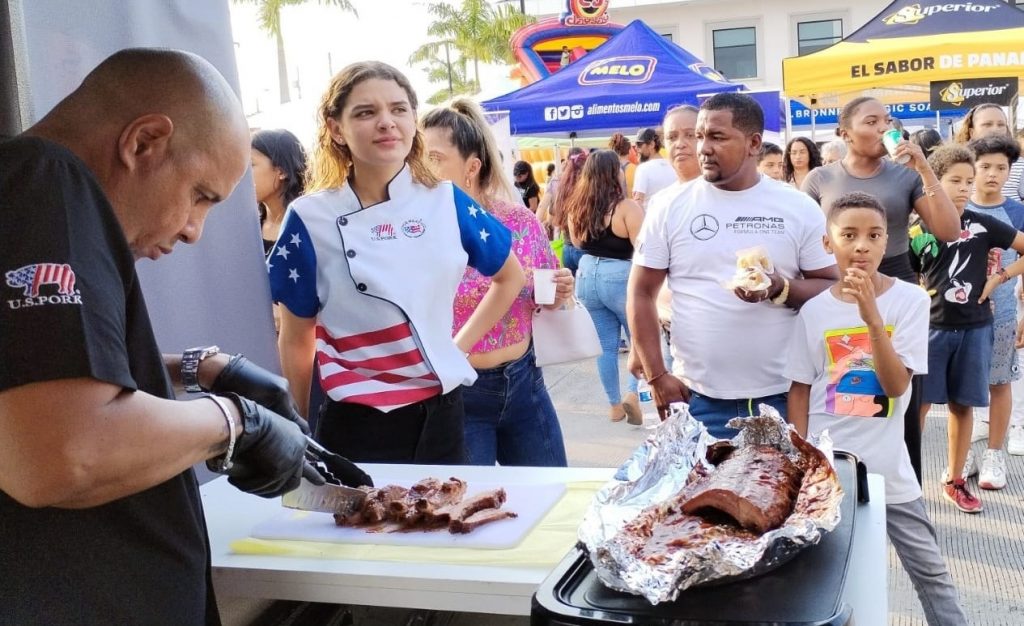

USDA-APHIS has negotiated and secured approval of a comprehensive protocol that involves layers of veterinary inspection and treatment to prevent the spread of New World screwworm in addition to other types of ticks and insects. Protecting the U.S. cattle herd from New World screwworm is a top priority for NCBA. The association has distributed information to cattle producers nationwide and is continuing to advocate for additional funding for sterile flies, which are used to eradicate the screwworm.

Cattle and Bison Imports from Mexico Resume Under New Protocol

The United States Department of Agriculture's Animal and Plant Health Inspection Service (APHIS) is announcing the resumption of cattle and bison imports from Mexico. Imports are scheduled to resume within the next several days.

To protect U.S. livestock and other animals, APHIS halted shipments of Mexican cattle and bison in November 2024 after a positive detection of New World screwworm (NWS) in southern Mexico. After extensive discussions between representatives from the countries, APHIS and Mexico agreed to and implemented a comprehensive pre-clearance inspection and treatment protocol to ensure safe movement and mitigate the threat of NWS. 

APHIS' top priority is to protect American livestock from foreign pests. As part of the protocol signed between the countries, Mexico identified and prepared pre-export inspection pens in San Jeronimo, Chihuahua, and Agua Prieta, Sonora, which APHIS has now visited, inspected, and approved. Cattle and bison will be inspected and treated for screwworm by trained and authorized veterinarians prior to entering the pre-export inspection pens, where they will again undergo inspection by Mexican officials before proceeding to final APHIS inspection then crossing at the Santa Teresa and Douglas Ports of Entry, respectively. Cattle and bison approved for importation will also be dipped in a solution to ensure they are otherwise insect- and tick -free. The United States and Mexico are working closely to approve additional pre-export inspection pens and reopen trade through other ports of entry.

To support our efforts to keep NWS out of the United States, APHIS will continue working with partners in Mexico and Central America to eradicate NWS from the affected areas and to reestablish the biological barrier in Panama, which we have worked to maintain since 2006. 

In the last two years, screwworm has spread north of the barrier throughout Panama and into Costa Rica, Nicaragua, Honduras, Guatemala, El Salvador, Belize and now Mexico. This increase is due to multiple factors including new areas of farming in previous barrier regions for fly control and increased cattle movements into the region. APHIS is releasing sterile flies through aerial and ground release at strategic locations, focusing on Southern Mexico and other areas throughout Central America.  A complete list of regions APHIS recognizes as affected by screwworm as well as more detailed information on trade restrictions can be found on the USDA APHIS Animal Health Status of Regions website.

R-CALF: Ranchers Seek Approval of a $83.5 Million Settlement with JBS in Cattle Antitrust Case

On Friday, January 30, ranch group R-CALF USA, alongside NFU and four fed cattle producers, who filed a class-action antitrust lawsuit in April 2019 against JBS, Tyson, Cargill, and National Beef, filed a motion with the Federal District Court for the District of Minnesota for preliminary approval of a proposed $83.5 million class action settlement with the JBS defendants.

Through their counsel, Scott+Scott Attorneys at Law LLP and Cafferty Clobes Meriwether & Sprengel LLP, R-CALF USA and the other cattle plaintiffs agreed to the proposed settlement, which includes an $83.5 million cash payment and certain non-monetary consideration, including the provision of certain documents, and certain assistance in relation to any subsequent trial against the remaining three Defendants, Tyson, Cargill, and National Beef. The settlement is not an admission of liability by JBS, who continues to deny any wrongdoing.

If the court grants preliminary approval of the proposed settlement, it will order that notice be sent to the settlement classes informing them of the proposed settlement's details, including how class members can make a claim for their share of the settlement.

The settlement classes covered by the proposed settlement include, subject to certain exclusions and conditions, all persons or entities: a) within the U.S. that directly sold fed cattle for slaughter to Tyson, JBS, Cargill and/or National Beef from June 1, 2015 to February 29, 2020 other than pursuant to a cost-plus agreement and/or a profit sharing agreement; b) who held a long position in live cattle futures traded on the CME prior to June 1, 2015 and subsequently liquidated the long position through an offsetting market transaction at any point prior to November 1, 2016.

More details regarding the settlement, including who may be covered by its terms, will be available shortly on a settlement website: www.cattleantitrustsettlement.com.

"We're pleased to have reached this settlement with JBS and we look forward to prosecuting our claims against the remaining Defendants, Tyson, Cargill and National Beef," said R-CALF USA CEO Bill Bullard.
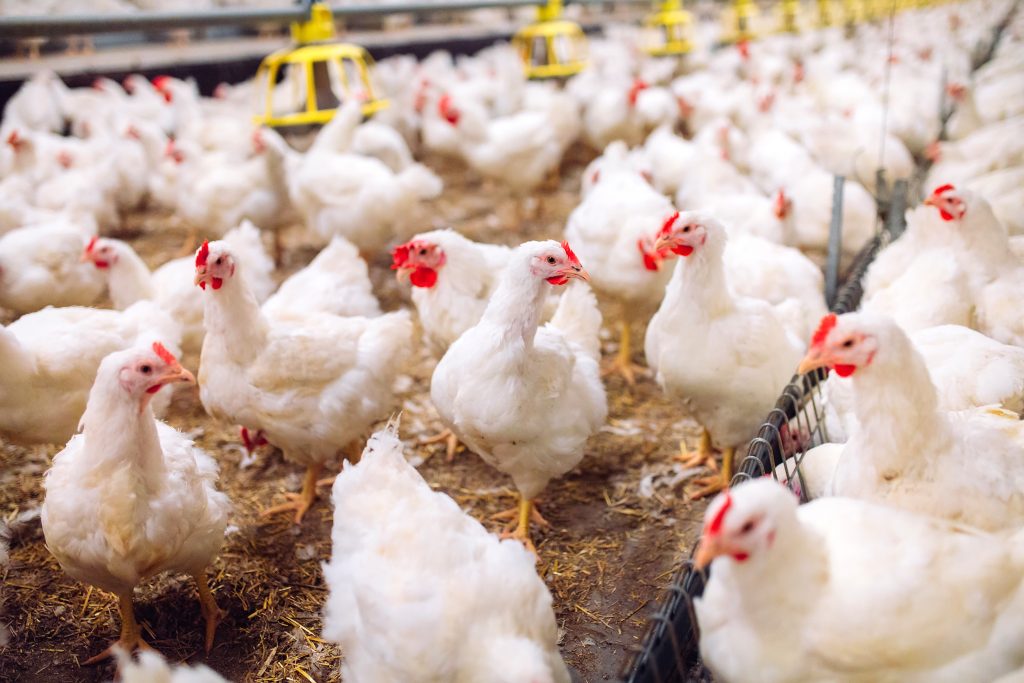
Article shared by E-CALF USA.


Ron salutes our daily email sponsors!

Upcoming Events

November

S M T W T F S
1 2 3 4 5 6 7
8 9 10 11 12 13 14
15 16 17 18 19 20 21
22 23 24 25 26 27 28
29 30          

Visitor Polls

Do you like the new website?
Add a Comment
(Fields are Optional)

Your email address is never published.