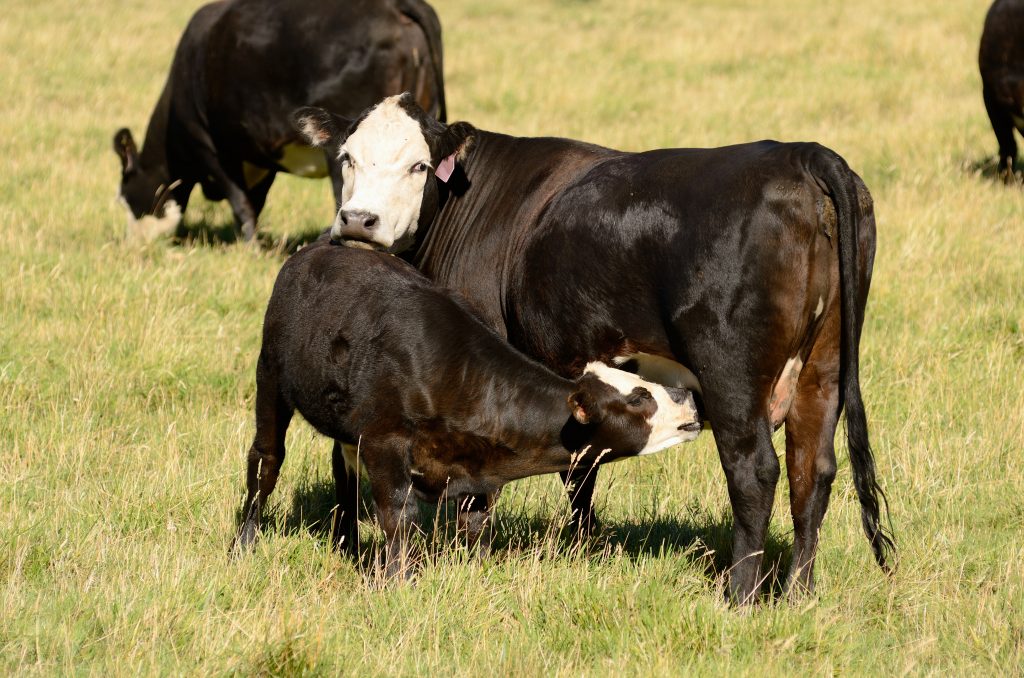
Today, the U.S. Department of Agriculture (USDA) is announcing Weaned Calf Risk Protection, a new insurance option for livestock producers in several states. This policy, offered by USDA's Risk Management Agency (RMA), offers Actual Production History (APH) coverage for beef cow-calf producers to insure revenue from their spring calving operations. Weaned Calf Risk Protection will be available for the 2024 crop year.
"There are many variables and pressures involved in running a cow/calf operation, making it even more important that ranchers have a variety of insurance options available similar to the wide range of options available to crop growers," said RMA Administrator Marcia Bunger. "The introduction of Weaned Calf Risk Protection reflects our priority to always pay attention to the evolving needs of producers and create options that can meet their unique situation."
APH policies insure producers against yield losses due to natural causes such as drought, excessive moisture, hail, wind, frost, insects, and disease. In the case of the new Weaned Calf Risk Protection, coverage is provided for a decline in price and loss of yield due to a decrease of overall weaning weight like revenue coverage offered for other crops.
The program will be available in Colorado, Nebraska, South Dakota, and Texas, beginning with the Jan. 31, 2024, sales closing date for the 2024 crop year. Coverage levels between 50 and 85% will be available along with catastrophic coverage.
This new insurance program adds to the suite of livestock insurance available to livestock producers such as Livestock Gross Margin (LGM), Livestock Risk Protection (LRP), Pasture, Rangeland, Forage (PRF), Annual Forage (AF), and Dairy Revenue Protection (DRP).
More Information
Crop insurance is sold and delivered solely through private crop insurance agents, whom interested producers should contact. A list of crop insurance agents is available at all USDA Service Centers and online at the RMA Agent Locator. Learn more about crop insurance and the modern farm safety net at rma.usda.gov or by contacting your RMA Regional Office.
USDA touches the lives of all Americans each day in so many positive ways. Under the Biden-Harris administration, USDA is transforming America's food system with a greater focus on more resilient local and regional food production, fairer markets for all producers, ensuring access to safe, healthy and nutritious food in all communities, building new markets and streams of income for farmers and producers using climate smart food and forestry practices, making historic investments in infrastructure and clean energy capabilities in rural America, and committing to equity across the Department by removing systemic barriers and building a workforce more representative of America. To learn more, visit usda.gov.
Farm Director, KC Sheperd, caught up with the Oklahoma State Director of USDA Rural Development, Kenneth Corn, and talked about grant opportunities opening up in October through the Rural Energy for America Program.
The REAP program is aimed to help ag producers and small businesses in rural areas save money on their energy costs, lessen the demand on the energy grid, and ensure a cleaner environment.
The application period will open on October 1, Corn said, and close on December 31. Through the REAP program, Corn said ag producers and small businesses in communities under 50,000 have the chance to receive funding for up to 50 percent of a project relating to energy efficiency or renewables.
Regarding small businesses that may quality, Corn said the program uses the Small Business Administration's metric to determine what is considered a small business.
"Milo's Tea here is considered a small business and they actually received one of the grants in the last go around," Corn said. "For ag producers, it is any ag producer that can show that 50 percent of their income comes from the farm."
For those interested in applying for the REAP Program, Corn said he recommends first reading the fact sheet provided at https://www.rd.usda.gov/ok.
For application information, click here.
"In Stillwater, we had a small business there that put solar panels on their roof so they could get off the grid some and lower their energy cost that way," Corn said. "We have had ag producers who have applied to put windmills out on their farms to help generate electricity."
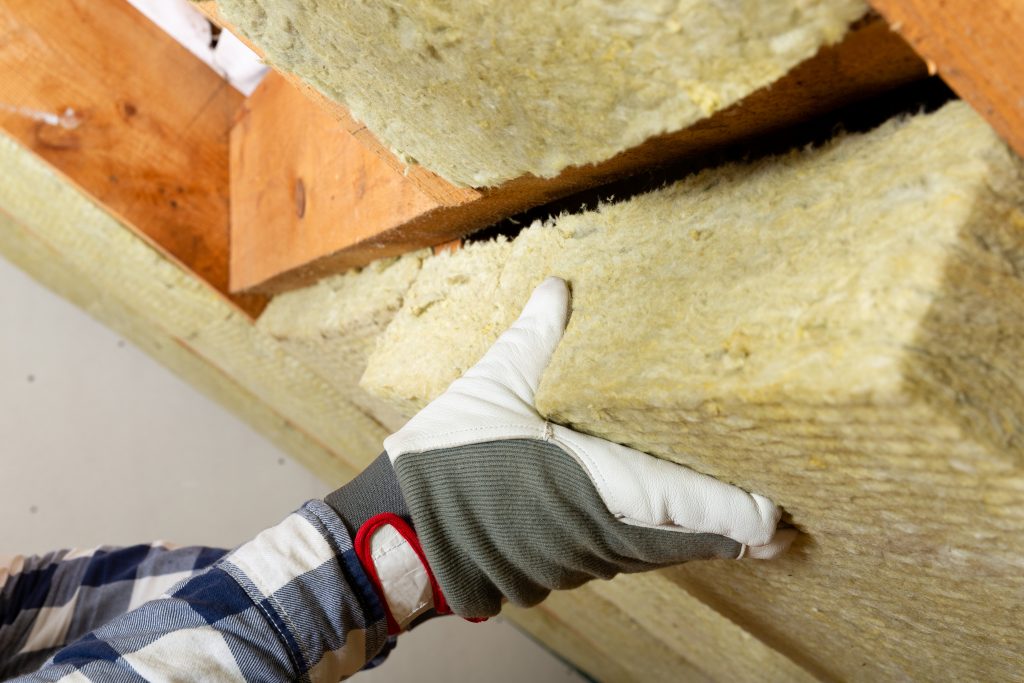
Corn said one example of ways individuals could take advantage of this program is by improving insulation in their business or operation to reduce energy usage.
"As long as you can get an assessment that shows it is going to lower your cost of doing business, by lowering your energy usage, it will probably qualify," Corn said.
If the money allocated for use in Oklahoma is not spent by applicants, Corn said it will be used somewhere else.
"All Oklahomans benefit from this because when we lessen the demand on the electric grid, it lessens the cost for all Oklahomans because part of your electric bill is figured on what the demand is on the system," Corn said.
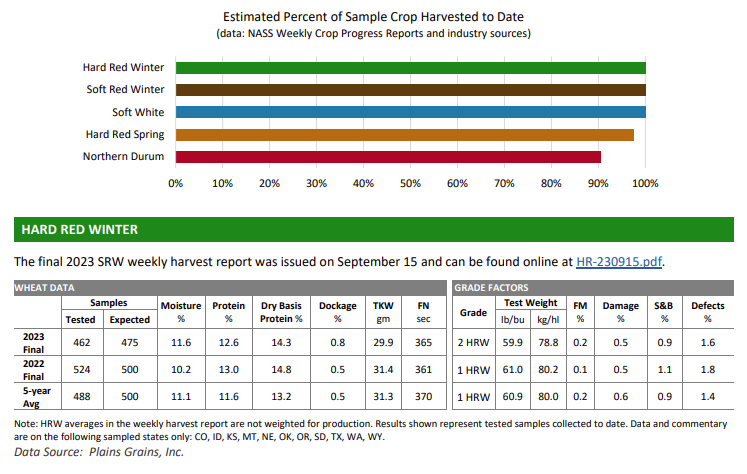
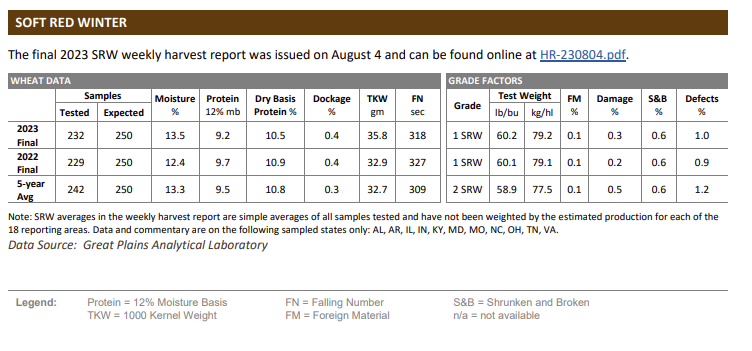
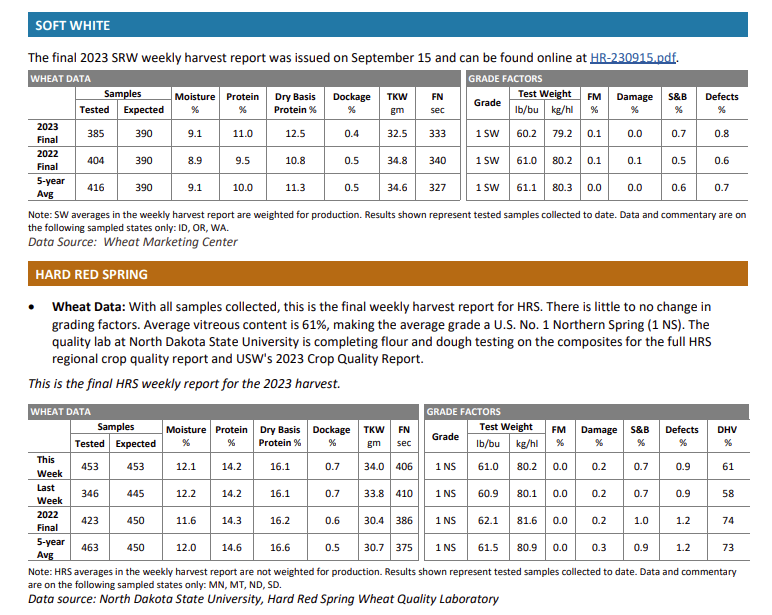
All HRS samples are now at North Dakota State University being processed. The 2023 HRS crop grades a U.S. No. 1 Northern
Spring (1 NS). The northern durum harvest is more than 90% complete and currently grades a U.S. No. 1 Hard Amber Durum
(HAD).
The Small Grains 2023 Summary report was released by the USDA on September 29, 2023, along with the Quarterly Grain Stocks report. Farm Director, KC Sheperd, talked with Allendale's Rich Nelson about both reports.
For wheat, Nelson said the Quarterly grain stocks report represents what is left over after one-quarter of usage, as the wheat marketing year began on June 1.
"USDA was active in revising wheat production higher," Nelson said. "In most recent years, they have been having a lower trend on this report (Small Grains Summary), so they added 68 million bushels to this new crop wheat production number."
Hard red winter wheat was not a major contributor to the increase in wheat production numbers, Nelson added.
All wheat production totaled 1.81 billion bushels in 2023, up 10 percent from the 2022 total of 1.65 billion bushels. Area harvested for grain totaled 37.3 million acres, up 5 percent from the previous year. The United States yield was estimated at 48.6 bushels per acre, up 2.1 bushels from the previous year. The levels of production and changes from 2022 by type were: winter wheat, 1.25 billion bushels, up 13 percent; other spring wheat, 505 million bushels, up 5 percent; and Durum wheat, 59.3 million bushels, down 7 percent.
In Oklahoma, 4.5 million acres of winter wheat were planted in 2023, up 6 percent from 2022. Acres harvested for 2023 were the same as in 2022, at 2.45 million acres. The 2023 yield is estimated to be the same as 2022 at 28 bushels per acre. In 2023, Oklahoma is estimated to produce the same amount of winter wheat as in 2022 at 6.8 million bushels.
In Kansas, 8.1 million acres of winter wheat were planted in 2023, up 11 percent from 2022. Acres harvested for 2023 were 5.75 million acres, down 12 percent from 2022. The 2023 yield is estimated to be 35 bushels per acre, down 2 bushels per acre from 2022. In 2023, Kansas is estimated to produce 201.25 million bushels of winter wheat, down 17 percent from 2022.
In Texas, 6.4 million acres of winter wheat were planted in 2023, up 21 percent from 2022. Acres harvested for 2023 were 2.1 million acres, up 61 percent from 2022. The 2023 yield is estimated to be 37 bushels per acre, 7 bushels more than the 2022 yield. In 2023, Texas is estimated to produce 77.7 million bushels of winter wheat, up 99 percent from 2022.
"On behalf of farmer co-ops across the country, I would like to express our sadness at the passing of Senator Dianne Feinstein. Senator Feinstein has been a trailblazer throughout her career. In particular, she has long been a champion of agricultural labor reform. Throughout her tenure, the senator was a critical part of bringing together both representatives of farmer workers and ag employers in search of a solution to one of the most serious issues facing farmers and ranchers across the country. We extend our deepest sympathies to her family and close friends."
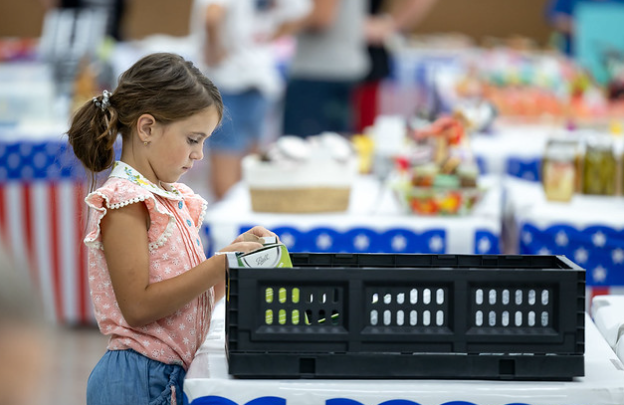
People of all ages learn through Cooperative Extension programs, including this child at the 2023 Lincoln County Fair in Chandler, Oklahoma.Extension empowers youth, farmers, ranchers and communities of all sizes to overcome their challenges, adapt to changing technology, improve nutrition and food safety, prepare for and respond to emergencies, and protect the environment. (Photo by Mitchell Alcala, OSU Agriculture)
By Gail Ellis
Oklahoma State University Extension and Langston University Extension members joined fellow professionals from other states at the Southern Region Program Leadership Network annual conference Aug. 21-24 in Orlando, Florida.
The event invited attendees to share resources, build partnerships and address emerging issues affecting communities.
Extension empowers farmers, ranchers and communities of all sizes to overcome their challenges, adapt to changing technology, improve nutrition and food safety, prepare for and respond to emergencies, and protect the environment. Extension educators and specialists help change lives in the communities they serve.
This year's theme for the conference was Next Generation: Evolving the Extension Enterprise. Attendees heard from keynote speaker Mansfield (Pete) Key III, a leading growth development strategist and international motivational speaker. Also, Manjit Misra, director of the USDA's National Institute of Food and Agriculture, discussed the future of Extension with the group, in particular how Extension is uniquely structured to help address some of the country's most pressing health issues. Tom Davidson of Leadership Nature presented a two-part virtual session on Treating Your Employees Like Volunteers (and Your Volunteers Like Employees) for pre- and post-conferences.
This working meeting provides an opportunity for land-grant institutions in the Southern region to advance their mission of fostering and strengthening Extension education programming. The structure of the Southern Region Program Leadership Network allows multi-institutional communication within and among disciplinary and functional lines.
"This conference provides a great platform to spark innovative ideas and think differently," said Damona Doye, associate vice president of OSU Extension. "It also promotes cross-state collaboration to help make each of our institutions more efficient and effective."
Since 1989, the Southern Region Program Leadership Network has promoted multistate cooperation by identifying and addressing emerging issues. Extension professionals serve in eight key areas: Agriculture and Natural Resources, Community Development, Family and Consumer Sciences, 4-H Youth Development, Communications, Information Technology, Middle Management, and Program and Staff Development. These committees meet regularly throughout the year to complete multiple plans of work goals.
Accomplishments from this collaborative effort include a 2022 Southern Region Teen Leadership Conference in Crossville, Tennessee, data collection from a disaster loss assessment survey, organizing community resiliency webinars related to climate change, and communications curricula for institutional training.
Land-grant universities
A land-grant university is an institution that provides research-based programs and resources for residents in their state and has been designated by its state legislature or Congress to receive the benefits of the Morrill Acts of 1862, 1890 and 1994. There is one land-grant institution in every state and territory of the U.S. and the District of Columbia. Certain states have more than one land-grant institution as a result of the second Morrill Act, and some western and plains states have several because of 1994 land-grant tribal colleges.
OSU is a modern land-grant university focused on student success through leadership and service. The institution is built on high-quality teaching, research and Extension. It is one of the only universities in the country with each of the three land-grant designations: Morrill Act of 1862, Morrill Act of 1890 for African Americans and Morrill Act of 1994 for Native Americans.
For more information, visit http://srpln.msstate.edu/. Find programs in OSU Extension.
OSU Extension uses research-based information to help all Oklahomans solve local issues and concerns, promote leadership and manage resources wisely throughout the state's 77 counties. Most information is available at little to no cost.

Vive Crop Protection, Inc. (Vive) is pleased to announce it placed No. 139 on the 2023 Report on Business ranking of Canada's Top Growing Companies.
Canada's Top Growing Companies ranks Canadian companies on three-year revenue growth. Vive earned its spot with a three-year growth of 342%.
Vive addresses the challenges of precision agriculture with revolutionary technology designed to maximize performance, efficiency, and profitability on the farm. Powered by Allosperse® Delivery Technology, Vive's Precision Chemistry™ solutions are designed for optimal compatibility and performance, allowing each active ingredient to reach its full potential and bring real results to the farmer.
"We are thrilled to be named as one of Canada's Top Growing Companies for the fourth year in a row," says Darren Anderson, CEO of Vive Crop Protection. "This recognition just goes to show the impact Vive's Precision Chemistry solutions are having on the acre to ease and simplify a grower's crop protection application."
Vive has released five Precision Chemistry solutions over the past three years with plans for new product launches over the next five years, setting itself on the path to achieving its mission of having a Vive solution on every acre of cropland globally.
Canada's Top Growing Companies is an editorial ranking that was launched in 2019. It aims to bring the accomplishments of innovative businesses in Canada to the forefront. In order to qualify for this voluntary program, companies had to complete an in-depth application process and fulfill requirements. In total, 425 companies earned a spot on this year's ranking.
The full list of 2023 winners along with editorial coverage is published in the October issue of Report on Business magazine. The list is out now and online here.
"Canada's Top Growing Companies acknowledges the drive and ingenuity displayed by Canadian business," says Dawn Calleja, Editor of Report on Business magazine. "This year's ranking serves as an inspiration for future business owners."
"This year's Report on Business magazine's list of Top Growing Companies shows how innovative ideas always rise to the top, perhaps even more so in times of uncertainty," says Andrew Saunders, CEO of The Globe and Mail. "The Globe and Mail congratulates this year's winners for meeting and surpassing those economic challenges."

Anne Warden brings deep experience in agricultural marketing and building future-ready organizations.
The pecan industry welcomes a new but seasoned leader to grow pecan demand at home and abroad. Anne Warden has been named the CEO of both the American Pecan Council and the American Pecan Promotion Board, signaling another important step these organizations are taking to deepen the industry's unity and further expand the role nutrient-rich pecans can play in the diet.
"The American Pecan Council has helped reawaken many Americans – and increasingly consumers in key global markets – to the incredible versatility and nutrition of pecans," said Larry Don Womack, chair of the APC. "With so many more opportunities to grow our industry, Anne is the leader with the marketing experience and business vision to take us to the next level."
"Over the past two years, we've built a strong foundation for delivering consistent value back to the growers and importers who created the American Pecan Promotion Board," said David Salopek, chair of the APPB. "Anne's track record for unifying the supply chain around shared business opportunities and then delivering results makes her the CEO pecans now needs to accelerate our market share growth."
Anne spent the past four years working for Dairy Management Inc, the organization that oversees the national dairy research and promotion program and its affiliated organizations on behalf of America's nearly 30,000 dairy farmers and importers. In her leadership role as Group Executive Vice President of Marketing, Communication and Affairs, she was responsible for growing consumption of dairy through consumer marketing campaigns, strategies to strengthen U.S. dairy's reputation and efforts to engage customers, thought leaders and health professionals around dairy's nutrition and sustainability efforts. In addition, she led business planning across more than 20 of Dairy Management's other farmer-funded organizations to collectively position dairy's reputation and relevance with consumers, while also bringing new marketing and technology capabilities to the industry. Prior to dairy, Anne was an Executive Vice President for the agency Edelman and a Chief of Staff for a member of Congress.
"I am honored to bring my experience to an industry so primed for growth and so willing to align against shared priorities," said Anne. "The all-natural nutrition and taste of pecans paired with the sustainability as North America's only native nut provides so many ways to win share with today's changing consumer. I'm looking forward to listening closely to the industry and carving a clear path to bring new value and increased usage occasions to this powerful product."
Anne begins as CEO on October 1, and as CEO, replaces Executive Director, Alex Ott. Both boards share deep appreciation for Alex's dedicated work on behalf of the pecan industry since 2018 and expect a smooth transition.
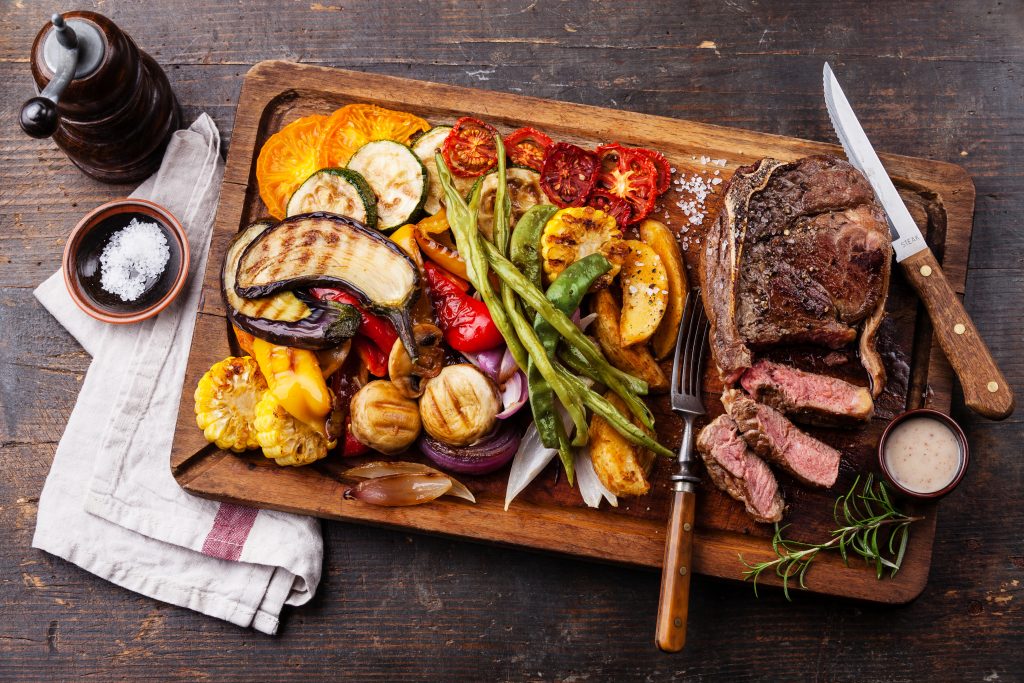
Senior Farm and Ranch Broadcaster, Ron Hays, is visiting with the Executive Director of Nutrition Research at the National Cattlemen's Beef Association, Dr. Shalene McNeill, about the Dietary Guidelines for Americans.
Currently, the U.S. is under the dietary guidelines that came out in 2020 and will expire in 2025. The next set of Dietary Guidelines are now being formulated by the Dietary Guidelines Advisory Committee- who hope to issue updated Guidelines for 2025 -2030 by the end of 2024.
The dietary guidelines have been around since 1980, McNeill said, and she has been working with the Beef Checkoff on those guidelines since around 2000.
"These dietary guidelines shape how we think about what we are eating for healthy diets," McNeill said. "As a registered dietitian, we really look to the dietary guidelines to make recommendations to people, so they are really important."
One of the reasons why the Beef Checkoff funds nutrition research is to make sure there is scientific evidence of the nutrients of beef when these national guidelines for health are written.
"We know that in the 1970s and early 80s, we started seeing that dietary guidelines told us to eat less red meat," McNeill said. "We have kind of been in an uphill battle over the years to show research and to document how eating beef and other proteins as part of a healthy balanced diet is actually good for health. I think we are finally at a point where we are beginning to see that research paying off, and we are seeing consumers' mindsets change."
Within the last few editions of the dietary guidelines, McNeill said the guidelines have started to recommend iron-rich foods as early as six months of age.
"There are really critical benefits for beef eating at every life stage, and we want to make sure that as this committee is meeting and looking at the research, that they are taking all of the evidence that is available on the benefits of meat eating and beef eating into their consideration as they write these future guidelines," McNeill said.
The new guidelines that came out in 2020 paid special attention to how we are feeding children and infants and called attention to the need for iron.
"If babies aren't getting adequate iron starting at that early age, that can have irreversible life effects," McNeill said.
The Beef Buzz is a regular feature heard on radio stations around the region on the Radio Oklahoma Ag Network and is a regular audio feature found on this website as well. Click on the LISTEN BAR at the top of the story for today's show and check out our archives for older Beef Buzz shows covering the gamut of the beef cattle industry today.
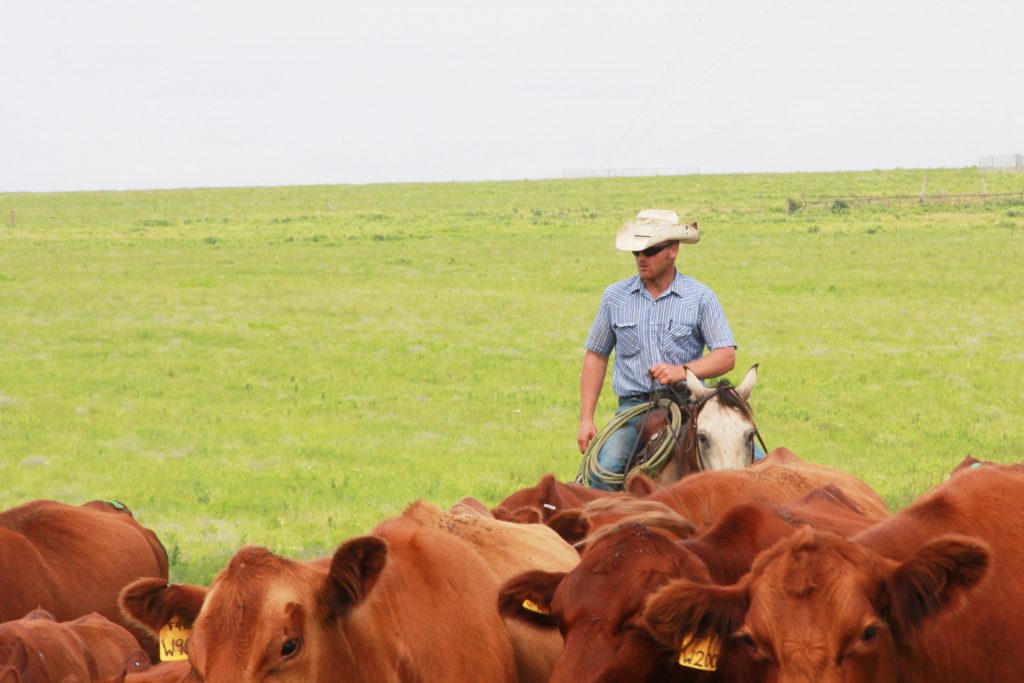
KC Sheperd, Farm Director, is back talking with Bob Rodenberger, a partner with Stockman Oklahoma Livestock Marketing, as he gives the latest on the cattle markets.
"The feeder market still looks good," Rodenberger said. "We are seeing a little bit of resistance in this stocker trade, but that is normal and seasonal."
Rodenberger said the percentage of heifers going into the feed yards is larger today than it was a year ago. When heifers do begin to hold back, Rodenberger said that should help maintain high prices.
Demand is what is keeping the market alive, Rodenberger said, and the big worry right now is what is going to happen regarding a government shutdown.
Any business with your local FSA office, Rodenberger said, needs to be handled as soon as possible.
"I got some statistics from a guy last night, and over the last ten years of shutdowns, the market has come back, and it has been higher after a shutdown, and it has been cheaper after a shutdown, so there is no pattern there," Rodenberger said.
Congressman Tom Cole (OK-04), Vice Chairman of the House Appropriations Committee, released the following statement after the U.S. House of Representatives passed H.R. 4665, the Department of State, Foreign Operations, and Related Programs Appropriations Act for Fiscal Year 2024, H.R. 4365, the Department of Defense Appropriations Act for Fiscal Year 2024, and H.R. 4367, the Department of Homeland Security Appropriations Act for Fiscal Year 2024. Cole supported all three bills.
"The three pieces of legislation passed in the House this evening are critical to securing our nation both from within and around the globe," said Cole. "These three bills ensure our men and women in uniform, including the Customs and Border Patrol (CBP) agents at our southern border, are provided the foundation needed to protect our citizens and win any conflict.
"At $826 billion, nearly 3.5 percent more than fiscal year 2023 funding levels, the Department of Defense Appropriations Act for fiscal year 2024 would deliver full, needed funding for our nation's defenders. Among many other critical provisions, this legislation would support the strategic missions and personnel at Tinker Air Force Base in Midwest City and Fort Sill Army Post in Lawton and deliver a 5.2 percent pay raise for service members to offset Democrats' inflationary crisis. It also provides for significant investments in capabilities in the Pacific region to deter aggression from China and North Korea in the region and rejects progressive ideology agendas to ensure the Pentagon is laser focused on military readiness and warfighting capabilities.
"While clawing back wasteful spending, the State, Foreign Operations, and Related Programs Appropriations Act for Fiscal Year 2024 supports our nation's most critical allies in Europe, the Middle East and Indo-Pacific region and invests in countering the flow of fentanyl and other deadly drugs in the Western Hemisphere. This bill is fiscally responsible while strengthening our national security, countering China and supporting our allies who have a hand in promoting American values abroad.
"Finally, since President Joe Biden took office, our southern border has been neglected and poorly run, creating a historic humanitarian and national security crisis. This month alone we have seen a record number of migrant apprehensions at our Southern border. Not only are our CBP agents and their resources stretched thin, making their job more difficult, but bad actors including drug and human traffickers, and even suspected terrorists are taking advantage of President Biden's open border. This crisis has affected every community across the nation in some way. This legislation addresses this crisis by providing funding to secure our border, remove dangerous criminals and detainees unlawfully in our country and countering China's role in the spread of fentanyl. House Republicans are committed to rebuilding our military and securing the southern border, and I was proud to support the passage of these government funding measures to support a stronger and safer nation."
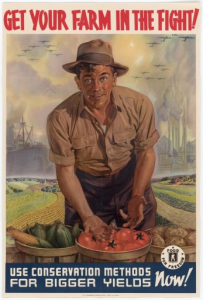
There is a new blog post out at the Southern Plains Perspective. Read below! The Southern Plains Perspective is authored by Clay Pope- who farms with his wife Sarah and is a contractor for the USDA Southern Plains Climate Hub in the area of outreach.
"WHEAT YEILDS IMPROVE WITH NO-TILL." That was the banner headline that came to my inbox today. It seems that a study released this summer by the Washington State Department of Agriculture showed that over 72% of dry-land wheat producers in that state were growing their crops using no-till or minimum-till farming practices and of those producers, nearly half were seeing yield increases while also seeing reductions in equipment costs, labor costs and in some cases, fertilizer costs. The study went on to say that no-tillers in Washington were seeing increases in soil moisture retention and reductions in run-off and erosion (especially among those no-tillers who also utilized cover crops).
Sounds pretty good, doesn't it? Higher yields, lower costs, more sub-soil moisture, and less erosion. This ought to be something more farmers look at possibly adopting, right?
Well, that leads to the next headline that I saw—"NO-TILL, COVER CROP ADOPTION LAGS IN U.S." This article stated that USDA Economic Research Service is reporting that just 34.6% of U.S. cropland is farmed using no-till practices and that less than 3% is cover cropped.
So what gives? If you can realize higher yields, reduce costs, hold on to more moisture and lose less soil, why are the adoption rate on practices like no-till and cover crops so low?
First and foremost, it's important to remember that everyone has a different reality, whether financial, geographical, or cultural. No one size fits all, and there can be numerous reasons why a producer might be hesitant to make major changes in their operation. After all, converting to something like no-till isn't cheap. The price of a new, good-sized mechanical no-till drill can run well over $100 thousand. Air seeders cost even more. Factor in the cost of a sprayer and you start to see that making the switch from conventional till to no-till can be pricey.
Peer pressure can also be a factor in people's minds. Want to get the local coffee shop crowd talking? Switch to no-till and plant covers in the summer after winter wheat. Everyone will want to know what you're doing and will be happy to share their opinion about how covers will suck up all the sub-soil moisture and cause more weeds in your next wheat crop. They will make sure you know that you must establish a good seedbed for your crop and that you have to 'open the ground up to take in a rain.' Don't you know that kind of farming might work somewhere else, but it won't here?
All of this, combined with an aging population of producers who by necessity, have to be conservative in their business dealings (U.S. Farmers and Ranchers have an average age of around 58) can create some strong headwinds that hold back many from adopting climate-smart agriculture practices.
The good news is that there is help in overcoming these barriers. USDA is investing record dollars in programs like the Environmental Quality Incentives program (EQIP) and the Conservation Stewardship Program (CSP) to help with the financial challenges of adopting practices like no-till. The USDA Natural Resources Conservation Service (NRCS) is also working with its partners (including the Climate Hub Network) to help spread the word on the benefits that soil-health and climate-smart farming techniques can bring to producers. In some states like Oklahoma, this also includes state and local partners establishing mentoring and support networks to help answer questions and provide 'moral support' when the coffee shop crowd gets a new no-till adopter down.
Change is never easy, even when you can see the chance for something better. USDA is helping to make that change a little easier.
Congressman Tom Cole (OK-04), Vice Chairman of the House Appropriations Committee, released the following statement after the U.S. House of Representatives passed H.R. 5692, the Ukraine Security Assistance and Oversight Supplemental Appropriations Act. This legislation, originally included in the Department of Defense Appropriations Act for Fiscal year 2024, was removed to allow for independent debate and vote. The legislation passed the House with overwhelming bipartisan support and with Cole's support.
"As we prepare for the possibility of similar aggression in other parts of the world, the Indo-Pacific and elsewhere, we must enhance our deterrence of war by following through in cases where it does occur," said Cole. "We must stand firmly against Putin's brutal, illegal aggression for the sake of a peaceful world where people can live safely, economies can flourish and tyranny is put on notice. In doing so, we also reassure our nation's many treaty allies in Europe of our resolve and show Putin and Communist China that the U.S. stands strong for freedom for the long term.
"I understand and share concerns about the president's slow implementation of aid, his lack of communication about our purpose and objectives and about ensuring robust oversight and accountability. But I am pleased that this legislation involves the American people in those important discussions and ultimately improved the likelihood of passing critical funding for the Department of Defense, so we can support our service members and our strategic missions at home and abroad. I was proud to support its passage."
RON's Dave Lanning has a pre-opening look at today's agricultural Markets.
Click the audio tab below for today's report.
USDA recently lowered the national corn yield projection from 175.1 to 173.8 bushels per acre and raised both planted and harvested acres. The increase in acres more than offset the impact of the yield decline, with a 23-million-bushel increase in projected corn production, still rounding to 15.1 billion bushels.
Should we expect further adjustments in corn acres and yields in upcoming reports? This question is on the minds of farmers and industry stakeholders right now. With great variability in early harvest reports, the answer will become clearer as U.S. corn farmers progress to the finish. In the meantime, here's a look at three historical data relationships to provide historical context.
Path of Projected Planted Acres for 2023
USDA initially projected 92.0 million planted corn acres, based on farmer intentions in March 2023. Farmer surveys of actual planted acres and area remaining to be planted in the first two weeks of June led USDA to raise the projection to 94.1 million planted corn acres in the June Acreage Report. At the time of survey, 2.5 million of the 94.1 million acres were still unplanted, leaving open the possibility that some acres could go unplanted or switched to another crop. However, the planted acres that farmers reported to the Farm Service Agency (FSA) indicates those acres were planted to corn.
FSA-to-NASS Planted Acres Ratio
Not all farmers report to FSA. Over the last three years, corn acres reported as planted (including failed) to FSA have been 98% of the total planted acres of corn. As of September 1, farmers reported planting 93.2 million acres corn to FSA, which would account for 99% of the 94.1 million from the June report. September's increase in projected acres to 94.9 million acres results in a 98.2% ratio of FSA to total planted acres, putting it in line with recent years.
FSA will continue to update acres data through early January. In the last three years, the reported FSA corn planted acres increased by an average of 0.5% from September to January. If corn acres reported to FSA increase by more than normal, or if there's a divergence from the recent relationship between the two sets of acres numbers, that could influence USDA's top line number for planted acres in the coming months.
The projections for 2023 won't officially be finalized until May 2025. There are exceptions, but the historical norms indicate little to no change would be expected after the January 2024 report. For the past 10 years, final planted corn acres have always ended lower than the September projection. The change is normally very small, less than 0.3% in five of the 10 years. The most recent year in which the planted acres projection increased from the September report to the final number is 2012, just outside the recent decade.

Harvested-to-Planted Acres Ratio
In the September report, USDA moved projected harvested acres proportionally to planted acres. The current projection of 87.1 million harvested corn acres is 91.8% of the planted acres projection. This is 0.5% above the 91.3% average ratio of harvested-to-planted acres over the past decade. Given the drought in major corn-growing states this year, a less-than-normal proportion of planted acres harvested for grain is possible.
In 2022, when drought impacted part of the corn belt, the harvested-to-planted acres ratio was 89.4%. If 2023 experienced the same ratio of harvested-to-planted acres and if planted acres did not change from the current projection, that would equal 84.8 million harvested acres. With the current yield projection of 173.8, that would translate to 14.7 billion bushels, 2.6% lower than the current forecast.

Initial-to-Final Yield Projections
The current yield projection of 173.8 bushels per acre for 2023 is just above the 173.3 bushels per acre yield from 2022. Although the yield value is higher, the reduction from the initial trend projection is larger. The final yield in 2022 was 2.1% lower than the initial trend yield projection of 177 bushels per acre. The current yield projection of 173.8 bushels per acre for 2023 is 4.2% lower than the initial trend yield projection of 181.5 bushels per acre.
For additional historical comparison, final yield was 4.8% lower than the initial projection in the exceptionally wet 2019 crop year. In the major drought year of 2012, final yield was 25.8% lower than the initial projection.
USDA publishes weekly estimates of the percentage of the corn growing area in drought. From June through September 2023, weekly estimates showed anywhere from 42% of 70% of corn area was in drought. Over the same period in 2022, weekly estimates showed 17% to 34% of the corn area was in drought.
As evidenced in the weekly estimates, drought was more widespread across the corn-growing areas in 2023. Not only was a larger swath of the corn area affected, but the expansion area also included some of the nation's leading production areas. Together, the four largest corn-producing states – Iowa, Illinois, Minnesota, and Nebraska – normally produce about 50% of the nation's corn. In 2023, drought was prevalent in the corn-growing regions of all four states over much of the growing season.
Given more widespread drought in the largest corn-producing states, one may except a lower national yield than 2022. Although higher in value, the current projection for 2023 is lower relative to the initial trend projection. The overall impact of 2023 drought conditions will be better understood with movement toward final yield values after harvest is complete.

Looking Ahead
As of the week ending September 24, 15% of corn has been harvested. There will be more clarity on acres and yields as harvest progresses. The October WASDE report is highly anticipated, but a looming government shutdown could impact the timing of the report release or if it is completed.
This Week on SUNUP is Oklahoma State University Extension grain market economist Kim Anderson. During this week's edition, Anderson talks about the latest commodity prices and various factors impacting the markets.
Starting with wheat prices, Anderson said they have been slowly moving down over the last two or three weeks. Now, Anderson said wheat prices are at $6.40 to $6.45.
In southern Oklahoma, Anderson said wheat prices are around $6.15.
"We have seen wheat prices inching their way lower, and I am concerned that they have broken a support level, and they may go further down," Anderson said.
About 18 percent of Oklahoma's winter wheat crop is in the ground, Anderson said, and forward contracting prices in the state are ranging from $6.30 and $6.45.
Corn prices are sideways, Andreson said, as harvested corn has been around $4.70 for the last couple of weeks. On soybeans, Anderson said 80 to 90 cents has been taken off the price in the past three or four weeks.
"I think they have stabled down there," Anderson said. "We gained around five cents over the last week, down around $12.30 cents now."
Cotton is making its way up in price, Anderson said, and is now up to around 88 cents on the futures contract- 85 cents for Oklahoma.
This week on SUNUP:
Watch SUNUP:
Saturday at 7:30 a.m. & Sunday at 6 a.m. on OETA (PBS)
YouTube.com/SUNUPtv
The U.S. Department of Agriculture (USDA) is making more than $3 billion in funding available for agricultural producers and forest landowners nationwide to participate in voluntary conservation programs and adopt climate-smart practices in fiscal year 2024 as part of President Biden's Investing in America agenda. The announcement comes as the Biden-Harris Administration hosts the first-ever White House Climate Resilience Summit.
These funds are provided by President Biden's Inflation Reduction Act – the largest climate and conservation investment in history. This law invests an additional $19.5 billion for USDA's popular conservation programs. These programs also advance the President's Justice40 Initiative, which aims to ensure 40 percent of the overall benefits of certain climate, clean energy, and other federal investments reach disadvantaged communities that have been marginalized by underinvestment and overburdened by pollution. On the heels of last week's announcement that USDA's Natural Resources Conservation Service (NRCS) saw record producer interest in these resources in fiscal year 2023, the agency is now accepting applications from producers interested in this additional conservation assistance for fiscal year 2024.
"Thanks to President Biden's Inflation Reduction Act, we have additional resources to invest in climate-smart practices as we continue to see high demand for these popular conservation programs," said Agriculture Secretary Tom Vilsack. "This funding will be used to meet producer demand for our oversubscribed programs and maximize climate benefits across the country while also providing other important environmental benefits. This includes investing in popular common-sense practices such as cover crops, waste and fertilizer management, and grazing practices, while continuing to work through existing programs to help producers address other natural resource challenges. Ultimately, this will lead to economic opportunity for producers, more productive soil, cleaner water and air, healthier wildlife habitat and natural resource conservation for future generations."
These additional investments are estimated to help hundreds of thousands of farmers and ranchers apply conservation to millions of acres of land. These funds provide direct climate mitigation benefits, advance a host of other environmental co-benefits, and expand access to financial and technical assistance for producers to advance conservation on their farm, ranch or forest land through practices like cover cropping, conservation tillage, wetland restoration, prescribed grazing, nutrient management, tree planting and more.
USDA is opening up the application period for fiscal year 2024 conservation assistance giving producers the opportunity to apply for this historic funding. However, in the event of a lapse in government funding, technical assistance, one-on-one help in answering questions, and other support for producers in navigating the application process would not be immediately available until the funding lapse ends. In the event of a funding lapse, NRCS would notify producers when staff are available to assist.
What's New
Expansion of Climate-Smart Agriculture and Forestry Activities supported by the Inflation Reduction Act
NRCS is increasing Climate-Smart Agricultural and Forestry Mitigation Activities eligible for Inflation Reduction Act funding for fiscal year 2024 through the Environmental Quality Incentives Program (EQIP) and Conservation Stewardship Program (CSP). These in-demand activities are expected to deliver reductions in greenhouse gas emissions or increases in carbon sequestration as well as significant other benefits to natural resources like soil health, water quality, pollinator and wildlife habitat and air quality. In response to feedback received from conservation partners, producers and NRCS staff across the country, NRCS considered and evaluated activities based on scientific literature demonstrating expected climate change mitigation benefits. To learn more, download the list of practices and a fact sheet.
When applied through this framework, these activities are expected to deliver reductions in greenhouse gas emissions or increases in carbon sequestration. NRCS will continue to evaluate additional practices as science progresses and will evaluate and identify quantification methodologies during the fiscal year.
Expansion of priorities for the ACEP investments through the Inflation Reduction Act
Additionally, NRCS is expanding the national priority areas eligible for Inflation Reduction Act funding for Agricultural Conservation Easements Program (ACEP) easements in fiscal year 2024. For ACEP Agricultural Land Easements (ALE), NRCS is prioritizing securing:
For ACEP Wetland Reserve Easements (WRE), NRCS is prioritizing:
Background
The Inflation Reduction Act provides funds to the EQIP, CSP, ACEP and Regional Conservation Partnership Program (RCPP). For fiscal year 2024, which begins Oct. 1, 2023, the Inflation Reduction Act provides an additional $1.65 billion for EQIP, $472 million for CSP, and $189 million for ACEP, and $754 million for RCPP.
How to Apply
NRCS accepts producer applications for its conservation programs year-round, but producers interested in this cycle of Inflation Reduction Act funding should apply as soon as possible. Producers interested in EQIP or CSP should apply by their state's ranking dates for consideration this year. Funding is provided through a competitive process and will include an opportunity to address the unmet demand from producers who have previously sought funding for climate-smart conservation activities.
Similarly, NRCS accepts applications year-round for ACEP Agricultural Land Easements (ACEP-ALE) and Wetland Reserve Easements (ACEP-WRE), producers interested in this funding cycle must apply by Nov. 13, 2023. NRCS will also consider previously unfunded applications in this round.
NRCS plans to roll out the next RCPP funding opportunity in late January 2024.
NRCS will announce other opportunities for agreements and partnerships at the state level for fiscal year 2024 in the coming months. The Inflation Reduction Act provides funding to support those strategic partnerships with local, regional and national organizations. This will include outreach to underserved producers to ensure Inflation Reduction Act climate funding is reaching those who have been previously unable to access conservation assistance.
Interested producers should contact the NRCS at their local USDA Service Center.
More Information
On Nov. 21, 2022, USDA published a Federal Register Notice requesting public input on implementation of the funding provided by the Inflation Reduction Act and sought comments on program delivery and outreach, especially for underserved producers. That notice closed on Dec. 21, 2022, and NRCS received over 450 comments that are helping improve program delivery by removing administrative burdens, streamlining, and expediting program enrollment; building agency and partner capacity to deliver services more quickly; and providing more equitable services. For more information about how NRCS is incorporating public feedback, see Turning Your Feedback Into Action on the Inflation Reduction Act.
On Aug. 16, 2022, President Biden signed the Inflation Reduction Act, the largest climate investment in history, into law. It is a historic, once-in-a-generation investment and opportunity for the agricultural communities that USDA serves. The Inflation Reduction Act will help producers stay on the farm, prevent producers from becoming ineligible for future assistance and promote climate-smart agriculture by increasing access to conservation assistance.
USDA touches the lives of all Americans each day in so many positive ways. Under the Biden-Harris administration, USDA is transforming America's food system with a greater focus on more resilient local and regional food production, fairer markets for all producers, ensuring access to safe, healthy and nutritious food in all communities, building new markets and streams of income for farmers and producers using climate smart food and forestry practices, making historic investments in infrastructure and clean energy capabilities in rural America, and committing to equity across the Department by removing systemic barriers and building a workforce more representative of America. To learn more, visit www.usda.gov.
The Oklahoma Farm Bureau Foundation for Agriculture has awarded ten organizations around the state with grants through the foundation's mini grant program. The $500 grants are awarded to county Farm Bureaus, 4-H clubs, FFA chapters and classroom teachers to fund projects that enhance agricultural literacy in Oklahoma.
The grants are awarded through an application process, in which interested groups, organizations and individuals list their educational project, goals and objectives.
The foundation's mini grants are awarded in two cycles, with the first cycle grants issued in March and the second cycle issued in September.
For more information on the foundation's grant programs, visit the OKFB Foundation for Agriculture website.
2023 OKFB Foundation for Agriculture mini grant recipients
Cimarron FFA – Greenhouse revitalization and rebuild
Paperwork is often an unwelcome chore for farmers and ranchers. To participate in payment programs through USDA, farmers must meet several eligibility thresholds, which vary slightly from program to program. In this Market Intel, we'll dive into the criteria for two of the more complicated eligibility requirements: adjusted gross income (AGI) and actively engaged in farming (AEF).
Adjusted Gross Income
To participate in payment programs through the Farm Service Agency (FSA) and the Natural Resources Conservation Service (NRCS), participants must complete USDA's CCC-941 Average Adjusted Gross Income (AGI) Certification and Consent to Disclosure of Tax Information. The form attests that farmers have a three-year average AGI of under $900,000. But, what exactly is adjusted gross income?
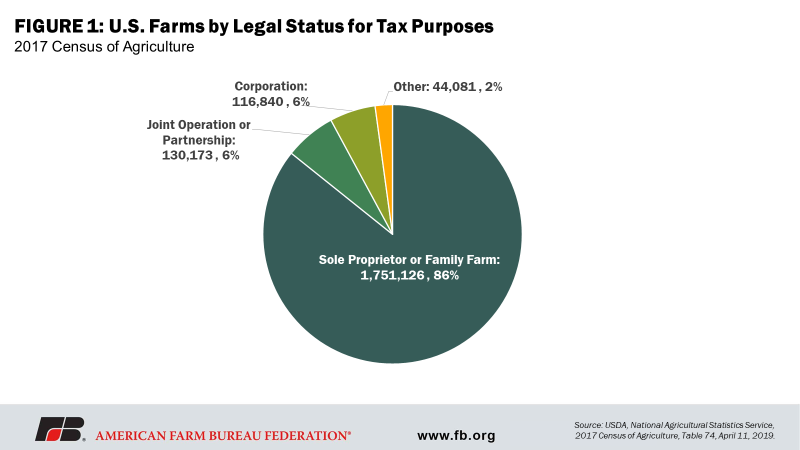
For most tax-paying citizens, an AGI is simple to calculate. However, as with all taxes, it can be a bit more complex for farmers. Most U.S. farms are operated as sole proprietorships or partnerships and are thus taxed under individual income tax rules rather than corporate tax rules. USDA estimates that 98% of farm households are "pass-through" entities, where profit or loss is passed through to the owner/partner/shareholder and is taxed on an individual level via a personal income tax return. According to the 2017 Census of Agriculture, for tax purposes 86% of U.S. farms are sole proprietors, 6% are a joint operation or partnership, 6% are structured as corporations, and an additional 2% are filed in other classifications such as cooperatives or trusts.
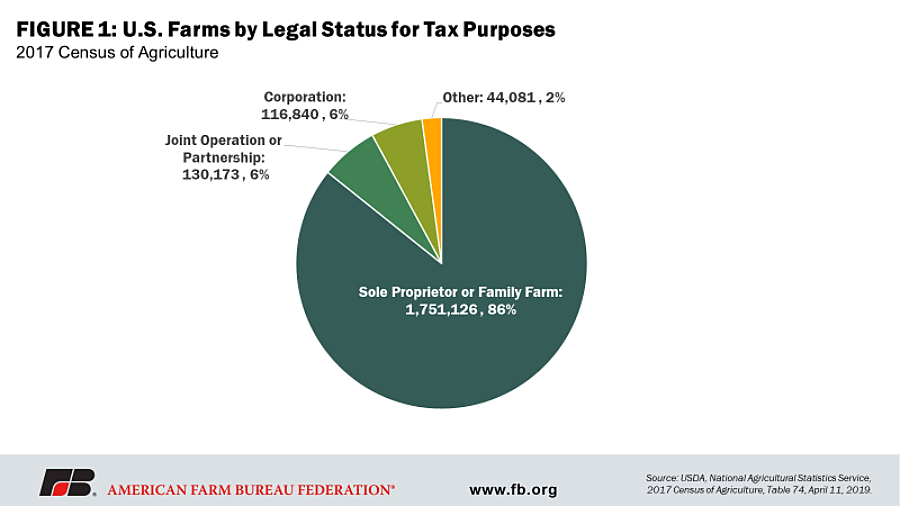
Farm households paying taxes as a pass-through entity file taxes with a U.S. Individual Income Tax Return (Form 1040) using an additional form, Schedule F, to report farm income and expenses.
Most notably, while the "gross" in adjusted gross income indicates all money earned before taxes or deductions, it incorporates net farm profit or loss as calculated on Schedule F, line 34.
Thus, adjusted gross income incorporates on-farm income (defined as farm profit or loss) and off-farm income, minus various adjustments to income as covered in Part II of Schedule 1 (Form 1040). Adjustments to income that are widely applicable include health savings account deductions, alimony payments, student loan interest deductions, individual retirement account (IRA) deductions, and self-employed health insurance deductions. If you file taxes as an individual, and want to find your AGI, it is listed under line 11 of Form 1040.
As a reminder, for program eligibility a three-year average AGI is used. For crop year 2023, the relevant AGI base years are 2019, 2020 and 2021. In more technical terms, the three relevant base years are the three taxable years preceding the most immediately preceding complete taxable year for which benefits are requested. In simpler terms, it's the three years preceding last year.
How Many Farms are Impacted by the AGI Limit?
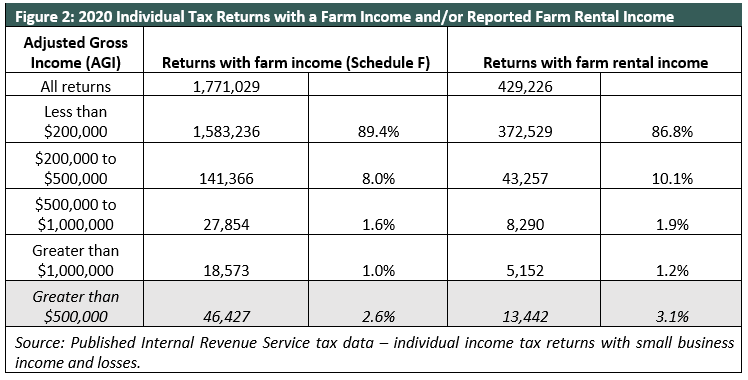
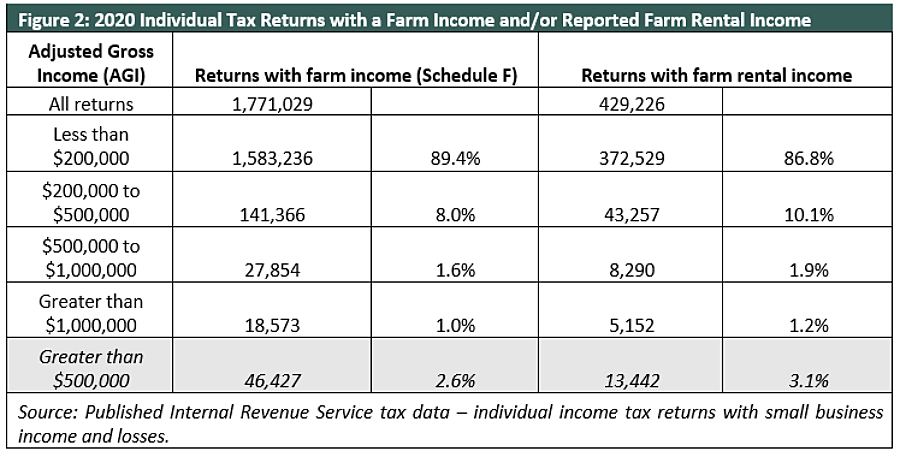
We can use IRS federal income tax data to approximate how many farm sole proprietors and farm rental landlords are impacted by the AGI cap. Unfortunately, for this purpose, income taxes are reported in brackets that do not have a cut-off at $900,000. In the latest year available, 2020, 1% of individuals filing a Schedule F farm income return had an AGI of over $1,000,000 and thus would not qualify for most farm programs due to the AGI limit. A further 1.6% had an income of between $500,000 and $1,000,000, so probably less than 2% of individuals reporting a Schedule F farm income return have an AGI beyond the $900,000 limit. By the same figuring, about 2% of individuals reporting income from farm rentals would meet the disqualifying AGI threshold. (See Figure 2.)
While this method provides a one-year snapshot of AGI, it is important to note again that for USDA purposes a three-year average AGI is required. Thus, if a farmer were to win the lottery and earn $2,500,000 in one year, but only $70,000 and $60,000 in the other two years, they would still be eligible for payment programs as their three-year average would be below $900,000.
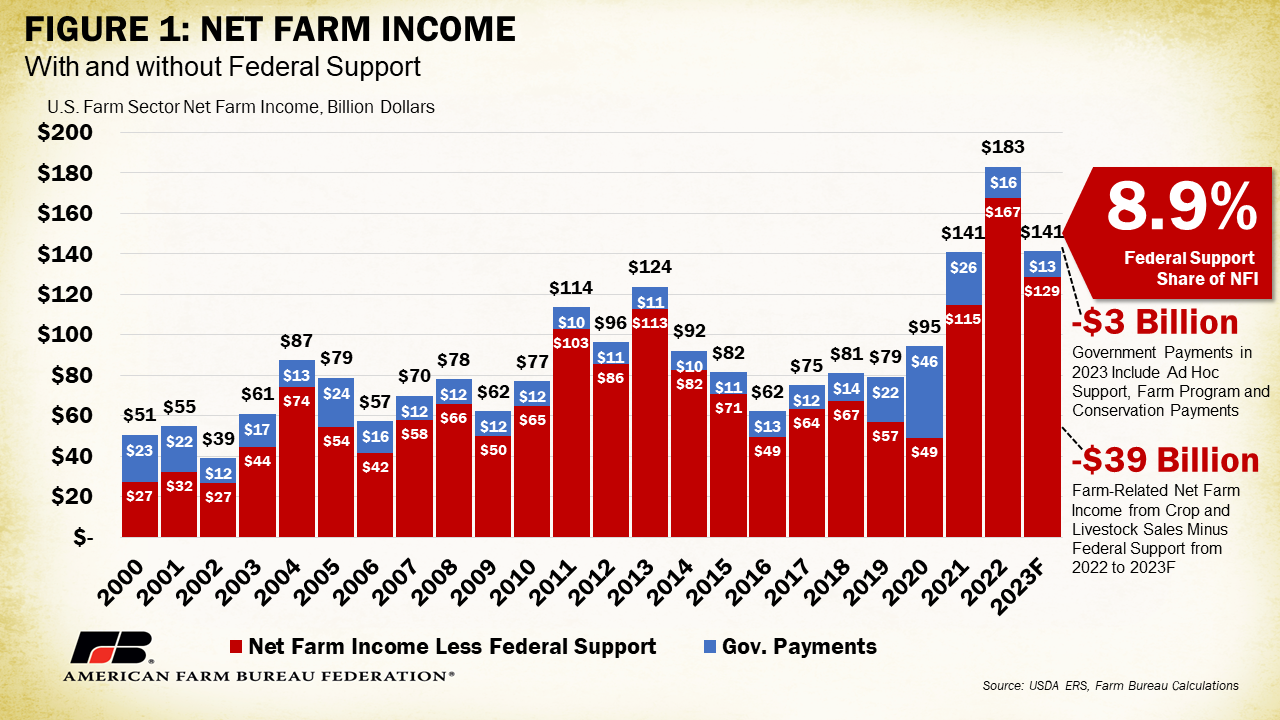
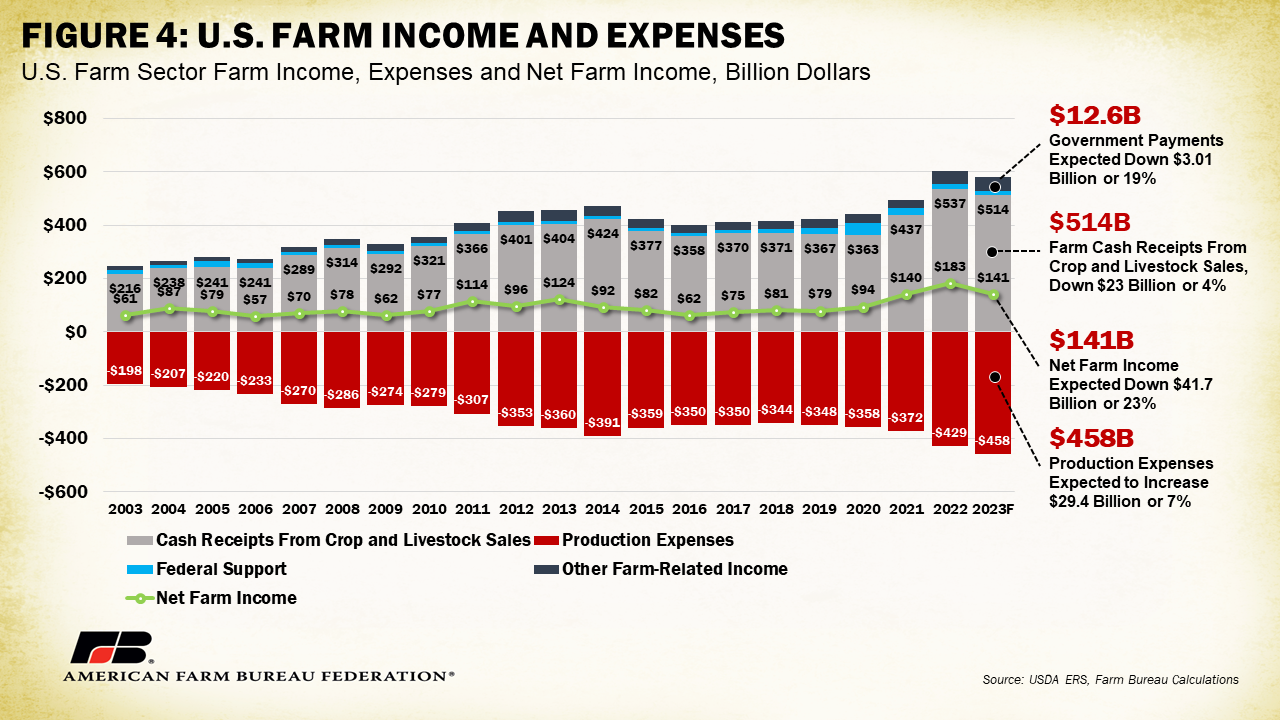
Notably, farm incomes have risen dramatically in recent years, with 2022 net farm income ($183 billion) nearly doubling 2020 net farm income ($95 billion). With the spike in farm income, the AGI limit may be impacting more farmers.
Actively Engaged in Farming
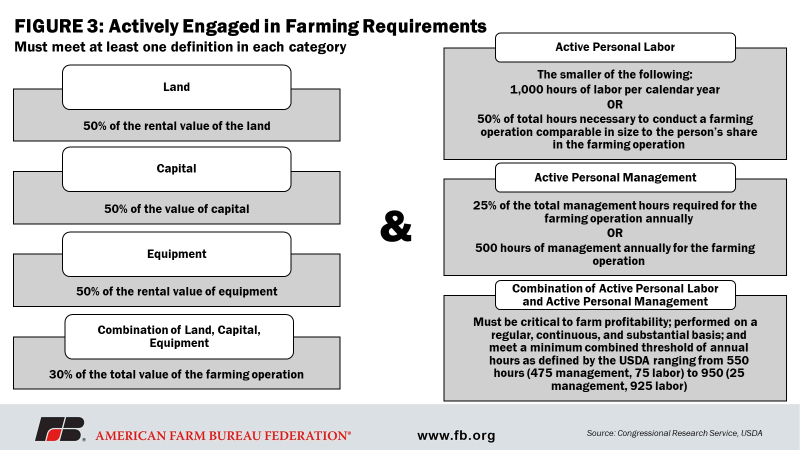
Another term that must be defined for eligibility for several programs, most notably the Agriculture Risk Coverage (ARC), Price Loss Coverage (PLC) and Marketing Assistance Loan (MAL), and other benefits is actively engaged in farming (AEF). Notably, AEF requirements are not applicable for crop insurance and conservation programs. For an individual to be considered actively engaged in farming, they must make a significant contribution in two different categories and meet the farm bill definition of a producer. A producer is defined as an "owner, operator, landlord, tenant, or sharecropper that shares in the risk of producing a crop and is entitled to a share of the crop that is produced on the farm." The first additional category for AEF is a significant contribution of land, capital, and/or equipment. The second category is a significant contribution of active personal labor and/or active personal management. But, what qualifies as a "significant contribution"?
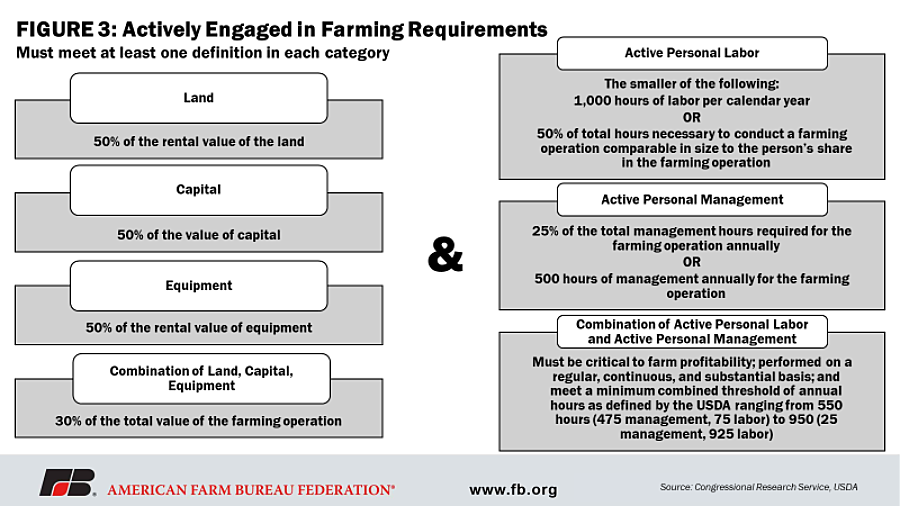
For the first category, a "significant contribution" is defined as at least 50% of the rental value of the land or 50% of the value of the capital or equipment necessary to conduct the farming operation. If a combination of the three is the qualifying factor, an AEF individual must contribute at least 30% of the total value of the farming operation.
For the second category, different thresholds are laid out for active personal labor and management. The active personal labor threshold is met if either the individual puts in 1,000 hours per calendar year of labor or 50% of the total hours needed to conduct a farming operation comparable in size to the person's share in the farming operation. To reach the threshold for active personal management an individual must either perform 25% of the total management hours required for farming operations on an annual basis, or 500 hours of management annually. A combination of active personal labor and active personal management is allowed as well. To qualify under the combination, the individual must be critical to farm profitability; perform on a regular, continuous, and substantial basis; and meet a minimum combined threshold of annual hours as defined by the USDA. The combined hours schedule defined by the USDA ranges from 550 hours, with a minimum of 75 hours of labor and 475 hours of management, to 950 hours, with a minimum of 925 hours of labor and 25 hours of management. Below, Figure 3 describes these requirements graphically.
Exceptions to AEF
There are several categories of people who qualify without meeting the specific criteria of AEF. For married people, if one spouse is determined to be actively engaged in farming, the other spouse will also be determined to have met the requirements. Thus, married farmers can double their individual payment regardless of whether their spouse meets AEF definitions as an individual.
Adult family members, 18 years or older, who receive an income based on a farm's operating results also meet AEF requirements. Eligible family members include siblings, spouses, lineal ancestors (e.g., great-grandparent, grandparent, or parent), lineal descendants (e.g., son, daughter, grandchild, or great-grandchild), nieces, nephews, or first-cousins of the principal operator.
Landowners may forego requirements for AEF labor and management if they receive income based on the farm's operating results (sharing in the risk of profits and losses). If the landowner engages with a fixed rental payment or fixed share, they do not qualify as a producer and thus do not qualify as an actively engaged producer.
Conclusion
We hope this Market Intel has helped bring clarity to a few "clear as mud" terms. For a more detailed examination of the actively engaged in farming requirements, including requirements for corporations and joint ventures, check out the Congressional Research Service's USDA's Actively Engaged in Farming (AEF) Requirement. For further information on eligibility requirements generally, check out the Congressional Research Service's U.S. Farm Programs: Eligibility and Payment Limits report and FSA's payment eligibility webpage.
Story credit: Betty Resnick, American Farm Bureau Federation
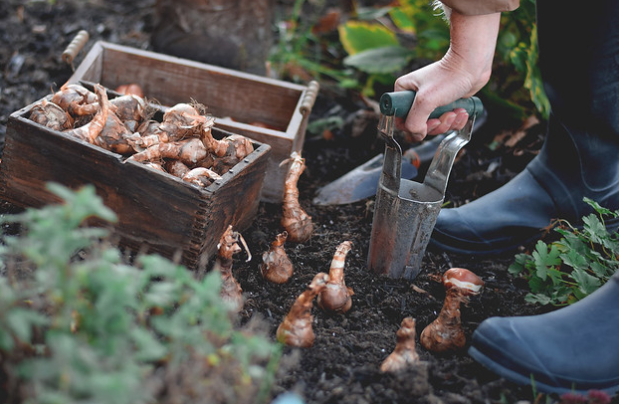
Planting spring-flowering bulbs in the fall allows time for the plant to establish a strong root system. (Photo by Shutterstock)
By Trisha Gedon
The petals on the summer flowers may be curling and turning brown now, but gardeners can look forward to vibrant colors next year by planting spring-flowering bulbs soon.
Late September through mid-November is the ideal time for gardeners to start planting, depending on the location in Oklahoma, said David Hillock, Oklahoma State University Extension consumer horticulturist.
"To get the best quality bulbs, order early or visit the local garden store soon," Hillock said. "Gardeners will have a larger variety of cultivars and species to choose from in a catalog, but selecting bulbs in person gives gardeners a chance to inspect them before making a purchase."
Why are spring flowering bulbs planted in the fall?
"Planting the bulbs in the fall gives them time to establish a root system. They also need a chilling period in order to bloom in the spring," said Casey Hentges, OSU Extension specialist and host of "Oklahoma Gardening." "This will help ensure a strong plant in the landscape next spring."
Like most plants, site selection is vital. Choose a site that drains well because bulbs don't thrive in soggy conditions, which is common in Oklahoma due to an abundance of clay soil.
"Raised beds are a great option for bulbs, as well as planting on a slope to help with drainage issues," Hillock said.
There are several garden tools that can make short work of bulb planting, including a bulb planter, an auger, a dibble or a hand trowel.
"Most hand trowels have measurements on them that will help gardeners determine how deep they're digging the hole for the bulb," Hentges said. "Bulbs typically are planted two to three times the diameter of the bulb. A 2-inch bulb should be planted 4 to 6 inches deep. There are exceptions to the rules, so be sure to read the directions that come with the bulbs. Also, bulbs should be planted with the roots facing down."
Hillock suggests planting generously for the best visual interest in the landscape.
"If planting tulips, plant in groups of 20 or more, spaced about a foot apart," he said. "Daffodils provide a fantastic display when organized in swaths, much like a lazy river. Also, mixing different species and varieties of species will provide a longer display of blooms in the landscape. There are early, mid- and late-season blooming varieties, so mix and match for the best effect."
During the planting process, Hentges advised to top-dress them with bone meal because it's a great phosphorous fertilizer that helps with root stimulation and growth.
In addition to spring-flowering bulbs, gardening enthusiasts can plant pansies, ornamental cabbage and other cool-season flowers. The pansies will add a pop of color throughout the winter.
OSU Extension offers additional gardening information.
OSU Extension uses research-based information to help all Oklahomans solve local issues and concerns, promote leadership and manage resources wisely throughout the state's 77 counties. Most information is available at little to no cost.
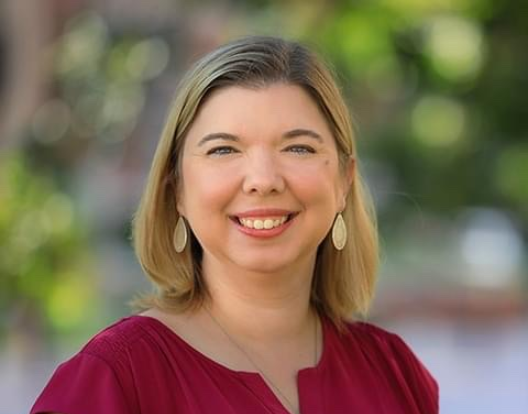
Farm Director, KC Sheperd, is visiting with associate professor of agricultural economics at Oklahoma State University, Dr. Amy Hagerman, about the possible government shutdown this weekend, program deadlines, Farm Bill, and more.
"When we reach the end of the fiscal year for the federal government, and that is September 30th, that Saturday, we need to have either a budget or some kind of continuing resolution to keep the government offices and functions open going forward into those future weeks," Hagerman said.
This possible shutdown has different implications, Hagerman said, including for those in the agriculture industry.
"For us in agriculture, we are thinking about our USDA local offices and whether they will be open, whether we can do business with them during that time period, and October is a really important month," Hagerman said.
The good news, Hagerman said, is that a government shutdown will not impact crop insurance agencies. Those agencies may not have access to tools such as government reports, she added, but they should still be open.
Also, this weekend, on September 30th, the Farm Bill will expire. In the short term, if the Farm Bill does expire, Hagerman said not much will happen.
"We are in the middle of crop years, and we already have budget and programs that will continue through the end of this crop year," Hagerman said. "If the Farm Bill is allowed to continue to be expired going forward without either continuing the 2018 Farm Bill for some number of months to allow this continued discussion and development to happen, or to get a new Farm Bill in place by the end of the year, this calendar year, then we start to see some very problematic reversions to really old pieces of permanent legislation."
In 2018, Hagerman said the Farm Bill was expired for a period of time, but at that point, there was already a Farm Bill in the conference committee. This time around, Hagerman said that is not the case.
If the existing Farm Bill is extended, Hagerman said it would be extended for a chosen period of time while the new Farm Bill is being debated.
"If we are not going to get a Farm Bill by December 31, and it would be very difficult to do at this point, then a continuation of our existing Farm Bill is our best case," Hagerman said.
Switching gears to some upcoming deadlines, Hagerman talked about crop insurance, forage coverages, and more.
"Crop insurance is a really important risk management tool," Hagerman said. "I would really encourage any producer that hasn't already talked to their crop insurance agent about insurance for their wheat crop to get in there, get that appointment made as soon as possible, within the next day, and make that happen."
If the government does shut down for a period of time in October, Hagerman said there may not be anyone to help producers in the FSA offices. Because of this, Hagerman urges producers to have a conversation with their local FSA office as soon as possible if necessary.
In just a few short words, I'm going to boast about R-CALF USA's greatest contribution to the U.S. cattle industry.
For over two decades, we have prevented the beef packing sector from capturing the live cattle supply chain just as the pork and poultry packers have already captured the hog and chicken supply chains.
Let's break this down. Here was the strategy that resulted in the capture of the hog industry:
First, through mergers and acquisitions the largest pork packers concentrated the hog market leaving just a handful of packers to determine who could have timely access to the market and who could not.
Second, the pork packers shrank and then all but eliminated the hog cash market, making it difficult if not impossible to market hogs unless producers agreed to enter an alternative marketing arrangement, which was either a marketing contract or production contract, with a particular packer.
Without timely access to a competitive cash market, the pork packers could choose which producers would stay in business through an alternative marketing arrangement and which ones would perish because they were not offered such an arrangement.
In just four decades, 90% of all independent hog producers exited the industry.
Today the hog industry is highly industrialized with relatively few producers, few if any cash marketing opportunities, and far fewer packers.
This was a successful model for the packers. They controlled the supply chain, controlled the marketing, and just a handful of them are left to divide up the spoils. But it put our nation's food security at risk. Do you remember during Covid when grocery stores had no pork to sell and at the very same time the hog industry was euthanizing untold numbers of live hogs because the industrial supply chain was far too skeletonized to withstand any type of shock to the overall hog supply chain?
Now the beef packers are applying this hog model to the cattle industry. Like the pork industry, they've concentrated the packing sector through mergers and acquisitions. And like the pork packers, the beef packers have been working to significantly shrink the cash market to reduce if not eliminate producers' opportunities to have timely access to a viable market unless they capitulate and enter into an alternative marketing agreement that essentially guarantees timely market access in return for committing cattle without ever negotiating even a base price.
And like the hog industry that witnessed a steep reduction in the number of independent producers, so too has the cattle industry witnessed a similar loss. You see the only real difference between the rapid loss of hog producers and rapid loss of cattle producers is that the cattle industry had twice as many independent producers than the hog industry when the purge of both industries began. In fact, where the hog industry lost 600,000 independent producers, the cattle industry comes in a close second losing over 540,000 over the same period.
But unlike the hog industry, the cattle industry still has the critical mass of producers to sustain a competitive industry, but like the hog industry, the cattle industry is losing its marketing outlets. You see the quintessential marketing outlets needed to provide the remaining independent cattle producers with competitive marketing outlets are cattle feedlots. And guess what? Our industry's cattle feedlots are dropping like flies...we've lost 77% of them in just the past 25 years.
So, despite what beef industry apologists say about how it is impossible for the beef packers to do to the cattle industry what the pork packers did to the hog industry, that's simply not true.
The beef packers have been applying their vertically integrated hog model to your cattle industry for decades, and they've made considerable progress. But something has interfered with their plans. That something of course is those of you who have been willing to financially support the organization or organizations who are fighting to preserve your freedom, liberty, and independence.
Don't rely on your neighbors to fund this fight...it's far too important to you and your children. You can't sit on the sidelines...if you do, there will be no one to blame but yourself if the packers ever do capture from you your live cattle supply chain.
Think it can't happen? Why not? The entire meat industry has subjected every major species to this industrialized, bigger is better and independent producers are dispensable mindset – from the poultry industry to the sheep industry to the hog industry.
The game is real, it's unfolding before your eyes...your cattle industry is the Last Frontier, and that means tag, your it. It's up to you to help the organization of your choice to continue doing what we do – protect your freedom, liberty, and independence.
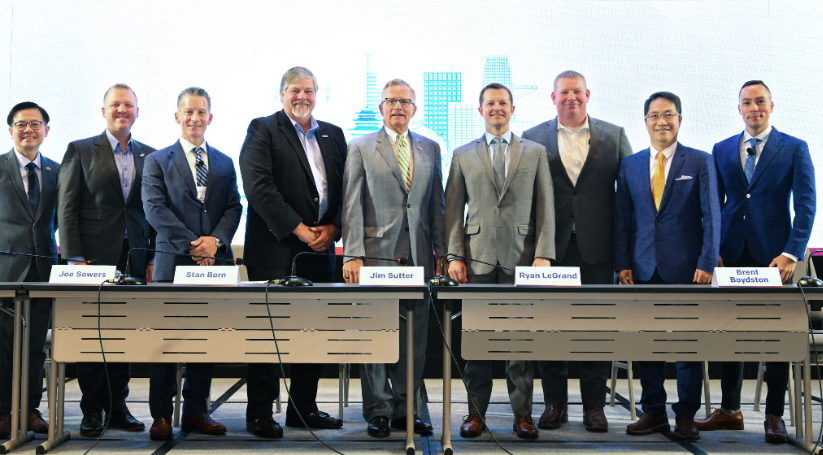
U.S. Wheat Associates (USW) continued a tradition of promoting the value of U.S. agricultural products together with other USDA Foreign Agricultural Service cooperator organizations by co-hosting the annual U.S. Agricultural Cooperators Conference Sept. 12 to 14, 2023, in Da Nang, Vietnam. This conference is designed as a value-added service for Southeast Asian buyers served by USW, and co-hosts U.S. Grains Council (USGC) and U.S. Soybean Export Council (USSEC).
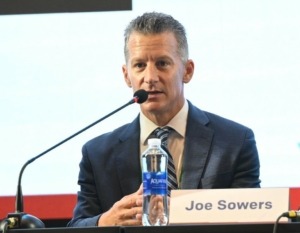
USW Regional Vice President Joe Sowers participated in a panel discussion of U.S. cooperator leaders at the 2023 U.S. Agricultural Cooperators Conference.
"Our collaboration with these organizations on conferences in South and Southeast Asia not only increases opportunities to connect with our milling customers in the region, but also with grain trade and other industry representatives," said Regional Vice President Joe Sowers who represented USW and the conference. "Many flour millers in the region also have feed milling operations, so this conference leverages the investments of all three host organizations to educate and increase positive contact with regional stakeholders."
Titled "Globalization 2.0: Building Bridges for Food Security, Sustainability, and Innovation," the conference in Da Nang covered the global challenges identified in its name and, according to USGC, emphasized "the need to build bridges that facilitate collaboration, sharing knowledge, and acting on common issues."
"It is very important that customers hear the message that U.S. farmers are producing safe, reliable and abundant supplies of wheat, feed grains and oilseeds," Sowers said. "Vietnam, for example, is a quickly growing market with an exploding middle class eager to consume more and better-quality wheat-based foods."
Vietnam's annual milling wheat imports are more than 2 million metric tons and growing at a similar rate in the South and Southeast region.
Visit the USGC website for more information about the 2023 Southeast Asia U.S. Agricultural Cooperators Conference.
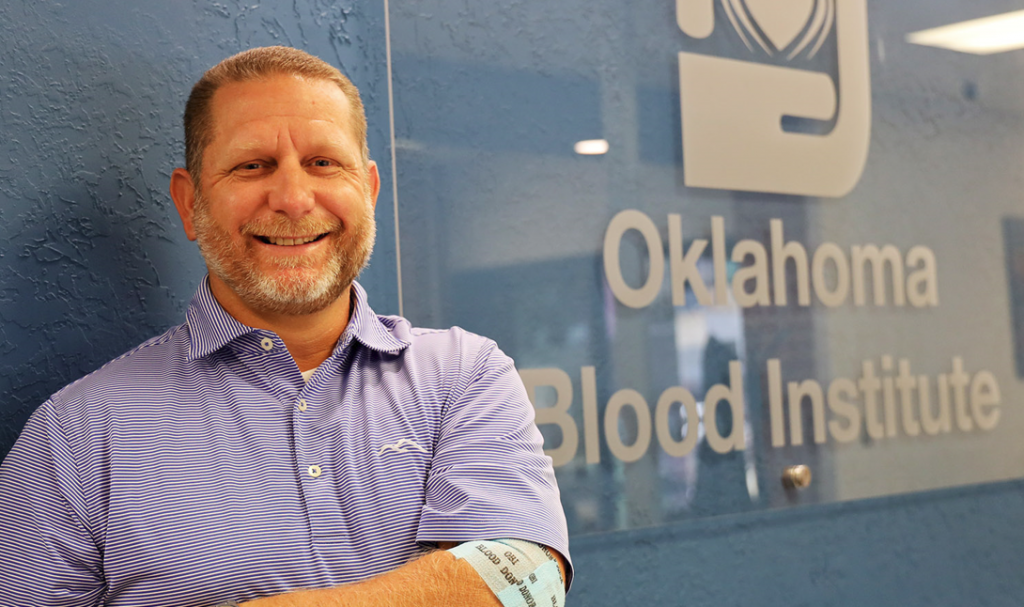
For many years, OBC has partnered with Our Blood Institute to reward anyone who donates blood before the Labor Day weekend. This year's blood drive happened on August 31 and September 1. Over that two-day timeframe 1,236 people donated blood, saving 3,708 lives.
One of the donors was Erick Chandler, longtime member of a ranching family from Ninnekah, Oklahoma. In October 2019, Chandler needed blood after a horse accident caused severe damage to his femoral artery. On the medi-flight from the ranch to Oklahoma City, Chandler received 5 units of blood. If those units would not have been available, he would not have even made it to a hospital that could repair his injury. Over the course of his recovery, Chandler received 23 units of blood.
It ultimately took seven surgeries and one year for Chandler to fully recovered. As soon as he was cleared to do so, Chandler began donating blood through Our Blood Institute in Lawton. He has now donated more than 20 times.
"If there had not been blood available, I would not be alive today," said Chandler. "The responsibly to give back weighs heavily on me and I want to know that others will have access to blood when they need it."
During the Beef Up the Blood Supply drive, donors received an all-beef hotdog, chips and the new OBI vein-drain t-shirt. Each donor was also entered to win $500 in beef. This year's sweepstakes winner was __.
It takes many donors like Erick to help OBI meet the need. That's why OBC values this yearly partnership.
"It was exciting to hear that we had helped OBI surpass their goal for the lead up to Labor Day with our blood drive," said Heather Buckmaster, OBI executive director. "Thank you to everyone who donated."
More than 50 Livestock Marketing Association members and staff met with senators, U.S. representatives, congressional staffers and U.S. Department of Agriculture officials Sept. 18-19, during the association's 17th D.C. Fly-In. The event offered an opportunity for livestock auction market owners to share their stories and connect with elected officials.
Throughout the visit, they advocated for Congress to pass bills to remove an antiquated prohibition and allow a livestock auction owner to own or invest in a small or medium packer.
Bracken Marburger, who operates Milano Livestock Exchange with his family in Milano, Texas, says current requirements are outdated.
"The Packers and Stockyards Act is well over 100 years old now," he said. "And we just don't do things the same way we did back in 1921."
Bracken explained at that time, terminal stockyards received cattle from producers on railcars. Individuals acting as commission agents represented these cattle to packers. Today, livestock markets utilize a competitive auction method. Auction markets provide an open and public forum for producers to sell their animals to the highest bidder, allowing for competition and true price discovery. Many of the auctions are also streamed online.
Association members say Congress and the cattle industry agree the U.S. beef packing capacity needs to be increased, ideally by adding new competitors to the marketplace. But the rule prohibits livestock auction owners from owning or investing in meat packing businesses.
That's why Livestock Marketing Association is advocating for the passage of the Amplifying Processing of Livestock in the United States, or A-PLUS Act, H.R. 530, and its Senate companion, Expanding Local Meat Processing Act, S. 813, to address the regulation. They say these bills would allow markets to invest in small and regional packing facilities, providing an avenue to increase packing competition and capacity. At the same time, the bills maintain necessary safeguards by prohibiting the largest packers from owning auctions.
Members also urged Congress to update Packers and Stockyards Act prompt payment requirements due to slowing mail service and a desire to incentivize electronic payment as the more efficient method.
Mark Barnett, Livestock Marketing Association president, said it was a productive trip and he's grateful for all who took part.
"I know firsthand how difficult it can be to take time away from your business and family and travel across the country," he said. "But the impact a visit like this has on the industry is substantial. Only by developing and maintaining these relationships can we be sure the interests of livestock marketers are considered in federal policy decisions."
Members who participated in the fly-in were Joe and Barb Nelson, Minnesota and Iowa; Austin Schaben, Iowa; Cale and Nicole James, Oklahoma; Scott and LeDona McCornack, Oklahoma; Blaine and Haley Ragan, Oklahoma; Ben and Aimee Hale, Oklahoma, Texas and Iowa; Bracken and Stephanie Marburger, Texas; Jayde Baumeister, Texas; Mandy Geistweidt, Texas; Jim Akers, Kentucky; Steve Sterchi, Kentucky; Jennifer and Mark Houston, Tennessee; Mark and Betty Barnett, Kentucky and Tennessee; Jacob Massey, Tennessee; Chad Fleenor, Tennessee; Michael and Carter Simpson, Tennessee; Rich and Alicia Robertson, Nebraska; Wesley Kilmurry, Nebraska; Kirk Otte, Nebraska; Erin Zoucha, Nebraska; Mike VanMaanen, Missouri; David and Heidi McComb, Kansas and Oklahoma; Mason Winter, Kansas; Justin and Cody Tupper, South Dakota; Nicholas Hayes, South Dakota; Larry and Judi Schnell, North Dakota; Katelyn Chaffee, North Dakota and Montana; Daniel O'Donnell, North Dakota and Montana; Lander Nicodemus, Wyoming; Jake Parnell, California; Michael Imbrogno, California; Alisha Hudson-Roach, Virginia; and Brian Glick, Pennsylvania.
The U.S. Department of Agriculture (USDA) today announced the opening of a pilot Nutrition Hub under the Agricultural Science Center of Excellence for Nutrition and Diet for Better Health (ASCEND for Better Health) initiative. The Nutrition Hub is being launched in partnership with Southern University, a historically black 1890 Land-grant University in Louisiana, and host of the USDA-funded 1890 Center of Excellence for Nutrition, Health, Wellness and Quality of Life.
USDA's new Nutrition Hub, informed by community conversations, will be an engine for providing science-based, nutrition-related information at the community level, particularly in underserved communities disproportionately impacted by diet-related chronic diseases such as obesity, type 2 diabetes and certain cancers. Future hubs will concentrate their efforts on additional high-need communities. USDA is following the successful Climate Hubs model that reaches more than 20,000 people yearly. This regional hub network links USDA research and programs to deliver timely, tailored, and authoritative information and decision-making tools.
This Nutrition Hub supports commitments made during the historic White House Conference on Hunger, Nutrition and Health, which outlined a strategy to prioritize the role of nutrition and food security in overall health including disease prevention and management. It also supports President Biden's Cancer Moonshot effort to end cancer as we know it by advancing cancer prevention given that an estimated 30 to 50% of all cancers are preventable through healthy eating and lifestyle changes. Through dedicated outreach and engagement efforts, the Hub strives to improve health equity by enabling community members to better understand and integrate USDA-funded nutrition research in culturally responsive ways.
USDA will leverage the Nutrition Hub to increase the impact of its collective human nutrition research programs, develop more precise science-based solutions and resources, and advance the public's understanding of real-world opportunities and challenges around food, nutrition and diet-related health disparities.
"USDA's Nutrition Hub promotes health equity for underserved communities powered by more precise nutrition research," said Dr. Chavonda Jacobs-Young, USDA Chief Scientist and Under Secretary for Research, Education and Economics. "Through this new Hub, we are changing the food landscape by being intentional and thoughtful about ensuring communities have equitable access to the resources they need to enjoy a healthy lifestyle."
USDA's Agricultural Research Service (ARS) and National Institute of Food and Agriculture (NIFA) are investing $1 million to hire two full-time Nutrition Hub Co-Directors, one employed by ARS, and one employed by Southern University. This leadership structure enables a close partnership between USDA and Southern University to plan and carry out Hub activities that leverage the strengths, resources and relationships of both organizations. The funding will also support a full-time graduate student at Southern University.
"The Southern University Agricultural Research and Extension Center is extremely excited and honored to be the first university to house a USDA Nutrition Hub," said Dr. Orlando F. McMeans, Chancellor-Dean of the Southern University Ag Center and the College of Ag. "This Hub will not only assist in combating diet-related chronic diseases in underserved communities, but it will also provide our students with the experience needed to build a workforce of nutritionists, researchers and extension agents that will aid in closing the nutrition gap in at-risk communities."
The Nutrition Hub will:
Diet-related chronic diseases are prevalent among Americans and pose a major public health problem. Today, 6 in 10 people have at least one chronic disease and 4 in 10 people have two or more chronic diseases. These diseases significantly reduce quality and quantity of life, but many are largely preventable through proper nutrition and healthy living. The primary goal of the Nutrition Hub is to translate nutrition research into impactful solutions that improve public health and well-being, particularly in underserved communities.
USDA continues to enhance its research focus on precision nutrition science to better understand the needs of underserved communities. This research complements USDA's efforts to advance food and nutrition security by providing consistent and equitable access to healthy, safe and affordable foods essential to optimal health and well-being.
As part of its commitment to ensure equitable access to USDA programs and information, USDA co-hosted four in-person community engagements earlier this year to hear about unique food-related challenges and opportunities in local communities. USDA partnered with Southern University and A&M College, Texas A&M International University and Texas A&M Institute for Advancing Health Through Agriculture, United Tribes Technical College, and 4-H to hold events focused on food, nutrition and health in African American, Hispanic, Native American and youth-based communities.
Feedback from those sessions can inform future research, education, Extension and program efforts that increase food and nutrition security, health equity and well-being of all Americans in ways that recognize and leverage the unique aspects of both individuals and communities.
USDA is hosting an ASCEND for Better Health virtual event today from noon-12:50 p.m. ET on Zoom. This event will convene food, nutrition and health experts to discuss how we can create healthier communities. It will include a live, healthy cooking demonstration. The event is free and open to the public. Registration is required.
USDA touches the lives of all Americans each day in so many positive ways. In the Biden-Harris Administration, USDA is transforming America's food system with a greater focus on more resilient local and regional food production, fairer markets for all producers, ensuring access to safe, healthy and nutritious food in all communities, building new markets and streams of income for farmers and producers using climate-smart food and forestry practices, making historic investments in infrastructure and clean-energy capabilities in rural America, and committing to equity across the Department by removing systemic barriers and building a workforce more representative of America. To learn more, visit www.usda.gov.
Congressman Josh Brecheen will be hosting a telephone town hall tonight, September 28th at 7:00pm CT.
During the call, Congressman Brecheen will provide an update on some of the most pressing policy issues facing our country, including our more than $33 trillion national debt, and answer live questions from constituents.
Details for participating in the call are below:
Date: Thursday, September 28th, 2023
Time: 7:00-8:00 p.m. CT
Dial-in Number: 888-480-3675
Constituents should dial 888-480-3675 if they would like to participate in the call. To watch a live stream of the call, constituents can visit our Facebook page here.
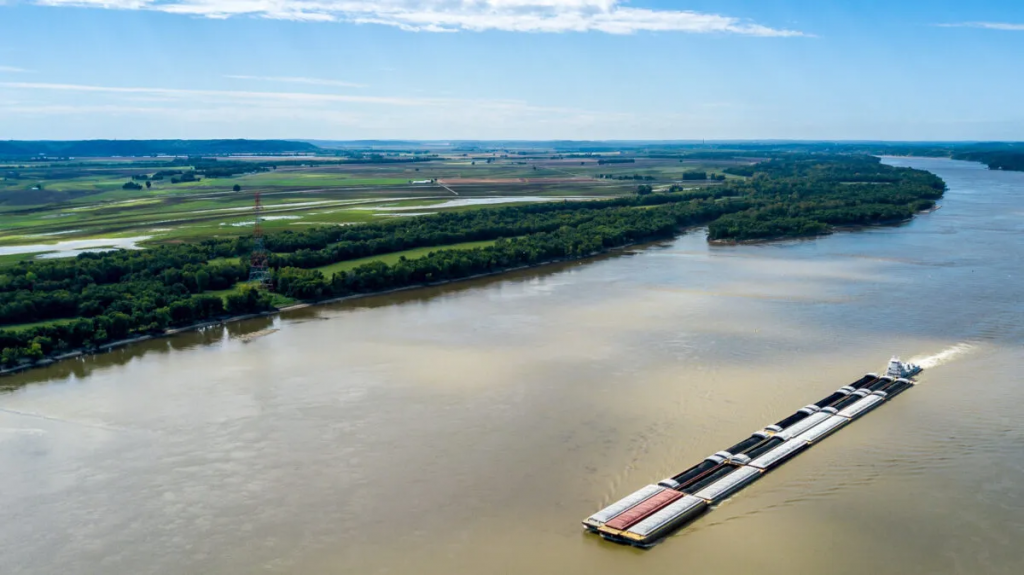
Low water levels on the Mississippi River, a result of dryness across the Midwest and South, is reducing the ability for barges to effectively navigate, driving up farmers' transportation costs as they seek storage and marketing options for their recently harvested crops. This Market Intel is a follow-up to our recent analysis of the initial impacts of drought conditions on the movement of inland barges: Severe Weather and Low Mississippi River Levels Bring Uncertainty to Harvest.
Generally speaking, inland barges are a reliable and cost-effective way to transport goods. With relatively low labor and energy requirements to move a large quantity of product, barges have been shown to provide shipping services at a 10th of the cost of railways and a 16th of the cost of trucking, where available. The efficiency of barges, of course, relies on the existence of enough water for constant movement without obstruction. Dry conditions that lower river water to levels too low for barges to navigate or to levels that require barges to reduce their draft (how deep the boat sits in the water) limit transportation on rivers.
In late August, the Army Corps of Engineers reported the stage, or height of the river's surface relative to the zero-stage level of 379 feet above standard sea level, at St. Louis was 1.13 feet, 46% lower than the prior three-year average of 4.37 feet and 24% below last year's level of 1.49 feet on the same day. So far for the month of September, the average daily stage at the same location has been -3.02 ft, over three times lower than August's number and over 2 feet lower than the same period last year.
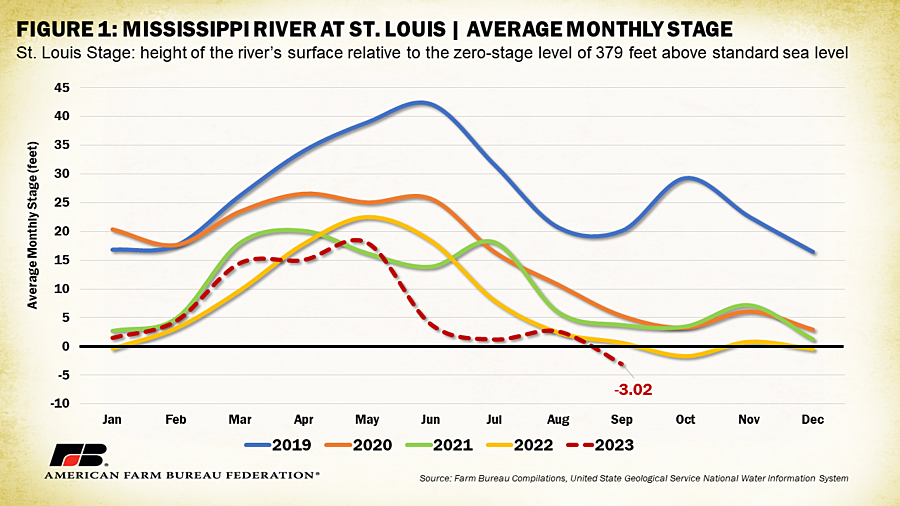
According to USDA's latest Grain Transportation Report, the industry has responded by reducing draft allowances (the depth a barge may sink into the water), as well as agreeing to a reduction in tow sizes (the number of barges a single boat can tow.) As of Sept. 18, between Cairo, Illinois, and the Gulf of Mexico, average loading drafts for barges are down 24% and average tow sizes are down 17-38%. Combined, this means more barges will be needed to move the same quantity of products and more boats will be needed to move smaller groups of barges, pressuring capacity and slowing downstream user efficiency. Pressured capacity in barges and boats increases competition for transportation, pushing up costs for shippers looking to get product moved. USDA further noted these adjustments have resulted in transit delays of two to three days.
USDA's Agricultural Marketing Service tracks weekly barge rates for gulf-bound freight originating from seven locations along the Mississippi River system: Twin Cities, a stretch along the Upper Mississippi; Mid-Mississippi, a stretch between eastern Iowa and western Illinois; Illinois River, along the lower portion of the Illinois River; St. Louis; Cincinnati, along the middle third of the Ohio River; Lower Ohio, approximately the final third of the Ohio River; and Cairo-Memphis, from Cairo, Illinois, to Memphis, Tennessee. The U.S. inland waterway system utilizes a percent-of-tariff system to establish barge freight rates. The tariffs were originally from the Bulk Grain and Grain Products Freight Tariff No. 7, which was issued by the Waterways Freight Bureau (WFB) of the Interstate Commerce Commission (ICC). In 1976, the United States Department of Justice entered into an agreement with the ICC to deregulate barge rates and make Tariff No. 7 no longer applicable. Today, the WFB no longer exists, and the ICC has become the Surface Transportation Board, which does not have jurisdiction over barge rates on inland waterways. However, the barge industry continues to use the tariffs as benchmarks for rate units. Each city on the river has its own benchmark, with the northernmost cities having the highest benchmarks. They are as follows: Twin Cities = $6.19/ton; Mid-Mississippi = $5.32/ton; St. Louis = $3.99/ton; Illinois = $4.64/ton; Cincinnati = $4.69/ton; Lower Ohio = $4.46/ton; and Cairo-Memphis = $3.14/ton.
Figure 2 displays weekly average downbound barge rates for the seven locations since 2019. The rate represents the percent increase over the reference benchmark. In the previous analysis, average barge tariffs for the week of August 16 reached 401% of their underlying tariff, which was well in line with previous years. As of the week of Sept. 11, rates have ticked up to over 900% of their underlying tariff, reflecting the impact of water levels on transportation costs. For comparison, during the same week last year, when water levels were also on the decline, rates were 779% of their underlying tariff, meaning rates this year have outpaced those of last year during the same week.
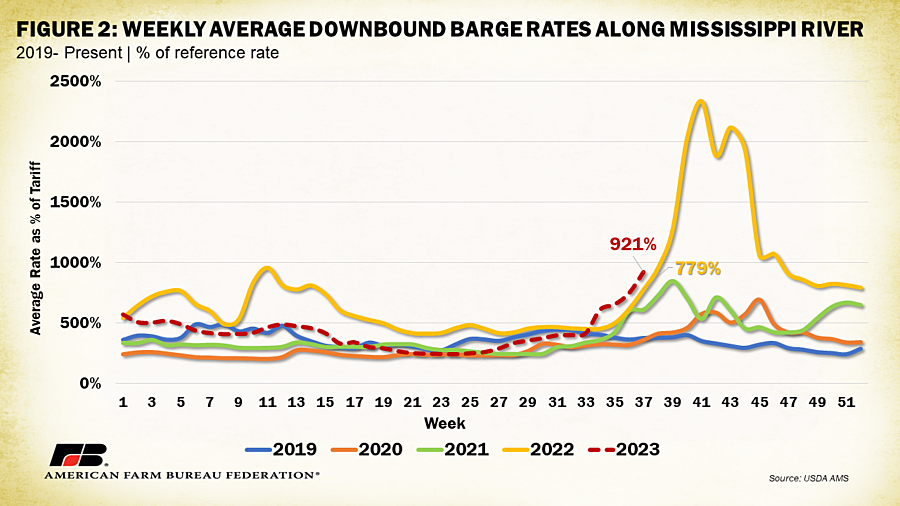
To calculate the true per-ton cost of grain transportation, the percentage of tariff rate is multiplied by the 1976 benchmark. As an example, a 300% tariff for a St. Louis grain barge would equal 300% of the St. Louis benchmark rate of $3.99, or $11.97 per ton. Figure 3 displays the per-ton cost of barge transportation at the seven locations with rate benchmarks for the 37th week of 2020, 2021, 2022 and 2023. For the 37th week of this year, per-ton costs are highest for all locations except the Mid-Mississippi and Twin Cities regions, which are slightly below 2022 rates. Notably, across locations, in both 2022 and 2023 rates are substantially (an average of 28% to 51%) higher than 2021 levels when river stage levels were more normal.
USDA reported that the Army Corps of Engineers continues to dredge ports of the Mississippi River system and that higher precipitation in the upper Midwest could help stabilize water conditions. This could be the reason rates along the Mid-Mississippi and Twin-Cities stretches saw lower prices compared to last year than other regions further downstream.
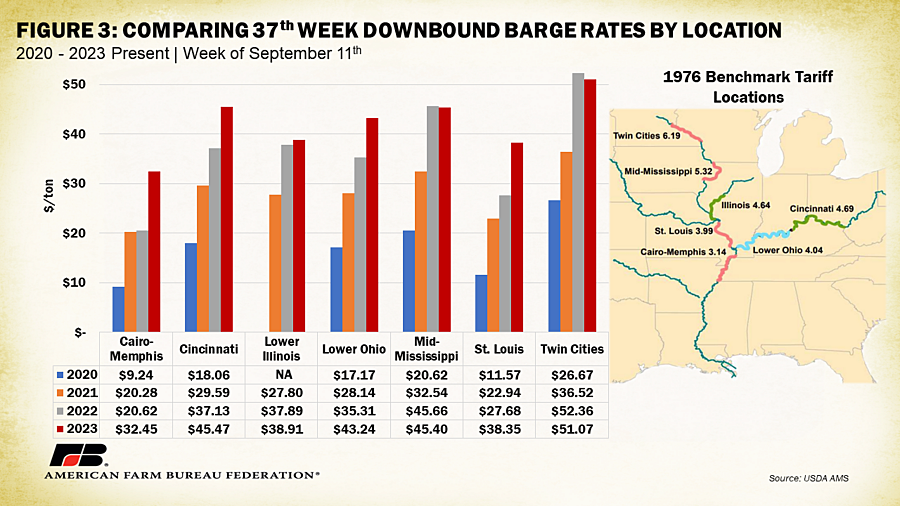
For the week ending Sept. 24, barged grain movements at St. Louis (Lock 27) totaled 68,900 tons. This was 16% less than the previous week and 41% less than the same period last year. For the week ending Sept. 16, 81 grain barges moved down river—25 fewer than last week. There were 516 grain barges unloaded in the New Orleans region, 2% fewer than last week. Disruptions to barge movements in a region that heavily supplies export demand contributes to market uncertainty. This is particularly impactful since approximately 95% of corn, 94% of soybeans and 45% of wheat moved on inland barges in the U.S. are transported on the Mississippi River. The vast network of locks and dams, prevalence of grain elevators and vessel service facilities, and the simple geography of the Mississippi/Missouri river system running through production-heavy heartland states make utilizing alternative waterways unrealistic.
Conclusion
Agricultural producers have dealt with a wide range of supply chain shortfalls for the past several years. Railway and trucking have encountered an array of service issues often linked to labor and equipment capacity constraints. Largely unaffected by these issues, barges have historically remained a relatively inexpensive and reliable way to move product through the country, and especially to export ports. The continued limitations on this cost-effective and efficient transportation mode because of dangerously low water levels in the Mississippi River is especially problematic during the height of harvest season, when farmers are looking to move grain to storage facilities. If forecasted rains do not improve conditions, many producers will scramble to find places to store their goods or face exorbitant wait times and costs to acquire transportation.
Story credit: Daniel Munch, American Farm Bureau Federation
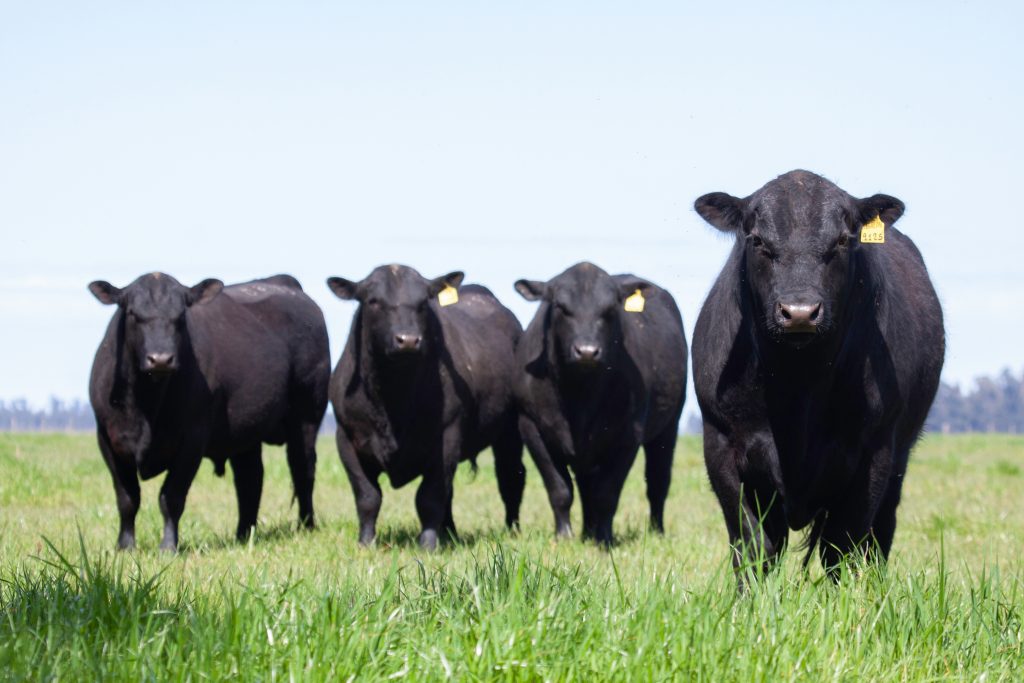
Senior Farm and Ranch Broadcaster, Ron Hays, is back talking with the President of Express Ranches, Jarold Callahan, about the success of the Angus breed and the potential of the seedstock industry.
Express Ranches has won the Roll of Victory Show Breeder of the Year Award for multiple years. In fact, Express Ranches has won this award for 12 consecutive years.
Callahan said the Angus breed plays a dominant role in the purebred scene, much of which is related to the success of Certified Angus Beef.
"Certified Angus Beef has added a lot of value to Angus-sired calves," Callahan said. "There is no doubt about that. In the marketplace, when you are selling those weaned calves or selling those yearlings, or you are selling out of the feed yard, it has certainly added some value."
The Angus breed has enjoyed popularity because of work on the maternal side, Callahan said, as well as the terminal side in terms of adding carcass characteristics.
The Angus breed's place in the top of the market, Callahan said, has been earned through years of hard work.
"We know here that we have got to continually earn that customer support," Callahan said.
The future looks bright for the seedstock industry, Callahan said, but just like any part of agriculture, producers will have to utilize the information and technology available to stay at the forefront.
"Whether you are raising wheat or you are raising Angus cattle, I think you have to be open-minded enough to look at the technology and have the common sense to see which parts of that technology will work in your operation and for your customers," Callahan said.
The Beef Buzz is a regular feature heard on radio stations around the region on the Radio Oklahoma Ag Network and is a regular audio feature found on this website as well. Click on the LISTEN BAR at the top of the story for today's show and check out our archives for older Beef Buzz shows covering the gamut of the beef cattle industry today.
According to State Climatologist, Gary McManus, heavy rains across eastern Oklahoma yielded some good changes, but most of the southwestern half of the state was dealt a dry hand, and the same for north central Oklahoma. The area of extreme (D3) drought in southern Oklahoma continues to spread.
"Unfortunately, we're not seeing big rains coming, but more of those convective type of storms that leave a lot of folks wanting," McManus said. "We see increased odds of above normal precipitation, but 'normal' for this time of year is getting smaller and smaller."
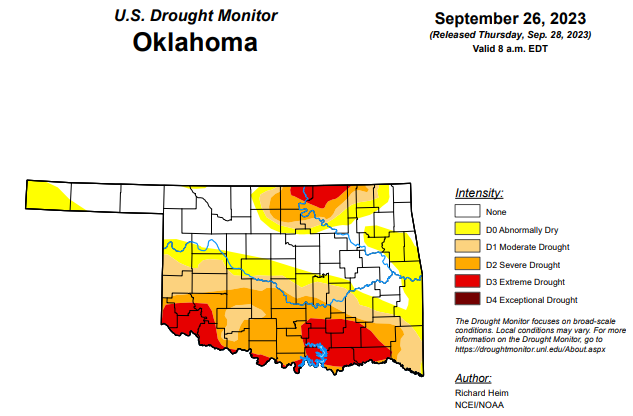
To view the latest Oklahoma drought map, CLICK HERE.
According to the latest Oklahoma drought monitor, exceptional drought remains at zero percent, unchanged from the past month.
Extreme drought or worse is unchanged from last week, remaining at 12.91 percent.
Severe drought or worse is now at 30.93 percent, improved from last week's 34.6 percent.
Moderate drought or worse is now at 46.76 percent, improved from last week's 48.72 percent.
Abnormally dry or worse conditions are now at 65.71 percent, improved from last week's 71.55 percent.
According to the 6-10 Day Precipitation Outlook Map, the majority of the panhandle and southwestern Oklahoma is leaning above a 50 to 60 percent chance of precipitation through October 7. The rest of the state, aside from the southeast corner and the far west side of the panhandle, is leaning above a 40 to 50 percent chance of precipitation through October 7. As for that southeast corner of the state along with the western part of the panhandle, those areas are leaning above a 33 to 40 percent chance of precipitation through that date.
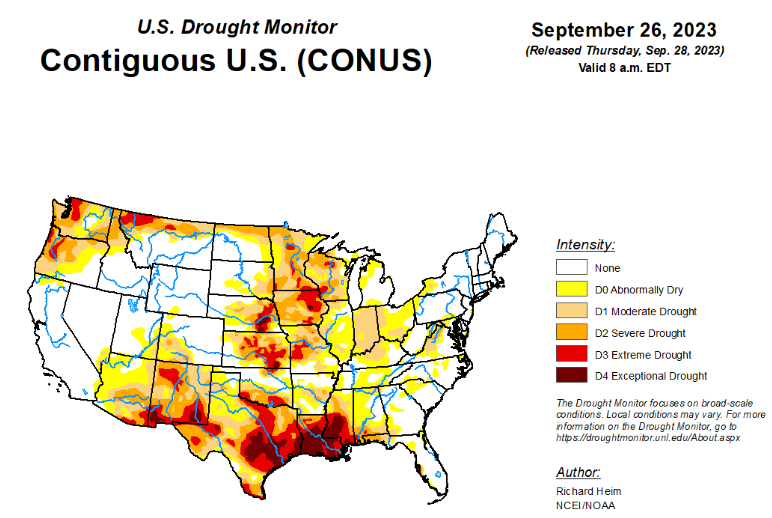
To view the United States Drought Map, click here.
According to the latest U.S. drought monitor, the upper-level circulation over the contiguous U.S. (CONUS) during this U.S. Drought Monitor (USDM) week (September 20-26) consisted of an upper-level ridge of high pressure, that extended from the southern Plains to Hudson Bay, and a low-pressure trough over the eastern Pacific. The trough sent weather systems spinning across the CONUS, with their fronts and surface low pressure systems generating areas of rain across the Pacific Northwest, northern Rockies, and Great Plains to the Mississippi Valley. Meanwhile, Tropical Storm Ophelia moved up the East Coast, spreading rain from North Carolina to southern New England. These areas were wetter than normal for the week. Some of the rain was locally heavy, with over 5 inches reported in places. Much of the rain fell over severely dry areas, which resulted in contraction or reduction in the intensity of drought in parts of the Great Plains, Upper Mississippi Valley, and Mid-Atlantic states. It was drier than normal across the rest of the West, large parts of the central to southern Plains, and most of the country between the Mississippi Valley and Appalachians. The continued dry conditions from the Ohio Valley to central Gulf of Mexico Coast resulted in expansion or intensification of drought and abnormal dryness in these areas. Temperatures averaged warmer than normal beneath the ridge across the Plains, Mississippi Valley, and Great Lakes. The week was cooler than normal in the West and across the East Coast states.
In the Southern Plains, bands of heavy rain fell across eastern Oklahoma, western Arkansas, and the ArkLaTex, with amounts over 5 inches recorded. Amounts of half an inch to 2 inches extended outward from this central band. But the western half of Texas and Oklahoma, and much of Mississippi and Tennessee received little to no rain. Hydrological impacts were severe in parts of the South region, with Falcon International Reservoir in south Texas near record-low levels, comparable to the levels reached during the droughts of 2002 and 1956 (during the Great Plains 1950s Drought). Temperatures were warmer than normal across most of the region, with anomalies reaching 8 to 12 degrees above normal over Texas. Moderate to exceptional drought expanded in Mississippi, extreme drought expanded in southwest Oklahoma and southern Texas, and abnormal dryness and some moderate drought spread across parts of Tennessee. Abnormal dryness and moderate to exceptional drought were trimmed in parts of Oklahoma, Texas, and Louisiana, with 2-category changes occurring in places. Arkansas had contraction of drought in the west and expansion or intensification in the central to eastern parts. The lack of precipitation and persistently hot temperatures during the last several months in the South have severely dried out soils. According to September 24 U.S. Department of Agriculture (USDA) statistics, 80% of the topsoil moisture in Louisiana was short or very short (dry or very dry). The statistics were 75% for Mississippi, 66% for Texas, 63% for Oklahoma, 62% for Arkansas, and 38% for Tennessee.
In the High Plains, northern and eastern parts of the High Plains region received half an inch to over 2 inches of rain this week, while Colorado and parts of Wyoming and Kansas received little to no rain. D0-D4 contracted in Nebraska, D0-D3 were reduced in Kansas and North Dakota, and D0-D2 shrank in South Dakota. On the other hand, abnormal dryness returned to Wyoming and abnormal dryness and moderate drought expanded in Colorado. Two-thirds (67%) of the topsoil in Kansas was still short or very short of moisture, according to USDA statistics.
In the West, the southerly flow ahead of the eastern Pacific trough created an atmospheric river event that resulted in half an inch to 2 inches of precipitation across coastal areas from northern California to Washington. While the precipitation was helpful, it did not make up for deficits that have built up over the last several months; parts of Washington are still 10 inches or more below normal over the last 6 months. Severe drought was eliminated over southwest coastal Oregon where rainfall totals exceeded 3 inches and the total for the month was above normal. Much of Montana and parts of the northern Rockies received widespread 1 to 3 inches of precipitation; this resulted in contraction of D0-D2 in Montana. The rest of the West region received little to no precipitation. Abnormal dryness and severe drought expanded in Arizona, and extreme to exceptional drought expanded in southern New Mexico. USDA statistics indicated that three-fourths or more of the topsoil moisture was short or very short in Washington (82%), New Mexico (78%), Montana (77%), and Oregon (74%).
Looking ahead, in the two days since the Tuesday valid time of this USDM, the atmospheric river continued in the Pacific Northwest and rain has fallen across parts of the Midwest, Texas, and Florida. For September 28-October 3, a slow-moving weather system will drop 1 to locally 2 inches of rain across the Ohio Valley and parts of the Upper Mississippi Valley, while a Pacific weather system will move across the northwestern CONUS, spreading 1 to 2 inches of precipitation across the Pacific Northwest and Montana, with heavier amounts (up to 4 inches or more expected) in coastal areas of Washington and Oregon. The Florida peninsula is forecast to get 2 to 4 inches of rain, while the Gulf Coast, Rio Grande Valley, and Mid-Atlantic states can expect an inch or less. The Southwest, New England, Carolina Piedmont, and most of New York and the southern Plains to Iowa are predicted to receive little to no precipitation. Temperatures are progged to be above normal from the Plains to Northeast and near to below normal across the Southeast and West.
For much of the next 2 weeks, the atmospheric circulation will consist of an upper-level trough over the western CONUS and a ridge over the Mississippi Valley. The trough/ridge system will slowly shift east during the period. The Climate Prediction Center's (CPC) 6-10 Day Outlook (valid October 3-7) and 8-14 Day Outlook (valid October 5-11) favor a fairly stable pattern of warmer-than-normal temperatures from the Plains to East Coast and cooler-than-normal temperatures over the West and over the southeastern half of Alaska. The outlook is for above-normal precipitation over the Plains, Upper Mississippi Valley, northern half of the West, and most of Alaska. Odds favor below-normal precipitation over the Northeast and Appalachian Mountain chain, extending into the Ohio Valley and to the central Gulf Coast, as well as in the Alaska panhandle.
To view the 6-10 Day Precipitation Outlook Map, click here.
To view the 6-10 Day Temperature Outlook Map, click here.
To view the Monthly Drought Outlook Map, click here.
More than 30 varieties of tree seedlings native to Oklahoma will be on sale beginning Monday, October 2. The annual sale of seedlings intended for conservation planting is highly anticipated and many of the more popular varieties sometimes sell out quickly.
Conservation tree seedlings are grown throughout the year at the OFS Forest Regeneration Center located in Goldsby. The goals of Oklahoma's Forest Regeneration Program are to keep forestlands in forest, and to offer tree planting as a viable solution to some of Oklahoma's most pressing environmental issues.
"Trees provide so many benefits to our everyday lives. They filter clean air, provide fresh drinking water, stabilize climate, and create homes for thousands of species of plants and animals," said OFS Assistant Director and Forest Management Chief Craig Marquardt. "Our sale is a way to make available to Oklahoma landowners the best specimens of the best species for each region."
The State Nursery sells over 30 varieties of trees and shrubs, chosen for their ability to meet the challenges of Oklahoma's tough climate. Years of selecting from the best seed sources available for each species and careful growing practices in our nursery have resulted in seedlings adaptable to a wide range of planting conditions. Talk to our Regeneration Staff or your local Service Forester for recommendations for your area and how to properly plant seedlings.
Seedlings are distributed as bare-root and containerized and can be planted for several different purposes including timber production, wildlife habitat improvement, erosion control and windbreaks. The State Nursery also has special options available including Genetically Improved Southern Pines and Conservation Planting Packets.
For more information about the sale, to download a PDF copy of the 2023-2024 seedling catalog, or to learn more about the best trees to plant in your area, visit ag.ok.gov/shop or contact the State Nursery in Goldsby at frc@ag.ok.gov or 405-288-2385.
The American Soybean Association and all 26 affiliated state soybean associations are pleased members of the U.S. House of Representatives have batted down Rep. Victoria Spartz's (R-IN) amendment to the Fiscal Year 2024 Agriculture, Rural Development, Food and Drug Administration, and Related Agencies Appropriations Act by a vote of 49 to 377. The amendment aimed fire at commodity checkoff programs and was vehemently opposed by the soy industry and others. ASA is the national group representing soy on policy issues, and likewise, state affiliates represent the 30 primary soy-growing states throughout the country. The soy policy organizations joined scores of other ag groups in a letter to House leadership earlier this week in answer to the amendment, vehemently opposing it.
Daryl Cates, soybean farmer from Illinois and ASA President said, "Congresswoman Spartz took aim at the entire checkoff system with no regard to the votes of those of us farmers who, time and again, have voted to preserve these programs that allow us to collectively promote our crops, conduct research, develop and protect markets, and assure domestic and global access. I speak for the soy industry today when I say, we are exceptionally pleased this strange amendment was snuffed on the House floor."
The soy checkoff has overwhelming support from hundreds of thousands of soy farmers across the United States, as proven every five years when the program comes up for referendum. The last request for referendum was held May 2019: Only 708 farmers nationwide requested a referendum (there are more than half a million soy farmers in the U.S.), representing less than 1% (officially 0.13%) of all eligible soybean farmers. This fell far short of the 10% needed to prompt a referendum and demonstrated resounding support for the soy checkoff.
In place since the early '90s, the soy checkoff provides U.S. soybean farmers $12.34 in added value at the national level for every dollar they invest in the soy checkoff. Also determined in the soy checkoff's 2019 return-on-investment (ROI) study:
• International promotion activities produced $17.95 in return value.
• Demand-enhancing research and promotion returned an average value of $18.18.
• Production research returned an average value of $9.42.
• Farmers received even more value through state checkoff activities. Checkoff programs are administered by the U.S. Department of Agriculture and overseen by the farmers and ranchers who vote in favor of checkoff systems to promote specific commodities. By promoting their agricultural products, checkoffs ensure future generations of farmers can build or maintain their livelihoods in agriculture. The soy checkoff's self-imposed levy applies to all U.S. soybean farmers and is one half (1/2) of 1% of the market price of each bushel of soybeans sold each season. Those funds are used to build demand, find new markets, and improve the profitability prospects for all soy farmers. Soy checkoff dollars are split among the national organization and state checkoff programs, or qualified state soybean boards.
As we all know, illegal migration into the United States has reached unprecedented levels since President Biden took office. This administration's policies have incentivized individuals to make the dangerous journey to our southern border and have put our national security at risk. We have seen shocking images of border patrol agents being brutalized, migrants piling onto trains, and of foreign flags on American soil. Put simply, Joe Biden has purposefully abandoned our southern border.
Biden's egregious neglect has allowed for more than 7 million illegal crossings at our southern border. House Republicans have witnessed the devastating crisis at hand and passed the Secure the Border Act of 2023 – the strongest border security bill in the history of Congress. However, the Senate and the White House refuse to act. The administration's open border policies have spiraled into a humanitarian, public health, and national security crisis.
These policies have been especially detrimental for our border states and communities. Most recently, Mayor Rolando Salinas Jr. issued an emergency declaration in Eagle Pass, Texas due to the thousands of immigrants crossing in just the past few days. This has led to overcapacity in Boder Patrol processing tents, often holding over 4,000 migrants in a 1,000-person tent. The overflowing surge of migrants has forced Eagle Pass to temporarily shut down the Union Pacific train traffic between Mexico and Texas. This local international bridge is the busiest gateway between the two countries and a major economic engine for the city.
This administration has incentivized migrants to take the extremely dangerous journey across multiple countries and even continents to our southern border. Last week, a three-year-old boy drowned in the Rio Grande while his family was attempting to enter the U.S. On top of this, the cartel continues to prosper while smuggling individuals across the border to the tune of billions of dollars.
This administration has also made every community more vulnerable to national security threats. Alarm bells were raised with the news that a recent smuggler crossed the border with possible ties to ISIS. This is in addition to the 98 suspects on the terror watchlist who were apprehended in FY 2022. The real question is, how many escaped undetected?
States like Texas have attempted to secure the border on their own. However, The Biden administration continues to make these efforts more difficult. Judges have even challenged Texas' attempts to use water buoys to stem the tide of illegal immigration. It all comes down to this: the Biden administration's immigration policies threaten the safety of Americans across the country. This is President Biden's border crisis, and he must be held accountable. I have signed on to a resolution calling for the impeachment of Sec. Mayorkas and I remain committed to finding ways to secure our southern border.
RON's Dave Lanning has a pre-opening look at today's agricultural Markets.
Click the audio tab below for today's report.

More than 30 varieties of tree seedlings native to Oklahoma will be on sale beginning Monday, October 2. The annual sale of seedlings intended for conservation planting is highly anticipated and many of the more popular varieties sometimes sell out quickly.
Conservation tree seedlings are grown throughout the year at the OFS Forest Regeneration Center located in Goldsby. The goals of Oklahoma's Forest Regeneration Program are to keep forestlands in forest, and to offer tree planting as a viable solution to some of Oklahoma's most pressing environmental issues.
"Trees provide so many benefits to our everyday lives. They filter clean air, provide fresh drinking water, stabilize climate, and create homes for thousands of species of plants and animals," said OFS Assistant Director and Forest Management Chief Craig Marquardt. "Our sale is a way to make available to Oklahoma landowners the best specimens of the best species for each region."
The State Nursery sells over 30 varieties of trees and shrubs, chosen for their ability to meet the challenges of Oklahoma's tough climate. Years of selecting from the best seed sources available for each species and careful growing practices in our nursery have resulted in seedlings adaptable to a wide range of planting conditions. Talk to our Regeneration Staff or your local Service Forester for recommendations for your area and how to properly plant seedlings.
Seedlings are distributed as bare-root and containerized and can be planted for several different purposes including timber production, wildlife habitat improvement, erosion control and windbreaks. The State Nursery also has special options available including Genetically Improved Southern Pines and Conservation Planting Packets.
For more information about the sale, to download a PDF copy of the 2023-2024 seedling catalog, or to learn more about the best trees to plant in your area, visit ag.ok.gov/shop or contact the State Nursery in Goldsby at frc@ag.ok.gov or 405-288-2385.
The U.S. Department of Agriculture (USDA) today announced that it will begin issuing more than $1.75 billion in emergency relief payments to eligible farmers and livestock producers. These much-needed payments are helping farming and ranching operations recover following natural disasters in 2020, 2021 and 2022.
"USDA provides substantial economic support for America's farmers and ranchers through its critical farm program payments. These payments are reflective of the incredible and cumulative financial hits brought on by devastating natural disasters that agricultural producers nationwide have endured while fulfilling their commitment to produce our food, fiber and fuel," said Agriculture Secretary Tom Vilsack. "This additional assistance helps offset the tremendous losses that these producers faced and is a valuable investment, not only for farmers and ranchers but in the economic successes of our communities – rural and urban – and in our nation's food security for generations to come."
Emergency Livestock Relief Program
This week, FSA will issue more than $581 million in 2021 and 2022 drought and wildfire emergency relief to eligible ranchers.
FSA is closing out the Emergency Livestock Relief Program (ELRP) for losses suffered in 2021. ELRP Phase Two payments are estimated at $115.7 million. Ranchers who lost grazing acres due to drought and wildfire and received assistance through ELRP Phase One will soon receive an additional payment through ELRP Phase Two. This second payment will be equal to 20% of the 2021 gross ELRP Phase One payment. ELRP Phase Two payments to producers will be automatic with no application required. In April 2022, FSA staff processed more than 100,000 payments through ELRP Phase One and paid eligible ranchers more than $600 million for 2021 grazing losses.
In 2022, ranchers continued to experience significant loss of grazing acres due to drought and wildfire. To help mitigate these losses, eligible ranchers will receive ELRP disaster assistance payments for increases in supplemental feed costs. To expedite payments, determine producer eligibility and calculate the ELRP 2022 payment, FSA is using livestock inventories and drought-affected forage acreage or restricted animal units and grazing days due to wildfire already reported to FSA by ranchers when they submitted their Livestock Forage Disaster Program applications. ELRP payments for 2022 losses are estimated at $465.4 million and will be automatic with no application required.
Emergency Relief Program Phase Two
FSA is closing out Phase Two of the Emergency Relief Program (ERP) this week through the delivery of more than $1.17 billion in crop disaster assistance payments to producers of eligible crops who suffered losses, measured through decreases in revenue, due to qualifying natural disaster events that occurred in calendar years 2020 and 2021. ERP Phase Two was intended primarily for producers of crops that were not covered by federal crop insurance or FSA's Noninsured Crop Disaster Assistance Program (NAP). Previously, through ERP Phase one, FSA staff processed more than 300,000 applications and paid an estimated 217,000 eligible producers more than $7.4 billion.
More Information
These programs represent a few of FSA's extensive commodity, conservation, credit, disaster recovery and safety-net programs. By the close of the fiscal year on Sept. 30, for all farm and farm loan programs — including vital access to capital for distressed borrowers — USDA, through the delivery of FSA programs, will have invested more than $19 billion in America's agricultural producers with more economic support on the way in fiscal year 2024.
For more information on available FSA programs, contact your local USDA Service Center.
USDA touches the lives of all Americans each day in so many positive ways. In the Biden-Harris administration, USDA is transforming America's food system with a greater focus on more resilient local and regional food production, fairer markets for all producers, ensuring access to healthy and nutritious food in all communities, building new markets and streams of income for farmers and producers using climate smart food and forestry practices, making historic investments in infrastructure and clean energy capabilities in rural America, and committing to equity across the Department by removing systemic barriers and building a workforce more representative of America. To learn more, visit usda.gov.
USDA is an equal opportunity provider, employer and lender.
American Farmers & Ranchers (AFR) recently presented two Oklahoma legislators—Sen. James Lankford (R-OK) and Rep. Kevin Hern (OK-01)—with the National Association of Mutual Insurance Company's (NAMIC) Benjamin Franklin Public Policy Award. The awards were presented in Washington, D.C., the week of Sept. 11, when AFR members were on Capitol Hill lobbying Congress on behalf of agriculture and insurance issues.
The Benjamin Franklin Public Policy Award is named for Dr. Benjamin Franklin, who was a dedicated public servant and co-founded America's first successful mutual insurance company.
The award is presented to federal legislators who demonstrate unwavering support and leadership on behalf of NAMIC members, insurance consumers and the property/casualty insurance industry. Only members who truly understand and support the industry, successfully protect the free and open market environment and work to facilitate the positive relationships between insurers and their insureds are considered for the prestigious award.
AFR Cooperative is a membership services organization established in 1905 as Oklahoma Farmers Union. AFR provides educational, legislative and cooperative programs across the state and serves as a watchdog for Oklahoma's family farmers and ranchers and rural communities. The organization is actively supportive of the state's agricultural industry and rural population with membership consisting of farmers actively involved in production agriculture and non-farmers adding their voice in support of AFR principles.

AngusLinkSM enrollments triple in 2023, as compared with 2022 figures.
AngusLinkSM, the administrator for value-added programs of the American Angus Association®, surpassed 150,000 head of enrolled cattle for 2023 on September 15. This means from 2022 to 2023, participation in AngusLink has increased by more than 300%, reflecting a turning point for its value-added programs.
This milestone comes after the establishment of a collaboration agreement with IMI Global. Since January, IMI Global has worked alongside Association staff to help provide verification services to cattlemen for AngusVerifiedSM and the Genetic Merit ScorecardSM. IMI Global administers the program giving producers a la carte access to IMI's suite of programs along with AngusLink programs, which can be added individually as well.
AngusVerified documents cattle are from registered Angus bulls, and the Genetic Merit Scorecard draws on the industry's largest database to quantitatively evaluate calf genetics and project their performance potential from weaning to the packing plant.
"Reaching 150,000 cattle enrollments in the AngusLink programs is really exciting for cattlemen participating now and for those wanting to enroll in the future," said Troy Marshall, director of commercial industry relations for the Association. "The collaboration with IMI has given us an entirely bigger market and enabled us to align with the No. 1 provider of program verification services for cattle, meaning commercial cattlemen can access more program options with their enrollment."
Most noticeably, video sales have witnessed a sharp increase of cattle enrolled in AngusLink programs.
"At the video sales on those big days, we see as many as 1 in 4 of the lots for sale being AngusVerified or having a Genetic Merit Scorecard," Marshall said. "That critical mass has helped with feeders paying much more attention to the AngusLink offerings."
Board members of the Association said they are pleased to see the program's growth and premiums being earned by cattlemen based on their investments in registered Angus genetics.
"Some of those cattle sell for $14-15/cwt more on average on top of record-high prices," said Jim Brinkley, Association board member from Missouri, at August board meeting. "It's been phenomenal. Hearing feedback from the feeders to the producers, everybody's getting on board with this."
-Written by Sarah Kocher, Angus Communications
| Federally inspected cattle slaughter last week was 7,000 head smaller than the week prior. This slaughter reduction aligns with the pace packers were targeting for the period.It's normalized after two weeks of very low and high head counts due to the Labor Day week earlier this month. The north to south price differential narrowed again last week as a potential signal that currentness in fed cattle supplies is leveling up between the major trade regions. Southern feedyards traded for $183/cwt., while Nebraska/Iowa feedyards traded between $184 and $186/cwt. |
 |
| While the market average trading range has narrowed from the recently historically wide range, the total market average in the six-state region has priced in a fairly tight range in the low to middle $180's since the middle of June. The comprehensive cutout traded in a range from $325/cwt. to $301/cwt. in the same period. Carcass cutout values were lower again last week with some narrowing of the price spreads as well. Expect cutout values to reach their seasonal lows by the second week of October before catching fourth quarter demand traction, rallying in early November. Price declines on chuck cuts enticed buyers last week as retail interest tends to increase for these items looking ahead to October and November. Ribeye prices were slightly higher last week as buyers continue to store inventory in the "near frozen" state to achieve needed supplies for the holidays. Spot market ribeye prices represent a small available supply for this reason and the price pattern is strongly higher this year compared to the past two years. Other noted trends we've been tracking continue on a firm pattern in latest data. Seasonally lower values on strips and shortloins are on the expected pace. As well, sharply higher 90% lean trimmings prices are holding the alternative round cuts from fed cattle on a higher plane as we've recently pointed out. |
| CARCASS WEIGHTS SURGE, CHOICE GRADE SETBACK |
| In the past 10 years steer carcass weights reached their annual lows in the third week of May and touched their heaviest annual mark in the second and third full weeks in November. Since the COVID interruptions in 2020, the spring lows have migrated into the month of June. The magnitude of change in steer carcass weights from the spring-low to the fall-high in each of the past five years has been relatively close, except for 2019. The August 9, 2019 fire at Tyson's Holcomb, Kansas plant set industry slaughter efficiency back, generating heavier than normal weights into the fall, aggregating a 70 lb. weight swing from the spring low to the November high. The second largest weight swing in the series was a 58 lb. seasonal increase in 2018 with the remaining years posting no less than a 45 lb. change. The first four months of 2023 saw average steer weights fall 15 lb. short of a year ago due to exceptionally poor winter-feeding conditions. Since early May steer weights have adjusted higher and have since averaged just 1 lb. heavier than in 2022. Major contributors are slower slaughter throughput and less current finished cattle supplies in the south. Latest data for the week of September 3 shows steer carcass weights surged 9 lb. to average 917 lb. each. This is large jump given that weights had only moved up 13 lb. total in the five previous weeks. It's important to factor carcass weight changes to understand production tonnage as we discuss weekly head counts and throughput. The single-week 9 lb. per head increase equates to multiple semi-loads of boxed beef production. |
 |
| Heavier carcasses typically coincide with richer marbling and higher quality grades. But seasonal grade trends simply push quality lower this time of year as USDA's grading report for the September 11 week shows an abrupt leg down in percent USDA Choice. The one percentage point single-week drop placed the Choice share at 70.3% of steer and heifer carcasses. While this may seem like a small shift, it's truly sizeable since the annual Choice percentage has trended within just a five-point range annually in recent years. |
 |
| Latest data for the national Prime grade shows the current 8.27% holding a bit higher than the 7.6% for the same week last year. Combined Choice and Prime grade shares are currently even with their position a year ago today, which was the lowest quality grade performance week of the year. Surprisingly, the Premium Choice branded share of the Choice grade appears relatively unaffected. The category even shifted fractionally higher amidst the Choice downturn to average 30.9% of the Choice product total. Certified Angus Beef is the largest component of the Premium Choice branded offering. The brand's latest carcass acceptance rate near 32% is 1.5 points higher than a year ago as that figure seeks to mark the fall low very soon. |
NRCS Oklahoma Announces First FY2024 Application Batching Date for Conservation Stewardship Program (CSP), Agricultural Conservation Easement Program (ACEP) and Environmental Quality Incentives Program (EQIP)
The Natural Resources Conservation Service (NRCS) is announcing Friday, November 3, 2023, as the first batching date for applications submitted for Fiscal Year 2024 funding through either the Conservation Stewardship Program (CSP), Agricultural Conservation Easement Program (ACEP) or Environmental Quality Incentives Program (EQIP).
"NRCS-Oklahoma is wasting no time in FY24 connecting landowners with three of our most popular conservation programs," said State Conservationist Jeanne Hamilton. "CSP, ACEP and EQIP are three cornerstone programs for NRCS, and it's important that we connect landowners with financial and technical assistance."
NRCS uses batching dates for CSP, ACEP and EQIP as a tool to review, approve and fund applications. NRCS accepts applications on a continuous basis, and applications received after a batching date will automatically be considered during future funding cycles. This and future batching dates will include conventional funding and /or funding through the Inflation Reduction Act (IRA) to include variances of the programs referenced above. An example being applications for EQIP, EQIP IRA, or EQIP Conservation Incentive Contracts (CIC).
Conservation Stewardship Program (CSP)
CSP is the nation's largest conservation program in terms of participating land and is designed to help agricultural producers have more robust conservation activities and to help producers take their conservation activities to the next level.
Through CSP, agricultural producers and forest landowners earn payments for actively managing, maintaining, and expanding conservation activities like cover crops, ecologically-based pest management, buffer strips, and pollinator and beneficial insect habitat – all while maintaining active agricultural or forest production on their land. CSP also encourages the adoption of new technologies and new management techniques such as irrigation monitoring, precision agriculture applications, improved grazing systems, on-site carbon storage and planting for high carbon sequestration rate, and new soil amendments to improve water quality.
Agricultural Conservation Easement Program (ACEP)
ACEP helps landowners, land trusts, and other entities protect, restore, and enhance wetlands, grasslands, and working farms and ranches through conservation easements. Under the Agricultural Land Easements component, NRCS helps American Indian tribes, state and local governments and non-governmental organizations protect working agricultural lands and limit non-agricultural uses of the land. Under the Wetlands Reserve Easements component, NRCS helps to restore, protect and enhance enrolled wetlands.
Environmental Quality Incentives Program (EQIP)
EQIP is NRCS' flagship conservation program that helps farmers, ranchers and forest landowners integrate conservation into working lands.
EQIP provides financial and technical assistance to address natural resource concerns and to deliver environmental benefits, such as improved water and air quality, conserve ground and surface water, reduced soil erosion and sedimentation, improved soil health and plant condition, and improved or created wildlife habitat.
Oklahoma NRCS will be utilizing ACT NOW for the High Tunnel System ranking pool in FY24. ACT NOW allows NRCS to immediately approve and obligate a ranked application in a designated ranking pool when an eligible application meets or exceeds a State determined minimum ranking score without waiting until the NRCS field office ranks all applications in the ranking pool. Eligible High Tunnel applications received through Friday, November 3, 2023, will be considered.
How to Apply
Applications can be submitted at local USDA offices. NRCS will conduct an assessment and rank all eligible applications received by the batching date. NRCS will fund applications in ranking order as funding allows.
More information
For more information about NRCS programs and assistance, visit the www.ok.nrcs.usda.gov or contact the NRCS Field Office serving your county. NRCS employees in county offices can provide more information about how to apply for benefits offered by NRCS. For more information about NRCS programs and assistance, visit www.ok.nrcs.usda.gov or contact Oklahoma Programs at (405)742-1215.
Texas & Southwestern Cattle Raisers Association today concluded its 2023 Policy Conference, bringing together the association's Board of Directors, Executive Committee and four policy committees that all contribute to the future of the cattle industry.
"The 2023 Policy Conference was a tremendous success," said Texas & Southwestern Cattle Raisers Association President Arthur Uhl. "Bringing together cattle raisers is a core mission of our association and we value this time that our members can discuss issues of importance to landowners."
Members voted on new and expiring policies during the meeting and passed a new strategic plan that provides direction to Texas & Southwestern Cattle Raisers Association through 2029.
The meeting included a recap of the 88th Texas Legislature Regular Session, where Texas & Southwestern Cattle Raisers Association advanced policy priorities including Right to Farm, truth in labeling for alternative proteins and landowner liability legislation. Also included was a discussion of the propositions on the November ballot affecting agriculture.
"A number of constitutional amendments are on the ballot this November, including Proposition 1, that establishes the Right to Farm statute within the Texas Constitution," said Uhl. "We walked away realizing there is more work to be done and that begins with getting out to vote in a few short weeks."
Texas & Southwestern Cattle Raisers Association represents 26,000 cattle raisers in the Southwest. To learn more about the association and its legislative efforts, visit TSCRA.org.
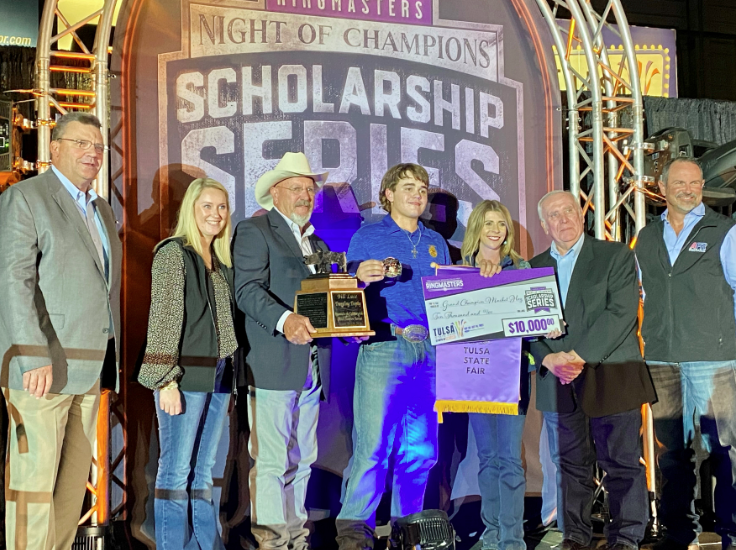
Farm Director, KC Sheperd, is visiting with Brandi Herndon about the 2023 Tulsa State Fair coming up on September 28 through October 8.
"We are excited to welcome our guests to 11 days of awesome," Herndon said. "We are starting out this first weekend with a lot of our open shows."

Numbers in the open cattle shows are up, Herndon said, as exhibitors have traveled as far as Florida to exhibit their animals this year. The open and junior sheep breeding shows will be this weekend, Herndon added, along with the junior breeding guilt show.
The fair will kick off on the 28th with a cattle grading contest.
"It is the state championship for the cattle grading for 4-H and FFA," Herndon said. "We will have over 1800 kids here participating in that."
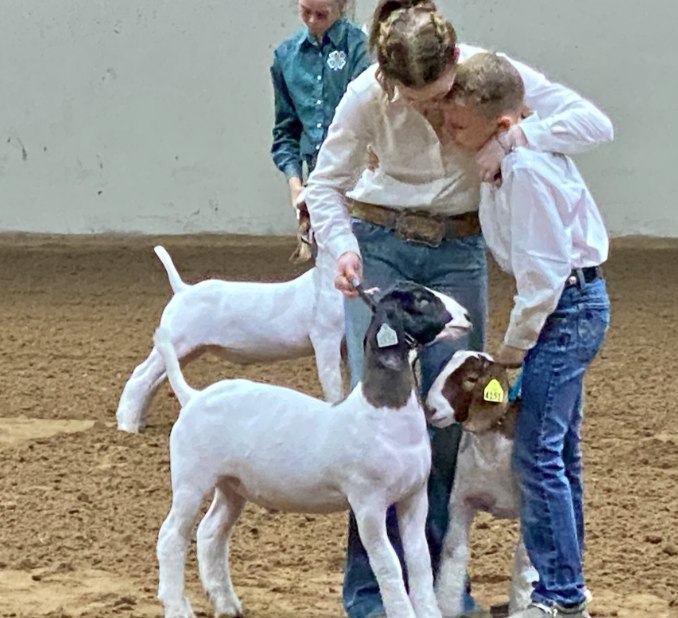
On Monday, October 2, Herndon said market animals will begin moving into the showgrounds.
"The big highlight in the next week on Wednesday, October 4, is our Night of Champions, where 150 of those exhibitors within our market animal shows will 'make the stage' at the Tulsa State Fair and be presented their project scholarship awards," Herndon said. "We have a lot of great donors that support that evening and support the 4-H and FFA youth, and we are very grateful for them."
Looking into the last weekend of the Tulsa State Fair, Herndon said there will be a collegiate livestock judging contest, a 4-H and FFA livestock judging contest, and a junior breeding heifer show.
"The two largest shows as far as entrees go are for sure our junior guilt show along with our junior breeding heifer show," Herndon said.
Herndon was able to talk in more detail regarding the Night of Champions and said by not having a traditional livestock auction where exhibitors sell their animals, hosting the Night of Champions allows them to be awarded, and continue showing those animals at other shows after the Tulsa State Fair.
"We select all of our grands live that night in front of all of our guests and our donors," Herndon said. "We want to make it exciting not only for the kids but for our donors as well in a fun-filled evening where we celebrate the kids as well as our donors."
Anyone is welcome to attend the Night of Champions at 6 p.m. at Ford Truck Arena in Tulsa.
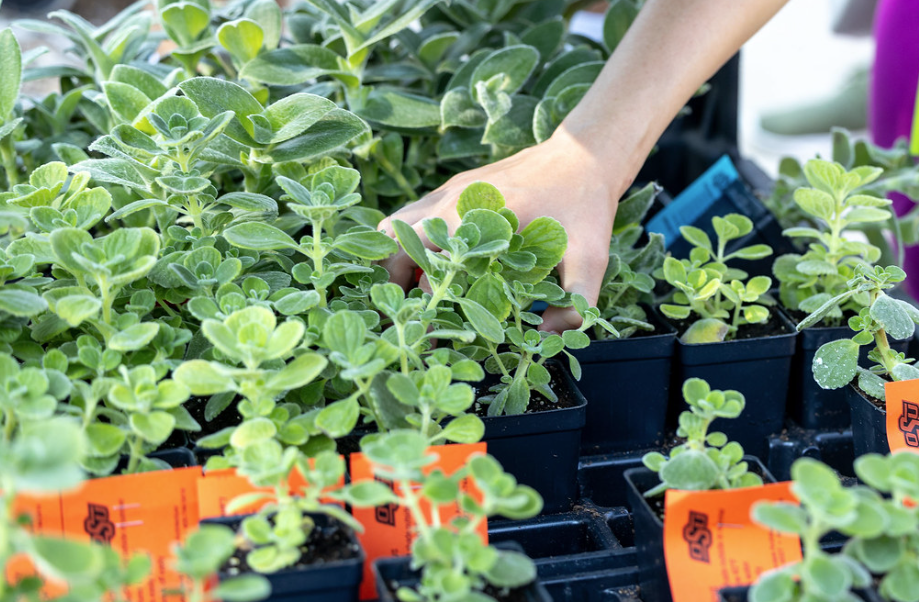
The one-day event will provide plant education to people interested in gardening, landscaping and other horticulture activities. (Photo by Mitchell Alcala, OSU Agriculture)
By Laney Reasner
Oklahoma State University Extension will host a Plant Materials Conference Oct. 19 in Oklahoma City.
Who and What: Plant experts from across the state will host workshops for anyone interested in gardening, landscaping and more. Lunch and refreshments will be provided throughout the day.
Featured topics at the conference include:
When: Thursday, Oct. 19, 2023. Registration begins at 7:30 a.m. Opening remarks are at 8:05 a.m., and the conference will conclude at 4:45 p.m.
Where: Champion Convention Center, 801 S. Meridian Ave., Oklahoma City, OK 73108
Registration is $75 and raises to $100 after Oct. 13. Registration questions can be directed to Jandra or Stacy in Agricultural Conferences office at 405-744-6489.
For more general conference information, please contact Mike Schnelle, workshop chair, at mike.schnelle@okstate.edu or 405-744-7361.
OSU Extension uses research-based information to help all Oklahomans solve local issues and concerns, promote leadership and manage resources wisely throughout the state's 77 counties. Most information is available at little to no cost.

Rep. Jim Olsen, R-Roland, today release a statement following the shooting at the Oklahoma State Fair and advocating to allow Oklahomans to protect themselves by open carry.
"The tragic shooting this past weekend at the Oklahoma State Fair underscored the need for law-abiding citizens to be able to exercise their Second Amendment rights at the State Fair.
The whole incident illustrates that, under the liberal gun control mindset, lawless criminals will continue to carry weapons and prove a threat while law-abiding Americans are prohibited from utilizing their God-given right to protect themselves and their families.
Two bills, House Bill 1021 and Senate Bill 920, were filed this past session that would have recognized Second Amendment rights at the State Fair. In a public place where lawless thugs can be a threat, trustworthy Oklahomans should have the right to be armed if they so choose.
The 2022 New York State Rifle & Pistol Association v. Bruen U.S. Supreme Court Ruling held that the Second Amendment protects an individual's right to carry a handgun for self-defense outside the home."

As the pending government shutdown looms in our Nation's Capital, the Organization for Competitive Markets, Competitive Markets Action, and Alabama Contract Poultry Growers Association (ALCPGA), applauded U.S. Reps. Victoria Spartz, R-IN, and Thomas Massie, R-KY, for introducing an amendment (#76) to H.R. 4368, the FY24 Agriculture Appropriations Act that would fund the U.S. Dept. of Agriculture (USDA) and other agencies. The amendment was ruled in order earlier this week and will be up for a vote before the full U.S. House later today.
The Spartz-Massie amendment states "none of the funds made available by this bill may be used to carry out commodity checkoff programs," and comes on the heels of OCM and CMA's second Farm Bill Summit and fly-in held in Washington, D.C., Sept. 17-22, where members of OCM, CMA, ALCPGA, the American Grassfed Association, Kansas Cattlemen's Association, National Dairy Producers Organization (NDPO), and others advocated for reforms to USDA's Commodity Checkoff Programs in nearly 100 meetings on Capitol Hill, including an in-person meeting with Rep. Massie. The checkoff programs have long been plagued by controversy and scandals brought to light by Politico, The Daily Caller, Milwaukee Journal Sentinel, and OCM.
"As a proud American and lifelong producer, I'm elated to see our members rally and rise up to defeat industrial agriculture and their backers in China on a level never seen before," said Jonathan Buttram, President of the Alabama Contract Poultry Growers Association and Treasurer at the Organization for Competitive Markets. "The industrial agriculture mafia is petrified of our work and the OFF Act because they see the writing on the wall and we hope they soon meet the same fate as New York's infamous 'Five Families.'"
"Since the inception of these programs, illegal relationships between checkoff boards and lobbying organizations have formed," said Mike Schultz, Founder of the Kansas Cattlemen's Association, and Vice-President at the Organization for Competitive Markets. "Hundreds of millions of dollars have been misused, and these checkoff programs, as they are currently being managed, do not work in the best interests of independent family famers."
"American family farmers are rising up and fighting for their livelihoods by demanding reform to USDA's scandal-ridden checkoff programs they are forced to pay into," said Marty Irby, President of Competitive Markets Action and Secretary at the Organization for Competitive Markets. "We applaud Reps. Spartz and Massie for their intestinal fortitude and courage in standing up to the industrial agriculture mafia that has long-hijacked the voice of independent producers, and call on the chamber closest to the American people to pass the Spartz-Massie amendment that will help save American agriculture."

The New ERA clean energy program will reduce costs for rural Americans while improving grid reliability.
U.S. Department of Agriculture (USDA) Secretary Tom Vilsack announced today that USDA received record demand for funding to advance affordable and reliable clean energy in rural America under key programs made possible by President Biden's Inflation Reduction Act, the largest clean energy and climate investment in history and the largest investment ever in rural energy infrastructure. Part of Bidenomics and the President's Investing in America agenda, these programs will lower energy costs for consumers and small businesses and create good-paying jobs across rural America.
"The Biden-Harris Administration's Inflation Reduction Act is driving investment in rural communities across the nation, particularly in places that for too long have been left out or left behind," Vilsack said. "Our programs are a major opportunity to build a clean energy economy in rural America that will lower energy costs, strengthen energy security, create good-paying jobs, and meet our climate goals. The response from rural America and rural electric cooperatives to these programs is a resounding 'yes' to federal funding for clean energy infrastructure to provide relief to farmers, rural small businesses and individuals by lowering energy costs and creating economic opportunity for generations to come."
The Inflation Reduction Act made nearly $13 billion available to support clean energy infrastructure for rural America through USDA Rural Development programs. The funding will help eligible entities build renewable energy and zero-emission systems and make energy-efficiency improvements that will significantly increase affordability and reliability and reduce greenhouse gas emissions.
The Department has seen record-breaking demand from across the nation for the following programs:
Empowering Rural America (New ERA) Program
In May, USDA made $9.7 billion available under the New ERA program for member-owned rural electric cooperatives to help rural Americans benefit from clean, affordable and reliable energy. Rural electric cooperatives are the backbone of America's power delivery, and this funding represents the largest increase in investment in rural America's electric system since President Franklin Delano Roosevelt signed the Rural Electrification Act into law in 1936.
On Sept. 15, the window closed for letters of interest. USDA received 157 proposals from nearly every state and Puerto Rico for more than 750 high-quality clean energy projects in rural communities. The overwhelming response from rural electric cooperatives totaled more than two times the $9.7 billion in grant and loan funding that Congress made available for this program. These 157 proposals from rural electric cooperatives seek to:
Powering Affordable Clean Energy (PACE) Program
In May, USDA made $1 billion available under PACE to fund new clean energy projects and energy storage in rural America.
So far, USDA has received requests for more than $7.8 billion through letters of interest. The Department expects to receive more letters of interest as it approaches the Sept. 29 deadline.
Rural Energy for America Program (REAP)
In Fiscal Year 2022, USDA received $75 million in applications under REAP to help agricultural operations and rural small business owners build clean energy systems and make energy efficient improvements.
In Fiscal Year 2023, with funding bolstered by the Inflation Reduction Act, USDA has received requests for nearly $900 million in funding.
Conservation Programs
On Sept. 19, USDA announced that it has also seen substantially more interest than funding available under the Inflation Reduction Act in USDA's Natural Resources Conservation Service (NRCS) programs to help farmers and ranchers implement expanded conservation practices that reduce greenhouse gas emissions and increase carbon storage.
Background
The Inflation Reduction Act is a key part of the Biden-Harris Administration's Investing in America agenda and is the nation's largest-ever investment to combat climate change. USDA Rural Development is moving quickly to give farmers and rural communities relief through clean energy investments that will lower energy bills for families and businesses and reduce pollution.
These investments made through the Inflation Reduction Act are powering the Biden-Harris Administration's efforts to make USDA programs more inclusive, accessible and available to more people than ever before so that these benefits are felt for generations to come. Many of these programs are also part of President Biden's Justice40 Initiative, which is advancing environmental justice by ensuring that 40% of the overall benefits of certain federal investments reach disadvantaged communities that are marginalized and overburdened by pollution and underinvestment.
USDA will release more information as it processes letters of interest and applications.
USDA touches the lives of all Americans each day in so many positive ways. Under the Biden-Harris Administration, USDA is transforming America's food system with a greater focus on more resilient local and regional food production, fairer markets for all producers, ensuring access to safe, healthy and nutritious food in all communities, building new markets and streams of income for farmers and producers using climate-smart food and forestry practices, making historic investments in infrastructure and clean energy capabilities in rural America, and committing to equity across the Department by removing systemic barriers and building a workforce more representative of America. To learn more, visit www.usda.gov.
At the Oklahoma Cattlemen's Foundation Women's Seminar, titled, "Confidence Meets Purpose," Associate Farm Editor, Reagan Calk talked with keynote speaker, Joni Nash about her message.
Based in Pawhuska, Oklahoma, Nash is a charity event auctioneer, motivational speaker, and author. At the seminar, Nash talked about the definition of one's "purpose" and how to go about finding it.
"A lot of times, our purpose or identity gets wrapped up in what we do, and what we do becomes our identity and who we are, but it is not," Nash said.
While many individuals might feel like their purpose is things such as their marital status, job title, and awards won, Nash said one's purpose is more than this.
"Those are vehicles to carry out your purpose, but those things are all temporal, those things all change, because different seasons of life change," Nash said. "When those things change, it doesn't mean that you are without purpose."
While someone's purpose may look a little different depending on the season, Nash said, it stays the same.
"What I would encourage someone in finding their purpose, is what makes them tick," Nash said. "Purpose is not about you. You are a part of it, but it reaches beyond you."
Nash said examples of someone's purpose could range from a passion for helping people, creating things, or being a mother figure.
"All of those things provide motivation, they provide purpose, they provide aim," Nash said.
Discovering one's purpose can be helpful in many circumstances, Nash said, especially a career change or life change. When life changes, Nash added, a person is still themselves and is serving their purpose.
Keeping good company is an integral part of one's purpose, Nash said, because company can either help growth or derail it.
"Poor company corrupts good character," Nash said.
Nash said she tries to keep three different people in her life. The first is a mentor, the second is a peer who is supporting you while you support them, and the third is someone you are investing in.
"When you go back to realizing that your purpose exceeds you and is part of a bigger picture and someone needs you... when you can get beyond yourself, your fears, your lack of confidence, or anything else you are using as an excuse or reason, you see the bigger picture, and it becomes not about you," Nash said.
To visit Joni Nash's website, CLICK HERE.
The Biden-Harris Administration today announced that agricultural employers can begin to apply for a pilot program designed to improve the resiliency of the food and agricultural supply chain by addressing workforce challenges farmers and ranchers face. The U.S. Department of Agriculture (USDA), in coordination with other federal agencies, is announcing up to $65 million in grants available for the Farm Labor Stabilization and Protection Pilot Program (FLSP Program).
The program will help address workforce needs in agriculture, promote a safe and healthy work environment for farmworkers, and aims to support expansion of lawful migration pathways for workers, including for workers from Northern Central America, through the Department of Labor's seasonal H-2A visa program. The program makes good on a commitment made and announced as part of the Los Angeles Declaration on Migration and Protection and is funded by President Biden's American Rescue Plan.
"Our country is facing growing agriculture workforce challenges that jeopardize our farmers' ability to be competitive, threatens the resiliency, abundance and safety of our food system, and has repercussions on our overall economy. At the same time, record numbers of people are interested in living and working in the United States, including from Northern Central America," said Agriculture Secretary Tom Vilsack. "This pilot program has been designed with significant input from immigration, labor, and agricultural stakeholders in an effort to help address these immediate challenges. The program will provide incentives designed to simultaneously benefit workers and employers, with the potential to inform the H-2A program, raise labor standards for farmworkers, and help alleviate our agricultural workforce challenges over the long term. In addition to helping agricultural producers recruit and retain workers, at the end of the program we will have tested new ways to promote accountability and improve working conditions for domestic and H-2A workers alike – demonstrating how employers benefit by doing right by workers. The effort will also facilitate safe, orderly, and humane migration. This pilot should be a win for everyone along the agricultural supply chain, from the field to the dinner table."
The FLSP Program seeks to advance the following Administration priorities:
Additional Information
Eligibility for this competitive grant program is limited to domestic agricultural employers who 1) anticipate meeting all Department of Labor (DOL) and Department of Homeland Security (DHS) regulatory requirements for the H-2A program, including demonstrated effort to effectively recruit U.S.-based workers and hire all willing, able, and qualified U.S. workers; and 2) commit to, and indicate capacity to fulfill all Baseline Requirements, as well as any selected (supplemental) commitments that entail additive worker benefits and protections. Eligible employers include fixed-site employers, joint-employers, agricultural associations, and H-2A labor contractors.
The maximum award amount is $2,000,000 and the minimum amount is $25,000 per grant agreement (including any sub-awardees). Award amounts will be determined based on the projected number of full-time equivalent (FTE) agricultural employees, desired award level, as well as the competitive nature of the application. Consistent with the H-2A requirements, applicants must demonstrate insufficient availability of a U.S.-based workforce. The grant window for each recipient is 24 months, allowing producers to use the grant over the course of two agricultural production seasons.
Applications for the FLSP program must be received on or before 11:59 pm Eastern Time on November 28, 2023. More information about the application process can be found here: www.ams.usda.gov/flsp.
This announcement is part of the Biden-Harris Administration's Investing in America agenda to grow the American economy from the middle out and bottom up by rebuilding our nation's infrastructure, creating good-paying jobs, and building a clean energy economy to tackle the climate crisis and make our communities more resilient.
USDA is an equal opportunity provider, employer and lender.
The U.S. Department of Agriculture (USDA) is announcing a second round of payments for dairy producers through the Organic Dairy Marketing Assistance Program (ODMAP), providing an additional $5 million to help dairy producers mitigate market volatility, higher input and transportation costs, and unstable feed supply and prices that have created unique hardships in the organic dairy industry. USDA's Farm Service Agency (FSA) has already paid out $15 million in the first round of payments for eligible producers, bringing total ODMAP payments to $20 million.
"This program is critical to keeping small, organic dairies sustainable as they continue to weather a combination of challenges outside of their control," said Steve Kouplen,FSA State Executive Director in Oklahoma. "The funding from ODMAP will give organic dairy producers additional economic support to stay in operation until markets return to more favorable conditions."
How ODMAP Works
FSA accepted ODMAP applications from May 24 to August 11. Eligible producers for ODMAP included certified organic dairy operations that produce milk from cows, goats and sheep.
ODMAP provides financial assistance for a producer's projected marketing costs in 2023, calculated based on a cost share of marketing costs on the pounds of organic milk marketed for the 2022 calendar year (or a projection of 2023 pounds of organic milk marketed if warranted in certain situations), not to exceed 5 million pounds. For ODMAP applicants, the first payment was factored by 75%. USDA has determined that additional assistance is still needed and sufficient funding remains available so the second round of payments will provide the remaining 25% of requested assistance to each eligible applicant.
The second ODMAP payment is automatic. Participating producers do not need to take any additional action.
More Information
ODMAP complements other assistance available to dairy producers, including Dairy Margin Coverage (DMC) and Supplemental DMC, with more than $1 billion in benefits paid for the 2023 program year to date. Additionally, FSA recently announced the Milk Loss Program for eligible dairy operations. The program covers milk that was dumped or removed, without compensation, from the commercial milk market due to qualifying weather events and the consequences of those weather events that inhibited delivery or storage of milk (e.g., power outages, impassable roads, infrastructure losses, etc.) during calendar years 2020, 2021 and 2022. Learn more on the FSA Dairy Programs webpage.
For more information about USDA programs, producers can contact their local USDA Service Center. Producers can also prepare maps for acreage reporting as well as manage farm loans and other programs by logging into their farmers.gov account. If you don't have an account, sign up today.
USDA touches the lives of all Americans each day in so many positive ways. In the Biden-Harris administration, USDA is transforming America's food system with a greater focus on more resilient local and regional food production, fairer markets for all producers, ensuring access to safe, healthy and nutritious food in all communities, building new markets and streams of income for farmers and producers using climate smart food and forestry practices, making historic investments in infrastructure and clean energy capabilities in rural America, and committing to equity across the Department by removing systemic barriers and building a workforce more representative of America. To learn more, visit usda.gov.
USDA is an equal opportunity provider, employer and lender.
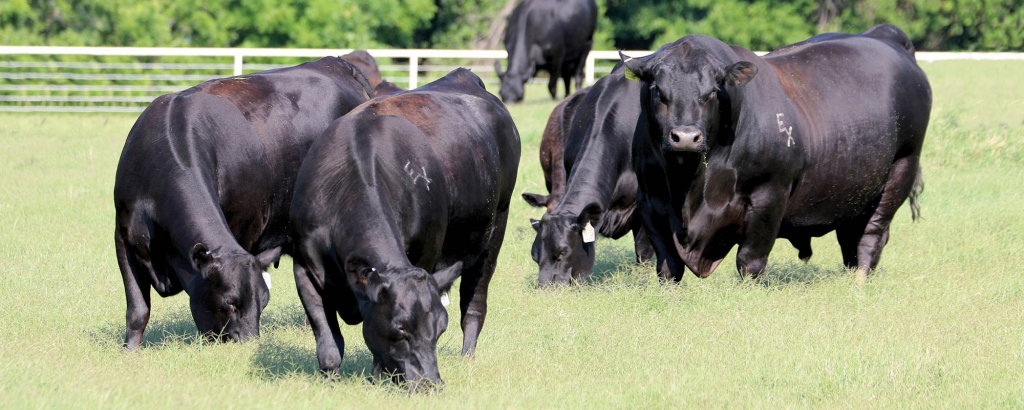
Senior Farm and Ranch Broadcaster, Ron Hays, is talking with Jarold Callahan of Express Ranches about the Express Ranches Fall Bull Sale coming up on October 2 in Yukon, Okla.
"The whole foundation for any purebred operation should be the commercial business," Callahan said. "What keeps us going is the sale of bulls and females to the commercial industry."
Callahan said this particular sale is more about the commercial cattle producer having the opportunity to purchase great genetics. The 2023 Fall Bull Sale will feature around 230 Angus Bulls, Callahan said, and 35 Hereford bulls.
"We will also sell 80 commercial bred heifers off of our UU Bar ranch, bred to low birthweight Angus bulls from here at the ranch, and we will also sell 30 registered spring calving heifers as well as a handful of fall calving commercial cows off of the UU Bar."
An abundance of information is provided on each animal that will be sold, Callahan said, including EPDs and bioeconomic indexes.
"The producers can go in and sort them to meet their specifications ahead of the sale," Callahan said.
Utilizing genomically enhanced EPDs in the bull sale, Callahan said, gives the seller and the buyer increased confidence that the EPDs are accurate.
"We have got bulls that are way above average for weaning weight and yearling weight, so I think you can go into this population of bulls and decide how you want to move your cow herd, what traits you want to emphasize, utilize the EPDs, to send you in that direction, but still I would encourage everybody to go look at the bulls because you want also to be proud of them phenotypically," Callahan said.
The Beef Buzz is a regular feature heard on radio stations around the region on the Radio Oklahoma Ag Network and is a regular audio feature found on this website as well. Click on the LISTEN BAR at the top of the story for today's show and check out our archives for older Beef Buzz shows covering the gamut of the beef cattle industry today.
Tar spot's impact hinges on the timing of rain – that was one of AgriGold Agronomist Kevin Gale's main takeaways this season. "For tar spot to have an economic impact, we learned you have to have pounding, spore-splashing rain early – in late May or early June," he says. "That infection early in the growing season can result in the development of tar spot during grain fill."
Rains didn't move into his territory of northern Illinois and southern Wisconsin until late June, so tar spot arrived too late to have much of an impact. Farmers in other areas of the country, like central Iowa, northeast Kansas and south-central Illinois, weren't as lucky; they observed tar spot much earlier in the season.
Regardless of how you fared this season, tar spot will remain an annual threat. "Tar spot has shown up every year since its 2015 introduction to the Corn Belt," Gale says, noting the disease's ability to overwinter. "Farmers need to remain vigilant and ready to manage the disease if conditions are conducive to its development. Fortunately, we have hybrids and management techniques to help."
Hybrids are farmers' best defense against tar spot
Hybrid selection should be a farmer's No. 1 defense against tar spot, according to Gale. While no hybrids are resistant to the disease, some are tolerant. AgriGold includes tar spot tolerance ratings in its seed profile guides.
"As farmers deal with tar spot year after year, they are increasingly looking for products with higher tolerance to tar spot," Gale says. "Planting tolerant hybrids can provide peace of mind they won't get hammered in heavy infestation years when tar spot can cost farmers up to 60 bushels an acre."
AgriGold groups hybrids into genetic families based on both their underlying genetics and agronomic characteristics. Of the genetic families planted in his area, Gale reports Field GX™ Family B hybrids offer the best tar spot tolerance. "Hybrids such as A636-16, A638-19, A643-37 and A644-19 have provided higher tar spot tolerance," he details.
Scout fields to protect crops and prepare for next season
Fungicide applications and crop rotation can also limit tar spot's impact, according to Gale. He ranks fungicide as the second most important management tool. Scouting for tar spot and other threats is also a must.
"Now is a great opportunity to scout your fields and see how your hybrids held up to diseases like tar spot," Gale says. "If you're starting to see some disease show up, you may need to prioritize which fields you harvest first."
His main concern heading into harvest is stalk quality, given an array of stressors including Fusarium crown rot infection, potassium deficiency and anthracnose, along with drought and heat stress.
"From a disease standpoint, tar spot has not presented many issues in my territory this year," Gale says. "But next season could be entirely different." To make sure your hybrid portfolio includes protection against tar spot, reach out to your local AgriGold agronomist or district sales manager.

Choose tolerant hybrids, monitor the environment and have a plan if lesions appear
Tar spot's impact hinges on the timing of rain – that was one of AgriGold Agronomist Kevin Gale's main takeaways this season. "For tar spot to have an economic impact, we learned you have to have pounding, spore-splashing rain early – in late May or early June," he says. "That infection early in the growing season can result in the development of tar spot during grain fill."
Rains didn't move into his territory of northern Illinois and southern Wisconsin until late June, so tar spot arrived too late to have much of an impact. Farmers in other areas of the country, like central Iowa, northeast Kansas and south-central Illinois, weren't as lucky; they observed tar spot much earlier in the season.
Regardless of how you fared this season, tar spot will remain an annual threat. "Tar spot has shown up every year since its 2015 introduction to the Corn Belt," Gale says, noting the disease's ability to overwinter. "Farmers need to remain vigilant and ready to manage the disease if conditions are conducive to its development. Fortunately, we have hybrids and management techniques to help."

Hybrids are farmers' best defense against tar spot
Hybrid selection should be a farmer's No. 1 defense against tar spot, according to Gale. While no hybrids are resistant to the disease, some are tolerant. AgriGold includes tar spot tolerance ratings in its seed profile guides.
"As farmers deal with tar spot year after year, they are increasingly looking for products with higher tolerance to tar spot," Gale says. "Planting tolerant hybrids can provide peace of mind they won't get hammered in heavy infestation years when tar spot can cost farmers up to 60 bushels an acre."
AgriGold groups hybrids into genetic families based on both their underlying genetics and agronomic characteristics. Of the genetic families planted in his area, Gale reports Field GX™ Family B hybrids offer the best tar spot tolerance. "Hybrids such as A636-16, A638-19, A643-37 and A644-19 have provided higher tar spot tolerance," he details.

Scout fields to protect crops and prepare for next season
Fungicide applications and crop rotation can also limit tar spot's impact, according to Gale. He ranks fungicide as the second most important management tool. Scouting for tar spot and other threats is also a must.
"Now is a great opportunity to scout your fields and see how your hybrids held up to diseases like tar spot," Gale says. "If you're starting to see some disease show up, you may need to prioritize which fields you harvest first."
His main concern heading into harvest is stalk quality, given an array of stressors including Fusarium crown rot infection, potassium deficiency and anthracnose, along with drought and heat stress.
"From a disease standpoint, tar spot has not presented many issues in my territory this year," Gale says. "But next season could be entirely different." To make sure your hybrid portfolio includes protection against tar spot, reach out to your local AgriGold agronomist or district sales manager.
The U.S. Department of Agriculture (USDA) today announced that it will begin issuing more than $1.75 billion in emergency relief payments to eligible farmers and livestock producers. These much-needed payments are helping farming and ranching operations recover following natural disasters in 2020, 2021 and 2022.
"USDA provides substantial economic support for America's farmers and ranchers through its critical farm program payments. These payments are reflective of the incredible and cumulative financial hits brought on by devastating natural disasters that agricultural producers nationwide have endured while fulfilling their commitment to produce our food, fiber and fuel," said Agriculture Secretary Tom Vilsack. "This additional assistance helps offset the tremendous losses that these producers faced and is a valuable investment, not only for farmers and ranchers but in the economic successes of our communities – rural and urban – and in our nation's food security for generations to come."
Emergency Livestock Relief Program
This week, FSA will issue more than $581 million in 2021 and 2022 drought and wildfire emergency relief to eligible ranchers.
FSA is closing out the Emergency Livestock Relief Program (ELRP) for losses suffered in 2021. ELRP Phase Two payments are estimated at $115.7 million. Ranchers who lost grazing acres due to drought and wildfire and received assistance through ELRP Phase One will soon receive an additional payment through ELRP Phase Two. This second payment will be equal to 20% of the 2021 gross ELRP Phase One payment. ELRP Phase Two payments to producers will be automatic with no application required. In April 2022, FSA staff processed more than 100,000 payments through ELRP Phase One and paid eligible ranchers more than $600 million for 2021 grazing losses.
In 2022, ranchers continued to experience significant loss of grazing acres due to drought and wildfire. To help mitigate these losses, eligible ranchers will receive ELRP disaster assistance payments for increases in supplemental feed costs. To expedite payments, determine producer eligibility and calculate the ELRP 2022 payment, FSA is using livestock inventories and drought-affected forage acreage or restricted animal units and grazing days due to wildfire already reported to FSA by ranchers when they submitted their Livestock Forage Disaster Program applications. ELRP payments for 2022 losses are estimated at $465.4 million and will be automatic with no application required.
Emergency Relief Program Phase Two
FSA is closing out Phase Two of the Emergency Relief Program (ERP) this week through the delivery of more than $1.17 billion in crop disaster assistance payments to producers of eligible crops who suffered losses, measured through decreases in revenue, due to qualifying natural disaster events that occurred in calendar years 2020 and 2021. ERP Phase Two was intended primarily for producers of crops that were not covered by federal crop insurance or FSA's Noninsured Crop Disaster Assistance Program (NAP). Previously, through ERP Phase one, FSA staff processed more than 300,000 applications and paid an estimated 217,000 eligible producers more than $7.4 billion.
More Information
These programs represent a few of FSA's extensive commodity, conservation, credit, disaster recovery and safety-net programs. By the close of the fiscal year on Sept. 30, for all farm and farm loan programs — including vital access to capital for distressed borrowers — USDA, through the delivery of FSA programs, will have invested more than $19 billion in America's agricultural producers with more economic support on the way in fiscal year 2024.
For more information on available FSA programs, contact your local USDA Service Center.
USDA touches the lives of all Americans each day in so many positive ways. In the Biden-Harris administration, USDA is transforming America's food system with a greater focus on more resilient local and regional food production, fairer markets for all producers, ensuring access to healthy and nutritious food in all communities, building new markets and streams of income for farmers and producers using climate smart food and forestry practices, making historic investments in infrastructure and clean energy capabilities in rural America, and committing to equity across the Department by removing systemic barriers and building a workforce more representative of America. To learn more, visit www.usda.gov.
In today's Cow-Calf Corner, Mark Z. Johnson, Oklahoma State University Extension Beef Cattle Breeding Specialist and Barry Whitworth, Senior Extension Specialist/Oklahoma BQA Coordinator talk about Beef Quality Assurance.
Beef Quality Assurance (BQA) is a nationally coordinated, state implemented program that provides systematic information to U.S. beef producers and beef consumers of how common-sense animal husbandry techniques can be coupled with scientific knowledge to raise cattle under optimum management and environmental conditions. BQA guidelines are designed to make certain all beef consumers have confidence in the entire beef industry. The BQA program is a producer-driven certification program designed to assure consumers that cattle from all industry segments (cow-calf, stocker, feedlot) are healthy, wholesome and have been produced under the best management practices in the cattle industry. When beef producers become BQA certified it sends a message to consumers that they are willing to take the management steps necessary to produce a quality product.
The BQA program is voluntary. There is no requirement for cow-calf or stocker operations to be certified unless they sell calves into a premium or branded program that includes BQA certification as a requirement. As discussed last week in Cow-Calf Corner, the Oklahoma Quality Beef Network (OQBN) does require producers to be BQA certified. Accordingly, while certification is not required for cow-calf or stocker operations, it can open the door to increased profit potential. Most packers require fed cattle they purchase be sourced from BQA certified operations, not surprisingly, nearly all feedlots are BQA certified.
The BQA program focuses on the following management areas:
Producers interested in becoming BQA certified have two options. The certifications process can be completed on-line at http://www.bqa.org/ where the process will include several modules followed by short quizzes. In-person certification is also available. The in-person training consists of a presentation followed by a short quiz. If you are interested in the in-person certification, contact your local OSU Extension office to find out when in-person certification is available in your area or visit the link below. Certification is valid for three years. At the end of three years, producers can re-certify by going through the same process as the initial certification. Dr Barry Whitworth is the Oklahoma BQA Coordinator. Dr Whitworth can be reached at (580) 332-7011 or by email at barry.whitworth@okstate.edu.
Reference: https://extension.okstate.edu/programs/beef-extension/oklahoma-beef-quality-assurance/
Below, Mark Johnson talks with Dr. Rosslyn Biggs about how the Beef Quality Assurance program can help livestock producers on SunUpTV from May 8, 2021.
The National Corn Growers Association (NCGA) this week launched a grassroots advocacy campaign to encourage the National Highway Traffic Safety Administration to provide a level playing field for biofuels such as ethanol. The organization is calling on corn growers and advocates to make their voices heard by submitting comments to the agency.
The campaign comes after NHTSA proposed hiking the Corporate Average Fuel Economy standard, referred to as the CAFE standard, which regulates how much fuel a vehicle consumes per mile. The agency's current proposal would move the fleet average for small cars and light trucks from 44 to 58 miles per gallon by 2032.
NCGA leaders said the proposed standard ignores solutions that are available now.
"The proposal sets an unattainable goal and a concerning precedent," said NCGA President Tom Haag. "As a result, auto manufacturers will be forced to overlook viable solutions, such as high-octane biofuels like corn ethanol, as they rush to meet these standards. This would significantly minimize the role biofuels play in reducing greenhouse gas emissions and saving consumers money at the pump."
Haag says this proposed rule largely mirrors the recent tailpipe emissions proposal from the Environmental Protection Agency and it is important to have a strong showing from those who understand the role biofuels can play in emissions reduction.
NHTSA will hold a hearing later this week where it will accept public comments on the proposed standard. The comment period closes October 16, 2023.
The American Soybean Association, representing half a million U.S. soy farmers, vehemently opposes Rep. Victoria Spartz's (R-IN) amendment to the House agriculture appropriations bill that unduly attacks commodity checkoff programs. Checkoffs are industry-led organizations that exist to promote agricultural products and support America's hardworking farmers and ranchers, including U.S. soy producers.
Daryl Cates, soybean farmer from Illinois and ASA President said, "Congresswoman Spartz's amendment is a direct attack on all checkoffs and, close to home, threatens the long-term viability of our industry's successful program. Our soy checkoff continues to have strong support from hundreds of thousands of soy farmers across the United States, and that is proven time and again when the program comes up for referendum every five years.
Soybean farmers understand the significant role the checkoff plays in developing and protecting markets for their crops, conducting research and promotion to sustain their livelihoods and our environment, and keeping U.S. soy available domestically and competitive globally. This amendment is misguided and ill-informed, and we strongly urge Congress to reject this attack on U.S. farmers and ranchers," said Cates.
The soy checkoff provides access to promotion, advertising, research, legal and other resources individual farmers may not be able to provide for efforts to promote and sell their product. In place since the early '90s, the soy checkoff provides U.S. soybean farmers $12.34 in added value at the national level for every dollar they invest in the soy checkoff. Also determined in the soy checkoff's 2019 return-on-investment (ROI) study:
• International promotion activities produced $17.95 in return value.
• Demand-enhancing research and promotion returned an average value of $18.18.
• Production research returned an average value of $9.42.
• Farmers received even more value through state checkoff activities.
Checkoff programs are administered by the U.S. Department of Agriculture and overseen by the farmers and ranchers who vote in favor of checkoff systems to promote specific commodities. By promoting their agricultural products, checkoffs ensure future generations of farmers can build or maintain their livelihoods in agriculture. The soy checkoff's self-imposed levy applies to all U.S. soybean farmers and is one half (1/2) of 1% of the market price of each bushel of soybeans sold each season. Those funds are used to build demand, find new markets, and improve the profitability prospects for all soy farmers. Soy checkoff dollars are split among the national organization and state checkoff programs, or qualified state soybean boards. ASA is joined by the 26 affiliated state soybean organizations that represent the 30 primary soybean-producing states. They are united in opposition of the Spartz Amendment alongside agricultural groups including the Almond Alliance, American Beekeeping Federation, American Farm Bureau Federation, American Honey Producers Association, American Mushroom Institute, American Sheep Industry Association, American Soybean Association, American Wood Council, Clean Fuels Alliance America, Corn Refiners Association, International Fresh Produce Association, National Association of State Departments of Agriculture, National Cattlemen's Beef Association, National Christmas Tree Association, National Cotton Council, National Council of Farmer Cooperatives, National Milk Producers Federation, National Oilseed Processors Association, National Pecan Federation, National Pork Producers Council, National Potato Council, National Sorghum Producers, National Watermelon Association, North American Blueberry Council, North American Meat Institute, Southeastern Lumber Manufacturers Association, Soy Aquaculture Alliance, Soy Transportation Coalition, United Egg Producers and U.S. Peanut Federation and 100 state organizations in their opposition to the Spartz amendment.
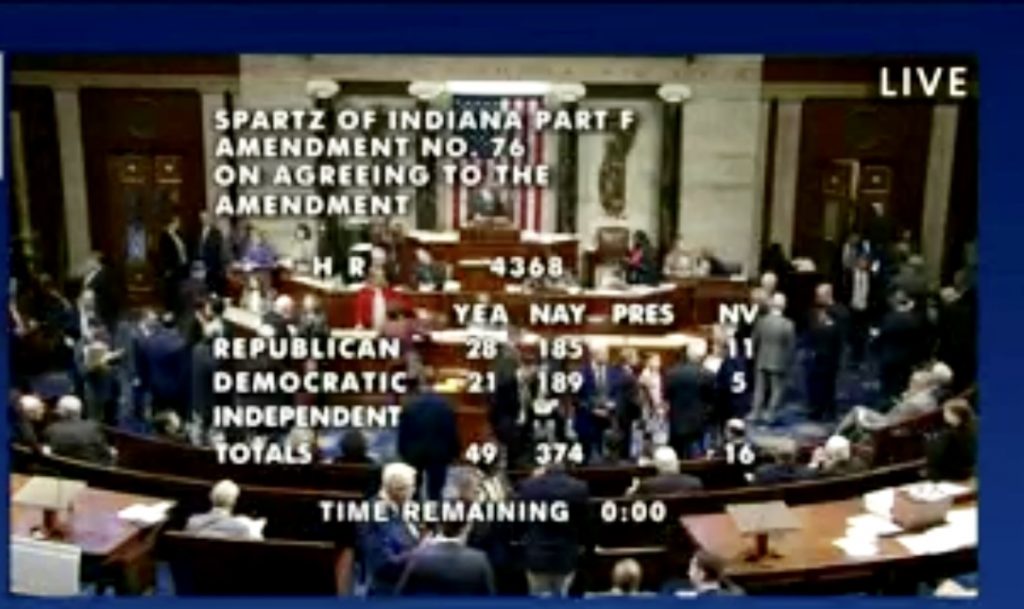
Final Vote was 377 Nays and 49 Yays
On Wednesday afternoon, the full House defeated the Spartz Amendment number 76 that would have prohibited any appropriated funds from helping operate any commodity checkoff programs- this offered as an amendment to the FY2024 Funding package for USDA and FDA. The Amendment was overwhlemingly defeated by 377-49 vote.
Below is our earlier article that detailed the large amount of opposition that was generated by the Ag community.
*********************************************************************************
In a letter sent today to Speaker of the House Kevin McCarthy (R-CA) and House Minority Leader Hakeem Jeffries (D-NY), the National Cattlemen's Beef Association (NCBA) alongside 129 leading state and national livestock, crop, and forestry organizations voiced its opposition to Rep. Victoria Spartz's (R-IN) anti-checkoff amendment to legislation that funds the U.S. Department of Agriculture (USDA). The Spartz amendment to the Agriculture, Rural Development, Food and Drug Administration, and Related Agencies Appropriations Act attacks commodity checkoff programs, which are industry-led organizations that exist to promote agricultural products and support America's hardworking farmers and ranchers.
Two Oklahoma commodity groups- the Oklahoma Cattlemen's Association and the Oklahoma Soybean Association have signed the letter- as well as the Texas Cattle Feeders and the Texas and Southwestern Cattle Raisers.
"As a cattle producer, I am proud to pay into the Beef Checkoff because I know my $1 is doing more for our entire industry than I could do on my own," said NCBA President Todd Wilkinson, a South Dakota cattle producer. "I urge Congress to stand with real farmers and ranchers over activists and reject Rep. Spartz's attack on checkoff programs. Our future depends on the investments we make now, and the Beef Checkoff is the strongest tool we have to keep beef on consumers' plates, strengthening the cattle industry today and for the next generation."
Checkoff programs are administered by USDA and overseen by farmers and ranchers to promote different agricultural commodities. While the structure of each checkoff is unique to the individual commodity, checkoff boards all pool assessments from producers and use that funding to conduct research, raise consumer awareness, and build higher demand for agricultural products. By promoting these products, checkoffs ensure that future generations of farmers and ranchers can build a strong livelihood in agriculture.
The national organizations that signed on to the letter include the Almond Alliance, American Beekeeping Federation, American Farm Bureau Federation, American Honey Producers Association, American Mushroom Institute, American Sheep Industry Association, American Soybean Association, American Wood Council, Clean Fuels Alliance America, Corn Refiners Association, International Fresh Produce Association, National Association of State Departments of Agriculture, National Cattlemen's Beef Association, National Christmas Tree Association, National Cotton Council, National Council of Farmer Cooperatives, National Milk Producers Federation, National Oilseed Processors Association, National Pecan Federation, National Pork Producers Council, National Potato Council, National Sorghum Producers, National Watermelon Association, North American Blueberry Council, North American Meat Institute, Southeastern Lumber Manufacturers Association, Soy Aquaculture Alliance, Soy Transportation Coalition, United Egg Producers, and U.S. Peanut Federation. Additionally, 100 state organizations including NCBA affiliates joined the letter. (Scroll down in this story to see statements from several of the national groups)
Together, these groups represent millions of hardworking farmers, ranchers, and foresters across the entire United States.
View the letter here.
Earlier this year- Congresswoman Spartz argued for her bill before Oklahoma Congressman Tom Cole and the House Rules Committee- you can listen to her comments from the end of July by clicking on the listen button below:
Below are statements from several of the organizations highlighting their concerns with the amendment:
Almond Alliance: "In an era where cultivating relationships between consumers and producers is paramount, the Spartz Amendment jeopardizes the very essence of what checkoff programs aim to achieve. These programs, rooted in transparency and backed by the commitment of dedicated producers, have fostered innovation, expanded markets, and amplified consumer education. By challenging the essential framework of commodity checkoffs, we risk not only the immediate benefits they offer, but also the long-term growth and understanding of our agricultural communities," said Almond Alliance CEO and President Aubrey Bettencourt. "Almond Alliance stands united with our partners in opposing any measure that hinders the progress and welfare of U.S. agriculture producers. We urge a 'NO' vote on the Spartz Amendment."
American Sheep Industry Association: "Our industry has overwhelmingly approved our American lamb checkoff twice in national referendums, both on producer and production counts," said American Sheep Industry Association President Brad Boner, a Wyoming sheep producer. "It is poor policy to change the rules after we built a program that fits our producers, feeders and processors."
American Soybean Association: "Congresswoman Spartz's amendment is a direct attack on all checkoffs and, close to home, threatens the long-term viability of our industry's successful program. Our soy checkoff continues to have strong support from hundreds of thousands of soy farmers across the United States, and that is proven time and again when the program comes up for referendum every five years," said Daryl Cates, president of the American Soybean Association. "Soybean farmers understand the significant role the checkoff plays in developing and protecting markets for their crops, conducting research and promotion to sustain their livelihoods and our environment, and keeping U.S. soy available domestically and competitive globally. This amendment is misguided and ill-informed, and we strongly urge Congress to reject this attack on U.S. farmers and ranchers."
National Milk Producers Federation (NMPF): "Founded and governed by dairy farmers, the Dairy Research and Promotion Program provides meaningful support for American dairy producers in several critical areas including environmental stewardship, export market development and nutrition research," said NMPF President and CEO Jim Mulhern. "We urge members of Congress to reject the Spartz amendment that would debilitate the growth and development of U.S. dairy at home and abroad."
National Pecan Federation: "The pecan industry has greatly benefitted from the work done by the Pecan Checkoff program, and pecan growers are very supportive of this program," said Larry Don Womack, chairman of the National Pecan Federation. "The checkoff provides critical research and market promotion that is essential to the health and longevity of the pecan industry."
National Potato Council: "The Spartz amendment is one of several attempts to shut down or severely limit the activities of grower-funded and -led agricultural research and promotion boards," said National Potato Council 2023 President RJ Andrus, from Idaho Falls, Idaho. "This amendment is intended to undermine vital agricultural research and impair promotion programs, particularly in highly competitive foreign markets. The National Potato Council strongly opposes these intentions to weaken or eliminate programs enacted by the grower-leadership of these boards and supported exclusively by grower funds. This attempt to prevent USDA from utilizing taxpayer dollars in its important oversight role of these boards would lessen transparency and immediately harm the communities that rely upon the benefits of their agricultural research and promotion."
U.S. Peanut Federation: "The Peanut Checkoff program is of significant value to the peanut industry in building consumer demand and consumption for peanuts," said U.S. Peanut Federation Chairman Jamie Brown. "Peanut producers are extremely supportive of the research and promotion work done through the peanut checkoff to advance our industry."
RON's Dave Lanning has a pre-opening look at today's agricultural Markets.
Click the audio tab below for today's report.
For those of you not yet in the know, cottage cheese is the It Dairy Product of 2023. That may be hard to believe, since it seems like only yesterday that Korean music group BTS was making "Butter" ubiquitous — but like milk, the zeitgeist flows. So move over, K-Pop superstars – curds and whey haven't been moving this fast since the spider sat next to Miss Muffet.
The hype is significant, but the product lives up to it. We've read about it in the Wall Street Journal and The New York Times. We've seen it on TikTok, where the high-protein snack is being featured in all sorts of creative recipes, like cottage cheese and mustard, cottage cheese in cookie dough, and cottage cheese as a base for ice cream. But most importantly, we've seen it in sales, and in new consumers, as shown via some number-crunching from our friends at Dairy Management Inc.:
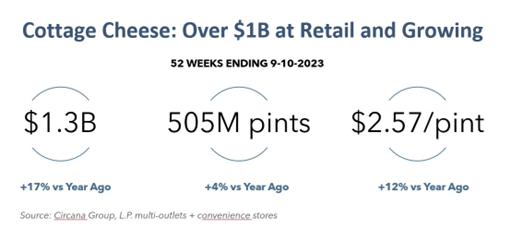
Revenues are up, and that's not just due to inflation – consumption is rising as well. Most importantly, more people are eating cottage cheese, period, and that builds a base for continued growth.
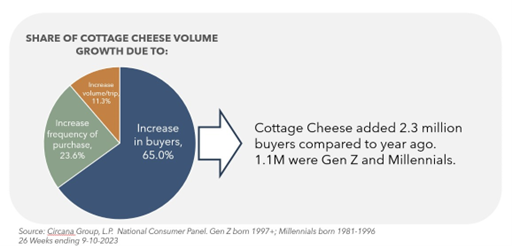
Breaking it down further: Cottage cheese's success isn't merely a media perception. It's real, and it's broad-based. While nearly half of all new consumers are coming from the social-media-savvy Gen Z and Millennial sets, the other half comes from older generations, with the most growth by far coming from Generation X, a cohort decidedly less dedicated to TikTok than their younger counterparts. (Why Gen X? Is it an attempt to gain a tasty dairy fix with less fat, right at the age where waistlines are more difficult to tame? Nostalgia for their childhoods in the 1970s and 1980s, the last time cottage cheese was so central to American diets? Maybe they're just smarter than other generations – after all, You Live, You Learn.)
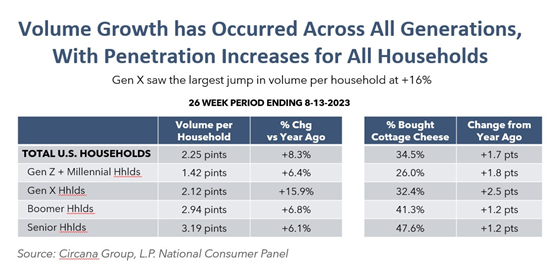
In any case, cottage cheese is reasserting itself in ways not seen in decades. The cool kids are eating it – and so are their parents. Its success shows yet again how dairy remains resilient, adaptable, and innovative. And with that, we can only wonder, what's next?
Anyone care for a glass of whole milk?
| "The National Council of Farmer Cooperatives (NCFC) again expresses strong support for the U.S. sugar program. We also urge the House of Representatives to reject the amendment offered by Congressman Scott Perry on the agriculture appropriations bill that would undermine the sugar loan program. A critical part of the farm bill safety net for sugar producers, U.S. sugar policy has proven its worth, supporting thousands of jobs and billions of dollars in economic activity in rural areas. These are communities where employment opportunities are often scarce, and where the economic benefits of sugar production and farmer co-ops are most deeply felt. |
| "This amendment is an attack on thousands of hardworking American sugar producers. It would not only put the more than 151,000 well-paying jobs in the U.S. sugar industry at risk but threatens the livelihoods of American family farmers and processors and would lead to replacing American-produced sugar with heavily subsidized foreign sugar. The amendment would result in job losses and economic instability, threatening to undermine the effectiveness of the 2018 farm bill. |
| "As such, NCFC urges the House to respect the commitment it made to farmers in the 2018 farm bill and reject Perry amendment #173 to the agriculture appropriations bill that would undermine current U.S. sugar programs." |
| About NCFC |
| Since 1929, NCFC has been the voice of America's farmer cooperatives. Our members are regional and national farmer cooperatives, which are in turn consist of nearly 2,000 local farmer cooperatives across the country. NCFC members also include 17 state and regional councils of cooperatives. Farmer cooperatives allow individual farmers the ability to own and lead organizations that are essential for continued competitiveness in both the domestic and international markets. |
| America's farmer-owned cooperatives provide a comprehensive array of services for their members. These diverse organizations handle, process and market virtually every type of agricultural commodity. They also provide farmers with access to infrastructure necessary to manufacture, distribute and sell a variety of farm inputs. Additionally, they provide credit and related financial services, including export financing. -End- |
In order to provide its customer base with a more diversified range of opportunities for
risk management, National Livestock added LRS to the National Family of livestock
related businesses. Robert York, CEO of National Livestock stated, "We are pleased to
add LRS and its founder, Dakota Moss to our lineup. Dakota's experience with LRP
contracts and other insurance services will provide our member customers more options
to add balance and value to their risk management strategies."
Dakota Moss stated, "Livestock Risk Services was created with a mission to keep cattle
producers large and small in business. In our continued growth, we looked to find an
industry partner that would aid LRS in offering superior service and knowledge related
to risk management, cattle marketing and cattle finance."
Founded during the Covid-19 pandemic when supplies increased and prices decreased,
Livestock Risk Services was created to provide cattlemen with a resource on market
education, business planning, and risk management. Our philosophy relies on
education and creating a plan to have in place. With that philosophy, LRS has grown to
work with cattlemen in over thirty states. Headquartered in the Exchange Building
located in the Historic Oklahoma National Stockyards, LRS has grown to be a national
company specializing in the Livestock Risk Protection program. Whether you are a
small cow calf producer or a large feeder or backgrounder, our mission at Livestock
Risk Services is to keep you in business.
National Livestock is a family of companies first founded in 1931 by a group of
concerned livestock producers. Born in a time of adversity for producers that were
enduring depressed prices, oversupply, and limited options for cattle marketing or
financing, National Livestock was formed as a producer owned cooperative. National
Livestock has since grown and prospered and now through various companies and
partnerships, provides services throughout the United States for livestock marketing,
livestock financing, and risk management.
Please call National at 800-999-8998 for cattle marketing, 800-310-0220 for
cattle financing, or Livestock Risk Services at 405-673-7124

White mold is prevalent in Michigan this year, impacting soybean yields, says Justin Schneider, a Michigan-based LG Seeds agronomist. He encourages farmers to scout fields now for the disease to be better prepared to protect soybean yields in the future.
Weather conditions favored white mold
The weather pattern of early season drought followed by record-setting rainfall later contributed to the spread of white mold. "We had a lot of moisture overall in Michigan," says Schneider. "While May and June were dry, too much rain in July created a perfect storm for white mold to infect plants throughout the month."
White mold develops after apothecia, or the fruiting bodies responsible for the reproduction of the fungus, on the soil surface shoot spores in the air, which land on senescing flowers and choke out the lifeline through the stem. "You end up finding either no soybean pods or a very small seed, depending on when the infection occurs," says Schneider.
Because soybean plants and the soil surface never dried out, disease pressure was at an all-time high for a large majority of the state. "Towards mid-to-late August, we started to see dead plants across fields from white mold girdling the stem."
The extent of yield loss to white mold varies depending on the severity of the infection. Schneider estimates losses of 5% to 10%, and even higher in some areas with significant white mold pressure this year.
Schneider encourages farmers to focus on prevention strategies. "It's all about the next couple of years now, looking deeper into your management practices and preparing yourself to better manage certain fields in the future," he says. "With white mold inoculum in the soil, the best thing farmers can do now is work with their local agronomist to learn what could have been done differently."
#1. Select tolerant soybean varieties
Schneider says selecting soybean varieties with a strong tolerance to white mold is the first line of defense. "Our team looks for the best agronomically tough bean that has high tolerance to white mold," says Schneider.
He recommends LGS2001E3 and LGS2025XF for white mold tolerance. "LGS2001E3 is in all of our plots that don't have white mold when everything else does," he adds. "That, along with LGS2025XF, are the top two varieties in Michigan for anyone concerned with white mold."
#2. Consider no-till
Because white mold lives in soil for seven to eight years, it's always a threat. "You can plow it under, but it's not going to go away," says Schneider. "Once you till the ground again, it returns."
That's why Schneider says one of the best management practices for white mold is no-till. "The corn debris from last year is on the surface of the soil," he says. "When white mold apothecia shoot spores up, it's deflecting off the corn debris and has a more difficult time getting to the soybean flowers."
#3. Strategic crop rotation
Rotating crops each year is important for any field, but to prevent white mold in soybeans, the type of crop planted the year prior is especially important.
"Crop rotation after sugar beets is a big deal in Michigan because after sugar beets, your soil is black," Schneider states. "However, there's little to no debris from sugar beets, so white mold can shoot their spores up very easily."
For farmers experiencing this, he encourages planting corn after sugar beets before rotating back to soybeans. "The fodder from the corn puts more debris on the field and helps keep white mold levels down," he adds.
#4. Fine-tune fungicide timing
There are fungicides available to protect soybean flowers while they're senescing to help prevent white mold from infecting the plant. "You need to get ahead of white mold because once you find it, the plant's already infected," adds Schneider. "But if you're using fungicide as a way of trying to protect, you can adjust the timing based on row spacings."
Schneider says narrower soybean row widths require earlier applications. "As row spacings get narrower, fungicide needs to be applied earlier because the canopy is getting denser earlier," he explains. "With 30-inch rows, you get a little bit more air movement longer in the growing season."
Schneider recommends the following times for spraying fungicides:
"With this being a very bad white mold year, farmers in the 15- to 20-inch row spacing might consider planting 30-inch rows on that field in the future," he says.
#5. Balance soil fertility
Over-fertilization can lead to excessive plant growth and create favorable conditions for white mold. "If you're planting soybeans on a field that used to be an old cow pasture and there's been heavy manure on it for years, it's probably best not to fertilize that field," Schneider says.
Know your high fertility fields and manage accordingly, Schneider recommends.
For proactive and informed management practices to protect yields, reach out to your local LG Seeds agronomists or visit LGSeeds.com.
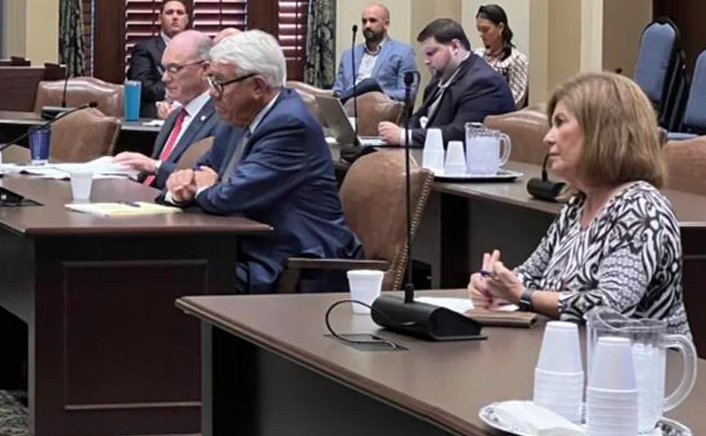
Experts are urging state lawmakers to pass legislation that would increase regulation of the state's industrial hemp industry.
Processing plants could move forward with the right state policies and infrastructure in place, said Bruce Niemi, president of Oklahoma Industrial Hemp Foundation. The nonprofit advocates for increased development of hemp in rural areas.
Niemi pressed lawmakers to pass legislation that would create a commission to make regulations for processing plants to expand hemp uses.
"There's so much testing that has to be done," he said.
Lawmakers conducted an interim study on industrial hemp uses Monday. Interim studies can help legislators develop ideas for potential legislation. The study was held by Sen. Roland Pederson, R-Burlington, and Sen. Jo Anna Dossett, D-Tulsa.
The state Legislature legalized hemp with Senate Bill 868 in 2019. Hemp crop production was legalized under federal law in 2018.
Oklahoma's hemp production is primarily used in cannabidiol (CBD) products and seed production, but it could expand to fiber used to make consumer products like clothing, straws and disposable plates, said Kenny Naylor, consumer protection services director for the Oklahoma Department of Agriculture and Forestry, which oversees the regulation of hemp in the state.
"This study allowed us to see what industrial opportunities there are in hemp production," Pederson said. "Hemp can be processed into fiber that can be used to make cloth, biofuel, plastics and much more, as well as other byproducts like CBD, grain and seed. There are currently only 21 licensed growers in the state, and I hope that we will see that number grow in the coming years to benefit our state's industries and local economies."
Naylor said hemp production has declined across the nation due to COVID-19, a shift from hemp farming to serve the medical cannabis industry and a lack of processing facilities.
More facilities would mean lower crop transportation costs, Naylor said.
Naylor said it would be important to have more testing available to ensure hemp does not exceed the federal regulation set at 0.3% for total psychoactive compounds, along with testing for heavy metals.
The existing fee structure for hemp licensing would pay for a commission if the Legislature formed one, Naylor said.
Dossett said hemp could be good for agriculture in the state.
"Let's start something that's positive, and well regulated, so that we go above the national model," Dossett said.
Senator Jerry Alvord, R-Wilson, said he would support industrial uses for hemp rather than creating additional medical marijuana or CBD products because the state has "enough of that."
"I think diversity is intelligent and wise," he said. "Opening up a market for the farming industry is a good idea, and I would like to see it regulated to an industrial use only."
Hemp has been found to have more than 50,000 uses and is the strongest natural fiber in the world, according to a press release issued by Pederson. Each acre of hemp can yield up to four times as much fiber as an acre of trees. The plant also is drought tolerant, using just a fraction of the amount of water used to grow alfalfa or cotton.
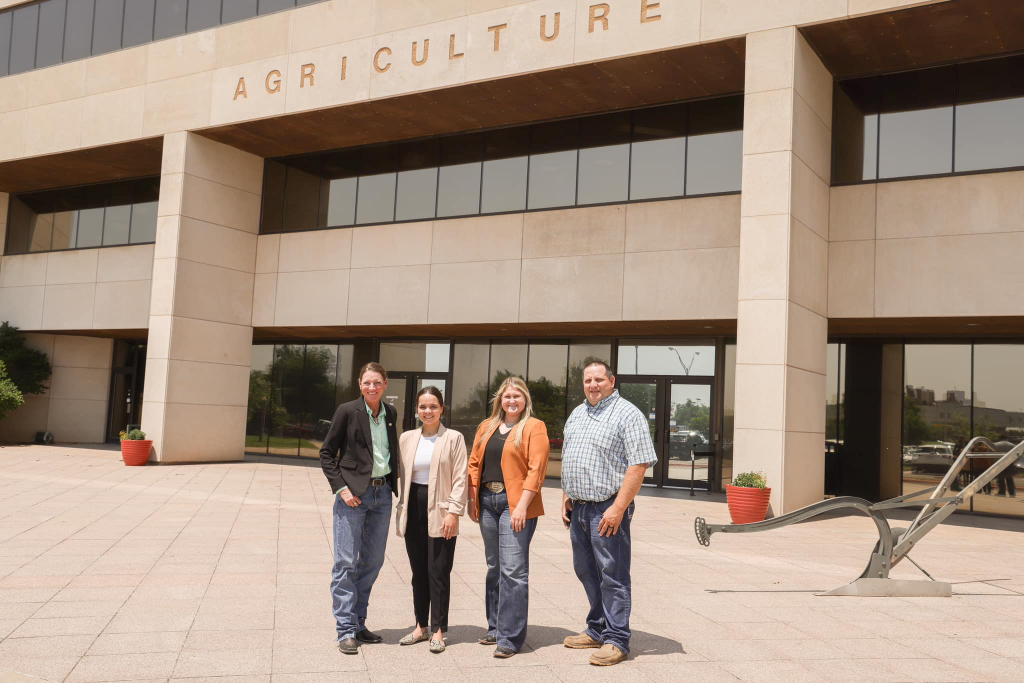
Kelli Payne, AIM Interns, and USDA's Troy Marshall at the Oklahoma Department of Ag, Food and Forestry this July.
Associate Farm Editor, Reagan Calk, caught up with the co-founder of the Agricultural Immersion and Mentorship Program (AIM), Kelli Payne, to hear an update on how the program went this summer and when more student applications will be accepted.
"In the last few years of meeting with employers and talking to college students, you kind of hear the same thing over and over again," Payne said.
This reoccurring trend Payne said she continues to hear about is that students worry they do not have enough experience for the ag realm outside of school and are unsure what they want to do when they graduate. This issue is what sparked the idea for the AIM program, founded by Kelli Payne and Alisen Anderson.
"We started with two students that had expressed interest last fall, just in exploring different career options in agriculture," Payne said. "They were in between their sophomore and junior years, and that is a critical time."
Another intern was also hired to help with marketing and communication work, Payne added.
"The first week and a half to two weeks, they actually lived at our farm in Mustang and worked on the agritourism venture, Growing Paynes," Payne said. "After that, we really kicked it into high gear. We had great support from a number of folks in the ag industry and from all facets."
The students in the AIM program had the chance to travel the state and meet with individuals working in the ag sector either at their homes or places of work and hear their stories.
"A lot of these students I have met in the past, they are scared about what the future holds, they want to make sure they are making the right decision, and they don't know what they don't know," Payne said.
In talking with individuals from the groups, such as the Oklahoma Beef Council, Oklahoma Pork Council, Sidwell Industries, and more, the interns were able to make important connections with industry leaders and receive additional guidance.
"We had an intern day at the (Oklahoma) Capitol, with a whole litany of ag interns coming together so they could meet each other, because they are going to be crossing paths with each other in college anyway," Payne said.
During the trip to the Capitol, Payne said the AIM students had the chance to visit with individuals such as Ag Secretary Blayne Arthur and the Executive Vice President of the Oklahoma Cattlemen's Association, Michael Kelsey.
Looking into what is next for the AIM Program, Payne said professional development may be on the horizon with weekend seminars.
"As this evolves, I think it is going to get bigger and bigger so we can service more students and let them know what is out there," Payne said. "Agriculture is so exciting. There is a lot of change happening really rapidly, and there are some great people that are leading the charge, and this is a great way to develop the workforce as we move forward in this industry."
Check out AIM's Facebook page to stay up to date on the AIM program and see the next opportunity to apply- CLICK HERE!
Contact Kelli Payne for more information at kpaynebeef@gmail.com or 405-996-0435

BASF Agricultural Solutions and The SCN Coalition are joining forces for the third consecutive SCN Action Month to raise awareness of the dangers that soybean cyst nematodes (SCN) pose this October. This monthlong initiative educates growers on why and how to defend against this devastating pest that continues to be the leading cause of soybean yield loss in the United States.
SCN is present in most areas where soybeans are grown and continues to rapidly spread each year with an estimated annual yield loss potential of $1.5 billion. Last year during SCN Action Month, SCN was present in 77% of soil samples BASF received, up 4% from the previous year, and damaging levels of nematodes were found in half of the submitted samples received.
"Many growers aren't aware of SCN or don't believe it's damaging their fields, and identifying it can be difficult as the cysts are about 10% the size of a soybean nodule," said Nick Tinsley, BASF Technical Field Representative, Seed Treatments. "Testing your soil during the fall is key to this educational effort. When growers learn their SCN numbers, they can use that information to make a strong preventive management plan for the following year based on real data from their own field."
There are four steps growers can take to manage SCN: test fields for nematodes, rotate crops, plant a resistant variety and consider a seed treatment. Fortunately, BASF has a seed treatment on the market that protects against both SCN and SDS, a well known problem that often is present with SCN. ILEVO® seed treatment is proven to protect against the unpredictability of nematodes, foliar and root rot phases of SDS in soybeans and helps produce strong stands and healthy roots, even in the absence of foliar SDS symptoms.
SCN protection starts at the very beginning by selecting the best seed variety for your field. "Selecting the right variety for the right acre can help reduce SCN pressures in the field," said Bill Backhaus, BASF Midwest Agronomist. "Xitavo brand offers varieties that can help protect soybeans from SCN and SDS impact and recently announced the 11 new varieties available for the 2024 growing season, all of which offer native traits that resist SCN."
BASF and The SCN Coalition encourage growers to get out in their fields this month and test for nematodes to help manage their soybean fields against SCN in the future. To access more SCN management resources, visit SCNActionMonth.com, www.thescncoalition.com or talk to your local BASF representative. Contact your local soybean associations to learn more about SCN testing services in your area.
In a few short days, my year as President of the National Corn Growers Association (NCGA) will come to an end. Those 365 days sure went by quickly.
As I look forward to transitioning the leadership of this organization to another great Minnesotan, Harold Wolle, I find myself reflecting on what we've accomplished as an organization in the last year.
There have been many fun and special moments along the way: I've met with Secretary Vilsack a number of times, had many conversations with Senators and Representatives, testified in Congressional hearings, and discussed important issues facing our industry with any number of individuals who care about the future of corn and agriculture. It's been an incredibly special experience, and I'm humbled to have had the opportunity.
But, I am most proud of how NCGA and our state partners made a difference when our trading relationship with our biggest export market was threatened. After Mexico issued a decree banning future imports of biotech corn, it was NCGA who stepped up to the plate to advocate for the nation's corn growers and the technology they have used for decades. It was only after we began sounding alarm bells that we got the attention of U.S. government officials, who eventually brought a case forward under the U.S.-Mexico-Canada Agreement for Mexico's violation of the biotechnology terms it agreed to in the trade pact. While we won't know the outcome of this case for some months to come, I know that NCGA's effort helped get us to this point and that is something to celebrate.
I have always believed in the mission of groups like NCGA – we must be our own best advocates if we want our industry to be successful. And what happened in the last year only reinforced and reinvigorated my confidence that we can and do make a difference when our collective voices are raised.
It's been an honor to serve our nation's 300,000 corn farmers.
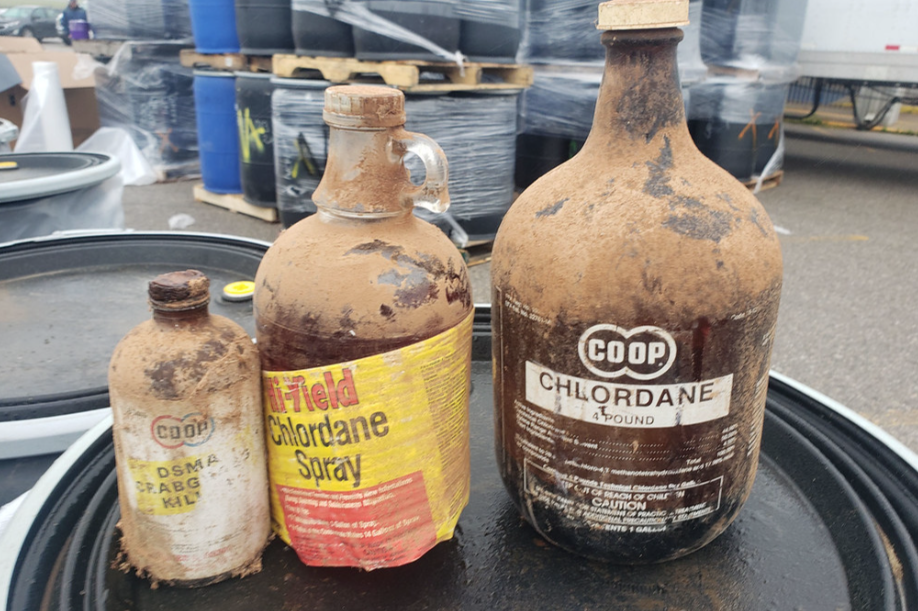
Oklahoma State University's Pesticide Safety Education Program is partnering with the Oklahoma Department of Agriculture, Food and Forestry to host three unwanted pesticide disposal days in Walters, Buffalo and Dewey. (Photo by Charles Luper)
By Trisha Gedon
Oklahoma State University's Pesticide Safety Education Program will partner with the Oklahoma Department of Agriculture, Food and Forestry to host three unwanted pesticide disposal days in the Oklahoma communities of Walters, Buffalo and Dewey.
What: Unwanted pesticides are unusable as originally intended for various reasons, pesticides that are leftover or no longer registered in Oklahoma, pesticides that no longer have labels or are no longer identifiable. Farmers, ranchers, commercial and non-commercial applicators, pesticide dealers and homeowners may bring up to 2,000 pounds of pesticides to the drop-off sites for proper disposal at no charge. A fee is required if bringing more than 2,000 pounds of pesticides. Pesticide dealers are asked to pre-register due to the potential of large quantities coming in from multiple dealers or locations.
When and where:
WHY: Originating in 2006, 1.273 million pounds of pesticides have been properly disposed of during the Unwanted Pesticide Disposal Days, keeping the chemicals out of rivers, streams, landfills, storm drains and illegal roadside dumps.
Participants will need to safely transport their pesticides to one of the collection sites. Pick-up services are not available. Read these safe transportation tips before bringing chemicals to the drop-off site.
For more information, visit the OSU Pesticide Safety Education Program website or contact Charles Luper, OSU Extension associate, at 405-744-5808.
OSU Extension uses research-based information to help all Oklahomans solve local issues and concerns, promote leadership and manage resources wisely throughout the state's 77 counties. Most information is available at little to no cost.
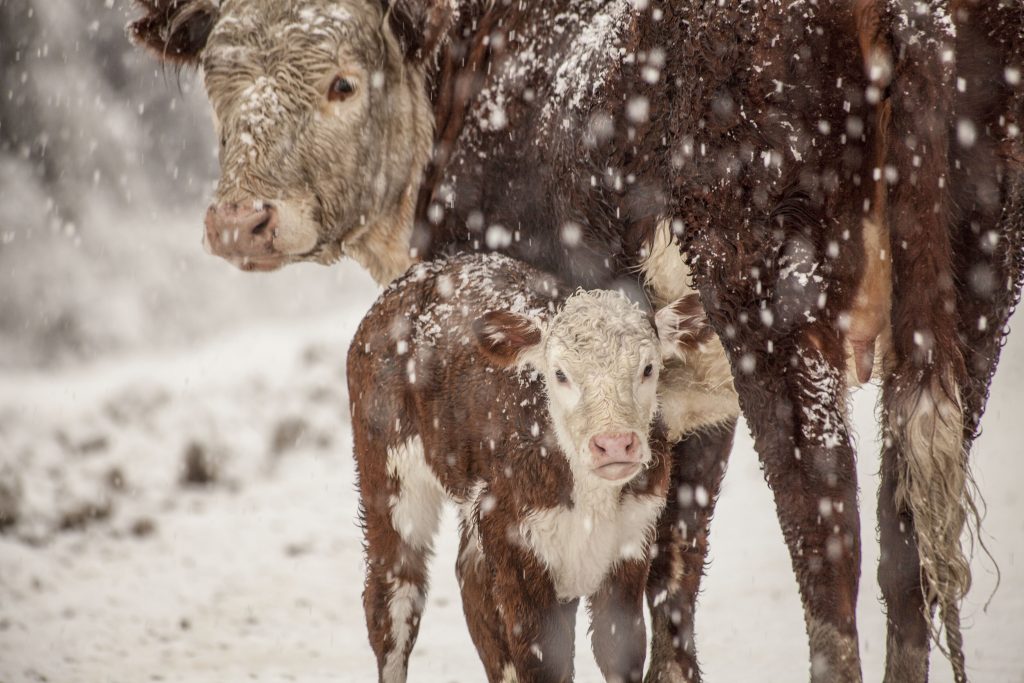
Senior Farm and Ranch Broadcaster, Ron Hays, is back talking with Oklahoma State University Extension Livestock Marketing Specialist Dr. Derrell Peel, about more on the latest USDA Cattle on Feed report, released September 22, 2023.
The on-feed numbers in the report came in at two percent below a year ago. Placements were down five percent, and marketings were down six percent compared to a year ago.
This particular report does not include a breakdown between steers and heifers; that information will be issued next month.
"We still don't have any data that would suggest that we are saving heifers or retaining heifers," Peel said. "I think it might be beginning to a limited degree."
Peel said he believes the October Cattle on Feed report will show fewer heifers in the feedlot because, since July 4, heifer slaughter has decreased more strongly year-over-year.
"It is still not down a lot," Peel said, "On a year-to-date basis, we are only down about 1.1 percent, but it has been running more like four to five percent down on the weekly average basis since the 4th of July."
Through talking with many cattle producers over the last few weeks, Peel said he has the sense that producers are taking things slowly when it comes to rebuilding the herd.
"I don't think they are in a really big hurry to save back these heifers," Peel said. "In fact, many of them report right now they just need the revenue, so they are selling most everything."
Across the state, every producer has a different situation when it comes to pasture conditions and available hay for the winter season.
"Frankly, producers, I don't think, have changed their expectations," Peel said. "We have got very high prices right now, but I think producers are cautious enough that they are not convinced at this point that those high prices are going to stay long enough to make them want to dive off in a big way and jump into this heifer retention thing."
To see the latest Cattle on Feed report, CLICK HERE.
To access previous Cattle on Feed reports, CLICK HERE.
The Beef Buzz is a regular feature heard on radio stations around the region on the Radio Oklahoma Ag Network and is a regular audio feature found on this website as well. Click on the LISTEN BAR at the top of the story for today's show and check out our archives for older Beef Buzz shows covering the gamut of the beef cattle industry today.
On today's Cow-Calf Corner, Kellie Curry Raper and Amy Hagerman, OSU Department of Agricultural Economics, State Extension Specialists, discuss the Perceptions of BRD and BVD-PI Threats.
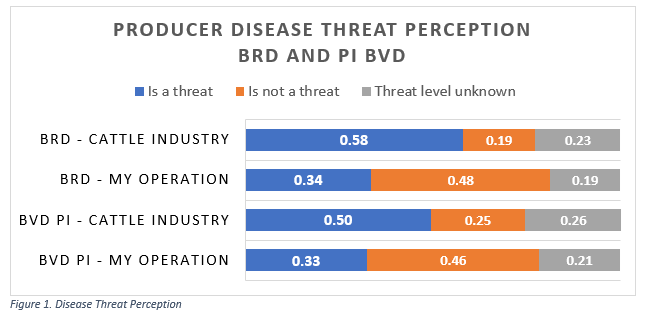
The Oklahoma Cow-Calf Biosecurity was implemented in early 2022 to gain insight into biosecurity practices on Oklahoma cow-calf operations. The survey was administered for OSU through USDA National Agricultural Statistics Service (NASS) and garnered over 1400 producer responses. The overarching goal of the survey is to find ways to increase producer awareness of biosecurity issues and to assist producers in planning and implementation of best practices with respect to biosecurity on their individual operations.
One constant for cattlemen is considering the potential threat and impact of infectious diseases. A segment of the survey asks producers to rate the threat level of Bovine Respiratory Disease (BRD), commonly known as shipping fever or pneumonia, and the threat level from Persistently Infected (PI) Bovine viral Diarrhea (BVD PI) cattle, recognizing that BVD is part of the larger BRD disease complex. BVD PI animals can be a problem for producers because they are BVD carriers that constantly shed the virus creating consistent viral exposure to other members of the herd. The survey asks producers to rate the threat of these diseases to: (1) their own operations due to arrival of cattle from outside sources, and (2) the beef industry overall. Those results are reported in Figure 1.
When asked whether BRD is a threat to the industry, 58% of producers perceive that it is a threat to the industry. Only 19% of producers state that they do not believe it is a threat, while 23% are not sure whether it is a threat. In contrast, only 34% believe that BRD is a threat to their own operation, but 48% - nearly half of producers responding – believed that BRD is not a threat to their own operation. Producer evaluation of the perceived threat from BVD PI cattle is similar. Half of survey respondents believe that persistently infected BVD PI cattle are a threat to the industry, with 25% responding that it is not a threat to the industry. However, when asked whether BVD PI cattle are a threat to their own operation, only 33% say that it is a threat and nearly half (46%) say that it is not. In both scenarios, only a small percentage of producers are unsure of the threat to the operation or are unfamiliar with the disease. Interestingly, for both BRD and BVD PI, producers perceive that the threat of disease is a greater threat to the industry than it is to their own cattle operations.
There may be multiple reasons that cattlemen perceive a greater threat of disease to the industry than to their own cattle. On the one hand, producers may have biosecurity elements in place that they feel are sufficient protection against BRD and BVD for their cattle and operation. Quarantines for incoming cattle, a closed herd, and vaccinations for the herd and calves are all elements that can protect against disease. On the other hand, some cattlemen may simply have unrealistic perceptions of disease threats. So how do we sort that out? For example, are perceived threats greater or smaller based on herd size? How does the number of biosecurity practices already in place impact perceptions of disease threat? Stay tuned! But as you wait for more information on the topic, consider your own perceptions about disease threats and what it is that informs your decisions regarding biosecurity on your operation.
OSU Extension beef cattle specialist Rosslyn Bigs discusses the importance of practicing safe biosecurity with livestock during the fair season on SunUp TV from September 25, 2021. https://www.youtube.com/watch?v=yazPuwcALzQ
The U.S. Department of Agriculture today announced that it is giving an estimated 3,000 more school districts in high-need areas the option to serve breakfast and lunch to all students at no cost, by expanding the availability of the Community Eligibility Provision, commonly known as CEP.
"Today's announcement comes as we approach the one-year anniversary of the historic White House Conference on Hunger, Nutrition, and Health, where the Biden-Harris Administration promised to advance a pathway to healthy school meals for all students," said Agriculture Secretary Tom Vilsack. "USDA has taken an important step toward fulfilling that promise by expanding access to CEP. Increasing access to free, healthy school breakfast and lunch will decrease childhood hunger, improve child health and student readiness, and put our nation on the path to better nutrition and wellness."
CEP is a simplified meal service option that allows schools to provide meals at no cost to all students without requiring families to apply for free and reduced-price meals. Instead, school districts receive federal funding based on a formula using existing data from SNAP and other programs, and local or state funds must fill any gap between program costs and federal support. Before this final rule, at least 40% of students had to live in households participating in certain income-based federal assistance programs, in order for a school, group of schools, or school district to be eligible for CEP. This final rule lowers that threshold from 40% to 25%.
While this change in CEP applies across the country, it will be particularly impactful in states and school districts which commit to supporting healthy school meals for all students with their own funds.
Eight states have taken additional permanent actions to make sure hunger is not a barrier to children's success, in addition to allowing eligible schools to participate in CEP. California, Colorado, Maine, Massachusetts, Michigan, Minnesota, New Mexico and Vermont passed state laws allowing their schools to serve healthy school meals to all their students at no cost. In these states, schools that previously were not eligible for CEP can now take advantage of this final rule to experience more efficient, streamlined school meal operations as well as predictable federal funding levels.
CEP – and all models for providing healthy school meals for all at no cost – is a win-win for schools, kids, families and communities and provides many benefits, including:
"Healthy school meals are an essential part of the school environment — just like teachers, classrooms and books – and set kids up for success and better health," said Stacy Dean, USDA deputy under secretary for Food, Nutrition, and Consumer Services. "More children are fueled for learning and development when they can count on tasty, nutritious meals at school. While there is still more work ahead to ensure every K-12 student in the nation can access healthy school meals at no cost, this is a significant step on the pathway towards that goal."
USDA is also supporting expanded access to healthy school meals by offering extensive financial support for schools, including providing:
USDA also continues to expand its Direct Certification for Medicaid Demonstration Projects, which ensure that eligible children in households receiving Medicaid benefits automatically receive free or reduced price school meals without their families filling out an application. The demonstration projects have been implemented in 38 states, and USDA continues to invite more states to participate. In school year 2019-2020, 1.4 million students received free and reduced-price school meals thanks to direct certification through Medicaid.
Related Resources:
FNS works to end hunger and improve food and nutrition security through a suite of 16 nutrition assistance programs, such as the National School Breakfast and National School Lunch Programs, the Special Supplemental Program for Women, Infants, and Children and the Supplemental Nutrition Assistance Program. Together, these programs serve 1 in 4 Americans over the course of a year, promoting consistent and equitable access to healthy, safe, and affordable food essential to optimal health and well-being. FNS also provides science-based nutrition recommendations through the co-development of the Dietary Guidelines for Americans. FNS's report, "Leveraging the White House Conference to Promote and Elevate Nutrition Security: The Role of the USDA Food and Nutrition Service," released in conjunction with the historic White House Conference on Hunger, Nutrition, and Health in September 2022, highlights ways the agency will support the Biden-Harris Administration's National Strategy. To learn more about FNS, visit www.fns.usda.gov and follow @USDANutrition.
The annual pecan field day will cover topics such as establishing a native grove, the effects of prolonged drought stress and wildlife depredation. (Photo by OSU Pecan Management)
Oklahoma State University Extension will host the 2023 Native Pecan Field Day on Oct. 12 in Okfuskee County. The free event welcomes commercial pecan growers, landowners with pecans or hobbyists.
Oklahoma is one of the top native pecan producers in the nation, and around 75% of Oklahoma's total pecan production is native pecans.
"Although the 2017 Census of Agriculture reported Oklahoma at 96,569 acres in pecan production, the number of potential acres could be several times that if native timber was reclaimed for production and management," said Becky Carroll, OSU Extension specialist for fruit and pecans. "Okfuskee County was chosen for the fall field day because of its large amount of wild pecan acres as well as those in surrounding counties. We thought the event would be helpful for landowners with questions about how to start the process of cleaning up native pecan land. The field day will also focus on other native pecan topics that affect many pecan producers.
Who and what: The Leon Bailey Family, OSU Pecan Management, Okfuskee County Extension and the Oklahoma Pecan Growers Association will host the field day to share their knowledge of pecan management.
Featured topics will include:
When: Thursday, Oct. 12, 2023,Registration will begin at 2:30 p.m. The field day program is from 3 to 6 p.m.
Where: Leon Bailey's Pecan Farm, 363112 E. 960 Rd, Paden, Oklahoma 74860
Brice Callahan, the OSU Extension agriculture educator in Okfuskee County, encourages everyone to attend the field day and enjoy an afternoon in the pecan grove. "Take this opportunity to learn about updates in the pecan industry and network with other pecan producers," he said.
Anyone is welcome to attend, but registration is required by Oct. 10. Bring a lawn chair and plan to stay for dinner in the pecan grove.
For more information, please contact Becky Carroll at 405-744-6139 or becky.carroll@okstate.edu.
OSU Extension uses research-based information to help all Oklahomans solve local issues and concerns, promote leadership and manage resources wisely throughout the state's 77 counties. Most information is available at little to no cost.
RON's Dave Lanning has a pre-opening look at today's agricultural Markets.
Click the audio tab below for today's report.
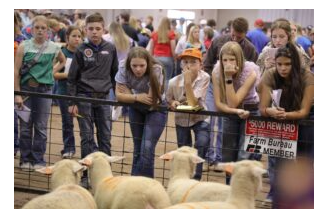
Nearly 1,600 4-H and FFA students put their skills to the test at the 2023 Oklahoma State Fair Livestock Judging Contest, hosted by the Oklahoma Farm Bureau Young Farmers and Ranchers committee, on Thursday, Sept. 21 in Oklahoma City.
Students in third grade through 12th grade evaluated market and breeding classes of cattle, sheep, goats and hogs. Participants also answered a set of questions about one class of cattle and one class of goats.
The top three individuals in the junior 4-H division were Sage Baird, Waynoka 4-H; Spencer Lewis, Silo 4-H; and Kaisley Onan, Stillwater 4-H. The top three teams were Stillwater 4-H, Valliant 4-H and Silo 4-H.
The top three individuals in the junior FFA division were Jaci McGowen, Maysville FFA; Dally Pederson, Cashion FFA; and Maddie Bishop, Stillwater FFA. The top three teams were Purcell FFA (White), Checotah FFA and Fort Gibson FFA.
The top three individuals in the senior 4-H division were Bodie Jeffries, Blackwell OK Okies; Justin Fast, Kay County 4-H; and Kole Campbell, Alfalfa County 4-H. The top three teams were the Blackwell OK Okies, Kay County 4-H and Keys 4-H.
The top three individuals in the senior FFA division were Hagen Cundiff, Perkins-Tryon FFA; Kyriana Beard, Stillwater FFA; and Aubrie McEndoo, Stillwater FFA. Both Stillwater FFA teams took the top two senior team spots, and Thomas Fay Custer FFA took third.
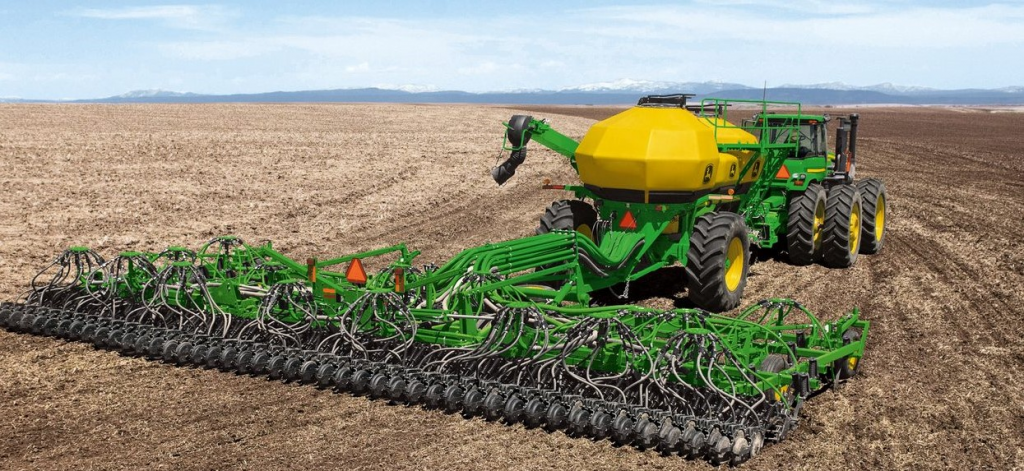
Photo from U.S. Wheat Associates
SOUTHERN PLAINS WINTER WHEAT:
In Oklahoma, Winter wheat planted reached 18 percent, down 2 points from the previous year and down 7 points from the five-year average. Winter wheat emerged reached 5 percent, up 1 point from the previous year and up 2 points from the average.
In Kansas, Winter wheat planted was 18 percent, equal to last year, and near 22 percent for the five-year average. Emerged was 4 percent, near 3 percent last year, and 5 percent average.
In Texas, Winter wheat planted reached 30 percent, down 12 percentage points from the previous year and down 2 points from the five-year average. Winter wheat emerged reached 12 percent, even with the previous year and up 6 points from the average.
Winter wheat planted for the U.S. reached 26 percent, down 4 percentage points from the previous year and down 3 points from the five-year average. Winter wheat emerged reached 7 percent, down 1 point from the previous year and up 1 from the average.
Corn dented reached 95 percent, up 4 percentage points from the previous year and up 2 from the five-year average. Corn mature reached 70 percent, up 15 points from the previous year and up 10 from the average. Corn harvested reached 15 percent, up 4 points from the previous year and up 2 from the average. Corn conditions rated 53 percent good to excellent, 29 percent fair and 18 percent poor to very poor. Last week's conditions rated 51 percent good to excellent, 29 percent fair and 20 percent poor to very poor.
Soybeans dropping leaves reached 73 percent, up 13 percentage points from the previous year and up 11 points from the five-year average. Soybeans harvested reached 12 percent, up 5 points from the previous year and up 1 point from the average. Soybean conditions rated 50 percent good to excellent, 32 percent fair and 18 percent poor to very poor. Last week's conditions rated 52 percent good to excellent, 30 percent fair and 18 percent poor to very poor.
Cotton bolls opening reached 65 percent, down 1 percentage point from the previous year and up 3 from the five-year average. Cotton harvested reached 13 percent, down 1 percentage point from the previous year and even with the average. Cotton conditions rated 30 percent good to excellent, 28 percent fair and 42 percent poor to very poor.
In Oklahoma, Rainfall totals averaged 1.61 inches. According to the September 19th US Drought Monitor Report, drought conditions were rated 72 percent abnormally dry to exceptional drought, down 28 points from last year. Additionally, 49 percent of the state was in the moderate drought to exceptional drought categories, down 50 points from the previous year. Statewide, temperatures averaged in the mid to upper 70's.
Winter wheat planted reached 18 percent, down 2 points from the previous year and down 7 points from the five-year average. Winter wheat emerged reached 5 percent, up 1 point from the previous year and up 2 points from normal.
Corn dented reached 96 percent, up 1 point from the previous year but unchanged from normal. Corn mature reached 70 percent, up 1 point from the previous year and from normal. Corn harvested for grain reached 30 points, down 1 point from the previous year but up 2 points from normal. Corn conditions rated 62 percent good to excellent, 26 percent fair and 12 percent poor to very poor. Last week's conditions rated 64 percent good to excellent, 25 percent fair and 11 percent poor to very poor.
Sorghum coloring reached 72 percent, down 16 points from the previous year and from normal. Sorghum mature reached 33 percent, down 17 points from the previous year and down 15 points from normal. Sorghum harvested for grain reached 11 percent, down 1 point from the previous year and down 3 points from normal. Sorghum conditions rated 41 percent good to excellent, 41 percent fair and 18 percent poor to very poor. Last week's conditions rated 50 percent good to excellent, 36 percent fair and 14 percent poor to very poor.
Soybeans setting pods reached 87 percent, unchanged from the previous year and from normal. Soybeans dropping leaves reached 32 percent, unchanged from the previous year but up 6 points from normal. Soybean conditions rated 55 percent good to excellent, 35 percent fair and 11 percent poor to very poor. Last week's conditions rated 51 percent good to excellent, 33 percent fair and 16 percent poor to very poor.
Peanuts mature reached 56 percent, up 3 points from the previous year and up 11 points from normal. Peanut conditions rated 97 percent good to excellent and 3 percent fair. Last week's conditions rated 96 percent good to excellent and 4 percent fair.
Cotton bolls opening reached 55 percent, down 5 points from the previous year and down 3 points from normal. Cotton conditions rated 14 percent good to excellent, 25 percent fair and 61 percent poor to very poor. Last week's conditions rated 11 percent good to excellent, 19 percent fair and 70 percent poor to very poor.
Hay: The fourth cutting of alfalfa hay reached 68 percent, down 2 points from the previous year and down 11 points from normal. The fifth cutting of alfalfa hay reached 8 percent, down 3 points from the previous year but up 2 points from normal. The second cutting of other hay reached 95 percent. The third cutting of other hay reached 39 percent down 26 points from the previous year and down 6 points from normal.
Livestock conditions rated 63 percent good to excellent, 28 percent fair and 9 percent poor to very poor. Last week's conditions rated 64 percent good to excellent, 26 percent fair and 10 percent poor to very poor.
Pasture and range conditions rated 27 percent good to excellent, 35 percent fair and 38 percent poor to very poor. Last week's conditions rated 22 percent good to excellent, 29 percent fair and 49 percent poor to very poor.
Winter wheat planted was 18 percent, equal to last year, and near 22 percent for the five-year average. Emerged was 4 percent, near 3 percent last year and 5 percent average.
Corn mature was 87 percent, ahead of 70 percent last year and 74 percent average. Harvested was 38 percent, near 34 percent last year, and ahead of 29 percent average. Corn conditions rated 33 percent good to excellent, 32 percent fair and 35 percent poor to very poor. Last week's conditions rated 32 percent good to excellent, 32 percent fair and 36 percent poor to very poor.
Soybeans dropping leaves was 68 percent, ahead of 51 percent last year and 49 percent average. Harvested was 11 percent, near 8 percent last year, and ahead of 4 percent average. Soybean conditions rated 20 percent good to excellent, 31 percent fair and 49 percent poor to very poor. Last week's conditions rated 23 percent good to excellent, 32 percent fair and 45 percent poor to very poor.
Sorghum coloring was 90 percent, ahead of 83 percent last year, and equal to average. Mature was 45 percent, ahead of 32 percent last year and 36 percent average. Harvested was 11 percent, ahead of 4 percent last year and 5 percent average. Sorghum conditions rated 33 percent good to excellent, 37 percent fair and 30 percent poor to very poor. Last week's conditions rated 32 percent good to excellent, 35 percent fair and 33 percent poor to very poor.
Cotton bolls opening was 89 percent, well ahead of 60 percent last year and 49 percent average. Harvested was 1 percent, near 2 percent last year, and equal to average. Cotton conditions rated 33 percent good to excellent, 44 percent fair and 23 percent poor to very poor. Last week's conditions rated 35 percent good to excellent, 47 percent fair and 18 percent poor to very poor.
Pasture and range conditions rated 13 percent good to excellent, 36 percent fair and 51 percent poor to very poor. Last week's conditions rated 17 percent good to excellent, 33 percent fair, and 50 percent poor to very poor.
Winter wheat planted reached 30 percent, down 12 percentage points from the previous year and down 2 points from the five-year average. Winter wheat emerged reached 12 percent, even with the previous year and up 6 points from the average.
Corn mature reached 88 percent, down 4 percentage points from the previous year and up 2 points from the five-year average. Corn harvested reached 73 percent, up 2 percent from the previous year and the average. Corn conditions rated 49 percent good to excellent, 27 percent fair and 24 percent poor to very poor. Last week's conditions rated the same.
Cotton bolls opening reached 59 percent, down 2 percentage points from the previous year and up 4 from the average. Cotton harvested reached 24 percent, even with the previous year and up 3 points from the average. Cotton conditions rated 10 percent good to excellent, 25 percent fair and 65 percent poor to very poor. Last week's conditions rated the same.
Peanuts mature reached 32 percent, down 1 point from the previous year and up 4 from the average. Peanut conditions rated 31 percent good to excellent, 35 percent fair and 34 percent poor to very poor. Last week's conditions rated 36 percent good to excellent, 27 percent fair, and 37 percent poor to very poor.
Sorghum mature reached 91 percent, down 5 percentage points from the previous year and up 2 from the average. Sorghum harvested reached 80 percent, down 1 point from the previous year and even with the average. Sorghum conditions rated 45 percent good to excellent, 22 percent fair and 33 percent poor to very poor. Last week's conditions rated the same.
Soybeans dropping leaves reached 83 percent, down 3 percentage points from the previous year and up 3 from the average. Soybeans harvested reached 40 percent, up 10 points from the previous year and down 10 points from the average. Soybean conditions rated 36 percent good to excellent, 36 percent fair and 28 percent poor to very poor.
Pasture and range conditions rated 7 percent good to excellent, 24 percent fair and 69 percent poor to very poor. Last week's conditions rated 7 percent good to excellent, 22 percent fair and 71 percent poor to very poor.
Dr. Derrell Peel, Oklahoma State University Extension Livestock Marketing Specialist, offers his economic analysis of the beef cattle industry as part of the weekly series known as the "Cow Calf Corner," published electronically by Dr. Peel and Mark Johnson. Today, Dr. Peel talks about the latest Cattle on Feed report.
The latest USDA-NASS Cattle on Feed report pegs the September 1 feedlot inventories at 11.094 million head, down 2.2 percent year over year. The September feedlot total was up slightly from the August summer low, which was the lowest monthly on-feed total since September of 2019. Feedlot inventories have been lower year over year for the past twelve months.
Figure 1 shows monthly feedlot totals and a 12-month moving average, which provides a good measure of the underlying trend for the past year. The 12-month moving average peaked in September 2022 at 11.836 million head. The September 2023 12-month moving average is 11.507 million head, down 2.8 percent from the peak. Figure 1 also shows the 2014 cyclical low of 10.375 million head, a likely target for feedlot inventories in the coming months. Following the drought a decade ago, the 12-month moving average dropped below 11 million head in April 2013 and remained below that level for 58 months through January 2018. This was the period of rapid herd expansion in the last cattle cycle and a similar situation is likely going forward, beginning in 2024.
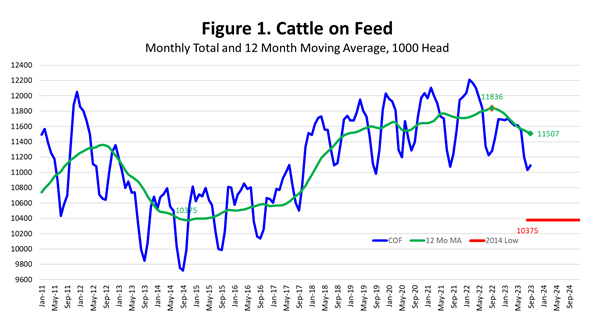
Monthly feedlot placements in August were down 5.1 percent year over year; the lowest August placements since 2019. Placements have decreased year over year for ten of the last twelve months, with total placements down 897 thousand head in the last year. A 12-month moving average of placements shows that the peak annual average monthly placements occurred in December 2019, consistent with the cyclical peak in the calf crop in 2018. However, pandemic delays from 2020 into 2021and drought enhanced placements in 2021 and 2022 have kept feedlot placements high until the last few months. The current 12-month moving average of placements for August just dropped to the lowest level since May of 2017. Average placements are expected to continue declining for the foreseeable future.
Feedlot marketings in August were down 6.0 percent year over year. Total marketings for the year to date are down 3.4 percent. Feedlot marketings are, of course, highly correlated with slaughter. Monthly feedlot marketings are 90 percent correlated with yearling (steer plus heifer) slaughter and account for an average of 86.6 percent of monthly federally inspected steer and heifer slaughter. Marketings from small feedlots, with less than 1000 head capacity, make up the difference. Yearling slaughter for the first eight months of the year is down 3.2 percent year over year. The year over year decrease in yearling slaughter consists of a 4.9 percent year-to-date decrease in steer slaughter and a 1.1 percent year-to-date decrease in heifer slaughter.
Heifer retention is expected to increase sharply at some point in the coming months which will drop the number of heifers in feedlots and decrease heifer slaughter. The July quarterly data showed that heifers currently make up 39.9 percent of feedlot inventories. When heifer retention begins in earnest, this percent will drop to about 32 percent. This suggests that average feedlot inventories will likely drop another 1.0 - 1.2 million head at least in the next 8-18 months. Feedlot inventories will likely decline to a level close to the 2014 low in Figure 1 and stay relatively low for many months.
Below, Derrell Peel, OSU Extension livestock marketing specialist, says the cattle market should remain strong into the fall on SunUpTV from September 16, 2023.
American Farmland Trust (AFT) applauds today's bipartisan introduction of the Protecting Future Farmland Act of 2023. The legislation, introduced by Senators Tammy Baldwin (D-WI) and Chuck Grassley (R-IA), would make significant progress toward ensuring the current renewable energy buildout benefits rural communities, protects farmland, and strengthens farm viability.
Specifically, the Protecting Future Farmland Act would direct the United States Department of Agriculture (USDA) to support smart solar projects in the Renewable Energy for America Program (REAP), develop guidance through the Natural Resources Conservation Service (NRCS) to help ensure that land converted to solar can be returned to agricultural use, and enable the growth of agrivoltaics by supporting those farming within solar arrays with USDA programs and services. This comprehensive, cost-neutral bill includes many of the recommendations found in AFT's own Smart Solar platform for the Farm Bill, which was released in May.
"The key question for our national solar buildout is not 'if,' but 'how,'" said Tim Fink, AFT's Policy Director. "Our nation's renewable energy transition is happening quickly, and solar energy is a significant part of it. We must act in the next Farm Bill to ensure that this transition benefits farmers, farmland, and farm communities."
According to the Department of Energy, achieving the goal of a decarbonized electric sector by 2050 could result in the conversion of 10.4 million acres of land to solar energy generation. Farmland is often favored by solar developers, particularly high-quality farmland, because it is flat, sunny, cleared, and near infrastructure such as transmission. In fact, recent AFT modeling revealed that 83% of new solar energy development is likely to take place on farmland if additional policy steps are not taken, with half of that on the nation's best land for producing food and crops.
Alongside state and local governments, the federal government—and especially USDA—has an important role to play in ensuring that this buildout strengthens rural communities and farm viability and keeps land in production. The federal government can help achieve these goals by modeling a smart solar buildout with its own investments, and by investing in research and providing information to inform the decision-making of producers and communities taking part in the renewable energy transition across the country.
"We are already seeing conflicts across the country as solar projects are proposed on farmland and in farm communities. These tensions and conflicts are slowing down climate action. Done well, solar deployment can be an opportunity to strengthen farm viability and keep land in farming, but to do this right will require action," said Samantha Levy, AFT's Conservation and Climate Policy Manager. "We applaud Senator Baldwin and Senator Grassley's Protecting our Future Farmland Act for introducing a bill with common sense, timely, and necessary policies that will empower USDA to provide trusted information to communities to advance a smarter solar buildout."
To learn more about AFT's work on the Farm Bill, click here. To learn more about AFT's work on Smart Solar, click here.
Sponsored by Cotton Council International (CCI), the export promotions arm of the Memphis-based National Cotton Council (NCC), the Orientation Tour's major objectives are to increase U.S. cotton customers' awareness of the types/qualities of U.S. cotton, help them gain a better understanding of U.S. marketing practices and enhance their relationships with U.S. exporters. More than 900 textile executives from more than 60 countries have participated in this biennial tour initiated in 1968.
CCI President Steve Dyer, a Cordova, Tenn., merchant said, "The COTTON USA Orientation Tour is vital to U.S. cotton export performance. For over half a century, this event has enabled our industry to showcase our high-quality U.S. cotton fiber to important international spinners as well as build and strengthen relationships with these customers."
This year's Orientation Tour includes executives representing 27 companies in Bangladesh, China, Colombia, El Salvador, Guatemala, India, Indonesia, Japan, Korea, Mexico, Pakistan, Taiwan, Thailand, Turkey and Vietnam. These manufacturers expect to consume 5.7 million bales of cotton in 2023, while an estimated 2.9 million bales of U.S. cotton will be exported to those countries. This represents about 23 percent of U.S. cotton export sales, making these companies some of U.S. cotton's largest customers.
The Orientation Tour participants will visit a Mid-South cotton farm and gin; tour a farm and cotton warehouse in Texas; tour a Pima cotton farm in California; observe cotton research in North Carolina and Mississippi, and tour the USDA cotton classing office in Bartlett, Tenn. They will meet with U.S. cotton exporters and get briefings from CCI, the NCC, Cotton Incorporated, ACSA, the Texas Cotton Association, the Lubbock Cotton Exchange, Amcot, the American Cotton Producers, the Delta Council, Plains Cotton Growers, Inc., the Western Cotton Shippers Association and Supima. These meetings will offer ample opportunities for U.S. cotton industry representatives to strengthen relationships with some of U.S. cotton's top customers and impact export sales.
Associate Farm Editor, Reagan Calk, caught up with the Oklahoma Farm Bureau rural economic development coordinator, Amarie Bartel, and talked about the latest update on the Oklahoma Rural and Ag Business Accelerators program.
The program is a collaborative rural development initiative from the Oklahoma Farm Bureau along with national and state-level partners that develops Oklahoma-based innovators by creating ideas, technologies, and products that create economic opportunities in rural Oklahoma.
There are two parts of the program: Cultivate Oklahoma and Activate Oklahoma. Cultivate Oklahoma, a pre-accelerator, provides an agriculture-focused curriculum powered by OKFB partners, AgLaunch, to bring innovations that have on-farm applications to reality through a farmer innovation model. Activate Oklahoma connects rural entrepreneurs and innovators with resources from Oklahoma's world-class business development community to build an even brighter future for rural Oklahoma.
"Our Cultivate Oklahoma program, which is our ag tech pre-accelerator, actually recently wrapped up," Bartel said. "We finished their mentorships and programming, and then they made applications for a national agricultural business accelerator called AgLaunch 365."
The goal with Cultivate Oklahoma, Bartel said, is to prepare the best applicants for AgLaunch 365.
"We had some folks apply for that program, and they are still in the application pipeline, so we are cheering for them and hoping they get to the national stage," Bartel said. "We think that will be a big win for Oklahoma agriculture and Oklahoma innovation."
Regarding Activate Oklahoma, the rural off-farm cohort, Bartel said the ag entrepreneurs are preparing for an upcoming demonstration day where they will have the chance to pitch their business to investors from across the state.
On January 1, Bartel said applications for Cultivate Oklahoma and Activate Oklahoma will open. The application window for those cohorts will close on March 1, Bartel added.
"We are hoping we will see so many great agricultural and rural innovators come to the table during that application process," Bartel said.
Bartel said anyone from a community of 50,000 individuals or less is welcome to apply to these programs.
"Everything from an idea on a napkin to something that is on store shelves, we are here to help with," Bartel said.
For more information about these programs, visit https://www.okfarmbureau.org/accelerator/.
Last week, the U.S. House Committee on Financial Services advanced a bill supported by the National Cattlemen's Beef Association (NCBA) that strengthens oversight of foreign agricultural purchases. The legislation, the Agricultural Security Risk Review Act introduced by Rep. Frank Lucas (R-OK), would add the Secretary of Agriculture as a member of the Committee on Foreign Investment in the United States (CFIUS), an interagency committee that reviews the national security impact of foreign investments in the United States.
"Cattle producers have been extremely watchful of foreign purchases of farmland, agricultural technology, and other important inputs. Adding the Secretary of Agriculture to CFIUS would provide a critical voice for American farmers and ranchers and ensure that the federal government does not overlook agriculture's role in national security," said NCBA Executive Director of Government Affairs Kent Bacus. "NCBA thanks Rep. Lucas for leading this effort and we appreciate the House Financial Services Committee's bipartisan support for this bill."
CFIUS is an interagency committee chaired by the Secretary of the Treasury with members from the Department of Justice, Department of Homeland Security, Department of Commerce, Department of Defense, Department of State, Department of Energy, Office of the U.S. Trade Representative and Office of Science and Technology Policy. The committee reviews financial and real estate transactions by foreign entities investing in the United States to ensure that these investments do not endanger national security. The committee can recommend that the President of the United States suspend or block investments that may create security concerns.
The legislation passed in committee and now goes to the full House of Representatives for consideration.
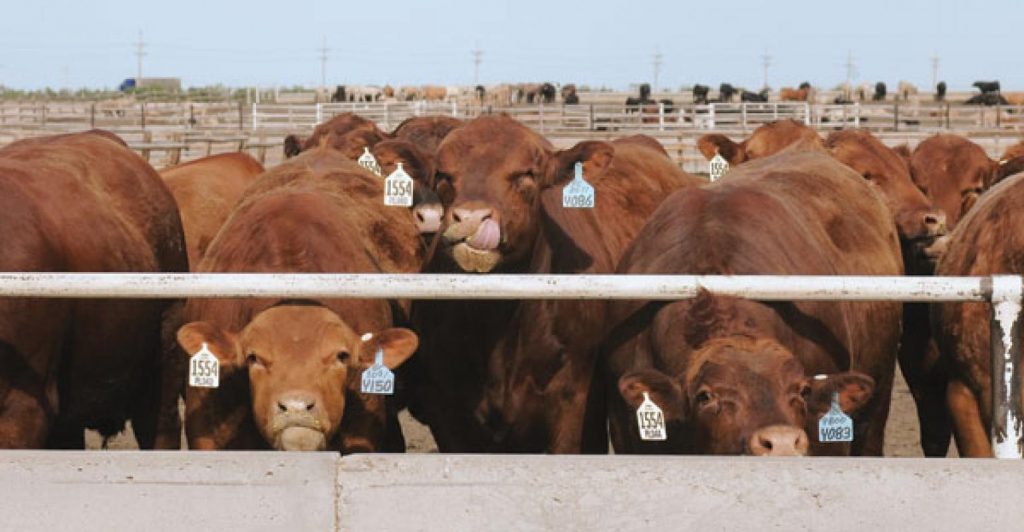
Senior Farm and Ranch Broadcaster, Ron Hays, is talking with Oklahoma State University Extension Livestock Marketing Specialist Dr. Derrell Peel, about the latest USDA Cattle on Feed report, released September 22, 2023.
"No big surprises in this report," Rodenberger said. "We had marketings in the month of August down 6 percent, 94 percent of last year, placements were 95 percent of last year, and the on-feed total coming into September was down about 2 percent, 98 percent of last year."
If there are any surprises in the report, Peel said it is that liquidation has been a slow process.
"We are still down only two percent year over year," Peel said.
Last October, Peel added, was when year-over-year decreases began.
"As we go forward and we continue this trend, even if it is a couple percent below a year earlier, and sort of compound it on a year-over-year basis, that means we are going to be pulling cattle numbers down a little bit faster," Peel said. "We are clearly working our way into tighter numbers and that is the really important point as we go forward."
Placement numbers in the most recent report and a few reports prior have been under a year ago.
"One of the reasons placements have stayed relatively high, they are down pretty consistently, but they have stayed as high as they can be, I guess I would say, and that is simply because feedlots would obviously like to maintain inventories," Peel said. "They are trying to keep their lots full and keep the feed mills working. They can, it is just that over time it is going to be harder and harder as these cattle numbers continue to tighten."
Total slaughter for the year so far, Peel said, is down about 3.9 percent. Beef production, he added, is down 5 percent for the year.
"Our expectations are for beef production to drop another 6 to 8 percent in 2024, and still be down in 2025 at this point," Peel said. "We are going to continue to see these things tighten up."
With beef prices at record levels, Peel said time will tell if consumers will be willing to continue to pay more as supplies continue to tighten.
"Some consumers are not going to buy as much beef, but that is just because there isn't beef out there," Peel said. "We will probably see higher prices. That is kind of the way markets work when we get into tighter supplies."
To see the latest Cattle on Feed report, CLICK HERE.
To access previous Cattle on Feed reports, CLICK HERE.
The Beef Buzz is a regular feature heard on radio stations around the region on the Radio Oklahoma Ag Network and is a regular audio feature found on this website as well. Click on the LISTEN BAR at the top of the story for today's show and check out our archives for older Beef Buzz shows covering the gamut of the beef cattle industry today.
Making safety part of your everyday life conversations with your children can help them stay safe on your farm or ranch.
Editor's Note: This article first appeared in during National Farm Safety Week in 2017. Even though Rodney Pierce's sons are now 17 and 15, these life-saving farm safety values hold true today for anyone with young children on the farm.
From the time I was 6 or 8, I was helping my dad out on our family's farm. We raised cattle and grew peanuts and wheat. My earliest jobs were helping my dad feed small square bales, hoeing peanuts and many other basic tasks related to operating a farm. Over time, I became more involved in every aspect of the operation. Now, I raise a few cows on a small place in Leon, Oklahoma, in addition to supervising equipment maintenance and repair at the Noble Research Institute.
Safety was something my dad hammered into me from an early age. I remember him pointing out different things on the farm, like a rotating PTO shaft on the tractor, and saying "That'll kill you, son." It's a blunt statement, but there's a lot on the farm – from equipment to animals – that could hurt an adult or child. Safety was part of our everyday life conversations; it was a mindset my dad learned from his dad. Now that I have children who help me on the farm, I am constantly thinking about keeping them safe and passing that safety mindset on to them.
In recognition of National Farm Safety and Health Week, I want to share with you some of the farm safety values passed down in my family.

Animals' size and weight can make them dangerous. It's important to give animals their space and to be extra cautious with males and mothers with offspring. Dad also taught me the importance of "always having a way out," in case an animal gets aggressive. That's something I'll teach my children as they get older and start working more closely with the cattle.
Know what equipment is designed to do, and don't push it beyond those boundaries. This goes for both adults and children. As a grownup, it's neat to put your child in the tractor with you. But if you don't have a buddy seat, you shouldn't have a passenger. Another piece of equipment commonly misused is a side-by-side utility ATV. I teach my children that these vehicles are pieces of equipment designed to help us work. They aren't toys.
I tell my kids they should stay at least 60 feet away from me if I'm using the lawnmower or weed-eater. They know not to come up to me from behind. If they need to get my attention, they can get my attention from a distance.

This knocks out a lot of hazards. My dad always told me, "If I haven't told you about it, it's not your business." I keep power tools and chemicals out of reach, when possible, but I also teach my children they shouldn't touch things if they don't know what they are or if they were told not to touch them. My dad's refrigerator to this day has a shelf in it for cattle vaccines. He made sure we knew from a young age what that shelf was for and not to touch it.
I watch for my kids constantly, but kids can come out from nowhere. If you're in a tractor, it would be very easy to not see or hear them come to the field. That's why I tell my kids to be sure I know if they're in the field and that I see them. If they can't see my eyes, then I can't see them either.

NATIONAL FARM SAFETY AND HEALTH WEEK is recognized Sept. 17-23, 2023. This year's theme is "No One Can Take Your Place." The annual awareness campaign is organized by the National Education Center for Agricultural Safety. Learn more at necasag.
SAFETY SHOULD BE PRIORITY WHEN ASSIGNING CHORES Limit risks to children on the farm by raising their awareness and knowledge of safety. Adults should also consider the child's attention span, their ability to think fast, physical limitations and maturity level when assigning tasks.
Story Credit: Rodney Pierce, ag operations manager of Noble Research Institute
In recent years, our nation has experienced an alarming spike in poor mental health that was exacerbated by COVID-19 pandemic shutdowns. Sadly, too many Americans have faced symptoms of anxiety, depression or more. This Suicide Prevention Awareness Month is a critical reminder to take mental health seriously and promote a healthy and mindful lifestyle.
In 2020, congressional lawmakers worked together in a bipartisan, bicameral manner to designate 9-8-8 as the three-digit number for the National Suicide Prevention Lifeline, a national suicide prevention and mental health crisis hotline that would include the Veterans Crisis Line for veteran-specific mental health support. The previous lifeline being ten digits created a barrier to Americans in crisis seeking help. I was proud to be a leader in this effort as an original co-sponsor of the National Suicide Hotline Designation Act of 2019 and was glad to see its full implementation nationwide in July last year.
Since then, Oklahoma has become a leader in individual states' implementation of this lifeline, even achieving top-ten status as one of the most successful response systems in the country. In Oklahoma, the 9-8-8 Mental Health Lifeline has answered more than 45,000 calls, responded to more than 10,000 texts and dispatched more than 5,000 crisis teams since its launch.
In Oklahoma, 4.1 percent of adults have reported to have serious thoughts of suicide in the past year, one in ten students reported to have attempted suicide and each week and approximately 300 Oklahomans are admitted for urgent care or crisis mental health services. Oklahoma's lifeline is not just for those with suicidal ideation but for anyone in any mental health crisis.
Our country and its leaders must address the mental health crisis and improve rapid access to suicide and crisis intervention services to prevent death and injury from suicide attempts. This year, I am proud Congress is on track to provide the Substance Abuse and Mental Health Services Administration $501 million in funding, five times the funding level in fiscal year 2022 at $101 million. This critical funding will allow the system to increase response rate speed, strengthen network infrastructure and technology, improve communications services, including Spanish-speaking and video services for those who are deaf and hard of hearing, and enhance partnerships with 911 centers and first responders.
Mental wellness and caring for your mental state are just as important as any other illness. Whether you are suffering from emotional or psychological distress or not, you must prioritize your mental well-being. The National Institutes of Health (NIH) recommends simple yet effective practices to do so, including exercising regularly, prioritizing sleep and relaxation and staying connected to friends, family and loved ones who can provide help and support when needed. For more information and resources on self-care from the NIH, visit www.nimh.nih.gov/health/topics/caring-for-your-mental-health.
If you are having thoughts of self-harm, suicide or are facing a mental health crisis, you can receive confidential help from a mental health professional by calling or texting 9-8-8. And if you are a veteran, dial 9-8-8, then press 1 to receive veteran-specific care. On the call or through text messaging, a professional will help you talk through your crisis, receive the resources you need and can even assist in sending a crisis team to you, help you receive transportation to urgent care or a crisis center and schedule follow-up appointments. If you or someone you know is struggling, do not be afraid to seek help.
The CEO of the National Corn Growers Association (NCGA) today pushed back against commentary made by a science advisory board to the U.S. Environmental Protection Agency that questioned the effectiveness of ethanol in lowering greenhouse gas emissions. The NCGA leader's comments were made during a public meeting held by the SAB.
"There is no shortage of studies on the environmental benefits of corn ethanol," NCGA CEO Neil Caskey told the advisory board members. "The Department of Energy's Argonne National Laboratory, for example, has conducted extensive research on the matter and concluded that corn ethanol has reduced greenhouse gas emissions in the U.S. by 544 million metric tons from 2005- 2019, and that the feedstock's carbon intensity is 44% lower than that of petroleum gasoline."
The testimony comes after the SAB provided commentary to the EPA administrator raising doubts about the effectiveness of ethanol.
The SAB is comprised of experts representing a range of fields who make regular recommendations to EPA leaders. Caskey recently sent a letter to the EPA administrator challenging the commentary.
Caskey also responded to assertions by the SAB that the production of ethanol impacts land use, noting that the data show that as corn production has risen, land used to grow corn has not.
"American farmers planted an estimated 94.1 million acres of corn in 2023, which falls short of the more than 100 million acres corn farmers planted a century ago," Caskey noted. "In the past decade, U.S. corn production has been over six times the production of the 1930s with fewer corn acres."
The testimony is the latest in a series of actions NCGA has taken to defend and promote ethanol. The organization has also been encouraging the Biden administration to take the necessary steps to ensure that the aviation sector is able to use the important biofuel.
RON's Dave Lanning has a pre-opening look at today's agricultural Markets.
Click the audio tab below for today's report.
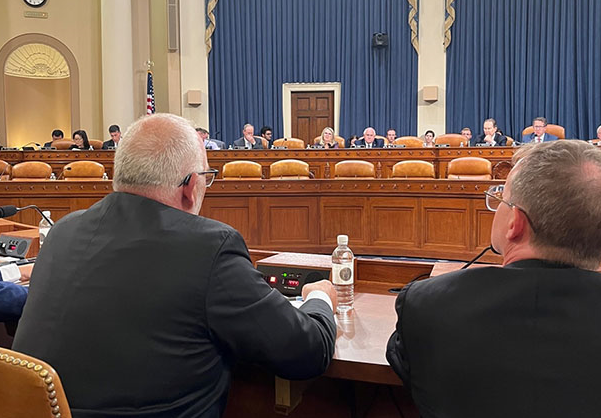
What happened: NPPC this week urged congressional lawmakers to renew the U.S. Generalized System of Preferences (GSP) program, which expired at the end of 2020. Testifying on behalf of NPPC, Randy Spronk, a Minnesota pork producer and NPPC past president, told the House Committee on Ways and Means Trade Subcommittee that pork producers support GSP because it helps developing countries grow their economies, climb out of poverty, and, eventually, become export markets for U.S. pork. The program has also been used as a trade enforcement tool, giving U.S. trade negotiators leverage to address market access issues.
Why it's important: GSP provides duty-free treatment of goods exported to the United States from beneficiary developing countries. In turn, GSP-eligible countries are required to meet certain statutory criteria set by Congress, including market access for U.S. goods. Should countries fail to meet those requirements, the United States can withdraw GSP benefits.
In 2017, GSP was successfully used to obtain market access for U.S. pork producers in India, which at the time was the number one recipient of preferential GSP trade benefits, despite restricting or prohibiting the importation of many U.S. agricultural products, including pork. When Argentina was considered for the GSP program in 2018, the U.S. Department of Agriculture used that leverage to finalize an export certificate for U.S. pork with the South American country.
NPPC's take: NPPC supports the renewal of GSP, as it is a valuable program that gives U.S. trade negotiators another tool to persuade countries to eliminate trade restrictions on U.S. products, including pork.
NPPC also supports adding to the program stronger enforcement mechanisms that can help prompt countries to meet their GSP obligations.
Click here to watch the full hearing.
Well, here's a darn tough but relevant question in today's economy: Just how do you change the world?
And here's the answer: You pick one ailing industry that you know embodies America's spirit and values; then you convene a small group of dedicated participants in that industry who can develop a solution to reinvigorate their industry; and then you encourage that small group of dedicated industry participants to fight legally and ethically to achieve that solution.
So now I've just described for you the U.S. sheep industry, which is out to change the world.
You see, the U.S. sheep industry, an industry representing the economic cornerstones of rural communities across America, has been decimated. Today 74% of the lamb meat in the domestic market comes from foreign countries. That means that what's left of America's sheep industry is maintaining only 26% of its domestic market. In just the past few decades it's lost 62% of its sheep and lamb inventories, 60% of its full-time sheep producers, and the packing plants that manufacture lamb are operating at an estimated one-third to one-half capacity.
How did this happen?
Well, here's a little history. The United States has historically protected its domestic sheep industry from global market distortions through the use of tariffs. These tariffs were put in place in 1890, 1921, and 1922, and then were increased under the Tariff Act of 1930. Back then, the tariffs were $3 per head for imported live sheep and seven cents per pound for lamb. But that was the last increase, meaning there haven't been any adjustments for inflation for nearly 100 years.
When those seemingly low tariffs were applied back then, the U.S. sheep industry flourished, supporting hospitals, Main Street businesses, places of worship, schools, and the social infrastructure of rural America.
By 1942, while protected from global market distortions, the inventory of sheep and lambs in America reached 56 million. That inventory is only 5 million today!
And that's because there's been no adjustments for inflation, rendering those 1930 tariffs immaterial today. Consequently, and aided by global market distortions such as weaker foreign production standards, global meatpacker concentration, and a huge disparity in monetary exchange rates, the domestic lamb market has been overrun with cheaper, substandard imports.
If Congress had adjusted those 1930 tariffs for inflation, the $3 per head tariff on live sheep would be $53 per head today and the seven cents per pound on lamb meat would be $1.25 per pound. But they're not! Because they haven't been updated, the tariffs intended to protect the domestic sheep industry against global market distortions have done nothing to prevent the U.S. sheep industry from becoming the first livestock sector in America to fall completely to competition by imports.
In fact, it's already the first livestock sector in America to be outsourced as American consumers now depend on foreign supply chains for the vast majority of their protein needs satisfied by lamb.
To change their world, in other words to make their world better for themselves and their children, a group of dedicated U.S. sheep producers have developed a solution.
Their solution is to update the nearly 100-year-old tariffs by adjusting them for inflation. And then, because their industry has been so overrun with imports, to enact a tariff rate quota system that limits the amount of foreign lamb entering the United States. By doing this, the domestic industry will be given the space it needs to begin recapturing more of its domestic market and it will do so while the updated tariffs help to neutralize the global market distortions.
They're not asking for the moon. They're simply asking for the same type of treatment that currently protects our domestic peanut and peanut butter industries, our domestic sugar industry, and a host of others.
This dedicated group of sheep industry participants is using every legal and ethical means to fight to change their world.
They've filed a petition with United States Trade Ambassador Katherine Tai seeking an investigation to determine their eligibility for one of the trade remedies available under the Trade Act of 1974.
And they're simultaneously drafting congressional legislation that would update the 1930 tariffs and establish a permanent tariff rate quota system to effectively level the domestic sheep industry's playing field.
They're also asking their respective county commissioners to pass resolutions urging their entire congressional delegation to support the sheep industry's effort to begin managing the out-of-control imports that are destroying their industry. So, do you want to be a part of changing the world? To help or to just learn more, go to www.ProtectAmericanLamb.com.

As the trend toward carbon emissions reduction continues, American farmers are being presented with a new opportunity. By adopting certain climate-smart agriculture practices, farmers can not only help protect the environment and reduce operating costs, but also create a new income stream by selling carbon offset credits on a carbon market.
What is a carbon market? To put it simply, when a company avoids, reduces or captures more carbon than it creates, that company creates carbon offsets. Those offsets are valuable to other companies that are unable to reach carbon neutrality. A carbon market facilitates the sale of carbon offsets by those who have them to those who need them.
Some industries are well-positioned to create carbon offsets. Agriculture is one of them, particularly when it comes to crop farming.
"Through photosynthesis, plants produce oxygen and consume carbon dioxide," said Ben Smith, Principal Advisor - Business Development & Market Validation at Kubota North America. "Finding ways to harness the power of the plant is a real opportunity."
There is already real opportunity for American farmers to participate in carbon markets.
One example is Carbon by Indigo. As of mid-September 2022, this program had more than 2,000 farmers and 5 million acres enrolled, helping generate roughly 20,000 carbon credits at a minimum of $20 per credit. Program data shows that, on average, farmers are estimated to generate 0.1 to 0.4 credits per acre in the first year, with increased credit production over time.
Another example is one administered by Truterra, a Land O'Lakes subsidiary. According to the company, its program paid $4 million to farmers for 200,000 metric tons of carbon in 2021. Payments ranged from an average of $20,000 to as high as $100,000.
Trimble has been helping farmers navigate carbon markets in Canada for roughly 15 years. "This type of thing is still very new in the U.S., though," said Darryl Matthews, the company's senior vice president of natural resources.
Trimble works with agriculture protocols that help farmers reduce their carbon footprint. Through a carbon exchange component in its software, Trimble gathers the necessary data to certify that a farmer has followed a protocol correctly, creating a certain number of carbon credits based on acreage and other factors. Trimble aggregates those credits and sells them on a carbon exchange, ultimately creating an income stream that Trimble pays back to the farmer. To date, Trimble has paid out more than $50 million to farmers.
HOW CARBON SEQUESTRATION IS PUT INTO PRACTICE
Generally speaking, Smith said a farmer must adopt at least one farming practice change in order to participate in a carbon market.
"A commonly recommended practice is the shift to no-till," he continued. "A lot of that has to do with the fact that when you till soil, you start to release methane from the plants that are breaking down beneath the soil."
While no-till is arguably the most recommended practice, Smith is among those who do not envision wholesale adoption throughout the industry. It all hinges on the soil. "Certain soil structures are conducive to no-till farming while others are not," Smith added.
A more unique, somewhat experimental practice has its roots in regenerative agriculture. Rather than plant a single crop across long spans of field, work is being done on planting multiple species. For example, would it be advantageous to plant wide-row corn with soybeans in between?
"It comes down to maximization of solar radiation, coupled with the objective of being healthy to the soil," Smith explained. "We've already moved from a monoculture approach to where we understand the healthy balance of a crop rotation. The objective is to allow that soil to regenerate. If you can get to a point where you can manage multiple species at the same time, you're accelerating the benefits of a typical crop rotation."
While the agronomic benefits of something like that are compelling, Smith adds that the practice would also be quite disruptive and, thus, is a bit ahead of its time. In the near term, there are already numerous climate-smart practices that can help reduce a farmer's carbon footprint.
"Look to the approved conservation practices authorized by the USDA's Natural Resources Conservation Service (NRCS)," said Nate Birt, Vice President of Farm Journal's Trust In Food Division. Approved practices include:
In the area of nutrient management, Trimble has begun piloting a voluntary Nitrous Oxide Emission Reduction Protocol. Using techniques such as slow-release nitrogen fertilizer, variable-rate application and timing the application with the right amount of nitrogen, a farmer benefits from improved nitrogen efficiency. "By following this protocol, the farmer can significantly reduce the amount of nitrous oxide released into the atmosphere," Matthews pointed out.
"You can write a prescription in our software to tell the equipment what to do," added Darren Howie, Director of Carbon & Sustainability for Trimble Agriculture Enterprise Solutions. "That creates the documentation that a certain fertilizer went on a certain field at a certain rate and time."
HELPING FARMERS BALANCE CARBON MARKET RISK WITH REWARD
Birt said the decision to make any climate-smart practice change is complex. Farmers must understand the potential risks and rewards, as well as the requirements of individual carbon markets.
"Because they are so new, farmers are telling us they're taking a step back to do their due diligence before taking a step forward," Birt said. "There is a ton of opportunity and enthusiasm, but it can also be difficult to determine what the first step should be. That's why a farmer should surround him or herself with trusted advisors. Together they can determine which practices make the most sense for their operation."
Smith said that, above all else, a farmer needs to think about any potential yield drag that could result from a farming practice change. Take no-till, for instance. There will be a cost savings from not having to make all of those field passes. How might those savings compare to any anticipated yield drag over the first year or two?
Howie said any carbon credit-generating ag practice has to be good for not only the environment, but also the soil and farmer's bottom line. When those three factors are working harmoniously, climate-friendly ag practices and technologies should see a surge in adoption.
"You will never find carbon credits incentivizing a practice that isn't already profitable for a farm," he continued. There isn't enough money in carbon credits to allow them to stand on their own as a profitable income stream. In other words, the farmer has to embrace a practice because it is good agronomics and economics.
Good data helps farmers make good decisions. Easily accessible data helps farmers begin taking a look at carbon market participation.
In the case of Trimble, "Farmers must provide the 'as-applied data' off of the machine as an audit trail," Matthews explained. This is done through the Trimble software. Matthews said an agronomist or other advisor typically assists the farmer with this step. The data is pulled off of the machine and into a report. Trimble submits the report to a third party as part of the evidence for the carbon credit. Once it is verified that the protocol has been followed correctly and is actually improving a farming practice, the carbon credits are created for sale on a carbon market.
"Farmers will participate in carbon markets, but it has to be seamless," Matthews said. "The biggest concern is the amount of paperwork and intensity of the audit process. It all comes back to data, and the data has to be made easier for the farmer to generate and access."
According to Smith, voluntary carbon markets represent the ideal scenario for American farmers, as opposed to forced participation through regulation. Then, when and if a given farmer decides to opt into a program, that farmer is going to need some guidance in order to capitalize.
"It's really a matter of time and timing," Smith said. "It's often easier for a farmer to rely on experiential knowledge than data. The easier this is for a farmer to participate in, the easier it is to adopt. The early adopters will take the time to gather the years' worth of data required to participate. But for the majority of the market, it's going to have to be really easy. I think you'll see a number of companies working hard to make it easier. There will also need to be some breakthroughs with sensors, as well as additional work to make carbon markets easier to participate in."
According to Birt, AEM members are in an excellent position to serve their farmer customers as trusted advisors.
"Farmers will be adding new equipment and technology in the future to become as efficient and sustainable as possible," he added. "AEM members can help farmers understand the spectrum of options that exist—options that will help farmers maintain relevance in the marketplace by being more efficient, capturing data, and connecting with companies that want to buy carbon credits."
About the Association of Equipment Manufacturers (AEM)
AEM is the North America-based international trade group representing off-road equipment manufacturers and suppliers with more than 1,000 companies and more than 200 product lines in the agriculture and construction-related industry sectors worldwide. The equipment manufacturing industry in the United States supports 2.3 million jobs and contributes roughly $316 billion to the economy every year.
Renee Howard from Headrick, OK in Jackson County, placed first in the White Bread Category of the Senior Division at the State "Best of Wheat" Bread Baking contest held on September 24th at the Oklahoma State Fair. Her light fluffy, fine textured entry with sizeable loaf volume of "White Bread" topped the Senior division also winning her the title of Grand Champion with her entry.
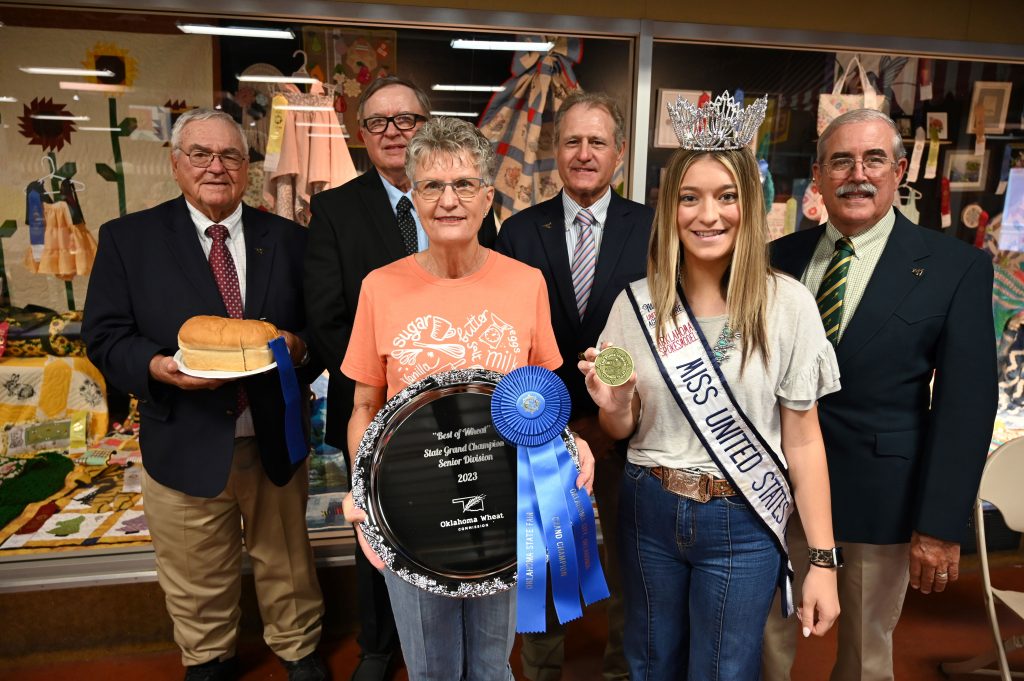
Tayler Spray from Sharon, OK in Woodward County, placed first in the Other Wheat Breads Category of the Junior Division at the State "Best of Wheat" Bread Baking contest. Her entry of "Tayler's Punch Veggie Bread" had a beautiful display of Focaccia bread art, that also had an exquisite flavor and perfect bake consistency. This allowed her loaf to be tapped in the final round of competition giving her the title of the Junior division Grand Champion with her entry.
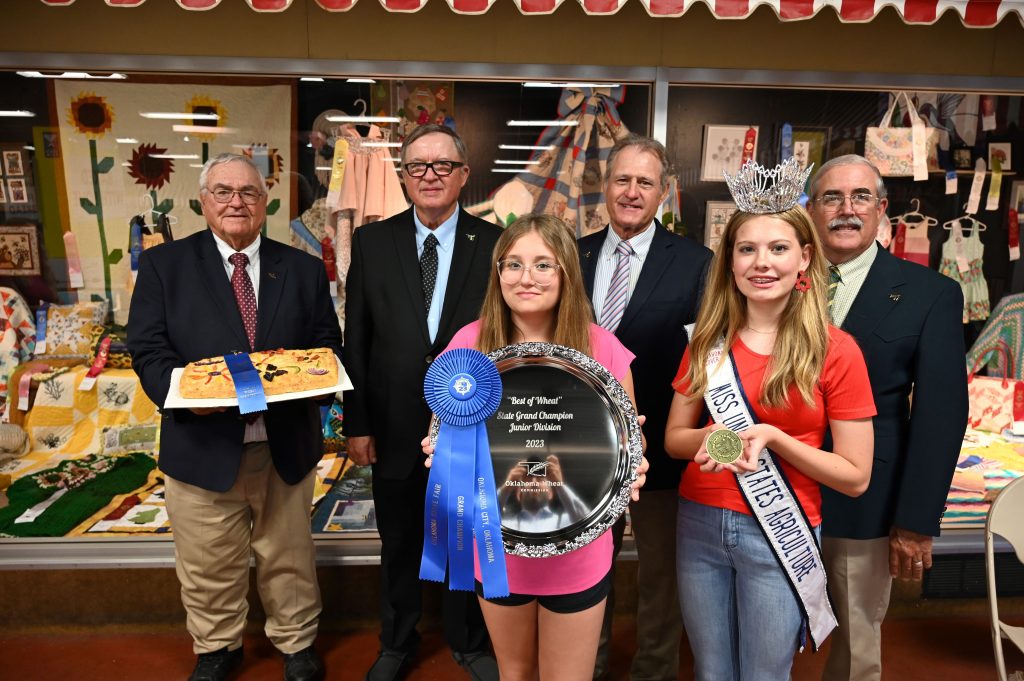
The contest is an annual event sponsored by the Oklahoma Wheat Commission and Oklahoma State Fair. "We had 98 entries from 44 counties this year, all champion or reserve champion winners in the county contests," said David Gammill, Chairman of the Oklahoma Wheat Commission. "We had great attendance and always enjoy the opportunity to award the top bread bakers in the state."
The contest consists of 12 classes, 6 in the senior division and 6 in the junior division. State Champions in the Senior division include: Renee Howard, Jackson County, white bread; Priscilla Miller, Payne County, whole wheat breads; Courtnie Robinson, Love County, dinner rolls; Glen Simonsen, Murray County, other wheat breads; Mary Ellen Wooderson, Kay County, sweet breads and Melody Thorn, Woodward County, bread machine.
State Champions in the Junior division include: Alexandra Howard, Jackson County, white bread; Makayla Jones, Oklahoma County, dinner rolls; Tayler Spray, Woodward County, other wheat breads; Kendallyn Gossen, Washita County, sweet breads; Korben Gossen, Washita County, specialty shape breads and Ridge Spray, Woodward County, bread machine. A cookbook with the top 5 recipes of every class from the Best of Wheat competition will be available on-line January 2023 at the Oklahoma Wheat Commission website- available here.
The complete set of Senior and Junior placings are in the PDF files seen below
The Oklahoma Wheat Commission is funded by Oklahoma wheat producers and promotes greater utilization of wheat in both domestic and international markets through research, market development and public education. Five wheat producers representing designated districts across the state serve as the Oklahoma Wheat Commission's board of directors. Current officers are David Gammill, Chairman, Chattanooga; Don Schieber, Vice-Chairman, Ponca City; Raymond Parrish, Secretary-Treasurer, Hunter; Jerry Wiebe, member, Hooker and Michael Peters, member, Okarche.
OYE President Tyler Norvell, 2023 Ag Woman of the Year Holly Carroll and Diamond Hats President Darla Reuter at the 2023 Diamond Hats Gala
Over five hundred supporters of Oklahoma's 4-H and FFA Programs gathered at the 2023 Diamond Hats Gala at the National Cowboy Museum and Western Heritage Center to raise money that the ladies will use to support exhibitors next March at the 2024 Oklahoma Youth Expo. The outcome of the evening was a record fundraising effort- with $287,000 announced as being raised from the Gala.
In and around the fund raising efforts that are a part of the evening- Darla Reuter announced that the 2023 Ag Woman of the year is Holly Carroll who lives with her husband Chris in Cashion. Hailing from a beef and tobacco farm in Central Kentucky, Carroll was active in both 4-H and then FFA. She served as the Kentucky State FFA President and then was later honored by the organization she loved with the Honorary American FFA Degree in 2022.
She received a degree in Ag Education at Western Kentucky University and became a trailblazer in her home state- teaching at one of the pioneering middle school programs in the United States.
As fate would have it, Holly met her husband to be Chris at the National FFA Center in 2009- leading to a move to Oklahoma. Once arriving in the state- she landed a position with the Oklahoma Farm Bureau- taking different roles since joining the OKFB, including the Director of Membership. Vice President of Field Services and Young Farmers and Ranchers Coordinator.
Presently, she holds the position of Director of the Oklahoma Farm Bureau Foundation for Agriculture. In this capacity, she not only supports farmers and ranchers but also bridges the gap between those who produce food and the end user, the consumer as she helps foster greater awareness of agricultural production.
Holly's active involvement in Diamond Hats and her key role in the annual Oklahoma Women in Ag Conference demonstrate her commitment to empowering women in agriculture.
From Guest Authors,
Bryan Rutter, PhD student and Soil Testing Lab Manager, Kansas State University
Dr. Dorivar Ruiz Diaz, Soil Fertility Specialist, Kansas State University
The accuracy of a soil test is limited, in part, by the quality of the tested sample. For this reason, strong emphasis is placed on ensuring representative samples are collected in the field. However, these samples must also be handled properly after they have been collected.
Soils are home to a diverse population of microorganisms, many of which help decompose crop residue and cycle nutrients in soils. This nutrient cycling is crucial for crop production, but can skew soil test results if it continues in soil samples after they have been collected.
Microorganisms drive the soil nitrogen cycle
The nitrogen (N) cycle in soils is particularly complex and is strongly influenced by microbial activity and, therefore, temperature and soil moisture conditions. Bacteria and fungi consume organic material and use carbon as an energy source. During this process, N contained in the organic matter undergoes several transformations, ultimately converting it to ammonia. This conversion from organic-N to inorganic-N (NH4+, ammonium) is called "mineralization." Plants can then take up the ammonium (NH4+), or converted to nitrate (NO3–) by certain bacteria through a process known as "nitrification".
The microbial activity requires moisture and heat, and the processes described above happen more quickly in warm, wet soils than in cold, dry soils. Microbial activity does not stop just because a sample has been collected and put in a bag. This activity continues as long as the environmental conditions are favorable. As a result, soil tests for plant-available N have the potential to change substantially if samples are not handled properly. This is an important consideration for growers because these soil test results are used to determine the profile-N credit and, ultimately, adjust N fertilizer recommendations.
Research study on soil sample storage
A recent study at the K-State Soil Testing Lab illustrates what can happen if sample submission is delayed. For this study, soil was collected from the Agronomy North Farm (Manhattan, KS) and thoroughly mixed/sieved to homogenize the material. This soil was then placed into sample bags, which were randomly assigned to different combinations of storage temperature and duration. One set of samples was kept in a refrigerator while the other set was kept in a cargo box in a truck bed. To monitor changes in soil test levels over time, three sample bags were removed from the refrigerator and truck box every two days (48 hours) and tested in the lab.

Figure 1. Change in soil test nitrogen parameters over a 14-day storage period. Samples stored in an unrefrigerated cargo box are indicated by purple points. Samples stored in a refrigerator (38F) are indicated by grey points. Graphs by Bryan Rutter, K-State Research and Extension.

Take home points from the K-State Soil Testing Lab study:
K-State Soil Testing Lab Recommendations
Please see the accompanying article "The challenge of collecting a representative soil sample" for guidance on field soil sampling practices.
For detailed instructions on submitting soil samples to the K-State Soil Testing Lab, please see the accompanying article "Fall soil sampling: Sample collection and submission to K-State Soil Testing Lab".
For detailed information on how N credits are calculated please see the MF-2586 fact sheet: "Soil Test Interpretations and Fertilizers Recommendations".
Bryan Rutter, PhD student and Soil Testing Lab Manager
rutter@ksu.edu
Dorivar Ruiz Diaz, Soil Fertility Specialist
ruizdiaz@ksu.edu
The original article can be found on the KSU Agronomy E-update site
https://eupdate.agronomy.ksu.edu/article_new/soil-sample-handling-practices-can-affect-soil-nitrate-test-accuracy-511-4
The 2023 Oklahoma Cattlemen's Foundation Women's Seminar, titled "Confidence Meets Purpose," took place on September 21 in Stillwater, Okla. Following the event, Associate Farm Editor Reagan Calk caught up with OCF Executive Director Mariah Reimer about highlights from the seminar.
A diverse group of women attended the seminar, Reimer said, and had the chance to come together to build up their confidence, make connections and find their purpose.
A group of dynamic speakers, including auctioneer and motivational speaker Joni Nash, Emerge Consulting founder Amie Haar, OSU women's basketball head coach Jacie Hoyt, and Callison Ranch owner Nikki Callison, offered unique and inspiring messages to seminar attendees.
"They all bring something different to the table, and they all touched on that confidence meets purpose, how to do that, and how to go about it very strategically," Reimer said. "Something that is different about them is their perspectives, their stories, and what they bring to it."
Regardless of career, age, or place in time, Reimer said attendees left the seminar knowing they have a purpose that matters.
Updates were also presented by OCF chair Kelli Payne, Farm Credit Association marketing specialist Chancey Hanson, Oklahoma secretary of agriculture Blayne Arthur, OCA executive vice president Michael Kelsey, Oklahoma CattleWomen president Connie Tabor, and Hugh Aljoe with the Noble Research Institute.
Aside from listening to some great speakers, attendees also had access to a delicious coffee bar, a custom hat bar, and left with goodie bags from The Vinedresser Boutique. At the event, there was also a complimentary headshot booth.
"We are hoping every year we will have an annual seminar," Reimer said. "We really want to hone in on those issues, but we also want to be fun and creative about it. The younger generations, as they come up, we have got to engage them and pull them in. This is a terrific way to do it across all audience types and backgrounds."
Each week, Beltway Beef brings you the latest policy news affecting the U.S. cattle and beef industry. Hear from subject-matter experts, producers, and industry leaders on the topics that impact the business viability of farms and ranches across the country.
As climate discussions in New York City wrap up, NCBA's Chief Counsel Mary-Thomas Hart joins Beltway Beef to provide an update on the cattle industry's sustainability. Hart analyzes some key sustainability metrics that show the industry's continued improvement, and she explains how raising cattle provides essential ecosystem services, like maintaining greenspace, healthy soil, and healthy grasses. Hart also provides information on why beef is a sustainable choice for consumers.
Pleasant Valley Farms in Sand Springs, Oklahoma.
As the fall season makes its way in, Associate Farm Editor, Reagan Calk, caught up with the Agritourism and Farmers Market Coordinator at the Oklahoma Department of Ag, Micaela Halverson, to talk about pumpkin patches and mazes across the state.
"At Oklahoma Agritourism, we are promoting all of the pumpkin patches and mazes in the state," Halverson said.
This year, Halverson said there will be around 40 pumpkin patches and mazes open for visitors to check out.
"You can find all of our farms and ranches, but specifically pumpkin patches and mazes, at oklahomaagritourism.com, and you can search by region, you can search by different activity that you are looking for, and find all of their information in one place on our website," Halverson said.
Halverson added that Oklahoma Agritourism is also active on social media on Facebook and Instagram.
"We like to repost each farm's activities and things they are sharing on social media so that you can see pictures and the different activities, and where they are located in the state," Halverson said.
Aside from pumpkin patches and mazes, Halverson said many of these locations also offer activities such as a petting farm, wagon rides, food stands, and more.
See opening dates below!
SOUTHWEST
NORTHWEST
SOUTH CENTRAL
CENTRAL
SOUTHEAST
NORTHEAST
The U.S. Department of Agriculture is extending the deadline for the Discrimination Financial Assistance Program to January 13, 2024, to give eligible farmers, ranchers and forest landowners more time to apply for assistance. The original deadline was October 31, 2023.
This deadline extension is responsive to feedback from potential applicants, nongovernmental program administrators and community-based organizations working closely with USDA to inform and assist eligible individuals. The new deadline will allow more time to reach and help farmers, ranchers and forest landowners through direct, no-cost technical assistance and training sessions. The extension will also ensure everyone has adequate time to apply, including producers whose harvest season falls during the original application period.
"USDA knows it must earn the trust of the farmers, ranchers and forest landowners who are eligible for this program. That makes transparency in the administration of the Discrimination Financial Assistance Program crucial," said Agriculture Secretary Tom Vilsack. "In that spirit, after receiving feedback from organizations that have been supporting producers throughout the application process, we have made the decision to extend the deadline. We believe this is the appropriate action to take to ensure all eligible individuals wishing to apply are adequately informed about the program and have the opportunity to receive any necessary assistance."
Since the opening of the financial assistance application process on July 7, the Discrimination Financial Assistance Program team has embarked on a nationwide outreach campaign and quickly opened 30 local offices across 26 states. Regional administrators have held well over 600 virtual and in-person events across the country. Cooperators have also held dozens of virtual and in-person events to complement these efforts while also educating their specific networks. Advertising on digital, print and radio channels targeting potentially eligible individuals and rural communities has also been deployed. These efforts have successfully allowed program staff to reach many potential applicants and will be further increased with the new, extended deadline.
This program delivers on Section 22007 of the Inflation Reduction Act, which provides financial assistance for farmers, ranchers and forest landowners who experienced discrimination in USDA farm lending programs prior to January 2021. Congress provided a total of $2.2 billion for this program. The amount of money awarded to individuals through this program will depend on the number of eligible applicants and the consequences of the discrimination. Eligible individuals have the option to apply online or by submitting paper-based forms via mail or in-person delivery to local program offices. Applicants are not required to retain an attorney and should take precautions to protect themselves from potential scams.
In addition to the application deadline change, the deadline to request records from USDA's Farm Service Agency for use in applications has been extended to Friday, Nov. 3, 2023. The application process was designed so that FSA records are not required, though relevant records may be attached to an application as additional evidence if they are available.
To learn more about the Discrimination Financial Assistance Program or receive assistance in English or Spanish, visit www.22007apply.gov, email info@22007apply.gov or contact the national call center at 1-800-721-0970 from 8 a.m. ET to 8 p.m. PT, every day except federal holidays. If you use sign language to communicate, you can use the 711 relay service to call. You may also email or contact the national call center if you have a disability and need another accommodation. Information about the program, resources, recent office openings and local events across the country is also available through a weekly e-newsletter.
USDA's commitment to equity spans the Department's mission areas and agencies. We are actively working to build a USDA that ensures none of our customers are ignored or left behind. The Discrimination Financial Assistance Program is just one of many programs helping USDA rebuild trust, address systemic issues and improve service to people who may have been underserved by USDA in the past. To learn more about USDA's equity work and resources, visit www.usda.gov/equity.
USDA touches the lives of all Americans each day in so many positive ways. Under the Biden-Harris Administration, USDA is transforming America's food system with a greater focus on more resilient local and regional food production, fairer markets for all producers, ensuring access to safe, healthy and nutritious food in all communities, building new markets and streams of income for farmers and producers using climate-smart food and forestry practices, making historic investments in infrastructure and clean energy capabilities in rural America, and committing to equity across the Department by removing systemic barriers and building a workforce more representative of America. To learn more, visit www.usda.gov.
KC Sheperd, Farm Director, is back talking with Bob Rodenberger, a partner with Stockman Oklahoma Livestock Marketing, as he gives the latest on the cattle markets.
The market stayed steady this week, Rodenberger said, and even improved in some places.
"We are starting to see a little bit of a lull on the calves," Rodenberger said. "It is not cheaper; it is just that the demand is not near as aggressive as it was two weeks ago."
This is nothing new, Rodenberger said, as producers are getting ready to get back into the field.
"Our run at Apache was pretty well normal to what it was a year ago," Rodenberger said. "I think everybody kind of stayed consistent."
Rodenberger said the demand for feeder cattle is great, and this demand will last until the consumer cannot afford the current prices.
"The herd expansion has not even begun to start," Rodenberger said.
Oklahoma State University is one of several southern land-grant universities improving turfgrass conditions to keep athletes safer this football season. (Photo by Todd Johnson, OSU Agriculture)
By Denise Attaway of Clemson University
As the whistle blows, referees across the nation are signaling teams to take the field. From elite college football players to children in pre-school and elementary soccer leagues, athletes of all skill levels are busy running, kicking and throwing across a variety of surfaces.
Athletes face the risk of injury when their bodies make contact with the ground. For this reason, researchers at southern region land-grant institutions are improving turfgrass conditions to keep athletes safer. They are also studying how to minimize the negative environmental impacts of maintenance practices used on the surfaces.
Research projects in the southern U.S., range from developing different varieties of turfgrasses to studying the underlayment and construction of stadium and community soccer fields, golf courses, home lawns and more.
Oklahoma State University
Researchers at Oklahoma State University have developed and commercialized 10 turfgrass varieties with two more varieties expected to be released soon. The university's most recently released bermudagrass variety, Tahoma 31, can be found on golf courses, football fields and soccer complexes nationwide, as well as in the stadiums and/or practice fields of the Philadelphia Eagles, the Washington Commanders, the Baltimore Ravens and the Chicago Bears.
Todd Tribble, athletic field superintendent at OSU, learned about turfgrass management as a Clemson University student studying under the tutelage of Lambert McCarty of Clemson University. Although the distance between the two universities is about 1,000 miles, Tribble said the knowledge he gained while studying at Clemson directly correlates to his turfgrass role at OSU.
"Both universities are in USDA Plant Hardiness Zone 7," Tribble said. "So, the grasses we grow here are the same type of grasses grown at Clemson. Most day-to-day management tasks are very similar. The only real difference is the amount of winterkill we see on bermudagrass here because our winters can sometimes be quite severe."
Clemson University and North Carolina State University
Researchers at Clemson University in South Carolina and North Carolina State University in Raleigh have written a playbook for managing sports fields. Best Management Practices for Carolina Sport Fields, written by Lambert "Bert" McCarty at Clemson and Grady Miller at North Carolina State, contains research-based information and serves as a reference guide for sports field managers and students, as well as regulatory agencies worldwide.
"Information included in this book is the most current available and includes traditional and recent agronomic trends necessary to provide desirable yet safe playing conditions," McCarty said. "This information applies to natural grass fields as well as synthetic (turf) fields. It pertains to most fields and budgets, from professional to local parks and recreation fields, including football, soccer, baseball, softball, lacrosse and rugby."
Large patches of diseased grass or discoloration from nutrient issues present an opportunity to provide guidance to turfgrass managers.
This is where Miller's expertise comes in. As a distinguished professor of sustainability and an Extension turfgrass management specialist at North Carolina State, Miller's research focuses on several areas, including irrigation practices and turfgrass nutrition.
"Irrigation normally is just needed to supplement rainfall since the southern region of the U.S. usually gets adequate total rainfall amounts to meet the needs of turfgrass," Miller said. "However, there are times when rainfall frequency or distribution can result in drought-stressed turfgrasses."
This can be especially problematic in areas with sandy soils with low water-holding capacity.
"Periods of high heat can hasten water loss from plant surfaces," Miller said. "So, states with both sandy soils and high evaporative rates rely heavily on irrigation for consistent turfgrass health. A soil with a greater percentage of clay will have a greater capacity to hold water, so that irrigation may not play as critical a role in maintaining turfgrass health."
University of Tennessee
At the University of Tennessee Institute of Agriculture, researchers for the UT Center for Athletic Field Safety compare natural grass-playing surfaces to synthetic surfaces with the goal of improving athletic performance and reducing athlete injuries.
Distinguished professor of plant sciences John Sorochan, the center's director, also serves as a consultant to the NFL Players Association, the International Federation of Association Football (FIFA) and other groups associated with turf venues and their management. Sorochan has been selected to oversee a massive research and installation project for the 2026 FIFA World Cup, which has expanded to include 48 teams playing at 16 venues across Canada, Mexico and the U.S.
Sorochan and the UT turfgrass team also research how different balls bounce when they land on different grasses and have designed a device to test the stress involved when different-sized shoes perform on different turfs.
University of Georgia
University of Georgia turf research program scientists are taking turfgrass information to a new level by providing information to Spanish-speaking audiences abroad. Led by Alfredo Martinez-Espinoza, a professor in UGA's College of Agricultural and Environmental Sciences and a UGA Cooperative Extension Service plant pathologist, members of the UGA Turf Team were recently invited to develop a training and certification program to support the field managers of Mexico's premier soccer leagues as they prepare for the 2026 FIFA World Cup.
"Our jobs are to filter through all the problems presented to us and pinpoint research-based, actionable solutions that can be taught so our clients are competent and prepared as a result of working with us," Martinez-Espinoza said.
So, whether it's a professional athlete or a student-athlete blazing across a field, turfgrass scientists at land-grant institutions are advancing the aesthetic appeal and performance of turfgrasses to ensure they meet the highest standards. From community parks and front yards to NFL and World Cup fields, the safety, economic and social benefits of sports fields are enhanced by fundamental turfgrass research and development at land-grant institutions.
Clemson University, North Carolina State University, Oklahoma State University, University of Tennessee and University of Georgia are part of a system of 15 agricultural research centers at land-grant universities in the southern U.S. where scientists collaborate to conduct research and outreach focused on conserving the region's natural resources and sustainably feeding a growing global population.
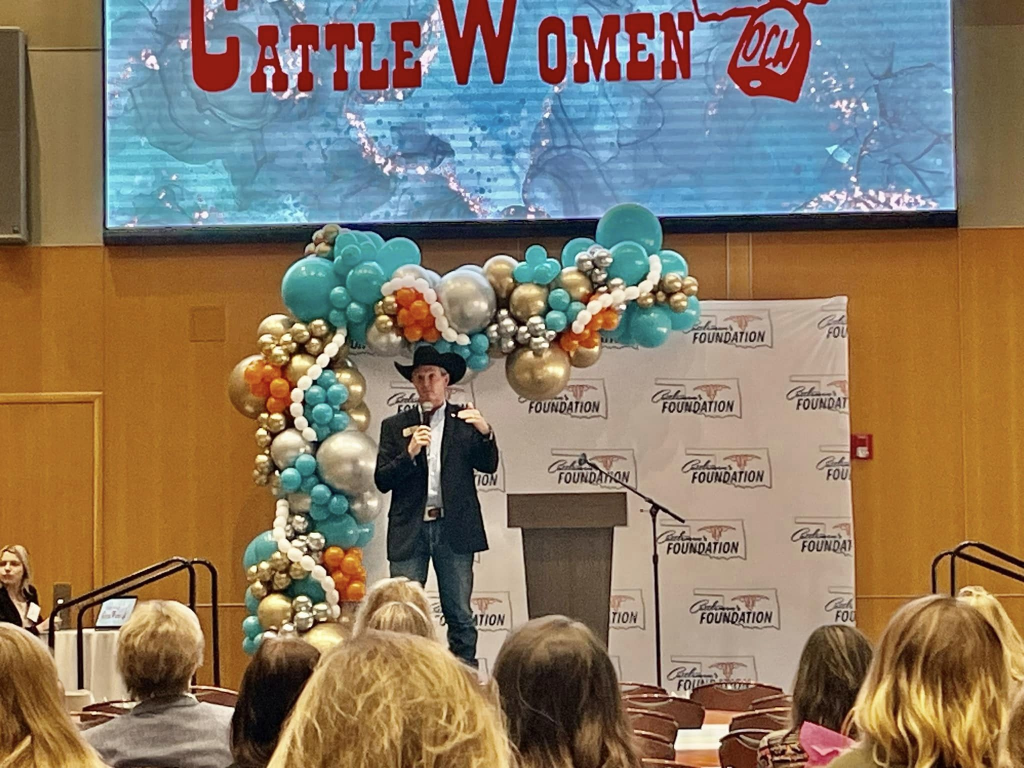
Senior Farm and Ranch Broadcaster Ron Hays is featuring comments from Associate Farm Editor Reagan Calk's visit with the Executive Vice President of the Oklahoma Cattlemen's Association, Michael Kelsey.
Kelsey gives an update on the latest work in Washington D.C. during the Oklahoma State Chamber of Commerce Fly-In, and more.
Kelsey said that one of the issues talked about at the fly-in was black vulture regulations in the Migratory Bird Act.
"There is a House Bill that would allow for more taking of those birds," Kelsey said. "Right now, there is a permit that allows you to take five over a year. When you are in a calving season and you run out there and there are 30 birds, circling in the heifer pen, taking five is just not going to work."
The Environmental Protection Agency has also issued a new decision regarding pesticide application that Kelsey said will have a big impact on the eastern side of the state.
"This new restriction is relative to the Endangered Species Act and so it hits things like the American burying beetle and some other smaller species...what it would do is it would drastically prohibit the pesticide uses...," Kelsey said.
The OFF Act is also a big issue, Kelsey said, as it poses a threat to the Beef Checkoff.
"We want to make sure we defeat that because the Beef Checkoff does such a great job promoting our product and defending our product on a daily basis," Kelsey said.
As the Tulsa State Fair is coming up, Kelsey said fair attendees are encouraged to visit with OCA staff and volunteers at the OCA Beef Tent and enjoy a ribeye steak sandwich.
"We are coming up on 40 years of the beef tent at the Tulsa State Fair," Kelsey said. "What this allows us to do is present a great beef package. We use a ribeye steak sandwich to fairgoers. It gives us an opportunity to highlight our product and what we do."
Kelsey said that the Tulsa State Fair is a great opportunity to showcase the beef product, as many visitors attend the fair because of the many food options.
"Here we are right in the middle of the state fair offering a ribeye steak sandwich, which is one of the most nutritious, healthy, tastiest products you can get for an extremely affordable price as compared to the other options out of the state fair," Kelsey said.
Coming up, Kelsey said the OCA will be hosting Fall Gatherings across the state of Oklahoma.
"We are going to have nine gatherings across the state of Oklahoma this year," Kelsey said.
While OCA members are encouraged to attend, Kelsey said the meetings are open to any cattle producers or land owners. A free dinner is also provided at the Fall Gatherings, Kelsey added.
Membership is emphasized, Kelsey said, because it gives cattle producers across the state a voice at the State Capitol and in Washington, D.C.
"When I am doing my lobbying work down at the State Capitol, it is really easy to lose touch with what is going on out in the real world," Kelsey said. "Whether it be drought-related, cattle-related, or any of those types of things. This gives us a grand opportunity to go to the countryside and say, 'You don't have to drive very far; come tell us what is on your mind, what is important, and let's talk about those issues and tackle them together.'"
The dates for the Fall Gatherings will be publicized in the latest editions of Cowman Magazine and in the calendar section of the OCA website, https://www.okcattlemen.org/.
The Beef Buzz is a regular feature heard on radio stations around the region on the Radio Oklahoma Ag Network and is a regular audio feature found on this website as well. Click on the LISTEN BAR at the top of the story for today's show and check out our archives for older Beef Buzz shows covering the gamut of the beef cattle industry today.
The Organization for Competitive Markets, Competitive Markets Action, National Dairy Producers Organization, Alabama Contract Poultry Growers Association, American Grassfed Association, and Others Engage in Nearly 100 Meetings on Capitol Hill this Week.
As the current Farm Bill expiration date approaches Sept. 30, and Congress continues to stall in advancing a new one, American family farmers and ranchers, who have a direct stake in the outcome, mobilized to Washington D.C. Sept. 17-22 to assert their position on key bills during their second Farm Bill summit in two months. The Organization for Competitive Markets (OCM), Competitive Markets Action (CMA), and members of the Alabama Contract Poultry Growers Association, Kansas Cattlemen's Association, National Dairy Producers Organization, American Grassfed Association, and others, rallied in our Nation's Capital in nearly 100 meetings this week.
The groups voiced their strong opposition to the so-called Ending Agriculture Trade Suppression (EATS) Act, H.R. 4417/S. 2019, led by Rep. Ashley Hinson, R-Iowa, and Sen. Roger Marshall, R-Kansas. If enacted, the EATS Act would nullify more than a thousand state and local agricultural laws that are in place to protect communities from a myriad of issues such as invasive pests and livestock diseases. The absence of local regulations would create an environment in which foreign conglomerates, such as the Chinese-owned Smithfield Foods, could easily expand across all 50 states without having to comply with state laws. Guarding U.S. agriculture and farmland ownership from Chinese companies is both a food safety and national security issue. EATS would weaken policy guardrails that are in place to prevent nefarious activity on U.S. soil.
"If EATS is included in the upcoming Farm Bill, it will mark the end of American family farming as we know it," said Deborah Mills, Chairwoman of the National Dairy Producers Organization and a Board Director at the Organization for Competitive Markets. "We must fight this hostile takeover with everything we have. It's clear from China Weekly's recent commentary that the Hinson-Marshall EATS Act is exactly what the Chinese Communist Party wants to see enacted to help them takeover American agriculture."
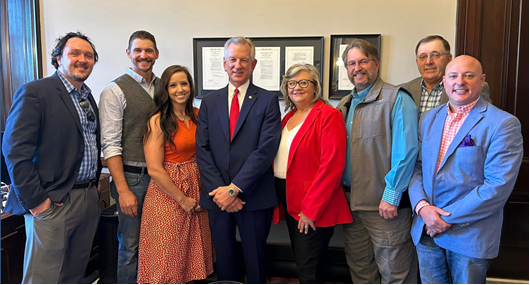
Arguably, the EATS Act is the most controversial piece of legislation being attempted to insert into the 2023 Farm Bill. In addition to farmers and ranchers, Congressional lawmakers, and government associations have also voiced their objection to the bill. Last month a bipartisan group of 30 U.S. Senators submitted a letter to Senate Agriculture Committee leadership opposing the EATS Act, and a coalition of over 170 U.S. Representatives submitted a letter to U.S. House Agriculture Committee Chairman Glenn "G.T." Thompson, R-Pa., and Ranking Member David Scott, R-Ga., citing their opposition to the bill. Following these letters, the National Governors Association, the National Conference of State Legislatures, the National Association of Counties, and the National League of Cities also submitted letters, emphasizing the importance of avoiding preempting state level laws regarding agriculture production.
"As a proud American and lifelong producer, I'm elated to see our members rally and rise up to defeat industrial agriculture and their backers in China on a level never seen before," said Jonathan Buttram, President of the Alabama Contract Poultry Growers Association and Treasurer at the Organization for Competitive Markets. "The industrial agriculture mafia is petrified of our work and the OFF Act because they see the writing on the wall and we hope they soon meet the same fate as New York's infamous 'Five Families.'"
"Since the inception of these programs, illegal relationships between checkoff boards and lobbying organizations have formed," said Mike Schultz, founder of the Kansas Cattlemen's Association, and Vice-President at the Organization for Competitive Markets. "Hundreds of millions of dollars have been misused, and these checkoff programs, as they are currently being managed, do not work in the best interests of independent family famers."
"American family farmers are in peril and are fighting for their livelihoods under assault by the Hinson-Marshall EATS Act and its backers in China," said Marty Irby, President of Competitive Markets Action and Secretary at the Organization for Competitive Markets. "The gloves are off and groups like the National Cattlemen's Beef Association and National Pork Producers Council that have long-hijacked the voice of independent producers are finally being exposed for what they truly are – puppets of the Chinese government and multi-national conglomerates like Smithfield. The American Family Farmer Nation is finally rising up."
In June, OCM and CMA launched a campaign against the EATS Act which included ad buys in Politico Morning and Weekly Ag for three full weeks in June and one full week in July, as well as ad buys that included a takeover of The Daily Caller's homepage six times as well as radio ads in key Congressional Districts, and a billboard truck on Capitol Hill, the last half of July that'll be returning for the full month of September and beyond. The ads encourage voters to contact their elected officials and ask them to vote no on any Farm Bill that contains the EATS Act. OCM and CMA plan to continue the ad campaign throughout the course of 2023, or until the Farm Bill is finalized and enacted. OCM and CMA also conducted a fly-in to Washington, D.C. in July and engaged in nearly 100 meetings on the OFF and EATS Acts during that event as well. In addition to their grassroots advocacy CMA is represented on the EATS Act by several lobbying firms including Capitol South, LLC, and Conaway-Graves, led by former House Agriculture Committee Chairman Mike Conaway, R-TX.
Yesterday, Senators Mike Braun (R-IN), Jon Tester (D-WY), Roger Marshall (R-KS) and Pete Ricketts (R-NE) introduced the bipartisan "American Farmers Feed the World Act" to enhance the role of American farmers in the Food for Peace (FFP) program while promoting transparency and accountability in its operations. The proposed legislation aims to prioritize American-grown food in international aid programs worldwide, ensuring that it takes precedence over foreign competitors. It also seeks to optimize funding allocation for more efficient hunger relief without requiring additional taxpayer dollars.
ASA Director Monte Peterson (ND) was quoted in the press release from Senator Braun's office, where he voiced support for the reforms proposed in the legislation. "U.S. soy is a powerhouse for global food security. Soy is the only plant protein to offer all the essential amino acids necessary for human nutrition, and soy products such as corn-soy-blend and soy-based vegetable oil have served as staples for emergency response in at least 88 countries throughout the world. ASA is strongly supportive of the reforms proposed in the American Farmers Feed the World Act of 2023," said Peterson. "These reforms will ensure the programs remain focused on in-kind food assistance and that high-quality, high-protein U.S. soy continues to play a role in addressing global hunger."
Key provisions of the American Farmers Feed the World Act include:
Read the bill text here.
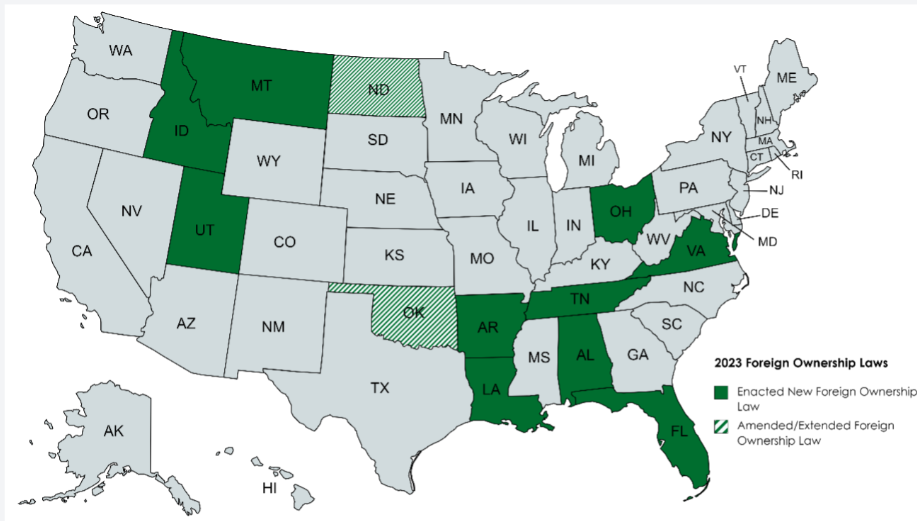
During the 2023 legislative session, the issue of restricting foreign investments and ownership in U.S. land, especially agricultural land, emerged or reemerged in the majority of states. This reemerging interest in restricting foreign investments in U.S. land is partly due to the purchase of land near U.S. Air Force bases in Texas and North Dakota by two Chinese-owned companies.
Currently, there are approximately twenty-four states that specifically limit or restrict foreign individuals, foreign business entities, and/or foreign governments from acquiring or owning an interest in farmland within their state, which is up from fourteen states in 2022. During the 2023 legislative session, ten states enacted a new law restricting certain foreign investments in land located within their state, and two states—North Dakota and Oklahoma—amended their laws that prohibit certain foreign purchases of land. Although twenty-four states now have some type of restriction, state laws vary widely, and some states restrict only certain purchases. For example, the majority of foreign ownership laws enacted in 2023 seek to restrict investments from specific countries, particularly China, Iran, North Korea, and Russia.
Aside from state action, Congress is also considering several proposals that seek to establish a national restriction on certain foreign investments in U.S. land. Specifically, the Senate recently passed an amendment to its version of the bicameral National Defense Authorization Act ("NDAA") which seeks to prevent certain investments in U.S. agricultural businesses and land by China, Iran, North Korea, and Russia. The Senate version of NDAA is currently being reconciled with the House version of the bill.
Article courtesy of: Brown, Micah. "Ten More States Pass Foreign Land Ownership Laws This Year." Southern Ag Today 3(38.5). September 22, 2023. Permalink
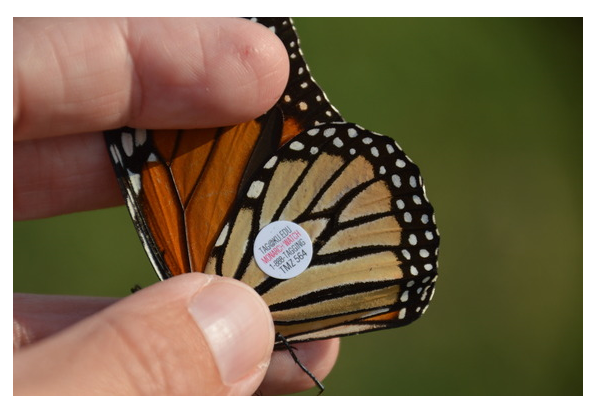
To celebrate the annual migration of monarch butterflies, the Wildlife Department is hosting monarch tagging and roost watches at Hackberry Flat Wildlife Management Area Sept. 30 through Oct. 3.
"Monarchs have begun their extensive journey south. These amazing butterflies travel up to 3,000 miles to overwintering sites in Mexico," said Cheyenne Gonzales, biologist with the Wildlife Department. "We will be tagging monarchs in the mornings, and quietly watching the butterflies roost in the evenings."
Weather conditions, including strong winds, rain, and temperature, can impact the timing and path of the monarch's migration. The scheduled events will be held regardless of the number of monarchs migrating through Hackberry Flat WMA. Email updates will be sent to registered participants before the event.
Registration is required for both the morning and evening events, and participants must be at least 10 years of age. (See below note on group registration if you'll be bringing family or friends to an event.) Registration for each event will close when the participant count reaches 20. Pets are not allowed during the programs.
After a brief discussion of butterfly basics, monarchs collected from the area will be tagged as a group. Meet at the William H. "Bill" Crawford Building for this hands-on activity.
Morning activities for Monday, Oct. 2 and Tuesday, Oct. 3 will be reserved for school groups.
*Tagging activities will be limited to the number of butterflies available at the roost site.
Convoy to a longtime monarch roost site within the management area to watch as the butterflies arrive and settle in for the night. Bring a collapsible chair and light jacket for your comfort. Meet at the William H. "Bill" Crawford Building for this viewing event.
To get to the William H. "Bill" Crawford Building, from the south side of Frederick, take U.S. 183 south for one mile, then go east on Airport Road for three miles. Follow the blacktop road south and continue six miles. Watch for signs. (Coordinates for the building are 34.277642, -98.963945.)
To register, CLICK HERE.
If you'll be attending with family or friends, please use the hunter green "Register Group" button found in the upper right corner of the registration page to let us know how many people to expect in your group.
The Biden-Harris Administration today announced that agricultural employers can begin to apply for a pilot program designed to improve the resiliency of the food and agricultural supply chain by addressing workforce challenges farmers and ranchers face. The U.S. Department of Agriculture (USDA), in coordination with other federal agencies, is announcing up to $65 million in grants available for the Farm Labor Stabilization and Protection Pilot Program (FLSP Program).
The program will help address workforce needs in agriculture, promote a safe and healthy work environment for farmworkers, and aims to support expansion of lawful migration pathways for workers, including for workers from Northern Central America, through the Department of Labor's seasonal H-2A visa program. The program makes good on a commitment made and announced as part of the Los Angeles Declaration on Migration and Protection and is funded by President Biden's American Rescue Plan.
"Our country is facing growing agriculture workforce challenges that jeopardize our farmers' ability to be competitive, threatens the resiliency, abundance and safety of our food system, and has repercussions on our overall economy. At the same time, record numbers of people are interested in living and working in the United States, including from Northern Central America," said Agriculture Secretary Tom Vilsack. "This pilot program has been designed with significant input from immigration, labor, and agricultural stakeholders in an effort to help address these immediate challenges. The program will provide incentives designed to simultaneously benefit workers and employers, with the potential to inform the H-2A program, raise labor standards for farmworkers, and help alleviate our agricultural workforce challenges over the long term. In addition to helping agricultural producers recruit and retain workers, at the end of the program we will have tested new ways to promote accountability and improve working conditions for domestic and H-2A workers alike – demonstrating how employers benefit by doing right by workers. The effort will also facilitate safe, orderly, and humane migration. This pilot should be a win for everyone along the agricultural supply chain, from the field to the dinner table."
The FLSP Program seeks to advance the following Administration priorities:
Additional Information
Eligibility for this competitive grant program is limited to domestic agricultural employers who 1) anticipate meeting all Department of Labor (DOL) and Department of Homeland Security (DHS) regulatory requirements for the H-2A program, including demonstrated effort to effectively recruit U.S.-based workers and hire all willing, able, and qualified U.S. workers; and 2) commit to, and indicate capacity to fulfill all Baseline Requirements, as well as any selected (supplemental) commitments that entail additive worker benefits and protections. Eligible employers include fixed-site employers, joint-employers, agricultural associations, and H-2A labor contractors.
The maximum award amount is $2,000,000 and the minimum amount is $25,000 per grant agreement (including any sub-awardees). Award amounts will be determined based on the projected number of full-time equivalent (FTE) agricultural employees, desired award level, as well as the competitive nature of the application. Consistent with the H-2A requirements, applicants must demonstrate insufficient availability of a U.S.-based workforce. The grant window for each recipient is 24 months, allowing producers to use the grant over the course of two agricultural production seasons.
Applications for the FLSP program must be received on or before 11:59 pm Eastern Time on November 28, 2023. More information about the application process can be found here: www.ams.usda.gov/flsp.
This announcement is part of the Biden-Harris Administration's Investing in America agenda to grow the American economy from the middle out and bottom up by rebuilding our nation's infrastructure, creating good-paying jobs, and building a clean energy economy to tackle the climate crisis and make our communities more resilient.
RON's Dave Lanning has a pre-opening look at today's agricultural Markets.
Click the audio tab below for today's report.
Climate impacts estimated to have reduced farmer incomes by 15.7% on average over the past two years / Most pressing short-term challenges dominated by economic uncertainty and cost concerns / Yet 4 in 5 farmers have already taken or plan to take steps to reduce greenhouse gas emissions
According to research conducted earlier in 2023 on behalf of Bayer, 71% of farmers say that climate change already has a large impact on their farm, and even more are worried about the impact this will have in the future. 73% have experienced increasing pest and disease pressure. On average farmers estimate that their incomes had reduced by 15.7% due to climate change in the past two years. One in six farmers even identifies income losses of over 25% during this period.
These are some of the key findings from the "Farmer Voice" survey, published today, which reveals the challenges facing farmers around the world as they try to mitigate the impacts of climate change and adapt for the future. To conduct the "Farmer Voice", life science company Bayer commissioned an agency to independently interview 800 farmers globally, representing farms large and small from Australia, Brazil, China, Germany, India, Kenya, Ukraine, and the United States in equal numbers.
Farmers expect the repercussions of climate change to continue. Three-quarters of them globally (76%) are worried about the impact that climate change will have on their farm, with farmers in Kenya and India most concerned.
Rodrigo Santos, Member of the Board of Management of Bayer AG and President of the Crop Science Division, commented: "Farmers are already experiencing the adverse effects of climate change on their fields and at the same time they play a key role in tackling this huge challenge. This is why it is so important to put their voice front and center. The losses reported in this survey make the direct threat climate change poses to global food security crystal clear. In the face of a growing world population, the results must be a catalyst for efforts to make agriculture regenerative."
Economic challenges are compounding farmer pressures
While climate change is a dominant overarching theme, economic challenges are the biggest priority over the next three years. Over half (55%) of farmers placed fertilizer costs among the top three challenges, followed by energy costs (47%), price and income volatility (37%), and the cost of crop protection (36%). The importance of fertilizer costs becomes most apparent in Kenya, India, and Ukraine.
In Ukraine, 70% of farmers named fertilizer costs as one of the top three challenges, showing that the concrete materialized consequences of the war pose big pressures on farmers in the country. In addition, 40% named general disruption due to the war as a top challenge. Apart from that Ukrainian farmers share many of the same characteristics of their global peers, for example more than three-quarters (77%) state that climate change has already largely impacted their farm.
Farmers are taking steps to mitigate climate change and value innovation
More than 80% of surveyed farmers are already taking or planning to take steps to apply measures that contribute to reducing greenhouse gases. The top focus areas are using cover crops (43% do so already or intend to do so), using renewable energy or biofuels (37%) and using innovative seeds to reduce fertilizer or crop protection use (33%). Alongside this, every single farmer surveyed claims to already apply or plans to apply measures to help biodiversity. Over half (54%) say they already apply measures to protect insects, such as insect hotels, or plan to do so in the next three years.
To be ready for the future, farmers value innovation. Over half (53%) of them say access to seeds and traits designed to better cope with extreme weather would most benefit their farm. A similar number (50%) called for better crop protection technology. 42% said that better access to irrigation technology would benefit their farm. Looking at their practices, improving efficient land use, diversifying crops, and better soil health were ranked as the most important routes to success.
Spotlight: Indian smallholder farmers are focused on mitigating risk
In addition to the global survey where farmers were interviewed independently, Bayer interviewed 2,056 Indian smallholder farmers from its customer base. It is a unique glimpse into the perspectives of smallholders who are key to securing the world's food supply. Currently, their biggest challenges are high labor and fertilizer costs. Yet they are also impacted by climate change: Many of them expect reduced crop yields (42%) and higher pest pressures because of changing weather (31%). Unlike large-scale growers, the smallholders interviewed in India are focused on mitigating risks, prioritizing financial security through insurance (26%) and infrastructure (21%).
When asked about the future, 60% said they would benefit most from access to digital technologies and modern crop protection. Despite all the challenges, Indian smallholders remain optimistic: 8 in every 10 farmers feel positive about the future of farming.
The survey results are a valuable indicator of smallholder priorities and needs in India, contributing to Bayer's smallholder farming strategy with the goal to support 100 million smallholders by 2030. In 2022, the company reached 52 million with its products and services.
Farmers agree on global challenges
Overall, the "Farmer Voice" survey shows that farmers around the world largely share a common view about the challenges of today and the prospects for the future. While there are slight differences between countries, the overarching issues of climate change and economic pressures are of similar concern to all.
"Farmers are facing multiple and related challenges. But despite this, we found that they are hopeful – almost three-quarters say they feel positive about the future of farming in their country," said Rodrigo Santos. "This is impressive and encouraging. The views expressed by farmers in the report need to be widely seen and understood. They are a call to action for the entire food system to innovate, collaborate, and deliver the solutions farmers need – and we as Bayer are eager to play a leading role in these efforts. There is little time to waste."
The Farmer Voice is a survey among 800 farmers equally split between Australia, Brazil, China, Germany, India, Kenya, Ukraine, and the United States. The survey was conducted independently by Kekst CNC. Farmers were selected randomly from each market. The respondents did not know that the survey was being conducted on behalf of Bayer until it was complete, and Bayer had no input on the sample selection. Interviews took place between April and July 2023. Additionally, 2,056 smallholder farmers in India were surveyed with a shortened questionnaire. These farmers were associated with the Better Life Farming ecosystem, farmers of Bayer-supported Farmer Producer Organizations, and farmers enrolled in Bayer's Sustainable Rice Program. These interviews were conducted between May and June 2023.
The Farmer Voice report is available at: www.bayer.com/en/agriculture/farmer-voice

House Ag Committee Chair GT Thompson with Former House Ag Committee Chair Frank Lucas
Recovery continues for Oklahoma Congressman and former Chair of the House Ag Committee Frank Lucas. On August fourth- the Congressman/rancher discovered a stray bull on the ranch that he and his wife Lynda operate in Roger Mills County. That bull took dead aim for the former Chair of the House Ag Committee- "putting him up against an alleyway hard enough to push my right leg- the ball and femur hard enough to break it and also in several places my pelvis- so I will never go through the metal screener at the airport without setting off the alarm but I am getting better- my surgeon says I will make a full recovery but going six weeks without putting any weight down on my right foot is a real complicated experience."
Lucas says he will be back on the floor of the House next Wednesday- although he will be moving kinda slow in the immediate future.
One of the reasons that Congressman Lucas is anxious to return is to help the GOP navigate the work to fund the government and avoid a government shutdown at the end of the month. The Appropriations Committee getting the Ag Appropriations measure done will go a long way in helping pave the way to develop and eventually pass a 2023 Farm Bill.
"Short term we need to fund the federal government...because there is not gonna be any oxygen, politically so to speak in DC, to do important things like the Farm Bill until the appropriations process is over with- and a farm bill is important because if you eat- it's important to you."
Lucas says he appreciates the dilemma that both Chairman GT Thompson in the House and Senate Ag Chair Debbie Stabenow are dealing with- saying he's been there when it comes to trying to walk a narrow path of success in crafting legislation as complicated and multifaceted like a farm bill. He says that while the end of the 2018 Farm Bill is September 30th- the first real deadline that impacts an important area of agriculture is December 31st when provisions for Dairy expire. An extension will be needed by then and there is a world of incentive for both of the Chairmen to find ways to get farm bill language developed and moving by the end of the year and early into 2024. He counsels "Don't get excited if we have to do some sort of short extension- we did an extension in '08- we did an extension in '14 and even the '18 Farm Bill was not passed until after September 30th of that year. So, let's all be calm- let's continue to work together- let's just make sure we have a good farm bill."
In particular- Lucas points to the Senate Ag Chair Stabenow- who has announced she will not seek reelection in 2024 as one that will really want to a 2023-24 Farm Bill to be a capstone for her Congressional legacy.
When asked about some of the controversial proposals that some lawmakers are promoting for the livestock industry- like Country of Origin labeling and Checkoff changes- Lucas tells Hays "By the time you take both bills to the appropriate committees- take them across both floors and then to a conference committee- the things that survive are things that are overwhelmingly agreed to- controversial things go by the wayside."
Lucas also briefly addressed language he authored in the Agricultural Risk Review Act that passed the Financial Services Committee on Wednesday- click here for more details of that proposal.
Click on the Listen bar above to hear the full conversation that Hays and Lucas had on Thursday morning.
The CEO of the National Corn Growers Association today pushed back against commentary made by a science advisory board to the U.S. Environmental Protection Agency that questioned the effectiveness of ethanol in lowering greenhouse gas emissions. The NCGA leader's comments were made during a public meeting held by the SAB.
"There is no shortage of studies on the environmental benefits of corn ethanol," NCGA CEO Neil Caskey told the advisory board members. "The Department of Energy's Argonne National Laboratory, for example, has conducted extensive research on the matter and concluded that corn ethanol has reduced greenhouse gas emissions in the U.S. by 544 million metric tons from 2005- 2019, and that the feedstock's carbon intensity is 44% lower than that of petroleum gasoline."
The testimony comes after the SAB provided commentary to the EPA administrator raising doubts about the effectiveness of ethanol.
The SAB is comprised of experts representing a range of fields who make regular recommendations to EPA leaders. Caskey recently sent a letter to the EPA administrator challenging the commentary.
Caskey also responded to assertions by the SAB that the production of ethanol impacts land use, noting that the data show that as corn production has risen, land used to grow corn has not.
"American farmers planted an estimated 94.1 million acres of corn in 2023, which falls short of the more than 100 million acres corn farmers planted a century ago," Caskey noted. "In the past decade, U.S. corn production has been over six times the production of the 1930s with fewer corn acres."
The testimony is the latest in a series of actions NCGA has taken to defend and promote ethanol. The organization has also been encouraging the Biden administration to take the necessary steps to ensure that the aviation sector is able to use the important biofuel.
| Transition to El Niño Weather Pattern Likely Helped Birds By Tell Judkins, Upland Game Biologist The Oklahoma Department of Wildlife Conservation (ODWC) has conducted annual roadside quail surveys in August and October since 1990 to provide an index of annual population fluctuations. The number of quail observed are reported to provide an index of quail abundance and an indicator of reproductive success. ODWC employees surveyed 81 routes in 75 of Oklahoma's 77 counties. Oklahoma and Tulsa counties, both almost exclusively urban landscapes, are excluded from the survey. The state is divided into either geographic regions (Figure 1) or ecoregions (Figure 11) to compare the index year to year. By looking at both, biologists can get a more precise view of on-the-ground conditions in each county, and hunters can get a better glimpse into the county they intend to hunt. The 2023 August roadside quail survey shows the statewide quail index up 45.8 percent from 2022, climbing from 1.53 to 2.23 quail per route (q/r) which is 55.6 percent below the 34-year average (Table 1 and Figure 2), and 28.3 percent below the 10-year average of 3.11. There are several theories as to what has caused population decline, but it is primarily attributed to habitat loss and weather. Age structure of observed birds shows 65.2 percent full-grown, 10.5 percent three-fourths-grown, 17.7 percent half-grown, and 6.6 percent one-fourth-grown birds. This age structure indicates successful early broods with females still nesting throughout the season. Last fall, the latest known hatch was documented from the wing-box program with a harvested bird hatching out around Sept. 19 in the northcentral region. If favorable weather patterns continue into fall, it could lead to even better numbers in October's survey. Additionally, ODWC biologists have received several reports of broods of varying ages throughout summer. All regions of the state except the northcentral region improved from the 2022 survey. All regions, other than the northeast region, are currently well below their historical 34-year average (Figures 3-8). The past winter was fairly mild for Oklahoma, with only a few major systems that dropped temperatures below average, with the last major cold front arriving in early March. After three consecutive years of La Niña (warmer/dryer) weather patterns, this spring saw a transition to an El Niño (cooler/wetter) pattern, which generally ties to better quail numbers. One year ago, 100 percent of Oklahoma was in some level of drought, with over 94 percent being in D2 (severe), D3 (extreme) or D4 (exceptional) drought conditions. Currently, about 58 percent of the state is in drought, with less than 20 percent in D2-D4 conditions. Rainfall throughout the growing season has been an example of feast or famine, coming at times in monsoon-like systems dumping several inches at a time and bringing hail along with it. Precipitation in May and June produced good conditions; by mid-August, 64 percent of the state was drought-free. Summer heat and a lack of rain in late August allowed drought to steadily take hold again. Figures 9 and 10 show drought and rainfall conditions across the state. Over the past 180 days, about half of Oklahoma has seen normal rainfall, but the previous 30 days show much of the state well below normal in rainfall with some areas in the southern half only seeing about 1 percent of normal rainfall. Dense vegetation along roadsides in some areas could contribute to fewer quail observations. When considered by ecoregion, survey results can provide a better look at bird numbers. Figure 11 shows the nine major ecoregions of Oklahoma. Table 2 compares 2022 and 2023 survey results by ecoregion. One scaled quail was observed during the 2023 August survey. Only a few routes in Oklahoma offer the opportunity to observe scaled quail. Therefore, this is not a prediction of scaled quail abundance, strictly an observation. ODWC has received several reports of scaled quail broods in the Oklahoma Panhandle this year. Anecdotally, ODWC has received numerous brood reports in August. Over the past 34 years, the August roadside surveys have shown that they are not always the most reliable when it comes to forecasting the season. Stay tuned for the October roadside surveys and 2023 Season Outlook, which will provide a better indication of what the upcoming quail season could have in store. Oklahoma's quail season will open Nov. 11 and close Feb. 15, 2024. The bag limit remains 10 quail daily. For more regulations and other information, consult the Oklahoma Fishing and Hunting Regulations at wildlifedepartment.com/hunting/regs or in print wherever hunting and fishing licenses are sold. |
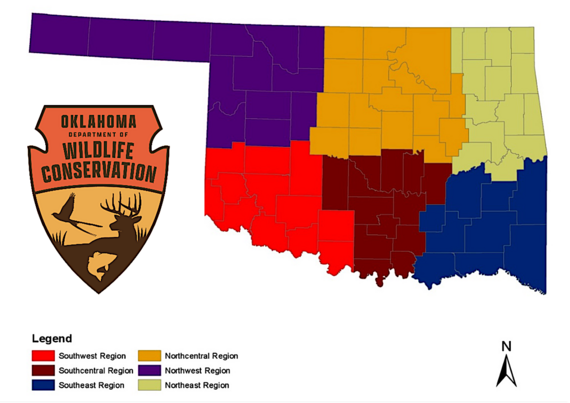 Figure 1. Oklahoma Roadside Survey Regions |
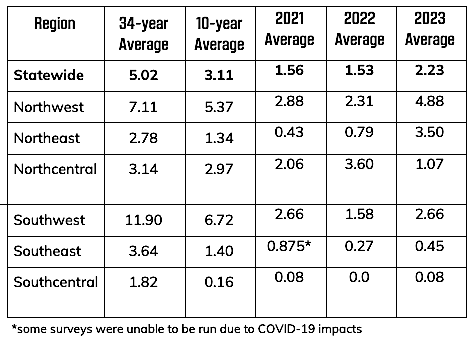 Table 1. Bobwhite quail observations/20-mile route by geographic region in Oklahoma. |
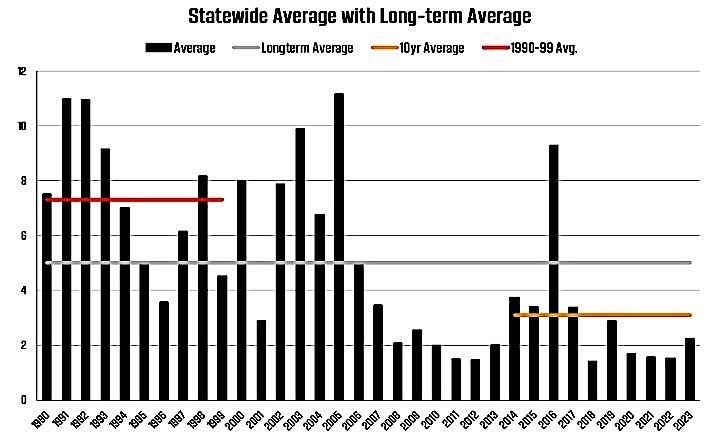 Figure 2. Long-term average of bobwhite observations in Oklahoma. |
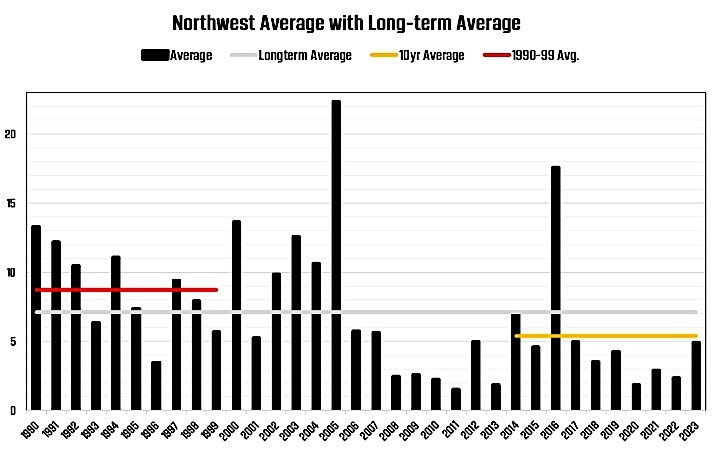 Figure 3. Long-term average of bobwhite observations in northwest Oklahoma. |
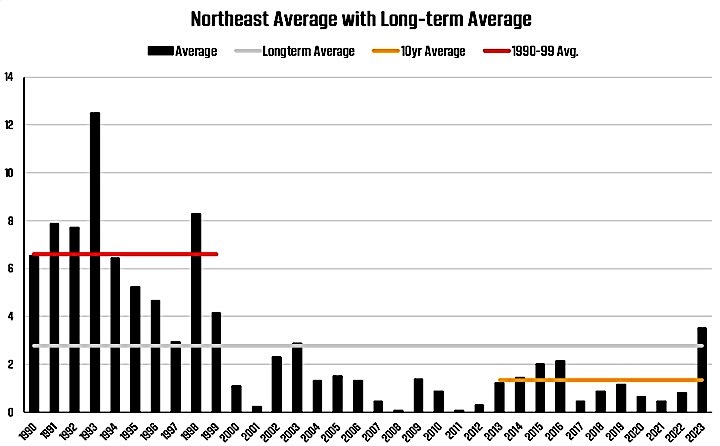 Figure 4. Long-term average of bobwhite observations in northeast Oklahoma. 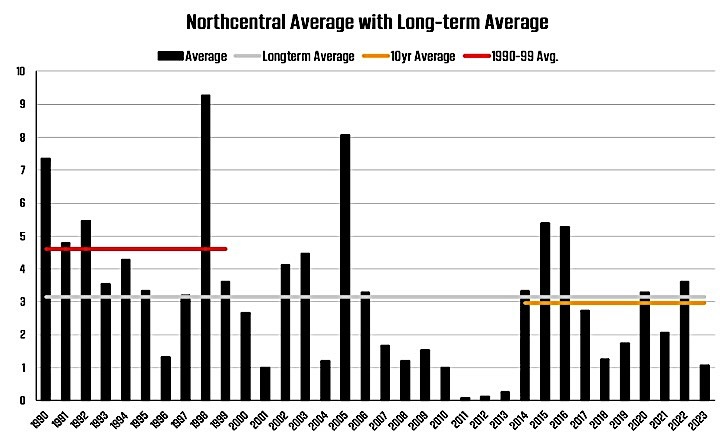 Figure 5. Long-term average of bobwhite observations in northcentral Oklahoma. 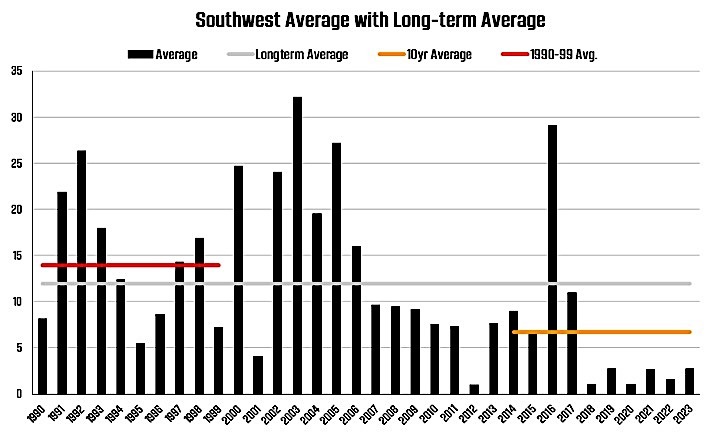 Figure 6. Long-term average of bobwhite observations in southwest Oklahoma. 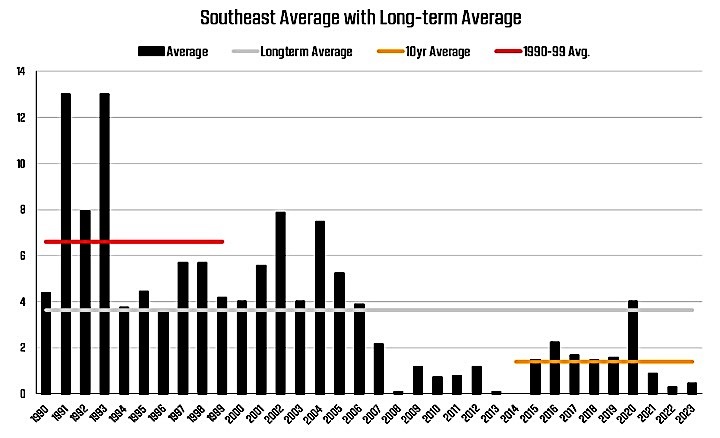 Figure 7. Long-term average of bobwhite observations in southeast Oklahoma. 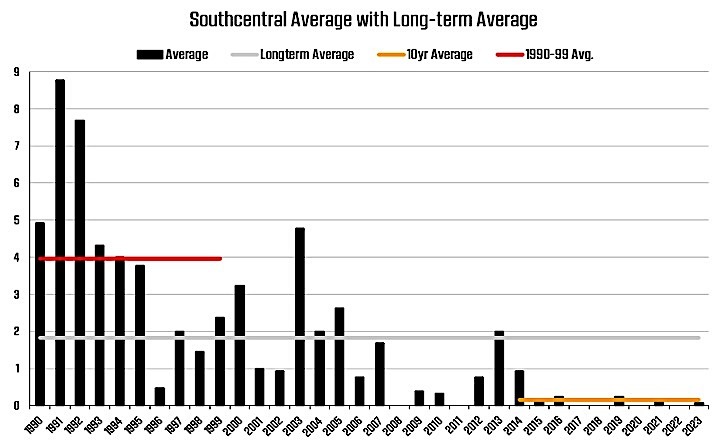 Figure 8. Long-term average of bobwhite observations in southcentral Oklahoma. 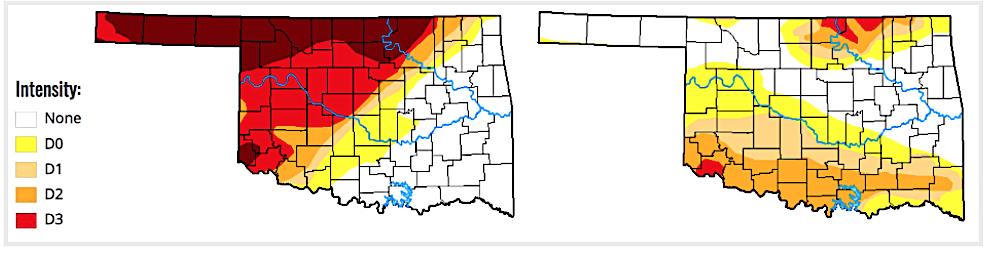 Figure 9. Drought Comparison from April 18th, 2023, to August 31st, 2023 (Source: droughtmonitor.unl.edu/) 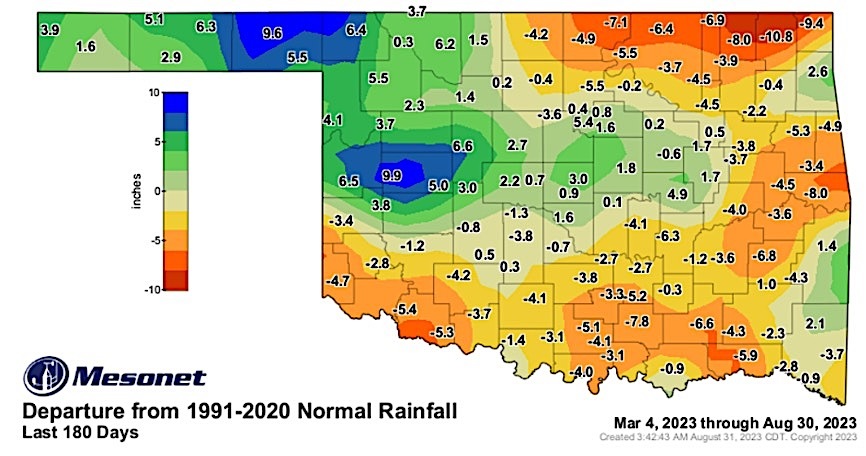 Figure 10. Departure from normal rainfall in inches: March 4 - August 30, 2023 (Source: mesonet.org) 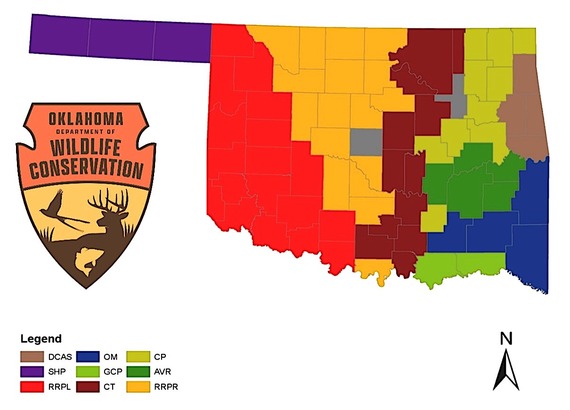 Figure 11. Ecoregions of Oklahoma 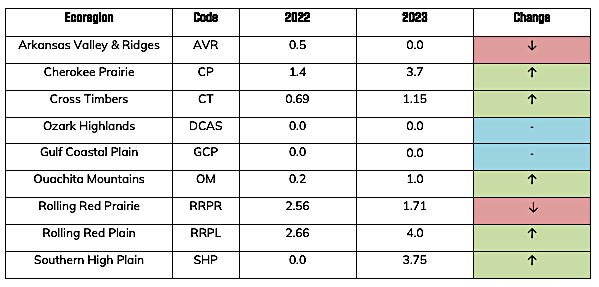 Table 2. Bobwhite quail numbers/20-mile route in the 9 geographic ecoregions of Oklahoma |

– The submission window is now open for broadband service providers to apply for federal funding that will expand and improve Oklahoma broadband infrastructure.
Rural residents lacking access to a quality, high-speed internet connection are encouraged to advocate for broadband service with their qualifying providers.
The Oklahoma Broadband Office announced this month that service providers can compete for $374 million in grant funding made possible through the American Rescue Plan Act to expand high-speed internet throughout the state. The application portal closes Oct. 9.
"This is the first time we've had any state-level money to help solve this problem," said Brian Whitacre, Oklahoma State University Extension specialist in rural economic development and chair of the Oklahoma Broadband Expansion Council. "Before, we were just relying on federal programs, but this is the first time we're hopefully going to take a big step toward solving this problem."
Whitacre said internet providers must specify the exact locations and buildings where they propose to expand or improve a broadband connection.
"If your area or house is unserved, you can talk to local providers, such as electric cooperatives, and they can receive priority points for funding," he said. "Be vocal, talk to the provider in your area and tell it you need a connection."
To assist in identifying areas of the state with poor internet service, the Oklahoma Broad Office commissioned a firm to develop an interactive map that reports Oklahoma's current availability, speed and equity of internet service. Residents can zoom to an exact address and view the building's status of underserved, unserved or served. The new map will improve the accuracy of a similar diagram managed by the Federal Communications Commission and allow Oklahoma residents to offer feedback on connectivity data.
"It's striking that the larger numbers of unserved populations are in eastern Oklahoma, but the higher percentages of unserved individual homes and businesses are in the west," Whitacre said.
Following the Oct. 9 deadline for ARPA proposals, Oklahoma is slated to receive additional rounds of broadband infrastructure funding: $167.7 million from the ARPA Capital Projects Fund and $797.4 million in Broadband Equity, Access and Deployment funds.
"The ARPA funds will prioritize areas where a lot of unserved locations can be reached at once," Whitacre said. "The other pot of money will support remote residents in very hard-to-reach areas. Just because you're not connected this time around, we still think we can help you. It will just take a little longer."
To learn more about advocating for broadband improvements and expansion as well as the latest ARPA funding window, visit a local OSU Extension county office or public library.
For additional questions, contact Brian Whitacre in the OSU Department of Agricultural Economics at 405-744-9825 or brian.whitacre@okstate.edu.OSU Extension uses research-based information to help all Oklahomans solve local issues and concerns, promote leadership and manage resources wisely throughout the state's 77 counties. Most information is available at little to no cos

During Climate Week this week, the U.S. Grains Council's Corn Sustainability Assurance Protocol (CSAP) Version 1.1 for the first time achieved Gold Level Equivalence against The Sustainable Agriculture Initiative Platform's (SAI Platform) Farm Sustainability Assessment 3.0 – the highest possible equivalence level.
The CSAP is a farmer-led initiative that highlights the strong institutional sustainability foundations underpinning U.S. agriculture, as well as the traditional and innovative techniques that U.S. corn producers are adopting on a daily basis. The 1.1 version of the CSAP incorporates new language, further expanding the assurances of the sustainability of U.S. corn production across the various impact categories assessed in the benchmarking process.
"U.S. corn production has always been anchored to the strong foundations of the U.S. agricultural system, which includes numerous incentives for producers to implement conservation practices, as well as strict and enforceable regulations that ensure natural resources are protected and preserved," said U.S. Grains Council President and CEO Ryan LeGrand. "The Corn Sustainability Assurance Protocol captures the full scope of these assurances in corn production, and we are now glad to see them recognized through the achievement of gold-level equivalency with SAI Platform's Farm Sustainability Assessment."
The SAI Platform's Farm Sustainability Assessment is a globally recognized framework and toolset aimed at promoting the continuous improvement of on farm sustainability practices. Over 100 programs across five continents have been benchmarked against the Farm Sustainability Assessment. This helps the agriculture industry advance the cause of sustainability for farmers, agribusiness, and consumers by creating alignment and a common understanding of sustainability.
This benchmark will support Council agricultural business members and their clients, who use the CSAP and the Sustainable Corn Exports (SCE) web platform to produce records of sustainability for U.S. corn and other corn-product exports that international trading partners and end-users are requesting.
"Achieving FSA Gold Level Equivalency is very valuable and important for the CSAP and our industry. The enhanced version allows us to incorporate new language that showcases and strengthens the assurances our producers are already committed to in terms of the impacts associated with their activities," said Andrew Brandt, USGC director of trade policy. "This means that international buyers of corn and corn-products will now have a much more robust tool to address sustainable sourcing requirements within global supply chains."
"USGC's CSAP offers immense value and opportunity for promoting sustainability amongst US corn growers. I would like to congratulate USGC on achieving the highest level of equivalence against the FSA. This firmly underlines their level of ambition in the pursuit of a more sustainable and responsible future for farming", said Joe Iveson, FSA Manager.
SAI Platform's Farm Sustainability Assessment 3.0 is a global reference framework which empowers farmers and the broader agricultural value chain to demonstrate sustainability and identify opportunities for continuous improvement, ensuring alignment with the objectives of the Farm Sustainability Assessment.
Learn more about the CSAP and the SCE platform by visiting: https://www.sustainablecornexports.org/
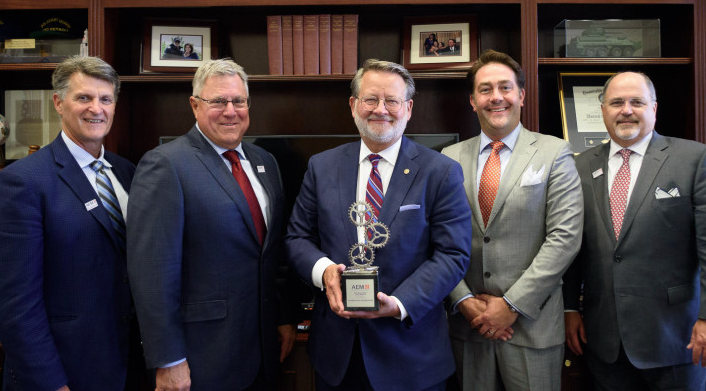
The Association of Equipment Manufacturers honored U.S. Senator Gary Peters (D-Mich.), U.S. Senator John Thune (R-S.D.), U.S. Representatives Tracey Mann (R-Kan.), and U.S. Representative Jimmy Panetta (D-Calif.) with their AEM Champion of the Industry Award. The award, presented for the third time in the association's 125+ year history, recognizes members of Congress from both sides of the aisle for their steadfast support of the equipment manufacturing industry and their efforts to advance bipartisan, commonsense solutions to the country's toughest challenges.
"The Association of Equipment Manufacturers is proud to honor Senators Peters and Thune and Representatives Mann and Panetta who have demonstrated the bipartisan leadership and constructive governing necessary to move our industry forward," said Kip Eideberg, AEM senior vice president of government and industry relations. "We need leaders, like these four members of Congress, with the courage to pursue common ground and bold solutions to our nation's toughest challenges. We are grateful to Senators Peters and Thune and Representative Mann and Panetta for their unwavering commitment to bipartisanship during this pivotal moment for our country."
The AEM Champion of the Industry, AEM's most prestigious award, is reserved for one Democrat and one Republican from each legislative chamber who have championed legislation important to equipment manufacturers and have worked across the aisle to help move the industry forward. Candidates are considered and approved by the AEM Government and Public Affairs Committee.
"Americans want leaders who will put politics aside in order to address issues facing their families, their businesses, and their communities," said Senator Peters. "That is how I have approached my work in Congress and why I am committed to working in a bipartisan way, with dedicated partners like the Association of Equipment Manufacturers, to advance the future of American manufacturing. I am honored to receive this distinction and I look forward to continuing working alongside you to support manufacturers and workers across our country."
"Equipment manufacturers play a crucial role in strengthening our economy," said Senator Thune. "It is an honor to be recognized by the Association of Equipment Manufacturers with this award, and I will continue pursing policies that support this industry and promote good-paying jobs in South Dakota and around the country."
"I am grateful to receive this year's Association of Equipment Manufacturers Champion of the Industry Award," said Representative Mann. "American manufacturers keep America running, ensure that our infrastructure projects run smoothly, and play a critical role in the success of American agriculture. I am proud to work alongside AEM members to advance agricultural and equipment manufacturing priorities that strengthen America."
"American farmers, ranchers, and producers face a wide array of challenges as they work to feed the world," said Representative Panetta. "Through new agricultural technologies and innovations, we are providing them with the tools that they need to grow and sustain their operations and contribute to our local economies. It is an honor to accept the AEM Champion of Industry Award as we continue our work to support policies that uplift our agricultural industry and strengthen our food security."
"Now more than ever, Americans are looking for leaders who have the political courage to stand up against partisanship and reach across the aisle," said Pat Weiler, President of Weiler and the 2023 Chair of AEM's Government and Public Affairs Committee. "America's equipment manufacturers are grateful to Senators Peters and Thune and Representatives Mann and Panetta for their leadership and look forward to continue working with them in promoting policies that will create jobs, bolster economic growth, and invest in rural America."
Previous honorees of the AEM Champion of the Industry Award include U.S. Senators Joni Ernst (R-Iowa), Deb Fischer (R-Neb.), Amy Klobuchar (D-Minn.), and Debbie Stabenow (D-Mich.), and U.S. Representatives Cindy Axne (D-Iowa), Don Bacon (R-Neb.), Cheri Bustos (D-Ill.), and Brian Fitzpatrick (R-Penn.) for their tireless efforts on behalf of the equipment manufacturing industry throughout the course of their careers in Congress.
Attorney General Gentner Drummond has extended the deadline for letters of intent for political subdivisions interested in pursuing opioid abatement grants. Letters are now due by 5 p.m. on Wednesday, Oct. 25.
The Oklahoma Opioid Abatement Board announced last month it plans to issue up to $23 million in grant awards. Under the Political Subdivisions Opioid Abatement Grants Act, eligible entities are limited to Oklahoma counties, incorporated municipalities, public school districts, technology school districts, and a public trust solely benefiting one of the political subdivisions.
Letters of intent to the board from eligible participants are required and can be submitted by email to oab@oag.ok.gov. The Notice of Intent to Issue Funding Opportunity and a form letter of intent for subdivisions' use can also be found on the Opioid Abatement Board webpage.
Approved use of the grants includes but is not limited to: treatment and recovery programs, assistance with co-occurring disorders and mental health issues, opioid abuse education and prevention, efforts to ensure proper prescribing of opioids, and strategies to decrease the supply of narcotics. The full list of approved uses can be found here.
The total number of grants awarded and amounts for each one, including any caps, are anticipated to be determined based on the number of letters of intent submitted in total and by each category of eligible political subdivisions. The Office of the Attorney General will hold webinars on the application and contract process, with additional details to be released later.
This marks the first distribution of funds for the board, which was established three years ago.
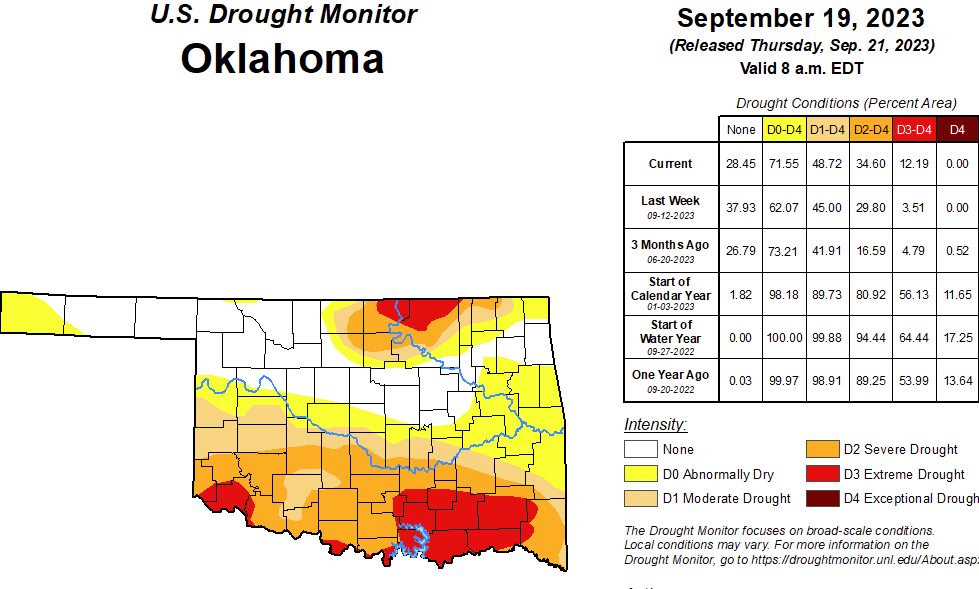
According to the latest Oklahoma Drought Monitor, Exceptional Drought remains at Zero percent, unchanged for the past few weeks.
Extreme Drought or Worse is now at 12.19%, up from Last week's 3.51%
Severe Drought or Worse is now at 34.60%, up from last week's 29.80%
Moderate Drought or worse is now at 48.72%, up from last week's 45.00%
Abnormally Dry or worse conditions are now at 71.55%, up from last week's 62.07
According to the 6-10 Day precipitation outlook, Most of the state Is looking at near-normal chances for rain. Today we are looking at a 50% chance of Rain. Friday, there's a 40% chance of Rain; Saturday, a 30% chance of Rain; and then, starting off the week on Monday, it looks sunny and mostly Clear.
To view the Oklahoma Drought Monitor, Click Here:
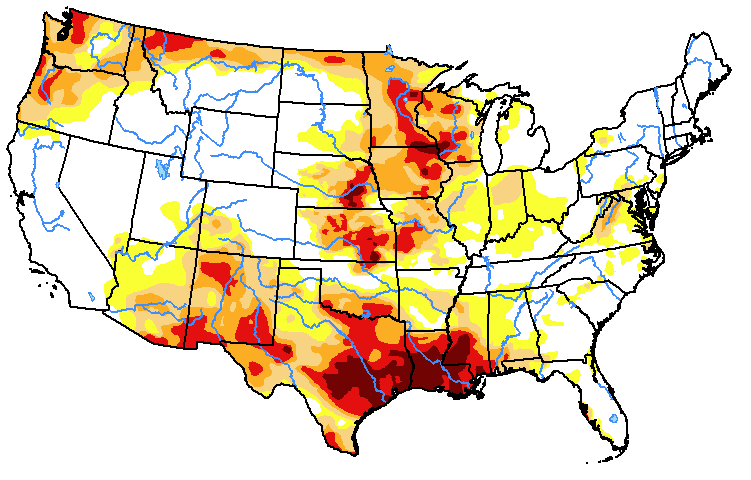
To view the US Drought Map, click here:
According to the National Drought Summary this week, Several Pacific weather systems moved through the jet-stream flow during this U.S. Drought Monitor (USDM) week (September 13-19). The upper-level circulation still consisted of an upper-level ridge over the western contiguous U.S. (CONUS), but it was weakened by the traversing Pacific weather systems. The ridge kept most of the western U.S. dry with warmer-than-normal temperatures from northern California to Montana. Cold fronts and surface low-pressure systems that accompanied the weather systems brought rain to the Southwest, southern Plains, Southeast, and Northeast. Heavy rain fell across western to central Texas, improving drought conditions. The rain in the East fell mostly on non-drought areas. The fronts kept temperatures cooler than normal from the Southwest to most of the southern Plains and across much of the country from the Mississippi River to East Coast – only the Gulf of Mexico coast and New England had a warmer-than-normal week. In addition to getting rain from frontal systems, parts of New England were soaked by the remnants of Hurricane Lee over the weekend. The northern Plains and parts of the central Plains, the Great Lakes, and the Mississippi and Ohio Valleys had a drier-than-normal week. The dryness this week was a continuation of dry conditions that have lasted for several months – in some cases for years – across parts of the country and that have dried out soils across more than half of the CONUS. According to U.S. Department of Agriculture statistics, 58% of the nation's topsoil moisture and 59% of the subsoil moisture was dry or very dry. For topsoil moisture, based on data going back to 2015, this amount is second only to the drought of 2022, which peaked at 68%. The continued dry conditions resulted in expansion or intensification of drought and abnormal dryness across parts of the Mississippi and Ohio Valleys, Mid-Atlantic states, and Pacific Northwest.
In the Southern Plains A large part of Texas received over 2 inches of rain this week. These areas included western to central Texas and parts of the Southeast and Far South. Over 5 inches of rain was reported at stations near Lubbock, Austin, Houston, and Galveston Bay, with the CoCoRaHS station at Nassau Bay 0.9ENE reporting 9.57 inches. The rain resulted in the contraction of D1-D4 in western to central Texas and in the southeast and far south sections of the state. Areas of half an inch to 2 inches of rain occurred over parts of western and southern Oklahoma. But most of Arkansas and Mississippi, parts of Louisiana and eastern Oklahoma, and much of the Rio Grande Valley were dry this week. The compound effects of the excessive heat and dryness of the summer and early fall prompted expansion of abnormal dryness and moderate to exceptional drought in Mississippi, Louisiana, northeastern Texas, and southeast Oklahoma, with abnormal dryness and moderate drought expanding in Arkansas and eastern Oklahoma. The high evapotranspiration and lack of rain has dried out soils and resulted in impacts that include low or dry streams and cattle ponds, desiccated pasture and cropland, and stressed vegetation dropping leaves. Reports include: hay and grasses are short and insufficient for cattle; soils are so dry that the ground is as hard as concrete. Reports like this are typical across the region. According to USDA reports, topsoil moisture is short or very short across 80% of Louisiana, 74% of Mississippi, 72% of Oklahoma, 69% of Arkansas, and 59% of Texas. The subsoil moisture statistics are: 87% Louisiana, 73% Oklahoma and Texas, 67% Mississippi, and 55% Arkansas. Over 60% of the pasture and rangeland is in poor to very poor condition in Texas (71%) and Louisiana (68%), and over 40% in Oklahoma (49%) and Mississippi (41%).
In the High Plains Half an inch to locally 2 inches of rain fell over western and southern parts of the High Plains region, mostly in Colorado, southern Kansas, and parts of Nebraska. But most of Wyoming, the Dakotas, Nebraska, and Kansas were dry this week. The rain trimmed D0 in southern Colorado and contracted D0-D1 in southwestern Kansas. D0 and D3 expanded in eastern Kansas. D0 expanded in parts of southwest Nebraska, but the compounded effects of excessive summer heat and overall dryness over the last 1 to 2 years resulted in expansion of D3 and D4 in parts of southeast Nebraska. Sporadic summer showers have not had much of an impact on the multi-year drought, with low soil moisture continuing and stressed vegetation as seen on satellite-based indicators. A farmer/rancher in Nuckolls County, Nebraska reported stock ponds had never gone dry in his 65 years living in the county until this summer and his crops were all burned up. Reports like this are typical across the region. According to USDA statistics, 50% or more of the topsoil moisture was short or very short in Kansas (68%), Nebraska (60%), North Dakota (51%), and South Dakota (50%), and 50% or more of the subsoil moisture was dry or very dry in Kansas (75%), Nebraska (65%), and North and South Dakota (52% each). Half (50%) of the pasture and rangeland in Kansas was in poor to very poor condition.
In the West Half an inch to locally 2+ inches of rain fell over parts of Arizona, New Mexico, and Utah, but most of the West received no rain this week. High evapotranspiration due to persistently hot temperatures, low streamflow and soil moisture, and lack of precipitation over 1-month to 12-month time scales resulted in the expansion of D2 and D3 in northwest Washington, expansion of D2 in eastern Washington and the Idaho panhandle, and expansion of D1 and D2 and the introduction of D3 in western Oregon. Rain from weather systems in past weeks, especially the remnants of Hurricane Hilary, resulted in contraction of D1 in central Oregon, D0 and D1 in Utah, and D0 to D3 in western Montana. While parts of New Mexico received rain this week, other parts were dry. The weather system that dumped rain on Texas also soaked east-central New Mexico, so drought contracted there. But prolonged dryness resulted in expansion of D1 and D2 in central to northeast New Mexico and D3 in northwest and southern parts of the state, as well as D3 expansion in adjacent southeast Arizona. According to USDA reports, more than two-thirds of the topsoil was short or very short of moisture in New Mexico (87%), Washington (83%), Montana (82%), and Oregon (74%), and more than two-thirds of the subsoil moisture was short or very short in New Mexico (87%), Montana (79%), Washington (78%), and Oregon (75%). Half or more of the pasture and rangeland was in poor or very poor condition in Washington (65%) and Arizona (57%.
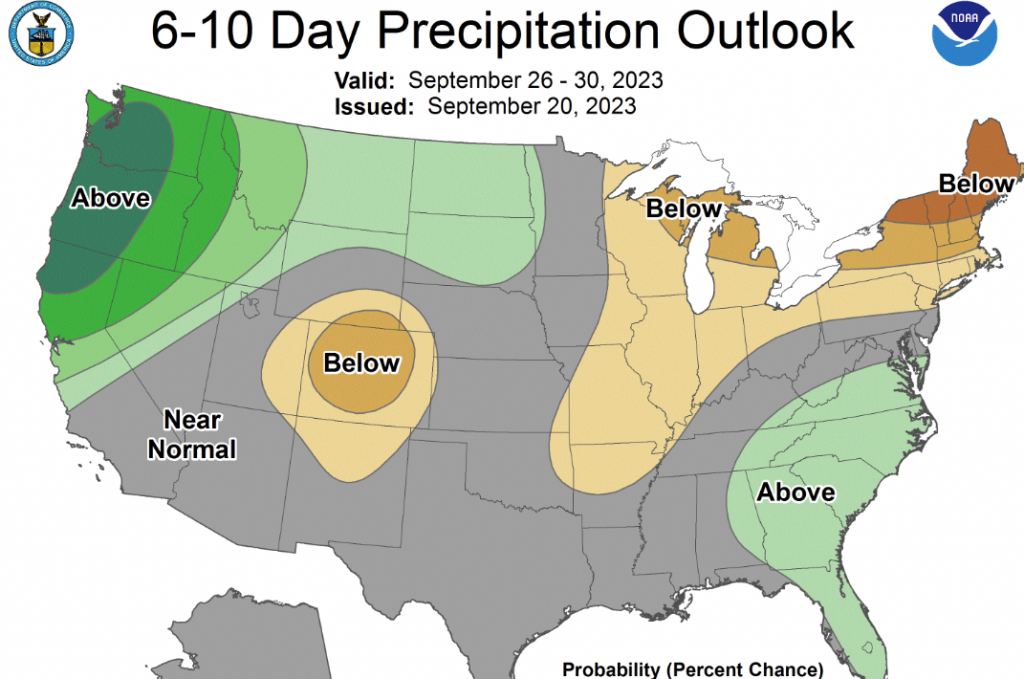
Agriculture Secretary Tom Vilsack today announced the United States is investing $455 million to strengthen global food security and international capacity-building efforts. The investment will utilize more than 375,000 metric tons of U.S. commodities.
The commodities in the Food for Progress program will be sold in local and regional markets and proceeds will help strengthen short- and long-term food security through development of agricultural value chains and trade-promoting activities. Prior to investing in a project, USDA conducts numerous analyses to ensure that local production and markets will not be impacted, and U.S. commercial interests will not be affected. The commodities in the McGovern-Dole program will go directly to hungry school children to help address hunger and promote education.
"USDA's McGovern-Dole International Food for Education and Child Nutrition Program has been a pillar global school feeding program for more than two decades, benefitting over 31 million children and families in 48 countries, providing more than 5.5 billion school meals, and supporting programs through U.S.-donated commodities and technical and financial support," said Vilsack. "Today, on behalf of the Biden Administration, USDA is reaffirming its commitment to strengthening global food security by awarding $230 million in new school feeding projects through the McGovern-Dole Program."
With the FY2024 funding, the McGovern-Dole Program will remain the largest donor to global school feeding programs, supporting national programs in low- and middle-income countries. This year, the Program will include projects in Cameroon, Haiti, Mozambique, Nepal, Nicaragua, Sri Lanka, and Togo.
"USDA will also award $225 million in international development projects under the Food for Progress Program to help improve agricultural productivity and expand trade of agricultural products," added Vilsack. "Food for Progress projects play a critical role in helping combat food insecurity by helping boost production capacity and expand global climate-smart agriculture adaptation."
This year's Food for Progress Program will invest in projects in Bangladesh, Cote d'Ivoire, The Gambia, Lesotho, Mauritania, Nepal, and Togo.
As renowned food security programs in the international community, USDA works continuously to monitor and ensure the success of the programs, all while balancing funding allocations with current global nutrition needs.
Last year, for example, Burundi became the newest participant in both the McGovern-Dole and the Food for Progress Programs. With McGovern-Dole investment, more than 6,000 metric tons of U.S. commodities and 2,000 metric tons of locally produced commodities will provide daily school meals and literacy programming for more than 80,000 children.
And with funding through the Food for Progress Program, the Burundi Better Coffee Initiative is working holistically across the supply chain to address food security challenges by improving incomes and resilience for 60,000 farming households.
USDA's Foreign Agricultural Service administers both the Food for Progress and McGovern-Dole programs. FY 2024 allocation tables will be published when available. For more information on the programs, visit fas.usda.gov/topics/food-security.
USDA touches the lives of all Americans each day in so many positive ways. In the Biden-Harris Administration, USDA is transforming America's food system with a greater focus on more resilient local and regional food production, fairer markets for all producers, ensuring access to safe, healthy, and nutritious food in all communities, building new markets and streams of income for farmers and producers using climate smart food and forestry practices, making historic investments in infrastructure and clean energy capabilities in rural America, and committing to equity across the Department by removing systemic barriers and building a workforce more representative of America. To learn more, visit www.usda.gov.

Growth Energy, the nation's largest biofuels trade association, defended the Renewable Fuel Standard (RFS) and its contributions to climate progress today at a hearing hosted by the U.S. Environmental Protection Agency (EPA) and its Science Advisory Board (SAB).
The hearing focused on a draft commentary SAB released last month that relied on cherry-picked data to arrive at the inaccurate conclusion that ethanol makes little or no contribution to reducing greenhouse gas (GHG) emissions. In his testimony at the hearing, Growth Energy Senior Vice President of Regulatory Affairs Chris Bliley pointed to numerous studies that demonstrated the emissions benefits of ethanol, and urged SAB to ultimately withdraw its original draft.
"Years of peer-reviewed research from scientists at the U.S. Department of Energy's Argonne National Lab, the U.S. Department of Agriculture, Environmental Health and Engineering have all concluded that today's ethanol reduces greenhouse gas emissions by nearly 50% compared to gasoline," said Bliley. "Studies claiming otherwise consistently ignore hard data in favor of questionable assumptions and outdated projections about land use." Bliley's full testimony as prepared for delivery can be found here.
The National Association of Conservation Districts (NACD) applauds the establishment of the American Climate Corps. Developing the next generation of conservationists has been a top priority and a major outcome of NACD's Climate Action Task Force.
Conservation districts and the original Civilian Conservation Corps collaborated on programs and projects across the country to respond to the severe soil erosion issues of the Dust Bowl. Modern day corps, such as Conservation Legacy, remain important partners. They provide critical capacity, robust training, and the skill set needed to tackle initiatives that increase climate resilience at the landscape scale.
The government-wide American Climate Corps will provide for a robust and diverse recruitment pipeline that is critical for the future success of conservation and climate programs. With 3,000 conservation districts across the U.S. and its territories, NACD can also provide valuable learning opportunities for participants. Conservation districts work with landowners and operators across rural and urban communities. They provide education and technical assistance on priorities such as soil health, water quality, coastal resilience, forest health, wildfire mitigation and recovery, habitat restoration, food security, and equitable access to programming, community green spaces, and trees.
"Opportunities to get 'boots on ground' with conservation districts provides the next generation meaningful development opportunities and leadership roles within local communities," said Kim LaFleur, NACD President. LaFleur also serves as the State Advisor and Program Director of the Massachusetts FFA Association. "These emerging leaders can benefit greatly from the decades of expertise that exist within conservation districts, empowering them to take on the climate challenge and deploy innovative solutions through the locally led conservation delivery system."
To learn how you can join the American Climate Corps, please visit the White House's American Climate Corps webpage.
NACD's Climate Action Task Force positions can be found here
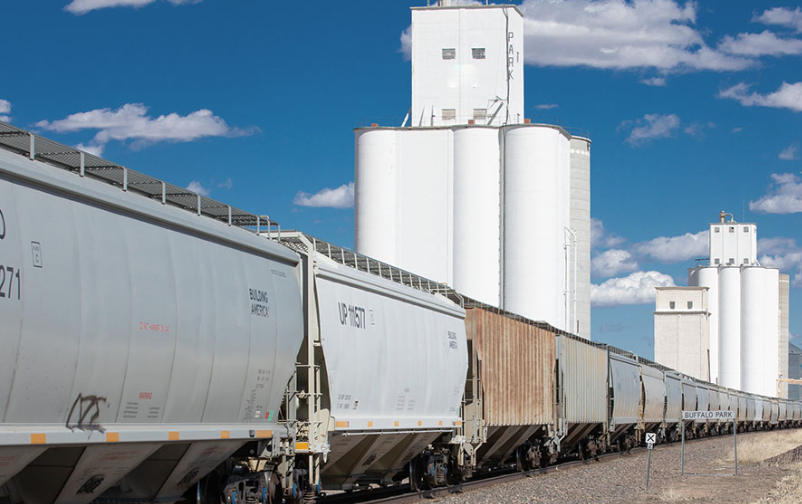
As we continue a series of articles on U.S. supply chain logistics, rail is arguably the most important mode of transporting wheat for export.
According to a recent USDA Modal Share Analysis Study, rail accounted for an average of 59% of inland transportation for wheat exports between 2016 and 2020, or an average annual total of 17.0 million metric tons. This article will focus on the importance of rail freight in wheat exports and address current trends in rail performance.
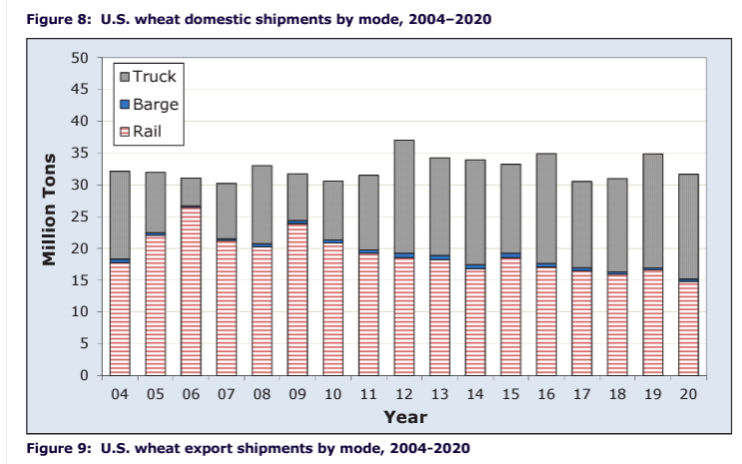
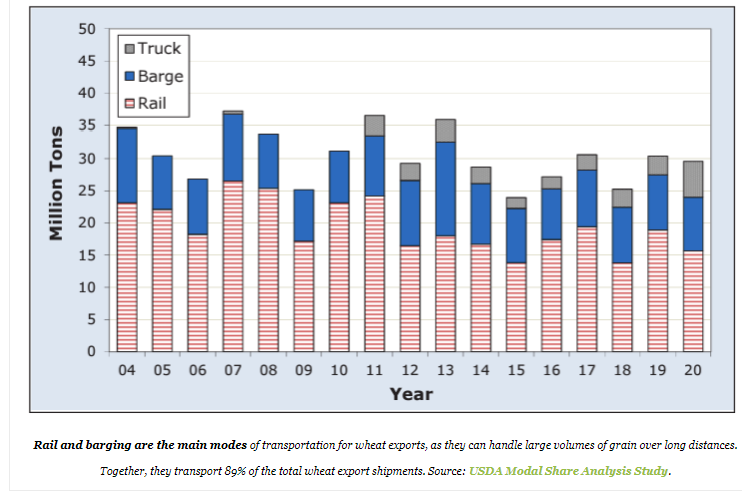
In 2022, increased demand for railcars and performance issues sent U.S. rail rates soaring, with Secondary Railcar Auction Market Bids hitting their highest since 2014. Since then, rail rates have eased drastically. From March 2023 to July 2023 secondary bids for railcars have been negative, indicating that the current supply of railcars is sufficient for meeting the needs of shippers.
Decreased volumes and the subsequent decrease in rail tariff rates and Secondary Railcar Market Auction Bids have added additional pressure to already low basis levels, helping boost the competitiveness of U.S. wheat to importers. However, as the 2023 soy and corn harvest progresses, we can expect rail rates to rise due to increased demand and a higher volume of grain moving via rail.
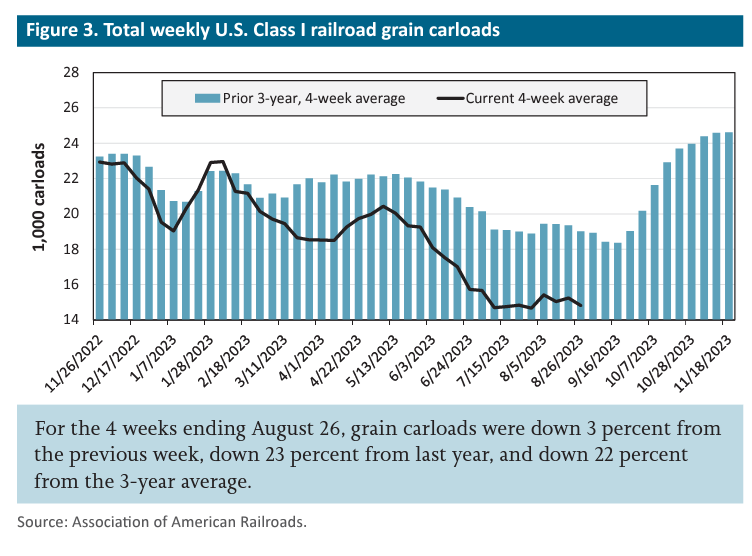
According to the latest Grain Transportation Report, grain carloads (corn, soybeans, and wheat) moved by Class I railroads were down 3% from the previous week and are sitting 22% below the three-year average. The current decreased volume alleviates pressure on basis as rail companies have a sufficient supply of cars to meet the current demand. Source: September 3, 2023 USDA Grain Transportation Report.
Even so, the outlook for fall logistics appears positive. In a recent interview with "Freightwaves," transportation export Jay O'Neil indicated that "Weather is always a question mark that makes it [performance] impossible to predict. But overall, I think the railroads... have some excess capacity because of [reduced grain export volumes]. I think [railroads] are very much looking forward to the harvest season ... So, I don't see any particular influences right now that should get in their way and prevent them from providing a decent service for harvest."
U.S. Wheat Associates (USW) is committed to sharing transparent and pertinent information to customers about inland logistics issues. It is beneficial for U.S. wheat importers to be aware of transportation trends, as seasonal shifts and potential issues have a direct influence on export basis and the Free-on-Board export price.
Encompassing the largest share of inland logistics, the railroads are a critical component for moving U.S. wheat to export. After last years' service disruptions, steps have been taken to help address the root issues such as hiring additional crew and investing in infrastructure. U.S. railroads are committed to moving U.S.-grown commodities. With diverse origination options and numerous modes of transportation, regardless of the class or export point, rail helps U.S. wheat remain the most reliable choice for world importers.
This article is part of a series outlining the inland logistics for U.S. wheat, highlighting barge freight, the railroads, infrastructure investments, and maritime transportation trends.
By USW Market Analyst Tyllor Ledford

Whether your preference is plain, drenched in butter, or topped with fruit - there's one thing Americans can all agree on, pancakes are worth celebrating!
National Pancake Day is on September 26th and to celebrate, we conducted a nationwide survey of over 1,500 Americans to find out what each state's favorite pancake toppings are! (Bar the obvious, maple syrup).
The smell of fresh fluffy pancakes cooking, sizzling bacon or golden melted butter - name a better wake up call?! We'll wait. Thankfully there's a whole day (or two, in America's case) for celebrating our beloved pancake stacks. But it's 2023, and we're somewhat *creative* with our food preferences - which means the topping options are endless. Let's get to the bottom of it as we reveal which is the most popular topping across the U.S.
Butter was the favorite pancake topping for Americans this pancake day, which 27 states agreed on. Simple but effective some would say! In second place we have strawberries, with 7 states opting for this healthier pancake topping. Finishing off the top three is chocolate chips, the sweet-toothed amongst us voted this was the best pancake topping, as agreed by 5 states, including; New Hampshire, North Dakota and Arizona - to name a few.
For some states, the array of pancake toppings made it harder to choose just one. South Carolina had a sweet showdown of choices, with chocolate chips, pecans/nuts and whipped cream battling for pancake supremacy. Similarly, in the land of Utah, residents found themselves in a tasty tangle, as they opted for 3 different options - chocolate chips, peanut butter and fruit.
But hold onto your frying pans, because the likes of Kansas, New Mexico, Rhode Island and Wyoming decided to go lone ranger, flipping tradition on its head. These states didn't choose to follow the crowd, as they opted to top their pancakes with; peanut butter, chocolate syrup and bacon respectively.
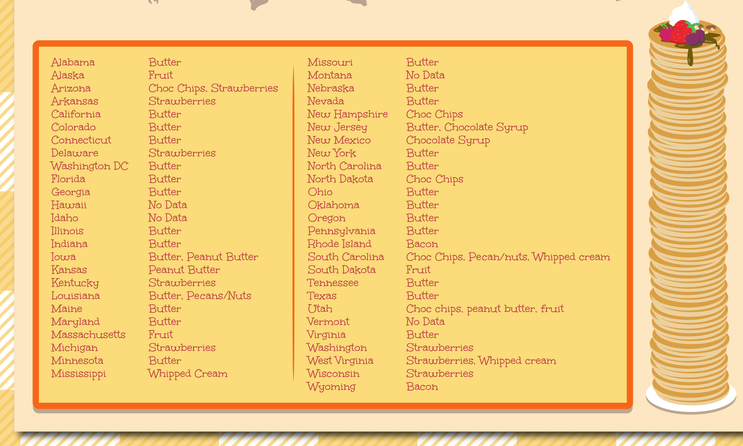
We've established that Americans are pancake lovers, but who are the most pancake obsessed states? Well, we've taken an average across the respondents to find out how many times a month each state consumes pancakes. The biggest pancake fanatics are the Magnola state, Mississippi, who on average eat pancakes 7 times a month! We can get down with that. Not too far behind them is Utah, 5 times a month - we can't say we're surprised when they have that many favorite toppings to choose from. In joint place with Utah was strawb-loving West Virginia, who also consumed pancakes at least once a week (5 times a month).
Whilst the nation may be split by their favorite pancake toppings, one thing we can all agree on is our love of a pancake stack. So grab that frying pan and your toppings of choice (we won't judge - promise!) and get yourself ready for September 26th. After all, breakfast is the most important meal of the day.
We surveyed over 1,500 U.S. residents about their pancake topping preferences in August 2023. We decided to choose the second favorite topping for every state and exclude maple syrup, which inevitably came out on top.
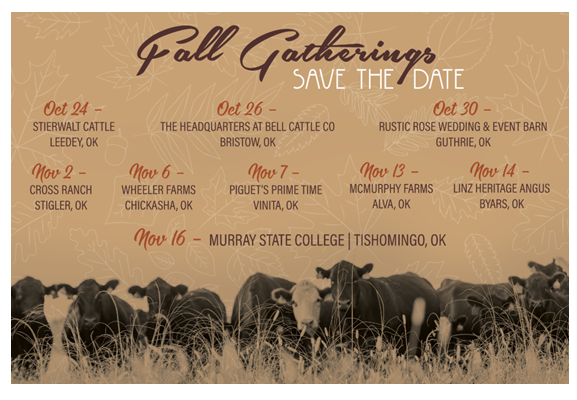
Fall Gatherings provide OCA members an opportunity to fellowship with area cattlemen in a casual atmosphere while gaining tips on how to protect our livelihood and enhance production practices. In an effort to recruit new OCA members, we encourage members to invite friends, family and neighbors.
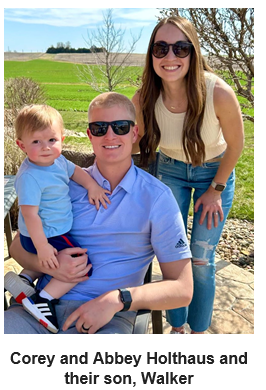
Corey Holthaus of Xcel Ag (www.facebook.com/xcelag), Seneca, Kansas; and Meristem Crop Performance Group, LLC (www.meristemag.com), based in Columbus, Ohio, today announced a new dealership agreement to serve farmers in Northeastern Kansas.
Under the new relationship, Holthaus and his business, Xcel Ag, will carry the Meristem Crop Performance product line and become Meristem's ally in helping Kansas farmers make the most of every dollar they spend on crop inputs.
"It's our mission at Meristem to help growers make the most of every seed they plant and every dollar they spend," said Mitch Eviston, Meristem Founder and CEO, in announcing the agreement. "That's the goal Corey and his team at Xcel Ag work toward every day and we are excited to be connected with them to reach more farmers in Northeastern Kansas."
Holthaus grew up on a family farm near Seneca and continues to farm with his grandfather, father, uncle, and brother. He is married to Abbey, and they have a son, Walker. Several years ago, he launched another family business, Xcel Ag, to sell Channel Seed and provide agronomic services. Holthaus said that by adding Meristem Crop Performance, Xcel Ag is taking the next step in the mission of doing all he can to serve growers all season long.
"Delivering seed at planting and saying, 'see you next year' is NOT how we serve farmers," he emphasizes. "We want to help them all the way through the season with every trip they choose to make across the field."
Xcel Ag will now add the Meristem product portfolio including RACEREADY™ seed treatments, HOPPER THROTTLE™ planter box treatments, REVLINE™ biologicals and plant growth regulators, TRUTRACK™ drift control, AQUADRAFT™ water conditioners and surfactants, UPSHIFT starter fertilizers and HOMESTRETCHt™ micronutrients and foliar nutritionals. Of special interest is EXCAVATOR™, powered by MICROBILIZE™, a new biological designed to break down tough crop residue and release nutrients faster.
"What works in Illinois or Iowa in their corn-on-corn cropping won't necessarily work out here in Kansas," said Holthaus. "Our approach is based on tailoring our service to each farmer and each field they farm, and Meristem's portfolio gives us more tools to use. There's certainly no way to win with a one-size-fits-all approach around here."
Stewardship, Holthaus explained, is another reason Meristem is a good fit for his operation. "This Meristem team is focused on reducing waste and helping growers raise more bushels at less cost for each unit of that yield. That's always been our mission, too."
Meristem Crop Performance Group, LLC (www.meristemag.com)is one of the fastest-growing crop input companies in America. Meristem sources, formulates, licenses, and delivers high-quality crop inputs to farmers at the highest possible value offering substantial savings. Meristem is focused on building a highly efficient channel to bring crop inputs to market so farm businesses can make the most of their infrastructure and intellectual property investments and better compete in the global agricultural market. Meristem's team of experienced ag professionals also works to create real productivity gains for farm businesses through novel biological delivery systems and accelerated access to farm-ready innovation. For more information, go to our website at www.meristemag.com, or follow us on Twitter, Facebook, LinkedIn, and YouTube
Congressman Frank Lucas (OK-03) released the following statement after the House Financial Services Committee passed the Agricultural Risk Review Act, his legislation to add the Secretary of Agriculture as a permanent member on the Committee on Foreign Investment in the United States (CFIUS).
"Protecting America's agriculture security is a critical part of our national security. With an increasing amount of foreign investment in U.S. agriculture, including the Secretary of Agriculture as a member of CFIUS is long overdue." said Congressman Frank Lucas. "I know firsthand just how important the security of our agricultural industry is, which is why I applaud my colleagues on the House Financial Services Committee in taking a critical step to make my longstanding priority law."
"The Agricultural Security Risk Review Act is an important reform that the gentleman from Oklahoma has long championed... While CFIUS is indeed a committee, it benefits from the expertise of particular Member Agencies with relevant expertise. Agriculture is too important to go neglected. Mr. Lucas has long understood this, and I applaud his hard work in championing the Agriculture Secretary's contributions to CFIUS."
-Congressman Blaine Luetkemeyer, Chairman, House Financial Services Subcommittee on National Security, Illicit Finance, and International Financial Institutions
"There is a small but growing share of agricultural land that is owned by foreign interests. Persons involved in those purchases as well as transactions affecting the food supply chain could very well pose a threat to the U.S... It is vital that CFIUS is equipped with relevant expertise to review transactions involving agricultural land or food-related businesses. H.R. 3378 is a commonsense bill that would formally add the Secretary of Agriculture to CFIUS, where food and agriculture are concerned."
-Congresswoman Maxine Waters, Ranking Member, House Financial Services Committee
Background:
• CFIUS is chaired by the Secretary of the Treasury, and Members of the Committee include the heads of the Departments of Justice, Homeland Security, Commerce, Defense, State, Energy, the Office of the U.S. Trade Representative, and the Office of Science & Technology Policy.
• The Director of National Intelligence and the Secretary of Labor serve as non-voting members.
• While the Secretary of Treasury can designate the Secretary of Agriculture as a lead agency for transactions on a case-by-case basis, the Ag Secretary is not a permanent Member.
• During a House Agriculture Committee hearing earlier this year, USDA Secretary Vilsack discussed the implications of a permanent placement of the USDA Secretary on CFIUS, saying, "Being a permanent member would allow us to educate the other members of CFIUS what to look for and what to be sensitive to when it comes to agriculture and agricultural production."
• The Agricultural Risk Review Act would add the Secretary of Agriculture as a permanent member to the Committee on Foreign Investment in the United States (CFIUS) for any transactions related to the purchase of agriculture land, agricultural biotechnology, or any other transaction related to the U.S. agriculture industry, as determined by the USDA Secretary.
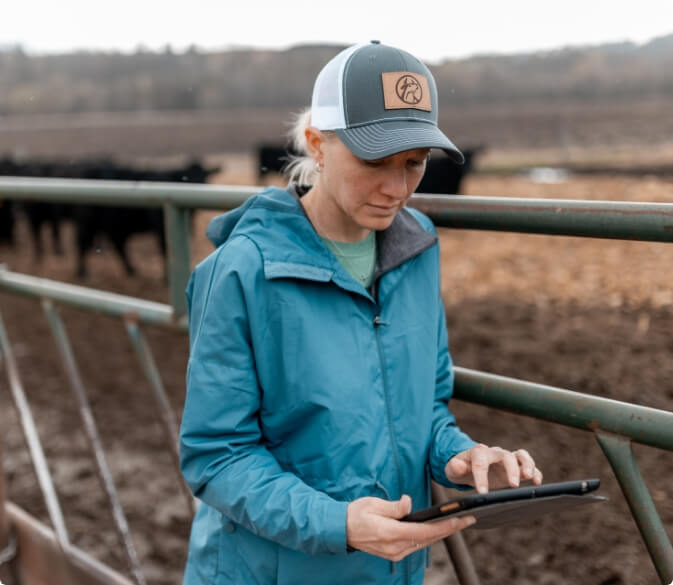
Senior Farm and Ranch Broadcaster, Ron Hays, is talking with New Mexico cattle producer, Will Sowers, about his experience with Performance Beef, a cattle management software that simplifies feeding, performance, and data recording.
Sowers and his family have a ranch in northeastern New Mexico near Clayton. In the middle of a drought about a decade ago, Sowers added a backgrounding yard to his cow-calf operation to increase flexibility in marketing his animals.
As the backgrounding yard added a great deal of record-keeping to his plate, Sowers said he found answers in Performance Beef.
"I gave Performance Beef a call, and after about a two-hour consultation with them on the phone, they had every question I had answered in great detail," Sowers said. "The sheer amount of time it saved me- I can't even add it up."
With Performance Beef, Sowers said everything he feeds daily is recorded, and he can see the breakeven on his cattle each day.
"The fact that I don't have to stay up until midnight doing paperwork to get bills out to my customers...once the calves ship that day, I can have a bill for them that day, they know exactly what they have in their cattle, they know what they have into them prior to shipping, and those are the big things for me," Sowers said. "Now that they have added the animal health side to it, I can keep track of all the medicine those cattle were given, when they were given shots, and what they were given."
Now that Sowers has been utilizing Performance Beef, he said he cannot imagine feeding cattle without it.
"It is the peace of mind and knowing exactly what I have got out there on my cattle side, on my feed side, and it is just a huge stress reliever," Sowers said.
Coming soon, Performance Beef is working on a ranch software specifically for cow-calf operators.
The Beef Buzz is a regular feature heard on radio stations around the region on the Radio Oklahoma Ag Network and is a regular audio feature found on this website as well. Click on the LISTEN BAR at the top of the story for today's show and check out our archives for older Beef Buzz shows covering the gamut of the beef cattle industry today.
RON's Dave Lanning has a pre-opening look at today's agricultural Markets.
Click the audio tab below for today's report.

U.S. Wheat Associates (USW) and the National Association of Wheat Growers (NAWG) today thank Sen. Mike Braun (R-IN), Sen. Jon Tester (D-MT), Sen. Roger Marshall (R-KS) and Sen. Pete Ricketts (R-NE) for introduction of the American Farmers Feed the World Act of 2023 in the U.S. Senate. The bi-partisan legislation would restore the original intent of the Food for Peace program without spending additional Farm Bill resources, while also safeguarding the interests of hard-working American farmers in providing food to those in need around the world.
USW and NAWG have joined the broader agriculture industry in backing the legislation, seeing it as an effort to use U.S.-grown commodities to fight global hunger rather than spending American taxpayers' dollars to purchase food from competitors of the U.S. wheat industry.
"It is exciting to see the Senate join the House in supporting the role of U.S. farmers in the Farm Bill's international food aid programs," said USW Director of Trade policy Peter Laudeman. "The American Farmers Feed the World Act of 2023 offers an important rebalancing to ensure that Food for Peace remains focused on effectively delivering as much American-grown food to as many people in need as possible. We certainly want to offer a huge thank you to Senator Braun, Senator Tester, Senator Marshall, and Senator Rickets for championing this important bill."
USW Board Member and Montana wheat farmer Denise Conover said using U.S. wheat to feed those in need across the world is a story that resonates strongly with every farmer.
"As a Montana wheat farmer, I am incredibly proud of the role my farm plays in supporting international food aid programs," said Conover. "I am pleased to see Senator Tester leading this important bill to ensure that American farmers continue to play this vital role in the Food for Peace program, feeding more Montana wheat to more hungry people at no additional taxpayer cost."
The American Farmers Feed the World Act empowers American wheat farmers to share their harvest and contribute to the global battle against hunger, Brent Cheyne, President of NAWG and a wheat farmer from Oregon, said.
"Wheat, a vital staple grain accounting for approximately 20 percent of global calorie consumption, receives its highest quality from U.S. wheat farmers, making it an essential resource in nourishing the world," Cheyne added. "We've observed a shift away from utilizing American commodities in food aid programs over the years, which has resulted in diminished transparency, accountability, and bipartisan backing. As Congress considers reauthorizing the Farm Bill later this year, this legislation provides an opportunity to revitalize the role of American agriculture in addressing global hunger."
Brian Linin, a Goodland, Kansas, wheat farmer who also serves on the USW Board and the USW/NAWG Food Aid Working Group Committee, said wheat farmers in Kansas and across the country have a long history of supporting international food aid.
"Our nation, and those in need, benefit most directly and transparently from receiving American commodities instead of cash and vouchers," Linin said. The American Farmers Feed the World Act of 2023 was introduced in the U.S. House on June 22. USW and NAWG have worked with a coalition of other agriculture groups to advance this legislation through the upcoming new Farm Bill.

Jayson Lusk, vice president and dean of Oklahoma State University Agriculture, meets and greets New Frontiers donors and Ferguson College of Agriculture friends and alumni during the New Frontiers Tailgate. (Photo by Bryanna Birdsong, OSU Foundation)
By Mandy Gross
More than 300 Oklahoma State University New Frontiers donors and Ferguson College of Agriculture faculty, staff, alumni and friends gathered to celebrate Cowboy football and the construction progress of the new home for OSU Agriculture.
The OSU Foundation partnered with OSU Agriculture to host the third annual New Frontiers Tailgate on Sept. 16 before the Cowboy football game against South Alabama. The event featured a meet-and-greet with OSU Agriculture Vice President and Dean Jayson Lusk.
"The New Frontiers Tailgate is an excellent tradition to celebrate the progress of New Frontiers Agricultural Hall," Lusk said. "It was an honor and a tremendous opportunity for me to meet and greet alumni, friends and New Frontiers supporters at the event. We look forward to next year when we can celebrate the completion of our new home."
Not only did tailgate goers see the construction site from the tailgate tent, but they also got to enjoy a sweet treat from Larry & Kay's Dairy Bar.
The Dairy Bar was a staple on OSU's Stillwater campus from 1928 until 2006. The New Frontiers Agricultural Hall will feature a re-envisioned Dairy Bar for future Cowboys to enjoy when the building opens next fall.
Matt and Kristine Waits are major gift donors to the New Frontiers campaign and attended this year's tailgate.
"We are proud to be a part of the New Frontiers campaign, and the new building is something that is overdue and needed," said Matt Waits, a 1999 OSU agricultural economics graduate. "It's great they are bringing back the Dairy Bar. It has a long history, and everyone who went through the ag college has fond memories of their time at the Dairy Bar."
This year's sponsors included the Oklahoma Beef Council, Enid Brewing Co. and an anonymous donor.
To view photos from the event, please visit the New Frontiers Tailgate gallery.
The New Frontiers campaign was launched in January 2020 to build a new state-of-the-art facility for OSU Agriculture. The New Frontiers Agricultural Hall, expected to open in fall 2024, further advances teaching, research and Extension efforts that are critical to the state's economy, citizens' safety and quality of life. By advancing OSU Agriculture and its programs, New Frontiers is fostering innovation to help feed the world.
According to the latest data from the Association of Equipment Manufacturers (AEM). Heavy duty row crop tractor unit sales continued to increase in the U.S., while overall farm tractor unit sales in the U.S. and Canada declined in August. Associate Farm Editor, Reagan Calk, had the chance to talk with the AEM Senior Vice President, Curt Blades, about the latest report.
In the U.S., 100+hp 2WD tractors, and 4WD tractors were the only segments to grow year-over-year. Both those segments, along with self-propelled combines remain positive for the year. The biggest overall growth among tractors happened in 4WD units, growing more than 20 percent in August.
"For the last 30 years or so, the Association of Equipment Manufacturers has been producing monthly sales reports where we track tractors and combine sales," Blades said.
Overall unit sales of U.S. tractors are down 4.6 percent compared to sales in August 2022, while combine sales declined slightly by 2.4 percent.
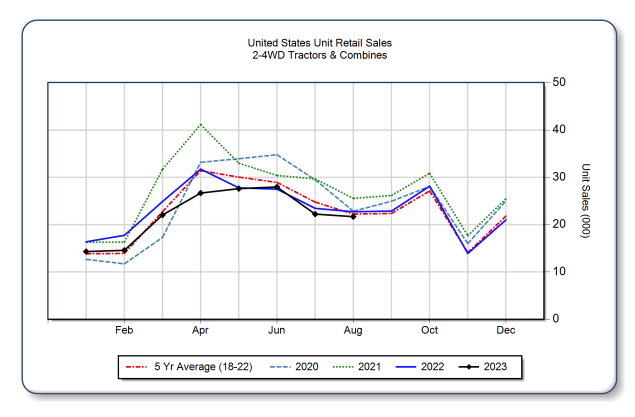
The decline in sales of U.S. tractors, Blades said, is due to the demand being met after strong markets for the last three years. While combine sales were down slightly in August, Blades said those sales are still up 30 percent for the year.
"I think that might just be a tiny issue with combines because we are seeing what I consider to be a strong demand for combines overall," Blades said.
The combination of 4WD tractors being up 21 percent year-over-year paired with the current row crop numbers, Blades said, shows that there is general optimism in the farm economy.
"Overall, it seems as if there is a whole lot of optimism out there for what this technology brings to the agriculture market...," Blades said.
New technology brings a number of advantages to the table for producers, Blades said, including but not limited to increased yields, fuel savings, increased sustainability, and better efficiency of time.
"With all of these things combined, you have got some real benefits that farmers who adopt the technology can see in their faming operation almost immediately," Blades said.
Speakers at Fall Focus 2023
Farm Director, KC Sheperd, had the chance to visit with with the Director of SimGenetic Development at the American Simmental Association, Luke Bowman, about highlights from the American Simental Association's Fall Focus 2023 held in Denver, Colorado, at the end of August. Senior Farm and Ranch Broadcaster is featuring comments from Bowman talking about Bovine Congestive Heart Failure.
"It was a watershed moment for the beef industry at Fall Focus," Bowman said. "We always try to have a symposium based on science and current events in the cattle breeding world to give to our members and commercial cattlemen who can attend the national event held in different regions around the country every year."
To be able to discuss the topics covered at Fall Focus 2023, Bowman said, and to have so many experts in the room was exceptional. One of the big topics covered at the event, Bowman added, was bovine congestive heart failure.
"Cattlemen in general and probably all livestock breeders select for extremes rather than optimums, so we want to maximum the absolute number of pounds we sell at weaning time or sell at slaughter time because that yields more dollars," Bowman said. "However, what we are doing is we are getting these cattle to perform like racehorses, and they absolutely outperform and grow like crazy, but are all of the rest of the organs keeping up with them? We don't know. So, if their hearts can't keep up with all this maximum growth and fat they are putting on at the late stages of the game at the feedlot, they literally have heart attacks and die."
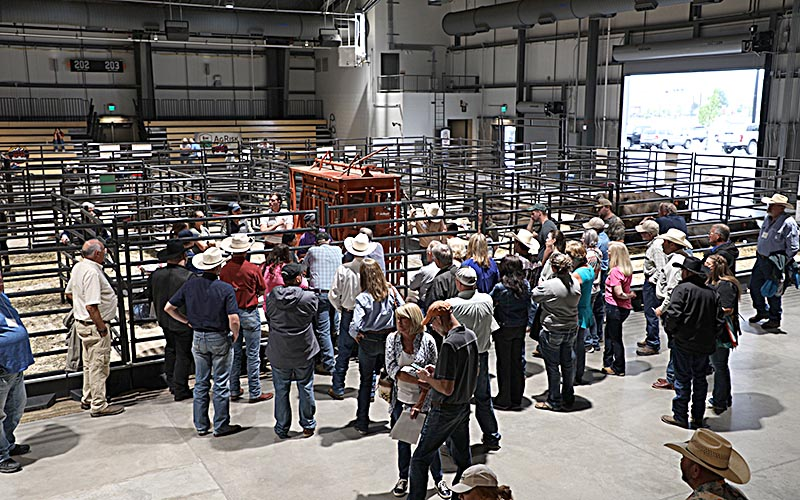
Other topics included the importance of crossbreeding, which Bowman said is essential for calf vigor. Crossbred cattle, Bowman added, seem to be "thriftier" and survive the feedlot experience at a higher and more successful rate than straightbred animals.
"We found that a straight, full-blood Simmental is not applicable to today's industry; however, a composite Simmental is extremely applicable," Bowman said. "We want cattlemen to think about that as they are breeding cattle going forward."
While some breeds are easier to raise and market, Bowman said they are not always the thriftiest.
"We ultimately know coming out of this symposium is that hybrid cattle are just going to survive better," Bowman said.
One of many advantages of Simmental genetics, Bowman said, is the ability to thrive in high altitudes.
"Simmental cattle were established in Switzerland in the Alps," Bowman said.
Because of the background of the Simmental breed, Bowman said these cattle are able to adapt well to high altitude conditions compared to other breeds.
"As fall calving season arrives, it is a good time to consider what your bull purchases are going to look like this fall for turning out sires in November and December," Bowman said.
The Beef Buzz is a regular feature heard on radio stations around the region on the Radio Oklahoma Ag Network and is a regular audio feature found on this website as well. Click on the LISTEN BAR at the top of the story for today's show and check out our archives for older Beef Buzz shows covering the gamut of the beef cattle industry today.

The Emergency Drought Commission met Tuesday and voted to release all remaining funding allocated to the current Emergency Drought Cost-Share Program. The state Legislature appropriated $17 million to the Emergency Drought Relief Fund in May.
"I am pleased that the Legislature's appropriations will provide further relief to producers and communities who are still facing the devastating effects of the drought," said Sen. Darcy Jech, who attended Tuesday's meeting.
"I appreciate my colleagues and the Emergency Drought Commission for working to provide this needed relief to our citizens," said Jech, R-Kingfisher.
The Emergency Drought Commission also voted to extend the deadline for completing practices previously applied for through the Emergency Drought Cost-Share Program until June 30, 2024.
In a separate motion, the Emergency Drought Commission voted to provide further oversight to the program by tightening up the verification process. The Commission recommends local conservation districts:
All actions of the Commission are pending approval by Governor Kevin Stitt.
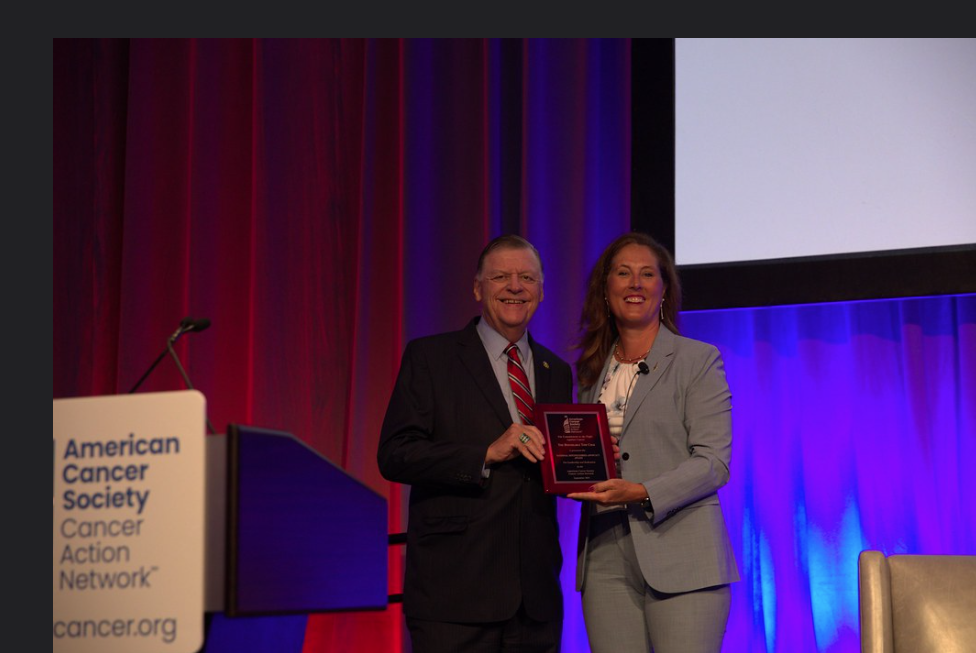
Congressman Tom Cole (OK-04), Vice Chairman of the House Appropriations Committee, received the 2023 National Distinguished Advocacy Award from the American Cancer Society Action Network (ACS CAN) for his leadership in the fight against cancer. Cole was selected for the award particularly for his dedication to increasing cancer and pediatric cancer research funding, leading the National Institutes of Health (NIH) to a funding increase of 49 percent since 2015, and introduction of the Strengthen The Pediatric Research Initiative Act.
"I am deeply honored to receive this distinguished award from the American Cancer Society," said Cole. "This tragic and deadly disease affects every American family in some shape or form. However, through biomedical research, we can improve patients' access to care, prevention and screening programs, uncover new treatments and hopefully find a cure one day to save lives. Indeed, the next breakthrough is always right around the corner, and I will continue to champion this cause and work with my colleagues in Congress, organizations such as the American Cancer Society and others to ensure the fight against cancer continues."
The U.S. Department of Agriculture (USDA) today announced an additional $25 million investment to expand efforts to prevent and reduce food loss and waste. The investment, funded under the American Rescue Plan Act (ARPA), is part of a joint agency initiative between USDA's National Institute of Food and Agriculture (NIFA) and USDA's Office of the Chief Economist (OCE).
In the United States, over one-third of all available food goes uneaten through loss or waste. When food is tossed aside, so too are opportunities for improved food security, economic growth and environmental prosperity.
"USDA NIFA is extensively engaged in research, Extension and educational activities to mitigate food loss and waste," said Dr. Chavonda Jacobs-Young, USDA Chief Scientist and Under Secretary for Research, Education and Economics. "Several NIFA grant programs focusing on this issue align with USDA's cross-cutting priorities to address the impacts of climate change, ensure food and nutrition security, strengthen rural economies, and ensure racial justice and equity."
Since 2017, NIFA has committed $123.5 million across 527 projects relating to food loss and waste. This latest investment will expand several of NIFA's core programs by $25 million.
The funding will support the Community Food Projects (CFP) Competitive Grants Program to reduce food loss and waste; get surplus wholesome food to individuals; and develop linkages between food producers, providers and food recovery organizations. The primary goals of CFP grants are to provide communities a voice in food system decisions and to support local food markets to fully benefit the community, increase food and nutrition security, and stimulate local economies.
NIFA has awarded $4.3 million to 12 CFP Food Loss and Waste projects from the fiscal year 2023 Request for Applications competition. These projects meet the goals of the program and integrate actionable activities that reduce food waste within the local food system by keeping wholesome food in the human food supply chain and saving money for families and businesses.
"The programs supported by this funding are cornerstones in NIFA's agriculture, food safety and nutrition portfolio," said NIFA Director Dr. Manjit K. Misra. "This funding will increase engagement around nutritional health from the classroom to the community, with an emphasis on reducing food loss and waste."
Examples of funded projects include:
The funds will also support NIFA's Food and Agriculture Service Learning Program (FASLP) grants for food loss and waste reduction on school grounds to engage in and scale up efforts that increase capacity for students to learn how to prevent food waste, change the school environment, and use cafeterias and other parts of school grounds as classrooms. FASLP projects are intended to increase knowledge of agriculture and improve child nutrition.
NIFA has announced three awardees with grants totaling over $500,000 in the FASLP program from the fiscal year 2023 Request for Application competition that will support projects in Alabama and Connecticut.
"This additional investment will have multiple, positive outcomes," said USDA Food Loss and Waste Liaison Jean Buzby. "Grants supported by this investment will reduce the amount of excess food going to waste and help make wholesome and nutritious foods available to those who need it most. Now that's a win-win."
The remaining funds will support forthcoming food loss and waste efforts in collaboration with the National 4-H Council and the Sustainable Agriculture Research and Education program.
The collaboration between NIFA and OCE is part of USDA's framework to transform the U.S. food system to benefit consumers, producers and rural communities by providing more options, increasing access, and creating new and better markets for small and mid-size producers.
Learn more about these programs on USDA NIFA's website. Additional resources on food loss and waste prevention are available at www.usda.gov/foodlossandwaste.
USDA touches the lives of all Americans each day in so many positive ways. In the Biden-Harris Administration, USDA is transforming America's food system with a greater focus on more resilient local and regional food production, fairer markets for all producers, ensuring access to safe, healthy, and nutritious food in all communities, building new markets and streams of income for farmers and producers using climate smart food and forestry practices, making historic investments in infrastructure and clean energy capabilities in rural America, and committing to equity across the Department by removing systemic barriers and building a workforce more representative of America. To learn more, visit www.usda.gov.

Farm Director, KC Sheperd, is visiting with Congresswomen Stephanie Bice about some updates on agricultural policy. Representative Bice serves Oklahoma's 5th District.
As part of the Republican Mainstreet Conference, Bice said House Republicans agreed on a short-term government funding bill. This 30-day CR was put into place to help keep the government open with funding through October 31, providing more time for debate on appropriations bills.
"This continuing resolution would help protect the credit insurance fund program account, rural housing, the rental assistance program, the ag marketing account, and the federal wildland firefighter salaries," Bice said.
There has been a tremendous amount of excess spending over the past two years, Bice said, so cutting that excess spending is a priority, but it is also important to keep adequate military and veteran funding. The proposal put forth for a 30-day CR will allow more focus on the most important issue in the country, Bice added, which she said is the border.
"This bill has a tremendous amount of border security initiatives in it, and we feel that even Democrats are now asking for something to be done on the Southern border with seven million folks crossing illegally into the country, this is a crisis, and this administration is ignoring it," Bice said. "We feel positively optimistic that we can get this across the finish line later this week and avoid that."
The biggest issue Bice said she hears from farmers and ranchers in Oklahoma is regarding interest rates and credit.
"We are so incredibly fortunate to have Frank Lucas back on the ag committee," Bice said. "He certainly was the author of the last Farm Bill, but he knows the nuances of how to get the deal done. So, having him back on the ag committee allows, I think, great perspective and also makes sure we are protecting our farmers and ranchers as we move through the process."
Bice said she believes it is more likely that there will be a continuing resolution on the current Farm Bill, to provide time to renegotiate in the next 12 months.
An advocate for putting a stop to foreign agricultural land purchasing in Oklahoma, Bice said she has filed legislation to find a solution.
"I would like to make it specific to Oklahoma, but it is across the country, preventing foreign entities from purchasing ag land," Bice said.
As of a few months ago, Bice said her staff has started to read the Federal Register each morning to look into which policies the administration is pushing.
"It is not one specific thing they are doing," Bice said. "It is death by a thousand cuts."
The brand will add 28 new corn hybrids and 26 soybean varieties to its lineup in 2024
LG Seeds will add 28 new corn hybrids ranging from 80- to 118-day relative maturities (RMs) in 2024. The new corn hybrids feature seven different trait offerings – conventional, Roundup Ready®, Agrisure® 3110, VT Double PRO®, Agrisure Duracade® 5222, SmartStax® and SmartStax® PRO.
"From the toughest corn rootworm acres to conventional acres grown for specialty crops, LG Seeds continues to provide industry-leading options to its customers," says Justin Krell, brand product manager at LG Seeds. A few standouts from the 2024 corn lineup include the following:
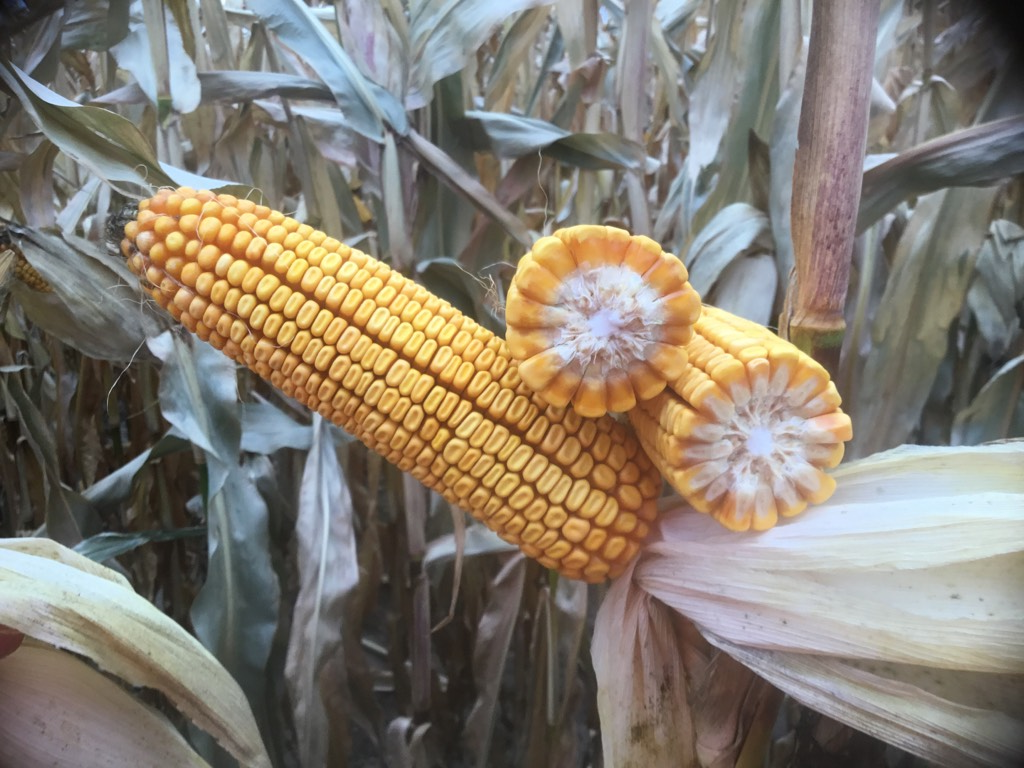
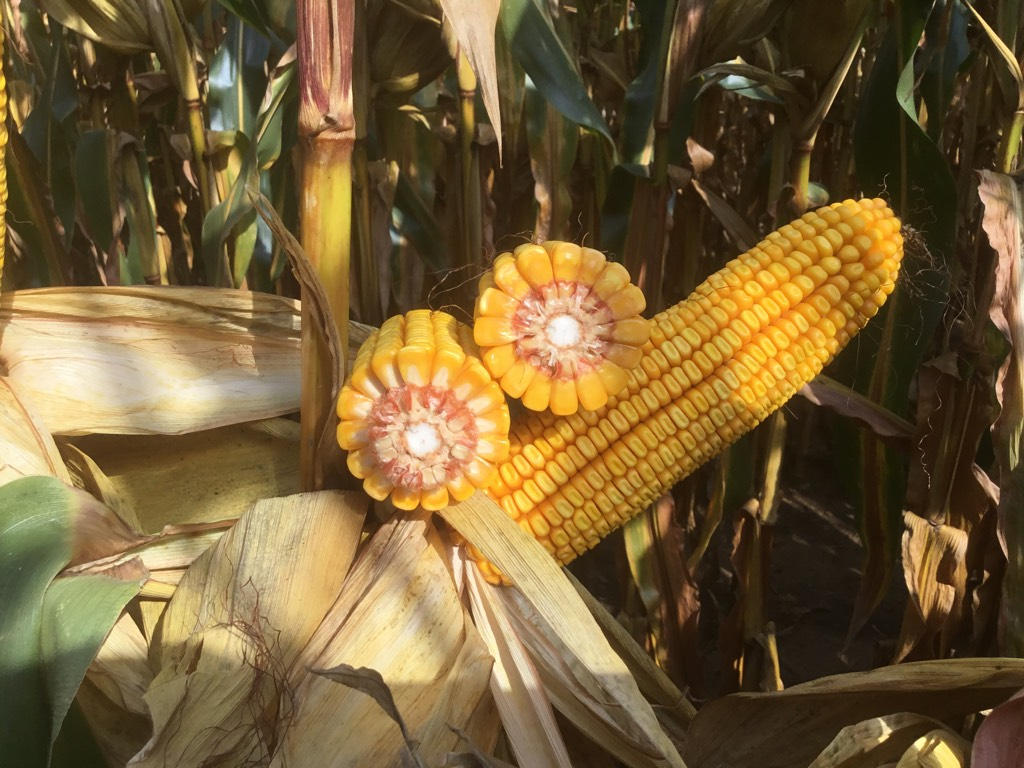
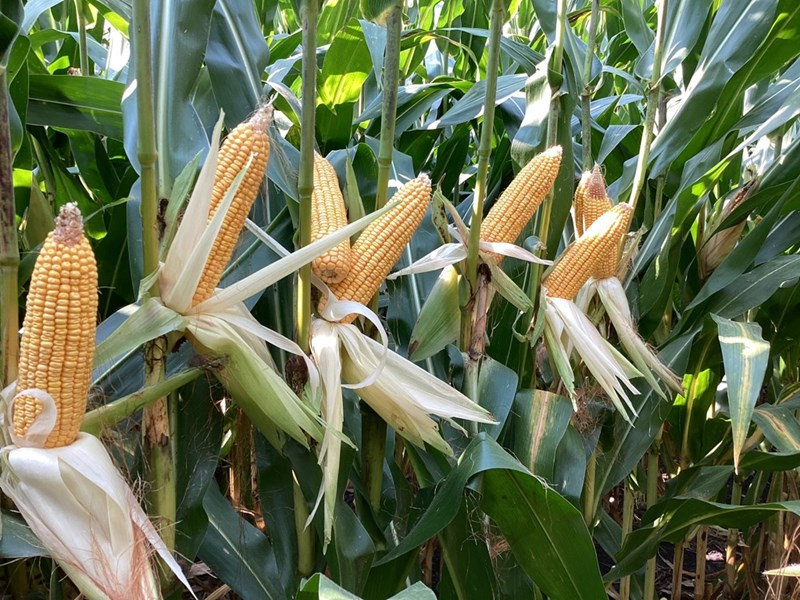
Advantages of a strong start
LG Seeds gives farmers more options for diversifying the genetics on their farm, mitigating risk. That diversity also gives farmers the ability to choose seed that fits both their ground and management style.
Regardless of your approach to farming, a strong start is critical to a successful growing season. For that reason, LG Seeds treats all its corn seed with Vayantis® fungicide seed treatment, a powerful mode of action that delivers superior protection against the stand-threatening fungus known as Pythium.
Customers also have the option of coating corn seed with zinc, giving corn plants an added nutritional boost right out of the gate. Its 2022 field trials showed the addition of zinc boosted corn yields an average of 3.11 bushels an acre.
Giving farmers choice in soybean seed
Twenty-six LG Seeds soybean varieties will make their debut in 2024, giving farmers 70-plus varieties to choose from that have maturities ranging from Group 00 to Group 5. Some of the newcomers include the following:
"Whether the customer needs Enlist E3®, Roundup Ready 2 Extend®, XtendFlex® or conventional soybean seed, we're able to deliver those trait packages across a wide range of maturities thanks to our relationships with leading breeders," says Krell. "That gives LG Seeds customers the freedom to choose what's best for their farm and management style."
A reputation for excellence
"LG Seeds has a reputation for consistently delivering agronomically sound, high-yielding products with exceptional grain quality," says Krell. "It's something our customers have come to expect. And it's a legacy that continues with the 2024 lineup."
Contact your local LG Seeds agronomist or district sales manager for more details about new and existing products and making the best selections for your farm.
Attorney General Gentner Drummond has created an Organized Crime Task Force to combat the scourge of illegal marijuana grow operations across Oklahoma and added a resource for citizens to report suspicious activity related to unlicensed operations.
"Illegal marijuana grows are responsible for an alarming influx of organized crime into our communities, particularly from Mexican drug cartels and Chinese crime syndicates" Drummond noted. "I have made it a priority to wipe out these illicit operators and this task force is a crucial component to driving out criminals and ensuring public safety."
The task force is working closely with the Oklahoma Bureau of Narcotics and Dangerous Drugs Control (OBN), the Oklahoma Medical Marijuana Authority and other state agencies to investigate all crimes related to illegal grow operations, including human trafficking and the distribution of deadly drugs such as fentanyl.
Citizens with information about suspected illegal grow operations are encouraged to submit a tip to the Office of the Oklahoma Attorney General. A complaint form is available at oag.ok.gov by clicking on the "Illegal Marijuana Tipline" tab. Tips also can be sent to illegalgrow@oag.ok.gov and reporters can remain anonymous.
House Bill 2095, signed into law in May, gives the Organized Crime Task Force, in conjunction with OBN and the Oklahoma State Bureau of Investigation, full enforcement authority over medical marijuana laws. Authored by Rep. Jon Echols and Sen. Lonnie Paxton, the measure allows the Office of the Attorney General to subpoena business documents, conduct unannounced on-site inspections, seize and destroy illegal products and enter into agreements with other state agencies to combat illegal operations.
Following last year's $55M settlement with DeLaval Holding AB, DeLaval International AB, DeLaval Inc., and West Agro, Inc., Stueve Siegel Hanson LLP, Cullenberg & Tensen PLLC, and Perrone Law PLLC have achieved another historic settlement against a manufacturer of allegedly defective milking robots.

Final approval of settlement worth approximately $122 million granted for Lely A4 dairy farmers.
On September 1, 2023, the Court granted final approval of the settlement for the Lely A4. The settlement provided class members with the option to replace their existing robot with Lely's newer A5 model or to receive cash relief. Nearly all of the approximately 400 class members participated, and the relief selected is worth approximately $121,956,000.
In approving the settlement, the Court called it an "excellent result," noting that it provides "outstanding relief" and received "overwhelming," "unprecedented" support from the class: "Participation in the claims process was unprecedented with nearly 100 percent participation, which far exceeds the average claims rate."
Achieving this result on the heels of the DeLaval settlement last year, firm partner Patrick Stueve said:
"This is another historic nationwide class settlement that will provide extraordinary financial and operational relief to farmers who purchased the Lely A4."
The terms of the settlement were agreed upon after nearly three years of litigation. During the claims process, class members had the option to choose between two separate benefits:
Based on the claims submitted and options chosen, the cash fund is approximately $51M and those opting for trade ins will receive approximately $71M in value for trading in their A4s for new A5s.
The Fight Continues on behalf of Farmers Using the DeLaval V300
On May 9, 2022, Stueve Siegel Hanson LLP, Cullenberg & Tensen PLLC, and Perrone Law PLLC filed a new lawsuit against DeLaval Holding AB, DeLaval Holding BV, DeLaval International AB, DeLaval Inc., and West Agro, Inc., as well as Tetra Laval International SA, alleging that their new milking robot, the VMS V300, suffers from the same or similar defects as the original robot covered under the prior settlement.
The case is currently pending in the U.S. District Court for the District of Minnesota. More information is available on their website at https://litigation.stuevesiegel.com/RoboticMilkerFailure.
SOURCE Stueve Siegel Hanson LLP
Young readers can embark on a swashbuckling adventure to learn where potatoes come from in "Potatoes for Pirate Pearl," the newest title from Feeding Minds Press, the American Farm Bureau Foundation for Agriculture's publishing venture.
Readers join Pirate Pearl and her parrot, Petunia, as they set out to find the perfect provision for their next sea voyage. Their search leads them to Farmer Fay who teaches them how potatoes are planted, grown and harvested.
This entertaining and colorfully illustrated tale will not only help children and their families gain an understanding of farming, but also reminds everyone of the importance of friendship and asking for help. Written by Jennifer Concepcion and illustrated by Chloe Burgett, "Potatoes for Pirate Pearl" includes potato facts, recipes and a guide for growing your own potatoes.
"'Potatoes for Pirate Pearl' is a great addition to our collection of fun and engaging books that instill a love of agriculture," Foundation for Agriculture Executive Director Daniel Meloy said. "We're thrilled to continue to inspire kids to learn about where their food comes from."
"Potatoes for Pirate Pearl" joins the growing collection of titles from Feeding Minds Press, including "Farm Boots," published earlier this year, and "I LOVE Strawberries," a winner of 7 awards, including the Good Housekeeping 2022 Best Kids' Book Award.
Feeding Minds Press also offers several free printable books that focus on careers in agriculture. All books are available for purchase directly from Feeding Minds Press, as well as on Amazon.
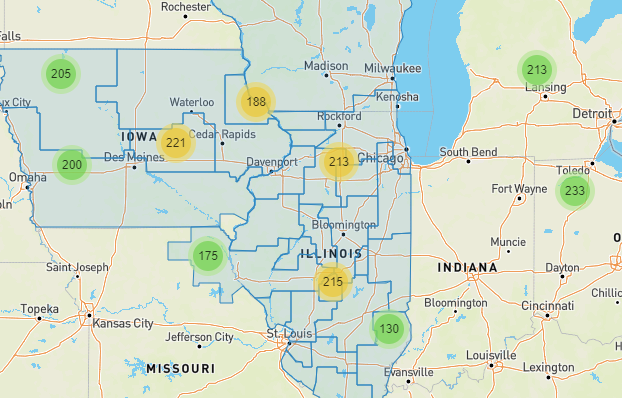
FS agronomists are canvasing the Midwest collecting corn yield data as harvest gets underway. States with FS agronomists on the ground collecting data for the 2023 FS Crop Tour include Illinois, Iowa, Kentucky, Michigan, Missouri, Ohio, and Wisconsin. The data collected, including estimated yield and number of locations sampled, is uploaded to the FS Agronomy Yield Analyzer.
The tool clusters the map points, consolidated by a specific geographic area, and calculates the estimated yield of that area. The data is constantly changing as agronomists input new data daily.
"We can harness the power of our System with the yield analyzer because it allows each crop specialist in the Midwest to not only see how their field-level estimations are coming, but how it compares to the estimations throughout our System," said Senior Agronomist Seth Geisler.
As of September 15, the FS Agronomy Yield Analyzer App is reporting these estimates by state. New data is uploaded daily.
1. Kentucky, 226 bushels per acre with 71 locations sampled.
2. Ohio, 224 bushels per acre with 12 locations sampled.
3. Michigan, 216 bushels per acre with four locations sampled.
4. Illinois, 213 bushels per acre with 282 locations sampled.
5. Iowa, 213 bushels per acre with 178 locations sampled.
6. Missouri, 212 bushels per acre with 17 locations sampled.
7. Wisconsin, 209 bushels per acre with 11 locations sampled.
Farmers are encouraged to check the app, which also works on a web browser, for the most up-to-date estimates in their area by visiting, https://agronomyapps.growmark.com/YieldAnalyzer.
To learn more about the agricultural products and services offered by FS, visit www.FSSystem.com.
GROWMARK is an agricultural cooperative serving almost 400,000 customers across North America, providing agronomy, energy, facility engineering and construction, and logistics products and services, as well as grain marketing and risk management services. Headquartered in Bloomington, Illinois, GROWMARK owns the FS trademark, which is used by member cooperatives. More information is available at GROWMARK.com.
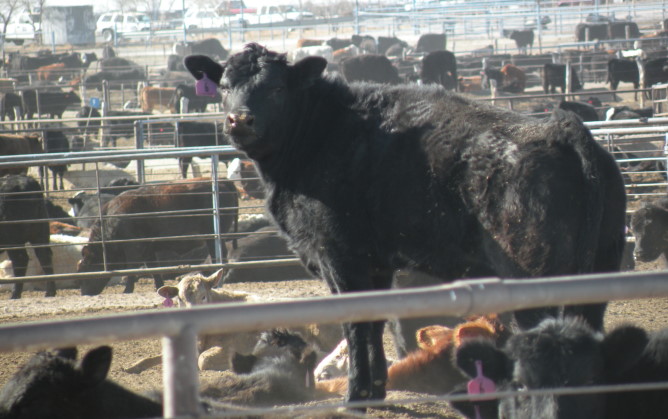
Weekly, Oklahoma State University Extension Beef Cattle Nutrition Specialist Paul Beck offers his expertise on the beef cattle industry. This is a part of the weekly series known as the "Cow-Calf Corner." Today, he talks about Congestive heart failure in finishing beef cattle.
Congestive heart failure in finishing beef calves is increasing, what used to be known as 'Brisket Disease' and only described in cattle populations at higher elevations of over 5,000 to 7,000 feet. Recently deaths from congestive heart failure have been reported in feedlots at low and moderate elevations. It has been estimated that congestive heart failure is responsible for 4% of feedlot mortality causing significant economic losses to the feedlot industry because the majority of these deaths occur late in the finishing period right before slaughter and there appears to be more impact on the highest performing cattle of mostly Angus ancestry.
An analysis in the Journal of the American Veterinary Medical Association of the risk factors and timing of heart failure in feedlots in the US and Canada showed that average heart failure occurred at 179 days on feed. Beef breeds had higher rates than dairy or dairy/beef crosses in each year of the analysis. The impact of risk category for bovine respiratory disease (BRD) was influenced by feedlot elevation, where high risk cattle for BRD had the lowest heart failure rate at low elevation, but risk categories for BRD did not affect rate of heart failure in moderate and high elevation. The authors concluded that risk of heart failure has increased over the last 10-years and that these deaths are occurring later in the feeding period.
Another study published in the journal Frontiers in Genetics analyzed a heart scoring system and showed that increasing heart scores were correlated with the percentage of Angus ancestry in commercial finishing cattle and can be used as a selection tool to reduce heart failure risk that would not interfere with selection for carcass and production traits.
Pulmonary arterial pressure (PAP) is also considered a marker for congestive heart failure risk. PAP has been used an and indicator trait for pulmonary hypertension at high altitudes (i.e., brisket disease) and the American Angus Association publishes an EPD for PAP as a selection aid. It is thought that PAP can also be used as a selection tool for heart failure at lower altitudes. The relationship between PAP and feedlot and carcass performance at moderate elevations was examined by Briggs and others at Colorado State. This analysis also shows that PAP is similar in heritability to production traits like feedlot performance and feed intake and will not negatively affect feedlot performance and carcass quality.
The increasing incidence of congestive heart failure in feedlot cattle is a challenge to the beef industry for economic reasons like death loss and reduced performance but also because of reduced animal welfare. The genetics of heart failure appear to be unrelated to performance and carcass quality traits, so genetic selection and breeding will reduce heart failure rates without compromising performance and beef quality.
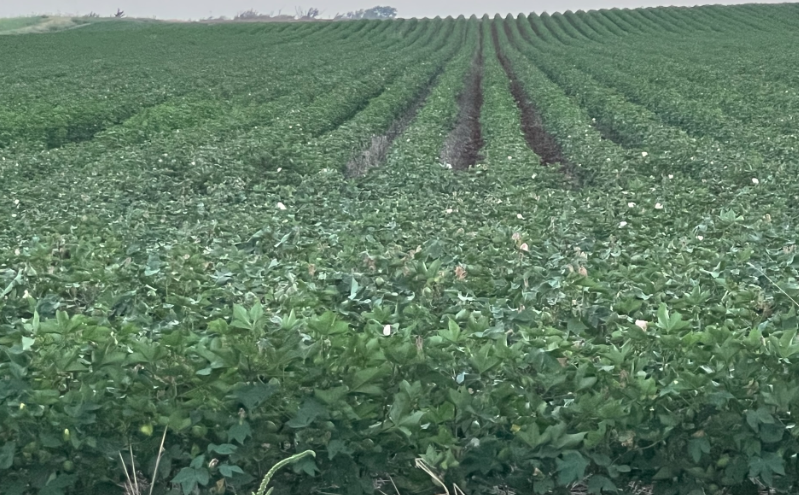
At its 70th Annual Meeting, Lubbock-based Plains Cotton Cooperative Association announced further fiscal year-end distributions to its grower-owners, totaling $8.68 million. Since the cooperative's founding in 1953, it has served as a value-added service to cotton growers. Currently, PCCA has approximately 12,000 active grower-owners, with members in 49 out of 50 states. Moreover, it has handled 114 million marketing and pool bales since its inception. The business has also achieved $18 billion in total sales since the seasonal pools' inception in 1988.
PCCA's President and CEO, Kevin Brinkley, commented on PCCA's 70 years of business and shared his eagerness for the next 70. He stated, "This significant milestone is an opportunity to reflect on the cooperative's rich history and the challenges faced in the past fiscal year while embracing a forward-looking strategy for the future."
In his annual report, Brinkley acknowledged the difficulties PCCA encountered during the fiscal year 2023, with a record drought leading to an overall abandonment rate of 75% of its acres. The cooperative recorded a net margin loss of $1.3 million, partly attributed to a $2.3 million book expense resulting from de-risking the defined benefit plan. Excluding this expense, PCCA would have reported a small profit of approximately $1.0 million.
Despite these challenges, Brinkley emphasized that PCCA remains in strong financial condition, thanks to the foresight of its grower-owners. The cooperative's mission to provide value-added marketing programs and services, ensuring fair prices for cotton growers, remains unwavering.
In other business, Directors for the following PCCA districts were re-elected by the membership: Steve Moore, District 8; Billy Eggemeyer, District 9; Frank DeStefano, District 10; and Marvin Beyer, District 11.
Founded in 1953, PCCA is a Lubbock-based marketing cooperative owned by farmers in Texas, Oklahoma, Kansas, and New Mexico, dedicated to supplying sustainably-grown, high-quality cotton fiber around the world. In addition to cotton marketing, PCCA also owns cotton warehouse facilities in Texas, Oklahoma, and Kansas, and develops and offers software programs and networks to local co-op gins that help add value to their grower-owners' cotton.
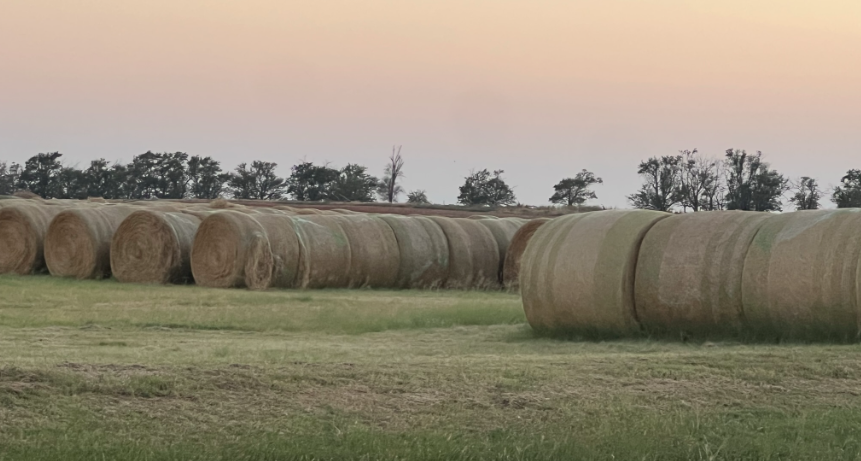
Hay is slow to steady. Very little movement across Oklahoma. The state did receive some rainfall throughout most of the state, but we still need some widespread rain as we head into our fall season.
Trends:
Alfalfa Large squares $200-$225 a ton
Alfalfa Rounds - No Trend
Grinding hay - No Trend
Bermuda 5x6 rounds - $70-$100 a bale
Bermuda Large Squares - No Trend
Grass Hay 4x5-4x6 - $60-$70 a bale
Grass Hay 5x6 - $70-$80 a bale
The Oklahoma Mesonet Drought Monitor shows we are at 0 percent in exceptional drought, 3.51 percent in an extreme drought, 29.80 percent in severe drought, 45.00 percent in moderate, 62.07 percent in abnormally dry conditions, 37.93 percent that has no drought conditions.
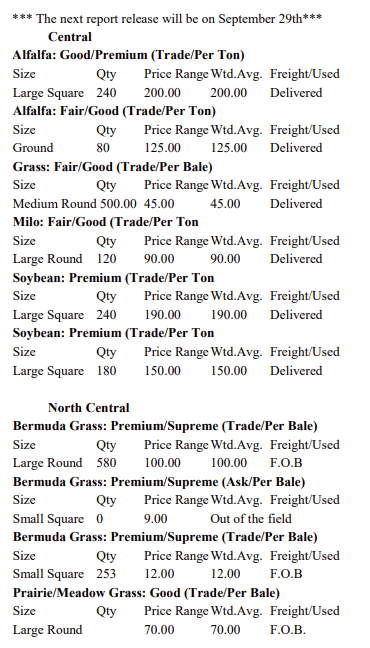
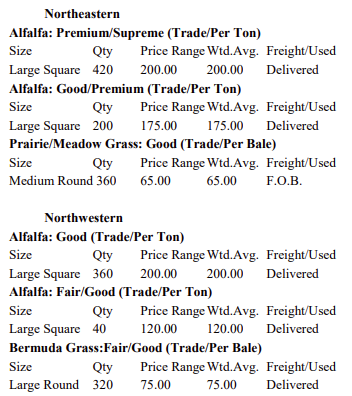
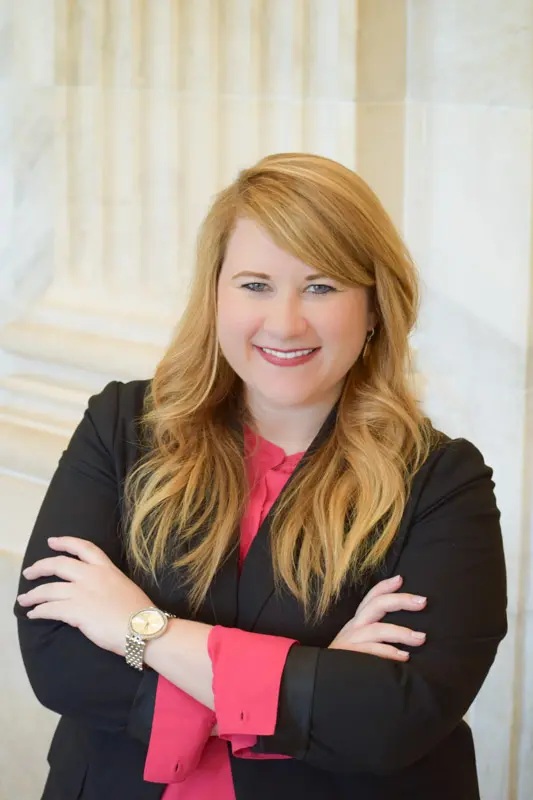
Meghan Cline
Meghan Cline has joined the National Pork Producers Council (NPPC) as director of policy communications. In her role, she will focus on strategies for effectively communicating NPPC's policy positions to a wide variety of audiences, including producers, lawmakers, the media, and consumers.
"Meghan is a welcome addition to the NPPC communications team," said NPPC Assistant Vice President of Marketing and Communications Annemarie Pender. "Her unique blend of industry, federal government, and global corporate experience will be an asset to NPPC."
Cline most recently served as the director of communications for JBS USA and Pilgrim's. Prior to that, she served as the press secretary and communications director for the U.S. Senate Committee on Agriculture, Nutrition, and Forestry, under Chairman Pat Roberts, R-Kan. She also served as NPPC assistant director of communications.
"I'm eager to advocate for and tell the story of the American pork producer, and I am honored to rejoin the NPPC team," said Meghan. "The pork industry holds a special place in my heart, and I look forward to applying my new skills to this new role."
Cline was born and raised in Dalton, Ga., and earned Bachelor and Master of Science degrees in Agricultural Communications from the University of Georgia and Oklahoma State University, respectively.

House Agriculture Committee Ranking Member David Scott today released the below statement in response to the House Republican budget resolution that would make devastating cuts to programs that support America's agricultural sector and low-income families.
"Today's Republican budget resolution is stale, shortsighted, ineffective, and irresponsible. Unfortunately, this is what we have come to expect from the relentless infighting and chaos within the House Republican Conference, whose most extreme members are threatening a dangerous government shutdown. Lacking solutions to today's problems, the Republicans propose decades-old, false arguments in a budget where the math simply doesn't add up.
"These budget provisions, which threaten the food security of tens of millions of Americans, have been pushed by the right-wing of the House Republican Party for decades, and they reek of the same cynicism and opportunism today as they did back then.
"If our national budget is a values document that showcases the priorities of our country, then the values of the House Freedom Caucus and the Speaker's Office are abundantly clear: rather than produce fresh ideas that provide solutions for real problems facing the American people, they fight among themselves and blame the Biden Administration for their own faults. "This budget does nothing to ensure the continued viability of American agriculture or address the needs that the House Agriculture Committee outlined in its bipartisan letter earlier this year to the House Budget Committee to help it write a farm bill. Instead, it shortchanges the farm bill, focuses on tax cuts for the rich, and undermines the bipartisan work we do on the House Agriculture Committee every day."

Jayson Lusk returns to OSU after serving as a professor and researcher in the Division of Agricultural Sciences and Natural Resources from 2005 through 2017, then as a department head at Purdue. (Photo by Mitchell Alcala, OSU Agriculture)
By Gail Ellis
As Oklahoma State University begins another academic year, Jayson Lusk is settling into his new role as vice president and dean of OSU Agriculture.
Lusk is a professor, researcher, food economist and author who will write the next chapter of OSU Extension, Ag Research and the Ferguson College of Agriculture. He previously served as head of the Department of Agricultural Economics at Purdue University, home to the No. 4 agricultural economics program in the world, according to the 2022 Center for World University Rankings.
Lusk was a faculty member in the OSU Department of Agricultural Economics from 2005 through 2017 and served as an assistant professor at Mississippi State University for three years prior to that. He also completed a year as a visiting researcher at the French National Institute for Agricultural Research.
Returning to Stillwater feels right for both his career and family, Lusk said. His paternal grandmother was born in Rosedale, Oklahoma, to a family of 13 children who moved to Texas by covered wagon. Lusk grew up in a small farming community in the Texas panhandle, participating in 4-H and FFA activities and showing livestock.
"We were in football, basketball, track, one-act plays – if there was something going on at school, chances are we were probably doing it," he said.
As a child, Lusk and his three siblings spent a lot of time learning about food and competing in 4-H cooking contests. While in FFA, he participated in cheese identification and milk-tasting competitions, which led him to complete a bachelor's degree in food technology at Texas Tech University.
"My classmates and I were pretty good at those dairy science contests," Lusk said. "We went to Texas Tech for regional competition and made it to state at Texas A&M. I got to know a lot of food science professors, and when I was offered a scholarship, I thought, 'Why not?'"
Once at Texas Tech, Lusk took on a second, albeit brief, venture of which he has no regrets: He tried out for the basketball team.
"After about three weeks, they told me my services were no longer needed, but I got to learn what it was like to play a Division 1, high-level sport," he said. "I thought I was good, but I wasn't that good."
Lusk's college experience also included a summer internships at food processing plants in Dallas, which taught him key business principles of the food industry beyond science.
With the advice of mentors and advisors, Lusk next took on an economics doctorate fellowship in food and agriculture at Kansas State University.
"It was a good fit for me. My parents were teachers, and I thought I didn't want to teach, but when I got to grad school, I realized a professor does a lot more than just teach," he said. "There's research, outreach and engagement."
Lusk received his education in food science and technology at a time when consumers were developing a keen interest in food policy. Many shoppers were beginning to seek out out local food sources and ask where their food came from.
"I was in a good place at the right time where the kinds of projects I was working on were in the public eye and captured a lot of attention," Lusk said.
Receiving a doctorate at K-State also marked a milestone in his personal life; he met his wife, Christy, in graduate school. A native of Topeka, Kansas, she earned a bachelor's degree in animal science and a master's in agricultural economics. The couple has two sons: their oldest is a junior studying agricultural economics at Purdue, and the youngest is a freshman at OSU. In his free time, Lusk enjoys golfing, cooking and spending time with his family at Table Rock Lake.
To date, the food and agricultural economist has penned five books and published many research papers related to food and agricultural innovation and technology. He is a respected media source on the economics of food and agriculture, but his message does not paint the doom-and-gloom industry image that many news outlets often portray.
"I want to promote the important role science, technology and entrepreneurship can have in agriculture and at places like OSU Agriculture," Lusk said. "It's important to tell that side of the story, too. If we want to make progress in solving a lot of these problems, we're going to need science, innovation and a diverse group of producers."
His latest book, "Unnaturally Delicious," is a positive, forward-looking take on agriculture and features several expert interviews from Ferguson College faculty. Lusk describes himself as a curious person with a dedication to food and agriculture who wants his research to benefit both the scientific community and the public.
"In my new role, I get to support several different aspects of agriculture," he said. "Engaging with alumni, farmers and both rural and urban communities while connecting them with the work we do at OSU is something I really enjoy."
A scientist to his core, Lusk plans to continue publishing papers to share his research and connect community needs with campus resources and OSU Extension. OSU's new strategic plan that highlights elevating and amplifying the mission of Extension appeals to Lusk. He said the university's declaration to focus on agriculture and align itself with many OSU Agriculture priorities will heighten OSU's presence on a global stage.
"When you read through the strategic plan, it's clear that agriculture and the Ferguson College are critical to the success of OSU," he said. "That's not true everywhere – even places that have good ag colleges aren't necessarily central to their universities' well-being and identity. To see that in OSU's plan signals an opportunity to learn, listen and carve out priority areas where we can make a name for ourselves."
State leaders, such as Oklahoma Secretary of Agriculture Blayne Arthur, said it's imperative that the vice president and dean of OSU Agriculture understand changing geopolitical dynamics and foster a culture of innovation within the industry.
"The agricultural community relies on OSU to provide essential research and effective Extension programs that ultimately increase the profitability of farmers and ranchers," Arthur said. "It's a pivotal time for production agriculture in the United States and the world. Demand exists to increase productivity to feed a growing world population while efficiently utilizing the natural resources available."
Rodd Moesel, president of Oklahoma Farm Bureau, said Lusk's leadership will make a positive impact on agriculture students, Extension programs, Oklahoma 4-H and OSU Ag Research projects.
"The opportunity for ag programs to grow on the research side is very significant," Moesel said. "Research defines the future of ag commodities and helps identify new crops and processing methods. We already have more patents and royalty income for OSU than from any other college, but there's still room to grow."
Finishing construction of the New Frontiers Agricultural Hall on campus also tops Lusk's to-do list for the coming year. Students, faculty and staff are expected to begin the fall 2024 semester in the new, state-of-the-art facility, and Lusk is determined to make the move a seamless transition.
"There's a lot of work to be done to ensure New Frontiers is an effective environment for research, teaching and Extension," he said. "I want to create a vibrant community in that building just like we've come to experience here in Ag Hall."
Other priorities as vice president and dean include upgrading and improving research facilities on and off campus, preparing students for today's job markets and ensuring OSU Extension can effectively recruit and retain talented employees.
"I want to build the support to provide necessary capital, raise the visibility of this division and highlight the great work that goes on here," he said. "OSU is well known. It's got a great brand, but I want to do more."
After 12 years as a Ferguson College faculty member and acquiring a wealth of knowledge at other institutions nationwide, Lusk is ready to lead OSU Agriculture into a new era.
Watch Lusk discuss his new role on SUNUP, the television show of OSU Agriculture.
OSU Agriculture is dedicated to improving the quality of life of Oklahomans through science-based information and education. It is comprised of the Ferguson College of Agriculture and two state agencies: OSU Ag Research and OSU Extension.
RON's Dave Lanning has a pre-opening look at today's agricultural Markets.
Click the audio tab below for today's report.

At the latest Oklahoma Drought Commission meeting held on September 19, Farm Director KC Sheperd caught up with Ag Secretary Blayne Arthur and talked about the highlights from the meeting.
Arthur said she is grateful for the new commission members that were added during the last meeting. Those members include Pete Nichols of Washita County (appointed by the Speaker of the House) and Josh Emerson of McIntosh County (appointed by the Pro Tem).
At the meeting, Arthur said the drought commission decided to push the additional 17 million dollars out to the districts across the state.
"The legislature directed those funds during the regular session, and we wanted to get some questions answered from the districts, and they provided a lot of information to us on those applications that were still sitting out there unfunded," Arthur said. "I am very optimistic they are ready for those funds, and those will start going out the door in the new future."
As requested at the last meeting, Arthur said the districts had the chance to come forward and talk about some of their biggest challenges and concerns at the current meeting.
"They gave us a great list of questions, concerns, things they liked, things they didn't like, and I think that helped us make some good decisions today," Arthur said. "Moving forward, if this is a program that continues in some capacity, I think we have certainly learned a lot about how we can make it the very best program we want it to be for ag producers."
Now that the additional 17 million dollars have been allocated, Arthur said the next step is allowing the districts to go to work with those funds.
In the next 30 to 45 days, Arthur said the Emergency Drought Commission will meet again to discuss what will happen next.

Today, the U.S. Department of Agriculture and The Coca-Cola Company signed a memorandum of understanding (PDF, 1.1 MB) renewing a 10-year partnership to restore and improve watersheds on national forests and grasslands nationwide.
Since 2013, this partnership has led to the restoration of nearly 900 acres of watersheds and replenished more than 634 million gallons of water on national forests and grasslands. Over this time, the National Forest Foundation has played a key role in coordinating 25 projects in nine states. These projects restored more than 14 miles of streams, reconnected 17 miles of river and 62 acres of lakes, treated more than 450 acres of invasive weeds, and much more.
"Our national forests and grasslands face tremendous threats from wildfires, invasive species, pests and extended drought, all made worse by climate change," said Deputy Secretary of Agriculture Xochitl Torres Small. "To meet challenges at this scale, we have to manage for the long term, think creatively and work together. Thanks to our partners, we are doing more than any one of us can do alone. I'm confident this agreement will continue to build on ten years of cooperative success."
More than 60 million Americans get their drinking water from national forests and grasslands. With so many communities relying on healthy, resilient forests to provide them a reliable source of drinking water, seeking out and building partnerships is a shared goal of USDA and contributing partners like the National Forest Foundation and The Coca-Cola Company.
"Water stewardship has long been a business imperative at The Coca-Cola Company. We are committed to being responsible stewards of this vital resource by accelerating our efforts to address water stress, protect local water resources and build community climate resilience," said Jennifer Mann, President of Coca-Cola North America. "This renewed partnership will place a greater priority on benefitting historically underserved communities. It also continues to help us make progress toward our goal to return a cumulative 2 trillion liters of water to nature and communities globally between 2021-2030."
"Innovative partnerships like this one are vital for making sure streams and rivers retain their ability to provide for nature and people," said Marcus Selig, Chief Conservation Officer of the National Forest Foundation. "Support from The Coca-Cola Company has allowed us to achieve so much on the ground success already, with this renewed commitment we look forward to accomplishing more."
So far, The Coca-Cola Company and The Coca-Cola Foundation have contributed more than $2.6 million to this partnership. The Coca-Cola Company, The Coca-Cola Foundation and Swire Coca-Cola have contributed nearly $900,000 of funding towards projects being implemented in 2023 including projects in Colorado, Arizona and New Mexico that will restore stream and wetland health.
Along with partner and USDA funding, the work conducted under the life of the partnership so far has surpassed $5 million.
To learn more about this partnership and others visit www.fs.usda.gov/working-with-us/partnerships.
USDA touches the lives of all Americans each day in so many positive ways. In the Biden-Harris Administration, USDA is transforming America's food system with a greater focus on more resilient local and regional food production, fairer markets for all producers, ensuring access to safe, healthy and nutritious food in all communities, building new markets and streams of income for farmers and producers using climate smart food and forestry practices, making historic investments in infrastructure and clean energy capabilities in rural America, and committing to equity across the Department by removing systemic barriers and building a workforce more representative of America. To learn more, visit www.usda.gov.
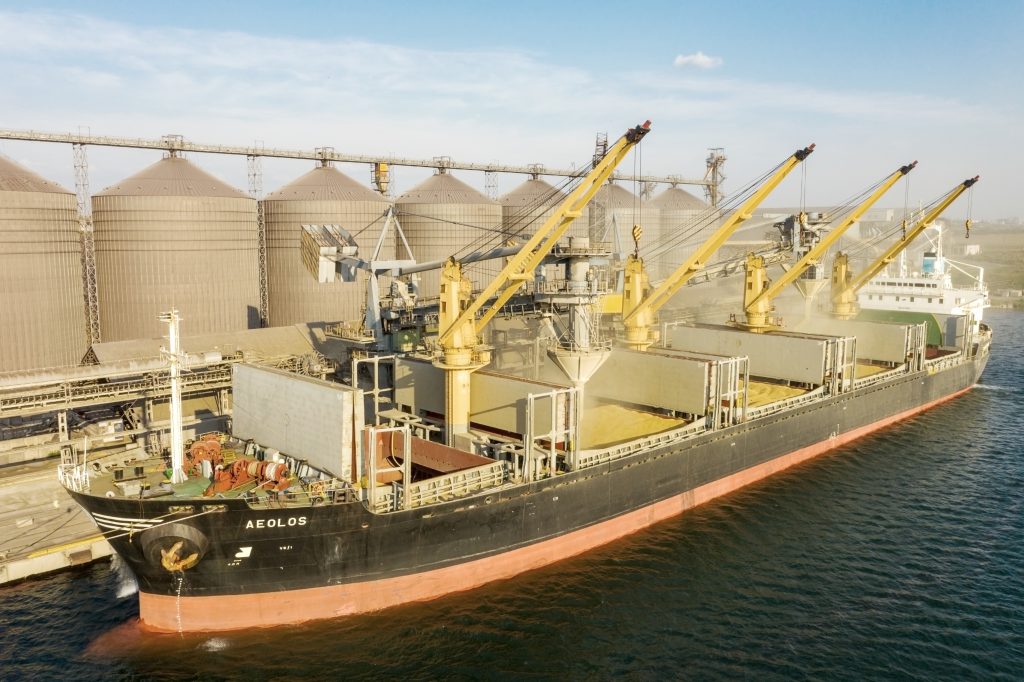
Profitability outlook for wheat storage improves, but tight global supplies bring risk of price volatility.
A modest rebound in U.S. wheat production and supplies is improving the outlook for profitability among grain elevators that store wheat. Futures market carries have improved for all three major classes of wheat and the buy basis is widening following a bigger harvest. The larger harvest follows two years of poor production and a historic run of inverted futures markets that sapped profitability for storing wheat.
According to a new report from CoBank's Knowledge Exchange, the major risk to elevators in the year ahead is a sharp rally in wheat prices. Wheat stocks among major exporters are historically tight, and any disruption to the flow of Russian exports through the Black Sea could trigger a sharp price run-up.
"The flood of cheap Russian wheat into the global market may have created a false sense of security in the world wheat market," said Tanner Ehmke, grains and oilseeds economist for CoBank. "The greatest margin risk to storing wheat is the shrinking world wheat crop outside of Russia and China, which leaves the market vulnerable to supply shocks and extreme volatility in wheat prices."
The cost of storing grains, including wheat, remains historically high due to the sharp rise in interest rates. As a result, elevators will still struggle to pencil in profit on the wider carries, particularly for the hard wheats. Elevators struggling to make margin on carries will be looking for opportunities to benefit from rising basis on company-owned grain through the marketing year.
U.S. Wheat Harvest
The rebound in the U.S. wheat harvest was largely driven by a substantial increase in soft red winter wheat yields in the Midwest, where farmers produced the biggest crop in nine years. This year's soft red winter wheat harvest rose 31% year-over-year, based on USDA's latest estimates.
With ample supply, elevators will benefit from exceptionally wide carries in the futures market and the variable storage rate that adds about 3 cents per bushel to the futures spread. Soft red winter wheat is a low-protein wheat typically used for snack food products like crackers and pastries.
In the Central and Southern Plains, production of hard red winter wheat lost significant yield under ongoing drought. Overall production rose 10% year-over-year, according to USDA estimates, with gains attributable to expanded acreage. The abundance of protein in the hard red winter wheat crop in recent years has resulted in protein premiums falling. Hard red winter wheat is typically used for bread, buns and rolls.
The hard red spring harvest in the Northern Plains is expected to fall 7% year-over-year despite expanded acreage, according to USDA. Late planting followed by persistent drought limited yields. The smaller harvest is compounded by a drop in Canadian hard red spring wheat production that is expected to hold prices at a significant premium in the year ahead. Hard red spring wheat is a high-protein wheat used for products like bagels and pizza crust.
Blending this year's wheat crop will be a tightrope for elevators, millers and bakers that are challenged to find low- to medium- protein hard wheat in a market saturated with high protein. With the hard wheats trading at a sizable premium, millers and bakers will be motivated to blend more soft red wheat with hard wheat. However, blending will be limited due to stark differences in mixing and baking performance.
World Wheat Supplies
The flood of cheap Russian wheat into the global market, combined with a strong U.S. dollar continue to be major headwinds for U.S. wheat exports. Russia's currency has fallen sharply, down 30% year-to-date, putting Russian exports on sale and pushing down world wheat prices. Russia is currently harvesting a near-record wheat crop with substantial carryover inventories from last year's record-sized harvest.
In China, wet weather during harvest damaged a substantial portion of the Chinese wheat crop, which likely result in China increasing wheat imports.
Excluding Russia and China, the world's wheat stocks-to-use ratio is nearly the tightest on record. Drought has substantially reduced wheat supply in Argentina, Canada and Australia. Ukraine's wheat harvest faces numerous obstacles to being delivered to the world market due to the ongoing Russia-Ukraine war.
Weak performance with the North African wheat crop will also translate into greater demand for imports, as will India's ban on white rice exports. The ban is shifting food demand from rice to wheat in major importing regions like Southeast Asia and Africa.
Read the report, Russian Wheat Exports Remain Biggest Risk to U.S. Wheat Elevators.
About CoBank
CoBank is a cooperative bank serving vital industries across rural America. The bank provides loans, leases, export financing and other financial services to agribusinesses and rural power, water and communications providers in all 50 states. The bank also provides wholesale loans and other financial services to affiliated Farm Credit associations serving more than 76,000 farmers, ranchers and other rural borrowers in 23 states around the country.
CoBank is a member of the Farm Credit System, a nationwide network of banks and retail lending associations chartered to support the borrowing needs of U.S. agriculture, rural infrastructure and rural communities. Headquartered outside Denver, Colorado, CoBank serves customers from regional banking centers across the U.S. and also maintains an international representative office in Singapore.
The office of U.S. Senator Markwayne Mullin (R-OK) is accepting applications for service academy nominations for appointment to four of the five U.S. service academies: the U.S. Military Academy, U.S Naval Academy, U.S. Air Force Academy, and U.S. Merchant Marine Academy. The fifth service academy, the U.S. Coast Guard Academy, does not require a congressional nomination for appointment.
The deadline to apply for a nomination is Friday, October 13th, 2023. Mullin released the following statement regarding this years' nomination process:
"The decision to apply to a service academy is an incredibly personal and courageous one, and I am humbled to be a part of the process," said Sen. Mullin. "No matter the branch, rank, or role, each of our men and women in uniform play an important part in maintaining our national security and defending our way of life. I encourage Oklahoma's qualified high school seniors to consider if this path is right for you. I wish you all the best of luck in the process, and I look forward to reviewing your applications."
Details:
This week, leaders from the Republican Main Street Caucus and the House Freedom Caucus worked in good faith to negotiate a 31-day continuing resolution that seeks to secure the border, fund our military and veterans, and rein in out-of-control spending. The negotiations took place between Representatives Stephanie Bice, Dusty Johnson, Kelly Armstrong, Byron Donalds, Chip Roy, and Scott Perry.
Congresswoman Bice issued the following statement:
"Over the last few days, I have worked with my colleagues in the Republican Main Street Caucus and leaders of the House Freedom Caucus to negotiate a short-term continuing resolution. This legislation is laser focused on securing the border and fixing Biden's Border Crisis. In addition, it will protect funding for our military and veterans while working to rein in out-of-control spending. It is imperative that we address the issues that are affecting everyday Americans and this bill does just that."

Using the GREET model will support investments by farmers, oilseed processors and domestic producers to meet the SAF Grand Challenge.
Today, Clean Fuels Alliance America, the American Soybean Association, the National Oilseed Processors Association, and the U.S. Canola Association delivered a letter to Senior Advisor John Podesta urging the Biden administration to support the investments made by U.S. companies and farmers who are ramping up production of sustainable aviation fuel. The trade associations – whose combined memberships represent the entire value chain for SAF production – urge the administration to explicitly recognize the most recent version of the Argonne National Laboratory's Greenhouse Gases, Regulated Emissions, and Energy Use in Transportation (GREET) model as the "similar methodology" option specified in the Inflation Reduction Act for determining SAF tax credit eligibility.
"U.S. producers of SAF and their partners in farming and oilseed processing should be able to rely on the GREET model to calculate the value of SAF credits. Without this, our combined members and others in the industry may not be able to follow through on investments in SAF production," the groups state in the letter.
The letter asks the administration to consider the billions of dollars that members of the associations have made to build new or optimize existing production facilities and expand availability of sustainable, homegrown, low-carbon feedstocks like soybean oil and canola. The letter further points out that the SAF Grand Challenge Roadmap recognizes that the goal to produce three billion gallons of SAF by 2030 will rely on expanded use of soybean oil and canola.
The letter is available for download on cleanfuels.org. "It's inconceivable that Congress would create, or Treasury would implement, a clean energy incentive that discourages use of sustainable, homegrown feedstocks. We are asking the administration to follow through on its goals and enable the aviation sector to access better, cleaner fuels in the near term," added Kurt Kovarik, Clean Fuels' Vice President of Federal Affairs. "Our industry has consistently contributed real-world data to Argonne to ensure that the GREET model is the most accurate, up-to-date lifecycle carbon emission assessment tool."
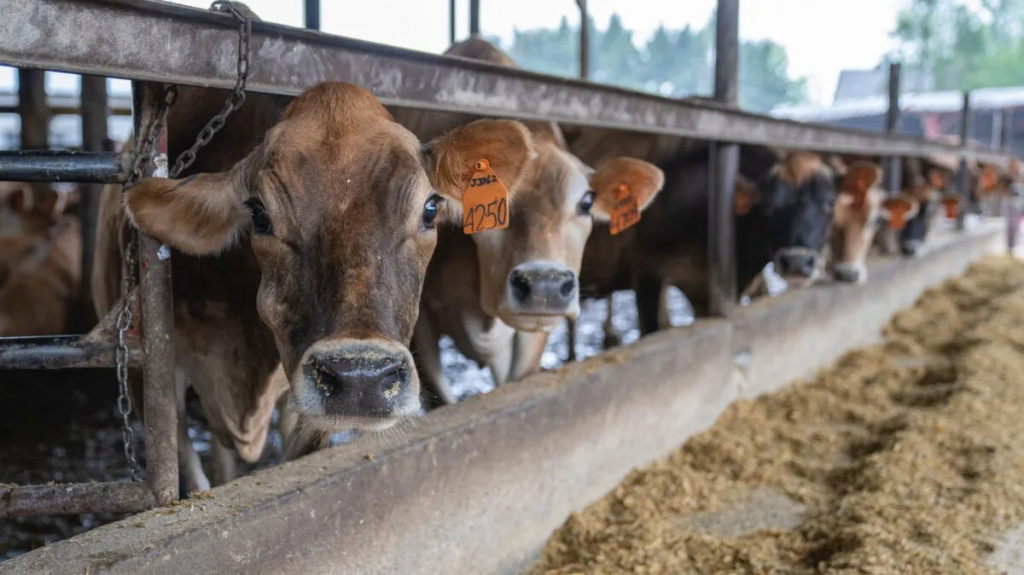
American Farm Bureau Federation economist Danny Munch presented testimony today on behalf of AFBF and its membership at the ongoing Federal Milk Marketing Order Pricing Formula hearing. This is the third time an AFBF representative has testified at the hearing. AFBF Chief Economist Roger Cryan previously testified on cheese and butter pricing and milk composition.
The testimony focuses on adjusting make allowances, or the estimated costs that dairy processors incur to convert milk to consumable dairy products, like cheese and butter. This price directly impacts the price paid to farmers for their milk.
AFBF is advocating for make allowances to be adjusted based on a mandatory, audited USDA survey, which USDA says it does not have the authority to conduct. AFBF is pursuing legislation, with the support and assistance of the National Milk Producers Federation and International Dairy Foods Association, that would direct USDA to conduct such a survey. AFBF opposes increasing make allowances based on potentially biased voluntary survey data that could reduce farmers' prices unfairly.
Below are excerpts from the testimony, which can be read in full here.
A fundamental focus of AFBF's proposals is the reduction or elimination of negative producer price differentials and the de-pooling they cause. We believe that an orderly pool is the key to orderly marketing and ensuring Federal Milk Marketing Orders continue to benefit farmers, cooperatives, processors, and consumers. The key to an orderly pool, in turn, is, above all, the proper alignment of the four Class prices.
This statement covers Category 3, Class III and Class IV formula factors, and includes AFBF's response to Proposal 7, made by the National Milk Producers Federation (NMPF); Proposal 8, made by the Wisconsin Cheese Makers Association; and Proposal 9, made by the International Dairy Foods Association.
Category 3: Class III and Class IV Formula Factors
Response to Proposals 7, 8 and 9 (NMPF, WCMA, IDFA), which all propose to increase Class III and IV make allowances.
AFBF supports adjusting make allowances to reflect the changes in cost and technology, following the same general logic as NMPF's petition. We believe, however, that such adjustments cannot be fairly undertaken except using the data from a mandatory and audited USDA survey of, at least, the plants participating in the NDPSR survey.
The testimony goes on to note:
The voluntary survey, conducted by Dr. Stephenson, among others, and used as a primary source for order reform, was one of a series of studies that had been undertaken as a means of evaluating and benchmarking plant costs for the benefit of the plant operators...The publicly released 2021 survey, for example, represents only 60% of the nonfat dry milk plants participating in the NDPSR, 29% of the dry whey plants, 24% of the cheddar cheese plants, and 20% of the butter plants. The conclusion must be that it would be unfair to increase the make allowances based on this survey. ...
Regarding the USDA "tradition" of using two different cost surveys, there is an old saying: "A person with one watch always knows what time it is; a person with two watches never knows what time it is." Such is the problem with using two significantly different sets of survey results and blending them into one result. This is more art than science, and USDA was put in the difficult position of applying such art in the past. It is better that we have one very accurate watch, such as a mandatory and audited survey of processing plants.
The last time we knew the time was in California in 2016 – as the last mandatory audited surveys of U.S. dairy processing costs were those of all manufacturing plants in the state of California in 2016. ... Since the 2016 California survey was mandatory, a representative sample of commodity dairy processors was captured, providing an important check to voluntary surveys. ...
... On average, less than 20% of the total production of cheese, butter, nonfat dry milk and whey have been captured in the NDPSR survey ... ... Considering the various other dairy products that are sold and not included in the NDPSR, the true volume of dairy products captured by the NDPSR is likely much lower than 14.8%. ...
... Given these statistics, one could easily argue that handlers can benefit from the sale of the substantial product volume and product varieties not currently captured within the NDPSR and are not exclusively reliant on the make allowance to make ends meet. This is especially true of handlers who diversify their operations, a tactic that many farmers are told to use to protect against revenue uncertainty. ...
... Only a mandatory and audited survey of costs (and processing yields) can provide a fair basis for adjusting make allowances (and yield factors) within the current pricing structure, just as it has been clearly established that only a mandatory and audited survey of manufacturers' prices can provide a fair basis for setting the monthly milk and component prices used in the FMMOs.
We believe that such a survey should be conducted once every two years in order to appropriately balance the value of the data with the burden on the processors.
AFBF submitted nine proposals for consideration during the hearing, and four were accepted by USDA. Additionally, AFBF largely supports four of the five proposals submitted by the National Milk Producers Federation.
AFBF's proposals are based on years of work by dairy farmer members, policy established through AFBF's grassroots policy development process, and recommendations developed during the FMMO Forum, which brought together representatives from all sectors of the dairy industry last October.
Full AFBF testimony on surveyed commodity products as submitted to the hearing, including reference sources and charts, is available here. An explanation of the four AFBF proposals accepted for consideration is available here. For more information on all AFBF proposals, including those rejected by USDA, read Market Intel.

Lack of Handwashing Continues to be a Concern.
The U.S. Department of Agriculture (USDA) is releasing during Food Safety Education Month the results from the final year of a five-year study that observed how consumers prepared meals. The study was produced by USDA's Food Safety and Inspection Service (FSIS) as part of their efforts to highlight the importance of safe food handling practices.
"These studies are important for USDA to understand consumer behaviors in the kitchen and it is timely to be releasing the latest findings during Food Safety Education Month," said USDA Under Secretary for Food Safety Dr. Emilio Esteban. "The results allow us to shape food safety communications and help consumers safely prepare food."
The study observed food safety behaviors, including participants' thermometer use for ground pork sausage, handwashing, and cleaning and sanitizing of food preparation surfaces.
Handwashing
As seen in the previous four years of the study, thorough handwashing remains a concern. The most recent data shows that 87% of participants self-reported they washed their hands before starting to cook in the test kitchen. However, only 44% of participants were observed doing so before meal preparation. Additionally, handwashing was not attempted 83% of the time when it should have been done (e.g., touching raw sausage and unwashed cantaloupe, cracking eggs, contaminated equipment or surfaces). Throughout the study, 96% of handwashing attempts did not contain all necessary steps.
Thermometer Use
In the study, 50% of participants used a food thermometer to check the doneness of the sausage patties. However, 50% of those participants did not check all the patties with a food thermometer. It is important to check all pieces of food being cooked to ensure all have reached a safe internal temperature. Thickness and size of a food item can cause it to cook to different temperatures.
Cross-Contamination
The study used a harmless tracer bacteria, which was injected into the pork sausage, to simulate the spread of foodborne illness-causing bacteria during meal preparation. Among the surfaces tested, the kitchen sink was most often contaminated, with 34% of participants contaminating the sink during meal preparation. The next highest was the cantaloupe, with 26% of participants introducing contamination when cutting the cantaloupe during meal preparation. Contamination on fruits and vegetables, and other ready-to-eat foods, is especially concerning because these foods are consumed raw, without a final step like cooking, which kill bacteria.
For more food safety information, call the USDA Meat and Poultry Hotline at 1-888-MPHotline (1-888-674-6854), email MPHotline@usda.gov or chat live at ask.usda.gov from 10 a.m. to 6 p.m. Eastern Time, Monday through Friday.
Access news releases and other information at USDA's Food Safety and Inspection Service's (FSIS) website at www.fsis.usda.gov/newsroom. Follow FSIS on Twitter at twitter.com/usdafoodsafety or in Spanish at:twitter.com/usdafoodsafe_es.
USDA touches the lives of all Americans each day in so many positive ways. In the Biden-Harris Administration, USDA is transforming America's food system with a greater focus on more resilient local and regional food production, fairer markets for all producers, ensuring access to safe, healthy and nutritious food in all communities, building new markets and streams of income for farmers and producers using climate-smart food and forestry practices, making historic investments in infrastructure and clean energy capabilities in rural America, and committing to equity across the Department by removing systemic barriers and building a workforce more representative of America. To learn more, visit www.usda.gov.
The Oklahoma State Fair is currently taking place, running from September 14th through the 24th. Farm Director, KC Sheperd, is visiting with Scott Munz at the Oklahoma State Fair about this year's event. This year, Munz said, is the fullest the fair has been in a while.
Some of the attractions at the fair include the new laser light show extravaganza, a Paul Bunyan Lumberjack show, free monster truck rides, and more.
"We are having a college day this Thursday (September 21) with the college students getting in for $5 with a student ID," Munz said.
There will be two red dirt acts on the Chickasaw Stage, Munz said, including Kolby Cooper as the headliner and Cam Allen as the support.

"We have really filled the property, and we feel we can entertain you for five or six hours just for the price of your gate admission," Munz said.
The Oklahoma State Fair is also known for a great variety of food, Munz said, as this year he has heard plenty of good feedback from fair attendees.
"I have heard a lot of good things about the meat candy on a stick," Munz said. "It actually is burnt ends on a stick, glazed with barbecue sauce, and then rolled in a graham cracker crust," Munz said.
Another popular item this year, Munz said, is the Ultimate Champ Dog, which is a smoked gouda and green Hatch chile sausage topped with chopped brisket, Hache mac and cheese, fried onions, and barbeque sauce all on a roll.

Munz was also able to give a construction update. Construction will still be underway in 2024, he added.
"It is just going to upgrade the look," Munz said. "We are going to have to rebuild after we get the certificate of occupancy for the OKC Fairgrounds Coliseum. We will tear the Jim Norick down and build a connector between the new coliseum and the super barn so that we have got undercover access from one area to the other."
This Friday and Saturday (September 23 and 24), Munz said a ranch bronc riding and freestyle bullfighting event will be held in the Jim Norick arena starting at 7:30 p.m.
"It's a relatively inexpensive ticket; box seats are $25, upper levels are $15 for adults and $10 for children, and, you know, we encourage people to come out and just enjoy a little rodeo action," Munz said.
For the fair, gate admission for adults is $15 and kids are $10. Gates open at 10 a.m., and there is early access at 8 a.m. through gates 7 and 8 for livestock activity.
"If you come out and the box office isn't open yet, there are some QR codes out there you can scan on your phone and get a ticket and come in maybe as early as 9 a.m. when we get the scanners out," Munz said. "Everybody is required to walk through scanners..."
To see the schedule of events, CLICK HERE.
Agtonomy Debuts Autonomous Electrostatic Smart Spray Integration at FIRA USA .
Agtonomy, a leading software and services company specializing in advanced autonomous and AI solutions for agriculture, announced today a partnership with OnTarget to develop an all-electric, electrostatic autonomous smart sprayer, ushering in the next generation of advanced, smart spray solutions for sustainable agriculture.
The first all-electric, electrostatic smart sprayer prototype designed specifically for specialty crop producers will make its public debut today at the FIRA USA ag robotics and autonomy show, taking place from September 19-21 in Salinas Sports Complex.
"Embedding Agtonomy's AI 'smarts' into OnTarget's proven electrostatic ag sprayers ups the ante in next-gen smart-spray solutions, bringing unparalleled results and better outcomes to more farmers, faster," said Tim Bucher, CEO and co-founder of Agtonomy. "Both Agtonomy and OnTarget share a vision of smart, all-electric implement ecosystems as the future of agriculture, not only for efficiency and cost-savings, but for significant contributions to sustainable farming practices."
OnTarget's electrostatic technology, which creates charged spray droplets that more uniformly cover and cling to surfaces, helps growers cut their spray time in half while using less water and using crop protection products more efficiently.
"Building upon 28 years of engineering and in-field experience as the leader in electrostatic applications for specialty crops, partnering with Agtonomy lets OnTarget bring the grower next generation technology and autonomy, reducing costs, liability and achieving better results at the lowest cost per acre," said Willie Hartman, founder of OnTarget, whose prototype has already been used in test sites across California.
The collaboration represents Agtonomy's latest partnership with equipment and implement manufacturers to embed intelligent technology into farming equipment to drive automation, efficiency and sustainability.
Agtonomy's 2024 pilot program spanning across the West Coast will give early-adopter growers the first chance to use and contribute to the ongoing development of this cutting-edge technology.
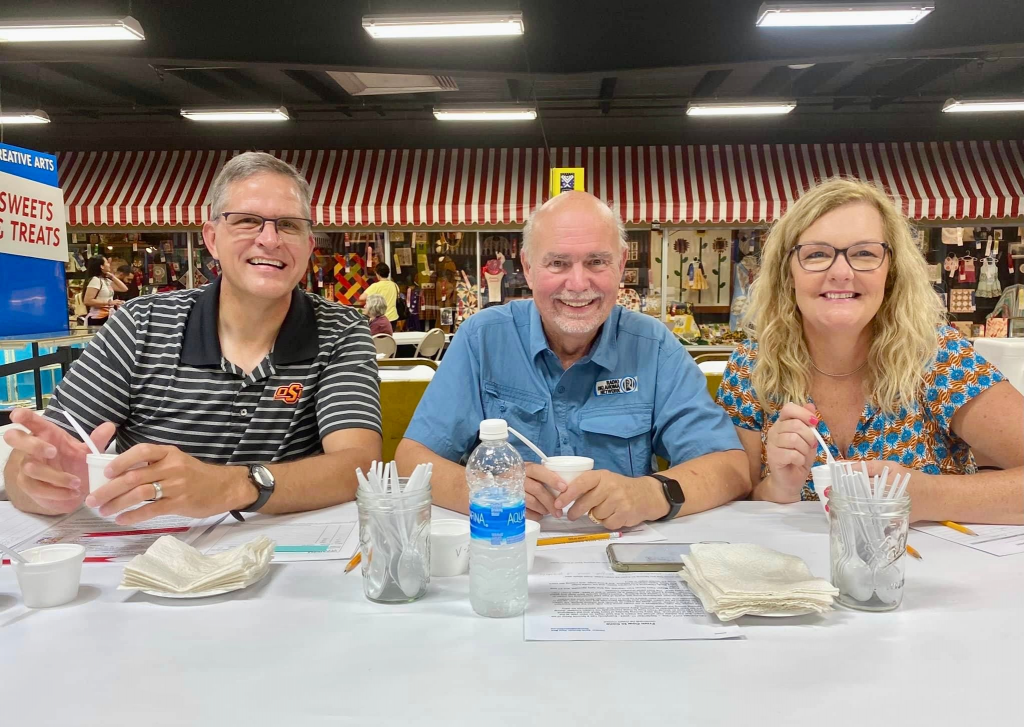
Ice cream judges: Steve Beck- State of Oklahoma 4-H Program Leader, Ron Hays and Angie Meyer, Dairy Producer, and DairyMAX Board Member
Editor's Note- Oklahoma Farm Report's Ron Hays was one of three judges at the 2023 State Fair of Oklahoma DairyMAX Cow to Cone Ice Cream Contest- and he talked with fellow judge and dairy producer Angie Meyer about her involvement in checkoff efforts for both the beef and dairy industries.
Senior Farm and Ranch Broadcaster, Ron Hays, is talking with Angie Meyer about the Beef and Dairy Checkoffs. Meyer and her family are dairy producers in Kingfisher County in central Oklahoma. She is part of both the beef and dairy checkoffs, representing Oklahoma on the Cattlemen's Beef Promotion Board, and is also on the DairyMax board of directors.
"I am a big advocate for checkoff," Meyer said. "I feel like them being able to advocate for us and push our products, whether it is dairy as a whole milk, as a cheese, as a yogurt, or anything else, DairyMax does a wonderful job with reaching schools, children, young adults, even geriatric...."
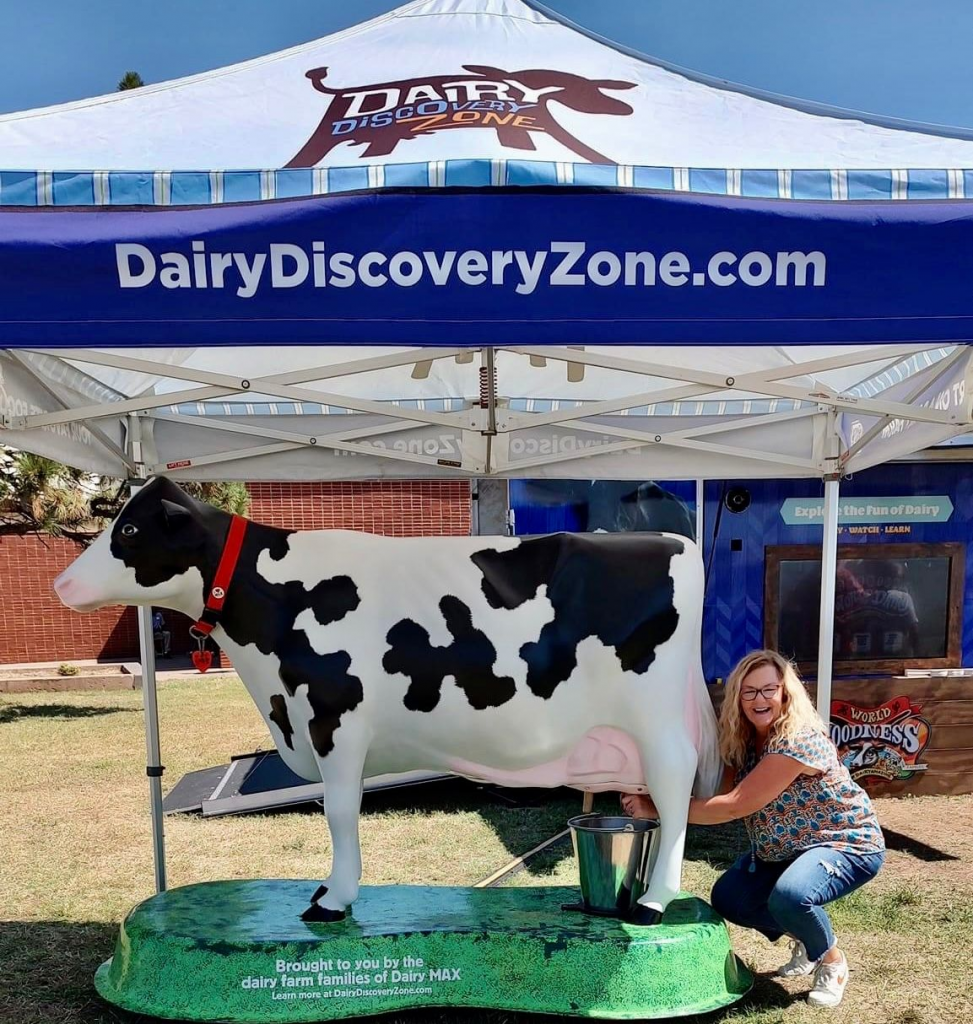
Regarding outreach efforts, Meyer said DairyMax is diving into the gaming sector.
"Out of eight million in the population, three million people are gamers, and they love dairy," Meyer said. "It is crazy watching videos and meeting some of these people and how much they advocate for us."
Meyer said dairy makes up about 26 percent of the Beef Checkoff and the beef industry as a whole.
"Dairy is what they consider a very lean beef," Meyer said. "It goes into a lot of restaurant meat. I love my role with the Beef Checkoff, and I was excited to have that opportunity."
The structure of the Cattlemen's Beef Board is producer driven, Meyer said, where individuals from all parts of the industry have a voice.
"You also make decisions on how the Checkoff dollars are spent and what programs are funded," Meyer said.
The research side of the Checkoff, which Meyer is part of, is critical because that information is relayed to health professionals to give recommendations to the consumer about beef.
"The research and that information we can give them about how beef is good in the early years, dairy is definitely a must, and what it does to grow strong bones, healthy children, healthy adults, and older adults as well...," Meyer said.
The Beef Buzz is a regular feature heard on radio stations around the region on the Radio Oklahoma Ag Network and is a regular audio feature found on this website as well. Click on the LISTEN BAR at the top of the story for today's show and check out our archives for older Beef Buzz shows covering the gamut of the beef cattle industry today.

American Vanguard Corporation (NYSE: AVD) is pleased to announce the release of its 2023 Corporate Sustainability Report, a detailed update of the Company's commitment to the principles of Sustainable Agriculture, which is at the center of its Environmental, Social Responsibility, and Governance (ESG) initiative.
With the 39-page report, the Company focuses on the central role that agriculture can play in mitigating climate change. More specifically, the Company profiles its portfolio of Climate-Smart Ag solutions, including soil health products, its proprietary SIMPAS® precision application system, and MRV (measure, record, verify) platform ULTIMUS®. The Company also reports on its progress with its sustainability initiatives and provides an update of safety and environmental metrics at its manufacturing plants and laboratory facilities. To improve transparency, in future reports the Company will detail plans to expand reporting, to include Scope 3 GHG emissions, warehouses, office spaces, and international businesses, as well as social and governance metrics.
"At American Vanguard, we recognize the importance of our role and effect on the planet – from our local communities to the global environment," said Eric Wintemute, Chairman and Chief Executive Officer, of American Vanguard. "With this 2023 Sustainability Report, we reiterate our commitment to environmental and social responsibility featuring our efforts to promote diversity and inclusion within, while engaging in community outreach outside the Company. We strive to improve the well-being of our employees and those in our communities, while safely and responsibly operating our businesses with a sense of mindfulness – toward the climate, the environment, and the good of humans and other species."
An executive summary of the 2023 Corporate Sustainability Report along with an opportunity to download the report in its entirely can be found at the company's website: www.American-Vanguard.com/ESG/2023-Corporate-Sustainability-Report.
About American Vanguard
American Vanguard Corporation is a diversified specialty and agricultural products company that develops, manufactures, and markets solutions for crop protection and nutrition, turf and ornamentals management, commercial and consumer pest control. Over the past 20 years, through product and business acquisitions, the Company has expanded its operations into 17 countries and now has over 1,000 product registrations in 56 nations worldwide. Its strategy rests on three growth initiatives – i) Core Business (through innovation of conventional products), ii) Green Solutions (with over 130 biorational products – including fertilizers, microbials, nutritionals and non-conventional products) and iii) Precision Agriculture innovation (including SIMPAS prescriptive application and Ultimus measure/record/verify technologies). American Vanguard is included on the Russell 2000® and Russell 3000® Indexes and the Standard & Poor's Small Cap 600 Index. To learn more about American Vanguard, please reference the Company's web site at www.american-vanguard.com.
The Company, from time to time, may discuss forward-looking information. Except for the historical information contained in this release, all forward-looking statements are estimates by the Company's management and are subject to various risks and uncertainties that may cause results to differ from management's current expectations. Such factors include weather conditions, changes in regulatory policy and other risks as detailed from time-to-time in the Company's SEC reports and filings. All forward-looking statements, if any, in this release represent the Company's judgment as of the date of this release.
Mark Johnson, Oklahoma State University Extension Beef Cattle Breeding Specialist, offers herd health advice as part of the weekly series known as the "Cow Calf Corner" published electronically by Dr. Peel, Mark Johnson, and Paul Beck. Today, Johnson talks about OQBN.
The Oklahoma Quality Beef Network (OQBN) is a joint project of the Oklahoma Cooperative Extension Service and the Oklahoma Cattlemen's Association. It is a network of beef producers, educators, veterinarians and industry professionals committed to increasing producers' access to value added marketing opportunities. Cow-calf operators selling the calves, and buyers alike, benefit from the OQBN program. The program results in producing heavier, healthier, and higher performing calves. Calves that have been managed according to a Vac-45 program show reduced stress and shrink, an improved immune system, and increased sale weight. As a result, over the last five years OQBN calves have provided average premiums of over $13/cwt for certified weaned and preconditioned calves with over 23,400 enrolled in the program over that time. Average Gross Returns to the producer are calculated to be $76/ calf, a $26 calculated net return on the investment in better calf quality and welfare.
At present, there are nine OQBN sale dates scheduled for calves weaned this fall. The first sale, for calves weaned by September 23, is at OKC West Livestock Market in El Reno on November 7. The complete set of sale dates and weaning dates for each sale can be found at https://extension.okstate.edu/programs/oklahoma-quality-beef-network/oqbn-certified-sales-information.html
To enroll calves into the OQBN program, producers should visit the website referenced above to purchase ear tags and initiate the enrollment process. Once the transaction of ear tag purchase is complete you will be contacted by an OQBN representative to schedule a verification. Producers can either complete the enrollment/vaccine records form in the link at the website, or the hard copy of the form included with ear tags purchased. Keep the enrollment/vaccine records form for the OQBN representative that conducts the onsite verification of calves and vaccine records. Certification is complete upon approval from OQBN personnel.
Requirements for enrolling calves in the OQBN program include:
All calves must be:
In addition:
If you are interested in improving the profit potential of your cow-calf operation by capturing the premiums available through OQBN sales or have questions about the program, contact Paul Vining, OQBN Coordinator at (405) 744 – 4268 or paul.vining@okstate.edu
On the heels of the first anniversary of President Biden's Inflation Reduction Act, the U.S. Department of Agriculture (USDA) has seen record interest in the conservation and clean energy programs that received funding from the law. As a key part of President Biden's Investing in America agenda, the Inflation Reduction Act is the nation's largest-ever investment to combat climate change.
"With the Inflation Reduction Act, President Biden provided USDA with historic resources to improve the lives of the American people," said Agriculture Secretary Tom Vilsack. "It is clear there is a significant appetite among producers and rural communities for clean energy and conservation programs, specifically those that were boosted by the law. I am proud of the swift work USDA has done to create, expand and streamline programs in order to put resources directly into communities."
The Inflation Reduction Act made nearly $20 billion available over five years for USDA's Natural Resources Conservation Service (NRCS) to address continuous high demand for popular conservation programs. This additional investment will help farmers and ranchers implement expanded conservation practices that reduce greenhouse gas emissions and increase carbon storage. Importantly, many of the practices funded under the Inflation Reduction Act provide significant environmental co-benefits for producers outside of their climate mitigation value. Consistent with the direction from Congress in the Inflation Reduction Act, NRCS made available $850 million for these programs in Fiscal Year 2023 and has already seen substantially more interest than funding available under the law. These amounts include both financial assistance that will be included in contracts and agreements, and the technical assistance needed to implement complex on-the-ground conservation systems.
In addition to strong interest in NRCS's programs, USDA's Forest Service received $6.4 billion in applications for the Urban and Community Forestry Program, for which $1.5 billion funding was made available in Fiscal Year 2023 under the Inflation Reduction Act to increase tree cover in urban spaces and boost equitable access to nature while bolstering resilience to extreme heat, storm-induced flooding, and other climate impacts. Last week, USDA awarded over $1 billion of this funding to nearly 400 projects in every state across the country.
As of August 2023, USDA has publicly announced the availability of over $17 billion, or 45% of the 10-year total of Inflation Reduction Act funding, for new and existing programs. Additionally, USDA has already put significant resources directly into the pockets of farmers and small business owners. For example, USDA:
Additionally, USDA's Rural Development is moving quickly to give farmers and rural communities relief through clean energy that will lower energy bills and reduce pollution. Demand from rural communities for USDA's clean energy support is very strong:
Consistent with the direction from Congress, USDA has allocated all Inflation Reduction Act funds, which total nearly $38 billion over 10 years, for spending under programs that invest in communities and producers nationwide. USDA agencies responsible for implementing the provisions of the Inflation Reduction Act have worked diligently and efficiently to expand existing programs and create new funding opportunities while undergoing a rigorous review of their spending plans by USDA's Office of Budget and Program Analysis.
These investments made through the Inflation Reduction Act are powering the Biden-Harris Administration's efforts to make USDA programs more inclusive, accessible and available to more people than ever before so that their benefits are felt for generations to come. Many of these programs are also part of President Biden's Justice40 Initiative, which is advancing environmental justice by ensuring that 40 percent of the overall benefits of certain federal investments reach disadvantaged communities that are marginalized and overburdened by pollution and underinvestment.
For more information on the USDA's implementation of the Inflation Reduction Act, visit: www.usda.gov/ira
USDA touches the lives of all Americans each day in so many positive ways. Under the Biden-Harris Administration, USDA is transforming America's food system with a greater focus on more resilient local and regional food production, fairer markets for all producers, ensuring access to safe, healthy and nutritious food in all communities, building new markets and streams of income for farmers and producers using climate-smart food and forestry practices, making historic investments in infrastructure and clean energy capabilities in rural America, and committing to equity across the Department by removing systemic barriers and building a workforce more representative of America. To learn more, visit www.usda.gov.
RON's Dave Lanning has a pre-opening look at today's agricultural Markets.
Click the audio tab below for today's report.
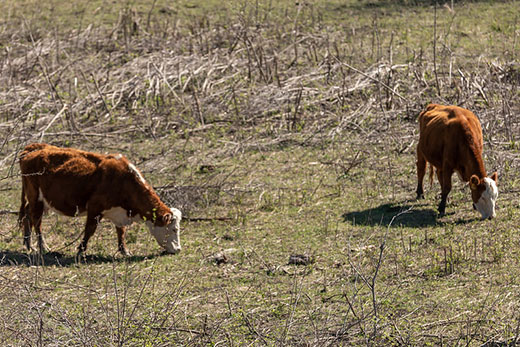
Thin Pasture Conditions- Picture from K-State Research and Extension
The lingering drought as summer slips into fall here in 2023 is reflected best in the Pasture & Range ratings across the middle part of the US- especially here in the southern plains.
Oklahoma saw another big drop in the good to excellent ratings in the Crop Progress report released on Monday- dropping from 34% a week ago to 22% good to excellent this week- with 49% poor to very poor. That 49% number was the good to excellent rating number a month ago in mid August- so the hot dry conditions in recent weeks has flipped our conditions in just thirty days. 2023 is still a lot better than what we were dealing with at this point a year ago- Oklahoma's pasture range ratings were just 9% good (None Excellent) in mid September 2022. (From the September USDA Crop Progress report of September 17, 2022)
Our neighbors are also suffering with declining pasture range conditions- Kansas is at 17% good to excellent this week- steady with a week ago and still better than the 8% of a year ago- Missouri is at 17% good to excellent this week- and up 2 points from last week. Arkansas pasture and range conditions slipped four percentage points this week versus last- and are now at 29% good to excellent. Both Missouri and Arkansas Pasture/range conditions stood at 30% good to excellent a year ago in mid September.
The best state in our region is New Mexico- they jumped 15 points this week versus last and now have a 60% good to excellent rating this week.
The two worst states in the US when it comes to Pasture Range ratings- Texas and Louisiana. Both states show a 7% good to excellent rating this week- that's a drop in Louisiana of 6 points while Texas is up one point from a week ago. Texas is significantly worse this year versus last September when the state had a 27% good to excellent rating. Texas leads the nation in the poor to very poor numbers- at 71% poor to very poor ratings- off one point from last week. Louisiana is close behind Texas in that stat- 68% of their pastures are in poor to very poor condition.
Up into the midwest- two states jump out for their relatively poor ratings here in mid September- Iowa has a 15% good to excellent pasture/range rating while Wisconsin sits at 22% good to excellent. Nationally- the 48 state number is 34% in good to excellent condition- up one point from a week ago and six points better than in 2022.
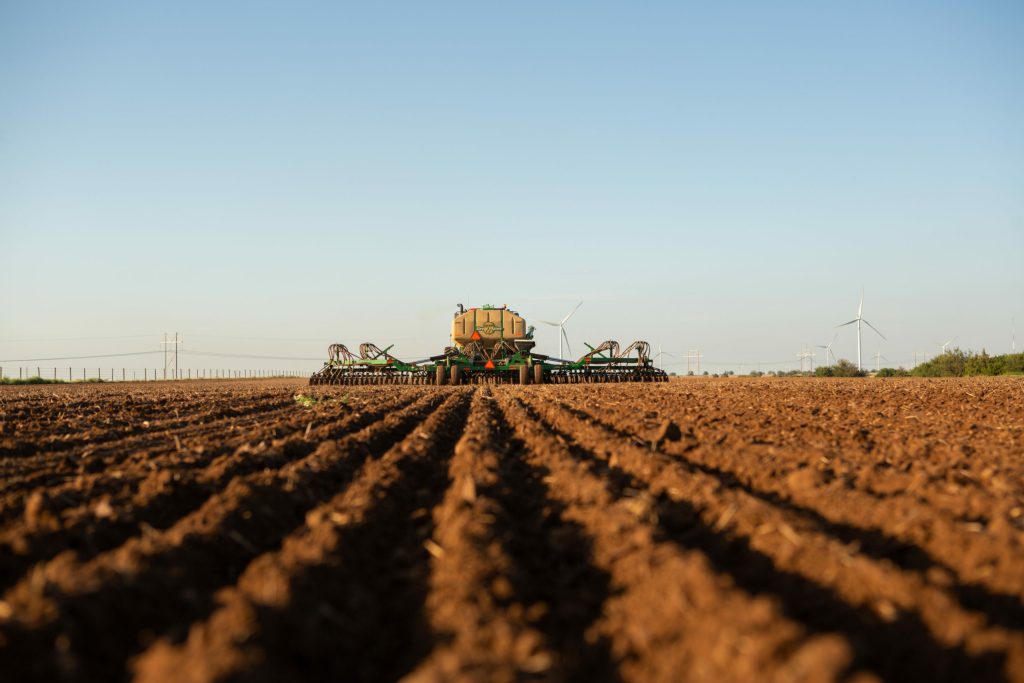
Both the corn and soybean harvests are running slightly ahead of the average pace, according to USDA NASS' weekly Crop Progress report released Monday.
In Oklahoma, rainfall averaged 1.26 inches. According to the September 12th US Drought Monitor Report, drought conditions were rated 62 percent abnormally dry to exceptional drought, down 38 points from last year. Additionally, 45 percent of the state was in the moderate drought to exceptional drought categories, down 52 points from the previous year. Statewide, temperatures averaged in the upper 60's to low 70's.
Winter wheat planted for the U.S. reached 15 percent, down 4 percentage points from the previous year and down 1 point from the average.
Corn dented for the U.S. reached 90 percent, up 4 percentage points from the previous year and up 3 points from the average. Corn mature reached 54 percent, up 16 points from the previous year and up 10 points from the average. Corn harvested reached 9 percent, up 2 percentage points from the previous year and the average. Corn conditions rated 51 percent good to excellent, 29 percent fair and 20 percent poor to very poor. Last week's conditions rated 52 percent good to excellent, 30 percent fair and 18 percent poor to very poor.
Soybeans dropping leaves reached 54 percent, up 15 percentage points from the previous year and up 11 points from the average. Soybeans harvested reached 5 percent, up 2 percent from the previous year and up 1 percent from the average. Soybean conditions rated 52 percent good to excellent, 30 percent fair and 18 percent poor to very poor. Last week's ratings were the same.
Cotton bolls opening reached 55 percent, down 3 percentage points from the previous year and up 3 from the average. Cotton harvested reached 9 percent, down 2 percentage points from the previous year and down 1 from the average. Cotton conditions rated 29 percent good to excellent, 28 percent fair and 43 percent poor to very poor. Last week's conditions rated 29 percent good to excellent, 30 percent fair and 41 percent poor to very poor.
Winter wheat planted reached 12 percent, down 1 point from the previous year but unchanged from normal.
Corn dented reached 88 percent, unchanged from the previous year but up 1 point from normal. Corn mature reached 53 percent, up 1 point from the previous year but down 2 points from normal. Corn harvested for grain reached 30 percent, up 2 points from the previous year and up 14 points from normal. Corn conditions rated 64 percent good to excellent, 25 percent fair and 11 percent poor to very poor. Last week's conditions rated 73 percent good to excellent, 19 percent fair and 8 percent poor to very poor.
Sorghum headed reached 95 percent, unchanged from the previous year but down 3 points from normal. Sorghum coloring reached 65 percent, down 18 points from the previous year and down 14 points from normal. Sorghum mature reached 24 percent, down 10 points from the previous year and down 12 points from normal. Sorghum harvested for grain reached 7 percent, up 1 point from the previous year but unchanged from normal. Sorghum conditions rated 50 percent good to excellent, 36 percent fair and 14 percent poor to very poor. Last week's conditions rated 54 percent good to excellent, 31 percent fair and 15 percent poor to very poor.
Soybeans blooming reached 97 percent. Soybeans setting pods reached 84 percent, up 4 points from the previous year and up 6 points from normal. Soybeans dropping leaves reached 26 percent, up 5 points from the previous year and up 9 points from normal. Soybean conditions rated 51 percent good to excellent, 33 percent fair and 16 percent poor to very poor. Last week's conditions rated 58 percent good to excellent, 28 percent fair and 14 percent poor to very poor.
Peanuts mature reached 43 percent, down 6 points from the previous year but up 7 points from normal. Peanut conditions rated 96 percent good to excellent and 4 percent fair. Last week's conditions rated 96 percent good to excellent, 3 percent fair and 1 percent poor to very poor.
Cotton bolls opening reached 45 percent, down 7 points from the previous year and down 3 points from normal. Cotton conditions rated 11 percent good to excellent, 19 percent fair and 70 percent poor to very poor. Last week's conditions rated 12 percent good to excellent, 16 percent fair and 72 percent poor to very poor.
Hay: The fourth cutting of alfalfa hay reached 60 percent, down 3 points from the previous year and down 14 points from normal. The second cutting of other hay reached 92 percent. The third cutting of other hay reached 32 percent, down 28 points from the previous year and down 5 points from normal.
Livestock conditions rated 64 percent good to excellent, 26 percent fair and 10 percent poor to very poor. Last week's conditions rated 61 percent good to excellent, 27 percent fair and 12 percent poor to very poor.
Pasture and range conditions rated 22 percent good to excellent, 29 percent fair and 49 percent poor to very poor. Last week's conditions rated 34 percent good to excellent, 21 percent fair and 45 percent poor to very poor.
Winter wheat planted was 8 percent, behind 13 percent last year, and near 10 percent for the five-year average. Emerged was 1 percent, equal to average.
Corn dented was 96 percent, ahead of 89 percent last year, and near 92 percent average. Mature was 76 percent, ahead of 59 percent last year and 58 percent average. Harvested was 27 percent, near 26 percent last year, and ahead of 17 percent average. Corn conditions rated 32 percent good to excellent, 32 percent fair and 36 percent poor to very poor. Last week's conditions rated 31 percent good to excellent, 35 percent fair and 34 percent poor to very poor.
Soybeans dropping leaves was 53 percent, ahead of 38 percent last year, and well ahead of 32 percent average. Harvested was 4 percent, near 2 percent last year and 1 percent average. Soybean conditions rated 23 percent good to excellent, 30 percent fair and 47 percent poor to very poor. Last week's conditions rated 23 percent good to excellent, 32 percent fair and 45 percent poor to very poor.
Sorghum coloring was 80 percent, ahead of 71 percent last year, but near 82 percent average. Mature was 34 percent, ahead of 19 percent last year and 22 percent average. Harvested was 7 percent, ahead of 2 percent both last year and average. Sorghum conditions rated 32 percent good to excellent, 35 percent fair and 33 percent poor to very poor. Last week's conditions rated 33 percent good to excellent, 37 percent fair and 30 percent poor to very poor.
Cotton bolls opening was 81 percent, well ahead of 52 percent last year and 38 percent average. Cotton conditions rated 35 percent good to excellent, 47 percent fair and 18 percent poor to very poor. Last week's conditions rated 40 percent good to excellent, 41 percent fair, and 19 percent poor to very poor.
Pasture and range conditions rated 17 percent good to excellent, 33 percent fair, and 50 percent poor to very poor. Last week's conditions rated 17 percent good to excellent, 34 percent fair and 49 percent poor to very poor.
Winter wheat planted reached 15 percent, down 16 percentage points from the previous year and down 2 points from the average.
Corn dented reached 97 percent, even with the previous year and the average. Corn mature reached 82 percent, down 2 percentage points from the previous year and up 2 points from the average. Corn harvested reached 68 percent, up 1 point from the previous year and up 2 points from the average. Corn conditions rated 49 percent good to excellent, 27 percent fair and 24 percent poor to very poor. Last week's conditions rated the same.
Cotton bolls opening reached 52 percent, down 2 percentage points from the previous year and up 6 from the average. Cotton harvested reached 20 percent, even with the previous year and up 2 from the average. Cotton conditions rated 10 percent good to excellent, 25 percent fair and 65 percent poor to very poor. Last week's conditions rated 9 percent good to excellent, 30 percent fair and 61 percent poor to very poor.
Sorghum coloring reached 96 percent, down 4 percentage points from the previous year and even with the average. Sorghum mature reached 85 percent, down 7 percent from the previous year and even with the average. Sorghum harvested reached 75 percent, down 2 percentage points from the previous year and down 1 from the average. Sorghum conditions rated 45 percent good to excellent, 22 percent fair and 33 percent poor to very poor. Last week's conditions rated the same.
Peanut conditions rated 36 percent good to excellent, 27 percent fair, and 37 percent poor to very poor. Last week's conditions rated 31 percent good to excellent, 35 percent fair and 34 percent poor to very poor.
Pasture and range conditions rated 7 percent good to excellent, 22 percent fair and 71 percent poor to very poor. Last week's conditions rated 6 percent good to excellent, 22 percent fair and 72 percent poor to very poor.

The capital will be invested in profitably scaling Indigo's unique science and technology to boost farm revenues and de-carbonize the planet
Indigo Ag, the premier sustainability partner of the agriculture industry, announced that it has raised over $250 million to drive innovation and growth in its sustainable agriculture programs and better serve its customers and partners. The successful investment round signals market validation of the company's strategy and confidence in Indigo's unique ability to drive farmer and agribusiness success at scale.
"Farmers and agribusinesses need strong, innovative partners that create value," said Jed Miller, chief strategy officer for Ag Partners Coop. "This fundraise is not only a win for Indigo, but a major win for market access. We look forward to continuing our collaboration with Indigo to drive farmer success."
The funding round includes existing investors, led by Flagship Pioneering, and new investors, including the State of Michigan Retirement System, one of the largest pension funds in the U.S. and Lingotto Investment Management, a $3 billion innovation-focused fund owned by Exor N.V., one of Europe's largest diversified holding companies.
"In this difficult and obsessively short-term financial environment, it is vital to back innovative companies that are critical to meeting the challenges of the future of the Earth," said James Anderson, Managing Partner and Chief Investment Officer –Innovation at Lingotto. "We believe that Indigo Ag has endured demanding times but now has a bright future and an important role in mitigating climate damage. Therefore, Lingotto Innovation is proud to support the company."
Indigo has entered a period of acceleration across its integrated business platform:
"This important fundraise signals Indigo Ag's successful transition from a startup to a trusted partner that is delivering critical sustainability solutions," said Ron Hovsepian, President and CEO of Indigo Ag. "We have the science, business momentum and sufficient resources to continue to deliver on our promises to our partners and customers. We are well positioned for growth and profitability as we work with the agricultural value chain to turn sustainability into real value."
About Indigo Ag
Indigo Ag is the innovative leader and trusted partner in sustainable agriculture, uniquely leveraging science and technology to turn sustainability into value for farmers, agribusinesses, and corporations. Indigo's integrated business platform allows each player in the ag supply chain to simultaneously adopt and profit from their sustainability efforts. Specifically, farmers working with Indigo can maximize their profit from sustainability practices on each field, every year of their rotation, while also improving soil quality. Indigo is currently the only company offering corporations high quality agricultural carbon credits and scope 3 emissions reductions at scale.
Founded in 2013, Indigo Ag is creating a world with more profitable farmers and more sustainable companies. Operating across 14 countries, the company is delivering on its mission of harnessing nature to help farmers sustainably feed the planet.
U.S. Secretary of Education Miguel Cardona and U.S. Secretary of Agriculture Thomas Vilsack today sent letters to 16 governors emphasizing the over $12 billion disparity in funding between land-grant Historically Black Colleges and Universities (HBCUs) and their non-HBCU land-grant peers in their states.
The 16 governors receiving the letter are:
There are HBCU land-grant institutions in 18 states; however, Delaware and Ohio have equitably funded their respective universities.
"Unacceptable funding inequities have forced many of our nation's distinguished Historically Black Colleges and Universities to operate with inadequate resources and delay critical investments in everything from campus infrastructure to research and development to student support services," said U.S. Secretary of Education Miguel Cardona. "I am continually inspired by all that HBCUs have achieved despite having to punch above their weight. Our HBCUs graduate a huge share of our nation's Black educators, doctors, engineers, judges, and lawyers. These institutions and the talented, diverse students they serve must have equitable funding in order to reach their full potential and continue driving innovation. The Biden-Harris Administration is proud to have made record investments in our HBCUs, but to compete in the 21st century we need state leaders to step up and live up to their legally required obligations to our historically Black land-grant institutions."
"Some of the brightest minds and most impactful advancements in food and agriculture have taken root in our country's 1890 land-grant universities, and I'm incredibly proud of the partnership USDA maintains with these invaluable institutions. We need governors to help us invest in their states' HBCU's at the equitable level their students deserve, and reflective of all they contribute to our society and economy," said Agriculture Secretary Tom Vilsack. "The documented discrepancies are a clarion call for governors to act without delay to provide significant support for the 1890 land-grant institutions in their respective states. Failing to do so will have severe and lasting consequences to the agriculture and food industry at a time when it must remain resilient and competitive."
Under the Second Morrill Act of 1890, states choosing to open a second land-grant university to serve Black students were required to provide an equitable distribution of state funds between their 1862 and 1890 land-grant institutions. 1862 land-grant universities were founded through the First Morrill Act of 1862 which provided states with federal land that could be sold to support the colleges.
Using data from the National Center for Education Statistics (NCES) Integrated Postsecondary Education Survey (IPEDS) that ranges from 1987 to 2020, the departments were able to calculate the amount that these institutions would have received if their state funding per student was equal to that of 1862 institutions. Unequitable appropriated funding of the 1890 institutions in the states ranges from $172 million to $2.1 billion, causing severe financial gaps. In the last 30 years alone, these funds could have supported vital and much-needed infrastructure and student services and would have better positioned the recipient universities to compete for grants to increase educational opportunity for students.
Noting that it is more important than ever to compete at a high level and remain the world's top producer of talent and innovation, the Departments of Education and Agriculture have offered to work with each state's budget office to examine the funding data to bring balance to investments in 1890 HBCUs that have been severely underfunded.
Each letter outlined the amount each state's 1890 HBCU has been underfunded per student in state appropriated funds between 1987 and 2020 and offers a suggestion on possible remedies. To view the letters, please visit the following link: Letters to State Governors.
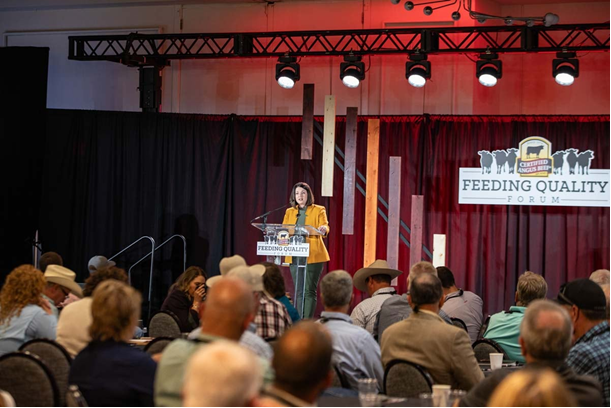
The 2023 Feeding Quality Forum event was held in Lincoln, Neb. Speakers all gave credit to cattlemen for continuing to pursue quality, but also sharing there's still demand for more.
The beef demand success story of the past is also the industry's roadmap for the future, said speakers at this year's Feeding Quality Forum.
Certified Angus Beef (CAB) gathered cattle feeders, ranchers, allied industry and students at the 18th annual event, held Aug. 22-23, in Lincoln, Neb. The program covered everything from current market conditions and technology to price forecasts and advancements on the horizon.
"It's hats off to you as an industry for producing the right genetics, managing those correctly and bringing high-quality beef to the industry," said Glen Dolezal, Cargill Protein, warning he doesn't want to go backward as implant programs and new additives come on the market.
"I encourage you to be careful," Dolezal said.
Having the most accurate measures to evaluate carcass quality provides the best data possible to make those decisions. Bucky Gwartney, Agriculture Marketing Service (AMS), said most major packing plants use cameras to grade, sort or gather data in their operations today.
Rural locker plants may soon have greater access to the technology through a USDA pilot program that's currently testing a cell-phone-like device to capture ribeye pictures and call marbling scores.
"Technology is coming at us quick," Gwartney said. "It's going to be better than we've ever had, and I'm convinced it's going to be a mainstay of the grading program."
Knowing more and doing better
Learning more is a step to improvement. AJ Tarpoff, Kansas State University, and Lily Edwards-Callaway, Colorado State University, shared ongoing research to improve cattle comfort. They touched on bedding in the summer to cool the ground, changing diet makeup during heat events, and offering shade and water.
"It's not always a cost," Tarpoff said, calling cattle comfort an investment in productivity and grade.
Cattlemen can't control the environment, Edwards-Callaway said, "but we can control some of the things that you do to help promote that comfort for the animals and reduce that discomfort."
Good animal husbandry helps connect with consumers, too, she said.
"A lot of us have got really cool things we're doing by ourselves, but we're going to have to share some of that data, move it up chain efficiently and take advantage of that to get to that next step," said John Schroeder, Darr Feedlot, noting that's important to growing consumer confidence.
He, along with Jesse Fulton, University of Nebraska Panhandle Research & Extension, and Robert Wells, Noble Research Institute, participated in a stewardship panel led by Kirsten Nickels, CAB sustainability and animal care scientist.
"As long as we're good stewards to the land, good stewards of our herd, practice good stockmanship, we're going to be around for a lifetime," Fulton said.
Becoming more efficient and using resources carefully is one aspect of stewardship. Justin Sexten, Zoetis Beef, lead a discussion with Nebraska cattle feeders Joan Ruskamp, J&S Feedlot, Zack Lindsley, R&L Feeders, along with Karl Fox, who operates a family feedyard in northeast Iowa. They talked labor and cost savings from using computer programs, advisors and some plain old creativity.
"I don't want my sons and daughters to take 30 years to learn. I want them to be better than me next year," Fox said.
Market outlook
Being flexible and adaptable is as important today as ever, said market analyst Dan Basse, AgResource Co.
"When you put geopolitical things, along with weather and the wars that are ongoing, you're ending up with extreme volatility in a lot of markets," he explained.
Basse predicted a range in cattle prices from $160 per hundredweight (cwt.) to $220 for a springtime high. He said the supply-driven bull market for cattle has "a lot of legs" because the cow herd is not in full expansion yet.
CAB is preparing for that supply crunch, said Sara Scott, CAB vice president of foodservice, noting her team connects customers with opportunities and drives home the message of value.
"When you talk about Certified Angus Beef as being 'beef insurance' for your kitchen, you don't have to worry about how the product's going to perform, and that's really what we've hung our hat on now for decades, is that consistency," she said.
That's a good plan to keep the long lens of beef demand on its current positive trajectory, said industry analyst Nevil Speer.
"More dollars coming into your business means more opportunities. It means more chances for young people to come back and be involved in this business," Speer said.
Keeping other families in business is motivational for TJ and Tiffini Olson, Round the Bend Steakhouse, near Ashland, Neb. They joined their foodservice distributor, Lane Rosenberry, Sysco Lincoln, to give a glimpse of their day-to-day and their closing message was one of gratitude.
"Without you all doing what you do in those cold, cold winter nights, caring for that one calf that drops — we understand that to a point, but never had to do that myself — but without that labor of love, we don't get to have what we have," TJ Olson said. "Thank you so much to each and every one of you for doing what you all do."
The CAB event was sponsored by AngusLinkSM, Feedlot Magazine, Select Sires, Performance Livestock Analytics, Diamond V and Drovers. To learn more or view coverage, visit www.feedingqualityforum.com.
Smithfield employees across the U.S. collected food to support food banks during Hunger Action Month.
Smithfield Foods' U.S. employees collected more than 25,000 pounds of food to support hunger relief during Hunger Action Month, Feeding America's annual nationwide campaign to inspire conversation and drive passion for the issue of hunger. The equivalent of more than 21,000 meals, these donations will support food banks and hunger relief programs in Smithfield's local communities across the Unites States.
"Feeding the hungry is at the core of our philanthropic efforts," said Jonathan Toms, senior community development manager for Smithfield Foods. "Each year, our Smithfield team members demonstrate through our Hunger Action Month food drive that they believe in our mission to fight hunger and food insecurity. It is remarkable to see how passionately they give back to support the communities we call home."
"We are incredibly thankful to Smithfield and their team members for their generous contributions, both during Hunger Action Month and throughout the year," said Joe Weeden, senior director, commodity foods for Feeding America. "Our efforts to feed our neighbors facing food insecurity would not be possible without our partners like Smithfield. These donations of nonperishable food items, along with Smithfield's frequent donations of protein, go a long way in helping the Feeding America network address hunger across the country."
Feeding America estimates approximately one in six people turned to charitable food assistance for additional support in 2022. A recent Feeding America survey found that 80% of network food banks reported either increased or steady demand for emergency food services in June 2023.
Smithfield supports Feeding America's network of food banks throughout the year with its signature hunger-relief initiative program, Helping Hungry Homes®. Since 2008, the program has provided hundreds of millions of protein servings to fight hunger in all 50 U.S. states, as well as in Poland, Romania and Mexico. In 2022, Smithfield donated nearly 25 million servings of protein to food banks, disaster relief efforts and community outreach programs across the U.S. and has pledged to donate 200 million servings of protein by 2025.
The U.S. Department of Agriculture (USDA) today announced a call for nominations to the Advisory Committee on Beginning Farmers and Ranchers. First established in 1992, the Advisory Committee on Beginning Farmers and Ranchers (ACBFR) advises the Secretary of Agriculture to enhance USDA's goals for new farming and ranching operations. Members of the public are invited to submit nominations for themselves or other qualified experts by October 10, 2023.
"New and beginning farmers – whether they come from farm families or are beginning their careers in agriculture – face unique challenges in accessing the land, credit, and training they need to succeed," said Agriculture Secretary Tom Vilsack. "USDA is committed to helping the beginning farmer, the young farmer, access and make use of USDA programs."
USDA is soliciting nominations from interested organizations and individuals from among ranching and farming producers, related state and tribal agricultural entities, academic institutions, commercial banking entities, trade associations, and related nonprofit enterprises. An organization may nominate individuals from within or outside its membership. Interested candidates may also nominate themselves.
Nomination packages should include a cover letter describing the nominee's interest, a resume that documents the nominee's background and experience (five pages or less), and a completed USDA Advisory Committee Membership Background Information Form (AD-755 (PDF, 2.1 MB)). Nominees may also provide links and samples of published writings related to matters affecting new farmers and ranchers and letters of endorsement—both of which are optional. Nomination packages must be received by October 10, 2023, and may be sent by email to acbfr@usda.gov or by first-class mail to: USDA Office of Partnerships and Public Engagement (OPPE), 1400 Independence Avenue SW, Mail Stop 0601, Room 524-A, Washington, DC 20250. For more information, contact R. Jeanese Cabrera, Designated Federal Officer, at acbfr@usda.gov or visit the Advisory Committee on Beginner Farmers and Ranchers website.
USDA touches the lives of all Americans each day in so many positive ways. In the Biden-Harris Administration, USDA is transforming America's food system with a greater focus on more resilient local and regional food production, fairer markets for all producers, ensuring access to safe, healthy and nutritious food in all communities, building new markets and streams of income for farmers and producers using climate smart food and forestry practices, making historic investments in infrastructure and clean energy capabilities in rural America, and committing to equity across the Department by removing systemic barriers and building a workforce more representative of America. To learn more, visit www.usda.gov.
AgriGold's new corn and soybean offerings will shore up farmer defenses and push yields
AgriGold will launch 16 new corn hybrids with relative maturities (RMs) ranging from 84 to 120 days as well as five new trait offerings on proven hybrids for the 2024 growing season. That expands AgriGold's corn portfolio to 82 hybrids.
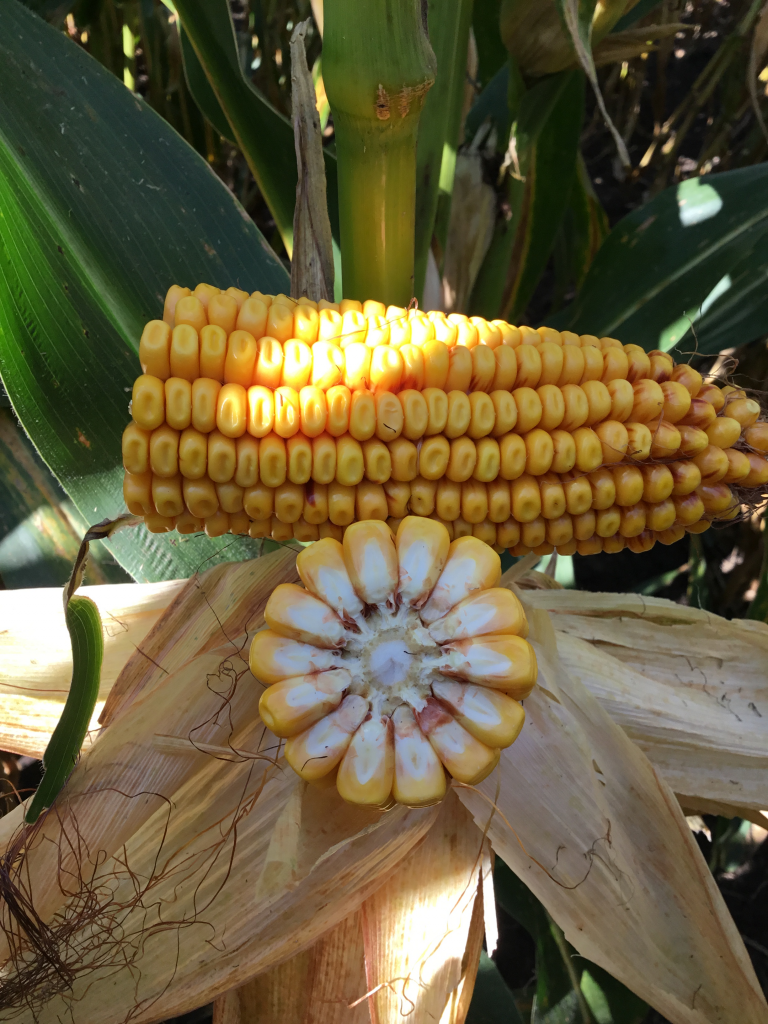
Because AgriGold recognizes the importance of world-class genetics and genetic diversity on farms, it classifies its hybrids into six Field GX™ families based on genetic background and agronomic characteristics, which simplifies management, reduces risk and maximizes results for farmers.
Earlier this year, AgriGold launched a new genetic family – Field GX Family J – known for consistency and an ability to perform in many environments. It provides more versatility for northern Corn Belt farmers, and you'll find a Family J hybrid on the highlight list for 2024.
Standout corn hybrids
AgriGold is particularly excited about the high-performing full-season hybrids making their debut in 2024. "Late-stage testing has shown these full-season products outyield their 2023 predecessors by 5.1 bushels an acre," says Steve Schany, brand product manager at AgriGold. "These hybrids will be extremely competitive and industry leaders for farmers in the full-season market." Hybrids generating a lot of excitement include the following:
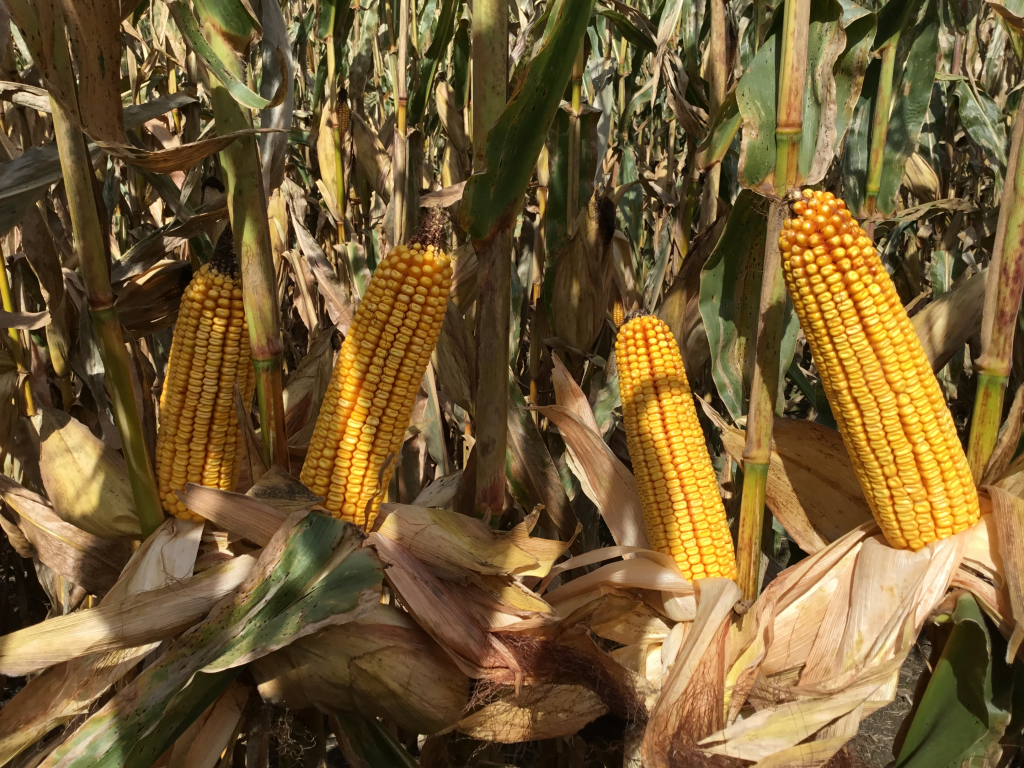
Freedom of choice a hallmark of our soybean lineup
AgriGold is bringing 13 new Enlist E3® varieties and 11 new XtendFlex® varieties to market for the 2024 growing season, enhancing its soybean portfolio. The brand sells 70 varieties ranging from 0.3 to 6.4 RM in Roundup Ready 2 Xtend®, XtendFlex®, Enlist E3® and conventional soybeans. This means farmers can choose the platform that works best for their operation without sacrificing the single seed brand experience.
"This year's new class of products brings farmers more diversity while fortifying their defenses against disease and pest pressure," Schany reports. The 2024 lineup includes six new varieties that bring Peking soybean cyst nematode (SCN) resistance, improved iron deficiency chlorosis and white mold tolerance, better disease tolerance and standability with late-group Enlist E3® soybeans and the introduction of root-knot resistance for the deep South.
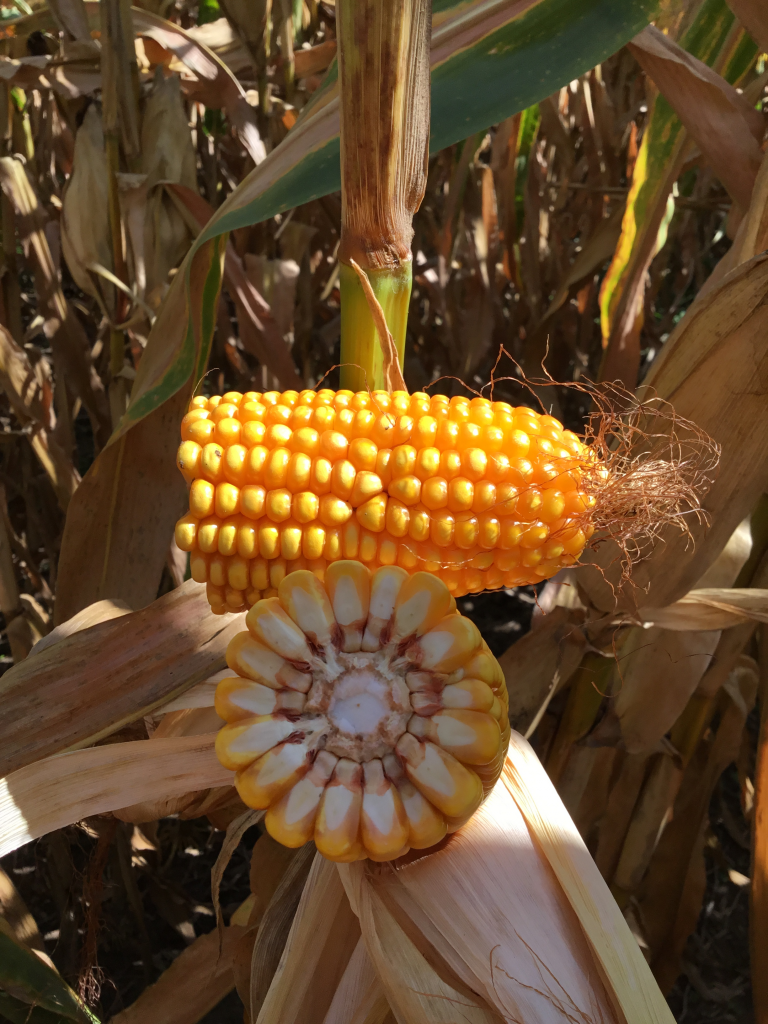
Here are some standouts from the 2024 lineup:
To learn more about these or other new corn and soybean products making their debut for the 2024 growing season, reach out to your local AgriGold agronomist or district sales manager.
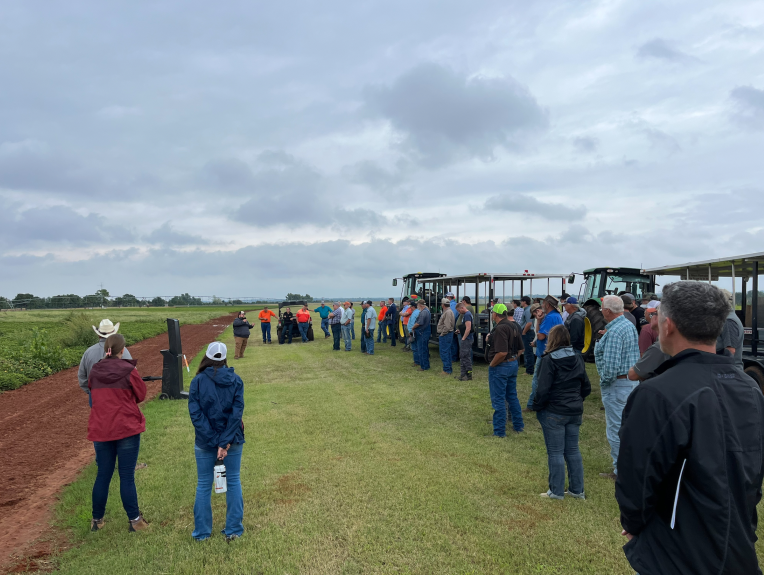
Farm Director, KC Sheperd, is talking with Entomology and Plant Pathology Assistant Extension Specialist at Oklahoma State University, Maxwell Smith, about recent OSU Field Days and the cotton and peanut crops around the state.
Originally from the Altus area, Smith is now back living in Altus, serving producers with pest management needs and more. Cotton is his focus crop, he added, but he works with other crops as well.
At the Panhandle Crops and Forages Field Day held in Eva, Oklahoma, Smith said the area has received good rainfall since spring, which delayed planting. In some parts of the panhandle, Smith said, cotton crops were hailed out.
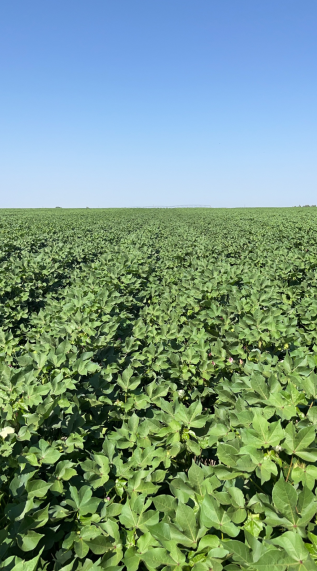
"With the increased rainfall, they have got some really good-looking sorghum and corn up in that area, and I saw some really good-looking cotton as I went up through there, too," Smith said. "A lot of good-looking crops due to the high rainfall throughout this season compared to the last two years up there."
The Peanut and Cotton Field Day took place last week in Ft. Cobb, and Smith was able to give an update on what he saw at the event. The Ft. Cobb area was faced with similar hail storm issues as the panhandle, Smith added.
"The hail storms took out quite a bit of cotton up through that area, but what is still around as far as cotton does look pretty good, and as far as peanuts go, all the peanuts I saw still look pretty good too," Smith said. "Not the same time of rainfall we see every year, but they caught a few more rains up there than we have down here in the southwest, and they have good irrigation potential up there."
Along I-40 and in Tillman County, Smith said, are the best spots in the state for cotton at the moment. For this year's cotton crops, Smith said the rains came a little too late.
"We are not going to gain any more blooms or bolls set on those plants this late in the year, but it will kind of give the crop that already has bolls set a little bit more ability to help finish out those bolls, mature them, and help us out a little bit with what we already had," Smith said.
Cotton harvest, Smith said, will probably take place around mid to late October.
Switching gears to the peanut crop in Oklahoma, Smith said there are about 16,000 acres of peanuts in the state.
"The potential looks pretty good this year," Smith said. "I think, obviously, better than last year just due to more rainfall. I think there is going to be some fields that really have some good yields here in a couple of weeks."

Male tarantulas make themselves known this time of year as they seek a female tarantula during mating season. (Photo by Mitchell Alcala, OSU Agriculture)
By Trisha Gedon
It may look like a scene from the 1990 movie "Arachnophobia," but in reality, the increased number of tarantula sightings simply means it's mating season.
When large numbers of tarantulas are seen, especially when a cluster is crossing the road, people often believe they are migrating, said Andrine Shufran, Oklahoma State University Extension specialist and director of OSU's Insect Adventure.
"The truth is male tarantulas are moving around this time of year in the quest for a mate. Mating season is determined by temperature and microclimates," Shufran said. "It can be earlier or later because the males are waiting on the right situation and cues to get on the move, but typically mating season is from late August through October."
Male tarantulas mate after their final molt into full adulthood and typically live only a few months afterward. Although the male's mating time is limited, it could mate more than 100 times with more than 100 female tarantulas.
During mating season, female tarantulas remain close to their burrows. They emit pheromones to attract a mate, and much like swiping left or right on a dating app, when a male tarantula approaches, the female will decide whether or not to accept him.
"Females lay between 300 and 350 eggs that are encased in an egg sack she creates in her burrow," Shufran said. "Eggs take up to three months to emerge, but the survival rate for spiderlings to adulthood is pretty low due to predation and environmental factors."
In Oklahoma, tarantulas have a leg span of 6 inches at most, compared to some tropical species that are the size of a dinner plate. Despite their scary appearance, tarantulas are not dangerous. Shufran said more people are killed by Christmas trees than spiders every year.
"Tarantulas do have the capacity to bite if they feel threatened, but they're most likely to run away," she said. "When there's no other alternative, they'll face off by standing on their back four legs and showing their fangs. This is typically when the spider and the human part ways and no one gets hurt. However, tarantulas will bite as a last resort."
Although their venom is toxic to small animals like rats, it's not necessarily harmful to humans. Shufran said a human may find the bite painful, but there's no need to call poison control or go to the emergency room. The wound can be treated with ice.
Tarantulas also use urticating hairs found on the end of their abdomen as a defense mechanism. When this special set of hairs is released and comes into contact with skin, it can cause animals and humans to itch in the affected area.
"When they become disturbed, they release those urticating hairs by rubbing their back two legs across the hairs to create a sort of forcefield," Shufran said. "The hairs are carried by air movement and are incredibly itchy to people and animals. It's easy to see the stress level of a tarantula by how bare that urticating patch is."
The Insect Adventure at OSU has been home to more than 1,000 tarantulas over the years, and anyone wanting to learn more about tarantulas and other insects is welcome to plan a visit.
Interesting facts about tarantulas:
OSU Extension uses research-based information to help all Oklahomans solve local issues and concerns, promote leadership and manage resources wisely throughout the state's 77 counties. Most information is available at little to no cost.
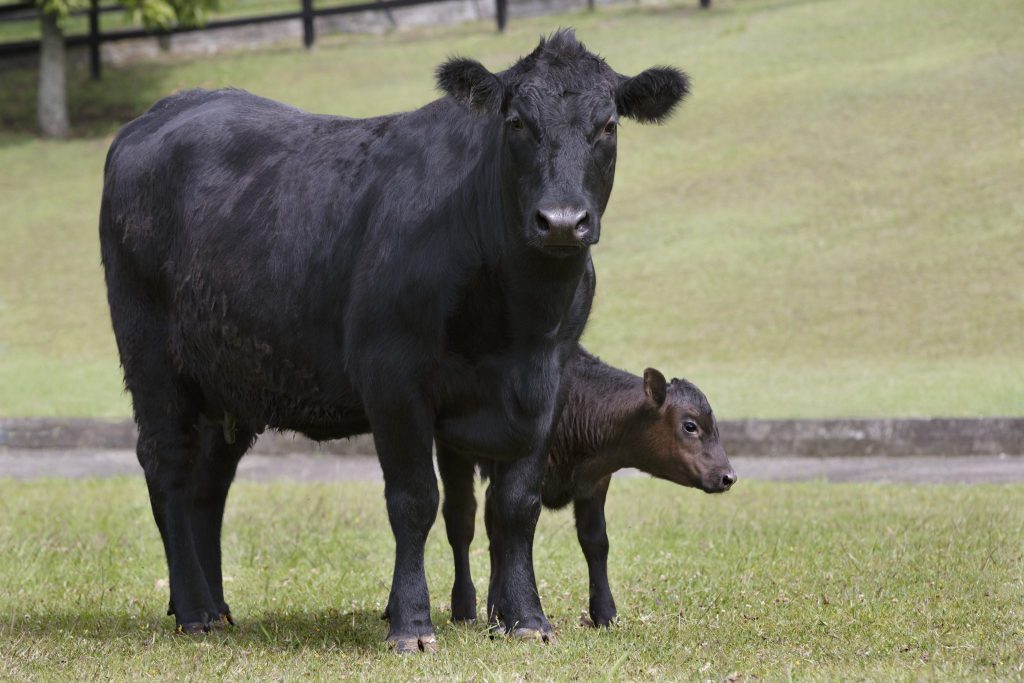
Senior Farm and Ranch Broadcaster, Ron Hays, is talking with Zoetis Cattle Genetics Specialist, Kevin Milliner, about beef genetics.
Milliner has been working with beef genetics for 19 years and says genetic testing passed the experimental stage many years ago and is now a proven technology. Genetic testing, he added, is a tool to be utilized to build a better cow herd regardless of the type of operation.
While many believe the use of genetic testing is only a good tool for registered breeders, Milliner said as a commercial producer himself, he sees great value in this technology.
"I almost think it is probably more beneficial to the commercial producer, simply because we don't know a whole lot about that commercial female," Milliner said. "The advent of genomic enhanced EPDs that we have with the registered folks- they know tons of information about both the bull and the cow."
The benefit of commercial genetic testing, Milliner said, is seeing the genetic potential of a cow, aside from what can be seen on the outside.
"It gives us the chance to lift the hood up on that female and see what kind of horsepower she has," Milliner said. "She may look the part, but underneath the hood, she just didn't have the horsepower to get it done."
Now that producers have dialed down the size of their cowherds because of the drought, Milliner said when they begin to build back those herds, it is the opportune time to utilize genetic testing.
"If we are going to put more cows into production, we want to make sure they are the right cows," Milliner said. "Those cows that do have the horsepower to accomplish whatever goals that operation may have."
As the cost of raising these cattle is expensive enough, Milliner said it is not affordable to take chances on those who may not have what it takes to go the distance.
Zoetis offers genetic testing solutions for cow-calf producers at www.beefgenetics.com
The Beef Buzz is a regular feature heard on radio stations around the region on the Radio Oklahoma Ag Network and is a regular audio feature found on this website as well. Click on the LISTEN BAR at the top of the story for today's show and check out our archives for older Beef Buzz shows covering the gamut of the beef cattle industry today.
Dr. Derrell Peel, Oklahoma State University Extension Livestock Marketing Specialist, offers his economic analysis of the beef cattle industry as part of the weekly series known as the "Cow Calf Corner," published electronically by Dr. Peel and Mark Johnson. Today, Dr. Peel talks about beef cow slaughter.
As of mid-September, cull cow prices at Oklahoma auctions are an average of 33.1 percent higher year over year across all grades and dressing percentages. Higher slaughter cow prices are the result of strong lean beef markets and the related growth in breeding demand for cows.
Beef cow slaughter increased annually from 2015 – 2022 and, after rising sharply the past two years to the highest level since 1996, is declining year over year in 2023. Beef cow slaughter is falling more sharply in the second half of this year and may end the year down in the range of 15-17 percent from year earlier levels. The declining supply of lean beef is driving higher processing beef prices. The current price of 90 percent lean beef is 17.3 percent higher year over year.
With fall culling decisions approaching, producers should be aware of factors affecting cull cow value and consider opportunities to increase cull value. Table 1 shows the average percent difference in price of slaughter cows compared to a base of average dressing, Boner cows. The price of average dressing Boner cows in mid-September is $108.38/cwt. which means that the prices would be expected to vary from a high of $120.74/cwt. for high dressing Breaker cows to a low of $91.80/cwt. for low dressing Lean cows.
Table 1. Impact of Grade and Dressing Percentage on Slaughter Cow Value.
| Dressing Grade | High | Average | Low |
| Breaker | +11.4 % | +5.1 % | -2.2 % |
| Boner | +5.6 % | BASE | -8.0 % |
| Lean | -0.9 % | -6.6 % | -15.3 % |
Slaughter cow grade is a function of age, weight, and condition of cows. The Agricultural Marketing Service (USDA-AMS) uses the following guidelines to grade slaughter cows:
As a rough guide, cows will be about 100 pounds heavier for increases in each grade from Lean to Boner to Breaker. Each grade increase is roughly equivalent to an increase of one body condition score. Additionally, the live weight of cows will change by roughly 25-30 pounds above and below the weight of average dressing cows for high and low dressing cows. Producers can often impact the value of cull cows by managing the weight and condition of cows before marketing.
Cull cows have the most pronounced seasonal price pattern of any class of cattle ranging from highs in June and July to lows in November and December (Figure 1). Cull cows that are thin (Lean, low dressing) in the fall and are retained and fed until spring may sell as Boner cows at average dressing by March with an increase in value of $400-$600/head due to added weight, grade, and condition. Of course, the feasibility of holding cull cows depends on time and management considerations and the availability of surplus feed.
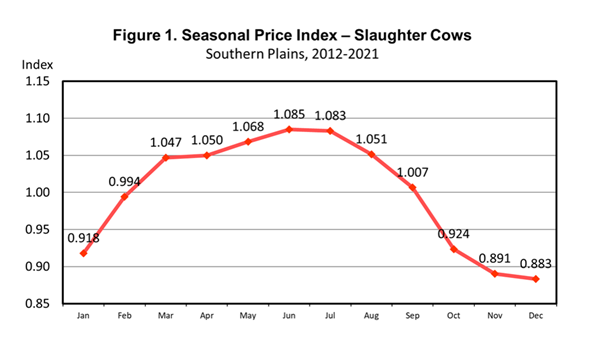
Going forward, many culled cows will likely be screened for the possibility of producing another calf and selling later for slaughter value. Leaving the cull cows with a bull while adding weight after weaning may produce another increment of added value if she can be sold as a bred cow next spring at seasonally high bred cow prices.

An agricultural safety resource known as "Tools of the Trade" is proving popular with emergency medical responders who are trying to prevent trauma incidents in their communities, and is also being promoted to traditional agricultural safety educators during National Farm Safety and Health Week, Sept. 17-23.
Tools of the Trade, an online collection of video demonstrations and accompanying handouts, was favorably received by hundreds of attendees at the 2023 Wisconsin Emergency Medical Services Association (WEMSA) conference held last winter in Green Bay.
"The idea was to introduce EMS personnel to interactive safety 'tools' that they can replicate and use to teach community members about farm safety and health," said Marsha Salzwedel, Ed.D., agricultural youth safety specialist at the National Children's Center for Rural and Agricultural Health and Safety, Marshfield Clinic Research Institute. "We know that EMS and fire personnel are trusted by farmers, so for them to share safety and health information with farmers is ideal."
Approximately 90 percent of WEMSA participants surveyed indicated the Tools session was relevant to their work and that the interactive exhibit design enhanced their learning experience at the conference. Survey comments included:
WEMSA featured the Tools of the Trade in its opening session, foregoing the traditional "keynote" speaker in favor of a multi-hour "KEY NOT" event. More than 400 attendees rotated in small groups amongst 19 Tools of the Trade stations and through three additional demonstration areas featuring a livestock trailer, a grain silo entrapment and an ATV simulator.
The scenarios were new for many urban providers, WEMSA Executive Director Alan DeYoung said, and rural providers benefited as well. "Those who have responded to ag calls found there were new techniques they could use, new resources they could bring back. They are responding to calls on farms, but may not have known all the details that go into preplanning and mapping out a farm, and the hazards they might run into," DeYoung said.
Tools of the Trade featured at the conference included:
The individual "Tools of the Trade" are available to anyone through the Cultivate Safety website. The site includes instructions for creating activities, video demonstrations illustrating how to create and use these tools, and participant handouts. There are 25 tools available, with more under development. There is also a media kit, which can be customized and used to help promote community events featuring these tools.
"The WEMSA conference was the first time we hosted such a large number of TOTs (Tools of the Trade) in one session, as well as the first time we used it with an EMS group," Salzwedel said. "It was a great opportunity to try this on a larger scale – and with a new audience to see how it would work. Not only was it a great success at the conference, but it enabled us to create and share several new TOTs, which have been added to the website. We hope this is just the start of events featuring these tools."
Organizations contributing to the Tools collection included Ohio State University, AgriSafe, Progressive Agriculture Foundation, the National Institute for Occupational Safety and Health (NIOSH)-funded Centers for Agricultural Safety and Health, and others.
Plains Cotton Growers was busy this week, advocating for the Texas High Plains and state and national cotton industry interests in Washington D.C.
PCG CEO Kody Bessent brought the PCG officers — Brent Nelson, Martin Stoerner, Travis Mires and Brent Coker — to visit with Congressional members on the importance of averting a government shutdown, improving the farm safety net and passing a strong farm bill that will benefit producers and industry for the next five years.
Opinions from Congress on whether the government will shut down was a mixed bag. Some Senators and Representatives stated they didn't feel it would get to that point, while others were emphatic that it would. PCG officers emphasized the implications for the cotton industry should that happen, speaking for producers, but also for the merchant segment as we near the harvest season.
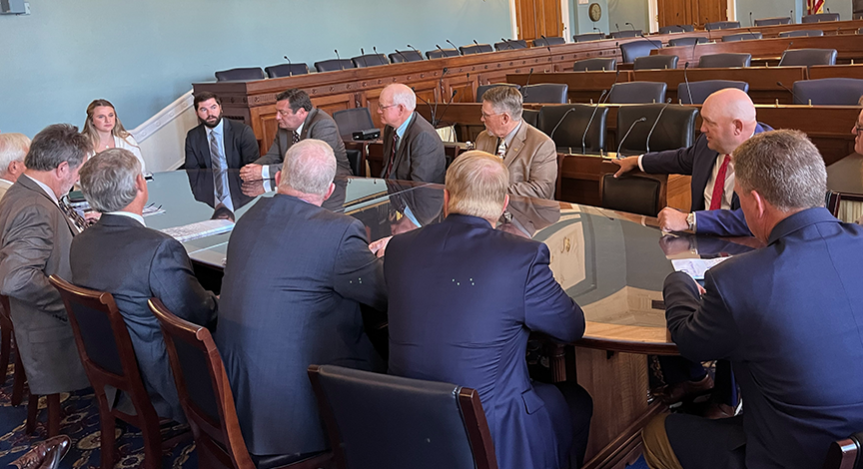
Each officer had speaking points they discussed with members. Nelson spoke to the market loan rate and the need to raise the rate to accommodate for the rise in production costs. Stoerner emphasized the need to increase reference prices to address the same thing.

Mires stressed the importance of crop insurance for producers, saying, "We'd hate to lose any ground when it comes to crop insurance, and it would be great if we could strengthen it even more."
Coker specifically addressed the need for a producer to have the ability to enroll in both the Stacked Income Protection Plan (STAX) and the Price Loss Coverage (PLC) program to further mitigate producer risk. "Adding this option to increase our access to risk management tools would greatly help us spread out our risk, while also accommodating the needs of the landowners from whom we lease the land," he added.
Our officers took time off from their operations and busy family lives to advocate for agriculture, which doesn't go unnoticed by government officials.
"It's so important that we hear from you," said Rep. Tracey Mann (R-KS) addressing PCG producers. "We can't help you if we don't know what your challenges are. Only you can give us the experience perspective."
This was Coker's first fly-in with the team. "It was eye-opening to see how involved the process is; how important communication and education is for these Representatives and Senators, but also the staffers," he said. "It was a great experience and I was humbled to play a small part in the advocacy this week."
Even as the National Milk Producers Federation (NMPF) provides USDA officials with exhaustive research and expert analysis at its Federal Milk Marketing Order (FMMO) modernization hearing in Carmel, IN, the department is paying attention to what farmers have to say as they testify to support NMPF's plan. That makes farmer participation critical to the hearing's success, said Stephen Cain, NMPF's Senior Director or Economic Research and Analysis, in the latest Dairy Defined podcast.
"They want to hear from farmers. This is a federal program that is meant to support farmers and is continued at the behest of farmers," Cain said. "USDA has really wanted to hear from them, and that's a big piece to make sure that these proposals that are being put forth are the right things to do." For more information on NMPF's FMMO efforts and to follow the hearing, click here. The full podcast is here. You can also find the podcast on Apple Podcasts, Spotify and Google Podcasts.
This Week
The national average for a gallon of gas rose by six cents since last week to hit $3.86. The primary culprit is the surge in oil costs, which have jumped several dollars to hover around $90 per barrel.
In Oklahoma, the gas average is $3.79 today, up 22 cents in the last week and 45 cents higher than one year ago. Today's national average of $3.86 is the same as a month ago and 17 cents more than a year ago.
"There have been some jumps in wholesale gasoline prices – also reflected in higher prices at the gas pumps – across the Central Plains in the last week," says Rylie Mansuetti, spokesperson for AAA Oklahoma. "Reports indicate that regular refinery maintenance and a few refinery repairs requiring outages are playing a role in the increases. It remains to be seen how much of a price increase we will see at the pumps or how long they may last. But there is no indication that the situation will be anything but temporary."
According to new data from the Energy Information Administration (EIA), gas demand decreased significantly from 9.32 to 8.31 million b/d last week. Meanwhile, total domestic gasoline stocks jumped from 214.7 to 220.3 million bbl. Although gas demand has dropped amid increasing stocks, elevated oil prices have pushed pump prices higher.
CURRENT AND PAST GAS PRICE AVERAGES
Regular Unleaded Gasoline (*indicates record high)
| 09/15/23 | Week Ago | Year Ago | |
| National | $3.86 | $3.80 | $3.69 |
| Oklahoma | $3.79 | $3.57 | $3.34 |
| Oklahoma City | $3.82 | $3.59 | $3.32 |
| Tulsa | $3.78 | $3.48 | $3.27 |
| Lawton | $3.53 | $3.37 | $3.13 |
| Le Flore-Sequoyah | $3.76 | $3.51 | $3.36 |
| Crude Oil | $91.15 per barrel (09/15/23) | $87.57 per barrel (09/08/23) | $85.11 per barrel (09/16/22) |
At the close of Friday's formal trading session, WTI increased by $3.58 to settle at $91.15. Oil prices fell yesterday after the EIA reported that total domestic commercial crude inventories increased by 4 million bbl to 420.6 million bbl. However, earlier in the week, crude prices rallied amid ongoing market concern that global oil supply will remain tight for the remainder of 2023. According to the International Energy Agency's September 2023 Oil Market Report, production cuts from Saudi Arabia and other members of the Organization of the Petroleum Exporting Countries will lead to an oil supply shortfall this fall and winter.
The Weekend
"Oil costs are putting upward pressure on pump prices, but the rise is tempered by much lower demand," said Mansuetti. "The slide in people fueling up is typical, with schools back in session, the days getting shorter, and the weather less pleasant. But the usual decline in pump prices is being stymied for now by these high oil costs."
AAA has a variety of resources to help motorists save on fuel:
RON's Dave Lanning has a pre-opening look at today's agricultural Markets.
Click the audio tab below for today's report.
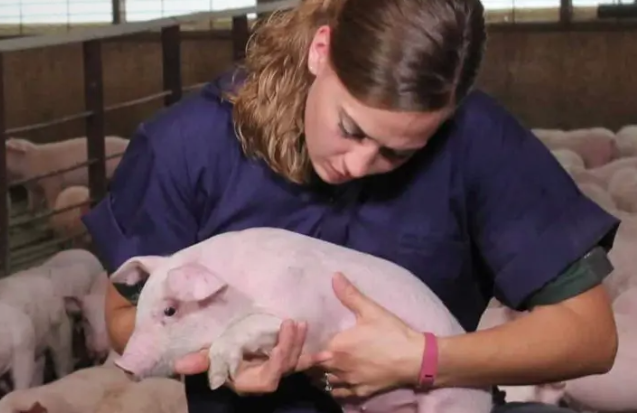
More than 100 pork producers from around the country attended the National Pork Producers Council's (NPPC) Spring Legislative Action Conference (LAC) on September 13-14 in Washington, D.C. This biannual fly-in featured engaging speakers, a media briefing and NPPC's widely popular congressional "Baconfest" reception in the Great Hall of the Library of Congress.
NPPC President Scott Hays kicked off LAC by sharing the importance of having producers travel to meet with their members of Congress: "Having you here in Washington, speaking up for our industry, is critical to having lawmakers understand that decisions they make in Washington affect how we can continue to provide safe, nutritious food to American families and consumers worldwide."
Why it matters: During the two-day event, speakers included NPPC Board officers, Senator Roger Marshall (R-KS) and NPPC policy experts who focused on four key issue areas:
2023 Farm Bill – Protect the U.S. Food Supply: NPPC is advocating for a 2023 Farm Bill that fully funds the programs that safeguard the nation's food supply against threats posed by foreign animal diseases (FADs), as well as key programs that expand foreign markets for U.S. agricultural products.
The U.S. pork industry has faced significant headwinds since 2018, when the farm bill was last reauthorized, due to trade retaliation, supply chain issues exacerbated by the COVID-19 pandemic and looming threats of FAD. U.S. pig farmers need solutions to sustain an industry that supports more than 610,000 American jobs and generates nearly $36 billion in personal income annually in rural America.
The Beagle Brigade Act of 2023 provides critical inspections at our nation's ports of entry that prevent FADs from entering the U.S. Additionally, it provides congressional authority to the USDA's National Detector Dog Training Center — allowing it to continue to operate.
The upcoming farm bill offers the opportunity to address the challenges, provide the industry with the tools to prevent further disruption and keep the food system safe and reliable.
Learn more here.
California Proposition 12 – Support a Legislative Solution: NPPC supports including a federal solution in the farm bill for the sweeping issues posed by the Supreme Court's decision to uphold California Proposition 12.
Livestock farmers, veterinarians and animal scientists work hard to follow industry standards and best practices to protect the welfare and health of animals in their care. California Proposition 12 ignores scientific research and facts about animal husbandry, and reverses decades of progress on farm management and animal welfare. Explore further here.
Trade – Expand and Develop Market Access: NPPC supports trade agreements and other trade initiatives that open new and expand existing export markets and eliminate tariff and non-tariff barriers to U.S. pork exports.
U.S. pork farmers have built a global reputation for providing domestic and foreign markets with high-quality, affordable products. In 2022, the U.S. exported $7.6 billion worth of pork to more than 100 countries and supported more than $61 in value for each hog marketed. U.S. pork exports also support over 155,000 jobs domestically.
To grow exports and support high-paying jobs in rural communities, the United States must open new and expand existing markets through trade agreements, trade and investment framework agreements, and market access deals.
Uncover more here.
Labor – Strengthen the H-2A Visa Program: Agriculture suffers from a severe labor shortage that negatively affects all links in the food supply chain – particularly in the pork industry. Pig farm employment has declined since 2021, despite higher wages and competitive benefits. Although historically dependent on foreign-born workers, current visa requirements fail to meet pork industry workforce needs.
Gain more insights here.
Lori Stevermer, NPPC's president-elect, concluded the fly-in by asking producers to continue to advocate for the industry: "Whether you are sharing your story with a member of Congress or your neighbor in their driveway, I encourage you to continue speaking up for our industry and talking about issues to help others understand our challenges and opportunities."
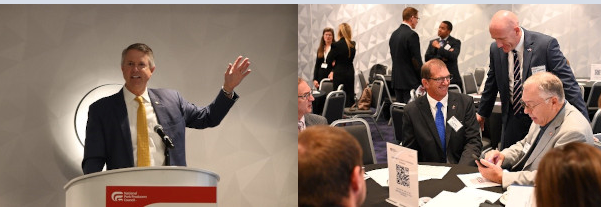
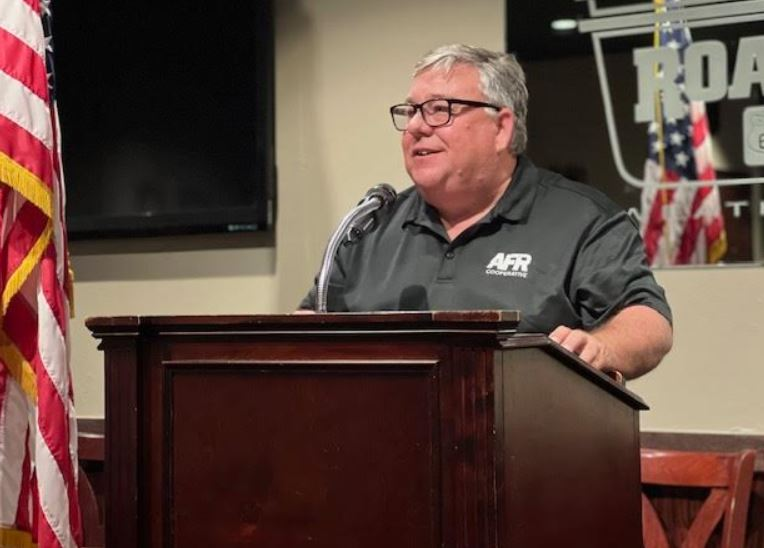
Farm Director KC Sheperd had the chance to catch up with American Farmers and Ranchers President Scott Blubaugh about the recent Farmers Union Legislative Fly-In and AFR priorities in the 2023 Farm Bill.
This week, 300 Farmers Union members from across the country joined together in Washington, DC, to advocate for family farmers and Farmers Union farm bill priorities.
"We took 13 farmers and ranchers from Oklahoma up there, and we had some great visits, met with all of the Oklahoma delegations, and we met with some of the other delegations in the Southern part of the United States," Blubaugh said. "We had a meeting at the White House, we had a meeting at the Justice Department, we had a meeting at EPA and the Federal Trade Commission, and of course, our big meeting there with USDA and Secretary Vilsack."
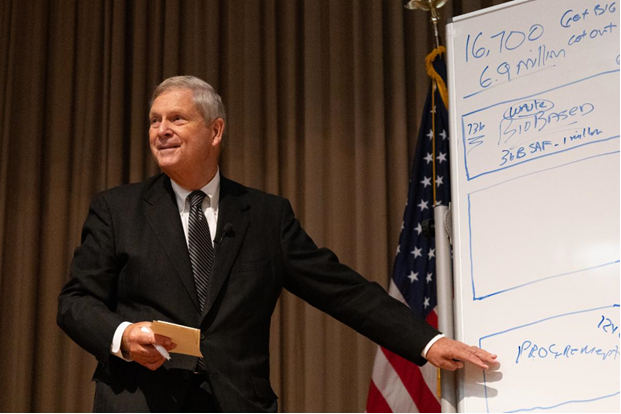
There was plenty of discussion on the 2023 Farm Bill, which Blubaugh said he does not believe will be produced on time.
"The thought is that we are very unlikely to get a Farm Bill anytime soon," Blubaugh said. "Washington, D.C. is so divided right now along partisan lines."
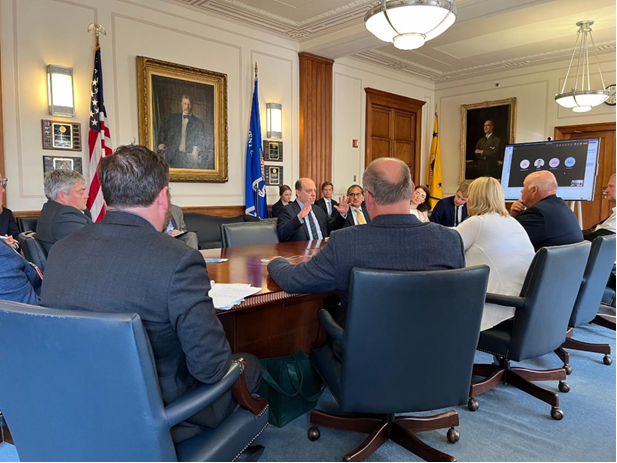
Blubaugh said he fears a government shutdown coming in the near future.
"Many of the members of Congress indicated they thought that was probably what was going to happen," Blubaugh said. "There is always hope in trying to predict what they do in Washington, D.C., but it is never a very good idea to do."
Top priorities for AFR in the Farm Bill, Blubaugh said, begin with dual enrollment in the ARC program and the PLC program.
"Right now, a farmer has to go in there to the Farm Service Agency about 18 months beforehand and sign up for one of those two programs," Blubaugh said. "One is weather related, and one is price related. It is really impossible for a farmer to know which one he should be signing up in."
The entire idea behind the safety net, Blubaugh said, is to make sure family farmers and ranchers can stay in business in bad times, whether that means from prices or weather.
The Fairness for Farmers Campaign was also a topic of discussion, Blubaugh said, as the campaign entails market access and transparency in the marketplace.
"The contract library, we pushed again," Blubaugh said. "There is a pilot project out there now for the contract library in the cattle industry. We would like to see that permanent. We would like to have that part of the Farm Bill."
Blubaugh said AFR would like to see truth in labeling when it comes to agricultural products in the grocery store.
"We think it is very important that the consumers know what they are buying, and we aware of it," Blubaugh said. "There have been some practices legally under USDA rules where we can import foreign beef into the United States, repackage it, and market it as a product of the USA."
Lankford: "This is something we should be bringing to a vote. This is something that has wide bipartisan support."
CLICK HERE to download Lankford's remarks from Box.
CLICK HERE to watch Lankford's remarks on YouTube.
CLICK HERE to watch Lankford's remarks on Rumble.
Senator James Lankford (R-OK) today spoke on the Senate floor in support of his bipartisan Prevent Government Shutdowns Act, especially in light of the fact that the federal government runs out of funding in 16 days unless Congress votes to fund the government either through appropriations bills or a continuing resolution.
Lankford remarked that we are about to cross the $33 trillion-mark for national debt and that our spending has accelerated from just over $2 trillion to just over $6 trillion in the last 20 years. It is estimated that the US will have $4.8 trillion in revenue this year, yet we'll spend an estimated $6.4 trillion—that is not sustainable—and Lankford wants to force Congress to have the difficult conversations about spending but take government shutdowns off the table as a negotiating tactic for both parties.
The bill requires that if appropriations work is not done on time, all Members of Congress must stay in Washington, DC, and work until the spending bills are completed. This will prevent a government-wide shutdown, continue critical services and operations for Americans, and hold federal workers harmless while Congress completes appropriations.
Upon a lapse in government funding, the bill would implement an automatic Continuing Resolution (CR), on rolling 14-day periods, based on the most current spending levels enacted in the previous fiscal year. This would prevent a shutdown and continue critical services and operations.
Transcript
We seem to forget at times in this body the issues that press around us, that the one that seems to get slipped under the rug most of the time is national debt—where we are and how we're going to try to address this in the days ahead.
The conversation that comes up, it seems to be, on a regular basis now is: are we going to have a government shutdown? And that conversation about a government shutdown ends up being the very small portion of the very large debt that we face. And the challenge is, how do we actually address that based on its size?
Let me give a little bit of context. We're right now preparing within days to cross into the $33 trillion in total federal debt--$33 trillion. To give some context of that acceleration in federal debt and what is happening in this time period, from the time of Andrew Jackson, which was the last president that was president when we had no debt at all—from the time of Andrew Jackson to Ronald Reagan, our nation accumulated $1 trillion in total debt, from Andrew Jackson to Reagan—$1 trillion in total debt.
From Reagan to the present, now we are $33 trillion in total debt. We are on a rapid acceleration of debt that has not slowed.
To give you again the picture of where things have gone just in the last several years, if you go back 20 years ago to 2003, our total spending was just over $2 trillion. If you go back to 2013, 10 years ago, our total spending was less than $3.5 trillion. Our spending this year will be right at $6.5 trillion. So in the past 20 years, our spending has increased from just over $2 trillion to $6.5 trillion.
To give you just the acceleration in spending, just in the last few years, if I were to go back to 2018 before COVID, 2018 time period our total spending was just over $4 trillion. This year's estimated spending is just under $6.5 trillion. That's $2.5 trillion of accelerated spending just from 2018 to now.
To again set this in context, the revenue that's coming into the federal Treasury this year is estimated at $4.8 trillion--$4.8 trillion. We're spending an estimated $6.4 trillion.
Now, that's a lot of numbers, but let me give you one just as a takeaway. We have almost $1.5 trillion of deficit, that is overspending, just this year. Some estimates depending on what happens in the next few weeks, it could be almost $2 trillion in total overspending just this year.
To put this in context, with the record revenue that's coming in this year at about $4.8 trillion, if we were spending the same this year as we did in 2018, a short five years ago. If we were spending the same this year as we were in 2018 prior to COVID, we would have a $700 billion surplus this year rather than an almost $2 trillion deficit—this year—because the record amount of revenue coming in this year compared to what our spending was five years ago, we would have been in surplus this year. But we're not, and it's at $1.5 trillion over that.
We have a very serious issue. We should have very hard conversations about our revenue, about our spending, about the direction that we're actually heading, and about how do we get out of a $33 trillion debt.
This is not going to take a year or two years. I've had folks that I've talked to recently even that have talked about the time in the early 90s and when we were out of balance at about $100 billion and the work that was done by the Bush Administration and the Clinton Administration to be able to work to get us back to a balance. Two Administrations in a row had to work on that, but here's the frightening thing: our overspending this year is more than the total spending during the Clinton Administration—just our overspending this year.
This is not going to be a simple process to be able to come out of. This is not going to be two Administrations in a row making agreements to be able to get back to balance. This is going to take decades. And my concern is, is that many here are not willing to start the first year of decades of work to be able to get us out. So we have work to do on this.
Myself and Senator Maggie Hassan, a Democrat from New Hampshire. She and I sat down several years ago and started having a conversation about how do we end government shutdowns and actually get into a real dialogue about how do we actually deal with debt and deficit issues. From that productive conversation, she and I created a piece of legislation that's all designed just to prevent government shutdowns.
All the conversation right now among the media seems to be about: is a government shutdown coming at the end of this year? And we should not have one at the end of this month, the end of the fiscal year. We should continue to be able to keep going, but we should also have the debate of what direction are we going to go.
So Senator Hassan and I came up with a simple proposal. It's not a partisan proposal; it's s a completely nonpartisan proposal.
It is simple proposal, quite frankly, that is equivalent to two things I had growing up. One was if you don't finish your homework at school, you have to actually stay after class to be able to finish that. If you don't finish all your work that you had to get done then, stay after class, keep finishing it, when you are done, then you can leave out.
The second one was, when my older brother and I would get into an argument, which of course as brothers we never did get into an argument. But in that rare moment we got into an argument, my mom would put the two of us in a room and would say, 'You guys settle this and when you're done, you can come out.'
We slammed those two ideas into one simple proposal about how to end government shutdowns.
If we get to the end of the fiscal year, and the appropriations work is not done, like it is this year, we stay in session seven days a week, and the only bills that can actually come up that actually can be called up during that time period are appropriations bills.
The second part of it is, there is no travel for anyone, so we couldn't fly home and fly back. So no official or campaign funds could be used to be able to travel. So we're in session seven days a week, the only bills that are allowed to be brought up are Appropriations bills, there is no travel. And the next part of it is simple: there's what's called a Continuing Resolution to maintain the government to be open so that the American people and federal workers are held harmless. It puts the pressure on this room. Not on federal workers that are working for FAA, not on people that are working for the Housing Administration, not on our Border Patrol. Those individuals don't get a vote on this this. They should not feel the pressure of a government shutdown.
We can keep the system moving while we still have our arguments to be able to resolve those things.
Why is this so important? A couple of reasons. One is we're the United States of America. We should actually have an organized system because the rest of the world watches us to try to figure out how to do government. And when we look dysfunctional, the rest of the world says, how are we going to figure this out if even the Americans can't figure this out? Now, we as Americans lose track of that at times, but the rest of the world is watching us.
We should have our arguments. We are a representative republic. Every single voice counts, and we don't all agree. Great, bring it. That demonstrates us at our best. But let's resolve those issues, rather than having government shutdowns and chaos ensuing because we need to set a better example for the world.
Second issue, much closer to home, we need to stop having government shutdowns, because the American people are calling in to federal agencies and expecting someone to answer the phone, expecting to get help, whether it be passports, permits, whatever process it may be that they have to interact with the federal government. They need to get somebody to answer the phone and to be able to resolve that. This puts the American people struggling to be able to get basic answers.
The third is the federal workforce. We have millions of people that work in the federal family. They work all over the country. And when there's a government shutdown, there's two sets of things that occur. If you're a contractor, you're just out. Those contractors may be doing janitorial services in one of our buildings, or supplying food services to someone. They're just out. They don't get repaid. They just lose money, period.
Those on the federal payroll, they don't get their check during that time period. And they have this crazy, weird essential/nonessential, some people laid-off, some not. But everyone is in chaos in that process. For those folks that are in the federal family, even though they may be declared essential or nonessential, you know what their car payment still comes in, their mortgage still comes in, they'v still got to put food on the table, but they're not getting a check during the time of a government shutdown.
And so those individuals that live paycheck to paycheck, like many Americans do, suddenly have a gap, not by a fault of their own, but because this body couldn't resolve what we were going to do on the budgeting issues.
And the fourth issue I've already partially mentioned on that, and that's the contractors. Let me give you an example of what this means. Our southern border right now has the worst border crisis we've ever faced as a nation.
To give you perspective on it, in the last few days, we've had up to 9,000 people illegally crossing our border a day—a day, in the last few days. We had one border crossing area in Tucson where they had 2,000 people that crossed in a day. Those folks are being cut loose and released into the country. But it is chaos along our border. Our Border Patrol and CBP, and all those folks that are law enforcement, are doing their best to be able to watch for safety and security of Americans, while literally thousands of people are being cut loose into the country.
They depend on some folks that are contractors in that area, to help sometimes with transportation, with processing, with food, with medical care, all those things. Those contractors are very important to be able to help our Border Patrol in the chaos of what's happening. When there's a government shutdown, those contractors aren't going to be there. And the chaotic border that we have now, will be even more chaotic at that moment. That should not happen, because we can't resolve our differences here. We need the national security on that...
Two weeks ago, our nation crossed a threshold that most people just missed. We had just over 6 million people that have illegally crossed our southern border in less than three years under the Biden Administration—just over 6 million people. That number is the same number, that 6 million number, is the same as both terms of the Obama Administration and the Trump Administration combined.
The Biden Administration has allowed more people to fill legally cross our border in less than three years than the previous 12 years along our border.
Those Border Patrol need help right now. They don't need a government shutdown. They need help coming alongside them. So, what Senator Hassan and I have done is a very simple proposal: let's stop government shutdowns. Let's end those. Let's not have the drama and countdown clocks on 24-hour news cable tv.
Let's have the arguments and talk through the appropriations that need to be done. That's work we're required to do. But let's hold the federal workers harmless in the process. Let's hold federal contractors harmless in the process. And so we can settle the issues, do real planning.
This ending government shutdowns bill is very straightforward. We just want to prevent government shutdowns. We just want to be able to stop the chaos and actually be able to show the American people this body can have the arguments, resolve our differences, and move forward. This is something we should be bringing to a vote. This is something that has wide bipartisan support. Let's resolve this piece while we've still got more to be done.
Congressman Tom Cole (OK-04) released the following statement after H.R. 1435, the Preserving Choice in Vehicle Purchases Act, passed the U.S. House of Representatives with Cole's support. H.R. 1435 would amend the Clean Air Act (CAA) to prevent the elimination of the sale of internal combustion engines.
"Democrats' radical green energy agenda has not only costed thousands of U.S. jobs, caused energy prices to skyrocket and has put our national security at risk, but now some states are looking to ban gasoline-powered vehicles in coming years," said Cole. "These outrageous bans would force hardworking Americans to give up the cars that fit within their budget, or have potentially already paid off, and buy expensive electric-powered vehicles instead, which cost $17,000 more on average. It would also limit Americans' choices in the future when selecting a vehicle that best meets their needs and the needs of their businesses. The choice of owning an electric vehicle or not should be up to the individual, not bureaucrats in Washington or California. I was proud to support this critical legislation to protect the roughly 300 million Americans who own gasoline-powered cars."
Earlier this week, Cole made extensive remarks on the legislation in a Rules Committee meeting. Video here and transcript here.

This afternoon, U.S. ethanol organizations including the U.S. Grains Council (USGC), Growth Energy and the Renewable Fuels Association (RFA) sent a letter to Treasury Secretary Janet Yellen acknowledging global actions to decarbonize the aviation transportation sector using sustainable aviation fuel (SAF) and encouraging the use of updated scoring in the U.S. Department of Energy's GREET model instead of carbon intensity scoring used in the CORSIA model for corn-based ethanol SAF.
The U.S. Grains Council, Growth Energy and the Renewable Fuels Association said in their joint letter:
"We strongly support the adoption of the DOE's GREET model by the U.S. Treasury as the standard for carbon intensity scoring of conventional aviation fuels and SAF. The latest DOE GREET model relies on the most current information and highest-resolution data regarding the energy use, carbon emissions and potential land use impacts associated with the corn ethanol-based SAF process. By incorporating the DOE GREET model into its evaluation framework, the Treasury can unlock the full potential of agriculture to meet the growing demands of the global aviation industry while simultaneously reducing its carbon footprint." Use this link to view the entire joint letter.
Today, U.S. Senator Markwayne Mullin's (R-OK) legislation to restrict the Environmental Protection Agency (EPA) from issuing Clean Air Act (CAA) waivers to states which seek to ban or otherwise limit the sale of internal combustion engines passed the U.S. House of Representatives. Mullin's bill, the Preserving Choice in Vehicle Purchases Act, passed the House with bipartisan support where it will now advance to the Senate.
"We cannot allow California's costly and extreme Green New Deal agenda to eliminate consumer choice for hundreds of millions of American families," said Senator Mullin. "Our bill, the Preserving Choice in Vehicle Purchases Act is an important step in rejecting the far-Left's attempt to control every aspect of Americans' lives– including what car they drive. I'm thrilled that my colleagues in the House recognize the importance of protecting consumers and maintaining competition in the automotive industry, and I look forward to this bill's consideration in the United States Senate."
U.S. Senators Roger Marshall (R-KS), Pete Ricketts (R-NE), John Barrasso (R-WY), Ted Cruz (R-TX), Kevin Cramer (R-ND), Dan Sullivan (R-AK), Roger Wicker (R-MS), and John Hoeven (R-ND)joined Mullin in cosponsoring this legislation. Representative John Joyce, M.D. (PA-13) led introduction of the companion bill in the U.S. House of Representatives.
Background:
In August 2022, the California Air Resources Board adopted its Advanced Clean Cars II (ACCII) regulation that would require all light-duty vehicle sales to qualify as "zero emission" by 2035 but cannot enforce it unless EPA approves a waiver for California to do so. In March 2023, California was granted two EPA waivers to implement more stringent medium and heavy-duty vehicle emission standards than what is federally mandated. This bill follows California's anticipated application to EPA for another waiver to implement its ACCII regulation to ban the sale of new vehicles with internal combustion engines by 2035.
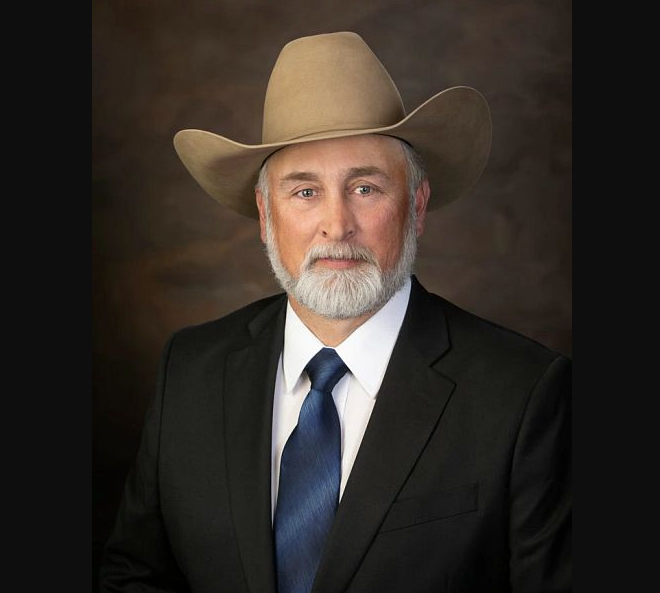
Senior Farm and Ranch Broadcaster, Ron Hays, is talking with National Cattlemen's Beef Association President-Elect, Mark Eisele, about his cattle operation and his plans going forward.
Eisele is expected to become the next president of NCBA in early 2024. He will take on the role that is currently held by Todd Wilkinson.
"I am a cow-calf and yearling/stocker producer in southeast Wyoming, at about 6500 feet elevation," Eisele said. "Good grass country and we have had a little rain this year, so it made a big difference."
Eisele said his decision to run for President of NCBA goes back many years.
"I found out there was more to just raising a family and cows," Eisele said.
Some of the issues Eisele plans to keep focus on include government overregulation, permitting processes, animal disease traceability, private property rights, and more.
Eisele's cattle operation is in a part of the country where there are public lands. He said it is important that cattle producers across the country understand the value of these territories for the beef cattle industry.
"Producers love the public lands as much as we do our private lands, Eisele said. "For people who we share that with, they need to understand this is not just about cattle ranchers, sheep producers or whatever- this has to do with other things on public lands like recreation."
Consumer confidence, Eisele said, is another key focus of his, as it is important that consumers have trust in the way producers are producing the beef product.
"You don't have a multi-generational operation that isn't sustainable by doing wrong things," Eisele said. "They are sustainable because you do all the right things. You make the right choices, you work with nature, and you work with your families, and that is how it is sustainable. That is what people want, and that is what we have always delivered."
The Beef Buzz is a regular feature heard on radio stations around the region on the Radio Oklahoma Ag Network and is a regular audio feature found on this website as well. Click on the LISTEN BAR at the top of the story for today's show and check out our archives for older Beef Buzz shows covering the gamut of the beef cattle industry today.
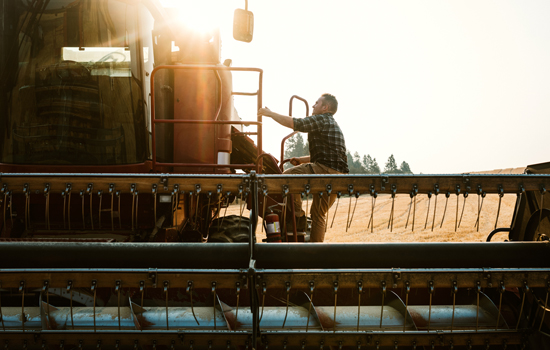
Farm Director, KC Sheperd, had the chance to visit with the Director of Agricultural Services at the Association of Equipment Manufacturers (AEM), Austin Gelling.
"When you take a look at equipment sales, it is kind of a bit of a mixed bag," Gellings said. "When you get into the lower horsepower range, we are maybe seeing a bit of a dip. But, I think that's kind of reflective as to the economy as we're moving into an election year, but do when you look at starting to get into the upper horsepower range and the four-wheel drive tractors and self-propelled combines, you know, things are still looking good."
Gelling said he believes that farmer sentiment is still holding strong. It is an exciting time, Gelling added, because of the new technology that is coming out.
"We have got a lot of new and innovative things coming out, that are really helping to make farms more efficient," Gelling said. "Any farmer will tell you; you know, you operate on the margin. That's kind of where you live or die and make your bread and butter. So, anything that can come along and help farmers maximize those margins and give them insights into how they can better their operations and become more efficient-that's really where I think farmer interest is going to lie."
As some farmers may have mixed feelings about new technology, Gellings said he recommends slowly trying new technologies instead of diving in head first.
"Start small, and if that works, work your way up," Gellings said. "I think that is the easiest way to prove that it works."
With broadband set to improve across the state of Oklahoma, Gellings said technology and data will continue to improve to aid farmers in their production practices.
"I think if you go back just a couple of years, we were gathering all this data but really didn't know what to do with it," Gelling said. "We are starting to move into actually understanding how we can utilize and leverage this data. So, I think, you know, that's an area where we're vastly improving along with addressing the connectivity side of things."
As far as the state of the industry is concerned, Gellings said he sees production agriculture in a good spot.
"I think in the wake of COVID, people are starting to realize how fragile our supply chain was," Gellings said. "As a result, there's more appreciation for where our food comes from."
Farmers are in a great position to be part of the solution in the sustainability conversation, Gellings said, so as producers continue to tell their stories, appreciation for the industry will likely increase.
The Oklahoma Broadband Office is ready to hit the road once again for another round of listening stops around the state of Oklahoma.
Coming on the heels of OBO's Let's Get Digital tour earlier this year, the Oklahoma's Digital Promise tour will visit 10 Oklahoma towns in October and November to gather more information and collect public input as they continue their work to expand high-speed broadband internet access to Oklahomans in every corner of the state.
Oklahoma Farm Bureau members are encouraged to attend a meeting to amplify the voice of rural Oklahoma and the need for rural broadband access.
Upcoming meeting dates include:
October 3 – 1 p.m.
Hobart
October 5 – 1 p.m.
Muskogee
October 11 – 6 p.m.
Krebs
October 12 – 11 a.m.
Burns Flat
October 17 – 1 p.m.
Atoka
October 19 – 6 p.m.
Oklahoma City
October 24 – 11 a.m.
Okarche
October 25 – 1 p.m.
Duncan
October 26 – 12 p.m.
Watonga
November 9 – 10 a.m.
Ponca City
Visit okfb.news/OKDigitalPromise to register for a meeting near you.
For questions or more information, contact MJ Barton, OBO tribal and programs outreach manager, at mj.barton@broadband.ok.gov or (405) 517-2393.
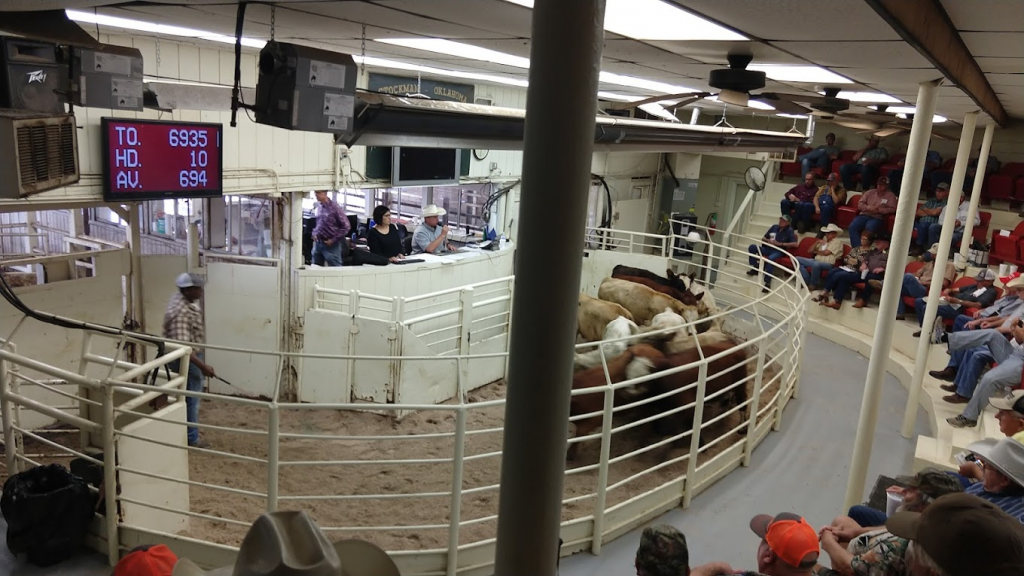
Associate Farm Editor, Reagan Calk, is talking with Bob Rodenberger, a partner with Stockman Oklahoma Livestock marketing, as he gives the latest update on the cattle markets.
"We started out this week with a pretty much steady market," Rodenberger said. "As the week went on, the market continued to get a little bit better."
In terms of the numbers and volumes of cattle, Rodenberger said the markets are active.
"The total numbers of cattle moving are pretty equivalent to what they were a year ago at this time, and all of us were in the belief that we would be quite a bit less than a year ago," Rodenberger said.
After talking to ranchers in the area, Rodenberger said people received anywhere from zero to two inches of rainfall this week. The calf market is seeing good demand, Rodenberger added, and the feeder market has been steadily rising on an up-pace since the beginning of the year.
Rodenberger said he continues to see cull cows coming through the auction.
"We are not seeing any young cows come to town," Rodenberger said. "If they are a young cow, they are an open cow that is out of sync with everybody's calving periods."
It's an exciting time of year for U.S. farmers – corn harvest is just beginning in a handful of states. The U.S. Grains Council (USGC) supports the successful export of U.S. feed grains and their co-products all the way from planting to shipment by providing timely updates on the quantity and quality of each crop.
U.S. agriculture's reputation as a reliable source of food and fuel makes it the preferred choice for importers in countless countries, and it is the responsibility of everyone from seed suppliers to producers to transportation, storage and logistic companies to ensure U.S. grains maintain their high quality at each step of the value chain.
"Harvest season is the culmination of months of tireless work from farmers, and a reminder that the importance of crop quality cannot be understated," said USGC Vice President Cary Sifferath. "Committing to industry best practices and easing quality concerns from importers is the best way to keep business flowing and export sales high for U.S. producers."
Several variables can contribute to a lower-quality crop of corn, barley or sorghum. Importers keep a close eye on the percentage of damaged grains and the amount of foreign material that can accidentally find its way into shipments during harvest or transport. This is why attention to detail from everyone along the supply chain is vitally important to the industry's reputation, since even a misstep early in the process can create lasting damage to the positive image of U.S. grains and reduce future sales. On behalf of our international customers, USGC asks everyone in the supply chain to do their best to keep various types of foreign materials out of the grain supply chain.
To aide in maintaining the strong trust and reputation U.S. grains and co-products have in the international marketplace, the Council produces annual Corn Harvest Quality Reports and Sorghum Harvest Quality Reports, released after the U.S. harvest season, and Corn Export Cargo Quality Reports, published after corn is assembled for export to overseas customers.
"The Council's regular updates on harvest and export quality help international buyers understand the quality of U.S. corn and sorghum in the supply chain from year to year. Additionally, the international buyers and end-users really recognize and appreciate such open communication about U.S. corn and sorghum and that goes a long way in building strong and lasting relationships that benefit all parties," Sifferath said. Providing transparent and scientific information to customers around the world is a cornerstone of the Council's mission to develop markets, enable trade and improve lives by making buyers feel comfortable and confident in their decision to purchase U.S. products.
To view the U.S. Grain Council's quality reports, click here.
Proper grazing planning and management can use animal impact to help, not hurt, important water-based ecosystems on your ranch.
On most ranches, water impoundments — such as ponds, lakes and wetlands — along with streams, creeks and rivers are beneficial hot spots of plant and animal diversity.
While these water features and their shorelines and flood plains usually represent small percentages of most ranches, these locations typically support more species and more unique species per unit area than the surrounding land. Some unique plants and animals that depend on these sites include aquatic plants, moist-soil plants, bottomland hardwoods, fish, waterfowl, shorebirds, aquatic reptiles, amphibians, crayfish, mussels and aquatic insects.
The areas adjacent to streams influenced by water and alluvium (the soil, gravel and organic material deposited by moving water) from the streams are called riparian zones. Riparian zones are some of the most productive and important ecosystems in North America and they serve many valuable ecological functions, so protecting them is an important part of grazing management.
When we don't plan and manage grazing to conserve water features and riparian areas, livestock impacts can negatively limit the diversity and abundance of many plants and animals, degrade water quality, excessively reduce cover, create bare ground and increase erosion. Alternatively, with proper planning and management, livestock can enhance plant and animal diversity and abundance at these locations.

Appropriate impact and adequate rest are key considerations when planning and implementing adaptive livestock grazing used in regenerative ranching. Adaptive livestock grazing guidelines:
To accomplish this, livestock are moved before desirable plants initiate regrowth and before livestock cause negative impacts such as increasing water turbidity, increasing bare ground or causing erosion. Alternatively, when we want to decrease certain less-desirable plants, we try to graze more than 50% of their leaves and graze them repeatedly before they completely recover.
When water sources are plentiful and well-distributed on adaptively grazed ranches, livestock can graze an impoundment or stream along with the adjacent pasture, because livestock do not have to return to the recently grazed water feature for an extended time for their water needs. In such fortunate but uncommon situations, few or no special grazing management considerations are necessary to conserve the impoundment, stream or riparian area, because abundant water sources allow the recently grazed site to receive plenty of rest.
Unfortunately, water availability is limited on many ranches. Repeated access to impoundments and streams may be necessary to provide water for livestock while they graze multiple paddocks. In such situations, ranchers need to plan and manage water access intentionally to properly steward impoundments, streams and their shorelines and flood plains.

On ranches with limited water availability, most impoundments and streams should be grazed independently from surrounding pastures. This usually requires fencing the water areas separately from pastures so they can be grazed and rested independently. To supply livestock with water:
More information about providing livestock water at fenced impoundments and streams is available in these Noble articles and diagrams: Pond Fencing, Livestock Water Access Point in Pond Fence and Floating Polyethylene Pipe for Livestock Water Access at a Fenced Pond. Also see Freeze-Proof Tanks as a Dependable Replacement to Pond Watering from Oklahoma State University.
Sometimes we use fenced lanes to provide livestock access between water points and paddocks. To prevent excessive livestock impact in lanes, temporary fencing allows periodic movement of lane locations. When lanes have more permanent fencing, a series of gates can allow livestock access to only certain portions of lanes while restricting livestock access to other portions of lanes, which minimizes negative impacts.
Admittedly, it can be difficult to appropriately use and rest the plants in lanes when those lanes serve multiple paddocks, but it is generally better to compromise small portions of a property that occur in lanes rather than compromise more ecologically important impoundments, streams and their shorelines and flood plains.

Additional to managing livestock impact and rest, another important concept of adaptive grazing is diversifying disturbances. It means to vary the timing, intensity, extent and type of disturbances. Diversification of disturbances helps optimize diversity and ecosystem health. Grazing, fire, drought, heat and freezing are examples of natural disturbances. When diversifying grazing disturbance, it is best to graze a site at different seasons, for different lengths of time, with different stock densities (numbers or weights of animals per unit area), and with different types of livestock when possible.

Examine impoundments, streams, their shorelines and flood plains on your ranch to determine whether they demonstrate good stewardship. None of us are perfect, so there is almost always room for improvement. Appropriate grazing management and rest at these sites can improve water quality, soils, cover, forage production, diversity and ecosystem health.
For more about how to manage in ways that are positive for your ranch's watershed, see Regenerative Ranching Runs Downstream.
Story Credit: Mike Porter, Noble Research Institute
On Friday, Sept. 15, the OSU Alumni Association will be honoring six graduates with the Distinguished Alumni Award. The fourth honoree we want to introduce is Ken Starks.
Kendal W. Starks graduated from OSU in 1976 with a bachelor's degree in agricultural economics and 1978 with a master's degree in agricultural economics.
Starks is passionate about OSU and staying involved with his alma mater. He has served on the Ferguson College of Agriculture Dean's Advisory Committee as well as the OSU Foundations Board of Governors and Board of Trustees. In 2010, Starks received the Ferguson College of Agriculture Distinguished Alumni Award.
Starks was recognized as the Agri-Business Person of the Year in 1989, received the Honorary State Farmer Award in 1996 from the Oklahoma FFA, and the Blue and Gold Award from Stillwater FFA in 1989.
To learn more about Starks and all our honorees, visit ORANGECONNECTION.org/alumniawards

This afternoon, U.S. ethanol organizations including the U.S. Grains Council (USGC), Growth Energy and the Renewable Fuels Association (RFA) sent a letter to Treasury Secretary Janet Yellen acknowledging global actions to decarbonize the aviation transportation sector using sustainable aviation fuel (SAF) and encouraging the use of updated scoring in the U.S. Department of Energy's GREET model instead of carbon intensity scoring used in the CORSIA model for corn-based ethanol SAF.
The U.S. Grains Council, Growth Energy and the Renewable Fuels Association said in their joint letter:
"We strongly support the adoption of the DOE's GREET model by the U.S. Treasury as the standard for carbon intensity scoring of conventional aviation fuels and SAF. The latest DOE GREET model relies on the most current information and highest-resolution data regarding the energy use, carbon emissions and potential land use impacts associated with the corn ethanol-based SAF process. By incorporating the DOE GREET model into its evaluation framework, the Treasury can unlock the full potential of agriculture to meet the growing demands of the global aviation industry while simultaneously reducing its carbon footprint." Use this link to view the entire joint letter.
Congressman Josh Brecheen will hold in-person town hall meetings on Monday, October 2nd, Tuesday, October 3rd, and Wednesday, October 4th. Constituents are invited to attend and share their thoughts and ask questions on policy issues impacting Washington, D.C. and Oklahoma.
Congressman Brecheen has so far held 60 in-person town halls throughout Oklahoma's 2nd Congressional District with more to be announced for November.
Schedule (all times Central):
Monday, October 2
8:00am - 9:00am
Madill Town Hall
Madill City Library
500 W. Overton St.
Madill, OK 73446
10:00am - 11:00am
Durant Town Hall
Donald W. Reynolds Library
1515 W. Main St.
Durant, OK 74701
12:00pm - 1:00pm
Atoka Town Hall
Atoka County Library
279 E. A St.
Atoka, OK 74525
2:30pm - 3:30pm
Eufaula Town Hall
Eufaula Memorial Library
Follansbee Room
301 S. 1st St.
Eufaula, OK 74432
5:00pm - 6:00pm
Claremore Town Hall
Claremore Conference Center
Will Rogers South Ballroom
1400 W. Country Club Rd.
Claremore, OK 74017
Tuesday, October 3
8:00am - 9:00am
Poteau Town Hall
Donald W. Reynolds Community Center
105 Reynolds Ave.
Poteau, OK 74953
10:00am - 11:00am
Sallisaw Town Hall
Sequoyah County Fairgrounds
464101 E. 1070 Rd.
Sallisaw, OK 74955
12:00pm - 1:00pm
Muskogee Town Hall
Martin Luther King Center
Conference Room
300 W. Martin Luther King St.
Muskogee, OK 74401
2:00pm - 3:00pm
Tahlequah Town Hall
Go Ye Village
Great Hall
1201 W. 4th St.
Tahlequah, OK 74464
4:00pm - 5:00pm
Pryor Town Hall
Graham Community Center
6 N. Adair Street
Pryor, OK 74361
7:00pm - 8:00pm
Bartlesville Town Hall
Bartlesville Community Center
Community Hall
300 SE Adams Blvd.
Bartlesville, OK 74003
Wednesday, October 4
9:30am - 10:30am
Haileyville Town Hall
Haileyville City Hall
Council Room
510 Main Street
Haileyville, OK 74546
1:00pm - 2:00pm
Idabel Town Hall
Museum of the Red River
812 E. Lincoln Rd.
Idabel, OK 74745
2:30pm - 3:30pm
Broken Bow Town Hall
Broken Bow Library
Meeting Room
404 N. Broadway St.
Broken Bow, OK 74728

The National Association of Wheat Growers (NAWG) completed the second part of its 2023 summer Farm Bill fly-ins. The first round of hill visits happened earlier this summer in July.
During the hill visits, wheat growers from across the country reinforced NAWG's core priorities and underscored the need for Congress to work together to ensure farmers can continue to provide safe and affordable food for all Americans. Between both summer fly-ins, wheat growers met with over 110 offices. On Tuesday and Wednesday, growers from 14 states met with their delegations, staff from the four corners of the House and Senate Agriculture Committees, and leadership offices in efforts to continue to educate lawmakers and advocate for an effective farm safety net. Additionally, during the July visits, our growers met with Senate Agriculture Committee Chairwoman Stabenow and Ranking Member Boozman and House Agriculture Committee Chairman Thompson, along with other members of Congress to discuss priorities in the Farm Bill.
In these meetings, NAWG continued to underscore the need to get a Farm Bill done, which works for wheat growers and rural America. These conversations included:
"I want to thank all of the members of Congress, their staff, and wheat growers who took the time over the summer to meet in D.C. and talk about the Farm Bill," said NAWG President and Oregon wheat farmer, Brent Cheyne. "It is so important for wheat growers to tell their story and share their needs and concerns with lawmakers to help formulate policies and programs that benefit wheat growers and the ag industry."
During the meetings, lawmakers and their staff expressed optimism about being able to proceed with a Farm Bill later this year. However, Congress must first pass a fiscal year 2024 appropriations package before federal funding runs out at the end of the month. While we are encouraged with the optimism to work towards finishing the Farm Bill in a timely manner, a common concern was the availability of new resources to make additional investments that could further improve the farm safety net.
Each week, Beltway Beef brings you the latest policy news affecting the U.S. cattle and beef industry. Hear from subject-matter experts, producers, and industry leaders on the topics that impact the business viability of farms and ranches across the country.
On this episode, NCBA Vice President of Government Affairs Ethan Lane provides an update on Senator Mike Lee's attempt to add the anti-checkoff OFF Act to the Senate agriculture appropriations bill. Lane explains how the OFF Act would harm America's cattle producers, reveals who is funding activist groups that are pushing for this legislation, and shares how cattle producers can voice their concerns to policymakers in Washington. To get involved, text CHECKOFF to 52886.

JJ Jones has served in Extension for 29 years. He will spend the next 12 months managing committee relations as vice president of the National Association of County Agricultural Agents. (Photo by Todd Johnson, OSU Agriculture)
JJ Jones, Oklahoma State University Extension southeast district area agricultural economics specialist, has been selected to serve as vice president of the National Association of County Agricultural Agents.
Jones was nominated for the national office by the NACAA membership in August. He is a native Oklahoman with a bachelor's degree in animal science and a master's in agricultural economics from OSU. After college, he worked for 10 years as an area farm management specialist for University of Tennessee Extension in Livingston, Tennessee. He then returned to Oklahoma to serve in the current role he has held for 19 years.
Jones specializes in assisting livestock producers with aspects of their financial matters, including budgeting, risk management and estate planning. His clientele approaches their livestock operations in a variety of ways, and Jones enjoys the challenge of learning their different perspectives.
"What I love about Extension is it's a different job every day," he said. "I enjoy working with people and helping them be successful. I provide them with the information they need to make good financial decisions, and they inspire me to understand the direction they're coming from."
The NACAA is a national network of statewide Extension systems geared toward Extension educators and other professionals who work in agriculture, horticulture, forestry and natural resources, 4-H youth development, community development, administration, aquaculture, and Sea Grant and related disciplines. Jones has been a member of the NACAA since joining the Extension profession in 1994.
As NACAA vice president, Jones will serve a one-year term to lead the association's multiple committees. From 2024-25, he is expected to serve as president-elect and manage NACAA donor and sponsor business. The following year, he will take the office of president and help organize the NACAA national meeting to be held in Denver.
"I went to my first national meeting in 1996 and have been involved in NACAA committees and other various roles over the years," Jones said. "It's an honor to be on the leadership board."
OSU Extension uses research-based information to help all Oklahomans solve local issues and concerns, promote leadership and manage resources wisely throughout the state's 77 counties. Most information is available at little to no cost.
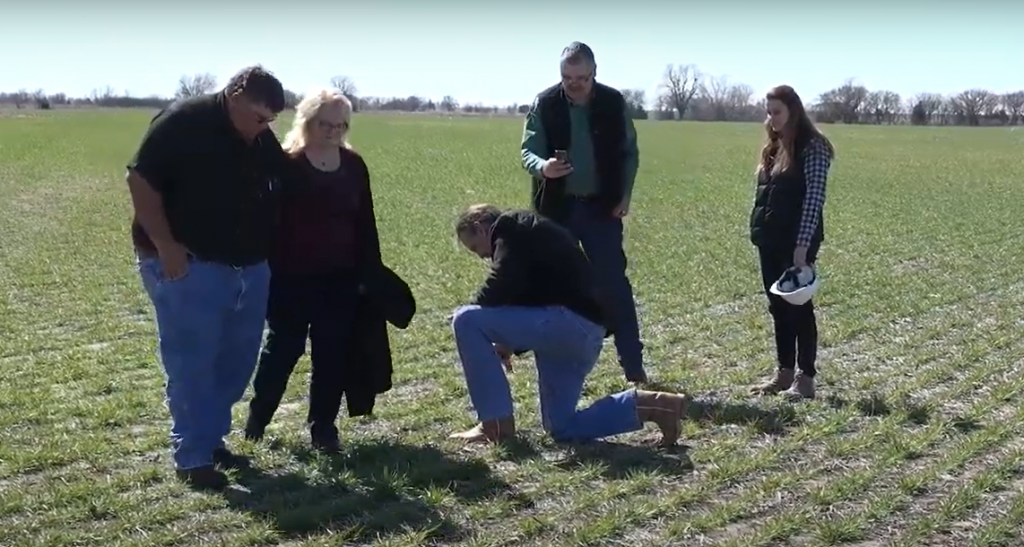
The National Association of Conservation Districts (NACD) recently shared the results of a muti-year collaboration with the Soil Health Institute (SHI) and the Natural Resources Conservation Service (NRCS), which highlight the positive impacts of improving soil health on farm profitability and resilience. Extensive interviews were conducted with 30 farmers implementing soil health management systems (SHMS) across 20 states to learn about their experiences with adopting those systems and to assess the impact of that adoption on net farm income.
The United States Department of Agriculture (USDA) Natural Resources Conservation Service (NRCS) entered into an agreement with the Soil Health Institute (SHI) and the National Association of Conservation Districts (NACD) to facilitate a project entitled "Economics of Soil Health Systems to Enhance Adoption and Environmental Benefits." The purpose of this agreement is to assess, demonstrate and communicate the economics of soil health-promoting practices and systems to increase adoption of soil health management systems to achieve environmental and on-farm benefits.
Through this agreement, the partners will enhance adoption of soil health management systems by providing quantitative evaluation of the economics associated with those systems based on partial budget analysis of farmers' management practices; and conducting a joint communication/education campaign to convey results to farmers, field conservationists, agricultural consultants, and others who influence adoption. SHI and NACD conducted extensive interviews with 30 farmers implementing soil health management systems to learn about their experiences with adopting those systems and to assess the impact of that adoption on net farm income. Based on those results, NACD and SHI have created 30 fact sheets and 30 videos to support soil health training, education and outreach, and these deliverables are co-branded to be used by all parties. NACD also conducted a focus group in February 2020 with Soil Health Champions who did not participate in this interview to ground-truth some of the findings from SHI and NACD.
The executive summary can be found here . The guided story map will take you through all 30 interviews. One of the interviews is with Rick Jeans of Kay County, Oklahoma.
Rick Jeans farms 3,000 acres of grass and cropland in Kay County, Oklahoma. Rick is a third-generation farmer and began farming after he graduated from Oklahoma State University in 1981. He has served on the Kay County Conservation District board for over 25 years.
Rick and his wife Diane grow mostly soybeans, grain sorghum and winter wheat, and 500 acres of their operation is in pasture for 100 heads of cattle. The operation has been no-till for about 30 years, and the pair have been using cover crops since about 2013.
"What got me into no-till was I had a neighbor down the road that had been doing some no-tilling of some soybeans; he was having really good results," he said. Rick and his family started experimenting with the practice and saw success.
Rick and Diane got into cover crops around 2013 after a Natural Resources Conservation Service (NRCS) State Soil Scientist from Diane's leadership class came to their farm and encouraged them to try the practice. That first year, they tried a concoction of triticale, barley, oats, wheat, soybeans, Austrian winter peas, vetch, turnip and radishes. "We liked what we saw enough that it was like, 'Yes, let's try it again'. We've been doing it ever since," Rick said. Rick has tweaked his cover crop concoction a little bit, but still plants five or six different species each year.
"I think what's benefited me more than anything was getting the water in the soil," Rick said, "The infiltration has improved drastically." He's seen his soil come to life with earthworms, and his soil organic matter has increased in several of their fields. He also no longer experiences compaction issues. "With this soil health stuff, we just don't see the problems we used to have," he said.
Economically, his reduced labor costs mean he can spray many more acres in a day with his sprayer. To farmers interested in trying these practices, Rick says, "Take it slow. Get your feet under you, that way you know if this is going to work for you, and you can increase it in the future."
The factsheet from his interview can be found here, or viewed below.
Senior Farm and Ranch Broadcaster, Ron Hays, is talking with the president and CEO of the United States Meat Export Federation, Dan Halstrom, about the USMEF Trade Mission in Asia.
"The Asian markets, Japan and Korea in particular, are our bread and butter on the beef side," Halstrom said. "(They were our) first and third largest markets last year, and historically, that is usually where they fall. Very important on the pork side as well."
Having a USMEF trade team of producers abroad to see their checkoff dollars at work, Halstrom said, is just as important as the trade in these markets having the chance to see who is producing these U.S. products.
"We always have huge success bringing the producers themselves into the markets and having them help us tell the story to our very important customers, not only in Japan and Korea but all over the world," Halstrom said.
As for marketing U.S. meat products during the USMEF Trade Mission in Asia, Halstrom said the team utilizes two main strategies.
"One is a short-term strategy, and that is using our producer group to really help tell the story," Halstrom said. "It is very effective, and in the discussions we had in Korea earlier this week, the first topic was never about price."
In the discussions in Korea, Halstrom said they were more curious about the production side.
"They are interested in the family farm and the fact that most of these producers are multigenerational producers that put a lot of care and thought into their processes," Halstrom said. "They want to leave the land better than they found it for their children."
Another concern of those abroad, Halstrom said, has been the discussion of lower beef supplies in the U.S.
"We are fully locked and loaded to answer that question," Halstrom said. "With five percent less production, we know we are going to have five percent fewer short plates available for Asia, so what else can we look at?"
Halstrom said they have had the opportunity to show these customers short-term options that would be a good replacement for parts of the carcass that will not be as readily available.
"This is another strategy, to show the customers other options that will be short-term answers, but hopefully will turn into long-term options when the cattle supply does improve," Halstrom said. "We are seeing success in this area for both Korea and Japan."
Still feeling the impacts of Covid, food service continues to struggle in these Asian markets, Halstrom said, so there is room for growth in that area later on.
Halstrom also talked about the latest export numbers released from USMEF.
"The trend of the last few months continues, although July is not particularly a peak time of year demand-wise, traditionally," Halstrom said. "We are comparing to a record last year. We are down 18 percent in the month of July."
Despite being down in the month of July, Halstrom said there were some bright spots in the report.
"Mexico is up big- up 30 percent year on year, and we are up 17 percent year to date," Halstrom said. "Mexico is a shining star not only on beef but pork as well.
Another area of the world that was looking better in July, Halstrom said, was Taiwan.
"The Taiwanese market is important for our high-valued chilled production that mainly goes into retail," Halstrom said. "We saw 15 percent growth, almost 800 tons over a year ago."
The variety meat markets are continuing to perform very well, Halstrom said, and this includes countries such as Mexico, Africa, and Peru.
The Beef Buzz is a regular feature heard on radio stations around the region on the Radio Oklahoma Ag Network and is a regular audio feature found on this website as well. Click on the LISTEN BAR at the top of the story for today's show and check out our archives for older Beef Buzz shows covering the gamut of the beef cattle industry today.
Congressman Josh Brecheen announced today that the next telephone town hall will now be on September 28th at 7:00pm CT.
The telephone town hall comes after Congressman Brecheen has held 60 in-person town halls throughout Oklahoma's 2nd Congressional District with more to be announced soon.
During the call, Congressman Brecheen will provide an update on some of the most pressing policy issues facing our country, including our more than $32 trillion national debt, and answer live questions from constituents.
Details for participating in the call are below:
Date: Thursday, September 28th, 2023
Time: 7:00-8:00 p.m. CT
Dial-in Number: 888-480-3675
Constituents should dial 888-480-3675 if they would like to participate in the call. To watch a live stream of the call, constituents can visit our Facebook page here.
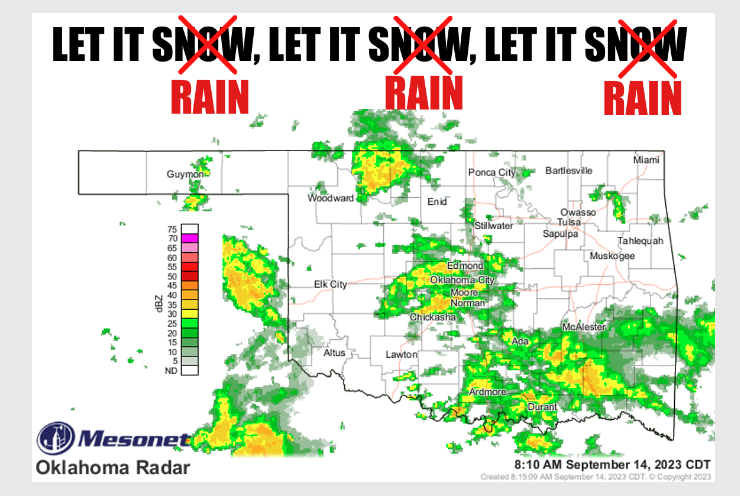
This week, we have seen some cooler temps and much-needed rain across the state, but the first fall freeze may not be far off. State Climatologist Gary McManus says we may see some snow for Halloween, "We're still forecasting our first snow for Halloween, and our average first freeze is still a month or two away, depending on where you live."
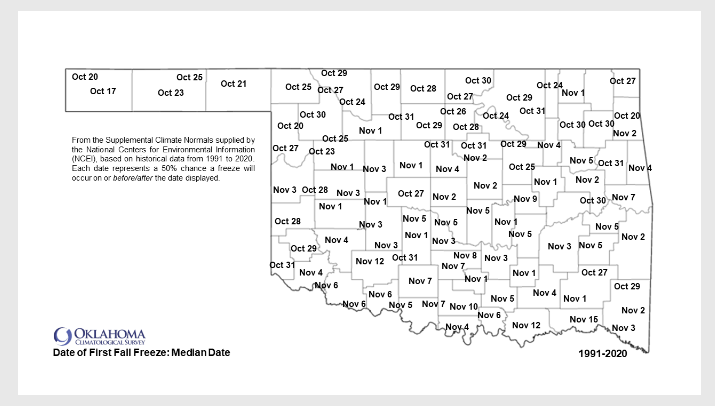
Most of the state looks to get its first freeze in November, but some portions of the state may see freezing temps as early as October 17th! But McManus says right now we aren't talking about snow, we are talking about the falling rain across portions of the state, "We have gotten some very well-placed rains overnight into the morning. Take a look at the new Drought Monitor map this morning, especially south central Oklahoma, and where those rains fell."
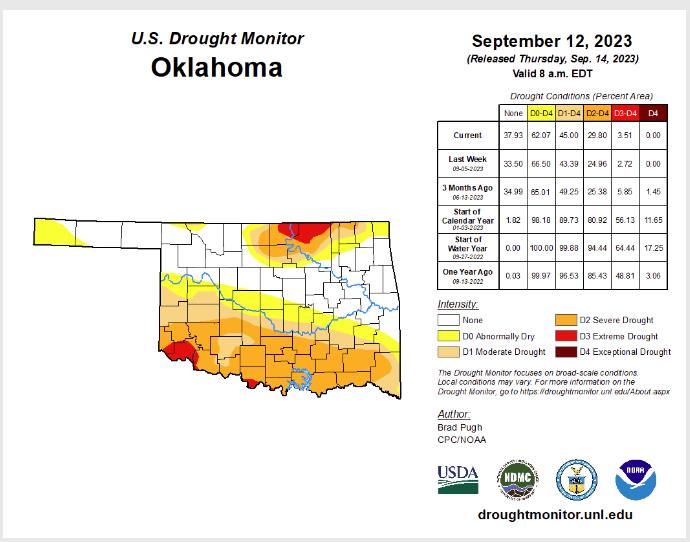
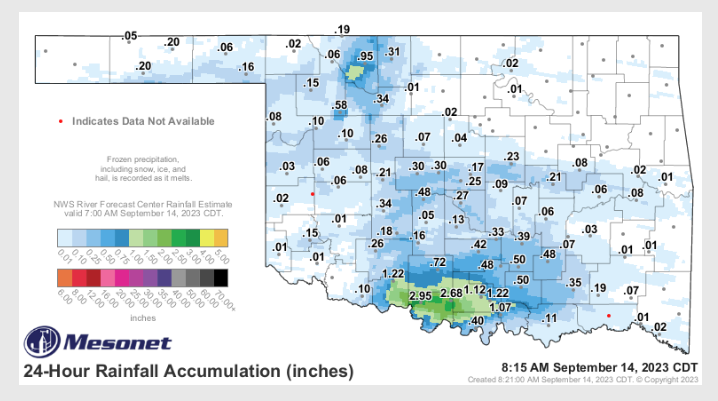
McManus says over the last five days, due to our recent weather pattern reset, "Everybody's gotten SOME rain, but most haven't gotten nearly enough. Kudos to NW OK and now parts of SC OK, however. Forecasts indicate there's still a chance for significant totals, but not drought-busting totals, across western OK."
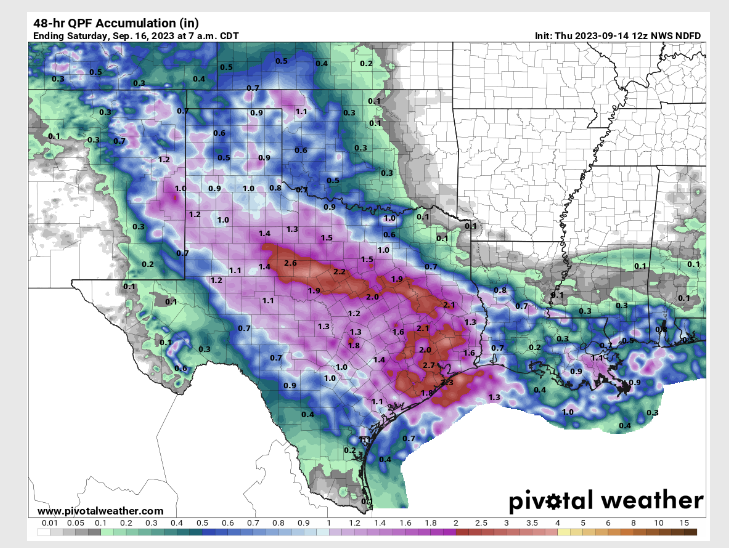
While this rain has been a welcome sight, if you did happen to miss out on it, McManus says there's another chance of rain in next week's forecast as well, "The precise areas for heavier rain chances will shift around a bit, but at least they're around at all."
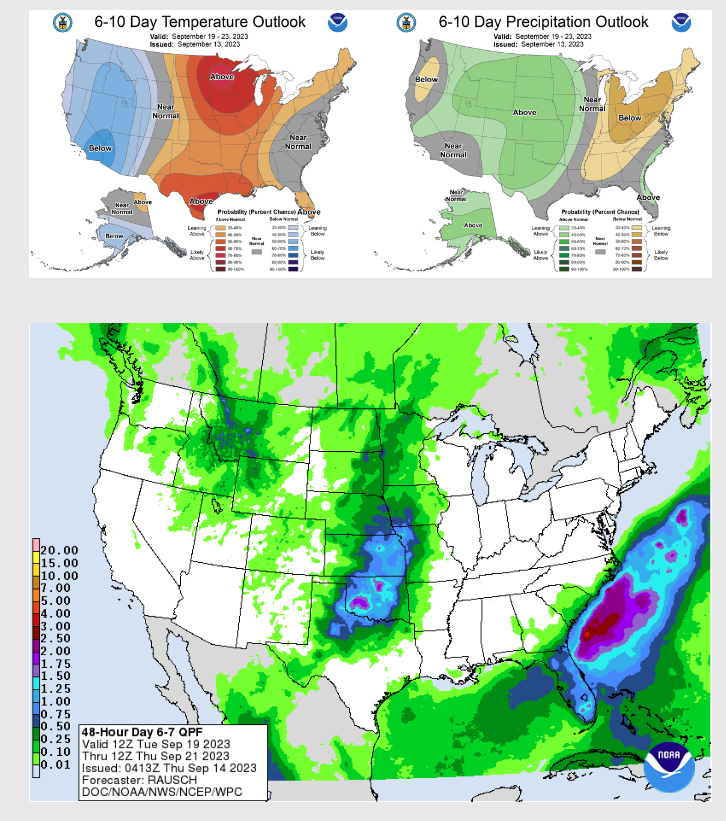
To read more from Gary McManus, State Climatologist on his daily Mesonet ticker, click here:
Oklahoma Secretary of Agriculture Blayne Arthur was elected President of the National Association of State Departments of Agriculture Wednesday. NASDA, which is comprised of secretaries, directors, and commissioners of agriculture from across the United States, made the announcement at the conclusion of the organization's annual meeting in Cheyenne, Wyo.
"The opportunity to serve NASDA as President is incredibly humbling and certainly an honor, and I appreciate the support of my fellow ag Commissioners in this new role," Arthur said. "Agriculture looks different all across the United States, but I look forward to working together to cultivate common ground as we help producers feed, fuel, and clothe the world. NASDA members will remain steadfast in our commitment to strengthen and promote agriculture in this country, and I am excited to continue this work with my colleagues."
Arthur's term will last one year and conclude when Oklahoma hosts the 2024 NASDA Annual Meeting Sept. 22-25, 2024. Prior to being elected President, Arthur was the Vice President of NASDA, and has also served as Chairwoman for the NASDA Animal Agriculture Committee since 2019.
"Wyoming Director of Agriculture Miyamoto did an exceptional job of making sure all NASDA members had a voice, and worked together during his term as NASDA President," Arthur said. "I'd like to continue that forward momentum."
NASDA is a nonpartisan, nonprofit association which represents the elected and appointed commissioners, secretaries, and directors of the departments of agriculture in all 50 states and four U.S. territories. NASDA enhances American food and agricultural communities through policy, partnerships, and public engagement. To learn more about NASDA, please visit www.nasda.org.
**This week's rains in parts of Oklahoma should (hopefully) be reflected in next week's drought monitor.
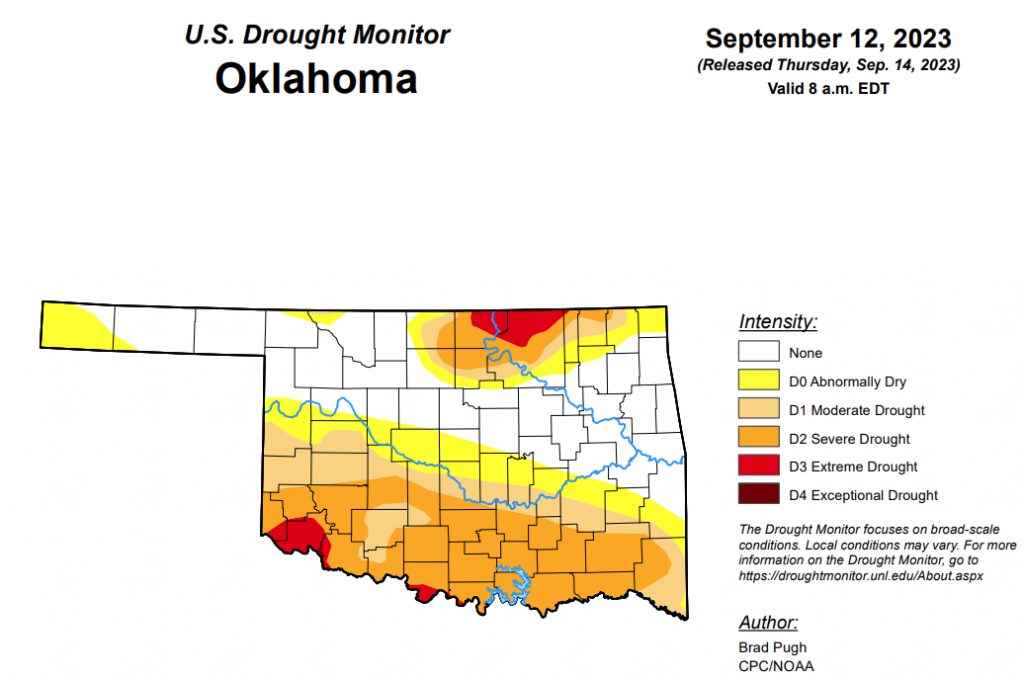
To view the Oklahoma Drought Map, click here.
According to the latest Oklahoma Drought Monitor, exceptional drought remains at zero percent, unchanged for the past few weeks.
Extreme drought or worse is now at 3.51 percent, up from last week's 2.72 percent.
Severe drought or worse is now at 29.8 percent, up from last week's 24.96 percent.
Moderate drought or worse is now at 45 percent, up from last week's 43.39 percent.
Abnormally dry or worse conditions are now at 62.07 percent, improved from last week's 65.50 percent.
According to the 6-to-10-day precipitation outlook map, the majority of the state, aside from the far southeast corner, is leaning above a 40 to 50 percent chance of precipitation through September 23. The southeast corner is leaning above a 33 to 40 percent chance of precipitation through September 23.
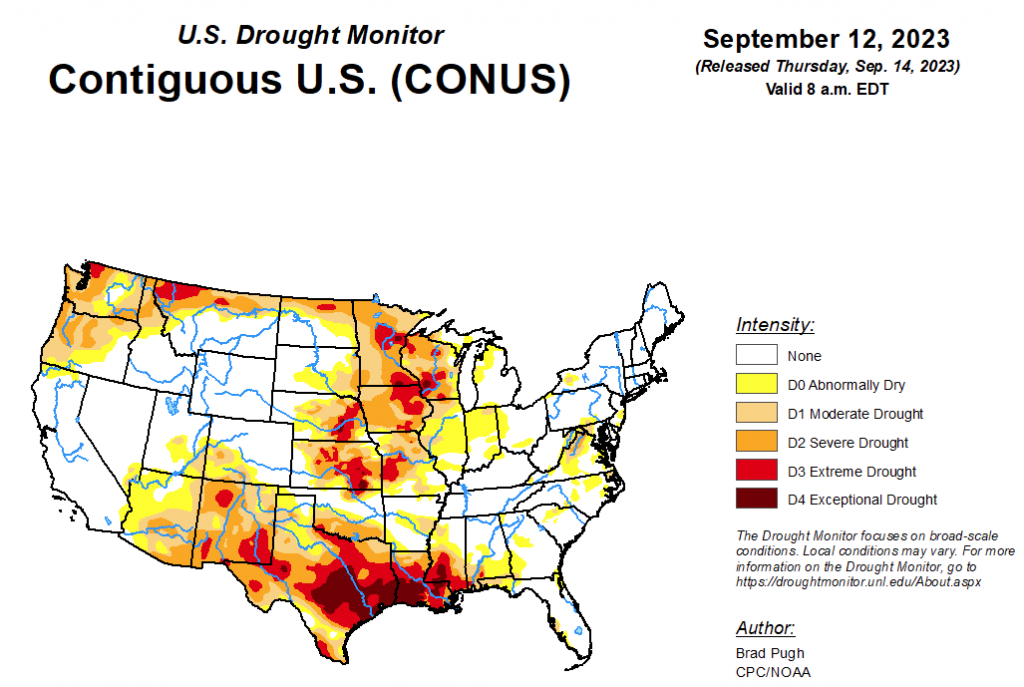
To view the United States Drought Map, click here.
According to the latest U.S. drought monitor, widespread precipitation amounts of 0.5 to 2 inches (locally more) were observed across much of the Great Plains, Upper Mississippi Valley, and East. Improvements were made to areas that received the heaviest amounts. In the wake of a cold front, 7-day (September 5 to 11) temperatures averaged near to slightly below normal for the Northern Great Plains and Upper Midwest. Farther to the south, above-normal temperatures continued across the southern Great Plains and western Gulf Coast. Since early August, persistent excessive heat coupled with a lack of adequate rainfall led to a rapid onset and intensification of drought from Texas eastward to the Lower Mississippi Valley and parts of the Southeast. Monsoon rainfall began to decrease throughout the Four Corners region and Southwest during early September, while seasonal dryness prevailed along the West Coast.
In the Southern Plains, the rapid onset and intensification of drought continues throughout central and southern Mississippi. According to the NCEI, numerous counties in the southern half of Mississippi had their driest August on record and many of those counties have received less than 0.5 inch of precipitation during the first ten days of September. Along with this dryness, persistent above-normal temperatures have led to high evapotranspiration rates and worsening impacts to agriculture and high fire danger. Little change was made to Louisiana this week since the previous USDM map matches up well with the indicators (NDMC short-term blend and soil moisture) and many areas received at least a 0.5 inch of precipitation this past week. A 1-category degradation was warranted for southeastern Oklahoma and parts of Texas due to the prolonged excessive heat this summer and lack of adequate precipitation. The expansion of extreme (D3) to exceptional (D4) drought across central and eastern Texas was based largely on the 90-day SPEI and soil moisture indicators. Despite heavier rainfall (more than 1 inch) across west-central Texas, soil moisture indicators, 90-day SPEI, and NDMC's drought blends support a continuation of D2+ levels of drought. More than 1.5 to 2 inches of precipitation prompted a 1-category improvement to northwestern Oklahoma and the northeastern Texas Panhandle.
In the High Plains, heavy rainfall (1.5 to 3 inches, locally more) prompted a 1-category improvement to southwestern Kansas along with parts of Nebraska. Also, NDMC's drought blends were a factor in these improvements. Conversely, 30-day SPEI and soil moisture supported small degradations across eastern parts of Kansas. Worsening soil moisture indicators led to an expansion of severe drought (D2) across northeastern North Dakota.
In the West, much of the West was status quo this week as Monsoon rainfall begins to decrease during September and this is a drier time of year for California and the Pacific Northwest. However, low 28-day streamflows and SPEI at various time scales led to an expansion of severe drought (D2) across coastal Washington and northwestern Oregon.
Looking ahead, during the next five days (September 14 - 18, 2023), moderate to heavy precipitation (0.5 to 2 inches, locally more) is forecast for the southern Great Plains, western Gulf Coast, and Florida Peninsula. Hurricane Lee is forecast to track near New England and could bring heavy precipitation to coastal New England. Elsewhere, across the eastern and central U.S., mostly dry weather is forecast. Dry weather, typical for this time of year, is also forecast across California and the Pacific Northwest.
The Climate Prediction Center's 6-10 day outlook (valid September 19-23, 2023) favors above-normal precipitation across the Great Plains and northern to central Rockies. Below-normal precipitation is most likely across the Northeast, Mid-Atlantic, eastern Corn Belt, and Tennessee Valley. Increased above (below)-normal temperature probabilities are forecast for the central (western) U.S., while 5-day temperatures are likely to average close to normal throughout the East.
To view the 6-10 Day Precipitation Outlook Map, click here.
To view the 6-10 Day Temperature Outlook Map, click here.
To view the Monthly Drought Outlook Map, click here.

AAA is excited to announce a new partnership with Apple to provide Emergency Roadside Service for iPhone users in remote locations. Specifically, Apple has shared that users of the newly introduced iPhone® 15 lineup, as well as the iPhone 14, will be able to connect to AAA for Roadside Assistance via satellite, even when there is no Wi-Fi or cellular service.
"At AAA, safety is at the core of who we are. This new partnership with Apple takes our commitment to the next level by providing roadside service to motorists previously unreachable," said Thomas Vaughan, Executive Vice President, Membership, Strategy and Growth, AAA Club Alliance. "Thanks to iPhone's satellite capabilities, we can now help drivers stranded in remote locations, when they need us most."
iPhone users requesting roadside assistance can be connected via satellite with AAA after answering a few questions to capture important details. Users will receive clear guidance on how to stay connected to a satellite, so they can message with a AAA agent and get important information about the status of their request.
As one of North America's largest and most trusted membership organizations, AAA responds to approximately 30 million calls for roadside assistance annually and serves more than 63 million members. Apple's satellite infrastructure is an innovative solution that will allows us to extend our emergency support to iPhone users.
"Rescue options are limited for stranded drivers without cell service and getting to an area that has connectivity or Wi-Fi might require walking several miles," Vaughan said. "We are proud to work with Apple to offer safety and protection to anyone in need, regardless of their location."
Roadside Assistance via satellite* will be available to all iPhone 15 and iPhone 14 users in the United States, regardless of whether they are a AAA member. Once the questionnaire is received, AAA members will be verified and service will be provided**. Non-members will be responsible for payment upon completion of the service. Roadside Assistance via satellite is built on the groundbreaking technology that powers Emergency SOS via satellite, launched by Apple in 2022, which allows iPhone 14 and now iPhone 15 users to access emergency services via satellite when cellular coverage or Wi-Fi is unavailable.
Adding Value for AAA Members
The partnership with Apple also represents AAA's commitment to adding value for AAA members. Last year, AAA launched the 'Year on Us' partnership with T-Mobile giving drivers all of the Classic benefits with a free one-year membership. With our Discounts and Rewards savings, the membership pays for itself.
*Individuals must be located near a road to receive service. AAA does not provide off-road vehicle recovery.
** Service will be provided according to the terms of membership and will be available in the U.S. and Puerto Rico beginning September 22, 2023.
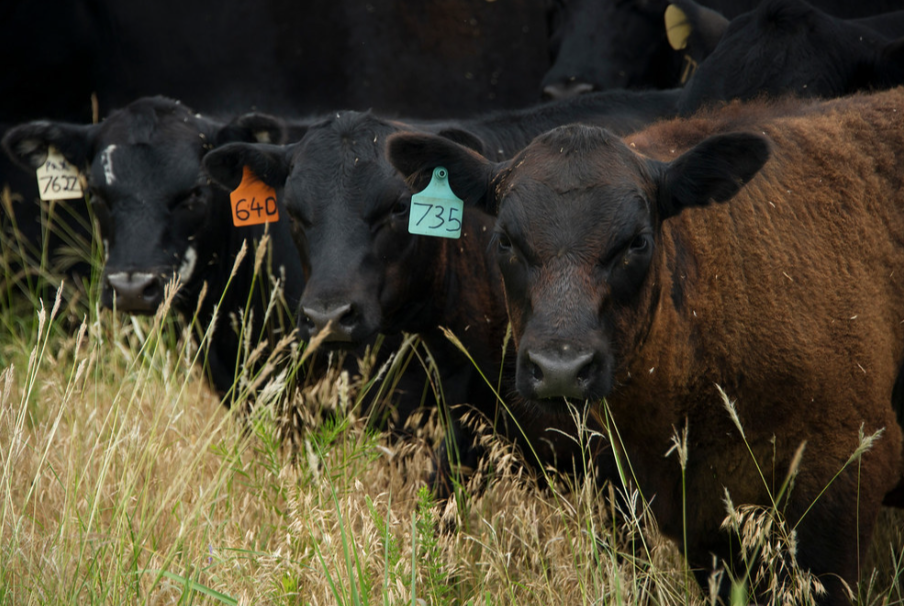
On today's Cow-Calf Corner is Rosslyn Biggs, DVM, OSU Cooperative Extension State Beef Cattle Specialist, and John Gilliam, DVM, with the OSU College of Veterinary Medicine, Food Animal Production Medicine and Field Service talking about researching internal parasites in cattle.
Anthelmintic (dewormer) resistance is a growing concern and OSU researchers are evaluating levels in Oklahoma beef cattle herds through ongoing studies. This research is important for the cattle industry in developing parasite management strategies that preserve the effectiveness of dewormers while maintaining cattle production levels for the future.
A recent study by Drs. John Gilliam, Jared Taylor, and Ruth Scimeca of the OSU College of Veterinary Medicine evaluating Oklahoma beef cattle herds provided evidence that internal parasite resistance is indeed present in the state.
Beginning in 2020, beef cow-calf producers submitted fecal samples for fecal egg count reduction tests (FECRT). Seventeen herds participated and all major classes of dewormers were represented. Anthelmintic administration practices were not controlled, and producers were encouraged to follow their standard procedures. Fecal egg counts (FEC) were determined using the Wisconsin method with a limit of detection of one egg per gram (EPG). Three herds were excluded from the final analysis as the FEC in those groups were too low.
Of the sixteen groups of cattle included in the final analysis, 13 exhibited resistance based on the average of individual FECRT. Based on the results of this small survey, anthelmintic resistance appears to be widespread in beef cow-calf herds in Oklahoma.
Currently the OSU beef cattle extension and veterinary teams are continuing work in this area. Drs. John Gilliam, Dave Lalman, Paul Beck, and Rosslyn Biggs are conducting a larger survey of Oklahoma herds to determine parasite resistance to different dewormers. Herds interested in participating can contact their extension county agricultural educator, area extension livestock specialist, or visit https://okstatecasnr.az1.qualtrics.com/jfe/form/SV_cAtiVIHwoLyow50 for more information on the sign-up.
The current study plans to collect data from at least 50 different groups of cattle dispersed around the state. Samples can be collected from now through first killing frost (generally early November) and then again through spring and summer 2024. Fecal samples will be collected from twenty to thirty animals within the same stage of production. Good handling facilities must be available for safe restraint of all animals and personnel collecting the samples.
Today at the 2023 National Association of State Departments of Agriculture annual meeting, NASDA members adopted policy to protect farmers' right to farm.
NASDA's new policy supports laws that protect agricultural and forestry operations and facilities from nuisance lawsuits.
"The purpose of this new policy is to lessen the loss of farmland caused by nuisance lawsuits which can arise when nonagricultural land uses expand into agricultural and forest areas," NASDA CEO Ted McKinney said. "Farmers are excellent stewards of the land and resources they use to produce food, fiber and fuel for their communities and the world. Protecting their right to farm is vitally important as we aim to inspire the next generation to consider farming as a career and encourage current farmers to use new technologies and practices."
The USDA Economic Research Service reports the number of farmers and acres of land in farms is on a downward trend. The U.S. had 2 million farms in 2022, down from 2.2 million in 2007, and the U.S. had 893 million acres of farmland in 2022, down more than 20 million acres ten years earlier.
RON's Dave Lanning has a pre-opening look at today's agricultural Markets.
Click the audio tab below for today's report.

On Friday, Sept. 15, the OSU Alumni Association will be honoring six graduates with the Distinguished Alumni Award. The third honoree we want to introduce is Lieu Smith.
Lieu R. Smith graduated from OSU in 1954 with a bachelor's degree in agricultural engineering. After serving two years on active duty with the U.S. Army Corps of Engineers, he returned to OSU and earned a master's degree in civil engineering in 1957.
Smith spent most of his engineering career with Sverdrup Corporation in St. Louis, Missouri where he rose to the rank of corporate vice president of advanced technology. His work on the space shuttle won several awards and was featured in Time magazine in 1984 where the project was described as the "most sophisticated military complex ever built."
For his work as the program manager on the Space Shuttle Launch Pad Complex, Smith was awarded the Congressional Science and Technology Award for pioneering work in aerospace technology and engineering. He was also selected by Science Digest as one of America's outstanding innovators in 1985.
To learn more about Smith and all our honorees, visit https://okla.st/3sN2PvC
Today, during the 2023 National Association of State Departments of Agriculture Annual Meeting, NASDA members adopted two policy items to encourage the development of comprehensive and reliable disaster assistance programs for agriculture by creating individualized program timelines and adequate insurance programs.
"Recent natural disasters and catastrophic events have highlighted the challenges farmers face in seeking disaster assistance. Particularly in Wyoming, USDA Farm Service Agency has worked closely with the state and farmers to help provide as much aid as possible. NASDA is advocating to give USDA more authority to be flexible in serving farmers and ranchers, especially small farms or specialty crop producers who compete on price instead of quantity," 2022-2023 NASDA President Doug Miyamoto said.
Through an action item, NASDA members charged the organization to work with USDA to allow flexible conservation program timelines.
"Allowing for adaptive deadlines aligned with the damages or regional disaster patterns can help farmers recover faster and resume conservation efforts to build more resilient landscapes," said Miyamoto.
Additionally, NASDA members passed a policy amendment stating existing gaps in insurance coverage and federal disaster relief programs leave farmers increasingly vulnerable to the growing number and severity of catastrophic natural disasters.
"The compounding impacts and damages caused by catastrophic wildfires, floods, hurricanes, volcanic eruptions and other natural or man-made disasters have immediate and far-reaching consequences that persist for several years; therefore, we encourage Congress and USDA to improve federal programs to help farmers recover," Miyamoto said.

Today, at the National Association of State Departments of Agriculture's 2023 Annual Meeting, NASDA members advocated for standards that ensure clear and consistent labeling for cell-based meat products, also referred to as cultured meat.
In an action item approved today, NASDA members urged the establishment of regulatory frameworks for distinguished labeling of cell-based meat, poultry and seafood products and encouraged the U.S. Department of Agriculture, USDA Food Safety and Inspection Service and U.S. Food and Drug Administration to analyze the cellular and nutritional properties of these products and indicate the differences, via labeling, between cell-based and conventional products.
"NASDA members are responsible for ensuring agricultural businesses of all sizes and types can thrive, and we have learned, especially through the pandemic, the importance of diversity in agricultural production. Equally important, clarity and consumer confidence in ingredients and labeling must always be upheld, which is the goal of the action item adopted today," NASDA CEO Ted McKinney said. "NASDA encourages federal agencies to discuss and consider regulatory frameworks for these innovative products which accurately reflect differences between them and conventionally raised products."
In March 2019, USDA and FDA established a formal agreement on how cultured food products would be regulated. In June 2023, the organizations issued the first Grants of Inspection and label approvals to two companies to sell cell-based chicken.
"NASDA members stand ready to work collaboratively with federal agencies on cell-based meat labeling requirements to ensure shoppers can have confidence in what they buy at the grocery store," McKinney said.
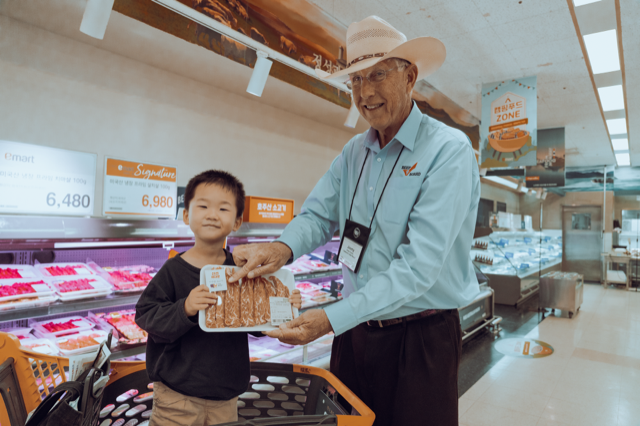
Jimmy Taylor- USMEF trade mission in South Korea
Senior Farm and Ranch Broadcaster, Ron Hays is talking with the Chairman of the Cattlemen's Beef Board and Oklahoma Rancher, Jimmy Taylor.
Taylor talked with Hays as he began the second the leg of the journey in Tokyo, Japan- this after spendinga couple of days in South Korea with the U.S. Meat Export Federation Trade Mission.
Taylor says that he wore his cowboy hat on the trip- and that his smile has been met with smiles from virtually everyone he has met- saying "I think that means they think I'm the good guy."
USMEF CEO Dan Halstrom says Taylor is a great ambassador when it comes to selling US Beef- "Jimmy stands out in the a crowd over here- I'm saying that in a good way with his cowboy hat and he is pretty much taller than everyone over here so that's a very good marketing tool."
"This is very important to come over here and look and see how our checkoff dollars are working through USMEF and these two very important markets," Taylor said. "They are our number one and number three markets overall in value. Last year, in the record-setting year, South Korea was our top market at 2.7 billion dollars, and Japan was our number three market at 2.4 billion dollars."
For the 2024 fiscal year, USMEF will receive $8,150,000 in funding through the Cattlemen's Beef Board budget.
"Our foreign marketing program is, I think, second overall," Taylor said. "The return on that dollar is $24.45, so this work that they do is so important because it has a good return on investment."
Foreign marketing could use more dollars if those were available, Taylor said, and because of the size and potential of the dozens of markets that are buying US Beef, the efforts to sell US Beef with the help of the USMEF remains extremely valuable to cattle producers here in the US.

At the National Association of State Departments of Agriculture Annual Meeting today, NASDA members elected the next cohort of officers for 2023-2024. Oklahoma Secretary of Agriculture Blayne Arthur will serve as NASDA's 2023-2024 President and will host the 2024 NASDA Annual Meeting on Sept. 22-25, 2024.
"The opportunity to serve NASDA as President is incredibly humbling and certainly an honor, and I appreciate the support of my fellow ag Commissioners in this new role," Arthur said. "Agriculture looks different all across the United States, but I look forward to working together to cultivate common ground as we help producers feed, fuel, and clothe the world. NASDA members will remain steadfast in our commitment to strengthen and promote agriculture in this country, and I am excited to continue this work with my colleagues."
Also elected to NASDA's Board of Directors are Arkansas Secretary of Agriculture Wes Ward (Vice President), Maine Commissioner of Agriculture Amanda Beal (Second Vice President) and Washington State Director of Agriculture Derek Sandison (Secretary-Treasurer). Wyoming Director of Agriculture Doug Miyamoto will serve as NASDA's Past President and Indiana Director of Agriculture Don Lamb will serve in the At-Large position. Connecticut Commissioner of Agriculture Bryan Hulburt, Virginia Commissioner of Agriculture Joe Guthrie, Missouri Director of Agriculture Chris Chinn and Utah Commissioner of Agriculture Craig Buttars will serve as the Northeastern, Southern, Midwestern and Western representatives respectively.
Following her election, Secretary Arthur appointed the leadership of NASDA's six policy committees:
Marketing and International Trade Committee
Natural Resources and Environment Committee
Animal Agriculture Committee
Plant Agriculture & Pesticide Regulation Committee
Rural Development and Financial Security Committee
Food Systems and Nutrition Committee
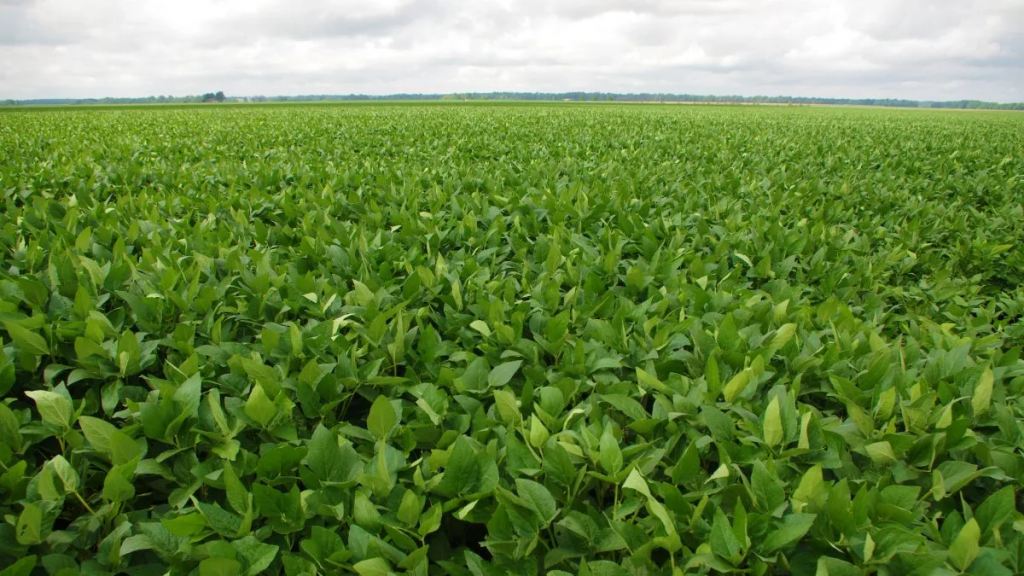
September's World Agricultural Supply and Demand Estimates, released Sept. 12, is the first of the season to incorporate objective yield plot results for corn, soybeans and cotton (outside of Texas) as collected for the National Agricultural Statistics Service's (NASS) Crop Production report. This Market Intel also looks at production and demand adjustments in livestock and poultry in response to changes in cattle inventory, and hatchery data.
Compared to the August WASDE report, U.S. corn and rice supplies are loosening, U.S. soybean and cotton supplies are tightening, and while domestic wheat supply is staying the same, globally it's tightening.
Crops
Corn
For the 2023/24 marketing year that started Sept. 1, USDA indicates that corn farmers planted 772,000 more acres of corn than what was reported in the June 30 Acreage report, pushing corn area planted to 94.9 million acres, up 7.1% compared to 2022.
As expected, yield projections decreased by 1.3 bushels per acre from August's report to 173.8 bushels per acre, falling 0.74%. Despite poor crop conditions — the lowest rating of good-to-excellent corn for this point in the season since 2012 — overall yield is still currently projected to be the fifth-highest on record. In the objective yield surveys, NASS found that there were a record number of ears per acre in the fields. So, despite tough conditions making smaller ears and less kernels per ear, yields are being buoyed by record-high ear counts.
Overall U.S. corn production is forecasted to nudge up from the previous month, rising to 15.134 billion bushels (+0.15%, 23 million bushels), driven by the increase in acreage estimates.
On the demand side, projections for the 2023/24 U.S. corn crop were unchanged month-over-month. The increase in 2023/24 production was offset slightly by a decrease in 2022/23 ending stocks caused by a month-over-month increase in old crop exports. Ending stocks were forecasted up 19 million bushels to 2.2 billion bushels (+0.86%). With overall limited movement, the projected average farm price for corn remained the same at $4.90.
Soybeans
Like corn, projected yields for soybeans were also reduced for the 2023/24 marketing year, lowered by 0.8 bushels to 50.1 bushels per acre (-1.6%). The lower yields were slightly offset by a small increase in planted acres, but the extra acreage didn't make up the entire gap, which led to a projected reduction of 59 million bushels of soybean production, a 1.4% decrease from the August WASDE report forecast.
Projected 2023/24 domestic use was also reduced, led by a drop of 1.9% in projected exports (35 million bushels) as compared to the August report. These factors, combined with a reduction in the old crop ending stocks led to one of the biggest surprises in this report. USDA projected a decrease in this year's ending stocks, which are estimated to end at 220 million bushels, a 10.2% reduction month-over-month and 12% lower than 2022 estimates. That leaves the soybean market on track to have a 5.2% stock-to-use ratio, which would be the lowest since 2015. The projected 2023/24 average farm price was projected at $12.90. This represents a 20-cent increase over the August report, and an 80-cent increase since the first estimate in May. Despite these increases, this projection is still down $1.30 (3.2%) in comparison to the 2022/23 season.
Despite these slightly bullish adjustments, futures markets responded negatively with the November contract closing at $13.46 per bushel on the day of the release, or down 22 cents. This may be in response to the fact that Brazil, the biggest competitor to U.S. soy production, is expected to have another monster corn and soybean crop coming down the pipe.
Rice
Domestically, U.S. rice is now projected to have a record yield during the 2023/24 season, increasing 52 pounds per acre to 7,751 pounds per acre from the August report. Like corn and soybeans, rice acres were also increased from previous reports, jumping 210,000 acres, or 7.8%, to 2.9 million. That large increase is indicative of a strong recovery from the water supply issues that plagued the 2022/23 season and resulted in historically low acreage last year. The current year-over-year forecast shows this trend continuing, with an increase of 30.6% (680,000 acres) anticipated.
If record yields come to fruition, they will lead to the eighth-largest rice crop since 1983, at 220.9 million hundredweight.
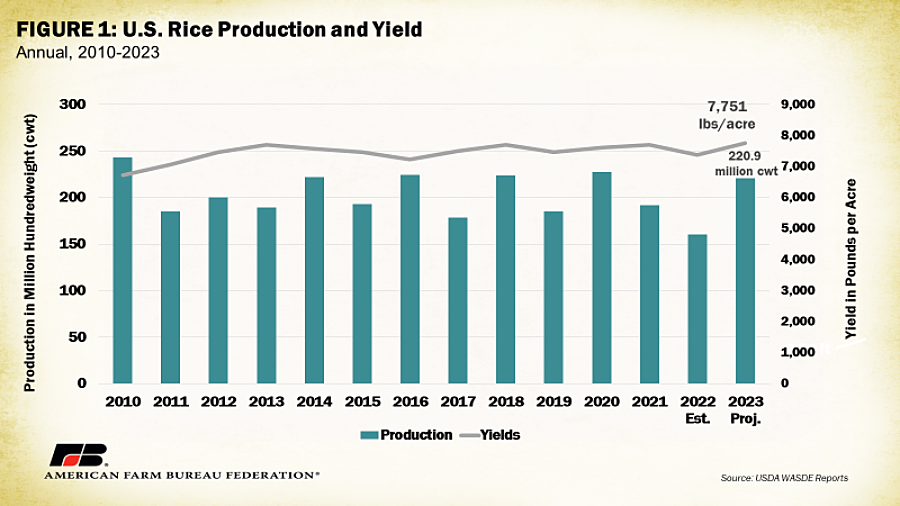
Of the crops covered in this analysis, cotton was the only one with a decrease in projected acreage, dropping 854,500 acres (7.7%) from previous reports to 10.2 million planted acres. Because of the decline in acre estimates, production was also revised down 6.1% to 13.1 million 480-lb bales. If these trends continue, both yield and production will be the lowest since 2015, as demonstrated in Figure 2.
The drop in production is mostly offset by an unexpected increase in both the 2022 and 2023 beginning stock estimates, putting 2023/24 estimated ending stocks down -0.3% to 3 million bales. Subsequently, season-average prices for upland cotton increased by 1 cent above the August report to 80 cents per pound.
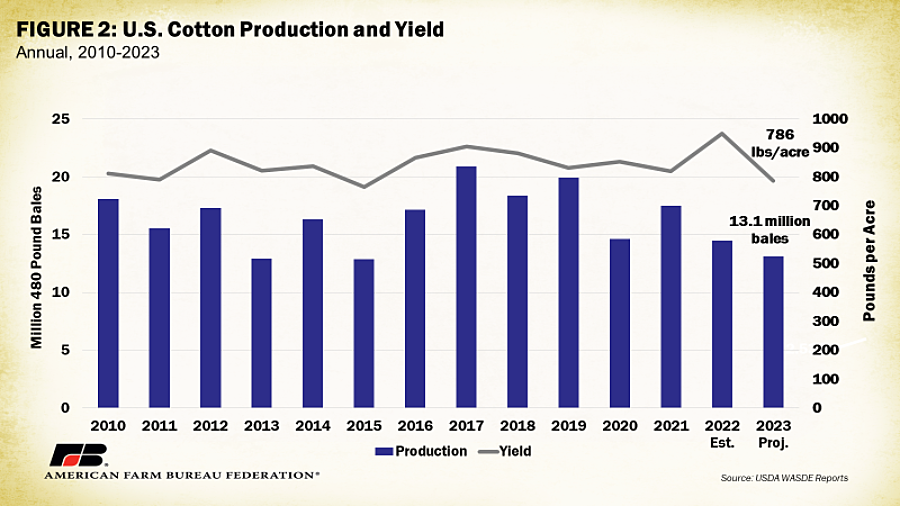
Wheat
With winter wheat harvest completed and spring wheat 87% harvested, the U.S. all wheat supply and use projections were unchanged. However, 2023/24 global supply estimates were lowered by 7.2 million metric tons (MMT) to 1,054.5 MMT, a decrease of 0.7%. Declines in supplies are driven predominantly by significantly lower production in Australia (-3 MMT, -13.7%) due to higher-than-normal dryness caused by El Niño, in addition to smaller declines in Canada, Argentina the European Union. Notably, the 2023/24 wheat season is no longer projected as a record wheat crop and is forecasted to be the first year-over-year production decline since the 2018/19 marketing year.
With minor changes in demand, world ending stocks estimates were also lowered 7 MMT to 258.6 MMT since the August report. If realized, this would be the lowest ending stock since 2015, as demonstrated in Figure 3.
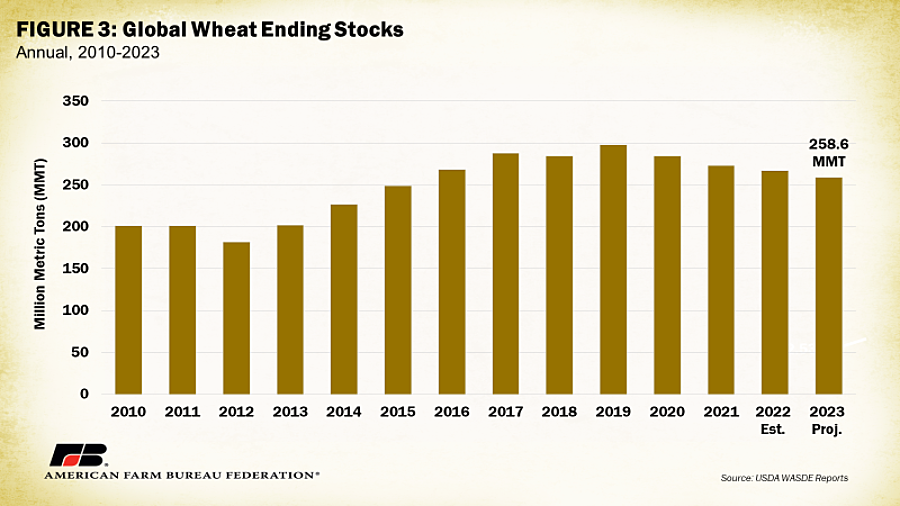
Livestock and Poultry
Cattle
On the livestock side, a fresh set of USDA supply/demand estimates lowered production forecasts for beef, pork, and poultry in 2023. Overall, changes made in this report slightly reduced both supply and demand forecasts for red meat and poultry. Total beef supplies for 2023 were reduced by 1.1 million pounds from 2022 or 3.5%. Lower cattle supplies from continued herd liquidation are largely responsible for this change. Beef demand for 2023 is reduced by 551 million pounds or about 2%. USDA increased third quarter steer price projections by $5 per cwt to $179.02, or 2% from August, and by another $6 per cwt, or 3%, from August, in quarter four. 2024 beef demand was reduced by 1.6 million pounds, or 6%, from 27.6 million pounds in 2023 to 25.9 million pounds in 2024. This likely reflects an expected change in consumer preference in 2024 in response to higher beef prices.
Pork
Pork production was lowered slightly from 2022 mostly due to lighter than expected carcass weights and slowed slaughter pace. Demand for pork is projected to increase slightly by 55,000 pounds. Pork exports were lowered by 125,000 pounds, or about 2% from August, but remain 7% higher than 2022. Mexico is currently the leading importer of U.S. pork in 2023 with 446.1 thousand metric tons in export sales accumulated as of Sept. 8, 2023.
Poultry
2023 broiler production and demand estimates were both reduced slightly from August. 2023 production was estimated at 46.19 billion pounds, down slightly from August and 483 million pounds, or about 1%, below 2022. Demand was estimated to be 39.06 billion pounds, down only slightly from August or 2% below 2022. Price projections reflect the drop in demand. USDA estimates prices for the second half of 2023 to average $1.145 per pound, about 13% lower than the second half of 2022.
Turkey production estimates for 2023 are unchanged from last month at 5.7 million pounds. This reflects a 7%, or 356,000-pound, increase from 2022 when Highly Pathogenic Avian Influenza (HPAI) decimated turkey flocks throughout the U.S. 2023 turkey price projections were $1.35 per pound for quarter three and $1.36 per pound in quarter four. Price projections for the fourth quarter of 2023 are 25% lower than they were in 2022 and reflect a decrease in demand for turkey.
USDA projects egg prices to increase by 3 cents per dozen in quarter three, and by an additional 21 cents per dozen in quarter four. These price increases come from a 57.5-million-dozen decrease in production from hatchery data that will be released on Wednesday September 13 at 3:00 pm Eastern time. While fourth quarter prices are projected to increase, the $1.60 estimate is 257% lower than the $4.11 per dozen prices in the fourth quarter of 2022.
Happy 50th Birthday to the WASDE Report!
We conclude this Market Intel with a brief history lesson. This most recent WASDE represents 50 years of WASDE reports, though not always under the same name. While USDA crop statistics date back to 1863, the direct predecessor of WASDE was introduced on Sept. 17, 1973, as Agricultural Supply and Demand Estimates. The report was later renamed World Agricultural Supply and Demand Estimates in 1980 and added reports on individual foreign markets in 1985.
The WASDE was created in response to The Great Grain Robbery of 1972, when the Soviet Union was able to purchase an immense amount of wheat at low prices subsidized by the U.S. government. At the time of negotiations, the U.S. had not realized that a massive drought in the Soviet Union was leading to crop failure. After the grain deal was complete and the extent of the Soviet crop failure became known, prices skyrocketed.
Since its introduction, the WASDE has provided transparency and insights into agricultural markets, where global supply and demand are constantly changing, putting everyone involved in the market on a more equal playing field.
| Last week's fed cattle slaughter was remarkably small even considering that Labor Day shortened the production week for packers. The 559,000 head federally inspected total was 47,000 head smaller than the same week a year ago. On the other hand, fed steer and heifer slaughter Tuesday through Friday averaged 100,000 head per day. Fed cattle prices remained essentailly unchanged last week at $181.82/cwt. The negotiated head count was quite small and limited packer demand kept a lid on potential for upward price movement. |
 |
| Live cattle futures, however, have been pricing notably higher with October 2023 moving to a $2/cwt. premium to last week's cash trade early this week. Monday's $184.22/cwt. close on the October contract was near the contract high, but it has settled closer to last week's cash price by mid-week. The wholesale CAB carcass cutout value showed a weekly increase of $0.92/cwt. higher in last Thursday's weekly report. However, the Choice cutout was down $2.23/cwt. and Select lost $0.36/cwt. in Friday's weekly average summary. Subprimal CAB carcass prices are recently variable depending on the cut. Ribs are generating continued upward price pressure, as are several items from the chuck and round. From the loin complex: strip loins, short loins, top butts and flap meat were all priced weaker while tri-tips, ball tips and tenderloins held to a higher price level. |
| 90% LEAN TRIM DRIVES ROUND PRIMAL VALUE |
| Weekly U.S. beef cow slaughter this year has averaged 65,531 head, down 10,467 head per week or 13.7% lower than 2022. Dairy cow slaughter is running 6% higher than a year ago with a weekly average of 61,754 head. All told the beef cow reduction is tipping the balance to a net result of all cull cow slaughter at 5.2% lower year to date. U.S. beef cow herd contraction, now its fourth year, has accelerated in the past two years driven by drought in much of the western half of the U.S. This has generated sharp packer competition for a shrinking pool of cull cows already aggressively culled in affected regions. |
 |
| At $244.03/cwt., cutter cow carcass values are now record-high, surpassing the 2014 and 2021 price levels at this time of the year by roughly $0.10/cwt. Cutter cows are the primary source of 90% lean grinding trim, normally blended with fed steer and heifer fatty trim to create ground beef. |
 |
| Record-high cutter cow values create record-high 90% lean trim prices, which have recently touched $3.11/lb. This price spike has sent ground beef processors seeking alternatives, as high prices often do. Fed steer and heifer cuts from the round primal are a logical substitution in this scenario and prices for round cuts are showing positive price moves in the latest reports, lifting the total carcass value contribution attributed to the round. The Choice round primal price, for instance, has lifted 15.6% and the CAB cutout is up 13.7% since August 1. Total carcass cutout prices have tended to increase during August in most recent years, but round cuts are holding the stronger price spike this season longer into September due to the substitution effect noted above. |
Five students join Angus operations across the nation for the summer.
The Angus Foundation congratulates the students who expanded their horizons this summer as Angus/Talon Youth Education Learning Program interns. The interns joined five Angus host ranches throughout the United States for an immersive learning experience in the cattle industry. The Talon Youth Education Learning Program internship is the legacy of the late Camron "Cam" Cooper of The Talon Ranch, Twin Bridges, Montana. Cooper set up the Angus/Talon Youth Education Learning Program Endowment Fund in 2009 to be a holistic educational opportunity for students.
"We had an excellent group of interns for the summer," said Jaclyn Boester, Angus Foundation executive director. "We enjoyed watching the growth our interns achieved while working and learning alongside their hosts."
The five individuals hailed from a variety of regions and backgrounds. Talon interns "learn by doing" through hands-on experiences provided by their host ranches.
"By participating in the Talon Internship, I enhanced my networking skills along with technical skills that I couldn't have learned in a classroom," said Garrett Ulmer, 2023 Talon intern.
Cadence Bass, Nampa, Idaho, interned with Bear Mountain Angus, Palisade, Nebraska. Bass currently studies animal science at the College of Southern Idaho. She grew up on her family's registered Angus operation, Bell Key Angus, and remains an active member of the Idaho Junior Angus Association. Bass plans to continue her family's Angus operation, providing high-quality bulls and females.
Bear Mountain Angus is operated by Brian and Tiffany Stoller. The ranch hosts an annual bull sale in January and female sale in November. Bass assisted the operation with a variety of tasks ranging from daily animal care to heat detection. In addition to livestock care, she was involved with irrigation and fencing.

Kacey Dethlefs, Ravenna, Nebraska, interned with Blueprint Genetics/Henning Farms, Janesville, Wisconsin. Dethlefs studies animal science at the University of Nebraska-Lincoln. She grew up as a fourth-generation Angus breeder on her family's operation, Dethlefs Angus Ranch, and has been involved in the Nebraska Junior Angus Association and National Junior Angus Association. Dethlefs plans to pursue a career in beef reproduction while staying involved in her family's ranch.
Blueprint Genetics/Henning Farms provided Dethlefs a unique combination of experiences. Henning Farms is a family-run program focused on providing high-quality Angus cattle. In addition to annually marketing heifers, the farm has an embryo-intensive program through work with Blueprint Genetics. As an intern, Dethlefs spent time assisting with both operational duties at Henning Farms and at the Blueprint Genetics IVF collection facility.
Jessica Keilhoz, Chamois, Missouri, interned with Audley Farm, Berryville, Virginia. Keilhoz studies business administration at William Woods University. She grew up on her family's cattle operation and was involved in 4-H and FFA as she built her own registered herd of cattle. Keilhoz hopes to continue expanding her herd and developing her knowledge of the livestock industry, and eventually help manage her mother's veterinary clinic.
Audley Farm has been in the Angus business over 10 years and hosts an annual production sale in May. The farm also markets its Angus beef to local restaurants and families. Keilhoz assisted with all facets of the farm, including overseeing daily animal care and health, hay making, harvesting silage and assisting with reproductive work.

Emily Ratajczak, Standish, Michigan, interned with Bar 69 Angus Ranch, Belle Fourche, South Dakota. Ratajczak studies agribusiness management at Southwest Minnesota State University. She grew up on her family's beef farm and was involved in 4-H and FFA, sparking her passion for the livestock industry. Ratajczak plans to remain involved in the cattle business and hopes to one day raise show cattle on her own operation.
Bar 69 Angus Ranch is operated by Craig and Debbie Kukuchka along with their children, Chase and Callie. The ranch hosts an annual production sale in April and runs a band of approximately 1,000 ewes in addition to their Angus cow herd. Throughout her internship, Ratajczak gained experience in a variety of tasks ranging from heat detection and breeding to fencing and making hay.

Garrett Ulmer, Lodge, South Carolina, interned with Eleven Milliron Ranch, Sumner, Nebraska. Ulmer studies animal and veterinary science at Clemson University. He developed a passion for the beef industry growing up on a commercial beef operation and showing heifers in 4-H and is a member of the South Carolina Junior Angus Association. Ulmer plans to pursue a master's degree in animal reproduction or heifer development, and one day hopes to have his own herd of Angus cattle.
Eleven Milliron Ranch is operated by Greg and Teresa Ibach and their son, Alec. The commercial operation focuses on raising feeder cattle with both high carcass merit and growability, while retaining females with desirable maternal traits. Ulmer took part in cow synchronization and breeding, grazing management and crop and forage production on the ranch.
"Taking a big step like moving 22 hours away from home is intimidating for sure," Ulmer said. "But as long as you work hard and have fun, it won't be something you regret doing. By taking this step, I've gained so much experience — not to mention the memories that will last a lifetime."
The internship program pairs motivated youth with registered Angus breeders/ranches to provide valuable education and work experience. The program is open to college sophomores, juniors, seniors, graduate students and recent college graduates under age 25 who major in an agricultural field of study.
"The Talon internship is an immersive learning experience to enhance students' skills in a variety of areas," Boester said. "The Foundation is proud to support such a unique opportunity to shape these future leaders for the Angus breed and the beef industry."
Applications for Talon host ranches are due October 31. Students interested in serving as a Talon intern should apply by December 1. To apply or learn more about the Angus/Talon Youth Education Learning Program, visit www.angus.org/Foundation/WhatWeDo/Youth/TalonYouth.
– Written by Peyton Schmitt, Angus Communications
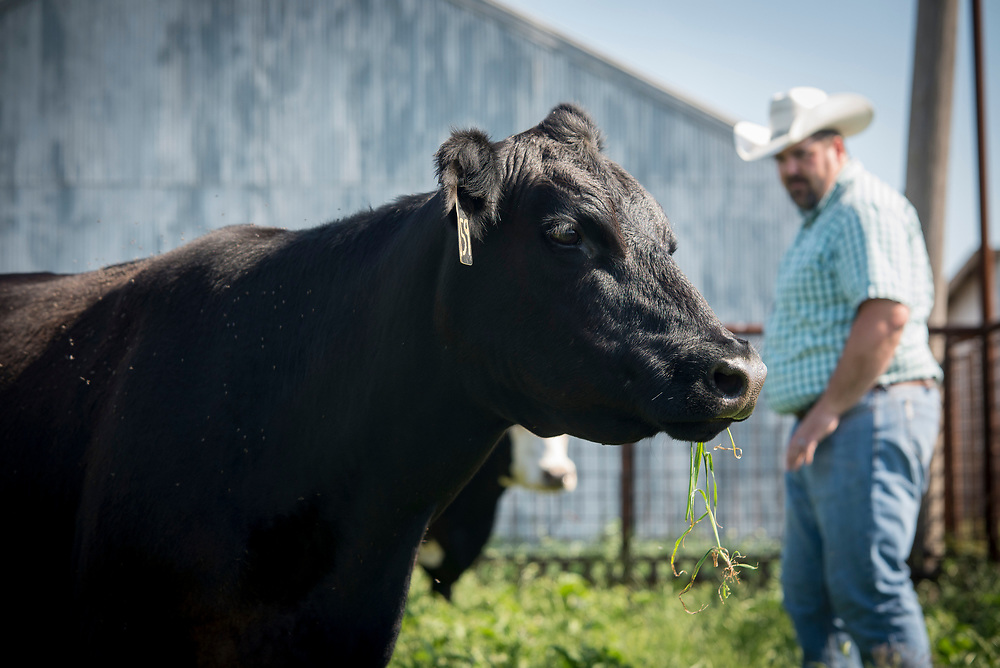
Farm Director KC Sheperd is talking with Oklahoma State University State Extension Beef Veterinarian, Dr. Rosslyn Biggs about the latest research study on internal parasites in beef cattle at the OSU College of Veterinary Medicine.
Anthelmintic (dewormer) resistance is a growing concern, and OSU researchers are evaluating levels in Oklahoma beef cattle herds through ongoing studies. This research is important for the cattle industry in developing parasite management strategies that preserve the effectiveness of dewormers while maintaining cattle production levels for the future.
A study was conducted a few years ago on internal parasites in beef cattle, and Biggs said it has recently been published. The research being conducted today builds on that information and looks deeper into the level of internal parasite resistance in Oklahoma beef cattle.
"This project that we have going on builds upon that information, and we are looking for producers and their veterinarians to take part," Biggs said.
Ideally, Biggs said they are looking for at least 50 different groups of cattle from all over the state. Individual operations, depending on size, Biggs added, could have multiple groups within their operation.
"They may have the cows as one group, and they may have the calves as a different group," Biggs said.
For the study, Biggs said they are looking for groups of about 20 head of cattle in each group.
"What it is going to offer is free fecal egg count reduction tests, so you will have to take fecal samples from that group of cattle, you will have to come back and take a second set of those in a specified time frame," Biggs said.
Area livestock specialists and county-level extension educators are available to assist with the sampling, Biggs said, if needed.
Biggs said after the first fecal samples are taken, producers will deworm their cattle with their regular dewormer, and then the second fecal test after deworming will show what the level of resistance is for those parasites.
"We would love to have more samples from calves," Biggs said. "We have got decent representation at this point from cows, but we would really like to take a look at those calves," Biggs said.
The inspiration for this project, Biggs said, is to test the effectiveness of deworming products.
"If anybody has bought dewormer lately, it is not inexpensive," Biggs said. "So, you want to make sure you are getting the most bang for your buck. You also need to decide on many of these cow operations, some of these groups we are taking a look at have very low levels of parasitism in the cows, so I am a big proponent of pharmaceutical stewardship. If I don't have to deworm, I don't want to do that because I don't want to build extra resistance in my herd, to begin with, but I also am a fan of saving money."
This particular project will give producers and their veterinarians an opportunity to look at these different aspects, Biggs said, and decide if they need to deworm specific sets of cattle that may have low parasite levels. The study will also help producers see if their dewormer is effective, Biggs added, so they can develop a different deworming plan if necessary.
"We have had reports across the U.S. that resistance has been building in our parasite populations," Biggs said. "When I say resistance, what that means is our dewormers are not being effective against these parasites. Until the initial study here at OSU, we didn't have a lot of information about what was going on specifically in Oklahoma. This second study is expanding on that and hopefully will give us a bigger picture."
This fall, Biggs said the goal is to have sampling finished by early November, but producers can also sign up now to participate in the spring and summer of 2024.

Producers interested in participating in the study can sign up and read more online at https://okstatecasnr.az1.qualtrics.com/jfe/form/SV_cAtiVIHwoLyow50
Producers can also sign up by contacting their local extension educators, or Dr. Rosslyn Biggs directly at rosslyn.biggs@okstate.edu.
Global supplies anticipated to rise from 3.7 billion gallons in 2022 to between 5 billion and 10 billion gallons by 2030
Today, Clean Fuels Alliance America released a new report assessing potential global supplies of used cooking oil (UCO) to meet growing demand for biodiesel, renewable diesel and sustainable aviation fuel (SAF) through 2030. In 2022, global UCO trade reached 3.7 billion gallons, according to the report authors, LMC International/GlobalData Plc. With anticipated demand and added value from biodiesel and renewable diesel production, the supply could grow to between 5 billion and 10 billion gallons by 2030, the authors project. With additional global UCO collection, the potential supply could increase by an additional 4 billion to 7 billion gallons.
"Growing demand for better, cleaner fuels like biodiesel, renewable diesel and SAF is creating a tremendous opportunity to develop additional supplies of low-carbon fats and oils, including used cooking oil and surplus crop oils," said Donnell Rehagen, CEO of Clean Fuels Alliance America. "Our industry envisions sustainably producing 6 billion gallons of clean fuels by 2030, and this report identifies crucial additional feedstocks. Our vision supports national goals to decarbonize aviation and other heavy-duty transportation sectors."
Access the report on cleanfuels.org/sustainable-impact/.
Forecast global UCO supplies to 2030

Source: LMC International/Global Data, "UCO Supply Outlook," Sep. 2023.
The report indicates that the United States has the most well-developed UCO collection system, due to long-standing practices for its use and disposal. In 2022, the U.S. supply reached 850 million gallons. Increasing biodiesel and renewable diesel production is incentivizing domestic use of that supply – curbing recent export trends. The report identifies additional room for growth in U.S. collection to 1.1 billion gallons. Global UCO trade reached 1.3 billion gallons in 2022. The majority of collected UCO supplies moved from Asia to Europe. The report identifies the potential to increase UCO collection in Asia, South America and Europe to meet global demand for biodiesel, renewable diesel and SAF. Additional collection could be achieved in those countries with U.S.-style collection practices.
This week, the U.S. Department of Agriculture is celebrating the one-year anniversary of the Partnerships for Climate-Smart Commodities funding opportunity's initial project selection. Joining producers, project leaders, and project partners, Agriculture Secretary Tom Vilsack visited a farm in Wisconsin, where he commemorated the progress made thus far in standing up these initial projects. He highlighted how projects from this effort will raise awareness and implementation at scale of climate-smart production practices, activities, and systems on working lands and with a diverse range of farmers, ranchers, and private landowners, and emphasized how this effort will promote rural prosperity and support the fight against climate change.
"Over the past year, our Partnerships for Climate-Smart Commodities partners have started to hit the ground running, working to enroll farmers and landowners and stand up their projects that hold tremendous promise for both the future of American agriculture and our environment," Vilsack said. "These wide-ranging, innovative, and forward-looking efforts will not only jumpstart the creation of new markets for climate-smart commodities, but also help producers and forest landowners of all sizes implement climate-smart practices on their lands and pilot innovative and cost-effective methods of quantifying the climate benefits of those practices. I'm excited to see the work that's been done so far and look forward to seeing these projects continue to progress – as well as their benefits – over the coming months and years."
USDA is investing more than $3.1 billion for 141 projects through the Partnerships for Climate-Smart Commodities effort, which seeks to build and expand market opportunities for American commodities produced using climate-smart practices through pilot projects, positioning American producers as global leaders in climate-smart agricultural production.
The selected projects – spanning up to five years – will:
All selected projects require meaningful involvement of small and underserved producers. The funding opportunity has earned strong support from a diverse set of stakeholders.
This effort builds on ongoing Biden-Harris Administration initiatives to increase the competitive advantage of U.S. agriculture both domestically and internationally, build wealth that stays in rural communities, and support a diverse range of producers and operation types. This effort also helps to advance the Biden-Harris Administration's strategy to advance greenhouse gas emissions measurement and monitoring for the agriculture and forest sectors.
Partnerships for Climate-Smart Commodities includes a robust data and learning strategy that includes requirements for grantees to submit the following information as part of their quarterly reporting:
Other periodic updates on supplemental data, including information related to the MMRV plan and direct field measurement results will also be required. All Partnerships for Climate-Smart Commodities projects will be required to participate in a Partnerships Network, which will bring partners together virtually or in-person on a regular basis to share learnings. USDA will summarize and publish important information from these gatherings, as well as consolidated data from required project reporting.
First-Year Successes
After careful negotiation with partners, USDA has finalized agreements for over 60 large pilot projects with grants ranging from $5 million to $90 million. Many of these projects have already started enrolling producers. Based on the ambitious targets USDA has set with these projects, USDA expects over 1,500 producers to be enrolled by next month encompassing over 1 million acres and over 50,000 head of cattle. USDA also expects to see those numbers more than double by 2024 and continue to grow from there. For example, in Wisconsin, The Delong Company, Inc., has already enrolled over 100 producers, and more broadly in the Midwest, Iowa Soybean Association has already enrolled over 200 producers.
Additionally, USDA has been working to finalize agreements with another 71 smaller pilot projects that have an even greater emphasis on small and underserved producers and minority-serving institutions. More than 25 of those grants already have been finalized. These grants include support to fund efforts of groups like the National Black Growers Council, Iowa Tribe of Kansas and Nebraska and the InterTribal Buffalo Council, the University of Texas Rio Grande, Florida A&M University and Prairie View A&M University.
Further information on active Partnerships for Climate-Smart Commodities projects and finalized grant agreements are being posted on the website on a rolling basis. They can be accessed on the Partnerships for Climate-Smart Commodities Project Summaries page.
USDA touches the lives of all Americans each day in so many positive ways. Under the Biden-Harris Administration, USDA is transforming America's food system with a greater focus on more resilient local and regional food production, fairer markets for all producers, ensuring access to safe, healthy and nutritious food in all communities, building new markets and streams of income for farmers and producers using climate smart food and forestry practices, making historic investments in infrastructure and clean energy capabilities in rural America, and committing to equity across the Department by removing systemic barriers and building a workforce more representative of America. To learn more, visit www.usda.gov.
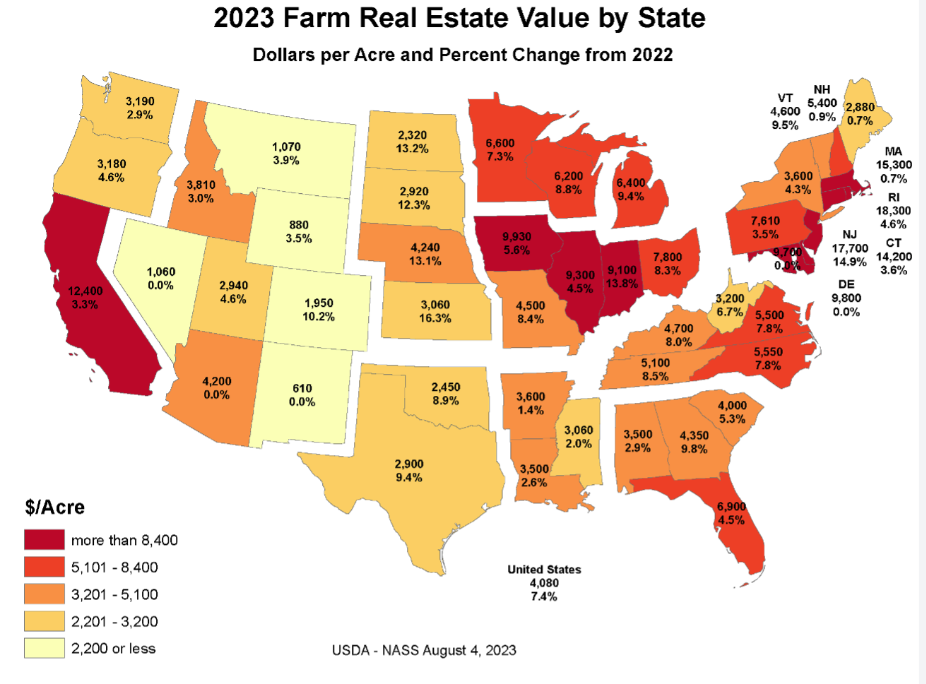
Source: https://www.nass.usda.gov/Charts_and_Maps/Land_Values/farm_value_map.php
In August 2023, the USDA National Agricultural Statistics Service published their annual report of state-level land values for farm real estate, which includes both cropland and pasture values. The results of the report indicate a strong market in the Southeast, with Georgia leading the region at a 9.8% increase in 2023 farmland values over 2022. The overall increase for the United States was 7.4%, and Kansas led the nation with a 16.3% increase in farm real estate values from 2022.
Over the last three years, farmland values have increased by record amounts, according to the USDA-NASS survey data. At the same time, the financial position of many farmers has been affected by higher input costs and increasing interest rates. Why don't we see a one-for-one decrease in land values when interest rates increase and farm profitability moderates? Well, the most straightforward answer is that farmers are a mixed group, and their individual financial positions aren't necessarily the same as their neighbor's. This makes it hard to predict the movement of the land markets during times of transition.
When I read about the farmland market in articles from across the country, I am always struck by the variety of factors at play. First, crop yields are going to drive willingness to bid. Several years of good yields and prices will motivate both farmers and non-farm investors to participate in the land market. But there are always other factors including proximity to urban development or water availability/rights. It is important to remember that farmers are the majority owners of farmland, and their motivations to buy and sell land are big drivers in the market. This means when that rare piece of good farmland near your operation comes up for sale, you will likely be in the market regardless of where interest rates are today. You may also be looking to expand your operation and bring on another generation. When that is the case, buying land becomes a priority for your farm business, and your willingness to bid in a strong market is going to be robust. Each of these factors will contribute to support for the local land market that may keep these recent increases in interest rates and moderation of farm incomes from having a big impact on land values in your area.
Article courtesy of Southern Ag Today and Mykel R. Raylor at Auburn University
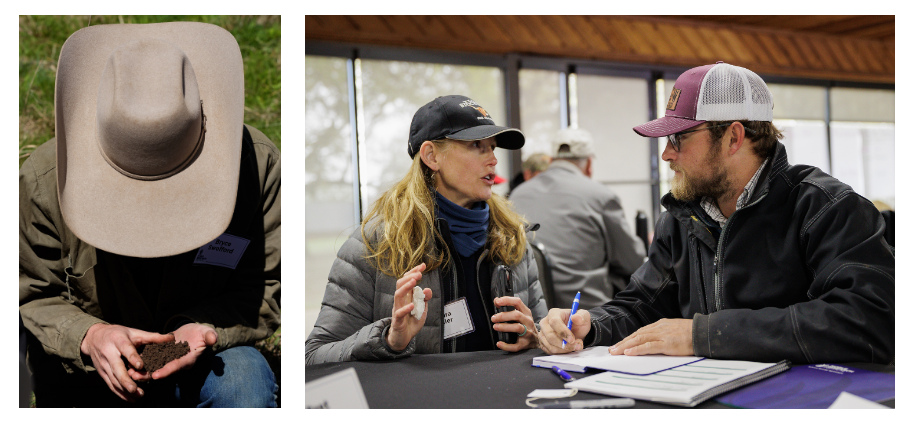
Noble Research Institute announced the expansion of Essentials of Regenerative Ranching, a new educational program designed to help ranchers enhance and restore the land, making it more resilient and reaching livestock grazing goals through regenerative management. Essentials of Regenerative Ranching provides producers with practical tools, hands-on experience and guidance to make data-driven decisions to decrease costs and improve profit.
The Essentials of Regenerative Ranching course has been expanded to three new locations in Texas and Oklahoma. Registration is open now at www.noble.org/essentials. Seating is limited, so early registration is recommended.
Texas A&M
College Station, Texas
October 17 – 18
O.D. Butler, Jr. Animal Science Complex
Noble Research Institute
Ardmore, Oklahoma
October 31 – November 1
Pavilion Center
Texas A&M
Kingsville, Texas
November 7-8
Caesar Kleberg Wildlife Center
"Program participants gain working knowledge and experience of monitoring and improving the health of their soil, grazing livestock more strategically and making informed financial decisions," said Hugh Aljoe, Noble Research Institute's director of ranches, outreach and partnerships. "We use a mix of classroom and field work to send producers home with the tools they need to begin making changes on their ranch."
Farmers and ranchers navigate uncertainty from weather, fluctuating market prices and escalating costs of inputs. Many producers are seeking new tools that offer greater control and reduce their operational uncertainty. Through this course, ranchers and farmers will calculate their financial situations, determine initial stocking rates, carrying capacity and grazing goals.
"The course is well-suited for ranchers of all experience levels and all types and sizes of operations," Aljoe added. "No matter your situation, this program will transform the way you think about your ranch."
The Essentials of Regenerative Ranching program allows producers to overcome obstacles, become more informed problem-solvers and increase the productivity of their grazing lands. By participating in this program, ranchers join a community of like-minded producers who are shaping the future of ranching and leaving a lasting impact on their land and families. "If I had known what I learned in this course when I started my regenerative journey, I could have avoided some key mistakes," said Tana McCarter, a rancher, and Essentials attendee. "I left with the tools I needed to monitor my soil health and financial progress. I'll now have the right data to make informed decisions on how to meet my regenerative goals."
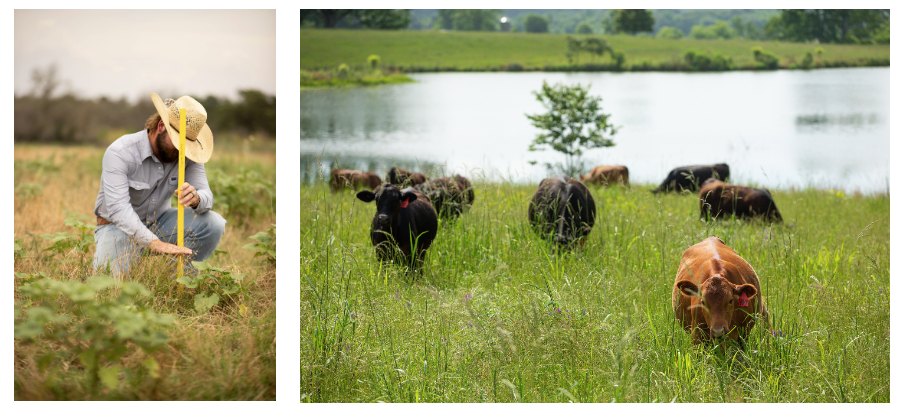
Whether you are pitch perfect or know how to make beef sizzle, CattleCon24 has a variety of contents to showcase your hidden talents. Applications are now open for the Beef It Up Recipe Contest, National Anthem Contest and Beef's Got Talent at convention.ncba.org.
Beef It Up Recipe Contest
New at CattleCon24 is the Beef It Up Recipe Contest, which invites entrants to feature beef in their best tasting recipes. Entries will be accepted in categories including appetizer, utilizing ground beef, flank steak or top sirloin, which will be served during the convention welcome reception; and entree, using ground beef or chuck roast, which will be featured during Thursday or Friday lunch.
Contest winners will receive convention registration for two, and the recipe will be featured during convention, highlighted in the onsite program, promoted through social media and featured in NCBA's National Cattlemen magazine. Contest submissions will be accepted through October 15 and winners will be notified by November 30.
National Anthem Contest
The 11th annual National Anthem Contest is accepting entries through October 15. The contest winner will perform the "Star-Spangled Banner" at the convention's Opening General Session and will receive round trip airfare to Orlando, a hotel room for three nights, free convention registration, plus a pair of boots, jeans and a shirt from Roper or Stetson.
Any member of the National Cattlemen's Beef Association, American National CattleWomen, Cattlemen's Beef Board, or family member are eligible to participate in the contest. Previous NCBA National Anthem Contest winners are not eligible. The top four finalists will be chosen by October 20, and videos will be posted to the convention website. Voting will be open to the public from November 1 to November 15 (one vote per person per day), and the winner will be announced November 17.
Beef's Got Talent
Solo singers, bands and others with unique talents are encouraged to enter Beef's Got Talent. Selected acts will receive a complimentary registration, invited to perform on stage during convention and will be recognized through social media. One winner will also perform at the opening of the Friday night event.
CattleCon24 registration and housing are now open with a variety of ticket options available. For more information, to enter contests and to register, visit convention.ncba.org.
When cattle ingest plants high in hydrocyanic glycoside and break them down by chewing, prussic acid is released in the rumen and absorbed into the bloodstream. (Photo by Todd Johnson, OSU Agriculture)
By Gail Ellis
Prussic acid toxicity, commonly linked to the consumption of Johnsongrass, is a serious condition that can be fatal to livestock. Recent rains after a period of dry weather have heightened the toxicity risk.
Barry Whitworth, DVM, senior Extension specialist/state Beef Quality Assurance coordinator for the Oklahoma State University Department of Animal and Food Sciences, said when temperatures rise and the ground dries out, certain plants in the sorghum family become toxic and can kill cattle at a rapid rate. Johnsongrass is one of Oklahoma's most invasive plants.
"Hydrocyanic acid, which is also referred to as cyanide or prussic acid, is a toxin created when the harmless hydrocyanic glycosides in plants are stressed or break down," he said. "Once a plant's hydrocyanic glycosides are damaged, they quickly convert to prussic acid."
When cattle ingest plants high in hydrocyanic glycoside and break them down by chewing, prussic acid is released in the rumen and absorbed into the bloodstream. Whitworth explained that once prussic acid reaches the circulatory system, the toxin prevents cells in the body from taking up oxygen. The blood becomes saturated with oxygen that cannot be absorbed by cells, and cattle perish from asphyxiation within minutes. Rosslyn Biggs, DVM, OSU Extension beef cattle specialist, explains what happens in this video from SUNUP, the television show of OSU Agriculture.
Producers should note prussic acid levels are highest in the leaves of young plants, and the upper leaves contain the most toxin. Stress from drought or frost increases prussic acid as well as fertilizing with large amounts of nitrogen and nitrogen/phosphorus soil imbalances.
While Johnsongrass is high in prussic acid, the nitrate toxicity of other sorghum plants such as Foxtail millet is low. Ranchers should first identify the toxicity level of any sorghum variety intended for grazing purposes. Forage samples can be submitted to any OSU Extension county office for testing at OSU's Soil, Water and Forage Analytical Laboratory in Stillwater.
Once a sample of grass is collected, producers should immediately take it to the local Extension office for testing. Bay said a county Extension educator can also meet the rancher on-site and perform a test at the field. When moving cattle from one pasture to another along a road, she also advised to take caution with the Johnsongrass that often grows in roadside ditches.
Take the following steps to prevent prussic acid toxicity:
When an animal displays signs of prussic acid toxicity, the producer should immediately remove all animals that appear to be normal to a new pasture and contact their veterinarian. Sick animals can recover if treated quickly with sodium nitrite and sodium thiosulfate to reverse the toxicity.
Additional OSU Extension resources are available through SUNUP:
OSU Extension uses research-based information to help all Oklahomans solve local issues and concerns, promote leadership and manage resources wisely throughout the state's 77 counties. Most information is available at little to no cost.

U.S. Department of Agriculture (USDA) Rural Development and Oklahoma State Director Kenneth Corn announced today more than $4 million in grants to agriculture producers and rural small businesses to make investments in renewable energy and energy efficiency improvements that will lower their energy costs, generate new income, and strengthen the resilience of their operation. This funding is made possible in part by President Biden's Inflation Reduction Act, the nation's largest-ever investment in combating the climate crisis.
"President Biden is creating newfound opportunity for economic growth for small businesses, agriculture producers, while working to sustain our environment right here in Oklahoma," Corn said. "A key pillar of the Biden-Harris Investing in America agenda is ensuring our producers and business owners are not only a part of the clean energy economy but are directly benefiting from it. These grants are a once in a lifetime opportunity to reinvest in our main streets and aide our producers in being able to sustain their land for future generations of Oklahoma producers."
USDA is investing $266 million in 1,334 renewable energy and energy-efficiency projects in 47 states, Guam and Puerto Rico. The Department is awarding the loans and grants through the Rural Energy for America Program (REAP), including funding from the landmark Inflation Reduction Act.
In Oklahoma 38 businesses, entities and agricultural producers received grant funding. These projects include wind turbines, solar panels, energy efficient heating and cooling systems and other energy efficiency improvements.
"Thanks to President Biden delivering on his economic promises, we can expect these Oklahoma businesses and agriculture producers to save more than $690,000 a year on their energy costs," Corn said. "These are real dollars that will make real impacts for strengthening our Oklahoma economy for years to come. There is still an opportunity for applicants to reach out to us for future grant announcements by contacting our State Office
More than 90% of an investment in renewable wind energy can be offset by current Federal programs. Let us show you how.
Senior Farm and Ranch Broadcaster, Ron Hays, is featuring comments from Farm Director, KC Sheperd's visit with Vice President of Operations at Farm Data Services and Oklahoma cattle producer Clay Burtrum. Butrum talks about the "ins and outs" of Livestock Risk Protection.
Livestock risk protection, Burtrum said, was created about 25 years ago. LRP is a risk management tool for all livestock producers and is eligible for anyone who wants to have a floor and buy insurance on their cattle.
"It is not a morbidity policy," Burtrum said. "This is a price protection program."
With prices as high as they are, Burtrum said it is critical to protect those high investments.
"We are really going to see those numbers start to climb, so when you look at the bottom dollar of what these prices are, we have to learn to protect them," Burtrum said.
Thirteen weeks is the minimum contract that can be purchased, Burtrum said, and the maximum contract is 52 weeks.
"It is available for steers, heifers, and brahman influence, dairy influence, and then even the unborn," Burtrum said.
This means if producers preg-check their females, Burtrum said the 2024 calf crop can be insured beforehand.
"It is very basic," Burtrum said. "You are setting a floor on your cattle, you are leaving your topside potential open, and you just have a floor. You are able to sleep at night knowing you have those cattle locked in."
If the market goes higher, Burtrum said producers will still get that price, but by purchasing protection, they have a floor price just in case.
"Let's rewind and remember the cow that stole Christmas in 2003, December the 23rd," Burtrum said. "I had six computers running trying to write LRP for everybody in the country that I had talked to about this. We don't know what is going to happen in this cattle market."
There are different levels of coverage to fit each producer, Burtrum added.
"You have to buy the insurance from a licensed livestock insurance agent," Burtrum said. "Most crop insurance agents have taken the class, and they are licensed to sell LRP. If they are not, then just get online and look at different agents in your area, or you can call me at Farm Data Services, and I will be happy to help you walk through the LRP."
Producers applying for LRP will fill out a one-time application form, Burtrum said, which will be submitted to the insurance company.
"You also need to make sure have an AD-1026 on file at the Farm Service Agency," Burtrum said. "Many of us who participate in farm programs already have that submitted, and it is on file. At that point, you decide what level of insurance you want."
LRP settles against the feeder cattle index, Burtrum said, which is a seven-state area average of all of the sale barns, country sales, and Superior video auctions.
"What that is, is the average of 700–900-pound steer, basically an 800-pound steer, is what the feeder cattle index is on a daily basis that is calculated," Burtrum said. "That is the insurance price that you settle against."
The key things about LRP, Burtrum said, are producers do not have to sell their cattle, it is not a morbidity policy, and it gives producers the peace of mind to sleep at night knowing they have a floor on those prices.
Burtrum said producers can reach him at his cell at 405-747-9865.
"I am happy to talk to anybody about LRP and what this looks like for you," Burtrum said.
To listen to KC Sheperd's full interview with Clay Burtrum, CLICK HERE.
The Beef Buzz is a regular feature heard on radio stations around the region on the Radio Oklahoma Ag Network and is a regular audio feature found on this website as well. Click on the LISTEN BAR at the top of the story for today's show and check out our archives for older Beef Buzz shows covering the gamut of the beef cattle industry today.
Congressman Josh Brecheen announced that he will host a telephone town hall on Wednesday, September 20th at 7:00pm CT.
The telephone town hall comes after Congressman Brecheen has held 60 in-person town halls throughout Oklahoma's 2nd Congressional District with more to be announced tomorrow.
During the call, Congressman Brecheen will provide an update on some of the most pressing policy issues facing our country, including our $31.5 trillion national debt, and answer live questions from constituents.
Details for participating in the call are below:
Date: Wednesday, September 20th, 2023
Time: 7:00-8:00 p.m. CT
Dial-in Number: 888-480-3675
Constituents should dial 888-480-3675 if they would like to participate in the call. To watch a live stream of the call, constituents can visit our Facebook page here.
At the National Association of State Departments of Agriculture 2023 Annual Meeting in Cheyenne, Wyoming, exemplary employees of state departments of agriculture will be honored for their service, communication, and administration on behalf of their state.
"We are proud to recognize public servants in our state agriculture departments each year through the NASDA Honor Awards," NASDA President Doug Miyamoto said. "Outstanding employees like our award recipients this year enable state agriculture departments to best serve our farmers, ranchers and communities across our states."
This year, NASDA will also present the NASDA Public-Private Partnership Award in recognition of an organization that has positively impacted states. Congratulations to the 2023 NASDA Honor Award Recipients:
James A. Graham Award for Outstanding Service
Keith Rogers, chief of staff for Kentucky Agriculture Commissioner Dr. Ryan Quarles at the Kentucky Department of Agriculture, is the recipient of the James A. Graham Award for Outstanding Service. This award is given in recognition of remarkable work in providing service to farmers and ranchers.
Rogers has served in his current position for more than seven years. He leads over 200 state staff and serves as the department's point of contact for farmers, ranchers and agricultural organizations in Kentucky. His tireless efforts advancing well-made agricultural policies and ensuring the well-being of farmers have left a lasting mark on the industry.
Dougless-Irving Administration Award

Arkansas Department of Agriculture Deputy Secretary Cynthia Edwards has been selected as this year's recipient of the Dougless-Irving Administration Award, which honors an individual whose contributions to their agency resulted in improved efficiency and impact.
Since joining the department in 2011, Edwards has shaped the department to provide better services to farmers and ranchers through reorganizing independent agencies and divisions into one department. Edwards continues to use her expertise and vast experience to advance the agriculture industry in Arkansas and maximize state resources.
Communications Award
Maine Department of Agriculture, Conservation and Forestry Communications Director Jim Britt has been named the 2023 Communications Award recipient. This award recognizes outstanding work in media and public communications resulting in improved understanding of agriculture.
Britt has used multiple communications channels to effectively relay critical information on issues such as highly pathogenic avian influenza and share farmers' stories. Britt has led his department's social media pages to experience 100 percent growth while also forging connections with local and national media outlets. Britt's continued leadership and communications initiatives have helped advance the understanding and awareness of agriculture, both in Maine and on a national level.
Jim also serves as the 2022-2023 Communication Officers of the State Departments of Agriculture President, joining state agriculture department communications leaders from across the U.S. to better serve all of agriculture.
NASDA Public-Private Partnership Award: Fostering Collaborative Excellence
The NASDA Public-Private Partnership Award is presented to Merck Animal Health, a company that exemplifies the transformative potential of collaborations between public and private entities.
Merck Animal Health has been a longstanding partner with NASDA and the NASDA Foundation, with continuous support of and engagement with NASDA Next Generation and Agricultural Policy Summit student programs. Their constant support of the next generation of agriculture along with their commitment to partnering with states continues to help advance the U.S. agricultural industry and secure the future of agriculture.
RON's Dave Lanning has a pre-opening look at today's agricultural Markets.
Click the audio tab below for today's report.
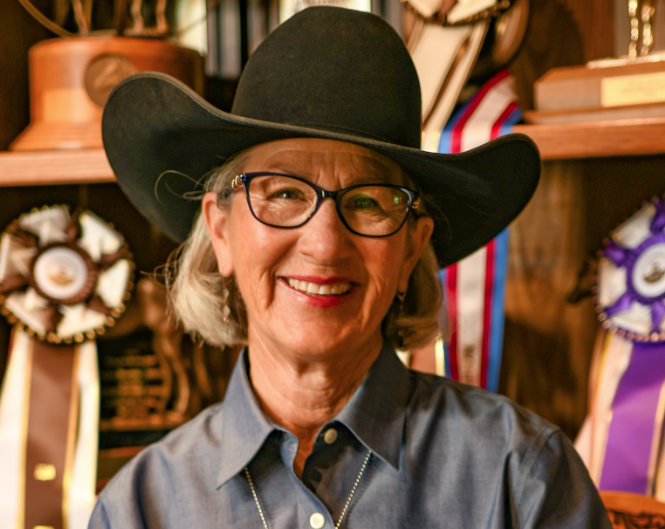
On Friday, Sept. 15, the OSU Alumni Association will be honoring six graduates with the Distinguished Alumni Award. One of those honorees is Terry Stuart Forst, the general manager of the Stuart Ranch—Oklahoma's oldest ranch under continuous family ownership- which celebrated its 150th anniversary in 2018.
Forst graduated from OSU in 1976 with a bachelor's degree in animal science. She then attended the ranch management program at Texas Christian University in 1992.
After graduation, Forst returned to Stuart Ranch to work for her father, running the horse program and helping with the cattle operation. Forst has evolved the horse program to be one of the American Quarter Horse Association's leading breeders.
Forst was the first woman president of the Oklahoma Cattleman's Association and its first woman recipient of the Cattleman of the Year Award in 2007. She was inducted into the Cowgirl Hall of Fame in 2007, Oklahoma Quarter Horse Hall of Fame in 2012 and the Oklahoma Hall of Fame in 2020. Forst was also recognized as the Oklahoma Department of Agriculture Food and Forestry 2017 Significant Woman in Agriculture.
Besides Forst, two of the other six honorees are alums of the College of Agriculture- Ken Starks who graduated with an Ag Economics degree in 1976 and Lieu Smith who graduated with an Agricultural Engineering degree in 1954.
To learn more about Forst - click here.
NMPF's Regulatory Affairs Director, along with an Olympic athlete (and dairy farmer), told the government's Dietary Guidelines Advisory Committee how dairy is a critical component of diet that should be considered in light of its full range of benefits in comments made today before the panel.
Miquela Hanselman from NMPF, and Elle St. Pierre, a farmer-member of the Dairy Farmers of America cooperative and a world medalist track athlete who represented the United States in the women's 1,500-meter race in the 2021 Tokyo Olympics, both offered their perspectives on dairy's role in diet before the panel that will shape the scientific report informing the 2025-2030 Dietary Guidelines for Americans. Both Hanselman and St. Pierre hold degrees in nutrition and public health.
"Nearly 90% of Americans don't consume the recommended servings of dairy," said Hanselman. "Dairy products have always been an integral part of the dietary guidelines. Milk is a good or excellent source of 13 essential nutrients, including calcium, potassium and vitamin D, three of the four nutrients of public health concern."
Hanselman's comments focused heavily on how dairy at all fat levels benefits diverse communities and how current guidelines work against including varieties of milk that Americans consume the most. "With the scientific question focused on sources of saturated fats, this committee has the opportunity to remedy a previous oversight and include the newer science on dairy fats and the dairy matrix," she said. "Dairy foods, regardless of fat level, appear to have either neutral or beneficial effects on chronic disease risks including cardiovascular disease, type 2 diabetes, obesity, and stroke. This committee shouldn't default to the overly broad recommendation to avoid saturated fats regardless of food source."
St. Pierre, a U.S. track and field champion and recent new mom, spoke out against the proliferation of plant-based imitation beverages that offer wildly inconsistent nutritional value, cautioning against any consideration of them as potential dairy replacements. Plant-based beverages "are so nutritionally different from real milk that whether one views them positively or negatively, their impact on health cannot be assumed to be the same as, or even similar to, that of milk," said St. Pierre, who lives near Berkshire, VT. "I strongly caution against and oppose any inference that health impacts associated with milk consumption would apply to plant-based milk alternatives." Today's hearing is part of the committee's information-gathering process for the next set of guidelines. The Dietary Guidelines Advisory Committee is convened every five years by the Department of Agriculture and the Department of Health and Human Services to make recommendations for American diets, affecting numerous federal nutrition programs.
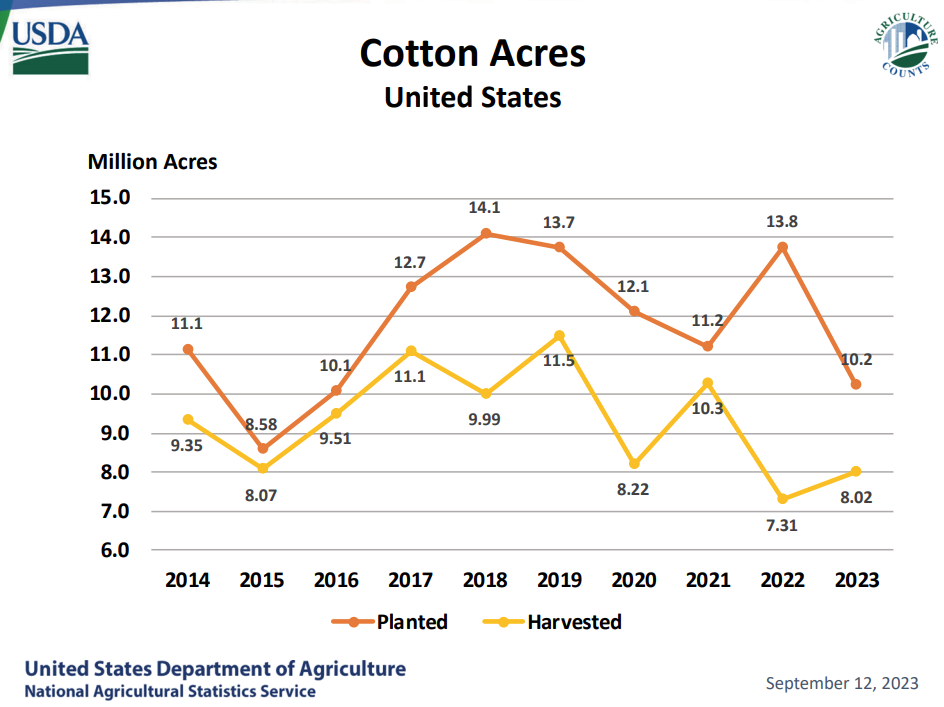
Associate Farm Editor, Reagan Calk, had the chance to visit with Oklahoma State Statistician for the USDA National Agricultural Statistics Service, Troy Marshall, about the highlights from the latest USDA Crop Production Report released on September 12, 2023.
Marshall said this year is the 161st year of the crop production report.
"September is the second time that we look at these row crops, so it is a really good glimpse, and producers can have a better feel of what is going on," Marshall said.
This September report is the first time big changes will be seen in harvested acres, Marshall added.
Corn Production Up Less than 1 Percent from August Forecast
Soybean Production Down 1 Percent
Cotton Production Down 6 Percent
Corn production for grain is forecast at 15.1 billion bushels, up less than 1 percent from the previous forecast and up 10 percent from 2022. Based on conditions as of September 1, yields are expected to average 173.8 bushels per harvested acre, down 1.3 bushels from the previous forecast but up 0.5 bushel from last year. Acreage updates were made in several States based on a thorough review of all available data. Total planted area, at 94.9 million acres, is up 1 percent from the previous estimate and up 7 percent from the previous year. Area harvested for grain is forecast at 87.1 million acres, up 1 percent from the previous forecast and up 10 percent from the previous year.
Soybean production for beans is forecast at 4.15 billion bushels, down 1 percent from the previous forecast and down 3 percent from 2022. Based on conditions as of September 1, yields are expected to average 50.1 bushels per acre, down 0.8 bushel from the previous forecast but up 0.6 bushel from 2022. Total planted area, at 83.6 million acres, is up less than 1 percent from the previous estimate but down 4 percent from the previous year. Area harvested for beans in the United States is forecast at 82.8 million acres, up less than 1 percent from the previous forecast but down 4 percent from 2022. Acreage updates were made in several States based on a thorough review of all available data.
All cotton production is forecast at 13.1 million 480-pound bales, down 6 percent from the previous forecast and down 9 percent from 2022. Based on conditions as of September 1, yields are expected to average 786 pounds per harvested acre, up 7 pounds from the previous forecast but down 164 pounds from 2022. Upland cotton production is forecast at 12.8 million 480-pound bales, down 7 percent from the previous forecast and down 9 percent from 2022. Pima cotton production is forecast at 356,000 bales, up 33 percent from the previous forecast but down 24 percent from 2022. All cotton planted area totaled 10.2 million acres, down 8 percent from the previous forecast and down 26 percent from 2022. All cotton area harvested is forecast at 8.02 million acres, down 7 percent from the previous forecast but up 10 percent from 2022.
Oklahoma Upland cotton production is forecast at 260 thousand bales, 14 percent lower than 2022. Yield averaged 403 pounds per acre, compared with 634 pounds last year. Acreage harvested, at 310 thousand acres, is up 35 percent from last year.
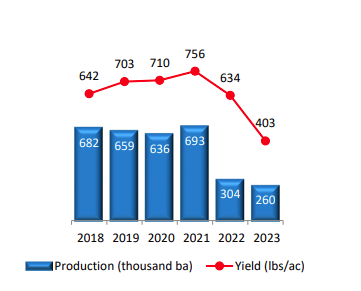
Oklahoma corn production is forecast at 49.4 million bushels, up 102 percent from the previous year. Statewide yields averaged 141 bushels per acre, 19 bushels higher than 2022. Acres harvested for grain, at 350 thousand, is up 75 percent from last year.
Oklahoma sorghum production is forecast at 14.9 million bushels, up 158 percent from last year. Yield averaged 45 bushels per acre, up 21 bushels from the previous year. Acres harvested, at 330 thousand acres, is 38 percent higher than 2022.
Oklahoma soybean production is forecast at 10.5 million bushels, up 60 percent from last year. Yield is expected to average 25 bushels per acre, compared with 17 bushels in 2022. Harvested acreage, at 420 thousand acres, is 9 percent higher than last year.
Oklahoma peanut production is forecast at 56 million pounds, 10 percent lower than last year. Yield is forecast at 4,000 pounds per acre, up 350 pounds from 2022. Harvested acres are down 18 percent from last year to 14 thousand acres.
Texas Upland cotton production is forecast at 4.20 million bales, 37 percent higher than 2022. Yield averaged 568 pounds per acre, compared with 734 pounds last year. Acreage harvested, at 3.55 million acres, is up 78 percent from last year.
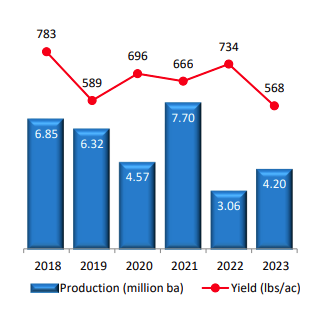
Texas corn production is forecast at 290 million bushels, up 90 percent from the previous year. Statewide yields averaged 132 bushels per acre, 37 bushels higher than 2022. Acres harvested for grain, at 2.20 million, is up 37 percent from last year.
Texas sorghum production is forecast at 94.5 million bushels, up 88 percent from last year. Yield averaged 54 bushels per acre, up 1 bushel from the previous year. Acres harvested, at 1.75 million acres, is 84 percent higher than 2022.
Texas soybean production is forecast at 4.18 million bushels, up 146 percent from last year. Yield is expected to average 38 bushels per acre, compared with 20 bushels in 2022. Harvested acreage, at 110 thousand acres, is 29 percent higher than last year.
Texas peanut production is forecast at 677 million pounds, 101 percent higher than last year. Yield is forecast at 3,300 pounds per acre, up 500 pounds from 2022. Harvested acres are up 71 percent from last year to 205 thousand acres.
Based on September 1 conditions, Kansas's 2023 corn production is forecast at 677 million bushels, up 33 percent from last year's production, according to the USDA's National Agricultural Statistics Service. Area to be harvested for grain, at 5.33 million acres, is up 20 percent from a year ago. Yield is forecast at 127 bushels per acre, up 12 bushels from last year.
Sorghum for grain in Kansas is forecast at 208 million bushels, up 97 percent from 2022. Area for harvest, at 3.30 million acres, is up 22 percent from last year. Yield is forecast at 63 bushels per acre, up 24 bushels from last year.
Cotton production is forecast at 127,000 bales, down 23 percent from last year. Acreage for harvest, at 88,000 acres, is down 50,000 acres from 2022. Yield is forecast at 693 pounds per acre, up 116 pounds per acre from a year ago.
To see the September Crop Production Ag Statistics Board Briefing Powerpoint, CLICK HERE.
Wade Leist, Boyne City, Michigan, qualifies for the 2024 World Livestock Auctioneer Championship and was named champion at the qualifying event in Torrington, Wyoming.
The event, hosted by Torrington Livestock Markets, on Sept. 11 was the first of three qualifying events building up to the 2024 WLAC Championship. Thirty-six contestants from across the U.S. and Canada competed for the title. The top 10 auctioneers earned a spot in the 2024 WLAC semifinals to be held next June at Oklahoma National Stockyards, Oklahoma City.
"I wasn't yet competing in the WLAC when the championship was hosted there back in 2010," Leist said. "It's a contest that a lot of guys still talk about and I'm sure they'll outdo themselves there next June. My grandfather and I visited there in about 2001 and it was the first time I'd ever seen a western market. I was in awe at the size and scope of that place. We visited a few markets on that trip and those markets have always been on my list of places to sell at. He passed a few years after that trip so getting the opportunity to compete there for the world's championship is checking a big one off the list for me."
Leist first competed in the event in 2014. He's earned a top 10 spot six times, as well as a qualifying event runner-up champion title. He also competed in the WLAC last year as the Calgary International Livestock Auctioneer Champion.
The competition was held as part of a special sale at Torrington Livestock Markets that featured more than 4,000 head of yearlings, feeder cattle, calves and a complete herd dispersal of breeding stock.
Contestants are scored by a panel of livestock marketing industry judges on the clarity and quality of their chant, presentation, ability to catch bids as well as conduct of the sale and how likely the judge would be to hire the auctioneer. The contestants are taking bids from buyers on the seats at the auction and online while working on behalf of the livestock producer customers of Torrington Livestock Markets.
Along with Leist, the individuals advancing to the semifinals for 2024 are Reserve Champion (and High Score Rookie) Jace Thompson of Billings, Montana; Runner-Up Champion Brennin Jack of Virden, Manitoba; Eric Drees, Caldwell, Idaho; Dean Edge, Rimbey, Alberta; Brandon Hamel, Natoma, Kansas; Michael Imbrogno, Turlock, California; Jason Santomaso, Sterling, Colorado; Andrew Sylvester, Westmoreland, Kansas; and Curtis Wetovick, Fullerton, Nebraska.
Other contestants who competed were Cinch Anderson, Izee, Oregon; Zach Ballard, Presho, South Dakota; Brandon Barton, Mountain Grove, Missouri; Andy Baumeister, Goldthwaite, Texas; Albert Carroll, Downeyville, Ontario; Spencer Cline, Kingston, Arkansas; Casper Corfield, Oshkosh, Nebraska; David Cox, Orderville, Utah; Gary Crawley, Kiowa, Oklahoma; Tristan Hunter, Ardmore, South Dakota; John Kisner, Hays, Kansas; Lane Marbach, Victoria, Texas; Tilon Mast, Kalona, Iowa; Mark Mast, Billings, Montana; Ross Parks, New Concord, Ohio; Jack Riggs, Glenns Ferry, Idaho; Troy Robinett, Decatur, Texas; Kade Rogge, Rupert, Idaho; Austin Schaben, Dunlap, Iowa; Seth Schneider, Elsie, Nebraska; Ethan Schuette, Washington, Kansas; Shawn Silverberg, Fort Collins, Colorado; Preston Smith, Imperial, Nebraska; Sam Stamper, Checotah, Oklahoma; Scott Twardowski, Swanville, Minnesota; and Brad Veurink, Platte, South Dakota. The next WLAC qualifying event will be held at Tri County Stockyards, Motley, Minnesota, on Wednesday, Oct. 25. Rules and entry information are available at lmaweb.com.
NMPF's Regulatory Affairs Director, along with an Olympic athlete (and dairy farmer), told the government's Dietary Guidelines Advisory Committee how dairy is a critical component of diet that should be considered in light of its full range of benefits in comments made today before the panel.
Miquela Hanselman from NMPF, and Elle St. Pierre, a farmer-member of the Dairy Farmers of America cooperative and a world medalist track athlete who represented the United States in the women's 1,500-meter race in the 2021 Tokyo Olympics, both offered their perspectives on dairy's role in diet before the panel that will shape the scientific report informing the 2025-2030 Dietary Guidelines for Americans. Both Hanselman and St. Pierre hold degrees in nutrition and public health.
"Nearly 90% of Americans don't consume the recommended servings of dairy," said Hanselman. "Dairy products have always been an integral part of the dietary guidelines. Milk is a good or excellent source of 13 essential nutrients, including calcium, potassium and vitamin D, three of the four nutrients of public health concern."
Hanselman's comments focused heavily on how dairy at all fat levels benefits diverse communities and how current guidelines work against including varieties of milk that Americans consume the most. "With the scientific question focused on sources of saturated fats, this committee has the opportunity to remedy a previous oversight and include the newer science on dairy fats and the dairy matrix," she said. "Dairy foods, regardless of fat level, appear to have either neutral or beneficial effects on chronic disease risks including cardiovascular disease, type 2 diabetes, obesity, and stroke. This committee shouldn't default to the overly broad recommendation to avoid saturated fats regardless of food source."
St. Pierre, a U.S. track and field champion and recent new mom, spoke out against the proliferation of plant-based imitation beverages that offer wildly inconsistent nutritional value, cautioning against any consideration of them as potential dairy replacements. Plant-based beverages "are so nutritionally different from real milk that whether one views them positively or negatively, their impact on health cannot be assumed to be the same as, or even similar to, that of milk," said St. Pierre, who lives near Berkshire, VT. "I strongly caution against and oppose any inference that health impacts associated with milk consumption would apply to plant-based milk alternatives." Today's hearing is part of the committee's information-gathering process for the next set of guidelines. The Dietary Guidelines Advisory Committee is convened every five years by the Department of Agriculture and the Department of Health and Human Services to make recommendations for American diets, affecting numerous federal nutrition programs.

Today, the Missouri Corn Growers Association (MCGA) thanked members of Missouri's congressional delegation and state industry partners for their support of the Next Generation Fuels Act. A top priority for the corn industry, the legislation aims to transition gasoline vehicles to low-carbon, higher-octane fuel, reduce greenhouse gas (GHG) emissions, and take advantage of higher ethanol blends.
"We greatly appreciate Congressmen Blaine Luetkemeyer, Mark Alford, Emanuel Cleaver, Jason Smith, and Sam Graves for joining the growing list of Next Generation Fuels Act supporters," stated MCGA President Clint Stephens of Advance, Mo. "As Congress returns from August recess, we know farm bill is top of mind, but we're also gaining traction toward updating our nation's fuel standards to more efficient, high-octane, low-carbon fuels."
In May 2023, the EPA proposed sweeping new vehicle emission standards. If implemented, electric vehicles (EVs) would account for 67% of new light and medium-duty vehicle sales and nearly half of new heavy-duty vehicle sales by 2032. While electric vehicles have gained attention in recent years, lack of infrastructure, accessibility, and rising costs are significant hurdles for Missouri farmers, businesses, and consumers.
Introduced earlier this year by bipartisan members of the House and Senate, the Next Generation Fuels Act would modernize liquid fuels, ensuring today's internal combustion engines remain competitive, relevant, and affordable. This policy would ensure consumers have greater choice and affordability by model year 2026. Corn-based ethanol allows for engine optimization, which helps automotive manufacturers meet vehicle fuel efficiency standards and lower emissions. The bill increases octane sources that result in nearly 50 percent fewer GHG emissions than unblended gasoline and sets new limits on toxic hydrocarbon aromatics.
"I'm proud to support this bipartisan, commonsense legislation alongside my Missouri delegation colleagues," noted Rep. Alford. "The Next Generation Fuels Act is a vital step in promoting homegrown, clean-burning fuels like ethanol that are better for the environment, lower prices for consumers, and provide additional market access for our corn farmers. I will continue to be a champion for biofuels and encourage my colleagues in the House to help move this bill forward."
"Missourians want to see their elected representatives seek common ground and find solutions that will address the issues most important to their communities, not play partisan politics at the expense of hardworking families," said Rep. Cleaver. "The Next Generation Fuels Act will not only accelerate our nation's transition to lower carbon fuel sources—which is critical to combating increasingly frequent heat waves and droughts in Missouri—but it also expands opportunity and prosperity for Missouri farmers across the state. That's a win for my constituents, Missouri's ag industry, and the Show-Me State as a whole."
"Missouri farmers need more reliable markets for corn, and Missouri families need access to more affordable, American-made fuels. The Next Generation Fuels Act solves both problems at the same time," said Rep. Graves. "It's a win-win that I'm proud to support."
In addition to strong congressional and national support, more than 35 Missouri businesses or organizations have also stepped up to help convey the importance to the state's economy and local communities. Companies interested in joining the growing coalition of Next Generation Fuels Act supporters are encouraged to contact the Missouri Corn office at (573) 893-4181. Learn more about the benefits of low-carbon, high-octane fuels at ncga.com/octane or visit mocorn.org.
Senate Pro Tem Greg Treat, R-Oklahoma City, today announced the appointment of Sen. Dewayne Pemberton, R-Muskogee, as the chairman of the Senate Retirement and Insurance Committee.
"Sen. Pemberton has a wealth of knowledge and proven background in a number of areas during his time in the Senate," Pro Tem Treat said. "He is an excellent leader who continues to perform well as a member of our caucus leadership team. Sen. Pemberton is informed and listens to all opinions before making a decision. For these reasons and others is why I think he will make an exceptional chairman of this committee. I appreciate him for accepting this new role in addition to his many others."
Sen. Pemberton serves district nine, which encompasses Muskogee, Wagoner, Cherokee, Sequoyah and Adair counties. He is a member of the oversite committee for the Legislative Office of Fiscal Transparency, joint legislative task force on the Grand River Dam Authority, OMES/ARPA oversight, Education, Health and Human Services, Tourism and Wildlife and Administrative Rules committees.
"I truly appreciate Pro Tem Treat's confidence in me and for giving me the opportunity to serve in this expanded role," Sen. Pemberton said. "The Retirement and Insurance Committee handles complex issues relating to the insurance industry. It also reviews potential legislation that impacts public pensions like the teachers' retirement system, which as a former educator, is of utmost importance to me and my fellow educators. I look forward to chairing this committee and working with my colleagues to ensure a healthy retirement system for our dedicated public employees and ensuring a fair marketplace for private insurance companies who operate in the state."
The Senate Retirement and Insurance Committee is primarily tasked with handling legislative issues relating to the regulation of private insurance in the state. This covers issues such as mandated health insurance coverage, life insurance, property and casualty insurance, service warranties, reinsurance, and unfair claims settlement practices.
Additionally, the committee covers all legislation related to the six public pensions in the state: the Teachers' Retirement System of Oklahoma, Oklahoma Public Employees Retirement System, the Uniform Retirement System for Justices and Judges, the Oklahoma Firefighters Pension and Retirement System, the Oklahoma Police Pension and Retirement System and the Oklahoma Law Enforcement Retirement System. Agencies and organizations often working with the Retirement and Insurance Committee include the Oklahoma Insurance Department and each of the pension systems.
To view the other members of the committee, click here.
Brad Finstad
The Association of Equipment Manufacturers (AEM), in partnership with AGCO Corporation, yesterday hosted U.S. Representative Brad Finstad (MN-01) for a farm bill listening session at the company's manufacturing facility in Jackson, Minnesota. Congressman Finstad was joined by local farmers and producers to share their thoughts on priorities for the next farm bill.
"As a fourth-generation farmer, it is a privilege to take part in today's listening session to hear directly from stakeholders and ag leaders about the unique opportunities and challenges we face in farm country. Throughout the last several months, I have had the opportunity to visit with producers, meet with our ag business community, and hold listening sessions in all 21 counties throughout MN-01 to ensure the Farm Bill meets their needs," said Congressman Finstad. "I am looking forward to bringing today's discussion back to Washington as we continue our work to pass a strong and effective Farm Bill that puts our farmers and rural communities first. Thank you to the Association of Equipment Manufacturers and AGCO Corporation for graciously hosting today's event and for all that they do to support the ag industry."
The farm bill is a critical tool for ensuring our nation's food supply remains secure. Funding for this comprehensive package includes risk management tools for farmers, access to nutrition for long-income families, conservation programs, and investments in agricultural research. Since the Great Depression, Congress has passed a farm bill every five years. The current farm bill expires at the end of the fiscal year (September 30), and reauthorization poses a significant test for a divided government.
"As a leader in the agricultural equipment industry, AGCO is proud to host Representative Finstad for this important conversation with Minnesota stakeholders. Our Jackson plant employs over 800 people who help build the state-of-the-art equipment that feeds the world. AGCO innovations allow farmers and ranchers to leverage new precision ag technologies that save them time and money while also improving their yields and reducing their environmental impact," said Bill Hurley, Vice President, Distribution, Americas, AGCO Corporation. "We are grateful to Representative Finstad for his leadership on the House Agriculture Committee, where he not only fights for Minnesotans, but also works diligently to ensure America's farmers and ranchers remain competitive in a constantly evolving global marketplace."
Finstad serves as the Chairman for the Nutrition, Foreign Agriculture, and Horticulture Subcommittee on the House Agriculture Committee. During the event, a variety of topics were discussed, including dairy federal milk marketing orders, precision agriculture needs, broadband, conservation practices, and carbon credits, just to name a few. A diverse group of Minnesota stakeholders were present, demonstrating the depth and breadth of the needs of the people across Minnesota, and across the United States. Throughout the entire conversation, it was clear that those living in both rural and urban America rely on the passage of a bipartisan farm bill in a timely manner.
"The equipment manufacturing industry is made up of more than 2.3 million hardworking men and women from across the United States, and more than two-thirds of them live and work in rural communities like Jackson. Our industry is not only deeply connected to rural America, but we are a big part of it," said Kip Eideberg, senior vice president of government and industry relations for AEM. "Equipment manufacturers urge Congress to find common ground and pass a farm bill that provides a safety net for farmers and ranchers, strengthens our national food supply chain, incentivizes the adoption of precision agriculture technology, and invests in rural communities. It is because of leaders like Congressman Finstad, who truly understands the needs of rural America, that there is hope for a bipartisan farm bill."
The USDA Foreign Agricultural Service (FAS) and the National Association of State Departments of Agriculture (NASDA) are celebrating 40 years of working together to support small-to-medium sized food and beverage businesses and increasing exports of U.S. agricultural products.
The partnership anniversary is being recognized at the 2023 NASDA Annual Meeting this week in Cheyenne, Wyoming, with a newly produced video featuring remarks from NASDA members, NASDA leadership and USDA FAS leadership.
"NASDA has been an invaluable partner for FAS throughout our 40-year partnership as we work together to expand trade opportunities for U.S. exporters," said FAS Administrator Daniel B. Whitley. "I hope our partnership will continue to flourish as we continue to successfully promote and connect U.S. food and agriculture to the world."
USDA FAS foreign service officers support NASDA's trade show events by recruiting qualified international buyers to attend its shows. NASDA works with state departments of agriculture to connect small-to-medium-sized companies to foreign buyers interested in purchasing U.S. food and beverage products. As part of the Market Access Program, NASDA hosts "A Taste of the States" at the National Restaurant Show and Americas Food & Beverage Show to facilitate these connections.
Since the establishment of the nation-wide cooperative agreement between USDA FAS and NASDA in 1983, NASDA has hosted over 50 trade show events in the U.S. and assisted with scores of U.S. pavilions in events outside the U.S.
"Today, we are celebrating NASDA and USDA FAS's work of uplifting small businesses and sharing high-quality American food products around the globe," said NASDA CEO Ted McKinney. "With the creation of new markets, we have expanded our ability to feed the world and support local communities through the growth of small businesses. NASDA looks forward to years ahead of working with USDA FAS to ensure agriculture leads the way toward a healthy and resilient world."
The next trade show funded by the USDA FAS-NASDA partnership, "A Taste of the States: Miami," takes place next week at the Americas Food & Beverage Show. For more information about the partnership and NASDA trade shows, visit nasda.org/tradeshows.
The agriculture sector contributes about 11% of U.S. greenhouse gas (GHG) emissions, which impacts climate change. Adopting regenerative practices that are more conservation and rehabilitation focused, America's farmers and ranchers can play a key role in reducing GHG emissions, as well as protecting our nation's natural resources.
To facilitate this transition, the Foundation for Food & Agriculture Research (FFAR) awarded $10.3 million in 2019 to the Ecosystem Services Market Consortium (ESMC) to support the Ecosystem Services Market Research Consortium (ESMRC), ESMC's research arm. ESMC and its members matched FFAR's grant for a total investment of $20.6 million in the research program. ESMRC completed the necessary research, development, demonstration and deployment activities required to initiate an innovative ecosystem services market program. The resulting program, Eco-Harvest, launched in May 2022 and is dedicated to scaling beneficial soil health, climate and natural resource outcomes from U.S. agriculture. Eco-Harvest program regions include the corn and soy belt, Northern Great Plains, Southern Great Plains, Southeast and Great Lakes regions for corn, soy, wheat, oats and alfalfa cropping systems.
Today, FFAR announced an additional investment of $5.15 million in ESMRC for research that creates sound social, economic and environmental outcomes to benefit producers, local communities, supply chain companies and consumers through the scope and scale expansion of Eco-Harvest. ESMC is matching the award for a total $10.3 million research investment.
With this grant renewal, ESMRC will conduct the research, development, demonstration and deployment activities that facilitate Eco-Harvest participating in all major U.S. agricultural regions; expanding the crops and livestock production systems it supports; developing incentives to increase in-field biodiversity; and improving program access to and engagement with traditionally underserved producers and their communities. This component will include social science research and engagement of relevant membership and representational programs and groups.
ESMC's Executive Director Debbie Reed said, "FFAR's leadership in cutting-edge public-private partnerships was essential to help establish and launch Eco-Harvest. As we expand our ecosystem services program through this FFAR investment, we will utilize the successful approach developed in our initial FFAR grant – conducting real-world pilot and demonstration projects – to ensure our program incentivizes producers to adopt regenerative agriculture, meets the needs of corporations working to reduce their supply chain footprints and creates measurable beneficial outcomes for society."
"FFAR is thrilled to support and build on the ESMRC research we funded in 2019," said Dr. LaKisha Odom, FFAR scientific program director for Soil Health. "This consortium has a proven track record of conducting necessary research, alongside industry stakeholders, to expand adoption of cost-effective, efficient and measurable soil health practices to new producers. These practices are critical in protecting farmers' livelihoods and the environment, while increasing productivity."
Eco-Harvest is an ecosystem services market program that financially rewards participating producers for using regenerative agriculture practices that generate beneficial environmental outcomes including increased soil carbon, reduced greenhouse gases and improved water quality. Producers pay no fee to participate and have autonomy to decide which Eco-Harvest menu of specific practices and systems is best for their operation. The measured and verified outcomes from these practice changes are purchased by U.S. agricultural supply chain corporations to reduce their environmental footprint and meet their sustainability goals. Producers are paid for these measured outcomes.
USDA on Tuesday released its September Crop Production and World Agricultural Supply and Demand Estimates (WASDE) reports. Farm Director KC Sheperd had the chance to visit with Allendale's Rich Nelson about the report.
On the wheat side of things, Nelson said the report was pretty quiet.
"We will see USDA making a production change here next month, so that left all these numbers, including supply and demand, unchanged for wheat on today's report," Nelson said.
Nelson said an eye will be kept on wheat export sales.
"USDA's current goal requires us to run about 18 percent below the five-year average from here all the way through June to meet USDA's goal," Nelson said. "That seems kind of reasonable. The past four weeks, we have been running about 13 percent below average, so this is something that we will watch here in the very short term."
On the 29th of September, Nelson said the small grains summary report will be coming out, providing a complete revision of acreage and wheat production.
"USDA can certainly give us a good revision for wheat production on that report," Nelson said.
Another important report to watch coming out on September 29th, Nelson added, will be the quarterly grain stocks report.
You can also access the full reports here:
-- Crop Production: https://www.nass.usda.gov/...
-- World Agricultural Supply and Demand Estimates (WASDE): https://www.usda.gov/oce/commodity/wasde
WHEAT: The 2023/24 U.S. all wheat outlook for supply and use is unchanged this month with
offsetting by-class changes on exports. The projected 2023/24 season-average farm price is also
unchanged at $7.50 per bushel.
The 2023/24 global wheat outlook lowers supplies, consumption, exports, and ending stocks
compared with last month. Supplies are projected to decline 7.2 million tons to 1,054.5 million,
primarily on lower production for Australia, Canada, Argentina, and the EU, which is only partly
offset by an increase for Ukraine. If realized, this would be the first year-to-year decline in global
wheat production since 2018/19. Australia is reduced 3.0 million tons to 26.0 million as dry
weather this past month in Western Australia, New South Wales, and Queensland lowers yield
prospects. Canada is decreased 2.0 million tons to 31.0 million on the initial model-based
forecast by Statistics Canada for the 2023/24 crop, indicating lower yields from last year arising
from dry conditions across the Prairies. Despite smaller global supplies, world consumption is
nearly unchanged with decreased Food, Seed, and Industrial use mostly offset by increased feed
and residual use. Feed and residual use is raised by 1.0 million tons for both China and the EU
due to wet weather during harvest that is expected to result in higher amounts of lower-quality
wheat used for feed. Global trade is trimmed 2.1 million tons to 207.3 million as reductions for
Australia, Canada, and the EU are only partly offset by increases for Russia and Kazakhstan.
World ending stocks are reduced 7.0 million tons to 258.6 million and would be the lowest since
2015/16. Ending stocks are tightened in many countries this month, particularly for several major
wheat exporters.
LIVESTOCK, POULTRY, AND DAIRY: The forecast for 2023 red meat and poultry production is
lowered from last month, on lower beef, pork, and broiler forecasts. Beef production is reduced
on a slower pace of marketings in the third quarter. This decline is only partly offset by higher
expected carcass weights in that quarter and higher expected cow slaughter in the third and
fourth quarters. Pork production is lowered for the second half with a slower expected pace of
slaughter and lighter carcass weights. Broiler production is lowered on current slaughter data and
expectations of a lower number of chicks placed and lighter bird weights. Turkey production is
unchanged from last month. Egg production is reduced on hatchery data. For 2024, the red meat
and poultry production forecast is reduced on lower broiler production as weaker prices are
expected to constrain production growth. No changes are made to beef, pork, or turkey
forecasts. The slower pace of egg production growth for 2023 is expected to carry into the first
part of 2024, reducing the production forecast.
Beef import forecasts for 2023 and 2024 are raised on continued strength in demand and
availability of supplies in Oceania. Beef exports are lowered for 2023 and 2024 on tight domestic
supplies and strong competition in Asian markets. Pork imports are increased for 2023 on the
current pace of trade but are unchanged for 2024. Pork exports are lowered for both 2023 and
2024 on weaker demand. Broiler exports for 2023 and 2024 are reduced on the current pace of
trade and a lower production forecast. Turkey exports are raised for 2023 and 2024 as prices are
expected to be attractive for buyers.
Cattle price forecasts for 2023 and 2024 are unchanged from last month. The hog price forecast
for 2023 is lowered on a sharper decline in recent prices than previously expected; however, the
price forecast for 2024 is unchanged. The broiler price forecast for third quarter 2023 is raised on
current prices but the forecasts for the outlying quarters, including 2024, are unchanged from last
month. Turkey price forecasts for 2023 and 2024 are reduced on continued weakness in
demand. Egg price forecasts are raised on slower expected production growth.
The milk production forecasts for 2023 and 2024 are lowered from last month. The cow inventory
is reduced, reflecting the average July 2023 cow number reported in the recent Milk Production
report. The reduction in cow numbers is expected to continue through 2023 and into the first half
of 2024 as returns remain under pressure. For 2023, output-per-cow is forecast to increase at a
lower rate than previously expected on recent data and the expected impact of high
temperatures during the summer. However, the forecast of milk per cow for 2024 is unchanged.
Fat basis import forecasts for 2023 and 2024 are lowered, largely driven by recent trade data and
lower expected imports of cheese and butter throughout the forecast period. Skim-solids basis
imports are unchanged for 2023 and 2024. Fat basis export forecasts are unchanged for 2023,
while skim-solids basis export forecasts are lowered on weaker whey exports. For 2024, exports
on a fat basis are lowered on expectations of fewer shipments of butter and fat containing
products and cheese, while exports on a skim-solids basis are reduced, reflecting lower cheese,
and whey and whey products shipments.
For 2023, forecasts for cheese, butter, and whey prices are raised on current price strength, but
nonfat dried milk (NDM) is lowered. Both Class III and Class IV prices are raised, reflecting
changes in their component values. For 2024, price forecasts for cheese, butter and whey are
raised on lowered milk production and continued firm demand. NDM price forecasts are lowered.
The Class III price forecast is raised on higher cheese and whey prices while the Class IV price
forecast is raised as the higher butter price more than offsets the lower NDM price. The 2023 all
milk price forecast is raised to $20.40 per cwt and the 2024 all milk price is raised to $20.30 per
cwt.
COTTON: The 2023/24 U.S. cotton projections include higher beginning stocks but lower
production, exports, and ending stocks. Beginning stocks are increased 550,000 bales, largely
reflecting ending stocks data for the previous year from the Agricultural Marketing Service and
the NASS Cotton System Consumption and Stocks report. Beginning stocks were also increased
for 2022/23 as unexpectedly large warehouse stocks reported for July 31, 2023 indicated stocks
in-transit as of July 31, 2022 were higher than previously estimated. The 2023/24 U.S. production
forecast is 860,000 bales lower this month, with the Southeast and Southwest leading the
decline. Projected consumption is unchanged from August, but exports are down 200,000 bales
and ending stocks are 100,000 bales lower. The season-average price for upland cotton
projected for 2023/24 is 80 cents per pound, up 1 cent from the previous month.
The 2023/24 world cotton projections include lower beginning stocks, production, consumption,
trade, and ending stocks relative to last month. Beginning stocks are about 1.0 million bales
lower as the effects of upward revisions for earlier years' consumption in China and Turkey more
than offset the impact of larger U.S. and Brazil beginning stocks. World production is projected
1.7 million bales lower as reductions for the United States, India, the African Franc Zone,
Greece, and Mexico more than offset an increase for Brazil. World consumption is also more
than 1.0 million bales lower, with reductions in India, Bangladesh, Mexico, and Vietnam. World
trade is 600,000 bales lower with net import reductions for Bangladesh and Vietnam, and export
reductions for the Franc Zone, the United States, Australia, Greece, and Mexico more than
offsetting a 550,000-bale increase for Brazil. World ending stocks are 1.6 million bales lower this
month, at 90.0 million bales

The World's Leading Creator of Projection-Mapped Immersive Exhibits to Install Large-Scale Permanent Exhibit in Museum's West Hallway.
The National Cowboy & Western Heritage Museum (NCWHM) and Lighthouse Immersive today issued a joint announcement that the two entities have established a partnership to develop a new projection-mapped exhibit that will allow museum guests to experience the unique cultures and fascinating stories of the American West in an entirely new way. Situated within the museum's West Hallway, the large-scale, floor-to-ceiling exhibit will encircle visitors in western vistas, immersing them in the sights and sounds of the American frontier before they venture into NCWHM's extraordinary galleries.
The exhibit will be developed by the producers of the blockbuster Immersive Van Gogh exhibit, which was recently presented at the Oklahoma City Convention Center for a 6-week holiday run. This project is part of NCWHM's "Live the Code" capital campaign announced last month, which will raise $40 million to modernize the Museum's guest experiences and infrastructure.
"The National Cowboy & Western Heritage Museum's collections allow us to tell the stories of the West better than anyone, and now we're advancing the museum-going experience to make sure those stories connect with our guests," said Museum President Pat Fitzgerald. "Today, museums are not just repositories for the important archives of our past, they are increasingly interactive. Collaborating with a world-class creator of experiences like Lighthouse Immersive will elevate our storytelling and set the bar for museum-based immersive experiences."
"Following our successes with a wide range of immersive presentations, including Immersive Van Gogh presented here in OKC, we are both proud and eager to partner with the National Cowboy & Western Heritage Museum," added Lighthouse Immersive Co-Founder Corey Ross. "Our audiences have consistently shared that our presentations give them the sense that they have stepped inside a whole new world, whether it's the artistic works of Vincent Van Gogh and Frida Kahlo or the imaginative settings of Walt Disney Animation Studios. We are excited to see the western frontier brought to life by our top-tier creative talent who have dazzled and delighted millions with their previous works."
NC&WHM approached Lighthouse Immersive with the idea of developing the new immersive exhibit after witnessing the tremendous mass appeal of Immersive Van Gogh, which has been experienced by more than 6 million visitors in over 20 different cities across North America. The new exhibit is currently in development and the first phase of the multi-pronged project has a projected launch date of March 2024. Additional details will be announced at a future date.
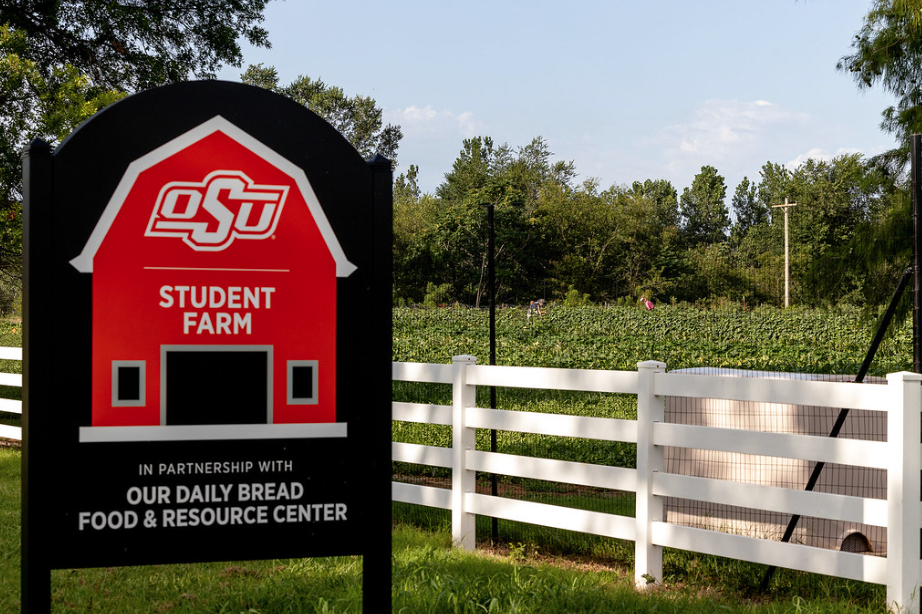
The new OSU Student Farm is helping address food insecurity in Payne County while also providing educational opportunities to students. Student workers, from left, Sophia Darrow, Rylee Smith, Samantha Pratt and Parker Lastovica, look over one of many tomato harvests. (Photo by Mitchell Alcala, OSU Agriculture)
A collaborative effort among Oklahoma State University's Division of Agricultural Sciences and Natural Resources and Stillwater's Our Daily Bread Food and Resource Center provides experiential learning opportunities for OSU students and helps address food insecurity in Payne County.
The new OSU Student Farm grows fresh produce and donates it to Our Daily Bread. The farm is located on the west side of Stillwater at the former site of the OSU Swine Research and Education Center.
Jayson Lusk, vice president and dean of OSU Agriculture, said the farm offers new experiences for students.
"Farming produce encompasses a range of learning opportunities that are related to agriculture, nutrition, soil health, irrigation and the agribusiness sector," Lusk said. "The hands-on experience students will gain at the new farm will benefit them far beyond the classroom. I appreciate the dedication and groundwork laid by Darren Shrum to help bring this endeavor to fruition for OSU Agriculture, our students and the community."
OSU First Cowboy Darren Shrum understands the importance of collaboration between the community and OSU.
"The OSU Student Farm aligns perfectly with the university's land-grant mission of teaching, Extension and research," Shrum said. "The plans for this project reach more than just agriculture. All colleges can be involved, from engineering to human sciences. It also ties into the university's focus on One Health and the importance of eating right from the start."
Rachael Condley, executive director of Our Daily Bread, said the collaborative effort has a positive impact on Payne County residents facing food insecurity.
"Before this partnership, we had to limit our guests to one bag or less of fresh produce," she said. "What we had been receiving from retail outlets in town was near the end of shelf life, and we didn't know what would be donated each time. We appreciated what we received, but it wasn't enough to meet all of the needs of our guests."
Now, with a steady stream of fresh produce, those who visit Our Daily Bread for groceries can usually have two or more bags of produce, including cucumbers, broccoli, lettuces, zucchini, yellow squash, tomatoes, green beans, okra, sweet corn, cabbage, kohlrabi, cauliflower, spinach, onions and more.
"We know exactly what produce we will receive regularly from the Student Farm, and that helps us with our educational efforts with our guests," Condley said. "We are working to partner more with the Payne County OSU Extension office to provide recipes and information on cooking methods and food preservation specific to the foods that are available at that time."
When people have limited food budgets, Condley said they often try to stretch their dollars by purchasing items that fill them up and cost less but are typically less nutritious. With the abundance of fresh produce available from the Student Farm, guests are eating more nutrient-dense meals and learning new cooking techniques.
Condley said she has received messages from food bank guests and seen photos on the Our Daily Bread Facebook page that show how visitors are using the fresh produce.
"They're so proud of the meals they're now able to provide for their families," she said.
Lynda Carrier of OSU Extension and the Department of Horticulture and Landscape Architecture said more than 44,000 pounds of produce have been harvested to date, and they continue to harvest every day.
"Currently, we're working on two-and-a-half acres of land, but there are plans to expand and use the other two-and-a-half acres on the other side of the driveway in the future," Carrier said.
Getting to harvest took some time and involved many steps to prepare the garden area. Carrier said the process began in September 2022 with soil samples and spraying the ground to kill the grass. Trees were removed, and the land was leveled before amending the soil.
"Next, we planted a cover crop of crimson clover and wheat and strip-tilled the rows to help build more organic matter in the soil," Carrier said. "Also, an irrigation system was installed, along with an 8-foot deer fence around the garden area."
Matt Beartrack of OSU Extension and the Department of Horticulture and Landscape Architecture said they also installed free-standing raised beds.
"The rounded beds hold water well, but they also drain well, which is good for plant production," Beartrack said. "The buried irrigation system puts water where it needs to be to avoid waste. We also added nutrients to the drip irrigation system, so the fertilizer goes exactly where it's needed, and we can avoid doing a broadcast application."
Both Carrier and Beartrack serve as co-managers of the Student Farm and are coordinating with the student volunteers, faculty class projects and others who are working daily on the project.
About 8,000 cool-season transplants started in January at the Greenhouse Learning Center on campus were planted at the Student Farm in March. In April, the first romaine lettuce was harvested, and warm-season crops were planted.
Justin Quetone Moss, head of OSU's Department of Horticulture and Landscape Architecture, said this effort benefits not only the residents of Payne County but also OSU students.
"Our students are required to do an internship for their degree program. Working at the Student Farm gives the students hands-on learning opportunities in areas such as crop management, harvesting and operating equipment," he said. "We're able to provide opportunities like this before we send them out into the industry on an internship. What the students learn makes them more employable and desirable coming out of our programs."
Parker Lastovica, a senior horticulture and business major, has worked at the Student Farm since January. He said his favorite part of the job is learning about plants growing in a commercial setting.
"Commercial vegetable production is what I want to do," Lastovica said. "I'm learning about pest problems and plant diseases. It's one thing to learn about these things in a classroom setting, but it's something else to see it in real life."
Our Daily Bread also helps stock Pete's Pantry, a food bank available to OSU students, as well as a satellite site at Lincoln Academy, part of Stillwater Public Schools. Moss said previously there was not enough fresh produce available for these resource sites, but the Student Farm has filled that gap.
"We've been able to provide so much quality food that has a longer shelf life, and the farm will continue to produce through October or November, depending on the weather," he said. "The OSU Student Farm is a great collaborative effort for our community."
OSU Agriculture is comprised of the Ferguson College of Agriculture and two state agencies: OSU Extension and OSU Ag Research. The mission of a land-grant university is to provide research-based information and services that enhance the lives of residents.
Lusk said while this project is underway in Stillwater, there are state-wide opportunities through OSU Extension to provide produce to address food insecurity.
"Part of OSU's strategy and land-grant mission is to use our research strengths to solve some of society's most pressing problems," Shrum said. "This project accomplishes that at a grass-roots level. If you have a heart for people, you're going to love this project."
The OSU Student Farm is meeting a critical need in Payne County while demonstrating cutting-edge sustainable food production methods to students.
"It gives them a chance to get their hands in the soil," Lusk said. "Plus, the farm offers research opportunities to grow higher-yielding crops that use less water, advancing the overall agricultural industry."
Follow the "Oklahoma Gardening" YouTube channel for regular updates on the OSU Student Farm.
OSU Extension uses research-based information to help all Oklahomans solve local issues and concerns, promote leadership and manage resources wisely throughout the state's 77 counties. Most information is available at little to no cost.
The U.S Department of Agriculture (USDA) today announced Milk Loss Program (MLP) assistance for eligible dairy operations for milk that was dumped or removed, without compensation, from the commercial milk market due to qualifying weather events and the consequences of those weather events that inhibited delivery or storage of milk (e.g., power outages, impassable roads, infrastructure losses, etc.) during calendar years 2020, 2021 and 2022. Administered by the Farm Service Agency (FSA), signup for MLP begins Sept. 11 and runs through Oct. 16, 2023.
"Frequent and widespread weather-related disasters over the past three years have impacted U.S. dairy. These producers continue to face supply chain issues, high feed and input costs, labor shortages, and market volatilities," said FSA Administrator Zach Ducheneaux. "The reality for dairy producers is that cattle are milked at least twice a day, producing on average, six to seven gallons of milk per cow, per day. That milk must go somewhere, and when it can't get where it needs to go and can't be stored due to circumstances beyond a producer's control we need to help. The Milk Loss Program will help offset the economic loss by producers left with no other choice but dumping their milk during disasters."
Background
On Dec. 29, 2022, President Biden signed into law the Extending Government Funding and Delivering Emergency Assistance Act (P.L. 117-43), providing $10 billion for crop losses, including milk losses due to qualifying disaster events that occurred in calendar years 2020 and 2021. Additionally, the Disaster Relief Supplemental Appropriations Act, 2023 (Pub. L. 117-328) provides approximately $3 billion for disaster assistance for similar losses that occurred in calendar year 2022.
Eligibility
MLP compensates dairy operations for milk dumped or removed without compensation from the commercial milk market due to qualifying disaster events, including droughts, wildfires, hurricanes, floods, derechos, excessive heat, winter storms, freeze (including a polar vortex), and smoke exposure that occurred in the 2020, 2021 and 2022 calendar years. Tornadoes are considered a qualifying disaster event for calendar year 2022 only.
The milk loss claim period is each calendar month that milk was dumped or removed from the commercial market. Each MLP application covers the loss in a single calendar month. Milk loss that occurs in more than one calendar month due to the same qualifying weather event requires a separate application for each month.
The days that are eligible for assistance begin on the date the milk was removed or dumped and for concurrent days milk was removed or dumped. Once the dairy operation restarts milk marketing, the dairy operation is ineligible for assistance unless after restarting commercial milk marketing, additional milk is dumped due to the same qualifying disaster event. The duration of yearly claims is limited to 30 days per year for 2020, 2021 and 2022.
How to Apply
To apply for MLP, producers must submit:
If not previously filed with FSA, applicants must also submit all the following items within 60 days of the MLP application deadline:
Most producers, especially those who have previously participated in FSA programs, will likely have these required forms already on file. However, those who are uncertain or want to confirm the status of their forms can contact their local FSA county office.
MLP Payment Calculation
The final MLP payment is determined by factoring the MLP payment calculation by the applicable MLP payment percentage.
The calculation for determining MLP payment is:
For MLP payment calculations, the milk loss base period is the first full month of production before the dumping or removal occurred.
The MLP payment percentage will be 90% for underserved producers, including socially disadvantaged, beginning, limited resource, and veteran farmers and ranchers and 75% for all other producers.
To qualify for the higher payment percentage, eligible producers must have a CCC-860, Socially Disadvantaged, Limited Resource, Beginning and Veteran Farmer or Rancher Certification, form on file with FSA for the 2022 program year.
Adjusted Gross Income (AGI) limitations do not apply to MLP, however the payment limitation for MLP is determined by the person's or legal entity's average adjusted gross farm income (income derived from farming, ranching and forestry operations). Specifically, a person or legal entity, other than a joint venture or general partnership, cannot receive, directly or indirectly, more than $125,000 in payments under MLP if their average adjusted gross farm income is less than 75% of their average AGI or more than $250,000 if their adjusted gross farm income is at least 75% of their average AGI.
More Information
In other FSA dairy safety-net support, Dairy Margin Coverage (DMC) program payments have triggered every month, January through July, for producers who obtained coverage for the 2023 program year. July 2023's income over feed margin of $3.52 per hundredweight (cwt.) is the lowest margin since DMC program benefits to dairy producers started in 2019. To date, FSA has paid more than $1 billion in DMC benefits to covered dairy producers for the 2023 program year.
Additionally, FSA closed the Organic Dairy Marketing Assistance Program (ODMAP) application period on Aug. 11.
On farmers.gov, the Disaster Assistance Discovery Tool, Disaster Assistance-at-a-Glance fact sheet and Loan Assistance Tool can help producers and landowners determine program or loan options. For assistance with a crop insurance claim, producers and landowners should contact their crop insurance agent. For FSA and NRCS programs, they should contact their local USDA Service Center.
USDA touches the lives of all Americans each day in so many positive ways. In the Biden-Harris Administration, USDA is transforming America's food system with a greater focus on more resilient local and regional food production, fairer markets for all producers, ensuring access to safe, healthy and nutritious food in all communities, building new markets and streams of income for farmers and producers using climate smart food and forestry practices, making historic investments in infrastructure and clean energy capabilities in rural America, and committing to equity across the Department by removing systemic barriers and building a workforce more representative of America. To learn more, visit www.usda.gov.
USDA is an equal opportunity provider, employer and lender.
The American Farm Bureau Federation, in partnership with Farm Credit, is shining a spotlight on start-up companies focused on advancing agricultural innovation by naming the top 10 teams in the 2024 Farm Bureau Ag Innovation Challenge.
"The future of American agriculture is bright due in part to start-up companies like those competing in the Ag Innovation Challenge," said AFBF President Zippy Duvall. "Entrepreneurs' innovative solutions to the challenges that we're facing today help clear hurdles for the farmers and ranchers of tomorrow as they provide food, fiber and renewable fuel for families both here at home and around the globe."
The competition provides an opportunity for individuals to showcase ideas and business innovations in agriculture. This is the 10th year of the Challenge, which was the first national business competition focused exclusively on rural entrepreneurs launching agriculture and food-related businesses. Farm Bureau is offering $165,000 in start-up funds throughout the course of the competition.
The 10 semi-finalist teams are being awarded $10,000 each. They are:
anu, Indiana. Team lead: Scott Massey
Appanoose Manufactured Products, Iowa. Team lead: Mark Mendick
Barn Owl Precision Agriculture, Colorado. Team lead: Sarah Hinkley
Idem Irrigation, Nebraska. Team lead: Phil Holliday
ReproHealth Technologies, Indiana. Team lead: Jim Donahue
Secret Garden Bees, North Carolina. Team lead: James Hartman
Share Farm, Washington. Team lead: Vincent Peak
Smooth Ag, Texas. Team lead: River McTasney
UAV-IQ Precision Agriculture, California. Andreas Neuman
Udder Ways LLC, New York. Team lead: Jody Neal
The 10 semi-finalist teams will compete at the AFBF Convention on Friday, Jan. 19, to advance to the final round where the four finalist teams will receive an additional $5,000 bringing their total to $15,000 each. The final four teams will compete live in front of Farm Bureau members, investors and industry representatives on Sunday, Jan. 21, to win three top titles and prizes:
The top 10 semi-finalist teams will participate in pitch training and mentorship from Cornell University's SC Johnson College of Business faculty prior to competing at AFBF's Convention. In addition, the top 10 semi-finalist teams will have the opportunity to network with industry leaders and venture capital representatives from USDA's Rural Business Investment Program.
Farm Bureau would not be able to recognize and support these rural businesses without generous funding provided by sponsorsFarm Credit, Bayer, John Deere, Farm Bureau Bank and Farm Bureau Financial Services.
To learn more about the Challenge visit fb.org/challenge.
Uncle Matt's Organic®, the nation's #1 selling brand of organic orange juice, is bringing a new functional juice-based beverage to its portfolio. Introducing Uncle Matt's Organic® Superfruit Punch! With its impressive blend of real superfruits, including dark sweet cherries, blueberries, and black elderberry, this delicious beverage will captivate the taste buds of the entire family. The antioxidant boosted beverage is just 45 calories per 8 oz serving and has no cane sugar, preservatives, or added flavors. Uncle Matt's Organic® Superfruit Punch is available now in a 52 oz bottle as well as a shelf-stable 8-pack of 6.75 oz Juice Boxes at select retailers nationwide including Whole Foods and Sprouts and at Shop.UncleMatts.com.
"We are thrilled with our newest better-for-you boosted beverage, Uncle Matt's Organic® Superfruit Punch," said Susan McLean, VP of Marketing and Innovation at Uncle Matt's Organic®. "With 100% Vitamin C from the acerola cherry plus polyphenols and flavonoids from the cherries, blueberries and elderberries, this antioxidant-rich beverage is a great way to increase your intake of essential nutrients and quench your thirst at the same time. I think we made a delicious no sugar added punch that is both parent and kid-approved!"
Superfruit Punch Fast Facts:
Uncle Matt's Organic® Superfruit Punch is now available in a 52 oz bottle for an SRP of $6.99 and 8-pack of 6.7 oz Juice Boxes (1 Year Shelf-Life) for an SRP of $5.49.
With the addition of Uncle Matt's Organic® Superfruit Punch!, there is a functional Uncle Matt's Organic® offering for everyone in the family, including: Ultimate Immune® Organic Orange Juice, Ultimate Defense® Orange Juice with Turmeric and Probiotics, Ultimate Wellness Juice Shots, Uncle Matt's Organic® No Sugar Added Lemonade Juice Boxes, No Sugar Added Strawberry Lemonade Juice Boxes, Orange Light Juice Beverage and Organic Orange Juice with Calcium & Vitamin D in addition to its core Organic Orange Juice, Organic Grapefruit Juice and line of No Sugar Added Lemonades.
Uncle Matt's Organic® produces the highest quality juice, using only premium 100% organically grown fruit that is free from synthetic fertilizers, pesticides, and GMOs. As the nation's oldest organic orange juice company, Uncle Matt's Organic® is committed to growing and producing tasty, good-for-you organic juices. All of Uncle Matt's Organic® products are certified Glyphosate Residue Free by the Detox Project. For more information, or to shop online please visit UncleMatts.com.
About Uncle Matt's Organic®
Uncle Matt's Organic® is America's leading better-for-you organic juice company offering premium quality organic products. All Uncle Matt's Organic® products are USDA Organic, have no synthetic additives or preservatives and contain no GMOs. Uncle Matt's Organic® products are available nationwide in fine retailers nationwide. Uncle Matt's Organic® is an active member of Organic Trade Association (OTA) and supports the Organic Farming Research Foundation, The Organic Center, and Organic Voices. To learn more, visit UncleMatts.com. Sip and share the love on Facebook @unclematts and Instagram @unclemattsorganic. #LoveAtFirstSip
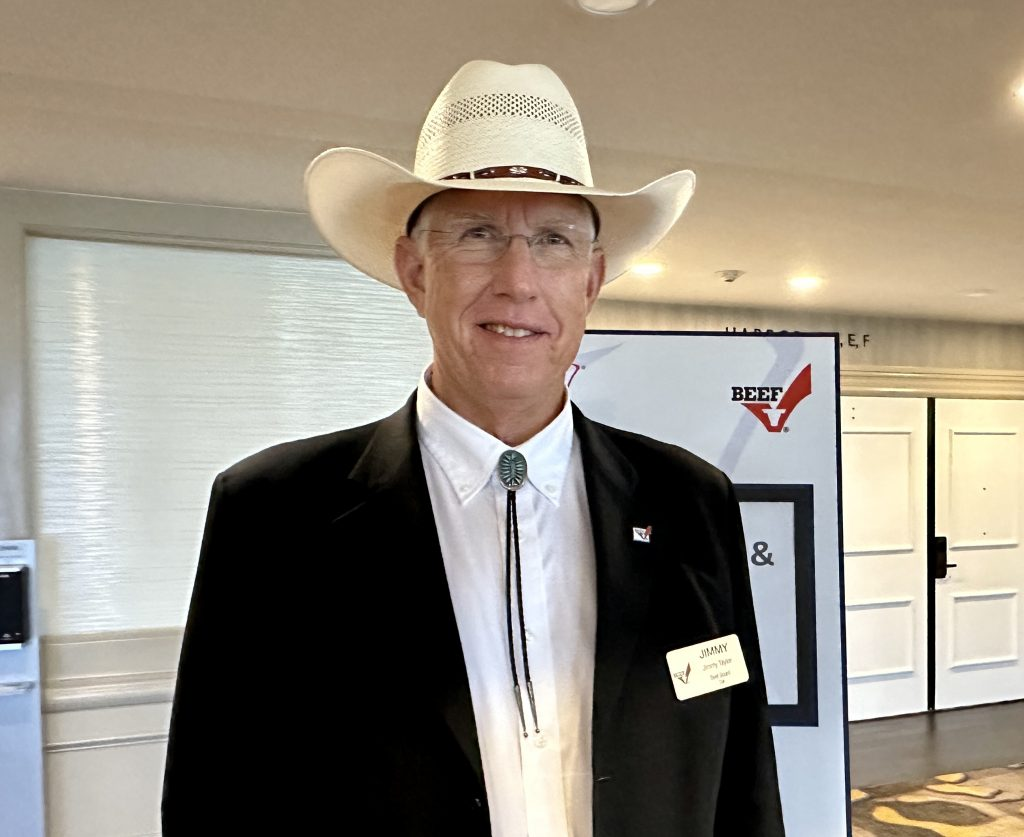
Senior Farm and Ranch Broadcaster, Ron Hays is back talking with the Chairman of the Cattlemen's Beef Board and Oklahoma Rancher, Jimmy Taylor. Hays and Taylor talk about the plan of work for the projects that will be part of the 2024 fiscal year for the beef checkoff.
A total of 12 authorization requests have been approved by the Beef Operating Committee made up of the Cattlemen's Beef Board and the Federation of State Beef Councils. Those 12 requests have now been approved by the executive committee of the Cattlemen's Beef Board, and the USDA.
Thirty-eight million dollars will be spent starting October 1, by the dollar head beef checkoff- including authorizations put together by the following:
Taylor said he feels good about what is planned for the fiscal year of 2024.
"Everyone had their own ideas of how the money would be best spent, but we bring each project up individually and have a debate on them, and had motions, and so the thoughts of the group carry the day," Taylor said.
Each project that passes, Taylor said, must have a two-thirds majority vote. As there are 20 members voting, Taylor added that each project that was funded was required to have 14 votes.
"October 1 is the start of our fiscal year for 2024, and those projects will start at that time," Taylor said.
Broken out by budget component – as outlined by the Beef Promotion and Research Act of 1985 – the FY24 Plan of Work for the Cattlemen's Beef Promotion and Research Board budget includes:
The full fiscal 2024 Cattlemen's Beef Board budget is approximately $42 million. Separate from the Authorization Requests, other expenses funded include $270,000 for program evaluation; $640,500 for program development; $200,000 for Checkoff education resources; $550,000 for USDA oversight; $205,000 for state services; $270,000 supporting services and litigation; and $2.0 million for CBB administration. The fiscal 2024 program budget represents a decrease of slightly less than 1.6% percent, or $605,000, from the $38.6 million FY23 budget.
The Beef Buzz is a regular feature heard on radio stations around the region on the Radio Oklahoma Ag Network and is a regular audio feature found on this website as well. Click on the LISTEN BAR at the top of the story for today's show and check out our archives for older Beef Buzz shows covering the gamut of the beef cattle industry today.
County Farm Bureaus across the state are gearing up for another year of county annual meetings over the next few weeks.
These meetings give members the opportunity to celebrate the year, discuss agriculture issues and create grassroots policy for the next year.
Below is an alphabetical list of all county meeting dates. For more information about your county meeting, contact your county Farm Bureau office.
As the 2023 hay season comes to an end for much of the South, the last cuttings are being baled and balers are being parked for the year. Loader tractors will have some rest before it's time to start feeding out hay. In some parts of the South, feeding has been going on for some weeks and drought stopped hay production. When purchasing hay here are some questions to consider: How much hay do I need to make it through the winter? How much can I spend on hay? These questions can be answered by planning. Working through a budget for the operation will show the potential cost incurred by various situations, whether it is a change in cost or a change in the amount needed.
Hay Quantity. Hay is measured primarily by two methods: by the bale or by the ton. Most commonly hay marketing occurs by the bale. When planning on hay needs for the winter or working through a budget, focus on the tonnage required. Accounting for hay needs by the ton will allow for pricing comparison across various bale sizes, assuming constant moisture levels. Table 1 provides a standard bale weight estimate based on bale size. Using tons as a measurement will allow for livestock consumption based on pounds consumed per day. This method does require some pencil work but will provide more efficient use of hay resources.
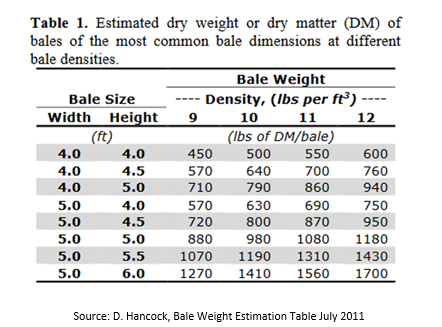
Hay Quality:
Here is the most common hay quality test: "It's got good color and smells good, must be good." While I'm not going to disagree with long-standing tradition, there is value in the marginal investment of requesting fertilization records/soil sample data, herbicide records, and a forage sample. Is this worth the trouble? It will depend on the willingness to minimize risk.
Fertilization and soil sampling records will illustrate that the forage grown had fertility management applied correctly. The presence of weed load in hay can be a problem. To safeguard against this, herbicide records will show that unwanted seeds/plant matter were managed. A forage sample provides the best picture of the quality of the purchased hay. The sample results will also provide insight into additional nutritional requirements. Knowing the quality can also help fine-tune feeding to meet the nutritional needs of the cows. In closing, feeding livestock during low/no grazing periods adds to the cost of the operation. More information can allow for the efficient use of operation dollars and decreased cost in herd health/losses. Lastly, to give some "cud to chew on," consider the choices typically made when purchasing a commodity blend supplement feed. Would you purchase a load of commodity blend feed based on a guess of how much it weighs? Or would you request a weigh ticket to verify amount purchased? How about the quality of the feed? It helps to know what the nutritional value is to make the best decision. All of this takes extra work; however, management of input cost is a great tool to ensure profit potential.
Mark Johnson, Oklahoma State University Extension Beef Cattle Breeding Specialist, offers herd health advice as part of the weekly series known as the "Cow Calf Corner" published electronically by Dr. Peel, Mark Johnson, and Paul Beck. Today, Johnson talks about recording data to improve your cow herd.
Sound management decisions to improve genetics, management practices and profit potential of cow-calf operations should be based on data. This comes in two forms: financial data and production performance data. The day-to-day management responsibilities involved in beef production can leave very little time to assess the overall performance of the herd or financial records. From time to time, it is important to step back and evaluate our production system. For spring calving herds, weaning time is happening now or will happen soon. Weaning time is the best time of year to measure, quantify and document herd performance. Why? Because it is likely the ONLY day of the year in cow-calf production that ALL our beef herd inventory is caught and can be processed. This creates the potential to not only weigh calves but also the opportunity to preg check, evaluate and weigh our cows. Herd health practices like de-worming and vaccinating can be performed. If we have an ink pen and note pad, adequate facilities and labor on hand, weaning day can yield a bounty of information which can be assessed to drive better management decisions.
What information should we collect?
What can we learn from this data?
Cows are the production factory in a cow-calf operation. They consume pasture plants and return nutrients to the soil and plants in the form of urine and manure. The cow herd requires input expenses, there is opportunity cost on the dollars we have tied up in our cow inventory and pasturelands. The only opportunity to operate at a profit is when the production factory yields a weaned calf of greater value than the annual cost of owning and operating the production factory. The data collected can inform you about the efficiency of your production factory.
The ebb and flow of the cattle cycle and the nation's cow inventory impacting the value of cattle is well documented. Markets look robust for the next several years. Production records like the percentage of breeding females exposed that actually raised a calf to weaning, the percentage of calves born that survived to weaning and the percentage of our cow's mature weight that they are weaning off are some important benchmarks of cow productivity. They serve as a means to determine efficiency and can be used to improve management and selection decisions that will result in more profitability. All of these benchmarks of productivity can be calculated from the data captured at weaning. Seize the opportunity.
RON's Dave Lanning has a pre-opening look at today's agricultural Markets.
Click the audio tab below for today's report.
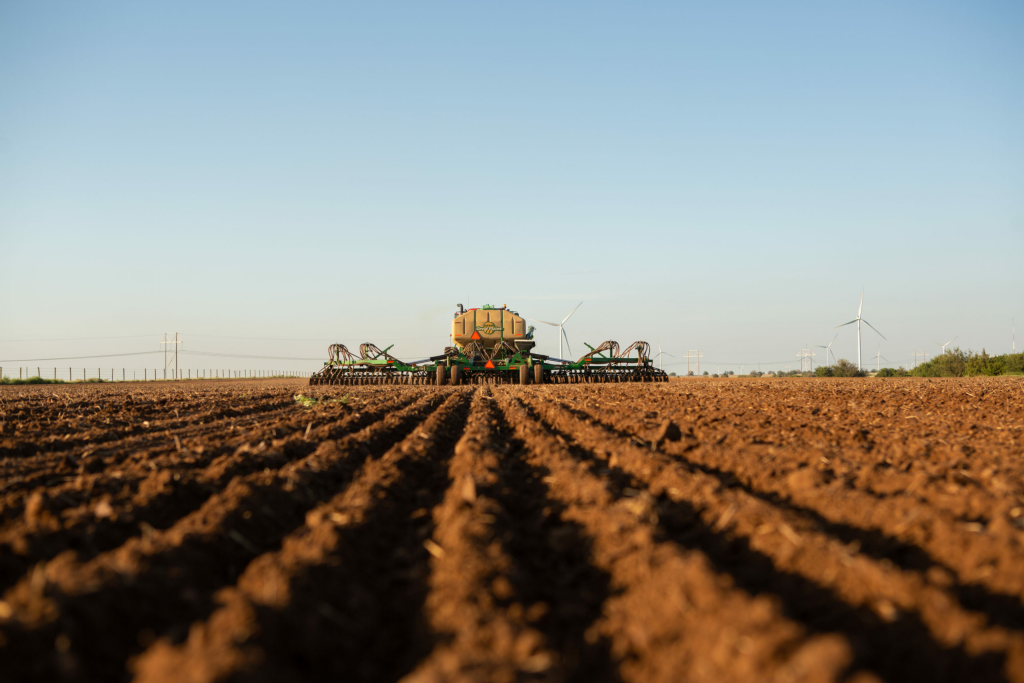
The U.S. corn harvest kicked off at a slightly ahead-of-average pace, according to USDA NASS' weekly Crop Progress report released Monday. Winter wheat planting has begun in the Southern Plains- Oklahoma at 5 percent planted, Kansas at 4 percent planted, and Texas at 7 percent planted.
Rainfall totals in Oklahoma averaged 0.18 inches. According to the September 5th US Drought Monitor Report, drought conditions were rated 67 percent abnormally dry to exceptional drought, down 33 points from last year. Additionally, 43 percent of the state was in the moderate drought to exceptional drought categories, down 54 points from the previous year. Statewide, temperatures averaged in the upper 70's to mid 80's.
Winter wheat planted for the U.S. reached 7 percent, down 2 percentage points from the previous year and even with the average.
Corn dough for the U.S reached 97 percent, up 2 percentage points from the previous year and up 1 point from the average. Corn dented reached 82 percent, up 7 points from the previous year and up 4 from the average. Corn mature reached 34 percent, up 10 percentage points from the previous year and up 6 from the average. Corn harvested reached 5 percent, even with the previous year and up 1 point from the average. Corn conditions rated 52 percent good to excellent, 30 percent fair and 18 percent poor to very poor. Last week's conditions rated 53 percent good to excellent, 29 percent fair, and 18 percent poor to very poor.
Soybeans dropping leaves reached 31 percent, up 11 percentage points from the previous year and up 6 from the average. Soybean conditions rated 52 percent good to excellent, 30 percent fair and 18 percent poor to very poor. Last week's conditions rated 53 percent good to excellent, 30 percent fair and 17 percent poor to very poor.
Cotton setting bolls reached 98 percent, down 2 percentage points from the previous year and even with the average. Cotton bolls opening reached 43 percent, down 5 percentage points from the previous year and up 1 point from the average. Last week's conditions rated 31 percent good to excellent, 28 percent fair and 41 percent poor to very poor.
Winter wheat planted reached 5 percent, down 5 points from the previous year but unchanged from normal.
Corn dented reached 78 percent, down 3 points from the previous year but up 2 points from normal. Corn mature reached 37 percent, up 1 point from the previous year but unchanged from normal. Corn harvested for grain reached 25 percent. Corn conditions rated 73 percent good to excellent, 19 percent fair and 8 percent poor to very poor. Last week's conditions rated 75 percent good to excellent, 17 percent fair and 8 percent poor to very poor.
Sorghum headed reached 89 percent, down 5 points from the previous year and down 7 points from normal. Sorghum coloring reached 48 percent, down 21 points from the previous year and down 17 points from normal. Sorghum mature reached 18 percent, down 6 points from the previous year and down 7 points from normal. Sorghum harvested for grain reached 5 percent, up 4 points from the previous year and up 2 points from normal. Sorghum conditions rated 54 percent good to excellent, 31 percent fair and 15 percent poor to very poor. Last week's conditions rated 54 percent good to excellent, 30 percent fair and 16 percent poor to very poor.
Soybeans blooming reached 93 percent, down 1 point from the previous year and from normal. Soybeans setting pods reached 76 percent, up 4 points from the previous year and up 5 points from normal. Soybeans dropping leaves reached 10 percent, down 1 point from the previous year but up 1 point from normal. Soybean conditions rated 58 percent good to excellent, 28 percent fair and 14 percent poor to very poor. Last week's conditions rated 57 percent good to excellent, 33 percent fair and 10 percent poor to very poor.
Peanuts mature reached 37 percent, down 2 points from the previous year but up 11 points from normal. Peanut conditions rated 96 percent good to excellent, 3 percent fair and 1 percent poor to very poor. Last week's conditions rated the same.
Cotton setting bolls reached 95 percent, unchanged from the previous year but down 2 points from normal. Cotton bolls opening reached 30 percent, up 3 points from the previous year but down 2 points from normal. Cotton conditions rated 12 percent good to excellent, 16 percent fair and 72 percent poor to very poor. Last week's conditions rated 11 percent good to excellent, 10 percent fair and 79 percent poor to very poor.
Hay: The fourth cutting of alfalfa hay reached 51 percent, unchanged from the previous year but down 14 points from normal. The second cutting of other hay reached 87 percent. The third cutting of other hay reached 24 percent, down 25 points from the previous year and down 5 points from normal.
Livestock conditions rated 61 percent good to excellent, 27 percent fair and 12 percent poor to very poor. Last week's conditions rated 59 percent good to excellent, 26 percent fair, and 15 percent poor to very poor.
Pasture and range conditions rated 34 percent good to excellent, 21 percent fair and 45 percent poor to very poor. Last week's conditions rated 33 percent good to excellent, 33 percent fair and 34 percent poor to very poor.
Winter wheat planted was 4 percent, near 3 percent for both last year and the five-year average.
Corn dented was 89 percent, ahead of 82 percent last year, and near 85 percent average. Mature was 56 percent, ahead of 48 percent last year and 42 percent average. Harvested was 17 percent, near 20 percent last year, but ahead of 10 percent average. Corn conditions were rated 31 percent good to excellent, 35 percent fair and 34 percent poor to very poor. Last week's conditions rated 33 percent good to excellent, 34 percent fair and 33 percent poor to very poor.
Soybeans setting pods was 95 percent, ahead of 90 percent last year, and near 92 percent average. Dropping leaves was 37 percent, ahead of 25 percent last year and 19 percent average. Harvested was 1 percent. Soybean conditions rated 23 percent good to excellent, 32 percent fair and 45 percent poor to very poor. Last week's conditions rated 25 percent good to excellent, 35 percent fair and 40 percent poor to very poor.
Sorghum headed was 95 percent, near 91 percent last year and 97 percent average. Coloring was 68 percent, ahead of 56 percent last year, but near 69 percent average. Mature was 22 percent, ahead of 10 percent last year and 11 percent average. Harvested was 4 percent, near 2 percent last year and 1 percent average. Sorghum conditions rated 33 percent good to excellent, 37 percent fair and 30 percent poor to very poor. Last week's conditions were rated 36 percent good to excellent, 35 percent fair and 29 percent poor to very poor.
Cotton setting bolls was 97 percent, near 100 percent last year, and 95 percent average. Bolls opening was 58 percent, well ahead of 36 percent last year and 26 percent average. Cotton conditions rated 40 percent good to excellent, 41 percent fair, and 19 percent poor to very poor. Last week's conditions rated 41 percent good to excellent, 46 percent fair, and 13 percent poor to very poor.
Pasture and range conditions rated 17 percent good to excellent, 34 percent fair and 49 percent poor to very poor. Last week's conditions rated 20 percent good to excellent, 33 percent fair, and 47 percent poor to very poor.
Corn dented reached 93 percent, even with the previous year and down 1 percentage point from the five-year average. Corn mature reached 73 percent, down 7 points from the previous year and even with the average. Corn harvested reached 62 percent, down 1 percentage point from the previous year and up 1 from the average. Corn conditions rated 49 percent good to excellent, 27 percent fair and 24 percent poor to very poor. Last week's conditions rated the same.
Cotton setting bolls reached 98 percent, down 1 point from the previous year and even with the average. Cotton bolls opening reached 41 percent, down 8 percentage points from the previous year and up 2 points from the average. Cotton harvested reached 19 percent, up 3 points from the previous year and up 5 points from the average. Cotton conditions rated 9 percent good to excellent, 30 percent fair and 61 percent poor to very poor. Last week's conditions rated 11 percent good to excellent, 28 percent fair and 61 percent poor to very poor.
Peanuts mature reached 20 percent, even with the previous year and up 2 points from the average. Peanut conditions rated 31 percent good to excellent, 35 percent fair and 34 percent poor to very poor. Last week's conditions rated 33 percent good to excellent, 41 percent fair and 26 percent poor to very poor.
Sorghum coloring reached 93 percent, down 6 percentage points from the previous year and even with the average. Sorghum mature reached 81 percent, down 6 percent from the previous year and even with the average. Sorghum harvested reached 71 percent, down 2 percent from the previous year and down 1 percent from the average. Sorghum conditions rated 45 percent good to excellent, 22 percent fair, and 33 percent poor to very poor. Last week's conditions rated the same.
Soybeans setting pods reached 93 percent, down 6 points from the previous year and even with the average. Soybeans dropping leaves reached 63 percent, down 14 points from the previous year and down 1 point from the average. Soybean conditions rated 34 percent good to excellent, 34 percent fair and 32 percent poor to very poor. Last week's conditions rated 34 percent good to excellent, 36 percent fair and 30 percent poor to very poor.
Winter wheat planted reached 7 percent, down 8 points from the previous year and even with the average.
Pasture and range conditions rated 6 percent good to excellent, 22 percent fair and 72 percent poor to very poor. Last week's conditions rated 5 percent good to excellent, 23 percent fair and 72 percent poor to very poor.
The Cattlemen's Beef Board (CBB) will invest approximately $38 million into programs of beef promotion, research, consumer information, industry information, foreign marketing, and producer communications during fiscal 2024, subject to USDA approval.
In action at the end of its September 6-7 meeting in Denver, Colorado, the Beef Promotion Operating Committee (BPOC) approved Checkoff funding for a total of 12 "Authorization Requests" – or grant proposals – for the fiscal year beginning October 1, 2023. The committee, which includes 10 producers and importers from the Cattlemen's Beef Board and 10 producers from the Federation of State Beef Councils, also recommended full Cattlemen's Beef Board approval of a budget amendment to reflect the split of funding between budget categories affected by their decisions.
Nine contractors and three subcontractors brought 15 Authorization Requests worth approximately $49 million to the BPOC this week, approximately $11 million more than the funds available from the CBB budget.
"We're consistently impressed with the proposals that our contractors bring forward each year, and choosing which initiatives to fund is a real challenge," said Jimmy Taylor, CBB and BPOC chair. "Our budget amounts to slightly less each year because of inflation. To put it in perspective, a dollar in 1985 is worth just 35 cents1 today. That means we simply don't have the buying power that we had when this program first started.
In the end, the BPOC approved proposals from eight national beef organizations for funding through the FY24 Cattlemen's Beef Board budget, as follows:
Broken out by budget component – as outlined by the Beef Promotion and Research Act of 1985 – the FY24 Plan of Work for the Cattlemen's Beef Promotion and Research Board budget includes:
The full fiscal 2024 Cattlemen's Beef Board budget is approximately $42 million. Separate from the Authorization Requests, other expenses funded include $270,000 for program evaluation; $640,500 for program development; $200,000 for Checkoff education resources; $550,000 for USDA oversight; $205,000 for state services; $270,000 supporting services and litigation; and $2.0 million for CBB administration. The fiscal 2024 program budget represents a decrease of slightly less than 1.6% percent, or $605,000, from the $38.6 million FY23 budget.
For more information about the Beef Checkoff and its programs, including promotion, research, foreign marketing, industry information, consumer information and safety, contact the Cattlemen's Beef Board at 303-220-9890 or visit DrivingDemandForBeef.com.

Physical activity, along with a healthy diet, can help combat childhood obesity. (Photo by Shutterstock)
By Trisha Gedon
The number of children who are overweight or obese is a major public health concern. The Centers for Disease Control and Prevention's Division of Nutrition, Physical Activity and Obesity helps shed light on this issue by sponsoring National Childhood Obesity Month in September.
The United States is the highest-ranked country in the world for childhood obesity, said Deana Hildebrand, Oklahoma State University Extension nutrition specialist.
"Nationally, about 20% of children and adolescents are obese, and approximately 40% are overweight," Hildebrand said. "Children and adolescents who fall into these categories are at a higher risk for unhealthy weight in adulthood, which can lead to an increased risk for heart disease, diabetes and some cancers. Lack of exercise, increased screen time and unhealthy food choices compound the issue."
In Oklahoma, 13% of children ages 2 to 4 who participate in WIC are obese, 17.5% of children ages 10 to 17 fall into the obese category and 17.6% of high school students are obese.
Hildebrand said this data reflects that as children grow older, the risk of developing obesity is greater.
In most cases, being overweight or obese results from a complex interaction between personal, family, environmental, genetic and cultural factors. To help combat this problem, the American Academy of Pediatrics recommends every child be assessed annually for obesity by measuring the body mass index of children between the ages of 2 and 19.
"Weight problems can be difficult to fix later on, so it's important to try to avoid the issue from happening to begin with. Family-based approaches for treatment of pediatric obesity are essential for achieving desirable outcomes," she said. "Additionally, this approach is likely the most appropriate for young children because the family setting has the most immediate influence on food and physical activity behaviors. It's important for parents to model a healthy lifestyle."
Meal planning and meal prepping are a couple of tools that can help parents get nutritious meals on the table, even when the family schedule is busy. Children can help with age-appropriate tasks. Hildebrand said that when shopping for food, choosing whole grains, fruits and vegetables, low-fat dairy products and lean protein and avoiding pre-packaged foods that are high in sugar and saturated fats is recommended.
Hildebrand also offers these tips to parents:
"It's not just the obesity rate in children that's alarming. Five years ago, two counties in the state had an adult obesity rate exceeding 40% of the population," she said. "Today, there are 28 counties with adult obesity exceeding 40% of the population. The earlier we start with prevention programs in childhood, the better."
MyPlate.gov offers nutritional information for all stages of life geared toward families, including mealtime tips, activity ideas, budget-friendly recipes and more. OSU Extension also provides additional child nutrition information online.
OSU Extension uses research-based information to help all Oklahomans solve local issues and concerns, promote leadership and manage resources wisely throughout the state's 77 counties. Most information is available at little to no cost.
Texas & Southwestern Cattle Raisers Association today announced the launch of the School for Successful Ranching Podcast, a limited six-part educational podcast exploring modern best management practices for animal health, nutrition, pasture and wildlife management, genetics and more.
Leveraging key principles in Beef Quality Assurance, the podcast features ranchers discussing the challenges and benefits of various management practices on their own operations. In addition, industry experts chime in to share how science has driven these standardized practices across the U.S. beef industry.
"Beef quality assurance is a nationally-recognized program, but Texans need to know how implementation looks in real-life scenarios," said Emily Lochner, executive director of education and engagement. "This isn't your everyday podcast – ranchers and wildlife owners can take away tangible practices and answer tough-hitting questions, giving cattle raisers tools they can implement today."
Podcast episodes for the limited series include:
The podcast was produced in collaboration with Texas A&M AgriLife Extension and Texas Beef Council and sponsored by Midcontinent Livestock Supplements. To listen to the podcast, visit www.tscra.org/ssrpodcast.

Associate Farm Editor, Reagan Calk, had the chance to talk with the Executive Director of the Oklahoma Cattlemen's Foundation, Mariah Reimer, about the upcoming Oklahoma Cattlemen's Foundation Women's Seminar. Open to women of all ages, the event is set for 9 a.m. on September 21st at the Oklahoma State University Alumni Center in Click Hall.
"The inspiration behind the Oklahoma Cattlemen's Foundation Women's Seminar was mainly to get a broad audience of women, both involved in agriculture and not involved in agriculture, and help them find the bridge gap," Reimer said.
As all women are in different places in their lives, whether they may be in college looking for the start of their career or currently pursuing a career and looking for that next step- Reimer said the event is aimed to help those women gain the confidence, skill set, and support system to take further action.
"With this seminar, I am hoping to find women of all ages and help bridge those gaps and help them professionally develop those skills and find confidence and purpose in where they are supposed to fit in any industry," Reimer said.
In summary, Reimer said the event is to help women of all ages find their place, gain confidence in it, and feel inspired and empowered to make the next step.
There will be a group of dynamic speakers, beginning with auctioneer and motivational speaker, Joni Nash, at 9 a.m.

"She (Joni Nash) is just a ball of energy, she is passionate, and she has a wealth of skills and knowledge," Reimer said.
The second speaker of the day is Emerge, Consulting Founder, Amie Haar. The third speaker will be OSU Women's Basketball Head Coach Jacie Hoyt, and lastly, the day will finish up with Callison Ranch Owner, Nikki Callison.
During the luncheon, Reimer said there will be opportunities to network, as she expects an attendance of 120 individuals. There will also be a headshot station and a custom hat bar for attendees to check out, she added.
"Of course, we might have a special guest, Pistol Pete, come by, and we are going to have words from the President of Oklahoma CattleWomen's and our Executive Vice President of the Oklahoma Cattlemen's Association," Reimer said. "We are also going to have Ag Secretary Blayne Arthur come and say a few words and give a few updates on agriculture across our state."
Reimer said to top the day off, attendees will leave with a goodie bag from Vinedresser Boutique.
Students can receive a discount to register for only 20 dollars, Reimer said, with their student ID.
For more information about the event and to register, those interested can visit the Oklahoma Cattlemen's Association website, or CLICK HERE. To visit the Oklahoma Cattlemen's Association Facebook page, CLICK HERE.
The National Association of State Departments of Agriculture Foundation welcomes NASDA's Next Generation class of 2023, featuring 13 students from 10 states. The NASDA Next Generation class of 2023 will network with commissioners, secretaries and directors of agriculture, industry leaders, and stakeholders at the NASDA Annual Meeting.
The purpose of NASDA Next Generation is to advance our future leaders' understanding of agriculture policy and the role of state departments of agriculture in ensuring a healthy and thriving food system for all. Through the NASDA Next Generation programming, students learn about pressing food and agricultural policy issues, NASDA's mission, and careers in public service. During the meeting events, students will also be able to explore Wyoming's community-based agriculture.
"The agriculture industry is in need of strong leadership in the next generation, and we are excited to welcome this year's NASDA Next Generation class to our Annual Meeting," NASDA CEO Ted McKinney said. "This cohort of students represents the wide variety of experience and dedication to agricultural excellence that will enable the industry to thrive and impact the entire food system moving forward."
The following students were selected:
Alexandra Mason, South Dakota State University
Ava Barajas, University of Nebraska - Lincoln
Charlotte Brockman, University of Nebraska – Lincoln
Esther Oginni, University of Texas Rio Grande Valley
Etinosa Ignubor, Westen Colorado University
Grace Dunham, Cornell University
Jelani Christmas, North Carolina Agricultural and Technical State University
Mateo Rull Garza, University of Massachusetts Amherst
Meredith Halweg, University of Wyoming
Ryan Bake, Utah State University
Samuel Hadacek, South Dakota State University
Sarah Curley, Oklahoma State University
Tahirah Jones, North Carolina Agricultural and Technical State University
NASDA's Next Generation would not be possible without our sponsors: Bayer, Farm Credit Council, Land O Lakes, Massachusetts Department of Agriculture, Merck Animal Health, National Agricultural Law Center, National Agriculture in the Classroom, National Pork Board, Nourish the Future, Oklahoma Department of Agriculture, Purina, Syngenta, Tyson Foods, and the Virginia Department of Agriculture. This year, the 2023 NASDA Annual Meeting is being held Sept. 10-13 in Cheyenne, Wyoming. To inquire about more information or become a sponsor of NASDA's Next Generation, please contact Chris Jones, Senior Director - NASDA Foundation.
The NASDA Foundation is the only educational and research organization that directly serves the nation's state departments of agriculture. NASDA Foundation's mission is to enhance American food and agricultural communities through education, outreach and research. The NASDA Foundation works with states to nourish people and communities while serving as the stewards of the environment and public trust. To learn more about NASDA Foundation, please visit https://www.nasda.org/nasda-foundation/.
Waking up to cooler temps across the state was a welcome relief! According to State Climatologist Gary McManus, there is no sign of another summer-like heat wave, and it is starting to look more like fall, "Remember, even if we do see another prolonged spate of above normal temperatures, the high temperatures won't be to the degree (pun intended) of our previous heat wave. We'll be well into mid-to-late September with lower sun angles and daylight hours, and we'll see replenished soil moisture from this week's rain. So much rain that even the cows are loving it."
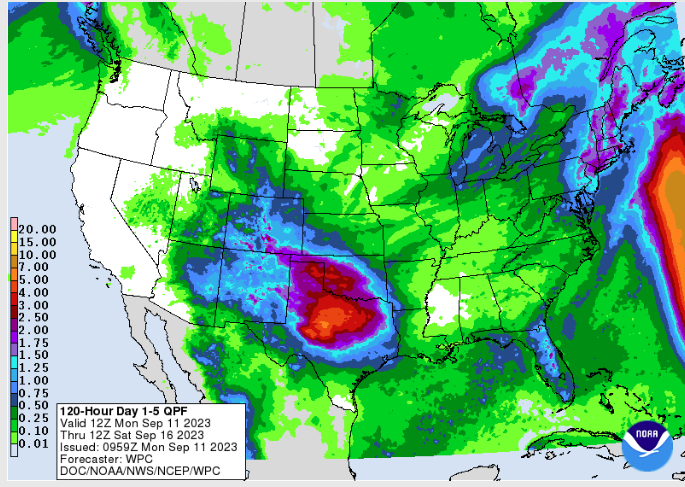
McManus says several rounds of rain will be moving through the state, including later rains throughout the rest of the day and through tonight. We will see another round come through on Wednesday and Thursday. The heaviest rains have so far been in the Eastern Panhandle, according to McManus.
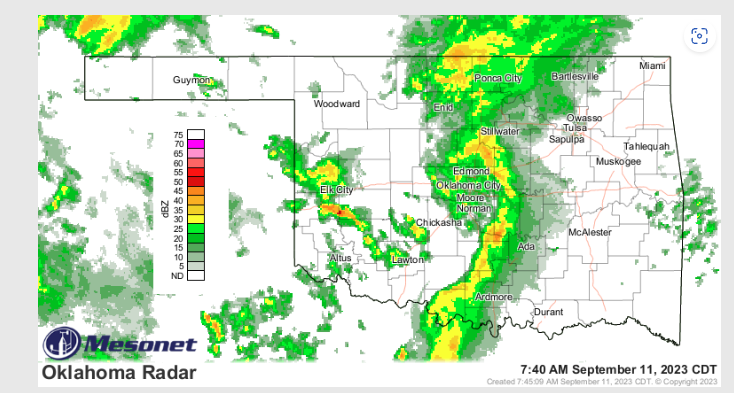
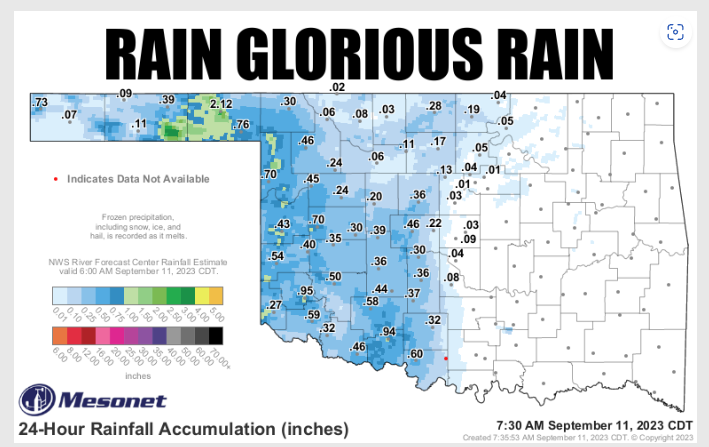
While not everyone will see the rain totals add up across the state, McManus says this is the first good sign of fall we have seen in a while, "In other words...the summer as we knew it is over." In Fact this week NW Oklahoma could see highs in the 60s for the rest of this week.
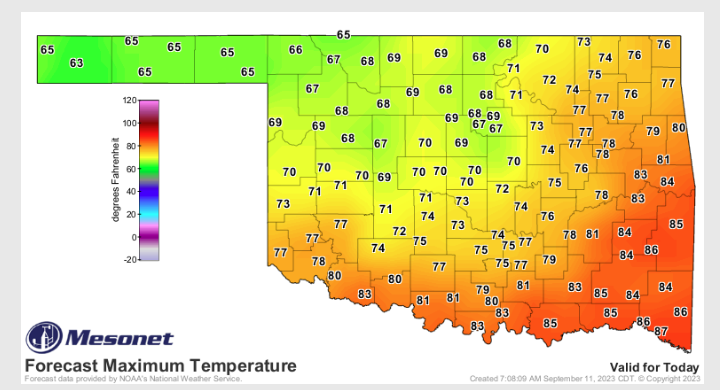
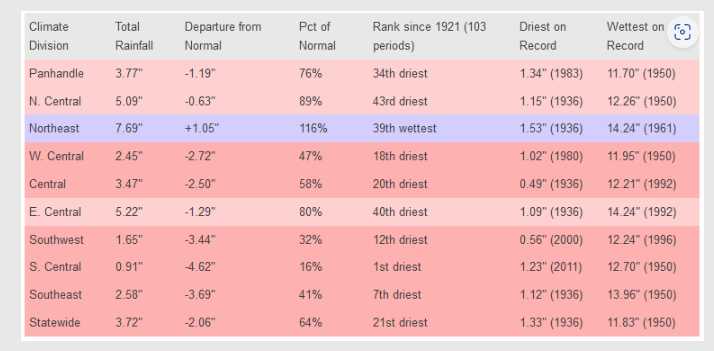
So enjoy this fall weather and hopefully more rain on the way!
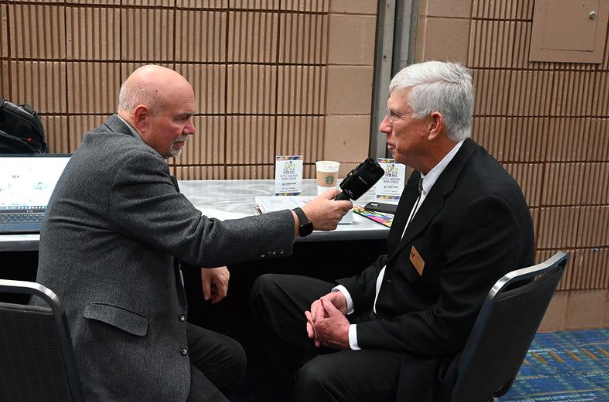
Senior Farm and Ranch Broadcaster, Ron Hays is talking with the Chairman of the Cattlemen's Beef Board and Oklahoma Rancher, Jimmy Taylor. Hays and Taylor talk about the Beef Promotion Operating Committee meeting that took place in Denver on September 6 through 7.
The twenty members of the Operating Committee have zeroed in on the distribution of 38 million dollars for projects that will be part of the 2024 fiscal year plan for the beef checkoff.
"This was the culmination of several months of hard work by producers that are involved in the program," Taylor said. "It started back in June. Our contractors turned in rough drafts of projects that we might like to look at, and then they were brought to our Summer Business Meeting in San Diego, where over 200 producers from across America listened to presentations of these projects from the contractors and then gave their thoughts on what was good, what was bad, what might need to be changed, and what might need to be pulled out."
Through the month of August, Taylor said five different webinars were held where contractors were able to make tweaks to their projects. The most recent meeting in Denver, Taylor said, was looking at the final versions.
"We had a 20-member operating committee that listened to contractors present their final projects," Taylor said. "We were able to ask questions and drill down deep and get the information we needed to determine which ones we were going to get the biggest bang for the buck."
The Beef Board had a little under 38 million dollars to work with, Taylor said, and 49 million dollars in projects.
"We had to really drill down and get all the facts about each one so we could make the best decision for the beef industry," Taylor said.
Some projects are continuing projects, Taylor said, like Beef. It's What's for Dinner. Another project Taylor mentioned was the investment of work at the U.S. Meat Export Federation.
As 96 percent of the world's population lives outside of the United States, Taylor said foreign marketing is critical. As different states begin to make their own rules and regulations, such as California's Proposition 12, Taylor said it will become more difficult to market products in the U.S., so having the ability to market outside of the country is a great asset to the beef industry.
To see the full list of approved projects, click here.
The Beef Buzz is a regular feature heard on radio stations around the region on the Radio Oklahoma Ag Network and is a regular audio feature found on this website as well. Click on the LISTEN BAR at the top of the story for today's show and check out our archives for older Beef Buzz shows covering the gamut of the beef cattle industry today.
Congressman Josh Brecheen issued the following statement to mark the 22nd anniversary of the September 11th terrorist attacks.
"Twenty-two years ago, America changed forever, as nearly 3,000 innocent men and women were tragically killed in a cowardly terrorist attack that shook our nation to its core. Today, I join Americans across the country in solemnly remembering and honoring these victims and the families they left behind.
On this day we also honor the thousands of police officers, first responders, and members of our military who answered the call to serve when our nation needed them most. Many of them gave their lives to defend our freedoms and the American way of life. We will never forget their sacrifice and remain grateful for the brave men and women in uniform who continue to protect us from those who wish to do America harm," said Congressman Josh Brecheen.
As part of the House Committee on Homeland Security, Congressman Brecheen will participate in a field hearing at the 9/11 Memorial Museum on Tuesday, September 12, at 9:15 AM ET.
The hearing will examine our nation's evolving threat landscape over two decades after the September 11th terrorist attacks as well as state, local, and federal coordination efforts for national emergencies.
For more information and to watch the livestream, click here.
Congressman Tom Cole (OK-04) released the following statement in remembrance of the terrorist attacks on September 11, 2001, when multiple planes were hijacked by terrorists and crashed into the World Trade Center, Pentagon and a field in Pennsylvania.
"Today, like every American across the nation, I am solemnly remembering the horrendous and senseless terrorist attacks 22 years ago that claimed nearly 3 thousands innocent lives," said Cole. "While this violent act was a test of our national security, the aftermath showed Americans stand strong together in the wake of tragedy and for good in the face of evil. Today, we honor those we lost, thank the first responders and other heroes who selflessly put themselves in harm's way and pay our respects to those who continue to defend our country and the freedoms it offers."
"This anniversary we are also reminded that we still live in a dangerous world. As war in Ukraine continues, China and North Korea grow more aggressive and Afghanistan was retaken by the Taliban, investing in a strong national defense and deterrence is critical. Although these are unprecedented times, throughout history, the challenges Americans faced have made us come together as a strong people. We will never forget this day or the assailants that brought this tragedy to our nation on September 11, 2001, and must resolve to continue to be a beacon of freedom for the rest of the world."
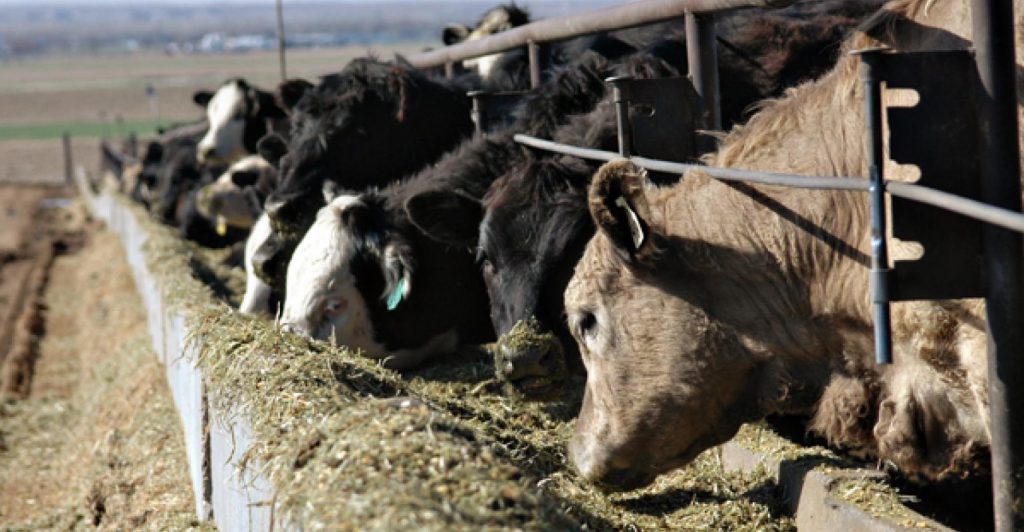
Dr. Derrell Peel, Oklahoma State University Extension Livestock Marketing Specialist, offers his economic analysis of the beef cattle industry as part of the weekly series known as the "Cow Calf Corner," published electronically by Dr. Peel and Mark Johnson. Today, Dr. Peel talks live cattle trade in North America.
Live cattle trade is part of the integrated markets for beef and cattle in North America. Canada and Mexico account for 100 percent of U.S. cattle imports and 95 percent of cattle exports. Total cattle imports have averaged 1.93 million head annually over the past ten years with a high of 2.36 million head in 2014 to a low in 2022 of 1.63 million. Total cattle imports average roughly 73 percent feeder cattle and about 27 percent slaughter cattle, with less than one percent breeding cattle.
Cattle imports from Canada have averaged about 795 thousand head per year in the past decade and consists of a diverse set of slaughter steers and heifers, slaughter cows and bulls, feeder cattle and breeding cattle. In the last five years, cattle imports from Canada have consisted of an average of 43.0 percent fed steers and heifers for immediate slaughter, consisting of a mix of 43.8 percent fed steers and 56.2 percent fed heifers. Cattle imports from Canada have included an average of 29.4 percent slaughter cows and bulls (84.1 percent cows and 15.9 percent bulls). Another 25.9 percent of cattle imports from Canada are feeder steers and heifers, with an average mix of 24.4 percent steers and 75.6 percent heifers.
U.S. imports of cattle from Mexico have averaged 1.14 million head per year for the last ten years. Annual imports in the last decade have ranged from a high of 1.44 million head in 2020 to a low of 871 thousand head in 2022. Over the last 30 years, imports of cattle from Mexico have varied from a high of 1.65 million in 1995 to a low of 456 thousand head in 1996. Imports of Mexican cattle average 99.8 percent feeder cattle with just a few slaughter and breeding animals.
The U.S. exports relatively few live cattle compared to cattle imports. Over the past ten years, cattle exports have averaged 241 thousand head, ranging from a low of just under 69 thousand head in 2016 to a high of nearly 511 thousand head in 2021. The total cattle exports in 2021 were the highest in 47 years of available data. Canada and Mexico combined account for 96 percent of total cattle exports in recent years, with roughly 86 percent exported to Canada and 14 percent to Mexico. Roughly 98 percent of cattle exports to Canada are listed as crossbred feeder cattle with the remainder breeding cattle. Exports of cattle to Mexico increased sharply in 2021 and 2022 and consisted of roughly 81 percent crossbred feeder cattle.
Perspective is important to understand the relative magnitude of North American cattle trade. Total imports of feeder cattle have equaled an average of 3.9 percent of the annual U.S. calf crop in the past five years. Imports of fed steers and heifers represented 1.2 percent of total fed slaughter and imported slaughter cows and bulls have averaged 2.9 percent of total cow and bull slaughter in the last five years.
For the first seven months of 2023, total cattle imports are up 12.4 percent year over year. Cattle imports from Canada are down 16.2 percent for the year to date while cattle imports from Mexico are up 39.6 percent over the 14-year low in 2022.
The National Milk Producers Federation (NMPF) applauded today's announcement that the U.S. Department of Agriculture (USDA) will provide critical, long-awaited financial assistance for dairy farmers affected by natural disasters.
The Milk Loss Assistance program administered by the Farm Service Agency will compensate eligible dairy farms and processors for milk dumped due to qualifying disaster events in 2020, 2021 and 2022, including droughts, wildfires, hurricanes, floods, derechos, excessive heat, winter storms and smoke exposure.
"On top of the challenges created by wild price gyrations and the COVID-19 pandemic, dairy farmers since 2020 have also faced an inadequate federal mechanism for addressing unforeseen weather catastrophes, further straining finances at a time when strains have been hard to bear," said Jim Mulhern, president and CEO of NMPF. "NMPF never accepted that situation, and we're very appreciative of USDA's diligent work over several months to finalize the compensation plan that will address this backlog of disaster assistance. We thank Congress for providing this necessary funding, and we encourage both Congress and USDA to find ways to address future natural disasters more quickly. We also urge farmers affected by these disasters to sign up, and we stand ready to assist them as they go through this process."
As producers of a highly perishable product that's created 24/7, 365 days a year, dairy farmers have been—and continue to be—uniquely challenged by disaster events. The Milk Loss Program will help farmers and, in certain cases, cooperatives, recover losses previously overlooked by disaster assistance. Dairy farmers and cooperatives can sign up for the Milk Loss Program beginning Sept. 11 and running through Oct. 16, 2023. Affected producers are encouraged to sign up as soon as possible. For eligibility and application information, as well as details about how payments will be calculated, visit USDA's Milk Loss Assistance program announcement.
The U.S. Department of Agriculture (USDA) is investing approximately $200,000 in a grant to the Choctaw Nation for its aquaponics implementation program. The project is funded through USDA's Urban Agriculture and Innovative Production (UAIP) grant program, which last month announced $7.4 million in funding nationwide. The project will create an aquaponics system to grow vegetables and healthy food for children, seniors, and tribal families and educate community members about the importance of agriculture. This project is the fourth UAIP grant in Oklahoma.
"This funding will support community efforts to expand access to fresh, healthy food in the Choctaw Nation," said Jeanne Hamilton, USDA's Natural Resources Conservation Service State Conservationist in Oklahoma. "The growing popularity of this grant program shows the importance of our broad support for urban agriculture, local and regional food systems and underserved communities here in Oklahoma and nationwide."
Urban Agriculture and Innovative Production Grants
The Urban Agriculture and Innovative Production (UAIP) competitive grants program supports a wide range of activities through two types of grants, planning projects and implementation projects, which allow recipients to increase food production and access in economically distressed communities, provide job training and education, and allow partners to develop business plans and zoning proposals. These grants build on $40 million in projects funded since 2020 and are part of USDA's broad support for urban agriculture through its Office of Urban Agriculture and Innovative Production (OUAIP). The applicants selected were the top-scoring among a large and very competitive pool of applicants; this year, USDA received more than 300 applications –twice last year's applications.
More Information
OUAIP, established through the 2018 Farm Bill, works in partnership with numerous USDA agencies that support urban agriculture and innovative production. OUAIP coordinates across USDA to help agencies identify, priorities and resolve internal barriers to service with urban, small-scale and innovative customers. UAIP grants are part of a broad USDA investment in urban agriculture.
Other efforts include:
Additionally, OUAIP helps employees at all levels of the USDA to understand that USDA supports agriculture regardless of the size of the operations, where it is located, or how the products are produced.
USDA touches the lives of all Americans each day in so many positive ways. Under the Biden-Harris administration, USDA is transforming America's food system with a greater focus on more resilient local and regional food production, fairer markets for all producers, ensuring access to safe, healthy, and nutritious food in all communities, building new markets and streams of income for farmers and producers using climate smart food and forestry practices, making historic investments in infrastructure and clean energy capabilities throughout America, and committing to equity across the Department by removing systemic barriers and building a workforce more representative of America. To learn more, visit usda.gov.
USDA is an equal opportunity provider, employer and lender.

By: Association of Equipment Manufacturers (AEM) staff
As equipment manufacturers look ahead to the remainder of 2023 and beyond, the landscape continues to present challenges for the industry and the ag and construction customers it serves.
AEM members report demand for products across both industries has softened. However, particularly in construction, investments in infrastructure, energy and utilities, point to better days ahead. And, as outlined in AEM's recently held Q3 Equipment Outlook Webinar, a wealth of data suggests optimism – both in the short term and long term – is (and should be) prevalent.
Now, with Q3 in full swing, and the final few months of the year right around the corner, a pair of AEM sector leaders provided their own thoughts and perspectives on the outlooks for the construction and ag industries, respectively:
AEM's Senior Director of Construction Sara Feuling on the challenges and opportunities facing the construction industry in the near term:
As the construction industry embraces change, there will be no shortage of challenges on the horizon. However, along with those challenges come a multitude of opportunities. Numerous equipment technologies will fundamentally transform the way the construction industry operates, which necessitates an entirely new approach, not only to the jobsite itself but also to people and workforce. A variety of alternative power solutions also will be considered and implemented as the industry looks to reduce its carbon footprint, each bringing along with it its own unique challenges. The construction industry is nothing but resilient, though, and it will continue to face challenges head on and take advantage of opportunities in front of it.
Feuling on the willingness of the industry to invest in and adopt new technology: It's long been said the industry is slow to adapt to, and adopt, technology. That's not entirely the case, however. The men and women who support the industry want to do their jobs efficiently and effectively, and they take pride in their work. New and cutting-edge construction equipment technologies allow them to do their work faster, better and safer. And, as technology is adopted, its benefits to people, planet and productivity will be validated, driving wider industry adoption. Finally, manufacturers continue to invest in technology, focusing on the needs of their customers. The construction industry will soon see proven benefits, along with an even greater return on their investment.
Feuling on the outlook for the industry in both the near term and long term: The construction industry is – and should be – optimistic in both the near term and long term. The Infrastructure Investment and Jobs Act (IIJA) will continue to be a key driver for construction growth, with hundreds of billions of dollars allocated for infrastructure, energy and utilities. Meanwhile, the CHIPS and Science Act and the Inflation Reduction Act are driving spending in the industrial and manufacturing sector. This growth and momentum have even more potential, especially as the industry embraces technology to improve productivity and performance.
AEM Director of Agriculture Austin Gellings on the multitude of factors impacting how producers are approaching their work right now:
Essentially, everything hinges on where a farmeris going to be able to improve their efficiency the most and in turn see the greatest return on investment (ROI). With input costs continuing to rise, the best ways for a farmer to respond and continue to reap the rewards of strong commodity prices is to operate on those margins and find wins where they can. Technology, and even more specifically, data, provides such tremendous value and benefits. As farmers are looking for ways to minimize inputs (and, in turn, costs), while still increasing yields, technology provides the answer. It can be an herbicide, fertilizer application or the feed being given to a dairy cow. The data insights that technology provides allows farmers to make better, more informed decisions for their operation and lead to more effective execution. We're even seeing the emergence of technologies, such as targeted spray systems, that are able to make decisions in real time to reduce inputs in the field.
Gellings on the factors poised to play roles in how much producers will look to invest in new equipment and technology in the near term: Ultimately, the biggest deciding factor in a farmer's willingness to adopt new technology is whether or not it will actually work for them (and, perhaps more importantly, when they will see a return on their investment). Farms are a business and, more times than not, a farmer is ultimately more than likely willing to try something new if there is a solid business case to be made. However, most farms operate on the margins and don't always have three to five years to wait and achieve an ROI.
Gellings on the outlook for the ag industry in both the near term and the long term: In both the near and long term, farmers and the ag industry as a whole is in a really great spot. In the wake of the COVID-19 pandemic, people are starting to realize now more than ever how fragile our food supply can be at this point. As a result, society possesses a greater appreciation for the men and women along that supply chain who work to make sure everyone has nutritious food available to them. That's why there's reason for optimism in the near term. Looking farther out, there is even more cause for optimism because of the role that agriculture can play in our journey to being more sustainable. Agriculture has a huge role to play in addressing a number of the sustainability goals that exist around the world today. The important part will be how the industry tells its story and lend its voice to those conversations.
About the Association of Equipment Manufacturers (AEM)
AEM is the North America-based international trade group representing off-road equipment manufacturers and suppliers with more than 1,000 companies and more than 200 product lines in the agriculture and construction-related industry sectors worldwide. The equipment manufacturing industry in the United States supports 2.3 million jobs and contributes roughly $316 billion to the economy every year.
July marked the end of the comment period for FDA's draft guidance on the labeling of plant-based beverages. The guidance, offered in February, is filled with flaws and still doesn't do what FDA actually needs to do — enforce its own Standard of Identity for milk, which is clearly defined as an animal product.
But that doesn't mean the guidance is all bad. By advising plant-based beverage-makers to add disclosures on their packaging noting their nutritional differences (read: inferiority) with true dairy milk, FDA is acknowledging an important point: That mislabeled beverages are creating confusion over the nutritional value of plant-based beverages in the marketplace. Such guidance is significant, and food manufacturers tend to follow it so as not to get on FDA's — or a judge's — bad side.
No final guidance has been adopted. Now that the comment period is over, FDA can create a final guidance, or do nothing. But since its advice has been public since February, we thought it was worth checking in on the State of Plant-Based Beverage Labeling, ca. summer of 2023. Has the guidance had any effect? Is there any hope for positive change? Let's check in now, so we can check in later, as labeling evolves to however FDA, consumers and manufacturers shape it. A new era is dawning. Here's what it looks like today.
The most common approach to dairy terms in plant-based beverages (at least the more mainstream ones that seem more interested in sales than misplaced virtue-signaling) seems to be to hedge their bets. Silk is a good example. Note the "Oat" in large letters, with a one-word "oatmilk" in small type up in the corner. This is the keep-the-getaway-car-idling-outside approach to labeling: Keep the offending term on the box to protect your options, but don't make it essential. If FDA gave Silk a shove and said that "oatmilk" had to go, would anyone really be confused if it disappeared? No — and that alone says plenty.
Overall, Silk's approach seems a little muddled. But in a weird way, it's progress. They're not there yet, but Silk seems capable of doing the right thing and stop calling their product "milk." We'll be the first to praise them when they do. (Assuming we notice — that's some small type they're using.)
Pretending that FDA never offered guidelines at all is Oatly, purveyors of "Oat-milk" (the significance of the hyphen known only to their marketing department) that's "100% vegan." They misuse "milk" loudly and proudly, adding cries of "No dairy," "No nuts," and "No gluten," along with some carbon footprint stat that might be understandable to an environmental scientist, but hey, it sounds good — I guess we're supposed to take their word for it.
So OK, no dairy, no nuts, and no gluten. How about the 13 essential nutrients that dairy provides? Here, Oatly goes silent. In fact, Oatly actively discourages would-be purchasers from looking at its own beverage's Nutrition Facts panel, with a message above the facts saying, "If this side bores you, please read no further, flip the carton around and have a wonderful day." Ignorance, apparently, is bliss at Oatly.
But we do applaud one thing: That arrow on the front makes for a powerful, easy-to-understand representation of its historical stock market performance.
Not to be outdone by Oatly, Ripple sends cynicism to new heights by only disclosing comparisons with dairy that serves its own interests, making a mockery of FDA guidance with "1/2 the sugar of dairy milk" and "50% more calcium than dairy milk" but ignoring the guidance on the 13 essential nutrients. (Silk features a similar claim, though less prominently, on its packaging as well.)
Ripple's selective approach toward disclosure illustrates just how out of hand unchecked marketing claims have become — and why FDA shouldn't hesitate in bringing it under control. Consumers deserve balanced information about the products they're buying. Ripple doesn't do that — and why should they, when they can do so without any repercussions? It's par for the course for a company that's set itself apart by marketing its nutritionally inferior flavored water to children.
But it doesn't have to be that way.
No one would accuse Trader Joe's of not knowing how to run a business. Its stock price is up about 40 percent this year. It's arguably done more than any other business to make quality wine affordable to mass audiences, so it knows a thing or two about beverages. And somehow, it manages to sell plant-based beverages in an attractive package that never pretends to be anything it isn't. "Non-dairy"? That's undeniable. "Soy free"? Good to know! "Rich and creamy"? That's subjective, but I guess if someone wanted to try, it's their money and their taste buds.
We'll stick with milk, thank you, but if someone decided to buy some Trader Joe's Almond Beverage — and apparently Trader Joe's must sell some, even though the company correctly declines to call it milk — we respect their decision. A critical thing to remember about FDA's proposed labeling guidance is that if a company wants to avoid disclosures it would prefer not to make, all it has to do is not use a dairy term. "Beverage," "drink," juice," or nothing but the name of the plant that's the basis of the drink, all are acceptable.
The fact that Trader Joe's does it right shows how unacceptable it is for the other beverage-makers to do it wrong. This isn't an impossible task: If Silk eliminated its already-fine print, if Oatly got over itself, if Ripple decided to stop its petulance, the marketplace would be fairer, labeling would be clearer, and consumers would be shown more respect. So there's hope that plant-based beverage labeling will continue to improve in the marketplace.
But FDA could make things a lot better, a lot more quickly, if it simply enforced its Standard of Identity for milk — or at the very (though still unacceptable) least, begin actively encouraging manufacturers to follow its proposed guidance. Because in most cases, transparency isn't happening, and the current Wild West approach isn't serving consumers.
The National Association of State Departments of Agriculture Foundation welcomes NASDA's Next Generation class of 2023, featuring 13 students from 10 states. The NASDA Next Generation class of 2023 will network with commissioners, secretaries and directors of agriculture, industry leaders, and stakeholders at the NASDA Annual Meeting.
The purpose of NASDA Next Generation is to advance our future leaders' understanding of agriculture policy and the role of state departments of agriculture in ensuring a healthy and thriving food system for all. Through the NASDA Next Generation programming, students learn about pressing food and agricultural policy issues, NASDA's mission, and careers in public service. During the meeting events, students will also be able to explore Wyoming's community-based agriculture.
"The agriculture industry is in need of strong leadership in the next generation, and we are excited to welcome this year's NASDA Next Generation class to our Annual Meeting," NASDA CEO Ted McKinney said. "This cohort of students represents the wide variety of experience and dedication to agricultural excellence that will enable the industry to thrive and impact the entire food system moving forward."
The following students were selected:
Alexandra Mason, South Dakota State University
Ava Barajas, University of Nebraska - Lincoln
Charlotte Brockman, University of Nebraska – Lincoln
Esther Oginni, University of Texas Rio Grande Valley
Etinosa Ignubor, Westen Colorado University
Grace Dunham, Cornell University
Jelani Christmas, North Carolina Agricultural and Technical State University
Mateo Rull Garza, University of Massachusetts Amherst
Meredith Halweg, University of Wyoming
Ryan Bake, Utah State University
Samuel Hadacek, South Dakota State University
Sarah Curley, Oklahoma State University
Tahirah Jones, North Carolina Agricultural and Technical State University
NASDA's Next Generation would not be possible without our sponsors: Bayer, Farm Credit Council, Land O Lakes, Massachusetts Department of Agriculture, Merck Animal Health, National Agricultural Law Center, National Agriculture in the Classroom, National Pork Board, Nourish the Future, Oklahoma Department of Agriculture, Purina, Syngenta, Tyson Foods, and the Virginia Department of Agriculture. This year, the 2023 NASDA Annual Meeting is being held Sept. 10-13 in Cheyenne, Wyoming. To inquire about more information or become a sponsor of NASDA's Next Generation, please contact Chris Jones, Senior Director - NASDA Foundation.
The NASDA Foundation is the only educational and research organization that directly serves the nation's state departments of agriculture. NASDA Foundation's mission is to enhance American food and agricultural communities through education, outreach and research. The NASDA Foundation works with states to nourish people and communities while serving as the stewards of the environment and public trust. To learn more about NASDA Foundation, please visit https://www.nasda.org/nasda-foundation/.
RON's Dave Lanning has a pre-opening look at today's agricultural Markets.
Click the audio tab below for today's report.
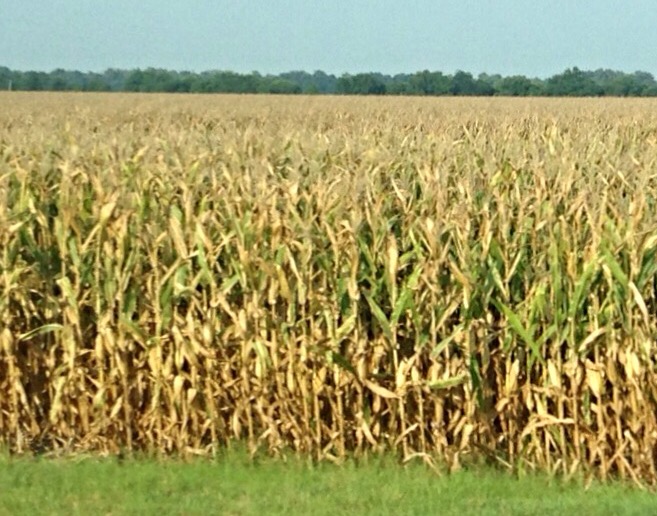
After hot and dry starts and finishes to the U.S. corn and soybean seasons of 2023, USDA will offer its first estimates of crop yields with input from field data at 11 a.m. CDT on Tuesday, Sept. 12. Two reports will be offered by Uncle Sam- the September Crop Production estimates from NASS and the monthly WASDE from the ERS.
Kansas State University Grain Market Economist Dan O'Brien dove into the latest corn, soybean and wheat numbers in an interview Friday with Shelby Varner on the daily podcast and radio program, Agriculture Today. Listen to what O'Brien is thinking ahead of those reports by clicking on the Listen Bar below:
The September Crop Production Report will include field data in USDA's estimating process. For the 2023 US Corn crop- DTN Reports that the Dow Jones' survey of 18 analysts has a range of yield guesses from 171.0 to 175.0 bushels per acre (bpa). The average estimate is for a 14.994-billion-bushel (bb) crop, based on a yield of 173.3 bushels per acre.
The same group estimated USDA will lower its estimate of U.S. ending new-crop corn stocks from 2.202 bb to 2.127 bb, still the largest surplus in five years, if true. Friday's export sales report plus Census Bureau data showed old-crop corn exports totaled 1.659 bb, 34 million bushels (mb) above USDA's export estimate. Dow Jones expects old-crop ending corn stocks to be estimated at 1.459 bb, but Friday's report makes an argument for a lower estimate of 1.423 bb, which will also be carried into 2023-24.
For world ending corn stocks, Dow Jones' survey expects USDA to lower its estimate from 311.05 million metric tons (mmt) to 310.3 mmt (12.22 bb) in 2023-24. If true, it would be the most in five years, but still has a lot of uncertainty with South American crops yet to be planted. For reference, the August World Agricultural Supply and Demand Estimates (WASDE) report showed USDA's estimate of ending world corn stocks, excluding China, at 109.75 mmt (4.32 bb), also the most in five years.
Another part of Tuesday's Crop Production report to watch for is the possibility that USDA will adjust its estimates of planted and harvested acres for corn and soybeans, based on new information from the Farm Service and Risk Management agencies. Because planting weather was generally favorable in 2023, any changes on Tuesday are likely to be small.
For soybeans, Dow Jones' survey expects USDA to reduce its crop estimate from 4.205 bb to 4.139 bb, based on a national yield of 50.0 bushels per acre. The estimated yield range is relatively narrow, between 49.0 and 51.0 bushels per acre. Along with a smaller crop estimate, the survey expects USDA to lower its estimate of U.S. ending soybean stocks for 2023-24 from 245 million bushels (mb) to 213 mb, the lowest in eight years, if true.
USDA's old-crop ending stocks estimate of 260 mb is expected to be trimmed to 256 mb, but final stocks may eventually go even lower. Friday's export sales report plus Census Bureau data showed 1.992 bb of old-crop exports, 12 mb more than USDA's 1.980 bb estimate. The report suggests an old-crop ending stocks estimate of 248 mb.
Dow Jones' survey expects USDA to lower its snapshot estimate of world soybean stocks from 311.05 mmt to 310.3 mmt (11.40 bb) for 2023-24. If true, it would be the largest soybean surplus on record, but there is much to learn, knowing South American soybeans aren't yet planted.
For wheat- This remains a busy time of year for wheat as the Northern Hemisphere is finishing harvest and is just starting winter wheat planting. However- there will not be an update on the winter wheat production in the September Crop Production numbers- so the production estimates of August stand for now. That includes the Oklahoma Hard Red Winter Wheat Crop for 2023 estimated at 68.85 million bushels- virutally the same as the crop produced in 2022 while Kansas growing one of its smallest crops in several decades at 208 million bushels- down 15% from a relatively small 2022 crop. South of us in Texas- the 2023 harvest was much larger than the hard hit 2022 crop of 39 million bushels- the 2023 production estimate in August for Texas stands at 70 million bushels- a jump of 79 percent year over year.
Nationally- the US Wheat crop is currently seen at 1.227 billion bushels- up 11% over the 2022 crop year. Globally- DTN says Russia continues to attack grain infrastructure at Ukrainian ports and has effectively shut down access to the Black Sea. Caught in an ongoing war, the fundamentals of wheat remain potentially volatile.
According to Dow Jones' survey of analysts, only slight reductions are expected in Tuesday's reports for the U.S. and the world. USDA's 615 mb estimate of U.S. ending wheat stocks is expected to be trimmed to 614 mb for 2023-24, while USDA's world ending wheats estimate is expected to come down from 265.61 mmt to 265.0 mmt (9.74 bb), the lowest in seven years. In August, USDA estimated world ending wheat stocks, excluding China at 130.69 mmt or 4.80 bb, the second lowest total in 11 years.
U.S. Agriculture Secretary Tom Vilsack issued the following statement today in response to the announcement by the Office of the U.S. Trade Representative (USTR) that India has agreed to reduce tariffs on key U.S. agricultural products:
"We welcome today's news that India has agreed to reduce tariffs on its imports of U.S. turkey, duck, cranberries and blueberries, creating new market opportunities for U.S. producers and exporters in the world's most populous nation.
"Under the Biden-Harris Administration, USDA and USTR have focused on rebuilding trust and strengthening relationships with our global trading partners, including India, and working through the World Trade Organization and other venues to ensure that those partners live up to their obligations so that U.S. agriculture has full and fair access to key export markets.
"Today's announcement, leading into President Biden's participation in the G20 leaders' summit in New Delhi, follows the lifting of India's retaliatory tariffs on U.S. apples, chickpeas, lentils, almonds and walnuts, a development that had been announced earlier this summer and took effect this week. While important progress has been made, significant tariff and nontariff barriers to American agricultural products accessing the Indian market remain. I look forward to continuing to work with Ambassador Tai to address these barriers and strengthen the trade relationship between the United States and India."
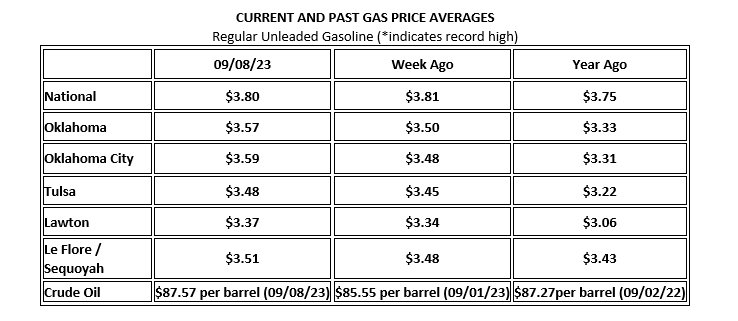
This Week
The national average for a gallon of gas dipped a bit following the long Labor Day weekend, falling a penny since last week to $3.80. The decrease comes despite a recent uptick in the price of oil, the primary ingredient in gasoline. Today's national average of $3.80 is two cents less than a month ago but five cents higher than a year ago.
"There have been some jumps in wholesale gasoline prices – also reflected in higher prices at the gas pumps – across the Central Plains in the last couple of days," says Rylie Mansuetti, spokesperson for AAA Oklahoma. "Reports indicate that regular refinery maintenance and a few refinery repairs requiring outages are playing a role in the increases. It remains to be seen how much of a price increase we will see at the pumps or how long they may last. But there is no indication that the situation will be anything but temporary."
Although global crude oil prices – which make up at least half of the price of a gallon of gasoline at the pump – have been higher recently, and domestic gasoline demand has been strong throughout the summer vacation-driving season, we are entering a fall period that typically sees lower gas demand. In Oklahoma, the gas average is $3.57 today, up seven cents in the last week and 24 cents higher than one year ago.
According to new data from the Energy Information Administration (EIA), gas demand increased from 9.07 to 9.32 million barrels per day last week. Meanwhile, total domestic gasoline stocks dropped from 217.4 to 214.7 million barrels. Rising oil prices, higher gas demand, and tighter supply may push pump prices higher.
At the close of today's formal trading session, WTI closed at $87.57, posting a more than 2% weekly gain. Tighter crude supplies are pushing oil prices higher, in addition to recent hurricane season production disruptions.
AAA has a variety of resources to help motorists save on fuel:
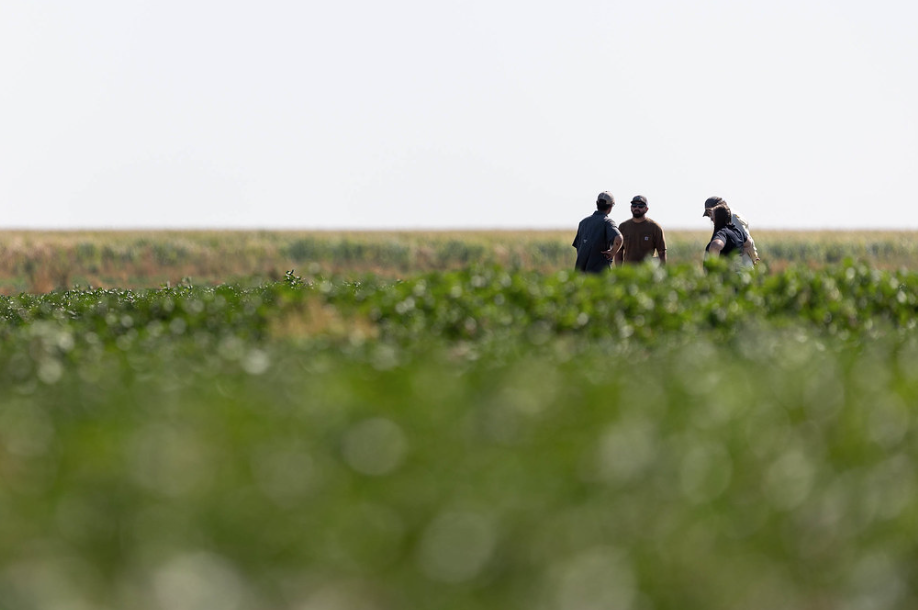
By Alisa Boswell-Gore
The Oklahoma State University Department of Agricultural Economics will host the annual Rural Economic Outlook Conference on Oct. 11 at the ConocoPhillips OSU Alumni Center in Stillwater.
Hundreds of producers, ag lenders, Extension educators and policymakers from across the nation will meet for a full-day of guest speakers and informative sessions centered on this year's Farm Bill.
"Two major factors that impact producers are farm policy and weather," said Brent Ladd, assistant OSU Extension specialist for agricultural economics. "This conference will provide attendees with applicable information when planning for the future."
The lineup of speakers includes Bart Fischer, co-director of the Agricultural & Food Policy Center and research assistant professor at Texas A&M University, and Brian Bledsoe, chief meteorologist, KKTV 11 News in Colorado Springs.
"We will examine many key issues that may significantly affect decisions made by agricultural lenders, community and rural leaders, and people in similar positions during the coming year," Ladd said.
Register for $50 before Oct. 4; registration will increase to $75 after Oct. 4. View the complete agenda on the conference website.
For more information, contact Brent Ladd, OSU Extension agricultural economics specialist at 405-744-6159 or brent.ladd@okstate.edu.
OSU Agriculture is dedicated to improving the quality of life of Oklahomans through science-based information and education. It is comprised of the Ferguson College of Agriculture and two state agencies: OSU Ag Research and OSU Extension.
Scholarship program supports students using Angus genetics in commercial operations.
The Angus Foundation recognized four outstanding youth in the beef industry and awarded them with the Commercial Cattlemen scholarship. This scholarship supports students in the commercial cattle industry who use, or whose family uses, Angus genetics in their breeding program.
"We are proud to recognize these four individuals for their involvement in the beef industry and for appreciating the value of the Angus breed," said Jaclyn Boester, Angus Foundation executive director. "Supporting youth in their education is an important part of the Foundation's mission."
The scholarships are awarded to students using Angus sires and dams in their commercial cattle operation. Recipients must be pursuing an undergraduate degree or enrolled in a vocational program at an accredited institution of higher education.
Two Angus Foundation representatives, two Angus industry representatives and one beef cattle industry leader make up the Angus Foundation's scholarship selection committee, which reviews applications. Emphasis is placed on the applicant's knowledge of the cattle industry and their perspective of the Angus breed.
Since 1998, the Angus Foundation has awarded more than $4.2 million in undergraduate and graduate scholarships. For more information on the Commercial Cattlemen scholarship, visit AngusFoundation.org. Applications for the next scholarship cycle will be due May 1, 2024.
2023 Commercial Cattlemen Scholarship recipients:
Addison Hillman grew up raising commercial Angus and Simmental cattle on her family's farm in Brainerd, Minnesota. She studies animal science at the University of Nebraska-Lincoln with a focus in genetics. In the future, Hillman wants to have a career in beef genetics and plans to continue to be involved in the beef industry.
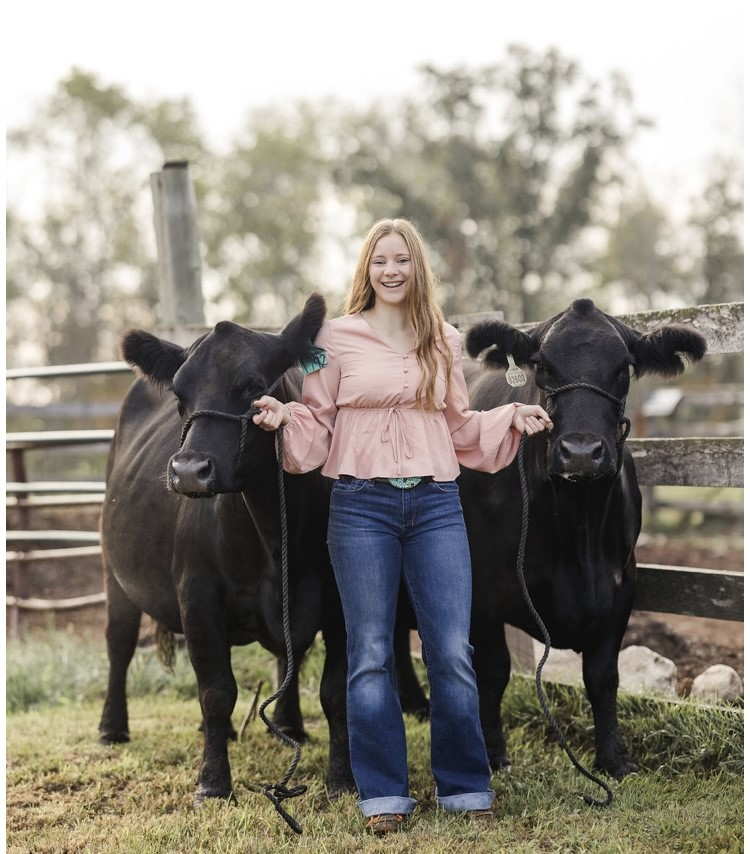
Bryce Hoeltzel, of Olsburg, Kansas, has a registered Angus and commercial cattle herd on his family's multigenerational farm. Hoeltzel hopes to obtain a bachelor's degree in both animal science and industry and natural resource management. He is currently attending a local community college where he is also a member of the livestock judging team. With this, Hoelzel intends to continue raising beef cattle with an emphasis on environmental sustainability.
Abigail Morse grew up in Madison, South Dakota, where her family has a commercial cattle herd with predominantly Angus genetics. She is currently pursuing a degree in animal science at South Dakota State University. Eventually, Morse hopes to become a large animal veterinarian and work primarily with beef cattle.
Jacee Sumpter grew up in the cow-calf industry in Branson, Colorado, where she has a commercial Angus herd. Sumpter studies agribusiness and animal science at Butler Community College in El Dorado, Kansas, where she is also a member of the livestock judging team. In the coming years, she hopes to continue her education at a four-year institution before going home to manage her family's ranch while continuing to work as a commodities broker through her online business.
— Written by Katelyn Engel, Angus Communications
About the Angus Foundation
Established as a 501(c)(3) organization in 1980, the Angus Foundation remains focused on its mission to support Angus education, youth, and research. The organization has distributed more than $4.2 million in youth scholarships since 1998 and has also invested more than $1.3 million in beef cattle research in the past decade.
For more information, contact the Angus Foundation at 816-383-5100.
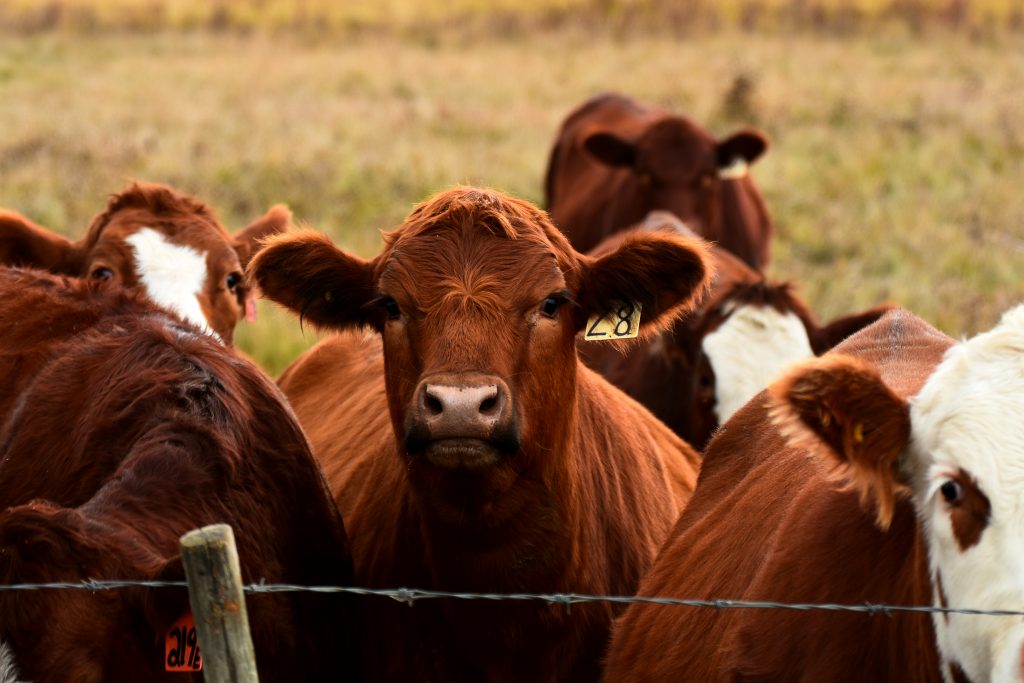
Senior Farm and Ranch Broadcaster, Ron Hays, is talking with Oklahoma State University Extension Livestock Marketing Specialist Dr. Derrell Peel, about cattle prices, herd rebuilding, and the impact of drought conditions on Oklahoma ranchers.
"We have seen a tremendous uptrend in markets," Peel said. "It really started almost a year ago now, in the fourth quarter of 2022."
Feeder cattle and fed cattle prices have all taken off, Peel said, and have increased continuously throughout the year. This trend, he added, is expected to continue going forward.
"Over the last six weeks or so, we have had extremely dry weather," Peel said. "Very little, if any, precipitation in most cases, and so now we find ourselves, again, with drought conditions redeveloping pretty quickly here in Oklahoma."
Because of the moisture received early enough in the summer, Peel said a good amount of hay was made available. Pasture conditions were good, he added, but those have eroded sharply in the last few weeks with this hot and dry weather.
"I think producers are rightly taking it pretty cautiously by going forward," Peel said. "I think we are in better shape in terms of hay supplies going into the winter in terms of cattle numbers, but I think probably we are not likely to see a lot of aggressive movements on the part of producers to move forward here until we can see some longer term and little bit more fundamental improvement in moisture and forage conditions."
In most cases, Peel said the overall data would suggest that Oklahoma is probably not seeing a lot of additional liquidation of beef cow herds.
"I think producers are down to a level in many cases after two to three years of drought," Peel said. "They are down to minimal levels, and they can probably hang onto those, so we are not seeing much additional liquidation, but certainly, the conditions at this point would suggest that we have no real opportunity to think about turning that around and restocking or rebuilding those herds at this point and time."
The Beef Buzz is a regular feature heard on radio stations around the region on the Radio Oklahoma Ag Network and is a regular audio feature found on this website as well. Click on the LISTEN BAR for today's show and check out our archives for older Beef Buzz shows covering the gamut of the beef cattle industry today.

The National Association of State Departments of Agriculture comprises commissioners, secretaries and directors of agriculture from all 50 states and four U.S. territories. The commissioners, secretaries and directors of agriculture are government officials responsible for the administration, regulation and promotion of agricultural activities in their state. While responsibilities vary from state to state, all help shape agricultural policies to benefit not only farmers and ranchers, but also those who consume their products.
NASDA recently caught up with NASDA President Wyoming Agriculture Director Doug Miyamoto to delve further into his responsibilities as a state agriculture director. As the director describes, this role requires not just implementing regulations and aligning policies with the state governor's office, but also supporting the needs of farmers and ranchers.
"You need to be carrying out the statutory mandate for the agency and make sure obviously that you're following through on the desires of the governor's office at the same time," Director Miyamoto said. "What's unique about departments of agriculture though is that you're filling this double role as a regulatory entity on the one hand for agriculture but on the other hand you are also an advocate for agriculture, and I think that's a little bit unique in the regulatory agency rolls of states traditionally."
Director Miyamoto's role, encompassing advocacy, regulation and policymaking, centers on ensuring a fair and thriving agricultural industry for the state, U.S. and world.
"It levels the playing field, not just within the state but on a national level, and to some degree on an international scale as well," Director Miyamoto said. "Through policy discussions we have as respected state departments of agriculture, I think primarily what we're aiming for is to create a level playing field for folks that are in the agriculture industry and looking to compete in commerce."
By engaging in policy discussions and negotiations with entities both in Wyoming and beyond, the department bridges the gap between the needs of Wyoming's agricultural producers and the broader economic and regulatory landscape. This unique position involves shaping and executing policies that regulate while supporting the interests of agriculture
At the end of the day, Director Miyamoto says working to benefit the farmers and ranchers in his state is the best part of his job.
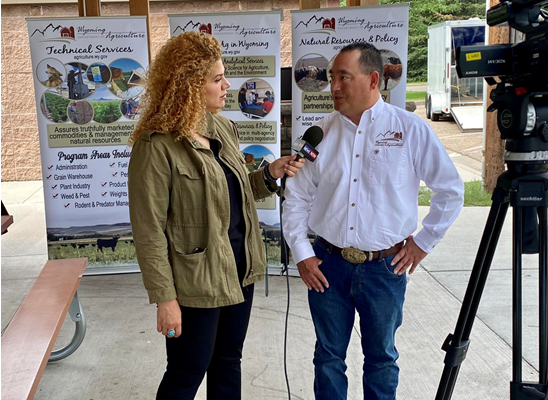
"My primary driver is the advocacy work that we get to do for our agricultural producers in our state," Director Miyamoto said. "I think that's always the most fun part of the job is that we're always trying to improve conditions and we're always trying to negotiate on behalf of our agricultural producers."
NASDA is a nonpartisan, nonprofit association which represents the elected and appointed commissioners, secretaries and directors of the departments of agriculture in all 50 states and four U.S. territories. NASDA enhances American food and agricultural communities through policy, partnerships and public engagement. To learn more about NASDA, please visit www.nasda.org.
Commentary by Bill Bullard, CEO, R-CALF USA

How in the world did we allow political pundits to change the narrative regarding whether or not it's good to protect the American people, American jobs, American manufacturing, and American food production?
This should be a no-brainer – the role of government should be to protect all of the above, and for over 200 years, that's what America did and that's why the United States was once the undisputed food producer and economic powerhouse the world over.
But something happened on the way home from the grocery store. Some bright but misguided economist figured that someone, somewhere could produce food more efficiently in some foreign land, and America would be better off to source their food from there...rather than from here.
And that's exactly what misinformed decision makers set out to do. But first they had to vilify what America had been doing to achieve its unprecedented strength – industrially, militarily, and in food self-sufficiency. They contextually changed protecting America and her assets into something grotesque. They said protecting America's assets was an antiquated and unnecessary goal and they vilified such efforts with the term "protectionism."
And there went our tariffs – the economic tool America was built upon. You see tariffs were the economic tool that America used for over two centuries to accomplish a two-fold and mutually inclusive objective: First to ensure that critical domestic industries could flourish and compete with imported goods and services on a level playing field; and second, to collect sufficient revenues from those who financially benefit from importing goods and services into the United States.
Importantly, where once the U.S. relied heavily on tariff revenues from profiting importers to fund much of government, now the U.S. relies more heavily on its citizens to fund much of government. And now you know why your income taxes are so high.
So, the misguided decision makers effectively vilified the notion that America should protect herself and her assets with the negatively charged term "protectionism," and it singled out tariffs as protectionism's instrument of choice.
So, what was the result?
Well, focusing just on food, the U.S. Department of Agriculture data show that the United States became a net importer of food in 2019 and between 2021 and 2022 the United States' negative trade balance in food nearly doubled, from $3.4 billion to $6 billion.
So, ask yourself this question: If food imports were to be even temporarily curtailed due to geopolitical events, climate events, or any other reason, do you think there will be shortages of certain foods, if not many foods, at your local grocery store?
Can everyone comprehend that food production is a national security issue? That the United States has traversed a dangerous path that now threatens our food security?
Clearly, if Congress doesn't intervene to reverse our present course our national food security will be weakened.
So how does Congress reverse this deplorable trend? Well, the answer is to resume doing what we know worked to ensure the protection of our critical industries, and that means we need to rethink the importance of tariffs and tariff rate quotas as legitimate economic tools needed to ensure the viability of our domestic industries, ensure our domestic industries are actually competing on a level playing field, and to protect our food security.
So now let's jump from the general to the specific: Tariffs were eliminated for imports of lamb from Australia, and they remain negligible for lamb imports from New Zealand. As a result, imports have skyrocketed and have captured a whopping 74% of the domestic lamb market. If those imports were curtailed for any reason, there's no way on God's green earth that the U.S. sheep industry could anymore satisfy America's appetite for lamb, meaning the domestic industry could not meet America's protein needs that are now provided by lamb.
To reverse this threat to our food security, the U.S. sheep industry must be given some space to rebuild domestic sheep production. It can't do that without tariffs, which would ensure that imported lamb would hit the domestic market as if it were produced under the United States' higher production standards; or without a tariff rate quota that would limit the amount of lamb that could be imported without tariffs, but once a predetermined volume had been exceeded, the higher, over quota tariffs would apply to significantly slow the flow of industry-damaging imports.
We have to start somewhere, so let's start here. Call your members of Congress and urge them to protect the U.S. sheep industry with tariffs to preserve our national food security interests.
Yes, R-CALF USA is proposing that our government protect our domestic sheep farmers and ranchers. And, yes, it's about time that somebody did.
RON's Dave Lanning has a pre-opening look at today's agricultural Markets.
Click the audio tab below for today's report.
Farm Director, KC Sheperd, is visiting with the Director of Programming at the Oklahoma Conservation Commission, Jean Lam, about the "To Which We Belong" Documentary Film Screening coming to the Oklahoma City Stockyards on September 7th.
"We are going to be bringing a film screening and interactive panel, regarding the documentary 'To Which We Belong,' on September 7, coming up pretty quickly here," Lam said.
The event will kick off at 5:15 p.m. with a cocktail and hors d'oeuvres hour, followed by a film screening from 6 to 7 p.m. From 7:30 to 8:15 p.m., Lam said there will be an interactive panel discussion.
Panelists will include Gregg Scott, Sarah Blaney and Keith Burns.
"If you haven't had the chance to check out 'To Which We Belong,' it is a great documentary highlighting farmers and ranchers that have left behind conventional practices that are no longer profitable or sustainable," Lam said. "They are the unsung heroes, improving the health of our soil and sea to save their livelihoods and our planet."
Lam said the intent of this event, being in the evening with a social aspect, is to build bridges among consumers and farmers in an effort to cultivate both education in soil health as well as the building of businesses by embracing the interconnectedness of living things.
Despite differences in culture and location, farmers and consumers can be rooted in the same belief: that to work with nature, not against it, is the answer.
The location of the event is the RODEO Cinema (2221 Exchange Ave, Oklahoma City, OK 73108).
"The 'To Which We Belong' documentary follows farmers and ranchers both here in the United States and abroad, as well as fishermen that are fishing sustainably in the sea," Lam said. "It follows different farmers and ranchers as they go on their regenerative journey to figure out how farming and ranching and proper land steward and environmentalism can operate in concert and not be mutually imposed ideals."
Admission is free, Lam said, but guests are highly encouraged to RSVP as spots are limited.
This Week on SUNUP is Oklahoma State University Extension grain market economist Kim Anderson. During this week's edition, Anderson talks about wheat harvest around the globe and gives an update on the grain markets.
"We have got about a 29.2-billion-bushel world crop being harvested and 1.73 billion here in the United States," Anderson said. "We have harvested about 80 percent of what world wheat crop and the majority of U.S. wheat crop."
Harvest starts around mid to late March, Anderson said, around India and North Africa. By the time June rolls around, Anderson said 25 percent of the world's wheat crop has been harvested.
"That is mostly importing wheat countries rather than exporting countries," Anderson said. "Then you have got a relatively large harvest in June, July, and August. When we get to September, we have got about 80 percent of the 2023 crop harvested, and it goes on out and moves to the southern hemisphere."
Right now, Anderson said, all that is left to harvest is spring wheat in the northern hemisphere.
"Then we will move to Argentina and Australia and Southern Africa somewhere in late October, and it will go through October, November and December," Anderson said.
For the last couple of weeks, Anderson said wheat prices have not been going up.
"Wheat prices stabilized down around $2.70 cents in northern Oklahoma," Anderson said. "It is about 15 cents lower in the panhandle, and 20 cents lower down in southern Oklahoma."
Forward contracting of 2024 wheat is around $6.55, Anderson said, and that price is a little higher in the panhandle, and about 20 cents lower in southern Oklahoma.
This week on SUNUP:
Watch SUNUP:
Saturday at 7:30 a.m. & Sunday at 6 a.m. on OETA (PBS)
YouTube.com/SUNUPtv

The U.S. Department of Agriculture Under Secretary for Marketing and Regulatory Programs Jenny Lester Moffitt announced new partnerships to enhance plant and animal health at the Africa Food Systems Forum in Tanzania this week. Under Secretary Moffitt's engagements underscored USDA's strong partnership in Africa through delivering real solutions.
While there, Under Secretary Moffitt announced that USDA's Animal and Plant Health Inspection Service (APHIS), working in close partnership with the World Organization of Animal Health (WOAH), is helping to bolster animal health infrastructure, including partnerships in Africa building off longstanding work with the African Union.
The WOAH projects include creating tools for the early detection of emerging zoonotic infections in wildlife, harmonizing animal health processes, standardizing methods for managing sensitive trade issues, and minimizing food supply chain disruptions.
Under Secretary Moffitt also announced USDA's partnership with the U.N. Food and Agriculture Organization's International Plant Protection Convention and the African Union to establish the Africa Phytosanitary Program to provide Africa with advanced tools to prevent, detect, and manage significant plant pests and diseases.
"The connections between plant pests, crop losses and food shortages are evident in Africa," said USDA Marketing and Regulatory Programs Under Secretary Moffitt. "With plant pests undermining crop production and causing losses between 30-60 percent annually, the need for effective pest management strategies that address the detrimental effects of plant pests and plant and animal diseases is critical."
The Africa Phytosanitary Program will equip national plant protection organizations with advanced, science-based approaches to prevent, detect, and manage significant plant pests and diseases that threaten food security and economic growth. APHIS has invested $750,000 in financial and in-kind expertise and time to develop pest surveillance protocols, electronic data collection and reporting tools, training materials, and to conduct training for 11 countries during this first year pilot phase. The goal is to include all 54 countries by 2026.
Listen to USMEF President and CEO Dan Halstrom talk about the latest Export Report
Building on a robust first-half performance, July exports of U.S. pork continued to outpace year-ago levels, according to data released by USDA and compiled by the U.S. Meat Export Federation (USMEF). Beef exports took a step back in July, posting the lowest volume since January, but export value per head of fed slaughter again exceeded $400.
July pork exports totaled 219,014 metric tons (mt), up 5% year-over-year, while export value increased 1% to $628.7 million. Through the first seven months of 2023, pork exports were 13% above last year's pace at 1.69 million mt, valued at $4.67 billion (up 10%).
"Market diversification has been the top priority for the U.S. pork industry and those efforts are certainly reflected again in these results," said USMEF President and CEO Dan Halstrom. "In July, exports trended lower to China/Hong Kong, Japan and South Korea, but our Western Hemisphere markets and other destinations in the Asia-Pacific continued to shine. This is exactly the type of broad international footprint the industry needs to maintain consistent export growth."
July beef exports totaled 103,167 mt, down 18% from a year ago and the lowest in six months. Export value was $810.4 million, down 19% and the lowest since February. For January through July, beef exports trailed last year's record pace by 11% in volume (772,343 mt) and 19% in value ($5.81 billion).
"It's definitely a challenging environment on the beef side, due in part to limited supplies but also persistent headwinds in our key Asian markets," Halstrom explained. "Though it's taking longer than anticipated, we still expect a broader foodservice rebound in Asia. And some bright spots for U.S. beef include sustained demand in Taiwan, especially for alternative beef cuts, and the continued momentum in Mexico. It's also encouraging to see per-head export value maintaining a high level. This is an important metric for gauging the returns delivered by the international markets, even when our production is trending lower."
Western Hemisphere markets bolster July pork exports
Pork exports to leading market Mexico continue to far exceed last year's record pace, with July shipments up 15% from a year ago to 81,081 mt. July export value increased 12% to $189.4 million. January-July exports to Mexico increased 14% from a year ago to 614,015 mt, while value soared 20% to $1.26 billion. This included a surge in pork variety meat exports, which increased 47% to 90,311 mt, valued at $160.6 million (up 43%).

July was another strong month for pork exports to Central America, which increased 23% from a year ago to 9,138 mt, valued at $27.3 million (up 26%). January-July shipments to the region were up 6% to 70,828 mt, while value climbed 12% to $203.2 million. Growth was fueled by strong demand in Guatemala, El Salvador, Honduras, Costa Rica and Nicaragua.
Taiwan's demand for U.S. pork continues to make an impressive rebound in 2023. July exports to Taiwan were 2,388 mt, up from just 352 mt a year ago. July value reached $7.8 million, up from just $880,000. January-July exports were the largest since 2013, increasing 539% from a year ago to 12,668 mt, while value climbed 627% to $41.3 million. This year's exports to Taiwan already exceed the combined results from calendar years 2021 and 2002, which totaled only 9,500 mt valued at $29 million.
Other January-July export results for U.S. pork include:
July beef exports climb to Mexico and Taiwan but most markets trend lower
Beef exports to Mexico continued to gain momentum in July, climbing 31% from a year ago to 17,663 mt. Export value soared 55% in July, reaching $105.1 million. Through the first seven months of the year, exports to Mexico increased 17% to 117,834 mt, valued at $662.6 million (up 24%). Mexico is the leading volume destination for beef variety meat, and those exports have increased at a similar pace – up 18% in volume (61,762 mt) and 24% in value ($175.2 million).
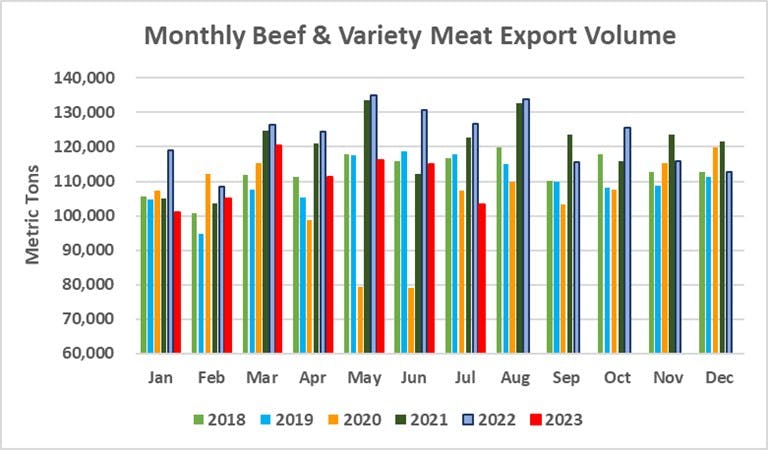
After a slow start in 2023, beef exports to Taiwan have exceeded year-ago levels in three consecutive months. July exports to Taiwan climbed 15% to 5,298 mt, while value increased 2% to $52.2 million. Through July, exports to Taiwan remained 7% below last year's record pace at 39,090 mt, valued at $379.8 million (down 23%).
Beef exports to Canada posted another strong month in July, with shipments climbing 12% from a year ago to 9,969 mt, valued at $87.2 million (up 17%). January-July exports to Canada increased 2% in both volume (61,933 mt) and value ($504.8 million).
Other January-July export results for U.S. beef include:
Lamb export volume rebounds in July
Following a slow second quarter, July exports of U.S. lamb muscle cuts showed signs of a rebound. July export volume was 197 mt, up 22% from a year ago and the highest since March. Export value was $928,000, down 2% year-over-year but the highest since April.
For January through July, lamb exports were 1% below last year's pace at 1,264 mt, while value fell 6% to $7.3 million. Markets trending higher included Mexico, Canada, the Netherlands Antilles, Panama and Guatemala.
Complete January-July export results for U.S. pork, beef and lamb are available from USMEF's statistics web page.
For questions, please contact Joe Schuele or call 303-547-0030.
NOTES:
The U.S. Grains Council's (USGC's) 2023 sorghum programming has sparked significant interest among Chinese coarse grain importers, serving to further solidify U.S. sorghum's Chinese market share. The Council's April 2023 trade mission to China and the corresponding Export Sorghum conference in June connected Chinese buyers responsible for roughly 70 percent of all exported sorghum purchases with U.S. merchants and suppliers. This programming gave U.S. sorghum's largest customer a firsthand look into the care and specialization applied to U.S. sorghum cultivation, reinforcing U.S. producers' reputation for consistently providing the world's highest quality grain sorghum. The weeks following USGC's China-focused sorghum programming saw immediate increases in export figures.
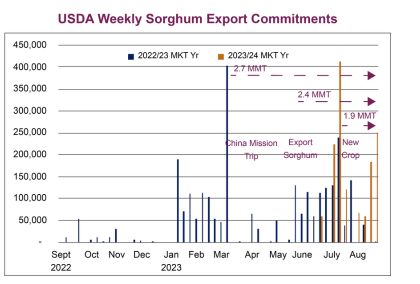
"USGC's programming has China buyers talking about U.S. origin sorghum and buying large quantities," said Jace Hefner, USGC manager of global trade. "With domestic feed costs increasing in China, the premium for U.S. sorghum is being driven by demand for baijiu – the most widely consumed spirit in the world. But demand from the livestock industry remains strong as well. We anticipate these purchases continuing through the fall of 2023." According to the most recent U.S. Department of Agriculture Global Agricultural Trade System (USDA GATS) data, sorghum continues to maintain a 10-year average total trade value more than $1.3 billion. In this 10-year time frame, China has maintained its stronghold in U.S. sorghum purchasing. China currently represents 80.7% of the total trade value in U.S. sorghum purchases.
World sorghum production is expected to increase in the new marketing year, mainly due to expected U.S. production increase. The U.S. will represent roughly 15 percent of the world's production total and more than 60 percent of the world's sorghum exports.
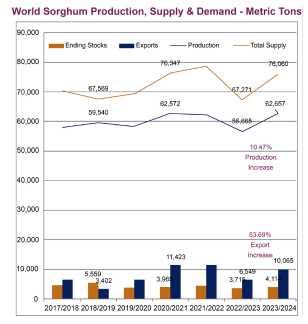
China continues to demand sorghum for baijiu production and its feed and livestock industry sees U.S. sorghum as an economical feed ingredient as well. "U.S. sorghum farmers consistently produce the highest quality sorghum on the market, and overseas buyers can't get enough," Hefner said. "The Council will continue programming focused on preserving sorghum's majority market share in China, as well as cultivating new export markets around the world."
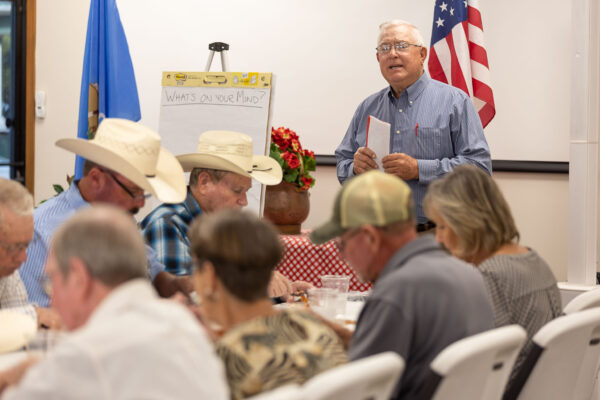
Oklahoma Farm Bureau members recently gathered for a series of 11 August Area Meetings to discuss issues, challenges, and opportunities facing agriculture and rural Oklahoma in preparation for the organization's grassroots policy development process.
Farm Director KC Sheperd is visiting with the Oklahoma Farm Bureau Vice President of Public Policy, Steve Thompson, about the highlights from the OKFB August Area Meetings.
More than 400 Farm Bureau members and guests attended the meetings where top issues surfaced by OKFB members included the upcoming farm bill, water rights and water infrastructure, the state's marijuana industry, electric vehicle incentives and taxation, foreign ownership of land, EPA pesticide rules, native American tribal jurisdiction and more.
"It was a good year," Thompson said. "I think the tone and the mood were mostly positive and mostly calm. It felt like earlier on, at the beginning of them, there had been a little more rain, particularly out in the panhandle, so they were in a better mood. As the month went on and the heat went on, it seemed like the drought and water became more of a topic."
The biggest concerns from producers, Thompson said, circled around decisions made by the Biden Administration through various agencies such as the Environmental Protection Agency.
"One of the things they talked about the most had to do with electric vehicles and concern that we have gone too far as a society in incentivizing that in areas of Oklahoma that it is not a great feasible option, and punishing people who have traditional vehicles," Thompson said.
On the topic of drought, Thompson said it is important to continue action and conversations about drought, even when it starts to rain a little bit. Therefore, he added, the Emergency Drought Commission is an important asset for producers.
"The joke is, you are only two weeks away from a drought in Oklahoma, and it is really not a joke," Thompson said. "I think it is true. So, there are a number of things that we could do, but I do think that the commission may evolve a little bit in what they do as it becomes an ongoing process, rather than just an emergency process. How that looks remains to be seen."
Now that the meetings have finished up, Farm Bureau members will take the ideas discussed and write policy resolutions for their county resolutions meetings. Resolutions that are passed by county Farm Bureaus will be presented for consideration at the OKFB state resolutions meeting, which will be held October 24-25 at the Embassy Suites Medical Center in Oklahoma City.
On November 10 through 12 at the Omni Hotel in Oklahoma City, OKFB will have its annual meeting. The three-day event features Young Farmers and Ranchers competitive events, Women's Leadership Committee luncheon, Farm Bureau policy development, election of statewide Farm Bureau leaders and more. With sessions featuring engaging speakers, awards presentations and Oklahoma Farm Bureau's business sessions, the annual convention is a great way to connect with fellow Farm Bureau members.

Asserting that U.S. tax policy should be tied to the best standards the government has to offer, 17 of the nation's top corn grower leaders sent a letter to Treasury Secretary Janet Yellen today encouraging her to adopt an emissions model developed by the Department of Energy as her agency works with the Internal Revenue Service to determine which biofuels lower greenhouse gas emissions enough to qualify for sustainable aviation fuel tax credits under the Inflation Reduction Act.
The letter, which was signed by the president of the National Corn Growers Association and the leaders from state grower groups across the country, calls on Treasury to use an emissions standard referred to as the GREET model, which was developed by the DOE, rather than a less comprehensive international standard preferred by some groups.
"GREET is the federal government's most robust and updated model or methodology for transportation lifecycle assessment," the letter says. "It is used globally to measure lifecycle greenhouse gas emissions from transportation, and the DOE has the best resources, expertise, and current ability within federal government agencies to assess lifecycle emissions accurately and scientifically."
Unlike other models, GREET considers the full environmental picture, the corn growers noted.
"The GREET model accurately accounts for on-farm carbon reduction activities and feedstock yield increases and the improved agriculture production practices that farmers have adopted over the last twenty years," the letter says. "This further solidifies GREET as the methodology Treasury and the IRS should use to determine tax credits for SAF under the IRA."
The letter comes as corn ethanol, which has been used for years to lower greenhouse gas emissions from cars and trucks while saving consumers money at the pump, is being considered for use in the aviation arena where experts say the biofuel would do for airplanes what it has done for autos.
But as corn grower leaders point out, the tax credit from the IRA will be crucial to ensuring ethanol is quickly made available in the aviation sector. A decision on that tax credit could come down to which emissions model is used to determine greenhouse gas emission reductions.
Citing a recent speech in which President Biden said farmers will lead the way on aviation biofuels, the letter notes, "If we are going to make the president's promise a reality, we are going to have to have a reliable model in place and one that bases U.S. tax policy on the best information and instruments the U.S. government has to offer."
Yellen is expected to make a final announcement on the tax credits this month.
The National Milk Producers Federation announced a significant staff reorganization as it transitions to new leadership, as incoming President & CEO Gregg Doud began work with the organization this week as the organization's Chief Operating Officer, a position he will hold until current President & CEO Jim Mulhern retires in January.
"I am excited to announce these changes, which will enhance the efficiency and effectiveness of our organizational structure," said Mulhern. "They also recognize the significant contributions of the affected individuals to our overall success in recent years and position the organization well for even greater success in the future."
NMPF named three Executive Vice Presidents – Paul Bleiberg, Shawna Morris and Alan Bjerga – as part of the reorganization, recognizing responsibilities that are expanding across NMPF teams. Bleiberg will serve as Executive Vice President, Government Relations; Morris as Executive Vice President, Trade Policy & Global Affairs; and Bjerga as Executive Vice President, Communications and Industry Relations. Other promotions include David West to Chief Administrative Officer; Stephen Cain to Senior Director, Economic Research & Analysis; Beverly Hampton Phifer to Senior Director, FARM Animal Care; Theresa Sweeney-Murphy as Senior Director, Communications and Outreach; Miquela Hanselman to Director, Regulatory Affairs; and Tony Rice to Director, Trade Policy. Staffers receiving title changes in line with new responsibilities are Chris Galen, who will serve as Senior Vice President of Member Services and Governance, and Claudia Larson, Senior Director, Government Relations & Head of Nutrition Policy.
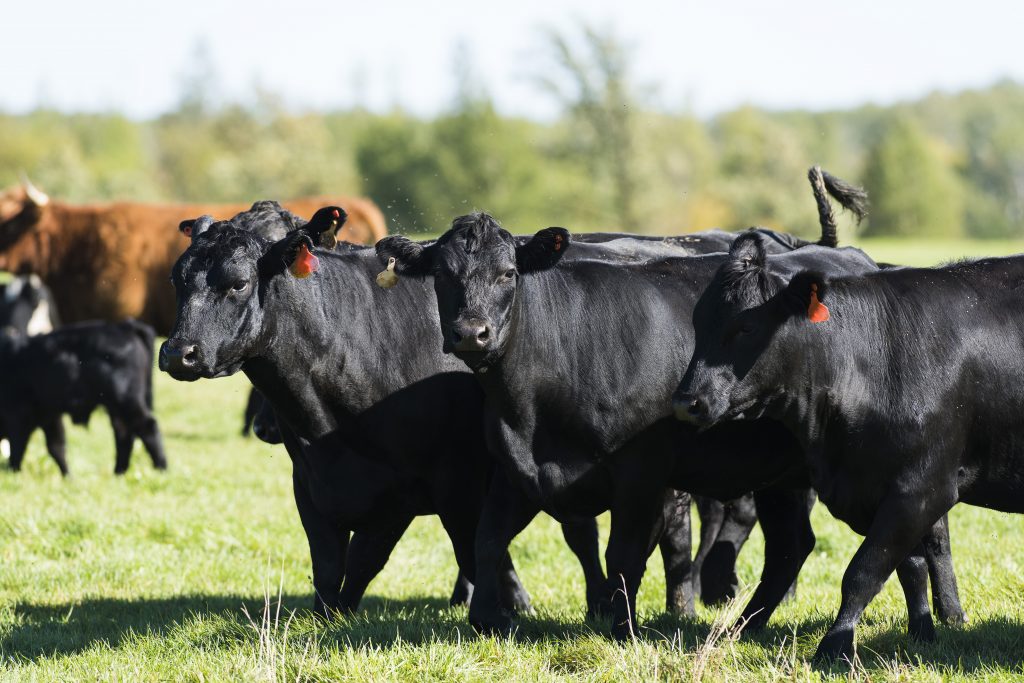
Senior Farm and Ranch Broadcaster, Ron Hays, is back talking with professor and Extension Beef Cattle Specialist at Oklahoma State University, Dr. David Lalman, about hybrid cows.
As expenses are directly related to a cow's ability to thrive in a forage environment, Lalman said a hybrid cow might be a good idea, especially in times of drought and high feed prices.
"If you have to go purchase all of those harvested feeds to either maintain a cow that is of larger weight but not maybe weaning a bigger calf, that is going to work against your bottom line," Lalman said. "I think there is a lot of opportunity to improve there."
When it comes to researching the improvement of individual cow forage intake and efficiency, Lalman said there is tremendous variation.
"We found some cows that weaned big calves and give a lot of milk and only consume 20 to 25 pounds of hay a day and maintain their body condition," Lalman said. "We found a few of those cows that are just rockstars."
There has also been work to breed cattle that produce less methane.
"The government is throwing a lot of money into research looking at that kind of thing," Lalman said. "We have been fortunate at OSU to get some of those grants that will help us with some of these other practical questions along the way, but yes, methane production is one thing that we are looking up in our research program at OSU."
The cattle industry does not produce a tremendous amount of methane to begin with, and it has about a 10-to-12-year cycle, Lalman said, so what is produced is just recycled.
"We have about the same number of ruminants, apparently, in the U.S. that we had 200 years ago," Lalman said. "They were just different types of ruminants- deer, elk bison, and so on."
Working in collaboration with Kansas State University, Lalman said, OSU is hoping to develop a genetic tool to find animals that are productive and low methane producers.
For the cow-calf operator who is planning to rebuild their cow herd, Lalman gave some insight on what genetics they might want to select for.
"First of all, you need to have a very good plan in terms of your breeding program," Lalman said.
Moderation, Lalman said, is a good start when rebuilding in terms of EPDs. There is no need to be too radical in terms of high calving ease or low birth weight, he added, because there is a strong correlation between birth weight and weaning weight.
"We have EPDs in several of the breed associations to help you identify those cattle," Lalman said.
The Beef Buzz is a regular feature heard on radio stations around the region on the Radio Oklahoma Ag Network and is a regular audio feature found on this website as well. Click on the LISTEN BAR for today's show and check out our archives for older Beef Buzz shows covering the gamut of the beef cattle industry today.
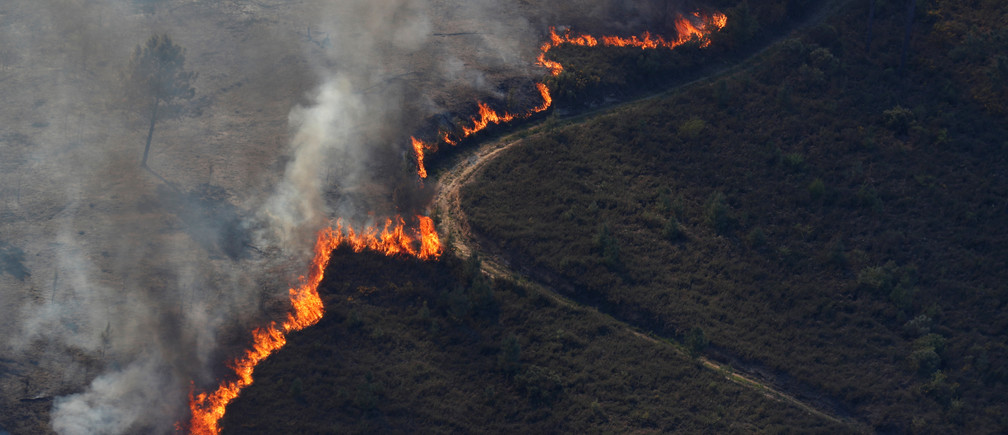
Statewide Discussion: Hot temperatures will again dominate the forecast headlines today and tomorrow with 100°+ observations this afternoon across the west and south. A welcomed pattern change is in the offing beginning late Saturday with cooler temperatures and rain chances improving Sunday. Before this forecasted pattern change settles in, a few more days of elevated fire weather over stressed fuels will hold fire danger concerns in place.
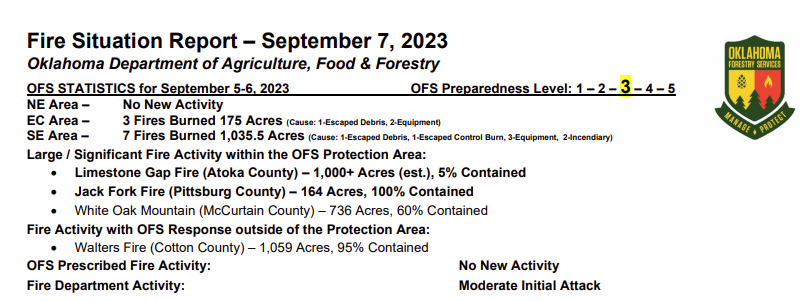
A Fuels & Fire Behavior Advisory has been issued covering the southern one-third of Oklahoma:
Today: The highest fire danger indices today will be in across western Oklahoma and along the Red River where the strongest alignment of fire weather and fuels occurs this afternoon. This evening, low storm chances in western Oklahoma will present potential for dry lightning over receptive fuels. While slightly relative humidity and wind speeds below critical threshold will not meet warning criteria today, fuels will be receptive supporting active fire behavior. Initial attack efforts are expected to be successful noting that limited large fire potential exists largely due to fuels conditions. Thunderstorm chances do build in tonight over northeastern Oklahoma.
• Southwestern & Western Oklahoma: Temperatures will again push into the triple digit range this afternoon with highs
99° to possibly 107°. Relative humidity values this afternoon will dip as low as 11% in the western Panhandle with most
of western Oklahoma 19-27% yielding fine-dead fuel moisture at 3-4%. Lacking wetting rains for an extended period of
time, live fuel moisture values have dropped significantly bringing enhanced fuels availability and overall fuel
receptiveness. During peak burning conditions this afternoon, southerly winds will be sustained 12-17 mph with some
higher gusts supporting moderate rates of fire spread. Rangeland fuels will exhibit head fire rates of spread generally less
than 90 ft/min with flame lengths 8-10 ft. Higher rates of spread will occur where wind and topography are aligned. Incident responders should anticipate problematic fire behavior including high fireline intensity, torching and spotting. There are low chances of thunderstorms this evening which may encourage erratic winds and changing spread direction coupled with potential for new lightning ignitions.
• Central Oklahoma: Initial attack activity is expected to continue today with temperatures 96° (north) to 106° on the Red River under clear skies. Relative humidity values will register 25-33% yielding fine-dead fuel moisture 4% south to 5% north. Initial attack efforts are expected to be successful, although challenging, given wind speeds 6-13 mph. Grass
dominated fuels will exhibit head fire rates of spread generally less than 90 ft/min although fire established in mixed fuels
will exhibit problematic fire behavior.
• Eastern Oklahoma: The highest fire danger indices remain across southeastern Oklahoma where ongoing fire activity
continues to exhibit frustrating resistance to control. Temperatures 93°-102°, mostly clear skies and afternoon relative
humidity values 29-32% will present very receptive fuels. Ongoing problematic and extreme fire behavior will continue
again today where fuels driven fire runs occur when aligned with topography. Light and somewhat variable winds will limit fire spread potential where slope is less than 10%. Rain/storm chances increase tonight in northeastern Oklahoma.
Near-Term: Rain chances increase Friday in areas of eastern Oklahoma while fire danger persists west with focus in the
southwestern counties. A pattern change is in the forecast to take hold Sunday and early next week.
Burn Bans:
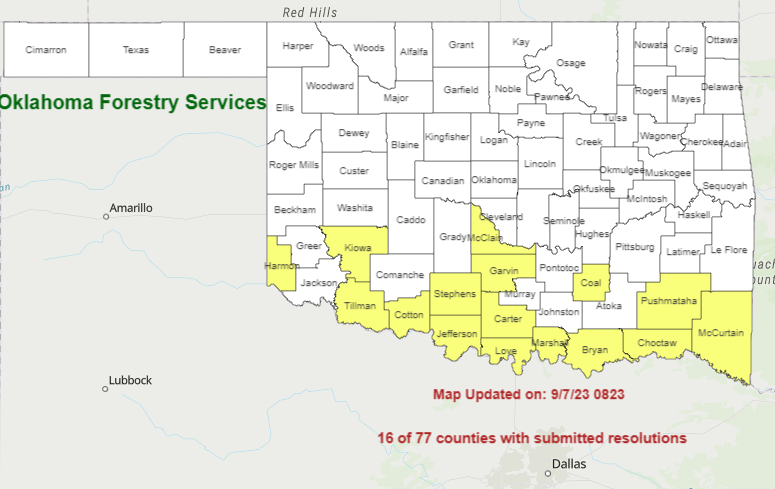
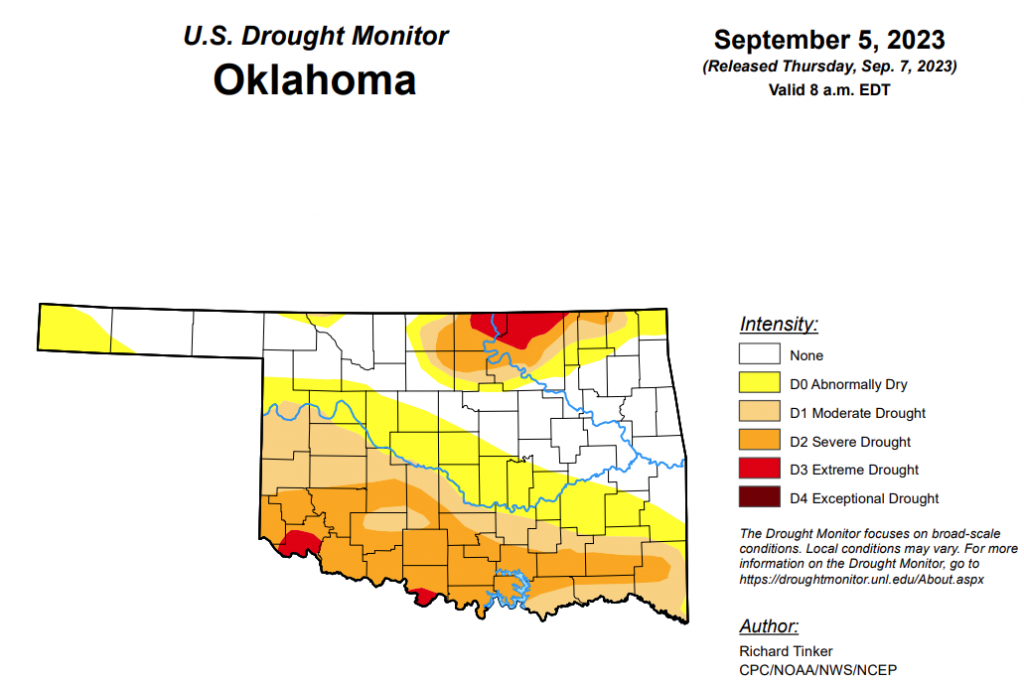
To view the Oklahoma Drought Map, click here.
According to the latest Oklahoma Drought Monitor, exceptional drought remains at zero percent, unchanged for the past few weeks.
Extreme drought or worse is now at 2.72 percent, up from last week's 1.97 percent.
Severe drought or worse is now at 24.96 percent, up from last week's 19.7 percent.
Moderate drought or worse is now at 43.39 percent, up from last week's 35.98 percent.
Abnormally dry or worse conditions are now at 66.50 percent, up from last week's 58.27 percent.
According to the 6-to-10-day precipitation outlook map, the majority of the state is leaning above a 40 to 50 percent chance of precipitation through September 16. The far northeast corner of the state is leaning above a 33 to 40 percent chance through that date. The far southwest corner is likely above a 50 to 60 percent chance of precipitation through that September 16 date.
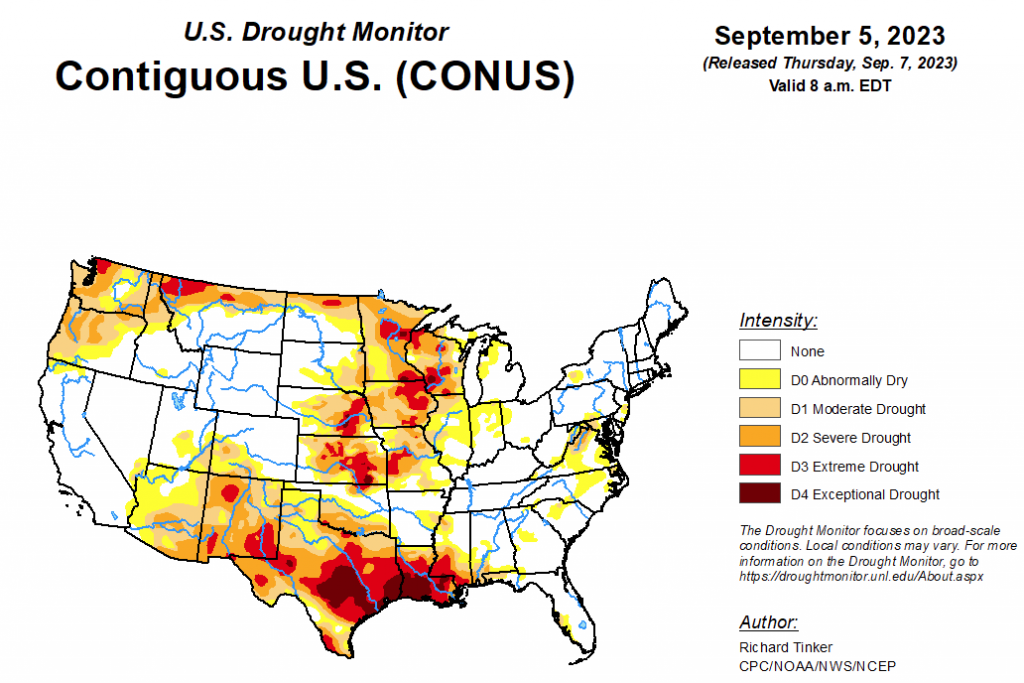
To view the United States Drought Map, click here.
According to the latest U.S. drought monitor, heavy rainfall associated with Hurricane Idalia brought damaging winds and flooding centered along its path. Idalia moved from the Gulf of Mexico inland along the northeastern Gulf Coast of Florida and continued northeastward through south-central and east-central Georgia, slightly inland from the South Carolina Coast, then across southeastern North Carolina before moving into the open waters of the northwestern Atlantic Ocean. A solid swath of heavy rains were observed in a band from the eastern Florida Panhandle northward through middle Georgia, interior eastern South Carolina, and southeastern North Carolina as far north as the lower Outer Banks. Between 4.5 to 10.0 inches of rain fell solidly along this swath of land, but rainfall totals dropped off rapidly to the west and east of the main band.
Farther west, a surge of tropical moisture pushed northward into the southwestern U.S., continuing northward across the Great Basin, Intermountain West, and adjacent Rockies into adjacent Canada. Heavy rainfall fell in a broken pattern over this general area, with the highest amounts reported across interior southeastern California, over much of the middle Colorado River Basin, and across scattered areas farther north. The heaviest amounts outside the lower Colorado River Basin fell on higher elevations and over areas where precipitation was enhanced by orography, as is typical.
Most of the Nation, however, endured a hot and drier-than-normal week, including most areas of drought. Temperatures averaged 5 to 10 deg. F accompanied deficient precipitation over a large area from the Rockies to the Appalachians and central Gulf Coast Region, prompting drought intensification over large parts of the Upper Mississippi Valley, the Central States, and the southern tier of the country west of the Florida Panhandle. Improvement was limited to the band of heavy precipitation from Hurricane Idalia, and in scattered locales affected by the tropical moisture surge in the Desert Southwest, from southeastern Utah to central Arizona westward toward central California. According to the U.S. Department of Agriculture (USDA), the coverage of topsoils short or very short of moisture increased by 6 percent this past week, now covering 58 percent of the contiguous 48 states. This is the greatest coverage at this time of year in more than 9 years, the prior record in that short interim being just over 50 percent in 2020.
In the Southern Plains, brutally hot and dry weather again this week kept dryness entrenched across Texas, southern Oklahoma, Louisiana, and southern Mississippi. For the past 2 months, temperatures averaged 4 to 8 deg. F above normal from most of the Four Corners States eastward through most of Texas and Louisiana, and across southern Mississippi. A solid swath of extreme to exceptional drought (D3-D4) is now entrenched from central Texas eastward through most of Louisiana and southern Mississippi, expanding slightly northward as well. Outside the large area of solid D3-D4 conditions, conditions generally deteriorated where dryness was antecedent or on the cusp of developing, and remained essentially unchanged elsewhere. In contrast, Tennessee and most of Arkansas remained free of any systemic dryness. According to the USDA, the cotton crop has not fared well this summer, suffering through the persistent hot and rain-free weather. Almost 80 percent of the Oklahoma cotton crop is in poor or very poor condition, as is 61 percent of Texas cotton. Peanuts, sorghum, soybeans, and rice planted in Texas, Louisiana, southern Oklahoma, and southern Mississippi were also being stressed by from heat and lack of rainfall, although the proportion in poor condition or worse is considerably lower. In addition, deteriorating pastures and rangelands are stressing livestock. As of early September, 72 percent of Texas rangelands, 63 percent of Louisiana pastures, and almost 40 percent of Mississippi pastures were in poor or very poor condition.
In the High Plains, conditions vary markedly from southeast to northwest here. Similar to western sections of the Midwest Region, Kansas and Nebraska in the southeastern High Plains region are largely covered by drought, including significant expanses of D2 to D3 conditions, with new or expanded D4 (exceptional drought) noted in a few locations. Farther west and north, conditions are much more favorable. To the north and west of central Nebraska, dryness and drought are restricted to the eastern and northern Dakotas, and southwestern Colorado. As in other parts of the Nation's midsection, agricultural drought stress is palpable, and on the rise. Across Kansas, 40 percent of soybeans are in poor or very poor condition, as are 33 percent of the corn crop, 29 percent of sorghum, and 47 percent of rangelands. Across Nebraska, about one quarter of all the aforementioned crops are in poor or very poor condition. Still, this region did not see the degree of deterioration observed in the Midwest Region, with significant worsening most notable in central and eastern Kansas.
In the West, monsoon rains remained subpar across eastern Arizona, New Mexico, and southwestern Colorado, prompting a continued slow deterioration in dryness and drought there. With the monsoonal wet season winding down during September, the odds for heavy precipitation episodes declines, and thus the prospects for significant relief from the intensifying dryness and drought become progressively worse. Dryness and drought also cover large parts of Washington and Oregon as well as the northern tiers of Idaho and Montana. Some deterioration was noted in north-central Montana, but farther west, conditions were essentially unchanged in northern Idaho and the Pacific Northwest.
Looking ahead, according to the Weather Prediction Center (WPC), the next 5 days (September 7-11, 2023) will bring some much-needed rainfall to the parched central Plains. Over 0.5 inch is forecast from parts of Oklahoma and the Texas Panhandle northward through Nebraska, with 1.5 to locally 3.0 inches anticipated in part of central Kansas. Moderate to heavy precipitation is also anticipated from the southern Appalachians and adjacent foothills northeastward through the mid-Atlantic and Northeast. At least 1.5 inches is expected from the mountains of northwestern Virginia northeastward through most of the Northeast and New England. The heaviest amounts are expected from central Pennsylvania northeastward through interior southeastern New York, where totals could top 4 inches. Eastern Florida could also receive moderate to locally heavy precipitation, generally 0.5 to locally 2.0 inches. A broad area covering most of the Plains and the Lower Mississippi Valley are expecting several tenths of an inch of precipitation, as are most locations from the Appalachians and eastern Gulf Coast Region eastward to the Atlantic Seaboard. Most other places might see light precipitation, but little or none is expected across the Far West, most of the Rockies, southern Texas, the southern High Plains, the Middle Mississippi and Lower Ohio Valleys, And parts of the interior Deep South. Hot weather is expected to accompany subnormal rainfall totals along the southern tier of the country from southernmost California eastward through the central Gulf Coast Region, as has been the case much of the summer. Daily maximum temperatures are expected to average 5 to 9 deg. F above normal there. In contrast, milder than normal temperatures are expected to displace the heat that has recently affected parts of the Nation's Midsection, with readings expected to average 3 to 7 deg. F below normal across much of the region from the central High Plains eastward across the Middle Mississippi and Ohio Valleys.
The Climate Prediction Center's 6-10 day outlook (valid September 12-16, 2023) favors a similar pattern. Odds favor above-normal temperatures from the South Atlantic Region westward across the southern tier of the Contiguous 48 states, over most areas from the Rockies westward, and the northern Plains. Meanwhile, below-normal temperatures are favored across a large swath from the south-central Plains eastward through most of the Mississippi Valley, the Upper Southeast, the Appalachians, the Atlantic Piedmont, the Mid-Atlantic, and the lower Northeast. There are enhanced chances for surplus precipitation across the central and southern Rockies, much of the central and southern Plains, the southern half of the Mississippi Valley, the Ohio Valley, the interior Southeast, the Appalachians, the mid-Atlantic, and the Northeast. In contrast, drier-than-normal weather is favored across most of the Great Lakes, the northern tiers of the Plains and Rockies, the northern Intermountain West, and the Pacific Northwest, as well as across the Florida Peninsula.
To view the 6-10 Day Precipitation Outlook Map, click here.
To view the 6-10 Day Temperature Outlook Map, click here.
To view the Monthly Drought Outlook Map, click here.
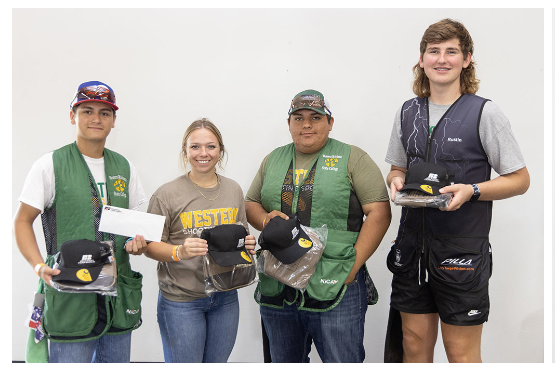
The Western Oklahoma State College shooting sports team won the open division at the 2023 Oklahoma Farm Bureau Young Farmers & Ranchers Shotgun Shoot Fundraiser Friday, August 26, at Silverleaf Shotgun Sports near Guthrie.
The Oklahoma Farm Bureau Young Farmers & Ranchers raised $15,595 for the OKFB Foundation for Agriculture during the 2023 YF&R Shotgun Shoot Fundraiser Saturday, Aug. 27, at Silverleaf Shotgun Sports near Guthrie.
More than 34 teams with 136 shooters participated in the sporting-clays-style tournament across 12 stations that tested their skills mimicking real-world hunting scenarios.
Awards were given to top shooters in high school and open divisions. The Western Oklahoma State College shooting sports team won the open competition, with team member Dillon Lopez earning the competition's top shooter award. The Sand Springs competitive shooting team won the high school division.
The winning team in the open division received $400 for each shooter, a shotgun shell pouch and OKFB hats. The winning high school division team won a shotgun shell pouch and ammunition.
Proceeds from the event were donated to the OKFB Foundation for Agriculture, which supports Oklahoma's farming and ranching community through philanthropic efforts while providing educational resources and opportunities to increase awareness and knowledge of Oklahoma agriculture.
Title sponsors for the event were Beck's Farm Equipment, Farm Credit of Western Oklahoma, Jackson County Farm Bureau, John Vance Fleet Services, Oklahoma Farm Bureau Insurance and Vermeer.
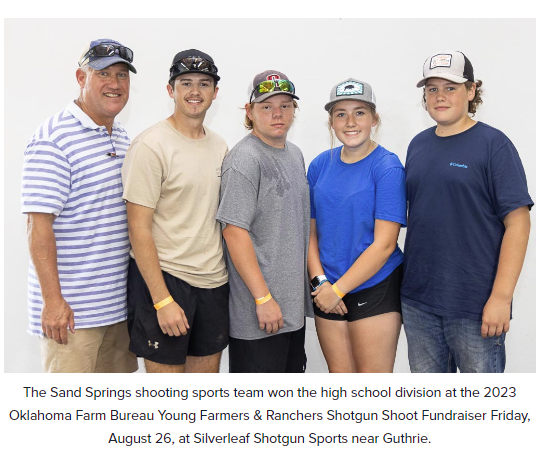
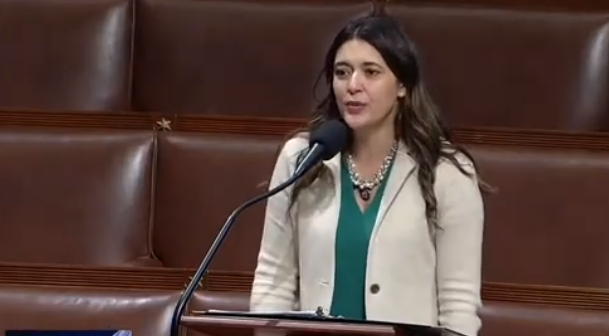
Congresswoman Stephanie Bice (OK-05) recently spoke with the Washington Examiner about her new legislation, The Stop CCP Land Act, which incentivizes states to prohibit countries such as China and Russia from purchasing American agricultural land. Read more below.
Washington Examiner - Reese Gorman
Rep. Stephanie Bice (R-OK) introduced the Stop China's Continuous Purchase of Land Act, which would take a state-focused approach to stop countries like China and Russia from purchasing land in America.
Her bill looks to incentivize states not to allow the sale of agricultural land to all countries on the State Department's Defense Trade Control Country Policies List and Russia by restricting access to certain federal grants and programs that were made available in the Inflation Reduction Act.
It would also require the secretary of agriculture to submit a report to Congress on how the Agricultural Foreign Investment Disclosure Act should be updated to ensure more accurate documentation, reporting, and monitoring of foreign ownership of agricultural land.
In addition, the bill would require the Comptroller General at the Government Accountability Office to submit a report "assessing the bill's impact and report on any measures that can be taken to better secure real estate in the United States from foreign manipulation" within 90 days of the bill being enacted.
Chinese land ownership in America represents a small fraction of the total foreign land ownership in the country — less than 1%, according to a 2021 report generated by the Department of Agriculture — but the increased bipartisan interest in combating Chinese land ownership comes amid growing bipartisan concern that by buying the land China can gain control of American assets and information.
But Chinese land ownership has shot up significantly over the past decade from approximately 69,000 acres in 2011 to nearly 384,000 acres in 2021, according to USDA data. And foreign land ownership as a whole has also shot up over the past decade.
"China and the CCP make up one of the greatest threats to our country which is why it is deeply concerning that they continue to gobble up American land at an astounding rate," Bice said in a statement. "Ten years ago, 321,000 acres in Oklahoma were foreign-owned. Today, that number has skyrocketed to 1.67 million. The Stop CCP Land Act incentivizes states to prohibit countries like China and Russia from purchasing American agricultural land. To put it simply, Americans should own American land, not foreign adversaries."
Bice's bill has 15 co-sponsors, all Republican, including House Budget Committee Chairman Jodey Arrington (R-TX).

AAA's Your Driving Costs (YDC) has been a reliable data source for the expenses associated with owning and operating a brand-new vehicle for more than seven decades. Based on the latest figures, the average cost of owning and operating a new vehicle in 2023 has increased significantly, with an annual expense of $12,182 or a monthly cost of $1,015. This is a sharp increase from 2022 when the average yearly cost was only $10,728, or $894 monthly.
"It's important for car buyers to clearly understand the costs associated with owning a new vehicle," said Rylie Mansuetti, spokesperson for AAA Oklahoma. "Due to global supply chain issues and constrained inventory of new vehicles, car prices rose dramatically in 2022. And while the situation continues to improve, the spillover effects are keeping prices high."
The overall average manufacturer's suggested retail price (MSRP) of the new vehicles in the 2023 YDC study is $34,876. This is $1,575 (4.7%) higher than last year. It is important to note that MSRP does not always correspond to a consumer's actual purchase price and may vary depending on demand. Furthermore, a higher sticker price directly impacts finance costs, with this year's vehicles boasting an average annual finance charge of $1,253, a staggering 90% increase from the previous year.
The change in the annual cost of owning a new vehicle is also likely driven by:
Compared to last year, one of the higher annual cost categories was fuel, but this year's average cost per mile has decreased by roughly 2 cents per mile. It's worth noting that the cost of charging EVs has actually increased, by almost 2 cents per kWh over last year, from 13.9 cents per kWh to 15.8 cents per kWh. The increase is likely accounted for by higher-than-expected inflation, according to the U.S. Energy Information Administration (EIA).
Given their size, fuel economy, and prices, it should come as no surprise that ½-ton pickups have the highest average driving cost among all vehicle categories covered in the YDC study. Interestingly, the pickup truck market has slowed over the last 12 months as gas prices trend high and financial costs climb. Pickup trucks excel at hauling and towing, although many buyers do not use them for these purposes. Potential buyers should remember that the unique capabilities of pickups come at a high cost of over $1 per mile.
"The once popular pickup truck is now seeing a slight decline in demand as these vehicles have become increasingly expensive, rivaling the price of many luxury cars," said Mansuetti. "As interest rates continue to climb, this adds a layer of expense per month that consumers should consider when shopping for their next vehicle."
AAA CAR BUYING ADVICE
With the purchase price being so high and impacting other cost categories, it's important to remember these car-buying tips:
The Your Driving Costs online calculator (https://www.aaa.com/autorepair/drivingcosts) provides an interactive and personalized breakdown for car shoppers that uses the same methodology as AAA's annual analysis of new car ownership. Consumers can view comprehensive cost analyses of a specific vehicle by category to determine if ownership costs best align with their budget. Data is available for new and used vehicles (five model years back), and consumers may customize the results based on location and other personal driving tendencies.
ADDITIONAL AAA RESOURCES
METHODOLOGY
AAA uses a proprietary methodology to calculate the costs of owning and operating a new car in the United States. Data is gathered from various sources, including Vincentric LLC, and incorporates standardized criteria to estimate the costs of using a new vehicle for personal transportation over five years and 75,000 miles of ownership. The use of standardized criteria ensures that AAA estimates are consistent when comparing the driving costs of different vehicle types. Actual driving costs will vary based on driving habits, location, operating conditions and other factors.
AAA evaluated nine categories of vehicles – consisting of 45 models – to determine a new vehicle's average annual operating and ownership costs. AAA selects top-selling, mid-priced models and compares them across six categories: fuel, maintenance/repair/tire costs, insurance, license/registration/taxes, depreciation, and finance charges. The study assumes a five-year ownership period, with the vehicle being driven 15,000 miles/annually (or a total of 75,000 miles).
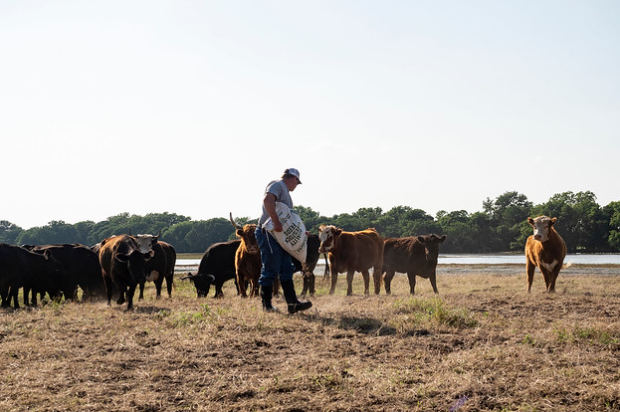
Cattle producers should adjust their feed supplementation programs to ensure a cow grazing native rangeland receives an average of 3.3 pounds of protein per day. (Photo by Todd Johnson, OSU Agriculture)
As summer comes to an end, cow-calf producers should prepare for a decline in forage quality.
The nutritional value of tallgrass prairie forage is rapidly decreasing as the seasons change, and protein supplementation may be vital for fall-calving herds.
David Lalman, Oklahoma State University Extension beef cattle specialist, said the average lactating beef cow requires 11% crude protein to maintain adequate body condition, but native grass species like big bluestem, switchgrass and Indian grass only offer roughly 6% crude protein in late summer.
A cow grazing native rangeland at this time of year needs an average of 3.3 pounds of protein per day but may only receive half of that due to low forage quality. Without supplementation, a protein deficiency can occur and cause weight loss.
"There's a lot of moving targets when it comes to making efficient supplementation decisions this time of year," Lalman said. "A protein deficient cow on native rangeland requires 7.5 pounds of 20% cubes per day to fill the protein gap, raising input costs for producers."
The amount of required supplementation varies depending on forage quality. Changing the timing of calving season, introducing other forage types and adjusting supplementation to match animal needs will improve herd health.
Lalman recommends keeping an eye on patterns and buildup of cattle feces. If fecal patties begin to stack up, there is potential for protein deficiency within the herd. He advises beginning supplementation before cattle have lost condition. If a protein deficiency is managed while there is abundant forage, higher rates of digestibility can be achieved.
Lalman discusses late summer forage and protein requirements in a recent segment of "SUNUP," OSU Agriculture's production agriculture television show. Watch "SUNUP" Saturdays at 7:30 a.m. and Sundays at 6 a.m. on OETA.
OSU Extension uses research-based information to help all Oklahomans solve local issues and concerns, promote leadership and manage resources wisely throughout the state's 77 counties. Most information is available at little to no cost.
RON's Dave Lanning has a pre-opening look at today's agricultural Markets.
Click the audio tab below for today's report.
Urban and Community Forestry Grants will be available to Oklahoma communities again this year. The federal grants, administered by Oklahoma Forestry Services, are intended primarily to help communities and non-profits develop local forestry plans, broaden urban forestry programs, and provide training opportunities.
The Urban and Community Forestry Grants are available to non-profit organizations, local government agencies, educational institutions, and civic or neighborhood associations. They range from $1,000 to $10,000. Recipients are required to provide matching funds in cash, donations or in-kind contributions and services.
Applications for Urban and Community Forestry Grants must be submitted to the Oklahoma Department of Agriculture, Food and Forestry by 5:00 p.m. November 17, 2023.
"Research and studies have proven time and time again that trees help improve everything from personal health and quality of living issues, to boosting economic growth opportunities for private homes and local business and business districts," said Oklahoma Urban Forestry Coordinator Mark Bays. "Trees help solve tough environmental problems commonly found in communities. The bottom line is healthy trees translate into healthy communities and healthy lives."
"Communities that have participated in the urban forestry grants program have developed a better understanding of the value of the services trees provide," Bays continued. "We have also been able to enhance the technical skills of those who plan, develop, and maintain trees in urban and community forests. A simple tree inventory can help communities recognize immediate concerns about their trees."
Bays says it's vital that rural communities and metropolitan areas take a progressive approach to caring for their trees.
"If we don't plan for the future, we stand to lose these valuable assets in our hometowns," Bays said.
Successful grant recipients should be notified before January 1st, 2024 and will have one year to complete their projects once started.
Grant applications are available on the Oklahoma Forestry Services website or by contacting OFS.
The National Corn Growers Association applauded Sens. Debbie Stabenow (D-Mich.) and John Boozman (R-Ark.) for a letter they sent today to the U.S. Department of Agriculture encouraging the agency to allocate funding from the Commodity Credit Corporation Charter Act to support the creation of new and better market opportunities for farmers, as well as in-kind international food assistance.
"Cultivating new foreign markets is one of NCGA's top priorities," said NCGA President Tom Haag. "So, we are deeply appreciative of Sens. Boozman and Stabenow for taking the lead on this issue. Both senators have proven time and time again that they are staunch advocates of corn growers."
The letter provided a roadmap to USDA on how to fund market development programs and explore opportunities to advance food assistance initiatives.
"As Congress works toward reauthorizing critical programs in the Farm Bill, we continue to hear from organizations representing the vast majority of U.S. agriculture about the need to strengthen trade opportunities, increase revenue streams, and help producers grow and thrive in a global economy," the letter said. "Farm Bill trade promotion programs help address these needs and build new markets. We believe that resources available under the CCC can support similar efforts to open accesss to markets and promote American-grown products abroad."
The Commodity Credit Corporation funds are used by the government to implement specific programs established by or to carry out activities under the broad authorities of the CCC Charter Act.
NCGA has been calling on Congress to increase its investments in programs, such as the Market Access Program and the Foreign Market Development program, which help grow foreign markets for American farmers.
American Farm Bureau Federation Chief Economist Roger Cryan presented the testimony below on behalf of AFBF and its membership at the ongoing Federal Milk Marketing Order Pricing Formula hearing. This is the second time Cryan has testified before the hearing, and he is expected to testify several additional times.
The American Farm Bureau Federation (AFBF) has nearly 6 million members in all 50 states and Puerto Rico, including many thousands of cooperative and independent dairy farmers. All of these dairy farmers are indirectly or (mostly) directly affected by the pricing provisions of the Federal Milk Marketing Orders (FMMOs).
These dairy farmers play a crucial role in the development of AFBF dairy policy. Every Farm Bureau position and proposal is based explicitly on that policy, developed through a grassroots process in which farmers make the decisions at every step of the way.
AFBF submitted 9 proposals for consideration in this hearing, and appreciates the opportunity to address the four that were accepted by USDA for consideration in this hearing, as well as the clear direction on what may be needed to advance the rest.
A fundamental focus of AFBF's proposals is the reduction or elimination of negative producer price differentials and the de-pooling they cause. We believe that an orderly pool is the key to orderly marketing and the continued benefits of the Federal Milk Marketing Orders to farmers, cooperatives, processors, and consumers. The key to an orderly pool, in turn, is above all the proper alignment of the four Class prices.
In addition to our own proposals, AFBF largely supports four of the five proposals submitted by the National Milk Producers Federation. (These are proposals 1, 3, 13, and 19.) For these, I will outline any substantive difference in our position, with an explanation for that difference. In the event that NMPF withdraws any of these proposals, wholly or in part, AFBF would ask that USDA consider such whole or partial proposal to be AFBF's proposal to represent.
This statement covers Category 2, Surveyed Commodity Products, and includes AFBF's response to Proposal 3, made by NMPF, and our presentation of Proposals 4 and 5, submitted by AFBF.
Response to Proposal 3. NMPF proposes to drop barrel cheese from Class III component and price calculations.
The American Farm Bureau Federation supports this proposal as written.
As NMPF outlines in its proposal, barrel cheese represents roughly 50% of the volume in the National Dairy Products Sales Report (NDPSR) but is used to set prices for only about 10% of cheese in the U.S. market. Price divergence between block and barrel prices now creates a "cheddar" cheese price for use in the formulas that is not representative of the value of 90% of cheese. We expect that the elimination of the barrel price from the survey will contribute to an even greater reliance on block prices in the U.S. cheese market, further reinforcing the block price as the appropriate foundation for the Class III protein and skim milk price.
Barrels should be dropped from the survey whether or not 640-pound blocks are added, per proposal 4.
Proposal 4: The American Farm Bureau Federation proposes that 640-pound blocks be added to the National Dairy Products Sales Report, to the cheddar cheese price calculation, and to the Class III protein calculation.
This is consistent with dropping barrels from the survey, per Proposal 3 by NMPF, but does not depend upon that measure.
As NMPF has indicated in that proposal, barrel cheese represents roughly 50% of the volume in the National Dairy Product Sales Report but is used to set prices for only about 10% of cheese in the U.S. market. Price divergence between block and barrel prices now creates a "cheddar" cheese price for use in the formulas that is not representative of the value of 90% of cheese.
Adding 640-pound blocks to the survey would expand the volume and emphasizing blocks generally; however, it would also move the balance of blocks and barrels closer (but not close) to the actual market mix in the event that USDA decided not to remove barrels from the survey. No price adjustment is necessary to integrate these larger blocks into the survey, as every indication we have is that the two sizes are largely interchangeable in price, use, and storage.
Need: There has been a pronounced shift from 40-pound blocks to 640-pound blocks in the marketplace. Adding 640-pound blocks would provide a deeper volume to the survey immediately and would avoid the need for a hearing in the future simply to address the further dwindling of 40-pound block volume.
Impact: We expect that the addition of 640-pound blocks to the survey will strengthen price discovery, avoid the potential for block manufacturers to switch between sizes to avoid and re-enter the price survey, and avoid a possible crisis of dwindling small blocks in the future. That is, a large and reliable survey volume will help avoid some sources of disorderly marketing.
A deeper survey will provide a stronger foundation for the Class III protein and skim milk price.
Language:
Add Section 1000.50(n)(1)(iii), as follows:
(iii) The U.S. average AMS survey price for 640-lb. block cheese reported by the Department for the month;
Proposal 5: The American Farm Bureau Federation (AFBF) proposes adding unsalted butter to the butterfat and protein calculation.
The growing volume of unsalted butter production and use in the U.S. market has meant that salted-only butter price collection in the National Dairy Products Sales Report survey increasingly underrepresents the value of U.S. butter.
At the time that the butter price survey was developed by the National Agricultural Statistics Service (NASS) in 1999, it was done in support of Federal Milk Marketing Order reform, per the preamble to the recommended decision for order reform, but there was no rulemaking – by AMS or NASS – to establish the logic for excluding unsalted butter. Later regulations in 2008 and 2012 did not address this decision either. (See 64 FR 16093, 73 FR 34181 et seq., 77 FR 8721 et seq.)
Need: The NDPSR collects prices only for salted, 80% fat butter in 25-kilo and 68-lb. boxes. This only captures a small and declining share of U.S. butter production. Based on a comparison of the NDPSR totals for a 52-week year and NASS dairy products annual reporting, butter in the NDPSR survey has fallen from 16% of total butter production (in the original NASS survey) to 10.9% in 2013 and 9.4% in 2022 in the current AMS survey. We have every reason to believe that this trend will continue without the addition of unsalted butter. The rest of the world produces and consumes primarily unsalted butter and growing volumes of commodity unsalted butter are being used by American bakers and confectioners. Although unsalted butter was produced in small quantities in the U.S. at the time of federal order reform, its share of U.S. production and sales has grown very substantially since then and is projected to continue growing. The result of this growth is that a substantial volume of commodity butter is not included in a NDPSR survey and is increasingly underrepresented.
While producing and distributing unsalted butter was once more difficult and expensive for butter plants, and butter was typically salted to allow for extended storage, U.S. butter makers are increasingly offering unsalted butter to domestic and overseas customers, matching the European convention. As a result, the definition of butter in the current data collection is outdated.
The continued specification of salted butter in the CMEGroup butter market specification is based on old technology; it may still be a reasonable standard to ensure a uniform product, but it is unnecessarily restrictive for the purposes of the NDPSR survey, just as the CMEGroup spot exchange specifications for cheddar cheese calls for 40-lb. blocks, but it used to price 640-lb. blocks, as well.
USDA butter grading data should demonstrate growth in demand and production of unsalted butter. In addition, U.S. butter exports have grown from about 2,000 metric tons in 2000 to over 65,000 metric tons in 2022, almost entirely supplied with unsalted butter. (Find at https://apps.fas.usda.gov/gats/default.aspx)
Impact: Incorporating the unsalted butter price into the FMMO butterfat formula will expand the base of the survey and make the survey price more representative of an evolving butter market. Collecting and publishing separate prices for salted and unsalted butter will allow for better market transparency and more orderly marketing of butter and milk. Anecdotal evidence suggests that unsalted butter is slightly more expensive than salted butter, but we believe that this is a specialty premium that is disappearing as unsalted butter becomes more common.
Language:
(l) Butterfat price. The butterfat price per pound, rounded to the nearest one-hundredth cent, shall be the weighted average of the U.S. average NASS AMS AA salted and unsalted Butter survey prices reported by the Department for the month, less 17.15 cents, with the result multiplied by 1.211.
Cryan previously provided testimony on the first category of issues outlined by USDA for the hearing, milk composition. AFBF submitted nine proposals for consideration during the hearing, and four were accepted by USDA. Additionally, AFBF largely supports four of the five proposals submitted by the National Milk Producers Federation.
The hearing, which began on August 23, has so far covered two of the expected six milk marketing issue areas, milk composition and surveyed commodity products. Remaining issue areas include Class III and Class IV formula factors; base Class I skim milk price; Class I and Class II differentials; and a final category for Agricultural Marketing Service changes required to accommodate implementation of other proposals.
AFBF's proposals are based on years of work by dairy farmer members, policy established through AFBF's grassroots policy development process, and recommendations developed during the FMMO Forum, which brought together representatives from all sectors of the dairy industry last October.
Full AFBF testimony on surveyed commodity products as submitted to the hearing, including reference sources, is available here. An explanation of the four AFBF proposals accepted for consideration is available here. For more information on all AFBF proposals, including those rejected by USDA, read Market Intel.
KC Sheperd recently caught up with the Vice President of Operations at Farm Data Services and Oklahoma cattle producer Clay Burtrum and talked about Livestock Risk Protection.
Farm Data Services is a management accounting company based in Stillwater, Oklahoma, that has provided financial analysis packets for clients around a five-state region for over 43 years.
"We really drill down to our monthly accounting service where we provide for all of our clients that shows where you have been, where you are going, and what to look forward to in these trying times," Burtrum said.
Livestock risk protection, Burtrum said, was created about 25 years ago. LRP is a risk management tool for all livestock producers and is eligible for anyone who wants to have a floor and buy insurance on their cattle.
"It is not a morbidity policy," Burtrum said. "This is a price protection program."
With prices as high as they are, Burtrum said it is critical to protect those high investments.
"We are really going to see those numbers start to climb, so when you look at the bottom dollar of what these prices are, we have to learn to protect them," Burtrum said.
Thirteen weeks is the minimum contract that can be purchased, Burtrum said, and the maximum contract is 52 weeks.
"It is available for steers, heifers, and brahman influence, dairy influence, and then even the unborn," Burtrum said.
This means if producers preg-check their females, Burtrum said the 2024 calf crop can be insured beforehand.
"It is very basic," Burtrum said. "You are setting a floor on your cattle, you are leaving your topside potential open, and you just have a floor. You are able to sleep at night knowing you have those cattle locked in."
If the market goes higher, Burtrum said producers will still get that price, but by purchasing protection, they have a floor price just in case.
"Let's rewind and remember the cow that stole Christmas in 2003, December the 23rd," Burtrum said. "I had six computers running trying to write LRP for everybody in the country that I had talked to about this. We don't know what is going to happen in this cattle market."
There are different levels of coverage to fit each producer, Burtrum added.
"You have to buy the insurance from a licensed livestock insurance agent," Burtrum said. "Most crop insurance agents have taken the class, and they are licensed to sell LRP. If they are not, then just get online and look at different agents in your area, or you can call me at Farm Data Services, and I will be happy to help you walk through the LRP."
Producers applying for LRP will fill out a one-time application form, Burtrum said, which will be submitted to the insurance company.
"You also need to make sure have an AD-1026 on file at the Farm Service Agency," Burtrum said. "Many of us who participate in farm programs already have that submitted, and it is on file. At that point, you decide what level of insurance you want."
LRP settles against the feeder cattle index, Burtrum said, which is a seven-state area average of all of the sale barns, country sales, and Superior video auctions.
"What that is, is the average of 700–900-pound steer, basically an 800-pound steer, is what the feeder cattle index is on a daily basis that is calculated," Burtrum said. "That is the insurance price that you settle against."
The key things about LRP, Burtrum said, are producers do not have to sell their cattle, it is not a morbidity policy, and it gives producers the peace of mind to sleep at night knowing they have a floor on those prices.
Burtrum said producers can reach him at his cell at 405-747-9865.
"I am happy to talk to anybody about LRP and what this looks like for you," Burtrum said.
WHO: U.S. Deputy Secretary of Agriculture Xochitl Torres Small will provide perspective on administration priorities and issues important to the agriculture and food industry during the National Association of State Departments of Agriculture Annual Meeting on Sept. 10-13, 2023. This event will represent the Deputy Secretary's first public address to NASDA in her new position.
WHEN: Wednesday, Sept. 13 at approximately 11 a.m. MT during the closing plenary session.
WHERE: Both virtual and in-person conference attendees will be able to watch the remarks. The NASDA Annual Meeting is being held in Cheyenne, Wyoming, at the Little America Hotel & Resort.
HOW: Registration is free for all members of the press. Please register by Monday, Sept. 11 to attend.
WHAT: The 2023 NASDA Annual Meeting is themed "Old West, New Frontier." The meeting theme will guide NASDA's conversations and policymaking on agricultural and food issues. Follow NASDA on Twitter and Facebook to keep up with the entire conference, and use our hashtag #OldWestNewFrontier.
DLF, the worldwide market leader in forage and turf seed, is proud to announce its acquisition of the Corteva AgriscienceTM alfalfa breeding program effective September 1. This includes Corteva's global alfalfa germplasm and breeding program, the Alforex Seeds® brand name and trademarks including Hi-Gest® alfalfa technology, Hi-Ton performance alfalfa, Hi-Salt salinity tolerant alfalfa, and msSuntra® hybrid technology, current commercial alfalfa varieties and select Corteva personnel supporting the alfalfa program.
This strategic move brings DLF a robust platform of elite alfalfa genetics, an industry-leading brand portfolio and expanded market access. It also ties together the company's alfalfa breeding efforts across the world by integrating it into DLF's global research and development program.
"We have consistently aimed to establish a strong presence in alfalfa across all our global markets, including North America," said Soren Halbye, group CEO of DLF. "Acquiring a renowned alfalfa research program presents a rare opportunity for DLF to significantly enhance our global position in alfalfa breeding and sales."
The acquisition, which complements DLF's existing alfalfa portfolio and brands, delivers a diverse and proven alfalfa germplasm base and native trait pipeline with excellent yield potential, disease and pest resistance, winterhardiness and superior forage quality for both dormant and non-dormant markets.
"We believe this evolution in the alfalfa industry will create continued opportunities for DLF and our trusted partners to support the forage industry and our customers," said Halbye. "We maintain our commitment to collaborating efficiently to deliver top-tier forage products to the market. Ensuring steady product availability and exceptional service for our customers during this period of change and beyond remains our priority."
DLF welcomes research and development staff located in the Midwest and Pacific Northwest, where research operations will continue under the leadership of Steve Damon.
In addition to offering current Alforex products, DLF intends to offer varieties comparable to today's Pioneer® brand and Dairyland Seed® brand alfalfa products when the business is fully transitioned after the 2024 season. DLF's full commercial plans will be communicated to appropriate stakeholders in the near future.
Alforex customers are encouraged to contact Doug Bastian, Alforex business manager, at doug.bastian@dlf.com or Martin Hegland for U.S. and international private label sales at martin.hegland@dlf.com. Other commercial inquiries should be sent to Dan Foor, senior vice president of distribution, at dan.foor@dlf.com.
About DLF: DLF is a global seed company owned by Danish grass seed farmers with more than 2,200 employees in 22 countries worldwide. It is the global market leader in forage and turf seed supplying seeds to more than 100 countries. DLF has a complete supply chain within forage and turf seed, sugar and fodder beet seed, seed potatoes and multiplication of vegetable seed. For more information on DLF's North American business visit www.dlfna.com.
Senior Farm and Ranch Broadcaster, Ron Hays, is talking with professor and Extension Beef Cattle Specialist at Oklahoma State University, Dr. David Lalman, about the quality of today's beef cow.
"If you just look at the amount of beef we produce today in cow numbers compared to what we were doing thirty years ago, the progress is incredible," Lalman said. "We produce a whole lot more beef with a whole lot fewer cows today than we used to."
Lalman said the cattle industry has also done a great job of reducing calving ease issues.
"All you have to go do is select the genetics that fit your cow herd, your heifers, or whatever, and we can find those cattle with calving ease and tremendous growth potential afterward," Lalman said.
Out of all of the traits that have been improved on, Lalman said, reproductive efficiency/fertility is at the bottom of the list when it comes to progression.
"I think there are opportunities there going forward," Lalman said. "Cow size in terms of weight continues to increase along with yearling weight growth. The industry is aggressively selecting for yearling weight growth. There is a strong genetic correlation between yearling weight growth and mature cow size."
When assessing projected delivery date as a proxy for weaning weight with data from Superior Livestock Auction, Lalman said it was discovered that in the northern and mountain west part of the country, calf weaning weight had stabilized around the year 2006.
"In other words, we are selecting rapidly for growth, but it is not occurring at the cow-calf level," Lalman said. "You wouldn't think it would make a whole lot of sense to make bigger cows that aren't creating bigger weaning weight if you sell your calves at weaning. So, I think that is important for people to know, and honestly, it is not very difficult for folks to keep those records and look at that trend over time."
The Beef Buzz is a regular feature heard on radio stations around the region on the Radio Oklahoma Ag Network and is a regular audio feature found on this website as well. Click on the LISTEN BAR for today's show and check out our archives for older Beef Buzz shows covering the gamut of the beef cattle industry today.
Livestock Marketing Association members have a front-row seat to a disturbing trend: the continued loss of livestock producers across the U.S. They see this as a critical threat, not only to the livestock industry, but to the nation's food supply. That's why they're launching an initiative to strengthen producers' bottom lines and incentivize the next generation of farmers and ranchers.
Joe Goggins, owner of Public Auction Yards, Billings, Montana, said despite recent record-high livestock prices, it's tougher than ever to be a producer. Lack of access to land and labor, over-regulation and input costs are causing more people to exit the business, while preventing new producers from getting started.
"We continue to disperse cow herds," he said. "We continue to disperse flocks of sheep. We continue to lose thousands and thousands of acres out of protein production. And we really feel that we better push back, we better unify this industry somehow, some way, to try to encourage and incentivize people to be in this business."
Goggins said by working together all industry segments can accomplish so much more than they can individually, and every voice matters.
"I'd encourage producers of all types, sizes and locations to reach out to people in their network and to the organizations they are a part of to have conversations about the biggest barriers to profitability," he said.
These include, but are not limited to, the death tax, lack of incentives to keep land in livestock production, and competition for land and margin.
Mike VanMaanen, who owns Eastern Missouri Commission Co. in Bowling Green, Missouri, said despite the producer-focus of this initiative, they're not trying to expand into an organization for farmers and ranchers — they just know every segment of the industry depends on the others for success.
"We just want to help our customer base by starting the conversation with them," he said. "And hopefully they'll take that to the organizations they belong to, and we can all work together toward a common goal."
He said the producer's livelihood is the livestock marketer's livelihood, and for one to be successful, they both must be.
Mandy Geistweidt, who alongside her husband Shaun and family, owns and operates Gillespie Livestock Co., Fredericksburg, Texas, said the initiative will help market owners help their customers — and she's seen just how much help is needed.
"Our taxes are going up incredibly, because the value of our land is rising astronomically," she explained. "So, a lot of what was Dorper sheep and Angus cattle is now becoming vineyards and agritourism.
"On a personal note, I hope I can take this initiative back myself because we have so many small producers coming out of the city that are just coming to Mom and Dad's place now. And I hope that I find some ways I can help even those small producers stay — stay active, stay producing."
But while the message applies anywhere, the implications could be much farther-reaching, Goggins said.
"It's not only for our benefit if we keep these ranches in production," he said. "We look at this thing as preserving our food independence in this country. Preserving our national security. The way we look at this is if the world wants the United States to produce the highest quality, safest product in the world, then all we ask is that these people can make a decent living."
To join the conversation, visit producerprofitability.com or contact your local LMA member livestock marketing business.
Some parts of the state saw some sporadic thunderstorms along the Front last night. State Climatologist Gary McManus says it wasn't a lot, but some folks did see some rain.
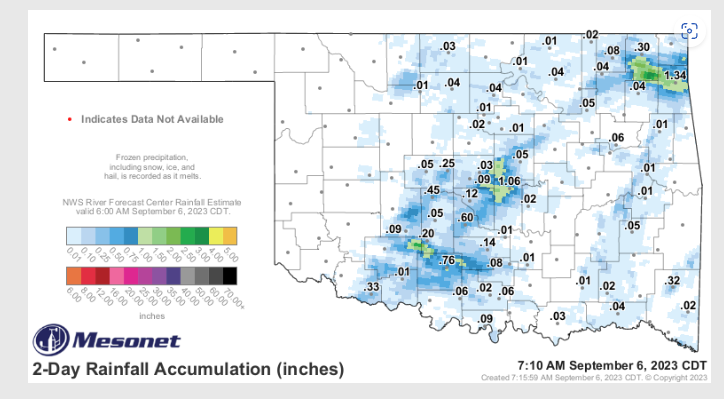
Today it feels much cooler, but don't get too excited. McManus says we are back to the frying pan on Thursday and Friday. However, This weekend brings slightly cooler temps, and maybe even some much-needed rainfall next week.
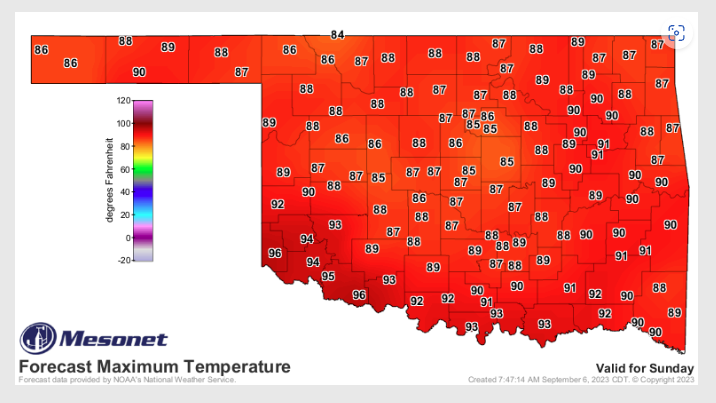
McManus says There will be a lot of wheat planted this week in anticipation of cooler wetter weather forecast for next week, "If you are in this group, then a decision must be made due to high soil temperatures. This 4-inch 3-day average soil temperature is well above the optimal range for wheat. If germination occurs at these temps (if moisture is present) then coleoptile damage may occur if planted deeper than 1 inch. On the other hand, shallow planting can be dangerous if light rains occur and then the heat and dry conditions return. It might be wise to wait and see what next week brings."
The good news is if you are considering planting wheat we may see some changes in the weather, "Next week looks deliciously mild and wet. We won't worry about what comes after that so we can just enjoy a very much welcome change in the weather. The rain is needed desperately. Even though we saw some reset in localized areas yesterday, we still need much more help turning these maps green."
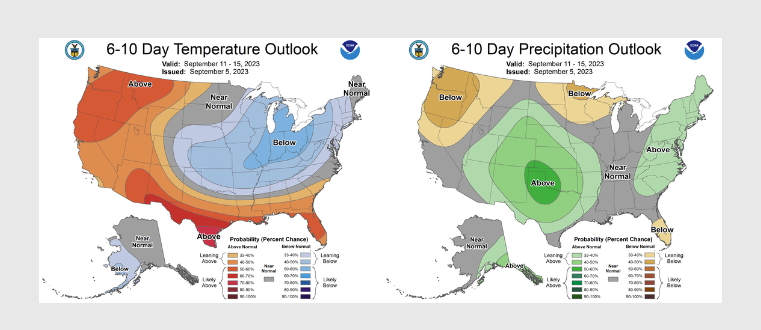
This time of year there is also a possibility of Tropical Storms. Right now McManus is watching a major hurricane on in the East Coast. Right now its a long way off, so lots of time to keep it away from making landfall.
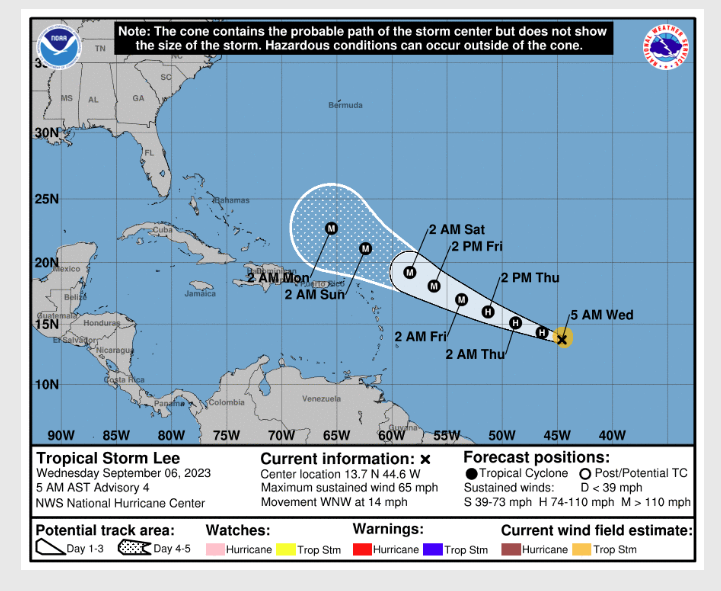
To keep up with Gary McManus on his weekly mesonet ticker, click here;
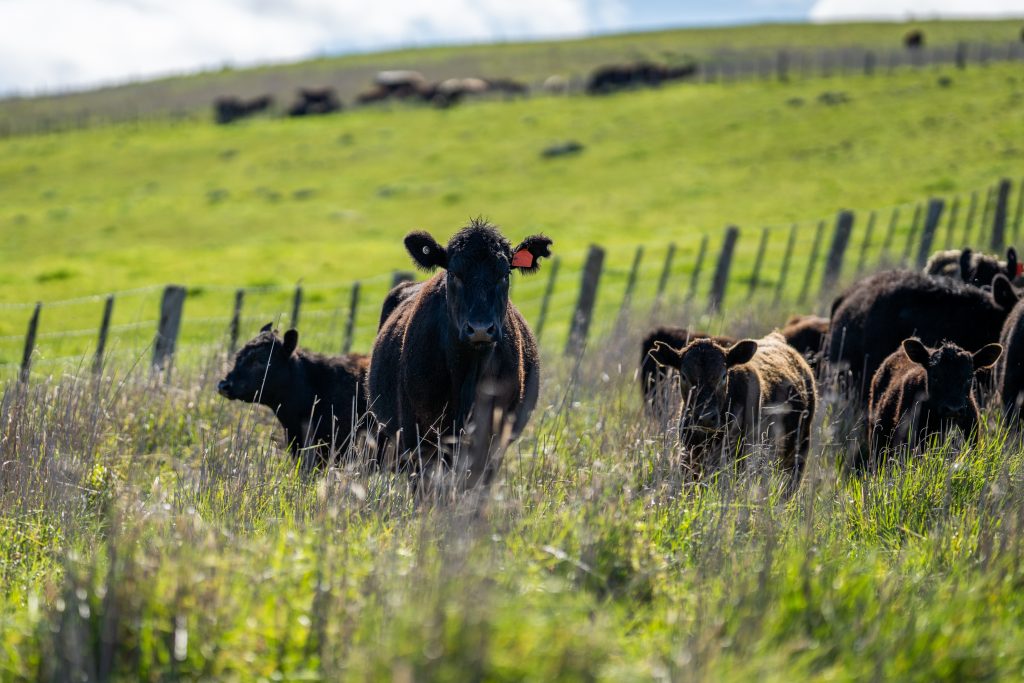
Mark Johnson, Oklahoma State University Extension Beef Cattle Breeding Specialist, offers herd health advice as part of the weekly series known as the "Cow Calf Corner" published electronically by Dr. Peel, Mark Johnson, and Paul Beck. Today, Johnson talks about utilizing resources to yield the most success on an operation.
I frequently remind students that Animal Science is a math based degree. By that same token, production agriculture in general, and specifically beef production is a math based enterprise. Why? Because the only way to make sound management decisions which will impact future profit potential is based on facts arrived at by mathematical analysis. Management decisions based on emotions and/or tradition seldom lead to the financial outcome we desire.
Efficiency can be defined as the ability to achieve an end goal with little or no waste of effort or inputs. Being efficient means achieving results by utilizing the resources you have in the best possible way. Bottomline: something is efficient when we produce more from less and all processes are optimized. This includes the use of money, human capital, production equipment, land and energy.
The definition leads to several questions which cow-calf operations should answer:
What is my goal? If your goal is living on a ranch as a way of life or ownership of cattle is a family tradition that you enjoy regardless of profitability, this article may not pertain to your operation. If your goal is maximizing profit potential, consider the following. You need to define your goal and identify the purpose of your operation in order to determine the most efficient way to achieve it.
What resources are available and at your disposal? Resources available include land (forages and soil), cattle, equipment, capital to invest and how much time and management expertise you have available to commit to your cattle enterprise. Be specific when listing these resources. For example: all quarter sections of grass are not equal. Does your quarter section include Bermuda grass or native range plants? Is there wheat acreage included? If you have improved grasses (like Bermuda) do you live in an area of high annual rainfall or low annual rainfall? Have you tested to determine the soil pH, N, P & K levels? Keep in mind your customers are a valuable resource. Feedback from customers is essential information which can be used to improve your product. This feedback can lead you to better decisions about improving your management or your genetics. This feedback (in the form of data documenting cattle health, growth, carcass merit and yield) can be used to better market your cattle in the future.
Be thorough in evaluating your resources. All the resources in your production system interact and are relative to each other in determining production levels, efficiency and profit potential. The potential of each resource needs to measured, quantified and optimized.
Oklahoma State University Ag Research is sharing research information and seeds related to the B5 cotton gene with other research facilities so a blight-resistant cotton variety can be created. (Photo by OSU Agriculture)
By Alisa Boswell-Gore
Oklahoma State University Ag Research wants to share its cotton research and seeds to find a cotton variety resistant to bacterial blight.
The B5 cotton gene for bacterial blight resistance was discovered in Egyptian cotton in the 1950s. In the 1970s, Lloyd Brinkerhoff, former OSU professor of plant pathology, studied the effects of placing the gene into the blight-susceptible upland cotton variety Acala 44.
Margaret Essenberg, former OSU Regents professor in the OSU Department of Biochemistry and Molecular Biology, advanced Brinkerhoff's resesarch. Her student, Kenneth McNally, now a scientist in genomics at the International Rice Research Institute in the Philippines, worked to isolate the gene and characterize it. Melanie Bayles, another member of Essenberg's research team, then made hybrids to study how the B5 gene is inherited. The results from one of those hybrids were puzzling.
"If B5 were a well-behaved single resistance gene, one-fourth of those plants would have two copies of the resistance gene, one-half would have one copy, and one-fourth would have no resistance gene and be blight-susceptible," Bayles said. "That was not what I saw. I saw only a tiny number of susceptible plants. That's when we knew we had to look for an explanation for what caused this."
The B5 gene did not behave like a single resistance gene because it seemed to occur in two different locations in the cotton's genome, an unusual occurrence.
"I wanted to understand how the resistance of the gene works. One of the ways in which resistance genes work is by triggering the synthesis of natural defense chemicals at infection sites," Essenberg said. "AcB5 cotton is a champion in this activity. My colleague, Margaret Pierce, showed that it accumulated at least 10-fold more defense chemicals than cotton lines with four other single resistance genes."
Terry A. Wheeler, professor of plant pathology and microbiology at Texas A&M AgriLife Research, discovered that under laboratory conditions, AcB5, the cotton plant that contains the B5 gene, is highly resistant to race 18, the strain of bacterial blight that has surged across the U.S. Cotton Belt in recent years. AcB5 cotton also exhibited resistance to 10 other pathogen races tested.
These discoveries suggest the potential for creating a cotton variety resistant to bacterial blight. The moment has arrived for Essenberg and Bayles, now the data management specialist for the OSU Wheat Improvement Team, to share their research findings and seeds with the scientific world.
"In agriculture, reliance upon a single gene for disease resistance is dangerous because pathogens tend to evolve to overcome such resistance," Essenberg said. "We would like to see the B5 gene be combined with one or more other strong, broadly specific genes, such as B12, to develop strong and stable resistance to bacterial blight."
OSU is seeking to form contracts/agreements with other institutions to continue the research and discover a new, race 18-resistant cotton variety in the future.
Essenberg, Bayles, McNally and others published a paper on their B5cotton research in "Phytopathology," which was chosen as Editor's Pick for the May 2023 issue.
To inquire about obtaining the research information and seed of AcB5 cotton, contact Melanie Bayles at melanie.bayles@okstate.edu or 405-762-1994.
OSU Ag Research is Oklahoma's premier research and technology development agency in agriculture, natural resources and the life sciences.

MyLand Company Inc. ("MyLand"), a soil health company, has successfully closed its Series B funding round, raising a total of approximately $23 million. This financing round has been spearheaded by a pair of distinguished investors, including Climate Innovation Capital ("ClimateIC") and The Borden Family underscoring the impact of MyLand's nature-based solution to modern, sustainable agriculture.
The successful Series B funding round is a transformative step for MyLand, providing the opportunity to extend its operations and innovative solutions to the fertile agricultural landscapes of the Pacific Northwest (PNW) and Texas. The capital infusion will further serve as a catalyst to accelerate the development and deployment of MyLand's state-of-the-art technologies and services, which are designed to rapidly improve soil quality and productivity, promote sustainable farming practices, and foster amplified crop yields, reduced inputs, and healthier soil ecosystems.
"We are absolutely thrilled to announce the closure of our Series B funding round, a testament to the proven value and potential that MyLand offers to the agricultural sector," stated Dane Hague, Co-Founder and CEO of MyLand. "This financing will fuel our expansion, enabling us to bring our vision of resilient and sustainable farming practices to even more communities and regions."
The lead investors in this round – ClimateIC and The Borden Family - have all recognized the pivotal role that MyLand plays in addressing the pressing challenges confronting modern industrial agriculture. The investment group exemplifies a shared commitment to advancing soil health, mitigating environmental impacts, and promoting the adoption of a more sustainable food production system.
Paul Atkinson, Co-Founder and Managing Partner at ClimateIC stated, "we are excited to join forces with MyLand as they embark on their expansion plans. Their innovative, service-driven approach to soil health closely aligns with our investment philosophy, centered on delivering significant financial returns while accelerating the deployment and adoption of solutions that deliver meaningful, sustainable decarbonization across the economy. We believe strongly in the MyLand team and expect that their persistence and unique technology will drive success and meaningful change."
The funds secured in this round will empower MyLand to expand its service footprint, fortify its innovation initiatives, expand its team of specialists, and forge strategic alliances that facilitate the adoption of its groundbreaking solutions throughout the agricultural sector. MyLand remains resolute in its dedication to endowing farmers with data-driven insights and service-based solutions that improve soil health and bolster agricultural productivity, laying the foundation for a more sustainable future.
Since being back in the Fourth Congressional District for the customary August district work period, I have had the privilege of meeting with several small business owners and Chambers of Commerce across the district. Just as Oklahoma's small businesses are critical to a prosperous economy, it is critical that they have an economy that allows them to prosper and succeed. The great communities throughout Oklahoma are anchored by small businesses and the families that work to uphold generations of hard work and local reinvestment.
President Joe Biden and Democrats' out-of-control spending has not only caused record-high inflation, but it also has inhibited the economy from fully bouncing back from the coronavirus pandemic three years ago. And when speaking to small business owners and even employees, their top concerns include inflation, labor shortages, overregulation and high interest rates. Just like Americans are paying high prices for nearly every good, so are small businesses to keep their doors open. While Oklahoma supports free enterprise and incentivizes entrepreneurship, sadly, optimism for the future of the economy remain low nationwide. In fact, the National Federation of Independent Business (NFIB) recently reported that small business owners are still facing several economic challenges while CNBC reported confidence in the economy among small business owners has returned to an all-time low.
Whether as an employee or owner, Americans have always depended greatly on the success of small businesses, which includes industries beyond retailers and restaurants. In fact, the latest estimate by the Small Business Administration revealed that small businesses in Oklahoma support more than 710,000 jobs statewide, which represents more than half of our workforce. Through innovation and the idea of achieving the American dream, small businesses create opportunities for many in their own communities. Because of that, we should all take interest in their success.
While House Republicans have been focused on enacting policies to support America's Main Streets this Congress, unfortunately President Biden not only wants to raise taxes on small business, but he has also failed to come to support extending small business tax deductions that are set to expire in 2025. At a time when small businesses are already being crushed by a volatile economy, this is wrong to do. For this reason, I was proud to join as an original cosponsor of the Main Street Tax Certainty Act which would ensure millions of small businesses maintain tax parity and keep the playing field level for the millions of employers organized as S corporations, partnerships and sole proprietorships with a permanent lower tax rate that is already afforded to C corporations. Our tax code should continue to support small businesses, not hold them back. But if current law is left unchanged, Main Street businesses will see a significant tax increase, leading to even less employment and slower growth.
The individuals who take the significant risk to start a business or farm, embody the best of the America spirit. While the economic outlook remains rocky, I remain committed to supporting policies that allow small businesses to thrive and succeed and will continue to show my support for small businesses across our great state. The Oklahoma state motto "Labor Omnia Vincit," which is Latin for "Labor Conquers All Things" remains true today. I will always bet on the success of hardworking Oklahomans.
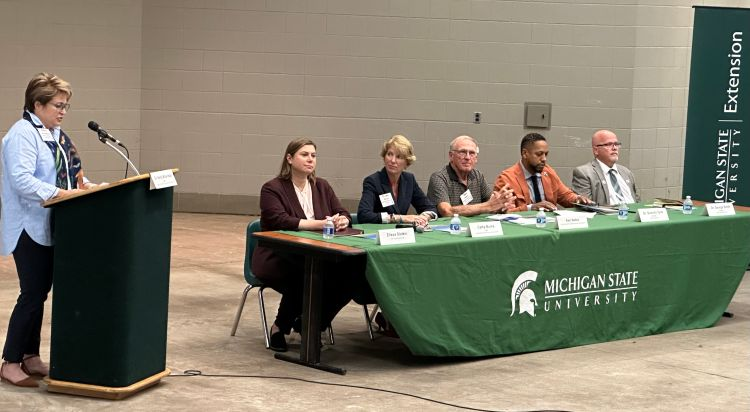
U.S. Congresswoman Elissa Slotkin met today with agricultural scientists at Michigan State University and leaders from Farm Journal Foundation to discuss how public support for agricultural research, development, and extension can help alleviate global hunger and malnutrition.
The event included a panel discussion with Congresswoman Slotkin and Dr. George Smith, Director of AgBioResearch at MSU; Dr. Quentin Tyler, Director of MSU Extension; Ken Nobis, Farm Journal Foundation Farmer Ambassador; and Cathy Burns, Chief Executive Officer of the International Fresh Produce Association. Panelists talked about how agricultural research and extension can enable farmers to increase production with fewer resources, strengthen food supply chains, and contribute to global food and nutrition security. Discussions about public support for agricultural innovation are particularly timely now, as Congress works to craft the next Farm Bill.
"Agriculture research drives the innovation that delivers better outcomes for farmers, lower costs and expanded options for consumers, and a stronger, more resilient food supply," said Slotkin. "In one of the most agriculturally diverse states in the country – the most diverse with regular access to fresh water – it's critical that we in Michigan remain at the cutting edge of agriculture, especially as adversaries like China spend more and more on ag research. The incredible work happening at Michigan State will help bridge that gap and will undoubtedly pay dividends for years to come. As the only Michigander on the House Agriculture Committee, I've introduced legislation to support agriculture research and will continue to advocate for it on Capitol Hill as my colleagues and I draft this year's Farm Bill."
Investing in agricultural innovation and extension is increasingly important, as global hunger and malnutrition have risen significantly over the past few years due to challenges including the conflict in Ukraine, extreme weather events driven by climate change, and the COVID-19 pandemic. New technologies and agricultural practices can enable farmers to become more resilient, increase production of crops including healthy foods, preserve natural resources, and adapt to changing climatic conditions. Investing in agricultural research and international development also benefits U.S. national security, according to a recent Farm Journal Foundation report.
"Farmers and food producers are under intense pressure to meet rising global demand for food with fewer resources and high input costs," said Ken Nobis, a Michigan dairy farmer and Farmer Ambassador with Farm Journal Foundation. "Agricultural research conducted at universities and other public institutions right here in the U.S. benefits American farmers, as well as smallholder farmers in developing countries where hunger and malnutrition are significant challenges."
Agricultural research has one of the highest returns of any public investment, returning on average $20 in benefits for every $1 invested, according to data from the U.S. Department of Agriculture. Agricultural innovation and extension are particularly important for Michigan, which has one of the most diverse agricultural industries in the country. The food and agriculture industry contributes $104.7 billion annually to the state's economy and over 800,000 jobs, according to the Michigan Department of Agriculture and Rural Development.
"In a state such as Michigan, with a rich agricultural diversity of roughly 300 commodities, federal funding to support agricultural research is vitally important," said Dr. George Smith, director of MSU AgBioResearch. "The Michigan agriculture industries rely on our scientists to help address both short-term needs and long-term challenges of the future, such as climate change and food security. Through partnerships with agricultural industries, as well as the state and federal governments, we're conducting research to help ensure a bright future for Michigan agriculture. However, the U.S. is falling behind competitors such as China and the European Union relative to public funding for agricultural research and development, and critical research infrastructure. Greater investment in public research is needed to avoid further jeopardizing the ability of the U.S. to lead the world in agricultural innovation and chart a food-secure future for citizens of Michigan, our country and beyond."
Agricultural research undertaken in the public sector, such as that being conducted at Michigan State University, has an important role to play in strengthening global food security. While private sector research investments have had a significant impact, particularly on yields for large commodity crops such as corn and soybeans, the public sector can support early stage research to pave the way for significant long-term innovations. Public investment can also support comparatively under-explored areas such as animal health, environmental, and food safety research, and unlock innovations for smallholder farmers overseas, helping developing countries feed themselves. Investing in agricultural extension alongside innovation helps ensure that farmers have access to the latest tools and farm management practices.
"Michigan State University Extension improves lives through an educational process that applies knowledge to critical issues, needs, and opportunities. This is made possible through the unbiased and factual public agricultural research from MSU that we take to all residents of the state of Michigan to provide people with better solutions to improve their families, communities and businesses" said Dr. Quentin Tyler, director of MSU Extension. "We, MSU Extension, are proud to state that the research that we receive from our faculty and staff is innovative, cutting edge and allows our constituents to be out in front of opportunities as well as responsive to emerging threats and challenges."
https://www.canr.msu.edu/news/michigan-event-highlights-agricultural-research-and-extension
Texas & Southwestern Cattle Raisers Association today opened the application window for 2024 spring internship programs.
These exceptional internship programs offer students the chance to broaden their network and collaborate with Texas & Southwestern Cattle Raisers Association personnel and leading industry figures. Texas & Southwestern Cattle Raisers Association internships allow students to develop skills in various departments such as administration, education, events, association marketing, and more. The opportunities include:
Applications to the spring 2024 internship opportunities are due Oct. 5, 2023. Additional details including submission instructions are accessible at www.tscra.org/who-we-are/employment/.
RON's Dave Lanning has a pre-opening look at today's agricultural Markets.
Click the audio tab below for today's report.
Producer sentiment was notably lower in August, as the Purdue University/CME Group Ag Economy Barometer index dipped 8 points to a reading of 115. This month's decline was fueled by producers' weaker perception of current conditions both on their farms and in U.S. agriculture. The Current Conditions Index fell 13 points to a reading of 108. The Future Expectations Index also declined, down 5 points in August to a reading of 119. This month's Ag Economy Barometer survey was conducted from August 14-18, 2023.
"Rising interest rates and concerns about high input prices continue to put downward pressure on producer sentiment," said James Mintert, the barometer's principal investigator and director of Purdue University's Center for Commercial Agriculture. "This month over half (60%) of the producers we surveyed said they expect interest rates to rise in the upcoming year."
When asked about their top concerns for their farming operations in the next 12 months, producers continue to point to higher input prices (34% of respondents) and rising interest rates (24% of respondents). Even though crop prices weakened significantly this summer, only one in five producers (20% of respondents) chose declining commodity prices as one of their top concerns.
The Farm Capital Investment Index was lower this month, falling 8 points to a reading of 37. Increasing prices for farm machinery and new construction along with rising interest rates continue to be the two most commonly cited reasons for their negative view. Meanwhile, producers' rating of farm financial conditions changed little in August, as the Farm Financial Performance Index declined just one point to a reading of 86.
Despite increasing concerns about rising interest rates, producers remain cautiously optimistic about farmland values. The Short-Term Farmland Values Expectation Index rose one point to 126, while the long-term index was unchanged at a reading of 151. Four out of ten respondents (39%) said they expect farmland values to rise over the next year, while 13% said they look for values to decline in the next year. When asked about their longer-term view of farmland values, six out of ten (63%) of respondents said they expect values to rise over the next five years, while 12% said they expect values to fall.
To better understand the usage of carbon contracts in row-crop agriculture, corn and soybean growers were asked about the types of conversations they have had with those companies. In the August survey, 6% of corn and soybean growers said they have engaged in discussions with companies about receiving payments to capture carbon on their farms, while just 2% said they had signed a carbon contract. Nearly half (47%) of the farms who discussed contract terms with a company said they were offered a payment rate of $10 to $20 per metric ton of carbon captured. Among the farms who engaged in discussions, but chose not to sign a carbon contract, half said it was because the payment level was too low.
Bouts of extreme heat in much of the Corn Belt are starting to have a bigger influence on crop condition ratings, USDA-NASS stated in its weekly Crop Progress report. The percentage of corn and soybean crops rated good to excellent dropped 2 to 3 percentage points on Tuesday's report, which covered blistering hot days before the Labor Day holiday
In Oklahoma, Rainfall totals in Oklahoma averaged 0.01 inches. According to the August 29th US Drought Monitor Report, drought conditions were rated 58 percent abnormally dry to exceptional drought, down 42 points from last year. Additionally, 36 percent of the state was in the moderate drought to exceptional drought categories, down 63 points from the previous year. Statewide, temperatures averaged in the upper 70's to lower 80's. Topsoil moisture conditions were rated very short to short and subsoil moisture conditions were rated adequate to very short. There were 6.9 days suitable for fieldwork.
Winter wheat planted reached 1 percent, down 2 percentage points from the previous year and the average.
Corn dough reached 93 percent, up 2 percentage points from the previous year and up 1 point from the five-year average. Corn dented reached 67 percent, up 6 points from the previous year and up 2 from the average. Corn mature reached 18 percent, up 4 points from the previous year and up 2 from the average. Corn conditions rated 53 percent good to excellent, 29 percent fair, and 18 percent poor to very poor. Last week's conditions rated 56 percent good to excellent, 27 percent fair and 17 percent poor to very poor.
Soybeans setting pods reached 95 percent, up 1 point from the previous year and the average. Soybeans dropping leaves reached 16 percent, up 7 points from the previous year and up 3 from the average. Soybean conditions rated 53 percent good to excellent, 30 percent fair and 17 percent poor to very poor. Last week's conditions rated 58 percent good to excellent, 28 percent fair and 14 percent poor to very poor.
Cotton setting bolls reached 94 percent, down 3 percentage points from the previous year and down 1 from the average. Cotton bolls opening reached 32 percent, down 5 points from the previous year and down 1 point from the average. Cotton conditions rated 31 percent good to excellent, 28 percent fair and 41 percent poor to very poor. Last week's conditions rated 33 percent good to excellent, 23 percent fair, and 44 percent poor to very poor.
Corn dough reached 95 percent, up 6 points from the previous year and normal. Corn dented reached 65 percent, down 5 points from the previous year but up 3 points from normal. Corn mature reached 25 percent, down 1 point from the previous year. Corn harvested for grain reached 15 percent. Corn conditions rated 75 percent good to excellent, 17 percent fair and 8 percent poor to very poor. Last week's conditions rated 69 percent good to excellent, 22 percent fair and 9 percent poor to very poor.
Sorghum headed reached 79 percent, down 11 points from the previous year and down 12 points from normal. Sorghum coloring reached 34 percent, down 25 points from the previous year and down 21 points from normal. Sorghum mature reached 7 percent, down 7 points from the previous year and down 9 points from normal. Sorghum conditions rated 54 percent good to excellent, 30 percent fair and 16 percent poor to very poor. Last week's conditions rated 56 percent good to excellent, 31 percent fair and 13 percent poor to very poor.
Soybeans blooming reached 86 percent, unchanged from the previous year but down 1 point from normal. Soybeans setting pods reached 67 percent, up 5 points from the previous year and up 4 points from normal. Soybeans dropping leaves reached 5 percent, up 1 point from the previous year and normal. Soybean conditions rated 57 percent good to excellent, 33 percent fair and 10 percent poor to very poor. Last week's conditions rated 54 percent good to excellent, 39 percent fair and 7 percent poor to very poor.
Peanuts pegging reached 95 percent, unchanged from the previous year and from normal. Peanuts mature reached 18 percent, down 10 points from the previous year and down 2 points from normal. Peanut conditions rated 96 percent good to excellent, 3 percent fair and 1 percent poor to very poor. Last week's conditions rated 97 percent good to excellent and 3 percent fair.
Cotton setting bolls reached 90 percent, down 4 points from the previous year and down 3 points from normal. Cotton bolls opening reached 16 percent, unchanged from the previous year but down 3 points from normal. Cotton conditions rated 11 percent good to excellent, 10 percent fair and 79 percent poor to very poor. Last week's conditions rated 14 percent good to excellent, 11 percent fair and 75 percent poor to very poor.
Hay: The third cutting of alfalfa hay reached 95 percent. The fourth cutting of alfalfa hay reached 40 percent, unchanged from the previous year but down 14 points from normal. The second cutting of other hay reached 76 percent, down 18 points from the previous year and down 3 points from normal. The third cutting of other hay reached 18 percent, down 22 points from the previous year and down 5 points from normal.
Livestock conditions rated 59 percent good to excellent, 26 percent fair, and 15 percent poor to very poor. Last week's conditions rated 57 percent good to excellent, 24 percent fair and 19 percent poor to very poor.
Pasture and range conditions rated 33 percent good to excellent, 33 percent fair and 34 percent poor to very poor. Last week's conditions rated 45 percent good to excellent, 30 percent fair and 25 percent poor to very poor.
Winter wheat planted was 1 percent.
Corn dough was 95 percent, near 91 percent last year and 94 percent for the five-year average. Dented was 83 percent, ahead of 72 percent last year and 75 percent average. Mature was 39 percent, near 36 percent last year, and ahead of 28 percent average. Harvested was 6 percent, behind 15 percent last year, and equal to average. Corn conditions rated 33 percent good to excellent, 34 percent fair and 33 percent poor to very poor. Last week's conditions rated 35 percent good to excellent, 34 percent fair and 31 percent poor to very poor.
Soybeans setting pods was 92 percent, ahead of 84 percent last year and 87 percent average. Dropping leaves was 19 percent, ahead of 12 percent last year and 11 percent average. Soybean conditions rated 25 percent good to excellent, 35 percent fair and 40 percent poor to very poor. Last week's conditions rated 37 percent good to excellent, 33 percent fair and 30 percent poor to very poor.
Sorghum headed was 90 percent, ahead of 85 percent last year, but near 93 percent average. Coloring was 51 percent, ahead of 40 percent last year, but near 53 percent average. Mature was 11 percent, ahead of 3 percent last year and 5 percent average. Harvested was 2 percent, near 1 percent last year. Sorghum conditions rated 36 percent good to excellent, 35 percent fair and 29 percent poor to very poor. Last week's conditions rated 37 percent good to excellent, 39 percent fair and 24 percent poor to very poor.
Cotton setting bolls was 93 percent, behind 100 percent last year, but near 92 percent average. Bolls opening was 37 percent, ahead of 27 percent last year and 19 percent average. Cotton conditions rated 41 percent good to excellent, 46 percent fair and 13 percent poor to very poor. Last week's conditions rated 37 percent good to excellent, 39 percent fair and 24 percent poor to very poor.
Pasture and range conditions rated 20 percent good to excellent, 33 percent fair and 47 percent poor to very poor. Last week's conditions rated 22 percent good to excellent, 37 percent fair and 41 percent poor to very poor.
Corn dough reached 96 percent down 1 percentage point from the previous year and the average. Corn dented reached 86 percent, down 1 point from the previous year and down 3 points from the average. Corn mature reached 69 percent, down 6 percent from the previous year and up 3 points from the average. Corn harvested reached 56 percent, down 2 points from the previous year and up 1 from the average. Corn conditions rated 49 percent good to excellent, 27 percent fair and 24 percent poor to very poor. Last week's conditions rated 49 percent good to excellent, 27 percent fair and 24 percent poor to very poor.
Cotton setting bolls reached 92 percent, down 3 points from the previous year and down 2 from the average. Cotton bolls opening reached 33 percent, down 7 points from the previous year and even with the average. Cotton harvested reached 16 percent, up 7 points from the previous year and up 8 points from the average. Cotton conditions rated 11 percent good to excellent, 28 percent fair and 61 percent poor to very poor. Last week's conditions rated 12 percent good to excellent, 21 percent fair and 67 percent poor to very poor.
Peanuts pegging reached 96 percent, even with the previous year and the average. Peanuts mature reached 12 percent, up 2 points from the previous year and the average. Peanut conditions rated 33 percent good to excellent, 41 percent fair and 26 percent poor to very poor. Last week's conditions rated 34 percent good to excellent, 47 percent fair and 19 percent poor to very poor.
Sorghum coloring reached 89 percent, down 5 points from the previous year and even with the average. Sorghum mature reached 77 percent, down 2 points from the previous year and even with the average. Sorghum harvested reached 67 percent, even with the previous year and down 1 from the average. Sorghum conditions rated 45 percent good to excellent, 22 percent fair and 33 percent poor to very poor. Last week's conditions rated the same.
Soybeans setting pods reached 89 percent, down 5 points from the previous year and up 1 from the average. Soybeans dropping leaves reached 52 percent, down 16 points from the previous year and down 2 from the average. Soybean conditions rated 34 percent good to excellent, 36 percent fair and 30 percent poor to very poor. Last week's conditions rated 34 percent good to excellent, 29 percent fair and 37 percent poor to very poor.
Pasture and range conditions rated 5 percent good to excellent, 23 percent fair and 72 percent poor to very poor. Last week's conditions rated 4 percent good to excellent, 18 percent fair and 78 percent poor to very poor.
U.S. Congresswoman Elissa Slotkin met today with agricultural scientists at Michigan State University and leaders from Farm Journal Foundation to discuss how public support for agricultural research, development, and extension can help alleviate global hunger and malnutrition.
The event included a panel discussion with Congresswoman Slotkin and Dr. George Smith, Director of AgBioResearch at MSU; Dr. Quentin Tyler, Director of MSU Extension; Ken Nobis, Farm Journal Foundation Farmer Ambassador; and Cathy Burns, Chief Executive Officer of the International Fresh Produce Association. Panelists talked about how agricultural research and extension can enable farmers to increase production with fewer resources, strengthen food supply chains, and contribute to global food and nutrition security. Discussions about public support for agricultural innovation are particularly timely now, as Congress works to craft the next Farm Bill.
"Agriculture research drives the innovation that delivers better outcomes for farmers, lower costs and expanded options for consumers, and a stronger, more resilient food supply," Congresswoman Slotkin said. "In one of the most agriculturally diverse states in the country – the most diverse with regular access to fresh water – it's critical that we in Michigan remain at the cutting edge of agriculture, especially as adversaries like China spend more and more on ag research. The incredible work happening at Michigan State will help bridge that gap and will undoubtedly pay dividends for years to come. As the only Michigander on the House Agriculture Committee, I've introduced legislation to support agriculture research and will continue to advocate for it on Capitol Hill as my colleagues and I draft this year's Farm Bill."
Investing in agricultural innovation and extension is increasingly important, as global hunger and malnutrition have risen significantly over the past few years due to challenges including the conflict in Ukraine, extreme weather events driven by climate change, and the COVID-19 pandemic. New technologies and agricultural practices can enable farmers to become more resilient, increase production of crops including healthy foods, preserve natural resources, and adapt to changing climatic conditions. Investing in agricultural research and international development also benefits U.S. national security, according to a recent Farm Journal Foundation report.
"Farmers and food producers are under intense pressure to meet rising global demand for food with fewer resources and high input costs," said Ken Nobis, a Michigan dairy farmer and Farmer Ambassador with Farm Journal Foundation. "Agricultural research conducted at universities and other public institutions right here in the U.S. benefits American farmers, as well as smallholder farmers in developing countries where hunger and malnutrition are significant challenges."
Agricultural research has one of the highest returns of any public investment, returning on average $20 in benefits for every $1 invested, according to data from the U.S. Department of Agriculture. Agricultural innovation and extension are particularly important for Michigan, which has one of the most diverse agricultural industries in the country. The food and agriculture industry contributes $104.7 billion annually to the state's economy and over 800,000 jobs, according to the Michigan Department of Agriculture and Rural Development.
"In a state such as Michigan, with a rich agricultural diversity of roughly 300 commodities, federal funding to support agricultural research is vitally important," said Dr. George Smith, director of MSU AgBioResearch. "The Michigan agriculture industries rely on our scientists to help address both short-term needs and long-term challenges of the future, such as climate change and food security. Through partnerships with agricultural industries, as well as the state and federal governments, we're conducting research to help ensure a bright future for Michigan agriculture. However, the U.S. is falling behind competitors such as China and the European Union relative to public funding for agricultural research and development, and critical research infrastructure. Greater investment in public research is needed to avoid further jeopardizing the ability of the U.S. to lead the world in agricultural innovation and chart a food-secure future for citizens of Michigan, our country and beyond."
Agricultural research undertaken in the public sector, such as that being conducted at Michigan State University, has an important role to play in strengthening global food security. While private sector research investments have had a significant impact, particularly on yields for large commodity crops such as corn and soybeans, the public sector can support early stage research to pave the way for significant long-term innovations. Public investment can also support comparatively under-explored areas such as animal health, environmental, and food safety research, and unlock innovations for smallholder farmers overseas, helping developing countries feed themselves. Investing in agricultural extension alongside innovation helps ensure that farmers have access to the latest tools and farm management practices. "Michigan State University Extension improves lives through an educational process that applies knowledge to critical issues, needs, and opportunities. This is made possible through the unbiased and factual public agricultural research from MSU that we take to all residents of the state of Michigan to provide people with better solutions to improve their families, communities and businesses" said Dr. Quentin Tyler, director of MSU Extension. "We, MSU Extension, are proud to state that the research that we receive from our faculty and staff is innovative, cutting edge and allows our constituents to be out in front of opportunities as well as responsive to emerging threats and challenges."

The U.S. Grains Council (USGC) has confirmed Bruce Rastetter and Jeff Broin as keynote speakers for Global Ethanol Summit (GES), held Oct. 16-18 in Reston, VA. U.S. Secretary of Agriculture Tom Vilsack has also been invited to give opening remarks.
GES seeks to elevate bioethanol's international visibility and ongoing successful initiatives as a viable decarbonization solution within the transportation sector. More than 450 ministerial-level officials and industry leaders, ethanol producers and refiners from more than 40 countries have been invited to attend with the goal of engaging a diverse group of international ethanol leaders about the benefits of expanding global use.
Rastetter is the founder and Executive Chairman of Summit Agricultural Group, a leading agribusiness and renewable energy firm with operations in North and South America. Rastetter's hands-on experience in global agricultural and renewable energy sectors, matched with his strong focus on strategic business development, has been key to building successful companies and advising government leaders on policy matters.
Broin is the founder and CEO of POET, the world's largest biofuel producer, and founding chairman of Growth Energy. For more than 35 years, Broin has worked to advance the role of renewable biofuels and bioproducts in addressing national and global issues surrounding agriculture, human health and climate change.
GES will begin with four general sessions on Oct. 16 and continue with breakout sessions focused on particular challenges and opportunities facing the biofuels industry today.
Oct. 16 general sessions:
• Opening Remarks and Keynote Speakers
• Governmental Prospectives: Current and Future Global Ethanol Policies and Regional Success Stories
• Multilateral Entities: Global Ethanol Feedstocks and End Use Outlooks and Trends
• Ethanol Associations: Domestic Dynamics, International Engagement Efforts and Next Steps to Achieve Global E10 and Beyond
Oct. 17 breakout sessions:
• Sustainable Aviation Fuel: Future of Alcohol to Jet Technology, Plant Technologies and Policy Support
• Retailer Ethanol Integration, Best Practice Examples, and Blending Benefits
• Ethanol's Low Carbon Analysis Updates from the Producer Level: Recent Zero Carbon commitments, Carbon Capture and Underground Storage status, and Farm Level applications
• Bio-based Chemical Applications for Ethanol around the World
• Automaker Trends, Recent Fleet Success Utilizing Ethanol Blends, and the Future of Ethanol Engine Technology
• Refinery and Terminal Industry Experience: Ideal Logistics, Sourcing, Storage and Blending Implementation for Ethanol Blended Gasoline
• Utilizing Ethanol as a Clean Air Solution and Updated Ethanol Modeling Within Carbon Fuel Standards
Registration for GES is now open and hotel rooms with special event rates are available until Sept. 15. More information and a complete agenda are available on the conference website here.
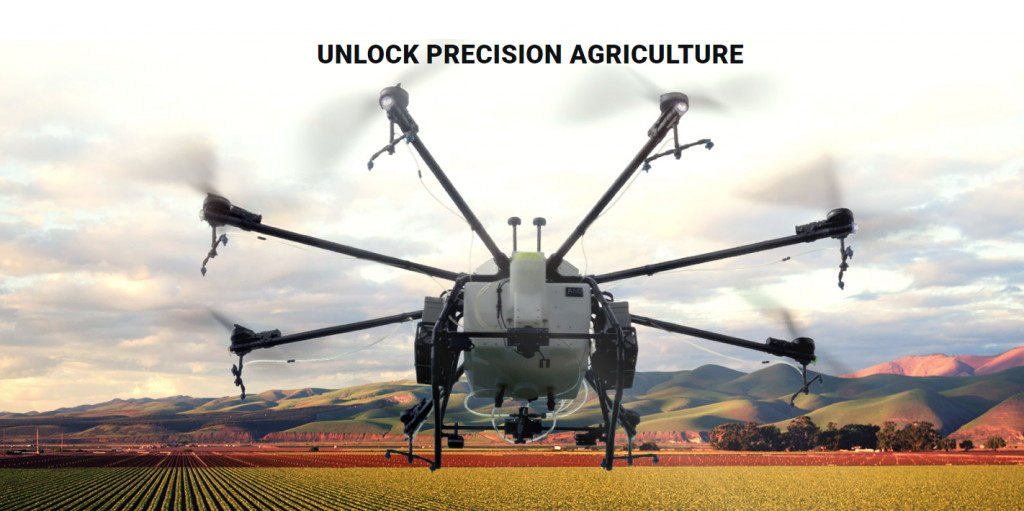
Associate Farm Editor, Reagan Calk, had the chance to talk with the CEO and Co-Founder at Hylio, Arthur Erickson, about how precision crop spraying drones can help increase sustainability and tackle labor challenges.
While the ongoing worker shortage depends on location, Erickson said a common trend seen in the agriculture industry is that the younger generation is not showing interest in working in the fields.
"It is hard work; the pay isn't competitive in a lot of cases versus tech jobs in the city, or admin or sales jobs in the city," Erickson said. "You see a lot of young people who are not being incentivized for a number of reasons to go out and work in the fields."
With fewer people willing to work out in the field, Erickson said farmers are left with a lot of crops to treat and harvest, and not enough hands to do so.
"Where the drones come in is they are a force multiplier," Erickson said. "The drones still need human operators to utilize, except the fact is that you could have one human controlling four or five or six drones."
Each drone can cover several hundred acres per day, Erickson said, so if one pilot is monitoring several drones, that means one person can be spraying around 1000 acres per day.
"Fewer chemicals and less water are needed for drone applications, meaning that you are putting less chemicals into the field," Erickson said.
Drones are light and do not consume a substantial amount of energy, Erickson said, as opposed to a tractor.
"At the end of the day, it consumes less energy to do the same, if not more work than the traditional machinery and methods," Erickson said. "You are saving on fuel costs, you are not emitting as much, you are not putting as much chemical into the ground. All of these things help with sustainability."
The drones can specifically operate off of any Windows 10 or Windows 11 device, Erickson said, so typically, customers are paired with a Windows tablet to aid in mission planning, monitoring, and control.
There are financing options offered to purchase a drone from Hylio, Erickson said, that are listed on the website.
Hylio offers a few different types of drones that are all very advanced, Erickson said, but easy to operate for producers.
"Our models are really just separated by their payload capability," Erickson said. "You will see on our website, we have four different models ranging from about two and a half gallons all the way up to 18 gallons."
The Hylio website offers information about regulations for spray drones, spray tactics, and more. The regulations for spray drone operators have made positive strides recently, Erickson said, so if any producers are worried about time-consuming regulation-based processes, those have improved significantly.
"It is a good resource for learning even if you are not going to buy our products," Erickson said.
The Dairy Management Inc. (DMI) New Product Competition for college students is accepting entries for 2024.
The competition seeks innovative dairy product concepts and is open to undergraduate and graduate students in the U.S.
This year's contest theme aligns with checkoff-led insights that show consumers are seeking dairy products that deliver health and wellness benefits, including those related to digestion, immunity, joint health/mobility and general health.
A combined $27,000 in cash prizes will be awarded:
The deadline entry is Jan. 15 and winning teams will be recognized at the American Dairy Science Association's annual meeting in June. More information is available at www.usdairy.com/research-resources/new-product-competition or by contacting Dr. Rohit Kapoor, vice president of product research for DMI, at rohit.kapoor@dairy.org
Senior Farm and Ranch Broadcaster, Ron Hays, is talking with Terrain's Chief Research and Analytics Officer, Don Close. Among other things, Close has previously worked as a senior animal protein analyst at Rabobank, and as a market director for the Texas Cattle Feeders Association.
Terrain is an exclusive offering of American Ag Credit, Farm Credit Services of America, and Frontier Farm Credit. Hays and Close talk about one of the projects Terrain has been working on involving looking into the Cattle Contracts Library Pilot Project.
"We have tracked a lot of data, and we have stacked a lot of data between the existing Mandatory Price Reporting reports and the premium and discounts schedule that is under the contract library," Close said. "Bottom line, what we have found is with a few exceptions, but most of those premium and discount characteristics track very well with the actual market data that is reported under mandatory price reporting with the premiums and discounts that are recorded under the contract library that is only looking at the contracts. It is not looking at actual cattle traded."
Looking into that data, Close said it has been found that producers can take what they are being offered for a contract by characteristic and match it with the LMR premium discount/contract library discount, and between the three, they can be in the loop before they sign.
"That enables the producer to monitor if those prices are changing over time," Close said. "We have got six months worth of data in the pilot, and six months that that the market has absolutely been pointed in a single direction higher. To look at that data set over time, with a combination of both price swings and the supply/demand balance, but also look at price swings on the cattle cycle table- clearly, if this goes forward, we will have much better data."
While this information is not a finished product, Close said it has the potential to assure producers there is transparency in the marketplace.
The Beef Buzz is a regular feature heard on radio stations around the region on the Radio Oklahoma Ag Network and is a regular audio feature found on this website as well. Click on the LISTEN BAR at the top of the story for today's show, and check out our archives for older Beef Buzz shows covering the gamut of the beef cattle industry today.
Here is the USDA page with Pilot Program resources: https://www.ams.usda.gov/market-news/livestock-poultry-grain/cattle-contracts-library

Article highlights the rigor in Indigo's use of the DayCent-CR model to quantify environmental benefits resulting from sustainable farming practices
Indigo Ag, an innovative leader and trusted partner in sustainable agriculture, announced today the publication of a peer-reviewed research article in the international soil science journal Geoderma. Written by Indigo's internal team of scientific experts and leading researchers in the field, the article highlights the scientific rigor in Indigo's use of the DayCent-CR model to quantify environmental benefits resulting from sustainable farming practices.
With the publication, Indigo continues to lead in the sustainable agriculture space by being the first and only sustainable agricultural company to both gain approval under the strict modeling requirements of the Climate Action Reserve Soil Enrichment Protocol and peer-review from the scientific community.
"This Geoderma article underscores our commitment to transparency and scientific rigor and sets us apart from others in the industry. It demonstrates that our soil carbon model is unbiased and has been confirmed to meet the most rigorous requirements available for the calibration and validation of models for use in greenhouse gas accounting," said A.J. Kumar, Indigo's vice president of sustainability sciences. "While this paper validates our models for offsets, the approach we take is consistent across our solutions and is the starting point to account for soil organic carbon removals in Scope 3 programs. This is incredibly important to customers of our sustainability programs, including Carbon by Indigo and our Market+ Source sustainable grain program, as well as our farmers and agribusiness partners to ensure that they are financing real, meaningful environmental benefits resulting from sustainable practices."
With an increased focus on climate change and a growing market for agricultural sustainability programs, the number of farmers, corporations and partners that are benefiting from climate-smart agriculture practices continues to rise. Indigo is currently the only company to complete two crops of verified registry-issued agricultural soil carbon credits generated at scale. Since its first carbon harvest in June of 2022, the company has driven a 5x increase in the number of credits generated and a 200% increase over the original guaranteed payment rate to farmers. Its unprecedented third harvest is currently underway.
While sustainable farming practices have been shown to increase soil organic carbon (SOC) in cropland, farmers are also reaping the financial benefits of adopting these practices, enabling them to earn significant additional income. To date, payments of nearly $5M have been made to farmers across 22 states for their carbon credit production resulting from their adoption of sustainable practices.
Indigo's approach to verification uses a hybrid direct measurement and modeling approach to quantify emissions reductions and removals on agricultural fields. Through the Climate Action Reserve, the quality of these credits is verified, enabling Indigo to help corporations know that they are buying carbon credits that will not only help them achieve their net zero commitments but are also helping the planet.
Indigo's commitment to the rigorous scientific process underlying soil environment measurement and greenhouse gas removal is a priority and a competitive differentiator. For the last few years, Indigo's internal team of scientific experts and leading researchers in the field worked together to further develop DayCent-CR, a specific version of the widely used modeling tool DayCent, to meet the rigorous standards of soil carbon measurement as outlined in the Soil Enrichment Protocol established by the offset project registry Climate Action Reserve (CAR). Any model used must be unbiased and adequately predict SOC changes, with known uncertainty, across the crops, practice changes, and geographies of interest.
The Geoderma article validates the use of DayCent-CR for the 14 combinations of specific crops and practice changes within Indigo's carbon program, per CAR standards. Crops include wheat, corn, soybean, and cotton, barley, canola (fall and spring planted), dry edible beans, dry field peas, flax, oats, peanuts, rye, sorghum, sugar beets, sunflowers, and triticale, while creditable practices include cover cropping, reduced or eliminated tillage, and improved nitrogen management, with both synthetic fertilizers and application of organic manure. The model calibration and validation approach allow for the addition of new practices, crops, and geographies as new field studies and data become available.
Indigo has been deploying DayCent-CR in the quantification of its large-scale U.S. carbon project with the Climate Action Reserve, known as CAR1459. This project has led to the issuance of over 133,000 carbon credits (metric tons of CO2e). Project details can be found here while the most recent approved model validation report and the expert review may be found here.
For more information on Indigo's sustainability programs, click here. To read the full Geoderma article, click here.
Each week, Beltway Beef brings you the latest policy news affecting the U.S. cattle and beef industry. Hear from subject-matter experts, producers, and industry leaders on the topics that impact the business viability of farms and ranches across the country.
On this episode, NCBA Chief Counsel Mary-Thomas Hart joins to discuss the Environmental Protection Agency's revised Waters of the U.S. (WOTUS) rule that is intended to comply with the Supreme Court's ruling in the case Sackett v. EPA. NCBA was involved in the Sackett case by filing a brief with the Supreme Court that highlighted the Clean Water Act's impact on cattle producers. Hart explains some of the provisions in the revised rule and shares background on NCBA's work fighting for clear, limited WOTUS rules.

USDA's Federal Milk Marketing Order (FMMO) hearing is well underway, and thus far its progress is much as expected. With NMPF's proposed modernization plan serving as its bedrock, the topics under discussion very much reflect the areas we identified as key areas of improvement to FMMOs. At the same time, cross-examination and counter-proposals from other parties have been thorough, and at times, off-base.
Unsurprisingly, those questions and perspectives reflect the vested interests of the questioners, with changes often presented as zero-sum games in which the questioner's ideas and opinions just-so-happen to benefit its bottom line. Our position at NMPF is a little different. We recognize that any proposal USDA puts up to a producer vote will need to meet a balance of interests, as admittedly, some regions, sizes or business models may benefit more than others depending on the issue. That's a simple fact of reality in the world of policy progress. In that sense, we're not always arguing specifically for the benefit of one party – we're defending the consensus we've crafted that provides the greatest benefit to the industry as a whole, dairy farmers, processors, and consumers alike, because that's the only approach that will bring the lasting improvements for the entire dairy industry.
This is why we at NMPF can't help but smile a bit when we hear someone bring up an idea that we considered – and discarded – as far back as two years ago, when we began holding more than 200 meetings among farmers, cooperative analysts and industry-leading economists that generated our comprehensive improvement plan. We've literally been there and done that. But interested parties must have their say, and differing proposals can be brought before USDA – and in fact, they should be, so as to serve the important interests of transparency and continued consensus.
This is where all those meetings, and the thorough preparation our cooperative-led team has made for this generational opportunity for improvement, reaps dividends. We've faced tough questions. We've developed industry-leading analysis. We've even "war-roomed" the hearing process itself, meeting to discuss anticipated critiques of our proposal and preparing authoritative responses. Our approach is exhaustive, but never exhausting, because we've always kept our eyes focused on the ultimate goal of a modernized, fairer, more robust system of milk pricing for dairy farmers. And with each step toward that goal, we feel we're only gaining more momentum – one that in the end will benefit everyone, even those who, at this moment, are offering alternatives aimed at simply boosting their narrower self-interests.
Leadership isn't easy. As this is being published, we still have several weeks of proposals to wade through, after which further discussion and USDA consideration begins. But thus far we're gratified that our leadership on this issue has taken dairy thus far. We set out to modernize the system. We worked with USDA, which decided it was time to examine that modernization. Now we're explaining and justifying our proposals, with dairy's brightest and most articulate analysts, economists and farmers testifying to the value of what we painstakingly crafted and impressing upon all of agriculture just how seriously we've taken this mission. We look forward to showing why our comprehensive proposal – the unanimous choice of dairy cooperatives that produce more than two-thirds of the nation's milk -- is the best approach for dairy's future. This occasion is incredibly important, and we're rising to it. We look forward to continued progress.
RON's Dave Lanning has a pre-opening look at today's agricultural Markets.
Click the audio tab below for today's report.
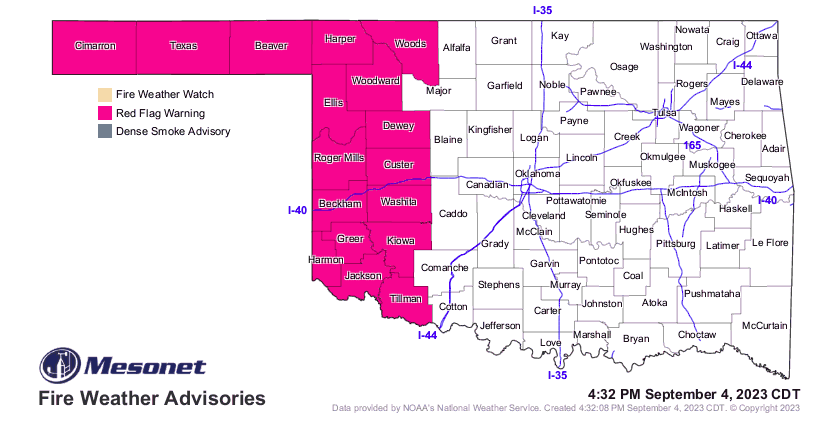
Statewide Discussion: A Red Flag Warning is in effect today 1:00 PM through 9:00 PM in western including the Panhandle counties. A stretch of above normal temperatures and growing separation from wetting rains (generally 21-50 days) in the Warned Area has resulted in a transition to available fuels. Hot, dry and windy conditions today coupled with potential for dry thunderstorm development along the 100th Meridian and Panhandle counties will support potential active fire behavior on established wildfires. Southeast Oklahoma has somewhat improved chances for wet thunderstorms through midday with better opportunity develops late this afternoon. Generally, rainfall amounts are expected to be less around 0.10" outside of a individual storm cell holding lightning ignition potential
in place and some concern for erratic fire behavior on current wildfires.
A Fuels & Fire Behavior Advisory has been issued covering the southern one-third of Oklahoma:
Today: A Red Flag Warning is in effect today across western Oklahoma and the Oklahoma Panhandle where near-critical
to critical fire weather will develop over increasingly available fuels. On established wildfires, problematic fire behavior is
expected coupled with resistance to control in high-risk fuels (grass/brush). In south-central/southwestern Oklahoma where the separation from wetting rain has pushed as high as fifty-four days, new fire activity will exhibit resistance to control. This area does have some potential for significant fire occurrence today. A number of going fires in southeastern Oklahoma will be subjected to the potential for outflow winds while lightning ignitions today cannot be ruled out.
• Warned Area (Western/Panhandle Counties): Temperature this afternoon 99°-106°under mostly clear skies with
relative humidity values 14-18% will yield receptive fine fuels this afternoon at 3% fine-dead fuel moisture. Live fuel
moisture in southwestern Oklahoma is very low and some areas have transitioned to dormancy offering enhanced fuel
availability. Additionally, there is potential for some thunderstorm development (predominantly dry) along the 100th
meridian, far northwest and Panhandle counties introducing lightning ignition potential this afternoon. Southwest winds
sustained 18-27 mph with some gusts exceeding 35 mph will support moderate to rapid rates if fire spread on established
wildfires. Rangeland fuels will support head fire rates of spread 125-177 ft/min (+/- 1.7 mph) on established wildfires. Fire
weather concerns remain in place until after sunset.
• Southeastern Oklahoma: Fire danger overall, will be relaxed to some extent today with rain/storm chances in place.
Showers in parts of southeastern Oklahoma this morning will remain focused in the area with wetting amounts possibly
scattered in the area. The primary fire weather concerns today will be: 1) Outflow wind effects on going fires, and 2) new
fire activity resulting from lightning strikes. Note, lightning ignitions today may holdover with delayed detection.
• South-Central Oklahoma: Lacking any meaningful rainfall in the previous 30 days, fuels (both herbaceous and woody)
have become available. Temperature this afternoon will top out at 99°-105°under partly cloudy skies. Afternoon relative
humidity values 23-35% will yield fine-dead fuel moisture values at 5% noting that herbaceous fuels in general are
available for combustion. Southerly winds sustained 13-20 mph with some higher gusts will drive head fire rates of spread on established wildfires at 80-115 ft/min in grass dominated fuels. Mixed fuels (grass/brush) will support potential for problematic to extreme fire behavior including single/group tree torching, short-range spotting and short crown runs.
Tuesday: Fire weather will again develop with emphasis on southwestern and northwestern Oklahoma. A cool front is forecasted to slip into the state tomorrow late afternoon offering some rain/storm chances from late afternoon into the evening along the I-44 corridor. Nonetheless, above normal temperatures and continued dry conditions through the day will result in persistent fire danger across western Oklahoma.
Burn Bans:
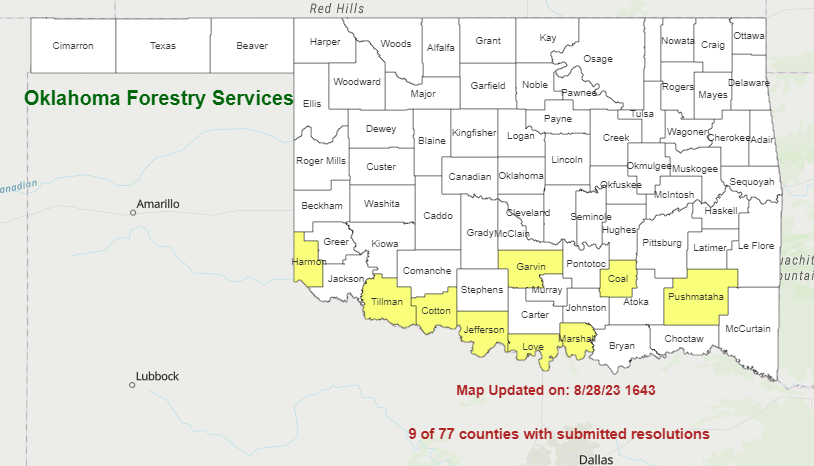
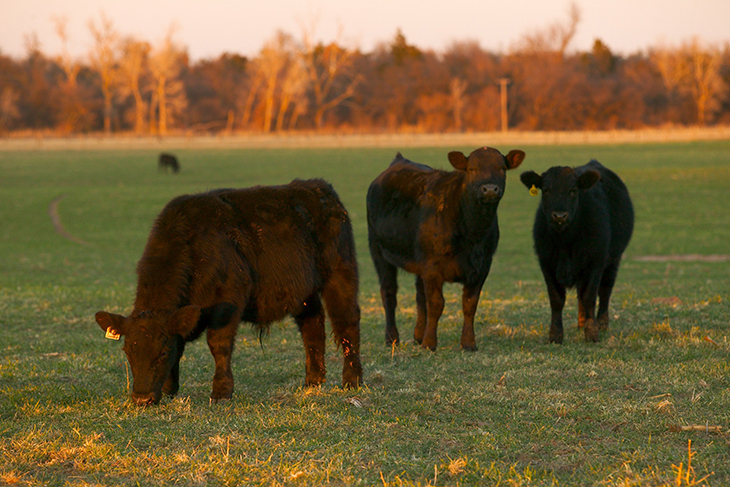
Dr. Derrell Peel, Oklahoma State University Extension Livestock Marketing Specialist, offers his economic analysis of the beef cattle industry as part of the weekly series known as the "Cow Calf Corner" published electronically by Dr. Peel and Mark Johnson. Today, Dr. Peel talks about sharply higher calf and yearling cattle prices seen over the last several months.
Feeder cattle prices have increased sharply in 2023. Figure 1 shows the increase in Oklahoma combined auction feeder prices that started in late 2022. In the last four weeks, prices for lightweight calves and stockers under 600 pounds have averaged about 45 percent higher year over year, with heavier feeder cattle prices up slightly less, from 37 to 40 percent over last year.
Cattle prices are trending higher in response to ever tightening cattle and beef supply fundamentals. The beef cow herd on January 1, 2023 was the lowest since 1962 and is still getting smaller. The projected 2023 U.S. calf crop is 2.5 million head smaller than the recent peak in 2018 and leads to an estimated July 1 feeder cattle supply down 3.6 percent year over year and the smallest since 2017. Feedlot inventories have been smaller year over year since September 2022. Cattle slaughter is down 3.9 percent so far this year, leading to a 4.9 percent year over year decrease in beef production for the year to date.
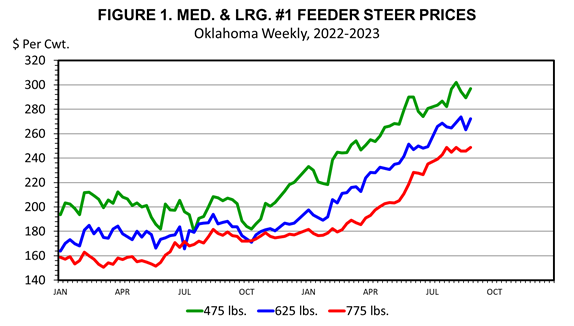
Feeder cattle prices have reached record levels or are rapidly approaching record levels. Table 1 shows record weekly Oklahoma steer and heifer prices by weight group. As seen in the table, all feeder steer and heifer prices for animals over 600 pounds are already at new record levels. Prices for lightweight feeders are expected to reach new record levels in the coming weeks and months. Table 1 will soon be out of date as feeder cattle prices are expected to continue moving higher.
Table 1. Oklahoma Combined Auction Prices for Steers and Heifers, Record Weekly Prices and Dates as of September 1, 2023*
| Steers | Heifers | |||||||
| Weight | 2023 High | Price | Previous High | Price | 2023 High | Price | Previous High | Price |
| Lbs. | $/cwt. | $/cwt. | $/cwt. | $/cwt. | ||||
| 400-450 | 8/11/23 | $309.40 | 12/5/14 | $351.41 | 8/18/23 | $275.14 | 12/5/14 | $305.55 |
| 450-500 | 8/11/23 | $302.05 | 1/9/15 | $322.56 | 9/1/23 | $266.31 | 12/5/14 | $288.64 |
| 500-550 | 8/18/23 | $288.54 | 12/12/14 | $306.42 | 8/18/23 | $260.00 | 12/12/14 | $273.07 |
| 550-600 | 8/18/23 | $285.04 | 11/14/14 | $286.73 | 9/1/23 | $259.18 | 12/5/14 | $262.49 |
| 600-650 | 8/18/23 | $273.72 | 12/12/14 | $271.70 | 9/1/23 | $252.35 | 11/21/14 | $244.76 |
| 650-700 | 8/11/23 | $260.79 | 10/10/14 | $253.41 | 8/11/23 | $243.30 | 10/31/14 | $237.95 |
| 700-750 | 8/11/23 | $257.50 | 10/10/14 | $253.13 | 8/11/23 | $237.86 | 10/10/14 | $234.36 |
| 750-800 | 9/1/23 | $248.91 | 10/10/14 | $244.71 | 8/18/23 | $232.66 | 10/10/14 | $227.19 |
| 800-850 | 9/1/23 | $247.25 | 10/10/14 | $238.87 | 8/25/23 | $225.81 | 11/21/14 | $216.04 |
| 850-900 | 9/1/23 | $241.62 | 12/5/14 | $230.22 | 9/1/23 | $220.54 | 10/10/14 | $213.90 |
| 900-950 | 7/21/23 | $242.50 | 10/10/14 | $221.87 | 8/11/23 | $217.49 | 12/12/14 | $198.50 |
| 950-1000 | 8/11/23 | $234.47 | 1/9/15 | $216.75 |
*Record prices and dates in bold.
Cattle prices have advanced quickly; in some ways faster than expected. The highest cattle prices will occur when herd rebuilding begins in earnest. The retention of heifers and reduced cow culling will squeeze feeder cattle supplies, cattle slaughter, and beef production to sharply lower levels. This process has not yet started and is expected to proceed rather slowly when it does begin. Herd rebuilding is expected to take three to four years or more. Heifer retention may begin in late 2023 but is likely to consist primarily of weaned heifer calves that will not increase beef production until 2026. Cattle prices are expected to average higher through 2024 and 2025 at least.
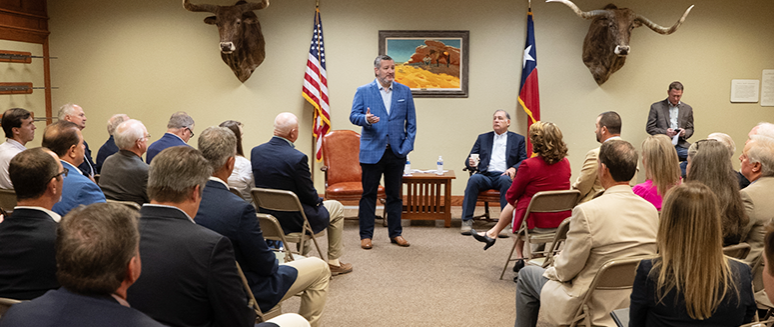
"The world is totally different now than it was two years ago," Sen. John Boozman (R-AR) said, addressing the group at a round table for him and Sen. Ted Cruz (R-TX) on Aug. 30, 2023. "We can no longer operate on prices that were set in 2012. It's not just fertilizer and fuel that has gone up. It's everything."
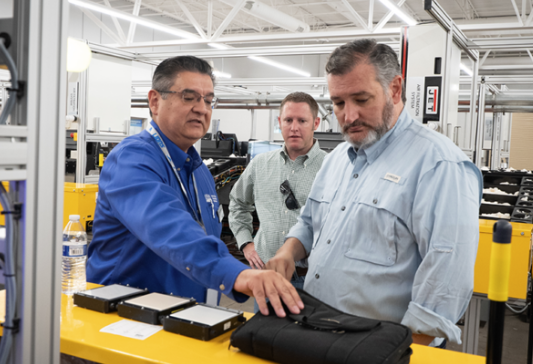
Roughly 22 commodity and agriculture industry organizations were represented at the Sen. Ted Cruz and Sen. John Boozman Roundtable held at the National Ranching Heritage Center in Lubbock. The Senators listened as industry representatives discussed challenges experienced in their segments. All have been hurt by production costs stemming from higher interest rates and record inflation.
That afternoon, following the roundtable, Sen. Cruz visited the USDA-AMS Lubbock Cotton Classification Complex, the most advanced cotton classification facility in the world. Processing up to 50,000 samples per day, Lubbock supervisor Danny Martinez, showed Cruz the automated climate control laboratory and explained classing process and procedures.
Cruz and his team wrapped up the afternoon by traveling to Brandon Patschke's farm to learn more about cotton farming operations.
At the end of the day, Cruz said:
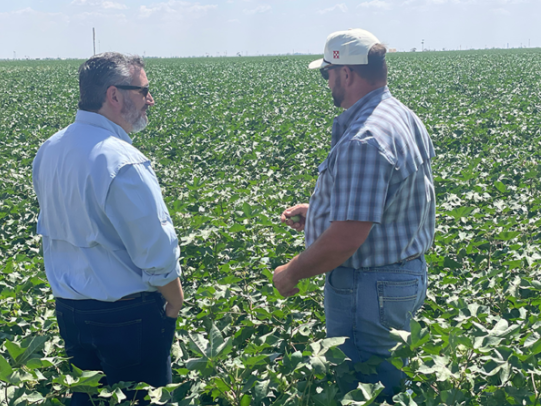
"Texas is an ag powerhouse nationally, but the role y'all play is at the heart of Texas and who we are. We all know this is a crazy time nationally. I think what's happening in Washington right now is absolutely nuts. We're seeing an extreme agenda being pushed in Washington. When I look at rural Texas, farmers and ranchers, y'all embody the common sense conservative values that make Texas Texas. You don't have time to deal with a lot of BS other than actual BS. And I look at y'all and see that you are defending who we are as a state. You are defending the values that built Texas and that define you and I think that is incredibly important to making this state continue to be the incredible success story that we have been for so long. I have been proud for 11 years to keep fighting to keep Washington off of your backs to let you do what you do. You feed us you clothe us, you keep us alive and you keep our values alive."

After making the tough call to postpone our annual golf tournament earlier this summer, Oklahoma Pork's Board of Directors can now officially announce the new date for our 2023 "Oklahoma Pork Open" at Hennessey's Turkey Creek Golf Course.
Join us Friday, October 20, for a beautiful fall day of golf with Oklahoma Pork members, sponsors and friends. Check-in will begin at 8 a.m. before the shotgun start at 9 a.m. Lunch and drinks will be provided for all players. Click here to register your team of four (with or without mulligans) on the Oklahoma Pork website. Closer to the tournament, we will also need registered teams' player names to help streamline registration on the course.
As our Oklahoma Pork staff and board plan for this member-favorite event, we are actively recruiting sponsors for prizes, drinks and more. If your company is interested in supporting the Oklahoma Pork Open through a fun sponsorship at our upcoming golf tournament - OR if you work with an allied industry company you think should step up to sponsor the 2023 Oklahoma Pork Open, click here to review the unique golf tournament partnership opportunities. Available options range from sponsoring one individual hole or player award, all the way to one title sponsorship for the tournament.For more information about the upcoming Oklahoma Pork Open, contact Matti Carlile. We are counting down the days until Friday, October 20, 2023!

In an average year, buyers in Japan, South Korea and Taiwan import 20% of the U.S. wheat crop. It is an impressive statistic that speakers referenced more than a few times during the recent U.S. Wheat Associates (USW) North Asia Marketing Conference.
The two-day gathering that drew wheat buyers from all three countries to Bali, Indonesia, served as an example of USW's ability to showcase U.S. wheat quality and key components of the industry's efficient and effective supply chain efficiently.
Including, of course, the people who grow U.S. wheat.
"As a wheat farmer and a new wheat commissioner, this is my first trip overseas, and it didn't take long to see the bonds U.S. wheat has built in these three markets," said David Brewer, an Oregon wheat farmer who recently joined the Oregon Wheat Commission.
Conference participants also included USW staff from all three countries, USDA officials, and state wheat commission staff. The speakers selected by USW shared updates on crop production, crop quality outlooks, new technologies, financial forecasts, transportation issues and insights into the global wheat market.
USW President Vince Peterson pointed out that Japan, South Korea and Taiwan are three countries with separate cultures, industries and languages, yet they share a common interest in U.S. wheat.

"Bringing buyers from each country together in one place at one time is a tremendous experience and builds camaraderie amongst the three countries that I think helps us to market wheat to them collectively," Peterson explained. "Japan, Korea and Taiwan each have customers that we have worked with for decades. We established some of these offices in the 1950s, so we have 60 or 70 years of experience and history with them."
Sang-Won Yong, an executive with Daehan Flour Mills in South Korea, expressed appreciation for USW's ability to organize the conference. A long-time buyer of U.S. wheat, Yong found the opportunity to meet wheat industry people from the U.S. and flour millers from other countries in one place, at one time, both refreshing and encouraging.
USW Vice President of Trade Policy Dalton Henry presents on new technologies in wheat production – a topic that attracted a lot of attention from wheat buyers from Japan, South Korea and Taiwan.
"Everyone at this conference was focused on the important things we deal with every day, and that is how to make our customers happy and how to keep our businesses going forward," he said. "We all find U.S. wheat to be a big part of the formula to do what we do, to produce quality products for our customers. We've been able to rely on U.S. wheat farmers to produce the quality wheat we need."
Shojiro Kubota, Managing Executive Officer at Nitto Fuji Flour Milling in Tokyo, said Japanese consumers expect quality products. Using U.S. wheat has helped keep his company's customers happy, so he finds value in hearing about the current U.S. wheat crop and other issues that affect the ability to purchase it.
"Things we learn from the speakers and presentations, and having conversations with those in the U.S. wheat industry is very helpful," Kubota said. "The millers from each country may be looking for different types of wheat for different types of uses, but we have many of the same questions about importing wheat. It's a great idea to bring all of us together."
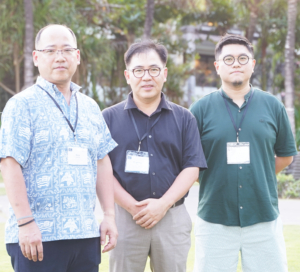
(left to right) Japan Country Director Rick Nakano, South Korea Country Director Dong-Chan "Channy" Bae and Taiwan Country Director Yi-I Huang pause for a photo during the welcome reception at the 2023 USW North Asia Marketing Conference.
Rick Nakano, Dong-Chan "Channy" Bae and Yi-I Huang – USW Country Directors from Japan, South Korea and Taiwan, respectively – each led groups of U.S. wheat customers to the conference, meeting individually with those customers to make sure all their questions were answered.
Brewer and USW Chairman Michael Peters had several questions posed to them about the U.S. wheat crop and overall production across all six classes of U.S. wheat.
"I've actually had some of these buyers on my farm for trade team visits, and they were eager to hear about the crop situation back home," said Brewer. "Seeing those same customers in their environment helps me understand how they make buying decisions."
One thing that became evident to Brewer over the two days is how all the U.S. wheat classes are utilized.
"I'm a farmer from the northwest, but it makes me feel good to hear buyers from these important markets talking about wheat from Ohio, Texas, Kansas, Oklahoma and other states," he said. "It reminds us that we are unified as farmers. When I get back home and have the chance to share what I learned in Asia, I will emphasize that our customers here really want to know what is available in the U.S. It's all about the quality we produce."
This Week
While damage assessments are still being made in the wake of Hurricane Idalia, pump prices remained in neutral, with the national average for a gallon of gas falling by a penny since last week to $3.81. Oil and gas experts have noted that overall gasoline demand this summer failed to match previous years, with consumption getting little "lift" from vacation travel this summer despite retail gasoline prices below last year's. There is a lot of speculation as to why, but no one seems to know for sure.
In Oklahoma, the gas average is $3.50 today, down four cents in the last week and seven cents higher than one year ago.
According to new data from the Energy Information Administration (EIA), gas demand increased slightly from 8.91 to 9.07 million b/d last week. Meanwhile, total domestic gasoline stocks took a slight step back to 217.4 million bbl. Although demand has increased, fluctuating oil prices have limited pump price increases.
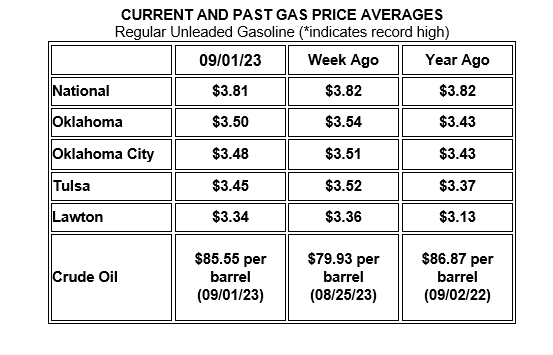
The Weekend
At the close of today's formal trading session, WTI closed at 85.55 an increase of 7% on the week and highest settlement since November 17th. Oil prices rose this week amid ongoing concern Hurricane Idalia would interrupt fuel supply in the Southeast. However, some fuel terminals have resumed operations, and more are expected in the coming days as storms subside and damage assessments can be undertaken. Additionally, the EIA reported that total domestic commercial crude inventories decreased significantly from 433.5 to 422.9 million bbl.
"With visits to the pump rather flat and the price of oil hovering around the $80 per barrel mark, the national average for a gallon of gas will likely stay where it is through this holiday weekend," said Rylie Mansuetti, spokesperson for AAA Oklahoma. "Hurricane Idalia may cause regional price jumps due to station damage, flooded roads, and power outages, but as in past years, these things are usually fixed in a few weeks."
AAA has a variety of resources to help motorists save on fuel:
Next Weekend Gas Watch: Friday, September 8, 2023
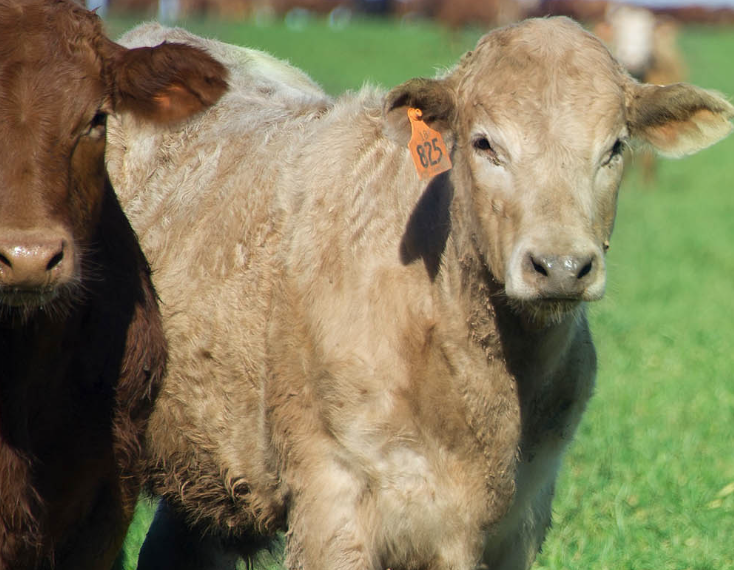
Oklahoma State University Extension will host the Panhandle Cattlewomen's College Oct. 4-5 at the Beaver County Fairgrounds in Beaver, Oklahoma.
The event is designed for all cattlewomen in the beef industry and features two days of networking, informative workshops and hands-on demonstrations in the areas of:
Sessions begin at 8 a.m. Wednesday, Oct. 4 and end at 4 p.m. on Thursday, Oct. 5. Registration is $75 per person, and all checks should be made payable to Harper County OSU Extension. Registration forms are available at all OSU Extension county offices.
For more details about the event and to register, please contact Liz McBee at elizabeth.mcbee@okstate.edu; Darrell McBee at darrell.mcbee@okstate.edu; or Dana Zook at dana.zook@okstate.edu.
OSU Extension uses research-based information to help all Oklahomans solve local issues and concerns, promote leadership and manage resources wisely throughout the state's 77 counties. Most information is available at little to no cost.
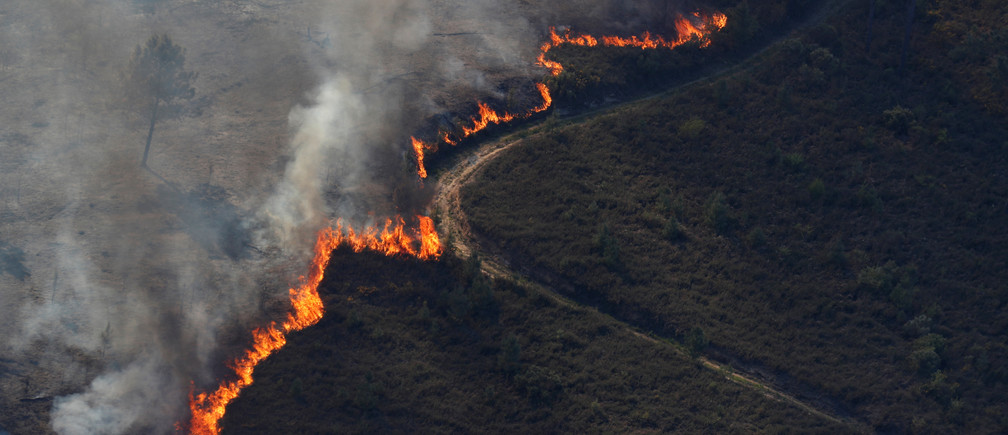
Oklahoma Forestry Services is urging Oklahomans to use an abundance of caution with fire over the Labor Day Holiday weekend.
Elevated fire danger will be in place across most of the state through the weekend. High temperatures will again be above normal and when combined with ongoing dry conditions, elevated fire danger is firmly in place. It has been weeks since most areas in the state have seen measurable rainfall.
"Above normal temperatures and a lack of rain mean wildland fuel dryness is concerning," said State Forester Mark Goeller. "Oklahoma Forestry Services is closely monitoring the weather forecasts. In the meantime, we are urging our fellow Oklahomans to be very careful with any activity that may spark a wildfire."
Thunderstorm chances for southeastern Oklahoma on Sunday are forecast to bring the potential for wildfire caused by lightning. Western Oklahoma will see enhanced fire danger on Labor Day. County Burn Bans are in effect for nine counties across the southern tier of Oklahoma. County burn bans may mean that some recreational fires, including campfires, are not allowed. Please check the updated OFS Burn Ban map on our website the latest information.
Oklahoma Forestry Services is the state's lead wildland firefighting agency. Visit forestry.ok.gov for the latest fire information and county burn ban resolutions.
Senior Farm and Ranch Broadcaster, Ron Hays, is a featuring a "best of" edition, visiting with the senior vice president of global marketing and research at the National Cattlemen's Beef Association, Jennifer Nealson, about beef promotion.
With tighter supplies and higher prices, Nealson said one of the efforts the Beef Checkoff has focused on is teaching consumers how they can stretch their dollar and do more with the beef they purchase at the grocery store.
"The strategy we are deploying now is to help people understand how you cook beef once and serve it twice, and also beginning to reduce the barriers to entry," Nealson said. "I think when you have higher prices, people are less likely to buy because they are worried they don't know how to cook it."
Nealson said more content is being released to help people choose what to buy at the supermarket and prepare it properly. A big message being pushed, Nealson said, is that beef can be cooked for more than just special occasions.
"They are still getting that great taste and that nutritional value and maybe even making it stretch further, bringing the price down for them, having it for many meals," Nealson said.
On the positive side of things, Nealson said ground beef seems to be of good value.
"Our ground beef prices are very competitive with chicken and other proteins, so even though we talk about price sensitivity, we recognize and are thankful that in the cuts, it is still very price competitive," Nealson said. "Also, some of the higher-end cuts, the prime cuts, they are for very niche markets. There isn't as much price sensitivity in those niche markets."
The overarching goal, Nealson said, is that consumers are not only purchasing beef for dinner, but also for lunch, breakfast, and numerous other occasions.
From Memorial Day to Labor Day is valuable marketing time, Nealson said, as a significant amount of money is spent on promotion during summer months when people are grilling and cooking out.
"There are words that consumers associate when enjoying grilled, barbequed, and smoked beef," Nealson said. "One is that they have positive emotional connections with fun experiences. If you think about the connection with fun and beef, we want to capitalize on that."
Nealson said consumers also associate positive sensory experiences with beef.
"The taste, aroma, and smokey flavors- these are things people identify with beef," Nealson said.
Of all the households that were surveyed, Nealson said 96 percent of them are planning to have beef at their social gathering.
"We almost have 100 percent of the market when it comes to summer grilling," Nealson said. "We are sitting pretty good and want to continue to use those checkoff dollars in smart and efficient ways so we can be sure it is not the chicken breast they are grabbing when they have a summer cookout."
The Beef Buzz is a regular feature heard on radio stations around the region on the Radio Oklahoma Ag Network and is a regular audio feature found on this website as well. Click on the LISTEN BAR at the top of the story for today's show, and check out our archives for older Beef Buzz shows covering the gamut of the beef cattle industry today.
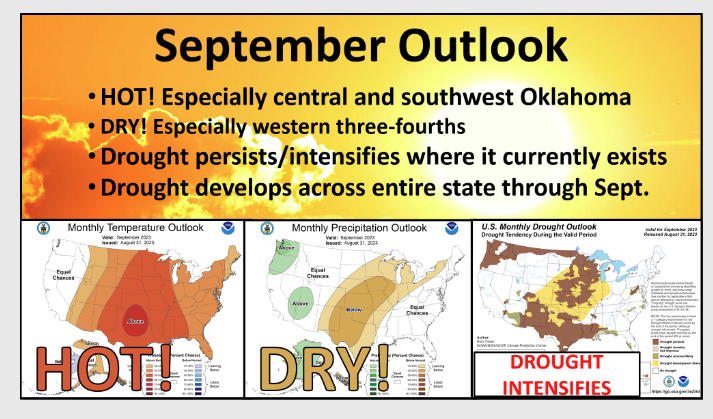
September has arrived, and with it comes Hot Dry Weather. State Climatologist Gary McManus said, "The heat and dry weather roared back with a vengeance, however, and flash drought erupted for the second consecutive summer."
This week's drought monitor shows how triple digit temps and very few rain showers have affected the state so far, "Only 13% of the state was in drought on Aug. 8 according to the U.S. Drought Monitor, contained entirely in small patches across far southwestern and north central Oklahoma. That amount had increased to 36% in just three weeks' time, and the percentage of the state in at least severe drought rose from 6% to 20% over that period. The entirety of that
increase occurred in the southern half of the state where some Oklahoma Mesonet sites had gone as many as 53 days without a quarter-inch of rain in a single day. The flash drought left much of southern Oklahoma with flagging soil
moisture, dead and dormant vegetation, and critical wildfire conditions." Said McManus.
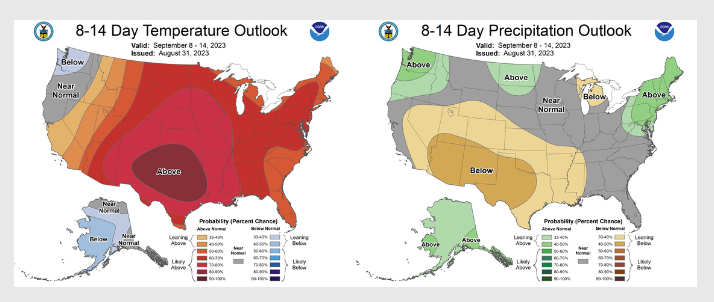
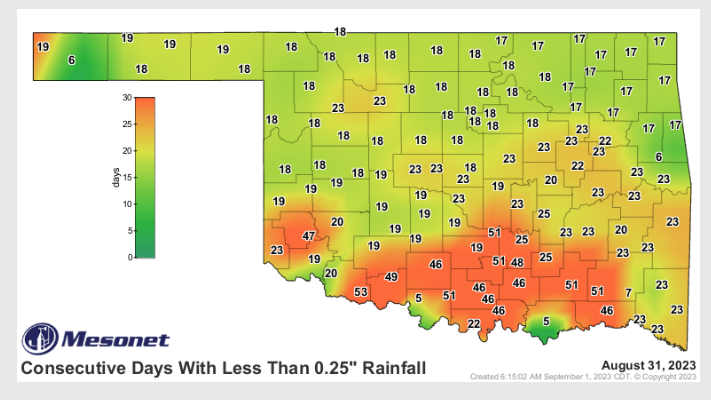
It's been hot for awhile in Oklahoma, but thankfully we did see some good rains in July. However, McManus says that is quickly depleting, and this August is ranked as the 44th driest August since records began back in 1895. McManus says some areas did see rain across the state, but it was all hit or miss, " The month's rainfall was yet another tale of the haves versus have-nots in Oklahoma, with the southwestern half of the state going largely without rainfall through the month, while the northeastern half enjoyed more robust totals. Widespread 1-3 inches deficits were common across the
southwestern half, with similar surpluses to the northeast. Totals ranged from 6.86 inches at Jay to 0.02 inches at both Grandfield and Ringling. Thirty-seven of the Mesonet's 120 sites recorded an inch or less for the month. The June-
August statewide average finished at 12.31 inches, 1.62 inches above normal, and ranked as the 29th wettest climatological summer on record. West central Oklahoma's average of 15.82 inches ranked as their wettest summer on record, 6.35 inches above normal. The first eight months of the year were the 43rd wettest with a statewide average of 25.67 inches, 0.42 inches above normal."
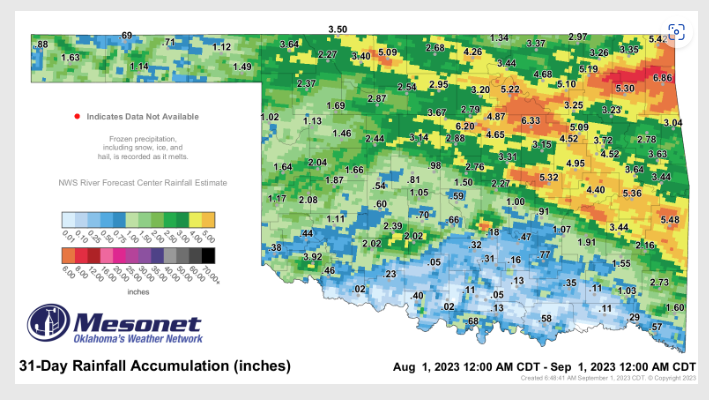
As we get into September, McManus said the outlook for big-time drought relief is not great, "The prospects for drought relief look somewhat bleak according to the Climate Prediction Center's September outlooks, which indicate increased odds for above normal temperatures and below normal precipitation for the entire state. Those odds are particularly enhanced for both across the western three-fourths of the state, each of which could lead to further drought intensification should they occur."
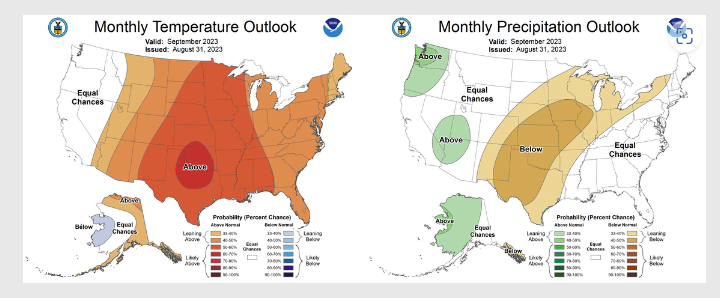
There still could be some hope for rain. As well all know, the State Fair of Oklahoma usually brings a shower or two to town, and with it being hurricane season, we could also see some moisture from tropical storms and hurricanes, but nothing too promising just yet. To see the mesonet ticker from Gary McManus, click here;

Senior Farm and Ranch Broadcaster, Ron Hays, is talking with the new Dean and Vice President of the Division of Agricultural Sciences and Natural Resources at Oklahoma State University, Dr. Jayson Lusk. Hays and Lusk talk about Lusk's return to OSU after several years and his priorities going forward.
Lusk said there were a number of factors that pulled him back to OSU.
"One is just the importance of agriculture in this state, and the ability to have an impact on students," Lusk said. "Really strong enrollment growth in the college of agriculture that attracts students from all over the country. Moreover, the importance of agriculture to the university is clear. The university's strategic plan really highlights important parts of agriculture that they see as important to the future of the university."
Lusk said that on the priority list for the President of OSU, Dr. Kayse Shrum, is investing in extension. Dr. Shrum's interest in the integration of health and agriculture, Lusk said, is a new opportunity for the ag college.
"I look forward to working with her in a partnership that I think is fairly unique even when you look across land grand universities that have a president that really has this focus on agriculture," Lusk said.
Oklahoma State University is expecting the largest freshman class in its history, Lusk said, this year on campus.
"In the Ferguson College of Agriculture, we have about 2800 undergraduate students with us this year, so we are a little bit up from last year, and we have also experienced some strong growth over the last decade," Lusk said. "It is a great time to be at Oklahoma State."
Construction is well underway for the New Frontiers Ag Hall, Lusk said, and he anticipates classes will be held in the new building in the fall of 2024.
"It is a fantastic new facility with a lot of student-facing spaces, student-facing laboratories, and, of course, high-end research labs as well," Lusk said. "It is going to be a wonderful new building where instead of working in 1940s and 50s era facilities, we can really put ourselves in a spot to be doing cutting-edge research and really having that impact on students as well.
Regarding the wheat industry, Lusk said student outcome priorities include increasing agricultural productivity and sustainability, adding value to commodities produced in the state, and diversification opportunities.
It is critical that OSU's wheat breeding program continues to have the same impact on the industry that it has accomplished over many decades, Lusk added.
There is a new blog post out at the Southern Plains Perspective. Read below! The Southern Plains Perspective is authored by Clay Pope- who farms with his wife Sarah and is a contractor for the USDA Southern Plains Climate Hub in the area of outreach.
This has not been a fun summer weather-wise. We all know that story...heat domes, flash droughts, record temperatures and heat indexes. It has just been nasty.
A few weeks ago I wrote a blog asking if we were thinking enough about how to deal with the extreme conditions impacting the region (you can find it here). The main thrust of this piece was how we need to give some serious thought into getting ready for whatever Mother Nature throws our way, be it heat, cold, rain or drought. However, sometimes you get hit by the impact of natural disasters no matter what you do. Luckily, USDA has several programs to help producers deal with the impact of these events—and it just so happens that they recently updated one program designed to help livestock producers to better reflect current trends in the industry.
The USDA's Farm Service Agency (FSA) announced that it is updating the Livestock Indemnity Program (LIP) payment rate to better assist Midwest livestock producers that have lost cattle to the extreme heat and humidity that impacted the region this summer. To help indemnify ranchers to reflect a trend towards higher cattle weights in feedlots, the 2023 LIP payment rate for beef calves over 800 pounds will increase from $1244 per head to $1618, an increase of $374.
In a statement released earlier this month, FSA Administrator Zach Ducheneaux said that "The recent heat domes plaguing many parts of the country have proven to be unsurvivable for some animals and temperatures are not expected to let up any time soon. This is one of the latest, many examples of how a changing climate is creating immediate challenges for farmers and ranchers, and we're finding that our emergency relief programs need to adapt accordingly. Given these circumstances and the trend towards higher weights in feedlots, it became clear that USDA's Livestock Indemnity Payment rates were not reflective of the true market value for cattle. This change will better indemnify the investments producers have in the livestock they raise, and we will continue to find flexibilities where possible to help
The updated LIP payment rate is effective immediately and will be applied retroactively starting Jan.1, 2023, for all eligible causes of loss, not just those due to excessive heat. This will also include tornados, winter storms, and other qualifying adverse weather events. Producers who have already received LIP payments for 2023 losses will receive an additional payment, if applicable, commensurate with this updated rate.
LIP provides benefits to livestock owners and some contract growers for livestock deaths exceeding normal mortality from eligible adverse weather events, certain predation losses and reduced sales prices due to injury from an eligible loss. Indemnity payments are made at a rate of 75% of the prior year's average fair market value of the livestock. For more information you can check out the press release from FSA concerning this change here or contact your local USDA Service Center.

Smithfield Foods is trucking 28,000 pounds of food, the equivalent of 112,000 servings, to Live Oak, Florida, to provide hot meals to communities devastated by Hurricane Idalia.
The food, which includes Smithfield bacon, pork chops, ribs and pork loins, will be delivered to Mercy Chefs, a Portsmouth, Virginia-based nonprofit that deploys to disaster zones across America. Mercy Chefs will serve free, chef-prepared, restaurant-quality hot meals to hurricane victims, volunteers and first responders in western Florida.
Mercy Chefs' mobile kitchen and smoker will be on site at Suwanee Middle School in Live Oak, Florida, to serve multiple free meals per day to anyone in the community who is in need. The team will also distribute meals up and down the western Florida coast to those unable to make it to the base of operations. To make a donation or find out how to volunteer locally, visit mercychefs.com/idalia.
"The devastation we have already seen from Hurricane Idalia has been tragic, with hundreds of thousands of families impacted by the storm," said Jonathan Toms, senior community affairs manager for Smithfield Foods. "We are proud to stand with our partners from Mercy Chefs to help these communities, and we hope that our donation of protein and the meals served will provide comfort and relief to the first responders, search and rescue teams, and neighbors affected by this hurricane."
"As we respond to Hurricane Idalia, we are immensely grateful for our friends at Smithfield Foods," said Chef Gary LeBlanc, founder and chief executive officer of Mercy Chefs. "We rely on their partnership during disasters like this one, because their support helps us reach even more people in need."
Since 2008, Smithfield has provided hundreds of millions of servings of protein in all 50 U.S. states, as well as in Poland, Romania and Mexico, through its Helping Hungry Homes hunger relief program. In 2022, the company donated nearly 25 million servings of protein to food banks, disaster relief efforts and community outreach programs across the U.S. To reflect its continued commitment to fighting food insecurity, Smithfield has pledged to donate 200 million servings of protein by 2025.
More information on Smithfield's ongoing work to strengthen and feed our communities is available here.

Today, the Biden-Harris Administration announced that the U.S. Department of Agriculture's Forest Service is investing $20 million to fund 30 research studies to develop new technologies and data that will increase restoration of degraded forests, grasslands, and watersheds. The funding, provided by President Biden's Bipartisan Infrastructure Law, also supports shared efforts between agency scientists, tribes, states, academia, and non-government organizations.
The nation's forests, grasslands and watersheds provide an array of highly valuable ecosystem services, including drinking water, recreation, habitat for fish and wildlife, and carbon storage to help mitigate climate change. These research studies will help focus on addressing threats to these ecosystems and the benefits they provide, all while developing strategies for protecting these lands. The research studies span the country and will support wide-ranging ecosystem functions and management actions.
"An important component of meeting the responsibility of improving forest health is to follow the science. It has never been more important to do so in an effort to protect communities from the risk of devastating wildfires," said Agriculture Secretary Tom Vilsack. "To mitigate the consequences of the climate crisis with resources from the Bipartisan Infrastructure Law and the Inflation Reduction Act, the Forest Service will follow the science in restoring the health of our forests."
"The Forest Service is using all available tools, including the best available science, to enhance our ability to carry out the work funded by the Bipartisan Infrastructure Law," said Forest Service Chief Randy Moore. "The health of the nation's lands is vital because thriving ecosystems contribute to the economic and social benefit of this nation and to the quality of life for people. By conducting research studies, we can add to our already in-depth scientific data and improve or build tools to better help land managers make the right decisions for the land and for people."
The Bipartisan Infrastructure Law is part of the Biden-Harris Investing in America agenda to grow the American economy from the middle out and bottom-up up by rebuilding our nation's infrastructure, driving more than $500 billion in private sector manufacturing investments, creating good-paying jobs, and building a clean energy economy to tackle the climate crisis and make our communities more resilient.
Investing in scientific discovery to better protect the nation's natural resources is an ongoing effort. Earlier this year, the Forest Service dedicated funding from the Bipartisan Infrastructure Law to research studies in support of the 10-year Wildfire Crisis Strategy. These studies provide science-based information about when, where, and how to conduct projects to reduce the risk of wildfire and increase the safety and effectiveness of controlled burns. The wildfire research studies range from methods to build support for wildfire risk reduction to developing higher value products and markets for biomass being removed from forests.
The list of science projects in support of ecosystem restoration is available online.
USDA touches the lives of all Americans each day in so many positive ways. In the Biden-Harris Administration, USDA is transforming America's food system with a greater focus on more resilient local and regional food production, ensuring access to healthy and nutritious food in all communities, building new markets and streams of income for farmers and producers using climate-smart food and forestry practices, making historic investments in infrastructure and clean-energy capabilities in rural America, and committing to equity across the Department by removing systemic barriers and building a workforce more representative of America. To learn more, visit www.usda.gov.
Remarkable growth in corn yields has boosted corn productivity in the United States over the past century. While corn production has risen, the land used to grow corn has not. United States farmers planted an estimated 94.1 million acres of corn in 2023, the highest level since 2013.
Despite status as the highest acreage of this decade, it falls short of the more than 100 million acres of corn farmers planted a century ago. In the past decade, U.S. corn production is over six times production of the 1930s with fewer corn acres.
Corn Yields
Throughout the 1930's the average U.S. corn yield was 24.2 bushels per acre, grown on an average of 102.2 million acres for an average production of 2 billion bushels of corn. In contrast, the 2010s brought an average U.S. corn yield of 161.5 bushels per acre, grown on an average of 91.4 million acres for an average production of 13.5 billion bushels of corn. In the decades between, yield grew steadily. On average, the annual increase in corn yield has been 1.8 bushels per acre, per year.
Factors in corn yield growth over the past century are advancements in genetics and plant breeding that led to the development of better hybrids and parent lines of corn and improved agronomic farm management and soil fertility. Later, genetic engineering led to commercial introduction of traits in corn hybrids by the mid-1990s and continued expansion in genetic technology.
Growth in corn yields is expected to continue. Over the next decade USDA long-term projections indicate a 2 bushel per acre increase each year through 2032.
Corn Acres
United States farmers planted an estimated 94.1 million acres of corn in 2023, the highest level since 2013. Despite status as the highest acreage of this decade, it is less than the over 100 million acres U.S. farmers planted to corn several years in the 1930s.
Although acres used to grow corn today are lower than a century ago, corn planted acres dipped for a period in the decades between. From the 1960s through the 1990s, the decade average corn planted area was below 80 million acres. In this period, growing yields resulted in corn production that continued to climb over time despite lower acres. When renewable fuel targets were put into place in 2006, demand for ethanol grew spurring an initial increase in corn acres that quickly leveled and has remained constant in a relatively narrow range below the earlier historical high points since then.
Further reduction and stabilization of corn acres is expected to continue. Over the next decade USDA long-term projections indicate a settle at 81.1 million corn acres.
Utilizing Corn's Productivity in The Future
In the 100 years from 1933 to 2022, corn production increased more than 600%. The remarkable growth in corn production is powered by rising yields on less land. Over the next decade, growth in corn production is expected to continue while land area for corn drops from today's levels to 89 million acres as yields continue to rise.
What if we could harness the future productivity of corn on today's acres, as opposed to the lower projected acreage? Consider an example where corn area in 2032 is the same as estimated for 2023: instead of 89 million planted acres there would be 94.1 million corn planted acres and 86.3 million corn harvested acres. With the growth in trend yield, that would result in corn production in 2032 that is more than 1 billion bushels greater than the current USDA projection for that year without increasing land for current lands. That could translate to approximately 3 billion additional bushels of ethanol under current conversion capabilities.
The continued growth potential for corn productivity in the future makes corn an ideal and environmentally friendly feedstock for biofuels and sustainable aviation fuel without using more land or taking supply away from feed needs for livestock and other valued users of corn.


KC Sheperd, Farm Director, is back talking with Bob Rodenberger, a partner with Stockman Oklahoma Livestock Marketing, as he gives the latest on the cattle markets.
"The market is good," Rodenberger said. "We have seen a good market everywhere.
At Apache on Thursday, Rosenberger said there were 740 cows, which is three times the usual numbers. While many producers believed they would have enough forage and water in their ponds to sustain their herds a few months ago, Rodenberger said that has taken a turn.
"We are not out of this drought situation," Rodenberger said.
The saving grace, Rodenberger said, is producers can make a pretty good profit off of those cows.
"Those people that didn't get the adequate rain- they have held on as long as they can," Rodenberger said.
USDA's most recent Farm Sector Income Forecast, released Aug. 31, dropped net farm income expectations for 2023 lower than initial February estimates to $141.3 billion, down 23% from 2022's $183 billion. This $41.7 billion decline nearly erases the $42.9 billion increase that was forecast between 2021 and 2022 but is smaller than the $46 billion gain between 2020 and 2021 following the COVID-19 pandemic. When adjusted for inflation, net farm income, a broad measure of farm profitability, is expected to decrease $48 billion (25.4%) in 2023. The forecast also shows farm and ranch production expenses continuing to increase, rising by $29.5 billion (7%) in 2023 to $458 billion, following a record increase of $56 billion in 2022.
It is important to note USDA finalized net farm income for 2022, which has been forecasted until this release. In February, USDA had estimated 2022 net farm income at $162.7 billion, a 16% increase over 2021. This was adjusted to $183 billion, a 31% increase over 2021. USDA made upward revisions to cash receipts received in 2022 by over $6 billion and downward revisions to production expenses over $12 billion, explaining much of the difference.
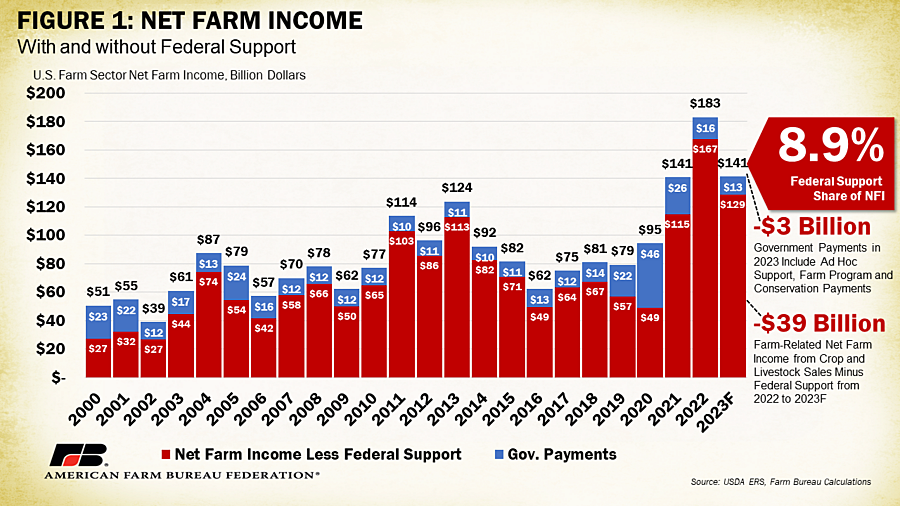
Direct government payments are estimated to decrease by $3 billion, or 19%, between 2021 and 2022 to $12.6 billion. This marks the third consecutive decrease in government payments for producers since the peak of the COVID-19 pandemic in 2020 but is higher than the $10.2 billion in payments forecasted in February. The decrease corresponds to near total reductions in both USDA pandemic assistance, which included payments from the Coronavirus Food Assistance Program and other pandemic assistance to producers, and non-USDA pandemic assistance programs, such as the Small Business Administration's Paycheck Protection Program. Ad hoc and supplemental program payments, which include payments from the Emergency Relief Program (ERP), Quality Loss Adjustment Program and other farm bill designated-disaster programs, are expected to decrease from $11.3 billion to $7.4 billion, a 34% decline. Importantly, programs like ERP have not yet been extended for 2022 or 2023. If Congress authorizes more payments for disasters in these years, corresponding numbers are expected to increase dramatically.
Commodity insurance indemnities were adjusted down slightly for 2023 for an expected $21.85 billion. This a 9%, or $1.79 billion, increase over 2022's $20.06 billion, marking the highest payout of indemnities since the data series began in 2005. This increase is likely the result of increased crop insurance enrollment by those who received a Wildfire and Hurricane Indemnity Program-Plus or ERP payment and are required to purchase crop insurance or Noninsured Crop Disaster Assistance Program coverage (when crop insurance is not available) for the next two available crop years.
Livestock
The largest decrease in net farm income is tied to a projected fall in cash receipts from livestock due to lower prices for all major categories except cattle and turkeys. The value of livestock production (in nominal dollars) is expected to decrease nearly 5%, or $11.9 billion, in 2023. This is a slightly smaller drop than forecasted in January when a 6%, or $14.7 billion, decline was estimated. Chicken eggs, broilers and milk are responsible for the largest percentage decreases, with cash receipts for chicken eggs projected to slip by $6.26 billion or 32%. Highly pathogenic avian influenza has affected nearly 59 million birds in commercial and backyard flocks in the U.S., including over 43 million egg layers, pressuring supplies and pushing up prices. As the flock continues to recover, egg production increases and consumer demand fundamentals recalibrate prices lower. A similar dynamic has resulted in a $6.52 billion, or 13%, drop in expected cash receipts for broilers. Milk receipts are expected to decline nearly $12 billion (21%) as milk prices have faltered throughout the year. June 2023 marked the first month that the Dairy Margin Coverage program's "catastrophic" $4 margin level has been breached, illustrating the severity of price declines.
Cash receipts for cattle and calves are estimated to increase by $15 billion or 18%. As described in previous iterations, drought conditions in the West and southern Plains have damaged pastures and led to higher costs for feed such as hay. This has compelled many farmers to market heifers that would typically be kept for breeding and herd replacement, pressuring U.S. cattle inventory for years to come. Tighter cattle supplies have pulled both cash and futures prices higher, leading to continued growth in cash receipts. Notably, weather conditions continue to be a problem for cattle operations. Excessive heat in the Southwest and along the Gulf Coast has contributed to the direct deaths of livestock associated with heat exposure as well as forced liquidations and early calf weaning due to forage problems. These conditions only push cattle prices up further. It is worth noting that producers who have had to liquidate the bulk of their cattle or lose animals to weather conditions are not benefiting from higher receipts. Strong price conditions apply only to those who can supply the market.
Cash receipts for hogs are estimated to decline by 10% or $3 billion. It is important to note that hog farmers have experienced considerable losses in 2023. Losses for farrow-to-finish farms in Iowa were estimated to be $18.81 per head in June, the eighth consecutive month of losses in these operations. Lower hog prices have been the main cause for negative returns but prices have recovered and provided farmers with better profitability in July.
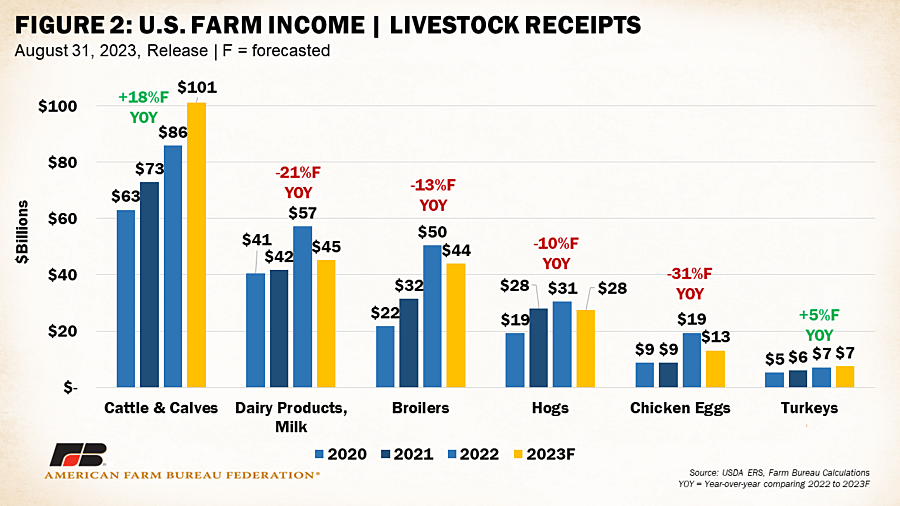
Crops
On the crops side, receipts for major row crops like corn, soybeans, cotton and wheat are expected to decline while receipts for vegetables, melons and hay are expected to increase. Receipts for corn are expected to fall by 10% ($8.4 billion), while soybeans are expected to be down 8.6% ($5.4 billion). Both commodities have faced declining prices since their peaks in 2022. Cotton receipts are expected to fall 27% from $7.5 billion to $5.4 billion. This is on top of high abandonment rates and low yields that have not yet been reflected in higher prices. Wheat is expected to be down $420 million to just over $13 billion. Fruits and nuts are expected to hover close to $26 billion in receipts, while vegetables and melons are poised to rise from $22.4 billion to $25.9 billion (+27%). Improved drought conditions in Western states like California, Oregon and Washington may be linked to better volume dynamics to produce and sell product. Hay receipts are expected to increase for the fourth consecutive year as livestock producers continue to recover from drought-impacted low-quality forage in the central part of the nation. As always, weather and climate conditions will have strong impacts on the true outcome of this year's price outlook. Heat, flooding and wind have battered different regions of the country in the past several weeks, bringing uncertainty to final harvest volumes and quality. Global political factors continue to cast a shadow on commodity markets. Flare-ups in the Russia-Ukraine conflict could affect farm-level prices. High production out of competing suppliers to our south, such as Brazil and Argentina, further contribute to price volatility.
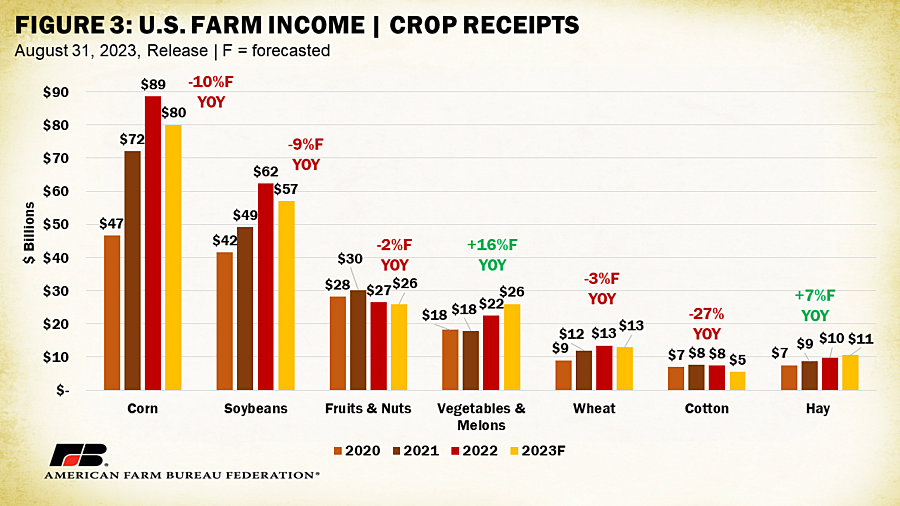
On the cost side, production expenses, including operator dwelling expenses, are forecast to increase for a sixth consecutive year, growing in 2023 by $29.5 billion, or 7%, to reach a record $458 billion. And while it's little consolation, some major input items such as cumulative fertilizers and fuels and oil are expected to decline from record highs. Fertilizers, lime and soil conditioners are expected to decrease $420 million, or 1%, from $36.85 billion to $36.43 billion. Fuels and oils are expected to experience the largest percent decline – 13% – from 2022, moving from $18.46 billion to $16.07 billion. These drops, however, are easily outpaced by increases in other expense categories including marketing, storage and transportation, which are forecast to increase 5%. Feed costs, which represent the largest single expense category, are expected to increase $2.71 billion to $86.37 billion (+3%). This is an upward revision from the forecasted decline in feed prices in the February report and is also contrary to the decline in most commodity receipt expectations. Labor costs are expected up across all subcategories with cash labor forecast to move from $41.16 billion to $43.35 billion (+5%). Heightened periods of inflation have pressured interest expenses as the Federal Reserve Bank attempts to bring inflation under control through higher rates. Between 2022 and 2023, interest expenses, including operator dwellings, are expected to jump 38%, going from $24 billion to $33.28 billion, making it more difficult for farmers and ranchers to acquire lines of credit to purchase inputs and equipment this year. Livestock, seed, electricity, and repair and maintenance are among the other categories expected to increase in price.
Other farm income, which includes things like income from custom work, machine hire, commodity insurance indemnities and rent received by operator landlords, is estimated to increase by $1.6 billion, or 3.5%, from $46.5 billion in 2022 to $48.17 billion in 2023. But when all the factors influencing income are accounted for, the resulting expectations for net farm income decline become apparent, as illustrated in Figure 4.
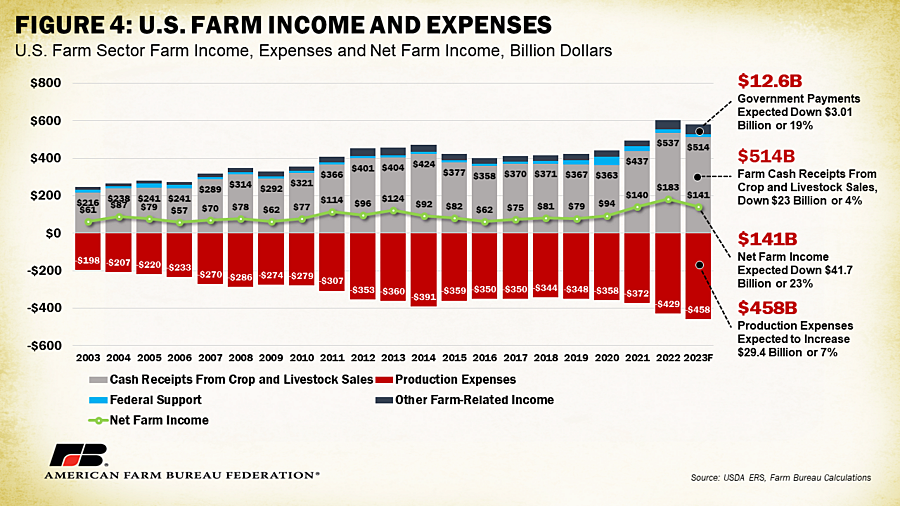
Other Considerations
USDA's Farm Sector Income Forecast also provides expectations of farm financial indicators that can give insight into the overall financial health of the farm economy. During 2023, U.S. farm sector debt is projected to increase $24 billion, or 5%, to a record $520 billion in nominal terms. Though a record, this is a $15-billion downward revision from the February report. Nearly 70% of farm debt is in the form of real estate debt, for the land to grow crops and raise livestock. Real estate debt is projected to increase $19.6 billion to a record-high $354 billion, largely due to an increase in land values across the country. Non-real estate debt, or debt for purchases of things like equipment, machinery, feed and livestock, is projected to increase by $4.5 billion to a record $165.7 billion. The value of assets regularly being purchased with debt is rising, which means it will continue to be important for farmers and ranchers to pay down debt and cover interest to maintain a healthy balance sheet, an endeavor that will be even more cumbersome in a high interest environment.
Based on 2023 debt and asset levels, USDA expects the debt-to-asset ratio to be 12.72% for 2023, which sits marginally below the prior five-year average (13.5%), meaning farmers are borrowing slightly less to finance the purchase of assets. Higher interest rates will likely act as a barrier for farmers to finance new assets moving forward.
Working capital, which takes into consideration current assets and liabilities, is the amount of cash and cash-convertible assets minus amounts due to creditors within 12 months. In 2023, working capital is projected to fall by $7.13 billion, or 5.5%, to $121.9 billion, which is the first decline since 2016, and sits at $880 million above 2014 levels, when farmers and ranchers held just over $121 billion in working capital. Lower levels of working capital often suggest that many U.S. farmers have just enough capital to service their short-term expenses and debt, which becomes more difficult as interest rates rise.
Another metric that highlights the concern about farmer profitability in 2022 is the rate of return on assets. For 2023, the rate of return on assets is projected at 9.1%. This is a drop from 2021 and 2022 when returns were up over 12.5% but remains above returns experienced between 2014 and 2020. Compared to 2021 and 2022, farmers and ranchers are seeing smaller revenues or returns for the investments made in the cost of production and in assets used to produce a farm product; the opposite is true from 2014-2020. Figure 5 highlights the U.S. farm sector debt, the debt-to-asset ratio and the rate of return on farm assets.
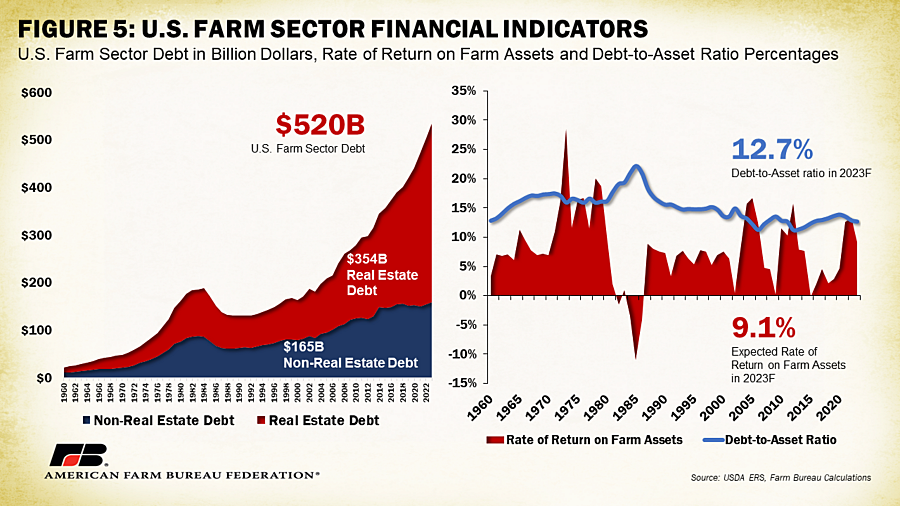
Summary
USDA's most recent estimates for 2023 net farm income provide an updated estimate of the farm financial picture. For 2023, USDA anticipates a 23% decrease in net farm income, moving from $183 billion in 2022 to $141 billion in 2023. Much of the forecasted decline in 2023 net farm income is tied to lower crop and livestock cash receipts, continued increases in production costs and a decrease in ad hoc government support. It is important to highlight the projected nature of this forecast. 2022 net farm income numbers were not finalized until August 2023 and were adjusted upward over $20 billion in the eight months since the year ended. During this time USDA is digesting new information and data as it becomes available, shifting calculations from estimates to actual values. This means there is still much variability in 2023 net farm income. At the very least, these estimates show the relationship between, on average, falling commodity prices and rising production costs and the ultimate impact on farmers' bottom lines. Combined with weather uncertainty and a high cost of capital to operate their businesses, farmers and ranchers will be forced to adapt as they always have. Part of being able to adapt means having clarity on rules that impact their businesses' ability to operate, having access to comprehensive risk management options and being given a resounding voice during formulation of vital legislation such as the farm bill, which can either complicate or streamline farmers' and ranchers' ability to sustainably contribute to a reliable and resilient U.S. food supply.

The National Association of State Departments of Agriculture is excited to announce the hiring of Becky Garrison Warfel, RDN, LD, a licensed and registered dietitian nutritionist, as Director of Public Policy.
As Director, Garrison Warfel will advance the organization's public policy advocacy with her experience in marketing and federal affairs with the USA Dry Pea & Lentil Council and history serving as a community nutrition advisor for the University of Idaho Extension. Garrison Warfel will lead NASDA's Food Safety and Nutrition Policy Committee.

"I am beyond thrilled and grateful for the opportunity to join the NASDA team and contribute to the organization's impactful mission. My enthusiasm stems from a deep passion for food, the intricate dynamics of food systems, and the complex landscape of nutrition policy. Through past experiences, I've seen the inherent ability of food to bring individuals together - not just around a table, but across diverse perspectives and across aisles. The umbrella of nutrition can be such a unifying force, especially when it comes to bridging the gaps between producers, consumers, and policy makers. I could not be more eager to dive into this role and contribute to NASDA's valuable work," Garrison Warfel said.
Garrison Warfel holds a bachelor's degree in food and nutrition; and is working to complete her master's in public administration from the University of Idaho and holds the credentials of Registered Dietitian Nutritionist and Licensed Dietitian. She has also served the USDA Center for Nutrition Policy & Promotion as a MyPlate Strategic Partner, showcasing her ability to connect how supporting farmers and ranchers contributes to healthy communities.
Garrison Warfel's first day with NASDA will be Sept. 1, 2023.
NASDA is a nonpartisan, nonprofit association which represents the elected and appointed commissioners, secretaries and directors of the departments of agriculture in all fifty states and four U.S. territories. NASDA grows and enhances American food and agricultural communities through policy, partnerships and public engagement. To learn more about NASDA, please visit nasda.org.
The National Association of Conservation Districts (NACD) is pleased to announce that its Northeast Mid-Atlantic Forests and Water Partnership project has been awarded a $600,000 grant from the U.S. Department of Agriculture (USDA) Forest Service's Landscape Scale Restoration (LSR) program. This grant will enable NACD and partners to collaboratively advance science-based restoration initiatives in priority forest landscapes and key watersheds across the Northeast and Mid-Atlantic regions.
The Northeast Mid-Atlantic Forests and Water Partnership brings together a coalition of agencies and organizations dedicated to enhancing forest and water priorities across a 13-state footprint, from Maine to West Virginia and Ohio. This collaboration will leverage the expertise of the U.S. Forest Service (USFS), Environmental Protection Agency (EPA), Natural Resources Conservation Service (NRCS), U.S. Fish and Wildlife Service (USFWS), state agencies, non-governmental organizations (NGOs), and conservation districts.
"This grant allows us to establish a regional forum that promotes science and research impacting forest management and water quality," said Annica McGuirk, NACD Northeast Region Representative. "Through strategic coordination, we will align partners across the region in support of restoration projects, share valuable lessons learned, and continue to drive alignment between the forest and water sectors to achieve greater on-the-ground outcomes."
The Northeast Partnership's inaugural projects will be launched in Ohio and Connecticut. In Ohio, the Ohio Division of Forestry will engage forest landowners on the importance of best management practices to protect water quality and promote sustainable forest management as well as provide additional access to Ohio's Forestry Pollution Abatement Plan program to prevent water pollution from forestry operations. Conservation districts in southeast Ohio will support these efforts and provide landowner education and outreach. In Connecticut, the Connecticut Council on Soil and Water Conservation will be leading a series of trainings on a new Geographic Information Systems toolkit for mapping riparian restoration, providing landowner outreach and education in support of sustainable forest management, and leading riparian restoration projects in priority drinking watersheds for several major cities.
"This grant brings together diverse stakeholders for forest and water restoration and landowner outreach and education to benefit communities, wildlife, and natural resources," said Kim LaFleur, NACD President. "It is a partnership that emphasizes the importance of regional collaboration and the crucial role of conservation districts as effective partners in promoting shared stewardship and conservation on all lands. With the support of the LSR grant, the partnership aims to create lasting positive impacts on the environment and communities in the Northeast and Mid-Atlantic regions" shared LaFleur.
For more information about the Northeast Mid-Atlantic Forests and Water Partnership and its restoration initiatives, please visit NACD's website
RON's Dave Lanning has a pre-opening look at today's agricultural Markets.
Click the audio tab below for today's report.
Archives:
2026-11 | 2026-10 | 2026-09 | 2026-08 | 2026-07 | 2026-06 | 2026-05 | 2026-04 | 2026-03 | 2026-02 | 2026-01 | 2025-12 | 2025-11 | 2025-10 | 2025-09 | 2025-08 | 2025-07 | 2025-06 | 2025-05 | 2025-04 | 2025-03 | 2025-02 | 2025-01 | 2024-12 | 2024-11 | 2024-10 | 2024-09 | 2024-08 | 2024-07 | 2024-06 | 2024-05 | 2024-04 | 2024-03 | 2024-02 | 2024-01 | 2023-12 | 2023-11 | 2023-10 | 2023-09 | 2023-08 | 2023-07 | 2023-06 | 2023-05 | 2023-04 | 2023-03 | 2023-02 | 2023-01 | 2022-12 | 2022-11 | 2022-10 | 2022-09 | 2022-08