Senior Farm and Ranch Broadcaster, Ron Hays, is talking with National Cattlemen's Association executive director of government affairs, Kent Bacus, about the roller coaster surrounding the Corporate Transparency Act.
In early December, the Corporate Transparency Act was halted to determine its constitutionality, then on December 23, it was reinstated with its original January 1, 2025, deadline. Then, once again on December 26, the U.S. Court of Appeals for the Fifth Circuit reversed that decision and reinstated the preliminary injunction against the federal government's enforcement of the Beneficial Ownership Information Reporting rules under the Corporate Transparency Act.
"Now, the preliminary injunction is back in effect, which led the Treasury Department to issue a statement saying that they are not going to enforce the Corporate Transparency Act while this injunction is in place," Bacus explained. "So, for now, we can breathe a collective sigh of relief because it looks like this injunction is going to hold and that January 1 deadline is not going to be enforced."
NCBA will continue to monitor the situation closely because the Department of Justice will likely appeal to the Supreme Court.
As many as thirty million small businesses would be required to file the paperwork including many cattle producers. Bacus warned producers that they are still not completely out of the woods.
"There is still a lot to be determined from this, and even though we have this temporary relief, it is very important to continue to talk to your attorneys and tax preparers to find out if you need to submit a voluntary report because the Treasury is going to continue to accept those," Bacus detailed. "It may not hurt for some people to do that, but you really need to have that discussion with your attorney because anything can happen in this whole legal process."
Additionally, he encouraged producers to work to push Congress to make long-term changes to the Corporate Transparency Act to provide more certainty for cattle producers and other small business owners across the United States.
NCBA will prioritize such action with the new Congress and has already sent a letter to Treasury Secretary Janet Yellen informing her of how cattle producers and rural businesses are being affected by the Corporate Transparency Act.
"We needed to communicate directly to Secretary Yellen and let her know that while her constituency is primarily Wall Street, you have a lot of us out here in rural America that are not your constituency, but we are an important part of the economy. This rule that you have been putting forward, this new regulatory burden will affect so many people, and you need to understand exactly how this will impact us," Bacus summarized. "We also continue to call for, at minimum, a one-year delay until this can be sorted out because while they are going after money launderers and other criminals, we are not the people they should be going after. By going after this, they are going to create an entire criminal class out of honest, tax-paying, law-abiding citizens and small business owners across rural America."
The Beef Buzz is a regular feature heard on radio stations around the region on the Radio Oklahoma Ag Network and is a regular audio feature found on this website as well. Click on the LISTEN BAR for today's show and check out our archives for older Beef Buzz shows covering the gamut of the beef cattle industry today.

The Oklahoma Farm Bureau recently introduced a program designed to empower rural entrepreneurs: Launch Rural OK. OKFB's Rural Economic Development Coordinator Amarie Bartel was excited to tell Oklahoma Farm Report's KC Sheperd all about this collaborative effort that brings together various rural entrepreneurship resource providers to support and foster the growth of small businesses in Oklahoma's rural communities.
Launch Rural OK is a centralized website, offering rural entrepreneurs a one-stop shop for essential resources and information. Through this program, entrepreneurs gain access to a comprehensive network of support, empowering them to navigate the challenges and opportunities unique to rural businesses.
"If someone owns a small business or wants to start a small business, rather than scouring the internet to find the right folks, they can go to LaunchRuralOK.com to learn about all of the resources that are out there to support their small business," Bartel said. "Rural Oklahomans value relationships and that is really important to us as resource providers so we realized that we didn't just need a website that folks have to find. We needed to go out and be available."
Upcoming Conferences
To do that, Launch Rural OK has scheduled four conferences across Oklahoma in 2025 throughout February and March. Each conference will focus on a specific region within the state, ensuring all rural communities have the opportunity to participate. These conferences will provide valuable workshops, networking opportunities, and access to a variety of resources that can directly benefit rural entrepreneurs.
"The conferences will be in every quadrant in the state of Oklahoma," Bartel said. "One in Southeast Oklahoma on February 14th. One in Northeast Oklahoma on March 14th, and one in Northwest Oklahoma on March 31st. Resources will be highlighted at these conferences, but so will many other things, like Marketing 101 and How to Network - things of that nature that are actionable skills that small businesses may want, but haven't always been easily accessible."
LaunchRuralOK.com: A Hub for Entrepreneurs
The program's website, launchruralok.com, serves as a central hub for rural entrepreneurs. The website offers a wealth of resources, including:
Stay Informed and Connected
Launch Rural OK's website also features a dedicated events tab, allowing entrepreneurs to stay informed about upcoming conferences, workshops, and other events happening across the state. This ensures rural entrepreneurs have ample opportunities to connect, collaborate, and access the support they need to thrive.
Launch Rural OK: A Promising Initiative for Oklahoma's Rural Businesses
Launch Rural OK is a commendable initiative that demonstrates a strong commitment to supporting Oklahoma's rural entrepreneurs. By providing a centralized platform for resources, hosting informative conferences, and fostering connections, Launch Rural OK empowers rural businesses to flourish and contribute to the economic vitality of their communities.
"It is such an exciting time to be an Oklahoman," Bartel commented. "We have momentum. We have movers and shakers who are doing incredible things and so, why not get together and hang out, you know?"
Learn More about the programs and the events by clicking here.
"At the top of the homepage, there is a tab that says 'Conferences,'" Bartel explained. "So, you can click on those. All of these conferences are free to attend and anyone is welcome to attend all of these events. There is also an 'Events' tab, and this is something that I think is really fun. It features events for entrepreneurs that are happening all across the state."
Through the "Events" tab, people can also post their own events or add themselves as a resource for rural entrepreneurs by clicking "Join the Map" and creating an account.
"This is a really inclusive, accessible place for anyone in the entrepreneurship space," Bartel concluded.
| |||||||||||||||||||||||||||||||||||||||||||||||||||||||||||||||||||||||||||||||||||||||||||||||||||||||||||||||||||||||||||||||||||||||||||||||||||||||||||||||||||||||||||||||||||||||||||||||||||||||||||||||||||||||||||||||||
| |||||||||||||||||||||||||||||||||||||||||||||||||||||||||||||||||||||||||||||||||||||||||||||||||||||||||||||||||||||||||||||||||||||||||||||||||||||||||||||||||||||||||||||||||||||||||||||||||||||||||||||||||||||||||||||||||
|

KC Sheperd caught up with David Misener of U.S. Custom Harvesters to discuss their annual convention coming up from January 30 – February 1 in Des Moines, Iowa.
Misener is happy that the event could return to Des Moines as it has not been held there since 2021 when attendance was much reduced due to the COVID-19 pandemic.
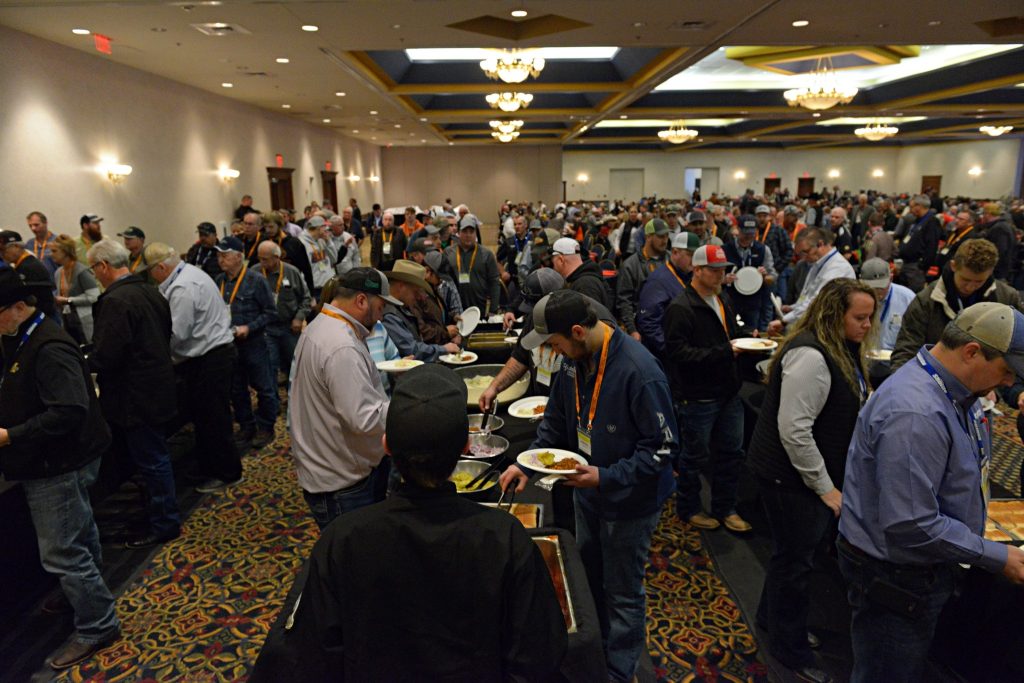
The Convention will include many speakers, a live auction, entertainment, meals, and an awards banquet. Associate members make up the trade show comprised of 14,000 square feet.
"Before Convention, the Board is going to be there a few days early to revamp our safety videos for our membership," Misener said. "We definitely want to teach good practices for our employees. We've been planning that for over a year already."
The first day of the convention begins with the major equipment companies explaining the new features of their products. Day two is back to business with meetings, covering legislative activity and law enforcement and DOT issues.
"We try to be open-minded and have good communication with them, so they are happy with us and we're happy with them," Misener commented. "I have had a lot of conversations with the DOT in different states, and they would rather talk to us at Convention and get things understood than have to give us a fine for something that we are doing wrong."
Aaron Davis will be a keynote speaker. Kristi Boswell will update the group on legislative happenings from 2024 and speak out about what 2025 holds. Lauren Lucille will host a women's event that will speak to the struggles of women when it comes to balancing stress, family, and work.
The Convention is open to all members of the U.S. Custom Harvesters Association. Associate members may attend as vendors. Media is, of course, welcome, as well. More information, including the convention agenda, can be found at https://uschi.com/convention/.
Sheperd and Misener also discussed this year's harvest so be sure to click the listen bar at the top of the page to hear the whole conversation.
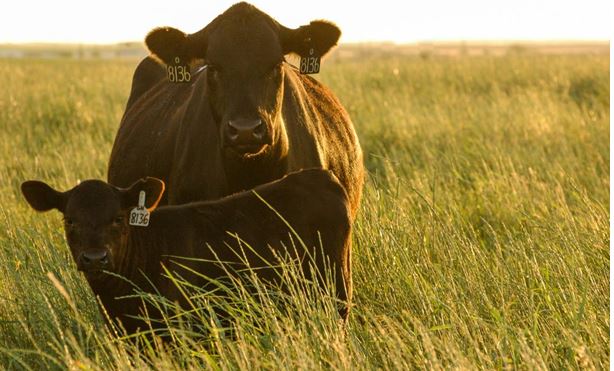
Mark Johnson, Oklahoma State University Extension Beef Cattle Breeding Specialist, offers herd health advice as part of the weekly series known as the "Cow Calf Corner," published electronically by Dr. Derrell Peel, Johnson, and Paul Beck. Today, Johnson talks about valuable New Year's Resolutions for commercial cow/calf operations.
Low cow inventories, little evidence of replacement heifer retention and record high prices for cattle during the close of 2024 are all positive signs for commercial cow-calf operations in 2025.
That being the case, here are my New Year's resolutions for commercial cow-calf operations to unlock greater profit potential in the coming year:
1 – Evaluate your marketing plan and resolve to market better. Consider when (weaning, yearlings or as fed cattle) and how. Investigate marketing opportunities that can add value through documented health and/or genetic values.
2 – Keep better records, both financial and production. Evaluating cow productivity in the form of Percent Calf Crop Weaned or the Percentage of Mature Weight Weaned on a herd-wide basis are vital to unlock profit potential.
3 – Find the optimum balance of Mature Cow Weight/Cow Productivity to your available pastureland and forage/feed resources. Selection pressure applied to keep mature cow size in balance can be effective as this is a highly heritable trait.
4 – Monitor nutrition and cow body condition – don't let cows lose weight during the last trimester of pregnancy.
5 – Improve the health of your entire grazing ecosystem (soil, plants and cattle). Most Oklahoma rangeland has been drought-stressed during two of the past three years. Manage warm-season grasses accordingly this spring.
Mark Johnson, OSU Extension beef cattle breeding specialist, looks ahead to 2025 and has advice for producers when it comes to starting off the year on a good note on SunUpTV from December 28, 2024, at https://www.youtube.com/watch?v=Z68uf29P6Ps
RON's Dave Lanning has a pre-opening look at today's agricultural Markets.
Click the audio tab below for today's report.

In a far-reaching, and transformative effort to modernize the Oklahoma House of Representatives, Rep. Tom Gann, R-Inola, has sponsored a reform package – House Resolution 1001 – designed to distribute power, promote transparency and reinvigorate the legislative process. His reforms aim to end the culture of opacity and concentration of authority that he says has hindered the chamber's effectiveness for far too long.
"The time has come to ensure the House of Representatives becomes an institution of laws, not of one man," Gann said. "For years, our legislative process has stagnated, with decisions made behind closed doors and power centralized into the hands of one individual, the House speaker, who is elected by a single House district and not the people of Oklahoma as a whole. In recent years, at best, the House has simply marked time, failing to embrace new transparency measures. At worst, it has regressed, relying on secretive processes controlled by a single person."
"No one individual should hold the power to appoint committee members, designate chairs, assign legislation, block legislation approved by committees, control the multi-million-dollar House budget, withhold resources from other members, or introduce legislation outside the normal guidelines that apply to everyone else. This reform fundamentally changes that dynamic, redistributing authority to ensure fairness, transparency and member-driven governance."
Gann's proposal is a comprehensive effort to decentralize authority, empower individual members, and ensure legislative operations are conducted openly and accountably. Key highlights include delegating certain speaker powers, creating new transparency safeguards and improving member-driven processes.
The package's proposed reforms include:
"This package represents a seismic shift in how the House operates," Gann said. "It would distribute power among the members, foster a culture of transparency, remove the influence of special-interest money and the few politicians who seek to broker their closed-door power to channel that money, and ensure the legislative process reflects the will of the people rather than the control of one person."
Gann emphasized the importance of the House Transparency Committee, calling it "the most important contribution even the newest members of the House could make—ensuring that transparency is a permanent and evolving feature of this institution. We are setting a new standard for openness, accountability, and member-driven governance that will serve as a model for other states to follow."
Gann is calling on House leaders to bring the proposal to the floor, for a recorded vote, during the upcoming legislative session.
"Oklahoma deserves a legislature that is transparent, effective and accountable to the people it serves," Gann said. "This proposal delivers just that."
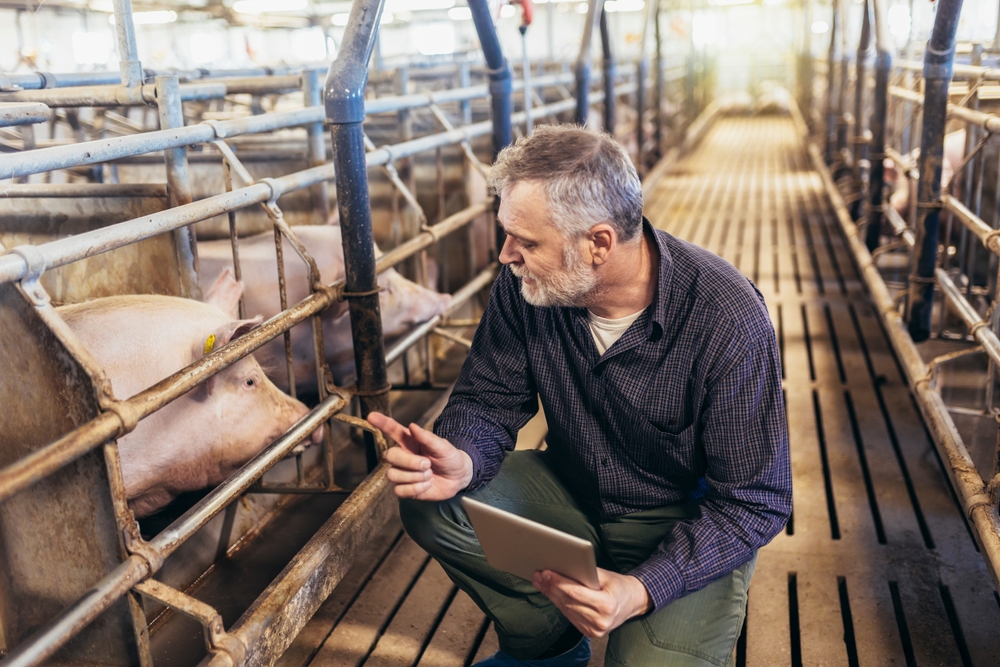
The Swine Health Information Center (SHIC) is for the enhancement of swine health and to protect them from emerging diseases through preparedness, disease monitoring, communications, and targeted research. Oklahoma Farm Report's Maci Carter spoke with Dr. Lisa Becton, the organization's Associate Director, to get the details.
Currently, the Center is researching H5-N1 and Weaned-to-Harvest Biosecurity.
Dr. Becton commented on the amount of activity seen from H5-N1 and how it took the industry by surprise when it was identified in dairy herds for the first time.
"We were watching it with poultry, but when it came over into the dairy side, it really raised some eyebrows," she said. "Then when USDA first broke the case about the first pig diagnosis in that Oregon farm, it also raised some concerns."
She described the Oregon farm incident as a unique case because it only affected one pig in a small backyard farm without the pig going into the food production cycle.
"What we are trying to understand now, is what the continued risks for swine are," she detailed. "Not a whole lot is known about H5-N1 in pigs. We are trying to take lessons learned from dairy, but as we monitored the situation, we felt like we needed to dive deeper and support our industry. That is what led to our call for research proposals."
The research is helping Dr. Becton and her colleagues understand what the clinical presentation of H5-N1 in pigs is, the level of risk for and mode of transmission, how to protect caretakers, and whether or not vaccinations will help.
Dr. Bection added, "There are ten different priorities, and they are all incorporated into the research, but at the end of the day, the results will help us understand the virus and be able to prevent but also prepare for it if it is ever found in the herds, which we hope never happens."
The Wean-to-Harvest biosecurity program was developed in collaboration with the Foundation for Food and Agriculture Research (FFAR) and the Pork Board Checkoff, all of which are also working together on the H5-N1 research efforts. The program focuses on ways to support biosecurity both on the farm and off the farm during transportation to protect swine from disease sand prevent the spread of diseases should they be found.
The Wean-to-Harvest program isn't new, and research projects are reaching maturity. "Recently, we have highlighted the results of several of those," Dr. Becton stated. "Some dealing with transportation and some on-farm with our goal being to get usable information to producers."
She used examples within the transportation industry. Swabbing to check the cleanness of a trailer and the practicality of re-routing trucks around areas known to have active disease are some of the areas of research.
On-farm research is looking for alternatives to caretakers needing to shower going in and out of holding facilities, and the potential risks of manure applications.
Used together, all of these protocols enhance and protect the health of U.S. swine herds and their caretakers by identifying emerging disease threats.
"We know H5-N1 is an emerging threat because it was never seen in swine or dairy until this year," Dr. Becton said. "So, all of these things, and the research projects that we are doing look at different risk factors for diseases and help us come up with what we can do to prevent some of those infections from happening and ways to monitor for those, whether through diagnostics, having a broader, global surveillance, or even domestic disease surveillance. All of these things fit together to help us protect herd health and drive some of the steps producers can take on the farm to prevent diseases from coming in."
SwineHealth.org features additional information and resources along with a subscription link to receive the monthly newsletter.
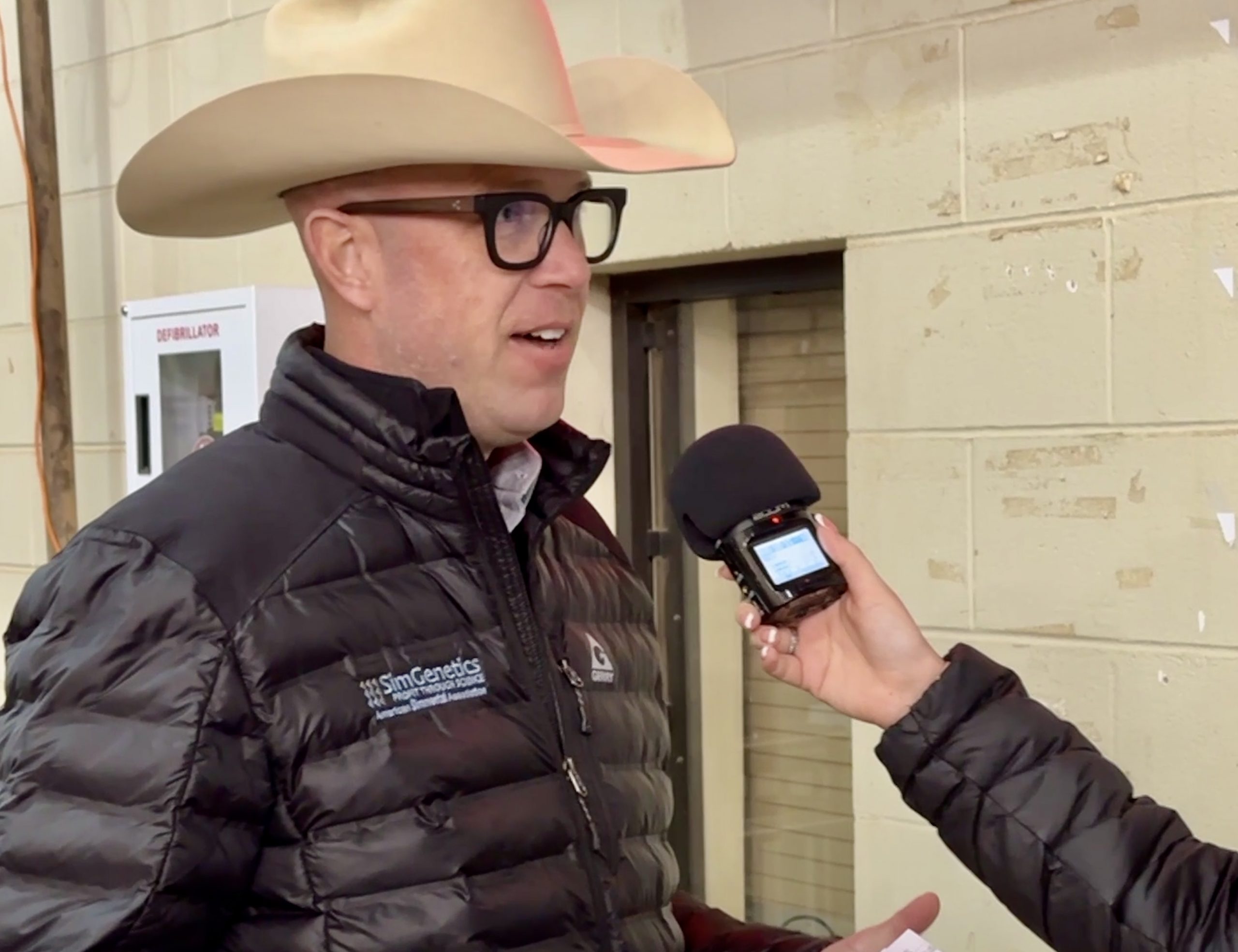
On today's Beef Buzz, Oklahoma Farm Report's Ron Hays features comments from a recent conversation that Farm Director KC Sheperd had with Luke Bowman, Director of SimGenetic Development with the American Simmental Association to talk SimGenetics at Cattlemen's Congress.
Eight hundred fifteen cattle are entered at Cattlemen's Congress in Oklahoma City with either purebred or percentage Simmental genetics. The American Simmental Association has been represented at every event since it began.
When asked what keeps them coming back, Bowman said, "It is the quality of the show and the ease of working with people. The show staff is extremely flexible to allow us to run our point shows how we like to do it, and let other breeds run their shows how they want to. Oklahoma City is very affordable; it is great for families to make that winter vacation there because they can afford to do it. It is just the overall camaraderie."
The American Simmental Foundation will auction a donated heifer during the show to raise money for the American Simmental-Simbrah Foundation which raises money for research, junior projects, and scholarships.
The Bricktown National Regional Simmental Sale will also take place during the Cattlemen's Congress on Sunday, January 12, in the Superbarn Sale Arena in Oklahoma State Fair Park.
The Junior and Open Simmental Breed Shows will be held on Monday, January 13 and Tuesday, January 14 in the Jim Norick Arena.
Also, big news for the American Simmental Association is the naming of Dr. Jon DeClerck as the new Executive Vice President.
From College Station, Texas, Dr. DeClerck will assume his role on July 1, 2025, when Dr. Wade Shafer retires. Bowman is looking forward to the renewed focus on the beauty of SimGenetics that Dr. DeClerck will bring to the table.
"He's a great animal evaluator," Bowman shared. "He used to be a livestock judging coach at Texas Tech University and Iowa State. He is a key man to understand cattle and relate that back to the membership. We have a great science team, so the diversity that Dr. DeClerck is going to bring is going to offer us a suite of services that we have never been able to offer before."
The Beef Buzz is a regular feature heard on radio stations around the region on the Radio Oklahoma Ag Network and is a regular audio feature found on this website as well. Click on the LISTEN BAR for today's show and check out our archives for older Beef Buzz shows covering the gamut of the beef cattle industry today.
| ||||||||||||||||||||||||||||||||||||||||||||||||||||||||||||||||||||||||||||||||||||||||||||||||||||||||||||||||||||||||||||||||||||||||||||||||||||||||||||||||||||||||||||||||||||||||||||||||||||||||||||||||||||||||||||||||||||||||||
| ||||||||||||||||||||||||||||||||||||||||||||||||||||||||||||||||||||||||||||||||||||||||||||||||||||||||||||||||||||||||||||||||||||||||||||||||||||||||||||||||||||||||||||||||||||||||||||||||||||||||||||||||||||||||||||||||||||||||||
|
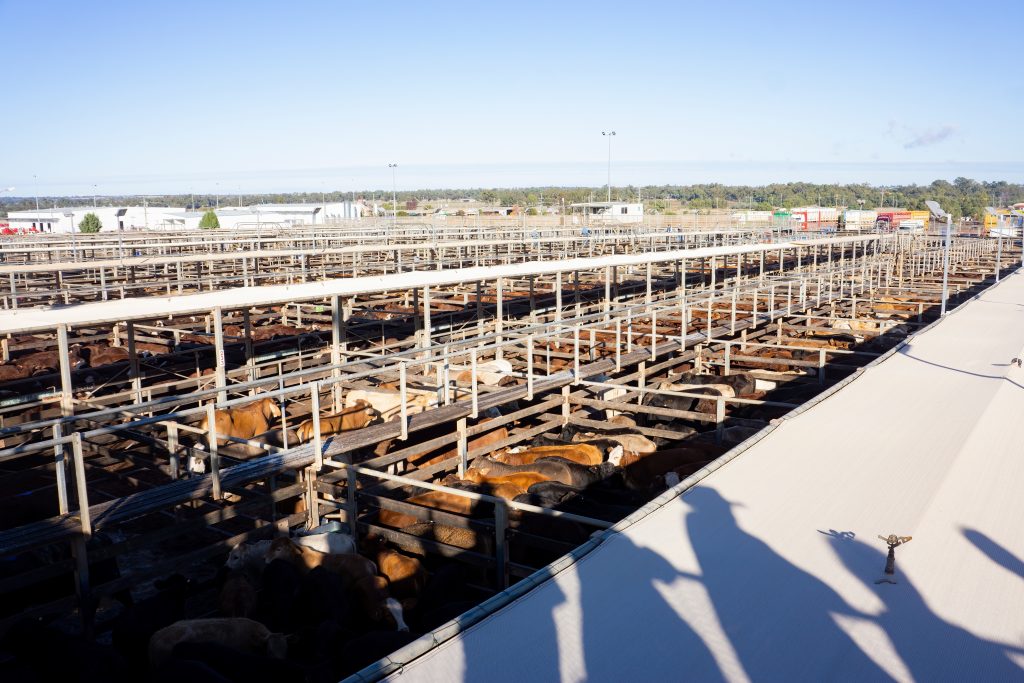
Dr. Derrell Peel, Oklahoma State University Extension Livestock Marketing Specialist, offers his economic analysis of the beef cattle industry as part of the weekly series known as the "Cow Calf Corner," published electronically by Dr. Peel, Mark Johnson, and Paul Beck. Today, Dr. Peel discusses the year in review.
Looking back, 2024 was mostly a continuation of the story that has been developing since 2022. Tight supplies of cattle pushed cattle and beef prices higher to new record levels during the year. However, in some ways, 2024 was kind of a pause in the developing dynamics of the industry with more of a sideways move than noticeable progress to change the market situation.
Despite an expected 2024 calf crop down over one percent year over year and the sixth consecutive decrease in the total calf crop, feedlots were able to hold average monthly inventories fractionally higher compared to the year before. Total feedlot marketings in the past 12 months were down just 0.3 percent from the previous 12 months. Total feedlot placements were down 1.7 percent in the past year compared to the previous 12 months. Feedlots were able to hold inventories steady mostly due to continued heifer feeding in 2024. As of October 1, heifers still represented 39.7 percent of feedlot inventories, near the upper end of historical levels and well above levels that would indicate heifer retention. Additionally, feedlots held inventory levels by extending days on feed and slowing down the turnover rate in feedlots. Kansas feedlot data shows that days on feed for steers increased by 3.2 percent in the first ten months of 2024, adding 6 days to average on-feed time over the same period a year earlier.
Although final data for the year are still coming, it appears that total beef production in 2024 was down just 0.6 percent year over year. This is significantly less than earlier expectations of a 4+ percent year-over-year decrease. In fact, fed beef production was up 2.2 percent due to larger than expected steer and heifer slaughter and a sharp increase in carcass weights in 2024. Steer slaughter was up 0.2 percent year over year, while heifer slaughter was down 1.1 compared to the previous year. Average steer carcass weights jumped 22 pounds year over year with heifer carcasses averaging 18 pounds heavier. Although fed beef production was higher year over year, Choice boxed beef prices averaged 2.8 percent higher year over year on strong prices for end meats from the chuck and round.
Without a doubt, the biggest change in 2024 was in nonfed beef production, down 13.2 percent year over year due to sharp reductions in cow slaughter. Beef cow slaughter was down 19.0 percent year over year and dairy cow slaughter was down 12.2 percent from the previous year. Reduced supplies of processing beef led to record wholesale trimmings prices, increased demand for imported beef, strong lean demand for end meats, and record cull cow prices.
All of the above suggests that cattle inventories continued to decline in 2024. USDA-NASS will confirm cattle inventories going into 2025 with the scheduled release of the annual Cattle report on January 31. Much of 2024 was occupied with producers looking for indications of heifer retention that would lead to eventual herd rebuilding. With no indications of heifer retention at the end of 2024, the new year starts with the same question.
Derrell Peel, OSU Extension livestock marketing specialist, explains how livestock markets moved throughout 2024 on SunUpTV from December 28, 2024 at https://www.youtube.com/watch?v=D6JNNmwv9U8
American Farm Bureau Federation President Zippy Duvall commented today on the passing of former President Jimmy Carter.
"Farm Bureau joins the nation in remembering President Jimmy Carter. From his humble start on a small farm in Georgia to his election to the nation's highest office, his life is a testament to the potential within every American.
"We appreciate the perspective his rural roots brought to the White House and his post-presidential work to fight food insecurity and teach modern farming practices to developing countries. We express our condolences to his family, while celebrating the life of a man dedicated to public service."
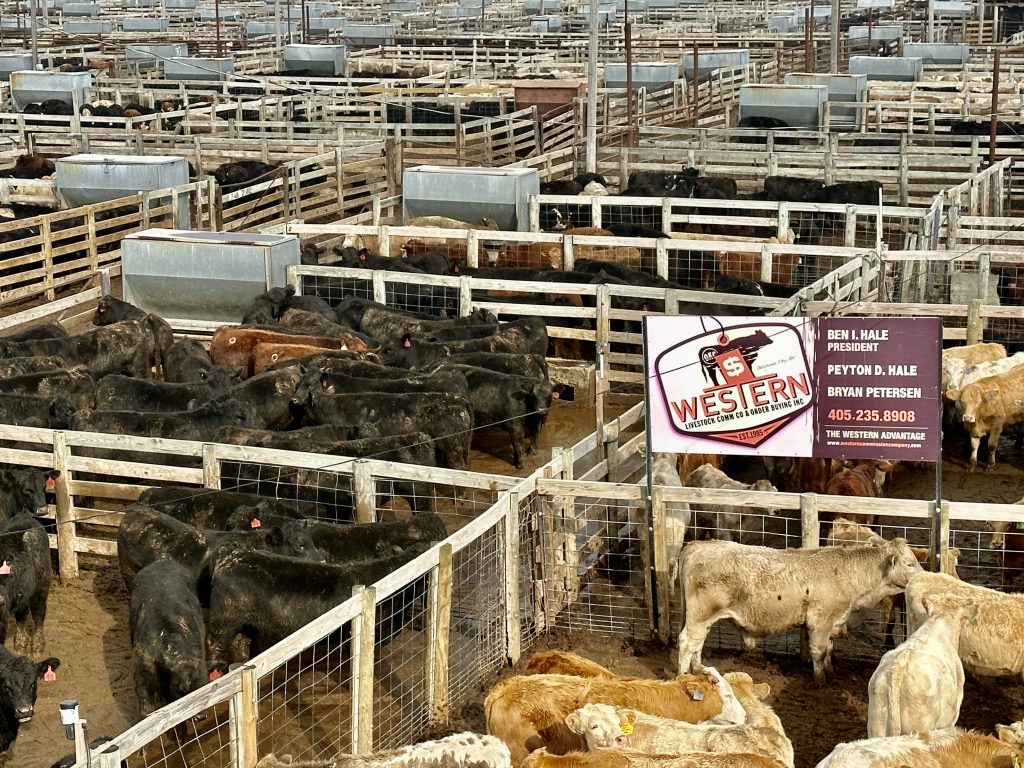
Normally on Tuesdays, Senior Farm and Ranch Broadcaster, Ron Hays, visits with Ben Hale of Western Livestock Auctions as he talks about the latest in the markets and more. Established in 1995, Western has grown into a multi-generational family-owned and operated business and stands as a symbol of tradition, excellence, and a deep-rooted passion for the cattle industry. Western Livestock Auctions operates the Western Livestock Commission Firm, which sells cattle on Mondays and Tuesdays. They also operate the livestock auction markets in Woodward, Comanche, and Knoxville, Iowa.
Hale noted that the markets have continued to improve throughout 2024 and that rain came through when it was needed leading to good grazing throughout the fall. Lasting warmth after the fall rains has allowed winter wheat a longer fall growing season to undo the negatives of the major drought of late summer and early fall.
While the closing of cattle movement at the Mexican border is negative, it has strengthened American markets due to the lowered supply of cattle.
While the auctions in Oklahoma are closed during the holidays, the facility in Iowa experienced a good sale on Saturday, December 28. "We had some really good quality cattle and got along extremely well up there," Hale said. "Every time I go up there, I have to readjust. You get to thinking that those five-weight steers aren't that high, but a lot of times they are a lot fleshier than what we are looking at here. The quality is good, but a lot of times, those things are pretty big and beefy and just good cattle."
He says cheaper feed in Iowa makes a big difference in how they do things when compared to Oklahoma's producers. While they may not turn out very many, they can feed a lot of corn.
Hale says the diverse locations of his markets add value to his overall profitability because they don't detract from each other, but rather each one adds value to the overall operation. He said that the only way he can handle them all is because his sons are willing to help.
"It helps cross over buyers and sellers alike," Hale said. "They work hand in hand, not really in competition with each other, but just adds to what you are doing already. It just gives people more options."
Hays mentioned that the big question for producers in the upcoming year is whether or not to begin herd rebuilding to which Hale replied that some may be holding heifers back, but there are still a large number being sold.
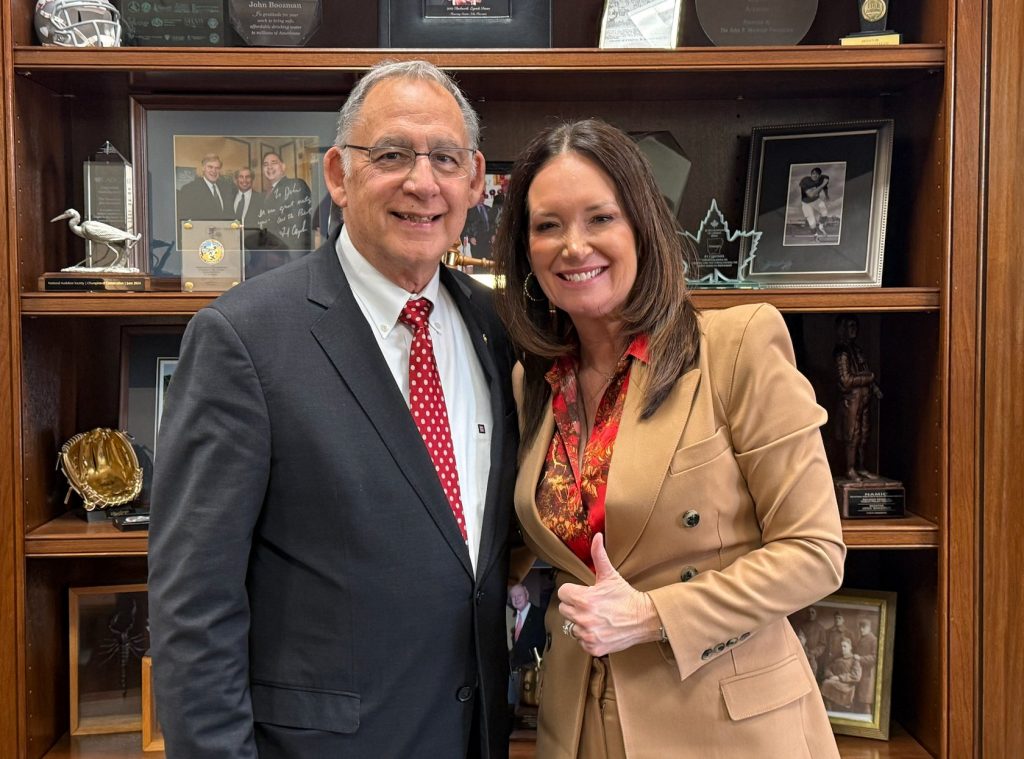
USDA Secretary Intended Nominee Brooke Rollins meeting the Incoming Senate Ag Committee Chairman John Boozman of Arkansas
The following information has been provided by the Trump-Vance transition team about the intended nominee for Secretary of Agriculture at the USDA, Brooke Rollins. Anna Kelly, Trump- Vance Transition spokesperson says of Rollins:
"Brooke Rollins is the ideal nominee to lead President Trump's U.S. Department of Agriculture,
with her deep roots in agricultural communities, exceptional leadership at the highest level of
policy making and her strong working relationship with President Trump. After several dozen
meetings with a bipartisan group of Congressional Members, Rollins is energized and prepared
for her nomination hearing where she will put forth a vision of protecting and defending
American farmers and ranchers."

House Democratic Leader Cyndi Munson, D-Oklahoma City, released the following statement of condolences after Former President Jimmy Carter passed away at 100.
"My heart is with former President Jimmy Carter's family—and all of us across the globe impacted by his life—at this time as they cope with such a magnificent loss," Leader Munson said. "President Carter lived an incredible life, one filled with extraordinary public service and leadership. He understood what it meant to work hard and do his best for the people and country he served. I, of course, admire his work during his time in elected office, but it is his actions and way of living after his presidency that remind me—and should remind all of us—that it does not take a title or position to put service above self and that no life is ordinary when choosing to better the lives of all people. Thank you for all you have done, Mr. President, and may you rest in peace."
Throughout the final months of 2024, hundreds of cattle producers have attended meetings and fundraisers hosted by R-CALF USA across South Dakota, Nebraska, Colorado, and Minnesota, as the battle against the U.S. Department of Agriculture's electronic identification (EID) eartag mandate gains support.
To launch the 2024-2025 rollover calf sale fundraiser season, Platte Livestock Market in Platte, South Dakota, hosted a fundraiser on September 25. A steer donated by James Fulwider and Kevin Talsma of Iona, South Dakota, was auctioned off raising approximately $15,000 in support of R-CALF USA's ongoing efforts.
The announcement of a lawsuit filed on October 30, 2024, by the New Civil Liberties Alliance on behalf of R-CALF USA and other plaintiffs against the USDA's EID mandate sparked national attention. As a result, R-CALF USA saw an uptick in support and engagement across the country, with producers rallying behind the cause. That support was quickly reflected at a fundraiser held at the Livestock Exchange in Brush, Colorado, on November 1, where a calf donated by Harry Thompson of Snyder, Colorado, raised nearly $23,000 for the organization.
The influx of support continued on November 19 at a fundraiser held at Atkinson Livestock Market in Atkinson, Nebraska, that raised $11,000 from a steer donated by Matt Paulsen of Niobrara, Nebraska. The 2024 calf sale fundraisers wrapped up on December 18 in Motley, Minnesota, where a heifer donated by Wayne Savig of Fosston, Minnesota, raised over $5,000 at Tri-County Stockyards.
The announcement of the lawsuit also sparked a string of livestock producer meetings across South Dakota, North Dakota, and Nebraska. Hundreds of producers attended these meetings, where R-CALF USA representatives provided key organizational and industry updates, particularly regarding the EID mandate and the ongoing litigation.
The meetings began on November 9 in White River, South Dakota, at the Roundup Bar & Grill, followed by two meetings on December 2 in Rapid City, South Dakota, at West River Electric Association and Buffalo Gap, South Dakota, at the Buffalo Gap Community Center. At the Buffalo Gap meeting, a fundraiser raised $18,000 in support of R-CALF USA.
"The response to these producer meetings has been awesome," said R-CALF USA Membership Chair Theresa Fox. "People want the info and want to see what they can do to help; they are disappointed in USDA and Congress.
"It's inspiring seeing everyone come together," she continued. "A little community of Buffalo Gap raising that sum of money shows how much people believe in R-CALF USA to fight this EID mandate."
The meetings continued December 6 in Bassett, Nebraska, at Bassett Livestock Auction and December 10 in Valentine, Nebraska, at Valentine Livestock Auction.
"I'm thankful for the volunteer efforts to get the meetings lined up and humbled by the great attendance," said R-CALF USA President Brett Kenzy. "People are wide-eyed aware of the global war on beef and know we have a small window of opportunity to effect foundational policy that will allow these markets to continue. Those changes are what these meetings are about."
The producer meetings were sponsored by several businesses and individuals including Mellette County Cattlewomen, White River, S.D.; Bishop Beef, Hermosa, S.D.; White Ranch, Oelrichs, S.D.; M&M Cattle Services, Oelrichs, S.D.; Boehringer Ingelheim/John Rehmeier, St. Onge, S.D.; Bassett Livestock Auction, Bassett, Neb.; Bill and Chris Hutchinson, White River, S.D.; Rick and Kitty Vander Wey, Crookston, Neb.; Niobrara Valley Feed, Valentine, Neb.; Craig and Joy Miles/Miles Trucking, Brownlee, Neb.; Central Valley Ag, York, Neb.; Aaron Dinklage, Ainsworth, Neb.; Robertson Ranch, Hermosa, S.D.; Jan Woita, Atkinson, Neb.; Kelly Green Trucking, Murdo, S.D.; First Fidelity Bank, Draper, S.D.; and Paulsen Land and Cattle/Matt Paulsen, Niobrara, Neb.
R-CALF USA plans to continue its momentum in 2025, with additional producer meetings scheduled for January 2 in Faith and Lemmon, South Dakota, and January 3 in Belfield, North Dakota. Two more rollover calf sales will be held in January: one at Crawford Livestock Market on January 10 in Crawford, Nebraska, and another at Winner Livestock Auction on January 20 in Winner, South Dakota.
"We are fighting for an industry that will provide freedom and opportunity for our kids and communities," said Kenzy. "This is an industry and a country worth fighting for and that is exactly what we are doing. Our industry is shrinking and being outsourced; together, we must break that trend."
Article provided by R-CALF USA.
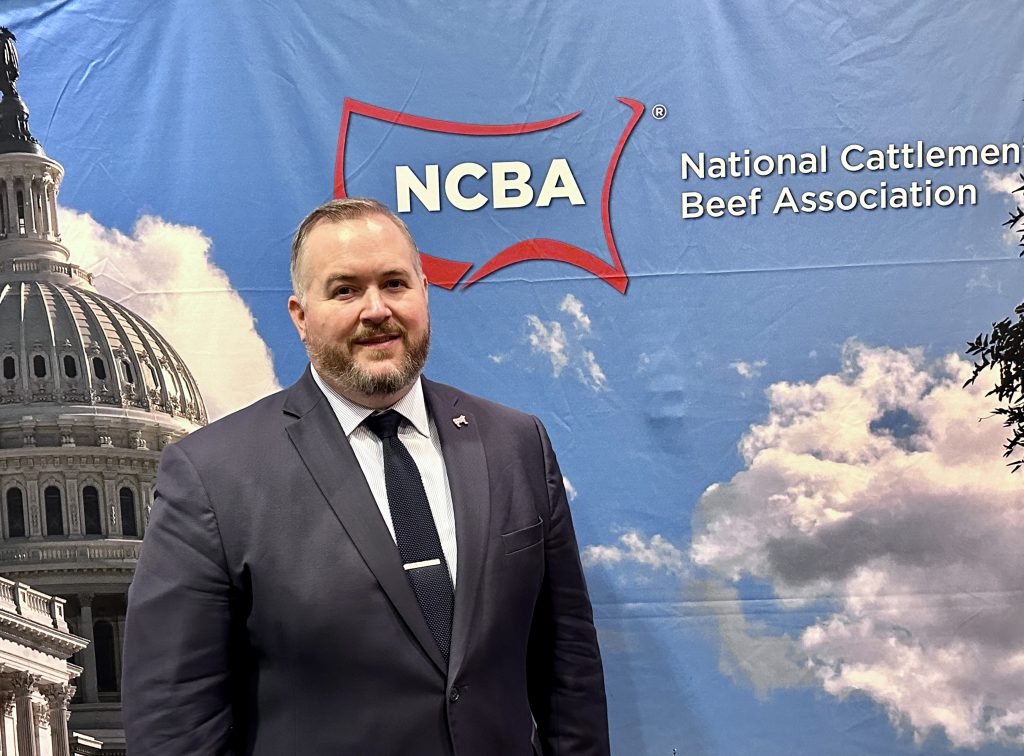
Today, National Cattlemen's Beef Association (NCBA) Executive Director of Government Affairs Kent Bacus issued a statement following the latest court development that has once again put the Corporate Transparency Act reporting requirements temporarily on hold:
"In a new decision, the U.S. Fifth Circuit Court of Appeals reversed a previous ruling they issued before Christmas and has instead decided to uphold the injunction blocking the Corporate Transparency Act from taking effect. This means that cattle producers have another temporary reprieve from filing beneficial ownership information with the U.S. Treasury. These court rulings have gone back and forth and continue to add to the confusion. NCBA urges all cattle producers to consult with their attorney and/or tax professional for the latest information.
"On Christmas Eve, NCBA sent a letter to Secretary of the Treasury Janet Yellen urging a delay in enforcing the Corporate Transparency Act. NCBA is also continuing to urge Congress to pass legislation that will permanently protect cattle farmers and ranchers from this burdensome mandate."
Background
On December 3, the U.S. District Court for the Eastern District of Texas issued a preliminary injunction that temporarily halted enforcement of the Corporate Transparency Act. The U.S. government appealed the ruling and on December 23, a panel of the U.S. Court of Appeals for the Fifth Circuit overturned the injunction. After that ruling, the Financial Crimes Enforcement Network (FinCEN) announced that the deadline for beneficial ownership report filing was January 13, 2025. On December 26, the full U.S. Court of Appeals for the Fifth Circuit reversed their previous decision, and the Corporate Transparency Act is once again temporarily on hold. FinCEN has suspended enforcement and will accept voluntary reports.
View NCBA's Letter to Treasury Secretary Janet Yellen
Article and Audio provided by NCBA.
RON's Dave Lanning has a pre-opening look at today's agricultural Markets.
Click the audio tab below for today's report.
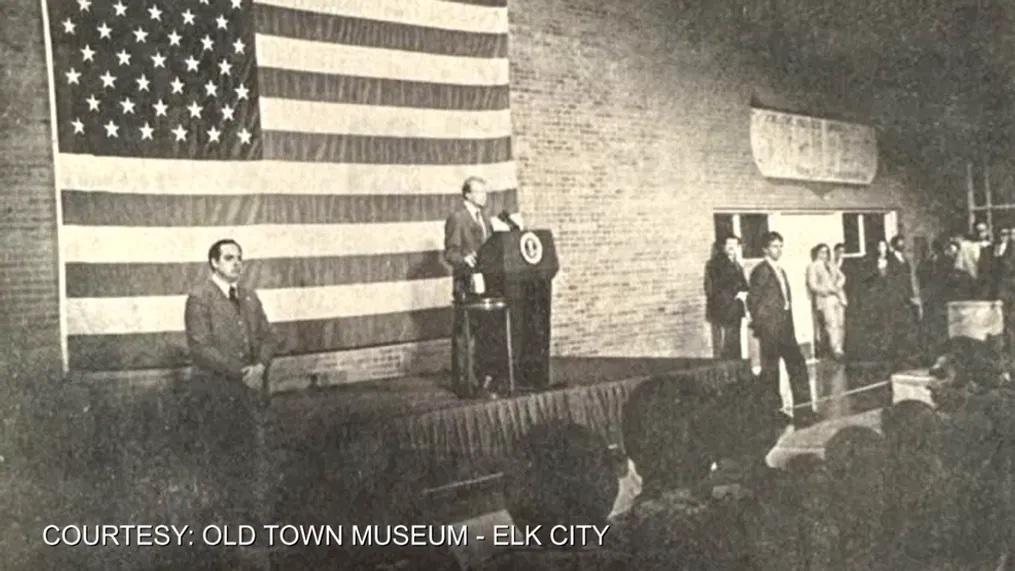
President Jimmy Carter in Elk City, Oklahoma in 1970
Congressman Frank Lucas of Oklahoma's Third Congressional District released the following statement on the passing of former President Jimmy Carter:
"America has lost a faithful and selfless public servant. While he faced a number of political challenges throughout his time in office, it was President Carter's generosity, honesty, and deep religious roots that characterized his life.
"It was the same generosity and honesty that brought then-President Carter back to Elk City, Oklahoma in 1979 after he promised Elk City Mayor Larry Wade he'd be back if he won the '76 election. Very few have forgotten the warm greetings and smiles shared with President Carter as he graced our community for a town hall meeting and a Sunday church service. I extend my deepest condolences to the Carter family in this somber hour."
On Sunday afternoon, Chairman Glenn 'GT' Thompson (PA-15), issued the statement below following the passing of former President Jimmy Carter:
"Penny and I join the nation in mourning the loss of Jimmy Carter—a President, Governor, State Senator, and dedicated leader who represented the state of Georgia and the American people with honor and distinction. Jimmy Carter grew up on his family's farm in Plains, Georgia—where he later became the owner and operator of the family business. His humble beginnings and deep roots in agriculture taught him the values that guided his tireless, decades-long career as a selfless public servant. Our thoughts and prayers are with the entire Carter family during this time of mourning."
Between Christmas and New Year's- Oklahoma Farm Report's Ron Hays talked with 2025 National Association of Farm Broadcasting President Jeff Nalley. Hays and Nalley have been farm broadcast colleagues for over thirty years- and they both share a love of pursuing the latest in agricultural policy news- where ever it can be found.
They discuss the end of the year CR- what it means for farmers and ranchers struggling because of low farm prices and high input costs. They look at the new Congress and the administration being formed by the 47th President of the US, Donald Trump.
There are lots of concerns- a few bright spots- and some hard work ahead to keep the US farm economy moving full speed ahead.
Jeff Nalley is a 37-year veteran of radio and farm broadcasting and widely recognized as one of the best interviewers in the business.
He is the current president of the National Association of Farm Broadcasting (NAFB) and has received numerous awards for excellence in broadcast media from within the NAFB as well as other farm organizations. In 2010, Nalley was named the Farm Broadcaster of the Year by the NAFB.
Nalley has received distinguished service awards from Purdue University, the United Soybean Board, Kentucky Soybean Association, Kentucky Pork Producers and the Kentucky Farm Bureau Federation.
Click on the listen bar above to listen to their complete conversation- when two broadcasters fire up the recorder- there's a lot ground that is covered and very little dead air.

Positions certified for the use of seasonal agricultural visas – known as H-2A visas – grew in fiscal year 2024 (October 2023-September 2024) by less than 2% for the second year in a row, according to recently released Department of Labor data. There were, however, notable decreases in certified positions in top H-2A employer states. Rising costs and new regulations have slowed the explosive growth we have seen over the last decade. Continuous growth in the program at large reflects a shift in the domestic workforce away from agriculture, despite a continued need for reliable farm labor.
Domestic Workforce
The American labor force available for agricultural employment has grown limited. We continue to see lower workforce participation than before the pandemic and a low unemployment rate. While the U.S. labor force has grown more than 12 million people in the last 10 years, declining fertility rates and large retirement pressures have slowed the labor force growth rate from 1.3% per year to only half a percent in the past 20 years. The official U.S. unemployment rate was 4.1% in October 2024, less than a percentage point higher than the pre-pandemic rate of 3.5%, and lower than the 5% unemployment rate a decade ago.

The labor force participation rate – the share of all U.S. citizens between 15 and 64 who are employed or actively seeking employment – has been falling since the early 2000s, largely due to increasing number and share of college students who do not participate in the workforce and the aging of the U.S. population. The workforce participation rate of students enrolled in two- or four-year colleges fell 13% and 9%, respectively, in the past 20 years. Meanwhile, retirement of the "baby boomer" generation continues to outpace the entrance of new generations into the labor force, pulling down overall labor force participation. These trends squeeze both ends of the available labor force, putting domestic employment pressures on employees of prime work age (ages 25-54). These factors mean that increasing immigration has become the leading factor of workforce growth in the U.S.
Both population aging and its effect on the workforce is more dramatic in rural farm and ranch communities. Only 14% of the U.S. population lives in rural areas, but over 20% of the population in rural counties are over the age of 65, compared to 16% in urban areas. The share of people in rural areas who are 55 to 64 is also above the national average, and the rural share of children under 15 is slightly higher than the national average; so, only 28% of the rural population is of prime working age compared to 38.5% of the general U.S. population. Employers in rural communities therefore struggle to maintain their labor force, slowing economic growth and restricting their ability to maintain business operations.
Americans also continue to move away from hands-on work, including farmwork, so the H-2A program has become crucial to supplementing the tight U.S. farm labor market amid a declining rural workforce. The consistent growth in applications and certifications for H-2A workers highlights the shortage of domestic farmworkers and the growing importance of immigrant labor on the farm.
2024 Positions
Nationwide, 384,900 H-2A positions were certified in fiscal year 2024, over 6,000 more than last year. The last 2 years have seen a drop off from explosive growth in the H-2A program in recent years:9 of the last 13 years saw double-digit growth rates and positions certified have quadrupled from the under 90,000 positions certified in 2012.
Nearly 50% of all H-2A positions certified in FY 2024 were for work in just five states, and only 33% of all H-2A positions were for work in states outside of the top 10 states. Sixteen states reduced their use of the H-2A program, including three of the top 10 H-2A states (Florida, California and Michigan).

Florida remains the largest employer of H-2A workers, accounting for 47,396 positions certified this fiscal year, 12.3% of all positions certified. It remains in the top spot despite a decrease of nearly 9% from fiscal year 2023. There has been some shuffling in the rest of the top 10 H-2A employer states. After an 8% decrease in positions certified, California this year moved them to the third-largest H-2A user at 9.7% of total positions, Georgia increased their positions certified to 43,436, making them the second-largest H-2A state (11.3% of positions). Washington and North Carolina round out the top five with 35,884 and 27,532 positions certified, respectively, with both seeing increases from fiscal year 2023.

Based on the USDA National Agricultural Statistics Service (NASS) Farm Labor Survey that determines the Adverse Effect Wage Rate (AEWR), three of the multistate regions had decreases – Appalachian II, Mountain II and Northeast II – but none of these regions contain a top 10 H-2A state. On the flip side, the Southeast (Alabama, Georgia and South Carolina) had the largest increase in positions certified of any region – 5,487 more positions certified in fiscal year 2024 versus 2023 – and also had the largest multistate region wage increase from 2023 to 2024, and will again going into 2025.

Difficulties with Utilizing the H-2A Program
As we have outlined in previous Market Intels, there are numerous barriers to farmers in using the H-2A program, including fees, required expenses, and regulatory complication. The visa program imposes thousands of dollars in application fees owed to multiple U.S. agencies, including the Departments of Labor (DOL), State and Homeland Security. In 2024, the U.S. Customs and Immigration Service increased H-2A petition fees 65% to 267%. Minimum H-2A wages have increased 60% over the past decade. Beyond wages, employers are also responsible for thousands of dollars in housing and transportation costs per employee, and many farms pay agents to manage application, recruitment and compliance procedures.
Declines in positions certified may also be the result of additional regulations that increase the cost of utilizing the program. The H-2A program had over 3,000 pages of new federal regulations in under 2 years, not including state provisions. In states with extra local regulations, the new federal regulations add to the challenges of using the program. These additional rules and processing delays create substantial uncertainty for users of the program, including the employer and the employee. In April 2024, DOL finalized the "Farmworker Protection Rule" which changed the AEWR implementation period, transportation safety requirements, termination procedures, allowed organization of farmworkers and more. A series of preliminary injunctions has created a puzzle of implementation of the rule around the country – 17 states are not under any requirements of the rule while certain components are enjoined nationwide. Rather than halting implementation of the rule, DOL has chosen to continue with disjointed enforcement of the rule. This has led to administrative hurdles for farms with worksites in multiple states that may be under different rules and causes them to juggle constantly changing requirements for utilizing the H-2A program. This rule will likely cause delays for fiscal year 2025 applications, as any applications submitted in the 33 states that have partial injunctions of the Farmworker Protection Rule that were being processed at the time of the November injunction will have to resubmit their applications in a new system.
In addition, the use of farm labor contractors (FLCs) has risen in recent years because of the difficulty of navigating these program hurdles for individual farmers. These contractors are responsible for applying for, housing, and transporting H-2A workers to farms who contract through them for labor. More than 42% of H-2A positions certified in fiscal year 2024 were employed by FLCs. Use of these systems continues to drive up labor costs for farmers since they must pay a premium beyond the high costs of this complex program.,
Conclusion
Despite rising costs and regulations, the H-2A program remains critical to American farming. Rising costs of labor, including the high and rising cost of temporary agricultural work visa programs, put American farmers at a disadvantage in the global market. The agricultural trade deficit is forecast to be $31.8 billion in fiscal year 2024, predominantly due to the import of fruits and vegetables; these products account for 49% of all agricultural imports by value, though many could be produced in the U.S. with a more available workforce. Many specialty crop sectors are reliant on H-2A workers to sufficiently employ their farms and maintain production since mechanization is limited in fruit and vegetable industries.
Only 80% of the H-2A positions certified will result in visa issuance, so the program does not eliminate labor shortages in agriculture. The burdens of the program exacerbate recent declining farm profitability. This has slowed the rate of growth of the H-2A program. Nevertheless, the aging rural population and a tight and evolving U.S. labor market means that these temporary agricultural worker visas will remain crucial to agriculture.
Article by Samantha Ayoub, AFBF Associate Economist.
Oklahoma Farm Report's Maci Carter spoke with Dr. Alan Blaylock, a Senior Agronomist with Nutrien Premium Fertilizer Technologies, about an essential nutrient: sulfur.
"We like to say it is the fourth major nutrient," Dr. Blaylock shared. "People talk about nitrogen, phosphorus, and potassium, but we should also be talking about sulfur at the same time because it is essential and is increasing in importance."
A key component of certain amino acids, sulfur is integral in protein formation which is essential to human nutrition. It also plays a regulatory role in many plant functions, often working very closely with nitrogen.
The Clean Air Act was passed in the 1980s, however, exhaust from factories and power plants used to release sulfur into the atmosphere from where it made its way into the soil through rainfall, namely called acid rain. The actions of the Clean Air Act has effectively removed significant amounts of sulfur from the atmosphere. That, combined with higher crop yields has depleted sulfur deposits in the soil leading to more and more deficiencies.
Producers currently can choose from a variety of sulfur fertilizers, one of the most common being ammonium sulfate. Another common form is elemental sulfur.
"We have a product called MAP+MST," Dr. Blaylock explained. "That is a phosphate fertilizer, monoammonium phosphate that is enriched with sulfur. There are a lot of different ways a grower can apply sulfur. They just need to be aware of that need and pay attention to that in their crop nutrition plan."
Adding sulfur to a deficient field can promote better plant growth, health, and resistance to stress and disease, and improve nitrogen use efficiency.
"A key component of sustainability is maintaining good, productive agriculture by growing healthy crops, producing a maximum economic yield. Yield is a part of profitability, and I view profitability as part of that sustainability equation," Dr. Blaylock noted. "Yes, we want to protect the environment and get as much nutrition into the plant as we can and minimize those environmental impacts. We get the greatest combination of all of those at what we call the economic optimum."
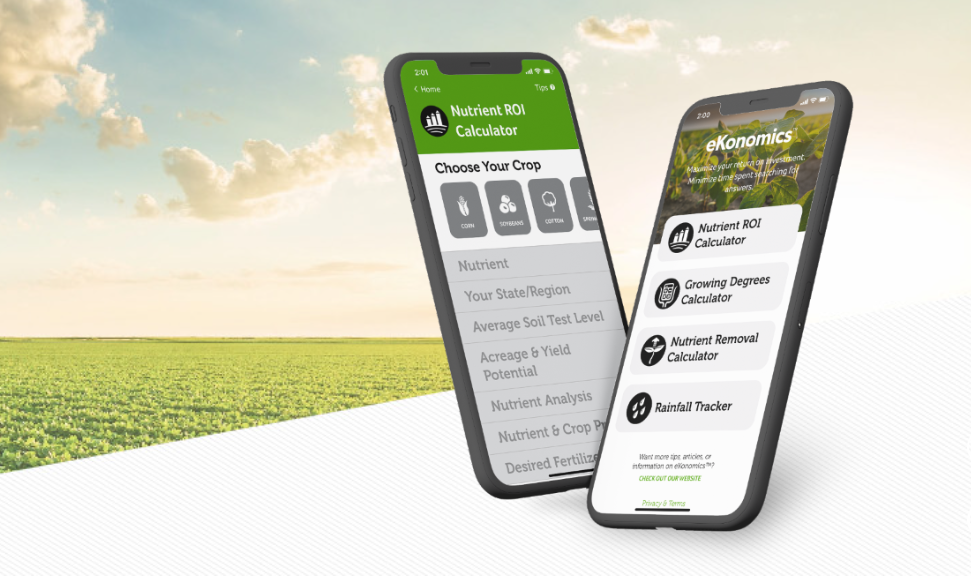
More information, including podcasts, webinars, calculators, and other tools for growers, can be found at Nutrien-eKonomics.com.
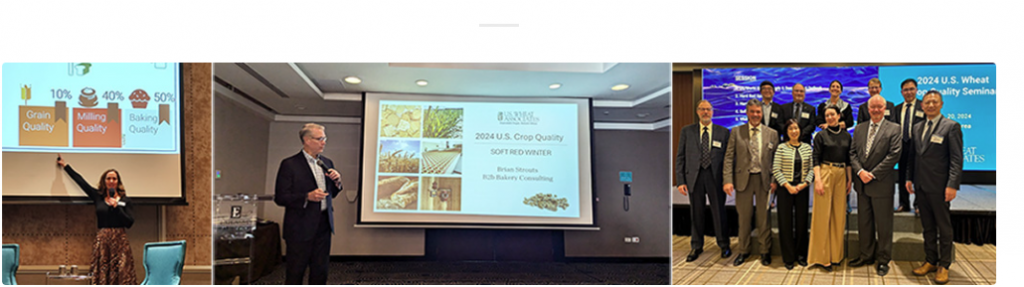
Seven teams presented highlights of the 2024 U.S. wheat crop in two dozen countries as part of the annual series of USW Crop Quality Seminars that began in October and wrapped up earlier this month.
Once again, success was the result of teamwork.
Each crop quality team is carefully selected by USW's regional offices. Teams include cereal scientists, market analysts, state commission staff, USW staff and producers. Each region has its own goals and builds a team of experts to help convey data from the annual Crop Quality Report with customers.
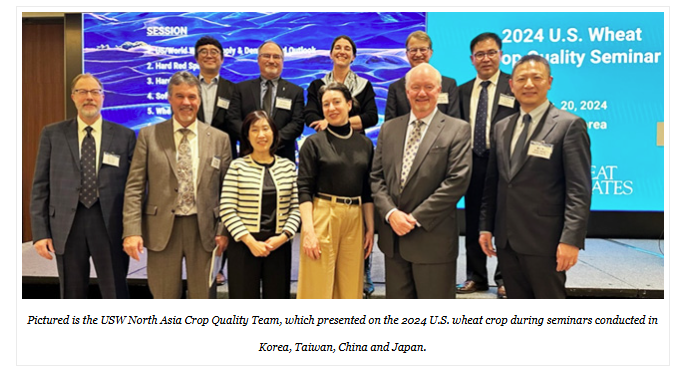
USW Chairman Clark Hamilton, who this year was participating in his first Crop Quality Seminar. Hamilton was a member of the team that presented in Japan, South Korea, Taiwan and China.
"What I saw at each stop were perfect examples of the hard work USW staff undertakes in each market, and I was quite impressed with professionalism and dedication," said Hamilton. "For a long time, I have heard about the seminars and the impact they have. Having been part of it. I now understand."
USW Vice President of Programs Erica Oakley said this year's round of seminars were well-received.
"Customers around the world value these seminars and they appreciate hearing from wheat industry experts," said Oakley. "These experts include representatives from our state wheat associations, wheat farmers, cereal scientists, and others. We had great news to share in 2024 and there was positive feedback to what we presented at our seminars."
USW colleagues put a lot of work into planning the annual seminars, Oakley noted, adding that USW state commission members and partners also play an important role. Below are some notes from a few of the 2024 seminars.
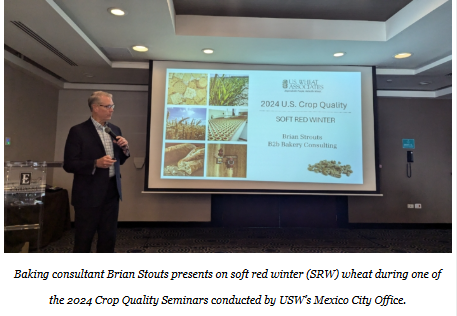
USW's Mexico City Office shared 2024 Crop Quality information in-person and virtually with 170 participants. Attendees represented mills from Costa Rica, Dominican Republic, Guatemala, Guyana, Haiti, Honduras, Mexico, Nicaragua, St. Lucia, Trinidad and Tobago, and Venezuela. Expert presenters included grain industry consultant Patrick McCluskey, Brian Strouts of B2B Bakery Consulting, and Roy Loepp, of Grainovations, LLC.
Meanwhile, USW's South America Office put together a team that presented in Colombia, Chile, Peru and Ecuador. The team included Aaron Harries, Vice President of Research and Operations for the Kansas Wheat Commission and Brian Sorenson, Executive Director of the Minnesota Wheat Research and Promotion Council. Also on the team were Senay Simsek, Department Head and Professor at Purdue University and Britany Marchant, Executive Director of the Idaho Wheat Commission. Kansas' Mike McClellan took part to share the perspective of a U.S. wheat farmer.
USW's Rotterdam Office conducted seminars in Spain, Portugal, the United Kingdom and Italy. Wheat industry expert Jeff McPike joined USW Regional Vice President Ian Flagg and Market Analyst Tyllor Ledford in presenting important information during five seminars.
USW Cape Town hosted a full team of speakers for its Crop Quality Seminar – only the second time one has been conducted in the market. Along with Oakley, speakers included Nebraska Wheat Board Executive Director Royce Schaneman. Dr. Simsek and consultant Mike Krueger also joined. Erica Olson, Market Development and Research Manager of the North Dakota Wheat Commission, rounded out the team.
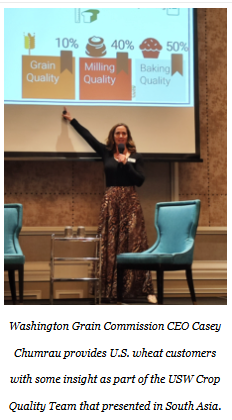
In South Asia, the Crop Quality team conducted seminars in the Philippines, Thailand, and Singapore. Joining USW staff were Kansas Wheat Commission CEO Justin Gilpin. Washington Grain Commission CEO Casey Chumrau and Dr. Shahidul Islam of North Dakota State University also presented.
More than 100 professionals in South Korea attended the Crop Quality Seminar conducted in Seoul. USW South Korea Country Director Channy Bae helped host the seminar. Speakers included Hamilton and USW Vice President Steve Wirsching. Others on the team were Montana Wheat and Barley Committee Executive Director Kent Kupfner and Dr. Jayne Bock of the Wheat Marketing Center. Wheat industry consultant Brian Walker and Wiley Wang of Columbia Grain also presented.
Op-Ed by Kenneth Corn provided by USDA Oklahoma Rural Development
Most of my adult life has been in service to the great State of Oklahoma, first, as an elected State House Member out of Poteau, Oklahoma; next, as a State Senator representing LeFlore and Sequoyah Counties; and then a seven-year stint as Anadarko's city manager. Yet none of these roles have been as meaningful and impactful to me as the opportunity to represent rural Oklahomans as their State Director for USDA Rural Development under the appointment of President Joe Biden.
I could tell you that I'll most fondly remember the more than $3.3 billion invested in Oklahoma or the over 8,000 projects USDA supported during my tenure. However, the truth is that my most cherished memories come from witnessing how these investments changed the lives of everyday rural Oklahomans. Abraham Lincoln aptly coined the phrase "The People's Department" when establishing the Department of Agriculture. It's easy to see why: America simply cannot thrive without a robust rural economy, which supports our essential needs for food, fuel, timber, electricity, and much more.
One of my most fulfilling experiences has been helping to reopen a closed hospital in Frederick, Oklahoma. In the past, when a rural hospital in our state closed, there was little hope for its return. Residents were often forced to drive an hour or more for essential healthcare or leave their hometowns to access life-saving services. However, through bipartisan collaboration, including the leadership of Congressman Tom Cole, State Representative Trey Caldwell, former Speaker of the House Lloyd Benson, and the Biden Administration, we set aside partisan gridlock to focus on practical solutions. The groundbreaking ceremony for Memorial Hospital in Frederick was a stark reminder of the importance of this job—seeing the joy and relief on people's faces as they welcomed back life-saving healthcare services was profoundly moving.
Another milestone during my tenure has been amplifying the voices of communities that are often overlooked and ensuring their needs are heard directly in Washington, D.C. This is especially true for Oklahoma's 13 remaining All-Black Towns. Once thriving hubs for formerly enslaved people seeking economic security and mutual protection, these communities have struggled to recover from the Great Depression and have largely been left behind for the past century. With the support of friends like Willard Tillman and Under Secretary Dr. Basil Gooden, we've worked to bring new economic opportunities to these historic towns, rekindling their potential as guiding lights for future generations.
Additionally, I have had the privilege of working closely with Oklahoma's 39 Tribal Nations. President Biden has prioritized not only respecting Tribal sovereignty but actively partnering with Tribal governments. Here in Oklahoma, our Tribal Nations have been exemplary partners, providing healthcare services, high-speed internet, clean drinking water, public education resources, and more—benefits that extend beyond Indian Country to all Oklahomans. At nearly every investment event with our Tribal partners, I emphasize this: Oklahoma cannot achieve its goal of becoming a top 10 state without fully embracing the sovereign rights of our Tribal Nations and recognizing their positive contributions.
Lastly, I must acknowledge the incredible team at USDA Rural Development in Oklahoma. Spread across nearly every corner of the state, they fight tirelessly for every dollar to benefit rural Oklahoma—not because I ask them to, but because they witness the transformative impacts of their work every day. Whether it's helping a family purchase their first home, improving educational opportunities for young people, or enhancing public safety in rural communities, their dedication to our mission is deeply personal and unwavering.
As my tenure as State Director concludes on Jan. 13, 2025, I reflect with immense gratitude on this journey. For a kid who grew up in a poor family in Howe, Oklahoma, to have the opportunity to serve a President of the United States and make a difference in the lives of my fellow Oklahomans, I am profoundly grateful. So, thank you, President Biden, for allowing me to serve my home state – it has been the honor of a lifetime.
| ||||||||||||||||||||||||||||||||||||||||||||||||||||||||||||||||||||||||||||||||||||||||||||||||||||||||||||||||||||||||||||||||||||||||||||||||||||||||||||||||||||||||||||||||||||||||||||||||||||||||||||||||||||||||||||||||||||||||
| ||||||||||||||||||||||||||||||||||||||||||||||||||||||||||||||||||||||||||||||||||||||||||||||||||||||||||||||||||||||||||||||||||||||||||||||||||||||||||||||||||||||||||||||||||||||||||||||||||||||||||||||||||||||||||||||||||||||||
|

Though lower feed costs in 2024 have provided opportunities for profitability, hog producers have a long way to go to make up for their 2023 losses, when farrow-to-finish operations lost $31 per head.
According to USDA's most recent Quarterly Hogs and Pigs report, the inventory of all U.S. hogs and pigs was 75.8 million hogs, up 1% from the fourth quarter in 2023. This report, issued four times per year, presents information on inventory, class, weight group, farrowings and farrowing intentions for the current U.S. pig crop. The fourth quarter report was released on Dec. 23.
Breeding Herd and Pig Crop
The breeding inventory was 6 million head, also up about 1% from 2023 but slightly down from last quarter. The September-November pig crop was 35.2 million, up nearly 2% from 2023. Sows farrowing between September and November were 2.96 million, down a quarter of a percent from last year and representing 49% of the overall breeding herd. Pigs saved per litter were a record-high 11.92. The rise in pigs saved per litter more than makes up for the 2% decline in farrowings for the fourth quarter. Farrowing intentions for the first quarter of 2025 are 2.95 million, up about 1% from 2024. The slightly higher farrowing intentions, if paired with continued high pigs saved per litter could increase inventory numbers, which would put downward pressure on prices to start out the new year.

Market Hogs
The market hog inventory was 69.8 million, up 1% from last year but down slightly from last quarter. The lighter weight categories, under 50 pounds and 50-119 pounds, were up 1.2% and 1.4%, respectively, to 21.8 million and 19.4 million. The heavier-weight market hogs, 119-179 pounds, were 14.8 million, while the inventory of hogs 180 pounds and above was 13.6 million. Both heavier categories were down about half a percent, which suggests slightly lower hog slaughter for the first quarter of 2025.

Looking to 2025
Much like 2024, demand will be a deciding factor for prices for 2025, with exports playing an important role. Since 2022, Mexico has been the largest importer of U.S. pork with over $2.35 billion in pork purchases in 2023, accounting for nearly 30% of total exports by value. While 2024 has continued to be a promising year for pork exports globally (up 6% by value) and to Mexico even more so (up 11% by value), domestic per capita demand for pork has changed very little over the last decade. Domestic demand is expected to grow by .4 pounds per capita next year, going from 50.5 pounds in 2024 to 50.9 pounds in 2025. The U.S. became a net exporter of pork in 1995 and productivity gains have allowed U.S. pork a larger share of global exports since then, claiming a peak market share of 35% by volume in 2008 and averaging 29% over the last decade. Pork will have to continue finding strong global demand to overcome downward market pressure from the elevated hog inventory to provide profitability for hog farmers in 2025.
By Bernt Nelson, Economist - Article and graphics provided by AFBF.

U.S. agriculture is bracing for a potential work stoppage at East and Gulf Coast ports that could greatly disrupt U.S. exports. Contract negotiations between the International Longshoremen's Association and the U.S. Maritime Alliance broke down in mid-November over issues related to automation and have shown little progress over the past month. The two sides reached a tentative agreement on wages in early October and temporarily extended the existing labor agreement, bringing an end to a three-day strike work stoppage. However, that contract extension is set to expire Jan. 15.
The uncertainty is already impacting U.S. red meat exports, according to U.S. Meat Export Federation President and CEO Dan Halstrom, as ocean carriers have begun announcing surcharges related to a potential strike and exporters are forced to look, where possible, to divert shipments to other ports.
Forty-five percent of waterborne U.S. pork exports ship out of the East and Gulf Coast ports, and on the beef side it is 30%. All told, about $100 million of U.S. red meat is shipped out of the affected ports on a weekly basis. Another strike would limit shipment options, particularly for chilled product, and would hurt the U.S. reputation as a reliable supplier.
Story and audio provided by USMEF.
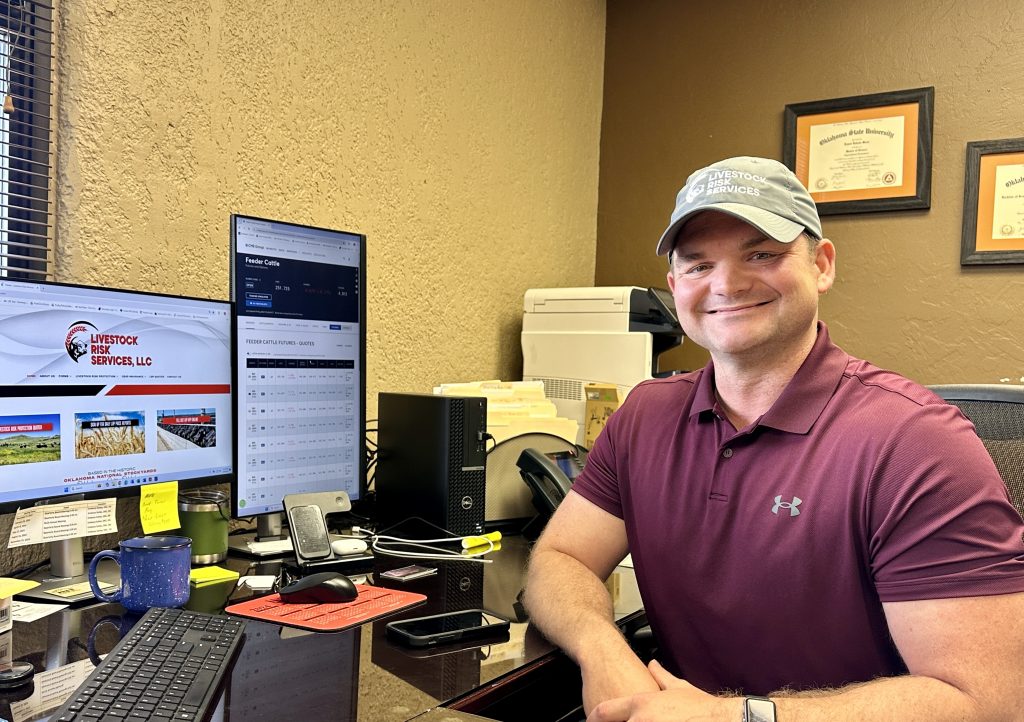
Senior Farm and Ranch Broadcaster Ron Hays continues his conversation with Dakota Moss, Livestock Risk Services President, the first part of which was posted yesterday. Today, they are discussing the value of LRP as a risk management tool.
Moss's consistent advice to producers asking whether it is the right time to lock in LRP is to do it if the current market conditions will keep them in the black on their cattle.
Hays and Moss spoke on December 19, 2024, and at that time, the market was down $3.50 on the futures contracts, so locking in that afternoon may have been lower than if a producer had acted that morning.
"It is good to hope for something better the next day, but nothing is guaranteed, so when you are in the black to cover those cattle, get it done," Moss advised.
To get started, Moss said a producer must fill out an application so that he is ready to make his move when he sees fit as it takes about 24 hours to process applications through USDA's system.
"Once it is cleared to go, we can cover cattle any time, any day of the week," Moss said. "Even if they just want to get with us and start receiving daily LRP prices, we can set that up through email."
Moss warned that once cattle are on a policy, they cannot be removed. If they lock the cattle in while pastures are good, then run out of grass or water and have to sell them early, their LRP is void and not revokable or refundable. In those instances, he recommends puts or hedges rather than LRP.
"You have to notice what is going on around you and keep an eye on the market," Moss said. "We are incredible at growing and producing cattle, and sometimes the market and risk management can fall short, but its one of the most important parts of the business that we have to pay attention to."
Experts project that prices will remain strong going forward, but Moss remember when they thought the same in 2014 and 2015, when the market fell out in 2015 – 2016. He said, "We need to be cautiously optimistic in our business and cover our risks. If it looks bright and shiny, it very well could be, but that black swan event could happen any time so I wouldn't take any chances whether you are a stocker operator or a cow calf producer."
The Beef Buzz is a regular feature heard on radio stations around the region on the Radio Oklahoma Ag Network and is a regular audio feature found on this website as well. Click on the LISTEN BAR for today's show and check out our archives for older Beef Buzz shows covering the gamut of the beef cattle industry today.
American Farm Bureau Federation President Zippy Duvall commented today on the ping pong of court orders that ended with a court-ordered reprieve from Treasury Department reporting requirements for many small businesses.
Earlier this month, a federal court halted the Beneficial Ownership Information (BOI) reporting requirement from the U.S. Department of Treasury's Financial Crimes Enforcement Network. On Monday, the United States Court of Appeals for the Fifth Circuit reinstated the Jan. 1, 2025, deadline. In a third about-face, late last night, the court reversed that order until arguments can be heard, delaying the reporting requirement indefinitely.
"Farm Bureau appreciates the court's recognition that a last-minute reinstatement of reporting requirements caused an unwelcome scramble for small businesses, including more than 230,000 farmers. The latest court decision to postpone the filing requirement is the right thing to do, but the legal back and forth created a stressful holiday season for many farm families. Lack of guidance and poor public outreach from the government have left many farmers in the dark about whether they're expected to file."
Under the BOI requirement, businesses that fail to file or do not update records when needed could face criminal fines up to $10,000 and additional civil penalties of up to $591 per day. Failure to file could also lead to felony charges and up to two years in prison.
Read the latest court order here.
Read a Market Intel on the Beneficial Ownership Information requirement here.
Article provided by AFBF.
Each week, Beltway Beef brings you the latest policy news affecting the U.S. cattle and beef industry. Hear from subject-matter experts, producers, and industry leaders on the topics that impact the business viability of farms and ranches across the country.
On this episode, Executive Director of the Public Lands Council and NCBA Natural Resources Kaitlynn Glover joins to share an update on new legislation introduced by U.S. Senator Mike Rounds (R-SD) to help resolve land boundary disputes between private landowners and the federal government. Especially in the West, old federal survey techniques have resulted in some variation between the legal boundaries based on modern technology and historic boundary markers between private land and federal lands. These administrative discrepancies should be easy to resolve, but some have resulted in a burdensome legal process for private landowners. Senator Rounds' bill would create a mediation process to resolve these kinds of boundary disputes and support private landowners.

As a result of new legislation regarding water rights administration in Oklahoma, the OWRB is increasing our capacity to speed up water right application processes and legal proceedings, streamline water use reporting and data accuracy, increase field services, and address water use complaints and non-compliance.
The OWRB offers voluntary pre-application meetings to help applicants submit documents. We are also working through the backlog of administrative hearings and developing an online platform for permit applications/amendments.
In response to customer feedback, the OWRB is building an online water-use reporting platform that will simplify required reporting, improve data accuracy, and reduce paper handling. We plan to roll out a test version soon and will be looking for permit holders who are willing to participate. Please see the summary of House Bill 2197 below for information on new compliance procedures, including annual water use reporting.
To receive future updates on water rights administration, select "Manage Preferences" below and add "Water Permitting/Water Rights" to your subscriber topics. Our water permitting web page also remains a comprehensive resource for current information.
We are committed to keeping you up to date as we make these improvements. Please do not hesitate to contact our Water Rights Administration team at 405.530.8800 or email WaterPermitting@owrb.ok.gov.
House Bill 2197 Oklahoma Stream Water Rights
This bill introduces new statutes to allow for excused nonuse for good cause, permit cancellation for failure to report annual use, enforcement actions for unauthorized use or use that could harm prior appropriators and domestic users, and renewal of provisional temporary permits for the oil and natural gas industry (effective May 31, 2024). Please note, the OWRB is implementing a new process for addressing complaints, violations, and enforcement to standardize procedures. This will include implementing a monthly administrative hearing docket to expedite correction of instances of non-compliance, including failure to submit annual water use reports and other permit conditions.
Annual Water Use Reporting and Enforcement
Annual Water Use Report forms will be mailed out to all permit holders in January, and permit holders will have until March 15, 2025, to return their report form(s) and the required annual administration fee. Submittals received by the OWRB after March 15, 2025, but by April 15, 2025, will be subject to an additional late fee of $25 for groundwater permits and $50 for surface water permits. If reports and applicable fees are not received by the OWRB by April 15, 2025, the permit holder will be subject to an administrative penalty of up to $5,000 per day, and possible cancellation of the permit, and will be given an opportunity for a hearing.
Senate Bill 1914 Groundwater Irrigation Districts
Under current groundwater law, permit holders in an area can form an irrigation district to seek conservation grant funding for groundwater irrigation. This bill removes certain provisions that allowed water permit holders to opt out of participation in groundwater irrigation districts (effective November 1, 2024).
Stream Water Law (Oklahoma Administrative Code 785:20-13-1 through 4)
These rules add definitions and permit conditions regarding interference above Lugert-Altus and Tom Steed reservoirs for junior appropriators (effective August 11, 2024).
Groundwater Law (Oklahoma Administrative Code 785:30-3-4)
In certain cases where the landowner and permit holder are not the same, these rules require water right applicants to provide direct notice to holders of existing and pending groundwater permits within spacing distances (effective August 11, 2024). Intent to Drill
In 2023, new rules required groundwater well drillers to submit an intent to drill application for all non-domestic groundwater wells. The rules ensure that all wells drilled under a water right have gone through proper notice procedures and meet well spacing requirements. The program has already decreased the number of administrative hearings regarding well spacing issues.
(Article from OWRB)
Founded in 1976, Great Plains Manufacturing focuses on helping producers through a variety of trials, such as labor shortages, maximizing yields, and more. Plus, it was one of the first entities to dive into sustainable agriculture. Oklahoma Farm Report's Maci Carter had the opportunity to speak with Great Plains Manufacturing's Ag Division President James Shurts about providing farmers with sustainable solutions to agriculture.
"We are all about finding solutions for the market," Shurts said. "It really started with seeding solutions. We created the first folding box drill in the industry. It is about creating innovations to solve customer needs."
The company remains true to those roots even after being purchased by Kubota in 2016. "'The harvest starts here' is our tagline, and that is what we do. Whether it be tillage, or seeding solutions, we are in the dirt with our customers and with our dealers to make sure we are listening and reacting to provide those market needs to help them be more productive and profitable."
According to Shurts, Great Plains understands that in order for producers to be as efficient and profitable as possible, therefore the company hasn't taken mass pricing changes in nearly three years.
Alternately, the company takes pride in the way they treat employees, too. Rather than laying people off, they find other places to engage employees and retain them. "We live in rural Kansas," Shurts said. "Our employees are our lifeblood, and we have to make sure that they have the ability to stay with us and that it is a meaningful place for them now and in the future. We are going to retain the workforce, spend the money to invest in the business, not for if, but when this market comes back, we will be ready to serve our customers."
So that it can continue to serve customers and employees well, Great Plains is careful about the places it invests. "We will be surgical in terms of where we support the business, but also in terms of where we support our employees," Shurts said. "We are going to continue to invest in growth and development to make sure we have those jobs and the products and solutions for the market now and in the future."
The U.S. Department of Agriculture (USDA) announced the final approximately $300 million in assistance to distressed direct and guaranteed farm loan borrowers under Section 22006 of the Inflation Reduction Act. Over the past two years, USDA acted swiftly to assist distressed borrowers in retaining their land and continuing their agricultural operations. Since President Biden signed the Inflation Reduction Act into law in August 2022, USDA has provided approximately $2.5 billion in assistance to more than 47,800 distressed borrowers.
The assistance announced today is expected to provide $300 million in assistance to over 12,800 distressed direct and guaranteed Farm Loan Programs (FLP) borrowers.
"USDA has always been committed to standing by our nation's farmers and ranchers, especially in their most challenging times," said Agriculture Secretary Tom Vilsack. "The final round of payments announced today under President Biden's Inflation Reduction Act provides much-needed relief to more than 12,800 producers, helping them stay on their land and continue farming. At USDA, we are not only addressing immediate financial challenges but also working every day to build a stronger, more supportive loan system that ensures farmers have the tools they need to succeed now and into the future."
This round of automatic assistance includes approximately:
FLP payment eligibility is determined on a loan-by-loan basis. Distressed borrowers may be able to receive assistance under multiple categories if they have multiple direct or guaranteed loans that qualify, however each qualifying loan may only receive one payment. FLP direct and guaranteed borrowers who have a loan that qualifies under multiple categories of assistance above will receive a payment on that loan based on the option that provides the greatest payment amount, except in cases where the loan is eligible for payment of non-capitalized interest, which can be applied to that loan along with another assistance category.
Any distressed direct and guaranteed borrowers who qualify for these forms of assistance and are currently in bankruptcy will be addressed using the same case-by-case review process announced in October 2022 for complex cases.
While FSA does not at this time anticipate having remaining funds available for additional assistance under IRA Section 22006 after each type of assistance above is issued, if any funds remain at that time, FSA will make a payment on a prorated basis by loan and subject to the availability of funds towards the next installment due on all FLP direct loans, not to exceed the remaining balance, for borrowers who both (i) have direct loans that qualified for assistance under the first bullet above; and (ii) have not received IRA 22006 assistance prior to this announcement. If full next installment payments are made to borrowers who meet (i) and (ii) above, and funds remain available, FSA will provide the same installment assistance on a prorated basis by loan and subject to the availability of funds to borrowers who meet (i) but have received prior IRA 22006 assistance.
Farm Loan Programs Improvements
FSA recently announced significant changes to Farm Loan Programs through the Enhancing Program Access and Delivery for Farm Loans rule. Distressed FLP direct loan borrowers may benefit from the Distressed Borrower Set-Aside program included in the regulation update, which allows qualifying distressed borrowers to set aside up to a full loan installment on certain loans, at a reduced .125% interest rate. This policy change and many others included in the rule are designed to expand opportunities for borrowers to increase profitability and be better prepared to make strategic investments in the enhancement or expansion of their agricultural operations.
FSA also has a significant initiative underway to streamline and automate the Farm Loan Program customer-facing business process. FSA has made several impactful improvements including:
USDA encourages producers to reach out to their local FSA farm loan staff to ensure they fully understand the wide range of loan and servicing options available to assist with starting, expanding, or maintaining their agricultural operation. To conduct business with FSA, producers should contact their local USDA Service Center.
FSA helps America's farmers, ranchers and forest landowners invest in, improve, protect and expand their agricultural operations through the delivery of agricultural programs for all Americans. FSA implements agricultural policy, administers credit and loan programs, and manages conservation, commodity, disaster recovery and marketing programs through a national network of state and county offices and locally elected county committees. For more information, visit fsa.usda.gov.
USDA touches the lives of all Americans each day in so many positive ways. Under the Biden-Harris administration, USDA is transforming America's food system with a greater focus on more resilient local and regional food production, fairer markets for all producers, ensuring access to safe, healthy and nutritious food in all communities, building new markets and streams of income for farmers and producers using climate smart food and forestry practices, making historic investments in infrastructure and clean energy capabilities in rural America, and committing to equity across the Department by removing systemic barriers and building a workforce more representative of America. To learn more, visit usda.gov.
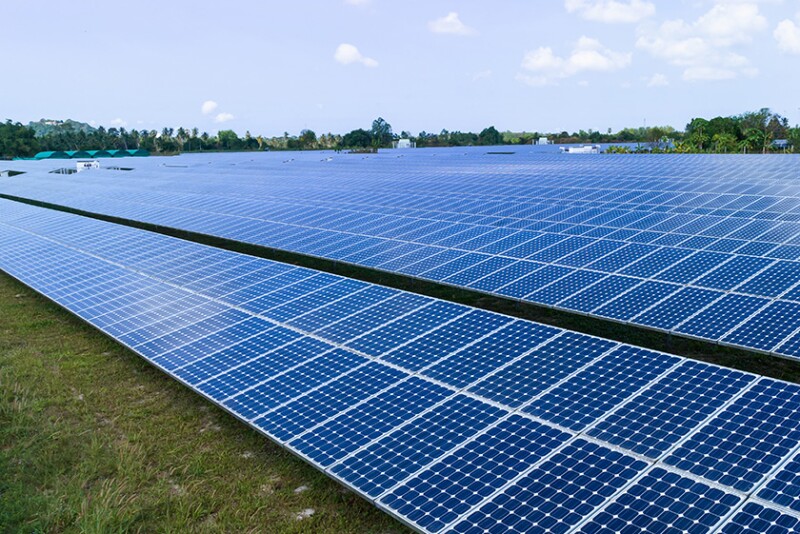
One ag economist says to watch farmer attitudes toward alternative land use, such as CRP and solar, to help diversify incomes.
(Photo: SHUTTER DIN, Adobe Stock)
From trade and deregulation to alternative land uses and cash rent prices, ag economists have no shortage of issues on their radar for 2025.
This past year was definitely full of surprises, but there were also happenings in agriculture that economists warned about at the end of 2023.
The bleak outlook for commodity prices, along with elevated interest rates, created a downturn in the ag economy, which is something many economists warned would happen. It's the speed of which margins crumbled that might have been the bigger surprise.
The latest Ag Economists' Monthly Monitor asked economists if the U.S. was either in a recession or on the brink of one. The majority of ag economists say U.S. agriculture is ending the year in a recession.
One occurrence that wasn't on anyone's radar in 2023: H5N1. What was first thought to be a mystery illness impacting dairy herds in Texas was later confirmed as Highly Pathogenic Avian Flu, the first time the disease was detected in mammals.
At the end of 2024, what are economists watching in 2025? In Farm Journal's latest Ag Economists' Monthly Monitor, we asked economists: "What's the one factor impacting the ag economy that's not being talked about or covered by the media enough right now?"
From trade to deregulation plus numerous unknowns in a new administration, economists have no shortage of issues they're watching in the new year.
Here's What Economists Are Saying:
Article courtesy of Tyne Morgan via Agweb.com

Photo provided by John Deere website.
Oklahoma Farm Report's Maci Carter caught up with Ryan Stien of John Deere to talk about precision agriculture which is two-fold at the JD dealership: the technology that exists on the machine, and the data management side via the John Deer Operations Center web-based, computer program.
The program is free to use for John Deere customers and those who aren't. It shows what the equipment has done and where it is. The information is shareable, and the user can decide which information to share with their agronomist, John Deere dealership, family member, or others.
John Deere's vision for the customer's use of the John Deere Operations Center is for everything that a customer has in their equipment shed to be represented in the user's program whether it bears the John Deere brand or not. Also, for every seed and chemical put on a field to be represented in the program. This will help farmers plan the next year's seeding rates and input type and rates and communicate those plans to the tractor the next time it enters the field.
"This eliminates spending time at the side of the field trying to remember which product they wanted to use, or the existence of a guidance line or not," Stien said. "It is all taken care of because the work got done in the off-season to put into a work plan to be executed when they get to the field. We have that digital representation of the farm, then it happens in the field."
Farmers make hundreds of decisions throughout the year about planting, inputs, harvest, and more, often with much uncertainty. John Deere Operations Center allows farmers to conduct hypothetical trials using equipment they own on fields they own which are represented in the program.
For example, if the farmer wants to try out a new input, the app keeps track of exactly where the product was placed, and it also keeps track of the harvest rates of the entire operation. In the program, a farmer can bring up two side-by-side maps to determine if there was a yield increase from the application and exactly how much of an increase there was to determine if it was cost-effective or not.
"As we come into more down times in the ag economy, it is so important to get every dollar I can out of my decisions, and Operations Center is the tool to use to look back at the ROI scorecard of which decisions paid off or not," Stien said.
As John Deere and other equipment companies are constantly releasing new and updated equipment, Operations Center stays up with the times by updating every two months with product enhancements and tweaks and keeps users informed of the changes through Release Notes, which are emailed every two months to describe the new features.
"We are very committed to making Operations Center a premier tool for farmers," Stien said. "Then we also do the same cadence on Operations Center Mobile, which is the app-based system available for Android and I.O.S. systems so farmers can see the same information on their phone as they do in the web-based tool."
John Deere Operations Center includes four key components to make it more user-friendly: Set Up, Plan, Monitor, and Analyze. Set Up involves more of the heavy work in winter months, during the off-season, to put all of the information about the equipment, seed, and products in the shed into the program. This can be done easily by scanning the serial number on a piece of equipment with the camera on a phone with the mobile app installed.
Once tangible things are set up in the user's account, the Plan feature is for inputting the information that will be sent to the equipment to utilize when they reach the field.
The Monitor feature is to watch sprayers or combines making their way across the fields and capture data about what is being done.
The Analyze component features tools to analyze yields in the fields, machinery, and variety performance across the farm.
More information can be found at deere.com, or go to operationscenter.deere.com and set up a free account to use.
The European Union (EU) and Mercosur (Brazil, Argentina, Uruguay, and Paraguay) signed a trade agreement on December 6, 2024, after more than 25 years of negotiations. The agreement, yet to be ratified, has the potential to become the most significant EU partnership, encompassing over 700 million people. It emerges amid the U.S. discussion of raising tariffs.
Highlights for Agriculture
The flow of agricultural products is more significant from Mercosur to the EU, as illustrated in Figures 1, 2, and 3. The EU-Mercosur Trade Agreement introduces significant changes to agricultural trade by establishing quotas and reducing tariffs over a phased period[1], providing greater access to Mercosur countries. For beef, an additional quota of 99,000 metric tons (CWE) will be introduced over five years with a 7.5% tariff, while the existing Hilton Quota (10,000 metric tons) will become tariff-free upon the agreement's implementation. Poultry exports will benefit from a 180,000 metric ton (CWE) quota, phased over five years, with zero tariffs, while pork will have a 25,000 metric ton quota with a fixed tariff of €83 per metric ton, implemented over five years.
The agreement also includes quotas for sugar (180,000 metric tons with zero tariffs, including 10,000 metric tons reserved for Paraguay), ethanol (450,000 metric tons duty-free for industrial use), and corn (1 million metric tons at zero tariffs, increasing over five years). A 60,000 metric ton quota for rice will start at zero tariffs and gradually increase over five years. Additionally, orange juice tariffs will be eliminated over seven to ten years, with a 50% preferential margin during the transition. These provisions aim to expand market access for Mercosur's agricultural exports while aligning with EU tariff structures.
Sustainability: Both blocs committed to following the Paris Agreement, combating deforestation, and reducing greenhouse gas emissions. The EU committed to using data from Mercosur authorities to assess Mercosur's compliance with the requirements established by European bloc legislation.
Challenges Ahead
The signing of the EU-Mercosur trade agreement represents a significant milestone. However, the agreement may face political challenges in the future. The EU member states and the European Parliament must review and approve the final text. France and Poland are likely to express opposition to the agreement. Additionally, the Mercosur nations will need to ratify the agreement in their respective congresses.
Implications for the United States
The EU-Mercosur trade agreement introduces competitive challenges for U.S. agricultural exporters by granting Mercosur countries preferential access to European markets and strengthening the EU's position in Mercosur. Commodities such as beef (Fig. 1), corn/peanuts (Fig. 2), and soybeans (Fig 3) will face increased competition, with Mercosur benefiting from reduced tariffs and expanded quotas in the EU. At the same time, the agreement allows European goods to gain a stronger foothold in Mercosur countries, reducing U.S. export opportunities in high-value sectors like processed goods and dairy. The deal further challenges the U.S.'s ability to compete globally by setting a precedent for trade norms.
Figure 1 – 2023 Livestock Export Values by Product and Region (FOB, $ Millions)
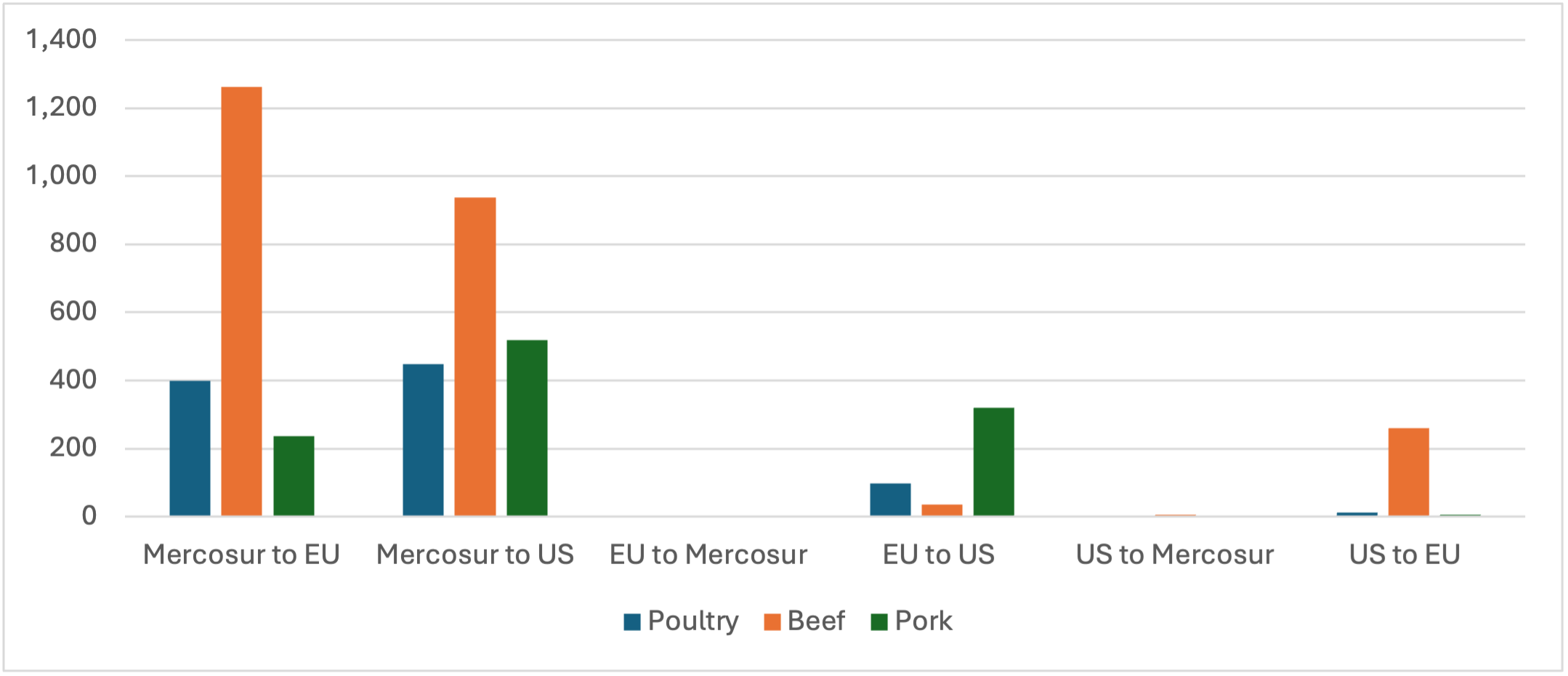
Figure 2 – 2023 Crop Export Values by Product and Region (FOB, $ Millions)
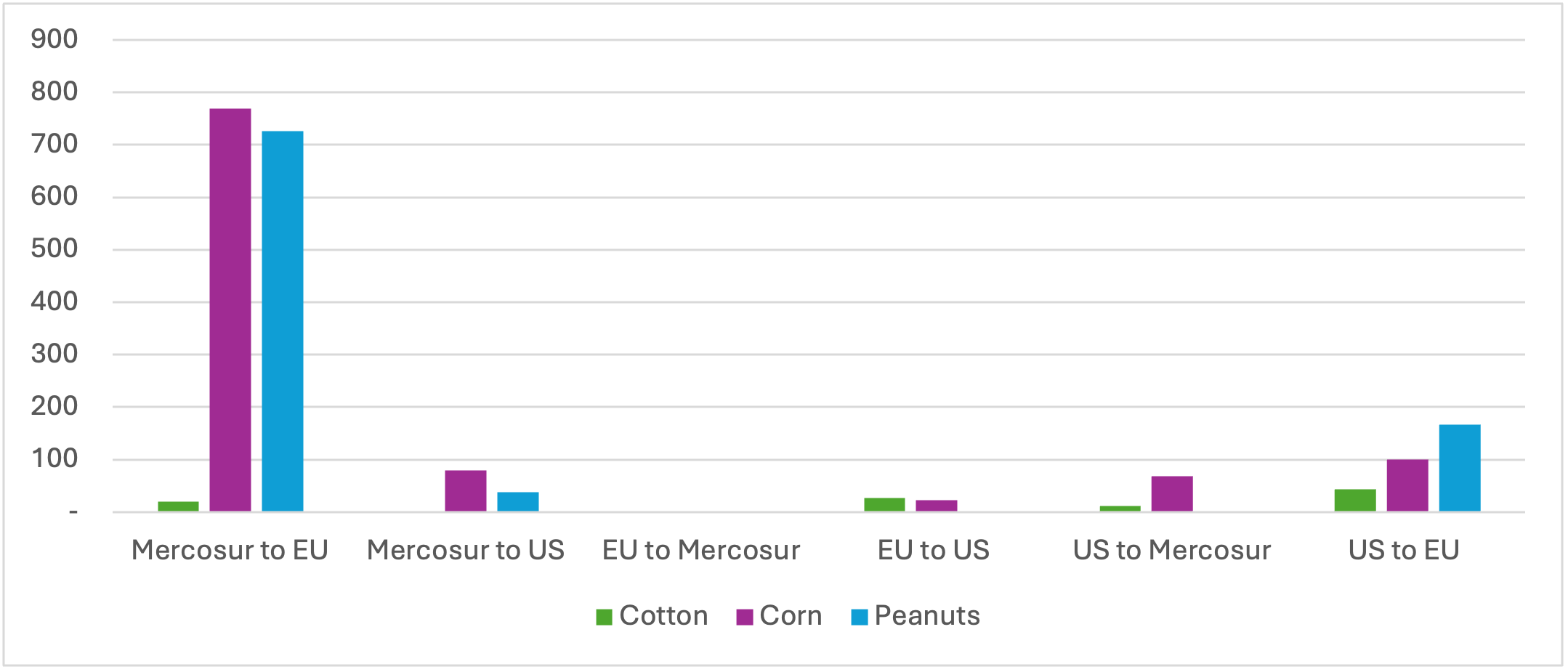
Figure 3 – 2023 Soybeans Export Values by Product and Region (FOB, $Millions)
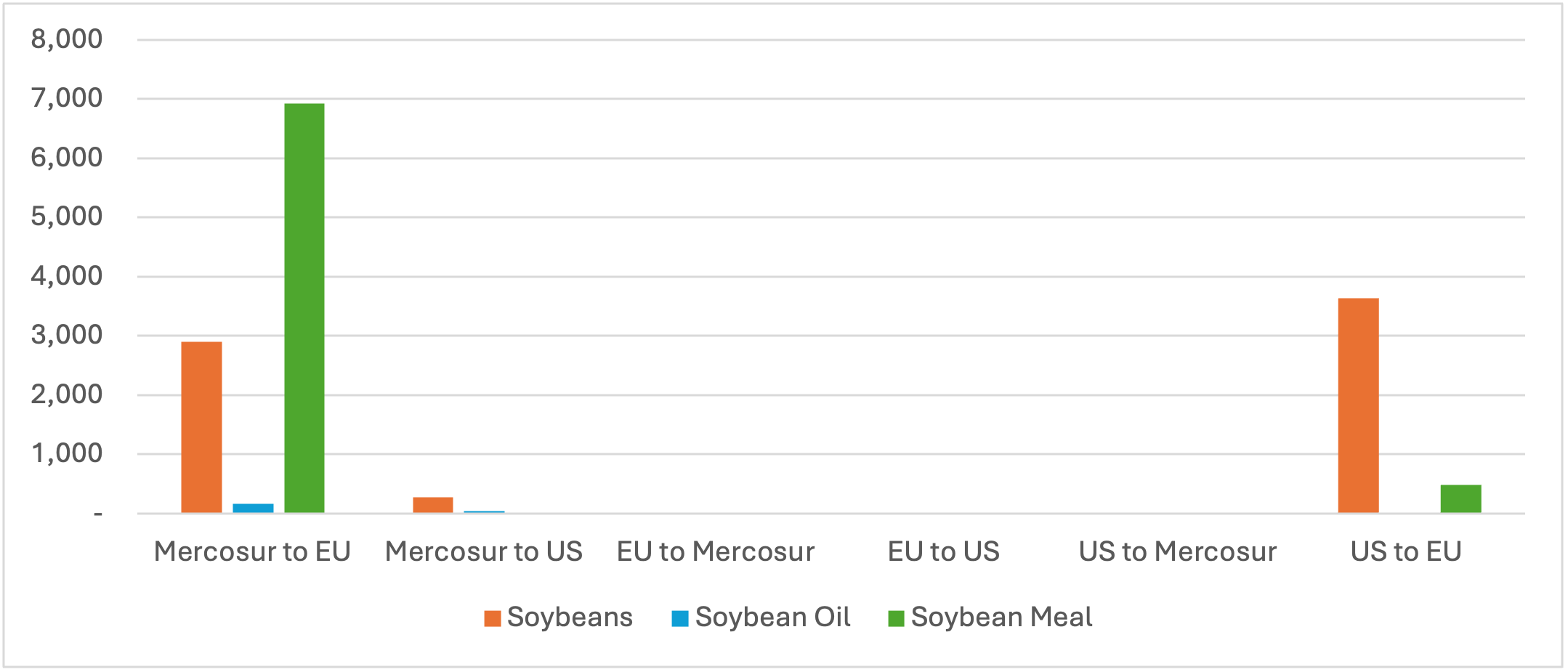
[1] Sources: https://policy.trade.ec.europa.eu/eu-trade-relationships-country-and-region/countries-and-regions/mercosur/eu-mercosur-agreement/factsheets-and-guides_en
Article Courtesy of Southern Ag today: Calil, Yuri, and Pancho Abello. "EU-Mercosur Trade Agreement." Southern Ag Today 4(52.4). December 26, 2024. Permalink

OCA holds discussions and votes on policies and resolutions twice a year, January and July. OCA invites and encourages all members to participate and contribute to this important process.
When: Thursday, January 23, 2025.
Where: Sheraton Hotel, Downtown Oklahoma City, OK
Early registration with lunch included $50
For more information and to register click here.
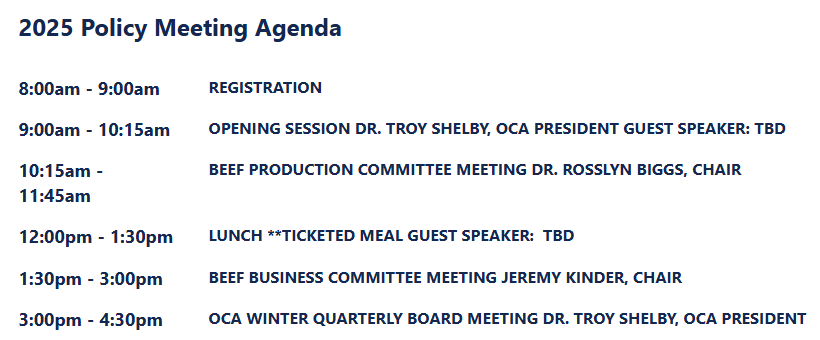
Article Courtesy of OCA
| ||||||||||||||||||||||||||||||||||||||||||||||||||||||||||||||||||||||||||||||||||||||||||||||||||||||||||||||||||||||||||||||||||||||||||||||||||||||||||||||||||||||||||||||||||||||||||||||||||||||||||||||||||||||||||||||||||||||
| ||||||||||||||||||||||||||||||||||||||||||||||||||||||||||||||||||||||||||||||||||||||||||||||||||||||||||||||||||||||||||||||||||||||||||||||||||||||||||||||||||||||||||||||||||||||||||||||||||||||||||||||||||||||||||||||||||||||
|
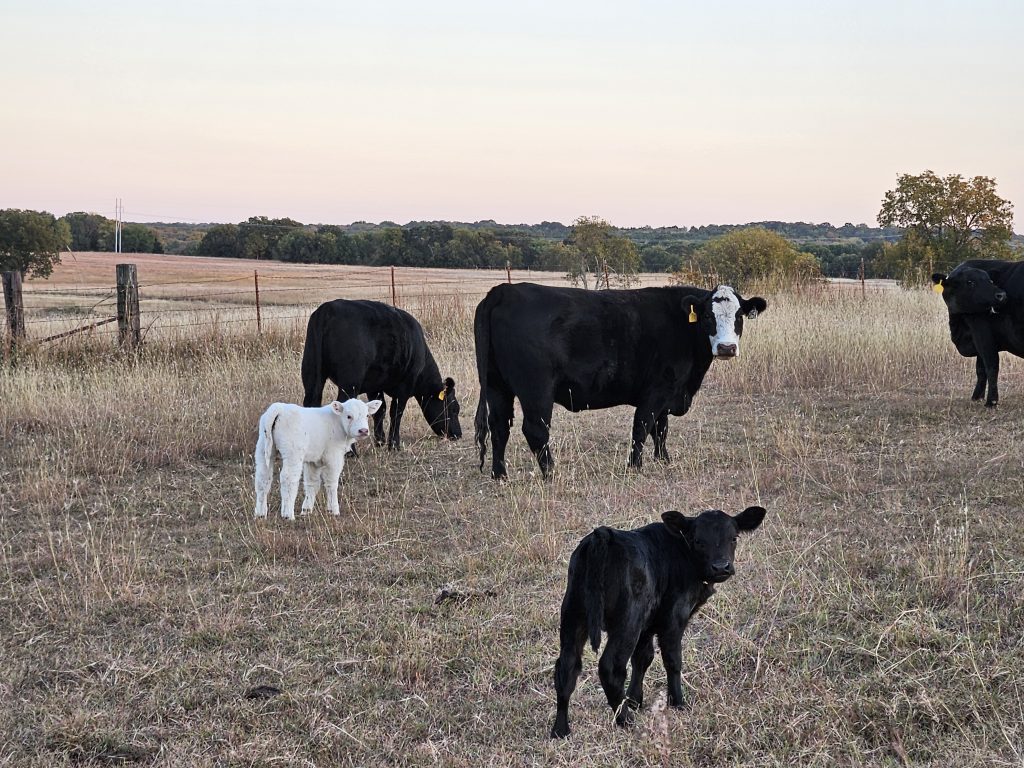
Senior Farm and Ranch Broadcaster Ron Hays caught up with Dakota Moss, Livestock Risk Services President, to discuss locking in LRP with this year's near-record high cattle prices.
"Going into October, we were in a pretty horrific drought, then we were pretty blessed to have some good, timely rains, in the first of November that really helped our fall winter wheat pastures just take off and start growing. That, in turn, incredibly increased demand for calves to turn out on that pasture," Moss said.
In the past month and a half, the market has continued to grow stronger. The cattle feeder index for a seven- to nine-weight steer was at a historically high $263 per hundred at the time of Hays's and Moss's conversation.
"Looking back, at the first of November, we could cover cattle on the LRP – we were looking at $242 per hundred on steers for May, and today, we are looking $258 on those same steers for May," Moss said. "So, we have seen a dramatic increase in the futures as well as LRP prices. A little bit of rain and a few other factors really helped this cattle market come along this last part of the year."
Looking ahead to the fall of 2025, Moss urged producers to begin looking at unborn calf contracts for the following year's calf crop due to the massive opportunities the contracts can offer.
"We really have no idea what 2025 holds," he stated. "We need to be optimistic and hope for good things, but we also need to be cautious as we move into next year."
Unborn calf contracts are one of the most under-used parts of the LRP program. The price is determined by the average weight a producer typically sells calves at.
"Off of yesterday's market, we could have put $266 per hundred on a calf to be sold September 17th and it would have cost $10.20 per hundred," Moss explained. "So you are looking at $50 per head on a five-to-five fifty-weight calf, but you are also locking in $266 per hundred. They look at that and say, 'I'm going to net $266 after cost on these calves, that keeps me in the black on them, and that's a good bunch to work off of for next year.'"
All business owners must be profit and margin-minded in all decisions. Moss noted that, from a cow calf producer's perspective, LRP's unborn calf contracts are a great decision for their business.
Stocker operators can utilize LRP as well. Moss said that once they have a load of cattle in hand, they can predict their planned marketing date and once the market closes that day, they can lock in the market of that day.
"We are even seeing, stocker operators buying cattle already for next August, and already locking those prices in," Moss commented.
The Beef Buzz is a regular feature heard on radio stations around the region on the Radio Oklahoma Ag Network and is a regular audio feature found on this website as well. Click on the LISTEN BAR for today's show and check out our archives for older Beef Buzz shows covering the gamut of the beef cattle industry today.
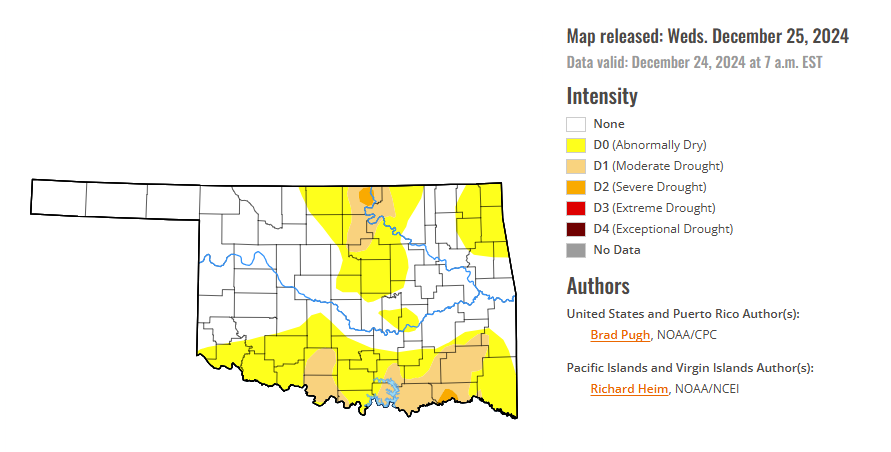
To view the latest Oklahoma drought map, CLICK HERE.
According to the latest Oklahoma drought monitor report, exceptional drought remains at zero percent, unchanged from the start of the calendar year.
Extreme drought or worse conditions remain at zero percent, unchanged since the week of October 29.
Severe drought or worse conditions decreased to 0.59 percent, down from 1.85 percent last week.
Moderate drought or worse conditions decreased to 11.54 percent, down from 11.89 percent last week.
Abnormally dry or worse conditions decreased to 43.22 percent, down from 43.97 percent last week.
According to the 6-to-10-day precipitation outlook map, the entire state of Oklahoma is leaning below a 33-40 percent chance of precipitation through January 4, 2025.
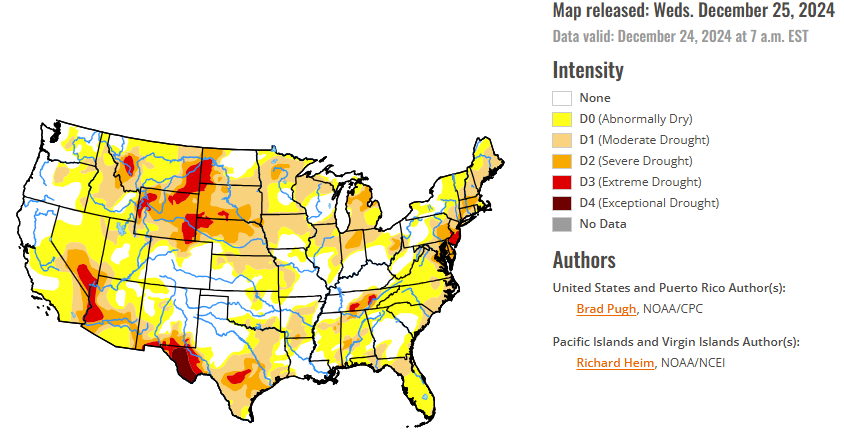
To view the United States Drought Map, CLICK HERE.
A swath of precipitation (0.5 to 1.5 inches) this past week led to small improvements from parts of Oklahoma and Arkansas northeastward to the Central Appalachians. Since the major drought that affected the Central Appalachians and Upper Ohio Valley peaked in late September, drought has steadily improved across these areas over the past two months. Near to above-normal precipitation during the past 30 days supported drought improvement across parts of the Northeast. Farther to the south across the Southeast, Lower Mississippi Valley, and Texas, 30 to 60-day precipitation deficits continue to increase with expanding and intensifying drought during mid to late December. December is typically a drier time of year for the Upper Midwest and Northern to Central Great Plains where little to no weekly drought change was warranted. Since the beginning of October, precipitation has generally averaged below normal across the Central Rockies, Great Basin, Southwest, and Southern California. From December 17-23, enhanced onshore flow resulted in wetter-than-normal conditions across coastal northwestern California and much of the Pacific Northwest. 7-day temperatures, ending on December 23, averaged above normal throughout the West and Central to Southern Great Plains with colder-than-normal temperatures limited to the Great Lakes and Northeast.
In the Southern Plains, based on increasing short-term precipitation deficits and 30 to 90-day SPIs, abnormal dryness (D0) and moderate drought (D1) were expanded across northern Louisiana and portions of south-central Mississippi. These same indicators along with the NDMC short-term blend supported the expansion of D1 to severe drought (D2) across portions of eastern and southern Texas. Around one inch of precipitation supported a 1-category improvement across portions of Arkansas and central to southeastern Oklahoma. Recent precipitation also led to improvement across northern Tennessee to be consistent with bordering areas of southeastern Kentucky.
In The High Plains, based on SPIs at various time scales, low snowpack, and the NDMC short-term blend, a 1-category degradation was made to northern Colorado along with southern and northwestern Wyoming. Snow water equivalent amounts are below the 5th percentile where extreme drought (D3) was expanded in Wyoming. These same indicators justified an expansion of abnormal dryness (D0) across southwestern Colorado. Severe drought (D2) was expanded across western Nebraska due to soil moisture percentiles falling below the 10th percentile and support from the 90 to 120-day SPI.
In the West, based on increasing water year to date (WYTD: October 1-December 23) precipitation deficits, a 1-category degradation was warranted for central Nevada. For this same reason, moderate drought (D1) was added to portions of northeastern Nevada. Elsewhere, no other changes were made. WYTD precipitation was at or above normal for much of the Pacific Northwest and northern California and below normal for the remainder of the West region. As of December 23, snow water equivalent (SWE) was below normal across the Northern Rockies of Montana and Wasatch Mountains of Utah. SWE was near average for the Sierra Nevada Mountains and highly variable throughout the Cascades.
Looking ahead, during late December, multiple low-pressure systems will bring heavy precipitation (rain and high-elevation snow) to the Pacific Northwest and northern California. On December 27, widespread rain with locally heavy amounts (more than 2 inches) is forecast for eastern Oklahoma, eastern Texas, and Arkansas. A slow-moving low-pressure system and trailing front are forecast to bring varying precipitation amounts (0.5 to 1.5 inches) to the Ohio and Tennessee Valleys, Mid-Atlantic, and Northeast.
The Climate Prediction Center's 6–10-day outlook (valid December 30, 2024-January 3, 2025) favors above-normal temperatures across the East, Southern Great Plains, and Southwest. Near normal temperatures are favored for the Northern Great Plains, Northern Rockies, and Pacific Northwest as above-normal temperatures are forecast to moderate during this 5-day period. A pattern change is forecasted during the first week of the New Year, transitioning towards near or below-normal temperatures for much of the lower 48 states. Elevated above-normal precipitation probabilities are forecast for the Pacific Northwest, Great Plains, Midwest, and Northeast. Below-normal precipitation is more likely for the southern two-thirds of California and the Southwest.
To view the 6-10 Day Precipitation Outlook Map, click here.
To view the 6-10 Day Temperature Outlook Map, click here.
To view the Monthly Drought Outlook Map, click here.
The holidays have come and gone, leaving behind a lingering scent of pine needles and a melancholic feeling as the decorations are packed away; however, the discarded Christmas tree, once a centerpiece of joy and festivity, is about to embark on a new life, far from the confines of the living room.
"Most cities and municipalities will have curbside pickup of real Christmas trees," explained Gary Crawford. "They'll chop 'em up for mulch or make some use of them like that."
Retired Kansas State University Forester Charlie Barden knows that the life of a Christmas tree could extend far beyond mere mulch.
"We, quite often, will take a leftover tree and tie it up to the corner of the deck right near our bird feeder," Charlie shared. "It gives a place for the birds to perch and get out of the wind on a cold night."
The tree, once a source of festive cheer, can then offer shelter and sustenance to wildlife. Birds can nestle amongst its branches, and find refuge from the harsh winter winds.
"If you don't have a bird feeder," Charlie continued, "You can make the tree, itself, into a big bird feeder by stringing popcorn or putting peanut butter in a pine cone."
The discarded tree, stripped of its ornaments, could become a vibrant buffet for feathered friends.
The benefits extend even further in the backyard. "Take a clipper and clip off all the branches and use the boughs as extra mulch around some of your semi-hardy perennials," Charlie suggested. "It will offer protection for some of the flowers or rose bushes in the garden that sometimes get damaged by the severe cold."
The soft, fragrant boughs provide insulation, protecting delicate plants from the harsh winter elements.
The uses for a discarded Christmas tree are truly diverse. "We just usually take half a cement block or so and use a piece of rope to tie it onto the base of the tree and sink it into a pond," Charlie explained. "They act as a mini coral reef. Different vegetation, algae plant,s will grow around on the branches, and that will attract young fish and small minnows."
The once-festive tree now offered a haven for aquatic life, providing shelter and a thriving ecosystem within the pond.
"Some beach towns put old trees to good use," Gary added. "We've seen some used for erosion on sand dunes."
The sturdy branches, once adorned with twinkling lights, now help to stabilize the shoreline, protecting the coast from the relentless forces of nature.
However, Charlie cautioned against one particular use: Using the tree for firewood. He said, "That can be dangerous with the pitch pockets. The moisture in the tree can make little explosions and send sparks across the room."
Burning the Christmas tree in the fireplace, while tempting, could pose a significant fire hazard.
As the holidays fade into memory, it becomes clear that the life of a Christmas tree is far from over. From providing shelter for birds to protecting delicate plants and enriching aquatic ecosystems, the discarded tree finds a new purpose, reminding us that even after the festivities have ended, the spirit of giving continues.
There are several places in Oklahoma City to recycle your Real Christmas Tree. Here are a few tips:
Christmas trees can be recycled this year by dropping them off at Mitch Park by January 17, 2025. Trees are chipped, and free mulch will be available for residents to pick up at Mitch Park.
Residents may drop off their Christmas tree at Mitch Park, in the north parking lot adjacent to Marilyn Williams Drive (east of the pavilion and playground).
The trees will be chipped, so please remove all tree stands, nails, and ornaments.
Commercial accounts, Christmas tree lots, and other businesses will also need to dispose of their trees by dropping them off at the Mitch Park drop-off location.
If you can't drop off your tree, residential customers can schedule a special, free collection the week before January 6. Call the tree-cycling hotline at (405) 359-4701 between December 30 and January 3 to be placed on the schedule. Collection will be provided during the week starting Monday, January 6, and ending Friday, January 10.
When placing your tree out for collection, please do not cover your water meter.
Trees may not necessarily be picked up on normal trash collection day. So, those who have called the hotline must place their tree at the curb before 7:00 am Monday, January 6 to be included in this collection.
If you miss the special collection:
| Why Recycle Your Christmas Tree? Pinewood and needles are excellent mulch-making materials. Even if you miss the City's tree-cycling program, you can recycle your Christmas Tree to make natural wood chip and pine straw mulch! Just let the tree dry, have the branches chopped, and then let the wood chips rot before using them to mulch around trees and shrubs. If you don’t have a woodchipper, the pine needles work well also since they dry quickly but decompose slowly. What is Pine Mulch? Pine mulch is an organic mulch made from fallen pine needles (also known as “straw”) or pine tree bark. Pine straw mulch is a popular mulch because it is lightweight yet remains stable and cohesive. Pine mulch is an indispensable part of landscaping and gardening because it reduces water evaporation in soil, suppresses weeds, limits erosion, and adds nutrients to soil. Coming from the shedding of various pine tree species, pine mulch is completely natural and sustainable. After the pine needles have dried, they become pine straw. Pine straw can be used as a yard or garden mulch, much like wood mulch, straw, or shredded leaves. Benefits of Pine Straw Mulch: Dense: Holds in moisture and moderates soil temperature. Porous: Water can easily soak through. Loose: Loose and light so it is easy to redistribute if needed. Attractive: An attractive complement that fits the look of most yards .Stable: Forms a stable mat that is difficult to wash or blow away. Inexpensive: Can be produced from your own pine trees, for free pine straw mulch. |
Article and audio Courtesy of USDA

Scott Clawson, M.S., Oklahoma State University Cooperative Extension Service NE Area Agricultural Economics Specialist writes about Unit Cost of Production Workshops on deck for 2025 as part of the weekly series known as the "Cow Calf Corner," published electronically by Dr. Derrell Peel, Mark Johnson, and Beck.
Maybe the best gift Santa could deliver in 2024 is cash cattle prices surging into the new year. For me, 2024 has been a great ag economics teacher giving real-world lessons in revenues, input costs, cash flow, and planning for those big-ticket asset buys. Great cattle prices bring big sale barn checks (revenues). The price of hay and feed has also moderated (input costs). Collectively, this has welcomed in better liquidity, working capital, and cash flow for cattle producers in Oklahoma.
So, what's the catch? The catch is that the cost of doing business has also increased. Putting on my analyst hat, could we have a capital asset storm brewing (again)? For this discussion, we will simplify capital assets into cows and machinery/equipment. Recent bred female sales have yielded the high prices that we have all been anticipating and machinery and equipment prices have also increased rapidly. Investments in these areas will impact the bottom line for years to come. Building the framework to calculate cost of production and knowing how it works will help producers through that decision making process. Additionally, it can help outline where our operation is creating value, what segments of the ranch are leaking value, and what it costs economically.
Limited to 15 participants each, our UCOP workshop will work through the process to calculate the UCOP of a sample ranch. While walking through the process as a group we will talk about the issues facing cow-calf producers today and evaluate the options we have. This is a discussion-based activity with no PowerPoint presentations. At the end of the day, we will have calculated the cost per pound of weaned calf on our sample ranch and have acquired information to aid in decision making. Please RSVP if you would like to attend.
| Where: | McClain County OSU Ext.1721 Harcastle Blvd.Purcell, OK 73080 | Adair Town Hall533 E. Main St.Adair, OK 74330 | Pawnee Co. Fairgrounds510 Memorial Rd.Pawnee, OK 74058 |
| When: | January 22, 2025 | January 23, 2025 | January 27, 2025 |
| Time: | 10am-4pm | 10am-4pm | 10am-4pm |
| RSVP Deadline: | January 15,2025 | January 16, 2025 | January 17, 2025 |
| Contact: | (405) 527-2174 | (918) 825-3241 or(918) 273-3345 | (918) 762-2735 |
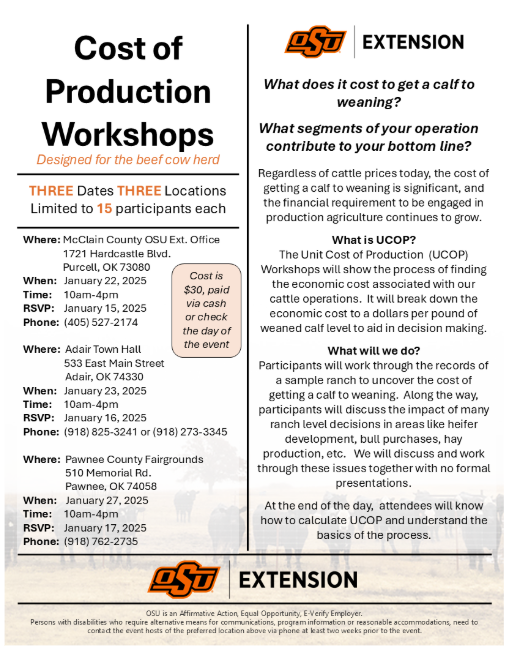

In November, Master Baker Didier Rosada conducted a USW baking seminar for milling companies in Cameroon, Cote d'Ivoire, Gambia, and Senegal. The seminar was part of USW's work to promote greater use of U.S. hard red spring (HRS) and hard red winter (HRW) wheats in flour blends.
U.S. Wheat Associates (USW) Bakery Technologist David Oh is credited with helping a group of South Korean bakers make an important connection earlier this year. The effort serves as a perfect example of how USW market development activities – short courses, technical workshops, and trade teams – promoted U.S. wheat in overseas markets in 2024.
Over the past 12 months, USW sponsored a dozen short courses hosted by the Wheat Marketing Center (WMC), the Northern Crops Institute (NCI) and the IGP Institute (IGP). USW also hosted eight trade teams made up of international wheat buyers on visits to the U.S. and participated in USDA agricultural trade missions around the world.
Each activity had a common goal: to connect U.S. wheat to customers who value quality and reliability.

U.S. Wheat Associates (USW) Bakery Technologist David Oh with the Korean Bakery Product Development Team on the Thomas Dierickx farm in Oregon.
Back in April, Oh led a team of professionals through a Bakery Product Development Course at the WMC in Portland. The seminar focused on a handful of products that allowed the Korean team to see how U.S. wheat quality helps bakers create better end products. A visit to the Thomas Dierickx farm to meet U.S. wheat farmers and learn about their production practices was a significant event to showcase the reliability of the U.S. wheat crop.
"All the technical baking work we did in the lab at the Wheat Marketing Center was very important and very educational," Oh said. "But introducing the bakers to the farmers and showing them how U.S. wheat is grown and the care the farmers take to produce the crop had a big impact on the team."
The Market Access Program (MAP) and Foreign Market Development (FMD) program anchor USW's activities each year. The Agricultural Trade Promotion Program (ATP) is winding down. But the new FAS Regional Agricultural Promotion Program (RAPP) is now allowing USW to maintain a higher level of trade and technical service for customers.
"These kinds of activities really help us put a spotlight on the quality and value of U.S. wheat, and serve as the bread and butter of what we do, so to speak," said USW Chairman Clark Hamilton. Clark, an Idaho wheat farmer, was involved in several 2024 activities. He was part of USDA's first-ever U.S. agribusiness trade mission to Luanda, the capital of Angola. There, he teamed with Chad Weigand, USW's Regional Director for Sub-Saharan Africa, to meet with millers and bakers and analyze consumer trends.
"Wherever I've been in the world meeting with millers and bakers, one thing has been clear: The U.S. Wheat Associates staff does a tremendous job of building and maintaining relationships within the global markets, and that is very important," said Hamilton. "We are in a very competitive business in a very competitive world, so having those relationships is incredibly valuable."
Educational meetings, firsthand workshops and on-site production support were part of USW's successful effort to convince one of Colombia's largest cake, cookie, and cracker manufacturers to make its very first purchase of U.S. wheat. The company makes an iconic rectangular, chocolate-covered cake snack, but has only ever used flour additives and Canadian spring wheat flour to make that snack as well as cookies, crackers, and other products for more than 40 years. In February 2024, a company executive wrote USW to say: "The seminars ... have given us tools to strengthen our negotiation and supply strategies," the executive wrote. "During 2023, we began the approvals and purchases ... a historic milestone for [us] and U.S. wheat. The commercial relationship that we want to continue strengthening as strategic partners in the following years."
USW Taipei worked with Chia Fha Flour Mill to hold a U.S. wheat flour and bakery products briefing session October 7. An estimated 30 bakers, distributors, ingredient suppliers, and baking instructors took part. At the event, USW offered a broad look at positive U.S. wheat characteristics. Chi Fha's R&D head then introduced two new flour products made with 100% U.S. wheat that are more suitable for pan bread and hearth bread with higher moisture and longer shelf life.

USW Vice Chairman Clark Hamilton, USDA Deputy Secretary Xochitl Torres Small and USW Regional Director for Sub-Saharan Africa Chad Weigand pause for a photo in Luanda, Angola, during a U.S. agribusiness trade mission in late February.
In August, USW/Mexico City Assistant Regional Director Stephanie Bryant-Erdmann traveled to Panama City, Panama, and San Pedro Sula, Honduras, to a procurement seminar in each location. The seminars targeted a cross-section of mill staff from each of the participating mills. Included were representatives from production, purchasing, quality control and executive teams. Bryant-Erdmann shared USW's "Getting the Wheat You Want" presentation and did a review of class and quality specification recommendations. Mexico remains U.S. wheat's top importer.
USW wroked to promote greater use of U.S. hard red spring (HRS) and hard red winter (HRW) wheats in flour blends for African bakers. Focusing on baguettes, fanti bread, biscuits and other products, USW's Cape Town Office conducted a baking seminar at the Baking and Pastry Training Institute (IFMBP) in Casablanca. Master Baker Didier Rosada conducted the November seminar for 11 participants from milling companies. Those companies are based in Cameroon, Cote d'Ivoire, Gambia, and Senegal. The four-day seminar highlighted use of HRS blended with local wheat flour for French baguettes. The seminar also introduced participants to various bread, bun and pizza styles.
"The objective of this seminar was for participants to get a better understanding of which U.S. wheat varieties are best suited in milling flour for their respective national breads and baguettes," explained USW Program and Marketing Specialist Domenique Opperman. "The group was very engaged and eager to learn more about the various U.S. wheat classes. Technical seminars like this that feature a strong 'firsthand' component tend to be the most effective way to highlight the advantages of U.S. wheat classes. We plan to continue this activity utilizing RAPP funding over the next five years."
Oklahoma Farm Bureau has announced the organization's 2025 priority issues ahead of Oklahoma's 2025 legislative session.
These priority issues, designed to guide the work of Farm Bureau members and staff at the state Capitol, focus on several areas, including private property rights, water policy, production agriculture, education and extension.
The following encompass the organization's legislative priorities for the coming year:
OKFB's priority issues stem from member-crafted policy resolutions and are voted on and approved by the OKFB board of directors each year.
To learn more about OKFB's top issues, visit okfarmbureau.org/advocacy/issues. For more information or questions about the priority issues, contact OKFB's public policy team at (405) 523-2300.
Article from OKFB.org
On Tuesday, the National Cattlemen's Beef Association (NCBA) warned cattle producers that Corporate Transparency Act filing requirements are back in effect following a court decision that reverses the injunction that previously halted this mandate.
"The Corporate Transparency Act requires millions of family farmers and ranchers to file complex paperwork and disclose beneficial ownership information with the federal government under penalty of severe fines and jail time," said NCBA Executive Director of Government Affairs Kent Bacus. "FinCEN should do the right thing and provide a realistic delay to the Corporate Transparency Act until Congress has an opportunity to provide a permanent fix that protects family farmers and ranchers."
On Monday, the Fifth Circuit Court of Appeals lifted a nationwide preliminary injunction on the enforcement of the Corporate Transparency Act, holding that the government is likely to prevail in a constitutional challenge. This decision places many small businesses in jeopardy that have not yet filed Beneficial Ownership Information with the Financial Crimes Enforcement Network (FinCEN), a division of the U.S. Department of the Treasury.
The earlier preliminary injunction prevented the Corporate Transparency Act from taking effect until the outcome of the case Texas Top Cop Shop, Inc. v. Garland is fully decided by the courts. This case was brought by a Texas small business that challenged the legality of the Corporate Transparency Act. The eastern Texas District Court judged signaled that he believes that the law is unconstitutional- in direct contrast to what the Fifth Circuit Court proclaimed as they lifted the earlier injunction.
In light of the Fifth Circuit's decision, FinCEN announced it will delay enforcement of the Corporate Transparency Act until January 13, 2025—just three weeks from now. This delay does not allow enough time for millions of small businesses to comply with the law, and it is deeply concerning that FinCEN will proceed with enforcing this law when it has failed to give adequate notice and instructions to law-abiding family business owners.
NCBA will continue fighting for a permanent solution that protects cattle farmers and ranchers from this overreaching mandate. In the meantime, cattle producers are advised to consult their attorney and/or tax professional regarding this new development.
Oklahoma Farm Report's Maci Carter got to speak with Propane Education and Research Center (PERC) Director of Agricultural Business Development Michael Newland.
PERC's purpose is to promote the propane industry, one of the biggest challenges to that is providing safety training and safety training materials to the industry. Consumer outreach and new project development and investment are also on their list of duties.
A company in Nebraska is developing new EPA-certified engines that range from 2.4-liter engines to mid-twenty liter engines to be used in power generators and irrigation with money invested by PERC.
"We are very excited about that because it is going to be a very durable line of engines," Newland said. "They are probably going to set the standard for durability of engines, so we are going to do a lot of promotion for that, probably in 2025."
Another PERC-funded project gaining momentum is a soil steam unit in California. The base research was conducted by UC Davis and PERC's funds were used to build a commercial applicator to be used to control weeds, soil nematodes, and fusarium, in lettuce, carrot, fresh flower, and strawberry fields.
Newland pointed out that geographical location has a lot to do with propane's application in the ag industry. It is used throughout the Midwest to dry grain, and heat confinement buildings and greenhouses in colder climates. Irrigation and power generation are growing markets for propane.
"The electric grid isn't getting any more stable these days, and prices continue to escalate, so we have a better story from a reliability standpoint than the electric grid, and from a cost standpoint, there are a lot of places where we can produce power from propane cheaper than they can deliver it to you across electric lines," Newland said. "We have some great opportunities, and those are the types of things we focus on."
PERC also has an incentive program for producers looking to purchase new, propane-powered farm equipment. More information about the incentive program can be found on the website.
"It is a great way to support the industry," Newland said. "We are confident in all of our equipment. We are confident in the fuel, and for that reason, we offer some of our money back to get producers to try it."
Propane has been deemed a clean alternative fuel by the government for many years, and unlike gasoline or diesel, propane tanks don't require any secondary containment, such as double-walled tanks.
"We are very environmentally friendly," Newland added. "We have irrigation motors right up against the Everglades National Park in Florida, which I would argue is the most regulated wetlands in the country. That is because it is safe. Just looking at spills, I think we set the standard for fuels, period."
Propane checks a lot of boxes for clean fuels in emissions as well. "We mow grass with it. We have concrete-finish equipment that runs indoors when warehouses are being built, and if you think about it, what do you cook your food over outdoors? Our fuel. Most folks cook with a propane grill," Newland pointed out. "Nobody is lining up to eat a steak off of a diesel or gasoline powered grill. We love where our fuel is from an environmental standpoint."
He noted that hydrogen is a common point of discussion and how one has to consider key differences in hydrogen: how it is delivered, the pressure it is stored at, and how and where it is produced. "They are all labeled with colors to tell you how clean they are," he said. "Honestly, propane is cleaner than most of the hydrogen that is out there today. Hydrogen is also incredibly expensive and not readily available. I think we are a ways away from making that a reality. It has some things to overcome in the pressure and storage of it than the cost of it."
Renewable propane is available in the marketplace – most of it being used on-road in California where regulations are stricter. The renewable propane boasts less than half of the carbon intensity value of traditional propane, which already cleaner than most other fuels in the marketplace.
"We are clean today with our existing product, and we are getting cleaner with the renewable propane, and we will be cleaner with new pathways in the future," Newland concluded.

Mark Johnson, Oklahoma State University Extension Beef Cattle Breeding Specialist, offers herd health advice as part of the weekly series known as the "Cow Calf Corner," published electronically by Dr. Derrell Peel, Johnson, and Paul Beck. Today, Johnson looks ahead to 2025.
Merry Christmas and Happy New Year!
2024 has been an interesting year and 2025 looks very promising for those in the cattle business.
As 2024 ends, Oklahoma cattlemen and women say goodbye to a year of record high cattle prices, one of the driest falls ever for most of the state and a summer that lasted until November. In the month of November most of the state received drought breaking rains and the renewed potential for cool season pasture in 2025.
Low cow inventories, low corn prices, heifer retention (or lack thereof) and long-term weather forecast are encouraging signs that 2025 has much potential for those in the cow-calf sector.
As we look ahead to 2025, make sure you have colostrum on hand, know where your calving kit is stored and heifers and cows are in adequate body condition BEFORE the start of calving season.
Be prepared for the spike in your cow herd's nutritional requirements after calving and in cold weather.
Give thought to your marketing plan for the calves you raise in 2025.
Thanks for reading and best of luck in 2025!
SunUpTV presents their favorite segments from 2024 to celebrate the Holidays from December 21, 2024. https://www.youtube.com/watch?v=954zoKwd0KI&t=1270s

Mark Berg, the USDA's chief meteorologist, is about to embark on a new chapter in his life. After nearly four decades of service, he is retiring at the end of this year, leaving behind a legacy that extends far beyond the realm of weather patterns.
One of his most cherished assignments is rather unconventional: providing Santa Claus with his annual Christmas travel forecast. For years, Berg has meticulously analyzed weather conditions nationwide, ensuring that Santa's sleigh could easily navigate the skies.
"He's going to have a pretty calm ride this year," Mark had announced, his voice filled with a sense of satisfaction.
The tradition of Mark's Santa travel forecast had become a beloved annual event, eagerly awaited by broadcasters, podcasters, and listeners across the country. It is a unique blend of science and holiday magic, a testament to Mark's dedication and the enduring spirit of Christmas.
Mark, however, was quick to acknowledge that while his forecasts have been crucial, they haven't been foolproof. "He doesn't call me," Mark chuckled, "He just sends me a lump of coal, so I know that I have to do a little better next time."
Despite the occasional "coal incident," Mark cherishes his role as Santa's unofficial weather advisor. He treasures the memories of sharing his forecasts with his own children, instilling in them a sense of wonder and appreciation for the magic of Christmas.
As he prepares to retire, Mark reflects on his years of service, realizing that his contributions extended beyond the realm of meteorology. He has helped bring joy to countless children by ensuring a smooth and successful Christmas Eve journey for Santa Claus.
And so, as the year draws to a close, Mark bids farewell to the USDA, carrying with him the warmth of countless Christmases and the enduring spirit of the man who helped Santa.
(Article and audio courtesy of USDA)
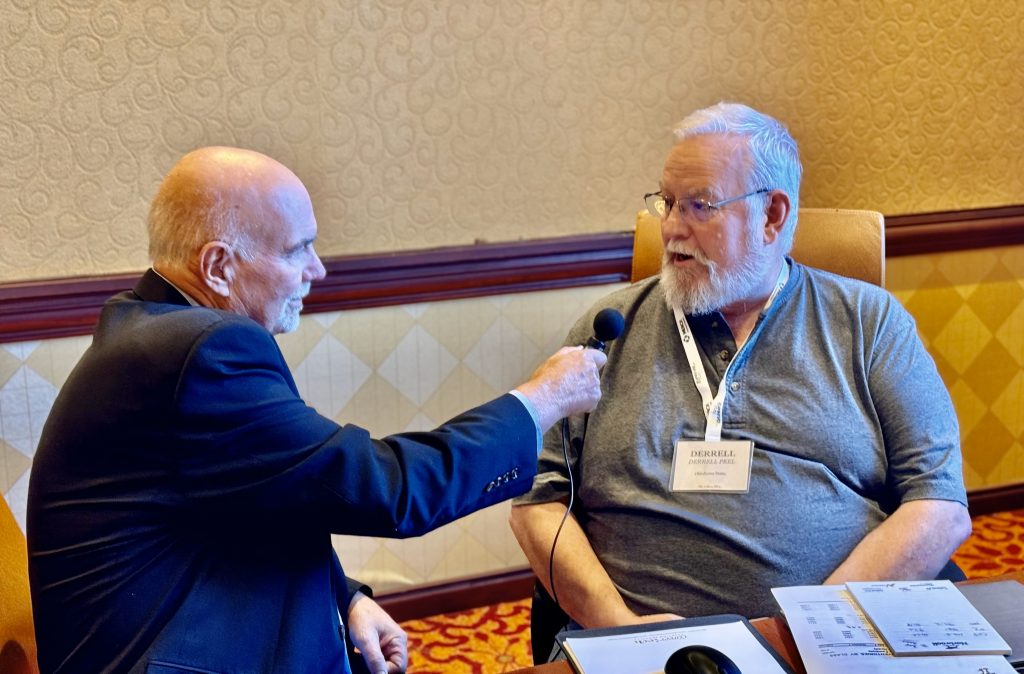
Senior Farm and Ranch Broadcaster Ron Hays talked to OSU Extension Livestock Market Economist Dr. Derrell Peel about market expectations for 2025.
When discussing the 2025 Cattle Inventory Report to be released in the latter part of January, Dr. Peel expects beef replacement heifers to be up only marginally because heifer slaughter rates and heifer-on-feed inventories have remained strong.
The final quarter of 2024 hosted the highest prices of the year for all classes of cattle, which caused a tremendous rally at auctions. "If you look at the feeder cattle auction volumes in Oklahoma, they have been really strong, particularly in December," Dr. Peel noted. "With this big run-up in prices, people are basically selling whatever they have available to take advantage of this market. That is certainly good for them in the short run, but it carries the implications of what we will be able to do in the future."
With prices as they are, making the decision to rebuild the herd is a tough one for producers to make. "At some point, they have to ask themselves about the future and where they want to be positioned with their herd, two or three years down the road. What are their expectations about the market? At some point, I think we will turn the corner, but a lot of it is going to depend on forage and drought conditions in the country."
If next spring's forage conditions look good, Dr. Peel expects to see signs of heifer retention beginning.
"We have had two years of good prices, but as we look ahead, we are expecting these prices to stay strong and perhaps a little stronger in 2025, and producers have to think about how you can't take advantage of these markets if you don't have something to sell," Dr. Peel said. "You have to plan your production from that standpoint, and ask what is the status of your herd and whether you need to make any changes in that given whatever drought or forage conditions you might be facing."
He added that even though prices are high and most operations will be profitable in 2025, costs such as grazing management and input costs are where producers have the most control. He suggested taking advantage of opportunities to enhance revenues by having the most calves available to sell in the current market.
The Beef Buzz is a regular feature heard on radio stations around the region on the Radio Oklahoma Ag Network and is a regular audio feature found on this website as well. Click on the LISTEN BAR for today's show and check out our archives for older Beef Buzz shows covering the gamut of the beef cattle industry today.
| ||||||||||||||||||||||||||||||||||||||||||||||||||||||||||||||||||||||||||||||||||||||||||||||||||||||||||||||||||||||||||||||||||||||||||||||||||||||||||||||||||||||||||||||||||||||||||||||||||||||||||||||||||||||||||||||||||
| ||||||||||||||||||||||||||||||||||||||||||||||||||||||||||||||||||||||||||||||||||||||||||||||||||||||||||||||||||||||||||||||||||||||||||||||||||||||||||||||||||||||||||||||||||||||||||||||||||||||||||||||||||||||||||||||||||
|
The National Farm Medicine Center began in 1981, when a nurse at the time, but currently Dr. Barbara Lee realized that something had to be done about the number of farmers needing care for an ailment she knew as Farmer's Lung. The organization she started now researches farm injuries, fatalities, and farm illnesses, as well as ways to protect farmers from these challenges. Farm Director KC Sheperd visited with the organization's outreach specialist Melissa Ploeckelman to learn about the organization.
Ploeckelman said that tractors are the number one cause of death in the farming community. "We talk a lot about putting ROPS on older tractors, and not letting children ride with you on the tractor," she said. "Tractors are also the number one cause of youth deaths, too. We've recently been talking about whole body vibrations of youth in tractors."
Otherwise, recent discussions have centered on H5N1, or Avian Influenza, and how to protect farm workers. "We know with poultry, humans are less likely to get the virus," she detailed. "With dairy, from April to November, we have seen twenty-eight cases, which is a lot of cases very fast coming from dairy."
She explained that the virus is not airborne, so masking will not help, but eye protection will. Eyes are the number one receptacle of Avian Influenza. "Getting raw milk, urine, or feces in your eye can infect you with the virus," she said.
Additionally, she issued a warning to farm service representatives such as milk haulers, seed salesmen, and mechanics who travel from one farm to another to wear rubber boots and wash them with soap between farms to protect each farm from infecting the next.
"We as service personnel going between farms can protect our farmers by making sure that their animals are staying healthy as well," Ploeckelman concluded.
More information can be found on the Upper Midwest Agricultural Safety and Health website.
By Christmas Eve you probably have your Christmas dinner plans already made. This article looks at wholesale meat prices for some popular celebration cuts. Wholesale prices are used due to a lack of retail prices for many cuts. These prices give a good fundamental look at meat prices even though a grocery store customer might have scored a deal through weekly features at their store.
Beef
Prime rib, a standing rib roast, or ribeyes are a great holiday dinner. Ribeye prices increased, as usual, in the runup to Christmas. Prices normally increase this time of the year as demand picks up for these cuts for holiday dinners. Prices increased more than seasonally this year compared to prices last year or a 5-year average. Wholesale, boneless, ribeyes hit $15.61 per pound before dropping to $12.00 per pound in mid-December after holiday buying hit its peak. Strength in the primal rib value boosted boxed beef cutout values which spilled over into higher fed cattle prices late in the year.
Pork
Hams jumped higher while pork loins languished late in the year. Wholesale 23-27 pound hams increased to $1.09 per pound by mid-December, well above last year's $0.76 per pound. That was not the high price for the year as the peak occurred in mid-year, as is often the case with pork due to normally reduced supplies during summer. Pork loins were $0.94 cents per pound compared to $1.01 last year. Hams, bellies, and ribs prices have boosted the pork cutout values. If pork tamales are included in your holiday fare, pork butts have helped. Pork butt primal values have been lower than last year through most of the Fall.
Lamb
Wholesale rack of lamb prices have been about the same as a year ago, $11.44 per pound, in recent weeks. Light racks have been a little higher than last year while medium racks have been a little cheaper than the year before. Loin prices have been about equal to a year ago throughout the Fall.
Turkey
Wholesale 8-16 pound hen prices jumped higher after Thanksgiving. They hit $1.04 per pound in mid-December compared to $0.86 per pound a year ago. Prices remain well below the 5-year average. Continued turkey losses from HPAI and the financial hit from low prices will likely continue to cut supplies and move prices higher in the new year.
Whatever your holiday dinner choice, Merry Christmas and Happy New Year from all the Southern Ag Today livestock economists!


Article Courtesy of Southern Ag Today: Anderson, David. "Christmas Dinner!" Southern Ag Today 4(52.2). December 24, 2024. Permalink
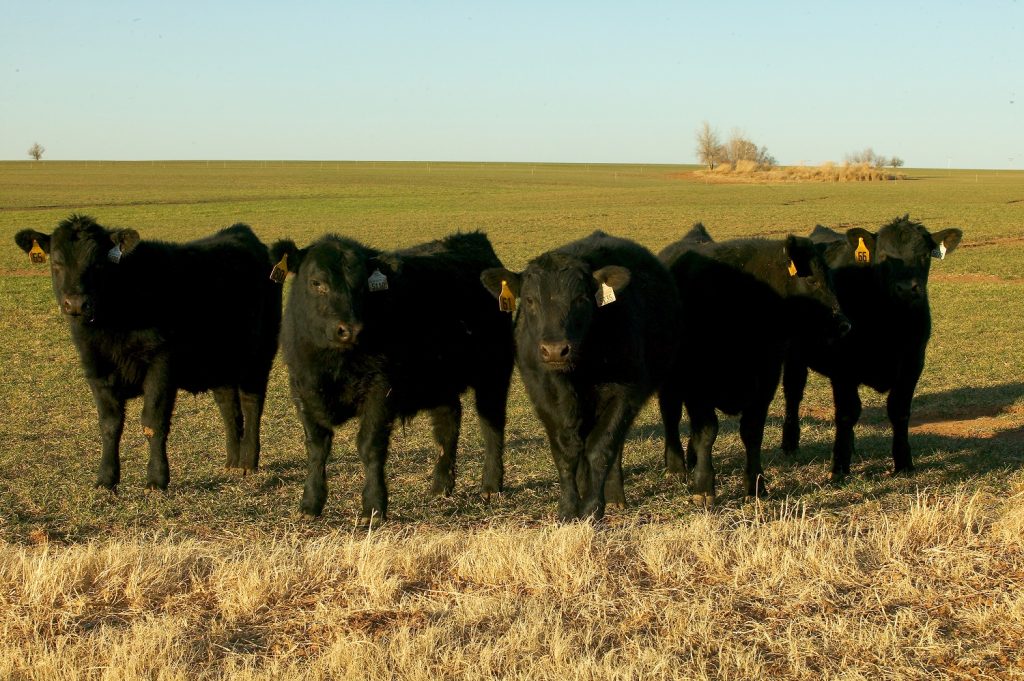
Weekly, Oklahoma State University Extension Beef Cattle Nutrition Specialist Paul Beck offers his expertise on the beef cattle industry. This is part of the weekly series known as the "Cow Calf Corner," published electronically by Dr. Derrell Peel, Mark Johnson, and Beck. Today, he discusses how many calves can be grazed when wheat pasture is limited.
Last week, I discussed that we can increase the performance of growing calves on wheat pasture by providing a small amount of a concentrate supplement carrying an ionophore and minerals that are deficient in wheat pasture (https://extension.okstate.edu/programs/beef-extension/cow-calf-corner-the-newsletter-archives/2024/december-16-2024.html). In many areas of Oklahoma and the Southern Plains, wheat pasture this year has yielded much less than our normal expectations, but there are economic incentives to graze as many calves on pasture as possible this winter. Additionally, there are several options available to offset the reduced forage allowance of wheat pastures this winter and maintain the expected gains of grazing calves.
This supplementation program can also be used to "stretch" wheat forage when pastures were 60 to 80% of normal, allowing for "normal" stocking rates. Recently researchers at OSU (McNeill and others, 2020, Journal of Animal Science, Volume 98, https://doi.org/10.1093/jas/skz397.023) stocked steers on wheat pastures at forage allowances of either 1.5 or 3 pounds of forage DM/pound of steer bodyweight with or without 3.3 pounds per day of a wheat middling/soyhull feed blend. Steers on the higher forage allowance (3.0 lbs forage DM/ lb steer bodyweight) with supplementation gained the most (3.8 lbs/day) while unsupplemented steers on the higher forage allowance gained 3.6 lbs/day. Supplementation increased gains more for steers at the lower forage allowance where gains of steers stocked at forage allowance of 1.5 lbs forage DM/lb steer bodyweight increased from 2.5 to 3.2 lbs/day with supplementation.
There are some feeding options available to us when the economic conditions are right, but forage conditions are lacking. Feeding either limited concentrate supplementation or moderate quality roughage during the fall can increase production stability and thus improve economic stability of the wheat stocker enterprise.

Senate Pro Tem-Elect Lonnie Paxton, R-Tuttle, today announced the full list of committee assignments for the Oklahoma Senate for the upcoming 60th Legislature that begins in February.
Agriculture and Wildlife
Senator Casey Murdock, R-Felt, Chair
Senator Roland Pederson, R-Burlington, Vice Chair
Aerospace and Transportation
Senator Darcy Jech, R-Kingfisher, Chair
Senator Avery Frix, R-Muskogee, Vice Chair
Revenue and Taxation
Senator Dave Rader, R-Tulsa, Chair
Senator Dusty Deevers, R-Elgin, Vice Chair
Health and Human Services
Senator Paul Rosino, R-Oklahoma City, Chair
Senator Brenda Stanley, R-Midwest City, Vice Chair
Public Safety
Senator Darrell Weaver, R-Moore, Chair
Senator Warren Hamilton, R-McCurtain, Vice Chair
Education
Senator Adam Pugh, R-Edmond, Chair
Senator Ally Seifried, R-Claremore, Vice Chair
Retirement and Government Resources
Senator David Bullard, R-Durant, Chair
Senator Micheal Bergstrom, R-Adair, Vice Chair
Judiciary
Senator Brent Howard, R-Altus, Chair
Senator Todd Gollihare, R-Kellyville, Vice Chair
Economic Development, Workforce and Tourism
Senator Kristen Thompson, R-Edmond, Chair
Senator Bill Coleman, R-Ponca City, Vice Chair
Local and County Government
Senator Warren Hamilton, R-McCurtain, Chair
Senator George Burns, R-Pollard, Vice Chair
Rules
Senator Adam Pugh, R-Edmond, Chair
Senator Dave Rader, R-Tulsa, Vice Chair
Appropriations
Senator Chuck Hall, R-Perry, Chair
Senator John Haste, R-Broken Arrow, Vice Chair
Business and Insurance
Senator Bill Coleman, R-Ponca City, Chair
Senator Jerry Alvord, R-Wilson, Vice Chair
Energy
Senator Grant Green, R-Wellston, Chair
Senator Tom Woods, R-Westville, Vice Chair
Technology and Telecommunications
Senator Ally Seifried, R-Claremore, Chair
Senator Darcy Jech, R-Kingfisher, Vice Chair
Administrative Rules
Senator Micheal Bergstrom, R-Adair, Chair
Senator Shane Jett, R-Shawnee, Vice Chair
Veterans and Military Affairs
Senator Brenda Stanley, R-Midwest City, Chair
Senator Tom Woods, R-Westville, Vice Chair
Rural Caucus
Senator Darcy Jech, R-Kingfisher, Chair
Appropriations Subcommittees
Health and Human Services
Senator Paul Rosino, R-Oklahoma City, Chair
Senator Brenda Stanley, R-Midwest City, Vice Chair
Natural Resources
Senator Kristen Thompson, R-Edmond, Chair
Senator Casey Murdock, R-Felt, Vice Chair
OMES
Senator Grant Green, R-Welston, Chair
Senator Jack Stewart, R-Yukon, Vice Chair
Select Agencies
Senator Roland Pederson, R-Burlington, Chair
Senator Dana Prieto, R-Tulsa, Vice Chair
Public Safety and Judiciary
Senator Todd Gollihare, R-Kellyville, Chair
Senator Brent Howard, R-Altus, Vice Chair
Education
Senator Adam Pugh, R-Edmond, Chair
Senator Ally Seifried, R-Claremore, Vice Chair
General Government and Transportation
Senator Tom Woods, R-Westville, Chair
Senator Darrell Weaver, R-Moore, Vice Chair
A last-minute court of appeals ruling could put tens of thousands of farmers in legal crosshairs for failing to register their businesses with the federal government. Farmers who operate corporations and limited liability companies are once again required to file Beneficial Ownership Information with the U.S. Department of Treasury's Financial Crimes Enforcement Network (FinCEN) or face stiff fines or jail time.
A federal district court ruled earlier in December to halt the requirement, but today the United States Court of Appeals for the Fifth Circuit lifted the injunction, meaning a Jan. 1, 2025 deadline is back in effect. Analysis from AFBF economists shows more than 230,000 farms are required to file, but as of October, less than 11% of all eligible businesses nationwide had done so.
"Farm Bureau is very disappointed in the court of appeals decision to reinstate the Jan. 1 filing deadline," said AFBF President Zippy Duvall. "It's clear than many farmers aren't aware of the filing requirement because of lack of guidance and the government's poor public outreach.
"Farmers were given a reprieve from the filing deadline, but now, just two days before the holidays, when many families take a much-needed break from work responsibilities, the courts have reinstated the requirement. Unfortunately, thousands of farmers may unknowingly miss the deadline, putting their businesses at risk. We urge the government to grant an extension so more family businesses can comply with the rule."
Businesses that fail to file, or do not update records when needed, could face criminal fines up to $10,000 and additional civil penalties of up to $591 per day. Failure to file could also lead to felony charges and up to two years in prison.
Farmers are encouraged to contact an accountant or attorney if they are unsure whether they are required to file their business's BOI with FinCEN.
Read a Market Intel on the Beneficial Ownership Information requirement here.
In a big win for corn demand, a settlement panel struck down Mexico's ban on genetically modified corn late Friday. And as Congress worked to avoid a shutdown, it also gave corn growers a bit of good news heading into Christmas. Hear the updates – and where we're focusing next – from NCGA President Ken Hartman in this short episode of the CobCast.
Angus Foundation celebrates support for Fund the Future Campaign in 2024.
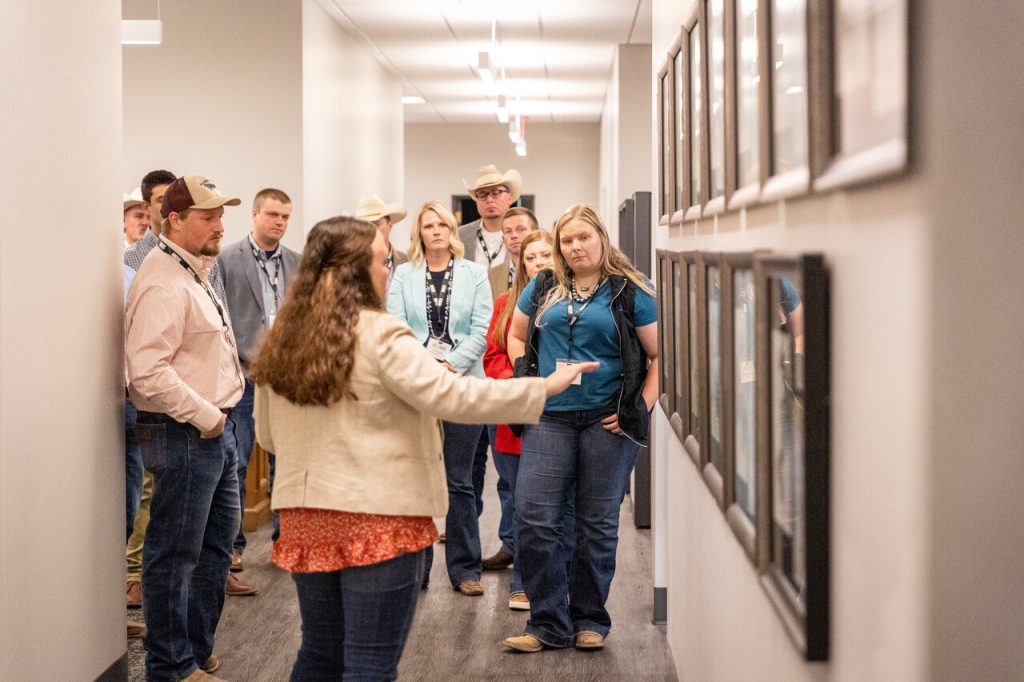
At the heart of the Angus family, there's a deep-rooted commitment to helping create a lasting impact by building something that will support the breed for generations to come. It's this spirit of advocating for the future of education, youth and research that drives the Fund the Future campaign.
Thanks to a dedicated group of 16 Angus breeders, in the 2024 fiscal year, the Fund the Future campaign garnered $36,400.00 for the Angus Fund, helping to support the Foundation's mission and events like Beef Leaders Institute and Young Cattlemen's Conference.
The Angus Foundation is excited for the year ahead and the opportunities it brings. What makes 2025 even more special is a generous matching opportunity. In the new year, an anonymous donor has pledged to match the first $30,000 raised, effectively doubling the impact of every dollar donated.
"I'm thrilled to watch the campaign expand and see more breeders getting involved in 2025," says Jaclyn Boester, Angus Foundation executive director. "The simplicity of participation has sparked excitement, with breeders eager to contribute, knowing their donations are making an impact on the Angus breed.
The Angus Foundation would like to thank the following group of Angus breeders for their support of the Fund the Future campaign in 2024:
· APS Angus, Taylorsville, KY
· Bear Mountain Angus Ranch, Palisade, NE
· Brumfield Angus Farms, Sawyer, MI
· Deer Valley Farm, Fayetteville, TN
· Dyar Angus, Crossville, AL
· Frank/Hazelrigg Cattle Co., Wentzville, MO
· Heritage Farm, Shelbyville, KY
· Knott's Landing Angus, Latto, IN
· Marda Angus Farms, Lodi, WI
· Mead Farms, Barnett, MO
· Oakdale Farms, Rome, GA
· Pollard Farms LLC, Enid, OK
· Smithland Angus, Russell Springs, KY
· Stevenson Down T Ranch, White Sulphur Springs, MT
· Sydenstricker Genetics, Mexico, MO
· Texas Angus Association
The Fund the Future Campaign offers breeders a unique opportunity to give back through their annual production sales, consignment sales, bull sales or even private treaty opportunities. Whether it's a live animal or a genetic offering, the choice is yours.
By consigning a lot to this campaign, you're helping fund educational programs like Angus University and BEEF Academy; youth leadership development events like the Leaders Engaged in Angus Development (LEAD) and Raising the Bar Conferences; and helping to fund research that advances the beef industry and Angus breed.
"As we conclude our third year of the campaign, we are excited to have repeated breeders participating," says Boester. "Their willingness to continue to support the campaign is incredible and very much appreciated as we work to secure resources for the Angus Fund. Through those generous donations we can continue funding the three pillars of our mission"
Together, we can ensure that the future of the Angus breed remains bright, vibrant and full of promise in the new year!
For more information on the Fund the Future campaign visit www.angus.org/foundation/get-involved/giving-programs/fund-the-future or contact Jaclyn Boester, Angus Foundation executive director, at JBoester@Angus.org.
About the Angus Foundation
Established as a 501(c)(3) organization in 1980, the Angus Foundation remains focused on its mission to support Angus education, youth, and research. The organization has distributed more than $4.9 million in youth scholarships since 1998 and has also invested more than $1.4 million in beef cattle research in the past decade.
For more information, contact the Angus Foundation at 816-383-5100.
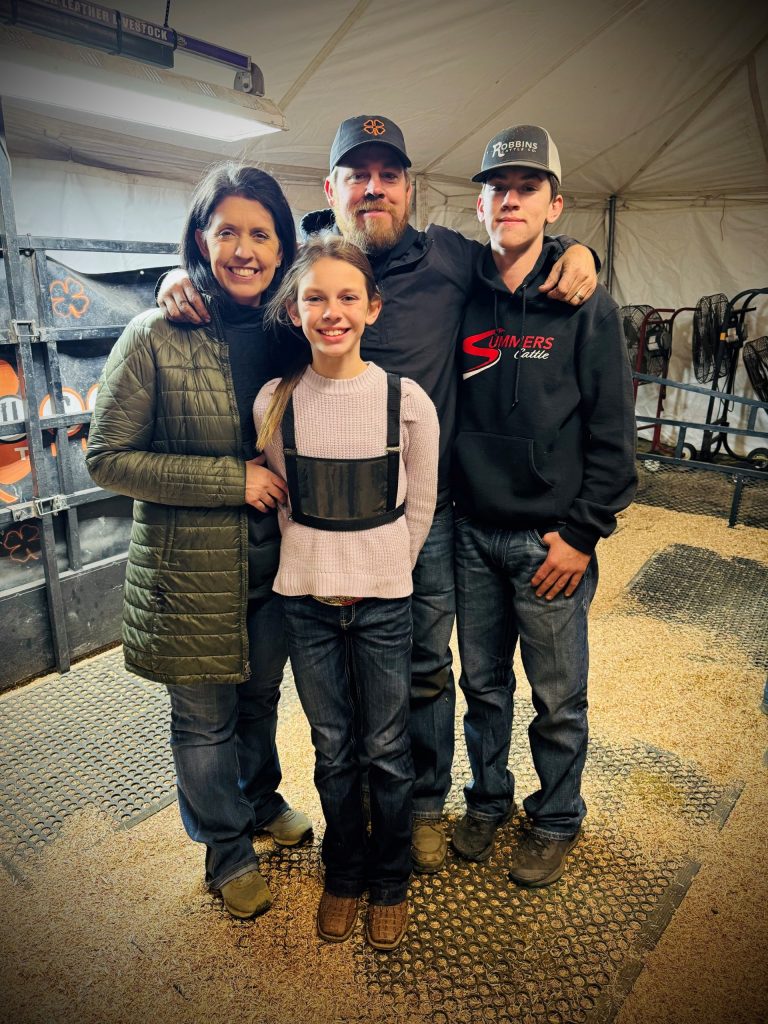
"The Most Wonderful Time of the Year"
Christmastime and the holiday season certainly can be the most wonderful time of the year. People and businesses take a moment to pause from work and deadlines and reflect on their blessings, spending extra hours with both family and friends. For the majority of the population in the United States the days are filled with presents and food and smiles and laughter. We are so incredibly fortunate to live here in the United States and more specifically in Oklahoma. We have the safest, most abundant, and most affordable food supply in the world thanks to our farmers and ranchers who work each and every day to provide us with food and fiber. We also have the safest place to enjoy our holidays thanks to current active-duty members of our military and veterans who know that the freedom we enjoy does not come for free. I encourage all of us to take a moment and be thankful during this holiday season for those farmers and ranchers who still wake up to milk cows, check the health of livestock, and keep trucks rolling up and down the road on Christmas day and every day of the year. Farming is a profession of hope and of faith. I am hopeful that during this holiday time, you also remember the true meaning of the Christmas season. The birth of Jesus reminds us that he came to give us love, hope, and joy. For those of us who spend many of our days in a barn, it seems fitting that our Savior joined us here on earth in a manger and was quickly joined by shepherds from nearby fields. During this holiday season, my family and I wish you and yours many blessings and look forward to a prosperous New Year!
American Farm Bureau Federation President Zippy Duvall commented today on the election of Sen. Amy Klobuchar to be the next ranking member of the Senate Agriculture Committee.
"Farm Bureau congratulates Sen. Amy Klobuchar on her new role as ranking member of the Senate Agriculture Committee. She understands the importance of American agriculture and is dedicated to listening to the needs of farmers and ranchers, not just in her state, but across the country.
"She's demonstrated a willingness to reach across the aisle, and that type of bipartisan leadership will be needed to pass the next farm bill. Sen. Klobuchar also has a close working relationship with farmers and Farm Bureau leaders in Minnesota, and she takes the time to truly understand constituents' concerns. We look forward to working with her and all members of the Senate Agriculture Committee to address the many challenges facing farmers and ranchers today, including passing a modernized farm bill that provides risk management support, investments in conservation, and advancements in research and education."
Today, House Speaker-Elect Kyle Hilbert announced the following appointments to committees for the 60th Legislature:
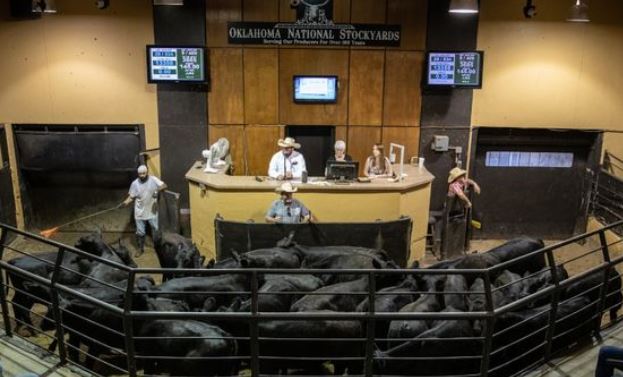
Dr. Derrell Peel, Oklahoma State University Extension Livestock Marketing Specialist, offers his economic analysis of the beef cattle industry as part of the weekly series known as the "Cow Calf Corner," published electronically by Dr. Peel, Mark Johnson, and Paul Beck. Today, Dr. Peel discusses near-record cattle prices at the end of 2024.
Feeder auction trading is finished for the year with new record prices in 2024. Combined Oklahoma auction prices for 500-pound steers (M/L, Number 1) averaged $320.14/cwt. with the highest weekly price of $360.99/cwt in early December. The average price this year was up 18.6 percent year over year and was up 62.6 percent over 2022 levels. The 2024 average price exceeded the previous record high in 2015 by 21.3 percent.
The average price of 800-pound steers (M/L, Number 1) this year was $247.43.cwt, up 14.7 percent year over year and up 50.5 percent over 2022 levels. The highest weekly price for these big feeder steers was $264.74/cwt. in early July and only slightly below that in December. The 2024 average price exceeded the previous annual record in 2015 by 21.6 percent.
Just a few more fed cattle are expected to trade to wrap up December. The 5-Market average fed price for 50 weeks through mid-December was $186.66/cwt., up six percent year over year and up 29.2 percent over 2022 fed prices. The 2024 average price is 21.3 percent higher than the previous high price in 2014. The highest weekly fed price was $197.09/cwt. in early July and is expected to end the year with prices close to that level.
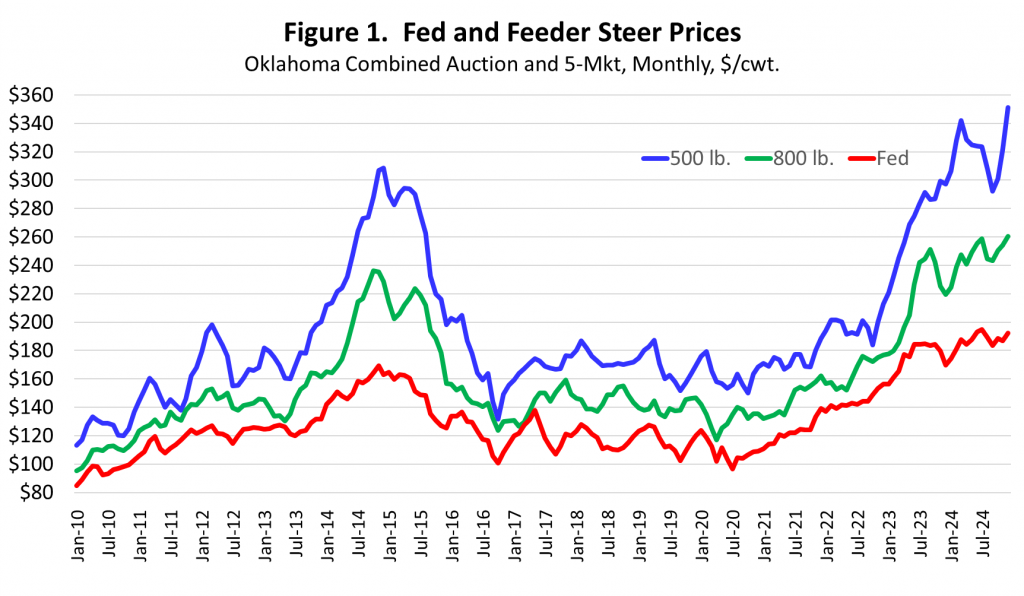
Figure 1 shows how feeder and fed cattle prices have developed over the past 15 years. The current high prices are reminiscent of the cyclical peak prices of 2014 – 2015 with both having been provoked by drought exaggerated herd liquidations. However, some very important differences mean that the current situation will play out in a much different fashion going forward. The herd rebuild in 2014 – 2019 was sharp and rapid, leading to relatively brief high prices lasting about two years. This was possible because the pipeline of replacement heifers had been building prior to herd expansion. With two years of high prices already in 2023-2024, there is no indication that cyclically high prices will be as short lived as a decade ago. The pipeline of replacement heifers has continued to be depleted to this point. The cattle industry has shown no signs of attempting to rebuild the herd yet and the process will be slower when it does happen. The peak prices in 2014-2015 coincided with increased heifer retention that squeezed feeder supplies to the tightest levels. Since no heifer retention has occurred yet, the highest prices are ahead, possibly in 2025 but more likely beyond.
The inventory status of the cattle industry will be revealed in the annual Cattle report from USDA-NASS in late January. Many cattle producers will be receiving the annual inventory survey shortly. Producers are encouraged to complete the survey to provide good information for the industry. Reliable, accurate responses from producers is the only way for all producers, the industry and analysts to have timely and comprehensive information in order to plan and manage for the coming months and years.
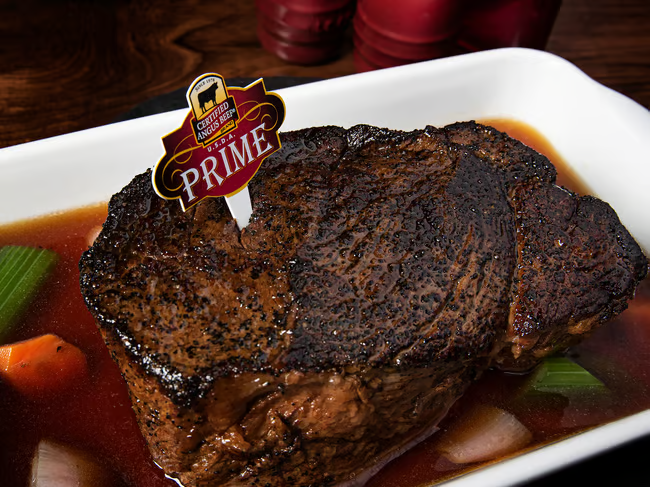
The cattle market's been up and so has Prime beef production. Thanks to genetic improvements and management practices, beef carcass quality has been on the rise. We last saw a similar upswing during the 2020 pandemic, when supply chain disruptions caused extended feeding periods. In 2024, however, economic factors—rather than disruptions—have led to longer feedyard stays and increased carcass weights. What's days-on-feed got to do with Prime production? More marbling.
Though fewer cattle were processed in 2024, heavier weights and a higher percentage of Prime carcasses resulted in record tonnage.
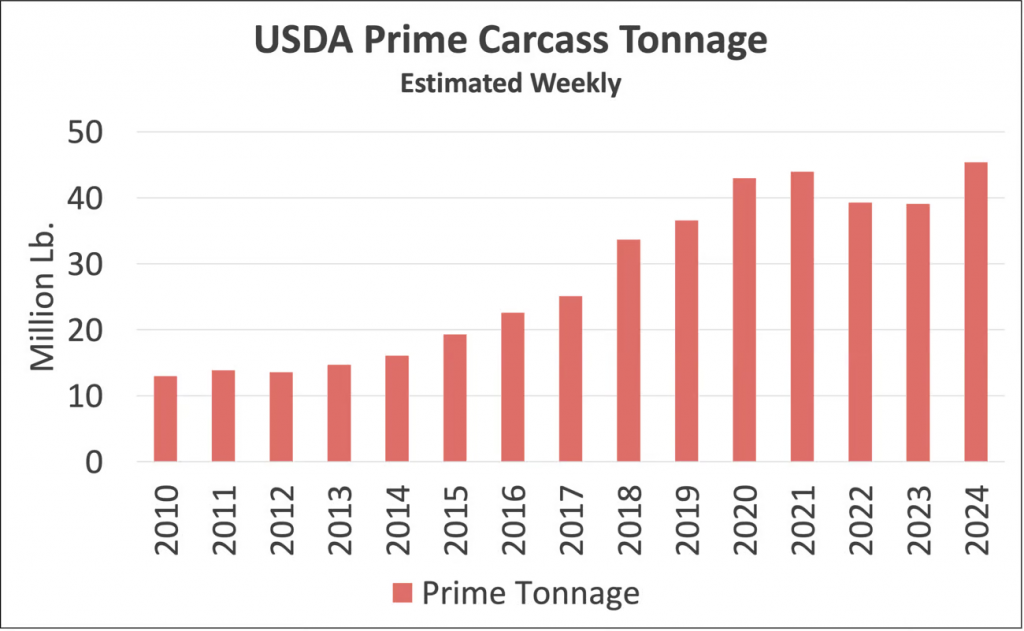
Looking ahead to 2025, Certified Angus Beef's Paul Dykstra says we can expect to see more of the same: tighter cattle supplies and low grain prices. This will likely continue to benefit carcass quality. This past year, USDA Prime beef production hit a record 10.5% and could push a half percent higher in 2025. That also means increased CAB supply. The CAB acceptance rate, already at a record 37%, could also go up.
U.S. Department of Agriculture (USDA) Secretary Tom Vilsack today unveiled a new program to support American wood processing facilities. USDA Rural Development is partnering with USDA Forest Service to provide funding through the new Timber Production Expansion Guaranteed Loan Program (TPEP). The program will support the processing and utilization of wood products from National Forest System lands to improve forest health and reduce the risk posed by wildfires, insects, and disease and the detrimental impacts they have on communities and critical infrastructure.
This program is funded through President Biden's historic Bipartisan Infrastructure Law. It also reflects the goals of the President's Investing in America agenda to rebuild the economy from the bottom up and middle out, and to strengthen the nation's infrastructure.
"Rural America is the backbone of our country, providing the everyday essentials we all depend on," Secretary Vilsack said. "Under the leadership of the Biden-Harris Administration, USDA Rural Development is partnering with the Forest Service to support timber industry innovations that improve forest health and reduce wildfire threats while creating good-paying jobs for people in rural, forest-dependent communities."
Through TPEP, USDA Rural Development and the Forest Service will make $220 million available in loan guarantees for borrowers to establish, reopen, retrofit, expand, or improve wood processing facilities, sawmills and paper mills, that use trees harvested from federal or Tribal lands. The program is designed to manage up to 20 million acres of national forests managed by USDA Forest Service and complement the Forest Service's 10-year Wildfire Crisis Strategy.
USDA Rural Development will begin accepting TPEP applications on December 26, 2024, with a maximum loan amount of $25 million. USDA encourages applicants to use the TPEP Dashboard to find areas the Forest Service has identified as high or very high priority areas to address the risk of wildfires and insect infestations or disease, which have caused or have the potential to cause significant damage.
Applicants may learn more through the upcoming TPEP webinar, scheduled for January 6, 2025 at 1:00 p.m. ET.
USDA encourages applicants to consider projects that will advance the following key priorities:
Applications must be submitted electronically using Grants.gov and will be accepted until funds are expended.
Additional information will be available in the Dec. 26, 2024, Federal Register. To learn more about investment resources for rural areas, visit www.rd.usda.gov or contact the nearest USDA Rural Development state office.
USDA Rural Development provides loans and grants to help expand economic opportunities, create jobs and improve the quality of life for millions of Americans in rural areas. This assistance supports infrastructure improvements; business development; housing; community facilities such as schools, public safety and health care; and high-speed internet access in rural, Tribal and high-poverty areas. Visit the Rural Data Gateway to learn how and where these investments are impacting rural America. For more information, visit www.rd.usda.gov.
The USDA Forest Service has for more than 100 years brought people and communities together to answer the call of conservation. Grounded in world-class science and technology– and rooted in communities–the Forest Service connects people to nature and to each other. The Forest Service cares for shared natural resources in ways that promote lasting economic, ecological, and social vitality. The agency manages 193 million acres of public land, provides assistance to state and private landowners, and maintains the largest wildland fire and forestry research organizations in the world. The Forest Service also has either a direct or indirect role in stewardship of about 900 million forested acres within the U.S., of which over 130 million acres are urban forests where most Americans live.
USDA touches the lives of all Americans each day in so many positive ways. Under the Biden-Harris Administration, USDA is transforming America's food system with a greater focus on more resilient local and regional food production, fairer markets for all producers, ensuring access to safe, healthy and nutritious food in all communities, building new markets and streams of income for farmers and producers using climate-smart food and forestry practices, making historic investments in infrastructure and clean energy capabilities in rural America, and committing to equity across the Department by removing systemic barriers and building a workforce more representative of America. To learn more, visit www.usda.gov.
To subscribe to USDA Rural Development updates, visit the GovDelivery subscriber page.
| |||||||||||||||||||||||||||||||||||||||||||||||||||||||||||||||||||||||||||||||||||||||||||||||||||||||||||||||||||||||||||||||||||||||||||||||||||||||||||||||||||||||||||||||||||||||||||||||||||||||||||||||||||||||||||||||||||||||||
| |||||||||||||||||||||||||||||||||||||||||||||||||||||||||||||||||||||||||||||||||||||||||||||||||||||||||||||||||||||||||||||||||||||||||||||||||||||||||||||||||||||||||||||||||||||||||||||||||||||||||||||||||||||||||||||||||||||||||
|
| PORTFOLIO PERFORMANCE, DIVERSIFICATION, AND STRATEGY November portfolio yielded 3.43%, up from 2.97% last year, with a weighted average maturity of 951 days. Total assets under management of $15.66 billion, in comparison to $15.67 billion a year ago. Total portfolio contained 73.6% in U.S. Treasurys, 3.4% in U.S. government agencies, 13.9% in mortgage-backed securities, 8.0% money market mutual funds, 0.2% in certificates of deposit, and 0.9% in state bond issues and foreign bonds, comprising the balance of funds invested. |
 "Total portfolio yields are lower than current yields due to the laddered structure of the investments over a 3 year average." STATE TREASURER, TODD RUSS |
 |
TOTAL FUNDS INVESTED Funds available for investment at market value include the State Treasurer's investments at $12,386,183,601 and State Agency balances in OK Invest at $3,279,263,059, for a total of $15,665,446,660. |
| MARKET CONDITIONS |
Treasury yields declined in November. The 2-year and 10-year note yields fell -1.9% and -11.5% respectively to 4.15% and 4.17%. Yields moved down across the maturities as treasury security prices moved upward except for the one-year treasury bill. The yield curve, the visual relationship between yield rates and maturity dates, shifted downward at the end of the month. 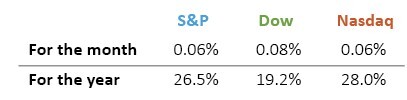 |
| Year to date, the S&P 500, Dow Jones, and Nasdaq have gained 26.5%, 19.2%, and 28.0% respectively. All three indexes rose in November. All three major indexes hit record highs in November. National elections and politics characterized the trades and movements across sectors in November. S&P Global writes the market, "digested the impact of potential future government policies, regulations and spending". The S&P 500 and the Dow Jones closed the month at record highs. |
| As of the publishing date of this report, the market had a 25-basis point rate cut at the FOMC's December 18th meeting Investors are pricing in their expectations to treasury security yields and prices, which move inversely, given another quarter point rate cut because of the normalizing statistics on labor and inflation data in line with expectations. |
ECONOMIC DEVELOPMENTS |
| In November the headline unemployment rate rose 0.1% to 4.2%. Non-farm payrolls added 227,000 jobs to the economy. The growth came from the depressed results of the October survey, affected by strikes and hurricane effects. The health care and social services and leisure and hospitality sectors contributed the most to November job growth. The October and September jobs reports were revised upward by a combined 56,000 jobs per the U.S. Bureau of Labor Statistics. The report signals balance in the labor market between supply and demand. |
| The consumer price index (CPI) rose to 2.7% for the year ending in November. Core CPI, which excludes volatile food and energy prices, increased 3.3% over the same period. Core personal consumption expenditures (PCE), the Fed's preferred measure of inflation increased 2.8% over 12 months ending in October. The producer price index (PPI) increased 0.4% in November. The index for final demand goods increased 0.7% in November accounting for over eighty percent of the rise in PPI. The price index for chicken eggs jumped 54.6%, the largest contribution to the rise in prices for final demand goods. |
| Retail sales adjusted for seasonal variation rose 0.7% in November and was revised up to 0.5% for October. For the year ended in November, retail sales were up 3.8%. This month's growth came in above expectations of 0.5% per The Wall Street Journal. The Census Bureau, who collects this data, writes that, "motor vehicle and parts dealers were up 6.5% from last year, while Nonstore retailers were up 9.8% from November 2023". The robust advances in motor vehicle sales contributed the most to this month's growth. MarketWatch reports, "the surge in sales stemmed from auto dealers ratcheting up incentives to move vehicles piling up on their lots". Nonstore retailer sales growth represents online sales from internet retailers while continue to grow this holiday season. |
| In October, the National Association of Realtors reports existing home sales increased 3.4% to a seasonally adjusted annual rate of 3.96 million homes, up 2.9% from last year. Total housing inventory increased to 1.37 million, the equivalent of 4.2-month supply at the current sales pace. At the end of October, the average 30-year fixed rate mortgage was 6.72%, down 1.07% from a year ago. The median existing home sales price in October was $407,200 up 4.0% from last year. |
| The second estimate of third quarter gross domestic product (GDP) growth was 2.8% and was in line with expectations. This broad measure of economic activity was maintained over the quarter by healthy and persistent U.S. consumer spending. Compared to second quarter GDP growth of 3.0% (revised), Q3 saw slight drop in fixed investment and inventory growth. The Bureau of Economic Analysis reports, "the update primarily reflected upward revisions to private inventory investment and nonresidential fixed investment". |
| COLLATERALIZATION All funds under the control of this office requiring collateralization were secured at rates ranging from 100% to 110%, depending on the type of investment. |
Best regards,  TODD RUSS View full report. TL_November_2024.pdf |
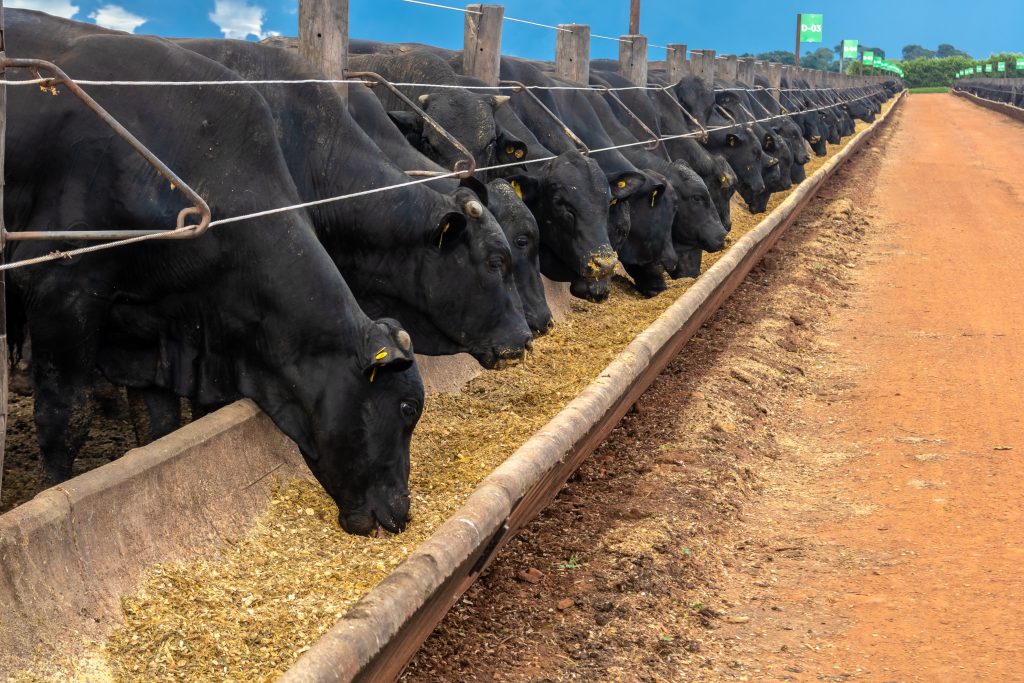
Senior Farm and Ranch Broadcaster Ron Hays talked to OSU Extension Livestock Market Economist Dr. Derrell Peel after the latest USDA Cattle of Feed Report was released on Friday afternoon, and
According to Dr. Peel, November placements were down 3.7%, marketings were down 1.4%, which equates to the total cattle on feed number being fractionally less than 0.5% less than a year ago.
"This report was almost right on the nose with the pre-report expectations, so certainly no surprises," Dr. Peel said. "It shouldn't provoke any market response."
He noted that the marketing numbers were slightly lower than a year ago, but with one less business day in November, the adjusted average marketings for the month were just a bit higher than a year ago.
"We've continued to market cattle timely, we know carcass weights are way up, and there are times in our history when that indicated that feedlots were getting backed up or not marketing in a timely fashion, but that is certainly not true, now. We are doing this on purpose because of current market conditions," Dr. Peel said.
About those market conditions, he said that numbers are tight so feedlots are doing what they can to maintain their inventories. Consistently strong feeder markets have brought more feeders to town which helps them continue to maintain their numbers.
He estimates that this year's total beef production will be slightly down from a year ago, while USDA and some others have it up meaning that however it changes, it won't likely be by much.
"Some of that is because we didn't drop steer and heifer slaughter as much as we expected," he explained. "Steer slaughter is up slightly, and heifer slaughter is down slightly, but the big change was the increase in carcass weights with the pounds offsetting that, so we are actually seeing an increase in fed beef production. However, we are seeing a tremendous decrease in the non-fed side with cow slaughter being down sharply this year. All of that has to be factored into the market."
Dr. Peel expects a smaller beef cow inventory in the late January Cattle Inventory Report. He said, "When you look at the heifers versus the cows, we brought in a very small inventory of bred heifers into 2024, and even though cow slaughter has dropped sharply this year, in terms of a net culling rate, it still isn't down to a range that would suggest that we are trying to expand the herd, and we don't have the heifers."
He warned that the feeder supply will likely continue to get tighter in the countryside, especially when herd rebuilding begins to lessen the number of heifers on feed.
The Beef Buzz is a regular feature heard on radio stations around the region on the Radio Oklahoma Ag Network and is a regular audio feature found on this website as well. Click on the LISTEN BAR for today's show and check out our archives for older Beef Buzz shows covering the gamut of the beef cattle industry today.
Attorney General Gentner Drummond's office has awarded grant funding totaling $18 million to provide support for every county sheriff's office in Oklahoma through a new program created by the state Legislature this year to enhance law enforcement services.
Grants ranging from $150,000 to $300,000 have been distributed to all 77 counties based on their total tangible property valuation. Funds will be used for sheriff's office operations including training, technology, equipment, capital improvements, stipends and more.
Drummond said the funds will positively impact all areas of the state.
"These grants will help strengthen public safety for all Oklahomans," he said. "I appreciate the work of the Oklahoma Sheriffs' Association and sheriff offices to ensure that every county has extra support this year."
Grant funding was established by House Bill 2914. Grant amounts by county are listed below.

Exactly a month after President-elect Donald Trump nominated his former policy advisor, Brooke Rollins, to serve as the next U.S. Department of Agriculture Secretary, he has nominated Stephen Vaden, a judge on the Court of International Trade who served as general counsel for USDA during his first administration, to be the department's deputy secretary. The American Soybean Association congratulates Vaden and appreciates his experience during the previous Trump administration, including implementing the 2018 Farm Bill and regulatory reform, his commitment to the field of law and background being part of and serving the needs of rural communities
ASA Chief Executive Officer Stephen Censky, who served in the position under then-Secretary of Agriculture Sonny Perdue, said of the announcement, "I had the great pleasure of working with Stephen during the last Trump administration. He is one of the smartest people I know, knows well the many services USDA provides, and has a key understanding of White House and other processes. I have no doubt that American agriculture will be very well served by Stephen when confirmed."
Vaden comes from a farm family, sharing the significance of being a farmer to his father—and tenets he thus developed for his own career—during 2017 testimony before the Senate Agriculture Committee in his confirmation hearing: "Throughout his life, [my father] also was a grocer, an investor, and a real estate developer. But it was the title of farmer of which he was most proud. I know this because he placed that title— "Farmer"—below his name on every check I ever saw him sign. The last three checks he ever signed hang on my wall, framed, as a reminder of the responsibilities I bear as principal deputy general counsel to ensure that America's producers are treated fairly, equitably, and in accordance with the law."
ASA looks forward to working with Rollins and Vaden on priorities ranging from farm bill to biotechnology, biofuels support to agricultural trade, among other issues that impact soy growers and agriculture at large.
Article provided by American Soybean Association.
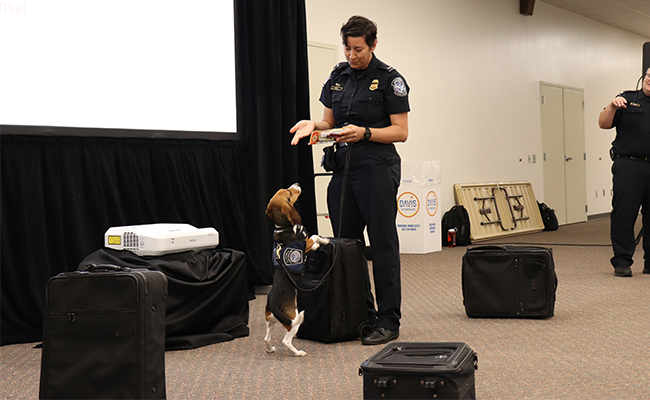
In this week's National Pork Producers Council (NPPC) Friday recap: House passes bill authorizing 'Beagle Brigade'; NPPC 'deeply disappointed' Congress didn't pass new farm bill; pork industry champions to serve as Ag Committees' new leaders; and NPPC seeks comment period extension on EPA air emission draft models. Take a deeper dive below.
What happened: Following unanimous Senate passage last month, the "Beagle Brigade Act" was approved on Wednesday by the House on a 381-20 vote. It authorizes the U.S. Department of Agriculture's National Detector Dog Training Center, which trains beagles and other dogs to detect at U.S. ports of entry food, plants, and other host material that can carry foreign pests and diseases. The bill now goes to President Biden to be signed into law.
NPPC strongly supported the "Beagle Brigade Act" to permanently authorize the training center, which has been operating under USDA's general authority over animal and plant health, with funding through user fees.
U.S. Customs and Border Protection (CBP) uses dogs at ports of entry to spot contraband fruits, vegetables, and meat products in international passenger baggage, mailed packages, and vehicles entering the United States. On a typical day, CBP seizes more than 4,600 plants, meat, and animal byproducts that must be quarantined and, in most cases, destroyed.
In addition to authorizing and funding the dog training center, the legislation also requires USDA's Animal and Plant Health Inspection Service (APHIS) to report to Congress in one year on current and emerging threats to domestic agricultural and natural resources from foreign pests and diseases; improvements needed in federal programs to minimize disease threats, including better coordination among APHIS, CBP, and other federal agencies; and recommendations for strengthening the capabilities of the training center in protecting against foreign pests and diseases.
NPPC's take: NPPC strongly supports the "Beagle Brigade Act," which funds and provides congressional authorization for the Newnan, Georgia, dog training center. "American agriculture relies on the Beagle Brigade to prevent the introduction of foreign animal and plant diseases that would cripple our food supply," said Lori Stevermer, NPPC president and pork producer from Easton, Minnesota. "For the pork industry, it's the first line of defense for keeping threats from foreign animal diseases, such as African swine fever, out of the United States."
Why it matters: Foreign diseases and pests carried into the United States cost the country $138 billion annually in economic and environmental losses, according to USDA. NPPC is particularly concerned about African swine fever reaching the U.S. mainland. In July 2021, the pig-only disease was detected on the Caribbean island of Hispaniola, just 750 miles from U.S. shores.
Article and audio provided by National Pork Producers Council.
Maci Carter caught up with Nick Luett, lead precision ag specialist for the Rural Community Insurance Services (RCIS). RCIS offers crop insurance in all fifty states, covering 26 million acres of corn and soybeans across the country.
"I've been helping a lot with some of the newly planted winter wheat down in Oklahoma, making sure that we can use precision ag on that," Luett said. "And making sure that we have the right acreage for the coverage as well. I think that is the biggest thing in my role here at RCIS is making sure that we can adequately insure what you actually plant to save you some premium dollars and help build your APH."
RCIS is committed to utilizing precision agriculture data in the crop insurance space. "One of the big benefits for a grower is if I have a loss, I have a plant map a harvest map, and a calibration done to RMA standards, I can now use it as a hard record. I don't have to have bin measurements, element sheets, or feed records," Luett explained.
He told of a producer in Illinois who bought 75 percent coverage wheat using precision ag acres. Over ten years, an $11 per acre increase in guarantees was observed.
Precision ag allows farmers to utilize data to make better economic decisions by knowing exactly which types of nitrogen, herbicides, and crop varieties to put in precise locations. More information can be found at RCIS.com or by reaching out to a local RCIS crop insurance agent.
After nearly four decades as an economist at NMPF, Dr. Peter Vitaliano is retiring at the end of the year. He predicts a bright future for the industry.
"The U.S. dairy industry produces a huge variety of great products, for which consumption is continuing to grow," Vitaliano said in a Dairy Defined Podcast. "It has very progressive farms and farmers, and great leadership amongst our organizations, and great organizations. That has been the case when I came, it's the case now, and it's going to be the case for many years in the future."
Vitaliano, NMPF's longtime chief economist, reflects on the evolution of policy challenges for the dairy industry in the podcast, explaining how shifts in the industry have created greater unity – and a more effective NMPF. For more of the Dairy Defined podcast, you can find and subscribe to the podcast on Apple Podcasts and Spotify under the podcast name "Dairy Defined."
Article provided by the National Milk Producers Federation.

Applications are now open for USDA's new $2 billion Marketing Assistance for Specialty Crops (MASC) program. This initiative, administered by the Farm Service Agency (FSA), aims to help specialty crop producers manage heightened marketing costs and expand both current and new markets. However, the program's structure does not require funds to be directed toward marketing-specific activities, functioning instead as general financial assistance for specialty crop farmers.
The announcement comes as specialty crop farmers continue to navigate economic challenges including elevated input and labor costs, volatile prices, growing global competition and uncertain regulatory and trade dynamics. Today, we explore the MASC program, including how it seeks to support growers and what farmers can expect as they navigate the application process.
The Unique Challenges of Specialty Crop Production
Specialty crops — including fruits, vegetables, tree nuts, nursery crops, and herbs — are a vital part of American agriculture. These crops not only provide nutritious food that families worldwide depend on for a balanced diet; through ornamental plants they also enrich living spaces and enhance the overall quality of life, making them integral to both health and well-being. According to the 2022 Census of Agriculture, over 239,000 specialty crop farms produced more than $115 billion in agriculture sales, supporting millions of jobs and generating billions more in downstream economic activity.
Despite their significance, the farmers who grow specialty crops face unique challenges that set them apart from other commodity producers. These crops are highly perishable and prone to damage, necessitating specialized equipment for harvesting, handling, storage and transportation. In many cases, the delicate nature of these crops requires significant manual labor, as automation options remain limited compared to other agricultural sectors. According to the most recent Agricultural Resource Management Survey, the average specialty crop farm spent over $142,000 on labor — an astounding 553% higher than the $22,000 labor expenditure reported by the average farm operation across all commodities. USDA data further highlights that labor alone accounts for nearly 45% of specialty crop operations' variable costs, far exceeding the 9% average for other farming sectors. Additionally, specialty crop producers spend more on repairs and machine hire — 50% and 232% higher, respectively — due to the highly specialized equipment required to manage these high-value crops. On top of this, elevated prices and regulatory barriers for specialty fertilizer and pesticide products add to the financial burden. These cost dynamics, compounded by frequently burdensome state regulatory systems and fewer risk management options, often place U.S. specialty crop producers at a price disadvantage compared to their foreign-produced counterparts.
USDA intends for the MASC program to support specialty crop farmers in overcoming these challenges, with the added benefit of promoting domestic fruit and vegetable consumption. MASC is funded by the Commodity Credit Corporation, whose charter under Section 5(e) grants USDA broad authority to stabilize agricultural markets and incomes through financial assistance, marketing initiatives and other strategic interventions. While MASC is described as providing relief toward marketing expenses, the program does not police whether funds allocated to farmers are spent specifically on marketing activities, functioning instead as general financial support for specialty crop farmers.
Key Features of the Marketing Assistance for Specialty Crops Program
Eligibility
To participate in MASC, producers must:
Eligible specialty crops include fruits, vegetables, tree nuts, nursery crops, honey, floriculture, hops, maple sap, tea, spices, herbs, Christmas trees, floriculture, turfgrass, mushrooms, vegetable seed and grass seed. Value-added products and non-specialty crops such as grains and forage are excluded.
Payments are capped at $125,000 per producer, and if demand exceeds the allocated $2 billion, payments may be prorated. Final payment factors will be determined after the application period closes.
Payment Calculations and Examples
MASC payments are based on the producer's eligible sales from 2023 or 2024, or projected sales for 2025 for new producers. Eligible sales include only sales of commercially marketed raw specialty crops grown in the United States by the farmer. The portion of sales derived from adding value to a specialty crop, such as sorting, processing or packaging, is not included in a producer's eligible sales. For example, the eligible sales for a farmer who grows cucumbers and sells raw cucumbers and pickles at a local market would be the sales of raw cucumbers sold at the market plus the raw value of the cucumbers used in the pickles - not the value of pickles sold. The raw value would also be the value of the crop at the packinghouse door – before it is processed and packaged for the grocery store. Total sales will also include crop insurance indemnities and payments from the Noninsured Crop Disaster Assistance Program (NAP).
USDA has provided the option to use marketing years 2023 or 2024 as the basis for 2025 sales calculations, offering farmers greater flexibility, particularly those who may have faced reduced sales due to natural disasters, pests or other unforeseen challenges.
MASC payments are calculated based on a tiered system that divides reported specialty crop sales into five sales ranges (Table 1). Each range has a corresponding payment factor, with smaller farms (those with lower sales) receiving larger payment percentages. This is intended to reflect the higher variable costs smaller farms face relative to their sales, as they lack the economies of scale that reduce costs for larger operations. Payment factors decrease progressively for higher sales ranges but are applied incrementally, similar to income tax brackets. For instance, an operation with $450,000 in sales would have the first $49,999 (from sales range one) multiplied by payment factor A, the next $50,000 (sales range two) multiplied by payment factor B and the remaining $350,001 (sales range three) multiplied by payment factor C to calculate the farmer's MASC payment.

USDA will determine these payment factors after the application period closes, based on the total number of eligible applications and reported sales. If more producers apply, the payment factors will be adjusted downward to ensure the $2 billion funding cap is not exceeded. The USDA-provided estimated example payment factors by estimated numbers of applicants are presented in Table 2 below.

USDA imposes several payment limitations within the MASC program. Producers with an average adjusted gross income (AGI) exceeding $900,000 for the years 2021, 2022 and 2023 are not eligible for payments unless at least 75% of their AGI is derived from farming, ranching or forestry operations. Additionally, MASC payments are capped at $125,000 per person or legal entity. Payments to legal entities are attributed to individual members based on their ownership shares, with reductions applied proportionally for members who are ineligible due to AGI limits or other criteria. Payments made to Indian tribes or tribal organizations are exempt from the $125,000 payment cap. The following graph illustrates example MASC payments based on USDA's application estimations, using randomly selected specialty crop sales values. These calculations assume all producers meet the program's eligibility requirements, including the 75% AGI farm income threshold.

Special Cases
How to Apply
Applications, including required forms and documentation, must be submitted within 29 days of the program's publication in the Federal Register (by Jan. 8). Eligible farmers should complete the following steps:
Conclusion
The MASC program aims to support specialty crop producers by partially mitigating marketing costs and fostering the expansion of domestic and new markets. The program provides payments based on reported or projected sales of raw, commercially marketed crops, with payment factors adjusted to prioritize smaller producers and reflect economies of scale. Applications, including required forms and documentation, may be submitted through Jan. 8, 2025 – 29 days after the Notice of Funds Availability was published in the Federal Register.
Specialty crops play a critical role in providing nutritious, fresh food and enhanced living environments for American consumers. Programs like MASC can help ensure these farmers, often facing elevated labor costs and other unique challenges, remain competitive and resilient in an increasingly challenging U.S. agricultural landscape.
The article was written by Daniel Munch, an economist, and provided by AFBF.
Congressman Frank Lucas (OK-03) released the following statement after voting in favor of the American Relief Act.
"Extending government funding into early next year and the Farm Bill till September of 2025 allows Republicans and President-elect Trump to get to work on delivering results for the American people. Today's vote provides economic assistance to American farmers and communities impacted by severe weather, extends the Farm Bill's authorities, and keeps the government open."
BACKGROUND:
The American Relief Act of 2025 passed the House 366-34-1. The measure:
Congress passed shortly after the midnight deadline for a government shutdown a continuing resolution that includes provisions important to soy farmers, among them a farm bill extension and both disaster and economic assistance. Inflation, historically high input prices, falling commodity prices, and devastating storms have led to a lengthening rough patch for many U.S. farmers, including those who grow soy.
Caleb Ragland, president of the American Soybean Association and soy farmer from Kentucky, said, "Congress has come through with a bipartisan solution that not only keeps our government open but keeps our farms going. While we of course had our hopes set on a new five-year farm bill in 2024, we are grateful for this one-year extension and will urge Congress to pass an improved farm bill in the new year. And, having economic and disaster aid in this critical piece—at a critical time for farm families—is also very appreciated, along with other provisions. We thank leadership for their ongoing and late-night efforts."
Once signed by President Biden, the bill will keep government funding in place through March 14, 2025, and extend the Agriculture Improvement Act of 2018 for one more year through September 30, 2025. Additionally, the package includes approximately $21 billion in disaster assistance and $10 billion in economic assistance for farmers who have faced recent challenges. (statement Courtesy of ASA)
American Farmland Trust was pleased to see continued funding for the federal government and much-needed disaster relief and producer economic assistance included in the year-end package passed today by Congress. However, Congress's failure to transfer the remaining Inflation Reduction Act (IRA) conservation dollars into the Farm Bill as part of this legislation represents a critical missed opportunity to invest in the long-term viability of our nation's farmers and ranchers.
Conservation programs are popular, oversubscribed, and key to helping producers remain profitable and build resilience to extreme weather. For instance, cover crops and reduced tillage can lead to higher yields and reduce the risk of loss to drought and flooding, which benefits both producers and taxpayers. Conservation programs also protect irreplaceable working farmland and ranchland and support reinvestment in farm businesses. This is essential at a time when our nation is losing 2,000 agricultural acres a day.
By transferring the IRA dollars to build Farm Bill conservation baseline, Congress could have ensured additional conservation funding to meet farmer and rancher demand. Instead, as a result of its inaction, thousands of farmers and ranchers will be denied the ability to enhance their profit margins, protect their soil and land, and improve water quality for all of us. American Farmland Trust is grateful for the tireless efforts of Agriculture Committee leadership and other members of Congress to include the conservation funding in the year-end package. And we look forward to working with the new Congress to strengthen these programs and to ensure we seize the opportunity to transfer remaining IRA dollars into the Farm Bill for the sake of future generations. (Statement Courtesy of Farmland.org
On Saturday morning, after a hectic week of negotiations, Congress passed an end-of-year bill that includes a continuing resolution to temporarily extend current levels of federal funding until March to avoid a government shutdown. The legislation also includes an additional extension of the 2018 Farm Bill, disaster relief, and economic assistance for struggling producers. NACD called on Congress to provide much-needed relief for America's producers and communities damaged by recent natural disasters, and we appreciate that these priorities were included in the final bill. Congress must pass these critical bills in a much timelier manner, without the imminent threat of shutting down critical government funding and programs. NACD and the conservation community are very disappointed that the legislative package does not include Inflation Reduction Act (IRA) conservation funding.
"NACD is deeply disappointed that the end-of-year bill does not include a bipartisan provision to integrate remaining IRA conservation funding," said NACD President Kim LaFleur. "The failure to include conservation funding in an end-of-year bill forgoes an incredible opportunity, and unfortunately reflects Congress' increasing inability to negotiate and pass bipartisan, common-sense solutions. We appreciate those lawmakers who prioritized this request and look forward to working with the House and Senate agriculture committees and congressional leadership to quickly pass a new farm bill that includes this priority." (statement courtesy of NADCNET)
The Agricultural Retailers Association (ARA) President & CEO Daren Coppock released the following statement thanking Congress for averting a government shutdown, extending the farm bill, and securing relief to America's farm community:
"ARA applauds efforts by Congress to pass a continuing resolution with economic assistance as well as a one-year extension to the farm bill to carry us into next year.
"However, the work on Capitol Hill is not finished. ARA and our members will continue to advocate for a 5-year farm bill that includes many of ARA's priorities such as robust improvements to crop insurance, conservation programs and more. We need to secure a multi-year farm bill as early as possible in the next Congress to provide much-needed certainty for an ag industry reeling from economic hardships." (Statement courtesy of ARADC.org)
Chandler Goule, CEO of the National Association of Wheat Growers (NAWG), provided the following statement in response to Congress passing the American Relief Act of 2025:
"NAWG applauds members of both the House of Representatives and Senate for coming together to provide much-needed economic assistance and disaster relief for farmers nationwide. While this legislation also includes a one-year farm bill extension and short-term relief, it is not a replacement for a long-term farm bill. As we enter the 119th Congress, NAWG urges lawmakers to work quickly to pass a farm bill that strengthens the farm safety net and provides long-term certainty for producers and rural America." (Statement Courtesy of Wheatworld.org)
Following votes from Congress on year-end legislation, National Corn Growers Association President Kenneth Hartman Jr. released the following statement:
"Corn growers are deeply disappointed that a permanent, year-round E15 solution was not included in the end-of-year legislation package. This no-cost provision would have provided a market-driven solution to farmers experiencing low corn prices. We call upon legislators to address this matter quickly in the start of the new Congress and fix this issue once and for all. (Statement courtesy of NCGAinfo)
National Sorghum Producers (NSP) Chair Amy France, a sorghum farmer from Scott City, Kansas, released the following statement praising the Continuing Resolution (CR) passage.
"The National Sorghum Producers commends the dedicated efforts of agricultural advocates and bipartisan Congressional leaders in reaching an agreement to provide disaster and economic assistance while also extending the farm bill for one year. Including nearly $21 billion for crop loss assistance and $10 billion in economic relief offers much-needed relief for sorghum producers navigating ongoing financial pressure.
"We extend our sincere gratitude to the members of Congress who ensured agriculture remained a priority within this critical CR.
"While we are disappointed that a provision for the authorization of year-round E-15 sales was not included, this package represents a meaningful step forward for agriculture. We deeply appreciate the leaders who worked diligently to make this relief possible.
"We also want to recognize the producers whose persistent advocacy played a key role in securing this vital assistance for our farms and rural communities.
"NSP is working tirelessly on behalf of the producers who are fighting to farm one more day. We look forward to tackling key issues important to our members in 2025, including E-15, a new farm bill and tax policies." (Statement Courtesy of Sorghumgrowers.org)
Senator James Lankford (R-OK) issued the following statement after voting for a Continuing Resolution to fund the federal government until March 14, 2025.
"Stopgap funding isn't a real solution—it's a sign of a broken Congress. I will continue to push for my bill to end the threat of government shutdowns so we can focus on our debt without the fear of cutting off funding to support our military, law enforcement, and border personnel," said Lankford.
Sen. Lankford's Prevent Government Shutdowns Act would end the cycle of shutdown threats once and for all by keeping the government running at the previous year's levels if Congress fails to pass appropriations bills on time. Members of Congress would be required to stay in Washington, DC until a new funding agreement is reached.
Article Courtesy of Press@Lankford
National Farmers Union (NFU) President Rob Larew today issued this statement following the House passage of the continuing resolution, which extends the 2018 Farm Bill and provides supplemental economic and disaster assistance for family farmers and ranchers:
"After months of uncertainty, family farmers and ranchers across the country can finally take some solace in the passage of the end-of-year funding package. Congress has provided farmers with much-needed and long-overdue economic and disaster relief as they continue to grapple with mounting challenges from extreme weather, high input costs, and volatile markets. Farmers Union members fought hard for this relief.
"However, family farmers and ranchers deserve better. There was a clear bipartisan agreement that would have gone further in addressing the pressing issues confronting agriculture today. The previously negotiated agreement included several important agriculture and food security provisions, such as granting nationwide year-round sales of E15 blends of ethanol. Higher-level blends would increase market opportunities for farmers, reduce emissions, and strengthen domestic energy production. Instead, Congress allowed dysfunction to stand in the way.
"This is not just a failure of process—family farmers and ranchers should not have to navigate a system that treats their livelihoods like political collateral. Our leaders need to do better. The path forward must prioritize collaboration, innovation, and a steadfast commitment to addressing the real challenges faced by rural communities. The most effective way to demonstrate that is by delivering a comprehensive five-year farm bill at the start of 2025."
Following votes from Congress on year-end legislation, National Corn Growers Association President Kenneth Hartman Jr. released the following statement:
"Corn growers are deeply disappointed that a permanent, year-round E15 solution was not included in the end-of-year legislation package. This no-cost provision would have provided a market-driven solution to farmers experiencing low corn prices. We call upon legislators to address this matter quickly in the start of the new Congress and fix this issue once and for all.
"NCGA is appreciative of House and Senate Agriculture leadership and other champions who worked hard to extend the farm bill and provide much needed economic and disaster assistance to farm country. This assistance will help growers reeling from natural disasters and multiple years of low crop prices paired with high input costs."
Today, Chandler Goule, CEO of the National Association of Wheat Growers (NAWG), provided the following statement in response to Congress passing the American Relief Act of 2025:
"NAWG applauds members of both the House of Representatives and Senate for coming together to provide much-needed economic assistance and disaster relief for farmers nationwide. While this legislation also includes a one-year farm bill extension and short-term relief, it is not a replacement for a long-term farm bill. As we enter the 119th Congress, NAWG urges lawmakers to work quickly to pass a farm bill that strengthens the farm safety net and provides long-term certainty for producers and rural America."
Today the Agricultural Retailers Association (ARA) President & CEO Daren Coppock released the following statement thanking Congress for averting a government shutdown, extending the farm bill, and securing relief to America's farm community:
"ARA applauds efforts by Congress to pass a continuing resolution with economic assistance as well as a one-year extension to the farm bill to carry us into next year.
"However, the work on Capitol Hill is not finished. ARA and our members will continue to advocate for a 5-year farm bill that includes many of ARA's priorities such as robust improvements to crop insurance, conservation programs and more. We need to secure a multi-year farm bill as early as possible in the next Congress to provide much-needed certainty for an ag industry reeling from economic hardships."
On Saturday morning, after a hectic week of negotiations, Congress passed an end-of-year bill that includes a continuing resolution to temporarily extend current levels of federal funding until March to avoid a government shutdown. The legislation also includes an additional extension of the 2018 Farm Bill, disaster relief, and economic assistance for struggling producers. NACD called on Congress to provide much-needed relief for America's producers and communities damaged by recent natural disasters, and we appreciate that these priorities were included in the final bill. Congress must pass these critical bills in a much timelier manner, without the imminent threat of shutting down critical government funding and programs. NACD and the conservation community are very disappointed that the legislative package does not include Inflation Reduction Act (IRA) conservation funding.
"NACD is deeply disappointed that the end-of-year bill does not include a bipartisan provision to integrate remaining IRA conservation funding," said NACD President Kim LaFleur. "The failure to include conservation funding in an end-of-year bill forgoes an incredible opportunity, and unfortunately reflects Congress' increasing inability to negotiate and pass bipartisan, common-sense solutions. We appreciate those lawmakers who prioritized this request and look forward to working with the House and Senate agriculture committees and congressional leadership to quickly pass a new farm bill that includes this priority."
American Farmland Trust was pleased to see continued funding for the federal government and much-needed disaster relief and producer economic assistance included in the year-end package passed today by Congress. However, Congress's failure to transfer the remaining Inflation Reduction Act (IRA) conservation dollars into the Farm Bill as part of this legislation represents a critical missed opportunity to invest in the long-term viability of our nation's farmers and ranchers.
Conservation programs are popular, oversubscribed, and key to helping producers remain profitable and build resilience to extreme weather. For instance, cover crops and reduced tillage can lead to higher yields and reduce the risk of loss to drought and flooding, which benefits both producers and taxpayers. Conservation programs also protect irreplaceable working farmland and ranchland and support reinvestment in farm businesses. This is essential at a time when our nation is losing 2,000 agricultural acres a day.
By transferring the IRA dollars to build Farm Bill conservation baseline, Congress could have ensured additional conservation funding to meet farmer and rancher demand. Instead, as a result of its inaction, thousands of farmers and ranchers will be denied the ability to enhance their profit margins, protect their soil and land, and improve water quality for all of us.
American Farmland Trust is grateful for the tireless efforts of Agriculture Committee leadership and other members of Congress to include the conservation funding in the year-end package. And we look forward to working with the new Congress to strengthen these programs and to ensure we seize the opportunity to transfer remaining IRA dollars into the Farm Bill for the sake of future generations.
American Farm Bureau Federation President Zippy Duvall commented today on the full passage of the continuing resolution that includes economic and disaster aid for farmers and a farm bill extension.
"Farm Bureau thanks the House and the Senate for finding common ground and passing legislation that will keep the government open and help farmers who are struggling with natural disasters, high supply costs and out-of-reach interest rates. For many farmers, the disaster relief provided through the CR will be the difference between planting for another year or going out of business.
"It's unfortunate that the final measure did not include authorization for year-round E-15 sales, which benefits farmers, leads to lower fuel prices, and helps America reach its sustainability goals. We will continue to push for this in 2025.
"The economic and disaster assistance in the CR is a temporary fix to long-term challenges facing America's farmers. The farm bill extension also offers a short reprieve, and gives lawmakers some breathing room to pass a modernized farm bill that will provide risk management support. We urge them to build on the bipartisan efforts demonstrated during the CR to pass a new five-year farm bill that delivers certainty for rural America and ensures a stable food supply for the nation."
Congress passed shortly after the midnight deadline for a government shutdown a continuing resolution that includes provisions important to soy farmers, among them a farm bill extension and both disaster and economic assistance. Inflation, historically high input prices, falling commodity prices, and devastating storms have led to a lengthening rough patch for many U.S. farmers, including those who grow soy.
Caleb Ragland, president of the American Soybean Association and soy farmer from Kentucky, said, "Congress has come through with a bipartisan solution that not only keeps our government open but keeps our farms going. While we of course had our hopes set on a new five-year farm bill in 2024, we are grateful for this one-year extension and will urge Congress to pass an improved farm bill in the new year. And, having economic and disaster aid in this critical piece—at a critical time for farm families—is also very appreciated, along with other provisions. We thank leadership for their ongoing and late-night efforts."
Once signed by President Biden, the bill will keep government funding in place through March 14, 2025, and extend the Agriculture Improvement Act of 2018 for one more year through September 30, 2025. Additionally, the package includes approximately $21 billion in disaster assistance and $10 billion in economic assistance for farmers who have faced recent challenges.
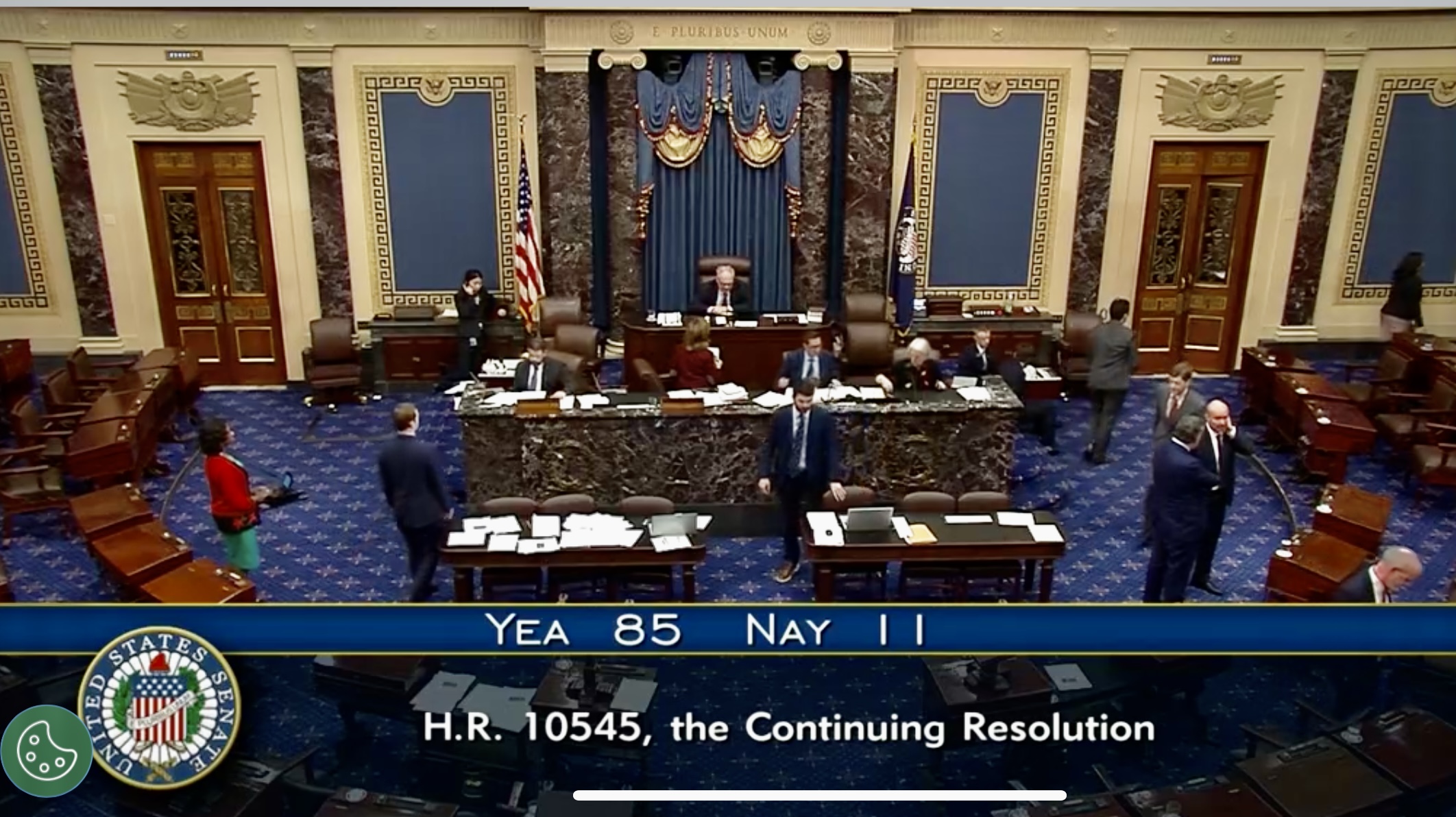
US Senate after passing the CR early Saturday, December 21, 2024
On Friday afternoon, the American Relief Act of 2025 passed the House 366-34-1. This was the third proposal advanced by House Speaker Mike Johnson this week and produced a measure that once is passed by the Senate and signed by the President, will keep the government open through March 14, 2025. It had GOP and Democratic support in the House and also had the blessing of President Elect Donald Trump. Oklahoma Congressman Josh Brecheen was one of the 38 Republicans that voted no.
The Senate missed the midnight deadline to fund the government but just barely- as Senate Leader Chuck Schumer finally got to the actual vote of the CR at about 12:15 AM eastern time. Senate Leader Schumer, Appropriations Chair Patty Murray and Vice Chair Susan Collins all praised the measure ahead of the final vote in the Senate for the 118th Congress. They approved the measure 85 to 11.
The bill would fund the federal government to operate through mid-March. The legislation also includes more than $100 billion in disaster aid and $10 billion in economic aid to farmers, as well as extension of the farm bill through Sept. 30, 2025. Overall, farmers have nearly $31 billion in aid spelled out in the package.
Dropped from the bill was a provision that would have allowed year-round sales of E15.
Also cut was President-elect Donald Trump's demand that lawmakers remove the debt limit for his first few years in office. Trump's demands complicated the initial compromise bill that House GOP leaders released earlier in the week. On Thursday night, a funding bill that waived the debt limit until 2027 was defeated on the floor as 38 Republicans joined all but two Democrats in rejecting the bill.
House Appropriations Committee Chairman Tom Cole (R-OK) said, "Disasters know no bounds—they impact cities and states across this nation, leaving communities with destruction and despair. It's a dire reality faced by so many, including my own constituents in Oklahoma. In the face of recent disasters, Americans throughout the country stepped up to help their fellow Americans, and so must Congress.
"Today, the House acted to provide much-needed assistance in a unified and bipartisan voice as people across the country navigate a way forward. We also supported our farmers, ranchers, and producers to safeguard family farms and ensure food and agriculture security for our nation. The process of recovering from monumental loss demands proper federal support, and this legislation is focused on helping the U.S. heal and rebuild stronger. I encourage our colleagues in the Senate to advance this bill to bring relief to crises felt in every corner of our great nation and keep our government working."
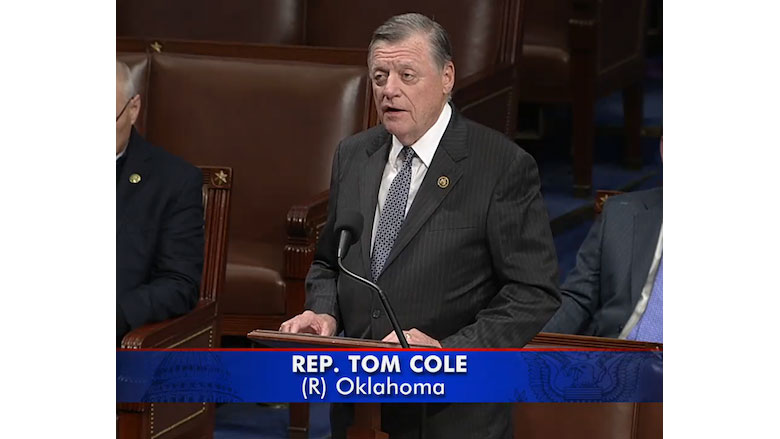
Former Chairman of the House Ag Committee, Frank Lucas is pleased with the Friday vote(he voted aye): "Extending government funding into early next year and the Farm Bill till September of 2025 allows Republicans and President-elect Trump to get to work on delivering results for the American people. Today's vote provides economic assistance to American farmers and communities impacted by severe weather, extends the Farm Bill's authorities, and keeps the government open."
American Farm Bureau Federation President Zippy Duvall also commented on the Continuing Resolution (CR) passed by the House tonight that includes disaster and economic aid to farmers and a farm bill extension.
"Tonight, the House of Representatives sent a strong bipartisan message that they understand the importance of a stable food supply by passing legislation that includes aid to farmers. For some, it will quite literally make the difference between going under and holding on through another planting season.
"On behalf of farmers across America, I offer them my sincere thanks.
"We are especially grateful to our champions on the House Agriculture Committee, Chairman Glenn 'GT' Thompson and Ranking Member David Scott who, along with their colleagues on both sides of the aisle, didn't give up on negotiations to help agriculture, and to President-elect Trump for weighing-in with strong words of support for farmers.
"We're disappointed the final measure did not include authorization for year-round E-15 sales, which would have been a win-win for farmers and the American people. This will be a top priority in 2025.
"We now urge the Senate to follow the House's lead and swiftly pass the CR to avoid a costly shutdown. Once a CR passes the full Congress, they can focus on modernizing the farm bill in 2025 so it actually functions as intended - providing risk management support so farmers aren't left hanging on by their fingernails as many are now."
DISASTER AID DETAILS
The bill provides $20.78 billion to help producers with disaster losses during the past two years.
The disaster funds would cover losses from an array of natural disasters in 2023 and 2024 -- droughts, wildfires, hurricanes, floods, derechos, excessive heat, tornados, winter storms, freeze events and excessive moisture.
Among those funds, $2 billion is set aside for livestock producers impacted by losses in 2023-24 due to drought, wildfires and floods. Assistance could go to the states as block grants and direct compensation to producers.
The bill also increases payments and losses covered under the Noninsured Crop Disaster Assistance Program (NAP).
ECONOMIC AID DETAILS
The bill provides $10 billion in economic assistance through a formula laid out in the bill. The legislation creates one-time payments to producers based on 100% of planted acres and 50% of prevented-planting acres for the 2024 crop year. The bill requires USDA to issue those checks within 90 days after the bill becomes law.
The payment rates are not final and are subject to USDA discretion, but estimates from House and Senate Agriculture committee staff break down as follows for major crops:
-- Corn, $43.80 per acre
-- Soybeans, $30.61 per acre
-- Wheat, $31.80 per acre
-- Seed Cotton, $84.70 per acre
-- Sorghum, $41.85 per acre
-- Rice (L/M), $71.37 per acre
-- Peanuts, $76.30 per acre
-- Barley, $21.76 per acre
Those payments would be subject to $125,000 payment limits that could increase to $250,000 for producers who receive 75% or more of their gross income from farming.
ONE-YEAR FARM BILL EXTENSION
The bill provides an extension of the current farm bill through Sept. 30, 2025. The House and Senate Agriculture committees will again be on the clock to try to pass a new farm bill -- two years behind schedule.
The extension prevents permanent law from going into effect on Jan. 1, 2025. The "dairy cliff" is often mentioned as the biggest issue with permanent law. Under the law, USDA would be required to buy dairy products to help boost prices to the mandated levels of 117% higher than the current all-milk price. At current prices, around $20.38 per cwt, the mandated price for milk would jump to more than $44.22 per cwt. This would effectively drive private buyers of milk out of the market.
This story includes excerpts from a story posted on Friday by Chris Clayton, Ag Policy Editor of DTN.
Following the recent nationwide preliminary injunction order in Texas against enforcement of the Corporate Transparency Act (CTA), in a separate lawsuit against the CTA, a district court in Utah issued a 90-day stay as a result of the injunction and pending the new presidential administration. The parties were advised that they could refile if the preliminary injunction is disrupted in any way.
The CTA requires state or tribal registered corporations or limited liability companies with under 20 employees whose gross receipts are under $5 million to report private, sensitive information on "beneficiary owners" to the federal government, which will purportedly be stored in a secure government database.
On July 29, 2024, R-CALF USA, the People Restored, Crofter Market, Utah OSR Land Cooperative, and several Utah-based individuals filed a joint lawsuit in the U.S District Court for the District of Utah against the U.S. Department of the Treasury and others, seeking a declaration from the court that would repeal the law.
Yesterday's hearing follows courts across the country that are also reviewing challenges against the law; including the recent preliminary injunction on December 3 in the U.S. District Court for the Eastern District of Texas that temporarily blocked the enforcement of the CTA.
R-CALF USA and its fellow plaintiffs' case differs from the Texas case as it argues additional constitutional violations. Both cases seek to repeal the CTA.
In addition to litigation pushback, in Congress, the Repealing Big Brother Overreach Act (H.R.8147 and S.4297) seeks to repeal the CTA. With 100 cosponsors in the House and 17 in the Senate, R-CALF USA encourages swift passage of the legislation.
Article Courtesy of R-Calf USA
A dispute panel has ruled that Mexico violated its commitments under the U.S.-Mexico-Canada Agreement (USMCA) when President Manuel Lopez Obrador signed a decree banning genetically modified (GM) corn imports in 2023.
U.S. Grains Council (USGC) President and CEO Ryan LeGrand was quick to thank the Office of the U.S. Trade Representative, saying, "Mexico has always been a powerful partner to U.S. corn growers and exporters, so when the country tried banning GM corn imports that would have severely affected our industry, we appreciated the extra effort the U.S. Trade Representative gave in filing the dispute and seeing it through to its logical conclusion. The Council worked with the USTR and in Mexico to help ensure the dispute result was fair, and we look forward to continuing our work with our top U.S. grains-in-all-forms customer."
The dispute came in 2020 when Mexico initially called for a ban of genetically modified corn by the end of 2024. Last year, the Mexican president issued another decree banning genetically modified corn for human consumption in the use of tortillas and tortilla masa, which is traditionally white corn, and the United States filed a dispute settlement under USMCA.
"U.S. corn farmers and exporters understood how devastating this ban could have been had it been implemented, so it's only right that mechanisms are in place within a trade agreement like USMCA when something like this happens," said USGC Chairwoman Verity Ulibarri. "The Council believes in both free and fair trade and this decision has upheld our mission of developing markets, enabling trade and improving lives."
The Council will continue working with the Office of the U.S. Trade Representative to ensure Mexico adheres to the decision while it works with Mexican importers to continue to maintain the flow of U.S. corn and its co-products into the country.
Article Courtesy of US Grains Council
United States Trade Representative Katherine Tai announced today that the United States has prevailed in its dispute under the United States-Mexico-Canada Agreement (USMCA), challenging certain Mexican biotechnology measures concerning genetically engineered (GE) corn. The USMCA panel agreed with the United States on all seven legal claims, finding that Mexico's measures are not based on science and undermine the market access that Mexico agreed to provide in the USMCA.
"We commend the dispute settlement panel for its thorough and impartial assessment, which affirms that Mexico's approach to biotechnology was not based on scientific principles or international standards. Mexico's measures ran counter to decades' worth of evidence demonstrating the safety of agricultural biotechnology, underpinned by science- and risk-based regulatory review systems," said Agriculture Secretary Tom Vilsack. "This decision ensures that U.S. producers and exporters will continue to have full and fair access to the Mexican market, and is a victory for fair, open, and science- and rules-based trade, which serves as the foundation of the USMCA as it was agreed to by all parties. It is also a victory for the countries around the world growing and using products of agricultural biotechnology to feed their growing populations and adapt to a changing planet."
"The panel's ruling reaffirms the United States' longstanding concerns about Mexico's biotechnology policies and their detrimental impact on U.S. agricultural exports," said Ambassador Katherine Tai. "It underscores the importance of science-based trade policies that allow American farmers and agricultural producers to compete fairly and leverage their innovation to address climate change and enhance productivity. We look forward to continuing our collaboration with the Mexican government to ensure a level playing field and provide access to safe, affordable, and sustainable agricultural products on both sides of the border."
"The panel's conclusion backs up our long-held position that agricultural trade policies must be grounded in science and must not disrupt trade in agricultural products," said Ambassador Doug McKalip. "This ruling is a critical step in ensuring that U.S. farmers can continue to compete fairly in the global marketplace. We have worked tirelessly with the interagency and industry stakeholders for almost four years to address this issue, and we remain committed to ensuring Mexico complies with its obligations under the USMCA and eliminates its USMCA-inconsistent measures. This outcome supports our efforts to maintain a strong, science-based trade relationship that benefits American producers and consumers in both the U.S. and Mexico."
The panel issued its final report to the Parties on December 20, 2024. Under USMCA rules, Mexico has 45 days from the date of the final report to comply with the Panel's findings.
From January through October 2024, the United States exported $4.8 billion of corn to Mexico, the United States' largest export market for corn.
Background
The present dispute challenged two sets of measures reflected in Mexico's February 2023 presidential corn decree: (1) an immediate ban on the use of GE corn in dough and tortillas, and (2) an instruction to Mexican government agencies to gradually eliminate the use of GE corn for other food uses and in animal feed. The United States established the panel on August 17, 2023, under Chapter 31 of the USMCA. The United States brought six legal claims under the Sanitary and Phytosanitary Measures Chapter and one legal claim under the National Treatment and Market Access for Goods Chapter of the USMCA, as reflected in the United States' request to establish a dispute settlement panel. The United States prevailed on all seven claims.
USTR officials have worked closely with the U.S. Department of Agriculture, the U.S. Food and Drug Administration, and the U.S. Environmental Protection Agency on this matter. The U.S. Government, in consultation with stakeholders, will continue to work to obtain Mexico's full compliance with its USMCA commitments.
Article Courtesy of USDA
In a major win for the nation's corn growers, a dispute panel ruled today that Mexico violated its commitments under the United States-Mexico-Canada Agreement when it issued a decree that banned genetically modified corn imports in early 2023.
The decision was met with praise from the National Corn Growers Association and other corn grower advocates who had called on the United States Trade Representative to file the dispute.
"This is an incredible development for the nation's corn growers and rural communities," said Illinois farmer and NCGA President Kenneth Hartman Jr. "This outcome is a direct result of the advocacy efforts of corn grower leaders from across the country. We want to thank the nation's growers for speaking out and U.S. officials for listening and acting."
Mexican President Andrés Manuel López Obrador first set off alarms in the Corn Belt in December 2020 when he initiated a decree to ban genetically modified corn by the end of 2024. At the time, NCGA began outreach to the Trump administration to head off the ban. Those efforts continued with the Biden administration as well as with members of Congress and Mexican officials.
The organization's leaders argued that the ban would significantly harm growers and rural communities, especially because Mexico is the number one export destination for U.S. corn.
NCGA's efforts intensified in 2023 when the Mexican president issued a decree banning genetically modified white corn, effective the following day. NCGA and state corn grower groups responded by pushing USTR to file a dispute settlement under USMCA, which it eventually did.
"NCGA has been active each step of the way, sounding the alarm about the impact Mexico's actions are having on farmers," Hartman said. "This win illustrates the power of corn advocacy."
Since the enactment of USMCA, the formation of dispute panels has been uncommon and must meet a high threshold of requirements. Now that a decision has been made, NCGA leaders say they will work with USTR and the incoming administration to ensure the ruling is enforced.
Article Courtesy of NCGA

American Farm Bureau Federation President Zippy Duvall commented today on a United States-Mexico-Canada Agreement (USMCA) panel ruling that Mexico's ban on American-grown biotech corn is a violation of the trade agreement.
"Farm Bureau applauds the USMCA panel decision regarding Mexico's actions to ban biotech corn for human consumption and animal feed. The panel affirmed what AFBF and America's farmers have emphasized all along – biotech corn is safe and decisions must be based on science, not politics.
"We thank the U.S. Trade Representative for defending the safety of biotech corn and pursuing Mexico's action as a violation of USMCA. If left in place, Mexico's restrictions would have impacted the corn supply chain, stifled innovation, hurt trade and opened the door for other countries to pursue similar restrictive measures.
"We look forward to engaging with USTR as it works with the Mexican government to remove the ban on biotech corn and provide certainty to the corn industry."
Article Courtesy of AFBF
Today, following the passage of the American Relief Act, 2025, House Committee on Agriculture Chairman Glenn "GT" Thompson (PA-15) issued the following statement:
"The American Relief Act provides necessary assistance for American agriculture, and is a lifeline for the men and women who feed, clothe, and fuel our great nation.
"While the process was a long one, the result is a bill that puts America first, and serves as reminder that when the agriculture community is united, we can punch well above our weight. I was proud to support its passage, urge the Senate to quickly pass it, and call on the Department of Agriculture to act swiftly in the delivery of these critical resources."
Article Courtesy of HouseAgGOP
Congressman Frank Lucas (OK-03) released the following statement after voting in favor of the American Relief Act.
"Extending government funding into early next year and the Farm Bill till September of 2025 allows Republicans and President-elect Trump to get to work on delivering results for the American people. Today's vote provides economic assistance to American farmers and communities impacted by severe weather, extends the Farm Bill's authorities, and keeps the government open."
BACKGROUND:
The American Relief Act of 2025 passed the House 366-34-1. The measure:
Article Courtesy of Lucas Press Office
After voting to prevent a government shutdown this evening, Congresswoman Bice issued the following statement:
"A government shutdown would mean our servicemembers would be forced to go without pay during Christmas and the holiday season. I could not in good conscience allow that to happen. This legislation, which is similar to what I helped negotiate alongside President Trump and House Leaders, will support Americans across the country and provide necessary relief to our farmers and those who have been negatively affected by natural disasters. The fight is not over, and I will continue working alongside President Trump to enact his agenda and get our country back on track."
Article Courtesy of Stephanie Bice
The National Cotton Council (NCC) applauds the House of Representatives
for passing a Continuing Resolution that funds the government through mid-March, while extending
farm bill provisions for one year and providing critical disaster assistance and emergency economic
assistance for cotton and other crops. The much-needed economic and disaster relief will help mitigate
the financial stress caused by a combination of increased production costs, weakening market prices, and
production losses caused by natural disasters.
NCC Chairman Joe Nicosia stated, "We thank House members for supporting the end-of-year
spending package that provides farmers the additional support they desperately need. We strongly urge
the Senate to follow suit in a timely manner so that the bill can be moved to the President's desk."
Nicosia added, "With recognition that the current package does not fully address the needs of all
industry segments, we urge the next Congress to move quickly in early 2025 to pass a new farm bill that
gives our industry the enhanced long-term support we need."
Article courtesy of the National Cotton Council
American Farm Bureau Federation President Zippy Duvall commented today on a United States-Mexico-Canada Agreement (USMCA) panel ruling that Mexico's ban on American-grown biotech corn is a violation of the trade agreement.
"Farm Bureau applauds the USMCA panel decision regarding Mexico's actions to ban biotech corn for human consumption and animal feed. The panel affirmed what AFBF and America's farmers have emphasized all along – biotech corn is safe and decisions must be based on science, not politics.
"We thank the U.S. Trade Representative for defending the safety of biotech corn and pursuing Mexico's action as a violation of USMCA. If left in place, Mexico's restrictions would have impacted the corn supply chain, stifled innovation, hurt trade and opened the door for other countries to pursue similar restrictive measures.
"We look forward to engaging with USTR as it works with the Mexican government to remove the ban on biotech corn and provide certainty to the corn industry."
Following the recent nationwide preliminary injunction order in Texas against enforcement of the Corporate Transparency Act (CTA), in a separate lawsuit against the CTA, a district court in Utah issued a 90-day stay as a result of the injunction and pending the new presidential administration. The parties were advised that they could refile if the preliminary injunction is disrupted in any way.
The CTA requires state or tribal registered corporations or limited liability companies with under 20 employees whose gross receipts are under $5 million to report private, sensitive information on "beneficiary owners" to the federal government, which will purportedly be stored in a secure government database.
On July 29, 2024, R-CALF USA, the People Restored, Crofter Market, Utah OSR Land Cooperative, and several Utah-based individuals filed a joint lawsuit in the U.S District Court for the District of Utah against the U.S. Department of the Treasury and others, seeking a declaration from the court that would repeal the law.
Yesterday's hearing follows courts across the country that are also reviewing challenges against the law; including the recent preliminary injunction on December 3 in the U.S. District Court for the Eastern District of Texas that temporarily blocked the enforcement of the CTA.
R-CALF USA and its fellow plaintiffs' case differs from the Texas case as it argues additional constitutional violations. Both cases seek to repeal the CTA.
In addition to litigation pushback, in Congress, the Repealing Big Brother Overreach Act (H.R.8147 and S.4297) seeks to repeal the CTA. With 100 cosponsors in the House and 17 in the Senate, R-CALF USA encourages swift passage of the legislation.
Press release provided by R-CALF USA.
United States Trade Representative Katherine Tai today announced that the United States has prevailed in its dispute under the United States-Mexico-Canada Agreement (USMCA) challenging certain Mexican biotechnology measures concerning genetically engineered (GE) corn. The USMCA panel agreed with the United States on all seven legal claims, finding that Mexico's measures are not based on science and undermine the market access that Mexico agreed to provide in the USMCA.
"We commend the dispute settlement panel for its thorough and impartial assessment, which affirms that Mexico's approach to biotechnology was not based on scientific principles or international standards. Mexico's measures ran counter to decades' worth of evidence demonstrating the safety of agricultural biotechnology, underpinned by science- and risk-based regulatory review systems," said Agriculture Secretary Tom Vilsack. "This decision ensures that U.S. producers and exporters will continue to have full and fair access to the Mexican market, and is a victory for fair, open, and science- and rules-based trade, which serves as the foundation of the USMCA as it was agreed to by all parties. It is also a victory for the countries around the world growing and using products of agricultural biotechnology to feed their growing populations and adapt to a changing planet."
"The panel's ruling reaffirms the United States' longstanding concerns about Mexico's biotechnology policies and their detrimental impact on U.S. agricultural exports," said Ambassador Katherine Tai. "It underscores the importance of science-based trade policies that allow American farmers and agricultural producers to compete fairly and leverage their innovation to address climate change and enhance productivity. We look forward to continuing our collaboration with the Mexican government to ensure a level playing field and provide access to safe, affordable, and sustainable agricultural products on both sides of the border."
"The panel's conclusion backs up our long-held position that agricultural trade policies must be grounded in science and must not disrupt trade in agricultural products," said Ambassador Doug McKalip. "This ruling is a critical step in ensuring that U.S. farmers can continue to compete fairly in the global marketplace. We have worked tirelessly with the interagency and industry stakeholders for almost four years to address this issue, and we remain committed to ensuring Mexico complies with its obligations under the USMCA and eliminates its USMCA-inconsistent measures. This outcome supports our efforts to maintain a strong, science-based trade relationship that benefits American producers and consumers in both the U.S. and Mexico."
The panel issued its final report to the Parties on December 20, 2024. Under USMCA rules, Mexico has 45 days from the date of the final report to comply with the Panel's findings.
From January through October 2024, the United States exported $4.8 billion of corn to Mexico, the United States' largest export market for corn.
Background
The present dispute challenged two sets of measures reflected in Mexico's February 2023 presidential corn decree: (1) an immediate ban on the use of GE corn in dough and tortillas, and (2) an instruction to Mexican government agencies to gradually eliminate the use of GE corn for other food uses and in animal feed. The United States established the panel on August 17, 2023, under Chapter 31 of the USMCA. The United States brought six legal claims under the Sanitary and Phytosanitary Measures Chapter and one legal claim under the National Treatment and Market Access for Goods Chapter of the USMCA, as reflected in the United States' request to establish a dispute settlement panel. The United States prevailed on all seven claims.
USTR officials have worked closely with the U.S. Department of Agriculture, the U.S. Food and Drug Administration, and the U.S. Environmental Protection Agency on this matter. The U.S. Government, in consultation with stakeholders, will continue to work to obtain Mexico's full compliance with its USMCA commitments.
Resource
For more information, you may view a copy of the panel report.
In a major win for the nation's corn growers, a dispute panel ruled today that Mexico violated its commitments under the United States-Mexico-Canada Agreement when it issued a decree that banned genetically modified corn imports in early 2023.
The decision was met with praise from the National Corn Growers Association (NCGA) and other corn grower advocates who had called on the United States Trade Representative to file the dispute.
"This is an incredible development for the nation's corn growers and rural communities," said Illinois farmer and NCGA President Kenneth Hartman Jr. "This outcome is a direct result of the advocacy efforts of corn grower leaders from across the country. We want to thank the nation's growers for speaking out and U.S. officials for listening and acting."
Mexican President Andrés Manuel López Obrador first set off alarms in the Corn Belt in December 2020 when he initiated a decree to ban genetically modified corn by the end of 2024. At the time, NCGA began outreach to the Trump administration to head off the ban. Those efforts continued with the Biden administration as well as with members of Congress and Mexican officials.
The organization's leaders argued that the ban would significantly harm growers and rural communities, especially because Mexico is the number one export destination for U.S. corn.
NCGA's efforts intensified in 2023 when the Mexican president issued a decree banning genetically modified white corn, effective the following day. NCGA and state corn grower groups responded by pushing USTR to file a dispute settlement under USMCA, which it eventually did.
"NCGA has been active each step of the way, sounding the alarm about the impact Mexico's actions are having on farmers," Hartman said. "This win illustrates the power of corn advocacy." Since the enactment of USMCA, the formation of dispute panels has been uncommon and must meet a high threshold of requirements. Now that a decision has been made, NCGA leaders say they will work with USTR and the incoming administration to ensure the ruling is enforced.
American Farm Bureau Federation President Zippy Duvall today urged Congress to take seriously the more than $30 billion in losses farmers experienced this year.
"The clock is running out for congressional action to help farmers hold on for another planting season. We've lost 141,000 farms in five years and we will lose more without action. Congress has kicked the can down the road on modernized farm policy for two years, leaving farmers with antiquated risk management programs that failed to provide promised support.
"Congress must deliver aid to help farmers hit by natural disasters, a farm bill extension, economic aid to bridge the gap for farmers until we get a new farm bill, and authorization for year-round E-15, which provides a market for farm goods and comes at no cost to the government.
"The gymnastics happening in our nation's capital are a disservice to the American people. Shutting down the government would only increase the hardship for farmers trying to access programs they need to operate their farms and increase conservation efforts.
"On behalf of farmers across the country, I urge members of Congress to work in a bipartisan way, as they always have for agriculture, to do the right thing by helping farmers hang on." Read more about the need for economic aid in the latest Market Intel here

This week, two continuing resolutions (CR) that would have kept the federal government operating after Dec. 20 have been introduced which included many things American farmers have been asking for: $21 billion in disaster aid, a farm bill extension, $10 billion in economic aid and year-round E-15. While the future of a CR is uncertain, the need for economic aid for farmers remains.
1. Farmers are entering their third year of losses on every acre they plant.
Since crop prices peaked in 2022, they have taken a nosedive. Corn and wheat are down 37%, soybeans down 28% and cotton down 22%. At the same time, input prices have remained high and sticky. As compared to 2020, the cost to produce an acre of corn has grown by nearly 30% nationally. When combined, many farmers are facing losses on every acre they plant. This is felt acutely. Data from the Farm Business Farm Management program at the University of Illinois illustrates this well. Farmers with a 50/50 corn and soy rotation on some of the very best cropland in the world will have faced an average loss of nearly $90 per acre between the 2023 and 2025 crop years. While farmers are familiar with a downturn, these deep, sustained losses are not manageable for many crop farmers across the country.

2. Thanks to inflation, the traditional farm safety net is ineffective.
American farmers have traditionally had a safety net in the farm bill that kicks in during tough times. Agriculture is inherently cyclical, so these safety net programs, including the Agriculture Risk Coverage (ARC) and Price Loss Coverage (PLC) programs, provide help during down times so that farmers can stay in business today to support American families and the rest of the economy tomorrow.
Unfortunately, the mechanisms that make these programs work have not kept up with changes in input prices. The statutory reference prices have not been updated since the 2014 farm bill. In the last decade-plus, inflation has gutted the effectiveness of these reference prices. One dollar in January 2014 is worth $1.35 today, and programs carefully designed to provide just enough help in 2014 provide almost no help in 2024.
This outdated farm bill is not protecting farmers. Despite the difficult times farmers are finding themselves in, when accounting for inflation, 2024 is projected to have the lowest payments to U.S. farmers since 1982 – over four decades ago.
3. The net farm income picture is bleak.
In aggregate, net farm income has declined by $41 billion – nearly 25% – in only two years, according to USDA's figures. While this number is striking on its own, it covers even steeper losses in the row crop sector with high returns in the livestock sector. The net cash income of farms specializing in corn, wheat and soybeans are down 42%, 43% and 44% respectively.

The agricultural industry is in recession. Farmers bear the brunt of this recession – but they are not alone. There have been thousands of layoffs throughout the agribusiness sector as well.
The lack of a new farm bill, which is two years overdue, has left farmers in a lurch during the sort of difficult stretch where they traditionally relied on the safety net. Due to the capital-intensive nature of farming, farmers rely on annual operating loans to plant their crops. Without some assurance of help from Congress and USDA, many farmers are at risk of losing access to credit and going out of business. The most vulnerable farmers – including beginning farmers, the next generation to grow our food – may be the first to lose their farms.
Attorney General Gentner Drummond announced shortly before today's Board of Equalization meeting that he lacks confidence in the budget numbers provided by the Stitt Administration, calling instead for increased legislative involvement in the process.
"I come from the private sector, where you don't play games with your budget," Drummond said. "After sitting through several of these meetings, as well as briefings from the Governor's chosen staff, I can tell you that I have no confidence in the accuracy or completeness of the Governor's budget numbers."
Drummond cited recent examples of discrepancies and inaccuracies that eroded his confidence. In December of 2023, the Board of Equalization was told there would be $8,976,523,862 available for appropriation in FY25. By February, 10 days after the Governor laid out his budget priorities, that number had increased to $9,037,537,501. This increase bolstered the Governor's argument for a proposed income tax cut. Now those same February numbers are projected to be off by $390 million, while the Oklahoma Tax Commission is reporting that expected revenue will drop by $528 million.
"Last December, we were told one amount, then in February it was a new number that was magically enough to pay for the Governor's tax cut," Drummond said. "I'm all for lowering the tax burden on Oklahoma families, but let's not play political games with the budget numbers. Let's have an open and transparent process where the numbers don't change just because the Governor wants them to."
Drummond said the process would be greatly improved by increased legislative involvement in the development of budget projections.
"The people of Oklahoma elected every legislator the same way they elected the Governor," Drummond said. "As a Constitutional officer who has a duty to certify these numbers, I would have much more confidence in their accuracy if House and Senate budget leaders and their staff played a more significant role in the process."
Drummond's announcement today comes after being the lone "no" vote in the Board of Equalization meeting in February of this year. At the time, Drummond's office said his "no" vote was "a reflection of his lack of confidence in certain revenue estimates that were provided." In light of his lack of confidence in the figures, Drummond did not attend today's meeting.
Farm Director KC Sheperd caught up with New Leaf Symbiotics CEO/President Brent Smith to discuss the company's unique class of microbes, also known as Pink-Pigmented Facultative Methylotrophs (PPFMs).
The truly pink, naturally occurring microbes with a variety of jobs including bio-stimulation, bio-control, Plant Growth Regulators (PGRs), and nitrogen use efficiency.
New Leaf Symbiotics's library of microbes includes 12,000 different strains, 6,500 of which are sequenced, and work continues on about 100 varieties. Smith commented, "There are multiple modes of action that we are finding in this whole phylogeny of microbes."
Technicians at New Leaf Symbiotics use the microbes' natural abilities and improves them. "We launch individual strains for individual outcomes," Smith said. "For example, we have one strain that is for corn, and another for soy, but also in biocontrol, we use individual strains for individual pests, crops, and those things."
This makes New Leaf Symbiotics unique as does their microbes' ability to multiply and colonize after application instead of degrading. The microbes can also survive in all soil types for the duration of the plant's lifecycle. These things are among the reasons that New Leaf's covered acreage has increased from 3.2 million acres in 2023 to 7.5 million in 2024.
"We also have other biocontrol products, bio-fungicides, so it is really custom-tailored to what is needed," Smith said. "What you find a lot in biologicals is consortia, which is let's just go throw a bunch of Bacillus together – or mycorrhiza, Trichoderma, Bradyrhizobium – and let's call it good. We don't know what those things do.
"We have spent more than a decade working on our technologies. We have only been commercial for three years, which means that we spent eight years developing the science behind our products. We wanted to make sure that we understood exactly what each strain was delivering for the farmer."
New Leaf Products support four different crops – corn, soybeans, peanuts, and cotton, along with one specialty technology for tomatoes, but twenty-three more products are in the pipeline to launch in the next three or four years.
More information can be found at NewLeafSym.com/.
| ||||||||||||||||||||||||||||||||||||||||||||||||||||||||||||||||||||||||||||||||||||||||||||||||||||||||||||||||||||||||||||||||||||||||||||||||||||||||||||||||||||||||||||||||||||||||||||||||||||||||||||||||||||||||||||||||||||||||||||||
| ||||||||||||||||||||||||||||||||||||||||||||||||||||||||||||||||||||||||||||||||||||||||||||||||||||||||||||||||||||||||||||||||||||||||||||||||||||||||||||||||||||||||||||||||||||||||||||||||||||||||||||||||||||||||||||||||||||||||||||||
|

The European Parliament this week voted to delay implementation of a deforestation regulation for a year, providing a reprieve for U.S. cattlemen.
The rule will require imports of beef and other goods to include documentation showing they did not come from areas impacted by deforestation. In the case of beef, that includes geolocation data of where the cattle were raised. It was scheduled to go into effect Dec. 30.
As U.S. Meat Export Federation (USMEF) Vice President of Economic Analysis Erin Borror explains in this audio report, deforestation is not a concern for U.S. beef, yet U.S. producers are faced with burdensome and unnecessary paperwork, and the EU systems are still not ready for implementation.
The one-year delay offers limited time to not only iron out systems for implementation, but to also push for key changes to the rule, including a "no risk" designation for trading partner countries where forests are not cleared for production.
The U.S. Environmental Protection Agency and the U.S. Department of Energy today announced approximately $850 million for 43 projects selected for negotiation that will help small oil and gas operators, Tribes, and other entities across the country to reduce, monitor, measure, and quantify methane emissions from the oil and gas sector as part of President Biden's Investing in America agenda. The funding builds on unprecedented action across the Biden-Harris Administration to dramatically reduce methane emissions, with agencies taking more than 100 actions since 2023, including the finalization of an EPA rule that is expected to reduce methane emissions from covered oil and gas sources by 80% from 2024 to 2038 compared to projected emissions without the rule.
Today's investment incentivizes companies' near-term actions to conserve valuable energy resources for American consumers, improve operational efficiencies in a global market, and reduce methane emissions.
"Today, we're continuing to build on strong standards and historic progress to cut methane pollution and protect communities across the country," said EPA Administrator Michael S. Regan. "Together, these investments will support small businesses and drive the deployment of available and advanced technologies to reduce harmful pollution and tackle the climate crisis, while creating good-paying jobs."
"The public health of our nation depends greatly on our ability to drastically reduce harmful pollution from America's largest source of industrial methane – the oil and gas sector," said U.S. Secretary of Energy Jennifer M. Granholm. "This historic investment made possible by the Inflation Reduction Act is helping energy communities and deliver long-lasting health and environmental benefits across the country. At the same time, it will support small operators' ability to replace and upgrade old equipment, reducing emissions from marginal conventional wells, improving their supply chains to meet the growing market expectations for cleaner fuel sources."
"In order to meet our climate goals, we have to tackle methane pollution in a serious way," said John Podesta, Senior Advisor to the President for International Climate Policy. "Today's awards will slash local pollution from Colorado to Kentucky while delivering for our workers, our communities, and our planet."
The selected projects funded by the Inflation Reduction Act, the largest climate investment in history, represent a significant step in addressing climate change and improving air quality. By mitigating legacy air pollution and supporting small oil and natural gas operators, the projects will help reduce methane emissions through available and innovative technologies. Additionally, they will create partnerships to enhance emissions measurement and provide transparent data to affected communities. One Tribal consortium, 11 universities, and 20 private companies were selected for projects across the Nation to deploy and test new and existing methane mitigation technologies:
· Three projects will help small operators across the country significantly reduce methane emissions from low-producing oil and natural gas operations, using commercially available technology solutions.
· Thirty-one projects will accelerate the deployment of early-commercial technology solutions to reduce methane emissions from new and existing equipment.
· Four projects will improve communities' access to empirical emissions data and participation in monitoring methane emissions.
· Five projects will enhance the detection and measurement of methane emissions from oil and gas operations at a regional scale.
In total, EPA and DOE are partnering to provide $1.36 billion in financial and technical assistance as part of the Inflation Reduction Act's Methane Emissions Reduction Program. DOE's National Energy Technology Laboratory, under the purview of DOE's Office of Fossil Energy and Carbon Management, will manage the selected projects. Learn more about the selected projects.
Today's selections build on the $350 million in grant funding to states that EPA and DOE announced in December 2023 to support industry efforts to voluntarily reduce emissions at low-producing wells, monitor emissions, and conduct environmental restoration at well pads. Together, these investments are a key step in implementing the Methane Emissions Reduction Program.
The selected projects support the Biden-Harris Administration's comprehensive, whole-of-government strategy to reduce harmful methane emissions across economic sectors. These efforts are accelerating reductions in methane emissions, supporting clean air and public health, creating good jobs, and advancing President Biden's ambitious climate goals.
About the Methane Emissions Reduction Program
Methane is a potent greenhouse gas that contributes to approximately one-third of the global warming we are experiencing today. Over 100 years, one ton of emitted methane traps 28 times as much heat in the Earth's atmosphere as one ton of emitted carbon dioxide. The oil and natural gas sector is the largest industrial source of methane emissions in the United States. A rapid reduction in methane emissions is one of the most important and cost-effective actions the United States can take in the short term to slow the rate of rapidly rising global temperatures.
The Methane Emissions Reduction Program, created by the Inflation Reduction Act, directed EPA to take action to tackle wasteful methane emissions from the oil and gas sector. The financial and technical assistance, implemented through a partnership between EPA and DOE, work in concert both with the recently finalized Waste Emissions Charge and with Clean Air Act standards issued in March 2024 to limit methane emissions from new and existing oil and gas operations. The Methane Emissions Reduction Program also advances the Biden-Harris Administration's Justice40 Initiative, which sets a goal that 40% of the overall benefits of certain federal climate, clean energy, and other investments benefit disadvantaged communities that are marginalized by underinvestment and overburdened by pollution.
Combined, these actions will help position the United States as the most efficient producer of oil and natural gas in the world and ensure that the industry remains competitive in overseas markets that require a minimum level of emissions performance. Together, DOE and EPA's methane actions will advance the adoption of cost-effective technologies, reduce wasteful practices, and yield significant economic, health, and environmental benefits, while driving continued innovation in methane detection, monitoring, and mitigation techniques.
Visit the EPA website for more information about the Methane Emissions Reduction Program, and the EPA or DOE website for more information about financial assistance under the Methane Emissions Reduction Program.
The U.S. Department of Agriculture (USDA) announced the final approximately $300 million in assistance to distressed direct and guaranteed farm loan borrowers under Section 22006 of the Inflation Reduction Act. Over the past two years, USDA acted swiftly to assist distressed borrowers in retaining their land and continuing their agricultural operations. Since President Biden signed the Inflation Reduction Act into law in August 2022, USDA has provided approximately $2.5 billion in assistance to more than 47,800 distressed borrowers.
The assistance announced today is expected to provide $300 million in assistance to over 12,800 distressed direct and guaranteed Farm Loan Programs (FLP) borrowers.
"USDA has always been committed to standing by our nation's farmers and ranchers, especially in their most challenging times," said Agriculture Secretary Tom Vilsack. "The final round of payments announced today under President Biden's Inflation Reduction Act provides much-needed relief to more than 12,800 producers, helping them stay on their land and continue farming. At USDA, we are not only addressing immediate financial challenges but also working every day to build a stronger, more supportive loan system that ensures farmers have the tools they need to succeed now and into the future."
This round of automatic assistance includes approximately:
FLP payment eligibility is determined on a loan-by-loan basis. Distressed borrowers may be able to receive assistance under multiple categories if they have multiple direct or guaranteed loans that qualify, however each qualifying loan may only receive one payment. FLP direct and guaranteed borrowers who have a loan that qualifies under multiple categories of assistance above will receive a payment on that loan based on the option that provides the greatest payment amount, except in cases where the loan is eligible for payment of non-capitalized interest, which can be applied to that loan along with another assistance category.
Any distressed direct and guaranteed borrowers who qualify for these forms of assistance and are currently in bankruptcy will be addressed using the same case-by-case review process announced in October 2022 for complex cases.
While FSA does not at this time anticipate having remaining funds available for additional assistance under IRA Section 22006 after each type of assistance above is issued, if any funds remain at that time, FSA will make a payment on a prorated basis by loan and subject to the availability of funds towards the next installment due on all FLP direct loans, not to exceed the remaining balance, for borrowers who both (i) have direct loans that qualified for assistance under the first bullet above; and (ii) have not received IRA 22006 assistance prior to this announcement. If full next installment payments are made to borrowers who meet (i) and (ii) above, and funds remain available, FSA will provide the same installment assistance on a prorated basis by loan and subject to the availability of funds to borrowers who meet (i) but have received prior IRA 22006 assistance.
Farm Loan Programs Improvements
FSA recently announced significant changes to Farm Loan Programs through the Enhancing Program Access and Delivery for Farm Loans rule. Distressed FLP direct loan borrowers may benefit from the Distressed Borrower Set-Aside program included in the regulation update, which allows qualifying distressed borrowers to set aside up to a full loan installment on certain loans, at a reduced .125% interest rate. This policy change and many others included in the rule are designed to expand opportunities for borrowers to increase profitability and be better prepared to make strategic investments in the enhancement or expansion of their agricultural operations.
FSA also has a significant initiative underway to streamline and automate the Farm Loan Program customer-facing business process. FSA has made several impactful improvements including:
USDA encourages producers to reach out to their local FSA farm loan staff to ensure they fully understand the wide range of loan and servicing options available to assist with starting, expanding, or maintaining their agricultural operation. To conduct business with FSA, producers should contact their local USDA Service Center.
FSA helps America's farmers, ranchers and forest landowners invest in, improve, protect and expand their agricultural operations through the delivery of agricultural programs for all Americans. FSA implements agricultural policy, administers credit and loan programs, and manages conservation, commodity, disaster recovery and marketing programs through a national network of state and county offices and locally elected county committees. For more information, visit fsa.usda.gov. USDA touches the lives of all Americans each day in so many positive ways. Under the Biden-Harris administration, USDA is transforming America's food system with a greater focus on more resilient local and regional food production, fairer markets for all producers, ensuring access to safe, healthy and nutritious food in all communities, building new markets and streams of income for farmers and producers using climate smart food and forestry practices, making historic investments in infrastructure and clean energy capabilities in rural America, and committing to equity across the Department by removing systemic barriers and building a workforce more representative of America. To learn more, visit usda.gov.

Smithfield has signed an agreement with VisionAg, LLC, an affiliate of HD3 Farms, one of the largest wean-to-finish and finishing growers in the U.S., to supply hogs to the company as an independent pork producer.
Under the terms of the agreement, Smithfield and VisionAg will form a new company called VisionAg Hog Production, LLC, with Smithfield owning a minority interest. VisionAg Hog Production will assume ownership of 28,000 sows currently owned by Smithfield, as well as the market hogs they produce, and is expected to have the capacity to produce 600,000 hogs annually for Smithfield's fresh pork operations. Smithfield will supply feed, transportation and other hog production services to VisionAg Hog Production. The transaction is expected to close in early 2025.
HD3 Farms has been a contract growing partner for Smithfield for more than 20 years. It has 250,000 wean-to-finish and finish spaces on farms in Bladen, Columbus, Duplin, Hoke, Pender, Robeson, Scotland and Sampson Counties in North Carolina.
Ron Hays is talking again with Superior Livestock President Danny Jones, who says that 2024 has been a tremendous year for both Superior and for the cattle industry. This is the second in a two-part conversation with Jones. Yesterday, he was discussing the success Superior Livestock has seen in 2024. Today, he anticipates another great year in 2025 beginning with the January 8-10 Bellringer Sale.
According to Jones, the timing of the Bellringer is key to its success as the health of the cattle is superior at that time, most calves are weaned and yearlings have been backgrounded. Some cattle are sold off of wheat on contracts to be delivered anytime from March-May.
"It's a great time for marketing cattle in January," he said. "This year in particular, as we look at 2025, and these record prices that we are seeing, it is really important – in our minds – to put your cattle in front of everyone, because it is really easy to leave five or fifteen hundred dollars on the table that you didn't know was there until you have a robust price discovery."
Before COVID, the Bellringer had historically been held in Denver coinciding with the National Western Stock Show; however, when Denver forced the Stock Show to cancel in 2020, and Oklahoma City stepped in and started Cattlemen's Congress, Superior moved the Bellringer to Oklahoma City which has proven to be a real success.
"A lot of people come to both," Jones shared. "Several of our sellers visit Cattlemen's Congress and some of those attending Cattlemen's Congress come to the sale. We see people come and go that want to come check the sale out while they are in town."
After some 2024 sales outgrew their time slots, in 2025, Jones plans to spread them out over more days. "There are two opportunities this year – one in February and one in June – that are multi-day sales, similar to our summer sales," he said. "We are expanding the Corn Belt Classic and we are going to have the High Plains Classic geared toward wheat cattle. Then, in the summer, we will have our usual big summer sales, but we are trying to provide more of those multiday opportunities to take the pressure off of our bi-weekly sales."
Beef on dairy cattle have been a hot topic of late, and Superior Livestock sees the advantage in the reduction in feed consumption and bunk space used. "They finish a little faster; they are a little more efficient, and the end experience for the consumer is better, so we see it as a benefit all the way around," Jones said.
For more information about sales or marketing with Superior Livestock, visit the website.
Looking ahead, Jones predicts two or three more years of good prices for the cow-calf producer providing an opportunity to grow equity. He warned to be cautious of accepting too little for cattle because supplies are tight, and to get them in front of everyone to gain the highest prices possible.
The Beef Buzz is a regular feature heard on radio stations around the region on the Radio Oklahoma Ag Network and is a regular audio feature found on this website as well. Click on the LISTEN BAR for today's show and check out our archives for older Beef Buzz shows covering the gamut of the beef cattle industry today.
KC Sheperd, Farm Director, is back talking with Bob Rodenberger, a Stockman Oklahoma Livestock Marketing partner, as he gives the latest on the cattle markets.
Monday's Sale included the sale of a donated calf to benefit the All American Beef Battalion which featured a steak meal for attendees. Three hundred steaks were served during the event.
"We had an excellent market on Monday, and we did a lot of good for the veterans," Rodenberger said. "Anything we can do to support or recognize our veterans is a good deal."
The calf donated by the Clyde Runyan family was sold more than thirty times and raised $54,000 for the All American Beef Battalion that provides premium steak dinners to active-duty military members returning home or preparing to deploy.
Looking at the year in review, Rodenberger said that the year is ending with prices as high as he has ever seen them. Calves are bringing $1,700 to $1,900 and packer cattle are bringing $1.15 to $1.30 per pound.
"People bringing cull cows are saying that the salvage is bringing more than they what they paid for her young," he noted. "Ninety days ago, they were worried about moving the meat, and now they are talking about how we don't have enough meat to meet the demands. That is very positive for us down the road."
The numbers at the Apache sale were better than expected, but Rodenberger still expects the shortage to reach the markets at some point due to a reduced cattle herd and high salvage values.
Sales for 2024 have concluded but will resume on January 6 in Oklahoma City and January 9 in Apache.
Bob thanked everyone who has a part in this year's success, including buyers and sellers. He wished everyone a Merry Christmas and Happy New Year as well.
The U.S. Department of Agriculture's (USDA) Food Safety and Inspection Service (FSIS) is soliciting nominations for membership to the National Advisory Committee on Microbiological Criteria for Foods (NACMCF). NACMCF is the advisory committee charged with providing impartial scientific advice and recommendations to the USDA and other government agencies on microbiological and public health issues relative to the safety of the U.S. food supply. USDA expects to appoint 30 committee members in 2025, whose work will include reviewing FSIS' regulatory approach to Listeria monocytogenes.
"For the past 36 years, experts serving on the National Advisory Committee on Microbiological Criteria for Foods have played a critical role in fortifying our food safety standards and ensuring they rely on the latest science," said Agriculture Secretary Tom Vilsack. "Our approach to food safety must continually evolve, and those selected to serve on this committee will help us strengthen our regulatory frameworks and programs, to best safeguard the health and well-being of American families."
USDA is seeking nominations from individuals with knowledge and expertise in microbiology, risk assessment, epidemiology, public health, food science and other relevant disciplines to obtain the scientific perspective, expertise, experience and point-of-view of all stakeholders. Nominees affiliated with consumer groups are not required to have a scientific background. Persons in academia, industry, state and local government officials, public health organizations, and industry and consumer organizations are invited to submit nominations. Self-nominations are welcomed.
The food safety programs of the USDA's FSIS and the U.S. Department of Health and Human Services (HHS) Food and Drug Administration (FDA) are strengthened through NACMCF recommendations. The programs of other federal agencies concerned with food safety, including the Department of HHS Centers for Disease Control and Prevention, the Department of Commerce, National Marine Fisheries Service, and the Department of Defense (DoD), Veterinary Services also benefit from NACMCF work.
The committee is currently addressing Cronobacter spp. in powdered infant formula for the Food and Drug Administration and the benefits of genomic characterization of pathogens for FSIS. In addition to focusing on Listeria monocytogenes, FSIS anticipates that the 2025-2027 term committee may also explore food safety strategies for aged raw milk cheeses. We especially encourage the nomination of candidates with expertise in these specific areas.
NACMCF nominations must be accompanied by a cover letter addressed to the Secretary of Agriculture. Submissions must include a resume or curriculum vitae and a completed USDA Advisory Committee Membership Background Information form AD-755 (PDF, 2.9 MB).
All nomination packages must be received within 60 days of the announcement being published in the Federal Register. Nomination packages should be sent by email to NACMCF@usda.gov, or mailed to: The Honorable Thomas Vilsack, Secretary, U.S. Department of Agriculture, 1400 Independence Avenue SW, Room 1128 South Building, Attn: Kristal Southern, Designated Federal Officer, FSIS\OPHS\National Advisory Committee on Microbiological Criteria for Foods, Washington, DC 20250.
Individuals who have questions about their nomination package can contact Kristal Southern by email at NACMCF@usda.gov or by telephone at 202-937-4162.
For more information on how to apply, visit the Federal Register notice. More information about NACMCF is available on the FSIS webpage.
USDA touches the lives of all Americans each day in so many positive ways. In the Biden-Harris Administration, USDA is transforming America's food system with a greater focus on more resilient local and regional food production, fairer markets for all producers, ensuring access to safe, healthy, and nutritious food in all communities, building new markets and streams of income for farmers and producers using climate smart food and forestry practices, making historic investments in infrastructure and clean energy capabilities in rural America, and committing to equity across the Department by removing systemic barriers and building a workforce more representative of America. To learn more, visit www.usda.gov.
The United States Department of Agriculture has announced the appointment of seven members, seven alternates, and two advisors to serve three-year terms on The Cotton Board from Jan. 1, 2025, through Dec. 31, 2027. Additionally, USDA appointed seven individuals to fill board vacancies. Newly appointed members: Caroline Collins Barber, Producer – GA; Doyle Schniers, Producer – TX; and Kelly Gupta, Importer – TX. Newly appointed alternate members: Willie Scott, Producer – GA; Chris Matschek, Producer – TX; Daniel Pacheco, Producer – AZ; and Martin Schatz, Importer – CA. Reappointed members: Adam Hatley, Producer – AZ; Julie Holladay, Producer – TX; Michelle Tarry, Importer – NJ; and Tara Hoffman, Importer – NY. Reappointed alternate members: Steve Olson, Producer – TX; Nicholas Pence, Importer – MD; and Steven Bohman, Importer – TX. Newly appointed advisor: Nicole Tanner – NY. Reappointed advisor: Damian Murrieta – AZ.
In addition, USDA issued the following appointments to fill board vacancies with terms that through Dec. 31, 2025: Newly appointed member: David Light, Producer – KS. Newly appointed alternate members: Carolyn Seeliger, Producer – KS; Brad Harrison, Producer – OK; Volkan Tastan, Importer – NJ; and Elizabeth Cobarrubias, Importer – OR. Finally, USDA issued the following appointments to fill board vacancies with terms that run through Dec. 31, 2026: Newly appointed member: Jennifer Pisula, Importer – DE. Newly appointed alternate member: Shannon Chestnut, Importer – TX.
"I am pleased to welcome this group of leaders to The Cotton Board. I look forward to meeting the new appointees and leaning on the experience of those who have been reappointed. The Cotton Board has an extensive orientation program set up to ensure new Members and Alternates are fully up-to-speed and prepared to participate at our March 2025 board meeting," said Cotton Board Chair Akiko Inui. "On behalf of The Cotton Board, I would like to thank USDA for these timely appointments, and I thank the appointees for their willingness to share their time and expertise with the cotton industry," she said. Members, Alternates, and Advisors of The Cotton Board collaboratively represent the interests of both importers and producers to The Cotton Board and Cotton Incorporated. Their insight contributes to activities of the Cotton Research & Promotion Program targeted at improving the profitability of the entire cotton industry. If you are interested in becoming a member of The Cotton Board, please contact your local Certified Producer/Importer Organization or the U.S. Department of Agriculture at 540-361-2726 for more information.
Cotton Incorporated's Consumer Marketing Department activities and programs are created and implemented to motivate consumers to buy cotton products and to affirm cotton as the first choice among fibers. The Consumer Marketing division utilizes a broad range of marketing tools to speak to the consumer; including Video, Digital, Social Media, Influencer Content, Retail Partnerships, and Public Relations. Each effort is designed to reach the consumer in a key part of the educational to-purchasing journey. This video is a reflection of some of the Consumer Marketing highlights from 2024.
In recent months, wheat markets have stabilized, contrasting the unprecedented volatility following war, drought, and economic uncertainty that has defined markets over the last few years. After dipping to price levels not seen since 2020 earlier this year, world FOB values have recovered slightly, clustering near $250/MT.
We have previously looked at long-term trends in world wheat markets, analyzed price movements, and highlighted key opportunities for U.S. wheat in this forum. However, as the market stabilizes and import prices become more competitive for wheat customers, one key segment of the value chain has not reaped the benefits.
In today's analysis, we will examine current price trends from the U.S. farmer perspective, considering factors that affect their profitability and planting decisions — decisions crucial for their families' well-being and for a hungry world.
Mounting macroeconomic pressures in the U.S. have impacted businesses industry-wide, forcing large multinational agribusinesses like Cargill and John Deere to implement layoffs. Persistent inflation diminishes domestic purchasing power across the supply chain, while a strong U.S. dollar exerts downward pressure on commodity prices. Concurrently, as the U.S. Federal Reserve attempted to control inflation, rising interest rates increased both the frequency and cost of borrowing.
As economic conditions deteriorate, a recent study by Rabobank indicated that, while many farms are projected to remain financially stable through 2024, farm financial health has been declining since 2021. This trend is reflected in key indicators such as liquidity, profitability, and solvency. Supporting their findings, the USDA's 2024 Farm Sector Income Forecast, released on Dec. 3, estimated that working capital, a common measure of liquidity, is expected to decrease 9.1% from 2023. Although, solvency measures such as debt-to-asset ratios are expected to improve slightly, overall farm sector debt is expected to increase 4.5% to a record $542.5 billion. As farm profitability metrics decline, loan volumes rise. According to Rabobank, in the first quarter of 2024, loan volumes increased by 14%, marking the sharpest uptick since the 1980s, while the USDA income forecast sees interest expenses increasing 4% from last year.
Given increased debt and a weakening financial position, farmers generally do not change crop production decisions directly; however, a continued trend could suggest a coming agricultural industry recession, potentially altering the current size and makeup of farms moving forward.

Looking at farm specific inputs, price trends lag as the output prices fall, which continues to erode profitability for the farmer. Prices for operating expenses are still elevated compared to pre-war levels, remaining "sticky" even as commodity prices drop. Source: USDA NASS.
Looking at farm specific inputs, input prices lag behind falling output prices, eroding farmers' profitability. Operating expenses for fertilizer, seed, chemicals, and fuel have decreased slightly in 2024 but remain elevated compared to pre-war levels, staying "sticky" even as commodity prices drop.
USDA estimates that fertilizer expenses in 2023 were 11% above pre-war levels. Crop protection products and fuel expenses are 8% and 11.3% higher respectively than pre-war figures. Seed costs are the "stickiest," remaining 21% above pre-war levels. Meanwhile, other expenses, including labor, borrowing costs, and property taxes, have increased from last year.
These sticky costs have led farmers to adjust expenditure on some inputs such as machinery and fertilizer. However, not all inputs can be cut equally. Seed and crop protection products have more "inelastic" demand, meaning that volume tends to not fluctuate with price. These price discrepancies cut directly into the producer's margin.
Furthermore, farmers must make planting and input purchasing decisions months before harvest, creating price risk and a lag between input use and commodity prices.

USDA estimates that fertilizer expenses in 2023 were 11% above pre-war levels. Crop protection products and fuel expenses are 8% and 11.3% higher respectively than pre-war figures. Seed costs are the "stickiest," remaining 21% above pre-war levels. Source: USDA 2024 Farm Sector Income Forecast.
The total farm sector income is projected to decline more slowly in 2024 than in 2023, following record highs in 2022. The USDA estimates net farm income at $140.7 billion, down 4% from the previous year and 19% from the 2022 peak of $181.9 billion. By commodity, farm income from grains and oilseeds trends lower compared to producers in animal production or specialty crops.
Further, the recent decrease in farm income is twofold. Although increased U.S. farm output in 2024 boosts income, the larger volume was insufficient to offset the impact of lower commodity prices.

USDA put net farm income at $140.7 billion, down 4% from the previous year and down 19% from the peak of $181.9 billion in 2022. Moreover, the declines are not uniform. Net farm income from grains and oilseeds trended lower compared to livestock and dairy production and specialty crops. Source: USDA 2024 Farm Sector Income Forecast.
In another period of lower commodity prices, "sticky" input costs, and a weak macroeconomic environment, producers' margins continue to be squeezed, creating a nationwide profitability conundrum. The results are not clear but specifically, income shortfall of U.S. wheat production relative to other, more profitable crops has been a factor in the well-documented decline in wheat planted area.
As we were working on this cost-price challenge, a tentative agreement in the U.S. Congress on economic assistance and disaster relief for growers across the country was forged. Political divisions now appear to have scuttled that agreement leaving more uncertainty. Such support would have been welcome not only to farmers, but also to their customers who value and rely on them for high-quality products.
Amidst the uncertainty, farmers will continue doing what they have always done: persevere whatever comes.

Yesterday, Congresswoman Bice alongside President Trump and House Republican leadership negotiated a legislative package that included a clean extension of funding until March 14, 2025. It also provided disaster relief to those who have suffered from hurricanes and tornadoes and included emergency aid for our farmers.
The Congresswoman released the following statement:
"I am deeply disheartened that nearly every Democrat voted to shut down the government just five days before Christmas. This legislation would have given relief to families across the country who are recovering from natural disasters, such as tornadoes and hurricanes. It would have also provided emergency aid to struggling farmers who feed the nation. I appreciated President Trump's guidance and leadership as we negotiated this package."
RON's Dave Lanning has a pre-opening look at today's agricultural Markets.
Click the audio tab below for today's report.
This week on SUNUP, OSU Agriculture Economist Dr. John Michael Riley discusses the highs and lows of current grain and cotton markets.
According to Riley, each year is interesting in its own right, and 2024 was no different. Improvements were expected from the past couple of years which resulted in a bit of a shake-up from the Prospective Plantings Report with far fewer acres of corn and more acres of soybeans than expected; between winter wheat and expected spring and summer wheat crops, there were about 4 million more acres than the market expected as well.
"All of that put a little bit of a damper on the marketplace," Riley said. "Largely with beans and with wheat. Corn, was a little bit higher coming out of that."
Once the planting numbers were gathered from producers, corn numbers were up, and soybean and wheat acres were nearly unchanged, which put a damper on the corn market.
"The expectations were that we were going to have a strong year," Riley commented. "That we would have a decent crop, but nothing too overly abundant, and then the summer growing season presented some ideal conditions for pretty much everybody except for the Southern Plains."
Most corn and soybeans had good conditions, which continued to add pressure to the market throughout the growing season causing prices to continue to decline.
During winter wheat planting, some folks planted because it was time and others waited for moisture to fall. Once the rain came, plantings eventually caught back up and Oklahoma wheat acres should be close to normal.
With 2024 being an election year, it caused a lot of uncertainty and unrest in the markets. Ag markets were anticipating what might happen, but since the election has been resolved, people have a better understanding of what the new administration may be planning to implement from a policy standpoint.
"Now that that uncertainty isn't completely subsided, we do have some expectations," Riley explained. "We've heard talk from the Trump Administration about what we are going to do with trade. We've heard talk of increased tariffs, which is a tax on goods that we bring into the U.S. which is often met with some retaliatory policies from our friends overseas."
The U.S. exports a considerable amount of grain crops: 60% of corn, well over 80% of cotton, and less of the soybean and wheat crops, but enough to put those markets on edge.
Riley spoke about accepting the reins from Kim Anderson when he retired. Click the listen bar above to hear the complete conversation.
This week on SUNUP, we're looking back at our favorite segments from 2024, plus a few of our favorite bloopers!
The following week is our annual year-end wrap-up show with Dr. Amy Hagerman, Dr. Derrell Peel, Dr. Mark Johnson and Dr. John Michael Riley.
From all of us here at SUNUP, we wish you and your families a safe, and happy holiday break!
Oklahoma Agriculture Starts at SUNUP!
Weekly Statewide Broadcast: Saturday at 7:30 a.m. & Sunday at 6 a.m. on OETA (PBS)
Stream Anytime: YouTube.com/SUNUPtv
Dairy checkoff initiatives of 2024 successfully increased dairy access in schools, expanded market share for U.S. dairy products domestically and internationally and supported the industry's longstanding commitment to sustainability on behalf of U.S. dairy farmers and importers.
Dairy Management Inc. (DMI) President and CEO Barbara O'Brien pointed to a collective effort of national and local teams that delivered results this year.
"The checkoff is working, and we have achieved a lot in building the next chapter of our history," said O'Brien, who outlined "now, next and future" checkoff strategies at this year's joint annual meeting. "This success was made possible by the dedication and hard work of everyone across the checkoff federation. This was a strong year of results as we continue to work with and through others to catalyze action against our trust- and sales-building priorities."
Checkoff-led highlights from 2024 include:
Increasing Dairy Access in Schools – A partnership provided hot chocolate milk to students during a pilot with Chartwells K12, which serves more than 2 million meals daily at 700 school districts. National Dairy Council (NDC) and Chartwells launched the Hot Chocolate Milk program in 58 schools, which features hot chocolate milk – with toppings such as cinnamon and peppermint – served during breakfast and lunch.
Another school pilot offered lactose-free chocolate milk and increased consumption and reached students who weren't drinking milk because of real or perceived lactose intolerance. NDC and American Dairy Association Mideast worked with Cincinnati Public Schools (CPS) to offer the country's first single-serve lactose-free chocolate milk program. When compared to the rest of the district, the pilot schools experienced a 16-percent increase in milk consumption. The pilot was so successful that CPS is offering lactose-free chocolate milk in all schools.
Partnerships Growing Sales – The checkoff's longstanding strategy of working with and through powerful partners continues to deliver results. For example, the checkoff supported Domino's with its launch of cheese-centric items, including the New York Style Pizza and five-cheese mac and cheese.
This strategy of working with pizza partners also continues to find success internationally, a key tactic to reach the 95% of the world's population that lives outside of the United States. DMI's partnership with Pizza Hut Japan led to the chain announcing a permanent 30% increase of cheese use on all pizzas.
Other partnership innovations included working with General Mills to create YoBark, a yogurt-based snack designed to give families a tasty option and expand yogurt's presence in the snacking category.

Sharing The Science of Dairy – One emerging research area is dairy's impact on the first 1,000 days of life – encompassing pregnancy through a child's second birthday. This is a critical period for brain development, which is impacted by nutrition and dairy can significantly support cognitive development, thanks to nutrients including iodine and choline. Checkoff organizations nationally and locally teamed with MilkPEP to elevate awareness and understanding of dairy's contributions with expecting mothers and parents seeking nutrition guidance.
NDC also showed its ability to convene thought leaders when it hosted more than 100 national and international health and wellness experts for a two-day scientific conference addressing the dairy matrix, the concept of exploring the unique nutrient, non-nutrient and molecular compositions of dairy foods. Among the meeting attendees were representatives and speakers from major health professional organizations leading universities and organizations.
Supporting Dairy's Sustainability Legacy – The checkoff is focused on deepening its knowledge and attracting the investment in research on practices and technologies that work from a mitigation standpoint, and tools and resources to support adoption. DMI is tracking more than $29 million in additional investment from partners for pilot projects and research that empower sustainability action. One example is the Greener Cattle Initiative, a collaboration which announced a second round $5 million funding for enteric methane mitigation research.
The checkoff launched the Dairy Conservation Navigator, a resource hub designed to provide farm advisors, stakeholders and conservation professionals with science-based information on sustainable practices and technologies. Checkoff scientists and others developed a list of 80-plus practices that have a positive environmental benefit.
Checkoff Sparking Innovation – The checkoff showcased dairy innovation and its nutrition package to 70,000 people attending Natural Products Expo West, the leading trade show in the natural, organic and healthy products industry. DMI unveiled its www.InnovateWithDairy.com tool, which serves as a one-stop shop for anyone seeking information about dairy innovation.
DMI also kept its focus on future innovators with its New Product Competition. A University of Minnesota team took first with a creamy Norwegian-style, whey-based cheese spread. More checkoff results, including financial reports, can be found at www.dairycheckoff.com.
On Wednesday, U.S. Senator Markwayne Mullin (R-OK) joined Fox News's Bill Hemmer and Dana Perino on America's Newsroom to discuss President-elect Donald Trump's cabinet picks, their paths to confirmation, and the role he and his Senate GOP colleagues play in the process. The senator unpacked his meeting with Department of Health and Human Services (HHS) nominee, Robert F. Kennedy Jr., shared the nominees' success in meeting with lawmakers, and stressed the importance of President-elect Trump having his cabinet ready to go on day one.
On the role Sen. Mullin plays in the confirmation process:
"It's my first time to go through this process, through the noms, and them actually coming in and meeting with me. I've enjoyed the process, but Article Two Section Two does give us the right to advice and consent, it's impressive to see how many senators are taking this to heart, but at the same time we understand that President Trump has a cabinet that he's wanting to get in place as soon as possible, and there hasn't been a single 'no' on any of his noms saying they're not gonna vote for them. I think they're methodically going through the process, and let me tell you every one of these individuals that the president has nominated, they're on Capitol Hill doing exactly what they're supposed to do. It's not about putting 'yeses' on the board it's about keeping 'noes' off the board and they have done that."
On the success President-elect Trump's nominees are having:
"You've seen the way Pete [Hegseth] has handled this, you've seen the way Tulsi [Gabbard] has handled this, the way Kash [Patel] has handled this, Lori [Lori Chavez-DeReamer for the Department of Labor Secretary] will be, I think I'm her first stop today in my office. I've gotten to meet with the majority of them so far and I've enjoyed every one of the conversations and let me say, they don't shy away from the from the tough questions, they're prepared when they walk in the door and I think that's why so many people who've actually met with them come out and say 'yeah we look forward to confirming them.'"
On his meeting with the next HHS Secretary:
"I've had the privilege to get to know Bobby because we campaigned together, we were in the motorcade together, we've already had these tough conversations, but I met with Bobby either yesterday, or the day before, I'm not sure, I think it was yesterday, and we had a great conversation. When I asked him about it [abortion] I said 'how are you gonna explain this because you're gonna come in front of my committee and you're gonna be asked this question,' he said 'first of all I think there's too many abortions, period.' Now I'm a father of six with three adopted and three biological. I like to say three that came natural and three we chose, and so I don't think anyone should get an abortion. I think it gives parents like me the opportunity to be loved from children that their mothers were brave enough to actually give birth to them and allow us to bring them to our family. The way Bobby answered it to me though he says, 'here's where it comes down to one thing, I'm serving at the president's will. I'm going to put his policies first and that's exactly what I'll do.' I think we all know where President Trump is on this issue."
America's Conservation Ag Movement hosts live, farmer-led networking events, called Virtual Peer Networks, which allow producers to hear the latest from experts and innovators moving the needle in conservation ag. They can glean insights and meet other like-minded farmers and ranchers at these interactive virtual events. In 2024, ACAM is hosting a series of VPN events in Montana, Georgia, Louisiana, Oklahoma, and New York.
The first VPN of the fourth quarter was hosted by Oklahoma rancher Jack Thomas who utilizes a strong partnership with his local conservation district and USDA-NRCS to expand conservation on his 2,000-acre cow calf operation. He was joined by his local USDA-NRCS officer, Trevor Folsom. Together, they are planning to utilize bale grazing to improve soil health on his operation. Farm Report's Stevie White is featuring comments from that conversation.
Folsom described bale grazing as feeding hay in areas with poor soil quality to encourage the cattle to spend more time there. The dry matter of the hay and concentrated organic matter from the cows will cause many things to happen.
Folsom explained, "Increasing the organic matter in that specific area will increase forage quality, water holding capacity, and microbe activity. All of this works together to add a little bit of resilience to his operation and increases his holding capacity to protect him against things like drought."
The landowner, Thomas, has noted other benefits to being intentional about where he feeds his hay. "I have three bale feeders in the areas where I know that I have lost a lot of topsoil over the years and the soil has thinned out quite a bit," he described. "Keeping them down there, they are building that soil for me. I bring them up to the barn every morning and feed them, then they drift out."
Additionally, Thomas wants to keep his calves from spending too much time in the pens because of the high concentration of dust and coccidiosis which has been evident there since his grandfather was running the operation.
Folsom and his team at the NRCS office will track Thomas's progress with bale grazing by performing soil tests both before and after the feeding seasons.
For more information about VPNs in Oklahoma and other states, visit the website at AmericasConcervationAgMovement.com.
The U.S. Department of Agriculture (USDA) today announced a $4.5 million investment to create three additional USDA Nutrition Hubs. The hubs will support effective, translatable and scalable approaches to advance food and nutrition security and reduce the burden of diet-related chronic diseases, especially in underserved, at-risk communities.
"Nutrition security means everyone has consistent and equitable access to healthy, safe, affordable foods essential to optimal health and well-being," said Secretary of Agriculture Tom Vilsack. "Ensuring nutrition security for all has been a cornerstone priority for the Biden-Harris Administration, and these new Nutrition Hubs will pave the way for even greater strides toward achieving that goal."
The addition of these three Hubs creates a network that builds on the pilot Nutrition Hub established last year in partnership with Southern University and A&M College under USDA's Agricultural Science Center of Excellence for Nutrition and Diet for Better Health (ASCEND for Better Health) initiative.
Funded by the USDA National Institute of Food and Agriculture's Agriculture and Food Research Initiative, along with support from the USDA Agricultural Research Service, the Nutrition Hub network will complement and increase the impact of USDA's collective contributions to the Extension, education and research communities and underserved communities at large through the lens of precision nutrition.
Precision nutrition is a tailored approach to diet guidance based on individual subpopulations' unique characteristics, which include dietary intake and food composition, genetics, socioeconomic and psychosocial characteristics, food environments, cultural factors, physical activity and health status.
The Nutrition Hubs will be located at three Land-grant Universities: University of Hawaii, Texas A&M AgriLife Research and Utah State University.
"USDA's Land-grant University partners are the perfect place to house these three new Nutrition Hubs because of the experience they have building their communities through education and Extension outreach programming," said Dr. Chavonda Jacobs-Young, Under Secretary for Research, Education and Economics and USDA's Chief Scientist. "Their goal will be to better understand the real-world opportunities and challenges around food, nutrition and diet-related health disparities, and to develop coordinated science-based solutions and resources for their populations."
Among the goals of the Nutrition Hubs is to stimulate and catalyze cross-cutting and interdisciplinary work among scientists and stakeholders, using highly interdisciplinary approaches and human-centered program designs.
The Pacific Nutrition Hub, located at the University of Hawaii at Mānoa, will enhance nutrition capacity in the U.S. Affiliated Pacific Region through data-driven strategies and professional trainings tailored for the area's Native populations that are culturally and biologically distinct with Native languages and customs.
The Healthy Living for Hispanic Communities USDA Nutrition Hub at the Texas A&M Institute for Advancing Health through Agriculture will improve food and nutrition security, reduce diet-related disparities and improve population health in Hispanic communities.
Utah State University's Western Region Nutrition Security Collaborative will foster interdisciplinary and cross-sector collaboration to address barriers such as structural inequalities and improve equitable access to health-promoting foods.
USDA touches the lives of all Americans each day in so many positive ways. Under the Biden-Harris administration, USDA is transforming America's food system with a greater focus on more resilient local and regional food production, fairer markets for all producers, ensuring access to safe, healthy and nutritious food in all communities, building new markets and streams of income for farmers and producers using climate smart food and forestry practices, making historic investments in infrastructure and clean energy capabilities in rural America, and committed to equity across the Department by removing systemic barriers and building a workforce more representative of America. To learn more, visit www.usda.gov.

U.S. dairy has entered a historic moment: Domestic dairy product consumption has climbed to the highest levels in over six decades and dairy exports are close to record levels.
This bullish sales data is boosting confidence that U.S. dairy will be a long-term growth industry. That's not the only factor, as the European Union's growth potential has stalled due to production constraints imposed by greenhouse gas reduction policies. Likewise, New Zealand is reaching its peak cow population bound by land constraints. The EU and New Zealand rank first and second for global dairy exports, with the U.S. standing as a strong third.
Those market perceptions have led to a historic $8 billion investment in new dairy processing assets coming online across the country through 2026. Of that generational investment, $4 billion will go into new cheese plants and whey facilities. The first of three large-scale cheese plants began production in the fall of 2024. By the middle of 2025, nearly 20 million lbs. of new milk is expected to flow through those plants. This investment means more cheese and high-quality dairy proteins will seek a new consumer home, and industry observers expect exports to be a major destination for those dairy products.
Recently, the American people voted a new administration into the White House. Issues such as tariffs, immigration, and deportation came up frequently on the campaign trail. Political action on any one of these topics could impact future trade opportunities and could greatly impact U.S. dairy export prospects.
Prior to the mid-1990s the U.S. dairy industry was a nonplayer in the global export market, but today dairy exports are more significant to U.S. dairy farmers and processors than ever. These days 16% or 1 in 6 tankers of milk is processed into dairy products destined for customers around the globe. Mexico ranks as the top destination purchasing 1 in 4 pounds of dairy products that leave the United States. Trade disputes between these two countries could significantly impact U.S. dairy markets.

Many instances around the world show a growing domestic dairy industry also lifts dairy product consumption in that country, and this is certainly the case in Mexico. From 2011 to 2023, milk production in Mexico grew 1.8% annually to reach 29.4 billion lbs. in 2023. In contrast, U.S. milk production grew 1.3% annually during that same time span to reach 226.4 billion lbs. Per capita, Mexican dairy farmers produced 224 lbs. of milk while American farmers produced 677 lbs. In Mexico, 48% of production goes to fluid milk compared to just 20% in the U.S. Even with these percentages, the Mexican market has more upside for fluid milk consumption as its consumers drink 107 lbs. annually versus 135 lbs. in the U.S.

While Mexico's dairy farmers have increased milk production, domestic demand is outstripping it. From 2011 to 2023, Mexico's per capita consumption grew 20% while U.S. consumption grew 8.3%. Per capita dairy product consumption in both Mexico and the U.S. grew by 50 lbs. of "milk equivalent" during the 12-year window. In Mexico, consumption grew from 244 lbs. to 293 lbs.; in the U.S., consumption grew from 603 lbs. to 661 lbs.
It's important to note these milk equivalent examples use fluid milk as their basis for comparison. Liquid milk is either sold as beverage milk or manufactured into cheese, nonfat dry milk or other dairy products. For reference, 100 lbs. of liquid milk makes 11.24 lbs. of cheese or 5 lbs. of butter based on solids in U.S. farmgate milk.

Mexico faces a dairy product deficit ranging between 25% to 30% annually. U.S. exports cover over 80% of that deficit, predominantly in the form of milk powders such as nonfat dry milk, cheese and whey proteins.
U.S. dairy exports to Mexico totaled 1.22 billion lbs. on a milk solids basis in 2022 and climbed to 1.38 billion lbs. in 2023. The largest category was nonfat dry milk and skim milk powder, increasing from 793 million lbs. in 2022 to 919 million lbs. last year, according to U.S. Trade Monitor Data. Mexico purchased 51.5% all U.S. nonfat dry milk and skim milk powder exports in 2023. These products enhance the protein content in cheese and other dairy-product applications.
Cheese also is a major growth category as the U.S. exported 272 million lbs. to its southern neighbor in 2022, and that number grew to 327 billion lbs. in 2023. This year, U.S. exports to Mexico are growing at a record pace at 352 million lbs. through October and represent 37.4% of all U.S. cheese exports.

Free trade agreements have been instrumental to export growth for agricultural products, including dairy. One must look no further than the first of its kind, North American Free Trade Agreement. NAFTA went into effect in 1994 and gradually eliminated all tariffs by 2008 — the U.S. exported $211 million in dairy products to Mexico. By 2011, Mexico became America's first $1 billion dairy export market. In 2018, NAFTA was enhanced and updated into the United States-Mexico-Canada Agreement, helping U.S. dairy exports surpass the $2 billion threshold by 2022. The U.S. is Mexico's largest supplier, and the relationship has grown considerably over time.
In the last couple of years, U.S. dairy exports to Mexico did dip from $2.44 billion in 2022 to $2.32 billion in 2023, as dairy product values declined. By October 2024, Mexico's purchases grew to 29% of all U.S. dairy product exports, according to data from the USDA's Foreign Agricultural Service. The growth trajectory in U.S. dairy sales to Mexico is clear, with a 10-year growth rate for dairy product purchases at 42%, according to USDA-FAS. Based on dollar value, dairy products represent the fourth-largest U.S. agricultural export market to Mexico overall, behind corn, soybeans and pork products.
In contrast, China, a top three U.S. dairy customer, purchased $803 million of dairy products and ingredients in 2022 and $607 million in 2023. Presently, the U.S. dairy export market to China is just 26% of the size of Mexico's purchases. China is the world's largest dairy product importer, and New Zealand is its largest supplier.

A generation ago, almost all the milk and resulting dairy products manufactured in the United States stayed within the borders. Today the milk from 1 out of 6 tankers leaving American farms is processed into products and ingredients sold to other countries. Mexico is America's No. 1 market, accounting for over one-fourth of all U.S. dairy product exports. On the dairy trade front, the relationship between the U.S. and Mexico continues to grow for three important reasons: a modern free trade agreement, geographic proximity, and most importantly, growing dairy product demand.
Free trade agreements have proven to grow U.S. exports to Mexico and could help grow other markets. Among America's top 10 dairy export markets, half are lacking free trade agreements: China, Japan, the Philippines, Indonesia and Vietnam. We see great potential growth in these countries for the U.S. dairy industry.
Looking to the future, dairy product sales to Mexico have great room for more growth as more Mexican consumers enter the middle class and seek higher-quality proteins and fats. To that end, Mexico's average citizen consumes just 45% of the dairy products of the average American. The upside potential for growing U.S. dairy sales to Mexico continues to be strong. Mexico presently purchases 4.5% of America's milk production in the form of dairy products and ingredients. As the industry collaboratively work together on both sides of the border to lift dairy demand, Mexico may eventually purchase more dairy products from the U.S.
The U.S. Grains Council (USGC) today received notice of a second round of funding from the U.S. Department of Agriculture (USDA) under its Regional Agriculture Promotion Program (RAPP). The award will disperse $16 million to the Council for use in developing markets that will be crucial to the future of U.S. agriculture exports.
"USDA's decision to distribute additional RAPP funding will allow our organization to continue programming it began with the initial round of funding and the new allocation enables us to expand into additional markets that were not earmarked in the first iteration," said Verity Ulibarri, USGC chairwoman. "We thank the USDA for having confidence in our programming and look forward to using the funding to continue to achieve measurable results for U.S. producers, buyers and sellers alike."
RAPP was launched after a request from the U.S. Senate Committee on Agriculture, Nutrition, and Forestry to bolster, diversify and expand market opportunities for U.S. agriculture products. The first round of the Council's funding - $17 million – came in 2024.
In addition to programming focused in Africa, Latin America, the Middle East, South and Southeast Asia, the second round of funding can also be used in the European Union for continued export market development for both U.S. ethanol and feed grains. "The second tranche of RAPP funding will allow the Council to diversify and expand market opportunities for our commodities in both nascent markets and with our traditional top customers," said Ryan LeGrand, USGC president and CEO. "It's a very big world, and we are excited to work the additional funding into our export market promotion efforts already underway, but also into new ones for which we've been planning for years."
| |||||||||||||||||||||||||||||||||||||||||||||||||||||||||||||||||||||||||||||||||||||||||||||||||||||||||||||||||||||||||||||||||||||||||||||||||||||||||||||||||||||||||||||||||||||||||||||||||||||||||||||||||||||||||||||
| |||||||||||||||||||||||||||||||||||||||||||||||||||||||||||||||||||||||||||||||||||||||||||||||||||||||||||||||||||||||||||||||||||||||||||||||||||||||||||||||||||||||||||||||||||||||||||||||||||||||||||||||||||||||||||||
|
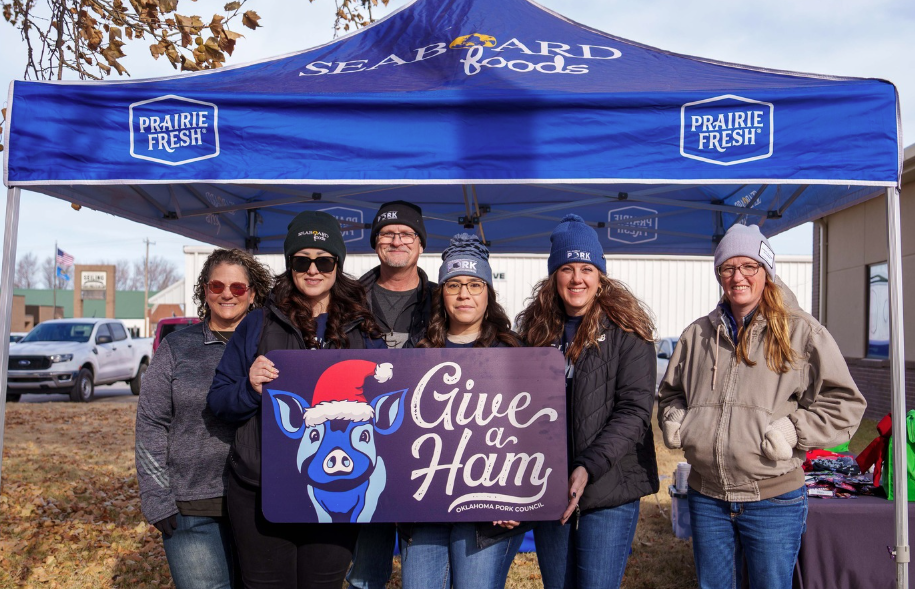
As part of the Oklahoma Pork Council's (OPC) third annual Give-A-Ham campaign, Seaboard Foods is partnering with OPC for a major 10,250-pound donation of homegrown pork to Oklahoma City beneficiaries. The donation of over 10,000 pounds of pork, which comes from locally raised pigs and processed at Seaboard Foods' Guymon, OK plant, will provide much-needed assistance to area organizations; The Regional Food Bank of Oklahoma, Homeless Alliance, and Grace Rescue Mission, among others. During this holiday season, this donation will help those in need and support the local community when we need it most.
Farm Director KC Sheperd caught up with Davida Gomez, Community Enrichment Specialist at Seaboard Foods to get the details.
"The Oklahoma Pork Council does an amazing job representing the pork producers of Oklahoma," Gomez said.
Yesterday, December 18, they started at the Regional Food Bank of Oklahoma, and following the donation, OPC and Seaboard Foods caravaned and delivered pork to other area beneficiaries, including:
"It was really heart-warming to see the work that they are doing, and how we can help them by providing protein to ensure that everyone is getting a quality meal in addition to what these other services are providing for them," Gomez said.
Gomez spoke about the technology being used by the Regional Food Bank of Oklahoma so they can reach larger areas. She was most touched by the Homeless Alliance because it is a shelter for families.
"I think what got me the most there is they have a Christmas shop for people to donate toys to, so the homeless families can choose gifts for their children," Gomez described. "Then they have volunteers that gift wrap them so they can provide gifts for their kids.
"You take for granted being able to have electricity for heat in the winter and air conditioning in the summer and provide meals for your family, but then you start to think about the other expenses that come around the holidays, and it brought tears to my eyes. It is pretty amazing what these groups are doing. We are thankful that we are able to help, too."
Be sure to listen to the complete conversation by clicking the listen bar at the top of the page.
This donation from Seaboard Foods, coordinated and with support from the Oklahoma Pork Council, is part of OPC's ongoing commitment to supporting local communities and addressing hunger. As part of OPC's Give-A-Ham campaign, OPC has provided over 2,400 meals to communities in which we live, including Stillwater, Maysville, Tulsa, and Wewoka. In addition to the Seaboard Foods donation to the Regional Food Bank of Oklahoma, this coordinated donation will also impact the Homeless Alliance and the Grace Rescue Mission with over 500 pounds of pork, continuing the Give-A-Ham campaign and feeding the homeless during the season of giving.
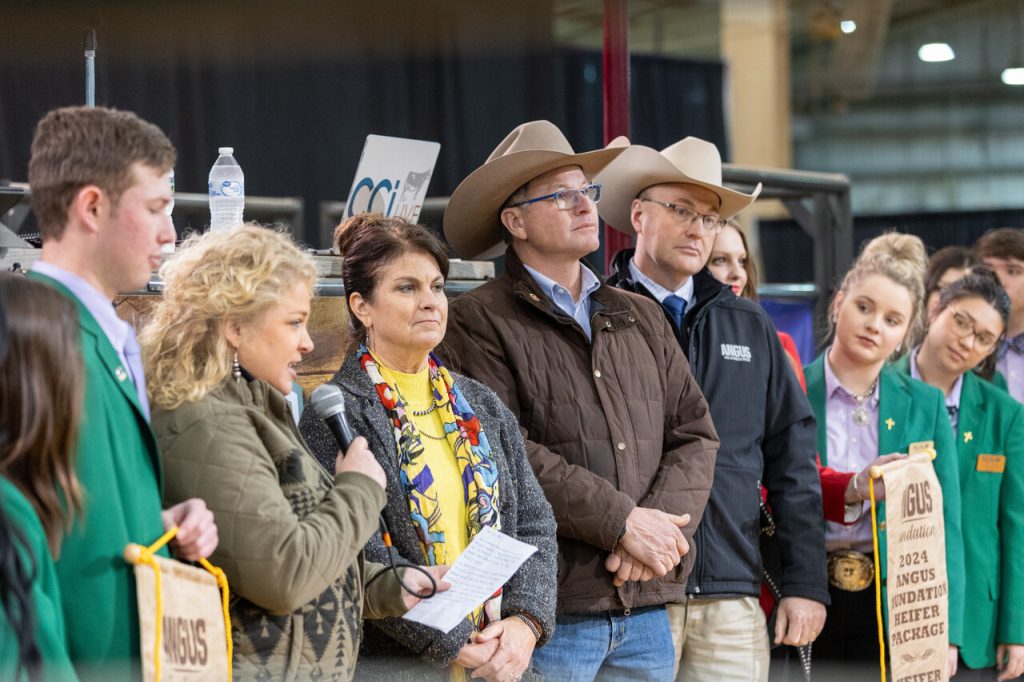
Jaclyn Boester, Angus Foundation executive director, introduces the 2024 Angus Foundation Heifer Package donor, Yon Family Farms of Ridge Spring, S.C., at the 2024 National Angus Bull Sale in Oklahoma City. The month of January brings many ways to support the Angus Foundation, including the 2025 heifer package donated by Pollard Farms of Waukomis, Oklahoma.
The month of January kicks off an exciting new year full of opportunities to support the Angus Foundation's mission of advancing education, youth and research. With numerous offerings available in conjunction with the Cattlemen's Congress in Oklahoma City, the upcoming month is set to inspire generous support for the Angus Foundation in 2025. another year of generous support for the Angus Foundation.
Angus Foundation Heifer Package
Each year the Angus Foundation Heifer Package leads off the National Angus Bull Sale. The 2025 heifer package is donated by Pollard Farms of Waukomis, Oklahoma.
The heifer, POLLARD Rita 4012 (AAA*20875621), is a daughter of EXAR Cover the Bases 0819B and out of a productive, young two-year-old that is "on her way to the donor pen," said Dr. Barry Pollard of Pollard Farms. She stems from the PF W34 Rita 4139, a long-time donor in the Pollard Farms program.
Rita is an elite donor prospect. She exemplifies the phenotypic and numerical balance that Dr. Pollard and his crew strive to produce, ranking in the top 1% for $C, Marb, $G, $AxH and $AxJ; top 2% for $B and $W; top 5% for RADG; top 10% for WW, YW, and HP; top 15% for CED, BW, PAP, and $M; top 20% for RE; and top 25% for CW and $F.
The heifer package also includes an Advanced Reproductive Technology Package from Trans Ova Genetics; trucking to the buyer donated by Lathrop Livestock Transportation; and 30 days of mortality insurance donated by Jeanne Conover, Livestock Insurance Agent with Conover Auction Service.
The sale starts at 2 p.m. on Friday, January 10, 2025, at Cattlemen's Congress in Oklahoma City.
To learn more about the Angus Foundation Heifer Package visit bit.ly/2025HeiferPackage.
Fund the Future Offerings
A special feature to the January events is the Angus Foundation "Fund the Future" donation lot that will sell. The Bases Loaded Sale, held January 7 at Heritage Place in Oklahoma City, will feature a heifer pregnancy donated by Riverbend Ranch with complimentary trucking included by Lathrop Livestock Transportation.
This headlining female of the Riverbed and Vintage Angus programs, sells as Lot A with 100% of the proceeds benefiting the Foundation's mission. The Fund the Future program allows breeders to donate proceeds from a designated sale lot to the Angus Fund, which provides unrestricted dollars to support the breed.
This Fund the Future donation lot features a heifer pregnancy from the $194,000 valued second-generation Riverbed Ranch donor, Miss Belle 9209 and sired by the American Angus Association's Sire of the Year, Connealy Craftsman. The anticipated due date is February 24, 2025.
Angus Herdsman Social
The Foundation and Association will again host a celebration for the Angus family at the 2025 Cattlemen's Congress. The Angus Herdsman Social serves as an evening of fellowship in Oklahoma City, Friday, January 10.
The doors of the Cattlemen's Bar in Barn 3 will open at 3:45 p.m. following the National Angus Bull Sale. The social will feature the announcement of the 2025 Angus Herdsman of the Year, food, refreshments and a group of auction and raffle items to benefit the Foundation's mission.
Auction highlights include a men's and/or women's custom-made cowboy hat from Greeley Hat Works, a set of whiskey barrel chairs and a custom cowhide bag from Holy Cow Couture. A 2025 National Finals Rodeo ticket package, among other exciting items and experiences, is available for bidding.
Those interested in any of the January events and offerings supporting the Angus Foundation are encouraged to contact Jaclyn Boester, Angus Foundation executive director, at JBoester@Angus.org, or their regional manager. To learn more about the Angus Foundation and its mission, visit angus.org/foundation.
About the Angus Foundation
Established as a 501(c)(3) organization in 1980, the Angus Foundation remains focused on its mission to support Angus education, youth, and research. The organization has distributed more than $4.9 million in youth scholarships since 1998 and has also invested more than $1.4 million in beef cattle research in the past decade.
For more information, contact the Angus Foundation at 816-383-5100.
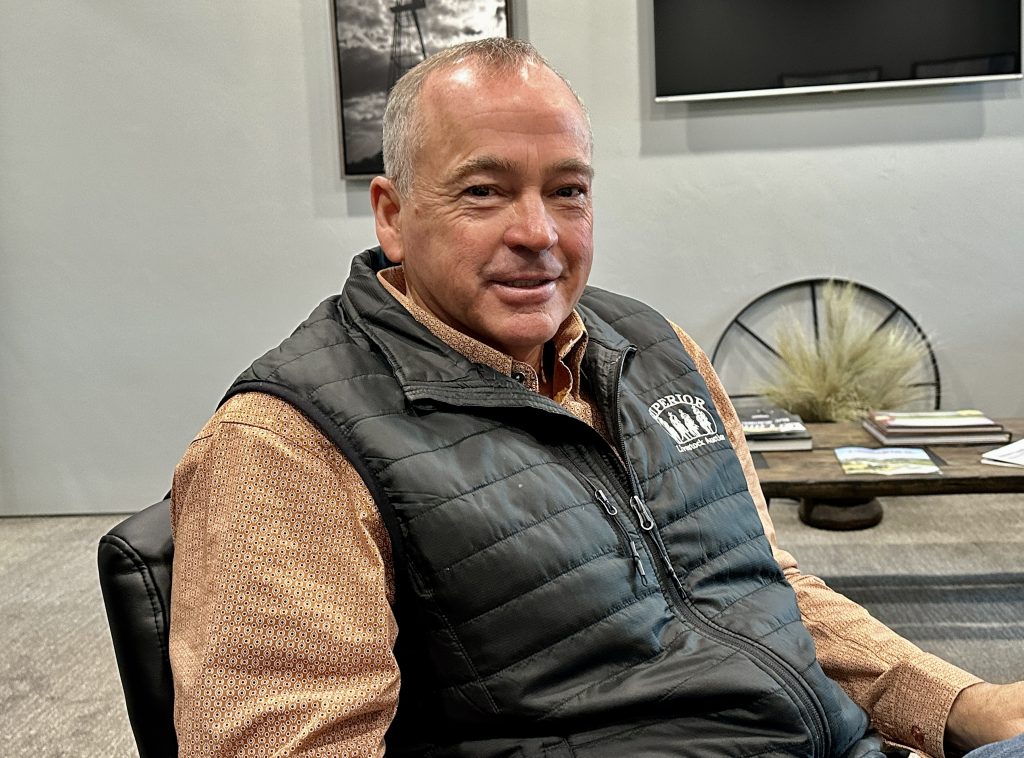
Ron Hays is talking with Superior Livestock President Danny Jones, who says that 2024 has been a tremendous year for both Superior and for the cattle industry.
"We've had near record volumes of people to use us and trust us to continue marketing their cattle," Jones said. "We certainly appreciate that. We are humbled by the opportunity, but we see that it is providing a tremendous value in the industry as well as to our customers – both buyers and sellers alike. There are a lot of inefficiencies in the way cattle get marketed in the United States, and we believe that we have a system where everyone who participates wins."
Superior Livestock is the largest cattle marketing entity by a large margin, including in online sales. The key to its success is direct marketing of load lots directly from the ranch to the end user, which Jones says requires significant volumes of cattle; however, it reduces stress on the cattle to lessen shrinkage and health problems for them.
"At National and Superior, we are involved in everything from the sale barns to private treaty, and of course, our video auctions," Jones said. "It takes all methods to make it work, but for those with load lots of cattle direct from the country and marketing to a large buyer base – bringing buyer and seller together with that robust price discovery - is where the huge advantages come in."
In addition to the improved health of the cattle upon arrival, buyers feel better about the vaccination protocols of large producers. Sellers can build reputations and enjoy repeat buyers who are happy with the cattle they have previously received from them.
Value-added vaccination programs have been a game changer. Jones said, "Everything from the baseline of doing vaccination programs on unweaned cattle, weaned cattle, purchased cattle that are straightened out... all of those things are really important and you can add the additional programs like natural NHTC, G.A.P. and Beef CARE, and all those things that can add value. The buyers of those cattle need a place where they can go and find the volume that they need to meet their needs and their commitments, and we can bring that to them nationwide."
The Beef Buzz is a regular feature heard on radio stations around the region on the Radio Oklahoma Ag Network and is a regular audio feature found on this website as well. Click on the LISTEN BAR for today's show and check out our archives for older Beef Buzz shows covering the gamut of the beef cattle industry today.
U.S. Department of Agriculture Secretary Tom Vilsack today announced the second round of Regional Agricultural Promotion Program (RAPP) grants, which is intended to allocate $300 million to 67 partners once all legal and administrative requirements are satisfied, expanding American food and agricultural exports in emerging global markets. This latest investment brings total RAPP funding to $600 million in 2024.
The new grants aim to diversify export markets in regions with rising consumer demand and purchasing power, including Africa, Latin America/the Caribbean, and South/Southeast Asia. These regions offer significant opportunities for U.S. producers seeking to establish a stronger foothold in dynamic and growing markets.
"RAPP is a critical tool for helping U.S. producers and agribusinesses stay competitive in today's global trading environment," Secretary Vilsack said. "The Biden-Harris approach to trade is delivering results for U.S. agriculture through record exports and improved relationships with current and future trading partners, and this investment supports actions that build on the global demand for American agriculture's high-quality products."
Under the Biden-Harris administration, U.S. agricultural exports have grown significantly, posting the three highest years in history in 2021, 2022, and 2023 – including a record of nearly $196 billion in 2022 and nearly $175 billion in 2023. USDA and the United States Trade Representative (USTR) have helped to secure over $26.7 billion in agricultural market access since the start of the Biden-Harris Administration.
In Fiscal Year 2024, the actions of USDA's Foreign Agricultural Service helped preserve $8.8 billion in total U.S. agricultural exports. Since 2022, USDA has issued $9.4 billion in loan payment guarantees to facilitate the diversification of U.S. agricultural export markets. USDA also leveraged $2.3 billion in Commodity Credit Corporation (CCC) funds in 2024 to help U.S. agriculture export market development efforts and combat global food insecurity. In addition to RAPP, $100 million was targeted for aid to address the unique challenges for specialty crops producers seeking to enhance market growth opportunities by exporting. Separately, USDA is using $1 billion of the CCC funds to support international food assistance programs and strengthen global food security, which benefits U.S. agricultural producers.
Market Diversification and New Opportunities
This second round of funding reinforces USDA's commitment to diversification, with a $25 million set-aside for projects focused on Africa. Proposals for this round exceeded the available funding, with eligible entities submitting more than $1 billion in project requests. The first $300 million in RAPP funds, announced in May 2024, has already helped U.S. producers tap into new overseas opportunities. RAPP builds on the success of the Agricultural Trade Promotion Program (ATP), launched in 2018 to mitigate the risks of overreliance on a few large markets.
Applications for the second round of funding opened in August 2024, and USDA received proposals from agricultural trade organizations, state regional trade groups, agricultural cooperatives, and state agencies. These projects will play a critical role in establishing new market opportunities and sustaining existing ones for U.S. producers.
Background on RAPP
Secretary Vilsack announced in October 2023 that USDA would use $1.2 billion from the Commodity Credit Corporation to establish RAPP, with a focus on diversifying international demand for U.S. agricultural exports beyond established markets such as China, Mexico, and Canada, which collectively account for nearly 50 percent of current export sales. RAPP focuses on parts of the world where the middle class is growing and the desire for high-quality food and farm products is on the rise, but where U.S. exporters may not yet have an established presence or firm foothold.
Awards are contingent on completion of legal and administrative requirements relating to the grant. For more information on the Regional Agricultural Promotion Program visit the FAS website.
USDA touches the lives of all Americans each day in so many positive ways. Under the Biden-Harris Administration, USDA is transforming America's food system with a greater focus on more resilient local and regional food production, fairer markets for all producers, ensuring access to safe, healthy and nutritious food in all communities, and building new markets and streams of income for farmers and producers using climate-smart food and forestry practices. USDA is making historic investments in infrastructure and clean energy capabilities in rural America and committing to equity across the Department by removing systemic barriers and building a workforce more representative of America. To learn more, visit www.usda.gov.
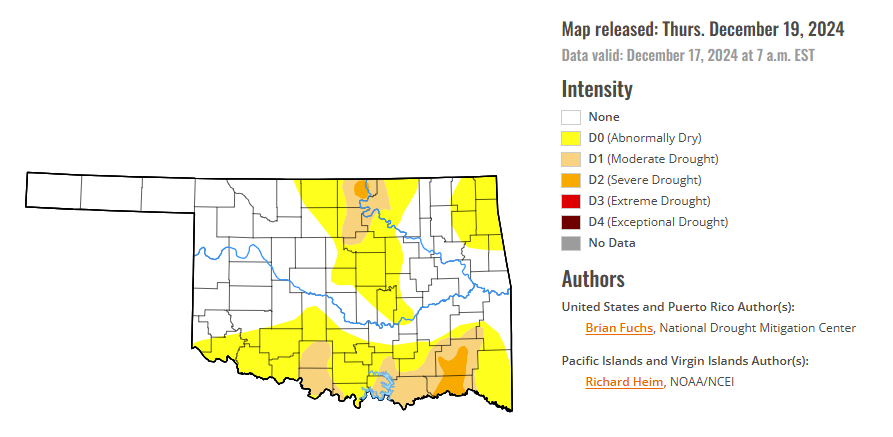
To view the latest Oklahoma drought map, CLICK HERE.
According to the latest Oklahoma drought monitor report, exceptional drought remains at zero percent, unchanged from the start of the calendar year.
Extreme drought or worse conditions remain at zero percent, unchanged since the week of October 29.
Severe drought or worse conditions are 1.85 percent, unchanged since December 5.
Moderate drought or worse conditions decreased to 11.89 percent, down from 17.91 percent last week.
Abnormally dry or worse conditions decreased to 43.97 percent, down from 46.70 percent last week.
According to the 6-to-10-day precipitation outlook map, most of Oklahoma is leading above 40-50 percent chances of precipitation through December 28, 2024. Pockets in the southwestern panhandle and southwestern corner of the state are leaning above a 33 – 40 percent chance of precipitation, and much of the eastern edge of the state, especially in the South but excepting the North, is likely above a 50 – 60 percent chance of precipitation through that December 28 date.
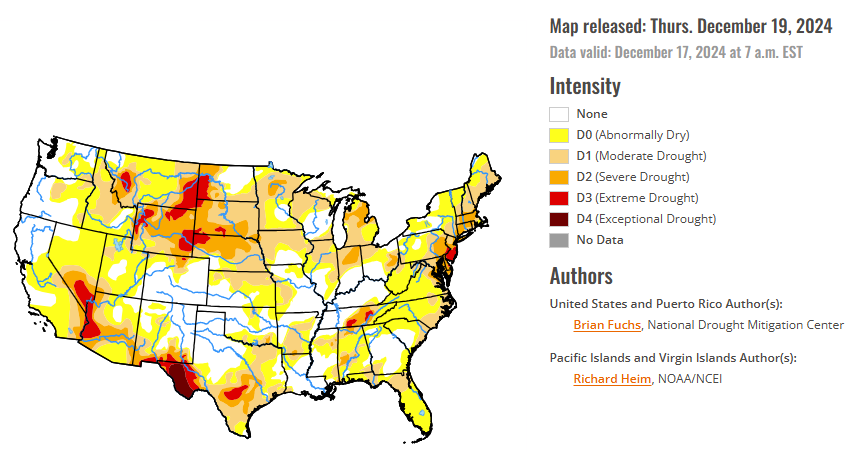
To view the United States Drought Map, CLICK HERE.
Over the last week, precipitation was greatest in portions of the Southeast and coastal areas of northern California. Widespread precipitation was recorded from Arkansas into the Midwest and along much of the eastern seaboard from the Mid-Atlantic up into New England. Much of the Plains, Southwest, and Rocky Mountains were quite dry during this period as well as much of the Florida peninsula. Temperatures were cooler than normal over the northern Plains and much of the Midwest with departures of 5-10 degrees below normal. Above normal temperatures were recorded over the northern Rocky Mountains, the southern Plains and into the South, where departures were 5-10 degrees above normal. Most other locations observed temperatures near normal.
In the Southern Plains, temperatures were warmer than normal over most of the region with departures of 5-10 degrees above normal for the week. The wettest areas were in eastern Oklahoma, Arkansas and northern Mississippi, where most recorded 150-200% of normal precipitation for the week. Moderate drought and abnormally dry conditions improved over much of northern, western, and central Arkansas and in far eastern Oklahoma. Moderate drought improved over extreme southeast Mississippi and in far eastern Tennessee. Portions of eastern Tennessee continued to be dry and a new pocket of extreme drought was added. Exceptional drought was removed from south central Tennessee and some improvements to moderate drought and abnormally dry conditions were made in central Tennessee. Moderate drought expanded in east Texas while severe drought contracted in north Texas and portions of east Texas.
In The High Plains, it was a dry week for most of the region with only areas of southeastern Nebraska, northeastern Kansas, northern North Dakota and the Plains of eastern Wyoming and Montana showing any above-normal precipitation. Temperatures were cooler than normal over the Dakotas with departures of 3-6 degrees below normal while most of the rest of the region was 3-6 degrees above normal for the week. Abnormally dry conditions improved over southwest and southeast Kansas while severe drought improved in northeast Wyoming and into western South Dakota. The extreme drought in northeast Nebraska was reassessed and removed as the convergence of the indicators at extreme drought levels no longer existed, even with some long-term signals still showing some dryness in the extreme levels.
In the West, most of the southern and southwest portions of the region were dry for the week. After an early start to the snow season, many areas have seen it drop off considerably and are below normal for this time of year. The wettest areas were in northern California into the Great Basin and southern Idaho and Montana. Temperatures were mainly 3-6 degrees above normal over the region with only those areas recording the most rains being below normal for the week. Even with the precipitation in areas, changes to the drought status in the region were minimal this week. Moderate drought improved in northern Utah and southwest Wyoming. Extreme drought expanded in northwest Wyoming while northern Colorado had abnormally dry and moderate drought expand slightly.
Looking ahead, over the next 5-7 days, it is anticipated that the best chances for precipitation will be over the Pacific Northwest, Midwest, and the eastern third of the United States. Much of the central and southern Plains, Southwest, and Rocky Mountains will expect little to no precipitation. Temperatures during this period will be above normal over the western half of the country with the greatest departures expected over the Southwest where it could be 10-13 degrees above normal. The coolest temperatures will be along the East Coast where departures of 7-10 degrees below normal can be anticipated from North Carolina up to New York.
The 6-10 day outlooks show that the probability of warmer-than-normal temperatures covers almost the entire country outside of the East Coast from North Carolina to Massachusetts where probabilities lean to near normal conditions. The highest probabilities of above-normal temperatures will be in the northern Plains and upper Midwest. The greatest chances of above-normal precipitation will be in the Pacific Northwest and portions of the South. The best chances of below-normal precipitation are in the Southwest and northern New England..
To view the 6-10 Day Precipitation Outlook Map, click here.
To view the 6-10 Day Temperature Outlook Map, click here.
To view the Monthly Drought Outlook Map, click here.

Pivot Bio, one of the world's leading innovative agtech companies, is proud to announce a strategic distribution partnership with Hefty Seed Company, one of the largest independent ag retailers in the U.S. Beginning in 2025, PROVEN® 40, a microbial nitrogen source powered by Pivot Bio's patented gene-edited technology, will be available at all Hefty Seed Co. locations, offering corn farmers a new mode of nitrogen delivery that complements Hefty's trusted lineup of crop input offerings.
With an expansive network of 49 retail locations spanning 10 states, Hefty Seed Co. has built a trusted legacy as one of the nation's leading crop protection and seed suppliers.
"Hefty Seed Company has earned a reputation for empowering farmers through expert agronomic advice, proven crop inputs, and a deep understanding of what it takes to succeed on the farm," said Chris Turner, chief commercial officer, Pivot Bio. "We are excited to partner with Hefty's expert advisors to bring farmers this patented technology that helps maximize every acre potential while supporting long-term operational success."
By providing a steady, in-season nitrogen supply, PROVEN® 40 helps crops meet nutrient demands efficiently, insulates against the risks of nitrogen loss events, and protects yield potential while improving overall production consistency. Through this partnership, more farmers will gain access to the first new mode of nitrogen delivery this century, serving as a complementary nitrogen source alongside synthetic fertilizers and manure to strengthen modern crop management systems.
Starting in the new calendar year, Pivot Bio's PROVEN® 40 for corn and RETURN ® for sorghum, wheat and other small grains will be available to any interested farmers across the entire Hefty Seed Co. network. To assist farmers in effectively integrating this innovative technology for maximum benefit, Pivot Bio and Hefty Seed Co. are introducing a collaborative field support initiative. This dynamic partnership will provide customers with personalized nitrogen planning, field-tested insights, and data-driven recommendations—each tailored to the specific needs of their operations—delivered by Hefty's trusted local advisors or Pivot Bio's expert agronomy team.
Additionally, Hefty Seed Company's customers will have access to emerging programs like Pivot Bio's N-OVATOR program designed to create new revenue opportunities through partnerships with downstream buyers. This approach not only supports better nitrogen use efficiency but also positions grain farmers to benefit financially from sustainable production practices. This alliance reflects a shared commitment to delivering full-system solutions that enhance productivity, maximize efficiency, and drive long-term farm profitability.
Shane and Lacey Brockhoff wih their children.
Meristem Crop Performance announced today that Shane Brockhoff has been tapped to be Meristem's Vice President of Sales for the Western U.S. The promotion comes after Brockhoff's exemplary service to farmers in Iowa and Nebraska as Regional Director. Brockhoff will now bring this experience in helping growers boost their profitability with the right products and practices to more growers west of the Mississippi River.
"Our service to farmers and our product portfolio are both growing at a rapid rate," says Mitch Eviston, Meristem founder and CEO, "and I'm very grateful for Shane's help in taking this opportunity to more dealer-partners and bringing the benefits of this innovation to more and more farmers. This will create more opportunities for Shane's positive influence on customers, dealers and our team."
After nearly two years with Meristem, Brockhoff says he's excited to expand his role in bringing Meristem's innovative products to more farmers all across the western states. "Meristem is a great fit for me. They are very intentional about cutting waste in the distribution channel and developing technology to help growers make the most of biologicals," he says.
Brockhoff says pests like nematodes and corn rootworm have been stealing bushels from farmers for years and Meristem products are helping them reduce those losses. "Now we are harnessing the power of biologicals and bringing together biocontrols and synthetic chemistry to deliver new modes of action," he explains. "Meristem is the only one able to deliver truly effective biocontrol because our patented BIO-CAPSULE™ seed fluency delivery system protects these beneficial microbes right up to their point of impact."
Shane Brockhoff grew up near Walnut, Iowa and started working for a neighboring farmer when he was 13-years old. During that time, he decided to make a career in agriculture and enrolled at Iowa State University (ISU), where he earned both a bachelor's degree and a master's degree in agronomy and crop science.
"My graduate school work at ISU took me deep into soil biology and soil chemistry," he says. "That's been very helpful as I work with farmers. I can talk about soil health and break it down into layman's terms. I'm a high-yield geek," he laughs. "I love working with farmers to gain every edge possible to get a better ROI (return on investment) from every acre."
After ISU, he first became a regional seed specialist for Landus Cooperative in Oakland, Iowa for several years and then joined AgriGold where he spent nearly 10 years before becoming division sales lead for AgReliant Genetics. Brockhoff and his wife Lacey have six children – five daughers and a son – and reside near Walnut, where they also assist Lacey's parents in their farm operation.
"In my work with farmers, I focus on optimizing the genetics of every seed they plant," said Brockhoff. "That's what has drawn me to Meristem Crop Performance. They have products that are helping farmers make the most of every seed, and with every pass those farmers make through the field all season long."
Brockhoff adds that improving the efficiency of the distribution channel is another reason he's riding with Meristem. "By bringing concentrates like AQUADRAFT™ C and UPSHIFT™ C to farmers, we're not wasting diesel fuel to move water. That's more efficient and offers farmers more control."
In January, the United States Department of Agriculture's National Agricultural Statistics Service (NASS) will survey cattle operations nationwide to provide an up-to-date measure of U.S. cattle inventories.
"This information helps producers make timely, informed business decisions and plan for herd expansion or reduction. It also helps packers and government leaders evaluate expected slaughter volume for future months and determine potential supplies for export, as well as aid in determining program and resource needs in times of emergencies" said Troy Marshall, Oklahoma State Statistician of the NASS Southern Plains Regional Field Office.
"Obtaining the current count of cattle will serve as an important decision-making tool for the entire agricultural industry," added Marshall.
NASS will mail the questionnaires to all producers selected for the survey in late December. Oklahoma and Texas producers will have the opportunity to report their beef and dairy cattle inventories, calf crop, death loss and cattle on feed information. To ensure all survey participants have an opportunity to respond, NASS interviewers will contact producers who do not respond by mail or online to conduct interviews.
NASS safeguards the privacy of all respondents and publishes only aggregate data, ensuring that no individual operation can be identified.
Survey results will be published in the Cattle Report to be released on January 31, 2025. These and all NASS reports are available online at www.nass.usda.gov/publications. For more information on NASS surveys and reports, visit www.nass.usda.gov or call the NASS Southern Plains Regional Field Office at 1-800-626-3142.
Dr. Jon DeClerck has been selected as the next American Simmental Association (ASA) Executive Vice President (EVP). DeClerck will assume the position of EVP on July 1, 2025; Dr. Wade Shafer will continue serving as ASA EVP until his official retirement on June 30, 2025.
DeClerck is a forward-thinking leader with extensive experience in the cattle industry and a lifelong passion for advancing animal science. Holding a PhD in Ruminant Nutrition from Texas Tech University, he has excelled in technical consulting, education, and research. As a Technical Consultant for Purina Animal Nutrition, Dr. DeClerck has advised stakeholders across the beef production cycle in New Mexico, Texas, and Louisiana, combining innovative research with practical solutions to help producers maximize profitability. Previously, he served as a lecturer and livestock judging coach at Texas Tech and Iowa State University, mentoring students and leading multiple national champion livestock and meat evaluation teams. DeClerck has been recognized as a national champion team coach, and is the recipient of numerous industry awards. Raised on a diversified farm near Aledo, Illinois, featuring a Simmental and commercial cow herd, Dr. DeClerck has a deep connection to the breed. A lifelong advocate for Simmental cattle, he is committed to serving the membership and advancing the scientific innovation and growth that have long defined ASA.
Chris Ivie, Chairman of the ASA Board of Trustees, shared, "On behalf of the American Simmental Association Board of Trustees we would like to welcome Dr. Jon DeClerck as our next Executive Vice President. He will work closely with Dr. Wade Shafer over the next six months; we look forward to working with Dr. DeClerck to continue the unprecedented success and growth we are experiencing here at the ASA."
Founded in 1968, the American Simmental Association is headquartered in Bozeman, MT. ASA is committed to leveraging technology, education, and collaboration to accelerate genetic profitability for the beef industry. In keeping with its commitment, ASA, along with its partners, formed International Genetic Solutions — the world's largest genetic evaluation of beef cattle. Learn more at www.simmental.org.
American Farm Bureau Federation President Zippy Duvall delivered a letter to Congress this evening urging elected leaders to stand with farmers as they reconsider the contents of a Continuing Resolution (CR) to fund the federal government and potentially offer a lifeline to farmers and ranchers. Below are excerpts from the letter.
"Any alternative Continuing Resolution (CR) must include: a farm bill extension, aid to rebuild after natural disasters, economic assistance to bridge the gap until we can get to a new farm bill, and year-round E-15 sales.
"Weather-related natural disasters in 2023 and 2024 have crippled communities across the country. The weather events may have passed, but unthinkable wreckage remains. Entire communities must be rebuilt.
"Economically, America's farmers and ranchers are suffering. Inflation is killing farm families' checkbooks. Stubbornly high supply costs have made seed, fertilizer, feed, repairs and H-2A labor costs more expensive. Extremely high interest rates make it even more expensive because most farmers need operating loans to buy inputs each year. Unfortunately, the price farmers receive for the products they grow is decreasing.
"Farmers in America are experiencing their third year in a row of losing money. Right now, lenders are telling farm families that operating loans will not happen or be significantly smaller unless the federal government provides some relief. We've lost 141,000 farms in a five-year period and that number will grow if Congress fails to act."
The full letter can be viewed here.
For months, Southern Ag Today has been documenting growing economic pressure in the countryside, particularly for row-crop producers (see here, here, and here). We have also repeatedly highlighted the need for assistance to help growers shoulder losses in 2024 while preparing for a rather bleak outlook in 2025, particularly with farm bill negotiations having stalled in Congress. Following a weekend of high-stakes negotiations, Congress released its draft supplemental text on Tuesday, proposing $30.78 billion in economic and disaster assistance for the countryside.
In October, we highlighted the introduction of the Farmer Assistance and Revenue Mitigation Act of 2024 (FARM Act) as introduced by Rep. Trent Kelly (R-MS). Of the $30.78 billion authorized by the supplemental, $10 billion is set aside for economic assistance that hews closely to the structure of the FARM Act. The supplemental did include a few key changes. For example, the payment factor was reduced from 60% (as envisioned in the FARM Act) to 26% to fit within the $10 billion budget for the program. Additionally, the supplemental also imposed minimum payments for economic assistance (based on 8% of the statutory reference price established in the 2018 Farm Bill), which serves to raise the payment rates for several of the smaller-acreage crops along with peanuts and rice. Table 1 includes an estimate of the payment rates for economic assistance. The payments will be based on acres planted to the eligible commodity in 2024 (for harvest, grazing, haying, silage, or other similar purposes) and 50% of the acreage prevented from being planted in 2024. Separate payment limits would apply for economic assistance: $125,000 for persons or entities that derive less than 75% of their income from farming, ranching, or forestry and $250,000 for persons or entities that derive 75% or more of their income from farming, ranching or forestry.
| Eligible Commodity | Estimated Payment ($/Acre) |
| Corn | 43.80 |
| Soybeans | 30.61 |
| Wheat | 31.80 |
| Cotton | 84.70 |
| Rice (L/M)* | 71.37 |
| Sorghum | 41.85 |
| Oats | 78.42 |
| Barley* | 21.76 |
| Peanuts* | 76.30 |
| Dry peas* | 16.16 |
| Lentils* | 19.32 |
| Chickpeas, large* | 24.16 |
| Chickpeas, small* | 25.04 |
| Sunflower* | 23.38 |
| Rapeseed* | 23.23 |
| Canola* | 26.76 |
| Safflower* | 15.71 |
| Flaxseed* | 17.48 |
| Mustard* | 11.42 |
| Crambe* | 19.37 |
| Sesame* | 5.28 |
| *Commodities estimated to receive minimum payment, either through formula with complete data or based on assumption due to lack of publicly available data, final payment rates may vary. | |
SOURCE: House and Senate Agriculture Committee staff.
NOTE: these payment rates are initial estimates for illustration only. Congress must first pass the legislation and then USDA will publish final payment rates as they implement the program.
In addition to economic assistance, $20.78 billion will be available for disaster assistance to help cover losses in 2023 and 2024. Out of this amount, $2 billion must be made available for livestock losses; $30 million maybe made available to crop insurance agents to help offset the freeze in administrative and operating expense reimbursements imposed by the Obama Administration; and $3 million must be made available to address concerns with circumvention of trade laws regarding molasses on the northern border. Importantly, there are a number of other items that may be funded from this amount, including block grants for various purposes. For example, the bill allows for block granted funds to be used for agricultural producers who have suffered losses due to the failure of Mexico to deliver water to the United States in accordance with the 1944 Water Treaty. The provision closely follows Rep. Monica De La Cruz's (R-TX) bill – the South Texas Agriculture Emergency Assistance Act – which proposed to allocate $280 million in grants to the State of Texas (via the Texas Department of Agriculture) to help offset losses incurred by border producers.
As of the time of publishing, the path forward is not remotely clear. Yesterday afternoon, President Trump and Vice President-Elect J.D. Vance released a statement noting that "Republicans want to support our farmers..." but highlighting that "[t]he only way to do that is with a temporary funding bill WITHOUT DEMOCRAT GIVEAWAYS combined with an increase in the debt ceiling." While this is strong support from the incoming Administration, the current Congress and Administration must sign it into law now for assistance to arrive in time to help with the 2025 crop year.
Article courtesy of Southern ag Today: Fischer, Bart L., and Joe Outlaw. "Congress Poised to Deliver Vital Aid to the Countryside?" Southern Ag Today 4(51.4). December 19, 2024. Permalink
RON's Dave Lanning has a pre-opening look at today's agricultural Markets.
Click the audio tab below for today's report.
There was a funding package that had been negotiated by House Leaders- but it now appears to be dead. Republican lawmakers saw their phones light up from angry constituents stirred up by social media posts- especially on X with Elon Musk leading the charge.
President Elect Trump and Vice President Elect JD Vance released a statement on X as well- saying "Republicans want to support our farmers, pay for disaster relief, and set our country up for success in 2025. The only way to do that is with a temporary funding bill WITHOUT DEMOCRAT GIVEAWAYS combined with an increase in the debt ceiling. Anything else is a betrayal of our country."
They added, "Republicans must GET SMART and TOUGH. If Democrats threaten to shut down the government unless we give them everything they want, then CALL THEIR BLUFF. It is Schumer and Biden who are holding up aid to our farmers and disaster relief. "
Between the portion of disaster assistance that would have been pointed to farmers and ranchers hit by hurricanes, tornadoes and wildfire- plus the economic assistance written into the measure- agriculture had $31 billion ready to be headed for rural America- but now that is very unlikely any time soon.
Another casualty of the demise of the supplemental package is no extension to the expired 2018 Farm Bill. The one year extension of the Law was voted on and approved in September of 2023- with the extended measure expiring this past September 30, 2024.
By midafternoon Wednesday, political news outlets on Capitol Hill were reporting that House Speaker Mike Johnson, R-La., was looking to drop much of the disaster aid and pass a more stripped-down continuing resolution, or a "clean CR."
The House Rules Committee, which lays down the rules for floor debates on bills, still had not scheduled a hearing on the CR.
And the Democrats may not support a "Clean CR" if their priorities that they have negotiated for are not in there- which they likely would not be.
House Agriculture Committee Republicans on X posted, "America's farmers aren't a political football -- they're the backbone of our nation. They feed, clothe, and fuel us every day." There will be a lot of pressure not to vote for a "Clean CR" from the ag community with no farm bill elements.
A government shutdown is a very real possibility with the Government running out of money at midnight this coming Friday evening. Farm Broadcast colleague Todd Gleason from Illinois says if the government does shut down- ag faces several things- "If a CR of sort is not passed, the federal government would shut down Monday and stay that way until Congress can come to some new agreement. The new Congress will be sworn in Jan 3. If the shutdown drags on for very long it would cause the Jan 10 USDA reports to be delayed. "
Stay tuned...
The U.S. Department of Agriculture (USDA) welcomes input on the assessment of environmental impacts on two programs – the Tree Assistance Program (TAP) and Farm Storage Facility Loan (FSFL) program. USDA's Farm Service Agency (FSA) is accepting comments until Jan. 18, 2025, on its draft programmatic environmental assessments. The TAP environmental assessment includes updates to streamline the program and enable a quick response to natural disasters. The FSFL environmental assessment recommends continuing the program as currently administered.
"We welcome public input on the possible environmental impacts of both of these valuable programs," said FSA Administrator Zach Ducheneaux. "Your comments will help us maintain and strengthen our disaster assistance and financing options for producers nationwide."
The National Environmental Policy Act requires federal agencies to consider the potential effects of major federal actions to both the natural and human environments as part of their planning and decision-making processes. Draft programmatic environmental assessments help FSA to determine whether program changes are needed and plan the implementation of proposed updates.
Tree Assistance Program
TAP helps cover the cost of replanting or rehabilitating eligible trees, bushes and vines that produce annual crops that have been damaged or destroyed by natural disasters. This program is crucial for helping producers recover from adverse natural disaster events and ensuring the long-term viability of their agricultural operations. The proposed program implementation update would include additional management tools and screening criteria that allow FSA to respond more quickly and effectively to time-sensitive natural disasters, including plant diseases.
Farm Storage Facility Loan Program FSFL improves nationwide on-farm storage capacity for upgrading and building farm storage facilities for eligible commodities. The recommendation to continue the program as currently administered is based on a need to improve the ability of agricultural producers to preserve harvested crops, reduce post-harvest losses and improve marketing and sales opportunities.
More Information
Both draft programmatic environmental assessments may be reviewed on the FSA current environmental documents page Written comments regarding both the TAP and FSFL programs can be emailed to SM.FPAC.FBC.ENV@usda.gov until Jan. 18.
For detailed program information, view FSA's TAP and FSFL program fact sheets.
FSA helps America's farmers, ranchers and forest landowners invest in, improve, protect and expand their agricultural operations through the delivery of agricultural programs for all Americans. FSA implements agricultural policy, administers credit and loan programs, and manages conservation, commodity, disaster recovery and marketing programs through a national network of state and county offices and locally elected county committees. For more information, visit fsa.usda.gov. USDA touches the lives of all Americans each day in so many positive ways. In the Biden-Harris administration, USDA is transforming America's food system with a greater focus on more resilient local and regional food production, fairer markets for all producers, ensuring access to safe, healthy and nutritious food in all communities, building new markets and streams of income for farmers and producers using climate smart food and forestry practices, making historic investments in infrastructure and clean energy capabilities in rural America, and committing to equity across the Department by removing systemic barriers and building a workforce more representative of America. To learn more, visit usda.gov.
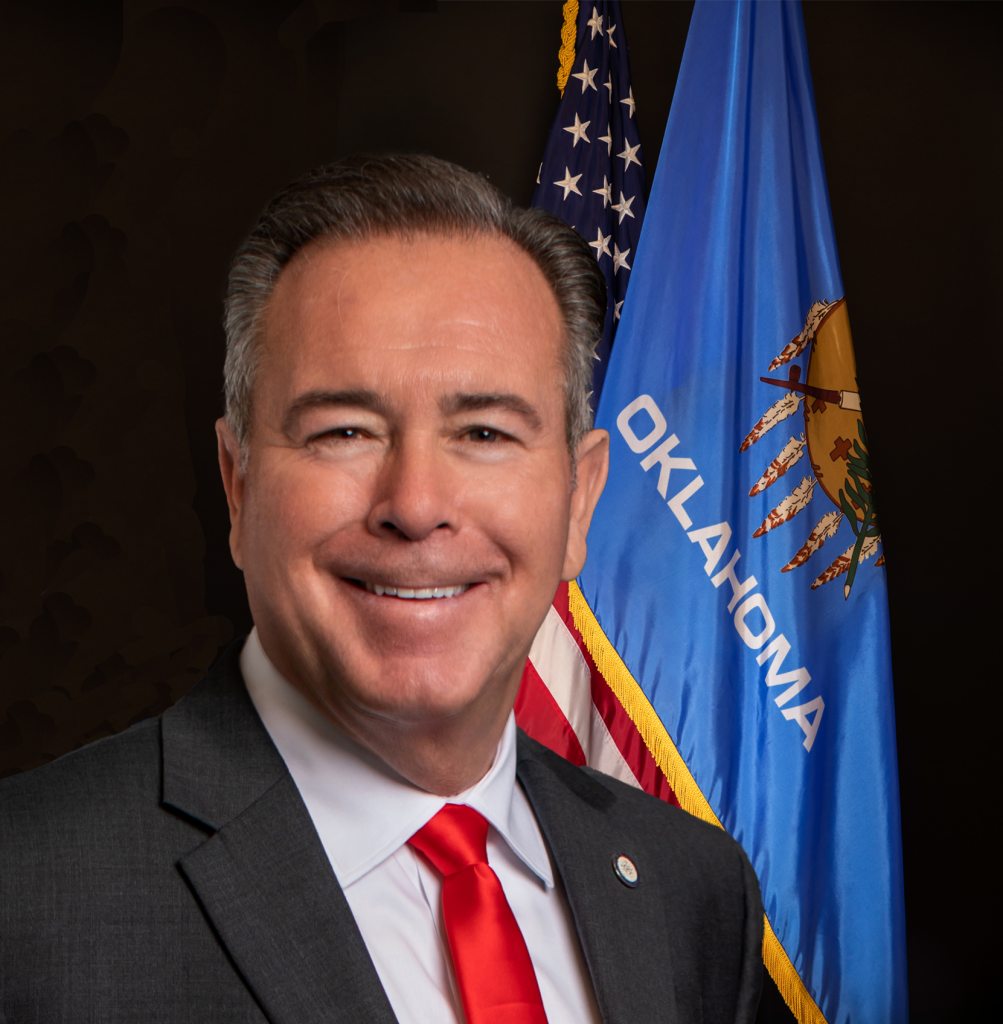
State Treasurer Todd Russ alongside a delegation of Oklahoma leaders, recently traveled to New York City to meet with the nation's leading credit rating agencies—S&P Global Ratings, Moody's Investors Service, and Fitch Ratings. These strategic meetings highlighted Oklahoma's improving economic outlook and the state's efforts to strengthen its bond ratings.
"Oklahoma is thriving, and we are telling our story on a national stage," said Treasurer Russ. "Our conservative fiscal policies, historic reserves, and robust economic diversification are being recognized. Meetings like these are critical in demonstrating our financial progress and ensuring the best possible outcomes for Oklahoma taxpayers."
This marks the second coordinated outreach to all three agencies, building on a successful initial effort last year. By fostering ongoing dialogue, state leaders continue to highlight Oklahoma's commitment to fiscal discipline and economic innovation. In 2024, Moody's upgraded Oklahoma's credit rating to Aa1, the second-highest possible rating, citing strong reserves, low debt, and prudent fiscal management. Earlier, S&P Global and Fitch Ratings both revised the state's outlook to positive, emphasizing economic stability and resilience.
"Oklahoma has one of the strongest economies in the nation, as is reflected in our high credit ratings," said Lt. Governor Matt Pinnell. "Our state balances having both minimal debt and strong reserves with the lowest costs of living and doing business, making us the most pro-business state in the country. With our strong financial standings, Oklahoma is set up for long-term financial success to impact generations to come."
The trip also allowed state leaders to provide updates on key financial strategies, including Oklahoma's proactive approach to pension funding, debt reduction, and leveraging economic diversification to counter volatility in energy markets.
"We were able to show that Oklahoma's economy has done well, and our fiscal house is in order, which will hopefully lead to increasing our bond ratings," said Pro Tem-Elect Lonnie Paxton, R-Tuttle. "Historically, we have been successful in making the case for the state by passing good, conservative and fiscally responsible legislation that has put Oklahoma on the right trajectory, leading to increased ratings by bond agencies. I thank the efforts and work put in ahead of our meetings by our teams and the delegation in attendance."
"Oklahoma's robust economy, unprecedented savings and track record of conservative fiscal policies are some of our best assets, and I took pride in bragging about our state," said Senate Appropriations Chairman Chuck Hall, R-Perry. "I'm optimistic that these meetings will result in improved state bond ratings, enabling us to make the most of taxpayers' dollars while ensuring Oklahoma's financial stability for years to come."
The Oklahoma delegation included Lieutenant Governor Matt Pinnell, President Pro Tempore Elect Lonnie Paxton and Senator Chuck Hall, and the state's bond oversight team, who worked to ensure analysts had a full understanding of Oklahoma's economic trajectory.
"These agencies have acknowledged our strong fiscal practices," said Treasurer Russ. "This visit is another step toward ensuring Oklahoma remains financially competitive and continues to lead the nation in economic growth."
As the state anticipates further improvements in its credit ratings, leaders remain committed to a disciplined approach to governance, ensuring long-term fiscal health for future generations.
Congress must not delay in delivering critical aid to farmers and ranchers who are facing mounting challenges to growing the food, fiber and fuel America's families rely on. That's the message American Farm Bureau Federation President Zippy Duvall delivered today in a letter to Congress urging passage of the Continuing Resolution, which lawmakers are expected to vote on this week.
The legislation includes a farm bill extension, relief from low commodity prices and high supply costs, and help for farmers who were impacted by natural disasters in 2023 and 2024.
"In the absence of an updated farm bill that works to help farmers manage risk, the supplemental assistance provided by this CR will help bridge the gap until Congress can act to pass a new five-year farm bill," wrote President Duvall. "Without this needed aid, many farmers, especially our next generation of farmers, must decide whether to decrease acres for the next growing season because they cannot secure financing, or to give up on planting a crop at all."
The CR would also allow year-round E-15 sales, which will help reduce America's dependence on foreign oil.
Farmers have been vocal in their support of immediate assistance. Since Saturday, AFBF members sent almost 13,000 messages to lawmakers, calling on them to include agriculture assistance and to pass the CR without delay.
"Congress must pass this CR to deliver assistance to America's farmers and ranchers at a time when they need it most," concluded President Duvall. "We are respectfully asking you to vote YEA on this CR to provide that assistance and pave the way for a new five-year farm bill that will have enhanced commodity and risk management programs to help farmers mitigate their risk in the future."
Read the full letter here.
Today, House Agriculture Committee Ranking Member David Scott and Senate Committee on Agriculture, Nutrition, and Forestry Chairwoman Debbie Stabenow sent a letter to the U.S. Department of Agriculture and Office of Management and Budget, requesting at least $1 billion in additional support for domestic specialty crop producers via the Marketing Assistance for Specialty Crops (MASC) program.
"From cherries and asparagus to apples, blueberries, and pecans, we know that specialty crop growers of every size, and from every region of the country, have struggled with import pressures, natural disasters, and rising costs," wrote the lead Democrats on the House and Senate Agriculture Committees.
They continued, "In the face of economic disaster, it is imperative that funding for the MASC program is increased to support the specialty crop producers that work tirelessly to shore up the nation's healthy and sustainable food supply."

Congress on Tuesday released the details of a disaster package that includes nearly $31 billion overall for farmers.
The year-end funding bill congressional leaders released includes nearly $21 billion to help farmers recovering from natural disasters and another $10 billion in economic aid to crop producers.
Congress late Tuesday released the full bill text of a Continuing Resolution, or CR, to fund the federal government through March 14. The bill adds roughly $100 billion overall for disaster aid.
The bill also includes a one-year extension of the 2018 farm bill through the end of September.
In another provision, the bill solves a major demand problem for the ethanol industry by tweaking language to allow year-round sales of E15 nationally.
Zippy Duvall, president of AFBF, said thousands of farmers had reached out to Congress in recent days to include aid in the bill.
"There is no doubt in my mind that for many farmers, the critical funding in this bill could make the difference between planting a crop next year and giving up," Duvall said. "We appreciate that members of Congress rolled up their sleeves to ensure farmers can continue to deliver the safest, most affordable and abundant food supply in the world."
Rob Larew, president of the National Farmers Union, called on congressional leaders to pass the legislation. He also urged his members to keep up pressure on lawmakers.
"Family farmers and ranchers cannot afford any more delays, and frankly, neither can the rest of the country. Congress must see this deal through," Larew said. "Farmers don't get to walk away from their obligations; Congress shouldn't either. I urge Farmers Union members to stay vocal and keep the pressure on their elected representatives to get this done."
Republican lawmakers, especially in the House, were critical of both the spending and process behind the Continuing Resolution. Several conservative lawmakers on Tuesday said they would not back the bill.
Caleb Ragland, president of the American Soybean Association and soy farmer from Kentucky, said, "We appreciate that congressional leadership heard our fourth-quarter plea and understood the very real consequences of not including economic and disaster aid in their plans. We thank them sincerely and encourage leadership to keep this critical policy provision moving down the field and into the end zone. This is a much-needed win at a time that has been exceptionally hard for many of our country's farmers."
Soybean prices have dropped 40% over the past two years. Compounded by an already insufficient farm safety net, this has made it increasingly difficult for farming operations to remain viable. U.S. farmers provide feed, fuel, food and fiber for our country, rural communities and consumers nationwide, and keeping their livelihoods viable ensures those important products and our economy stay plentiful and healthy.
Keeff Felty, President of the National Association of Wheat Growers (NAWG), provided the following statement in response to the release of the Further Continuing Appropriations and Disaster Relief Supplemental Appropriations Act for Fiscal Year 2025:
"On behalf of NAWG and wheat growers throughout the country, I would like to thank our leaders in the House and Senate for listening to farmers and coming together to secure much-needed economic assistance and disaster relief for producers across the country. We urge Congress to pass this legislative package, which includes economic assistance and another one-year extension, and to remain committed in the 119th Congress to pass a farm bill that strengthens the farm safety net and provides long-term certainty for farmers and rural America."
"As president, I have traveled to state producer annual meetings in Texas, Montana, and Minnesota in recent weeks. At every conference, I talked to experienced producers facing the realities of this downturn in the ag economy, and they feared they would not be able to secure operating credit in 2025 without some form of economic assistance. This legislation provides farmers with a bridge heading into next year. However, it is imperative that when lawmakers return for a busy 2025, enacting a robust, long-term farm bill remains a top priority."
ECONOMIC AID
The bill spells out how $10 billion in economic assistance available to farmers should be calculated. USDA will have 90 days after the bill becomes law to make one-time payments to a producer of an eligible commodity crop. The money would go to crops where the expected gross return per acre is less than the expected cost of production.
Under the details, USDA will use the projected farm price for the commodity contained in the "most recent World Agricultural Supply and Demand Estimates" published before the date the bill becomes law.
If the December WASDE were used, then the corn projected price is $4.10 a bushel; soybeans, $10.20 a bushel; wheat, $5.60 a bushel; and rice, $14.50 per cwt.
The price would be calculated by a 10-year-yield average for the crop, which is then compared to the national average cost of production for the crops based on a report published by USDA's Economic Research Service.
Producers would receive at least a payment equal to 8% of the reference price for the commodity, multiplied by the average payment yield for that commodity, and the number of eligible crop acres involved.
The payment to producers will be equal to 26% of economic loss of the commodity on the planted acreage of the farm for the 2024 crop year. Producers who were forced into prevented planting situations would receive a payment equal to 50% of the acreage that could not be planted.
Total payments are capped at $125,000 for farm operations that received less than 75% of their gross income from farming in the 2020-22 tax years. For producers who made at least 75% of their income from farming in those tax years, the maximum payment can go up to $250,000.
NATURAL DISASTERS
Overall, USDA will receive $30.78 billion to cover crop, livestock and horticulture losses. Beyond the economic aid, $20.78 billion would go to help with losses from an array of natural disasters in 2023 and 2024 -- droughts, wildfires, hurricanes, floods, derechos, excessive heat, tornados, winter storms, freeze events and excessive moisture.
Among those funds, $2 billion is set aside for livestock producers tied to losses in 2023-24 for drought, wildfires and floods. Assistance could go to the states as block grants and direct compensation to producers.
The bill also increases payments and losses covered under the Noninsured Crop Disaster Assistance Program (NAP).
Another $220 million is block granted to states to provide compensation to producers for crop, timber and livestock losses. This money would go to states that had net farm income of less than $250 million in 2023, fewer than 8,000 farms and average farm size of fewer than 1,000 acres.
Under the Natural Resources Conservation Service, the Emergency Watershed Protection Program would receive $920 million. The Rural Development Disaster Assistance Program would receive $362.5 million.
FARM BILL EXTENSION
Certain programs such as the Dairy Margin Program are extended through Dec. 31, 2025.
The bill also provides funding for several USDA programs that do not have baseline funding or authorization without a new farm bill.
Some of those programs include the Foundation for Food & Agricultural Research; scholarships for 1890s institutions and the Urban, Indore and Emerging Agricultural Production Research and Extension Initiative.
IRA MONEY AT RISK
Sen. Debbie Stabenow, D-Mich., the retiring chairwoman of the Senate Agriculture Committee, said she was pleased economic aid was going to farmers, but she criticized Republicans for how it was done, calling it "political malpractice." Republicans resisted using $14 billion or so from the Inflation Reduction Act (IRA). Those funds for USDA conservation programs were tied to using climate-smart practices to reduce greenhouse gas emissions or sequester carbon.
The funding, if it had been rolled into the extension of the farm bill, would have paid for the $10 billion in economic aid, Stabenow noted. The funds also could have added nearly $20 billion to the baseline spending allowed for the next farm bill, Stabenow said.
"Let me be clear. The $10 billion investment in economic disaster assistance that we agreed to is being paid for by increasing the deficit," Stabenow said. "It could have been fully paid for by using the $10 billion in savings from moving the conservation dollars into the farm bill baseline. While I am relieved that we reached an agreement, it's shocking that Republican leadership failed to support such a commonsense and bipartisan proposal."
The Union of Concerned Scientists also noted the move puts those IRA dollars at risk of being lost if the next Congress repeals the IRA. The group pointed out extreme weather driven by climate change and fossil fuel use leaves farmers vulnerable.
"If Congress really wanted to make farmers more economically resilient while also investing in the stability of our food system, they should do two things: give farmers the tools to better withstand and recover from extreme weather and persuade the incoming administration not to start new trade wars," said Melissa Kaplan, senior manager of government affairs for the Food and Environment Program for UCS. She added, "Across the country, 80% of people support helping farmers proactively adapt and protect their land and crops against flooding and drought, rather than waiting and paying for losses after the fact."
15% ETHANOL IN PUMPS YEAR-ROUND
The bill essentially changes the long-standing battle within ethanol groups and EPA over Reid Vapor Pressure. EPA has stuck to its guns sticking to the 10% Reid Vapor Pressure (RVP) standard for fuel additives. The act simply raises the RVP standard from 10% to 15%.
That change in language will allow retailers to sell E15 throughout the year without having to request waivers.
"Legislation to ensure year-round availability of E15 in the U.S. has been at the top of our to-do list for a very long time," said Brian Jennings, CEO of the American Coalition for Ethanol. Jennings added, "Inclusion of this provision will drive demand for homegrown, low-carbon ethanol, tackle inflation by delivering savings at the pump for consumers and strengthen America's energy security. We are deeply grateful to the senators and representatives who fought tirelessly to make this happen."
REPUBLICAN AG LEADERS CITE NEED
Agricultural leaders in Congress highlighted the need for economic aid to producers and the urgency of getting a farm bill completed.
"Farmers, agricultural lenders, and rural community leaders clearly communicated the need for emergency assistance to survive current market conditions," said Sen. John Boozman, R-Ark., who will chair the Senate Agriculture Committee next year. "The consequences of ignoring the stark realities facing rural America would be devastating to farm families, American agriculture, and our nation's food security."
Rep. Glenn "GT" Thompson, R-Pa., who got a farm bill through committee but did not get a floor vote this past year, said he's looking forward to pressing farm-bill action next year and update the safety net for farmers.
"I appreciate the partnership of incoming-Chairman Boozman, as well as Members and stakeholders, all who quickly and effectively highlighted the needs in farm country," Thompson said. "These tireless efforts will lessen much of the stress for the men and women who fight to produce the food, fiber, and fuel that sustains our great nation."
National Corn Growers Association (NCGA) President Kenneth Hartman Jr. today sent a letter to members of Congress asking them to support the continuing resolution, which would ensure consumers have access to year-round and permanent sales of E15, provide critical economic and disaster assistance to farmers and provide a farm bill extension.
"The market opportunity provided by allowing year-round E15 sales cannot be understated: Standardizing year-round E15 will result in an increase in corn demand of about 2.3 billion bushels per year," Hartman noted in the letter. "Considering that about one-third of corn produced in the U.S. is used for ethanol production, this demand creation will result in an impressive improvement in profitability for operations across the nation."
The letter also noted the importance of the package for farmers and rural America.
"This legislative package is very good news for corn growers – and in the midst of turmoil in the agriculture economy – we need good news," Hartman said. "On behalf of corn growers across the nation, please throw your support behind this package; it will provide a boost to the U.S. corn industry that will have rippling effects across rural America."
The letter also championed economic and disaster relief, saying it would be critical in helping corn growers recover from recent devastating losses.
The letter is the latest in a string of advocacy efforts by NCGA and its state groups to secure grower wins in the end-of-the-year legislation.
Read the Letter
Last week's federally inspected cattle harvest was 5,000 head smaller than the prior week and 38,000 head smaller than the same week a year ago. A large contribution gap between classes of cattle in the harvested total remains in place. In the past four weeks, fed steer and heifer head counts have increased 0.6% from a year ago, whereas the cull cow harvest was down 14.6%.
With sharply higher Live Cattle futures last Tuesday and Wednesday, cattle feeders were feeling encouraged by mid-week. The Texas cash trade missed out on the rally as packers purchased cattle there early in the week at prices steady with the prior week. The northern trading region capitalized on the upswing later, with packer bids following futures higher. Highs of $198/cwt. were reported for Iowa live sales and $303/cwt. dressed. Nebraska prices were just below the Iowa average generating a $4/cwt. gap between the northern and southern regions for the week's summary pricing. The disparity pales in comparison to the record-wide north-south price spread observed for many weeks earlier this year.
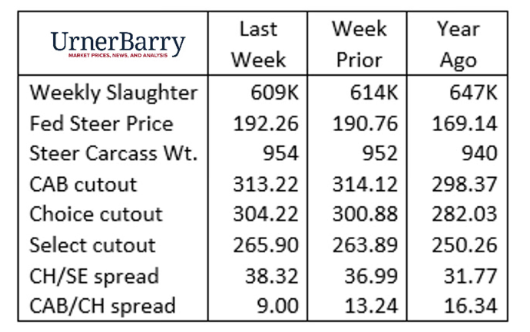
The boxed beef market continued to price carcasses generally higher last week with Prime, Choice and Select cutout averages higher for the week. The CAB cutout, however, was quoted $1.10/cwt. lower, the only cutout quote with a reporting cutoff on Thursday rather than Friday, like the USDA quality grades. Nonetheless, last minute rib demand has been the predictable highlight, adding $0.50/cwt. for CAB ribeyes above the prior week, pressuring all-time highs seen in 2020. CAB tenderloins finalized their price rally the week prior, ending their seasonal demand surge a full $1.00/cwt., wholesale, cheaper than the same time a year ago.
Optimism surrounding pre-holiday middle meat demand is tempered only by end meat price corrections. While winter roast demand points to cheaper end meats as targeted cuts, that demand won't set in until later in the first quarter of 2025. For now, several end meats, especially from the round, are correcting toward lower prices within their historically correct seasonal December patterns.
The storied improvement in beef carcass quality improvement will soon close the chapter on the 18th year since the percentage mix of Choice, CAB® and Prime carcasses touched a modern day low. In 2006 the marbling-dependent quality grade distribution pegged USDA Prime at 2.6% of total fed cattle, Choice at 51.6% and Select at 40.9%. The CAB carcass acceptance rate had dipped to a paltry 14% of all brand-eligible carcasses.
Genetic improvement and multiple management factors have since combined to press carcass quality to new heights. Observations during the 2020 pandemic backlog suggested that we'd never again see quality grade as rich as what was induced by supply chain disruptions forcing extended days on feed. Yet in 2024 economics and technology drove feedlot stays to their longest yet due to economic factors rather than supply logistics disruptions. We can only guess at what marbling achievement may have been this year without the benefit of 20-30 added pounds of carcass weight and record-long feedlot stays. Yet it's logical that quality outcomes would have been slightly lower without those conditions.
Outlook factors for 2025 suggest that tighter feeder cattle supplies and projected continuation of low grain prices will further entrench current cattle feeding patterns. Heavier carcass weights and nominal additions to days-on-feed should remain in place, especially given potential for even higher feeder cattle prices.
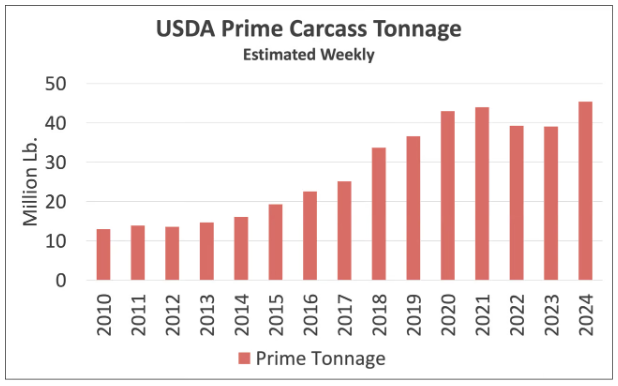
These realities will continue to provide ancillary benefits to the quality grade mix and CAB acceptance rate, pressing the latter measure higher than this year's record 37%. USDA Prime carcasses, averaging 10.5% of fed cattle this year, may push even higher in 2025, potentially adding another half of a percentage point.
Total USDA Prime carcass tonnage was record-large in 2024 despite harvested fed cattle head counts well below historic levels. The combination of the largest Prime percentage and heaviest carcass weights in history joined to accomplish this feat. Given the probability that elevated Prime carcass production remains a factor, increased focus on Prime product sales will be necessary.
Since less than 100 lb. of each Prime carcass is sold at wholesale under a USDA Prime-specific order, there is a concentration of premiums for the Prime grade on middle meat cuts and briskets, generally speaking. Growth in sales and net dollars may have the most opportunity in the Prime category, whether USDA Prime or under the Certified Angus Beef ® brand Prime label. Opportunity to capture a Prime-specific premium across more of the carcass rests on the industry's sales force to educate end-users about the eating characteristics of additional Prime cuts, as well as broader availability. Absent a return to tighten supplies and rationing of Prime boxed beef, enhanced sales focus is the only path to maintaining premiums for Prime carcasses
U.S. Department of Agriculture (USDA) Secretary Tom Vilsack today announced more than $313 million in funding to connect rural residents, farmers and business owners in 18 states to reliable high-speed internet.
Projects are being financed by the fifth round of the ReConnect Program and are a central part of President Biden's Investing in America agenda to rebuild the economy.
"Keeping the people of rural America connected with good, reliable high-speed internet brings new and innovative ideas to the rest of our country and creates good-paying jobs," Secretary Vilsack said. "That's why USDA's ReConnect Program is an important part of our partnership with rural communities. Through these investments, we are connecting the most rural and remote communities to a global marketplace and bringing new opportunities within reach."
USDA Rural Utilities Service Administrator Andy Berke made today's announcement during a visit to Consolidated Telephone Company in Brainerd, Minnesota, which is receiving a $5,510,933 million loan and a $5,510,933 grant to connect 2,831 people, 67 businesses and 78 farms in Crow Wing and Morrison counties.
The ReConnect Program is specifically designed to fund the most difficult high-speed internet projects in the nation, which are in the most rural, remote and unserved communities.
Many residents and businesses in rural areas would not have high-speed internet service without the ReConnect Program. The program is a key part of the Administration's Internet for All initiative to connect everyone in America to high-speed internet by 2030.
Since the beginning of the Biden-Harris Administration, the Department has invested approximately $4.4 billion for 360 ReConnect awards that will bring high-speed internet access to more than 680,000 people in the most rural and remote areas of America. More than $2.2 billion of this funding, which will benefit an estimated 341,000 people, was made available through the Bipartisan Infrastructure Law (BIL).
Today's investments will connect people to high-speed internet in Alabama, Alaska, Arizona, Arkansas, California, Georgia, Idaho, Michigan, Minnesota, Missouri, Montana, Nevada, New Mexico, Ohio, Oregon, Texas, Washington and Wisconsin.
For example:
Today's announcement also includes a Broadband Technical Assistance pilot project in Nevada. Valley Electric Association Inc. is receiving a $542,281 Cooperative Agreement to promote the deployment of high-speed fiber networks to the rural areas of Clark, Esmerelda, Lyon, Mineral and Nye counties.
The project will use innovative partnerships with local internet service providers and energy providers to promote the development of mid-mile and last-mile fiber in these remote areas of Nevada. The project will provide solutions for the delivery of products and services that include design, engineering, procurement, permitting, construction, operations, maintenance and repair and regulatory compliance.
The Broadband Technical Assistance (BTA) program supports technical assistance projects such as conducting feasibility studies, completing network designs and developing broadband financial assistance applications. Funding is also available to help organizations access federal resources, and to conduct data collection and reporting.
Since the launch of the BTA program in April 2023, the Department has provided more than $16.29 million to support 42 technical assistance projects across 24 states.
A full list of projects from today's announcement is available online.
Under the Biden-Harris Administration, USDA Rural Development provides loans and grants to help expand economic opportunities, create jobs and improve the quality of life for millions of Americans in rural areas. This assistance supports infrastructure improvements; business development; housing; community facilities such as schools, public safety and healthcare; and high-speed internet access in rural, Tribal and high-poverty areas. Visit the Rural Data Gateway to learn how and where these investments are impacting rural America. For more information, visit www.rd.usda.gov.
USDA touches the lives of all Americans each day in so many positive ways. Under the Biden-Harris Administration, USDA is transforming America's food system with a greater focus on more resilient local and regional food production, fairer markets for all producers, ensuring access to safe, healthy and nutritious food in all communities, building new markets and streams of income for farmers and producers using climate-smart food and forestry practices, making historic investments in infrastructure and clean energy capabilities in rural America, and committing to equity across the Department by removing systemic barriers and building a workforce more representative of America. To learn more, visit www.usda.gov.
To subscribe to USDA Rural Development updates, visit GovDelivery subscriber page.
Nearly 750 Oklahomans attended one of five Open Meetings and Open Records seminars across the state this fall. Presented by the Office of Oklahoma Attorney General Gentner Drummond and the Oklahoma Press Association (OPA), the educational series brought essential knowledge about government transparency to Lawton, Woodward, Tulsa, McAlester and Oklahoma City.
Deputy General Counsel Thomas Schneider and OPA Executive Vice President Mark Thomas led the sessions, focusing on key statutes in the Oklahoma Constitution that ensure public access to government operations.
Drummond has made greater transparency in government a key priority since taking office almost two years ago.
"These seminars play a vital role in ensuring government transparency and accountability across Oklahoma," he said. "The strong attendance demonstrates that Oklahomans are deeply committed to understanding and upholding these principles."
Attendees to the free seminars included city council representatives, county officials, school board representatives, attorneys and law enforcement officers. Attendees also received the Oklahoma Open Meetings and Open Records Book.
"Transparency affects the life of every Oklahoman and OPA is pleased to provide these seminars and books," Thomas said. "Government and citizens must work together to advance our common goals. We are thankful to every attendee, and for the local newspapers who fund the effort to understand these important laws."
The Attorney General's Office and the OPA plan to offer the seminar series again next year.
View the 2024 Open Meetings and Open Records seminar presentation.
National Sorghum Producers Chair Amy France, a sorghum farmer from Scott City, Kansas, released the following statement supporting the Continuing Resolution (CR).
"The National Sorghum Producers commends the significant bipartisan agreement reached yesterday. NSP strongly supports this critical legislation and extends gratitude to the members of Congress, particularly House Agriculture Committee Chairman G.T. Thompson and Senate Agriculture Committee Chairman John Boozman, for their leadership and efforts to secure this much-needed assistance for our farmers.
"The inclusion of nearly $21 billion for crop loss assistance and $10 billion in economic relief provides substantial aid to the producers who need it most. This anticipated support offers vital relief to sorghum producers who have incurred $1.5 billion in losses this year. Additionally, it includes meaningful benefits for sorghum growers through the authorization of year-round E15 ethanol sales provision.
"We urge all Representatives and Senators to express their support and vote for this legislation to ensure the swift passage and streamlined delivery of assistance to sorghum growers."
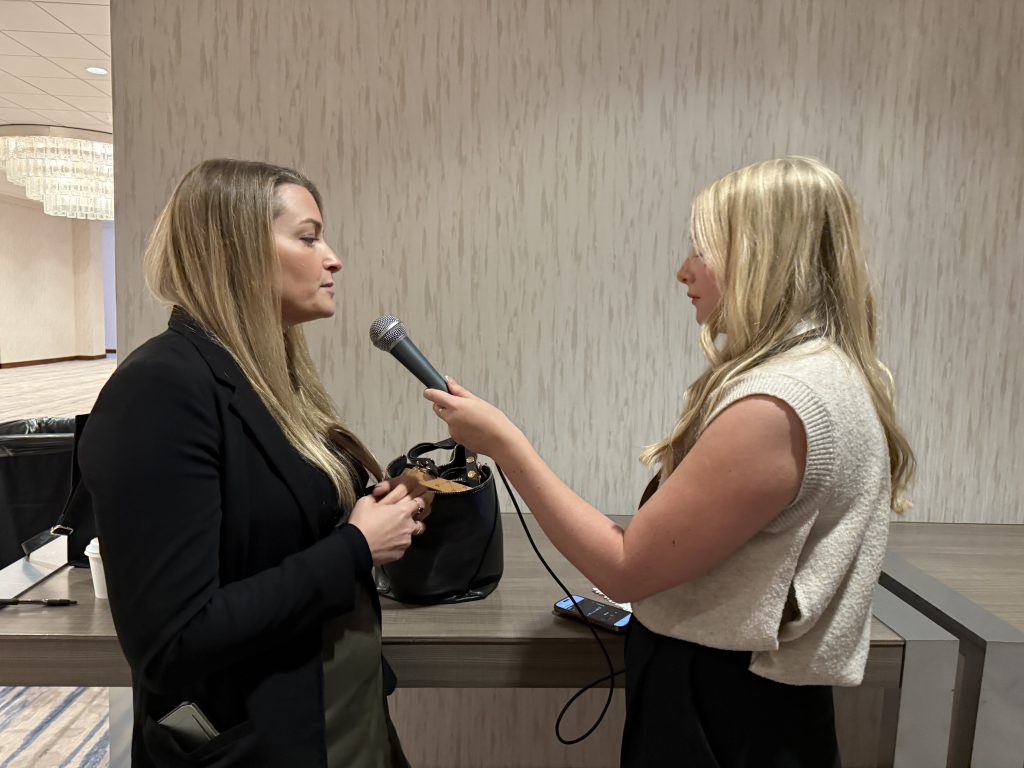
Oklahoma Farm Report's Maci Carter caught up with Molly Van Lieu of the International Fresh Produce Association to talk about the meaning behind the phrase, "Food is medicine."
"For us, it means a produce prescription as a standard practice of clinical care," Van Lieu stated.
She used the example of a patient suffering from a diet-related disease visiting his or her doctor and receiving a prescription for fruits and vegetables in conjunction with the pharmaceutical solution. The prescription will then be redeemable at a local grocery store or through a delivery service.
"Our hope is that people can get off of those pharmaceutical interventions, and that has happened in many cases," Van Lieu said. "But this is really designed to be a partnership with their pharmaceutical medications because we know that pharmaceuticals work better when people are eating healthier."
She explained that while some private insurance companies are participating in the concept, it is demonstrated in policy in three main areas: pilot programs at the Veterans Affairs, Indian Health Services, and in a few states through Medicaid with an 1115 Waiver.
Carter asked Van Lieu about Robert F. Kennedy, Jr.'s recent nomination as U.S. Secretary of Health and Human Services, and Van Lieu replied, "RFK has indicated that chronic and diet-related diseases are important to him. Our role is to convey the importance and the role of fruits and vegetables in addressing diet-related disease."
Van Lieu is confident that the fruit and vegetable industry will be able to step up to the increased demand as the prescription produce concept becomes popular in more and more areas.
"We are an incredibly resilient industry," she said. "We deal with barriers every day, be it labor, weather, or trade issues. We do think this can dramatically increase fruit and vegetable consumption, but it won't be overnight so the industry will have time to adapt, but we do need to ensure that we have an adequate labor workforce if we want to continue to see these programs grow."
She said that the program doesn't distinguish organic produce from non-organic, but rather allows the consumer to make that choice. "If we start splitting hairs in fruits and vegetables, we aren't going to achieve the increase in consumption that we need," she explained. "Today, only one in ten Americans meet the dietary guidelines, so eating any fruit or vegetable that the consumer wants to eat is going to be in the best interest of their health and the industry."
Like other producers, Van Lieu is anxiously awaiting a farm bill as it contains a small percentage of funding to help start more pilot programs so that the International Fresh Produce Association can continue to collect data on the program's outcomes.
"How and what people eat in the United States is very much important to the Farm Bill, so ensuring the industry has the resources that they need beyond traditional nutrition programs, is going to impact if Americans have access to fruits and vegetables, so we need a strong farm bill, and we need it soon," Van Lieu stated.
Eighty Percent of health care dollars are spent on preventable diet-related diseases. Half of Americans have diabetes or pre-diabetes. Seventy-five percent of Americans are overweight or obese. "At this point, everybody knows fruits and vegetables are good for them, but aren't eating enough of them so we have to embrace the healthcare industry given the consequences that it has on healthcare outcomes as a partner and part of the solution to increasing fruit and vegetable consumption."
After agriculture's collective call to have economic assistance including disaster aid in any end-of-year spending package proposed by Congress, America's soy farmers are pleased to see it is part of the language released Tuesday evening in the proposed continuing resolution.
Inflation, historically high input prices, falling commodity prices, and a spate of storms have led to tougher-than-normal times for U.S. farmers, including those who grow soy.
Caleb Ragland, president of the American Soybean Association and soy farmer from Kentucky, said, "We appreciate that congressional leadership heard our fourth-quarter plea and understood the very real consequences of not including economic and disaster aid in their plans. We thank them sincerely and encourage leadership to keep this critical policy provision moving down the field and into the end zone. This is a much-needed win at a time that has been exceptionally hard for many of our country's farmers."
Soybean prices have dropped 40% over the past two years. Compounded by an already insufficient farm safety net, this has made it increasingly difficult for farming operations to remain viable. U.S. farmers provide feed, fuel, food and fiber for our country, rural communities and consumers nationwide, and keeping their livelihoods viable ensures those important products and our economy stay plentiful and healthy.
| |||||||||||||||||||||||||||||||||||||||||||||||||||||||||||||||||||||||||||||||||||||||||||||||||||||||||||||||||||||||||||||||||||||||||||||||||||||||||||||||||||||||||||||||||||||||||||||||||||||||||||||||||||||||||||||||
| |||||||||||||||||||||||||||||||||||||||||||||||||||||||||||||||||||||||||||||||||||||||||||||||||||||||||||||||||||||||||||||||||||||||||||||||||||||||||||||||||||||||||||||||||||||||||||||||||||||||||||||||||||||||||||||||
|
Tyson Ochsner, professor in the OSU Department of Plant and Soil Sciences, receives the Newly Appointed Regents Professor distinction during the OSU Awards Convocation in December. Ochsner is pictured with OSU President Kayse Shrum and OSU Provost Jeanette Mendez. (Photo by Ellie Piper, Oklahoma State University)
Faculty and staff from the Oklahoma State University Ferguson College of Agriculture and OSU Extension were honored at the 2024 University Awards Convocation on Dec. 12.
OSU Provost Jeanette Mendez and Vice Provost Chris Francisco acknowledged the accomplishments of faculty, staff and administrators across the university. Supervisors and colleagues nominated award winners in 22 different categories.
"I'm so proud of our award winners and their hard work, dedication and commitment to OSU Agriculture and the university," said Jayson Lusk, vice president and dean of OSU Agriculture. "Their efforts illuminate the promising future of OSU Agriculture. It's truly inspiring to collaborate with such outstanding colleagues who are driving meaningful progress in the field."
The following OSU Agriculture representatives were commemorated for their mentorship, research achievements and teaching milestones.
President's Fellows Research Award
Regents Distinguished Research Award
Regents Distinguished Teaching Award
Newly Appointed Chair and Professorship Holders
Excellence in Teaching Award for Adjunct Faculty
Advising Excellence Award
Newly Appointed Regents Professors
Distinguished Early Career Faculty Award
Public Impact Research Award
Land-Grant Award for Excellence
Leave the Ladder Down Award
OSU Agriculture is dedicated to improving the quality of life of Oklahomans through science-based information and education. It is comprised of the Ferguson College of Agriculture and two state agencies: OSU Ag Research and OSU Extension.

The National Pork Producers Council (NPPC) is deeply disappointed in Congress' decision to relinquish their responsibility to produce a new Farm Bill and an overdue federal solution for California Proposition 12.
"Pork producers do not have the luxury of waiting for Congress to pass a new, five-year Farm Bill next year. After years of losing money and forcing family farms out of business, we needed the certainty to make decisions yesterday. Congress' complete disregard and inability to adequately provide assurance for producers is sure to make this a bleak holiday season for many farming families across the country," said Lori Stevermer, NPPC president and pork producer from Easton, Minnesota. "America's pork producers have continually raised our voices and have ultimately been ignored by Congress through its failure to provide a solution to the problems created by Prop. 12: increasing our operating costs, creating future business uncertainty, and raising consumer prices."
Instead, Congressional leadership announced its intentions to pass a "clean" one-year extension of the 2018 Farm Bill, denying new programs or funding.
NPPC will continue to push Congress to provide a federal solution to Prop. 12 and other priorities
U.S. Department of Agriculture (USDA) Secretary Tom Vilsack today announced that USDA is making domestic fertilizer production investments in nine states to increase competition, lower fertilizer costs for American farmers and lower food costs for U.S. consumers.
"When we invest in domestic supply chains, we drive down input costs and increase options for farmers," Secretary Vilsack said. "Through today's investments to make more fertilizer, USDA is bringing jobs back to the United States, lowering costs for families, and supporting farmer income."
USDA is awarding more than $116 million through the Fertilizer Production Expansion Program (FPEP) to help eight facilities expand innovative fertilizer production in California, Colorado, Georgia, Indiana, Iowa, Kansas, Michigan, Oklahoma and Wisconsin.
FPEP is funded by the Commodity Credit Corporation and provides funding to independent business owners to help them modernize equipment, adopt new technologies, build production plants and more.
Through the Fertilizer Production Expansion Program, USDA has invested $517 million in 76 fertilizer production facilities to expand access to domestic fertilizer options for American farmers in 34 states and Puerto Rico. These investments will increase U.S. fertilizer production by 11.8 million tons annually and create more than 1,300 jobs in rural communities.
Examples of projects being announced today are listed below.
President Biden and USDA created FPEP to combat issues facing American farmers due to rising fertilizer prices, which more than doubled between 2021 and 2022 due to a variety of factors such as war in Ukraine and a lack of competition in the fertilizer industry.
The Administration committed up to $900 million through the Commodity Credit Corporation for FPEP. Funding supports long-term investments that will strengthen supply chains, create new economic opportunities for American businesses and support climate-smart innovation.
Investments in this program also have advanced the President's Investing in America agenda to grow the nation's economy from the middle out and bottom up and to promote fair and competitive markets for American farmers and ranchers.
USDA Rural Development provides loans and grants to help expand economic opportunities, create jobs and improve the quality of life for millions of Americans in rural areas. This assistance supports infrastructure improvements; business development; housing; community facilities such as schools, public safety and health care; and high-speed internet access in rural, tribal and high-poverty areas. Visit the Rural Data Gateway to learn how and where these investments are impacting rural America. To subscribe to USDA Rural Development updates, visit the GovDelivery Subscriber Page. USDA touches the lives of all Americans each day in so many positive ways. Under the Biden-Harris Administration, USDA is transforming America's food system with a greater focus on more resilient local and regional food production, fairer markets for all producers, ensuring access to safe, healthy and nutritious food in all communities, building new markets and streams of income for farmers and producers using climate-smart food and forestry practices, making historic investments in infrastructure and clean energy capabilities in rural America, and committing to equity across the Department by removing systemic barriers and building a workforce more representative of America. To learn more, visit www.usda.gov.

Today, the Animal Agriculture Alliance announced new upcoming board leadership effective Jan. 1, 2025, following its fall board meeting held Nov. 7 in Washington, D.C. Lisa McComb, strategic communications consultant at Vision Media, will become board chairperson. Nick Wolfenden, global sustainable animal welfare director at Cargill, will assume the role of chairperson-elect.
McComb previously served as senior vice president of communications at Dairy Management Inc. (DMI), where she was accountable for multi-stakeholder proactive and responsive media relations and storytelling for the dairy community and consumers. Prior to DMI, McComb held roles in corporate communications, global media relations, and crisis preparedness for McDonald's Corporation and The Pampered Chef. McComb has served on the Alliance board of directors since 2018.
"It is an honor to step into the role of chairperson and work alongside such a passionate and dedicated group of staff and industry leaders," said McComb. "We collectively face both challenges and opportunities in today's food and farming landscape, and by working as a team we can ensure a future where farmers, ranchers, and the entire food chain thrive while continuing to earn the trust of the people we serve. By amplifying shared values and embracing diverse perspectives, we can make a real difference for our industry and for everyone who depends on us."
Wolfenden has led global animal welfare for Cargill since 2020. In his role, he leads the development and implementation of Cargill's animal welfare strategy, policies, and operational standards. Wolfenden works across the broader industry to cultivate responsible supply chains. Prior to joining Cargill, he worked in animal welfare for Tyson Foods. Cargill or one of its subsidiaries has held a seat on the Alliance board since 2004, and Wolfenden has represented them since 2020.
"The Alliance board of directors provides essential leadership and insight to our team from every sector of the animal agriculture community," said Hannah Thompson-Weeman, Alliance president and CEO. "Our work to safeguard the future of animal agriculture would not be possible without their guidance and support. Lisa and Nick are both truly passionate about the mission of the Alliance and offer the perfect combination of communication expertise and scientific knowledge to lead us into the future."
McComb will take the reins for a one-year term as chairperson from outgoing board chair Derek Yancey of YB Copper Valley Ranch, former president of Morning Fresh Farms. Yancey has served on the Alliance board since 2008.
"We can't thank Derek enough for his leadership of the Alliance board through a time of change and transition," said Thompson-Weeman. "Derek's deep history with the Alliance made him the perfect choice to serve at this critical time, and he leaves us in a very strong position to take on the challenges and opportunities of 2025."
The Alliance also announced two new representatives, elected to a three-year term on its executive committee: Jill DeLucero, C.O.nxt, and Brett Kaysen, PhD, National Pork Board.
In addition to new board leadership, several board seats have been renewed through 2027. The following organization seats were renewed:
The complete list of Alliance board members and organization representatives is available on the Alliance website at www.animalagalliance.org/about/board.
Oklahoma Farm Report's Maci Carter is talking with Kim Tutor, BASF Technical Marketing Manager for corn and wheat fungicides, about the agricultural solutions that BASF has to offer.
She said that two diseases were most prevalent in the Oklahoma-Kansas areas, tar spot and southern rust.
"We saw tar spot in Kansas in May this year; it is the earliest tar spot has ever been documented in the U.S.," Tutor detailed. "Southern rust usually blows in from the south, but what was really interesting was it made its way all the way North to Minnesota. So, it's been an atypical year."
She said that wheat farmers dealt with rust early in the season, then further north of Oklahoma, some had to deal with fusarium head blight, which can result in DON vomitoxin, which producers will get docked for at the elevator.
For diseases in corn such as tar spot, southern rust, gray leaf spot, and more, Tutor recommended Veltyma fungicide because it also offers environmental stress mitigation by helping keep stomates open, facilitating better photosynthesis, optimizing growth efficiency, and promoting root growth.
BASF's top recommendations for early-season wheat diseases are Nexicor and Preaxor fungicides. For late-season wheat protection when fusarium head blight is common, BASF recommends Sphaerex fungicide for its inclusion of two leading active ingredients: prothioconazole and metconazole.
Tutor understands that margins are tight for farmers, which makes protecting crops even more important. "I think folks who didn't treat their crops this year really saw the impact," she said. "My question is 'What are you leaving on the table, in terms of profit if you don't treat?'"
She described a field trial in Iowa in which the difference between a corn field treated with Veltyma and a corn field left untreated was 30 bushels.
"You've set yourself up for success. You've invested in the seed - maybe a seed treatment - and the right herbicide. You want to finish that season strong, and BASF is really excited to announce that we have locked in zero percent financing on our crop protection and seed treatment brands through mid-March. So please reach out to your local BASF retailer, and lock in that zero percent financing," she advised.
Looking forward to the next season, Tutor hopes that as farmers prepare for it, they will plan to protect their crops with products like Veltyma fungicide for corn or Revytek fungicide for soybeans, so they will see a consistent performance from their crop from start to finish.
More information about BASF products can be found at agriculture.basf.us.

Senior Farm and Ranch Broadcaster, Ron Hays, is talking with National Cattlemen's Association executive director of government affairs, Kent Bacus, about the Corporate Transparency Act, because while farmers and ranchers are off the hook for the time being, we must remain vigilant.
The U.S. District Court for the eastern district of Texas granted a preliminary injunction on implementing the Corporate Transparency Act to address questions about its constitutionality.
Bacus said, "Until the court can hear that further, they have granted a preliminary injunction. The federal government has appealed the court's decision to the Fifth Circuit Court, so we are still waiting to see what is going to happen. We don't know if the Fifth Circuit Court will hear that case by the end of this year, but there is a delay in implementing the Corporate Transparency Act for a little while."
In response, the Treasury Department has suspended the reporting requirements for the January 1st deadline.
"We aren't out of the woods just yet," Bacus cautioned. "If the court determines that the preliminary injunction should be lifted, then it could be enforced right away. People must continue to pay close attention to this and consult with their tax preparers and attorneys to make sure that they are doing what is best for their operation."
In the meantime, Bacus said now is a good time to find out for sure if your operation will need to comply with the Corporate Transparency Act should it move forward. Whether it moves forward or not, the Treasury Department will accept voluntary reports should a person choose to send them in before a court decision is made.
"The rollout of this has really been a flop on behalf of the Treasury Department because of the 32 million plus that are affected, less than eight to ten million have actually complied with the requirements," Bacus said. "This is a big, big issue. Ultimately, it is going to take an act of Congress to amend this to make it right and not create a criminal class out of so many small businesses."
NCBA has been supportive of several pieces of legislation in both the House and the Senate to delay implementation of the Corporate Transparency Act for a year, or, better yet, to repeal it entirely.
"As long as we can help Congress put a face on it and understand the significance of this, that is what it will take to get this over the line and have a meaningful fix in place," Bacus stated. "The other key thing we are trying to do is communicate this to producers in the countryside, but right now, we really need people to speak up and engage with their members of Congress to let them know how this is going to impact them."
The Beef Buzz is a regular feature heard on radio stations around the region on the Radio Oklahoma Ag Network and is a regular audio feature found on this website as well. Click on the LISTEN BAR for today's show and check out our archives for older Beef Buzz shows covering the gamut of the beef cattle industry today.
Today, Dec. 18, the U.S. Environmental Protection Agency announced that it will formally designate five known or probable carcinogens as High-Priority Substances (HPS) that will undergo a risk evaluation under the nation's chemical safety law, the Toxic Substances Control Act (TSCA): acetaldehyde, acrylonitrile, benzenamine, 4,4'-methylene bis(2-chloroaniline) (MBOCA) and vinyl chloride. EPA also announced the beginning of the 9- to 12-month statutory process to prioritize the next five chemicals under TSCA to determine whether to initiate risk evaluations on them: benzene, ethylbenzene, naphthalene, styrene and 4-tert-octylphenol.
"Today we begin another five chemical risk evaluations under our nation's strengthened chemical safety law and start the yearlong process to initiate five more," said Assistant Administrator for the Office of Chemical Safety and Pollution Prevention Michal Freedhoff. "These risk evaluations will be used to determine how to protect people from harmful chemical exposures."
EPA Begins Risk Evaluations for Five Chemicals
EPA began the prioritization process for acetaldehyde, acrylonitrile, benzenamine, 4,4'-methylene bis(2-chloroaniline) (MBOCA) and vinyl chloride in the December 2023 announcement. Today's final designation of each chemical for risk evaluation is the last step in the 9- to 12-month long statutory prioritization process.
Over the past year, EPA has continued to improve the prioritization process by investing in cutting-edge software to review more information earlier in prioritization. EPA has also implemented improvements to its systematic review approaches as recommended by the Scientific Advisory Committee on Chemicals (SACC) by incorporating additional data sources such as assessments published by other government agencies to identify potential hazards and exposures, clarifying terminology to increase transparency in the systematic review process, and presenting interactive literature inventory trees and evidence maps to better depict data sources containing potentially relevant information.
In a July 2024 announcement, EPA proposed to designate the five chemicals for risk evaluation. At that time, the agency made considerably more information about those chemicals publicly available a full year earlier in the process as compared to the first 30 chemicals to undergo risk evaluations under TSCA, giving the agency a head start on its work and giving the public earlier and better opportunities to provide input.
The agency will now begin risk evaluations for these chemical substances to determine whether they present an unreasonable risk of injury to health or the environment, without consideration of costs or other non-risk factors, under the conditions of use. If at the end of the risk evaluation process EPA determines that a chemical presents an unreasonable risk of injury to health or the environment, the agency must immediately start the risk management process to address the unreasonable risk.
EPA will begin risk evaluations on:
In the coming weeks, EPA will also release for public comment preliminary lists of manufacturers (including importers) subject to fees for the five chemicals designated as HPS under TSCA. The preliminary lists will soon be available in the docket EPA-HQ-OPPT-2024-0501 at the Regulations.gov page. Additionally, EPA will host a webinar on the list of fee payers, including steps to self-identify, how to certify as meeting an exemption and how to report production volume, on Tuesday, Jan. 14, 2025, at 1:00 p.m. EST. Register at the U.S. EPA: TSCA Fees webinar page.
Prioritization Process Initiated for the Next Five Chemicals
As EPA announced in December 2023, the agency expects to initiate prioritization on five chemicals every year to create a sustainable and effective pace for risk evaluations. Today, EPA is initiating the prioritization process for five additional chemical substances:
EPA is opening a 90-day public comment period and is requesting further information on how these chemicals are used, their potential hazards and exposures, and the availability of information on each, as well as any other information relevant to the potential risks of these chemicals that will inform the agency's review of these chemicals. Learn more by visiting EPA's Chemical Substances Undergoing Prioritization webpage.

Today, Keeff Felty, President of the National Association of Wheat Growers (NAWG), provided the following statement in response to the release of the Further Continuing Appropriations and Disaster Relief Supplemental Appropriations Act for Fiscal Year 2025:
"On behalf of NAWG and wheat growers throughout the country, I would like to thank our leaders in the House and Senate for listening to farmers and coming together to secure much-needed economic assistance and disaster relief for producers across the country. We urge Congress to pass this legislative package, which includes economic assistance and another one-year extension, and to remain committed in the 119th Congress to pass a farm bill that strengthens the farm safety net and provides long-term certainty for farmers and rural America."
"As president, I have traveled to state producer annual meetings in Texas, Montana, and Minnesota in recent weeks. At every conference, I talked to experienced producers facing the realities of this downturn in the ag economy, and they feared they would not be able to secure operating credit in 2025 without some form of economic assistance. This legislation provides farmers with a bridge heading into next year. However, it is imperative that when lawmakers return for a busy 2025, enacting a robust, long-term farm bill remains a top priority."
Since the farm bill debate began, wheat growers have told the story about the economic headwinds facing American agriculture. In September, farmers and lenders met with over 100 offices, including Congressional leadership, in a united effort to get a meaningful farm bill passed. In those conversations, our members talked about the severe downturn in the agriculture economy and underscored the need for additional investment. While it became apparent an extension was again the reality, we remain resolute in working with lawmakers to get the right farm bill passed that provides long-term certainty for growers. NAWG is also running an advocacy campaign urging Congress to pass economic assistance for farmers as part of a year-end legislative package.
Today, following the release of the Further Continuing Appropriations and Disaster Relief Supplemental Appropriations Act for Fiscal Year 2025, House Committee on Agriculture Chairman Glenn "GT" Thompson (PA-15) issued the following statement:
"The bill released this evening provides much-needed relief for agriculture, including $10B in emergency economic aid, which will help address the significant losses incurred due to both weather and market-related issues. This addition of economic support is an important financial bridge, one that will help mitigate the severe downturn in the agricultural economy.
"Looking ahead to the 119th Congress, I hope to move quickly to enact a five-year farm bill that aligns the farm safety net with the needs of producers, among many other policies, to minimize the need for annual economic aid.
"I appreciate the partnership of incoming Chairman Boozman, as well as Members and stakeholders, all who quickly and effectively highlighted the needs in farm country. These tireless efforts will lessen much of the stress for the men and women who fight to produce the food, fiber, and fuel that sustains our great nation."
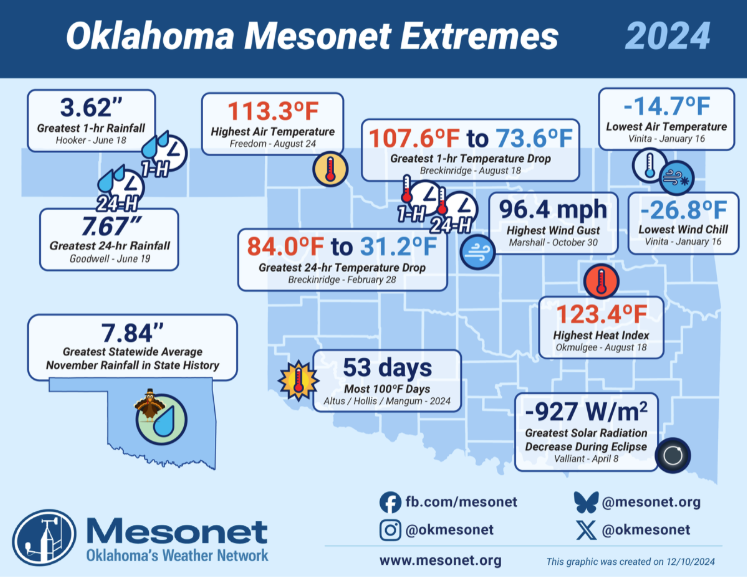
Oklahoma Weather can be all over the place and 2024 did not Disappoint! Acccording to State Climatologist Gary McManus We went from seeing 60's and 70s yesterday throughout the state, and today we are waking up to Wind chills in the lower teens!
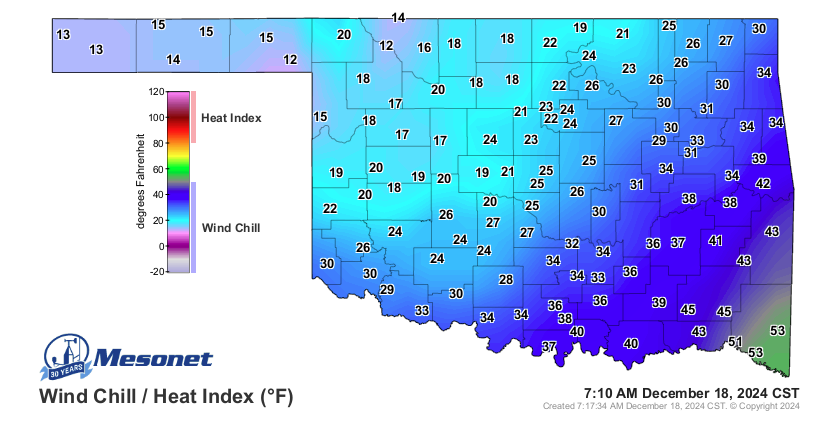
McManus says this has been the year of Extremes for Oklahoma, including January of this year when we saw -27 wind chill in Vinita, Oklahoma, only for that to be followed by 113 degrees in Freedom back on August 24th of this year.
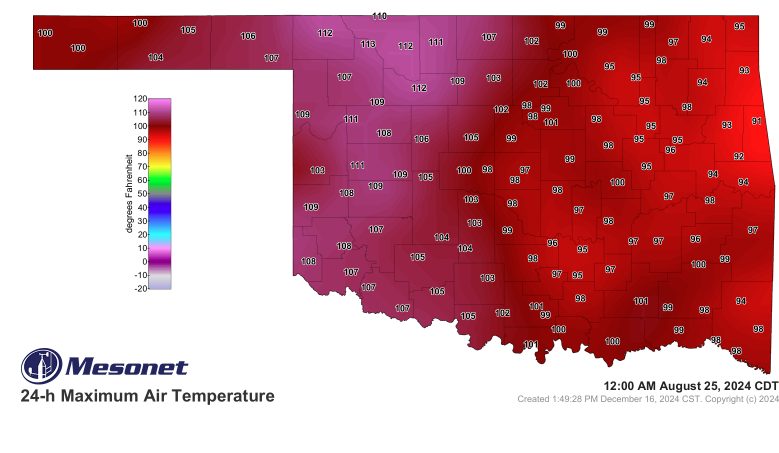
McManus said heat was a big factor this summer, "We had our own little circle of Hades centered in far SW OK
this year, where Altus, Hollis, and Mangum all saw 53 days at or above 100 degrees."
As we know the old saying in the state, "if you don't like the weather in Oklahoma, give it an hour" or as McManus says, "If an hour goes by too quickly, you can also just give it 24 hours for good measure."
We also saw extremes when it comes to rainfall, "Remember the rainfall extremes in the Panhandle? Usually, it's the LACK of rainfall that's the extreme out that way, but on June 18-19, we tried to fill up Lake Optima with a 1000-year rainfall event that left the flatlands of the Oklahoma Panhandle an inland sea."
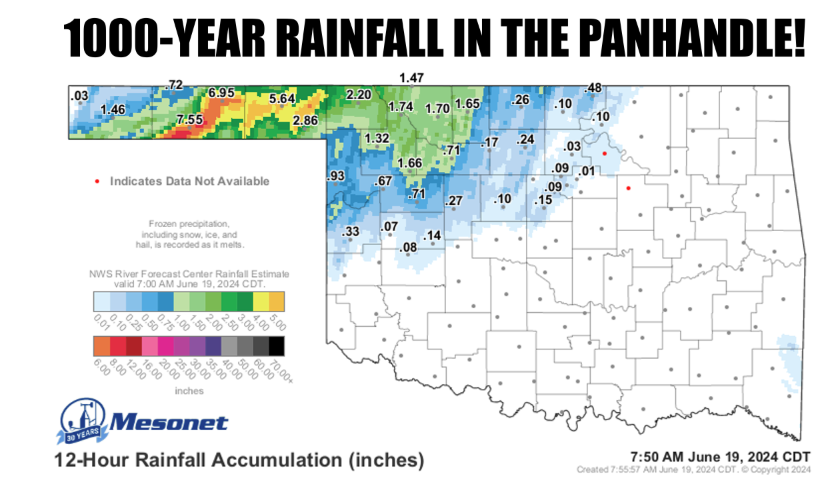
Then, in November, we saw record statewide rainfall across the state, "NOVEMBER, and it's obliteration of the previous record statewide rainfall total of 6.05" from 2015 with a whopping 7.84" in 2024. Why? Because Oklahoma, that's why (and also don't forget the 33, 33!, tornadoes that touched down last month as well)."
And Finally, it was also the year of the total eclipse, "the day it got dark as night in SE OK, we saw that total eclipse
down in McCurtain County and the surrounding area, and our Valliant Mesonet site was VALIANTLY (valiantly, now with an extra L!) keeping track of the solar radiation drop throughout the event. We have the pics from the site to prove it!"
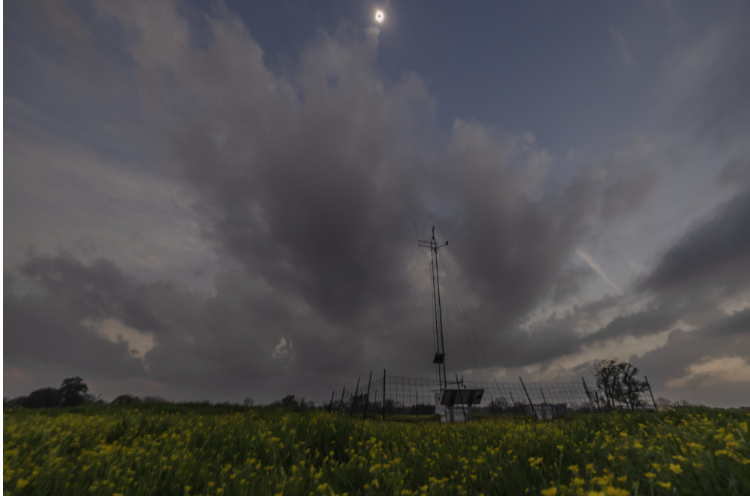

With all that to say, we still have two more weeks left in December, and since it is Oklahoma, who knows what the weather will bring. Right now a White Christmas doesn't look very likely with the forecast, with items forecasted to be in the low 60's... But.. we can all be dreaming!
To read more from Gary McManus on his daily Ticker, click here:
The National Cotton Council (NCC) applauds Congressional leadership for including emergency economic assistance for cotton producers. The much-needed economic and disaster relief will help mitigate the financial stress caused by a combination of increased production costs, weakening market prices, and production losses caused by natural disasters.
Joe Nicosia, NCC Chairman, stated, "We extend our gratitude to the House and Senate leadership for providing critical support to U.S. cotton producers. We urge all members of Congress to support the end-of-year spending package so that farmers can receive the additional support they desperately need."
Nicosia added, "Current economic projections demand an improved safety net to give production agriculture greater long-term stability. We urge the next Congress to move quickly in early 2025 to pass a new farm bill that will contain improved safety nets, including higher reference prices, that will be applicable to next year's crop."
Senator Debbie Stabenow (D-MI), Chairwoman of the Senate Agriculture, Nutrition, and Forestry Committee, Monday released the following statement on Farm Bill and agriculture provisions in the Continuing Resolution.
"I am so pleased that we were able to secure much needed economic and natural disaster assistance for farmers across the country and that we did it without pitting one part of the Farm Bill against another.
"We should also celebrate that this agreement prevents a $1.5 billion cut to SNAP by extending protections to people who had their benefits stolen through no fault of their own. It invests in ag research by funding the Foundation for Food and Agriculture Research (FFAR) and permanently funding 1890 scholarships, which are so critical to growing the next generation of ag professionals. It allows for the sale of year-round E-15, which is a critical market. And it fully funds all the popular programs used by farmers and rural communities that would run out of funding if we did not act.
"Unfortunately, there is one critically-important part that did not get into this package. I believe that it is political malpractice not to increase the funds available in the conservation title of the Farm Bill by bringing conservation and rural energy funding from the Inflation Reduction Act into the Farm Bill.
"Moving those resources would have made a permanent and lasting investment in popular conservation and energy programs while adding nearly $20 billion to the Farm Bill baseline and creating an additional $10 billion offset. This could have been used to increase economic assistance, as Democrats proposed, or it could have been invested in other Farm Bill needs. This idea had bipartisan support among the Committee leaders and would have greatly helped Congress write a new Farm Bill next year.
"Let me be clear. The $10 billion investment in economic disaster assistance that we agreed to is being paid for by increasing the deficit. It could have been fully paid for by using the $10 billion in savings from moving the conservation dollars into the farm bill baseline.
"While I am relieved that we reached an agreement, it's shocking that Republican leadership failed to support such a common sense and bipartisan proposal."

Growth Energy, the nation's largest biofuel trade association, urged lawmakers to support a funding bill that includes a legislative fix that would allow for the year-round sale of E15, a blend of gasoline and 15% American bioethanol that costs less than standard fuel, lowers emissions, and can be used in 96% of all cars on the road today.
In response to the fix's inclusion in a Congressional year-end funding package, Growth Energy CEO Emily Skor released the following statement:
"E15 lowers emissions, saves drivers money, and increases American energy dominance. Giving consumers the chance to choose this fuel year-round would be an early Christmas present to American drivers, the nation's rural communities that depend on a strong renewable fuels sector, and to the environment."
"We are grateful for the tireless work of our numerous Congressional champions to get this bill included, and that Congressional leadership has endorsed this commonsense, bipartisan, bicameral energy solution, and encourage Senators and Representatives to vote in favor of this package so that year-round E15 becomes the law of the land."
About E15
E15 is a fuel blend made of gasoline and 15% bioethanol. The U.S. Environmental Protection Agency (EPA) has approved its use in all cars, trucks, and sport utility vehicles (SUVs) made in model year 2001 and newer—representing more than 96% of all vehicles on the road today. E15 can be found at over 3,400 gas stations in 31 states and is legal for sale in every state except California. Last summer drivers saved 10 to 30 cents per gallon by filling up with E15 compared to regular, or E10. In some areas, E15 saved drivers as much as a dollar per gallon at the pump.
Learn more about E15 here.
American Farm Bureau President Zippy Duvall today is asking Congress to pass the continuing resolution bill that includes support for farmers.
"I know I speak for farmers across the country when I say thank you to Speaker Johnson, Leaders Jeffries, Schumer and McConnell, and many other members of Congress for recognizing the incredibly difficult agricultural economy by including in the year-end legislation: much-needed economic assistance for farmers; emergency aid for communities devastated by natural disasters; a farm bill extension; and for making E-15 available at fuel pumps all year long.
"The high cost of supplies, low commodity prices and out-of-reach interest rates are a recipe for farm failures without help. That's why nearly ten thousand Farm Bureau members reached out to Congress in a matter of days, to encourage them to keep working toward a better deal and not leave agriculture behind.
"There is no doubt in my mind that for many farmers, the critical funding in this bill could make the difference between planting a crop next year and giving up. We appreciate that members of Congress rolled up their sleeves to ensure farmers can continue to deliver the safest, most affordable and abundant food supply in the world.
"We urge Congress to pass this legislation and then return in January ready to tackle the challenges facing agriculture. Another one-year extension of the farm bill addresses immediate needs, but only a new, modernized farm bill will bring certainty for America's families, farmers, ranchers and rural communities."
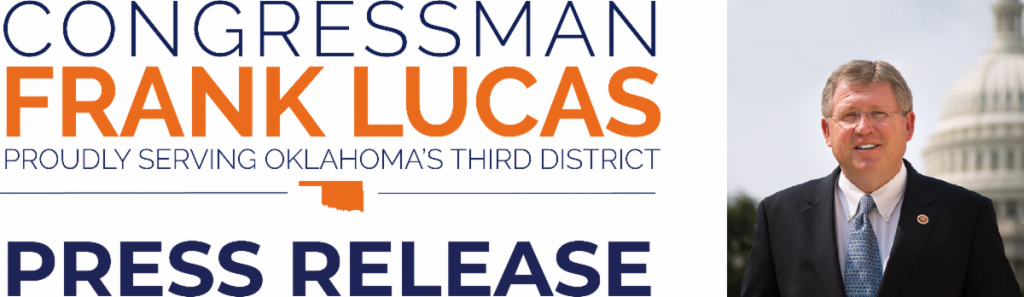
Last week, the U.S. House of Representatives passed the FY 2025 National Defense Authorization Act (NDAA). Lucas voted in favor of the legislation.
"By passing the NDAA, we fulfilled our duty to support America's servicemembers, bolster Oklahoma installations, and improve America's military readiness amidst increased global instability," said Congressman Frank Lucas. "I applaud House Armed Services Committee Chairman Mike Rogers for his efforts in passing this legislation and ensuring it includes critical funding for Oklahoma's Third District."
BACKGROUND:
The NDAA passed the House last Wednesday 281-140 and now is awaiting final approval in the Senate. It includes:
· A 14.5% pay raise for junior enlisted servicemembers and supports a 4.5% pay raise for all other servicemembers.
· Authorization of $29m for Shawnee Readiness Center for the Oklahoma National Guard.
· Authorization of $74m for Ammunition Demolition Facility at McAlester Army Ammunition Plant.
· Border security funds to conduct cyber operations to disrupt cartels/trafficking.
· Fully supports deployment of National Guard troops to augment Border Patrol activities at the southwest border.
Farming in 2025 will be challenging for many row crop producers. Low commodity prices, disappointing 2024 yields, high input costs, and policy uncertainty will require crop farmers to make important agronomic, financial, and risk management decisions. Below are a few points to consider during the planning process.
1) Commodity prices are low and there is currently nothing on the radar that would indicate substantial improvement will occur in 2025. Drought (beyond just the southern region), production disruptions abroad, and geopolitics could improve price prospects, but at this point in time, increases in commodity prices are highly uncertain and mostly wishful thinking.
2) Trade/retaliatory tariffs are a concern and provide the potential for substantial downside price risk in commodities that are heavily reliant on export sales, like soybeans and cotton. Protecting against downside price movements should be considered.
3) Producers need to distinguish between cash versus non-cash costs (capital recovery) in the short term. We can farm in the short-term covering cash costs, but in the long term we need to cover total economic costs.
4) Input costs and profit margins need to be managed effectively – do not cut costs at the expense of yield but do not pursue the highest yield possible. Approximately 90% of cash costs are in five cost categories: land, seed, chemical, fertilizer, and operating expenses for equipment (fuel, labor, repairs and maintenance). Farmers should evaluate the efficiency of these five costs to assist in managing profit margins.
5) Secure financing early. It will be a challenging year for many farmers to secure operating credit for 2025. Obtaining financing needs to occur as early as possible. Understand your financial position and how lenders evaluate credit applications. There are five main factors lenders consider: repayment, liquidity, solvency, collateral, and relationship. Which factors lenders emphasize, and the ratio or measure to evaluate the factor, will depend on the agricultural lender or credit provider. Talk to your primary lender early and often.
6) Develop a marketing and risk management plan that includes crop insurance, storage analysis, contracts, futures, and options. Do not use the same marketing and risk management strategy in the current market environment as when we had higher prices and higher volatility two years ago.
7) There is the potential for payments from the federal government (FARM Act? or other Ad Hoc legislation) and a new Farm Bill is possible in 2025. Until they are realized, it is not advised to incorporate these potential payments into the 2025 financial plan. If realized, they are a bonus.
Due to the above challenges and the complexity of modern farming, it is essential for farmers to surround themselves with a strong support network. Important roles in farmer support networks include:
Lawyer – Having appropriate legal advice is essential for agricultural enterprises. This can include a local lawyer for general legal matters but may also include specialized legal advice for more complex legal concerns. Paying for specialization is often cheaper in the long run.
Accountant – Nobody likes paying taxes, but it is essential for farmers to obtain assistance when preparing tax returns, planning purchases, or transitioning the farm to the next generation. A good accountant can save you money and assist if you have issues with the IRS.
Crop Insurance Agent – Crop insurance is the primary risk management tool for most crop producers. Crop insurance can be complicated to navigate and requires individual, policy-specific analysis to ensure you are receiving the most effective coverage for the premium paid.
Agricultural Lender – Agriculture is a capital-intensive business. Adequate and consistent access to operating and term debt is essential for most farmers. Having a primary agricultural lender that understands your operation and that will stick with you through agricultural cycles is imperative. This is not to say that all credit will be obtained through one lender. Farmers need to make sure that the cost of credit is fully analyzed and that decisions make financial sense.
Broker / Marketer / Grain Merchandiser – Marketing is not a strength for most farmers. However, in times of low prices and tight margins, marketing can be the difference between profit and loss. Obtaining expertise or a second opinion can be a tremendous benefit.
Crop Consultant / Agronomist – Every production year is different and will require problem solving so a crop can be produced and sold. Yield is important; however, in periods of low prices and elevated input costs, it is essential that each input pulls its own weight economically. The cost of the input must be fully covered by financial benefits. A good agronomist can help navigate the agronomic challenges of the production season.
Extension Agent / Specialist – Extension provides a network to problem solve and connect producers with expertise to address problems and verify information independent of a financial motive. Searching the internet can be a powerful tool to assist in decision making. However, the internet has carpet bombed the information landscape with unreliable advice, opinions, and conspiracies, so be wary of information sources.
Article Courtesy of Southern Ag Today: Smith, Aaron. "2025 Crop Planning." Southern Ag Today 4(51.3). December 18, 2024. Permalink
Weekly, Oklahoma State University Extension Beef Cattle Nutrition Specialist Paul Beck offers his expertise on the beef cattle industry. This is part of the weekly series known as the "Cow Calf Corner," published electronically by Dr. Derrell Peel, Mark Johnson, and Beck. Today, he talks about supplementing wheat pasture calves.
In a past article (Cow-Calf Corner Newsletter, November 25, 2024; https://extension.okstate.edu/programs/beef-extension/cow-calf-corner-the-newsletter-archives/2024/november-25-2024.html) I mentioned that it requires about 5 pounds of wheat forage dry matter (DM) per pound of calf bodyweight at the start of grazing to maximize steer performance. This forage allowance (the pounds of forage DM per pound of steer bodyweight) should result in gains throughout the fall and winter of over 2.5 pounds of gain under normal conditions. For example, to maximize performance of growing 500-pound calf we need to have 2,500 pounds of forage DM per steer. With a normal stocking rate of 2 acres per steer, this is 1,200 to 1,300 pounds of forage DM per acre. (A good thick stand of wheat pasture should be about 6 to 7 inches tall at 1,200 to 1,300 pounds per acre).
If we are slightly overstocked or have less forage available due to poor wheat growing conditions, forage allowance of 3 pounds can provide enough forage for about 2.5 pounds of gain per day. We can increase performance by feeding a small package energy supplement at 2 pounds per day (5.8 pounds/calf 3 days per week) to the growing calves, increasing gain by 0.5 pounds per day. This supplement should provide digestible energy and does not need to be high in protein because of the high protein content of the wheat forage. The supplement can be composed of grains (ground corn or milo work great) and digestible grain milling products with low protein content (soybean hulls and wheat midds), but we can provide extra protein with feeds like corn gluten feed or dried distillers grains if they are competitively priced on an energy basis. We often design these supplements to carry required minerals (calcium and magnesium are often deficient in wheat pasture) and monensin (100 to 200 mg/calf/day), an ionophore that will increase daily gains and reduce the incidence and severity of potential bloat. (Monensin is highly toxic to dogs and horses so care should be taken in storage and feeding feeds containing monensin to keep out of reach of non-targeted animals.) Research at OSU has shown that providing a free-choice complete mineral designed for grazing cattle on wheat pasture along with the energy supplement is as effective as feeding it in a complete package.
If wheat pasture is short but we need to keep the same stocking rate we have in the past, we can maintain stocking rates with higher supplementation rates or other feeding methods to offset the reduced availability of wheat pasture and low forage intake. This will be the topic for my article next week.
Paul Beck explains how to estimate the number of cattle to stock on wheat pasture on SunUpTV from November 26, 2018 at https://www.youtube.com/watch?v=i7swrHd0xbc
RON's Dave Lanning has a pre-opening look at today's agricultural Markets.
Click the audio tab below for today's report.
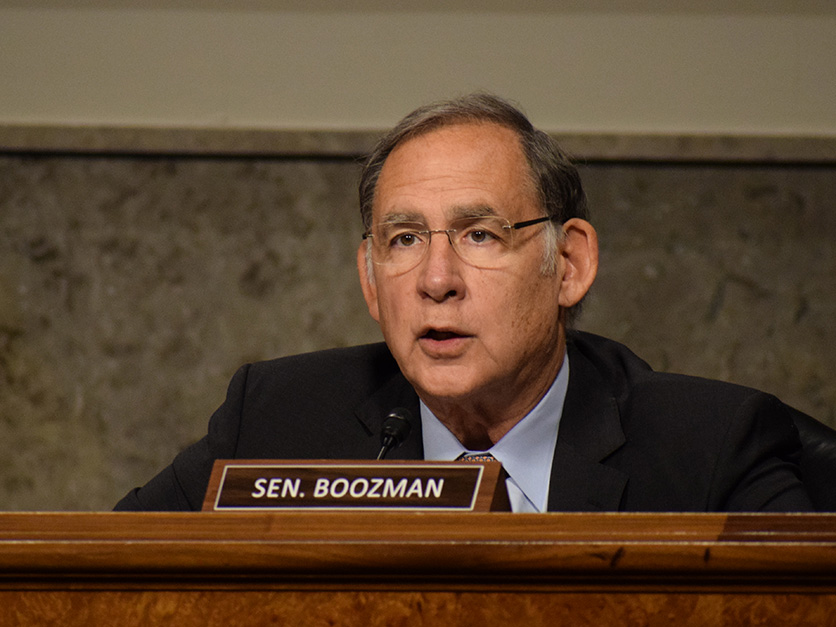
U.S. Senator John Boozman (R-AR), ranking member of the U.S. Senate Committee on Agriculture, Nutrition, and Forestry, secured significant economic assistance for America's farmers struggling to maintain operations due to rising inflation, high input costs, and low commodity prices in the continuing resolution Congress is expected to vote on in the coming days.
"Farmers, agricultural lenders, and rural community leaders clearly communicated the need for emergency assistance to survive current market conditions. The consequences of ignoring the stark realities facing rural America would be devastating to farm families, American agriculture, and our nation's food security. An updated Farm Bill with an improved safety net would have minimized the need for emergency economic assistance. Unfortunately, the Senate failed to even consider a new Farm Bill this year. We must redouble our efforts and pass a bipartisan five-year Farm Bill. I look forward to working with House Agriculture Committee Chairman GT Thompson to accomplish this shared goal," Boozman said.
The package provides $10 billion in economic assistance for the agriculture community to help manage the crisis resulting from depressed market conditions.
The many voices of American producers across the country were instrumental in providing this meaningful economic assistance that will ensure these hardworking men and women can continue to feed, clothe, and fuel our country and the world.
Boozman led calls for federal economic assistance to support American producers and the agriculture industry's long-term outlook.
Dr. Rod Hall, D.V.M., Oklahoma State Veterinarian issued the following statement warning of the prevalence of highly pathogenic Avian Influenza:
I'd like to make everyone aware that Highly Pathogenic Avian Influenza is very prevalent in the USA in general and in Oklahoma and our surrounding states specifically at this time. Here in Oklahoma, we've had one backyard flock in Roger Mills County and two commercial flocks in Adair County become infected in the past month. There have been more than 30 cases confirmed in the U.S. in the past week. Many of those have been small backyard flocks, but many have been commercial flocks, one in Iowa with 4.2 million hens. Poultry that become infected either die or are euthanized to help prevent the spread of the disease.
Due to the warmer-than-usual fall, the migratory waterfowl are still migrating south, and from reports we've received, there are still a lot of birds north of us that will be coming through Oklahoma in the next few weeks. Many of those ducks and geese are carrying and shedding this virus.
Please advise your clients, friends, relatives, and stakeholders to be aware of the danger to domestic poultry and institute the best biosecurity they can for the next several weeks. This includes keeping poultry penned away from waterfowl and water where waterfowl gather, not allowing waterfowl to approach domestic poultry spaces, and changing clothes and shoes before going to your domestic poultry area after being in locations where waterfowl have defecated.
This virus is very transmissible, which is evident by the fact that commercial poultry operations that have good routine biosecurity become infected from exposure to waterfowl and by the introduction of the virus on people and equipment.
Here is a link to the OSU Fact Sheet on biosecurity for backyard flocks: afs-8301-small-flock-biosecurity-for-prevention-of-avian-influenza.pdf .
Today, the House Republican Steering Committee selected the Republican members who will serve on the House Committee on Agriculture for the 119th Congress. Following the announcement, Chairman Glenn "GT" Thompson (PA-15) issued the following statement:
"I'm excited to welcome this strong and diverse group of legislators to the House Committee on Agriculture for the 119th Congress. This is a pivotal time for our farmers, ranchers, and rural communities, so we'll hit the ground running with rigorous hearings and oversight, all to ensure we deliver legislative victories for rural America and the farm families that guarantee our nation's food security."
Returning Members:
Rep. Glenn "GT" Thompson (PA-15), Chairman
Rep. Frank Lucas (OK-03)
Rep. Austin Scott (GA-08)
Rep. Rick Crawford (AR-01)
Rep. Michael Bost (IL-12)
Rep. Scott DesJarlais (TN-04)
Rep. Doug LaMalfa (CA-01)
Rep. David Rouzer (NC-07)
Rep. Trent Kelly (MS-01)
Rep. Don Bacon (NE-02)
Rep. Dusty Johnson (SD-AL)
Rep. Jim Baird (IN-04)
Rep. Tracey Mann (KS-01)
Rep. Randy Feenstra (IA-04)
Rep. Mary Miller (IL-15)
Rep. Barry Moore (AL-02)
Rep. Kat Cammack (FL-03)
Rep. Brad Finstad (MN-01)
Rep. Monica De La Cruz (TX-15)
Rep. Ronny Jackson (TX-13)
Rep. John Rose (TN-06)
Rep. Zach Nunn (IA-03)
Rep. Derrick Van Orden (WI-03)
New Members for the 119th Congress:
Rep. Dan Newhouse (WA-04)
Rep. Tony Wied (WI-08)
Rep. Rob Bresnahan (PA-08)
Rep. Mark Harris (NC-08)
Rep. Mark Messmer (IN-08)
Rep. David Taylor (OH-02)
NOTE: The House Steering Committee is responsible for recommending Members to serve on standing Committees in the House of Representatives. The recommendations are subject to approval by the House Republican Conference.
Senator James Lankford (R-OK) today released the following statement after the Department of Energy (DOE) announced that the proposed Delta-Plains Electric Transmission Corridor in Oklahoma would not be included as DOE moves forward.
"My team and I have been in contact with the Department of Energy and received the welcome news that the threat of federal eminent domain to Oklahoma landowners is gone. The Biden Administration has worked against landowners in Oklahoma for years and I'm pleased to see that our efforts to push back on their terrible policies is working. This is a huge win for Oklahoma landowners," said Lankford.
Background:
Today, the U.S. Department of Agriculture's (USDA) Animal and Plant Health Inspection Service (APHIS) is announcing the second round of states coming on board as part of its National Milk Testing Strategy (NMTS) that was launched Dec. 6., and which requires that raw (unpasteurized) milk samples nationwide be collected and shared with USDA for testing. Today's announcement represents the next step toward conducting complete nationwide surveillance under the NMTS and continues to build on measures taken by USDA and its federal and state partners since the outbreak of highly pathogenic avian influenza (HPAI) H5N1 in dairy cattle was first detected in March 2024.
As of this announcement, the following seven states will be included in the second round of states to be brought into this testing strategy: Indiana, Maryland, Montana, New York, Ohio, Vermont, and Washington.
While the new Federal Order is effective immediately, and has been in effect since being announced Dec. 6, USDA continues to work directly with states to bring them on board as quickly as possible while also accommodating state specific needs. With this announcement and the initial announcement Dec. 6 combined, the 13 states beginning testing under the NMTS represent a geographically diverse mix of states, some of which have been affected by HPAI H5N1 in dairy cows and some of which have never detected the disease. Additionally, these first two groups of states represent eight of the top 15 dairy producing states in the country, accounting for nearly 50% of U.S. dairy production.
The first six states announced have begun sampling under the guidance of the NMTS and the new Federal Order and USDA anticipates receiving the first round of sampling during the week of Dec. 16. Results from this testing will be included in the routine testing reports shared by APHIS, and any newly affected herds will be reported on the website on the existing HPAI confirmed cases in livestock map. As has been the case since the start of this outbreak in dairy cows, any confirmed detection will be reported to local public health and state animal health officials to coordinate response efforts with our state and federal partners. The seven states announced today will begin testing soon.
National Milk Testing Strategy Background
The National Milk Testing Strategy (NMTS) is designed to increase USDA's and public health partners' understanding of the virus' spread in the United States through a structured, uniform, and mandatory testing system that will help swiftly identify which states, and specific herds within them, are affected with H5N1; support the rapid implementation of enhanced biosecurity measures to decrease the risk of transmission to other livestock; and importantly, inform critical efforts to protect farmworkers to help lower their risk of exposure.
APHIS has been working diligently to educate and inform key state and animal health partners about this Federal Order and National Milk Testing Strategy, as well as to establish written agreements with states to support how they can work with USDA under the new strategy.
APHIS will continue to work diligently to add states testing under the NMTS. Throughout this process APHIS will support and offer resources to states that develop bulk milk testing plans and help each state execute testing that meets their needs and aligns with the guidance of the NMTS. APHIS will continue to work with each of the 48 contiguous states to participate in the strategy until all states are participating and testing under the NMTS.
USDA's Continued Efforts to Combat H5N1
USDA consistently operates on a science-based, step-by-step approach, informed by what it learns about this virus through its everyday work and research and surveillance efforts. This National Milk Testing Strategy marks the next step in escalating that response to meet the needs based on the facts on the ground. This expanded testing effort is just one part of our broader strategy to contain and ultimately eliminate the virus from the national dairy herd.
USDA continues to stress to farmers nationwide the critical importance of effective biosecurity practices as the best weapon against the spread of disease and has provided clear recommendations for livestock producers. The Department strongly recommends that all producers review their current biosecurity measures and ensure best practices identified over the past eight months are incorporated, even if H5N1 has not been detected in their state or region. More information about biosecurity best practices can be found on APHIS' website here Enhance Biosecurity | Animal and Plant Health Inspection Service. USDA encourages all herd owners to participate in the producer support programs that are already available, which help to cover some of the costs associated with biosecurity planning, PPE for employees, and veterinary care. Producers can find more information at Financial Assistance | Animal and Plant Health Inspection Service, or at your nearest USDA Farm Service Agency county office.
On Tuesdays, Senior Farm and Ranch Broadcaster, Ron Hays, visits with Ben Hale of Western Livestock Auctions as he talks about the latest in the markets and more. Established in 1995, Western has grown into a multi-generational family-owned and operated business and stands as a symbol of tradition, excellence, and a deep-rooted passion for the cattle industry. Western Livestock Auctions operates the Western Livestock Commission Firm- selling cattle on Mondays and Tuesdays. They also operate the livestock auction markets in Woodward, Comanche and Knoxville, Iowa.
The numbers remained high at Monday's sale with 7,500 compared to 5,000 a year ago. Prices were a little softer last week, but this week was top-notch once again.
"There is lots of demand on the feeders, but we didn't have many big heifers," he said. "Most of the bigger heifers were seven-weights, and the steers were about the same, with a few nine-weights."
He thinks that buyers are anticipating even higher prices in the spring, so they are trying to stock up now to keep inventory going.
Hale predicts about 400 head to sell in Woodward today, and Comanche should also have good numbers tomorrow.
Hale can be contacted at 940-631-2333. Check out more about the marketing options that Western offers by clicking here.
The National Corn Growers Association (NCGA), responding to a request for information from members of the U.S. House Ways and Means Committee, sent comments today outlining the importance of a tax credit that would provide corn growers with access to the sustainable aviation market.
The comments come as growers try to elevate the importance of the tax credit, called 45Z and part of the Inflation Reduction Act passed in 2022.
Corn grower leaders have said they want to be a part of the new market.
"NCGA believes farmers should be considered in the implementation of this tax credit because they contribute importantly to the lifecycle of biofuels," the comments said.
The letter also noted the value the tax credit provides to domestic energy security.
"NCGA believes corn and soybean feedstocks are best suited for the 45Z tax credit to support domestic, American-grown solutions. We look forward to keeping homegrown fuels at the center of American energy independence and welcome further opportunities to address questions or concerns in the future."
NCGA has been on the forefront of advocating for the tax credit and pushing the Biden administration to release realistic guidelines for accessing the credits.
Today, members of the bipartisan House Paid Family Leave Working Group, co-chaired by Representatives Stephanie Bice (R-OK) and Chrissy Houlahan (D-PA), released two discussion drafts designed to provide more families with more paid leave. The co-chairs are joined in releasing these drafts by the full membership of the Working Group, Representatives Colin Allred (D-TX), Mariannette Miller-Meeks, M.D. (R-IA), Haley Stevens (D-MI), and Julia Letlow (R-LA).
Previously, the Working Group released a Policy Framework in January 2024. The two drafts being released today are the culmination of the group's work in the 118th Congress and focus on 1.) providing guidance and incentives to states to establish their own paid family leave programs using a public-private partnership model, and 2.) establishing a convening body and process to enable states to coordinate and harmonize benefits and to establish best practices for paid leave programs thereby supporting workers and businesses.
The Working Group is seeking feedback. Interested stakeholders may submit written comments to PaidLeave.Feedback@mail.house.gov by Friday, January 10, 2025.
Paid Family Leave Public-Private Partnerships Act
The first bill would establish a competitive grant program to be run by the U.S. Department of Labor as an incentive for states to establish their own paid family leave programs that utilize a public-private partnership model.
For grant eligibility, states would have to meet several criteria including establishing a partnership with a private entity, to assist with program administration and provide this paid leave benefit for, at a minimum, the birth or adoption of a child. The bill also establishes a benefit floor (must provide a wage replacement rate of at least 50%-67%, based on income) and requires state programs to provide a minimum of six weeks of paid family leave in order to receive a grant. States would also need to participate in the I-PLAN, detailed below to be eligible.
This concept recognizes the importance of state innovation and flexibility. In fact, the majority of states with existing paid leave programs would already meet the requirements of this bill.
The draft text can be found here.
The summary can be found here.
Interstate Paid Leave Action Network Act (I-PLAN Act)
The second bill, the Interstate Paid Leave Action Network Act (I-PLAN Act) is intended to coordinate and harmonize paid leave benefits across states to make it easier for people to access paid family leave and for states to connect with one another. Currently, there are no federal interstate connections for paid leave, resulting in a patchwork of individual state programs with a variety of standards, requirements, definitions, and processes. Other social insurance programs such as unemployment insurance built the necessary state and federal connections nearly a century ago. The I-PLAN ACT will do the same for paid family leave in a way that works for employees, employers, and states.
The Department of Labor will be charged with providing funding to an intermediary with the right expertise to facilitate state coordination, meetings, and more. As part of this effort, they will develop an electronic system for state-paid leave programs so they can communicate with each other, exchange data, and enhance program integrity.
Through support from the intermediary, the states will have two opportunities for funding to support their own state-paid leave programs and in the process develop an "interstate agreement" in pursuit of three goals: 1) policy standards 2) administrative standards and 3) the creation of a single process to determine primary state programs for those who have lived and worked across different states.
The draft text can be found here.
The summary can be found here.
The following individuals and groups commented:
Congresswoman Bice -
"After two years of diligent effort, I am excited to share that the House Working Group has put pen to paper. These two discussion drafts are a significant step forward and will promote both American families, and businesses across the country. I want to thank the Members of the working group and all the stakeholders who have been instrumental throughout this entire process. We're looking forward to building momentum around expanding access to paid family leave as we enter the next Congress."
Congresswoman Houlahan -
"The American people have waited too long for us to solve a major issue that vexes nearly every family in the nation, and in dropping our discussion bills today, we're putting Congress on notice that we expect their attention and action. My district is home to people who live here but work in nearby states New Jersey, Delaware and even New York—each of which have state paid family and medical leave programs. And like every one of my colleagues in the House, I represent people who work fully remote for corporations based all over the nation. No matter where you live or work, you should be able to access and fully enjoy paid family leave benefits available to you and do so easily. I am grateful to Rep. Bice's partnership and the entire Working Group for their unwavering effort to support families and find innovative ways to solve this complex issue."
Congresswoman Miller-Meeks -
"Paid family leave is a bipartisan priority, and we must continue to find flexible solutions without burdensome federal mandates. I am proud to support these two critical pillars to help us create a more efficient, accessible, and responsive paid family leave system that works for all workers."
Congressman Allred -
"It is so important that more parents get access to paid family leave so they can spend that special time with their new babies, and our bipartisan working group remains dedicated to finding a solution that will make progress on this important goal. I was proud to be the first member of Congress to take paternity leave after both my sons were born. Public-private partnerships and the coordination of benefits across states is critical to making progress to ensuring every American can take paid family leave regardless of where they work or where they live."
Congresswoman Letlow -
"I'm proud to join my colleagues on the Paid Leave Working Group to build off our commitment to streamline the patchwork of state paid leave programs by creating an interstate agreement to improve coordination and make benefits more accessible. Our discussion drafts are a key step forward to modernizing technology, providing states with the resources to create their own paid leave programs, and ensuring that workers have clear, consistent access to paid leave, no matter where they live or work."
Congresswoman Stevens -
"Whether taking time off to heal after pregnancy with a newborn or to welcome a new child through adoption, paid leave makes it so workers and our economy can thrive. The bipartisan framework announced today by the Paid Leave Working Group represents incredible progress towards accessible, efficient paid leave that will empower American families. I thank my fellow members of the working group, and I look forward to turning these policies into reality."
Bipartisan Policy Center Action-
"While the rise in state paid family leave laws has provided access to this critical benefit for millions of workers, the distinct requirements of each program present compliance challenges for multistate employers. BPC Action is proud to support the Interstate Paid Leave Action Network (I-PLAN) Act and the Paid Family Leave Public-Private Partnerships Act, which would enhance the operational efficiency of existing paid family leave programs across states, support the establishment of new ones, and promote harmony among them. We applaud the House Bipartisan Paid Family Leave Working Group, chaired by Reps. Stephanie Bice (R-OK) and Chrissy Houlahan (D-PA), for their leadership on an issue impacting so many Americans," says Michele Stockwell, president of Bipartisan Policy Center Action.
Senator Cassidy -
"Americans should never have to choose between caring for their child and returning to work to make a living. I applaud my House colleagues on their new discussion draft. Ideas like this move the conversation forward. Our bipartisan working group will continue to advance additional ideas next Congress."
Senator Gillibrand -
"The United States is the world's only industrialized nation that does not guarantee workers paid leave, even though nearly all workers will need to take time away from work at some point to address a serious illness or to care for a new child. Without universal paid leave, millions of Americans must choose between their livelihood and the health and well-being of themselves and their families. I am encouraged by the work of my House colleagues in advancing solutions and I look forward to working together next Congress on this important issue to promote the financial well-being of working families and the vibrancy of the economy."
The House bipartisan Paid Family Leave Working Group was launched in January of 2023 to explore federal paid family leave policies. Supported by the Bipartisan Policy Center and other organizations, the working group's mission is to bring more paid leave to more Americans through enduring policy solutions.
Senator James Lankford (R-OK), founding member of the Department of Government Efficiency (DOGE) Caucus, introduced two bills today to tackle fraud and waste.
"Making the government more efficient isn't a partisan issue—it's an American issue. Loopholes in the law let fraudsters get away with billions in COVID recovery and Unemployment Insurance payouts while forcing taxpayers to foot the bill. The decades of government waste must come to an end," said Lankford.
Lankford's Fraudulent Covid Funds Recovery Act would extend the statute of limitations for all pandemic-era programs. Currently, all of the pandemic-era programs meant to combat fraud will end in 2025, so extending the statute of limitations from 5 years to 10 years would allow law enforcement to combat fraud at all levels. Senator Joni Ernst (R-IA) is cosponsoring this legislation.
The second bill, Eliminate Fraudulent Unemployment Insurance Benefits Act, would require states to withhold payments from any claimant it deems ineligible and fraudulent. It also creates new definitions to help states appropriately classify fraudulent activity.
Last year, Lankford released the latest edition of his government waste book: Federal Fumbles: Ways the Federal Government Dropped the Ball, which highlights almost half-a-trillion dollars in government waste. Lankford also championed the Taxpayers Right-to-Know Act which resulted in the launch of the Federal Program Inventory (FPI) earlier this year so the American people can see how their tax dollars are being spent.

The House Democrats selected Rep. Angie Craig (D-Minn.) today as ranking member on the House Agriculture Committee for the 119th Congress. In response, several ag groups and representatives issued statements.
Rep. Craig's roots in Northeast Arkansas, where she was born in West Helena, attended high school in Jonesboro and graduated from the University of Memphis, provide her with a deep understanding of the unique challenges and opportunities in Southern agriculture. Rep. Craig has been serving in Congress since 2019, and is currently in her fourth term as a U.S. Representative for Minnesota's 2nd congressional district. Her background ensures she is well-equipped to advocate for policies that support our farmers and rural communities.
American Farm Bureau Federation President Zippy Duvall issued the following statement:
"Farm Bureau congratulates Rep. Angie Craig on her nomination to serve as the next ranking member of the House Agriculture Committee. Rep. Craig has a long history of working in a bipartisan manner to advance the needs of America's farmers and ranchers.
"Her leadership is needed now more than ever, as farmers face economic headwinds including inflation, high supply costs and decreasing commodity prices. Those challenges can quickly become a crisis if they're not addressed with a new, modernized farm bill. Congress has kicked the can down the road too many times. Now is the time to act. We stand ready to work with Rep. Craig to ensure passage of a new 5-year farm bill and to address other matters important to agriculture and rural America.
"I'd also like to thank Rep. David Scott for his dedication to America's farmers and ranchers as chairman and then ranking member of the House Agriculture Committee. His more than 20 years of experience on the committee will continue to be invaluable to the success of the hardworking families who ensure America's pantries remain stocked."
Kenneth Hartman Jr., president of the National Corn Growers Association, released the following statement:
"We want to congratulate Rep. Craig for securing the role as ranking member on the House Committee on Agriculture for the 119th Congress.
"Rep. Craig has been a close ally of farmers in general and fierce advocate of corn growers in particular. We are thrilled by this development and look forward to working with her in the year ahead as we advance legislation important to our growers.
"We also want to thank Ranking Member David Scott (D-Ga.) for his tireless work on behalf of our issues. He has been a true leader, and we look forward to working with him in the next Congress."
The National Cotton Council (NCC) congratulates Rep. Angie Craig on her appointment as the Ranking Member of the House Agriculture Committee. "We are confident that her leadership will bring valuable insights and a strong commitment to addressing the challenges faced by the agricultural community," said NCC Chairman Joe Nicosia.
The NCC also extends our gratitude to Rep. David Scott for his dedicated service and leadership as the previous Ranking Member. His contributions have been instrumental in advancing the interests of American agriculture, and we look forward to continuing our work with him in his ongoing role on the committee.
Growth Energy, the nation's largest biofuel trade association, also congratulated Rep. Angie Craig (D-Minn.) on her new role as Ranking Member of the U.S. House Committee on Agriculture.
"Congresswoman Craig is a champion for rural America and will make an outstanding leader on the House Agriculture Committee. She truly understands the value of biofuels and how critical they are to the continued success of American agriculture," said Growth Energy CEO Emily Skor. "We congratulate her on this new role and look forward to continuing our work with her to lower emissions, reduce consumer costs, and support our farmers by expanding the use of American biofuels."
Association of Equipment Manufacturers Senior Vice President Kip Eideberg issued the following statement:
"The Association of Equipment Manufacturers congratulates Congresswoman Angie Craig on her election to serve as the top Democrat on the House Agriculture Committee. Rep. Craig's leadership and dedication to advancing policies that strengthen American agriculture, support rural communities, and promote innovation make her well-suited for this important role.
Equipment manufacturers' continued success depends on policies that support farmers, ranchers, and rural communities. We are greatly encouraged by Rep. Craig's track-record of working in a bipartisan manner to advance policy that drives innovation and ensures the long-term growth and success of American agriculture.
We stand ready to work with her to pass a new 5-year farm bill that encourages the adoption of precision agriculture technology, strengthens our global supply chains, and continues to invest in rural America."
"With reports today that the continuing resolution/supplemental package is being finalized, NCFC would like to thank congressional leaders for including much needed assistance for farmers and ranchers across the country. Both the disaster assistance and economic aid are vital to keeping thousands of producers in business during unprecedented market conditions. These will serve as a bridge until the new Congress can write a five-year farm bill that addresses the current challenges facing the ag economy. The one-year farm bill extension is also vital in this regard. Finally, a provision allowing for year-round use of E15 will create new market opportunities in the years ahead. We urge members of Congress to support this package when it comes to a vote later this week."
About NCFC
Since 1929, NCFC has been the voice of America's farmer cooperatives. Our members are regional and national farmer cooperatives, which are in turn consist of nearly 2,000 local farmer cooperatives across the country. NCFC members also include 17state and regional councils of cooperatives. Farmer cooperatives allow individual farmers the ability to own and lead organizations that are essential for continued competitiveness in both the domestic and international markets.
America's farmer-owned cooperatives provide a comprehensive array of services for their members. These diverse organizations handle, process and market virtually every type of agricultural commodity. They also provide farmers with access to the infrastructure necessary to manufacture, distribute and sell a variety of farm inputs. Additionally, they provide credit and related financial services, including export financing.
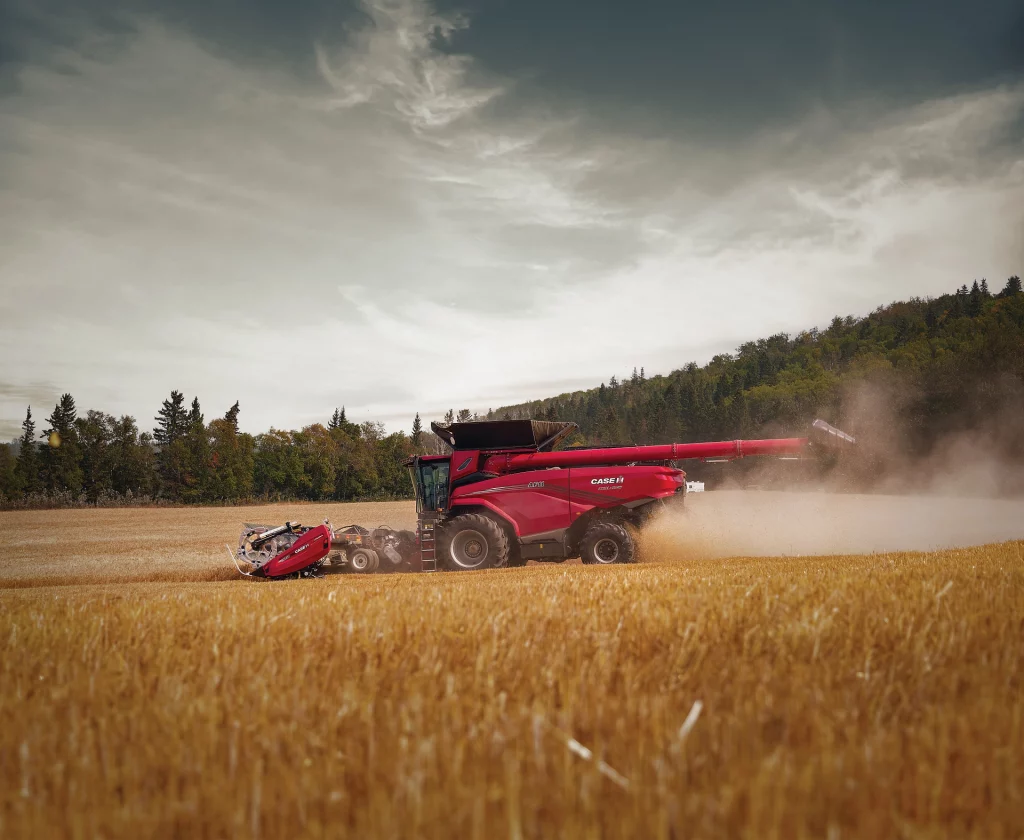
Oklahoma Farm Reports Maci Carter caught up with CASE IH Oklahoma Harvesting Product Marketing Manager Ryan Lepp about what the "Year of the Combine" means for the company and producers.
"It really comes down to having eight combines in our product lineup," Lepp explained. "We have a 6160 and our 7160 combines for smaller scale farms. Then we jump up to the 7260, 8260, and 9260 combines for mid-size to large-scale operations. Then, our AF series, including our AF9, AF10, and AF11 combines, were built from the ground up for large-scale farmers."
The AF series is new this year for Case IH and is hinged on capacity, throughput, and acres per hour - essentially efficiency. They are larger combines that include many of the features from the 260 series such as the CVT drives, which allow the reversal of the rotor from the cam. From the feeder house to the spreaders, there is an additional 3.5 feet of rotor width when compared to the 9260. As for the spreaders, they can distribute materials up to 61 feet adding even more efficiency to the operation.
"One great feature that we have is the Harvest Command," Lepp detailed. "It allows the combines to automatically make changes to adjust for changes it detects in the field. It has been around since 2019 and is included in all eight of our models.
"We also have two displays in the cab on our 260 and AF series combines. We have a twelve-inch display that is easier to see and captures a lot of our data as we are harvesting a field. Whether yield rates or our guidance lines, it is all being recorded in our combines."
For corn and soybean growers, all units can include a subscription-free Row Guidance feature. AccuSync® is another subscription-free feature that allows the sharing of data between combines. FieldOps is a program that allows a farmer to remotely view a display in one of his combines, to see where it is, what the yield is, and more.
"There is a tremendous amount of technology that goes into these combines," Lepp commented. "It's about data management and how we can manage that data the best and easiest way."
The technology being subscription-free means that it will be available to the producer for the life of the hardware with no additional effort or expense.
Today, December 17, the U.S. Environmental Protection Agency released a report to Congress detailing water affordability across the U.S. among households and utilities.
The report — "Water Affordability Needs Assessment" — summarizes decades of research by utilities, academics, and associations, and includes recommendations, such as potentially establishing a federal water assistance program; increasing education, outreach, and knowledge around solutions to address affordability; and increasing ways to reduce water infrastructure capital and operating costs.
EPA estimates that between 12.1 million and 19.2 million households throughout the U.S. lack access to affordable water services. Nationally, the cost of unaffordable water service bills ranges from $5.1 billion to $8.8 billion.
"Accessing clean and safe water is part of everyday life, and it should be affordable for everyone across the country," said EPA Principal Deputy Assistant Administrator for Water Bruno Pigott. "The Biden Administration and Congress recognized communities need assistance, and that's why the Bipartisan Infrastructure Law includes $50 billion for water and wastewater projects, almost half of which is to be provided in grants."
Large-scale, sustainable change requires addressing how water utilities are funded, how rates are set, and how assistance programs are established to support all ratepayers, the report states. It also requires continued investment in the nation's aging infrastructure. A national water assistance program could serve as a critical tool for alleviating some of the financial stress faced by households and utilities around the country.
"Water affordability is not just a public health necessity, it is a moral imperative. Many families in Maryland and across the nation already struggle with high rates, even as the cost to maintain our aging water infrastructure increases," Sen. Ben Cardin (D-MD) said."This report is a long-awaited first step towards standing up an assistance program at EPA for low-income consumers that allows for utilities to make repairs and upgrades without overburdening their ratepayers."
"Access to clean water is not a luxury—it's a fundamental human right," Rep. Blunt Rochester (D-DE), a member of the House Energy and Commerce Committee, said."The inclusion of the Low-Income Water Customer Assistance Act in the Bipartisan Infrastructure Law, a bill I championed with Senator Ben Cardin, marked a significant step toward ensuring equitable access to safe drinking water for all. Today's report further advances this effort and highlights the nationwide need for assistance to low-income water customers. It's another critical stride in our commitment to making clean, safe drinking water accessible to every community."
"We know people are struggling to afford critical water and wastewater services, and they need support now. This report makes it clear: the time has come for a permanent federal water affordability program. I want to thank the EPA for bringing national attention to this urgent issue. Water agencies across the country are ready to act to ensure every household has access to the services they depend on," President of Water Agency Leaders Alliance (WALA) and Chief Executive Officer of Louisville and Jefferson County Metropolitan Sewer District Tony Parrott said.
Many low-income households struggle to pay their water bills, leading to economic stress and the potential to lose access to water services or even their homes in certain instances. When households are unable to pay their water bills, service disconnections can have impacts that include public health concerns, economic instability, social inequality, and psychological and psychosocial stress. Water utilities, meanwhile, are working to meet rising costs for operations and maintenance, upgrading aging infrastructure, and protecting human health and the environment, while facing difficult decisions about raising rates – often with the possible consequence of taking on substantial financial risk.
| ||||||||||||||||||||||||||||||||||||||||||||||||||||||||||||||||||||||||||||||||||||||||||||||||||||||||||||||||||||||||||||||||||||||||||||||||||||||||||||||||||||||||||||||||||||||||||||||||||||||||||||||||||||||||||||||||||||
| ||||||||||||||||||||||||||||||||||||||||||||||||||||||||||||||||||||||||||||||||||||||||||||||||||||||||||||||||||||||||||||||||||||||||||||||||||||||||||||||||||||||||||||||||||||||||||||||||||||||||||||||||||||||||||||||||||||
|
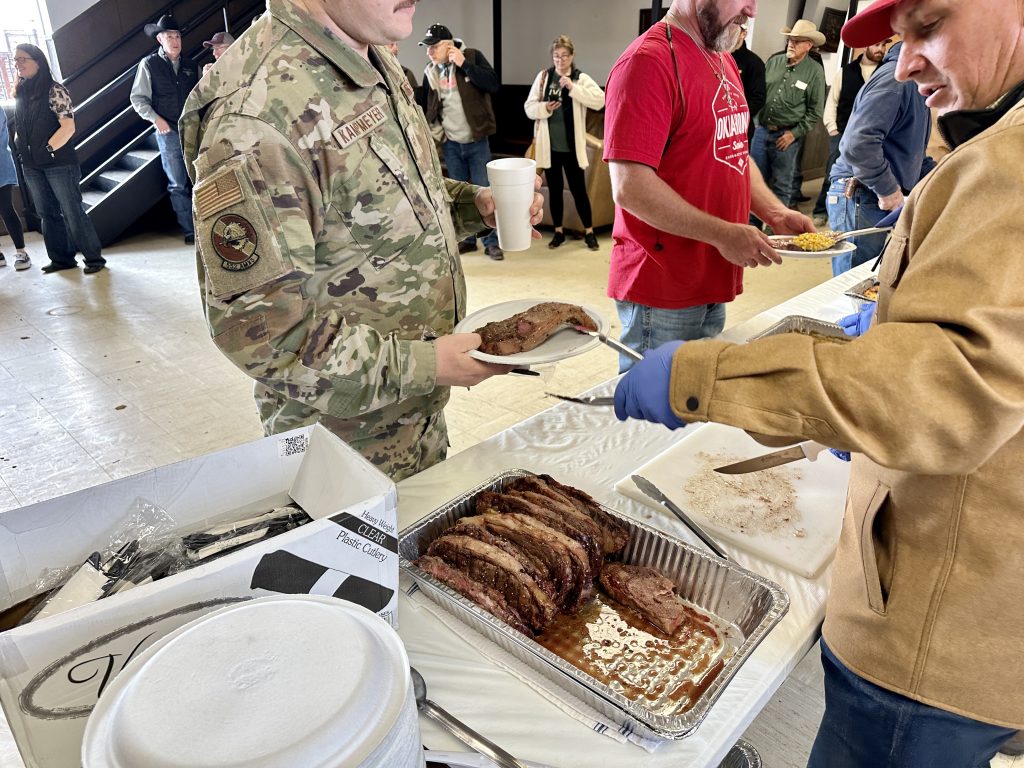
UPDATE- National Livestock's Debbie Wedel reports that the final dollar amount raised in the Monday sale and resale of the calf at the Oklahoma National Stockyards for the All American Beef Battalion topped $60,000- all to be used to for their efforts to "Feed Steaks for Troops."
Jon Fort, is the Senior Vice Chairman of the All American Beef Battalion devotes much of his time to the All American Beef Battalion helping with planning, organizing, and producing steak meals for troops and their families. This organization hits close to home for him, as his youngest brother served in the Marines during Dessert Storm.
"We have a wonderful support group here with National Livestock and all of the buyers who genuinely care about our service men and women," Fort said. "We are very fortunate to have them donate to what we think is an extremely worthy cause – serving our service men, women, and their families, and wounded warriors an eighteen-ounce ribeye and shake their hands and say, 'Thank you for your service.'"
He noted the great group of volunteers who helped with the fundraiser and others like it. The AABB has no paid employees and is run completely by volunteers and covers 29 states.
"We are going to finish this year out feeding a little more than 450,000 service men and women," Fort said. "Our first event was April 26, 2008, and we are still going."
Fort and a friend had built a large smoker on a trailer simply because they enjoyed cooking, when an AABB director in Olathe, Kansas, called Fort to say that they had an event planned but had no one to cook. Fort and his friend agreed to cook the steaks and all of the sides.
"We appreciate the respect that these young men and women have; It is just unbelievable," Fort said. "They say, 'Thank you! Thank you!' and I say, 'No, you don't understand. We are here to say thank YOU and shake your hand and feed you one of the best protein substances in the world – that's beef.'"
A special memory of Fort's was when the AABB mobilized to the Walter Reed Hospital to feed wounded warriors. "It was humbling to see the will that those young men and women had - Several were missing limbs – it was just heart-wrenching to see how they are coming home, but they had the desire. We were able to warm their hearts with a great steak, and shake their hands, if they had them because some didn't..."
He spoke of another experience in Gulfport, Mississippi, where they, with the help of volunteers from Superior Livestock, were to feed 2,400 service men and women who were preparing for deployment. Fort traveled 24 hours to be there, only to find that there were 3,000 troops to feed after all. "I always take extra, so we didn't run out," he said. "The unique thing about that is that we had them all served in 54 minutes!"
They have learned better ways to serve through the years. They moved from using roaster pans for potatoes and corn to convection ovens on trailers with thirty racks each, along with a refrigerated support trailer.
"All together, my partner and I have about 12 trailers that we pull around the country," he said.
To donate to the cause, visit the All American Beef Battalion website or drop a check written out to the All American Beef Battalion at the National Livestock Credit Corporation Office in Oklahoma City.
The Beef Buzz is a regular feature heard on radio stations around the region on the Radio Oklahoma Ag Network and is a regular audio feature found on this website as well. Click on the LISTEN BAR at the top of the story for today's show and check out our archives for older Beef Buzz shows covering the gamut of the beef cattle industry today.
The Biden-Harris Administration today released a policy framework to guide potential demand-side measures to reduce the importation of deforestation-linked commodities and derived products into the United States, with an initial focus on agricultural commodities. This policy framework, which was developed through an interagency process initiated by section 3 in Executive Order 14072 on stopping international deforestation, reaffirms the Administration's support for the collective goal of halting and reversing global deforestation by 2030 and outlines six framework elements aimed at maximizing policy effectiveness in achieving this goal. The Administration has also produced a report summarizing tools and practices that agencies use or can adopt to avoid deforestation in multiple development sectors. Together, this report and the policy framework provide a coherent foundation for demand-side deforestation policy and international capacity building to advance sustainable land use and reduce deforestation globally.
Strengthening Supply Chains: A Policy Framework to Combat Demand-Driven Illegal Deforestation and Promote Sustainable, Deforestation-Free Commodities
The United States reaffirms its support for the collective goal of halting and reversing global deforestation by 2030, including deforestation driven by commodity production. The United States recognizes that a number of diverse and complementary efforts and initiatives worldwide will be necessary to reach this goal, including demand-side measures.
The United States has prepared a policy framework to guide potential demand-side measures to reduce the importation of deforestation-linked commodities and derived products into the United States, with an initial focus on agricultural commodities. With this policy framework, the United States outlines an approach aimed at maximizing policy effectiveness in achieving our goals.
The policy framework for this initial focus includes the following elements to guide potential U.S. demand-side measures to reduce deforestation linked to agricultural commodity production:
The U.S. Government intends to take steps to explore appropriate domestic policy options, trade-related engagements, and international agreements and cooperation, including capacity building programs.
The United States intends to continue its work with other governments, civil society, the private sector, and research institutions to inform the consideration of policies and other measures that could be developed and adopted to halt and reverse global deforestation.
For more information, visit Sustainability | USDA and Deforestation | USDA Foreign Agricultural Service.
The Senate and House passed a bill introduced by Senator James Lankford (R-OK), Senator Markwayne Mullin (R-OK), and Representative Kevin Hern (R-OK) to name the new Veterans Health Administration (VA) 75,000-square-foot, 58-bed medical-surgical hospital in Tulsa the James Mountain Inhofe VA Medical Center in honor of the life and legacy of the late-Oklahoma Senator Jim Inhofe, who tirelessly served our military, veterans, and their families for his entire public service career. Lankford helped ensure the hospital received funding to commence construction in 2020 and helped ensure the skyrocketing inflation of the last three years did not interrupt the construction schedule with additional unforeseen costs. This legislation was supported by the entire Oklahoma congressional delegation and now heads to the President's desk to be signed into law.
"This is one of the most fitting honors we can give to Senator Inhofe for his decades of dedicated service to our veterans and their families," said Lankford. "Taking care of our military and veterans was at the top of Senator Inhofe's priorities. Many of our heroes and their families will never know all he did for them and the ways he shaped good national defense policies. He ensured we kept our promise to those who wore the cloth of our nation. When people pass by this beautiful new facility in Tulsa, they will always remember the many contributions of James Mountain Inhofe to our state and nation."
"No one is more deserving of this honor," said Mullin. "Senator Inhofe was a tireless champion for Oklahoma's military installations and defense communities. Our state is a better place for his leadership and service. It is my privilege to join my Oklahoma colleagues in naming the Tulsa VA in his honor and in doing so, carry on his legacy of service to the men and women of our Armed Forces."
"Senator James Mountain Inhofe was a towering figure who put his country and state above himself," said Hern. "He was not only a lifelong public servant to Oklahoma, but also a dear friend. With today's passage of the bill to name Tulsa's new VA hospital in his honor, we ensure his legacy of championing our military, veterans, and their families will endure. No one is more deserving of this recognition than the man Oklahomans proudly called their Senator, Mayor, champion, and friend—James Inhofe. His legacy will stand tall, and may he always be remembered."
"A US Army veteran, Senator Inhofe made sure our armed service members were taken care of," said Dr. Kayse Shrum, president of Oklahoma State University. "Naming the new veterans hospital in Tulsa in his honor proves his level of dedication and leadership that will be an inspiration to all and a lasting reminder of his vast legacy."
"It's only fitting that we will honor Senator Inhofe in the facility's name, as his support was instrumental in making Tulsa's new veterans hospital a reality," said Dr. Johnny Stephens, President of the Oklahoma State University Center for Health Sciences. "Estimates predict that a Tulsa-area hospital would serve up to 30 percent more veterans each year. The health of Oklahomans will improve because of his tireless dedication."
"Once people heard Sen. Inhofe was behind the new veterans hospital in Tulsa, they absolutely knew it would happen," said VHiT LLC Director Courtney Knoblock. "As the team worked to secure local support for this enormous project, the planning leadership simply had to describe Sen. Inhofe's commitment to bringing this hospital to Tulsa, and they were all in."
Eastern Oklahoma is home to over 115,000 veterans and is an important part of the national network of veterans' care facilities across the country. Estimates predict that a Tulsa-area hospital would serve up to 30 percent more veterans each year. Northeast Oklahoma is currently home to more than 115,000 veterans, and an estimated two-thirds live close to Tulsa. In addition to serving more veterans, a VA hospital in Tulsa would reduce driving time significantly for a majority of veterans and would give access to a broader array of social services.
Commentary by Bill Bullard, CEO, R-CALF USA
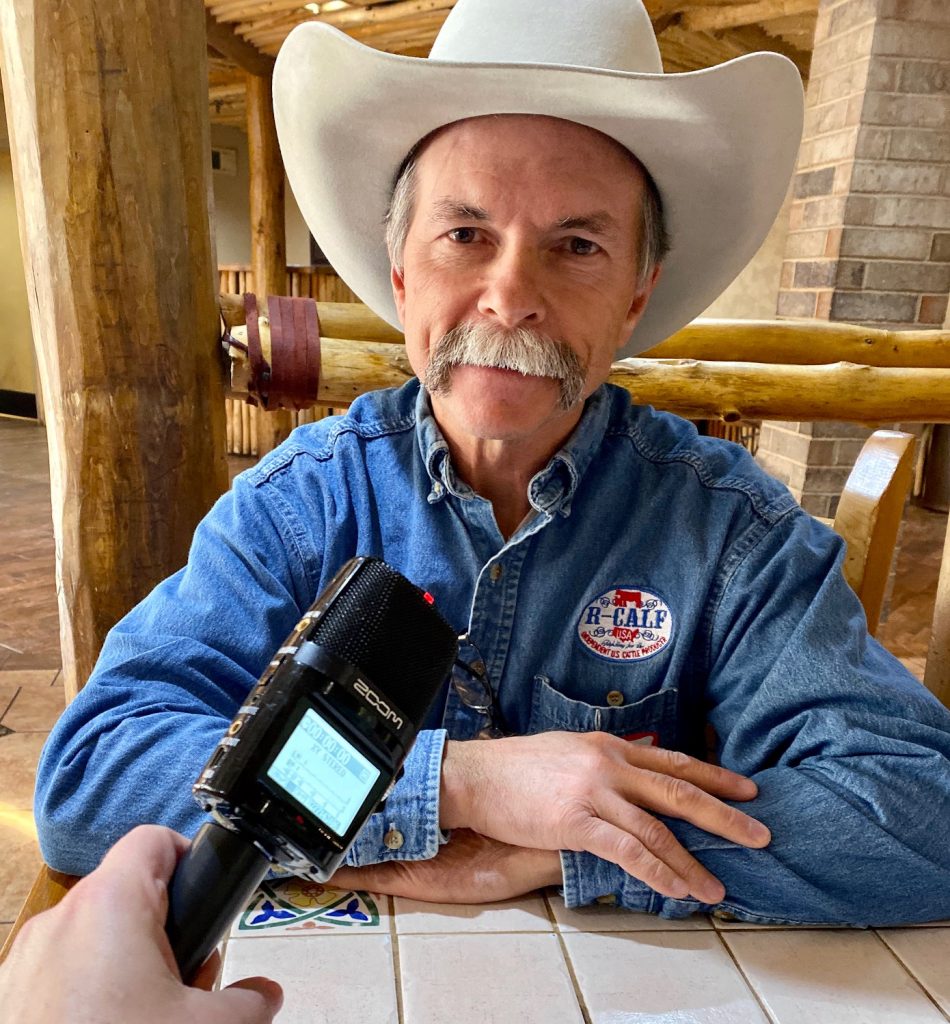
The Corporate Transparency Act would have required tens of millions of United States small businesses, such as limited liability companies (LLCs) with fewer than 20 employees and gross receipts of less than $5 million annually, to report their private business information regarding their "beneficial owners" to the U.S. Department of Treasury's Financial Crimes Enforcement Network (FinCEN), which according to them, would then store this sensitive information in a secure, confidential database.
But a federal district court in Texas just issued a nationwide preliminary injunction, effectively blocking the government's reporting requirement while the case is under review by the court.
What that means is that no one is currently required to comply with the January 1, 2025, reporting deadline unless the preliminary injunction is overturned or modified by a future court decision.
The U.S. Department of Treasury has appealed the Texas district court's ruling, and the appellate court is expected to act relatively swiftly to either uphold the preliminary injunction, modify it, or overturn it.
So, this uncertainty means we need to monitor this closely because a swift reversal of the current preliminary injunction could mean the reinstatement of the January 1, 2025 reporting deadline.
If this were to occur, we'd hope the government would extend the reporting deadline, but there's no way to know if it would. Therefore, businesses that were required to report before the preliminary injunction should be prepared to do so should the injunction be reversed.
In any event, our best advice is to keep listening to and watching the news.
Now what the Corporate Transparency Act purports to do is assist the U.S. Department of Treasury's Financial Crimes Enforcement Network in protecting the U.S. and international financial systems, as well as people, from illicit financial threats like terrorist financing, drug trafficking, and money laundering.
And while this appears to be an admirable and important objective, it's one that can and should be achieved through means that do not infringe upon the rights and privileges of tens of millions of hard-working, law-abiding business owners and that do not impose upon them yet another costly, unfunded mandate.
When R-CALF USA learned of the onerous reporting requirements targeting more than 30 million small businesses, including many cattle and sheep farms and ranches, we joined as co-plaintiffs in a lawsuit filed in the federal district court in the state of Utah that seeks to overturn the reporting requirement.
Specifically, we joined with several Utah-based individuals and LLCs, including Phillip Taylor; The People Restored LLC, Crofter Market LLC, and Utah OSR Land Cooperative. Our lawsuit was filed in late July, and we are eagerly awaiting the court's review of our case.
There are now several lawsuits, including ours and the one in Texas, that have been filed against the Corporate Transparency Act's reporting requirements. Presumably, all of these cases allege that the government has overreached and is violating the U.S. Constitution.
Our case does just this. We allege the Corporate Transparency Act is an unconstitutional privacy violation and an unconstitutional search and seizure. We allege it is a violation of the Commerce Clause because the mere act of owning a business is not interstate commerce. We allege the requirements of the Act represent a violation of the Fifth Amendment's due process clause. We also allege it violates the First Amendment rights of speech and association and that it violates separation of powers.
One thing is certain: We're in yet another David versus Goliath fight, a fight against a powerful opponent with deep pockets that can be unrelenting in its quest for control over private citizens and their property rights.
It seems these are the kinds of fights we engage in frequently to carry out our mission to protect and preserve our members' constitutional rights, particularly their property rights, but also their right to participate in and be profitable in their cattle and sheep operations, free from the heavy hand of government and the heavy hand of global corporations.
And that's why we find ourselves in so many lawsuits today: from our historic lawsuit alleging that the four largest beef packers have violated our nation's antitrust laws and the Packers and Stockyards Act, to our lawsuit alleging that the U.S. Department of Agriculture (USDA) has overreached its statutory authority by mandating electronic identification eartags on cattle, to our lawsuit alleging the USDA violated its statutory obligations when it tried to correct its unconstitutional operation of the beef checkoff program, and to this lawsuit alleging the Corporate Transparency Act violates the constitutional rights of our cattle and sheep farmers and ranchers.
Now, and very importantly, there's something you should do: Find an organization that best represents your values and interests and start supporting it!
Milk is one of the most requested—yet least donated—products at food banks. For years, Somula "Sam" Schwoeppe has been working to change that, combining her love for the dairy industry with her passion for fighting food insecurity.
Sam and her husband, Darren, are fourth-generation dairy farmers. They, along with their two sons, Wyatt and Ethan, own and operate Schwoeppe Dairy LLC in Huntingburg, IN, milking 120 cows and growing 450 acres of hay and corn silage for the cows.
Sam also works as the Director for Business Partnerships at Fresh Connect Central, an agri-food distributor operated by Gleaners Food Bank of Indiana. The business was established in 2017 by Feeding America, the largest network of food banks in the United States, as part its strategy to close meal gaps and support the health and wellness of people facing food insecurity. Part of that involves rescuing as much farm-fresh food as possible and redirecting it to food banks.

Sam with her granddaughter, Anabelle, and her son, Wyatt.
Schwoeppe first started working with food banks as a regional dairy manager with Feeding America. That was her first job working with food banks; food insecurity itself was something Schwoeppe encountered as a child. "My parents were foster parents, so our house was open to people from all different backgrounds," she said. "I learned at an early age about challenges people face."
Sam said she regularly thinks about one boy in particular who came to live with them and was so malnourished he "looked like a little old man." After one month of regular meals, she saw a total transformation. "It was the most incredible thing," Schwoeppe said. "Even his eyes were more brilliant after good nutrition. I think about kids like that a lot in this work."
Milk provides 13 essential nutrients, and dairy consumption helps Americans meet recommendations for calcium, vitamin D and potassium—three of the four under-consumed nutrients of public health concern. Milk provides a unique nutritional package, which Schwoeppe says is helpful for meeting food bank needs. "Milk is the perfect food to bridge nutrition gaps in the community," she said.
She also said she's always been grounded by her work on the farm, and that having a multi-generational perspective of agriculture helps her appreciate even more the work she does with food banks.
"It's so fabulous how the dairy industry turns out in this space," Sam said. "At Feeding America, I was blessed with the opportunity to work with many dairy cooperatives on programs that worked to provide nutrient-dense dairy to communities across the country."
Schwoeppe serves as a member of the board of directors and treasurer of her own cooperative, Prairie Farms Dairy, Inc. She said she is proud of everything Prairie Farms does to ensure children have access to milk in schools, as well as the cooperative's frequent and large donations to food banks across the country.

Cooperatives work together in many ways to support healthy communities—but individuals can make a difference, too. Sam says that even small acts of kindness can have lasting effects. "When we talk about hunger and other problems our communities face, sometimes things seem so big that people feel like they can't make a difference or they don't know where to start," Schwoeppe said. "But if we all do something small, that's a huge lift. So, jump in with your heart."
To learn more about how you can get involved with local food banks, visit feedingamerica.org/take-action, or email Sam at sschwoeppe@freshconnectcentral.org
Last week, the U.S. House of Representatives passed the Water Resources Development Act of 2024, which authorized millions of dollars for community projects in Woodward and Stillwater. Lucas voted in favor of the legislation.
"Pieces of legislation like this remind us why we are here: to better our communities back home," said Congressman Frank Lucas. "That's why I am so glad to see this bill pass. It directs much-needed funds to Oklahoma's water infrastructure and ensures our hometowns are adequately equipped with the proper resources."
BACKGROUND:
The measure passed the House 399 to 18 and is currently awaiting final approval in the Senate before it heads to the President's desk. It authorized the following funds for Oklahoma's Third District:
· Woodward, OK – $3,000,000 to rehabilitate water storage facilities in need of repair.
· Stillwater, OK – $30,000,000 for water infrastructure, including related environmental infrastructure and water storage, transmission, treatment, and distribution, in the city of Stillwater, Oklahoma.
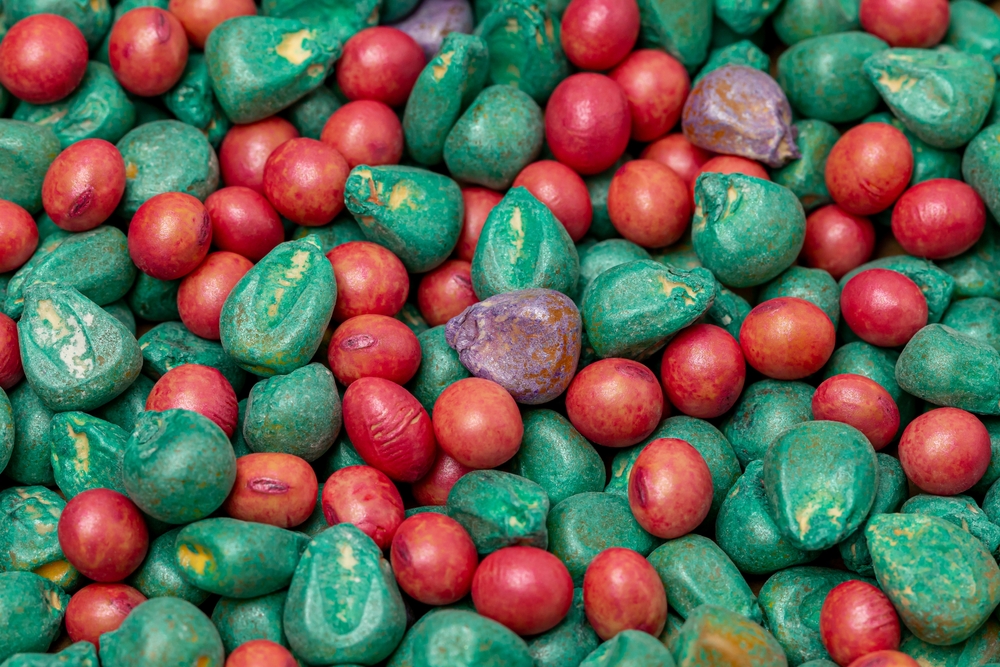
Corn and soybean growers have a new, proven approach to delivering soil nutrients that can lead to higher yields. Seeds treated with new BioBoost™ start out strong and get season-long nutritional benefits. Early trials show improved yields.
In its mission to help growers proactively approach crop and soil health, BW Fusion now brings biologicals to planter boxes with this groundbreaking seed treatment. Available in formulations for both corn and soybeans, BioBoost™ is powered by Environoc® 401, an all-organic plant stimulant. It offers all the nutritional benefits without needing an in-furrow application.
BioBoost™ delivers essential microbes and nutrients to the soil, including essential amino acids, complex food sources for the plant, total nitrogen, available phosphate, soluble potash, and other targeted nutrients for both corn and soybeans. It boosts seed energy for germination, accelerates metabolism, and improves uniform early growth.
"While BioBoost gives crops the best start at planting, its unique nutrient blend continues to work all season long to strengthen cell walls, mitigate stress, support photosynthesis, and improve water efficiency," said BW Fusion President of R&D Greg McClure. "Growers saw positive changes in their root-to-shoot ratios this year."
Ahead of its full release for 2025 planting, a limited group of growers planted with BioBoost™ in 2024. They saw bigger, deeper root systems and stronger — and larger-diameter — stems and stalks. The larger the roots and stems, the more nutrients the plant can efficiently get to tolerate in-season stress, and that can lead to bigger yields. In fact, trials show the average corn yield advantage is +8 bu/ac, and the average soybean yield advantage is +5 bu/ac on BioBoost™-treated fields.
"BioBoost improved early-season plant health in all soil types and under varying stress conditions," said Chris Cooper of Cooper Farms in Indiana. Ryan Chalfant, from Chalfant Farms, also in Indiana added, "BioBoost is definitely going to be a product I use on every acre next year with the ROI I've seen from it."
Growers were also able to eliminate the use of talc and graphite in their operations. The product's soy protein-derived seed lubricant carrier has an extremely low application rate of only 0.5 ounces per unit of seed, making it a welcome alternative.
BW Fusion is focused on future-forward products, like BioBoost™, that solve challenges growers often don't see until it's too late. Their proactive products are intended to help grow healthier crops in the short term, but, beyond that, improve soil health over the long term. Healthy plants make healthy soil, and healthy soil makes healthy plants.
To learn more about new BioBoost™, growers can contact their local regional business manager from BW Fusion, call 1-888-429-3874, or visit bw-fusion.com/trustthedust.
ABOUT BW FUSION
Headquartered in Fort Wayne, Indiana, BW Fusion was founded in 2019. It's the fusion of one of the most well-respected microbiological companies in the United States, Biodyne, one of the strongest independent ag retailers in the country, Wells Ag Supply, and a cutting-edge field data management platform, Agronomy 365. BW Fusion combines the biological products that are changing agriculture today with practical partnerships and soil-level agronomy expertise. Its products are backed by more than three decades of data from Biodyne, and the company is committed to supporting growers in making informed decisions that enhance crop productivity and promote long-term soil vitality. For more information on BW Fusion, visit the website at www.bw-fusion.com.

In the spring of 2003, Dr. Glenn Selk, Professor Emeritus and former Extension Beef Reproductive Specialist, started the Cow Calf Corner newsletter. He ended his tenure with the Cow Calf Corner in 2021, after 18 years, but today, he is contributing to the weekly series now published electronically by Dr. Derrell Peel, Mark Johnson, and Paul Beck.
It is the "most wonderful time of the year" and this week Dr. Glenn Selk joins us to address the age-old question of what permits Reindeer to pull Santa's sleigh all over the globe on Christmas Eve.
Have you ever wondered how Santa's reindeer can make that monumental journey on Christmas Eve? Let's look into some key facts about reindeer that may help us understand how they transport Ole St. Nick on his appointed rounds over the world. First of all, historians report that reindeer have been domesticated by humans for over 5,000 years. Since Santa himself is no spring chicken, we can assume that they have worked together for quite a while. They should not have any trouble finding their way around. There is no need to worry about them getting lost. We do know that reindeer are like ruminants. They are like cattle in this regard. They have four compartments to their stomach. Of course, Santa gets them filled up with hay before he leaves the North Pole, so they should have plenty of feed stored in the four compartments to make it all around the globe. Also, cattle nutritionists have known for years that hay digests more slowly than grain, therefore the big meal that the reindeer eat before the journey should last even longer. Or just like your mom says, "It'll stick to their ribs!". As for drinking water, that should be no problem whatsoever. In their homeland, the water is all frozen so they are used to getting the moisture they need by eating snow. So as the sleigh is parked on snowy rooftops in cold weather cities, the reindeer can take on the moisture they need if they get thirsty.
How do they keep warm while flying around on Christmas Eve? The fur that they have is very thick and can hold a lot of air. The "blanket" of insulation combining fur and air helps keep them warm in even the coldest of climates. Plus flying around Christmas night in many areas of the world that are warmer than they have at home should not be a problem.
How do they fly? Well, that's a tougher question, and we really do not have that one completely answered. However, let's look at what we do know about them. Reindeer are amazingly fast runners on the ground. A newborn baby reindeer at one day of age can outrun the fastest person on earth. By the time that they are fully grown it is hard to tell what speeds that they could reach. Next, remember those huge antlers. Antlers of adult male reindeer can be as much as 4 feet long! Just think about it. Each reindeer has 2 sets; that's 8 feet of antlers and with eight reindeer (or nine if we count Rudolph on foggy nights) that is 64 to 72 feet of total antler span. A typical small airplane only has about 20 - 30 feet of wingspan. Certainly, it seems feasible those eight reindeer running that fast with all that antler span could get off the ground.
There are a couple of myths about reindeer that we should clear up. You have probably heard the poem that says that they have tiny reindeer feet. Actually, they have a very wide large hoof that they use at home to dig through the snow to find grass and moss to eat. You've got to think that those wide hooves would come in handy for sliding to rather sudden stops on the small landing sites that Santa has to work with on Christmas Eve. And you've probably heard the song about "up on the housetop click, click, click". Well, it is true that reindeer do make a clicking sound as they walk. They have a tendon that snaps over a bone joint and makes a clicking sound on every step. These are just a few facts about Santa's Reindeer. Maybe this will help us understand that age-old mystery that occurs every Christmas.
In a Classic Cow-Calf Corner on SunUpTV, Mark Johnson invites Glenn Selk back to Cow-Calf Corner to discuss the most important ruminant animals of the season: Santa's reindeer. https://www.youtube.com/watch?v=Wa3_ha1lfvM
RON's Dave Lanning has a pre-opening look at today's agricultural Markets.
Click the audio tab below for today's report.
2024 has been a roller coaster year for the dairy industry. The year started with low prices, and continuing financial problems that began in 2023. But, price recovery by mid-year spurred some profits and herd growth.
Low prices led dairy farmers across the country to reduce the number of milk cows in 2024. Dairy cow numbers bottomed out in July at 9.319 million head. That was the fewest since February 2016. Milk production per cow actually declined, year-over-year, which is a historical rarity. The combination of fewer cows and less production per cow led to lower milk production than the year before in 5 of the first 6 months of 2024.
Strategies to cut production in response to low prices have led to very tight supplies of replacement heifers. Replacement heifer prices, for those looking to buy, surged to record highs late in 2024. For example, springer heifers hit $2,700 per head in early December at the Smiths Grove Kentucky dairy auction.
Herd expansion due to rising prices later in 2024 was led by Texas dairies. By October, Texas' milk cow numbers hit a record of 675,000. That was 40,000 head more than October of 2023. This herd expansion led to growing numbers in the broader Southern Plains. Dairy cow numbers continued to decline in other areas of the country. Across the Southeast, monthly dairy cow inventory is reported for Florida, Georgia, and Virginia. Compared to the previous year, Georgia and Virginia cow numbers declined by 5,000 and 3,000 head to 85,000 and 66,000, respectively. Florida cow numbers held constant at 100,000 compared to October 2023.
Dairies in the Southeast have largely been spared from HPAI. It began in late 2023 or early 2024 with a mystery illness that was identified in the Spring as HPAI. The illness led to reduced milk production and some more culling.
Reduced milk production led to higher milk prices. Cheese, butter, powder, and whey prices all increased. Weekly 40 pound cheddar cheese blocks in the wholesale market began the year at $1.53 per pound and climbed to the mid-$1.90s by mid-year, then climbed again to $2.28 per pound. The bottom dropped out after that peak, much like a rollercoaster, to $1.77 per pound at the beginning of December. Butter prices did much the same, a year-long climb to $3.19 per pound then a drop to $2.59 per pound, back to where the year began. Federal order uniform milk prices climbed to over $25 per cwt by late in the year but will start to decline reflecting the lower cheese and butter prices.



A potential crisis looms over the US livestock industry as the New World Screwworm threat resurges. The parasitic fly, capable of inflicting severe damage on livestock, was detected in Mexico, leading to a temporary halt on cattle imports.
Dr. Burke Healy, a leading veterinarian at the USDA's Animal and Plant Health Inspection Service, explained that the US suspended cattle imports from Mexico in November after the discovery of screwworm in a cow imported from Guatemala. This discovery was followed by a similar case in a native bull calf in Chiapas, Mexico.
To mitigate the risk, the US and Mexico are working on a protocol that will allow for the resumption of cattle imports. This protocol will include mandatory treatment of cattle with ivermectin to eliminate any potential larvae. Additionally, Mexico will establish designated pens where cattle will be inspected by federal veterinarians before being transported to US ports for further inspection.
While the exact timeline for reopening the border remains uncertain, it's estimated that imports may resume in early January. The USDA is taking proactive measures to safeguard US livestock and prevent the spread of screwworm.
The situation underscores the importance of vigilant monitoring and rapid response to emerging threats. As the US and Mexico collaborate to address this challenge, the livestock industry awaits further updates on the reopening of the border and the implementation of effective prevention measures.
BASF invites cotton farmers who yield one ton or more of cotton during the 2024 season using FiberMax® cotton seed to join its exclusive FiberMax One Ton Club™, now in its 20th year. Club enrollment is now open, and members have the opportunity to win rewards, including a two-year lease on a Ford Super Duty® F-350 Lariat® truck.
Applications for the FiberMax One Ton Club can be submitted online, and printed forms will be mailed to qualified farmers this month. As an added incentive, farmers who attend the FiberMax One Ton Club members banquet in Lubbock, Texas, on April 3, 2025, are entered into the truck lease sweepstakes. The deadline to submit the application form is February 28, 2025.
To qualify for the FiberMax One Ton Club, farmers must produce a minimum of 2,000 pounds of ginned cotton per acre on a minimum of 20 acres planted with 100% FiberMax cotton from January 1 to December 31, 2024. The FiberMax One Ton Club is open to farmers in Alabama, Arizona, Arkansas, California, Georgia, Kansas, Louisiana, Mississippi, Missouri, New Mexico, North Carolina, Oklahoma, South Carolina, Tennessee, Texas and Virginia. Cotton acreage can be either irrigated or dryland. Farmers must provide an accurate and complete qualification form and gin recap sheets by mail or online by February 28, 2025. See full details for qualification.
"Reaching the 20th anniversary of the FiberMax One Ton Club is a remarkable milestone for us," said Bryan Perry, Head of U.S. Seeds and Traits for BASF. "This club honors the dedication and skill of cotton farmers who continually push the boundaries of what's possible in yield. Each season, we look forward to celebrating these farmers and the legacy they build through their hard work, resilience and commitment to excellence. It's a privilege to recognize their achievements, and we're excited to make this 20th year a memorable one."
To learn more about the FiberMax One Ton Club visit fibermax.com/otc or contact your local BASF representative.
About BASF's Agricultural Solutions division
Everything we do, we do for the love of farming. Farming is fundamental to provide enough healthy and affordable food for a rapidly growing population, while reducing environmental impacts. That's why we are working with partners and experts to integrate sustainability criteria into all business decisions. With €900 million in 2023, we continue to invest in a strong R&D pipeline, combining innovative thinking with practical action in the field. Our solutions are purpose-designed for different crop systems. Connecting seeds and traits, crop protection products, digital tools and sustainability approaches, to help deliver the best possible outcomes for farmers, growers and our other stakeholders along the value chain. With teams in the lab, field, office and in production, we do everything in our power to build a sustainable future for agriculture. In 2023, our division generated sales of €10.1 billion. For more information, please visit www.agriculture.basf.com or our social media channels.
About BASF
BASF Corporation, headquartered in Florham Park, New Jersey, is the North American affiliate of BASF SE, Ludwigshafen, Germany. BASF has approximately 16,000 employees in North America and had sales of $20.5 billion in 2023. For more information about BASF's North American operations, visit www.basf.com/us.
At BASF, we create chemistry for a sustainable future. We combine economic success with environmental protection and social responsibility. Around 112,000 employees in the BASF Group contribute to the success of our customers in nearly all sectors and almost every country in the world. Our portfolio comprises six segments: Chemicals, Materials, Industrial Solutions, Surface Technologies, Nutrition & Care and Agricultural Solutions. BASF generated sales of €68.9 billion in 2023. BASF shares are traded on the stock exchange in Frankfurt (BAS) and as American Depositary Receipts (BASFY) in the United States. Further information at www.basf.com.
House Speaker-Elect Kyle Hilbert announced today a change to the House committee structure that will allow for more time and deliberation of bills at their initial consideration.
House committees will now have a two-tiered structure with committees and oversight committees, which will allow legislation to be more thoroughly vetted and deliberated at the committee level before bills reach the floor. The process will now be similar on the policy side as to how the committees are currently structured for appropriations.
"Each year, the Legislature considers thousands of bills and committees are where the majority of deliberative work should be done to build consensus around language and needed changes," said Hilbert, R-Bristow. "The more thorough work we can do in the beginning of session, the more likely we are to have a clear, transparent process that allows good bills to become law."
Hilbert announced the following committees, including chairs and vice chairs:
* Pension bills, which must go through an actuarial analysis prior to being heard, will be considered final action in the working committee and will not have to be double-assigned to the oversight committee.
Speaker-Elect Hilbert also announced the majority leadership team for the 60th Legislature:
Floor Leader Team:
Whip Team:
Presiding Officers:
Full committee membership will be named at a later date.
The following is an OP-ED By Kim Brackett, NCBA Policy Division Chair

Every cattle producer knows that pests are a challenge to our operation, but some pests are far more dangerous than others. One of the new threats to our herd comes from the New World screwworm, which is currently advancing through Central America into southern Mexico and could soon be at our border.
The New World screwworm (NWS) is a fly that has a particularly gory way of harming our cattle. Female NWS flies lay their eggs in open wounds or body orifices and when the larvae hatch, they burrow deep into the skin like a screw driving into wood. These maggots feed on cattle's tissue, causing larger wounds as they go.
NWS flies and their burrowing larvae cause extensive damage to cattle and infestations can spread rapidly. In 1966, we eradicated screwworms in the United States through sterile insect technique. The U.S. Department of Agriculture (USDA) bred sterile male NWS flies that mated with wild female screwworms and failed to produce offspring. Eventually, these flies died out in the U.S. and now they only exist in a handful of South American countries.
Unfortunately, these flesh eating flies are now on the march north.
Since 2022, USDA's Animal and Plant Health Inspection Service (APHIS) has confirmed the presence of New World screwworms in Costa Rica, Nicaragua, Honduras, and Guatemala. Just last month, screwworms were discovered in southern Mexico, which raised red flags for us at the National Cattlemen's Beef Association (NCBA).
Once in Mexico, it is easy for screwworms to travel north and appear on our southern border. These flies can hitch a ride on people, livestock, or wild animals, not to mention the thousands of vehicles and cargo containers traveling through Mexico to the United States.
We know how devastating it would be if New World screwworm returned to the United States, which is why NCBA is raising the alarm now. First, we are communicating with Mexico's cattle industry leaders so they can begin the process of screening for these flies and push for eradication efforts in their country. We are also supporting USDA-APHIS to bolster the use of sterile flies. Recently, we have been concerned that our existing sterile flies might not be getting the job done, and NCBA is pushing for more flies and better flies that will help us beat back these pests.
Although we haven't confirmed any New World screwworms in the United States, we need you to be on high alert. New World screwworms have orange eyes, a metallic blue or green body, and three dark stripes across their backs. If you see any suspicious flies, please alert your local veterinarian, extension agent, or contact USDA-APHIS Veterinary Services.
Please also pay close attention to your cattle and watch for any open wounds or sores. If cattle exhibit irritated behavior, head shaking, you notice the smell of decaying flesh, or spot maggots in a wound, seek treatment from a veterinarian immediately. Proper wound treatment and prevention is the best way to protect your farm or ranch from a screwworm infestation. NCBA is also sharing the latest updates through our website. I encourage you to visit www.ncba.org/NWS for all the latest information on how to protect your operation.
NCBA is always on the clock to protect the U.S. cattle industry from threats like New World screwworm. Through your vigilance and NCBA's advocacy, we can protect the United States cattle herd.
Kim Brackett is an Idaho rancher and serves as Policy Division Chair of the National Cattlemen's Beef Association (NCBA). Support our efforts to protect the cattle industry by becoming a member of NCBA. Join today at www.ncba.org or by calling 1-866-BEEF-USA (1-866-233-3872).
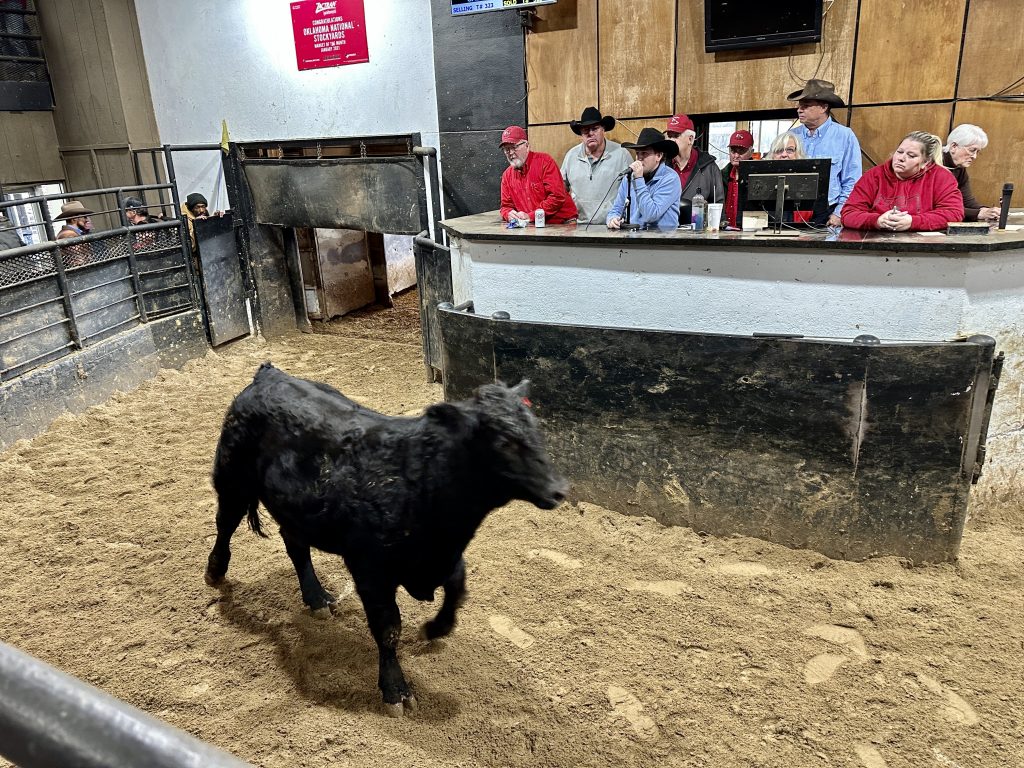
On Monday, December 16th, the Oklahoma National Stockyards auctioned a calf for the All American Beef Battalion (AABB). National Livestock and the AABB crew prepared a ribeye lunch for those in attendance. Senior Farm and Ranch Director Ron Hays got the details from Chris Carroll, Finance Division President of the National Livestock Credit Corporation.
The calf was donated by 3C Cattle Feeders and the Clyde Runyan family of Mill Creek, Oklahoma. They have donated a calf for this cause annually for the last 11 years. Runyan was with the 101st Airborne in Vietnam and always considered this a privilege to be able to give back to the troops. Runyan passed away in 2019 and his family continues the legacy of donating the calf in his honor.
Through these auctions, approximately 65,000 troops have been fed the sixteen-ounce steak, corn, hot roll, cheesy potatoes, and dessert or a similar meal, upon their return home from deployment or prior to their deployment in 2024 alone.
The calf was sold and resold more than thirty times. "We raised 54,000 dollars here today," Carroll said. "We are one of the largest fund-raising events that they have. We are happy to help keep their mission going. The veterans who helped cook today for the Beef Battalion are just paying it forward for those that maybe did it for them."
Contributors to this event have raised over $705,100 from the annual auction of a donated calf since 2006.
Bill Broadie was the founder and chairman of the AABB board and a fourth-generation cattleman from Ashland, Kansas, a Marine and a veteran who was wounded in the Vietnam War. He also worked for Superior Livestock Auction.
"When [Broadie] came back from Vietnam, he said that it was not to a warm welcome," Carroll said. "He wanted to change how the soldiers were treated when they came back. That is how he and others started the All American Beef Battalion."
Anyone may support this effort by calling 800-310-0220 and speaking with Debbie Wedel or by dropping by the National Livestock Office with a check written out directly to the AABB. They may also visit the All American Beef Battalion website to donate.
Today, December 16, the U.S. Environmental Protection Agency marked the 50th anniversary of the Safe Drinking Water Act (SDWA), passed in 1974 to set federal standards for drinking-water quality. President Joe Biden issued a statement commemorating the Safe Drinking Water Act's 50th anniversary.
Since December 16, 1974 — when Congress passed the Safe Drinking Act legislation that President Gerald Ford signed into law — EPA has worked with federal partners, states, tribes, and local officials, water systems, private companies, and the public to achieve the vision of the Safe Drinking Water Act,that people across America have clean and safe drinking water.
"For 50 years, EPA has worked with states, Tribes, and local partners to ensure that communities across the country can count on safe drinking water. As a result, Americans are leading longer, healthier lives while the foundation of safe drinking water attracts businesses to communities and fosters opportunity," said Bruno Pigott, Deputy Assistant Administrator for EPA's Office of Water. "The Safe Drinking Water Act provides a framework for developing collaborative solutions to address drinking water challenges of today and tomorrow."
Today, the work to protect drinking water remains essential to supporting vibrant communities across the country. In October, EPA finalized the Lead and Copper Rule Improvements to replace toxic lead pipes that deliver drinking water to people's homes. Also, this year, EPA issued the first drinking water standards for PFAS that the agency estimates will protect nearly 100 million people from exposure to these toxic "forever chemicals" in drinking water.
"Before the Safe Drinking Water Act of 1974, there was no comprehensive federal regulation protecting drinking water. Thanks to the Safe Drinking Water Act, and significant reforms since then, we've made immense progress in our efforts to ensure every American has access to safe, clean, and reliable drinking water," Senate Environment and Public Works Committee Chairman Sen. Tom Carper (D-DE) said."The Safe Drinking Water Act's 50th anniversary is an opportunity for us to celebrate this progress and to reflect on the importance of continuing to make clean drinking water a reality for every American."
"In the richest countries in the world, access to safe and affordable drinking water should be a right—not a privilege," Rep. Dan Kildee (D-MI) said. "I am proud of the work we have done together to build on the Safe Drinking Water Act's legacy to strengthen and set much-needed drinking water standards for lead and toxic PFAS chemicals in water. I will not stop fighting until every mid-Michigan family has access to the clean drinking water they deserve."
"Clean water is a basic human right. In my home state of Michigan, we know too well how fiercely we must work to keep our water free of lead, PFAS, and other hazards," Rep. Debbie Dingell (D-MI) said. "Today we recognize the progress made by the landmark Safe Drinking Water Act, and recommit to working to ensure every family in America has access to clean and safe water."
A Safe Drinking Water Timeline:
Congressman Frank Lucas released the following statement regarding the Department of Energy's rescission of the "Delta Plains Corridor" from the National Interest Electric Transmission Corridor Designation.
"I am pleased that the Department of Energy is rescinding the 'Delta Plains Corridor' as a National Interest Electric Transmission Corridor. This action will return eminent domain authority to the state and preserve landowners' rights in Oklahoma. Throughout my time in Congress, I have fought diligently for the rights of landowners both in Oklahoma and across the country. Today, I am extremely pleased to know that those rights are protected and upheld."
In an evolving marketplace, understanding consumer behavior is essential for driving pork demand. To address shifting preferences and habits, the National Pork Board (NPB) invested Pork Checkoff dollars into developing Consumer Connect, a data-driven tool designed to identify priority audiences and refine messaging to meet their unique needs. This extensive research initiative identified seven consumer segments based on motivations, attitudes, preferences and habits.
Out of the seven, four segments were identified as having the most immediate potential for growth:
Confident Meat Eaters
Simple Feeders
Culinary Adventurers
Mindful Choicemakers
Learn more about our consumer segments and take the quiz to see what kind of consumer you are.
Through tailored communication and focused marketing, the pork industry can address challenges like properly preparing pork in Millennial and Gen Z homes, concerns about food safety and shifting pork from a "special occasion" protein to an everyday option. Using the Consumer Connect tool to guide channel strategy, NPB has been building a bigger appetite for pork by positioning pork as a relevant, flavorful and versatile option to multiple audiences.
NPB is taking a digitally-driven approach to position pork where consumers are, such as targeting Confident Meat Eaters directly on social media. NPB's owned channels, including the National Pork Board Facebook, Instagram and X accounts, are consumer-focused and share recipe and pork inspiration posts. Confident Meat Eaters are enthusiastic about pork and skilled at preparing it, making them an ideal audience for content that highlights the versatility and rich flavors of pork.
Additionally, NPB is extending its reach to new audiences by partnering with social media influencers. These collaborations allow NPB to connect with a wider audience, building trust and ensuring the message of pork's versatility and flavor resonates across different consumer groups. Check out a recent Reel @maxthemeatguy shared to his 1.8 million followers on Instagram, showing a fun way to prepare pork.
NPB is strategically showcasing pork's taste and versatility to culinary professionals by partnering with the American Culinary Federation (ACF), a professional organization representing over 14,000 chefs and culinary experts. This partnership highlights pork's flavor and adaptability through targeted media opportunities directly connecting with chefs and Culinary Adventurers.
As part of NPB's annual marketing program with the ACF, pork is featured in their monthly chef email blasts, bi-monthly National Culinary Review magazine and the Culinary Insider newsletter. These platforms provide chefs with inspiration, recipes and insights into how pork can enhance their menus, equipping them with the confidence to create new dishes with pork. This strategy amplifies pork's presence in restaurants and culinary schools, ensuring it remains a centerpiece of flavorful and creative dining experiences.
To drive meaningful growth in pork demand, NPB is sharing marketing information and strategies that supply chain partners may choose to use in their own marketing plans. Because the information is based on the data collected from the Consumer Connect tool, both NPB and industry leaders will be able to focus on the consumer segments most important to increase pork sales.
A recent example of this collaboration took place in early October 2024 when NPB met with the Honey Baked Ham Company (HBH), a nationwide supplier of pork products. HBH's sales and marketing team shared how they've been targeting consumers through campaigns such as their new slider program and advertising pork products throughout the tailgating season. Both of their targeted audiences align with two of NPB's priority consumer segments, Confident Meat Eaters and Simple Feeders, who prioritize easy recipes and convenience. Collaborating with large industry suppliers such as HBH is just one example of how NBP is using producer investment to encourage marketing strategies that will target the right consumers to build a bigger appetite for pork.
NPB is extending its reach to consumers by engaging with health professionals who influence dietary habits and food choices. A recent example of this effort took place in October when NPB's nutrition team represented pork at the Food & Nutrition Conference & Expo® (FNCE) in Minneapolis, Minnesota. Sponsored by the Academy of Nutrition and Dietetics, this event drew over 6,100 registered dietitians, healthcare professionals and nutrition experts.
At FNCE, NPB staff connected with over 1,000 attendees through initiatives such as the Pork & Partner's booth, panel discussions and pre-conference events. These interactions highlighted pork's role as a nutrient-dense, versatile protein option, equipping health professionals with the knowledge to advocate for pork with their retail partners and clients. This outreach supports NPB's segmentation strategy by addressing the needs of Mindful Choicemakers—consumers who prioritize balance and nutrition in their food choices. NPB is helping reach this segment and other consumers indirectly by educating health professionals about NPB's research on pork nutrition.
Looking ahead, NPB's focus will continue to position pork as a relevant and compelling choice for consumers. In 2025, NPB will launch a new consumer brand campaign based on Consumer Connect to strengthen pork's position in the marketplace.
In the meantime, NPB will continue to emphasize the key drivers of pork demand: taste and flavor, nutrition and convenience. By tailoring messaging to the needs and values of each consumer segment—whether it's Culinary Adventurers seeking inspiration or Mindful Choicemakers prioritizing nutrition—NPB will continue building a bigger appetite for pork.
For more information on the NPB's recent market growth work, listen to David Newman, NPB's SVP of market growth, on the Barn Talk podcast as he discusses the future of the Consumer Connect work, how we're targeting multicultural audiences and plans for 2025.
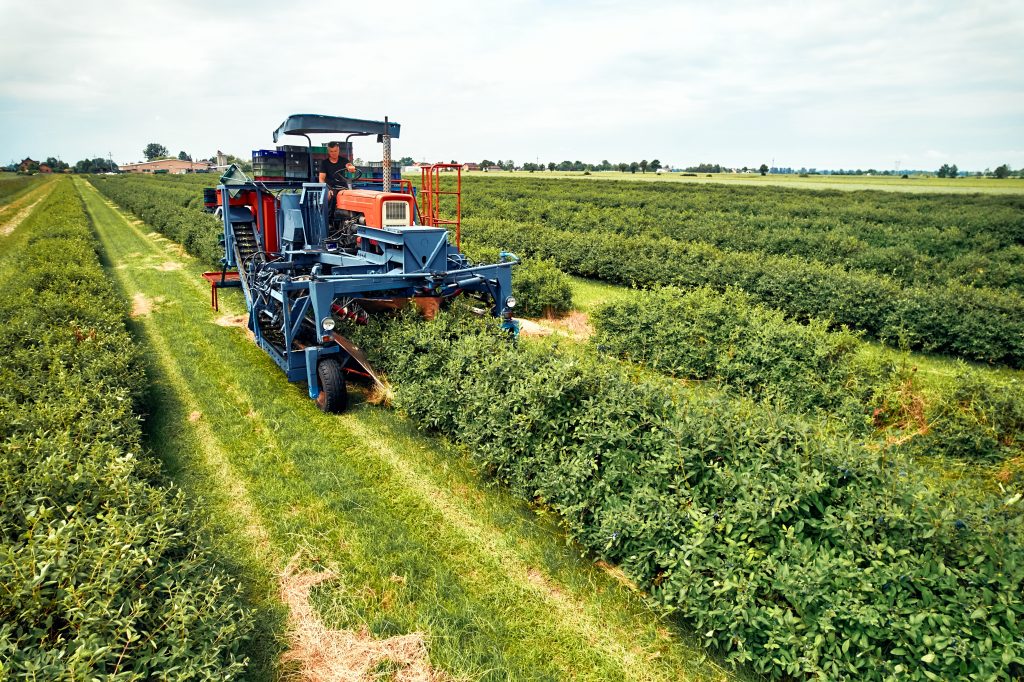
Let's take a longer-term view and discuss some of the megatrends impacting the agriculture industry. The book "Megatrends" was written by John Naisbitt and was required reading in Graduate School at Cornell University. Despite being written decades ago, it is still very relevant for strategic planning.
Regenerative agriculture
Regenerative agriculture, with an emphasis on soil and water health, will be a focus in the decades to come.
Data → Organized information
Turning data into organized information will be another competitive edge. Whether it is transparency, linking production and distribution to the consumer and marketplace, or feedback and alignment to society initiatives, moving from complexity to simplicity will be the key.
Artificial intelligence (AI)
Artificial intelligence (AI) will have both its ups and downs. There is no doubt that it will eliminate administrative paperwork tasks and some white-collar jobs. As the human IQ equivalent of AI exceeds 1,000 by 2028, it will be used across the spectrum of marketing, finance, operations, and planning.
Next generation
The next generation of agriculture is on board with the technology, innovativeness, and the energy to accelerate the agriculture industry. With that being said, they will face extreme economic volatility and rapid changes in the marketplace.
Women in agriculture
The next two decades in the agriculture industry will be moved by women. First, women outlive men on average by five to seven years and will inherit many of the farm assets. However, you are going to see more women owners and managers of agricultural businesses in many regions of the country as well.
To read the entire report click here.
Article courtesy of Agrimarketing.com --by Dr. Dave Kohl, Professor Emeritus, Virginia Tech University as it appeared in Farm Futures magazine
Brooke Rollins is sure to be confirmed by the Senate as agriculture secretary in the new Trump administration, and she will start with a valuable asset — an ongoing relationship with the president, said Agriculture Secretary Tom Vilsack.
"She has, I think, a very important asset ... she has a relationship with the president. Boy, that's really, really important in the ag job," said Vilsack, who served under two presidents in his 12 years as secretary. Rollins was head of the White House domestic policy council during President-elect Trump's first term, and more recently led a pro-Trump think tank.
It is common, although not required, for incoming and outgoing cabinet members to meet. Vilsack said the USDA had its first contact with a member of Trump's landing team for agriculture last week.
Get To Know Brooke Rollins, Nominee for Agriculture Secretary
When reporters mentioned Robert Kennedy's prominence among Trump's cabinet choices, Vilsack replied, "That's why the relationship with the president is going to be very important." Kennedy would be secretary of Health and Human Services, but some of his proposals on food policy, such as removing ultra-processed foods from school lunches, intrude on USDA jurisdiction.
During a speech at a grocery summit on Friday, Vilsack said he believed food system reforms started by the Biden administration would thrive in coming years. Some $6 billion was invested in various initiatives for sustainable agriculture, an expansion of independent food processing capacity, and a larger volume of sales through local and regional markets. The efforts include the $3.1 Partnerships for Climate-Smart Commodities project to encourage adoption of sustainable farming practices and to develop markets that pay a bonus for the products.
Today, December 16, 2024, the Agricultural Retailers Association (ARA), the Council of Producers and Distributors of Agrotechnology (CPDA), CropLife America (CLA), and The Fertilizer Institute (TFI) released the following joint statement:
"As Congressional leaders deliberate on a year-end stopgap government funding bill, it is critical that any package includes disaster assistance and economic aid for farmers. Farmers are facing severe financial hardships, and they need robust support from this legislation to help ensure the viability of their livelihoods, our rural communities, and our food supply. We urge House and Senate leadership to reach a spending package deal that includes disaster assistance and economic aid for famers."
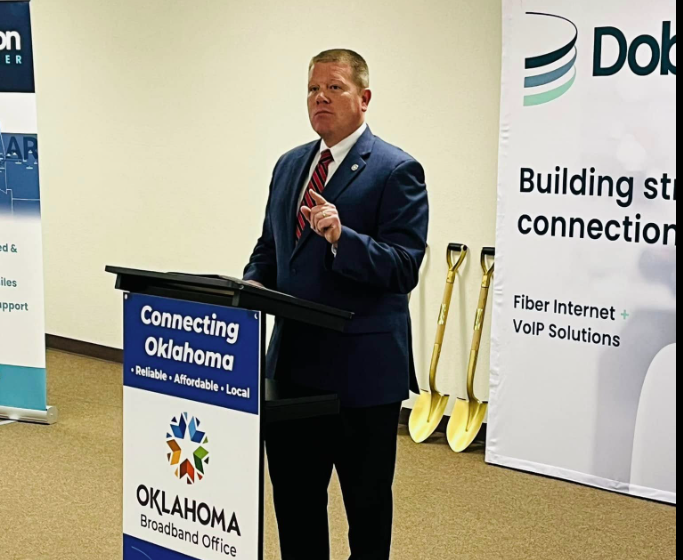
Farm Director KC Sheperd and Mike Sanders, the executive director of the Oklahoma Broadband Office, discussed the significant progress made in broadband investment in Oklahoma.
When Sanders took the job eighteen months ago, he promised to deliver for Oklahoma. Talking to Sheperd, he highlighted that over 500 million dollars in grants have been deployed to connect homes and businesses to high-speed internet, with a major project involving 374 million dollars awarded in January to fund 130 projects in 55 of the 77 counties.
"That was a tremendously successful lift," Sanders said. "I want to thank our legislature because they had the foresight to hold back some of the money that ARPA provided during the COVID years to help build up broadband access. So, I have to give a lot of kudos to the leadership in the House and Senate and the Governor."
Although the project was announced in January, the Oklahoma Broadband Office received another infrastructure buildout, also as part of the ARPA program, called the Capital Projects Fund that provided another 159 million dollars.
"In the blink of an eye, we added fifty more projects on top of the 130 this year to folks who have never had high-speed internet," Sanders stated. "When you equate both of those programs, more than seventy thousand homes and businesses are set to receive high-speed internet once these projects are all completed and operational by the end of 2026."
Due to these efforts, Oklahoma is ranked fourth in the nation for reducing the number of locations unreached by broadband.
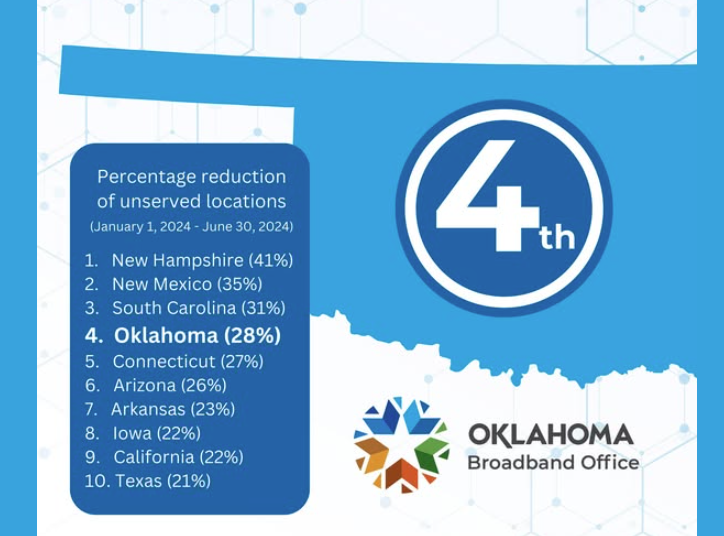
"This is something that Oklahomans can really be proud about," Sanders said. "This just happened this past week. According to the Federal Communications Commission, the FCC, Oklahoma now ranks fourth in the country for reducing the number of homes and businesses that have never had high-speed internet. It is only taking into effect, the first six months of this year. They don't even take into consideration our Capital Projects Fund so we are actually higher than number four, and if I had to bet, we are probably pushing for that top spot. That is a tremendous success for our state!"
Despite this ranking, unserved homes and businesses are still dotted across the state.
"High-speed internet used to be a luxury," Sanders said. "Now, it is just a way of life. If you want to improve your social status in your community, improve your education, or have an economic development tool, I think this is probably one of the biggest economic development tools that our state has ever seen. I could go on and on about the benefits of high-speed internet, but when you have 400,000 Oklahomans who have never had high-speed internet or have only very poor high-speed internet, in all corners of the state. Our goal is to not only address that issue, but the Oklahoma legislature gave us a goal of reaching 95 percent."
Sanders believes that they can do better by reaching 100 percent of Oklahomans with access to high-speed internet.
He compared the importance of this broadband movement to rural communities to that of electricity in the thirties with the Rural Electrification Act, and Dwight Eisenhower's Interstate development through the Federal-Aid Highway Act of 1956.
Sanders believes that the incoming Trump administration will modify some existing broadband programs by relieving some of the burdensome regulations that have slowed the process down. He also anticipates new forms of technology such as fiber and satellite internet to increase in scope.
"I think there will be things that will make this process better and I'm excited to see what President Trump, in this second term, does," he said. "I am very impressed with what his Cabinet is looking like at this point, but we still have a long way to go. Sometimes government gets in the way of a lot of these types of projects, and our goal is to make things more streamlined and efficient and to make sure the tax dollars that are going to this project are used effectively and efficiently, and we get high-speed internet to the Oklahomans who deserve it."
The Oklahoma Broadband Office has more big plans for the upcoming year. "In the next year or so, we will be implementing a program that will put more than 750 million dollars of more infrastructure buildout in our state," Sanders shared. "Those really tough places to reach – that is where this program is going to play a major role."
For perspective, Sanders shared that the Oklahoma Broadband Office itself didn't have high-speed internet capabilities when he became executive director eighteen months ago.
"Since then, the right policies and processes have been implemented to make sure that these affordable, reliable high-speed, internet programs that we administer with federal funds are handled efficiently and effectively," he said. "Every good leader is only as good as your weakest link, and I have a great team that is striving every day to connect and close that digital divide. I am honored to be in this seat where I can be a part of changing the trajectory of people's lives in Oklahoma. I've always had a heart for public service from a very young age, and I continue to do that in different ways. This is a different way that I can do that and give back to the great state of Oklahoma which has given me so much."

Today, December 16, the U.S. Environmental Protection Agency published for public comment its plan for studying and developing technology-based PFAS limits on industrial wastewater discharges. The plan is a key action under the agency's PFAS Strategic Roadmap as it considers rulemaking efforts to protect communities from forever chemicals in local waterways and supports the Biden Cancer Moonshot's efforts to reduce Americans' exposure to cancer-causing chemicals.
"EPA is committed to working with state partners to develop strong national rules to reduce the presence of forever chemicals in our waterways," said EPA Principal Deputy Assistant Administrator for Water Bruno Pigott."That means we must work to develop our collective understanding about PFAS discharges from industry. From there, we can better innovate and implement durable treatment solutions that protect our communities over the long run."
Preliminary Effluent Guidelines Program Plan 16 (Preliminary Plan 16) announces the agency's intent to initiate detailed studies of wastewater pollution discharges and their treatment potential for several industrial categories.
EPA has determined that it needs to collect additional data and information from facilities in the Battery Manufacturing Category, the Centralized Waste Treatment Category, the Oil and Gas Extraction Category, as well as from PFAS processors (industrial facilities engaged in processing PFAS into commercial products). The goal of these studies is to enable the agency to make informed, data-driven decisions on the need for new rulemakings to establish revised effluent limitations guidelines. Any future rulemakings developed as a result of these studies would be based on the best available science and designed to stop PFAS contamination at the source, safeguarding community and environmental health.
With the announcement of this preliminary plan in the Federal Register, EPA is opening a 30-day public comment period. To submit a written comment, visit EPA's Preliminary Effluent Guidelines Program Plan webpage for more information.
Background
Effluent limitations guidelines (ELGs) are national, technology-based regulations developed to control industrial wastewater discharges to surface waters and into publicly owned treatment works. ELGs are intended to represent the greatest pollutant reductions through technology that are economically achievable for an industry. EPA prepares ELG Program Plans after public review and comment on a preliminary plan, pursuant to Clean Water Act Section 304(m). ELG Program Plans provide a description of the agency's annual review of ELGs and pretreatment standards, consistent with the Act. Based on these reviews, EPA develops plans to identify any new or existing industrial categories selected for ELG or pretreatment standards rulemakings and to provide a schedule for such rulemakings. In addition, ELG plans present any new or existing categories of industry selected for further review and analysis.

The OCWP is a multi-year project that defines water supply challenges and charts a course to addressing them. In recognition of the incredible diversity in water supplies and uses across the state, we complete our analysis at the basin and regional level. We seek input from stakeholders across all water sectors to support technical and policy work. The following is a summary of OCWP activities so far:
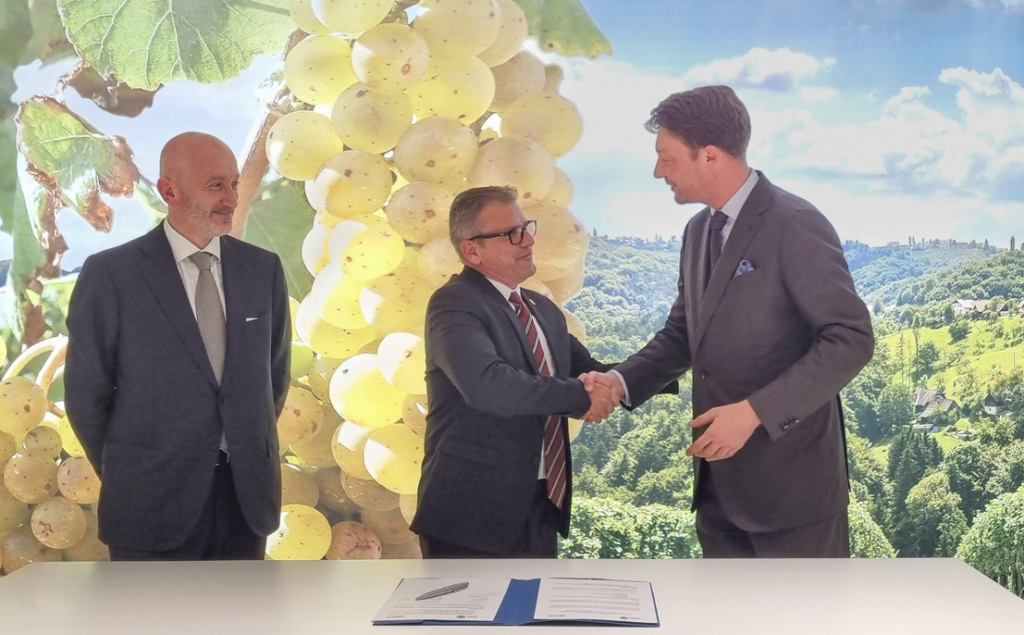
The Association of Equipment Manufacturers (AEM) and the European Agricultural Machinery Association (CEMA) have signed a Memorandum of Understanding (MoU) to enhance advocacy efforts for the agricultural equipment industry. The agreement aims to create a positive legislative and regulatory environment across the Atlantic and globally, ensuring alignment on key issues impacting manufacturers in both regions.
The MoU establishes a framework for the two organizations to work together toward alignment, achieving mutual recognition, ensuring regulatory compliance, and harmonizing practices and standards in several key areas that impact agricultural equipment manufacturers today.
Signed last month at two major industry events—EIMA International in Bologna, Italy, and AEM's Annual Conference in Palm Springs, California, USA— the agreement formalizes the partnership between CEMA and AEM.
"With the signing of this Memorandum of Understanding, AEM and CEMA look forward to enhanced collaboration in order to address key issues of importance and ensure there is alignment between Europe and the U.S. as it relates to our two very important global machinery markets," said AEM Senior Vice President Curt Blades.
The MoU specifies several areas where the two organizations agree to increase cooperation:
"This agreement strengthens the transatlantic connection between AEM and CEMA, as we work together to support agricultural equipment manufacturers as they build the products that help feed our world," said CEMA Secretary General Jelte Wiersma.
By focusing on these shared priorities, AEM and CEMA aim to help the industry navigate global markets while advancing innovation, sustainability, and safety standards for the benefit of manufacturers and farmers alike.

– The Northeast Regional Food Business Center is pleased to award $2 million in sub-award funding to 17 technical assistance provider organizations across the Northeast.
Thirteen awardees will receive grants of up to $100,000 to support small- and mid-sized food and agricultural businesses with projects that include:
The Center has also awarded up to $200,000 to four organizations focused on building regional or sub-regional technical assistance provider networks. These networks will offer professional development and training, along with fostering collaboration among providers by industry, market or geographic area.
Additionally, we are thrilled to formally launch the Center's Community Hub, led by Cornell University's Center for Regional Economic Advancement. This innovative virtual resource is designed to connect farmers, food producers and food system technical assistance providers across the Northeast with the right support, skills and information. Through the hub, users can access a directory of providers who offer tailored business, technical and financial support, as well as free and accessible business training, starting with the "Finance 101: Farm and Food Business Financial Essentials" course.
"We are excited to support these providers as they continue the work of strengthening our local and regional food systems," NASDA Foundation Senior Director Chris Jones said. "The widespread coverage area of these organizations will offer producers and food businesses increased access to the types of services that are essential to their business operations and expansion."
Established by the U.S. Department of Agriculture in spring 2023, the Center serves 11 Northeast states and the District of Columbia, and operates through a collaborative framework that includes core partner organizations: NASDA Foundation, Buffalo Go Green, Cornell University's Center for Regional Economic Advancement, New York State Department of Agriculture and Markets and the Maine Department of Agriculture, Conservation and Forestry.
The following recipients and projects received funding in the first round:
American Farmland Trust, Washington D.C.
Black Farmer Fund, New York, NY
Catskills Agrarian Alliance, Hamden, NY
Center for an Agricultural Economy, Hardwick, VT
Co-Op Hudson Valley, Poughkeepsie, NY
Cooperative Development Institute, Northampton, MA
Cultivating Community, Portland, ME
Dairy Grazing Apprenticeship, Medford, WI
Farm to Institution New England, Boston, MA
Finger Lakes Incubator and Commercial Kitchen, Inc., Auburn, NY
Future Harvest, Cockeysville, MD
Glynwood Center, Inc., Cold Spring, NY
Keystone Development Center, Harrisburg, PA
Land for Good, Keene, NH
Nuestras Raices, Holyoke, MA
Seacoast Eat Local, Lee, NH
Stepwell Strategies, LLC, Cleveland Heights, OH
Today, December 16, the U.S. Environmental Protection Agency published for public comment its plan for studying and developing technology-based PFAS limits on industrial wastewater discharges. The plan is a key action under the agency's PFAS Strategic Roadmap as it considers rulemaking efforts to protect communities from forever chemicals in local waterways and supports the Biden Cancer Moonshot's efforts to reduce Americans' exposure to cancer-causing chemicals.
"EPA is committed to working with state partners to develop strong national rules to reduce the presence of forever chemicals in our waterways," said EPA Principal Deputy Assistant Administrator for Water Bruno Pigott."That means we must work to develop our collective understanding about PFAS discharges from industry. From there, we can better innovate and implement durable treatment solutions that protect our communities over the long run."
Preliminary Effluent Guidelines Program Plan 16 (Preliminary Plan 16) announces the agency's intent to initiate detailed studies of wastewater pollution discharges and their treatment potential for several industrial categories.
EPA has determined that it needs to collect additional data and information from facilities in the Battery Manufacturing Category, the Centralized Waste Treatment Category, the Oil and Gas Extraction Category, as well as from PFAS processors (industrial facilities engaged in processing PFAS into commercial products). The goal of these studies is to enable the agency to make informed, data-driven decisions on the need for new rulemakings to establish revised effluent limitations guidelines. Any future rulemakings developed as a result of these studies would be based on the best available science and designed to stop PFAS contamination at the source, safeguarding community and environmental health.
With the announcement of this preliminary plan in the Federal Register, EPA is opening a 30-day public comment period. To submit a written comment, visit EPA's Preliminary Effluent Guidelines Program Plan webpage for more information.
Background
Effluent limitations guidelines (ELGs) are national, technology-based regulations developed to control industrial wastewater discharges to surface waters and into publicly owned treatment works. ELGs are intended to represent the greatest pollutant reductions through technology that are economically achievable for an industry. EPA prepares ELG Program Plans after public review and comment on a preliminary plan, pursuant to Clean Water Act Section 304(m).
ELG Program Plans provide a description of the agency's annual review of ELGs and pretreatment standards, consistent with the Act. Based on these reviews, EPA develops plans to identify any new or existing industrial categories selected for ELG or pretreatment standards rulemakings and to provide a schedule for such rulemakings. In addition, ELG plans present any new or existing categories of industry selected for further review and analysis.
The U.S. Environmental Protection Agency has updated the AirNow mobile app to allow users to receive optional push notifications of their local Air Quality Index forecasts for the next day.
State and local air agencies issue AQI forecasts as a public service to help people plan their outdoor activities. The agencies provide them to EPA, which shares them on the AirNow app and Airnow.gov website. Until now, AirNow users had to remember to check the app or website to see their forecasts; with the updates to the AirNow mobile app, people can opt to be notified when the daily forecast reaches an AQI category of their choosing.
AQI forecasts predict overall air quality for the next day for ground-level ozone and/or particle pollution. For ozone, forecasts are based on the 8-hour period with the highest ozone levels; for particle pollution, they predict an average of the next 24 hours. Some agencies provide a forecast for several days at a time.
The forecasts can be useful planning tools – especially for people who are at risk from ozone or particle pollution. For example, if the next day's ozone forecast is unhealthy for everyone (Code Red) someone without much flexibility in their schedule may decide to move their outdoor activity indoors for that day. But because air quality can change throughout the day, people with more schedule flexibility can use the forecast as a reminder to check current air quality before heading out for a walk, a run, or even doing strenuous work in the garden.
Setting up push notifications in the updated app is easy. First, make sure you've turned on notifications for the AirNow app in your smartphone settings. Then, open the app and tap the menu icon on the upper left of the screen. Select "Notifications" from the list. From there, you can choose to receive forecast notifications for up to 10 locations.
Learn more about receiving AQI forecast push notifications in the AirNow app.
Download the app at these links:
Don't have a smartphone? You can check your AQI forecast and current air quality at the AirNow.gov website.
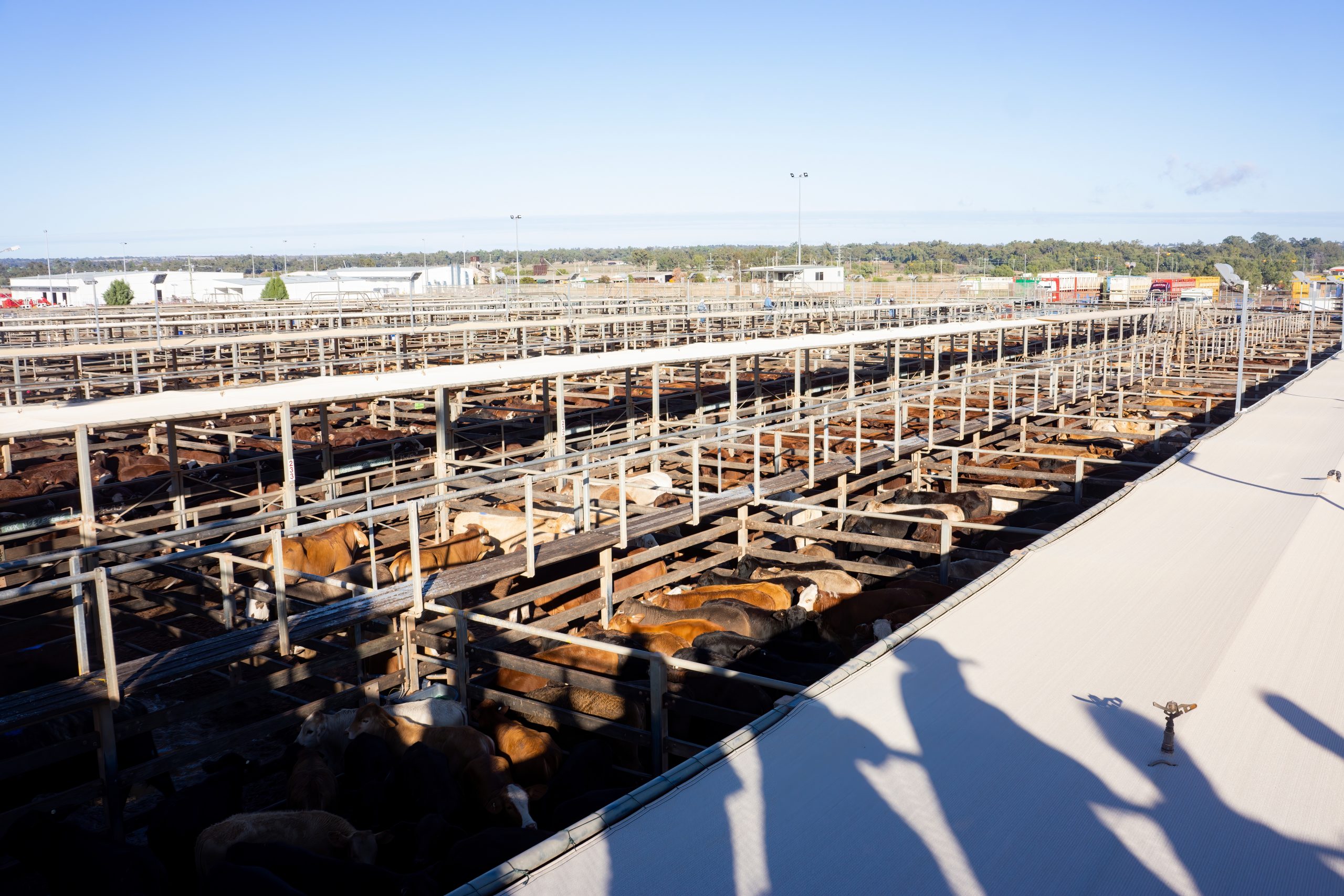
Dr. Derrell Peel, Oklahoma State University Extension Livestock Marketing Specialist, offers his economic analysis of the beef cattle industry as part of the weekly series known as the "Cow Calf Corner," published electronically by Dr. Peel and Mark Johnson. Today, Dr. Peel discusses strong feeder markets encouraging more selling.
Oklahoma combined feeder auction prices spiked to record levels the week after Thanksgiving, especially for the lightweight calves and stockers. The price of 500-pound, Med/Large, No. 1 steers was $360.99/cwt., a new record price. Lightweight feeder prices dropped back the second week of December with the 500-pound steers posting the third-highest weekly price of the year of $342.57/cwt. just slightly below the spring price peak of $349.43/cwt. in March. The bigger feeder cattle prices have continued to grind higher. The price of 800-pound Med/Large, No. 1 steers in Oklahoma was $260.58/cwt. in mid-December, pennies higher than the previous record weekly price at the end of June.
The red-hot feeder cattle market in December has prompted strong feeder cattle sales to end the year. At the end of August, year-to-date Oklahoma feeder cattle auction volumes were down over 102,000 head from last year, a decrease of 12.5 percent year over year. However, dry conditions prompted more feeder sales with year-over-year larger weekly volumes for nine consecutive weeks in September and October. By the beginning of November, year-to-date feeder auctions totals were down just over 50,000 head year over year, 5.0 percent less than one year earlier.
Auction volumes dropped ahead of Thanksgiving, dropping the year-to-date decrease back over 74,000 head in two weeks. However, large volumes in the last two weeks of November and the first half of December has brought the year-to-date decrease down to just over 36,000 head, a scant 3.1 percent down from last year. The Oklahoma weekly feeder volume for the second week of December was 47,448 head, the largest weekly volume in several years. With just one week of auction sales remaining for the year, the Oklahoma combined feeder auction total for 2024 is 1.14 million head compared to 1.18 million head last year.
Although the total feeder auction volume has decreased relatively little this year compared to last, there is one change that could be significant. Figure 1 shows the reported heifer percentage of Oklahoma weekly feeder auction volume from 2022-2024.
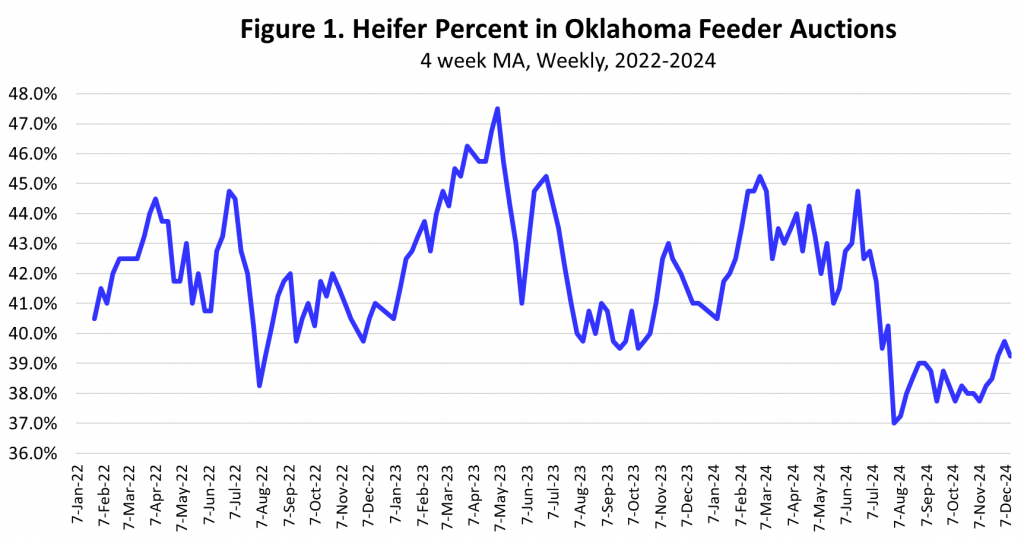
Since the middle of the year, the percentage of heifers in the weekly volume has decreased significantly compared to the past two years. The average weekly heifer percentage since July has been 38.7 percent compared to 43.1 percent in the first half of the year. The average for the entire year in 2023 was 42.6 percent and in 2022 was 41.7 percent. This may be an indication that Oklahoma producers are holding back a few heifers in late 2024. The data is not definitive but could be an early indication of some heifer retention, at least in Oklahoma.
Derrell Peel, OSU Extension livestock marketing specialist, explains how markets are reacting to the avian influenza situation before discussing the news of the discovery of the New World screwworm discovery in Mexico from SunUpTV on December 7, 2024 at https://www.youtube.com/watch?v=AZMRBWkKu5Y&list=PLglOSpV-TcadvUT94k2ZDaOvQF9BRvTGs&index=1
U.S. Department of Agriculture (USDA) Secretary Tom Vilsack today announced $78.3 million in partially forgivable loans for clean energy projects through the Powering Affordable Clean Energy (PACE) program to help lower electricity bills for households, expand reliable access to renewable energy and create jobs for rural families, small businesses and agricultural producers.
The funding for USDA's PACE program is from the Inflation Reduction Act, which is the largest investment in rural electrification since President Franklin Delano Roosevelt signed the Rural Electrification Act into law in 1936 as part of the New Deal. Inflation Reduction Act programs partner with rural communities to deliver clean, reliable and affordable energy.
"Partnering with local governments, companies, and others to provide clean, reliable energy to rural Americans lower's people's costs, strengthens the nation's energy security and reduces pollution," Secretary Vilsack said. "Under the leadership of the Biden-Harris Administration, USDA has made historic investments in rural America to create a more affordable and sustainable future, benefiting rural families, businesses and the health of our planet for generations to come."
Rural Utilities Service Administrator Andy Berke traveled to rural Vermont to highlight one of the announced projects with the Town of Stowe Electric Department. The Electric Department will use a $6 million investment to develop small hydroelectric and solar facilities with a backup battery energy storage system. This will provide enough renewable energy to power approximately 115 local households.
The Town of Stowe Electric Department is one of seven projects receiving funding in today's announcement. USDA is awarding $78.3 million in partially forgivable loans to organizations based in Maryland, Ohio, Vermont, Washington and American Samoa. The investments will provide clean energy to power almost 7,000 households each year. For example:
In addition to the seven entities receiving funding today, USDA has selected 32 applications across 23 states and Puerto Rico to move forward in the process to help make clean, affordable and reliable energy accessible to the people of rural America. These were the first selectees under the PACE program's rolling application process.
Additional details on all funding recipients and finalists are available on the PACE website.
In May 2023, USDA made $1 billion available through PACE to fund new clean energy projects and energy storage in rural America. This program provides low interest loans with up to 60% loan forgiveness to renewable energy developers, rural electric cooperatives and other rural energy providers for renewable energy storage and projects that use wind, solar, hydropower, geothermal and biomass.
By using renewable energy from natural sources, these investments make it more affordable for people to heat their households, run their businesses, power cars, schools, hospitals and more.
PACE is also a covered program in the President's Justice40 Initiative, which aims to ensure 40% of the overall benefits of certain federal climate, clean energy and other investment areas flow to disadvantaged communities that are marginalized by underinvestment and overburdened by pollution.
To date, USDA has selected 34 projects totaling more than $995 million in partially forgivable loans to move forward in the PACE application process.
USDA expects to provide a further update on the PACE program in the coming weeks.
USDA Rural Development provides loans and grants to help expand economic opportunities, create jobs and improve the quality of life for millions of Americans in rural areas. This assistance supports infrastructure improvements; business development; housing; community facilities such as schools, public safety and healthcare; and high-speed internet access in rural, Tribal and high-poverty areas. Visit the Rural Data Gateway to learn how and where these investments are impacting rural America.
USDA touches the lives of all Americans each day in so many positive ways. Under the Biden-Harris Administration, USDA is transforming America's food system with a greater focus on more resilient local and regional food production, fairer markets for all producers, ensuring access to safe, healthy and nutritious food in all communities, building new markets and streams of income for farmers and producers using climate-smart food and forestry practices, making historic investments in infrastructure and clean energy capabilities in rural America, and committing to equity across the Department by removing systemic barriers and building a workforce more representative of America. To learn more, visit www.usda.gov.
To subscribe to USDA Rural Development updates, visit GovDelivery subscriber page.
| |||||||||||||||||||||||||||||||||||||||||||||||||||||||||||||||||||||||||||||||||||||||||||||||||||||||||||||||||||||||||||||||||||||||||||||||||||||||||||||||||||||||||||||||||||||||||||||||||||||||||||||||||||||||||||||||||||
| |||||||||||||||||||||||||||||||||||||||||||||||||||||||||||||||||||||||||||||||||||||||||||||||||||||||||||||||||||||||||||||||||||||||||||||||||||||||||||||||||||||||||||||||||||||||||||||||||||||||||||||||||||||||||||||||||||
|
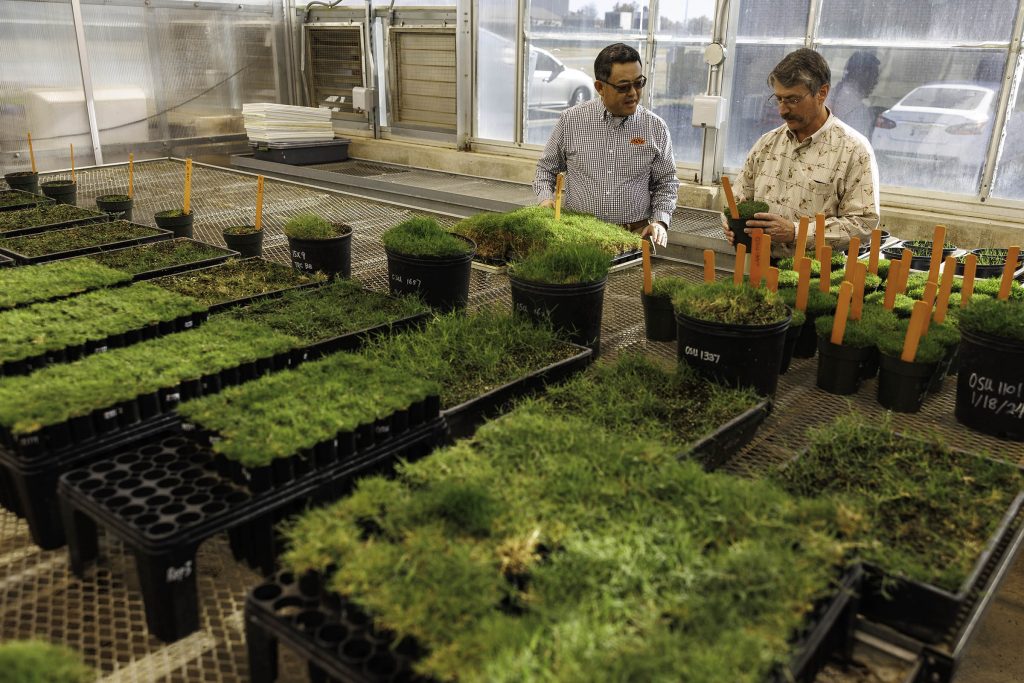
Yanqi Wu (left), professor in the Oklahoma State University Department of Plant and Soil Sciences, gives an overview of the work he is doing in the turfgrass breeding program to Dennis Martin, OSU Extension specialist for turfgrass (Photo by Mitchell Alcala, OSU Agriculture)
In his 34 years at Oklahoma State University, Dennis Martin, OSU Extension specialist for turfgrass, has served as the bridge between turfgrass scientists and the turfgrass industry.
"Some people think of the university as THE giant county Extension office," Martin said. "In some ways, it is, and in some ways, it isn't. As specialists, we like to spend our time on specialty issues that require a higher level of problem-solving. When we have a lot of problem solvers who can take care of general questions, the university and the state's investment is best used by letting our specialists work on specialty problems."
Martin stepped into his role as the state Extension specialist in 1990, adding professor to his title in 2004. More than 30 years later, he still finds joy in talking about turf.
"People think of me as being versed only in turfgrass, but as an undergraduate student at the University of Illinois, I started in forestry, then rapidly moved into greenhouse production, then to nursery management, then to turf," Martin said. "In Oklahoma, I think my biggest impact has been working with sod producers, golf course superintendents, and parks and grounds managers."
Innovative turfgrass management has been the trademark of the OSU turfgrass team for the past 40 years. Although the land-grant institution has developed and advanced turf varieties since the 1890s, it was around 1986 that it fully transitioned into the turfgrass research and breeding program that it is today.
At the time, Charles Taliaferro led the breeding program, creating and releasing the Guymon variety in 1982, a common, seeded Bermudagrass that was reliably cold hardy for the transition zone of the country with cold winters and hot, dry summers. Guymon could be used as a turfgrass, but it was mostly used as a forage grass. It was the first seeded turfgrass variety to put OSU in the national spotlight.
"That was a transition grass between the old program and the new," Martin said. "You could use Guymon as a turf, but it didn't look nice. It was coarse but durable."
Following Guymon, OSU released the vegetatively propagated, hybrid bermudagrasses Midlawn and Midfield in 1991. These were collaborative releases bred and developed by Kansas State University and released jointly with OSU.
"They were higher quality than seeded bermudagrasses and more cold-hardy than the vegetatively propagated bermudagrasses of the time, such as Tifway, but they weren't exactly what the industry needed," Martin said. "They were good stepping stones for getting us to where we are today."
The Patriot variety was then released in 2006 with slight improvements over Midlawn and Midfield, but it wouldn't be long before all three varieties were outmatched by their successors, Latitude 36 and Northbridge, which added tremendous value to the turf industry.
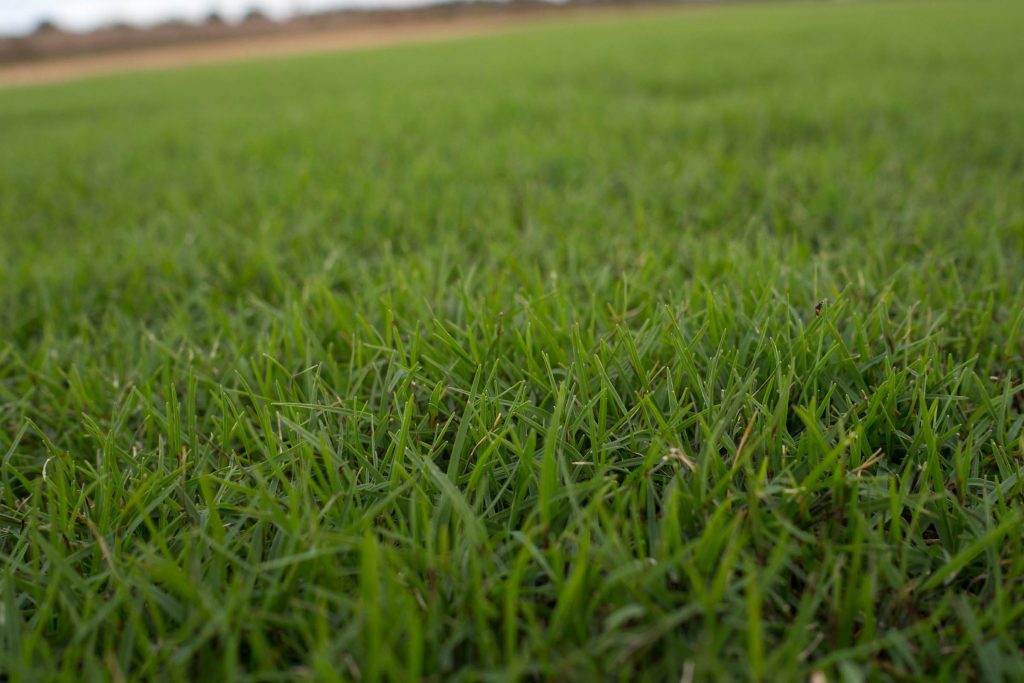
OSU turfgrasses change the game
When Taliaferro retired in 2006, Yanqi Wu stepped into his role as head of the breeding program, later receiving the title of professor in the OSU Department of Plant and Soil Sciences.
At the time, the team was already working on the up-and-coming variety Latitude 36. In November 2006, Martin, Wu and Taliaferro came together to decide what experimental entries would be submitted to the National Turfgrass Evaluation Program the following year.
"At that time, we didn't have many funds to support entries in the test, but we selected two," Wu said. "Apparently, we chose well because those two varieties went on to become Latitude 36 and Northbridge, both still very active in the industry today."
In the early 2000s, the OSU seeded bermudagrass varieties Yukon and Riviera increased the visibility of the OSU turf program internationally. Riviera was used in the 2008 Olympics in Beijing, China.
"Yukon created a lot of excitement in the transition zone because it had good winter hardiness," Wu said. "Its quality by today's standards is not as nice as subsequent varieties, but it was still a breakthrough grass."
Then came Tahoma 31 in 2017, a vegetatively propagated variety that has gained national attention for its use on professional sports fields and golf courses due to cold hardiness, drought resistance and a tendency to need less water than other commercial varieties.
"Tahoma 31 is one of the most popular releases we've had through the Turfgrass Breeding Program," said Justin Quetone Moss, department head and professor in the OSU Department of Horticulture and Landscape Architecture. "It was developed through collaboration with several southern universities."
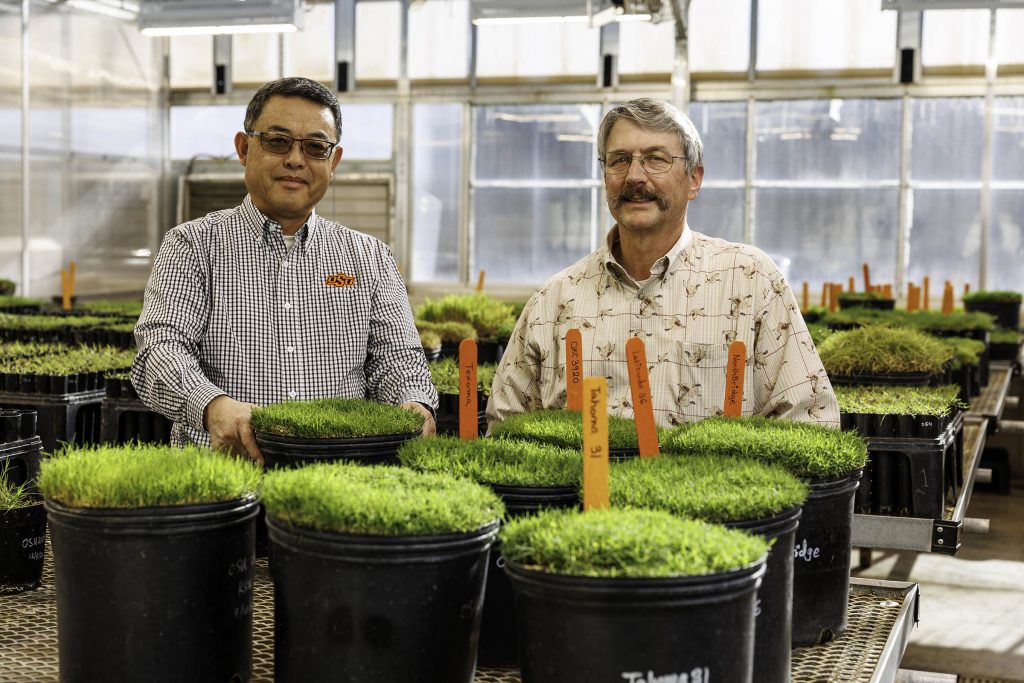
Beyond turf
The OSU turf team is highly collaborative, often working with universities from Kansas, North Carolina, California, Florida, Texas, Georgia and other states involved in a project to improve drought tolerance and other turf traits.
"Multistate collaborations help evaluate material under many additional environmental conditions," said Wade Thomason, professor and department head for plant and soil sciences. "We can better assess factors like disease pressure or cold tolerance, giving us valuable information about the conditions where our cultivars will thrive."
With funding from the USDA, OSU has expanded its focus to turfgrasses ideal for more southern climates like Florida and Texas, such as Texoma, which was released in 2022 and will soon be available in Texas. Wu is also continuing to improve seeded bermudagrasses and license new related varieties.
Charles Fontanier, associate professor of turfgrass management and physiology, evaluates warm-season grasses for ancillary traits, specifically shade tolerance and sod tensile strength.
"Drought resistance is going to continue to be a key issue for us, but I think we are going to be more focused on looking at how we can package multiple traits into a lawn," he said. "We're trying to understand what we can plant and how we can create plants that will be resilient to a changing climate and changing expectations for lawns."
Meanwhile, Mingying Xiang, an assistant professor in turfgrass science, and Shuhao Yu, research assistant professor in turfgrass genetics and genomics, continue their work using genetics to speed up the breeding process.
"We evaluate a trial of more than 150 plant materials under drought conditions, and we identify the genomic regions associated with the drought resistance trait in bermudagrass" Yu said. "In the future, we will integrate the information on those genetic markers into the breeding program to increase the breeding efficiency and accuracy, so the turfgrass industry can have more drought resistance."
But it's not just about turfgrass anymore.
In October 2024, the OSU turf team hosted a gathering with experts from around the world who work with turfgrasses and other types of non-turf plants.
"We are trying to look beyond turfgrasses," Martin said. "We are collecting germplasm for plants that would be considered weeds in some places but desirable turf-type plants in other places."
Many of the plants are pollinator-friendly species they will study for use on home lawns in combination with turfgrass.
"We're trying to develop cross-disciplinary teams to see what we can salvage from the natural world as urbanization continues while also looking at what we can provide in terms of what people want," Martin said. "There's a lot of pollinator service plants that tolerate mowing and still flower. Rather than the one-species monoculture approach, we are looking at multiple species working together in biodiverse lawns."
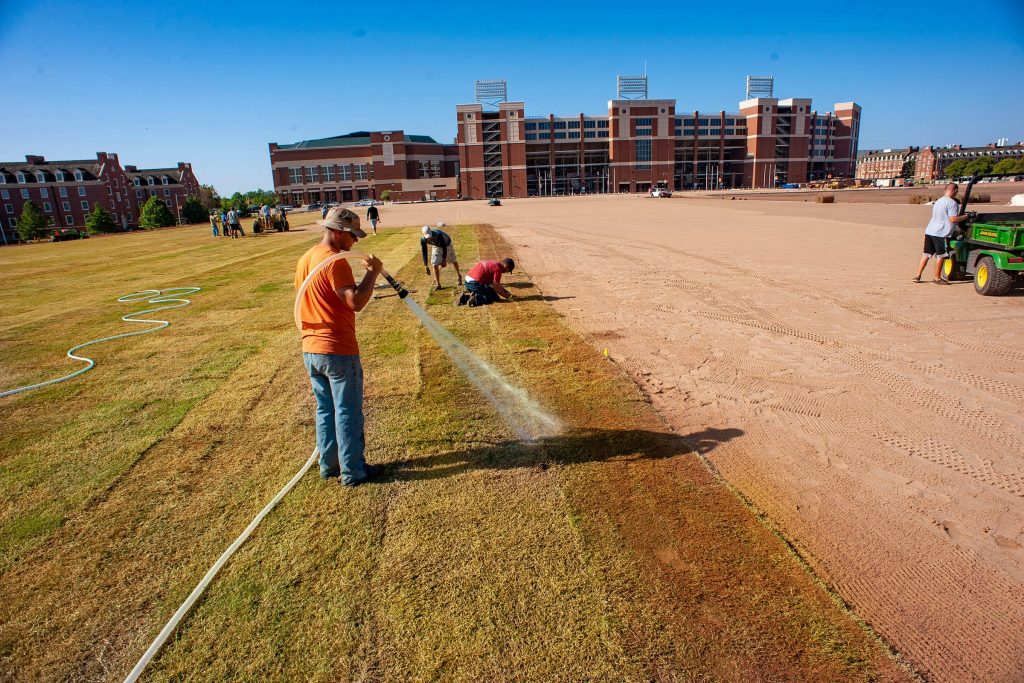
Today the Agricultural Retailers Association (ARA) President & CEO Daren Coppock released the following statement with concerns that Congress may neglect critical payments needed by growers as legislators work on the year-end continuing resolution this week.
"ARA is extremely concerned with the potential exclusion of grower assistance from the supplemental short-term funding proposal. Without immediate financial assistance, growers may not be able to stay in business, which poses a national and food security risk to the nation.
"Congress waiting until next year to address this important priority for America's agricultural industry and their rural communities is not acceptable."
In July, ARA member Joey Caldwell with GreenPoint Ag testified during a House Agriculture Committee hearing to emphasize that while farmers are resilient and independent, they require support from policymakers for a robust Farm Bill with the certainty provided by crop insurance.
"Strong farmers make strong families," Caldwell testified. "Those strong families make for strong rural communities, and it is those communities that help make the fabric of this nation."
ARA strongly urges Congress to recognize the critical role payments to growers play in sustaining the entire supply chain and include ag payments in the year-end continuing resolution.

Growth Energy and the Renewable Fuels Association (RFA) today filed their opening brief in the U.S. Supreme Court in Environmental Protection Agency v. Calumet Shreveport Refining, LLC, Case No. 23-1229. The case seeks to overturn an opinion from the U.S. Court of Appeals for the Fifth Circuit regarding the proper venue for adjudicating the U.S. Environmental Protection Agency's (EPA's) denials of several petitions for small refinery exemptions (SREs) under the Renewable Fuel Standard (RFS).
In their brief, Growth Energy and RFA argue that the Fifth Circuit had erred and that challenges to those SRE petition denials should be adjudicated solely in the U.S. Court of Appeals for the D.C. Circuit because EPA's SRE policy is "nationally applicable" and "based on a determination of nationwide scope or effect." In support, the organizations argue in their brief that EPA "prescribed general standards" for adjudicating SRE petitions irrespective of their location that, when applied, "inherently affect . . . obligations for all" obligated refineries and renewable fuels producers "throughout the country."
"EPA's actions in response to these SRE petitions reflect quintessentially national concerns that are well within EPA's authority to protect," said Growth Energy and RFA in a statement. "Oil industry interests should not be allowed to upend Congress's carefully crafted judicial review process, which ensures national uniformity for the RFS program and avoids inconsistent legal precedents, forum shopping, and market uncertainty for biofuels."
About the RFS
The Renewable Fuel Standard (RFS) was first enacted in 2005 as part of the Energy Policy Act. It was then expanded in 2007 with the passage of the Energy Independence and Security Act. It sets the number of gallons of renewable fuels that must be blended into the nation's total fuel supply each year. The RFS remains one of America's most successful clean energy policies, reducing carbon emissions, offering consumers more affordable options at the pump, and delivering greater energy security for more than 15 years.
Case Background
In April and June 2022, EPA denied 105 SRE petitions from 36 refineries located in 18 states. In assessing the petitions, EPA applied a single, nationwide legal requirement: to be eligible for an SRE, petitioning refineries must demonstrate a direct causal relationship between RFS compliance and their claimed economic hardship. EPA then invited petitioning refineries to submit refinery-specific evidence to rebut EPA's general factual finding that refineries have the ability to pass through their costs of compliance with the RFS and that RFS compliance does not cause refineries to incur any net costs, let alone economic hardship. Reviewing the evidence submitted by the refineries, EPA found that none met their burden.
Refineries whose SRE petitions were denied challenged the denials in the Third, Fifth, Seventh, Ninth, Tenth, Eleventh, and D.C. Circuits. All regional circuit courts except the Fifth Circuit concluded that only the D.C. Circuit was the proper venue to hear the challenges, and they dismissed or transferred the challenges to the D.C. Circuit. By contrast, the Fifth Circuit held that venue in that court was proper, and in a divided 2-1 panel opinion, vacated EPA's denials for the refineries that brought challenges in that court. In May 2024, Growth Energy and RFA jointly petitioned the Supreme Court to overturn the Fifth Circuit opinion. The U.S. EPA also petitioned the Supreme Court as well. On October 21, 2024, the Supreme Court granted EPA's petition, and Growth and RFA submitted their opening brief as a respondent in support of EPA.
U.S. Department of Agriculture (USDA) Secretary Tom Vilsack today announced $78.3 million in partially forgivable loans for clean energy projects through the Powering Affordable Clean Energy (PACE) program to help lower electricity bills for households, expand reliable access to renewable energy and create jobs for rural families, small businesses and agricultural producers.
The funding for USDA's PACE program is from the Inflation Reduction Act, which is the largest investment in rural electrification since President Franklin Delano Roosevelt signed the Rural Electrification Act into law in 1936 as part of the New Deal. Inflation Reduction Act programs partner with rural communities to deliver clean, reliable and affordable energy.
"Partnering with local governments, companies, and others to provide clean, reliable energy to rural Americans lower's people's costs, strengthens the nation's energy security and reduces pollution," Secretary Vilsack said. "Under the leadership of the Biden-Harris Administration, USDA has made historic investments in rural America to create a more affordable and sustainable future, benefiting rural families, businesses and the health of our planet for generations to come."
Rural Utilities Service Administrator Andy Berke traveled to rural Vermont to highlight one of the announced projects with the Town of Stowe Electric Department. The Electric Department will use a $6 million investment to develop small hydroelectric and solar facilities with a backup battery energy storage system. This will provide enough renewable energy to power approximately 115 local households.
The Town of Stowe Electric Department is one of seven projects receiving funding in today's announcement. USDA is awarding $78.3 million in partially forgivable loans to organizations based in Maryland, Ohio, Vermont, Washington and American Samoa. The investments will provide clean energy to power almost 7,000 households each year. For example:
In addition to the seven entities receiving funding today, USDA has selected 32 applications across 23 states and Puerto Rico to move forward in the process to help make clean, affordable and reliable energy accessible to the people of rural America. These were the first selectees under the PACE program's rolling application process.
Additional details on all funding recipients and finalists are available on the PACE website.
In May 2023, USDA made $1 billion available through PACE to fund new clean energy projects and energy storage in rural America. This program provides low interest loans with up to 60% loan forgiveness to renewable energy developers, rural electric cooperatives and other rural energy providers for renewable energy storage and projects that use wind, solar, hydropower, geothermal and biomass.
By using renewable energy from natural sources, these investments make it more affordable for people to heat their households, run their businesses, power cars, schools, hospitals and more.
PACE is also a covered program in the President's Justice40 Initiative, which aims to ensure 40% of the overall benefits of certain federal climate, clean energy and other investment areas flow to disadvantaged communities that are marginalized by underinvestment and overburdened by pollution.
To date, USDA has selected 34 projects totaling more than $995 million in partially forgivable loans to move forward in the PACE application process.
USDA expects to provide a further update on the PACE program in the coming weeks.
USDA Rural Development provides loans and grants to help expand economic opportunities, create jobs and improve the quality of life for millions of Americans in rural areas. This assistance supports infrastructure improvements; business development; housing; community facilities such as schools, public safety and healthcare; and high-speed internet access in rural, Tribal and high-poverty areas. Visit the Rural Data Gateway to learn how and where these investments are impacting rural America.
USDA touches the lives of all Americans each day in so many positive ways. Under the Biden-Harris Administration, USDA is transforming America's food system with a greater focus on more resilient local and regional food production, fairer markets for all producers, ensuring access to safe, healthy and nutritious food in all communities, building new markets and streams of income for farmers and producers using climate-smart food and forestry practices, making historic investments in infrastructure and clean energy capabilities in rural America, and committing to equity across the Department by removing systemic barriers and building a workforce more representative of America. To learn more, visit www.usda.gov.
To subscribe to USDA Rural Development updates, visit GovDelivery subscriber page.
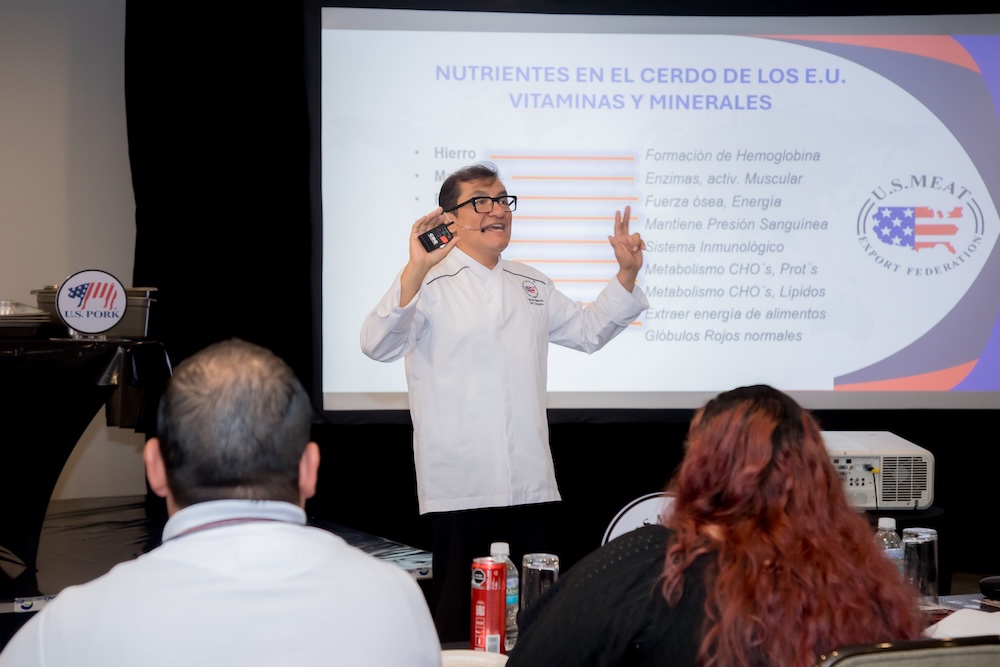
Chef German Navarrete is leading a Costco sales seminar. Click theimage for video of Navarrete explaining why USMEF partnered with Costco on sales training.
In Mexico, Costco is a leading distributor of U.S. beef and pork cuts – not just to everyday shoppers, but also to businesses. With Costco looking to expand its sales of U.S. red meat to food service clientele in Mexico, the U.S. Meat Export Federation (USMEF) recently held training seminars aimed at educating Costco sales personnel on the needs of chefs working in Mexico's restaurant and hospitality sectors. The training sessions were made possible through support from USDA, the Beef Checkoff Program and the National Pork Board.
USMEF Corporate Chef German Navarrete, who is based in Mexico City, explains that the seminars were tailored to each Costco location based on the region's target audience of chefs and food service professionals. While information was presented on the attributes of U.S. beef and pork cuts, the program also detailed restaurant preparation methods and kitchen equipment, to give Costco personnel a strong knowledge base when approaching these customers.
U.S. pork exports to Mexico are reaching new heights in 2024. Through October, exports totaled nearly 950,000 metric tons, up 6% from last year's record pace, valued at $2.1 billion (up 11%). Beef exports increased 13% to 193,000 metric tons, while value climbed 15% to $1.12 billion.
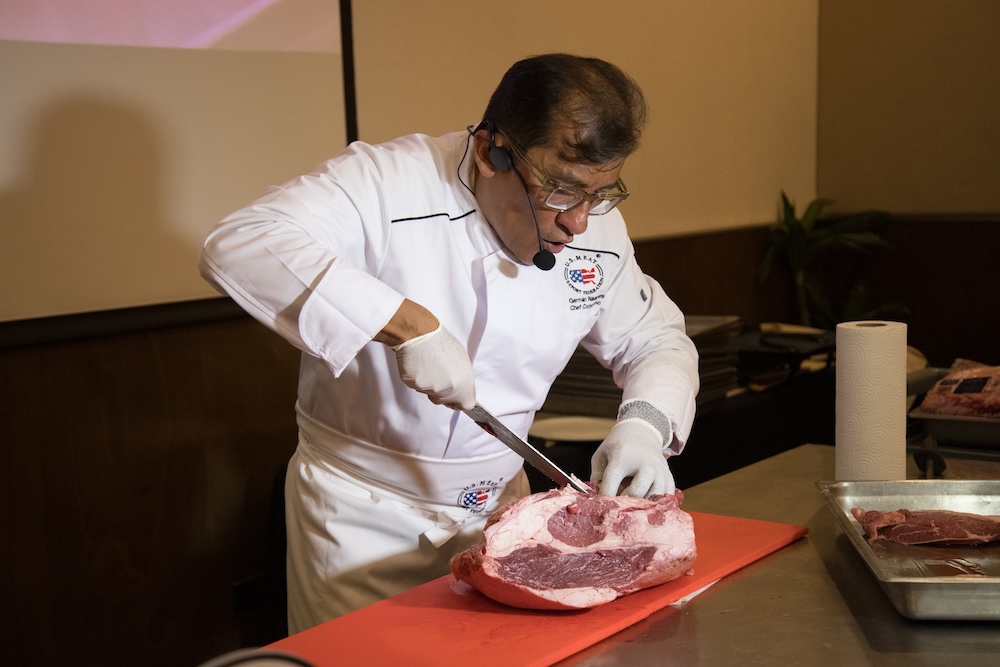

Beginning May 7, 2025, a REAL ID License or Identification card, or valid federal identification document (i.e. U.S. Passport) will be required to board domestic flights, visit military bases and specific federal buildings, and enter nuclear power plants. Farm Director KC Sheperd visited with Britnee Joyner, Senior Public Information Officer for Service Oklahoma, to find out what Oklahomans need to know to be prepared.
Joyner said that the great thing about Oklahoma is that residents can decide whether or not they want a REAL ID., but right now during the holiday season, before everyone starts to travel is a great time to get it before waiting until the deadline.”
According to Joyner, Oklahoma residents who don’t fly, or visit military bases, federal buildings, or nuclear power plants don’t have to change from a standard driver's license. Another option is to use a U.S. passport in place of a REAL ID.
“We have made it pretty easy to get a REAL ID,” Joyner added. “And we even have a REAL ID checklist that can be emailed to you, so you know exactly what documents you need to bring to your visit.”
The REAL ID checklist is an easy-to-use tool in which citizens can select which documents they plan to use from a list of acceptable documents and then have the option to provide an email address where their personalized list can be sent.

The checklist includes:
Service Oklahoma has more than 270 locations across the state including local tag offices, also known as licensed operators. Residents can visit the Service Oklahoma website to save a place in line so be notified when it is their turn to be seen. The REAL ID section of the website can answer most other questions.
At this year's National Association of Farm Broadcasters Convention, Farm Director KC Sheperd caught up with Dennis Myer, Director of Central Life Science, to talk about flies. Senior Farm and Ranch Broadcaster Ron Hays is featuring comments from that conversation in today's BeefBuzz.
Central Life Science has long been researching economic losses, discomfort, and the spread of disease caused by flies. They also research ways to control the pests.
"We control flies differently than most, in that we don't use insecticides," Myer said. "We use IGR or insect growth regulator."
IGRs affect a part of the insect's life cycle, usually the larval stage. It prevents the insect from becoming an adult so that it cannot reproduce.
Myer explained that over time, flies can grow resistant to most sprays on the market today; whereas there has been no known resistance to IGRs.
IGRs are administered through livestock lick tubs, and once passing through the animal, the IGR vanishes from the environment within a week reducing harm to beneficial insects.
One little-known way that horn flies harm cattle is by biting the teat ends of the udder on mama cows. This can cause mastitis and the shutdown of the affected quarter which translates to poor weaning weights on calves and lengthens the time before the cow can be bred again. Mastitis can also cause additional abortions which costs the producer even more.
Because IGRs disrupt entire generations of flies, reapplication becomes reduced over time, and feeding lick tubs is less labor intensive than fly-spraying cows.
More information can be found at centralflycontrol.com or by researching the products: ClariFly and Altocid.
The Beef Buzz is a regular feature heard on radio stations around the region on the Radio Oklahoma Ag Network and is a regular audio feature found on this website as well. Click on the LISTEN BAR at the top of the story for today's show and check out our archives for older Beef Buzz shows covering the gamut of the beef cattle industry today.
Finals Week was last week at Oklahoma State University, so we wanted to see why graduate school isn't just about lectures.
The transition from theory to practice is crucial.
Real-world applications and hands-on experience shape our understanding and problem-solving skills in agronomy.
Dr. Sharry Had A Lot To Say
Give it a listen above!
"Today, the Department of Labor released the 2025 mandatory wage rates that farmers must pay in the H-2A program. The rates now average nearly $20 per hour nationwide and continue to rise at rates much faster than the national average. For some farmers, these wage rates will go into effect immediately; for others, they become effective in 14 days. America's farmers, ranchers, and agricultural employers are committed to paying a fair wage for the men and women who choose to work for them. However, the DOL's haphazard process to implement the new wage rates follows several federal court decisions that found the new H-2A regulations to be illegal and demonstrates how the department administers the program in an illogical and inequitable manner, ultimately harming the competitiveness of American farmers. The new Administration needs to correct the DOL's regulatory overreach, and Congress must adopt needed reforms to ensure the future viability of America's family farms."
About the Agriculture Workforce Coalition
The Agriculture Workforce Coalition (AWC) brings together organizations representing the diverse needs of agricultural employers across the country. AWC serves as the unified voice of agriculture in the effort to ensure that America's farmers, ranchers and growers have access to a stable and secure workforce. For more information, please visit www.agworkforcecoalition.org.
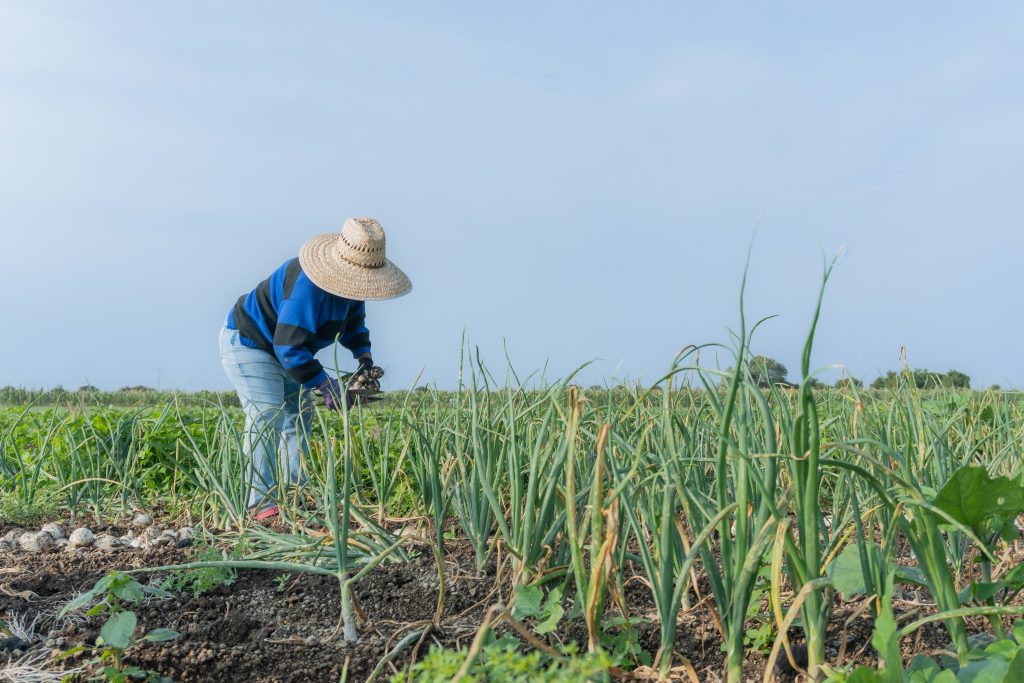
This article is a companion to the article titled: Hiring H-2A Workers through
Farm Labor Contracts published in Southern Ag Today on July 24, 2024.
The role of Farm Labor Contractors (FLCs) in hiring foreign workers under the H-2A Temporary Guest Foreign Farm Worker Visa Program has grown considerably in recent years. FLCs' share in the annual total employment of H-2A workers has grown from 17% in 2007 to 44 % in 2022 (Castillo, Martin, and Rutledge, 2022). FLCs' increasing involvement in H-2A hiring coincides with the program's rapid growth in patronage in recent years. Between 2017 and 2022, H-2A labor certifications grew by 64.7% (American Immigration Council, 2024).
There are logical grounds for the relevance of the FLC alternative under the H-2A program. Compared to potential individual farmer employers of H-2A workers, FLCs have extensive social and business networks in foreign labor markets. FLCs' greater familiarity and good connections with foreign workers enable them to lure and recruit residents, especially those in rural communities overseas, to consider H-2A employment in the U.S. that offers potential significant economic relief to their families.
A cursory review of wage violation data compiled by the Department of Labor's Wage and Hour Division (WHD),[1] however, indicates the consistent recurrence of FLC-hired H-2A workers in the wage violation cases apprehended by the agency. According to the wage violation data summary in Table 1, H-2A-related wage violations account for 33.86% (2016) to 73.44% (2022) in terms of number of affected workers in the agricultural sector during the period 2016 to 2023. In terms of nominal back wages, the program's share ranges from 29.96% (2016) to 69.70% (2021). Within the H-2A program, FLC employment's share in the number of workers with back wages ranges from 27.30% (2022) to 35.03% (2020), while its back wages account for about 14.63% (2022) to 36.42% (2018) of all H-2A back wages.
Figure 1 presents a comparison of the extent of FLC and non-FLC wage violation cases. The trend lines indicate that more workers are usually affected in FLC cases (annual counts of 34 to 56 per case) than in non-FLC cases (11 to 36 workers per case). Based on the bar plots, FLC cases involve larger nominal wage violations than non-FLC cases in most years analyzed.
Anecdotal evidence collected from various workers' accounts and popular media coverage expose at least two types of H-2A wage violations associated with the FLC hiring scheme: petition padding (requesting more workers than needed) and collection of illegal recruitment fees (usually at exorbitant rates) (Grinspan, 2023; Vasquez, 2023; CDM, 2020). Consequently, some foreign workers begin their work contracts already heavy in debt (because of illegal recruitment fees); some end up receiving less than the "promised" wages; while others find themselves either underemployed or unemployed (when FLCs could not place them in their original work destinations because labor petition padding practices).
Policymakers must revisit and consider modifying existing regulations on FLCs' involvement in the H-2A program. In addition to imposing stiffer sanctions and penalties on violations, policies must also launch more effective employer compliance audits. To accomplish this, the government would have to seriously consider expanding its current funding and resource allocation to WHD. Currently, WHD's case investigations capture only about 1% of all agricultural employers in the country, as its 2022 budget has not grown since 2006, while its 810 employees are overburdened in handling more than 200,000 cases each (Costa and Martin, 2023).
[1] WHD is a government agency that oversees the protection of workers' rights.
References:
American Immigration Council (2024). "The Expanding Role of H-2A Workers in U.S. Agriculture." Available online at https://www.americanimmigrationcouncil.org/research/h-2a-workers-us-agriculture#:~:text=Between %202017%20and%202022%2C%20the,to%20fill %20its%20open%20jobs. Accessed on November 11, 2024.
Castillo, M., P. Martin, and Z. Rutledge. (2022). The H-2A Temporary Agricultural Worker Program in 2020. Economic Information Bulletin #238, Economic Research Service, U.S. Department of Agriculture. Washington, DC.
Centro de los Derechos del Migrante, Inc. (CDM) (2020). Ripe for Reform: Abuses of Agricultural Workers in the H-2A Visa Program. Centro de los Derechos del Migrante, Inc., Baltimore, MD; Oaxaca, Mexico; Mexico City, Mexico.
Costa, D. and P. Martin. (2023). Record-low number of federal wage and hour investigations of farms in 2022. Economic Policy Institute. Washington, DC.
Grinspan, L. (2023). "They all went away: Why some foreign farmworkers end up leaving the fields." Atlanta Journal Constitution. Available online at https://www.ajc.com/news/georgia-news/they-all-went-away-why-some-foreign-farmworkers-end-up-leaving-the-fields/ZXDQUQHKMNH63ASCASK32BXB3M/. Accessed on October 19, 2023.
Vasquez, T. (2023). "Human Trafficking or a Guest Worker Program? H-2A's Systemic Issues Result in Catastrophic Violations." Futuro Unidad Hinojosa. Available online at https://futuroinvestigates.org/investigative-stories/head-down/human-trafficking-or-a-guest-worker-program-h-2as-systemic-issues-result-in-catastrophic-violations/ Accessed on October 19, 2023.
Article courtesy of Southern Ag today: Escalante, Cesar L., Joshua Emmanuel, and Bishal Gaire. "H-2A Wage Violations Against Workers Hired by Farm Labor Contractors." Southern Ag Today 4(51.1). December 16, 2024. Permalink
RON's Dave Lanning has a pre-opening look at today's agricultural Markets.
Click the audio tab below for today's report.
This statement can be attributed to Tim Fink, AFT Vice President of Policy
The holidays are a special time when many of us gather with loved ones over meals. But before we turn to the holidays, we will not turn our backs on the very people who make those meals possible.
The suffering of many of our nation's farmers and ranchers is all too real. Net farm income has declined by nearly a quarter since 2022. In addition to weak prices and increasing production costs, farmers and ranchers nationwide have faced weather-related disasters. This year alone, producers experienced destructive hurricanes in Texas and the southeast; devastating floods in the northeast; and catastrophic wildfires in the west. In the face of such headwinds, it comes as no surprise that the 2022 Census of Agriculture showed a loss of over 141,000 farms.
Right now, Congress has a chance to address these challenges as part of an end-of-year package by transferring remaining Inflation Reduction Act (IRA) conservation funding into the Farm Bill, and by providing producer economic assistance. The transfer of the IRA conservation funding will ensure increased long-term support for producers in implementing the very practices needed to improve their profitability and make their operations more resilient to extreme weather. The economic assistance will support farm income at a time of downturn and uncertainty, helping keep producers in business and food on our plates.
American Farmland Trust stands with our nation's farmers and ranchers in opposing any end-of-year package that does not include both the transfer of the IRA conservation funding and economic assistance. We urge Members of Congress to do the same.
For the past several weeks, Congress has been developing an end-of-year bill to extend federal funding before the December 20 deadline, further extend the 2018 Farm Bill, and provide economic assistance for struggling producers, among other priorities. After failed negotiations at the leadership level, the current draft of this bill does not include economic assistance for struggling producers. In dropping this provision, the bill also does not integrate Inflation Reduction Act (IRA) conservation investments into the baseline funding for USDA conservation programs. This bipartisan, paid-for provision would increase funding for oversubscribed, voluntary, locally led conservation programs. This has long been NACD's highest legislative priority.
"NACD urges lawmakers to pass an end of the year package that includes both economic assistance for producers and the integration of IRA conservation investments," said NACD President Kim LaFleur. "America's producers urgently require help, and integrating IRA conservation investments has strong bipartisan support and would increase funding for oversubscribed, locally led conservation programs. The time to act is now."

Senate Committee Agriculture, Nutrition, and Forestry Chairwoman Debbie Stabenow and House Agriculture Committee Ranking Member David Scott released the following statement in response to ongoing negotiations regarding the farm bill extension and delivering economic assistance to America's farmers.
"For weeks, congressional Democrats have provided a pathway to a farm bill extension that will deliver tens of billions of dollars in economic assistance and investments in farm bill programs that farmers rely on.
"Republican Leadership turned down this $10 Billion proposal, rejecting needed economic assistance and increased conservation spending for decades. It is important to stress that this proposal is paid for and does not take any funding away from the critical natural disaster aid that has been requested.
"Their eleventh-hour offer fell short of what farmers need, shortchanged critical farm bill programs, and steals from critically needed assistance to address recent natural disasters. We can and should do both economic and disaster assistance, not pit one against the other.
"The coming onslaught of farm foreclosures and retirement sales is on the Republican Leadership."
The National Cotton Council (NCC) strongly opposes any supplemental spending package that lacks meaningful short-term assistance for farmers. The failure of Congress to provide short-term support to our producers will mean that many farm families will go out of business in 2025, leading to devastating impacts throughout the rural economy. "We urge Congressional leadership to return to the negotiating table to find a path forward on economic assistance. If not, we will
vigorously oppose a supplemental spending package that does not provide the immediate support our producers need. The current stalemate is a completely unacceptable outcome," said NCC Chairman Joe Nicosia.
American Cotton Producer Chairman David Dunlow of North Carolina said, "Our producers will lose as much as $300 per acre on this year's harvest due to soaring production costs and low market prices. Unfortunately, political gamesmanship has resulted in legislators turning their back on farmers during our hour of greatest need."
Congress has yet to release or vote on a year-end legislation package. While recent negotiations have included funding for the federal government, a farm bill extension, economic assistance for agriculture producers and natural disaster recovery aid, Congressional leadership has signaled that the package does not currently include economic assistance.
In response to this development, Kenneth Hartman Jr, president of the National Corn Growers Association, released the following statement:
"We are deeply disappointed that congressional leadership appears to be at an impasse over crucial economic assistance for farmers in an end-of-the-year legislative package. Corn growers are faced with low prices and high input costs and economic aid would provide them with critical relief during challenging economic times.
"While these developments are disheartening, we call on Congress to resume negotiations and pass legislation that includes economic assistance while there is still time."
National Association of State Departments of Agriculture CEO Ted McKinney issued the following statement.
"Farmers and ranchers are encountering tremendous pressures under high input costs, elevated interest costs, deeply depressed commodity futures markets and poor local cash markets. Additionally, they have experienced powerful headwinds, ranging from extreme weather to uncertain global demand to supply chain disruptions. NASDA calls on Congress to put politics aside and find a resolution that provides the necessary economic aid and disaster assistance for the farmers and ranchers who work every day to provide food security to our country while also feeding the world."
### NASDA is a nonpartisan, nonprofit association which represents the elected and appointed commissioners, secretaries and directors of the departments of agriculture in all 50 states and four U.S. territories. NASDA enhances American food and agricultural communities through policy, partnerships and public engagement. To learn more about NASDA, please visit www.nasda.org
National Sorghum Producers Chair Amy France, a sorghum farmer from Scott City, Kansas, released the following statement of concern over Congress' inability to include economic relief for producers in the year-end supplemental legislation. NSP is urging lawmakers from farm states to reject the bill if it fails to include this vital assistance.
"Farmers are operating under an increasingly bleak economic landscape in 2024, and projections for 2025 offer little improvement. Amid growing financial strain, the industry has emphasized the importance of assistance, but Congress has yet to take action. These mounting challenges pose significant risks to the financial viability of many farming operations.
"While this assistance will not make producers whole, it would be an essential step in helping farm families navigate the difficulties brought on by economic and weather-related hardships in 2024.
"We urge agricultural leaders in Congress to demand that the supplemental spending bill include substantial financial aid for farmers, and if it doesn't, we ask that they vote against it."
Reports from the supplemental funding/continuing resolution packaged being negotiated today fails to include critical economic assistance for American farmers facing the one-two punch of low prices and skyrocketing input costs. It would fall far short of what is needed to ensure the survival of thousands of producers across the country. We urge congressional leaders to rethink this approach, negotiate in good faith, and keep their promises to farmers. Without such action, NCFC can not support such a bill and would urge a 'no' vote on the measure."
Urges American Soybean Association Urges Congressional Leadership to Recognize Farm Economy Realities
As the 2024 timeclock quickly dissolves, negotiations to include economic assistance for agriculture producers in Congress' year-end spending package also appear to be on meltdown. Without the immediate relief sought in that package, farmers across the country who have faced severe economic hardships this year are the ones who would be burned the worst amid unrelenting inflation, historically high input prices, and falling commodity prices.
Caleb Ragland, president of the American Soybean Association and soy farmer from Kentucky, said, "We urge congressional leadership to return to the negotiating table and find a path forward. A package that does not include both economic and disaster assistance for our farmers who have suffered significantly from unforgiving market conditions, disastrous weather phenomena and for many, a combination of both, simply does not meet the mark for what agriculture and specifically, our soy growers, need. We will oppose any supplemental spending package that does not provide meaningful assistance to farmers who need help now to stay afloat in 2025 and beyond."
While talks continue on an extension of the farm bill and a package to fund the government, soy farmers and other agricultural groups have expressed they do not support a package that fails to acknowledge the economic realities farmers are facing. Soybean prices have dropped 40% over the past two years. Compounded by an already insufficient farm safety net, this has made it increasingly difficult for farming operations to remain viable. Without consideration for U.S. farmers, who provide feed, fuel, food and fiber for our country, rural communities and consumers nationwide will likely feel the residual effects of a mounting agriculture recession
Today, Chandler Goule, CEO of the National Association of Wheat Growers (NAWG), provided the following statement:
"NAWG opposes any continued resolution that does not include economic assistance for farmers. We are disappointed that leaders in Congress couldn't find common ground to provide relief to farmers experiencing a financial crisis and urge them to continue working on a package that meets the needs of rural America. Wheat growers have seen their prices drop by over 36 percent since the 2022/23 marketing year and need the certainty an economic assistance package can provide before the end of the year. Period. Congress has already failed to pass a robust farm bill, and the lack of leadership in reaching an agreement will continue to hurt farmers who feed America and the world."

Congress is failing to come together on an economic-aid package because both parties remain locked in a standoff over funding.
At this point, the two sides appear so locked in their positions that $10 billion to $12 billion in potential economic aid could be scrapped as a result. The impasse prompted Zippy Duvall, president of the American Farm Bureau Federation, to call for farm-state lawmakers to oppose the year-end supplemental legislation if economic aid is not included.
Republican leaders of the House and Senate Agriculture committees early Saturday released a joint statement blaming Democratic leaders in Congress for rejecting a $12 billion package for farmers. Their complaints come after Republican leaders rejected a $10.7 billion plan proposed by Democrats that also would have beefed up the farm bill by adding roughly $14 billion in funds from the Inflation Reduction Act (IRA) just days earlier.
Here's the statement released Saturday morning from the GOP Ag Leaders:
In response to ongoing negotiations on the farm bill extension and economic aid to our producers, House Committee on Agriculture Chairman Glenn "GT" Thompson (PA-15) and Senate Committee on Agriculture, Nutrition, and Forestry Ranking Member John Boozman (R-AR) issued the following statement:
"America's farmers have lost over $30 billion this year. And for the last few months we have led many of our colleagues in raising the concerns of the farm community in meetings, in hearings, on the House and Senate floors, and in private conversations with other Republicans and Democrats. We are deeply disappointed to learn that congressional leadership is failing to provide our farmers with the economic assistance they need to weather the crisis they are currently facing. Last night Republican leaders offered Leader Schumer and Leader Jefferies a $12 billion economic aid package for our nation's farmers, which they rejected. It appears that congressional Democrats have not learned the lessons of the most recent election and continue to neglect the needs of rural America.
"The failure to include economic assistance will have devastating and lasting consequences on our farm families, the rural communities in which they live and American agriculture. For that reason, we intend to oppose any supplemental spending package that does not provide meaningful assistance to our farmers. Our farmers work too hard and risk it all each year so we can have the safest, most abundant, and most affordable food supply in the world. They deserve our help now."
The nation's largest general farm is calling for a national response from farmers and ranchers.
American Farm Bureau Federation President Zippy Duvall today expressed disappointment that Congress appears to turn a blind eye to the agricultural recession in its year-end supplemental legislation. Duvall calls on farm state members to oppose the bill if economic aid for farmers is missing.
"At a time when farm income is in a downward spiral and costs are rising, it's unacceptable for Congress to turn its back on farmers. Farmers don't get to set the prices for their goods and right now those prices don't even come close to covering their costs. We lost 141,000 farms in five years and if Congress fails to include economic aid for farmers, the sad reality is that we'll lose more.
"Our whole country will suffer the consequences if Congress takes farmers and our food supply for granted. For this reason, I call on members of Congress who represent agriculture to stand with farmers by insisting the supplemental spending bill include economic aid for farmers and voting it down if it doesn't. In truth, every elected leader who enjoys our affordable and abundant food supply represents agriculture, so I urge them to band together and ensure farmers are supported.
"Nearly 80% of Americans believe lawmakers should prioritize legislation that supports farmers and ranchers so it's just plain unacceptable that our elected leaders are considering putting politics first. I hope reasonable members of Congress take a stand for the good folks who stock their pantries."
AFBF is using their Advocacy group that they have built to demand that Congress rethink these decisions. They are asking farmers and ranchers to send a message to Congress that they are "deeply disappointed that Congress has excluded economic assistance for farmers and ranchers from the year end supplemental spending bill. Without immediate action, many farms and ranches- some of which have been in families for generations- are at risk of closure."
Other groups are calling on Congress as well- we will be posting those statements as they come into the Oklahoma Farm Report.
Attorney General Gentner Drummond has issued warnings to four voice service provider companies that transmitted suspected illegal robocall traffic on their networks for one or more of their customers.
Drummond and 50 other attorneys general who comprise the Anti-Robocall Multistate Litigation Task Force have investigated a variety of providers. They sent warning letters this week outlining their findings to the companies suspected of illegally transmitting robocalls.
"Illegal robocalls go beyond creating a nuisance," Drummond said. "Oftentimes they are scams designed to steal personal or financial information from anyone who answers the call. These companies are on notice that illegal robocall activity will not be tolerated."
Drummond and the coalition of attorneys general provided their findings to the enforcement bureau of the Federal Communications Commission for further consideration and action.
The task force sent warning letters to the following companies:
KWK Communications, Inc. – KWK Communications received at least 129 traceback notices from the industry traceback group between 2020 and 2022, which included high volumes of calls associated with IRS and Social Security Administration scams, auto warranty scams and utilities scams. In just one month in 2022, KWK allegedly routed more than 20,000 calls with illegally spoofed telephone numbers and more than 8.7 million calls made using invalid caller ID numbers.
Inbound Communications Inc. – Inbound received at least 63 traceback notices of suspicious activity between 2021 and 2022, including many calls that involved imposter scams. Inbound is also estimated to have allegedly routed more than 28.4 million DirecTV and cable discount scam robocalls in a single month in 2022. The Federal Trade Commission previously issued a cease-and-desist demand to Inbound over these scam calls.
AKA Management Inc. – AKA received at least 129 traceback notices between 2020 and 2022, including calls that were government imposter scams and tech support scams. AKA is also estimated to have allegedly routed about 12.1 million Amazon and Apple imposter robocalls to consumers in a single month in 2022.
CallVox LLC – CallVox received more than 47 traceback notices between 2020 and 2022 warning of unlawful or suspicious robocalls that it helped move into and through the U.S. telephone network, including thousands of calls to people who were registered on the Do Not Call list and calls placed using illegally spoofed telephone numbers.
Pro Tem-Elect Lonnie Paxton, R-Tuttle, today released the following statement after the proposed 645-mile long, 18-mile-wide federal energy corridor was canceled.
The Delta-Plains National Interest Electric Corridor would have resulted in the seizure of private property for electric transmission lines. "No landowner should be subjected to this kind of federal overreach," Pro Tem-Elect Paxton said. "I am proud of my state partners who stood up for property owners and the rights of Oklahomans who had grave concerns about this project that provided no benefit to our state. It is unacceptable for the federal government, with an outgoing administration, to try and push through a project that would burden Oklahomans. The cancelation of this project shows that state leaders stand ready to defend our citizens and push back against federal overreach."
House Speaker-Elect Kyle Hilbert today applauds the U.S. Department of Energy's (DOE) confirmation that the proposed Delta-Plains National Interest Electric Transmission Corridor (NIETC) will not proceed in its designation process. This decision marks a significant victory for Oklahoma communities and reinforces the power of grassroots advocacy and local input.
"This announcement is a testament to the voices of Oklahomans who stood together to defend their land, livelihoods and local autonomy," said Speaker-Elect Hilbert, R-Bristow. "The proposed transmission line would have imposed an unnecessary burden on our communities without clear local benefits, and we are pleased that the Department of Energy has recognized the concerns raised by our citizens."
The DOE confirmed the decision in a statement from Kristen Nawoj, spokesperson for the Grid Deployment Office, noting that the Delta-Plains NIETC would not advance into the next phase of the designation process. The DOE also announced plans to release updated maps and details for other proposed NIETCs the week of December 16, as well as to invite further public input.
"Oklahoma has always been a leader in energy production and innovation, but we firmly believe that development must respect our communities and their voices," said Rep. Mark Lawson, R-Sapulpa. "While we are encouraged by this outcome, we remain committed to working with our federal partners to ensure that Oklahoma's interests are respected in any future energy infrastructure decisions."
The proposed Delta-Plains NIETC had drawn widespread controversy from landowners, who raised concerns about its potential impact on property rights. "We will continue to monitor developments and advocate for policies that align with our state's values and priorities," said Hilbert.

Sen. Tom Woods, R-Westville, released the following statement commending Oklahoma landowners who stood in opposition to the U.S. Department of Energy's proposed electric transmission corridor that would have spanned hundreds of miles across the state.
"No private property owner in our state should be fearful that the federal government will force them to surrender their land. I commend the residents of Sequoyah County and the thousands of affected Oklahomans who opposed this attempted federal land grab and worked to uphold the rights of landowners in our state. Their efforts send a clear message that Oklahomans will not tolerate federal overreach, and I'm thankful our efforts were successful in preventing the construction of this corridor."

Sen. Casey Murdock, R-Felt, on Friday celebrated the federal government's decision to scrap plans for an energy transmission corridor through Oklahoma.
In light of news that the Delta Plains National Interest Electric Transmission Corridor won't move forward, Murdock said he stands with local landowners in opposition to federal land grabs. The proposed transmission corridor would have stretched across Oklahoma from the Panhandle to the state's border with Arkansas.
"Yesterday the U.S. Department of Energy notified me and other Oklahoma leaders of its decision to eliminate consideration of the 645-mile electric transmission corridor that the federal government had proposed running from Oklahoma to Arkansas," Murdock said. "This corridor threatened the private property rights of our Oklahoma farmers and ranchers, who made their voices heard. I am proud to have stood side by side in agreement with Attorney General Gentner Drummond, Speaker-Elect Kyle Hilbert, and countless Oklahomans in successfully fighting this federal overreach."
Murdock also addressed some questions from constituents about the similar but unrelated Cimarron Link transmission project. He emphasized Cimarron Link is separate from the federal NIETC initiative, and that Oklahoma needs an abundance of power to attract cutting-edge industries to the state.
"There is a place for responsible energy infrastructure development, but it must benefit Oklahoma and balance the property rights of Oklahomans," Murdock said. "I am also appreciative of efforts by Invenergy for encouraging the Department of Energy to withdraw the corridor designation in the area of its Cimarron Link project, a transmission line that will bring power produced in partnership with farmers and ranchers in the Oklahoma Panhandle to serve the energy needs of Oklahomans." The Cimarron Link project is expected to create thousands of construction jobs. Invenergy aims to invest millions of dollars in local communities while working with property owners to reach easement agreements that benefit both parties. Murdock said the company must also respect private landowners' rights when constructing its transmission line.
Photo borrowed from WestBred Wheat Facebook page.
Farm Director KC Sheperd caught up with Bayer WestBred's Marketing Manager Carrie Mitchell Roach to discuss this year's National Wheat Yield Contest winners, as 12 of the 26 winners are WestBred varieties.
"It really shows that when you take high-performing growers and pair them with high-performing products, a lot can happen in the field," Roach said. "Really, it's about their management practices in their area, and planting the right variety for their area."
She said that the best way to find the correct variety is to talk to a local seed supplier about challenges in the field and management practices.
"WestBred takes great pride in making sure that we are helping you find the right variety for the right acre," Roach stated.
Choosing the right variety can be challenging, even for the experts, considering Oklahoma's widely variable weather patterns. Roach described how some wheat fields that were shaping up very well this year were destroyed by torrential rain.
In Lincoln County Oklahoma, David Ebers, of Wellston, produced a 350.52% increase over the county average with the WB4422 variety to win first place in the Hard Red Winter Wheat Dryland category.
"He's a second-time winner, so we are excited for him, and for Oklahoma," Roach said.
She emphasized, again, the importance of working with a seed supplier on choosing the right variety and making management decisions as well.
She said, "They are happy to help you figure out what you need to get through some of the challenges when it comes to weather or just some of those management decisions to make sure that you are getting the highest performance possible out of those WestBred varieties."
In addition to talking to a local seed supplier, more information about WestBred's high-performing varieties can be found at westbred.com.
Rep. Gabe Woolley, R-Broken Arrow, today issued the following statement about fee increases by the Oklahoma Turnpike Authority.
"Any fee increases from the Oklahoma Turnpike Authority should be approved by the state Legislature, as this would put the power back into the hands of the people via their elected officials.
"Having to pay to drive across your own home state is already frustrating enough for many Oklahomans. Citizens feeling like they are further removed from having a say in the process is perhaps even more frustrating. I do not support these turnpike fee increases or the manner in which they are determined and enforced. I am, however, encouraged to hear that there is interest among the state Legislature to hold the Turnpike Authority accountable to the people of Oklahoma.
"I encourage Oklahoma state elected officials to push for any financial adjustments that impact the people of Oklahoma to be approved by the state Legislature."
Smithfield Foods distributed 2,000 free Smithfield Hickory Smoked Spiral Sliced Hams to neighbors facing hunger in Southeastern Virginia and Southeastern North Carolina this holiday season.
 |  |
Smithfield hosted two food distribution drive-through events in Smithfield, Virginia, and Kenansville, North Carolina, on Friday, Dec. 13. More than 80 Smithfield employees volunteered to hand out 1,000 holiday hams at each event.
Smithfield partnered with Kroger at the Smithfield, Virginia, event, while Food Lion supported the Kenansville, North Carolina, event, each providing 1,000 grocery bags filled with seasonal side dishes to pair with the Smithfield hams for a complete meal.
"Addressing hunger in our local communities is a top priority for Smithfield, especially during the holiday season when many families and individuals are facing food insecurity," said Shane Smith, president and chief executive officer for Smithfield Foods. "We're grateful to Kroger and Food Lion for helping us bring hope and support to our neighbors who are facing food insecurity during the holidays."
"Giving back to the community is a key part of our mission, and it's especially meaningful to collaborate with partners who share our commitment to combating food insecurity, particularly during the holidays," said James Menees, corporate affairs manager for Kroger Mid-Atlantic. "In a season where many families are forced to make tough financial decisions, we are grateful to play a role in easing their burden and filling their table."
"At Food Lion, we believe no one should have to choose between dinner and rent or gas and groceries," stated Sherique Jenkins, director of operations for Food Lion. "We're honored to partner with Smithfield Foods for this event, and through Food Lion Feeds, we know that today's work will help our neighbors who are experiencing hunger. At Food Lion, we're passionate and dedicated to nourishing our neighbors and helping address food insecurity in the towns and cities we serve."
Smithfield collaborated with the Virginia Peninsula Foodbank and the Foodbank of Southeastern Virginia and the Eastern Shore at the Smithfield, Virginia, event, and the Food Bank of Central and Eastern North Carolina and Second Harvest Food Bank of Southeast North Carolina at the Kenansville, North Carolina, event to encourage individuals and families at risk of food insecurity to pick up a free holiday meal.
Smithfield's hunger relief program, Helping Hungry Homes®, has provided hundreds of millions of servings of protein in all 50 U.S. states since 2008. Smithfield donated more than 30 million servings of protein to food banks, disaster relief efforts and community outreach programs across the U.S. in 2023 and has pledged to donate 200 million servings of protein by 2025.
For more information about Smithfield's programs to support local communities, please visit smithfieldfoods.com/helping-communities.

Cantrell will wear the distinguished orange gown and represent the Ferguson College of Agriculture as its gonfalon carrier during the fall commencement ceremonies in Stillwater on Dec. 14. (Photo by Alyssa Hardaway, OSU Agriculture)
Karstyn Cantrell has been selected as the Oklahoma State University Ferguson College of Agriculture's orange gown recipient for the fall 2024 semester. Cantrell will wear the distinguished orange gown and represent the college as its gonfalon carrier during the fall commencement ceremonies in Stillwater on Dec. 14.
Every semester, one graduating student from each academic college is selected to wear the orange cap and gown at commencement based on their achievements, involvement and academic success during their time at OSU.
Cantrell will receive a bachelor's degree in agricultural communications. She is from Collinsville, Oklahoma, and is the daughter of Steve and Michelle Cantrell.
"Karstyn is a student whose drive for excellence is matched by her genuine commitment to serving others," said Cynda Clary, associate dean of the Ferguson College of Agriculture. "Her passion for making a difference is unwavering, and she approaches every challenge with a joyful spirit that inspires everyone around her."
Cantrell has been involved in several student organizations, including the OSU Student Government Association First Year Representative Council, OSU Alumni Association Student Network Board, Agricultural Communications of Tomorrow, Collegiate American Farmers and Ranchers, and Collegiate Farm Bureau. She served as executive reporter and vice president of student affairs of the Ferguson College Student Council and assistant editor of the Cowboy Journal.
"By creating a firm foundation of proactive involvement and personal development from the moment I first entered campus, I was able to be shaped with the necessary skills of time management, service to others and academic accountability," Cantrell said. "These opportunities and honors have contributed positively to my collegiate experiences."
In 2023-2024, Cantrell was elected the National FFA central region vice president and dedicated one year of service to the National FFA Organization and its members. She was also named an OSU Senior of Significance, a member of the 2024 Homecoming Royalty Court and a Hatton W. Sumner's Pre-Law Scholar.
Cantrell said she credits the Ferguson College of Agriculture for positively influencing her time at OSU and instilling in her a strong sense of generosity through leadership and service opportunities.
"I've grown up knowing that generosity isn't what you do, but it's who you are," Cantrell said. "Generosity is about giving your time and being available to lend a helping hand and sharing resources of knowledge with other people. I've found in the Ferguson College that faculty are not shy to share what they've learned, and you're always going to be surrounded by people who want you to be the best you can be."
Cantrell said she is grateful for those who have supported her college career, and she has found life-long friends, peers and mentors who will continue to build her up.
"Not only is being the orange gown recipient a highlight of my college career, but it's also a testament of gratitude for the people who have gotten me to where I am today," she said. "My parents, my friends and my family sacrificed a lot for me to come to Oklahoma State, so getting to wear the orange gown is going to be a really unique opportunity not only for me, but also for the family and community that has supported me throughout this experience."
The Ferguson College of Agriculture believes in the value of hands-on education and the importance of having a well-rounded student experience. The college's award-winning faculty members are dedicated to developing students and are passionate about adding value to the total educational experience. With 16 majors, a variety of study options and more than 60 student organizations, the college is committed to expanding minds and inspiring purpose. Learn more at agriculture.okstate.edu
| ||||||||||||||||||||||||||||||||||||||||||||||||||||||||||||||||||||||||||||||||||||||||||||||||||||||||||||||||||||||||||||||||||||||||||||||||||||||||||||||||||||||||||||||||||||||||||||||||||||||||||||||||||||||||||||||||||||||||||||
| ||||||||||||||||||||||||||||||||||||||||||||||||||||||||||||||||||||||||||||||||||||||||||||||||||||||||||||||||||||||||||||||||||||||||||||||||||||||||||||||||||||||||||||||||||||||||||||||||||||||||||||||||||||||||||||||||||||||||||||
|
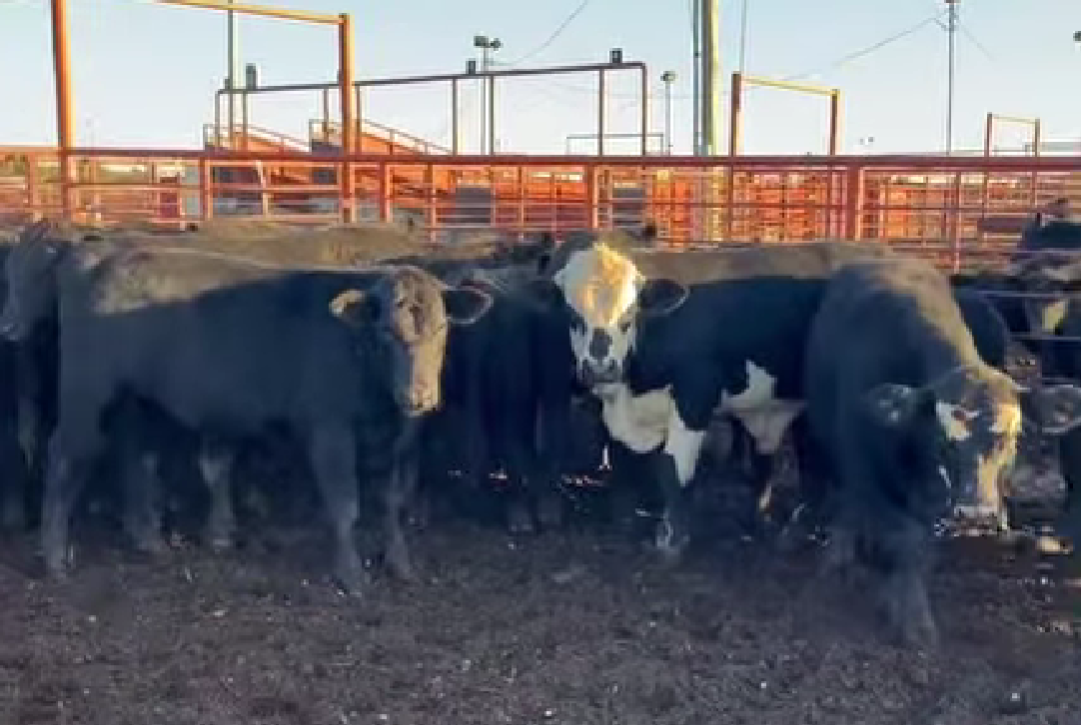
KC Sheperd, Farm Director, is back talking with Bob Rodenberger, a Stockman Oklahoma Livestock Marketing partner, as he gives the latest on the cattle markets.
Rodenberger mentioned that the market was not seeing any weakness in calves or yearling market, and that the demand for meat was high, particularly from high-end restaurants, which continues to maintain the cattle market.
Numbers were about 1,000 less than last week, which makes this week's sale closer to normal for the time of year. Significantly fewer cows were sold, and most of the calves were fully weaned and prepared to go on feed.
"When you can take a calf to town and get seventeen to eighteen hundred dollars for him, its hard not to take that money, because it is still a win-win," Rodenberger said. "If you aren't using some type of price protection, when you get ready to come off in May, you might give your margin back that you would get by putting them on wheat. I think that is one reason we are seeing some nice runs of cattle."
Only one sale at each location remains before the new year: Monday, December 16 in Oklahoma City, and Thursday, December 19 in Apache.
Oklahoma Farm Report's Ron Hays talked with the CAB's Director of Producer Engagement, Kara Lee, about the Ranch to Table program, which allows producers to sell products directly to consumers and businesses with the Certified Angus Beef ® brand logo on their packaging, so the consumer can rest assured they're getting the highest quality beef straight from the source.
The program has been running for a little over a year, but it started with producer demand. Prior to its introduction, all CAB stamped beef was sold through a licensed packer with a USDA grader evaluating each animal for the ten requirements of CAB.
"Today, as we see more and more producers taking more hands-on, direct-to-consumer beef merchandising roles, we began to see a lot more demand from within the membership of the American Angus Association to have more access to CAB branding when working with custom processors," Lee explained.
As an organization that believes in sustainability across the board, CAB found a way to make it happen. Currently, there are slightly more than twenty members actively engaged in Ranch to Table production.
"I would be remiss if I said the program wasn't without its own hurdles," Lee admitted. "We certainly know that you have to have some direct conversations with your processors in terms of what they are willing to work with you on because we do still require USDA grading."
She said that many people involved in direct-to-consumer beef merchandising don't realize that there is a difference between USDA inspection and USDA grading. This means that although a producer's custom processor is USDA-inspected, it may not be using USDA grading.
"The inspection is paid for each April when you and I send in our tax dollars," she said with a smile. "FSIS covers inspections, but USDA grading is an added fee that the processor incurs."
She said that USDA has recently introduced a remote grading pilot project, and it has helped the Ranch to Table program take off. This option allows smaller processors to implement remote grading where they bring in a person from USDA to do an initial set up for them, then going forward, the processor can use an online portal to upload images of a carcass to be remotely graded by a USDA employee.
While there is still a fee for remote grading, previously, the processor was responsible for the time and expense of the USDA grader's drive to and from the facility in addition to the time spent on site.
"It has been really cool to see this go from a producer-demand program to a consumer-demand program when we start to see some of our end-users say they have always believed in the quality of Certified Angus Beef, but now they are in a position to have access to it from a local perspective. They can sell, not just a great product, but they can sell a great product with a more robust local story. A lot of our end-users love that!"
The Beef Buzz is a regular feature heard on radio stations around the region on the Radio Oklahoma Ag Network and is a regular audio feature found on this website as well. Click on the LISTEN BAR at the top of the story for today's show and check out our archives for older Beef Buzz shows covering the gamut of the beef cattle industry today.
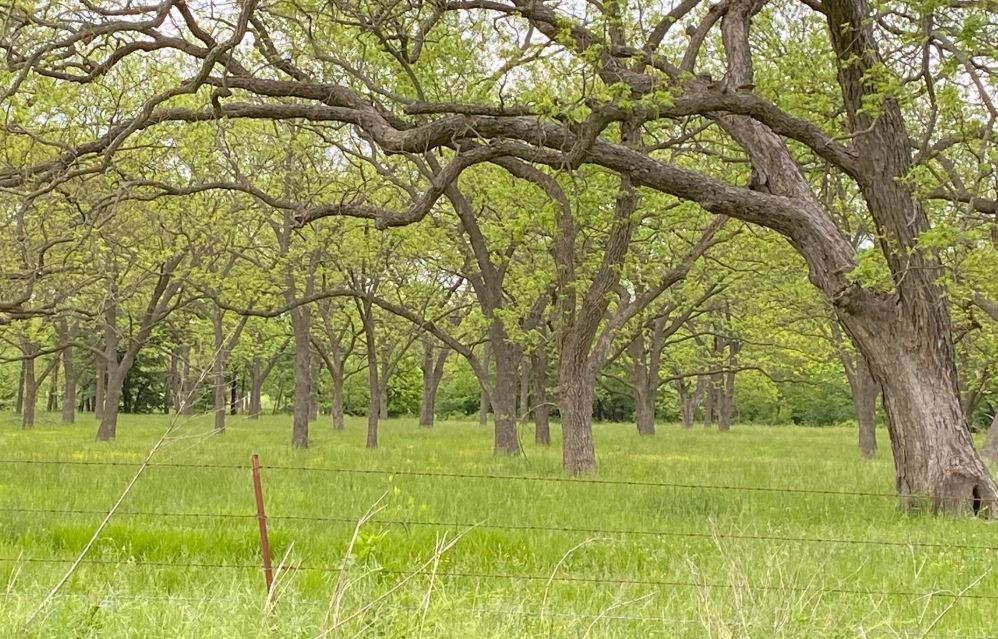
The pecan is one of the most eaten fruit nuts in the USA, with a per capita consumption that increased in the past decade from 0.35 lbs. (2012) to 0.61 lbs. in 2021 due to its nutritional value and improved marketing strategies (USDA, NASS, 2024). Prior to the 2024 hurricane season, there was an 8% decrease in the production of the improved variety of pecan in 2023 compared to 2022 (USDA, NASS, 2024). Georgia, the established number one pecan producing state (USDA, 2019) was badly hit by Hurricane Helene in September 2024, which affected both production areas, crop loss, and tree loss concomitantly (Sawyer, 2024). Reports show that the state of Georgia suffered a loss of 36 million pounds, an estimated 75% pecan crop loss which is estimated at $6.46 billion loss to the Georgia Pecan Industry due to Hurricane Helene (Flood, 2024). With such a huge volume disappearing from the total production, both consumption and future production will be impacted.
Pecans have many health benefits (Royalty, 2024) and multifaceted uses including eating it raw or fresh as a snack, baking, salads, and cooking exotic cuisines such as pecan-crusted chicken, lamb, fish, and the famous pecan pie, etc.
Pecans have a key spot in the festive season. Decreased production area, crop loss, and tree loss translate into an immediate shortage in the domestic and export markets, respectively.
Consequently, consumers should expect higher pecan prices during the upcoming holidays and festive season. For instance, early-season pecan halves prices were $7 to $8 per pound this year, compared to $4.50 to $5.50 per pound last year (Haire, 2024). Moreover, the industry will also experience a long-term shortage due to the number of trees that were knocked down, losing about 36 million pounds, equivalent to 48,000 acres, with an estimated value of $6.46 billion loss to the entire Georgia Pecan Industry. Despite the USDA, ERS (2024) preliminary ending stock of slightly over 70 million pounds shelled, and the anticipated decrease per capita consumption of 0.51 pounds in 2024 compared to 0.67 pounds in the 2022/2023 crop season, the huge production decrease from Georgia due to Hurricane Helene will be felt in the pocketbook of pecan lovers and consumers this and next year. In addition, the injuries sustained by surviving trees will require time to fully recover, thus putting upward pressure on consumer prices due to persistent shortages (Towfighi, 2024; Haire, 2024).
With the US 2023 population of 334.9 million, the USDA, ERS (2024) preliminary domestic availability of 171 million pounds will be difficult to achieve and place upward pressure on prices paid for pecans across the pecan market value chain.
References
Flood, E. (2024). Pecan Farmers Suffer Devastating blow from Hurricane Helene. Agriculture Dive News, Online: https://www.agriculturedive.com/news/hurricane-helene-pecan-farm-crop-damage/729603/ Accessed December 1, 2024.
Haire, B. (2024). "Pecan farmers see high prices for meager crop". CAES Newswire, College of Agricultural & Environmental Sciences, UGA Cooperative Extension. Online: https://newswire.caes.uga.edu/story/2143/pecan-prices.html (November 04). Accessed December 5, 2024.
Royalty Pecan Farms (2024). "The Power of the Pecan: 7 Health Benefits That Make This The Best Nut on Earth" Online: https://royaltypecans.com/pages/the-power-of-the-pecan-7-health-benefits-pecans , Accessed December 5, 2024.
Sawyer, A. (2024). Southeast Georgia Pecan Damage from Hurricane Helene. University of Georgia (UGA), Pecan Extension, CAES. Online: https://site.extension.uga.edu/pecan/2024/10/southeast-georgia-pecan-damage-from-hurricane-helene/ (October 10). Accessed December 1, 2024.
Towfighi, J. (2024). "Hurricane Helene devastated Georgia's pecan harvest. Farmers are on the brink". CNN Business, online: https://www.cnn.com/2024/11/09/business/hurricane-helene-impact-georgia-pecan-farmers/index.html (November 09). Accessed December 5, 2024.
USDA/ERS (2019). Pecan Production. National Agricultural Statistics Service. Online: https://www.ers.usda.gov/topics/crops/fruit-and-tree-nuts/ Accessed December 1, 2024.
USDA, NASS (2024). Pecan Production. Agricultural Statistics Board, ISSN: 2640-0014. Online: https://downloads.usda.library.cornell.edu/usda-esmis/files/5425kg32f/nv936p236/00001m546/pecnpr24.pdf Accessed December 1, 2024.
USDA, ERS (2024). "Pecans: Supply and Availability (Shelled basis), 1980/81 to date". Online: https://www.ers.usda.gov/data-products/fruit-and-tree-nuts-data/fruit-and-tree-nuts-yearbook-tables/ Accessed December 5, 2024.
Article courtesy of Southern Ag Today: Fonsah, Esendugue Greg. "Preparing Consumers for Anticipated Soaring Pecan Prices During Holiday Season." Southern Ag Today 4(50.5). December 13, 2024. Permalink
RON's Dave Lanning has a pre-opening look at today's agricultural Markets.
Click the audio tab below for today's report.
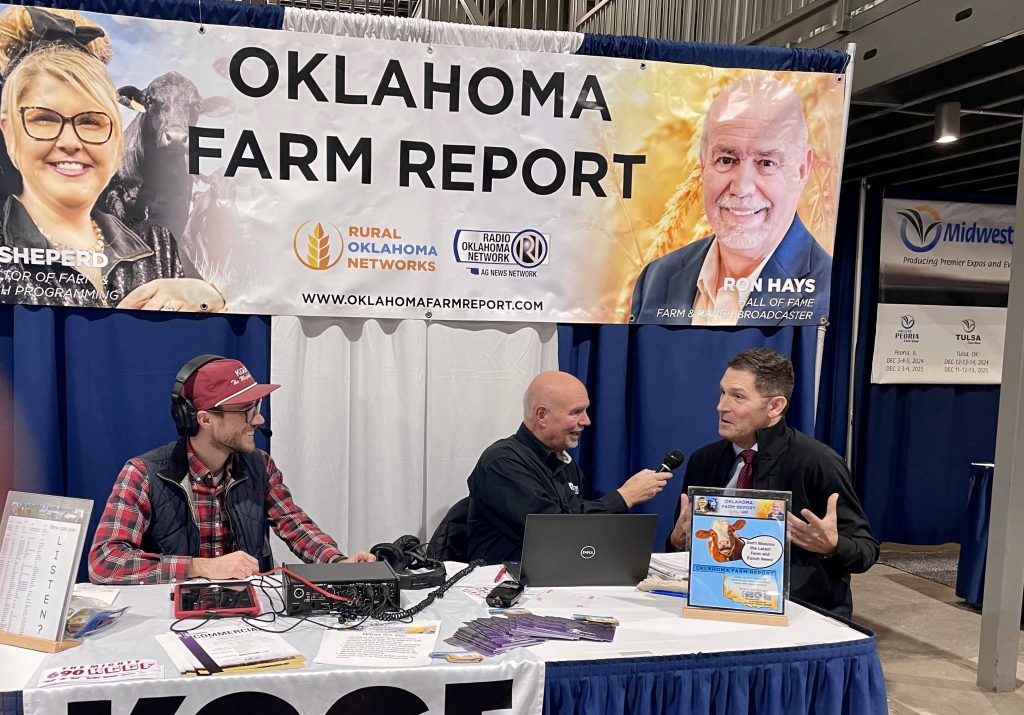
James Copeland with KGGF, Ron Hays and John Riles on the air live from the 2024 Tulsa Farm Show
The 31st Tulsa Farm Show is happening this weekend at the SageNet Center in Tulsa at the Tulsa's Expo Square. Day one included our live broadcasts on affiliate radio station KGGF in Coffeyville (The Mighty 690 covering southeast Kansas, Northeast Oklahoma and as we were reminded on Thursday- Northwest Arkansas- a listener from there stopped at the booth and told us they listen to our reports daily on Coffeyville- and listens to our podcasts, too).
During the 12:30 to 1:00 PM segment on Thursday- Oklahoma Farm Report's Ron Hays chatted with John Riles, who is now co-owner of Midwest Farm Shows with his brother Jason- they jointly operate the six shows they put on annually across the heartland- including the Tulsa and Oklahoma City shows.
The Midwest team just came from Peoria where Riles says the mood with farmers in corn and soybean country was "a little more tentative there" because of low crop prices versus the more upbeat feeling that strong cattle prices are delivering in Oklahoma as 2024 comes to an end. Riles says he believes the results of the elections also has helped with attitudes in rural America. You can hear Ron and John's conversation by clicking on the listen bar above.
Friday and Saturday will be great days to head to Tulsa and check out the 2024 Tulsa Farm Show. Admission and parking are free- there are over 300 exhibitors to visit with- all kinds of farm equipment, goods and services to see- Horse Training Sessions are happening twice a day both days with Cole Cameron(Craig's son) and you can check out the Cattle Chute Demonstrations twice daily as well- they have nine chutes that you can watch be used to help you figure out which one might work best on your ranch operation.
Show Hours are 9 am to 5 pm Friday and 9 AM to 4 PM on Saturday.
Attorney General Gentner Drummond is opposing a 645-mile electric transmission corridor proposed by the U.S. Department of Energy that would span Oklahoma from the panhandle through the Arkansas border.
The Delta-Plains National Interest Electric Transmission Corridor is one of several proposed corridors across the United States proposed to expand the nation's power grid. It has not yet been finalized for development.
Drummond said the project threatens to harm Oklahoma property owners and offers no benefit to a net energy producing state like Oklahoma.
"The threat of Federal Eminent Domain to property owners is classic federal overreach," Drummond wrote in a letter sent today to U.S. Energy Secretary Jennifer Granholm. "I will not sit idly by and allow it to proceed without exercising all lawful measures to protect the private property rights of our Oklahoma farmers and ranchers."
Drummond said he appreciates Oklahoma House Speaker-Elect Kyle Hilbert's resolution filed today to take all legislative action available to prevent the establishment of the corridor in Oklahoma. The proposed corridor stretches from 4 to 18 miles in width as it spans across the state. The Department of Energy is expected to designate its final selected corridors soon.
Read the letter.
Each week, Beltway Beef brings you the latest policy news affecting the U.S. cattle and beef industry. Hear from subject-matter experts, producers, and industry leaders on the topics that impact the business viability of farms and ranches across the country.
On this episode, NCBA Executive Director of Government Affairs Kent Bacus joins to provide an update on the preliminary injunction that has temporarily halted filing requirements under the Corporate Transparency Act and disaster tax legislation that recently passed the Senate. The Corporate Transparency Act has raised concerns for cattle producers due to complex filing requirements and high penalties. Bacus also discusses the passage of the Federal Disaster Tax Relief Act, which was strongly supported by NCBA. The bill reduces taxes on disaster relief payments and helps cattle producers recover from challenging conditions.
Liana Jones, Donna Kates, Lisa McRay, Damona Doye and Claude Bess celebrate McRay's OSU Extension Heart of Extension Award. (Photo by Mitchell Alcala, OSU Agriculture)
Oklahoma State University Extension staff members Lisa McRay, Susan Rose and Andrea St. John are recipients of the 2024 Heart of Extension Award.
The three employees were honored at OSU Extension's Administrative Support Conference Awards Luncheon in October. The accolade is a newly established tradition within the organization that celebrates OSU Extension support staff and recognizes their years of service.
"Support staff are instrumental in keeping things running smoothly in the county, district and state offices, and we rely on them to be a positive first impression with clientele," said Damona Doye, associate vice president of OSU Extension.
The Heart of Extension Award is selected through a nomination process. The award's first group of recipients were three OSU Extension educators who were honored at the 2024 Biennial Conference in January.
Doye said the award's success generated interest in expanding recognition to support staff who are critical to the mission of OSU Extension. Recipients receive a $200 stipend and a crystal engraved cube paperweight to display in their office.
Lisa McRay, LeFlore County administrative support specialist
McRay's career with Extension began in 1993 as the secretary for the organization's poultry specialist, and she held several positions before joining the LeFlore County team.
McRay is known for being courteous and respectful to clientele. She is a problem-solver and over the years has learned what resources are available to assist clientele quickly.
"Lisa has a reputation for being reliable, hardworking and deeply passionate about Extension's purpose," said Liana Jones, LeFlore County Extension agricultural educator. "She has a natural talent for finding innovative solutions to challenges."
McRay also takes initiative, adapts well to new policies and procedures, stays up to date on technology and is a master at organization.
"Teamwork is important to Lisa, and she is instrumental in helping all the staff brainstorm to think through events and activities. She then jumps in to help with the details," said Danette Russell, LeFlore County Extension director and family and consumer sciences/4-H educator. "She is efficient in her work and has done a great job of reorganizing the office. Lisa is quick to begin new tasks as soon as possible and follows through to completion."
Susan Rose, Southeast District Office administrative support associate
Rose has worked for 34 years in the OSU Extension Southeast District Office. Debbie Sharp, Murray County Extension family and consumer sciences/4-H educator, said Rose is patient and understanding when answering questions. She will take the time to stop what she is doing to find the answer or solution to a problem.
"One of the notable ways Susan impacted Murray County was when she temporarily served as the county's administrative support specialist for almost 9 months," Sharp said. "Susan took the time to leave her post in the district office to come and teach the Murray County staff what needed to be done and how to do it. She was a lifesaver and even taught us a few tips we can implement to make our office run smoother."
Rose also conducts the Southeast District administrative support specialist in-service and works hard to ensure the information presented is relevant, up-to-date and applicable to each county office. She is on a first-name basis and has a relationship with all support specialists in the district.
"Susan takes a personal day off from work each year to come to the Murray County fair and blood-test poultry entries," Sharp said. "It is hot, dirty and a very long day, but she helps us with a smile and expertise. This isn't something she has to do, but she does it to help us and to teach others.
"Susan is loyal, honest, extremely dependable and the 'cog' that keeps our Southeast District Extension wheel moving."
Andrea St. John, Rogers County administrative support specialist
St. John has been employed with Rogers County Extension since July 1986.
"Andrea's dedication to service is second to none," said Donna Patterson, Rogers County Extension director and ag/4-H educator. "She is always pleasant and helpful no matter who calls or walks in the door. Clients often comment how they love coming into our office because Andrea is so sweet, and they feel welcomed."
Patterson noted that St. John is an essential member of the Rogers County Extension office. She is willing to assist in all program areas and is often asked to help train other county administrative assistants.
"Andrea also exemplifies initiative and promptness," Patterson said. "She plans weeks in advance for financial audits or civil rights reviews, making it very efficient for district or state staff to get their reviews done.
"I often say that I have the best administrative assistant in the state, and this award is my chance to show Andrea how much we appreciate her."
OSU Extension uses research-based information to help all Oklahomans solve local issues and concerns, promote leadership and manage resources wisely throughout the state's 77 counties. Most information is available at little to no cost.
Director of Laboratory Services Brian McDowell at the Oklahoma Department of Agriculture, Food and Forestry.
Brian McDowell of Edmond was recently named the Director of the Laboratory Services division at the Oklahoma Department of Agriculture, Food and Forestry.
"I am pleased to welcome Brian back to our team in this new capacity," said Oklahoma Secretary of Agriculture, Blayne Arthur. "His leadership and expertise will certainly make a significant and positive impact on the Laboratory Services division."
McDowell joined ODAFF in early 2003 as a microbiologist in the Inorganics Lab before moving to the Dairy and Food Safety Section, where he became the Supervisor and Laboratory Evaluation Officer in 2012.
In 2016, McDowell transitioned to Cytovance Biologics, eventually becoming the Quality Control Microbiology Section Manager. After gaining experience in the private sector, he accepted the Quality Assurance and Quality Control Manager position at the Oklahoma State Department of Health - Public Health Laboratory (OSDH-PHL).
"I'm excited to return to ODAFF and eager to contribute the new knowledge and experiences I've gained," McDowell said. "My goal is to help lead the laboratory in its growth and the continuous improvement of our vital work."
The Laboratory Services division accurately tests the samples submitted to assure the quality of agricultural products sold, protect the environment, test dairy products for safety and assure the correctness of weights and measures.
For more information, contact Kirsten Hollansworth at kirsten.hollansworth@ag.ok.gov.
Tomorrow, Friday, December 13, U.S. Agriculture Secretary Tom Vilsack will deliver remarks at the Grocery Retail for All Summit, hosted by the George Washington University, Food Systems for the Future, and José Andrés. During his remarks, Secretary Vilsack will underscore the significant progress USDA under the Biden-Harris Administration has made in transforming the nation's food system over the past several years to make it fairer, more competitive, and more resilient, as well as the important role retailers and the food industry have in advancing access to affordable, nutritious food. The remarks follow USDA's initial announcement of this framework in June 2022, which came on the heels of the supply chain disruptions caused by the COVID-19 pandemic and Russia's invasion of Ukraine.
Credentialed members of the media must RSVP to katelyn.deckelbaum@gwu.edu for arrival instructions.
Friday, December 13
WHO: Agriculture Secretary Tom Vilsack
WHAT: Keynote Remarks at Grocery Retail for All Summit
WHEN: Friday, December 13 at 9 AM ET
WHERE: George Washington University, Washington D.C. Please RSVP to katelyn.deckelbaum@gwu.edu for arrival instructions.
During its annual election meeting in St. Louis this week, the American Soybean Association Board of Directors voted in the executive committee members who will lead the organization through the coming year's top advocacy priorities, including the farm bill, regulatory issues, tax policy, markets, biofuels and other top policy issues for U.S. soybean farmers.
Caleb Ragland (KY), who previously served as ASA vice president, will serve as 2025 ASA president. Ragland began serving on ASA's board of directors in December 2017. He farms 4,000 acres of soybeans, corn and winter wheat on his Magnolia, Kentucky, farm.
Immediate past president Josh Gackle (ND) moves to the role of ASA chairman. Former chairman Daryl Cates (IL) rotates off the nine-member executive committee.
The ASA board elected Scott Metzger (OH) as ASA vice president, a role that puts him in line to serve as the association's president in 2026.
In addition, the board elected Dave Walton (IA) as ASA secretary; Alan Meadows (TN) as treasurer; and Heather Feuerstein (MI); Tanner Johnson (WI); Jimmie Lee Shaw (SC); and Jordan Scott (SD) as at-large members of the executive committee.
ASA celebrated the advocacy of and said farewell to several directors retiring this week, including Charles Atkinson (KS); Ken Boswell (NE); Jeff Harrison (CAN); James Hereford (AL); Chris Hill (MN); Jered Hooker (IL); and Mike Petefish (MN).
ASA welcomed five new directors who begin their nine-year terms, including Teresa Brandenburg (KS); Julie Maw (CAN); Geoff Ruth (NE); Bob Worth (MN); and Bryan Severs (IL).
The U.S. continues to benefit from solid economic growth, low unemployment and moderating inflation. From today's vantage point, the U.S. economy seems likely to continue on that trajectory into 2025. However, the outlook for the rural economy is more volatile and uncertain. Rural industries are disproportionately exposed to federal policy, and the outcome of the 2024 election cycle promises to bring significant changes in the federal government's approach to everything from international trade and immigration to energy exploration and rural economic development.
According to a comprehensive year-ahead outlook report from CoBank's Knowledge Exchange, the high level of policy uncertainty facing rural industries adds to their already long list of headwinds and challenges.
"The environment we enter in 2025 hasn't fully defined itself yet, but many of the policies proposed by the incoming administration would likely have a negative impact on U.S. agriculture," said Rob Fox, director of CoBank's Knowledge Exchange. "Open access to export markets and labor availability are critically important for agricultural producers and processors. Depending on how policy plays out, those two areas could be big challenges in 2025 and beyond."
The CoBank 2025 outlook report examines several key factors that will shape agriculture and market sectors that serve rural communities throughout the U.S.
U.S. Economy: A New Economic Era Begins
Most economists are forecasting 2025 U.S. GDP growth around 2.5%-3.0%, essentially the same as today. However, those forecasts are based on rather mild assumptions on forthcoming policy changes. When taken in isolation, President-elect Trump's proposed policies — tax cuts, decreased labor supply and tariffs on imported goods — are all inflationary. Consequently, longer-term interest rates have already edged higher, and the market has downshifted expectations for further Fed rate cuts in 2025. There is a good chance the proposed tariffs and the crackdown on undocumented immigrants will be more disruptive than markets have priced in, particularly in industries like construction and agriculture.
U.S. Government: Trump Administration, Congress Set for Bustling January Start
Congress is expected to wrap up the lame duck session of the 118th Congress by Dec. 19, hopefully addressing important pieces of unfinished business. A one-year extension of the 2018 Farm Bill is increasingly likely. President-elect Trump is expected to pursue an ambitious first-100 days of executive orders and other legislative activity that will likely include many of his campaign promises. These may include significant deportation efforts and immigration reform, implementation of tariffs, extending the 2017 tax cuts and providing regulatory relief rolling back the Biden administration's initiatives. The 119th Congress will have a long and challenging to-do list when members return to Washington on Jan. 3.
U.S. Agricultural Economy: Trade War Could Send Ag Economy from Bad to Worse
The short-lived commodity boom precipitated by global droughts, the war in Ukraine and COVID-19 supply issues is now a distant memory. Row crop prices are down nearly 50% from their 2022 highs. But production costs have remained elevated, and profitability has plunged to decade-plus lows. The silver lining is that dairy and livestock producers are generally profitable due to low feed costs and resilient consumer demand. However, more headwinds may be coming for both the crop and livestock sectors. President-elect Trump rode to victory on two main economic policy proposals: enact significant import tariffs and reduce immigration while deporting undocumented residents. In theory, these policies could achieve some limited objectives, but it is hard to paint them as anything but negative for the U.S. farm economy.
Grains, Farm Supply & Biofuels: Policy Uncertainty Weighs on Exports, Biofuels
A strengthening U.S. dollar, combined with the potential for trade disputes and record-large South American crops, weigh heavily on the outlook for grain and oilseed prices in 2025. U.S. farmers are widely expected to struggle with further margin compression as weaker commodity prices test farmers' ability to lower production costs. Crop input decisions will be evaluated much more closely with a focus on inputs that provide the greatest return on investment. The bearish outlook for oil prices diminishes the demand picture for ethanol, biodiesel and renewable diesel. Uncertainty over U.S. biofuel policy under the new administration also clouds the demand outlook for biofuels.
Animal Protein: Rising Margins Improve Prospects for Growth
Falling feed costs and rising producer margins have renewed expansion interest in animal protein segments. However, labor, construction and land costs remain elevated, tempering expectations for any meaningful supply growth in the near term. U.S. beef cow herd expansion is not expected to start until 2026 or 2027. The smaller herd will further support higher feeder and fed cattle prices in the coming year. With consumers now pushing back on beef prices already near historic highs, packer margins will remain under pressure well into 2025.
Dairy: Record Investment Will Continue to Grow the Category
The U.S. will see an unprecedented $8 billion in new dairy processing investment through 2026. Some of the new plants are poised to come online in 2025, with about half of the investment in the cheese category. The expected surge in cheese and whey output will likely put downward pressure on dairy product prices in the second half of the year. Sourcing additional milk supplies to fill new plant capacity is a looming question. 2023 and 2024 will go down as the first back-to-back years since the late 1960s that U.S. milk production took a downturn. On the flip side, higher component levels in farmgate milk, largely butterfat and protein, have lifted finished product yields.
Food & Beverage: Health and Nutrition Take Center Stage
The headline news for food, beverage and consumer packaged goods in 2025 is President-elect Trump's nomination of Robert F. Kennedy Jr. to lead the Department of Health and Human Services. Kennedy's purported goals include eliminating ingredients banned in other countries and "getting the chemicals out" of America's food supply. Meanwhile, consumers' renewed focus on their health and the popularity of GLP-1 weight-loss drugs are showing signs of impacting food manufacturers. GLP-1 users purchase around 8% less food compared with average consumers, according to J.P. Morgan research. Food and beverage manufacturers' concerns about volume attrition are likely to continue well into 2025.
Power & Energy: What an IRA Rollback Might Look Like
President-elect Trump's return to the White House will signal a significant shift in U.S. energy policy. While he has promised to end the Inflation Reduction Act, slowing the clean energy momentum that has accelerated under the IRA may be more difficult than imagined. Popular programs in the IRA have directed significant investments to many rural and economically distressed communities. And more than a dozen House Republicans have voiced concern that repealing the IRA could jeopardize ongoing development in their communities. Clawing back IRA funds that have already been allocated could prove to be very difficult. The more likely scenario is that unallocated IRA funding will be redirected to other priorities.
Digital Infrastructure: Rural Connectivity Faces New Challenges
Political uncertainty and low participation in the Broadband, Equity, Access and Deployment program raises big questions for bridging the digital divide in the year ahead. The $42.5 billion BEAD program, created by the Infrastructure Investment and Jobs Act, includes an unprecedented level of government support. However, a lack of operator participation could blunt the impact of this well-intended program to bring reliable broadband access to underserved rural areas. Many small operators lack the specialized expertise or financial resources to meet some of the complicated BEAD requirements.
Read the full report, The Year Ahead: Forces That Will Shape the U.S. Rural Economy in 2025.
House Rep. Annie Menz, D-Norman, released the following statement after the Oklahoma Turnpike Authority board voted unanimously to increase turnpike tolls by 15% starting in January 2025.
Part of the resolution by the Turnpike Authority board includes a 6% inflation-based raise that could be implemented every other year if the board votes to approve it.
"A turnpike toll increase is something all Oklahomans should get a say on," Menz said. "The Oklahoma Turnpike Authority should be held accountable by the legislature in order to best reflect the needs of Oklahomans. I plan to file a bill that would require legislative approval for turnpike toll increases. It is past time for OTA to have oversight from a legislature designed to be a voice for its constituents."
Oklahoma Farm Report's Ron Hays caught up with Oklahoma Pork Council Treasurer Tom Layne to talk about the Give-A-Ham Challenge campaign, which kicked off here in 2024 on Giving Tuesday. Joe Locke, Director of Sow Operations for Tyson's Pork Group and Oklahoma Pork Council President, and Tyson Foods partnered with the Oklahoma Pork Council to distribute more than 1,200 free pork sandwiches on the OSU Campus in Stillwater on Giving Tuesday
While the Give-A-Ham campaign is a national effort to promote pork to consumers as those who participate are helping their neighbors and those who need help, Oklahoma's Pork Council is going all out to spread the concept statewide.
"As pork producers, it gives us an opportunity to give back to those in our communities that are in the greatest need," Layne said.
The campaign began with a pork producer giving a ham, and then challenging another to do the same; however, Executive Director Kylee Deniz took it to the next level by expanding to other pork products on a greater scale.
"The HANOR Company, that I work for, has given away twelve hundred pounds of fresh pork this year, to our local Loaves & Fishes, through the United Way of Northwest Oklahoma," Lock said.
After the event in Stillwater, Joe Locke challenged Governor Keven Stitt to continue the challenge, which has spread to include all of the Oklahoma Pork Council Board members. "I got challenged by Brett Ramsey, with Blue and Gold Sausage," Layne shared. "So, I'm here today to carry that forward with you, Ron. We are going to challenge you to give a ham this season. We are also going to challenge Dan Schiedel with Northwest Oklahoma United Way."
In previous years of Give-A-Ham challenges, Hays has given to the Jeremiah House in Chandler which helps men seeking rehabilitation.
Layne shared his own experience of need by telling of his impoverished roots, and how his family was humbled by offers of help around the Christmas season. This makes giving to the holiday season very personal to him.
He encouraged others to join the campaign, saying, "You can give a ham anywhere you want. For us, in Northwest Oklahoma, Loaves & Fishes out of Enid, Oklahoma would be happy to get your donation and give it out to someone in need, but I'm sure, wherever you are at, there is someone who can use that."
He told of the humbling experience of serving a meal at the Oklahoma City Mission last year. "One of HANOR's great values is that we need to have a positive impact," he said. "It is innate in use as pork producers because we have stewardship over those animals. When we have inclement weather, we have one hundred percent attendance at our farms. That tells you how much our employees care for the animals, and we want to give that same care back to our fellow human beings as well."
Hays will announce his Give a Ham Challenge this coming week. The hams in the above picture have already moved on to the Grace Rescue Mission in Oklahoma City.
Today, December 12, the U.S. Environmental Protection Agency announced it has selected 105 applications for the Community Change Grants Program, totaling nearly $1.6 billion in awards to advance local, on-the-ground projects that reduce pollution, increase community climate resilience, and build community capacity. Made possible by President Biden's Inflation Reduction Act, the Community Change Grants Program is the single largest investment in environmental and climate justice in history.
The funding announced today represents the latest round of applications that have been selected on a rolling basis since the program launched in November 2023. EPA previously announced 21 selectees in July. Today's announcement adds 84 new selectees, bringing the total number to 105.
"On day one of his Administration, President Biden promised to target investments to communities that for too long have been shut out of federal funding," said EPA Administrator Michael S. Regan. "Today, thanks to President Biden's Inflation Reduction Act, EPA is delivering on that promise. These selections will create jobs, improve public health, and uplift community efforts in all corners of this country, regardless of geography or background."
Among the wide range of public health and environmental benefits that the Community Change grants will support, examples include:
Of the 105 total selections, 32 are for Target Investment Areas, totaling $600 million. Target Investment Area funding is intended to ensure that Community Change Grants Program funding is directed towards disadvantaged communities with unique circumstances, geography, and needs. This includes approximately $150 million for Alaska Native communities and organizations.
Applications to the Community Change Grants Program, administered through EPA's Office of Environmental Justice and External Civil Rights, closed on November 21, 2024. The agency received approximately 2,700 applications, totaling over $40 billion in requested funds and over 2,495 requests for technical assistance.
The Community Change Grants Program addresses the diverse and unique needs of disadvantaged communities by:
EPA is on track to obligate the majority of selected Community Change grants by January 2025.
Given the overwhelming number of applications still under review and the limited amount of remaining funds available, EPA's work to evaluate the remaining applicants will need to continue beyond the end of the Biden-Harris Administration. To ensure all applications are given fair consideration, EPA will not make any additional selections until all these applications are evaluated according to the processes described in the Notice of Funding Opportunity issued in November 2023. To learn more about environmental justice at EPA, visit EPA's Environmental Justice webpage.
| ||||||||||||||||||||||||||||||||||||||||||||||||||||||||||||||||||||||||||||||||||||||||||||||||||||||||||||||||||||||||||||||||||||||||||||||||||||||||||||||||||||||||||||||||||||||||||||||||||||||||||||||||||||||||||||||||
| ||||||||||||||||||||||||||||||||||||||||||||||||||||||||||||||||||||||||||||||||||||||||||||||||||||||||||||||||||||||||||||||||||||||||||||||||||||||||||||||||||||||||||||||||||||||||||||||||||||||||||||||||||||||||||||||||
|

Sen. Bill Coleman, R-Ponca City, has requested legislation to ensure state elected officials remain accountable to Oklahoma voters.
Coleman said he intends to file legislation to amend Oklahoma's Constitution to allow for recall elections of state elected officials.
Coleman said he is working with Senate staff to draft legislation that would allow the Oklahoma Legislature to refer recall propositions to the ballot so voters can decide whether to remove or retain a specific state official. Because the legislation would alter the state's Constitution, it would have to pass both legislative chambers and then be approved by Oklahoma voters to become effective.
Currently, the only way a state official can be removed from office is through impeachment, a legal process started by the House when an elected official breaks state law or willfully neglects their duties.
"Oklahoma law only allows for impeachment in limited circumstances, and such proceedings are extremely rare because many lawmakers rightly feel it is inappropriate to overturn the will of the voters," Coleman said. "Allowing for recall elections gives the Legislature another option that puts Oklahoma voters in charge of saying whether an elected official stays or goes.
"Many states offer some avenue for voters to recall state elected officials. This legislation will take that idea and put the Legislature in the driver's seat to ensure the recall process is not overused or abused.
"This legislation is not directed at any one individual, but I hope it serves as an important accountability measure to ensure all politicians, including state lawmakers, set aside their personal interests and focus on serving the public."
Coleman said he intends to file this legislation before the Jan. 16 bill filing deadline.
Although some Oklahoma municipalities allow voters to collect and submit signatures to force a recall election of local officials, existing law does not allow the same practice at the state level. Across the nation, 19 other states permit the recall of some state officials.

The end of 2024 is quickly approaching, but taxpayers still have time to take advantage of tax credits and deductions. (Photo by Mitchell Alcala, OSU Agriculture)
As 2024 draws to a close, taxpayers still have time to take advantage of valuable tax credits and deductions.
Energy-efficient home improvements, charitable donations, retirement accounts, dependent care and educational expenses are some options that can help ensure a more favorable financial outcome when filing taxes in the spring.
Mengya Wang, Oklahoma State University Extension personal finance specialist, said taxpayers should check the Internal Revenue Service website's credits and deductions page for information about qualifications. Also, check with product manufacturers to see if credits are available.
"Tax laws can be intimidating and difficult to understand. Fortunately, consumers don't have to understand all of the tax laws, only what applies to their situation," Wang said. "Also, taxpayers need to determine if they should take the standard deduction or if they qualify to itemize their return. The standard deduction is a specific dollar amount that reduces the amount of taxable income. If the allowable itemized deductions total is more than the standard deduction, taxpayers are eligible to itemize for greater benefit."
The IRS website provides information to help taxpayers determine which option is in the taxpayer's best interest.
For those paying for higher education, The American Opportunity Tax Credit is a benefit that helps reduce tax liability.
"Anyone paying for college expenses knows it can take a toll on the budget. This is a credit for qualified education expenses paid for an eligible student for the first four years of higher education," Wang said. "The maximum annual credit is $2,500 per eligible student for a maximum of four years."
If possible, max out any retirement accounts to help build financial security for the future. Taxpayers can donate to an Individual Retirement Account until April 15, 2025, and claim the credit for their 2024 taxes. For those with a 401K or a 403b, contributions must be made by the end of 2024. In addition, contributions may be made to a health savings account.
"If you have younger children, add to or start an Oklahoma 529 college savings plan," she said. "Individual taxpayers may deduct up to $10,000 in Oklahoma 529 contributions from their adjusted gross income, and taxpayers filing jointly may deduct up to $20,000. As long as the funds are used for qualified educational expenses, the earnings are free from federal and state taxes."
Tax credits or deductions are available to taxpayers who are taking care of an aging parent or a disabled family member. Also, collect receipts for expenses incurred for dependent care.
Donations to charitable and nonprofit organizations are tax-deductible. Wang cautions taxpayers to confirm the organization is recognized as a qualified recipient by the IRS. Be sure to request a receipt for each charitable donation made by Dec. 31.
"If the standard deduction is higher than the total of a taxpayer's itemized deductions, including charitable donations, it won't make a difference how much is donated because the taxpayer will not benefit from itemizing their deductions and will instead take the standard deduction," Wang said.
Although there is no tax benefit to the gifter, taxpayers may gift up to $18,000 to a child or grandchild. However, the recipient is not liable to pay taxes on the gifted funds.
Tax season is right around the corner, and Wang recommends taxpayers start now by gathering tax-related documents needed for spring filing. Allowing plenty of lead time will help taxpayers be more organized and less likely to miss out on deductions while not falling victim to a tax scam.
By Trisha Gedon
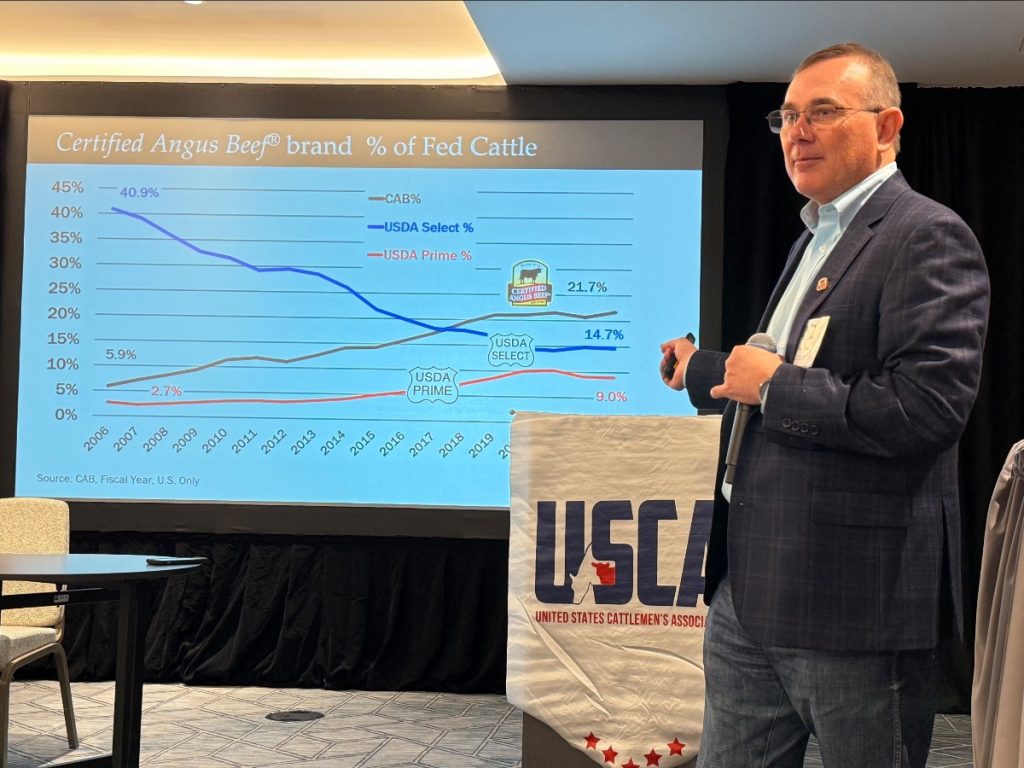
Certified Angus Beef Director of Commercial Industry Relations Troy Marshall shared a look at the industry and how the branded beef program has impacted its history.
The U.S. Cattlemen's Association (USCA) convened in San Antonio, Texas last week for their Annual Meeting, presented by Anipro Xtraformance Nutrition and AgRisk Advisors, and in partnership with USCA affiliate Independent Cattlemen's Association of Texas. The meeting provided ample opportunity for networking, education, and policy discussions.
"I appreciate all the directors, members, sponsors, and partners who joined us in San Antonio last week," USCA President Justin Tupper said. "The Annual Meeting is a critical time to set the direction of the association for the year ahead and join in conversation on issues impacting the industry. The meeting hosted a number of panels focused on hot-button issues and the group has a renewed momentum to make positive change as we enter a new year with a new administration."
Panel presentation topics this year included emerging technologies, Beef Checkoff, livestock risk protection, and mandatory animal ID. In addition, Certified Angus Beef Director of Commercial Industry Relations Troy Marshall shared a look at the industry and how the branded beef program has impacted its history. Farm Service Agency (FSA) Administrator Zach Ducheneaux provided an overview of the tools FSA has to support its producers.
USCA reviews its policies every two years and accepts new policy submissions at the Annual Meeting. This year, new policies were presented regarding animal health and ID, all of which will be sent to the membership on the year's official ballot.
USCA also welcomed newly appointed Board of Directors members who will be placed on the upcoming ballot, including Todd Clemons (Region XI: Florida and Georgia); Luke Frantz (Region XIV: Ohio, Wisconsin, Illinois); and Curtis Thomas (Region I: Washington, Oregon, Alaska, and Hawaii).
The USCA Annual Meeting sets the policies and focus of the Association for the year ahead, which will culminate this year in the USCA DC Fly-In. Issues to be included for discussion include Animal ID, Producer Profitability and Competition, Trade and more. Any USCA members interested in participating in the 2025 fly-in should contact USCA's Federal Policy Director Kalina Reini: kalina@wssdc.com.
Dr. Jason Nickell, DVM, PhD, DACVPM, Director of Insights and Outcomes for Merck Animal Health talks to Senior Farm and Ranch Broadcaster Ron Hays about how SenseHub® Cow Calf and SenseHub® Feedlot monitoring provide data and insights to help advance beef cattle health and productivity.
"At a high level, the SenseHub® platform provides individual animal monitoring, both at the cow-calf level and at the feedlot," Dr. Nickell described.
The animals are monitored through technologically advanced ear tags programmed to capture different forms of information from the animal wearing it to improve the producer's decision-making capabilities. At the cow-calf level, data is focused on estrus detection for artificial insemination and embryo transfer-based operations. The SenseHub® Feedlot technology hones in on early disease detection.
"On the cow-calf level, we are always trying to optimize our labor resources while maximizing our reproductive capabilities," Dr. Nickell noted. "On the feedlot side, we are working with animals that don't like to convey that they are ill. The system has been shown to communicate illness earlier in the disease phase with more accuracy than a human, which leads to improved treatment outcomes."
Many factors about an operation determine if a SenseHub® platform will be conducive to a producer's needs including lines of sight, availability of cellular communication, and current computer setup.
"We are also going to be talking a lot with your employee base to manage their expectations and get them educated," Dr. Nickell added. "That continues even after installation and the system is in use because this is relatively new. We really try to hold their hands through that adoption phase."
While the dairy industry has utilized similar techniques from an animal health perspective for several years and has a very developed SenseHub® technology in place.
"We see a lot of good things happening on the dairy side, so we are taking a page out of that playbook," Nickell shared. "If we were to expand beyond that, the row crop industry has utilized similar techniques for several decades, now. It would be very unlikely to walk onto a row crop production system and not have some sort of precision ag technology at work."
Dr. Nickell expressed that the progress on the SenseHub® platform as yet another example of Merck Animal Health's commitment to the beef industry in addition to their continuing development of biopharmaceuticals.
The Beef Buzz is a regular feature heard on radio stations around the region on the Radio Oklahoma Ag Network and is a regular audio feature found on this website as well. Click on the LISTEN BAR at the top of the story for today's show and check out our archives for older Beef Buzz shows covering the gamut of the beef cattle industry today
The beginning of a new year allows us to reflect on plans for the future and the individuals needed to achieve these goals. Having an operational veterinarian is as important as ever, especially in areas with a limited number of available veterinarians. Many veterinary practices may only offer emergency services to established clients. Additionally, increased oversight such as the Veterinary-Feed-Directive and judicious pharmaceutical usage make the Veterinary-Client-Patient-Relationship (VCPR) even more critical since a VCPR is legally needed for the veterinarian to diagnose and treat, write a prescription, and complete certificates of veterinary inspection (health certificates).
The definition of a VCPR has not changed in Oklahoma for over 25 years and no legislative changes are pending. According to the Oklahoma Veterinary Practice Act a Veterinarian-Client-Patient-Relationship (VCPR) exists when:
a. the licensed veterinarian has assumed the responsibility for making medical judgments regarding the health of an animal or animals and the need for medical treatment, and the client, owner or other caretaker has agreed to follow the instructions of the licensed veterinarian; and
b. there is sufficient knowledge of the animal or animals by the licensed veterinarian to initiate at least a general or preliminary diagnosis of the medical condition of the animal or animals in that:
1. the licensed veterinarian has recently seen or is personally acquainted with the keeping and care of the animal or animals, or
2. the licensed veterinarian has made medically necessary and timely visits to the premises where the animal or animals are kept or both, and
c. the licensed veterinarian is readily available for follow-up in case of adverse reactions or failure of the regimen of therapy, or has arranged for emergency medical coverage, and
d. the licensed veterinarian's actions would conform to applicable federal law and regulations.
However, the best approach to a VCPR is not as a statutory or legal requirement. The most effective method emphasizes the relationship aspect of the VCPR. The American Association of Bovine Practitioners identifies the following areas as critical VCPR components in their recommendations titled "Establishing and Maintaining the Veterinarian-Client-Patient-Relationship in Bovine Practice":
Active communication should be the foundation of the partnership between a client and veterinarian as it provides the basis for effective health and welfare of animal patients. Developing this relationship provides the opportunity to strategically evaluate herd health protocols, treatment plans, biosecurity, management strategies, and other operational activities. Profitability and sustainability of both the cattle operation and veterinary practice should be considered in the mutually beneficial relationship. Ideally, the relationship does not begin through a first meeting at a 2 a.m. calving or another emergency. Finding a veterinary practice that fits the needs of your operation is key. Take the time to develop a long-lasting effective relationship, well before crisis strikes. Like cattlemen, veterinarians continue to be faced with multiple challenges. Investing in a solid VCPR creates a strategic alliance that proves mutually beneficial to both producers and veterinarians.
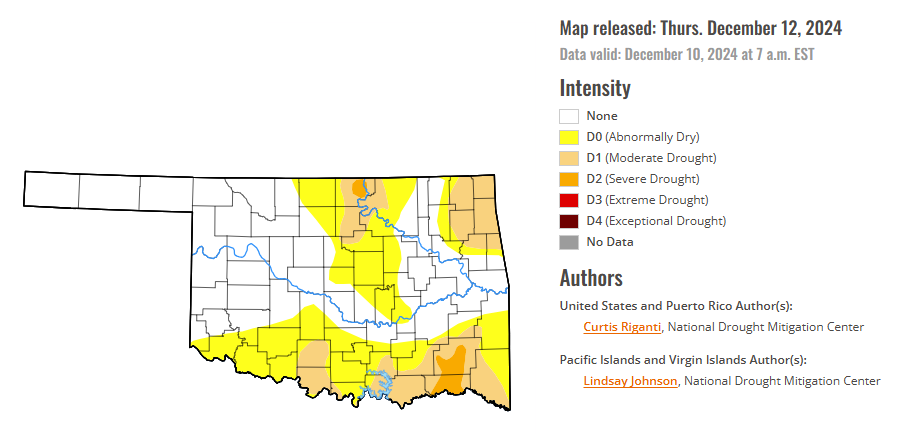
To view the latest Oklahoma drought map, CLICK HERE.
According to the latest Oklahoma drought monitor report, exceptional drought remains at zero percent, unchanged from the start of the calendar year.
Extreme drought or worse conditions remain at zero percent, unchanged since the week of October 29.
Severe drought or worse conditions are 1.85 percent, unchanged since December 5.
Moderate drought or worse conditions are 17.91 percent, unchanged since December 5.
Abnormally dry or worse conditions are 46.70 percent, unchanged since December 5.
According to the 6-to-10-day precipitation outlook map, the southern three quarters of the state is leaning near normal chances of precipitation through December 21, 2024. The northern quarter of the state is leaning below a 33 – 40 percent chance of precipitation through that December 21 date.
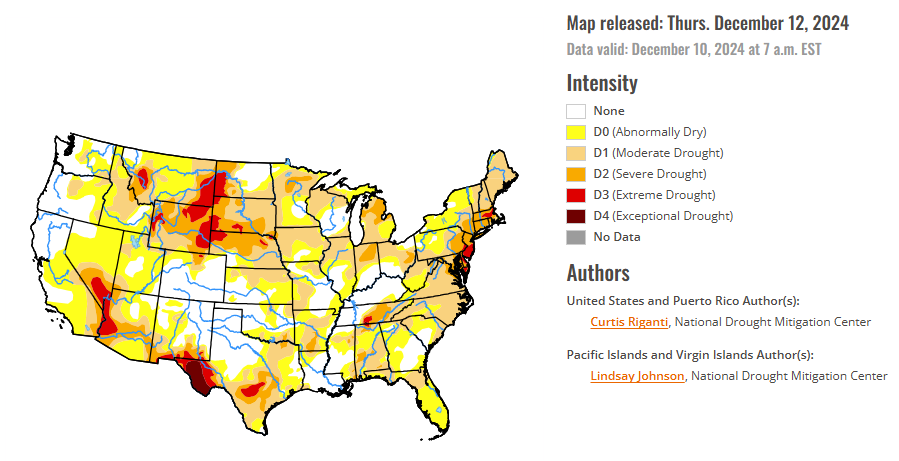
To view the United States Drought Map, CLICK HERE.
Rains, locally heavier, fell across roughly the east half of Texas this week, with heavier amounts (locally 4-7 inches) falling in parts of the central Gulf Coast region. Lighter precipitation amounts fell in parts of Mississippi, Alabama, Georgia and Tennessee, and in the Ohio River Valley. Snow, some of it lake effect, fell in parts of the Upper Great Lakes, and heavier lake effect snow fell downwind from Lakes Erie and Ontario. Most of the Great Plains and West was dry this week, except for high elevation areas of western Montana and northern Idaho and in western parts of Oregon and Washington. Degradations in drought conditions occurred in southern California and southern Nevada, parts of high elevation Wyoming, across portions of the Mississippi River Valley, in the Florida Peninsula and in parts of Texas. Generally drier weather in Hawaii led to widespread degradations as well, mostly on the windward sides of the islands. Improvements occurred in parts of east and deep south Texas, western Montana and central Washington, Mississippi, Alabama, Georgia and Tennessee, in the Upper Peninsula of Michigan and northeast Minnesota, and in Erie County, Pennsylvania and southwest and south-central New York.
In the Southern Plains, widespread rains fell across parts of the south this week, especially in eastern Texas, Louisiana, Mississippi and western Tennessee, while the rest of Texas, most of Arkansas, and Oklahoma remained mostly dry. Western Texas was mostly 3-9 degrees warmer than normal, while Mississippi was mostly near normal or 3-6 degrees below normal. In between these areas, temperature anomalies varied but were mostly within 3 degrees of normal. Due to lessened precipitation deficits and increased streamflow and soil moisture, drought areas were reduced in coverage in central Tennessee, parts of Mississippi, western Louisiana and parts of east Texas. Short-term precipitation and streamflow deficits continued to build in northeast Arkansas, leading to widespread expansion of abnormal dryness and moderate drought there. In parts of southeast and south-central Texas, conditions worsened where soil moisture and streamflow deficits grew amid growing precipitation deficits. In far southern Texas, heavy rains led to local improvements near the mouth of the Rio Grande. In Bexar County, Texas, certain types of fireworks were temporarily banned from sale or usage due to ongoing drought conditions, while lake and reservoir levels dropped to 20% capacity in the Corpus Christi area.
In The High Plains, except for parts of the Front Range of the Rocky Mountains in Colorado, weather across the High Plains region was mostly dry this week. Temperatures were primarily warmer than normal, ranging from 3-12 degrees above normal in most areas (with locally warmer readings). Drought and abnormal dryness coverage remained mostly unchanged. Moderate drought coverage was reduced southwest of the Denver area as precipitation deficits lessened there. Abnormal dryness was also removed from west-central Kansas after conditions were reassessed there following wetter-than-normal weather over the last couple of months. Well-below-normal early season snowpack and short- and long-term precipitation deficits led to expansion of extreme drought in parts of the Wyoming, Wind River and Bighorn mountain ranges in Wyoming. Water usage is currently restricted to essential use only, due to low well levels, in the communities of Auburn and Peru in southeast Nebraska, where moderate drought is ongoing.
In the West, primarily dry weather occurred this week, except for western Washington, western Oregon, western Montana and northern Idaho. Most of the West finished this week either within 5 degrees of normal or 5-10 degrees warmer than normal. Central and eastern Montana saw widespread temperatures range from 10-15 degrees above normal. Widespread improvements to drought conditions occurred in western Montana and adjacent Idaho due to lessened short- and long-term precipitation deficits and increased soil moisture. In central Washington, small adjustments (both improvements and degradations) occurred in abnormal dryness and moderate drought areas where streamflow amounts and short- and long-term precipitation deficits changed. Short-term precipitation deficits continued to mount in southern and central Nevada and in southern California, leading to expansion of drought and abnormal dryness areas there.
Looking ahead, through the evening of Monday, Dec. 16, the National Weather Service Weather Prediction Center is forecasting at least an inch of precipitation in the middle Mississippi River Valley, lower Ohio River Valley, western Tennessee, northwest Mississippi, eastern Texas, southeast Oklahoma, northern Louisiana and Arkansas. Precipitation of at least 1 inch is also forecast in parts of eastern New England and in a few areas downwind (east) of lakes Erie and Ontario. Heavy precipitation is also forecast in northern and northwest California and southwest Oregon, where locally up to or over 5 inches of precipitation is possible. At least 1.5 inches of precipitation is also forecast in many areas of western Washington and Oregon, while mostly lesser amounts are forecast in eastern Washington and Oregon and in parts of Idaho. The Southwest, western Great Plains, southeast Alabama, southern Georgia and the Florida Peninsula are forecast to remain mostly dry.
The National Weather Service Climate Prediction Center's 6-10 day forecast, covering December 17-21, favors warmer-than-normal temperatures across almost the entire U.S., except for eastern Missouri, Illinois and parts of the Upper Midwest. Forecaster confidence is high for above-normal temperatures in the West, New England, southern Alaska and Hawaii. Precipitation amounts are likely to be below normal for this period across most of the central and northern Great Plains and the West, except for northwest Washington and Oregon, where above-normal precipitation is slightly favored. Above-normal precipitation is also favored in central and southern Texas, the Florida Peninsula, and the Atlantic Coast. Above-normal precipitation is also favored in southern Alaska, while drier-than-normal weather is favored in northern Alaska and in Hawaii.
To view the 6-10 Day Precipitation Outlook Map, click here.
To view the 6-10 Day Temperature Outlook Map, click here.
To view the Monthly Drought Outlook Map, click here.
Since being elected, I have regularly hosted Telephone Town Halls in an effort to provide updated information on what's happening in Congress and to hear directly from constituents.
Join me for my next Telephone Town Hall tonight, December 12th at 7 p.m. CT. I'll provide a brief update, then we will open the phone lines to take your questions.
To call in to the town hall, dial: (833) 305 1731
I look forward to hearing from you!

Stephanie Bice
Member of Congress

In our previous analysis, we explored the overall impact of potential trade policy shifts on Southern U.S. agriculture, highlighting significant risks to critical commodities. However, these impacts will vary widely across different states. This analysis focuses on the state-level effects, examining how the worst-case trade policy scenario (Scenario 2 in our previous study) could affect agriculture across individual states within the Southern U.S.
Our analysis focuses on the most extreme trade policy scenario following the 2024 U.S. presidential election. In this worst-case scenario, the U.S. imposes a 60% tariff on Chinese goods and a 10% tariff on imports from other countries. This could provoke severe retaliatory measures from China, including a 60% tariff on U.S. agricultural exports and additional tariffs from other trading partners. These disruptions could significantly impact Southern agriculture, a region heavily dependent on foreign markets. The impact would vary by state, depending on each state's reliance on specific export markets. By focusing on this worst-case scenario, our analysis highlights the localized risks each Southern state might face.
Our analysis reveals significant economic vulnerabilities at the state level, particularly in critical agricultural commodities. As shown in Figure 1, Texas emerges as the most impacted state, with a projected total trade loss of $3.2 billion. The cotton industry could see an export decline of $847 million, while the beef and dairy sectors are expected to lose $340 million and $184 million, respectively. These figures underscore Texas's heavy reliance on these major agricultural products, making it highly susceptible to trade disruptions that could severely affect its economy.
Arkansas and North Carolina also face substantial economic challenges as well, with total projected losses of $2.0 billion and $1.8 billion, respectively. As shown in Table 1, Arkansas's soybean industry could see a decline of $567 million in export value. The poultry and pork sectors in North Carolina are particularly vulnerable, with expected losses of $258 million and $281 million, respectively. These sectors are critical to the state's agricultural output, and such large-scale impacts could have far-reaching consequences for producers and the broader regional economy.
Other Southern states are similarly at risk, with significant commodity-specific losses under the worst-case scenario. For example, Georgia's cotton and poultry industries could see combined losses exceeding $600 million, with cotton alone projected to decline by $345 million, as detailed in Table 1. Alabama's poultry sector is expected to suffer a $213 million loss, a significant blow to the state's agricultural revenue. Kentucky's soybean exports could also drop by $350 million, while Oklahoma's wheat and livestock sectors face a combined projected loss of $386 million. These projected trade impacts emphasize the profound impact trade policy shifts could have on critical agricultural commodities across the region.
Our analysis highlights the severe economic impact that potential trade policy shifts could have on Southern U.S. agriculture under the worst-case trade policy scenario. Texas could face losses of $3.2 billion, with significant hits to its cotton, beef, and dairy industries. Arkansas and North Carolina also stand to lose billions, especially in soybeans, poultry, and pork. These figures underscore the urgent need for targeted, state-specific strategies to mitigate these risks and support the most affected sectors. Policymakers must address these vulnerabilities to safeguard the region's agricultural economy.
Figure 1. 2025 State-Level Export Loss Projections for the Worst-case Scenario.

Table 1. Projected 2025 Export Losses by Commodity and State for the Worst-case Scenario (million $).
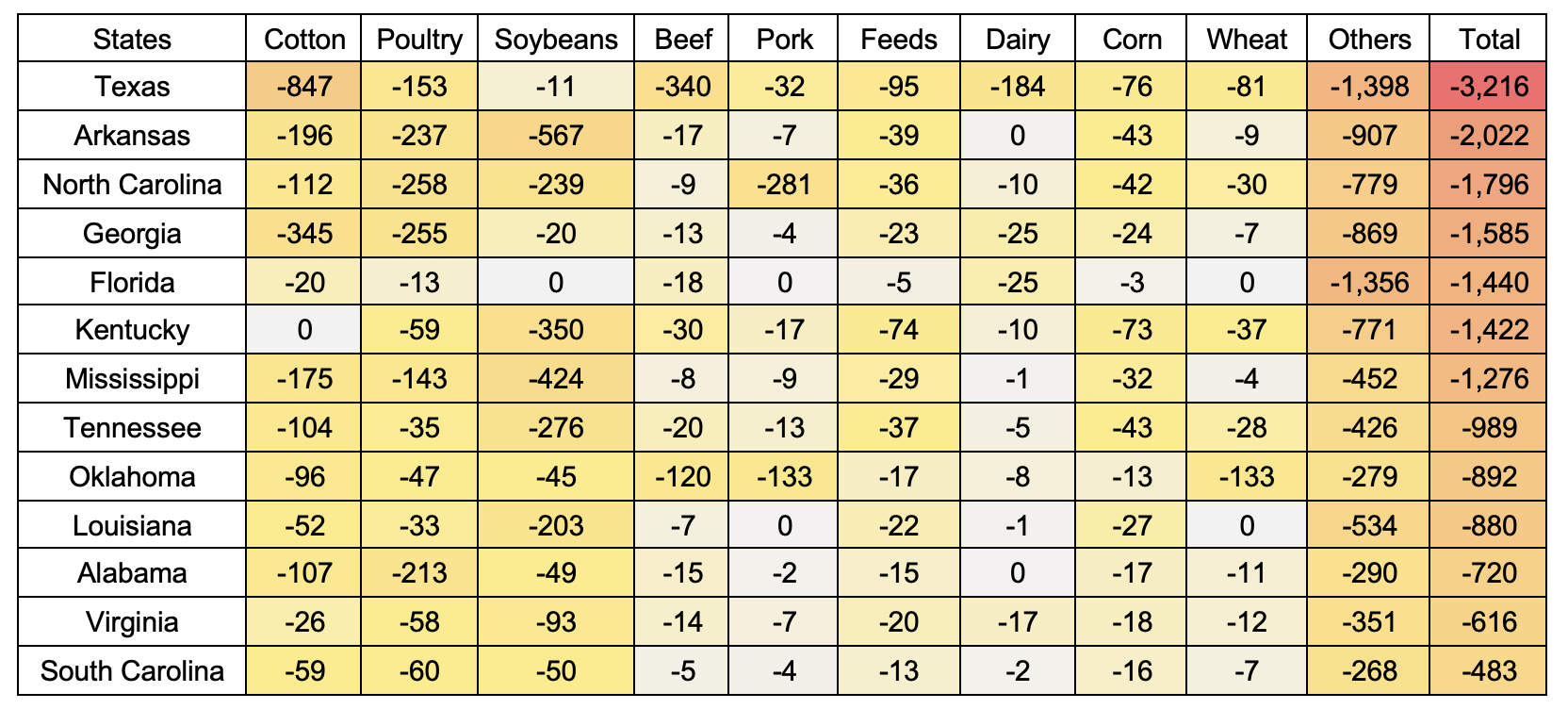
Learn More
Article Courtesy of Southern Ag Today: Kim, D., Steinbach, S., Yildirim, Y., & Zurita, C. (2024). Understanding Trade Strategy Impacts on Soybean Exports and Farm Income in North Dakota. CAPTS White Paper 2024-01. https://papers.ssrn.com/sol3/papers.cfm?abstract_id=4920301.
Goyal, Raghav, Sandro Steinbach, Yasin Yildirim, and Carlos Zurita. "Trade Policy Scenarios after the U.S. Presidential Election and What They Could Mean for Southern U.S. Agriculture." Southern Ag Today 4(44.4). October 31, 2024. https://southernagtoday.org/2024/10/31/trade-policy-scenarios-after-the-u-s-presidential-election-and-what-they-could-mean-for-southern-u-s-agriculture/
Goyal, Raghav, Sandro Steinbach, Yasin Yildirim, and Carlos Zurita. "State-Level Effects of Potential Trade Policy Shifts on Southern U.S. Agriculture." Southern Ag Today 4(50.4). December 12, 2024. Permalink
AgroLiquid, a leader in high-efficiency crop liquid fertilizer solutions, today announced the acquisition of Monty's Plant Food Company, a Louisville-based specialist in soil health and plant nutrition technology. The acquisition, effective January 1, 2025, brings together two family-founded businesses that excel in agricultural innovation and share a commitment to farmer success.
"This strategic combination allows us to bring crop nutrition technologies to growers that wouldnʼt otherwise be available to them," said Nick Bancroft, CEO of AgroLiquid. "While both companies share the same goals in advancing agricultural innovation, our different approaches to achieving them will create new opportunities to optimize nutrient efficiency and productivity for growers."
The acquisition unites AgroLiquidʼs expertise in liquid fertilizer solutions with Montyʼs specialized knowledge in soil health and humic technology. Both companies will maintain their distinct brands and continue operating independently through the 2025 growing season to ensure seamless service to their respective customers.
"Joining forces with AgroLiquid marks an exciting new chapter for Montyʼs Plant Food," said Jeff Sangalli, CEO of Montyʼs Plant Food Company. "Our shared farmer-first philosophy and commitment to innovation made this a natural fit. By combining our complementary strengths, weʼre positioned to deliver even greater value to the agricultural industry."
The integration of the two companies will focus on leveraging operational capabilities, including manufacturing, warehousing and storage infrastructure to enhance service for customers. The combined entity will maintain both companies' existing product lines while exploring opportunities for technological advancement in plant and crop nutrition solutions.
Following the acquisition, Monty's Plant Food will continue to operate under its current name as a privately owned company, with Jeff Sangalli continuing to lead the Monty's business.
For more information about AgroLiquid products and services, visit AgroLiquid.com.
Today, Congresswoman Bice voted in favor of the Fiscal Year 2025 National Defense Authorization Act (NDAA) which fully supports our military. This year's NDAA will help increase our military recruitment, retention, and readiness by improving servicemember's quality of life and strengthening the lethality of our armed forces.
Congresswoman Bice issued the following statement:
"I was proud to support this year's NDAA which builds on the wins House Republicans secured last year. This bill will help strengthen our military, deter our adversaries, and prevent the political polarization of our military. We must ensure our military has the latest warfighting capabilities, ensuring we remain the world's most lethal fighting force. I was also thankful to see that this year's bill truly focuses on improving our servicemembers' quality of life whether they are deployed or serving at home. Our troops put their lives on the line every day in order to protect our freedom. This bill helps support these brave individuals and their families."
The FY25 NDAA will:
Improve servicemembers' quality of life-
Addresses the threats of foreign adversaries-
Saves taxpayers' dollars-
Restores the focus of our military on lethality instead of woke ideology-
RON's Dave Lanning has a pre-opening look at today's agricultural Markets.
Click the audio tab below for today's report.
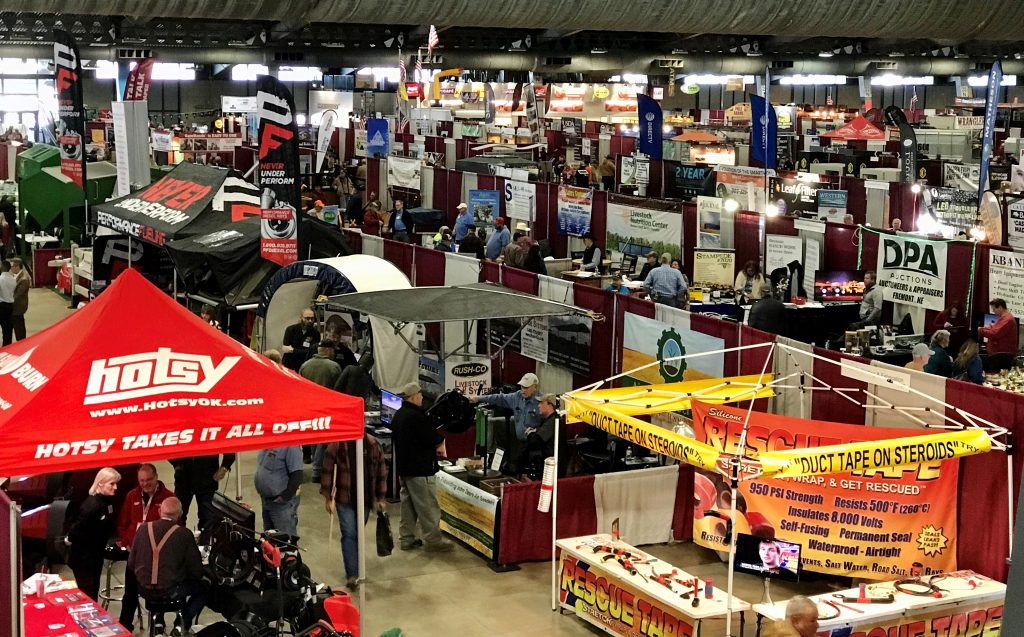
The 2024 Tulsa Farm Show kicks off Thursday morning at the SageNet Event Center in Tulsa and runs through Saturday afternoon- the show hours are 9 AM to 5 PM Thursday and Friday- 9 AM to 4 PM on Saturday.
Admission and parking are free once again for this 31st Tulsa Farm Show. As Oklahoma's largest indoor farm show with over 400,000 square feet of exhibits, the Tulsa Farm Show is a great end-of-year opportunity to view all the latest in agricultural and ranching equipment. More than 350 companies will be featuring a full line of displays, including tractor, sprayer, tillage, harvest equipment, cattle management products, and more.
Plan your visit with the new Interactive Floor Plan to review companies and products represented at the show.
The Radio Oklahoma Ag Network booth is once again adjacent to the show headquarters near the south doors of the facility. Stop by and say howdy to Ron Hays on Thursday and Friday- and you can watch the live broadcast on Thursday midday for KGGF Radio at 690 on the AM dial. The broadcast from 11:30 AM to 12 Noon as well as from 12:30 PM to 1 PM can also be heard on the Tune In platform by clicking here.
Several of our Oklahoma Farm Report sponsors will have booths at the show- including the overall show sponsor once again in 2024- Oklahoma Farm Bureau- they are located in booth 224.
Check out our other sponsors who are at the 31st Tulsa Farm Show including:
Arvest Bank- Booth 729
National Livestock- Booth 513
Oklahoma Ag Credit- Booth 141
Oklahoma Cattlemen's Association- Booth 639
P&K Equipment- Booth 913
Stillwater Milling- Booth 837
Click here to read our earlier preview of the show and to listen to Ron Hays talk with Show Manager Scott Guttormson.

Rep. Nicole Miller (left) and Sen. Brenda Stanley (right) present Col. Abigail Ruscetta with the 2024 Oklahoma Aerospace and Aviation's Woman of the Year.
Rep. Nicole Miller, R-Edmond, and Sen. Brenda Stanley, R-Midwest City, applauded Col. Abigail Ruscetta for being named the 2024 Oklahoma Aerospace and Aviation's Woman of the Year. She was honored at the eighth annual Oklahoma Women in Aviation and Aerospace Day, held Friday at the Tulsa Air National Guard Base.
Colonel Abigail L. W. Ruscetta is the 72nd Air Base Wing Commander at Tinker Air Force Base (AFB), where she leads nearly 3,000 Airmen and is responsible for $5.4 billion in resources and a $311 million operating budget. The 72nd ABW enables numerous critical missions at Tinker AFB, the largest single-site employer in the state of Oklahoma.

"Colonel Abigail Ruscetta exemplifies excellence in leadership and service," Miller said. "Her remarkable career and dedication to advancing aerospace and aviation are an inspiration to women across our state and beyond. I'm glad to see her recognized as Oklahoma Aerospace and Aviation's Woman of the Year and celebrate her many contributions to both Oklahoma and our nation."
Ruscetta earned her commission in 1997 through the U.S. Air Force Academy. She is a graduate of the Advanced Maintenance and Munitions Officer School at Nellis AFB, Nevada, and earned her master's degree in Logistics and Supply Chain Management from the Air Force Institute of Technology.
She joined Tinker AFB in 2018 and has previously served in Germany, Korea, Ohio, Georgia, Florida, Utah and Washington, D.C. Ruscetta has been awarded the Legion of Merit, Defense Meritorious Service Medal and Meritorious Service Medal, among numerous other honors.
"Colonel Abigail Ruscetta's leadership at Tinker Air Force Base stands as a testament to her unwavering commitment to excellence, both in military service and in shaping the future of aerospace and aviation in our state and nation," Stanley said. "She has left a legacy that will continue to inspire women in aviation for many years to come, and we are proud to honor her as the 2024 Oklahoma Aerospace and Aviation's Woman of the Year."
Oklahoma Women in Aviation and Aerospace Day began in 2017 when the Legislature passed Senate Bill 230 to officially recognize the contribution of Oklahoma women in the state's aviation and aerospace industry.
The Day is recognized on December 9, which marks the birth of the legendary Chickasaw aviator, Pearl Carter Scott. Scott, who learned to fly under famed aviator Wiley Post, became the youngest pilot in the country when she concluded her first solo flight at the age of 13.
On December 4, 2024, the National FFA Foundation announced its new 2025 Sponsors' Board Members. The board is made up of top corporate executives who wish to support agricultural education and the National FFA Organization. During their three years of service, board members play a vital role in advising the National FFA on opportunities to improve agricultural educational programs, secure funding, and seek continued development of the next generation of leaders.
Aaron Wetzel has been named the 2025 Sponsors' Board Chair and is currently serving as Vice President of Production & Precision Ag Production Systems at John Deere. With over 35 years at John Deere, Wetzel's career has evolved through various roles including Finance & Accounting, Sales, Marketing, Product Management, and Manufacturing. Wetzel is an FFA Alumnus from Charleston, Ill. Oklahoma Farm Report's Stevie White visited with Wetzel to hear how he will use his past experiences to help propel the FFA organization forward.
"I have had the pleasure of representing John Deere on the FFA Sponor Boards since 2019," Wetzel said. "I am a former FFA member, and during my time there, I got a lot of valuable leadership lessons and developments that have helped me in my career aspirations at John Deere, so I am trying to pay it back to help the next generation of young people understand more of the opportunities that are in agriculture."
John Deere is the longest continuous sponsor of the National FFA organization, having its own John Deere FFA Alumni and Supporters Chapter.
FFA is the top school-based youth leadership development organization in the country having reached more than one million members just this year throughout 9,235 local FFA chapters in all 50 states, Puerto Rico, and the U.S. Virgin Islands.
To Wetzel, it is the leadership experiences and the sense of belonging for its members that have made the organization so successful. He said, "Especially in today's world where people are looking for places where they can contribute, be valued, and be seen, FFA is one of those places. The qualities of what FFA delivers is what is drawing young people to say, 'I want to be a part of that.'"
Through his experience with John Deere, Wetzel plans to help bolster FFA forward through technological opportunities. "Deere is very much invested in technology solutions to provide more value to the customers that we serve," he said. "We are bringing artificial intelligence and machine learning capabilities to agriculture through our solutions. For FFA, going forward, it is about helping young people become more comfortable with and embrace technology solutions in their everyday lives. That is one area of focus that is very important for this next generation of young people to see and embrace tech as it helps them in every aspect of their lives."
Wetzel's plan to help propel the organization centers on maximizing the organization's strengths by reaching a broader audience with the message of belonging and by building more curiosity about technology in young people. "The other piece is opportunity," he detailed. "It is a career path for young people. Not just for college-bound students, but also for students who are looking for careers in the communities where they live by helping to foster more innovation and entrepreneurship. Those are some areas where I think FFA is very much focused and doing some great work."
One of the things that Wetzel finds most unique about the organization is the SAE projects or Supervised Agricultural Experience projects. "In FFA, I was running my own business raising livestock," Wetzel shared. "At a very early age, those experiences gave me some business acumen, leadership, and driving key decisions experience that has helped me in the decisions I have been making as I entered my career and followed me through the thirty-some years I have been with Deere."
To reach and support its members, Wetzel knows that FFA needs funding. He expressed the humbling amount of support that the organization already receives from across the entire agricultural value chain. The diversity of sponsoring companies encompasses tractor and equipment companies like John Deere, seed and chemical companies like BASF and Nutrien, and expands to direct-to-consumer markets like Domino's Pizza and Culvers.
"Having those companies come in and see the value that FFA is providing to young people, and more importantly, step up and providing significant financial resources to be able to support that is mission critical," Wetsel shared.
He added, "Another participating company is Tractor Supply Company, which has been very influential in providing support for chapters and helping them get to the National FFA Convention. These are just some examples of the enormous amount of support that corporations are having as they see value in what FFA is doing, how it is helping develop this next generation of young people, and how it is helping to further support agricultural education."
In addition to Wetzel being named the board chair, the following nine board members for 2025 are:
"The future of agriculture is in the hands of our students, and the National FFA Foundation is built so that our partnerships with individuals, businesses, and industry allow us to further secure resources for the future of agricultural education and FFA," said Molly Ball, president of the National FFA Foundation. "I look forward to the success of our new board and how they'll continue to bring immense growth to the foundation."
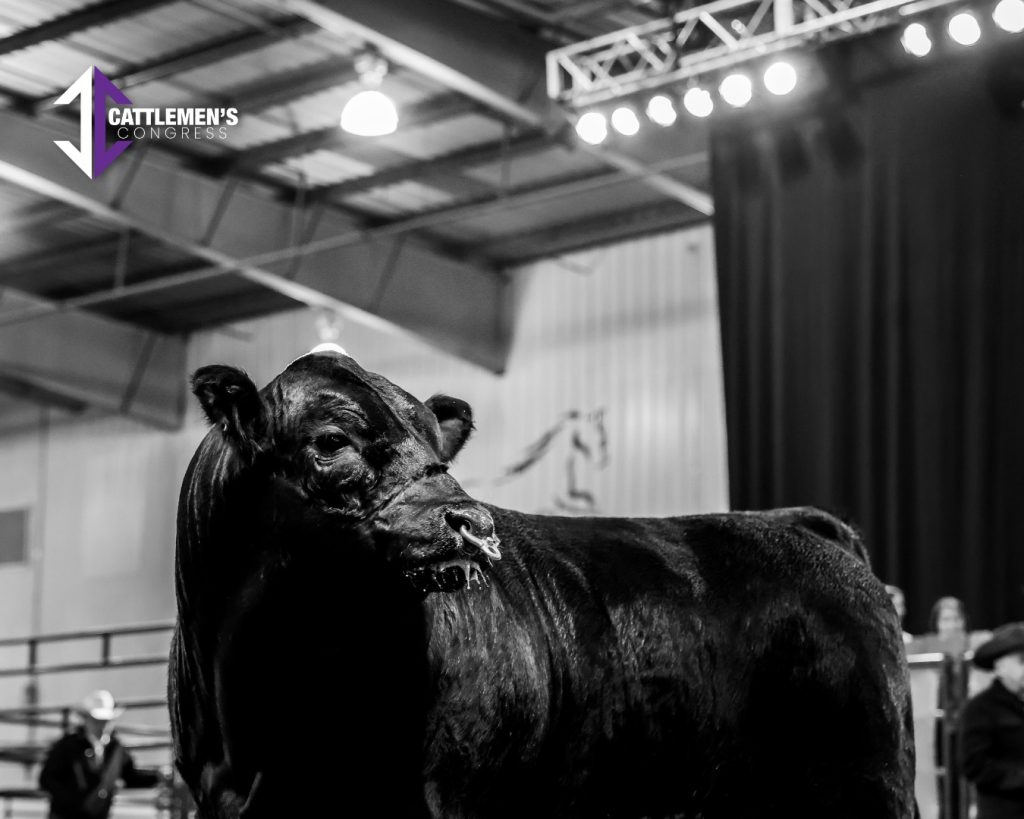
The Cattlemen's Congress is a stock show for cattlemen and women managed by cattlemen and women. The Cattlemen's Congress is an opportunity for breeders across North America to showcase their top genetics and connect with fellow beef producers in a central location, in the heart of cattle country. Set for January 4 – 16, 2025, in Oklahoma City, the event is not one to miss.
Senior Farm and Ranch Broadcaster, Ron Hays, is catching up with Chairman of the Board for Cattlemen's Congress Tyler Norvell in this episode of Beef Buzz, talking about the fifth annual Cattlemen's Congress and the value it adds to the Southern Plains cattle industry.
Norvell compelled every beef producer near enough to drive to spend at least a day at the show. "It is an awesome place to see the most elite genetics in the United States," Norvell said. "If you need to buy a bull, there will be a bull there that you need or that you want to see in person. If you need some bred heifers, come meet the people who are putting them in the sale. Come talk to the elite purebred breeders from across the United States in one place."
The Oklahoma State Fairgrounds is centrally located, and parking is free as is admission.
He described the event as the Super Bowl for cattlemen and emphasized that if the Superbowl was within driving distance and free, lots more folks would go.
Also important to the Oklahoma City economy, the show's placement in January has brought a welcome flood of commerce to Oklahoma City business during what was previously a slow season.
"Everybody involved in the visitor's bureau here – and the hotels and restaurants around Meridian – say that January was their slowest time of the year," Norvell shared. "Not only the amount of money we brought but the time of the year that we brought it, makes us the most impactful event they have ever had started here. We know we are around a $50 million economic impact at Oklahoma City and if you calculate in the time of the year that it is in, the impact is significantly larger than that for these businesses."
He expresses gratitude for the partnership of the Oklahoma City municipality and the Visitors Bureau.
This year's event will be the last to be held in the iconic Jim Norick arena as it is scheduled to be demolished after its replacement is ready for use in 2026.
"It's going to be exciting to break that building in next year at the 2026 Cattlemen's Congress, and the 2026 Oklahoma Youth Expo," Norvell said. "There will probably be some challenges the first year as we try to figure out how to use it and how to make it the most efficient and the most exhibitor friendly, but I think folks will enjoy the new changes and be patient with us as we adapt."
For more about the 2025 Cattlemen's Congress, view yesterday's BeefBuzz with Norvell for part one of the conversation.
The Beef Buzz is a regular feature heard on radio stations around the region on the Radio Oklahoma Ag Network and is a regular audio feature found on this website as well. Click on the LISTEN BAR at the top of the story for today's show and check out our archives for older Beef Buzz shows covering the gamut of the beef cattle industry today.
| ||||||||||||||||||||||||||||||||||||||||||||||||||||||||||||||||||||||||||||||||||||||||||||||||||||||||||||||||||||||||||||||||||||||||||||||||||||||||||||||||||||||||||||||||||||||||||||||||||||||||||||||||||||||||||||||||||
| ||||||||||||||||||||||||||||||||||||||||||||||||||||||||||||||||||||||||||||||||||||||||||||||||||||||||||||||||||||||||||||||||||||||||||||||||||||||||||||||||||||||||||||||||||||||||||||||||||||||||||||||||||||||||||||||||||
|
By U.S. Senator Markwayne Mullin
In just 40 days, our nation's 45th President, Donald J. Trump, will be sworn-in to serve as the 47th President of the United States of America. Let me tell you, as someone who speaks with the President on a regular basis: we have never had an incoming administration this prepared to hit the ground running on day one.
In a matter of weeks, President Trump has put forward a talented, highly qualified roster of cabinet picks who are prepared to serve at the will of the President. Importantly, Article II, Section 2 of the Constitution directs the Senate to carry out an "advice and consent" responsibility to vet Presidential cabinet nominees for confirmation. As your Senator, I take this constitutional responsibility very seriously.
It's my intention to support ALL of President Trump's cabinet nominees. Beyond the deference I feel this president should have to select his own cabinet, I've met with many of the nominees, and I have every confidence in their ability to serve. Let's look at some of the cabinet nominees making headlines:
First, President Trump's pick to lead the Department of Defense: Pete Hegseth. Pete is a decorated combat veteran who served his country in uniform for nearly 20 years. After tours in Guantanamo Bay, Iraq, and Afghanistan, he earned two bronze stars for his valor. Then, Pete established himself as a business leader fighting for America's veterans.
I've met with Pete, and I know he will support President Trump's agenda to strengthen our military and bring a fresh, mission-focused perspective to the Pentagon. Pete has been subject to a lot of anonymous criticism but let me be clear—his nomination will be vetted in a Senate Armed Services Committee hearing, not in the media. As I've said repeatedly, I will support Pete Hegseth's nomination.
Second, Robert F. Kennedy Jr., President Trump's nominee to lead the Department of Health and Human Services. I had the pleasure of getting to know Bobby on the road with President Trump, and he is deeply committed to Making America Healthy Again. He has a long history of public service, and he will work with President Trump to clean up federal health agencies and make government work for the people again. While some in the pro-life community have voiced concern: Bobby has made clear to me he will support President Trump's policy agenda every step of the way. I look forward to visiting with him again next week about his bold vision, and I will back his nomination.
Third, I want to discuss Lt. Col. Tulsi Gabbard, President Trump's pick to serve as the Director of National Intelligence. With two decades of proud service, Tulsi is an active Lt. Col. in the U.S. Army Reserve overseeing the Oklahoma and Missouri National Guard. After experiencing the cost of war, Tulsi Gabbard ran for Congress, where she served on the Armed Services, Homeland Security, and Foreign Affairs Committee. Many know that Tulsi Gabbard is a former Democrat who left the party after the establishment went woke. Just like Pete and Bobby, Tulsi Gabbard has committed to implementing President Trump's America First agenda. On a personal note, Christie and I have been proud to call Tulsi Gabbard and her husband, Abraham, great friends for many years. There is no one better positioned to reform the intelligence community, protect our constitutional freedoms, and end federal agency weaponization against American citizens. Tulsi has my full support to enact President Trump's ambitious agenda.
Lastly, I recently sat down with President Trump's nominee to lead the FBI, Kash Patel. Kash will be a game-changer for the Bureau. He's a former public defender, federal prosecutor, counterterrorism specialist, and Congressional watchdog. He's served in key national security roles in all three branches of government, most recently as the chief of staff for the Department of Defense and Deputy Director of National Intelligence.
Kash Patel is an America First fighter who will work with President Trump to remove politics from the FBI and end the weaponization of our justice system. I was proud to support Kash even before Trump named him for this role, and I'm confident he will back the field agents doing great work at the FBI while rooting out the polarization that has consumed the 7th floor of the Hoover Building.
In November, the American people delivered an overwhelming mandate by re-electing President Trump to serve another term by the greatest margin for any Republican in history. Oklahoma was a bedrock for this election, with 77 of 77 counties going for Trump for the third straight election cycle. I'm honored to call President Trump a true friend, and I am committed to supporting his agenda every step of the way. Unsurprisingly, President Trump's cabinet selections reflect his bold vision to deliver for the American people, and I will do everything I can to get each one across the finish line as quickly as possible.
Yesterday, the United States Fish and Wildlife Service (USFWS) released its plan to list the Monarch Butterfly as threatened under the Endangered Species Act (ESA) with section 4(d) flexibilities. The agency will accept public comments on the proposal until March 12, 2025. The National Cattlemen's Beef Association (NCBA) and the Public Lands Council (PLC) call on USFWS to partner with livestock producers throughout this process.
"USFWS must increase partnerships with livestock producers throughout this process recognizing their work managing the landscape. As stewards of the land, ranchers work tirelessly to implement sustainable management practices to ensure the longevity of the lands they utilize. Recent studies have shown that grazing and animal agriculture in general, builds robust habitat, increases insect populations, and manages invasive species on America's pastureland," said NCBA Director of Government Affairs and PLC Garrett Edmonds. "The USFWS management plan must recognize the voluntary conservation work that ranchers do every day to care for America's vast natural resources providing the regulatory certainty necessary for ranchers to manage their operations."

According to new data from the Association of Equipment Manufacturers (AEM), U.S. sales of Ag tractors and combines fell in November 2024 compared to the year before.
U.S. sales of tractors in all classes dropped 14.5% compared to November 2023. U.S. sales of combines remain soft, showing a decline of 24% year-to-date in 2024.
Canadian sales of Ag tractors dropped 18.8% while combines fell 39.4% in November 2024 compared to the year before.
The Ag Tractor and Combine reports can be found on the AEM Market Share Statistics page. The U.S. report can be downloaded from this page, while the Canadian report is available for download here.
Senator James Lankford (R-OK) today released the following statement after the Biden Administration threatened to veto the JUDGES Act.
"I'm deeply disappointed in the Biden Administration's threat to veto the JUDGES Act. This bill passed the Senate unanimously, reflecting broad bipartisan support for addressing an urgent issue facing our judiciary. Oklahoma desperately needs three additional federal judges to address our significant case backlog due to the Supreme Court's McGirt decision.
"Right now, our current judges are overwhelmed, focusing almost exclusively on criminal cases, leaving civil cases without the attention they deserve. Judges are brought into Oklahoma from across the country to help, but it's still not enough. The result is that justice is delayed—and often denied—for Oklahomans."
Today, Dec. 11, the U.S. Environmental Protection Agency announced that 70 applicants across 27 states, three Tribal Nations, and one territory have been tentatively selected to receive over $735 million to assist in the purchase of over 2,400 zero-emission vehicles through its first-ever Clean Heavy-Duty Vehicles Grant Program. EPA's Clean Heavy-Duty Vehicles Grant Program, created by President Biden's Inflation Reduction Act, will replace existing internal combustion engine heavy-duty vehicles with zero-emission vehicles, while also supporting the build out of clean vehicle infrastructure, as well as the training of workers to deploy these new zero-emission technologies. Together, the selected projects announced today will reduce harmful emissions from heavy-duty vehicles, support good-paying jobs, and improve air quality in communities across the country, particularly in those that have been overburdened by air pollution.
"Thanks to President Biden, we are accelerating American leadership in developing clean technologies that address the impacts of climate change," said EPA Administrator Michael S. Regan. "Together, the Clean Heavy-Duty Vehicles Grant projects announced today will slash air pollution and enhance the country's infrastructure for cleaner transportation solutions, creating good-paying jobs along the way."
"To tackle the climate crisis, we have to slash pollution from every sector, including heavy-duty transportation," said John Podesta, Senior Advisor to the President for International Climate Policy. "Today's awards from the EPA will create good-paying jobs, make our communities healthier, and protect our planet."
"From zero-emission freight vehicles to clean school buses for kids, the Biden-Harris Administration is advancing the next generation of clean transportation that will help reduce pollution and make our nation's cities and communities healthier," said White House National Climate Advisor Ali Zaidi. "When paired with our investments in zero-emission port infrastructure and freight corridors, this Administration's sector-wide approach to decarbonizing transportation is delivering economic, social and environmental benefits to communities in every corner of the country."
Across the nation, over 3 million Class 6 and Class 7 vehicles are currently in use, spanning a wide variety of vehicle types and vocations. Many of these are older vehicles that emit higher levels of harmful pollutants like nitrogen oxides, fine particulate matter, and greenhouse gases than newer vehicles. This pollution is associated with respiratory and cardiovascular disease, among other serious health problems. Children, older adults, those with preexisting cardiopulmonary disease, and those of lower socioeconomic status are particularly vulnerable to these health impacts. Cleaning up pollution from heavy-duty vehicles helps protect the health of 72 million people living near truck freight routes in America.
EPA's Clean Heavy-Duty Vehicles Grant Program will accelerate the adoption and deployment of eligible Class 6 and 7 zero-emission vehicles. Vehicles eligible for replacement include older vehicles powered by internal combustion engines that pre-date recent EPA emission standards.
Proposed replacement vehicles include battery-electric box trucks, cargo trucks, emergency vehicles, refuse/recycling haulers, school buses, shuttle buses, step vans, transit buses, utility vehicles, and other vocational vehicles, as well as a small number of hydrogen fuel cell transit buses. In addition, the Clean Heavy-Duty Vehicles Grant Program also funds zero-emission vehicle fueling infrastructure (e.g., electric vehicle charging stations), as well as workforce development and training. These investments support the implementation of the Biden-Harris Administration's National Blueprint for Transportation Decarbonization and the National Zero-Emission Freight Corridor Strategy .
Approximately 70% of the selections announced today will support the purchase of clean school buses, helping provide clean air for children on their ride to school. These projects complement EPA's Clean School Bus program through the President's Bipartisan Infrastructure Law, which has awarded nearly $3 billion for nearly 9,000 clean school buses to date.
Selected Clean Heavy-Duty Vehicles Grant Program examples include:
· Boston Public Schools has been selected to receive an anticipated $35,079,653 to replace 125 Class 7 heavy-duty diesel and propane school buses with new, zero-emissions electric units, as well as charging provided by 125 Direct Current Fast Chargers, with advanced load management and sharing capability.
· Saint Louis Public Schools has been selected to receive an anticipated $10,128,735 to replace 30 Class 6/7 diesel buses with Class 6/7 zero-emission buses to reduce the district's emissions of nitrogen oxides, particulate matter, and greenhouse gases. The project will directly improve the air quality for students, staff, and community members and reduce district transportation costs. In addition, the district plans to leverage a public private partnership with Highland Electric Fleets (Highland) to ensure cost-effective use of EPA funding and successful implementation of the project.
· North Central Texas Council of Governments has been selected to receive an anticipated $60,000,000. NCTCOG will award rebates to program beneficiaries to replace approximately 234 vocational vehicles with 234 zero-emission vehicles. Specific projects will be identified through a Call for Projects to select rebate recipients. Based on a regional fleet survey conducted to inform this proposal, NCTCOG expects the fleet mix to consist mainly of box trucks, step vans, and refuse haulers; most new vehicles will be battery electric with a few hydrogen fuel cell vehicle pilot projects. Each project is expected to include supporting infrastructure. NCTCOG will also develop a regional ZEV workforce development plan, implement priorities identified through the plan and host first responder training specific to ZEV.
· Shakopee Mdewakanton Sioux Community has been selected to receive an anticipated $190,000. SMSC will use grant funding to replace its laundry truck with an all-electric alternative. It has existing charging infrastructure onsite that can be used while it waits for new charging infrastructure to be installed closer to where the vehicle will be parked, enabling the new truck to be in service as quickly as possible.
The Clean Heavy-Duty Vehicles Grant Program advances President Biden's Justice40 Initiative, which aims to deliver 40% of the overall benefits of certain federal investments to disadvantaged communities that are marginalized by underinvestment and overburdened by pollution.
EPA prioritized disadvantaged communities facing air quality challenges, including nonattainment with EPA's fine particulate matter and ozone National Ambient Air Quality Standards or high levels of ambient diesel PM. Applications were evaluated on engagement with affected communities, especially local residents, to ensure their meaningful participation with respect to the design, planning, and performance of the project. Approximately $523 million of the funds announced today will be used to fund projects serving communities located in areas in nonattainment with the NAAQS.
In addition to the funding for the replacement of existing internal combustion engine Class 6 and 7 heavy-duty vehicles with eligible Class 6 and 7 zero-emission vehicles, funding may also be used to support zero-emission vehicle adoption and deployment by providing:
· Zero-emission vehicle refueling infrastructure.
· Workforce development and training.
· Project implementation costs.
EPA will work with selected applicants over the coming weeks to finalize awards. EPA currently anticipates finalizing awards in early calendar year 2025 once all legal and administrative requirements are satisfied. Project implementation will occur over the next two to three years depending on the scope of each project.
Additionally, EPA and the Department of Labor expect to issue in early 2025 a separate grant program designed to strengthen the workforce development ecosystem through curriculum development in order to prepare workers to maintain and repair ZEVs.
Please visit the Clean Heavy-Duty Vehicles Grant Program webpage for additional information and updates as EPA works with tentatively selected applicants to finalize awards and implement their projects.
Questions may also be directed to cleanhdvehicles@epa.gov.
For further information and to stay up to date on matters related to our office, sign up for the Clean Heavy-Duty Vehicles listserv.
The United States Department of Agriculture (USDA) announces the addition of two prominent speakers to the agenda for the 101st Agricultural Outlook Forum, "Meeting Tomorrow's Challenges, Today," scheduled for February 27-28, 2025.
Jeff Schmid, President and CEO of the Federal Reserve Bank of Kansas City, will address the Forum with a plenary speech on the morning of February 27. His remarks will focus on his outlook for the macroeconomy and monetary policy based on his perspective as the Federal Reserve's leader for the Tenth District, a region that covers much of the central United States and includes a significant agricultural footprint.
Nebraska Governor Jim Pillen will be the dinner speaker on the evening of February 27, where he will discuss his vision for making Nebraska a frontrunner in building a biobased economy while promoting practices that maximize the productivity of the state's agricultural resources.
The Forum will bring together leaders from government, industry, and academia to discuss the wide range of issues facing agriculture and opportunities to improve the well-being of farmers, businesses, consumers, and the environment.
The 2025 Forum program will also feature a presentation on the 2025 outlook for the U.S. agricultural economy and trade by USDA Chief Economist Seth Meyer, along with a plenary panel of distinguished guest speakers and over 30 breakout sessions organized by USDA agencies. Topics will include commodity and food price forecasts, farm income, global agricultural trade, climate change mitigation strategies, and advancements in biotechnology. The event will also feature exhibit booths by various USDA agencies, providing attendees with information on key programs and recent USDA-funded innovations.
The Forum will be held in person at the Crystal Gateway Marriott in Arlington, Va., and all sessions will be livestreamed on a virtual platform.
For more information about the Forum program and to register to attend, visit Agricultural Outlook Forum | USDA.
USDA touches the lives of all Americans each day in so many positive ways. Under the Biden-Harris administration, USDA is transforming America's food system with a greater focus on more resilient local and regional food production, fairer markets for all producers, ensuring access to safe, healthy and nutritious food in all communities, building new markets and streams of income for farmers and producers using climate smart food and forestry practices, making historic investments in infrastructure and clean energy capabilities in rural America, and committed to equity across the Department by removing systemic barriers and building a workforce more representative of America. To learn more, visit www.usda.gov.
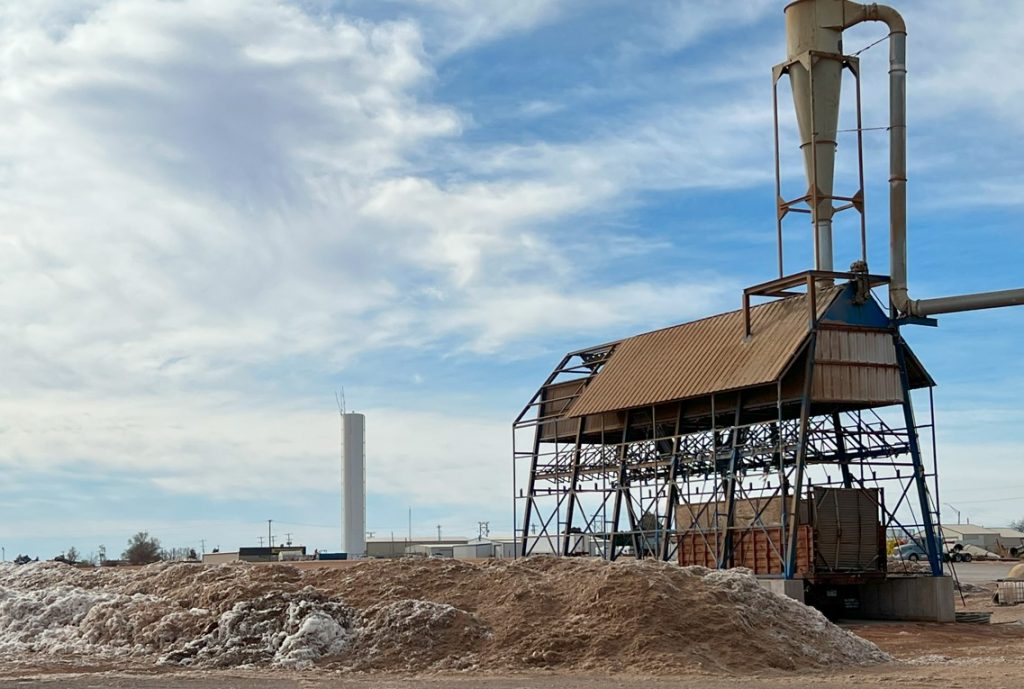
Statistically generated near-term price forecasts are useful to compare/contrast with Extension ad hoc price estimates, USDA monthly price estimates, and trade price estimates. Ongoing cotton price forecasting research at Texas A&M University provides some timely short-term (monthly average) price forecasts that shed light on the 2024 season.
As depicted in Figure 1, over the period January 2014 to August 2024, ICE No.2 cotton monthly average futures prices ranged from 53.75 cents per pound to 146.17 cents per pound, averaging 78.23 cents per pound. The first nine years of this data were used as the training sample for model construction, while the 2024 monthly average prices were used for out-of-sample forecasting using a structural econometric model described in the next paragraph.
Structural econometric models consider the direct effects of specific variables on our dependent variable of interest: ICE No. 2 cotton futures prices. Our best working model specifies monthly average nearby ICE cotton futures as being explained by the monthly stocks-to-use ratio, real disposable personal income, real retail clothing sales, real personal consumption expenditures, the Michigan consumer sentiment index, seasonality indicator variables, and various qualitative factors. We hypothesize that ICE NO.2 cotton futures prices are positively related to real retail clothing sales, real disposable personal income, real personal consumption expenditures, and the Michigan sentiment index but negatively related to the stocks-to-use ratio. After estimating the model coefficients, the signs and magnitudes of the continuous variables in the model conform to prior expectations. This model accounts for roughly 96 percent of the variables in monthly average nearby ICE No.2 cotton futures prices. The results indicate the absence of autocorrelation in the residuals.
Using our econometric model to forecast prices, on average over the out-of-sample period January 2024 to August 2024, the price forecasts deviated from the actual values by 7.75 cents per month, or roughly 9.7 percent (also known as the Mean Absolute Error). In other words, the out-of-sample ex post forecasts are, on average, higher than the actual monthly average nearby ICE cotton futures price. This result continues with the most recent model forecasts:
So, what does this mean? The results of an otherwise well-fitting statistical model suggest what cotton growers already knew: 2024 was an abnormal year. The nearly thirty-cent decline in monthly average nearby prices between March and August was a statistical anomaly that our model cannot predict.
These kinds of things suggest there are atypical factors affecting price forecasts, which means adjustments need to be made by considering market forces that are not captured by economic modeling.
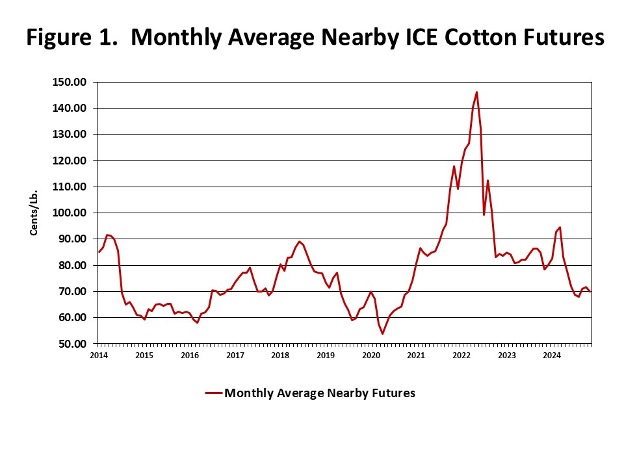
Article courtesy of Southern Ag Today: Robinson, John. "A Statistically Lousy Year for Cotton Prices." Southern Ag Today 4(50.3). December 11, 2024. Permalink
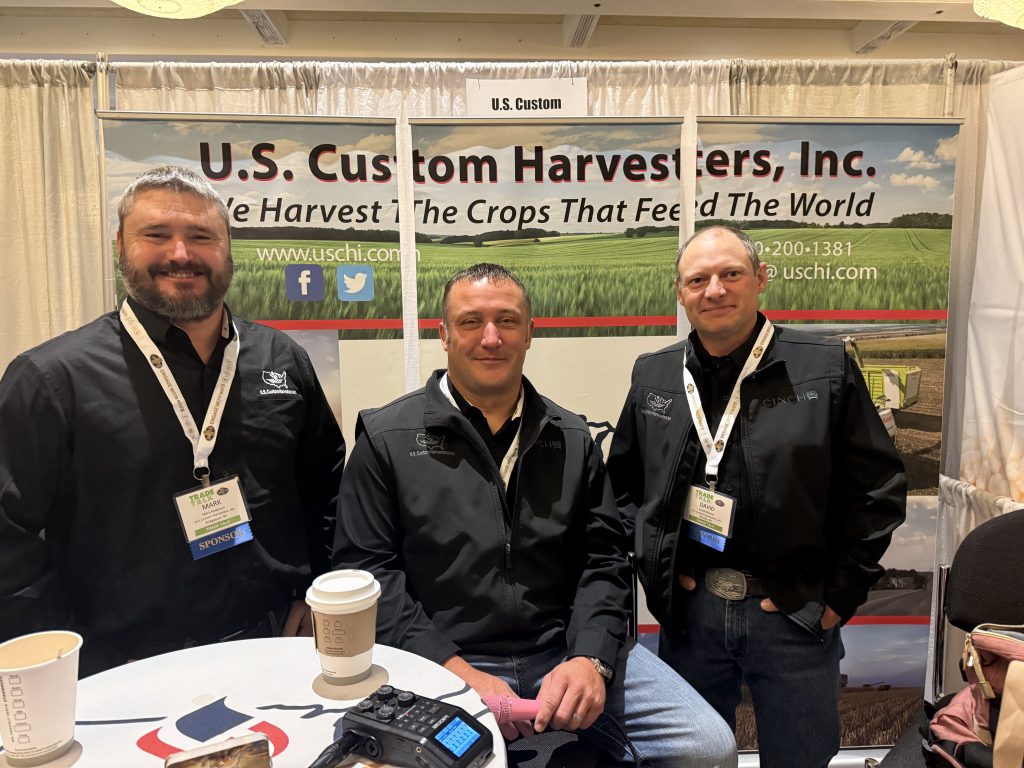
Farm Director KC Sheperd chatted with US Custom Harvesters President David Misener. The organization began in 1983 with a group of combine operators. It has since grown to include silage choppers, cotton pickers, and manure spreaders.
If a farmer runs into trouble with their own harvest equipment or lacks the proper equipment to do a job, he can call the US Custom Harvesters and they will bring the needed machine(s) to the field to do the job.
"You are welcome to give our office a call, explain your needs to Mandy, and she will send an email out to our membership and one of our harvesters will reach out to the farmer to get the work done," Misener explained.
During this year's harvest, Misener started near his home in Oklahoma, traveled to Kansas, South Dakota, North Dakota, and then returned to South Dakota to harvest soybeans and corn. At the time of his interview with Sheperd, he was waiting for the ground to dry in Oklahoma to finish harvesting cotton.
More information can be found at uschi.com including the main office phone number.
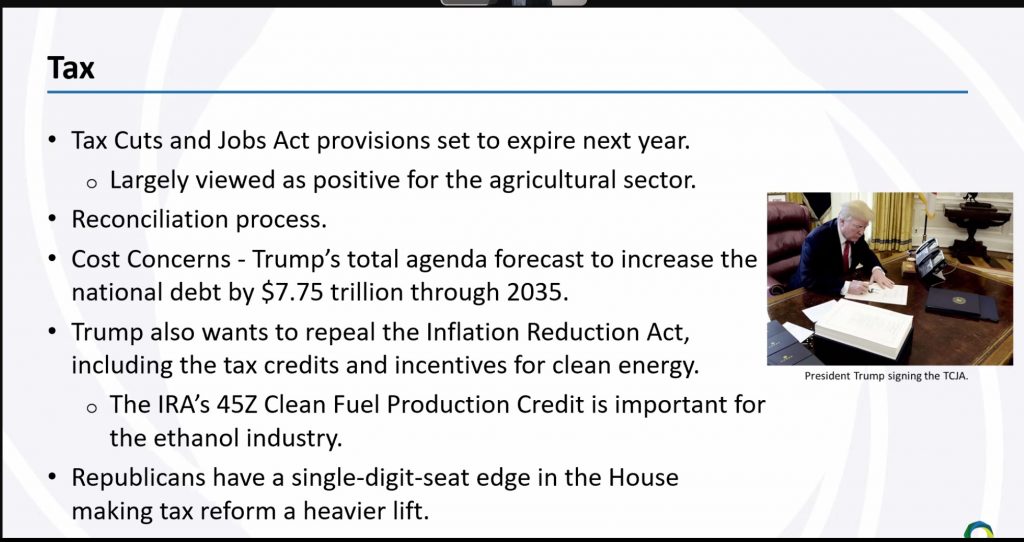
The Pinion Global group recently held a webinar discussing the impact of the 2024 election on the food and Agriculture Sector. Pinion's Government & Public Affairs director, Brian Kuehl, assessed the potential impacts of recent electoral outcomes on farmers and agriculture companies, including expected effects of tariffs and trade, likely tax code changes, the Farm Bill, and changes to immigration/ag labor.
Kuehl outlined the potential impacts of President Trump's trade policies, including tariffs on China and other countries, and their effects on US agriculture.
Kuehl talked about the 2017 Tax Cuts and Jobs Act and said that while it did include benefits for agriculture, such as the estate tax exemption, it also fell short in some areas. "It had some benefits for lower income. But I think one of the criticisms of it in the mainstream media was that it was skewed more toward the wealthy. It was largely positive for the agriculture sector. We did a lot of analysis for trade organizations at the time."
Kuehl went on to explain the reconciliation process that sets up these budgetary matters. He said, "In terms of tax cuts this time around if we see a tax package, we will likely see a shorter duration on the tax package. Rather than being a 10-year extension, Congress will probably look at a four-year extension of the tax provisions, and that's all because they need to keep this budget deficit and national debt in check, both for political reasons and for the reconciliation process."
Kuehl said one big topic will be the budget, debt, and the deficit. "I think if there is one overarching theme, you'll see it is going to be the budget, the debt and the deficit. Those are going to be drivers of everything we talk about, and the reason is because the debt has exploded."
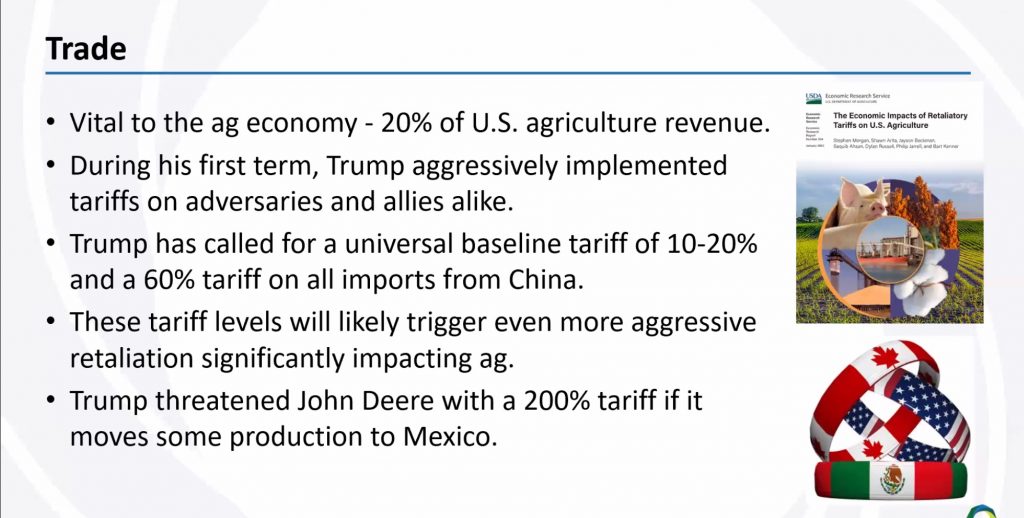
When it comes to Trade Policy and its implications for Agriculture, Kuehl said the recent statement made by President Trump about tariffs on imports from Canada and China is highlighted, with concerns about their effects on US agriculture. "We know that during President Trump's first term, he aggressively implemented tariffs on adversaries," he stated. "He, as you may recall, had a trade war with China, putting successive tranches of tariffs on Chinese imports. China retaliated, putting successive tranches of tariffs on US exports, a lot of which fell on us: ag. At the time, China was heavily dependent upon us."
Today about 17% of Chinese imports in food and Ag are coming from the US, so China is not as dependent on US Ag as they had been in 2018.
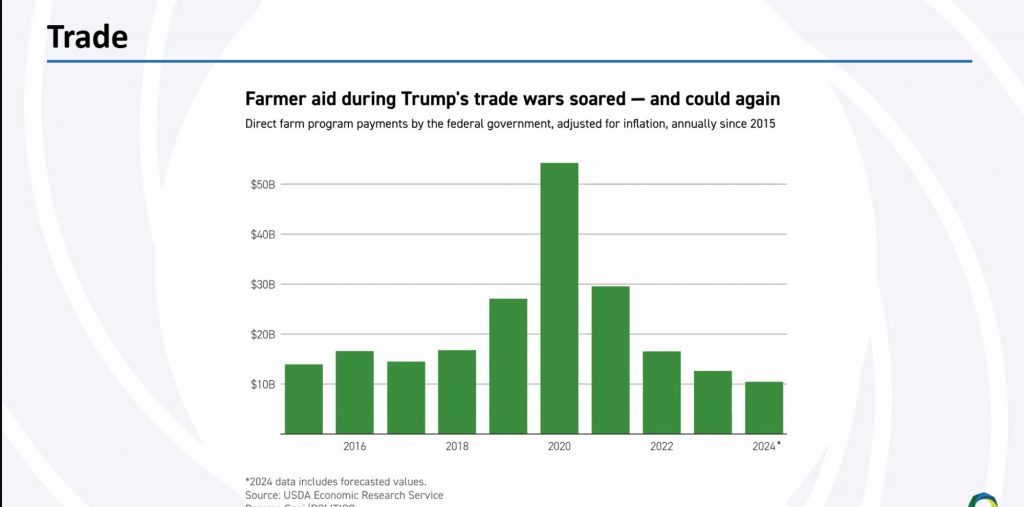
Keuhl added that when talking about trade, it's important to focus on both what will be the short-term impacts and the long-term impacts. For example, President Trump has called for a 60% tariff on all imports from China, and for revocation of its permanent normal trade relation status, which would also increase tariffs on China.
Earlier this year the National Corn Growers Association and American Soybean Association compiled a study of what a trade war would mean for us, "They found that we could see a loss of 25 million tons of exported soybeans to China, and a loss of 90% of corn exports. Their worst-case scenario, which was a 60% tariff and 60% retaliation, found that we could see U.S. soybean prices drop by $1 a bushel, and US corn prices drop by 13 cents a bushel. These are very real impacts in terms of what it means for the bottom line of farmers if we get into a full-blown trade war with China."
When it comes to the Farm Bill, Kuehl said one of his concerns is that if a trade war becomes real, will farmers be made whole through farm payments? Kuehl has some concerns,. He said, "One of the concerns is that the farm bill actually zeros out the ability of the President to use the commodity credit Corporation for farm payments, which is what President Trump tapped in 2018 for the market facilitation program. So one of the big questions is, will a farm bill pass and zero out that CCC authority?"
Many ag sectors are heavily dependent on immigrant labor, which includes meat processing, dairy, and produce to name three. President Trump has pledged the largest mass deportation in US History and Kuehl says that could be disruptive, "It's a little bit wait and see, but it's certainly an issue that we're tracking closely. We're also looking at how policies could change with respect to H-2A and H-2B visas. There has been a push on the right to eliminate those visas to boost US labor. I think anyone in ag who relies on H-2A or H-2B knows that we sometimes don't have workers available to do the work we need and that those visa programs are critically important."
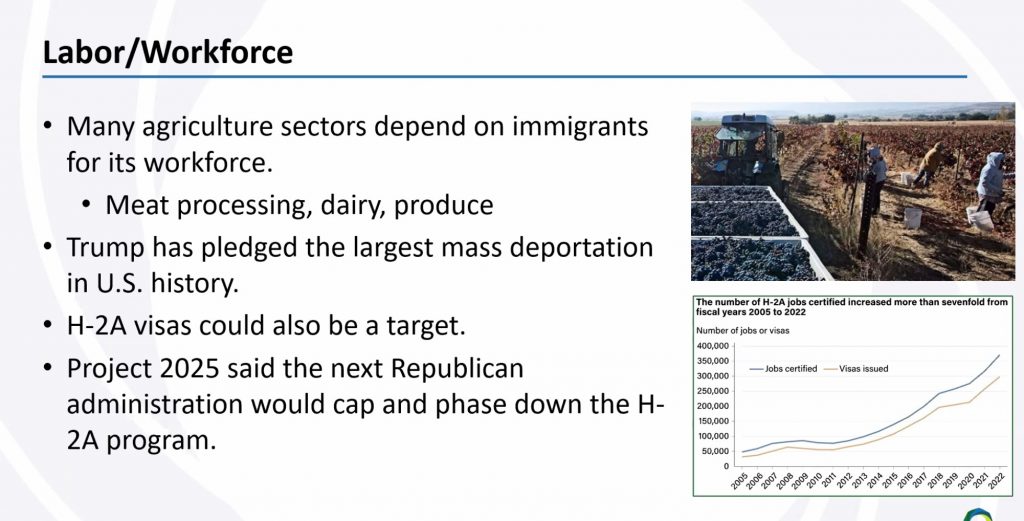
Read Pinion's Blog Article –
Pinion's Ag Outlook: Summarizing Election Impacts for Agriculture
The Missouri Corn Growers Association and Missouri Corn Merchandising Council are continuing the longstanding tradition of awarding seven deserving students $1,000 scholarships in 2025. Applications for the Missouri Corn Scholarship Program are now available online for high school seniors and college juniors pursuing a degree in agriculture.
"Missouri Corn is proud to invest in our outstanding young leaders and the future of our industry," notes Missouri Corn Scholarship Chair Greg Bertz of Mayview, Mo. "We are in a dynamic, ever-evolving industry and need bright minds to continue advancing in both corn production and the larger agriculture community."
Applications for the 2025 Missouri Corn Scholarships are available at www.mocorn.org under the Resources tab. New this year, all applications must be submitted online. To be eligible, students must submit an application, official high school or college transcript, and at least one letter of recommendation by Feb. 14, 2025.
High school senior applicants must be Missouri residents from a Missouri farm or rural area. They must plan to attend a two- or four-year college or university and major in an agriculture-related field. The scholarship funds will apply toward the freshman year of college expenses for high school winners.College applicants must also be Missouri residents from a Missouri farm or rural area and currently a junior enrolled in a four-year college or university majoring in an agriculture-related field. The scholarship funds will apply toward the senior year of expenses for college winners.
The Missouri Corn Scholarship Committee will review the applications, and recipients will be notified by mail on or before April 15, 2025. To learn more about Missouri Corn programs, visit www.mocorn.org.
For too long, the federal government has been a model of inefficiency and wastefulness, squandering hard-earned taxpayer dollars. Bureaucrats and unelected officials in Washington have failed to manage your money responsibly. Under the leadership of President Trump, we have been given a mandate by the people to reform our government, cut unnecessary spending, and run a more efficient and effective federal system.
Since my first term in Congress, my votes and decisions have always been guided by the best interests of Oklahomans. Our state has weathered its fair share of challenges, but we've shown time and again that we are a community that values perseverance, hard work, and fiscal responsibility. In Oklahoma, we balance our budget and ensure that every dollar spent is invested wisely for the benefit of our citizens. I brought these same values with me to Washington, where I've been fighting to ensure the federal government does the same.
Inspired by the new Department of Government Efficiency (DOGE) created by President Trump, I introduced the DOGE Act with the goal of eliminating waste and improving collaboration across federal agencies. One area where we see significant inefficiency is the federal grant process. Right now, multiple agencies have their own separate systems for handling grants, leading to overlap in spending, confusion, and waste. This disjointed approach is outdated and costly. The DOGE Act will create a more streamlined and coordinated process, cutting waste, reducing redundancy, and saving taxpayers millions of dollars. This bill isn't just a small step toward fixing inefficiency, it's a significant leap forward in rethinking how our federal government operates. The DOGE Act aligns with broader efforts by leaders like Elon Musk and Vivek Ramaswamy, who are also committed to reducing wasteful spending and improving the performance of our government. Together, we will ensure that taxpayer money is spent where it's needed most and not lost in bureaucratic red tape. As we enter this new era of governance, with Republicans in full control of the House, Senate, and the Administration, we are uniquely positioned to make meaningful change. In the coming years, my GOP Colleagues and I will continue to push for a stronger, more efficient, and more accountable federal government. We will continue to fight for the values that matter to Oklahomans and all Americans: fiscal responsibility, effective governance, and a government that prioritizes the actual needs of its people. This is just the start.
American Farm Bureau Federation President Zippy Duvall commented today on the U.S. Fish and Wildlife Service proposal to list the monarch butterfly as a threatened species with a 4(d) rule.
"Preserving natural surroundings for America's wildlife has long been a priority for farmers and ranchers. That dedication extends to the monarch butterfly.
"The use of a 4(d) rule acknowledges the work farmers are undertaking to protect the monarch while recognizing the need for flexibility in conservation efforts between diverse regions and crops. This opens the door for an important dialogue about farmers as caretakers and cultivators of the land. Our farm families treasure that responsibility.
"We look forward to fully reviewing the proposed designation and plan to submit robust comments before the final determination. We are also committed to the larger goal of modernizing the Endangered Species Act to protect wildlife and promote voluntary efforts to preserve at-risk species."
Weekly, Oklahoma State University Extension Beef Cattle Nutrition Specialist Paul Beck offers his expertise on the beef cattle industry. This is part of the weekly series known as the "Cow Calf Corner," published electronically by Dr. Derrell Peel, Mark Johnson, and Beck. Today, he talks about drinking water for stocker cattle on wheat pasture.
We finally got some good general rains across Oklahoma in late October and much of the wheat producing areas of the Southern Plains, it looks like we may finally have prospects of grazing wheat pasture this winter. There are areas that may have gotten sufficient rain for forage growth but not enough to refill ponds for adequate drinking water this winter. Water is considered an inexpensive, readily available, and renewable natural resource. However, this is not true if we have to haul water or drill new wells.
The influence of reduced water availability on cattle grazing forages with high moisture content like wheat pasture has been given only cursory attention. Therefore, researchers at OSU looked to investigate the influence of drinking water access on animal performance, forage intake, and blood responses in steers grazing wheat pasture. This research used 10 Angus-cross steers that were either free-choice access to water or 50% of the steer's baseline drinking water intake measured for a week before the experiment began. Steers were individually hand-watered once per day for the entire 35-day experiment.
Average daily gains were 0.47 pounds per day greater for steers given free-choice access to water (2.76 pounds per day) than water-restricted steers (2.29 pounds per day). Reduced access to water did not affect forage intake or blood-packed cell volume. Blood creatinine and albumin concentrations were greater for steers that were deprived of water. On day 7, serum sodium and phosphorus concentrations were significantly higher in water-restricted steers than free-choice steers. Additionally, mean serum phosphorus concentrations were significantly higher in water-restricted steers on day -7 and 7 compared to free-choice steers. Changes in serum component concentrations were indicative of loss of extracellular fluid. Despite the lower ADG in water-restricted steers, performance of steers in both treatment groups were within reported values for cattle grazing wheat pasture, but the increase in performance indicates the importance of fresh clean drinking water for growing calves.
These results indicate that steers deprived of drinking water can effectively utilize free-water in succulent forages with a reduction in performance but no adverse health effects. Access to free-choice drinking water is advisable to minimize the likelihood of acute dehydration and optimize performance gains in stocker cattle grazing wheat pasture.
RON's Dave Lanning has a pre-opening look at today's agricultural Markets.
Click the audio tab below for today's report.

American Farm Bureau Federation President Zippy Duvall commented today on the U.S. Fish and Wildlife Service proposal to list the monarch butterfly as a threatened species with a 4(d) rule.
"Preserving natural surroundings for America's wildlife has long been a priority for farmers and ranchers. That dedication extends to the monarch butterfly.
"The use of a 4(d) rule acknowledges the work farmers are undertaking to protect the monarch while recognizing the need for flexibility in conservation efforts between diverse regions and crops. This opens the door for an important dialogue about farmers as caretakers and cultivators of the land. Our farm families treasure that responsibility.
"We look forward to fully reviewing the proposed designation and plan to submit robust comments before the final determination. We are also committed to the larger goal of modernizing the Endangered Species Act to protect wildlife and promote voluntary efforts to preserve at-risk species."

The Oklahoma Department of Agriculture, Food and Forestry and the USDA Animal and Plant Health Inspection Service (APHIS) have confirmed a positive case of highly pathogenic avian influenza (HPAI) in a second commercial poultry flock in Adair County. HPAI was first detected in a separate Adair County flock on November 30.
"We knew it was possible that HPAI may be detected in more than one flock due to the virus being circulated around the country by wild waterfowl," said Oklahoma State Veterinarian Dr. Rod Hall. "We are continuing to work closely with USDA, poultry producers, and livestock producers to control and mitigate the spread of this disease in our state."
Based on this new detection, an additional control area has been established in Adair and Delaware counties to assess the extent of the infection. Movement of poultry in and out of the established control area is restricted to manage the spread of HPAI.
Flock owners should take every precaution to protect their flock from HPAI by preventing their poultry's exposure to wild birds and any areas where wild birds have been. Biosecurity resources and best practices are available at https://ag.ok.gov/disease-alerts/. If producers suspect signs of HPAI in their flocks, they should contact their veterinarian immediately. Possible cases should also be reported to the Oklahoma Department of Agriculture, Food and Forestry at (405) 522-6141.
According to the U.S. Centers for Disease Control and Prevention, HPAI detections in birds do not present an immediate public health concern. It remains safe to eat poultry products. There is no risk to the food supply, but the affected birds will not enter the food supply system. As a reminder, the proper handling and cooking of poultry and eggs to an internal temperature of 165 ˚F kills bacteria and viruses.
Dietary supplements are meant to bolster a healthy diet lacking in certain areas of nutrition. Supplements are not a replacement for a healthy eating plan. (Photo by Mitchell Alcala, OSU Agriculture)
Dietary supplements can seem like magic pills for good health, but are they as good as they seem? Before starting on a regimen of supplements, Janice Hermann, Oklahoma State University Extension nutrition specialist, said consumers need to know the facts. "Supplements are products marketed to consumers to supplement their diet," she said. "They can help a person maintain or improve overall health. While supplements can be beneficial, there can be some risks in consuming them. And, they shouldn't replace the foods in a healthy diet." The best way for a consumer to get needed nutrients is to eat a well-balanced diet, which can be challenging for some. Those who take medications that decrease their appetite, suffer from a disease that changes the way their body uses nutrients, or follow a very low-calorie diet may consider adding supplements.
"Individuals with mouth pain or issues swallowing may find it hard to consume enough foods to get the recommended amount of nutrients on a daily basis," Hermann said. "In these cases, dietary supplements are a good thing." Consumers must keep in mind that more is not better. Taking supplements in large doses can be dangerous because the body stores minerals and fat-soluble vitamins. Over time, large amounts can build up in the body, which can lead to toxicity. Unlike prescription medications, the Food and Drug Administration doesn't have the authority to approve dietary supplements or their labeling before they are sold to the public. Under the Dietary Supplement Health and Education Act, supplement manufacturers are responsible for ensuring the products they sell are safe and properly labeled. The FDA's role begins once the products enter the marketplace.
Hermann said there can be risks because dietary supplements may contain ingredients that can affect the human body. "Always be alert to the possibility of side effects from supplements that range from less serious to life-threatening, including rash, fatigue, persistent vomiting and diarrhea, joint and muscle pain, chest pain or even stroke." Consumers who think they are experiencing a side effect from a supplement should stop taking it immediately, seek medical care and report the incident to the FDA via the online Safety Reporting Portal. Consumers may also contact their local Consumer Complaint Coordinator. It's important to read product labels and be familiar with the ingredients. Also, talk to a healthcare professional before taking any dietary supplements.
"Simply because they're not prescription medications doesn't mean consumers shouldn't read and follow the label instructions," Hermann said. "Taking supplements can be beneficial, but they can't take the place of a healthy, well-balanced diet."
OSU Extension uses research-based information to help all Oklahomans solve local issues and concerns, promote leadership and manage resources wisely throughout the state's 77 counties. Most information is available at little to no cost.
The U.S. Fish and Wildlife Service today proposed listing the Monarch butterfly as a threatened species. The threatened designation proposal for the monarch butterfly reflects the need for strong conservation measures while maintaining regulatory flexibility that balances species protection with existing land uses.
This proposed listing initiates a 90-day public comment period, ending March 12, 2025. During that time, growers' voices will be critical in shaping the final rule, anticipated to be finalized in late 2025, and any restrictions placed on activities that may affect monarchs.
"As corn growers, we look forward to providing input on how we can protect Monarch butterflies without disrupting critical agricultural activities that help fuel and feed the world," said Illinois farmer and NCGA President Kenneth Hartman Jr.
The Endangered Species Act provides U.S. government agencies the authority to evaluate the conservation status of species and offers legal protections to those listed as endangered or threatened.
In 2014, a petition was accepted to list the monarch butterfly as a threatened species under the Endangered Species Act.
In response to its proposed "threatened" listing of the Monarch butterfly under the Endangered Species Act, the American Soybean Association is calling on the U.S. Fish and Wildlife Service to hold a transparent process based in science to engage the public and gather feedback. The process can take up to a year and allows numerous points for public input. Meantime, ASA encourages soybean farmers to "keep on keeping on" with their conservation efforts in support of Monarchs and their habitats.
Brandon Wipf, ASA board member and soy grower from South Dakota, is ASA's liaison with Farmers for Monarchs, an agriculture-based group with the purpose of protecting the butterfly through conservation. Wipf said of FWS' decision, "Farmers are proud to be part of the solution when it comes to protecting both the environment and species. We have long adopted voluntary conservation practices that support wildlife and specifically, Monarch butterflies. We welcome this opportunity to share our story and ensure any future listing decision is grounded in sound science and allows farmers the flexibility to continue growing soy productively, sustainably, and using practices that help Monarch populations thrive."
The proposed threatened listing decision was long expected. It begins a year-long process to determine if FWS' proposed decision is warranted and what protections may be needed to safeguard Monarch populations. The process, known as a 4(d) rule, allows flexibility to design a suite of appropriate, effective protections. In addition to the 90-comment period announced by FWS that starts Dec. 12, the process includes public hearings and other opportunities for engagement. Importantly, any decision is required by law to be based on the best available science and commercial data, including data regarding conservation efforts already in use. ASA encourages soybean growers to provide feedback on the proposal and share what steps farmers currently take to be good environmental stewards.
Wipf continued, "Most U.S. farms have used various sustainability methods for years and have continued to add additional conservation efforts along the way. For example, many farmers maintain land plots for wildlife food and habitat, including pollinators. And data shows more growers than ever are using practices that promote soil and water health such as reductions in tillage and cover crops. Farmers need to continue doing what they have been doing: being good, proactive stewards of our natural resources, including maintaining conservation practices that help protect Monarch butterflies."
ASA plans to further review the proposed listing decision in the days ahead, will offer public comment, and will encourage individual farmers to do the same.
The Scientific Report of the 2025 Dietary Guidelines Advisory Committee (Scientific Report) has been submitted to the Secretaries of the U.S. Department of Health and Human Services (HHS) and the U.S. Department of Agriculture (USDA) and is now available online. The departments have opened a 60-day comment period to collect input from the public on the Scientific Report. The comments received will be used to inform the development of the next edition of the Dietary Guidelines. Additional information on submitting public comments can be found by clicking here.
Livestock producers and their trade groups are very upset about the push for less red meat and more lentils and other beans. In the Executive Summary- the Committee makes this statement which seems to form the basis for their push in that direction: "Evidence indicates that when reducing butter, processed and unprocessed red meat, and dairy, substitution or replacement with a wide range of plant-based food sources, including plant-based protein foods (e.g., beans, peas, and lentils), whole grains, vegetables, or monounsaturated fatty acid (MUFA)- and PUFA-rich vegetable oils and spreads, is associated with cardiovascular disease risk reduction."
The National Cattlemen's Beef Association is urging the Trump administration to rethink these recommendations:
"Most Americans today already eat beef within the Dietary Guidelines for Americans (DGA) recommended levels for a healthy diet. This reduction is a solution in search of a problem," said NCBA President and Wyoming rancher Mark Eisele. "Public health advice should be based on the totality of scientific evidence. The Dietary Guidelines Advisory Committee ignored robust and rigorous scientific evidence about beef's essential nutrients and the foundational, positive role it plays in health as a preferred protein food in a variety of healthy diets for all Americans."
Obesity and chronic disease are critical health issues in our nation and eating beef is a solution. With a single, 3-ounce serving of lean beef, Americans receive half of their daily protein needs, as well as 10 essential nutrients like iron and B vitamins—all in less than 170 calories. NCBA will continue working hard to ensure the wealth of evidence in support of beef's positive role in health is available to the future secretaries and considered in the final guidelines over the coming months.
"Cutting back on beef isn't going to Make America Healthy Again. There's irrefutable evidence about the valuable role of beef and its nutrients in promoting health," said NCBA Executive Director of Nutrition Science and Registered Dietitian Dr. Shalene McNeill. "We've had 40 years of Dietary Guidelines, and during that time, beef consumption has decreased, yet Americans suffer more from obesity and chronic disease than ever before. Advising Americans to cut back on beef takes us even further in the wrong direction, putting our most vulnerable populations like women, children, teens and the aging at risk. This advice detracts from the real and most basic challenges we face with eating healthfully. Nutrition guidance should encourage Americans to have the flexibility to choose nutrient dense foods and dietary patterns they enjoy within calorie goals."
**********************************************
Meanwhile- the Meat Institute is also seeing red over the Committee report:
"The Meat Institute remains strongly opposed to the Report's recommendation to reduce meat consumption and will urge the agencies to reject it," said Meat Institute President and CEO Julie Anna Potts.
"Meat products provide high quality protein that is critical for developing, maintaining, and repairing strong muscles; vital for growth and brain development in children; beneficial for providing satiety and maintaining a healthy weight; and essential to prevent muscle loss in the aged. Including meat and poultry in the diet allows consumers to more easily fulfill their dietary needs for protein, iron, zinc, copper, vitamin B6, vitamin B12, and potassium – all of which are nutrients the Report has found many Americans are under-consuming.
"For the 95% of Americans who consume meat, the Report's recommendations are tone deaf and unrealistic. Americans need guidance on how meat fits in a healthy diet. Directives from out-of-touch academics to eat legumes and avoid the nutrient-dense foods they love does not foster improved health and fails to account for the central role of meat within America's cultural diversity. The Report's recommendations fail to provide attainable nutritional guidance by marginalizing one of the most nutrient dense, accessible, and culturally relevant foods in the American diet."
*********************************************
The dairy industry is happier with the recommendation. This statement is from the National Milk Producers Federation:
"NMPF thanks the Dietary Guidelines Advisory Committee for recognizing dairy's important role in a healthy diet and its continued recommendation of three servings of dairy for Americans two years and older.
"Throughout this process, the committee looked carefully at the nutrition dairy products provide. The committee's scientific review showed that reducing or eliminating dairy from the diet leads to undernourishment in key nutrients for millions of Americans. The review also made clear that expanding the food group to include additional plant-based alternative beverages outside of fortified soy is not supported by scientific evidence. Specifically, the committee noted "the direct substitution of plant-based milk alternatives for cow's milk within the patterns may introduce unintended consequences for meeting other nutrient recommendations and may vary by product selected." This is especially important, as the dietary guidelines greatly affect the food options available to children through school meals and other nutrition programs.
"NMPF also thanks the committee for acknowledging that dairy is an equitable option that provides accessible and affordable sources of essential nutrients to everyone, and that lactose-free and lactose-reduced dairy foods can provide those same nutrients for people who may not be able to tolerate regular dairy.
"We are disappointed that the committee only recommends consumption of unflavored milk, especially as they acknowledged that flavored milk contains beneficial nutrients and did not explicitly conclude any connection between flavored milk consumption and obesity risk.
"It is reassuring that the committee came to multiple conclusions supporting dairy that are backed by decades of scientific evidence. We encourage the agencies to look further into recent science supporting the benefits of whole milk in the diet. The committee found evidence that substituting higher-fat dairy with lower-fat dairy showed no association with cardiovascular disease morbidity, and it also found evidence of positive benefits for growth and bone health specifically related to whole milk consumption by young children. We see these conclusions as positive steps. We will continue to advocate for consideration of full-fat dairy in the final dietary guidelines expected to be released next year."
The Oklahoma House of Representatives today added to its transparency portal a government efficiency survey intended to root out duplication of services, waste and inefficiencies in state government.
This initiative piggybacks on the federal effort to eliminate government waste through the newly-created federal Department of Government Efficiency (DOGE).
"We will work hand-in-hand with President-Elect Trump and our federal delegation on broader efforts to make government more efficient with DOGE," said House Speaker-Elect Kyle Hilbert, R-Bristow. "We want to ensure our state government is working as efficiently and cost-effectively as possible. As lawmakers, we want the assistance of Oklahomans who have first-hand experience with duplicative and wasteful spending of taxpayer dollars."
Oklahomans can enter any examples they have experienced of state governmental waste or duplication into the easy-to-use portal, which will be submitted to House budget leaders for review to be utilized during legislative budget hearings and the crafting of the FY26 state budget.
"We know Oklahomans get frustrated every day with the inefficiency of government, and we need their help to root out the most egregious examples so we can eliminate unnecessary expenditures," said Rep. Trey Caldwell, R-Lawton, who will serve as House Appropriations Chairman for the 60th Legislature. "The more efficient we can become, the more we can invest in critical government services and pursue lowering the overall tax burden for all Oklahomans."
Constituents can file government waste complaints online by entering some demographic information, the issue area their example encompasses, and details of waste or inefficiencies.
"We are confident we will get examples of inefficiency that we likely would not have known about otherwise," said Rep. John Kane, R-Bartlesville, who will serve as Vice Chairman of the House Appropriations Committee this upcoming session. "Every January we have an opportunity to walk through budget requests with state agencies, and we will have the ability to ask about these constituent submissions directly in an effort to make government as efficient and effective as possible."
The portal is live today, and Oklahomans can immediately start entering examples of waste they have already encountered or will see in the future.
"We hope to capitalize on the momentum we are seeing on the federal level with the efforts of President Trump at DOGE, and the national priority they have set to reduce waste," Hilbert said. "Oklahoma has the opportunity to align with these efforts and lead at the state and local level as we seek best practices and frameworks for auditing and reducing waste in government spending."
The government efficiency survey may be accessed via the homepage of the House website, okhouse.gov, similar to the House Budget HQ, which was launched in the 2024 session and updated regularly. All submitted agency FY26 budget requests have been updated and can be viewed in the portal.
The Meat Institute today released the following statement regarding the Scientific Report of the 2025 Dietary Guidelines Advisory Committee (Report):
"The Meat Institute remains strongly opposed to the Report's recommendation to reduce meat consumption and will urge the agencies to reject it," said Meat Institute President and CEO Julie Anna Potts.
"Meat products provide high quality protein that is critical for developing, maintaining, and repairing strong muscles; vital for growth and brain development in children; beneficial for providing satiety and maintaining a healthy weight; and essential to prevent muscle loss in the aged. Including meat and poultry in the diet allows consumers to more easily fulfill their dietary needs for protein, iron, zinc, copper, vitamin B6, vitamin B12, and potassium – all of which are nutrients the Report has found many Americans are under-consuming.
"For the 95% of Americans who consume meat, the Report's recommendations are tone deaf and unrealistic. Americans need guidance on how meat fits in a healthy diet. Directives from out-of-touch academics to eat legumes and avoid the nutrient-dense foods they love does not foster improved health and fails to account for the central role of meat within America's cultural diversity. The Report's recommendations fail to provide attainable nutritional guidance by marginalizing one of the most nutrient dense, accessible, and culturally relevant foods in the American diet."
About the Meat Institute
The Meat Institute represents the full community of people and companies who make the majority of meat American families rely on every day. The Meat Institute's hands-on regulatory and technical expertise, proactive advocacy, unique convening power, collaboration within and beyond animal agriculture, and sector-leading continuous improvement initiatives drive relationships and resources that ensure meat continues to be a vital, trusted pillar of healthy diets and thriving communities for generations to come. To learn more, visit: MeatInstitute.org.
The U.S. Department of Agriculture (USDA) today announced a $1.13 billion investment to support local and regional food systems, building upon the Department's previous investments in the Local Food Purchase Assistance Cooperative Agreement (LFPA) and Local Food for Schools (LFS) programs.
This round of funding, announced on October 1, will allow states, territories, and federally recognized Tribes to purchase wholesome, locally produced foods for distribution within their communities to emergency food providers, schools, and child care centers. Those interested in applying for this round of LFS, which now includes funding for child care centers, can visit the LFS website. Those wishing to participate in this round of LFPA can visit the LFPA website. Producers wishing to receive information about becoming a vendor for LFPA or for LFS should contact their respective state, territory, or Tribal purchasing authorities.
"These programs expand on the prior achievements of USDA's LFPA and LFS programs and carry them into 2025, assuring local farmers, families, and communities that they will continue to get the help they need," said USDA Under Secretary Jenny Lester Moffitt. "The programs reaffirm our commitment to bolstering local economies, ensuring food security, and fostering resilient agricultural communities nationwide."
"USDA believes that a healthier future for our country starts with our children," said Cindy Long, USDA's Deputy Under Secretary for Food, Nutrition and Consumer Services. "We are excited to build on these successful collaborations that connect schools and emergency food organizations with nutritious food from local farmers and producers by expanding the model to child care facilities for the first time. Families can feel good knowing their kids are eating food that was grown right in their own community."
USDA will allocate up to $471.5 million for states and territories to purchase local, unprocessed, or minimally processed domestic foods for use by schools participating in the National School Lunch and/or School Breakfast Programs, and up to $188.6 million for use in child care facilities participating in the Child and Adult Care Food Program. Additionally, USDA will allocate up to $471.5 million for states, territories, and Tribal governments to use in local feeding programs, including food banks, schools and other organizations that reach underserved communities. Of that, $100 million will go to Tribal governments.
Conceived in response to the COVID-19 pandemic, the LFPA, LFPA Plus, and LFS programs have invested over $1 billion into local food purchases to date. Through the LFPA programs, USDA has provided $900 million in funding to 50 states, the District of Columbia, four territories, and 84 Tribal governments, sourcing foods from over 8,000 local producers, with more than 5,000 identified as underserved. This wholesome food has gone to 7,900 food banks, food pantries, and communities across America. Additionally, LFS has awarded up to $200 million for states and territories to purchase domestic, local foods for use in their National School Lunch and School Breakfast Programs. These collaborations between the states, school systems, and local producers have established many new supply-chain partnerships, and enabled states to re-envision the school meal and what it can do for both students and local, small, and underserved farmers. Together, the LFPA and LFS programs have strengthened food systems, expanded local and regional markets, and are helping to build a fair, competitive, and resilient food supply chain.
Today's notice of funding will continue this vital work and provide an additional $1.13 billion to support local agriculture, schools, and feeding programs.
USDA touches the lives of all Americans each day in so many positive ways. In the Biden-Harris Administration, USDA is transforming America's food system with a greater focus on more resilient local and regional food production, fairer markets for all producers, ensuring access to safe, healthy and nutritious food in all communities, building new markets and streams of income for farmers and producers using climate smart food and forestry practices, making historic investments in infrastructure and clean energy capabilities in rural America, and committing to equity across the Department by removing systemic barriers and building a workforce more representative of America. To learn more, visit www.usda.gov.
Rep. Jay Steagall, R-Yukon, today filed legislation to phase out Oklahoma's personal and corporate income taxes over a decade, with the goal of eliminating the tax entirely by 2035.
House Bill 1009 would reduce the personal income tax rate by 0.00475% annually and the corporate income tax rate by 0.004% annually over 10 years. Steagall had filed a nearly identical bill, House Bill 3058, for consideration during the 2024 legislative session.
"Recent polls show that Oklahomans overwhelmingly support the elimination of the state income tax, an effort for which I have filed legislation in the past two years and filing once again for the 60th Legislature," Steagall said. "The state income tax is a clear violation of our own state constitution and I will continue to pursue righting this wrong in the upcoming session."
Steagall pointed to Article 2, Section 2 of the Oklahoma Constitution, which declares "all persons have the inherent right to life, liberty, the pursuit of happiness, and the enjoyment of the gains of their own industry." He said income taxes go against the foundation of the state constitution and encroach on Oklahomans' liberties.
The state income tax was created statutorily in 1915. Stegall noted that the gradual reduction over a decade would give the Legislature ample opportunity to act on tax reform, a move he said was "much-needed."
"NMPF thanks the Dietary Guidelines Advisory Committee for recognizing dairy's important role in a healthy diet and its continued recommendation of three servings of dairy for Americans two years and older.
"Throughout this process, the committee looked carefully at the nutrition dairy products provide. The committee's scientific review showed that reducing or eliminating dairy from the diet leads to undernourishment in key nutrients for millions of Americans. The review also made clear that expanding the food group to include additional plant-based alternative beverages outside of fortified soy is not supported by scientific evidence. Specifically, the committee noted "the direct substitution of plant-based milk alternatives for cow's milk within the patterns may introduce unintended consequences for meeting other nutrient recommendations and may vary by product selected." This is especially important, as the dietary guidelines greatly affect the food options available to children through school meals and other nutrition programs.
"NMPF also thanks the committee for acknowledging that dairy is an equitable option that provides accessible and affordable sources of essential nutrients to everyone, and that lactose-free and lactose-reduced dairy foods can provide those same nutrients for people who may not be able to tolerate regular dairy.
"We are disappointed that the committee only recommends consumption of unflavored milk, especially as they acknowledged that flavored milk contains beneficial nutrients and did not explicitly conclude any connection between flavored milk consumption and obesity risk.
"It is reassuring that the committee came to multiple conclusions supporting dairy that are backed by decades of scientific evidence. We encourage the agencies to look further into recent science supporting the benefits of whole milk in the diet. The committee found evidence that substituting higher-fat dairy with lower-fat dairy showed no association with cardiovascular disease morbidity, and it also found evidence of positive benefits for growth and bone health specifically related to whole milk consumption by young children. We see these conclusions as positive steps. We will continue to advocate for consideration of full-fat dairy in the final dietary guidelines expected to be released next year."

Sen. Roland Pederson, R-Burlington, has been named to key leadership positions for the upcoming legislative session. Pederson will serve as Chair of the Select Agencies Appropriations Subcommittee, Vice Chair of the Agriculture and Wildlife Committee, and as an Assistant Majority Whip.
"It's an honor to serve in these roles, and I'm grateful for the trust placed in me by Pro Tem Elect Paxton," Pederson said. "Agriculture is a cornerstone of Oklahoma's economy, as Vice Chair of the Agriculture and Wildlife Committee, I look forward to continuing to advocate for policies that support our farmers, ranchers, and rural communities."
As Chair of the Select Agencies Appropriations Subcommittee, Pederson will help oversee funding for critical state agencies, ensuring taxpayer dollars are used efficiently and effectively to meet the needs of all Oklahomans.
In his role as Assistant Majority Whip, Pederson will work with Senate leadership to build consensus and advance legislation that reflects the priorities of Oklahoma citizens. Pederson will begin serving in these roles once the 2025 legislative session begins on Feb. 3.
| ||||||||||||||||||||||||||||||||||||||||||||||||||||||||||||||||||||||||||||||||||||||||||||||||||||||||||||||||||||||||||||||||||||||||||||||||||||||||||||||||||||||||||||||||||||||||||||||||||||||||||||||||||||||||||||||||||||||||||
| ||||||||||||||||||||||||||||||||||||||||||||||||||||||||||||||||||||||||||||||||||||||||||||||||||||||||||||||||||||||||||||||||||||||||||||||||||||||||||||||||||||||||||||||||||||||||||||||||||||||||||||||||||||||||||||||||||||||||||
|

USDA released its December Crop Production and World Agricultural Supply and Demand Estimates (WASDE) reports on Tuesday, and Farm Director KC Sheperd caught up with Allendale's Rich Nelson to talk about the latest agricultural report.
USDA cut corn ending stocks by 200 million bushels (mb), aggressively improving its forecasts for exports and ethanol production. The new ending stocks estimate, 1.738 billion bushels (bb), is 62 mb below the lowest pre-report trade estimate.
According to Nelson, it was the largest decline ever seen in a December report, which are normally relatively quiet. As he explained, fifty mb of that decline was the result of higher corn for ethanol numbers - production numbers are 4% over last year and exports are doing well; however, 150 million bushels were added to exports.
"Even before we hear our new president's official trade policy, USDA came out very confidently and made a clear statement. In other words, they feel like these strong exports on the corn side will last and are valid rather than merely tied to pre-trade policy buying," Nelson explained.
He spoke more on USDA's response to President-elect Trump's expected trade policies and more about the this and the next WASDE report. Click the Listen Bar at the top of the page to hear the complete conversation.
Soybean ending stocks for 2024-25 were left unchanged at 470 mb, while wheat stocks declined 20 mb to 795 MB.
Tuesday's new-crop U.S. ending stocks estimates were bullish for corn, neutral to slightly bearish on soybeans, and slightly bullish for wheat. Meanwhile, world ending stocks estimates from USDA were bullish for corn, neutral to slightly bearish for soybeans, and neutral for wheat.
You can also view the full reports here:
-- Crop Production: https://www.nass.usda.gov/...
-- World Agricultural Supply and Demand Estimates (WASDE): http://www.usda.gov/...
| U.S. ENDING STOCKS (Million Bushels) 2024-25 | ||||||
| Dec | Avg | High | Low | Nov | ||
| Corn | 1,738 | 1,887 | 1,938 | 1,800 | 1,938 | |
| Soybeans | 470 | 471 | 531 | 430 | 470 | |
| Wheat | 795 | 816 | 835 | 787 | 815 | |
| WORLD ENDING STOCKS (million metric tons) 2023-24 | ||||||
| Dec | Avg | High | Low | Nov | ||
| Corn | 316.2 | 314.1 | 314.3 | 313.5 | 314.2 | |
| Soybeans | 112.2 | 112.3 | 112.5 | 112.0 | 112.4 | |
| Wheat | 267.4 | 266.3 | 267.4 | 266.0 | 266.3 | |
| WORLD ENDING STOCKS (million metric tons) 2024-25 | ||||||
| Dec | Avg | High | Low | Nov | ||
| Corn | 296.4 | 303.4 | 305.3 | 300.0 | 304.1 | |
| Soybeans | 131.9 | 132.9 | 135.0 | 132.0 | 131.7 | |
| Wheat | 257.9 | 257.6 | 259.9 | 255.5 | 257.6 | |

The latest episode of "Young Ag Achievers" features Oklahoma State College of Veterinary Medicine student Jaycee Watkins and current ODAFF Ag Youth Council member Alexander Nunez discussing why they are pursuing a career as a veterinarian!
Tap below and give it a listen!
Today, the National Cattlemen's Beef Association (NCBA) reiterated the important role of beef in a healthy diet and responded to the questionable advice published in the Dietary Guidelines Advisory Committee's Scientific Report. Despite a wealth of high-quality scientific evidence that beef has an important role to play in a healthy diet, the committee is advising the U.S. Department of Agriculture (USDA) and U.S. Department of Health and Human Services (HHS) that federal nutrition guidelines include a reduction in red meat consumption.
"Most Americans today already eat beef within the Dietary Guidelines for Americans (DGA) recommended levels for a healthy diet. This reduction is a solution in search of a problem," said NCBA President and Wyoming rancher Mark Eisele. "Public health advice should be based on the totality of scientific evidence. The Dietary Guidelines Advisory Committee ignored robust and rigorous scientific evidence about beef's essential nutrients and the foundational, positive role it plays in health as a preferred protein food in a variety of healthy diets for all Americans."
Obesity and chronic disease are critical health issues in our nation and eating beef is a solution. With a single, 3-ounce serving of lean beef, Americans receive half of their daily protein needs, as well as 10 essential nutrients like iron and B vitamins—all in less than 170 calories. NCBA will continue working hard to ensure the wealth of evidence in support of beef's positive role in health is available to the future secretaries and considered in the final guidelines over the coming months.
"Cutting back on beef isn't going to Make America Healthy Again. There's irrefutable evidence about the valuable role of beef and its nutrients in promoting health," said NCBA Executive Director of Nutrition Science and Registered Dietitian Dr. Shalene McNeill. "We've had 40 years of Dietary Guidelines, and during that time, beef consumption has decreased, yet Americans suffer more from obesity and chronic disease than ever before. Advising Americans to cut back on beef takes us even further in the wrong direction, putting our most vulnerable populations like women, children, teens and the aging at risk. This advice detracts from the real and most basic challenges we face with eating healthfully. Nutrition guidance should encourage Americans to have the flexibility to choose nutrient dense foods and dietary patterns they enjoy within calorie goals."
Background
Every five years, the federal government formulates the Dietary Guidelines for Americans, a foundational document on nutrition that helps inform federal nutrition policies and programs like school lunches.
Now that the Advisory Committee has completed its report, the agencies will evaluate the committee's recommendations and translate that information into the final guidelines. The report is expected to post to the Federal Register tomorrow, and will be open for a 60-day comment period.
Lean beef is a proven healthy choice in a balanced diet. Beef provides essential nutrients and protein with fewer calories than non-meat alternatives. Additionally, research shows that beef is more effective in promoting muscle health than soy-based options. Beef is compatible with hearthealth, plays an important role in managing weight, and supports the nutritional needs of at-risk populations including adolescents, pregnant women, and older adults.
U.S. Department of Agriculture (USDA) Secretary Tom Vilsack today announced that USDA is investing $6.3 billion in rural and Tribal communities across 44 states to expand access to a clean and reliable electric grid, provide safe drinking water and create good-paying jobs.
"The Biden-Harris Administration invests in rural America, because we know strong communities are rooted in their people," Secretary Vilsack said. "These investments will build modern infrastructure that will attract employers to the nation's smallest towns and most remote communities, creating jobs, vibrant Main Streets, and lasting economic growth for the people who live there."
More than 200 projects are being financed to strengthen the nation's infrastructure in rural places, growing the American economy from the middle out and bottom up.
Delivering Clean, Reliable Energy
USDA is providing $5.7 billion in funding through the Electric Infrastructure Loan and Loan Guarantee Program to help utility providers and electric cooperatives build and improve electric infrastructure and smart-grid technologies in 23 states.
These projects will help ensure everyone in rural America has access to reliable electricity to increase economic opportunity and improve quality of life. For example:
Funding will benefit Alabama, Arkansas, Colorado, Florida, Georgia, Indiana, Iowa, Kansas, Kentucky, Maine, Maryland, Minnesota, Missouri, North Carolina, Ohio, Oklahoma, South Carolina, South Dakota, Tennessee, Texas, Vermont, Virginia and Wisconsin.
Strengthening Rural Water Infrastructure
USDA is also investing nearly $642 million today to expand access to clean and reliable drinking water, sanitary waste disposal and storm water drainage for people in 41 states.
The Department is making the investments through the Water and Waste Disposal Loans and Grants program and the Solid Waste Management Grants program.
The agency is helping state and local governments, private nonprofits and federally recognized Tribes build or improve rural wastewater systems. For example:
Funding under both programs will help people living in Alabama, Alaska, Arizona, Arkansas, California, Georgia, Hawaii, Idaho, Iowa, Illinois, Indiana, Kansas, Kentucky, Louisiana, Maine, Maryland, Massachusetts, Michigan, Minnesota, Mississippi, Missouri, Montana, North Carolina, North Dakota, Nebraska, New Hampshire, New Jersey, New York, Ohio, Oklahoma, Oregon, Pennsylvania, South Carolina, Tennessee, Texas, Utah, Vermont, Virginia, Washington, West Virginia and Wisconsin.
Under the Biden-Harris Administration, USDA Rural Development provides loans and grants to help expand economic opportunities, create jobs and improve the quality of life for millions of Americans in rural areas. This assistance supports infrastructure improvements; business development; housing; community facilities such as schools, public safety and healthcare; and high-speed internet access in rural, Tribal and high-poverty areas. Visit the Rural Data Gateway to learn how and where these investments are impacting rural America. For more information, visit www.rd.usda.gov.
USDA touches the lives of all Americans each day in so many positive ways. Under the Biden-Harris Administration, USDA is transforming America's food system with a greater focus on more resilient local and regional food production, fairer markets for all producers, ensuring access to safe, healthy and nutritious food in all communities, building new markets and streams of income for farmers and producers using climate-smart food and forestry practices, making historic investments in infrastructure and clean energy capabilities in rural America, and committing to equity across the Department by removing systemic barriers and building a workforce more representative of America. To learn more, visit www.usda.gov.
To subscribe to USDA Rural Development updates, visit GovDelivery subscriber page.
The NFIB Small Business Optimism Index rose by eight points in November to 101.7, after 34 months of remaining below the 50-year average of 98. This is the highest reading since June 2021. Of the 10 Optimism Index components, nine increased, none decreased, and one was unchanged. Following last month's record high of 110, the Uncertainty Index declined 12 points in November to 98.
"The election results signal a major shift in economic policy, leading to a surge in optimism among small business owners," said NFIB Chief Economist Bill Dunkelberg. "Main Street also became more certain about future business conditions following the election, breaking a nearly three-year streak of record high uncertainty. Owners are particularly hopeful for tax and regulation policies that favor strong economic growth as well as relief from inflationary pressures. In addition, small business owners are eager to expand their operations."
Although state-specific data isn't available, NFIB State Director Jerrod Shouse noted that the surge in small business owners' optimism was good news for the economy.
"Our small business owners are anticipating a real shift in economic policy that helps lower costs and promotes greater opportunity. Feeling more hopeful and certain about the future, Main Street is ready to expand its operations, create more jobs, and meet customers' demands. That's good news for Oklahoma's economy."
Key findings include:
· The net percent of owners expecting the economy to improve rose 41 points from October to a net 36%, the highest since June 2020. This component had the greatest impact on the overall increase in the Optimism Index.
· The net percent of small business owners believing it is a good time to expand their business rose eight points to a net 14%. This is the highest reading since June 2021.
· The net percent of owners expecting higher real sales volumes rose 18 points to a net 14% (seasonally adjusted), the highest reading since February 2020.
· A net 5% of owners reported paying a higher rate on their most recent loan, unchanged from October's lowest reading since January 2022.
· Twenty-eight percent (seasonally adjusted) plan capital outlays in the next six months, up six points from October. This is the highest reading since January 2022.
· The frequency of reports of positive profit trends was a net negative 26% (seasonally adjusted), up seven points from October and the highest reading of this year.
· Twenty percent of owners reported that inflation was their single most important problem in operating their business (higher input and labor costs), down three points from October and surpassing labor quality as the top issue by one point.
· Thirty-six percent (seasonally adjusted) of all owners reported job openings they could not fill in the current period, up one point from October.
As reported in NFIB's monthly jobs report, a seasonally adjusted 36% of all small business owners reported job openings they could not fill in November, up one point from October. Of the 55% of owners hiring or trying to hire in November, 87% reported few or no qualified applicants for the positions they were trying to fill.
Fifty-four percent of owners reported capital outlays in the last six months, unchanged from October. Of those making expenditures, 39% reported spending on new equipment, 22% acquired vehicles, and 14% improved or expanded facilities. Twelve percent spent money on new fixtures and furniture and 7% acquired new buildings or land for expansion. Twenty-eight percent (seasonally adjusted) plan capital outlays in the next six months, up six points from October and the highest reading since January 2022.
A net negative 13% of all owners (seasonally adjusted) reported higher nominal sales in the past three months, seven points better than October's worst reading since July 2020. The net percent of owners expecting higher real sales volumes rose 18 points to a net 14% (seasonally adjusted), the highest reading since February 2020.
The net percent of owners reporting inventory gains rose two points to a net negative 7%, seasonally adjusted. Not seasonally adjusted, 10% reported increases in stocks and 16% reported reductions.
A net negative 2% (seasonally adjusted) of owners viewed current inventory stocks as "too low" in November, unchanged from October. A net 1% (seasonally adjusted) of owners plan inventory investment in the coming months, up three points from October.
The net percent of owners raising average selling prices rose three points from October to a net 24% seasonally adjusted. Twenty percent of owners reported that inflation was their single most important problem in operating their business, down three points from October and surpassing labor quality as the top issue by one point. Unadjusted, 11% reported lower average selling prices and 32% reported higher average prices.
Price hikes were the most frequent in the wholesale (50% higher, 4% lower), finance (46% higher, 4% lower), retail (43% higher, 3% lower), and services (35% higher, 10% lower) sectors. Seasonally adjusted, a net 28% plan price hikes in November.
Seasonally adjusted, a net 32% reported raising compensation, up one point from October and a historically very strong reading. A seasonally adjusted net 28% plan to raise compensation in the next three months, up five points from October and the highest reading of the year.
Reports of labor quality as the single most important problem for business fell one point from October to 19%. Labor costs reported as the single most important problem for business owners rose three points to 11%, only two points below the highest reading of 13% reached in December 2021.
The frequency of reports of positive profit trends was a net negative 26% (seasonally adjusted), up seven points from October and the highest (least negative) reading of this year. Among owners reporting lower profits, 32% blamed weaker sales, 18% blamed the rise in the cost of materials, 13% cited labor costs, and 9% cited lower selling prices. For owners reporting higher profits, 53% credited sales volumes, 21% cited usual seasonal change, and 13% cited higher selling prices.
Four percent of owners reported that all their borrowing needs were not satisfied. Twenty-six percent reported all credit needs met and 62% said they were not interested in a loan. A net 7% reported their last loan was harder to get than in previous attempts. Five percent of owners reported that financing was their top business problem in November, up two points from October.
The NFIB Research Center has collected Small Business Economic Trends data with quarterly surveys since the fourth quarter of 1973 and monthly surveys since 1986. Survey respondents are randomly drawn from NFIB's membership. The report is released on the second Tuesday of each month. This survey was conducted in November 2024.
On Tuesdays, Senior Farm and Ranch Broadcaster, Ron Hays, visits with Ben Hale of Western Livestock Auctions as he talks about the latest in the markets and more. Established in 1995, Western has grown into a multi-generational family-owned and operated business and stands as a symbol of tradition, excellence, and a deep-rooted passion for the cattle industry. Western Livestock Auctions operates the Western Livestock Commission Firm- selling cattle on Mondays and Tuesdays. They also operate the livestock auction markets in Woodward, Comanche and Knoxville, Iowa.
Yesterday was the next-to-last sale for Western Livestock Auctions before the holiday season, and more than 13,000 head were sold at it, compared to 8,400 a year ago.
"I think it was the biggest sale we have had this year," Hale said. "As good as this market has been for the last four weeks, we have pulled some of these cattle forward. There is a lot of wheat out there, but there are still some areas that don't have wheat. I think those guys saw those prices and decided to take it."
The overall market was a bit lower than it has been, but not by much. Hale believes some of the buyers grew weary of the higher prices seen over the past three weeks and pulled back some. In addition, the special Angus sale last week gave them a chance at higher quality cattle which may have made this week's look lesser in comparison.
"I had some good seven-weight yearling steers that brought a lot of money – up in the sixties, which is still good on the better-quality kind," Hale said. "The calf deal is still real good on a good one. They called it three to seven lower and the calves eight to ten, but those cattle still dollar-out a tremendous amount of money. It is still an extremely good market."
The sale on Monday, December 16 will be the last sale until January, and Hale expects more big numbers to sell, then. Click the listen bar at the top of the page to listen to the complete conversation.
Hale can be contacted at 940-631-2333. Check out more about the marketing options that Western offers by clicking here.
Blayne Arthur, Oklahoma Secretary of Agriculture, Food, & Forestry will give the luncheon keynote address at the Woodward Ranch Conversation to be held on December 18, 2024, at the Woodward County Event Center. Coleta Bratten, Chair, High Plains Resource Conservation & Development Council (HPRCD) made the announcement today. She said "We are honored to have Secretary Arthur speak at the Ranch Conversation lunch. She is a distinguished member of the Governor's cabinet, serves on the Oklahoma State University Board of Regents, and her work has led to significant advancements in Oklahoma's agriculture." Bratten added that "The afternoon keynote speaker will be Trey Lam, Executive Director of the Oklahoma Conservation Commission (OCC). Under Mr. Lam's leadership the programs and services offered by OCC have grown exponentially, and his work in new program development leads that nation."
The Bank of Western Oklahoma, HPRCD, Woodward County Commissioners, Woodward County Conservation District, Comanche Pool Prairie Resource Foundation (Coldwater, Kansas), and the Oklahoma Conservation Commission have joined with the USDA-NRCS to sponsor the Conversation with NRCS providing funding for the meeting. The meeting will be held at the Woodward County Event Center on the Woodward County Fairgrounds, with registration beginning at 9:30 am on the 18th with the meeting starting at 10:00 am and concluding by 3:30 pm. Bratten said that "HPRCD is well known for using Ranch Conversations as a way to bring agricultural producers, rural people, and agencies that deliver programs together to provide information, answer questions, and exchange ideas." HPRCD first created and used Ranch Conversations in the early 2000s to bring stakeholders with different interests together to seek solutions to avoid listing the Lesser Prairie Chicken and other at-risk species in the region as endangered. Bratten said, "The Council was opposed to any unnecessary regulations that might be forced upon landowners by a government action. Ranch Conversations were successful in delaying the listing for over 20 years." She added "this is a rare opportunity for producers and community leaders to meet and hear speakers from several agencies and learn about their many programs in only one day."
The focus of the Woodward County Ranch Conversation will be to provide information to producers and community leaders about state, federal, and private foundation programs and funding opportunities and other assistance that might be available to them. "Bratten said that the pandemic has altered the way we were accustomed to doing business and we believe that there is a need for outreach meetings where agency leaders can meet face-to-face with agricultural producers and provide firsthand information about current programs." There is no charge to attend the Conversation with lunch provided by the Bank of Western Oklahoma.
Producers will hear speakers from USDA-Natural Resources Conservation Service, USDA-Farm Service Agency, USDA-Agricultural Research Service, USDA-Risk Management Agency, Oklahoma Conservation Commission, US Fish & Wildlife Service, and the Oklahoma Department of Wildlife Conservation, and the Barn Foundation. USDA-Rural Development will present information about programs that are available to help communities grow and improve their local community. Kenny Knowles, well known Ellis County Rancher will speak from the landowner perspective. Knowles said, "This is a rare opportunity to meet leaders from all agencies who provide services and programs to rural Oklahoma."
High Plains RC&D is a non-profit corporation that serves a federally authorized Resource Conservation & Development region that includes Beaver, Cimarron, Dewey, Ellis, Harper, Texas, Woods, and Woodward Counties. The RC&D, based in Buffalo, has served this region for 32years and has been responsible for creating many new jobs and businesses utilizing natural resources, and adding over $2 billion in economic impact. High Plains RC&D has been recognized regionally and nationally for its work in creating businesses using Eastern Red Cedar, and for its support of wildlife programs. High Plains RC&D was a partner in the Prairie States Coalition, which was a five-state initiative that was named one of the national models for rural economic recovery by the US Economic Development Administration. Ranch conversations will be held throughout the High Plains region in the coming months.
Agricultural producers and community leaders from neighboring states are encouraged to attend. For those planning to attend the lunch, please RSVP by phone to: (580) 256-5320 Ext 108 or e-mail to tom.lucas717@gmail.com by December 16, 2024.
The Scientific Report of the 2025 Dietary Guidelines Advisory Committee is now available on DietaryGuidelines.gov. The report contains the 2025 Dietary Guidelines Advisory Committee's (Committee) independent, evidence-based findings and advice to the U.S. Department of Health and Human Services (HHS) and the U.S. Department of Agriculture (USDA). The Scientific Report, alongside public comments and federal agency input, will inform the two departments as they develop the Dietary Guidelines for Americans, 2025-2030, which is expected to be published in late 2025.
"The Dietary Guidelines serve as the foundation for national nutrition programs, standards, and education. They provide health professionals with guidance and resources to assist the public in choosing an overall healthy diet that works for them. And they help HHS, USDA, and others in the federal government to tailor our policies to best serve the American people," said HHS Secretary Xavier Becerra. "This report will help to ensure that the next edition of the Dietary Guidelines is based on current scientific evidence and medical knowledge, and that future guidelines factors in socioeconomic status, race, ethnicity, and culture. I want to thank the Committee for all their hard work, as well as the American people for sharing their voice with us in this process. Together, we can help Americans enjoy a healthy diet, and the health benefits that are possible as a result."
The 2025 Dietary Guidelines Advisory Committee's work is notable for its intentional focus on health equity to ensure that factors such as socioeconomic position, race, ethnicity, and culture were considered to the greatest extent possible. The Committee also expanded the scope of evidence reviewed beyond recommended amounts and types of foods to also include strategies to effectively promote healthy dietary patterns across the lifespan.
"USDA and HHS are excited to begin the next phase to develop the Dietary Guidelines for Americans, as we all work together to ensure that children, individuals, and families across the country have access to nutritious, safe and affordable food," said USDA Secretary Tom Vilsack. "We are appreciative of the independent Committee's scientific expertise, dedication, and thoughtful deliberation and collaboration. We are also thankful to the organizations and individuals who submitted public comments and provided an essential voice to the Committee's process, and we look forward to receiving additional public comments on the findings released with this Scientific Report.
HHS and USDA will open a 60-day public comment period and encourage the public to provide written comments on the Committee's Scientific Report. The departments will also hold a public meeting on January 16, 2025, to listen to oral comments from the public on the Scientific Report. Pre-registration is required for the public meeting. More information on the public meeting and comment period is available on DietaryGuidelines.gov.
The Committee's Scientific Report will be a key resource considered by HHS and USDA as the two departments jointly develop the next edition of the Dietary Guidelines for Americans, the nation's go-to source for nutrition guidance. The Dietary Guidelines for Americans is updated every five years and serves as the cornerstone of federal nutrition programs and policies, providing food-based recommendations to help prevent diet-related chronic diseases and promote overall health.
The Scientific Report is the result of a multi-year process that reflects HHS and USDA's commitment to transparency. In 2022 HHS and USDA invited members of the public to submit comments on the proposed scientific questions to be examined by the Committee. In addition, all members of the Committee were nominated by the public. To increase public engagement, live and recorded access to each of the Committee's seven public meetings has been available online via videocast, and HHS and USDA encouraged the public to submit written and oral comments to the Committee for more than 18 months throughout the Committee's deliberative process. The Committee received approximately 9,900 public comments, more than any other prior Committee, which were used to inform its evidence review and the development of its Scientific Report.
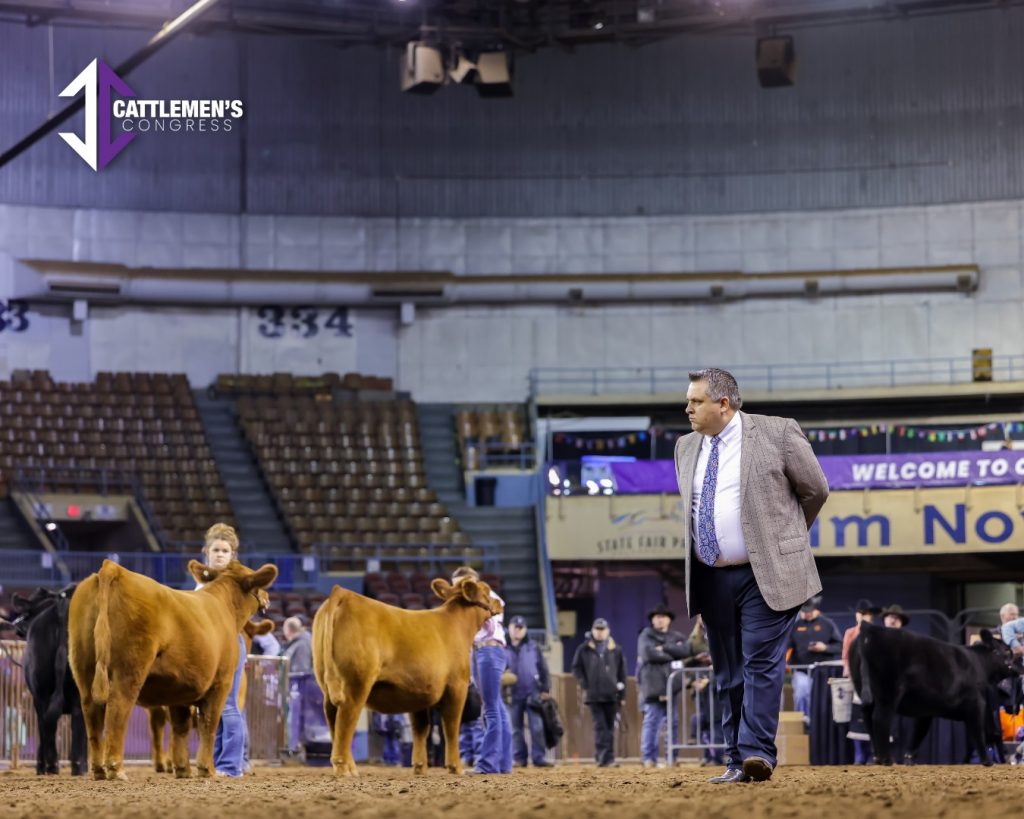
The Cattlemen's Congress is a stock show for cattlemen and women managed by cattlemen and women. The Cattlemen's Congress is an opportunity for breeders across North America to showcase their top genetics and connect with fellow beef producers in a central location, in the heart of cattle country. Set for January 4 – 16, 2025, in Oklahoma City, the event is not one to miss.
Senior Farm and Ranch Broadcaster, Ron Hays, is catching up with Chairman of the Board for Cattlemen's Congress Tyler Norvell in this episode of Beef Buzz, talking about the fifth annual Cattlemen's Congress and the great success it has become in the five years since its inception.
To Norvell, the success of the show five years later is unreal. "I am sitting in the same chair I was in when Bob Funk and Jarold Callahan called me in the fall of 2020 and told me that we were going to try to do this deal, and I thought there was no way it would ever happen. If it did, it would be a one-year deal, but five years later, here we are.
"It has been awesome to be a part of. It's been incredible for the cattle industry, and incredible for our state."
According to Norvell, the first and second events held in 2021 and 2022, respectively, were two of the largest cattle shows in the history of the United States. The entry numbers experienced a slight reduction for the next couple of years, but the upcoming show is promising to be bigger.
"This tells me that we are here to stay," Norvell said.
Even with the reduced numbers, the Cattlemen's Congress remains the largest cattle show in the world by a significant margin, although Norvell was sure to note, the North American International Livestock Exposition in Louisville, Kentucky, is the largest purebred livestock show.
The impressive numbers are not only garnered by the number of participating cattle breeders or numbers of cattle but also the increasing number of diverse cattle breeds that are exhibited at the premier event.
"I'm really proud of Bray Haven, who is the executive vice president of Cattleman's Congress, and the job he has done recruiting new breeds," Norvell said. "That is where we continue to grow. The Angus, Hereford, Simmental, and Shorthorn – they stay strong, but we continue to get calls from other breeds that are trying to grow by getting in new markets and exposing their breeds. Those have increased each year."
The Cattlemen's Congress is the only show of its caliber that offers a Supreme just for the American breed division. Norvell shared, "This year, we have seen our American cattle grow, and the diversity that we have brought here has been awesome for the cattle industry and for those particular breeds that may not get the traditional exposure that other breeds have."
As a show for cattlemen and cattlewomen and put on by cattlemen and cattlewomen, the diverse breeds exhibited at the event only have one qualifying requirement – that they are beef cattle only.
"There is no other show in the world that brings the cattle industry together like we do here, and I think that is why people look forward to it," Norvell stated. "Not that they don't love other species and the people in those species, but they do love a gathering of cattlemen only. It makes it pretty neat."
With the collection of beef breeds, the Cattlemen's Congress also features several purebred cattle sales – nineteen to be exact!
"The amount of sales that we have here and the amount of money that changes hands, whether it be genetics or live cattle are second to none," Norvell said. "We want to continue to grow that. I took for granted how important that was to the industry until the fall of 2020, and Jarold Callahan made it very clear to me that this is vital. It's not optional to put this on. It has to happen for the backbone of the financial well-being of the purebred industry. We are going to continue to be committed to that to make sure cattle producers have the opportunity to market their genetics here each year at the Cattlemen's Congress and that we do our part each year to try to get buyers here.
"That's why I'm super excited about the commercial heifer sale that we are going to have this year, that Matt Sims is heading up and Bray has done a lot of work on. The interest in that has been sky-high, and I couldn't be more excited to be adding that event this year."
The Beef Buzz is a regular feature heard on radio stations around the region on the Radio Oklahoma Ag Network and is a regular audio feature found on this website as well. Click on the LISTEN BAR at the top of the story for today's show and check out our archives for older Beef Buzz shows covering the gamut of the beef cattle industry today.

The California Energy Commission (CEC) recently published the project report by AgMonitor Inc. (AgMonitor) on "Programmable Irrigation and Fertigation to Increase Energy Efficiency and Grid Stability in Disadvantaged Agricultural Communities." The AI-powered platform integrates multiple data sets and domain expertise to boil down complex processes, such as scheduling irrigation or maintaining solar panels, into simple answers in English or Spanish across farming operations.
Since 2020, farms in California have faced increases in their cost for water, labor, electricity and fertilizer. Finding cost-effective solutions to help farms remain productive and competitive is vital for California's continued growth and success. Farm sites that participated in the AgMonitor project from 2019 to 2023 improved precision in irrigation from 70% on average to over 90%.
"This EPIC demonstration project is a win for both the agricultural and electricity sectors. AgMonitor exemplifies how public clean energy research funds can support the innovation of new tools with the potential to unlock tremendous energy and non-energy benefits when deployed at scale. Using advanced data analysis to improve energy, water, and fertilizer efficiency not only lowers costs and resource consumption, but also creates new revenue streams for farmers through load flexibility," summarized Jonah Steinbuck, Director of Energy Research and Development Division at the California Energy Commission.
AgMonitor discovered that the precision acquired by the farming operation could be leveraged to irrigate consistently off-peak and save up to 30% on their electricity bills. Peak penalties to operate large appliances from 4pm to 9pm in the summer have increased as the California grid integrates more renewable energy and maintains operation during fire season. AgMonitor received follow-on funding from the CEC to help with the heat wave in 2022 and shaved over 10 Megawatts.
Olam Farming Inc. deployed the solution at multiple ranches in San Joaquin Valley. "We like working with AgMonitor because they understand agriculture," explained Zac Ellis, Director of Agronomy at Olam Farming Inc. "They provided options to irrigate off-peak at a ranch part of the Permanent Load Shifting (PLS) program. The results speak for themselves: we saved $100,000 in one summer."
This is the second time that AgMonitor leads a group of technology vendors and academic universities to transfer at scale new technologies to farming communities. The work done under previous EPIC grants from 2015 to 2018 has been used by multiple agencies including the California Department of Food and Agriculture (CDFA). Recently, the State Water Resources Control Board (SWRCB) increased the number of accepted methods to measure groundwater extraction, following a three-month review of the work of AgMonitor and its university partners that was published by the CEC.
"This is excellent news that will provide all growers with a low-cost, accurate way to measure their water use and provide water accounting for SGMA (Sustainable Groundwater Management Act) purposes," said Don Cameron of Terranova Ranch and President of CDFA. Terranova Ranch pioneered on-farm groundwater recharge to make groundwater basins sustainable. The company deployed the AgMonitor platform to quantify water reduction during dry years and recharge during wet years. "Data is great but getting the answer is really what matters." Power meters and satellite images provide a low-cost alternative when installing flow meters is expensive or not physically possible.
Redundancy in data was key for the groundwater recharge project of Don Cameron in 2023. He was able to document over 18,000 acre-feet banked underground to erase a 20-feet drop in the aquifer during the drought from 2020 to 2022. "It is important to give tools to growers to save money (operational efficiency) while they transition to renewable sources of energy and balance water resources (resource efficiency)," explained Olivier Jerphagnon, Founder and CEO at AgMonitor.
About Agmonitor Inc. (AgMonitor)
Agmonitor Inc. (https://agmonitor.com) provides a Software-as-a-Service to assist leading growers and food processors in their daily operations to increase yield while reducing energy, fertilizer and water inputs. The company has offices in San Mateo and Fresno to bridge the gap between Silicon Valley and Central Valley. Unlike other vendors that require the installation of new hardware, we provide value on day one using existing public and private data on our platform backed by six patents. AgMonitor enables farms to evaluate the financial and environmental impact of new projects thanks to historical benchmarks and track the return on investment. It is perfectly suited for growers who want to increase their profit margins and pass a sustainable farm onto the next generation.
About the California Energy Commission
The California Energy Commission is the state's primary energy policy and planning agency. The agency was established by the California Legislature through the Warren-Alquist Act in 1974. It has seven core responsibilities: advancing state energy policy, encouraging energy efficiency, certifying thermal power plants, investing in energy innovation, developing renewable energy, transforming transportation, and preparing for energy emergencies.
About ofi
Ofi (Olam Food Ingredients) offers naturally good food & beverage ingredients and solutions. Pioneers at heart, they operate at the forefront of consumer trends to provide food & beverage manufacturers with products and ingredients that will delight their consumers. With a deep-rooted presence in the countries where their ingredients are grown, they are closer to farmers, enabling better quality, and more reliable, traceable and transparent supply. Supplying products and ingredients at scale is just the start. They add value through their unique, complementary portfolio of natural, delicious and nutritious products. They help their customers unleash the sensory and functional attributes of cocoa, coffee, dairy, nuts and spices so they can create naturally good food and beverage products that meet consumer expectations. For more information, please visit www.ofi.com.
About Terranova Ranch
Terranova Ranch Inc. is dedicated to producing over 25 premium quality conventional and organic crops as effectively, productively and sustainably as possible on over 6,000 acres in the central San Joaquin Valley of California. Our farming methods ensure the health and quality of our soils for generations to come. Best management practices are employed in all areas to improve our planet, our farmland and provide a healthy way of life for our employees. The ability to reach these goals is due to our financial strength and experienced management, staff and ownership working together to achieve a sustainable environment.
The OSU Entomology Trivia Team is the 2024 National Entomology Games Champion. David Plotkin, Entomology Games games master and project manager at the Florida Museum's McGuire Center for Lepidoptera and Biodiversity, is pictured with OSU students Samantha Hittson, Faith England, Alex Harmon, Ryley Hall and Elizabeth Carlson. Jennifer A. Henke (far right) is the 2024 ESA President and laboratory manager at the Coachella Valley (California) Mosquito and Vector Control District. (Photo courtesy of James Palczewski, Entomological Society of America)
The Oklahoma State University Department of Entomology and Plant Pathology's Entomology Trivia Team has been named the 2024 national Entomology Games champion. The team earned the title at the Entomological Society of America's Annual Meeting in November.
Each year, teams from universities across the country compete for the national championship, with competition beginning at the regional level. OSU advanced to the national competition following a win at the ESA Southwestern Branch meeting earlier this year.
At the national competition, OSU defeated teams from Michigan State University, Texas A&M University and North Carolina State University.
The team, consisting of five undergraduate and graduate students, was coached by Wyatt Hoback, entomology and plant pathology professor, and Melissa Reed, postdoctoral fellow. The 2024 team members include:
The Entomology Games competition consists of teams competing in a quiz bowl format, covering questions on various topics including pest control, ecology and identification. To prepare for the national Entomology Games, the OSU team met weekly to practice answering questions and discuss information relevant to the competition.
Alex Harmon, team captain and entomology doctoral student, received his master's degree in entomology at OSU and has been a member of the Entomology Trivia team since 2019. He said the years of practice and relationships he has built because of entomology trivia make the win much more rewarding.
"While winning entomology trivia was fun and exciting, it was really the years of practice leading up to this that added the most to my academic experience," Harmon said. "I can certainly say that being on the team has given me a more well-rounded knowledge of entomology that I wouldn't have otherwise."
The Entomology Trivia Team members were among 12 OSU students who attended the ESA Annual Meeting.
"Attending the annual meeting and participating in activities including the trivia competition positively impacts students' educational experiences, broadens their knowledge and helps them make connections," Hoback said.
OSU is one of 17 universities in the U.S. with an undergraduate entomology program. The department offers hands-on learning and research opportunities, giving its students practical industry experience and preparing them for future careers.
"The balance of classes we offer and the fact we are a small department in a large university allows our students to get connected right away," Hoback said. "There are opportunities to attend meetings and participate in guided independent research that gives them a small-college experience while being supported by the department and the Ferguson College of Agriculture."
The Ferguson College of Agriculture believes in the value of hands-on education and the importance of having a well-rounded student experience. The college's award-winning faculty members are dedicated to developing students and are passionate about adding value to the total educational experience. With 16 majors, a variety of study options and more than 60 student organizations, the college is committed to expanding minds and inspiring purpose. Learn more at agriculture.okstate.edu.
By Sophia Fahleson
Mark Johnson, Oklahoma State University Extension Beef Cattle Breeding Specialist, offers herd health advice as part of the weekly series known as the "Cow Calf Corner," published electronically by Dr. Derrell Peel, Johnson, and Paul Beck. Today, Johnson talks about ways to advocate for the beef industry.
Only 2% of US citizens work in production agriculture. It is a foregone conclusion that virtually everyone reading this article is among that 2%. Therefore, we understand where food comes from, that beef cattle under our care and management have a higher standard of living than if they were released back into the wild. That beef production serves as a great example of sustainability and over the long term, the grazing ecosystem (consisting of soil, plants and cattle) can and does flourish when managed according to science and good animal husbandry. The point of this topic is to help understand that the other 98% of our population are far removed from production agriculture and therefore have a limited understanding of that knowledge. Two to three generations ago, a much larger share of the U.S. population was directly involved in the production of food. As a result of our efficiency, technology and good management in a free enterprise economy, US citizens spend a smaller percentage of their disposable income on food than any other country in the world. Currently, each American Farmer or Rancher provides the food for approximately 160 people. Accordingly, our high degree of efficiency has resulted in only 2% of our population being "needed" to produce food. The beef industry is not unique in this respect. The dairy, grain production and poultry industries have all dramatically improved production capabilities and efficiently over the past 50 – 60 years. The efficiency of production agriculture has created the perception that food can be taken for granted. Our business plan should include helping consumers (the other 98%) understand beef production and advocating for our industry.
How do we advocate for our industry?
Share your story. Engage with people and build relationships. Production agriculture is a way of life as well as a business. Connect and communicate your story, tell others about your business, what you do and the industry you are a part of.
Get involved. Join your county, state or national cattlemen's association. Information about the Oklahoma Cattlemen's Association and The National Cattlemen's Beef Association can be accessed at the links below:
Earn your MBA! The Masters of Beef Advocacy is your go-to program for training and resources to be a strong advocate for the beef community. This is a free, self-guided online course which can be accessed at the link below:
https://www.beefitswhatsfordinner.com/masters-of-beef-advocacy
Become Beef Quality Assurance (BQA) certified! The BQA program has a positive impact on consumers perception of the beef industry and beef, the product. Information on how to become BQA certified is available at the link below:
https://www.bqa.org/beef-quality-assurance-certification
Change is inevitable. The drovers and cowboys involved in the cattle drives along the Chisholm Trail during the 1870s when America acquired a taste for beef, would not recognize the modern beef industry. The perseverance, adaptability and hard work of American cattlemen has permitted the beef industry to evolve, adapt, sustain and survive for 150 years while meeting the consuming public's demand for our product. It is our responsibility to represent our industry and tell our story.
As cattle producers we care for animals that are capable of taking fibrous plants (undigestible by humans) and turning them into a nutrient dense, healthy and delicious food for mankind. Embrace the opportunity to share your story and advocate for your industry.
Mark Johnson, OSU Extension beef cattle breeding specialist, explains the importance of advocacy in a cattle producer's business plan on SunUpTV from November 4, 2023, at https://www.youtube.com/watch?v=hHW-Kkn4tIo&t=6s
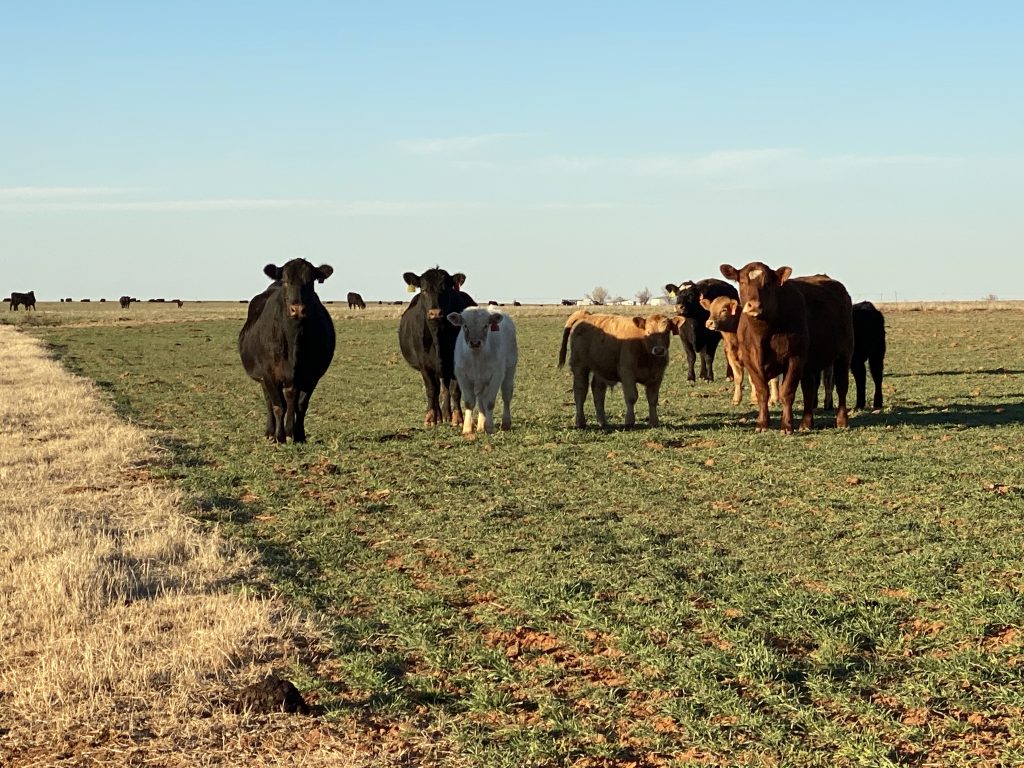
Cattle and calf prices keep climbing towards the end of the year. It's not uncommon for prices to rise late in the year, but this time between Thanksgiving and New Year's can be volatile. This year-end rain in areas of the Southern Plains and fewer calves for sale are working to boost calf prices while. There is also a week's worth of data on feeder cattle imports from Mexico which gives some insight on the potential impact of import restrictions on Mexican cattle due to screwworm regulations.
In the Southern Plains, lighter weight, 400-500 pound, calf prices have jumped about $30 per cwt over the last month. In the South, the same weight calves are higher, but have not seen quite as large of increase, up about $25 per cwt. Heavier 500-600 pound steers are up around $20 to $25 per cwt in the Southern Plains and South, respectively. From Texas across the south to Georgia, 700-800 pound feeders are up about $8 per cwt over the same period. Seasonal lows in the calf market are in the rearview mirror for 2024.
Recent rains have helped stocker prices. The drought monitor map indicates some significant improvement across wheat pasture country. Better late than never. The rains have boosted prospects for late pasture grazing and likely boosted supplies of pond and tank water that had run short.
It appears that fewer calves are for sale following the larger Fall runs. Over the last month, fewer cattle have been reported in USDA's weekly market receipts data. The daily CME feeder cattle index indicates fewer cattle changing hands. Local auction markets around the country also report fewer animals. When combined with rain boosting stocker demand, tighter supplies are further helping prices.
Fed cattle prices are climbing too. Southern Plains fed steers hit $190 last week rebounding from about $185 a month ago. It looks like the cow market has already passed its seasonal low as beef cow slaughter is declining.
The first full week of data on feeder cattle imports from Mexico were released last week. For the week ending November 30th no cattle (0 head) were reported imported through the 11 ports of entry. It's worth remembering that was Thanksgiving week and mid-week holidays can lead to some wide swings in data. Feeder cattle imports are normally large in November and December as cattle are imported for winter grazing and direct feedlot placement. The timing of the import restriction is likely causing a bigger price impact than it would at other times of the year when imports are typically lower.
Rain and tighter supplies are some fundamental factors at work in boosting calf prices. Those positive factors are likely offsetting the impact of some increasing corn prices. Tighter supplies of claves will continue to boost calf prices in the new year.
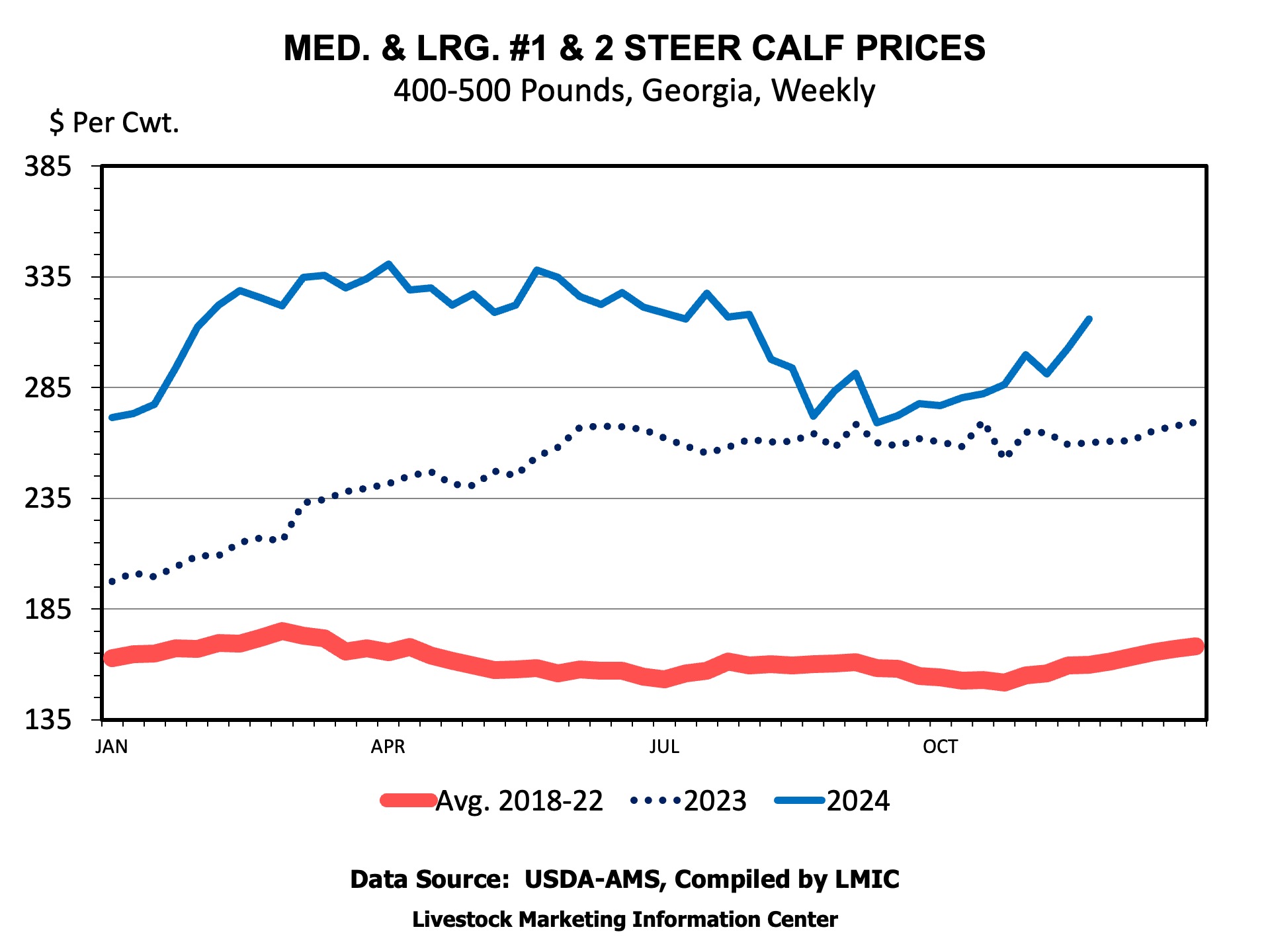
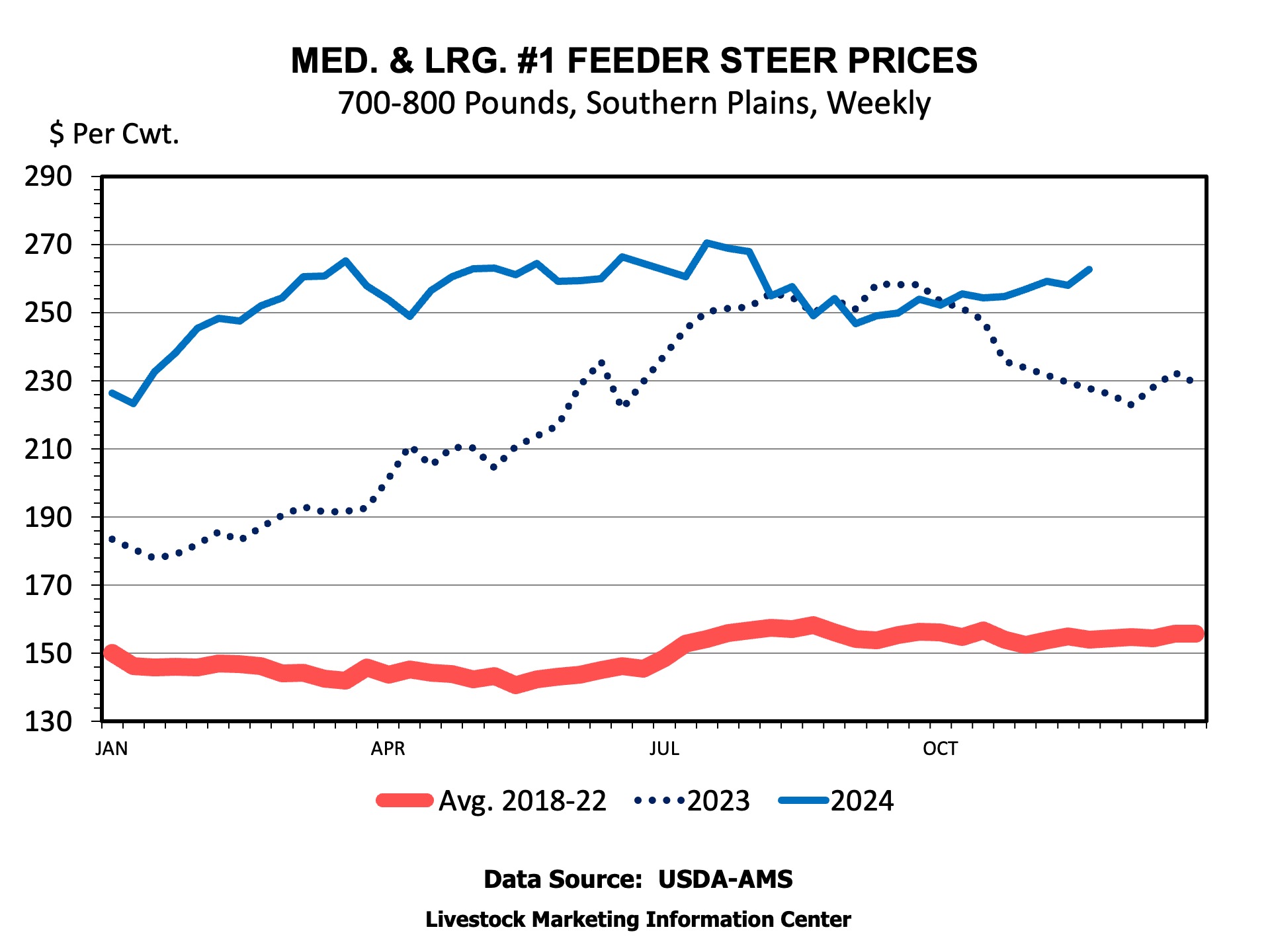
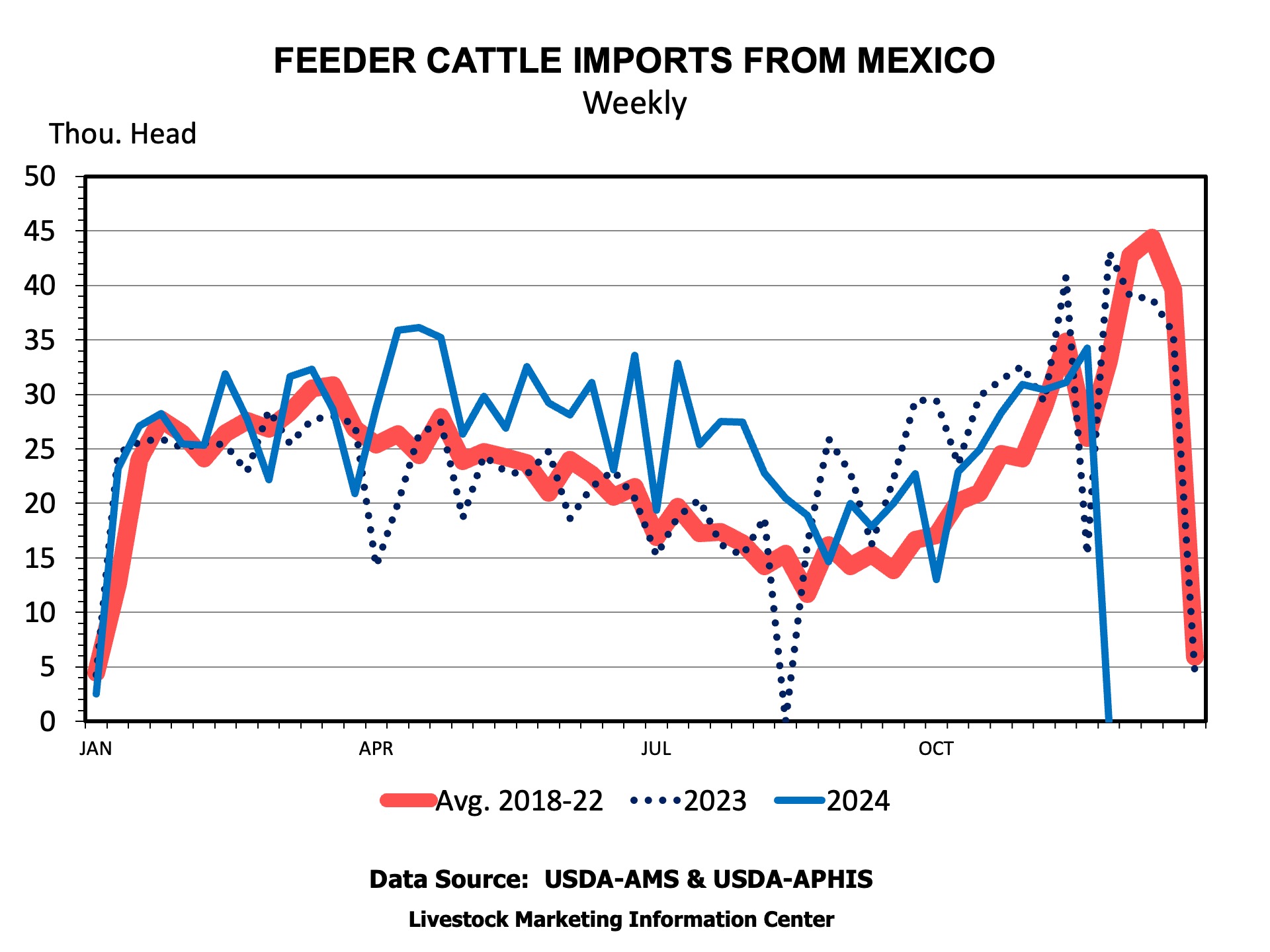
Article Courtesy of Southern Ag Today: Anderson, David. "Rising Prices at Year End." Southern Ag Today 4(50.2). December 10, 2024. Permalink
Senator Debbie Stabenow (D-MI), Chairwoman of the Senate Agriculture, Nutrition, and Forestry Committee, Monday applauded the rollout of the Marketing Assistance for Specialty Crops (MASC) program. The new program will provide $2 billion to support the competitiveness of U.S. specialty crop growers as they manage competing pressures from rising labor costs, the climate crisis, and international markets.
Stabenow said: "It's not easy to grow fruits and vegetables, and it is important for growers to apply for this new program as soon as possible. These new resources will help ensure that our specialty crop industry, from producers large and small, remains competitive into the future."
Chairwoman Stabenow was instrumental in securing these new resources through the U.S. Department of Agriculture's (USDA) authorities under the Commodity Credit Corporation (CCC) Charter Act. USDA is now accepting applications through Jan. 8, 2025. More information is available here
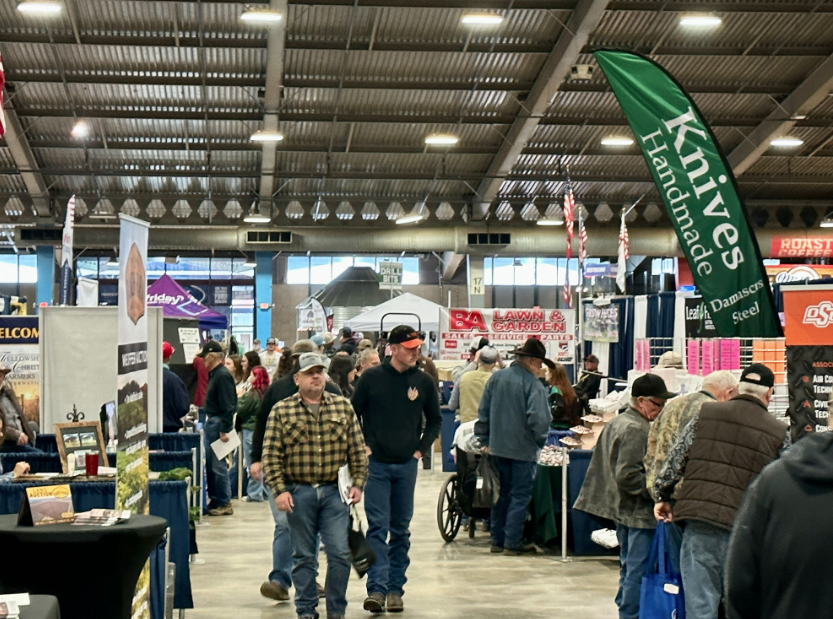
The 31st Annual Tulsa Farm Show is set to take place from December 12-14, 2024, at the SageNet Center at Expo Square in Tulsa, Oklahoma. This premier agricultural event will bring together farmers and ranchers from across the region to explore the latest in agricultural technology, ranching equipment, and services. With over 300 exhibitors, including event sponsor Oklahoma Farm Bureau, the Tulsa Farm Show is one of the nation's largest agricultural exhibitions held under one roof.
Ahead of the show- Oklahoma Farm Report's Ron Hays talked with Show Manager Scott Guttormson who is on location as equipment is starting to arrive and be set up for the three day show. Listen to Ron and Scott by clicking on the listen bar above.
Scott Guttormson, Show Manager, says "We are thrilled to celebrate the 31st Annual Tulsa Farm Show this year! This event provides an excellent opportunity for farmers, ranchers, and exhibitors to come together and showcase the newest innovations in agriculture. We are proud to have the continued support of Oklahoma Farm Bureau as our official sponsor."
Scott tells us that one last minute change is that the horsemanship sessions each day will feature Craig Cameron's son Cole here in 2024. Cole is a rising star in the horse training circles and is stepping in for his dad who has some health challenges and can't make Tulsa this year. This will be the 30th year that a Cameron will be teach horsemanship at the Tulsa Farm Show.
Farmers and ranchers from Oklahoma, Kansas, Missouri, Arkansas, and Texas regularly attend the Tulsa Farm Show, making it an essential end-of-year event. Admission and parking are free for all attendees. The SageNet Center, a key venue at Expo Square, boasts over 350,000 square feet of exhibit space and is one of the largest clear-span buildings in the world, making it an ideal setting for showcasing large equipment and exhibits.
Featured Events at the Show
In addition to a wide variety of exhibits, the Tulsa Farm Show will host several exciting events and attractions. One of the highlights is Craig Cameron's son, Cole, will present daily horsemanship seminars and engage with attendees throughout the show. Cameron's interactive demonstrations have been a popular feature of the show for 29 years.
Country singer, Rusty Rierson, will also be performing daily acoustic music sets during the show. For cattle producers, livestock management will be a central focus of the event. Attendees can watch live demonstrations of ten different brands of cattle chutes, moderated by experienced livestock industry professionals. These demonstrations will take place twice daily in the southwest corner of the SageNet Center, near the Behlen Country exhibit.
Daily Prize Drawings
Prize drawings are always a favorite at the Tulsa Farm Show. A $1000 Showbucks drawing will be held at 1:00 pm each day, sponsored by Can-Am. Attendees can register at the Can-Am exhibit, and the winner must be present to win. Showbucks can be used as currency to purchase products and services from any exhibitor.
Additionally, Stewart Martin Equipment, a long-time exhibitor and sponsor, will give away a new Kubota lawn mower and trailer package. Attendees can register for this prize at the Stewart Martin exhibit throughout the show. The winner will be announced live on Big Country 99.5 radio.
Event Details
The Tulsa Farm Show runs December 12, 13, & 14, 2024 at the SageNet Center (located at Expo Square, home of the Tulsa State Fair). Admission and parking are free. Additional details, including a full event schedule can be found at www.TulsaFarmShow.com, along with an interactive show floor plan, sponsored by Stewart Martin Equipment
U.S. Department of Agriculture (USDA) Secretary Tom Vilsack today announced ways that the Biden-Harris Administration is delivering on Tribal requests to empower Tribal Nations, citizens, and organizations. Secretary Vilsack made the announcements at the 2024 White House Tribal Nations Summit, the foremost government-to-government gathering between the U.S. Government and the 574 federally recognized Tribal Nations.
"The Biden-Harris Administration has listened to Tribal Nations, and USDA is proud to answer with actions that empower Tribal Nation self-determination and food sovereignty," said Secretary Vilsack. "These USDA actions – from co-stewardship agreements with national forests to marketing Tribally produced food and agriculture businesses – help to create a stronger food system in Indian Country and honor our trust responsibility to Tribal Nations."
Today, Secretary Vilsack announced new USDA investments, including $20 million in U.S. Forest Service awards to Tribes to facilitate access to emerging climate markets that support forest management activities. Additionally, USDA and the National Intertribal Food Business Center (NIFBC) announced the availability of $25 million in Business Builder grants to support coordination, technical assistance, and capacity building for small and mid-sized food and farm business across Indian Country. USDA's National Institute of Food and Agriculture (NIFA) also announced grant awards to help Tribal land-grant colleges become centers of scientific inquiry and learning for remote and rural Tribal communities through the Tribal College Research Grant Program. The Natural Resources Conservation Service (NRCS) announced an updated rule to make watershed conservation investments more accessible to Alaska Native Villages, Tribes, and Tribal organizations.
Coinciding with the White House Tribal Nations Summit, the White House released a report on Biden-Harris Administration actions in support of Indian country. USDA today is also sharing a list of notable USDA actions (PDF, 153 KB) across categories such as self-determination, forestry, farming and ranching, food sovereignty, youth development and education, and business and community development.
Forest landowner support to Indigenous communities
The USDA Forest Service will invest $20 million to help federally recognized Tribes and Alaska Native Corporations and Villages access financial resources through emerging private markets for forest resilience, climate mitigation, water quality, carbon sequestration and more. The funding was made possible by President Biden's Inflation Reduction Act and recipients were selected through a competitive process administered by the USDA Forest Service. Of the total funding, the agency is awarding $16.4 million to 10 Tribal recipients. Additionally, $3.6 million will be awarded to First Nations Development Institute, serving as a pass-through partner to advance efforts in connecting Tribes with emerging private climate markets. These investments fund work on Tribal lands and complement USDA's commitment to advance co-stewardship of national forests and grasslands. Learn more at the Forest Landowner Support web site.
Business Builder Grants for Indian Country farm and food businesses
USDA's Agricultural Marketing Service (AMS) and the National Intertribal Food Business Center (NIFBC) announced the availability of $25 million in Business Builder grants to support small and mid-sized farm and food businesses across Indian Country. These grants aim to fund projects that increase business viability, develop regional market opportunities, and expand value chain capacity. NIFBC will conduct up to four rounds of non-competitive subawards to distribute funds based on successful completion of technical assistance tracks that address challenges unique to the 574 federally recognized Tribal Nations. This funding is part of the $124 million in Business Builder grants being offered through USDA's 12 Regional Food Business Centers. Business Builder grants support a more resilient, diverse, and competitive food system by providing localized assistance to access local and regional supply chains, including linking producers to wholesalers and distributors. For more information visit the AMS Regional Food Business Centers web site.
Investing in Tribal colleges
This year marks the 30th anniversary since Tribal colleges joined the land-grant college network through the Equity in Educational Land-Grant Status Act of 1994. This Act authorized Tribal colleges and universities to receive federal support and train future agricultural professionals. Today, USDA's National Institute of Food and Agriculture (NIFA) announced nearly $1.3 million in awards through the Tribal College Research Grant Program. A grant to Diné College in Tsaile, Arizona will conduct research on woodland and forest restoration and strengthen Tribal college collaboration in agriculture and forestry research. Another grant project at Salish Kootenai College in Pablo, Montana will investigate the impact of bison on the Montana grasslands, novel research of interest to the Selis, Ksanka, and Qlispe people. A grant to United Tribes Technical College in Bismarck, North Dakota will investigate the growing problem of invasive grasses in the Northern Great Plains through hands-on research, professional development, and collaboration with experts from USDA's Agricultural Research Service and Portland State University to benefit both local Tribal and scientific communities. Additional funds may be awarded after the fiscal year 2024 grant program closes on December 31, 2024. Learn more at the NIFA Tribal College Program web site.
Making conservation programs work better for Tribes
USDA's Natural Resources Conservation Service (NRCS) today announced enhancements to its watershed program aimed at improving access for Alaska Native Villages, Tribes, and Tribal organizations to secure funding for infrastructure and recovery projects. NRCS updated its program rule for the Emergency Watershed Protection (EWP) Program and Watershed Rehabilitation Program to no longer require eminent domain authority for Tribes. Not all Tribes have eminent domain authority, which has long been a barrier for Tribes to apply as a project sponsor. Through this change, 30 Tribes and Tribal organizations, currently undertaking watershed projects in nine states, now have a path to move forward.
USDA touches the lives of all Americans each day in so many positive ways. Under the Biden-Harris administration, USDA is transforming America's food system with a greater focus on more resilient local and regional food production, fairer markets for all producers, ensuring access to safe, healthy and nutritious food in all communities, building new markets and streams of income for farmers and producers using climate smart food and forestry practices, making historic investments in infrastructure and clean energy capabilities in rural America, and committing to equity across the Department by removing systemic barriers and building a workforce more representative of America. To learn more, visit www.usda.gov.
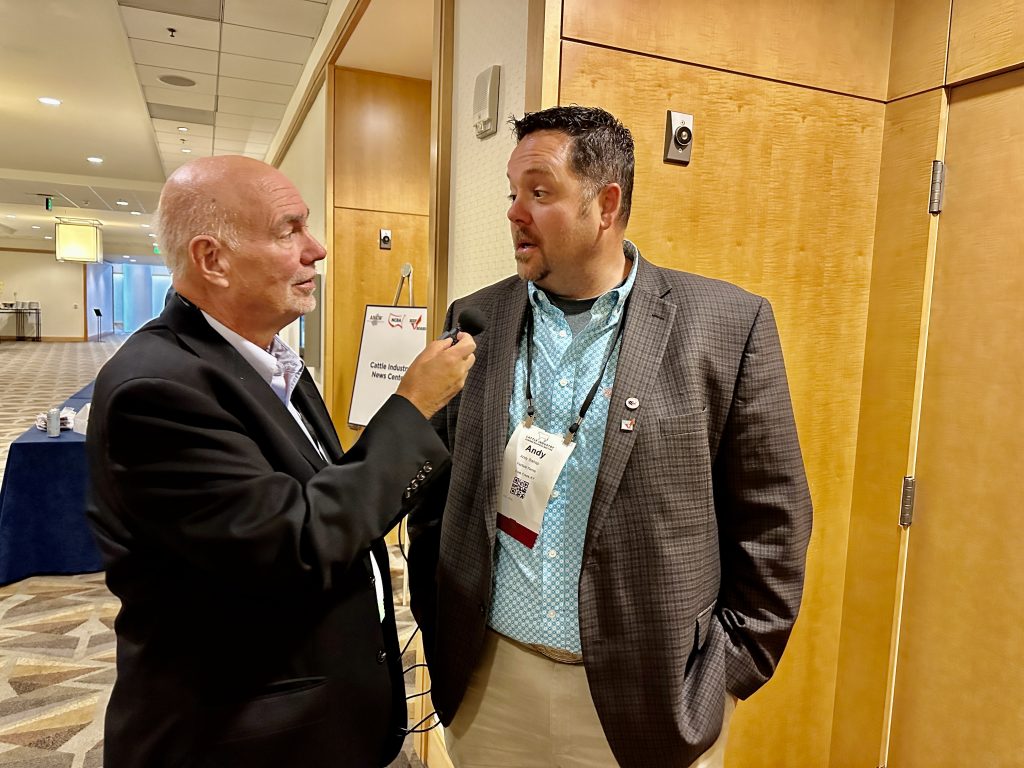
Senior Farm and Ranch Broadcaster Ron Hays caught up with Kentucky cattle producer Andy Bishop about why he serves the industry as Chairman of the Cattleman's Beef Promotion Board.
"For me, it is about the people," Bishop said. "I enjoy getting out and meeting all of the producers across the country who are passionate about promoting our product and telling that story. That is what has driven me to get to where I am today and to share the beef message with everybody across the country that I can."
Bishop's own operation is a small cow-calf facility impressively diversified and run by him, his wife, and their four children. He keeps about sixty mama cows and raises Angus bulls, but has recently added Balancer and Lim-Flex bulls to the list.
"That was primarily because my daughter wants to show cattle," he said. "We bought a Gelbvieh bull and some Limousins, but we sell mostly registered bulls and some freezer beef off of the farm as well."
Bishop understands that diversifying is important to small operations as is capturing as much added value as possible. "Those calves that we don't keep for freezer beef, the bulls that don't make the grade, or even the heifers that we don't keep for replacements, we background those heifers and try to add value that way through a Certified Pre-Conditioned for Health (CPH-45) program in Kentucky," Bishop shared. "If you are going to stay in this game as a producer today, you have to be pretty clever with capturing as much value as you can."
The Beef Checkoff programs that appeal most to Bishop are promotion and education. He especially likes what Farm Bureau, as a Beef Checkoff contractor, is doing with the STEM program to teach science teachers how to add a beef and agricultural emphasis to their curriculums.
He said, "The U.S. Meat Export Federation is probably one of my favorite programs along with the work they do internationally to add value to a carcass. They do an outstanding job of promoting those products overseas."
He emphasized the value added to the variety-meats that aren't typically used in the United States such as tongue, tripe, and liver. "Thanks to the work of the U.S. Meat Export Federation, consumers abroad love those products, know how to utilize them in their diets, and are willing to pay a premium for them," he said.
In Japan, U.S. beef tongue brings $11 - $12 per pound, and tripe is worth $4 - $6 per pound. "I've only had tripe one time in my life, and it was when I was in Japan," he added. "It isn't something that I'm going to consume in my diet regularly, but they enjoy it there and they are willing to pay for it. I am thankful that the U.S. Meat Export Federation is doing the work there."
The Beef Buzz is a regular feature heard on radio stations around the region on the Radio Oklahoma Ag Network and is a regular audio feature found on this website as well. Click on the LISTEN BAR at the top of the story for today's show and check out our archives for older Beef Buzz shows covering the gamut of the beef cattle industry today.
| ||||||||||||||||||||||||||||||||||||||||||||||||||||||||||||||||||||||||||||||||||||||||||||||||||||||||||||||||||||||||||||||||||||||||||||||||||||||||||||||||||||||||||||||||||||||||||||||||||||||||||||||||||||||||||||||||||||
| ||||||||||||||||||||||||||||||||||||||||||||||||||||||||||||||||||||||||||||||||||||||||||||||||||||||||||||||||||||||||||||||||||||||||||||||||||||||||||||||||||||||||||||||||||||||||||||||||||||||||||||||||||||||||||||||||||||
|
KC Sheperd, Farm Director, is back talking with Bob Rodenberger, a Stockman Oklahoma Livestock Marketing partner, as he gives the latest on the cattle markets.
Rodenberger and Sheperd discussed the current cattle market situation in Oklahoma City. Rodenberger reported that around 12,000 head of cattle were being brought to town, with a high demand for quality calves.
The market is bringing them to town," he said. "As high as they are selling, they are going to bring them to town. There are still a lot of people who are short on wheat, so a lot of these cattle are four to six-weight cattle that are long-weaned and good quality."
Earlier, Rodenberger had predicted that the approaching holiday season would slow things down, but the opposite is true under the current market conditions.
As the Apache Sale Barn approaches its last sale of the year, Rodenberger hesitantly predicts 2,500 – 3,000 head to sell this week.
Highly pathogenic avian influenza most often spreads when commercial or domestic poultry contract the virus from migratory birds in the wild. (Photo by Mitchell Alcala, OSU Agriculture)
Animal health specialists with Oklahoma State University Extension caution poultry producers to protect their flocks after Highly Pathogenic Avian Influenza was confirmed in a commercial operation earlier this month in Adair County.
The HPAI virus is more common during the spring and fall seasons when migratory birds are active. The Oklahoma Department of Agriculture, Food and Forestry has established a control area in Adair and Delaware counties to manage the spread of the infection.
Rosslyn Biggs, OSU Extension veterinarian, said additional testing of commercial and domestic flocks is underway in the surrounding control zone of northeast Oklahoma. Also, a surveillance zone that extends past the immediate control area has been identified to determine if the virus is isolated to one site or active in multiple locations.
"There are also restrictions and quarantines in that control zone of poultry and poultry products to make sure that if we do have it beyond the one premises, we're not extending it or sending it somewhere else," Biggs said.
Oklahoma poultry industry leaders and ODAFF, in conjunction with the U.S. Department of Agriculture, have activated their avian influenza emergency plans.
"They practice for these types of events," Biggs said. "The Oklahoma Animal Disease Diagnostic Laboratory is on point, as well as their counterparts in Arkansas, to get tests run as soon as they receive animals from these locations."
Biggs said HPAI is a year-round concern, but risk is enhanced this time of year.
"We want to make sure that all of our flocks, whether they're large or small operations, have stepped up their biosecurity, particularly in light of this announcement," she said. "If we have individuals who are hunting migratory waterfowl like ducks and geese, we want to make sure there are appropriate precautions, that they're not bringing it home and exposing domestic poultry at their households."
Biggs said HPAI will almost always cause very sudden death in birds.
"First and foremost in many cases, there will be a flock that is relatively normal one day, and then there are significant deaths the next day," she said.
Signs and Symptoms
Preventative Biosecurity Measures
If poultry owners suspect their flock has been exposed to the virus in any way, they should report the animal and ask for assistance in additional diagnostics by calling the ODAFF disease alert number at 405-522-6141.
HPAI Resources
Watch Biggs discuss the latest case of HPAI on SUNUP, the production agriculture television show of OSU Agriculture.
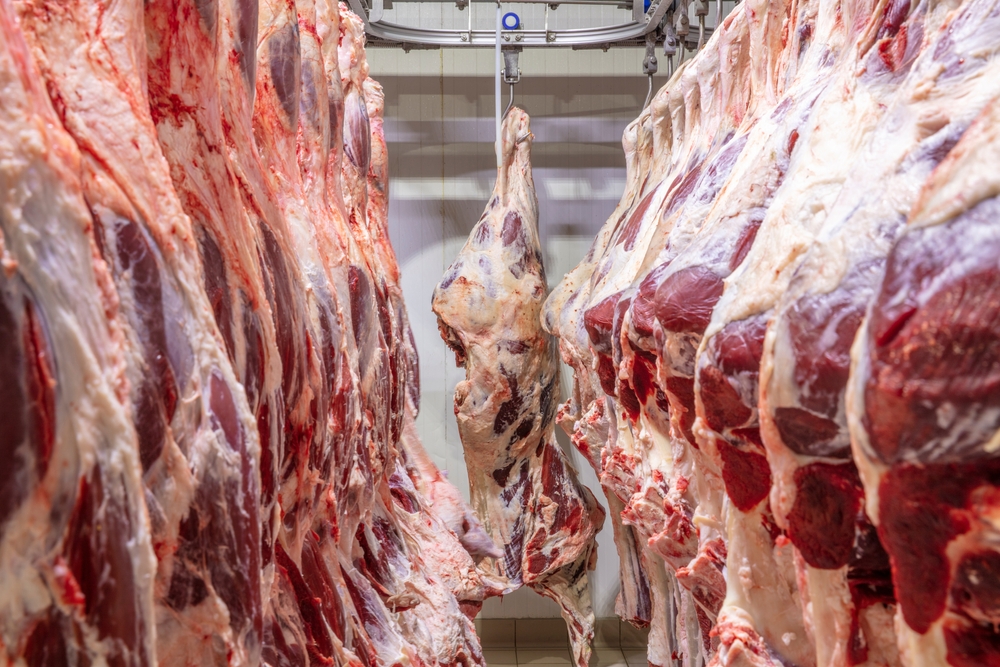
Dr. Derrell Peel, Oklahoma State University Extension Livestock Marketing Specialist, offers his economic analysis of the beef cattle industry as part of the weekly series known as the "Cow Calf Corner," published electronically by Dr. Peel and Mark Johnson. Today, Dr. Peel summarizes Beef Exports and Imports.
The latest trade data for October continued recent trends in international beef trade. October beef exports were down just 0.3 percent year over year with the year-to-date total for the first ten months of the year down 2.6 percent (Figure 1). October beef imports were up 35.2 percent year over year in October with a January – October total up 22.5 percent over last year.
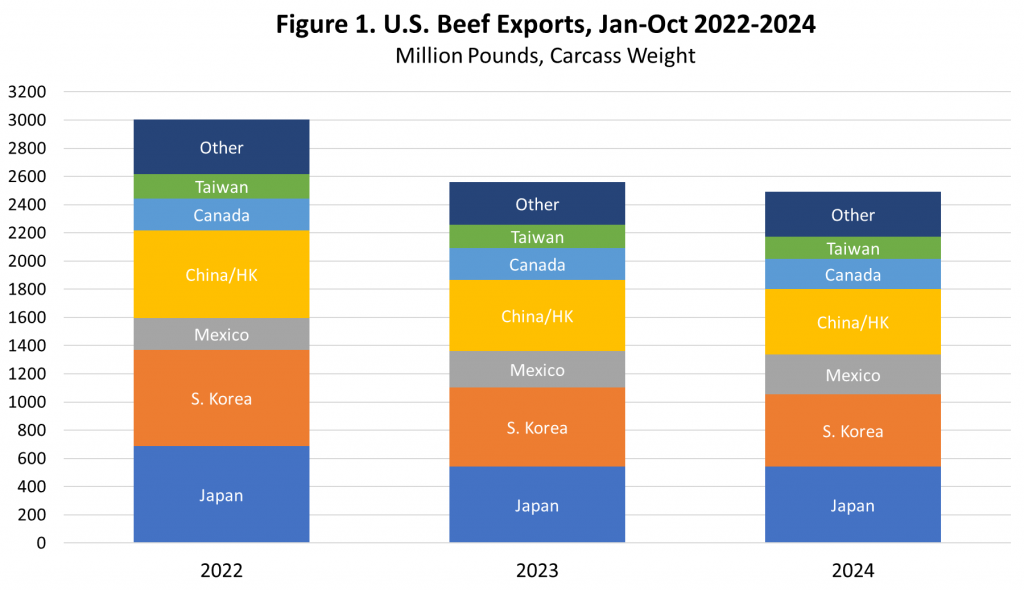
Japan has moved back into the top spot as the number one beef export market thus far in 2024, with a ten-month total unchanged from a year ago and a 21.8 percent share of total beef exports. Following closely is South Korea, in second place this year (down from number one last year), with a year-to-date total down 8.8 percent from last year and a 20.5 percent share of total beef exports. The combined China/Hong Kong market is number three, down 7.8 percent year over year thus far in 2024 and holding an 18.7 percent share of the beef export total. Mexico continues to show the strongest growth in major export markets with beef exports up 9.8 percent year over year thus far and an increasing 11.4 percent share. Number five Canada is down 7.2 percent in 2024 with an 8.5 percent share of beef exports. Taiwan is the number six beef export market with a year-to-date total down 2.6 percent and a 6.4 percent beef export share.
Australia has regained the top spot as a source of U.S. beef imports, with a ten-month total up a whopping 69.4 percent and a 22.7 percent share of the import total. Australia has not been the top beef import source for the U.S. since 2016. Canada has dropped to second place with a total thus far in 2024 up 1.3 percent and a 21.8 percent share. Brazil is the number three source of beef imports, up 52.0 percent thus far in the year and a 15.6 percent share of the import total. New Zealand is the fourth largest source of beef imports with a total through October up 6.3 percent year over year and a 13.0 percent share of total imports. Mexico is the fifth largest source of beef imports and is down 11.7 percent year over year with a 12.9 percent share of Beef imports. Uruguay is the number six beef import source, up 65.4 percent year over year and a 6.3 percent share of the total.
Canada and Mexico are both strong bilateral beef trade partners but are moving in opposite directions. Beef imports from Canada continue to grow and exports decline year over year while Mexico has decreased as an import source with beef exports to Mexico increasing this year and in 2023 from a recent low in 2022.
The sharp jump in total beef imports this year is in response to a 12.8 percent year-over-year decrease in nonfed beef production resulting from a 15.9 percent year-over-year decrease in cow slaughter through late November. Much of beef imports supply lean processing beef for hamburger and other processed beef products.
The Oklahoma Department of Agriculture, Food and Forestry is looking for a qualified collegiate student to join the Executive Office throughout the summer.
This individual will be responsible for promoting ODAFF through written and digital communications, assisting with planning and executing events, conducting projects related to government relations and legislative changes impacting the agency, and completing goals set forth by the Executive Office.
This paid opportunity based in Oklahoma City will allow the individual to gain practical public relations experience from working directly with industry leaders.
Here is how to apply:
Applications are due January 29, 2025, at 5:00 p.m.
Please email kirsten.hollansworth@ag.ok.gov with any questions.
American Farmers & Ranchers (AFR) wrapped up its annual fall speech contest series Saturday Dec. 7 at Oklahoma State University (OSU) in Stillwater.
This marks the 79th year of the statewide contest. The event has gone through many changes over the years but has always maintained its central agricultural theme. Varying by grade level, this year's speech categories are AFR/OFU, Agricultural Policy, Agribusiness, Natural Resources, Extemporaneous and Agri-Science.
Nearly 500 students will compete in AFR district speech contests this fall, resulting in more than 160 finalists advancing to the state contest. At the state level, the top three competitors in each category receive cash awards.
AFR/OFU
Novice: 1st: Charlie Johnson, Drummond; 2nd: Haddie Roller, Cashion; 3rd: Saige Glover, Wetumka
Junior: 1st: Kreed Campbell, Jet; 2nd: Cason Ebert, Broken Bow; 3rd: Jeryn Lundry, Haworth
Intermediate: 1st: Gracey Rich, Strother; 2nd: Shaylee Davis, Silo; 3rd: Emma Haken, Morrison
Senior: 1st: Denver McBride, Silo; 2nd: Taylor Rose, Springer; 3rd: Adasyn Haynes, Nowata
Agriscience
Junior: 1st: Kourtney Campbell, Jet; 2nd: Jalyn Lundry, Haworth; 3rd: Fletcher Inman, Mulhall-Orlando
Intermediate: 1st: Layla Senters, Chattanooga; 2nd: Jade McPeak, Checotah; 3rd: Hannah Hays, Chisholm
Senior: 1st: Bonham Eslick, Elgin; 2nd: Karsyn Pendegraft, Fairview; 3rd: Faith Wright, Stratford
Agribusiness
Intermediate: 1st: Emma Carter, Seiling; 2nd: Kaydence Staude, Meeker; 3rd: Addison Swift, Adair
Senior: 1st: Jake Vulgomore, El Reno; 2nd: Colby Rogers, Owasso; 3rd: Hadlee Bryan, Dover
Natural Resources
Intermediate: 1st: Lincoln Stafford, Altus; 2nd: Rylan Compton, Mooreland; 3rd: Georgia Dobson, Turner
Senior: 1st: Carli Thomas, Purcell; 2nd: Luke Lundry, Idabel; 3rd: Tylor Aary, Miami
Ag Policy
Intermediate: 1st: Madilyn Norvell, Amber-Pocasset; 2nd: Kinna Turner, Owasso; 3rd: Audrey Warner, Turner
Senior: 1st: Heath Laubach, Mooreland; 2nd: Callen Veit, Morrison; 3rd: Gage Grimes, Fletcher
Extemporaneous
Senior: 1st: Lynlee McCurry, Salina; 2nd: Kelton Arthur, Ripley; 3rd: Laela Begley, Elgin
"Public speaking is one of the most valuable skills young people can gain for their future careers," said AFR Cooperative President Scott Blubaugh. "We are honored to host the 79th Annual AFR Speech Contest, which has a long-standing tradition of fostering professionalism and confidence in Oklahoma's youth."
The AFR Annual Speech Contest is just one of many AFR Youth Program traditions. The organization also hosts a youth leadership summit, statewide scholarships, livestock judging and grading competitions, and many other development opportunities. For more information on this contest or other AFR Youth Program projects, contact AFR Youth Development Coordinator Michelle Noggle at (405)218-5566 or michelle.noggle@afrmic.com.
AFR Cooperative is a membership services organization established in 1905 as Oklahoma Farmers Union. AFR provides educational, legislative and cooperative programs across the state and serves as a watchdog for Oklahoma's family farmers and ranchers and rural communities. The organization is actively supportive of the state's agricultural industry and rural population with membership consisting of farmers actively involved in production agriculture and non-farmers adding their voice in support of AFR principles.
According to the U.S. Grains Council's (USGC's) 2024/2025 Corn Harvest Quality Report, the 14th such annual survey published globally today, the 2024 U.S. corn crop is projected to be the third largest on record with the highest 100-kernel weight in the history of the report and lower broken corn and foreign material (BCFM), lower total damage and lower moisture than in the last five years.
Favorable growing season conditions contributed to the highest projected average yield on record and promoted good grain quality. Relatively warm, dry conditions during September and October also permitted an effective dry-down and timely harvest, thus maintaining the overall quality of the 2024 corn crop.
The 2024 growing season was characterized by quick emergence, warm conditions during the growing season, ample moisture and milder temperatures during pollination and warm, dry conditions during dry-down and harvest. Given these generally favorable growing conditions, average yield is projected to be the highest on record. Despite slightly lower harvested hectares compared to last year, total production is projected to be 384.64 million metric tons (15,143 million bushels).
The 2024 crop, on average, is entering the market channel with characteristics that met or exceeded each grade factor's numerical requirements for U.S. No. 1 grade corn. The report also showed that 89.2% of the samples met all grade factor requirements for U.S. No. 1 grade, and 96.2% met the grade factor requirements for U.S. No. 2 grade corn.
"The Council takes pride in producing this annual report that proves the quality and abundance of U.S. corn year over year. Because the U.S. is dedicated to transparency and sharing it with potential buyers, it helps them make informed decisions and aligns with the Council's mission of developing markets, enabling trade and improving lives," said Verity Ulibarri, USGC chairwoman. "The information contained in the report provides the foundation for evaluating trends and the factors that impact corn quality. The cumulative reports also enable export buyers to make year-to-year comparisons and assess patterns of corn quality based on crop growing conditions across the years."
The report is based on 620 yellow corn samples taken from defined areas within 12 of the top corn-producing and exporting states. Inbound samples were collected from local grain elevators to measure and analyze quality at the point of origin and provide representative information about the variability of the quality characteristics across the diverse geographic regions.
Test weight of 58.9 pounds per bushel (lb/bu), or 75.8 kilograms per hectoliter (kg/hl), achieved the highest value observed in the history of the report. Average U.S. aggregate BCFM in 2024 (0.6%) and average U.S. aggregate total damage (1.1%) were both lower than the 5YA. Average U.S. aggregate moisture content in 2024 (15.3%) matched the lowest value observed in the history of the report.
This year's corn protein concentration registered at 8.5 percent, equaling the five-year average.
The chemical composition of the crop remained in a healthy range, as 98.9 percent of the samples tested below the U.S. Food and Drug Administration (FDA) action level for both aflatoxins and deoxynivalenol. Additionally, 98.3 percent tested below the FDA's strictest guidance level of 5.0 parts per million for fumonisin.
The Council will present its findings to buyers around the world in a series of roll-out events through the first quarter of 2025, offering participants clear expectations regarding the quality of corn for this marketing year. During these initiatives, crop quality information is accompanied by updates on U.S. corn grading and handling, that provides importers and end-users with a better understanding of how U.S. corn is moved and controlled through export channels.
Read the full 2024/2025 USGC Corn Harvest Quality Report here and stay up to date on its associated rollout events on the Council's website. A second Council-produced study, the 2024/2025 Corn Export Cargo Quality Report, will measure corn quality at export terminals at the point of loading and will be available in early 2025.
Farm Director KC Sheperd visited with the United Sorghum Checkoff Program's Executive Director Norma Ritz Johnson to talk about the current conditions of the sorghum crop in 2024.
"It has not been an easy year for farmers," she commiserated. "One of the reasons that I love leading the Sorghum Checkoff is because sorghum is a lot like our farmers. It is built for tough times, but it thrives when conditions are good. Sorghum can wait for rain, and that has really been the story this year in terms of the crop."
Depending on when the crop was planted in the various areas of the nation and when or if moisture finally fell, yields are widely variable.
"We are still pleased that despite some of these tough conditions, we do have some good yields out there to the extent that USDA has kept bumping up our estimated yield."
Currently, USDA projects a national average yield of 60 bushels per acre for sorghum. "We feel a little bit better about that because we had been doing some windshield statistician work over the summer and had noticed that there were some good fields out there as well," Johnson said. "I just want to congratulate our farmers on weathering these tough times. It has not been easy. Managing that crop and implementing those best practices for growing sorghum is paying off."
In 2023, the Sorghum Checkoff Board of Directors approved a five-year strategic plan built on three main pillars: Premium, Production, and Perception. Johnson explained, "We are looking for those premium markets for producers to improve their bottom line. We are helping them improve production, overcome production challenges and implement those best practices in their production strategies. Perception isn't just from a consumer standpoint, but also from a producer's standpoint. There are still a lot of producers who we want to share information with about how sorghum can be a sustainable solution in their farming systems. Then of course, we want to share sorghum as a sustainable solution for end users who will then, hopefully, pay a premium for that product and in the end, it benefits the farmer."
One of the first goals of the Sorghum Checkoff when it was established more than 15 years ago was to develop effective grass control and herbicide-tolerant technologies. Those goals have been met, but the organization is now looking forward to the next level through a major sorghum physiology project.
"We are working on tomorrow's sorghum, but we are also working on some of the challenges that have been inherent in sorghum for a while such as lodging and chinch bugs," Johnson described.
According to Johnson, farmers and fans of sorghum recognized its sustainability traits long before sustainability became a common buzzword. Its drought tolerance and soil-liberating root system make it a premium crop for any farm.
"Right now we are working to quantify and measure that data so that it can benefit the farmer with some of the sustainability incentives that are beginning to be built," Johnson said. "Not just from a government standpoint, but also from the end user's standpoint."
Another exciting opportunity for sorghum farmers is its potential in premium markets. "We are very excited to announce this week that more forms of sorghum have just been added to USDA's Food Data Central database. Any food that you type into that database, it shows the macronutrients and characteristics complete nutritional profile."
Another area in which sorghum shines is in high-value feeds, both domestically and across the world for poultry, aquaculture, swine, and more.
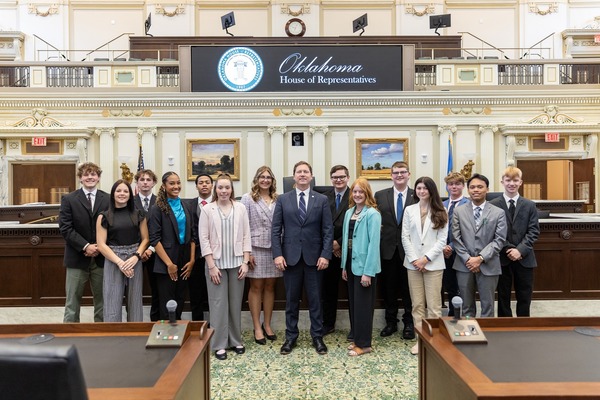
The Oklahoma House of Representatives High School Page Program has opened applications for the First Regular Session of the 60th Legislature, announced Program Director Rep. Brian Hill, R-Mustang.
Every year, hundreds of juniors and seniors from across the state participate in the House High School Page Program at the Oklahoma State Capitol in Oklahoma City. Participating students have the opportunity to view the legislative process up close and gain a deeper understanding of state government.
Students accepted to the program are assigned to one week during the legislative session, which runs from the first Monday in February through the last Friday in May. They arrive on Sunday afternoon and serve Monday through Thursday in the House Chamber during daily session. Pages also assist representatives and staff with tasks and participate in the House Page Mock Legislature on the floor of the House Chamber.
"Working with our wonderful high school Pages and getting to know them serves as an important reminder of why we were sent to the Legislature—to improve our great state not for ourselves, but for their futures," said Hill, who has served as the program director since 2020. "Any student, regardless of what career path they may be interested in, leaves the House Page Program with a strong understanding and appreciation of the political process and the importance of civics engagement."
Hotel accommodations and chaperones are provided for all students. Pages are transported to and from the State Capitol daily and are closely supervised.
Interested high school juniors and seniors may visit https://former.okhouse.gov/Pages/ to submit an application or contact their state representative for more information. The First Regular Session of the 60th Legislature begins Mon., Feb. 3, 2025.
USDA's December 2024 farm income forecast confirms just how tough a year it's been for American agriculture, with slightly revised projections offering little relief to farmers, who are losing nearly a quarter of their income in two years. Net farm income is now projected at $140.7 billion for 2024, down $6 billion (4.1%) from 2023 and $41.2 billion (22.6%) from the $181.9 billion peak in 2022. While these updated figures show a marginal improvement over September's forecast, which projected a 4.4% decline for 2024 to $140 billion, the December revision does little to alleviate concerns about the financial pressures farmers face heading into 2025, and the overall figure masks the dramatic decline in returns for crop farmers.
When adjusted for inflation, the drop in net farm income becomes more pronounced, with a projected decline of $9.5 billion (6.3%) from 2023. Although the updated 2024 figure remains above the 20-year average, the metrics paint a challenging picture, particularly for crop producers, who face substantial revenue declines. While some sectors, most predominantly livestock, are seeing stronger receipts, the December forecast underscores that agriculture remains in the red, with few signs of immediate relief for farmers already navigating tight margins.

Crop Receipts: Declines Deepen
Crop producers will continue to bear the brunt of the economic downturn. Total crop receipts for 2024 are now projected to decline by $25 billion (9.2%) from 2023 to $246.2 billion, a slight improvement from September's forecasted $27.7 billion drop. This marks the second straight year of significant declines in crop cash receipts, reflecting weaker global demand, falling prices and increased competition from international markets.
Corn receipts are expected to fall $16.6 billion (20.8%), exceeding the already dire September projection of a $16 billion, or 20%, decline. Soybean receipts are likewise forecast to fall $6.9 billion (12.3%), improving marginally from the previously anticipated 14.6% decline, but still representing a sharp downturn. Cotton farmers, meanwhile, face a particularly bleak outlook, with receipts forecast to decline by $1.9 billion (26.9%), a further deterioration from the 23.6% decline predicted in September.
While small gains in vegetable and melon receipts — up $1.7 billion (6.7%)—and rice receipts — up $0.2 billion (4.5%) — offer some bright spots, these increases pale in comparison to the broader losses. Farmers have been forced to contend with declining prices for major commodities, compounded by rising costs for labor, interest and other key inputs.
Livestock Receipts: Bright Spots Amid the Gloom
Livestock producers are faring comparatively better, with total receipts for animal and animal products expected to grow by $21 billion (8.4%) to $270.6 billion in 2024, an improvement over September's 7.1% forecasted increase. Cattle and calf receipts, bolstered by higher prices, are projected to rise by $7.3 billion (7.2%), exceeding earlier predictions. Milk receipts are expected to grow by $5.3 billion (11.5%), also outpacing the 9.4% increase forecast in September. Pork producers are projected to see receipts increase modestly by $1.5 billion (5.7%), driven by both higher prices and quantities sold.
Egg producers, who initially faced grim projections earlier in the year, continue to see significant gains, with receipts now expected to rise by $7 billion (39.4%), reflecting higher prices and increased demand. However, not all sectors of the livestock industry are thriving. Turkey producers are expected to experience a $2.8 billion (43.3%) decline in receipts, worsening from September's already bleak forecast of a 41.5% drop.
Sharp Contrasts in Commodity Profitability
USDA's metric, Farm Business Average Net Cash Income by Commodity Specialization, offers valuable insights into the financial performance of farm businesses based on their primary commodity focus. Figure 2 highlights both the change in net cash income — calculated as the difference between cash revenues and cash expenses — and the overall net cash income for farm operations specializing in major commodities between 2022 and 2024.
During this period, farm businesses specializing in soybean production experienced a significant 44% decline in net cash income, while those focused on wheat saw a 43% decline, and corn-focused operations experienced a 42% decline. In stark contrast, farm businesses specializing in cattle and calves achieved a remarkable 154% increase, while those focused on poultry saw substantial growth, with net cash income rising by 31%. Income for dairies dropped starkly between 2022 and 2023 but rose dramatically in 2024 – up 19% over 2022. These trends illustrate the dramatic variability in financial outcomes across commodity sectors, influenced by shifts in market conditions, input costs and revenue streams over the observed timeframe.

Diminishing Government Payments Lower Farm Income
Direct government payments are forecast to decline by $1.7 billion (13.6%) in 2024 to $10.6 billion, largely due to lower Dairy Margin Coverage payments resulting from stronger milk prices and the continued reduction in ad hoc disaster programs. This decline underscores diminished federal support for agricultural disaster relief at a time when farmers struggle with mounting losses. Since 2022, uncovered crop and rangeland losses have exceeded $20 billion, a figure that continues to climb as damage from recent hurricanes is assessed. Exacerbating the issue, safety net programs like Agriculture Risk Coverage and Price Loss Coverage have become increasingly ineffective, with outdated formulas failing to provide adequate support during periods of low prices and revenue.
High Costs Persist Despite Expense Relief
Farmers are expected to spend slightly less on production in 2024, with total production expenses forecast to decline by $8 billion (1.7%) to $453.9 billion, an improvement over September's forecasted $4.4 billion decline. Lower costs for feed, fertilizer and fuel contribute to this reduction, with feed expenses projected to fall $10.5 billion (13.2%), fertilizer expenses down $3 billion (8.4%) and fuel costs declining by $2 billion (11.3%). Given low crop prices, drops in expenses most closely associated with crop production are not unexpected.
Rising costs in key categories like labor and interest continue to offset these savings. Labor expenses are expected to rise by $3 billion (6.1%), while interest expenses climb $1.8 billion (4.1%), reflecting higher debt levels and sustained high interest rates. These rising costs add to the financial strain on farmers, who are already grappling with shrinking margins and limited liquidity.

Farm Sector Equity, and Debt on the Rise
Despite declining net farm income, USDA projects farm sector equity — the difference between assets and debt — to rise by 5.2% to $3.68 trillion in 2024, reflecting growth in real estate values. Total farm sector assets are expected to increase by 5.1% to $4.22 trillion, with real estate comprising 84% of this total. Meanwhile, farm sector debt is forecast to climb 4.5% to a record $542.5 billion, with increases in both real estate and non-real estate debt. While solvency metrics such as the debt-to-asset ratio are expected to improve slightly, reduced liquidity — indicated by a 6.9% decline in working capital — points to ongoing financial strain, particularly as debt levels continue to grow.
Conclusion: Farm Income Forecast Highlights Agriculture's Volatility
USDA's December report underscores the volatility of the U.S. farm economy as farmers face their second consecutive year of declining income. Net farm income in 2024 remains nearly 25% below its 2022 peak, and the minimal upward revisions since September offer little reprieve from the financial pressures farmers are enduring.
Crop producers, in particular, face dramatic declines in cash receipts, with little hope for immediate relief as global supply chain disruptions continue and prices for key commodities remain depressed. Livestock producers enjoy higher prices at the moment, but gains in this sector are uneven. Rising production costs threaten to erode profitability across the board.
With government payments shrinking and the income safety net failing to keep pace with the realities of modern agriculture, farmers are left to navigate an increasingly precarious financial landscape. As policymakers continue overdue farm bill discussions, these figures serve as a reminder that the targeted reforms that could address our farmers' unique challenges remain stuck in the legislative process.

On Giving Tuesday this week, Board President Joe Locke set the 2024 Oklahoma Pork Council Give-A-Ham Challenge in motion by hosting a generous community feeding event for students, staff, and others outside the Oklahoma State University (OSU) Student Union in Stillwater.
Joe, who serves as Director of Sow Operations for Tyson's Pork Group, used his impressive pitmaster skills to cook up 500 Blue & Gold Sausage breakfast biscuits and more than 700 pulled pork sandwiches to grateful OSU cowboys throughout the day. Through his Give-A-Ham Challenge video linked here, Joe also encouraged others to donate pork products within their own communities, including tapping Governor Kevin Stitt and fellow Oklahoma Pork board member Cathy Vaughan to participate. Additionally during Tuesday's free feeding event, Joe went on the air with WWLS the Sports Animal's Jim Traber motivating Jim and those listening to give hams or other pork this month as well.
Thanks in part to helpful volunteers like our OSU Pork Industry Group students and several Oklahoma Pork board members, the Oklahoma Pork Council distributed heartfelt giveaways like branded hand warmers, gloves, hats, bags, and more while sharing pork's story of generous giving with those who came by for a free meal. A special shout out to VIPs like OSU First Gentleman Darren Shrum and OSU College of Agriculture Dean Jayson Lusk for joining the fun and supporting pork producers!
Between now and Christmas, we encourage all our members to take part in the Give-A-Ham Challenge. Donate a holiday ham to your local food bank, deliver a pork meal to a neighbor, volunteer at a charity you support, or meet another need you see in your community. The "Giving Season" is the perfect time to spread generosity and make a small difference at the local level. Share your participation by posting a photo or video on social media using #GiveAHam and #OKPork, or click here to let us know how you #GiveAHam this December!
RON's Dave Lanning has a pre-opening look at today's agricultural Markets.
Click the audio tab below for today's report.
| Coborn's, Inc., a central Minnesota retailer, has earned the 2024 FMI Gold Plate Award for their impactful #FamilyMealsMonth campaign in partnership with the Minnesota Pork Board and NPB! This collaboration highlighted the power of pork + plant recipes in 66 stores and featured ready-to-make meal kit displays, resulting in a 22% increase in pork sales and a 20% increase in tonnage year-over-year. This success story aligns closely with the NPB nutrition teams' efforts to connect with health professionals and consumers through initiatives like the recent webinar Cultural Culinary Innovations. Hosted in partnership with Potatoes USA and the McCormick Science Institute, this webinar brought together more than 700 registrants. Just as Coborn's showcased pork in the meatcase and digital spaces, our webinars leverage the expertise of dietitians and chefs to drive pork's story in the nutrition and culinary world. Both efforts demonstrate the value of collaborating with industry partners to reach diverse audiences, from in-store shoppers to consumers seeking sustainable, culturally inspired meal ideas. Whether through partnerships with retailers or engaging health professionals, we're making pork an everyday staple for families across the country. |
Today, the National Cattlemen's Beef Association (NCBA) thanked the U.S. Senate for passing the Federal Disaster Tax Relief Act (H.R. 5863). In addition to providing much-needed relief to victims of hurricanes, this legislation would provide tax relief for cattle producers who received payments due to wildfires. Previously, these payments counted as taxable income, meaning producers who already suffered from disasters were hurt again by having their relief payments taxed.
"It is heartbreaking to see your farm or ranch destroyed by a disaster and it only adds to the pain when the payments meant to help you recover come with a tax bill," said NCBA President and Wyoming rancher Mark Eisele. "With the devastating hurricanes and wildfires the cattle industry has suffered over the past several years, helping producers recover and stay in business is a top priority for NCBA. The Federal Disaster Tax Relief Act will prevent recovery payments from being taxed and be another tool for producers rebuilding their livelihood."
The Federal Disaster Tax Relief Act addresses limitations in casualty losses and allows producers to take greater deductions for disaster-related losses. Additionally, the bill excludes any payments received due to a "qualified wildfire disaster" from being counted as income for federal tax purposes. The bill also retroactively applies to any wildfire payments received in tax years 2020 through 2025. Producers will have the opportunity to file with the Internal Revenue Service (IRS) for relief payments received in these previous years.
"NCBA has fought to exempt disaster relief payments from being taxed and we are thankful that the House of Representatives and Senate both passed the Federal Disaster Tax Relief Act to protect these payments from taxation," said NCBA Executive Director of Government Affairs Kent Bacus. "We also thank Congressman Greg Steube (R-FL) for leading the effort to get this bill passed. Now, NCBA urges President Biden to swiftly sign this bill into law."
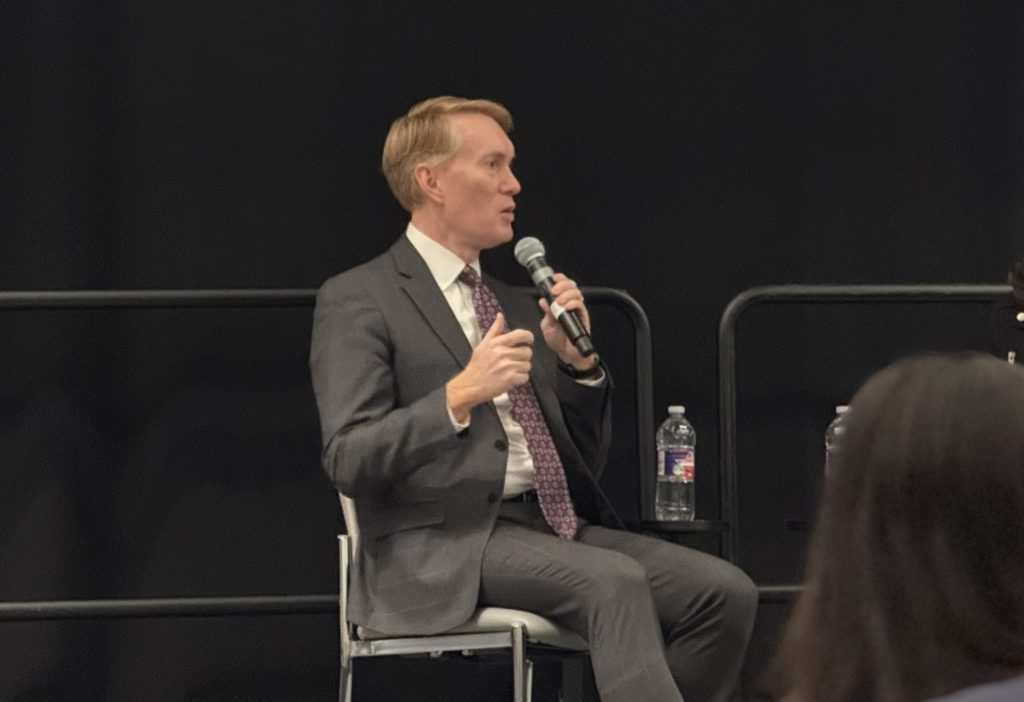
In a DC Spotlight feature with the Oklahoma City Chamber of Commerce, Oklahoma Senator James Lankford had the opportunity to share his insights into the recent election, as well as expectations on the policy focus in Washington D.C., at a consequential time for our nation. Farm Director KC Sheperd had the chance to talk with Senator Lankford to get the details.
Lankford is excited about the development of the Department of Government Efficiency (DOGE) to hopefully streamline and reduce the imprint of the federal government. "We haven't done this in decades," he said. "To be able to have a serious look at how we structure what we do, the tax policy changes, and the opportunity to be in the majority in the Senate."
Lankford attended a DOGE meeting yesterday and enjoyed visiting with the department heads, Elon Musk and Vivek Ramaswamy. "I have worked on this issue for ten years, but we've never had a White House that has really been focused on this," Lankford said. "Everybody sees the inefficiency in government. It isn't a partisan thing. We are wasting money. We are spending it on things we shouldn't. Our employment is off as far as how we are investing in different agencies and entities. We haven't settled how we are going to do telework. It has just morphed and happened and no one has asked the hard questions of, 'Is it the right way to do it? Is it the right position to be able to do it?' It is a good moment to look at solving these issues so we can be made more efficient."
Tax issues will be paramount in the coming discussions. "Every single tax rate expires at the end of 2025," Lankford explained. "If we don't do a tax bill, literally everyone in America's taxes will go up on a standard deduction and will be cut in half for every individual. It will be radically different. Small businesses that do QBI - that all goes away along with bonus depreciation, research and development tax credits. The estate tax and more will skyrocket if we don't do something by the end of this coming year."
Along with the Tax Bill, Senator Lankford understands the need to complete a Farm Bill as does the incoming Chairman of Agriculture John Boozman; however, for the lame duck session, Lankford predicts an extension of the current policy, possibly with some additions to the Farm Disaster rates.
As Senator Lankford has been meeting with incoming appointees, he described the timeline as the prelims because none of the individuals have yet been confirmed, much less officially nominated. The new Congress will be sworn in on January 3rd and can begin hearings, but their hands are tied until President-elect Trump takes office on January 20, when, as a standing President, he can nominate his Cabinet.
"We are doing as much work as we can right now to get ready for that, so we can get as many people confirmed as fast as we can, so he can get his team in place," he stated.
He described media noise on many of the intended nominees but said it is hard to tell whether any of them might be more or less challenging to confirm. He said that the full stories will come from the hearings with the individuals.
"We get the opportunity to actually meet them, talk through the process, read all of the background information, and do a public hearing," He said. "The hearings will all be public, There will be tens of people watching in on C-SPAN who can make their own judgments on what they say and from the evidence that comes back to them on it. The key thing is that there is no perfect person. Jesus has not been nominated for any of these positions. We want to know what their competence level is, and the direction they want to go. Everybody wants to see these agencies get fixed, so the goals of the individuals are very important."
About immigration, which Lankford has been boldly outspoken about, he expects a reconciliation bill in early 2025 which will include funding, but not policy.
"It will focus on what we will be doing to increase the border wall itself and the infrastructure around the border wall, along with increasing agents, deportation flights, and detention space," Lankford described. "It will also increase what no one is talking about, but what we call the National Vetting Center. That is who screens these folks, and it has a very small staff. The Biden administration has kept it very, very small. We must increase that number to be able to know who is this person in the process and what background can we gain on them."
The added funding will help the Trump administration do a better job of enforcing the border; however, Lankford believes that there are still policy issues to deal with, namely, fixing the Asylum Loophole.
"I was trying to finish fixing that it last February when we were trying to be able to work through the immigration laws," he said. "We can't fix that in a budget thing. We have to sit down and find sixty people who can agree in the Senate on how we are going to fix that loophole. That is one of the things that former President Trump tried to get fixed in 2019, but we weren't able to."
Lankford said that the reconciliation bill and future policy changes shouldn't affect farm workers so long as they don't have criminal records or an existing court order to leave.
"Those people need to go," he said. "That is about a million people who are in the country right now who have been told by a federal court to leave. If they haven't left, they have not only violated our laws, they have also violated a federal court order, and need to be removed," he firmly stated. "President Trump, very early on the morning after the election, said that we are going to clamp down on immigration, but we are also going to do more for legal immigration. That is more work visas and such. That is a better way to do this than unchecked, unvetted illegal immigration."
Lankford said that his Christmas list centers on his own family, Oklahoma, and finding ways to ease some of the turmoil in the world, namely the conflicts in Syria and North Korea and republican Korea.
"There are a lot of thing in the world that really need more attention, and I'm looking forward to a new Trump administration stepping in and saying 'We are going to pay attention to some things that have not had attention paid to them.' Because we don't want an unstable region that affects, quite frankly, all of us."
Emma Zaicow, a Purdue University student, and Les Voyageurs, a Louisiana State University club, took home the top prizes in the Animal Agriculture Alliance's 2024 College Aggies Online (CAO) scholarship program. Throughout the nine weeks of the program, $20,000 was awarded in scholarships to participating students and clubs.
The 2024 CAO program had 278 individual participants who shared nearly 2,500 positive and informative posts on social media about agriculture. Thirteen collegiate clubs competed and hosted 36 campus and community events, reaching nearly 5,500 people in person.
CAO is an initiative of the Alliance that connects college students, industry experts, and social media-savvy farmers to engage online about current and emerging issues facing the animal agriculture community. Throughout the competition, students learn how to spread positive, factual information about agriculture and tell their personal stories while actively developing their professional communication skills. In the club division, students host farm tours, campus events, food drives, and more to engage with their peers about agriculture.
"College Aggies Online is a really great opportunity for people to learn more about animal agriculture...and to apply what you've learned, whether it's in the classroom or from doing this program, to be able to explain to consumers what it looks like on a farm, why we do the things we do, and to help people better connect with the food that we eat," said Zaicow. "I encourage everyone to consider participating in this program, regardless if you want to work in animal agriculture or not."
The overall winners from the individual division are:
The overall winners from the club division are:
Overall individual and club winners will be recognized at the Alliance's 2025 Stakeholders Summit, set for April 30-May 2 in Arlington, Va. Throughout the program, students also earned smaller scholarships for having the best social media posts, blog posts, infographics, and more. Zaicow was also awarded the "Social Media Rockstar Award" for having the best social post media post in this year's program.
Individuals who earn at least 1,000 points and clubs that submit at least three events are eligible for the "Excellence Award," which indicates their commitment to maximizing the opportunities offered by the program to develop their skills. This year's individual "Excellence Award" recipients are Joselyn Alkire; Michaela Aney; Samantha Behnke; Sydney Beymer; Ally Birt; Sophia Bolser; Emma Brushwood; McKenna Campbell; Guadalupe Ceja; Maritza Cortez; Kylie Diaz; Abby Drebenstedt; Katelyn Foglesong; Emma Fountain; Jayme Fritts; Emma Graddy; Brookelyn Graves; Tatym Green; Taylor Hadl; Ben Haug; Mason Hawk; Ian Hedlund; Meghan Hunderosse; Chrisha Idell; Halie Kohl; Justine Kurpgeweit; Alexis Main; Lydia Markt; Lori McNeill; Mattilyn Mergen; Nadily Merry; Addison Mitchell; Kerrigan Mobley; Kindall Morris; Leticia Orellana; Grace Peterson; Kearsten Peterson; Montana Plattner; Anastasia Poull; Destiny Reyes; Ryan Roberts; Rachel Robinson; Johanna Rojas; Malerie Schutt; Breanna Selsor; Taylor Sondgeroth; Karissa Stanfield; Emily Turpin; Emily Willis; Madison Wolff; and Emma Zaicow. Club recipients include Louisiana State University Les Voyageurs; Tarleton State University Block & Bridle; and Oklahoma State University Pre-Vet Club.
CAO would not be possible without the generous support of our sponsors. 2024 sponsors include: Dairy Management Inc., CHS Foundation, National Pork Industry Foundation, National Corn Growers Association, John K. Vanier Foundation, Institute for Feed Education and Research, National Pork Board, Culver Franchising System, LLC, Domino's Pizza Inc., Ohio Poultry Association, and National Chicken Council.
To learn more about College Aggies Online and to sign up for the 2025 scholarship program, visit https://animalagalliance.org/initiatives/college-aggies-online. Contact Logan Hall at lhall@animalagalliance.org to learn about sponsorship opportunities for 2025
| ||||||||||||||||||||||||||||||||||||||||||||||||||||||||||||||||||||||||||||||||||||||||||||||||||||||||||||||||||||||||||||||||||||||||||||||||||||||||||||||||||||||||||||||||||||||||||||||||||||||||||||||||||||||||||||||||||||||||||
| ||||||||||||||||||||||||||||||||||||||||||||||||||||||||||||||||||||||||||||||||||||||||||||||||||||||||||||||||||||||||||||||||||||||||||||||||||||||||||||||||||||||||||||||||||||||||||||||||||||||||||||||||||||||||||||||||||||||||||
|
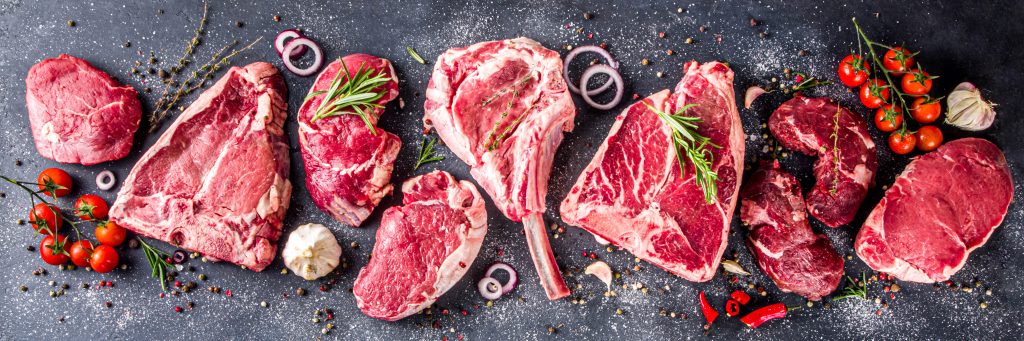
Exports of U.S. beef and pork posted year-over-year increases in October, according to data released by USDA and compiled by the U.S. Meat Export Federation (USMEF), with pork exports well-positioned to set annual volume and value records in 2024.
October beef exports totaled 105,269 metric tons (mt), up 1% from a year ago, while value increased 3% to $860.4 million. Shipments to Mexico maintained their impressive 2024 performance in October, while exports rebounded to South Korea and China/Hong Kong. For January through October, beef export value was 4% above last year at $8.68 billion, despite a 2% decline in volume (1.066 million mt).
"It's encouraging to see an uptick in demand for U.S. beef in China and Korea, where the economic headwinds have been formidable this year," said USMEF President and CEO Dan Halstrom. "Our Western Hemisphere markets have been outstanding, and exports have also expanded to the ASEAN region. So if U.S. beef can regain momentum in these larger Asian destinations, this bodes well for 2025."
Pork exports reached 252,411 mt in October, up 3% from a year ago, while value also climbed 3% to $710.4 million. Although shipments to leading market Mexico declined slightly, this was more than offset by growth in Japan, Central America, the Caribbean, Oceania and the ASEAN region. Through the first 10 months of 2024, pork exports increased 5% from a year ago to 2.49 million mt, valued at $7.07 billion (up 6%). For the year, exports are projected to surpass 3 million mt for the first time, exceeding the 2020 volume record (2.98 million mt) and topping last year's value record ($8.16 billion).
"While shipments to Mexico eased just a bit in October, $217 million in exports is still a tremendous number," Halstrom said. "This just highlights the remarkable growth U.S. pork has achieved in the Mexican market, which is enabled by the duty-free access delivered through the U.S.-Mexico-Canada Agreement. This access is critical and something we can never take for granted. At the same time, the fact that global exports still achieved an increase in October really underscores the importance of market diversification."
Rebound in China/Hong Kong and Korea fuel October beef exports
Beef exports to China/Hong Kong totaled 20,493 mt in October, up 16% from a year ago and the largest since June 2023. Export value climbed 17% to $190.6 million, also the highest since June 2023. January-October exports to the region were 8% below last year in volume (177,542 mt) and 3% lower in value ($1.64 billion).
October beef exports to Korea, which is the leading value destination for U.S. beef, were the largest since April at 19,638 mt, up 5% from a year ago, while value climbed 10% to $191.7 million – the highest since March. For January through October, exports to Korea were still 9% below last year's pace at 188,783 mt, but increased 3% in value to $1.8 billion.
U.S. beef continued to post impressive gains in Mexico in October, with exports up 7% from a year ago to 19,723 mt. Export value increased 5% to $108.4 million. These results pushed January-October shipments to Mexico 13% above last year at 193,006 mt, while value climbed 15% to $1.12 billion. While exports benefited from a very strong peso in the first half of 2024, demand has held up well in recent months even with the peso weakening versus the U.S. dollar, losing 20% of its value since late May.
Other January-October export results for U.S. beef exports include:
Robust October performance keeps pork exports on record pace
Pork exports to leading market Mexico have reached new heights in 2024 but trended modestly lower in October, falling 2% from a year ago in both volume (98,728 mt) and value ($216.5 million). Through the first 10 months of the year, exports to Mexico were still 6% above last year's record pace at 948,932 mt, valued at $2.1 billion (up 11%). This marks the third consecutive year that pork export value to Mexico has topped $2 billion and the earliest it has surpassed this milestone. Pork exports to Mexico are expected to surpass $2.5 billion this year, more than doubling in value since 2020. As the dominant destination for U.S. bone-in hams, Mexico currently accounts for 10.6% of U.S. pork muscle cut production.
Led by impressive growth in leading market Honduras and a sharp increase in demand in Costa Rica, pork exports to Central America are also on a record pace in 2024. October exports to the region totaled 14,601 mt, up 6% from a year ago, while value increased 11% to $46.9 million. These results pushed January-October shipments 21% above last year's pace to 124,235 mt, while value soared 30% to $390.9 million.
October pork exports to the Caribbean climbed 24% from a year ago in both volume (13,111 mt) and value ($39.2 million), led by growth in the Dominican Republic, Cuba and Trinidad and Tobago. January-October exports to the region totaled 103,902 mt, up 6% from a year ago, while value was up 9% to $307.8 million.
Other January-October export results for U.S. pork exports include:
October lamb exports fairly steady, led by Caribbean demand
October exports of U.S. lamb totaled 185 mt, up 2% from a year ago, though value fell about 8% to just over $1 million. Exports to the Caribbean trended higher in October, led by strong demand in the Bahamas, but shipments were lower to Mexico and Canada.
January-October lamb exports were 12% above last year at 2,298 mt, while value climbed 14% to $12.1 million.
Complete January-October export results for U.S. pork, beef and lamb are available from USMEF's statistics web page.
New Federal Order Will Require National Milk Testing and Support State Officials and Dairy Regulators; Builds on Actions to Protect Farms, Farmworkers and Communities from H5N1 Avian Influenza.
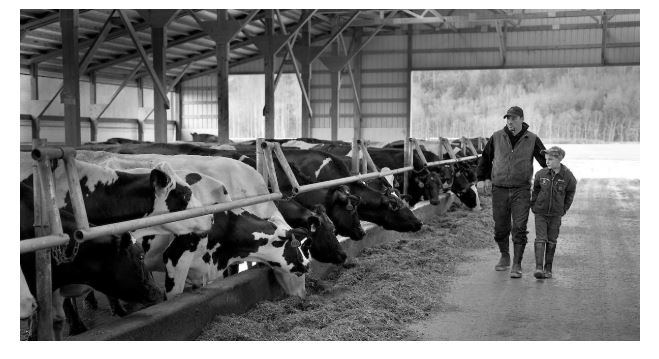
Today, the U.S. Department of Agriculture's (USDA) Animal and Plant Health Inspection Service (APHIS) is announcing the start of its National Milk Testing Strategy (NMTS), which builds on measures taken by USDA and federal and state partners since the outbreak of highly pathogenic avian influenza (HPAI) H5N1 in dairy cattle was first detected in March 2024. Today, USDA is issuing a new Federal Order, as well as accompanying guidance, requiring that raw (unpasteurized) milk samples nationwide be collected and shared with USDA for testing. This new guidance from USDA, which was developed with significant input from state, veterinary and public health stakeholders, will facilitate comprehensive H5N1 surveillance of the nation's milk supply and dairy herds.
"Since the first HPAI detection in livestock, USDA has collaborated with our federal, state and industry partners to swiftly and diligently identify affected herds and respond accordingly. This new milk testing strategy will build on those steps to date and will provide a roadmap for states to protect the health of their dairy herds," said Agriculture Secretary Tom Vilsack. "Among many outcomes, this will give farmers and farmworkers better confidence in the safety of their animals and ability to protect themselves, and it will put us on a path to quickly controlling and stopping the virus' spread nationwide. USDA is grateful to our partners who have provided input to make this strategy effective and actionable, and we look forward to continued collaboration in seeing this through."
This NMTS is designed to increase USDA's and public health partners' understanding of the virus' spread in the United States through a structured, uniform, and mandatory testing system that will help swiftly identify which states, and specific herds within them, are affected with H5N1; support the rapid implementation of enhanced biosecurity measures to decrease the risk of transmission to other livestock; and importantly, inform critical efforts to protect farmworkers to help lower their risk of exposure. USDA believes this additional step is needed to proactively support effective biosecurity measures, which is key for states and farmers to contain and eliminate H5N1 infections from their livestock and to eliminate HPAI in livestock across the U.S. dairy population.
"This testing strategy is a critical part of our ongoing efforts to protect the health and safety of individuals and communities nationwide," said HHS Secretary Xavier Becerra. "Our primary responsibility at HHS is to protect public health and the safety of the food supply, and we continue to work closely with USDA and all stakeholders on continued testing for H5N1 in retail milk and dairy samples from across the country to ensure the safety of the commercial pasteurized milk supply. We will continue this work with USDA for as long and as far as necessary."
The Federal Order released today makes three new requirements. First, it requires the sharing of raw milk samples, upon request, from any entity responsible for a dairy farm, bulk milk transporter, bulk milk transfer station, or dairy processing facility that sends or holds milk intended for pasteurization. Second, the Federal Order requires herd owners with positive cattle to provide epidemiological information that enables activities such as contact tracing and disease surveillance. Finally, like USDA's April 24 Federal Order, it requires that private laboratories and state veterinarians report positive results to USDA that come from tests done on raw milk samples drawn as part of the NMTS. The first round of silo testing under the Federal Order and the NMTS is scheduled to begin the week of Dec. 16, 2024, although some states are already conducting testing compatible with the NMTS.
This new Federal Order does not override or supersede USDA's April 24 Federal Order, which still requires the mandatory testing of lactating dairy cows prior to interstate shipment and requires that all privately owned laboratories and state veterinarians report positive test results connected with those tests. The new Federal Order announced today is intended to complement and enhance this existing order.
National Milk Testing Strategy
As part of the National Milk Testing Strategy, APHIS will work with each state in the contiguous United States to execute testing in a way that works for the state and that aligns with the NMTS standards. Once a state begins testing under the NMTS, APHIS will place that state into one of five stages based on the HPAI H5N1 virus prevalence in that state. As states move to another stage, we will have a stronger picture of our progress towards eliminating HPAI H5N1 at state, regional and national levels. These stages include:
Stage 1: Standing Up Mandatory USDA National Plant Silo Monitoring
USDA will immediately begin nationwide testing of milk silos at dairy processing facilities. This national sample will allow USDA to identify where the disease is present, monitor trends, and help states identify potentially affected herds.
Stage 2: Determining a State's H5N1 Dairy Cattle Status
Building on the results of silo monitoring, in collaboration with states, USDA will also stand up bulk tank sampling programs that will enable us to identify herds in the state that are affected with H5N1.
Stage 3: Detecting and Responding to the Virus in Affected States
For states with H5N1 detections, APHIS will work quickly to identify specific cases and implement rapid response measures, including enhanced biosecurity using USDA's existing incentives programs, movement controls and contact tracing.
Stage 4: Demonstrating Ongoing Absence of H5 in Dairy Cattle in Unaffected States
Once all dairy herds in a given state are considered to be unaffected, APHIS will continue regular sampling of farms' bulk tanks to ensure the disease does not re-emerge. Bulk tank sampling frequency will progressively decline as the state demonstrates continual silo negativity (e.g., weekly, monthly, quarterly if continually negative). If a state becomes affected, USDA will re-engage detection and response activities, and the state will return to Stage 3.
Stage 5: Demonstrating Freedom from H5 in U.S. Dairy Cattle
After all states move through Stage Four, APHIS will work with the states to begin periodic sampling and testing to illustrate long-term absence from the national herd.
As of this announcement, the following six states will be included in the first round of states brought into the program for testing: California, Colorado, Michigan, Mississippi, Oregon, and Pennsylvania.
As states begin testing under the NMTS and as they move through the five stages, their progress will be shared at USDA HPAI in Livestock Testing. While the majority of states will enter the NMTS at Stage 1, we anticipate states with ongoing testing may meet the testing requirements described above in Stages 2-4. USDA will work closely with states to determine each state's status. While the majority of states will enter the NMTS at Stage 1, we anticipate states with ongoing testing may meet the testing requirements described above in Stages 2-4. USDA will work closely with states to determine each state's status.
Webinars and Additional Information
USDA will co-host information sessions for all state animal health officials and state dairy regulators the week of Dec. 9 to learn more about the National Plant Silo Monitoring and sampling procedures. These sessions are scheduled for Tuesday Dec. 10 and Wednesday Dec. 11 to allow multiple opportunities for dairy regulators and industry stakeholders to participate.
APHIS has been working diligently to educate and inform key state and animal health partners about this Federal Order and National Milk Testing Strategy, as well as to establish written agreements with states to support how they can work with USDA under the new strategy.
APHIS has also sought and received input from state animal and public health partners about potential needs for the strategy and implementation across their various states, particularly for standardized sampling tools, outreach, and potential personnel and fiscal resources from USDA.
In the coming weeks, APHIS will include additional states in the NMTS. Throughout this process APHIS will continue to support and offer resources to states that develop bulk milk testing plans in a way that meets the needs of each state and the importance of the response. APHIS will work with each of the 48 contiguous states to participate in the program.
USDA's Multifaceted Effort to Address H5N1
Since confirming the initial H5N1 infections in cattle in March 2024, USDA has taken significant steps to better understand and control the virus's spread. This response was aided by APHIS' more than 50 years of experience in research and managing influenzas across other animal species, and by long-standing partnerships with state animal health officials that allow for the swift establishment of all testing and response activities. APHIS and state partners have seen significant success in responding to detections identified through state-level testing programs, and the NMTS builds on these efforts and will better identify the prevalence of the virus and guide response steps nationwide.
USDA has provided all H5 livestock testing through the NAHLN laboratory network, free of charge, regardless of whether it was performed for pre-movement testing under the current Federal Order; through the Dairy Herd Status Program; under testing programs that some states have designed pursuant to their unique authorities; prior to intrastate movement to fairs, exhibitions, or sales as part of state testing programs; or for producers interested in learning the status of their livestock herds. As a result of this testing, USDA has received samples from each of the 48 contiguous states over the course of this outbreak, with all confirmed positive findings being reported through the APHIS website, and whole genome sequences of each detected virus uploaded to public databases.
USDA continues to stress to farmers nationwide that effective biosecurity practices are the best weapon against the spread of disease, and that all farms should review their current biosecurity measures and ensure best practices identified over the past eight months are incorporated, even if H5N1 has not been detected in their state or region.
USDA strongly encourages herd owners to participate in the already available producer support programs, which help to cover the cost such as biosecurity programming, PPE for employees, and veterinary care. Producers can find more information at Financial Assistance | Animal and Plant Health Inspection Service, or at your nearest USDA Farm Service Agency county office.
USDA Research Related to H5N1 in Dairy Cattle
USDA has been working collaboratively with its federal partners at HHS to better understand the origin of the emergence of the virus and its potential impact in both bovines and humans. USDA has leveraged its laboratories, researchers, and regulatory agencies to address this issue and, in partnership with FDA, help ensure the safety of our nation's food supply. This includes lab and personnel support for FDA-designed studies to test the safety of milk and dairy products and reaffirm the efficacy of pasteurization for the safety of products on retail shelves. USDA FSIS has also completed a series of studies on beef, which demonstrate that safely cooking beef inactivates the H5N1 virus, if present. USDA APHIS has also prepared and shared two separate epidemiological reports on the virus and its spread, which can inform biosecurity practices and next steps.
To learn more about USDA's response to HPAI in dairy cattle, visit www.aphis.usda.gov/livestock-poultry-disease/avian/avian-influenza/hpai-detections/livestock.

U.S. Senator Markwayne Mullin (R-OK) will host his next live telephone town hall event for all Oklahomans on Tuesday, December 10th at 6:00 pm CT. During the call, Mullin will provide a quick legislative update before opening the phones to take questions from constituents.
"Next week's telephone town hall event will be a great way for thousands of Oklahomans across the state to receive a timely update on our work in Washington and speak with me directly about the issues that matter most to them," said Senator Mullin. "We'll be discussing President Trump's cabinet nominees and first 100-day agenda, national security, the economy, and more. It's vital for Oklahomans to have a voice as we craft legislative priorities for the second Trump administration, and I look forward to hearing from those who join our important conversation."
Details for participating in the call are below:
Date: Tuesday, December 10th, 2024
Time: 6:00 pm CT
Dial In: (855) 614-0277
Note: Due to the anticipated size of this event, all participating Oklahomans are encouraged to dial into the telephone town hall at least 5-10 minutes early to get connected. The telephone town hall will also stream LIVE and be available for playback on Senator Mullin's Facebook page.
According to the U.S. Grains Council's (USGC's) 2024/2025 Corn Harvest Quality Report, the 14th such annual survey published globally today, the 2024 U.S. corn crop is projected to be the third largest on record with the highest 100-kernel weight in the history of the report and lower broken corn and foreign material (BCFM), lower total damage and lower moisture than in the last five years.
Favorable growing season conditions contributed to the highest projected average yield on record and promoted good grain quality. Relatively warm, dry conditions during September and October also permitted an effective dry-down and timely harvest, thus maintaining the overall quality of the 2024 corn crop.
The 2024 growing season was characterized by quick emergence, warm conditions during the growing season, ample moisture and milder temperatures during pollination and warm, dry conditions during dry-down and harvest. Given these generally favorable growing conditions, average yield is projected to be the highest on record. Despite slightly lower harvested hectares compared to last year, total production is projected to be 384.64 million metric tons (15,143 million bushels).
The 2024 crop, on average, is entering the market channel with characteristics that met or exceeded each grade factor's numerical requirements for U.S. No. 1 grade corn. The report also showed that 89.2% of the samples met all grade factor requirements for U.S. No. 1 grade, and 96.2% met the grade factor requirements for U.S. No. 2 grade corn.
"The Council takes pride in producing this annual report that proves the quality and abundance of U.S. corn year over year. Because the U.S. is dedicated to transparency and sharing it with potential buyers, it helps them make informed decisions and aligns with the Council's mission of developing markets, enabling trade and improving lives," said Verity Ulibarri, USGC chairwoman. "The information contained in the report provides the foundation for evaluating trends and the factors that impact corn quality. The cumulative reports also enable export buyers to make year-to-year comparisons and assess patterns of corn quality based on crop growing conditions across the years."
The report is based on 620 yellow corn samples taken from defined areas within 12 of the top corn-producing and exporting states. Inbound samples were collected from local grain elevators to measure and analyze quality at the point of origin and provide representative information about the variability of the quality characteristics across the diverse geographic regions.
Test weight of 58.9 pounds per bushel (lb/bu), or 75.8 kilograms per hectoliter (kg/hl), achieved the highest value observed in the history of the report. Average U.S. aggregate BCFM in 2024 (0.6%) and average U.S. aggregate total damage (1.1%) were both lower than the 5YA. Average U.S. aggregate moisture content in 2024 (15.3%) matched the lowest value observed in the history of the report.
This year's corn protein concentration registered at 8.5 percent, equaling the five-year average.
The chemical composition of the crop remained in a healthy range, as 98.9 percent of the samples tested below the U.S. Food and Drug Administration (FDA) action level for both aflatoxins and deoxynivalenol. Additionally, 98.3 percent tested below the FDA's strictest guidance level of 5.0 parts per million for fumonisin.
The Council will present its findings to buyers around the world in a series of roll-out events through the first quarter of 2025, offering participants clear expectations regarding the quality of corn for this marketing year. During these initiatives, crop quality information is accompanied by updates on U.S. corn grading and handling, that provides importers and end-users with a better understanding of how U.S. corn is moved and controlled through export channels.
Read the full 2024/2025 USGC Corn Harvest Quality Report here and stay up to date on its associated rollout events on the Council's website. A second Council-produced study, the 2024/2025 Corn Export Cargo Quality Report, will measure corn quality at export terminals at the point of loading and will be available in early 2025.
View the full report here.
American Farm Bureau Federation President Zippy Duvall commented today on the lack of Congressional action in the lame duck session to address the immediate needs of farmers and rural America.
"Now that Congressional leaders signaled plans for yet another extension of the farm bill instead of modernizing it, it is imperative that they address the well-defined and fully substantiated needs of farmers just trying to hold on for another season.
"The recent hurricanes wreaked havoc on farms across the southeast, leaving some farmers with massive losses. They need disaster aid to recover and rebuild. Additionally, the projected two-year drop in net farm income of more than $40 billion dollars demonstrates the seriousness of the overall agricultural downturn. Without a new farm bill to help farmers manage risk, Congress must act to help bridge the gap through economic relief to help farmers cope with inflation, high supply costs and decreasing commodity prices.
"The frightening financial pinch farm families across the country are experiencing is real. There is clear evidence all around us: land auctions are on the rise; equipment purchases have slumped; and lenders are warning that operating loans are in jeopardy without some assurance farmers are going to be able to repay the loans. Today, the books just aren't balancing.
"We've lost 141,000 farms in five years and no one wants to lose more. Americans overwhelmingly want Congress to act: 78 percent say U.S. lawmakers should prioritize legislation that supports farmers and ranchers. The window is narrowing for Congressional action. The time is now. I urge lawmakers to stand with rural America."
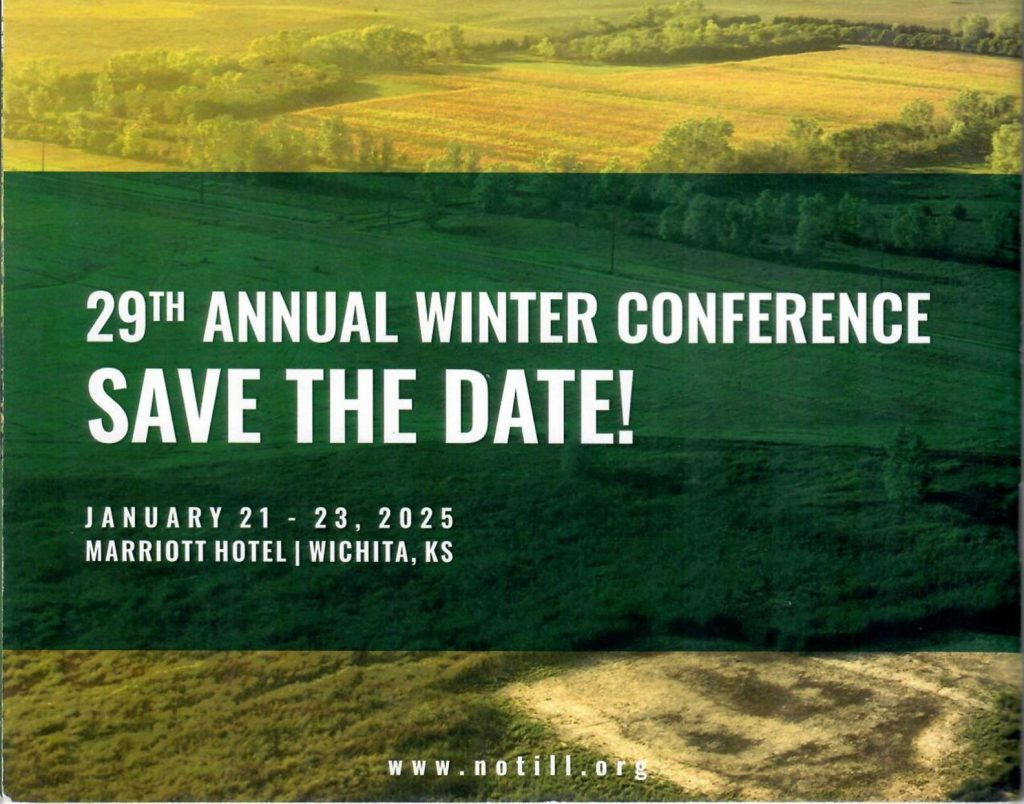
No-till on the Plains, Inc. is a 501c3 non-profit educational organization providing information for producers to adopt high-quality continuous no-till systems, and to further develop those systems. While adopting high-quality continuous no-tillage and utilizing the best agronomic practices has the potential to improve producers' efficiency and profitability greatly, many other benefits accrue to society, such as greatly reduced soil erosion of cropland, less sedimentation of rivers, lakes, and streams along with improved wildlife habitat, all while sequestering atmospheric carbon dioxide in soil organic matter.
Senior Farm and Ranch Broadcaster Ron Hays had the chance to catch up with Western Oklahoma Farmer and Vice President of No-till on the Plains, Jimmy Emmons, about their winter conference coming up on January 21-23, 2025 in Wichita, Kansas.
"This is the 29th annual conference so we've been around for quite a while. I'm honored to be on the officer team of this great organization," Emmons said.
The goal of the conference is to promote good conservation practices, from no-till to grazing management to cover crops for people from all walks of life. "We understand that not everyone is on the same playing field - some are new, some have been doing it for a while, and then there are some veterans that have been at it for multiple years," Emmons commented. "That is why the first two days of the conference are focused on getting started and where you are at, then the third day is where we zero in on the advanced side and take them to the next level."
Keynote speakers include Dr. Dwayne Beck, Professor Emeritus of Dakota Lakes Research Farm, Russell Hedrick, a No-till producer from Hickory, North Carolina, and Jeff Lowenfels, Author of Teaming with Fungi, Teaming with Microbes, and Teaming with Bacteria.
Although now retired, Beck is known for transforming the Dakotas to no-till beginning in the late '80s after the farm crisis. He also diversified the crops raised in the area through poly-cropping techniques.
Lowenfels's books teach utilizing fungi, bacteria, and microbes to free nutrients in the soil, including nutrients from fertilizers.
In North Carolina, Hedrick continuously breaks yield records in regenerative agriculture by utilizing Soil Health Analysis Package tests and tissue tests to zero in on the individual nutrients that crops need at the time and the amounts that they need.
"It is a well-rounded conference that talks about where we've been, from no-till to understanding the microbiome, to really zeroing in on the plants and nutrients," Emmons said.
With the variable weather patterns in Oklahoma, the soil needs to absorb and retain as much moisture for as long as possible when rain does fall.
"In an arid environment like Western Oklahoma, it is really critical to understand how soil functions and be able to take those big rains because we know after a drought, there are always big rain events coming, sometimes in the middle of a drought," Emmons said. "We just saw that in Oklahoma with a prolonged drought coming on, and then had half or two-thirds of our annual rainfall in two weeks."
Emmons said that the conference is valuable to anyone who wants to reduce inputs and expenses on their operations and manage their land to better withstand challenging weather patterns.
"What we really want to do at No-Till on the Plains is have farmers and ranchers talk about how they have increased profitability by managing their farms at a very high level to be successful and profitable," Emmons concluded. "Most of us like to learn from others who are doing it. There is nothing wrong with experts, and we have experts talking, but we also have farmers who have worked with experts and put it in the ground to show how that land works very well."
Registration is now open at a discounted rate until December 13, and more information and the registration link can be found on the website.
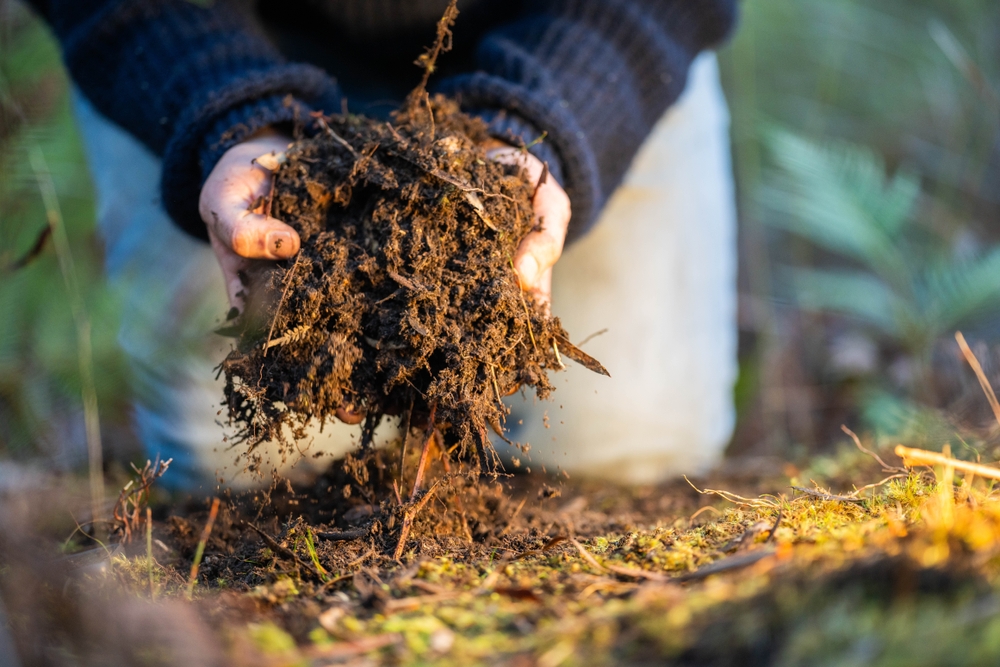
The Noble Research Institute has been a trusted resource for farmers and ranchers since 1945, and Oklahoma Farm Report's Ron Hays caught up with Hugh Aljoe, Director of Ranches, Outreach & Partnerships at The Noble Research Institute, to discuss regenerative ranching. Yesterday's BeefBuzz featured Hays and Aljoe talking about the partnership between Certified Angus Beef and the Noble Research Institute to produce land stewardship courses for producers.
The Noble Research Institute converted all of its ranches to regenerative agriculture practices in 2021 and then began to focus on an educational curriculum to teach the practices to others.
"Right now, we have our Noble Land Essentials, which really focuses on soil health," Aljoe described. "We have our Grazing Essentials, which is the application of adaptive grazing, and the Business of Grazing which along with Grazing Essentials, was developed with the help of Dr. Jim Gerrish, who most people would know his management intensive grazing approach that has been available to us for a number of years."
Producers must ask themselves how they can apply the learned principles to garner increased profitability which brings about the Profitability Essentials course examining enterprise analysis and ranch profitability.
"We want the curriculum to be something that will be meaningful to our rancher network," Aljoe commented. "The next courses will be based on the feedback that our peers provide us about what else they need to continue down this regenerative journey."
Aljoe was proud to say that despite persistent drought, the Noble Research Institute's ranches have turned profits every year.
He said that essentially, producers must be able to proactively manage the grazing on their land as well as their profit. "Begin to look at those areas where you have the potential for the biggest change, and financially, you look at the areas where you have the biggest dollar amounts in your expense accounts. Then determine what you can do to change your management in order to reduce your inputs."
Land management is all about proactively building resiliency through good stewardship practices through changes in rainfall, stocking rates, forage supplies, and other challenges.
Aljoe listed two key points to good management: "Always manage for really good residual and always allow your pastures to be fully recovered before you go back in there," he said.
He said that one of the biggest challenges of convincing producers to emulate regenerative practices is the fear of wearing a label whether it be sustainable or regenerative.
"For us, it is really a journey," he added. "We want to build resiliency, soil health, and profitability. To us, that is what regenerative is. It goes back to our founders' original intent to rebuild, regenerate, and rejuvenate soils and keep people on the land. That is what we are trying to do at Noble."
The Beef Buzz is a regular feature heard on radio stations around the region on the Radio Oklahoma Ag Network and is a regular audio feature found on this website as well. Click on the LISTEN BAR at the top of the story for today's show and check out our archives for older Beef Buzz shows covering the gamut of the beef cattle industry today.
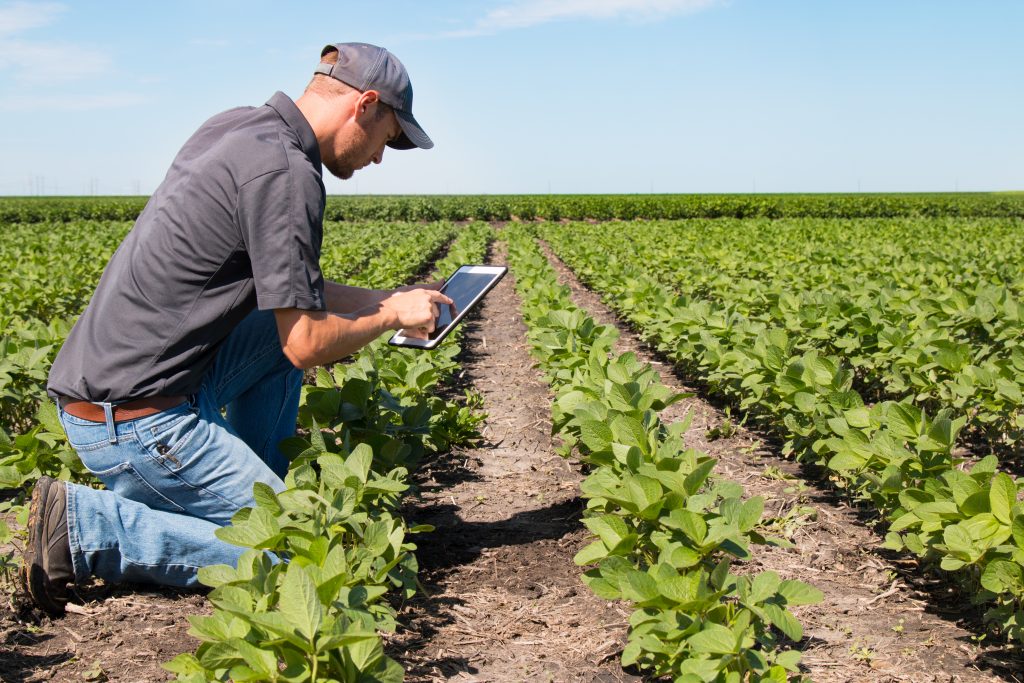
Agronomist Using a Tablet in an Agricultural Field
Oklahoma Farm Report's Maci Carter caught up with BASF's technical marketing manager Josh Putman to learn about the company's accomplishments this year.
In February 2024, BASF's Surtain herbicide received its EPA registration. Surtain herbicide is the first of its kind and a truly new early-season solution for fighting resistant weeds in Corn. Producers can now apply a group 14 herbicide pre- through early post-emergence and get excellent crop safety and residual weed control.
Then, over the summer, BASF launched the Surtain Demo Experience to get the product into the hands of growers and retailers, so they could become confident in the new technology of the herbicide: solid encapsulation.
"Weed resistance continues to be a problem, especially throughout much of the Midwest," Putman said. "The goal of Surtain was to bring a new novel mode of action being a PPO inhibiting chemistry, in combination with Zidua SC, a well-known group 15 herbicide, and bring that premix in to really control palmer amaranth, waterhemp, and other problematic weeds throughout much of the United States. It is a good way to start fields off clean early in the season or apply it all the way up through V3 corn, which is really important for many of our growers."
In October, Liberty ULTRA herbicide received its EPA registration, and a growing number of states have begun to approve its use. It is the first trait-enabled, resolved isomeric postemergence herbicide. It effectively controls grasses and tough broadleaf weeds like waterhemp, palmer amaranth, giant ragweed, and kochia in glufosinate-tolerant soybeans, cotton, canola, and corn.
"Liberty ULTRA is extremely exciting for us," Putman said. "It is what we are considering the next generation of glufosinate, and it really stems from two different concepts. The Liberty-loc formulation helps with the retention and dispersion of the herbicide on the leaf, ultimately getting three times more herbicide into that plant compared to generic glufosinates on the market.
"The other aspect is the Glu-L Technology which means that the isomers are more active making the product effective at a 25% lower use rate."
Beyond weed control, BASF's available tools include a complete portfolio of overall pest management. Nurizma insecticide is a new product in the lineup to control resistant populations of corn root worms. Nurizma insecticide's active ingredient, broflanilide is the first group-30 active ingredient registered and sold as an in-furrow insecticide.
Veltyma fungicide contains a unique active ingredient, Revysol®, the first and only isopropanol azole. Revysol fungicide delivers broader, stronger, longer disease control. The unique molecular structure provides stronger binding, rainfast performance, and excellent efficacy. The unique isopropanol azole molecule has a reinforced isopropanol link — giving it the ability to flex to various conformations and fight a broad spectrum of disease and resistant strains.
"In 2024, diseases came in late and really hit us hard," Putman described. "In some areas of the 'I' states, we were seeing greater than 30-bushel yield losses, so offering the complete program to help manage all pests is very important going forward."
BASF continues to innovate from its already comprehensive seed portfolio through a complete crop protection portfolio with the goal of helping growers be as successful as possible. More information can be found by reaching out to local BASF representatives which can be found on the website.
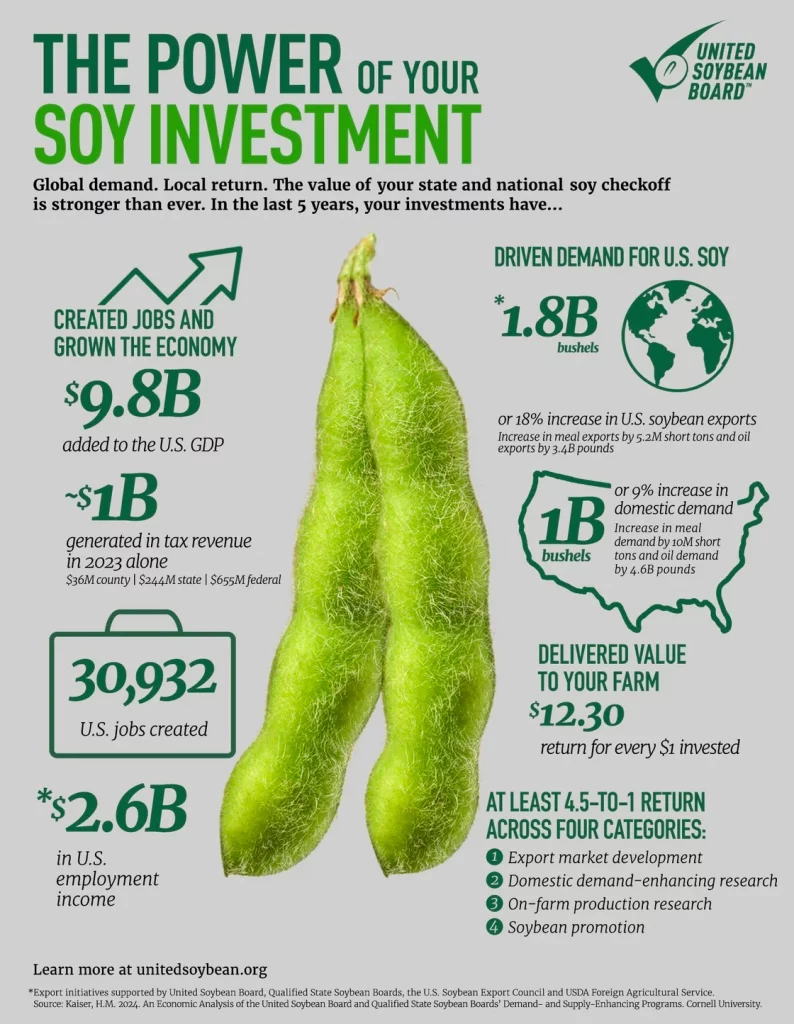
In a challenging economic landscape of low commodity prices and tight margins, the United Soybean Board (USB) continues to deliver economic returns to U.S. soybean farmers through strategic investments. This remains critical to ensure farmers receive measurable value on-farm and through expanded market opportunities. A recent study confirms the soy checkoff's positive return of at least 4.5-to-1* on investment across the categories of export market development, domestic demand-enhancing research, on-farm production research and soybean promotion.
Beyond growing export markets for food and feed, finding new industrial uses domestically, delivering value for animal agriculture, or disseminating production research to grow a more resilient soybean, the real takeaway from this study is economic value. The soy checkoff creates more jobs, supports higher labor income, increases tax revenue, and has a tremendous impact on U.S. gross domestic product (GDP).
"We focus on maximizing the impact of every dollar invested by creating new revenue streams for farmers, building premium markets, and establishing partnerships here and abroad where farmers can see tangible returns," said Philip Good, Mississippi farmer and United Soybean Board's Chair of the Audit & Evaluation Committee. "The soy checkoff is especially important during fluctuating commodity prices to protect our markets that still bring value back to the farm. Like most farmers, we're feeling the pinch at home. But I'm confident that USB's priority of strengthening markets and growing demand will help farmers navigate near-term financial challenges. These long-term investments will provide a more sustainable future for their operations."
The study by Dr. Harry M. Kaiser of Cornell University highlights USB and the QSSB's return on investment in improving the demand for U.S. soybeans and increasing the efficiency of soybean production. It also provides perspective on the soy checkoff's significant impact on U.S. employment and income. Cumulatively, soy checkoff-funded initiatives at the national and state level supported nearly 31,000 jobs, added $2.6 billion in labor income, contributed $5.9 billion in total value, and increased the U.S. GDP by $9.8 billion.
"USB's programs add distinct value to the economy, from supporting job growth to providing tax revenue gains," said Dr. Kaiser. "When it comes to ROI, I'm most encouraged by the staggering growth in domestic demand research as soybeans seem to have no limits when it comes to versatility and performance in new formulations across industrial uses as well as delivering value for animal agriculture. Exports play a crucial role for U.S. soybeans, with over half of the crop reaching 80+ global markets, underscoring their importance to the industry's growth and sustainability."
These findings emphasize the soy checkoff's continued success in driving economic benefits and ROI for farmers. Every dollar invested returned $12.30 in net revenue to the soybean industry. In addition to fostering new revenue streams on-farm, USB's efforts in research and promotion create positive spillover effects. Whether it's increased demand for soybean products, supporting more jobs in agriculture or opening up new export markets to support a prolific harvest, USB and QSSB investments of the half-million U.S. soybean farmers create a stronger foundation for your farm's future.
"Rest assured, your soy checkoff continues to invest in high-impact opportunities to support U.S. Soy. We're funding research to fight pests and increase yields, improving waterways, rails and ports, supporting cost share for cover crop adoption, growing demand in emerging, expanding and mature markets abroad, identifying soy uses in petroleum replacement and furthering high oleic utilization across the country," shared USB's CEO Lucas Lentsch.
For more information and a broader look into the soybean industry, you can also check out the United Soybean Board and the National Oilseed Processors Association's study on the economic impact of U.S. soybeans.
*Across all categories of export market development, domestic demand-enhancing research, on-farm production research and soybean promotion, soy checkoff investments had a positive return of at least 4.5-to-1 (i.e. benefit-cost ratio (BCR)). Export market development had a BCR of 14.26-to-1. In other words, an extra dollar invested in export market development returned $14.26 in net revenue to soybean farmers. Domestic demand-enhancing research had a BCR of 42.88-to-1 or $42.88 returned. On-farm production research had a BCR of 5.78-to-1 or $5.78 returned. Soybean promotion had a BCR of 4.5-to-1 or $4.50 returned. Overall, the combined BCR for all USB/QSSB activities was 12.30-to-1, i.e., an extra dollar invested in all activities returned $12.30 in net revenue to the soybean industry,
About United Soybean Board: United Soybean Board's 77 volunteer farmer-leaders work on behalf of all U.S. soybean farmers to achieve maximum value for their soy checkoff investments. These volunteers create value by investing in research, education and promotion with the vision to deliver sustainable soy solutions to every life, every day across the three priority areas of Infrastructure & Connectivity, Health & Nutrition, and Innovation & Technology. As stipulated in the federal Soybean Promotion, Research and Consumer Information Act, the USDA Agricultural Marketing Service has oversight responsibilities for USB and the soy checkoff. For more information on the United Soybean Board, visit unitedsoybean.org
RON's Dave Lanning has a pre-opening look at today's agricultural Markets.
Click the audio tab below for today's report.
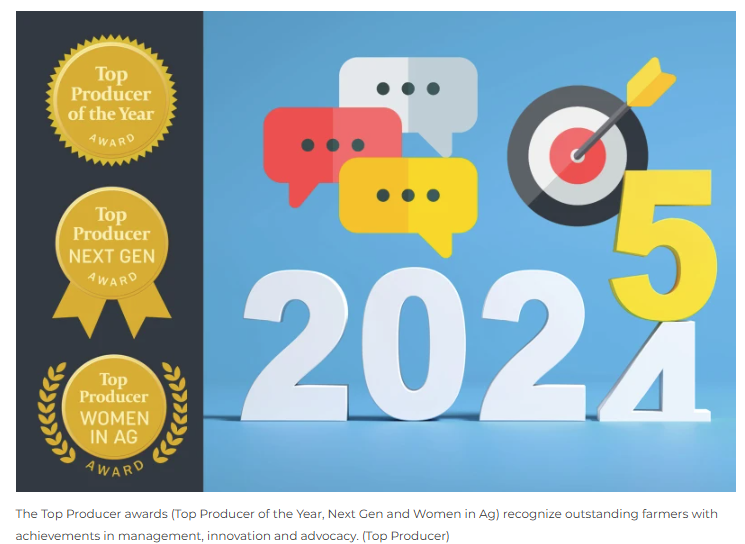
We asked past Top Producer award winners to share what's new for them in the coming year. Here are some of the responses they shared with us:



The Corporate Transparency Act (CTA) is a federal law aimed at combating financial crimes like money laundering and tax evasion. Under the CTA, most corporations, limited liability companies (LLCs), and similar entities are required to disclose their "beneficial owners"—individuals who own or control at least 25% of the business or exercise significant decision-making authority.
On January 1, 2024, the CTA's rules went into effect. Entities created before that date were given until January 1, 2025 to comply, while companies formed during 2024 were given 90 days to report the beneficial ownership information.
Several court actions were filed, challenging the new requirement. On December 3rd, 2024, Judge Amos Mazzant, a federal judge in Texas, issued a nationwide injunction. This injunction paused the reporting deadlines and prevents enforcement of the regulations. The ruling in Texas Top Cop Shop, Inc. v. Garland was in response to a request for a preliminary injunction, where the court found that the plaintiffs demonstrated a substantial likelihood of success on the merits of their claims. It was not a final determination of the case itself. The government may choose to appeal, although no statements have yet been made in response to the ruling.
Reporting Requirements:
While they have been placed on hold, and entities are not required to comply by a specific date, many businesses have already submitted the CTA information. Others may choose to do so in the future. To comply with the CTA, reporting entities will need to:
The above ruling was not the only successful challenge to the CTA. Earlier this year, a federal district court in Alabama ruled that the CTA was unconstitutional. Plaintiffs in that case were granted summary judgement, and CTA enforcement was suspended regarding the named plaintiffs and members of the National Small Business Association. Until the most recent ruling, for everyone else the requirement remained in effect.
What next:
If you are a business who has already submitted the beneficial ownership information, the regulations include an ongoing requirement to update the report if information changes. However, because of the injunction, those requirements are currently suspended. That does not mean that the ongoing requirement to update the report is removed completely! That requirement could be reinstated or changed based on further developments in this court case (or others), changes in the regulations or guidance or even further Congressional action. Because of that, it is important to stay aware of future developments.
If you are an entity who has not submitted the beneficial ownership information, your obligation to do so has been suspended. Again, this does not mean that the obligation is completely eliminated, just that as of this moment you are not required meet the previously-mentioned deadlines. You should keep up with future changes in this fluid situation, to avoid possible future liability. It might also be helpful to reach out to a legal or financial professional to discuss next steps. If the injunction is overturned on appeal, businesses may need to act quickly to meet reporting deadlines. Information on finding an attorney in your area is available here. Further, the FinCEN website provides additional resources and information to clarify requirements and streamline reporting.
For more information on the CTA and its requirements, the National Agricultural Law Center has a recorded webinar and factsheet available. Additionally, the Center for Agricultural Law and Taxation has followed the issue closely, and has resources, including a brief update on pending court challenges, available here. To be clear, these resources cover the CTA requirements, which have now been suspended due to the Texas Top Cop Shop ruling. Unless and until there are future changes with litigation or policy changes, regulated entities are not required to comply with the CTA reporting requirements.
Article courtesy of Southern Ag Today: Rumley, Elizabeth. "Corporate Transparency Act Deadline Upcoming." Southern Ag Today 4(48.5). November 29, 2024. Permalink

This week on SUNUP, OSU Agriculture Economist Dr. John Michael Riley discusses the highs and lows of current grain and cotton markets.
Riley said that all grain markets have been down a bit, likely due to the welcomed rainfall across most of the major growing areas. To the markets, it means that current wheat and next year's spring crops might be better than anticipated before the much-needed moisture came.
He said that wheat planting in Oklahoma is 95% complete, and the nation's crop is 97% complete. Eighty-nine percent of the Nation's wheat crop has emerged, and in Oklahoma, 80 percent is up.
"Those are significant improvements from what we were thinking it was going to be and where we were just a couple of weeks ago," Riley said.
Wheat crop conditions in the state are about 16% poor to very poor and 48 percent good to excellent.
"That is a vast improvement from where we were, and it has put a little bit of pressure on prices," he added. "The futures market is down about twenty-five cents at about $5.50 right now from the last time we talked. The improvement in conditions is what is driving that.
Riley continued to discuss the market conditions of cotton, soybeans, and corn. Click the listen bar at the top of the page to listen to the complete audio report.
This week on SUNUP:
Oklahoma Agriculture Starts at SUNUP!
Weekly Statewide Broadcast: Saturday at 7:30 a.m. & Sunday at 6 a.m. on OETA (PBS)
Stream Anytime: YouTube.com/SUNUPtv
The life of a herdsman may sound glamorous to many, but few understand the demanding blend of physical strength and mental grit it takes to excel in the role. The Herdsman of the Year Award honors an Angus enthusiast who has committed wholeheartedly to the management, strategic choices and advancement of his or her herd.
Peers select the award winner from a set of candidates through voting, hosted by the American Angus Association®. Voting will begin December 16, and all votes must be submitted by noon CST on January 9, 2025.
To be eligible to vote, exhibitors must have entered at least one of the following shows in 2024: Cattlemen's Congress, National Western Stock Show, Western National Angus Futurity, Atlantic National, American Royal or North American International Livestock Exposition. Eligible exhibitors will receive an email with a unique login and password from the American Angus Association® through the Election Runner platform to vote. Only one vote per member code will be allowed.
Nominated for this year's award are Michael Jones, Express Ranches; Cole Kaufman, Oakley Farms; Cash Langford, Hunter Angus; and Greg Van Zee, Udell Cattle Company.
Michael Jones | Express Ranches
Michael Jones hails from Saskatchewan, Canada, and he developed a passion for Angus cattle at a young age. His love for the breed would eventually lead him to the United States, where he has continued to pursue his passion for Angus cattle at the highest level. Jones is currently the show cattle manager at Express Ranches in Yukon, Oklahoma.
At Express Ranches, Jones oversees the ranches' competitive show program, traveling nationwide to compete at major shows. He plays a key role in managing and preparing cattle for shows across the country.
Jones said he feels the opportunity to be a part of the Angus breed and the relationships he has built throughout his career are what drive his continued involvement. "I'm grateful to be nominated for such a prestigious award," he said. "The people and opportunities within the Angus breed are what keep me motivated and excited to be part of this incredible industry."
Cole Kaufman | Oakley Farms
Cole Kaufman has been immersed in the cattle business since childhood, competing and fitting cattle, and today he works as the manager at Oakley Farms in Livingston, Tennessee. Growing up on Sugar Loaf Farms in Virginia, where his father managed the operation for 21 years, Kaufman said hands-on experiences fueled his drive to be involved with the Angus breed and in every aspect of the industry.
At Oakley Farms he oversees two annual online sales featuring show heifer prospects, along with daily management of sale heifers, donor cows and customers' cattle. Kaufman manages the show barn and keeps their donor cows producing at a top level. He works side-by-side with Rob Oakley, to strategically mate donors using IVF to produce high-caliber offspring. Over the past six years, Oakley Farms has gained recognition, including exhibiting the first Angus to win Supreme Champion at Cattleman's Congress and many other champions.
Beyond his work at Oakley Farms, Kaufman dedicates time to supporting youth in the cattle industry. Kaufman volunteers with his state's junior angus association and helps at the National Junior Angus Show with contests and events.
He said he believes the business offers incredible opportunities for young people and encourages them to chase their dreams. When he was growing up, he recalls not necessarily having the cattle to run at the level he always wanted, however fitting and husbandry became his way to dive deeper into the industry he loves. "The cattle industry has shaped my life in every aspect," Kaufman said. "It gives you the opportunities to chase your dreams. My goal is to help juniors achieve their dreams, just like others did for me. Angus might be the business breed, but fact of the matter is we are all here to help the youth."
Cash Langford | Hunter Angus
Cash Langford, a Texas native, grew up with a competitive spirit for showing cattle. His interest in cattle was sparked at a young age as he exhibited Angus cattle nationally and steers at the Texas majors.
Today he calls Fair Grove, Missouri, home as the herdsman at Hunter Angus. There he manages show and sale cattle and plays a key role in the daily operations of the farm. He works closely with the Hunter Angus team on breeding decisions, mating strategies and maintaining the farm's donor and recipient cow battery. Under his management, Hunter Angus has achieved considerable success, including the exhibition of the 2023-2024 Roll of Victory (ROV) Show Bull of the Year, BNWZ Executive Decision 2219.
At Hunter Angus, Langford serves as a mentor to junior members, helping them select heifers, offering advice on feeding and providing guidance on fitting and clipping for shows.
Langford builds strong relationships with his customers and said he considers mentoring juniors to be one of the most rewarding aspects of his work. "The Angus breed has given me so much, and I'm honored to be nominated for this award alongside three other deserving gentlemen as well as dear friends," Langford said. "What keeps me motivated is the people I get to work with, especially the young people in the industry. Helping them grow and succeed is what it's all about."
He adds, he hopes Richard Stotts and Ed Richardson are proudly looking down over him, because they helped mold and guide him to where he is today.
Greg Van Zee | Udell Cattle Company
Greg Van Zee's passion for the Angus breed started when he was in high school and spent his summers working for Walking S Farms, a local Angus breeder. Since then, he has worked for and with some influential people in the cattle industry and found himself learning more and more about evaluation and management.
Today he is the show barn manager for Udell Cattle Company in Sioux City, Iowa. He assists with annual production sales and daily farm activities, and he talks about what continues to attract him to the Angus breed.
"The opportunity to be part of a progressive program and breed is important to me," Van Zee said. "The Angus breed offers many diverse breeding options whether it be within the Angus breed or crossing with other breeds."
Udell Cattle Company started showing Angus cattle in 2014 and has had success at every level since then.
"It is an honor to be nominated for Herdsmen of the Year and to be recognized by my peers," Van Zee said.
The Association's 2025 Herdsman of the Year will be announced Jan. 10, 2025, at the beginning of the Herdsman Social event in Oklahoma City during Cattlemen's Congress. This event will be held at the Cowboy Bar in Barn 3 with doors opening at 3:45 p.m. The social is free for all to attend. Visit www.angus.org for more information
 |
Smithfield Foods donated $150,000 in grant funding to Inter-Faith Food Shuttle's Gardens for Everyone program to provide year-round access to fresh and affordable produce for low- to moderate-income households.
"Having consistent access to affordable and nutritious food options can be a significant challenge in rural communities and food deserts," said Steve Evans, vice president of community development for Smithfield Foods. "Smithfield is committed to combatting hunger through meaningful partnerships like Inter-Faith Food Shuttle that work to equip and empower neighbors with vital skills to create healthy communities."
Inter-Faith Food Shuttle will collaborate with other local organizations to distribute grant funding in a seven-county service area in central North Carolina including Wake, Durham, Johnston, Orange, Chatham, Nash and Edgecombe counties. The collaboration will further the grant's impact by identifying even more neighbors in need.
"This generous support from Smithfield brings our community's vision of a hunger-free future closer to reality," said L. Ron Pringle, president and chief executive officer for Inter-Faith Food Shuttle. "With these resources, we can expand agricultural education and community garden programs, empowering neighbors to grow their own food and build sustainable solutions. Together, we're turning shared dreams into lasting change for Eastern North Carolina."
Inter-Faith Food Shuttle operates on a pay-what-you-can policy to ensure the program is accessible to all. Participants receive a raised-bed garden box filled with soil, seeds and seedlings, access to free resources and ongoing support through drop-in open garden hours.
Inter-Faith Food Shuttle is a North Carolina-based nonprofit organization dedicated to recovering and distributing nutritious food options to low-income neighbors in food deserts, offering programs such as mobile food pantries and gardening programs designed to empower people with skills to meet their own food needs.
Smithfield is committed to providing hunger relief in local communities and supports pay-what-you-can food models that help provide access to affordable and nutritious food. Smithfield recently contributed $100,000 to two pay-what-you-can café models, Thelma's Kitchen and A Place at the Table, and donated $100,000 to Ripe for Revival, a mobile food retail market that offers fresh, local and healthy food options to neighbors facing food insecurity through pay-what-you-can prices.
For more information about Smithfield's programs to support local communities, please visit smithfieldfoods.com/helping-communities
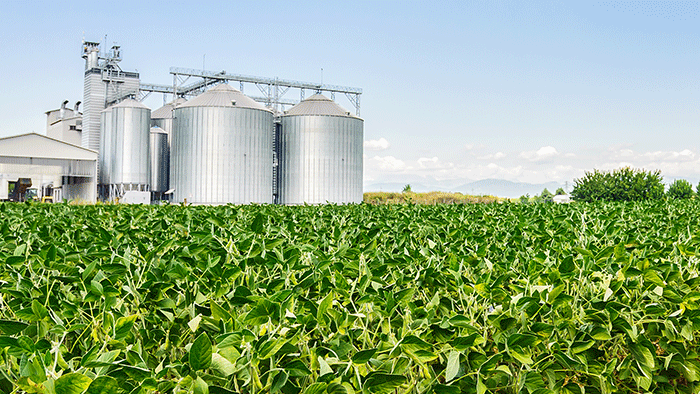
U.S. farmers harvested the second-biggest corn and soybean crops on record this fall with USDA estimating the U.S. corn crop at 15.14 billion bushels, down 1.3% from last year's record crop, and the soybean crop at 4.46 billion bushels, up 7.2% YoY. Prices of both commodities have fallen to four-year lows, spurring additional demand both domestically and on the export front.

Strong domestic demand, driven by the acceleration in biofuel demand and a robust export program, have helped clear the abundant corn and soybean inventories in the U.S., which have narrowed the futures carries for both commodities. Carries occur when there is a surplus of a commodity, causing the price of deferred futures contracts to rise above nearby contracts, thereby incentivizing storage.

Feed demand also remains a bright spot for both corn and soybeans. Feed usage is expected to remain robust with steady numbers of cattle on feed in the beef sector, as well as hogs, pigs and chick placements. Demand for feed should hold consistent on the dairy front as herd inventory levels are stable.
The exhaustive usage pace, both domestically and on the export front, face growing headwinds. The U.S. dollar is expected to continue strengthening in a growing U.S. economy. However, trade disruptions with key trading partners China and Mexico could create harmful and lasting impacts to U.S. exports. Additionally, uncertainty in the biofuel policy raises uncertainty over the durability of domestic demand for corn-based ethanol and soybeans used for biodiesel and renewable diesel. The expectation for record corn and soybean crops in South America further cloud the demand outlook for U.S. corn and soybeans. The potential slowdown in both exports and domestic demand amid supply abundance improves the profit outlook for storage via a weakening of buy basis in the cash market and a widening of futures spreads in both corn and soybeans.
With ample carryover stocks from last year's record harvest on top of this year's large harvest, corn inventories in the U.S. are bulging. The stocks-to-use ratio for this year's corn balance sheet is figured at 12.9% based on USDA's latest projections, up from 11.8% last year. Corn piles are evident across the countryside due to lack of storage space. Elevators note that moisture levels of this year's corn harvest are well below normal, reducing the risk of shrink. The low moisture content implies a low-margin year in drying revenue at grain elevators.
Corn has enjoyed an impressive demand story with a trifecta of strong ethanol, livestock and export demand amid slow farmer sales lifting corn basis higher nationwide. The strong demand on corn has also narrowed spreads in the futures market in recent weeks, eroding the profit incentive for storage.

Demand risk is of concern in the weeks ahead. While basis in the Corn Belt has been driven higher by record-strong ethanol demand, ethanol margins are turning negative amid tightening corn basis, rising natural gas prices and softening fuel prices, portending a slowdown in ethanol demand in the months ahead. There is considerable uncertainty in biofuel policy with the ongoing delay in releasing details on the 45Z clean fuel tax credit and the potential risk of increased small refinery exemptions from the Renewable Fuel Standards that were more common in the previous Trump administration.
The small refinery exemptions allow specific refineries from having to comply with the RVO (renewable volume obligation) targets. Each of these may curtail demand for corn ethanol during an already difficult time for this industry.
Export demand has been impressive and is putting more upward pressure on basis. Total U.S. corn export commitments are up 39% YoY with Mexico alone comprising 41% of all U.S. export sales. Demand from most foreign customers has also improved since last year, stimulated by low corn prices. This could also be attributed to expected trade disruptions that may occur going into the next administration. Mexico's unshipped corn purchases total 8.2 million metric tons, up 4% YoY, with some purchases at risk of cancellation if retaliatory measures against the U.S. go into effect.
Replacing U.S. corn will be difficult for Mexico with livestock operations located in the northern region of the country, making the ease and efficiency of rail shipments from the U.S. hard to immediately replace. Imports from other corn exporters like Argentina or Brazil would be sent by ocean vessels to the coast, then unloaded onto rail to be shipped inland.
South America's corn crop is also expected to be larger this marketing year, which when harvested, will bring new export problems for the U.S. Assuming normal growing conditions, USDA forecasts Brazil's corn crop at 127 MMT, up 4.1% YoY, and Argentina's crop up 2% YoY at 51 MMT, with both countries expected to be more competitive on the export front.
Amid the speculation regarding trade and biofuel policy, U.S. feed demand is expected to remain a consistent and positive driver of corn demand. With consistent cattle placements on the Plains, basis across the region is expected to remain comparatively strong.
The large U.S. soybean harvest and carryover stocks from the previous crop have left the U.S. with record soybean supplies. USDA forecasts the U.S. soybean stocks-to-use ratio to climb to 10.8% this marketing year, well above last year's 8.3%.

Soybean basis has strengthened in recent weeks while futures spreads have narrowed on the combination of a swifter export pace and persistent growth in U.S. crush demand. Domestic demand is robust, with soybean crush capacity still expanding to feed the rising demand of renewable diesel in the U.S., driven largely by California's Low Carbon Fuel Standard. New soybean crush capacity and expansions are slated to come online in the months ahead. Growth is maturing as profit margins in the production of renewable diesel erodes, largely because of falling prices of renewable identification numbers (RINs).
On the export front, total U.S. export commitments for the current marketing year are up 9.0% YoY while Chinese purchases are down 8.5% YoY. Faster sales into other export markets like the European Union, Egypt and Southeast Asia have made up for the loss in Chinese demand so far this year. Soybeans have the most at risk in a trade dispute with China, which accounts for 46.7% of all U.S. soybean export commitments this year. China currently has 4.2 MMT (154.3 million bushels) of unshipped soybeans already purchased from the U.S., comprising 38.6% of all unshipped bushels to all export destinations that are still on the books. Concern is growing that unshipped soybean sales to China are at risk if a trade dispute arises.
Trade issues will create increased economic uncertainty for the U.S. at a time when South America is expected to harvest a record soybean crop in 2025. USDA currently figures the Brazilian soybean crop at 169.0 MMT, up 10.5% YoY, and the Argentine crop at 51 MMT, up 5.8% YoY. A trade dispute with China is widely expected to cause a shift in its soybean purchases to South America, which bring its harvest to market by late February to early March. As the new administration begins in January, China has begun to stockpile soybeans in anticipation of trade uncertainty.
However, not all aspects of renegotiating trade agreements and executing enforcement with China would necessarily be bad for soybeans. Tariffs on imports of used cooking oil (UCO) from China would incentivize use of domestic soyoil and could potentially accelerate the U.S. soybean crush pace. UCO is a major feedstock in the production of renewable diesel, according to the U.S. Energy Information Administration.
The export outlook for corn and soybeans is most at risk in the months ahead. The combination of excess corn and soybean supply in the U.S., record crops from South America, potential retaliatory tariffs and cancelations of export sales will cause a sudden drag on exports. U.S. corn and soybean exports would be rerouted, slowing the overall export pace and increasing the cost of shipping into smaller markets. In a supply-surplus environment, the higher transportation cost will be borne by the farmer via wider basis.
The value of the U.S. dollar could also continue strengthening, creating additional headwinds for corn and soybean exports. Additional tax cuts and increased deficit spending being considered by the incoming administration would push the dollar higher. As in any new administration, changing geopolitics could cause changes to the dollar, further underpinning its value. The robust export pace for corn and soybeans is likely to fade after Jan. 1.
The weakening margin outlook for biofuels and the heightened policy risk for all biofuels under the second Trump administration risks slowing ethanol demand for corn and crush demand for soybeans. A robust livestock sector signals continued strength in feed demand, although not enough to absorb potential losses in exports.
The combination of growing world supplies and slowing export pace in 2025 will incentivize storage of both corn and soybeans, with elevators benefiting from bigger carries in the futures market.
Thanks to research conducted by Oklahoma State University Agriculture, the Oklahoma Department of Wildlife Conservation now hosts hunting events for women seeking opportunities to hunt with their families. (Photo by Adobe Photostock)
A research collaboration between Oklahoma State University and the Oklahoma Department of Wildlife Conservation is helping increase the number of female hunters in the state.
The ODWC reached out to Audrey King, OSU assistant professor of agricultural communications and state Extension specialist for digital media, about developing focus groups of women interested in the sport to explore ways to grow the number of women who hunt.
King launched the project in 2021, asking Oklahoma women what barriers kept them from hunting and what communication channels they preferred for marketing hunting. A diverse group of women was represented in the study, such as current license holders, lapsed license holders, bow hunters and gun hunters.
"Scheduling and caring for a family, childcare and working on everyone else's schedule is a big barrier for women in our study," King said. "Most of the women liked the idea of connection, but one of the barriers they faced was finding female mentors in the hunting space. Then there were biological barriers, such as the fact that much of the hunting clothes for women put fashion over function."
King said the lack of available hunting gear for women and the cost of the gear were other challenges. Women also have different motives for wanting to hunt.
"Many men traditionally like to be alone when they hunt and like to trophy hunt," said Sarah Cain, a graduate student in the OSU Department of Natural Resources Ecology and Management. "However, many women expressed a preference for hunting with their families and in groups, and they like the idea of gathering their own meat. They don't always care about a taxidermized deer head; they care about having meat for a year."
Heather Del Moral, a communication and education technician with the Oklahoma Department of Wildlife Conservation, said she started hunting 11 years ago when she arrived at the ODWC.
"I love being outside. I love the quality time it gives me with my friends and family," Del Moral said. "I go hunting alone a lot, so sometimes, I think about when I get the deer, I'm going to have to drag the deer and load it myself. I also process the meat myself, so it can be a lot of work. Sometimes, that keeps me from it. And just making the time is probably my other big barrier."
Since the survey, the ODWC has implemented programs and marketing based on King's research results, such as family-controlled hunts that allow women to sign up with a partner and children in groups of up to four.
"Our first family hunt was offered in 2023 at Cross Timbers Wildlife Management Area," said Betsy York, a human dimensions specialist with the ODWC. "Women interviewed were highly satisfied with the experience."
This year, the department expanded the family-focused hunting events to two additional wildlife management areas for three special family hunts.
"I love doing research that is applied and practical, and seeing the fruits of that has been amazing. That is part of our land-grant mission," King said. "I love that I got to give a voice to some amazing women."
King and Cain agreed that the interdisciplinary nature of the research was rewarding, with Cain looking at the results from a natural resource perspective, and King studying the data from a social science perspective.
"Coming out of my master's, it is important for me to understand the social perspective of natural resources because in any job, I will be working with people, and I want to understand their perspectives and motivations when interacting with natural resources. I would not have gotten that experience had it not been for this research," Cain said.
She hopes the project will foster more targeted demographic research across the nation.
"State wildlife agencies are funded by hunting license dollars, and there has been a steep decline in hunting license sales," Cain said. "By increasing hunter participation, we can also increase funding for these wildlife agencies, which fund wildlife research at universities like OSU."
OSU Ag Research is Oklahoma's premier research and technology development agency in agriculture, natural resources and the life sciences.
Today the U.S. Department of Agriculture (USDA) announced it is taking steps to streamline and provide flexibilities for environmental compliance requirements for 2024 hurricanes Debby, Helene and Milton allowing the Farm Service Agency (FSA) to expedite approval of payments and practice implementation for Emergency Conservation Program (ECP), Emergency Forest Restoration Program (EFRP), and Tree Assistance Program (TAP) applicants impacted by these three named storms in 2024. Additionally, USDA is waiving certain requirements for ECP and EFRP to provide restoration cost-share assistance payments more quickly to producers impacted by hurricanes occurring Oct. 1, 2016, through Sept. 30, 2023. FSA is waiving the requirement that producers impacted by hurricanes submit receipts and documentation related to land restoration.
ECP provides financial and technical assistance to help agricultural producers rehabilitate ag land and conservation structures damaged by natural disasters. EFRP provides financial and technical assistance to eligible owners of nonindustrial private forestland to complete forest restoration activities to restore forest resources and forest health. TAP provides financial assistance to orchardists and nursery tree growers to help cover the cost of replanting or rehabilitating eligible trees, bushes and vines that produce annual crops that were damaged or destroyed by a natural disaster.
"Producers impacted by natural disasters, including hurricanes, are often up against the clock when it comes to recovery efforts to bring damaged agricultural land back into production, coupled with the day-to-day management of their operations, time is of the essence," said FSA Administrator Zach Ducheneaux. "By reducing required documentation and simplifying environmental compliance reviews, producers can implement restoration activities sooner, our offices can approve cost share payments more quickly and we can clear the application backlog in states where producers have been hard-hit by numerous catastrophic hurricanes and other natural disaster events over the last eight years."
Environmental Compliance Flexibilities for 2024 Hurricanes Debby, Helene and Milton
In response to 2024 hurricanes Debby, Helene and Milton, FSA provided flexibility for ECP and EFRP applicants to start non-ground disturbing activities like surface debris removal and fence restoration without FSA prior approval or on-site inspection. Today's announcement of additional flexibilities allows FSA to streamline the environmental compliance process for certain ground-disturbing practices related to hurricanes Debby, Helene and Milton. These additional flexibilities also apply to TAP to allow eligible orchardists and nursery tree growers to complete site preparations in order to replant eligible trees, bushes and vines and offset the costs of getting the land back into production.
Due to emergency circumstances, FSA received a categorical exclusions waiver that will allow alternative arrangements to meet National Environmental Policy Act (NEPA) compliance for seven ground disturbing activities. Because these activities occur in locations where the natural disaster event itself caused the ground disturbance, these restoration activities have low potential to adversely impact resources.
The exclusions wavier covers the following practices:
The program flexibilities will allow FSA to more quickly complete an environmental review to determine the impact to natural and cultural resources for the disaster area as a whole rather than on an individual case-by-case basis.
"Completing an environmental review for an entire disaster area, as a whole, simplifies the process for FSA staff, eliminates the need for numerous on-site inspections, and allows producers to quickly begin restoration activities," Ducheneaux said.
These flexibilities also allow participants to restore private agriculture and forestland to pre-disaster conditions and prevent subsequent damage. They also address hazards to public health and safety, critical infrastructure, and mitigate hazards to natural resources like woody debris or sediments, and removing downed vegetation and other debris. Once land has been restored to pre-disaster condition, producers can apply for TAP to financial assistance to replace damaged trees, bushes and vines to bring the land back into production.
Documentation Waiver in Nine States for Hurricanes Occurring 2016 - 2023
Typically, ECP and EFRP applicants must submit a cost share performance certification and payment request with supporting receipts and documentation after restoration activities are complete. To expedite emergency conservation program payments, FSA is authorizing a documentation waiver for approved applicants in Alabama, Florida, Georgia, North Carolina, South Carolina, Tennessee, Virginia, West Virginia and Puerto Rico. This waiver applies to hurricanes occurring Oct. 1, 2016, to Sept. 30, 2023, only.
Through this waiver, approved ECP and EFRP participants are no longer required to submit supporting documentation to verify restoration activities. Instead, the technical agency, FSA, or the producer will certify that practices are complete and meet USDA practice standards. After verification is complete, FSA will issue the cost-share payment.
FSA spot check provisions still apply so program participants should still maintain all invoices, receipts and documentation. Participants selected for spot check will be notified in writing and will be required to supply receipts and other supporting documentation to justify the total installation cost claimed.
More Information
For questions on ECP, EFRP and TAP or to apply for disaster recovery assistance, producers should call their FSA county office. To find their FSA county office, visit farmers.gov/service-center-locator. For more information on hurricane recovery assistance and additional flexibilities, visit farmers.gov/hurricane.
FSA helps America's farmers, ranchers and forest landowners invest in, improve, protect and expand their agricultural operations through the delivery of agricultural programs for all Americans. FSA implements agricultural policy, administers credit and loan programs, and manages conservation, commodity, disaster recovery and marketing programs through a national network of state and county offices and locally elected county committees. For more information, visit fsa.usda.gov.
USDA touches the lives of all Americans each day in so many positive ways. In the Biden-Harris administration, USDA is transforming America's food system with a greater focus on more resilient local and regional food production, fairer markets for all producers, ensuring access to healthy and nutritious food in all communities, building new markets and streams of income for farmers and producers using climate-smart food and forestry practices, making historic investments in infrastructure and clean energy capabilities in rural America and committing to equity across the department by removing systemic barriers and building a workforce more representative of America. To learn more, visit www.usda.gov.

Sen. Casey Murdock, R-Felt, was appointed on Wednesday to serve as chairman of the Senate Agriculture and Wildlife Committee for the upcoming legislative session.
A rancher from northwest Oklahoma, Murdock previously chaired the Agriculture and Wildlife Committee from 2018 to 2022. When he was in the House, he served on the chamber's Agriculture and Rural Development Committee.
"I'm honored and humbled Senate Pro Tem Designee Lonnie Paxton has appointed me to serve as chairman of the Agriculture and Wildlife Committee," Murdock said. "Agriculture is the third-largest industry in Oklahoma, and I'm eager to champion policies that protect and grow this vital sector.
"As the federal government looks to impose unnecessary and burdensome requirements on farmers and ranchers, I look forward to working with the Trump administration to push back on bureaucratic overreach that could harm Oklahoma's agriculture industry. With looming mandates on electronic identification tags for cattle — essentially a new tax on ranchers — on the horizon, I will ensure Oklahoma's farmers and ranchers have a powerful voice at the state Capitol."
Murdock holds a bachelor's degree in agriculture business from Panhandle State University and comes from a long line of ranchers who have been deeply involved in the agriculture industry since before statehood. He represents Senate District 27, which covers northwest Oklahoma and the Panhandle.
Today, Dec. 5, the U.S. Environmental Protection Agency announced its Fiscal Year 2024 (FY 2024) Enforcement and Compliance Assurance Annual Results, highlighting the agency's enhanced efforts to hold polluters accountable and protect communities from harm. The agency's enforcement efforts resulted in over 1,800 concluded civil cases, over 120 criminal defendants charged, and more than 225 million pounds of pollution reductions in overburdened communities, providing substantial environmental and public health benefits for the nation.
In FY 2024, EPA's enforcement and compliance assurance program delivered results to address 21st century environmental challenges including climate change, environmental justice, and waste and chemical risks, leveraging an expanded and reinvigorated enforcement program that had suffered more than a decade of budget cuts.
"In Fiscal Year 2024, EPA's enforcement and compliance assurance program produced its strongest results since 2017, focusing on efforts to combat climate change and tackling some of the nation's most significant environmental threats to our shared air, water and land," said David M. Uhlmann, Assistant Administrator for EPA's Office of Enforcement and Compliance Assurance. "The progress made under the Biden-Harris Administration has sent a clear signal that polluters will be held accountable and that protecting communities from harm is a top priority. Based on investments Congress has made over the last two years, the EPA enforcement program is poised for even greater gains in the years ahead. Communities across America should expect nothing less."
EPA made significant progress in efforts to support communities that have suffered the worst pollution in the United States. During the fiscal year, EPA conducted 53 percent of on-site inspections in communities overburdened with pollution, surpassing its annual goal of 50 percent. Half of EPA's civil enforcement cases addressed facilities in overburdened areas. These efforts seek to make good on the promise of clean air and safe drinking water for everyone living in the United States.
EPA also delivered results from its "Climate Enforcement and Compliance Strategy" that directs all EPA enforcement and compliance offices to address climate change in criminal, civil, federal facilities and cleanup enforcement actions and to pursue climate mitigation, adaptation and resiliency whenever possible in its enforcement actions and compliance assurance program. This year EPA focused on cutting climate super pollutants, including methane from oil and gas operations and landfills and unlawful imports of hydrofluorocarbons, to deliver reductions under this strategy. EPA conducted over 450 inspections as part of this effort and coordinated criminal, civil and administrative efforts in ways it never has before.
EPA drove results across all six FY 2024-2027 National Enforcement and Compliance Initiatives (NECIs), which are designed to address the most significant pollution threats seen nationwide. The current NECIs include the first ever national initiatives on climate change, the forever-chemicals per- and polyfluoroalkyl substances (PFAS) and contamination from coal ash facilities. The agency continued three initiatives from the prior NECI cycle that began during the last administration focused on air toxics, safe drinking water and preventing chemical accidents.
Additional highlights of our accomplishments this past year include:
Enforcement and compliance assurance work completed in FY 2024 and throughout the Biden-Harris Administration has established a solid foundation for fulfilling the agency's mission to protect human health and the environment for generations to come.
To learn more about EPA's FY 2024 enforcement and compliance accomplishments, including case highlights, visit EPA's Enforcement and Compliance Annual Results for Fiscal Year 2024.
Members of the public can help protect our environment by identifying and reporting environmental violations. Learn more at EPA's Report Environmental Violations web page.
| ||||||||||||||||||||||||||||||||||||||||||||||||||||||||||||||||||||||||||||||||||||||||||||||||||||||||||||||||||||||||||||||||||||||||||||||||||||||||||||||||||||||||||||||||||||||||||||||||||||||||||||||||||||||||||||||
| ||||||||||||||||||||||||||||||||||||||||||||||||||||||||||||||||||||||||||||||||||||||||||||||||||||||||||||||||||||||||||||||||||||||||||||||||||||||||||||||||||||||||||||||||||||||||||||||||||||||||||||||||||||||||||||||
|
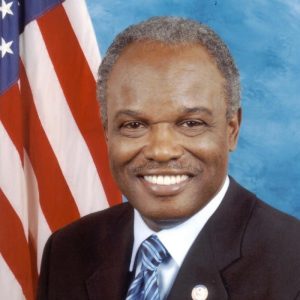
House Agriculture Committee Ranking Member David Scott today responded to an effort by the far-right House Freedom Caucus to deny disaster aid to farm families struggling with the fallout from Hurricanes Helene and Milton.
"The House Freedom Caucus's eleventh-hour attempt to derail much-needed disaster assistance for Georgia's rural communities is disheartening. With only days left in this Congress, the position of the House Freedom Caucus jeopardizes aid for the people of Georgia and the nearby regions, putting them at risk of facing the holidays with no help to recover from Hurricanes Milton and Helene.
"The House Freedom Caucus not only threatens the natural disaster supplemental, but it also undermines efforts among the four corners of the House and Senate Agriculture Committees to craft much-needed economic assistance that addresses the ongoing downturn in large parts of the agricultural economy. From the hearing the House Agriculture Committee held in September on the state of the agricultural economy, we know the need in rural America is real and increasingly growing desperate.
"I call upon President-elect Trump to direct the House Freedom Caucus to stand down and let Congress move forward in providing this assistance to storm-ravaged communities in the Southeast and bringing adequate resources to address the economic disaster facing farmers across the country.
"I call upon Speaker Johnson to bring President Biden's natural disaster request to the House Floor for a vote, where I am confident it will pass. Failure to do so demonstrates that the Speaker is placing his political career ahead of the emergency needs of the millions of Americans hurt by these storms.
"Finally, the Bible teaches us to do unto others as you would have them do unto you. With that in mind and given that it takes an 80 percent vote of the Freedom Caucus to take an official position, I call upon the Freedom Caucus to release the vote for yesterday's position to deny natural disaster assistance to struggling farm families. Let the rest of the House and the world know which Freedom Caucus members are fine with denying aid to their constituents when nature unleashes her fury."
Today the Agricultural Retailers Association (ARA) concluded its annual Conference & Expo with an inspirational astronaut speaker and an off-site tour of the Houston Ship Channel, a major U.S. port in America's ag supply chain.
The conference wrapped up with a special highlight in the Expo where former NASA Astronaut and U.S. Air Force Colonel Mike Mullane shared his extraordinary stories from space. With 356 hours logged aboard the Atlantis and Discovery Shuttles and 134 combat missions in Vietnam, he offered powerful insights into leadership, teamwork, and resilience drawn from his remarkable career.
"What resonated with me the most was Colonel Mullane's candid reflections on the lessons learned from space exploration," says ARA President & CEO Daren Coppock. "His insights into the risks and rewards of pushing boundaries while prioritizing safety are powerful reminders of the importance of vigilance and innovation in our own industry."
ARA Board Chair Amy Asmus also reflected on the talk: "His stories remind us that, whether in space or agriculture, our success hinges on our ability to work together, confront challenges head-on, and never stop learning."
The closing general session wrapped up with a video announcing the 2025 ARA Conference & Expo theme, "Elevating Peak Performance." Save the date and join us Dec. 2-4 in Salt Lake City, Utah.
Following the closing session, attendees had the opportunity to explore the Houston Ship Channel, one of the busiest and most vital ports in the United States. This critical hub plays a pivotal role in America's agricultural supply chain, handling a vast array of products, from fertilizers and grains to fruits and vegetables.
Participants witnessed the complex logistics and operations that drive the nation's economy, gaining a deeper understanding of the intricate processes that ensure the seamless movement of goods essential to the agricultural industry.
Learn more about the ARA Conference & Expo on the website or on ARA's social media.
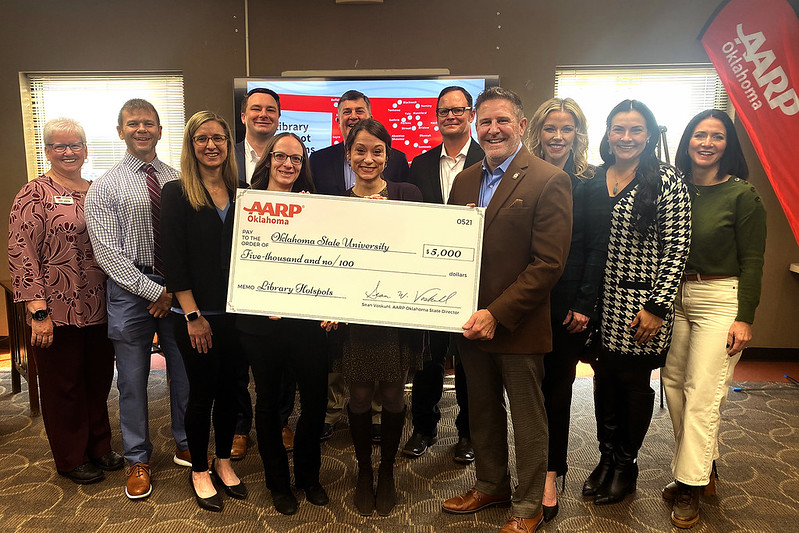
OSU Extension, AARP Oklahoma, Oklahoma legislative and Oklahoma State Department of Libraries officials (back row) Nancy Johnson, Brian Whitacre, Kyle Hilbert, Sean Voskuhl, Jason Warren, Joy McGill, Emma Alexander, Crystal Campbell (front row) Rachel Walker, Miranda Brown, Heather Hutto and Todd Gollihare meet to announce new hotspot devices at three Oklahoma library locations. (Photo by OSU Agriculture)
Oklahoma State University Extension and AARP Oklahoma are celebrating their continued partnership of the state's library hotspot program.
Representatives of both organizations met at the Bristow Public Library on Dec. 3 to announce a $5,000 grant for the community libraries in Bristow, Shattuck and Yale. The funding provides hotspot internet devices local patrons can check out to connect with family and friends, access health care resources, pursue educational opportunities and maintain employment.
Since 2018, OSU Extension and AARP Oklahoma have teamed up to award rural libraries vital funding for mobile internet devices. Data shows each partnering library loans out their hotspots to more than 100 local households each year. The program now includes 33 library participants, helping an estimated 3,900 Oklahomans annually.
"When we choose the libraries, we're trying to find not only small towns but also communities that are struggling with connectivity," said Brian Whitacre, a professor in the Oklahoma State University Department of Agricultural Economics and a rural development specialist for OSU Extension. "Statewide, an average 10% of households don't have any kind of internet connection, but for this year's project, the numbers in Bristow, Shattuck and Yale are double that – over 20% of households have no kind of connectivity."
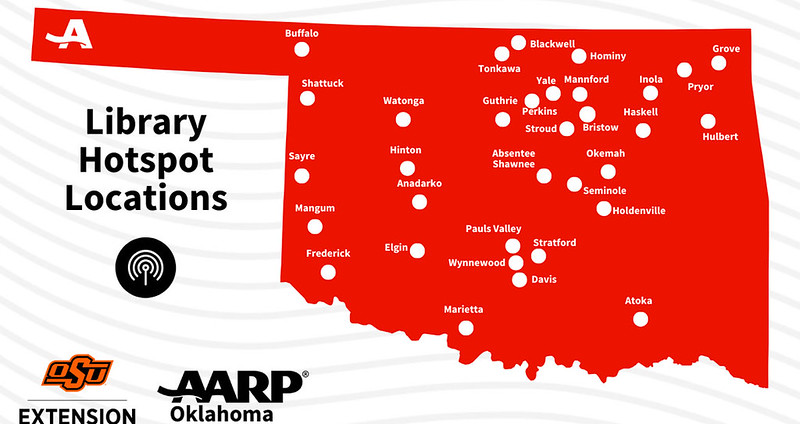
Whitacre emphasized the need for rural broadband support after elimination of the federal Affordable Connectivity Program in June 2024. The low-income subsidy was created in 2021 to help households pay for an internet connection.
"This hits home when you think about everything we do that requires the internet," Whitacre said. "Many low-income residents who were getting a monthly subsidy to pay for broadband access with that program were left with no option but to drop their internet service. Our library hotspot program can really help those households."
Heather Hutto, executive director of the Bristow Public Library, shared testimonials of library patrons who have recently used the new hotspots. She said digital inclusivity initiatives like these and adult tech education have a ripple effect in communities.
"It's one thing to give somebody a hotspot and think we're helping that one person or their family, but sometimes the effects of these hotspots and their connectivity are very profound and affect so many more people than we realize," Hutto said.
Sean Voskuhl, AARP Oklahoma state director, said the program's success has caught the attention of other state AARP organizations in Alaska, Maine, South Dakota and Tennessee who are interested in establishing a similar initiative.
"High-speed internet is extremely important for people of all ages," he said. "Internet access for social connection, finding a job and staying connected to the community has so many health and economic benefits."
In addition to representatives from OSU Extension, AARP Oklahoma and the Oklahoma Department of Libraries, other key stakeholders in attendance at the library hotspot announcement included Oklahoma State Rep. and speaker-elect Kyle Hilbert, Oklahoma Sen. Todd Gollihare and field representatives from the office of Sen. Markwayne Mullin.
Learn more about Oklahoma's library hotspot program and efforts to improve rural broadband service by contacting Whitacre at brian.whitacre@okstate.edu.
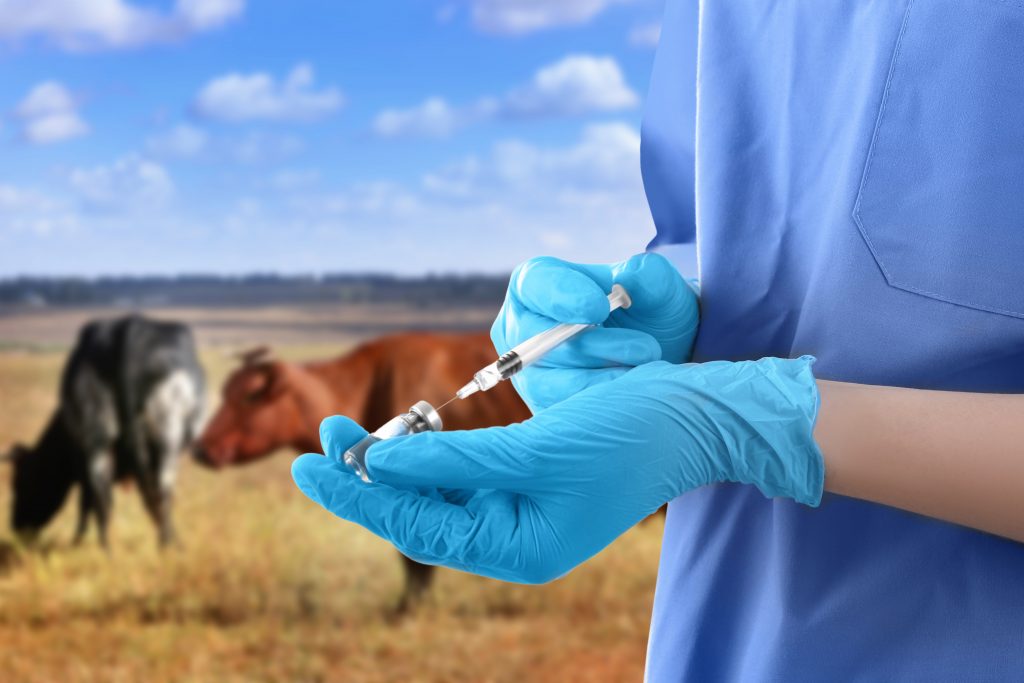
Zoetis announced it has entered a collaboration with Colorado State University's AgNext to advance research in sustainable animal production. Together, Zoetis and AgNext are poised to shape the future and set new standards for sustainable management practices using animal health and genetic data.
"Beef and dairy producers currently define sustainability as healthy animals that are more productive and are therefore more resource-efficient and sustainable animals, which is true. However, specific benchmarks and data have been elusive in the industry," said Dr. Mike Lormore, Head of U.S. Cattle and Pork Technical Services for Zoetis. "This research will allow us to obtain specific data to establish baselines and eventually to help producers, veterinarians, and nutritionists make more informed decisions to meet sustainability goals."
The collaboration strives to close data gaps on technology and management practices that can enhance the efficiency of livestock production while ensuring the well-being of animals and addressing the industry's evolving sustainability needs. The first study is focused on establishing baseline greenhouse gas emissions that reflect an industry-typical production environment for fed cattle and accounts for the standard health treatments animals typically receive.
The second study is a lifecycle assessment of beef and dairy production systems to support industry knowledge of the effect animal genetics and animal health interventions like vaccination and parasite control have on sustainable beef and dairy production.
The Food and Agriculture Organization of the United Nations (FAO) found that improving animal health can increase livestock productivity and welfare, and ultimately help farmers mitigate emissions and contribute to climate solutions.
"By leveraging animal health technologies and expertise at Zoetis and Colorado State University, we aim to increase the understanding of improved management to sustainability using this animal health data," said Dr. Kim Stackhouse Lawson, Director of AgNext. "This will enable us to develop strategies that enhance animal welfare, environmental stewardship, and economic efficiency for livestock producers."
"Zoetis' animal health experience and genetic capabilities combined with AgNext's expertise in advancing sustainability in the beef and dairy industries through their impactful research to improve animal health, productivity, and environmental stewardship, strengthens this collaboration," said Shari Westerfeld, Vice President, Sustainability Customer Engagement at Zoetis. "This collaborative agreement demonstrates our commitment to support farmers, ranchers and producers in meeting their goals to raise healthy animals, to sustainably provide nutritious foods and meet the growing protein needs of the world's population, now projected to grow to approximately 10 billion people by 2050."
To learn more about sustainability efforts from Zoetis and AgNext, visit Zoetis www.zoetis.com/sustainability and AgNext.colostate.edu.
The Noble Research Institute, a trusted resource for farmers and ranchers since 1945, and Certified Angus Beef, a brand known for its commitment to quality beef, have partnered to develop and deliver Land Stewardship, an educational course designed for livestock producers worldwide. Oklahoma Farm Report's Ron Hays caught up with Hugh Aljoe, Director of Ranches, Outreach & Partnerships at The Noble Research Institute, to discuss the joint efforts of the two companies.
In 2022, CAB reached out to the Noble Research Institute in pursuit of a way to focus on land stewardship, similar to the Beef Quality Assurance organization's positive influence on animal husbandry and management practices.
"We wanted to make sure the land was considered a true resource that would have value through greater appreciation for what outcomes could be," Aljoe explained. "How do we manage for improved soil health, enhance our grazing lands, and enhance our profitability long term?"
The Noble Research Institute helps producers assess where are as land stewards, and how they can improve.
The Noble Research Institute has been very open about its support of regenerative ranching practices. Aljoe said, "We'd like to be able to think about regenerative ranching as part of our continual improvement of the land, profitability, and our livestock. With that in mind, how do we begin to reassess our thought process."
He complimented BQA on their success in improving overall animal health, husbandry, and management techniques, then related that to how the Noble Research Institute and CAB can help to improve land stewardship through rebuilding soil health and in effect, the land's resiliency.
Once producers complete the educational Land Stewardship courses, they will receive a certificate of completion. Aljoe admitted that the certificate won't mean much immediately but hopes that it will begin to invoke consumer confidence in the safety of natural resources where their beef is being raised and therefore in the producers themselves.
The course can be found at www.noble.org. Click Find A Course and look for Land Stewardship. The course is available online, free, and open to everyone. The course includes five modules that may take two to three continuous hours to complete; however, participants can work through the course at their own speed and convenience. Once completed, participants will receive the certificate of completion and discounts on the Soil Haney test and a future course at the Noble Research Institute.
The Beef Buzz is a regular feature heard on radio stations around the region on the Radio Oklahoma Ag Network and is a regular audio feature found on this website as well. Click on the LISTEN BAR at the top of the story for today's show and check out our archives for older Beef Buzz shows covering the gamut of the beef cattle industry today.
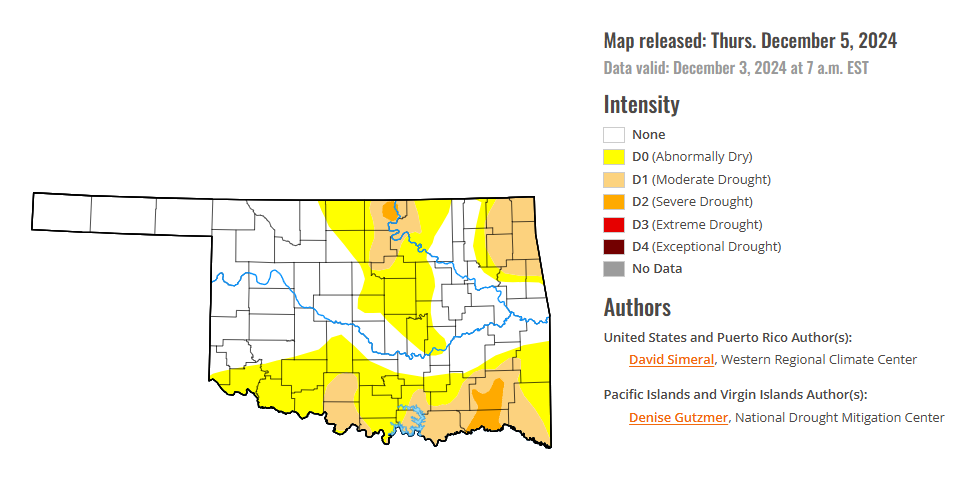
To view the latest Oklahoma drought map, CLICK HERE.
According to the latest Oklahoma drought monitor report, exceptional drought remains at zero percent, unchanged from the start of the calendar year.
Extreme drought or worse conditions remain at zero percent, unchanged since the week of October 29.
Severe drought or worse conditions are 1.85 percent, unchanged from last week.
Moderate drought or worse conditions are 17.91 percent, unchanged from last week.
Abnormally dry or worse conditions are 46.70 percent, unchanged from last week.
According to the 6-to-10-day precipitation outlook map, most of Oklahoma is leaning below a 33-40 percent chance of precipitation through December 14, 2024. The panhandle and Northwest corner of the state are leaning below a 40-50 percent chance of precipitation, and the southwest corner is near normal chances of precipitation through that December 14 date.
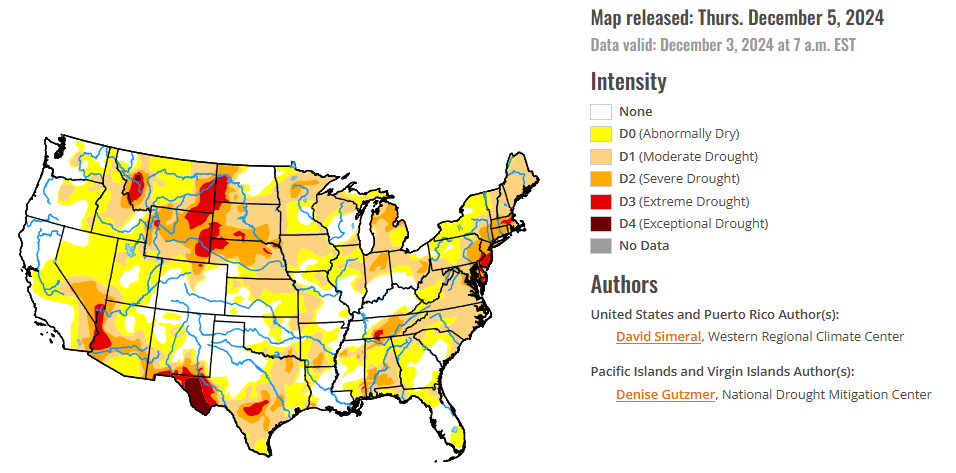
To view the United States Drought Map, CLICK HERE.
This U.S. Drought Monitor (USDM) week saw improvement in areas of the Northeast, Midwest, and the West. In the Northeast, very heavy snowfall accumulations (up to 5+ feet in some areas) were observed in downwind locations of Lake Ontario and Lake Erie in New York, and northwestern Pennsylvania. The highest totals were observed downwind of Lake Erie between Erie, Pennsylvania and Buffalo, New York. Further south, 2-to-8-inch accumulations were observed in areas of the Appalachian Mountains in West Virginia, leading to improvements on the map in drought-affected areas. In the Upper Midwest, heavy lake-effect snowfall impacted much of Upper Peninsula Michigan as well as areas downwind of Lake Michigan in Northern Michigan and southeastern Michigan. In other parts of the Midwest, light accumulations (1 to 4 inches) were logged in Minnesota, Missouri, Illinois, Indiana, and Ohio. In the Southeast and South, dry conditions prevailed across both regions except for light precipitation accumulations in isolated areas of Alabama, Georgia, Florida, South Carolina, and southeastern Texas. In Florida, short-term dryness led to additional expansion of areas of drought in the Panhandle region. Elsewhere in the Southeast, areas of drought expanded on the map in Virginia, North Carolina, and South Carolina in response to short-term dryness and declining streamflow levels. In the High Plains, dry conditions prevailed across much of the region; however, some light snowfall was observed in the eastern portion of the Dakotas. Out West, drier conditions prevailed this week across much of the region, although areas of northern Arizona, northern New Mexico, and Colorado experienced snow in the higher elevations. In terms of reservoir storage in areas of the West, California's reservoirs continue to be at or above historical averages for the date (December 3) with the state's two largest reservoirs, Lake Shasta and Lake Oroville, at 113% and 109% of their averages, respectively. In the Southwest, Lake Powell is currently 37% full (59% of typical storage level for the date) and Lake Mead is 33% full (53% of average), with the total Lower Colorado system 42% full as of December 2 (compared to 43% full at the same time last year), according to the U.S. Bureau of Reclamation.
In the Southern Plains, generally dry conditions prevailed this week with the exception of light precipitation in isolated areas of Mississippi and Tennessee. On the map, some minor degradations were made in areas of Texas after another dry week, including in the southern North Central, northeastern Edwards Plateau, northeastern South Central, and along the Upper Coast. According to the latest USDA Texas Crop Progress Report (November 25), pasture and range conditions were rated at 62%, poor to very poor, with producers around the state continuing to use supplemental feed for livestock. Elsewhere, a mix of short- and long-term dryness led to further expansion and intensification of drought in the eastern half of Tennessee where numerous stream gauges are reporting flows in the 2nd to 9th percentile (far below normal) range. The USDA reports that producers in Tennessee are continuing to use supplemental feed and hauling water for livestock. In Arkansas, areas of drought were introduced in response to a combination of factors including short-term precipitation deficits, low streamflows, and declining soil moisture..
In The High Plains, only minor changes were made in the region, including in areas of North Dakota in response to recent snowfall events and above-normal precipitation during the past 30-day period. Some minor improvements were made also in west-central Kansas, where precipitation has been above normal during the past 30–60-day period. For the week, the region was generally dry except for some light snowfall across portions of the Dakotas. In terms of average temperatures for the week, cooler-than-normal temperatures (2 to 25 deg F below normal) prevailed, with frigid temperatures observed across North Dakota.
In the West, areas of the region received mountain snowfall during the past week, including the Southern Sierra Nevada, the eastern Great Basin, ranges of south-central Utah, and the Colorado Rockies. On the map, storm events during the past several weeks led to continued improvements in drought-affected areas of Washington, Oregon, California, Nevada, Utah, Colorado, and New Mexico, while some degradation occurred in isolated areas of Arizona, New Mexico, and Wyoming. Looking at the regional snowpack situation, the Natural Resources Conservation Service SNOTEL network is reporting (December 3) the following region-level (2-digit HUC) SWE levels (% of median): Pacific Northwest 126%, Missouri 75%, Upper Colorado 110%, Great Basin 111%, Lower Colorado 72%, Rio Grande 124%, Souris-Red-Rainy 94%, and Arkansas-White-Red 149%. In California, the California Department of Water Resources is reporting statewide snowpack at 157% of normal for the date (December 2). For the week, average temperatures were below normal across much of the northern tier of the region, with the greatest departures observed in northern Montana where temperatures ranged from 10 to 25 degrees below normal. In the Desert Southwest, areas of southern Arizona and New Mexico were 5 to 10 degrees above normal.
Looking ahead, the NWS Weather Prediction Center 7-Day Quantitative Precipitation Forecast calls for moderate-to-heavy precipitation accumulations ranging from 2 to 4 inches (liquid) across areas of the Pacific Northwest, including the Olympic Mountains and Cascades of Washington. In the South, areas of eastern Texas, Louisiana, Mississippi, Alabama, western Georgia, and southern Tennessee are forecasted to receive accumulations ranging from 2 to 6+ inches. Elsewhere, light accumulations (<1 inch) are expected in areas of the Northern Rockies in the Panhandle of Idaho, northwestern Montana, and locations across the Upper Midwest and Northeast. The Climate Prediction Center (CPC) 6-10-day Outlook calls for a moderate-to-high probability of above-normal temperatures across much of the West, the Central and Northern Plains states, and the eastern third of the contiguous U.S. Meanwhile, near-normal temperatures are expected across much of the South and in the Four Corner states. In terms of precipitation, there is a low-to-moderate probability of above-normal precipitation across the eastern third of the contiguous U.S., eastern Texas, eastern portions of the Midwest, and areas along the entire greater U.S.-Canada border. Elsewhere, below-normal precipitation is expected across portions of the West including California, Nevada, Utah, Arizona, and New Mexico..
To view the 6-10 Day Precipitation Outlook Map, click here.
To view the 6-10 Day Temperature Outlook Map, click here.
To view the Monthly Drought Outlook Map, click here.
Today the Agricultural Retailers Association (ARA) concluded its Wednesday sessions during the 2024 ARA Conference & Expo with more than 600 ag retail industry professionals in attendance.
The morning general session keynote speaker and pioneer of artificial intelligence (AI), Ranveer Chandra with Microsoft, offered a groundbreaking exploration of how AI is reshaping agriculture. His presentation highlighted innovative applications and their potential to revolutionize farming practices and drive future industry advancements.
"AI is not just a tool; it's a catalyst for innovation in agriculture," says ARA President and CEO Daren Coppock. "Ranveer provided a compelling vision of how technology can enhance productivity, sustainability, and decision-making in ag retail. His expertise and insights are invaluable as we navigate the future of our industry."
The morning session continued with a captivating AI Application in Ag panel, showcasing the cutting-edge use of AI in today's ag industry. Moderated by Margy Eckelkamp from Farm Journal, the panel featured Jason Minton with Taranis and Ryan Raguse with Bushel, who unveiled groundbreaking ways AI is transforming both field and office operations.
"As an ag retailer, I understand the constant pressure to stay ahead of the curve," says ARA Board Vice Chair Dave Spears with Mid-Kansas Cooperative (MKC). "Today's AI panel provided crucial perspectives on how artificial intelligence is transforming our industry. I'm excited to apply these insights to drive innovation and share this knowledge with my team."
Later in the afternoon, attendees participated in two breakout sessions. The first, led by ARA's public policy experts Hunter Carpenter and Richard Gupton, delved into the ramifications of the 2024 election results on the agriculture sector. They also offered an outline of the 2025 ARA policy priorities, which will be finalized by ARA membership early next year, to provide attendees with insights to navigate the upcoming regulatory and legislative landscape.
The second breakout session focused on carbon intensity scoring was led by Mitchell Hora of ContinuumAg. This session illuminated the impact of carbon intensity on the emerging low-carbon markets, providing actionable strategies for measuring and leveraging on-farm carbon footprints on the tails of a big announcement in this space yesterday by the Biden administration.
The afternoon general session featured a fireside chat with former US Ambassador to China, Terry Branstad, moderated by Clinton Griffiths, editor at Farm Journal and host of AgDay TV. The conversation explored how US-China relations affect agricultural markets, focusing on commodity imports and exports.
Today concluded with a networking reception in the Expo for attendees to strengthen and cultivate new business connections.
Learn more about the ARA Conference & Expo on the website or on ARA's social media.
Photo courtesy of Alva FFA Facebook page.
November is a month to be thankful for the people and things around us. As we enjoyed our thanksgiving meals, we reflected on all the things agriculture has given us. Without agriculture, there wouldn't be turkey and rolls on the thanksgiving table. Without agriculture there would've been no stuffing and cranberry sauce. As we continue in the holiday season, we encourage you to think about what agriculture was done, and thank an agriculturist.
The Alva FFA Chapter kicked off the November events with the Veteran's Day Assembly. Brady Lott, the Alva FFA President, emceed the event. The FFA Officer Team recited an excerpt from the Gettysburg Address. The AHS Show Choir sang and scouts from Troop #392 posted the colors. Tatum Schlarb played "Taps". Sebastian Arnsdorf, a veteran of the Coast Guard, spoke to the student body.
On November 12th, the Personal Growth Committee handed out candy with kind sayings for Be A Light To Others (BALTO) Week.
On November 14, 2024, the FFA Chapter held their annual Friendsgiving Meeting. FFA members brought homemade food and enjoyed a dinner together. The Alva FFA Chapter hosted an oil drive on November 19, 2024. Farmers and community members brought oil, totaling over 1000 galoons as the Alva FFA Chapter's environmental project.
American Farmers and Ranchers Area Speech contest was held on November 21. Jansen Shirley competed in Senior Extemporaneous Speaking and did well. Katelee Martin competed in Senior Natural Resources and placed fifth. Avery McMurphy competed in Senior Agriculture Policy and placed third. Merritt Mantz competed in Intermediate Agriculture Policy and placed second, advancing to state on December seventh in Stillwater, Oklahoma.
The Fifth Annual CUTS Livestock Judging Contest was on November 22, in Cherokee, Oklahoma. The Senior FFA Team placed fourth. Avery McMurphy was the fifth high individual. The Junior FFA Team placed first, and Bentley Lott and Falynn Thomas both placed in the top five individually.
Thank you to all those who supported us through the month of November!
By Katelee Martin
Each week, Beltway Beef brings you the latest policy news affecting the U.S. cattle and beef industry. Hear from subject-matter experts, producers, and industry leaders on the topics that impact the business viability of farms and ranches across the country.
On this episode, we are joined by NCBA Chief Veterinarian Dr. Kathy Simmons for an update on the New World screwworm. A dangerous pest that is currently making its way through South America, the New World screwworm could cause devastating impacts to the cattle industry if it enters the United States. Dr. Simmons shares critical information about how to safeguard your operation plus she explains how NCBA is advocating for additional resources to combat the screwworm. For all the latest information, please visit www.ncba.org/NWS.

Recent articles in Southern Ag Today have detailed the financial stress that Southern crop producers are having to endure, although the problems are not unique to the South. In economics, we talk about the "cost price squeeze" that is created by declining commodity prices and high input costs. Our work at the Agricultural and Food Policy Center (AFPC) at Texas A&M University – with roughly 575 individual producers from across the country that work with us on 90-plus crop, livestock, and dairy representative farms – has given us a good feel for the relative costs of production and profitability across the country. Those 575 producers are some of the very best from all regions and commodity types. They also know that working with us provides them a voice in the policy world they would not otherwise have. Because of this, I often get calls and emails letting me know when pressure is mounting. In the last three months, there has been a steady stream of calls and emails saying that this is the worst year they have ever had and getting financing for next year has been incredibly difficult.
I have heard from some that if it wasn't for their lender including an estimated payment from the FARM Act, they would not have been refinanced...which is troublesome to say the least. Why? Neither the FARM Act nor any other disaster/economic aid has been moved forward by Congress. Others have commented that they are having to sell land to pay off carryover debt to get their 2025 financing. All are saying that without pledging their land as collateral, operating loans for next year would not be happening. Some might say this is business as usual but consider this: the 2025 crop year is projected to be worse than 2024 by the Food and Agricultural Policy Research Institute (FAPRI) at the University of Missouri, USDA, and our own recent projections for our representative farms.
Without getting into doomsday scenarios, I just ask the reader to consider the question that I keep getting asked: why should we continue to risk our financial health and continue to see our net worth evaporate when Congress can't get their act together enough to pass much needed disaster/economic assistance that will help in the short-term or a new farm bill for the longer term? My answer to that question is one of hope more than fact, but I am very hopeful that Congress will act decisively and soon.

World Antimicrobial Resistance (AMR) Awareness Week wrapped up Nov. 18-24. Antimicrobial resistance occurs when bacteria, viruses, fungi and parasites no longer respond to antimicrobial agents. As a result of drug resistance, antibiotics and other antimicrobial agents become ineffective, and infections become difficult or impossible to treat, increasing the risk of disease spread, severe illness and death.
The World Health Organization estimates that 1.27 million people died in 2019 directly from bacterial AMR. Additionally, it contributed to the death of 4.95 million people. Globally, antibiotics are used significantly in both human medicine and agriculture.
In agriculture, antimicrobial agents such as antibiotics are used to treat diseases and maintain animal health. To reduce potential negative impacts from the use of antibiotics and identify alternative strategies for mitigating AMR in the food chain, USDA's National Institute of Food and Agriculture (NIFA) funds research that investigates AMR using a systems approach that transcends disciplines in the food and agricultural sciences.
In 2024, NIFA invested $2.6 million in projects as part of the Mitigating Antimicrobial Resistance Across the Food Chain program area priority within NIFA's Agriculture and Food Research Initiative. This program area priority outlines a systems-based integrated program that empowers interdisciplinary teams to develop, refine and disseminate science-based knowledge about food and agricultural management and production practices that can mitigate or reduce the risk of AMR along the food chain.
Learn more about some of the AMR research funded by NIFA.
At the University of Minnesota, Dr. Randall Singer is focused on reducing the amount of antibiotics used to treat Clostridial dermatitis (CD) in turkeys, one of the most important diseases in turkey production. This bacterial disease represents the majority of antibiotic use in turkey production. "To help the U.S. turkey industry reduce the need for antibiotics, we must find ways of reducing the incidence of Clostridial dermatitis," Singer said. "However, we will never eliminate this disease entirely, and therefore we must also help veterinarians ensure they are practicing good antibiotic stewardship when treatment is needed. We believe that the only way we will see major improvements in antibiotic stewardship and consequent reductions in antibiotic resistance associated with turkey will be through a highly integrated collaboration with the U.S. turkey industry."
Singer's project was designed in collaboration with veterinarians at the largest turkey companies in the United States – in total, those that produce more than 75% of turkey annually. Using a dynamic web-based dashboard tools, industry collaborators will be able to evaluate options for reducing the incidence of CD. The tools will show the user outcomes such as expected reductions in antibiotic resistance associated with each intervention option as well as the costs associated with each of these strategies.
"Tools such as these will help ensure the long-term sustainability of U.S. turkey production because the end-users of these tools will be able to identify effective interventions that have an effect on multiple outcomes of concern while also maximizing the return on investment of these strategies," Singer said. "This project is highly collaborative with veterinarians and other professionals within the U.S. turkey industry and should greatly improve our understanding of the key disease that necessitates the majority of antibiotic use in turkey production."
At Cornell University, Dr. Casey Cazer is developing new analytic tools using machine learning to monitor AMR. She is testing these tools on E. coli in cattle, which is important as resistant E. coli can be transmitted from cattle to humans through raw and undercooked beef products, direct contact or the environment. "Overall, our research will improve antimicrobial resistance surveillance and help us understand and respond to changes in antimicrobial resistance," Cazer said.
At the University of Vermont, Dr. John Barlow is studying how AMR pathogens spread between cattle and humans on dairy farms. He is leveraging emerging advanced molecular genetic approaches to AMR surveillance, which have the potential to increase the ability to monitor AMR because the methods are faster and less labor intensive. This will allow for more frequent and more comprehensive surveillance. In parallel, his lab is exploring how veterinarians perceive AMR on dairy farms and the potential value of molecular genetic data to inform farmers about AMR. "This project will address that gap in knowledge and will contribute to our ability to mitigate antimicrobial resistance in agricultural production systems, with a focus on small- to medium-sized dairy farms," Barlow said.
Dr. En Huang at the University of Arkansas for Medical Sciences is assessing the prevalence of AMR in retail vegetables and determining critical factors contributing to AMR transmission in vegetable production and supply chains. "Food is an important vehicle for transmitting foodborne microorganisms," Huang said. "Fresh vegetables may serve as an important reservoir for antibiotic-resistant bacteria and resistance genes." Extension educators will disseminate the research results to farmers, the produce industry, consumers and the public to mitigate the risk of antibiotic resistance in vegetable products. The project is a collaborative effort involving Dr. Xinhui Li from University of Wisconsin-La Crosse, Dr. Xu Yang from California State Polytechnic University Pomona, and Dr. Erin DiCaprio from University of California Davis.
Dr. Laura Huber at Auburn University is investigating the impact of antimicrobial use (AMU) on microbial diversity, prevalence of AMR genes, and genes involved in the spread between and within antimicrobial-free and conventional poultry farms. She also is studying bird morbidity and mortality and identifying factors that contribute to health and disease prevention. The research aims to inform best practices to reduce AMU without compromising animal health and productivity. According to Huber, "mitigating AMR in poultry farms will improve food safety in the U.S. by avoiding farm-to-fork transmission of AMR pathogens and improving food production efficiency by reducing recalls."
To learn more about NIFA's support for AMR research and education, visit https://www.nifa.usda.gov/grants/programs/food-safety/antimicrobial-resistance.
RON's Dave Lanning has a pre-opening look at today's agricultural Markets.
Click the audio tab below for today's report.
Left to Right: Keith Kisling, Chairman Oklahoma Wheat Research Foundation; Chad and Danielle Budy, parents; Christy Snider, Cherokee FFA Instructor; Blayne Arthur, Oklahoma Secretary of Agriculture; Raymond Parrish, Vice-Chairman, Oklahoma Wheat Commission and Casyn Larman, NW District FFA Vice President present Davin Budy center his FFA Champion and Grand Champion awards for winning the 2024 State 4-H/FFA Junior Wheat Show overall. Photo Credit: Dustin Mielke, Oklahoma Farm Bureau.
Davin Budy, son of Chad and Danielle Budy, was awarded the overall Grand Champion award showing his Doublestop CL Plus variety in the 2024 Oklahoma 4-H/FFA Junior Wheat Show. Budy placed 7th in milling and production and 3rd in baking, earning him the title of 1st place as the FFA champion, and overall grand champion of the 4-H/FFA Junior Wheat Show. Budy is from the Cherokee FFA chapter. Budy also placed in the top 25 with his OK Corral wheat variety.
Budy, a member of the Cherokee FFA in Alfalfa County, received $3000 in scholarship money for his accomplishments with his Doubelstop CL Plus variety. Davin also won a $750 premium from Oklahoma Genetics Inc. (OGI) for winning 1st place and then Grand Champion overall in the 4-H/FFA competition. Budy also received a $500 scholarship from Westbred®, a $350 premium from the Oklahoma Wheat Research Foundation, along with a $40.00 premium for production, milling, and bake contest and trophy.
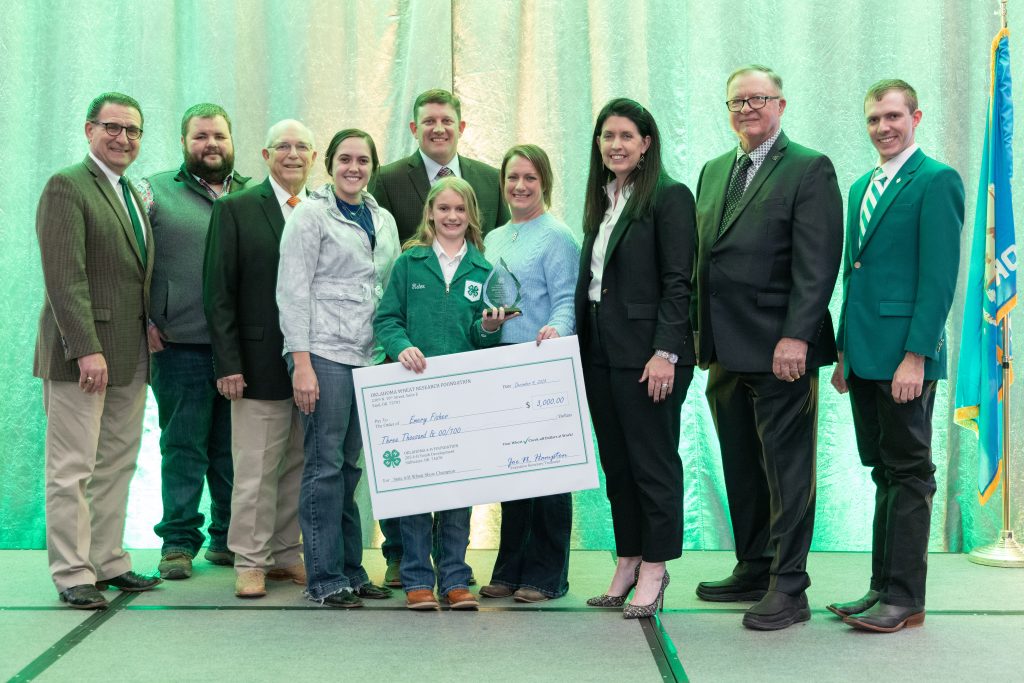
Emery Fisher, daughter of Clayton and Tara Fisher, placed 1st overall in the 4-H division while showing her Doublestop CL Plus variety in the 2024 Oklahoma 4-H/FFA Junior Wheat Show. Fisher placed 1st in the milling and production and 11th in the bake contest earning her the title of 1st place and 4-H champion overall. Fisher also placed in the top 15 with her Green Hammer wheat variety. Emery is a member of the Okeene 4-H club in Blaine County.
Fisher, a member of the Okeene 4-H club in Blaine County, received $3000 in scholarship money for her accomplishments with her Doublestop CL Plus variety. Avery also won a $500 premium from Oklahoma Genetics, Inc. (OGI) for winning 1st place/4-H Champion. Fisher also received a $250 scholarship from Westbred®, a $100 premium from Oklahoma Wheat Research Foundation along with a $52.50 premium for production, milling, and bake contest. In all, $16,000 in scholarship money was given away at the banquet. Scholarships are funded by Check-off dollars and awarded to the top five 4-H and top five FFA entries. The contest is sponsored by the Oklahoma Wheat Commission, Oklahoma Wheat Research Foundation, Oklahoma Genetics Incorporated, Westbred®, Oklahoma State University and the Oklahoma Department of Career Technology and Education.
The Oklahoma Wheat Commission works to promote greater utilization of wheat in both domestic and international markets through research, market development, and public education. Five wheat producers representing designated districts across the state serve as the Oklahoma Wheat Commission's board of directors. Current officers are Don Schieber, Chairman, Ponca City; Raymond Parrish, Vice-Chairman, Hunter; Jerry Wiebe, Secretary-Treasurer, Hooker; Michael Peters, member, Okarche and David Gammill, member, Chattanooga.
FFA Junior Wheat Show winners were:
1st place and Grand Champion – Davin Budy – Cherokee FFA - Doublestop CL Plus
2nd place – Brennon Keinholz –Perry FFA – Strad CL Plus
3rd place – Avery Fisher – Okeene FFA – Baker's Ann
4th place – Meade Brickman – Okeene FFA – Doublestop CL Plus
5th place – Malley Baker – Arapaho-Butler FFA – Doublestop CL Plus
6th place – Jayce Schultz – Okeene FFA – Doublestop CL Plus
7th place – Grant Robison – Okeene FFA – Butler's Gold
8th place – Preston Boeckman – Okeene FFA – Doublestop CL Plus
9th place – Avery Fisher – Okeene FFA – Doublestop CL Plus
10th place – Saidee Wright – Lomega FFA – Doublestop CL Plus
11th place – Matilyn Squires – Hobart FFA – Doublestop CL Plus
12th place – Rebecca Purvine – Thomas-Fay-Custer FFA – Doublestop CL Plus
13th place – Kaelyn Kokojan – Drummond FFA – KS Western Star
14th place – Destry Swaim – Okeene FFA – Doublestop CL Plus
15th place – Bryer Roberts – Okeene FFA – Doublestop CL Plus
16th place – Griffin Payne – Thomas-Fay-Custer FFA – Doublestop CL Plus
17th place – Carson Payne – Thomas-Fay-Custer FFA – Doublestop CL Plus
18th place – Grant Robison – Okeene FFA – Strad CL Plus
19th place – Conner Miller – Thomas-Fay-Custer FFA – Doublestop CL Plus
20th place – Lilly Roush – Arapho-Butler FFA – Doublestop CL Plus
21st place – Jayce Schultz – Okeene FFA – Butler's Gold
22nd place – Carson Payne – Thomas-Fay Custer FFA – AP Prolific
23rd place – Tyler Sawyer – Okeene FFA – Green Hammer
24th place – Henley West – Hammon FFA – Doublestop CL Plus
25th place – Davin Budy – Cherokee FFA – OK Corral
4-H Junior Wheat Show winners were:
1st place & Champion – Emery Fisher – Okeene 4-H – Doublestop CL Plus
2nd place – Kinley Brown – Newkirk 4-H – Doublestop CL Plus
3rd place – Taylor Robison – Okeene 4-H – Butler's Gold
4th place – Raylee Fisher – Okeene 4-H – Baker's Ann
5th place – Baylea Robison – Okeene 4-H – Butler's Gold
6th place – Logan Chance - Okeene 4-H – Doublestop CL Plus
7th place – Brayson Roberts – Okeene 4-H – Doublestop CL Plus
8th place – Raylee Fisher – Okeene 4-H – Doublestop CL Plus
9th place – Clinton Chaney – Medford 4-H – Doublestop CL Plus
10th place – Clinton Chaney – Medford 4-H – WB 4401
11th place – Audry Kauk – Arapaho-Butler 4-H – Winterhawk
12th place – Autumn Schultz – Okeene 4-H – Butler's Gold
13th place – Slate McLoud – Lookeba/Sickles 4-H – Doublestop CL Plus
14th place – Autumn Schultz – Okeene 4-H – Doublestop CL Plus
15th place – Emery Fisher – Okeene 4-H – Green Hammer
16th place – Mason Miller – Custer City 4-H – Doublestop CL Plus
17th place – Alex Laubach – Okeene 4-H – Doublestop CL Plus
18th place – Westin Simpson – Drummond 4-H - Showdown
19th place – Bryson Sawyer – Okeene 4-H – Doublestop CL Plus
20th place – Westin Simpson – Drummond 4-H – Green Hammer
21st place – Hunter Bieren – Kingfisher 4-H – Doublestop CL Plus
22nd place – Sophia Roush – Custer City 4-H – Doublestop CL Plus
23rd place – Jordan Beisel – Cherokee 4-H – OK Corral
24th place – Grace Payne – Custer City 4-H – AP Prolific
25th place – Ty Otto – K-Pals 4-H Club, Kay Co. – Doublestop CL Plus
Senator James Lankford (R-OK) spoke at a press conference with Representative Earl L. "Buddy" Carter (R-GA) to call on congressional leadership to pass reforms targeting the pharmacy benefit managers (PBMs) that restrict access to quality, affordable health care.
Lankford has long been an advocate for PBM reforms that would increase transparency, ensure pharmacists are treated fairly, and ensure patients are able to benefit from low-cost prescription drugs. Lankford introduced the Protect Patient Access to Pharmacies Act last year to hold PBMs accountable for high prescription drug prices and their practices that harm locally-owned pharmacies. He also introduced two vitally important bills to tackle the biggest drivers of the high cost of prescription drugs, particularly for senior adults on Medicare: the Ensuring Access to Lower-Cost Medicines for Seniors Act and the Prescription Drug Supply Chain Pricing Transparency Act.
Transcript:
Rural pharmacies in Oklahoma right now are tired of asking the question, 'When does this get better?' Because right now, this year, we're losing about one pharmacy a day in America, one pharmacy a day in America. That is affecting all of us. And in rural areas, you get health care very often from your pharmacist. You don't get it through a mail order, you get it through a pharmacy that you actually go into and ask questions.
You ask questions about different drugs and how they actually interact with each other. And what PBMs are trying to do is to be able to push everyone to mail-in or push everyone to their chosen pharmacist, taking away from that family pharmacy in those rural areas and shutting them down and reducing access to someone, that anyone can walk into at any time and just ask a quick health care question and get an answer. The real pharmacies and independent pharmacies across the country are tired of all the clawbacks, tired of the rules changing, tired of the evaluation being different every single quarter, and having to deal with all the chaos that is coming down from all the PBMs.
This is common sense legislation that passed through the Finance Committee, one section of it unanimously, and one section with only one 'no' vote. Show me other legislation on health care policy that passes with that strong of a majority. Months ago in the Finance Committee, this is ready to go. It's been held from the floor. We want leadership to be able to take this up and to bring it up at the end of the year package to say, 'Stop holding up legislation that is bipartisan, bicameral, solving a problem that Americans need solved.' This is an issue that we need to resolve. And we don't need to tell rural pharmacies and patients, 'Wait another two years and maybe we'll get into it in the next session.' Let's actually deal with it right now in this session.
Pro Tem-Elect Lonnie Paxton, R-Tuttle, today announced the appointments of chairs and vice chairs of Senate committees for the upcoming Legislative Session.
"We have put together a strong group of Senators who will collectively help move our state forward," Pro Tem-Elect Paxton said. "Each individual members have subject matter expertise in these areas. These Senators will be charged with hearing legislation and issues that are important to Oklahomans, while acting as leaders and mentors to everyone on the committees they oversee. They will also be crucial in working with other state partners, agencies and our federal delegation. With a new administration starting in January in Washington, we are at a pivotal time to make positive change on the state and federal levels. I am excited to get to work."
While the following is a list of each committee chairs, vice chairs, times, room locations and days of each committee meeting, a full list of committee membership will be list on the Senate's website at a later date.
Agriculture and Wildlife – Mondays at 10 a.m. in room 230
Aerospace and Transportation – Mondays at 10 a.m. in room 535
Revenue and Taxation – Mondays at 1:30 p.m. (or after session) in room 4S.9
Health and Human Services – Mondays at 1:30 p.m. (or after session) in room 535
Public Safety – Tuesdays at 9 a.m. in room 230
Education – Tuesdays at 10 a.m. in room 535
Retirement and Government Resources – Tuesdays at 10:30 a.m. in room 4S.9
Judiciary – Tuesdays at 1:30 p.m. (or after session) in room 4S.9
Economic Development, Workforce and Tourism – Tuesdays at 1:30 p.m. (or after session) in room 535
Local and County Government – Tuesdays after adjournment of Economic Development, Workforce and Tourism in room 230
Rules – Wednesdays at the call of the chair in room 535
Appropriations – Wednesdays at the call of the chair in room 535
Business and Insurance – Thursdays at 9:30 a.m. (or after session) in room 535
Energy – Thursdays at 9:30 a.m. (or after session) in room 230
Technology and Telecommunications – Thursdays after adjournment of Energy in room 4S.9
Administrative Rules – Thursdays at the call of the chair in room 4S.9
Veterans and Military Affairs – Thursdays at the call of the chair in room 535
Appropriations Subcommittees
Health and Human Services – Wednesdays at 10 a.m. in room 535
Natural Resources – Wednesdays at 10 a.m. in room 230
OMES – Wednesdays at 1:30 p.m. (or after session) in room 5S.3
Select Agencies – Wednesdays at 9 a.m. in room 4S.9
Public Safety and Judiciary – Wednesdays at 1:30 p.m. (or after session) in room 230
Education – Wednesdays at 1:30 p.m. (or after session) in room 535
General Government and Transportation – Wednesdays at 1:30 (or after session) in room 4S.9
Floor Leader
Assistant Floor Leaders
The National Corn Growers Association (NCGA) is pleased to announce the eight Research Ambassadors that were selected for the 2024-2025 academic year:
Elliot Braun, Michigan State University
Jodi Callwood, Iowa State University
Sarah Fitzsimmons, University of Missouri at Columbia
Kathryn Koirtyohann, Florida State University
Sarah Lipps, University of Illinois at Urbana-Champaign
Morgan Molsbee, Texas A & M University
Karlene Negus, Iowa State University
Diana Ruggiero, Oregon State University
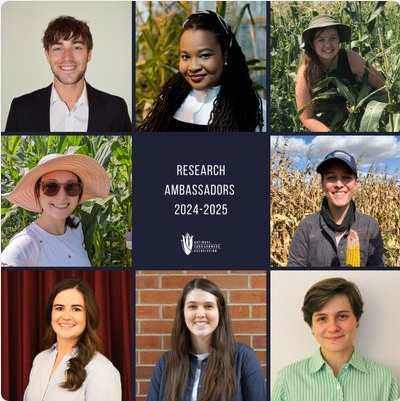
Within the portfolio of NCGA's Research and New Uses Action Team, the Research Ambassador program aims to build a network of future leaders in the agricultural sector. To qualify, students must demonstrate academic excellence, leadership potential, and be involved in research relevant to corn production.
"As we enter the fourth year of the Research Ambassador Program, we remain committed to fostering deeper connections between the innovation happening in the lab and the expertise cultivated in the field," said Kansas grower and Research & New Uses Action Team Chair Chad Epler. "Each new group of ambassadors brings fresh perspectives and opportunities for collaboration, further strengthening the essential link between academic research and practical agriculture, ensuring our industry's future remains both sustainable and innovative."
Through the program, each NCGA Research Ambassador will receive the following:
To learn more, visit the NCGA Research Ambassador Program.
American Farm Bureau Federation President Zippy Duvall commented today on a nationwide injunction ordered by the federal court in the Eastern District of Texas halting enforcement of the Beneficial Ownership Information filing requirements under the Corporate Transparency Act (CTA). The requirement essentially requires the filing of private business ownership information with the federal government.
"Farmers and ranchers across the country have faced great uncertainty since the passage of the Corporate Transparency Act in early 2021 and as the Beneficial Ownership Information regulations have been written. Questions are swirling about who is required to file and who will have access to the confidential data being collected.
"Farm Bureau has long fought against the mandated disclosure of farmers' private business information to the federal government in a number of different scenarios. For a second time this year a federal court has ruled the CTA oversteps the Constitution on that front. We appreciate the temporary reprieve provided by the injunction and hope Congress can take a cue from the courts in the coming weeks to provide a more permanent resolution to this problematic policy."
Last week's cattle harvest was curtailed with the Thanksgiving holiday, yielding just 528,000 head on the heels of the prior week's inflated total of 631,000 head.
Fed cattle values posted a sharp recovery last week to just under $190/cwt., a $3/cwt—improvement on the prior week. Prices have been rangebound since late September, trading between $184 and $190/cwt. for the period.
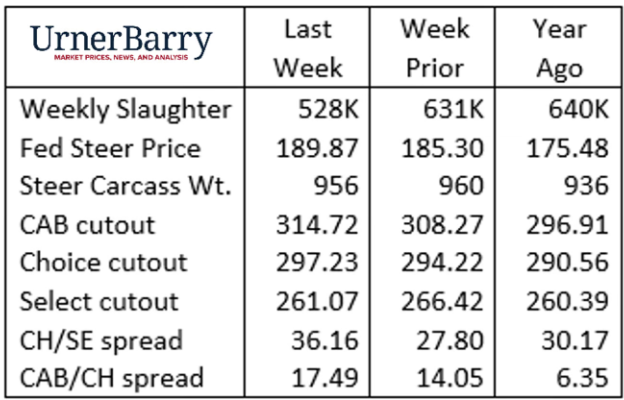
Calf and feeder cattle prices have been much more active in the past three weeks with two market-moving events. Widespread precipitation through the center of the country initially sent small grain grazers to the auction markets with gusto as winter wheat and similar winter grazing prospects turned optimism higher. Additionally, the discovery of screw worms in a southern Mexico cow prompted officials to close the U.S.-Mexico border for an undetermined period. The always-volatile Feeder Cattle futures contracts on the CME have responded sharply higher on the heels of both events. The nearby January contract has settled in a range around $258/cwt. in the past five days after a rapid ascent from the $243/cwt. opening price on November 15.
Holiday middle meat demand remains a primary feature of the beef market as carcass quality ticks higher from what appears to be the annual low percentage mix of premium-grade carcasses. The USDA Prime share is up from its months-long position at 10% of total to 11% more recently. The share of brand-eligible carcasses certified for CAB adjusted quickly from their year-to-date low of 32% in early November to a most recent 36%.
The boxed beef market is nearing the conclusion of the final price push for high-demand middle meats. The window is quickly closing on wholesale orders that will ship in time for consumers to shop ahead of the Christmas holiday. Tracking the week-to-week price activity shows last week's strong upward move in cutout values breathing a bit of prolonged life into the December market than has been true in recent years. Likely the late November date for the Thanksgiving holiday has pushed buying activity a few days forward this year.
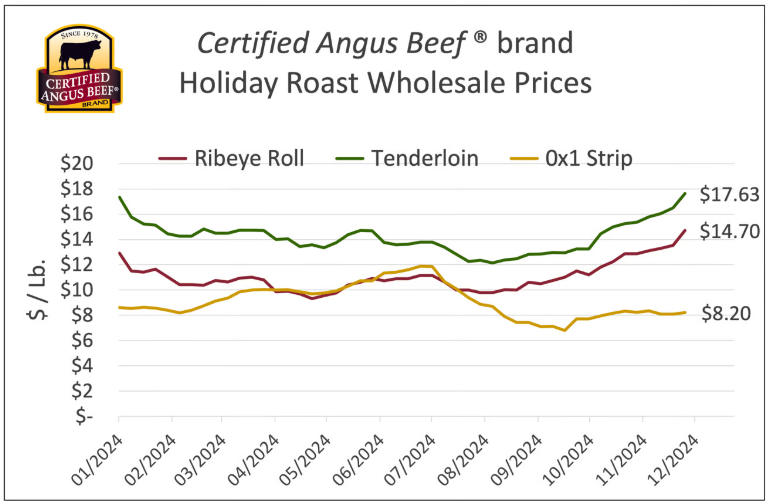
True to expectations, both bone-in and boneless CAB ribeyes are capturing the largest upward price swings as we evaluate the CAB carcass on a cut-by-cut basis. CAB ribeye rolls were up $1.31/lb. last week, averaging $13.48/lb. This is second only to the all-time high of $14.49/lb. wholesale price reached in 2021.
Tenderloins are also up sharply with the brand's latest wholesale average at $17.62/lb., a $1.12/lb. hike from the prior week and $5.42/lb. higher than the summer low. Strip loins have been a value focus for the brand in the past few years as a more affordable roasting item offering much of the same appeal for the holiday. At a wholesale average $8.20/lb. strip loins are priced a few cents under last year's price at this time.
The big picture view for the CAB cutout shows a relatively flat pricing pattern ranging from $300 to $320/cwt. since mid-July. The summer cutout price peak was lower than in 2021 and 2023 but fall demand pulled the total CAB carcass value slightly higher than those years beginning in October.
Beef demand has been exceptional in a period of larger year-over-year carcass tonnage beginning in the second quarter of 2024. In the past five years carcass cutout prices have averaged 2 to 3% lower than their fourth-quarter highs as the holiday demand push concludes through year's end.
Today, Dec. 4, the U.S. Environmental Protection Agency (EPA) finalized amendments to the regulations that govern the Agency's review of new chemicals under the Toxic Substances Control Act (TSCA) to ensure that new per- and polyfluoroalkyl substances (PFAS) and persistent, bioaccumulative and toxic (PBT) chemicals with potential for human exposure are always subject to the full, robust safety review process prior to manufacture. Under TSCA, EPA plays an important role by reviewing the potential risks of new chemicals before they can enter U.S. commerce and, when necessary, putting safeguards in place to protect human health and the environment. Today's final rule also improves efficiency and aligns with the 2016 bipartisan TSCA amendments under the Frank R. Lautenberg Chemical Safety for the 21st Century Act, and is largely similar to the rule EPA proposed in May 2023.
"EPA's review of new chemicals should encourage innovation, while also making sure that new chemistries can be used safely before they are allowed to enter commerce," said Assistant Administrator for the Office of Chemical Safety and Pollution Prevention Michal Freedhoff. "Today, we've modernized our chemical reviews and continued to protect people from unsafe new PFAS."
Eliminate exemptions for PFAS and PBTs with potential for human exposure
Today's final rule ensures that new PFAS are always subject to the full, robust safety review process prior to manufacture by eliminating their eligibility for a low volume exemption (LVE) or low release and exposure exemption (LoREX). Existing regulations allow EPA to grant safety review exemptions for the manufacturing of chemicals with low production quantities, environmental releases or human exposures. These exemptions allow the chemicals (which historically have included some PFAS) to undergo a shorter review instead of the full, robust review prior to manufacture.
This action furthers the Biden-Harris Administration's commitment to address the impacts of these "forever chemicals" and advances EPA's PFAS Strategic Roadmap to confront the serious human health and environmental risks of PFAS. This final rule will help ensure that every community is protected from a potential range of severe health problems, including those that impact workers and children.
In April 2021, EPA announced new PFAS would be unlikely to qualify for these exemptions going forward given the complexity of PFAS chemistry, potential health effects, and their longevity and persistence in the environment. As the Agency then explained, it is challenging to complete a review of PFAS exemption submissions in the 30 days the regulations allow. This rule makes new PFAS categorically ineligible for the LVE and LoREX exemptions and makes PBT chemicals ineligible when environmental releases are anticipated or there are potentially unreasonable exposures.
Align federal regulations with existing law
Under TSCA, manufacturers (including importers) and processors must submit premanufacture notices (PMNs) for new chemical substances, significant new use notices (SNUNs) for significant new uses, and microbial commercial activity notices (MCANs) for microorganisms with commercial applications. Prior to the 2016 amendments, EPA only made formal safety determinations on approximately 20% of new chemical submissions. Now, the new law requires EPA to make one of five possible safety determinations on 100% of new chemical submissions before they can enter the market.
This rule amends the regulations by specifying that EPA must make one of the five specified statutory determinations on each PMN, SNUN, and MCAN received before the submitter may commence manufacturing or processing the new chemical substance. The rule also updates the regulations to list the actions required in association with each of those determinations.
These amendments align the regulations with TSCA section 5 requirements to reflect the full extent of new chemicals review, providing consistency and transparency in new chemicals review processes.
Improve the efficiency of EPA's review of new chemical submissions to foster innovation
The final rule also makes several other changes to add efficiencies to the new chemicals review process, including clarifying the level of detail needed in new chemical notices and amending the procedures for EPA's review of notices that have errors or are incomplete. EPA is changing its longstanding practice of accepting amended notices that contain information that was known or reasonably ascertainable at the time of the original submission and then accepting a request to suspend the review period. Instead, EPA will now exercise its authority under the regulations to declare the original submission incomplete and restart the review period when the completed submission is received. This will save time and resources that could instead be spent reviewing complete submissions more quickly.
These reforms will also help industry to provide complete submissions for review through a new set of information "pick-lists" that will be incorporated into the application form located in EPA's Central Data Exchange in a phased approach. When submitters provide all the necessary information, EPA can assess risk more quickly and accurately. The rule supplements EPA's TSCA New Chemical Engineering Initiative, an outreach effort launched in 2022 that helps stakeholders understand how to avoid providing incomplete data in their new chemical submissions. The amendments also include a streamlined process for submitters to request suspension of the review process for 30 days via oral or written request if more time is needed.
This rule will go into effect 30 days after publication in the Federal Register.
Read a prepublication version of the rule.
Learn more about EPA's review of new chemicals under TSCA
Today, the National Cattlemen's Beef Association (NCBA) hailed the issuance of a nationwide preliminary injunction blocking the Corporate Transparency Act from being enforced on January 1, 2025. This ruling from the U.S. District Court for the Eastern District of Texas protects millions of family farmers and ranchers from onerous reporting requirements imposed by the Financial Crimes Enforcement Network (FinCEN), a division of the U.S. Department of the Treasury.
"The Corporate Transparency Act requires millions of family farmers and ranchers to file complex paperwork and disclose beneficial ownership information with the federal government under penalty of severe fines and jailtime," said NCBA Executive Director of Government Affairs Kent Bacus. "Across the country, cattle producers are relieved that this mandate is on hold while the law is being considered by the courts. NCBA will continue working with Congress to provide a permanent fix to the Corporate Transparency Act that protects family farmers and ranchers."
This preliminary injunction prevents the Corporate Transparency Act from taking effect until the outcome of the case Texas Top Cop Shop, Inc. v. Garland is fully decided by the courts. This case was brought by a Texas small business that challenged the legality of the Corporate Transparency Act. For the time being, the injunction prevents FinCEN from enforcing the act and delays the deadline to file beneficial ownership reports. This is not the first constitutional challenge of the Corporate Transparency Act, and the difference in court decisions could lead to further consideration by higher courts.
While the preliminary injunction is a relief for cattle producers, we must continue fighting for a long-term solution. NCBA will continue working with policymakers to protect cattle producers from onerous reporting requirements like the Corporate Transparency Act.
Every producers' situation is different, and this information should not be construed as professional advice. Always consult your attorney and/or tax professional to determine how the Corporate Transparency Act impacts you.
This Presidential disaster declaration allows the United States Department of Agriculture (USDA) Farm Service Agency (FSA) to extend much-needed emergency credit to producers recovering from natural disasters through emergency loans. Emergency loans can be used to meet various recovery needs including the replacement of essential items such as equipment or livestock, reorganization of a farming operation, or to refinance certain debts. FSA will review the loans based on the extent of losses, security available, and repayment ability.
Triggering Disaster: Severe Storms, Straight-line Winds, Tornadoes, and Flooding occurring June 26 through July 7, 2024
Impacted Area: Kansas
Application Deadline: May 26, 2025
Primary Counties Eligible: Chase, Clark, Comanche, Doniphan, Finney, Geary, Gray, Greeley, Hamilton, Kearny, Meade, Scott, Thomas, Wabaunsee
Contiguous Counties Also Eligible:
Colorado: Cheyenne, Kiowa, Prowers
Kansas: Atchison, Barber, Brown, Butler, Clay, Decatur, Dickinson, Ford, Gove, Grant, Greenwood, Haskell, Hodgeman, Kiowa, Lane, Logan, Lyon, Marion, Morris, Ness, Osage, Pottawatomie, Rawlins, Riley, Seward, Shawnee, Sheridan, Sherman, Stanton, Wallace, Wichita
Missouri: Andrew, Buchanan, Holt
Nebraska: Richardson
Oklahoma: Beaver, Harper, Woods
Agricultural producers of perishable commodities including fruits, vegetables and floriculture can now get funding for controlled atmosphere storage through Farm Storage Facility Loans (FSFL) offered by the U.S. Department of Agriculture's (USDA) Farm Service Agency (FSA). Controlled atmosphere storage regulates the concentrations of oxygen, carbon dioxide and nitrogen in a storage room to increase the shelf life of crops.
"Controlled atmosphere storage facilities are widely used by the seed grain industry here in Oklahoma. Our growers can now benefit from having this type of storage facility added to the list of eligible structures for Farm Storage Facility Loans, allowing producers to extend the shelf life of the commodities they grow and market," said Steve Kouplen, FSA State Executive Director in Oklahoma.
In addition to now supporting controlled atmosphere storage, FSFLs also provide low-interest financing to help producers build or upgrade storage facilities and to purchase portable (new or used) structures, equipment and storage and handling trucks.
The low-interest funds can also be used for controlled atmosphere storage monitoring equipment, designed to notify facility owners immediately if potential atmospheric concerns are detected. Producers may renovate existing storage facilities to include controlled atmosphere storage monitoring equipment. Authorized loan terms for FSFL renovations are three and five years only.
To assist with monitoring gases and particle concentrations for controlled atmosphere storage, the following equipment, but not limited to, is eligible for an FSFL:
Loans of up to $50,000 can be secured by a promissory note/security agreement, loans between $50,000 and $100,000 may require additional security and loans exceeding $100,000 require additional security.
FSFL borrowers do not need to demonstrate lack of commercial credit availability to apply. The loans are designed to assist a diverse range of agricultural operations, including small and mid-sized businesses, new farmers and ranchers, operations supplying local food and farmers markets, non-traditional farm products and underserved producers.
For more information, see the FSFL fact sheet and contact FSA at your local USDA Service Center.
FSA helps America's farmers, ranchers and forest landowners invest in, improve, protect and expand their agricultural operations through the delivery of agricultural programs for all Americans. FSA implements agricultural policy, administers credit and loan programs, and manages conservation, commodity, disaster recovery and marketing programs through a national network of state and county offices and locally elected county committees. For more information, visit fsa.usda.gov.
USDA touches the lives of all Americans each day in so many positive ways. In the Biden-Harris Administration, USDA is transforming America's food system with a greater focus on more resilient local and regional food production, fairer markets for all producers, ensuring access to safe, healthy and nutritious food in all communities, building new markets and streams of income for farmers and producers using climate smart food and forestry practices, making historic investments in infrastructure and clean energy capabilities in rural America, and committing to equity across the Department by removing systemic barriers and building a workforce more representative of America. To learn more, visit usda.gov.
This Secretarial natural disaster designation allows the United States Department of Agriculture (USDA) Farm Service Agency (FSA) to extend much-needed emergency credit to producers recovering from natural disasters through emergency loans. Emergency loans can be used to meet various recovery needs including the replacement of essential items such as equipment or livestock, reorganization of a farming operation, or to refinance certain debts. FSA will review the loans based on the extent of losses, security available, and repayment ability.
According to the U.S. Drought Monitor, these counties suffered from a drought intensity value during the growing season of 1) D2 Drought-Severe for eight or more consecutive weeks or 2) D3 Drought-Extreme or D4 Drought-Exceptional.
Triggering Disaster: Drought
Application Deadline: July 7, 2025
Impacted Area: Oklahoma
Primary Counties Eligible: Alfalfa, Latimer, Le Flore, McClain
Contiguous Counties Also Eligible:
Arkansas: Polk, Scott, Sebastian
Kansas: Barber, Harper
Oklahoma: Canadian, Cleveland, Garfield, Garvin, Grady, Grant, Haskell, McCurtain, Major, Pittsburg, Pontotoc, Pottawatomie, Pushmataha, Sequoyah, Woods
Triggering Disaster 2: Drought
Application Deadline: July 14, 2025
Impacted Area: Colorado
Primary Counties Eligible: Baca, Kiowa, Prowers
Contiguous Counties Eligible:
Colorado: Bent, Cheyenne, Crowley, Las Animas, Lincoln, Otero
Kansas: Greeley, Hamilton, Morton, Stanton
New Mexico: Union
Oklahoma: Cimarron
More Resources
On farmers.gov, the Disaster Assistance Discovery Tool, Disaster Assistance-at-a-Glance fact sheet, and Loan Assistance Tool can help you determine program or loan options. To file a Notice of Loss or to ask questions about available programs, contact your local USDA Service Center.
| |||||||||||||||||||||||||||||||||||||||||||||||||||||||||||||||||||||||||||||||||||||||||||||||||||||||||||||||||||||||||||||||||||||||||||||||||||||||||||||||||||||||||||||||||||||||||||||||||||||||||||||||||||||||||||||||||||||||||
| |||||||||||||||||||||||||||||||||||||||||||||||||||||||||||||||||||||||||||||||||||||||||||||||||||||||||||||||||||||||||||||||||||||||||||||||||||||||||||||||||||||||||||||||||||||||||||||||||||||||||||||||||||||||||||||||||||||||||
|
| Receipts for the last 12 months through September total $16.95B, a decrease of $115.6M, or 0.7%, when comparing revenue from the previous year. Total revenue for October 2024 equal $1.387B and decreased over October 2023 by $16.2M or 1.2%. and reflecting a modest change from grocery tax cut going forward. Gross Production Tax or "GPT" totals equal $73.3M, down $12.1M or 14.2% over the previous month. Other tax sources for the same time period show individual income tax increased 16.3%, total sales and use tax decreased 7.7%, motor vehicle tax increased 1.7% and other sources increased 9.9%.  |
 |
| OK Unemployment for October — 3.4% seasonally adjusted rate, decreasing 0.1% from September. US Unemployment for October — 4.1% seasonally adjusted rate, remaining the same from September. Consumer Price Index — Up 0.2% in October on a seasonally adjusted basis, after increasing 0.2% in September. The index for shelter rose 0.4% in October, accounting for over half of the monthly all items increase. The food index also increased over the month, rising 0.2% as the food at home index increased 0.1% and the food away from home index rose 0.2%. The energy index was unchanged over the month, after declining 1.9% in September. The all items index rose 2.6% for the 12 months ending October, after rising 2.4% over the 12 months ending September. The all items less food and energy index rose 3.3% over the last 12 months. The energy index decreased 4.9% for the 12 months ending October. The food index increased 2.1% over the last year. |
 The state's Business Conditions Index for October increased over last month. Jan. 48.7 Feb 46.9 March 53.3 April 54.7 May 48.4 June 47.5 July 49.3 Aug. 48.0 Sept. 45.7 Oct. 52.1 Components of the overall October index were: new orders at 53.1; production or sales at 52.7; delivery lead time at 57.7; inventories at 50.9; and employment at 46.0. According to the latest U.S. International Trade Administration data, Oklahoma's manufacturing sector expanded 2024 year-to-date exports by $795 million from the same period in 2023 for a 20.0% gain. |
 As a timely, broad view of the state's economy the report releases in conjunction with the General Revenue Fund report. Providing information to state agencies for budgetary planning purposes, the General Revenue Fund acts as the state's main operating account and receives a portion of the state's gross receipts as well as state, city and county funds. |
  |
| 12-Month Period End Comparison Gross receipts total $16.87 billion, down $175.2 million or 1.0 percent. |
Combined individual income tax and corporate income tax $6.2 billion, up $203.6 million or 3.4 percent. Individual tax of $5.3 billion, up $229.4 million or 4.5 percent. Corporate tax of $913.2 million, down $25.8 million or 2.7 percent. Combined sales tax and use tax–including city and county remittances–of $7.05 billion, down $71 million or 1.0 percent. Sales tax of $5.84 billion, down $143.9 million or 2.4 percent. Use tax, received on out-of-state and Internet purchases, of $1.2 billion, up $72.9 million or 6.4 percent. |
| Oil and gas gross production tax of $1.02 billion, down $354.6 million or 25.7 percent. Motor vehicle tax of $914 million, up $35.8 million or 4.1 percent. Other sources, including 70 different revenues, of $1.65 billion, up $10.5 million or 0.6 percent. Monthly Comparison Gross receipts total $1.39 billion, down $82.7 million or 6.4 percent for November 2024 vs. 2023. Income tax of $372.9 million, down $27.6 million or 7.3 percent. Individual tax of $353.3 million, down $27.6 million or 7.9 percent. Corporate tax of $19.7 million, up $5.2 million or 35.8 percent. Sales and use tax of $575.7 million, down $19.3 million or 3.3 percent. Sales tax of $461.7 million, down $30 million or 6.1 percent. Use tax of $114 million, up $10.6 million or 10.3 percent.  Gross production taxes of $66.7 million, down $39.1 million or 37 percent. Motor vehicle taxes of $59.8 million, down $4.4 million or 6.9 percent. Other sources of $133.1 million, up $2.6 million or 2.0 percent. Month-Over-Month Comparison Gross receipts total $1.21 billion, down $179.3 million or 12.9 percent from last month. Decrease in income tax of $372.9 million or 30.7 percent. Increase in sales and use tax of $29.4 million or 5.4 percent. Decrease in gross production taxes of $6.6 million or 9.0 percent. Decrease in motor vehicle taxes of $17.6 million or 22.7 percent. Decrease in other sources of $19.2 million or 12.6 percent. View full PDF report below. Gross Revenue Receipts for October 2024.pdf |
Today the Agricultural Retailers Association (ARA) honored Buttonwillow Warehouse Company (BWC) with its Retailer of the Year award in front of more than 600 attendees during the 2024 ARA Conference & Expo.
"I'm honored to accept this award on behalf of the entire team at Buttonwillow Warehouse Company," says BWC Chief Operating Officer Clay Houchin. "Our company's decades-long legacy of putting people first has enabled us to consistently meet the evolving needs of growers while fostering a world-class workforce contributing to the prosperity of the communities we serve.
BWC believes the keys to success lie in three core values: integrity, community, and innovation. By prioritizing people, communities, and agricultural innovation, Buttonwillow Warehouse Company has earned this distinguished honor.
"Our industry relies on innovative partners who consistently deliver results, and for over 50 years, BWC has exemplified this commitment to excellence," says ARA President & CEO Daren Coppock. "Their leadership and tailored services have not only set them apart but have also greatly contributed to the success of local communities. We're proud to recognize them as a leader in our industry."
The Retailer of the Year award, sponsored by Bayer and The Scoop, annually honors an ARA member retailer company or individual that displays effective employee relations, environmental stewardship, customer reliability, industry leadership, and more.
BWC is a premier agricultural retailer providing comprehensive services, with a focus on custom blending, crop protection, fertilizer, and sustainable agriculture practices. They are committed to meeting the diverse needs of their customers and pride themselves on their strong community ties with a dedicated team of over 100 employees who contribute to their ongoing success and industry leadership.
Watch a video showcasing the hard work of the BWC team.
Learn more about the ARA Conference & Expo on the website or on ARA's social media
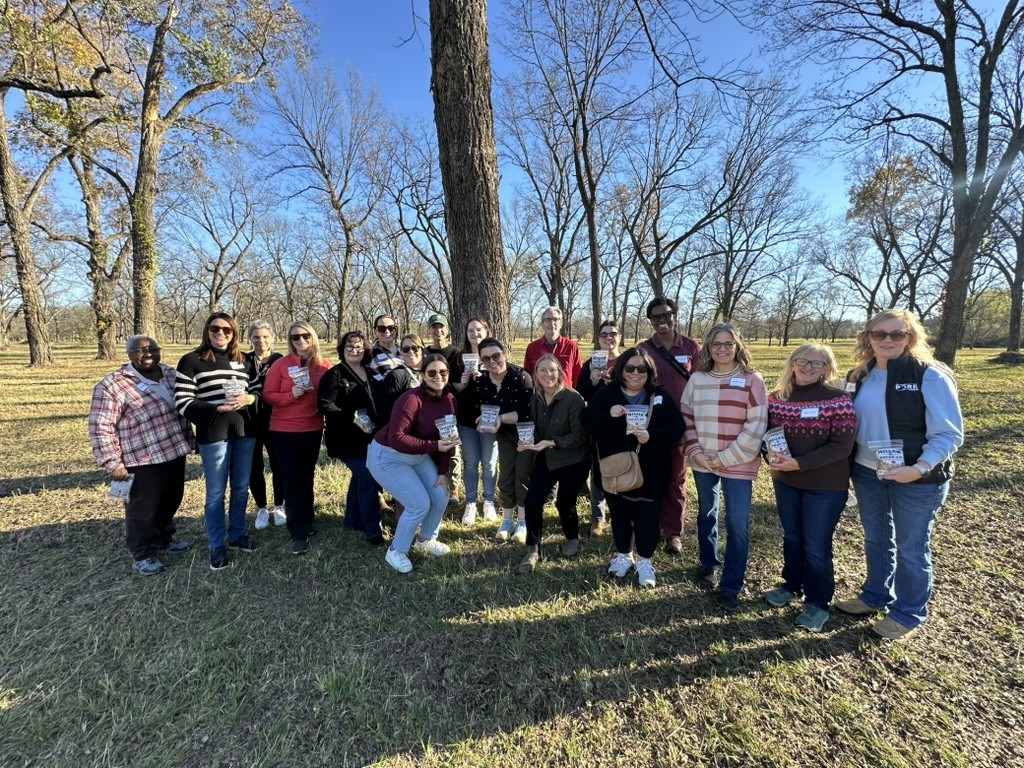
Attendees at the Miller Pecan Company Orchard. - they care for over 800 pecan trees
After the conclusion of the GROWN event, Oklahoma Farm Report's Stevie White got the details of the event firsthand from its organizers Sheri Glazier, Registered Dietitian Nutritionist at Dirt Road Dietitian, and Krystal Dunham, president of the Oklahoma Academy of Nutrition and Dietetics.
The event's mission was to help close the gap in understanding that registered dietitians in the state have of where food comes from. The inaugural event in 2023 partnered with the Oklahoma Wheat Commission to explore how wheat gets from the field to the table. Registered dietitians are invited to the immersive event that allows them to see firsthand how various food products make their way from farmers' fields to their and their clients' plates.
"This year, we took things Northeast," Glazier said. "So it was all things mushrooms, pork, and pecans. More than 20 registered dietitians, students, and nutrition professionals joined us and fully immersed themselves in all things agriculture in Northeast Oklahoma.
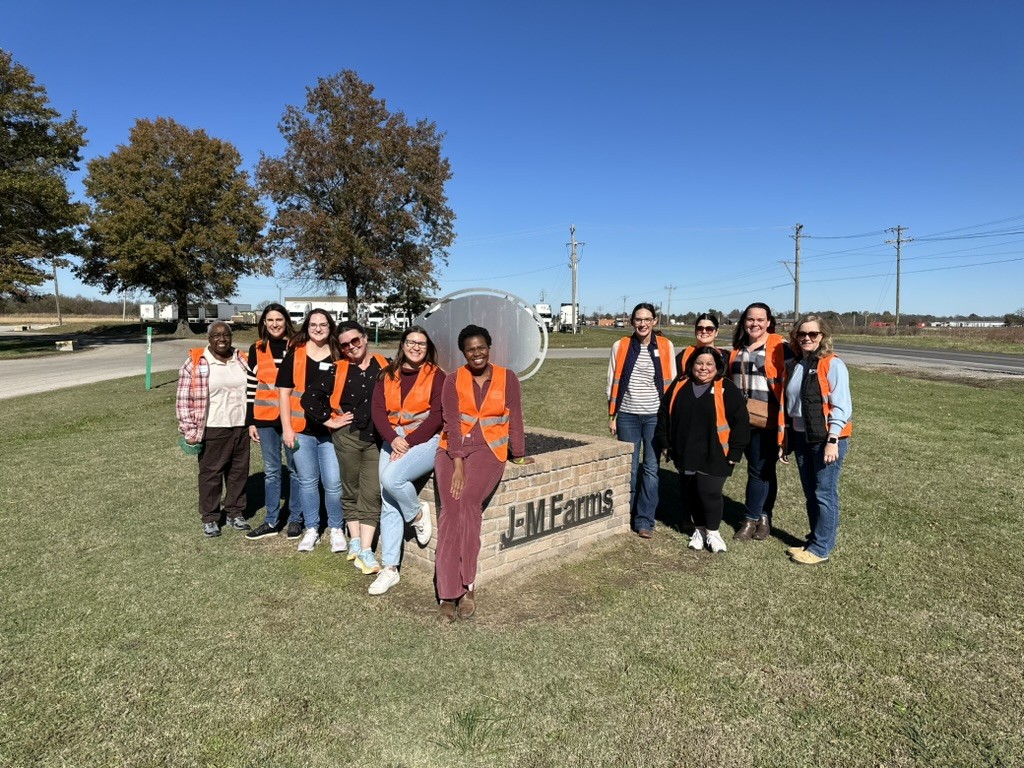
The group toured the family-owned JM Mushroom Farm where they witnessed composting, packaging, and shipping processes along with a personalized lesson on washing and prepping mushrooms at home.
Dunham admitted that she was surprised that harvesting mushrooms didn't involve foraging for them outside. "To see where the hay comes from and how it is turned into compost, then sterilized before it is introduced to any type of mushroom spawn was really neat for me. I was not expecting that."
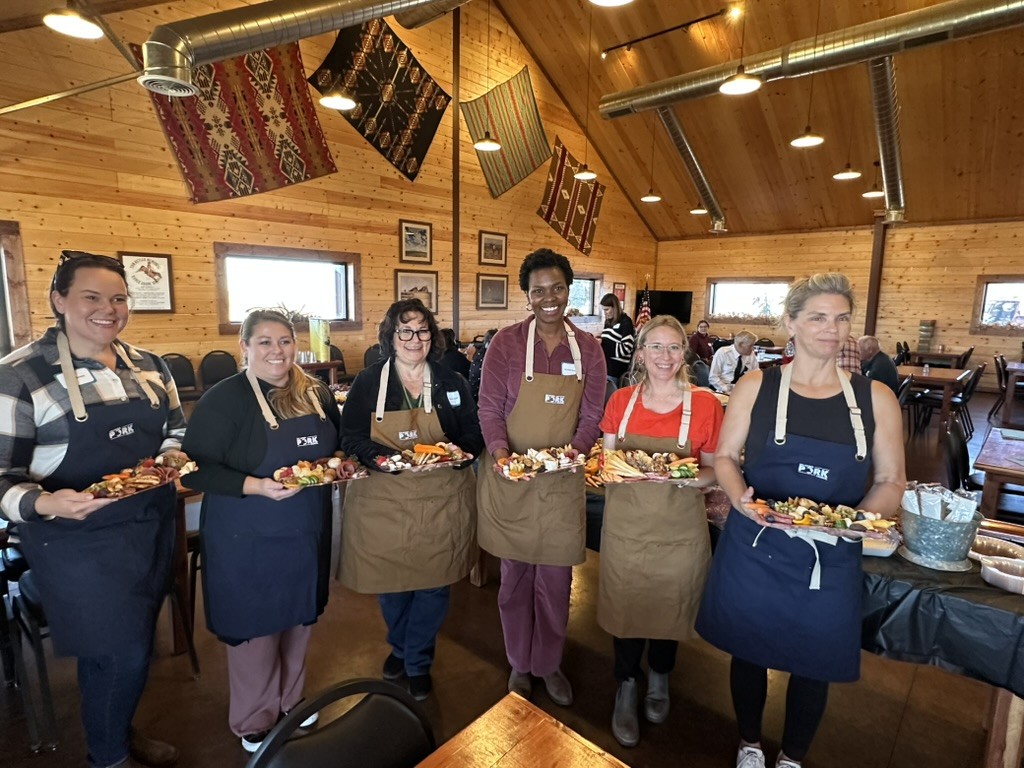
The lunch at Piguet's Prime Time, sponsored by the Oklahoma Pork Council, included an interactive charcuterie board creation that included Oklahoma-produced products including pork, mushrooms, pecans, cheese, fruits, and vegetables.
"As we had lunch, [Piguet's Prime Time's owner Carolyn Piguet] was talking about where each thing was coming from, and she said that she sourced her flour from Chisolm Trail Milling in Enid, which we toured last year at our wheat event. Being able to see each process from the beginning to the end was our common theme, and I think that was felt throughout the group that was with us this time."
After a talk with Oklahoma Pork Council's President-elect Cathy Vaughan, the group made their way to tour Miller Pecan Company. There, they followed the pecans' journey from being shaken out of the trees, collected by harvesters, and then through being cleaned and prepped for shipment to the shelling facility. At the shelling facility, attendees watched the process of taking the pecans shipped from the farm to the final boxed product.
"The pecan operation was just so warm and welcoming, and we were surprised to learn about the far reach of those pecans, and the tribal partnerships that they have. There is a lot going on behind the scenes," Glazier said.
Just before leaving, the group listened to Alisen Anderson with the Oklahoma Farm Bureau give a talk about the importance of the farm bill to the agricultural industry and beyond.
"I loved Alisen's presentation on the farm bill and how that impacts all of us that we don't even realize," Dunham said. "It is important to know even though I'm a dietitian because I still have a major impact on the health of our community."
Glazier believes that introducing dietitians to the agricultural side of the food industry may help them soothe unfounded fears surrounding things consumers see on labels and become more confident in the foods they recommend to clients.
Dunham added, "For me, I think it is important to better understand where our food comes from and have more trust in farmers. Having so much information at our disposal sometimes isn't the best way for people to get accurate information. For us to go and actually set foot on the soil and see what is going on helps us be more confident when talking to our clients and colleagues about the ag industry in Oklahoma."
This year's event was supported by the Oklahoma Farm Bureau, The Oklahoma Pork Council, and the National Pork Board. It was the second year of support from the Oklahoma Farm Bureau, and Glazier says it is because their mission aligns with hers.
"We have mutual goals to connect agriculture with consumers," she said. "I have the ability to connect with somewhat of a unique audience with a far-reaching impact, and the story I was hearing over and over again was how those agricultural stories were all coming from families just trying to do the right thing with the resources that they have agriculturally."
From her position as president of the state's dietitian organization, Dunham reiterated the importance of educating the masses about nutrition education and food security.
"I couldn't help but envision all of these organizations with mushrooms and pork and wheat are like a quilt," Dunham said. "All of it works together to feed the nation. We need all of these to sustain our economy, our bellies, our state, and also, we help feed the country and also the world in some regard."
Glazier added, "I want our folks in agriculture in Oklahoma to know that their stories are being told, and while may only be to twenty-plus people at a time, that story is going to unfold time and time again. If anyone has a unique ag story to tell, I would love to chat with them to put them on our list because we feel like this event is going to keep going and growing." Anyone interested in hosting a future GROWN event on their operation or in sponsoring the events should email Sheri here.
Click the soundbar above to hear more in-depth commentary from Glazier and Dunham.
U.S. Department of Agriculture (USDA) Secretary Tom Vilsack today announced a new round of investments totaling more than $194 million to support local economic development plans and projects in Rural Partners Network (RPN) communities and other neighboring communities across 14 states and Puerto Rico. USDA Rural Development Under Secretary Dr. Basil Gooden highlighted today's announcement at the Rural Local Initiatives Support Corporation 2024 Seminar in Little Rock, Arkansas.
The Biden-Harris Administration launched RPN in April 2022 to ensure people in historically underserved rural and Tribal communities receive their fair share of funding from federal agencies. RPN is an all-of-government collaboration supported by 25 federal agencies and regional commissions.
Since its inception, federal agencies have invested over $8.5 billion across the 36 RPN community networks. That includes more than $1.5 billion in USDA investments in locally driven projects that improve local infrastructure, health care, housing, and connectivity. RPN has facilitated almost 4,000 new partnerships and the launch of the Rural.gov website.
"The Rural Partners Network has broken down barriers so underserved rural communities and families can access the resources they need to prepare for the future," Secretary Vilsack said. "Today, we're celebrating several more examples of how aligning those resources with local blueprints for success will keep rural and Tribal communities across the country thriving for generations to come."
Today USDA is awarding more than $194 million in grants and loans to support 118 projects that will help rural and Tribal communities address immediate needs and create sustainable economic growth. Many of these projects are the direct result of collaboration between community networks and federal staff living and working in the communities.
The funding will support RPN communities in Alaska, Arizona, Georgia, Kentucky, Mississippi, New Mexico, Nevada, North Carolina, West Virginia, Wisconsin and Puerto Rico. Projects will also benefit rural communities in Minnesota, Ohio, Virginia and Washington.
Projects will lower costs for families, create jobs and grow businesses in rural areas that have been a bedrock of the country's economic success for decades despite high rates of poverty and lack of opportunities in their own communities. Additionally, projects will help communities transition to clean energy and modernize critical water and sewer infrastructure.
For example:
In southeast Alaska, a hydroelectric plant will make improvements to increase the power it generates on Prince of Wales Island. A program to strengthen biobased economic development will help sawmills and other local businesses create new jobs and opportunities around Thorne Bay.
In southern Georgia, a technical college will buy a simulation system and other technology to train heavy equipment operators and welders, addressing labor shortages and workforce needs in the region.
In Kentucky, Appalachian communities will upgrade sewer systems and help small businesses create and save jobs in communities that have endured poverty for generations. Funding will also help businesses save on energy costs by installing solar technology.
In North Carolina, investments will be used to revitalize a bakery in Fair Bluff, which has been devastated by multiple floods. A loan will facilitate the sale of an auto shop in Whiteville so it can continue to be a mainstay in the community for years to come.
In West Virginia, communities will use funding to upgrade water and sewer systems; provide services to local businesses and entrepreneurs; and purchase video conferencing equipment to provide telehealth services to people in remote areas. Investments will also help family businesses save money by transitioning to clean energy.
In Wisconsin, funding will help homeowners in rural and Tribal communities improve household water and well systems, as well as save an agricultural supply business thousands of dollars each year with solar power.
As part of today's announcement, USDA Rural Development is also highlighting its ongoing work to determine how best to streamline its grant programs through an effort called Better Grants Better Service. Through this initiative, the agency is working to reduce barriers and improve access to its programs, the grant filing experience, and efficiency of the application process.
During Phase 1 of the initiative, USDA received 33 recommendations from customers and staff on how to make these improvements. For more information on this critical initiative and Phase I recommendations, visit the Better Grants Better Service home page.
Background: Rural Partners Network
Launched in April 2022 and expanded in November 2022, RPN is now active in 36 community networks in 10 states and Puerto Rico.
Community networks receive support from full-time USDA staff who live and work locally. These staff members provide technical assistance based on each community's needs, helping them navigate federal programs, build relationships and apply for funding. In addition to USDA staff, there are staff at more than 25 other federal agencies dedicated to making resources across the government easier to access for people in rural communities.
RPN communities also benefit from coordination through other federal efforts such as the Interagency Working Group on Coal and Power Plant Communities and Economic Revitalization and President Biden's Justice40 Initiative and Investing in America agenda. The Rural Prosperity Interagency Policy Council, co-led by the White House Domestic Policy Council and USDA, advises the RPN program and ensures rural voices are heard and reflected in national policies that will benefit all people in rural communities.
RPN also benefits from new partnerships with philanthropic organizations to addresses barriers to accessing federal programs with a specific focus on advancing equity and prosperity in rural America. These partnerships will enhance RPN's work by helping communities develop applications, plan projects, and leverage pre-development expenses and matching funds.
For more information on RPN, visit Rural.gov.
USDA Rural Development provides loans and grants to help expand economic opportunities, create jobs and improve the quality of life for millions of Americans in rural areas. This assistance supports infrastructure improvements; business development; housing; community facilities such as schools, public safety and health care; and high-speed internet access in rural, tribal and high-poverty areas. Visit the Rural Data Gateway to learn how and where these investments are impacting rural America. To subscribe to USDA Rural Development updates, visit the GovDelivery Subscriber Page.
USDA touches the lives of all Americans each day in so many positive ways. Under the Biden-Harris Administration, USDA is transforming America's food system with a greater focus on more resilient local and regional food production, fairer markets for all producers, ensuring access to safe, healthy and nutritious food in all communities, building new markets and streams of income for farmers and producers using climate-smart food and forestry practices, making historic investments in infrastructure and clean energy capabilities in rural America, and committing to equity across the Department by removing systemic barriers and building a workforce more representative of America. To learn more, visit www.usda.gov.
Agricultural Economics Insights (AEI) provided economic analysis in American Agriculture mainly for the corn, soybeans, and wheat industries. They examine land values and economic trends in agriculture to help producers understand what is going on with farming. At the National Association of Farm Broadcasters Convention, Farm Director KC Sheperd talked with AEI's Co-Founder and Partner Brent Gloy about current trends.
"This has been a tough year financially for a lot of people," Gloy admitted. "Livestock has been pretty good, and that has kind of balanced out at the sector level making it not just a disaster, but row crops and grains are tough."
He has observed situations that will make obtaining good cash flow difficult for farmers, and high interest rates will only compound the problem.
Gloy believes that it is still too early to tell if the incoming Trump administration will make things better, but said there are a few things that he could tell. "It does appear that the economic participants are looking forward to getting back to business with less regulations," Gloy shared. "In the ag space, it comes with a little bit of overhang of added tariffs. If we just look at the tariffs that we place on things, it might not be that bad for agriculture. The problem will be the retaliatory tariffs."
He recalled that the trade war with China in 2018 – 2019 made things difficult.
Another thing that people want to know is whether or not emergency aid will be provided for the farm sector. "I think the reality is that, in the row crop and grain space, it would sure be welcomed because things have been pretty tough," Gloy stated. "I would expect that we will get something at some point, but I don't know how much."
He related how nearly all of the disaster relief that the farm sector has received for the past five years is financed by the government's emergency fund, and he hopes that will be addressed in the new farm bill when it eventually reaches completion.
More information about Agricultural Economics Insights can be found at aei.ag/overview.
Today the Agricultural Retailers Association (ARA) recognized Rod Wells, senior vice president, corporate strategy & logistics of GROWMARK, with the ARA Distinguished Service Award during the ARA Conference & Expo with more than 600 ag retail industry professionals.
"Rod exemplifies dedication to both ARA and the ag retail community in extraordinary ways," says ARA President and CEO Daren Coppock. "His remarkable 13 years on the ARA board, including serving as our first two-year chair, have significantly advanced our mission. Rod was also a founding board member of ResponsibleAg, helping shape its direction, and his ongoing personal contributions and engagement with ARAPAC further highlight his commitment to uniting and supporting our members and enhancing our advocacy efforts."
Nominations are submitted by peers and selected by the ARA Executive Committee for the ARA Distinguished Service Award, which honors individual members of the association working to make the industry better for everyone as they exceed the traditional responsibility of supporting the ag retail industry.
"Being recognized by the Agricultural Retailers Association as a Distinguished Service Award recipient is a career highlight. ARA is the only national association focused exclusively on the needs of U.S. ag retailers, and the ARA team tirelessly educates and advocates on our behalf," says recipient Rod Wells.
"My time as member of the board of directors and, eventually, chairman led to the cultivation of lifelong industry relationships, positioned me for career advancement, and built valuable leadership skills that I continue to use each day. I encourage ag retailers everywhere to join if they are not currently members and to actively participate in ARA advocacy efforts in support of our noble industry."
GROWMARK, an agricultural cooperative was founded on the principle of delivering exceptional service and quality fuel, lubricants, crop nutrients, crop protection products, seed, and more. Since its inception, GROWMARK has focused on integrity and dependability, ensuring that customers receive reliable products and services, even during peak seasons and shortages.
Learn more about the ARA Conference & Expo on the website or on ARA's social media.
Oklahoma Attorney General Gentner Drummond is urging the U.S. Senate to swiftly confirm the nomination of Pam Bondi, President-Elect Trump's pick for U.S. Attorney General. Drummond and a coalition of 30 current and future state attorneys general sent a letter to Senate leadership this week supporting Bondi.
"Pam Bondi has proven herself to be an exceptional legal mind and a dedicated public servant," Drummond said. "Her track record demonstrates her ability to tackle complex challenges head-on, from combating the opioid crisis to fighting human trafficking. Her commitment to justice makes her an outstanding choice for U.S. Attorney General."
In the letter to Senate Majority Leader Chuck Schumer, Senate Minority Leader Mitch McConnell and Minority Whip John Thune, the coalition wrote, "Many of us have worked with Attorney General Bondi, and we have witnessed firsthand her legal acumen, her passion for justice, and her steadfast commitment to the rule of law. And equally as important, we have found her to be fair-minded, impartial and collegial. In short, she is a superb choice to serve our nation and the public interest."
The coalition outlined Bondi's many accomplishments during her time as Florida Attorney General.
"During the worst days of the opioid crisis, she demonstrated extraordinary leadership, working with the Florida Legislature to shut down pill mills, initiating litigation to hold bad actors accountable and taking many other actions designed to curb drug abuse, including championing bans on synthetic drugs. She was also a fierce advocate against human trafficking, leading efforts to increase tools for prosecutors to protect victims and hold traffickers accountable," the letter stated.
"General Bondi is exceedingly well prepared to be the 87th United States Attorney General. She will bring to the office a unique combination of civil and criminal experience and a tenacious work ethic. Most importantly, she will bring a steadfast and unwavering commitment to the rule of law."
Also joining the letter were attorneys general and attorneys general-elect from Alabama, Arkansas, Alaska, Florida, Georgia, Idaho, Indiana, Iowa, Kansas, Kentucky, Louisiana, Mississippi, Missouri, Montana, Nebraska, New Hampshire, North Dakota, Ohio, Pennsylvania, South Carolina, South Dakota, Tennessee, Texas, Utah, Virginia, West Virginia and Wyoming.
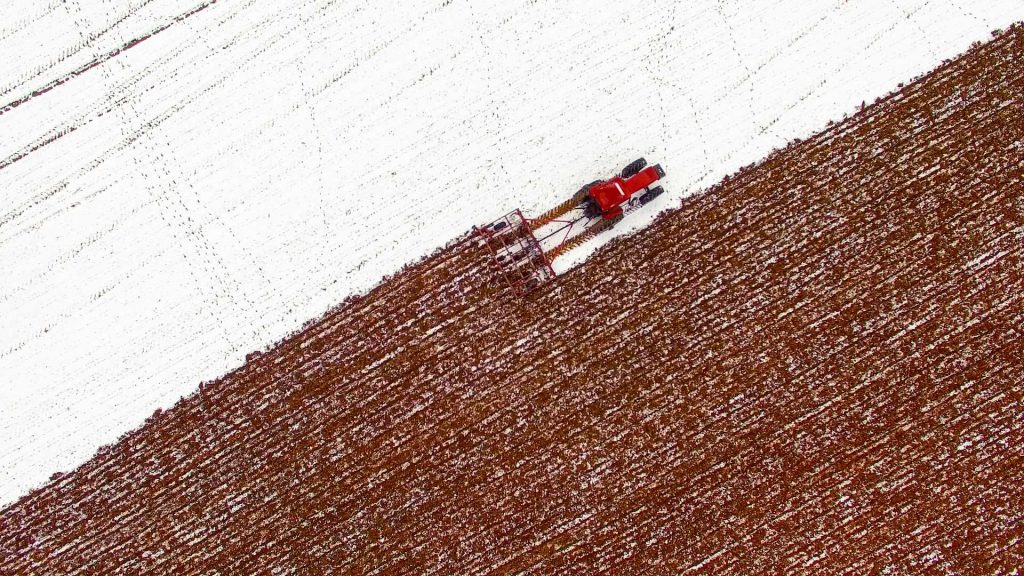
Winter is coming, and with it comes colder temperatures, wet or icy ground, and snow in some areas. Despite the changing weather conditions, you still need to get work done, and farm tire maintenance is crucial to staying productive, no matter the weather.
"Livestock still needs to be fed. In some areas, snow needs to be moved, or fieldwork finished," says Greg Jones, senior manager of global field engineering, Firestone Ag. "Regardless of where you live, winter brings challenges. In the north, it snows. In the south, it rains. You need your tires to keep up throughout the season."
Taking steps to safeguard your tires from harsh winter weather and conditions can help you avoid needing replacement tires come spring. Here are four practical tips to help you make the most of your farm tires and equipment this winter.
Tip 1: Maintain tire pressure when temperatures drop
Regularly checking and adjusting your tire air pressure is one of the most effective ways to extend tire life and carry heavy loads efficiently. Checking tire pressure in the winter is especially important since it is directly related to temperature.
"As temperatures rise, so does tire inflation pressure, and vice versa," says Jones. "You need to be extra aware of your tire air pressure at this time since the colder weather causes drops in tire inflation pressure."
Check your tire pressure daily or weekly, depending on your equipment usage. This helps to avoid underinflation or overinflation, which can both damage the tire and affect performance.
Tip 2: Be cautious of rough, frozen ground
Take extra care driving over rutted and rough frozen ground and stubble, especially for livestock operations and when clearing snow.
"When temperatures drop, mud can freeze into hard clumps, and stubble gets harder," says Jones. "Driving over these is like driving over a sharp rock in the field. These frozen obstacles, which are common for northern U.S. farmers, can cause punctures or breaks in your tires."
Whenever possible, minimize driving over rough surfaces and smooth out main driving paths to protect your tires from sharp, frozen debris.
Tip 3: Safeguard your tires during winter storage
For equipment that won't see regular use during the winter, proper storage can help keep tires in good condition. Whenever possible, store equipment inside. Tires left outside on ice or snow are more prone to cracks as the rubber stiffens in low temperatures.
"When temperatures get cold enough, the elasticity of the rubber stops working as usual," explains Jones. "Instead of stretching and relaxing, it becomes brittle and can crack."
For equipment in winter storage, adjust tire inflation pressure to avoid finding a flat tire come spring. Due to permeation, a tire will typically lose around 1 PSI per month. To account for this natural, slow loss of PSI over time regularly check the tire pressure of your tires in storage and adjust to account for this change.
Tip 4: Optimize your tires for winter conditions
Winter across the country can create conditions that challenge tire traction. Tires built for fieldwork might not perform well in snow and ice. In the south, wet ground from winter rains can reduce a tractor's traction in the field. If you need to put your equipment to work, these tips can help make them more efficient.
· Adjust a tire's footprint: Wet ground can heighten soil compaction and rutting, while reducing a tractor's traction. Ensure your tire inflation pressure is optimized for the weight of the tractor. Properly inflated tires allow tractors to create an ideal footprint, spreading the machine's weight over a larger area to minimize soil compaction and enhance traction.
· Add weight: Adding weight to your equipment can help improve traction on icy or snowy ground. Extra weight can prevent slipping and help maintain stability. "Adding weight carefully and optimizing your tire pressure to the new weight can give you extra grip for winter work," says Jones.
· Use tire chains: Tire chains can be a good option in winter conditions by providing extra traction on icy surfaces. Tire chains can give your equipment the extra grip it needs in slippery conditions. Work with your local tire dealer and experts to ensure you are getting the correct chains for your tires and are installing them correctly to avoid unnecessary damage.
For more tips to get the most from tires and equipment this winter, contact your local Certified Firestone Ag dealer or visit FirestoneAg.com.
Senior Farm and Ranch Broadcaster, Ron Hays, spoke with the Vice President of Governmental Affairs at the National Cattlemen's Beef Association, Ethan Lane for an update on the suggested changes to U.S. dietary guidelines that don't favor beef in American diets or support scientific facts.
"The U.S. dietary guidelines have always been a rusty process," Lane said. "This was a particularly anti-scientific highly partisan, highly political process."
He told how the dietary guidelines advisory committee introduced a draft in the eleventh hour of deliberations without peer review, and then doggedly pursued the reduction of meat consumption in the U.S. in favor of beans and lentils regardless of scientific justification.
"What we got was this weird set of recommendations that suggested reducing meat consumption just because, then balance that out by eating more beans, peas, and lentils, but reduce starchy vegetables because of the additional calorie load incurred from the beans, peas, and lentils. The flow chart of what the average American would need in order to follow these guidelines is simply not realistic," Lane stated. "I think it speaks volumes of how broken this process is."
He emphasized that while school systems and food procurement programs utilize this type of diet, the majority of Americans do not. "One has to wonder," he said. "given the fact that President-elect Donald Trump has made clear that he intends to take a very hard look at the role of the Department of Education in the federal government, it brings up the question, 'What does that mean for a process that has long-since stopped serving Americans' best interests as a tool for how to feed their families?'"
He assured Americans that NCBA will continue to voice concerns about the process and the general utility of the dietary guidelines.
In the near future, a comment period will be opened regarding the proposed guidelines, and Lane anticipates an extension on it once it becomes open.
"These are just suggestions for the dietary guidelines, and the federal agencies that implement them don't have to pay attention to what these people have recommended," Lane pointed out. "They can say, 'Thank you for your input. We are going to go a different direction here.' I would imagine that is probably pretty likely."
Similar guidelines were introduced during Trump's first administration, and his people weren't impressed with them, then. It is up to the USDA, along with President-elect Trump's Department of Health and Human Services, to make the final determination.
Lane said that because Tom Vilsack and company selected the advisory committee, they will be presenting their suggestions to a different administration with a very different viewpoint on food.
"We will see how the Trump administration deals with that, but I would expect a different perspective than what has guided this committee," Lane commented.
Trump appointees, Robert F. Kennedy from the Health and Human Services, and Brooke Rollins, from the Department of Agriculture, will appoint the committees that will review the suggested changes later in 2025.
The Beef Buzz is a regular feature heard on radio stations around the region on the Radio Oklahoma Ag Network and is a regular audio feature found on this website as well. Click on the LISTEN BAR for today's show and check out our archives for older Beef Buzz shows covering the gamut of the beef cattle industry today.
Today the Agricultural Retailers Association (ARA) kicked off its 2024 Conference & Expo with nearly 600 agricultural retail industry professionals convening to share knowledge, network, and celebrate more than 30 years of ARA.
"I am thrilled to welcome you to this year's ARA Conference, where the brightest minds in ag retail come together to share insights and forge connections," says 2023-2025 ARA Board Chair Amy Asmus of Asmus Farm Supply, Inc. "With our theme, 'Powering Ag Retail's Next Frontier,' this year's sessions will explore innovative solutions and strategies to navigate the evolving landscape of our industry."
Participants enjoyed a true Houston experience today with events like the ARA Invitational Golf Tournament and a tour of NASA's Johnson Space Center, setting the stage for a week of learning and networking. The Opening General Session on biofuels marked the official start of this week's educational offerings, with keynote speaker Tim Urban from Bracewell LLP.
With the schedule now rejuvenated and starting earlier on Tuesday, attendees will enjoy expanded opportunities to engage and benefit from this year's insightful sessions and networking events.
"It was essential to begin with a discussion on biofuels and renewable energy, given their growing influence on the agricultural industry," says ARA President and CEO Daren Coppock. "As federal policies on biofuels evolve, impacting demand for agricultural commodities, ARA remains steadfast in being the voice for ag retailers in Washington, D.C. We advocate tirelessly to ensure our members, and their farmer customers are heard in the development of these critical policies."
Coppock's annual President's Report touched on the association's mission, advocacy wins in 2024, and what's next in 2025.
This evening's opening reception in the Expo promises to be an unmissable event, where attendees can cultivate meaningful relationships, explore cutting-edge products, and uncover innovative services that will propel their businesses to new heights.
Tomorrow's session speakers will provide attendees with actionable insights on AI in agriculture, practical applications of carbon intensity for tax credits, and an analysis of the impact of the 2024 election on agriculture.
Learn more about the ARA Conference & Expo on the website or on ARA's social media.
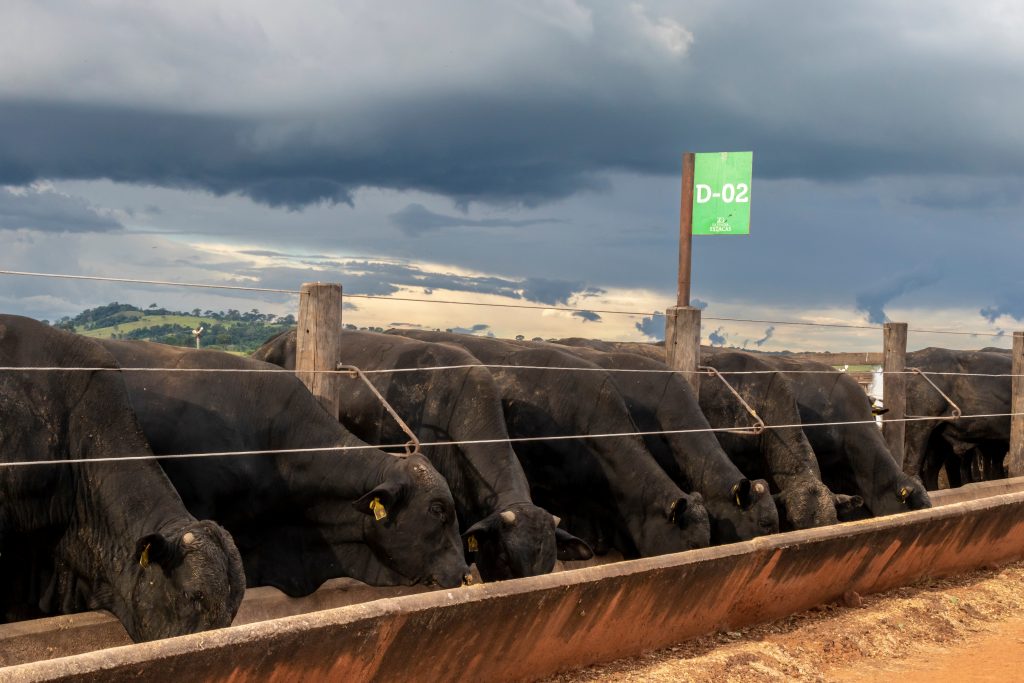
Weekly, Oklahoma State University Extension Beef Cattle Nutrition Specialist Paul Beck offers his expertise on the beef cattle industry. This is a part of the weekly series known as the "Cow-Calf Corner." Today, he talks about predicting the performance of finishing steers.
When we are considering keeping some calves through finishing, it would be great if we had an idea about which ones we should keep, and which ones should be marketed to let someone else take the risk of feeding them. Commercial labs have developed genomic testing to determine the genetic merit of livestock by a simple tissue or blood test. The use of genomic testing of feeder cattle prior to feedlot entry may allow for feedlot managers to make enhanced management and marketing decisions or can allow producers to make informed decisions regarding retained ownership of a portion of their calves through finishing.
We conducted research at OSU to determine the predictive value of these tests on postweaning performance and efficiency. This research project utilized the Igenity Beef Index (Neogen, Lansing, MI) to determine its predictive value for performance of beef steers post-weaning. The Igenity Beef Index provides a score on a scale of 1-10 for 17 maternal, performance, and carcass traits. The objective of this study was to determine differences in performance and efficiency of finishing steers utilizing Neogen Igenity Beef scores for average daily gain (ADG). Spring born commercial Angus steer calves from the OSU Range Cow Research Center [n = 83; body weight (BW) = 924 ± 70.3 lb] were placed on feed at the Willard Sparks Beef Research Center on May 5, 2022, after grazing wheat pasture for 155 d. The steers were allocated by scores for genetic growth potential into Low Growth (ADG scores 1 - 4), Medium Growth (ADG scores = 5 - 6), or High Growth (scores = 7 - 10) gain feeding groups based on Igenity Beef ADG Score.
There were no differences in daily gains during preconditioning or while grazing wheat, so there was no difference in initial finishing bodyweight due to Igenity ADG scores. There were no differences in intake or gain during the step-up period between entry into the feedyard and starting of the final finishing diet. Steers with High Growth scores gained weight more rapidly during finishing and weighed more at harvest than steers with Medium Growth and Low Growth steers. Growth score was shown to influence feed intake during finishing with High Growth steers consuming more feed than Medium Growth or Low Growth steers. But High Growth steers were more efficient in utilizing feed due to their greater performance. Steers with High Growth scores had greater hot carcass weights than Medium Growth and Low Growth steers. These data indicate that Igenity ADG scores can be used to select cattle with improved performance, feed efficiency, bodyweight at harvest, and hot carcass weight without impacting carcass quality grade.
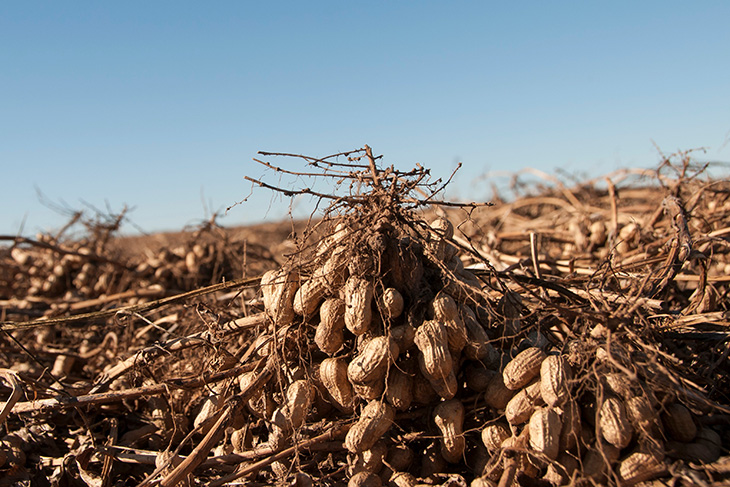
2010 Peanut Harvest north of Carnegie, Oklahoma 73015 in Caddo County. Amadas Peanut combine picks up turned and dried peanuts from the field of Barry Squires.
As the 2024 peanut harvest wraps up, peanut prices remain relatively stable compared to prices of other crops. Corn, soybeans, cotton, wheat, and rice have had significant price decreases since the 2022/23 marketing year, while peanut prices have experienced only a slight decrease over that period. Peanut prices are projected to average $530 per ton for the 2024/25 marketing year, just below the $536 and $538 per ton observed for the 2022/23 and 2023/24 marketing years, respectively. This price stability comes as peanut ending stocks have remained low and stable, which is expected to continue into the 2024/25 marketing year.
Figure 1: Peanut Production, Disappearance, and Ending Stocks by Year
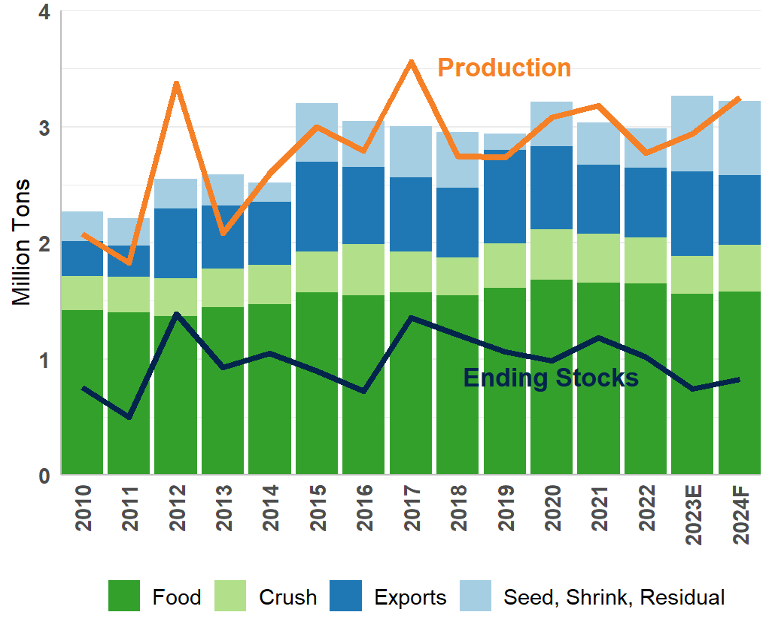
Peanut production is expected to increase in 2024, driven by the 10% increase in planted acreage. If current USDA projections are realized, peanut production would total 3.3 million tons, an 11% increase from 2023, as shown in the orange line of figure 1. Georgia leads the way with an expected 1.65 million tons of peanut production, followed by Florida (297,850 tons), Alabama (297,600 tons), and Texas (262,500 tons). The increased nationwide production comes despite a projected U.S. peanut yield of just 3,723 lb. per acre, which is 1.4 percent below the 2023 yield and the lowest yield since 2016.
On the demand side, peanut disappearance is projected to keep pace with the increased production, as shown by the bars in Figure 1. Peanuts processed for domestic food products, which account for about half of U.S. peanut disappearance, are expected to increase by 1% to 1.58 million tons. Peanut crush is expected to increase by 22%. In contrast, exports are forecast to decrease by 18% to 600,000 tons. As a result of the strong production, ending stocks are expected to increase to 823,000 tons, but this would still be the second lowest total since 2016. Overall, these tight supplies may suggest that peanut prices remain favorable next year. Despite the relatively favorable peanut price situation, peanut profitability remains a major concern due to the elevated production costs identified in the article titled "The Long Term Economic Struggles of Southern Peanut Farmers."
Sources:
USDA Economic Research Service. Oil Crops Outlook: November 2024. Available at: https://www.ers.usda.gov/publications/pub-details/?pubid=110380
USDA. Peanut Stocks and Processing: November 25, 2024. Available at: https://usda.library.cornell.edu/concern/publications/02870v87z
Article courtesy of Southern Ag Today: Sawadgo, Wendiam. "Peanut Stocks Expected to Remain Low in 2025." Southern Ag Today 4(49.3). December 4, 2024. Permalink
Effective November 22, the U.S. Department of Agriculture's veterinary agency, the Animal and Plant Health Inspection Service (APHIS) temporarily suspended the importation of cattle from Mexico. This was APHIS' response to a recent notification that Mexico had detected a cow with new world screwworm in southern Mexico.
The new world screwworm is a fly, and more specifically, it is the fly's larvae that emerges from an egg the fly lays in an animal's open wound. There the larvae emerges from its egg and begins eating the live flesh of the animal. If untreated, the hatching larvae may cause a parasitic infection on and under the skin and can lead to death. New world screwworm can infect wildlife, livestock, pets, and more rarely, humans.
The new world screwworm thrives in subtropical and tropical climates and is endemic in South America, such as in Guatemala, Honduras, Costa Rica, Argentina, Brazil, and Uruguay, just to name a few countries where it is known to exist. However, whether carried by storms or animals, the fly has occasionally reached northward to Mexico and the United States.
The United States experienced outbreaks of new world screwworm in Florida and Texas during the late 50s and mid-60s, respectively, and the U.S. spent hundreds of millions of dollars in eradication efforts through 1982, which was the year the new world screwworm was considered eradicated from the United States. However, reports submitted to the World Organization for Animal Health indicate isolated detections in Florida in 2016 and 2017. The method deployed to eradicate the fly involved release of millions of sterilized male flies.
APHIS' regulations recognize the health and economic dangers from this foreign animal pest, and they prescribe mitigation measures for the importation of susceptible animals from the list of regions where new world screwworm is known to exist. But Mexico, where the new world screwworm was recently detected, was not on this list, but now it is.
So now that APHIS has added Mexico to the list of affected countries and has suspended the importation of cattle and bison from Mexico, in order for the agency to resume such importation, it must first reassess Mexico's disease status in a notice the agency must publish in the Federal Register, and the public may comment on this notice.
If APHIS makes a determination that the importation of cattle from Mexico should be resumed, the public will be afforded the opportunity to comment on that determination, and cattle from Mexico would likely be subjected to APHIS' new world screwworm mitigations, which include treating all cattle with ivermectin 3-5 days before importation, treating all open wounds with a livestock dust insecticide, and certifying all livestock as pest-free by a veterinarian.
Because many of the larger feedlots in the South and larger beef packers rely on the over one million cattle imported each year from Mexico, we expect there to be a rather loud cry from the industry to "normalize" trade with Mexico as quickly as possible, even despite the risk of introducing new world screwworm into the U.S. cattle herd.
But here's what we need to watch for: Just before the elections, the Wildlife Conservation Society published an article titled, "Cattle trafficking routes: The screwworm's gateway to Mexico."
That article reported on recent studies conducted by specialists at the National Autonomous University of Mexico. Those studies indicate that illegal cattle trafficking from South American countries northward were likely fueling the accelerated spread of the new world screwworm.
The article quotes the researchers as stating, 'If the spread is allowed to advance unchecked, it is highly likely to follow the cattle trafficking route through Guatemala's Maya Biosphere Reserve and into Mexico.'
And the article further states:
"Once the screwworm crosses the border, controlling its spread within Mexican territory will be challenging. Past experiences have demonstrated the complexity and cost of eradicating this pest; efforts in Mexico and the U.S. in 1991 exceeded $955 million in today's currency."
What this information tells us is that we have a very serious threat of an introduction of a very serious foreign animal pest that has already spread to Mexico from South America, likely through illegal cattle trafficking.
Regulations alone can't fix unlawful cattle trafficking so we must remain vigilant to ensure that APHIS does not prematurely "normalize" trade with Mexico before both the problem and the cause of the problem is solved. This could be déjà vu all over again as you'll recall it was R-CALF USA that challenged APHIS in a years-long lawsuit in the 2000s when the agency tried to "normalize" trade with Canada while Canada continued to experience outbreaks of bovine spongiform encephalopathy (BSE).
RON's Dave Lanning has a pre-opening look at today's agricultural Markets.
Click the audio tab below for today's report.
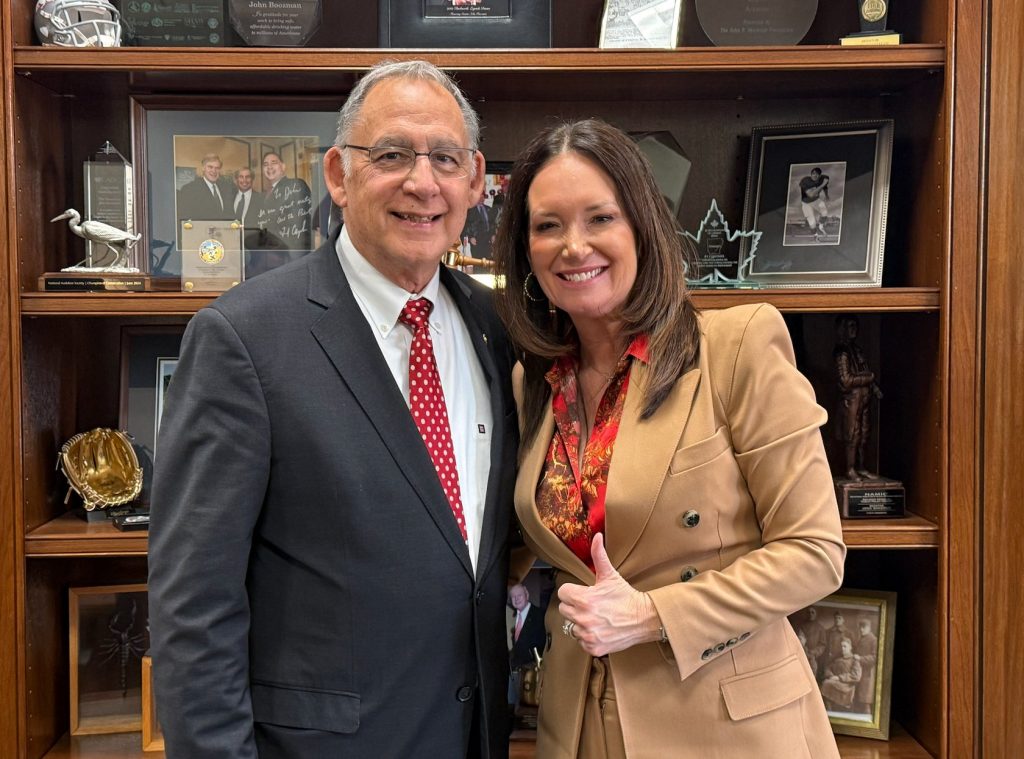
U.S. Senator John Boozman (R-AR), ranking member of the U.S. Senate Committee on Agriculture, Nutrition, and Forestry, issued the following statement on his meeting with Brooke Rollins, President-elect Donald Trump's nominee to serve as U.S. Department of Agriculture Secretary:
"I was pleased to meet with Brooke Rollins and discuss our shared interests in enhancing and advancing policies to help rural communities thrive. Having grown up with an understanding of the sacrifice, hard work and challenges facing agriculture producers, she is well-positioned to be a strong voice and advocate for farmers, ranchers and forest landowners so they can continue to feed, clothe and fuel the world. With a background in executive leadership, she is ready to hit the ground running and work with Congress to deliver a Farm Bill that addresses the needs of America's agricultural producers. I am encouraged by her determination, commitment and resolve to help rural families thrive."
It is expected that Senator Boozman will take over the Chairmanship of the Senate Ag Committee when the Republicans become the majority party in early January, which would have him chairing the confirmation hearing for Rollins in the new year.
USDA's December 2024 farm income forecast confirms just how tough a year it's been for American agriculture, with slightly revised projections offering little relief to farmers, who are losing nearly a quarter of their income in two years. Net farm income is now projected at $140.7 billion for 2024, down $6 billion (4.1%) from 2023 and $41.2 billion (22.6%) from the $181.9 billion peak in 2022. While these updated figures show a marginal improvement over September's forecast, which projected a 4.4% decline for 2024 to $140 billion, the December revision does little to alleviate concerns about the financial pressures farmers face heading into 2025, and the overall figure masks the dramatic decline in returns for crop farmers.
When adjusted for inflation, the drop in net farm income becomes more pronounced, with a projected decline of $9.5 billion (6.3%) from 2023. Although the updated 2024 figure remains above the 20-year average, the metrics paint a challenging picture, particularly for crop producers, who face substantial revenue declines. While some sectors, most predominantly livestock, are seeing stronger receipts, the December forecast underscores that agriculture remains in the red, with few signs of immediate relief for farmers already navigating tight margins.
Crop Receipts: Declines Deepen
Crop producers will continue to bear the brunt of the economic downturn. Total crop receipts for 2024 are now projected to decline by $25 billion (9.2%) from 2023 to $246.2 billion, a slight improvement from September's forecasted $27.7 billion drop. This marks the second straight year of significant declines in crop cash receipts, reflecting weaker global demand, falling prices and increased competition from international markets.
Corn receipts are expected to fall $16.6 billion (20.8%), exceeding the already dire September projection of a $16 billion, or 20%, decline. Soybean receipts are likewise forecast to fall $6.9 billion (12.3%), improving marginally from the previously anticipated 14.6% decline, but still representing a sharp downturn. Cotton farmers, meanwhile, face a particularly bleak outlook, with receipts forecast to decline by $1.9 billion (26.9%), a further deterioration from the 23.6% decline predicted in September.
While small gains in vegetable and melon receipts — up $1.7 billion (6.7%)—and rice receipts — up $0.2 billion (4.5%) — offer some bright spots, these increases pale in comparison to the broader losses. Farmers have been forced to contend with declining prices for major commodities, compounded by rising costs for labor, interest and other key inputs.
Livestock Receipts: Bright Spots Amid the Gloom
Livestock producers are faring comparatively better, with total receipts for animal and animal products expected to grow by $21 billion (8.4%) to $270.6 billion in 2024, an improvement over September's 7.1% forecasted increase. Cattle and calf receipts, bolstered by higher prices, are projected to rise by $7.3 billion (7.2%), exceeding earlier predictions. Milk receipts are expected to grow by $5.3 billion (11.5%), also outpacing the 9.4% increase forecast in September. Pork producers are projected to see receipts increase modestly by $1.5 billion (5.7%), driven by both higher prices and quantities sold.
Egg producers, who initially faced grim projections earlier in the year, continue to see significant gains, with receipts now expected to rise by $7 billion (39.4%), reflecting higher prices and increased demand. However, not all sectors of the livestock industry are thriving. Turkey producers are expected to experience a $2.8 billion (43.3%) decline in receipts, worsening from September's already bleak forecast of a 41.5% drop.
Sharp Contrasts in Commodity Profitability
USDA's metric, Farm Business Average Net Cash Income by Commodity Specialization, offers valuable insights into the financial performance of farm businesses based on their primary commodity focus. Figure 2 highlights both the change in net cash income — calculated as the difference between cash revenues and cash expenses — and the overall net cash income for farm operations specializing in major commodities between 2022 and 2024.
During this period, farm businesses specializing in soybean production experienced a significant 44% decline in net cash income, while those focused on wheat saw a 43% decline, and corn-focused operations experienced a 42% decline. In stark contrast, farm businesses specializing in cattle and calves achieved a remarkable 154% increase, while those focused on poultry saw substantial growth, with net cash income rising by 31%. Income for dairies dropped starkly between 2022 and 2023 but rose dramatically in 2024 – up 19% over 2022. These trends illustrate the dramatic variability in financial outcomes across commodity sectors, influenced by shifts in market conditions, input costs and revenue streams over the observed timeframe.
Diminishing Government Payments Lower Farm Income
Direct government payments are forecast to decline by $1.7 billion (13.6%) in 2024 to $10.6 billion, largely due to lower Dairy Margin Coverage payments resulting from stronger milk prices and the continued reduction in ad hoc disaster programs. This decline underscores diminished federal support for agricultural disaster relief at a time when farmers struggle with mounting losses. Since 2022, uncovered crop and rangeland losses have exceeded $20 billion, a figure that continues to climb as damage from recent hurricanes is assessed. Exacerbating the issue, safety net programs like Agriculture Risk Coverage and Price Loss Coverage have become increasingly ineffective, with outdated formulas failing to provide adequate support during periods of low prices and revenue.
High Costs Persist Despite Expense Relief
Farmers are expected to spend slightly less on production in 2024, with total production expenses forecast to decline by $8 billion (1.7%) to $453.9 billion, an improvement over September's forecasted $4.4 billion decline. Lower costs for feed, fertilizer and fuel contribute to this reduction, with feed expenses projected to fall $10.5 billion (13.2%), fertilizer expenses down $3 billion (8.4%) and fuel costs declining by $2 billion (11.3%). Given low crop prices, drops in expenses most closely associated with crop production are not unexpected.
Rising costs in key categories like labor and interest continue to offset these savings. Labor expenses are expected to rise by $3 billion (6.1%), while interest expenses climb $1.8 billion (4.1%), reflecting higher debt levels and sustained high interest rates. These rising costs add to the financial strain on farmers, who are already grappling with shrinking margins and limited liquidity.
Farm Sector Equity, and Debt on the Rise
Despite declining net farm income, USDA projects farm sector equity — the difference between assets and debt — to rise by 5.2% to $3.68 trillion in 2024, reflecting growth in real estate values. Total farm sector assets are expected to increase by 5.1% to $4.22 trillion, with real estate comprising 84% of this total. Meanwhile, farm sector debt is forecast to climb 4.5% to a record $542.5 billion, with increases in both real estate and non-real estate debt. While solvency metrics such as the debt-to-asset ratio are expected to improve slightly, reduced liquidity — indicated by a 6.9% decline in working capital — points to ongoing financial strain, particularly as debt levels continue to grow.
Conclusion: Farm Income Forecast Highlights Agriculture's Volatility
USDA's December report underscores the volatility of the U.S. farm economy as farmers face their second consecutive year of declining income. Net farm income in 2024 remains nearly 25% below its 2022 peak, and the minimal upward revisions since September offer little reprieve from the financial pressures farmers are enduring.
Crop producers, in particular, face dramatic declines in cash receipts, with little hope for immediate relief as global supply chain disruptions continue and prices for key commodities remain depressed. Livestock producers enjoy higher prices at the moment, but gains in this sector are uneven. Rising production costs threaten to erode profitability across the board.
With government payments shrinking and the income safety net failing to keep pace with the realities of modern agriculture, farmers are left to navigate an increasingly precarious financial landscape. As policymakers continue overdue farm bill discussions, these figures serve as a reminder that the targeted reforms that could address our farmers' unique challenges remain stuck in the legislative process.
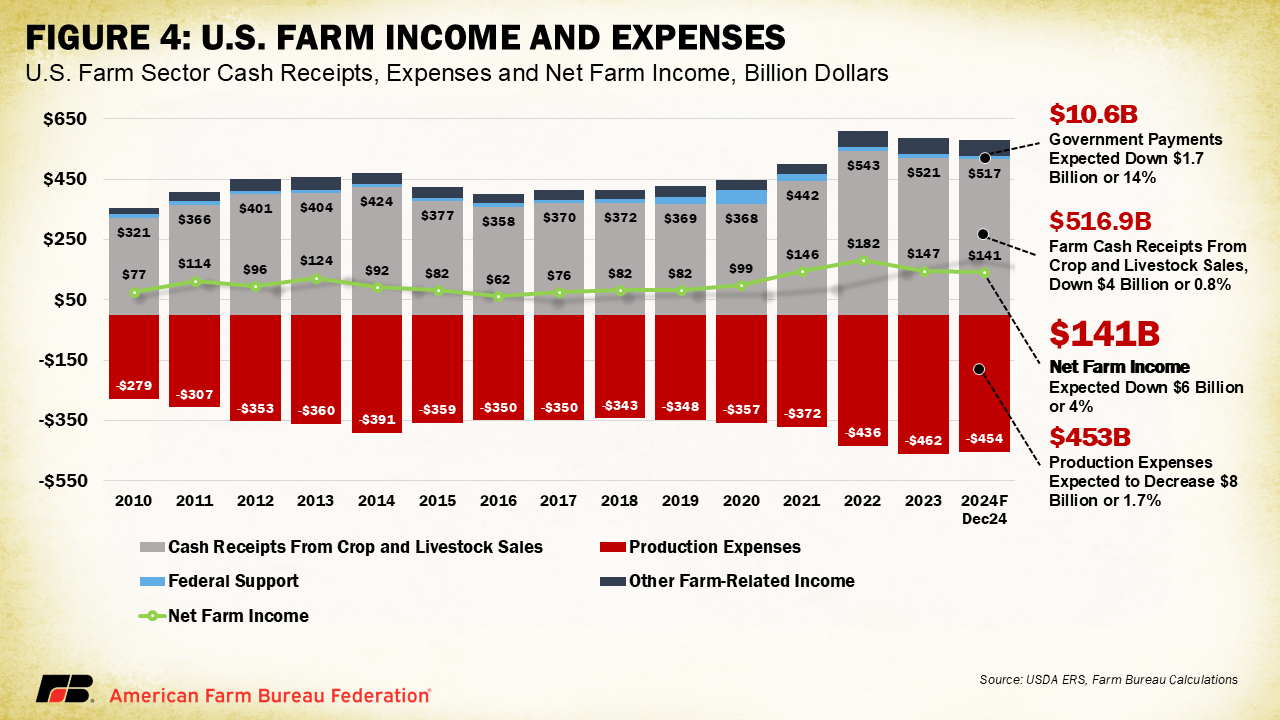
Following the release of the USDA's Economic Research Service (ERS) 2024 Farm Sector Income Forecast, House Committee on Agriculture Chairman Glenn "GT" Thompson (PA-15) and Senate Committee on Agriculture, Nutrition, and Forestry Ranking Member John Boozman (R-AR) issued the following statement:
"Today's farm income update underscores what Agriculture Committee Republicans in the House and Senate have warned about for two years: America's farmers and ranchers are in serious trouble, and the outlook remains grim. From 2023 to today, row crop producers alone have lost more than $50 billion, and stand to lose even more next year. Immediate action is required to stabilize the farm economy and prevent a crisis that will only become more costly to address over time.
"Reauthorizing a five-year farm bill with significant improvements to the safety net is critical to restore certainty to our producers. Equally urgent, Congress must provide substantial economic aid to help those hit hardest.
"America's farmers and ranchers deserve better. It's time for Congress to deliver on its promises and ensure the future of American agriculture."
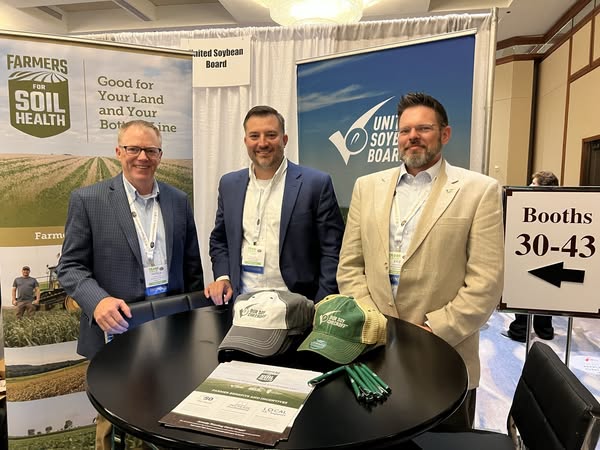
Oklahoma Farm Report's Maci Carter caught up with Missouri farmer Kyle Durham of the United Soybean Board (USB) to talk about the 2024 soybean crop.
Durham's farm is about an hour east of Kansas City along the Missouri River. He said that although it was an unusual year for soybean farmers, his area received the right amount of rain at the right times.
"We had a planting window that opened up early and allowed us to get some seeds in the ground earlier than normal," he said. "Those acres turned out well. That earlier planting date really did pay off."
He added that, remarkably, the soil type of his fields made no difference in the success of the crops they grew this year.
Durham said that large carryout numbers were the biggest issue of the year because the role of the United Soybean Board is to find markets for all of the soybeans.
"We take a two-pronged approach," he said. "We look both at the supply of soybeans in the United States and the demand for soybeans."
He serves on an Innovation and Technology Supply team that has been investing in methods, technologies, and innovations that allow for quicker market access for traits and other technologies. "So, we aren't necessarily developing the new trait that will be in your next soybean, but we are doing the basic and background research that allows our breeders across the country to bring those to market a lot quicker," he said.
Challenges to soybeans vary from climate to pest to fungi, and more, so the heart of the research is to build maximum resiliency in the plant. Projects include goals of identifying the gene combination to produce deeper taproots, sequestering carbon in the soil, and managing the effects of drought and flooding on the crop.
The work of the Soybean Checkoff, which most people are familiar with, is driven by the need to find new ways to use soybeans. "For the past thirty years, the checkoff has brought to market more than a thousand commercially available soybean products," Durham said. "One of the first ones was soy ink for newspapers. Then biofuels. Soybeans make such a great drop-in replacement for things like petroleum, plastics, PFAs, forever chemicals, and even formaldehyde in plywood. We focus on sustainable soy solutions at USB."
Replacing these items with soybean products adds value for consumers by promising cleaner air, better soil, and water. It strengthens communities as new-use factories start up in rural areas to be nearer to the soybean fields, thus creating more jobs for the inhabitants.
The U.S. Food and Drug Administration (FDA) and the U.S Department of Agriculture (USDA) today are announcing a joint Request for Information (RFI) about food date labeling, which includes the usage of terms such as "Sell By," "Use By" and "Best By." The RFI seeks information on industry practices and preferences for date labeling, research results on consumer perceptions of date labeling, and any impact date labeling may have on food waste and grocery costs. For example, questions in the RFI include which products contain date labels and what criteria are used to decided what phrase to use and what date to include. The RFI also asks questions about how consumers interpret date label information, including whether consumers are confused by this information – especially if they believe the dates determine whether food is safe when in fact, they indicate quality – or whether it has impacts on decisions made while grocery shopping or discarding food. Finally, there are questions that explore any relationship between date labels, food waste, and household expenses.
The USDA's Food Safety and Inspection Service (FSIS) and the FDA jointly have broad jurisdiction and oversight over the U.S. food supply. They have a responsibility to ensure that food labels on products over which they each have jurisdiction are truthful and not misleading. The information collected from the RFI may be used to inform future policy decisions, guidance, or consumer education campaigns on food date labels intended to help reduce the premature discard of wholesome and safe food.
"It has been estimated that confusion over the multitude of different date labeling terms on food products accounts for about 20% of food waste in the home. The information collected will help us understand consumers' perception of terms like 'Sell By,' 'Use By' and 'Best By,'" said FDA Deputy Commissioner for Human Foods Jim Jones. "We are looking forward to gathering valuable information to determine how date labeling can make it easier for consumers to know whether a food is still good to eat and avoid food waste. The FDA is committed to doing all that we can to support informed and sound decisions that are good for U.S. consumers."
"Food labels contain a wealth of information for consumers, including a food product's 'best if used by' date," said USDA Under Secretary for Food Safety Dr. Emilio Esteban. "Through this Request for Information, we hope to learn more about how those date labels are determined and whether they confuse consumers and lead to needless food waste."
The action today is one of many actions to be taken in response to the National Strategy for Reducing Food Loss and Waste and Recycling Organics, which was released by the FDA, USDA and the U.S. Environmental Protection Agency (EPA) in June 2024. The USDA estimates that the average family of four spends at least $1,500 each year on food that ends up uneaten and the EPA estimates that, in 2019, 66 million tons of wasted food was generated in the food retail, food service, and residential sectors, and most of this waste (about 60%) was sent to landfills. The National Strategy lays out a path that would enable the U.S. to meet its national goal of reducing food loss and waste by 50% by 2030, helping reduce the environmental impacts of food waste and lower costs for American families.
In response to the draft National Strategy for Reducing Food Loss and Waste and Recycling Organics, the FDA and the USDA received over 9,800 comments encouraging an update of the federal date labeling requirements, including standardizing date labeling. Commenters noted that food manufacturers use a variety of phrases such as "Sell By," "Use By" and "Best By" on product labels to describe dates on a voluntary basis. According to commenters, the use of different phrases to describe dates may cause consumer confusion and lead to the premature disposal of wholesome and safe food because it is past the date printed on the package. The RFI attempts to explore the issues raised in those comments by asking stakeholders for information they have relevant to this topic.
Both the FDA and USDA currently recommend that food industry members voluntarily apply the "Best if Used By" quality-based food date label, which notes the date after which quality may decline but the product may still be consumed. Although the FDA and the USDA encourage the use of the phrase "Best if Used By," current federal regulations do not prohibit industry from using other date labeling phrases, such as "Sell By" or "Use By," if they are truthful and not misleading.
Commenters will have 60 days to provide comments responsive to one or more of the 13 questions posed. Further information on how to submit a comment can be found in the Federal Register.
USDA touches the lives of all Americans each day in so many positive ways. Under the Biden-Harris administration, USDA is transforming America's food system with a greater focus on more resilient local and regional food production, fairer markets for all producers, ensuring access to safe, healthy and nutritious food in all communities, building new markets and streams of income for farmers and producers using climate-smart food and forestry practices, making historic investments in infrastructure and clean energy capabilities in rural America, and committing to equity across the Department by removing systemic barriers and building a workforce more representative of America. To learn more, visit www.usda.gov.
| |||||||||||||||||||||||||||||||||||||||||||||||||||||||||||||||||||||||||||||||||||||||||||||||||||||||||||||||||||||||||||||||||||||||||||||||||||||||||||||||||||||||||||||||||||||||||||||||||||||||||||||||||||||||||||||||||||||
| |||||||||||||||||||||||||||||||||||||||||||||||||||||||||||||||||||||||||||||||||||||||||||||||||||||||||||||||||||||||||||||||||||||||||||||||||||||||||||||||||||||||||||||||||||||||||||||||||||||||||||||||||||||||||||||||||||||
|
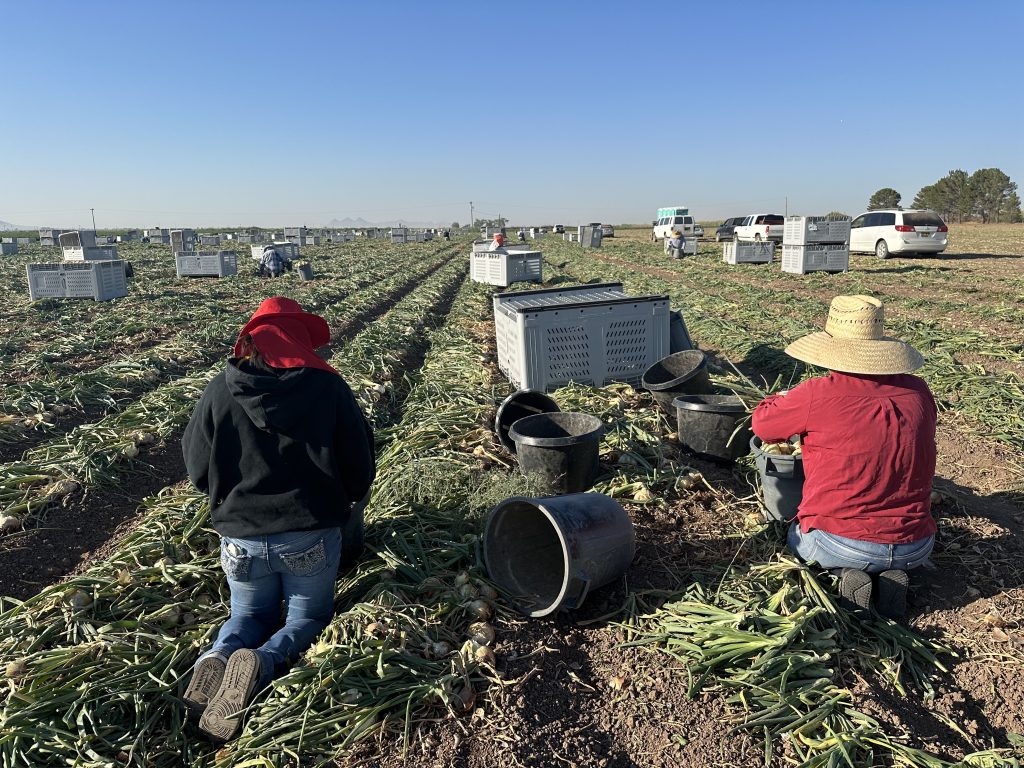
Farmworker housing poses unique challenges to rural fire departments in terms of both fire code inspections and emergency response. Furthermore, many first responders are unaware of the various mandates surrounding farmworker housing.
A free webinar, noon-1 p.m. (Central Time) on Dec. 6, will introduce firefighters, other first responders, and health and safety professionals to incident prevention and emergency response considerations, and increase understanding about farmworkers and relevant housing standards so that the agricultural community can better engage in risk mitigation and emergency pre-planning activities.
The webinar is being co-hosted by the Rural Firefighters Delivering Agricultural Safety and Health (RF-DASH) team at the National Farm Medicine Center, Marshfield Clinic Research Institute, Marshfield, Wis.; and the National Center for Farmworker Health. The webinar is free but registration is required. To register, and for more information, visit Farmworker Housing and Firefighters Webinar – RF-DASH
Speakers include:
There are approximately 2.9 million agricultural workers in the United States, including seasonal and migrant farmworkers. It is estimated that nearly a third of farmworkers live in crowded housing conditions and as many as 15 percent live in employer-provided housing.
Senator James Lankford (R-OK) today shared a message in support of the Charitable Act on Giving Tuesday. The Charitable Act would expand and extend the expired non-itemized deduction for charitable giving that would ensure Americans who donate to charities, houses of worship, religious organizations, and other nonprofits of their choice are able to deduct that donation from their federal taxes at a higher level than the previous $300 deduction.
The Charitable Giving Coalition sent a letter today, signed by 470 organizations from all 50 states, urging Congress to pass the Charitable Act
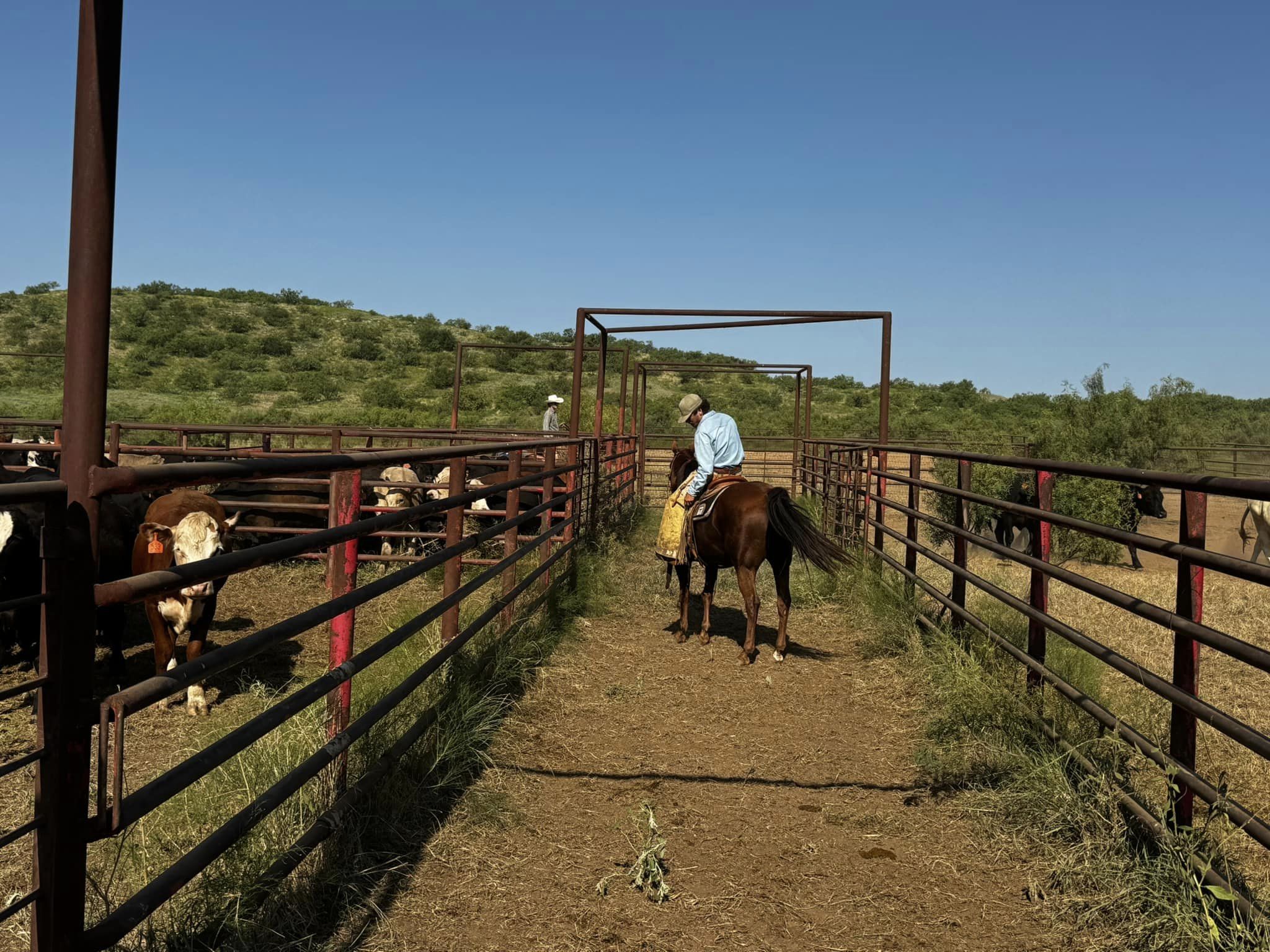
On Tuesdays, Senior Farm and Ranch Broadcaster, Ron Hays, visits with Ben Hale of Western Livestock Auctions as he talks about the latest in the markets and more. Established in 1995, Western has grown into a multi-generational family-owned and operated business and stands as a symbol of tradition, excellence, and a deep-rooted passion for the cattle industry. Western Livestock Auctions operates the Western Livestock Commission Firm- selling cattle on Mondays and Tuesdays. They also operate the livestock auction markets in Woodward, Comanche and Knoxville, Iowa.
Ten thousand four hundred head sold at the National Stockyards the week after Thanksgiving, compared to 12,300 a year ago, but Hale was pleased and appreciated the mild weather, but most of all the jump in prices!
"From two weeks ago to where we are today, it is a drastic difference," Hale said. "It is probably the biggest jump we've seen in my time and the highest market by far that we have ever sold on some of these cattle."
Hale believes the record rise is due to a perfect storm with wheat coming back strong, tighter numbers, and the disruption of Mexican imports due to screwworm.
Seven-weight cattle got into the $2.90s. "These are just numbers that we haven't seen before, and it really just happened in the last couple of weeks," Hale said. "The heifer numbers have done the same way, and the light calf deal is extremely strong on some of those five-weights getting way up on the top side of three dollars per pound.
"It's hard to believe what is going on, but it's a good time for the cow calf guy. The yearling guy is croaking with what he's having to give, but hopefully this feeder deal will stay good and we can make some money in another turn. With price protection, a guy can still make some money with them."
Woodward is holding a special cow sale at 6 pm this evening, December 3, 2024, featuring some good red and black Angus pairs and some bred cows, all in all about 300 to 400 head are expected.
Tomorrow, Apache also expects a good run of cattle, including lots of calves and yearlings.
Hale can be contacted at 940-631-2333. Check out more about the marketing options that Western offers by clicking here.
Yesterday's BeefBuzz featured Senior Farm and Ranch Broadcaster, Ron Hays talking with the president and CEO of the United States Meat Export Federation, Dan Halstrom, about the U.S. beef export market in 2024, and what he sees for 2025. Today, they are discussing what Trump's second term in office might mean to the meat export industry.
President-elect Trump has spoken of plans to add significant tariffs to Canada, Mexico, China, and other countries around the world, in the name of negotiation to leverage the U.S. back to power in global markets.
While many in the export business cringe at the thought of tariffs, Halstrom observed a different outcome of Trump's imposed tariffs during his first term in office citing three existing agreements.
The United States-Mexico-Canada Agreement (USMCA) entered into force on July 1, 2020. The USMCA, which replaced the North America Free Trade Agreement (NAFTA), created more balanced, reciprocal trade supporting high-paying jobs for Americans and growing the North American economy.
The Agriculture Chapter of the China Phase 1 agreement addresses structural barriers to trade and will support a dramatic expansion of U.S. food, agriculture and seafood product exports, increasing American farm and fishery income, generating more rural economic activity, and promoting job growth. A multitude of non-tariff barriers to U.S. agriculture and seafood products are addressed, including for meat, poultry, seafood, rice, dairy, infant formula, horticultural products, animal feed and feed additives, pet food, and products of agriculture biotechnology. It was integral in the U.S.'s record-setting export numbers of 2022 which included more than $2 billion in trade to China. For context, exports to China totaled $200 million three years prior, so the resulting increase was exponential.
Halstom highlighted the third agreement that Trump was involved in in his first term. The U.S.-Japan Trade Agreement, instituted in 2020, enables American producers to compete more effectively with countries that currently have preferential tariffs in the Japanese market. It provided market access to American farmers, ranchers, and agribusinesses for high-quality U.S. food and agricultural products to 127 million Japanese consumers.
In the U.S.-Japan Trade Agreement, Japan committed to providing substantial market access to American food and agricultural products by eliminating tariffs, enacting meaningful tariff reductions, or allowing a specific quantity of imports at a low duty (generally zero). Importantly, the tariff treatment for the products covered in the agreement matches the tariffs that Japan provided preferentially to countries in the CP-TPP agreement.
"It was volatile, but in the end, these are still paying dividends today," Halstrom said. "We are hopeful going forward with the second Trump administration that we will see more of the same. Number one that they will support the agreements that were theirs to begin with. Number two, I think there is an appreciation there that maybe they don't get enough credit for, of supporting ag. It'll be bumpy, probably, but anymore, our business is bumpy anyway."
Hays and Halstrom went on to discuss variable demand for variety meats such as tripe and beef tongue in domestic and global markets. Click the listen bar at the top of the page to hear the complete conversation.
Hays brought up how USDA's proposed Fairness Rule would impact global trade in a market where U.S. quality is in high demand. Halstrom said that he has noticed a shift in the past four or five years to foreign markets being willing to pay more for quality products.
When herd rebuilding begins, Halstrom anticipates a reduction in available products. "The question we have been getting is not 'Why are prices so high?' The question we have been getting from customers, whether they are in Central America or Japan or Mexico, is, 'When will this cycle turn so we will have more animals because we need more volume?'"
He said that fifteen or twenty years ago, high prices meant rejected sales, but those days ended in favor of high-quality American meat.
The Beef Buzz is a regular feature heard on radio stations around the region on the Radio Oklahoma Ag Network and is a regular audio feature found on this website as well. Click on the LISTEN BAR for today's show and check out our archives for older Beef Buzz shows covering the gamut of the beef cattle industry today.
Farmer sentiment jumped again in November as the Purdue University-CME Group Ag Economy Barometer climbed 30 points to 145. Both the Current Conditions and Future Expectations indices increased in November, with the biggest improvement taking place in future expectations. The Future Expectations Index increased 37 points to 161, while the Current Conditions Index rose to 113, 18 points above October's reading. November's sentiment improvement pushed the barometer to its highest level since May 2021, with expectations for the future also reaching their highest level since April 2021. Some of the reasons behind the improvement in farmer sentiment include expectations for a future regulatory and tax environment for the agricultural sector that is more favorable than expected prior to the November elections. The November barometer survey took place from November 11-15, 2024.
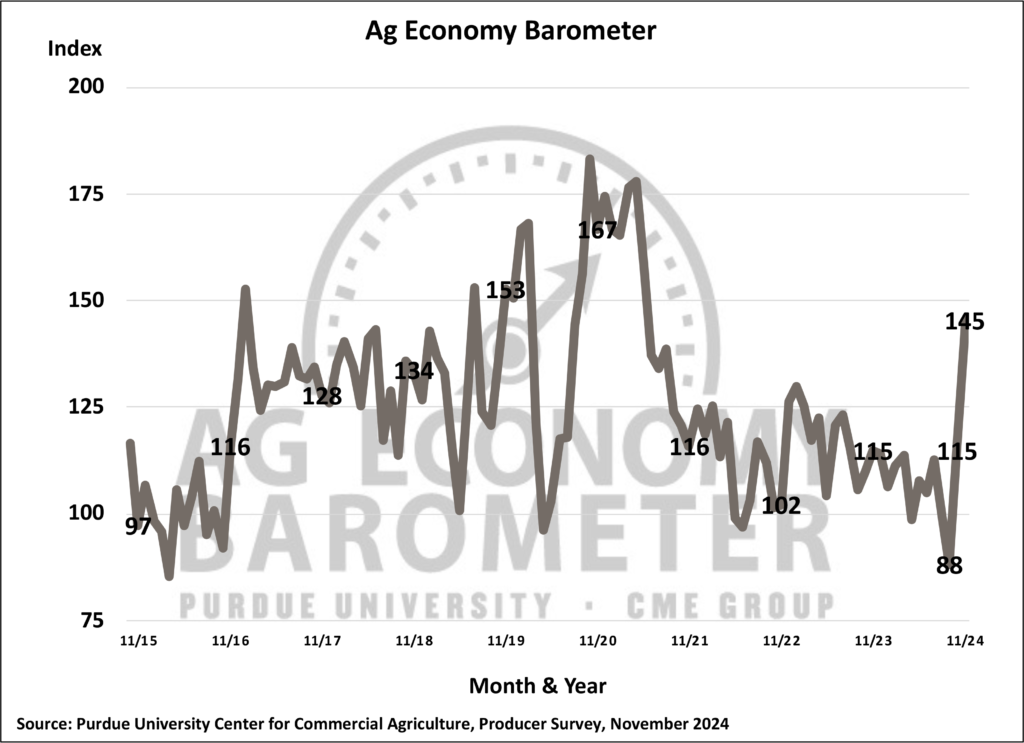
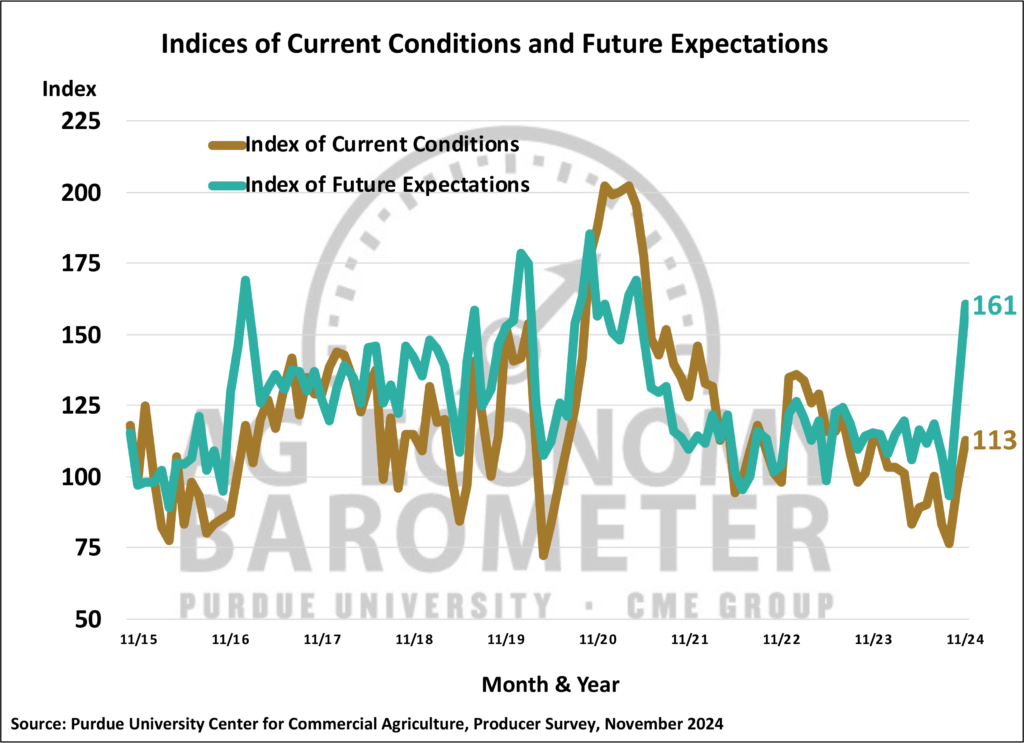
Responses to the base questions used to compute the Ag Economy Barometer index were nearly all more positive in November than in October. One-third of November's respondents said they expect their operation to be better off financially a year from now, compared to 19% who felt that way in October. Thirty-four percent of farmers in November said they expect good times financially for the U.S. agricultural sector in the next 12 months compared to just 15% of respondents in October. When asked to look ahead five years, over half (52%) of November's respondents said they expect U.S. agriculture to experience widespread good times compared to 34% who felt that way in October. The increase in optimism spread to farmer's investment outlook, with 22% of November respondents reporting it is a good time to make large investments compared to 15% of farmers surveyed who felt that way in October.
The sentiment improvement extended to farmers' perspectives on capital investments, with the Farm Capital Investment Index rising 13 points to 55, which is the index's highest reading since May 2021. The shift in investment sentiment was motivated in part by expectations for better financial performance in 2025 compared to 2024. Each month, the barometer survey asks respondents about their expectations for their farm's financial performance in the upcoming year. For the second month in a row, the percentage of producers who expect better times in the upcoming year rose. In November, 25% of respondents said they expect better times next year compared to 16% who felt that way in October. The shift in perspective boosted the Farm Financial Performance Index to a reading of 106, 16 points higher than October and 38 points above September's index.
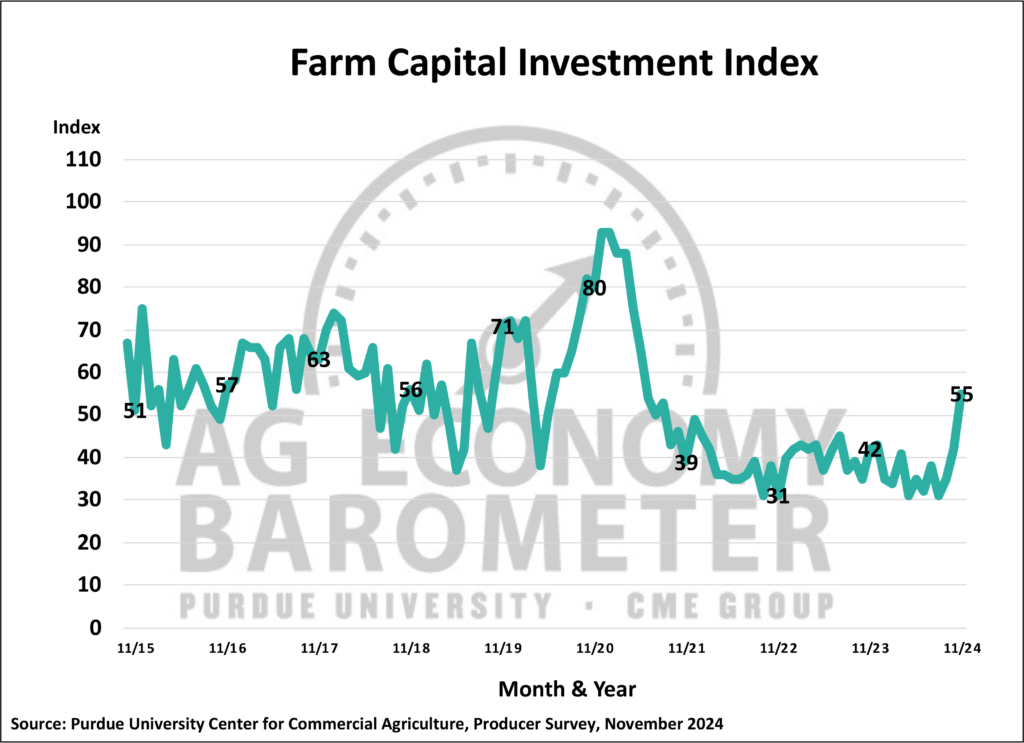
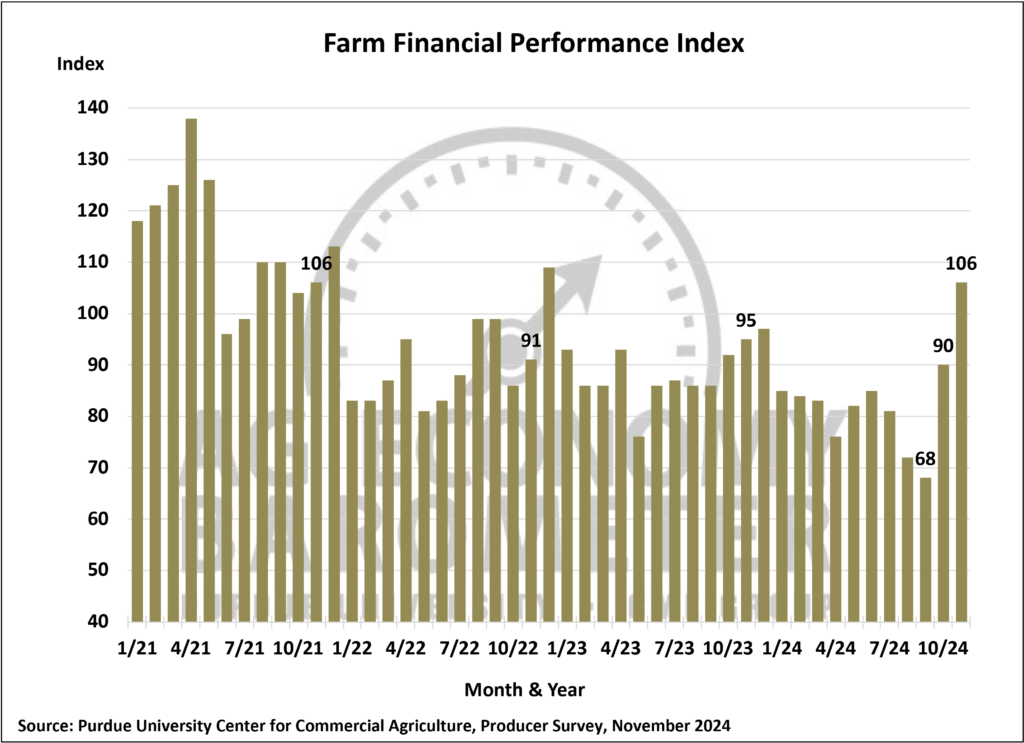
On the heels of sharp improvements in both the short-term and long-term farmland indices in October, both farmland value indices drifted lower in November. Compared to a month earlier, the Short-Term Farmland Value Expectations Index fell 5 points, and the Long-Term Farmland Value Expectations Index fell 3 points in November. The small declines left the short- and long-term indices at readings of 115 and 156, respectively.
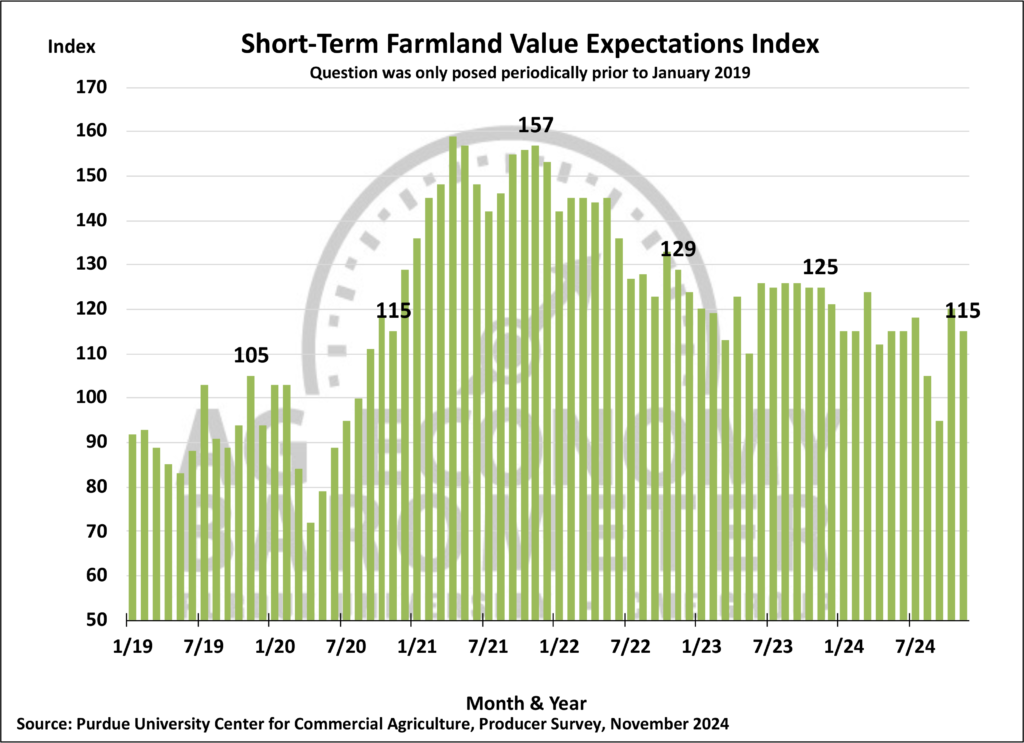
To better understand how farmers' sentiment is related to potential policy shifts associated with a change in presidential administrations, barometer surveys included several policy-related questions before and after the presidential elections of 2020 and 2024. Following the 2024 election, there was a big swing in farmers' perspectives on environmental regulations impacting agriculture. In October, 41% of respondents said they expected the regulatory environment to become more restrictive in the next five years, with just 10% of respondents expecting a less restrictive regulatory environment. This stood in contrast with results from the November survey, in which just 9% of farmers in the survey said they expect more restrictive regulations, while 55% of farmers said they expected environmental regulations to become less restrictive. When asked about taxes, there was a modest shift in expectations from October to November 2024, with a much larger shift in expectations when compared to results surrounding the 2020 election. Over half of respondents (55%) in November said they look for income tax rates to stay about the same in the upcoming year. This compares to just 25% of respondents who looked for income tax rates to remain unchanged following the 2020 election. Over half (57%) of the respondents in the November survey also said they think estate tax rates will remain unchanged in the next 5 years, whereas in November 2020, just 28% of respondents said they expected estate tax rates to remain unchanged.
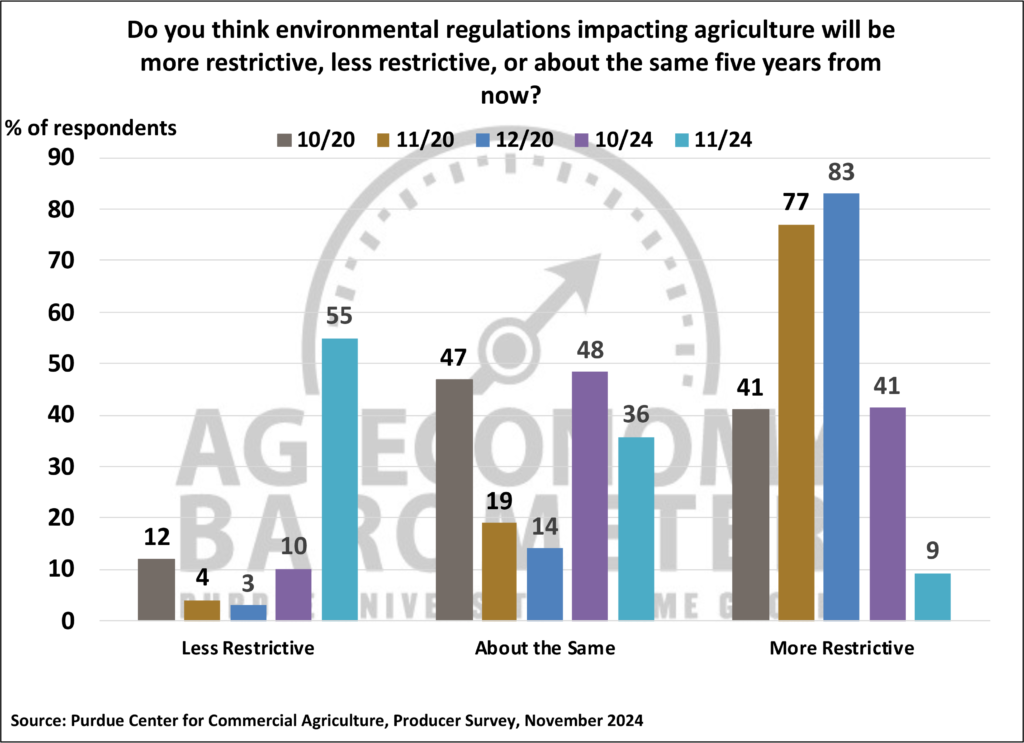
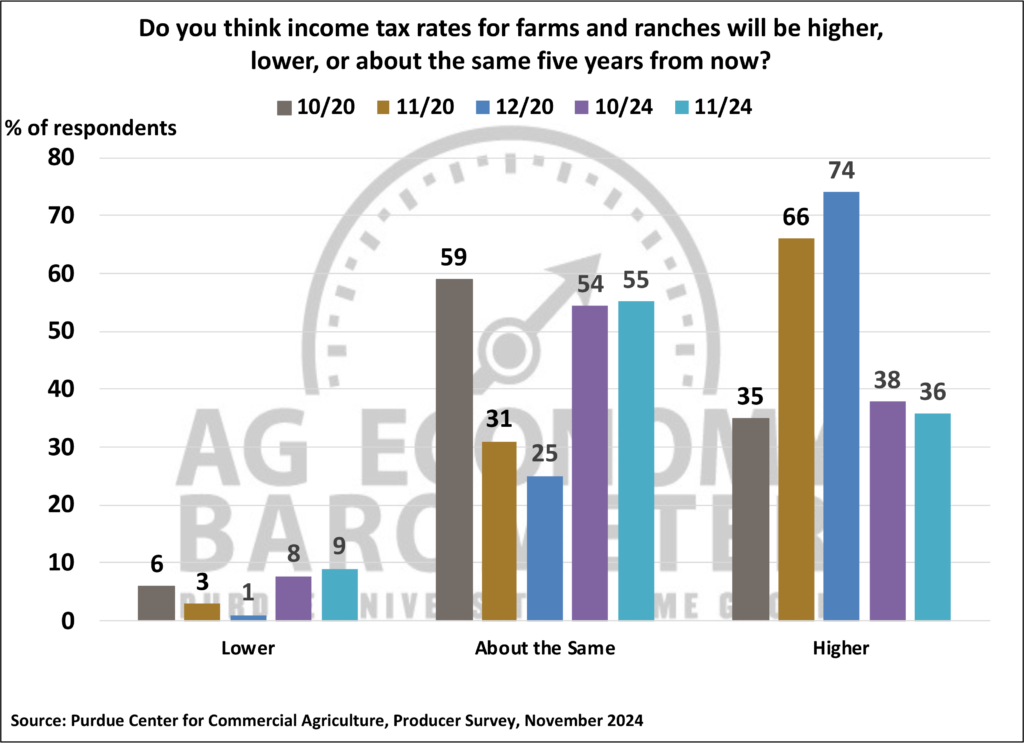
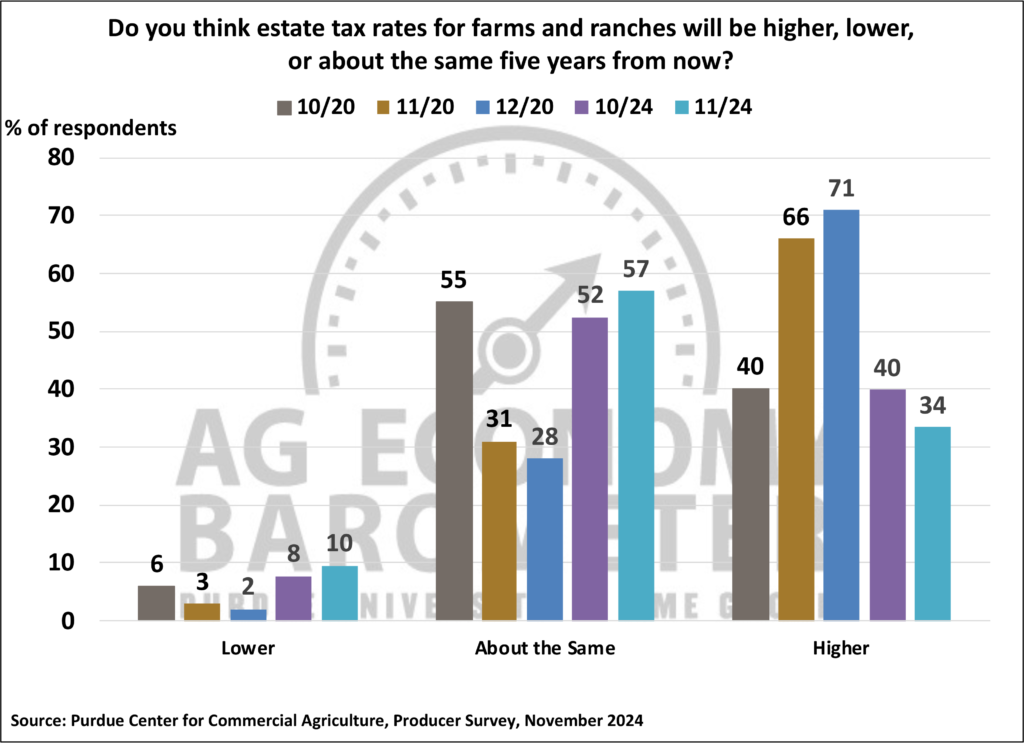
International trade is important to U.S. agriculture, and farmers in the November survey expressed some concerns about the future of agricultural trade under a new administration. Forty-two percent of respondents to the November survey said they think it is either "likely" or "very likely" that U.S. agriculture is at risk of a "Trade War" that results in a significant decrease in U.S. agricultural exports.
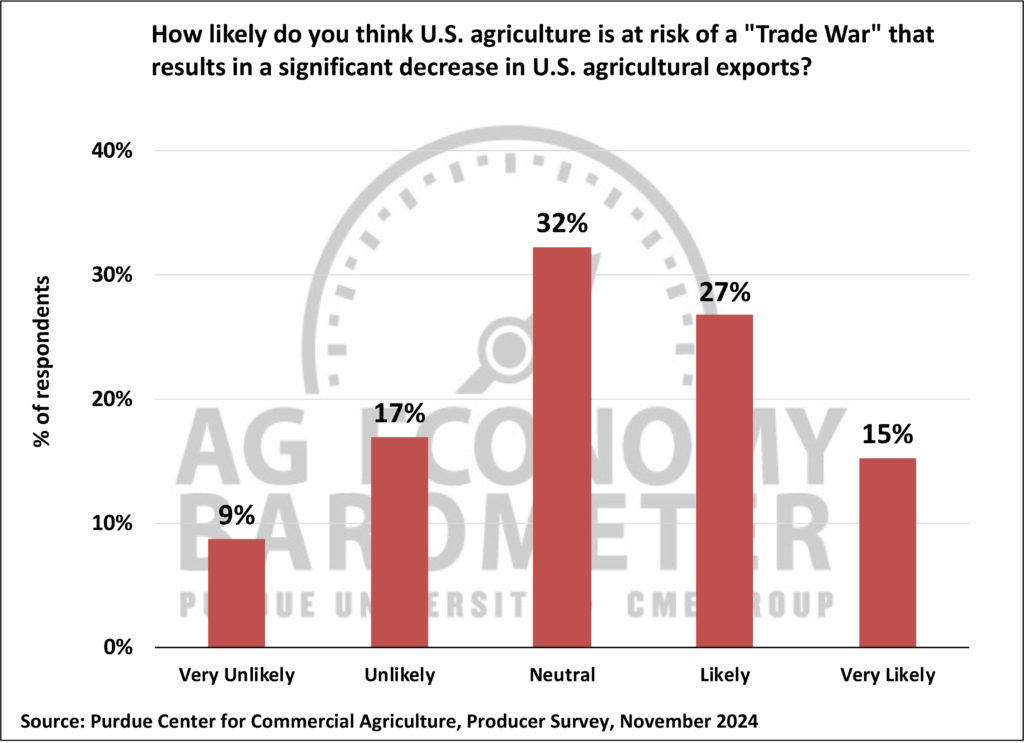
Wrapping Up
For the second month in a row, U.S. farmers' sentiment improved markedly in a survey taken just one week following the November 2024 elections. Once again, the sentiment improvement was largely attributable to producers expressing more optimism about the future as the Future Expectations Index rose to its highest level since April 2021. Producers' sentiment improvement carried over into a more optimistic view about making large capital investments in their farming operation. At the same time, however, producer sentiment regarding farmland value changes in their home area over both the next year and the next 5 years changed little compared to a month earlier. In November, a majority of producers said they expect a less restrictive environmental regulatory environment for agriculture in the upcoming 5 years, which was a big shift compared to October. With respect to income tax and estate tax rates, the shift was small from October to November 2024. However, when compared to results from November 2020, there was a shift, with far more producers expecting a more favorable tax regime following the 2024 election than the 2020 election. Perhaps the biggest concern expressed by farmers as the transition to a new administration gets underway is the future of agricultural trade, with over two-fifths of survey respondents saying they think a "trade war" is either likely or very likely.

Artificial intelligence (AI) is one of the tech sector's newest innovations and will likely impact every industry. Beyond just a buzzword, this technology may be on your farm soon.
Artificial intelligence is loosely defined and can mean anything from machine learning to large language model (LLM) generative AI. Machine learning is already used in agriculture, such as on John Deere's See and Spray system, using cameras to identify weeds to spray and obstacles to avoid.
Chances are, you have already heard of generative AI, and can already use it on multiple different web platforms and devices — Microsoft's Copilot, Google's Gemini, and Facebook's Meta AI all are available for consumer use. Generative AI can create a variety of text, images, and audio, and is in the very early stages of video generation.
There are many AI business- and consumer-grade applications, including those for the agriculture industry. Before diving into AI's potential benefits, it's necessary to understand how it works, and its limitations.
As one of the first AI models to reach the market, OpenAI's ChatGPT is at the forefront of this technology and is already integrated into many business's day-to-day operations. Users can ask ChatGPT to write text, summarize and organize it, and even have a "conversation."
ChatGPT and many other popular AI services run on LLM to generate text from a user's input. It does this by "reading" existing text on the internet, and recognizes how words tend to appear in context with other words, sort of like a highly capable auto-complete function when typing on a smartphone. It uses this to predict the next most likely word that might appear in response to a request, and each word after that.
According to the company's website, ChatGPT is in active development, using three information sources: written work publicly available on the internet, content licensed from third parties by OpenAI, and data provided by users or human trainers. This leads to limitations, however.
Since the service relies on the publicly available internet — which may not always be accurate — AI has "hallucinations." When an AI model hallucinates, it makes up incorrect responses based on this faulty information, or comes up with an answer entirely on its own, and presents it as factual. AI models also are incapable of providing sources to its output, even when accurate. As the technology is still in early development, the ChatGPT website recommends verifying any generated responses and providing feedback.
Retrieval Augmented Generation (RAG) is one way companies are avoiding AI hallucinations, says Patrick Walther, founder of Molewa AI Studio. Rather than using the whole database, a RAG-based AI model is trained on private information the user supplies, which takes priority over other sources of information. This way a company has more confidence over AI-generated results, since those are based on their own human-made information.
AI models have shown to be more energy-intensive than the data retrieval, streaming, and communication a majority of data centers have used since the boom of the internet.
According to a study conducted by the Electric Power Research Institute (EPRI), a Google search requires 0.3 watt-hours of electricity to retrieve results. Asking a single question in ChatGPT requires 2.9 watt-hours to generate a response — roughly 10 times more. With 5.3 billion global internet users, the EPRI says this could potentially lead to a dramatic increase in energy requirements.
The International Energy Agency (IEA) estimates global energy consumption in the AI and cryptocurrency sectors will more than double 2022's estimated 460 terawatt-hours (TWh) to over 1,000 TWh by 2026. This is roughly the same yearly energy consumed by the entire country of Japan.
Google's total greenhouse gas emissions were 14.3 million metric tons of carbon dioxide equivalent (tCO2e) in 2023 — a 48% increase compared with 2019, and a 13% increase year-over-year. That was "primarily driven by increased data center energy consumption and supply chain emissions," according to Google's 2024 Environmental Report. Google is adjusting for AI's high-impact energy use by developing a new Tensor Processing Unit, which they claim is over 67% more energy-efficient than the previous generation. The company also says it has identified tested practices that can reduce the energy required to train an AI model by up to 100 times, and reduce associated emissions by up to 1,000 times.
Generative AI is also water-intensive. To generate results, large language models use graphical processing units (GPUs) in large, densely packed data centers. The GPUs get very hot in the process and need to be water-cooled to avoid overheating. In 2023, Google's data centers consumed 6.1 billion gallons of fresh water — 17% more than in 2022. At its current growth rate, global AI demand may need to withdraw 4.2 to 6.6 billion cubic meters of fresh water in 2027 — half the United Kingdom's total annual water withdrawal, according to a study published at the University of California, Riverside.
In 2023, the Farmers Business Network (FBN) debuted Norm, an AI-powered ag adviser, built on OpenAI's ChatGPT model.
"When OpenAI released GPT-3, we saw this as an amazing development in the technology sphere," says Kit Barron, vice president of technology at FBN. "We immediately started asking ourselves internally, 'How can we leverage this technology to support our mission and support our farmer members?' We started thinking about all of the areas in which a farmer needs to be an expert to be successful today."
Barron says farmers need to be experts in plant genetics and biology, chemistry and application rates, weather, fertility, grain trading, and marketing. Norm is a potential solution to simplify the approach to these processes and broaden the farmer's knowledge. In early testing, FBN found that farmers were using Norm to ask about crop protection. With a retail storefront for crop protection and a database going back 10 years, this seemed the right place to focus development.
FBN's team of agronomists builds out recommendations for which adjuvants pair well with different types of crop protection, and have used this data to fine-tune Norm's responses. While ChatGPT learns through user inputs and data, FBN determined that its farmers' data needed to stay private, asking users only to share a ZIP code to provide location-based responses. For individual prompts, the more context a farmer can provide with their question, the more relevant Norm's responses will be.
Norm can access the wider data from OpenAI's base model of ChatGPT but focuses on providing responses based on FBN's proprietary data such as agronomist recommendations, product labels and manuals, and relevant articles.
Barron describes these early days of AI development as the "wild west" and has made it clear that Norm is still experimental. For the first few months of availability, Norm would often hallucinate, recommending articles that didn't exist or providing incorrect information. To prevent this, FBN has put up guardrails, having Norm decline to comment on a topic outside its agricultural knowledge base. Since then, responses have become less random and more accurate.
Norm's current iteration is only for farmers who apply or blend their own crop protection. However, FBN consistently adds new tools, such as its new fertility model, to further assist farmers. Norm is also embedded into FBN's online shopping experience, allowing farmers to ask questions or choose one of the pre-prompted questions to learn more about the products as they're browsing. FBN also is looking into bringing grain markets and grain trading tools to Norm.
The Norm AI Ag Advisor is available for FBN members at fbn.com/norm.
Walther is focused on recommending AI-powered solutions to help agribusinesses enhance productivity, sustainability, and profitability. He works with clients that include crop protection firms, seed manufacturers, energy companies, and agronomists to help find opportunities to streamline their workflows with AI. When talking to an agronomist, for example, Walther breaks down their entire workflow into steps, from soil sampling to making recommendations to the farmer.
"It's a lot of manual data entry processes that [the agronomist] has to do from step to step," Walther says. "I started asking, 'If we automate this, what would that impact to the bottom line be for you?'"
He says having AI analyze data and make recommendations and the agronomist double-checking the work not only could save them a few thousand dollars but also would bring their business to the next level. Spending less time with manual data entry could allow the agronomist to cover more acres at a faster pace.
AGCO is using AI-powered analysis for market forecasting, quality control, and customer support. This has helped AGCO streamline what once were time and resource-intensive processes into something a single person can resolve in a matter of minutes.
"There are huge [market] datasets available for many years — no one can crunch through that on their own," says Seth Crawford, senior vice president and general manager for PTx at AGCO. "But with the processing power that's available in the data, we believe that helps us get more proactive in planning for the ups and downs in the market."
AI tools help handle heavy customer loads during seasonal peak times. The tool listens in to a support call and can pull information based on the customer's issues such as related cases, relevant equipment manuals, and crop information. This can funnel down the problem to help customer support find the solution as fast as possible.
AGCO also uses AI in its quality control processes to analyze feedback on its machinery in fields across the world and identify potential problems that might plague the entire fleet. The quality control, manufacturing, and design engineering departments can evaluate the data and find the source of the issue, whether it's a bad batch of parts or a problem with the design.
Walther predicts AI will probably be implemented nearly everywhere in the near future, with RAG at the center. Companies with decades of internal data will be able to sift through and analyze it faster than ever before. He says AI may help farmers manage their data as well — AI can now photograph documents and directly translate them into spreadsheets.
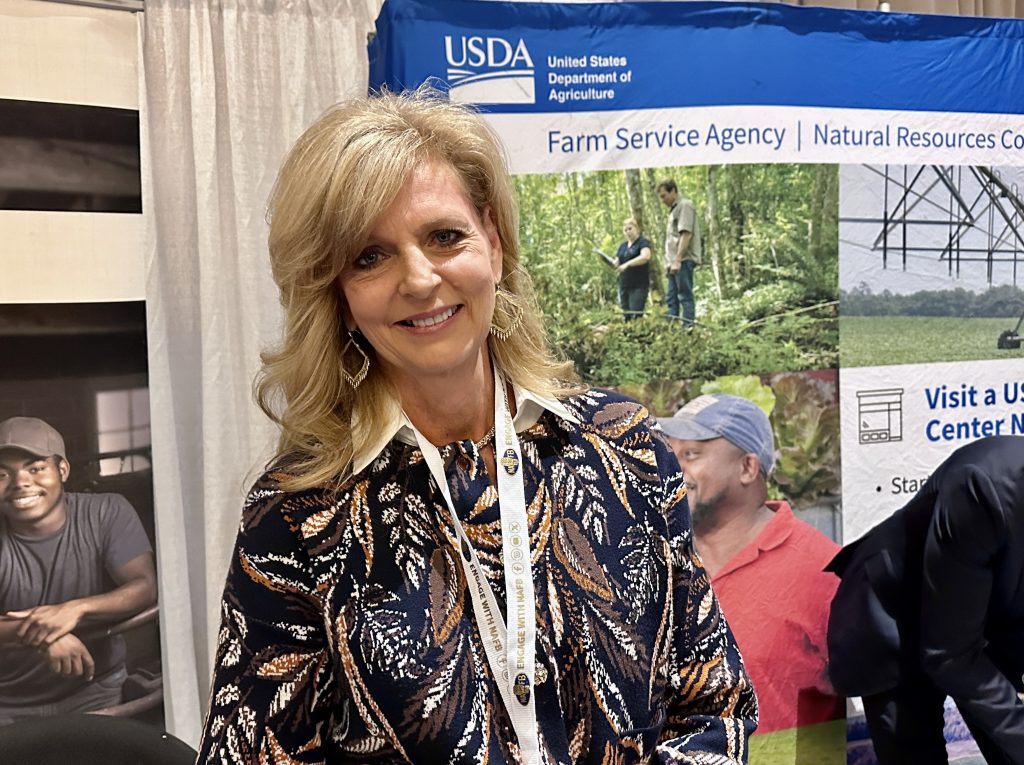
While at the National Association of Farm Broadcasters, Senior Farm and Ranch Broadcaster Ron Hays got to talk with Francie Tolle with USDA's Risk Management Agency (RMA) about some of the new tools that USDA has to offer.
Tolle related that while producers everywhere are anxious for a farm bill, it is fortunate that RMA tools don't fall under its jurisdiction but rather are authorized by the Crop Insurance Act.
"We continue with business as usual and the focus has been on getting as many crops and livestock insured as possible," Tolle said. "We've had to move our focus from weaned calves to controlled environments to shellfish and everything in between, along with tweaks to the current programs. The ways those changes come along is basically us talking to producers: commodity groups, farm organizations, asking what is and isn't working, then going back and making those changes."
According to Tolle, the growth of LRP has been a great opportunity for producers to obtain protection for the exact number of calves they have, as opposed to the futures and options program most commonly used before. The program's subsidiary helps producers with costs, and payment isn't due until coverage expires.
Further advancements to LRP will come from cattlemen and women themselves. "We listen to producers about what needs to happen, and right now, there are a few ideas, but I think it is in a really good place," Tolle commented. "It has grown exponentially, and for the most part, we are just hearing good things right now."
The programs, including LRP, the Livestock Gross Margin program, the Dairy Program, and all others, really took off in 2018 when the max coverage cap was removed from Livestock Programs.
"That really provided us an opportunity to give crop insurance to livestock producers in a way that we had never been able to do before," Tolle stated.
She also said that now is the time to talk to a crop insurance agent about the Pasture and Range Program because the deadline to apply is quickly approaching. She said that a local agent can walk producers through the process and explain exactly how the program can work for each operation.
"The benefit to crop insurance is that you can tailor it to your operation," she said. "If a producer is interested, I would find a crop insurance agent by asking around, but also, there is an agent locator on our website."
She added, "RMA is like no other agency with the public-private partnership. We are a very small agency of only about four hundred people, but we have the largest program of $207 billion in liability. That delivery system is completely private through the crop insurance companies. We have a little over thirteen thousand agents so producers can pick who they want to work with. The price is the same regardless of which agent you go to, so producers should find someone they like and want to work with."
Impactful integrated media, outstanding service and deep experience with growers are the key drivers behind Rural Traction Network, a new full service marketing and digital services agency officially launched here today by veteran ag marketing professional Joe Monahan, principal of the new company."We are integrating the latest innovative digital tools with those tried-and-true media channels that growers rely on," said Joe Monahan, Founder and CEO of Rural Traction Network in announcing the new start-up. "What sets Rural Traction Network apart is our understanding of the unique challenges, issues and needs of the grower community."
While social media and other digital tools are critical in today's world, Monahan says, traditional media--like print, radio, and trade shows--continue to be the backbone of communication in these markets.
"It's all about trust. We know growers trust the channels they've relied on for years, whether that's their favorite industry magazine, a local radio program, or personal connections at a trade show," said Monahan, who is former President & COO of Meister Media Worldwide with decades of experience with growers of fruit, vegetable, ornamental and broad acre crops. "At Rural Traction Network, we combine trusted traditional media with cutting-edge tools to boost the impact of agribusinesses marketing strategies."
Rural Traction Network Gears Up
"Growers are busy, smart professionals," said Monahan, "they want content that helps them grow their crop and run their business faster and more profitably, but you must reach them where they are." He said Rural Traction Network offers:
"Trust and tradition are key parts of the grower community, where personal connections matter," Monahan says. "At Rural Traction Network we understand this dynamic and ensure clients get the best of both worlds: the enduring impact of traditional media combined with the reach and efficiency of digital solutions. Our goal is to help businesses navigate today's marketing landscape while respecting the reliable and proven approaches that growers rely on. It's aboutmeeting people where they are and giving them the tools they need to grow."
To learn more and set up a discovery meeting, visit www.ruraltractionnetwork.com or contact Joe Monahan Founder & CEO, Rural Traction Network, 440-840-1095 mobile & text, jmonahan@ruraltractionnetwork.com.
Yesterday, Dec. 2, 2024, Attorney General Gentner Drummond awarded Bryan County Sheriff's Deputy Austin Murray as the first-ever Oklahoma Officer of the Year. Murray was recognized at a ceremony in Oklahoma City this afternoon along with the state's Regional Officers of the Year and all nominees.
Drummond said Murray's actions earlier this year to protect the lives of a woman and her two children during a domestic disturbance exemplify his courage, diligence and commitment to public safety. Murray sustained several gunshot injuries during the incident.
"Deputy Murray is highly deserving of this honor," Drummond said. "He is an exceptional law enforcement officer whose heroism brought a safe end to a tremendously dangerous situation. I congratulate Deputy Murray and thank him for his service to his community."
Drummond created the Officer of the Year program to recognize and celebrate the best and brightest of Oklahoma's remarkable federal, state, tribal and local law enforcement agencies. Law enforcement officers sacrifice time with their loved ones, working long hours, weekends and holidays, often without fanfare, Drummond noted.
On Aug. 11, Murray responded to a domestic disturbance concerning a man in a pickup truck who had chased his fleeing wife and two children. The pickup had struck the wife's vehicle, forcing her to crash into a tree off a highway near Achille. Murray drew his pistol as soon as the suspect, Wesley Buford, reached for a gun tucked inside his pants. Buford jumped behind his truck and the two exchanged gunfire. Murray was hit three times before he was able to get a clear shot at the suspect. Buford collapsed and surrendered shortly thereafter.
Bryan County Sheriff Johnny Christian, who nominated Murray for the honor, said he appreciates the deputy's outstanding character.
"When faced with a violent assailant, Deputy Murray did not hesitate to put himself in harm's way to safeguard a mother and her two children," Christian said. "This act alone speaks volumes about his character and sense of duty. Even after sustaining injuries, his resolve to continue confronting the threat showcases remarkable courage and resilience."
Murray, who has been with the department for nearly four years, also recently received the Medal of Valor from the Oklahoma Sheriffs Association. He was named one of four Regional Officers of the Year last month.
Also named regional award winners were Oklahoma City Police Detective Lauren Cunningham, Oklahoma Highway Patrol Trooper Derek Fry and Norman Master Police Officer Benjamin Gomez. Regional winners were selected by judging panels of city, county, tribal and state criminal justice professionals. In all, 44 law enforcement officers from a cross section of Oklahoma law enforcement organizations were nominated for the award.
Thanks to the generosity of sponsors Cline Construction, Post-Tension Services of Oklahoma and Randy Bowen Chevrolet, each Regional Officer of the Year also received a Glock 17 pistol, while the Oklahoma Officer of the Year received a Smith & Wesson M&P 15 rifle. The event was held at the National Cowboy and Western Heritage Museum, which is also a sponsor of the Officer of the Year program.
Mark Johnson, Oklahoma State University Extension Beef Cattle Breeding Specialist, offers herd health advice as part of the weekly series known as the "Cow Calf Corner," published electronically by Dr. Derrell Peel, Mark Johnson, and Paul Beck. Today, Johnson talks about monitoring the nutrition requirements of the cowherd.
Knowing the nutritional needs of our cows helps us cost-effectively meet their needs. Overfeeding or underfeeding both rob the profit potential from cow-calf operations. During the normal production cycle cows should gain some weight/body condition during the dry stages and lose some weight/body condition while nursing a calf. With that in mind, having cows at a BCS 5 – 6 going into calving season is optimum. This means that cows are in good shape and have ample energy reserves to draw upon when the "spike" in Crude Protein (CP) and energy (TDN) requirements occur post-calving as the cow begins lactation. Cows need to be in good shape at the beginning of calving season to reduce the rebreeding interval and stay on schedule to breed, calve and raise a calf to weaning each 12 months.
Assuming we have an ample supply of good quality water and an adequate vitamin/mineral supplementation program, the two primary nutritional requirements of cows are CP and Energy (in the form of TDN). In normal weather, there are three primary influences on the daily requirements of both:
1 – Mature Weight
2 – Level of Milk Production
3 – Stage of Production
Cow-calf operations should assess where their cowherd is now in the production cycle and be proactive in making management decisions regarding feeding and supplementation. The example below follows a 1,300 pound cow through a normal production cycle during the middle trimester of pregnancy, the final trimester of pregnancy, and the first 90 days post-calving based on her level of milk production.
During the middle third of pregnancy, the 1,300 pound mature cow needs:
The same 1,300 pound cow in the final third of pregnancy needs:
The increased nutritional needs reflect not only the cow's maintenance requirements but also the increased growth and development of the fetus as calving draws near.
After calving, during the first 90 days of lactation, the same 1,300 pound cow will have increased nutritional requirements based on how much milk she is producing:
If giving 25 pounds of milk per day at peak lactation, she will need:
If giving 35 pounds of milk per day, she will need:
In summary, the same cow has a dramatic rise and fall in protein and energy needs over the normal production cycle. Knowing these requirements is essential to cost effective feeding of the cow herd. Managing our nutritional program correctly plays a huge role in reproductive performance and cow productivity. More details about nutritional requirements of beef cows can be found in the fact sheet referenced below.
Reference: Nutritional Requirements of Beef Cattle. OSU Cooperative Extension Fact Sheet E-974
Mark Johnson, OSU Extension beef cattle breeding specialist, discusses how to calculate how much hay cattle producers will need in the winter on SunUpTV from October 26, 2024 at https://www.youtube.com/watch?v=oWpmFgeLAeA&list=PLglOSpV-Tcac6-pVMv0BEAk78_7tJCuap&index=5
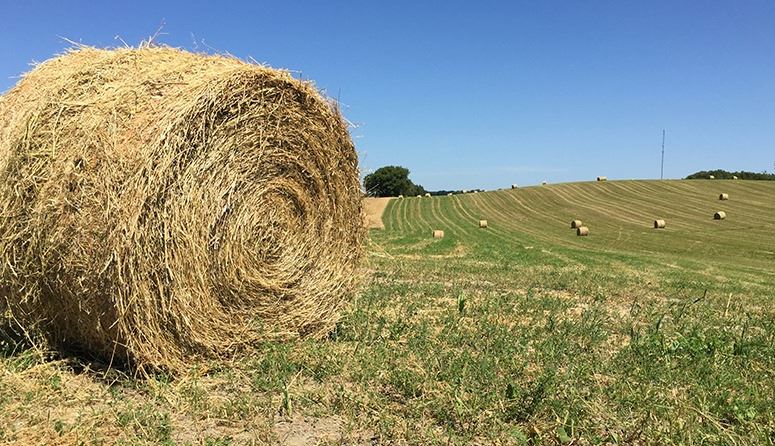
The foundation of cattle production is forage availability and management. Poor forage growing conditions require cattle producers to incur increased feed costs or forced culling decisions. With drought conditions looming it's a good time to think about the Livestock Forage Disaster Program (LFP) program. USDA Farm Service Agency (FSA) administers the LFP designed to financially assist livestock farmers burdened with increased costs associated with a loss of forage due to drought and/or wildfire.
Prior to 2008, livestock and forage producers had limited options to manage risk from disasters, except post-hoc disaster funding. The Food, Conservation, and Energy Act of 2008 (2008 Farm Bill) formed LFP, funded by the Agricultural Disaster Relief Fund. Permanent authorization of LFP occurred in The Agricultural Act of 2014 (2014 Farm Bill), with funding authorized through the Commodity Credit Corporation (CCC).
While the Southeast may not be an area of the country considered prone to drought and lost forage due to drought, from 2011-2021, Southeast livestock producers received approximately $3.7 billion in payments from LFP. Provided that a producer meets FSA eligibility requirements, payments are calculated based on the number of months of eligible drought and a payment rate. The payment rate is based on the type of livestock and also is a percentage of a measure of monthly feed costs or carrying capacity of the land. The number of payments or months of payment is based on drought severity and duration based on the U.S. Drought Monitor. In this way, total payment calculations are a function of drought conditions, cattle inventory, and producer participation.
As shown in Figure 1, at a state level, total payments over the 2011-2021 period are greatest for Oklahoma, Texas, and Arkansas. This makes sense as the 2011-2012 drought resulted in a large number of payments with a high payment amount for producers in Texas, Oklahoma, and Arkansas in 2012 and 2013. Yet, Figure 1 also shows that producers across the Southeast have utilized this program. In 2016 and 2017, a total of $106 million for Alabama producers and $29 million for Mississippi producers was disbursed following a particularly devastating drought.
Figure 1: County-level total payments distributed to livestock producers as part of the Livestock Forage Disaster Program for accounting years 2011-2021.

As 2024 draws to a close, it is important to consider growing conditions over the last year and potential payments under LFP. On November 12th, 83% of the contiguous United States was in D0-D4 or experiencing abnormally dry to exceptional drought. In the Southeast, drought conditions have shifted over the summer, with some parts of the region experiencing severe and exceptional drought. The USDA publishes weekly county-level eligibility for LFP payments based on pasture type. As of November 14th, 247 counties in the Southern Ag Today region were eligible for payments on improved pastures, 234 counties were eligible for payment for native pastures, and 123 counties were eligible for payments on improved mixed pastures. While some counties are only eligible for 1 month of payment, others are eligible for 5 months this year. Other types of pastures are also eligible for payment but are not discussed here. Eligible producers have 30 days from the end of the calendar year when the qualifying drought occurred to apply. For more information, consult the USDA Fact Sheet and your local FSA office.
Figure 2: Eligible counties and number of program months for payment under improved pasture as part of the Livestock Forage Disaster Program for 2024 as of November 14, 2024.

Figure 3: Eligible counties and number of program months for payment under native pasture as part of the Livestock Forage Disaster Program for 2024 as of November 14, 2024.

Article courtesy of Southern Ag Today: Thayer, Anastasia, Matthew Fischer, and Braeden Mull. "A Look at the Livestock Forage Disaster Program." Southern Ag Today 4(49.2). December 3, 2024. Permalink

Oklahoma Farm Report's Ron Hays offers this Op-Ed on Giving Tuesday and some of the groups that he supports.
Knowing many of you- I suspect that you have had more than one email, phone call, letter or other communication about what you should be giving to on this December 3rd- officially declared here in the US as Giving Tuesday.
From an agricultural perspective- most of our farm and ranch groups have Foundations that you may support- think Farm Bureau, Oklahoma Cattlemen, AFR and more.
Beyond my church- I'm mainly a supporter of Ag Youth- specifically you might check out the Oklahoma FFA Foundation and the Oklahoma 4-H Foundation The national Foundations are also a good option if you care to go that route for these Ag Youth organizations.
Many of you have also given over the years to the Oklahoma Ag Leadership Program- if you are one of the Alums of the program- your gift will be matched by the Noble Foundation- OALP Director Edmond Bonjour has provided us this walk thru to successfully give to OALP on this Giving Tuesday:
For contributions to the OALP, credit cards may be used by calling the OSU Foundation at 800-622-4678 and designate your gift for the Oklahoma Agricultural Leadership Fund 21-35700. For online donations, visit https://osugiving.com where you will: 1) click the "Give" button in the upper right-hand corner, 2) click the amount you would like to give or enter an amount under "Other" 3) click either "One-Time" or "Recurring", 4) click the "Discover More Orange Passions" box if the Oklahoma Agricultural Leadership Fund does not show up, 5) type 21-35700 in the search box and click the search button, 6) click on Oklahoma Agricultural Leadership Fund, and 7) click "Next" then enter the billing information.
There are countless other groups or schools that are also asking for your help on Giving Tuesday- be sure know the group you are giving to and understand what they intend to use the money for.
One group nationally outside of agriculture that I trust to get the money to where it needs to go is Samaritan's Purse- established by Franklin Graham. They have done great work in Western North Carolina that has been devastated by Hurricane Helene with so much more work yet to be done there in that part of the country.
Our neighbors in Lawton at KSWO have posted a brief tutorial on not getting scammed on Giving Tuesday- take a look by clicking here.
FINALLY- remember that Giving Tuesday is actually more than just a giving money day- it's a day that you can commit to the group or organization that you care about your time and talents. Let them know your willingness to be a volunteer- sign up for special projects they have going- and be generous on this Giving Tuesday- but also everyday when you see a need that moves you.
Murphy Family Ventures and Smithfield today announced a definitive agreement that will re-establish the Murphy family farming business, which was founded by Wendell Murphy in 1962 and largely credited with creating the modern swine industry, as one of the largest independent pork producers in the United States.
Murphy Family Ventures and Smithfield have signed an agreement that will establish a Murphy-owned farming business with capacity to produce approximately 3.2 million hogs annually for Smithfield's fresh pork operations. The company, which will be majority owned by the Murphy family, will assume ownership of 150,000 sows – and the market hogs they produce – currently owned by Smithfield. Smithfield will provide production services, including the supply of feed and transportation services.
"The Murphy family has enjoyed the past 24 years as a contract growing partner with Smithfield and we look forward to restoring our heritage as an independent producer," said Dell Murphy, president and CEO of Murphy Family Ventures. "This agreement represents a generational transfer of independently owned swine production capabilities in North Carolina."
"Smithfield has evolved over the last 10 years into a more streamlined consumer packaged goods company focused on value-added fresh pork and packaged meats delivered from a portfolio of popular brands recognized for quality and taste," said Shane Smith, president and CEO of Smithfield Foods. "With this agreement, we continue this transformation while ensuring a supply of hogs from a family farming operation with a long history in and a strong commitment to best practices in American pork production."
Murphy Family Ventures and Smithfield expect to close the transaction by the end of the year.
About Murphy Family Ventures
Murphy Family Ventures (MFV) is a true family-owned company that opened in December 2004. As a management operation, MFV provides a wide array of support services to businesses owned by the Murphy family and others. Since its inception, the organization has expanded to provide those services to a diverse group well beyond its heritage of agriculture.
About Smithfield Foods
Smithfield Foods is an American food company with a leading position in packaged meats and fresh pork products. With a diverse brand portfolio and strong relationships with U.S. farmers and customers, we responsibly meet demand for quality protein around the world.
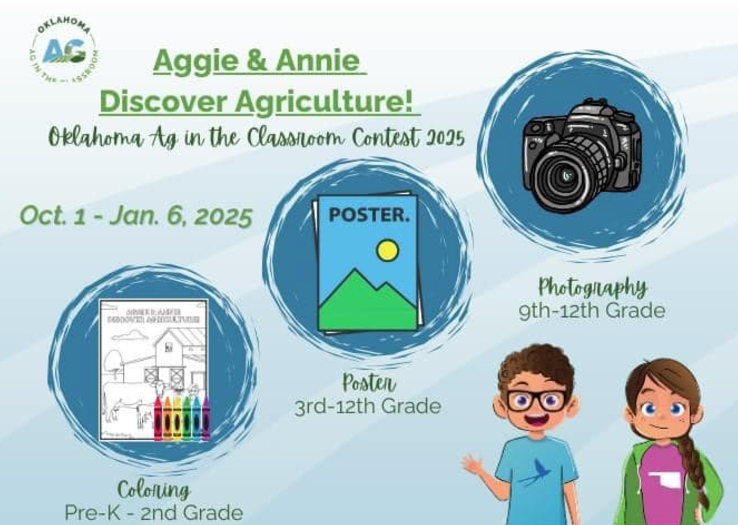
Aggie and Annie are characters featured in Oklahoma Ag in the Classroom's NEW book, Flat! The book is full of agricultural discoveries and adventures. We hope you will read the book, make your own ag discoveries, and plan more for Aggie and Annie!
You experience agriculture every day, even if you don't live on a farm. Agriculture is the food you eat, the clothes you wear, the products you use, and even the sports you play. Look around...agriculture is everywhere!
The USDA's Animal and Plant Health Inspection Service is working with Mexico to develop a new protocol to allow Mexican cattle trade while minimizing the risk of spreading the parasite. USDA's Gary Crawford visited with Dr. Burke Healey of the USDA's Animal and Plant Health Inspection Service to talk about new protocols being developed to allow Mexico to process animals and minimize the risk of screwworm infestation. Dr. Healey is an OSU College of Veterinary Medicine Alum.
Mexico has established multiple checkpoints to monitor their southern border, which has led to the detection of the infected case. The US border remains closed to Mexican cattle, with a potential reopening within three weeks, but most likely not until after the Christmas holidays in January.
The collaboration includes the setting up of new livestock inspection sites and eradication efforts in Mexico. Dr. Healey is optimistic about the progress being made, and the steps being taken to resolve this issue.
Today, Dec. 2, the U.S. Environmental Protection Agency announced a proposed rule to revoke tolerances for chlorpyrifos, which establish the amount of a pesticide that is allowed on food. This rule revokes all tolerances for chlorpyrifos, except for those tolerances associated with the 11 food and feed crops that remain registered. EPA is taking this action in response to a decision by the U.S Court of Appeals for the Eighth Circuit. This action will support EPA efforts to cancel most uses of chlorpyrifos on food to reduce exposure and protect public health.
"EPA continues to prioritize the health of children," said Assistant Administrator for the Office of Chemical Safety and Pollution Prevention Michal Freedhoff. "This proposed rule is a critical step forward as we work to reduce chlorpyrifos in or on food and to better protect people, including infants and children, from exposure to chemicals that are harmful to human health."
Chlorpyrifos is an organophosphate (OP) insecticide that was used for a large variety of agricultural uses, including soybeans, fruit and nut trees, vegetables, and other row crops, as well as non-food uses. At high levels, OP exposures can result in neurological effects such as tremors, fatigue and nausea. There is also concern for exposures to pregnant women and children since chlorpyrifos has been associated with neurodevelopmental effects indicating it could impact the normal development of the nervous system during pregnancy or childhood.
In a final rule issued in August 2021, EPA revoked all tolerances for chlorpyrifos, which establish an amount of chlorpyrifos that is allowed on food, effectively stopping the use of chlorpyrifos on all food and animal feed. EPA took this action in response to an April 2021 order from the U.S. Court of Appeals for the Ninth Circuit for the agency to issue—within 60 days—a final rule addressing the use of chlorpyrifos in food or feed crops, without taking public comment or engaging in "further fact-finding."
On Nov. 2, 2023, the U.S. Court of Appeals for the Eighth Circuit vacated EPA's August 2021 rule and reinstated the chlorpyrifos tolerances. On Feb. 5, 2024, EPA issued a Federal Register notice to amend the Code of Federal Regulations to reflect the court's reinstatement of those tolerances. At this time, and as a result of the court decision, all the chlorpyrifos tolerances have been reinstated and are currently in effect.
Since the Eighth Circuit issued its ruling, EPA has worked with the chlorpyrifos registrants to further reduce pesticide exposures by limiting the registered uses of chlorpyrifos on food to be consistent with the 11 uses referenced by the Eighth Circuit and identified in the 2020 Proposed Interim Registration Review Decision (PID). These 11 food uses are alfalfa, apple, asparagus, cherry (tart), citrus, cotton, peach, soybean, strawberry, sugar beets and wheat (spring and winter) and are limited to specific states that were assessed in the 2020 PID. Based on the available data, retaining only the 11 food uses could decrease average annual pounds of chlorpyrifos applied in the U.S. by 70% as compared to historical usage.
The registration review process for chlorpyrifos is ongoing. EPA plans to issue an amended PID for chlorpyrifos for public comment followed by an Interim Decision (ID) in 2026.
Upon publication in the Federal Register, the proposed rule will be available at docket ID EPA-HQ-OPP-2024-0431 at Regulations.gov for public comment for 60 days. EPA will continue to keep the public updated as it evaluates and takes any actions related to chlorpyrifos pesticide use. For more information, view a prepublication version the Federal Register notice.
Learn more about this pesticide at EPA's chlorpyrifos webpage.
The Oklahoma Department of Agriculture, Food and Forestry and the USDA Animal and Plant Health Inspection Service (APHIS) have confirmed a positive case of highly pathogenic avian influenza (HPAI) in Adair County. The virus was detected in a commercial poultry flock.
"We've been preparing for situations like this due to HPAI circulating around the country for the last two and a half years," said Oklahoma State Veterinarian Dr. Rod Hall. "Our Avian Influenza Response Plan has been activated, and we are working closely with USDA, poultry producers, and livestock producers to control and mitigate the spread of this disease in our state."
A control area has been established in Adair and Delaware counties to assess the extent of the infection. Movement of poultry in and out of the established control area is restricted to manage the spread of HPAI.
Flock owners should take every precaution to protect their flock from HPAI by preventing their poultry's exposure to wild birds and any areas where wild birds have been. Biosecurity resources and best practices are available at https://ag.ok.gov/disease-alerts/. If producers suspect signs of HPAI in their flocks, they should contact their veterinarian immediately. Possible cases should also be reported to the Oklahoma Department of Agriculture, Food and Forestry at (405) 522-6141.
According to the U.S. Centers for Disease Control and Prevention, HPAI detections in birds do not present an immediate public health concern. It remains safe to eat poultry products. There is no risk to the food supply, but the affected birds will not enter the food supply system. As a reminder, the proper handling and cooking of poultry and eggs to an internal temperature of 165 ˚F kills bacteria and viruses.
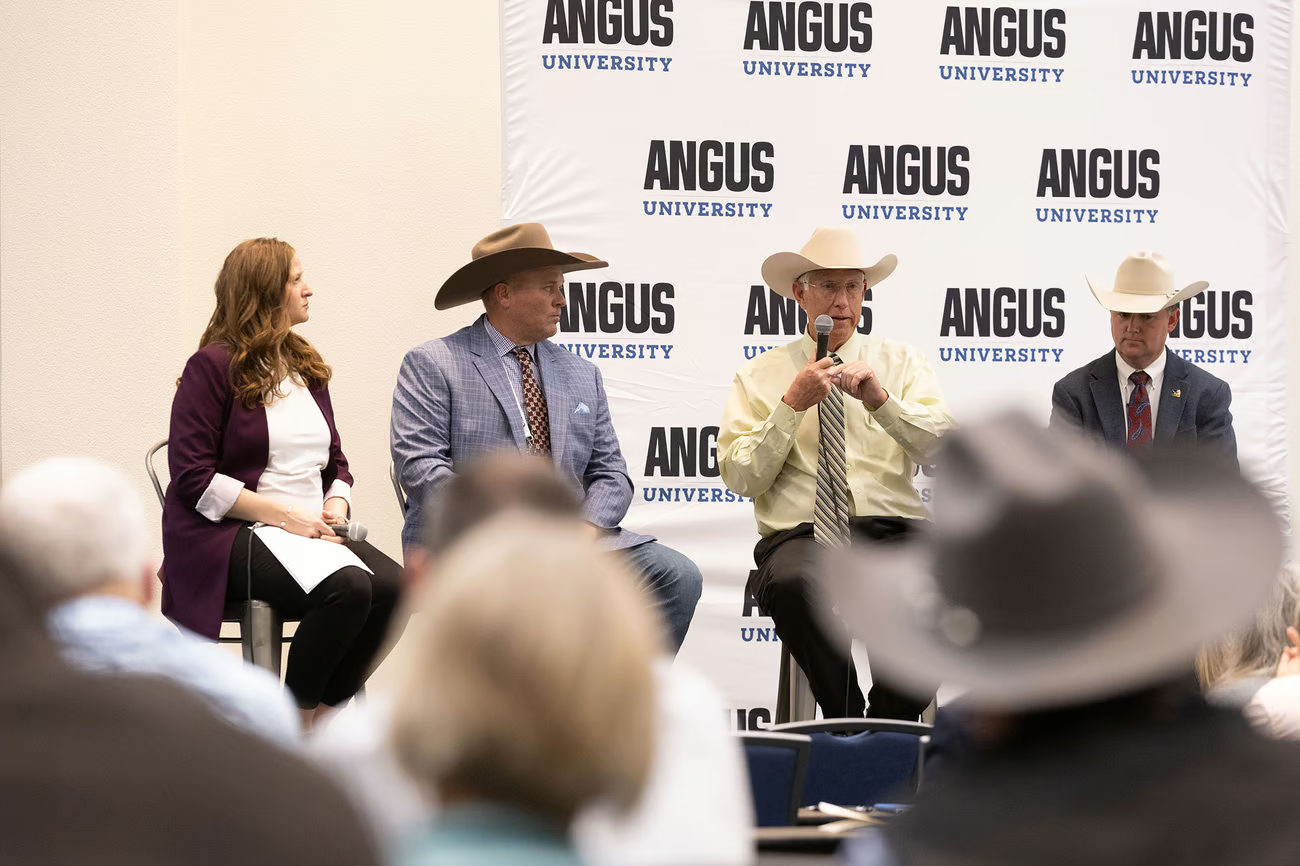
Oklahoma cattleman Jimmy Taylor talks about balancing maternal and terminal traits in his herd using genomic tools and other management strategies. Pictured from left to right are Esther Tarpoff of the American Angus Association®, Colorado cattleman Ryan Noble, Taylor, and Radale Tiner of the Association.
Breeding and raising cattle is big business with risk and seasons of opportunity, and a rebuilding of the industry's cowherd will be one of those times producers have the chance to make gains from financial and genetic perspectives.
A series of educational sessions at the 2024 Angus Convention in November focused on the theme of herd rebuilding. Nevil Speer, an industry consultant, said the U.S. beef cow herd is expected to decline to around 27.8-28 million head by early 2025, as producers have been slow to move toward rebuilding the herd after the recent drought period.
"We are not building a cowherd today," Speer said. "If we do get into that point in which we've just started rebuilding like crazy and the market swings back the other way, guess who gets left behind? It's the people that sell commodity cattle."
Speer said he sees market trends continuing to shift toward cattle and beef quality, transparency and an appetite for data, and efficiency in production.
"That's really what's driving the business," he said. "So in the next wave of whether it's herd rebuilding or business transition, that's what becomes important."
He added that he's more interested in the business decisions producers are making to stay profitable or increase their profitability than he is in short-term market conditions. Two commercial producers shared their stories with attendees and answered questions about how they made genetic improvements and increased their herds' profitability.
Ryan Noble of Noble Ranch, Yuma, Colorado, was one of those and is well-known for his heifer development program. Unfortunately, his family had to rebuild their cow herd in 2019 to 2020 more recently than most due to drought.
"God had a plan for us, and we sold every cow for every dollar we asked for them," Noble said. "It was an opportunity for us. We went out seeking high-quality heifer calves. We knew what we wanted to raise."
He said their ranch shifted to being a service provider, developing heifers and building back their herd, aiming for what he calls "an apology-free cow herd."
Noble's ideal set of females would be docile; healthy with good feet and eyes; and fertile, calving once a year with a good udder.
"She's got the appropriate amount of growth for your environment," he said. "She is going to go garner premiums through the next two stages. You put her on feed, she's going to get it done. You hang her on the rail, she's going to get it done. That's an apology-free cow, and she's going to do it with a minimal amount of inputs and a minimal amount of labor."
In pursuit of this stockman's dream of a cow herd, Noble has come to place great value on known genetics and strategic nutrition investment. He uses genetic testing tools and makes heifers prove they have what it takes to go work for him in his sometimes unforgiving environment.
"I figure by the time we end up with a bred heifer, she's probably lived through five or six sorts on our range," he said. "If she can make it through all that and become pregnant, that's when we are ready to invest more money."
Investing in the right females pays dividends, Noble says, because he expects them to have longevity enough "until you're so old that everybody knows your number."
Jimmy Taylor of Taylor Ranch, Cheyenne, Oklahoma, has his own ideal cowherd and he has dove into the data to help it become closer and closer to reality. The Taylor Ranch began transitioning to its current model of backgrounding their own calves on the ranch, retaining ownership through the feedyard and selling them on the grid in 2005.
"I wanted something where I could get a bonus or premium on every calf," Taylor said. "So I looked around and decided that the best route to do that would be raising carcass cattle while raising good replacement heifers."
He said his first set of steers were 13% prime in 2012. Today their range is typically between 50 to 75% prime.
Taylor's carcass data and 10-plus years of genetic data on his females shows his system is working.
"What really got us into high gear was when what I called enhanced GeneMax® Advantage™ happened in 2016, where they had 10 traits and [percentile rankings for each animal] in those traits," Taylor said. "Now I can target traits and I can make rapid improvement doing that."
Taylor said individualized data with trait-by-trait analysis has helped him use a more diverse pool of sires and "match specific females up to my bulls' strong points and weak points."
GeneMax Advantage now has 19 traits, and the American Angus Association® continues to crank out expected progeny differences (EPDs) as tools for genetic selection with registered bulls.
Both Taylor and Noble said it is worthwhile work to get a handle on their own herd's data and identify clear targets.
"What gets us from point A to point B are these tools," Noble said.
Seedstock and commercial producers are not the only ones paying attention to genetics. Industry Insights powered by Angus Media and CattleFax summarizes survey data from cattle feeders across the United States, representing around 3.3 million head of feeding capacity.
"Sixty percent of the feedlot respondents said that genetics play a bigger role in their purchase decision today (than they did five years ago), and that's going to continue to grow," said Esther Tarpoff, the Association's director of performance programs.
Tarpoff says tools like GeneMax Advantage can help commercial producers find the females in their herd that are going to be the most profitable, and there are programs like AngusLinkSM to assist with marketing their calves to build more margin into their herd.
These tools also help seed stock and commercial producers align their genetic selection goals and create a common language for marketing Angus genetics throughout the beef production system.
She says ultimately the focus on genetic merit and quality at each of these levels continues driving value through the supply chain
By Sarah Kocher, Communications Specialist
Dr. Derrell Peel, Oklahoma State University Extension Livestock Marketing Specialist, offers his economic analysis of the beef cattle industry as part of the weekly series known as the "Cow Calf Corner," published electronically by Dr. Peel and Mark Johnson. Today, Dr. Peel discusses the disruption in U.S. imports of Mexican cattle.
The November 22, 2024 announcement that New World screwworm was detected in southern Mexico resulted in the temporary suspension of live cattle imports from Mexico. This raises many questions about the implications this might have on U.S. cattle markets. Some history and context are helpful to understand the potential impacts.
An average of 1.17 million head of Mexican cattle were imported into the U.S. in the 20 years from 2004-2023, ranging from a minimum of about 703,000 head in 2008 to a maximum of 1.47 million head in 2012 (Figure 1). Mexican cattle imports represent 3.3 percent of the total U.S. calf crop on average. Figure 1 also includes 2024 preliminary weekly imports through the first 47 weeks of the year. Imports of Mexican cattle have averaged 84.5 percent steers and 15.5 percent spayed heifers over the past 20 years (Figure 1). However, in the five years from 2019-2023, the percentage of heifers increased to an average of 21.3 percent.
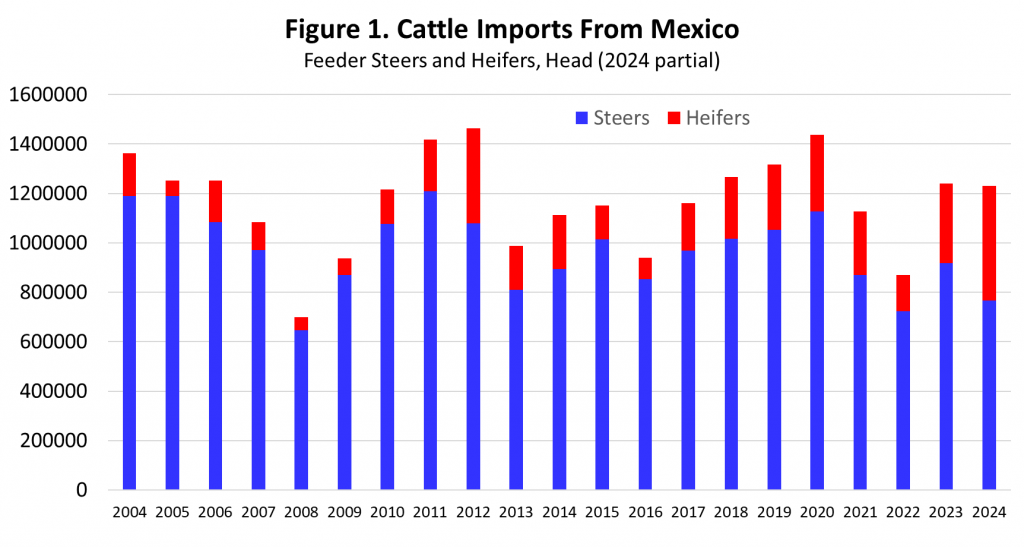
Figure 2 shows the average seasonal pattern of Mexican cattle imports for the last five years. Mexican cattle imports have maintained a relatively stable seasonal pattern for many years with peak months in the spring and in November/December with lows in summer. In recent years the seasonal pattern has equalized slightly with fractionally lower peak months and higher summer lows. However, the pattern remains as seen in Figure 2.
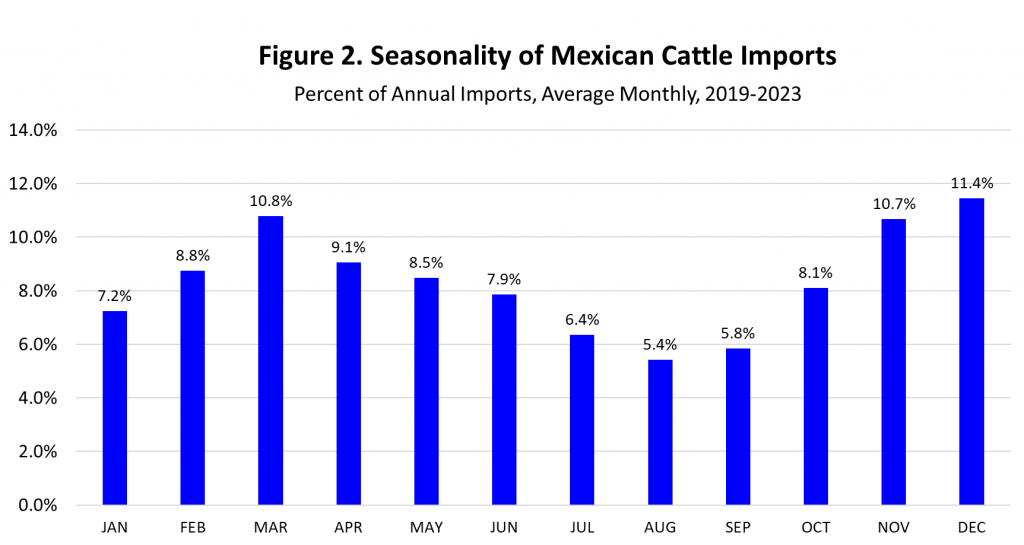
USDA has indicated that the border is expected to be closed at least three weeks from the late November announcement. Protocols are being developed for a partial opening of the border (New Mexico and Arizona ports) which will include a pre-export inspection of all cattle; treatment for insects; and a seven-day quarantine, followed by the usual border inspection and crossing process. It seems likely that few, if any, additional Mexican cattle will be imported in 2024. The 2024 import value in Figure 1 is based on the preliminary weekly data through November 23 with a total of 1.24 million head. This may well be very close to the import total for the year.
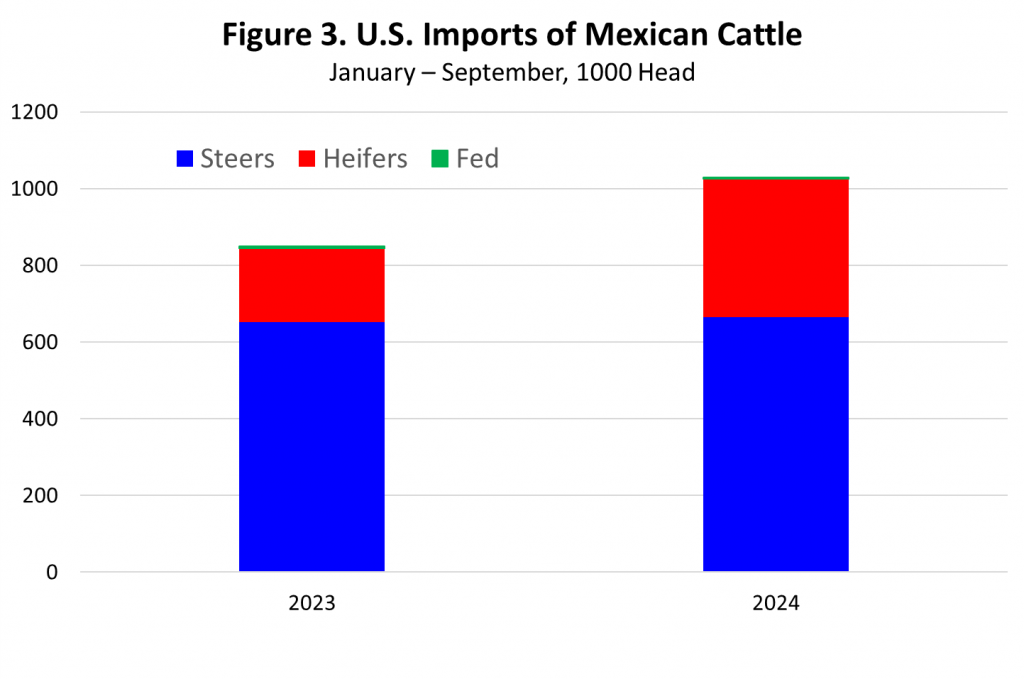
Figure 3 shows the year-to-date monthly official import totals through September. Imports of Mexican cattle were up 21.3 percent year over year for the first nine months of the year. The pace suggested that total annual imports could be about 1.5 million head. Most of the increase was due to additional spayed heifer imports, up 87.2 percent year over year and accounting for 35 percent of total cattle imports.
Figure 2 shows that November and December typically account for roughly 22 percent of annual imports. Assuming no imports for the last week of November and all of December and given the pace of imports thus far in the year, it is likely that annual imports will be reduced by 200,000 - 250,000 head from the probable total before the screwworm announcement.
The lack of Mexican cattle imports for the remainder of the year will have some immediate impact reducing an already tight feeder supply. However, some of the feedlot impact is not immediate because a portion of the imported Mexican cattle are lightweight and typically go through stocker/backgrounding programs before feedlot placement. In the January – September period this year about 24 percent of the imported cattle were less than 200 kilograms (441 pounds). It's important to remember that most of the cattle not imported for the remainder of the year will enter the U.S. eventually...just with a delay. As long as the current situation does not drag out excessively or result in some permanent changes in import regulations, the primary feeder cattle market impact will be a change in timing with a short-term tightening of supply and the delayed cattle arriving in the coming weeks/months.
| ||||||||||||||||||||||||||||||||||||||||||||||||||||||||||||||||||||||||||||||||||||||||||||||||||||||||||||||||||||||||||||||||||||||||||||||||||||||||||||||||||||||||||||||||||||||||||||||||||||||||||||||||||||||||||||
| ||||||||||||||||||||||||||||||||||||||||||||||||||||||||||||||||||||||||||||||||||||||||||||||||||||||||||||||||||||||||||||||||||||||||||||||||||||||||||||||||||||||||||||||||||||||||||||||||||||||||||||||||||||||||||||
|
American Agri-Women (AAW), the nation's leading coalition of women in farming, ranching, and agribusiness, congratulates Congressman Doug LaMalfa (CA-01) on his unanimous election to serve as the Western Caucus Chairman for the 119th Congress.
AAW President Rose Tryon, who lives in Congressman LaMalfa's District, said, "Congressman LaMalfa is one of the hardest-working Congressmen I know." "He is a strong voice for agriculture and understands the needs of rural communities."
Doug LaMalfa is a fourth-generation rice farmer and business owner who has lived in Northern California all his life. In Congress, LaMalfa has been a strong advocate for limited, constitutionally grounded government, fiscal restraint, and lower taxes. He has worked to protect families from overregulation, ensure American farmers and ranchers can continue to feed the world, and focus on recovery from natural disasters. He has sponsored legislation to help citizens recover from natural disasters and change forest policy to reduce wildfire risks. Congressman LaMalfa was the American Agri-Women's 2022 Champion of Agriculture award recipient.
AAW remains committed to promoting fair regulations, reducing red tape, and ensuring that rural voices are a priority in national policy discussions. As always, American Agri-Women stand ready as a resource to help shape agricultural policy and secure the growth and success of U.S. agriculture for generations to come
About American Agri-Women
American Agri-Women (AAW) promotes the welfare of our national security through a safe and reliable food, fiber and mineral supply. Since 1974, AAW members have worked together to educate consumers; advocate for agriculture; and offer networking and professional development opportunities. For more information, or to join, visit AmericanAgriWomen.org. Find AAW on social media at: facebook.com/AgriWomen and twitter.com/Women4Ag.
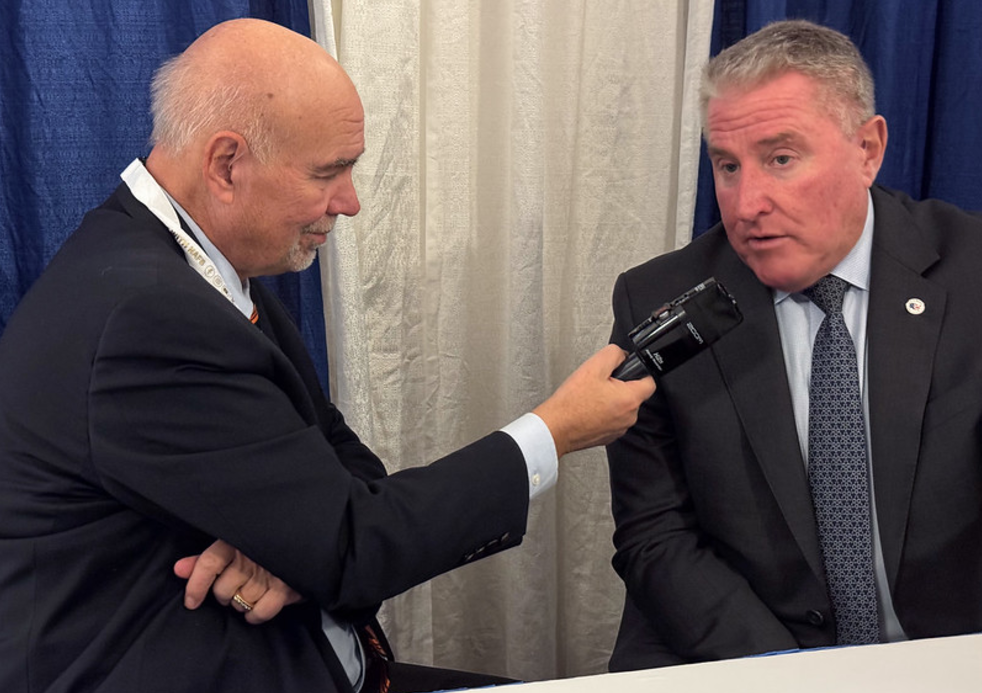
Senior Farm and Ranch Broadcaster, Ron Hays caught up with the president and CEO of the United States Meat Export Federation, Dan Halstrom, and talked about the U.S. beef export market in 2024, and what he sees for the year 2025.
Halstrom estimates that beef export volume will be down, but value will be up five or six percent. This year was the second-largest export year ever, just behind 2022. "A year ago, when we were talking about estimates for 2024, we never would have thought we would be anywhere close to that," Halstrom said. "In that regard, we are excited about what is going on."
Latin America is one of the U.S.'s biggest consumers, and while Asia struggled early in the year, it is strengthening with the rebound of food service and tourism. Exports to Japan are steady from a year ago with a record-strong dollar, a publicly weak economy, and suffering food service.
"Early in the year, we were down ten or eleven percent, so to be able to claw back to where we were a year ago is a testament to the importance of that market in Japan," he said.
In China, Halstrom said that the consumer is under some stress, and beef exports are down slightly there. "We are still going to be $1.7 - $1.8 billion market this year, so to me, we aren't trying to appeal to all of the people in China," Halstrom said. "We are really only looking at the upper-middle class, so higher-end food service and retail, like Costco and Sam's Club. We aren't ignoring China – it is very important to us – but in the meantime, we are investing in other regions of the world to try to diversify."
The meat export business points to Central America, namely Guatemala, as a success story. "We've been running, for the last few months, $320 to $340 on the choice cut out," Halstrom stated. "Which is unheard of levels for places like Mexico and Guatemala. Previously, if we approached $290 - $300 per hundredweight on a choice cut out, they'd stop buying, but they continue to buy."
To Halstrom, this indicates that Central America is beginning to appreciate quality and following the market through its highs and lows.
U.S. beef and pork are also gaining traction in Southeast Asia.
Exports to Mexico are approaching a billion-dollar industry, and specifically, pork exports to Mexico are record-breaking. "That relationship on red meat, is very strong," Halstrom shared. "Our economies are really interlinked. Their reliance on beef and pork is to the point where, if there is a disruption, it will have a massive economic impact on them, as it would us."
Halstrom added that while only 15% of the U.S.'s meat production is exported, the value implications are much higher. He said, "This is really turning into a global market where we need all things clicking, not only domestically but internationally as well."
The Beef Buzz is a regular feature heard on radio stations around the region on the Radio Oklahoma Ag Network and is a regular audio feature found on this website as well. Click on the LISTEN BAR for today's show and check out our archives for older Beef Buzz shows covering the gamut of the beef cattle industry today.
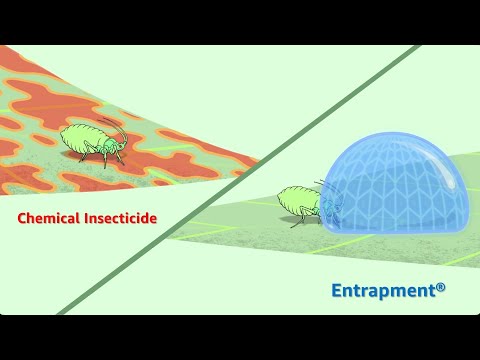
Attune Agriculture, the leader in hydrocolloid based agricultural products, announces that its new line of insecticides, Entrapment®, has received EPA registration and will soon be available for use in all states, including California. Entrapment is a new class of insecticide that uses a purely physical mode of action to control insect and mite pests on a wide range of crops without causing phytotoxicity.
Entrapment's new active ingredient, Rhexalloid®, transforms every spray droplet into a potential trap on the leaf surface. The tightly anchored "traps" capture or immobilize small insects and mites that come into direct contact with the droplet while not trapping larger beneficials. Entrapment is a non-systemic, contact insecticide that does not disrupt the metabolic or nervous system pathways of pests which minimizes the potential for insect resistance. This makes Entrapment a valuable new tool in all insect resistance management (IRM) strategies.
"Entrapment insecticide provides a high level of control of many of the most important insect and mite pests in agriculture that can be applied up until harvest, a much-needed tool for growers," says Greg Andon, CEO of Attune Agriculture. "We believe its unique combination of physical mode of action, efficacy within a specific pest size range, and lack of phytotoxicity make Entrapment one of the most consequential new actives to be introduced in many years."
Entrapment's unique spectrum of activity provides effective control of aphids, thrips, psyllids, whiteflies, scales, leafhoppers, mites, plant bugs, flea hoppers, chinch bugs and small caterpillars. The EPA registered label includes most crops: fruit, nut, vegetable, row crop, greenhouse, and turf & ornamental.
Extensively field tested by reputable third-party ag research facilities across the U.S., Entrapment's proprietary technology provides control of invasive pests equal to, or better than, chemical standards:
Entrapment's product line features four formulations, including an OMRI listed product for organic applications, specifically developed for control of a broad range of crop-pest combinations. For more information, contact your regional Attune Advisor, or visit www.attuneag.com.
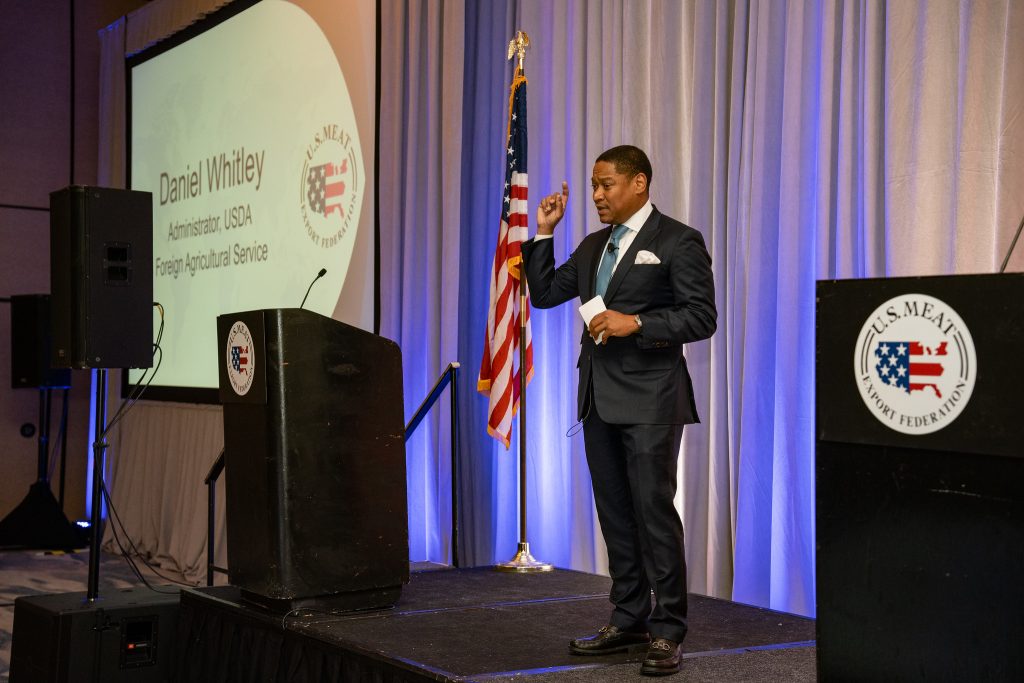
USDA Foreign Agricultural Service Administrator Daniel Whitley
USDA this week is leading a delegation of 50 ag companies and organizations on a trade mission to Morocco. U.S. Meat Export Federation (USMEF) Africa Representative Matt Copeland is participating in the trade mission.
Copeland notes that Morocco is a key trading partner with a free trade agreement and a growing middle class, and that growth in Morocco could trigger expansion in other countries in the region.
USMEF's participation in the trade mission is made possible through funding from USDA's Regional Agricultural Promotion Program (RAPP), which is enabling export organizations to expand marketing efforts in emerging markets.
The delegation is being led by USDA Foreign Agricultural Service Administrator Daniel Whitley, who notes the close cooperation between USDA and the organizations that make up the United States Agricultural Export Development Council (USAEDC), including USMEF.
More details on the trade mission to Morocco, including a list of participating companies and organizations, are available in this USDA press release.

RON's Dave Lanning has a pre-opening look at today's agricultural Markets.
Click the audio tab below for today's report.
Photo provided by AgWired.
At the National Association of Farm Broadcasters Convention, Oklahoma Farm Report's Maci Carter caught up with Bill Backhaus, BASF Midwest Agronomist, to talk about his role with BASF and more.
Focusing on the Midwest region, Backhaus's specialty is soybeans. He finds solutions for building yield and maximizing each variety from a management standpoint.
"I like to put a picture of a triangle in peoples' minds," he said. "We have genetics on the bottom - so the foundation," he said. "Then, the two legs are environment and management. To build yield, breeders have to think about how the genetics and environment interact, and as an agronomist, I have the management layer. What row spacing do I use? When do I plant it? What seeding rates do I use? When do I spray which fungicides? All of that timing stuff is what we agronomists really dig into."
He explained further by using the example of a 100-bushel-producing bean variety. He said that 32 bushels of that outcome is contributed to selecting the correct bean variety for that farm indicating genetics. The environmental component depends upon the year's rainfall and timing of the rainfall, the soil type and land slope, and the presence or absence of irrigation.
BASF's role is to provide products for the management side of the equation. Liberty ULTRA is for weed control, Revytek for fungus control, and various seed treatments for early seedlings such as Obvius Plus, Relenya, or ILEVO are just some of the options they offer.
BASF is launching its first branded soybean genetics into the marketplace for the 2025 growing season.
"We are going to continue to get a fuller and fuller season for Oklahoma, but right now, we will probably just be in Southern Kansas with some group fours," Backhaus said. "We are very excited to get those out."
In 2028, Nemosphere, a BT soybean, is scheduled to launch, and Backhaus is excited about the powerful potential of the genetics that BASF is producing in each of its varieties.
In 2035, BASF is anticipating the release of a new PPO herbicide to complement the PPO trait in soybeans.
"Think about spraying liquid fire over the soybeans and killing all of the weeds, but not the soybeans," Backhaus said. "We've seen a very, very impressive result from that. It is a different PPO, so it is going to control PPO-resistant weeds that we already have out there."
Nearing the end of the next decade, BASF plans to release a weed control product with an entirely new mode of action.
Backhaus continued to talk about the 2024 corn and soybean crops in the Midwest. Click the listen bar at the top of the page to listen to the entire conversation. Visit BASF.com for more information and to find a local retailer. Also, xitavosoybeanseed.com is the place to research seed varieties.
Archives:
2026-11 | 2026-10 | 2026-09 | 2026-08 | 2026-07 | 2026-06 | 2026-05 | 2026-04 | 2026-03 | 2026-02 | 2026-01 | 2025-12 | 2025-11 | 2025-10 | 2025-09 | 2025-08 | 2025-07 | 2025-06 | 2025-05 | 2025-04 | 2025-03 | 2025-02 | 2025-01 | 2024-12 | 2024-11 | 2024-10 | 2024-09 | 2024-08 | 2024-07 | 2024-06 | 2024-05 | 2024-04 | 2024-03 | 2024-02 | 2024-01 | 2023-12 | 2023-11 | 2023-10 | 2023-09 | 2023-08 | 2023-07 | 2023-06 | 2023-05 | 2023-04 | 2023-03 | 2023-02 | 2023-01 | 2022-12 | 2022-11 | 2022-10 | 2022-09 | 2022-08