Ag News Archives for 2025-08

The History of Labor Day: An American Story of Labor and Rights

The origins of Labor Day in the United States are deeply rooted in the struggles of 19th-century workers, including many immigrants who sought a better life but found harsh realities. The story of Peter McGuire, an Irish immigrant's son, is a testament to the birth of this national holiday.

Born into poverty, Peter McGuire began working at age 11, selling papers, shining shoes, and running errands to help support his family after his father enlisted in the Civil War. His experiences mirrored those of thousands of immigrants in New York City, where living conditions were often deplorable and factory work demanded 10 to 12-hour days with little pay. Workers, including children, came to work sick or tired, fearing they would be fired if they didn't, as thousands of others were waiting to take their place.

As a young man, McGuire began an apprenticeship in a piano shop, a job that offered a trade but still came with long hours and low pay. At night, he attended meetings and classes on economics and social issues, becoming increasingly concerned with the plight of laborers. Workers were growing tired of their low wages and long, uncertain hours, and they began to discuss forming a union to improve their conditions.

In the spring of 1872, Peter McGuire and 100,000 workers went on strike, marching through the streets of New York City to demand a shorter workday. This event solidified McGuire's belief in the importance of an organized labor movement for securing workers' rights. He spent the following year speaking to workers and the unemployed, lobbying the city government for jobs and relief money, though his demands were ignored.

McGuire, who became known as a "disturber of the public peace," found it difficult to find a job in his trade. He began traveling the East Coast to encourage laborers to unionize. In 1881, he moved to St. Louis, Missouri, where he organized carpenters and eventually helped found a national union of carpenters at a convention in Chicago. He was named the General Secretary of the United Brotherhood of Carpenters and Joiners of America.

McGuire's efforts helped the idea of organizing workers by their trades spread across the country. Factory workers, dock workers, and tool makers began to demand and win rights to an eight-hour workday, job security, and a future in their trades. To honor these efforts, Peter McGuire and other laborers planned a holiday for workers on the first Monday of September, positioned halfway between Independence Day and Thanksgiving.

On September 5, 1882, the first Labor Day parade took place in New York City.

(Adapted from a story on the United States Embassy to Sweden's website, with Todd Gleason for University of Illinois Extension)

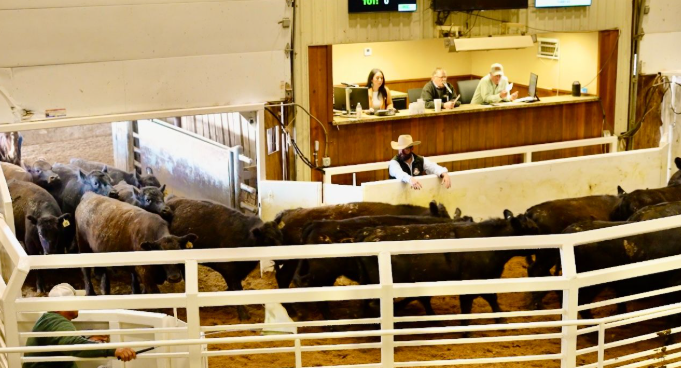
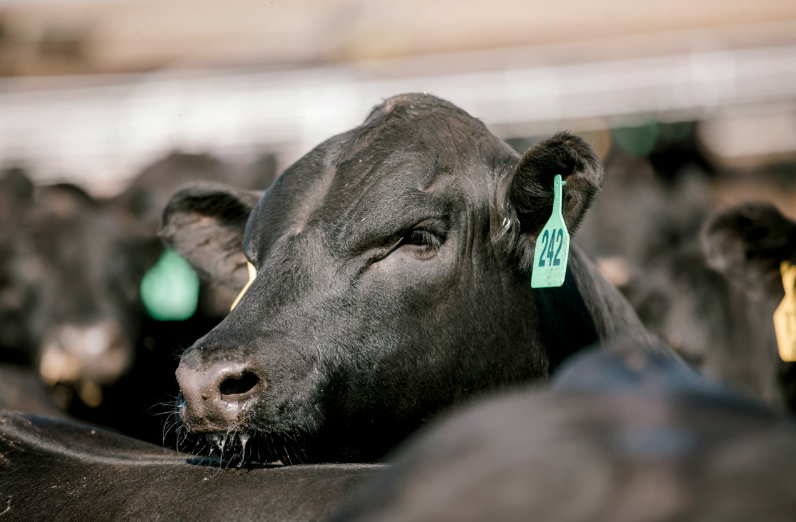
TCFA Reports Cash Cattle in Southern Plains Up Two Dollars This Week at $242 for Steers and Heifers

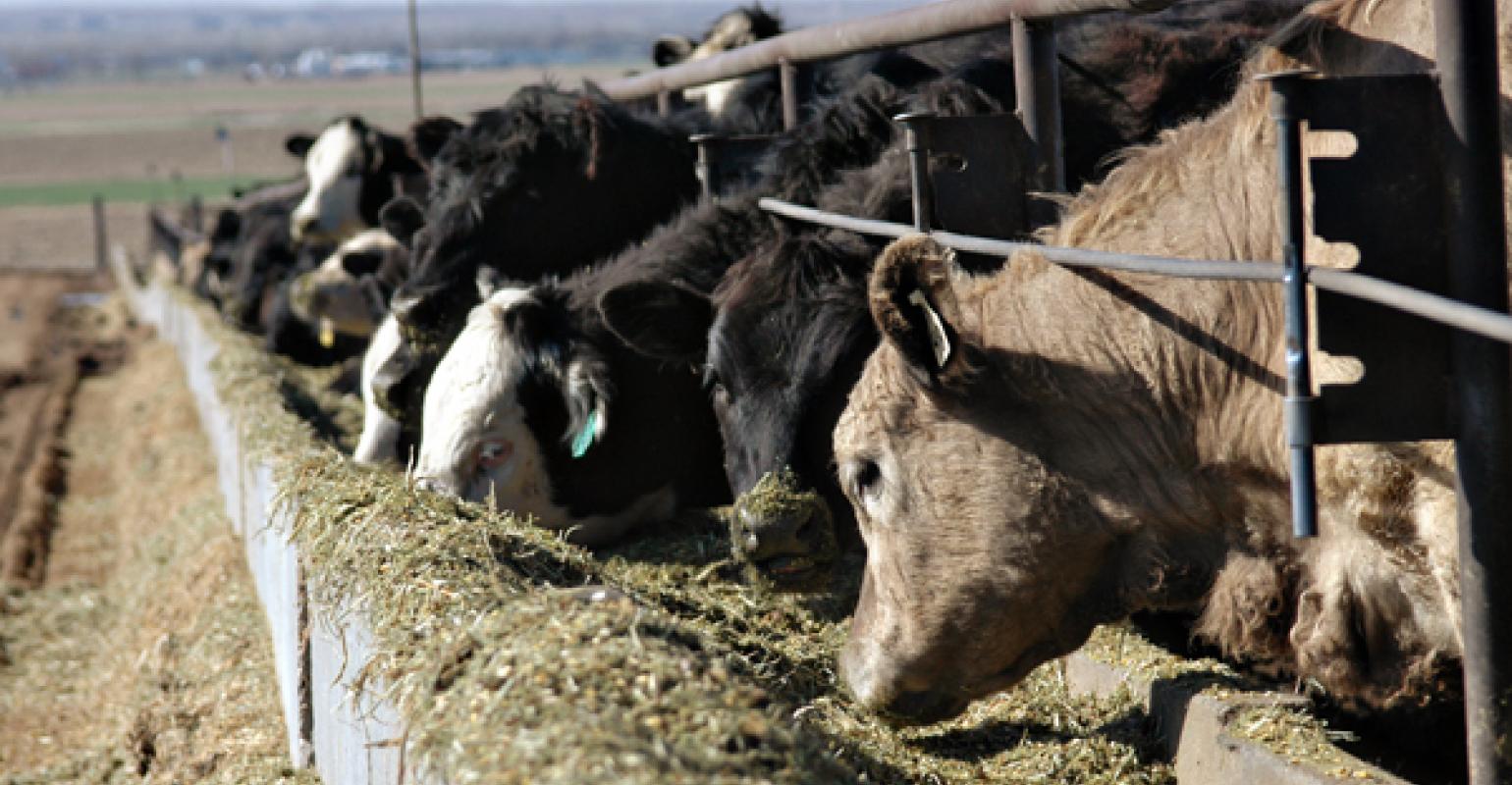
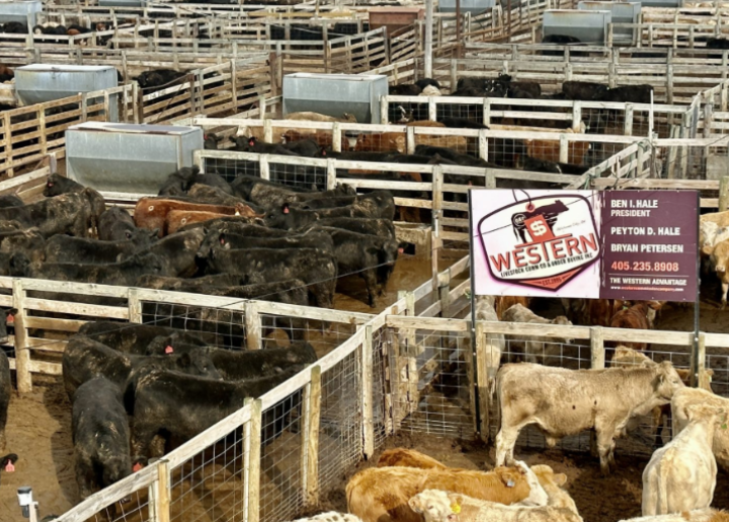
According to DTN- "Southern live cattle have traded at mostly $242 ($2.00 higher than last week's weighted average) and Northern dressed cattle have traded at mostly $385 ($1.00 lower than last week's weighted average). That $242 was reported by the Texas Cattle Feeders, who represent feedlots in Texas, Oklahoma and New Mexico.

The live cattle futures pushed further into uncharted territory in the final trading day of August- October live cattle closed $2.72 higher at $239.65, December live cattle closed $2.17 higher at $240.77 and February live cattle closed $2.30 higher at $242.25.

The feeder cattle contracts also closed higher, as traders were more than willing to advance the contracts as they were no longer up against the market's resistance threshold. And as demand remains red-hot in the countryside, traders had more than enough support to justify the contracts' higher move. September feeder closed $2.97 higher at $364.77, October feeders closed $2.95 higher at $364.47 and November feeders closed $3.57 higher at $363.60. 
The Oklahoma Weekly Cattle Auction Summary shared that compared to last week, feeder steers over 800 pounds sold $2.00 to $8.00 higher, but steers under 800 pounds traded $10.00 to $13.00 higher. Steer calves sold $1.00 to $7.00 higher. Feeder heifers and heifer calves traded steady to $5.00 higher.

National Boxed Beef

Choice Boxed Beef Ends August With Another Record High Price for the Year at $415.41

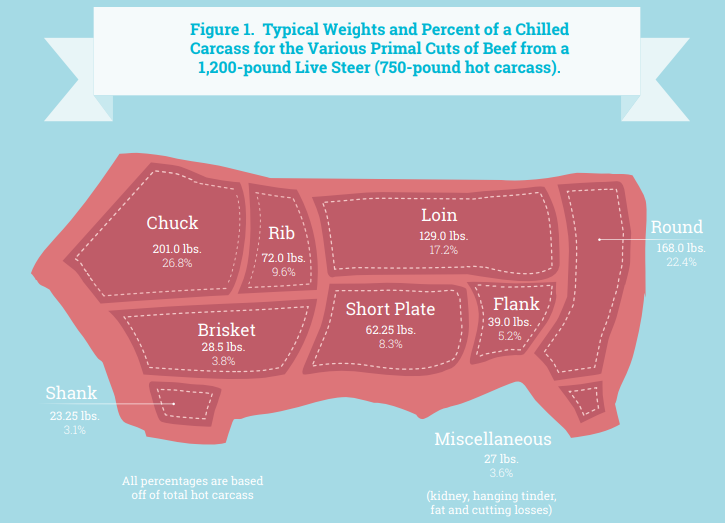
Compared to Thursday, boxed beef prices strengthened on Friday with Choice at $415.41, up $1.00, and Select at $390.00, up $4.16, narrowing the spread to 25.41. Among primals, the chuck climbed to $380.23, setting a new high for the year, while the rib eased slightly to $637.55 from $638.32. The round slipped to $364.92 from $370.68, the loin edged lower to $493.22 from $495.83, and the brisket softened to $337.09 from $340.20. In contrast, the plate firmed to $271.55 from $264.92, while the flank eased slightly to $233.77 from $234.27. For the month, boxed beef posted a record $54.09 August gain, rising in 18 of 22 sessions, the strongest August rally on record.

USDA Announces Improvements to Federal Crop Insurance

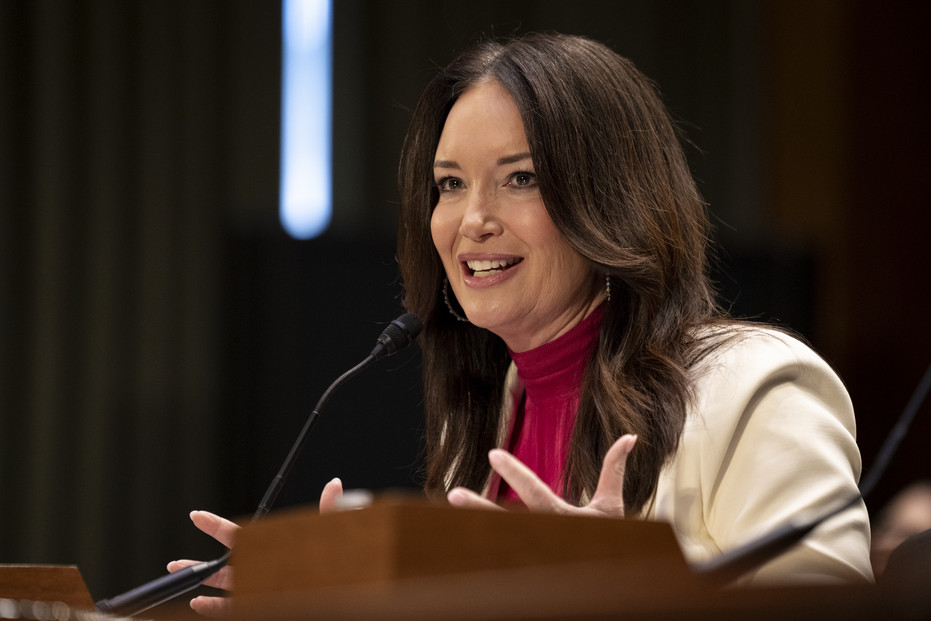
Rod Bain and Risk Management Agency Administrator Pat Swanson

The U.S. Department of Agriculture (USDA) has announced a series of significant enhancements to the federal crop insurance system, designed to provide better support for farmers and ranchers. These improvements, which took effect on July 1, 2025, aim to strengthen the agricultural safety net and encourage more producers to manage their risk effectively.

In an interview with the USDA's Rod Bain, Risk Management Agency Administrator Pat Swanson highlighted the importance of implementing these changes in time for the upcoming fall planting season. "We were able to get these changes announced so that the companies can make those changes in their system," Swanson said, ensuring that producers and crop insurance agents can access accurate quotes to make informed decisions for their fall policies.


Enhanced Support for Beginning Farmers

One of the most notable changes is the expanded support for beginning farmers and ranchers. Previously, these producers were defined as those in their first five years of farming and received a 10% premium subsidy. The new improvements dramatically extend these benefits:

  • Expanded Eligibility: The period of eligibility has been extended from five years to ten years.
  • Increased Support: For the first four years, beginning farmers will receive an even higher premium subsidy than before.

This change is designed to provide new producers with more stability and encouragement as they get started in a capital-intensive industry.


New and Improved Coverage Options

The USDA also announced several key improvements to existing crop insurance products:

  • Premium Support: All policies with underlying revenue protection will now receive an additional 3% to 5% premium subsidy.
  • Whole-Farm Coverage: The maximum coverage level for the Whole-Farm Revenue Protection plan has been increased from 85% to 90%.
  • Supplemental Coverage: The Supplemental Coverage Option (SCO), a type of area-based plan, has been increased from an 86% coverage level to 90%.
  • Additional Subsidies: The area plans will also receive an additional 15% premium subsidy.

Furthermore, adjustments have been made to premium supports for both enterprise units and basic/optional units, which allow farmers to insure their crops on a whole-farm or individual-field basis, respectively.

These changes collectively represent a major effort to make crop insurance more affordable and comprehensive, helping producers better manage the risks associated with volatile markets and unpredictable weather.

John Deere Acquires GUSS Automation to Strengthen High-Value Crop Autonomy Portfolio

John Deere (NYSE: DE) announced today the full acquisition of GUSS Automation, LLC, a globally recognized leader in supervised high-value crop autonomy, headquartered in Kingsburg, California. The acquisition builds on an existing joint venture established in 2022 and advances John Deere's commitment to helping high-value crop growers address their biggest challenges around labor availability, input costs and crop protection.

"Fully integrating GUSS into the John Deere portfolio is a continuation of our dedication to serving high-value crop customers with advanced, scalable technologies to help them do more with less," said Julien Le Vely, director, Production Systems, High Value & Small Acre Crops, at John Deere. "GUSS brings a proven solution to a fast-growing segment of agriculture, and its team has a deep understanding of customer needs in orchards and vineyards. We're excited to have them fully part of the John Deere team."

Founded by Dave Crinklaw in 2018, GUSS manufactures autonomous sprayers that can be remotely supervised by a single operator who can manage up to eight machines at once. Using GPS, LiDAR and proprietary software, GUSS machines navigate vineyards and orchards with precision to help reduce operator error, labor costs and material waste. To date, more than 250 GUSS machines have been deployed globally, accounting for 2.6 million acres sprayed over 500,000 autonomous hours.

GUSS sprayers will continue to be sold and serviced exclusively through John Deere dealers, as they are today. The business will retain its name, brand, employees and manufacturing facility in Kingsburg, California.

John Deere will support GUSS in expanding its global reach and accelerating innovation, including continued integration with other John Deere precision agriculture technologies, such as Smart Apply®, which enables targeted spraying that offers the opportunity for up to 50% savings on chemical and water use.

"Joining John Deere enables us to tap into their unmatched innovative capabilities in precision agriculture technologies to bring our solutions to more growers around the world," said Gary Thompson, chief operations officer at GUSS. "Our team is passionate about helping high-value crop growers increase their efficiency and productivity in their operations, and together with John Deere, we will have the ability to have an even greater impact." 

GUSS' manufacturing operations expand John Deere's U.S. manufacturing footprint to the heart of the country's high-value crop production market. GUSS sprayers will continue to use John Deere Power Systems engines, first integrated in 2024.

For more information about GUSS solutions, please contact your local John Deere dealer.

Why So Much Concern in the Countryside?

In an article by Bart Fisher and Joe Outlaw at Texas A&M they write: A common question we've been fielding since passage of the One Big Beautiful Bill: "with all this money coming from the Federal government, why do farmers keep complaining?"  It's generally followed by: "you just can't make some people happy."

There's no question the Federal government has provided a robust level of assistance. For example, the American Relief Act in December 2024 provided $30.78 billion in relief—$10 billion for economic assistance and $20.78 billion for natural disaster assistance. The recently passed One Big Beautiful Bill provided approximately $62 billion (10-year total) in improvements to the farm safety net.[1] While these sound like big numbers—because they are—it's important to put them in context.

First, for the $10 billion in economic relief from the American Relief Act—implemented by USDA as the Emergency Commodity Assistance Program (ECAP)—Congress required USDA to calculate losses from the 2024 crop year and then limited the amount of assistance to 26% of the loss. In other words, for losses incurred by producers last year, they were required to shoulder 74% of that loss on their own. 

Second, for the $20.78 billion in relief for natural disasters in the American Relief Act—implemented by USDA as the Supplemental Disaster Relief Program (SDRP)—Congress limited USDA to covering no more than 90% of losses incurred in 2023 and 2024. While that certainly sounds like a lot, once the total losses were estimated by USDA, they were only able to cover 35% of the losses based on the funding provided by Congress. So, SDRP effectively covers, at most, just under 32% of the loss (or 35% x 90%).  

Importantly, ARC and PLC also will help cover losses from the 2024 crop year once paid in October 2025, but that assistance is at the old levels last adjusted more than a decade ago in the 2014 Farm Bill. In other words, the relief provided by the American Relief Act was all retroactive for losses already incurred and only covered a portion of the losses.

What about the 2025 crop year?  While the One Big Beautiful Bill made several improvements to the farm safety net—from increasing reference prices from 10-20% to adding up to an additional 30 million base acres nationwide—most of the improvements kick in with the 2025 crop year. Congress stipulated (using the same schedule that has been in place since the 2008 Farm Bill) that payments cannot be made until October 1 of the year following the end of the marketing year for a crop.  Translation: the new assistance won't go out the door until October 1, 2026. Yes, you read that right. Further, the magnitude of the projected losses to the 2025 crop are such that the assistance will, yet again, only cover a small portion of the loss. Consider the following example:

The estimated national average cost of production for soybeans in 2025 is $639.15/ac.[2] Using USDA's August 2025 World Agricultural Supply and Demand Estimates (WASDE), the expected return for soybeans is $535.80/ac (or a planted-acre yield of 53.05 bu/ac x $10.10/bu), for an expected loss of $103.35/ac (or $1.95/bu).[3] The question is how much of that loss will be covered by the new-and-improved ARC and PLC.  At present, PLC is projected to pay $0.61/bu and ARC—assuming average yields—would pay $0.85/bu.[4]  Assuming the farm is fully based—where both ARC-CO and PLC use a payment factor of 85%—you effectively receive $0.7225/bu (or 85% of $0.85/bu).  In other words, while the One Big Beautiful Bill provided significant improvements, in the case of soybeans (and virtually every other row crop to varying degrees), it will cover just 37% (or $0.7225/$1.95) of the loss...when it arrives next year. Losses upon losses. Starting to see why folks are concerned?

To pull all of this together: yes, significant assistance has been provided to the countryside, but on average, it only covers a fraction of the past/projected losses.  That is why you are hearing a collective groaning in the countryside.  What to do about it?  Absent new trade deals that spur additional demand, a renewed focus on in-kind food aid, or commodity-specific demand levers (think ethanol for corn)—and perhaps in addition to all of those things—we suspect Congress will begin contemplating yet another round of disaster aid this fall and/or the Trump Administration will begin discussing intervening with trade aid. To those asking us the questions at the top of this article and for the record: we've never met a farmer who preferred getting their income from the government...and they can't wait to break this cycle of praying to simply break even.

School is in Session With Beef

Summer is winding down and students are heading back to school. This is a great time to highlight how beef's ten essential nutrients play an important role in supporting academic and physical performance.

  • Beef is a class favorite, so share these quick back-to-school recipes to prepare for a busy school year.
  • Enjoying lean beef in a heart-healthy lifestyle is easier than you think with these recipes featuring lean beef, fresh fruits and vegetables, and whole grains. These Beef. It's What's For Dinner. recipes are all certified by the American Heart Association®.
  • Say "so-long" to leftovers with easy recipes that use multi-purpose ingredients.
  • Share this great "how-to" video:

Let us know what you are sharing to help others create moments to savor this grilling season by sharing your posts in the MBA Facebook Group and tagging Beef. It's What's For Dinner. in your social media posts!  

Ingredients:

  • 1 pound Ground Beef (93% lean or leaner)
  • 1/3 cup chopped onion
  • 1/4 cup chopped green bell pepper
  • 1 to 2 cloves garlic, minced
  • 3/4 cup water
  • 1/3 cup tomato paste
  • 2 tablespoons packed brown sugar
  • 1 tablespoon white vinegar
  • 1/2 teaspoon chili powder
  • 1/4 teaspoon salt
  • 1 cup fresh baby spinach
  • 1/3 cup canned black beans, rinsed, drained
  • 1/4 cup shredded carrots
  • 4 medium flour tortillas (8 to 9-inch diameter), warmed

Cooking:

  1. Brown Ground Beef with onion, bell pepper and garlic in large nonstick skillet over medium heat 8 to 10 minutes, breaking beef up into 1/2-inch crumbles. Pour off drippings, if necessary.
  2. Stir in water, tomato paste, brown sugar, vinegar, chili powder and salt; bring to a boil. Reduce heat; simmer 5 minutes or until slightly thickened. Add spinach, beans and carrots; continue simmering 3 to 4 minutes or until heated through.
  3. Spoon filling evenly in a row across center of each tortilla, leaving 1-1/2-inch border on right and left sides. Fold right and left sides of tortilla over filling. Fold bottom edge up over filling and roll up.

Safe Handling Tips:

  • Wash hands with soap and water before cooking and always after touching raw meat.
  • Separate raw meat from other foods.
  • Wash all cutting boards, utensils, and dishes after touching raw meat.
  • Do not reuse marinades used on raw foods.
  • Wash all produce prior to use.
  • Cook steaks and roasts until temperature reaches 145°F for medium rare, as measured by a meat thermometer, allowing to rest for three minutes.
  • Cook Ground Beef to 160°F as measured by a meat thermometer.
  • Refrigerate leftovers promptly.

For more information on degree of doneness and other cooking tips visit: https://www.beefitswhatsfordinner.com/cooking/determining-doneness

For more information on safe food handling and beef safety, see: https://www.beefitswhatsfordinner.com/cooking/food-safety

Sen. Boren invites Oklahomans to public study on farming and solar energy working together

Sen. Mary Boren, D-Norman, is encouraging landowners and residents across the state to share their thoughts on an emerging and practical land-use strategy that combines farming and solar energy, known as agrivoltaics. Boren will hold an interim study on the topic this Tuesday, September 2, at 1:00 p.m., room 535 of the state Capitol.

Agrivoltaics allow food and clean energy to be produced from the same plot of land to maximize land use, put more control in the hands of farmers and ranchers, and provide reliable income to sustain the ups and downs of farming and ranching.

"This is about putting more profits in the bank accounts of landowners without sacrificing the important use of land for agriculture," Boren said. "I want to hear from our farmers, ranchers, energy producers, and anyone with ideas or concerns to share."

The study will feature examples of how agrivoltaics is already being used by energy companies in cooperation with landowners. Insights into energy contracts and what landowners should look for will be discussed by legal and economic experts. The study will end with a review of strategies to ensure landowners are empowered to negotiate for the best agrivoltaics contracts.

"Agrivoltaics make it possible to grow food and generate clean energy on the same land—it's practical, efficient, and benefits both agriculture and our environment," Boren said. "I look forward to hearing from Oklahomans on how this could work for them."

The study is open to the public and will also be livestreamed on the official Senate website at oksenate.gov. The agenda has been posted on the Senate website at https://oksenate.gov/committees/meeting-notices/agriculture-and-wildlife-39

Those with information to share about agrivoltaics can email: Mary.Boren@oksenate.gov

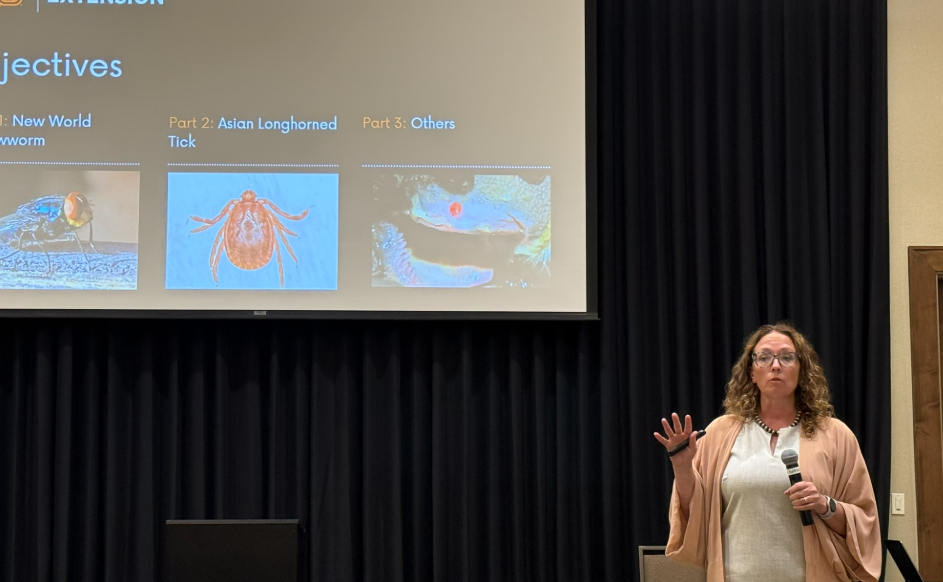
R-Calf Weekly Address: Threat of a Devastating Pest Is Knocking at Our Door

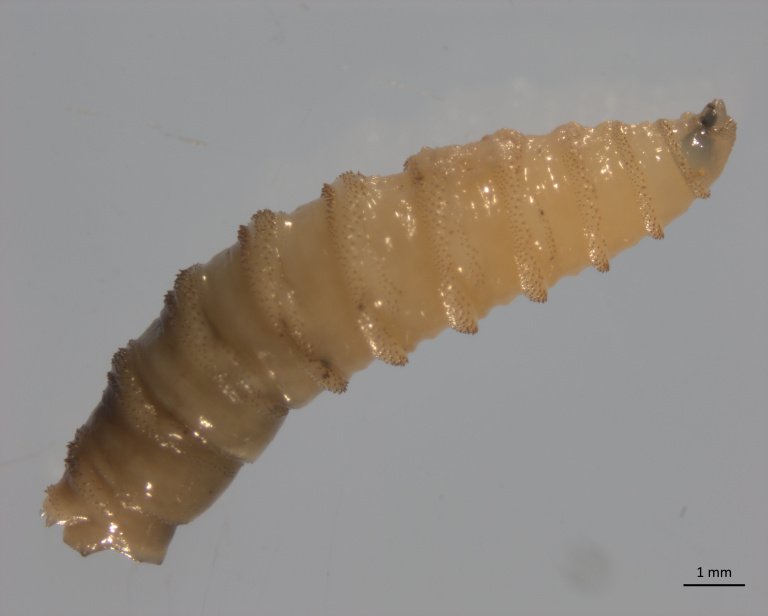
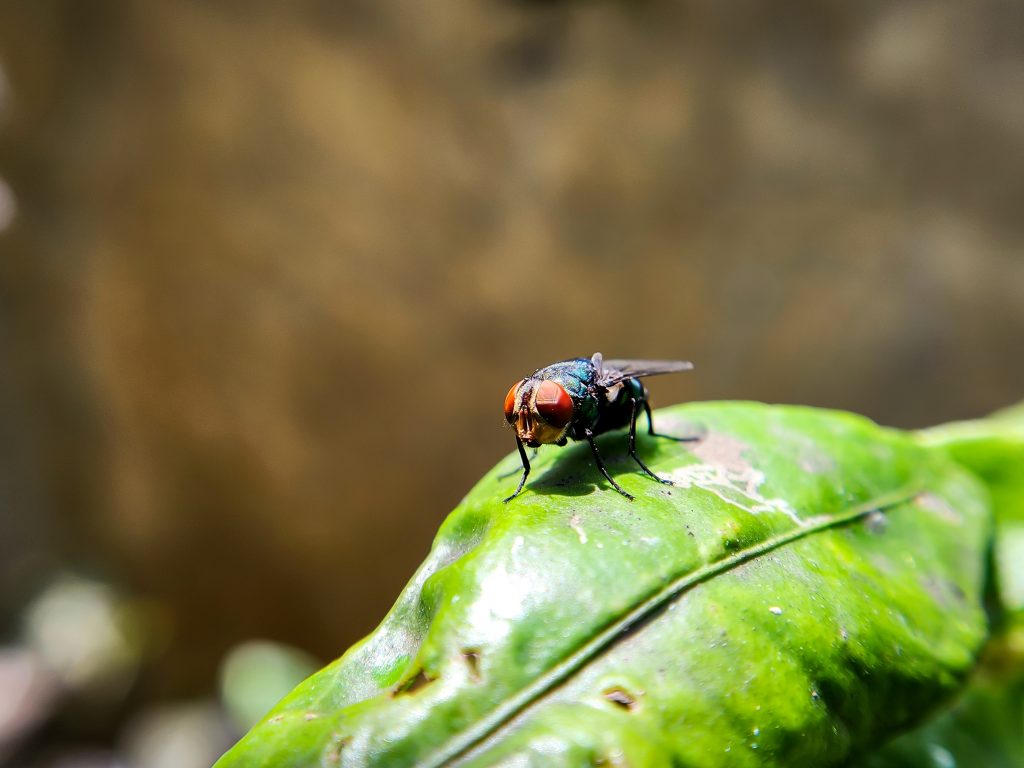
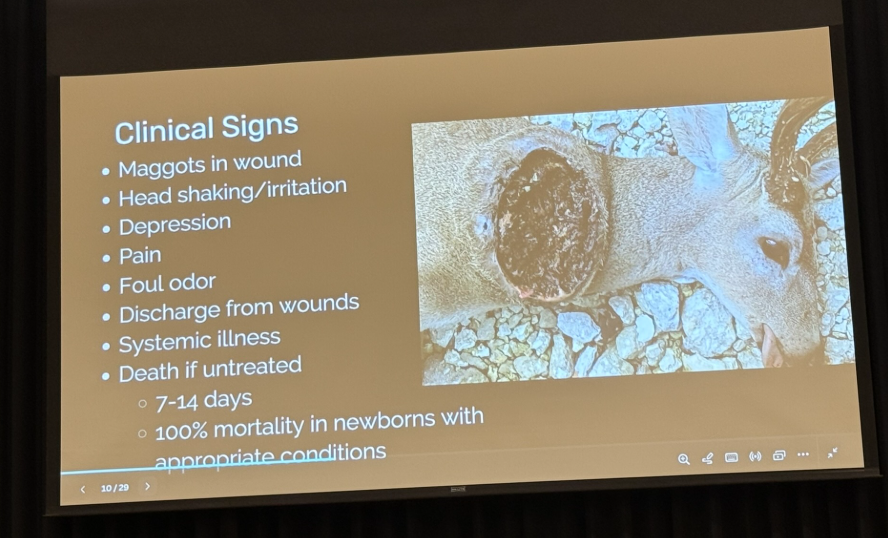
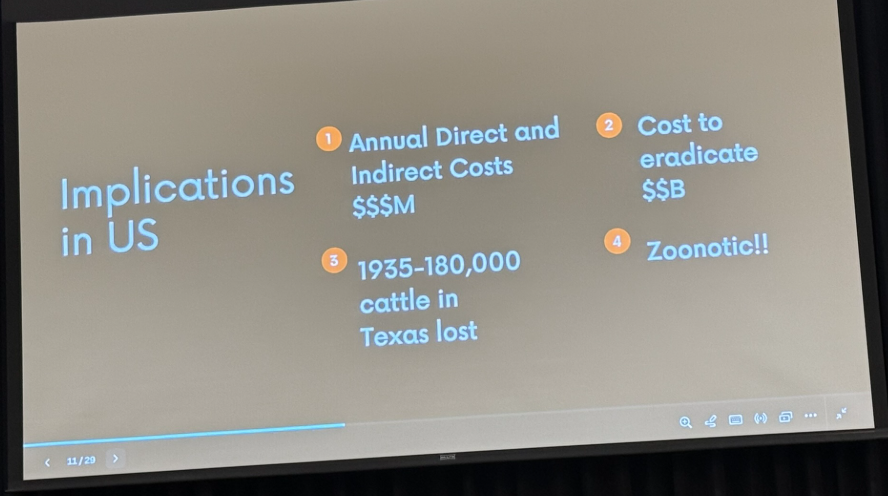
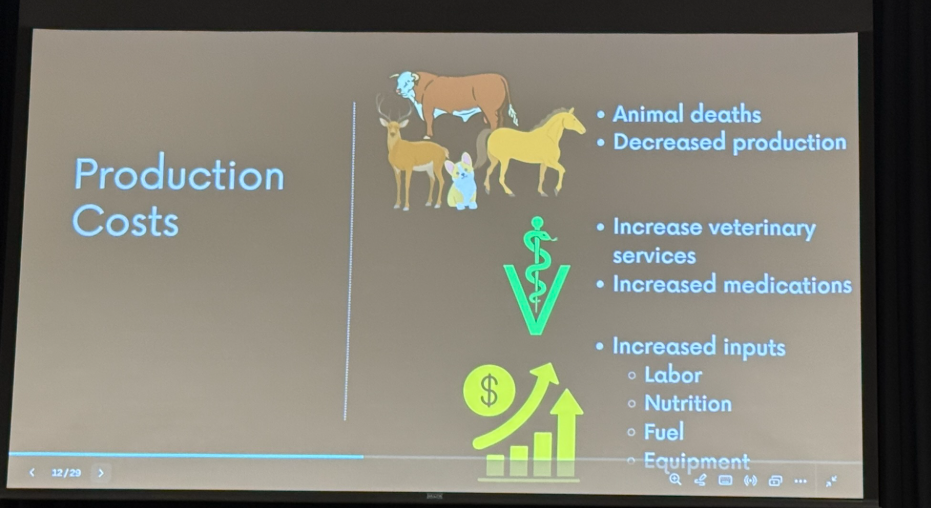
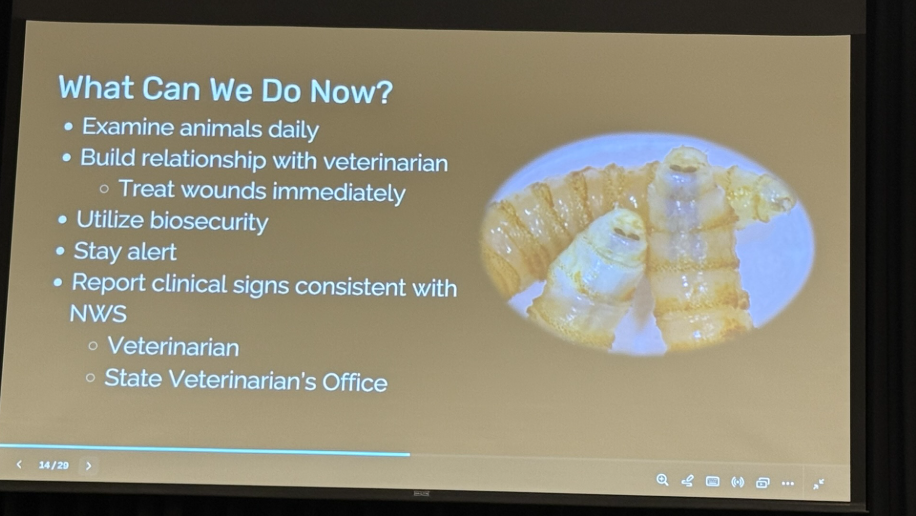
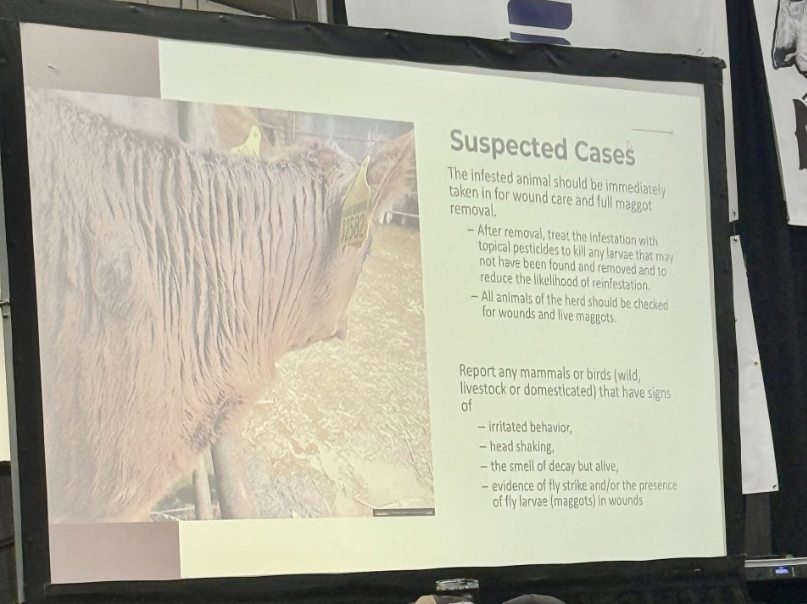
There's no doubt that an introduction of New World screwworm, which is advancing northward from Central America and through Mexico, would have a devastating impact on America's livestock, wildlife and people. The USDA states the screwworm "threatens over $100 billion in United States economic activity tied to the cattle and livestock industry alone."

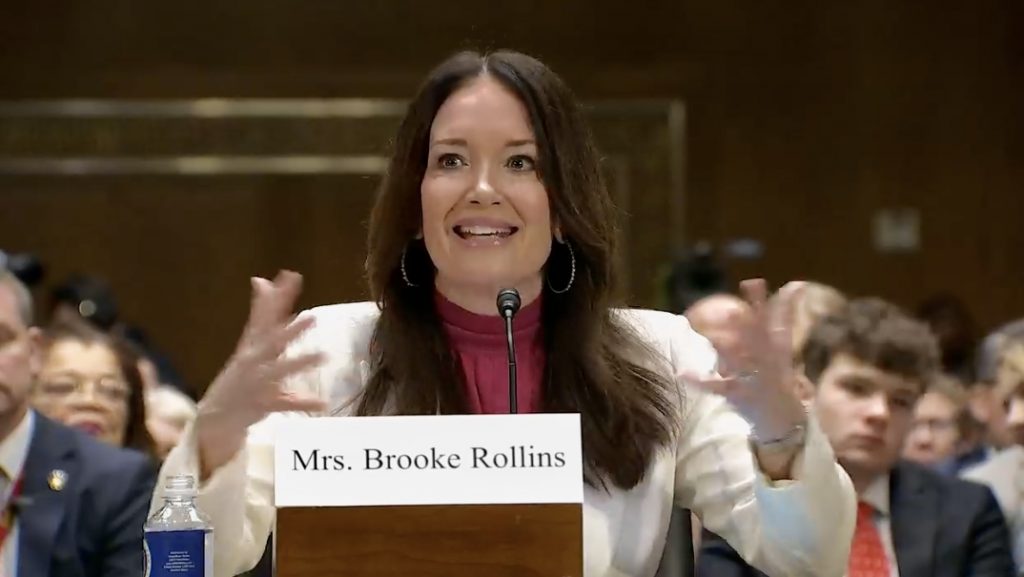
Many of us were unaware of the severe danger the New World screwworm presents to our country until U.S. Agriculture Secretary Brooke Rollins first closed the border to livestock imports from Mexico. She first did this last November following an announcement by Mexico that the screwworm was detected in Mexico's southern region.

We've learned much since then, including that neither Central America, Mexico nor the United States is presently capable of mounting an effective eradication strategy against the pest. The laboratory production and subsequent release into the population of sterile male screwworm flies is currently the best-known strategy for the pest's eradication. But the only laboratory presently producing sterile male flies is in Panama, and it cannot produce enough flies to cover the entire region from Panama to the United States.

Both Mexico and the United States are ramping up efforts to begin production of sterile screwworm flies, but the proposed laboratories are not expected to begin production for another year in Mexico and another two to three years in the United States. That means we must double down on the science-based methods currently available to prevent the pest from entering the United States.

The most important of these science-based methods is to maintain a strict ban on the importation of livestock from Mexico, as this would help prevent the introduction of the screwworm into the U.S. through livestock movement; and it would discourage the northward movement of livestock within Mexico in anticipation of being exported to the United States. Another method is to maintain traps and a vigorous surveillance system to determine the screwworm's pattern of movement so resources can be directed where they are most needed.

Yet another measure is to identify all the possible transmission routes that could carry the screwworm into the United States, including human travel, and then implement mitigation measures to reduce those risks.

For any of these methods to be effective, the government, U.S. livestock producers and livestock veterinarians must work as partners by sharing timely and accurate information and regularly communicating to assess progress. This means there must be full transparency and trust between the government, state and local animal health officials, and the livestock producers who bear the greatest risk should the pest enter the United States.

Unfortunately, a breach of transparency and trust between the government and the public was made evident by Reuters, which broke the story about a human case of New World screwworm that was detected on Aug. 4 but not revealed to the public until Reuters' Aug. 24 investigative article.

Worse, the Reuters article indicates that while the information about the U.S. case was withheld from the public for weeks–including from veterinarians instrumental in surveilling for the pest and from livestock producers most at risk–the information had been secretly leaked to a select group of industry insiders. The leaked information indicated the case involved a person traveling from Central America to Maryland.

That the government would–as the Reuters report indicates–leak market-sensitive information to only a small group of industry insiders but withhold such information from all other stakeholders, particularly when the entire livestock industry and related financial markets remain apprehensive regarding the government's ability to prevent the pest's introduction, is unconscionable.

We don't yet know if any additional mitigation measures have been implemented to prevent any further human transmission of the pest into the United States.

Also disturbing is the fact that the secret communication sent to the select group of industry insiders informed them that the beef industry has requested Texas A&M economist David Anderson to quickly write an industry impact report for Secretary Rollins on the impacts to the industry of the border closure to Mexican cattle.

So, we should expect there will soon be a push to prematurely reopen the border despite the ongoing health risks based on whatever findings the economist makes regarding the economic impact of the United States' overreliance on cattle from foreign countries. R-CALF USA has asked for an investigation into the circumstances surrounding the cover-up of the human case of New World screwworm and the establishment of a New World Screwworm task force to prevent future cover-ups and to ensure available resources are being allocated properly to prevent the introduction of this devastating pest into the United States.

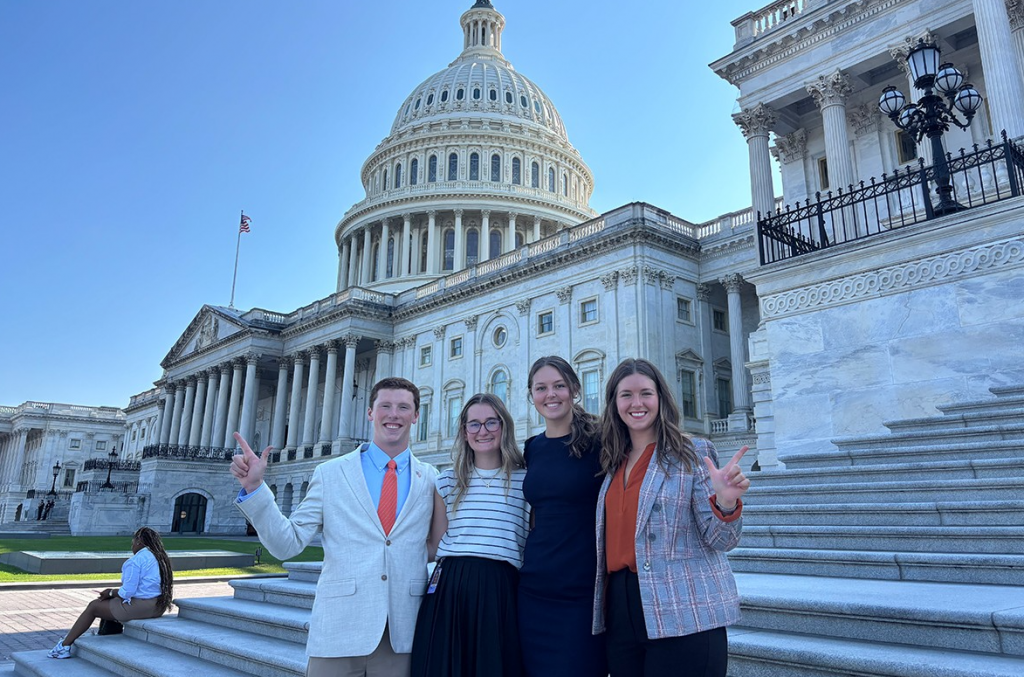
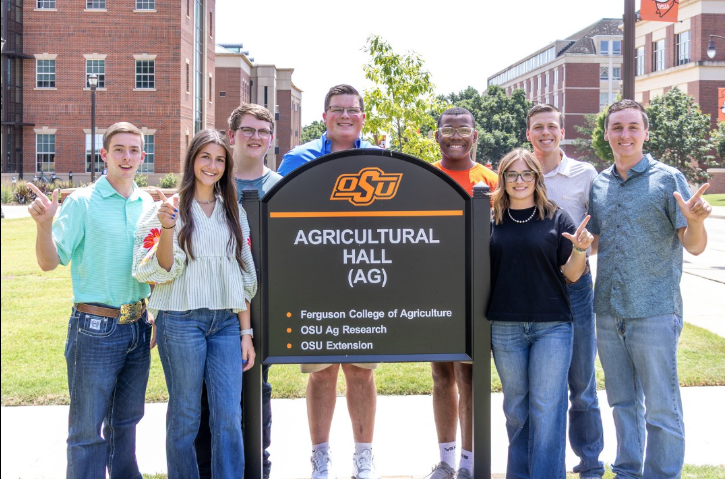
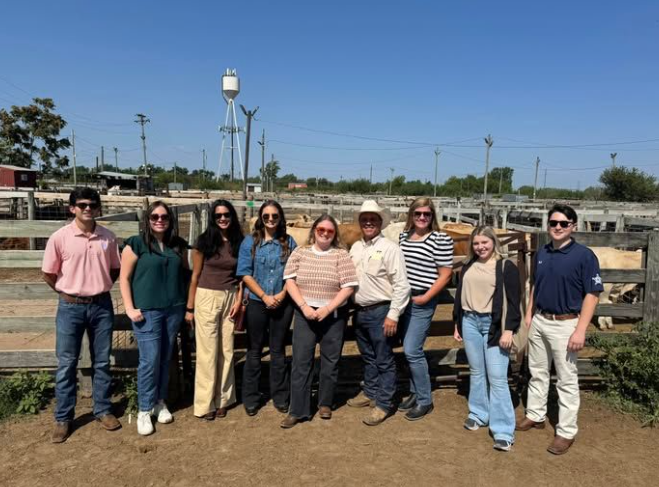
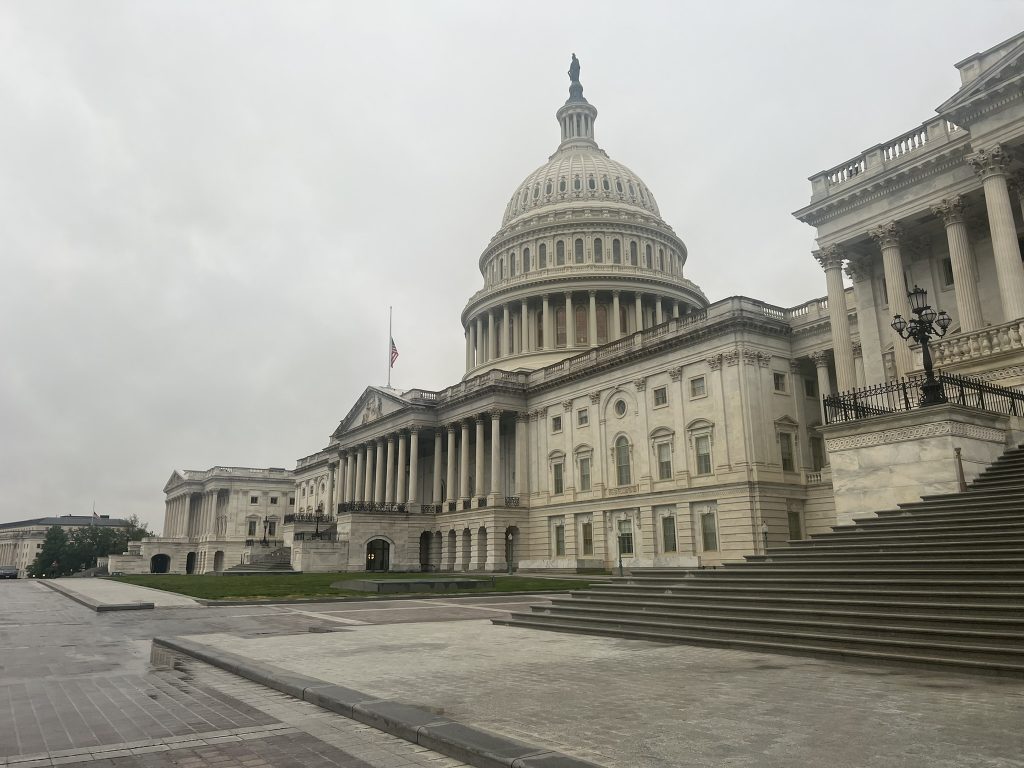
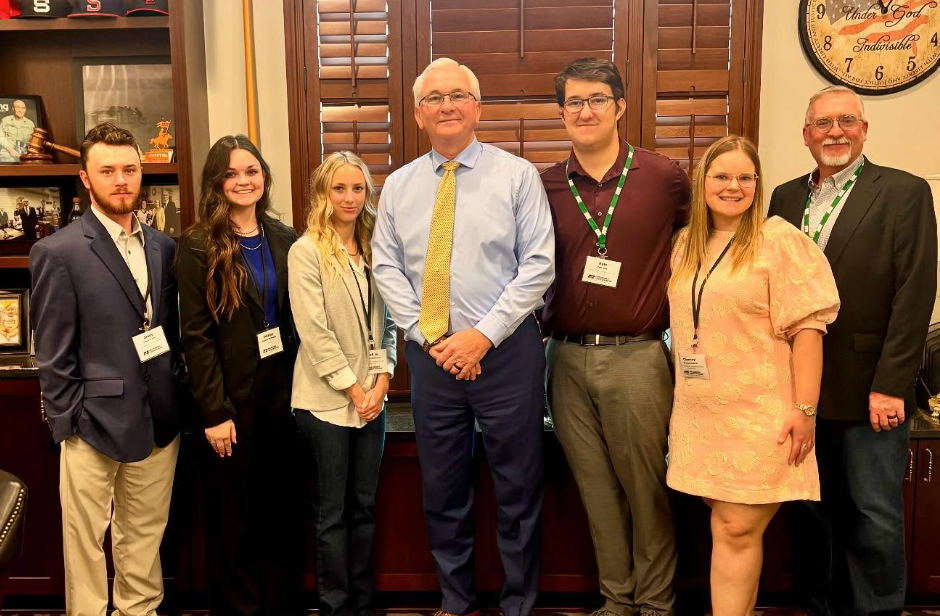
From the classroom to the Capitol: Ferguson College students complete internships in Washington, D.C.

A group of students in Oklahoma State University's Ferguson College of Agriculture recently spent their summer gaining hands-on experience and insights into government, policy and agricultural advocacy in Washington, D.C. 

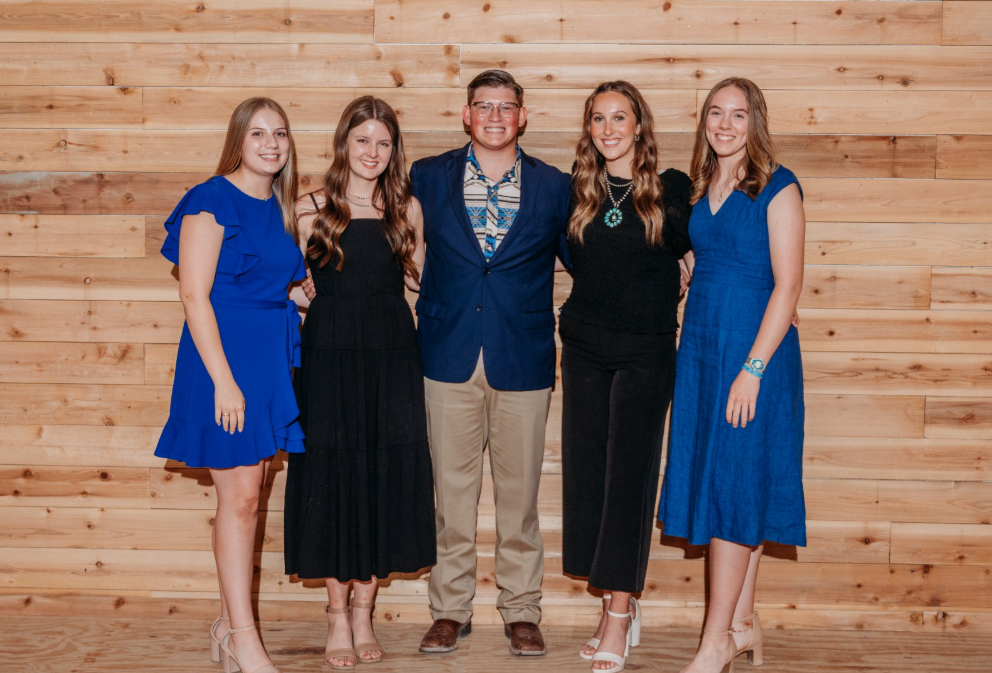
Trell Amoss, Riley Gilreath, Amara Jackson, and Kennedy Seals recently completed prestigious legislative internships on Capitol Hill, supported by financial assistance from the Ferguson College to help cover associated expenses.

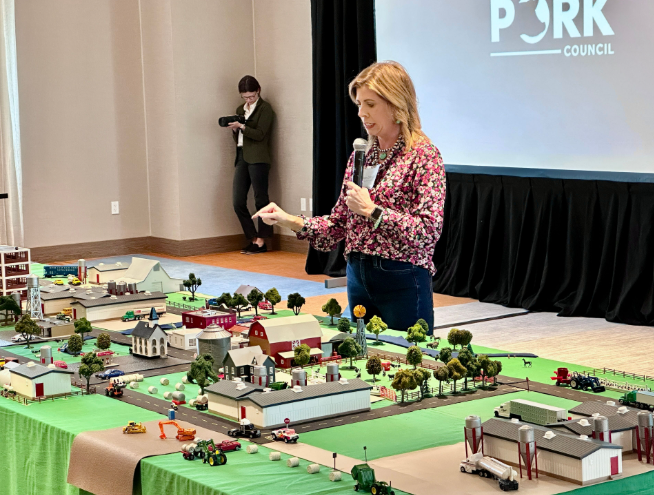
Amoss is a junior studying agribusiness from Albia, Iowa. He served as the government affairs intern for the National Pork Producers Council. In this role, he tracked relevant legislative and congressional hearings, relayed information to stakeholders and collaborated with staff economists to analyze and interpret market trends and data.

Amoss said his interest in policy was sparked by seeing its direct impact on his family's operation. While attending the 2024 Agriculture Future of America Leaders Conference, he learned about this internship opportunity, he added. 

"Working with the National Pork Producers Council and experiencing the energy of Capitol Hill confirmed my passion for agricultural policy and law," he said. "It's given me direction as I return to the Ferguson College to focus on building the skills and knowledge to make a meaningful impact in those areas." 

Gilreath, an agribusiness senior from Avery, Texas, was a congressional agriculture policy intern for Rep. Frank Lucas. She spent her summer researching agricultural policy to provide deeper insight and analysis for her team, attending House and Senate committee hearings, and leading tours for and sharing information with constituents, she said. 

Her time as a congressional intern strengthened her passion for public service, Gilreath said.

"This experience has truly been life-changing," she said. "It's been inspiring to see how much public servants care about the people they represent, and this experience has shown me I belong in this space and that with hard work, anyone can help make meaningful change." 

Amara Jackson, an agribusiness junior from Durand, Michigan, interned with the Senate Committee on Agriculture, Nutrition and Forestry, where she attended committee briefings and hearings, engaged with stakeholders, representatives and committee staff, and shadowed Sen. John Boozman of Arkansas. 

Jackson said the biggest takeaway from her internship is the importance of relationships when building professional experiences and connections. 

"While being knowledgeable is certainly important, I've learned that being approachable, open-minded and willing to take on any task makes a lasting impression," she said. "Embracing these mindsets allowed me to make the most of my experience, and the relationships I've built during this time have had a meaningful and lasting impact on me." 

Kennedy Seals is a senior studying biochemistry and molecular biology from Richmond, Indiana. She was the public policy intern for the National Association of State Departments of Agriculture. During her time in D.C., she attended congressional hearings, tracked regulatory updates and integrated legislative information into policy documents. 

Seals said her involvement in the Ferguson College has broadened her perspective in agriculture and helped her develop communication skills to engage in meaningful, advocacy-driven conversations.

"My experience in D.C. has helped me build a greater understanding of the intricate processes that operate simultaneously to help establish new tools, resources and protections for agriculture in the U.S.," she said. "This internship has taught me that the agricultural industry is full of opportunities to turn passion into a career." 

The Ferguson College of Agriculture believes in the value of hands-on education and the importance of having a well-rounded student experience. The college's award-winning faculty members are dedicated to developing students and are passionate about adding value to the total educational experience. With 16 majors, a variety of study options and more than 60 student organizations, the college is committed to expanding minds and inspiring purpose. Learn more at agriculture.okstate.edu

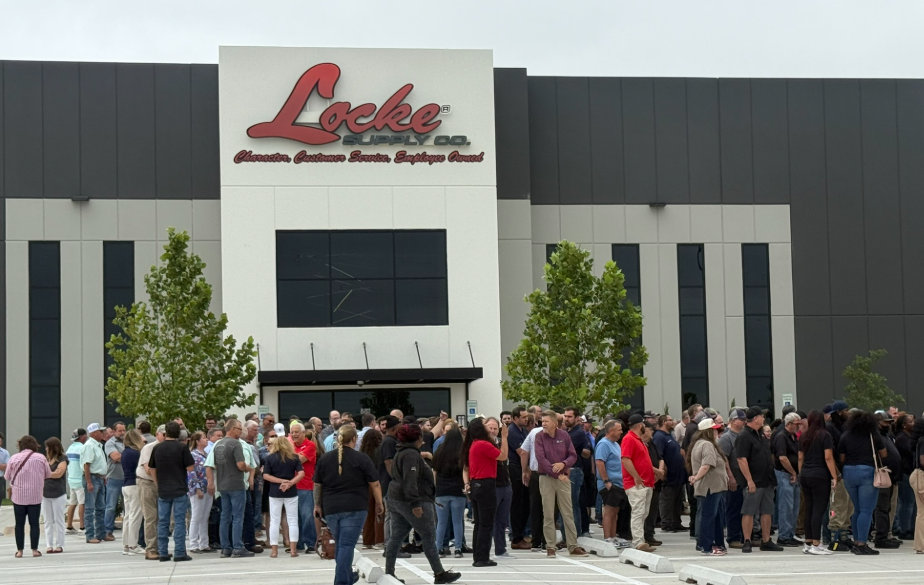
Locke Supply Celebrates 70 Years with State-of-the-Art Distribution Center

Locke Supply Company recently celebrated its 70th anniversary with the grand opening of a new distribution center and headquarters, a project designed to prepare the company for the future. In an interview with Farm Director KC Sheperd, John Orman, the company's head of innovation, shared insights into the facility and the company's deep ties to Oklahoma.

The new distribution center is a massive project that was four years in the making. It was a necessary step for the company, which had outgrown its previous location. The new facility will serve as the central hub for all Locke Supply materials, which are then shipped to its more than 200 store locations across six states.


An Employee-First Philosophy

Locke Supply has been rooted in Oklahoma since it was founded in Bartlesville in 1955. John Orman, who was born and raised in Oklahoma City, began his career with the company at age 18 while still in high school. This is a common story among Locke's associates, as the company has a strong promote-from-within culture.

A key part of the company's identity is its ownership structure. Locke Supply is a 100% employee-owned company through an ESOP (Employee Stock Ownership Plan). Orman stressed that the employees are the company, and the new facility was designed with their needs in mind. "This facility was designed from the inside out for the people that are working here, to give them better conditions, better operations, better processes," he stated. This focus on employee well-being is a core part of the company's values, contributing to long-term growth and a sense of shared ownership.


Growth and New Ventures

The new distribution center isn't just a warehouse; it's a multi-purpose facility that supports the company's expanding business ventures. In addition to its core plumbing, electrical, and HVAC supply operations, Locke has two subsidiaries:

  • Cloak Freight: A company that hauls freight for both Locke Supply and other customers.
  • Third-Party Logistics Operation: A service run out of the facility's back end.

These ventures show the company's commitment to continued growth and innovation, building on the legacy of its founders, Don and Wanda Locke.

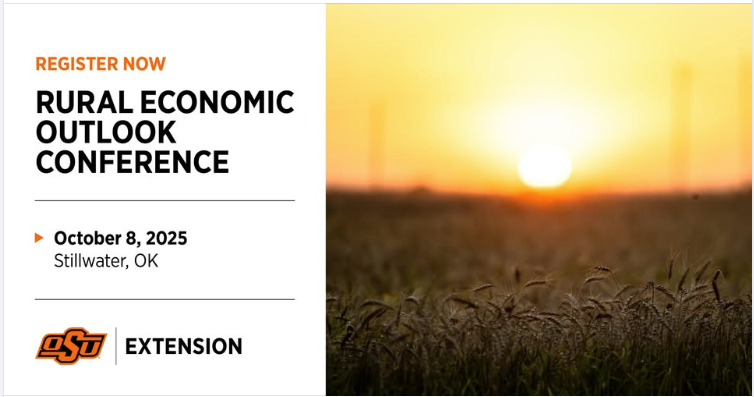
Rural Economic Outlook Conference Coming up October 7, Stillwater

Producers, lenders, and policymakers seeking to gain insight into the rural agricultural economy and make more informed decisions will be interested in attending the 2025 Rural Economic Outlook Conference, scheduled for Wednesday, October 8, at the ConocoPhillips OSU Alumni Center in Stillwater.

This annual one-day conference features keynote speakers from outside organizations, as well as OSU faculty. A featured keynote speaker, Heather Hampton Knodle, FCC Precision Ag Task Force Member, Chairman of the Accelerating Broadband Development Working Group (2020-21, 24), Chairman of Connectivity Needs Working Group (2022-2023), and President of Knodle, Ltd. Farms, will speak on AI in the Ag Industry. Attendees will also hear from an AI/ Technology panel.

Participants also have an opportunity to hear from OSU experts about departmental research, updates on the livestock market, as well as faculty views on Ag finance and grain markets.

The registration fee is $50 and includes breakfast, lunch, and breaks.

Click https://agriculture.okstate.edu/.../rural-economic... to register for the 2025 Rural Economic Outlook Conference.

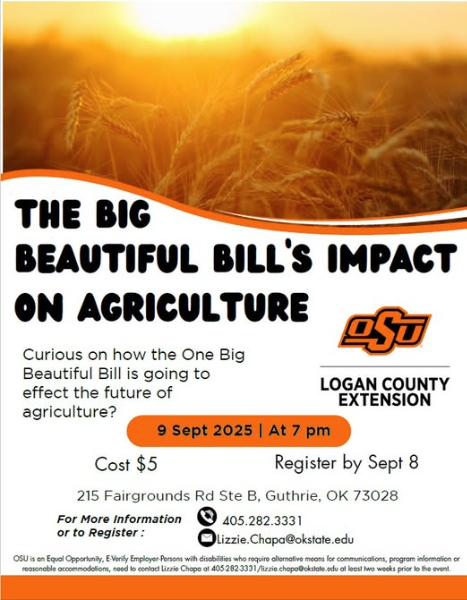
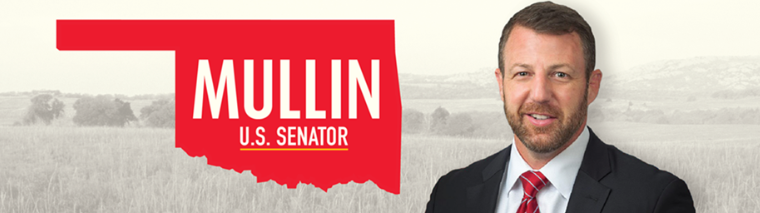
MULLIN IT OVER COLUMN: "President Trump's 'One Big, Beautiful Bill' Puts Oklahoma Agriculture First"

Today, U.S. Senator Markwayne Mullin (R-OK) released his latest Mullin It Over column—his sixth in a series of op-eds breaking down key policy wins from President Trump's 'One Big, Beautiful Bill' which was signed into law on July 4th, 2025.

President Trump's 'One Big, Beautiful Bill' Puts Oklahoma Agriculture First

By Senator Markwayne Mullin

"As a lifelong cow-calf rancher, I know firsthand the difficulties our farmers and ranchers face every day. Burdensome regulations, disease, recent natural disasters, and growing costs are just some of the challenges posed to farmers across the country. Agriculture is a way of life in Oklahoma and I'm proud to represent generations of family farms and ranches that work tirelessly to feed, fuel, and clothe our great nation.

With President Trump back in the White House and Secretary Brooke Rollins leading the way at the Department of Agriculture, America's farmers and ranchers are receiving unprecedented levels of support. Signed into law in July, the 'One Big, Beautiful Bill' secured huge wins for the Ag community and jumpstarted the support needed for our farms and ranches to thrive. The OBBB strengthens the farm safety net and provides longer-term certainty for farmers and ranchers.

For starters, we are making crop insurance more affordable for producers by redefining USDA's experience threshold definition from five to ten years and extending coverage through 2031, allowing more producers to qualify for assistance over a longer period of time. The community will also see an extension of the 45Z clean transportation fuel production credit for Oklahoma feedstock and sustainable aviation fuel producers through 2029.

The OBBB also invests $60 million in scholarship support for students at 1890 land-grant universities serving historically black universities, including our very own Langston University in Oklahoma.

In recent years, disease has hit the Ag community hard. This bill provides $233 million annually, starting in 2026, to the National Animal Disease Preparedness, Detection, and Vaccine Bank Programs to protect cattle health in Oklahoma and across the nation from foreign animal disease outbreaks.

With the OBBB also codifying the Small Business tax deduction, farmers will save more of their hard-earned money by being able to deduct 20% of their business income. I am also proud to say that we are preserving family farms by codifying the Death Estate Tax exemption threshold at $15 million per individual and $30 million per couple, adjusted annually for inflation, to allow farmers who have spent generations building their operations to pass them down to their children and grandchildren. Farmers will no longer have to worry about their land and operation leaving the family.

Oklahoma's farmers and ranchers drive our state and I'm proud to have worked with my colleagues to get these critical wins into the OBBB. I will always fight for the Agriculture community and continue to implement policies that will maintain our way of life for the generations to come."

NCFC Urges USDA to Protect Field Presence, Preserve Co-op Support in Reorganization

The National Council of Farmer Cooperatives (NCFC) today submitted comments to the U.S. Department of Agriculture (USDA) on its proposed reorganization plan, emphasizing the need to maintain USDA's field-based service delivery, safeguard cooperative support programs, and ensure continuity of critical services.

"Farmer cooperatives are vital to the strength of American agriculture and rural communities," said Duane Simpson, NCFC President &CEO. "The success of USDA's reorganization will not be judged by flowcharts in Washington, but by whether farmers, co-ops, and rural families can continue to access the programs and resources they rely on every day."

In its comments, NCFC highlighted several areas of concern and priority for farmer cooperatives:

Field-Based Service Delivery: Preserve USDA's trusted county and regional staff, backfill vacancies before consolidations, and ensure regional hubs support—rather than replace—local offices.

Technical Assistance: Partner with cooperatives to expand access to conservation and risk management support, addressing backlogs in the Technical Service Provider program.

Commodity Procurement: Retain specialized Agricultural Marketing Service (AMS) procurement staff and resist merging these functions into USDA's broader Office of Contracting and Procurement, which operates on longer timelines ill-suited to market-sensitive food purchasing.

Rural Development & Co-op Support: Keep Rural Business–Cooperative Service functions within USDA, where institutional expertise and local presence are critical to serving rural communities.

Continuity of Services: Establish clear protocols to avoid disruptions in conservation, nutrition, and cooperative development programs during the transition.

Farmer cooperatives are a critical link in the agricultural economy, with more than $300 billion in annual sales, serving 1.8 million farmer-members, and employing 200,000 people nationwide. These co-ops depend on USDA's expertise and responsiveness to support their members and strengthen rural communities.

"NCFC and our members stand ready to work alongside USDA to ensure this reorganization strengthens, rather than weakens, the Department's role as a partner to America's farmers and rural communities," Simpson added.


About NCFC

Since 1929, NCFC has been the voice of America's farmer cooperatives. Our members are regional and national farmer cooperatives, which in turn consist of more than 1,600 local farmer cooperatives across the country. NCFC members also includes state and regional councils of cooperatives. Farmer cooperatives allow individual farmers the ability to own and lead organizations that are essential for continued competitiveness in both the domestic and international markets.

America's farmer-owned cooperatives provide a comprehensive array of services for their members. These diverse organizations handle, process and market virtually every type of agricultural commodity. They also provide farmers with access to infrastructure necessary to manufacture, distribute and sell a variety of farm inputs. Additionally, they provide credit and related financial services, including export financing.

Oklahomans Supporting Oklahoma Investments

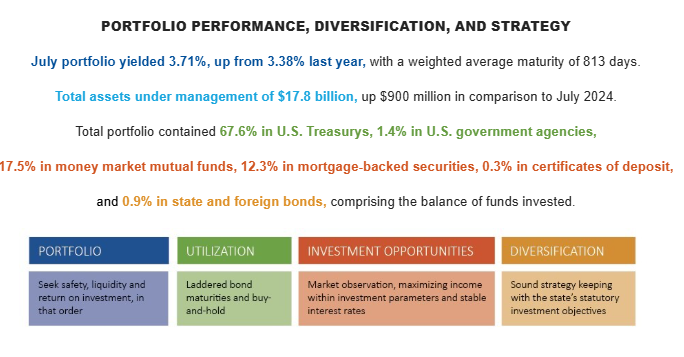
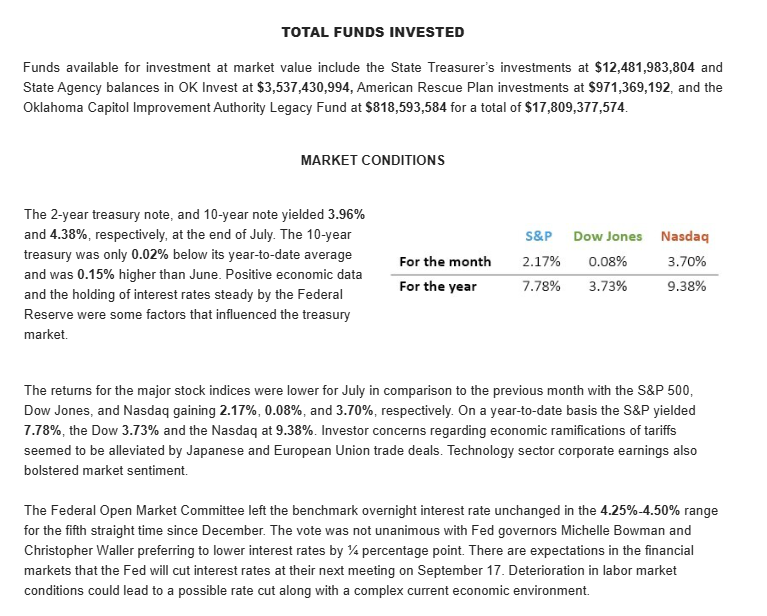
The Tobacco Settlement Endowment Trust (TSET) Board of Investors is committed to being an active and responsible shareholder. In the most recent board meeting in August, the TSET Board of Investors approved moving forward with submitting shareholder proposals to companies in which the fund is invested. The purpose of these shareholder proposals is to protect and grow current shareholder value, not to divest from companies. This represents the second time proposals of this kind have been presented, marking two consecutive years of the Board's vigilance in its fiduciary duty and engagement with the companies held in TSET's investment portfolio.

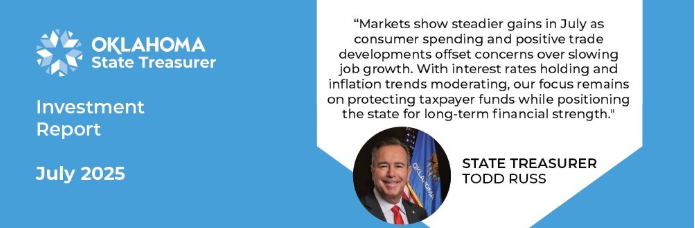
Oklahoma State Treasurer Todd Russ and Chairman of the Board of Investors said, "As fiduciaries, our responsibility is to ensure companies are financially positioned for long-term success. By engaging as active shareholders, we help maintain balance in the marketplace, getting back to neutral where decisions are guided by sound business practices rather than activist pressures. This approach strengthens companies, protects shareholder value, and supports the prosperity of Oklahoma investment."

For decades, shareholders have largely ignored their responsibility by noting traditional areas of governance such as board composition, executive compensation, and financial disclosures. These areas remain important, but today the financial landscape has shifted. Companies are increasingly pulled into geopolitical issues, federal mandates, and regulatory pressures that can pose risks to the balance sheet. The courts have recently said, as fiduciaries, we cannot ignore the financial impact of these realities.

The TSET Board of Investors is no longer sitting idly by but taking its responsibility seriously and asking the fund to pay attention to this new terrain. Shareholder proposals are one of the tools investors use to ensure companies remain aware of these challenges and are managing risks responsibly. The intent is not to weaken or punish, but to strengthen and support companies to position them for long-term financial success.

Our philosophy is simple: to fulfill our fiduciary duty, we must act as true partners in helping companies make sound financial decisions, attract investment, and thrive in a rapidly changing world. That means encouraging transparency, accountability, and collaboration that benefits both the company and its investors' bottom line.

This action is not taken by the State Treasurer alone, but by the approval of the Board of Investors. The Board is made up of Oklahomans, men and women who want Oklahoma, and the companies tied to it, to succeed. Our investments need to reflect that commitment. We invest in firms with strong Oklahoma roots because we want them to grow, compete, and remain a source of strength for our state.

Ultimately, our responsibility is to act in the best financial interest of the Trust's beneficiaries. By being an engaged shareholder, TSET works to protect value, support companies, and build lasting prosperity for Oklahomans.

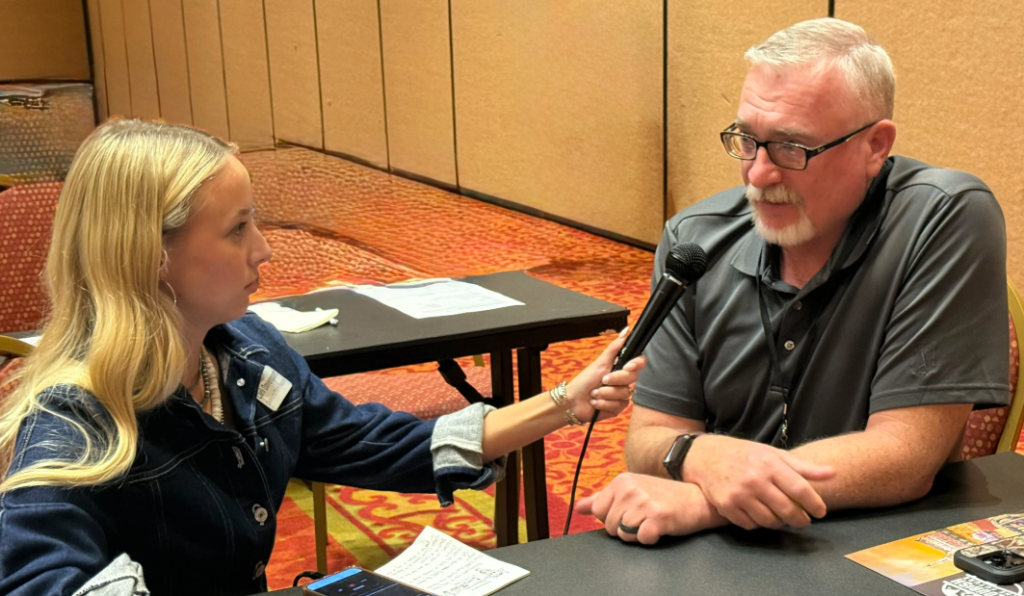
ABS's Dr. Matthew Cleveland: Genetics Driving Cattle Sustainability

Listen To Ron Hays And Matthew Cleveland

In today's Beef Buzz, Senior Farm and Ranch Broadcaster Ron Hays caught up with Dr. Cleveland this summer at the 2025 Beef Improvement Federation annual meeting- click here for his presentation from Amarillo. Dr. Matthew Cleveland, Global Senior Director of Bovine Sustainability at ABS, explains that sustainability is both simple and complex. "We can think about sustainability as really doing more with less, and ensuring that we can continue to do that over time and over generations. But I think it also is a fairly complex topic, because there are different components to it." He highlighted that sustainability includes the environment, animal health and welfare, communities, and profitability, but perspectives within the industry often shape how people define it.

Cleveland highlighted genetic progress as one of the most powerful tools for enhancing sustainability. "When you look at the data, you can go back as long as you want, but let's say you go back 50 or 60 or 70 years, we've seen massive improvements in productivity and that productivity leads to more sustainability." He added, however, that the challenge has been quantifying how those productivity gains translate into measurable sustainability metrics, something the supply chain increasingly demands.

He noted that consumers also play a central role in the conversation. "Consumers want to see where their food comes from. But when consumers do see where their food comes overwhelmingly, they're supportive of that. It doesn't turn them off to wanting to eat animal protein." Cleveland said there is "absolutely value in those sorts of efforts," especially as transparency builds trust between producers and the public.

For cattle producers, Cleveland emphasized the importance of setting clear goals. "It really starts with understanding what their target is. What is their target for genetic improvement? What are they aiming for, both in the short term and in the long term, and then really building that plan." He stressed the importance of not only making those improvements but also being able to communicate them effectively: "Here is the evidence. Here is the story that you can tell to make you feel good."

Finally, Cleveland discussed the rise of beef-on-dairy genetics. "We really started to design genetics more than 10 years ago that were really targeting this beef on dairy space because we felt it was going to be important." He explained that these efforts created more efficient and productive animals, filling critical supply needs in the U.S. While the industry was initially nervous about beef-on-dairy, Cleveland said, "Ultimately, I think our experience has now told" the story of its success.

The Beef Buzz is a regular feature heard on radio stations around the region on the Radio Oklahoma Ag Network and is a regular audio feature found on this website as well. Click on the LISTEN BAR for today's show and check out our archives for older Beef Buzz shows covering the gamut of the beef cattle industry today.

Ethanol Report 8-29-25

Ethanol was in the spotlight at the 2025 Farm Progress Show with USDA predicting a record corn crop that needs to find a home through increased exports and domestic demand and the Renewable Fuels Association once again had a strong presence at the show held in the heart of the Corn Belt.

This episode of The Ethanol Report podcast features some of the voices contributing to the biofuels buzz at Farm Progress Show this year. USDA Deputy Secretary Stephen Vaden starts it off by highlighting the Trump Administration's support for ethanol and growing export demand.

RFA President and CEO Geoff Cooper discusses EPA's latest announcement on small refinery exemptions and how boosting ethanol markets can help farmers deal with a large crop and low prices. RFA Senior VP for Industry Relations and Market Development Robert White talks about helping prepare fuel retailers for E15 in California, and Director of Government Affairs Jared Mullendore showed off the flex fuel vehicles on display and shared how farmers can convert their own vehicles to run on higher ethanol blends.

Ethanol Report 8-29-25 (26:57)

Charles L. Roff Award application now open through October 15

The Oklahoma Farm Bureau Young Farmers and Ranchers Charles L. Roff Award application is now open through Wednesday, Oct. 15.

The Charles L. Roff Award recognizes the top county YF&R committee that works to improve their local committees while strengthening the Farm Bureau organization. Each county YF&R committee is encouraged to participate by describing the activities it hosts or sponsors throughout the year, regardless of the scope.

The electronic application form can be found in the application center page on the OKFB website.

For more information on OKFB's YF&R Charles L. Roff Award, contact Burton Harmon at
(405) 523-2300.

Access the Charles L. Roff Award application here

Alyssa Walsh Inspires College Women to Take Risks and Start Building Their Dreams

Listen To Alyssa Walsh And Maci Carter

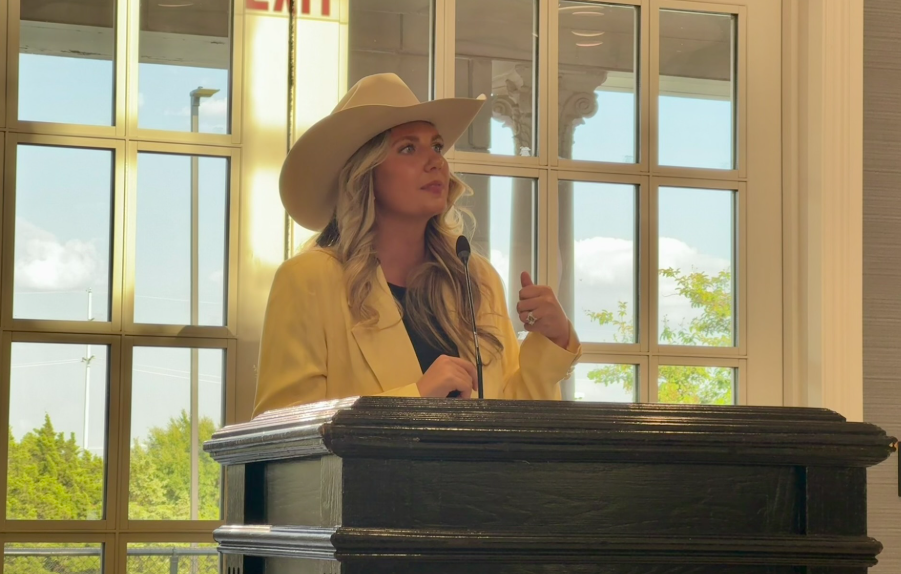
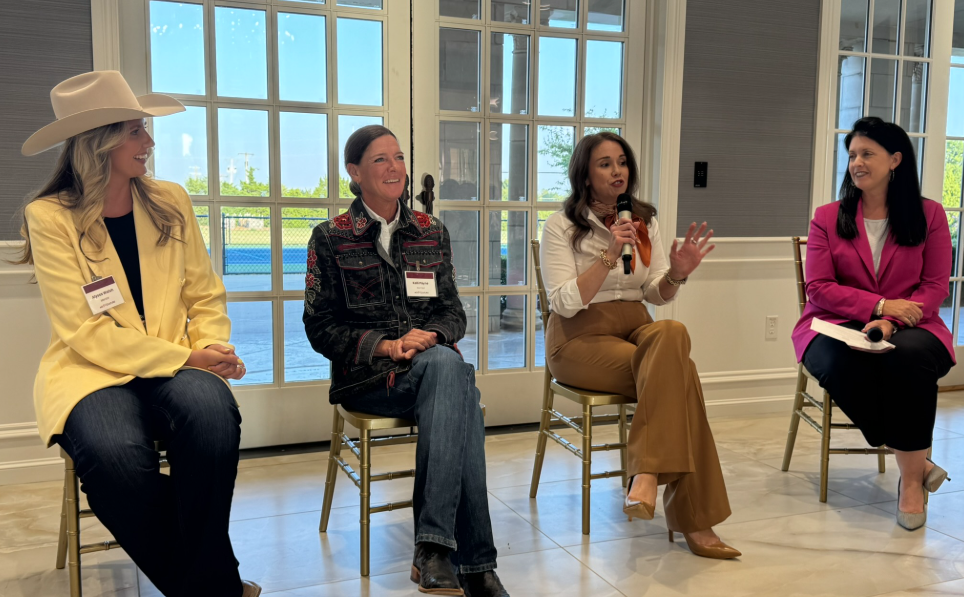
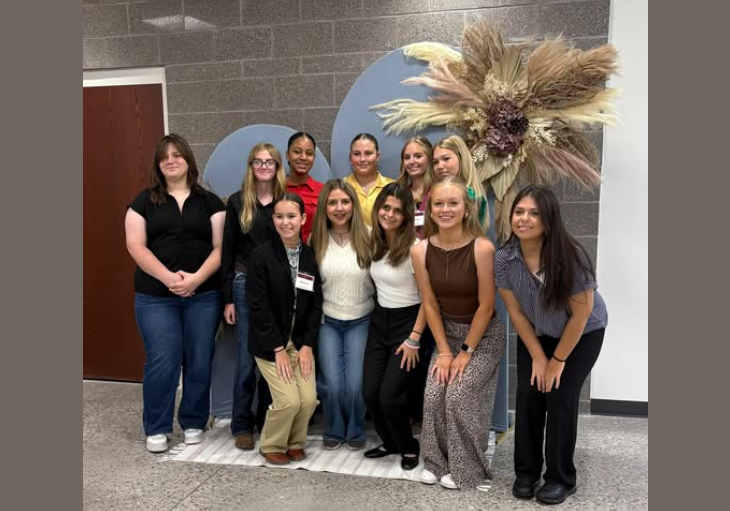
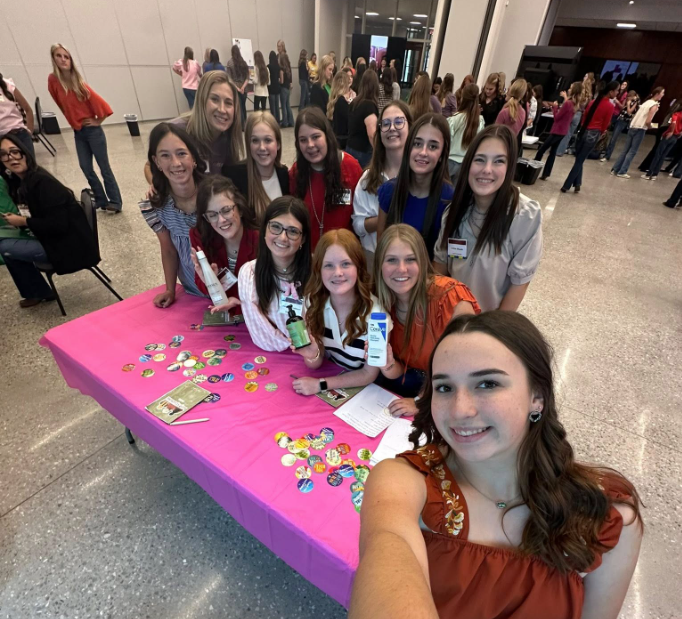
Alyssa Walsh reflected on her role as keynote speaker at the Agherculture college event held at the governor's mansion in Oklahoma City. "We just had an incredible night here with women across Oklahoma, around 100–150 young women chose to spend their first Friday night back on campus here with us to grow, not only in professional development, but grow in community, grow in connection," she said. Walsh shared her own journey of starting a business in college, shifting from building a portfolio for an employer to running her own company full-time. "It was so fun to get to share some of those insights that mentors have shared with me, some of the things I've done wrong, a few of the things I've done right, and get to kind of walk through my journey."

A strong advocate for entrepreneurship, Walsh emphasized that college is the perfect time to take small risks. "College is an area where you're never going to be surrounded with so many opportunities to fail and have people forget about it," she explained. For her, those risks included teaching herself graphic design and videography. "No one's ever gonna remember that crappy t-shirt design that you had. I had several," she joked. What started as small, low-risk opportunities eventually led her to filming her first wedding video on a cell phone—an experience that launched her videography business.

Walsh was part of a panel with Kelli Payne, & Kirby Smith

Walsh also introduced her "open doors and windows" analogy as students consider their own career paths. "Although there are a lot of logical reasons why photography and videography go hand in hand, I didn't feel passionate enough to set myself apart in that space," she said. Instead, she focused on videography, branding, and graphic design. "For me, being different and being unique meant really diving into video I don't try to be like a master of all trades. I really like to specialize and provide full value in the things that I offer."

Throughout her keynote, Walsh encouraged students to take consistent action, even if the steps are small. "If the students walk away knowing that it's time to take action now, there's no better time than the present, then I've done my job as a keynote speaker," she said. She compared careers to laying bricks one by one: "Not this huge, daunting task, but something that I can strategically try to accomplish day by day at the end of a very busy week or a very busy month, you can look back and see, okay, I still did one thing every day to move the needle forward on my big goal."

Asked about the best advice she could offer, Walsh pointed to a key message that resonated with both students and panelists: "Comparison is a thief of joy." She admitted, "It's something I struggle with still. I think every woman is going to struggle with that again and again at some point in their life. You just get a little bit better each time." That reminder, she said, struck a chord not only with her but with many students she visited with during the event's networking hour.

In closing, Walsh emphasized the importance of embracing individuality. "God gave us specific gifts for a reason. There can only be one Alyssa in the world, and that's a wonderful thing," she said. "There's only one of you, and that's extremely special and extremely important." Her hope for the students was that they left the event not only inspired to take action but also committed to valuing their unique strengths.

Alex Cox Details The Oklahoma Farm To School Program

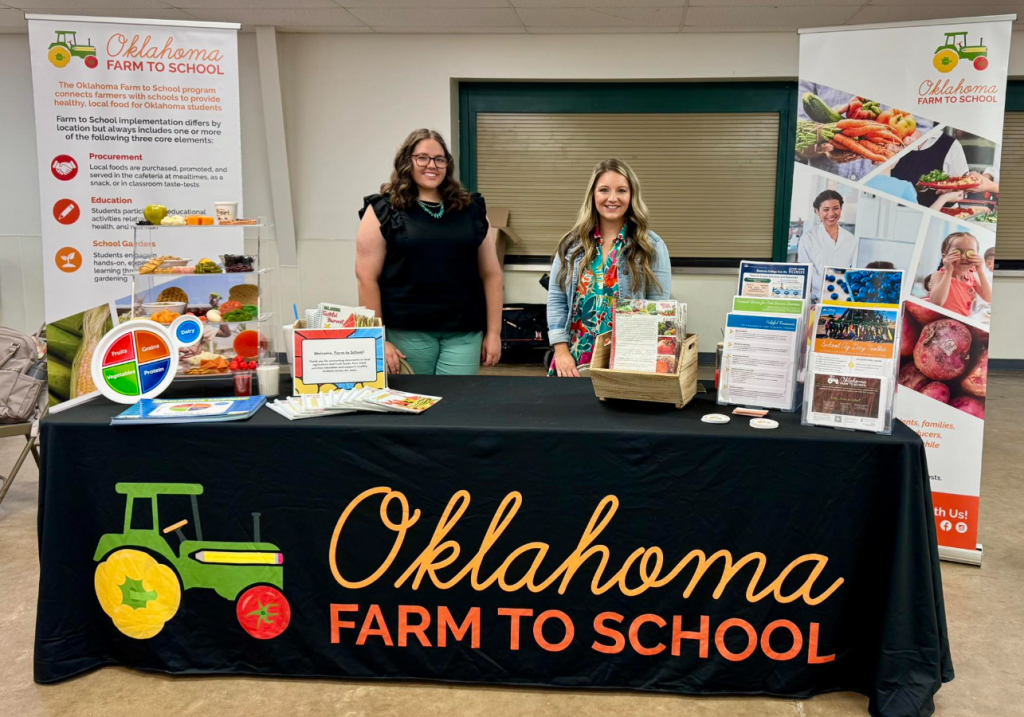
Pic credit of Oklahoma Farm To School fb page

Listen To Carli Davenport And Alex Cox

Associate farm reporter Carli Davenport spoke with Alex Cox, Farm to School Coordinator for the Oklahoma Department of Food and Forestry, who shared exciting news about new state support for schools. "We are really excited to have this state funding that has come down for our local schools," Cox said, noting that $3.2 million has been allocated for the Food for Schools Program. She explained that the funding must be spent on local food products—ranging from fresh produce to proteins like chicken or beef—and incorporated into school cafeterias for "snacks, breakfast, lunch, any type of meal that they serve to their students."

In addition to funding for meals, Cox highlighted efforts to encourage hands-on food learning through the annual school garden contest. She explained that the program is a partnership between Farm to School and the Farm Bureau Women's Leadership Committee. "Schools are encouraged to participate in this, and we have several different categories," Cox said. Winners this year included Middleburg Elementary for Best Startup School Garden ($1,000), Little Sprouts Learning Garden in Muskogee for Best Harvest Garden ($500), Tuttle High School for Best Pollinator Garden ($500), and Kingston Public Schools for Best Education Garden ($500).

Cox emphasized how rewarding it is to see resources returned to schools that are making an impact. "We're super excited to partner and to get this funding out to the schools that have won and see that money go back into their school garden," she said. The program's goal is not just to reward success, but also to sustain growth, as Cox added, "We can't wait to see what their school garden looks like next year."

Another highlight of the year is the celebration of National Farm-to-School Month each October. Cox explained, "Farm to School Month is just a big celebration of local foods and our producers, and getting the students to learn where their food comes from." A key part of that celebration in Oklahoma is the Lunch Crunch, which she described as "a time to celebrate in your cafeteria with purchasing and serving whatever kind of local food you want your students to crunch into."

This year, the second annual Great Oklahoma Lunch Crunch will take place on October 24; however, Cox stressed that schools can join in at any time during the month. "That could be local beef, that could be any local produce, so salads or any type of fruit," she explained. By getting students directly involved with local food—whether through meals or gardens—the Farm to School Program is strengthening connections between classrooms, cafeterias, and Oklahoma's agricultural community.

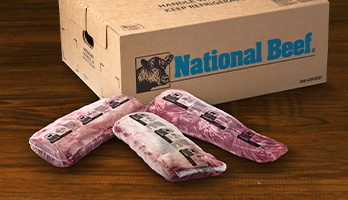
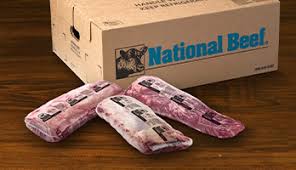
National Beef Boxed Beef

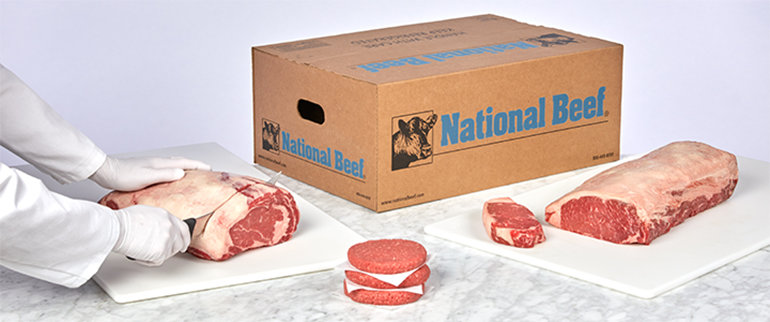
Fresh Boxed Beef High for 2025 Set on Thursday- Choice Boxed Beef Up $2.57 at $414.41

Boxed beef prices surged to fresh 2025 highs on Thursday, marking the strongest level of the year and the highest ever for August, with Choice at $414.41, up $2.57 from Wednesday, while Select slipped to $385.84, down $1.87. The Choice/Select spread widened to $28.57 compared to $24.13 the prior day. Primal values also strengthened, with the Rib at $638.32, the Chuck at $371.37, and the Round at $370.68—all hitting new record highs for 2025. The Loin firmed slightly to $495.83, while the Brisket eased to $340.20, the Plate dipped to $264.92, and the Flank edged lower to $234.27. Overall, boxed beef has gained $53.09 in August, underscoring the strength of the late-summer rally.

USDA Expands Efforts to Strengthen Rural Food Animal Veterinary Workforce and Protect America's Food Supply

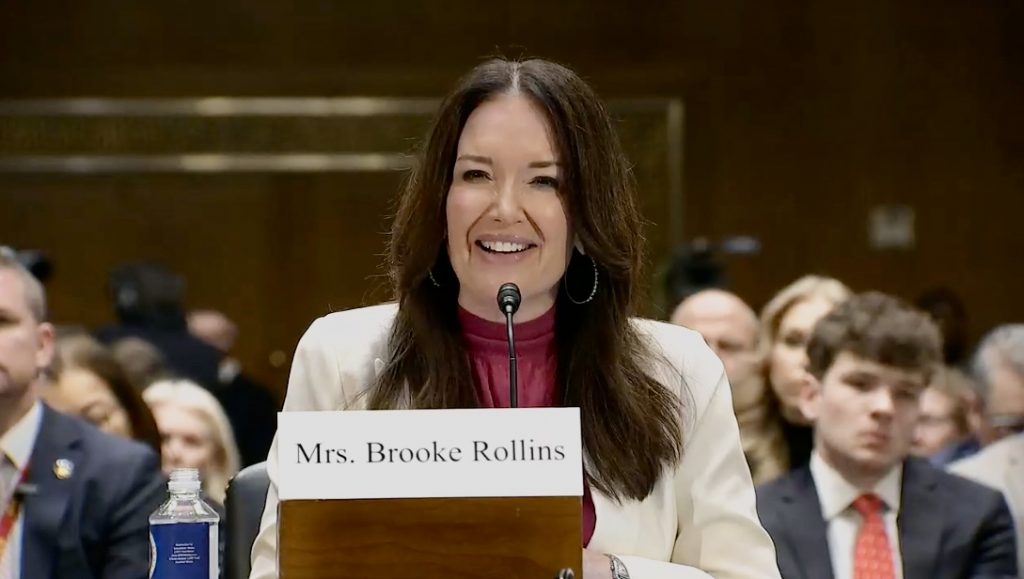
U.S. Secretary of Agriculture Brooke L. Rollins today announced a commitment to new actions (PDF, 1.2 MB) to increase the number of rural food animal veterinarians across the U.S. and recruit new veterinarians to join the U.S. Department of Agriculture (USDA) in their role to protect American ranchers, animals, and our food supply.

Secretary Rollins also announced two awardees of the Veterinary Services Grant Program which will allow for expanded capabilities to serve livestock producers in rural Mississippi and opened a new consolidated USDA office with the Rural Development, the Farm Service Agency, and the Mississippi Farm Bureau in line with USDA's reorganization efforts. The Secretary was joined by Governor of Mississippi Tate Reeves, Senator Cindy Hyde-Smith of Mississippi, Mississippi State University (MSU) President Dr. Mark Keenum, and Mississippi Farm Bureau President Mike McCormick.

"Rural veterinarians are vital for the agricultural economy in the United States. Our farmers and ranchers rely on these critical services to prevent the transmission of animal disease, protect our food supply, and support America's rural economy. As the number of rural food animal veterinarians continues to decline, USDA is putting Farmers First to ensure we build back our first line of defense in our animal food production system – the rural veterinarian. With these new investments in scholarships and pay incentives, USDA is not only strengthening our animal food production system but also listening to producers and veterinarians across the country to ensure our programs meet real-world needs. Together, we will keep America's food supply strong, safe, and secure," said Secretary Brooke Rollins.

"I applaud Secretary Rollins and USDA for making important changes to strengthen our veterinary workforce. As a cattle producer and co-chair of the Senate Veterinary Medicine Caucus, I know how urgently rural areas need more veterinary support. This announcement shows real commitment to protecting animal health and supporting our American farmers. Food security is national security, and this is exactly the kind of leadership we need," said Senator Cindy Hyde-Smith (R-MS).

"Rural communities are the heart of our state. They help feed all of Mississippi and our entire nation. Whether it's cattle, corn, catfish or something else, Mississippi supplies dinner tables across America every single day. Secretary Rollins' Rural Veterinary Action Plan will go a long way in supporting veterinarians throughout Mississippi. The new office space in partnership with USDA's Farm Service Agency, USDA Rural Development, and the Mississippi Farm Bureau speaks volumes to the kind of collaboration and coordination that is happening in our state. Thank you to President Trump and Secretary Rollins for their continuous support of Mississippi," said Mississippi Governor Tate Reeves.

"We remain strong advocates for our rural communities, knowing full well that the future of agriculture depends on access to veterinary care. Without veterinarians, our farmers and ranchers cannot thrive, and without thriving farms, our rural towns and communities cannot survive. We are honored to be a part of this effort, and we know that our shared success depends on collaboration," said Mississippi Farm Bureau President Mike McCormick.

"Technology is driving modern 21st century agriculture, and you can see that in the work we are doing here to advance precision agriculture. We're at the forefront of unmanned aircraft systems research and development, as well as autonomous agricultural systems. I'm grateful for Secretary Rollins and her strong leadership and strong support of our land-grant mission of teaching, research, and service. As one of our nation's leading research universities and land-grant institutions, Mississippi State is working with many partners to meet critical needs in our state and nation, as well as globally," said Mississippi State University President Mark E. Keenum.

Relocating and Modernizing USDA Facilities & Ribbon Cutting

Secretary Rollins announced a partnership with Mississippi Farm Bureau who recently renovated USDA's Mississippi Farm Service Agency State office space and is working to bring the USDA Mississippi Rural Development office to the same office building in order to create a one-stop-shop for Mississippi agriculture and rural businesses. The new, modernized facility will save taxpayer dollars by consolidating federal office space while relocating employees to a safer, upgraded facility out of the downtown Jackson area. Across our operations, USDA is looking to prioritize taxpayer dollars and consolidate duplicative and costly office space. This move is part of our larger reorganization announced in July to refocus our core operations and bring USDA closer to the people it serves. This partnership is a win for taxpayers, a win for USDA employees, and a win for the Mississippi farmers and ranchers we serve.

Recognizing Veterinary Services Grant Program Recipients

As part of USDA's Veterinary Services Grant Program (VSGP), Secretary Rollins announced two new grant awards to help expand veterinary practices in rural areas of Mississippi:

A $125,000 grant to Dr. Kimberely Klunk will serve Mississippi veterinary shortages in Adams, Franklin, and Lincoln counties. The grant will support community needs assessment, procurement of new tools to provide advanced livestock reproductive services for farmers and producers, and procurement of more efficient methods for transporting needed equipment to farm calls.
A $125,000 grant to Dr. Rachel W McCurdy Veterinary Services will serve Mississippi veterinary shortages in Newton and Scott counties. The grant will support procurement of updated diagnostic tools and equipment to ensure rapid detection of disease on upwards of 200 recurring client farms. The investment will also support more efficient methods of transporting equipment to farm calls, and educational outreach to enhance producer knowledge of critical veterinary services.

Launches Rural Veterinary Action Plan to Tackle the Large Animal Veterinarian Shortage in the U.S.

Animal health threats, foodborne illnesses, and complex trade barriers underscore the need for highly qualified food animal veterinarians; however, the growing shortage of veterinarians at both USDA and in rural America is alarming and has the potential to threaten the safety of our U.S. food supply chain. That is why today, Secretary Rollins took the first step to issue a Rural Veterinary Action Plan (PDF, 1.2 MB) that takes the following actions to tackle this challenge.

  1. Enhance and Streamline Veterinary Grant Programs

Effective later this year, USDA will make changes to the Veterinary Medicine Loan Repayment Program (VMLRP) and the Veterinary Services Grant Program (VSGP) to streamline applications to an online portal and will increase funding for these critical programs that have proven success rates.

  1. Analyze Rural Veterinary Shortages to Better Understand the Need

To make informed policy decisions, Federal and State governments need better data about the scope of the rural veterinary shortage, which is why the USDA Economic Research Service will study this issue and produce a report in mid 2026 to be used by USDA leadership and other policymakers seeking to address this crisis.

  1. Recruit and Retain USDA Veterinarians

USDA has a shortage of veterinarians for over a decade. Rural posts, port inspections, and export certification roles are particularly hard to staff, especially when the pay offered by private practices in urban and suburban areas is more competitive than government pay. To address this, USDA is pursuing strategies to make Federal service more attractive to create a direct pipeline into public service for veterinarians. These steps represent an investment to ensure APHIS and FSIS have a mission critical veterinary workforce needed to safeguard animal health, public health, and U.S. trade. Options under exploration include special pay rates for federal government veterinarians, increased tuition reimbursements to better align with private sector incentives, and potential implementation of a recruitment bonus for federal veterinarians. USDA seeks to partner with universities, state and local communities, farmers, and youth groups to recruit the best and brightest next generation of talent and bring more jobs to America's countryside.

  1. Catalog Federal Resources Available to Veterinarians for Starting a Practice

Opening a veterinary clinic in a rural area often requires significant capital to purchase or build the necessary facilities or equipment. For many recent graduates of veterinary school, this significant investment is difficult after incurring debt to pursue the higher education needed to become a veterinarian. To better educate veterinary schools and recent veterinary school graduates about programs available to help finance clinics, USDA will catalog relevant USDA programs including Rural Development programs such as the Business & Industry Loan Guarantees and the Community Facilities Program.

  1. Work with and Listen to Stakeholders, including Veterinary Schools, to Understand the Barriers to Entry and Increase Recruitment from Rural Areas

A low percentage of veterinary school students come from rural areas, or express interest in serving rural backgrounds, and an even lower percentage of recent veterinary school graduates enter into production animal practice. These are concerning trends and only exacerbate the rural veterinary shortage. To further understand problems and solutions, USDA will hold listening sessions between now and October 1, 2025, to hear from stakeholders to determine what additional actions can be taken to reverse these trends and recruit food animal veterinarians to USDA and rural areas.

These actions build on USDA's commitment to ensuring rural America has access to quality veterinary care for large animals, critical to preventing the spread of diseases like NWS and building upon our strong food safety inspection systems that protect American families and our food supply.

Disaggregation Decision a Positive Step in Labor Reform

 American Farm Bureau Federation President Zippy Duvall commented today on a federal court decision that vacates a burdensome and unfair disaggregation labor rule, which is part of the 2023 Adverse Effect Wage Rate Rule.

"Farm Bureau is pleased that the Department of Labor and a federal judge recognized that elements of the 2023 labor rule created an unfair wage structure that forced farmers to pay employees for jobs they may not usually perform. Farmers care about the men and women who choose to work on their farms, and they support paying good wages for their employees, but the rule did not align compensation with work performed.

"AFBF has long advocated for reforms to the H-2A guestworker program to ensure workers are treated fairly, and farmers can afford to fill their labor needs. We appreciate the administration for listening to those concerns. We encourage leaders to continue along the path of reforming a broken system by improving the H-2A program and stabilizing our workforce for our farm families." 

USMEF Statement on National Pork Board CEO Announcement

USMEF Statement on National Pork Board CEO Announcement The National Pork Board announced the appointment of David Newman, Ph.D., as its new chief executive officer. U.S. Meat Export Federation (USMEF) President and CEO Dan Halstrom issued the following statement: The National Pork Board has made an outstanding choice, and USMEF congratulates Dr. Newman on his appointment. USMEF has had numerous opportunities to work with Dr. Newman in his many pork industry leadership roles, so we know firsthand the expertise and experience he brings to this role. Dr. Newman knows the importance of both international and domestic demand for U.S. pork, and that it is critical to maximize both. We look forward to working closely with him and the entire Pork Board team to deliver value for U.S. producers.

The Corn Economy: NCGA Highlights High Production Costs Amidst Economic Crisis

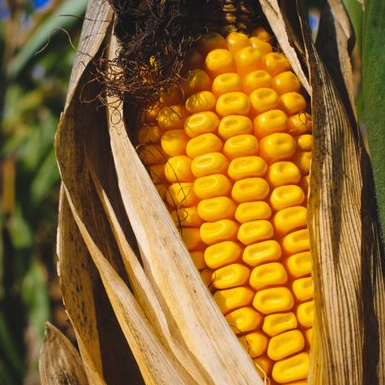
his week, the National Corn Growers Association (NCGA) continued to raise alarm about the economic crisis hitting rural America, as commodity prices drop at a time when input costs remain at near-record highs. As NCGA urges Congress and the administration to act to drive increased demand for corn, such as higher blends of ethanol and increased foreign market access, it has also raised concerns about input costs.

"At a time when many corn farmers are facing a reality of losing money after yet another year of hard work," said Illinois farmer and NCGA President Kenneth Hartman Jr, "it is essential that we examine all factors contributing to the economic hardships facing corn growers."

Average corn production costs have dropped just 3 percent from their peak in 2022 to 2025 while corn prices have declined by over 50 percent over the same period.  Even with higher yields, farmers are unlikely to be able to offset these high costs, resulting in continued and widening negative profit margins for the third consecutive year. A farmer with an average cost of production who receives the expected average price is facing an $0.85 per bushel loss in 2025. The outlook for 2026 is even worse, with a forecast projecting lower corn prices and rising costs.

As these trends are unsustainable for all corn farmers, NCGA released a series of three analyses on input prices:

  1. Input Costs & Breakeven Levels
  2. Inflation Impacts & Historical Comparisons
  3. Dissecting Input & Overhead Costs

As the corn growers raise concern about these issues, NCGA is asking elected officials, members of industry and agricultural representatives to come together to identify and advance solutions that will improve the troubling economic situation for farmers and rural America.

You can read NCGA's full analysis on corn input costs and breakeven levels here.

National Pork Board taps David Newman to lead the organization as CEO

 The National Pork Board (NPB), the producer-led and consumer-focused national Pork Checkoff organization, has named David Newman the organization's new CEO effective September 1, 2025. Newman most recently served as NPB's senior vice president of market growth. He joined the organization full-time in June 2023. 

"After a thorough and thoughtful nationwide executive search process, we have found an exceptional and dedicated leader in agriculture to take the organization representing America's nearly 60,000 pork producers into the future," said Gordon Spronk, a Minnesota pig farmer, swine veterinarian and NPB's board president. "David is no stranger to the pork industry. He has proven himself to be leadership-oriented, producer-focused and outcomes-driven when it comes to ensuring the pork industry is addressing the challenges and opportunities ahead of us. On behalf of the board, we have confidence in his character and capability to lead the organization, staff and industry into a productive and powerful next season for pork." 

Newman was previously a member of the NPB board of directors, serving as the board's president for two terms in 2020 and 2021. He has also served as a member of the U.S. Meat Export Federation executive committee. Before joining NPB as staff, Newman received a doctorate in meat and animal science from North Dakota State University. He was also a faculty member at NDSU and later at Arkansas State University, serving as a leader in meat science programs and swine research, where he focused his academic work on meat quality. Along with his family, Newman owns and operates Newman Family Farms based in Myrtle, Missouri.

"It's a privilege to work for and on behalf of pork producers," said Newman. "We make a flavorful, nutritious product that is beloved by millions of people across the globe. Producers can be proud of that, and of the work their checkoff is doing to drive demand with new generations of consumers, ensure we have a healthy swine herd and help the industry anticipate and adapt to change. I am honored to be named CEO of the National Pork Board and to continue serving pork producers and the industry in an even greater capacity going forward."

The NPB board appointed a committee in April to conduct the CEO search and represent a cross-section of pork industry expertise and perspectives. The committee was led by past NPB board president Al Wulfekuhle, a pig farmer from Iowa. The robust national search process included support from Kincannon & Reed, one of the nation's leading global executive search firms focused on the food and agribusiness industry.

"I'm grateful to the selection committee for their time and commitment to serve pig farmers and help us determine the next leader of the National Pork Board," said Spronk. "As a board, we have confidence in NPB staff continuing the great work that is already underway to deliver the goals in our strategic plan. In the fortieth year since the founding of the National Pork Board, the board and its officers, the new CEO and the NPB staff are well positioned to meet the needs of the next generation of our nation's pork producers."

Dairy heifer inventories to shrink further before rebounding in 2027

The U.S. dairy industry is facing a potential shortage of its most important resource – milk cows. The number of replacement heifers available to enter the dairy herd as milk producing cows has already fallen to a 20-year low. Based on new CoBank research, replacements could fall even further over the next two years before a recovery begins in 2027. These declining heifer inventories could limit growth in the milk supply, a looming concern for dairy processors with expansion plans underway. The U.S. is currently experiencing an historic $10 billion investment in new dairy processing facilities expected to come online through 2027.

The decline in dairy heifers over the last several years is closely tied to beef and dairy market dynamics. Tight cattle supplies and record high prices for beef calves prompted many dairy farmers to produce more calves destined for beef feedlots and fewer to milk barns. At the onset of this trend, raising dairy heifers to enter the milk cow herd was a money-losing proposition due to extremely low heifer values and high rearing costs. While the economics have shifted and the shortage of replacement dairy heifers has sent values soaring, replenishing the pipeline of heifers available to enter the milking herd is a three-plus year proposition.

According to a new report from CoBank's Knowledge Exchange, the national dairy heifer shortage could persist and grow deeper in the next two years. Based on CoBank's predictive modeling, heifer inventories will shrink by an estimated 800,000 head over the next two years before beginning to rebound in 2027. In the meantime, dairy heifer prices have reached record highs and could climb well above $3,000 per head.

"The U.S. dairy industry stands at a unique inflection point," said Corey Geiger, lead dairy economist with CoBank. "Beef sales are contributing a larger share of dairy farm profitability with each passing year and the market for beef-on-dairy calves shows no signs of slowing down. In order to maintain sufficient dairy cow numbers and milk production in the near term, dairy farmers will need to put the brakes on dairy cow culling. And that could be difficult given how much they've already pulled back over the past two years."

The economic incentive prompting dairy farmers to produce calves destined for the beef supply stems from the historic contraction in the U.S. cattle supply, which currently stands at a 75-year low. Limited beef supply and strong consumer demand have driven beef prices to record highs.

Most dairy farmers breed their cows via artificial insemination, which gives them the option of using beef semen to produce calves well-suited for beef production. Based on semen sales data, many dairy farmers did just that. Total U.S. beef semen sales nearly tripled from 2.5 million to 7.2 million units from 2017 to 2020. While a demographic breakdown of semen sales at that time was not available, the upward shift primarily came from dairy farmers, not beef cattle ranchers who largely rely on natural service bulls.

In 2020, the National Association of Animal Breeders began tracking beef semen sales to dairy farmers. Those numbers tell a more dramatic story. Of the 7.2 million units of beef semen sold that year, 5 million units were purchased by dairy farmers. That ratio eventually climbed to 7.9 million of the 9.7 million units sold in 2024. Their skyrocketing purchases of beef semen reflect the extent to which dairy farmers chose to produce calves destined for beef production rather than dairy herds.

As the supply of dairy heifers has dwindled and their value has climbed, dairy farmers are culling fewer cows to keep the milk flowing. They have also made significant changes in semen purchases to help remedy the shortage of replacement heifers by purchasing more gender-sorted units to create more dairy heifer calves. But rebuilding the supply will take time. It typically takes two years before a newborn dairy heifer calf is available to enter the milking herd.

Geiger said the decline in heifer inventories raises the question of whether there will be enough milk cows to supply the additional demand created by new dairy processing facilities. "The short answer is that it will be tight. Those dairy plants will require more annual milk and component production, largely butterfat and protein. And it will take many more dairy heifer calves in future years to bring the national herd back to historic levels."

Watch a video synopsis and read the report, Dairy Heifer Inventories to Shrink Further Before Rebounding in 2027.

About CoBank

CoBank is a cooperative bank serving vital industries across rural America. The bank provides loans, leases, export financing and other financial services to agribusinesses and rural power, water and communications providers in all 50 states. The bank also provides wholesale loans and other financial services to affiliated Farm Credit associations serving more than 78,000 farmers, ranchers and other rural borrowers in 23 states around the country. CoBank is a member of the Farm Credit System, a nationwide network of banks and retail lending associations chartered to support the borrowing needs of U.S. agriculture, rural infrastructure and rural communities. Headquartered outside Denver, Colorado, CoBank serves customers from regional banking centers across the U.S. and also maintains an international representative office in Singapore.

Debbie Long Announces Candidacy for OK HD9

Lifelong Oklahoman, community leader, and devoted public servant Debbie Long has officially announced her candidacy to serve the communities of Claremore, Owasso, Limestone and Valley Park in Oklahoma House of Representatives, District 9. With a decades-long record of service including her current role as Mayor of Claremore, Long brings both experience and heart to her campaign, pledging to continue to represent the values, opportunities and future of the people she has called neighbors for more than 35 years.

"I've always believed leadership is about service," Long said. "It's about showing up, listening, rolling up your sleeves, and working side by side with people. District 9 deserves a representative who not only understands its history but is willing to fight for its future. That's why I'm running."

For two decades, Long served as the volunteer Executive Director of Leadership Rogers County, a program designed to connect citizens with opportunities to serve and lead. She facilitated conversations with state and local leaders, nonprofits, schools, and businesses—helping participants identify where their talents could make the greatest impact.

Her leadership extended into crisis response. Following the devastating EF3 tornado that struck Claremore in 2024, Long worked around the clock with local families and volunteers. She co-founded Claremore & Rogers County Disaster Assistance (CRCDA), which coordinated food, shelter, home repairs, and long-term recovery efforts.

Long's candidacy reflects not only her dedication to District 9 but also her vision for future generations. As a small business owner of more than 35 years, she brings financial acumen and practical problem-solving to the table to address needed transparency and accountability to taxpayers, and proper oversight of budget operations in the legislature. As a former Claremore City Council member and current Mayor, she has proven her commitment to both listening and leading.

Debbie Long has been married to her husband, Eric, for 28 years. Together they have two adult children, two sons-in-law, and three grandchildren. She is a member of Destiny Life Church in Claremore and continues to serve on community initiatives.

For more information about Debbie Long's platform, please visit www.LongForStateHouse.com and follow her campaign on facebook at Long For State House. 

Ensuring Public Trust with Free Expression of Religious, Social, Cultural and Political Beliefs

No Oklahoman should be denied access to financial services. This reality has hit homes and businesses across the state. While the world has made money the lifeblood for everyday survival, so too have financial institutions become woven into the fabric of daily life. This power creates potent dangers on every side.

With the most recent executive order, Guaranteeing Fair Banking for All Americans, the days of debanking are surely on the decline. Within the next six months, work will be done to remove reputational risk and politicized, unlawful debanking requirements by regulators like the Small Business Administration and other federal agencies with supervisory and regulatory authority over banks, savings associations and credit unions.

The concept of reputational risk started in the mid to late 90s to help reduce risk tied to negative public opinion harming earnings or capital. While financial risk is paramount to safeguard, regulating reputational risk became subjective due to the lack of standards and potentially biased decision making. Not having clear, consistent standards for what constitutes reputational harm left the door open for beliefs of any kind to be unfairly targeted and manipulated.

Opposition soon followed as the pursuit of limiting customers based on specific religious, social, cultural or political agendas became easier. Where none of these agendas or beliefs can contribute to the bottom line either negatively or positively in a predictable manner, the need for change was real.

In recent months the Federal Reserve, Office of the Comptroller of the Currency (OCC) and Federal Deposit Insurance Corporation (FDIC) have taken steps to remove reputational risk from their programs. Together with the actions of the new executive order, this progress supports the work to end debanking and restore fairness in our financial system.

These changes will help everyday Oklahomans and small businesses across the state, improving the livelihood and heartbeat that makes this state great. Today, where public trust is tied to the economy, every step towards strength is a win. Giving back the power to the people earns public trust, as government listens and engages with citizens to strengthen everyday life and the future.

While the projected risk diminishes federally, the actual risk will still remain. Financial institutions navigating public-facing risks have real concern about what comes next. Shifting from a compliance-driven approach to a state or even internal driven approach is no small feat. Existing financial risk frameworks, third-party services and security mechanisms are easy to lean on, but being transparent, accountable and communicative is the challenge. In the face of any public controversy or litigation, a strong, financially driven risk evaluation will protect an institution against high-risk customers.

As a proponent of fair banking since the inception of taking the Office of the State Treasurer, I look forward to continuing this work for Oklahomans in the future. These changes show real progress that strengthens both our people and the financial future they work so hard to build.

Nominations Now Being Accepted for 46th Oklahoma Governor's Arts Awards

Every day across Oklahoma, countless individuals and organizations dedicate themselves to the arts and are making a difference in their communities and schools. From faithful volunteers to seasoned leaders, long-time classroom teachers to determined advocates, these champions for the arts deserve recognition for their outstanding efforts.

Since 1975, the Oklahoma Governor's Arts Awards has been the premier event for honoring those whose dedication has impacted the arts in our state. Through Wednesday, October 15, the Oklahoma Arts Council is accepting nominations for the 46th Oklahoma Governor's Arts Awards.

Presented every two years by the Governor of Oklahoma and the Oklahoma Arts Council during a special ceremony at the state Capitol, awards recognize honorees in several categories. Hundreds of Oklahomans have been awarded the Governor's Arts Awards gold medallion bearing the image of Allan Houser's Capitol sculpture As Long As the Waters Flow since they were introduced decades ago. Submit a nomination today for the chance to bring this meaningful recognition to a deserving person or organization in your community.

How to Submit a Nomination

There are two options for submitting a nomination:

Option 1: Complete an online nomination form
Option 2: Download a nomination form and follow instructions for submitting a two- to three-page typewritten narrative

Categories

Honorees are presented awards in the categories below. The Governor's Arts Awards selection committee will consider nominations in the categories of best fit.

The Governor's Award – recognizes longtime leadership and significant contributions to the arts
Arts in Education – recognizes an individual, organization, school, educator or group for their outstanding leadership and service benefiting arts education
Business in the Arts Award – recognizes businesses that exhibit outstanding support of the arts in Oklahoma
Community Service Award – recognizes significant contributions to the arts in specific Oklahoma communities in the areas of leadership and volunteerism
Media in the Arts Award – recognizes members of the media who have demonstrated professionalism and commitment to supporting public awareness of the arts
George Nigh Public Service in the Arts Award – recognizes an Oklahoma government official for outstanding support of the arts

Eligibility

Nominees must be current, full-time Oklahoma residents or organizations that work in and for the benefit of Oklahoma. Awards are not given posthumously.

Daily Email for August 28, 2025


Oklahoma's Latest Farm

and Ranch News

Thursday, August 28, 2025


Howdy Neighbors!

Oklahoma FFA Foundation Celebrates Milestone Year, Looks to the Future

Oklahoma FFA is experiencing significant growth and success, with a strong focus on scholarships, leadership development, and preparations for a landmark centennial celebration. In a recent interview, Farm Director KC Sheperd spoke with Jacey Fye of the Oklahoma FFA Foundation to discuss the organization's latest achievements and future plans.


"FFA in Oklahoma is really important because it is training our future youth for agriculture, knowing where their food, fiber, and natural resources systems come from," Fye said, highlighting the organization's foundational mission. With approximately 370 chapters and a growing membership of around 30,000 students, the state's FFA association is one of the largest and most active in the nation.


Scholarships and National Recognition The Oklahoma FFA Foundation has had a banner year for scholarships. At the recent state convention, the foundation was able to fully fund all proficiency and career development event awards, a first for the organization. This meant every state winner in those categories received a $1,000 scholarship. Additionally, the four state star winners were awarded scholarships of over $29,000 each.

A New Era for Broadband in Oklahoma

The long-awaited final push to close Oklahoma's digital divide is officially underway. Farm Director KC Sheperd recently sat down with Oklahoma State University's Brian Whitacre, a leading broadband specialist, to discuss the state's plan for the Broadband Equity, Access, and Deployment (BEAD) funds. The conversation revealed a significant stride toward universal internet access, a move with massive implications for rural Oklahoma.


"Each state is finally in the process of announcing their final broadband equity, access, and deployment funds, and who won those funds and where they're going across the state," Whitacre told Sheperd, kicking off the discussion with the exciting news. This latest announcement marks the final major broadband program, with Oklahoma set to receive nearly $800 million.


Whitacre confirmed the years-long effort and shared a surprising detail: the state is sending back approximately $225 million of the federal money. "We said we can do it for cheap," he explained, a nod to the state's ability to efficiently allocate the funds.

Colin Woodall Offers His Analysis on the USDA Strategy Against New World Screw Worm

Senior Farm and Ranch Broadcaster Ron Hays speaks with Colin Woodall, CEO of the National Cattlemen's Beef Association about the recent human case of New World screw worm and how federal agencies have responded. He said the CDC's work was effective, noting, "their protocol worked well." But the bigger focus for cattle producers, Woodall explained, is USDA's plan to protect livestock. He stressed that Secretary Rollins' recent announcement in Austin was "very important to the cattle industry."


One of the key elements of that plan, Woodall said, is building a domestic sterile fly production facility. "We only have one that's up and running. It's that one in Panama producing about 117 million a week." He explained that eradication requires around 500 million sterile flies per week. "With the 300 million that will come from this facility... couple that with the facility in Panama and also the facility in Mexico we're going to get close to that 500 million so we'll be prepared."


The timeline is still a challenge, Woodall admitted. "The question is, just how quickly can we get our facility up and running? Take a while to build that." That is why he sees Secretary Rollins' announcement of funding for research as critical. "Her announcement of $100 million for new technology is also important to either make the process faster or look at ways to genetically engineer pests to be able to fight back. I think that could very well be a game changer for us."

Lucas Metal Works is a steel building manufacturer, located in NE Oklahoma, where their roots run deep and their commitment and service to customers remains strong.


Since 1968, Lucas Metal Works has manufactured "Built to Last" products.

Lucas is the innovator of the Lucas Ground Hog®, a nationally recognized arena tool utilized during major arena events around the US and Canada.


With leading expertise in the industry, Lucas manufactures custom, steel buildings comprising of red iron, 40 year warranted roofing and wall panels, in addition to trim and a full line of steel building components. A state-of-the-art facility ensures quality assurance throughout the manufacturing process. And, custom designs and quotes are always free!


"At Lucas, we're big enough to handle the large jobs, and small enough to call our customers, friends."


Give them a call at 918-535-2726 or visit www.lucasmetalworks.com

The vision of the Oklahoma Beef Council is to be a positive difference for Oklahoma's farming and ranching families and the greater beef community, and its mission is to enhance beef demand by strengthening consumer trust and exceeding consumer expectations. 


To learn more, visit www.oklabeef.org. Also, don't forget to like its Facebook page at www.facebook.com/oklabeef for stories on Oklahoma's ranching families and great beef recipes. 


And Check out this video below that helps you learn more about the Beef Checkoff- .

David Lalman: Limit-Grazing Wheat Pasture A Practical Strategy for Beef Cows and Calves

We have excellent prospects for wheat pasture this fall, but the market conditions and low cattle numbers will make purchasing stocker calves more difficult than normal. How can we best use this valuable forage resource? Small-grain winter pasture is an excellent protein and energy source for beef cows. Fall-calving, lactating cows perform extremely well when grazing abundant wheat pasture throughout lactation. We tracked performance of lactating Angus cows and their calves grazing wheat from January through grazeout in May.


Notice cows averaged 26 pounds of milk yield during late-lactation and still managed to gain over 2 pounds per day along with tremendous increase in body condition. The combination of forage quality and high forage intake can result in cows becoming over-conditioned. This would certainly be a concern in spring-calving cows as their nutrient requirements are substantially lower during gestation.


Limiting wheat pasture forage intake can serve to control cow condition and stretch the expensive, high-quality forage over more grazing days. One approach is to limit-graze the wheat as a protein and energy source to complement low-quality standing forage or hay. We discovered that about 9 to 12 hours per week of access to wheat pasture (3 to 4 hours per day, 3 days per week) met supplemental protein and energy needs for lactating beef cows. Using this method, we were able to stock cows at about a cow/calf pair to 0.7 acres of wheat pasture from mid-November through mid-May. 

Sorghum Checkoff Announces First-Ever Human Clinical Trial on Whole Grain Sorghum's Health Benefits

The United Sorghum Checkoff Program (USCP) recently announced the launch of the first human clinical trial to evaluate whole grain sorghum's health benefits. Conducted by the University of Nebraska–Lincoln and co-funded by USCP in partnership with USDA's Agriculture and Food Research Initiative (AFRI) Commodity Board program, this landmark study will investigate how daily consumption of two whole-grain sorghum varieties — a traditional white sorghum and a phenolic-rich "sumac" sorghum — influences key health markers such as insulin resistance, inflammation and gut microbiome composition.


The trial is designed as a randomized crossover study in adults with obesity. Throughout the study, researchers will measure changes in insulin resistance, as well as secondary outcomes like body weight and composition, blood pressure, blood lipids, antioxidant and inflammatory biomarkers, and gut microbiota profiles.


"This first-of-its-kind human study is a direct result of sorghum producers' commitment to scientific research," said Lanier Dabruzzi, MS, RD, LD, Director of Nutrition & Food Innovation of the Sorghum Checkoff. "For years, we've seen promising evidence of sorghum's health benefits in vitro and in animal studies, and now we are taking the critical next step of exploring these and other benefits within the complexity of the human body. By investing in rigorous clinical research, we aim to provide the science-backed evidence health professionals and food companies need to recognize sorghum as a truly beneficial grain for whole-body health."

The Corn Economy: High Production Cost Series, Part 2

The National Corn Growers Association (NCGA) is concerned about the tough financial reality facing many farmers today. While NCGA maintains a persistent focus on driving additional sources of demand for U.S. corn in effort to improve the outlook, it is also analyzing input costs that remain near record highs. This is Part 2 of a three-part series highlighting the financial challenges facing corn farmers and a deeper look at the cost of growing corn.


Investigating the Influence of Inflation on Production Costs Rising inflation significantly affects the costs farmers face for inputs, machinery, and services. When costs rise for the businesses selling these products and services that farmers need, they can raise their prices to stay profitable or at least economically viable. That translates to higher costs for farmers.


These businesses may face short-term influences of supply and demand fundamentals and other supply chain factors related to their specific product or service. Over longer periods of time, farm input prices are significantly correlated with general inflation.

Global Innovation Symposium Helps Latin American Buyers Develop New Uses for U.S. Red MeatS

On the campus of Colorado State University, a unique event recently unfolded, bringing together a diverse group of international retailers, importers, and buyers of U.S. red meat. This gathering, the Global Innovation Symposium, was a collaborative effort by the U.S. Meat Export Federation (USMEF), supported by the National Corn Growers Association, and designed to spark new ideas and practical applications for American beef and pork around the world.


Paige Parker, USMEF Manager of Technical Programs, highlighted the core mission of the symposium: innovation. "We want these individuals to be able to go back to their markets and use innovative technologies such as sous vide, how to cook things differently, different grinding practices, all of the above," Parker explained. The goal was for attendees to discover new ways to utilize U.S. products, expand on existing methods, and ultimately "increase their market share in different products that they can potentially use in their own operations." The focus was on hands-on learning, ensuring that the insights gained could be directly applied in various global markets.


Among the experts sharing their knowledge was Dr. David Velazco, Director of Food Science Innovation at Colorado Premium Foods. Dr. Velazco captivated the audience with insights into the versatile sous vide cooking method. He broke down the process, noting, "How it works is we put meat on their vacuum with more ingredients if you need, and then we put it in a water bath." The beauty of sous vide, he elaborated, lies in its precision. "The water bath holds a specific temperature. So you can leave it as long as you like for the exact temperature that you need to achieve the quality aspects that you desire." 

Oklahoma National Stockyards Back up For Sale

A planned sale of the historic Oklahoma National Stockyards (ONSY) has fallen through, leaving its future in uncertainty. In a late-night Facebook post, the stockyards informed the agricultural community that the proposed sale would not be happening. This comes after an announcement in May that ONSY, a vital part of the nation's agricultural infrastructure, had been placed under contract for purchase by a group led by Oklahoma cattleman and business owner, Chris Franklin.


The acquisition was seen as a way to ensure the continued operation of one of the nation's premier livestock markets. Chris Franklin, the managing member of the purchasing group, had expressed enthusiasm for the deal and a commitment to preserving ONSY's legacy of excellence. However, the Facebook post stated that an unspecified "obstacle" was too great to overcome, leading to the collapse of the transaction.


The current management is now seeking a new buyer who shares its vision for the stockyards. The hope is to find an investor committed to both developing the surrounding "main street" area and preserving the stockyards' core livestock operations. The announcement concluded by encouraging producers and customers to stand with them as they seek a solution. We will provide you with more information as details become available.

Checking the Markets...

After trading a lot higher during the day-  October live cattle closed $1.32 higher at $239.52 on Wednesday. Cassie Fish with The Beef offers her take on this historic time- "The rally seems to be mostly fueled by the growing realization of just how short feeder cattle supplies are, with the loss of access to Mexico, and how short fed cattle supplies will be as a result. No one expected the border to remain closed this long and there seems to be little clarity at present regarding when it might reopen. Futures markets have responded this week by attempting to price that short supply." Boxed beef eased lower on Wednesday, marking only the fourth down day in August. Choice slipped $1.33 to $411.84, while Select dropped $3.05 to $387.71.


OKC West sold 6,721 on Tuesday and Wednesday of This week- Bill Barnhart, their Manager, writes on Facebook of the week: "Much of our trade area was blessed with a nice soaking rain (4" here) this week. Although some classes were steady at the auction most others were 2.00-10.00 higher. Producers are enjoying the rarified air of this soaring market as there doesn't seem to be any end in sight. Due to Labor Day there will be no cow sale Monday but we will have our regular Tuesday/Wednesday auctions next week."


OKC West is our Market Links Sponsor- they sell cattle three days a week- Cows on Mondays, Stockers on Tuesday and Feeders on Wednesday- Call 405-262-8800 to learn more.


Click here for our Markets Page on OklahomaFarmReport.Com- there you will find many of the reports we have linked on the right hand column found on the previous format of our email.

Our daily email is free because of our Sponsors!

OKAgCredit248x160.png
StewartMartinKubota-240.jpg
TulsaFarmShowSquareGraphic240.jpg
okfb.png
AMFeeds.png
Oklahoma-Wheat-Commission_Logo_Vertical_Full-Color_Gray240b-e1736195614699.jpg
GreatPlainsLogoFeb2025Update240.jpg
NAT_Logo_BlackRed160.png
OklaBeefCouncil.png
KIS-Logo240b.png
oca.png
Facebook

© 2025 Oklahoma Farm Report - All rights reserved


OACD | The Latest in Oklahoma Conservation News

Mark your calendars for September 21-23, 2025!

The NACD South Central Region Meeting is being held in Hot Springs, Arkansas.

A room block has been reserved at the Oaklawn Resort in Hot Springs, AR. The Booking ID# is BKG1459. Deadline for the government rate is August 28th.

BOOK HERE

Please send all registrations to Arkansas Association of Conservation Districts, 8100 Bicentennial Road, North Little Rock, AR 72118

Registration Document

Autumn in August: Oklahomans Relish Unseasonal Rains and Cooler Temperatures

Oklahoma is experiencing an exceptionally wet period, which is helping to alleviate building drought conditions. In a conversation with Farm Director KC Sheperd, Oklahoma State Climatologist Gary McManus detailed the state's unusual weather patterns and what they could mean for the coming months.

According to McManus, the state has seen an extremely wet year overall, despite a few dry periods. This includes the wettest April on record and generous rains throughout June and much of July. The final week of August has been particularly remarkable, with rainfall totals that could rank among the wettest last weeks of August on record. The last four days alone have been the wettest in a century. This trend of extreme rainfall dates back to the wettest November on record in 2024, contributing to an extended period with minimal drought.


This map is clickable so you can see the rain in your area

Fall Forecast and Long-Range Outlook

McManus also addressed the prospect of an early end to Oklahoma's notorious summer heat. While he cautioned that southwestern Oklahoma often has its own unique weather patterns, the rest of the state is seeing a significant disruption of the typical late-August heat dome. With a strong cold front moving through, temperatures are dropping into the 70s and 80s, and this pattern is expected to extend into mid-September. While the possibility of triple-digit temperatures isn't entirely gone, this break will shorten the time for such extreme heat.

The recent rains have been crucial for replenishing soil moisture, which had started to dwindle over the last few weeks. This timing is especially beneficial as the state heads into the cooler months. As the sun gets lower in the sky and plants begin to go dormant, moisture won't evaporate as quickly, helping to ward off a return of drought conditions.

He noted that as the cold front moves through, it can kick up storms, particularly in the warmer, southern parts of the state. Due to the contrasting conditions, there's a chance of severe weather, including the potential for large hail, high winds, and a low, but not zero, tornado threat. McManus emphasized the need to be "weather aware," especially in the southeastern and south-central parts of Oklahoma.

Looking ahead to the fall and winter, McManus is watching for a potential return of a La Niña weather pattern. La Niña conditions typically tilt the odds toward a warmer and drier cool season for the Southern Plains. However, the abundant rainfall Oklahoma is currently receiving will help "hedge some of our bets" against a severe drought, even if La Niña fully develops.

To read more from State Climatologist Gary McManus on his ticker, click here:

Oklahoma Local Food for Schools Program Now Accepting Applications

The Oklahoma Department of Agriculture, Food and Forestry is now accepting applications to participate in the Local Foods for Schools program for Fiscal Year 2026.

The program will reimburse schools for approved purchases of minimally processed foods such as fresh fruits and vegetables, meats, eggs, dairy and nuts. The program is designed to help accredited Oklahoma schools connect with local farmers and ranchers that fit their needs.


"This program is opening up a significant opportunity for schools to give students better access to nutritious and local food," said Oklahoma Secretary of Agriculture Blayne Arthur. "This program also expands potential markets for Oklahoma producers, while showing Oklahoma's youth there are Agriculture possibilities right here at home."

The Oklahoma Legislature has allocated more than $3 million to ODAFF for this program and schools can apply for the funding through ODAFF's online application portal, here. Applications will be accepted on a first-come-first-serve basis until all funds have been distributed.

Producers interested in serving schools can also apply with ODAFF. Schools may only be reimbursed for purchases from ODAFF-approved vendors that are part of the Local Food Procurement Assistance Program. Vendors can sign up here.
For more information about the program, contact Brady Womack at Brady.Womack@ag.ok.gov

Secretary Rollins Opens Next Step in the Roadless Rule Rescission

Screenshot

 U.S. Secretary of Agriculture Brooke L. Rollins today announced the U.S. Department of Agriculture (USDA) has taken the next step in the rulemaking process for rescinding the 2001 Roadless Rule by opening a public comment period.

"We are one step closer to common sense management of our national forest lands. Today marks a critical step forward in President Trump's commitment to restoring local decision-making to federal land managers to empower them to do what's necessary to protect America's forests and communities from devastating destruction from fires," said Secretary Rollins. "This administration is dedicated to removing burdensome, outdated, one-size-fits-all regulations that not only put people and livelihoods at risk but also stifle economic growth in rural America. It is vital that we properly manage our federal lands to create healthy, resilient, and productive forests for generations to come. We look forward to hearing directly from the people and communities we serve as we work together to implement productive and commonsense policy for forest land management."

The USDA Forest Service is publishing a notice seeking public comment on its intention to develop an environmental impact statement for the proposed rescission of the rule. The notice details the reasons for rescinding the rule, the potential effects on people and resources, and how national forests and grasslands are managed. The USDA Forest Service will publish the notice in the Federal Register on Friday, August 29, 2025.

"For nearly 25 years, the Roadless Rule has frustrated land managers and served as a barrier to action – prohibiting road construction, which has limited wildfire suppression and active forest management," said Forest Service Chief Tom Schultz. "The forests we know today are not the same as the forests of 2001. They are dangerously overstocked and increasingly threatened by drought, mortality, insect-borne disease, and wildfire. It's time to return land management decisions where they belong – with local Forest Service experts who best understand their forests and communities. We encourage participation in the upcoming public process. Your input will help to build a stronger, safer future for our forests and the communities that depend on these forests for jobs, recreation, and clean water."

While the rescission would apply to roadless areas in Alaska, state-specific rules for Colorado and Idaho, which were part of the Administrative Procedure Act petitions, would not be affected by the proposal. In total, the 2025 rescission would apply to nearly 45 million acres of the nearly 60 million acres of inventoried roadless areas within the National Forest System.

The proposal aligns with President Trump's Executive Order 14192, Unleashing Prosperity Through Deregulation to get rid of overcomplicated, burdensome barriers that hamper American business and innovation. It also supports Executive Order 14153, Unleashing Alaska's Extraordinary Resource Potential which directs the Forest Service to exempt the Tongass National Forest from the 2001 Roadless Rule.

The public is invited to comment on the potential effects of the proposal to guide the development of the environmental impact statement no later than Sept. 19, 2025. Public comments will be considered during the development of the draft environmental impact statement. Additional opportunities to comment will occur as the rulemaking process continues.

2026 insurance premiums set for state, education and local government employees

The Office of Management and Enterprise Services (OMES), in partnership with the Oklahoma Health Care Authority (OHCA), has approved premium rates for health, dental, life, disability and vision insurance products to be offered to state, education and many local government employees, retirees and their dependents for Plan Year 2026.

All rates recommended by the Oklahoma Employees Insurance and Benefits Board (OEIBB) were approved, with the exception of HealthChoice. OMES asked HealthChoice to re-examine its proposed rates for 2026, and as a result, members will see no increases this year. HealthChoice may submit revised rates for Plan Year 2027.

"Public servants across Oklahoma rely on these benefits, and it's important they can count on dependable, affordable coverage," said OMES Director Rick Rose. "We're grateful to work alongside OHCA to make sure members have stability today while we chart the path forward together for future plan years."

While OMES maintains the authority to approve carrier rates, OHCA assumed responsibility for administering the plans in 2024. Together, OMES and OHCA are committed to providing members with a dependable benefits system and collaborating on long-term solutions that best serve employees and their families.

Members will continue to have access to a wide range of insurance options from multiple carriers in Plan Year 2026.

School districts and local government entities with questions about care plans can reach out to OHCA's Employees Group Insurance Division at 405-717-8780 or 800-752-9475.

State employees with questions about care plans can reach out to OMES' Employee Benefits Department at 405-522-5528.

Government and education employees can expect to enroll in 2026 plans this fall during the state's annual Open Enrollment and Option Period. The approved rates will take effect Jan. 1, 2026. To find all plans and rate changes, please review the chart here.

Moderate drought In Eastern Oklahoma Develops In This Weeks Drought Monitor

To view the latest Oklahoma drought map, CLICK HERE.

According to the latest Oklahoma Drought Monitor report, exceptional drought remains at 0 percent, unchanged from the start of the calendar year.

Extreme drought or worse conditions remain at zero percent, unchanged since the week of October 29, 2024.

Severe drought or worse conditions remain at zero percent, unchanged since the week of May 29, 2025.

Moderate Drought or worse conditions have remained in Noble County and Pottawatomie County, and new moderate drought has emerged in Sequoyah and Adair counties.

Abnormally dry or worse conditions have remained unchanged since last week.

According to the 6-to-10-day precipitation outlook map, most of Oklahoma is leaning above 40-50% chance of precipitation, with eastern Oklahoma leaning above 33-40% chance of precipitation through September 6.

To view the United States Drought Map, CLICK HERE.

On August 21, Hurricane Erin passed about 200 miles east of North Carolina's Outer Banks, with minimal weather impacts aside from gusty winds along portions of the Atlantic Seaboard. A peak northerly wind gust to 43 mph was clocked on Cape Hatteras, North Carolina. More broadly, Erin resulted in an extended period of Atlantic coastal impacts, such as life-threatening surf and higher-than-normal tides. Meanwhile, patchy downpours maintained adequate to locally excessive soil moisture in much of the upper Midwest, while locally heavy showers dotted the central and southern Plains and the lower Southeast. However, mostly dry weather in many other areas across the central and eastern U.S. led to declining topsoil moisture reserves, especially where combined with late-summer heat. Cooler air arrived, however, late in the drought-monitoring period, starting in the North and soon reaching all areas east of the Rockies but the northern High Plains and the Deep South. Meanwhile in the West, hot, mostly dry weather prevailed until late in the period, when shower activity increased and began to spread northward.

In the southern plains Flash-drought conditions across the mid-South contrasted with the arrival of heavy rain in Oklahoma and neighboring areas. On August 24, prior to the heavy rain, statewide topsoil moisture was rated 60% very short to short in Texas, along with 53% in Oklahoma. Portions of central and northwestern Oklahoma received 3 to 6 inches of rain during the drought-monitoring period. Meanwhile, topsoil moisture was rated more than one-half very short to short on August 24 in Arkansas (92%), Tennessee (63%), and Mississippi (53%). Aside from eastern Tennessee, southern Mississippi, and west-central Arkansas, where some heavy rain fell, conditions generally worsened across those three states, with broad expansion of abnormal dryness (D0) and moderate to severe drought (D1 to D2).

In the High Plains, the High Plains region experienced a mix of drought improvement and deterioration. The region's most significant drought exists across western sections of Colorado and Wyoming. On August 24, statewide topsoil moisture—as reported by the U.S. Department of Agriculture—was rated 70% very short to short in Wyoming. During the drought-monitoring period, the most significant drought improvement occurred in central Colorado, although there were also targeted improvements in Kansas, Nebraska, and South Dakota.

In the West, A hot weather pattern gradually yielded to increasingly cloudy and showery weather. In most areas, however, showers were insufficient to result in significant drought relief, except in central Colorado and environs. Still, there were several episodes of significant weather, including a thunderstorm-fueled haboob on August 25 in Phoenix, Arizona, where high winds (clocked to 70 mph at Sky Harbor International Airport) and near-zero visibility in blowing dust led to travel and electrical disruptions. By August 26, at the end of the drought-monitoring period, shower activity began to shift farther north and east. In the Northwest, where hot, dry weather prevailed for much of the period, there was some drought expansion, with two previously separate areas of severe drought (D2) merging across eastern Washington. Some of the worst agricultural conditions in the country have been noted in recent weeks across Washington, with the U.S. Department of Agriculture reporting that 47% of the state's rangeland and pastures were rated in very poor to poor condition on August 24. On the same date, Washington led the U.S. with 57% of its barley and 53% of its spring wheat rated very poor to poor.

Looking Ahead, A generally cool weather pattern will persist in most areas of the country for the remainder of the month. However, heat will gradually return across the West, with temperatures in parts of the Desert Southwest topping 110°F by the last day of August. East of the Rockies, anomalous warmth should be limited to the northern High Plains and the Deep South, mainly from southern Texas to southern Florida. Meanwhile, much of West will experience a drying trend, although late-month downpours in portions of the central and southern Rockies could lead to flash flooding and debris flows, especially on burn-scarred hillsides. Heavy, late-month rainfall (locally 2 to 4 inches or more) may also affect an area stretching from the mid-South to the southern Atlantic Coast. In contrast, little or no rain will fall during the next 5 days from the middle Mississippi Valley into the middle Atlantic States. The NWS 6- to 10-day outlook for September 2 – 6 calls for the likelihood of below-normal temperatures in the central and eastern U.S., aside from warmer-than-normal weather in northern Maine, peninsular Florida, and the western Gulf Coast region. In contrast, late-summer warmth will dominate the West, except in the central and southern Rockies. Meanwhile, near- or above-normal precipitation across most of the country should contrast with drier-than-normal conditions in parts of the Pacific Northwest.

To view the 6-10 Day Precipitation Outlook Map, click here.

To view the 6-10 Day Temperature Outlook Map, click here.

To view the Monthly Drought Outlook Map, click here.

Colin Woodall Believes Safeguards Used Earlier in 2025 Can Allow Mexican Feeder Cattle to Enter US Safely

Listen To Ron Hays And Colin Woodall

Senior farm and ranch broadcater Ron Hays continues day two of our conversation with National Cattlemen's Beef Association CEO Colin Woodall who addressed the question of whether cattle from Mexico pose a risk of bringing New World screw worm into the U.S. He explained that protocols have already proven effective: "When you step back and think about the course of 2025, we had a protocol that was put in place in January, and that protocol was in place through May, where we were able to cross cattle while protecting ourselves from New World screw worm. It was a protocol that we were comfortable with. The Mexican government was doing a really good job of compliance with, and we know that we can balance trade and biosecurity."

Woodall cautioned against politically motivated decisions rather than science-based ones. He pointed to past trade challenges as a warning: "If there is science behind the action, then, you know, look, that is one thing. If it's political only, we have to keep in mind that that only gets you so far. Let's think about BSE and the decades it took us to get back in some of those countries because of knee-jerk reactions that weren't based upon science. We don't want to do something here that would be similar that other trading partners could use against us."

When asked about the greatest threat, Woodall emphasized wildlife movement rather than cattle imports. "We know those cattle had multiple inspections, received multiple treatments. The deer that cross back and forth don't, and while we can do everything possible to remain vigilant in looking at our cattle... we can't do the same with white tail deer, for example, down in South Texas."

Woodall also stressed the importance of preparation and readiness across the industry. "We just want to make sure producers are prepared and ready, and we have a lot of those resources already ready to go. The FDA put out an emergency order that allows for off-label use of products that we know are effective against New World screw worm. We know that we can kill those larva and we know how to eradicate it—it's just a matter of getting as many of these sterile flies produced as quickly as possible."

Finally, Woodall praised the federal government's response, especially under Secretary Rollins. "The Secretary's leadership has been tremendous, and throughout her team, we have had consistent communication on their plans. We've also had conversations directly with the White House. We do believe this is definitely a priority, not just for the Secretary, but for the President, his entire administration. We are very pleased with the actions we have seen thus far in showing that leadership and being able to take some action, make some decisions that will ultimately help us win this battle."

The Beef Buzz is a regular feature heard on radio stations around the region on the Radio Oklahoma Ag Network and is a regular audio feature found on this website as well. Click on the LISTEN BAR for today's show and check out our archives for older Beef Buzz shows covering the gamut of the beef cattle industry today.

A Challenging Farm Economy Tops AFR's Agenda

The farm economy is facing a crisis, as American Farmers & Ranchers (AFR) President Scott Blubaugh calls it, and it is the primary concern for the organization. In a recent interview with Farm Director KC Sheperd, Blubaugh described a dire situation for many producers and highlighted the need for swift action.

According to Blubaugh, the primary issue is that grain prices are currently about 50% below the cost of production. This, combined with low cotton prices and a large national corn and soybean crop from last year still in storage, is creating a difficult market for farmers. "The basis is widening dramatically, maybe the widest I've ever seen," he explained, referring to the difference between local cash prices and the futures market. Even a bumper crop this fall will likely result in a financial loss for many.


A Call for Federal Action

With no new farm bill on the horizon, Blubaugh said the only viable option is for the White House to use Commodity Credit Corporation (CCC) money for market facilitation payments to farmers. This is the central issue AFR will be taking to Washington, D.C., during their annual "fly-in" with the National Farmers Union, and a planned visit to the White House.

"It is the ag economy, it is the ag economy, it is the ag economy," Blubaugh stated, emphasizing that AFR's national lobbying staff has been directed to focus solely on this issue. "Either you have to make a deal with China so that we can actually sell to them, or you're going to have to figure out a way to get money in the farmers' hands to keep them from going out of business."


Youth Programs and Leadership Development

Despite the economic challenges, AFR's youth programs are thriving. Over 300 students attended a leadership camp this year, and a new youth coordinator, Cara Comstock, has joined the staff to bring fresh ideas. The organization is also preparing for its annual speech contests in November, which involve hundreds of students.

Blubaugh expressed immense pride in the success of young members who have gone on to become leaders and national champions. He mentioned one former camper, Coy Davidson, who attended AFR's leadership camp for seven years before winning a national public speaking championship. "Maybe we're doing something right," Blubaugh commented, reflecting on the program's impact on its participants.

The AFR president also noted that he and other staff members will soon be traveling the state to attend county meetings, where they will listen to members' concerns and share updates from the Capitol and Washington, D.C. While these trips are challenging, Blubaugh said he always enjoys the opportunity to connect with the membership.

To see when your County Meeting will take place, click here:

Cow Calf Corner Dana Zook: Using Patch Burning to Adjust Grazing Distribution

Grazing distribution has long been a challenge for cattle producers.  Even with a correct stocking rate, cattle can "over-use" or "over-graze" some areas of pasture or rangeland.  To combat unbalanced grazing, producers have historically employed different management methods to encourage cattle to graze more evenly (think fencing and water infrastructure or mineral and salt).

Researchers at the Oklahoma State Natural Resource Ecology and Management Department are looking at Patch Burning as a tool in the toolbox to adjust grazing distribution.  Patch burning is a technique that burns a portion of a grazing area and allows cattle and other livestock to select what forage they prefer from the burned or unburned areas.  In a study conducted by Kathrine Haile, Dr. Laura Goodman and others at the Klemme Research Station south of Clinton, patch burning was used to target under grazed areas of a pasture and adjust grazing distribution.

In this study, GPS collars were put on cattle and grazing distribution was analyzed in three pastures (100-200 acres each) for the first year without fire.  This GPS data was then utilized to identify portions of the pasture that cattle were avoiding.  Four 4 areas were then selected from these under-grazed areas for patch burning in March (2) and June (2).  Forage samples were collected and analyzed every two months comparing quality of burned and unburned areas.  The results of this study didn't find a difference in the season of burn (March vs. June), but overall forage consistently remained high quality (8-15% Crude Protein) for about 5 months. By using fire, grazing distribution was totally changed in these pastures and the burned patches enhanced forage quality during times of the year when quality is typically low.  Using GPS tracking, they identified that the previously avoided areas were now targeted by the cattle, allowing previously over-grazed areas to recover.

Due to many natural disasters over the years, fire isn't always thought about in the best light.  However, good research shows the benefits of a well-planned prescribed burn for plant quality, species diversification, wildlife, and livestock production.  If you would like more information about patch burn grazing, check out resources at OSU Natural Resources Extension or find them on Facebook @OklahomaLands.

Superior Livestock's 2025 Big Horn Classic Sells 113,888 Head of Calves, Yearlings and Bred Stock

Superior Livestock Auction hosted their Big Horn Classic video auction live August
20-22 from The Ramada Plaza Sheridan Hotel & Convention Center in Sheridan, WY.
Cattle producers sold 113,888 head of calves, yearlings, and bred stock, totaling 980
lots from 31 states for this offering. Click here for our earlier story based on the USDA Market News market report of the Big Horn Classic by Superior.

Strong buyer participation from several bidders
throughout the auction resulted in 315 different successful buyers. Cattle were sold
on contract to deliver immediately through April 2026. Superior Livestock went live
with the auction at 8 a.m. MT. The Big Horn Classic Video Auction was broadcast in
HD on SLA-TV YouTube, Dish Network Ch. 997 and streamed on Superior Livestock
Auction's Click to Bid website.

Regions 3/4/5/6 Weaned Calves and Calves on Cows opened on new ground with
prices $15 to $30 higher, with most advances on lighter weights. Regions 3/4/5/6
Feeder Steers and Heifers also witnessed strong buyer participation at new historical
highs of $10 to $20. Beef on Dairy were also well received with 250-pound claves
bringing $745.00 cwt. Regions 1 & 2 Feeder Steers and Heifers set new records $20 to
$30 higher than last test. Weaned Calves and Calves on Cows from the same regions
were also setting records with 375-pound steer bringing $680.00 cwt most weights
saw advances of $40 to $50 higher. Bred Stock was met with the most aggressive
buyer performance witnessed all summer.

Superior Livestock's next offering is the Labor Day Auction, live from the Superior
Livestock Studio in Hudson Oaks, TX, September 4th. Be sure and visit
www.superiorlivestock.com to view the online auction catalog. For a buyers' number
or more information on becoming a consignor please call the Hudson Oaks office at
800-422-2117.

Top Lots:
REGION 3/4/5/6 WEANED CALVES & CALVES ON COWS:


Kabil Cattle Co. Thomas Allen, Stratford, TX. 113 Steer Calves @ 400#. VAC 34+,
Superior Verified, NHTC, Superior Progressive Genetics, Beef CARE Certified, Out of
Angus cows 80% AI'd to Tehama Patriarch F028 (+ maternal & + ADG), balance sired
by Porter Angus bulls. 100% Black hided. Sorted from 130 hd. 60-day calving window.
$580.00, Sep 15-30 Del.

L.C. Cattle LLC, Okeechobee, FL. 108 Weaned Str Calves @ 450#. VAC 60, Superior
Progressive Genetics, Out of English cross & Brahman cross cows by Jorgensen
Angus, GenePlus Brangus & Herndon Charolais bulls. $500.00, Aug 25-Sep 5 Del.

Shayne Wharton, Groesbeck, TX. 105 Weaned Str Calves @ 475#. VAC PRECON,
Angus cross, Charolais cross & a few Exotic cross carrying 1/4 or less Brahman
influence. $506.00, Nov 1-15 Del.

Shayne Wharton, Groesbeck, TX. 105 Weaned Str Calves @ 475#. VAC PRECON,
Angus cross, Charolais cross & a few Exotic cross carrying 1/4 or less Brahman
influence. $510.00, Nov 15-30 Del.

Shayne Wharton, Groesbeck, TX. 105 Weaned Str Calves @ 475#. VAC PRECON,
Angus cross, Charolais cross & a few Exotic cross carrying 1/4 or less Brahman
influence. $510.00, Dec 1-15 Del.

Horton Ranches, Fort Worth, TX. 125 Steer Calves @ 400#. VAC 34+, Superior
Verified, NHTC, Verified Natural Beef, Veg. Fed Approved, Owner Certified Natural
Plus, Superior Progressive Genetics, BQA Certified, Beef CARE Certified, Out of Angus
cows by Gardiner Angus bulls. 100% Black hided. $580.00, Sep 15-Oct 15 Del.

Horton Ranches, Fort Worth, TX. 286 Steer Calves @ 450#. VAC 34+, Superior
Verified, NHTC, Verified Natural Beef, Veg. Fed Approved, Owner Certified Natural
Plus, BQA Certified, Beef CARE Certified, Out of commercial Red Angus cows by Red
Angus bulls. $510.00, Sep 15-Oct 15 Del.

Horton Ranches, Fort Worth, TX. 130 Heifer Calves @ 375#. VAC 34+, Superior
Verified, NHTC, Verified Natural Beef, Veg. Fed Approved, Owner Certified Natural
Plus, Superior Progressive Genetics, BQA Certified, Beef CARE Certified, Out of Angus
cows by Gardiner Angus bulls. 100% Black hided. $542.50, Sep 15-Oct 15 Del.

Horton Ranches, Fort Worth, TX. 245 Heifer Calves @ 425#. VAC 34+, Superior
Verified, NHTC, Verified Natural Beef, Veg. Fed Approved, Owner Certified Natural
Plus, BQA Certified, Beef CARE Certified, Out of commercial Red Angus cows by Red
Angus bulls. $485.00, Sep 15-Oct 15 Del.

Hat Creek Cattle, Pawhuska, OK. 290 Steer Calves @ 500#. VAC 34+, Superior
Progressive Genetics, Out of Angus & Angus cross cows by reg. Jorgensen & Lobo
Livestock Black Angus bulls. Handful could show up to 1/8 ear. Approx. 90% Black
hided, balance Blacknose Charolais & Red. $509.00, Sep 15-Oct 1 Del.

Farwell Ranch Inc., Green Castle, MO. 400 Weaned Str Calves @ 525#. VAC 45, Out
of Black Angus, few BWF, Red Angus & Charolais deep bodied cows by reg. Brinkley
Angus bulls. Approx. 95% Black & BWF, balance Red, RWF & Charolais cross. Pred.
weaned mid-late Oct., all before 11/1 (minimum 30 days or more) @ delivery. Multiple
weaning dates with multiple herds. $523.00, Dec 2-5 Del.

Union Land & Grazing, Watrous, NM. 192 Weaned Str Calves @ 560#. VAC 60,
Superior Verified, NHTC, Verified Natural Beef, Veg. Fed Approved, Owner Certified
Natural Plus, Beef CARE Certified, Out of Black Angus & Angus cross cows by Black
Angus & Black SimAngus bulls. 100% Black & BWF. $472.50, Jan 1-18 Del.

Red Rock Cattle, Medicine Lodge, KS. 45 Steer Calves @ 550#/ 40 Heifer Calves @
525# $25.00/CWT Back. VAC 34+, Superior Progressive Genetics, Out of Red Angus,
RWF & Hereford cows by Red Angus (sons of Premier & Pinnacle) & Hereford (sons of
Houston) bulls. $468.00, Oct 6-20 Del.

Gallacher Land & Cattle, Carrizozo, NM. 90 Weaned Hfr Calves @ 500#. VAC 45,
Superior Verified, NHTC, Verified Natural Beef, Veg. Fed Approved, Owner Certified
Natural Plus, Superior Progressive Genetics, BQA Certified, Beef CARE Certified, Out
of Angus cows by approx. 70% Gardiner Black Angus & 30% King Ranch Hereford
bulls. 100% Black hided & few BWF. $497.00, Nov 1-20 Del.

Turner & Turner, Matador, TX. 64 Weaned Str Calves @ 625#. VAC 45, Superior
Progressive Genetics, Out of Angus & Angus cross cows with Northern genetic origin
by STS (Stran Smith) Ranch Black Angus bulls. Calves sired by 44 Farms Black Angus
bulls & home grown Black Angus (sons sired by 44 Farms) bulls. 95% Black hided,
balance Red. $422.50, Sep 15-Oct 1 Del.

Matt Turley, Coldwater, KS. 82 Steer Calves @ 635#. VAC 34+, Superior Progressive
Genetics, Other, Angus & Angus cross. Express Ranch bloodlines. 100% Black hided
with some BWF & Motley Face. $415.00, Oct 15-30 Del.

Taylor Reed, Foraker, OK. 85 Weaned Str Calves @ 650#. VAC 60, Superior Verified,
AngusLink/Angus Verified, NHTC, Superior Progressive Genetics, Out of Black Angus
& Angus cross cows by reg. Black Angus (Luddington & Tower Hills Ranch) bulls. E&B
Plus One, Basin Payweight, Tower Hills Lucky, DL Dually, SAV Platinum bloodlines.
100% Black hided. $420.00, Dec 1-10 Del.

Taylor Reed, Foraker, OK. 90 Weaned Hfr Calves @ 600#. VAC 60, Superior Verified,
AngusLink/Angus Verified, NHTC, Superior Progressive Genetics, Out of Black Angus
& Angus cross cows by reg. Black Angus (Luddington & Tower Hills Ranch) bulls. E&B
Plus One, Basin Payweight, Tower Hills Lucky, DL Dually, SAV Platinum bloodlines.
100% Black hided. $425.00, Dec 1-10 Del.

Rock Creek Cattle Co., Penokee, KS. 77 Weaned Str Calves @ 685#. VAC 45,
Superior Verified, AngusLink/Angus Verified, NHTC, Superior Progressive Genetics,
BQA Certified, Beef CARE Certified, Out of Angus & F1 Angus Hereford cross cows by
reg. RFI tested McDonnell Blk Angus (Columbus, MT) & MJB Ranch (Lodge Grass, MT)
bulls. Genetics to perform well in feedyard. 100% Black hided, few BWF & Blk Brockle
Face. Excellent disposition. Qualify for Enhanced Biosecurity Plan/FMD. $448.00, Nov
15-22 Del.

Frank & Sims Price Ranch, Sterling City, TX. 238 Weaned Str Calves @ 710#. VAC 60,
Superior Verified, NHTC, Verified Natural Beef, Veg. Fed Approved, Superior
Progressive Genetics, Beef CARE Certified, Verified Grassfed, Non-GMO Certified, Out
of Angus & Angus cross cows by Black Angus Bradley 3 bulls. Approx. 15% will have
1/8 ear. Approx. 99% Black w/few Red. 'Product of the USA'. $393.00, Nov 26-Dec 6
Del.

Hershberger Farms, Partridge, KS. 73 Weaned Str Calves @ 725#. VAC 45, Superior
Verified, Out of Angus & Angus cross cows by Angus, Red Angus & Balancer bulls.
Approx. 80% Black or BWF & 20% Red or RWF. $394.00, Dec 1-10 Del.

Chanas Ranch, Llano, TX. 197 Weaned Str Calves @ 785#. VAC 60, Superior Verified,
AngusLink/Angus Verified, NHTC, Verified Natural Beef, Veg. Fed Approved, Owner
Certified Natural Plus, Superior Progressive Genetics, Out of reputation Angus &
Angus cross cows by reg. 44 Farms, Express Ranches & Wilks Ranch Black Angus
bulls representing the top bloodlines in the breed. 100% Black & BWF. Calves have a
long feeding history of up to 30% Prime, over 50% in upper 2/3 Choice, balance in
upper 1/3 Choice. $374.00, Sep 2-5 Del.

Adam & Dan Zeigler, Natoma, KS. 40 Weaned Hfr Calves @ 700#. VAC 60, Superior
Progressive Genetics, Out of home raised Red SimAngus cows by reg. Diamond H
SimAngus bulls. 100% Red hided, no white faces go. Seller buys top end bulls. Born in
September 2024. $418.00, Sep 1-15 Del.

Patrick & Denise Cozza, Colby, KS. 120 Weaned Str Calves @ 720#. VAC 60, Superior
Verified, NHTC, Superior Progressive Genetics, BQA Certified, Beef CARE Certified,
Out of pred. Black Angus & Angus cross cows by registered Schurrtop Black Angus
bulls. 100% Black hided. Closed herd for 10+ years. $430.00, Dec 11-22 Del.


REGION 3/4/5/6 FEEDER STEERS & HEIFERS:


VL Cattle, Guymon, OK. 430 Feeder Steers @ 725#. VAC PRECON, Angus cross,
Charolais cross & a few Hereford cross. Approx. 90% Black, 10% Charolais & Red.
$395.00, Aug 25-30 Del.

Norris Cattle Co. LLC, Lovington, NM. 67 Feeder Steers @ 770#. Superior Verified,
NHTC, Verified Natural Beef, Veg. Fed Approved, Owner Certified Natural Plus, BQA
Certified, Beef CARE Certified, Angus & Angus cross. Sired by Angus bulls. Pred. Black
& BWF, may be 2 White hided. $385.00, Aug 26-Sep 5 Del.

Doug Bixenman Farms, Grinnell, KS. 67 Feeder Steers @ 800#. Angus & Angus
cross. 100% Black hided. $381.00, Sep 15-30 Del.

Flowers Cattle Co., Canadian, TX. 62 Feeder Steers @ 850#. VAC 60, Superior
Verified, NHTC, Verified Natural Beef, Veg. Fed Approved, Owner Certified Natural
Plus, Superior Progressive Genetics, Beef CARE Certified, Out of Angus, Red Angus &
SimAngus cows w/hybrid vigor by RA Brown Red Angus bulls. Bulls rank top 20% for
GridMaster/Terminal Index, YW & Marb. Approx. 60% Black & BWF, 40% Red & RWF,
few w/White markings &/or Gray hides, depending on sort. $378.00, Aug 25-26 Del.

Guitar Ranches, Abilene, TX. 110 Feeder Steers @ 850#. VAC 60, Superior Verified,
NHTC, Verified Natural Beef, Veg. Fed Approved, Owner Certified Natural Plus,
Superior Progressive Genetics, Out of Angus & a few Angus Hereford cross cows by
reg. 44 Farms, Krebs Ranch & TK Angus bulls. 100% Black hided. $371.00, Sep 15-30
Del.

J.B. Sackett, Boynton, OK. 58 Feeder Steers @ 900#. Out of Brangus, Brangus type
& mixed crossbred cows by Angus & Hereford bulls. Approx. 80% Black hided.
$360.00, Oct 1-20 Del.

Farrel Zerr, Park, KS. 114 Feeder Steers @ 950#. English & English cross. Approx. 60
70% Black hided, balance Red & Charolais cross prior to sort. $335.00, Nov 20-Dec 10
Del.

N&K Cattle Co., Mound City, KS. 58 Feeder Steers @ 1000#. Superior Progressive
Genetics, Out of Angus, Angus cross & Red Angus cows by McCabe, 44 Farms &
Flying F bulls. 90% Black hided. Few show tic of ear. $332.50, Sep 10-30 Del.
Mike Corn/Legacy Land & Livestock Bronson Corn, Roswell, NM. 250 Feeder
Heifers @ 600#. VAC 60 & VAC PRECON, BQA Certified, Sired by top genetic bulls in
Hereford, Red & Black Angus breeds. Approx. 75% Black or BWF, 20% Red or RWF, 5%
Hereford & Charolais cross. Base cow herd is Black Angus & Black Baldy, Red Angus &
Red Baldy cows. $369.00, Nov 20-22 Del.

H&W Cattle Co., Gatesville, TX. 77 Feeder Heifers @ 650#. VAC 60, Angus cross.
Approx. 70% Black, 30% Charolais & Red. 1/4 ear or less. $374.00, Sep 15-30 Del.

VL Cattle, Guymon, OK. 215 Feeder Heifers @ 715#. VAC PRECON, Angus cross,
Charolais cross & a few Hereford cross. Approx. 80% Black, 20% Charolais & Red.
$377.00, Aug 25-30 Del.

R.A. Brown Cattle Co., Stinnett, TX. 70 Feeder Heifers @ 770#. VAC 60, Superior
Verified, NHTC, Verified Natural Beef, Veg. Fed Approved, Owner Certified Natural
Plus, Superior Progressive Genetics, Beef CARE Certified, Out of RA Brown genetics
Angus cows by reg. RA Brown Black Angus bulls. Reputation calves. 100% Black
hided. May be replacement prospects. $377.00, Aug 25-31 Del.

Todd Land & Cattle, Rexford, KS. 70 Feeder Heifers @ 750#. Angus & Angus cross.
100% Black hided. $378.00, Oct 1-15 Del.

SLC, Inc., Park, KS. 65 Feeder Heifers @ 800#. English & English cross. Approx. 85
90% Black or Red hided, balance Charolais, before sort. $353.00, Oct 1-20 Del.

E7 Ranch, Meno, OK. 115 Feeder Heifers @ 860#. VAC PRECON, Superior Verified,
NHTC, Verified Natural Beef, Veg. Fed Approved, Owner Certified Natural Plus,
Superior Progressive Genetics, BQA Certified, Beef CARE Certified, Out of reputation
Angus cows by Black Angus bulls. 1 iron, Burch Ranch. 100% Black hided. $346.00,
Sep 1-5 Del.

Kabil Cattle Co. Thomas Allen, Stratford, TX. 55 Feeder Heifers @ 900#. VAC 60 &
VAC PRECON, Superior Verified, NHTC, Verified Natural Beef, Veg. Fed Approved,
Owner Certified Natural Plus, English. Approx. 90% Black hided, balance Red.
Purchased off SLA & home raised. $335.00, Oct 20-31 Del.

N&K Cattle Co., Mound City, KS. 109 Feeder Heifers @ 950#. Superior Progressive
Genetics, Out of Angus, Angus cross, Red Angus cross & a few Brangus cows by
McCabe, 44 Farms & Flying F bulls. Approx. 90% Black hided. $331.00, Sep 10-30 Del.

Kabil Cattle Co. Thomas Allen, Stratford, TX. 46 Feeder Heifers @ 1075#. VAC
PRECON, Superior Verified, NHTC, Verified Natural Beef, Veg. Fed Approved, Owner
Certified Natural Plus, Black hfrs sired by reg. 44 Farms & TK Angus bulls. Red hfrs
sired by reg. RA Brown, Ravencroft & Anthony Red Angus bulls. English. Approx. 70%
Black, balance Red. Purchased off SLA from reputation TX ranch. Replacement
quality. $297.00, Oct 20-31 Del.


BEEF DAIRY CROSSES:


TH Cattle Tim Henricks, Bryan, OH. 180 Beef Dairy Cross Steers @ 250#. VAC
PRECON, Holstein Angus cross. No off color or Jersey. 240 hd to sort from offering
quality beef on dairy animals. $745.00, Nov 1-20 Del.

Sioux Jersey Dairy, Tulare, CA. 112 Beef Dairy Cross Steers @ 450#. VAC 60, Superior
Verified, NHTC, Other, Out of Jersey cows AI'd to Angus bulls. $462.50, Dec 1-Jan 1 Del.
Arch Diamond LLC, Portales, NM. 172 Beef Dairy Cross Steers @ 560#. VAC 45+,
Superior Verified, NHTC, Superior Progressive Genetics, Out of Holstein cows (closed
herd) by ABS InFocus bulls selected for growth performance, carcass yield & quality.
100% Black with a few White socks, belly or star. $477.50, Aug 26 Del.

High Plains Ranch, Satanta, KS. 150 Beef Dairy Cross Steers @ 650#. VAC 60,
Superior Verified, Other, BQA Certified, Out of Holstein cows AI'd to top 1% $Beef Alta
bulls (Roseda, PowerPoint, KCF & Bennett Solution). All bulls over 230 $Beef. 60%
sired by PowerPlant (top 1% for marbling). Some with White under belly, head, socks
& tip on tail. $419.00, Oct 30-Nov 30 Del.

Lakin Dairy, Lakin, KS. 72 Beef Dairy Cross Steers @ 700#. Superior Progressive
Genetics, BQA Certified, Out of Holstein cows AI'd to ST Genetics Eco-Feed sires.
High $ST valued Angus bulls used. Genetics designed for fast & efficient growth &
marbling. Kindred, Exponential, Wingman & Driller. Total relative value $7.80 CWT.
$411.00, Sep 8-15 Del.

Slash W Cattle Co., Bovina, TX. 122 Beef Dairy Cross Steers @ 850#. VAC PRECON,
Angus Holstein cross. 100% Black hided. Some with White under belly, head, socks &
tip on tail. $341.00, Oct 1-15 Del.


REGION 1 & 2 FEEDER STEERS & HEIFERS:


Scott Runels, Fort Rock, OR. 85 Feeder Steers @ 725#. VAC 60, Superior Verified,
NHTC, Verified Natural Beef, Veg. Fed Approved, Superior Progressive Genetics, Out
of Angus base cows by Riverbend & 44 Farms bulls. 100% Black & BWF. $397.00, Dec
1-Jan 1 Del.
Sharon Rhoads, Tuscarora, NV. 150 Feeder Steers @ 750#. VAC 60, Ranchers
Connecting Ranchers, NHTC, Verified Natural Beef, Veg. Fed Approved, Superior
Progressive Genetics, Verified Grassfed, Out of Red Angus, Black Angus & a few
Angus cross cows by Lorenzen Red Angus & Mori Black Angus (War Alliance, Right
Time 338, Boyd on Target, Bando 1961, Dillon & Solution bloodlines) bulls. Approx.
70% Black, BWF & a few mixed colors. $394.00, Aug 22-26 Del.
L&L Cattle Co., Logan, NM. 150 Feeder Steers @ 835#. VAC PRECON, Pred. Black &
BWF with 8-10 Red & 4 Charolais cross. Approx. 10% with Brahman & Exotic influence,
most 1/4 to 3/8 & 1 or 2 up to 1/2. $361.00, Sep 23-Oct 7 Del.
Cato Ranch, Sheridan, WY. 192 Feeder Steers @ 880#. VAC 45, Superior Verified,
NHTC, Verified Natural Beef, Veg. Fed Approved, Superior Progressive Genetics, BQA
Certified, Beef CARE Certified, Out of Black Angus cows by Lucky 7 & Jorgenson
Angus bulls. 100% solid Black. $374.00, Oct 15-22 Del.
F.A. Bush, Inc., Hulett, WY. 130 Feeder Steers @ 920#. VAC 45+, Black Angus & Black
Angus cross with Cowboy Up & Scotch Cap bloodlines. $369.00, Oct 1-10 Del.
Wayne & Terri Licking, Thedford, NE. 105 Feeder Steers @ 925#. VAC 45+, BQA
Certified, Out of Angus cows by reg. Angus bulls. $369.00, Sep 29-Oct 4 Del.
H Bar C Feeders, LLC, Rozet, WY. 70 Feeder Steers @ 960#. VAC 60, Superior
Progressive Genetics, Out of Black Angus cows by reg. Black Angus bulls. 100% solid
Black. $349.00, Sep 25-Oct 5 Del.
Jack Link Farms, Minong, WI. 441 Feeder Steers @ 1040#. VAC PRECON, BQA
Certified, Black Angus, Red Angus, Black & Red Angus English cross & a few Exotic
cross. Approx. 378 hd Black hided, 63 hd Red hided & a few Charolais cross, before
sort. $327.00, Sep 26 Del.
Scott Runels, Fort Rock, OR. 70 Feeder Heifers @ 700#. VAC 60, Superior Verified,
NHTC, Verified Natural Beef, Veg. Fed Approved, Superior Progressive Genetics, Out
of Angus base cows by Riverbend & 44 Farms bulls. 100% Black & BWF. $380.00, Dec
1-Jan 1 Del.
McNeill Ranch, Tuthill, SD. 150 Feeder Heifers @ 750#. VAC 60, Samson, NHTC,
Superior Progressive Genetics, Out of Black Angus & BWF cows by Riverbend, 44
Farms Angus, Holden Hereford & Valley View Charolais bulls. Top end genetics on
bull power. Approx. 30% Black & BWF, 70% Red, RWF & Charolais. $363.00, Nov 24
Dec 10 Del.
Range 84 Livestock LLC, Stanton, ND. 340 Feeder Heifers @ 835#. BQA Certified,
Black Angus, Black Angus Hereford cross & Black Angus Simmental cross. 100%
Black or BWF. $349.00, Oct 13-25 Del.
Stoddard Ranch, Broadus, MT. 300 Feeder Heifers @ 880#. VAC 60, Superior
Verified, NHTC, Verified Natural Beef, Veg. Fed Approved, Owner Certified Natural
Plus, BQA Certified, Beef CARE Certified, Out of Black Angus & BWF cows by top end
SimAngus bulls in top 25% of breed for carcass EPD traits including ribeye area,
marbling, carcass weight & gain. Can make loads all Black hided. Go to
www.stoddard-ranch.com for additional information. $340.00, Mar 20-31 Del.
Paxton Ranch, Inc., Stapleton, NE. 180 Feeder Heifers @ 900#. VAC 60, Superior
Progressive Genetics, Out of Red Angus & Red Angus cross cows by Beckton, Hall &
Cross Diamond Red Angus bulls. 100% Red hided. Could be a few Black hided,
depending on preg check. $339.00, Sep 1-15 Del.
Lynn Bullinger, Dickinson, ND. 110 Feeder Heifers @ 975#. VAC PRECON, Superior
Progressive Genetics, Out of Red & Black Simmental cross cows by high quality Red
& Black Simmental bulls. Approx. 60% Black & 40% Red. Will preg check prior to
delivery. $320.00, Sep 8-17 Del.


ND, SD, WY & MT - WEANED CALVES & CALVES ON COWS:


Kelley Cattle Co. LLC WY, Saratoga, WY. 260 Weaned Str Calves @ 375#. VAC 45,
Superior Verified, NHTC, Verified Natural Beef, Veg. Fed Approved, Superior
Progressive Genetics, BQA Certified, Beef CARE Certified, Out of Black Angus, Red
Angus & a few English cross cows by Black Angus & Red Angus (Beckton Red Angus
bloodlines) bulls. Approx. 50% Black & 50% Red. $680.00, Dec 10-20 Del.
Kelley Cattle Co. LLC WY, Saratoga, WY. 117 Weaned Str Calves @ 425#. VAC 45,
Superior Verified, NHTC, Verified Natural Beef, Veg. Fed Approved, Superior
Progressive Genetics, BQA Certified, Beef CARE Certified, Out of Black Angus, Red
Angus & a few English cross cows by Black Angus & Red Angus (Beckton Red Angus
bloodlines) bulls. Approx. 50% Black & 50% Red. $630.00, Dec 10-20 Del.
Simons Ranch, Medora, ND. 130 Steer Calves @ 400#. Owner Certified Natural Plus,
Out Angus & Angus Hereford cross (BWF) cows by Howery Angus bulls. 100% Black &
BWF. Buyer has option on few Red calves, depending on sort. $602.00, Nov 5-19 Del.
Franz Ranch, Sidney, MT. 118 Steer Calves @ 450#. VAC 24, Out of 100% Red Angus
cows by Olson & Franz Charolais & Sandhill & Milk Creed Red Angus bulls. Approx.
85% Red Angus & 15% Charolais cross. $547.00, Oct 10-20 Del.
Diamond L Ranch, Isabel, SD. 100 Steer Calves @ 500#. VAC 34+, Out of good,
framed Angus cows by front end Angus bulls. $532.00, Nov 1-15 Del.
Jess, Kelly & Kyle Carmichael, Bison, SD. 100 Steer Calves @ 575#. VAC 34+, F1
Hereford Angus cross. Approx. 70% F1 Baldy & 30% Black Angus. 100% Black hided.
$510.00, Oct 15-31 Del.
Tom Giacometto, Broadus, MT. 200 Steer Calves @ 610#. VAC 34+, Out of pred. Red
Angus & a few Black Angus cows by Rambur Charolais bulls. Approx. 95% Charolais
cross, few Red & Black. $467.50, Oct 25-Nov 5 Del.
Rob Farlee, Dupree, SD. 90 Steer Calves @ 625#. VAC 34+, Superior Progressive
Genetics, Sim Red Angus Balancer. Sired by top end bulls. $469.00, Oct 8-20 Del.
Robert Borgialli, Buffalo, WY. 160 Steer Calves @ 650#. VAC 34+, Superior
Progressive Genetics, BQA Certified, Out of Angus & Angus cross cows by reg. Green
Mtn Black Angus (JackPot, Spur, Southern Charm, Super Duty, GMAR Traction,
Virtue, Power Play, Flagstone & Black Granite) bulls. 100% Black hided. Beef Value
avg. 155. $440.00, Oct 05 Del.
Deerfield Colony, Lewistown, MT. 85 Weaned Str Calves @ 725#. VAC 60, Superior
Verified, AngusLink/Angus Verified, NHTC, Verified Natural Beef, Veg. Fed Approved,
Superior Progressive Genetics, BQA Certified, Beef CARE Certified, Out of Black
Angus cows by reg. Black Angus (Man in Black, 44 Farms Brigade, KCF Exponential,
Sitz Stellar & Growth Fund) & Gettysburg bulls. High percentage AI sired. Genetics
selected for $BValue of 300+ EPD. All March calves. CAB candidates. Sires selected
w/PAP trait. IGS Genetic Merit $414.00, Dec 1-10 Del.
NE, CO, UT, OR, ID - WEANED CALVES & CALVES ON COWS:
Peart Ranch, Randolph, UT. 112 Steer Calves @ 440#. VAC 34+, Out of English &
English cross cows by Black Angus & Red Angus bulls. $553.00, Oct 20-Nov 1 Del.
Nathan & Emily McCaffrey, Vona, CO. 61 Steer Calves @ 475#/ 32 Heifer Calves @
425# $20.00/CWT Back. VAC 34+, Ranchers Connecting Ranchers, NHTC, Verified
Natural Beef, Veg. Fed Approved, Owner Certified Natural Plus, Superior Progressive
Genetics, Out of Angus cows by reg. Coleman Angus (Navigation) & McCumber
Angus (Duff JC 4) bulls & sons of Rainmaker/Justified Angus bulls (Mike & Julie
Livingston Genetics) & 1 Leachman Cattle bull (Whitewater). 100% Black hided.
$561.00, Oct 29-Nov 8 Del.
River Sand Ranch Jory & Tyra Drager, Joes, CO. 90 Weaned Str Calves @ 520#. VAC
60, Ranchers Connecting Ranchers, NHTC, Verified Natural Beef, Veg. Fed Approved,
Owner Certified Natural Plus, Superior Progressive Genetics, BQA Certified, Out of
Angus & Angus cross cows by reg. Hoffman (Domino, Distinct, High Road, Thedford &
Stellar), 44 Farms (Growth Fund & Powerball) & Basin Angus (Payweight, Advance &
Payweight Plus) bulls. Approx. 6-12 Red hided. Can make 100% Black & BWF. Head
counts may vary, depending on sort. $537.50, Dec 10-31 Del.
Aylward Angus Ranch, Dickens, NE. 100 Steer Calves @ 550#. VAC 34+, Superior
Progressive Genetics, Out of Black Angus & BWF cows by reg. Angus (Basin
Payweight, LD Capitalist, Casino Bomber & Sitz Stellar) bulls. Ruggles Angus,
Stockmens Source, Arrow One & TD Angus genetics. 100% Black hided, approx. 10%
BWF. $488.00, Nov 07 Del.
Colby Spiehs, Wood River, NE. 130 Steer Calves @ 625#. VAC 34+, Superior
Progressive Genetics, Out of pred. Black Angus cross cows by Hereford & Black bulls
(Upstream Ranch, Hoffman Ranch, Van Newkirk & Lemke Cattle). Approx. 70% BWF,
20% Black & 10% RWF. $459.00, Nov 3-14 Del.
Robert Miller & Sons, Merna, NE. 234 Steer Calves @ 650#. VAC 34+, Superior
Progressive Genetics, BQA Certified, Out of Black Angus (Connealy influence) cows
by reg. Hoffman Horned Hereford (CL Domino 7131 & H&H Advance) bulls. Approx.
95% Black hided & 5% RWF. May be 4-5 nipped ears &/or speck in eye. $455.00, Oct
27-Nov 7 Del.
Robert Miller & Sons, Merna, NE. 156 Steer Calves @ 650#. VAC 34+, Superior
Progressive Genetics, BQA Certified, Out of Black Angus (Connealy influence) cows
by reg. Hoffman Horned Hereford (CL Domino 7131 & H&H Advance) bulls. Approx.
95% Black hided & 5% RWF. May be 4-5 nipped ears &/or speck in eye. $455.00, Oct
27-Nov 7 Del.
Whiskey Creek Cattle Co. LLC, Holdrege, NE. 200 Weaned Str Calves @ 710#. VAC
60, Superior Progressive Genetics, Out of Angus & Angus cross cows by TD Angus &
McConnell Angus bulls. 100% Black hided. $421.00, Dec 1-5 Del.


BRED STOCK:


Carl Cannon, Madisonville, TX. 52 Bred Heifers @ 1000#. VAC PRECON, Owner
Certified Natural, Angus cross & Brangus hfrs bred to LBW Black Angus bulls. Bulls
turned in 2/10/25. Mostly 1/4 ear with some 3/8 ear. 100% Black hided. 5 months bred.
45-day calving window. $4600.00, Aug 25-Sep 10 Del.

Badger Creek Red Angus, Poplar, MT. 93 Bred Cows @ 1100#. Purebred Red Angus
cows (Blue Collar, Kick Start & Fortunate son) bred to reg. Red Angus (9 Mile, Seaton,
Champion & Midland Bull Test) bulls. Bulls turned in 6/1/25 for approx. 60 days. Preg
checked 10/15/25. Coming 3 yrs old. $4550.00, Nov 1-15 Del.

Clark Cattle Co., Cannonville, UT. 82 Cow/Calf Pairs @ 1300#. BQA Certified, Angus,
SimAngus, Red Angus & Hereford cross cows w/calves by Angus & SimAngus bulls. 7
2 yr olds, 50 3 yr olds, 11 4 yr olds, 10 5 yr olds & 4 6 yr olds. $4950.00, Nov 20-Dec 10
Del.

Oklahoma National Stockyards Back up For Sale

A planned sale of the historic Oklahoma National Stockyards (ONSY) has fallen through, leaving its future in uncertainty. In a late-night Facebook post, the stockyards informed the agricultural community that the proposed sale would not be happening. This comes after an announcement in May that ONSY, a vital part of the nation's agricultural infrastructure, had been placed under contract for purchase by a group led by Oklahoma cattleman and business owner, Chris Franklin.

The acquisition was seen as a way to ensure the continued operation of one of the nation's premier livestock markets. Chris Franklin, the managing member of the purchasing group, had expressed enthusiasm for the deal and a commitment to preserving ONSY's legacy of excellence. However, the Facebook post stated that an unspecified "obstacle" was too great to overcome, leading to the collapse of the transaction.

The current management is now seeking a new buyer who shares its vision for the stockyards. The hope is to find an investor committed to both developing the surrounding "main street" area and preserving the stockyards' core livestock operations. The announcement concluded by encouraging producers and customers to stand with them as they seek a solution. We will provide you with more information as details become available.

Boxed Beef- From National

Choice Boxed Beef Eased Lower on Wednesday- Closing Down $1.33 to $411.84

Boxed beef eased lower on Wednesday, marking only the fourth down day in August. Choice slipped $1.33 to $411.84, while Select dropped $3.05 to $387.71. The Choice/Select spread widened to $24.13, and movement totaled 104 loads, just under Tuesday's 106.  Among the primals, the Rib eased to $632.14, down $3.71 from Tuesday, while the Round edged higher to $369.17, up $2.60. The Loin slipped to $494.79 (-$3.65), and the Brisket declined to $341.78 (-$6.46). The Chuck strengthened to $365.77 (+$2.46), while the Plate fell to $267.49 (-$13.60) and the Flank dipped to $236.96 (-$4.38).

Drummond issues binding opinion nixing OHP plan to stop patrolling interstates in OKC, Tulsa metro areas

Attorney General Gentner Drummond issued a binding formal opinion today declaring the Oklahoma Highway Patrol (OHP) is bound by law to continue serving the state's major metropolitan areas and does not have the authority to carry out its stated plan to abandon interstates in Oklahoma City, Tulsa, Del City, Edmond, Midwest City, Moore and Norman.

"The most fundamental function of government is to provide public safety for its citizens," Drummond said. "The Oklahoma Highway Patrol is vested with primary law enforcement authority on our interstates, and that authority imposes a mandatory duty. I will not allow Gov. Stitt or OHP leadership to put Oklahoma citizens at risk by refusing to patrol our most densely populated areas."

The Attorney General's opinion, requested by state Sen. Mark Mann, notes that Title 47, section 2-117(D)(2) of Oklahoma statute makes clear that the "Oklahoma Highway Patrol Division shall have primary law enforcement authority respecting traffic-related offenses upon the [Interstates]" and is "to investigate and report traffic collisions on all [Interstates]."

The opinion acknowledged OHP's contention that rural Oklahoma warrants additional attention.

"To be sure, this office has no reason to doubt that there is an increased need for more resources in rural Oklahoma to ensure the coverage and service Oklahomans expect from OHP," states the opinion. "More to the point, this office concludes that the OHP's 'primary law enforcement authority respecting traffic-related offenses' on Oklahoma's Interstates is a mandatory duty that cannot be abdicated in favor of local law enforcement, either in urban or rural areas."

Drummond said he discussed the matter extensively with local law enforcement leaders whose communities would be negatively impacted by an OHP withdrawal.

"I greatly appreciate the law enforcement leaders from these areas because they are deeply committed to protecting and serving," he said. "I am proud to collaborate with such fine public servants and partner with them to advance public safety in their communities." 

By contrast, Drummond said no one in OHP leadership or the Department of Public Safety consulted with him about their plans to eliminate metropolitan patrols. He said he remains willing to work with them to ensure they fulfill their legal duty and provide the highest level of protection possible for Oklahomans. 

"As the chief law enforcement officer in the state, my highest priority is public safety," Drummond said. "I will gladly work with Secretary Everest and OHP leadership to establish a plan that complies with the law and protects all four million Oklahomans."

Cotton Board Hires Laura Ehret as Vice President of Program Information

The Cotton Board is pleased to announce the hiring of Laura Ehret as Vice President of Program Information, effective August 25. In this role, Ehret will oversee the organization's communications division, guiding efforts to keep cotton producers, importers, and industry partners informed and engaged with the Cotton Research and Promotion Program.

"Laura brings a high level of experience, leadership, and vision to our organization," said Bill Gillon, President & CEO of The Cotton Board. "She has already impressed us with her strategic approach and her ideas for strengthening our communications efforts. Her role will be vital not only in shaping the Cotton Research & Promotion Program's outreach to our stakeholders, but also in helping ensure greater alignment across all national cotton organizations. A cohesive, consistent message is critical as we work to restore profitability and confidence in the industry."


Ehret grew up on a cotton farm near Gadsden, Alabama, giving her a strong personal connection to the
challenges and opportunities facing cotton producers today. Professionally, she brings a wide range of
communications and public relations experience, having most recently led communications efforts for
the Memphis Grizzlies and FedExForum. Throughout her tenure, Ehret also served in senior-level roles
for organizations including ALSAC/St. Jude Children's Research Hospital and the National Basketball
Association, as well as an extensive agency career in the NASCAR space, serving a group of significant
brands in the American landscape.


"I am honored to join The Cotton Board and to bring my background in communications to serve an
industry that is so personal for me, having grown up in and around a cotton farm," said Ehret. "This is
a pivotal time for the cotton industry, and I look forward to working alongside producers, importers,
and partner organizations to advance a clear, unified message for cotton's future."

More bushels, more residue, more opportunity

Crop prices are down; fertilizer prices are up; and the USDA's August 2025 report projected a record U.S. corn average yield of 188.8 bushels per acre. If the projections hold, the nation's farmers have an opportunity to manage the record-setting amount of residue in fields this fall to cut fertilizer costs for 2026.

"I wouldn't be surprised if we have one of the best corn crops in Illinois around here. On the poorer ground, we could see 220- or 230-bushel corn. And on your good ground, I think we'll see some 280s," said Johnathan Lock, a Meristem Crop Performance dealer who farms with his family near Canton, Illinois. "For the guys really trying to push their yields, I wouldn't be surprised if we saw over 300 bushels."

The massive amount of residue from those high-yielding corn fields has been creating challenges — but also opportunities — for area farms in recent years, especially with the current high fertilizer prices.

"That's a lot more trash running through the corn head, running through the combine," Lock said. "There are obviously nutrients in that trash and, really, we shouldn't even be calling it trash anymore. There's plenty of money in that residue. With prices of fertilizer going up, it's going to be really important for us to get that money back into our soil."

This philosophy has encouraged Lock to look at ways to better manage corn residue and release nutrients for the following soybean crop. Last fall he applied biological inputs after harvest followed by a vertical tillage pass in the spring

"It worked amazing. We came back this spring with vertical tillage and the stalks just crumbled into pieces. We planted soybeans pretty early this year and, in the checks where we did not use the biological application, soybeans were spotty coming through and they were kind of yellow," Lock said "It made a big difference in emergence. The beans didn't have as much residue to try to push through. It set us up with a better situation for early soybean planting and managed the residue in a positive way, all at a lot less cost than the price of the fertilizer."

As corn yields continue to climb, residue management will become increasingly important.

"Don't forget half of that crop goes out the back of the combine and it's going to take biology to release it for the next year's system. Residue decomposition is natural, but slow," said Dr. Connor Sible, Assistant Professor at the University of Illinois in the Department of Crop Sciences. "One of the things we're seeing on our research is working with microbial blends and combining these biological mixes with the nitrogen/sulfur sources such as AMS tends to be synergistic and you're getting a 1 + 1 = 3 scenario, and that's showing up pretty consistently in the yield data."

Proper 2025 management can turn that trash into 2026 treasure. For more from Dr. Sible on residue management, visit: youtube.com/watch?v=sM1k-3-qSSc.

The Third Arc is an op-ed series from Meristem Crop Performance. Matt Reese coordinates Media & State Relations and serves as the Content Creator for Meristem Crop Performance based in Powell, Ohio. Contact him at 614-582-3641 or mreese@meristemag.com.

Sorghum Checkoff Announces First-Ever Human Clinical Trial on Whole Grain Sorghum's Health Benefits

The United Sorghum Checkoff Program (USCP) recently announced the launch of the first human clinical trial to evaluate whole grain sorghum's health benefits. Conducted by the University of Nebraska–Lincoln and co-funded by USCP in partnership with USDA's Agriculture and Food Research Initiative (AFRI) Commodity Board program, this landmark study will investigate how daily consumption of two whole-grain sorghum varieties — a traditional white sorghum and a phenolic-rich "sumac" sorghum — influences key health markers such as insulin resistance, inflammation and gut microbiome composition.

The trial is designed as a randomized crossover study in adults with obesity. Throughout the study, researchers will measure changes in insulin resistance, as well as secondary outcomes like body weight and composition, blood pressure, blood lipids, antioxidant and inflammatory biomarkers, and gut microbiota profiles.

"This first-of-its-kind human study is a direct result of sorghum producers' commitment to scientific research," said Lanier Dabruzzi, MS, RD, LD, Director of Nutrition & Food Innovation of the Sorghum Checkoff. "For years, we've seen promising evidence of sorghum's health benefits in vitro and in animal studies, and now we are taking the critical next step of exploring these and other benefits within the complexity of the human body. By investing in rigorous clinical research, we aim to provide the science-backed evidence health professionals and food companies need to recognize sorghum as a truly beneficial grain for whole-body health."

Tim Lust, CEO of the Sorghum Checkoff, noted that the study's implications extend from the field to the consumer marketplace. "Sorghum farmers have always known this crop is special, and now we're proving it on the biggest stage – human nutrition," Lust said. "This groundbreaking trial is not just a research milestone; it's laying the groundwork for sorghum's future. The data will be crucial as we pursue qualified health claims for sorghum with the FDA and collaborate with food companies on new sorghum-based products that deliver on nutrition and sustainability. It's an investment that we believe will pay dividends in the form of greater demand and value for our growers."

Looking ahead, the findings from this study are expected to pave the way for subsequent research to further explore sorghum's role in human health and to serve as a roadmap for food companies to innovate for sorghum-based products.

Future Beef Leaders Receive $100,000

The next generation of beef leaders is already putting in the hard work—on ranches, in classrooms and in research labs. The Colvin Scholarship Fund recognizes and supports their dedication, awarding 27 students across the country a combined $100,000 this year to continue their pursuit of innovation, growth and leadership in the beef industry.

Each recipient is actively pursuing a career in production agriculture, industry research or other agricultural endeavors. With their aspirations for success in the beef business, they are continuing the legacy of Certified Angus Beef's (CAB) co-founder and long-time executive director, Louis "Mick" Colvin.

Since 2002, 203 students have been recognized and awarded $733,500 in scholarships. These future leaders demonstrate the dedication, skill and vision that make them ambassadors for the brand.

"Seeing these students pursue their passions in agriculture is truly inspiring," says Danielle Matter, CAB director of content strategy. "Each scholarship recipient is not only talented and driven but also represents the innovation, leadership and dedication that will shape the future of the beef industry. We're proud to support their journey and excited to see the impact they'll make for years to come."

The top recipients in each category were awarded $7,500 with additional scholarships recognizing educational merit and community involvement for production agriculture, undergraduate and graduate students. The 2025 recipients include:  

Production Agriculture Awards:

·       $7,500 – Olivia Hadrick, South Dakota State University

·       $6,000 – Lance Jones, University of Nebraska-Lincoln

·       $5,000 – Creed Caldwell, Kansas State University

·       $4,000 – Blake Long, Oklahoma State University

·       $3,000 – Alan George, West Texas A&M University

·       $2,000 – Tegan Macy, University of Idaho

·       $2,000 – Adam Miller, Oklahoma State University

·       $2,000 – Mark Jenner, Chico State University

·       $2,000 – Samantha Feine, University of Wisconsin River Falls

 The 2025 Production Agriculture Colvin Scholarship Winners

Undergraduate Awards:

· $7,500 – Lauren Wolter, Kansas State University

· $6,000 – Jonwyn Ayres, Oklahoma State University

· $5,000 – Madeline Unruh, Texas A&M University

· $4,000 – Wade Sanders, Texas Tech University

· $2,500 – Tucker Stagemeyer, Kansas State University

· $2,000 – Taylor Colvin, Texas A&M University

· $2,000 – Jacie Wolfinger, Oklahoma State University

· $2,000 – Preston Dunn, Kansas State University

· $2,000 – Megan Clark, Iowa State University

· $2,000 – Mackenzie Malson, Kansas State University

The 2025 Undergraduate Colvin Scholarship Winners

Graduate Awards:

· $7,500 – Lindsey Decker, Texas Tech University

· $6,000 – Taylor McAtee, Kansas State University

· $5,000 – MacKenzie Chapman, Texas A&M University

· $4,000 – Ashley Hazlett, Colorado State University

· $3,000 – Kadie Graves, Texas A&M University

· $2,000 – Reese Wilson, Texas Tech University

· $2,000 – Mikayla Dycus, University of Georgia

· $2,000 – Shelley Curry, University of Nebraska-Lincoln

The 2025 Graduate Colvin Scholarship Winners

Bright Futures

Olivia Hadrick, this year's production agriculture recipient, grew up watching and learning from her father on their Angus operation in South Dakota.

Being the sixth generation on her family's ranch shaped her skills, passion and aspirations. Now an Animal Science major as a sophomore at South Dakota State University, Hadrick is combining her hands-on experience with new skills in genetics. Her goal is to utilize her opportunities within the industry, assist producers and develop cattle herds ranchers can feel proud of.

"The pride I feel at our ranch, stems not only from the hard work and dedication we invest each day, but also from the legacy of learning and innovation that we are building," Hadrick says. "Each decision, each step forward, is a testament to our commitment to excellence and the future of our operation."

Graduate winner, Lindsey Decker, is no stranger to the Colvin Scholarship Fund or CAB. This year marks a unique milestone as she becomes the first student to receive awards from all three categories. Now pursuing advanced studies in animal science, her research focuses on fresh beef quality and sustainability.

"My experience with Certified Angus Beef sparked my path in meat science," Decker says. "Now my research helps producers, packers and consumers make high-quality beef in a sustainable, efficient way."

Undergraduate winner, Lauren Wolter, a Kansas State University student and the 2024 Miss American Angus, has spent years representing the breed and the Certified Angus Beef ® brand at national events while competing in meat judging, participating in several other committees and teams. She hopes to share the story of beef with consumers in a way that is engaging and easy to understand.

"While I do not yet know if my career path will keep me in academia, take me to industry, or even back home to my family's cattle operation, I am confident and committed to progressing the beef industry forward no matter what I do," Wolter says.

Continued Support

The 2025 scholarships were made possible by funds raised at the 2024 CAB Annual Conference auction and golf outing. Top recipients in each category will receive an all-expenses-paid trip to the 2025 Annual Conference in Austin, Texas, providing opportunities to network with industry leaders and share their perspectives and goals.

Through continued support, the Colvin Scholarship Fund grows the influence of investing in young leaders, ensuring the next generation of professionals will strengthen and innovate within the beef industry.

Oklahoma FFA Foundation Celebrates Milestone Year, Looks to the Future

Pic courtesy of Oklahoma FFA fb page

Listen to Jacey Fye visit with KC Sheperd about FFA

Oklahoma FFA is experiencing significant growth and success, with a strong focus on scholarships, leadership development, and preparations for a landmark centennial celebration. In a recent interview, Farm Director KC Sheperd spoke with Jacey Fye of the Oklahoma FFA Foundation to discuss the organization's latest achievements and future plans.

"FFA in Oklahoma is really important because it is training our future youth for agriculture, knowing where their food, fiber, and natural resources systems come from," Fye said, highlighting the organization's foundational mission. With approximately 370 chapters and a growing membership of around 30,000 students, the state's FFA association is one of the largest and most active in the nation.


Scholarships and National Recognition

The Oklahoma FFA Foundation has had a banner year for scholarships. At the recent state convention, the foundation was able to fully fund all proficiency and career development event awards, a first for the organization. This meant every state winner in those categories received a $1,000 scholarship. Additionally, the four state star winners were awarded scholarships of over $29,000 each.

Oklahoma students are also making a name for themselves on the national stage. Fye noted that the state has a national finalist for the Star Farmer of America (Ryder Klaasen, of the Hydro-Eakly FFA Chapter), along with numerous proficiency and agriscience projects that have advanced to national competition. The state is expected to have one of the largest contingents at the upcoming National Convention.


Alumni Camp Pic courtesy of Oklahoma FFA FB page

A Return to Camp and a Centennial Celebration

FFA's commitment to leadership training is as strong as ever. Alumni Leadership Camp, a beloved tradition, is now back at Camp Tulakogee, under a new 50-year lease. The camp, led by former state FFA president Kelly Barnes, welcomed approximately 1,500 students across four sessions. "Every member says it is the happiest place on earth," Fye said, recalling the camp's special atmosphere and the popular tradition of "Happy Grams."

Leadership training is also a key component of the Chapter Officer Leadership Training (COLT) conferences, which are being held across the state. Fye attended the Southeast Area Conference in McAlester, the first of five area conferences designed to equip chapter officers with the skills they need to lead their local communities.

Looking ahead, the Oklahoma FFA Association is preparing for a monumental event: its 100th state convention on May 5th and 6th, 2026, in Tulsa. This will be a historic moment for the organization, as Oklahoma FFA's first meetings were held in 1926 at the state fair. The centennial celebration will precede the national organization's own centennial, offering a special chance to celebrate Oklahoma's rich agricultural education history.


Oklahoma FFA President Cooper Kline, (pic courtesy of OK FFA fb)

A Proud Legacy

The conversation also reflected on the success of former members, with both Sheperd and Fye praising Cooper Kline, a past state officer and foundation intern. "To watch Cooper run the team and run the meeting was just so impressive," Fye said. The success of members like Kline, both in the organization and beyond, speaks to the positive impact of FFA.

According to Fye, the continued growth and success of Oklahoma FFA and its students are a reason for optimism. "It makes you feel good about the future of Oklahoma, the future of our country, really," she concluded.

The Corn Economy: High Production Cost Series, Part 2

The National Corn Growers Association (NCGA) is concerned about the tough financial reality facing many farmers today. While NCGA maintains a persistent focus on driving additional sources of demand for U.S. corn in effort to improve the outlook, it is also analyzing input costs that remain near record highs. This is Part 2 of a three-part series highlighting the financial challenges facing corn farmers and a deeper look at the cost of growing corn.

Investigating the Influence of Inflation on Production Costs

Rising inflation significantly affects the costs farmers face for inputs, machinery, and services. When costs rise for the businesses selling these products and services that farmers need, they can raise their prices to stay profitable or at least economically viable. That translates to higher costs for farmers.

These businesses may face short-term influences of supply and demand fundamentals and other supply chain factors related to their specific product or service. Over longer periods of time, farm input prices are significantly correlated with general inflation.

This USDA cost of production dataset goes back to 1975. When historical costs are indexed to 2025 dollars, there are two historical periods in which costs have been relatively higher than the current 2022 to 2025 period: 1975 to 1985 and 2012 to 2016. Inflation adjusted cost of production for corn was only slightly lower from 2017 to 2021, before the current period extending from 2022 through at least 2026. In other words, inflation adjusted cost of production for corn has been consistently high since 2012. In that time, market year average corn prices were relatively very low in all but three years (2012, 2021, and 2022).

For the 1975 to 1985 period, the average annual production cost in 2025 dollars was $1,082 per acre. The median market-year average price of those years was $2.52 per bushel of corn. If those prices were in 2025 dollars the median would be $10.51. While these costs are likely comparative to what some corn growers with higher-than-average production costs are seeing today, it does not seem feasible that the inflation-adjusted price would be offered today anywhere in the country reflecting the weak correlation of corn price and inflation.

One of the challenges of farming is that production costs are significantly correlated with general inflation over long periods of time, but the market price for corn is not.

Farmers sell a commodity at a price set by the market, regardless of what costs are. Market supply and demand factors significantly influence corn prices, more than inflation rates. The link between inflation and the price of corn is tenuous. 

Comparison to Challenging Farm Financial Periods of the Past

In the 1975 to 1985 period, the net profit (gross corn sales less corn costs) for corn was negative in nine of the eleven years. The early to mid-1980s was a period of significant farm financial crisis leading to a rise in bankruptcies. Congress introduced Chapter 12 of the Bankruptcy Code in 1986 specifically for family farmers and fishermen. This was followed by a major influx of over 6,000 Chapter 12 bankruptcy filings by the end of 1987, significantly more than any other time since. In the past twenty-five years, annual Chapter 12 bankruptcy filings have remained below 800.

Chapter 12 bankruptcy filings as a percentage of total farms rose from 2014 to 2019 and remained high in 2020, before dropping significantly in 2021. The high farm bankruptcy trend coincides with the period of sustained high production costs and low prices for corn. The declining trend in 2021 coincides with higher corn prices. Other commodities also experienced similar cost and price trends over this period; and notably, farmers and businesses across the farm sector received high levels of COVID relief and other ad hoc payments that supported farm income in the low bankruptcy years.  

Lower government payments in recent years paired with declining prices and sustained high costs, even when adjusted for inflation, coincide with the rising trend in Chapter 12 bankruptcies from the low point in 2023. In 2024, there were 216 Chapter 12 Bankruptcy filings. This was up from 139 in 2023 and broke what had been a downward trend since 2019. In the first half of 2025 there were 181 Chapter 12 Bankruptcy filings, well ahead of 115 at the same point in 2024, signaling growing farm financial pressures.

Summary

Rising inflation significantly affects the costs farmers face for inputs, machinery, and services, leading to sustained high production costs that are not always matched by market prices for commodities like corn. The disconnect between inflation and corn prices has contributed to financial pressures on farmers, including increased bankruptcy filings in recent years. Tomorrow, Part 3 will dive deeper into the trends of individual cost items. Part 1, posted yesterday, evaluated costs relative to prices and breakeven levels for corn.

Free field day to highlight Oklahoma's pecan industry

Oklahoma agriculture is well-known for its cattle and wheat industries, but the pecan industry also has a significant impact on the state. Oklahoma State University Extension is partnering with the Oklahoma Pecan Growers Association and Frazier Pecans to host the free Fall Pecan Field Day on Sept. 25 near Bixby.

The pecan industry positively impacts Oklahoma's economy, said Becky Carroll, OSU Extension specialist for fruit and pecans.

"Providing current, research-based information to both seasoned and novice growers is vital because they'll learn things that will help them improve their businesses," Carroll said. "The field day will also provide networking opportunities for producers."

What: The field day will cover various topics beneficial to members of the pecan industry. Hunter Frazier, owner of Frazier Pecans, has been managing his family farm and other orchards around the Bixby area for many years. Field day topics include:

Tree spacing and thinning
Soil testing
Tree nutrition and fertilization
Insect management and weevil updates
Disease updates
Drone spraying
Clover establishment in the orchard

When and where:

Check-in begins at 9 a.m., Sept. 25, at Frazier Pecans, 15023 E. 171st St. S, Bixby. The program starts at 9:30 a.m.
The workshop is free and includes lunch provided by Oklahoma AgCredit, but attendees must register by Sept. 19.

Why:

Provide education on best management practices that boost production, teach new techniques to improve return on investment and tailor management to reduce costs and environmental impact.
Oklahoma ranks in the top five pecan-producing states.
Oklahoma has averaged over 17 million pounds of pecans annually over the past 80 years.
"There's a lot of history here at my family's grove, and it's neat to learn about the old varieties that serve as some of the founding genetics that started the improved pecan industry," Frazier said. "As pecan growers, I think most of us share a similar passion for pecans and will take opportunities to explore and learn more about the industry."

Frazier said he's seen a shift in the pecan industry over the past decade, bringing back the pecan spirit to Oklahoma and other states.

"The more we learn about the history of the pecan tree, how it's native to our region and served as a founding staple to our ancestors, the more we will come to appreciate and celebrate it," he said.

Oklahoma has about 114,000 acres dedicated to growing pecans, with 81% of those acres producing native pecans.

"This year's crop looks to be bigger than average; however, heavy pecan scab pressure may have detrimental effects for those who couldn't get into their orchards to spray earlier due to the rain we received this spring," Carroll said. "Some producers were unable to get into their groves and orchards for several weeks. The good news is the late June estimates were around 18 million pounds in Oklahoma. We will have to see what is brought in after harvest."

For more information, contact Carroll at becky.carroll@okstate.edu or 405-744-6139.

Thompson Warns Governor Shapiro: Pennsylvania's SNAP Failures Hurt Families, Waste Taxpayer Dollars

House Committee on Agriculture Chairman Glenn "GT" Thompson (PA-15) sent a letter to Pennsylvania Governor Josh Shapiro warning him that the mismanagement of the Commonwealth's Supplemental Nutrition Assistance Program (SNAP) harms families in need and wastes taxpayer dollars.

Brushing off $450 million in misspent federal funds as nothing more than "minor paperwork errors" is not only absurd but also dangerously out of touch with reality. Such excuses reveal a blatant disregard for responsible governance and a troubling indifference to safeguarding a program that millions of vulnerable families rely on, simply because Washington has been footing the bill.
 
"Unfortunately, a history of weak leadership and poor decision making in Pennsylvania has resulted in severe state mismanagement of SNAP, creating a disservice to taxpayers and struggling beneficiaries," 
Chairman Thompson writes.
 
"According to the Bureau of Labor Statistics, in June of 2024 there were 292,000 open jobs in Pennsylvania. Despite unemployment in the commonwealth at the time being 3.4%, lower than the national average of 4.1%, the Department of Human Services sought waivers for SNAP work requirements for able-bodied adults without dependents in all but a few counties. The Department intentionally grouped counties in ways to secure approval from the Biden Administration, despite the areas having relatively low unemployment. This decision denied Pennsylvanians the opportunity to work, participate in job training, or pursue volunteer opportunities. Today, it is estimated that 170,000 able-bodied adults without dependents have been waived from work requirements," 
the letter continues.
 
"In 2022, the Department of Human Services increased the income threshold to 200 percent of Federal Poverty Income Guidelines, creating a new benefit for more than 420,000 Pennsylvanians. Increasing SNAP caseloads have consequences for our most vulnerable. In 2024, Pennsylvania paid more than $450 million in SNAP benefits incorrectly, a combination of both overpayments and underpayments."
 

"If your administration cannot make improvements in program administration that have been possible in the past, I suggest that you re-examine budget priorities and further invest in SNAP. Congress can no longer turn a blind eye to states diverting taxpayer funding from vulnerable families, and you have an opportunity to be a part of this solution," Chairman Thompson writes.

The full letter can be found here.

Daily Email for August 27, 2025


Oklahoma's Latest Farm

and Ranch News

Wednesday, August 27, 2025


Howdy Neighbors!

OSU's Derrell Peel Sees Limited Herd Rebuilding of the US Beef Cow Herd

Senior Farm and Ranch Broadcaster Ron Hays speaks with Dr. Derrell Peel, who began by reviewing recent cattle reports, saying they show little evidence of herd rebuilding so far. "We just haven't seen much change yet in any sort of heifer retention," he explained. While many producers are "kind of interested in it" and "a few of them are doing it," Peel stressed that, across the industry, rebuilding is "not happening at a very aggressive pace yet." He warned that failing to hold back heifers this fall means fewer replacements in 2026 and 2027, delaying recovery for years.


Peel said the delay comes with a cost, particularly as cattle prices remain historically high. "Up until now, we've been pretty content to sort of take the money and run with these prices," he noted. But he cautioned producers that, sooner or later, they will need to think about the "financial cost associated with making that investment" in replacements. Starting today, he said, would mean the industry likely wouldn't see added beef production until "2028 into 2029," underscoring how long rebuilding takes.


Discussing herd stabilization, Peel said cow slaughter has slowed enough in 2025 that "even the small number of heifers we had this year could stabilize the herd, or maybe even show just a fractional increase in 2026." Still, he emphasized that the number of bred heifers coming into 2026 is "pretty small, so there's very little potential for growth there." The longer producers wait to act, the more expensive and delayed herd rebuilding becomes.

Grant Writing 101: An Expert's Guide for Ag Producers and Small Businesses

Farm Director KC Sheperd recently sat down with Sarah Diamond of Diamond Grants and Consulting to demystify the process of grant writing for agricultural producers and other business owners. Diamond emphasized that grant writing is a skill worth understanding for anyone who owns a business, even if they don't have an immediate need for a grant. Being familiar with the process means they can be prepared to act quickly when an opportunity arises, whether it's from a local community foundation or a state-level program.


For those new to grant writing, Diamond shared that it's largely a self-taught skill. She recommends starting with simple grants for a local nonprofit to build confidence and experience. There are numerous free resources available, such as online workshops, webinars, and YouTube videos, that can help people get started. When asked about using AI, she clarified that it's a great tool for organizing ideas and structuring text, but it cannot replace the human element. The business owner, who is the expert, must ensure the grant application authentically reflects their specific project, community needs, and unique voice.


For busy farmers and agricultural producers, Diamond suggested a practical first step to feel out the landscape of available grants.

Ben Hale: Strong Cattle Demand and Rain Boost Oklahoma Markets

Ben Hale of Western Livestock said the August market "keeps moving stronger," pointing to "feeder steers and heifers, 4 to 10 higher, calves 10 to 20 higher." He added, "Just lots of demand on everything. And now it's raining, over a big part of the state," which sets producers up to pull the trigger on some wheat pasture, if they feel like they've got some cattle to graze.


In his weekly conversation with Ron Hays, Hale noted the rainfall has been significant in parts of Oklahoma. "Yesterday morning in Woodward, they had almost five inches," he said, adding that much of the wheat belt "is going to have extremely good moisture to drill into." While parts of southwest Oklahoma also received significant moisture, Hale noted, "North Texas is still awfully dry."


Discussing market runs, Hale explained that "lots of new crop calves are coming to town" with "just about everything bringing 2000 plus, right off the cow." He said some five-weight calves are "going to get up there at $2,200–$2,300 a head." With prices this strong, Hale said producers "really have a lot of incentive" to sell early rather than hold calves another 60 days.

Oklahoma AgCredit supports rural Oklahoma with reliable and consistent credit, today and tomorrow. We offer loans for land, livestock, equipment, operating costs and country homes (NMLSR #809962) to farmers, ranchers and rural businesses across 60 counties. As a cooperative, we are owned by the members we serve. Through our Patronage Program, we have returned more than $74 million to our members since 1997.


For more information on our services or to find a location near you, visit our website here.

Oklahoma Farm Bureau works to improve the lives of all Oklahomans by supporting our state's agriculture community. As Oklahoma's largest general farm organization led by Oklahoma farmers and ranchers, OKFB takes grassroots values and advocates for agriculture at the state Capitol and in Washington, D.C., to ensure our way of life continues for generations to come. Farm Bureau hosts leadership events, supports our state's agricultural youth and connects consumers with agriculture in order to build a brighter future for our state. Become an OKFB member today online at okfarmbureau.org/join. Together, we are rural Oklahoma.

Advanced Reproductive Technologies With Dr. Mandy Tolar

At the Agherculture Conference, associate farm reporter Carli Davenport spoke with Dr. Mandy Tolar, a mixed animal practitioner specializing in advanced reproductive technologies at the Western Prairie Veterinary Hospital in Altus, who led a hands-on session on cattle reproduction. "We were showing the girls how we aspirate oocytes," she explained. "We talked a little bit about what the cow's reproductive cycle looks like, and how different hormones affect different areas of that. Based on those things, what we're feeling internally when we're feeling that reproductive tract and then showing them on the ultrasound, what different parts of that look like." Participants even got to glove up and practice the techniques for themselves.


When asked about her journey into veterinary medicine, Dr. Tolar described how her interests evolved. "I had always liked math and science and knew I wanted to do something in the medical field," she said. But her path shifted in high school after being exposed to FFA. "I saw the impact that a local veterinarian could make on my projects and in a production setting, and I really got interested in the animal agriculture side of things." That early inspiration carried her into Oklahoma State University, where she pursued animal science and discovered her passion for cattle reproduction.


Internships helped her refine her focus. "I was really drawn to reproduction, specifically on the cattle side of things," she shared. "I did some internships to further elaborate on that knowledge, and just fell in love with the industry and what that could look like and the value that it could add to a production operation."

The Corn Economy: High Production Cost Series

The National Corn Growers Association is concerned about the tough financial reality facing many farmers today. While NCGA maintains a persistent focus on driving additional sources of demand for U.S. corn in effort to improve the outlook, it is also analyzing input costs that remain near record highs. This is Part 1 of a three-part series highlighting the financial challenges facing corn farmers and a deeper look at the cost of growing corn.


Average production costs have dropped just three percent from their peak in 2022 to 2025 while corn prices have declined by over 50 percent over the same period. Even with higher yields, farmers are unlikely to be able to offset these high costs, resulting in continued and widening negative profit margins for the third consecutive year. The outlook for 2026 is even worse, with the forecast for lower corn prices and rising costs.


Extreme High Costs Relative to Price The average cost to grow corn has dropped just 3 percent from 2022 to 2025 while corn prices have dropped more than 50 percent since 2022. The average total cost to grow an acre of corn in the United States jumped 26 percent from 2021 to 2022, to a record high of $928 per acre.

Trump Administration Announces Expedited Congressionally Mandated Disaster Assistance for Farmers

U.S. Secretary of Agriculture Brooke L. Rollins announced that agricultural producers who suffered eligible crop losses due to natural disasters in 2023 and 2024 can now apply for $16 billion in assistance through the Supplemental Disaster Relief Program (SDRP).


To expedite the implementation of SDRP, USDA's Farm Service Agency (FSA) is delivering assistance in two stages. This first stage is open to producers with eligible crop losses that received assistance under crop insurance or the Noninsured Crop Disaster Assistance Program during 2023 and 2024. Stage One sign up started in-person at FSA county offices on July 10 and prefilled applications were mailed to producers starting July 9. SDRP Stage Two signups for eligible shallow or uncovered losses will begin in early fall.


SDRP Stage One FSA is launching a streamlined, pre-filled application process for eligible crop, tree, and vine losses by leveraging existing Noninsured Crop Disaster Assistance Program (NAP) and Risk Management Agency (RMA) indemnified loss data. The pre-filled applications were mailed on July 9, 2025.

Information Asymmetry in Cattle Marketing

Information asymmetry refers to a situation where one party in a transaction has more or better information than the other. When one party has more relevant, up-to-date, or detailed information it can lead to potential exploitation and unfair pricing. The less informed party may make poor decisions leading to negative outcomes. In the case of marketing cattle, the less informed party may not be willing to bid or pay fair value as a result of lack of information.


The commercial cow-calf operation serves as the initial source of product in the segmented chain of beef production. In conventional beef production weaned calves will become stockers, then go through a feedlot operation and fed to a compositional endpoint, at which time they be harvested and turned into the product of beef. Your weaned calves will likely have multiple owners and be 18 – 24 months of age by the time they are beef, the product.


When marketing your weaned calves, have you ever felt at a disadvantage? Are you able to document your investment in genetics and management practices that give your calves additional value to the next owner? Can you show evidence that calves have been vaccinated, have a functional immune system, are likely to remain healthy, grow and gain efficiently through the next phases of production, and ultimately yield a carcass of value that meets consumer demand?

Register now for the Cotton Field Day on Sept. 25

 Oklahoma State University Agriculture will host its biennial Cotton Field Day in September for producers to learn about OSU's cotton variety trials, weed control, irrigation and chemical applications.


OSU Agriculture Field Days are educational events presented by OSU Ag Research and OSU Extension that share research-based information and resources with Oklahomans. Field days showcase current agricultural research and relevant best practices through presentations, tours, hands-on workshops and discussions. Research at OSU locations across the state is often designed for specific applications based on region.


Check-in begins at 8 a.m. Registration is required by Sept. 15. Pesticide and Certified Crop Advisor Continuing Education Units will be offered.

Checking the Markets...

Boxed beef was sharply higher on Tuesday, with Choice at $413.17, up $4.68 from Monday, and Select at $390.76, up $5.38 The Choice/Select spread narrowed by almost a dollar to $22.41. For the month, Choice boxed beef is now up $51.85 in August, with the sharpest strength coming from the Rib primal and steady gains in the Round.


OKC West in El Reno had 2,300 head of stockers and calves on Tuesday- Compared to last week: Steer calves steady to 3.00 higher. Heifer calves unevenly steady. Demand good. For the Yearling Trade on Wednesday 8/27/25- OKC West is Expecting 4,500 Head 1,700 Feeder Heifers @ 9:00 am- 2,800 Feeder Steers @ 11:30 am.


Beaver County Stockyards traded 5,372 of feeder and stocker cattle on Tuesday- Compared to last sale: Feeder steer 5.00-10.00 higher, with 650 lb steer being 20.00 higher. Feeder heifers 3.00-6.00 higher. Steer and heifer calves 10.00-20.00 higher. Demand was strong with new buyers in the barn today helping to shatter both Oklahoma's and National records for 5-,7-,8-,9- and 10- weight classes.


OKC West is our Market Links Sponsor- they sell cattle three days a week- Cows on Mondays, Stockers on Tuesday and Feeders on Wednesday- Call 405-262-8800 to learn more.


Click here for our Markets Page on OklahomaFarmReport.Com- there you will find many of the reports we have linked on the right hand column found on the previous format of our email.

Our daily email is free because of our Sponsors!

OKAgCredit248x160.png
StewartMartinKubota-240.jpg
TulsaFarmShowSquareGraphic240.jpg
okfb.png
AMFeeds.png
Oklahoma-Wheat-Commission_Logo_Vertical_Full-Color_Gray240b-e1736195614699.jpg
GreatPlainsLogoFeb2025Update240.jpg
NAT_Logo_BlackRed160.png
OklaBeefCouncil.png
KIS-Logo240b.png
oca.png
Facebook

© 2025 Oklahoma Farm Report - All rights reserved


Cow Calf Corner David Lalman: Limit-Grazing Wheat Pasture: A Practical Strategy for Beef Cows and Calves

We have excellent prospects for wheat pasture this fall, but the market conditions and low cattle numbers will make purchasing stocker calves more difficult than normal. How can we best use this valuable forage resource? Small-grain winter pasture is an excellent protein and energy source for beef cows. Fall-calving, lactating cows perform extremely well when grazing abundant wheat pasture throughout lactation. We tracked performance of lactating Angus cows and their calves grazing wheat from January through grazeout in May

Notice cows averaged 26 pounds of milk yield during late-lactation and still managed to gain over 2 pounds per day along with tremendous increase in body condition. The combination of forage quality and high forage intake can result in cows becoming over-conditioned. This would certainly be a concern in spring-calving cows as their nutrient requirements are substantially lower during gestation.

Limiting wheat pasture forage intake can serve to control cow condition and stretch the expensive, high-quality forage over more grazing days. One approach is to limit-graze the wheat as a protein and energy source to complement low-quality standing forage or hay. We discovered that about 9 to 12 hours per week of access to wheat pasture (3 to 4 hours per day, 3 days per week) met supplemental protein and energy needs for lactating beef cows. Using this method, we were able to stock cows at about a cow/calf pair to 0.7 acres of wheat pasture from mid-November through mid-May. Hours on wheat can be adjusted to maintain a minimum level of cow body condition. We simply fed low-quality native grass hay in dry lot pens when the cows were not grazing wheat. Stockpiled forage in a pasture adjacent to the wheat pasture would be an ideal situation to minimize wintering costs. In our situation, automatic waterers were available in the dry lot pens. After about 3 to 4 hours of grazing, the cows were ready to get a drink and lay down, so they would walk into the dry lot pens and we would shut the wire gate behind them. Next to the gate, we simply raised the electric fence so the calves could pass under it to graze.

In our experiment, another set of cows were wintered grazing tallgrass prairie stockpiled forage and fed about 5 pounds per day of dried distillers' grain with solubles. Calf weight averaged 467 pounds in mid-April in this "traditional" system whereas calves in the limit-grazed wheat pasture system averaged 565 pounds in mid-April.  

Checkoff Launches Dairy Health Innovation Contest for Students

Dairy Management Inc. (DMI) is now accepting entries for its 2026 New Product Competition, inviting undergraduate and graduate students across the U.S. to develop innovative dairy-based products that meet today's consumer demands for bone and muscle health and weight management.

This annual contest challenges students to create forward-thinking products that showcase the power and versatility of dairy in promoting health and wellness. The deadline for entries is Jan. 12.

As consumers increasingly seek functional foods to support active and healthy lifestyles, dairy's nutrient-rich profile presents a major opportunity. The competition encourages students to tap into current industry and consumer insights, aiming to bring fresh dairy-based concepts to market.

Products should target one or more of the following benefits:

· Bone Health

· Muscle Health

· Weight Management

"This competition is about more than innovation – it's about preparing the next generation of food and dairy leaders to respond to evolving consumer needs with dairy at the center," said Dr. Rohit Kapoor, vice president of product research at DMI.

Finalists will have their entries evaluated by a panel of industry experts and will be recognized at the 2026 American Dairy Science Association Annual Meeting, June 21-24 in Milwaukee, Wisc.

Cash prizes will be awarded, including:

· Platinum Dairy Innovator Award – $10,000 (1st place)

· Gold Dairy Innovator Award – $7,000 (2nd place)

· Silver Dairy Innovator Award – $4,000 (3rd place)

· Dairy Innovator Awards – $2,000 each (for three additional teams completing Phase 2)

To learn more about product criteria and marketplace insights, view the "2026 Challenge: Consumer and Marketplace Insights" at USDairy.com.

For contest rules and entry details, visit www.usdairy.com/research-resources/new-product-competition and for questions, contact Kapoor at rohit.kapoor@dairy.org

Colin Woodall Offers His Analysis on the USDA Strategy Against New World Screw Worm

Listen To Ron Hays And Colin Woodall

In today's Beef Buzz, Senior Farm and Ranch Broadcaster Ron Hays speaks with Colin Woodall, CEO of the National Cattlemen's Beef Association about the recent human case of New World screw worm and how federal agencies have responded. He said the CDC's work was effective, noting, "their protocol worked well." But the bigger focus for cattle producers, Woodall explained, is USDA's plan to protect livestock. He stressed that Secretary Rollins' recent announcement in Austin was "very important to the cattle industry."

One of the key elements of that plan, Woodall said, is building a domestic sterile fly production facility. "We only have one that's up and running. It's that one in Panama producing about 117 million a week." He explained that eradication requires around 500 million sterile flies per week. "With the 300 million that will come from this facility... couple that with the facility in Panama and also the facility in Mexico we're going to get close to that 500 million so we'll be prepared."

The timeline is still a challenge, Woodall admitted. "The question is, just how quickly can we get our facility up and running? Take a while to build that." That is why he sees Secretary Rollins' announcement of funding for research as critical. "Her announcement of $100 million for new technology is also important to either make the process faster or look at ways to genetically engineer pests to be able to fight back. I think that could very well be a game changer for us."

Woodall also emphasized the importance of U.S.–Mexico cooperation. "She's spending a lot of time with Secretary Bergadé, and he understands the expectation... that they need to step up and do more." He noted that progress is showing, saying, "the fly, the last known northern most report was about 370 miles from the Texas border and I think a lot of that is because we are getting all of the current fly production dispersed into the wild. There's about 44 flights a week that are making that happen."

At the same time, Woodall cautioned against misinformation. "We've had a couple of rumors out there, one in Missouri, one in Oklahoma. We don't believe we're going to see that kind of surprise." He contrasted the recent human case with potential livestock cases: "We're not shocked by that. But to have an animal case, a cattle case in Oklahoma, without seeing anything in Texas first we just don't believe is going to be what we're going to see."

Finally, Woodall reminded listeners that screw worm infestations are not a problem unique to cattle. "It's not because of the cattle industry that new world screw worms are there. We, along with humans, dogs, cats, deer, any warm blooded animal, are ones that are just susceptible to it." He said this human case may help dispel misconceptions: "I believe that this particular human case will do a good job of opening people's eyes and getting them to understand that this is not a cattle-only issue."

The Beef Buzz is a regular feature heard on radio stations around the region on the Radio Oklahoma Ag Network and is a regular audio feature found on this website as well. Click on the LISTEN BAR for today's show and check out our archives for older Beef Buzz shows covering the gamut of the beef cattle industry today.

A New Era for Broadband in Oklahoma

The long-awaited final push to close Oklahoma's digital divide is officially underway. Farm Director KC Sheperd recently sat down with Oklahoma State University's Brian Whitacre, a leading broadband specialist, to discuss the state's plan for the Broadband Equity, Access, and Deployment (BEAD) funds. The conversation revealed a significant stride toward universal internet access, a move with massive implications for rural Oklahoma.

"Each state is finally in the process of announcing their final broadband equity, access, and deployment funds, and who won those funds and where they're going across the state," Whitacre told Sheperd, kicking off the discussion with the exciting news. This latest announcement marks the final major broadband program, with Oklahoma set to receive nearly $800 million.

Whitacre confirmed the years-long effort and shared a surprising detail: the state is sending back approximately $225 million of the federal money. "We said we can do it for cheap," he explained, a nod to the state's ability to efficiently allocate the funds.

The goal is to connect the last remaining pockets of the state without broadband service. According to Whitacre, out of Oklahoma's 1.7 million households and businesses, about 110,000 currently lack a provider. Existing programs are set to cover 70,000 locations, leaving this new funding to target the remaining 40,000 locations, ensuring every home and business has some form of broadband available to them.

Sheperd emphasized the importance of this for her audience, particularly the agricultural community. "We have all this advancing technology in the medical field, but even for our ag producers, now those tractors are running on... internet because they have all these bells and whistles. So that's got to be some great news," she said.

Whitacre agreed, pointing out that studies show improved yields when farms have better connectivity. He also highlighted the benefits of digital learning, healthcare, and overall community development.

For Oklahomans wondering what's next, Whitacre explained that the Oklahoma Broadband Office has a dashboard showing the status of ongoing projects. Although a detailed map for the new BEAD projects isn't yet available, a one-week public comment period is scheduled for the new plan. "If you don't see your area being served, you can... raise heck and let them know that you're still angry," he advised.

The discussion also delved into the types of technology being deployed. About 20,000 locations will receive fiber-optic service, which Whitacre called the "best type of broadband" because it is "future proof" and can handle multiple gigabit speeds. He noted that about 5,000 locations will get satellite service.

Whitacre explained that while fiber can be upgraded relatively easily, satellite and fixed wireless systems often require new hardware—or even new satellites—to improve speeds in the future.

In a final interesting twist, Whitacre shared that Amazon's Project Kuiper, not the more well-known Starlink, was the provider of choice for most of the satellite locations. "The rest of them, they're going with Amazon Project Kuiper, which is interesting because they only have about 100 satellites, and they're not even taking customers at this point."

Science Today, Gobbles Tomorrow: NWTF, Partners Allocate $4.5 Million to Wild Turkey Research Projects for 2025

Solidifying its role as the national leader in wild turkey conservation, the National Wild Turkey Federation directed significant funding to cutting-edge wild turkey research for 2025, building on a powerful investment strategy helping guide the sustainability of the wild turkey. This year's funding has brought the NWTF's investment in wild turkey ecology research — in just over three years — to $2,101,439 through its National Wild Turkey Request for Proposals Program. Combined with this year's $503,618 investment and previous partner engagement, the NWTF and its partners have provided more than $22 million to wild turkey research projects since 2022.

"The projects we fund through our National RFP Program produce vital information that state agencies and policy makers can apply to ensure the sustainability of the wild turkey far into the future," NWTF co-CEO Kurt Dyroff said. "We are overly ecstatic to see our partners and volunteers continue to rally and help us support projects that are working to reverse declines and keep our nation's flock strong, allowing future generations to experience the life-changing power of the turkey woods."

The Bass Pro Shops and Cabela's Outdoor Fund continued its investment in the NWTF's 2025 research efforts by contributing significant funding to the NWTF's RFP Program.

In addition, NWTF state chapters and multiple NWTF regional conservation initiatives provided funding for the organization's 2025 investment in wild turkey research.

"Today's challenges managing for the wild turkey are not the same as from previous years," NWTF co-CEO Jason Burckhalter said. "New invasive species have made their way into our forests and grasslands and have altered the landscape. Wild turkey habitat is more fragmented than at any point in history. Disease prevalence continues to raise questions. Simply put, wild turkeys live their life cycle in an ever-changing environment. We must continue to sharpen the best leading science to guide the sustainable management of our beloved bird far into the future."

For 2025, the NWTF received more research proposals in a given year than ever before. Proposals were rigorously scored by NWTF biologists and the NWTF Wild Turkey Technical Committee. This network of wild turkey experts scores and ranks projects on their scientific rigor, partner engagement, secured matching funds and the applicability toward NWTF's key areas of emphasis.

"The NWTF Technical Committee provides a mechanism for state turkey biologists to provide NWTF with a list of national research priorities and review and provide input on the ranking process to ensure proposed projects that are most important to management decisions are prioritized," said Kent Fricke, Nebraska Game and Parks Commission assistant division administrator and NWTF National Wild Turkey Technical Committee co-chair. "Together, with NWTF and research partners at universities, we are increasing our collective understanding of turkey ecology in North America."

Projects awarded funding this year will occur over a multiyear duration. The NWTF's 2025 investment is providing vital funding for the nine projects each year when the necessary work takes place. Since 2022, the NWTF has provided significant funding to dozens of wild turkey research projects.

Projects for 2025 funding include:

Florida: Habitat Quality and Poult Productivity
Georgia, South Carolina: Management Strategies and Season Structure Influence on Gobbling
Kentucky: Reproductive Ecology of Wild Turkeys in Kentucky
Oklahoma: Hunting Pressure and Harvest Management
Minnesota: Assessment of Wild Turkeys in Urban-Agro Interface
New Hampshire: Survival, Harvest Rates and Disease
Rhode Island: Disease Prevalence on Eastern Wild Turkey Reproductive Success
Texas: Habitat and Phenology-Period Survival of Female Rio Grande Turkeys
Texas: Wild Turkey Population Dynamics via Genetic Mark-Recapture and Modeling
Multiple research projects will dovetail into the NWTF's regional conservation initiatives. For instance, this year's projects in Kentucky and Florida will bolster the efforts of the NWTF's Habitat for the Hatch Initiative, producing new insights into habitat management and hen reproductive success and poult production. Likewise, projects in New Hampshire and Rhode Island will contribute to the NWTF's Forests and Flocks Initiative, providing updated survival and harvest metrics and disease prevalence based on habitat.

"The insights we garner from these projects have applications beyond state lines, contributing to the overall understanding of wild turkey ecology and guiding vital conservation efforts," said Jared McJunkin, NWTF acting director of science and planning. "Wild turkeys depend on good habitat and science-based management. Today, through our one-two punch of conservation delivery and research, we are proud to lead the way in delivering both."

"Request for Proposals" was a term used internally by NWTF conservation staff. But in 2022, NWTF conservation leadership envisioned a public-facing program that could be implemented year after year. This program would allow the organization's members and the entire outdoors community to see the significant investments being made into addressing the most pressing concerns around wild turkey management and the overall sustainability of the bird.

Learn more about the Request for Proposals Program.

Learn more about how the NWTF is the foremost wild turkey research organization.

About the National Wild Turkey Federation
Since 1973, the National Wild Turkey Federation has invested over half a billion dollars into wildlife conservation and has positively impacted over 24 million acres of critical wildlife habitat. The NWTF has also invested over $10 million into wild turkey research to guide the management of the wild turkey population and to ensure sustainable populations into perpetuity. The organization continues to deliver its mission by working across boundaries on a landscape scale through its Four Shared Values: clean and abundant water, healthy forests and wildlife habitat, resilient communities, and robust recreational opportunities. With the help of its dedicated members, partners and staff, the NWTF continues its work to provide Healthy Habitats. and Healthy Harvests. for future generations.

Global Innovation Symposium Helps Latin American Buyers Develop New Uses for U.S. Red Meat

On the campus of Colorado State University, a unique event recently unfolded, bringing together a diverse group of international retailers, importers, and buyers of U.S. red meat. This gathering, the Global Innovation Symposium, was a collaborative effort by the U.S. Meat Export Federation (USMEF), supported by the National Corn Growers Association, and designed to spark new ideas and practical applications for American beef and pork around the world.

Paige Parker, USMEF Manager of Technical Programs, highlighted the core mission of the symposium: innovation. "We want these individuals to be able to go back to their markets and use innovative technologies such as sous vide, how to cook things differently, different grinding practices, all of the above," Parker explained. The goal was for attendees to discover new ways to utilize U.S. products, expand on existing methods, and ultimately "increase their market share in different products that they can potentially use in their own operations." The focus was on hands-on learning, ensuring that the insights gained could be directly applied in various global markets.

Among the experts sharing their knowledge was Dr. David Velazco, Director of Food Science Innovation at Colorado Premium Foods. Dr. Velazco captivated the audience with insights into the versatile sous vide cooking method. He broke down the process, noting, "How it works is we put meat on their vacuum with more ingredients if you need, and then we put it in a water bath." The beauty of sous vide, he elaborated, lies in its precision. "The water bath holds a specific temperature. So you can leave it as long as you like for the exact temperature that you need to achieve the quality aspects that you desire." This method offers significant advantages, allowing products to be "shipped already cooked and sealed so it's not compromised." For the end-user, it means receiving a product that simply needs to be heated and served, saving time and ensuring consistency. "We take care of one of the most critical aspects of the cooking, and then they can take advantage of a safe product that has great quality aspects to it," Dr. Velazco stated, emphasizing the benefits of both quality and convenience.

For attendees like Maria Mendez, who operates a family food processing business in Guatemala, the symposium was a profound opportunity. She expressed her enthusiasm, saying, "I came here very, very excited for us. Knowledge is a huge opportunity in our countries." Mendez articulated a common challenge in her region: the lack of educational support for burgeoning businesses. "You cannot see many organizations putting effort in educating customers, in educating basically the small businesses that grow in every year and new businesses that are opening every year in our country." For her, the USMEF's initiative stood out. "Us meat has been that for us," she concluded, highlighting the invaluable role such programs play in fostering growth and development in markets like Guatemala.

The Global Innovation Symposium served as a vital platform, connecting U.S. red meat producers with international buyers and equipping them with the knowledge and techniques to create new and exciting applications for American beef and pork worldwide. This commitment to innovation ensures that U.S. red meat continues to find new places on dinner plates across the globe.

For more information, visit usmef.org.

HHS and USDA Confirm Singular Traveler-Associated New World Screwworm Case; Precautionary and Proactive Surveillance Ongoing

U.S. Department of Health and Human Services (HHS) and the U.S. Centers for Disease Control and Prevention (CDC) recently identified an instance of a traveler-associated human case of New World screwworm (NWS) in the United States. The U.S. Department of Agriculture (USDA) reaffirmed its robust surveillance and trapping strategy, confirming there have been no detections of NWS in U.S. livestock.

Under President Trump's leadership, USDA, HHS, CDC, FDA and our other federal partners have led a robust government wide response to combat the New World Screwworm (NWS) in Mexico and prepare for all scenarios if it enters the United States. On August 4, 2025, CDC, in coordination with the Maryland Department of Health, investigated a confirmed case of travel-associated NWS in a patient who returned from travel to El Salvador. As this is a human case, CDC is the lead response agency and is conducting an epidemiological assessment in coordination with local health authorities. Currently, the risk to public health in the United States from this case is very low. In support of CDC's activities and out of an abundance of caution, USDA initiated targeted surveillance for NWS within a 20-mile radius of the affected area, encompassing portions of the District of Columbia, Maryland, and Virginia. To date, all trap results have been negative for NWS. There have been no detections of NWS in the U.S. in livestock or other animals since the last outbreak of NWS in the Florida Keys was resolved in 2017. There have been previous instances of traveler-associated cases of NWS in the United States in years past. In all cases, these instances were isolated and designated as closed after precautionary targeted surveillance in the vicinity was negative. We may continue to see traveler-associated cases of NWS and USDA, in coordination with HHS and CDC, will conduct targeted surveillance to ensure there is no active spread of NWS in the United States. This is not cause for alarm as human risk is low and we have seen several isolated cases in recent years that have not resulted in livestock transmission.

In June 2025, Agriculture Secretary Brooke Rollins announced a comprehensive five-part plan to strengthen the U.S. Department of Agriculture's efforts to detect, control, and eliminate New World screwworm, pushing the pest back from Mexico to the biological barrier in Eastern Panama. A key part of this plan is trapping along the U.S.–Mexico border to proactively monitor for the pest out of an abundance of caution and it includes building a domestic sterile fly production and dispersal facility to increase our readiness and response efforts. Public health and safety and our joint effort to combat the northward spread of NWS from Mexico into the United States is the top priority of USDA and HHS.

OKC West Calf Trade Steady to $3 Higher on Tuesday

Compared to last week: Steer calves steady to 3.00 higher. Heifer calves unevenly steady. Demand good. Quality average. Welcome relief from the heat has arrived this week with cooler temperatures and timely rainfall across the region.
For the Yearling Trade on Wednesday 8/27/25- OKC West is Expecting 4,500 Head
1,700 Feeder Heifers @ 9:00 am
2,800 Feeder Steers @ 11:30 am

Choice Boxed Beef Roars Higher- Up $4.68 to $413.17 on Tuesday August 26th

Boxed beef was sharply higher on Tuesday, with Choice at $413.17, up $4.68 from Monday, and Select at $390.76, up $5.38 The Choice/Select spread narrowed by almost a dollar to $22.41. Movement also improved, with 106 loads compared to 63 the previous day.  Among the primals, the Rib spiked to $635.85, up $26.21 from Monday, and the Round gained to $366.57, up $2.98, with both setting new highs for 2025. The Loin advanced to $498.44 (+$4.08), while the Chuck eased to $363.31 (-$0.24). Brisket slipped to $348.24 (-$1.76), while the Plate firmed to $281.09 (+$3.55) and the Flank ticked higher to $241.34 (+$1.90).   For the month, Choice boxed beef is now up $51.85 in August, with the sharpest strength coming from the Rib primal and steady gains in the Round.

Calling All Ranchers, Farmers, and Food Producers — We Want You in the Directory!

We're excited to announce the launch of the first official directory from the Wellness Alliance of Oklahoma — and we're starting with the Ethical Ranchers & Farmers Directory, led by Tyler Peck, Chair of our Agriculture Committee.

This directory will feature regenerative ranchers, ethical farmers, and local food producers who are committed to the health and wellness of our communities. It's a critical step toward improving school lunches, food policy, and public access to clean, nutrient-rich food.

August Wellness Alliance Meeting | Featuring Governor Candidate Jake Merrick

🗓️ Friday, August 29th
🕣 8:30–10:00 AM
📍 Francis Tuttle Rockwell Campus
Purple Room (Northwest Hall Entrance – see map in discussion)
12777 N. Rockwell Ave., Oklahoma City, OK

📣 No registration required – just show up!

You're invited to our next Wellness Alliance gathering!

This month, we're honored to welcome Jake Merrick, candidate for Oklahoma Governor, who sent a personal video shoutout to our group and is eager to speak directly to our wellness-minded community.

Come hear Jake's views on:

- Health freedom & natural wellness
- Agriculture & food system reform
- What it takes to build real change in Oklahoma

📢 We'll also cover:

- Updates on our nonprofit filing status with the state
- Open networking + quick introductions
- Committee updates & volunteer opportunities
- How to get listed in our Wellness Directory

🎤 SPONSORSHIP OPPORTUNITY
Want to share your product, clinic, or wellness business?
Our $40 Business Sponsor package includes:

- 5-minute live spotlight
- Social post to our growing network
- Mention in our email newsletter

Call or message Cindy Paul to sponsor: cindy@neigborlywellness.com or (918) 706-3947

Let's make Oklahoma healthy again — together.

📍Room Info:
We'll be in the Purple Room at Francis Tuttle — enter through Northwest Hall Entrance (see map for reference). Look for the purple wall and classroom setup.

Bring your cards, bring a friend, and come be part of the movement to make Oklahoma healthy again.

We want to highlight and support the producers doing things right — and that starts with YOU.

🔎 Here's how to get involved:
👉 Fill out this quick pledge form to reserve your spot in the directory:
https://mailchi.mp/83ab1efe5db5/wellness-alliance-professionals

John Deere Announces B30 Biodiesel Compatibility Across Engine Portfolio

 Today, John Deere (NYSE: DE) announced the approval of B30 biodiesel use across its entire portfolio of Tier 4 John Deere engines. This increases the previous approval of blends up to B20. The announcement will also be highlighted this week at the 2025 Farm Progress Show in Decatur, IL, where all John Deere equipment operated in the company's Ride and Drive area will run on B30 biodiesel.

"At John Deere, we're committed to supporting and growing the use of renewable fuels in our equipment," said Pierre Guyot, Senior Vice President of John Deere Power Systems. "We believe strongly in the role that renewable fuels play in supporting the agriculture economy and are excited to offer our customers – including those who grow the very crops used to make renewable fuels – the opportunity to leverage higher blends of fuels like biodiesel in their own equipment."

John Deere has a long history of supporting renewable fuel use in its equipment. Prior to today's announcement, all Tier 4 John Deere engines were approved for B20 biodiesel and RD100 renewable diesel, with all Tier 3/Stage III A and lower tier engines approved for biodiesel blends up to B100. In addition, all John Deere spark ignition turf and utility equipment is approved for E10 ethanol blend. John Deere is also exploring the use of higher ethanol blends in future engine solutions, including the development of a concept 9.0L ethanol engine that runs on E98. Customers interested in incorporating higher renewable fuel blends including B30 into their operations are encouraged to consult their fuel supplier.

What They're Saying

"This is a win-win situation for U.S. soybean farmers and rural communities," said Caleb Ragland, President of the American Soybean Association and Kentucky soybean farmer. "Higher blends of biodiesel mean greater demand for the soybeans we grow and cleaner-burning fuel for equipment in the field. John Deere's leadership in approving the utilization of B30 in their machinery helps move renewable fuels forward while directly supporting the farmers who help produce them."

"John Deere's approval of B30 demonstrates true leadership in supporting America's farmers and advancing sustainable fuels," said Scott Fenwick, Technical Director for Clean Fuels Alliance America. "Biodiesel is engineered to deliver the performance fleets and equipment owners expect, while exceeding ASTM quality specifications. By embracing higher blends, John Deere is assuring customers they can rely on a clean, homegrown fuel that reduces carbon emissions and strengthens rural economies."

Learn More

Daily Email for August 26, 2025


Oklahoma's Latest Farm

and Ranch News

Tuesday, August 26, 2025


Howdy Neighbors!

Oklahoma Corn Crop Conditions Rise 11 Points In This Weeks Crop Progress

National Corn Statistics: Corn mature reached 7 percent, down three points from the previous year and equal to the the five-year average. Corn Dough reached 83 percent, equal to a year ago and down one point from the five-year average. Corn dented reached 44 points, equal to last year and the five-year average. Corn Conditions are rated 71 percent good to excellent, equal to the previous week.


National Cotton Statistics: Cotton Setting Bolls reached 81 percent, down seven points from a year ago and down six points from the five-year average. Cotton bolls opening reached 20 percent, down four points from a year ago and down two points from the five-year average. Cotton Conditions reached 54 percent good to excellent, up one point from the previous week.


As for our Summer crops in Oklahoma: Corn crop conditions are now at 66% good to excellent versus 55% a week ago. The Oklahoma soybean crop is at 35% good to excellent versus 33% a week ago. Cotton in Oklahoma is at 67% good to excellent, versus 65% last week. Grain Sorghum is at 72% good to excellent, down seventeen points from a week ago at 54%. Pasture and Range conditions are at 55% good to excellent this week, versus 60% a week ago.

CDC's Protocol Handling of a Human New World Screwworm Case Worked

Senior Farm And Ranch Broadcaster Ron Hays spoke with Colin Woodall, CEO of the National Cattlemen's Beef Association (NCBA), who addressed concerns following the CDC's report of a human case of New World screwworm in early August. Woodall explained, "From what we understand, it was an individual who had made a trip to one of the countries in Central America (el salvador) that has New World screwworm, which is all of the countries in Central America right now, came back, had some pain, went to seek treatment and discovered that they were infested with New World screwworm larva." He emphasized that the key point was the effectiveness of the CDC's procedures: "The protocol worked, and that individual was treated and the larva were destroyed."


Woodall noted that while the story may have caught people off guard, it was not unexpected. "While, yes, it's surprising to see that particular story, you know, it's not shocking," he said. He explained that there have been similar isolated human cases in the U.S. over the past decade. "There was a human case in the United States last year in 2024, there was one in 2023, we also know of one that happened in 2014 and all of them were very similar." Each involved a person traveling abroad, returning with larvae, and then seeking treatment once the pain became unbearable.


For NCBA, the main focus is on whether established safeguards are functioning. Woodall stressed, "We as NCBA were not shocked to see that there is a human case." He added that the consistency of the response has been reassuring: "When the pain got unbearable, they went to seek treatment, and the CDC was engaged, it was identified, and those larva were destroyed."

Supporting Women in Oklahoma Agriculture: The AgHERculture Program

The Governor's Mansion recently hosted the "AgHERculture College Edition" event, bringing together young women interested in agriculture with experienced professionals. Led by Oklahoma Secretary of Agriculture Blayne Arthur, this annual gathering focuses on networking, mentorship, and career development for women in the state's agricultural sector.


Oklahoma farm reports Maci Carter caught up with Secretary Arthur, who explained that the evening is designed to connect college students with female mentors. "This is a fun evening where we have lots of female mentors who work in the ag space here in Oklahoma, who give their time to come and spend time with college students here in Oklahoma," Arthur stated. The main goals include facilitating networking, sharing career experiences, and offering practical advice. The intention is that these interactions will lead to "internship opportunities, but just looking for some good career development experiences here," she added.


The event featured a variety of mentors, providing students with different perspectives on agricultural careers. "We had a lot of college students, kind of from across the state," Arthur noted, mentioning an activity where students identified their hometowns, showing broad participation.

The Oklahoma Wheat Commission promotes greater use of wheat in domestic and international markets through research, market development and public education.


Our Commissioners develop policy and programs, direct the funding, represent producer interests and, of course, promote Oklahoma wheat!


Learn more about the Oklahoma Wheat Commission by clicking here for their website.


As Oklahoma's largest John Deere dealer, P&K Equipment is proud to serve our communities & the surrounding areas through 18 Oklahoma locations & 2 Arkansas locations. The entire P&K team is ready to keeping your equipment up & running. So, when it comes time to buy John Deere parts, look no further than GetGreenParts.com. Shop 24/7 from the convenience of wherever you are & have the parts shipped directly to you! This spring and summer- P&K is committed to making it easier than ever to really own your John Deere equipment. And long after the sale- P&K will be here to support you at every step.

 Less cattle in U.S. feedlots; more cattle in Canada and Australia

The latest USDA-NASS Cattle on Feed report shows August 1 feedlot inventories at 10.922 million head, down 1.6 percent year over year. This is the eighth consecutive smaller monthly inventory and is the smallest monthly feedlot total since October 2017 (Figure 1). The 12-month moving average of feedlot inventories, which removes seasonality and shows general trends, dropped in August to the lowest level since March 2019.


July feedlot placements were slightly larger than expected, likely reflecting early sales of "fall-run" calves in response to ever-higher feeder cattle prices. Feeder cattle volumes in Oklahoma auctions are up 27.2 percent year over year in the past six weeks. Higher than expected placements occurred despite the lack of Mexican cattle imports. Texas placements were down 25 percent year over year; a 95,000 head reduction compared to one year ago. Total feedlot placements in July were down 104,000 head, meaning that the decrease in Texas accounts for over 91 percent of the total decline in monthly placements. July feedlot marketings were about as expected at 94 percent of last year.


The latest release of monthly livestock slaughter from USDA-NASS shows that beef production in July was down 4.5 percent year over year, contributing to a year-to-date decrease of 2.7 percent for the first seven months of 2025. Total cattle slaughter thus far in 2025 is down 5.8 percent, including a 4.2 percent decrease in fed (steer + heifer) slaughter and a 12.5 percent decrease in cow slaughter for the first seven months of the year.

Hungry for protein and quality, US consumers shrug off high beef prices

When retail prices for any consumer product reach record high levels, the corresponding drop in demand usually materializes in short order. Beef appears to be among the few exceptions to that rule, having defied common expectations surrounding price elasticity. Retail grocery prices for beef skyrocketed in recent years and show no signs of descending any time soon. But surprisingly, demand has not softened — it's actually edged upward. According to USDA data, the all-fresh retail beef demand index in the second quarter climbed to its highest level in at least 25 years.


The remarkably steady allure of beef, even at current prices, is likely a result of several factors currently shaping consumer food buying behaviors, according to a new research brief from CoBank's Knowledge Exchange. Key among those factors is the heightened interest in dietary protein, changing health perceptions surrounding beef, and the availability of restaurant-quality beef at retail grocery stores.


"Twelve months ago, the question was whether beef demand would hold up at higher prices, but today most analysts are fairly certain that beef value risk is to the upside," said Brian Earnest, lead animal protein economist with CoBank. "Retail per capita beef consumption is headed for 60 pounds this year. U.S. consumers can't seem to get enough protein these days, and among animal proteins beef remains king."

Brighter Future program helps Oklahoma students plan for life after high school

High school students across Oklahoma are gaining confidence and clarity about their futures thanks to Brighter Future, a college and career readiness program offered through Oklahoma State University Extension.


Designed for high school students, Brighter Future equips participants with the tools and knowledge to navigate life after graduation. Whether students plan to attend college, enter the workforce, pursue a trade or join the military, the program helps them prepare for the future.


For Savanna 4-H Club member Natalie Hollingshead, the program has been transformative. She said creating a timeline and schedule for college helped her understand what steps she needed to take to prepare. "It really opened my eyes to how different college would be compared to high school," Hollingshead said. "It made everything feel more real and showed me how to plan ahead so I can succeed."

OKFB YF&R Shotgun Shoot raises more than $12,000 for OKFB Foundation for Agriculture

The Oklahoma Farm Bureau Young Farmers and Ranchers held their annual shotgun shoot fundraiser Friday, Aug. 15, at Silverleaf Shooting Sports in Guthrie. More than $12,000 was raised for the OKFB Foundation for Agriculture to continue to support Oklahoma agriculture and promote agriculture throughout the state.


More than 50 teams with a total of 200 shooters participated in the sporting-clay-style tournament across 12 stations that tested their skills with real-world hunting scenarios.


Awards were given to top shooters in youth, collegiate and open divisions. The winning team in the open division received $100 for each shooter and a shotgun shell pouch. The winning junior and collegiate division teams also won $100 for each shooter and a shotgun shell pouch. The top shooters in all three divisions received a soft gun case and $100. The second-place team received $50 for each shooter and the third-place team received $25 for each shooter.

Elk City Rodeo of Champions kicks off this Weekend

In western Oklahoma, as summer transitions to autumn, a long-standing tradition comes alive. For over 87 years, Elk City has hosted the Rodeo of Champions, an event showcasing skill and Western heritage that attracts more than 15,000 people annually. Held each Labor Day weekend at the Beutler Bros. Arena, this rodeo is a significant community event, managed by a dedicated team of volunteers and deeply rooted in the local culture.


The history of the Elk City Rodeo is closely tied to the Beutler family, a name recognized in rodeo for nearly a century. It began in 1929 when John Beutler, an Elk City rancher, acquired ten horses that proved to be natural buckers. To help during the Depression, he leased them to a rodeo in Clinton, Oklahoma, leading to the formation of the Beutler Brothers Rodeo Company.


Today, the Beutler & Son Rodeo Company, run by Bennie and his son Rhett, supplies livestock for numerous rodeos nationwide, including their hometown event. Their animals are consistently chosen for the Wrangler National Finals Rodeo, highlighting their quality stock.

Checking the Markets...

As we reported in our conversation with Colin Woodall (see above)- the protocol of a human bringing New World Screwworm in from Central America caught the larva and destroyed them- but that story spooked traders of cattle futures and it was a ride straight down at the open- but as the day worn on- that story was declared less and less important- The story sent futures 435 points lower in the first few minutes of trading but the nearby October Live Cattle Futures finally closed $1.05 lower at $236.82. Boxed beef continued higher on Monday, with Choice at $408.49, up $0.58 from Friday, and Select at $385.38, up $1.72.  The Choice cutout was another fresh high for 2025.


Oklahoma National Stockyards had 6,250 head on Monday- Compared to last week: Feeder steers and heifers 4.00-10.00 higher. Steer calves 10.00-20.00 higher, spots sharply higher. Heifer calves under 500 lbs unevenly steady; over 500 lbs 8.00-12.00 higher. Demand continues very good for all classes. Today's run very similar to a fall calf run with many un-weaned calves included. 


Joplin's Monday auction had 10,357- Compared to last week feeder steers sold generally 5.00-17.00 higher compared to last weeks light receipts. Light 4 weight steers sold up to 590.00/cwt. Feeder heifers sold 5.00-20.00 higher with heavy 6 weights up to 25.00 higher.


OKC West is our Market Links Sponsor- they sell cattle three days a week- Cows on Mondays, Stockers on Tuesday and Feeders on Wednesday- Call 405-262-8800 to learn more.


Click here for our Markets Page on OklahomaFarmReport.Com- there you will find many of the reports we have linked on the right hand column found on the previous format of our email.

Our daily email is free because of our Sponsors!

OKAgCredit248x160.png
StewartMartinKubota-240.jpg
TulsaFarmShowSquareGraphic240.jpg
okfb.png
AMFeeds.png
Oklahoma-Wheat-Commission_Logo_Vertical_Full-Color_Gray240b-e1736195614699.jpg
GreatPlainsLogoFeb2025Update240.jpg
NAT_Logo_BlackRed160.png
OklaBeefCouncil.png
KIS-Logo240b.png
oca.png
Facebook

© 2025 Oklahoma Farm Report - All rights reserved


Register now for the Cotton Field Day on Sept. 25
– Oklahoma State University Agriculture will host its biennial Cotton Field Day in September for producers to learn about OSU's cotton variety trials, weed control, irrigation and chemical applications.

OSU Agriculture Field Days are educational events presented by OSU Ag Research and OSU Extension that share research-based information and resources with Oklahomans. Field days showcase current agricultural research and relevant best practices through presentations, tours, hands-on workshops and discussions. Research at OSU locations across the state is often designed for specific applications based on region.

Who: Cotton producers in Southwest Oklahoma

What: Cotton Field Day

When: 8:30 a.m. to 1 p.m. on Sept. 25

Where: Southwest Research and Extension Center (16700 U.S. Highway 283) in Altus.

Schedule:

  • Cotton Weed Management – Max Smith, assistant Extension specialist, cotton integrated pest management
  • Insect Management and Nematode Management – Max Smith
  • Management of Seedling and Foliar Diseases in Cotton – Maira Duffeck, assistant professor, row crop diseases
  • USDA Water Project – Kevin Wagner, director of the Oklahoma Water Resources Center at OSU
  • Cotton Varieties Update – Jenny Dudak, assistant professor and Extension specialist, cotton
  • Data-driven Canopy Temperature Modeling for Variable Irrigated Cotton – Sumon Datta, assistant professor and irrigation engineer, irrigation technology development and application
  • Updates from the Cotton Board – Shelley Heinrich, Southern Plains Regional communications manager for the Cotton Board
  • Harvest Aid Decisions – Jenny Dudak

Check-in begins at 8 a.m. Registration is required by Sept. 15. Pesticide and Certified Crop Advisor Continuing Education Units will be offered. For more information or to register, visit the Field Days website.

Attendees are encouraged to bring soil samples to have tested for nematodes. The following are instructions for doing so:

  • Collect at least 20 soil cores from each field in areas showing symptoms (about 2 pints total)
  • Sample soil from a depth of 6 to 8 inches
  • Take cores randomly across the affected area
  • Mix the soil thoroughly, then place it in a plastic bag and seal it to prevent it from drying
  • Refrigerate samples until the field day.

OSU Agriculture is dedicated to improving the quality of life of Oklahomans through science-based information and education. It is comprised of the Ferguson College of Agriculture and two state agencies: OSU Ag Research and OSU Extension.

MEDIA CONTACT: Alisa Boswell-Gore | Office of Communications & Marketing, OSU Agriculture | 405-744-7115 | alisa.gore@okstate.edu

Capitol to Community: Broken Arrow

Oklahoma House Speaker Kyle Hilbert and members of the House Republican Caucus gathered in Broken Arrow this past Thursday for the second stop of the Capitol to Community tour.

The day began at the Broken Arrow Student Event Center, where community leaders including James Bell, President of the Broken Arrow Chamber of Commerce, City Manager Michael Spurgeon, and Broken Arrow Public Schools Superintendent Chuck Perry provided an overview of the city's growth and opportunities.

Lawmakers then toured the Vanguard Academy of Broken Arrow, gaining insight into the school's innovative approach to education. Over lunch, attendees participated in a mental health panel featuring experts from GRAND Mental Health, Family & Children's Services, and CREOKS Health Services, who highlighted both progress and persistent needs in providing critical care to families and children.

The afternoon focused on the city's strong manufacturing sector, with tours of Arrowhead Winch, RISE Armament and the Zeeco Global Technology Center, showcasing industries that drive both local jobs and Oklahoma's economic competitiveness.

"Our goal with Capitol to Community is to spend a full day immersed in local communities, listening and learning," said Speaker Hilbert, R-Bristow. "Broken Arrow demonstrates how Oklahoma's strong sense of community can go hand-in-hand with forward-thinking innovation and economic development."

Representatives Mark Chapman, Ross Ford, T.J. Marti, Stan May and Gabe Woolley, who all represent portions of Broken Arrow, praised the event as an important opportunity to showcase their city's strengths and challenges. 

"Broken Arrow is proud of its schools, its businesses and its people. Today we highlighted why this community is such a vital part of our state," said Rep. Ford, R-Broken Arrow. "Having state leaders here on the ground, seeing firsthand the progress we've made and the challenges we face, makes a real difference. We are grateful to Speaker Hilbert and our colleagues for making Broken Arrow a stop on this tour."

The Corn Economy: High Production Cost Series, Part 1

The National Corn Growers Association is concerned about the tough financial reality facing many farmers today. While NCGA maintains a persistent focus on driving additional sources of demand for U.S. corn in effort to improve the outlook, it is also analyzing input costs that remain near record highs. This is Part 1 of a three-part series highlighting the financial challenges facing corn farmers and a deeper look at the cost of growing corn.

Exceedingly High Production Costs Unaffordable for Corn Growers

Average production costs have dropped just three percent from their peak in 2022 to 2025 while corn prices have declined by over 50 percent over the same period.  Even with higher yields, farmers are unlikely to be able to offset these high costs, resulting in continued and widening negative profit margins for the third consecutive year. The outlook for 2026 is even worse, with the forecast for lower corn prices and rising costs.

Extreme High Costs Relative to Price

The average cost to grow corn has dropped just 3 percent from 2022 to 2025 while corn prices have dropped more than 50 percent since 2022.

The average total cost to grow an acre of corn in the United States jumped 26 percent from 2021 to 2022, to a record high of $928 per acre. This notable increase deviated from the steady upward trend from the mid-1990s through 2021. Since that peak in 2022, costs have dropped only slightly. The average cost to grow an acre of corn in 2025 is $897 per acre, only 3.3% lower than the 2022 peak.

This is particularly problematic for farmers trying to cash flow high production costs while the corn price has tanked. The nearby futures contract for corn topped $8 per bushel in 2022 and is currently well below $4 per bushel.
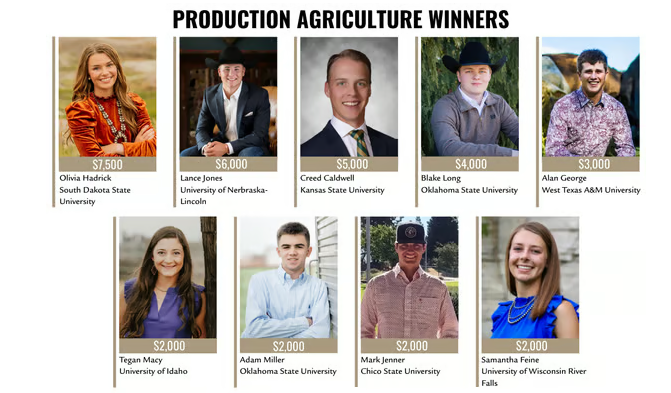
Market Below Breakeven Price for Corn

Even with higher-than-expected yields, the average farmer cannot yield enough to avoid significant negative profit margins this year.

USDA raised their forecast corn yield for 2025 from 181 bushels per acre to 188.8 bushels per acre in their August report, which, if realized, would be the largest crop on record by far.  Using the forecast $897 average cost per acre to grow corn, the average breakeven price for corn is $4.75 per bushel. The increased yield projection reduces the average cost per bushel from what was a higher breakeven at $4.96 per bushel with a 181 bushel per acre yield projection. 
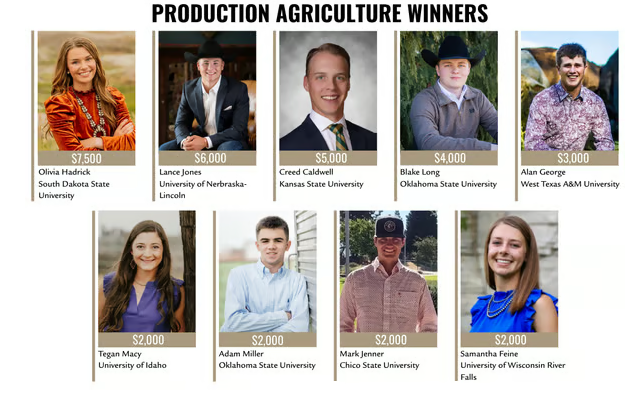
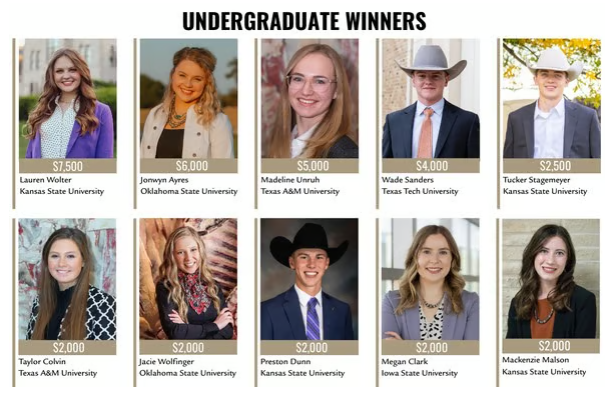
But USDA also decreased the forecast for market-year average farm price, the average price farmers will receive for the 2025 corn crop from $4.20 to $3.90 per bushel. A farmer with an average cost of production who receives the expected average price is facing an $0.85 per bushel loss.

The September (December) corn futures price represents the price for corn delivered in September (December). These contracts reflect the market's expectations of the price of corn from the upcoming harvest delivered in the coming months. The September (December) contract has recently traded around $3.80 ($4.00) per bushel – in line with the $3.90 market year average price USDA is currently projecting. The price the farmer receives is based on the contract price for the delivery month and a basis adjustment that reflects the local market. 

Summary

Rising production costs combined with sharply declining corn prices have created significant financial challenges for U.S. corn growers, leading to sustained negative profit margins. Despite some impressive yield prospects, the economic outlook remains bleak due to unfavorable price and cost trends. Tomorrow, Part 2 will look at inflation adjusted costs and include comparisons to challenging financial periods of the past.

$93,500 returned to Texas sale barns following TSCRA Special Ranger investigation

Four Texas livestock sale barns were returned $93,500 following an investigation for hot checks led by Texas & Southwestern Cattle Raisers Association Special Ranger Kenny Murchison.

On Aug. 17, Murchison was notified by a sale barn that a $36,000 check was returned for insufficient funds. Through his investigation, Murchison discovered that another sale barn had also been targeted with a $29,000 check from the same individual returned for insufficient funds.

Murchison initiated an investigation and learned that some of the cattle from these transactions were possibly on property in the Travis County Manor area. Upon locating the property, Murchison spoke to individuals who led him to the location of seven head of cattle that had been purchased from these two sale barns.

While at the property, Murchison also learned that 35 head of cattle had been shipped to an area auction to be sold. He contacted the auction barn and discovered that they, too, had recently received a $10,000 check from the same individual, which was returned due to insufficient funds.

During further conversations, Murchison learned that the individual had also purchased cattle at a fourth Central Texas auction and paid with a $18,500 check that was returned.

In total, $93,500 in unpaid receipts were identified.

Seven head of cattle were seized in Travis County and a hold was placed on the 35 head of cattle at the third sale barn.

Murchison then contacted the individual associated with the unpaid accounts, who assured him the barns would be paid in full within 24 hours.

By Aug. 18, all sale barns confirmed they had received full payments, and all associated livestock were released.

State agriculture departments encouraged by EU trade negotiation progress

 Following Thursday's joint trade agreement framework announcement between the U.S. and EU, NASDA CEO Ted McKinney weighed in on what the outlined agreement's impact could mean for agriculture.
 
"NASDA applauds President Trump and President von der Leyen for their progress in negotiating the U.S.-EU trade deal. NASDA supports the ambitious objectives included in their joint statement, which include expanding markets for U.S. farmers and committing to work together to eliminate non-tariff trade barriers. State departments of agriculture are responsible for promoting agricultural products both domestically and internationally and look forward to the potential benefit of finalizing a trade deal between the U.S. and EU," NASDA CEO Ted McKinney said.

Advanced Reproductive Technologies With Dr. Mandy Tolar

Listen To Carli Davenport And Dr. Mandy Tolar

At the Agherculture Conference, associate farm reporter Carli Davenport spoke with Dr. Mandy Tolar, a mixed animal practitioner specializing in advanced reproductive technologies, who led a hands-on session on cattle reproduction. "We were showing the girls how we aspirate oocytes," she explained. "We talked a little bit about what the cow's reproductive cycle looks like, and how different hormones affect different areas of that. Based on those things, what we're feeling internally when we're feeling that reproductive tract and then showing them on the ultrasound, what different parts of that look like." Participants even got to glove up and practice the techniques for themselves.

When asked about her journey into veterinary medicine, Dr. Tolar described how her interests evolved. "I had always liked math and science and knew I wanted to do something in the medical field," she said. But her path shifted in high school after being exposed to FFA. "I saw the impact that a local veterinarian could make on my projects and in a production setting, and I really got interested in the animal agriculture side of things." That early inspiration carried her into Oklahoma State University, where she pursued animal science and discovered her passion for cattle reproduction.

Internships helped her refine her focus. "I was really drawn to reproduction, specifically on the cattle side of things," she shared. "I did some internships to further elaborate on that knowledge, and just fell in love with the industry and what that could look like and the value that it could add to a production operation." That combination of education and hands-on experience convinced her that advanced reproductive technologies were where she could make the biggest impact.

For Dr. Tolar, the excitement lies in tailoring reproductive technologies to producers' needs. "I think the most exciting thing is being able to assist farmers and ranchers on what it looks like for their specific operation, whether that's they're looking to advance their genetics in their herd, or if they're looking to produce a certain product to sell," she explained. "We're able to utilize different technologies in reproduction to get them that end product, whether that's using sexed semen or being able to create more embryos of a certain gene pool by utilizing those technologies that we have available to us."

Looking ahead, Dr. Tolar is optimistic about the future of veterinary medicine in Oklahoma. "I think as veterinarians, we just have a really unique opportunity to work closely with those producers," she said. She also pointed to new investments in veterinary education. "Especially in the state of Oklahoma, after getting funding passed for a new teaching hospital, I think the future is really bright. I think that it's going to continue to pull students from Oklahoma, as well as elsewhere, as we continue looking to bridge the gap for rural practitioners and having facilities here in our state to be able to produce those future veterinarians to come back to Oklahoma and practice in those rural communities."

OSU's Derrell Peel Sees Limited Herd Rebuilding of the US Beef Cow Herd

Listen to Ron Hays And Dr. Derrell Peel

In today's Beef Buzz, Senior Farm and Ranch Broadcaster Ron Hays speaks with Dr. Derrell Peel, who began by reviewing recent cattle reports, saying they show little evidence of herd rebuilding so far. "We just haven't seen much change yet in any sort of heifer retention," he explained. While many producers are "kind of interested in it" and "a few of them are doing it," Peel stressed that, across the industry, rebuilding is "not happening at a very aggressive pace yet." He warned that failing to hold back heifers this fall means fewer replacements in 2026 and 2027, delaying recovery for years.

Peel said the delay comes with a cost, particularly as cattle prices remain historically high. "Up until now, we've been pretty content to sort of take the money and run with these prices," he noted. But he cautioned producers that, sooner or later, they will need to think about the "financial cost associated with making that investment" in replacements. Starting today, he said, would mean the industry likely wouldn't see added beef production until "2028 into 2029," underscoring how long rebuilding takes.

Discussing herd stabilization, Peel said cow slaughter has slowed enough in 2025 that "even the small number of heifers we had this year could stabilize the herd, or maybe even show just a fractional increase in 2026." Still, he emphasized that the number of bred heifers coming into 2026 is "pretty small, so there's very little potential for growth there." The longer producers wait to act, the more expensive and delayed herd rebuilding becomes.

Turning to market signals, Peel pointed out that the strongest profits are at the cow-calf level. "The market is certainly telling you and rewarding you for producing and selling weaned calves right now," he explained. But for stocker producers, he said the math is tougher. "That calf that you can sell at, say, 500 pounds, for 4.50 a pound those pounds are worth less than $2 a pound" when additional weight is added. Peel said that calculation shows "the market is not really encouraging retained ownership" at this time.

On feedlots, Peel acknowledged that conditions have been favorable in the short run, thanks to cheaper corn. "They've done so pretty good so far," he said. But he warned that tightening cattle supplies will put pressure on feedyards. "They're paying a tremendous amount for feeder cattle coming into the feedlots," he noted, and without enough cattle, "feedlots may struggle if for no other reason, they can't maintain the kinds of volumes that help them run efficiently."

Looking ahead, Peel said fall weather could create opportunities for wheat pasture grazing. With expected rain and cooler temperatures, he called it "probably the best wheat planting for grazing season we've had in two or three, four years." For operators with wheat, Peel suggested it might also become a pathway for herd growth. "We may see that may be the place where we start saving some heifers," he said, turning stocker cattle into potential replacements rather than just feeders.

The Beef Buzz is a regular feature heard on radio stations around the region on the Radio Oklahoma Ag Network and is a regular audio feature found on this website as well. Click on the LISTEN BAR for today's show and check out our archives for older Beef Buzz shows covering the gamut of the beef cattle industry today.

Strip Till, Smart Tech & Soil Health Innovation on the latest Red Dirt Agronomy Podcast

🌻 We're talking with Ray Flickner of Flickner Farms, a fifth-generation farmer who's redefining what innovation looks like in the field.
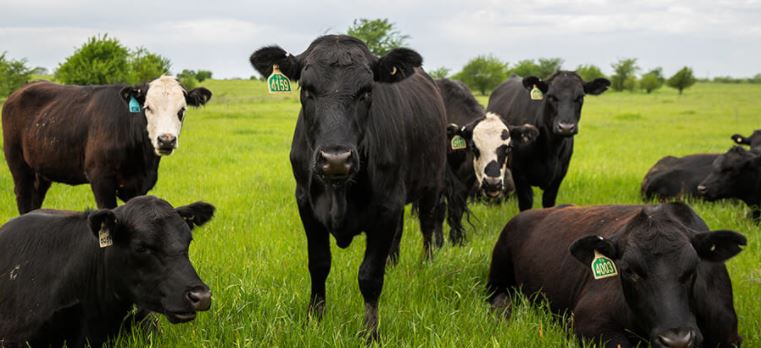
From strategic strip tilling and smart cover crop management to running three crops in two years and slashing water use by 40% with mobile drip irrigation, Ray's approach is all about adapting to dry conditions without sacrificing yield.

If you're ready to rethink how you farm—especially when moisture's tight—this episode is packed with practical ideas you can take straight to your fields.

The highlight? A deep dive into the Rain360 system—a mobile irrigation rig that's helping Ray make the most of limited water across irregular fields. It's not just talk; he's cutting water use by 40% compared to local averages. If you're farming in the Southern Plains or just looking for fresh ideas, this episode delivers practical, tested insights you can take straight to the field.

Take a listen below..

Cow Calf Corner Mark Johnson:Information Asymmetry in Cattle Marketing

Mark Johnson, Oklahoma State University Extension Beef Cattle Breeding Specialist, offers herd health advice as part of the weekly series known as the "Cow Calf Corner," published electronically by Dr. Derrell Peel, Johnson, and Paul Beck. Today, Johnson discusses Information Asymmetry in Cattle Marketing

Information asymmetry refers to a situation where one party in a transaction has more or better information than the other. When one party has more relevant, up-to-date, or detailed information it can lead to potential exploitation and unfair pricing. The less informed party may make poor decisions leading to negative outcomes. In the case of marketing cattle, the less informed party may not be willing to bid or pay fair value as a result of lack of information.

The commercial cow-calf operation serves as the initial source of product in the segmented chain of beef production. In conventional beef production weaned calves will become stockers, then go through a feedlot operation and fed to a compositional endpoint, at which time they be harvested and turned into the product of beef. Your weaned calves will likely have multiple owners and be 18 – 24 months of age by the time they are beef, the product.

When marketing your weaned calves, have you ever felt at a disadvantage? Are you able to document your investment in genetics and management practices that give your calves additional value to the next owner? Can you show evidence that calves have been vaccinated, have a functional immune system, are likely to remain healthy, grow and gain efficiently through the next phases of production, and ultimately yield a carcass of value that meets consumer demand?

Documentation of health status resulting from a sound pre-weaning vaccination program has become the industry standard in marketing calves. Even in the short supplied, robust market we currently enjoy, the  backgrounded, long-weaned calves sell for more than bawling, fresh weaned calves. Considering what has value to the next owner, this is logical.

With regard to the genetic potential of calves for post-weaning performance through the stocker and finishing phases of production it also makes sense that the next owners would be willing to pay more for calves with documented superior genetic potential for more gain, better cost of gain, more carcass weight, more red meat yield and especially; more carcass quality. So how is this documentation achieved?

Historically, Genomic companies and breed associations offer genetic tests for commercial cattle that many commercial producers have used to understand the genetic makeup of their herds. This information can be valuable when selecting replacement heifers (maternal traits) and for marketing steers (growth and carcass traits). The sampling process is similar for seedstock or commercial operations. Typically a blood sample (or tail hair with root bulbs) is submitted for testing. After DNA from the sample has been analyzed a scorecard for calves will be received with a rating of genetic potential.

More recently, the Genetic Merit Scorecard (GMS) from the American Angus Association has been made available. The GMS has the advantage of projecting the performance potential from weaning to carcass based on the genetic values of the registered Angus sires. Accordingly, the GMS does not require any tissue sample to be submitted from calves. Starting in August 2024, producers earned premiums on the U.S. Premium Beef, LLC (USPB) Kansas grid based on the genetic merit of their cattle. The marketplace has responded to having an objective, reliable way to describe the genetic merit in a pen of feeder cattle by paying out significant premiums. To qualify for the GMS, calves' sires must be predominantly Angus and 75% of the bull battery must be registered Angus sires. More information on the GMS and enrolling calves is available at the third link referenced at the end of this article.

Longer term solutions include retaining (at least partial) ownership of calves through the stocker and finishing phase. Planning and coordinating retained ownership so that performance data on health, growth and carcass merit is made available and flows back to the cow-calf operation is a critically important step in building a reputation for your operation and the calves you produce. 

References:

Genetics in the Genomics Era. Chapter 28. Oklahoma Cooperative Extension Service Beef Cattle Manual. Eighth Edition.  

https://content.ces.ncsu.edu/genomic-testing-and-its-uses-in-beef-cattle

https://www.angus.org/anguslink/genetic-merit-scorecard#:~:text=What%20are%20GMS%20scores?,others%20offered%20through%20IMI%20Global.

Trump Administration Announces Expedited Congressionally Mandated Disaster Assistance for Farmers

U.S. Secretary of Agriculture Brooke L. Rollins announced that agricultural producers who suffered eligible crop losses due to natural disasters in 2023 and 2024 can now apply for $16 billion in assistance through the Supplemental Disaster Relief Program (SDRP).

To expedite the implementation of SDRP, USDA's Farm Service Agency (FSA) is delivering assistance in two stages. This first stage is open to producers with eligible crop losses that received assistance under crop insurance or the Noninsured Crop Disaster Assistance Program during 2023 and 2024. Stage One sign up started in-person at FSA county offices on July 10 and prefilled applications were mailed to producers starting July 9. SDRP Stage Two signups for eligible shallow or uncovered losses will begin in early fall.

SDRP Stage One

FSA is launching a streamlined, pre-filled application process for eligible crop, tree, and vine losses by leveraging existing Noninsured Crop Disaster Assistance Program (NAP) and Risk Management Agency (RMA) indemnified loss data. The pre-filled applications were mailed on July 9, 2025.

Eligibility

Eligible losses must be the result of natural disasters occurring in calendar years 2023 and/or 2024. These disasters include wildfires, hurricanes, floods, derechos, excessive heat, tornadoes, winter storms, freeze (including a polar vortex), smoke exposure, excessive moisture, qualifying drought, and related conditions.

To qualify for drought related losses, the loss must have occurred in a county rated by the U.S. Drought Monitor as having a D2 (severe drought) for eight consecutive weeks, D3 (extreme drought), or greater intensity level during the applicable calendar year.

Producers in Connecticut, Hawaii, Maine, and Massachusetts will not be eligible for SDRP program payments. Instead, these states chose to cover eligible crop, tree, bush, and vine losses through separate block grants. These block grants are funded through the $220M provided for this purpose to eligible states in the American Relief Act.

How to Apply

To apply for SDRP, producers must submit the FSA-526, Supplemental Disaster Relief Program (SDRP) Stage One Application, in addition to having other forms on file with FSA.

SDRP Stage One Payment Calculation

Stage One payments are based on the SDRP adjusted NAP or Federal crop insurance coverage level the producer purchased for the crop. The net NAP or net federal crop insurance payments (NAP or crop insurance indemnities minus administrative fees and premiums) will be subtracted from the SDRP calculated payment amount.

For Stage One, the total SDRP payment to indemnified producers will not exceed 90% of the loss and an SDRP payment factor of 35% will be applied to all Stage One payments. If additional SDRP funds remain, FSA may issue a second payment.

Future Insurance Coverage Requirements All producers who receive SDRP payments are required to purchase federal crop insurance or NAP coverage for the next two available crop years at the 60% coverage level or higher. Producers who fail to purchase crop insurance for the next two available crop years will be required to refund the SDRP payment, plus interest, to USDA.

SDRP Stage 2

FSA will announce additional SDRP assistance for uncovered losses, including non-indemnified shallow losses and quality losses and how to apply later this fall.

Learn more by visiting fsa.usda.gov/sdrp.

CLAAS Continues North American Investment with New R&D Center

In an upcoming ceremony on Friday, August 29, Jan-Hendrik Mohr, CEO of CLAAS Group, will return to a familiar plot of land in Omaha, Nebraska, to break ground on a new 44,800 square foot Research and Development Center that will add new jobs and support the local economy.

More than twenty-five years ago, Mohr had a different title and a different mission: To turn an empty field on the edge of the city into the future home of CLAAS in North America. Today, the campus looks much different with the sprawling corporate offices of CLAAS of America, an assembly plant that has produced 10,000 LEXION combines for American farmers, and the recently added CLAAS Training Academy. It is home to more than 250 employees. The new CLAAS Research and Development Center will overlook the rest of the campus, sitting on the southwest corner of the property.
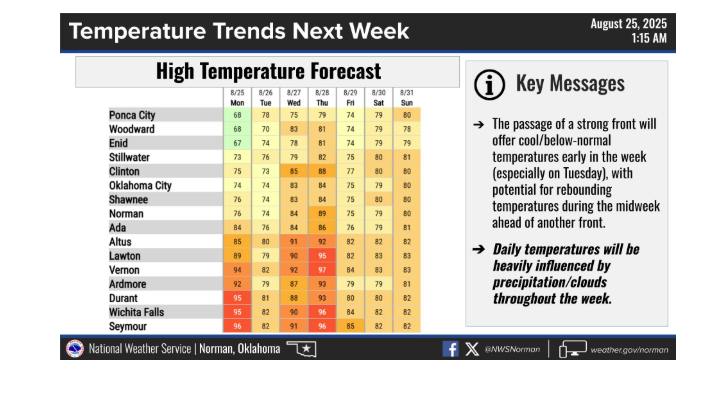
After returning to Germany from his multi-year assignment in Omaha, Mohr worked hard to ensure that his investment in the American market would continue to flourish. Now, more than ever, the US and Canadian markets are critical to the success of the family-owned, global ag equipment company.

CLAAS is fully dedicated to building ag equipment that enables North American farmers to be the best in their fields – and that includes the corn and soybean fields of the Midwestern US, the wheat and canola fields of the northern plains and western Canada, the rice fields in the Mississippi River Delta and beyond. As CLAAS develops next-generation technology for future machines, the company needs advanced R&D Center in Omaha to ensure its prototypes meet the demands of North American farmers and the fields they farm.

The new facility will have a 44,800 sq. ft. footprint, including approximately 12,000 sq. ft. under roof — creating a space that's more than 25% larger than the temporary off-site shop currently used for research and development. The plans feature two stories of office space, an expanded room for instrumentation, greater utilization of space for logistics, and an internal, heated wash bay. The facility will also provide greater physical and electronic security measures for protecting critical intellectual property.

The new CLAAS Research and Development Center will be the hub for all North American testing activities. While much of the testing will take place on farms throughout the country under various soil, weather, and crop conditions, the analysis of those tests will be interpreted by engineers working in the new facility.

The company's commitment to the US market, including the assembly of LEXION combines, where approximately 40% of the components are made in America, was established decades ago and will continue for many years to come, starting with this new Research and Development Center.

Charles L. Roff Award application now open through October 15

The Oklahoma Farm Bureau Young Farmers and Ranchers Charles L. Roff Award application is now open through Wednesday, Oct. 15.

The Charles L. Roff Award recognizes the top county YF&R committee who works to improve their local committees while strengthening the Farm Bureau organization. Each county YF&R committee is encouraged to participate by describing the activities hosted or sponsored throughout the year, no matter how large or small the scope.

The electronic application form can be found in the application center page on the OKFB website.

For more information on OKFB's YF&R Charles L. Roff Award, contact Burton Harmon at
(405) 523-2300.

View The Application Here

YF&R achievement, excellence award applications open now through October 15

Applications for the Oklahoma Farm Bureau Young Farmers & Ranchers Achievement Award and Excellence in Agriculture Award are now open through Wednesday, Oct. 15.

The YF&R Achievement Award recognizes YF&R members who have excelled in their farm or ranch, and have taken an active role in Farm Bureau programs and activities. Participants are involved in production agriculture with a majority of their income subject to normal production risks.

The YF&R Excellence in Agriculture Award recognizes YF&R members who have a passion for agriculture, but who do not earn a majority of their income from an owned agriculture enterprise.

Award winners will be announced at the 2025 OKFB Annual Meeting in Oklahoma City in November. Winners will compete at the 2027 American Farm Bureau convention, representing Oklahoma in the national YF&R competitive events.

Applicants for both the achievement and excellence awards must be no older than 35 by Jan. 1, 2027.

The electronic application forms can be found on the applications center page of OKFB's website. Learn more about the YF&R awards on AFBF's website at fb.org/yfr.

For more information on OKFB's YF&R applications, contact Burton Harmon at (405) 523-2300.

Click here to access the applications

Ben Hale: Strong Cattle Demand and Rain Boost Oklahoma Markets

Listen To Ron Hays And Ben Hale

On Tuesdays, Senior Farm and Ranch Broadcaster Ron Hays visits with Ben Hale of Western Livestock Auctions as he talks about the latest in the markets and more. Established in 1995, Western has grown into a multi-generational family-owned and operated business and stands as a symbol of tradition, excellence, and a deep-rooted passion for the cattle industry. Western Livestock Auctions operates the Western Livestock Commission Firm, which sells cattle on Mondays and Tuesdays. They also operate the livestock auction markets in Woodward, Comanche, Waurika, and Knoxville, Iowa.

Ben Hale of Western Livestock said the August market "keeps moving stronger," pointing to "feeder steers and heifers, 4 to 10 higher, calves 10 to 20 higher." He added, "Just lots of demand on everything. And now it's raining, over a big part of the state," which sets producers up to pull the trigger on some wheat pasture, if they feel like they've got some cattle to graze.

Hale noted the rainfall has been significant in parts of Oklahoma. "Yesterday morning in Woodward, they had almost five inches," he said, adding that much of the wheat belt "is going to have extremely good moisture to drill into." While parts of southwest Oklahoma also received significant moisture, Hale noted, "North Texas is still awfully dry."

Discussing market runs, Hale explained that "lots of new crop calves are coming to town" with "just about everything bringing 2000 plus, right off the cow." He said some five-weight calves are "going to get up there at $2,200–$2,300 a head." With prices this strong, Hale said producers "really have a lot of incentive" to sell early rather than hold calves another 60 days.

Looking ahead, Hale reported, "They're gonna have a big run at Waurika today, i think they had 2200 head come in last night, going to have a pretty decent run there Wednesday at Comanche, Woodward has had so much rain up there." He confirmed next week's schedule would continue as normal after Labor Day, with sales in Waurika, Comanche, and Woodward, while Oklahoma National will be closed for the holiday.

Hale can be contacted at 940-631-2333. Check out more about the marketing options that Western offers by clicking here.

Grant Writing 101: An Expert's Guide for Ag Producers and Small Businesses

Farm Director KC Sheperd recently sat down with Sarah Diamond of Diamond Grants and Consulting to demystify the process of grant writing for agricultural producers and other business owners. Diamond emphasized that grant writing is a skill worth understanding for anyone who owns a business, even if they don't have an immediate need for a grant. Being familiar with the process means they can be prepared to act quickly when an opportunity arises, whether it's from a local community foundation or a state-level program.


For those new to grant writing, Diamond shared that it's largely a self-taught skill. She recommends starting with simple grants for a local nonprofit to build confidence and experience. There are numerous free resources available, such as online workshops, webinars, and YouTube videos, that can help people get started. When asked about using AI, she clarified that it's a great tool for organizing ideas and structuring text, but it cannot replace the human element. The business owner, who is the expert, must ensure the grant application authentically reflects their specific project, community needs, and unique voice.


For busy farmers and agricultural producers, Diamond suggested a practical first step to feel out the landscape of available grants. She recommends using services like GrantWatch.com, which she likens to "the Indeed of grants." For a subscription fee, users can plug in keywords and receive regular updates on relevant opportunities, from small grants of a few hundred dollars to much larger ones. This helps producers see what's available and decide which grants might be a good fit. Diamond also offered a crucial tip: save everything. Since only about one in ten grants are typically funded, keeping a digital archive of all past work, from project descriptions to budgets, saves a tremendous amount of time and effort when applying for future grants. Finally, for those who find the task too daunting, Diamond's consulting business, Diamondgrants.com, offers services to guide and assist small businesses, women-owned businesses, and farms through the grant writing process.

4 County CEU Meeting on August 27th in Elk City

Join us at the 4 County CEU Meeting on August 27th, 2025 from 9:30 am-2:30 pm at the Western Tech Center located at 301 Western Dr. in Elk City, OK.

The RSVP Expired on the 21st, but they would appreciate the heads up if you would like to attend by calling the Beckham County Extension office at 580-928-2139.

A Steak lunch will be provided by Western Equipment. 4 CEU Credits pending.

Choice Boxed Beef Sets New High for 2025 on Monday- $408.49- up 58 Cents

Boxed beef continued higher on Monday, with Choice at $408.49, up $0.58 from Friday, and Select at $385.38, up $1.72. The Choice/Select spread narrowed slightly to $23.11. The Round cut set a new all-time high at $363.59, while the Rib ($609.64) and Loin ($494.36) also pushed higher. Despite these gains, movement was thin — just 63 loads, the lowest total of the year. For the month, Choice boxed beef is now up $47.17, marking the highest August level in history.

Oklahoma Corn Crop Conditions Rise 11 Points In This Weeks Crop Progress

National Corn Statistics: Corn mature reached 7 percent, down three points from the previous year and equal to the the five-year average. Corn Dough reached 83 percent, equal to a year ago and down one point from the five-year average. Corn dented reached 44 points, equal to last year and the five-year average. Corn Conditions are rated 71 percent good to excellent, equal to the previous week.

National Soybean Statistics: Soybean dropping leaves reached 4 percent, down two points from last year and equal to the five-year average. Soybean Setting Pods reached 89 percent, up one point from a year ago and equal to the five-year average. Soybean Condition rated 69 percent good to excellent, up one point from the previous week.

National Cotton Statistics: Cotton Setting Bolls reached 81 percent, down seven points from a year ago and down six points from the five-year average. Cotton bolls opening reached 20 percent, down four points from a year ago and down two points from the five-year average. Cotton Conditions reached 54 percent good to excellent, up one point from the previous week.

National Sorghum Statistics: Sorghum headed reached 88 percent, down one point from a year ago and equal to the five-year average. Sorghum coloring reached 44 percent, down three points from a year ago and down two points from the five-year average. Sorghum conditions reached 64 percent good to excellent up one point from the previous week.

As for our Summer crops in Oklahoma:

Corn crop conditions are now at 66% good to excellent versus 55% a week ago.

The Oklahoma soybean crop is at 35% good to excellent versus 33% a week ago.

Cotton in Oklahoma is at 67% good to excellent, versus 65% last week.

Grain Sorghum is at 72% good to excellent, down seventeen points from a week ago at 54%.

Pasture and Range conditions are at 55% good to excellent this week, versus 60% a week ago.

Checking Summer crops and Pastures in Kansas:

Corn crop conditions are rated 59% good to excellent this week versus 60% a week ago.

Soybean conditions are also rated 68% good to excellent this week, compared to 69% a week ago.

Cotton conditions in Kansas are rated 63% good to excellent this week versus 53% a week ago.

Grain Sorghum crop ratings are at 58% good to excellent this week versus 60% last week.

And Pasture and Range ratings are at 61% good to excellent vs 59% from a week ago.

Checking Summer Crops and Pastures in Texas:

Corn crop conditions are rated 62% good to excellent this week, versus 62% from a week ago.

Cotton conditions in Texas are rated 45% good to excellent this week, versus 49% a week ago.

Grain Sorghum crop ratings are 63% good to excellent this week, versus 63% a week ago.

And Pasture and Range ratings are at 38% good to excellent this week, versus 42% from a week ago.

Colin Woodall: CDC's Protocol Handling of a Human New World Screwworm Case Worked Well

Listen To Ron Hays And Colin Woodall

Senior Farm And Ranch Broadcaster Ron Hays spoke with Colin Woodall, CEO of the National Cattlemen's Beef Association (NCBA), who addressed concerns following the CDC's report of a human case of New World screwworm in early August. Woodall explained, "From what we understand, it was an individual who had made a trip to one of the countries in Central America (El Salvador) that has New World screwworm, which is all of the countries in Central America right now, came back, had some pain, went to seek treatment and discovered that they were infested with New World screwworm larva." He emphasized that the key point was the effectiveness of the CDC's procedures: "The protocol worked, and that individual was treated and the larva were destroyed."

Woodall noted that while the story may have caught people off guard, it was not unexpected. "While, yes, it's surprising to see that particular story, you know, it's not shocking," he said. He explained that there have been similar isolated human cases in the U.S. over the past decade. "There was a human case in the United States last year in 2024, there was one in 2023, we also know of one that happened in 2014 and all of them were very similar." Each involved a person traveling abroad, returning with larvae, and then seeking treatment once the pain became unbearable.

For NCBA, the main focus is on whether established safeguards are functioning. Woodall stressed, "We as NCBA were not shocked to see that there is a human case." He added that the consistency of the response has been reassuring: "When the pain got unbearable, they went to seek treatment, and the CDC was engaged, it was identified, and those larva were destroyed."

Turning to public reaction, Woodall acknowledged that the story has spread widely online. "We have seen those too, and unfortunately, anybody with a social media account can be an expert, and that's what drives a lot of just the silliness that we're seeing out there." He contrasted social media speculation with NCBA's measured approach: "For us, as we are taking a serious approach to protecting ourselves from New World screwworm, the things that we're looking at is one, did the protocols work, and it's obvious that the protocols work."

Woodall further explained why the risk of uncontrolled spread from human cases is very limited. "If you go travel and somehow the New World screwworm female lays its eggs somewhere in your body, you're going to have excruciating pain because these larva, these maggots, are going to be eating you alive. So you're going to go seek some sort of treatment." He pointed out the difference from insect bites that people might ignore: "This is not a situation where it's a tick bite or a mosquito bite and you might scratch it and not necessarily think twice about seeking treatment."

Ultimately, Woodall emphasized that these human cases are isolated, treatable, and not a threat to U.S. livestock. "This is not a situation where those larva are going to then exit the human, pupate and become the fly, because that pain is just so excruciating. So CDC's approach, CDC protocols and the information that they have out there in the medical community obviously worked here. So that is probably the biggest takeaway we need to understand."

Brighter Future program helps Oklahoma students plan for life after high school

 High school students across Oklahoma are gaining confidence and clarity about their futures thanks to Brighter Future, a college and career readiness program offered through Oklahoma State University Extension.

Designed for high school students, Brighter Future equips participants with the tools and knowledge to navigate life after graduation. Whether students plan to attend college, enter the workforce, pursue a trade or join the military, the program helps them prepare for the future.

For Savanna 4-H Club member Natalie Hollingshead, the program has been transformative. She said creating a timeline and schedule for college helped her understand what steps she needed to take to prepare.

"It really opened my eyes to how different college would be compared to high school," Hollingshead said. "It made everything feel more real and showed me how to plan ahead so I can succeed."

Hollingshead, who plans to become a neurosurgeon, said Brighter Future gave her a better understanding of the path she needed to take to achieve her goals.

"The program helped me figure out what type of schooling and learning environment works best for me, which is just as important as knowing what I want to do," she said. "I feel more confident and prepared to pursue my goals in a way that fits my strengths."

Students who complete the program receive pre-admittance to Oklahoma State University. Each year of the curriculum focuses on different skills, including public speaking, time management, resume writing, job applications, study strategies and financial literacy. The program also covers the college application process, scholarships and financial aid.

"Something I have learned in the Brighter Future program is time management," said Solar Starr, a 4-H'er from Pittsburg County. "It taught me how important it is to use a calendar, plan ahead and much more."

Starr has participated in the program for two years, and she said it has also helped improve her interview and speech skills. She looks forward to learning more about scholarship opportunities through Brighter Future and possibly attending OSU once she graduates.

Colby Bulls, who completed his first year of Brighter Future in Cimarron County, enjoyed exploring career options online through the program.

"It really helped me visualize what jobs I could go into," he said.

With an interest in architecture, Bulls said the program helped him discover a broader range of career paths within the industry. He said he looks forward to continuing in Brighter Future to learn more about the options available to him after high school.

Brighter Future launched three years ago in partnership with several schools across the state. OSU Extension 4-H Youth Development educators and certified volunteers deliver the curriculum in classrooms, providing students with educational opportunities and guidance.

Greg Owen, Pittsburg County 4-H educator, has implemented the program in the Crowder and Savanna school systems since its inception.

"The feedback I get is that the material is very beneficial to answering a great deal of the questions students have for their post-high school plans," Owen said. "The closer graduation is to a reality for the students, the more questions they know to ask, and the curriculum provides me guidance to help answer those questions."

Beginning this fall, Brighter Future will also be available online, expanding access to more students.

"Our goal is to have Brighter Future available in every county in the state," said Mindy Aragon, OSU Extension Brighter Future state specialist. "4-H has a great focus on the development of life skills in youth, and this structured curriculum is a great way to deliver that information."

Brighter Future also aligns with 4-H's new national campaign, Beyond Ready, which emphasizes preparing youth for success beyond the classroom.

For more information about Brighter Future, contact Aragon at 405-744-7690 or mindy.aragon@okstate.edu.

Hungry for protein and quality, US consumers shrug off high beef prices

When retail prices for any consumer product reach record high levels, the corresponding drop in demand usually materializes in short order. Beef appears to be among the few exceptions to that rule, having defied common expectations surrounding price elasticity. Retail grocery prices for beef skyrocketed in recent years and show no signs of descending any time soon. But surprisingly, demand has not softened — it's actually edged upward. According to USDA data, the all-fresh retail beef demand index in the second quarter climbed to its highest level in at least 25 years.

The remarkably steady allure of beef, even at current prices, is likely a result of several factors currently shaping consumer food buying behaviors, according to a new research brief from CoBank's Knowledge Exchange. Key among those factors is the heightened interest in dietary protein, changing health perceptions surrounding beef, and the availability of restaurant-quality beef at retail grocery stores.

"Twelve months ago, the question was whether beef demand would hold up at higher prices, but today most analysts are fairly certain that beef value risk is to the upside," said Brian Earnest, lead animal protein economist with CoBank. "Retail per capita beef consumption is headed for 60 pounds this year. U.S. consumers can't seem to get enough protein these days, and among animal proteins beef remains king."

According to the most recent inflation data released by the U.S. Bureau of Labor Statistics, core inflation was up 2.9% year-over-year. Beef price increases towered in comparison. The all-fresh retail beef prices surged by 9% for the year, hitting an astonishing $8.90 per pound. Even at those levels, prices have been unable to tame unyielding consumer interest in beef.

Improvements in beef quality and the increased availability of premium grade cuts at retail have played a big role in driving demand. The U.S. beef industry is producing a much higher quality product today than it did 30 years ago. Recognizing quality issues in the 1980s, cattle producers began selectively improving herd genetics to produce beef with higher fat marbling and better taste for improved customer experience. Those efforts have paid off as 95% of U.S. beef production is now grading Choice or higher.

Earnest said access to high-quality beef has never been better and American consumers have developed a taste for it. "The COVID-19 pandemic led us to a place where 'leveling up' through access to luxury goods is prioritized over luxury services. And beef, specifically high-quality beef, is a luxury good that can be accessed for at-home consumption at a fraction of the cost at fine dining establishments."

Consumer perceptions surrounding the health aspects of eating beef have also improved in recent years. Fitness-conscious consumers who laud protein content for muscle production often favor beef. The advent of GLP-1 medications for weight loss have also sparked more widespread consumer interest in increasing the amount of protein in their diets.

Tight cattle supplies keep beef prices elevated

The USDA mid-year cattle inventory report released on July 25 revealed the biannual cattle inventory was the lowest mid-year count on record at 94.2 million head – a 75-year low. Analysts are mixed on whether the beef herd is still in contraction or beginning to rebuild. But most observers suggest the nation's cattle supply will remain strained through at least 2026, and likely through 2027. That means retail beef prices will remain elevated for the foreseeable future. While larger macroeconomic shifts could influence purchasing behavior in the future, so far consumers have shown little appetite for sacrificing beef.

Read the research brief, U.S. Beef Attracts More Customers than it Can Handle.

About CoBank

CoBank is a cooperative bank serving vital industries across rural America. The bank provides loans, leases, export financing and other financial services to agribusinesses and rural power, water and communications providers in all 50 states. The bank also provides wholesale loans and other financial services to affiliated Farm Credit associations serving more than 78,000 farmers, ranchers and other rural borrowers in 23 states around the country. CoBank is a member of the Farm Credit System, a nationwide network of banks and retail lending associations chartered to support the borrowing needs of U.S. agriculture, rural infrastructure and rural communities. Headquartered outside Denver, Colorado, CoBank serves customers from regional banking centers across the U.S. and also maintains an international representative office in Singapore.

Supporting Women in Oklahoma Agriculture: The AgHERculture Program

Listen to Maci visit with Ag Secretary Blayne Arthur.

The Governor's Mansion recently hosted the "AgHERculture College Edition" event, bringing together young women interested in agriculture with experienced professionals. Led by Oklahoma Secretary of Agriculture Blayne Arthur, this annual gathering focuses on networking, mentorship, and career development for women in the state's agricultural sector.

Oklahoma farm reports Maci Carter caught up with Secretary Arthur, who explained that the evening is designed to connect college students with female mentors. "This is a fun evening where we have lots of female mentors who work in the ag space here in Oklahoma, who give their time to come and spend time with college students here in Oklahoma," Arthur stated. The main goals include facilitating networking, sharing career experiences, and offering practical advice. The intention is that these interactions will lead to "internship opportunities, but just looking for some good career development experiences here," she added.

Pic Courtesy of Kellyville FFA Chapter's FB page

A Diverse Group of Mentors

The event featured a variety of mentors, providing students with different perspectives on agricultural careers. "We had a lot of college students, kind of from across the state," Arthur noted, mentioning an activity where students identified their hometowns, showing broad participation.

The mentors represented various segments of the ag industry. Arthur highlighted individuals such as Kylee Deniz, Executive Director of the Oklahoma Pork Council, and Brandy Herndon and Kass Newell, who are involved in the livestock industry with the Oklahoma Youth Expo and Tulsa State Fair. "Our goal is hopefully to have a diverse group of mentors so that these young ladies can find someone that they can identify with," Arthur said. "Every mentor has a little bit different story and a little bit different path that they've pursued in their career, and we hope that that resonates with the young women who join us."

Pic courtesy of Piedmont FFA Fb Page
Program Growth and Future Plans

Now in its fifth year, AgHERculture has continued to expand its reach. Secretary Arthur confirmed that the program will continue, stating, "Well, yes, we will look forward to having AgHERculture in 2026, next year in August." The initiative originated from the Department of Agriculture's idea to help college women find mentors and career advice, reflecting similar experiences of the team members.
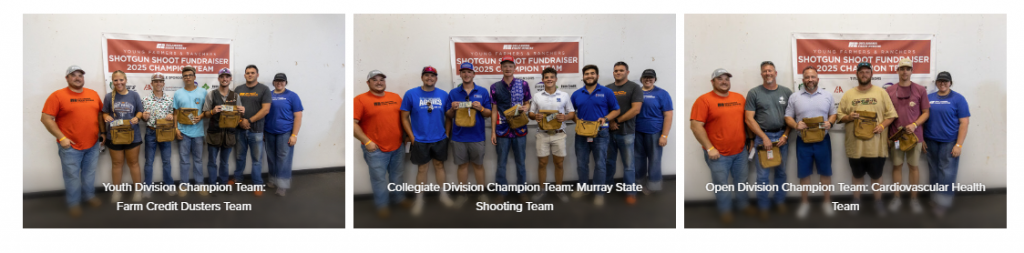
The success of the event is supported by the Oklahoma Department of Agriculture, Food, and Forestry (ODAFF) team, who manage the logistics. Hosting the collegiate event at the Governor's Mansion also allows for "a little AG policy discussion to it as well." Arthur described the program as "a really fulfilling opportunity for us as well."

High School Outreach

In addition to the college event, AgHERculture also includes a program for high school students, which involves "several hundred young ladies that join us, freshmen through high school seniors." This segment of the program is designed to introduce younger students to various career options within agriculture.

"It is really, really focused on exposing them to different career opportunities," Arthur emphasized, including both traditional agricultural roles and fields like accounting, which are necessary for ag businesses. For this age group, the aim is to "hopefully give them some exposure to what jobs are out there, what's the pathway for them to pursue those jobs, but then also that networking opportunity to find some hopefully gals that they can connect with and look up to and can kind of help them on that career path."

Secretary Arthur's Advice: The Importance of Teamwork

Pic Courtesy of NEO Ag Department Facebook Page

Among the many insights shared, Secretary Arthur's key advice for college students was to "surround yourself with a great team." She elaborated on the value of collaboration in achieving goals. "I think so many things in life are a team effort, and so when you're working around other talented people... just a good team can accomplish almost anything that you set your mind to." She also mentioned her approach to staffing: "I always try to hire people who are smarter than me, and that makes the days a lot easier."

The AgHERculture programs highlight Oklahoma's dedication to supporting young women in agriculture, building a strong network, and contributing to the future of the state's agricultural industry.

Daily Email for August 25, 2025


Oklahoma's Latest Farm

and Ranch News

Monday, August 25, 2025


Howdy Neighbors!

For the Ninth Month in the Row- Cattle on Feed Numbers Fall Below Year Ago Levels

Oklahoma State Extension Livestock Market Economist Dr. Derrell Peel says several things jumped out to him in the August USDA Cattle on Feed Report- including the continuation of a smaller number of cattle on feed for the ninth month in a row. Peel also noted in his post report conversation with Ron Hays that the placement number that was six percent smaller than last July was bigger than what the pre trade guesses were predicting.


He believes a lot of that was because of the historic strength of the cattle market in recent weeks- as cattle producers sold cattle that normally would be marketed later in the fall much earlier to take advantage of prices that we have never seen before.


Peel says you could see the stronger placements than what the trade expected in the weekly auction reports- "for the last several weeks, our feeder cattle runs at the auctions have been bigger year over year- we are seeing a lot of calves coming to town right now- obviously with this market at record price levels, producers are taking advantage of it, so we are seeing a lot of unweaned calves come to town that normally would be marketed one to three months from now- but they are coming earlier."

Reliability of U.S. Wheat Supply Chain in Spotlight During Visit by South Korean Buyers

As they typically do, the South Korean wheat buyers who explored Washington, Oregon and Montana in late July carried in the back of their minds a lengthy list – a long and growing lineup, actually – of food products back home that depend on high-quality wheat grown in the United States. The trade team hosted by U.S. Wheat Associates (USW) included purchasing and quality managers from six major South Korean milling companies that collectively represent approximately 65% of the Korean flour market.


"For most participants, this was their first direct exposure to the U.S. wheat supply chain, making the experience especially meaningful," said Channy Bae, USW country director in Seoul, who led the team.


A Firsthand Look at U.S. Grain Inspection and Transportation in Oregon

The 10-day tour began at USW's West Coast office in Portland, where participants received an overview of U.S. wheat export operations. Stops at the Wheat Marketing Center, the Kalama Export Terminal and the USDA's Federal Grain Inspection Service (FGIS) allowed the South Korean buyers a chance to observe the export process and quality control systems firsthand. Meetings with traders provided insights into current market trends by wheat class.

Human Case of New World Screwworm Found in Maryland

Reuters reported on Sunday evening that a person who had traveled to the U.S. from Guatemala was confirmed as receiving treatment in Maryland for New World screwworm (NWS).


According to Reuters, the U.S. Centers for Disease Control and Prevention (CDC) had confirmed the human case. State veterinarians learned of the human case during a call last week with the CDC. The Oklahoma Farm Report reached out to Oklahoma State Veterinarian Dr. Rod Hall who tells us that Maryland officials had indicated to other states that they "are confident it's contained." Dr. Hall adds he believes "we are probably more likely to get it in a person or pet than we are in livestock in the short term."


This is not the first case of a U.S. traveler being infect with NWS. Two other cases include a 15-year-old girl who returned from a 3-week hiking trip to Peru and a 12-year-old girl who had been on a church mission to Palmira, Colombia.


The National Cattlemen's Beef Association CEO Colin Woodall says they are aware of the developments: "NCBA is aware of a New World screwworm case detected in a person traveling from abroad into Maryland. The case was quickly identified and handled by the CDC in accordance with their protocols. Based on what has been shared with state animal health officials, we do not see any elevated risk to the livestock industry at this time. We appreciate the diligence of human health authorities. This case was quickly addressed thanks to existing protocols, and we are thankful for the ongoing coordination between the CDC, state departments of health, state animal health officials, and USDA."


National Livestock was founded in 1932 in Oklahoma City. National's Marketing Division offers cattle for sale weekly at the Oklahoma National Stockyards in Oklahoma City. The Finance Division lends money to ranchers across several states for cattle production. The Grazing Division works with producers to place cattle for grazing on wheat or grass pastures. 


National also owns and operates other livestock marketing subsidiaries including Southern Oklahoma Livestock Auction in Ada, Oklahoma, OKC West Livestock Market in El Reno, Oklahoma, and the nation's premier livestock video sale, Superior Livestock Auction. National offers customers many services custom made for today's producer. To learn more, click here for the website or call the Oklahoma City office at 1-800-310-0220.

Dating back to 1891, Stillwater Milling Company has been supplying ranchers with the highest quality feeds made from the highest quality ingredients. Their full line of A & M Feeds can be delivered direct to your farm, found at their Agri-Center stores in Stillwater, Davis, Claremore and Perry or at more than 125 dealers in Oklahoma, Arkansas, Kansas and Texas. We appreciate Stillwater Milling Company's long time support of the Radio Oklahoma Ag Network and we encourage you to click here to learn more about their products and services.


Public Invited to Comment on State Wildlife Action Plan

Ever wonder how the Wildlife Department decides which nongame wildlife conservation efforts should be undertaken? Many of those decisions boil down to what is reflected in a living document known as Oklahoma's State Wildlife Action Plan. 


This habitat-based document guides how ODWC manages rare, declining, threatened, and endangered species, and is required for ODWC's continued eligibility for funding from the federal State Wildlife Grants Program. States must update their plans every 10 years, and the staff of ODWC's Wildlife Diversity Program are drafting Oklahoma's plan for 2025.


"We would love to have the public's help in shaping the state's plan," said Mark Howery, a senior wildlife biologist for the Wildlife Department. "This plan may be a required document for the Wildlife Department, but it is not regulatory in nature. Instead, it is a guiding and educational document that gives us the opportunity to share which species are declining in the state and what could be done to improve their status."  

Bill Barnhart OKC West: Cattle Market History In The Making

Senior Farm and Ranch Broadcaster Ron Hays speaks with longtime Manager Bill Barnhart of OKC West who says the current cattle market has been unlike anything he's seen in years. "It's been crazy good. It just seems like we blow through a price barrier every week, and it's been like this since May," he explained. We looked back at some of those prices and compared them from May to right now, and some of those classes are 40, 50, even 60 dollars a hundred weight higher than they were just 90 days ago, and that's quite a market."


Barnhart says buyers who initially resisted the higher prices are now returning in force. "They balk the first time they have to try to buy them, and sooner or later, they need cattle, and so now they're coming back in and they're just scooping them up," he said. With lighter runs of cattle and strong demand, he added, "Some of them are bringing just incredible prices."


Looking ahead, producers are weighing the cost of putting calves on wheat pasture. Barnhart explained, "You've got to, you know, buy a $2,200, $2,300, $2,400 calf to put on wheat pasture. And you know, their challenge is going to be, how are we going to make them work? Well, it's going to be quite an interesting game we play here for the next several months."

EPA Announces Action on Small Refinery Exemptions, Continues Work to Get Renewable Fuel Standard Program Back on Track

The U.S. Environmental Protection Agency (EPA) is acting on the backlog of 175 Small Refinery Exemption (SRE) petitions from 38 small refineries for 2016 – 2024 compliance years. In consultation with the U.S. Department of Energy (DOE), EPA reviewed and considered information submitted by each petitioning small refinery. EPA then evaluated each SRE petition consistent with the Clean Air Act and case law. After carefully reviewing all information, EPA is granting full exemptions to 63 petitions, granting partial exemptions to 77 petitions, denying 28 petitions, and determining 7 petitions to be ineligible.


EPA is reaffirming the policy it set in the first Trump Administration through the 2020 Renewable Volume Obligation Rulemaking, granting partial relief (a 50 percent exemption) where a small refinery has demonstrated that it faces partial hardship. Under DOE's 2011 Small Refinery Study, small refineries would have been denied any relief despite demonstrating partial hardship. With today's action, EPA is getting the SRE program back on track with an approach that recognizes some small refineries are impacted more significantly than others and that EPA's relief should reflect those differences. Concurrent with this decision, EPA will update the Renewable Fuel Standard (RFS) Small Refinery Exemption website to reflect action on the 175 petitions.


At the same time, EPA is reaffirming a policy to return RFS compliance credits, known as Renewable Identification Numbers (RINs), previously retired for compliance when a small refinery receives an exemption for a prior compliance year. Under the RFS program, RINs have a two-year window for use, covering the compliance year in which they were generated and the following compliance year. Therefore, while 2022 and earlier vintage RINs are not eligible for use to meet the open 2024 compliance obligations or future obligations, these vintage RINs can be used to demonstrate compliance for prior compliance years consistent with their two-year window.

Ag Groups React on EPA SRE Decision

Growth Energy, the nation's largest biofuel trade association, issued the following statement today "With more than 140 granted refinery exemptions, today's decision alone does not give farmers and biofuel producers the certainty they need," said Growth Energy CEO Emily Skor. "It is imperative that EPA reallocates each and every exempt gallon in a forthcoming rule to mitigate the potentially devastating impact on biofuel demand. We appreciate EPA's commitment to issue a rule that ensures promised homegrown biofuel gallons reach the marketplace and upholds the administration's commitment to American energy dominance."


American Soybean Association "EPA's swift actions to address its inherited backlog of small refinery exemptions will restore certainty to the Renewable Fuel Standard, which supports a key domestic market for U.S. soybeans," said Caleb Ragland, ASA President and farmer from Magnolia, KY. "U.S. soybean farmers are facing dire economic impacts this year, and the work of EPA to clear the backlog of pending SREs will help ensure stability for biofuel production moving forward. Paired with the robust proposed renewable volume obligations for 2026-2027 and provisions to bolster the use of domestic feedstocks like U.S. soy, the future of the domestic biofuel value chain is bright."


American Farm Bureau Federation President Zippy Duvall: "Renewable fuels have been a tremendous success story for the country and the rural economy. The Renewable Fuel Standard has reduced our country's dependence on foreign oil, reduced air pollution, increased farm income, and provided good-paying jobs in rural America. "Farmers rely on a robust renewable fuel standard with strong renewable volume obligations that further build the biofuels market. EPA's measured approach will prevent overuse of small refinery exemptions that would risk undermining the RFS and the biofuels market for farmers.  


NCGA Expands National Mycotoxin Effort to Protect Corn Quality and Market Access

Corn growers are stepping up efforts to stay ahead of rising mycotoxin risks by expanding a proven research model that has delivered results for more than a decade. The Aflatoxin Mitigation Center of Excellence (AMCOE) is now becoming the Mycotoxin Mitigation Center of Excellence, broadening its focus to address a full spectrum of mycotoxins, including aflatoxin, fumonisins, vomitoxin and others, before they create bigger problems for corn producers.


Mycotoxins are toxic compounds produced by mold that can lead to rejected loads, reduced prices and lost market access. They are a significant threat to U.S. corn crops, serving up an estimated $1 billion in losses every year. And with changing weather patterns and growing buyer sensitivity, NCGA, along with state corn associations, are taking a proactive approach to help protect crop quality, value and profitability.


"Aflatoxin and fumonison have been a big issue in our southern corn producing states for several years. We've seen vomitoxin become a more prevalent mycotoxin that affects corn production in the eastern Corn Belt as well, so it's critical that we expand our research focus," said Chad Epler, chair of NCGA's research and new uses action team. "It's about staying ahead, so growers can take the steps they need to in order to protect their crops and mitigate the impacts to our downstream consumers and their customers."

Checking the Markets...

Cattle markets keep rising. At the end of the week- TCFA reported that feedlots in Texas, Oklahoma and New Mexico saw cash cattle trade up $5 a hundred from the USDA market reports of a week ago- now at $240 for both steers and heifers. Boxed beef prices were mostly steady on Friday, with the Choice cutout closing at $407.91/cwt, up just $0.05 from the previous day, and Select at $383.66/cwt, up $0.06. That choice cutout settlement for Friday is the new high of 2025.


Superior Livestock's Big Horn Classic saw over 114,000 head sell last week. Feeder cattle and calf trades once again moving sharply higher and again setting records in most weight categories. Demand very good for all cattle.  Oklahoma and Texas seven weigh yearlings ranged from $3.67 to $3.95 a pound while five year calves sold for $4.10 to $5.09 a pound.


OKC West is our Market Links Sponsor- they sell cattle three days a week- Cows on Mondays, Stockers on Tuesday and Feeders on Wednesday- Call 405-262-8800 to learn more.


Click here for our Markets Page on OklahomaFarmReport.Com- there you will find many of the reports we have linked on the right hand column found on the previous format of our email.

Our daily email is free because of our Sponsors!

OKAgCredit248x160.png
StewartMartinKubota-240.jpg
TulsaFarmShowSquareGraphic240.jpg
okfb.png
AMFeeds.png
Oklahoma-Wheat-Commission_Logo_Vertical_Full-Color_Gray240b-e1736195614699.jpg
GreatPlainsLogoFeb2025Update240.jpg
NAT_Logo_BlackRed160.png
OklaBeefCouncil.png
KIS-Logo240b.png
oca.png
Facebook

© 2025 Oklahoma Farm Report - All rights reserved


Elk City Rodeo of Champions kicks off this Weekend

In western Oklahoma, as summer transitions to autumn, a long-standing tradition comes alive. For over 87 years, Elk City has hosted the Rodeo of Champions, an event showcasing skill and Western heritage that attracts more than 15,000 people annually. Held each Labor Day weekend at the Beutler Bros. Arena, this rodeo is a significant community event, managed by a dedicated team of volunteers and deeply rooted in the local culture.

The history of the Elk City Rodeo is closely tied to the Beutler family, a name recognized in rodeo for nearly a century. It began in 1929 when John Beutler, an Elk City rancher, acquired ten horses that proved to be natural buckers. To help during the Depression, he leased them to a rodeo in Clinton, Oklahoma, leading to the formation of the Beutler Brothers Rodeo Company. Today, the Beutler & Son Rodeo Company, run by Bennie and his son Rhett, supplies livestock for numerous rodeos nationwide, including their hometown event. Their animals are consistently chosen for the Wrangler National Finals Rodeo, highlighting their quality stock.

Each year, the Rodeo of Champions transforms Elk City into a lively center of Western celebration. Three nights of PRCA (Professional Rodeo Cowboys Association) rodeo action feature top cowboys and cowgirls competing for prizes and points in national titles. Spectators can watch all seven traditional rodeo events:

  • Bareback Riding: A display of athletic horsemanship as cowboys ride a bucking horse for eight seconds.
  • Saddle Bronc Riding: Often considered rodeo's classic event, originating from the challenge of riding unbroken horses.
  • Steer Wrestling: A test of strength and timing where cowboys drop from their horses to bring a steer to the ground.
  • Tie-Down Roping: A quick event requiring precision as a cowboy ropes, dismounts, and ties a calf's legs.
  • Team Roping: Rodeo's only team event, demanding coordinated effort between two riders.
  • Women's Barrel Racing: A timed event where cowgirls guide their horses rapidly around a cloverleaf pattern of three barrels.
  • Bull Riding: A challenging event where cowboys attempt to stay on a bucking bull for eight seconds.

Outside the arena, the rodeo atmosphere extends into the streets with the popular Rodeo of Champions Parade on Saturday morning. Downtown Elk City fills with decorated floats, cowboys and cowgirls on horseback, and marching bands, as local residents and visitors gather to enjoy the celebration of their Western roots.

The Elk City Rodeo of Champions is more than just an event; it represents the determination of its competitors, the dedication of its volunteers, and the enduring spirit of a town that proudly maintains its Western way of life.

Friday, August 29, 2025
8 pm – 1st performance, Elk City Rodeo of Champions – Beutler Bros. Arena, Ackley Park – all kids 12 and under get in free to general admission seating with a Dr. Pepper can!

Saturday, August 30, 2025
10 am – Parade through downtown Elk City
8 pm – 2nd performance, Elk City Rodeo of Champions – Beutler Bros. Arena, Ackley Park

Sunday, August 31, 2025
8 pm – 3rd performance, Elk City Rodeo of Champions – Beutler Bros. Arena, Ackley Park -

For Tickets click here!

USDA Farm Loan Program Changes Now in Effect

The U.S. Department of Agriculture's (USDA) updates to the Farm Service Agency's (FSA) Farm Loan Programs are officially in effect. These changes, part of the Enhancing Program Access and Delivery for Farm Loans rule, are designed to increase financial flexibility for agricultural producers, allowing them to grow their operations, boost profitability, and build long-term savings.
These program updates reflect USDA's ongoing commitment to supporting the financial success and resilience of farmers and ranchers nationwide, offering critical tools to help borrowers manage their finances more effectively.
What the new rules mean for you:
• Low-interest installment set-aside program: Financially distressed borrowers can now defer up to one annual loan payment at a reduced interest rate. This simplified option helps ease financial pressure while keeping farming operations running smoothly.
• Flexible repayment terms: New repayment options give borrowers the ability to increase their cash flow and build working capital reserves, allowing for long-term financial planning that includes saving for retirement, education, and other future needs.
• Reduced collateral requirements: FSA has lowered the amount of additional loan security needed for direct farm loans, making it easier for borrowers to leverage their existing equity without putting their personal residence at risk.
These new rules provide more financial freedom to borrowers. By giving farmers and ranchers better tools to manage their operations, we're helping them build long-term financial stability. It's all about making sure they can keep their land, grow their business, and invest in the future.
If you're an FSA borrower or considering applying for a loan, now is the time to take advantage of these new policies. We encourage you to reach out to your local FSA farm loan staff to ensure you fully understand the wide range of loan making and servicing options available to assist with starting, expanding, or maintaining your agricultural operation.
To conduct business with FSA, please contact your local USDA Service Center.

Cow Calf Corner Dr. Derrell Peel: Less cattle in U.S. feedlots; more cattle in Canada and Australia

Dr. Derrell Peel, Oklahoma State University Extension Livestock Marketing Specialist, offers his economic analysis of the beef cattle industry as part of the weekly series known as the "Cow Calf Corner," published electronically by Dr. Peel, Mark Johnson, and Paul Beck. Today, Dr. Peel discusses feed lot numbers.

The latest USDA-NASS Cattle on Feed report shows August 1 feedlot inventories at 10.922 million head, down 1.6 percent year over year. This is the eighth consecutive smaller monthly inventory and is the smallest monthly feedlot total since October 2017 (Figure 1). The 12-month moving average of feedlot inventories, which removes seasonality and shows general trends, dropped in August to the lowest level since March 2019.

July feedlot placements were slightly larger than expected, likely reflecting early sales of "fall-run" calves in response to ever-higher feeder cattle prices. Feeder cattle volumes in Oklahoma auctions are up 27.2 percent year over year in the past six weeks. Higher than expected placements occurred despite the lack of Mexican cattle imports. Texas placements were down 25 percent year over year; a 95,000 head reduction compared to one year ago. Total feedlot placements in July were down 104,000 head, meaning that the decrease in Texas accounts for over 91 percent of the total decline in monthly placements. July feedlot marketings were about as expected at 94 percent of last year.

The latest release of monthly livestock slaughter from USDA-NASS shows that beef production in July was down 4.5 percent year over year, contributing to a year-to-date decrease of 2.7 percent for the first seven months of 2025. Total cattle slaughter thus far in 2025 is down 5.8 percent, including a 4.2 percent decrease in fed (steer + heifer) slaughter and a 12.5 percent decrease in cow slaughter for the first seven months of the year.

Canada Update

The Canadian statistical agency, Statistics Canada, released July livestock inventories last week. The total cattle inventory is 11.9 million head, up 0.8 percent and the first increase since 2021. After declining for several years, the beef cow herd in Canada increased by 0.4 percent and beef replacement heifers were up 2.0 percent year over year. It appears that some herd rebuilding is beginning in Canada. Cattle on-feed in Alberta and Saskatchewan for August 1 are down 0.4 percent year over year at 777 thousand head.

Australia Too!

Cattle inventories in Australia have been increasing since 2021 to current levels just over 27 million head. The latest quarterly reports show cattle on feed in Australia at a new record level of 1.6 million head. Cattle feeding in Australia has increased four-fold in the past 30 years and continues to grow. Grain-fed beef currently accounts for 29 percent of total beef exports from Australia.

Weather Whims and Wildfire Preparedness: An Unexpected August Cool Down

August in Oklahoma is typically synonymous with sweltering heat, but the state is currently experiencing a wild and unseasonal weather pattern. According to State Climatologist Gary McManus, A powerful cold front has brought a dramatic drop in temperatures, heavy rain, and even record-breaking wind gusts, creating an unusual mix of conditions.

McManus says the surprising weather event has led to a peculiar situation with high temperatures. While some areas were forecast to see highs in the 70s, many of those temperatures were actually reached in the early morning before the cold front arrived. The current temperature map, therefore, functions more like a low-temperature map, as temperatures are continuing to fall throughout the day.

This technicality may prevent some areas from officially breaking record-low maximum temperatures, but in spirit, many residents are "feeling" record-low maximums during their waking hours. This dramatic shift is being described as "crazier than heck," especially following the recent, severe weather, which included wind gusts of up to 99 mph and 85 mph measured at the Camargo site.

This map is clickable so that you can check the rain in your area.

The unexpected and much-needed rainfall, after a prolonged period of dry conditions, has brought a new challenge: flash flooding. However, this relief from the recent dry spell is a welcome change. The rollercoaster weather is set to continue, with forecasts showing a return to more seasonal temperatures later in the week, but on a smaller scale than the state is used to.

As the weather shifts, McManus reminds everyone that the importance of being prepared for wildfires is underscored. In conjunction with the Oklahoma Mesonet, the OK-FIRE program is hosting a series of free workshops for the fall of 2025. Led by Dr. Monica Mattox and other guest speakers, these workshops are designed to educate a wide range of individuals on fire management and safety.

The workshops are geared toward landowners, wildland managers, firefighters, prescribed burn associations, and public safety officials. Participants will learn about the OK-FIRE website, components of fire danger, and various forecast and monitoring products. The content will also include real-life emergency management scenarios and hands-on exercises related to prescribed burning.

OK-FIRE Fall 2025 Workshops:

  • Lawton: Monday, October 20, 9:00 AM – 4:30 PM
  • Bartlesville: Tuesday, November 4, 9:00 AM – 4:30 PM
  • Virtual: Monday, December 15 – Tuesday, December 16, 1:00 PM – 4:00 PM

Registration for these free workshops is open and can be completed by visiting mesonet.org/news/ok-fire-fall-2025-workshops. You can scan the QR code below to get signed up.

A Tight Squeeze: Farmers and Ranchers Continue to Face Economic Headwinds

Listen to KC Sheperd and AFBF's Bernt Nelson

While recent data from the Bureau of Labor Statistics indicates that inflation is slowing, American farmers and ranchers are still navigating a difficult economic landscape. The agricultural sector has been under pressure for several years, with many producers experiencing a sustained "economic squeeze," according to Bernt Nelson, an economist with the American Farm Bureau Federation.

The Widening Gap: Prices Paid vs. Prices Received

A primary driver of this financial strain is the growing disparity between the cost of inputs for farmers and the price they receive for their products. Nelson points out that according to the USDA's recent price indexes, "the index for prices paid for supplies, repairs, inputs, things like that, has been higher than the index for prices received for our crops grown over the last five years." This gap, which represents a farmer's profit margin, has become particularly wide since 2023, exacerbating financial challenges for producers.

The cost of essential items—from seeds and fertilizer to equipment repairs—has consistently outpaced the revenue generated from selling crops. This imbalance has led to increasing losses for many farms.


Rising Interest Rates and Increasing Debt

The economic pressure doesn't stop there. Farmers are also contending with a combination of lower commodity prices and rising interest rates. Nelson explains that for many, this has resulted in losses for three consecutive years, which has led to an increase in credit use across the industry. As farmers take on more debt to cover their losses, the rising cost of borrowing has added another layer of financial burden.

"This results in a rising amount of money being spent on interest that services debt, and it adds to the bleeding that's already being felt from crop losses on our farmers' balance sheets," Nelson states.


The Federal Reserve's Balancing Act

Looking ahead, the Federal Reserve's Board of Governors faces a difficult decision at its September meeting: whether to lower interest rates or leave them elevated. Both options have significant implications for the agricultural community.

Option 1: Keeping Rates High. If the Federal Reserve decides to maintain current interest rates, it would help prevent inflation from accelerating again. However, this would come at a cost to farmers. "This would continue to dig deeper into our farmers' pockets," Nelson warns, as the high cost of borrowing would persist.

Option 2: Lowering Rates. Alternatively, if the Federal Reserve chooses to decrease interest rates, it would make credit more affordable for farmers, which could help "slow that interest-to-income ratio," Nelson says. The downside, however, is the risk that "inflation flares up again."

The delicate balance between controlling inflation and supporting economic growth puts the Federal Reserve in a challenging position, with the outcome of its decision directly impacting the financial well-being of American farmers and ranchers.

For more information, producers can visit the market page on fb.org.

EPA Takes Action to Deny California's Latest Illegal Power Grab on Heavy-Duty Vehicles

U.S. Environmental Protection Agency (EPA) is proposing to disapprove of California's Heavy-Duty (HD) Inspection and Maintenance (I/M) Requirements as it applies to out-of-state and out-of-country vehicles. The HD I/M requirement in the State Implementation Plan (SIP) submitted by California establishes an I/M program for any heavy-duty vehicle driven in the state—regardless of registration. EPA is proposing to deny these actions due to concerns that this requirement violates the U.S. Constitution's Commerce Clause and this inconsistency with Federal law also violates Section 110 of the Clean Air Act.

"California was not, and has never been, duly elected by the American people to run our great country," said EPA Administrator Lee Zeldin. "The state's power grab knows no bounds. EPA will not allow California to violate federal law, and we will not sit idly by while, in the name of climate change, they raise the cost of living on all Americans who rely on truck drivers and the products they deliver across the country."

Furthermore, by seeking to apply California's HD I/M requirement to foreign vehicles, California's SIP appears to ignore the fundamental principal that powers related to foreign affairs are solely vested by the Federal government.

EPA will not allow California to violate federal law in a manner that foists yet another attack on truck drivers and engine manufacturers who provide the food and products we need to survive. California's approach appears to be part of a larger strategy to drive out affordable trucks and products based on an extreme climate ideology. 

EPA's proposed partial disapproval and partial approval will be open for public comment for 30 days after publication in the Federal Register, and EPA will consider all comments submitted before taking final action on the proposal.

Background 

This proposed disapproval comes on the heels of two complaints filed by the U.S. Department of Justice in federal courts against the California Air Resources Board (CARB) regarding the State's enforcement of preempted emissions standards through its so-called "Clean Truck Partnership" with heavy-duty truck and engine manufacturers.

In February, Administrator Zeldin announced alongside President Trump and the newly created National Energy Dominance Council, that EPA would transmit to Congress three waiver rules granted by the Biden EPA – California's Advanced Clean Cars II, Advanced Clean Trucks, and Heavy-Duty Engine Omnibus NOx in order to comply with the agency's duties under the Congressional Review Act (CRA). In June 2025, the three CRA resolutions disapproving California's vehicle emission waivers were signed into law following passage in the U.S. House of Representatives and U.S. Senate. 

These waivers would have raised costs, restricted consumer choice, and strained the electric grid. By passing the CRA resolutions of disapproval, Congress rejected these mandates and reaffirmed the importance of maintaining a consistent national approach to vehicle standards rather than allowing a single state to impose its radical agenda on the rest of the country.

National Sorghum Foundation Names Annual Scholarship Class

 The National Sorghum Foundation is proud to announce the selection of three outstanding students as recipients of its 2025–26 academic year scholarships. Each award recognizes exceptional academic achievement, leadership potential, and commitment to advancing agriculture and the sorghum industry.

Andrew Le, a senior at Kansas State University, is the recipient of the Bill Kubecka Memorial Scholarship. Le is majoring in political science and global food systems leadership and served as the Kansas Sorghum Collegiate Fellow through K-State's Food and Ag Policy Fellowship program during spring 2025. Originally from Wichita, Kansas, Le plans to pursue a public service fellowship after graduation, with a long-term goal of working in food access and public management. He aspires to serve in a government role that improves lives through effective policy and community-focused programs.

Olivia Marti, a junior at Iowa State University, has been awarded the Darrell Rosenow Memorial Scholarship. From Waukon, Iowa, Marti is double-majoring in agronomy and agricultural business and plans to pursue an advanced degree in either crop development or agricultural business. Her career goals include bridging the gap between research and real-world application, supporting farmers through innovations in plant breeding and seed systems, and contributing to a more resilient global food system.

Charles Colvin, a senior at Penn State University, is the recipient of the prestigious Bruce Maunder Memorial Scholarship. Colvin, from Malvern, Pennsylvania, is studying plant science with a minor in agronomy and intends to pursue a doctorate focused on genetics, physiology, and biotechnology. He envisions a career in academia or industry where he can contribute to sustainable agriculture through modern breeding techniques and biotechnology, enhancing crop resilience and improving food security.

"As part of the foundation's mission, we are committed to supporting students with a passion for agriculture, especially those who show promise in advancing sorghum research, production, or advocacy," National Sorghum Foundation Chairman Jeff Dahlberg, Ph.D., said. "We are honored to recognize these students and look forward to the positive impact they will have on the future of agriculture."

Each scholarship provides a $1,500 award to help cover education-related expenses. In addition, the Bill Kubecka Memorial Scholarship offers Le the opportunity to travel to Washington, D.C., with National Sorghum Producers for firsthand experience with agricultural policy and federal decision-making.

For more information about the National Sorghum Foundation, visit SorghumGrowers.com/foundation-scholarships.

OKFB YF&R Shotgun Shoot raises more than $12,000 for OKFB Foundation for Agriculture

The Oklahoma Farm Bureau Young Farmers and Ranchers held their annual shotgun shoot fundraiser Friday, Aug. 15, at Silverleaf Shooting Sports in Guthrie. More than $12,000 was raised for the OKFB Foundation for Agriculture to continue to support Oklahoma agriculture and promote agriculture throughout the state.

More than 50 teams with a total of 200 shooters participated in the sporting-clay-style tournament across 12 stations that tested their skills with real-world hunting scenarios.

Awards were given to top shooters in youth, collegiate and open divisions. The winning team in the open division received $100 for each shooter and a shotgun shell pouch. The winning junior and collegiate division teams also won $100 for each shooter and a shotgun shell pouch. The top shooters in all three divisions received a soft gun case and $100. The second-place team received $50 for each shooter and the third-place team received $25 for each shooter.

The top team in the junior division was the Farm Credit Dusters from Beckham County 4-H with Landon Lohberger earning the top shooter award in the junior division.  The top team in the collegiate division was Murray State College with Dakota Sliser earning the top shooter award in the collegiate division. The open division was won by the Cardiovascular Health Clinic team with Holden Brown from the Collinsville Team One receiving the top shooter award in the open division.

Proceeds from the event were donated to the OKFB Foundation for Agriculture, which supports Oklahoma's farming and ranching community through philanthropic efforts while providing educational resources and opportunities to increase awareness and knowledge of Oklahoma agriculture.

R-CALF USA Statement on Reported Human Case of New World Screwworm

 Yesterday, news agency Reuters reported that a human case of New World Screwworm (NWS) was confirmed in the United States by the U.S. Centers for Disease Control and Prevention, perhaps as early as Aug. 20, but without any disclosure to the public. Additionally, Reuters reported that only certain cattle and beef industry participants were informed of the pest's detection. The pest was reportedly detected in Maryland in a person who traveled to the U.S. from Guatemala.

According to the U.S. Department of Agriculture, the NWS is a devastating pest that "threatens over $100 billion in United States economic activity tied to the cattle and livestock industry alone." Agriculture Secretary Brooke Rollins recently announced a multi-pronged, multimillion-dollar strategy to prevent the NWS from entering the United States.

Cattle futures markets are expected to react negatively to any reports of a U.S. detection of NWS, as was demonstrated in May when a false report of an NWS detection was publicly disseminated in Missouri, causing a temporary market sell-off. R-CALF USA requested the U.S. Commodity Futures Trading Commission investigate the false report because it may have caused financial injury to persons who traded live cattle futures or sold their cattle in the cash market.

In response to the USDA's planned reopening of the U.S. border to live cattle imports from Mexico beginning July 7, R-CALF USA and 18 local and regional cattle groups urged Rollins to maintain the ban on the importation of live cattle from Mexico to prevent the pest from entering the U.S. through infected livestock, and to maintain the import ban until the USDA verifies that Mexico has fully eradicated the pest from within its borders. The request to maintain the ban was ignored, and Mexican cattle were allowed entry into the U.S. on July 7, but the ban was quickly reinstated within two days when the USDA reported that the NWS had advanced to within 370 miles of the U.S. border.

With this backdrop, R-CALF USA CEO Bill Bullard issued the following statement in response to yesterday's Reuters report indicating that neither the CDC nor the USDA had disclosed to the public the detection of a case of New World Screwworm, but instead, one or both agencies had selectively notified only certain industry participants of the detection, thereby according them insider information regarding an issue with potentially severe financial ramifications:     

"We are deeply concerned that if the publicly disseminated Reuters report is accurate, including its implication that only select industry participants were timely informed of the detection of this devastating pest in the United States, then our governmental system is fundamentally broken.  

"Independent U.S. livestock producers rely exclusively on the USDA to protect the health and safety of their livestock herds against the introduction of foreign pests and to protect the integrity of their U.S. livestock markets by preventing manipulation.

"Without transparency and symmetrical information dissemination to all industry participants – including to producers whose livelihoods could be severely impacted by not receiving information selectively provided to others – there can be no trust between industry participants and the government.

"If a human case of New World Screwworm was confirmed on or about Aug. 20, and if that fact was secretly disseminated to only a select group of industry insiders, but not simultaneously shared with all organizations representing independent livestock producers, or even with state veterinarians instrumental in disease and pest surveillance, then we ask for a full investigation of this incident and the establishment of a New World Screwworm task force comprised of representatives of each sector of America's livestock industries to ensure future transparency and the proper allocation of resources to protect America from this devastating pest." 

Congressman Brecheen's In-Person Town Halls

Congressman Josh Brecheen announced the following in-person town halls for the month of August. Constituents are invited to attend and share their thoughts and ask questions on policy issues impacting Washington, D.C. and Oklahoma.

Congressman Brecheen has so far held 106 in-person town halls since his first term in office, visiting every county in Oklahoma's 2nd Congressional District. 

If you are a member of the media and would like to attend any of the in-person town halls, please RSVP to Edie Guy at edie.guy@mail.house.gov. 

Schedule (all times Central):

Monday, August 25:

8:00am - 9:00am

McAlester Town Hall

Downtown 312

312 E. Choctaw Ave.

McAlester, OK 74501

10:00am - 11:00am

Checotah Town Hall

Jim Lucas Checotah Public Library

626 W. Gentry Ave.

Checotah, OK 74426

12:00pm - 1:00pm

Muskogee Town Hall

Muskogee Civic Center

Room D

425 Boston St.

Muskogee, OK 74401

2:00pm - 3:00pm

Wagoner Town Hall

Wagoner Community Building

102 N. Jefferson St.

Wagoner, OK 74467

6:00pm - 7:00pm

Bartlesville Town Hall

Tri County Tech

Event Center

6101 Nowata Rd.

Bartlesville, OK 74006

Tuesday, August 26:

8:00am - 9:00am

Nowata Town Hall

Nowata City/County Library

West Room

224 S. Pine St.

Nowata, OK 74048

10:00am - 11:00am

Vinita Town Hall

Craig County Fairgrounds & Community Center

Ketchum Room

915 E. Apperson Rd.

Vinita, OK 74301

12:00pm - 1:00pm

Miami Town Hall

Miami Civic Center Banquet Room

129 5th Ave. NW

Miami, OK 74354

2:00pm - 3:00pm

Grove Town Hall

Grove Community Center

Room 7

104 West 3rd Street

Grove, OK 74344

4:00pm - 5:00pm

Pryor Town Hall

Graham Community Center

6 N. Adair Street

Pryor, OK 74361

Wednesday, August 27:

9:00am - 10:00am

Okmulgee Town Hall

Okmulgee American Legion Post 10

730 W. 6th St.

Okmulgee, OK 74447

12:00pm - 1:00pm

Claremore Town Hall

Claremore Conference Center

Will Rogers South Ballroom

1400 W. Country Club Rd.

Claremore, OK 74017

2:30pm - 3:30pm

Tahlequah Town Hall

Tahlequah Public Library

Carnegie Room

120 S. College Ave.

Tahlequah, OK 74464

4:30pm - 5:30pm

Stilwell Town Hall

Adair County Historical Museum & Train Depot

83065 Highway 59

Stilwell, OK 74960

6:30pm - 7:30pm

Sallisaw Town Hall

Wheeler Event Center

103 N. Wheeler Ave.

Sallisaw, OK 74955

Thursday, August 28:

8:00am - 9:00am

Poteau Town Hall

Donald W. Reynolds Community Center

105 Reynolds Ave.

Poteau, OK 74953

12:00pm - 1:00pm

Idabel Town Hall

Museum of the Red River

Mary H. Herron Community Conference Center

812 E. Lincoln Rd.

Idabel, OK 74745

2:00pm - 3:00pm

Hugo Town Hall

Choctaw County Public Library

703 E. Jackson St.

Hugo, OK 74743

4:00pm - 5:00pm

Atoka Town Hall

Atoka County Library

279 E. A St.

Atoka, OK 74525

6:00pm - 7:00pm

Durant Town Hall

Bryan County Fairgrounds

Clay Jones Community Center

1901 S. 9th Ave.

Durant, OK 74701

Superior Livestock's Big Horn Classic Sees Demand Very Good and Prices Sharply Higher in Most Weight Categories

Feeder cattle and calf trades once again moving sharply higher and again setting records in most weight categories. Demand very good for all cattle. But a true testament to how good the market was, is noted by lack of PO's. Cattle futures continued to soar and since the Video Royale the last week of July, the August future's contract has risen almost 27.00.

Tight supplies and continued good demand for beef is steam rolling this market. Supply included 34 percent from South Central; 6 percent South East; 4 percent North East; 48 percent North Central, and 8 percent from the West. Deliveries are current through April 2026. Current delivery is 14 days from the last day of the sale and is up to and including September 5th, 2025.

Choice Boxed Beef Up a Nickel to Fresh 2025 High for August 22nd

Boxed beef prices were mostly steady on Friday, with the Choice cutout closing at $407.91/cwt, up just $0.05 from the previous day, and Select at $383.66/cwt, up $0.06. The Choice/Select spread narrowed slightly to $24.25, and total loads increased to 118, up from 74 on Thursday. Among the primals, movement was mixed: the rib dropped $6.82 to $606.89, the loin slipped $2.31, and the round edged down $0.96. On the other hand, the chuck gained $3.65, brisket rose $4.99, plate added $2.17, and flank was up $1.40. Despite minimal daily changes, boxed beef has climbed $46.59 so far in August—now the highest August average on record.

Human Case of New World Screwworm Found In Maryland

Reuters reported on Sunday evening that a person who had traveled to the U.S. from Guatemala was confirmed as receiving treatment in Maryland for New World screwworm (NWS).

According to Reuters, the U.S. Centers for Disease Control and Prevention (CDC) had confirmed the human case. State veterinarians learned of the human case during a call last week with the CDC.

The Oklahoma Farm Report reached out to Oklahoma State Veterinarian Dr. Rod Hall who tells us that Maryland officials had indicated to other states that they "are confident it's contained." Dr. Hall adds he believes "we are probably more likely to get it in a person or pet than we are in livestock in the short term."

The exact dates of travel and arrival in U.S. are not confirmed at this time.

South Dakota State Veterinarian Beth Thompson, who was quoted in the Reauters story, says when Maryland officials confirmed it was NWS, CDC worked with the local physicians and dealt with the larva. She says there has been no livestock movement control put into place because of the case.

This is not the first case of a U.S. traveler being infect with NWS. Two other cases include a 15-year-old girl when she returned from a 3-week hiking trip to Peru and a 12-year-old girl who had been on a church mission to Palmira, Colombia.

The National Cattlemen's Beef Association CEO Colin Woodall says they are aware of the developments: "NCBA is aware of a New World screwworm case detected in a person traveling from abroad into Maryland. The case was quickly identified and handled by the CDC in accordance with their protocols. Based on what has been shared with state animal health officials, we do not see any elevated risk to the livestock industry at this time. We appreciate the diligence of human health authorities. This case was quickly addressed thanks to existing protocols, and we are thankful for the ongoing coordination between the CDC, state departments of health, state animal health officials, and USDA."

Farm Bureau Comments on EPA Small Refinery Action

American Farm Bureau Federation President Zippy Duvall commented today on the Environmental Protection Agency's announcement regarding small refinery exemptions, which impact renewable fuel production.

"Renewable fuels have been a tremendous success story for the country and the rural economy. The Renewable Fuel Standard has reduced our country's dependence on foreign oil, reduced air pollution, increased farm income, and provided good-paying jobs in rural America. 

"Farmers rely on a robust renewable fuel standard with strong renewable volume obligations that further build the biofuels market. EPA's measured approach will prevent overuse of small refinery exemptions that would risk undermining the RFS and the biofuels market for farmers.   

"With the proposed RFS rule increasing domestic fuel production and prioritizing home-grown crops, we urge EPA to build on this momentum in its reallocation guidance by ensuring the volume lost to exemptions is replaced. Supporting a robust biofuels market allows our country to reduce fuel prices and move closer to energy independence." 

ASA Statement on EPA Small Refinery Exemption Actions

The American Soybean Association thanked the Environmental Protection Agency for its work to address the significant backlog of small refinery exemptions the agency inherited. EPA's actions will create greater certainty for the biofuel value chain and support the largest biomass-based diesel feedstock provider—U.S. soybean farmers.

"EPA's swift actions to address its inherited backlog of small refinery exemptions will restore certainty to the Renewable Fuel Standard, which supports a key domestic market for U.S. soybeans," said Caleb Ragland, ASA President and farmer from Magnolia, KY. "U.S. soybean farmers are facing dire economic impacts this year, and the work of EPA to clear the backlog of pending SREs will help ensure stability for biofuel production moving forward. Paired with the robust proposed renewable volume obligations for 2026-2027 and provisions to bolster the use of domestic feedstocks like U.S. soy, the future of the domestic biofuel value chain is bright." ASA strongly supports EPA's proposed rule for 2026-2027 Renewable Volume Obligations, specifically the significant increase in overall volumes for biomass-based diesel and discounting of credit generation for fuels made from imported feedstocks. Soybean farmers applaud the continued work of the EPA to ensure U.S. agriculture remains a key player in domestic biofuel production.

For the Ninth Month in the Row- Cattle on Feed Numbers Fall Below Year Ago Levels

Oklahoma State Extension Livestock Market Economist Dr. Derrell Peel says several things jumped out to him in the August USDA Cattle on Feed Report- including the continuation of a smaller number of cattle on feed for the ninth month in a row. Peel also noted in his post report conversation with Ron Hays that the placement number that was six percent smaller than last July was bigger than what the pre trade guesses were predicting. He believes a lot of that was because of the historic strength of the cattle market in recent weeks- as cattle producers sold cattle that normally would be marketed later in the fall much earlier to take advantage of prices that we have never seen before.

Peel says you could see the stronger placements than what the trade expected in the weekly auction reports- "for the last several weeks, our feeder cattle runs at the auctions have been bigger year over year- we are seeing a lot of calves coming to town right now- obviously with this market at record price levels, producers are taking advantage of it, so we are seeing a lot of unweaned calves come to town that normally would be marketed one to three months from now- but they are coming earlier."

One other dynamic that Dr. Peel believes shows the real time impact of the New World Screwworm situation is the placement number for Texas. "In Texas, Placements were only 75% of a year ago- and that almost surely reflects in part the closure of the Mexican border, so we are not bringing in as many cattle down there and yet despite that, the overall placement number was bigger than expected."

Peel adds that you need to remember that the early marketings of calves across the country because of these historic prices- that changes the timing of when these animals come to market- and it means we will have even fewer cattle available to place into feedlots later this year.

According to the numbers released on Friday afternoon by USDA, Cattle and calves on feed for the slaughter market in the United States for feedlots with capacity of 1,000 or more head totaled 10.9 million head on Aug. 1, 2025. The inventory was 2% below Aug. 1, 2024, USDA NASS reported on Friday.

Placements in feedlots during July totaled 1.60 million head, 6% below 2024. Net placements were 1.55 million head. During July, placements of cattle and calves weighing less than 600 pounds were 340,000 head, 600-699 pounds were 245,000 head, 700-799 pounds were 365,000 head, 800-899 pounds were 378,000 head, 900-999 pounds were 195,000 head, and 1,000 pounds and greater were 75,000 head.

Marketings of fed cattle during July totaled 1.75 million head, 6% below 2024. Other disappearance totaled 51,000 head during July, 9% below 2024.

The Beef Buzz is a regular feature heard on radio stations around the region on the Radio Oklahoma Ag Network and is a regular audio feature found on this website as well. Click on the LISTEN BAR for today's show and check out our archives for older Beef Buzz shows covering the gamut of the beef cattle industry today.

NCGA Comments on EPA's Small Refinery Biofuel Exemptions

The president of the National Corn Growers Association released a statement today after the Environmental Protection Agency announced its decision to exempt some small refineries from blending biofuels in their supplies at levels required under the Renewable Fuel Standard.

With today's announcement EPA has taken an important step toward resolving a stubborn issue that has lingered without resolution for too many years, according to Illinois farmer and NCGA President Kenneth Hartman Jr.

"With government reports projecting record high corn yields this year, we continue to focus on corn demand, including increasing ethanol sales," Hartman said. "We want to see the Renewable Fuel Standard continue to be implemented as it was intended, and we want to extend year-round, nationwide consumer access to 15% ethanol fuel blends through the summer months. Both will ensure greater energy security and lower gas prices for consumers."

Out of the 175 outstanding petitions, EPA indicated it is granting full exemptions to 63, granting partial exemptions to 77, denying 28 petitions and determining seven to be ineligible.

Small refineries are allowed to submit petitions to EPA each year, requesting hardship exemptions from requirements under the Renewable Fuel Standard. The standard, originally passed and signed into law in 2025, requires refiners to include ten percent biofuel blends in their fuel production.

EPA Cuts Red Tape for Commercial, Industrial Incinerators

Today, U.S. Environmental Protection Agency (EPA) Administrator Lee Zeldin issued an Interim Final Rule (IFR) to cut red tape on the temporary-use of Commercial and Industrial Solid Waste Incinerators (CISWI) for natural disaster debris removal, providing state, local and Tribal governments with the ability to quickly and effectively clean up their communities. Debris left untouched contributes to poor air, land, and water quality and endangers lives. In 2024, in the aftermath of Hurricane Helene, the Biden-Harris Administration did not grant North Carolina's request to use CISWI to accelerate clean up citing the lack of temporary provisions for CISWI. In responding directly to states' request for more incinerators for disaster clean up, the Trump Administration recognizes the importance of temporary-use of CISWI.

The IFR will allow the burning of non-hazardous debris using CISWI on a temporary basis during disasters and emergencies. Currently, only Other Solid Waste Incinerators (OSWI) are authorized to combust debris from a disaster or emergency on a temporary basis without having to comply with Clean Air Act (CAA) section 129 requirements. This IFR will aid in response to a wide range of disasters and emergencies, such as tornadoes, hurricanes, floods, wildfires, ice storms, high winds or acts of bioterrorism. 

"Since day one, President Trump has laid out ambitious timelines for clean ups in the wake of natural disasters. While EPA has met those timelines in record times, we are always looking at ways to improve and get out of the way," said Administrator Zeldin. "With this action, EPA is giving state, local, and tribal leaders flexibility to take necessary steps to quickly and effectively respond to and recover from natural disasters." 

EPA is now authorizing temporary-use provisions for incinerators and Air Curtain Incinerators (ACI) subject to CISWI regulations. These temporary-use provisions authorize the combustion of non-hazardous debris from a disaster or emergency for up to eight weeks without EPA approval. CISWI are required to continue to run existing pollution control equipment, so emissions changes are projected to be zero. The rule allows the use of CISWI units for an additional eight weeks or longer with EPA approval. Due to necessary immediate relief, EPA finds good cause to make this rule effective upon publication in the Federal Register. EPA will take public comments for 45 days on the IFR.

For a copy of a pre-publication version of the notice visit here.

EPA Announces Action on Small Refinery Exemptions, Continues Work to Get Renewable Fuel Standard Program Back on Track

Today, U.S. Environmental Protection Agency (EPA) is acting on the backlog of 175 Small Refinery Exemption (SRE) petitions from 38 small refineries for 2016 – 2024 compliance years. In consultation with the U.S. Department of Energy (DOE), EPA reviewed and considered information submitted by each petitioning small refinery. EPA then evaluated each SRE petition consistent with the Clean Air Act and case law. After carefully reviewing all information, EPA is granting full exemptions to 63 petitions, granting partial exemptions to 77 petitions, denying 28 petitions, and determining 7 petitions to be ineligible.

EPA is reaffirming the policy it set in the first Trump Administration through the 2020 Renewable Volume Obligation Rulemaking, granting partial relief (a 50 percent exemption) where a small refinery has demonstrated that it faces partial hardship. Under DOE's 2011 Small Refinery Study, small refineries would have been denied any relief despite demonstrating partial hardship. With today's action, EPA is getting the SRE program back on track with an approach that recognizes some small refineries are impacted more significantly than others and that EPA's relief should reflect those differences. Concurrent with this decision, EPA will update the Renewable Fuel Standard (RFS) Small Refinery Exemption website to reflect action on the 175 petitions.

At the same time, EPA is reaffirming a policy to return RFS compliance credits, known as Renewable Identification Numbers (RINs), previously retired for compliance when a small refinery receives an exemption for a prior compliance year. Under the RFS program, RINs have a two-year window for use, covering the compliance year in which they were generated and the following compliance year. Therefore, while 2022 and earlier vintage RINs are not eligible for use to meet the open 2024 compliance obligations or future obligations, these vintage RINs can be used to demonstrate compliance for prior compliance years consistent with their two-year window. Ultimately, this means that the 2022 and earlier vintage RINs will not impact the number of RINs available to meet 2024 and future compliance obligations and are not expected to impact demand for biofuels.

Finally, in the near future, EPA will submit a draft supplemental proposed rule to the Office of Management and Budget (OMB) on the proposed reallocations of the 2023 and later compliance year exempted volumes. EPA does not plan to propose reallocation of any of the exempted volumes for any SREs from 2016 – 2022 in light of the limitation on their potential use. EPA will also be providing updated information on how the agency intends to project SREs for 2026 and 2027 in the context of establishing percentage standards for those years. The proposed adjustments will help ensure that refineries blend the intended volumes of renewable fuel into the nation's fuel supply in 2026 and 2027 after accounting for the SREs granted for 2023 and 2024 in today's actions and projected SREs granted for 2025 – 2027 in Set 2. The supplemental proposal will seek to balance the goals of the RFS in supporting the production and use of renewable fuels while taking into account economic impacts, following the law, and ensuring opportunity for stakeholder comment.

Please see EPA's Renewable Fuel Standard program website for more information.

Background

In June, EPA announced a major step forward to strengthen American energy security and support American farmers by proposing RFS volume requirements for 2026 and 2027. This action represents a critical and much-needed step in the evolution of this program. Under President Trump's leadership, EPA's "Set 2" proposal ensures the RFS program remains true to Congress' original intent of increasing the use of homegrown American biofuels, unleashing American energy, and supporting rural economies.

The comment period for the proposed rule closed on August 8, 2025. EPA is currently reviewing the comments submitted on the "Set 2" proposed rule and working on a final regulation. Upon publication of a supplemental proposed rule on potential reallocation of the 2023 and later compliance year exempted volumes, as described above, EPA will accept public comments on this supplemental proposal.

Clean Fuels Will Work with EPA to Reallocate Exempted RFS Gallons

Today, Clean Fuels Alliance America began carefully evaluating EPA's grant to 38 small refineries of full or partial exemptions from compliance with the Renewable Fuel Standards for 2016-2024. EPA announced a new framework for granting small refinery exemption petitions and applied it to more than 175 pending petitions, including previously denied petitions.

Clean Fuels expressed wariness of the agency's award to the refiners of more than 1.4 billion Renewable Identification Numbers (RINs) from compliance years 2023 and 2024 to be used for the delayed compliance deadline for 2024. EPA indicated it will propose a supplemental rule in the coming month to consider reallocating the associated RIN gallons and address the impact on the recently proposed 2026-2027 RFS volumes. Clean Fuels looks forward to working with EPA to quickly finalize this proposal, which will delay the finalization of the 2026 and 2027 rule.

Kurt Kovarik, Clean Fuels' Vice President of Federal Affairs, stated, "EPA's course correction on RFS small refinery exemptions creates fresh uncertainty for America's farmers and biodiesel, renewable diesel, and SAF producers. We look forward to working with the agency to ensure today's decision does not unwind the strong signal of support issued in June through robust RFS volumes meant to drive growth and recognize investment in domestic fuels and American agriculture."

In the recently proposed Renewable Fuel Standards for 2026 and 2027 and Draft Regulatory Impact Analysis, EPA reiterated that its analyses consistently show "all obligated parties—including small refiners—fully recover the costs of RFS compliance" through fuel sales.

Kovarik continued, "EPA's announcement conflicts with its consistent finding that small refiners are not facing disproportionate economic hardships from RFS compliance. Refunding retired RINs has the potential to undercut current markets for domestic biodiesel, renewable diesel, and SAF as well as for American oilseed crops and other feedstocks. This announcement comes just as farmers begin planning to harvest the year's soybean crop, which is expected to achieve a record-setting yield. We urge EPA to ensure that small refinery exemptions do not undermine the market for farmers and clean fuel producers."

Growth Energy Statement on EPA SRE Decision

Growth Energy, the nation's largest biofuel trade association, issued the following statement today in response to a decision from the U.S. Environmental Protection Agency (EPA) about small refinery exemptions (SREs) under the Renewable Fuel Standard (RFS).

"With more than 140 granted refinery exemptions, today's decision alone does not give farmers and biofuel producers the certainty they need," said Growth Energy CEO Emily Skor. "It is imperative that EPA reallocates each and every exempt gallon in a forthcoming rule to mitigate the potentially devastating impact on biofuel demand. We appreciate EPA's commitment to issue a rule that ensures promised homegrown biofuel gallons reach the marketplace and upholds the administration's commitment to American energy dominance."

Daily Email for August 22, 2025


Oklahoma's Latest Farm

and Ranch News

Friday, August 22, 2025


Howdy Neighbors!

Its time for the friday farm funny! Farming and ranching can be stressful so enjoy a little laugh!

Moderate Drought Emerges In This Weeks Drought Monitor

According to the latest Oklahoma drought monitor report, exceptional drought remains at zero percent, unchanged from the start of the calendar year.

Extreme drought or worse conditions remain at zero percent, unchanged since the week of October 29, 2024. Severe drought or worse conditions remain at zero percent, unchanged since the week of May 29, 2025. Moderate Drought or worse conditions have emerged in Logan, Kingfisher, Noble, Pottawatomie, Seminole, and Cleveland County.


Abnormally dry or worse conditions have spread into western Oklahoma this week.

According to the 6-to-10-day precipitation outlook map, Oklahoma is leaning above 60-70% chance of precipitation, with eastern Oklahoma leaning above 50-60% chance through August 30.


The South saw widespread drought expansion over the week, despite scattered thunderstorms that brought brief, localized relief. Texas saw some improvements due to heavy rains and flooding in south-central counties earlier in the month that continued to ease drought there. Temperatures across the region stayed hot and humid, with heat index values topping 100°F in Texas and Oklahoma. Fire danger also crept higher in Oklahoma and Texas, where persistent heat and dry rangelands created favorable conditions for grassfires. Abnormal dryness (D0) formed in the Panhandle and north-central Texas. There was widespread expansion of abnormal dryness (D0) and moderate drought across much of Oklahoma under hot, windy conditions.

Secretary Rollins Finally Appoints Oklahoma Execs for FSA and RD- Eddie Fields and Zac Swartz 

U.S. Secretary of Agriculture Brooke L. Rollins tannounced the latest slate of presidential appointments for key Farm Service Agency (FSA) and Rural Development (RD) State Director roles.


Eddie Fields Appointed as State Executive Director, Oklahoma Farm Service Agency

Eddie Fields serves as State Executive Director for the Farm Service Agency in Oklahoma. From Wynona, Oklahoma, Eddie is a third-generation cattleman and ag producer. Most recently Eddie served as Chairman of the Oklahoma Ethics Commission. He previously served on the Oklahoma Mining Commission and is a former State Senator and State Representative from 2008 to 2018.


Zac Swartz Appointed as State Director, Oklahoma Rural Development

Zac Swartz serves as State Director for Rural Development in Oklahoma. Raised in Sulphur, Oklahoma, he brings experience from the private and nonprofit sectors, including roles in community affairs for NextEra Energy, policy work with the Oklahoma Farm Bureau, and economic development with the Oklahoma Department of Commerce.

Anne Anderson Shares the Speckle Park Story: From Canada to Texas

Senior Farm and Ranch Broadcaster Ron Hays speaks with Anne Anderson, who says her journey with Speckle Park cattle began in Canada during efforts to build a supply alliance. "We went out to buy some cattle and the one that brought the most money was speckled. Well, you're a new company trying to get started, and if you can get $30 more for this hide that's speckled, I thought we're gonna go buy all the speckled cattle we can find." She started small, purchasing ten head, and was surprised by the results: "They called back and said, These were wonderful. These are Y1 primes."


As she continued testing groups of cattle, the pattern held true. "For the most part, not much fat on the outside, internal marbling. The cattle were moderately sized." When carcass data was shared with Canadian breeders, demand exploded. "People thought, if I can just get $2,500 for my top heifers, that would be great. I want you to know, the top heifer bought by the people from Australia brought $18,000." That global attention made it increasingly difficult for her to purchase cattle, as values skyrocketed in the early days of selling this breed.


Anderson recalled how Australia quickly seized on the opportunity. "At that sale, Australia brought every straw of semen they bought. We couldn't afford to buy any because by that time, I decided I wanted to bring them to Texas." Eventually, she was successful in bringing Speckle Park genetics from Canada into Texas, noting that "it's not just the purebred animals, but the crosses are phenomenal as well."

The Oklahoma Cattlemen's Association is the trusted voice of the Oklahoma Cattle Industry. With headquarters in Oklahoma City, the OCA has a regular presence at the State Capitol to protect and defend the interests of cattlemen and cattlewomen.


Their Vision Statement explains the highest priority of the organization- "Leadership that serves, strengthens and advocates for the Oklahoma cattle industry."


To learn more about the OCA and how you can be a part of this forward-looking group of cattle producers, click here for their website. For more information- call 405-235-4391.

Midwest Farm Shows is proud to produce the two best Farm Shows in the State of Oklahoma annually- the Tulsa Farm Show each December and the Oklahoma City Farm Show each April.


The Tulsa Farm Show is Oklahoma's premier agricultural and ranching event- and returns to the SageNet Center (Expo Square) December 11,12 & 13, 2025. 


Now is the ideal time to contact the Midwest Farm Show Office at 507-437-7969 and book space at the 2025 Tulsa Farm Show.  To learn more about the Tulsa Farm Show, click here. 

OSU Expert's Top Tips for Ag Producers on Tackling Social Media

At a Women in Agriculture Conference, OSU's Audrey King shared valuable insights on how agricultural professionals can effectively navigate the complexities of social media. In a discussion with Farm Director KC Sheperd, King emphasized that the key to social media success starts with finding your brand. This isn't just about a logo; it's about establishing a consistent "vibe" and voice so that your audience knows exactly what to expect from you every time they interact with your content. She advised producers to sit down and list adjectives that describe who they are or how they want their operation to be perceived, such as "enthusiastic" or "trustworthy." These guiding words can then be used to create all their online messaging.


For producers looking to sell products directly to consumers—whether through a "you-pick" farm, a farm-to-table business, or selling beef—King's top tip was to prioritize the audience. Deciding where, when, and how often to post should be based entirely on where your target audience spends their time and when they are most likely to be online. For example, a producer targeting working parents might find success posting on Facebook during school drop-off or pick-up times, or after children have gone to bed. By focusing on the audience's digital habits, producers can ensure their content reaches the right people at the right time.


When it comes to handling online conversations, especially with misinformation, King encouraged a more intentional and less combative approach. She reminded the audience that there are real people on both sides of a screen and that the goal should be to engage rather than just educate.

This Week On SUNUP John Michael Riley Analyzes Latest WASDE Report

"Let's start with corn. That was the one that really shocked the market," Riley explained. USDA increased both planted and harvested acres while also raising yield estimates, leading to "a big surprise there, with regard to corn." Much of the additional corn acreage came at the expense of soybeans, though soybeans still saw a small yield bump. "Soybeans really saw some positive note on the day," he added.


Looking at the numbers, Riley noted, "We had an increase of 7.7 bushels per acre for the national corn yield, up to 188.8," along with about 2.5 million more harvested acres than previously expected. This marked an unusual shift for the August report, which typically doesn't include such large revisions. For soybeans, harvested acres dropped, but yield rose slightly to 53.6 bushels per acre. "Farmers are reporting that they put more corn in the ground than beans," Riley said, pointing to data gathered from Farm Service Agency reports.


Closer to home, Riley said Oklahoma's crop outlook has been mixed. "Good to excellent ratings throughout the summer have been strong but we're starting to see some growing pressure here in Oklahoma," he explained. Early rains gave crops a boost, but recent dryness has led to declines in ratings, particularly for soybeans, which dropped about 25 percentage points in just a few weeks.

Joint Statement on a United States-European Union Framework on an Agreement on Reciprocal, Fair, and Balanced Trade

The United States and the European Union are pleased to announce that they have agreed on a Framework on an Agreement on Reciprocal, Fair, and Balanced Trade "Framework Agreement".


This Framework Agreement represents a concrete demonstration of our commitment to fair, balanced, and mutually beneficial trade and investment. This Framework Agreement will put our trade and investment relationship – one of the largest in the world – on a solid footing and will reinvigorate our economies' reindustrialization. 


It reflects acknowledgement by the European Union of the concerns of the United States and our joint determination to resolve our trade imbalances and unleash the full potential of our combined economic power. The United States and the European Union intend this Framework Agreement to be a first step in a process that can be further expanded over time to cover additional areas and continue to improve market access and increase their trade and investment relationship.

Ag Groups React To trade framework with the European Union

U.S. Meat Export Federation (USMEF) President and CEO Dan Halstrom :USMEF is encouraged to see that the European Union will provide preferential market access for pork and bison meat, has committed to streamlining requirements for U.S. pork sanitary certificates, and intends to address other non-tariff barriers affecting agricultural trade – including its deforestation regulation.These changes are long overdue, and USMEF greatly appreciates the Trump administration making agricultural market access a top priority in negotiations with the EU and with other key trading partners. 


National Pork Producers Council President Duane Stateler, a pork producer from McComb, Ohio, thanked the administration for including U.S. pork, saying "America's pork producers are encouraged by the specific inclusion of pork in the U.S.-EU framework to address tariff and non-tariff barriers to trade. We look forward to continued collaboration to address longstanding market access issues."


US Dairy Export Council & National Milk Producers: U.S. dairy leaders stressed that America can no longer afford to tolerate Europe's entrenched protectionism, which has cost U.S. dairy farmers billions and stifled real market access. The Framework provides an essential opportunity to address those harms to benefit American dairy farmers and manufacturers. According to the White House, the new agreement would provide preferential market access for U.S. dairy products and commit to resolving certain non-tariff barriers, including streamlining requirements for dairy export certificates.

Drummond defends state energy, agriculture industries against radical net zero standards

Attorney General Gentner Drummond is demanding answers from a radical climate action organization after it released a new standard for its members, intending to enforce net-zero carbon emissions.


He and 21 other state attorneys general sent a letter earlier this month to Science Based Targets (SBTi), which partners with both the United Nations and a group of anti-growth nonprofit organizations, after the organization released a Financial Institutions Net Zero Standard for its members. 


Drummond noted it is illegal for companies to agree to limit output of goods or services. States already have had success in holding members of the radical green Climate Action 100+ and Net Zero Insurance Alliance groups accountable.  "This is another misguided attempt by radical environmentalists to force American industries to eliminate carbon dioxide production," said Drummond. "Enforcing net-zero carbon emissions would have severe consequences, including higher costs for energy and food." 

Checking the Markets...

We have seen limited trade in the northern feedlots- but no cash cattle trade here in the south. DTN says "no large strings of cattle have sold, and there's not been a hoof traded in the South. Asking prices in the South are firm at $240 plus, and in the North at $386 plus. Feedlot managers know that packers need their cattle, and it's not likely that they're going to let them slip away for cheaper money."


Boxed beef values were firmer Thursday with Choice cutout at $407.86/cwt, up $2.01 from Wednesday and establishing a new annual high for 2025.


Woodward reported 1,037 head on Thursday- Compared to last week: Feeder steers 15.00 to 20.00 higher. Feeder heifers 5.00 to 10.00 higher. Steer calves steady to 10.00 lower. Heifer calves steady. Very few weaned calves in the offering today.


A reminder- the regular monthly Cattle on Feed report will be out this afternoon- at 2 PM central. Pre report guesses are 98.1% for the August 1 on feed number- 91.1% for July placements and 94.5% for July marketings.


OKC West is our Market Links Sponsor- they sell cattle three days a week- Cows on Mondays, Stockers on Tuesday and Feeders on Wednesday- Call 405-262-8800 to learn more.


Click here for our Markets Page on OklahomaFarmReport.Com- there you will find many of the reports we have linked on the right hand column found on the previous format of our email.

Our daily email is free because of our Sponsors!

OKAgCredit248x160.png
StewartMartinKubota-240.jpg
TulsaFarmShowSquareGraphic240.jpg
okfb.png
AMFeeds.png
Oklahoma-Wheat-Commission_Logo_Vertical_Full-Color_Gray240b-e1736195614699.jpg
GreatPlainsLogoFeb2025Update240.jpg
NAT_Logo_BlackRed160.png
OklaBeefCouncil.png
KIS-Logo240b.png
oca.png
Facebook

© 2025 Oklahoma Farm Report - All rights reserved


USDA's Screwworm Fight Matters: Why USDA's $850M Plan Is a Smart Move

Jennifer Carrico of DTN writes in an article that the New World screwworm (NWS) has caused the U.S./Mexico border to be closed and opened and reclosed several times during the past year as the pest moves north in Mexico. The closure is to help prevent the insect from traveling into the U.S. on a beef animal destined for a feedlot.

Last week, U.S. Secretary of Agriculture Brooke Rollins announced the federal government committed $850 million toward the fight against NWS, with $750 million of that going toward the building of a sterile fly production facility in southern Texas. (See .)

While the sterile insect technique (SIT) isn't new, in this case, there's only one facility in the world producing the sterile NWS flies -- in Panama. The Panama site produces 115 million sterile flies per week, and the new Texas facility will produce 300 million per week once completed in early 2026.

HISTORY OF U.S. OUTBREAKS

The NWS dates to at least 1842, according to USDA APHIS Veterinary Services. The early losses in the 1940s were estimated at $5 million to $10 million annually nationwide. The federal government started investing in programs for NWS prevention and education in 1935. By the 1950s, the SIT was commonly used. Producers in the U.S. Southeast had losses of up to $10 million to $20 million per year prior to NWS eradication in 1959. The Southwestern states had losses between $50 million to $100 million each year, which was because of higher livestock populations in those areas. Eradication was finally successful in the rest of the U.S. in 1966 and ultimately cost $32 million to complete by putting a screwworm barrier zone along the U.S./Mexico border.

More localized outbreaks continued to happen in the U.S. Southwest throughout the 1970s since NWS was still present in Mexico. The economic impact of the outbreak in Texas in 1976 was $132.1 million to manage and a total impact of $283 million to $375 million on the Texas economy. It was estimated that the 1976 outbreak infested 1,488,256 cattle and 332,600 sheep and goats. Pushing the NWS farther south in Mexico was a challenge but was achieved by 1986.

MORE RECENT OUTBREAKS

In 2016, NWS was discovered in Key deer in the Florida Keys. Sterile flies were released as soon as it was discovered to help control the outbreak, and NWS was again eradicated in early 2017 without affecting the livestock industry.

The USDA study adjusted estimated costs on the Texas industry for inflation to 2016 and 2024 costs. In 2016, the cost per case for cattle would have been $346.28, and that increased to $452.14 for 2024. Overall, the losses to livestock producers due to the NWS outbreak in Texas in 2016 were estimated at $561.1 million and an overall economic loss of $1.4 billion.

The adjustments for 2024 showed a loss to Texas producers of $732.6 million and a total economic loss of $1.8 billion. Texas remains the No. 1 cattle state in the country, being home to cow-calf producers and feedlots. Clearly, the amount would be a lot more with other states involved.

In the end, it makes the $850 million investment announced by Rollins last week look like a great decision in my eyes. The beef cow herd is the lowest it has been in decades, and cattle on feed inventories are not increasing either. A potential infestation of NWS could have a devastating loss to the livestock economy and the overall economy of the U.S., while affecting our food supply. Keeping it out is a priority. Thank goodness those at USDA see the importance of that as well.

Article courtesy of DTN's Jennifer Carrico

Bill Barnhart OKC West: Cattle Market History In The Making

In today's Beef Buzz, Senior Farm and Ranch Broadcaster Ron Hays speaks with longtime Manager Bill Barnhart of OKC West who says the current cattle market has been unlike anything he's seen in years. "It's been crazy good. It just seems like we blow through a price barrier every week, and it's been like this since May," he explained. We looked back at some of those prices and compared them from May to right now, and some of those classes are 40, 50, even 60 dollars a hundred weight higher than they were just 90 days ago, and that's quite a market."

Barnhart says buyers who initially resisted the higher prices are now returning in force. "They balk the first time they have to try to buy them, and sooner or later, they need cattle, and so now they're coming back in and they're just scooping them up," he said. With lighter runs of cattle and strong demand, he added, "Some of them are bringing just incredible prices."

Looking ahead, producers are weighing the cost of putting calves on wheat pasture. Barnhart explained, "You've got to, you know, buy a $2,200, $2,300, $2,400 calf to put on wheat pasture. And you know, their challenge is going to be, how are we going to make them work? Well, it's going to be quite an interesting game we play here for the next several months."

Despite the risks, Barnhart says optimism remains strong among cattlemen. "A cattleman is generally an eternal optimist," he noted. He pointed out that cattle bought last winter for $2,000 are now "bringing $3,000 coming back off the grass. And so, you know, that's what you got to keep in mind, you don't know where this thing's going."

He also sees signs that herd rebuilding may be underway. "People are starting to get that on their mind, and we just keep selling cows, and they've got to replace them sooner or later," Barnhart said. With bred cows bringing big money, he added, "it's going to take years to build the herd back up. But you know, when you can sell a calf for $2,200, well, why not have a cow?"

Conveniently located on Interstate 40, OKC West was built in the 1980s and was designed to handle truck load lots of cattle easily in and out- and has become one of the largest weekly cattle auctions in the region. Barnhart and his team sell cattle three days a week- cows and bulls on Monday, calves and stockers on Tuesdays and Yearlings on Wednesday.  

The Beef Buzz is a regular feature heard on radio stations around the region on the Radio Oklahoma Ag Network and is a regular audio feature found on this website as well. Click on the LISTEN BAR for today's show and check out our archives for older Beef Buzz shows covering the gamut of the beef cattle industry today.

Reliability of U.S. Wheat Supply Chain in Spotlight During Visit by South Korean Buyers

As they typically do, the South Korean wheat buyers who explored Washington, Oregon and Montana in late July carried in the back of their minds a lengthy list – a long and growing lineup, actually – of food products back home that depend on high-quality wheat grown in the United States. The trade team hosted by U.S. Wheat Associates (USW) included purchasing and quality managers from six major South Korean milling companies that collectively represent approximately 65% of the Korean flour market.

"For most participants, this was their first direct exposure to the U.S. wheat supply chain, making the experience especially meaningful," said Channy Bae, USW country director in Seoul, who led the team.

A Firsthand Look at U.S. Grain Inspection and Transportation in Oregon

The 10-day tour began at USW's West Coast office in Portland, where participants received an overview of U.S. wheat export operations. Stops at the Wheat Marketing Center, the Kalama Export Terminal and the USDA's Federal Grain Inspection Service (FGIS) allowed the South Korean buyers a chance to observe the export process and quality control systems firsthand. Meetings with traders provided insights into current market trends by wheat class.

The efficiency of the total transportation system was on display: from farm production to loading to a barge on the Columbia River. Guided by the Oregon Wheat Commission, the team traveled east along the Columbia River, learning about the logistical importance of the Columbia-Snake River system, and toured the Northwest Grain Growers' river terminal facility in The Dalles.

Representing the other end of the supply chain, the team stopped by the harvest fields of Oregon farmer Thad Eakin.

"We had a chance to showcase the multi-generational investments to farm stewardship with a tour at Eakin Ranches in Sherman County," Oregon Wheat CEO Amanda Hoey said. "The team had a chance to get into the field and cut some wheat with Thad Eakin and his family. We were joined by representatives from Oregon State University to discuss research investments into new varieties with the quality characteristics that have helped develop a preference for soft white wheat grown in our region."

Exploring Wheat Research, Farms and More in Washington and Montana

In Spokane, Washington, the team received a briefing from the Washington Grain Commission (WGC) on the state's wheat industry. It then visited the USDA's Agricultural Research Service (ARS) Western Wheat Quality Lab and the greenhouse at Washington State University in Pullman to learn about ongoing breeding research. The group also toured a barge terminal along the Snake River and visited R&K Farms, where they engaged with multi-generational wheat farmers and gained a deeper understanding of their lives and farming practices.

"Along with the quality of our wheat, the supply chain is always and important aspect of buying decisions in the Korean market, so we were pleased to share how we produce high-quality wheat and how that wheat makes its way from the farm field to the export facility," WGC CEO Casey Chumrau said. "At the same time, wheat farmers across Washington enjoy meeting customers who take the time to travel from international markets to see the wheat crop and learn about our production processes."

The final leg of the tour took the team to Bozeman, Montana, where they met with the Montana Wheat and Barley Committee (MWBC) and visited Montana State University (MSU) to learn about the state's agricultural landscape and breeding programs. They also toured two wheat farms, gaining valuable insights into Montana's cultivation practices.

"We designed this experience around the significance of land grant research, the beacon of U.S. quality improvement," said Lori Wickett, MBWC research and communications director. "They spent their time at MSU's Plant Sciences and Plant Pathology department hearing from winter and spring wheat breeders, entomologists, and MSU Foundation Seed. They toured MSU's Cereal Quality Lab, greenhouses and the Post Farm where field trials are well underway for new varieties. We visited two farms in Three Forks, where Lieutenant Governor Kristen Juras joined."

Maintaining Market Share in South Korea

In all, South Korea imports approximately 4.4 million metric tons (MMT) (162 million bushels) of wheat annually. Since 2015, South Korea's average annual imports of U.S. wheat have been 1.4 MMT (51.4 million bushels). In the 2024/2025 marketing year, U.S. wheat imports surged to 2.34 MMT (nearly 86 million bushels), a substantial increase over the year prior and the 10-year average.

"Last year, U.S. wheat held the largest share in the South Korean milling wheat market at 47.8%, followed by Australian wheat at 43.6% and Canadian wheat at 8.6%," Bae said. "Much of the credit for that goes to U.S. wheat farmers, who continue to produce a crop that millers, bakers and food manufacturers desire because it helps increase the quality of end-products."

Article courtesy of US Wheat Associates

Another New High for 2025 for Choice Boxed Beef- $407.86- Up $2.07 for Thursday 8/21/2025

Boxed beef values were firmer Thursday with Choice cutout at $407.86/cwt, up $2.01 from Wednesday and establishing a new annual high for 2025. Select closed at $383.60/cwt, up $0.44. The Choice/Select spread widened modestly to $24.26, compared to $22.69 the previous day.  In the primals, Rib improved to $613.71, a new 2025 high, up from $609.92. Round also set a new annual high at $362.34, rising from $359.89. Chuck gained to $362.58 (+$4.44), while Loin eased slightly to $495.25 (-$1.10). Brisket softened to $341.79 (-$3.27), Plate edged higher to $273.94 (+$1.27), and Flank was nearly steady at $237.90 (+$0.57).

This Week On SUNUP John Michael Riley Analyzes Latest WASDE Report

This week on SUNUP, OSU Agriculture Economist Dr. John Michael Riley discusses the latest WASDE report.

"Let's start with corn. That was the one that really shocked the market," Riley explained. USDA increased both planted and harvested acres while also raising yield estimates, leading to "a big surprise there, with regard to corn."

Much of the additional corn acreage came at the expense of soybeans, though soybeans still saw a small yield bump. "Soybeans really saw some positive note on the day," he added.

Looking at the numbers, Riley noted, "We had an increase of 7.7 bushels per acre for the national corn yield, up to 188.8," along with about 2.5 million more harvested acres than previously expected. This marked an unusual shift for the August report, which typically doesn't include such large revisions. For soybeans, harvested acres dropped, but yield rose slightly to 53.6 bushels per acre. "Farmers are reporting that they put more corn in the ground than beans," Riley said, pointing to data gathered from Farm Service Agency reports.

Closer to home, Riley said Oklahoma's crop outlook has been mixed. "Good to excellent ratings throughout the summer have been strong but we're starting to see some growing pressure here in Oklahoma," he explained. Early rains gave crops a boost, but recent dryness has led to declines in ratings, particularly for soybeans, which dropped about 25 percentage points in just a few weeks.

Nationally, cotton showed strength, with reduced acres but higher yields. "Overall, the report was positive for cotton. It did see a bump on the day," Riley said, noting it has held that ground since.

This week on SUNUP:

  • SUNUP hits the road to Caddo County to meet with OSU Extension's new cotton specialist, Jenny Dudak, who gives an update on how cotton is looking in the state and variety trial information.
  • In the Mesonet Weather Report, Emma White, OSU Extension Mesonet agricultural meteorologist, explains the phenomenon known as corn sweat. 
  • In Naturally Speaking, Mark Turner, OSU Extension wildlife specialist, explains how rabies occurs in wildlife and how to protect yourself from this deadly virus.
  • Finally, Paul Beck, OSU Extension beef cattle specialist, offers guidance on timing calf marketing to take advantage of high cattle prices.

Secretary Rollins Prioritizes American Energy on National Forest Lands

 U.S. Secretary of Agriculture Brooke L. Rollins today issued a memorandum announcing a new policy directive prioritizing land use efficiency when evaluating proposals for power generation projects on National Forest System lands. The Secretary's Memorandum (PDF, 1.4 MB) underscores USDA's commitment to strengthening American energy production and reducing reliance on foreign energy sources, like foreign adversary-manufactured solar panels, while protecting our lands for future generations.

The Memorandum instructs the U.S. Forest Service to develop new screening criteria that measure and prioritize the amount of energy produced per acre of land while ensuring projects are consistent with environmental stewardship, multiple-use principles, and economic benefits for rural communities. Projects demonstrating higher land use efficiency, producing more power with less land disturbance, will be prioritized.

"America has the resources and ingenuity to power our future without depending on foreign adversaries. For too long, misguided federal subsidies and policies have pushed unreliable energy projects that waste taxpayer dollars. Those days are over," said Secretary Rollins. "Under this memorandum, we are putting America first, ensuring that every acre of federally managed land is used wisely, balancing the needs for energy security with our responsibility to safeguard natural resources. We will no longer allow foreign-made solar panels or inefficient energy projects to undermine our national security. We are prioritizing reliable power sources, reducing costs, and preserving more land for recreation, timber, and wildlife for future generations."

Background

USDA manages approximately 193 million acres of national forests and grasslands in 43 states, much of which could play a vital role in expanding domestic energy production and transmission capacity. Policies that discouraged the use of these lands for power generation in the past increased reliance on intermittent energy sources and limited U.S. energy independence.

By focusing on land use efficiency, USDA will ensure that proposed energy projects maximize output per acre, reduce environmental impacts, and allow more National Forest System lands to remain available for multiple uses, such as outdoor recreation, grazing, timber, watershed protection, and wildlife conservation. Different generation types, including wind, solar, natural gas, and others, require varying amounts of land and have different environmental impacts, making efficiency-based screening a critical tool for balancing economic development with environmental stewardship.

The Memorandum takes effect immediately and directs the Under Secretary for Natural Resources and Environment to oversee implementation. In the absence of an Under Secretary, the Chief of the Forest Service will carry out the responsibilities outlined in the directive.

U.S. Dairy: Trade Deal With Europe Must Deliver Real Change

The National Milk Producers Federation (NMPF) and the U.S. Dairy Export Council (USDEC) welcomed today's release of the Joint Statement on United States – European Union Framework on an Agreement on Reciprocal, Fair, and Balanced Trade. U.S. dairy leaders stressed that America can no longer afford to tolerate Europe's entrenched protectionism, which has cost U.S. dairy farmers billions and stifled real market access. The Framework provides an essential opportunity to address those harms to benefit American dairy farmers and manufacturers.

According to the White House, the new agreement would provide preferential market access for U.S. dairy products and commit to resolving certain non-tariff barriers including streamlining requirements for dairy export certificates. Both elements are vital to improving Transatlantic trade relations.

"U.S. farmers win when competition is fair, but there's nothing fair about Europe's system," said Gregg Doud, president and CEO of NMPF. "An agreement with the EU has the potential to unlock billions in new opportunities for American dairy. To get there, dairy exporters need to see market access opportunities into the EU mirror those the EU already enjoys when it ships butter, cheese and other dairy products into the U.S. market. We look forward to working with the Administration to ensure the EU follows through on delivering results that farmers can see in their milk checks."

Exports are a lifeline for American dairy farmers, processors, and the rural communities they support. But Europe has turned trade into a one-way street. Trade that is reciprocal, fair and balanced requires leveling the playing field for U.S. exporters including ending the abuse of GIs as disguised protectionism and ensuring that EU tariffs and nontariff barriers do not shut out U.S. producers from selling products that are globally recognized and respected.

"This announcement is an important step in the right direction. America's dairy farmers are done playing second fiddle in Europe's rigged system," said Krysta Harden, president and CEO of USDEC. "For too long, the EU has wielded tariffs and red tape, and misused geographical indications, as weapons to shut U.S. products out while European exporters enjoyed extensive access to our shelves. That imbalance has saddled us with a staggering $3 billion dairy trade deficit in 2024 alone. We're pleased that the Administration is working to finally address this imbalance of opportunity."

Communication and issue experts to serve as mentors

Communication and issue experts Brandi Buzzard, Hinda Mitchell, and Eric Mittenthal will serve as mentors during the Animal Agriculture Alliance's 2025 College Aggies Online (CAO) scholarship program. Collegiate students, clubs, and classes are invited to sign up. The 2025 program is set to begin on September 8.

CAO connects college students from across the country who are passionate about sharing agriculture's story. Over the course of nine weeks, participants will gain the tools, training, and experience needed to become confident communicators about agriculture online and on campus. Last year, CAO participants were awarded $20,000 in scholarships and prizes for demonstrating exceptional creativity and impactful communication.

"College Aggies Online not only gives students firsthand communications experience, but it also provides them with guidance and feedback from industry mentors. This allows students to truly develop and grow their skills over the course of the program," said Emily Ellis, director of communications and content with the Animal Agriculture Alliance. "We're excited to have Brandi return as a mentor, in addition to Hinda and Eric as new mentors."

Brandi Buzzard is a passionate agriculture advocate that has been helping others share their stories for more than a decade. She has been featured on MSNBC, FOX, and CBS, addressing issues like beef conservation, sustainability, and nutrition. Buzzard has worked for the Beef Cattle Institute, Kansas State University Research & Extension, the National Cattlemen's Beef Association, and the Red Angus Association of America.

Hinda Mitchell is the founder and president of Inspire PR Group, a national, multi-service public relations and marketing communications firm based in Columbus, Ohio. A trusted counselor to major C-suite executives, Mitchell is a sought-after strategic leader and crisis and issues manager. She is a frequent public speaker, trainer, and media interview guest, and writes often for numerous national and trade publications.

Eric Mittenthal is the chief strategy officer at the Meat Institute, leading the Protein PACT initiative and the Meat Institute's framework for continuous improvement to transparently verify progress toward global goals, in alignment with consumers' values and expectations. Prior to joining the Meat Institute, Mittenthal led the International Food Information Council's communication and media initiatives. He started his career as a broadcast reporter and producer in major media markets, including Atlanta.

Students interested in becoming confident and effective communicators for agriculture are invited to sign up now. Registered participants can refer a friend to sign up for the program for the chance to win a $25 gift card.

The 2025 CAO program is sponsored by Dairy Management Inc., CHS Foundation, Cooper Farms, Dairy's Foundation, Farm Credit, Institute for Feed Education and Research (IFEEDER), National Chicken Council, National Pork Board, and Ohio Poultry Association. Additional support is essential to continuing this important program and providing the future leaders in agriculture with critical training and hands-on experience in communications and engagement. To become a sponsor of this year's program, see the sponsorship opportunities and contact Logan Hall, director of membership and marketing, at lhall@animalagalliance.org.  

Drummond defends state energy, agriculture industries against radical net zero standards

Attorney General Gentner Drummond is demanding answers from a radical climate action organization after it released a new standard for its members, intending to enforce net-zero carbon emissions.

He and 21 other state attorneys general sent a letter earlier this month to Science Based Targets (SBTi), which partners with both the United Nations and a group of anti-growth nonprofit organizations, after the organization released a Financial Institutions Net Zero Standard for its members. 

Drummond noted it is illegal for companies to agree to limit output of goods or services. States already have had success in holding members of the radical green Climate Action 100+ and Net Zero Insurance Alliance groups accountable. 

"This is another misguided attempt by radical environmentalists to force American industries to eliminate carbon dioxide production," said Drummond. "Enforcing net-zero carbon emissions would have severe consequences, including higher costs for energy and food." 

SBTi's members include nationwide businesses. The standard targets oil- and gas-related companies, which also affects agriculture and any industry that requires energy.

In the letter, the attorneys general express concerns about SBTi and the financial institutions that commit to its standards, noting the agreement risks violating federal and state antitrust laws. The states are seeking information to ensure that SBTi is not itself a backdoor to unlawful conduct. 

Also signing the letter are the attorneys general of Iowa, Alabama, Alaska, Arkansas, Florida, Georgia, Idaho, Indiana, Kansas, Louisiana, Mississippi, Missouri, Montana, Nebraska, North Dakota, South Carolina, South Dakota, Tennessee, Texas, Virginia, West Virginia and Wyoming.

Read the letter.

NCGA Expands National Mycotoxin Effort to Protect Corn Quality and Market Access

Corn growers are stepping up efforts to stay ahead of rising mycotoxin risks by expanding a proven research model that has delivered results for more than a decade.

The Aflatoxin Mitigation Center of Excellence (AMCOE) is now becoming the Mycotoxin Mitigation Center of Excellence, broadening its focus to address a full spectrum of mycotoxins, including aflatoxin, fumonisins, vomitoxin and others, before they create bigger problems for corn producers.

Mycotoxins are toxic compounds produced by mold that can lead to rejected loads, reduced prices and lost market access. They are a significant threat to U.S. corn crops, serving up an estimated $1 billion in losses every year. And with changing weather patterns and growing buyer sensitivity, NCGA, along with state corn associations, are taking a proactive approach to help protect crop quality, value and profitability.

"Aflatoxin and fumonison have been a big issue in our southern corn producing states for several years. We've seen vomitoxin become a more prevalent mycotoxin that affects corn production in the eastern Corn Belt as well, so it's critical that we expand our research focus," said Chad Epler, chair of NCGA's research and new uses action team. "It's about staying ahead, so growers can take the steps they need to in order to protect their crops and mitigate the impacts to our downstream consumers and their customers."

More Federal Funding Requested

The Center will continue to be grower-led and research-driven, building on partnerships with USDA, university researchers and state corn organizations. In fact, it is asking for $5 million in federal appropriations for FY26 for even more research ($2.5 million to continue work on aflatoxin and $2.5 million for vomitoxin research). For perspective, corn growers have invested over $5 million in private funding toward aflatoxin research with federal support adding another $1.5 million since 2012.

Engaging the Entire Corn Value Chain

Because mycotoxins can cause such devastating loss across the entirety of the corn value chain, NCGA has also helped rally the whole industry by launching a national coalition. This group brings together seed companies, ethanol producers, millers, technical service providers and others to align efforts, share data and speak with one voice. This group demonstrates the fact that mycotoxins affect not only corn producers but many other value chain stakeholders as well. This national coalition is working on a comprehensive economic impact study to demonstrate the full impact beyond the farm gate. The coalition is also collaborating on exploring potential solutions to address tools and traits for prevention, strategies to limit DDGS and feed contamination, testing inconsistencies and load rejections, and both on & off farm mitigation strategies.

How does this coalition  benefit corn growers? It means:

·       Research focused on real-world, field-level risks

·       Better testing, resistance traits and management tools

·       Industry-wide coordination to protect corn's value

·       Engagement and investment of the whole value chain in solutions

Looking Ahead

The Center will release new research priorities and engagement opportunities in the coming months. Growers are encouraged to stay informed through their state associations or visit the NCGA's Mycotoxin Center of Excellence page for updates. 

Mike Brittingham Announces Candidacy for Oklahoma State Representative District 19

 Mike Brittingham, a lifelong resident of Pushmataha County and dedicated public servant, has announced his candidacy for Oklahoma State Legislature, District 19. With a proven track record in business, community leadership, and county government, Brittingham is well-positioned to bring his conservative values and collaborative approach to the state level.

Born in Hugo and raised in Moyers, Brittingham's roots run deep in Pushmataha County. A 1980 graduate of Antlers High School, he learned the value of hard work stocking shelves at his family's grocery store and working construction with his father. His entrepreneurial spirit led him to build Brittingham Grocery in 1989 while working as a UPS package car driver. He later expanded the business, adding a laundromat and 45 storage units, showcasing his commitment to economic growth.

In 2010, Brittingham was elected Pushmataha County Commissioner for District 1, selling his businesses to focus on public service. Re-elected in 2014 with 73% of the vote and twice more unopposed, he served as Chairman of the Board for 12 of his 15 years. His leadership secured millions in funding for roads, bridges, and infrastructure through partnerships with local, tribal, and federal agencies, including a collaboration with the Choctaw Nation to enhance jail security and a new Service Oklahoma (DMV) office, now a statewide model for economic development.

"Pushmataha County in SE Oklahoma has been my home my entire life, and I've been honored to dedicate my service to improving our quality of life," said Brittingham. "I'm announcing my candidacy to serve you as your State Representative to bring our conservative values, proven leadership, and a commitment to results for communities to the Oklahoma Legislature. Together, we can build a stronger future for District 19."

Brittingham's extensive expertise is built on experience gained across 15 years of work on the KEDDO Board, where he secured grants for fire departments and rural infrastructure; 10 years on the Circuit Engineering District Board, overseeing critical road projects; 14 years on the OPH&W Health Insurance Board, ensuring affordable coverage for county employees; and 14 years as Chair of the County Health Department Board, modernizing emergency services. He also served 6 years on the Little Dixie/LIFT Board, supporting transit and senior services.

In 2016, Brittingham's bravery earned a Commendation from the Governor of Oklahoma for rescuing a woman from floodwaters, reflecting his selflessness and dedication to others.

For more information about Mike Brittingham's campaign visit www.brittinghamforok.com or Brittingham for State Representative on Facebook.

Daily Email for August 21, 2025


Oklahoma's Latest Farm

and Ranch News

Thursday, August 21, 2025


Howdy Neighbors!

A Tribute to the Legacy of Bob Funk, Sr- Part Two

The Radio Oklahoma Ag Network, in cooperation with the Oklahoma Youth Expo and Cattlemen's Congress, has produced two podcasts that salute the life of Bob Funk, Sr. Mr. Funk passed away July 15, 2025 and Radio Oklahoma Ag Network Hall of Fame broadcaster Ron Hays has talked to several individuals that knew Bob Funk, Sr. well- and they have offered their thoughts about who Bob Funk was in their life and what they believe his legacy is today and into the future.


In part one of our Podcast paying tribute to the Legacy of Bob Funk, Sr.- we had several friends and admirers of Mr. Funk that told their story- click here to listen to that podcast. Our thanks for the joint efforts of the Oklahoma Youth Expo, Cattlemen's Congress and Hillary Communications to make this Podcast series possible. 


In this Bob Funk, Sr Legacy Podcast part Two, we offer comments from several Oklahomans who knew and loved him. That includes our State Secretary of Ag Blayne Arthur, Jennifer Callahan and former First Lady for Oklahoma Cathy Keating.

Autumn's Early Arrival: Oklahoma to Bask in October-like Weather

Oklahoma is bracing for a significant shift in its weather pattern, one that State Climatologist Gary McManus is calling a welcome departure from the typical late-summer heat. As the state heads into the final week of August and beyond, residents can anticipate a period of heavy rainfall and unseasonably cool temperatures, a change that McManus describes with palpable enthusiasm. "How does more heavy rain and highs in the 70s, lows in the 50s and 60s sound?" McManus asked.


The forecast represents a stark and refreshing contrast to the sweltering August days Oklahomans are accustomed to. McManus, who has been documenting the state's weather for years through his popular Mesonet Ticker, sees this as a brief, but glorious, interlude.


This upcoming weather pattern also comes on the heels of an already historically wet year for Oklahoma. According to McManus, the state is already in the "top-10 wettest Jan. 1 through Aug. 19 periods on record for at least the last 100 years, based on our statewide average rainfall." The addition of another "blast of heavy rains" early next week will only solidify this record.

Bray Haven Part Two: Record Growth and Global Reach Highlight Cattlemen's Congress Success

Senior Farm and Ranch Broadcaster Ron Hays speaks with Bray Haven, Executive Vice President of Cattlemen's Congress, who reflects on the success of the most recent show held this past January. He noted that "our entries and the numbers shown were up five to six percent across the board, sales were up about 15%," and highlighted the debut of their first-ever commercial female sale, which he called "incredible" and something they plan to continue. Haven explained that their focus is on attracting more producers from the countryside, saying, "That's what this show's about, connecting the cattle industry."


Haven described Cattlemen's Congress as a premier event in the livestock world, comparing it to a championship setting. "It really, truly is kind of like a Super Bowl," he said, noting that they draw participants from "45 plus states, even other countries like Canada." He emphasized that no other cattle show in the U.S. has the same level of entries, which makes winning at Cattlemen's Congress especially prestigious.


He also discussed unique elements of the show that set it apart, including the implementation of open female and open bull supreme drives in addition to the junior drives. "You do kind of get this Mecca, the best in the world type of event," Haven explained. This, he said, brings excitement not only for exhibitors and cattle owners, but also for spectators who come to watch.


The vision of the Oklahoma Beef Council is to be a positive difference for Oklahoma's farming and ranching families and the greater beef community, and its mission is to enhance beef demand by strengthening consumer trust and exceeding consumer expectations. 


To learn more, visit www.oklabeef.org. Also, don't forget to like its Facebook page at www.facebook.com/oklabeef for stories on Oklahoma's ranching families and great beef recipes. 


And Check out this video below that helps you learn more about the Beef Checkoff- .

Lucas Metal Works is a steel building manufacturer, located in NE Oklahoma, where their roots run deep and their commitment and service to customers remains strong.


Since 1968, Lucas Metal Works has manufactured "Built to Last" products.

Lucas is the innovator of the Lucas Ground Hog®, a nationally recognized arena tool utilized during major arena events around the US and Canada.


With leading expertise in the industry, Lucas manufactures custom, steel buildings comprising of red iron, 40 year warranted roofing and wall panels, in addition to trim and a full line of steel building components. A state-of-the-art facility ensures quality assurance throughout the manufacturing process. And, custom designs and quotes are always free!


"At Lucas, we're big enough to handle the large jobs, and small enough to call our customers, friends."


Give them a call at 918-535-2726 or visit www.lucasmetalworks.com

The Backbone of the Baby Pig State: A Look into Oklahoma's Pork Industry

Farm director, KC Sheperd, recently sat down with Ethan Drake, a summer intern for the Oklahoma Pork Council, to discuss the state's significant role in the national pork industry. Originally from Missouri, Drake got his start with the organization through the pork industry group, a college program designed to connect students with industry professionals.


"I really got to know more about the Oklahoma Pork Council and kind of what they did," Drake said. He jumped at the chance to intern, eventually becoming the education and outreach intern. "I was like, boy, this can't be the end. I've got to have something else."


During his internship, Drake learned that Oklahoma is home to the fifth-largest breeding herd in the United States. This distinction has earned the state the nickname "the baby pig state."

Matching Your Summer Stocker Supplementation Program to Production and Marketing Goals

In previous articles we discussed supplementation programs and how supplementation rates affect stocker calf performance and efficiency. After understanding how stocker calves respond to different supplementation rates, the next step is matching the right supplement strategy to your forage type, cattle performance goals, and budget.


General Guidelines for Supplementation Rates. Low rate (0.2 to 0.3% of body weight): Supplement Type: High Protein (38-45% Crude Protein) or moderate protein (25-30% crude protein) oilseed meals or byproduct feeds.


Useful in late summer when forage protein content limits forage digestion and livestock gains. Feeding a low amount of a high protein supplement provides the rumen a protein boost to support microbial activity and digestion increasing forage intake and animal performance. Can be provided 2 to 3 days per week. Best for native range and warm-season bunch grasses such as Old World Bluestems.

Register Today for CattleCon 2026

It's time to find those dancin' boots and get ready to enjoy the sights, sounds and flavors of the "songwriting capital of the world." Registration is now open for CattleCon 2026, which will be held for the first time in downtown Nashville, Tennessee. Music City Center, home of CattleCon 2026, is walking distance from well-known attractions like Lower Broadway, the Ryman Auditorium, the Country Music Hall of Fame and Museum, the Johnny Cash Museum and so much more. 


Don't get distracted by the many honky tonks in the heart of Nashville, because education will be a primary focus during the event. A new highlight is that all registration options include access to Cattlemen's College education sessions and demonstrations. Attendees can also look forward to a variety of other educational opportunities including the CattleFax Outlook Seminar, consumer insights session and industry updates. 


"We are excited to make Cattlemen's College available to all CattleCon 2026 attendees," said Buck Wehrbein, National Cattlemen's Beef Association president. "We have made the 2026 event one not to be missed."

Purina Animal Nutrition Unveils Second Edition of the Beef-on-Dairy Industry Report

Purina Animal Nutrition has unveiled the second edition of its Beef-on-Dairy Industry Report, offering producers an in-depth look at the evolving role of beef-on-dairy cattle in the U.S. beef supply chain.


The updated report features the latest data, market analysis and research-backed practices for improving beef-on-dairy outcomes from genetics and nutrition to on-farm management and marketing strategies.


"Beef-on-dairy cattle now account for 12-15% of fed cattle slaughter, creating a steady source of quality beef at a time when native beef numbers are tight," says Laurence Williams, beef-on-dairy development for Purina Animal Nutrition. "With intentional genetics, nutrition and management, this group of cattle can deliver consistent quality to consumers while adding lasting value throughout the supply chain."

R-CALF USA Urges Suspension of Brazilian Beef Imports Amid Section 301 Investigation

At President Trump's direction, U.S. Trade Representative Ambassador Greer launched a Section 301 investigation into Brazil's attacks on American social media companies and other unfair trading practices that harm American companies, workers, farmers and technology innovators. In response, R-CALF USA submitted comments calling for the suspension of Brazilian beef imports.


In its comments, R-CALF USA argued that Brazil's repeated disregard for U.S. tariff rate quotas, chronic food safety failures and history of corruption threaten American food security, along with American consumers and independent cattle producers.


According to USDA data, Brazil exceeded its 65,000 metric ton beef import quota within the first 17 days of 2025 and by midyear shipped more than five times its allotted quota into the United States.

Checking the Markets...

According to DTN- There was a thin movement in the cash cattle market in Nebraska, where packers were able to get some dressed cattle bought at $385 and live cattle at $245, which is steady to tick higher than last week's weighted average. Still no trade has developed in the South, but asking prices remain firm at $240. Both Live Cattle and Feeder Cattle Futures continue to roar higher- October live cattle closed $3.50 higher at $234.85,while September feeders closed $5.67 higher at $358.10.


Boxed beef values were mixed on Wednesday afternoon. Choice cutout slipped $1.35 to $405.85/cwt while Select gained $3.40 to $383.16/cwt, narrowing the Choice–Select spread to $22.69. Loads totaled 102. 


OKC West in El Reno had a Tuesday/Wednesday total of 8,319 head sold- Manager Bill Barnhart writes "2025 will go down in history as a record breaking Summer to remember. The market was a runaway again this week. Many buyers who were balking at the prices 30 days ago are now gathering up inventory dollars higher. USDA called our market from 2.00-25.00 higher."


OKC West is our Market Links Sponsor- they sell cattle three days a week- Cows on Mondays, Stockers on Tuesday and Feeders on Wednesday- Call 405-262-8800 to learn more.


Click here for our Markets Page on OklahomaFarmReport.Com- there you will find many of the reports we have linked on the right hand column found on the previous format of our email.

Our daily email is free because of our Sponsors!

OKAgCredit248x160.png
StewartMartinKubota-240.jpg
TulsaFarmShowSquareGraphic240.jpg
okfb.png
AMFeeds.png
Oklahoma-Wheat-Commission_Logo_Vertical_Full-Color_Gray240b-e1736195614699.jpg
GreatPlainsLogoFeb2025Update240.jpg
NAT_Logo_BlackRed160.png
OklaBeefCouncil.png
KIS-Logo240b.png
oca.png
Facebook

© 2025 Oklahoma Farm Report - All rights reserved


The Big Beautiful Bill & Agriculture-Sign up for this Informative Event

Curious about how the One Big Beautiful Bill is going to affect the future of agriculture?

Join Lizzie Chapa at the Logan County Fairgrounds, 215 Fairgrounds Rd Ste B, Guthrie, OK 73028

Registration is $5

To register, call 405-282-3331

OSU is an Equal Opportunity, E-Verify Employer. Persons with disabilities who require alternative means for communications, program information, or reasonable accommodations need to contact Lizzie Chapa at 405-282-3331 or you can email: lizzie.chapa@okstate.edu at least two weeks before the event.

Secretary Rollins Announces USDA Presidential Appointments; Includes Oklahoma's Eddie Fields & Zac Swartz

Eddie Fields, Oklahoma FSA State Executive Director

U.S. Secretary of Agriculture Brooke L. Rollins today announced the latest slate of presidential appointments for key Farm Service Agency (FSA) and Rural Development (RD) State Director roles.

"When rural America succeeds, our entire country is stronger. These newly appointed USDA state directors will play a critical role in advancing President Trump's America First agenda in the states and ensuring that our farmers and ranchers are prioritized. Farm security is national security, and this Administration is prioritizing protecting small family farms for the next generation of American farmers. I appreciate these newly appointed directors' commitment to our mission and look forward to seeing them lead with the kind of vision that puts American farmers and rural communities first," said Secretary Rollins.

FSA State Directors help implement President Trump's America First agenda and execute the U.S. Department of Agriculture's (USDA) policies in planning, organizing, and administering FSA programs through state offices across the country. RD State Directors help affirm the mission of the Trump Administration by focusing on finding ways to empower rural America and unleash economic prosperity.

Oklahoma

Eddie Fields Appointed as State Executive Director, Oklahoma Farm Service Agency

Eddie Fields serves as State Executive Director for the Farm Service Agency in Oklahoma. From Wynona, Oklahoma, Eddie is a third-generation cattleman and ag producer. Most recently Eddie served as Chairman of the Oklahoma Ethics Commission. He previously served on the Oklahoma Mining Commission and is a former State Senator and State Representative from 2008 to 2018.

Zac Swartz Appointed as State Director, Oklahoma Rural Development

Zac Swartz serves as State Director for Rural Development in Oklahoma. Raised in Sulphur, Oklahoma, he brings experience from the private and nonprofit sectors, including roles in community affairs for NextEra Energy, policy work with Oklahoma Farm Bureau, and economic development with Oklahoma Department of Commerce.

Texas

Dan Hunter Appointed as State Executive Director, Texas Farm Service Agency

Dan Hunter serves as State Executive Director for the Farm Service Agency in Texas. Most recently he served as the Assistant Commissioner for the Texas Department of Agriculture. Previously Dan was the Executive Director of a worldwide research institute within the Texas A&M University System. He has worked in leadership positions with both the cotton and peanut industries and has served on numerous commodity boards.

James Redfield Appointed as State Director, Texas Rural Development

James Redfield serves as State Director for Rural Development in Texas. He most recently managed government and external relations for the Texas Department of Agriculture. Previously, James served as a policy advisor at the U.S. Department of Housing and Urban Development under Secretary Ben Carson and as a legislative staffer in the U.S. House of Representatives for two former Texas members.

Maryland

Paul D. Ellington Appointed as State Director, Maryland and Delaware Rural Development

Paul D. Ellington serves as State Director for Rural Development in Maryland and Delaware. A Maryland native, Paul was the founder of State and Local Advisors, a firm dedicated to advocating on behalf of rural governments and nonprofits.

George Turner Appointed as State Executive Director, Maryland Farm Service Agency

George Turner serves as the Maryland State Executive Director for the USDA Farm Service Agency. George most recently served as the FSA District Director for Maryland's District 2. Prior to his role as District Director, he served as the County Executive Director for the FSA Worcester County Office. George brings over 41 years of experience to Maryland's agriculture with the Farm Service Agency.

Minnesota

Mick Ditlevson Appointed as State Director, Minnesota Rural Development

Mick Ditlevson serves as State Director for Rural Development in Minnesota. Most recently, he served as Deputy Chief of Staff for Operations to Secretary of Agriculture Brooke Rollins. Ditlevson holds a bachelor's degree in economics from Pepperdine University and is a fifth-generation Steele County farmer.

New Hampshire

Jeffrey Holmes Appointed as State Executive Director, New Hampshire Farm Service Agency

Jeffrey Holmes will serve as State Executive Director for the Farm Service Agency in New Hampshire. Jeff formerly served as the State Executive Director for NH FSA during the first Trump Administration. A fifth-generation farmer from Langdon, NH, he also supported the agricultural community through over 20 years on the NH Farm Bureau Board of Directors including eight years as State President.

New Jersey

Robert Andrzejczak Appointed as State Executive Director for the New Jersey Farm Service Agency

Robert Andrzejczak serves as State Executive Director for the Farm Service Agency in New Jersey. From Cape May, New Jersey, Andrzejczak is a U.S. Army veteran who earned the Bronze Star with Valor and Purple Heart after being severely wounded in Iraq in 2009. He served in the New Jersey General Assembly from 2013 to 2019, where he chaired the Agriculture and Natural Resources Committee, and later served in the State Senate.

New Mexico

Zach Riley Appointed as State Executive Director, New Mexico Farm Service Agency

Zach Riley serves as State Executive Director for the Farm Service Agency. Raised in eastern New Mexico, he hails from a ranching family that has been raising cattle there for more than four generations. With many years of experience in agriculture policy and advocacy, Riley has worked for the Farm Bureau and Livestock Associations and contributed to the formulation of multiple farm bills.

Oregon

Tootie Smith Appointed as State Director, Oregon Farm Service Agency

Tootie Smith serves as State Director for the Farm Services Agency in Oregon. As a fourth-generation Oregon farmer, Tootie was raised on the family farm that she and her husband now own as a hazelnut orchard. She hails from the business side as owner of a hospitality center, real estate developer, and logging business. Her elected service includes 12 years in both the Oregon House of Representatives and Chair of Clackamas County Board of Commissioners.
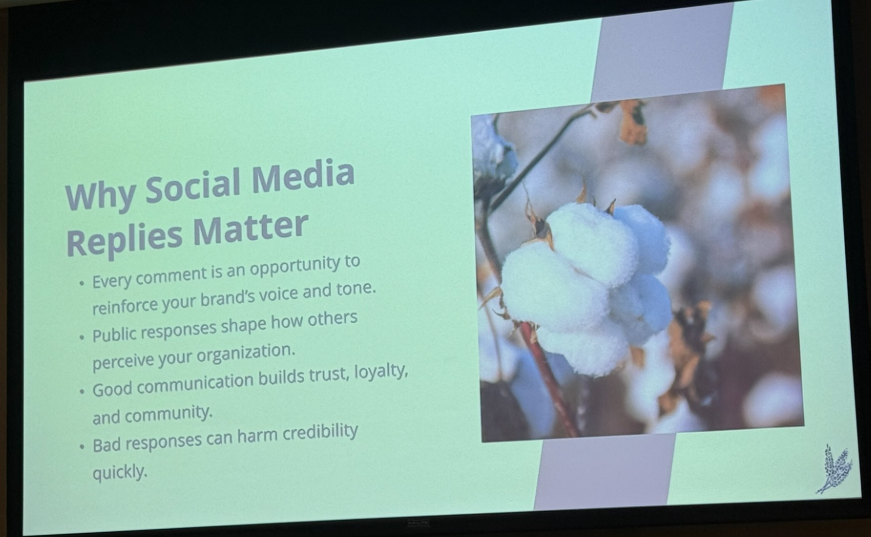
Utah

Susan Larson Appointed as State Executive Director, Utah Farm Service Agency

Susan Larson serves as State Executive Director for the Farm Service Agency in Utah. She and her husband, Jake, operate their family's Centennial Farm and Ranch, which stretches across Northern Utah and Southern Idaho. For six generations, their family has been rooted in the land—raising forage crops, managing a cow-calf operation, and carrying forward a proud ranching legacy.

Virginia

Beth Walker Green Appointed as State Director, Virginia Rural Development

Beth Walker Green serves as the State Director for Rural Development in Virginia. She previously held this role from 2017 to 2021 and also served as Acting Rural Housing Administrator during that time. Most recently, she was Chief Deputy Secretary of Agriculture and Forestry for Virginia Governor Glenn Youngkin, bringing extensive leadership experience in agricultural policy, housing and rural development initiatives.

West Virginia

Keith Richmond Appointed as State Executive Director, West Virginia Farm Service Agency

Keith Richmond serves as State Executive Director for Farm Service Agency in West Virginia. Most recently Richmond has served as County Executive Director with FSA for over 34 years.  He started his career in FSA as a County Operations Trainee in 1991 and worked in several county offices after completing his training.  Richmond has received numerous awards from the National Association of State and County Office Employees and FSA for community service and lifetime achievements. He and his wife Marsha are active in the operation and management of the family's diversified farming operation in southern West Virginia.

Wyoming

Laurie Boner Appointed as State Executive Director, Wyoming Farm Service Agency

Laurie Boner serves as State Executive Director for the Farm Service Agency in Wyoming. Laurie is a rancher and small business owner residing near Glenrock, Wyoming. She is actively involved and serves on numerous agriculture-related boards. Previously she had a successful career with the Wyoming Department of Agriculture for over 15 years, where she oversaw the state's food safety and environmental health program.

Joint Statement on a United States-European Union Framework on an Agreement on Reciprocal, Fair, and Balanced Trade

The United States and the European Union are pleased to announce that they have agreed on a Framework on an Agreement on Reciprocal, Fair, and Balanced Trade ("Framework Agreement"). This Framework Agreement represents a concrete demonstration of our commitment to fair, balanced, and mutually beneficial trade and investment.  This Framework Agreement will put our trade and investment relationship – one of the largest in the world – on a solid footing and will reinvigorate our economies' reindustrialization. It reflects acknowledgement by the European Union of the concerns of the United States and our joint determination to resolve our trade imbalances and unleash the full potential of our combined economic power. The United States and the European Union intend this Framework Agreement to be a first step in a process that can be further expanded over time to cover additional areas and continue to improve market access and increase their trade and investment relationship.

The key terms include: 

1.​ The European Union intends to eliminate tariffs on all U.S. industrial goods and to provide preferential market access for a wide range of U.S. seafood and agricultural goods, including tree nuts, dairy products, fresh and processed fruits and vegetables, processed foods, planting seeds, soybean oil, and pork and bison meat. The European Union will immediately take the necessary steps to extend the Joint Statement of the United States and the European Union on a Tariff Agreement announced on August 21, 2020, with respect to lobster (that expired 31 July 2025), coupled with an expanded product scope to include processed lobster.

2.​ The United States commits to apply the higher of either the U.S. Most Favored Nation (MFN) tariff rate or a tariff rate of 15 percent, comprised of the MFN tariff and a reciprocal tariff, on originating goods of the European Union. Additionally, effective as of 1 September 2025, the United States commits to apply only the MFN tariff to the following products of the European Union: unavailable natural resources (including cork), all aircraft and aircraft parts, generic pharmaceuticals and their ingredients and chemical precursors. The United States and the European Union agree to consider other sectors and products that are important for their economies and value chains for inclusion in the list of products for which only the MFN tariffs would apply.
3. ​The United States intends to promptly ensure that the tariff rate, comprised of the MFN tariff and the tariff imposed pursuant to Section 232 of the Trade Expansion Act of 1962, applied to originating goods of the European Union subject to Section 232 actions on pharmaceuticals, semiconductors, and lumber does not exceed 15 percent. When the European Union formally introduces the necessary legislative proposal to enact the tariff reductions set forth in Section 1 of this Framework Agreement, the United States will reduce tariffs on automobiles and automobile parts originating from the European Union subject to Section 232 tariffs as follows: No Section 232 automobile or automobile parts tariffs will apply to covered European Union goods with an MFN tariff of 15 percent or higher; and for covered goods with an MFN rate lower than 15 percent, a combined rate of 15 percent, comprised of the MFN tariff and Section 232 automobile tariffs, will be applied. These tariff reductions are expected to be effective from the first day of the same month in which the European Union's legislative proposal is introduced. The United States expects the European Union's legislative proposals will be consistent with this Framework Agreement and enacted by the necessary legislatures. All modifications to U.S. Section 232 tariffs will be executed in a manner that reinforces and is consistent with U.S. national security interests. With respect to steel, aluminum, and their derivative products, the European Union and the United States intend to consider the possibility to cooperate on ring-fencing their respective domestic markets from overcapacity, while ensuring secure supply chains between each other, including through tariff-rate quota solutions.

4. ​The United States and the European Union will negotiate rules of origin that ensure that the benefits of the Agreement on Reciprocal Trade accrue predominately to the United States and the European Union.

5. ​The United States and the European Union commit to cooperate on ensuring secure, reliable, and diversified energy supplies, including by addressing non-tariff barriers that might restrict bilateral energy trade.  As part of this effort, the European Union intends to procure U.S. liquified natural gas, oil, and nuclear energy products with an expected offtake valued at $750 billion through 2028. In addition, the European Union intends to purchase at least $40 billion worth of U.S. AI chips for its computing centers. The European Union further plans to work with the United States to adopt and maintain technology security requirements in line with those of the United States. in a concerted effort to avoid technology leakage to destinations of concern. The United States will endeavor to facilitate such exports once such requirements are in place.

6. ​The United States and the European Union share one of the world's largest economic relationships, supported by mutual investment stocks exceeding $5 trillion, and intend to promote and facilitate mutual investments on both sides of the Atlantic. In this context, European companies are expected to invest an additional $600 billion across strategic sectors in the United States through 2028. This investment reflects the European Union's strong commitment to the transatlantic partnership and its recognition of the United States as the most secure and innovative destination for foreign investment.

7. ​The European Union plans to substantially increase procurement of military and defense equipment from the United States, with the support and facilitation of the U.S. government.  This commitment reflects a shared strategic priority to deepen transatlantic defense industrial cooperation, strengthen NATO interoperability, and ensure that European allies are equipped with the most advanced and reliable defense technologies available.

8. ​The United States and the European Union commit to work together to reduce or eliminate non-tariff barriers. With respect to automobiles, the United States and the European Union intend to accept and provide mutual recognition to each other's standards. Cooperation on standards plays a crucial role in enhancing the transatlantic marketplace. The European Union and United States commit to enhance opportunities for technical cooperation between EU- and U.S.-domiciled standards development organizations with the objective of identifying and developing standards for the transatlantic marketplace in key sectors of mutual interest.  The United States and the European Union commit to facilitate conformity assessments to cover additional industrial sectors.

9. ​Recognizing the importance of continued engagement to resolve longstanding concerns, the European Union and the United States commit to work together to address non-tariff barriers affecting trade in food and agricultural products, including streamlining requirements for sanitary certificates for pork and dairy products.

10. ​Recognizing that production of the relevant commodities within the territory of the United States poses negligible risk to global deforestation, the European Union commits to work to address the concerns of U.S. producers and exporters regarding the EU Deforestation Regulation, with a view to avoiding undue impact on U.S.-EU trade.

11. ​Taking note of the U.S. concerns related to treatment of U.S. small and medium-sized businesses under the Carbon Border Adjustment Mechanism (CBAM), the European Commission, in addition to the recently agreed increase of the de minimis exception, commits to work to provide additional flexibilities in the CBAM implementation.

12. ​The European Union commits to undertake efforts to ensure that the Corporate Sustainability Due Diligence Directive (CSDDD) and the Corporate Sustainability Reporting Directive (CSRD) do not pose undue restrictions on transatlantic trade.  In the context of CSDDD, this includes undertaking efforts to reduce administrative burden on businesses, including small- and medium-sized enterprises, and to propose changes to the requirement for a harmonized civil liability regime for due diligence failures and to climate-transition-related obligations.  The European Union commits to work to address U.S. concerns regarding the imposition of CSDDD requirements on companies of non-EU countries with relevant high-quality regulations.

13. ​The European Union reaffirms that U.S. conformity assessment bodies can be designated as Notified Bodies in accordance with the Sectoral Annex for Telecommunications Equipment to the Agreement on Mutual Recognition Between the European Community and the United States (1998) to carry out the tasks in relation to all essential requirements, including cybersecurity, in the Radio Equipment Directive 2014/53/EU.  In addition, the United States and the European Union will commit to negotiate a mutual recognition agreement on cybersecurity.

14.​ The European Union and the United States commit to strengthen cooperation and action related to the imposition of export restrictions on critical mineral and other similar resources by third countries.

15. ​The United States and the European Union commit to discuss high-standard commitments related to intellectual property rights protection and enforcement.

16. ​The European Union and the United States commit to work together to ensure strong protection of internationally recognized labor rights, including with regard to the elimination of forced labor in supply chains.

17.​ The United States and the European Union commit to address unjustified digital trade barriers. In that respect, The European Union confirms that it will not adopt or maintain network usage fees. The United States and the European Union will not impose customs duties on electronic transmissions. The United States and the European Union intend to continue to support the multilateral moratorium on customs duties on electronic transmissions at the World Trade Organization and seek the adoption of a permanent multilateral commitment.

18.​ The European Union intends to consult with the United States and U.S. traders on digitalization of trade procedures and implementation of the legislation currently proposed on EU Customs Reform.

19. ​The United States and the European Union agree to strengthen economic security alignment to enhance supply chain resilience and innovation by taking complementary actions to address non-market policies of third parties as well as cooperating on inbound and outbound investment reviews and export controls, as well as duty evasion. This includes addressing non-market practices, unfair competition, and lack of reciprocity in public procurement with respect to third countries. The United States and the European Union will cooperate on further implementation measures. ​

The United States and the European Union, in line with their relevant internal procedures, will promptly document the Agreement on Reciprocal, Fair, and Balanced Trade to implement this Framework Agreement.

MAP Leads Fertilizer Prices Higher

Retail fertilizer prices continue to be somewhat mixed, according to retailers tracked by DTN for the second week of August 2025.

For the first time in nine weeks, however, a fertilizer price did move a considerable amount. DTN designates a significant move as anything 5% or more.

MAP was 6% more expensive compared to last month. The phosphorus fertilizer had an average price of $895/ton.

Three fertilizers had slightly higher prices. DAP had an average price of $825/ton, potash $484/ton and UAN28 $421/ton.

Four fertilizers were slightly lower looking back to the prior month. Urea had an average price of $642/ton, 10-34-0 $669/ton, anhydrous $762/ton and UAN32 $489/ton.

On a price per pound of nitrogen basis, the average urea price was $0.70/lb.N, anhydrous $0.47/lb.N, UAN28 $0.75/lb.N and UAN32 $0.76/lb.N.

Imports of various fertilizers to Vietnam are expected to slow in the third quarter of 2025, according to a recent article in worldfertilizer.com. Argus Media reported that more nutrient imports in the first quarter of the year as well as slower domestic sales could weigh on import demand in the country.
Vietnam issued an additional charge of 5% (VAT) to all fertilizer imports after July 1. This order is aimed at leveling the playing field between local and imported fertilizer and lowering input cost for domestic producers.
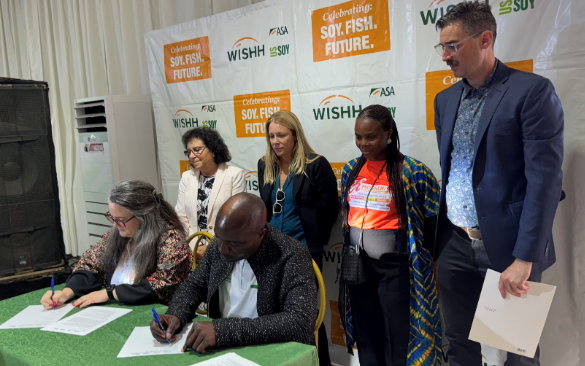
"This has pushed importers to speed up purchases in the second quarter, asking for cargoes to arrive before July 1 so they will not incur VAT charges," the article stated.

Fertilizer imports into the country are seeing a slowdown in domestic demand as the main application season winds down in early August. Farmers are expected to return to the fertilizer market in October, according to the article.

Seven fertilizers are now higher in price compared to one year earlier. 10-34-0 is 5% higher, MAP is 10% more expensive, DAP is 11% higher, anhydrous is 12% more expensive, UAN28 is 25% higher, urea is 28% higher and UAN32 is 30% more expensive looking back to last year.

The remaining fertilizer continues to be lower. Potash is 3% lower compared to last year.

DTN gathers fertilizer price bids from agriculture retailers each week to compile the DTN Fertilizer Index. DTN first began reporting data in November 2008.

Article by DTN's Russ Quinn

USMEF Statement on Updated Details of the U.S.-EU Trade Framework

USMEF Statement on Updated Details of the U.S.-EU Trade FrameworkThe White House released today a U.S.-EU joint statement offering updated details on the trade framework with the European Union announced last month.U.S. Meat Export Federation (USMEF) President and CEO Dan Halstrom issued the following statement:USMEF is encouraged to see that the European Union will provide preferential market access for pork and bison meat, has committed to streamlining requirements for U.S. pork sanitary certificates, and intends to address other non-tariff barriers affecting agricultural trade – including its deforestation regulation.These changes are long overdue, and USMEF greatly appreciates the Trump administration making agricultural market access a top priority in negotiations with the EU and with other key trading partners. The U.S. has been a net importer of red meat from the EU due to the vast barriers the EU imposes on imports, and addressing the EU's tariff and non-tariff barriers is absolutely essential for U.S. export growth.It is also critical that U.S. beef exports to the EU – which are already heavily restricted – face no further regulatory obstacles related to deforestation. With U.S. agriculture posing negligible risk to global deforestation, USMEF thanks the Trump administration for securing a commitment from the EU to address concerns of U.S. producers and exporters regarding the EU Deforestation Regulation.

NPPC Optimistic on US-EU Trade Framework

The White House announced a United States-European Union Framework on an Agreement on Reciprocal, Fair, and Balanced Trade. The administration stated the Framework Agreement aims to resolve trade imbalances and maximize the U.S. and EU's combined economic power in an ongoing process to improve market access and increase the U.S./EU trade and investment relationship.National Pork Producers Council President Duane Stateler, a pork producer from McComb, Ohio, thanked the administration for including U.S. pork, saying "America's pork producers are encouraged by the specific inclusion of pork in the U.S.-EU framework to address tariff and non-tariff barriers to trade. We look forward to continued collaboration to address longstanding market access issues."For decades, pork trade between the U.S. and the EU has been weighted to favor EU interests. In 2024, the U.S. exported $7 million of pork products to the EU while importing over $709 million from the EU. To compare, the U.S. currently exports more pork to Honduras than to the 27 countries total that make up the EU.NPPC will continue to engage with the Trump administration and international partners to maintain and open new market access for U.S. pork.

July 2025 Investment Report

ECONOMIC DEVELOPMENTS

The unemployment rate rose slightly to 4.2% in July. The Bureau of Labor Statistics (BLS) said jobs continued to trend up in health care and in social assistance but declined in the Federal government space. The number of non-farm jobs for July was 73,000, coming in below economists' projections of 115,000. "The number of long-term unemployed (those jobless for 27 weeks or more) increased by 179,000 to 1.8 million. The long-term unemployed accounted for 24.9 percent of all unemployed people," as reported by the BLS.

The July Consumer Price Index (CPI) was 0.2% compared to 0.3% in June. On an annual basis CPI advanced 2.7% and was unchanged from the previous month. Core CPI, which excludes volatile food and energy components, gained 0.3% for the month and 3.1% on a year-over-year basis. The monthly gain in the core CPI reflected the largest increase since January. The Producer Price Index for final demand increased 0.9% for the month. The Bureau of Labor Statics said, "On an unadjusted basis, the index for final demand advanced 3.3% for the 12 months ended in July, the largest 12-month increase since rising 3.4% in February 2025."

Retail sales in July rose 0.5% and June was upwardly revised from 0.6% to 0.9%. The increases in June and July followed consecutive spending declines in April and May. According to UPI News, "Car dealership sales climbed 1.6%, and furniture stores' sales were boosted 1.4%. Online sales jumped 0.8% in July, coinciding with Amazon's Prime Day sale. Gas stations and department stores also saw a rise in spending."

The median sales price of an existing home increased to $435,300, reflecting a 2% increase from one year ago. Many years of home under supply is attributed to continued record high prices with the supply being 4.7 months in June for unsold home inventory. The National Association of Realtors reported there was a 2.7% decrease in total existing home sales for a seasonally adjusted rate of 3.93 million and no change in sales year-over-year. As of this report, the average 30-year fixed rate mortgage was 6.60%.

The real gross domestic product (GDP) increased more than expected, coming in at 3% in the second quarter. The Bureau of Economic Analysis said the gain reflected a "downturn in imports and an acceleration in consumer spending that were partly offset by a downturn in investment." According to Market Watch, taking the GDP first and second quarters together the U.S. economy grew at an average of 1.25% which in normal times would be a below-average rate of growth.

COLLATERALIZATION

All funds under the control of this office requiring collateralization were secured at rates ranging from 100% to 110%, depending on the type of investment.

View full report below.

NSCEB Commissioners Visit Oklahoma City

Tuesday, NSCEB Commissioners, including Congresswoman Stephanie Bice (OK-05), joined Oklahoma biotech leaders and state officials in Oklahoma City to highlight the state's growing role in the national biotech industry. 

"It was my honor to have the National Security Commission on Emerging Biotechnology in Oklahoma City," said Congresswoman Bice. "As a commissioner, I have been focused on highlighting the growing bioeconomy in our state and advocating for policies that strengthen our national security." 

 
NSCEB Vice Chair Michelle Rozo praised Oklahoma's leadership, saying, "Through investments in emerging technologies and in the future biotech workforce, Oklahoma is strengthening the state's economy and contributing to America's national security." 

Commissioners toured BioTC, a biotech workforce development hub, and met with industry leaders at Innovation Hall to discuss workforce development, biomanufacturing, and opportunities for growth in Oklahoma's life sciences sector. 

Oklahoma Secretary of Commerce Deborah Moorad added, "Our state is achieving remarkable progress in the bioscience industry, driven by strong collaboration between the private sector and community leaders." 

Full details can be found at: NSCEB Visits Biomanufacturing and Biotech Innovation Hub Supporting National, Economic Security in Oklahoma City - Biotech 

New Data Shows Chemical Releases Decline While American Economy Thrives

Today, U.S. Environmental Protection Agency (EPA) released its Toxics Release Inventory (TRI) National Analysis for reporting year 2023, which shows that toxic chemical releases have decreased as the chemical industry's contribution to the national Gross Domestic Product (GDP) has increased. This demonstrates that industry can simultaneously protect the environment and grow the nation's economy.  

 "With this analysis, EPA is showing how American industry continues to improve its environmental performance while growing the economy," said Nancy Beck, Principal Deputy Assistant Administrator for EPA's Office of Chemical Safety and Pollution Prevention.

Highlights from the 2023 TRI National Analysis include: 

  • Between 2014 and 2023, environmental releases of TRI-listed chemicals fell 21%, including a 32% decrease in air releases. During this 10-year period, releases from manufacturing facilities decreased by 15% while the manufacturing sector's contribution to the U.S. GDP increased by 13%.  
  • A feature profile on automotive manufacturing which shows that, from 2014 to 2023, this sector's value to the economy increased by 34% while chemical releases decreased by 14%.  
  • In 2023, facilities managed 90% of their TRI chemical waste through preferred practices such as recycling, energy recovery and treatment.   
  • From 1998 to 2023, companies managing TRI chemicals, which include lead, mercury, dioxins, and per-and-polyfluoralkyl substances (PFAS) chemicals, have decreased releases by 54% while the national GPD has increased by 74%.  
  • For reporting year 2023, nine PFAS were added to the reporting requirements for a total of 189 PFAS tracked by the TRI program. During 2023, 61 facilities managed 1.6 million pounds of PFAS as waste and decreased chemical releases by 16%.   

EPA is holding a public webinar September 30, 2025, at 3:00 PM EST to provide an overview of the 2023 TRI National Analysis. Register for the webinar. 

Please see EPA's 2023 TRI National Analysis for more information.  

Background 

The 2023 TRI National Analysis uses interactive visualizations and analytical tools to summarize the most recent TRI data and highlight trends in waste management practices for specific sectors and chemicals. Along with the feature profile on automotive manufacturing, the analysis includes profiles of electric utilities, chemical manufacturing, and wood product manufacturing. The Chemical Profiles highlight chemicals of importance to the public and EPA, including PFAS, mercury, lead and dioxins. 

Under the Emergency Planning and Community Right-to-Know Act (EPCRA), EPA must track the industrial management of chemicals that may pose a threat to human health and the environment. EPA, states and Tribes receive TRI data from facilities in sectors such as manufacturing, hazardous waste management and electric utilities.

Farmer Focus Raises the Standard on Raising Chicken with "Chicken for Good" Campaign

Farmer Focus, the number one organic chicken brand in U.S. grocery, proudly unveils its new brand campaign: Chicken for Good. As consumers demand more information about their food and where it comes from, this campaign makes it clear: building a more transparent, trustworthy food system isn't optional, it's essential.

At its core, Chicken for Good is about choice. When consumers pick up Farmer Focus chicken, they're not just choosing dinner, they're choosing to support organic practices, humane standards, a sustainable future for farmers, and a more transparent way of doing business. Developed in partnership with Vokal, the campaign illustrates that where our food comes from is closer than we think. Through a unique Farm ID system, consumers can easily trace their chicken back to Farmer Focus's independent family farming partners. Just scan the QR code and enter the 4-letter ID on the label to meet a farmer, see photos of their farm, and learn how they raise their chickens.

"We're proud to launch this campaign, which highlights the powerful connection between the food on your table and the farmers who make it possible," says Dolan Patterson, Chief Commercial Officer at Farmer Focus. "Our model proves that doing good, for all stakeholders, is not only possible, but successful. This is chicken for good, and it's working."

"A lot of brands talk about values—Farmer Focus actually lives theirs. You can see it in their humane certifications, their organic standards, and their commitment to paying their farming partners fairly," said Emily Long, Creative Director at Vokal. "This campaign is a reflection of their real work to change the industry for the better."

Chicken for Good is currently rolling out across streaming television and social platforms, including YouTube.

About Farmer Focus:
Founded in 2014 with the mission to promote and protect generational family farms, Farmer Focus broke from the traditional poultry model by partnering with independent farmers. All 120+ growers retain ownership of their flocks and land, are paid fairly for their work, and follow the brand's rigorous standards. The result is humane, sustainable, traceable chicken you can trust to be better for your table, the planet, and the future of farming.

Learn more at FarmerFocus.com

Moderate Drought Emerges In This Weeks Drought Monitor

To view the latest Oklahoma drought map, CLICK HERE.

According to the latest Oklahoma drought monitor report, exceptional drought remains at zero percent, unchanged from the start of the calendar year.

Extreme drought or worse conditions remain at zero percent, unchanged since the week of October 29, 2024.

Severe drought or worse conditions remain at zero percent, unchanged since the week of May 29, 2025.

Moderate Drought or worse conditions have emerged in Logan, Kingfisher, Noble, Pottawatomie, Seminole, and Cleveland County.

Abnormally dry or worse conditions have spread into western Oklahoma this week.

According to the 6-to-10-day precipitation outlook map, Oklahoma is leaning above 60-70% chance of precipitation, with eastern Oklahoma leaning above 50-60% chance through August 30.

To view the United States Drought Map, CLICK HERE.

Between August 13–19, 2025, much of the U.S. faced hotter-than-average weather and widespread drought, with temperatures running 1–5°F above normal and some pockets of the central High Plains, Midwest, Arkansas, the Ohio Valley, and New York soaring 5–10°F above normal, while only isolated parts of North Dakota, Minnesota, and California saw cooler conditions. Rainfall was limited overall, though the Pacific Northwest, Southeast, and portions of the Upper Midwest recorded 1–5 inches above normal precipitation, helping ease drought in the northern Intermountain West, central High Plains, and western Great Lakes. In the West, severe to exceptional drought (D2–D4) remained entrenched across California, Nevada, Arizona, and New Mexico, while Oregon, Washington, and Idaho saw drought expand, fueling large wildfires in California and the Southwest. The High Plains endured worsening drought across Nebraska, Kansas, and the Dakotas, where high heat and limited rainfall stressed crops and rangeland, with only scattered storms offering localized relief. In the South, flash drought emerged along the Tennessee and mid-Mississippi River valleys, intensifying drought in Missouri, Arkansas, western Kentucky, Tennessee, and northwestern Mississippi, though Texas and south-central Tennessee saw slight improvements. Meanwhile, heavy rains improved conditions in Minnesota, Wisconsin, and Iowa, but Illinois, Indiana, and Ohio grew drier, the Southeast held mostly steady with persistent dryness in Alabama, Georgia, and the Carolinas, and the Northeast dried further as abnormal dryness and moderate drought spread across New England.

In the southern plains The South saw widespread drought expansion over the week, despite scattered thunderstorms that brought brief, localized relief. Texas saw some improvements due to heavy rains and flooding in south-central counties earlier in the month that continued to ease drought there. Temperatures across the region stayed hot and humid, with heat index values topping 100°F in Texas and Oklahoma. Fire danger also crept higher in Oklahoma and Texas, where persistent heat and dry rangelands created favorable conditions for grassfires. Abnormal dryness (D0) formed in the Panhandle and north-central Texas. There was widespread expansion of abnormal dryness (D0) and moderate drought across much of Oklahoma under hot, windy conditions. Arkansas is experiencing a flash drought with conditions deteriorating quickly, with nearly the entire state now abnormally dry (D0) or worse and pockets of severe drought (D2) developing in the northeast and central counties, along with the expansion of moderate drought (D1). Louisiana also saw abnormal dryness (D0) expand in the northwest and in the southeast and into Mississippi. Mississippi saw moderate drought (D1) expand in both the south and northwest, while Tennessee recorded broad expansion of drought in the west, despite some trimming in the south-central counties. Overall, the South ended the week with worsening drought almost everywhere, reinforcing the strain of prolonged heat and limited rainfall.

In the High Plains, the High Plains saw a mixed pattern of drought changes between Aug. 13–19. North Dakota improved the most, as widespread storms erased nearly all dryness, leaving only a small pocket in the northeast. South Dakota had patchy outcomes, with rainfall trimming drought in some central and southern counties while western areas remained dry. Nebraska also showed contrasts with severe dryness expanding in the Sandhills, especially in Cherry and nearby counties, while parts of the east improved after storms. Kansas slipped slightly drier, with abnormal dryness spreading into the southwest. Conditions were most concerning in Colorado and Wyoming, where persistent heat and limited rainfall drove drought deeper. In Colorado, drought expanded along the Front Range and southwest into northern New Mexico, while Wyoming saw new extreme drought in the northwest and broader expansion of abnormally dry conditions across central counties. These worsening conditions have fueled wildfire activity, most notably Colorado's Lee Fire, which has already burned more than 137,000 acres, ranking among the state's largest, while Wyoming has faced smaller but fast-moving rangeland fires.

In the West, Hot, dry weather dominated much of the West, fueling widespread drought expansion. Arizona and New Mexico saw severe to extreme drought spread north and east as monsoon rains largely missed these areas. In Utah, drought expanded in the south and along the borders of Colorado and Wyoming. Idaho worsened, with severe (D2) and extreme (D3) drought spreading in the southeast and north. Montana was mixed: heavy rains in the northeast allowed drought to ease, but hot, dry weather in the southwest caused drought to intensify. Oregon and Washington saw smaller changes, with some localized improvement in southeast Oregon but worsening conditions in northern Oregon and southern Washington. California remained locked in extreme (D3) to exceptional (D4) drought in the southern regions with no major change. The dry conditions have fed several large wildfires: Arizona's Dragon Bravo Fire has burned over 145,000 acres and California's Gifford Fire about 130,000 acres. A record-breaking heat wave, with temperatures above 110°F in desert areas and red-flag warnings across California, has heightened fire danger.

Looking Ahead, From Aug. 21 to 26, the heaviest precipitation is forecast along the East Coast, especially from North Carolina through the Mid-Atlantic and into southern New England, where amounts may exceed 5 inches, likely tied to a coastal storm system. Pockets of heavier rain are also expected in parts of the central Rockies, High Plains and southern Texas, with localized totals between 2 and 4 inches. Much of the Midwest, Southeast and Southwest are forecast to receive lighter but widespread rainfall, generally between 0.5 and 2 inches. By contrast, the Pacific Northwest and much of California show little to no precipitation expected. Overall, the forecast highlights a wet period for the East Coast and scattered parts of the interior U.S., while the West Coast remains mostly dry. The Climate Prediction Center's 6-10 day outlook (valid Aug. 26-30) shows much of the central and eastern U.S. is expected to be cooler than normal, with the greatest chance for well-below-average temperatures across the Midwest and Ohio Valley. In contrast, warmer-than-normal conditions are favored along the West Coast, especially in the Pacific Northwest and northern California, as well as in Florida, parts of Alaska and Hawaii. Rainfall patterns show a split across the country: wetter-than-normal conditions are likely in the central and southern Rockies, the Southwest and the central Plains, along with parts of Alaska. Drier-than-normal conditions are forecast for the Great Lakes, Ohio Valley, and portions of the interior Northeast. The Southeast, Gulf Coast and parts of the interior West are generally expected to see near-normal precipitation. Overall, the late-August outlook points to a cool and damp stretch for much of the central U.S., warmer weather along the West Coast and in the far South, and a drier setup in the Great Lakes and Ohio Valley.

To view the 6-10 Day Precipitation Outlook Map, click here.

To view the 6-10 Day Temperature Outlook Map, click here.

To view the Monthly Drought Outlook Map, click here.

Anne Anderson Shares the Speckle Park Story: From Canada to Texas

Listen To Ron Hays And Ann Anderson

In today's Beef Buzz, Senior Farm and Ranch Broadcaster Ron Hays speaks with Anne Anderson, who says her journey with Speckle Park cattle began in Canada during efforts to build a supply alliance. "We went out to buy some cattle and the one that brought the most money was speckled. Well, you're a new company trying to get started, and if you can get $30 more for this hide that's speckled, I thought we're gonna go buy all the speckled cattle we can find." She started small, purchasing ten head, and was surprised by the results: "They called back and said, These were wonderful. These are Y1 primes."

As she continued testing groups of cattle, the pattern held true. "For the most part, not much fat on the outside, internal marbling. The cattle were moderately sized." When carcass data was shared with Canadian breeders, demand exploded. "People thought, if I can just get $2,500 for my top heifers, that would be great. I want you to know, the top heifer bought by the people from Australia brought $18,000." That global attention made it increasingly difficult for her to purchase cattle, as values skyrocketed in the early days of selling this breed.

Anderson recalled how Australia quickly seized on the opportunity. "At that sale, Australia brought every straw of semen they bought. We couldn't afford to buy any because by that time, I decided I wanted to bring them to Texas." Eventually, she was successful in bringing Speckle Park genetics from Canada into Texas, noting that "it's not just the purebred animals, but the crosses are phenomenal as well."

She compared the breed's efficiency to her past experiences with Wagyu. "I fed them, and I decided I was going to feed one group of 30 out by ourselves... it took me 32 months and a fortune to get them ready for the market. So then we did some Speckle Park babies... they could finish in 20 months, in contrast to 32 months, and the performance was similar." That discovery led her to crossbreeding.

The Speckle Park breed is one of the more interesting stories that has come out of the early years of Cattlemen's Congress- and it's expected a strong showing of the emerging breed will be again shown and be a part of their national sale planned for the sixth Cattlemen's Congress this coming January in Oklahoma City. 

Partnering with Oklahoma cattleman Brett Morris, Anderson expanded into Speckle Park-Angus crosses. "We crossed them with Angus and then we had those two comparisons, and the Angus Speckle Park performed better than the Wagyu Speckle Park. So we gravitated, we sold the Wagyu cattle, because for us, we could make more money with Angus Speckle Park crosses." She admits the purebred population is still small, but sees strong potential: "It's just early days of the industry... but it's a really good cross."

The Beef Buzz is a regular feature heard on radio stations around the region on the Radio Oklahoma Ag Network and is a regular audio feature found on this website as well. Click on the LISTEN BAR for today's show and check out our archives for older Beef Buzz shows covering the gamut of the beef cattle industry today.

OSU Expert's Top Tips for Ag Producers on Tackling Social Media

At a Women in Agriculture Conference, OSU's Audrey King shared valuable insights on how agricultural professionals can effectively navigate the complexities of social media. In a discussion with Farm Director KC Sheperd, King emphasized that the key to social media success starts with finding your brand. This isn't just about a logo; it's about establishing a consistent "vibe" and voice so that your audience knows exactly what to expect from you every time they interact with your content. She advised producers to sit down and list adjectives that describe who they are or how they want their operation to be perceived, such as "enthusiastic" or "trustworthy." These guiding words can then be used to create all their online messaging.


For producers looking to sell products directly to consumers—whether through a "you-pick" farm, a farm-to-table business, or selling beef—King's top tip was to prioritize the audience. Deciding where, when, and how often to post should be based entirely on where your target audience spends their time and when they are most likely to be online. For example, a producer targeting working parents might find success posting on Facebook during school drop-off or pick-up times, or after children have gone to bed. By focusing on the audience's digital habits, producers can ensure their content reaches the right people at the right time.


When it comes to handling online conversations, especially with misinformation, King encouraged a more intentional and less combative approach. She reminded the audience that there are real people on both sides of a screen and that the goal should be to engage rather than just educate. Acknowledging a person's concern and then sharing your own operation's experience and facts is more productive than simply "spewing facts" or posting links. This approach fosters a more authentic connection with the audience. King also addressed the role of AI, noting that in an increasingly automated world, authentic, human-centric content will become even more valuable. She concluded by reassuring everyone that it's never too late to start on social media, encouraging producers to begin on a platform they feel most comfortable with.

More resources are available by scanning the QR Code

Choice Boxed Beef Drops $1.35- Closing at $405.85 on Wednesday

Boxed beef values were mixed on Wednesday afternoon. Choice cutout slipped $1.35 to $405.85/cwt while Select gained $3.40 to $383.16/cwt, narrowing the Choice–Select spread to $22.69. Loads totaled 102.   Primal movement was also uneven compared to Tuesday. The Rib eased to $609.92 from $611.97, while the Chuck edged higher to $358.14 from $355.45. The Round was steady-to-higher at $359.89 versus $358.70. The Loin saw the sharpest decline, falling to $496.35 from $505.68. Brisket also slipped slightly to $345.06 from $347.55. Plate held mostly steady at $272.67 versus $272.97, while Flank softened to $237.33 from $238.59.

Public Invited to Comment on State Wildlife Action Plan

Ever wonder how the Wildlife Department decides which nongame wildlife conservation efforts should be undertaken? Many of those decisions boil down to what is reflected in a living document known as Oklahoma's State Wildlife Action Plan. 

This habitat-based document guides how ODWC manages rare, declining, threatened, and endangered species, and is required for ODWC's continued eligibility for funding from the federal State Wildlife Grants Program. States must update their plans every 10 years, and the staff of ODWC's Wildlife Diversity Program are drafting Oklahoma's plan for 2025.

"We would love to have the public's help in shaping the state's plan," said Mark Howery, a senior wildlife biologist for the Wildlife Department. "This plan may be a required document for the Wildlife Department, but it is not regulatory in nature. Instead, it is a guiding and educational document that gives us the opportunity to share which species are declining in the state and what could be done to improve their status."  

The draft plan identifies 397 fish and wildlife as Species of Greatest Conservation Need. Some of these SGCN are well-known by the public: Texas horned lizard, lesser prairie-chicken, alligator gar, and three-toed box turtle. But most of Oklahoma's SGCN are low-profile and perhaps naturally rare in the state and infrequently encountered by people.  

In addition to identifying the state's SGCN, the plan outlines conservation issues, actions, and monitoring plans for eight sets of habitats that are important to Oklahoma's wildlife. If Oklahoma's plan is approved by the U.S. Fish and Wildlife Service review team, ODWC will maintain its eligibility to receive federal matching funds to support projects designed to benefit Oklahoma's SGCN. In previous years, ODWC has received about $850,000 each year to conduct status assessments, habitat improvements, and ecological research for SGCN.  

Highlights from the Updated Draft Plan 

Biologists assessed approximately 750 Oklahoma species when updating the draft plan and identified 136 fish and wildlife species that meet the selection criteria for the 2025 plan but were not included as SGCN in the state's prior Comprehensive Wildlife Conservation Strategy.  

"Many of these species were identified because of relatively recent population declines," Howery said. "A lot of the bats and shorebirds identified as SGCN in the draft 2025 plan have had long, steady declines that have reached a point of concern in the past 10 years." 

More than two-thirds of the newly designated SGCN are invertebrates. 

"Our general understanding of insects and other invertebrates has improved since the last plan revision, especially with better engagement with the entomologist community. Oklahoma has had a number of newly documented insect species, and a number of regionally endemic species have been brought to our attention.  

"However, we have limited information for a lot of these species as so few biologists may study the species and so few naturalists recognize and document their occurrences." 

To address species with limited life history information or other ecological data, the Wildlife Department and other states have adopted a category of "Species of Greatest Information Need."  

"This category acknowledges the species may be in trouble, but our understanding is so limited that biologists can't point to population sizes or trends. There are more questions than answers for these species."  

Of the SGCN included in Oklahoma's current plan, 51 species no longer meet the state's selection criteria.  

"Many of these can be considered success stories," Howery said. "Species like the bald eagle have an increasing population trend and are scheduled to be removed from the Oklahoma SGCN list. And survey work in the past 10 years has shown other species like the painted bunting and Cassin's sparrow have a larger population than previously thought. 

"Still other species that are scheduled to be removed from our plan have been reclassified and found to be the same as more widespread species."  

How to Comment 

Comments to Oklahoma's draft State Wildlife Action Plan can be shared with Mark Howery or Kurt Kuklinski, a research supervisor with the Wildlife Department, by Sept. 3, 2025. For specific edits, please indicate the page number or other applicable references.  

A finalized plan will be sent the U.S. Fish and Wildlife Service for a comprehensive review by Sept. 30, 2025.  

ASA/WISHH & Nigerian Partner, Sejfarms, Sign MOU to Advance Aquaculture

The American Soybean Association's World Initiative for Soy in Human Health and Sejfarms Consult Limited are building on their three-year partnership by signing a Memorandum of Understanding for strengthened collaboration to advance Nigeria's fish production. The MOU recognizes the significant role that high-quality soy-based feeds play in achieving regional aquaculture sector growth and success.

Nigeria is the largest aquaculture fish producer in sub-Saharan Africa, accounting for 52% of the total farmed fish production in the region, according to the Food and Agriculture Organization of the United Nations. Yet, Nigeria has a 2 million metric tonne (2.2 U.S. tons) deficit, needing 3.2 million metric tonnes (3.5 U.S. tons) of fish annually while current production stands at 1.2 million tonnes (1.3 million U.S. tons). Fish feed is considered a bottleneck to future growth of Nigerian aquaculture.

"This MOU demonstrates that we are strengthening our commitment to encourage the growth of Nigerian aquaculture with WISHH. Together, we are creating new opportunities for young people to be trained in aquaculture, including high-quality feeds," said Sejiro Michael Oke-Tojinu, who leads SejFarms Consult along with his wife and business partner, Mosunmola Oke-Tojinu. Their fish farm and valued-added food processing business are the host site for WISHH's United Soybean Board-supported training program for young professionals in aquaculture.

"Deepening WISHH's relationship with Sejfarms is an example of the win-win partnerships that WISHH builds in emerging and developing markets to grow trade for U.S. soybean farmers," said ASA Director Jamie Beyer, a Minnesota soybean farmer who joined WISHH's trade team in Nigeria. "WISHH is able to create these key relationships by leveraging soy checkoff support with U.S. Department of Agriculture Foreign Agricultural Service programs, such as the Regional Agricultural Promotion Program."

"USB has invested in WISHH's work with young aquaculturists because it lays the foundation for increased U.S. soybean meal demand and for our crop to play an even greater role in global food security," said USB Director Nancy Kavazanjian, a Wisconsin soybean farmer who also joined the WISHH trade team in Nigeria.

Kavazanjian spoke at WISHH's Aug. 19 event at Sejfarms that convened top Nigerian aquaculture leaders. "WISHH's program allowed me to highlight how U.S. soybean farmers take great care to grow, harvest and transport our soybeans, using sustainable methods that help protect the environment, enrich our soils and produce soybeans with high-quality protein that contain the essential amino acids needed for human and animal health."

WISHH is also working with feed manufacturers and other businesses to grow Nigeria's aquaculture feed sector, which remains underdeveloped, largely due to high production costs. Feed is the largest single cost in fish production, often 60-70% of a farmer's costs. Many of WISHH's activities are in the southwestern part of the country that accounts for over 75% of feed mills in Nigeria. A Nigerian fish farm that worked with WISHH's aquaculture technical team increased its feed use by 326% (equates to 235 MT) and increased fingerling production by 500% (now producing 1 million fingerlings).

Last Chance to Register for NCBA's Next Webinar

Unpredictable weather, forage availability, and shifting land use pressures are just a few of the challenges grazing operations face today. This webinar will explore how contingency planning can help producers build resilience into their grazing systems—ensuring they're prepared to adapt, not just react. Hear from Chad Ellis, Texas Agricultural Land Trust, and Robbie LeValley, LeValley Ranch, as they share their expertise on building resilience.  

click here to register

Register Today for CattleCon 2026

Pic Credit Of CattleCon Facebook Page

It's time to find those dancin' boots and get ready to enjoy the sights, sounds and flavors of the "songwriting capital of the world." Registration is now open for CattleCon 2026, which will be held for the first time in downtown Nashville, Tennessee. Music City Center, home of CattleCon 2026, is walking distance from well-known attractions like Lower Broadway, the Ryman Auditorium, the Country Music Hall of Fame and Museum, the Johnny Cash Museum and so much more. 

Don't get distracted by the many honky tonks in the heart of Nashville, because education will be a primary focus during the event. A new highlight is that all registration options include access to Cattlemen's College education sessions and demonstrations. Attendees can also look forward to a variety of other educational opportunities including the CattleFax Outlook Seminar, consumer insights session and industry updates. 

"We are excited to make Cattlemen's College available to all CattleCon 2026 attendees," said Buck Wehrbein, National Cattlemen's Beef Association president. "We have made the 2026 event one not to be missed."

Pre-convention activities begin on Monday, Feb. 2 with the D.C. issues update, regional meetings and policy committee meetings. CattleCon 2026 officially kicks off on Tuesday, Feb. 3 and will feature two-time Daytona 500 and NASCAR champion Dale Earnhardt, Jr. as well as the winner of the NCBA National Anthem Contest performing the "Star-Spangled Banner." 

The Prime Cut Awards Ceremony will recognize industry leaders including the 2025 Environmental Stewardship Award Program national recipient and Beef Quality Assurance award winners. The Cattle Feeders Hall of Fame Banquet will celebrate those who contribute to the ongoing success of the cattle feeding industry.

The general session on Wednesday will feature New York Times bestselling author Jon Acuff. Wednesday night's event will be at Category 10, the home of Luke Combs, featuring southern bites and entertainment by Paul Bogart. Cowboy's Night at the Ryman Auditorium on Thursday will bring the Grand Ole Opry back to its historic roots as country music fills the air. Post-convention tours will round out the week. 

More than seven acres of the NCBA Trade Show will provide plenty of room to engage with exhibitors, listen to educational sessions, and enjoy entertainment and daily receptions. In addition, the cattle industry will be hard at work guiding both Beef Checkoff and NCBA policy programs. The National Cattlemen's Beef Association, the Cattlemen's Beef Board, American National CattleWomen, CattleFax and National Cattlemen's Foundation will hold annual meetings during the event.

Getting to Nashville is easy with discounted flights on United, a registration payment plan, and free Thursday registration for FFA and 4-H members. Cattle producers attending CattleCon 2026 are also eligible to apply for the Rancher Resilience Grant, which provides reimbursement for registration and up to three nights hotel. For more information and to apply, visit www.ncba.org/producers/rancher-resilience-grant. 

Boot scootin' boogie over to convention.ncba.org to register and reserve housing today.

Daily Email for August 20, 2025


Oklahoma's Latest Farm

and Ranch News

Wednesday, August 20, 2025


Howdy Neighbors!

Lauran Larson: How The Food is Medicine Program is Transforming Health in Oklahoma

Associate farm reporter Carli Davenport spoke with Senior Manager of Food and Health for Hunger Free Oklahoma, Lauran Larson. Larson began by highlighting what she considers the earliest "food is medicine" initiative: the WIC program, or Supplemental Nutrition Program for Women, Infants and Children. She explained that WIC began "a little over 50 years ago" when researchers noticed mothers were "not meeting their nutritional needs" and babies were experiencing poor health outcomes.


The pilot program prescribed healthy foods to mothers, resulting in " improved birth outcomes, higher birth weights, and better outcomes for the babies in general." The success led to WIC becoming a federal program, proving over decades that "if we do prescribe healthy foods to individuals, we're going to save money in the long run."


Larson went on to explain that the modern food is medicine movement "really has started up in the last 15 or so years" and now reaches beyond mothers and babies. Larson said research has shown improved outcomes for conditions like "diabetes and hypertension" and emphasized, "we're seeing great success with these programs." In Oklahoma, there are "about 13 programs reaching specific patients in specific areas," though eligibility depends on location and physician partnerships. "Every program is different," she noted, with some enrolling new patients and others not, adding, "We hope to see more and more access statewide.

Robbie Kirkland: New Sterile Fly Facility Key to Protecting U.S. Cattle Herd

Senior Farm and Ranch Broadcaster Ron Hays speaks with Texas Cattle Feeders Association Chairman Robbie Kirkland, who said he came away encouraged after attending the announcement in Austin about new federal funding to fight the New World screwworm. "It was a good day. It was a day that the federal government came up with a large sum of money, $750 million for sterile fly production as well as another $100 million in R&D research and development," Kirkland said. "The federal government saw we're going to protect the U.S. cattle herd against New World screw worm."


Kirkland emphasized the importance of the new sterile fly production plant being built in South Texas. He noted that the facility would produce about 300 million flies weekly, which could help push the screwworm back across Mexico. "What I'd like to think is we never get them in the United States, and then this ultimate facility helps us push those out of Mexico back down into South America and eliminate them," he explained.


Even with this progress, Kirkland admitted that cattle feeders are feeling the impact of the border remaining closed to Mexican feeder cattle. He pointed to frustrations with Mexico's response. "I think a lot of it goes back to the lack of reaction from the Mexican government," he said. "If we'd have seen the Mexican government push on a little harder earlier we might have the border open today, but we don't, because those cases continued to kind of trickle north."

ASA Urges President Trump to Prioritize China Trade as Farmers Face Crisis

 The American Soybean Association is urging President Trump to prioritize soybeans in U.S.-China trade talks, warning that retaliatory tariffs are shutting American farmers out of their largest export market going into the 2025 soybean harvest.


In a letter sent to the White House, the group called for the removal of Chinese tariffs on U.S. soybeans and commitments for future purchases. ASA also released a white paper outlining the financial consequences of losing long-term market share in China.


"U.S. soybean farmers are standing at a trade and financial precipice," ASA President Caleb Ragland, a soybean farmer from Kentucky, said in the letter. "Soybean farmers are under extreme financial stress. Prices continue to drop and at the same time our farmers are paying significantly more for inputs and equipment. U.S. soybean farmers cannot survive a prolonged trade dispute with our largest customer."

Oklahoma Farm Bureau works to improve the lives of all Oklahomans by supporting our state's agriculture community. As Oklahoma's largest general farm organization led by Oklahoma farmers and ranchers, OKFB takes grassroots values and advocates for agriculture at the state Capitol and in Washington, D.C., to ensure our way of life continues for generations to come. Farm Bureau hosts leadership events, supports our state's agricultural youth and connects consumers with agriculture in order to build a brighter future for our state. Become an OKFB member today online at okfarmbureau.org/join. Together, we are rural Oklahoma.

Oklahoma AgCredit supports rural Oklahoma with reliable and consistent credit, today and tomorrow. We offer loans for land, livestock, equipment, operating costs and country homes (NMLSR #809962) to farmers, ranchers and rural businesses across 60 counties. As a cooperative, we are owned by the members we serve. Through our Patronage Program, we have returned more than $74 million to our members since 1997.


For more information on our services or to find a location near you, visit our website here.

Ben Hale: Strong Competition Driving Higher Cattle Prices

At the Oklahoma National Stockyards, Ben Hale reported strong numbers: "We had 5,500 compared to 4,200 a year ago... it's just been better every week, and not just by a dollar or two. Big gains on the feeders—two to six higher—and the calves, they called sharply higher, up to 20 some higher in some cases." He noted intense buyer competition, especially for lighter-weight calves going to grass or wheat pasture.


Hale explained the tight supply of heifers and signs that ranchers may be holding some back for herd rebuilding: "Every week, we're selling more steer yearlings than we are heifer yearlings we just don't see very many of them. We had a load of heifers last week, 52 head, and all those went to North Texas. He's making cows out of them and would have taken more, but we're just not seeing them."


Market conditions have also reflected cattle coming off grass. Hale said, "Had a pretty good lot of them weighing in the 780s... 240 steers weighing in 850 as much rain as we've had, even some of those cattle look like they may have backed up just a little. Some pretty good green conditions on them overall, so cattle should feed extremely well."

Current Value of Replacement Heifers

There is evidence of an increase in heifer retention with improved drought conditions across much of the Central Plains and summer video auctions reporting a smaller percentage of heifer calves. Retention does not appear to be aggressive. With the calf market on pace for another year of record prices providing incentive, herd rebuilding remains sluggish compared to past cycles. Lingering drought continues to limit forage availability in key regions while high interest rates and the substantial capital required to develop or purchase bred females further suppresses expansion.


As well, many producers remain wary of a repeat of the post-2014 market correction, adding a layer of caution to long-term decision-making. Even with bred female values at record highs, relative to calf prices, breds may still be undervalued, a sign of producer hesitation rather than a lack of economic feasibility. An excellent metric to consider when purchasing bred heifers is the number of calves it takes to pay for the purchase.


Cattlefax recently reported that in 2025, that figure is projected to average just 2.75 calves, well below the long-term average of 4.5 and far beneath the 2015 peak of 9 calves. This ratio is likely to rise over time, driven by higher bred female prices, moderating calf values, or a combination of both. If feed resources allow, this dynamic suggests that adding females to the herd today may be the best time from a breakeven perspective to expand.

Dr. Gary Smith Receives 2025 Industry Achievement Award

The meat science discipline has advanced by leaps and bounds under Dr. Gary Smith's guidance. From food safety to quality beef production, it could be argued that his research findings helped save the beef industry in some of its most challenging times. College students were educated, inspired and trained to be top-notch leaders. The "Dean of Meat Scientists," a renowned researcher and educator, has never shied away from getting in the trenches and putting in the work.


For the indelible mark he left on meat science and the beef community, Smith earned the 2025 Certified Angus Beef (CAB) Industry Achievement Award, presented at CAB's Feeding Quality Forum in Rochester, Minn., on August 24.


Smith's first exposure to protein processing was during his childhood, when his family would gather to harvest livestock and poultry for meat. From cattle and hogs to chickens and turkeys, generations would work together, without electricity, to get the job done. Witnessing the challenges of drought and socio-economic issues on the farm made an impression on Smith. When choosing a degree path, he settled on teaching agriculture—his past experience guiding him to help other farm families earn the money necessary to survive.

HHS Allows FDA Emergency Use of Animal Drugs to Combat New World Screwworm, Protect U.S. Food Supply

The U.S. Department of Health and Human Services (HHS) today issued a declaration that allows the U.S. Food and Drug Administration (FDA) to issue Emergency Use Authorizations (EUAs) for animal drugs to treat or prevent infestations caused by the New World Screwworm (NWS). This declaration applies only to drugs for animals.


NWS infests warm-blooded animals, including livestock, pets, wildlife, and, in rare cases, humans, causing severe tissue damage and sometimes death. The risk to human health in the United States remains very low, but the potential future threat to animal populations and the food supply chain requires proactive action. Although eradicated from North America and Central America decades ago, NWS has progressed north since 2022 and is now approaching the U.S. border with Mexico. This parasite poses an emerging threat to livestock and food security, with potential impacts on both national security and animal health.


"Today we are taking decisive action to safeguard the nation's food supply from this emerging threat," said HHS Secretary Robert F. Kennedy, Jr. "This authorization equips FDA to act quickly, limit the spread of New World Screwworm, and protect America's livestock."

Secretary Rollins Blocks Taxpayer Dollars for Solar Panels on Prime Farmland

U.S. Secretary of Agriculture Brooke L. Rollins alongside Tennessee Governor Bill Lee, Senator Marsha Blackburn, Senator Bill Hagerty, Representative John Rose, and U.S. Department of Agriculture (USDA) Deputy Secretary Stephen Vaden, announced USDA will no longer fund taxpayer dollars for solar panels on productive farmland or allow solar panels manufactured by foreign adversaries to be used in USDA projects.


Subsidized solar farms have made it more difficult for farmers to access farmland by making it more expensive and less available. Within the last 30 years, Tennessee alone has lost over 1.2 million acres of farmland and is expected to lose 2 million acres by 2027. This problem is not just in Tennessee, since 2012, solar panels on farmland nationwide have increased by nearly 50%. That is why the Department is taking action.


"Our prime farmland should not be wasted and replaced with green new deal subsidized solar panels. It has been disheartening to see our beautiful farmland displaced by solar projects, especially in rural areas that have strong agricultural heritage. One of the largest barriers of entry for new and young farmers is access to land. Subsidized solar farms have made it more difficult for farmers to access farmland by making it more expensive and less available," said Secretary Brooke Rollins. "We are no longer allowing businesses to use your taxpayer dollars to fund solar projects on prime American farmland, and we will no longer allow solar panels manufactured by foreign adversaries to be used in our USDA-funded projects."

Checking the Markets...

Boxed beef continued its strong August run on Tuesday, with Choice up $2.96 to $407.20/cwt and Select up $2.62 to $379.76/cwt, widening the spread slightly to $27.44. This marks 11 gains in the last 13 sessions, with Choice up a total of $45.88 so far this month, the highest August rally in history. 


National Beef Wire reports the light-weight steer market at OKC West in El Reno, OK was on fire Tuesday, with the barn setting 25 new records from 3- through 7-weights. The 4-weights stole the show, accounting for nine of the top 10 highest prices in barn history, cementing a historic day for light cattle at OKC West. The top sale of the day was 18 head at 428 lbs bringing $525.00/cwt, which now ranks as the 4th highest 4-weight sale in the nation all-time. OKC West expects 4,500 yearlings today for their Wednesday sale.


Beaver Livestock also had a strong market on Tuesday with 4,500 sold- Compared to last sale: Feeder steer steady to 4.00 higher. Steer calves 6.00 to 10.00 higher. Feeder heifers 8.00-12.00 higher. 600-700 lbs 5.00 lower on lesser quality and fleshier heifers. 750-800 lbs heifers 30.00 higher on better quality and genetics. Heifer calves 300-550 lbs unevenly steady and 550-600 lbs 20.00 higher.


OKC West is our Market Links Sponsor- they sell cattle three days a week- Cows on Mondays, Stockers on Tuesday and Feeders on Wednesday- Call 405-262-8800 to learn more.


Click here for our Markets Page on OklahomaFarmReport.Com- there you will find many of the reports we have linked on the right hand column found on the previous format of our email.

Our daily email is free because of our Sponsors!

OKAgCredit248x160.png
StewartMartinKubota-240.jpg
TulsaFarmShowSquareGraphic240.jpg
okfb.png
AMFeeds.png
Oklahoma-Wheat-Commission_Logo_Vertical_Full-Color_Gray240b-e1736195614699.jpg
GreatPlainsLogoFeb2025Update240.jpg
NAT_Logo_BlackRed160.png
OklaBeefCouncil.png
KIS-Logo240b.png
oca.png
Facebook

© 2025 Oklahoma Farm Report - All rights reserved


Autumn's Early Arrival: Oklahoma to Bask in October-like Weather

Oklahoma is bracing for a significant shift in its weather pattern, one that State Climatologist Gary McManus is calling a welcome departure from the typical late-summer heat. As the state heads into the final week of August and beyond, residents can anticipate a period of heavy rainfall and unseasonably cool temperatures, a change that McManus describes with palpable enthusiasm.

"How does more heavy rain and highs in the 70s, lows in the 50s and 60s sound?" McManus asked.

The forecast represents a stark and refreshing contrast to the sweltering August days Oklahomans are accustomed to. McManus, who has been documenting the state's weather for years through his popular Mesonet Ticker, sees this as a brief, but glorious, interlude. "Soon, I shall be basking in October'ish weather, surely to bask in August'ish weather afterwards, but I'll take what I can get," he noted, expressing a sentiment likely shared by many across the state.

This upcoming weather pattern also comes on the heels of an already historically wet year for Oklahoma. According to McManus, the state is already in the "top-10 wettest Jan. 1 through Aug. 19 periods on record for at least the last 100 years, based on our statewide average rainfall." The addition of another "blast of heavy rains" early next week will only solidify this record.

"Well go on with your bad self, Mother Nature!" McManus quipped, acknowledging the state's remarkable year for precipitation.

While the relief is a welcome change, McManus urges cautious optimism. The cool, wet spell is not a sign that summer's grip has been broken for good. "Resist the urge to say 'we've had our last...' because September can get hot here in Oklahoma. REALLY hot," he warned.

However, for now, Oklahomans can look forward to a few days of relief from the triple-digit heat and humidity. The promise of "70s at the end of August" is a reason to celebrate and enjoy the temporary reprieve before the inevitable return of more typical late-summer conditions. To read more from McManus on his ticker, click here:

The Backbone of the Baby Pig State: A Look into Oklahoma's Pork Industry

Farm director, KC Sheperd, recently sat down with Ethan Drake, a summer intern for the Oklahoma Pork Council, to discuss the state's significant role in the national pork industry. Originally from Missouri, Drake got his start with the organization through the pork industry group, a college program designed to connect students with industry professionals.

"I really got to know more about the Oklahoma Pork Council and kind of what they did," Drake said. He jumped at the chance to intern, eventually becoming the education and outreach intern. "I was like, boy, this can't be the end. I've got to have something else."

During his internship, Drake learned that Oklahoma is home to the fifth-largest breeding herd in the United States. This distinction has earned the state the nickname "the baby pig state."

Drake explained the economics behind this unique position, saying, "Our sow numbers and our baby pig numbers are extremely high. We tend to truck a lot of those more up into our Corn Belt areas of the world, because it costs so much more for us to send the feed to us, ironically, than it does to send the pigs to them."

A Diverse Industry

Pork is Oklahoma's second-largest agricultural enterprise, providing a wide array of job opportunities that many people may not be aware of. Drake dispelled the common misconception that all jobs in the industry are dirty or unpleasant.

"Truly it's not," he said, attributing the stereotype to cartoons and other childhood media. "There are a lot of jobs that don't directly deal with being on the farm and working with those pigs specifically."

Drake highlighted the diverse roles within the industry, including veterinarians, policy advocates, photographers, and office staff. "We have people that just work in offices that do different things... almost any job we could find a role for you in the pork industry."

He also emphasized the concept of "one pork," which recognizes all pig farmers, regardless of the size or type of their operation.

"We all need to support each other and rally for each other, and not get too invested in 'I'm just show pigs' or 'I'm just commercial pigs,'" Drake said. "In the grand scheme of things, we are feeding the world."

From the Farm to the Store and Beyond

Drake shared one of his favorite phrases: "We use everything but the oink." He explained that a single pig provides much more than just meat. In addition to a variety of cuts and ground products like sausage and pepperoni, many other products are made from pigs.

"We also utilize a lot of products... they can be made into crayons, they can be made into things like gelatin for marshmallows. Penicillin comes from pigs, and that's a really big one."

He noted that even those who don't eat pork are connected to the industry through products like penicillin.

What's Next for Ethan Drake

As his internship concludes, Drake is preparing for his senior year at Oklahoma State University, where he is studying agricultural education. He plans to begin student teaching after the fall semester.

"It was a blessing to be there, and as sad as it was to leave there, I'm really excited for what's to come next," he said.

EXCLUSIVE Trump's EPA Turns to New Tools for Faster Superfund Cleanups

Last week, U.S. Environmental Protection Agency (EPA) Deputy Administrator David Fotouhi sat down with Bloomberg to detail improvements that the Trump EPA has made to increase the clean up of Superfund sites. Looking at tools such as initiating presumptive remedies to extending the use of removal actions, the agency is working to ensure that Superfund sites are rapidly attended to so that communities across the country are healthy and safe from contamination. In just the first couple months of President Trump's second term, the Trump EPA has cleaned up over 700,000 cubic yards of contaminated soil and water and extracted over $280 million from responsible parties. 

Read Bloomberg's exclusive article here: 

"A history of delays in cleaning up hazardous waste sites across the country is driving the Trump administration to find new ways to act faster, according to the EPA's second-highest-ranking official. 

"'Addressing these sites cannot be a years-long effort before we even dig a shovel into the dirt,' David Fotouhi, deputy administrator of the Environmental Protection Agency, said in an interview. 'That's what we're really focused on.' 

"Stakeholders on all sides agree on the importance of cleaning up Superfund sites as fast as possible to shield local residents from toxins and return the land to productive use. But projects often get bogged down in legal disputes, sometimes blocking action for decades. 

"One approach President Donald Trump's EPA is working on is deploying more presumptive remedies—cleanup plans at sites with well-known characteristics, such as former dry cleaners, Fotouhi said. In many cases, the EPA has enough experience about the typical problems at such sites that it can leap into action quickly. 

"The EPA has long sought to increase the use of presumptive remedies, but hasn't always delivered on those plans. Now, the tool is getting 'focused attention,' Fotouhi said. As an example, he cited the EPA's recent decision to add a former wood treatment facility in Eugene, Ore., to the national priorities list. 

"The agency is also exploring the broader use of removal actions—rapid responses to chemical releases that are meant to stabilize the situation quickly. 

"'Can we deploy that statutory tool at more places to at least get contaminants more under control, in a quicker time frame, before we go down the road of listing a site and developing a full remedial investigation, feasibility study, and then developing a remedy for that site?' Fotouhi asked. 

"The EPA will release a comprehensive plan in the fall to address programmatic and technical evaluation issues, he said. 

"The agency is further taking a harder look at getting more sites to the 'construction complete' stage—a milestone in the life cycle of a site at which all the infrastructure needed for the cleanup, such as groundwater treatment systems, are built and installed, even if the site isn't clean yet. The EPA wants to boost the number of construction completes across the nation, Fotouhi said. 

Promising Results 

"Already the results appear promising. In the second Trump administration's first three and a half months, the EPA cleaned up 701,803 cubic yards of contaminated soil and water and extracted $284.4 million from responsible parties, according to the agency. That compares to 64,124 cubic yards and $235.9 million in the same time period the previous year. 

"Some local activists say they're already seeing changes in delays at sites that have long frustrated them. 

"The San Jacinto River Waste Pits site, on the outskirts of Houston, has been on the Superfund list since 2008, but the responsible parties have asked for 565 days of delays all told, which the EPA has granted, said Jackie Medcalf, founder of the Texas Health and Environment Alliance. 

"The agency still hasn't approved a cleanup design. But Medcalf recently met with EPA headquarters staffers who have told her they 'want to move this site to action, and it's taken way too long.' 

"By contrast, previous administrations have taken what Medcalf called 'the path of least resistance' with endless rounds of meetings, reviews, and talks. 

"Similarly, the West Lake Landfill site near St. Louis, Mo., is finally getting action after languishing on the national priority list since 1990, said Dawn Chapman, co-founder of Just Moms STL, a community group that's trying to get the site cleaned up. 

"The EPA's new plan is for a cleanup design to be finished by October and for groundbreaking to start in spring 2027, two years sooner than the previous target date of May 2029, said Karen Nickel, another Just Moms STL co-founder. 

"The move to accelerate West Lake may have been nudged along by Sen. Josh Hawley (R-Mo.), who recently hosted EPA Administrator Lee Zeldin at the site. But to Chapman, politics are irrelevant. 

"'For us, it never mattered who was going to come in and clean us up,' she said. 'It could have been Mickey Mouse. We didn't care, but we weren't getting where we needed to be with the Obama or Biden administrations, and that's a fact.' 

... 

"'Taking action is vital to control the spread of contamination that could result in a bigger problem," he said. "That's something that we're trying to change—the mindset of leaving things as they are while you decide what the best approach is.'" 

Bray Haven Part Two: Record Growth and Global Reach Highlight Cattlemen's Congress Success

Listen to Ron Hays And Bray Haven

In today's Beef Buzz, Senior Farm and Ranch Broadcaster Ron Hays speaks with Bray Haven, Executive Vice President of Cattlemen's Congress, who reflects on the success of the most recent show held this past January. He noted that "our entries and the numbers shown were up five to six percent across the board, sales were up about 15%," and highlighted the debut of their first-ever commercial female sale, which he called "incredible" and something they plan to continue. Haven explained that their focus is on attracting more producers from the countryside, saying, "That's what this show's about, connecting the cattle industry."

Haven described Cattlemen's Congress as a premier event in the livestock world, comparing it to a championship setting. "It really, truly is kind of like a Super Bowl," he said, noting that they draw participants from "45 plus states, even other countries like Canada." He emphasized that no other cattle show in the U.S. has the same level of entries, which makes winning at Cattlemen's Congress especially prestigious.

He also discussed unique elements of the show that set it apart, including the implementation of open female and open bull supreme drives in addition to the junior drives. "You do kind of get this Mecca, the best in the world type of event," Haven explained. This, he said, brings excitement not only for exhibitors and cattle owners, but also for spectators who come to watch.

The Oklahoma setting, Haven emphasized, plays a big role in the show's atmosphere and identity. "Cattle are part of our heritage in Oklahoma," he said. With visitors driving past stockyards and fields of cattle on their way into Oklahoma City, Haven shared that many attendees express appreciation for what Oklahoma and the event mean to the cattle industry in North America and beyond. "It really is fascinating, and it's been humbling to be a part of it," he added.

Looking ahead, Haven pointed out the strong presence of American breeds as a key factor in the show's growth. "We've had really strong numbers, and we've really seen that be a big part of our growth at Cattlemen's Congress," he said, noting that they even host a separate supreme drive for American-influenced cattle. He explained that Oklahoma's central location and abundance of these cattle make it an ideal host. Preparations for the next show are already underway, with entries opening in November for the upcoming event set to begin January 4, 2026.

The Beef Buzz is a regular feature heard on radio stations around the region on the Radio Oklahoma Ag Network and is a regular audio feature found on this website as well. Click on the LISTEN BAR for today's show and check out our archives for older Beef Buzz shows covering the gamut of the beef cattle industry today.

Vive Crop Protection Welcomes New Senior Portfolio Manager

 Vive Crop Protection is pleased to announce the addition of Dor Kestecher to its team as Senior Portfolio Manager within the Product Management department. Kestecher's extensive background in agriculture, product development, and business strategy brings a unique perspective that will support the continued expansion and innovation of Vive's product portfolio.

With over 15 years of experience in the agricultural industry, Kestecher has contributed across various sectors. From hands-on citrus farming to R&D in seeds and crop protection at Syngenta, to managing global insecticide portfolios at ADAMA, he brings both technical depth and commercial expertise. Most recently, Kestecher served as Vice President of Business Development at Lavie Bio, an agbiologicals startup, where he spearheaded strategic collaborations and licensing deals that expanded the company's reach in sustainable crop protection.  

"Dor brings a rare blend of strategic thinking, technical knowledge, and a genuine passion for agriculture," said Chris Garvey, Head of Portfolio Strategy & Business Development at Vive. "This will make him a perfect fit for Vive's mission to transform modern farming through innovation. We're excited to have him on board." 

Kestecher's unique combination of experiences, working within global agriculture chemical companies and dynamic startups, offers a valuable perspective that will strengthen Vive's Product Management team. His insights will be instrumental as Vive continues to bring cutting-edge crop protection tools to market faster and more efficiently. 

For more information, visit  www.vivecrop.com.

Cow Calf Corner Paul Beck: Matching Your Summer Stocker Supplementation Program to Production and Marketing Goals

Weekly, Oklahoma State University Extension Beef Cattle Nutrition Specialist Paul Beck offers his expertise on the beef cattle industry. This is part of the weekly series known as the "Cow Calf Corner," published electronically by Dr. Derrell Peel, Mark Johnson, and Beck. Today, he talks about Matching Your Summer Stocker Supplementation Program to Production and Marketing Goals.

In previous articles we discussed supplementation programs and how supplementation rates affect stocker calf performance and efficiency. After understanding how stocker calves respond to different supplementation rates, the next step is matching the right supplement strategy to your forage type, cattle performance goals, and budget.

General Guidelines for Supplementation Rates:

·         Low rate (0.2 to 0.3% of body weight):

o     Supplement Type: High Protein (38-45% Crude Protein) or moderate protein (25-30% crude protein) oilseed meals or byproduct feeds.

o     Useful in late summer when forage protein content limits forage digestion and livestock gains. Feeding a low amount of a high protein supplement provides the rumen a protein boost to support microbial activity and digestion increasing forage intake and animal performance.

o     Can be provided 2 to 3 days per week.

o     Best for native range and warm-season bunch grasses such as Old World Bluestems.

o     Supplement cost: high protein and high-quality ingredients lends to high cost per ton of supplement but low feeding rate make for a low daily cost of supplementation.

·         Moderate rate (0.5% of body weight):

o    Supplement Type: Moderate protein (25-30% crude protein) byproduct feeds

o     Ideal for most of the summer grazing period. Balances energy and protein needs without replacing (substituting) too much forage with high supplementation rates.

o    Works well for introduced warm-season pastures like crabgrass or bermudagrass that have adequate protein but have low digestibility and additional energy is needed for adequate performance.

o    Can be provided 3 to 5 times per week.

o    Cheaper feed ingredients can be used to offset the higher feeding rate.

·         High rate (0.75% or more):

o    Low to Moderate (14 to 20%) crude protein.

o    High substitution rates of supplement for forage intake.

o    Can be used to increase stocking rates.

o    Should be provided daily or 5-days per week at a minimum.

o    May be beneficial during drought or when forage is extremely mature, but cost-effectiveness and potential intake substitution should be considered.

o    Feed costs should be managed carefully, but use of grains should be limited to decrease substitution rates and decrease chances of digestive upset.

Final Thoughts

Strategic supplementation during the summer grazing season helps stocker calves meet their growth potential and improves overall herd performance. Work with your local Extension agent or nutritionist to design the best supplementation program to meet your forage base, cattle genetics, and market goals.

Hay Movement Slow Across the State

Compared to the last report. Demand is slow. There are some movements, but not enough for a trend for all types of hay. Oklahoma has been able to bale hay over the past few weeks. Some areas are requesting another rain shower to see if they can get one more cutting of hay, while others are in good shape with the amount that they have baled this year. We continue to experience heat in Oklahoma, along with high humidity.

Trends: No Trends currently.

The Oklahoma Mesonet Drought Monitor shows that 0 percent of the state is in exceptional drought, 0 percent is in extreme drought, 0 percent is in severe drought, 0 percent is moderate, 0.17 percent is abnormally dry conditions, and 98.83 percent has no drought conditions.

*** The next report release will be on August 22nd ***

R-CALF USA Urges Suspension of Brazilian Beef Imports Amid Section 301 Investigation

Pic Credit Of R Calf Facebook Page

At President Trump's direction, U.S. Trade Representative Ambassador Greer launched a Section 301 investigation into Brazil's attacks on American social media companies and other unfair trading practices that harm American companies, workers, farmers and technology innovators. In response, R-CALF USA submitted comments calling for the suspension of Brazilian beef imports.

In its comments, R-CALF USA argued that Brazil's repeated disregard for U.S. tariff rate quotas, chronic food safety failures and history of corruption threaten American food security, along with American consumers and independent cattle producers.

According to USDA data, Brazil exceeded its 65,000 metric ton beef import quota within the first 17 days of 2025 and by midyear shipped more than five times its allotted quota into the United States.

In the comments, R-CALF USA said the surge in imports has coincided with the closure of more than 100,000 U.S. cattle operations and thousands of feedlots since 2017. By 2024, about 22% of beef consumed in the United States was imported, a trend the group argues undermines national security by reducing America's ability to feed itself.

The group asked USTR and the administration to suspend Brazilian beef imports until a full investigation of Brazil's production and processing practices is complete. It recommended that any resumption of imports be subject to a finite tariff rate quota that would allow the U.S. cattle industry to rebuild, expand, and encourage new entrants.

R-CALF USA also reiterated its call to reinstate mandatory country of origin labeling on all beef sold at retail so consumers can choose whether to purchase imported beef or support American producers.

"The flood of Brazilian beef imports into our market displaces American cattle operations, drives families off the land, weakens the domestic beef supply chain and makes our country more dependent on foreign food," said R-CALF USA CEO Bill Bullard. "We must stop allowing Brazil to undercut America's food supply."

Purina Animal Nutrition Unveils Second Edition of the Beef-on-Dairy Industry Report

Purina Animal Nutrition has unveiled the second edition of its Beef-on-Dairy Industry Report, offering producers an in-depth look at the evolving role of beef-on-dairy cattle in the U.S. beef supply chain.

The updated report features the latest data, market analysis and research-backed practices for improving beef-on-dairy outcomes from genetics and nutrition to on-farm management and marketing strategies.

Contributors include leading experts Patrick Linnell, CattleFax; Dr. Ruth Woiwode, University of Nebraska-Lincoln; Dr. Michael Steele, University of Guelph; Dr. Ty Lawrence, West Texas A&M University; Dr. Daniel Thomson, Production Animal Consultation, LLC; Bruce Cobb, Certified Angus Beef; and industry consultant Nevil Speer, alongside Purina Animal Nutrition and Land O'Lakes experts Dr. Tom Earleywine and Laurence Williams.

"Beef-on-dairy cattle now account for 12-15% of fed cattle slaughter, creating a steady source of quality beef at a time when native beef numbers are tight," says Laurence Williams, beef-on-dairy development for Purina Animal Nutrition. "With intentional genetics, nutrition and management, this group of cattle can deliver consistent quality to consumers while adding lasting value throughout the supply chain."

The Beef-on-Dairy Industry Report can be downloaded at purinamills.com/dairy-beef. 

For additional details or inquiries about the report, please reach out to Ellen Butterfield at ebutterfield@curiousplot.agency. 

Growing Gardens and Connecting Communities

The Oklahoma Association of Conservation Districts and the Oklahoma Monarch Society launched a groundbreaking Wildlife Habitat Grant program in Oklahoma, Canadian, and Cleveland counties. This initiative is part of the Yard by Yard and Okies for Monarchs programs.

Funding for this program was generously provided by the Kirkpatrick Foundation, whose support made this important conservation effort possible.

The demand for native habitat projects is clear: the grant program received 216 applications spanning residential, commercial, public, and farm sites. In the end, 33 projects were funded, resulting in the creation of 761,905 square feet of new habitat and the planting of 3,809 native plants!

Each grantee received $525 per 100 square feet to install between 100 and 1,000 square feet of habitat. Funded projects followed clear ecological guidelines, including:

  • No use of chemical herbicides, pesticides, or fungicides
  • One native plant for every two square feet
  • At least three blooming wildflowers for each growing season (Spring, summer, and fall)
  • A minimum of three native pollinator host plants
  • One native woody species per project

Participants also received technical support, design resources, plant selections, and a list of native plant nurseries and landscapers.

In the end, the Wildlife Habitat Grant program has proven that creating habitat is about more than planting seeds — it's about planting the roots of connection, stewardship, and hope for a healthier, more vibrant future.

About Okies for Monarchs

Okies for Monarchs is an education initiative of the Oklahoma Monarch & Pollinator Collaborative, a statewide group of 60+ organizations and citizens working together to ensure thriving Monarch migrations for generations to come. Learn more by visiting okiesformonarchs.org

About OACD & Yard by Yard

okconservation.org

A Tribute to the Legacy of Bob Funk, Sr- Part Two

Listen to Part Two of a Tribute to the Legacy of Bob Funk, Sr.

The Radio Oklahoma Ag Network, in cooperation with the Oklahoma Youth Expo and Cattlemen's Congress, has produced two podcasts that salute the life of Bob Funk, Sr. Mr. Funk passed away July 15, 2025 and Radio Oklahoma Ag Network Hall of Fame broadcaster Ron Hays has talked to several individuals that knew Bob Funk, Sr. well- and they have offered their thoughts about who Bob Funk was in their life and what they believe his legacy is today and into the future.

In this Bob Funk, Sr Legacy Podcast part Two, we offer comments from four Oklahomans who knew and loved him. Our conversation begins with some opening thoughts from KC Sheperd, Farm Director of the Radio Oklahoma Ag Network and moves into conversations that Hays had with each of the following: (the time after their name shows when in the Podcast that conversation begins)

Farm & Ranch Director of Programming for the Radio Oklahoma Ag Network KC Sheperd (1:10)

Oklahoma Secretary of Agriculture Blayne Arthur (5:07)

Legal Counsel and Member of the Board of Cattlemen's Congress Jennifer Callahan (14:36)

Former First Lady of the State of Oklahoma, Cathy Keating (24:41)

Arthur, Callahan and Keating all told of their interactions with Mr. Funk dating back into the 1990s and how they have seen firsthand his love of helping others and building a legacy of improving the state of Oklahoma and so many of its citizens.

In part one of our Podcast paying tribute to the Legacy of Bob Funk, Sr.- we had several friends and admirers of Mr. Funk that told their story- click here to listen to that podcast

Our thanks for the joint efforts of the Oklahoma Youth Expo, Cattlemen's Congress and Hillary Communications to make this Podcast series possible. 

You can also learn more about the life of Bob Funk, Sr. in an earlier conversation Ron Hays had with him in 2023- that in depth visit is available by clicking here.

Register for Read An Accurate Ag Book Week

We sure hope you will register your class to participate in Oklahoma AITC's annual Read An Accurate Ag Book Week! Read a book with your students, have a guest reader, or listen to one of our zoom sessions!  There are lots of ways to participate!

When you register and participate you are eligible to win a bushel basket full of accurate ag books!  We want students in ALL 77 counties to hear books about agriculture during our week!  Check out the map below!!! Is your county represented yet? Map is accurate as of the morning of August 19!!!

Will you be the first or tenth to register!! There is not a limit! Invite your teacher friends and colleagues! Let's reach our state with a positive message of agriculture!!

click here to register

OKC West Sees Big Calf Run and Sharply Higher Price Trends on August 19th

USDA Market News reports "Compared to last week: Steer calves 2.00-8.00 higher. Heifer calves over 500lbs 2.00-7.00 higher, under 500lbs 20.00-25.00 higher conservatively. Today OKC West had commercial quality steers and heifers from the same owner at comparable weights, with heifers selling for more dollars per pound than the steers. New buyers were in attendance at the sale, today. Cattle denoted with the Value-Added description are fancy and unweaned."

According to the National Beef Wire- "Historic Day at OKC West: 4-Weights Dominate with 9 of Top 10 All-Time Prices 📈🏆

The light-weight steer market at OKC West in El Reno, OK was on fire Tuesday, with the barn setting 25 new records from 3- through 7-weights. The 4-weights stole the show, accounting for nine of the top 10 highest prices in barn history, cementing a historic day for light cattle at OKC West.

The top sale of the day was 18 head at 428 lbs bringing $525.00/cwt, which now ranks as the 4th highest 4-weight sale in the nation all-time.

📊 OKC West – Highest 4-Weight Steer Prices (All-Time)

🥇 18 head @ 428 lbs – $525.00/cwt (8/19/25)

🥈 10 head @ 428 lbs – $520.00/cwt (8/19/25)

🥉 11 head @ 424 lbs – $515.00/cwt (8/19/25)

🔥 13 head @ 474 lbs – $505.00/cwt (8/19/25)
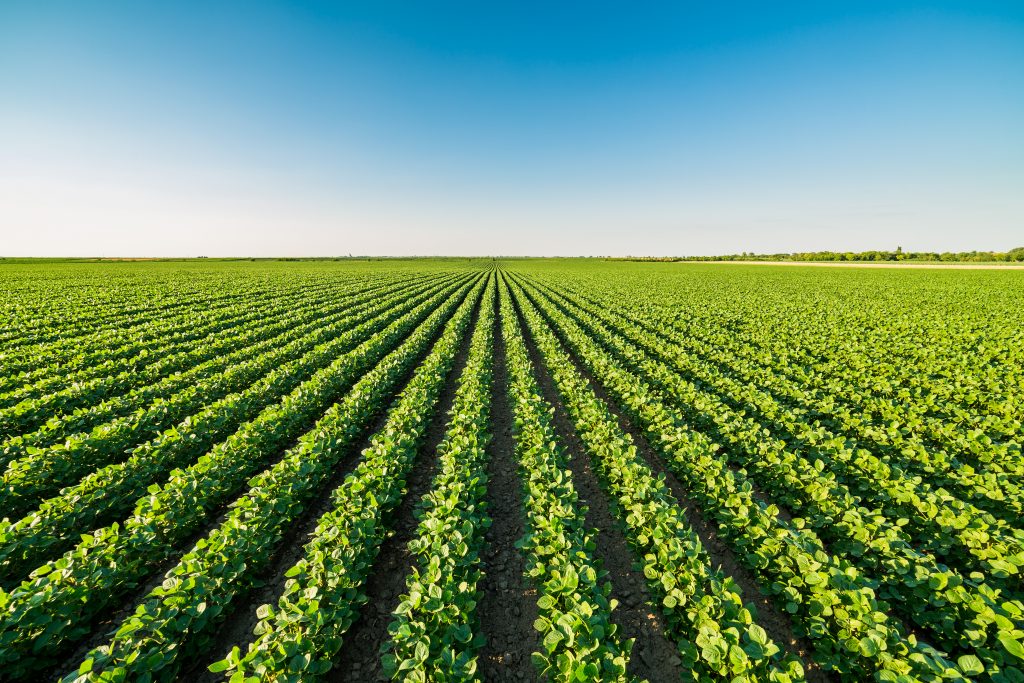
🔥 40 head @ 445 lbs – $500.00/cwt (8/19/25)

🔥 22 head @ 401 lbs – $500.00/cwt (8/19/25)

🔥 22 head @ 455 lbs – $497.50/cwt (8/19/25)

🔥 69 head @ 429 lbs – $495.00/cwt (8/19/25)
🔥 17 head @ 407 lbs – $495.00/cwt (7/22/25)

🔥 10 head @ 424 lbs – $495.00/cwt (8/19/25)
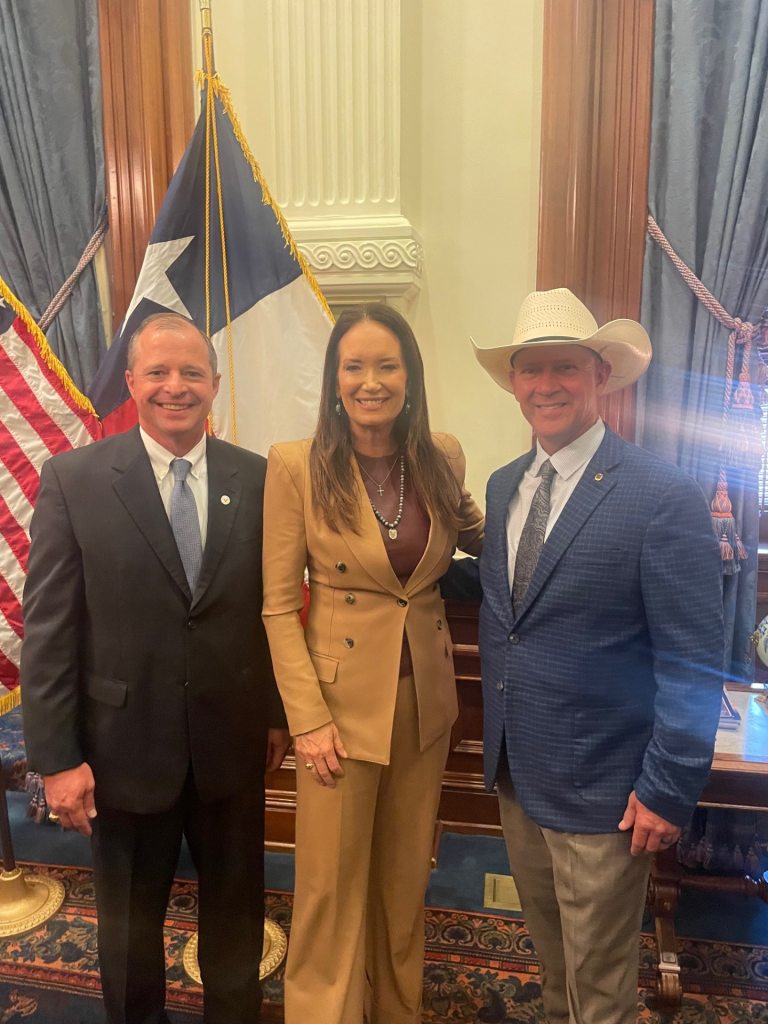
for Wednesday and the Yearling Run-
Expecting 4,500
1,700 Feeder Heifers @ 9:00 am
2,800 Feeder Steers @ 11:00 am

The Rally Continues- Choice Boxed Beef Up Another $2.96 to $407.20 on Tuesday 8/19

Boxed beef continued its strong August run on Tuesday, with Choice up $2.96 to $407.20/cwt and Select up $2.62 to $379.76/cwt, widening the spread slightly to $27.44. This marks 11 gains in the last 13 sessions, with Choice up a total of $45.88 so far this month, the highest August rally in history.   Primal values were mixed, but the Rib ($611.97) and Round ($358.70) both set new highs for the year, while the Loin pushed to $505.68 and the Brisket gained to $347.55. Loads totaled 103.

Smithfield Foods and Feed the Children Support Families with Food and School Essentials

Smithfield Foods and Feed the Children are joining forces to host three Resource Rallies in communities where Smithfield operates, helping to ensure children and families return to school with food, classroom supplies and household essentials needed to thrive."Every child deserves to start the school year with confidence and tools to succeed in and out of the classroom," said Jim Monroe, vice president, corporate affairs for Smithfield Foods. "By partnering with Feed the Children, we are proud to support local neighbors by providing food and essentials this back-to-school season."The first Resource Rally was held today in Cudahy, Wisconsin. Future rallies are planned in Milan, Missouri, on Aug. 25, and Clinton, North Carolina, on Sept. 4. Each Resource Rally will help feed approximately 400 families experiencing food insecurity.In addition to a $100,000 donation, Smithfield is also providing thousands of pounds of protein to families served at the events, including ham, lunch meat, bacon and pork tenderloin. Local Smithfield employees will volunteer their time to help make the events possible."A widespread issue like childhood hunger will only be solved through collective efforts," said Emily Callahan, president and CEO of Feed the Children. "We've seen the significant impact that Resource Rallies have in supporting communities where children are hungry and going without what they need to thrive. We are grateful to collaborate with Smithfield Foods to make a difference in the lives of children and families across the country. Through the power of partnership, we can make an even greater impact as we seek to create a world where no child goes to bed hungry."Participating families receive a 25-pound box of food including shelf-stable items such as canned vegetables, beans, soup, pasta, cereal and peanut butter. Families will also receive a 15-pound box of essential personal care items such as shampoo, laundry detergent, razors and toothpaste. In addition, children will also be given backpacks stocked with school supplies including notebooks, crayons, pens and pencils, and a shelf-stable meal kit.This marks the second year of collaboration and partnership between Smithfield Foods and Feed the Children.With one in five children in the U.S. experiencing food insecurity, hunger remains a serious issue in many communities, especially during summer months and the back-to-school season.Smithfield's hunger relief program, Helping Hungry Homes®, has provided hundreds of millions of servings of protein in all 50 U.S. states since 2008. Smithfield donated more than 25 million servings of protein, valued at nearly $28 million, to food banks, disaster relief efforts and community outreach programs across the U.S. in 2024 and is on track to donate an additional 200 million servings of protein by the end of 2025.To learn more about Smithfield's initiatives to strengthen local communities, visit smithfieldfoods.com/good-is-what-we-do.

ASA Urges President Trump to Prioritize China Trade as Farmers Face Crisis

 The American Soybean Association is urging President Trump to prioritize soybeans in U.S.-China trade talks, warning that retaliatory tariffs are shutting American farmers out of their largest export market going into the 2025 soybean harvest.

In a letter sent today to the White House, the group called for the removal of Chinese tariffs on U.S. soybeans and commitments for future purchases. ASA also released a white paper outlining the financial consequences of losing long-term market share in China.

"U.S. soybean farmers are standing at a trade and financial precipice," ASA President Caleb Ragland, a soybean farmer from Kentucky, said in the letter. "Soybean farmers are under extreme financial stress. Prices continue to drop and at the same time our farmers are paying significantly more for inputs and equipment. U.S. soybean farmers cannot survive a prolonged trade dispute with our largest customer."

China has historically imported more than 60% of the world's soybean supplies, with the U.S. once serving as its top source. But retaliatory tariffs now make U.S. soybeans 20% more expensive than South American supplies, and China has turned to Brazil, which has expanded production to meet demand.

"Every day without an agreement further erodes U.S. farmers' market share in China," Ragland said. "We strongly urge the administration to secure a deal that reopens this vital market for U.S. soybeans."

American Dairy Association North East Unveils 57th Annual Sculpture

The curtain has dropped, revealing the 57th Annual American Dairy Association North East Butter Sculpture at the New York State Fair, sponsored by Wegmans. This year's display, titled "Dairy For Good: Nourish. Grow. Thrive.," celebrates the joy and nourishment dairy provides at every stage of life — and is inspired by the 125th Anniversary of The Wonderful Wizard of Oz and its local New York author, L. Frank Baum.

he centerpiece is a whimsical hot air balloon, emblazoned with the phrase "Dairy Defies Gravity," soaring above a winding path that charts life's journey. Along the way, three butter figures show how dairy powers every chapter — from the very start: a pregnant woman with a glass of milk, a six-month-old enjoying yogurt, and a toddler savoring a piece of cheese.

"This year's butter sculpture beautifully showcases the power of dairy nutrition," said John Chrisman, CEO of American Dairy Association North East. "The craftsmanship captures not just a scene, but a story — from nourishing mothers and helping babies grow to supporting thriving toddlers, dairy provides essential nutrients every step of the journey."

Dairy farmer Jaime Mowry from Mowacres Farms II in LeRoy, NY, marveled at the sculpture. "It's such a fun and creative way to share an important message. As a mom, I know how critical it is to give kids a healthy start, and milk, cheese, and yogurt are everyday staples in our home. Seeing that message come to life in butter — complete with so many surprising details — makes it all the more memorable."

Richard A. Ball, New York State Department of Agriculture and Markets Commissioner noted, "Unveiling the Butter Sculpture is one of my favorite traditions at The Fair and a wonderful way to honor the dairy farmers who work tirelessly to feed our families and bring wholesome products to our communities every day. The Butter Sculpture also provides a unique and fun way to introduce fairgoers to and educate them about New York dairy. From the family farms that fuel our economy to the essential nutrients milk provides, dairy plays a fundamental role in keeping us strong and well-nourished."

"Wegmans is proud to sponsor this year's Butter Sculpture, which is such an integral part of the New York State Fair," said Evelyn Ingram, Director of Community Relations at Wegmans Food Markets. "We are delighted to once again be a participant in this long-standing tradition."

Artists Jim Victor and Marie Pelton of Conshohocken, Pennsylvania constructed the sculpture over an 11-day period onsite using more than 800 pounds of butter from O-AT-KA Milk Products in Western New York. This is the fourth straight year color has enhanced the artistry of the sculpture.

Following The Fair, the butter will be recycled in nearby Linwood, N.Y., at Noblehurst Farms, now celebrating their 10th anniversary of transforming the sculpture into renewable energy. Over the past decade, Noblehurst has recycled a total of 8,000 pounds – or four tons – of butter, preventing it from ending up in a landfill while reducing greenhouse gas emissions and creating enough energy to power one home for about one month.

The sculpture is on display in the Dairy Products Building for the duration of The Fair. Visit americandairy.com/nystatefair for more information.

Daily Email for August 19, 2025


Oklahoma's Latest Farm

and Ranch News

Tuesday, August 19, 2025


Howdy Neighbors!

Oklahoma Sorghum Drops 17 Points In This Weeks Crop Progress

National Corn Statistics: Corn silking reached 97 percent, equal to the previous year and down one point from the five-year average. Corn Dough reached 72 percent, equal to a year ago and down one point from the five-year average. Corn dented reached 27 points, down one point from last year and up one point from the five-year average. Corn Conditions are rated 71 percent good to excellent, down one point from the previous week.


National Cotton Statistics: Cotton squaring reached 97 percent, down one point from a year ago, and down one point from the five-year average. Cotton Setting Bolls reached 73 percent, down ten points from a year ago and down seven points from the five-year average. Cotton bolls opening reached 13 percent, down five points from a year ago and down three points from the five-year average. Cotton Conditions reached 55 percent good to excellent, up two points from the previous week.


As for our Summer crops in Oklahoma: Corn crop conditions are now at 55% good to excellent versus 65% a week ago. The Oklahoma soybean crop is at 33% good to excellent versus 36% a week ago. Cotton in Oklahoma is at 65% good to excellent, versus 65% last week. Grain Sorghum is at 54% good to excellent, down seventeen points from a week ago at 71%. Pasture and Range conditions are at 60% good to excellent this week, versus 58% a week ago.


Secretary Of Agriculture Blayne Arthur Praises USDA's Aggressive Action Against New World Screwworm Threat

Senior Farm and Ranch Broadcaster Ron Hays spoke with Oklahoma Secretary of Agriculture Blayne Arthur, who emphasized the importance of the USDA's announcement in Austin regarding plans to build a new sterile fly facility to combat the outbreak of the New World screwworm. USDA invited Secretary Arthur to attend the news conference held by Secretary Rollins to announce her latest efforts to battle the New World Screwworm.


"For Oklahoma, and especially for our cattle producers, we appreciate so much that Secretary Rollins has us as such a high priority," Secretary Arthur said. She noted the significance of millions of dollars being invested in a new facility in Texas, as well as in research and innovation aimed at finding long-term solutions.


Arthur stressed just how close the threat feels to Oklahoma livestock producers. She described the most recent findings as "certainly too close for comfort for many of us," and emphasized the importance of strong federal and state cooperation. She also praised Texas leaders for joining the effort, noting, "To have the governor there today with Secretary Rollins, just shows that everybody knows how important this is, and we want to get it right and protect our livestock producers."

New OSU Vet Med School Celebrates Historic State Support

In a monumental step for veterinary education in Oklahoma, leaders gathered to celebrate the new School of Veterinary Medicine at Oklahoma State University (OSU). The celebration commemorates a historic $250 million state funding appropriation for the reconstruction of a new, state-of-the-art veterinary teaching hospital. Farm Director KC Sheperd caught up with Steve Thompson, Director of Public Policy with the A&M Board of Regents, who hailed the day as the culmination of a dedicated, multi-year effort.


"It is a great day in Stillwater," Thompson said, reflecting on the journey. He explained that the project became a top priority for the Board of Regents last summer, with leaders working closely with OSU President Dr. Jim Hess and the Vet Med Authority Board. The effort involved hosting legislators on campus and a "full court press the entire spring at the state capitol" to secure the necessary funding. Thompson was especially grateful for the support of the statewide vet med alumni community, noting that the new facility will have a significant impact on the future of Oklahoma's agricultural industry.


Sheperd also visited with OSU Regent Jimmy Harrell, a long-time champion of the project, who shared his deep personal connection to OSU's College of Veterinary Medicine. "I was here when it was at the top of its game, many years ago," Harrell recounted, recalling bringing his top racehorses to the campus for care. This firsthand experience fueled his desire to see the veterinary school reclaim its elite status. He credits a pivotal conversation with then-executive director (now President) Dr. Jim Hess, who told him, "Jimmy, you can't take it to number one the way it is. We've got to have a new teaching hospital if we're going to go to number one." This clear vision set the stage for the ambitious undertaking.

As Oklahoma's largest John Deere dealer, P&K Equipment is proud to serve our communities & the surrounding areas through 18 Oklahoma locations & 2 Arkansas locations. The entire P&K team is ready to keeping your equipment up & running. So, when it comes time to buy John Deere parts, look no further than GetGreenParts.com. Shop 24/7 from the convenience of wherever you are & have the parts shipped directly to you! This spring and summer- P&K is committed to making it easier than ever to really own your John Deere equipment. And long after the sale- P&K will be here to support you at every step.

The Oklahoma Wheat Commission promotes greater use of wheat in domestic and international markets through research, market development and public education.


Our Commissioners develop policy and programs, direct the funding, represent producer interests and, of course, promote Oklahoma wheat!


Learn more about the Oklahoma Wheat Commission by clicking here for their website

Oklahoma Ranch Rodeo Celebrates 41 Years of "Cowboys Helping Kids"

This year marks the 41st anniversary of a special event where the grit and skill of Oklahoma cowboys serve a heartfelt cause. Oklahoma Farm Report's Maci Carter sat down with Lynn Phillips, a long-time announcer and one of the event's initial planners, to discuss the history and mission of the Oklahoma Cattlemen's Association (OCA) Ranch Rodeo, now known as "Cowboys Helping Kids."


"I was actually on the initial planning committee 41 years ago," Phillips told Carter, recalling how the event was first held in 1985 at the then-new Lazy E Arena, a great place "to have what was called the range Roundup." Over the decades, its mission has evolved to focus on a powerful partnership.


The event's core purpose is to raise funds for the Oklahoma Children's Miracle Network. Through the years, the rodeo has raised nearly $700,000 for medical research in Oklahoma. When Carter asked about the partnership, Phillips explained that it's a natural fit. "You know, a cowboy, if you think about it, what his real job is, he's a steward, not only of the land, but of livestock as well. And there's always a soft spot in his heart for children," Phillips said.

Nervous Cattle Markets Struggle with Market Fundamentals

Feeder cattle prices continue to push to unimaginable highs leaving producers and traders increasingly nervous. Last week, in Oklahoma auctions, 500-pound, M/L #1 steers brought $451.90/cwt. ($2,260/head) and 800-pound, M/L #1 steers were priced at $352.55/cwt. ($2,820/head). All feeder steers (M/L #1) below 1050 pounds brought more than $300/cwt., those below 600 pounds were priced over $400/cwt. and all below 400 pounds were priced over $500/cwt. Feeder cattle prices, especially lightweight calf prices, have moved unseasonally higher this summer.


I sense that there is a growing feeling that this market is a bubble that is about to burst. While I share the anxiety that goes with the current cattle market, it is important to not forget the fundamentals that explain why the market is at this level and what they say about the coming months. 


The calculated feeder cattle supply this year is the smallest in available data for both the January and July Cattle reports. The tight feeder supply is the result of declining calf crops. Calf crops have declined the past seven years and are down 8.8 percent from the cyclical peak in 2018. The 2025 U.S. calf crop is the lowest since 1941. The beef cow herd is at a cyclical (maybe) and multi-decade low and is showing little sign of rebuilding. 

Celebrating Leadership in Oklahoma Wheat

At this year's Oklahoma Wheat Growers Annual Meeting, we were proud to honor three exceptional individuals whose lifelong service and leadership continue to shape the future of our industry.


Terry Detrick received the Service to the Industry Award for his decades of tireless advocacy on behalf of producers at both the state and national level. Terry Detrick has spent more than 40 years championing the causes of farmers and ranchers across Oklahoma and the U.S. From leading major agricultural organizations to shaping policy discussions on crop insurance and youth development, Terry's impact runs deep.


Keeff Felty was named Mr. Wheat 2025, recognizing his innovative farming practices, commitment to research, and leadership as President of the National Association of Wheat Growers. A fourth-generation farmer and president of the National Association of Wheat Growers, Keeff Felty embodies innovation, advocacy, and service.


Don Schieber, a veteran and lifelong advocate for wheat, was also presented with the Service to the Industry Award for his global outreach, board leadership, and impact on Oklahoma agriculture. With a career spanning five decades, Don Schieber has dedicated his life to growing wheat—and growing the industry.

Oklahoma Local Ag Collaborative Wants Your Feedback

The purpose of this survey is to learn more about the capacity of Oklahoma Local Agriculture Cooperative and the needs of its members and local farmers. You have chosen to complete this survey because of your key role in local Oklahoma agriculture. We ask that only you complete this survey, and in appreciation of your time, you will be entered into a drawing to win a $50 gift card, where 1 of 30 will win, for the first 300 participants.


Please know that your participation in this project is completely voluntary and all responses will be treated confidentially. The estimated completion time is less than 15 minutes, and you may skip any question that you prefer not to answer. If you do not click the "submit" button at the end of the survey, your answers and participation will not be recorded. Please know that refusing to participate will not affect your ability to participate or benefit from any services or programs.


Daube Cattle Company and 3C Cattle Company Repeat as Champs at OCA's 2025 Ranch Rodeo

Following two days of intense and skilled competition, Daube Cattle Company and 3C Cattle Company of Ardmore, Okla. earned the champion overall team title for the second consecutive year at the 41st Annual Oklahoma Cattlemen's Association (OCA) Ranch Rodeo, held Aug. 15–16 at the Lazy E Arena in Guthrie, Okla.


12 ranch teams from across Oklahoma competed in five traditional ranch events: saddle bronc riding, wild cow milking, team penning, team doctoring, and team branding. All proceeds from the event support the Children's Health Foundation (CHF). In addition to champion team honors, awards were presented for outstanding individual and team event performances, recognizing the skill, dedication, and teamwork demonstrated by each participant.


Stuart Ranch of Waurika, Okla. earned reserve champion team honors, while Will Trentman of the Trentman Ranch and Stierwalt Ranch team, from Pawhuska, Okla., was named Top Hand. Bud Walker of Daube Cattle Company and 3C Cattle Company was recognized with the Top Horse, and EJ Gagan of Lazy Rafter Slash Ranch, based in Lenapah, Okla., received the Tuff Hand award. Event champions included A Bar Ranch of Claremore, Okla., in Saddle Bronc Riding and Team Penning; Daube Cattle Company and 3C Cattle Company in Team Doctoring; Slash K Cattle Company of Walters, Okla., in Team Branding; and McPhail Land & Cattle of Mountain Park, Okla., in Wild Cow Milking.

Checking the Markets...


Boxed beef prices started the week sharply higher, with the Choice cutout at $404.24/cwt, up $3.67 from Friday, and the Select cutout at $377.14/cwt, up $6.38. This marks the highest Choice cutout value of 2025 and the highest overall since the COVID-era spike in 2020.  


The Oklahoma National Stockyards had 5,500 head on Monday- Compared to last week: Feeder steers 2.00-6.00 higher. Feeder heifers 5.00-8.00 higher. Steer and heifer calves sharply higher, with gains of up to 25.00. Demand continues very good for all classes. Meanwhile, Joplin had 3,966 head on Monday- Compared to last week feeder steers sold 2.00-10.00 higher with heavy 7 weight steers up to 20.00 higher. Feeder heifers under 725 lbs. sold 2.00-15.00 higher. Heavier weights sold 3.00-5.00 lower.


OKC West is our Market Links Sponsor- they sell cattle three days a week- Cows on Mondays, Stockers on Tuesday and Feeders on Wednesday- Call 405-262-8800 to learn more.


Click here for our Markets Page on OklahomaFarmReport.Com- there you will find many of the reports we have linked on the right hand column found on the previous format of our email.

Our daily email is free because of our Sponsors!

OKAgCredit248x160.png
StewartMartinKubota-240.jpg
TulsaFarmShowSquareGraphic240.jpg
okfb.png
AMFeeds.png
Oklahoma-Wheat-Commission_Logo_Vertical_Full-Color_Gray240b-e1736195614699.jpg
GreatPlainsLogoFeb2025Update240.jpg
NAT_Logo_BlackRed160.png
OklaBeefCouncil.png
KIS-Logo240b.png
oca.png
Facebook

© 2025 Oklahoma Farm Report - All rights reserved


John Deere Partners With The Reservoir To Accelerate High-Value Crop Innovation

John Deere (NYSE: DE) announced today the start of a strategic collaboration with the Reservoir, a California-based agricultural technology on-farm incubator platform that brings together grower networks and deep tech R&D studios to accelerate innovation in high-value crop (HVC) agriculture.

The partnership links John Deere's innovative world-class agricultural technology and equipment, and deep grower relationships with the Reservoir's startup residents, field testing platforms and commercialization support. Through this collaborative effort, John Deere and the Reservoir aim to help HVC growers adopt new solutions that help them do more with less by addressing labor shortages, increasing efficiency and improving long-term sustainability.

"We view high-value crops as an important growth area for agriculture, and an area where innovation is needed and can have a direct, measurable impact on growers' resilience and productivity," said Sean Sundberg, business integration manager at John Deere. "This partnership gives us a front-row seat to the next generation of agricultural technology, and an opportunity to work alongside growers and entrepreneurs to ensure future solutions are practical, scalable and built to last."

Through the agreement, John Deere becomes the exclusive original equipment manufacturer to the Reservoir, granting branding opportunities across the Reservoir's Salinas facility and future locations. John Deere will have access to early stage startups, co-developed R&D programs and curated field days for technology demonstrations. 

"John Deere's investment in the Reservoir is a vital strategic step toward making sure specialty crop growers have a fighting chance amid our industry's labor shortage," said Walt Duflock, senior vice president of innovation at Western Growers. "The California agricultural technology landscape will thrive thanks to this kind of collaborative effort."

This partnership brings together John Deere's leadership in building next-generation agricultural technology ecosystems with the Reservoir's ability to connect startups, growers and technologists in real-world production environments. By pairing John Deere's advanced precision ag and automation capabilities with the Reservoir's on-farm R&D team, the collaboration creates a powerful platform for developing, testing and scaling solutions that address the most pressing challenges in HVCs. This collaboration unites innovation infrastructure with a thriving network of founders, growers and ag labor innovators, signaling a shared long-term commitment to strengthening the productivity, efficiency and sustainability of HVC production in California and beyond.

Founded in 2024, the Reservoir connects startups, growers, and technologists to develop and test solutions for HVCs in real-world production environments. John Deere and the Reservoir found alignment through their shared commitment to advancing agricultural crop productivity, combining Deere's advanced equipment and grower relationships with the Reservoir's field-based R&D and deep tech network.

"At the Reservoir, we're focused on accelerating innovation for HVCs and the long-term sustainability of California agriculture," said Danny Bernstein, CEO of the Reservoir. "John Deere brings trusted technology, technical expertise and a real commitment to grower support and strength. This partnership strengthens the foundation we're building and helps unlock the next generation of ag technology in service of our food system."

The collaboration further underscores John Deere's broader U.S. commitment to invest more than $20 billion in domestic manufacturing over the next decade. By deepening innovation partnerships in key agricultural regions like the Salinas Valley in California, John Deere is advancing U.S. and global food production efficiency while creating high-quality jobs and maintaining leadership in agricultural technology.

Digital Media Kit

ABOUT JOHN DEERE

It doesn't matter if you've never driven a tractor, mowed a lawn, or operated a dozer. With John Deere's role in helping produce food, fiber, fuel, and infrastructure, we work for every single person on the planet. It all started nearly 200 years ago with a steel plow. Today, John Deere drives innovation in agriculture, construction, forestry, turf, power systems, and more.

For more information on Deere & Company, visit us at www.deere.com/en/news.

Oklahoma Sorghum Seeks Applicants For National Checkoff Board

The Oklahoma Sorghum Commission and the Oklahoma Sorghum Growers association are seeking interested applicants to be considered for nomination to the United Sorghum Checkoff Program board, for a seat specifically representing Oklahoma that is up for reappointment or appointment at the end of 2025. Zack Rendel of Miami, OK, a member of the Eastern Shawnee Tribe, currently holds the seat. Rendel was appointed for the three-year term in 2022 and is eligible to serve another term.

The open Oklahoma seat provides the state's sorghum producers with an opportunity to help guide national priorities for research, promotion, and market development of sorghum. Nominees must be sorghum producers within the United States who own or share in the ownership and risk of loss of sorghum production. A sorghum producer must be nominated by a certified producer organization and submit a completed application. The U.S. Secretary of Agriculture will make final appointments from the nominations received.

To be considered as one of Oklahoma's two nominees for the seat, contact the Oklahoma Sorghum Commission or the Oklahoma Sorghum Growers association before Tuesday, August 26, 2025, by phone at (580) 233-9516 or online at www.oklahomaag.com

The 13-member Sorghum Checkoff board was established to maintain and expand the market for sorghum. Members serve three-year terms and represent sorghum-growing states across the country.

Since 1966, Congress has authorized industry-funded research and promotion boards to provide a framework for agricultural industries to pool resources, develop new markets, strengthen existing ones, and conduct vital research. The Sorghum Checkoff works to improve profitability for sorghum producers nationwide and is funded by producer assessments. For more information on the Sorghum Checkoff Board visit www.sorghumcheckoff.com

Secretary Rollins Blocks Taxpayer Dollars for Solar Panels on Prime Farmland

 Yesterday, U.S. Secretary of Agriculture Brooke L. Rollins alongside Tennessee Governor Bill Lee, Senator Marsha Blackburn, Senator Bill Hagerty, Representative John Rose, and U.S. Department of Agriculture (USDA) Deputy Secretary Stephen Vaden, announced USDA will no longer fund taxpayer dollars for solar panels on productive farmland or allow solar panels manufactured by foreign adversaries to be used in USDA projects. Subsidized solar farms have made it more difficult for farmers to access farmland by making it more expensive and less available. Within the last 30 years, Tennessee alone has lost over 1.2 million acres of farmland and is expected to lose 2 million acres by 2027. This problem is not just in Tennessee, since 2012, solar panels on farmland nationwide have increased by nearly 50%. That is why the Department is taking action.

"Our prime farmland should not be wasted and replaced with green new deal subsidized solar panels. It has been disheartening to see our beautiful farmland displaced by solar projects, especially in rural areas that have strong agricultural heritage. One of the largest barriers of entry for new and young farmers is access to land. Subsidized solar farms have made it more difficult for farmers to access farmland by making it more expensive and less available," said Secretary Brooke Rollins. "We are no longer allowing businesses to use your taxpayer dollars to fund solar projects on prime American farmland, and we will no longer allow solar panels manufactured by foreign adversaries to be used in our USDA-funded projects."

"Tennesseans know that our farmland is our national security, our economic future, and our children's heritage. We were honored to welcome Secretary Rollins to Tennessee this week, and I'm grateful for her leadership to defend America's farmland from foreign adversaries and protect our food supply," said Tennessee Governor Bill Lee.

"Tennessee farmland should be used to grow the crops that feed our state and country, not to house solar panels made by foreign countries like Communist China," said Senator Blackburn. "Secretary Rollins and President Trump are right to put an end to these Green New Deal subsidies that waste taxpayer dollars while threatening America's food security. I applaud this administration for investing in rural communities across Tennessee and empowering them to prosper for years to come."

"Competition is the American way. As a business owner, I know well the importance of fighting for your spot in the free market. It sparks innovation and often drives down costs for consumers. By leveling the playing field, USDA Secretary Brooke Rollins is ensuring an abundant energy future for Tennessee and beyond," said Representative John Rose (TN-06).

"Secretary Rollins understands that food security is national security, and preserving prime farmland for agricultural production is a key component of protecting our food supply. I look forward to working with her and this Administration to ensure any incentives for renewable energy projects have commonsense safeguards in place that provide options for producers while protecting our most productive farmland," said House Committee on Agriculture Chairman Glenn "GT" Thompson (PA-15).

"I strongly support Secretary Rollins' action today implementing President Trump's executive order de-prioritizing undependable energy sources, and protecting our prime farmland for much/needed food production. Ending wasteful taxpayer Green New Scam subsidies that have driven up energy costs and taken farmland out of production are long overdue. This action protects farmland so important to our Eastern Shore economy, strengthens American agriculture, and puts our energy independence first," said Representative Andy Harris (MD-01).

"The land that feeds America should never be sacrificed for unreliable green energy experiments subsidized by taxpayer dollars. With this action, the USDA is making it clear that agriculture, not foreign-made solar panels, belongs on America's farmland. This step ensures our land, food supply, and rural traditions are protected for generations to come," said Representative Tom Tiffany (WI-7).

"We shouldn't be subsidizing solar projects on prime farmland, that land is too valuable for producing the food and fuel our nation depends on. Secretary Rollins is right to step in and make sure taxpayer dollars aren't used to take our best farmland out of production, and I strongly support stopping the use of solar panels made by foreign adversaries like China. I'm proud to see that the Trump Administration continues to be committed to protecting American agriculture and standing up to China," said Representative Mike Bost (IL-12).

"There is no such thing as a solar farm. It is a waste of one of our most precious resources, our land. The extortion of the American taxpayers through solar subsidies, and the destruction of our farm and forest resources, has gone on for far too long. I commend Secretary Rollins for taking action to keep taxpayer dollars from being wasted on solar panels, purchased from our adversaries like China, and to no longer allow these unaffordable "green" projects to waste space on our American farmland and destroy our forest and wildlife habitat," said Representative Austin Scott (GA-08).

"For too long, Washington bureaucrats and foreign adversaries have tried to dictate how we use our land and our resources. Taxpayers should never be forced to bankroll green new deal scams that destroy our farmland and undermine our food security. I applaud President Trump and Secretary Rollins for standing up for America's farmers and ranchers by ensuring our prime farmland is protected from foreign adversaries and our taxpayer dollars are spent wisely. Our agricultural heritage is the backbone of this nation, and these commonsense reforms put food security, national security, and American sovereignty first," said Representative Harriet Hageman (WY-AL).

"The Trump Administration is continuing to listen to those at home who were struggling under the previous administration's Green New Scam. It's been proven time and time again that subsidies negatively impact market pricing, passing the cost directly to consumers. I applaud the work of the USDA protecting national security, prioritizing American products first, and amplifying an all-of-the-above energy approach," said Congressman Ralph Norman (SC-05).

"Green New Deal subsidies have distorted the energy market and supplanted American farmland. USDA is taking decisive action which complements policies I supported in the One Big Beautiful Bill Act, ending the misuse of taxpayer dollars and upholding our national security interests in energy infrastructure. I appreciate Secretary Rollins' leadership in restoring common sense to these USDA programs," said Representative Adrian Smith (NE-03).

Protecting American Farmland:

This action will rapidly eliminate the market distortions and costs imposed on taxpayers by reducing energy subsidies and builds upon the repeal of and modifications to wind, solar, and other "green" energy tax credits in the One Big Beautiful Bill Act. It will further USDA's determination to end taxpayer support for unaffordable and unreliable "green" energy sources and ensure the supply chain consists of American products and manufacturing.

Effective immediately, USDA will implement the following programmatic actions:

  • For the USDA Rural Development Business and Industry (B&I) Guaranteed Loan Program wind and solar projects are not eligible.
  • For the USDA Rural Development Rural Energy for America Program Guaranteed Loan Program (REAP Guaranteed Loan Program), USDA will ensure that American farmers, ranchers and producers utilizing wind and solar energy sources will install units that are right-sized for their facilities. If project applications include ground mount solar photovoltaic systems larger than 50kW or ground mount solar photovoltaic systems that cannot document historical energy usage, they will no longer be eligible for the REAP Guaranteed Loan Program, and priority points will no longer be given for REAP grants.

USDA Rural Development invests in rural America with loan, grant, and loan guarantee programs to promote rural prosperity. The commitment and resources we bring to rural communities help drive economic security and prosperity. Our programs expand access to high-speed internet, electric, and transportation infrastructure, and support business growth, healthcare, education, housing, and other community essentials. Learn more online at www.rd.usda.gov.

Robbie Kirkland: New Sterile Fly Facility Key to Protecting U.S. Cattle Herd

Listen to Ron Hays And Robbie Kirkland

In today's Beef Buzz, Senior Farm and Ranch Broadcaster Ron Hays speaks with Texas Cattle Feeders Association Chairman Robbie Kirkland, who said he came away encouraged after attending the announcement in Austin about new federal funding to fight the New World screwworm. "It was a good day. It was a day that the federal government came up with a large sum of money, $750 million for sterile fly production as well as another $100 million in R&D research and development," Kirkland said. "The federal government saw we're going to protect the U.S. cattle herd against New World screw worm."

Kirkland emphasized the importance of the new sterile fly production plant being built in South Texas. He noted that the facility would produce about 300 million flies weekly, which could help push the screwworm back across Mexico. "What I'd like to think is we never get them in the United States, and then this ultimate facility helps us push those out of Mexico back down into South America and eliminate them," he explained.

Even with this progress, Kirkland admitted that cattle feeders are feeling the impact of the border remaining closed to Mexican feeder cattle. He pointed to frustrations with Mexico's response. "I think a lot of it goes back to the lack of reaction from the Mexican government," he said. "If we'd have seen the Mexican government push on a little harder earlier we might have the border open today, but we don't, because those cases continued to kind of trickle north."

Still, Kirkland sees the U.S. announcement as an important step toward eventually reopening. "We do want to get the border open, but we do believe this is one step in the right direction," he said. He added that USDA Secretary Brooke Rollins has emphasized increased surveillance in Mexico, and that progress will be key. "I do believe that they will reopen the border," Kirkland said.

Finally, Kirkland stressed that the current inspection process at the border is thorough and effective. "Those cattle are triple inspected on the Mexican side twice by Mexican veterinarians, then they're moved to the U.S. inspection pens on the Mexican side of the border, inspected there, and then they're dipped and then crossed," he explained. After visiting the border earlier this year, he concluded: "We believe that the process at the border is very sound." Click here to read the Texas Cattle Feeders Association statement about the sterile fly facility.

The Beef Buzz is a regular feature heard on radio stations around the region on the Radio Oklahoma Ag Network and is a regular audio feature found on this website as well. Click on the LISTEN BAR for today's show and check out our archives for older Beef Buzz shows covering the gamut of the beef cattle industry today.

Ben Hale: Strong Competition Driving Higher Cattle Prices

On Tuesdays, Senior Farm and Ranch Broadcaster Ron Hays visits with Ben Hale of Western Livestock Auctions as he talks about the latest in the markets and more. Established in 1995, Western has grown into a multi-generational family-owned and operated business and stands as a symbol of tradition, excellence, and a deep-rooted passion for the cattle industry. Western Livestock Auctions operates the Western Livestock Commission Firm, which sells cattle on Mondays and Tuesdays. They also operate the livestock auction markets in Woodward, Comanche, Waurika, and Knoxville, Iowa.

At the Oklahoma National Stockyards, Ben Hale reported strong numbers: "We had 5,500 compared to 4,200 a year ago... it's just been better every week, and not just by a dollar or two. Big gains on the feeders—two to six higher—and the calves, they called sharply higher, up to 20 some higher in some cases." He noted intense buyer competition, especially for lighter-weight calves going to grass or wheat pasture.

Hale explained the tight supply of heifers and signs that ranchers may be holding some back for herd rebuilding: "Every week, we're selling more steer yearlings than we are heifer yearlings we just don't see very many of them. We had a load of heifers last week, 52 head, and all those went to North Texas. He's making cows out of them and would have taken more, but we're just not seeing them."

Market conditions have also reflected cattle coming off grass. Hale said, "Had a pretty good lot of them weighing in the 780s... 240 steers weighing in 850 as much rain as we've had, even some of those cattle look like they may have backed up just a little. Some pretty good green conditions on them overall, so cattle should feed extremely well."

Hale also hosted a group of agricultural legislative staffers, giving them a full tour of the yards. "They were just real interested we brought them from the front end, how we sort them, feed them and care for them, how they go through the ring, the different split drafts, and then on the back side once it's bought, how we put the cattle together" He added that longtime yard hand Charlie Williams shared history and perspective with the group.

Looking ahead, Hale highlighted upcoming sales: "Waurika, Comanche, Woodward—we'll have about 2,200 today. Comanche will probably be 1,000 plus, and I think Woodward will be about the same. Several bigger feeder deals going to be in Woodward on Thursday, and probably around 300 cows there today."

Hale can be contacted at 940-631-2333. Check out more about the marketing options that Western offers by clicking here.

Cow Calf Corner Mark Z. Johnson Current Value of Replacement Heifers

There is evidence of an increase in heifer retention with improved drought conditions across much of the Central Plains and summer video auctions reporting a smaller percentage of heifer calves. Retention does not appear to be aggressive. With the calf market on pace for another year of record prices providing incentive, herd rebuilding remains sluggish compared to past cycles. Lingering drought continues to limit forage availability in key regions while high interest rates and the substantial capital required to develop or purchase bred females further suppresses expansion. As well, many producers remain wary of a repeat of the post-2014 market correction, adding a layer of caution to long-term decision-making. Even with bred female values at record highs, relative to calf prices, breds may still be undervalued, a sign of producer hesitation rather than a lack of economic feasibility. An excellent metric to consider when purchasing bred heifers is the number of calves it takes to pay for the purchase. Cattlefax recently reported that in 2025, that figure is projected to average just 2.75 calves, well below the long-term average of 4.5 and far beneath the 2015 peak of 9 calves. This ratio is likely to rise over time, driven by higher bred female prices, moderating calf values, or a combination of both. If feed resources allow, this dynamic suggests that adding females to the herd today may be the best time from a breakeven perspective to expand.

Replacement heifers are expensive; not only with respect to dollars invested but also the expenditure of time and labor involved. Recent market reports indicate 550 pound weaned heifer calves selling for well over $2,000 per head. Those heifers calves are still two years away from weaning their first calf if all goes according to plan. Accordingly, operations looking to add inventory may find a better option of purchasing bred heifers in the current market.

What Should Bred Heifers Be Worth?

Assuming weaned calves remain at a value of $2,000 - $2,500 per head over the next few years, your annual cost of running a cow will largely determine what you should invest in a bred heifer. The annual cost of maintaining a beef cow is highly variable and has increased tremendously over the past 5 years. Variable costs such as fuel, fertilizer and herbicides have been blamed as the primary culprits; however, fixed costs such as equipment, hired labor, and land have increased as well.

Total economic costs associated with U.S. cow-calf production for 2018 were estimated to range from $910 per cow for operations with 500 or more cows to $2,099 per cow for operations with 20–49 cows. These results show significant economies of scale, with costs per cow declining with increased herd size.

Kansas Farm Management Association estimates the annual cost of running a cow to be approximately $1,551 according to data collected in 2024. It is noteworthy that pasture and feed only account for $684 of that total. A more detailed breakdown of the other actual expenses is available in the last article referenced below.

Market fundamentals are strong for a continued robust cattle market until cow inventories start to climb. There is currently not much indication of that happening anytime soon. That being said, what bred heifers are worth to your operation (and how many calves a female needs to raise in order recapture your initial purchase price) will depend on how much profit she nets each year per calf rather than on the gross value of each calf she produces. 

References:

https://www.cattlefax.com/#!/news-landing/cattle/how-many-calves-does-it-take

https://www.ers.usda.gov/amber-waves/2024/december/larger-beef-cow-calf-farms-have-lower-costs-per-cow-than-smaller-operations#:~:text=Total%20operating%20costs%20ranged%20from,to%20vary%20much%20by%20size.

2024 Enterprise Summary - Beef Cows-Sell Calves - State | AgManager.info

US Corn Crop Hits Record High, Sparking Supply and Demand Debate

Listen to Rod Bain with USDA

A combination of favorable weather and a significant increase in planted acreage has led to a record-breaking year for U.S. corn production, according to the latest reports from the U.S. Department of Agriculture (USDA). This unprecedented harvest, while a testament to the resilience of the agricultural sector, poses a new question: what will be done with all the corn?

According to Anthony Prillaman of the National Agricultural Statistics Service (NASS), this year's harvest is "far and away a record corn crop." This is due in part to a 2.2% increase in planted acreage from the June acreage report, a surprising jump that NASS attributes to improvements in its statistical accuracy. By incorporating certified Farm Service Agency data, farmer surveys, and satellite information earlier in the season, NASS was able to provide a more precise and timely forecast.

The USDA's August crop production report projects a stunning production number of over 16.7 billion bushels and a yield of 188.8 bushels per acre. This is over 1.4 billion bushels more than the previous record set in 2023.

"We saw a very small week-over-week net decline in condition, losing a point in the good-to-excellent ratings, now 72%," said USDA Meteorologist Brad Rippey, noting that crop conditions remained strong throughout the growing season. The 2025 crop is significantly better than the 2024 crop, which was rated at just 67% good to excellent at this time last year.

With such a substantial supply, the focus now shifts to how this record-breaking crop will be used. World Agricultural Outlook Board Chair Mark Jekanowski outlined the USDA's projections for the added corn supply:

  • Feed and Residual: The forecast for feed and residual use has been raised by 250 million bushels, ensuring plenty of corn for livestock.
  • Ethanol Production: An additional 100 million bushels are expected to be used for ethanol, which could find its way to fuel pumps.
  • Exports: The export forecast was raised by 200 million bushels. Jekanowski noted that this reflects strong U.S. export demand, driven by a slow start to the marketing season from competitor Brazil and competitive prices.

Despite these increased usage projections, the sheer volume of the harvest means there will still be a significant surplus. According to USDA Chief Economist Seth Meyer, this abundance is already putting downward pressure on prices, with a downward adjustment of 30 cents to $3.90 for the 2025-26 marketing year price.

This potential "corn conundrum" will continue to be a key topic in the agricultural community as producers, economists, and policymakers look for ways to balance the record supply with market demands.

Checkoff Champions 'First 1,000 Days' With Surround-Sound Strategy for Parents

ROSEMONT, Ill. – The dairy checkoff is doubling down on one of the most critical windows of human development – the "First 1,000 Days" – with a multichannel strategy that positions dairy as essential for optimal brain growth and cognitive development from conception through a child's second birthday.

The surround-sound campaign is designed to meet today's parents where they are: in their social feeds, on trusted parenting platforms, through pediatrician offices, in WIC clinics and on digital search engines – all with content rooted in science, relevance and personal connections.

"The first 1,000 days set the foundation for a lifetime of health," said Lindsay Datlow, senior vice president, nutrition affairs at the farmer-founded National Dairy Council (NDC). "Dairy foods like milk, cheese and yogurt provide 7 of the 14 nutrients identified by the American Academy of Pediatrics (AAP) as vital during this period. That's not just a selling point – it's a scientific fact that should guide infant feeding decisions."

The initiative includes promotion across third-party media outlets and the checkoff's consumer-facing USDairy.com site. From engaging TikTok videos and educational infographics to partnerships with trusted organizations, the effort focuses on building awareness, providing education, driving consideration and – ultimately – inspiring action.

"We aren't just casting a wide net and hoping something sticks," said Aris Georgiadis, senior vice president of marketing communications at Dairy Management Inc. (DMI). "We're delivering tailored messages to parents through the platforms and people they

already trust. That includes pediatricians, nutrition experts, parent influencers and organizations like the American Academy of Pediatrics."

A cornerstone of this activation is partnerships with BabyCenter and What to Expect, two of the most widely-used parenting platforms in the U.S. The partnerships include dairy-focused articles, social media content, in-app promotions and expert video content.

"For many new parents, BabyCenter and What to Expect are go-to sources during pregnancy and early parenthood," Georgiadis added. "So working with them to tell dairy's story – with the help of their physicians and dietitians – is a game-changer."

The campaign also includes influencer marketing via the checkoff's Dairy Dream Team, featuring parents who share real-life experiences introducing dairy to their children, creating an emotional, authentic connection with millennial and Gen Z moms and dads.

Other digital efforts are focused on Google Search, YouTube and display advertising, ensuring that when a parent searches for what to feed their baby or toddler, dairy shows up as a top, trusted solution.

While consumer-facing content is a major focus, NDC is using this opportunity to continue advancing dairy's role in early childhood nutrition, particularly in pediatric, healthcare and WIC circles.

NDC-led activations include:

· New education modules in the WIC Shopper and WIC Smart apps, which serve low-income families in more than 36 states

· A pediatric-focused nutrition speaker's kit developed in partnership with AAP, designed to help pediatricians educate peers on early childhood nutrition

There also have been articles such as Eating for baby's brain development and Milk allergy and lactose intolerance in pregnancy developed and shared by Mayo Clinic, in collaboration with the checkoff.

Datlow said parents, especially those in WIC, want actionable, digestible advice they can trust.

"We've worked hard to meet that need by developing snackable, science-backed resources and making them easy to access through their pediatrician or mobile app," she said.

DMI has made the campaign's toolkit available to state and regional checkoff teams, the U.S. Dairy Export Council, MilkPEP, as well as other dairy organizations and cooperatives to further expand the effort across the country.

"One of our biggest goals is to equip our partners to carry this message through their own channels," Georgiadis said. "The more voices amplifying this effort, the greater the impact and the better we maximize the checkoff investment."

For more information about how the dairy checkoff is driving sales and building trust, visit www.dairycheckoff.com.

HHS Allows FDA Emergency Use of Animal Drugs to Combat New World Screwworm, Protect U.S. Food Supply

The U.S. Department of Health and Human Services (HHS) today issued a declaration that allows the U.S. Food and Drug Administration (FDA) to issue Emergency Use Authorizations (EUAs) for animal drugs to treat or prevent infestations caused by the New World Screwworm (NWS). This declaration applies only to drugs for animals.

NWS infests warm-blooded animals, including livestock, pets, wildlife, and, in rare cases, humans, causing severe tissue damage and sometimes death. The risk to human health in the United States remains very low, but the potential future threat to animal populations and the food supply chain requires proactive action. Although eradicated from North America and Central America decades ago, NWS has progressed north since 2022 and is now approaching the U.S. border with Mexico. This parasite poses an emerging threat to livestock and food security, with potential impacts on both national security and animal health.

"Today we are taking decisive action to safeguard the nation's food supply from this emerging threat," said HHS Secretary Robert F. Kennedy, Jr. "This authorization equips FDA to act quickly, limit the spread of New World Screwworm, and protect America's livestock."

Currently, there are no FDA-approved drugs for NWS in the United States. The FDA through an EUA can authorize the flexible, faster use of certain animal drug products that may be approved for other purposes, or available in other countries, but not formally approved for NWS in the U.S. This ensures veterinarians, farmers, and animal health officials have timely access to the tools they need to protect pets, livestock, and the nation's food supply.

"Thank you to my friends and partners Secretary Kennedy and Commissioner Makary who are answering the call and supporting our aggressive plan to push back and ultimately defeat this devastating pest. This emergency use authorization is another tool we can use in the fight against New World Screwworm," said Secretary of Agriculture Brooke L. Rollins. "Our cattle ranchers and livestock producers are relying on the Trump Administration to defend their livelihoods. Stopping this pest is a national security priority and we are linking arms across President Trump's cabinet to defend our borders and push back this threat."

"Our priority is to safeguard both animal health and the nation's food supply," said FDA Commissioner Marty Makary, M.D., M.P.H. "FDA is acting swiftly and responsibly to help ensure we have the necessary tools to prevent and control New World Screwworm, minimizing risks to agriculture and public health."

FDA will provide future guidance to veterinarians and stakeholders on the appropriate use of any products authorized for emergency use and update the New World Screwworm: Information for Veterinarians page

Farm Credit Continues Delivering on Mission to Support Young, Beginning, and Small Farmers

Farm Credit System institutions made 150,156 loans to young, beginning, and small U.S. producers in 2024, delivering on their ongoing mission to support rural communities and agriculture, according to a new Farm Credit Administration (FCA) report.  These results underscore Farm Credit's commitment to the next generation of agricultural producers through strategic lending and support initiatives.

"The future of U.S. agriculture is dependent on the next generation," said Christy Seyfert, President and CEO of the Farm Credit Council. "Farm Credit is proud to deliver on our ongoing commitment to supporting young, beginning and small producers as evidenced through this report.  

"Each Farm Credit institution affirms its' support to young, beginning and small producers through a range of resources reflective of the agricultural industry within their geographic footprint," Seyfert added.

2024 Highlights:

·    During 2024:  Farm Credit System institutions made 150,156 loans to young, beginning, and small U.S. producers, totaling $33.1 billion. More than half (58%) of all loans made by Farm Credit lenders in 2024 were made to young, beginning, or small producers.

·    Year-End 2024:  Farm Credit had nearly $122.8 billion in loans outstanding to young (under age 35), beginning (less than 10 years ag production experience), or small (under $350,000 in annual gross cash farm income) U.S. producers and year-end 2024.

Throughout 2024, Farm Credit Supported:

·    Young Producers: 50,143 loans totaling $13.5 billion were made to young producers who are 35 years old or younger.

·    Beginning Producers: 72,612 loans totaling $20.6 billion were made to beginning producers who have 10 years or less of experience.

·    Small Producers: 121,201 loans totaling $18.1 billion were made to producers with less than $350,000 in annual gross cash farm income. 

·    Non-Lending Services: From 2023 to 2024, there was a year-over-year increase to the number of YBS Advisory Committees, YBS board members, dedicated YBS staff and training opportunities.

[NOTE: The individual numbers above for young, beginning, or small cannot be combined as producers can be classified in more than one of the categories.]

The Farm Credit Administration is an independent federal regulatory agency charged with oversight of the Farm Credit System. It annually reviews Farm Credit's performance on meeting the needs of YBS farmers and ranchers and reports findings to Congress. This year's report is the second to incorporate the agency's new YBS lending rule, which went into effect on February 1, 2024, and includes data on eight distinct YBS and non-YBS groups, ensuring that loans and shared credits are counted only once for accuracy. Due to FCA-mandated changes in methodology and parameters, results from 2024 may not be directly comparable to previous years.

The chart below, excerpted from the FCA report, details NEW loans made during 2024 by Farm Credit System lenders.

Don't Miss Out on NCBA's Next Webinar

Unpredictable weather, forage availability, and shifting land use pressures are just a few of the challenges grazing operations face today. This webinar will explore how contingency planning can help producers build resilience into their grazing systems—ensuring they're prepared to adapt, not just react. Hear from Chad Ellis, Texas Agricultural Land Trust, and Robbie LeValley, LeValley Ranch, as they share their expertise on building resilience.

Register here

Sen. Deb Fischer Honored with Farm Bureau Golden Plow Award

The American Farm Bureau Federation and Nebraska Farm Bureau today presented Sen. Deb Fischer (R-Neb.) with AFBF's Golden Plow award. The Golden Plow is the highest honor the organization gives to sitting members of Congress.

"Senator Fischer understands first-hand what farm families across our nation are facing," said AFBF President Zippy Duvall. "She's lived life on the farm, running a cattle ranch while serving the people of Nebraska, first in the state legislature and then the U.S. Senate. Her unique perspective has guided her work in championing issues that impact rural America, including regulatory reform, trade, taxes and a modernized farm bill. She embodies the spirit that the Golden Plow award represents."

The Nebraska Farm Bureau nominated Fischer for the award in honor of her work in the Senate Agriculture Committee, where she advocates for common sense regulation, increased farm protection tools, year-round E15 sales, and investments in agriculture innovation.

Nebraska Farm Bureau President Mark McHargue said, "It has been a privilege to work with Sen. Fischer for many years, first in the Nebraska Legislature and now in the U.S. Senate, and throughout that time, she's never wavered in her support for farm and ranch families. She understands agriculture at its core because she lives it, and she's committed to tackling the challenges facing rural communities so future generations can continue to farm and ranch. We are proud to have nominated Sen. Fischer for the well-deserved Golden Plow award in recognition of her significant impact on agriculture."

AFBF's Golden Plow award recognizes members of Congress who exemplify agricultural leadership and support of Farm Bureau policies. Recipients are chosen for having a philosophy or record that demonstrates a commitment to sound agricultural policies supported by Farm Bureau, the private enterprise system, fiscal conservatism and reduced federal regulation of businesses and individuals.

Lauran Larson: How The Food is Medicine Program is Transforming Health in Oklahoma

Pic Credit Of Hunger Free Oklahoma

Listen To Carli Davenport And Lauran Larson

Associate farm reporter Carli Davenport spoke with Senior Manager of Food and Health for Hunger Free Oklahoma, Lauran Larson. Larson began by highlighting what she considers the earliest "food is medicine" initiative: the WIC program, or Supplemental Nutrition Program for Women, Infants and Children. She explained that WIC began "a little over 50 years ago" when researchers noticed mothers were "not meeting their nutritional needs" and babies were experiencing poor health outcomes. The pilot program prescribed healthy foods to mothers, resulting in " improved birth outcomes, higher birth weights, and better outcomes for the babies in general." The success led to WIC becoming a federal program, proving over decades that "if we do prescribe healthy foods to individuals, we're going to save money in the long run."

Larson went on to explain that the modern food is medicine movement "really has started up in the last 15 or so years" and now reaches beyond mothers and babies. Larson said research has shown improved outcomes for conditions like "diabetes and hypertension" and emphasized, "we're seeing great success with these programs." In Oklahoma, there are "about 13 programs reaching specific patients in specific areas," though eligibility depends on location and physician partnerships. "Every program is different," she noted, with some enrolling new patients and others not, adding, "We hope to see more and more access statewide.

Larson also described the Double Up Oklahoma program, which she called "incredible." Through participating grocery stores or farmers markets, individuals can spend SNAP or food stamp dollars and "double your purchase up to $20 a day... on produce, fruits, vegetables." The program benefits both shoppers and stores: "They're able to offer more produce across the board, expand their varieties," while participants "stretch their grocery budgets" and enjoy more fresh food, which "sometimes is seen as a luxury item."

Discussing the Food is Medicine Coalition, Larson said it has existed "since 2023" and brings together "partners from different sectors, like healthcare providers, agriculture, healthcare systems, and state agencies." The coalition's goal is to "have a greater understanding of food as medicine and support existing programs" while fostering the creation of new ones. She stressed the importance of advocacy, noting, "Sometimes what that means is advocating for more funding for the programs."

Larson concluded by emphasizing collaboration and breaking down barriers. "We just want to break down those silos, get more programs out there," she said. By connecting partners and sharing knowledge, "we are seeing incredible impact from food as medicine programs," and "bringing everyone together to know what's going on and learn from each other and collaborate has just been beautiful to see."

Choice Beef Sets Another 2025 High on Monday- Up $3.67 at $404.24

Boxed beef prices started the week sharply higher, with the Choice cutout at $404.24/cwt, up $3.67 from Friday, and the Select cutout at $377.14/cwt, up $6.38. This marks the highest Choice cutout value of 2025 and the highest overall since the COVID-era spike in 2020. The Choice/Select spread narrowed to $27.10. Monday's load count totaled 80. Primal values were mostly higher compared to Friday: Chuck led gains at $366.43 (+$7.27), followed by Round at $356.36 (+$3.59), Loin at $493.13 (+$1.76), Rib at $591.34 (+$1.90), Flank at $234.48 (+$1.72), and Brisket at $334.68 (+$1.65). The only decline came in the Plate, down $0.31 to $274.42. So far in August, the Choice cutout is up $42.92.

TCFA Commends USDA Sec. Rollins for Major Investments in NWS Eradication Efforts

Left To Right TCFA CEO Ben Weinheimer, USDA Secretary Brooke Rollins and TCFA chairman Robbie Kirkland

U.S. Agriculture Secretary Brooke Rollins announced plans to construct a $750 million sterile fly production facility in South Texas to combat New World Screwworm (NWS). Additionally, she committed $100 million to invest in viable innovations to develop new technologies, ramp up hirings of "tick riders" for surveillance along the border and continue collaboration with Mexico to control the northward spread of the NWS fly, leading to the eventual resumption of Mexican cattle imports.

"Today's announcement from Secretary Rollins to fund the construction of a sterile fly production facility in Mission reflects her commitment to planning, preparing and protecting the U.S. cattle herd from New World Screwworm," said TCFA Chairman Robby Kirkland. "This announcement is sincerely appreciated by TCFA as the sterile insect technique is the only proven way to eradicate New World Screwworm. We commend President Trump, Secretary Rollins and APHIS Administrator Michael Watson for their continuous dedication to using science-based information to make decisions to protect not only our cattle herd but also ensure supply chain stability."

In late November 2024, Mexican officials notified the U.S. Department of Agriculture (USDA) that NWS was detected in the southernmost state of Mexico. Since that time, USDA has diverted all sterile flies being produced in Panama to southern Mexico.

TCFA leaders were present for today's announcement and have met with Sec. Rollins on several occasions over the past few months to urge the Secretary to focus on a two-pronged approach inclusive of (1) deploying sterile flies in Mexico and exploring options to expand sterile fly production to stop the northward migration of NWS and (2) enhancing inspection and surveillance of livestock at the U.S./Mexico border by hiring additional user-fee paid USDA-APHIS veterinarians and animal health inspectors.

TCFA will continue to engage with Sec. Rollins and USDA-APHIS leadership to support their response efforts and explore options for reopening the southern cattle ports.

Oklahoma Sorghum Drops 17 Points In This Weeks Crop Progress

National Corn Statistics: Corn silking reached 97 percent, equal to the previous year and down one point from the five-year average. Corn Dough reached 72 percent, equal to a year ago and down one point from the five-year average. Corn dented reached 27 points, down one point from last year and up one point from the five-year average. Corn Conditions are rated 71 percent good to excellent, down one point from the previous week.

National Soybean Statistics: Soybean blooming reached 95 percent, up one point from last year and equal to the five-year average. Soybean Setting Pods reached 82 percent, up two points from a year ago and equal to the five-year average. Soybean Condition rated 68 percent good to excellent, Equal to the previous week.

National Cotton Statistics: Cotton squaring reached 97 percent, down one point from a year ago, and down one point from the five-year average. Cotton Setting Bolls reached 73 percent, down ten points from a year ago and down seven points from the five-year average. Cotton bolls opening reached 13 percent, down five points from a year ago and down three points from the five-year average. Cotton Conditions reached 55 percent good to excellent, up two points from the previous week.

National Sorghum Statistics: Sorghum headed reached 78 percent, down four points from a year ago and down two points from the five-year average. Sorghum coloring reached 34 percent, down four points from a year ago and up one point from the five-year average. Sorghum conditions reached 63 percent good to excellent down 3 points from the previous week.

As for our Summer crops in Oklahoma:

Corn crop conditions are now at 55% good to excellent versus 65% a week ago.

The Oklahoma soybean crop is at 33% good to excellent versus 36% a week ago.

Cotton in Oklahoma is at 65% good to excellent, versus 65% last week.

Grain Sorghum is at 54% good to excellent, down seventeen points from a week ago at 71%.

Pasture and Range conditions are at 60% good to excellent this week, versus 58% a week ago.

Checking Summer crops and Pastures in Kansas:

Corn crop conditions are rated 60% good to excellent this week versus 61% a week ago.

Soybean conditions are also rated 68% good to excellent this week, compared to 69% a week ago.

Cotton conditions in Kansas are rated 53% good to excellent this week versus 48% a week ago.

Grain Sorghum crop ratings are at 60% good to excellent this week versus 64% last week.

And Pasture and Range ratings are at 59% good to excellent vs 63% from a week ago.

Checking Summer Crops and Pastures in Texas:

Corn crop conditions are rated 62% good to excellent this week, versus 66% from a week ago.

Cotton conditions in Texas are rated 49% good to excellent this week, versus 44% a week ago.

Grain Sorghum crop ratings are 63% good to excellent this week, versus 66% a week ago.

And Pasture and Range ratings are at 42% good to excellent this week, versus 41% from a week ago.

NCGA to USTR: Stop Brazil Now, Fight for Farmers

The president of the National Corn Growers Association (NCGA) submitted comments today on the U.S. Section 301 investigation into Brazil's unfair trading practices, specifically on ethanol.   

In his comments, Illinois farmer and NCGA President Kenneth Hartman Jr. outlines clear evidence demonstrating that Brazil's ethanol tariff and other actions are unreasonable, discriminatory and burden U.S. commerce.  

 
"Brazil has enjoyed preferential market conditions while simultaneously erecting barriers that restrict and prevent access for American corn ethanol exporters," Hartman said. "Brazil was once a top market for American ethanol exports, but their 18 percent tariff has eradicated this market." 

Section 301 investigation allows USTR to determine if a foreign country has taken unfair trade actions that burden or restrict U.S. commerce. Hartman has requested to testify at the Section 301 hearing in early September. 

"Brazil is actively looking to unseat the historic and obvious success of the American corn industry by a series of trade actions that directly and indirectly harm U.S. corn growers," Hartman said. 

For many years, Brazil has taken measures – both direct and indirect – to siphon market share for American ethanol exports and prevent U.S. access to the global synthetic aviation jet fuel market, which presents an enormous opportunity in the coming decade. Soon after Brazil imposed the ethanol tariff, U.S. ethanol exports to Brazil experienced a 93% decrease, dropping from $761 million in 2018 to only $53 million in 2024.  

If the Section 301 investigation determines that a country's actions are unreasonable or discriminatory, tariffs or other retaliatory measures can be applied.  


Read the Comments

Dr. Gary Smith Receives 2025 Industry Achievement Award

The meat science discipline has advanced by leaps and bounds under Dr. Gary Smith's guidance. From food safety to quality beef production, it could be argued that his research findings helped save the beef industry in some of its most challenging times. College students were educated, inspired and trained to be top-notch leaders. The "Dean of Meat Scientists," a renowned researcher and educator, has never shied away from getting in the trenches and putting in the work.

For the indelible mark he left on meat science and the beef community, Smith earned the 2025 Certified Angus Beef (CAB) Industry Achievement Award, presented at CAB's Feeding Quality Forum in Rochester, Minn., on August 24.

A lasting impression

Smith's first exposure to protein processing was during his childhood, when his family would gather to harvest livestock and poultry for meat. From cattle and hogs to chickens and turkeys, generations would work together, without electricity, to get the job done.

Witnessing the challenges of drought and socio-economic issues on the farm made an impression on Smith. When choosing a degree path, he settled on teaching agriculture—his past experience guiding him to help other farm families earn the money necessary to survive.

After high school, Smith headed to California State University, Fresno (Fresno State) to pursue a bachelor's degree in vocational agricultural education. He completed that degree, spent a year student-teaching high school agriculture classes and quickly decided it was not for him.

At the encouragement of a college advisor, Smith returned to graduate school. He planned to finish a master's degree and return to the classroom as a junior college instructor.

Although he finished his master's in animal breeding, it was his time at Washington State University (WSU) that set the pivot for Smith's next chapter in meat science.

A chance opportunity

Growing up, Smith dabbled in meat judging and later took a meats course at Fresno State. But he had no plans to become a meat scientist. While finishing graduate school at WSU, Dr. Gene Ensminger, department head at WSU, tapped Smith to fill a vacant meat science professor position.

After four years teaching meat science at WSU, Smith took a leave of absence and went to Texas A&M University (Texas A&M). There, he completed a Ph.D. under famed animal scientist, O.D. Butler. And the rest is history, literally.

"I got into [meat science], I loved it and spent the rest of my life trying to be better at it," Smith says.

Since his academic detour, Smith has been at the forefront of industry-changing research. A key to his success has been establishing a deep network of colleagues and peers within meat science, the beef community and the agriculture industry. Another key: Smith's work ethic, passion and initiative to find solutions for producers.

"The things I enjoyed the most were getting involved with people who were in the trenches trying to make a living, trying to make a better life for themselves and others," Smith says. "We just helped them by finding ways to use research."

In the span of 60 years, Smith's body of work varied and expanded greatly. In the early years, he was educating people on how to cure meat with the right combination of salt, nitrate and nitrite. By retirement, his research had touched all corners of meat science—a nod to one of his top qualities, the ability to keep an ear to the ground on what problems existed and where solutions needed to be found.

Smith has been at the forefront of studies on beef palatability, food safety, product packaging, beef shelf life, transoceanic shipment of meat, and food safety, including mitigation of E.coli 0157:H7, Salmonella and Listeria in packing plants.

Alongside a team of researchers from Texas A&M and Colorado State University, Smith pioneered the National Beef Quality Audit. Other notable industry research projects include the International Beef Quality Audit, National Consumer Retail Beef Study, and exploring USDA beef quality and yield grade standards.

That research had a direct impact on the trajectory of CAB, exploring the importance of marbling and its influence on flavor and tenderness.

The infamous War on Fat was fought during Smith's research tenure. There was a belief that cattle had too much backfat and the issue needed to be rectified.

"I think we were scared to death we were going to lose beef over quality," Smith says.

Getting rid of the waste fat, while simultaneously keeping the "taste fat," proved to be the answer—

one that Smith says saved the beef industry.

"It took us time," Smith says. "Fortunately, there were people who went the right direction. CAB did it. The industry as a whole did it."

Dr. Jeffrey Savell, Vice Chancellor and Dean, Agriculture and Life Sciences; University Distinguished Professor, Meat Science & E. M. "Manny" Rosenthal Chair in Animal Science at Texas A&M, says that at that time, many people were skeptical.

"He let the data support what he had to say," Savell says.

And that paved the way for an industry's understanding of quality and its importance.

Savell says Smith could bring research results to life—translating them and explaining what the research meant to others, with a "magic" unlike anyone else.

Dean of Meat Scientists
"He's an icon," Russell Cross, senior professor in the Department of Animal Science at Texas A&M, says. "We call him the Dean of Meat Scientists."

Smith has taught thousands of students and mentored hundreds of graduate students. Many of those past students are industry leaders in research, academia and government roles.

To Cross, a former colleague who worked alongside Smith for decades, Smith's unique teaching and communication style bring out students' ideas and inspire them to ask questions.

It's part of what made him such an admired educator and the recipient of many teaching awards. The other part? The genuine care and love he has shown his students.

Now retired from academia, Smith's passion is still present. It's not uncommon to see him in the halls of Texas A&M's buildings, dropping off news articles and notes he's meticulously written for those still actively doing research and teaching college courses.

Purpose follows passion—and Smith found purpose in bettering the beef business.

The application of his research findings has improved every sector of the beef community, from cow-calf ranchers to feedyards, packers and end-users. Beyond the practical implications of Smith's research, he is known for his unmatched work ethic, no-stone-left-unturned research methodology, and ability to build collaborative—and deeply meaningful—relationships with students, colleagues and peers.

"You can measure people by who they had around them, who they trained and the impact that they had," Cross says. "For Dr. Smith, it's impossible to measure. He will go down in history as the one who had the greatest impact on the meat science community."

Watch Dr. Smith's award video: https://youtu.be/VQDmSxREgOk

Soil Health Institute: Don't miss our 10th Anniversary Virtual Meeting!

Our 10th Anniversary Virtual Meeting Dec. 3-4 will convene thought leaders to spark collaboration, gain new perspectives, and shape the future of the soil health movement. Together, we'll deepen knowledge and ignite opportunity across academia, industry, government, nonprofit, philanthropy, and other sectors advancing sustainability. 

Registration is free!

Topics include farmers' experiences, effective outreach programs, engaging brands and corporations, measuring progress, water quality and quantity impacts, philanthropy, and more!

Register >

R-CALF USA Launches "Label Our Beef" Campaign to Push for MCOOL in 2025 Farm Bill

 R-CALF USA today launched its "Label Our Beef" campaign, a national push to reinstate mandatory country of origin labeling (MCOOL) for beef through the 2025 Farm Bill.

"American families have the right to know where their beef comes from, and American ranchers deserve a fair marketplace," said R-CALF USA Marketing Director Jaiden Moreland. "For too long, multinational meatpackers have cashed in on a dishonest label while America's ranchers and consumers pay the price.

"Food security is national security, and MCOOL is an America first policy about taking back control of our food system. If it's not born, raised, and processed in the U.S., it shouldn't be called American beef. Period."

The campaign is designed to unite ranchers and consumers in the fight for fair markets and honest food labels. Outreach efforts will be released throughout the campaign and will include social media campaigns, a special episode of the R-CALF USA Round Up podcast, limited-edition "Label Our Beef" merchandise, and op-ed templates.

Supporters are encouraged to call the U.S. Capitol switchboard at 202-224-3121 and urge their senators and representatives to include MCOOL in the 2025 Farm Bill and cosponsor the American Beef Labeling Act (S.421).

For more information, visit www.labelourbeef.com or follow R-CALF USA on social media.

Growth Energy Calls on USTR to Take Action against Brazil's Unfair Trade Practices

In comments submitted today, Growth Energy—the nation's largest biofuel trade association—commended the U.S. Trade Representative (USTR) for initiating its Section 301 investigation into Brazil for its unfair trade practices and called on the agency to take bold action on behalf of American ethanol producers who are placed at a competitive disadvantage bilaterally and globally due to Brazil's discriminatory practices. 

"We appreciate the opportunity to provide input on ethanol market access challenges considering Brazil's years-long effort to seek preferential treatment for their ethanol in the United States while limiting U.S. market access into Brazil through tariff and non-tariff measures," said Growth Energy Senior Vice President of Regulatory Affairs Chris Bliley in the comments. "We further appreciate the opportunity to highlight the unfair actions by Brazil, bilaterally and within international organizations, to artificially improve the standing of their ethanol vis-à-vis U.S. corn ethanol despite our historic price benefit and low-risk sustainable practices." 

Brazil's discriminatory policies against imported ethanol prevent American producers from participating in the country's low carbon fuel policy (RenovaBio), and those rules have contributed to a bilateral U.S. ethanol trade deficit, which hit $150 million last year.  

Bliley's comments also delved into the history of the U.S.-Brazil ethanol trade relationship, noting that more than a decade ago, Brazil voiced its support for free trade between the two markets and actually removed a tariff on American ethanol in April 2010.  

After securing similarly open treatment in the U.S., however, "Brazil executed a 'bait and switch' against U.S. ethanol: it actively sought U.S. removal of its 'other duty and charge' (ODC) by referencing their own tariff removal, and then—when that took place—they reinstated their tariff," Bliley said. "Brazil took these actions to meet their own goals and serve the interests of their ethanol and agricultural industries. Brazil's actions actively discriminate against U.S. ethanol, have demonstrably burdened U.S. ethanol, and have imposed economic barriers that restrict U.S. ethanol exports to Brazil." As an example, Bliley noted that U.S. ethanol exports to Brazil were valued at just $53 million in 2024, a 95% decrease from their $1.1 billion peak in 2011. 

Growth Energy also highlighted Brazil's questionable sustainability practices it is seeking to enshrine in international lifecycle modeling, while ignoring the environmental benefits of American corn ethanol. 

The full comment can be found here. 

Daily Email for August 18, 2025


Oklahoma's Latest Farm

and Ranch News

Monday, August 18, 2025


Howdy Neighbors!

USDA Announces Plan to Quickly Build a 300 Million Sterile Fly a Week Production Facility in South Texas

US Secretary of Agriculture Brooke Rollins unveiled multiple steps that USDA is planning to take to aggressively push back on the advance of the New World Screwworm that has traveled from Panama through Central America and now into Mexico. . Secretary Rollins spoke of four specific actions USDA is moving on to deal with the New World Screwworm, which at last report, is 370 miles south of the US- Mexican border. Listen to Secretary Rollins by clicking on our "read More" below.


Rollins announced Friday in Austin, Texas that USDA will build a new Sterile Fly Production Facility at the old Moore Air Base near Mission, Texas. The Secretary said the facility will, once up and running, be able to produce 300 million sterile flies weekly to help eradicate the New World Screwworm. This facility will bolster the production of the COPEG facility in Panama and the soon to be opened facility being reconfigured from a former fruit fly breeding and sterilization plant in Metapa de Domínguez, Chiapas, Mexico into a New World screwworm (NWS) sterile fly production plant. Rollins said the US facility would have a price tag of $750 million dollars and indicated that it will be fast tracked and could be operational in about a year. She added it will bring 300 jobs to south Texas.


Secretary Rollins also announced that $100 million dollars would be made available to involve public and private researchers and industry to develop cutting edge technology that could help in defeating the New World Screwworm. Details of the multipoint plan advanced by the Secretary is available here.

Agricultural Groups React To USDA Plan To Build Sterile Fly Facility

National Association of State Departments of Agriculture: Following the rollout of USDA's five-pronged plan to combat New World screwworm, NASDA CEO Ted McKinney issued a statement of support for USDA's new actions. "NASDA is grateful for USDA's investment in defending the U.S. against an outbreak of new world screwworm and for recognizing states as critical partners in helping prevent, mitigate, and eradicate foreign animal diseases," McKinney said.


American Farm Bureau Federation: President Zippy Duvall commented today on USDA's announcement that it will open a domestic sterile fly production facility to battle the New World screwworm. "Farm Bureau commends Agriculture Secretary Brooke Rollins and the Trump administration for committing the necessary resources to continue the battle to prevent the New World screwworm from entering the United States and affecting our cattle herd. Secretary Rollins and USDA have answered the call of cattle producers across the country by establishing a domestic sterile fly production facility in Texas.


Oklahoma Cattlemen's Association: "These steps, in addition to the five original protocols, are excellent. We must have a facility of our own, and this plan is set to get that done as soon as possible. OCA greatly appreciates Secretary Rollins' bold leadership on these strategies.  That being said, we must continue to be proactive, now working on plans for when the fly does arrive in the US, specifically how we will monitor and control its movement while keeping the food supply chain robust." 

Oklahoma Farm Bureau Kicks Off Fall with Grassroots Policy Meetings and Youth Events

Farm Bureau members across Oklahoma are gearing up for a busy fall season focused on grassroots policy development, youth engagement, and innovation. Farm Bureau's Director of Public Policy, Dustin Mielke, joined Farm Director KC Sheperd to outline a packed calendar of events designed to give members a voice and prepare the next generation of agricultural leaders.


The fall season begins with the annual August Area Meetings, which Mielke described as "the kickoff to our grassroots policy season." These meetings, taking place in each Farm Bureau district, are designed to give members a direct say in the organization's policy priorities for the coming year. "Our grassroots policy that our members write... will guide our work both at the Oklahoma State Legislature as well as at the national capital," Mielke stated. The meetings provide a forum for farmers and ranchers to discuss the issues they face and begin shaping the resolutions that will be debated later in the year.


The easiest way for members to find a meeting near them is to visit the Oklahoma Farm Bureau website, okfarmbureau.org. Mielke added that the website features a graphic that makes it simple to click and find meeting locations and schedules.

Dating back to 1891, Stillwater Milling Company has been supplying ranchers with the highest quality feeds made from the highest quality ingredients. Their full line of A & M Feeds can be delivered direct to your farm, found at their Agri-Center stores in Stillwater, Davis, Claremore and Perry or at more than 125 dealers in Oklahoma, Arkansas, Kansas and Texas. We appreciate Stillwater Milling Company's long time support of the Radio Oklahoma Ag Network and we encourage you to click here to learn more about their products and services.

National Livestock was founded in 1932 in Oklahoma City. National's Marketing Division offers cattle for sale weekly at the Oklahoma National Stockyards in Oklahoma City. The Finance Division lends money to ranchers across several states for cattle production. The Grazing Division works with producers to place cattle for grazing on wheat or grass pastures. 


National also owns and operates other livestock marketing subsidiaries including Southern Oklahoma Livestock Auction in Ada, Oklahoma, OKC West Livestock Market in El Reno, Oklahoma, and the nation's premier livestock video sale, Superior Livestock Auction. National offers customers many services custom made for today's producer. To learn more, click here for the website or call the Oklahoma City office at 1-800-310-0220.

Bray Haven: Cattlemen's Congress Now Well Established and Ready for 6th year in January

Senior Farm and Ranch Broadcaster Ron Hays speaks with Executive Vice President of the Cattlemen's Congress Bray Haven. Bray Haven reflected on the event's journey as it heads into its sixth year. "It is pretty remarkable to think about being the sixth show we wondered whether we were going to continue to have a show even after the first one was complete," he said. Haven credited the success to strong leadership and visionaries who launched the first event in 2021 during COVID-19. "The market kind of spoke, the exhibitors spoke and decided to come back for year two, and we've continued to grow ever since."


Haven emphasized Oklahoma City's strategic location in "the heart of cattle country" and its accessibility for producers nationwide. He explained that the city's central location makes Cattlemen's Congress attractive to a wide range of participants. "Whether you want to call us the south or Midwest it's easy for anybody from any of the popular places to get to Oklahoma City," he said, noting that this regional advantage continues to fuel the event's growth.


Following the most recent show, Haven and his team sought input from producers through an advisory committee led by Jennifer Callahan. "We found some people that represented different breeds, different types of operations and said, let's get together here in Oklahoma City, walk through the facility, talk through what works, what doesn't work, what can we do better?" The feedback led to planned changes, including repositioning the trade show and sales area for better traffic flow and efficiency.

New Research Finds Unprocessed Red Meat Has No Effect on Obesity and Related Diseases

Recent Beef Checkoff-funded research adds to a growing body of evidence reinforcing the important role fresh beef plays in a healthy, sustainable diet. Animal-sourced foods, such as red meat, are often assumed to be associated with obesity risk. However, Texas Tech University researchers conducted a comprehensive analysis of available research on the relationship between unprocessed red meat intake and obesity, finding no significant effect of such intake on weight gain or related metabolic issues in adults.


"Beef contains high-quality protein and other essential nutrients, and people enjoy this key source of nourishment – yet they're often discouraged to consume red meat based on recommendations primarily driven by observational evidence," noted the lead researcher, Nikhil V. Dhurandhar, PhD, chair of the Department of Nutritional Sciences and associate dean for innovation for the College of Health & Human Sciences. "Our study is the first to fully review the totality of causative evidence, which shows no protective or adverse effect of unprocessed red meat intake on obesity."


Dhurandhar explains that previous related studies are based primarily on observational data, which often rely on self-reported dietary and lifestyle information that can be inaccurate and confound study results and conclusions. Instead, the researchers used rigorous research methods by conducting a systematic review and meta-analysis of 19 human clinical trials.

Finding the Flow: How Does Wheat Navigate Trade's Changing Reality?

In a US Wheat Article by Dalton Henry, the USW Vice President of Policy, he says History doesn't repeat itself, but it does rhyme, or so quipped Mark Twain. A casual reading of headlines in any given week this year might give the impression that the U.S. has steered its trade policy into uncharted waters along with Huckleberry Finn, but the reality is that trade tensions, bilateral deal-making and pressure campaigns between governments is hardly new. In fact, these negotiation strategies, while turbulent at times, are more the norm than the exception over the scope of modern history than broad free trade policies, which have nominally only existed for around three decades.


If we accept this fact as a truth, the pressing question becomes – how do we find the opportunities in the quick-changing trade environment to set the policy stage for market success?


Modern U.S. trade policy was built on the principle of comparative advantage, which assumes two countries benefit from specializing in the production of a good and then trading with each other. In practice, however, trade has always come with a healthy dose of protectionism and management for certain sectors.

Congressman Brecheen Announces August In-Person Town Halls

Congressman Josh Brecheen announced the following in-person town halls for the month of August. Constituents are invited to attend and share their thoughts and ask questions on policy issues impacting Washington, D.C. and Oklahoma.


Congressman Brecheen has so far held 106 in-person town halls since his first term in office, visiting every county in Oklahoma's 2nd Congressional District.


The First Town Halls will start on August 25 and continue through August 28th. You can find out which one is closest to you by clicking below.

Tammi Didlot Announces Campaign for Oklahoma State Senate

Tammi Didlot, a third-generation farmer, successful business owner, and lifelong conservative, today announced her candidacy for the Oklahoma State Senate. With deep roots in Southwest Oklahoma and a proven record of service in business, agriculture, and community leadership, Didlot is running to represent the people of Oklahoma with integrity, common sense, and a steadfast commitment to the values that unite us.


"I believe in an Oklahoma where families are strong, communities are safe, and opportunity is within reach for everyone," said Didlot. "I'm running for the State Senate to protect what makes our state special, to support those who serve, and to ensure our children and grandchildren inherit a future full of promise."


Raised on a farm and ranch in Jackson County, Didlot learned early the importance of hard work, faith, and personal responsibility. She and her husband have lived in Moore for more than 25 years while continuing to operate the family farm—raising cattle, wheat, and cotton. Didlot purchased and grew a successful background screening and drug testing company before retiring to focus on agriculture and community service.

Checking the Markets...

There was no cash cattle trade in the southern great plains- asking prices from cattle feedlots were reported at $237- and managers were signaling they were not gonna budge. According to the Texas Cattle Feeders, that was about a dollar higher than what was seen a week ago at $236.


Meanwhile- Boxed Beef has closed at its hfghest level for all of 2025 as of Friday- at $400.57/cwt, up $6.78 from Thursday, marking the first time in 2025 that Choice has topped the $400 mark.


It's technically not a market report- but one of the blue bloods in the seedstock business, Express Ranches roared into record territory with their Big Event this past Friday and Saturday. The two day total was record setting, as 447 lots grossed $9,394,500 to average $21,017, according to James Besller.


OKC West is our Market Links Sponsor- they sell cattle three days a week- Cows on Mondays, Stockers on Tuesday and Feeders on Wednesday- Call 405-262-8800 to learn more.


Click here for our Markets Page on OklahomaFarmReport.Com- there you will find many of the reports we have linked on the right hand column found on the previous format of our email.

Our daily email is free because of our Sponsors!

OKAgCredit248x160.png
StewartMartinKubota-240.jpg
TulsaFarmShowSquareGraphic240.jpg
okfb.png
AMFeeds.png
Oklahoma-Wheat-Commission_Logo_Vertical_Full-Color_Gray240b-e1736195614699.jpg
GreatPlainsLogoFeb2025Update240.jpg
NAT_Logo_BlackRed160.png
OklaBeefCouncil.png
KIS-Logo240b.png
oca.png
Facebook

© 2025 Oklahoma Farm Report - All rights reserved


Celebrating Leadership in Oklahoma Wheat

At this year's Oklahoma Wheat Growers Annual Meeting, we were proud to honor three exceptional individuals whose lifelong service and leadership continue to shape the future of our industry.

Terry Detrick received the Service to the Industry Award for his decades of tireless advocacy on behalf of producers at both the state and national level. Terry Detrick has spent more than 40 years championing the causes of farmers and ranchers across Oklahoma and the U.S. From leading major agricultural organizations to shaping policy discussions on crop insurance and youth development, Terry's impact runs deep. He has served as president of both the Oklahoma and National Associations of Wheat Growers, and was inducted into the AFR/OFU Hall of Honor in 2019. His legacy is marked by unwavering integrity, visionary leadership, and steadfast service to the wheat industry

Keeff Felty was named Mr. Wheat 2025, recognizing his innovative farming practices, commitment to research, and leadership as President of the National Association of Wheat Growers. A fourth-generation farmer and president of the National Association of Wheat Growers, Keeff Felty embodies innovation, advocacy, and service. From his farm in southwest Oklahoma, he has worked alongside OSU on research trials and helped shape national farm policy—including efforts to strengthen the farm safety net and promote trade. Keeff's leadership continues to elevate wheat producers on the state and national stage, earning him the title of 2025 Mr. Wheat....

Don Schieber, a veteran and lifelong advocate for wheat, was also presented with the Service to the Industry Award for his global outreach, board leadership, and impact on Oklahoma agriculture. With a career spanning five decades, Don Schieber has dedicated his life to growing wheat—and growing the industry. From humble beginnings watching tractors from a fourth-grade classroom window to traveling to over 16 countries promoting U.S. wheat, Don's passion and purpose are unmatched. He's served on nearly every major wheat board, chaired U.S. Wheat Associates, and recently retired from the Oklahoma Wheat Commission after 20 years. In 2022, he was inducted into both the Oklahoma Agriculture and Ponca City High School Halls of Fame. Don's life is a testament to servant leadership and a love for the land.

We are grateful for their commitment to wheat producers and proud to recognize their contributions. Join us in congratulating these outstanding leaders! 👏🌾

Oklahoma Local Ag Collaborative Wants Your Feedback

The purpose of this survey is to learn more about the capacity of Oklahoma Local Agriculture Cooperative and the needs of its members and local farmers. You have chosen to complete this survey because of your key role in local Oklahoma agriculture. We ask that only you complete this survey and in appreciation of your time, you will be entered into a drawing to win a $50 gift card where 1 of 30 will win, for the first 300 participants.

Please know that your participation in this project is completely voluntary and all responses will be treated confidentially. The estimated completion time is less than 15 minutes, and you may skip any question that you prefer not to answer. To complete the survey, you must click "submit" at the end of the survey. If you do not click the "submit" button at the end of the survey, your answers and participation will not be recorded. Please know that refusing to participate will not affect your ability to participate or benefit from any services or programs.

Oklahoma Local Ag Collaborative (OLAC) needs your support! Please fill out this brief survey about how well OLAC programs work for you.

Your name will not be attached to anything we share, but your response will be used in a research project to help us provide a better service to you and other farmers statewide.

Fill out the Survey here:

Winter Crops School Coming up in December-Registration OPEN

Registration is Live for the OSU 2025 Winter CCA Crops School. Still finalizing the agenda, but shaping up to be another great series. Sign up now, space is limited.

Space is limited to the first 160

  • Early Registration Fee $175
  • After December 1, 2025 Registration fee is $225
  • No Refunds after December 1, 2025
  • Full refunds will be given if conference is cancelled
  • If unable to attend, substitutions are allowed

Registration includes: Breaks, 2 lunches

Registration begins at 9:00 am on Tuesday, December 16, 2025.

CCA Exam Prep Course will be held Monday, December 15th 12-5pm.  (box lunch provided)

SIGN UP HERE:

Farm Assets, Family Futures, and Federal Policy--On the Red Dirt Agronomy Podacast

We're talking farm succession, estate taxes, renewable energy & what's in the "Big Beautiful Bill," with Dr. Shannon Ferrell—recorded live in Wichita at High Plains Journal LIVE!

The Red Dirt Agronomy Podcast team traveled to Wichita for High Plains Journal Live, where they sat down with Dr. Shannon Ferrell of Oklahoma State University. In this lively conversation, 
Dr. Ferrell dives deep into the realities of farm succession planning, from the traditional "farm kid vs. city kid" dilemma to the increasingly common "no heirs returning" challenge. 
He explains how recent legislative changes in the "One Big Beautiful Bill" affect payment limits for LLCs, estate tax exemptions, and spousal portability—critical details for farm families planning their future.

The discussion also turns toward energy, with a look at the booming solar industry, the economics of battery storage, and what the phase-out of renewable tax credits might mean for rural Oklahoma. 
Dr. Ferrell offers a bold proposal for modernizing transmission easement compensation, encouraging landowner participation in much-needed infrastructure projects. 
Whether you're thinking about passing down your farm or eyeing new opportunities in renewable energy, this episode is packed with insights you can use.

Key Takeaways

  1. Farm transition planning is shifting from farm kid vs. city kid challenges to situations where no heirs return to the operation.
  2. LLCs can now receive combined payment limits for partners, removing a barrier to certain succession structures.
  3. Estate tax exemption rises to $15M per individual in 2026, with spousal portability ensuring up to $30M passes tax-free.
  4. Gift tax exclusions allow $19,000 per person annually without impacting the unified credit.
  5. Renewable energy development in Oklahoma remains strong despite upcoming tax credit phase-outs.

all this and more.. click below to listen!

Cedar Cover Reduces Forage in Rangeland Pasture

Cedar Cover Reduces Forage in Rangeland Pasture

For every 10% increase in cedar cover, 400lbs/acre of forage is lost.

No Cedar (Productive central Oklahoma site)

- Production: 4,730 lbs/acre

- Stocking Rate: 10 acres for 1 cow (year-long 1,300lb cow)

- Number of Animals: 8 cows on 80 acres

80% Cedar (Encroached central Oklahoma site)

- Production: 1,300 lbs/acre

- Stocking Rate: 68 acres for 1 cow (year-long, 1,300lb cow)

- Number of Animals: 2 cows on 80 acres

Look at change in tree cover on your property! https://bit.ly/RangelandsApp

Secretary Of Agriculture Blayne Arthur Praises USDA's Aggressive Action Against New World Screwworm Threat

Listen Here To Ron Hays And Blayne Arthur

In today's Beef Buzz, Senior Farm and Ranch Broadcaster Ron Hays speaks with Oklahoma Secretary of Agriculture Blayne Arthur, who emphasized the importance of the USDA's announcement in Austin regarding plans to build a new sterile fly facility to combat the outbreak of the New World screwworm. USDA invited Secretary Arthur to attend the news conference held by Secretary Rollins to announce her latest efforts to battle the New World Screwworm. "For Oklahoma, and especially for our cattle producers, we appreciate so much that Secretary Rollins has us as such a high priority," Secretary Arthur said. She noted the significance of millions of dollars being invested in a new facility in Texas, as well as in research and innovation aimed at finding long-term solutions.

Arthur stressed just how close the threat feels to Oklahoma livestock producers. She described the most recent findings as "certainly too close for comfort for many of us," and emphasized the importance of strong federal and state cooperation. She also praised Texas leaders for joining the effort, noting, "To have the governor there today with Secretary Rollins, just shows that everybody knows how important this is, and we want to get it right and protect our livestock producers."

The secretary praised the wide-ranging steps USDA announced, including sterile fly production, research funding, and coordination with Mexico. "It is certainly very impressive to see the collaboration between Secretary Rollins and Mexico," Arthur said. She highlighted that both U.S. and Mexican officials recognize the need for cooperation to safeguard livestock industries on both sides of the border.

Still, Secretary Arthur acknowledged concerns from Oklahoma cattle producers about ongoing restrictions on Mexican cattle imports. Secretary Arthur reassured producers, " We will continue to work with the USDA and do all we can to protect the livestock industry." While understanding the frustration, she stressed the priority is containment: "We've got to make certain that we have a handle on the screw worm situation."

Arthur concluded by emphasizing Oklahoma's preparedness efforts. "Everyone is trying to proactively do as much as we can," she said, praising the work of State Veterinarian Dr. Hall, Oklahoma State University, extension services, and practicing veterinarians. She added, "My hope would be that we do all of this work and then don't have to deal with the situation in Oklahoma. But if we do, we're going to be as ready as we possibly can."

The Beef Buzz is a regular feature heard on radio stations around the region on the Radio Oklahoma Ag Network and is a regular audio feature found on this website as well. Click on the LISTEN BAR for today's show and check out our archives for older Beef Buzz shows covering the gamut of the beef cattle industry today.

New OSU Vet Med School Celebrates Historic State Support

Listen to KC visit with Steve Thompson

In a monumental step for veterinary education in Oklahoma, leaders gathered to celebrate the new School of Veterinary Medicine at Oklahoma State University (OSU). The celebration commemorates a historic $250 million state funding appropriation for the reconstruction of a new, state-of-the-art veterinary teaching hospital. Farm Director KC Sheperd caught up with Steve Thompson, Director of Public Policy with the A&M Board of Regents, who hailed the day as the culmination of a dedicated, multi-year effort.

"It is a great day in Stillwater," Thompson said, reflecting on the journey. He explained that the project became a top priority for the Board of Regents last summer, with leaders working closely with OSU President Dr. Jim Hess and the Vet Med Authority Board. The effort involved hosting legislators on campus and a "full court press the entire spring at the state capitol" to secure the necessary funding. Thompson was especially grateful for the support of the statewide vet med alumni community, noting that the new facility will have a significant impact on the future of Oklahoma's agricultural industry.


A Legislative Priority for Oklahoma's Core Mission

Thompson detailed the challenge of securing such a large budget item, explaining that a state budget is "a reflection of your priorities." He acknowledged that while some legislative leaders championed the project from the start, others were a "little bit harder sell" because they did not have a background in agriculture and didn't fully grasp the school's impact. The negotiation process required a collaborative effort to educate these legislators on the current condition of the school and its vital role in the state. "We can't thank those legislators enough for helping us," Thompson said, extending his gratitude to both early and "late adopters" for coming together to make the funding a reality.

The project is seen as central to OSU's land-grant mission. According to Thompson, President Hess's top priority is to ensure the university remains focused on this mission, and the College of Veterinary Medicine is at the core of that identity. "We do a lot of things great in Stillwater, but we need to strengthen our core and make sure that we're doing the things that we were created to do," Thompson asserted. This investment is viewed as a foundational move to reinforce the university's commitment to agriculture and the state's economy.

Ag Secretary Blayne Arthur also spoke at the Event

Looking Ahead: Continued Growth at OSU

With the vet med project moving forward, Thompson confirmed that architectural planning is already underway. OSU is now turning its attention to other initiatives. He noted that the Board of Regents will review a list of investment ideas from various colleges, including projects related to agronomy and activities in the Tulsa area. This process will help define the university's legislative priorities for the next year.

Thompson expressed personal excitement about his first year in the role, saying he now has a better grasp of the "large scale of the team of experts here at Stillwater" and the statewide network of the "cowboy family." He looks forward to seeing what new ideas will be prioritized as the university moves into its next phase of growth.

Listen to Jimmy Harrell talk about his Passion for OSU Vet Med

A Vision for Veterinary Excellence

Sheperd also visited with OSU Regent Jimmy Harrell, a long-time champion of the project, who shared his deep personal connection to OSU's College of Veterinary Medicine. "I was here when it was at the top of its game, many years ago," Harrell recounted, recalling bringing his top racehorses to the campus for care. This firsthand experience fueled his desire to see the veterinary school reclaim its elite status. He credits a pivotal conversation with then-executive director (now President) Dr. Jim Hess, who told him, "Jimmy, you can't take it to number one the way it is. We've got to have a new teaching hospital if we're going to go to number one." This clear vision set the stage for the ambitious undertaking.

Harrell, known for his persuasive nature, described himself as someone who "tries to make things happen and improve things wherever I am." This drive proved instrumental in galvanizing support for the project.


Securing State Funding: A Battle of Priorities

A core group of legislative champions, combined with persistent efforts to educate others on the school's crucial role in food security, public health, and the agricultural economy, ultimately swayed the decision-makers. Regent Harrell highlighted a key conversation with Governor Kevin Stitt, whose own grandfather was a head veterinarian at the Oklahoma City stockyards. Harrell recalled telling the Governor, "you know what your grandfather needed," which helped him "come around to seeing what we were talking about, and the need, the value to the state."

The effort required a "full court press the entire spring at the state capitol," leading to the successful appropriation. Harrell stated, "We'll build a number one vet school in the nation." He was resolute in his vision, even pushing against initial goals, emphasizing, "He was always talking about top 10 in the first meeting. I told him, you're talking about top 10, but this has got to be number one, or else, if we start 10, we'll be back at 20 again."


Impacting the Future: Beyond the Campus

Beyond the physical structure, the new veterinary teaching hospital is seen as central to OSU's enduring land-grant mission, which focuses on access to education and problem-solving through research, extension, and instruction. This investment is viewed as a vital step in strengthening the core of the university's agricultural programs.

Regent Harrell also stressed the importance of engaging the next generation in agriculture, referencing his long-standing commitment to youth initiatives like the Oklahoma Youth Expo (OYE). He highlighted how, with the help of others like Bob Funk, they transformed OYE from a $300,000 premium sale to over a million dollars in premium sales and scholarships. For Harrell, contributing to the new vet school was the "best way to help OSU."

Reflecting on the arduous two-year process, Harrell concluded, "You wonder sometimes, is it really worth it? But it is, and it'll be a great thing for Oklahoma and for the nation, really not just Oklahoma and Oklahoma State, but it'll do a lot of good medically across the nation. Before it's over."

ECAP Deadline Extended for Second Crops

USDA's Farm Service Agency is making it easier for producers to get Emergency Relief Program (ERP) – Crop Assistance Program (ECAP) help on second crops planted on the same 2024 acres. Even if your follow-up crop doesn't qualify under the "double-cropping" rules, it may still be eligible if:

  • It's an ECAP-eligible commodity.
  • You reported it on your FSA-578 by Aug. 15, 2025.

If that's you, you now have until Sept. 30, 2025 to file an FSA-63 for those acres.

Note: The original Aug. 15 deadline still applies for acres already covered under the original rules. All remaining forms for eligible acres are due by Aug. 17, 2026.

Read the full Federal Register notice HERE

Cow Calf Corner Dr. Derrell Peel: Nervous Cattle Markets Struggle with Market Fundamentals

Dr. Derrell Peel, Oklahoma State University Extension Livestock Marketing Specialist, offers his economic analysis of the beef cattle industry as part of the weekly series known as the "Cow Calf Corner," published electronically by Dr. Peel, Mark Johnson, and Paul Beck. Today, Dr. Peel discusses the cattle market.

Feeder cattle prices continue to push to unimaginable highs leaving producers and traders increasingly nervous.  Last week, in Oklahoma auctions, 500-pound, M/L #1 steers brought $451.90/cwt.  ($2,260/head) and 800-pound, M/L #1 steers were priced at $352.55/cwt. ($2,820/head).  All feeder steers (M/L #1) below 1050 pounds brought more than $300/cwt., those below 600 pounds were priced over $400/cwt. and all below 400 pounds were priced over $500/cwt.  Feeder cattle prices, especially lightweight calf prices, have moved unseasonally higher this summer.

I sense that there is a growing feeling that this market is a bubble that is about to burst.  While I share the anxiety that goes with the current cattle market, it is important to not forget the fundamentals that explain why the market is at this level and what they say about the coming months. 

The calculated feeder cattle supply this year is the smallest in available data for both the January and July Cattle reports.  The tight feeder supply is the result of declining calf crops.  Calf crops have declined the past seven years and are down 8.8 percent from the cyclical peak in 2018. The 2025 U.S. calf crop is the lowest since 1941.  The beef cow herd is at a cyclical (maybe) and multi-decade low and is showing little sign of rebuilding.  The closure of the Mexican border adds to the ever-tighter feeder cattle supply.  The slow decrease in feedlot inventories in the past two years has, to some extent, masked the fact that feeder supplies were continuing to dwindle.  I wrote in this newsletter in October 2024 that "The feeder cattle supply is an increasingly hollow ball that will implode at some point."  Current feeder cattle markets are a reflection of that process continuing to evolve.

So, what happens now?  Producer psychology appears to be accelerating the process.  Auction volumes for feeder cattle in Oklahoma are up 29.2 percent year over year the past four weeks as producers rush to catch the current market.  Large numbers of calves that would normally be fall-run calves in two or three months are being sold early – frequently as unweaned calves.  For example, the combined auction category for M/L #1 steers had 12.5 percent of calves commented as "unweaned" last week compared to 8.3 percent the same week last year.  And this was with a total volume in the category that was up 64.0 percent year over year, meaning that the number of unweaned calves in this one category was up 147.5 percent from one year ago.  Early feeder cattle sales are no doubt aided by good forage conditions and strong cattle performance this growing season.

Changing the timing of the fall run of calves may briefly mask the actual feeder supply situation in the country for a few weeks.  Feedlot placements will likely be larger through the third quarter than otherwise would have been the case.  The likelihood is that feeder cattle volumes in the fourth quarter will drop noticeably.  Stocker and feedlot buyers should not expect seasonally lower feeder prices this fall. 

The lingering question in the background continues to be that of heifer retention.  With still no indication of significant heifer retention, the implication is that tight feeder supplies must get tighter yet in order to begin the process that will lead to eventual herd rebuilding.  Herd rebuilding is slow to start and appears to be slow-paced at this time.  This suggests that cattle prices will move higher and remain elevated for an extended period of time with a peak that is still in the future.

HHS Launches "MAHA in Action" Tracker as Public Health Wins Sweep the Nation

The U.S. Department of Health and Human Services (HHS) today launched MAHA in Action—a dynamic new platform showcasing the powerful federal initiatives and state-led reforms advancing President Donald J. Trump and Secretary Robert F. Kennedy, Jr.'s Make America Healthy Again (MAHA) agenda.

This interactive tool offers a clear, accessible window into the bold actions reshaping America's food, health, and public safety systems. MAHA in Action is more than a tracker—it's a public declaration of the profound changes already underway.

"Make America Healthy Again isn't just a slogan—it's a mission statement, and we're delivering results, fast," HHS Secretary Kennedy said. "The MAHA in Action tracker puts the wins on the map. It gives the public, the press, and policymakers real-time visibility into how we're restoring health, integrity, and accountability to every corner of our public health agency."

The MAHA in Action webpage features updates on federal reforms being implemented across HHS agencies, including removing petroleum-based dyes and harmful additives from the U.S. food supply, closing the GRAS loophole that allows chemicals into food often with unknown safety data, restoring public trust in vaccine safety and scientific transparency, and finding the root causes of the chronic disease epidemic including autism.

The tracker includes an interactive map following Secretary Kennedy's MAHA Tours—state visits where reform is already taking hold. It also features a growing list of newly enacted state policies aligned with MAHA priorities.

These key victories since Election Day 2024 include:

  • 12 states with USDA-approved SNAP waivers restricting products like candy and sugary drinks: Arkansas, Colorado, Florida, Idaho, Indiana, Iowa, Louisiana, Nebraska, Oklahoma, Texas, Utah, West Virginia
  • 8 states banning synthetic dyes or certain additives from school meals: Arizona, Delaware, Louisiana, Tennessee, Texas, Utah, Virginia, West Virginia
  • 2 states requiring warning labels on products with unsafe ingredients: Louisiana, Texas
  • 22 states restricting cell phone use in schools to improve the mental and physical health of our children: Alabama, Alaska, Arizona, Arkansas, Colorado, Georgia, Iowa, Kentucky, Maine, Nebraska, Nevada, New York, North Carolina, North Dakota, Oklahoma, Oregon, Rhode Island, Tennessee, Texas, Utah, Vermont, West Virginia
  • Plus states restricting lab-grown meat, requiring nutrition training for medical students, expanding access to ivermectin, removing fluoride from the water supply, improving physical education standards, and much more

"Americans are tired of toxic food, failed science, and chronic disease becoming the norm," Secretary Kennedy said. "We're turning the tide through bold federal action at HHS and state-driven reforms. The momentum is real, and we're just getting started."

Explore the platform here and find out what changes are happening in your state.

Madelyn Derks to Lead ASA's Regulatory Efforts as Director of Government Affairs

The American Soybean Association is pleased to announce that Madelyn Derks has joined the association's Washington, D.C., office today as Director of Government Affairs. She will oversee ASA's regulatory portfolio, including crop protection tools, agricultural biotechnology, environmental regulations, and other key issues.

Derks most recently served as legislative director for U.S. Rep. Mark Alford (R-MO), where she managed agriculture, energy, trade, and rural broadband issues, guided the Congressman's work on the House Appropriations Committee, and organized a farm bill listening session with more than 500 participants. She also worked for U.S. Rep. Vicky Hartzler (R-MO) and as a public policy intern for the National Cattlemen's Beef Association. In her congressional roles, Derks advanced legislation to protect farmer access to crop protection tools, clarify agricultural product labeling, and strengthen USDA programs, experience that aligns closely with ASA's regulatory priorities.

"Madelyn brings a strong record of advancing agricultural policy and building coalitions to achieve results," said Alexa Combelic, ASA senior director of government affairs. "Her expertise will be invaluable as ASA addresses complex regulatory challenges impacting soybean farmers."

Product Showcase Connects U.S. Meat Exporters with Buyers from Across Latin America

The U.S. Meat Export Federation (USMEF) conducted another highly successful Latin American Product Showcase, connecting U.S. red meat exporters with dozens of prospective buyers from Central and South America. Held July 30-31 in Guatemala City, the 13th edition of the showcase featured 67 exhibitors and representatives from more than 80 USMEF member companies. With prospective buyers participating from 18 countries, total participants exceeded 500.

Through funding support from USDA, the National Pork Board, the Beef Checkoff Program, the Nebraska Beef Council and the Indiana Soy Alliance, USMEF's Latin American Product Showcase has developed into a must-do event for a wide range of U.S. exporters and buyers from throughout the region. Attending for the first time, USMEF Chair Steve Hanson, a rancher, cattle feeder and grain farmer from southwestern Nebraska, said the showcase is a great example of the U.S. red meat industry's effort to attract new customers and further develop emerging markets.

"There are buyers here who want the top of the line, then we have people maybe wanting that mid cut, and there is also a lot of demand for cuts we don't use in the United States," Hanson said. "That adds value, and as a U.S. cattleman I see it as a win-win situation."

These sentiments were echoed by Kevin Rasmussen, an Iowa pork producer who serves on the National Pork Board. He also appreciated the opportunity to personally connect with international customers.

"A cool thing about Central America is they love some of the pork cuts that we don't consume a lot of in the in the U.S., like the loin," Rasmussen said. "They're a huge fan of the pork loin. They say it's very versatile in their cooking experience, and they enjoy it a lot. I can't emphasize enough how important it is to come to event like this and promote our product – talk to the buyers who are here, and ask them, 'what do you want to know from a producer from north-central Iowa?'"

Whether they were veterans of many USMEF product showcases or first-time participants, importers found the event very productive. Juan Jose Trujillo is CEO of Frestolu, based in Medellin, Colombia. He attended the showcase for the first time in an effort to expand the scope of his processing business.

"We are a processing company, doing mainly shrimp, and we're looking for another protein," Trujillo explained. "So that's why we are here, trying to understand more about beef and pork, so we can start selling these two proteins in Colombia."

Trujillo said he sees the most immediate opportunity in U.S. pork ribs and pork variety meat items.

"Lungs, facemasks, ears, and also ribs," he said. "There is a lot of rib consumption in our area, so we will start with those products."

Alejandro Martinez, owner of Medellin-based importing company Inversiones Proteam, regularly returns to the USMEF showcase because it continues to deliver value for his business.

"This is my fifth [USMEF] show, and I think it's the best one so far for me," Martinez said. "It's a very good opportunity to see all the providers and suppliers in one place."

Martinez also enjoyed the opportunity to gather information and ideas from the wide range of buyers attending the showcase.

"I was talking to some people from Honduras and Guatemala, and they import basically the same products as my business," he said. "But they do different things, serve different types of customers, and they process the items differently. So yes, it's good to take some of these ideas and think about how I can implement them in Colombia."

U.S. ag industry leaders participating in the showcase also took part in a retail tour, visiting a range of local outlets offering U.S. pork and beef.

Nebraska Beef Council member Mark Goes, who raises purebred cattle in southeastern Nebraska, appreciated the opportunity to see how U.S. red meat is merchandised in Guatemala City.

"We were able to visit four tiers of marketing yesterday, starting with a wet market," he said. "Then we moved up three levels, touring a local grocery store, then a Walmart type of market, then a premium market. As we moved on up to the upper levels, we saw those premium cuts of beef, with U.S. Choice and Prime in great demand. Select, not so much, because they're able to get that type of product locally."

"When we look at what's in the meat case at Walmart and some of those higher end grocery stores in Guatemala, U.S. pork cuts are very competitive," Rasmussen added. "In that meat case, our product looks really good. The consumer in Central America is really keyed in on the quality of the product and willing to pay for quality."

The event also had an important educational aspect, with USMEF Director of Trade Analysis Jessica Spreitzer presenting a comprehensive outlook for U.S. red meat production, consumption and trade. Paulo de Leon, executive director of CABI Economics, gave attendees an economic outlook for the Latin American region. Erick Sosa, Guatemala manager for Microsoft Americas, offered insights on how participants can use artificial intelligence in their business operations.

The next USMEF Latin American Product Showcase is planned for the summer of 2027, with the location and dates to be determined.

OCA Announces Results of the 2025 Ranch Rodeo

Following two days of intense and skilled competition, Daube Cattle Company and 3C Cattle Company of Ardmore, Okla. earned the champion overall team title for the second consecutive year at the 41st Annual Oklahoma Cattlemen's Association (OCA) Ranch Rodeo, held Aug. 15–16 at the Lazy E Arena in Guthrie, Okla.


12 ranch teams from across Oklahoma competed in five traditional ranch events: saddle bronc riding, wild cow milking, team penning, team doctoring, and team branding. All proceeds from the event support the Children's Health Foundation (CHF). In addition to champion team honors, awards were presented for outstanding individual and team event performances, recognizing the skill, dedication and teamwork demonstrated by each participant.


"Our ranch rodeo celebrates the heritage, work ethic and talent of Oklahoma's ranching community while supporting a cause that truly matters," said Michael Kelsey, OCA Executive Vice President. "Daube and 3C's repeat championship reflects their exceptional teamwork and dedication. We sincerely appreciate all the ranches that contribute to the ongoing success of this meaningful event."


Stuart Ranch of Waurika, Okla. earned reserve champion team honors, while Will Trentman of the Trentman Ranch and Stierwalt Ranch team, from Pawhuska, Okla., was named Top Hand. Bud Walker of Daube Cattle Company and 3C Cattle Company was recognized with the Top Horse, and EJ Gagan of Lazy Rafter Slash Ranch, based in Lenapah, Okla., received the Tuff Hand award. Event champions included A Bar Ranch of Claremore, Okla., in Saddle Bronc Riding and Team Penning; Daube Cattle Company and 3C Cattle Company in Team Doctoring; Slash K Cattle Company of Walters, Okla., in Team Branding; and McPhail Land & Cattle of Mountain Park, Okla., in Wild Cow Milking.


The OCA is the trusted voice of the Oklahoma Cattle Industry and works to protect and empower Oklahoma cattlemen today, to serve tomorrow. The OCA is the only voice that speaks solely for the cattlemen of Oklahoma and represents beef producers in all 77 counties across the state. The OCA officers, board of directors and membership encourages you to join us in our advocacy efforts to ensure less government intervention, lower taxes, and a better bottom line. For more information about OCA membership, the theft reward program or activities call 405-235-4391 or visit okcattlemen.org.

Oklahoma Ranch Rodeo Celebrates 41 Years of "Cowboys Helping Kids"

Listen to Maci Visit with Lynn Phillips

This year marks the 41st anniversary of a special event where the grit and skill of Oklahoma cowboys serve a heartfelt cause. Oklahoma Farm Report's Maci Carter sat down with Lynn Phillips, a long-time announcer and one of the event's initial planners, to discuss the history and mission of the Oklahoma Cattlemen's Association (OCA) Ranch Rodeo, now known as "Cowboys Helping Kids."

Lynn Phillips (right)

"I was actually on the initial planning committee 41 years ago," Phillips told Carter, recalling how the event was first held in 1985 at the then-new Lazy E Arena, a great place "to have what was called the range Roundup." Over the decades, its mission has evolved to focus on a powerful partnership.


A Natural Partnership: Cowboys and Children

The event's core purpose is to raise funds for the Oklahoma Children's Miracle Network. Through the years, the rodeo has raised nearly $700,000 for medical research in Oklahoma. When Carter asked about the partnership, Phillips explained that it's a natural fit. "You know, a cowboy, if you think about it, what his real job is, he's a steward, not only of the land, but of livestock as well. And there's always a soft spot in his heart for children," Phillips said.

This commitment is evident in the arena, where ranches actively contribute to the cause, even while competing. "You'll see one of the ranches, Drummond Ranch, says the challenge. Here's $100 that they're putting in. Even though they're competing, they want to contribute to the cause," he noted. This year, the event hopes to raise $20,000 through donations, including a "pass the boot" tradition.


A Showcase of Ranching Heritage

The ranch rodeo features events that test skills used every day on a working ranch. Cowboys compete in events like powder branding, sorting, and timed events that require pulling specific cattle out of a herd. The rodeo is also a showcase for some of the best working ranch horses in the world.

Phillips highlighted the rich history of the teams, with some, like the Drummond Ranch, having participated for all 41 years. He also noted the presence of historic ranches, with some, like the Stewart Ranch, dating back to 1865. The event is not just a competition but a celebration of a way of life. "It's just cool to sit back and watch these horses do and what these guys do every day for a living, when they fill out their tax form at the end of the year and it says occupation cowboy is what they write," Phillips said.

For those interested in learning more or contributing to the cause, Phillips recommends contacting the Oklahoma Cattlemen's Association, an organization with 5,000 members and a magazine, The Oklahoma Cowman, that covers the event and the history of the state's ranching families.

USDA Announces Sweeping Plans to Protect the United States from New World Screwworm

Texas Governor Greg Abbot and USDA Secretary Brooke Rollins Austin, Texas August 15

On Friday, U.S. Secretary of Agriculture Brooke L. Rollins at the Texas State Capitol alongside Governor Greg Abbott and stakeholders from across the country announced the largest initiative yet in the U.S. Department of Agriculture's (USDA) plan to combat the New World Screwworm (NWS). This announcement builds upon USDA's five-pronged plan issued in June to combat the northward spread of NWS from Mexico into the United States.

NWS is a devastating pest. When NWS fly larvae (maggots) burrow into the flesh of a living animal, they cause serious, often deadly damage to the animal. NWS can infest livestock, pets, wildlife, occasionally birds, and in rare cases, people. It is not only a threat to our ranching community — but it is a threat to our food supply and our national security.

While USDA is coordinating efforts to combat NWS, it will require continued collaboration between Federal agencies, State governments, and the private sector. That is why USDA is working alongside the U.S. Food and Drug Administration to encourage animal drug development and prioritize approvals for prevention and treatment of the pest, the U.S. Environmental Protection Agency and the U.S. Department of Energy on new innovations to enhance our ability to combat the pest with technologies, and the U.S. Customs and Border Protection to protect the United States border. The United States government will also work alongside Governors, State Agriculture Commissioners, State veterinarians, and others to combat this pest.

As part of this comprehensive approach, USDA is taking the following immediate actions:

1.) Innovate Our Way to Eradication

While sterile flies are currently the most effective way to prevent the spread of NWS, technology continues to evolve and as such USDA will provide up to $100 million to invest in viable innovations which could show rapid advancement of promising technologies that will augment the United States facility and accelerate the pace of sterile fly production if proven successful. USDA will support proven concepts that only require funding to scale and implement as well as a number of longer-term research projects focused on: new sterile NWS production techniques, novel NWS traps and lures, NWS therapeutics that could be stockpiled and used should NWS reach the United States, and any other tools to bolster preparedness or response to NWS.

2.) Protect the United States Border – Construction of a Domestic Sterile Screwworm Production Facility

USDA will construct a sterile fly production facility in Edinburg, TX, at Moore Air Force Base, an ideal location due to the existing infrastructure and proximity to the United States-Mexico border. Built with the Army Corps of Engineers, the facility will produce up to 300 million sterile flies per week to combat NWS. This will be the only United States-based sterile fly facility and will work in tandem with facilities in Panama and Mexico to help eradicate the pest and protect American agriculture.

Why it matters:

  • National Security & Economic Impact – NWS threatens over $100 billion in United States economic activity tied to the cattle and livestock industry alone.
  • Proven Technology – Uses sterile insect technique (SIT)
  • Strategic Coverage – Complements Panama's facility (100M flies/week) and Mexico's upcoming facility (100M flies/week) to push NWS back toward the Darien Gap.
  • Reduced Vulnerability – Ends the United States-based reliance on foreign facilities for sterile fly production.

3.) Wildlife Migration Prevention

Animals don't know borders, and that leaves the U.S potentially vulnerable to NWS from wildlife migrating across the border. USDA is working aggressively to ramp up the hiring of USDA-employed mounted patrol officers, known as "Tick Riders," and other staff who will focus on border surveillance. The Tick Riders, who are mounted on horseback, will be complemented by other animal health experts who will patrol the border in vehicles and will provide the first line of defense against an NWS outbreak along the United States-Mexico border.

USDA will also begin training detector dogs to detect screwworm infestations in livestock and other animals along our border and at various ports of entry. These dogs will be essential to help control the spread of the NWS. USDA is working closely with the U.S. Department of the Interior and the U.S Customs and Border Protection to monitor the border for NWS-infected wildlife that could pose a threat to the United States.

4.) Stop the Pest from Spreading in Mexico and Ensure We Are Full Partners in Eradication

USDA Animal and Plant Health Inspection Service (APHIS) is working in collaboration with the National Service of Agri-Food Health, Safety and Quality (SENASICA) in Mexico to help them contain the pest south of the United States border by enhancing United States oversight, surveillance, improving case reporting, locking down animal movement to prevent further spread, providing traps, lures, training, and verification of Mexican NWS activities. Successful implementation will inform any future trade decisions impacting cattle movements on the southern border including the potential reopening of border areas.

5.) United States Food Safety is of Utmost Importance

To date, NWS has not been reported or detected in the United States in animals. USDA's Food Safety and Inspection Service inspects animals and carcasses at slaughter, including for NWS to keep the food supply safe.

"We have assessed the information on the ground in Mexico and have determined we must construct an additional sterile fly production facility in the United States to stop the northward advancement of this terrible pest that is threatening American cattle production. President Trump has made it clear that we must take all necessary steps to protect our country from foreign pests and diseases that threaten our economy and way of life. Today we are announcing a major investment to further America's existential role in protecting our country and secure our borders from this national security threat," said Secretary Brooke Rollins. "The construction of a domestic sterile fly production facility will ensure the United States continues to lead the way in combating this devastating pest. If our ranchers are overrun by foreign pests, then we cannot feed ourselves. USDA and Customs and Border Protection are constantly monitoring our ports of entry to keep NWS away from our borders. We are working every day to ensure our American agricultural industry is safe, secure, and resilient."

"Texas agricultural producers feed the world, with our state's food and agriculture sector supporting over 2 million well-paying jobs and creating over $867 billion in total economic impact," said Texas Governor Greg Abbott. "All of this is at risk because of the New World screwworm. Working with Secretary Rollins and members of the agricultural community nationwide, we will combat the threat from the New World screwworm right here in Texas through the building of a new facility to breed hundreds of millions of sterile New World screwworm flies. Together, we will eradicate the threat from the New World screwworm to protect our nation's food supply and economy."

"These actions – along with the FDA's efforts to facilitate meaningful treatments – represent an early, proactive, and precautionary approach," said FDA Commissioner Dr. Marty Makary, M.D., M.P.H.

"I applaud Secretary Rollins and the USDA team for taking aggressive action to combat the New World Screwworm. In June, my colleagues and I urged the Secretary to build a domestic sterile fly facility, and I'm encouraged to see that priority reflected in USDA's expanded plan. Protecting America's livestock from this dangerous pest is critical to safeguarding our food supply, supporting farmers and ranchers, and strengthening our nation's food security," said House Agriculture Committee Chairman, Representative Glenn "GT" Thompson (PA-15).

"This is exactly the kind of forward-looking investment we need to defend our food supply and livestock industry from foreign biological threats. With a new sterile fly facility on U.S. soil, stronger surveillance at the border, and real coordination between federal, state, and local partners, we're showing what it looks like to combat the spread of the New World Screwworm. I applaud Secretary Rollins and the Trump administration for their swift action to protect American farmers, ranchers, and taxpayers," said House Appropriations Agriculture Subcommittee Chairman, Representative Dr. Andy Harris (MD-1).

"This is bold, decisive action to protect American livestock from the threat of New World screwworm. I commend Secretary Rollins for prioritizing a domestic sterile fly production facility in South Texas and expanding key risk mitigation efforts. These steps will greatly strengthen our preparedness, and I look forward to continuing to work with her to eradicate this dangerous pest," said Senate Committee on Agriculture, Nutrition, and Forestry Chairman, Arkansas Senator John Boozman.

"As a livestock veterinarian by trade, I understand the risk posed to our food system by foreign animal diseases. As a livestock producer and Governor of America's leading beef producing state, I know that food security is national security. I commend Secretary Brooke Rollins and her team for their extraordinary leadership on fighting foreign animal diseases. They have been at the tip of the spear from the start, and this plan is another example of their diligence and leadership," said Nebraska Governor Jim Pillen.

"I appreciate Secretary Rollins continued support of our nation's Ag producers. This announcement doubles-down on the USDA's efforts to help feed American families. Oklahoma's ranchers and producers help feed the world and this action-first effort is a step in the right direction to keep the industry moving forward both in Oklahoma and nationwide," said Oklahoma Governor Kevin Stitt.

"I support USDA's proactive efforts to combat the potential spread of New World Screwworm in the United State. The construction of the domestic sterile fly facility in Texas represents a significant step forward in the battle to protect Alabama's livestock industry from this threat," said Alabama Commissioner of Agriculture and Industries Rick Pate.

"It took decades to eradicate this parasite from within and adjacent to our borders more than a generation ago, and this is a proactive first step. Cattle markets are already volatile and the introduction of New World screwworm within the U.S. would only increase that volatility. We thank USDA and Secretary Rollins for her leadership protecting the domestic cattle industry and we stand ready to help ensure the speedy and efficient construction of this facility and implementation of the updated plan," said American Farm Bureau Federation President Zippy Duvall.

"National Association of State Departments of Agriculture (NASDA) is grateful for USDA's investment in defending the U.S. against an outbreak of New World screwworm. NASDA is always committed to working with intergovernmental agencies and industry stakeholders to foster a collaborative approach to animal health initiatives," said National Association of State Departments of Agriculture CEO Ted McKinney.

"American cattle producers are thankful for Secretary Brooke Rollins' leadership and diligence in combatting the spread of New World screwworm. This deadly pest has negatively impacted the cattle industry before but with swift action from Secretary Rollins, we are on our way to stopping it again. USDA's work in building a sterile fly production facility at Moore Air Base will greatly help to stop the spread of screwworm and protect the American cattle herd for years to come," said National Cattlemen's Beef Association CEO Colin Woodall.

"Virginia may be far from the border, but we understand the threat the New World Screwworm poses to the livestock industry and animal health if it were to enter the United States. The announcement of a new sterile fly production facility in Texas marks a major investment that will strengthen our biosecurity infrastructure and safeguard livestock producers across the country. We are grateful to the Administration for their continued dedication to agricultural innovation and animal health," said Virginia Farm Bureau President Scott Sink.

"We're incredibly grateful to President Trump and Secretary Rollins for securing the necessary funding for a domestic production facility to combat New World Screwworm (NWS). When NWS entered the country decades ago, it was devastating to the cattle industry. This new facility is necessary and will be invaluable in the fight to protect American livestock," said Kentucky Farm Bureau President Eddie Melton.

"On behalf of livestock producers across Tennessee, we thank President Trump and Secretary Rollins for fully funding a domestic fly production facility to combat New World Screwworm. Protecting America's livestock is critical in protecting the larger food supply we all depend on, and we appreciate the Trump Administration for taking swift action to combat this threat," said Tennessee Farm Bureau President Eric Mayberry.

"On behalf of Florida's farm families, I want to thank President Donald Trump and Agriculture Secretary Brooke Rollins for their leadership in fully funding a new sterile fly production facility at Moore Air Base in Edinburg, Texas. This investment represents a historic commitment to safeguarding American agriculture from the threat of the New World screwworm," said Florida Farm Bureau Federation President Jeb S. Smith.

"The New World screwworm devastated deer and livestock populations in Texas in the 50's and 60's. Landowners that lived through that nightmare will do everything possible to prevent the same thing from happening again. But they need help desperately, and the USDA is the best partner to provide that help. The Texas Chapter of The Wildlife Society supports their efforts 100% and thanks Secretary Rollins and Governor Abbott for leading the charge," said Executive Director Texas Chapter of The Wildlife Society Matt Wagner Ph.D.

"We appreciate Secretary Rollins' commitment to protecting American livestock and the livelihood of American farmers and ranchers. It is imperative that we have a production facility in the United States to combat the New World Screwworm. She worked tirelessly to make this happen. Alabama farmers and ranchers thank Secretary Rollins and President Trump for their quick and decisive response to this destructive pest," said Alabama Farmers Federation President Jimmy Parnel.

"We commend and thank President Trump and Sec. Rollins for recognizing the importance of working to eradicate NWS. If this were not done, the impact on our domestic industry could be tragic," said South Dakota Farm Bureau President Scott VanderWal.

"Louisiana farmers and ranchers thank President Donald J. Trump and U.S. Secretary of Agriculture Brooke Rollins for making this sterile fly facility a top priority. For Louisiana's cattle, equine, sheep, and goat producers, this facility is not just an agricultural milestone—it's a shield for our way of life. Livestock production is a cornerstone of rural communities in our state and ensuring that we have the resources to prevent and respond to NWS infestations is vital to maintaining both animal welfare and economic stability," said Louisiana Farm Bureau President Richard Fontenot.

"The Texas Parks and Wildlife Department (TPWD) supports the efforts of Secretary Rollins and Governor Abbott to ensure we have the appropriate tools to combat the New World screwworm pest that is a looming threat to Texas livestock and wildlife. Developing a sterile fly production facility in South Texas is a critical step in ensuring the long-term health and sustainability of white-tailed deer and other wildlife enjoyed by many Texans. We appreciate the foresight and commitment by Secretary Rollins and Governor Abbott to make the fly production facility a reality, and we stand ready to assist in combating this threat alongside our partners," said Texas Parks and Wildlife Department Executive Director Dr. David Yoskowitz.

"We applaud the Trump Administration for making this issue a top priority on behalf of Mississippi's and our nation's livestock producers. The federal investment announced today will better equip our frontline defense against the catastrophic destruction this pest can cause. We thank USDA Secretary Brooke Rollins and her team for their expeditious work in addressing the concerns of the agricultural industry and urge their continued research on all mitigation efforts to battle this devastating pest," said Mississippi Farm Bureau Federation President Mike McCormick.

"The importance of equipping the U.S. to combat the threat of New World screwworm cannot be overstated. As Texans and cattle producers, we welcome the placement of the sterile fly production facility at Moore Airfield Base, putting it on the front lines of this critical fight. Increasing sterile fly production has long been a priority for the Texas cattle industry, which contributes $13 billion to our state's economy annually. We remain committed to supporting both state and federal efforts to manage this threat and deeply appreciate the leadership of Secretary Rollins, the administration and Governor Abbott in prioritizing the needs of Texas and U.S. production agriculture," said Texas & Southwestern Cattle Raisers Association President Carl Ray Polk, Jr.

"The New World Screwworm is like something straight out of a horror film and poses a serious threat to Texas agriculture, affecting livestock, wildlife, and pets. I appreciate USDA Secretary Brooke Rollins's strong leadership and her visit to Texas to deliver this important announcement. Her presence highlights her understanding of the seriousness of this issue and her ongoing dedication to supporting our agricultural producers. Our strong partnership with the USDA remains vital in addressing this challenge effectively. United, we will protect this essential industry. Texas is resilient, and the Texas Department of Agriculture is committed to stopping this threat," said Texas Agriculture Commissioner Sid Miller.

"The New Mexico Farm & Livestock Bureau strongly supports USDA's investment in a domestic sterile fly facility to combat the New World Screw Worm. This proactive step will protect livestock health, safeguard rural economies, and strengthen America's ability to respond quickly to future outbreak," said New Mexico Farm and Livestock Bureau Director of Government Affairs Becca Luten.

"The Texas Wildlife Association and its members applaud Secretary Rollins and the Trump Administration for taking meaningful action to safeguard human and animal health, our rural economies and way of life, from the growing threat of the New World Screwworm. Today's announcement of a sterile fly production facility in South Texas is welcome news to the landowners, wildlife managers and sportsmen most directly and immediately affected by this emergency," said Texas Wildlife Association CEO Justin Dreibelbis.

"Michigan Farm Bureau thanks President Trump and Secretary Rollins for this critical investment. Protecting the US livestock industry from the Screwworm pest is of upmost importance to our producers, and we look forward to continuing to engage with the Administration in this effort," said Michigan Farm Bureau National Legislative Counsel Jacob Smith.

"Texas Farm Bureau commends Secretary Rollins and the Trump Administration for recognizing the gravity of this issue and taking bold steps to address it. We look forward to continuing our work with them and other stakeholders to advance solutions that protect livestock and wildlife producers, consumers, and the economic vitality of our state," said Texas Farm Bureau President Russell Boening.

"With the approach of the New World Screwworm threatening Texas, I applaud the efforts of Secretary Rollins and the Trump administration to bring the weight of the Federal Government to the battle. The future of livestock production in Texas is at risk. It is encouraging to have the USDA and other federal assets come join our farmers and ranchers in meeting this challenge," said Texas State Representative Stan Kitzman.

"We are thankful to Secretary Brooke Rollins and her team at USDA for their continued support and commitment to our farmers and ranchers. Their efforts to prioritize livestock producers to take swift action against the New World Screwworm is essential to safeguarding the health of our livestock and wildlife," said South Carolina Farm Bureau Federation National Affairs and Commodity Coordinator Dwight Cauthen.

"Today's announcement from Secretary Rollins to fund the construction of a sterile fly production facility in Mission reflects her commitment to planning, preparing and protecting the U.S. cattle herd from New World Screwworm. This announcement is sincerely appreciated by TCFA as the sterile insect technique is the only proven way to eradicate New World Screwworm. We commend President Trump, Secretary Rollins and APHIS Administrator Michael Watson for their continuous dedication to using science-based information to make decisions to protect not only our cattle herd but also ensure supply chain stability," said Texas Cattle Feeders Association Chairman Robby Kirkland.

"Pennsylvania Farm Bureau is grateful for USDA Secretary Rollins and this Administration's work to combat invasive species like the New World Screwworm to protect the health and well-being of our livestock. This announcement today emphasizes the commitment from USDA to prioritize animal health and biosecurity," said Pennsylvania Farm Bureau President Chris Hoffman.

"Screwworms pose a severe threat to livestock, particularly the sheep and goat industry, and the Texas Sheep and Goat Raisers Association appreciates the efforts of Secretary Rollins to help address this issue. TSGRA supports all efforts to provide surveillance for screwworm flies, offer technical assistance to producers as needed, and immediately expand sterile fly production and distribution centers in the U.S., Mexico, and Central America as necessary," said Texas Sheep & Goat Raisers Association President Sharon Pfluger Holman.

"The Texas Animal Health Commission commends Secretary Rollins and Governor Abbott's critical action in expanding New World screwworm eradication efforts. The sterile insect technique combined with animal health response plans, that include science based approaches and producer engagement, are key factors in ensuring continuity of Texas animal agriculture businesses and promoting overall animal health and productivity. Today's announcement bolsters the ongoing collaborative efforts between the USDA and Texas animal health officials to serve as the first line of defense in protecting U.S. animal agriculture," said Texas Animal Health Commission Executive Director and State Veterinarian Dr. Lewis R. "Bud" Dinges, DVM.

"The threat of screwworm infestation is a direct attack on Texas agriculture. Livestock consume well over 90% of Texas-grown corn, making cattle a staple market for corn farmers - many of whom include both corn and cattle in their operations. A screwworm outbreak would not only devastate the cattle industry but would also cripple the demand for Texas-grown corn. Texas Corn Producers Association appreciates USDA and Secretary Rollins' swift action against the screw worm, accelerating our ability to protect our animals and markets," said Texas Corn Producers Association Executive Vice President David Gibson.

"I commend President Trump and Secretary Rollins for their decisive action to protect Florida's cattle industry from the devastating threat of the New World Screwworm. By accelerating construction of a domestic sterile fly distribution facility, USDA is putting America's ranchers first, safeguarding our food supply, and defending the backbone of our agricultural communities. Their leadership ensures that America's cattle producers can continue to feed our nation and the world," said Representative Daniel Webster (FL-11).

"We applaud USDA Secretary Rollins for taking bold action to protect our food security from invasive pests like the New World Screwworm. This effort follows a letter we sent earlier this year encouraging the USDA to keep this parasite out of our country. The Trump Administration and congressional Republicans will always put American farmers and ranchers FIRST!" said Representative Mark Alford (MO-4).

"I am thankful to see Secretary Rollins take decisive action to combat the New World Screwworm. Building a sterile fly production facility in Edinburg, Texas, will put America first and end our reliance on other countries. Thank you, Secretary Rollins for your continued support for our farmers," said Representative Michael Guest (MS-03).

"The strong, decisive leadership of President Trump, Secretary Rollins, and USDA continues to put the farmers, ranchers, and ag producers who feed, fuel, and clothe the world first. Investing in a domestic sterile fly facility is a critical step to stop the spread of New World Screwworm. Thank you for standing with American ranchers and taking decisive action to protect American livestock. Promises made, promises kept," said Representative Tracy Mann (KS-1).

"Investing in a domestic fly facility is a necessary step to combat the spread of New World Screwworm. This decision will protect American agriculture, livestock, and our food supply. Thank you Secretary Rollins for your decisive leadership on this issue. Supporting American farmers and ranchers is another promise made, promise kept by this administration!" said Representative Mike Simpson (ID-2).

"New World Screwworm is not only a threat to livestock, but also the livelihoods of farmers and ranchers across the great state of Texas. Secretary Rollins' bold five-pronged strategy and the deployment of an $8.5 million sterile fly dispersal facility in South Texas demonstrates this administration's unwavering commitment to supporting America's agricultural producers. I look forward to continuing to work alongside the Trump administration to ensure this plan is fully implemented and our farmers and ranchers have the federal support necessary to protect their operations and America's food security," said Representative August Pfluger (TX-11).

"Texas has long led the nation's cattle industry, and it's imperative for state and federal leaders to use every tool at our disposal to protect our food supply from the destructive New World screwworm. Today's announcement of funding I supported for the USDA to combat this pest is a huge step forward, and I thank Secretary Rollins and Governor Abbott for their work and will continue to work alongside them to ensure Texas has the resources it needs to halt the spread," said Texas Senator John Cornyn.

"Agriculture and livestock are a core part of Texas economy and are how the Lone Star State feeds America and the world. I applaud Secretary Rollins for understanding the threat posed by the New World Screwworm and taking immediate action. I have been working with Secretary Rollins, Texas authorities, and my colleagues in Congress to safeguard America's livestock from this threat," said Texas Senator Ted Cruz.

"If we do not act now, the New World Screwworm could devastate Texas livestock and wildlife. Thank you, Secretary Rollins, for swiftly establishing the critical sterile fly distribution facility in Hidalgo County and delivering solutions to combat the threat posed by this parasite. I am committed to working alongside the Administration to put Texas farmers and ranchers first and safeguard our agriculture industry," said Representative Monica De La Cruz (TX-15).

"This Congress, one of my top priorities has been to strengthen our nation's preparedness against a potential screwworm outbreak. That includes the construction of a domestic fly production facility, which is a key pillar of my STOP Screwworms Act. Under Secretary Rollins' leadership of the USDA, we have made incredible strides to eliminate this dangerous parasite and protect our livestock industry. Today's historic announcement is just further proof that this administration is prioritizing our farmers and ranchers like never before. Thank you, Secretary Rollins and Governor Abbott, for always being a steadfast partner in the good fight to protect Texas' essential farmers and ranchers," said Representative Tony Gonzales (TX-23).

Background & Previous Action

Since announcing the plan in June, Secretary Rollins, USDA, and our federal and state partners have worked around the clock to keep NWS out of the United States and prepare for all contingencies in case NWS does enter the United States:

  • After a case of NWS was reported 370 miles south of the United States-Mexico border in July, Secretary Rollins closed southern ports of entry to livestock trade. This new northward detection came approximately two months after northern detections were reported in Oaxaca and Veracruz, less than 700 miles away from the United States border, which triggered the closure of our ports to Mexican cattle, bison, and horses on May 11, 2025.
  • USDA is investing $21 million to renovate an existing fruit fly production facility in Metapa, Mexico, which will provide an additional 60-100 million sterile flies. APHIS technical experts developed a comprehensive work plan and will continue to share their expertise to help Mexico bring this facility online as quickly as possible.
  • In June, APHIS began modifying an existing building at Moore Air Base in South Texas to establish a domestic sterile insect dispersal facility. Construction of the $8.5 million facility is on track for substantial completion at the end of 2025, with capacity to process up to 100 million flies a week, sourced from the existing production facility in Panama and, eventually, the facility USDA is helping renovate in Mexico. Importantly, this is part of our extensive contingency planning should NWS one day be detected in the United States. This facility does not produce sterile flies and will only be used if USDA deems it necessary to distribute flies in the Southern United States and northern Mexico.
  • USDA is rapidly exploring and seeking to validate a variety of technologies. APHIS held four public listening sessions to learn from companies, industry, academia, and the public about e-beam and x-ray technologies, potential sterile NWS strain improvements, genetically engineered flies, modular and other facilities for sterilization, and fast-tracking animal drug and treatment approvals, among other proposals. APHIS is further evaluating and validating the most promising options to help inform ongoing decision-making.
  • USDA leadership and technical staff at all levels continue daily collaboration with Mexico to contain NWS within its borders.
  • As part of a robust audit of Mexico's animal health controls, APHIS conducted site visits in June to evaluate Mexico's response and provide comprehensive feedback. As a result of inadequacies found in this audit, USDA is working diligently to help Mexico improve its surveillance, including development of a more robust trapping plan to conduct surveillance in areas of greatest priority, particularly in and around Veracruz and along the United States-Mexico border.
  • APHIS published an updated national disease response strategy for NWS, and is partnering with state animal and wildlife health officials to update and finalize emergency management plans. The agency is providing training and webinars for federal and state animal and wildlife officials, Tribal partners, and veterinarians.
  • APHIS made a number of technical and informational materials available to escalate communications and public outreach along the United States-Mexico border, particularly with veterinarians and animal owners. Materials such as pest ID cards and pest alerts raise awareness to be on the lookout for NWS. APHIS experts have held over 50 meetings with stakeholders to enlist their help and keep them informed about NWS developments, with several more upcoming webinars for members of the animal industry, vets, and state animal health officials.
  • USDA is leveraging Agricultural Research Service (ARS) experts to continue to develop novel treatments, preventatives, and response strategies. ARS scientists are located both in Texas at the Knipling-Bushland Livestock Insects Research Laboratory and at the Panama-United States Commission for the Eradication and Prevention of Screwworm (COPEG) facility in Panama. They are evaluating new attractants and potential trap and kill systems, improving the efficiency of sterile NWS production techniques, evaluating NWS strains, including genetically engineered strains, and developing models to predict NWS northward spread, among many other projects.
  • FDA has information available about current extra-label use of approved animal drugs and their role in treatment and prevention of NWS in animals.

Choice Boxed Beef Hits Highest Level of 2025 at $400.57, up $6.78 on Friday August 15th

On Friday, Choice boxed beef closed at $400.57/cwt, up $6.78 from Thursday, marking the first time in 2025 that Choice has topped the $400 mark. Select rose $3.88 to $370.76/cwt, widening the Choice/Select spread to $29.81 — the widest spread so far this year. Primal values were mostly higher, with the Chuck jumping to $359.16 and the Round reaching $352.77, both setting new highs for 2025. The Rib gained to $589.44, while the Loin eased slightly to $491.37. Friday's gains extend boxed beef's rally to 9 of the last 11 sessions, with values up $39.25 so far in August and establishing a new yearly high.

AFR Grateful for Oklahoma Involvement in Beef Labeling Brief

Oklahoma Attorney General Gentner Drummond joined 10 other state attorneys general in filing an amicus brief this week in support of accurate beef labeling. In the U.S., large beef processors label foreign-sourced beef products under the "Product of USA" label by processing or packaging the products in the U.S.

The attorneys general coalition argued that the U.S. Dept. of Agriculture acknowledges that the current use of the "Product of USA" label conflicts with current federal labeling requirements and asked the court to order processors to stop labeling foreign-sourced beef as a "Product of USA."

"Thank you, Attorney General Drummond," said American Farmers & Ranchers (AFR) Cooperative President Scott Blubaugh. "America's cattle ranchers have long fought to exclude subpar foreign beef from the USDA 'Product of U.S.A.' label. We are grateful to see our Oklahoma AG recognizes the negative impact such fraudulent labeling has on both the ranchers who produce high-quality American beef and the consumers who want a truly American-grown product on their dinner plate."

AFR Cooperative is a membership services organization established in 1905 as Oklahoma Farmers Union. AFR provides educational, legislative and cooperative programs across the state and serves as a watchdog for Oklahoma's family farmers and ranchers and rural communities. The organization is actively supportive of the state's agricultural industry and rural population with membership consisting of farmers actively involved in production agriculture and non-farmers adding their voices in support of AFR principles.

Tammi Didlot Announces Campaign for Oklahoma State Senate

Tammi Didlot, a third-generation farmer, successful business owner, and lifelong conservative, today announced her candidacy for the Oklahoma State Senate. With deep roots in Southwest Oklahoma and a proven record of service in business, agriculture, and community leadership, Didlot is running to represent the people of Oklahoma with integrity, common sense, and a steadfast commitment to the values that unite us.

"I believe in an Oklahoma where families are strong, communities are safe, and opportunity is within reach for everyone," said Didlot. "I'm running for the State Senate to protect what makes our state special, to support those who serve, and to ensure our children and grandchildren inherit a future full of promise."

Raised on a farm and ranch in Jackson County, Didlot learned early the importance of hard work, faith, and personal responsibility. She and her husband have lived in Moore for more than 25 years while continuing to operate the family farm—raising cattle, wheat, and cotton. Didlot purchased and grew a successful background screening and drug testing company before retiring to focus on agriculture and community service.

A proud Oklahoma State University graduate, Didlot was the first in her family to earn a college degree and has since endowed a scholarship for first-generation students. She has served as president of both the Oklahoma CattleWomen and the American National CattleWomen, and is a passionate advocate for youth leadership programs like the Oklahoma Youth Expo and Oklahoma Youth Leadership Encounter.

In the State Senate, Didlot's priorities will focus on:

Strengthening Oklahoma Communities: Supporting law enforcement, firefighters, and military service members—standing with those who protect our safety and freedom every day.

Protecting Agriculture and Food Security: Blocking foreign land ownership, preserving farmland for production, and fighting misinformation about farming and ranching.

Responsible Energy Policy: Supporting an "all of the above" strategy that promotes energy independence without harming farmland or raising utility costs.

Expanding Education Opportunity: Empowering parents, supporting teachers, and ending one-size-fits-all mandates that fail students.

Growing Small Business: Cutting red tape, opposing tax hikes, and ensuring economic development benefits local communities.

Safeguarding Privacy and Data Security: Protecting personal and student data from misuse and ensuring technology works for citizens, not against them.

"Whether I was leading in agriculture, running a business, or serving alongside my neighbors in Moore, I've always believed in stepping up when my community needs me," said Didlot. "Now, I'm stepping up again to make sure Oklahoma remains a place where families thrive, businesses grow, and our freedoms are secure."

Learn more at TammiDidlot.com

Agricultural Groups React To USDA Plan To Build Sterile Fly Facility

US Secretary of Agriculture Brooke Rollins has announced plans to construct a new Sterile Fly Facility at the former Moore Air Base near Mission, Texas, in response to the growing screwworm outbreak in Mexico. To read more, click here.

National Association of State Departments of Agriculture: Following today's rollout of USDA's five-pronged plan to combat New World screwworm, NASDA CEO Ted McKinney issued a statement of support for USDA's new actions.  "NASDA is grateful for USDA's investment in defending the U.S. against an outbreak of new world screwworm and for recognizing states as critical partners in helping prevent, mitigate and eradicate foreign animal diseases," McKinney said. "NASDA is always committed to working with intergovernmental agencies and industry stakeholders to foster a collaborative approach to animal health initiatives."  Combating the spread of diseases, protecting animal health and welfare and guarding against the spread of invasive species are key responsibilities of state departments of agriculture. NASDA members are actively engaged in these issues at the state, federal and international level to ensure the safety and profitability of U.S. agriculture.  NASDA is also enormously pleased to see the announcement of plans for a new domestic sterile insect production facility for screwworm. "This step to intensify efforts to eradicate New World screwworm before it crosses the U.S. border is needed to protect our livestock and support U.S. farmers and ranchers," McKinney said. "NASDA encourages USDA to act swiftly to establish the facility to ensure we are able to adequately protect U.S. livestock." 

American Farm Bureau Federation: President Zippy Duvall commented today on USDA's announcement that it will open a domestic sterile fly production facility to battle the New World screwworm. "Farm Bureau commends Agriculture Secretary Brooke Rollins and the Trump administration for committing the necessary resources to continue the battle to prevent the New World screwworm from entering the United States and affecting our cattle herd. Secretary Rollins and USDA have answered the call of cattle producers across the country by establishing a domestic sterile fly production facility in Texas. "It took decades to eradicate this parasite from within and adjacent to our borders more than a generation ago, and this is a proactive first step. Cattle markets are already volatile, and the introduction of New World screwworm within the U.S. would only increase that volatility. "We thank USDA and Secretary Rollins for her leadership protecting the domestic cattle industry and we stand ready to help ensure the speedy and efficient construction of this facility and implementation of the updated plan."

Oklahoma Cattlemens Association: These steps in addition to the five original protocols are excellent.  We must have a facility of our own, and this plan is set to get that done as soon as possible.  OCA greatly appreciates Secretary Rollins bold leadership on these strategies.   That being said, we must continue to be proactive, now working on plans for when the fly does arrive in the US, specifically how we will monitor and control its movement while keeping the food supply chain robust. 

United States Cattlemen's Association (USCA) released the following statement following USDA's announcement of the historic investment on New World Screwworm eradication efforts:

"USCA extends our sincere appreciation for the new investments and actions announced by Secretary Rollins to combat the New World Screwworm outbreak. The economic threat posed by this parasite is significant, to both producers and consumers, and we are encouraged by USDA's commitment to building a more secure beef supply chain, safeguarding national security. We are especially pleased to see USDA moving forward with a new, domestic sterile fly facility in Texas, which will be a major step toward eliminating our sole reliance on foreign facilities, as well as the commitment from USDA to support meantime measures as the facilities come into action. The increase in border surveillance, cross-border collaboration, and research into potential treatments all reflect a serious and comprehensive approach to protecting our nation's livestock. This plan was informed by listening to stakeholders, including USCA members, and we are grateful that the concerns of America's cattle producers are being heard and acted upon. We are ready to work with USDA to ensure the successful implementation of this action plan and to safeguard our herds and our industry," said USCA President Justin Tupper.

National Cattlemen's Beef Association: announced continued support for the U.S. Department of Agriculture's (USDA) aggressive plan to combat the spread of New World screwworm by ramping up construction of a sterile fly distribution facility alongside a production facility at Moore Air Base in south Texas. "American cattle producers commend President Trump and Secretary Rollins for their swift action in combating the spread of New World screwworm. Their leadership and diligence, along with USDA's collaboration with Texas in building sterile fly production and distribution facilities at Moore Air Base, marks a critical step in stopping the spread of screwworm and protecting the American cattle herd," said NCBA CEO Colin Woodall. "Today's announcement of rapid construction of sterile fly facilities that will boost weekly output of flies to more than 300 million, is vital news for U.S. cattle producers. Producing flies domestically under American oversight will overcome supply challenges in Mexico and Central America, strengthening our fight against New World screwworm and protecting herds on both sides of the border."

Texas Cattle Raisers Association: U.S. Secretary of Agriculture Brooke Rollins and Texas Governor Greg Abbott together announced an investment of $850 million to combat the threat of New World screwworm (NWS), a pest that is endemic in Central and South America. This federal funding provides up to $750 million for a domestic sterile fly production facility at Moore Airfield Base in Edinburg, Texas, as well as additional dollars for research. The new sterile fly production facility has a capacity of 300 million flies per week. Texas & Southwestern Cattle Raisers Association attended the announcement to show the association's support and emphasize the importance of protecting U.S. agriculture. "Texas & Southwestern Cattle Raisers Association cannot overstate the significance of funding a domestic sterile fly production facility. Thank you to Secretary Rollins and the Trump Administration for spearheading this effort, and thank you Governor Abbott and the Texas New World Screwworm Response Team for continually positioning Texas for success against the threat of NWS," said Texas & Southwestern Cattle Raisers Association President Carl Ray Polk Jr. Prior to this announcement, the U.S. Department of Agriculture (USDA) committed Moore Airfield Base as a dispersal facility for sterile NWS flies which was to be completed at the end of the year.  While NWS can be treated, the only proven method for eradication is releasing sterile male flies to mate with wild females collapsing the population over time. The only sterile fly facility in the world is COPEG in Pacora, Panamá which is currently operating at full capacity, producing 115 million flies per week. The U.S. owned a facility in Chiapas during the screwworm outbreak in the 1960s but it has since been closed. "TSCRA has long drawn attention to the critical need for increased numbers of sterile flies to push NWS populations back to the Darién Gap. A sterile fly production facility is a warranted investment given the financial consequences to our agricultural economy, wildlife populations and public health," said Polk.

R-CALF USA praised U.S. Agriculture Secretary Brooke Rollins and Texas Gov. Greg Abbott for announcing an $850 million federal investment to protect American ranchers from the New World screwworm (NWS). Recent reports have revealed that the threat is within 370 miles of the U.S.-Mexico border.

"We applaud the Trump administration's continued efforts to combat New World screwworm, as highlighted in today's press conference with Governor Abbott and Secretary Rollins," said R-CALF USA CEO Bill Bullard. "These new efforts are appreciated, but they take time to implement. We reaffirm that the southern border must remain closed until Mexico proves the pest has been eradicated. American ranching families must come first. This is a national security issue and cannot be ignored." Texas Agriculture Commissioner Sid Miller also praised the announcement. "I was pleased to welcome my friend, U.S. Secretary of Agriculture Brooke Rollins, back to Texas and applaud her commitment to fight the New World Screwworm threat that puts our state's $30 billion livestock industry in jeopardy," Miller said. "Her announcement about USDA's plans to construct a new sterile fly production facility in South Texas is welcome news. I will continue to work side by side with Secretary Rollins to develop the tools necessary to combat this insidious threat and protect our ag industry and all who depend on it."

USDA Announces Plan to Quickly Build a 300 Million Sterile Fly a Week Production Facility in South Texas

USDA Secretary Brooke Rollins with Texas Governor Abbot in Austin, Tx

US Secretary of Agriculture Brooke Rollins unveiled multiple steps that USDA is planning to take to aggressively push back on the advance of the New World Screwworm that has traveled from Panama through Central America and now into Mexico. . Secretary Rollins spoke of four specific actions USDA is moving on to deal with the New World Screwworm, which at last report, is 370 miles south of the US- Mexican border.

Rollins announced Friday in Austin, Texas that USDA will build a new Sterile Fly Production Facility at the old Moore Air Base near Mission, Texas. The Secretary said the facility will, once up and running, be able to produce 300 million sterile flies weekly to help eradicate the New World Screwworm. This facility will bolster the production of the COPEG facility in Panama and the soon to be opened facility being reconfigured from a former fruit fly breeding and sterilization plant in Metapa de Domínguez, Chiapas, Mexico into a New World screwworm (NWS) sterile fly production plant. Rollins said the US facility would have a price tag of $750 million dollars and indicated that it will be fast tracked and could be operational in about a year. She added it will bring 300 jobs to south Texas.

Secretary Rollins also announced that $100 million dollars would be made available to involve public and private researchers and industry to develop cutting edge technology that could help in defeating the New World Screwworm.

The Secretary adds that there will be an expansion of what she called the Tick Riders in south Texas along the border to offer enhanced surveillance of wildlife that could be carrying larva of the New World Screwworm.

Finally- the Secretary reported that she was working almost daily with her counterpart in Mexico, Mexico Agriculture Secretary Julio Berdegué Sacristán, to put more USDA resources on the ground to help with monitoring exactly where the New World Screwworm flies are- and to ensure that the reports provided by Mexican officials are accurate. She also announced that Mexico has agreed to halt livestock movement in the current hot zones where the flies are active.

In answer to a question, the Secretary said the ban on live animals from Mexico, especially cattle, will remain in place as long as necessary to ensure the safety of the US Beef Cattle Herd, despite the supply chain problems being caused by thousands of cattle not being brought into the US from Mexico.

Secretary Rollins thanked President Trump for his support in being able to move quickly and aggressively against the New World Screwworm- saying that once she explained the serious nature of this invasion from the south, he instructed her to do what was needed to protect the US cattle industry and farmers and ranchers.

Click here for the detailed media release from USDA that describes the actions proposed by Secretary Rollins on Friday.

Daily Email for August 15, 2025


Oklahoma's Latest Farm

and Ranch News

Friday, August 15, 2025


Howdy Neighbors!

It's time for the friday farm funny! Farming can be stressful so enjoy a little laugh

Multiple Sources Confirm- No New World Screwworms in Oklahoma or Texas

Despite the social media world buzzing about the flies that lay the eggs that produce the maggots that are what we call the New World Screwworm, the Oklahoma Farm Report has been told that there are no confirmed cases of the NWS in Oklahoma- or for that matter- in Texas.


Oklahoma State Veterinarian Dr. Rod Hall says there have been a handful of samples that have been submitted to Oklahoma labs qualified to test whether the maggot samples are New World Screwworm or not. In every case- they are not- and Dr. Hall says the maggots are from blowflies.


Dr. Hall adds the location in Mexico that had the closest confirmed NWS- about 370 miles south of the southern tip of Texas- has not seen any new cases of NWS since the initial positive test. Dr. Hall told Ron Hays " there have been no new cases of New World Screwworm in that area 370 miles south of Texas for several weeks" and that USDA officials believe that they may have stopped any advance from that location- and in fact are reporting the new cases in Mexico are occurring about 700 miles south of Texas. He adds he understands that some sterile flies continue to be released in the area of the case in Veracruz (370 miles south of Texas) but that most of the flies are being used in that hot zone 700 miles south of Texas.

Abnormally Dry Conditions Spread In This Weeks Drought Monitor

According to the latest Oklahoma drought monitor report, exceptional drought remains at zero percent, unchanged from the start of the calendar year.

Extreme drought or worse conditions remain at zero percent, unchanged since the week of October 29, 2024. Severe drought or worse conditions remain at zero percent, unchanged since the week of May 29, 2025. Moderate drought or worse conditions remain at zero percent, unchanged since last week. Abnormally dry or worse conditions have spread into the central and eastern parts of Oklahoma this week.


According to the 6-to-10-day precipitation outlook map, Oklahoma is experiencing near-normal conditions, with small parts of southeastern Oklahoma leaning above a 33-40% chance of rain through August 23.


In the south, Patches of moderate to heavy rain were observed over southernmost Louisiana and adjacent Texas, much of the Red River (south) Valley, the southern Texas Panhandle, and the northern tier of Oklahoma. Other areas saw scattered to isolated showers that did not markedly improve any extant dryness. Farther west, less widespread short-term moisture deficits led to several patches of new D0 this week in western Arkansas, Oklahoma, and northeastern Texas.


Dr. Patrick Webb: Preparing the Pork Industry for the Next Foreign Animal Disease Outbreak

Senior Farm and Ranch Broadcaster Ron Hays spoke with Dr. Patrick Webb of the National Pork Board, who discussed the importance of preparedness for foreign animal disease outbreaks, especially in the show pig sector. "When we think of the foreign animal diseases—African swine fever, classical swine fever, foot and mouth disease—there are plans that have been developed. And if you don't test your plans, you're going to find out in an emergency that they may or may not work like you thought." He emphasized that show pig breeders, exhibitors, and event organizers "need specific plans as well," because their operations differ from the commercial pig industry.


Webb explained the scale and mobility of the show pig population: "If you were to put them under one umbrella, that's as many pigs that would be in one of the top 10 companies." This level of movement and activity "drives home the importance of making sure that we've got good plans, good biosecurity, and a good idea of what we would do in an unfortunate case of African swine fever in Oklahoma."


Starting those conversations requires bringing the right people together. "Getting people around a table like the table that we have here today is a really good way to get the conversation started," Webb said. He pointed out that having state veterinarians and agency representatives involved is key, because "these outbreaks... might have a prolonged period of time by which we may have to deal with it." His goal is to "get a framework from what can work and what may not work."


Midwest Farm Shows is proud to produce the two best Farm Shows in the State of Oklahoma annually- the Tulsa Farm Show each December and the Oklahoma City Farm Show each April.


The Tulsa Farm Show is Oklahoma's premier agricultural and ranching event- and returns to the SageNet Center (Expo Square) December 11,12 & 13, 2025. 


Now is the ideal time to contact the Midwest Farm Show Office at 507-437-7969 and book space at the 2025 Tulsa Farm Show.  


To learn more about the Tulsa Farm Show, click here. 

KIS FUTURES specializes in Futures and Options for Institutions, Commercials, Hedgers, and Individual Traders and executes trades for its clients in the following markets: Livestock, Grains, Energy, Metals, Softs, Financials, Currencies, and Stock Index Futures. For more information, please give them a call Toll Free at (800) 256-2555. Click here for their website to learn more.

And- their iPhone App, which provides all electronic futures quotes is available at the App Store- click here for the KIS Futures App for your iPhone.  

Dr. Ramon Tosta: Simple Breeding Strategies Can Boost Herd Efficiency and Profit

Oklahoma Farm Report intern Karleigh Erramouspe spoke with Dr. Ramon Tosta of New Life Veterinary Services. Dr. Tosta described estrus synchronization as "one of the greatest tools that we have developed as cattlemen," emphasizing that "our cows need to be pregnant in order to be profitable for the ranch." He explained that "the only way that we're going to get those cows pregnant is we efficiently make them come into a heat If the cows are not calving every year, we have open cows" and thats bad for the bottom line.


When asked about other ways to improve reproductive efficiency, Dr. Tosta noted that producers "can enhance the value of bulls that are evaluated every year through a bull soundness exam." He also encouraged "utilizing pregnancy diagnosis" and "evaluating your heifers," pointing out that "your heifers have the highest genetic potential in your herd" and "you should be aiming at getting them pregnant every year" to introduce better genetics.


Discussing embryo transfer, Dr. Tosta said it can "basically change the genetic component of your herd." He tells producers that "by doing embryo transfer, you're going to turn 50 years of genetic improvement into five." With superior cows, "the best way to do multiplication is through embryo transfer," producing "many, many embryos" that can be "transferred fresh or frozen for a long period of time" to use later.

Drummond files brief supporting cattle ranchers

Attorney General Gentner Drummond has filed a brief this week supporting cattle ranchers against manufacturers who are selling foreign-sourced beef products under the "Product of USA" label. 


"Ranchers in Oklahoma and across the United States put in tremendous effort to produce the world's highest quality beef," he said. "The 'Product of USA' label symbolizes the quality of American beef. Using such a label for foreign-sourced beef is dishonest and just plain inaccurate." Drummond and 10 other state attorneys general argue in the amicus brief that the U.S. Department of Agriculture now acknowledges that use of the label for foreign-sourced beef products conflicts with federal requirements. The coalition is asking the court to order manufacturers to stop falsely labeling foreign-sourced beef as a "Product of USA."


The brief supports a lawsuit by South Dakota ranchers against manufacturers. A district court ruled in favor of the ranchers; the case is on appeal to the U.S. Eighth Circuit Court of Appeals. "Defendants' marketing and sale of foreign beef products – whose only apparent connection with the USA is that some processing or packaging took place in the United States – is deceptive, anti-competitive and detrimental to consumers and the reputation of genuine, domestically produced beef products," Drummond and the coalition of attorneys general wrote.


Leaders Throughout the Country Commend EPA's Announcement on Diesel Exhaust Fluid

Oklahoma Secretary of Agriculture Blayne Arthur: "Thank you to Administrator Zeldin and EPA for listening to American farmers and ranchers and taking action to provide common sense relief from overburdensome regulation that impacts agriculture production and public safety. Seeing the Trump Administration take a tailgate conversation in rural Oklahoma about real issues impacting rural communities and promptly implement change is sincerely appreciated and an encouraging example of responsive leadership." 


American Farm Bureau Federation President Zippy Duvall: "Farm Bureau thanks the EPA and Administrator Zeldin for their common-sense approach to heavy trucks and off-road equipment that use Diesel Exhaust Fluid. When a vehicle runs out of DEF or there is an error in the software, it loses power, causing delays that could be the difference between getting a crop harvested or animals to their destination. EPA's decision to grant a grace period to make repairs or refill DEF is the right thing to do. It keeps commerce moving and farmers in the field." 


Oklahoma Cattlemen's Association (OCA) Executive Vice President Michael Kelsey: "OCA applauds the Trump Administration's EPA for listening, recognizing, and acting upon the issues surrounding DEF. Cattle Producers should not be hamstrung by onerous issues when transporting their livestock or supplies. Thank you, EPA, for his common-sense step in the right direction." 

Applications are now open for OKFB's Pitch the Plains competition

Oklahoma Farm Bureau has teamed up with Launch Rural OK to host the first-annual Pitch the Plains competition during the 2025 Oklahoma Farm Bureau Annual Meeting.


The competition is designed to celebrate bold ideas and spark entrepreneurship in both adults and youth across rural Oklahoma.


The competition features two separate categories, including an adult category and a youth category that is broken out into two divisions. The two youth divisions range from first through seventh grade and eighth through 12th grade. In the adult category, participants must have an idea, a prototype or be in the early revenue stage for a startup.

MAHA Policy Announcement Delayed, Leaving Agriculture Sector to Await Implications

In late May, farmers and the agricultural industry were bracing for the release of the Make America Healthy Again report, which was to focus on children's health and chronic diseases. Then came the 68-page report, which was responded to by farmers and more than 300 agriculture organizations sharing their concerns. Per the President's executive order establishing the timeline for the MAHA report, policy recommendations were to be given to the president by Aug. 12.


The White House said not to expect MAHA policy recommendations to be announced quite yet. The Commission will deliver its recommendations by the deadline, per the executive order; however, per White House spokesman Kush Desai, the schedules of the President and cabinet members need to be coordinated for the public announcement.


Particularly in focus for the agricultural groups in their response to the MAHA movement has been any references to three crop protection active ingredients: glyphosate, atrazine, and chlorpyrifos. These three were included in the MAHA report as a list of products that can contribute to chronic disease in children.

Checking the Markets...

It was a wild ride for Cattle Futures on Thursday- Cassie Fish of the Beef Read offers this explanation- "CME cattle futures are melting down rapidly today, live cattle futures with a 500 point daily trading range so far and feeder cattle futures with an over 900 point daily trading range. Why? USDA Secretary Rollins will hold a press conference tomorrow(Friday) in Austin, Texas to announce an update on the agency's fight against New World Screwworm. It's rumored that part of her comments will announce a plan for reopening the border to the importation of Mexican feeder cattle from Mexico into the U.S.. The anticipation of that rumored announcement is the reason for today's cattle futures' break." Low of the day for August Live Cattle was $231.75 but it bounced over a dollar higher to settle at $233.35.


Boxed beef made another big jump on Thursday, with Choice cutout up $3.30 to $393.79- This brings the Choice cutout $32.47 higher for the month. 


OKC West is our Market Links Sponsor- they sell cattle three days a week- Cows on Mondays, Stockers on Tuesday and Feeders on Wednesday- Call 405-262-8800 to learn more.


Click here for our Markets Page on OklahomaFarmReport.Com- there you will find many of the reports we have linked on the right hand column found on the previous format of our email.

Our daily email is free because of our Sponsors!

OKAgCredit248x160.png
StewartMartinKubota-240.jpg
TulsaFarmShowSquareGraphic240.jpg
okfb.png
AMFeeds.png
Oklahoma-Wheat-Commission_Logo_Vertical_Full-Color_Gray240b-e1736195614699.jpg
GreatPlainsLogoFeb2025Update240.jpg
NAT_Logo_BlackRed160.png
OklaBeefCouncil.png
KIS-Logo240b.png
oca.png
Facebook

© 2025 Oklahoma Farm Report - All rights reserved


Congressman Brecheen Announces August In-Person Town Halls

Congressman Josh Brecheen announced the following in-person town halls for the month of August. Constituents are invited to attend and share their thoughts and ask questions on policy issues impacting Washington, D.C. and Oklahoma.

Congressman Brecheen has so far held 106 in-person town halls since his first term in office, visiting every county in Oklahoma's 2nd Congressional District.

If you are a member of the media and would like to attend any of the in-person town halls, please RSVP to Edie Guy at edie.guy@mail.house.gov.

Schedule (all times Central):

Monday, August 25:

8:00am - 9:00am

McAlester Town Hall

Downtown 312

312 E. Choctaw Ave.

McAlester, OK 74501

10:00am - 11:00am

Checotah Town Hall

Jim Lucas Checotah Public Library

626 W. Gentry Ave.

Checotah, OK 74426

12:00pm - 1:00pm

Muskogee Town Hall

Muskogee Civic Center

Room D

425 Boston St.

Muskogee, OK 74401

2:00pm - 3:00pm

Wagoner Town Hall

Wagoner Community Building

102 N. Jefferson St.

Wagoner, OK 74467

6:00pm - 7:00pm

Bartlesville Town Hall

Tri County Tech

Event Center

6101 Nowata Rd.

Bartlesville, OK 74006

Tuesday, August 26:

8:00am - 9:00am

Nowata Town Hall

Nowata City/County Library

West Room

224 S. Pine St.

Nowata, OK 74048

10:00am - 11:00am

Vinita Town Hall

Craig County Fairgrounds & Community Center

Ketchum Room

915 E. Apperson Rd.

Vinita, OK 74301

12:00pm - 1:00pm

Miami Town Hall

Miami Civic Center Banquet Room

129 5th Ave. NW

Miami, OK 74354

2:00pm - 3:00pm

Grove Town Hall

Grove Community Center

Room 7

104 West 3rd Street

Grove, OK 74344

4:00pm - 5:00pm

Pryor Town Hall

Graham Community Center

6 N. Adair Street

Pryor, OK 74361

Wednesday, August 27:

9:00am - 10:00am

Okmulgee Town Hall

Okmulgee American Legion Post 10

730 W. 6th St.

Okmulgee, OK 74447

12:00pm - 1:00pm

Claremore Town Hall

Claremore Conference Center

Will Rogers South Ballroom

1400 W. Country Club Rd.

Claremore, OK 74017

2:30pm - 3:30pm

Tahlequah Town Hall

Tahlequah Public Library

Carnegie Room

120 S. College Ave.

Tahlequah, OK 74464

4:30pm - 5:30pm

Stilwell Town Hall

Adair County Historical Museum & Train Depot

83065 Highway 59

Stilwell, OK 74960

6:30pm - 7:30pm

Sallisaw Town Hall

Wheeler Event Center

103 N. Wheeler Ave.

Sallisaw, OK 74955

Thursday, August 28:

8:00am - 9:00am

Poteau Town Hall

Donald W. Reynolds Community Center

105 Reynolds Ave.

Poteau, OK 74953

12:00pm - 1:00pm

Idabel Town Hall

Museum of the Red River

Mary H. Herron Community Conference Center

812 E. Lincoln Rd.

Idabel, OK 74745

2:00pm - 3:00pm

Hugo Town Hall

Choctaw County Public Library

703 E. Jackson St.

Hugo, OK 74743

4:00pm - 5:00pm

Atoka Town Hall

Atoka County Library

279 E. A St.

Atoka, OK 74525

6:00pm - 7:00pm

Durant Town Hall

Bryan County Fairgrounds

Clay Jones Community Center

1901 S. 9th Ave.

Durant, OK 74701

Bray Haven: Cattlemen's Congress Now Well Established and Ready for 6th year in January

Listen To Ron Hays And Bray Haven

In today's Beef Buzz, Senior Farm and Ranch Broadcaster Ron Hays speaks with Executive Vice President of the Cattlemen's Congress Bray Haven. Bray Haven reflected on the event's journey as it heads into its sixth year. "It is pretty remarkable to think about being the sixth show we wondered whether we were going to continue to have a show even after the first one was complete," he said. Haven credited the success to strong leadership and visionaries who launched the first event in 2021 during COVID-19. "The market kind of spoke, the exhibitors spoke and decided to come back for year two, and we've continued to grow ever since."

Haven emphasized Oklahoma City's strategic location in "the heart of cattle country" and its accessibility for producers nationwide. He explained that the city's central location makes Cattlemen's Congress attractive to a wide range of participants. "Whether you want to call us the south or Midwest it's easy for anybody from any of the popular places to get to Oklahoma City," he said, noting that this regional advantage continues to fuel the event's growth.

Following the most recent show, Haven and his team sought input from producers through an advisory committee led by Jennifer Callahan. "We found some people that represented different breeds, different types of operations and said, let's get together here in Oklahoma City, walk through the facility, talk through what works, what doesn't work, what can we do better?" The feedback led to planned changes, including repositioning the trade show and sales area for better traffic flow and efficiency.

Haven also highlighted facility upgrades at the OKC Fairgrounds, including the new Coliseum. "It's a beautiful state-of-the-art facility a great venue to exhibit livestock, period," he said. Additional improvements include upgraded electrical infrastructure in all stalling barns. These changes aim to make the show smoother for exhibitors, and part of that effort includes shortening the schedule by one day "to kind of pack it in tighter and make it a little better experience."

Looking ahead to 2026, Haven predicted continued growth fueled by a strong commercial cattle market. "We've added one breed's national show the Gelbvieh and Balancer national show so their numbers should be up." He also noted the Brahman Association moved its national sale from Fort Worth to Oklahoma City because "their numbers were so strong here." These changes, he said, show the event is meeting the needs of the industry.

Haven pointed out that several breeds have their largest annual entries at Cattlemen's Congress, even when their national shows are held elsewhere. "Some of that pressure has led them to move their national show here, or at least include us in a rotation," he said. To him, that's "really a testament to what we're doing here" and the positive reputation the show has built in just 5 years.

The Beef Buzz is a regular feature heard on radio stations around the region on the Radio Oklahoma Ag Network and is a regular audio feature found on this website as well. Click on the LISTEN BAR for today's show and check out our archives for older Beef Buzz shows covering the gamut of the beef cattle industry today.

FARM Program Solicits Nominations for Farmer Advisory Council

The National Dairy Farmers Assuring Responsible Management (FARM) Program is seeking nominations for its FARM Farmer Advisory Council, uplifting farmer voices and helping shape the future of the FARM Program. FARM will accept nominations until Sept. 15; new members will be notified by Oct. 15.

"Farmer input is critical for serving the collective industry to the best of our ability," said Meggan Hain, chief veterinary officer for the National Dairy FARM Program. "Through the Farmer Advisory Council, farmers have the opportunity to represent their community and help shape the program, producing FARM Program standards that meet market needs and are practical for dairy farmers."

The FARM Farmer Advisory Council (FAC) serves as a unified voice of the dairy producer community related to on-farm social responsibility areas. The council provides farm-level expertise for all FARM Program standards development, materials and implementation. The FAC champions the FARM Program to their fellow producers and assures that FARM workstreams are executed with farmer insights and the best interest of the entire dairy community.

"One of the greatest strengths we have in the U.S. dairy industry is our diversity of size and style to best fit our individual needs while maintaining a uniform expectation of quality and care on our farms," Farmer Advisory Council Chairperson Nate Chittenden said. "Through the FARM Program, with guidance from farmers, veterinarians, academics, milk marketers and other subject matter experts, we protect that diversity of operation. So, it's important to get our voices heard and have representation in a program that aims to serve all dairy farmers."

FARM Program participants, industry stakeholders and fellow dairy farmers may nominate farmers to serve on the FAC. A maximum of two dairy farmers can be nominated by each FARM Program participant. A selection committee comprised of FARM participants and program staff will select the newly seated Farmer Advisory Council members.

Visit the FARM Program website for the full list of eligibility and criteria.

Finding the Flow: How Does Wheat Navigate Trade's Changing Reality?

In a US Wheat Article by Dalton Henry, the USW Vice President of Policy, he says History doesn't repeat itself, but it does rhyme, or so quipped Mark Twain. A casual reading of headlines in any given week this year might give the impression that the U.S. has steered its trade policy into uncharted waters along with Huckleberry Finn, but the reality is that trade tensions, bilateral deal-making and pressure campaigns between governments is hardly new. In fact, these negotiation strategies, while turbulent at times, are more the norm than the exception over the scope of modern history than broad free trade policies, which have nominally only existed for around three decades.

If we accept this fact as a truth, the pressing question becomes – how do we find the opportunities in the quick-changing trade environment to set the policy stage for market success?

Modern U.S. trade policy was built on the principle of comparative advantage, which assumes two countries benefit from specializing in the production of a good and then trading with each other. In practice, however, trade has always come with a healthy dose of protectionism and management for certain sectors.

From the perspective of an agricultural commodity sold in bulk, many past free trade agreements granted open or duty-free access for a commodity like wheat to a market in exchange for given market access to the U.S. consumer market for their manufactured goods like apparel from Morocco.

This tradeoff made good sense for years. But, as anyone who has sat in a congressional town hall in the last decade knows, the argument in favor of these types of agreement isn't as clearcut as it once was. Simply put, ag market access doesn't pack the bang that it used to as global competitors have emerged.

More often than not, once a country makes the decision to open themselves up to U.S. ag imports, they end up making the same offering on a most-favored-nation (MFN) basis. Mexico is one example. The U.S. secured a preferential zero-duty rate for sales of wheat into Mexico as part of the North American Free Trade Agreement (NAFTA), which went into effect in 1998. Less than 10 years later, that same rate became available to all World Trade Organization (WTO) members, including major competitors for wheat like Argentina and Russia. As a result, Mexico is still the U.S. wheat farmer's largest customer, but the trade advantage we once enjoyed is no longer unique to the United States.

With plentiful global supplies of wheat, trade is no longer a two-way trade of manufactured goods or services for ag commodities. Instead, importers looking for the cheapest price can pick and choose. Israel was the first country to sign a free trade agreement with the United States and has gained considerable access to the U.S. for manufactured products and pharmaceuticals. But Israel often buys the lowest-dollar wheat available, usually from Russia, rather than sourcing that wheat from a stronger partner like the United States.

Over the long run, this "do as we say, not what we do" approach to trade has led to increased skepticism in the true power of free trade, so much so that the last real attempt the United States made at securing a large free trade agreement (the Trans-Pacific Partnership or TPP) was negotiated under President Barack Obama but never submitted to Congress for a vote.

We can argue about who was at fault for the TPP not being realized – President Obama's for not submitting it to Congress before the next election, Hillary Clinton's for promising not to submit when she was a Presidential candidate or President Donald J. Trump's for formally withdrawing from the agreement. In reality, that discussion misses the point – all three leaders put political space between themselves and the TPP because U.S. public sentiment had shifted away from supporting the agreement from the time it was originally conceived.

Go to a farm meeting in America's heartland today and you'll find fewer true free trade champions. Instead, there is strong enthusiasm for the negotiated purchase commitments and one-off trade deals that are the current focus of the Trump administration.

For trade policy staff and wonks, the real question at the end of this churning current is not to get stuck debating whether these changes are inherently good or bad on paper, but rather – "Can we make progress in this environment?" For me, that answer is an overriding yes.

This answer is not absolute for every trade scenario. There's no doubt that the White House's outwardly chaotic negotiating strategy and repeated tariff cliffs or artificial deadlines have had negative impacts. After all, bulk wheat is purchased two to five months into the future and the impact of a potential higher-than-anticipated retaliatory tariff or a new exorbitant port fee scares the bejeezes out of global wheat buyers. Still, I see three reasons for optimism that we can find a way forward that benefits our U.S. wheat farmers.

Global Trade Needed a Reset

First, global trade needed a reset. I firmly believe the WTO did incredibly important work for global ag trade and could do even more. The United States has stepped back from a leadership position and took up one of an antagonist, which may be frustrating to many. Still, the long game here is this shift can lead to a reset that presents an opportunity to forge a new path in the longer term – decades versus next quarter or next year.

This reset is needed. The Doha Round, the current round of WTO global trade negotiations that started in 2001, has been going on so long that it could legally drink in the U.S. if it was a person. There hasn't been any meaningful progress on a comprehensive outcome in my entire career.

Why? Many countries perceive that the potential gains from an agreement are outweighed by the benefits of the status quo where bad actors flaunt current rules. Watching India – one of the WTO's least compliant members with existing rules – stand up to defend the current multilateral system only makes this point crystal clear. It may not be a pretty process, but the last four presidential administrations have changed the status quo within the WTO. An optimist can look at the WTO today and see a future where a new type of global trade could emerge from this tumultuous time, similar to how the 1994 Marrakesh Agreement that established the WTO was the result of shared frustration with trade barriers, import schemes and export subsidies.

This trade policy reset is incredibly broad, but it is not absolute. The Trump administration has continued to exempt goods traded under the United States-Mexico-Canada Agreement (USMCA) from the very beginning – an important recognition of the strength of that agreement and the benefits of working with our partners in Mexico and Canada... no matter how frustrating it can be at times.

Purchase Commitments Open Doors for Future Sales

Second, purchase commitments open doors and build future opportunities. Economists could point out that short-term purchase commitments may be muted in the long-term by shifts in other countries, but that analysis often neglects to include one key factor – market development work like that of USW. Purchase commitments – like those recently secured in Indonesia, Vietnam and Bangladesh – can be a powerful tool alongside USW's traditional market development work that builds familiarity with USW programs and a long-term preference for U.S.-grown wheat.

For those benefits to accrue, these purchase commitments need to be seen as binding and be in place for multiple years. Then, it's up to organizations like USW and USDA to prioritize work in those countries when planning for trade servicing, technical assistance and other market development and access activities. To date, many of the MOUs put in place or under consideration meet these criteria.

Negotiated Volumes are the New Tarriff-Rate Quota

Finally, negotiated volumes for purchases outside of reciprocal or national security tariffs are really just an updated version of a tool as old as free trade itself – a tariff rate quota. Under this tool, a specific quantity of a product can be imported at a lower "in-quota" tariff rate and then that tariff rate is increased for any additional imports of the same product.

Agreeing to buy a certain volume of product at a negotiated price is not so unique from the TRQ approach, even if the current deal-making style and system of trade negotiations is significantly different than other presidential administrations. After the initial shock of the White House's reciprocal tariff announcement on April 2, 2025, countries have been eager to find ways to purchase U.S. goods and to negotiate access, including specific volumes for key products. Admittedly, this process is messy, but it is a way for countries (including the United States) to open their markets to some level of additional goods, while providing protection against a surge of imports that could threaten or upend key domestic industries.

The coming years are likely to continue to be uncomfortable for those of us in trade-dependent industries and raised in the era of the pursuit of free trade agreements. Still, there can be light in this transition. We can bemoan the current U.S. trade policy for what it is – uncertain. Or we can engage and be part of the effort to find opportunities – both in the near term and to prepare for the trade policy work of the future.

For our part, the guiding star of USW's work since the organization's inception remains the same – looking for opportunities for America's wheat farmers in whatever form they may take.

Rancher's Thursday Lunchtime Series Restart Set for August 14: Grazing Management Practices at Emerson Ranch in McIntosh County

After a one-week hiatus we will resume the Rancher's Thursday Lunchtime Webinar Series on August 14 and will continue through August 28.

In this week the series will visit with John Emerson a well-managed cow/calf operation in McIntosh County.

These free webinar sessions are scheduled for Thursdays at noon. Join our Beef Cattle Extension team, experienced ranchers and scientists, to learn and share beef cattle production, grazing management, and parasite control!

Upcoming:

Thursday, August 14 – Zoom Webinar - noon to 1 pm

Emerson Cattle Grazing Management Practices in McIntosh County – Josh Emerson, Emerson Cattle; Pam Ward, McIntosh County Cooperative Extension; and Earl Ward, Cooperative Extension NE District Livestock Specialist

Thursday, August 21 – Zoom Webinar - noon to 1 pm

Adaptive vs Continuous Grazing Management: Advantages and Antagonisms – Brian Pugh, Cooperative Extension State Forage Agronomist

Thursday, August 28 – Zoom Webinar - noon to 1 pm

Results of the Statewide Parasite Resistance Study – Dr. Rosslyn Biggs, DVM, Cooperative Extension State Beef Cattle Specialist

To register and review the detailed schedule, go to Beef Extension | Oklahoma State University.

New Research Finds Unprocessed Red Meat Has No Effect on Obesity and Related Diseases

 Recent Beef Checkoff-funded research adds to a growing body of evidence reinforcing the important role fresh beef plays in a healthy, sustainable diet. Animal-sourced foods, such as red meat, are often assumed to be associated with obesity risk. However, Texas Tech University researchers conducted a comprehensive analysis of available research on the relationship between unprocessed red meat intake and obesity, finding no significant effect of such intake on weight gain or related metabolic issues in adults.

"Beef contains high-quality protein and other essential nutrients, and people enjoy this key source of nourishment – yet they're often discouraged to consume red meat based on recommendations primarily driven by observational evidence," noted the lead researcher, Nikhil V. Dhurandhar, PhD, chair of the Department of Nutritional Sciences and associate dean for innovation for the College of Health & Human Sciences. "Our study is the first to fully review the totality of causative evidence, which shows no protective or adverse effect of unprocessed red meat intake on obesity."

Dhurandhar explains that previous related studies are based primarily on observational data, which often rely on self-reported dietary and lifestyle information that can be inaccurate and confound study results and conclusions. Instead, the researchers used rigorous research methods by conducting a systematic review and meta-analysis of 19 human clinical trials. They focused solely on studies that determined the effect of direct feeding of unprocessed red meat to participants rather than studies that used self-reported data. The result is the most comprehensive evaluation of red meat intake and obesity to date, according to Dhurandhar.

"Protein-rich foods, such as beef, may improve satiety and fullness, which can help support lifestyle and dietary behaviors that promote weight loss and healthy weight maintenance," Dhurandhar added. "However, the stigma surrounding unprocessed red meat's role in obesity may keep many from consuming red meat, thus missing out on key benefits which may be important for weight loss and management. This study offers a complete view of the research, so clinicians and consumers can make informed decisions about the role of unprocessed beef in healthy lifestyles."

To access the full study, click here.

This research was funded by the National Cattlemen's Beef Association (NCBA) and the Texas Beef Council (TBC), contractors to the Beef Checkoff. NCBA and TBC were not involved in the study design, data collection and analysis or publication of the findings.

For more about the latest Beef Checkoff efforts, visit BeefItsWhatsForDinner.com

Key House Bills Foster Aviation Sustainability, Energy Independence

The U.S. House of Representatives Appropriations Committee recently advanced critical language in two key Fiscal Year 2026 appropriations bills recognizing the importance of sustainable aviation fuel (SAF) and the role it plays in decarbonizing aviation.

In the FY26 House Agriculture Appropriations Report, lawmakers highlighted SAF's potential to create robust new markets for American agriculture. The report calls attention to SAF feedstocks, including ethanol, soy, tallow, wood biomass, agricultural residue and cover crops, which offer both environmental benefits and significant rural economic opportunity.

With global demand for SAF on the rise, the committee emphasized the need to scale production to reach the Administration's goal of three billion gallons of the sustainable fuel by 2030. Importantly, the report also directs the U.S. Department of Agriculture to leverage its Section 9003 Biorefinery Assistance Program, a critical tool for financing SAF infrastructure in rural communities, and to report on strategies that would accelerate SAF innovation and deployment.

Complementing this progress, the FY26 House Energy and Water Development Appropriations Report invests directly in the science behind clean fuel. The bill provides no less than $60 million for feedstock technologies, including support for the Biomass Feedstock National User Facility and algae-based innovations. The committee also calls for broader support for other advanced fuel technologies, including hydrogen-based e-fuels, and urges the Department of Energy's Office of Energy Efficiency and Renewable Energy to invest in the full range of feedstocks, supply chains and production technologies needed to bring SAF and other strategic low-carbon fuels to market at scale.

Oklahoma Farm Bureau Kicks Off Fall with Grassroots Policy Meetings and Youth Events

Farm Bureau members across Oklahoma are gearing up for a busy fall season focused on grassroots policy development, youth engagement, and innovation. Farm Bureau's Director of Public Policy, Dustin Mielke, joined Farm Director KC Sheperd to outline a packed calendar of events designed to give members a voice and prepare the next generation of agricultural leaders.

Grassroots Policy in Action

The fall season begins with the annual August Area Meetings, which Mielke described as "the kickoff to our grassroots policy season." These meetings, taking place in each Farm Bureau district, are designed to give members a direct say in the organization's policy priorities for the coming year. "Our grassroots policy that our members write... will guide our work both at the Oklahoma State Legislature as well as at the national capital," Mielke stated. The meetings provide a forum for farmers and ranchers to discuss the issues they face and begin shaping the resolutions that will be debated later in the year.

The easiest way for members to find a meeting near them is to visit the Oklahoma Farm Bureau website, okfarmbureau.org. Mielke added that the website features a graphic that makes it simple to click and find meeting locations and schedules.

Following the August meetings, the policy process continues with county annual meetings and resolutions meetings in September and October. This is where members bring their ideas, which are then discussed and, if approved, advanced to the state level for consideration at the annual convention.

Investing in the Next Generation

A major focus for Farm Bureau is nurturing the state's young agriculturalists. Mielke highlighted several key youth events coming up this fall:

  • Capital Camp (September 3-4): This mock legislative experience brings high school students to the Oklahoma Capitol, where they write, debate, and pass their own bills. "It's a great way to spark an interest in our ag youth," Mielke said, emphasizing the importance of being an advocate for the industry.
  • State Fair Livestock Judging Contest (September 15): The Young Farmers and Ranchers committee will sponsor this popular event, which draws more than 1,000 FFA and 4-H members and serves as a major kickoff for the judging year.
  • High School Discussion Meet (October 8): This new event gives high school students a chance to practice their discussion skills on important agricultural issues in a format that sits between a debate and a speech contest.

Innovation and Annual Convention

The fall calendar also includes events celebrating innovation and wrapping up the year's accomplishments. On October 9, the Rural Development Initiative's Accelerator Program Demo Day will take place, offering a platform for rural innovators to pitch their ideas to investors and the public. "It's about the closest you're going to get to, like, Oklahoma Shark Tank," Farm Director KC Sheperd said, highlighting the excitement of seeing homegrown ideas come to life.

The season culminates with the Oklahoma Farm Bureau annual convention, held from November 7-9 at the Omni Hotel in Oklahoma City. This event is the largest gathering of Oklahoma Farm Bureau members and serves as a celebration of the year's achievements, with competitive events, awards, and the final discussion of policy resolutions. "It's really cool just to be able to look back on a year of accomplishment and achievement each year for Oklahoma agriculture," Mielke concluded.

For more information and to get involved in any of these events, members can visit okfarmbureau.org or follow the organization's social media, particularly on Facebook.

Choice Boxed Beef Roars Higher- Up $3.30 to $393.79 on Thursday

Boxed beef made another big jump on Thursday, with Choice cutout up $3.30 to $393.79 and Select down $1.08 to $366.88, widening the spread to $26.91. This brings the Choice cutout $32.47 higher for the month. The Chuck and Round primals each hit new highs for 2025, with the Chuck at $338.69 (up $1.67 from Wednesday) and the Round at $350.79 (up $6.28). Other primals compared to Wednesday included the Rib at $586.90 (+$7.55), Loin at $492.20 (-$0.06), Brisket at $331.59 (+$1.73), Plate at $274.62 (+$6.65), and Flank at $230.40 (+$0.29).

MAHA Policy Announcement Delayed, Leaving Agriculture Sector to Await Implications

Margy Eckelkamp with Farm Journal writes: In late May, farmers and the agricultural industry were bracing for the release of the Make America Healthy Again report, which was to focus on children's health and chronic diseases. Then came the 68-page report, which was responded to by farmers and more than 300 agriculture organizations sharing their concerns. Per the President's executive order establishing the timeline for the MAHA report, policy recommendations were to be given to the president by Aug. 12.

The White House said to not expect MAHA policy recommendations to be announced just yet. The Commission will deliver its recommendations by the deadline, per the executive order, however, per White House spokesman Kush Desai schedules of the President and cabinet members need to be coordinated for the public announcement.

Particularly in focus for the agricultural groups in their response to the MAHA movement has been any references to three crop protection active ingredients: glyphosate, atrazine and chloripyrifos. These three were included in the MAHA report as a list of products that can contribute to chronic disease in children.

In its response to the MAHA report, National Corn Growers Association said its findings show that if the three pesticides were to disappear completely, crop yields could decrease by more than 70% due to pests, weeds and disease.

The Cotton Board Holds Annual Meeting and ApprovesCotton Incorporated's 2026 $85.1 Million Budget

The Cotton Board recently held its 2025 Annual Meeting in Austin, Texas along with
Cotton Incorporated's Board of Directors. During this meeting, board members serving the Cotton Research
and Promotion Program (the Program) reviewed, analyzed, and voted to recommend Cotton Incorporated's
2026 budget of $85.1 million to the Secretary of Agriculture.


The recommended budget for 2026 reflects a four percent decrease from the 2025 budget. Even with reduced funding, Cotton Incorporated unveiled a bold new strategy designed to grow global cotton demand,
strengthen market share, and enhance grower profitability.


Addressing both Boards in the General Session, Cotton Incorporated President & CEO, William Kimbrell, said the 2026 plan and budget includes initiatives that reflect a major strategic shift for the Program. One notable shift is the merger of Cotton Incorporated's Consumer Marketing and Global Supply Chain Marketing divisions into a single Marketing Division. "Streamlining these divisions into a single Marketing division puts the cotton brand first and allows us to focus our marketing efforts on the brands, retailers, and manufacturers most influential in cotton purchasing decisions," said Kimbrell. The plan also includes continued commitment to innovation through Agricultural Research, and Research & Development to accelerate opportunities for cotton in the market across the value chain.


William Kimbrell will appear on The Cotton Board's upcoming August 19th episode of Cotton & Coffee to give a detailed overview of the 2026 plan and budget. Register at cottonboard.org/cotton-coffee to join the Zoom session live, or you can view the session later on The Cotton Board's YouTube channel.


During its Business Session, The Cotton Board also elected a new slate of officers to serve one-year terms. Matt Farmer, a Producer from Lamesa, Texas, was elected to serve as Chairman of the Board. Matt has been
engaged in farming for over thirty years, and his operation consists of roughly 8,000 acres spreading across
three counties in Texas. Reflecting on the meeting and the road ahead, newly elected Chairman Matt Farmer
said, "With a unified strategy, bold investment, and committed leadership, The Cotton Board and Cotton
Incorporated are not simply responding to market challenges—they are shaping the future of cotton. We have the focus, the resources, and the resolve to ensure cotton remains the fiber of choice for generations to come."


The full slate of Cotton Board officers is as follows:
Matt Famer, Producer from Lamesa, Texas, Chair
Rusty Darby, Producer from Chester, South Carolina, Vice Chair
Laurie Rando, Importer from Scotch Plains, New Jersey, Secretary
Adam Hatley, Producer from Mesa, Arizona, Treasurer; and
Akiko Inui, Importer from New York City, New York, Immediate Past Chair

Ranking Member Angie Craig Slams Food Safety Union-busting at USDA

Today, House Agriculture Committee Ranking Member Angie Craig (MN-02) released the following statement. 

"President Trump must end his war on workers. Using national security concerns as an excuse to cancel union contacts for thousands of workers at the Animal and Plant Health Inspection Service and Food Safety and Inspection Service is textbook union-busting and is another step toward hollowing out the highly skilled USDA workforce. 

"American consumers rely on experienced food safety inspectors to ensure the food we eat is safe, and that food-borne illnesses are prevented before they can create public health crises. The administration has already forced 555 workers from FSIS to leave through other means, leading to a reduced work force, increased pressure on remaining employees and a higher risk of an outbreak due to understaffing.

"USDA previously acknowledged the importance of food inspection workers by exempting them from the federal hiring freeze. This union-busting not only strips workers of their legally protected right to organize, but also increases the likelihood of future outbreaks by undermining the health and safety of our nation's food system."

Leaders Throughout the Country Commend EPA's Announcement on Diesel Exhaust Fluid

On Tuesday, U.S. Environmental Protection Agency (EPA) Administrator Lee Zeldin announced that the agency is issuing manufacturer guidance to address widespread concerns from truckers, farmers, and other diesel vehicle operators about power loss and other issues caused by selective catalytic reduction (SCR) systems that use diesel exhaust fluid (DEF). Specifically, EPA is urging engine and equipment manufacturers to provide solutions for diesel trucks and equipment already in use which continue to suffer from unresolved performance failures. 

Here's what people are saying:  

U.S. Department of Agriculture Secretary Brooke Rollins: "This announcement today is such a big deal, especially on behalf of our farmers and ranchers. At a time when our ag sector is really hurting, our farmers have had to endure a 30% cost increase in inputs, and a $30 billion Biden-era trade deficit, these everyday regulations being lifted makes such a difference." 

U.S. Small Business Administrator Kelly Loeffler: "Administrator Zeldin's new guidance on diesel exhaust mandates will save family farmers an estimated $727 million per year. The Trump Administration is fighting to roll back Green New Scam regulations that have crushed small businesses across America's heartland." 

Senator Joni Ernst (R-IA): "The previous arbitrary diesel exhaust fluid system guidelines severely hurt farmers, truckers, and small businesses that rely on diesel powered trucks.  Today we are taking another important step forward by undoing these diesel fluid guidelines that have hurt our farmers and small rural businesses. Not only will these new guidelines save family-run farms hundreds of millions of dollars per year, but it is also just common sense, folks. No farmer should have their tractor come to a halt in the middle of a field due to Green New Deal-style regulations from Washington." 

Representative Mike Collins (R-GA-10): "Great work from Administrator Loeffler and Administrator Zeldin rolling back the Green New Scam." 

Oklahoma Secretary of Agriculture Blayne Arthur: "Thank you to Administrator Zeldin and EPA for listening to American farmers and ranchers and taking action to provide common sense relief from overburdensome regulation that impacts agriculture production and public safety. Seeing the Trump Administration take a tailgate conversation in rural Oklahoma about real issues impacting rural communities and promptly implement change is sincerely appreciated and an encouraging example of responsive leadership." 

Indiana Representative Michelle Davis (R-Whiteland): "After my son experienced a dangerous DEF system-related incident on the interstate, I knew something needed to change. I'm grateful to the leadership of the EPA and Trump Administration for taking the time to listen to our concerns and work toward a commonsense solution. They took the time to hear from myself and my son, Nick Davis, owner and operator of Freedom Dumpsters LLC." 

American Bus Association President and CEO Fred Ferguson: "We thank the EPA for taking action to make the derate schedule fix permanent. This change means a safer and more efficient experience for passengers, ensuring they reach their destinations without unexpected disruptions or breakdowns. After years of data collection, public comment, industry coordination, and direct engagement, we're pleased with the Trump Administration's meaningful regulatory improvement that prioritizes both efficiencies and operational reality. Thank you for listening to substantive and meaningful input from industry and taking action." 

American Farm Bureau Federation President Zippy Duvall: "Farm Bureau thanks the EPA and Administrator Zeldin for their common-sense approach to heavy trucks and off-road equipment that use Diesel Exhaust Fluid. When a vehicle runs out of DEF or there is an error in the software, it loses power, causing delays that could be the difference between getting a crop harvested or animals to their destination. EPA's decision to grant a grace period to make repairs or refill DEF is the right thing to do. It keeps commerce moving and farmers in the field." 

American Trucking Association Vice President of Energy and Environmental Affairs Patrick Kelly: "Trucking fleets across the country applaud EPA Administrator Zeldin for responding to the concerns of our industry and providing common-sense solutions that reflect the complexities and realities of trucking. EPA's new guidance will avoid unnecessary towing costs and equipment downtime while preserving the full environmental benefits that Selective Catalytic Reduction systems provide."

America First Policy Institute Energy & Environment Vice Chair Oliver McPherson-Smith: "The administration's policy of energy dominance means letting Americans use the machines that keep the country running without needless breakdowns. This commonsense solution puts control back in the hands of operators and keeps equipment working. It helps transportation and energy do what they do best: create jobs and opportunity." 

America First Rural Policy Institute Vice Chair Ambassador Kip Tom: "When a tractor dies in the middle of planting or harvest, it's not just an inconvenience—it can ruin a season's work. By stopping sudden engine slowdowns, the EPA is helping the 1.9 million family farms that feed America, saving an estimated $727 million a year and keeping our producers on time, in the field, and on the road."

Cummins External Communications Director Melinda Koski: "Together, we aim to provide regulatory certainty, greater flexibility, and the dependable solutions that contribute to the American economy." 

Engine Technology Forum Executive Director Allen Schaeffer: "EPA has heard from users of diesel trucks, tractors, and equipment and, working with manufacturers, has responded with these adjustments to improve operational performance while ensuring emissions integrity. . . EPA's announcement today provides new guidance that allows manufacturers to adjust these systems to ensure that farmers, motor coach operators, and truckers who all rely on diesel engines and equipment will be able to complete critical work with sufficient lead time for scheduling maintenance and repairs."   

Freedom Dumpsters LLC Owner/Operator Nick Davis: "The EPA team listened to my concern and came to a solution quickly and efficiently. This update will make our highways safer and help small business owners like myself to continue to provide quality service to our customers" 

Georgia Farm Bureau President Tom McCall: "American farmers are often bound by uncontrollable factors like weather and global market conditions. When conditions are right, it is critical that we have reliable equipment to plant seeds and harvest our crop. Our farmers have been disadvantaged by excessive regulations compared to our international competitors and the burden of additional inputs and derate issues when those systems fail. I applaud the EPA for this announcement, their attention to restoring reason in regulations on equipment only used for a portion of the year, and prioritizing the production of a safe, reliable food supply." 

Manufacturers of Emission Controls Association Executive Director Rasto Brezny: "Clean technology suppliers applaud Administrator Zeldin and EPA staff for listening to the concerns of end users and working with industry to develop a commonsense engine derate stringency that balances the needs of owner/operators with continued engine and emission control performance. SCR systems have been integral parts to trucks in the US and around the globe since 2010." 

Mississippi Farm Bureau Federation (MFBF) President Mike McCormick: "MFBF applauds the EPA in making these key changes to the regulations that govern diesel exhaust fluid systems.  While well intended to reduce emissions, DEF systems have brought significant repair costs and untimely delays during planting and harvesting. This is a huge win for Mississippi farmers and ranchers." 

Missouri Farm Bureau President Garrett Hawkins: "Missouri Farm Bureau appreciates the Environmental Protection Agency and Administrator Lee Zeldin for taking this common-sense step to reduce government overreach that disrupts agriculture with its revisions to the Diesel Exhaust Fluid guidelines. Our members have spoken loud and clear: power losses in equipment due to DEF issues significantly disrupt farming operations. This is just the latest example of an administration that's listening to our members and showing it has the backs of America's farmers." 

National Cotton Ginners Association and National Cotton Council Chairman Patrick Johnson: "We appreciate the EPA and the entire administration for addressing the issues of and providing support to small businesses and farmers. This common-sense fix for DEF systems means more productivity in the field and less worry about unexpected breakdowns. The actions taken by EPA to protect diesel equipment operators from sudden speed and power losses caused by DEF systems will certainly benefit the cotton industry." 

National Sorghum Producers: "Big win for America's farmers and truckers! Thank you EPA Administrator Lee Zeldin for listening to the concerns of farmers, truckers, and equipment operators and taking action to fix diesel exhaust fluid system issues. This new guidance will keep tractors, trucks, and other diesel-powered equipment running when it matters most-without compromising environmental standards-and is expected to save family farms an estimated $727 million each year. Your leadership makes a real difference in the field." 

Oklahoma Cattlemen's Association (OCA) Executive Vice President Michael Kelsey: "OCA applauds the Trump Administration's EPA for listening, recognizing, and acting upon the issues surrounding DEF. Cattle Producers should not be hamstrung by onerous issues when transporting their livestock or supplies. Thank you, EPA, for his common-sense step in the right direction." 

Owner-Operator Independent Drivers Association (OOIDA) President Todd Spencer: "OOIDA and the 150,000 small-business truckers we represent thank Administrator Zeldin for listening to the men and women behind the wheel who keep America's economy moving. EPA's guidance establishes more commonsense inducement schedules that will help drivers maintain safe control of their vehicles as they diagnose and remedy faulty DEF/SCR systems. More flexible inducement speeds and times will help truckers finish their trips, plan for necessary maintenance, and avoid parking their truck for an extended period simply because of a false alarm. Nonsensical inducement rules have sidelined small-business truckers for too long and this accelerated relief shows what can be achieved when regulators hear directly from the people doing the job. We look forward to continued engagement with [Administrator] Zeldin and his staff to implement additional emissions solutions that better reflect the realities of trucking." 

Truck and Engine Manufacturers Association (EMA) Executive Vice President Timothy Blubaugh: "EMA and its member companies welcome the new guidance and are preparing to implement it as quickly as possible. The new guidance is evidence of EPA's willingness to engage with stakeholders to understand the complexities of industry. We look forward to continued collaboration with EPA and other industry stakeholders to find workable solutions to ensure heavy-duty diesel engines continue to provide clean and efficient power for trucking, agriculture, and other crucial industries." 

Truck Renting & Leasing Association (TRALA) President and CEO Jake Jacoby: "TRALA commends the EPA for listening to trucking industry concerns by issuing today's revised SCR inducement guidance. This new guidance will not only continue to discourage modifications or tampering with SCR aftertreatment systems but will also afford more time at higher speeds during derate periods to ensure the delivery of freight and the safety of drivers as they return their vehicles to maintenance facilities for inspection and service." 

United Motorcoach Association President and CEO Scott Michael: "The United Motorcoach Association applauds the new guidance from the Environmental Protection Agency under the leadership of Administrator Lee Zeldin regarding Diesel Exhaust Fluid regulations for motorcoaches. EPA's new guidance will improve safety, avoid passengers stranded on the side of the road, and unnecessary towing costs while maintaining the goal of safeguarding the environment." 

Vandalia Bus Lines Operations Manager Phil Streif: "They came out early, promising a goal to reduce regulation and the red tape that makes our businesses more challenging to operate. After many exchanges, we made great progress, and now we're finally at the finish line... [This is] a game changer... There are so many things that run through your head when you see an inducement code and know you have four hours before the bus is essentially inoperable. We're moving the most precious cargo there is — people — and derating created a profound safety risk for our drivers and passengers." 

Volvo Group North America Director of Public Relations Janie Coley: "Volvo Group believes the new strategy strikes the right balance between ensuring that potential system problems are addressed in a timely fashion and addressing customer concerns about the productivity impacts of the current inducements." 

Drummond files brief supporting cattle ranchers

Attorney General Gentner Drummond has filed a brief this week supporting cattle ranchers against manufacturers who are selling foreign-sourced beef products under the "Product of USA" label. 

"Ranchers in Oklahoma and across the United States put in tremendous effort to produce the world's highest quality beef," he said. "The 'Product of USA' label symbolizes the quality of American beef. Using such a label for foreign-sourced beef is dishonest and just plain inaccurate."

Drummond and 10 other state attorneys general argue in the amicus brief that the U.S. Department of Agriculture now acknowledges that use of the label for foreign-sourced beef products conflicts with federal requirements. The coalition is asking the court to order manufacturers to stop falsely labeling foreign-sourced beef as a "Product of USA."

The brief supports a lawsuit by South Dakota ranchers against manufacturers. A district court ruled in favor of the ranchers; the case is on appeal to the U.S. Eighth Circuit Court of Appeals.

"Defendants' marketing and sale of foreign beef products - whose only apparent connection with the USA is that some processing or packaging took place in the United States - is deceptive, anti-competitive and detrimental to consumers and the reputation of genuine, domestically produced beef products," Drummond and the coalition of attorneys general wrote.

Also signing the brief are the attorneys general of South Dakota, Colorado, Kansas, Idaho, Montana, Nebraska, New Mexico, North Dakota, Texas and Wyoming. 

Read the brief.

Oklahoma Cattlemen's Association Commends Attorney General Drummond for Supporting Accurate Beef Labeling:

The Oklahoma Cattlemen's Association (OCA) appreciates Attorney General Gentner Drummond for standing with Oklahoma and American beef producers on advocating for accurate labeling practices of beef products. This morning, Attorney General Gentner Drummond announced an amicus brief opposing the
sale of foreign-sourced beef products under the "Product of USA" label. The brief states that using this label for beef that is not entirely produced in the United States is misleading to consumers and harms the reputation of domestically produced beef. The OCA has a long-standing policy supporting accurate labels that apply specifically to beef products. "Simply put, if the label says or claims US beef in any fashion, then that beef should be 100% US beef," commented Michael Kelsey, OCA Executive Vice President. "Oklahoma cattle producers have a great friend in Attorney General Drummond; who understands the
opportunities and challenges in raising and marketing cattle and beef. We thank him for standing
with us on this important labeling issue." Attorney General Drummond is standing with Oklahoma ranchers to protect the integrity of the "Product of USA" label. Joining a coalition of 10 state attorneys general, he emphasizes that labeling foreign-sourced beef as American is misleading, harms competition, and undermines the reputation of America's beef. This action ensures consumers can trust that beef labeled "Product of USA" truly comes from American ranchers and supports the hardworking cattlemen who
produce it. The OCA is the trusted voice of the Oklahoma Cattle Industry and works to protect and empower Oklahoma cattlemen today, to serve tomorrow. The OCA is the only voice that speaks solely for
the cattlemen of Oklahoma and represents beef producers in all 77 counties across the state. The
OCA officers, board of directors and membership encourages you to join us in our advocacy
efforts to ensure less government intervention, lower taxes, and a better bottom line. For more
information about OCA membership, the theft reward program or activities call 405-235-4391 or
visit www.okcattlemen.org

Rosslyn Biggs, DVM : Rural Roots, Strong Future: Advancing Veterinary Medicine in Oklahoma

In rural America, veterinarians are more than just doctors — they are the backbone of thriving animal agriculture communities and essential partners in local economies. They care for livestock that sustain our agricultural industry, keep beloved pets healthy, detect and control diseases that can spread from animals to people, and stand on the front lines of disease surveillance to protect U.S. agriculture. At Oklahoma State University, leaders are deeply committed to tackling the challenges facing rural communities, from strengthening the veterinary workforce to supporting the future of animal agriculture.

With a historic $250 million state appropriation — the largest in the university's history — and a $79 million allocation in 2023, OSU is set to transform veterinary medicine in Oklahoma. Plans are underway for a 255,000-square-foot facility to replace the current 145,376-square-foot veterinary teaching hospital. This investment is more than new walls and equipment; it's a commitment to strengthening the veterinary workforce of today and tomorrow, ensuring Oklahoma's farmers and ranchers have the expertise they need for generations.

The North American Veterinary Licensing Examination is a key milestone for every aspiring veterinarian and a requirement to practice in all U.S. licensing jurisdictions. The OSU College of Veterinary Medicine Class of 2025 earned an impressive pass rate of over 97%. Of these graduates, 43 are serving communities across Oklahoma, with nearly 37% joining large or mixed-animal practices. As this class begins its careers, a new chapter opens for the Class of 2029. This incoming group of 106 students — 69 of them Oklahoma residents — brings an average undergraduate GPA of 3.66. Notably, the number of in-state seats increased by 11, reinforcing OSU's commitment to training veterinarians who will stay and serve locally.

In fall 2025, eight OSU veterinary students were selected for the prestigious Oklahoma Rural Veterinary Scholarship and Loan Forgiveness Program. Established under the Dr. Lee Denney Act, the program offers up to $100,000 to students who commit to serving in rural communities with population under 25,000. The initiative both reduces the financial burden of education and expands access to veterinary care where it is most needed.

OSU has also launched the Center for Rural Veterinary Medicine, dedicated to addressing veterinary workforce shortages, strengthening rural economies, and advancing sustainable practices. The Center's charter faculty bring expertise from the College of Veterinary Medicine, the Ferguson College of Agriculture, and the Center for Health Sciences. Through innovative curricula, targeted programs, and impactful research, the Center aims to equip veterinarians for rural success, expand services to animal agriculture, and prepare graduates for the evolving technical and business demands of modern practice.

Plans include a strong service component for underserved areas, along with outreach to recruit, mentor, and coach the next generation of veterinarians. In the coming years, the Center expects to build research-focused collaborations with industry partners, stakeholder organizations, and other universities — laying the groundwork for lasting impact in rural veterinary care.

Can large-scale solar installations coexist with agriculture in rural America?

Local opposition to utility-scale solar installations in rural areas is growing following the rapid pace of new solar developments in recent years. Concerns about land use in areas largely dominated by agricultural production are fueling much of the community-level resistance. With crop production revenue currently under intense pressure and subject to annual volatility, some landowners are welcoming the more consistent revenue advantages of solar land-lease payments. But wider opposition could stymie additional solar developments in rural areas, slowing growth in the U.S. energy supply.

According to a new report from CoBank's Knowledge Exchange, solar expansion could deliver the fastest, most affordable means for increasing the nation's razor-thin energy reserves while driving new revenue streams for rural communities. However, success will be dependent on regional policy and site planning guidelines that ensure the local communities' needs and interests are prioritized. The report is the first in a series of upcoming research articles and part of The New Golden Age of Electricity digital hub about rising energy scarcity and securing future power supply for rural America.

"Concerns surrounding the pace of solar developments in rural areas and the implications for land use in agricultural regions are warranted," said Teri Viswanath, lead power, energy and water economist with CoBank. "But there are guardrails to reduce the risk of land use tensions and other conflicts that would enable landowners and rural communities to capture the financial benefits of solar projects without displacing or disturbing agriculture farmland."

Growing resistance to solar installations in rural communities is likely in response to the speedy development that has already taken place and concerns about what future construction might look like. More than one-half of all U.S. solar installations have materialized since 2020, with 25% of that development occurring since the passage of the Inflation Reduction Act in 2022.

Solar energy generation can be installed at a rate five times faster than all other new electricity sources combined and remains the lowest cost solution to expanding energy supplies, even without government subsidies. While federal policy has recently become much less supportive of renewable energy and tax credits are now limited, the costs of solar development remain favorable. The biggest headwind for expanding solar energy production is local opposition.

A recent analysis by USA TODAY found that around 15% of counties in the U.S. have some form of restriction on building new utility-scale solar energy projects. This includes outright bans, zoning restrictions, specialized land-use rules or political stonewalls. At least 395 local restrictions across 41 states, in addition to 19 state-level restrictions, are so severe that they effectively block renewable development in these areas.

In rural areas, solar development occurring on prime farmland has had an outsized negative influence from the community perspective. To rectify that trend, American Farmland Trust and the American Farm Bureau have recommended a set of guardrails that would prevent the solar industry from siting developments on prime agricultural land. Those recommendations include prioritizing solar power on shared agricultural land or marginal and brownfield sites, offering a more acceptable pathway for rural communities and landowners to capture the benefits of tax revenue and lease payments. The report also notes that economies of scale and high costs are major reasons why simply installing solar on existing rooftops is not a feasible answer.

Successful efforts to balance local community interests with solar development have the potential to pay off handsomely. According to data collected by the American Clean Power Association, a recurring $739 million came back to communities last year in the form of state and local taxes and land-lease payments.

"Regardless of the pace of solar development ahead, future installations will inevitably affect local communities so more engagement from the solar industry is needed," said Viswanath. "Strengthening partnerships with agricultural stakeholders and implementing effective land management strategies will be critical to mitigating challenges and gaining acceptance. Solar power is essential for meeting near-term demand growth, and rural America can play a key role in this while diversifying farm income and benefiting local communities through additional tax revenue."

Read the report, Reassessing Solar Power's Contribution.

About CoBank

CoBank is a cooperative bank serving vital industries across rural America. The bank provides loans, leases, export financing and other financial services to agribusinesses and rural power, water and communications providers in all 50 states. The bank also provides wholesale loans and other financial services to affiliated Farm Credit associations serving more than 78,000 farmers, ranchers and other rural borrowers in 23 states around the country. CoBank is a member of the Farm Credit System, a nationwide network of banks and retail lending associations chartered to support the borrowing needs of U.S. agriculture, rural infrastructure and rural communities. Headquartered outside Denver, Colorado, CoBank serves customers from regional banking centers across the U.S. and also maintains an international representative office in Singapore.

Dr. Ramon Tosta: Simple Breeding Strategies Can Boost Herd Efficiency and Profit

Listen To Karleigh Erramouspe And Dr. Ramon Tosta

In today's Beef Buzz, Oklahoma Farm Report intern Karleigh Erramouspe spoke with Dr. Ramon Tosta of New Life Veterinary Services. Dr. Tosta described estrus synchronization as "one of the greatest tools that we have developed as cattlemen," emphasizing that "our cows need to be pregnant in order to be profitable for the ranch." He explained that "the only way that we're going to get those cows pregnant is we efficiently make them come into a heat If the cows are not calving every year, we have open cows" and thats bad for the bottom line.

When asked about other ways to improve reproductive efficiency, Dr. Tosta noted that producers "can enhance the value of bulls that are evaluated every year through a bull soundness exam." He also encouraged "utilizing pregnancy diagnosis" and "evaluating your heifers," pointing out that "your heifers have the highest genetic potential in your herd" and "you should be aiming at getting them pregnant every year" to introduce better genetics.

Discussing embryo transfer, Dr. Tosta said it can "basically change the genetic component of your herd." He tells producers that "by doing embryo transfer, you're going to turn 50 years of genetic improvement into five." With superior cows, "the best way to do multiplication is through embryo transfer," producing "many, many embryos" that can be "transferred fresh or frozen for a long period of time" to use later.

Tosta stressed that adopting technology doesn't mean starting with the most advanced methods. "A great technology is just by having a breeding season within 60 to 90 days," he explained, which will "allow calves to be born at the same time," creating "a better group of contemporary calves" with "higher weaning weights" and "more sale power at the right time."

Summing up, Dr. Tosta told producers to "take advantage of simple plans, strategies that will help them be more profitable." He said, "We're looking at pounds of beef per acre, and that's the measurement that's going to separate you from being efficient and from being inefficient in your herd."

The Beef Buzz is a regular feature heard on radio stations around the region on the Radio Oklahoma Ag Network and is a regular audio feature found on this website as well. Click on the LISTEN BAR for today's show and check out our archives for older Beef Buzz shows covering the gamut of the beef cattle industry today.

Daily Email for August 14, 2025


Oklahoma's Latest Farm

and Ranch News

Thursday, August 14, 2025


Howdy Neighbors!

New EPA Guidance Aims to End Sudden Diesel Engine Shutdowns for Farmers and Truckers

The U.S. Environmental Protection Agency (EPA) has announced a new action aimed at protecting farmers, truckers, and first responders from sudden power loss caused by Diesel Exhaust Fluid (DEF) systems. This new guidance, developed after listening to concerns from the agricultural community, will allow for a more reasonable and flexible approach to DEF system warnings. Farm Director KC Sheperd had the opportunity to talk about this with Scott Mason, Regional Administrator for the U.S. Environmental Protection Agency's (EPA) South Central Region.


The announcement came from EPA Administrator Lee Zeldin and U.S. Small Business Administrator Kelly Loeffler. Regional Administrator Scott Mason, who attended an agriculture roundtable in Western Oklahoma where the issue was raised, highlighted the speed of the agency's response. "I, for one, did not expect us to have something on the books so quickly," Mason said. "I am extremely proud of this effort...to help out our farmers and ranchers who at that round table were telling us that DEF requirements directly impacted their operations."


The new guidance provides a two-pronged solution:

  • Immediate Action (Existing Vehicles): Engine and equipment manufacturers can now, without bureaucratic delays, revise the software in existing vehicles to prevent sudden shutdowns.
  • Future Requirements (New Vehicles): Starting with the 2027 model year, all new diesel on-road trucks must be engineered to avoid a sudden and complete loss of power.


A Tribute to the Legacy of Bob Funk, Sr- Part One

The Radio Oklahoma Ag Network, in cooperation with the Oklahoma Youth Expo and Cattlemen's Congress, is producing two podcasts that will salute the life of Bob Funk, Sr.


Mr. Funk passed away July 15, 2025, and Radio Oklahoma Ag Network Hall of Fame broadcaster Ron Hays has talked to several individuals who knew Bob Funk, Sr. well- and they have offered their thoughts about who Bob Funk was in their life and what they believe his legacy is today and into the future.


In this Bob Funk, Sr Legacy Podcast, Part One, we offer comments from five Oklahomans who knew and loved him.

Dr. Rosslyn Biggs Talks about Disease Threats in Agriculture

Oklahoma livestock producers are being urged to exercise caution and vigilance as new and re-emerging disease threats pose risks to animal and human health. In a recent discussion with Farm Director KC Sheperd, Dr. Rosslyn Biggs, Oklahoma State University (OSU) Beef Cattle Specialist, highlighted several key concerns, from a dangerous invasive fly to a parasitic tick and a rising number of rabies cases.


While there have been no confirmed reports of New World screwworm in the United States, Dr. Biggs noted that a recent detection in Veracruz, Mexico, has raised serious concerns. The location is approximately 370 miles from the Texas border, which she described as "a trailer ride away." Unlike common flies that feed on dead tissue, screwworms lay eggs that turn into maggots that consume live flesh. This is a threat to all species, including livestock, wildlife, and humans. An infestation left untreated can be fatal to an animal within about two weeks. Dr. Biggs recommends that producers with any concerns about maggots burrowing into an animal's open wounds immediately contact their veterinarian, as this is a reportable disease.


Another growing threat is the Asian longhorned tick, which was first detected in Oklahoma last summer. What makes this tick particularly concerning is its ability to reproduce asexually, meaning a single female can establish a new population. The tick can carry an agent called Theileria orientalis, specifically the Ikeda genotype. This disease presents symptoms similar to anaplasmosis but is unique in that it affects all ages of cattle and does not respond to current anaplasmosis treatments. OSU is currently running a surveillance project to help producers identify and test ticks on their animals.

Lucas Metal Works is a steel building manufacturer, located in NE Oklahoma, where their roots run deep and their commitment and service to customers remains strong.


Since 1968, Lucas Metal Works has manufactured "Built to Last" products.


Lucas is the innovator of the Lucas Ground Hog®, a nationally recognized arena tool utilized during major arena events around the US and Canada.

With leading expertise in the industry, Lucas manufactures custom, steel buildings comprising of red iron, 40 year warranted roofing and wall panels, in addition to trim and a full line of steel building components. A state-of-the-art facility ensures quality assurance throughout the manufacturing process. And, custom designs and quotes are always free!


"At Lucas, we're big enough to handle the large jobs, and small enough to call our customers, friends."


Give them a call at 918-535-2726 or visit www.lucasmetalworks.com

The vision of the Oklahoma Beef Council is to be a positive difference for Oklahoma's farming and ranching families and the greater beef community, and its mission is to enhance beef demand by strengthening consumer trust and exceeding consumer expectations. 


To learn more, visit www.oklabeef.org. Also, don't forget to like its Facebook page at www.facebook.com/oklabeef for stories on Oklahoma's ranching families and great beef recipes. 


And Check out this video below that helps you learn more about the Beef Checkoff- .

OCA Ranch Rodeo Returns to Lazy E This Weekend

Senior Farm and Ranch Broadcaster Ron Hays spoke with Michael Kelsey about the Oklahoma Cattlemen's Association Ranch Rodeo. "This is our 41st annual ranch rodeo," Michael Kelsey began, referring to the long-standing tradition once known as the Range Roundup. "We changed the name to ranch rodeo, but this is our 41st edition up at the Lazy E." He noted the strong relationship with the venue and proudly added, "This is about our 21st year to partner with the Children's Hospital Foundation, and we are just a shade over $700,000 that we have raised for them."


Kelsey highlighted both the legacy and the fresh energy of the event. "We've got a couple of new teams in it this year. Some of our older teams, you know Tim Drummond, they've been in every one of these." He emphasized authenticity: "These are real cowboys and cowgirls. They're going to go back to work on Monday morning on the ranch."


As for the competition, Kelsey said, "It's bragging rights only. If you win the whole thing, you get a set of spurs. Win an event, you get a nice belt buckle. But that's about it." He stressed the focus is on raising funds for the Children's Hospital Foundation: "We're just so blessed to have that facility here in Oklahoma, and I've talked to a lot of our OCA members who've used it with their children."

Drummond Secures Major victory in Lesser Prairie Chicken Lawsuit

Attorney General Gentner Drummond today is celebrating a significant win for Oklahoma's agricultural and energy sectors, as a federal court has vacated the Biden-Harris administration's rule that listed the lesser prairie chicken as an endangered species.  


A U.S. District judge yesterday ruled in favor of Oklahoma, Texas and Kansas, finding that the U.S. Fish and Wildlife Service committed "foundational error" when it declared the bird endangered in 2022. The court's order eliminates burdensome federal restrictions that threatened Oklahoma's economy. 


"This is a tremendous victory for Oklahoma farmers, ranchers and energy producers," Drummond said. "We told the Biden administration its rule was outrageous and illegal federal overreach. This court decision affirms we were right. Oklahoma's cattle grazing, energy production and rural economy are no longer under siege by this unlawful regulation." 

AFR Youth Program Announces 2025-2026 Youth Advisory Council

American Farmers & Ranchers (AFR) Cooperative has announced its 2025-2026 AFR Youth Advisory Council. This year's council members were chosen by popular vote during the organization's 2025 Senior Leadership Summit, which was held July 30- August 2.


Members of the 2025-2026 AFR Youth Advisory Council are Annie Schneider, Seiling; Jewel Scherler, Chattanooga; Kaden Pliler, Purcell; Faith Wrigth, Stratford; and Hadley Ott, Lomega.


The AFR Youth Advisory Council is an opportunity for high school seniors who are active in the AFR Youth Program to further their leadership and program management skills. Council members assist in planning many AFR Youth Program events, facilitate general AFR events and act as mentors for younger Oklahoma youth. Council members also participate in agriculture-based service projects throughout the year.

As USDA Reports Record Corn Crop, Growers Call for Immediate Action to Increase Markets

The National Corn Growers Association (NCGA) is intensifying its call for action from Congress and the administration after the U.S. Department of Agriculture's latest World Agriculture and Supply and Demand Estimates report projected a record 16.7-billion-bushel corn crop this year, further threatening the livelihood of farmers already facing record-low corn prices.


"Corn growers are already marketing their corn for extremely low corn prices, and this massive projected corn supply without market-based solutions to increasing corn demand is already causing corn prices to fall further," said Illinois farmer and NCGA President Kenneth Hartman Jr. "Because we need markets fast for this supply, we are redoubling and intensifying our call for Congress to pass pending E15 legislation that will allow for year-round consumer access to higher blends of ethanol and for the Trump administration to quickly broker deals that will open new foreign markets for corn."


Today's WASDE report projects average corn yields of 188.8 bushels per acre for 2025, for an overall crop of 16.7 billion bushels. If the projections prove accurate, this year's crop will be the largest on record by far: 1.4 billion bushels above the current production record set in 2023, a 9.1% increase.

Red Angus Association of America Announces Collaboration with Breedr to Enhance Value and Market Access for Cattlemen

The Red Angus Association of America has launched a new supply chain initiative in collaboration with Breedr, a livestock management technology platform. For producers participating in RAAA's Angus Access marketing program, this collaboration offers real-time, data-driven tools to improve cattle traceability, meeting market access requirements and enhancing the value of Red Angus cattle.


Breedr's cattle management platform enables digital tracking of individual animals from ranch to rail. By investing in this innovative supply chain tool, RAAA is enabling Red Angus genetics to connect more seamlessly with verified beef programs, giving producers greater access to the branded beef marketplace and advancing Red Angus cattle within the beef industry. 


"Partnering with the Red Angus Association of America is a natural extension of Breedr's commitment to supporting ranchers with modern tools that drive value, profitability and sustainability," said Ian Wheal, founder and CEO of Breedr. "Combining Breedr's data-driven insights and analytics with RAAA's trusted Angus Access program empowers Red Angus producers and increases collaboration across the beef supply chain."

Checking the Markets...

Boxed beef prices were mixed Wednesday afternoon, with Choice slipping $0.09 to $390.49/cwt while Select climbed $2.32 to $367.96/cwt. The Choice/Select spread narrowed to $22.53, down $2.41 from the previous day. 


OKC West Manager Bill Barnhart writes about this week's market- "6,400 sold this week at OKC West. The cattle market shook off Friday's 9.00 futures sell off as prices were up again this week, stockers 5.00-15.00, and feeder cattle 2.00-10.00. Price discovery used to occur after haggling over a 1.00-2.00 difference in value, nowadays that spread can be an incredible 10.00-20.00/cwt. often 50.00-150.00 per head. Positive news keeps feeding the market flames. Cattle imports are down 500,000 hd. year to date, mostly Mexican cattle adding to the cattle shortage. A bumper corn crop is forecast by USDA, up 13% over year ago levels, which would be the largest corn crop on record also adding to optimism for cattle feeders. At these prices calves will continue to come to town early."


OKC West is our Market Links Sponsor- they sell cattle three days a week- Cows on Mondays, Stockers on Tuesday and Feeders on Wednesday- Call 405-262-8800 to learn more.


Click here for our Markets Page on OklahomaFarmReport.Com- there you will find many of the reports we have linked on the right hand column found on the previous format of our email.

Our daily email is free because of our Sponsors!

OKAgCredit248x160.png
StewartMartinKubota-240.jpg
TulsaFarmShowSquareGraphic240.jpg
okfb.png
AMFeeds.png
Oklahoma-Wheat-Commission_Logo_Vertical_Full-Color_Gray240b-e1736195614699.jpg
GreatPlainsLogoFeb2025Update240.jpg
NAT_Logo_BlackRed160.png
OklaBeefCouncil.png
KIS-Logo240b.png
oca.png
Facebook

© 2025 Oklahoma Farm Report - All rights reserved


Multiple Sources Confirm- No New World Screwworms in Oklahoma or Texas

Despite the social media world buzzing about the flies that lay the eggs that produce the maggots that are what we call the New World Screwworm, the Oklahoma Farm Report has been told that there are no confirmed cases of the NWS in Oklahoma- or for that matter- in Texas.

Oklahoma State Veterinarian Dr. Rod Hall says there have been a handful of samples that have been submitted to Oklahoma labs qualified to test whether the maggot samples are New World Screwworm or not. In every case- they are not- and Dr. Hall says the maggots are from blowflies.

Dr. Hall adds the location in Mexico that had the closest confirmed NWS- about 370 miles south of the southern tip of Texas- has not seen any new cases of NWS since the initial positive test. Dr. Hall told Ron Hays " there have been no new cases of New World Screwworm in that area 370 miles south of Texas for several weeks" and that USDA officials believe that they may have stopped any advance from that location- and in fact are reporting the new cases in Mexico are occurring about 700 miles south of Texas. He adds he understands that some sterile flies continue to be released in the area of the case in Veracruz (370 miles south of Texas) but that most of the flies are being used in that hot zone 700 miles south of Texas.

Dr. Hall says one sample from Oklahoma has been sent to the lab in Ames, Iowa and it was confirmed that it was not NWS. He says he appreciates local Vets and livestock producers sending samples of maggots to the two state labs and that will help us monitor this situation as we watch the situation south of us in both Texas and Mexico.

Dr. Hall also indicated that USDA officials have teased a big announcement is coming tomorrow- and this has been reported in a USDA media release- "U.S. Secretary of Agriculture Brooke L. Rollins and Texas Governor Greg Abbott will hold a press conference in Austin, Texas TOMORROW, August 15th. Secretary Rollins will make a major announcement regarding the Trump Administration's response to New World Screwworm (NWS) at the Texas State Capitol." Dr. Hall speculated that might mean word the US government will move forward to build a sterile fly production facility in the US.

Meanwhile, Oklahoma Farm Report also reached out to Michael Kelsey of the Oklahoma Cattlemen's Association- and he further confirmed what Dr. Hall reported Thursday morning.

Kelsey says the social media posts by an out of state entity shows they don't know what is really happening in Oklahoma or Texas. He says while the Cattle Futures market a week ago (last Friday) was spooked by the rumors- the cash trade and the futures market this week is not buying what those who are trying to keep the rumors alive are saying.

Applications are now open for OKFB's Pitch the Plains competition

Oklahoma Farm Bureau has teamed up with Launch Rural OK to host the first-annual Pitch the Plains competition during the 2025 Oklahoma Farm Bureau Annual Meeting.

The competition is designed to celebrate bold ideas and spark entrepreneurship in both adults and youth across rural Oklahoma.

The competition features two separate categories, including an adult category and a youth category that is broken out into two divisions. The two youth divisions range from first through seventh grade and eighth through 12th grade.

In the adult category, participants must have an idea, a prototype or be in the early revenue stage for a startup.

The first through seventh grade youth division participants must give a one-minute pitch regarding a business idea or new technology.

In the eighth through 12th grade division, competitors must give a one-and-a-half to three-minute pitch about a business idea or new technology.

Cash prizes will be awarded to the first and second place winners in each category. In the adult category, first place receives $3,500 and second place receives $1,500. In the first through seventh grade youth division, first place receives a $150 Best Buy gift card and banner and second place receives a $50 Best Buy gift card. The eighth through 12th grade division first place winner will receive $500 and a banner, and second place will receive $250.

Applications for the adult division are open now until August 31, and the youth application is open until September 12. The applications can be found in the OKFB applications center.

For more information and questions please contact, Amarie Bartel at (405) 523-2300.

July GRF collections exceed estimate at start of new fiscal year

General Revenue Fund collections in July – the first month of fiscal year 2026 – totaled $608.5 million, which is $26.3 million, or 4.5%, above the monthly estimate. This total is also $11.6 million, or 1.9%, below collections from July 2024.

"As we begin a new fiscal year, Oklahoma's general revenue collections are off to a strong start," said State Chief Operating Officer and OMES Director Rick Rose. "In July 2024, the impact of the grocery tax cut had not yet materialized in our sales tax revenue. This year, we're seeing the expected decrease reflected in the year-over-year comparison. Despite that, several other major revenue streams exceeded the monthly estimate, and we anticipate continued alignment with Board of Equalization projections as we begin FY 2026."

July 2025 revenue tables are available on the OMES website. 

As state government's main operating fund, the GRF is the key indicator of state government's fiscal status and the predominant funding source for the annual appropriated state budget. GRF collections are revenues that remain for the appropriated state budget after rebates, refunds and other mandatory apportionments, and after sales and use taxes are remitted back to municipalities. In contrast, gross collections, reported by the state treasurer, are all revenues remitted to the Oklahoma Tax Commission.

Abnormally Dry Conditions Spread In This Weeks Drought Monitor

To view the latest Oklahoma drought map, CLICK HERE.

According to the latest Oklahoma drought monitor report, exceptional drought remains at zero percent, unchanged from the start of the calendar year.

Extreme drought or worse conditions remain at zero percent, unchanged since the week of October 29, 2024.

Severe drought or worse conditions remain at zero percent, unchanged since the week of May 29, 2025.

Moderate drought or worse conditions remain at zero percent, unchanged since last week.

Abnormally dry or worse conditions have spread into the central and eastern parts of Oklahoma this week.

According to the 6-to-10-day precipitation outlook map, Oklahoma is experiencing near-normal conditions, with small parts of southeastern Oklahoma leaning above a 33-40% chance of rain through August 23.

To view the United States Drought Map, CLICK HERE.

Intensifying short-term rainfall shortages led to expanding and intensifying dryness and drought over much of the Lower Mississippi Valley, Ohio Valley, Tennessee Valley, Northeast, and parts of the Deep South, southern Plains, central Arizona, and the central Rockies. Meanwhile, a second consecutive week with moderate to heavy precipitation led to areas of improvement in the South Atlantic States from the Carolinas through Florida, across northern reaches of the Rockies and Plains, and over parts of the central Great Plains. The heaviest amounts (8 to 11 inches) doused areas in southeast Wisconsin from central Washington and Ozaukee Counties southward through much of north and central Waukesha and Milwaukee Counties. Meanwhile, 6 to 8 inches were dropped on a broader section of southeast Wisconsin as well as a few patches across southeast South Dakota, the Carolinas Piedmont and adjacent southern Appalachians, the coastal Carolinas, north-central Florida, the central Florida Peninsula, and interior southeast Florida.

For the Hawaiian Islands, Fairly typical summertime conditions prevailed across the islands, with some rainfall observed in windward areas. As a result, conditions remained generally unchanged except in parts of southern and northeastern Oahu (including Honolulu) where conditions deteriorated from abnormal dryness (D0) into moderate drought (D1). Currently, scattered areas of D0 and D1 exist in the northwestern half of the state while more severe dryness covers most areas to the south and east, with broad areas topping out at D3 in northern interior parts of the Big Island.

In Alaska, western Alaska experienced significant rainfall, which led to a reduction in D0 coverage there. In southcentral parts of the state, D0 was eliminated in a heavily-populated part of the Anchorage area. Meanwhile, based primarily on 3-month precipitation percentiles, there was a bit of a reconfiguration in the pattern of D0 coverage across the northeast Interior. The fire weather build-up index (BUI) is significantly elevated over the Yukon Flats, so the D0 there is unchanged. Unremarkable conditions on the North Slope and southeast Interior kept D0 there intact as well.

In Puerto Rico, Heavy rainfall affected portions of western Puerto Rico and scattered areas farther east, sufficient to alleviate D0 conditions along some of the southwest coastal areas, plus portions of the eastern and south-central sections of the Commonwealth, including portions of the San Juan metro area. Meanwhile, precipitation deficits continue to build in the southeastern and interior east-central areas. Moderate drought (D1) was introduced in Salinas, Guayama, and eastern Coamo Municipalities, and abnormal dryness (D0) was introduced in several municipalities to the north and northwest.

In the south, Patches of moderate to heavy rain were observed over southernmost Louisiana and adjacent Texas, much of the Red River (south) Valley, the southern Texas Panhandle, and the northern tier of Oklahoma. Other areas saw scattered to isolated showers that did not markedly improve any extant dryness. Similar to conditions in adjacent Mississippi, above-normal precipitation earlier in the summer ebbed beginning in early July, and significant short-term rainfall deficits have accumulated over the past several weeks although multi-month precipitation totals are generally near or above normal. In conjunction with hot summertime conditions, this has led to quickly-depleting surface moisture over much of Tennessee, Arkansas, and portions of Louisiana. As a result, D0 conditions have been introduced and expanded rapidly. Farther west, less widespread short-term moisture deficits led to several patches of new D0 this week in western Arkansas, Oklahoma, and northeastern Texas. Farther south and west, some D0 and D1 expansion was noted in Deep South Texas, but dryness and drought were essentially unchanged across New Mexico and the remainder of Texas. USDA indicated that short or very short topsoil moisture covered 60 percent of Tennessee and 80 percent of Arkansas (up from 18 and 39 percent, respectively, in early July). The proportion of the Tennessee cotton crop in poor or very poor condition increased from 12 percent in early July to 26 percent last week.

For the High Plains, Rainfall varied in intensity across the High Plains Region once again this week, with abundant rainfall amounts falling on much of North Dakota, southern Nebraska, and some spots in Kansas leading to improved conditions. Some improvement was also noted in part of the southeast Wyoming High Plains. Meanwhile, less precipitation kept dryness and drought approximately unchanged across South Dakota, and allowed for areas of intensification for the second consecutive week in central and western parts of Colorado and Wyoming. A sizeable swath of northwestern Colorado deteriorated into exceptional drought (D4), and D2 to D3 conditions expanded in other areas over and near the higher elevations in western parts of the High Plains Region. Since early July, USDA indicated that the proportion of topsoils short or very short of moisture increased from 20 to 32 percent in Colorado, and from 52 to 63 percent of Wyoming. In Colorado, 19 percent of the corn crop is in poor or very poor condition (up from just 1 percent in early July) while in Nebraska, one-third of the oat crop is in poor or very poor condition (up from 5 percent in early July).

In the West, Heavy precipitation (one to locally multiple inches in most areas) prompted significant areas of improvement across northern and part of western Montana as well as portions of northern Idaho. Farther south, a few weeks of deficient monsoonal rainfall and above-normal temperatures prompted deterioration in D1 to D3 conditions across southwestern Montana, several swaths across Utah, and a few areas in Arizona and eastern Nebraska. In addition, conditions deteriorated from moderate to severe drought (D1 to D2) in part of northwestern Washington. In other parts of the West Region, dryness and drought was unchanged compared to last week. Outside the northern tier of the Region, very little precipitation was reported outside several tenths to about an inch in southeastern Arizona. The proportion of rangelands in poor or very poor condition increased in the last 5 weeks from 32 to 49 percent in Utah, from 22 to 44 percent in Washington, and from 10 to 34 percent in Idaho. Over half of the Washington spring wheat crop is in poor or very poor condition compared to just 17 percent in early July. During this period, the proportion of Montana spring wheat in poor or very poor condition increased from 37 to 47 percent. USDA also indicated that 53 percent of the Washington barley crop is in poor or very poor condition, compared to just 14 percent in early July.

looking ahead Across the Midwest, Conditions varied substantially across the Region last week. Heavy rains doused much of Iowa and significant parts of Minnesota, Wisconsin, and the Upper Peninsula of Michigan last week. A few inches to nearly one foot of rain pounded much of the southern tier of Wisconsin and several swaths in other parts of these areas. Meanwhile, more-scattered moderate to locally heavy amounts were observed in other parts of Wisconsin and Minnesota as well as portions of the western Lower Peninsula of Michigan, the northern and western parts of Missouri, and northwestern Illinois. In contrast, rainfall was light and patchy to isolated at best farther east, including most of Kentucky, Indiana, and Ohio. Much of the heaviest rain fell on areas already out of dryness and drought, so improvement was limited to parts of northern Minnesota and northwestern Illinois while persisting or increasing dryness was more common farther south and east, especially over southern Missouri and adjacent areas, plus portions of the eastern and southern Great Lakes region. USDA indicated that the proportion of Michigan covered by short or very short topsoil moisture increased from 21 to 52 percent over the last 5 weeks.

To view the 6-10 Day Precipitation Outlook Map, click here.

To view the 6-10 Day Temperature Outlook Map, click here.

To view the Monthly Drought Outlook Map, click here.

Survey of Oklahoma Cattle Producers Regarding Ticks and Tick-Borne Diseases

The Oklahoma State University Extension Livestock Entomology Program is seeking participants for a study on the impact of ticks on beef and dairy cattle production in Oklahoma. We are looking for producers who are willing to complete a brief survey, to help us assess tick and tick-borne disease knowledge and prevalence, and identify preventative measures taken to protect producers, employees, and livestock from tick bites and tick-borne diseases. Information collected will be used to develop Extension programming targeted at your needs as cattle producers. We would appreciate if you could take the time to participate! Click this link, or scan the QR Code below to access the survey if you are interested in participating.

Smithfield Foods Donates $500,000 to Support Riverside Smithfield Hospital

Riverside Health and Riverside Foundation are proud to announce a transformational philanthropic gift from Smithfield Foods in support of the new Riverside Smithfield Hospital. This investment addresses a critical need in our region: full-service, inpatient hospital care for Isle of Wight County.

"Access to quality health care is essential to a thriving community," said Shane Smith, president and CEO of Smithfield Foods. "Supporting Riverside Smithfield Hospital reflects our company's commitment to the health and well-being of our employees, our neighbors and the area we've called home for nearly a century."

Smithfield's $500,000 investment in Riverside Smithfield Hospital underscores its deep-rooted commitment to the health and vitality of Isle of Wight County and surrounding areas. As one of the region's largest employers, the company recognizes that timely, high-quality medical care is critical for its team members, their families and the community's long-term resilience.

"Riverside Smithfield Hospital is the community's hospital—built by and for those in and around Isle of Wight," said Jessica Macalino, president of Riverside Smithfield Hospital. "This gift from Smithfield Foods helps make it possible to bring advanced, compassionate care closer to home."

The impact of the gift goes beyond expanding hospital services—it strengthens the overall health of the community. By bringing emergency, inpatient and specialty care closer to home, this investment supports better health outcomes, reduces barriers such as transportation and travel time, and ensures that individuals and families can receive world-class care locally.

"This is more than a gift—it's a statement of belief in the people who live here," said Kristen Witt, chief philanthropy officer of the Riverside Foundation. "Thanks to Smithfield Foods, we can expand access to high-quality health care services locally and ensure no one has to travel out of our area to get the care they need."

Together, Smithfield Foods and Riverside Health are investing in a healthier, more resilient future for Isle of Wight County and the surrounding communities.

To learn more about Riverside Smithfield Hospital, visit riversideonline.com/rsh.

To learn more about Smithfield's community initiatives, visit smithfieldfoods.com/good-is-what-we-do.

About Riverside Health
Riverside Health is an integrated health network providing over 2 million services annually. Serving Eastern Virginia since 1915, Riverside is guided by a mission to "care for others as we would care for those we love." The health system offers a variety of services and programs in the areas of prevention, primary care, diagnostics, neurosciences, oncology, orthopedics, aging-related services, rehabilitation, medical education, home care and hospice. RHS operates four acute-care hospitals, a mental health and recovery hospital with a dedicated psychiatric emergency department, in addition to a physical rehabilitation hospital and a critical illness recovery hospital in partnership with Select Medical. Riverside Health is also constructing the new Riverside Smithfield Hospital, scheduled to open in early 2026. Riverside Medical Group has more than 750 physicians and advanced practice providers across a broad spectrum of specialties in over 110 locations throughout the region. Riverside Lifelong Health operates six nursing home facilities and three vibrant continuing care retirement communities alongside Riverside Home Health and Hospice services. In addition to these health care services, RHS operates the Riverside College of Health Sciences and six medical residency programs. The company employs more than 9,500 team members throughout Eastern Virginia. For more information on Riverside, visit riversideonline.com.

About Smithfield Foods 
Smithfield Foods, Inc. (Nasdaq: SFD) is an American food company with a leading position in packaged meats and fresh pork products. With a diverse brand portfolio and strong relationships with U.S. farmers and customers, we responsibly meet demand for quality protein around the world. 

Photo caption (L to R): Jim Monroe, vice president, corporate affairs, Smithfield Foods; Keller Watts, chief business officer, Smithfield Foods; Jessica Macalino, president, Riverside Smithfield Hospital; Dr. Mike Oshiki, president, acute care, Riverside Health; Shane Smith, president and CEO, Smithfield Foods; and Kristen Witt, chief philanthropy officer, Riverside Health, tour the Riverside Smithfield Hospital building and grounds coming soon to the Isle of Wight community.

Register for NCBA's Next Webinar

Unpredictable weather, forage availability, and shifting land use pressures are just a few of the challenges grazing operations face today. This webinar will explore how contingency planning can help producers build resilience into their grazing systems—ensuring they're prepared to adapt, not just react. Hear from Chad Ellis, Texas Agricultural Land Trust, and Robbie LeValley, LeValley Ranch, as they share their expertise on building resilience.  

Click here to gett registered:

Ranking Member Angie Craig, Ag Democrats Question Secretary Rollins Over Planned USDA Reorganization

Yesterday, House Agriculture Committee Ranking Member Angie Craig (MN-02) led fellow Agriculture Committee Democrats on a letter to Secretary of Agriculture Brooke Rollins expressing deep concern regarding the U.S. Department of Agriculture's (USDA) planned reorganization. The letter comes after Secretary Rollins announced a dramatic reorganization of the USDA without involving members of Congress or relevant stakeholders in planning discussions. "The lack of consultation and seeming lack of evaluation and analysis prior to issuing this plan demonstrates a concerning failure to learn the lessons from similar efforts undertaken by USDA during the first Trump administration. As Members of the committee with jurisdiction over USDA, we are deeply concerned that the Department's proposal will make it less effective and significantly hinder its ability to provide the customer service and support our farmers and rural communities deserve," wrote the lawmakers.  "To proceed in this manner while ignoring both the actual results from previous similar relocation/reorganization efforts and the multiple findings and recommendations by GAO regarding such earlier efforts demonstrates such a high level of indifference as to show a complete lack of respect for the hard working men and women of the Department and the Americans who depend on its services, particularly our farmers and ranchers," Agriculture Democrats continued. Read the full letter here. The Democratic Members of the House Agriculture Committee who joined Ranki ng Member Craig on the letter are: Representatives Shontel Brown (OH-11), David Scott (GA-13), Jim Costa (CA-21), Jim McGovern (MA-02), Alma Adams (NC-12), Jahana Hayes (CT-05), Andrea Salinas (OR-06), Jill Tokuda (HI-02), Nikki Budzinski (IL-13), Eric Sorensen (IL-17), Gabe Vasquez (NM-02), Jonathan Jackson (IL-01), Shri Thanedar (IL-13), Adam Gray (CA-13), Kristen McDonald Rivet (MI-08), Shomari Figures (AL-02), Eugene Vindman (VA-07), Josh Riley (NY-19), John Mannion (NY-22), April McClain Delaney (MD-06), Chellie Pingree (ME-01) and Salud Carbajal (CA-24).

Dr. Patrick Webb: Preparing the Pork Industry for the Next Foreign Animal Disease Outbreak

Listen To Ron Hays And Patrick Webb

 Senior Farm and Ranch Broadcaster Ron Hays spoke with Dr. Patrick Webb of the National Pork Board, who discussed the importance of preparedness for foreign animal disease outbreaks, especially in the show pig sector. "When we think of the foreign animal diseases—African swine fever, classical swine fever, foot and mouth disease—there are plans that have been developed. And if you don't test your plans, you're going to find out in an emergency that they may or may not work like you thought." He emphasized that show pig breeders, exhibitors, and event organizers "need specific plans as well," because their operations differ from the commercial pig industry.

Webb explained the scale and mobility of the show pig population: "If you were to put them under one umbrella, that's as many pigs that would be in one of the top 10 companies." This level of movement and activity "drives home the importance of making sure that we've got good plans, good biosecurity, and a good idea of what we would do in an unfortunate case of African swine fever in Oklahoma."

Starting those conversations requires bringing the right people together. "Getting people around a table like the table that we have here today is a really good way to get the conversation started," Webb said. He pointed out that having state veterinarians and agency representatives involved is key, because "these outbreaks... might have a prolonged period of time by which we may have to deal with it." His goal is to "get a framework from what can work and what may not work."

The tabletop exercises create an impactful simulation. "When you see the table and you're hearing the conversation, it's about as close as you can get to an actual outbreak." Webb noted that the experience shifts perspectives: "It really drives people to start thinking about, well, not just my farm, but this whole town could be affected—the feed mill, the packing plant." The emotional impact can be significant as participants realize the broader consequences.

From leading these exercises nationwide, Webb has observed recurring themes. "Every producer that came to the tabletops would come up and tell us more producers need to see this." Many attendees leave with a stronger desire to improve preparedness—thinking about "What does my traceability look like? What's the biosecurity on my farm look like? How do I communicate with the state vet if there's a problem?" He added, "Our state vets enjoy it too, because it provides that opportunity to have those conversations now, instead of when there's a problem, when the pressure is on."

African swine fever is the primary focus of the current exercise. "We did this about two years ago, part one, and this is part two... today we'll be playing with African swine fever." Webb noted the disease's presence in Haiti and the Dominican Republic, adding, "It's in this hemisphere." While the U.S. already has control measures from previous classical swine fever preparedness, he stressed the ongoing need to "make sure our biosecurity is tight and ensure it's not coming in."

Finally, Webb addressed another emerging concern: the new world screwworm. "These particular flies don't care what kind of animal the wound is on... USDA is more concerned about the introduction through people or animals carrying the larva with them." Preparedness again hinges on early detection and coordination: "Early detection comes from our producers—boots on the ground—reporting suspicious things to the state animal health official." He concluded that having these conversations now is essential: "Hopefully we'll keep it out, but let's have those conversations now."

Choice Boxed Beef Slips 9 Cents to $390.49 on Wednesday August 13th

Boxed beef prices were mixed Wednesday afternoon, with Choice slipping $0.09 to $390.49/cwt while Select climbed $2.32 to $367.96/cwt. The Choice/Select spread narrowed to $22.53, down $2.41 from the previous day. Load count totaled 104, nearly unchanged. On the primal side, the Round led gains, jumping $4.34 to $344.51, followed closely by the Chuck at $337.02, up $4.30—both marking new all-time highs for 2025. The Rib held steady at $579.35. On the downside, the Loin dropped $9.03 to $492.26, and the Brisket fell $9.98 to $329.86. Flank and Plate values were mixed, with Flank down $2.75 and Plate up $1.97.

Latest WASDE Report Demonstrates the Need for Year-Round E15

Growth Energy, the nation's largest biofuel trade association, called on Congress again today to pass a bill that would allow for the year-round sale of E15, a fuel blend made with 15% American-made ethanol that burns cleaner, costs less, and can be used in 96% of cars on the road today. The call came in response to the latest World Agricultural Supply and Demand Estimates (WASDE) report from the U.S. Department of Agriculture (USDA), which showed that the 2025-2026 corn crop would set a new record of 16.7 billion bushels, with record yields projected for corn at 188.8 bushels per acre."The latest WASDE report showing a record corn crop proves that we need year-round E15 right now," said Growth Energy CEO Emily Skor. "E15 is a powerful economic engine that creates jobs, drives farm income, and saves consumers money. It does all this because it provides a market for the nation's corn, which producers buy and process into ethanol before it's blended into E15. The more restrictions we can remove on this more affordable fuel option, the more accessible it'll be for consumers and the more farmers will be able to rely on this market to sell their corn surplus. Congress must act now to allow the year-round sale of E15 and simplify labeling requirements to make it easier for retailers to offer this fuel choice."

EPA Administrator Zeldin Visits Iowa, Announces New EPA DEF Guidance, Attends State Fair, Celebrates One Big Beautiful Bill

On Tuesday, August 12, 2025, U.S. Environmental Protection Agency (EPA) Administrator Lee Zeldin was in Iowa to visit with state, local and federal partners, farmers, and stakeholders to discuss environmental issues in the state, announce new guidance from EPA on Diesel Exhaust Fluid (DEF), and celebrate President Trump's One Big Beautiful Bill (OBBB).  

Administrator Zeldin, U.S. Small Business Administration (SBA) Administrator Kelly Loeffler, U.S. Department of Agriculture (USDA) Secretary Brooke L. Rollings, and Senator Joni Ernst (R-IA) announced on Tuesday that EPA is issuing guidance urging engine and equipment manufacturers to revise DEF system software to prevent sudden shutdowns and give operators more time to repair faults without impacting productivity or safety. Through this guidance, EPA is doing its part to keep tractors, farm equipment, and trucks in operation to ensure the hardworking Americans using these vehicles can continue doing their jobs in peace while protecting the environment.

Following the announcement, Administrators Zeldin and Loeffler attended the Iowa State Fair with U.S. Senator Joni Ernst (R-IA) and served as grill masters at the Iowa Pork Producers Association tent. He then walked around the fair with Iowa Governor Kim Reynolds.

Administrator Zeldin also spoke on a panel with Administrator Loeffler and Senator Ernst at the Ernst Entrepreneur Expo at Iowa State University in Ames, Iowa. Administrator Zeldin discussed how EPA's actions are working to help Iowa's entrepreneurs and job creators. 

Administrator Zeldin concluded his trip at a One Big Beautiful Bill Celebration at Mid-States Companies in Nevada, Iowa, where, alongside Administrator Loeffler, Senator Ernst and U.S. Representative Randy Feenstra (IA-4), he touted the victories that President Trump's OBBB will deliver for hardworking Iowans, including through immediate saving delivered to taxpayers through the recission of the Greenhouse Gas Reduction Fund, streamlined permitting so we can actually start building again and investing in AI, and prioritization of baseload power to unleash American energy dominance. 

Lesser Prairie Chicken

Drummond Secures Major Victory in Lesser Prairie Chicken Lawsuit- Ag Groups Are Pleased

Attorney General Gentner Drummond today is celebrating a significant win for Oklahoma's agricultural and energy sectors, as a federal court has vacated the Biden-Harris administration's rule that listed the lesser prairie chicken as an endangered species.  

A U.S. District judge yesterday ruled in favor of Oklahoma, Texas and Kansas, finding that the U.S. Fish and Wildlife Service committed "foundational error" when it declared the bird endangered in 2022. The court's order eliminates burdensome federal restrictions that threatened Oklahoma's economy. 

"This is a tremendous victory for Oklahoma farmers, ranchers and energy producers," Drummond said. "We told the Biden administration its rule was outrageous and illegal federal overreach. This court decision affirms we were right. Oklahoma's cattle grazing, energy production and rural economy are no longer under siege by this unlawful regulation." 

The Fish and Wildlife Service admitted to the court that it failed to provide adequate justification for treating the lesser prairie chicken as comprising two distinct population segments that warrant endangered species protection.  

The ruling immediately removes the rule's federal restrictions on livestock grazing, energy pipeline development, oil drilling, wind farms and road construction across Western Oklahoma. 

The lawsuit was filed in the U.S. District Court in the Western District of Texas by Drummond, Kansas Attorney General Kris Kobach and Texas Attorney General Ken Paxton in March 2023. 

Read the order.

Ag Groups Reaction To News:

Oklahoma Cattlemen's Association:

OCA is very pleased with the U.S. District Court's decision to vacate the Biden Administration's rule designating the lesser prairie chicken as endangered.  That rule was out of sync with science and failed to adequately justify the listing.  OCA is very appreciate of Attorney General Drummond leading the lawsuit filed in 2023 against the US Fish and Wildlife Service that led to this positive outcome.  Now cattle ranchers can go about their business of raising great beef without the threat of losing their grazing lands to the federal government.

American Farmers And Ranchers

"AFR is pleased to hear the good news that AG Drummond was successful in the state's pursuit of delisting the lesser prairie chicken as an endangered species. This ruling will remove burdensome LPC regulations that negatively impact our rural communities. It's a vindicating win for Oklahoma's farmers and ranchers, who have long known that volunteer-based conservation can and does work."

Senator Green Celebrates Historic $250M Investment in OSU Veterinary Medicine

Sen. Grant Green, R-Wellston, on Tuesday joined state leaders, university officials, students and veterinarians to celebrate a major state investment in Oklahoma State University's veterinary medicine program.

The event marked a major milestone as OSU moves forward with plans to construct a new, state-of-the-art veterinary teaching hospital to replace its aging facility. The 255,000-square-foot building is being funded by a $250 million state appropriation — the largest in OSU's history — approved by the Oklahoma Legislature this year, in addition to $79 million previously allocated to the university.

A longtime farmer and rancher, Senator Green said he was proud to support such a worthy investment in OSU that will pay dividends in the years to come.

"This investment couldn't come at a more critical time for rural Oklahoma," said Senator Green. "Vet shortages are leaving too many areas without access to essential care for livestock and companion animals alike. Expanding OSU's capacity to train the next generation of world-class veterinarians will help support countless farms and ranches while boosting the state's agricultural industry. Farming and ranching have a tremendous impact on Oklahoma's economy, and this transformational investment in OSU's future is a big win for the entire state."

Construction on the new facility is expected to begin in the spring.

AFPI Releases New Agricultural Trade Policy Brief

Today, the America First Policy Institute (AFPI) unveiled its latest agricultural policy brief at the Midwest Agricultural Export Summit in South Dakota. The brief was authored by Kip Tom, Vice Chair of Rural Policy and Tate Bennett, Director of Rural Policy, and reflects much of the conversation surrounding the theme of the summit: "Fixing the Agricultural Trade Deficit."  

Titled "Driving Rural Prosperity by Reducing the U.S. Agricultural Trade Deficit," the policy brief is the latest research conducted under AFPI's Farmers First Agenda and outlines how recent trade policies have failed to prioritize farmers and ranchers, contributing to a weakening rural economy, and how to address them. "Ensuring and expanding global market access for our farmers and ranchers and addressing the unfair trade practices and barriers to our best-in-class agricultural products and production practices has never been more important. This brief shows how", stated Tom, former U.S. ambassador to the United Nations Food and Agriculture Agencies in Rome and Chairman of Tom Farms, an Indiana-based global seed and production agriculture company.

Farming, one of our nation's primary professions, is suffering from persistent trade deficits, despite the fact the last 60 years have seen mostly agricultural trade surpluses. Farm income is driven by global market prices, and robust and steady market pricing is essential for our farms and ranches to remain profitable. The U.S. Department of Agriculture (USDA) anticipates the U.S. agricultural trade deficit will reach a historic $50 billion in 2025, absent policy changes and not considering potential impacts of the administration's current reciprocal tariffs.

AFPI recommends five key actions to reverse the farm economy's downward trend: (1) implement tariff and reciprocal tariff policies to reduce barriers to trade; (2) open new markets through strategic global partnerships; (3) enforce and follow through on trade agreements; (4) monitor unfair global trade practices; and (5) grow domestic consumption of U.S. agricultural products.

The current Administration has achieved historic wins on behalf of our farmers in the form of recent trade deals with, among others: the United Kingdom, the European Union, Japan, the Philippines, Indonesia, South Korea, and Vietnam. AFPI's latest recommendations aim to further that progress for America's farmers, putting Farmers First when it comes to future trade negotiations and creating opportunities to follow through on the recent agreements.

AFPI's Farmers First Agenda includes policies to protect and advocate for U.S. farmers and ranchers and support rural communities.

A Tribute to the Legacy of Bob Funk, Sr- Part One

Listen to Part One of a Tribute to the Legacy of Bob Funk, Sr.

The Radio Oklahoma Ag Network, in cooperation with the Oklahoma Youth Expo and Cattlemen's Congress, is producing two podcasts that will salute the life of Bob Funk, Sr. Mr. Funk passed away July 15, 2025 and Radio Oklahoma Ag Network Hall of Fame broadcaster Ron Hays has talked to several individuals that knew Bob Funk, Sr. well- and they have offered their thoughts about who Bob Funk was in their life and what they believe his legacy is today and into the future.

In this Bob Funk, Sr Legacy Podcast part One, we offer comments from five Oklahomans who knew and loved him. Our conversation begins with some opening thoughts from Tyler Norvell of the Oklahoma Youth Expo and moves into conversations that Hays had with each of the following: (the time after their name shows when in the Podcast that conversation begins)

Oklahoma's 28th Governor Kevin Stitt (2:03)

Express Ranches Vice President of Marketing Donnie Robertson (9:07)

Donnie Robertson's Cowboy Hat Story from Eulogy (21:50)

Long Time Oklahoma Spring Livestock Show and OYE Volunteer Celeste Nelson (25:38)

Past American Angus Association President Dr. Barry Pollard (35.25)

President of the Oklahoma Youth Expo, the Onward Foundation and Chairman of the Board of Cattlemen's Congress Tyler Norvell (44:05)
In part two of our Podcast paying tribute to the Legacy of Bob Funk, Sr.- we will have several additional friends and admirers of Mr. Funk that will each tell their story.

Our thanks for the joint efforts of the Oklahoma Youth Expo, Cattlemen's Congress and Hillary Communications to make this Podcast series possible. 

You can also learn more about the life of Bob Funk, Sr. in an earlier conversation Ron Hays had with him in 2023- that in depth visit is available by clicking here.

AFIA Welcomes Cornelia Poku to the Communications Department

The American Feed Industry Association (AFIA) is pleased to announce the addition of Cornelia Poku as director of communications. In this position, Poku will play a strategic role in leading the communications department in the development and implementation of strategic communications for the AFIA and Institute for Feed Education and Research (IFEEDER). Poku brings over a decade of experience working in agriculture, health care and nonprofit communications.
"We are thrilled to welcome Cornelia to the AFIA team," said Victoria Broehm, AFIA's vice president of member experience. "Her depth of communications experience across agriculture, health care and nonprofits, combined with her strategic mindset and passion for storytelling, demonstrate that she will be invaluable in our mission to amplify the industry's voice in the conversations that matter most."

Poku assumed the position, previously held by incumbent Broehm, as of Aug. 4. She will also support AFIA's Marketing and Communications Committee and IFEEDER Education and Engagement Committee.

Hailing from Rockville, Md., Poku holds a bachelor's degree in public relations from American University and a master's degree in education from Lesley University. Prior to joining the AFIA, Poku held positions at the Biotechnology Innovation Organization and FGS Global. Most recently, Poku worked for AmeriCorps, where she managed a $3.1 million marketing and communications budget to support AmeriCorps Seniors.

Applications Accepted for W.D. Farr Scholarship Program

Graduate students pursuing careers in meat science and animal science are encouraged to apply for the annual W.D. Farr Scholarship program. Established in 2007 by the National Cattlemen's Foundation (NCF), the scholarship recognizes outstanding graduate students committed to advancing the beef industry. 

Two $15,000 grants are awarded to graduate students who demonstrate superior achievement in academics and leadership. Previous scholarship recipients recognize that the program not only benefits their work but also the entire industry. 

"Receiving the W.D. Farr Scholarship enhanced my ability to share my research with veterinarians and producers in the field, as well as direct future research initiatives with cattle production and sustainability as driving priorities," said 2024 recipient and Kansas State University doctoral candidate Conrad Schelkopf.

Eligible students must apply online by submitting a cover letter, curriculum vitae, description of applicant's goals and experience, a short essay, statement of belief in the industry, as well as a review of the applicant's graduate research and three letters of recommendation by Sept. 19, 2025. The 2025 scholarship recipients will be recognized at CattleCon 2026, Feb. 3-5, in Nashville, Tennessee. 

The scholarship honors the successful career of the late W.D. Farr, a third-generation Coloradan, pioneer rancher, statesman and banker who was known for his extraordinary vision. His dedication to improving agriculture, livestock and water development resulted in significant changes in farming methods that have influenced the practices of ranchers and farmers throughout the nation. Farr was the first president of the NCF and served as president of the American National Cattlemen's Association, which would later become the National Cattlemen's Beef Association (NCBA). Farr died at age 97 in August 2007.

The NCF advances the future of the beef industry by assisting in the education of the next generation of beef industry professionals. For more information and to apply for the scholarship, visit www.nationalcattlemensfoundation.org.

OSU Agriculture marks one year in new Agricultural Hall

OSU Agriculture is celebrating a transformative year inside its new home, Agricultural Hall, embracing the expanded opportunities the space has brought to teaching, research and Extension.

The updated and improved building fosters collaboration, innovation and engagement for faculty, staff and students.

"One year ago, we opened the doors to Agricultural Hall with the vision of creating a space that would energize and unite OSU Agriculture," said Randy Raper, OSU Agriculture assistant vice president of facilities. "Today, that vision is thriving. This building has become more than just a facility; it's a hub of collaboration, innovation and connection. Faculty, staff and students have embraced it, bringing life to every corner and making it a true reflection of OSU Agriculture."

The original Agricultural Hall, now Legacy Hall, was closed off and uninviting, Raper said. There were very few spaces to use outside of class, and most students only came to Legacy Hall for instruction and left when dismissed. 

When designing the new building, Raper put emphasis on utility and usefulness. 

"I wanted to see people utilizing every nook and cranny," he said.

Agricultural Hall is now a "destination building" thanks to its wide variety of seating areas, study spaces, conference rooms, the Hilst Center for Student Success and Larry and Kay's Dairy Bar, Raper said. The building draws people in and encourages them to stay, for both work and leisure. 

The overall environment of Agricultural Hall is transparent and welcoming, Raper added. Many classrooms and labs feature large windows, allowing people passing by to see the inner workings of OSU Agriculture.

For researchers, this transparency increases the visibility of their work, said Tyson Ochsner, Regents professor in the Department of Plant and Soil Sciences.

In the spirit of collaboration, many lab spaces are shared across similar research areas. This transition from individual to cross-disciplinary labs marked a new chapter for researchers. 

Ochsner shifted from an individual soil physics lab to a lab shared with other plant and soil science researchers. 

"Though it's an adjustment, the shared lab is going to make it easy to collaborate with other groups," Ochsner said. "Over time, the natural exchange may lead to new types of research projects."

Natural exchanges between professors and students have changed, as well, said Bailey Norwood, professor in the OSU Department of Agricultural Economics. With students spending more time in Agricultural Hall by utilizing the resources the building offers, professors see students on a more regular basis.

"Students are around all the time," Norwood said, "and it's really nice to get to interact with them and build relationships this way. We didn't know what we were missing in old Ag Hall."

For Norwood, Agricultural Hall also provides a much-needed improvement to the Agricultural Product Marketing and Sales class.

During "Ready, Set, Sell Night," the class's semester-long project, students are put into groups with a salesperson and give a mock sales call. There weren't enough rooms in Legacy Hall to accommodate the number of groups, Norwood said. 

"Professors used to give up their offices for the event," he said. "Now we can use the conference and study rooms and not impose."

For students like Ethan Drake, an agricultural education senior, Agricultural Hall has become a powerful resource.

"In the teaching lab, we're presenting to the class, but we're also presenting to people who may be in the hallways because of the windows," Drake said. "It helps us learn to focus and be more intentional with our students, which will help us succeed when teaching in the classroom."

Students use Agricultural Hall for more than academics. The building provides spaces for fellowship and to decompress from the stresses accompanying studies. 

"My classmates and I have used Ag Hall for all-nighters to cram for tests, and we've used it to have movie and board game nights," Drake said. "It really does it all."

After being in the new building for a year, Raper said he's talked to several individuals about their experiences in the building, including Norwood, who provided a memorable insight.

"He looked at me and said something that stuck," Raper said. "Norwood responded, 'You've provided us with something we didn't know we needed, but I don't know how we could live without it.'" 

MEDIA CONTACT: Mandy Gross | Office of Communications & Marketing, OSU Agriculture | 405-744-4063 | mandy.gross@okstate.edu

BASF, Corteva Agriscience and M.S. Technologies, L.L.C. sign agreement to bring industry-first soybean trait stack to market in Brazil intended for the end of this decade

 BASF, Corteva Agriscience and M.S. Technologies, L.L.C. today announced that they have entered into a trait licensing agreement to bring BASF's novel nematode resistant soybean (NRS) trait with Enlist E3® soybeans and Conkesta E3® soybeans to farmers in Brazil. The NRS trait offers the first ever biotech solution for effectively managing root lesion nematodes (Pratylenchus brachyurus) and soybean cyst nematodes – difficult-to-control microscopic pests that damage soybeans and threaten yields. 

"This novel trait has demonstrated more than 90% control of root lesion nematodes in more than 160 field trials over the past seven years," said Adolfo Vitorio Ulbrich, Regional R&D Seeds Director at BASF Agricultural Solutions in Latin America. "We are excited to cooperate with Corteva and M.S. Technologies, L.L.C. to bring to Brazilian farmers the first commercially available biotechnology trait for soybeans to provide a critical management tool against nematodes." 

The Enlist® weed control system is a U.S. industry-leading system for soybeans, corn, and cotton. Enlist E3 soybeans are tolerant to 2,4-D choline, glyphosate and glufosinate herbicides, giving growers additional herbicide options to manage resistant and hard-to-control weeds. Conkesta E3 soybeans additionally incorporate two Bt proteins (Cry1F and Cry1Ac) for the management of the main caterpillar pests in soybean crops, a tailored option for farmers in Latin America.  

"We're pleased about the opportunity to combine our Enlist E3 and Conkesta E3 soybean technology with the nematode resistant soybean (NRS) trait from BASF to offer growers across Brazil a critical new tool to help protect against Pratylenchus brachyurus and soybean cyst nematode," said Christian Pflug, Licensing Director, Brazil and Paraguay, Corteva. 

The transgenic soybean event in Enlist E3 soybeans and Conkesta E3 soybeans is jointly developed and owned by Corteva and M.S. Technologies, L.L.C. 

"Since the beginning, M.S. Technologies, L.L.C. has been focused on developing the industry's highest-performing soybean genetics," said Joe Merschman, president of M.S. Technologies, L.L.C. "Pairing Enlist E3 and Conkesta E3 genetics from M.S. Technologies, L.L.C. with this new NRS trait developed by BASF represents a step change in value protection for soybean growers in South America." 

BASF, Corteva, and M.S. Technologies, L.L.C. anticipate commercial varieties containing BASF's innovative NRS trait in Enlist E3 soybeans and Conkesta E3 soybeans will be available to farmers in Brazil by the end of the decade or early next decade, pending applicable regulatory reviews and completion of field testing. Additional countries remain a possibility. 

Terms of the agreement were not disclosed. 

Always read and follow label directions. The NRS trait technology is owned and developed by BASF. The Enlist® weed control system is owned and developed by Corteva Agriscience LLC. The transgenic soybean event in Enlist E3® soybeans and Conkesta E3® soybeans is jointly developed and owned by Corteva Agriscience and M.S. Technologies, L.L.C. BASF licensed its nematode resistance soybean trait to Corteva and M.S. Technologies, L.L.C. for use in Enlist E3® soybeans and Conkesta E3® soybeans. ™ ® ℠ Trademarks and service marks of Corteva Agriscience and its affiliated companies. © 2025 BASF Agricultural Solutions LLC. All Rights Reserved.  

About BASF's Agricultural Solutions division 

Everything we do, we do for the love of farming. Farming is fundamental to provide enough healthy and affordable food for a rapidly growing population, while reducing environmental impacts. That's why we are working with partners and experts to integrate sustainability criteria into all business decisions. With €919 million in 2024, we invest in a strong R&D pipeline, combining innovative thinking with practical action in the field. Our solutions are purpose-designed for different crop systems. Connecting seeds and traits, crop protection products, digital tools and sustainability approaches, to help deliver the best possible outcomes for farmers, growers and our other stakeholders along the value chain. With teams in the lab, field, office and in production, we do everything in our power to build a sustainable future for agriculture. In 2024, our division generated sales of €9.8 billion. For more information, please visit www.agriculture.basf.com or our social media channels. 

About BASF 

BASF Corporation, headquartered in Florham Park, New Jersey, is the North American affiliate of BASF SE, Ludwigshafen, Germany. BASF has approximately 16,000 employees in North America and had sales of $19.7 billion in 2024. For more information about BASF's North American operations, visit www.basf.com/us. 

At BASF, we create chemistry for a sustainable future. Our ambition: We want to be the preferred chemical company to enable our customers' green transformation. We combine economic success with environmental protection and social responsibility. Around 112,000 employees in the BASF Group contribute to the success of our customers in nearly all sectors and almost every country in the world. Our portfolio comprises, as core businesses, the segments Chemicals, Materials, Industrial Solutions, and Nutrition & Care; our standalone businesses are bundled in the segments Surface Technologies and Agricultural Solutions. BASF generated sales of €65.3 billion in 2024. BASF shares are traded on the stock exchange in Frankfurt (BAS) and as American Depositary Receipts (BASFY) in the United States. Further information at www.basf.com. 

About Corteva Agriscience 

Corteva, Inc. (NYSE: CTVA) is a global pure-play agriculture company that combines industry-leading innovation, high-touch customer engagement and operational execution to profitably deliver solutions for the world's most pressing agriculture challenges. Corteva generates advantaged market preference through its unique distribution strategy, together with its balanced and globally diverse mix of seed, crop protection, and digital products and services. With some of the most recognized brands in agriculture and a technology pipeline well positioned to drive growth, the company is committed to maximizing productivity for farmers, while working with stakeholders throughout the food system as it fulfills its promise to enrich the lives of those who produce and those who consume, ensuring progress for generations to come. More information can be found at www.corteva.com.  

About M.S. Technologies, L.L.C. 

M.S. Technologies, L.L.C. is a leading trait, technology and soybean genetics provider. M.S. Technologies, L.L.C. features a portfolio of in-house traits, as well as wide access to other traits and technologies through collaborative agreements with other parties. For more information on M.S. Technologies, L.L.C., visit our website at www.mstechseed.com. 

tracking

Red Angus Association of America Announces Collaboration with Breedr to Enhance Value and Market Access for Cattlemen

The Red Angus Association of America has launched a new supply chain initiative in collaboration with Breedr, a livestock management technology platform. For producers participating in RAAA's Angus Access marketing program, this collaboration offers real-time, data-driven tools to improve cattle traceability, meeting market access requirements and enhancing the value of Red Angus cattle.

Breedr's cattle management platform enables digital tracking of individual animals from ranch to rail. By investing in this innovative supply chain tool, RAAA is enabling Red Angus genetics to connect more seamlessly with verified beef programs, giving producers greater access to the branded beef marketplace and advancing Red Angus cattle within the beef industry. 

"Partnering with the Red Angus Association of America is a natural extension of Breedr's commitment to supporting ranchers with modern tools that drive value, profitability and sustainability," said Ian Wheal, founder and CEO of Breedr. "Combining Breedr's data-driven insights and analytics with RAAA's trusted Angus Access program empowers Red Angus producers and increases collaboration across the beef supply chain."

Participation in the platform is opt-in and entirely voluntary. Producers who enroll in Angus Access can access Breedr's user-friendly and secure system to organize herd data, generate carcass feedback and connect quality cattle with value-based marketing programs, all without disrupting existing workflows. By combining digital infrastructure with national marketing access, this effort makes Angus Access more valuable than ever for cattle producers.

"Breedr gives mid-sized producers like me a way to organize herd data without adding cost or complexity," said Tony Ballinger, RAAA first vice president. "We're excited to see this system link our producers' high-quality feeder calves to the right buyers and, ultimately, the consumer. This will support consistent, high-quality beef supply chains across the commercial and seedstock sectors."

This collaboration and strategic investment by RAAA establish the groundwork for stronger connections between producers, feeders, processors and retail-facing programs, with all data remaining the property of producers and the Association.

To enroll in RAAA's value-added programs, contact tags@redangus.org or call 940-477-4593. For more information on Red Angus and upcoming RAAA events, visit

www.RedAngus.org.

The Red Angus Association of America serves the beef industry by enhancing and promoting the measurable advantages of Red Angus and Red Angus-influenced cattle. RAAA provides commercial producers with objectively described cattle by implementing new technologies and using scientifically sound principles that quantify traits of economic importance to beef producers in all segments of the beef industry. For more information, visit www.RedAngus.org.

About Breedr

Breedr is the ag tech company pioneering a new era of connected, data-driven beef production. Breedr's innovative platform tracks individual cattle through each stage of the production cycle - from genetics and embryo through to feeding and carcass quality - empowering producers with the knowledge they need to rapidly improve herd genetics, health, consistency, and profitability. In partnership with a growing network of progressive producers, packers & retailers, Breedr is building the beef supply chains of the future. Learn more at  www.breedr.co.

Daily Email for August 13, 2025


Oklahoma's Latest Farm

and Ranch News

Wednesday, August 13, 2025


Howdy Neighbors!

OSU Celebrates Historic Investment in Veterinary Medicine

Farm director KC Sheperd spoke with Oklahoma State University President Jim Hess, as Oklahoma is celebrating a monumental investment in the future of veterinary medicine, centered around a new, state-of-the-art facility at Oklahoma State University (OSU) with legislators, lawmakers, Veterinarians, and OSU fans all on hand to celebrate. The occasion was particularly special for OSU President Dr. Jim Hess, who celebrated 50 years to the day since he first set foot on campus as a freshman in 1975. The new $329 million project, which will become a premier Veterinary Teaching Hospital, is a point of immense pride for Hess, who has been a passionate advocate for the project.


The new facility is not just a building; it is a strategic investment with a profound mission. As Dr. Hess explained, the goal is to "change lives, affect our food supply and solidify the future." He emphasized the critical role of veterinary medicine in protecting the state's great agricultural economy. "Pork, chicken, and beef are not produced in the back of the Walmart store," he reminded listeners, highlighting the lasting impact OSU's veterinary medicine program has on safeguarding the food supply and pushing the agricultural economy forward. This commitment is a core part of OSU's identity as a land-grant university, a status Dr. Hess proudly champions. He defined the land-grant mission simply as access to high-quality education and as problem solvers through research, extension, and instruction.


The future of the new veterinary teaching hospital is bright, with construction expected to begin in the spring. Dr. Hess revealed that the site location has been narrowed down to two spots, with a strong preference for a location that would serve as a "gateway facility." This would ensure that everyone driving by would see it and "say, Man, are we proud of Oklahoma State University and the College of Veterinary Medicine!" The new building, expected to take a couple of years to complete, is being hailed as one of the most historic achievements in generations.

August WASDE Report Shows Bearish Corn, Tighter Livestock and Cotton Markets

The August World Agricultural Supply and Demand Estimates (WASDE) report from the USDA has delivered a mixed bag for commodity markets, with significant revisions to acreage and yield estimates that are shaking up the balance sheets for corn, soybeans, wheat, and livestock. According to Rich Nelson, from Allendale, who spoke with Farm Director KC Sheperd, this report is the first "live" one of the season, incorporating actual Farm Service Agency (FSA) acreage numbers and yield data, making its findings particularly impactful.


Nelson called this a "Lightly Postive report for wheat" because the USDA "did see exports increased on this report." U.S. wheat production is now estimated at 1.927 billion bushels, a slight decrease from the previous month. Ending stocks are projected at 869 million bushels, down from 890 million. Despite the lower supply, wheat farmgate prices are down to $5.30 per bushel from $5.40.


Winter wheat production is forecast at 1.36 billion bushels, with a U.S. average yield of 54.8 bushels per acre. This is an increase in yield from both the previous month and the previous year. Specifically, hard red winter production is up 2%, and soft red winter is up 1%. However, white winter production is down 3%.

Pat McFerron Warns Anti-Ag Groups Targeting Oklahoma, Urges Unity Across Livestock Species

Senior Farm and Ranch Broadcaster Ron Hays speaks with Pat McFerron of CMA Strategies, who warns that Proposition 12 in California, which dictates pork and egg production standards, is a gateway for anti-animal agriculture groups to expand restrictions nationwide. "The anti-animal agriculture crowd would like to spread the Proposition 12 chaos to other species and other states, including Oklahoma," he said. McFerron explained this challenge to the Oklahoma Pork Congress, stressing that the impact reaches beyond just economics. "We've got to continue to educate people about the importance of agriculture and agribusiness, not just to our economy, but also to our values and our core structure of who Oklahomans really are."


He noted that Oklahoma's political makeup makes it a tempting target for activist groups. "Oklahoma is a target for them... if we can make a difference here, we can do that anywhere, it's kind of their mindset." The state's relatively low campaign costs make it even more vulnerable. "Compared to other places, [it's] relatively cheap entry to run a State Question, to run a campaign, to buy television and radio, and so it puts us at the tip of the spear in these kind of fights."


McFerron warned against complacency and division within agriculture. "They know the phrase divide and conquer, and that's their goal. They'll say, 'Hey, today we're going after pork... we're not going to touch you.' And then three years later... they'll come again." He urged unity across all livestock and related industries, from beef to poultry to rodeo, in order to resist piecemeal attacks on different sectors.

Oklahoma AgCredit supports rural Oklahoma with reliable and consistent credit, today and tomorrow. We offer loans for land, livestock, equipment, operating costs and country homes (NMLSR #809962) to farmers, ranchers and rural businesses across 60 counties. As a cooperative, we are owned by the members we serve. Through our Patronage Program, we have returned more than $74 million to our members since 1997.


For more information on our services or to find a location near you, visit our website here.


Oklahoma Farm Bureau works to improve the lives of all Oklahomans by supporting our state's agriculture community. As Oklahoma's largest general farm organization led by Oklahoma farmers and ranchers, OKFB takes grassroots values and advocates for agriculture at the state Capitol and in Washington, D.C., to ensure our way of life continues for generations to come. Farm Bureau hosts leadership events, supports our state's agricultural youth and connects consumers with agriculture in order to build a brighter future for our state. Become an OKFB member today online at okfarmbureau.org/join. Together, we are rural Oklahoma.

Oklahoma's Crop Report: Corn, Sorghum, and Cotton Production Up as Wheat Declines says USDA NASS's Troy Marshall

Troy Marshall, USDA NASS state statistician, said the August crop production report offers "a glimpse of what that production is anticipated to look like, if it should realize." In Oklahoma, "corn production saw about a 44% increase, up about 57.9 million bushels," due to "improved yields and expansion in overall harvested acres." Sorghum production was "up 55% over last year," soybeans saw a "1.9% increase," and cotton had a "74% increase over last year" following drought impacts in 2023. Hay production, however, was "down about 4% to about a 5.7 million pound production" due to early wet weather.


He noted there was "no change on our yield and production here in Oklahoma for wheat" in the August update. Looking to neighboring states, Marshall said Kansas corn production rose "about 15% over last year," sorghum was up "about 21%," but soybeans fell "about a 5.8% decrease" due to reduced acreage and slightly lower yields. Kansas cotton production was "down about a 30% to about 140,000 bales," while hay production rose "about 35%."


In Texas, Marshall reported corn production "increased about 18% to 246 million bushels" and sorghum was "up about 10% to 99.1 million bushels." Soybeans dropped "about 31% due to reduction in acres and lower yields," while cotton saw a "26% increase totaling about 5.14 million bales." Texas hay production was "down about 13% to about a 10.3 million pound production."

Ben Hale Cattle Market 'Outstanding' as Demand Surges Across Oklahoma

Ben Hale reported strong market activity at the Oklahoma National Stockyards, with "5600 head yesterday." Despite extremely hot weather on Sunday, conditions improved on Monday, and the market held up. "When we took that limit down nine bucks Friday, we thought it was going to be a disaster, but all in all, the cattle were really higher." Hale stated.


Hale described a good tone in the market, similar to recent weeks. "Just a lot of upbeat in the market, still not a lot of true long yearlings around, a lot of shorter-weaned yearlings, but it is sure driving the demand." He noted that calves, short weaned and even long weaned, were in high demand. "It doesn't really matter the quality, people are still seeing lots of grazing out there. And we've got this rain, and that's not going to do anything but keep that demand going."


Recent sales of breeding stock have also been positive. "We've seen that last week selling those fancy pairs at Comanche, there is just a lot of demand on them." While there were some value-added Angus cattle this week, Hale said the biggest runs come in November and December. "Some guys sold a little bit earlier this year, taking advantage of that market as good as it is."

Mark Z. Johnson What is Hay Worth This Year?

Over the past few weeks, once weather permitted baling of hay in Oklahoma and good yields were reported, buyers and sellers have been asking "What is hay worth this year?"


From January to May, the average price of all types of hay across the U.S. had been seasonally increasing, from $153/ton in January to $176/ton in May. With the majority of the country receiving ample spring and early summer moisture, May prices appear to have been the annual peak. In June, the same hay price was down $11 from a month earlier to $165/ton. Alfalfa posted a decrease as well, quoted at $177/ton, down $14 from May. As drought continues to hold a grip in the western U.S., it was mostly western states that quoted recent higher prices of hay.


As a result of increased hay stocks coming into 2025, more acres and Mother Nature's help, hay prices have continued to trend lower. The price forecast had been for the U.S. hay price to average $165/ton in 2025. That expectation is likely on the high side, with potential back towards $157-$160 for an annual average. Prices are expected to have a typical seasonal decrease into the end of the year. Given that trend, fourth quarter prices should average around $150/ton.

Administrator Zeldin in Des Moines Register: Diesel engine operators can exhale with EPA's new DEF guidance

U.S. Environmental Protection Agency (EPA) Administrator Lee Zeldin and U.S. Small Business Administration (SBA) Administrator Kelly Loeffler published an op-ed in the Des Moines Register today during their trip to Iowa detailing how the Trump administration is addressing concerns caused by Diesel Exhaust Fluid (DEF). Administrator Zeldin highlighted how the new guidance empowers manufacturers to revise their DEF system software to prevent sudden, severe derates and eliminate abrupt shutdowns that create real-world disruptions. 


Reducing derates will save American farmers, truckers, and other diesel equipment operators from costly repairs, increase the amount of time operators have to secure DEF, and protect countless Americans affected by this issue. 


Read what Administrators Zeldin and Loeffler had to say: Diesel engine operators can exhale with EPA's new DEF guidance "The U.S. Environmental Protection Agency, working hand in hand with the U.S. Small Business Administration, is providing relief for any farmer whose tractor has suddenly shut down mid-field, or trucker whose 18-wheeler has quickly slowed to a snail's pace only to stall on the side of a highway. The Trump administration is issuing new guidance for manufacturers of vehicles and equipment that require Diesel Exhaust Fluid (DEF). 

OKFB launches Farm in a Bag program to share the agriculture story with elementary students

Oklahoma Farm Bureau has created "Farm in a Bag," a new program to share the agriculture story with elementary-aged school children.


OKFB's Farm in a Bag program combines a wide variety of agriculture- and food-themed plush squeeze toys, an agriculture-accurate book and facts about the agriculture industry.


Farm Bureau members, leaders and other agriculturalists can use the Farm in a Bag as a tool to share the agriculture story within schools, local libraries and community events.

Checking the Markets...

Boxed beef values surged on Tuesday, with Choice cutout climbing $9.06 to $390.58 and Select up $6.03 to $365.64, widening the spread to $24.94. On June 27, 2025, Boxed Beef Choice Cutout values hit their 2025 high at $396.49. From there, the market fell to $361.32 by July 31—a drop of $35.17. Since that low, prices have surged in seven of the last eight sessions, climbing $29.26 to reach $390.58 today, putting them just $5.91 shy of the year's peak.


With 2,300 calves at the OKC West Market on Tuesday- Compared to last week: Steer and heifer calves 5.00-15.00 higher with biggest advancement on steers and bigger heifers. No trend to set on unweaned cattle but the market was noticeably higher. Most buyers are focused on immediate supply more closely than the daily swings in cattle futures. Because of historically high prices, calves normally held for fall-runs are being brought to town now, both weaned and unweaned.


Beaver Livestock Auction had 4,707 on Tuesday- Compared to last sale: Feeder steer 8.00-11.00 higher, except for 600-700 pound and 900-1000 pound steer being 14.00-18.00 higher. Steer calves 5.00-10.00 higher. Steer calves 300-400 pounds 5.00 lower. Feeder heifers 3.00-6.00 higher. Heifer calves 2.00-5.00 higher with 600 800 pound weight classes bringing as much as 15.00-20.00 higher. 


OKC West is our Market Links Sponsor- they sell cattle three days a week- Cows on Mondays, Stockers on Tuesday and Feeders on Wednesday- Call 405-262-8800 to learn more.


Click here for our Markets Page on OklahomaFarmReport.Com- there you will find many of the reports we have linked on the right hand column found on the previous format of our email.

Our daily email is free because of our Sponsors!

OKAgCredit248x160.png
StewartMartinKubota-240.jpg
TulsaFarmShowSquareGraphic240.jpg
okfb.png
AMFeeds.png
Oklahoma-Wheat-Commission_Logo_Vertical_Full-Color_Gray240b-e1736195614699.jpg
GreatPlainsLogoFeb2025Update240.jpg
NAT_Logo_BlackRed160.png
OklaBeefCouncil.png
KIS-Logo240b.png
oca.png
Facebook

© 2025 Oklahoma Farm Report - All rights reserved


House Ag Vice Chair Rep. Austin Scott Tours ARA Member Facility GreenPoint Ag

The House Agriculture Committee Vice Chair Rep. Austin Scott (R-Ga.) recently toured GreenPoint Ag's retail facility in Hawkinsville, Georgia, as part of the Agricultural Retailers Association's (ARA) coordination of congressional facility visits for ARA members during congressional recess periods.

"I was happy to spend time at GreenPoint Ag and grateful for the Agricultural Retailers Association for making it happen. Our growers and producers allow Americans across the country to put food on their tables and clothes on their back, GreenPoint is doing great work here to help support farmers in Georgia's Eighth District along the way,"said Rep. Scott.

"Representative Austin Scott's visit to our Hawkinsville location was a meaningful opportunity to showcase the work our team is doing to support growers across Georgia," said Chris Casey, VP of Sales at GreenPoint Ag."His engagement with ag retailers like GreenPoint Ag reinforces the importance of strong partnerships between policymakers and the agricultural community. We're grateful for his continued support and advocacy on behalf of rural America."

GreenPoint Ag's Hawkinsville location is a full-service agronomy location part of the GreenPoint Ag Retail division, where they serve local farmers with everything from crop nutrients to seed to ag technology.

GreenPoint Ag is a farmer-owned agricultural input supplier that services farms and rural businesses with crop nutrients, crop protection products, seed, and professional products. They also offer seed treatment, field scouting, soil sampling, tissue sampling, custom application, and a full array of ag technology services through AccuField.

While based in Decatur, Alabama, GreenPoint Ag operates over 80 retail and wholesale agronomy locations in Alabama, Arkansas, Florida, Georgia, Kentucky, Louisiana, Mississippi, Missouri, Tennessee, and Texas.

"Congressman Scott, a key leader on the House Agriculture Committee, has been a tremendous advocate for our industry over the years, and visits like this help strengthen that partnership. By hearing directly from those of us on the ground, he can continue shaping policies that avoid unintended consequences, reduce unnecessary regulatory burdens, and keep Georgia's farms and rural communities thriving for generations to come. We at ARA appreciate GreenPoint Ag for hosting Congressman Scott in Hawkinsville," said Hunter Carpenter, ARA's Senior Director of Public Policy.

Learn more about GreenPoint Ag here.

Learn more about ARA here.

New EPA Guidance Aims to End Sudden Diesel Engine Shutdowns for Farmers and Truckers

Listen to KC visit with EPA's Scott Mason

The U.S. Environmental Protection Agency (EPA) has announced a new action aimed at protecting farmers, truckers, and first responders from sudden power loss caused by Diesel Exhaust Fluid (DEF) systems. This new guidance, developed after listening to concerns from the agricultural community, will allow for a more reasonable and flexible approach to DEF system warnings. Farm Director KC Sheperd had the opportunity to talk about this with Scott Mason, Regional Administrator for the U.S. Environmental Protection Agency's (EPA) South Central Region.

The announcement came from EPA Administrator Lee Zeldin and U.S. Small Business Administrator Kelly Loeffler. Regional Administrator Scott Mason, who attended an agriculture roundtable in Western Oklahoma where the issue was raised, highlighted the speed of the agency's response. "I for one, did not expect us to have something on the books so quickly," Mason said. "I am extremely proud of this effort...to help out our farmers and ranchers who at that round table were telling us that DEF requirements directly impacted their operations."

Mason Meeting with Oklahoma lawmakers, farmers, and Ranchers in Western Oklahoma

Fixing the Problem, Now and for the Future

The new guidance aims to solve the problem for both existing and future diesel vehicles. The core issue, as Mason explained, is that if a vehicle runs out of DEF or a sensor fails, the system is programmed to "automatically shut down or severely restrict power." This can be a major problem for farmers in the middle of a harvest or for first responders in an emergency.

The new guidance provides a two-pronged solution:

  • Immediate Action (Existing Vehicles): Engine and equipment manufacturers can now, without bureaucratic delays, revise the software in existing vehicles to prevent sudden shutdowns.
  • Future Requirements (New Vehicles): Starting with the 2027 model year, all new diesel on-road trucks must be engineered to avoid a sudden and complete loss of power.

This means that a farmer's older equipment will also be able to receive a software update to prevent being stranded. The guidance provides a new framework for how a vehicle's performance is impacted after a DEF warning:

  • For non-road equipment (tractors, combines): A 25% torque reduction takes effect only after 36 hours, followed by a 50% torque reduction after 100 hours.
  • For heavy-duty trucks: A driver will have up to 650 miles or 10 hours before the engine is derated to 15%. A full loss of speed won't occur until after 10,500 miles, giving drivers ample time to make repairs.

"Smart Regulations" and Economic Impact

Mason emphasized that this change is about creating a "win-win" situation, allowing the EPA to maintain its mission of protecting air quality while simultaneously supporting the economy. He said the previous system had a "huge unintended consequence" by slowing down work progress. This new approach, he believes, "goes a long way" in addressing the main concerns of the agricultural community. "This is going to be a huge benefit," Mason stated. "It allows farmers and ranchers to focus on what they do best, which is to run their farming operations."

For farmers and others with questions, Mason recommends contacting their dealership or visiting the official epa.gov website for more information.

"We're moving at lightning speed to get stuff done," Mason concluded, expressing pride in the administration's swift action in response to feedback from the American people.

OCA's Michael Kelsey gave this response: "OCA applauds the Trump Administration's EPA for listening, recognizing, and acting upon the issues surrounding DEF. Cattle Producers should not be hamstrung by onerous issues when transporting their livestock or supplies. Thank you, EPA, for his common-sense step in the right direction."

ICYMI: OCA Ranch Rodeo Returns to Lazy E This Weekend

Senior Farm and Ranch Broadcaster Ron Hays spoke with Michael Kelsey about the Oklahoma Cattlemen's Association Ranch Rodeo. "This is our 41st annual ranch rodeo," Michael Kelsey began, referring to the long-standing tradition once known as the Range Roundup. "We changed the name to ranch rodeo, but this is our 41st edition up at the Lazy E." He noted the strong relationship with the venue and proudly added, "This is about our 21st year to partner with the Children's Hospital Foundation, and we are just a shade over $700,000 that we have raised for them."

Kelsey highlighted both the legacy and the fresh energy of the event. "We've got a couple of new teams in it this year. Some of our older teams, you know Tim Drummond, they've been in every one of these." He emphasized authenticity: "These are real cowboys and cowgirls. They're going to go back to work on Monday morning on the ranch."

As for the competition, Kelsey said, "It's bragging rights only. If you win the whole thing, you get a set of spurs. Win an event, you get a nice belt buckle. But that's about it." He stressed the focus is on raising funds for the Children's Hospital Foundation: "We're just so blessed to have that facility here in Oklahoma, and I've talked to a lot of our OCA members who've used it with their children."

A cherished but lesser-known part of the event is the "kids rodeo." Kelsey explained, "On Saturday afternoon, we invite kids and their families from the hospital to come out. For them to see a horse, to touch it, and then to ride it is really a cool experience." He added, "Every year the moms and dads come to us and say, 'Thank you so much. I haven't seen him laugh like that in a long time.'"

Kelsey emphasized how meaningful this interaction is for the participants: "Every year I'll have a team tell me, 'We're going to ride as hard as we can tonight, but that Saturday afternoon was worth the whole thing.'" For many teams, he said, "Awards don't matter. That was it. And so that's just part of why we do this."

Discussing what fans can expect, Kelsey shared, "We've got five events: saddle bronc, team doctoring, team pinning, wild cow milking, and team branding." He noted a new twist: "We substituted out the stray gathering, and it's going to be exciting." He added, "Wild cow milking can get a little Western sometimes, but it's always a lot of fun."

Highlighting audience engagement, he explained the "Pass the Boot" fundraiser: "We started this about eight or nine years ago. One hundred percent of that boot fund goes straight into the children's network." He added, "It gives us an opportunity to bring our board members in, and we'll have some of those kids there with us and tell their story."

Kelsey praised the associated trade show: "Doors open at 5 PM, the event starts at 7. Our trade show is Western: saddles, bits, swag, clothing, jewelry." A standout feature, he said, is "the Happy Toy Maker. He sets up right there, and it's a great place for some little ones to play. Kenny just does a wonderful job for us."

Wrapping up, Kelsey reiterated how special the Lazy E is to the event: "We're just so blessed to be able to go out there. It's a premier event from a facility standpoint." He urged fans not to miss it: "August 15 and 16. It's too stinkin' hot to be outside, so come on up to the ranch rodeo. Get tickets on our website or Lazy E's website. It'll be a lot of fun." Click here for the webpage on the OCA website about this year's Ranch Rodeo.

The teams listed to compete are as follows:

Drummond Land And Cattle Co.

Daube Cattle Co.

3C Cattle Co.

Creason Cattle

Buford Ranches

Barron Highsmith Cattle Co

Short Ranch

A Bar Ranch

Stuart Ranch

Gray G Bar Ranch

Lazy Rafter Slash Ranch

Mcphail Land And Cattle

Slash K Cattle Co.

Trentman Ranch

Stierwalt Ranch

The Beef Buzz is a regular feature heard on radio stations around the region on the Radio Oklahoma Ag Network and is a regular audio feature found on this website as well. Click on the LISTEN BAR for today's show and check out our archives for older Beef Buzz shows covering the gamut of the beef cattle industry today.

Senator Jech Celebrates Investment in OSU Veterinary Medicine Facilities

Senator Darcy Jech, R-Kingfisher, joined state and university leaders Tuesday to celebrate the launch of new facilities at OSU's College of Veterinary Medicine.

"It was a wonderful morning celebrating the future of veterinary education in our state with many of the very people who made this endeavor possible," Jech said.

Jech, who serves as Chair of the Senate Rural Caucus, was among many distinguished guests at the event, including OSU President Dr. Jim Hess, Secretary of Agriculture Blayne Arthur, Oklahoma A&M Regent Jimmy Harrel, Senate Appropriations Chair Chuck Hall, Speaker Kyle Hilbert, many state lawmakers, and notable OSU staff and students.  

The construction of the new state-of-the-art facility was made possible through the Legislature's $250 million appropriation in the 2025 legislative session.

"This investment will have a lasting impact across Oklahoma, but particularly in rural areas that rely on critical veterinary care. It's also a major step toward restoring OSU Veterinary Medicine to its rightful place as the top veterinary school in the nation," Jech said. "I look forward to seeing the positive impact this project will have on workforce development, educational and research opportunities, and our state as a whole."  

For more information on OSU Vet Med, visit vetmed.okstate.edu.

Cow Calf Corner Paul Beck: Supplementation Rates for Stocker Calves Grazing Summer Pasture

Weekly, Oklahoma State University Extension Beef Cattle Nutrition Specialist Paul Beck offers his expertise on the beef cattle industry. This is part of the weekly series known as the "Cow Calf Corner," published electronically by Dr. Derrell Peel, Mark Johnson, and Beck. Today, he provides information on Supplementation Rates for Stocker Calves Grazing Summer Pasture.

In our last article, we discussed why summer supplementation is essential for stocker calves grazing native or introduced pastures. This article will focus on the effects of supplementation rate on stocker calf performance and supplementation efficiency.

Recent research at Oklahoma State University has evaluated varying rates of supplementation using extruded dried distillers grains (DDGS) cubes on summer native range pasture. The performance of steers grazing native range over a two-year trial at two locations in western Oklahoma—the Marvin Klemme Range Research Station near Bessie, OK, and the USDA-ARS Southern Plains Experimental Range near Ft. Supply, OK—under increasing rates of supplemental extruded DDGS cubes is shown in the table below.

Results show a clear linear improvement in weight gain with increasing supplementation rate up to a certain point. However, as supplementation rate increases, the marginal response decreases.

Table 1. Performance of Grazing Stocker Steers Grazing Native Range Pastures in Western Oklahoma with Increasing Supplementation Rates of Extruded Dried Distiller's Grain Cubes

Feeding 2 pounds of supplement per day increased average daily gain by more than 0.5 lbs/day, requiring only 3.6 pounds of supplement per pound of added gain. At higher supplementation rates, the marginal increase in performance was smaller. Feeding 4 pounds per day increased gains by only 0.26 lbs/day over calves not receiving supplements, requiring 4.9 pounds of supplement per pound of added gain. Feeding 6 pounds per day increased gain by 1.03 lbs/day but required almost 6 pounds of supplement for each pound of additional gain.

Key Takeaways: Higher supplementation rates increased average daily gain, but efficiency decreased at higher rates. The cost of supplementation must be weighed against the value of added gain to ensure the program is economically viable. Next week, we will look at some general guidelines I use for designing supplementation programs.

AFR Youth Program Announces 2025-2026 Youth Advisory Council

American Farmers & Ranchers (AFR) Cooperative has announced its 2025-2026 AFR Youth Advisory Council. This year's council members were chosen by popular vote during the organization's 2025 Senior Leadership Summit, which was held July 30- August 2.

Members of the 2025-2026 AFR Youth Advisory Council are Annie Schneider, Seiling; Jewel Scherler, Chattanooga; Kaden Pliler, Purcell; Faith Wrigth, Stratford; and Hadley Ott, Lomega.

The AFR Youth Advisory Council is an opportunity for high school seniors who are active in the AFR Youth Program to further their leadership and program management skills. Council members assist in planning many AFR Youth Program events, facilitate general AFR events and act as mentors for younger Oklahoma youth. Council members also participate in agriculture-based service projects throughout the year.

"The AFR Cooperative is proud to invest in the future of Oklahoma through our state's youth," said AFR President Scott Blubaugh. "The AFR Youth Council is a unique opportunity to recognize and encourage some of our exceptional program participants."

To become an AFR Youth Advisory Council member, the student or an immediate family member must be an AFR Insurance policyholder and have attended a Senior Leadership Summit prior to the year applying.

The AFR Youth Advisory Council is just one of many AFR Youth Program traditions. The organization also hosts a youth leadership summit, statewide scholarships, speech contests, livestock judging and grading competitions, and many other development opportunities. For more information, visit the AFR Cooperative website at www.afrcoop.org.

For more information about the 2025-2026 Youth Advisory Council, contact AFR Youth Coordinator Cara Comstock at 405-218-5566.

AFR Cooperative is a membership services organization established in 1905 as Oklahoma Farmers Union. AFR provides educational, legislative and cooperative programs across the state and serves as a watchdog for Oklahoma's family farmers and ranchers and rural communities. The organization is actively supportive of the state's agricultural industry and rural population with membership consisting of farmers actively involved in production agriculture and non-farmers adding their voice in support of AFR principles.

Farmer Focus: Richmond Farms Dairy Brings Milk to the Classroom

Milk is an important part of Magdalene Gerst's daily routine, whether it's milking cows on her family's farm or feeding milk, cheese, and yogurt to her three young children. Gerst is a 7th generation dairy farmer at Richmond Farms Dairy in North Collins, NY, where she farms with her husband, her dad and her uncle. 

Milk is also important to Gerst's involvement in her community, specifically with school outreach. Working with her cooperative, Upstate Niagara, Gerst provided whole and 2% chocolate milk to Grover L. Priess Primary School, in Eden, NY, where her kids attend school, for a re-fuel after their annual Fun Run. It's one of several ways she reaches out to her community through milk.  

"I thought it was the perfect opportunity to merge our industry with the role milk plays in a healthy diet, especially for students," she said. "The school was incredibly supportive, and it was rewarding to see the kids enjoying milk after the run." 

Gerst said she takes any opportunity to connect agriculture to the classroom. She's provided farm tours, brought a calf to school, and served as a pen pal for a second grader to learn more about life on a dairy farm.   

To read the rest of Gerst's story or other stories in our Farmer Focus series, check out NMPF's Sharing Our Story page. 

As USDA Reports Record Corn Crop, Growers Call for Immediate Action to Increase Markets

The National Corn Growers Association (NCGA) is intensifying its call for action from Congress and the administration after the U.S. Department of Agriculture's latest World Agriculture and Supply and Demand Estimates report projected a record 16.7-billion-bushel corn crop this year, further threatening the livelihood of farmers already facing record-low corn prices.

"Corn growers are already marketing their corn for extremely low corn prices, and this massive projected corn supply without market-based solutions to increasing corn demand is already causing corn prices to fall further," said Illinois farmer and NCGA President Kenneth Hartman Jr. "Because we need markets fast for this supply, we are redoubling and intensifying our call for Congress to pass pending E15 legislation that will allow for year-round consumer access to higher blends of ethanol and for the Trump administration to quickly broker deals that will open new foreign markets for corn."

Today's WASDE report projects average corn yields of 188.8 bushels per acre for 2025, for an overall crop of 16.7 billion bushels. If the projections prove accurate, this year's crop will be the largest on record by far: 1.4 billion bushels above the current production record set in 2023, a 9.1% increase.
 

An immediate boost to demand would be the passage of legislation authorizing year-round consumer access to 15% ethanol blend, or E15. This solution comes at no cost to consumers, requires no additional infrastructure developments and would generate demand for an additional 457 million bushels of corn, according to NCGA estimates.   

NCGA is also pushing the administration to quickly broker additional deals with other countries and finalize details on deals already announced. For example, India, Vietnam and Kenya are all strategically important markets to U.S. corn growers.

"My family survived the 1980s farm crisis," said Hartman. "I don't want my daughter to be talking about the 2020's farm crisis in 40 years. The situation is dire, and new market demand is the only way we are going to dig out of this."

Read more about the implications of a record corn crop here.

National FFA Foundation recognized as Indianapolis Business Journal's Foundation of the Year

The National FFA Foundation has been recognized as Indianapolis Business Journal's inaugural Foundation of the Year for 2025. The Foundation was recognized with other IBJ Nonprofit award-winners on Tuesday, August 5, at the inaugural Nonprofit Excellence Awards.

"We are honored to have been selected as the IBJ's Foundation of the Year," said Molly Ball, National FFA Foundation President. "The Foundation plays a unique and vital role in building the pipeline of skilled workers and leaders in the agriculture, food and natural resource industries. The National FFA Foundation exemplifies what it means to lead with purpose, invest with vision and impact lives - right here in Indiana."

Headquartered in Indianapolis, the National FFA Foundation stands as a powerhouse of impact. Known for its national reach but deeply rooted in Indiana, the FFA Foundation has a legacy of service that spans eight decades. The Foundation's influence on American education, workforce development and agriculture is unmatched. 

In 2024, the Foundation helped power an extraordinary milestone, resulting in 1,027,273 student members in the National FFA Organization, representing a nearly 21% increase since 2022. This record-breaking year of growth reflects both demand and trust - demand for agricultural education and leadership opportunities, and trust in the Foundation's ability to steward resources and deliver meaningful results.

The Foundation has also dramatically increased its fundraising capacity while maintaining operational excellence. Between 2022 and 2024, revenue grew from $17.9 million to $24 million - a 34.6% increase- all while keeping its cost per dollar raised at just $0.18, far outperforming national nonprofit benchmarks. In 2024, the Foundation also successfully completed its $100 million comprehensive campaign, a transformative milestone in nonprofit fundraising, led in the heart of the Hoosier state.

Contributions to the National FFA Foundation secure resources for the future of agricultural education and the National FFA Organization. The National FFA Organization is a school-based national youth leadership development organization of more than a million student members as part of 9,235 local FFA chapters in all 50 states, Puerto Rico and the U.S. Virgin Islands.

For more information, visit the National FFA Foundation website.

Farmers Applaud Common-Sense Approach to Diesel Engines

American Farm Bureau Federation President Zippy Duvall commented today on the Environmental Protection Agency's announcement that it will revise Diesel Exhaust Fluid (DEF) guidelines for manufacturers of heavy trucks and off-road equipment. Manufacturers will be directed to update software in equipment that uses DEF to prevent them from losing power. "Farm Bureau thanks the EPA and Administrator Zeldin for their common-sense approach to heavy trucks and off-road equipment that use Diesel Exhaust Fluid.  When a vehicle runs out of DEF or there is an error in the software, it loses power, causing delays that could be the difference between getting a crop harvested or animals to their destination. "EPA's decision to grant a grace period to make repairs or refill DEF is the right thing to do. It keeps commerce moving and farmers in the field."

Dr. Rosslyn Biggs Talks about Disease Threats in Agriculture

Oklahoma livestock producers are being urged to exercise caution and vigilance as new and re-emerging disease threats pose risks to animal and human health. In a recent discussion with Farm Director KC Sheperd, Dr. Rosslyn Biggs, Oklahoma State University (OSU) Beef Cattle Specialist, highlighted several key concerns, from a dangerous invasive fly to a parasitic tick and a rising number of rabies cases.


New World Screwworm: A Threat to Live Tissue

While there have been no confirmed reports of New World screwworm in the United States, Dr. Biggs noted that a recent detection in Veracruz, Mexico, has raised serious concerns. The location is approximately 370 miles from the Texas border, which she described as "a trailer ride away." Unlike common flies that feed on dead tissue, screwworms lay eggs that turn into maggots that consume live flesh. This is a threat to all species, including livestock, wildlife, and humans. An infestation left untreated can be fatal to an animal within about two weeks. Dr. Biggs recommends that producers with any concerns about maggots burrowing into an animal's open wounds immediately contact their veterinarian, as this is a reportable disease.


Asian Longhorned Tick and Other Threats

Another growing threat is the Asian longhorned tick, which was first detected in Oklahoma last summer. What makes this tick particularly concerning is its ability to reproduce asexually, meaning a single female can establish a new population. The tick can carry an agent called Theileria orientalis, specifically the Ikeda genotype. This disease presents symptoms similar to anaplasmosis but is unique in that it affects all ages of cattle and does not respond to current anaplasmosis treatments. OSU is currently running a surveillance project to help producers identify and test ticks on their animals.

Dr. Biggs also addressed the increasing number of rabies cases in Oklahoma, with four cases each in bovine and canine species this calendar year, along with several cases in equine and goats.

She emphasized the importance of vaccinating valuable animals, both those with high economic value, such as a prized bull, and those with sentimental value, such as show animals. "A relatively nominal cost to get those vaccinated," she stated, noting that vaccination is a critical step in protecting not only animal health but human health as well.

Steer and Heifer Calves Jump $5 to $15 Higher- OKC West Sees Fall- Run Calves Coming to Town Now

With 2,300 calves at the OKC West Market on Tuesday- Compared to last week: Steer and heifer calves 5.00-15.00 higher with biggest advancement on steers and bigger heifers. No trend to set on unweaned cattle but the market was noticeably higher. Most buyers are focused on immediate supply more closely than the daily swings in cattle futures.
Because of historically high prices, calves normally held for fall-runs are being brought to town now, both weaned and
unweaned.

For Wednesday- the market expects 3,500 yearlings- including 1,300 Heifers and 2,200 Steers.

Choice Boxed Beef Rolls to Massive Gain of $9.06 at $390.58 on Tuesday 8/12/25

Boxed beef values surged on Tuesday, with Choice cutout climbing $9.06 to $390.58 and Select up $6.03 to $365.64, widening the spread to $24.94. Loads moved increased to 105 from 85 the prior day. Across the primals, Ribs led the gains, jumping $27.72 to $579.25, followed by Loin up $14.45 to $501.29 and Brisket higher by $9.42 to $339.88. Chuck rose $5.70 to $332.72, Round added $2.98 to $340.17, and Flank gained $4.66 to $232.86. Plate was the lone decliner, slipping $2.08 to $265.80.

On June 27, 2025, Boxed Beef Choice Cutout values hit their 2025 high at $396.49. From there, the market fell to $361.32 by July 31—a drop of $35.17. Since that low, prices have surged in seven of the last eight sessions, climbing $29.26 to reach $390.58 today, putting them just $5.91 shy of the year's peak.

Oklahoma's Crop Report: Corn, Sorghum, and Cotton Production Up as Wheat Declines says USDA NASS's Troy Marshall

Pic courtesy of Mark Nichols, FB Page

Listen To KC Sheperd And Troy Marshall

Troy Marshall, USDA NASS state statistician, said the August crop production report offers "a glimpse of what that production is anticipated to look like, if it should realize." In Oklahoma, "corn production saw about a 44% increase, up about 57.9 million bushels," due to "improved yields and expansion in overall harvested acres." Sorghum production was "up 55% over last year," soybeans saw a "1.9% increase," and cotton had a "74% increase over last year" following drought impacts in 2023. Hay production, however, was "down about 4% to about a 5.7 million pound production" due to early wet weather.

He noted there was "no change on our yield and production here in Oklahoma for wheat" in the August update. Looking to neighboring states, Marshall said Kansas corn production rose "about 15% over last year," sorghum was up "about 21%," but soybeans fell "about a 5.8% decrease" due to reduced acreage and slightly lower yields. Kansas cotton production was "down about a 30% to about 140,000 bales," while hay production rose "about 35%."

In Texas, Marshall reported corn production "increased about 18% to 246 million bushels" and sorghum was "up about 10% to 99.1 million bushels." Soybeans dropped "about 31% due to reduction in acres and lower yields," while cotton saw a "26% increase totaling about 5.14 million bales." Texas hay production was "down about 13% to about a 10.3 million pound production."

When asked about the biggest difference from last year, Marshall credited weather. "We finally did get some rain across our area, those early rains are big factor into these summer crops." While some moisture "hindered a little bit of planting" and caused delays, "overall, we're just seeing more moisture, a big impact of why we're seeing the changes for this year."

Looking ahead, Marshall explained that in September USDA will "look at all these summer crops, talk to producers and see any differences" and conduct "objective yield plots, looking at ear to length, counting seeds, threshing as it gets closer to harvest." September will also bring the "small grains annual summary where we'll finalize small grain crops" such as wheat for the year.

To read the complete report, click this: crop0825.pdf

Winter Crops School Coming up in December

Time to Register for the OSU Winter Crop School being held at the New Ag Hall on December 16-17, 2025.

Space is limited to the first 160

  • Early Registration Fee $175
  • After December 1, 2025 Registration fee is $225
  • No Refunds after December 1, 2025
  • Full refunds will be given if conference is cancelled
  • If unable to attend, substitutions are allowed

Registration includes: Breaks, 2 lunches

Registration begins at 9:00 am on Tuesday, December 16, 2025.

CCA Exam Prep Course will be held Monday, December 15th 12-5pm.  (box lunch provided)

Click here to get signed up!

Administrator Zeldin in Des Moines Register: Diesel engine operators can exhale with EPA's new DEF guidance

U.S. Environmental Protection Agency (EPA) Administrator Lee Zeldin and U.S. Small Business Administration (SBA) Administrator Kelly Loeffler published an op-ed in the Des Moines Register today during their trip to Iowa detailing how the Trump administration is addressing concerns caused by Diesel Exhaust Fluid (DEF). Administrator Zeldin highlighted how the new guidance empowers manufacturers to revise their DEF system software to prevent sudden, severe derates and eliminate abrupt shutdowns that create real-world disruptions. 

Reducing derates will save American farmers, truckers, and other diesel equipment operators from costly repairs, increase the amount of time operators have to secure DEF, and protect countless Americans affected by this issue. 

Read what Administrators Zeldin and Loeffler had to say:

Diesel engine operators can exhale with EPA's new DEF guidance

"The U.S. Environmental Protection Agency, working hand in hand with the U.S. Small Business Administration, is providing relief for any farmer whose tractor has suddenly shut down mid-field, or trucker whose 18-wheeler has quickly slowed to a snail's pace only to stall on the side of a highway. The Trump administration is issuing new guidance for manufacturers of vehicles and equipment that require Diesel Exhaust Fluid (DEF). 

"Starting in the early 2010s, regulations required all new on-road diesel vehicles — tractors, trucks, buses, ships, locomotives, gas turbines and construction equipment — to install additional technology to reduce nitrogen oxide emissions, a byproduct of diesel. Almost all commercial diesel transportation and equipment today has Selective Catalytic Reduction (SCR) technology that runs on DEF. 

"The SCR technology has allowed diesel engines to become more efficient while reducing 99% of nitrous oxide emissions — a precursor to ozone — that would otherwise emanate from diesel tailpipes. Clean air is something we want for all Americans and is consistent with Iowa's conservation priorities. 

"At issue is the burden that equipment operators endure, and days of work lost when the SCR technology sensors, which alert an operator to refuel, fail. 

"What happens when the technology fails? Currently, you have just four hours before you can barely operate your vehicle or equipment that ultimately shuts off. 

"So mid-plow, a farmer could be stuck in the middle of an Iowa field, losing daylight, yield and ultimately money until the farmer can tow their equipment back to the machine shed and refuel, which isn't easy. 

"EPA's new guidance to engine manufacturers will reduce derating — an automatic trigger forcing the engine to operate at a reduced capacity far below its capability — and increase the amount of time operators have to secure DEF and refuel while retaining the environmental benefits for farm equipment and trucks. 

"Previously, farmers and truckers faced rapid engine slowdown to 5 mph within just four hours of a sensor alert. Under EPA's new guidance for heavy-duty trucks, for example, after a fault is detected, only a warning light appears for 650 miles or 10 hours. Most significantly, there is no performance impact for at least one workday. Then, the engine only mildly derates, by 15%, but this does not limit speed, allowing trucks to operate normally for up to 4,200 miles or two work weeks. Only after about four work weeks does speed drop to 25 mph until repairs are made. Most operators are expected to fix issues well before reaching this limit. Moving forward for farmers, non-road equipment will see no impact for the first 36 hours before there's a slight torque reduction. 

"This represents a major step up from the status quo by giving operators significantly more time to address faults before experiencing severe engine or speed limitations, which will improve their ability to complete daily operations and reduce unnecessary downtime. 

"For diesel operators across every sector, the new guidance will dramatically increase productivity. But few will see greater impacts than our nation's 1.9 million family farms, which comprise the majority of America's agricultural operations. 

"The revised DEF guidance will save family farmers an estimated $727 million annually. With fewer disruptions, reduced costs for emergency towing, repairs, rentals, DEF deliveries and inventories, our producers will have greater operational and financial control to continue the important legacy of feeding, clothing, and fueling America. 

"This is tremendous news for Iowa, which remains an agricultural powerhouse and boasts 87,000 farms — most of which are family-owned. The market value of crops grown here, including nursery and greenhouse crops, is more than $20 billion. The market value of livestock, poultry, including beef, pork, chicken, dairy and eggs adds another $20 billion. That's all before you add the jobs and the tax base they create, keeping rural America strong. 

"SCR technology is imperfect, and refueling requirements using DEF have become a huge burden for American industries. Our announcement provides a significant fix. 

"The Trump administration is proudly doing our part to accommodate, not unduly burden, our nation's farmers and equipment operators who produce our food supply and build our economy every day. Farmers and truckers deserve policy that works in the real world, not just on paper. The previous administration's rigid approach left equipment operators stranded in fields and on highways, costing them in repairs and lost productivity, but the Trump EPA's new guidance proves we can maintain the successful reduction in emissions while restoring control that farmers and truckers need to keep America's food supply and commerce moving." 

OSU Celebrates Historic Investment in Veterinary Medicine

Listen to KC and Jim Hess talk about the Vet Med Celebration

Farm director KC Sheperd spoke with Oklahoma State University President Jim Hess, as Oklahoma is celebrating a monumental investment in the future of veterinary medicine, centered around a new, state-of-the-art facility at Oklahoma State University (OSU) with legislators, lawmakers, Veterinarians, and OSU fans all on hand to celebrate. The occasion was particularly special for OSU President Dr. Jim Hess, who celebrated 50 years to the day since he first set foot on campus as a freshman in 1975. The new $329 million project, which will become a premier Veterinary Teaching Hospital, is a point of immense pride for Hess, who has been a passionate advocate for the project.


Securing the Future of Oklahoma's Food Supply

The new facility is not just a building; it is a strategic investment with a profound mission. As Dr. Hess explained, the goal is to "change lives, affect our food supply and solidify the future." He emphasized the critical role of veterinary medicine in protecting the state's great agricultural economy. "Pork, chicken, and beef are not produced in the back of the Walmart store," he reminded listeners, highlighting the lasting impact OSU's veterinary medicine program has on safeguarding the food supply and pushing the agricultural economy forward. This commitment is a core part of OSU's identity as a land-grant university, a status Dr. Hess proudly champions. He defined the land-grant mission simply as access to high-quality education and as problem solvers through research, extension, and instruction.


A Vision for a Premier Facility

The future of the new veterinary teaching hospital is bright, with construction expected to begin in the spring. Dr. Hess revealed that the site location has been narrowed down to two spots, with a strong preference for a location that would serve as a "gateway facility." This would ensure that everyone driving by would see it and "say, Man, are we proud of Oklahoma State University and the College of Veterinary Medicine!" The new building, expected to take a couple of years to complete, is being hailed as one of the most historic achievements in generations.

But Dr. Hess stressed that the facility itself is only part of the vision. "It's what's inside that matters," he said. Thanks to a recurring appropriation from the Oklahoma legislature, the college can hire sub-specialty clinicians, allowing the hospital to accept referrals from across Oklahoma and other states. This focus on acquiring top-tier talent will ensure that the new facility is not just a beautiful building, but a world-class hub of veterinary expertise dedicated to benefiting clients and their animals. For Dr. Hess, whose personal journey came "full circle" from shoveling manure in the barn crew in 1975 to leading this historic project, the celebration is a testament to the future of Oklahoma's veterinary excellence, and Dr. Hess is excited for the future.

Canadian Sales of Combines Increase Slightly in July 2025, as Decline in U.S. Sales Continues

The Association of Equipment Manufacturers (AEM) has released the July 2025 Ag Tractor & Combine reports.

The reports reflect:

Canadian sales of combines grew 11.4% in July 2025 compared to July 2024

Canadian sales of 2-wheel-drive tractors also increased slightly, growing 3% in July 2025 compared to the year before.

U.S. sales of combines fell 43.7% while total agricultural tractor sales fell 4.9% in July 2025 compared to 2024.

You can find links to the full report and a quote from Curt Blades, Senior Vice President of AEM, here. If you would like to schedule an interview with Curt, please reply to this email.

Denton Cook earns Junior Bronze Award

Denton Cook, Foss, Okla., has earned the National Junior Angus Association's (NJAA) Bronze award, according to Caitlyn Brandt, events and junior activities director of the American Angus Association® in Saint Joseph, Mo.

Cook is the 13-year-old son of Jordan and Nocona Cook and attends Cordell Public School. He is a member of the NJAA and the Oklahoma Junior Angus Association, where he has served as director.

At the National Junior Angus Show (NJAS), Cook participated in the creative writing contest and the All-American Certified Angus Beef® Cook-Off. He also participated in the 2022 mentoring program. 

Cook has submitted weight data to the Angus Herd Improvement Records (AHIR®) and DNA samples for Genomic Profile Testing through Angus Genetics Inc. (AGI). He has also consigned cattle to the Value Genetics Sale.

The Bronze award is the first level of the NJAA Recognition Program that began in 1972. Junior Angus breeders must apply for the award, then meet point requirements in many areas of participation before receiving the honor. Applicants are evaluated in areas of junior Angus association activities and leadership, participation in showmanship, contests and shows, using performance testing to improve their herd and their progress in producing and merchandising Angus cattle. 

USDA Career Federal Employees Awarded Samuel J. Heyman Service to America Medals for Innovative Solutions to Agricultural Challenges

Five employees with the U.S. Department of Agriculture (USDA) Agricultural Research Service (ARS) and Animal and Plant Health Inspection Service (APHIS) have been honored with Service to America medals for their groundbreaking research and dedication to solving agricultural challenges that affect the nation every day, from field to table.

Since 2001, the Partnership for Public Service has celebrated nearly 800 public servants through the Samuel J. Heyman Service to America Medals, also known as the Sammies. This premier awards program for career federal employees is considered the Oscars of public service and shines the spotlight on remarkable accomplishments that benefit the nation and improve the daily lives of all Americans.

The USDA 2025 Sammies honorees and a summary of their accomplishments are below:

Research Soil Scientist Yakov Pachepsky, Ph.D., and Research Leader Moon S. Kim, Ph.D., (ARS Beltsville Agricultural Research Center in Beltsville, Md.) were honored for their foodborne illness prevention research, which is achieved by drones, machine learning, and artificial intelligence to solve contamination challenges in water, soil, and at processing facilities across the nation. Their research team's efforts leveraged engineering and environmental science to create solutions for agriculture, including the closely monitored Highly Pathogenic Avian Influenza, by developing detection technologies that can identify contamination in chicken coops and free-range poultry areas.
Research Physical Scientist Kyle Knipper, Ph.D., (ARS Sustainable Agricultural Water Systems Unit in Davis, Ca.) was honored for developing satellite-based models that measure the evaporation of water from soil and plant surfaces and transforming traditional irrigation practices so farmers have better irrigation scheduling and crop health. His research is specifically far-reaching due to two projects (GRAPEX and T-REX) that use remote sensing of evapotranspiration to preserve groundwater for grapes and tree crops, respectively. This breakthrough research was able to reduce water usage by up to 25% in some vineyards.
Distinguished Senior Research Scientist Johnie N. Jenkins, Ph.D., (ARS Crop Science Research Laboratory at Mississippi State University in Starkville, Miss.) was honored for his innovative research to eradicate the boll weevil in cotton plants and leading a field team to introduce a pest-resistant cotton variety that is now considered the industry standard. His research has also resulted in higher cotton yields and reduced costs for applying insecticides.
Veterinary Medical Officer Dr. Lydia Carpenter (APHIS Veterinary Services in Washington, D.C.) was honored for spearheading the creation of a groundbreaking federal program to combat African swine fever (ASF), a deadly disease threatening the $8 billion U.S. pork export market. Recognizing the catastrophic potential of ASF—which has devastated swine populations across Europe and Asia—Carpenter led efforts to design and implement a pilot initiative that brought together federal and state regulators, farmers, and pork producers to establish national standards for biosecurity, surveillance, and traceability.

Visit the 2025 Service to America Medals website to learn more and celebrate the extraordinary accomplishments of these career federal employees.

The Agricultural Research Service is the U.S. Department of Agriculture's chief scientific in-house research agency. Daily, ARS focuses on solutions to agricultural problems affecting America. Each dollar invested in U.S. agricultural research results in $20 of economic impact.

For nearly 50 years, USDA's Animal and Plant Health Inspection Service (APHIS) has been protecting the health and value of America's agricultural and natural resources. It's a vital mission: healthy and profitable American agriculture provides food and clothing for countless people worldwide and is a key pillar of our economy.

August WASDE Report Shows Bearish Corn, Tighter Livestock and Cotton Markets

Listen to KC visit with Rich Nelson at Allendale

The August World Agricultural Supply and Demand Estimates (WASDE) report from the USDA has delivered a mixed bag for commodity markets, with significant revisions to acreage and yield estimates that are shaking up the balance sheets for corn, soybeans, wheat, and livestock. According to Rich Nelson, from Allendale, who spoke with Farm Director KC Sheperd, this report is the first "live" one of the season, incorporating actual Farm Service Agency (FSA) acreage numbers and yield data, making its findings particularly impactful.

U.S. Wheat Production and Prices

Nelson called this a "Lightly Postive report for wheat" because the USDA "did see exports increased on this report." U.S. wheat production is now estimated at 1.927 billion bushels, a slight decrease from the previous month. Ending stocks are projected at 869 million bushels, down from 890 million. Despite the lower supply, wheat farmgate prices are down to $5.30 per bushel from $5.40.

Winter wheat production is forecast at 1.36 billion bushels, with a U.S. average yield of 54.8 bushels per acre. This is an increase in yield from both the previous month and the previous year. Specifically, hard red winter production is up 2%, and soft red winter is up 1%. However, white winter production is down 3%.

Nelson noted that the USDA "lightly, in this case, lower production, just about 2 million." He specified that they "added about 10 million to the prior winter wheat view, and they lowered other spring in this case by a little bit there as well."

He explained the effect on stocks, stating, "So we had not just a lightly smaller production. We also saw exports raise, therefore stocks, 890 last month now, 869."

Regarding acreage changes, he noted a "relatively minor" 87,000 acre revision, which "really did not change the numbers too much."

Global Market Snapshot

Globally, wheat production is estimated at 806.9 million metric tons (mmt), a decrease from the July report. Global ending stocks also fell to 260.08 mmt. While the European Union's production saw a slight increase, China's production estimate was decreased, contributing to the overall global decline. Total global wheat exports were estimated at 213.53 mmt, a slight increase from July.

Corn and Soybeans

The corn market was hit with a decidedly bearish report. The USDA added a surprising 2 million acres to its prior planting estimates, along with a significant yield increase from 181 to 188.8 bushels per acre. "That helped push the ending stock number for 1.7 billion bushel last month to now, 2.1," Nelson said, adding that "we are now firmly back into the large supply years of 2014 through 2019." The 2 million-acre increase in corn was the largest August increase ever recorded.

In contrast, soybeans were seen as lightly bullish. The USDA dropped planted acres by 2 million, which more than offset a slight increase in yields to 53.6 bushels per acre. This resulted in a decrease in ending stocks from 310 million to 290 million. However, Nelson cautioned that there are still many questions regarding export issues, particularly with China. "Until we get a China trade deal, these new crop soybean bookings look quite concerning," he noted, highlighting the risk of further export declines in the coming months.

Livestock and Cotton

The report brought a more bullish outlook for both the beef and pork markets. The USDA dropped its 2025 beef production estimate by over 200 million pounds and its 2026 estimate by 300 million pounds, finally "recognizing a tightening balance sheet," according to Nelson. Beef offered to each U.S. consumer is expected to drop to 10-year lows next year. For pork, the USDA lowered its 2025 production view by over 300 million pounds, acknowledging that weekly slaughter numbers have been below expectations since July.

On the cotton front, the report was also seen as bullish. The USDA cut planted acres by about 800,000, a significant drop for a crop that typically starts with around 10 million acres. This sharp reduction, despite a yield increase to 862 pounds per acre, led to a net lowering of production. The ending stocks number dropped from 4.6 million bales to 3.6 million, putting it below last year's level.

Political and Future Considerations

The report also touched on political factors impacting the market, primarily trade with China and the future of biofuel regulations. The USDA's repeated reduction in soybean export estimates is a clear indicator of the market's concern over the lack of a trade deal. Nelson also mentioned that the EPA's final decision on waivers for small ethanol plants is a political issue that could still cause a "little small shake up in these months ahead" for corn.

Looking ahead, Nelson said the next WASDE report will incorporate more direct in-field analysis. This could provide a clearer picture of corn yields and potentially adjust them downward slightly due to concerns about "uneven pollination." For soybeans, a further drop in export estimates remains a key concern until a trade agreement is reached with China.

To See more from Rich Nelson at Allendale, click here:

You can also view the full reports here:

— Crop Production: https://www.nass.usda.gov/...

— World Agricultural Supply and Demand Estimates (WASDE): http://www.usda.gov/...

U.S. PRODUCTION (Million Bushels) 2025-26
AugAvgHighLowJul2024-25
Corn16,74215,99116,32315,70515,70514,867
Soybeans4,2924,3714,4394,2904,3354,366
All Wheat1,9271,9251,9501,8791,9291,971
Winter1,3551,3491,3741,3281,3451,349
HRW769758774748755770
SRW339338345336337342
White247252260243254236
Other Spring484497515478504542
Durum878090748080
U.S. AVERAGE YIELD (Bushels Per Acre) 2025-26 (WASDE)
AugAvgHighLowJul2024
Corn188.8184.3188.1181.0181.0179.3
Soybeans53.653.053.752.052.550.7
U.S. ENDING STOCKS (Million Bushels) 2024-25
AugAvgHighLowJul
Corn1,3051,3181,3401,2901,340
Soybeans330344355305350
Wheat851850851845851
U.S. ENDING STOCKS (Million Bushels) 2025-26
AugAvgHighLowJul
Corn2,1171,9162,3331,6661,660
Soybeans290359416310310
Wheat869885920860890
WORLD ENDING STOCKS (million metric tons) 2024-25
AugAvgHighLowJul
Corn283.1285.6290.0282.6284.2
Soybeans125.2125.0126.7124.1125.1
Wheat262.7263.6264.0263.0263.6
WORLD ENDING STOCKS (million metric tons) 2025-26
AugAvgHighLowJul
Corn282.5279.1283.9272.6272.1
Soybeans124.9127.9129.0126.5126.1
Wheat260.1261.8263.5260.1261.5

Daily Email for August 12, 2025


Oklahoma's Latest Farm

and Ranch News

Tuesday, August 12, 2025


Howdy Neighbors!

Crop Progress Report Shows Crop Conditions Slip Slightly Across The State

National Corn Statistics show Corn silking reached 94 percent, up one point from the previous year and down one point from the five-year average. Corn Dough reached 58 percent, equal to a year ago and the five-year average. Corn dented reached 14 points, down two points from last year and up one point from the five-year average. Corn Conditions are rated 72 percent good to excellent, down one point from the previous week.


National Cotton Statistics show Cotton squaring reached 93 percent, down two points from a year ago, and down one point from the five-year average. Cotton Setting Bolls reached 65 percent, down seven points from a year ago and down six points from the five-year average. Cotton bolls opening reached 8 percent, down four points from a year ago and down two points from the five-year average. Cotton Conditions reached 53 percent good to excellent, down two points from the previous week.


As for our Summer crops in Oklahoma Corn crop conditions are now at 65% good to excellent versus 67% a week ago. The Oklahoma soybean crop is at 36% good to excellent versus 43% a week ago. Cotton in Oklahoma is at 65% good to excellent, versus 52% last week. Grain Sorghum is at 71% good to excellent, down eight points from a week ago at 79%. Pasture and Range conditions are at 58% good to excellent this week versus 68% a week ago.


Oklahoma Cattlewomens Association talks Growing the Next Generation of Beef Advocates

"Our three pillars are beef education, legislation and promotion," said Amarie Bartel, president of the Oklahoma CattleWomen's Association. "We are promoting the industry from pasture to plate making sure that all folks, whether it be an agriculturist themselves or a consumer, are very aware that beef is a healthy, sustainable protein." She explained, "On the education side, we educate on best practices for our fellow producers and ensure that the consumer knows more about the industry, that we are good stewards of the land and of livestock, and that beef is a protein they should want in their homes."


OCW's president Amarie said she is "excited to continue to uphold the wonderful programs that OCW already does." These include "beef day at the Capitol," reading "accurate ag books," a "kids cattle camp," and the "beef advocate contest where we train the next generation of advocates." to name just a few. Bartel added, "I am working on a platform called the gate getter we are not an organization of gatekeepers. We're gate-getters, and we want everyone to know that they're welcome to join us in our organization."


Looking ahead, Amarie said, "We will have our routine quarterly meeting and launch our gate getter speakers and our gate getter tours." She encouraged members to "mark their calendars for April, that is going to be the Region Four meeting," bringing together "women of Oklahoma, Texas, and Arkansas" for industry celebration, fellowship, tours, and learning opportunities. "It kicks off April 17 and 18th," she said.

Express Ranches' 29th Big Event Showcases Elite Genetics and Nationwide Appeal

Senior Farm and Ranch Broadcaster Ron Hays speaks with Vice President of Marketing for Express Ranches, Donnie Robertson. "This is our 29th year to have the big event," Robertson said, regarding the sale this Friday and Saturday. " Bob's motto was, it's never done till it's overdone, and Bob always wanted to have a big sale, because he loved to entertain." Robertson explained that Friday will feature fall-calving cattle—"cows that have got baby calves on them and young cattle"—alongside a Friday night party. Saturday, he said, is "what we generally call the big event," featuring spring pairs, donor prospects, young cattle, and "a really select group of show heifers."


Robertson expressed excitement about the genetics on display. "We had a bull by the name of Ambitious and a bull by the name of True Balance that we both use extensively. And we're very happy with the calves. This will be really the first set of calves that we've sold out of this Ambitious bull, and we like them." He added, "We try to offer every need in the big event we think we have something for everyone, regardless if you're needing a donor cow or a new up-and-coming donor for you."


The event, Robertson said, attracts buyers from far beyond Oklahoma. "We get a wide band of national people that come from all over, just about every state, for the most part, are represented somehow as they come to the big event." He emphasized the appeal for all types of cattle buyers, from serious breeders to young people seeking "really good show heifers."


The Oklahoma Wheat Commission promotes greater use of wheat in domestic and international markets through research, market development and public education.


Our Commissioners develop policy and programs, direct the funding, represent producer interests and, of course, promote Oklahoma wheat!


Learn more about the Oklahoma Wheat Commission by clicking here for their website.


As Oklahoma's largest John Deere dealer, P&K Equipment is proud to serve our communities & the surrounding areas through 18 Oklahoma locations & 2 Arkansas locations. The entire P&K team is ready to keeping your equipment up & running. So, when it comes time to buy John Deere parts, look no further than GetGreenParts.com. Shop 24/7 from the convenience of wherever you are & have the parts shipped directly to you! This spring and summer- P&K is committed to making it easier than ever to really own your John Deere equipment. And long after the sale- P&K will be here to support you at every step.

Dr. Derrell Peel: Cattle Market Factors We're Not Talking Much About

Dr. Derrell Peel, Oklahoma State University Extension Livestock Marketing Specialist, breaks down key influences on cattle prices in this week's Cow-Calf Corner.


While the cattle and beef markets are shaped by a wide range of factors, some take center stage at certain times while others fade into the background.


Right now, with cattle markets largely driven by inventory levels and the natural cattle cycle, a few potential market movers aren't getting much attention. One example is pork and poultry prices. Beef prices remain at record highs, and the big question is whether those levels can hold. So far, shifts in pork and poultry prices appear to be having little effect on beef demand.

Cotton Growers Advised to Scout for Pests as Oklahoma Crop Shows Promise

Despite being slightly behind in heat units compared to last year, Oklahoma's cotton crop is showing a lot of promise. According to Jenny Dudak, the Oklahoma State University Cotton Extension Specialist, the crop is currently in an excellent position and progressing as expected.


"Overall, I'd say our cotton crop is looking very good," Dudak told Farm Director KC Sheperd. "We're progressing exactly like I would hope we would this year. We're about mid to peak bloom."


Vigilance Against Pests is Crucial While the crop's health is encouraging, Dudak stressed the importance of pest management. She highlighted stink bugs as the primary concern and advised producers to remain vigilant in scouting their fields. Stink bugs can cause significant damage by feeding on developing bolls, which can lead to yield and quality losses. Dudak also mentioned several upcoming opportunities for Cotton producers..

Bayer CEO: Company Settled Another 17,000 Cases Involving Glyphosate Cases

Dave Price writes in American Farmland Owner that Agricultural producers, their families, investors, the medical community, researchers, and the legal system continue to watch Bayer's defense against thousands of claims that its highly effective weed killers can make people seriously ill. Bayer's CEO Bill Anderson told investors on Wednesday that it has been working to settle or dismiss thousands of cases as its financial payouts have already topped $10 billion.


The National Pesticide Information Center provides the history of glyphosate, which it stated was first registered for use in the United States in 1974. "People apply it in agriculture and forestry, on lawns and gardens, and for weeds in industrial areas. Some products containing glyphosate control aquatic plants," the center's website included.


Whether Glyphosate is Harmful The safety of glyphosate is the subject of debate. While Bayer has agreed to pay out $10 billion to litigants who have claimed harm from exposure to glyphosate, the company has insisted that its product is safe."...glyphosate is one of the world's most independently tested and studied herbicides, with about 2,400 studies across 50 years. Independent government research, such as the Agricultural Health Study, funded by the National Cancer Institute and the National Institute of Environmental Health Sciences, has looked at real-life exposure of pesticides on famers for more than 30 years," Bayer listed on its website.

Regional Canola Meeting, Aug 14, Chisholm Trail EXPO Center, Enid, OK

Oklahoma State University, the Great Plains Canola Association, and the Oklahoma Oilseed Commission will host a regional winter canola meeting in Enid, OK on Aug 14.


Josh Bushong, OSU Extension Area Agronomist said the meeting is an an opportunity to learn about canola variety performance from the past year, as well as future varieties. Specialists from OSU Research and Extension will share their experiences working with the crop. He said production management topics such as pre- and in-season nitrogen applications, winter survival, and harvest management will be discussed.


Bushong notes that questions related to marketing the crop are still a critical topic. He adds that attendees will be able to hear from an experienced grower panel.Bushong said that "with canola acres up the past couple of years, there's a lot of interest in how the crop performed. Learning from experiences will set the stage for a strong start to the next growing season."


New U.S.-Japan Trade Deal Secures Red Meat Market

A recently announced trade and investment agreement between the U.S. and Japan is being met with a sense of relief and optimism by the U.S. meat industry, as it solidifies access to one of the country's most valuable export markets. The deal was finalized during a visit by Japan's chief tariff negotiator to Washington, D.C., and follows up on a crucial agricultural agreement from the previous administration.


Dan Halstrom, President and CEO of the United States Meat Export Federation (USMEF), was in Tokyo when the agreement was announced and noted the positive reception. "I think there was a bit of relief in a Japanese trade," he said, citing conversations with importers, distributors, and exporters. The deal, which also addressed the contentious issue of auto trade, helped ease concerns about potential trade retaliation from Japan. Halstrom emphasized the immense value of the Japanese market, which he described as the second-largest export market in the world for the U.S. In 2024, U.S. beef and pork sales to Japan combined for approximately $3.3 billion, a figure that has been consistently in that range.


The new agreement builds on the foundation laid by a 2020 trade deal, which was critical for putting U.S. red meat on a more competitive footing. "That phase one agreement in 2020 ut us all on a level playing field, even though our duties are higher than some other countries," Halstrom explained. Currently, U.S. beef faces a 21.6% tariff to enter Japan, but that initial agreement ensured the U.S. was not at a severe disadvantage. The new deal is essential for at least maintaining that status quo.


Checking the Markets...

Boxed beef prices were higher on Monday with Choice at 381.52, up $2.68 from Friday, and Select at 359.61, up $4.52. 


At the Oklahoma National Stockyards- a total of 5,600 head were on hand- Compared to last week: Feeder steers 8.00-12.00 higher, except over 800 lbs mostly steady to 3.00 lower. Feeder heifers 3.00-8.00 higher. Steer calves steady to 4.00 higher. Heifer calves under 500 lbs steady to 4.00 lower; over 500 lbs 5.00 higher. Demand very good for all classes. Monday's sale also included a Special Angus Sale. 


OKC West is our Market Links Sponsor- they sell cattle three days a week- Cows on Mondays, Stockers on Tuesday and Feeders on Wednesday- Call 405-262-8800 to learn more.


Click here for our Markets Page on OklahomaFarmReport.Com- there you will find many of the reports we have linked on the right hand column found on the previous format of our email.

Our daily email is free because of our Sponsors!

OKAgCredit248x160.png
StewartMartinKubota-240.jpg
TulsaFarmShowSquareGraphic240.jpg
okfb.png
AMFeeds.png
Oklahoma-Wheat-Commission_Logo_Vertical_Full-Color_Gray240b-e1736195614699.jpg
GreatPlainsLogoFeb2025Update240.jpg
NAT_Logo_BlackRed160.png
OklaBeefCouncil.png
KIS-Logo240b.png
oca.png
Facebook

© 2025 Oklahoma Farm Report - All rights reserved


Cow Calf Corner: Mark Z. Johnson What is Hay Worth This Year?

Mark Johnson, Oklahoma State University Extension Beef Cattle Breeding Specialist, offers herd health advice as part of the weekly series known as the "Cow Calf Corner," published electronically by Dr. Derrell Peel, Johnson, and Paul Beck. Today, Johnson discusses what hay is worth this year.

Over the past few weeks, once weather permitted baling of hay in Oklahoma and good yields were reported, buyers and sellers have been asking "What is hay worth this year?"

From January to May, the average price of all types of hay across the U.S. had been seasonally increasing, from $153/ton in January to $176/ton in May. With the majority of the country receiving ample spring and early summer moisture, May prices appear to have been the annual peak. In June, the same hay price was down $11 from a month earlier to $165/ton. Alfalfa posted a decrease as well, quoted at $177/ton, down $14 from May. As drought continues to hold a grip in the western U.S., it was mostly western states that quoted recent higher prices of hay.

As a result of increased hay stocks coming into 2025, more acres and Mother Nature's help, hay prices have continued to trend lower. The price forecast had been for the U.S. hay price to average $165/ton in 2025. That expectation is likely on the high side, with potential back towards $157-$160 for an annual average. Prices are expected to have a typical seasonal decrease into the end of the year. Given that trend, fourth quarter prices should average around $150/ton.

Bottom Line: Increased acres and good weather will limit any significant increase in the hay market this year. While there may be some regional differences, prices are expected to trend near year ago levels, yet average $10-$15 lower in 2025. Accordingly, end users can be a little more patient this year in procurement as prices are expected to continue to trend lower for the next several months.

References:

https://www.ams.usda.gov/mnreports/ams_3095.pdf

https://www.cattlefax.com/#!/home/have-hay-prices-peaked

Small Business Optimism Rises

The NFIB Small Business Optimism Index rose 1.7 points in July to 100.3, slightly above the 52-year average of 98. Contributing most to the rise in the Optimism Index were respondents reporting better business conditions and reporting that it is a good time to expand. In contrast to the Optimism Index, the Uncertainty Index increased by eight points from June to 97. Twenty-one percent of small business owners reported labor quality as their single most important problem, up five points from June and ranking as the top problem.

"Optimism rose slightly in July with owners reporting more positive expectations on business conditions and expansion opportunities," said NFIB Chief Economist Bill Dunkelberg. "While uncertainty is still high, the next six months will hopefully offer business owners more clarity, especially as owners see the results of Congress making the 20% Small Business Deduction permanent and the final shape of trade policy. Meanwhile, labor quality has become the top issue on Main Street again."

"While finding qualified applicants remains a real sticking point for our members, they are hoping that the overall business environment will improve and that they will get to expand their operations soon," NFIB State Director Jerrod Shouse said. "There's no doubt averting a massive tax hike at the end of the year and making the 20% Small Business Deduction permanent has played a significant role in boosting Main Street's optimism."

State-specific data is unavailable. Key findings include:

In July, there was a notable improvement in overall business health. When asked to rate the overall health of their business, 13% reported excellent (up five points), and 52% reported good (up three points). Thirty-one percent reported the health of their business was fair (down four points), and 4% reported poor (down three points).


The percent of small business owners reporting poor sales as their top business problem rose one point to 11%. This is the highest level of poor sales since February 2021.


The net percent of owners expecting better business conditions rose 14 points from June to a net 36% (seasonally adjusted). This reading is comfortably above the historical average.


In July, 16% (seasonally adjusted) reported that it is a good time to expand their business, up five points from June.
Eleven percent of owners reported that inflation was their single most important problem in operating their business, unchanged from June's lowest reading since September 2021.


The net percent of owners expecting higher real sales volumes fell one point from June to a net 6% (seasonally adjusted). Though expected real sales are higher than actual sales, the current reading is also comfortably below the 52-year average.


Twenty-two percent (seasonally adjusted) plan capital outlays in the next six months, up one point from June, but seven points below the historical average of 29%.


As reported in NFIB's monthly jobs report, a seasonally adjusted 33% of all small business owners reported job openings they could not fill in July, down three points from June and the lowest level since December 2020, though still well above its monthly historical average of 25%. Of the 57% of owners hiring or trying to hire in June, 84% reported few or no qualified applicants for the positions they were trying to fill. A seasonally adjusted net 14% of owners plan to create new jobs in the next three months, up one point from June.

The percent of business owners reporting labor costs as the single most important problem fell one point from June to 9%.

Seasonally adjusted, a net 27% reported raising compensation, down six points from June. A seasonally adjusted net 17% plan to raise compensation in the next three months, down two points from June.

Fifty-five percent of small business owners reported capital outlays in the last six months, up five points from June's lowest reading since August 2020.

Of those making expenditures, 38% reported spending on new equipment, 23% acquired vehicles, and 15% improved or expanded facilities. Twelve percent spent money on new fixtures and furniture and 5% acquired new buildings or land for expansion.

A net negative 9% of all owners (seasonally adjusted) reported higher nominal sales in the past three months, down four points from June.

The net percent of owners reporting inventory gains remained at a net negative 8%, seasonally adjusted. Not seasonally adjusted, 12% reported increases in stocks, and 17% reported reductions. A net negative 3% (seasonally adjusted) of owners viewed current inventory stocks as "too low" in July, two points higher than June's negative 5% reading.

Seasonally adjusted, a net 28% plan to increase prices, down four points from June. As with actual price changes, this is well above its historical average and is a signal of continued inflation. The net percent of owners raising average selling prices fell five points from June to a net 24%, seasonally adjusted. Unadjusted, 12% of owners reported lower average selling prices, and 37% reported higher average prices.

The frequency of reports of positive profit trends remained at a net negative 22% (seasonally adjusted) in July. Among owners reporting lower profits, 34% blamed weaker sales, 13% cited the rise in the cost of materials, 11% cited labor costs, and 9% cited price change for their product(s) or service(s). For owners reporting higher profits, 48% credited sales volumes, 30% cited usual seasonal change, and 10% cited higher selling prices.

Four percent of owners reported that financing and interest rates were their top business problem in July, up one point from June. Twenty-five percent of all owners reported borrowing on a regular basis, down one point from June and a historically low reading. A net 4% reported their last loan was harder to get than in previous attempts, down one point from June. A net 5% reported paying a higher rate on their most recent loan, down four points from June and matching the monthly average.

Seventeen percent of small business owners reported taxes as their single most important problem, down two points from June and ranking as the second top problem. The percent of small business owners reporting government regulations and red tape as their single most important problem fell one point to 8%, making it the fifth most important issue overall. Six percent reported competition from large businesses as their single most important problem, down one point from June.

The NFIB Research Center has collected Small Business Economic Trends data with quarterly surveys since the fourth quarter of 1973 and monthly surveys since 1986. Survey respondents are randomly drawn from NFIB's membership. The report is released on the second Tuesday of each month. This survey was conducted in July 2025.

Pat McFerron Warns Anti-Ag Groups Targeting Oklahoma, Urges Unity Across Livestock Species

Listen to Ron Hays And Pat McFerron

In today's Beef Buzz, Senior Farm and Ranch Broadcaster Ron Hays speaks with Pat McFerron of CMA Strategies, who warns that Proposition 12 in California, which dictates pork and egg production standards, is a gateway for anti-animal agriculture groups to expand restrictions nationwide. "The anti-animal agriculture crowd would like to spread the Proposition 12 chaos to other species and other states, including Oklahoma," he said. McFerron explained this challenge to the Oklahoma Pork Congress, stressing that the impact reaches beyond just economics. "We've got to continue to educate people about the importance of agriculture and agribusiness, not just to our economy, but also to our values and our core structure of who Oklahomans really are."

He noted that Oklahoma's political makeup makes it a tempting target for activist groups. "Oklahoma is a target for them... if we can make a difference here, we can do that anywhere, it's kind of their mindset." The state's relatively low campaign costs make it even more vulnerable. "Compared to other places, [it's] relatively cheap entry to run a State Question, to run a campaign, to buy television and radio, and so it puts us at the tip of the spear in these kind of fights."

McFerron warned against complacency and division within agriculture. "They know the phrase divide and conquer, and that's their goal. They'll say, 'Hey, today we're going after pork... we're not going to touch you.' And then three years later... they'll come again." He urged unity across all livestock and related industries, from beef to poultry to rodeo, in order to resist piecemeal attacks on different sectors.

He also stressed the importance of continuous outreach. "You can never stop telling the story... what you do, why it's important, how you're serving the public, how you're serving your community, how you're employing people... We've got to do a better job about bragging about the importance of what we do and how these kind of efforts really jeopardize that." McFerron emphasized that every part of animal agriculture has "a good story" to share and that telling it is essential to counter misinformation.

Looking ahead, McFerron acknowledged that some are seeking federal action to roll back Proposition 12, but he remains cautious. "Maybe I'm a little jaded or cynical, but I don't have a lot of faith in Washington D.C. being able to do a whole lot of things right now... I don't think we can rest and wait on that. We've got to be girded for battle here." He warned that both state and national groups—such as the Kirkpatrick Foundation and the Humane World for Animals—have "lots of money... to convince voters that it's the right thing to do to restrict farmers [and] ranchers from how they raise their livestock and care for them."

The Beef Buzz is a regular feature heard on radio stations around the region on the Radio Oklahoma Ag Network and is a regular audio feature found on this website as well. Click on the LISTEN BAR for today's show and check out our archives for older Beef Buzz shows covering the gamut of the beef cattle industry today.

Ben Hale Cattle Market 'Outstanding' as Demand Surges Across Oklahoma

On Tuesdays, Senior Farm and Ranch Broadcaster Ron Hays visits with Ben Hale of Western Livestock Auctions as he talks about the latest in the markets and more. Established in 1995, Western has grown into a multi-generational family-owned and operated business and stands as a symbol of tradition, excellence, and a deep-rooted passion for the cattle industry. Western Livestock Auctions operates the Western Livestock Commission Firm, which sells cattle on Mondays and Tuesdays. They also operate the livestock auction markets in Woodward, Comanche, Waurika, and Knoxville, Iowa.

Ben Hale reported strong market activity at the Oklahoma National Stockyards, with "5600 head yesterday." Despite extremely hot weather on Sunday, conditions improved on Monday, and the market held up. "When we took that limit down nine bucks Friday, we thought it was going to be a disaster, but all in all, the cattle were really higher." Hale stated.

Hale described a good tone in the market, similar to recent weeks. "Just a lot of upbeat in the market, still not a lot of true long yearlings around, a lot of shorter-weaned yearlings, but it is sure driving the demand." He noted that calves, short weaned and even long weaned, were in high demand. "It doesn't really matter the quality, people are still seeing lots of grazing out there. And we've got this rain, and that's not going to do anything but keep that demand going."

Recent sales of breeding stock have also been positive. "We've seen that last week selling those fancy pairs at Comanche, there is just a lot of demand on them." While there were some value-added Angus cattle this week, Hale said the biggest runs come in November and December. "Some guys sold a little bit earlier this year, taking advantage of that market as good as it is."

Looking at other market locations, Hale said, "Waurika's going to have a couple thousand today ought to have a pretty decent run. This market is going to be outstanding." He added that abundant grass and rain are fueling interest, and some producers are already thinking about wheat pasture planting. "We always start the first week of September," Hale said, " it's right around the corner."

Hale can be contacted at 940-631-2333. Check out more about the marketing options that Western offers by clicking here.

BUTTER BELIEVE IT: CONSTRUCTION OF 800 POUND BUTTER SCULPTURE BEGINS AT NEW YORK STATE FAIR

Eight-hundred pounds of butter has arrived at the New York State Fairgrounds in Syracuse, N.Y., signaling the start of construction on one of The Fair's most beloved attractions and best-kept secrets - the 57th Annual American Dairy Association North East Butter Sculpture, sponsored by Wegmans.

Over the weekend, sculptors Jim Victor and Marie Pelton, who have assembled the past 22 buttery creations, unpacked their tools and broke ground on this year's sculpture, a process that takes approximately 11 days onsite to complete.

"This annual butter sculpture is more than a fair tradition - it's a tribute to around 2,800 hardworking dairy farmers across New York State who work tirelessly every day to produce high-quality, nutritious milk and dairy products," says John Chrisman, CEO, American Dairy Association North East. "Through this sculpture, we honor their contributions to our state's economy, communities, and proud agricultural heritage."

The butter used for the sculpture comes from O-AT-KA Milk Products in Batavia, N.Y., and is out of specification for retail sale for a variety of reasons, so American Dairy Association North East works with the sculptors to put it to good use by creating a beautiful piece of art.

Following its 13-day stint at The Fair, the butter will return to Western New York where it will be recycled into renewable energy at Noblehurst Farms, a dairy farm in Pavilion, N.Y. This year marks the 10th anniversary of Noblehurst Farms recycling the butter after The Fair. Over the past decade, Noblehurst has recycled a total of 8,000 pounds – or four tons – of butter, preventing it from ending up in a landfill while reducing greenhouse gas emissions and creating enough energy to power one home for about a month.

American Dairy Association North East will unveil the 57th Annual Butter Sculpture to the media and live on their Facebook page https://www.facebook.com/AmericanDairyNE/ on Tuesday, August 19th, the day before The Fair officially opens. It will then be on display in the Dairy Products Building for the duration of The Fair

Choice Boxed Beef up $2.68 to $381.52 on Monday August 11th

Boxed beef prices were higher on Monday with Choice at 381.52, up 2.68 from Friday, and Select at 359.61, up 4.52. The Choice-Select spread narrowed to 21.91. Loads totaled 85. Choice is up $20.20 since July 31 and has increased in 6 of the last 7 sessions.

In the primals, Rib moved from 557.30 on Friday to 551.53, Chuck rose from 319.33 to 327.02, and Round increased from 332.38 to 337.19, setting a new high for 2025. Loin edged higher from 484.64 to 486.84, Brisket slipped from 326.69 to 330.46, Plate declined from 275.29 to 267.88, and Flank eased from 232.48 to 228.20.

Crop Progress Report Shows Crop Conditions Slip Slightly Across The State

National Corn Statistics: Corn silking reached 94 percent, up one point from the previous year and down one point from the five-year average. Corn Dough reached 58 percent, equal to a year ago and the five-year average. Corn dented reached 14 points, down two points from last year and up one point from the five-year average. Corn Conditions are rated 72 percent good to excellent, down one point from the previous week.

National Soybean Statistics: Soybean blooming reached 91 percent, up one point from last year and down one point from the five-year average. Soybean Setting Pods reached 71 percent, up one point from a year ago and down one point from the five-year average. Soybean Condition rated 68 percent good to excellent, down one point from the previous week.

National Cotton Statistics: Cotton squaring reached 93 percent, down two points from a year ago, and down one point from the five-year average. Cotton Setting Bolls reached 65 percent, down seven points from a year ago and down six points from the five-year average. Cotton bolls opening reached 8 percent, down four points from a year ago and down two points from the five-year average. Cotton Conditions reached 53 percent good to excellent, down two points from the previous week.

National Sorghum Statistics: Sorghum headed reached 65 percent, down seven points from a year ago and down three points from the five-year average. Sorghum coloring reached 29 percent, down two points from a year ago and up one point from the five-year average. Sorghum conditions reached 66 percent good to excellent equal to the previous week.

As for our Summer crops in Oklahoma:

Corn crop conditions are now at 65% good to excellent versus 67% a week ago.

The Oklahoma soybean crop is at 36% good to excellent versus 43% a week ago.

Cotton in Oklahoma is at 65% good to excellent, versus 52% last week.

Grain Sorghum is at 71% good to excellent, down eight points from a week ago at 79%.

Pasture and Range conditions are at 58% good to excellent this week versus 68% a week ago.

Checking Summer crops and Pastures in Kansas:

Corn crop conditions are rated 61% good to excellent this week versus 62% a week ago.

Soybean conditions are also rated 69% good to excellent this week, compared to 72% a week ago.

Cotton conditions in Kansas are rated 48% good to excellent this week versus 54% a week ago.

Grain Sorghum crop ratings are at 64% good to excellent this week versus 63% last week.

And Pasture and Range ratings are at 63% good to excellent vs 68% from a week ago.

Checking Summer Crops and Pastures in Texas:

Corn crop conditions are rated 66% good to excellent this week versus 54% from a week ago.

Cotton conditions in Texas are rated 44% good to excellent this week versus 46% a week ago.

Grain Sorghum crop ratings are 66% good to excellent this week versus 63% a week ago.

And Pasture and Range ratings are at 41% good to excellent this week versus 50% from a week ago.

USDA Solicits Nominations to the Tribal Advisory Committee

The U.S. Department of Agriculture (USDA) today announced the call for nominations to serve on the USDA Tribal Advisory Committee. A total of four appointments will be made by U.S. Secretary of Agriculture Brooke L. Rollins and Ranking Member Angie Craig of the House Committee on Agriculture.

"President Trump charged USDA to advance our unique legal relationship with Tribes, Tribal members, and the Native Hawaiian Community," said Secretary Rollins. "Members serving on this committee inform how USDA's programs can unleash rural prosperity for all Americans."

Authorized in the 2018 Farm Bill, the Tribal Advisory Committee is tasked with providing advice and guidance to the Secretary of Agriculture on matters relating to Tribal and Indian affairs. The committee submits at least one report yearly to the Secretary and Congress on recommendations for legislative or administrative action.

USDA encourages nominations from federally recognized Tribes, Alaska Native Corporations, Tribal organizations that are arms and instrumentalities of Tribes or democratically elected by their community, or national or regional organizations with expertise in Tribal food, forestry, and agriculture issues. Appointments for membership will be made by the Secretary of Agriculture for a three-year term. The appointment by the Ranking Member will serve the remainder of the current term's vacancy, ending December 19, 2026. All nominations are requested to follow the process identified in the Federal Register.

The nomination period for membership to serve on this advisory committee will be open through September 22, 2025. Specific information and nomination instructions are available in the Federal Register.

Agriculture Secretary Rollins renewed the committee charter in July 2025. USDA will host Tribal Advisory Committee meetings no fewer than twice per year with the expectation of meeting quarterly. Activities from the committee will not replace new and continuing consultation required by Executive Order 13175. This advisory committee is administered by the USDA Office of Tribal Relations with ongoing support by the Assistant Secretary for Indian Affairs in the U.S. Department of the Interior.

The next Tribal Advisory Committee meeting is planned for September 18, 2025, to be hosted virtually. More information will be available on the Tribal Advisory Committee web page.

In May, Agriculture Secretary Rollins signed a Secretarial Memorandum (PDF, 756 KB) that recognizes the unique legal relationship with Tribes, American Indian/Alaska Native Tribal citizens, and the Native Hawaiian Community as distinct from DEI, gender ideology, or non-merit-based programming.

Regional Canola Meeting, Aug 14, Chisholm Trail EXPO Center, Enid, OK

Oklahoma State University, the Great Plains Canola Association, and the Oklahoma Oilseed Commission will host a regional winter canola meeting in Enid, OK on Aug 14.

Josh Bushong, OSU Extension Area Agronomist said the meeting is an an opportunity to learn about canola variety performance from the past year, as well as future varieties. Specialists from OSU Research and Extension will share their experiences working with the crop. He said production management topics such as pre- and in-season nitrogen applications, winter survival, and harvest management will be discussed.

Bushong notes that questions related to marketing the crop are still a critical topic. He adds that attendees will be able to hear from an experienced grower panel.

Bushong said that "with canola acres up the past couple of years, there's a lot of interest in how the crop performed. Learning from experiences will set the stage for a strong start to the next growing season."

The Aug. 14 meeting is in Enid, Oklahoma at the Chisholm Trail EXPO Center (111 W Purdue Ave). The meeting will begin at 10 am.

A meal will be sponsored by the Great Plains Canola Association and industry partners. To RSVP for the Enid meeting, please contact Ron Sholar at 405-780-0113 or jrsholar@aol.com, or Josh Bushong at 405-361-6941 or josh.bushong@okstate.edu.

Daily Email for August 11, 2025


Oklahoma's Latest Farm

and Ranch News

Monday, August 11, 2025


Howdy Neighbors!

Oklahoma FFA Ties Ohio in 2025 National Proficiency Award Finalists- Each Claiming 22

Oklahoma has qualified the most Proficiency Award National Finalists of any state in the US for the 2025 National contest-with National Champions to be named in all of the categories at the National FFA Convention in Indianapolis in October.

Oklahoma has qualified 22 National Finalists, tying Ohio with 22 and ahead of California with 21- the fourth highest state in the Proficiency Award finalists is Georgia with 16. Oklahoma has six chapters that have at least two national Finalists with Inola having three. Among the Oklahoma finalists is Kyriana Beard of Stillwater FFA, who was named the 2025 Oklahoma Star in Ag Placement this past May in Tulsa.


Agricultural Proficiency Awards honor FFA members who, through supervised agricultural experiences, have developed specialized skills that they can apply toward their future careers.


Nationally, students can compete for awards in nearly 50 areas ranging from agricultural communications to wildlife management (see areas below). Proficiency awards are also recognized at local and state levels and provide recognition to members who are exploring and becoming established in agricultural career pathways.

Regenerative Ranching with Sheep & Goats: Workshop Set for Sept. 25 at Noble's Oswalt Ranch

Meg Greski with the Oklahoma Conservation Commission discussed an upcoming event with Farm Driector, KC Sheperd, focused on regenerative ranching with sheep and goats, co-hosted by the Oklahoma Grazing Lands Coalition and Noble Research Institute. "In addition to working for OCC, I'm also on the board of the Grazing Lands Coalition," Meg explained. "We are teaming up with Noble on September 25 at Noble's Oswalt Ranch in Marietta, Oklahoma talking about how sheep and goats can be used to accomplish soil health and regenerative management goals."


An exciting feature of the event will be discussions about livestock guardian dogs. "It's my first year having goats, and the goats have been easy, but the guard dogs are what has given me some moments that I pulled my hair out," she shared. "Since I got my guard dogs, I have not had one single loss, and that's the most important thing." She emphasized the value of hearing from producers who've had long-term success managing predators with these dogs.


Greski also highlighted the common challenges of fencing goats, noting their reputation as escape artists. "Goats are notorious for getting out," she said. "This is the solution that I have found — virtual fence collars." She explained how the system works: "I can put them anywhere I want, just with a couple of clicks... on my phone. And I also can see where they are in real time, because each collar shows up as a GPS beacon." However, she noted, "The virtual fence companies say that it's not meant to be used as perimeter fencing."

Beef Checkoff Marketing Yields Big Gains: $23 Million Boost from Digital Campaign

Senior Farm and Ranch Broadcaster Ron Hays speaks again with Jennifer Nealson, Vice President for Global Marketing and Research, who emphasized that beef has a compelling health message that resonates with consumers. "Beef is so nutritious," she said. "We also know from the market research that we do over time that most people do perceive the value of the protein component of beef. But one of the things that we continue to work on is people to also perceive it as healthy." She noted that a recent federal health initiative recognized beef's value: "We were one of the only studies cited and that was a great honor."


Nealson also discussed the success of digital and e-commerce marketing efforts supported by the Beef Checkoff. "We just wrapped up a campaign with a major retailer," she explained, referencing a $400,000 investment that resulted in $23 million in incremental beef sales. "It was $59 per dollar spent in advertising. So we know that these programs are returning." The data, she explained, showed that consumers exposed to the ads were significantly more likely to purchase beef.


The industry's shift to digital advertising has been driven by tighter budgets and the need for efficiency. "As everybody knows, there's just not as many cows anymore, and so that means a reduction of the checkoff dollars," Nealson noted. "To do that, we work very closely with the state beef councils and we can do that much more effectively online." Digital targeting allows them to reach more specific audiences while stretching limited funds further.


National Livestock was founded in 1932 in Oklahoma City. National's Marketing Division offers cattle for sale weekly at the Oklahoma National Stockyards in Oklahoma City. The Finance Division lends money to ranchers across several states for cattle production. The Grazing Division works with producers to place cattle for grazing on wheat or grass pastures. 


National also owns and operates other livestock marketing subsidiaries including Southern Oklahoma Livestock Auction in Ada, Oklahoma, OKC West Livestock Market in El Reno, Oklahoma, and the nation's premier livestock video sale, Superior Livestock Auction. National offers customers many services custom made for today's producer. To learn more, click here for the website or call the Oklahoma City office at 1-800-310-0220.

Dating back to 1891, Stillwater Milling Company has been supplying ranchers with the highest quality feeds made from the highest quality ingredients. Their full line of A & M Feeds can be delivered direct to your farm, found at their Agri-Center stores in Stillwater, Davis, Claremore and Perry or at more than 125 dealers in Oklahoma, Arkansas, Kansas and Texas. We appreciate Stillwater Milling Company's long time support of the Radio Oklahoma Ag Network and we encourage you to click here to learn more about their products and services.

No Hoof, No Cow: Preventing and Managing Foot Rot in Cattle

Associate farm reporter Carli Davenport spoke with Dana Zook, OSU Northwest Area Livestock Specialist, who emphasized the critical role of hoof health in cattle, comparing it to the well-known horse world adage: "No hoof, no horse." She agreed this saying holds true for cattle as well, stating, "I can't emphasize enough the importance of the hoof structure and hoof health to just general productivity over beef cows." Recognizing the essential role hooves play in cattle productivity, Zook shed light on how producers can identify and manage hoof-related issues, particularly foot rot.


When discussing foot rot, Zook noted that it typically presents as a "sudden onset of lameness" and is usually isolated to "just one or two feet." She pointed out that one of the key diagnostic signs is "even swelling around the coronary band of that foot." She stressed that this even swelling is significant because "we have tons of other things that can cause lameness, and foot rot is just one of them." Being able to distinguish foot rot from other lameness issues helps ensure more accurate treatment and management.


To prevent foot rot, Zook offered practical management tips, particularly relevant during the summer months. "One thing in particular in the summertime is cows standing in ponds, wet muddy areas." While acknowledging that wet conditions are sometimes a blessing—"we thank the good Lord for that rain"—she explained that these environments soften the hoof, making it more vulnerable to injuries like punctures from "sticks, stones" and providing entry points for harmful bacteria. Additionally, cattle seek out these muddy areas to escape "stable flies that are very painful," exacerbating the issue.

The Great American Farmers Market Ends the Week Honoring the Producers who Feed and Fuel our Country at Farmer and Family First Friday

U.S. Deputy Secretary of Agriculture Stephen A. Vaden hosted the fifth day of the Great American Farmers Market on the National Mall with an evening celebrating the beauty of our nation's land, people, and agriculture. 


Yesterday was themed "America the Beautiful Day" and the programming featured remarks from Deputy Secretary of Agriculture Stephen Vaden, a speech by "George Washington" sharing about his 250-year-old cherries, connecting our agricultural past to the future of food and farming.


The program also featured the People's Garden on USDA's lawn for hands-on tours, a Rainfall Simulator showing how healthy soil helps protect our land from erosion and runoff in real time, Tractor Supply Company's Barnyard Bash to meet a Highland Cow, and the USDA's Office of Tribal Relations (OTR) booth to learn about Tribal agriculture, traditions, and resources.  

Twenty Years Strong: Growth Energy Celebrates RFS Birthday


Growth Energy—the leading voice of America's biofuel industry—is commemorating the 20th anniversary of the Renewable Fuel Standard (RFS), which opened fuel markets to competition from homegrown biofuels produced from U.S. farm crops. Joining Growth Energy in celebration of the August 8th birthday are leaders from across the heartland, who have helped to make the RFS America's single most successful policy for increasing U.S. energy security, holding down fuel costs, reducing emissions, and strengthening the farm economy. 


Since the RFS became law in August 2005, American biorefineries have produced more than 250 billion gallons of ethanol. In that same time period, American ethanol plants have purchased 92.7 billion bushels of corn, driving more than $425 billion of revenue to American farmers. As a result of these benefits, the program is supported by a broad, bipartisan spectrum of stakeholders. 


"The RFS is the foundation of America's bioeconomy," said Growth Energy CEO Emily Skor. "It supports hundreds of thousands of rural jobs and has shielded an entire generation of drivers from volatility in global oil markets. More than 10 percent of U.S. fuel supplies now come from renewable sources like ethanol, representing billions of gallons in savings. And it's still fueling growth. As part of a drive toward U.S. energy dominance, the U.S. EPA recently proposed to set biofuel blending at the highest volume in the history of the program. Those numbers aren't yet final, and the EPA still needs to address petitions from refiners seeking to skirt the RFS, but if we remain on a growth trajectory, the benefits to American motorists and farmers are overwhelming."  

USDA to Issue One-Time Additional Congressionally Mandated Payment to Approved Insurance Providers Through Additional Payment Program II

The USDA Risk Management Agency (RMA) announced a one-time Congressionally mandated payment to Approved Insurance Providers (AIPs) administering eligible crop insurance contracts for 2022 and 2023 reinsurance year specialty crops through the Additional Payment Program II (ADD PAY II) to provide additional compensation to those on the front lines delivering crop insurance to America's farmers. 


The total funding available for ADD PAY II is $30 million, and RMA will distribute to AIPs proportionally based on their respective liabilities for eligible crop insurance contracts for 2022 and 2023 reinsurance year specialty crops. Funding for ADD PAY II is provided through the American Relief Act, 2025. 


"This additional payment recognizes the great services Approved Insurance Providers and crop insurance agents provide America's farmers," said RMA Administrator Pat Swanson. "We look forward to continuing our progress expanding crop insurance to specialty crops by engaging directly with crop insurance agents who service these growers. The program works best when we listen to those on the ground."  


Soybean Talk on Trades and Tariffs

Last week, President Trump signed an Executive Order modifying reciprocal tariff rates on most U.S. trade partners. For countries or trade blocs that have already reached or announced agreements, the tariff rate remains unchanged. For countries that have not yet agreed to trade frameworks with the U.S., this EO informs their new tariff rate for goods entering the U.S. These new tariff rates went into effect at 12:01 a.m. on Aug. 7.

• For all countries that did not receive specific tariff rates in the new EO, the baseline duty is 10%.


• The EO also established a 40% tariff on any goods that Customs and Border Protection determines to be "transshipped," or goods that are shipped from one country to another, modified in some way, and then shipped to the U.S. to avoid higher tariff rates.


• Find the full list of new tariff rates here.

Take note: While these tariff rates are greatly reduced from the higher levels announced on April 2, the new rates represent the highest U.S. tariff levels since the mid-1930s, according to The Budget Lab at Yale University.

Checking the Markets...

Fed Cattle prices rose in the southern plains this past week- Texas Cattle Feeders report fed steer prices in Texas, Oklahoma and New Mexico were up $1.03 to $236.03 and fed heifers were 42 cents up to $235.42,


On Friday, August 8, 2025, the Choice boxed beef cutout closed at $378.84/cwt, down $0.10 from Thursday's $378.94 but $15.62 higher than last Friday's $363.22.


The Oklahoma National Stockyards had 4,847 head on the yards at 9 PM last night. The sale will start at 8:00 am. We are expecting to start with 5,000 to 5,200.


OKC West is our Market Links Sponsor- they sell cattle three days a week- Cows on Mondays, Stockers on Tuesday and Feeders on Wednesday- Call 405-262-8800 to learn more.


Click here for our Markets Page on OklahomaFarmReport.Com- there you will find many of the reports we have linked on the right hand column found on the previous format of our email.

Our daily email is free because of our Sponsors!

OKAgCredit248x160.png
StewartMartinKubota-240.jpg
TulsaFarmShowSquareGraphic240.jpg
okfb.png
AMFeeds.png
Oklahoma-Wheat-Commission_Logo_Vertical_Full-Color_Gray240b-e1736195614699.jpg
GreatPlainsLogoFeb2025Update240.jpg
NAT_Logo_BlackRed160.png
OklaBeefCouncil.png
KIS-Logo240b.png
oca.png
Facebook

© 2025 Oklahoma Farm Report - All rights reserved


Bayer CEO: Company Settled Another 17,000 Cases Involving Glyphosate Cases

Dave Price writes in American Farmland Owner that Agricultural producers, their families, investors, the medical community, researchers, and the legal system continue to watch Bayer's defense against thousands of claims that its highly effective weed killers can make people seriously ill. Bayer's CEO Bill Anderson told investors on Wednesday that it has been working to settle or dismiss thousands of cases as its financial payouts have already topped $10 billion.

Anderson said, "When it serves company interests and our broader strategy, we will consider settling."

The St. Louis Dispatch laid out specifics that Anderson shared on the call:

  • Total cases: 192,000
  • Unresolved cases: 61,000
  • Recent caseload reduction: 17,000

Bayer has spent years navigating lawsuits since it bought Monsanto in 2018 in a $63 billion acquisition. Glyphosate is the key ingredient in Monsanto's highly effective herbicide, Roundup.    

History of Glyphosate

The National Pesticide Information Center provides the history of glyphosate, which it stated was first registered for use in the United States in 1974. "People apply it in agriculture and forestry, on lawns and gardens, and for weeds in industrial areas. Some products containing glyphosate control aquatic plants," the center's website included.

The website warns about glyphosate exposure:

  • On skin
  • In eyes
  • Breathe in chemical
  • Swallow glyphosate if spread from hands during eating or smoking

                                                   Source: National Pesticide Information Center

RELATED: Concerns about pesticides are not universal. This farmer works to spread the word that she believes in them and their safety.

Whether Glyphosate is Harmful

The safety of glyphosate is the subject of debate. While Bayer has agreed to pay out $10 billion to litigants who have claimed harm from exposure to glyphosate, the company has insisted that its product is safe.

"...glyphosate is one of the world's most independently tested and studied herbicides, with about 2,400 studies across 50 years. Independent government research, such as the Agricultural Health Study, funded by the National Cancer Institute and the National Institute of Environmental Health Sciences, has looked at real-life exposure of pesticides on famers for more than 30 years," Bayer listed on its website.

The National Pesticide Center provides other information about studies regarding glyphosate.

"Animal and human studies were evaluated by regulatory agencies in the USA, Canada, Japan, Australia, and the European Union, as well as the Joint Meeting on Pesticide Residues of the United Nations and World Health Organization (WHO)," The NPC stated.

The center's website continued, "These agencies looked at cancer rates in humans and studies where laboratory animals were fed high doses of glyphosate. Based on these studies, they determined that glyphosate is not likely to be carcinogenic. However, a committee of scientists working for the International Agency for Research on Cancer of the WHO evaluated fewer studies and reported that glyphosate is probably carcinogenic."

Bayer Reduces Some Legal Challenges on Glyphosate's Safety

Bayer's CEO told investors that the company has resolved some of the legal complaints about its product. "More specifically, just recently, we've taken thousands of cases off the table through confidential settlements on a low cost-per-case average in the glyphosate litigation," Anderson said.

Cow Calf Corner Dr. Derrell Peel: Cattle Market Factors We're Not Talking Much About

Dr. Derrell Peel, Oklahoma State University Extension Livestock Marketing Specialist, offers his economic analysis of the beef cattle industry as part of the weekly series known as the "Cow Calf Corner," published electronically by Dr. Peel, Mark Johnson, and Paul Beck. Today, Dr. Peel discusses cattle market factors.

Cattle and beef markets are very complex and impacted by many factors.  At any point in time some factors will be more important and receive lots of attention while others are temporarily ignored.  With cattle markets dominated by cattle inventory and cyclical dynamics, the following items are not being discussed much for now.

Pork and Poultry Prices:

Beef prices are record high and there is lots of discussion about whether that can be sustained.  However, it seems that changes in pork and poultry prices are having relatively little impact on beef demand.   Figure 1 shows that pork loin prices have been relatively weak in 2025.  Ham prices have been close to year-earlier levels so far this year with bellies (bacon) strong as always.

Chicken breast meat prices have been higher year over year (Figure 2) along with chicken leg prices – perhaps getting some support from high beef prices.  However, chicken wing prices dropped sharply lower year over year as soon as the Super Bowl was over.

Cold Storage

Beef in cold storage is rarely a major cattle and beef market factor but is indicative of some market trends. Numerous factors impact beef cold storage supplies but the most important is the winter build-up of lean trimmings supplies resulting from seasonally large cow slaughter in the fall.  Figure 3 shows that the sharp drop in cow slaughter in the past two years has resulted in significantly lower average cold storage supplies.  This contributes to the current record high ground beef prices.

Beef By-Products

Beef by-products (or drop credit) have remained relatively steady in 2024 and 2025, down from previous years.  The steer by-product value has averaged $11.59/live cwt. of fed cattle in 2025.  This is down from nearly $14/live cwt. in 2022.  Historically, hides made up the biggest component of the many items included in by-product values.  However, hide values are very low worldwide.  Tallow has been a larger component of by-product values recently, driven by biodiesel demand.  It is noteworthy that by-product values have not kept pace with higher fed cattle prices.  Historically by-product values were nearly 10 percent of live fed cattle prices but have averaged just 5.3 percent of fed prices in 2025 and most recently are less than five percent.

OKFB launches Farm in a Bag program to share the agriculture story with elementary students

Oklahoma Farm Bureau has created "Farm in a Bag," a new program to share the agriculture story with elementary-aged school children.

OKFB's Farm in a Bag program combines a wide variety of agriculture- and food-themed plush squeeze toys, an agriculture-accurate book and facts about the agriculture industry.

Farm Bureau members, leaders and other agriculturalists can use the Farm in a Bag as a tool to share the agriculture story within schools, local libraries and community events.

Each Farm in a Bag comes with 25 plush squeeze toys based off farm animals, crops and vegetables with the OKFB logo printed on each toy, an accurate agriculture book and farm and agriculture industry facts.

Each complete package can be purchased for $100 by contacting your OKFB field representative or by calling Burton Harmon at (405) 523-2300.

Express Ranches' 29th Big Event Showcases Elite Genetics and Nationwide Appeal

Listen To Ron Hays And Donnie Robertson

In today's Beef Buzz, Senior Farm and Ranch Broadcaster Ron Hays speaks with Vice President of Marketing for Express Ranches, Donnie Robertson. "This is our 29th year to have the big event," Robertson said, regarding the sale this Friday and Saturday. " Bob's motto was, it's never done till it's overdone, and Bob always wanted to have a big sale, because he loved to entertain." Robertson explained that Friday will feature fall-calving cattle—"cows that have got baby calves on them and young cattle"—alongside a Friday night party. Saturday, he said, is "what we generally call the big event," featuring spring pairs, donor prospects, young cattle, and "a really select group of show heifers."

Ambitious
True Balance

Robertson expressed excitement about the genetics on display. "We had a bull by the name of Ambitious and a bull by the name of True Balance that we both use extensively. And we're very happy with the calves. This will be really the first set of calves that we've sold out of this Ambitious bull, and we like them." He added, "We try to offer every need in the big event we think we have something for everyone, regardless if you're needing a donor cow or a new up-and-coming donor for you."

The event, Robertson said, attracts buyers from far beyond Oklahoma. "We get a wide band of national people that come from all over, just about every state, for the most part, are represented somehow as they come to the big event." He emphasized the appeal for all types of cattle buyers, from serious breeders to young people seeking "really good show heifers."

Discussing the focus on females in this sale, Robertson reflected on the ranch's breeding philosophy. "One thing that we have always strived to do is that we want to raise a great looking product that also has superior genomic EPDs, and it's not always easy to get." Their goal, he explained, is "to make sure that that cow has all the traits needed to produce those bulls that still has a good look about her, that is functional, that has a maternal look about her, which is what Angus has been famous for."

In closing, Robertson reaffirmed Express Ranches' balanced approach. "We try to get a little bit of both. We believe that we raise a great looking cow that also has a really good set of EPDs." The Big Event, he said, is built to showcase that philosophy, offering genetics and cattle "for years to come" to a diverse, nationwide audience.

The Beef Buzz is a regular feature heard on radio stations around the region on the Radio Oklahoma Ag Network and is a regular audio feature found on this website as well. Click on the LISTEN BAR for today's show and check out our archives for older Beef Buzz shows covering the gamut of the beef cattle industry today.

Oklahoma Cattlewomens Association President Amarie Bartel: Opening Gates and Growing the Next Generation of Beef Advocates

"Our three pillars are beef education, legislation and promotion," said Amarie Bartel, president of the Oklahoma CattleWomen's Association. "We are promoting the industry from pasture to plate making sure that all folks, whether it be an agriculturist themselves or a consumer, are very aware that beef is a healthy, sustainable protein." She explained, "On the education side, we educate on best practices for our fellow producers and ensure that the consumer knows more about the industry, that we are good stewards of the land and of livestock, and that beef is a protein they should want in their homes."

Pic Credit Of Oklahoma Cattlewomens Association

OCW's president Amarie said she is "excited to continue to uphold the wonderful programs that OCW already does." These include "beef day at the Capitol," reading "accurate ag books," a "kids cattle camp," and the "beef advocate contest where we train the next generation of advocates." to name just a few. Bartel added, "I am working on a platform called the gate getter we are not an organization of gatekeepers. We're gate-getters, and we want everyone to know that they're welcome to join us in our organization."

Looking ahead, Amarie said, "We will have our routine quarterly meeting and launch our gate getter speakers and our gate getter tours." She encouraged members to "mark their calendars for April, that is going to be the Region Four meeting," bringing together "women of Oklahoma, Texas, and Arkansas" for industry celebration, fellowship, tours, and learning opportunities. "It kicks off April 17 and 18th," she said.

Addressing membership requirements, Amarie clarified, "You do not have to even own cattle to be a part of OCW If you love beef and you believe in the cattle industry, then this is the place for you." She emphasized, "There are also no age requirements. We even have junior memberships, so bring on the kiddos. Get plugged in, no matter your age."

"All you have to do to join," Amarie concluded, "is to go to OKCattleWomen.org there is a place to join as a new member, and I highly encourage everyone to visit that link to get signed up today."

New U.S.-Japan Trade Deal Secures Red Meat Market

USMEF's Dan Halstrom

A recently announced trade and investment agreement between the U.S. and Japan is being met with a sense of relief and optimism by the U.S. meat industry, as it solidifies access to one of the country's most valuable export markets. The deal was finalized during a visit by Japan's chief tariff negotiator to Washington, D.C., and follows up on a crucial agricultural agreement from the previous administration.

Dan Halstrom, President and CEO of the United States Meat Export Federation (USMEF), was in Tokyo when the agreement was announced and noted the positive reception. "I think there was a bit of relief in a Japanese trade," he said, citing conversations with importers, distributors, and exporters. The deal, which also addressed the contentious issue of auto trade, helped ease concerns about potential trade retaliation from Japan. Halstrom emphasized the immense value of the Japanese market, which he described as the second-largest export market in the world for the U.S. In 2024, U.S. beef and pork sales to Japan combined for approximately $3.3 billion, a figure that has been consistently in that range.

The new agreement builds on the foundation laid by a 2020 trade deal, which was critical for putting U.S. red meat on a more competitive footing. "That phase one agreement in 2020 ut us all on a level playing field, even though our duties are higher than some other countries," Halstrom explained. Currently, U.S. beef faces a 21.6% tariff to enter Japan, but that initial agreement ensured the U.S. was not at a severe disadvantage. The new deal is essential for at least maintaining that status quo. "The fact that we got this deal done, at least at the minimum, maintains that level playing field," Halstrom stated, underscoring the importance of securing market access that wasn't guaranteed just a few years ago.

For more information on the impact of this and other trade deals on the U.S. red meat industry, visit usmef.org.

August Flooding and Milder Temperatures in the forecast

Oklahoma is experiencing what State Climatologist Gary McManus calls a "Bizarro Summer," with weather patterns more common in spring than mid-August. This has led to a significant threat of flooding, particularly in the northern part of the state, from "training thunderstorms" that have been repeatedly passing over the same areas.

According to McManus, the unusual weather is a stark departure from the typical hot and dry August. "Well of course we're worried about flooding in mid-August, because we're in the midst of Bizarro Summer here in Oklahoma!" he stated.

The primary concern is the heavy rainfall from training thunderstorms, a meteorological term for storms that repeatedly develop and move over the same region, much like cars on a train track. This can lead to significant and highly localized flooding. "This isn't just an 'everybody gets 2' of rain' type of deal...this is one of those where you might get a ton and somebody a county over gets left out, but the potential for some real flooding problems is there," McManus explained.

While the storms bring the risk of flooding, wind, and hail, they also offer a temporary break from the intense heat. Milder temperatures are expected to accompany the rain through Wednesday morning, providing a brief respite before the heat returns. McManus warned, "If you're not liking the rain, well at least come for the milder weather. Because summer hits the fan after that brief interlude. Again."

To Read more from Gary McManus on his mesonet ticker, click here:

National FFA Organization Announces New Membership Numbers

National FFA Organization, a nationally recognized school-based student leadership development organization, announced today that its new membership number reflects more than one million FFA members nationwide, including Puerto Rico and the U.S. Virgin Islands. Membership reached 1,042,245 this year with 9,407 chapters.

"It's exciting to watch the interest in agricultural education and FFA continue to grow," said National FFA CEO Scott Stump. "We know there are many opportunities in the field of agriculture – from being a leader in your community to filling the need in the talent pipeline in one of the more than 350 careers in agriculture. Together, we welcome our members to a family that cultivates growth, leadership, and a brighter future in agriculture."

FFA Membership Stats, 2024-2025:

·       Student Membership: 1,042,245 (+1.5% from last year)

·       Student Chapters: 9,407

·       Alumni Membership: 802,412 

·       Alumni Chapters: 2,060 

·       Top states with largest membership numbers:

·       Texas (181,939)

·       California (108,143)

·       Georgia (80,184)

·       Florida (65,492)

·       North Carolina (48,897)

·       Top states for % membership increase compared to last year:

·       Michigan (+14.7% from last year)

·       Florida (+7.7% from last year)

·       Wisconsin (+6.3% from last year)

FFA, formerly known as "Future Farmers of America," was founded in 1928. Today, FFA reaches middle and high school students in both rural and urban communities. 

Clean Fuels Asks EPA to Sustain Robust Biomass-based Diesel Volumes in 2026-27 RFS

Today, Clean Fuels Alliance America filed comments on the Environmental Protection Agency's Proposed Renewable Fuel Standards for 2026 and 2027. Clean Fuels expressed appreciation for EPA's intent to provide consistent RFS growth in recognition of U.S. farmers', feedstock providers', and biomass-based diesel producers' investments in new capacity.

EPA proposes a robust step-change in biomass-based diesel and advanced biofuel volumes beginning in 2026. The agency projects the requirement to reach 5.61 billion gallons in 2026 – more than two billion gallons higher than in 2025. According to an EPA fact sheet, "These volume requirements, if finalized, will protect investments made by American corn and soybean growers, oilseed processors, and biodiesel and renewable diesel producers, whose products are critical to our country's energy security and keeping rural economies strong."

"The proposal is a welcome signal to U.S. farmers and biofuel producers, and we are ready to meet these higher volumes with domestically produced fuel," Clean Fuels writes in its comments. "We ask that the final rule sustain the volumes as proposed to ensure that our capacity is fully utilized. These volumes are readily achievable, based on current domestic production and investments that have been made."

The comments are available at cleanfuels.org.

Kurt Kovarik, Clean Fuels' Vice President of Federal Affairs, added, "Domestic production of biodiesel and renewable diesel doubled since 2020 and continues to grow. The industry supplied more than 5 billion gallons of biodiesel, renewable diesel and SAF to the U.S. market in 2024, and we are poised to deliver more in 2026. Clean fuel production is essential to farm security, supporting 10 percent of the value of every bushel of U.S. soybeans."

"EPA is proposing many changes to the program and expressing the RVO in RIN-gallons rather than physical gallons," Kovarik continued. "We ask that EPA follow through on its intent to support our industry's investments in domestic fuel production by maintaining robust volumes even if some parts of the proposal are not finalized. We also urge EPA to ensure that the step-change in volumes is not eroded by small refinery exemptions."

Drummond demands information from Fire Aid regarding donations for wildfire victims

Attorney General Gentner Drummond is leading a coalition of 14 attorneys general in demanding information from Fire Aid related to $100 million that was raised for victims of wildfires earlier this year in Los Angeles County.

Fire Aid, based in Inglewood, Calif., coordinated a celebrity-packed benefit concert on Jan. 30, which streamed across 28 platforms and offered a convenient way for 50 million viewers to contribute to victims of the Palisades and Eaton wildfires. The telecast told the viewers that the money raised would "go directly to the people who need it now." However, numerous reports have raised concerns that fire victims have not received any assistance from Fire Aid or the frontline nonprofits and organizations it partnered with to distribute direct aid.

"In Oklahoma and across the nation we witnessed the devastation inflicted on Los Angeles County by these massive wildfires," Drummond said. "Oklahomans are always quick to offer help. It's no surprise that many donated to Fire Aid to provide direct relief to victims, but now we are seeing questions about whether these donations are being used as intended. As Attorney General, I will always work to protect Oklahomans and ensure that their donations are appropriately expended."

Drummond and the coalition outlined several demands in a letter to Fire Aid President Gillian Zucker this week. Within 10 business days, Fire Aid is asked to provide the number of donors and total amount of their donations for each state represented in the letter, a full explanation of its relationship with the Annenberg Foundation, copies of template grants or other agreements the organization executed or will execute with recipient organizations, descriptions of measures the organization has implemented or will implement to ensure funds directly benefit fire victims and several other items.

In addition to Oklahoma, states joining the letter include Alabama, Arkansas, Florida, Georgia, Idaho, Indiana, Iowa, Mississippi, Montana, Nebraska, South Carolina, Texas and Virginia.

Read the letter.

Secretary Rollins Announces USDA Presidential Appointments, Naming Full Slate of Under Secretaries

U.S. Secretary of Agriculture Brooke L. Rollins announced President Trump's nominations of key USDA leadership at the Iowa State Fair. This rounds out the senior leadership of USDA.  

"America's farmers and ranchers have a fighter and a friend in the White House and we have announced a top-notch team at USDA who have hit the ground running and are executing President Trump's America first vision. Glen, Mindy, and Yvette are proven leaders who will serve America well at USDA, ensuring the American people have restored trust in our services and they will drive policy that increases rural prosperity. When our farmers and ranchers succeed, all of America succeeds," said Secretary Brooke Rollins. "At USDA we are ensuring American agriculture will be strong, secure, and resilient by safeguarding our food supply, strengthening critical infrastructure, and defending U.S. agricultural innovation from foreign adversaries. We need all of our Senate confirmed nominees in the building as soon as possible, we have no time to waste to save our family farms." 

Glen Smith Nominated for Under Secretary of Rural Development 

The Hon. Glen R. Smith of Atlantic, Iowa has been nominated by President Trump to be the next Under Secretary for Rural Development at USDA. He has spent most of his life in rural America, engaged in farming and agri-business. In recent years, Glen has served on the Board of Directors of the Farm Credit Administration in Washington D.C. He is a graduate of Iowa State University. Glen and his wife Fauzan have four grown children and six grandchildren.  

Dr. Mindy Brashears Nominated for Under Secretary for Food Safety 

Dr. Mindy Brashears has been nominated by President Trump to serve as Under Secretary for Food Safety, overseeing the Food Safety and Inspection Service (FSIS). She previously served as both Under Secretary and Deputy Under Secretary for Food Safety under the first Trump administration from 2019-2021. Dr. Brashears has served as a longtime professor of food microbiology and food safety in the Department of Animal and Food Sciences at Texas Tech University and has over 25 years of experience in food safety research. She was raised on a farm in west Texas, where her family has been involved in farming and ranching for three generations.  

Yvette Herrell Nominated for Assistant Secretary of the Office of Congressional Relations  

Born and raised in New Mexico, Yvette Herrell is a proven job creator and public servant, starting several small businesses before being elected to the New Mexico Legislature, serving from 2011-2018. In her time representing the 51st District in Santa Fe, Yvette led the fight for less government overreach and pro-growth policies. In 2020, Yvette was elected to the U.S. House of Representatives for New Mexico's Second Congressional District. Yvette served on the Natural Resources Committee, with appointments as the Vice Ranking Member of the Subcommittee on Energy and Mineral Resources and a member of the Subcommittee on National Parks, Forests and Public Lands. She also served on the House Committee on Oversight and Accountability.  

Neal Robbins Appointed Deputy Under Secretary for Rural Development 

Neal Robbins will serve as Deputy Under Secretary for Rural Development. Neal is a native of Asheboro, North Carolina with degrees in chemical engineering, business and law. Robbins has extensive public and private sector experience in manufacturing, rural economic development and financial transactions. Robbins previously served in the North Carolina Department of Environmental Quality. He is a graduate of NC State University and Wake Forest University. 

Anthony Priest Appointed Chief of Staff for the Rural Housing Service 

Anthony J. Priest will serve as Chief of Staff for the Rural Housing Service Administrator within the Department of Agriculture.  Anthony's career has encompassed various roles and industries, including, Chief Operating Officer, Project Manager, and Manufacturing Engineer, spanning real estate development, product development and education.  He is a graduate of Georgia Tech, the Harvard Business School and the University of Virginia. 

Michael Pape Appointed Chief of Staff for the United States Department of Agriculture Rural Utilities Service 

Michael J. Pape is serving as Chief of Staff for the USDA Rural Utilities Service.  Michael has devoted more than three decades to public and private service, passionately advancing policies and initiatives aimed at strengthening the United States.  With a deep commitment to principled leadership and community values, Michael brings over 30 years of experience to the U.S. Department of Agriculture grounded in a lifetime of public service and a belief in American exceptionalism.  Michael worked over 21 years as the District Director for Congressman Ed Whitfield (KY-01)where he championed common sense policies for agriculture, energy, telecommunications, transportation, healthcare and many other issues impacting rural communities in Kentucky.  He has also been a staunch advocate for value added agriculture including biofuels and for strong safeguards to protect America's food security from foreign threats. 

Anna Pilato Appointed Chief of Staff for the Office of Partnerships and Public Engagement 
Anna Pilato is serving as the Chief of Staff in the Office of Partnerships and Public Engagement.  In her previous role, Ms. Pilato consulted with Healthcare Sharing Ministries and was Director of Federal Public Policy for the Christian Medical and Dental Associations. Previously, she served as Deputy Assistant Secretary and Senior Advisor, External Affairs at the Administration for Children and Families, during the first Trump Administration. Prior to that, she was in Kansas Governor Sam Brownback's Administration as Deputy Secretary for the Kansas Department for Children and Families. She was an appointee during the George W. Bush Administration, managing critical administration and communications functions at the White House, and later as the Director of the Center for Faith-based and Community Initiatives at HHS. 

Jason Allen Appointed Senior Advisor for the Office of Partnerships and Public Engagement   

A native of Northern Michigan, Allen grew up working in his family's men's clothing store. His career in public service began at the local level, serving on the Grand Traverse County Board of Commissioners. From 1999 to 2003, Allen represented his community in the Michigan House of Representatives, followed by two terms in the Michigan Senate from 2003 to 2011. During his time in the legislature, he was a strong advocate for rural economic development and veterans' issues. In 2011, Allen led the establishment of the Michigan Veterans Affairs Agency, serving as a key organizer and proponent for its creation. From 2016 to 2021, he served as the State Director for USDA Rural Development in Michigan, where he worked to strengthen infrastructure and economic opportunity in rural communities across the state. Currently, Allen owns a consulting company, advising on business development and economic initiatives. He is also an Eagle Scout and a proud U.S. Army veteran. 

Cotton Growers Advised to Scout for Pests as Oklahoma Crop Shows Promise

Pic Courtesy of National Cotton Council FB page

Listen to KC Visit with OSU's Jenny Dudak

Despite being slightly behind in heat units compared to last year, Oklahoma's cotton crop is showing a lot of promise. According to Jenny Dudak, the Oklahoma State University Cotton Extension Specialist, the crop is currently in an excellent position and progressing as expected.

"Overall, I'd say our cotton crop is looking very good," Dudak told Farm Director KC Sheperd. "We're progressing exactly like I would hope we would this year. We're about mid to peak bloom."


OSU's Jenny Dudak

Vigilance Against Pests is Crucial

While the crop's health is encouraging, Dudak stressed the importance of pest management. She highlighted stink bugs as the primary concern and advised producers to remain vigilant in scouting their fields. Stink bugs can cause significant damage by feeding on developing bolls, which can lead to yield and quality losses.

Dudak outlined the following boll injury thresholds to guide growers:

  • 10-15% boll injury during the first three to five weeks of bloom.
  • 20% during weeks two and six.
  • 30% or more seven weeks after bloom.

To check for boll injury, Dudak explained, "By boll injury, what I mean by that is picking a boll, cracking it open, and looking at the inside of that boll for warts." These "warts" are discolored bumps, often brown, that indicate a pest has been feeding on the boll.

Dudak recommends that producers scout their cotton fields at least twice a week to keep a close eye on these pests.

Another pest to watch out for is the bollworm, especially for those with corn nearby. The specialist noted that "corn earworms coming out of corn into cotton, potentially" have been reported. She advised that producers with Bt or Wide Strike II technology should still scout for bollworms.


Upcoming Field Days and Meetings

To help producers stay informed and prepared, OSU Extension has scheduled a series of field days and meetings across the state. These events will cover a wide range of topics, including cotton varieties, weed control, and pest management.

Upcoming events include:

  • August 21st: Panhandle Crops Field Day at the Panhandle Research Station in Goodwell.
  • August 27th: A meeting in Washington County.
  • September 3rd: A meeting at the Carnegie gin.
  • September 18th: Fort Cobb Field Day.
  • September 25th: Altus Field Day.

For more information and registration details, Dudak encourages producers to look for flyers on the OSU Cotton Instagram account or contact their local Extension office. She noted that many of the meetings will offer Continuing Education Units (CEUs) for attendees.

To register for Panhandle Crops Field Day click here

Commercial Wheat Cargoes Land in Colombia Following Successful Food for Progress Monetization Project

Four bulk carriers loaded with cargoes of U.S. wheat have landed in the port of Buenaventura on Colombia's Pacific Coast this summer, marking the first commercial sales directly tied to a successful monetization project under the Food for Progress program supported by U.S. Wheat Associates (USW).

"The commercial sales of U.S. wheat to Colombia exemplify the goals of the Food for Progress program," said Miguel Galdos, USW regional director for South America. "Monetization provided an opportunity for USW to demonstrate the quality and versatility of U.S. wheat classes, and the resulting purchases are a testament to the trust and relationships we have built with the Colombian milling industry."

Competing Against Canada for Colombian Market Share

Colombia has the second-largest population in South America. The country's flour milling industry is dependent on imported wheat and is separated into regional clusters by port locations on either the Atlantic or the Pacific coasts. Wheat arriving in Buenaventura on the Pacific coast is trucked to flour mills in Cali or Bogota to serve the country's largest regional wheat milling baking industry.

The Colombian market is highly competitive, with duty-free imports available from the United States, Canada, Mercosur and the European Union. This duty-free access and the proximity of U.S. ports on the West Coast are advantages for U.S. wheat, but there has been a traditional preference for Canadian Western Red Spring (CWRS) wheat.

To counter this historical preference, USW's South American regional team has used funding from the USDA's Market Access Program (MAP), Regional Agricultural Promotion Program (RAPP) and Agricultural Trade Promotion Program (ATP) to promote the benefits of U.S. wheat classes to western Colombian millers and commercial wheat food companies.

Food for Progress Program Sows Seeds for Future Sales

An opportunity to demonstrate these advantages came after Partners of America (Partners) was awarded a Food for Progress Merit Award in 2024, a follow-up to a similarly successful project in 2020. Under the Food for Progress program, the U.S. government provides commodities like wheat that can be sold to local processors or traders in a recipient country like Colombia. The proceeds from those sales can then be used for developmental projects, like the one Partners undertook to support Colombian cacao growers based on the monetization of U.S. hard red winter (HRW) and hard red spring (HRS) wheat.

USW worked with Partners to write appropriate specifications for Colombian buyers, having conducted a logistics and combined cargoes workshop for regional South American wheat purchasing managers the prior year.

The result was a vessel – LIBERTY GRACE – that departed the Gulf on March 15, 2025, loaded with the donation shipment of 20,000 metric tons (nearly 735,000 bushels) of U.S. HRW wheat and 13,400 MT (492,000 bushels) of U.S. HRS wheat. When the wheat cargoes arrived in Buenaventura, the Colombian companies that purchased the donated wheat were fully prepared to incorporate U.S. wheat into their bread and pasta flour blends, thanks to USW's technical assistance.

Shifting From Aid to Trade

Subsequently, demand from Colombian millers has continued to increase. Since the project concluded, four additional vessels have carried cargoes of U.S. wheat to Buenaventura from both the PNW and the Gulf. Each of the shipments can be traced back to the success of the monetization project.

In all, these buyers – led by the largest purchaser of U.S. wheat from the donation vessel – have purchased 53,714 MT (1.97 million bushels) of U.S. wheat. The bulk of the purchases was U.S. HRW wheat (41,614 MT or nearly 1.53 million bushels), but the purchase of 12,100 MT (nearly 445,000 bushels) of U.S. HRS is also significant in this market dominated by CWRS wheat.

Two of these vessels that originated in the PNW were "grocery boats," a term the grain trade uses to describe a vessel that can carry multiple commodities. In this case, the ships unloaded their U.S. HRW wheat cargoes in Buenaventura before moving on to deliver a secondary cargo of U.S. soft white (SW) wheat to ports in Ecuador.

USW has promoted these types of shipments to South American buyers as they allow importers from nearby countries to spread out the cost of ocean freight. Five years ago, these types of combined cargoes were virtually unheard of in South America, another testament to USW's strategic work to connect buyers with U.S. wheat traders and exporters to maximize their purchasing options.

"The commercial sales of U.S. wheat to Colombia, following a successful monetization project, are a clear demonstration of the effectiveness of the Food for Progress program and USW's commitment to expanding market access for U.S. wheat farmers," Galdos said, noting that USW is tracking additional commercial sales of U.S. wheat expected to land in Colombian ports this fall. "USW will continue to build on these wins by providing additional trade and technical assistance to further cement trust with Colombian millers and create additional opportunities for importing U.S. wheat."

article From US Wheat Associates:

Claims Now Open in $83.5 Million Settlement with JBS in Cattle Antitrust Case

On February 20, 2025, the Cattle Plaintiffs in the In re: Cattle and Beef Antitrust Litigation received preliminary approval of an $83.5 million settlement with JBS. The class action lawsuit, filed in 2019 by National Farmers Union, R-CALF USA, and four individual ranchers, alleges anticompetitive conduct by JBS, Tyson, Cargill, and National Beef.

Eligible cattle feeders and futures traders may now submit claims through the settlement website, www.CattleAntitrustSettlement.com, where more information is available. The deadline to submit a claim is September 15, 2025.📆 SAVE THE DATE: NFU will be hosting a webinar on August 21st at 1pm ET to go through the details of the settlement and eligibility. Registration link coming soon.

Submit your claim here:

Choice Boxed Beef Rally Stalls Out Friday- Down Ten Cents to $378.84

On Friday, August 8, 2025, the Choice boxed beef cutout closed at $378.84/cwt, down $0.10 from Thursday's $378.94 but $15.62 higher than last Friday's $363.22. Select finished at $355.09/cwt, up $1.34 from $353.75 the previous day. The Choice/Select spread narrowed to $23.75 from $25.19 on Thursday. Among primals, Rib fell $8.29 to $557.30, Chuck rose $1.88 to $319.33, Round gained $1.53 to $332.38, Loin was steady at $484.64, Brisket edged up $2.21 to $326.69, Plate fell $2.78 to $275.29, and Flank was nearly unchanged at $232.48.

Oklahoma FFA Ties Ohio in 2025 National Proficiency Award Finalists- Each Claiming 22

Kyriana Beard of Stillwater FFA- Oklahoma Star in Ag Placement for 2025- and one of 22 National Proficiency Finalists from Oklahoma for this October in Indy

Oklahoma has qualified the most Proficiency Award National Finalists of any state in the US for the 2025 National contest-with National Champions to be named in all of the categories at the National FFA Convention in Indianapolis in October.

Oklahoma has qualified 22 National Finalists, tying Ohio with 22 and ahead of California with 21- the fourth highest state in the Proficiency Award finalists is Georgia with 16.

Oklahoma has six chapters that have at least two national Finalists with Inola having three. Among the Oklahoma finalists is Kyriana Beard of Stillwater FFA, who was named the 2025 Oklahoma Star in Ag Placement this past May in Tulsa.

Agricultural Proficiency Awards honor FFA members who, through supervised agricultural experiences, have developed specialized skills that they can apply toward their future careers.

Nationally, students can compete for awards in nearly 50 areas ranging from agricultural communications to wildlife management (see areas below). Proficiency awards are also recognized at local and state levels and provide recognition to members who are exploring and becoming established in agricultural career pathways.

Only members who receive the national finalist (NF) rating continue in competition. Information for national finalists will be posted to the Agricultural Proficiency Awards webpage on FFA.org and be sent to the applicant's email address provided in the award application.

Here are the 22 Oklahoma FFA Members who are in the Final Four in their proficiency area:

Kaden Atwood Eufaula FFA Agricultural Mechanics Design and Fabrication - Entrepreneurship/Placement

Kenzie Mowery Chickasha FFA Agricultural Sales - Placement

Kuper Schneberger Carnegie FFA Agricultural Services - Entrepreneurship/Placement

Kyriana Beard Stillwater FFA Agriscience Research - Animal Systems

Hanna Schmidt Mulhall-Orlando FFA Agriscience Research - Plant Systems

Will Willhour Inola FFA Beef Production - Entrepreneurship

Makayla Morris Chickasha FFA Beef Production - Placement

Joel Parker Cherokee FFA Diversified Agricultural Production - Entrepreneurship/Placement

Wyatt Parker Cherokee FFA Diversified Crop Production - Entrepreneurship

Creden Woods Hydro-Eakly FFA Diversified Crop Production - Placement

Bryce Bagwell Byng FFA Diversified Horticulture - Entrepreneurship/Placement

Carson Bailey Hydro-Eakly FFA Forage Production - Entrepreneurship/Placement

Alexis Enlow Sapulpa FFA Goat Production - Entrepreneurship/Placement

Bryce Spurlock Inola FFA Outdoor Recreation - Entrepreneurship/Placement

Wyatt Sterling Inola FFA Poultry Production - Entrepreneurship/Placement

Kate Myers Lomega FFA Service-Learning - Entrepreneurship/Placement

Bailey Faires Stroud FFA Small Animal Production and Care Entrepreneurship/Placement
Bailey was the Central Area Star in Agribusiness this past spring.

Addison Ochsner Edmond FFA Specialty Animal Production - Entrepreneurship/Placement

Blake Weeks Meeker FFA Swine Production - Entrepreneurship

Brance Wells Stroud Oklahoma NF Turf and Landscape Maintenance - Entrepreneurship/Placement

William Schoonover Mulhall-Orlando FFA Veterinary Science- Entrepreneurship/Placement

Kizer Schneberger Carnegie FFA Wildlife Production and Management - Entrepreneurship/Placement

USDA to Issue One-Time Additional Congressionally Mandated Payment to Approved Insurance Providers Through Additional Payment Program II

The USDA Risk Management Agency (RMA) announced a one-time Congressionally mandated payment to Approved Insurance Providers (AIPs) administering eligible crop insurance contracts for 2022 and 2023 reinsurance year specialty crops through the Additional Payment Program II (ADD PAY II) to provide additional compensation to those on the front lines delivering crop insurance to America's farmers.   

The total funding available for ADD PAY II is $30 million, and RMA will distribute to AIPs proportionally based on their respective liabilities for eligible crop insurance contracts for 2022 and 2023 reinsurance year specialty crops. Funding for ADD PAY II is provided through the American Relief Act, 2025.   

"This additional payment recognizes the great services Approved Insurance Providers and crop insurance agents provide America's farmers," said RMA Administrator Pat Swanson.  "We look forward to continuing our progress expanding crop insurance to specialty crops by engaging directly with crop insurance agents who service these growers. The program works best when we listen to those on the ground."  

The American Relief Act, 2025, signed into law on Dec. 21, 2024, extended the Agriculture Improvement Act of 2018 (also known as the 2018 Farm Bill) for one year as well as provided disaster relief appropriations and authorities and one-time economic assistance to farmers.    

A final rule implementing ADD PAY II will publish in the Federal Register on Aug. 11, 2025. More information is available at regulations.gov.

FY 2025 state revenue exceeds estimate

General Revenue Fund (GRF) collections for fiscal year 2025 totaled $8.7 billion, which is $224.7 million, or 2.6%, above the estimate for the year. This total is also $279.1 million, or 3.3%, above collections from FY 2024.

GRF collections in June were $946.4 million. This is $126.5 million, or 15.4%, above the monthly estimate and $193 million, or 25.6%, above collections from June 2024.

"Total general revenue collections from fiscal year 2025 exceeded estimates for the fifth consecutive year," said State Chief Operating Officer and OMES Director Rick Rose. "June delivered a strong finish, with several revenue categories surpassing projections. This solid close provides valuable momentum as we move into FY 2026."

June 2025 revenue tables are available on the OMES website. 

As state government's main operating fund, the GRF is the key indicator of state government's fiscal status and the predominant funding source for the annual appropriated state budget. GRF collections are revenues that remain for the appropriated state budget after rebates, refunds and other mandatory apportionments, and after sales and use taxes are remitted back to municipalities. In contrast, gross collections, reported by the state treasurer, are all revenues remitted to the Oklahoma Tax Commission.

The Great American Farmers Market Ends the Week Honoring the Producers who Feed and Fuel our Country at Farmer and Family First Friday

U.S. Deputy Secretary of Agriculture Stephen A. Vaden yesterday hosted the fifth day of the Great American Farmers Market on the National Mall with an evening celebrating the beauty of our nation's land, people, and agriculture.  

Yesterday was themed "America the Beautiful Day" and the programming featured remarks from Deputy Secretary of Agriculture Stephen Vaden, a speech by "George Washington" sharing about his 250-year-old cherries, connecting our agricultural past to the future of food and farming. The program also featured the People's Garden on USDA's lawn for hands-on tours, a Rainfall Simulator showing how healthy soil helps protect our land from erosion and runoff in real time, Tractor Supply Company's Barnyard Bash to meet a Highland Cow, and the USDA's Office of Tribal Relations (OTR) booth to learn about Tribal agriculture, traditions, and resources.  

Coming up today – Farmer and Family First Friday 

On Friday, August 8, the Great American Farmers Market will end the week spotlighting the farmers, ranchers, and producers who keep America growing strong. 

Program Features Include:  

  • Family Movie Night featuring a storied classic, Charlotte's Web. Snuggle up on a blanket, grab snacks from the market, and join us on the National Mall – movie starts at 6:30pm sharp. 
  • Farmyard Fun with Face Painting and Balloon Animals: Sport a fruity masterpiece on your cheeks, then saddle up with a balloon pig, horse, or cow from 6:00-8:00pm 
  • Stop by the USDA's Farmers Production and Conservation (FPAC) booth for farm fun kids activities and giveaways 
  • Meet Smokey Bear and other mascot friends from USDA 
  • Snap a photo with the National's Racing Presidents - Abe Lincoln, our Departments Founder and George Washington, America's first farmer  


Please refer to this link for a detailed event schedule.  

In the spirit of National Farmers Market week, we encourage everyone around the country to visit their local farmers market. USDA's Agricultural Marketing Service connects consumers to producers at over 8,600 farmers markets nationwide through the National Farmers Market Directory at www.usdalocalfoodportal.com.  

Daily Email for August 8, 2025


Oklahoma's Latest Farm

and Ranch News

Friday, August 8, 2025


Howdy Neighbors!

Its time for the friday farm funny! Farming can be very stressful, so enjoy a little laugh!

OSU President Jim Hess Talks Record Enrollment, New Facilities, and Career Readiness

Associate farm reporter Carli Davenport Spoke with Oklahoma State University president Jim Hess at the OKC Chamber gathering. As OSU prepares for the fall semester, President Jim Hess shared his optimistic outlook, highlighting another year of record-breaking enrollment. "We're going to have a record enrollment of freshmen this fall, following up on a record enrollment from the fall of '24," Hess noted. He estimated that about 5,100 new freshmen would join the university. In addition to academic growth, Hess mentioned excitement around the upcoming football season, saying, "We have a lot of new players, and our coaches are enthused."


A major highlight for OSU's future is the construction of a new Veterinary Teaching Hospital, made possible through unprecedented state funding. "We acquired $250 million in appropriations to build a new animal teaching hospital for the College of Veterinary Medicine," Hess explained. Combined with $78 million already set aside, the $328 million project will be "the envy of all the colleges of Veterinary medicine in the nation." Hess emphasized its impact on rural veterinary care, saying the hospital will help "fulfill our mission of providing rural large animal and food animal veterinarians for our cattle producers and pork producers."


In addition to veterinary advancements, OSU is pursuing improvements in agricultural research with plans for a new greenhouse and the Wheat Improvement Center. Hess highlighted the global importance of OSU wheat genetics, stating, "About 12% of all wheat production on the planet is done with OSU wheat genetics." He noted the current limitations due to weather and facilities, and explained the need for a $25 million indoor facility that would allow multiple growing cycles annually. "When we achieve it, we'll be able to impact wheat genetic production across the world," he said.

Abnormally Dry Conditions Move To Northeastern Oklahoma In This Weeks Drought Monitor

According to the latest Oklahoma drought monitor report, exceptional drought remains at zero percent, unchanged from the start of the calendar year. Extreme drought or worse conditions remain at zero percent, unchanged since the week of October 29, 2024. Severe drought or worse conditions remain at zero percent, unchanged since the week of May 29, 2025. Moderate drought or worse conditions remain at zero percent, unchanged since last week. Abnormally dry or worse conditions have emerged now in the very northeastern corner of Oklahoma in Ottawa County.


According to the 6-to-10-day precipitation outlook map, most of Oklahoma is leaning above 33-40% chance of rain through August 16, with western Oklahoma at near normal conditions through the same date.


On this weeks map, rainfall was sufficient to end the fledgling area of abnormal dryness in southwestern Oklahoma, but more widespread and intense drought continued to cover large parts of western and southern Texas. Moderate to heavy rainfall was observed over parts of the drought-affected region, leading to some improvement in the Big Bend and along the northern fringe of the region. Substantial rainfall evaded areas farther to the south, however, allowing for some expansion of D0 and D1 conditions in the southernmost parts of the state. 

NCBA Teams Up with Little League to Promote Wellness and Nutrition

Senior Farm and Ranch Broadcaster Ron Hays talks with Jennifer Nealson, Senior Vice President for Global Marketing and Research with NCBA, who spoke about the cattle industry's continued partnership with the Little League World Series. She highlighted the value of aligning beef promotion with such a widely recognized event. "Yes, the Little League World Series is coming up the first week in August, and we are going there with teams from all over the world," she said. "We are the official sponsor of the perfect home plate and that's exciting to us, because having the Beef. It's What's For Dinner brand alongside something like Little League... it really promotes just how big we are."


Nealson emphasized how this partnership with Little League helps strengthen beef's place in the minds of young families. "Connecting with these young people, and of course, the young parents of these kids, is just another way that we can do that—keeping that brand front and center so that people recognize it and have a good association with beef and all of its value," she explained. The event features a beef meal and activities that aim to engage and celebrate the spirit of youth sports and family togetherness through beef.


She also noted the international exposure the event provides, since teams from across the globe participate. "There are teams coming in from all over the world and having an afternoon full of beef games and beef meal—it's just so fun," Nealson said. "That's what we're all about—is fun and celebration and beef bringing people together."

Midwest Farm Shows is proud to produce the two best Farm Shows in the State of Oklahoma annually- the Tulsa Farm Show each December and the Oklahoma City Farm Show each April.


The Tulsa Farm Show is Oklahoma's premier agricultural and ranching event- and returns to the SageNet Center (Expo Square) December 11,12 & 13, 2025. 


Now is the ideal time to contact the Midwest Farm Show Office at 507-437-7969 and book space at the 2025 Tulsa Farm Show.  To learn more about the Tulsa Farm Show, click here. 

Great Plains Kubota is Oklahoma's family of full-line Kubota dealerships offering Kubota sales, service, and parts. As an Oklahoma Elite Kubota dealer, we have a large selection of Kubota Tractors, Kubota Mowers, Kubota Utility Vehicles, Kubota Construction Equipment and Kubota's line of Hay Tools. Give us a call today at 855-4KUBOTA or stop by any of our Kubota dealerships in Ada, Ardmore, Duncan, Edmond, Shawnee, Norman, Stillwater and our newest location serving western Oklahoma and beyond, Clinton. To schedule a DEMO with one of our Outside Salesmen, email gpsales@gpkubota.com Visit us and see why Great Plains Kubota is... rand that serves! 

Entomologist Dr. Sonja Swiger Shares Cattle Fly Management Strategies and Historical Perspective

Oklahoma producers gathered valuable insight last week as Dr. Sonja Swiger, an entomologist at Texas A&M AgriLife Extension, highlighted strategies for fly control and shared historical lessons about the notorious New World Screwworm with Oklahoma Farm Report Intern, Karleigh Erramouspe.


Dr. Swiger began by addressing the impact of excessive fly populations on cattle health and behavior, emphasizing that the most significant concern is not the direct transmission of disease, but the disruption of normal animal behavior due to biting. She explained, "One of the biggest concerns is going to be the fly biting will cause the cattle to be, you know, angry and upset and disrupt their normal behavior... those over high pressures of those flies on the cows can make mama not want to feed regularly or as much as she should be, and then, you know, she's not producing as much milk."


She identified the horn fly as the predominant pest Oklahoma farmers should monitor. Horn flies, often found around the head, back, shoulder, and belly of cattle, can proliferate rapidly if untreated. When asked about management, Dr. Swiger stressed the importance of innovation and consistent effort,"Being innovative is one of the things, right? But really it's just taking initiative, using the available products...and following the labels...But it is long-term. It's not something you do on day one and walk away. It's something you have to do for many months."

John Michael Riley Explains Growing conditions for corn in Iowa and how they are impacting prices in Oklahoma

According to OSU agricultural economist John Michael Riley, the agricultural markets are currently under pressure, with corn, soybeans, and cotton all experiencing downward price movement. This is primarily due to an expectation of a very large supply of both corn and soybeans. Private trading firms are projecting high yields for these crops across the U.S., which further contributes to the market's bearish sentiment. The cotton market is also facing pressure, largely because of a stronger U.S. dollar, which makes American exports, including cotton, more expensive for international buyers.


While the national outlook for corn and soybeans is a big crop, there are some regional concerns, particularly in the western Corn Belt. Iowa, a major corn-growing state, has received a significant amount of rain during a critical growing stage. While the full impact on yields is yet to be seen, this is a potential red flag. Despite these localized issues, the overall message is that the national crop size is expected to be quite large, which is the driving force behind the low prices. The national scale of these markets means that growing conditions in states like Iowa have a direct impact on prices in other agricultural regions, including Oklahoma.


In Oklahoma specifically, the wheat harvest is complete, while the national harvest is still ongoing. The state's corn crop is looking good and is catching up after being behind schedule due to early-season rains. However, the soybean crop in Oklahoma is still lagging. The late wheat harvest delayed the planting of double-crop soybeans, and the heavy early-season rains have negatively impacted crop ratings. This contrasts with the more positive national outlook for soybeans, highlighting a localized challenge for Oklahoma producers. The economist emphasizes the importance of good farm management in navigating these market challenges.

Oklahoma Recycling Festival combines fun and sustainability

Festivals are known for uniting people with tasty food, good music and fun activities. The upcoming Oklahoma Recycling Festival takes it a step further by providing the opportunity to positively impact the environment while having fun.


This free event highlights sustainable living and recycling and combines it with music, food trucks and other fun activities. Attendees are encouraged to bring items for free recycling, including e-waste and old medications.


"This festival brings together recycling enthusiasts to explore recycling art, educational games and businesses," said Keima Borsuah, Oklahoma State University Extension assistant state specialist with the Solid Waste Management Program. "Whether novice or experienced, this festival offers something for everyone. We all can make a difference, one recycled item at a time."


Oklahoma's Favorite Cowgirl, Minnie Lou Bradley Passes away at Age 93.

Minnie Lou wasn't just a rancher—she was a symbol of grit, innovation, and unwavering integrity. From winning her first blue ribbon as a child to helping reshape an entire industry, her legacy is one of "learning by doing" and empowering change. She will be greatly missed. ❤️


Minnie Lou Bradley, a trailblazing figure in the agricultural and livestock community, passed away on August 5, 2025, in Childress, Texas, at the age of 93. Born in Oklahoma on December 15, 1931, she was a pioneer from an early age. After graduating high school in Hydro, she became the first female in the Animal Husbandry program at Oklahoma A&M College (now Oklahoma State University). During her time there, she was the first female to join the Livestock Judging Team and achieved the prestigious title of High Individual at the International Livestock Judging Contest in 1952.


After graduating in 1953, Minnie Lou began her career with the Texas Angus Association. In 1955, she married Billy Jack Bradley and moved to Childress County, Texas, where they established the renowned Bradley 3 Ranch. Her influence in the cattle industry grew immensely; she became the first woman elected to the American Angus Association Board of Directors in 1998 and, in 2005, served as the only woman ever to be the organization's President and Chairman of the Board. Less than a year ago- Dr. Dave Lalman of OSU did an in depth YouTube interview with Minnie Lou about her life in the cattle business- click here to take a look.


Visitation will be at Johnson Funeral Home 307 Ave. C NW Childress TX August 17, 2025 from 5-7 p.m. Celebration of Life to be held at Mashburn Event Center 1100 7th street NW, Childress TX at 2:00pm on August 18 2025. (Details provided by the Bradley 3 Ranch) 

Senate Passes Chairman Mullin's FY 2026 Legislative Branch Appropriations Bill

The U.S. Senate passed the Fiscal Year (FY) 2026 Legislative Branch Appropriations Act by a huge bipartisan vote of 81-15. U.S. Senator Markwayne Mullin (R-OK) serves as Chair of the Legislative Branch Appropriations Subcommittee which oversees entities such as the Architect of the Capitol, Library of Congress, Capitol Police, Government Accountability Office, Government Publishing Office, and the Office of the Attending Physician, among others.


The bill provides $7.1 billion in discretionary funding for legislative branch agencies, when combined with funding for the U.S. House of Representatives ($2.2 billion), to support the physical and cyber security, technology infrastructure, and overall legislative work capacity of Congress. 


"The brave men and women of the U.S. Capitol Police and Sergeant at Arms work tirelessly every day to protect us as well as the millions of visitors. This bill will bolster their efforts to maintain a secure environment for Members of Congress, our families, staff, and visitors. It also continues to build on strategic investments to strengthen the capacity of the Legislative Branch and our agencies to work on behalf of the American people," said Senator Markwayne Mullin, Chair of the Legislative Branch Appropriations Subcommittee. 

Checking the Markets...

Boxed Beef prices strengthened on Thursday, with Choice cutout values climbing $4.08 to $378.94 and Select up $2.39 to $353.75, widening the spread to $25.19. This marks the fifth consecutive daily gain for Choice, up a total of $17.62 over that stretch. 


Woodward Livestock saw light receipts and higher prices on Thursday- Compared to last week: Feeder steers 7.00 to 15.00 higher. Feeder heifers steady to 10.00 higher. Steer and heifer calves very uneven depending on weaning status and condition. 


OKC West is our Market Links Sponsor- they sell cattle three days a week- Cows on Mondays, Stockers on Tuesday and Feeders on Wednesday- Call 405-262-8800 to learn more.


Click here for our Markets Page on OklahomaFarmReport.Com- there you will find many of the reports we have linked on the right hand column found on the previous format of our email.

Our daily email is free because of our Sponsors!

OKAgCredit248x160.png
StewartMartinKubota-240.jpg
TulsaFarmShowSquareGraphic240.jpg
okfb.png
AMFeeds.png
Oklahoma-Wheat-Commission_Logo_Vertical_Full-Color_Gray240b-e1736195614699.jpg
GreatPlainsLogoFeb2025Update240.jpg
NAT_Logo_BlackRed160.png
OklaBeefCouncil.png
KIS-Logo240b.png
oca.png
Facebook

© 2025 Oklahoma Farm Report - All rights reserved


Twenty Years Strong: Growth Energy Celebrates RFS Birthday

Today Growth Energy—the leading voice of America's biofuel industry—is commemorating the 20th anniversary of the Renewable Fuel Standard (RFS), which opened fuel markets to competition from homegrown biofuels produced from U.S. farm crops. Joining Growth Energy in celebration of the August 8th birthday are leaders from across the heartland, who have helped to make the RFS America's single most successful policy for increasing U.S. energy security, holding down fuel costs, reducing emissions, and strengthening the farm economy. 

Since the RFS became law in August 2005, American biorefineries have produced more than 250 billion gallons of ethanol. In that same time period, American ethanol plants have purchased 92.7 billion bushels of corn, driving more than $425 billion of revenue to American farmers. As a result of these benefits, the program is supported by a broad, bipartisan spectrum of stakeholders. 

Growth Energy 

"The RFS is the foundation of America's bioeconomy," said Growth Energy CEO Emily Skor. "It supports hundreds of thousands of rural jobs and has shielded an entire generation of drivers from volatility in global oil markets. More than 10 percent of U.S. fuel supplies now come from renewable sources like ethanol, representing billions of gallons in savings. And it's still fueling growth. As part of a drive toward U.S. energy dominance, the U.S. EPA recently proposed to set biofuel blending at the highest volume in the history of the program. Those numbers aren't yet final, and the EPA still needs to address petitions from refiners seeking to skirt the RFS, but if we remain on a growth trajectory, the benefits to American motorists and farmers are overwhelming."  

Farmers 

"The RFS is more than a law. It's a vital outlet for surplus grains that provides stability and prosperity to American farmers facing higher input costs and uncertain export markets," said Bill Couser, a farmer from Iowa who grows commercial corn that he sells to local plants to be processed into fuel ethanol. "I don't know that our family's farm would be as strong as it is today if it weren't for the RFS and the American biofuels industry." 

"Since the RFS was enacted, America's net farm income has more than doubled. In Iowa alone, biofuel plants purchase more than half the state's corn crop — transforming it into homegrown fuels, high-quality animal feed, food-grade CO2, and a host of other co-products," said Kelly Nieuwenhuis, a third-generation corn and soybean farmer based in northwest Iowa. "It's an integral part of the agricultural supply chain." 

Lawmakers 

"For two decades, the Renewable Fuel Standard program has helped us produce fuel that reduces our emissions and fosters energy independence—and I'm proud to help continue leading the push in the Senate to increase the use and supply of American-grown, American-made biofuels across the country," said Sen. Tammy Duckworth (D-Ill.). "We're pushing hard for our bipartisan bill to enable the year-round sale of E15 nationwide, and as founding co-chair of the Sustainable Aviation Caucus in the Senate, I'm working to bolster and help expand our nation's sustainable aviation fuel industry. Investing in American biofuels doesn't just help us reduce our nation's carbon footprint—it helps lower gas prices for middle-class families and support our farmers. It's a win-win-win that would not be possible without the RFS." 

"Over the last 20 years, the Renewable Fuel Standard has been essential to empowering heartland communities, adding value to crops grown by our hardworking farmers, securing American energy independence, and giving consumers a cleaner, cheaper choice at the pump," said Sen. Joni Ernst (R-Iowa). "Iowa farmers already feed our nation, and by guaranteeing homegrown Iowa biofuels are blended into our nation's fuel supply, the RFS secures their role in fueling our nation's future. I look forward to continuing my work with the Trump administration to ensure the RFS stays strong, so we can keep delivering for Iowa's famers, biofuel producers, and rural communities." 

"Nebraska is the nation's second-largest producer of ethanol, and much of that is made possible by the Renewable Fuel Standard (RFS), established 20 years ago," said Sen. Deb Fischer (R-Neb.). "The RFS has played a critical role in supporting Nebraska's ag economy, driving both the use and production of renewable fuels across the state. I look forward to continuing to work with the EPA to ensure a strong RFS that will further advance Nebraska's biofuels industry." 

"The Renewable Fuel Standard is one of the federal government's most successful clean fuels policies," said Sen. Pete Ricketts (R-Neb.). "For two decades, renewable fuels like ethanol and biodiesel have saved consumers money, supported Nebraska agriculture, cleaned our environment, and unleashed American energy." 

"For two decades, the Renewable Fuel Standard has been a cornerstone of American energy independence and agricultural prosperity. As the nation's second-largest ethanol producer, Nebraska demonstrates how the RFS program strengthens our rural economies while advancing environmental sustainability through reduced emissions and cleaner fuel alternatives," said Rep. Don Bacon (R-Neb.). "RFS continues to prove that American farmers and biofuel producers are essential partners in securing our energy future and meeting our nation's climate goals." 

"For 20 years, the Renewable Fuel Standard has created incredible new opportunities for our farmers. I've seen firsthand the important markets it creates for our corn and soybean growers, and the cost savings it brings for folks at the pump," said Rep. Nikki Budzinski (D-Ill.). "As we celebrate this important anniversary, I remain committed to championing renewable fuels every single day and pushing for policies like nationwide, year-round E15." 

"A strong Renewable Fuel Standard is vital to a vibrant agricultural economy and the success of Iowa biofuels," said Rep. Randy Feenstra (R-Iowa). "For twenty years, this American energy initiative has supported Iowa farmers, biofuels producers, and our rural communities by ensuring that Iowa ethanol, biodiesel, and other advanced biofuels are blended into our nation's fuel supply. The RFS also helps reduce our dependence on foreign oil, lowers gas prices for families, and incentivizes rural energy production. Representing hardworking farmers and biofuels producers, I will always advocate for a strong Renewable Fuel Standard that invests in rural Iowa, supports the production of homegrown Iowa biofuels, and stands with our farmers and agricultural communities." 

"For two decades, the Renewable Fuel Standard has provided long-term market certainty and predictability for American biofuels producers, fuel retailers, farmers, and other market participants," said Rep. Ashley Hinson (R-Iowa). "It's incredible to see how far we've come in blending more homegrown biofuels into our nation's fuel supply—and how the RFS supports Iowa farmers and rural communities. Biofuels play a crucial role in our energy strategy to bolster energy independence and lower costs for consumers. I look forward to continuing my work with the Trump Administration and my colleagues in Congress to expand the use of biofuels as part of an all-of-the-above and all-of-the-below energy strategy." 

"I'm proud to support access to new markets for our nation's farmers that strengthens our domestic energy resources," said Rep. Max Miller (R-Ohio). "Investing in American biofuels strengthens our energy supply, creates good-paying jobs, and drives economic growth in communities that feed and fuel our nation. By advancing biofuel innovation we're building a more secure, independent, and prosperous future for the American people. As we mark 20 years of the Renewable Fuel Standard, we recognize one of the most impactful commitments our nation has made to energy security and rural prosperity." 

"For 20 years, the Renewable Fuel Standard has been a cornerstone of our nation's energy policy—strengthening rural economies, reducing our dependence on foreign oil, and creating new markets for our family farmers," said Rep. Eric Sorensen (D-Ill.). "In Illinois and across the Midwest, biofuels mean good-paying jobs, cleaner air, and opportunity. As we look ahead, we must ensure the RFS translates to affordable low-carbon options for consumers while supporting industry growth domestically. I'll continue fighting to make sure biofuels remain a key part of America's energy future." 

To learn more about rural America's priorities under the RFS, click here.  

Beef Checkoff Marketing Yields Big Gains: $23 Million Boost from Digital Campaign

In today's Beef Buzz, Senior Farm and Ranch Broadcaster Ron Hays speaks again with Jennifer Nealson, Vice President for Global Marketing and Research, who emphasized that beef has a compelling health message that resonates with consumers. "Beef is so nutritious," she said. "We also know from the market research that we do over time that most people do perceive the value of the protein component of beef. But one of the things that we continue to work on is people to also perceive it as healthy." She noted that a recent federal health initiative recognized beef's value: "We were one of the only studies cited and that was a great honor."

Nealson also discussed the success of digital and e-commerce marketing efforts supported by the Beef Checkoff. "We just wrapped up a campaign with a major retailer," she explained, referencing a $400,000 investment that resulted in $23 million in incremental beef sales. "It was $59 per dollar spent in advertising. So we know that these programs are returning." The data, she explained, showed that consumers exposed to the ads were significantly more likely to purchase beef.

The industry's shift to digital advertising has been driven by tighter budgets and the need for efficiency. "As everybody knows, there's just not as many cows anymore, and so that means a reduction of the checkoff dollars," Nealson noted. "To do that, we work very closely with the state beef councils and we can do that much more effectively online." Digital targeting allows them to reach more specific audiences while stretching limited funds further.

She shared that the NCBA's media strategy includes tailoring content to more than 100 unique consumer segments. "We find that when we're targeted in that way, the response rate is much higher," she said. Additionally, their collaborative model is saving money across the board: "We have about 35 state beef councils that contribute funds...and we've been able to save state beef councils this year about $450,000 in agency fees."

Despite higher beef prices, Nealson emphasized that strong demand is a result of beef's unmatched value. "It's the highest demand in 40 years," she said. "It tastes good, it's nutritious, and it is the best of the best." The strategy moving forward is clear: "We just want to continue to lower the barriers to entry," she explained, by sharing recipes, promoting beef's versatility, and helping consumers "see that the value is there, even if it is a little bit more expensive."

The Beef Buzz is a regular feature heard on radio stations around the region on the Radio Oklahoma Ag Network and is a regular audio feature found on this website as well. Click on the LISTEN BAR for today's show and check out our archives for older Beef Buzz shows covering the gamut of the beef cattle industry today.

No Hoof, No Cow: Preventing and Managing Foot Rot in Cattle

Listen To Carli Davenport And Dana Zook

Associate farm reporter Carli Davenport spoke with Dana Zook, OSU Northwest Area Livestock Specialist, who emphasized the critical role of hoof health in cattle, comparing it to the well-known horse world adage: "No hoof, no horse." She agreed this saying holds true for cattle as well, stating, "I can't emphasize enough the importance of the hoof structure and hoof health to just general productivity over beef cows." Recognizing the essential role hooves play in cattle productivity, Zook shed light on how producers can identify and manage hoof-related issues, particularly foot rot.

When discussing foot rot, Zook noted that it typically presents as a "sudden onset of lameness" and is usually isolated to "just one or two feet." She pointed out that one of the key diagnostic signs is "even swelling around the coronary band of that foot." She stressed that this even swelling is significant because "we have tons of other things that can cause lameness, and foot rot is just one of them." Being able to distinguish foot rot from other lameness issues helps ensure more accurate treatment and management.

To prevent foot rot, Zook offered practical management tips, particularly relevant during the summer months. "One thing in particular in the summertime is cows standing in ponds, wet muddy areas." While acknowledging that wet conditions are sometimes a blessing—"we thank the good Lord for that rain"—she explained that these environments soften the hoof, making it more vulnerable to injuries like punctures from "sticks, stones" and providing entry points for harmful bacteria. Additionally, cattle seek out these muddy areas to escape "stable flies that are very painful," exacerbating the issue.

Zook also stressed the importance of mineral supplementation for hoof health. "Vitamin A is really important," she said, along with trace minerals such as "zinc, copper, and manganese." These trace minerals contribute directly to hoof development, especially when provided in bioavailable forms. "We can have two types of minerals set side by side...but one mineral is more available to the animal than the other," she explained, encouraging producers to look closely at mineral quality, not just quantity.

Finally, Zook addressed whether hoof problems could be symptoms of broader health issues. "It depends," she said, noting that while not all hoof problems stem from deeper issues, "our baseline is that nutrition." Good nutrition provides a solid foundation for strong hoof development and acts as a "protective barrier to that interior foot." Her insights reinforced the idea that hoof health is not only about what's happening on the surface—but also a reflection of overall herd management and nutrition.

MULLIN IT OVER COLUMN: "The 'One Big, Beautiful Bill' Bolsters Our National Defense"

Today, U.S. Senator Markwayne Mullin (R-OK) released his latest Mullin It Over column—his fourth in a series of op-eds breaking down key policy wins from President Trump's 'One Big, Beautiful Bill' which was signed into law on July 4th, 2025.

The 'One Big, Beautiful Bill' Bolsters Our National Defense

By Senator Markwayne Mullin

"After four embarrassing and miserable years of the Biden administration, America is back. Joe Biden's presidency left America vulnerable and exposed. He was responsible for the disastrous withdrawal from Afghanistan where we tragically lost 13 brave service members and left many Americans, as well as allies, behind. Joe Biden's blatant weakness only emboldened our adversaries. Who could forget about the Chinese spy balloon that he allowed to float across our country for days?

In November, the American people said no more. They voted for a leader who would return America to its standing on the world stage, restore our military, bolster our national defense, and keep us safe both at home and abroad. President Trump has delivered on his promises. He nominated, and Senate Republicans confirmed, a great Secretary of Defense and my friend, Pete Hegseth.

Together President Trump and Secretary Hegseth have revived our military with sky-high recruiting and record retention numbers. In fact, every branch of the U.S. military has already surpassed their recruitment goals at least three months early this year. It's clear the Trump administration's bold mission and high standards have inspired the next generation of soldiers. Our young men and women have answered the call and are ready to serve the greatest nation on Earth. 

It makes me proud to say that Oklahoma is home to several world-class military installations. With Tinker, Altus, Vance, Ft. Sill, and McAlester, as well as our national guard bases, it is an honor to sit on the Senate Armed Services Committee and fight for our installations and the future of Oklahoma's defense capabilities. Oklahoma is vital to maintaining readiness and lethality. We have the ability to make ammunition. We have the ability to deploy. We have the planes to deliver, fight, and refuel. And we have the ability to train the pilots and service members to meet the demands of modern warfare.

Now that President Trump has signed our OBBB into law, McAlester Army Ammunition Plant will see part of a $250 million expansion to accelerate the assembly of advanced weapons and munitions, including those that were used in the recent Operation Midnight Hammer as well as strikes on Houthis. Low-cost cruise missiles will also be assembled at McAlester. A critical partner in our state, Kratos Valkyrie, also received a monumental investment in the OBBB to begin the development, procurement, and integration of unmanned combat aircraft for the Marine Corps. 

Additionally, as a member of the Senate Appropriations Committee, my team and I are working to secure crucial funding for Oklahoma installations in the Senate MilCon-VA bill. The MilCon portion includes a new main gate for Altus, a bomber agile common hangar for Tinker, and an ammunition demo shop for McAlester, among other items. Included in the VA section of the bill is over $300 million in funding to the Office of Rural Health, nearly $700 million for suicide prevention outreach programs, and additional funds for the National Center for Post-Traumatic Stress Disorder.

And when the Senate returns to D.C. in September, I look forward to announcing additional wins my team and I have secured for the state in the FY2026 National Defense Authorization Act.

The United States military is the most lethal fighting force known to man. Our enemies fear us and our adversaries are running scared. They know the era of Joe's appeasement is over and strength has returned. Those who dare to threaten the United States and our interests will face the full force of our defense capabilities. The 'One Big, Beautiful Bill' only strengthens our resolve and ensures our warfighters have every resource and weapon they need.

I am honored to be in the fight with President Trump and Secretary Hegseth. It has been incredible to witness peace through strength in action and the implementation of a true, America First, agenda. May God continue to protect our troops and the United States of America." 

Note: To read previous columns, click here.

20 Years of Progress: NOPA Applauds EPA's Vision for U.S. Renewable Fuels Dominance

The National Oilseed Processors Association (NOPA) today celebrated the 20th anniversary of the Renewable Fuel Standard (RFS), a landmark policy that has strengthened U.S. energy security, opened new markets for American farmers, and delivered long lasting economic benefits to rural communities. Marking the occasion, NOPA submitted formal comments supporting the Environmental Protection Agency's (EPA) proposed RFS Renewable Volume Obligation (RVO) for 2026 and 2027.  

Enacted in 2005 and expanded in 2007, the RFS has played a pivotal role in driving American energy independence and advancing the use of homegrown, renewable fuels produced from the crops of U.S farmers. Over the past two decades, the program has opened value‑added markets for U.S. soybeans and other oilseeds, catalyzed a step-change in commodity prices for farmers, and spurred investment in rural manufacturing. The program remains a cornerstone of U.S. agricultural policy and American energy dominance. 

In its comments to the EPA, NOPA strongly supports: 

·    Increasing biomass‑based diesel volumes to 7.12 billion RINs in 2026 and 7.50 billion RINs in 2027, citing the S&P Global feedstock availability study commissioned by NOPA as strong evidence of the U.S. agricultural industry's rapidly expanding capacity to meet feedstock needs for higher blending targets.

·    A 50% RIN reduction for non‑U.S. feedstocks and finished fuels, prioritizing American-grown crops and domestic biofuel production. This measure puts U.S. farmers and workers first – aligning with the core intent of the RFS to build energy security through American agriculture, rural manufacturing jobs, and domestic feedstocks.

·    The highest standard for evaluating Small Refinery Exemptions (SREs), emphasizing that exemptions should be rare, clearly justified under the Clean Air Act, and not undermine the integrity of biofuel blending requirements.

·    Continued use of the 2020 RVO SRE accounting approach, preserving blending volumes by adjusting for any SREs that are granted, a mechanism that ensures the program delivers on its intended benefits for U.S. farmers.

"We commend the administration for ensuring that U.S. farmers and rural manufacturing jobs are at the center of America's energy future," said Devin Mogler, President and CEO of NOPA. "The biomass-based diesel volumes reflect the strength of American agriculture and the rapid expansion in soybean crush that has come online. This rule advances the twin goals of U.S. energy security and rural prosperity, and we support reducing RIN values for non‑U.S. feedstocks to ensure the program prioritizes soybeans and other crops produced here in the U.S. Likewise, ensuring that SREs are rare and subject to the highest standards preserves the integrity of the RFS and maximizes the benefits for U.S. producers and consumers alike." 

Entering its third decade, the RFS continues to benefit from the commitment of NOPA members to working with Congress, EPA, USDA, and other administrative agencies to strengthen the program and ensure U.S.-grown feedstocks remain central to innovation, energy security, and rural prosperity. 

Read NOPA's comments here.

Clean Fuels Celebrates 20th Anniversary of the RFS

Today, Clean Fuels Alliance America celebrates the 20th anniversary of the Renewable Fuel Standard, signed into law on August 8, 2005, as part of the Energy Policy Act.

Last week, Sen. Pete Ricketts (R-NE) and Rep. Max Miller (R-OH) led the introduction of a bipartisan, bicameral congressional resolution (S.Res.364 and H.Res.628) recognizing the 20th anniversary of the Renewable Fuel Standard. The resolution honors the RFS "as a milestone in America's commitment to strengthening energy security, supporting rural communities, growing the economy, and improving environmental performance." It further "recognizes the positive impacts of the RFS on United States energy policy, the agricultural sector, and the environment over the past 2 decades."

Clean Fuels Alliance America and its members applaud the congressional resolution and thank all co-sponsors in both the House and Senate.

Kurt Kovarik, Clean Fuels' Vice President of Federal Affairs, states, "Clean Fuels thanks Senator Pete Ricketts and Representative Max Miller and their colleagues for honoring the Renewable Fuel Standard's foundational role in strengthening America's energy and farm security. Under the RFS over the last twenty years, U.S. biodiesel and renewable diesel production has grown from a few hundred million gallons to 5 billion gallons, meeting 9 percent of the nation's on-road diesel demand. Biodiesel and renewable diesel production is vital for America's economy, supporting $42.4 billion in economic opportunity. It is essential to America's farmers, supporting 10 percent of the value of every soybean grown in the United States. With robust RFS volumes proposed for the coming years, the benefits keep growing."

Regenerative Ranching with Sheep & Goats: Workshop Set for Sept. 25 at Noble's Oswalt Ranch

Listen To KC Sheperd And Meg Greski

Meg Greski with the Oklahoma Conservation Commission discussed an upcoming event with Farm Driector, KC Sheperd, focused on regenerative ranching with sheep and goats, co-hosted by the Oklahoma Grazing Lands Coalition and Noble Research Institute. "In addition to working for OCC, I'm also on the board of the Grazing Lands Coalition," Meg explained. "We are teaming up with Noble on September 25 at Noble's Oswalt Ranch in Marietta, Oklahoma talking about how sheep and goats can be used to accomplish soil health and regenerative management goals."

An exciting feature of the event will be discussions about livestock guardian dogs. "It's my first year having goats, and the goats have been easy, but the guard dogs are what has given me some moments that I pulled my hair out," she shared. "Since I got my guard dogs, I have not had one single loss, and that's the most important thing." She emphasized the value of hearing from producers who've had long-term success managing predators with these dogs.

Greski also highlighted the common challenges of fencing goats, noting their reputation as escape artists. "Goats are notorious for getting out," she said. "This is the solution that I have found — virtual fence collars." She explained how the system works: "I can put them anywhere I want, just with a couple of clicks... on my phone. And I also can see where they are in real time, because each collar shows up as a GPS beacon." However, she noted, "The virtual fence companies say that it's not meant to be used as perimeter fencing."

Despite those limitations, virtual fencing has been a game changer for her operation. "The virtual fence system has been totally effortless with the goats the collars have stayed charged due to the solar panels that are on them." While traditional fencing is still important for some boundaries, Greski explained why this tech is especially appealing: "There is no possible way I was going to put up goat fence... around my 400-acre place."

Greski encouraged anyone interested to sign up for the limited-spot event. "You can do that online [at Eventbrite], or you can give me a call, text, or email," she said. "It's $50 per person to attend." She added that the event is ideal "whether you're an established sheep and goat producer, or you're just thinking about getting into it just to come and hear what other people have to say and some real-life success tips."

Register here:

OSU Icon and Trailblazer, Minnie Lou Bradley passes away at 93.

Pic courtesy of Bradley 3 Ranch FB

Minnie Lou Bradley, Childress, Texas, passed away after a short illness on August 5, 2025. Services are planned for Monday, August 18, at 2:00 P.M at Mashburn Event Center in Childress, Texas.

She was born December 15, 1931 in Hinton, Oklahoma to Ralph Thomas Ottinger and Zulema Young Ottinger.

Minnie Lou attended Elementary School in Hinton and graduated from High School in Hydro in 1949. Minnie Lou then enrolled at Oklahoma A&M College where she was the first female in the Animal Husbandry program. While a student, she was the first female to be a member of the Livestock Judging Team and was High Individual at the International Livestock Judging Contest during the 1952 International Fat Stock Show in Chicago, Illinois. She graduated in 1953 with a degree in Animal Husbandry and a Minor in Agriculture Journalism.

She began her career with a position at the Texas Angus Association until she married Billy Jack (Bill) Bradley March 5, 1955. They moved immediately to the recently purchased ranch in Childress County that became known as Bradley 3 Ranch in 1955.

Minnie Lou became an icon in the cattle business. She was the first female elected to the American Angus Association Board of Directors in 1998 and is still the only female to have served as their President and Chairman of the Board in 2005.

She was inducted as a member of the National Cowgirl Hall of Fame in 2006 and the National Saddle & Sirloin Portrait Gallery in 2014. In 2018 she was recognized by Garden & Gun Magazine and did a segment on Texas Country Reporter. In 2019 she was recognized as an Outstanding Alumnus of the College of Agriculture at Oklahoma State University. In 2022 was named an Outstanding Alumnus of the entire University.

Minnie Lou was active in the National Cattlemen's Beef Association, serving as Vice Chairman of several committees. She was supporter of Standardized Performance Analysis (SPA) a program to aide cattle producers.

She was a sought after speaker at countless local, regional and national meetings on cattle production. There is not enough time to cover the vast list of Minnie Lou's achievements. There was never a job or challenge she wasn't ready to take on.

Beyond her many agricultural and livestock successes, Minnie Lou was a dedicated supporter of young people in Childress County and beyond and was equally active in her community. Over the years she has served on various boards and committees from local 4-H, school board, Ag Day at school, to even being Parade chairman and all things Agriculture related she was involved.

Minnie Lou was passionate about education and devoted lots of time and resources to local youth, not only though elementary and high school, she wanted to be sure they had skills for life. One of her projects (Krockpots for Kids) provided crockpots for youngsters to take home for nourishing meals on evenings and weekends in addition to learning food preparation and safety.

Minnie Lou's reputation was known throughout agricultural and livestock circles. She was a mentor to countless young women in the agricultural community. There was never a challenge she wasn't ready to take on.

She was preceded in death by her son Monte Jack Bradley; her parents, Ralph and Zulema Ottinger; her sister Helen Brown, and Helen's two daughters, Suanne and Kaylinn.

She is survived by Bill Bradley, her daughter Mary Lou Bradley Henderson, husband, James; grandson Raymond Jack Bradley; granddaughter Mandy Ann Popejoy; brother Ted Ottinger; sister Linda Pike; five great-grandchildren, a niece and three nephews, along with countless friends across the nation.

Bradly discussed cattle management and herd development in the challenging climate of southwest Oklahoma and the Texas Panhandle.
This webinar was part of the Rancher's Lunchtime Series and was held on Oct. 10, 2024.

In lieu of flowers, gifts in her memory can be made through the Oklahoma State University Foundation for the Minnie Lou Ottinger Bradley Endowed Scholarship Fund (Fund 21-60600). Please make checks payable to the Oklahoma State University Foundation and mail to OSU Foundation, PO Box 1749, Stillwater, OK 74076-1749. To make a gift online, click here:

Or donations may be made in Minnie Lou's memory to the American Angus Foundation, 3201 Frederick Avenue, St Joseph MO 64506. AngusFoundation.org

Visitation will be at Johnson Funeral Home 307 Ave. C NW Childress TX August 17, 2025 from 5-7 p.m.

Celebration of Life to be held at Mashburn Event Center 1100 7th street NW, Childress TX at 2:00pm on August 18 2025. (Details provided by the Bradley 3 Ranch)

Deer Creek Angus Ranch Wrote on their Facebook Page, "The passing of a Legend in our Angus Breed. I had the pleasure of meeting Minnie Lou Bradley early in my Angus career. That one meeting helped guide my breeding program. She was a wealth of knowledge and advice. Minnie Lou not only contributed to our breed but was the only woman to ever be President and lead it. May she Rest in Peace and we hope the pastures are green and full of Angus cows."

Twin Creek Ranch Writes, "We lost a true legend in the cattle industry — Minnie Lou Bradley.

I had the honor of meeting her as a little girl, and even then, I knew I was in the presence of someone extraordinary. She wasn't just a rancher — she was a trailblazer. A lifelong advocate for doing things the right way — in cattle, in stewardship, and in life. Minnie Lou broke barriers most of us never even realized were there. She paved the way for generations of women in agriculture, showing us that strength and grace could ride side by side. Her impact runs deep, not just in the Angus breed or in Texas ranch country, but in the hearts of those who looked up to her.

Thank you, Minnie Lou, for leading with conviction, for daring to be first, and for inspiring so many of us to follow. Your legacy lives on — in the pastures, in the cattle, and in every woman who dares to dream big in agriculture."

OK State Livestock Judging wrote, "We are deeply saddened by the passing of an OSU icon and trailblazer, Minnie Lou Bradley. Minnie Lou was a true pioneer. In 1949, she became the first woman to enroll in Animal Husbandry at Oklahoma A&M. In 1952, she made history as the first woman to win the National Collegiate Livestock Judging Contest, an accomplishment that made the front page of the Chicago Tribune. Minnie Lou Bradley's legacy of excellence and determination will forever inspire the OSU judging community. Our thoughts are with her family and friends."

Soybean Talk on Trades and Tariffs

Last week, President Trump signed an Executive Order modifying reciprocal tariff rates on most U.S. trade partners. For countries or trade blocs that have already reached or announced agreements, the tariff rate remains unchanged. For countries that have not yet agreed to trade frameworks with the U.S., this EO informs their new tariff rate for goods entering the U.S. These new tariff rates went into effect at 12:01 a.m. on Aug. 7.
• For all countries that did not receive specific tariff rates in the new EO, the baseline duty is 10%.
• The EO also established a 40% tariff on any goods that Customs and Border Protection determines to be "transshipped," or goods that are shipped from one country to another, modified in some way, and then shipped to the U.S. to avoid higher tariff rates.
• Find the full list of new tariff rates here.
Take note: While these tariff rates are greatly reduced from the higher levels announced on April 2, the new rates represent the highest U.S. tariff levels since the mid-1930s, according to The Budget Lab at Yale University.

Country-Specific Orders: Trump also signed or updated several country-specific EOs regarding tariffs:
• Canada: Modified the previous EO regarding tariffs on Canadian imports, raising the tariff on goods from Canada to 35%, up 10% from the 25% tariff previously in place. This is in response to continued disagreement between the U.S. and Canada on addressing the fentanyl crisis. Importantly for U.S. soy, goods qualifying for preferential tariff treatment under the United States-Mexico-Canada Agreement (USMCA) continue to remain exempt from these tariffs.
• Mexico: The elevated tariff rate expected to go into effect Aug. 1 is delayed 90 days to give both countries more time for negotiations. President Trump previously sent a letter to Mexico informing them that short of a deal, their tariff rate would rise to 30%. At this time, the EO codifying this pause has not been signed.
• Brazil: Trump signed an EO regarding tariffs on imports from Brazil. Citing the persecution of former Brazilian President Jair Bolsonaro and utilizing the International Emergency Economic Powers Act (IEEPA), Brazil's tariff rate of 40% began at 12:01 a.m. on Aug. 6. This tariff is stacked on top of the 10% reciprocal tariff, bringing Brazil's total tariff on goods into the U.S. to 50%.
o Some goods like orange juice were exempted from the order, while others such as coffee and beef tallow, were not.
o In addition to the increased tariff rates, the U.S. has initiated a Section 301 investigation into imports from Brazil.
• India: Trump signed an EO on Aug. 6 raising tariffs on Indian imports by 25%, for a total of 50%, due to the country's continued imports of Russian oil. The tariffs will take effect in 21 days.
• China: Last week, the U.S. and China met again in Stockholm, Sweden, to continue negotiating towards a trade deal between the two countries. While it was widely reported that the upcoming Aug. 12 tariff deadline would be extended, no such announcement has been made by the White House.

Should the current pause in tariffs expire on Aug. 12, tariffs between the two countries will revert to levels upwards of 145%. U.S. soy currently faces a total duty, including retaliatory tariffs, of 34.07% going into the Chinese market.
The trade and tariffs situation continues to evolve rapidly and draw media attention to U.S. soybean growers and ASA.

John Michael Riley Explains Growing conditions for corn in Iowa and how they are impacting prices in Oklahoma

Listen to John Micahel Riley talk about the Ag Markets

According to OSU agricultural economist John Michael Riley, the agricultural markets are currently under pressure, with corn, soybeans, and cotton all experiencing downward price movement. This is primarily due to an expectation of a very large supply of both corn and soybeans. Private trading firms are projecting high yields for these crops across the U.S., which further contributes to the market's bearish sentiment. The cotton market is also facing pressure, largely because of a stronger U.S. dollar, which makes American exports, including cotton, more expensive for international buyers.

While the national outlook for corn and soybeans is a big crop, there are some regional concerns, particularly in the western Corn Belt. Iowa, a major corn-growing state, has received a significant amount of rain during a critical growing stage. While the full impact on yields is yet to be seen, this is a potential red flag. Despite these localized issues, the overall message is that the national crop size is expected to be quite large, which is the driving force behind the low prices. The national scale of these markets means that growing conditions in states like Iowa have a direct impact on prices in other agricultural regions, including Oklahoma.

In Oklahoma specifically, the wheat harvest is complete, while the national harvest is still ongoing. The state's corn crop is looking good and is catching up after being behind schedule due to early-season rains. However, the soybean crop in Oklahoma is still lagging. The late wheat harvest delayed the planting of double-crop soybeans, and the heavy early-season rains have negatively impacted crop ratings. This contrasts with the more positive national outlook for soybeans, highlighting a localized challenge for Oklahoma producers. The economist emphasizes the importance of good farm management in navigating these market challenges.

This week on SUNUP: 

  • Dave Lalman, OSU Extension beef cattle specialist, discusses the pros and cons of creep feeding and has advice on how to determine whether this type of management will be cost-effective for your operation.
  • Brian Pugh, OSU Extension forage specialist, says fall armyworms are an issue in forage fields and producers should be out scouting now. 
  • In the Mesonet Weather Report, Emma White, OSU Extension Mesonet outreach specialist, shows how heat ramped up toward the end of July. State climatologist Gary McManus predicts a warmer and drier August. 
  • John Michael Riley, OSU agricultural economist, explains how growing conditions for corn in Iowa are impacting prices in Oklahoma.
  • In Cow-Calf Corner, Mark Johnson, OSU Extension beef cattle breeding specialist, continues his series on the expected beef yield from a butcher for a 1,200-pound steer.

Following Forests and Firefighters Day at the Great American Farmers Market, Deputy Secretary Vaden to Spotlight History and Innovation

U.S. Secretary of Agriculture Brooke L. Rollins yesterday hosted the fourth day of the Great American Farmers Market on the National Mall with an evening honoring those who protect our national treasures and discover how USDA safeguards our landscapes.

Yesterday was themed "Forest and Firefighters: Protecting America's Legacy" and the day's programming spotlighted wildfire readiness and honored the heroes who protect America's landscapes. Secretary Rollins was joined by Secretary of Commerce Howard Lutnick, Secretary of Education Linda McMahon, Environmental Protection Agency Administrator Lee Zeldin, and Chief of Protocol of the United States Monica Crowley. The program also featured an 81st Birthday Bash for Smokey Bear complete with wildfire tips, scavenger hunt and a National Forest Foundation (NFF) booth, real-life firefighter heroes and a firetruck, and a headlining performance by LOCASH.

Coming up today – America the Beautiful Day

On Thursday, August 7, the Great American Farmers Market will celebrate the breathtaking beauty of our nation's land, people, and agriculture.

Program Features Include:

  • Remarks by U.S. Deputy Secretary of Agriculture Stephen A. Vaden
  • George Washington's cellar to today's science: George Washington will join us to talk about his 250-year-old cherries, connecting our agricultural past to the future of food and farming.
  • Step onto USDA's lawn at the People's Garden for a hands-on tour, head next door to the Rainfall Simulator and see how healthy soil helps protect our land from erosion and runoff in real time
  • Barnyard Bash: Stop by Tractor Supply Company's booth to meet a Highland Cow and more
  • Visit USDA's Office of Tribal Relations (OTR) Booth to learn about Tribal agriculture, traditions, and resources

Please refer to this link for a detailed event schedule.

In the spirit of National Farmers Market week, we encourage everyone around the country to visit their local farmers market. USDA's Agricultural Marketing Service connects consumers to producers at over 8,600 farmers markets nationwide through the National Farmers Market Directory at www.usdalocalfoodportal.com.

Growth Energy Applauds Introduction of Ethanol for America Act

Growth Energy, the nation's largest biofuel trade association, welcomed the introduction today of the Ethanol for America Act—a bipartisan, bicameral bill that would simplify labeling and infrastructure requirements for fuel retailers seeking to offer E15, a fuel blend made with 15% American ethanol that saves consumers money and can be used in more than 96% of vehicles on the road today.  

"Consumer demand for E15 grows each year, but onerous labeling and underground tank requirements have prevented many retailers from expanding access to better options at the pump," said Growth Energy CEO Emily Skor. "We applaud Senators Ernst and Klobuchar and Reps. Smith and Budzinski for spearheading the push to complete the work that EPA started during President Trump's first term and eliminate needless barriers standing between U.S. consumers and lower-cost E15. This important effort will put more homegrown energy into the marketplace, reduce prices at the pump, and open critical new markets for U.S. farmers and biofuel producers." 

The Ethanol for America Act would require the U.S. Environmental Protection Agency (EPA) to finalize proposed rulemaking from 2021 that would allow existing fuel infrastructure to be used with E15, instead of just regular E10. The bill would also require fuel retailers to use a simplified E15 label on their pumps and allow them to demonstrate partial component compatibility without having to upgrade entire systems, among other provisions. 

Oklahoma Recycling Festival combines fun and sustainability

Festivals are known for uniting people with tasty food, good music and fun activities. The upcoming Oklahoma Recycling Festival takes it a step further by providing the opportunity to positively impact the environment while having fun.

What: Oklahoma Recycling Festival

When and where: 10 a.m. to 2 p.m., Aug. 16, McAlester Farmers Market, 3 S. Main St., McAlester

Why: This free event highlights sustainable living and recycling and combines it with music, food trucks and other fun activities. Attendees are encouraged to bring items for free recycling, including e-waste and old medications.

"This festival brings together recycling enthusiasts to explore recycling art, educational games and businesses," said Keima Borsuah, Oklahoma State University Extension assistant state specialist with the Solid Waste Management Program. "Whether novice or experienced, this festival offers something for everyone. We all can make a difference, one recycled item at a time."

This event is sponsored by OSU Extension, the City of McAlester, Keep McAlester Beautiful and the Oklahoma Recycling Association.

For more information or to register for the free workshop, contact Borsuah at 405-744-9827 or keima.kamara@okstate.edu.

OSU Extension uses research-based information to help all Oklahomans solve local issues and concerns, promote leadership and manage resources wisely throughout the state's 77 counties. Most information is available at little to no cost.

NCBA Teams Up with Little League to Promote Wellness and Nutrition

Listen To Ron Hays And Jennifer Nealson

In today's Beef Buzz, Senior Farm and Ranch Broadcaster Ron Hays  talks with Jennifer Nealson, Senior Vice President for Global Marketing and Research with NCBA, who spoke about the cattle industry's continued partnership with the Little League World Series. She highlighted the value of aligning beef promotion with such a widely recognized event. "Yes, the Little League World Series is coming up the first week in August, and we are going there with teams from all over the world," she said. "We are the official sponsor of the perfect home plate and that's exciting to us, because having the Beef. It's What's For Dinner brand alongside something like Little League... it really promotes just how big we are."

Nealson emphasized how this partnership with Little League helps strengthen beef's place in the minds of young families. "Connecting with these young people, and of course, the young parents of these kids, is just another way that we can do that—keeping that brand front and center so that people recognize it and have a good association with beef and all of its value," she explained. The event features a beef meal and activities that aim to engage and celebrate the spirit of youth sports and family togetherness through beef.

She also noted the international exposure the event provides, since teams from across the globe participate. "There are teams coming in from all over the world and having an afternoon full of beef games and beef meal—it's just so fun," Nealson said. "That's what we're all about—is fun and celebration and beef bringing people together."

In addition to event partnerships, Nealson shared that NCBA has been actively investing in wellness research related to beef. "Over the last 18 months or so, we have done quite a lot of investment and research in understanding beef's role in the perception of consumers as it relates to wellness," she said. The focus has been on how consumers view beef in the context of health and nutrition, particularly the role of its high protein and 10 essential nutrients.

That research led to a newly launched campaign. "We just recently rolled out a campaign on wellness that includes digital properties as well as connected TV and streaming commercials," Nealson stated. She reported the response has been strong, noting, "Almost 80% of the people that have seen this commercial are more likely to buy beef." This positive feedback confirms that wellness messaging is resonating with consumers and directly contributing to increased beef sales.

The Beef Buzz is a regular feature heard on radio stations around the region on the Radio Oklahoma Ag Network and is a regular audio feature found on this website as well. Click on the LISTEN BAR for today's show and check out our archives for older Beef Buzz shows covering the gamut of the beef cattle industry today.

New AHIR® program recognizes herds committed to data collection

Members of the American Angus Association®have built the largest single beef breed database through a commitment to data collection and participation in the Angus Herd Improvement Records (AHIR®) program. The database supports the National Cattle Evaluation (NCE) run weekly by Angus Genetics, Inc. (AGI®) and used by Angus producers across the world to make selection decisions. Continuing to contribute new phenotypes to this database ensures the NCE's Expected Progeny Differences (EPDs) and Indexes continue to describe the Angus population as accurately as possible.

"We rely on our members to submit good data; it benefits every breeder, so we wanted to find a way to recognize those breeders that go above and beyond," explained Smitty Lamb, chair of the Association's Board of Director's Breed Improvement Committee.

Board members have spent several years discussing ways to recognize breeders for their commitment to data submission. As a result of those discussions, in August 2025, AHIR® launched the Data Driven Herd recognition program which recognizes herds who contribute a set of phenotypes on multiple traits of their choosing each year.

"Some of these phenotypes are hard to measure; we know it's time consuming, we know it's expensive, but our database and selection tools would not be what they are today without these submissions," said Lamb. "This recognition program highlights the herds who have made the commitment; gives them some visibility and just really it is a way of saying thank you for submitting the data."

Qualifying herds will be recognized annually at Angus Convention at one of three levels: bronze, silver, or gold, and will have access to that year's logo to use for marketing. The complete list of Data Driven Herds will also be available on Angus.org for reference throughout the year. Levels will be determined based on the number of traits submitted on a percentage of the individual herd's population.
"We are fortunate to have herds of all sizes that are committed to submitting records to AHIR so we wanted to make sure that members could take part in this program no matter the size of their operation," said Esther Tarpoff, director of the American Angus Association's Performance Programs. "When setting minimum percentages required for each trait, we considered what would be realistic for an operation to collect in a perfect scenario and then adjusted to allow room in that number for differing production practices." 

For example, scrotal requires a minimum of 20%. For a herd with 100 cows enrolled, at least 20 yearling scrotal measures are required. Twenty percent is required for scrotal as we consider approximately 50% of a calf crop will be bulls, and not all those bulls will remain in the herd until yearling age. 

How do herds qualify? 

The first step to qualify is for a herd to be actively enrolled in AHIR's Inventory Reporting programwith at least five cows enrolled. The whole-herd reporting program allows AHIR® to determine a base population and minimum required phenotypes for each trait.

In addition, a herd's registration during the award year must equal at least 50% of the active cow herd inventory. For example, if a herd has 50 cows enrolled in Inventory Reporting, there must have been at least 25 animals registered during the award year.

Bronze Level: To qualify for the Bronze level, a herd must also submit at least 8 traits, meeting the minimum number required for the individual herd, which is based on the number of cows enrolled in Inventory Reporting.

Silver Level: To earn Silver level recognition, a herd must report at least 10 traits, meeting the minimum number required for the individual herd. 

Gold Level: To earn the top recognition level, Gold, a herd must also be earning Inventory Reporting's MaternalPlus® status, and submit at least 12 traits, meeting the minimum number of required phenotypes for each trait.

Association members can track their current status and progress towards the Data Driven Herd award levels in their AAA Login account. Members should look for the green button "New AHIR Data Driven Herd Recognition Program" located in the AHIR® section on the home page to access their personalized dashboard.

The award year runs October 1 – September 30to align with the Association's fiscal year. The first set of Data Driven Herds will be recognized at the 2025 Angus Convention in Kansas City, Missouri, Oct. 31 – Nov. 2 and will be based on data submitted between Oct. 1, 2024 and Sept. 30, 2025. Learn more about the Data Driven Herd recognition program here.

Entomologist Dr. Sonja Swiger Shares Cattle Fly Management Strategies and Historical Perspective

Listen to Dr. Swiger and Karleigh's conversation above!

Oklahoma producers gathered valuable insight last week as Dr. Sonja Swiger, an entomologist at Texas A&M AgriLife Extension, highlighted strategies for fly control and shared historical lessons about the notorious New World Screwworm with Oklahoma Farm Report Intern, Karleigh Erramouspe.

Dr. Swiger began by addressing the impact of excessive fly populations on cattle health and behavior, emphasizing that the most significant concern is not the direct transmission of disease, but the disruption of normal animal behavior due to biting. She explained, "One of the biggest concerns is going to be the fly biting will cause the cattle to be, you know, angry and upset and disrupt their normal behavior... those over high pressures of those flies on the cows can make mama not want to feed regularly or as much as she should be, and then, you know, she's not producing as much milk."

She identified the horn fly as the predominant pest Oklahoma farmers should monitor. Horn flies, often found around the head, back, shoulder, and belly of cattle, can proliferate rapidly if untreated. When asked about management, Dr. Swiger stressed the importance of innovation and consistent effort,"Being innovative is one of the things, right? But really it's just taking initiative, using the available products...and following the labels...But it is long-term. It's not something you do on day one and walk away. It's something you have to do for many months."

Switching focus, Dr. Swiger discussed the history of the New World screwworm. "We went through many efforts to get rid of it, and for good reason, but it dates back, I think, even into the 1700s...we went through a lot of effort to get rid of it. And started that process in the 1950s, and it took over 20 years, about 25 years, to officially get rid of it from the United States and then push it down all the way into Panama, which took another 30-40 years."

Dr. Swiger recommended Oklahoma producers stay vigilant and prepared for the unlikely event of a screwworm return. She advised reviewing operational protocols and increasing the frequency of animal checks, especially following calving or any procedures that create wounds. "Make sure your animals are comfortable with you, checking them, if not daily, but every couple days, because it will be necessary if these fly returns," Dr. Swiger urged.

Regarding treatment, she noted that after decades without the pest, available products are limited, "There are two products remaining on the market...aerosol permethrin sprays that have to be sprayed onto the larva to kill them...what you really have to do is you have to remove all the larva and kill all the larva. None of them can survive, because we can't allow them to develop into adults."

Daily Email for August 7, 2025


Oklahoma's Latest Farm

and Ranch News

Thursday, August 7, 2025


Howdy Neighbors!

Breeding the Future: Dr. Brett Carver on Innovation in Oklahoma Wheat

Dr. Brett Carver reflected on the long-standing legacy of Oklahoma's wheat research program during the 75th Anniversary Seed Stocks celebration. Farm Director KC Sheperd caught up with Dr. Carver at the Celebration, "It's been a wonderful history to be part of," he said. "One of the first people I met when I came here in 1985 was Oklahoma Foundation Seed Stock personnel." Carver noted the evolution of the seed industry over time and added, "I'd like to think it's in pretty good shape today. Yeah, we could all think we're better, but I think we're pretty healthy in the foundation seed business."


Looking to the future, Carver expressed strong hopes for the new Wheat Improvement Center and a modernized greenhouse facility. "I want glass or plastic now, and I want water that's reliable, all those things come together in making a greenhouse facility." He emphasized that it's not about expanding work for the sake of it but maximizing impact: "I think we can do more with the money we have. Instead of just spending and spending... let's spend it moving forward and investing in the future of wheat."


Dr. Carver referenced other standout facilities in the U.S. as inspiration. "I have seen really nice facilities in Washington... North Dakota... Kansas." One of the key goals, he said, is to extend the breeding season. "We are so compressed right now in a very dilapidated facility... When we can do that, we can squeeze more breeding cycles. Breeding cycles means more progress." He said the vision is straightforward: "We would take some features of all these places we've seen and put them into what's going to be a really dynamite facility moving forward."

U.S. Pork Exports Rebounded in June; China's Lockout Weighed on Beef Results

Exports of U.S. pork bounced back in June, finishing the first half of 2025 on a high note, according to data released by USDA and compiled by the U.S. Meat Export Federation (USMEF). Beef export volume was the lowest in five years, due in part to China's failure to renew registrations for the vast majority of U.S. plants.


Beef exports totaled 93,928 mt in June, down 15% from a year ago and the lowest since June 2020. Export value was $769 million, down 18% and the lowest in 17 months. For January through June, beef exports were 6.5% below last year's pace at 602,221 mt, while value fell 6% to $4.92 billion.


"The June export results really underscore the urgent need to resolve this impasse with China," Halstrom said. "China's tariff rate on U.S. beef is currently 32%, which is too high, but not insurmountable. The problem is that with only a few plants eligible to ship to China, the tariff rate becomes irrelevant. Consistent and transparent plant approvals, without expiration, were among the most important components of the 2020 Phase One Agreement with China, and it's time for China to return to those commitments."

Tricks of the Trade: Dr. Derrell Peel on Stretching Tight Beef Supplies

Senior Farm and Ranch Broadcaster Ron Hays was at the 580 Cattle Conference in northwestern Oklahoma, where Dr. Derrell Peel, livestock market economist, discussed how the cattle industry has been using various strategies—or "tricks"—to stretch limited cattle supplies, particularly at the feedlot level. "It makes sense for them to do that. It's obviously what their incentives are, to try to keep the feedlots as full as possible and utilize those facilities well," Peel explained. However, he cautioned that these strategies, like extending days on feed and feeding more heifers, may have obscured how tight supplies have actually become. "There's only so far you can go with those," he said.


One significant impact of these strategies has been larger carcasses. "We've extended the days on feed, so the carcasses jumped sharply in 2024—they're still higher yet in 2025 above the trend line," Peel noted. While this increases total pounds for feedlots and packers, much of that gain is fat, not necessarily more meat. "It does enhance grading percentage slightly. So it's a mixed bag of effects," he added. But again, he warned that the industry is now reaching the limits of these tactics.


These larger, fatter carcasses are indirectly helping meet demand for ground beef, especially when paired with lean trimmings from imported beef. "That's how we end up with a lot of hamburger that we've got consumers wanting," said Peel. With cow slaughter down, "we are relying to a much bigger extent on those imported beef trimmings." This introduces more uncertainty due to trade policies, tariffs, and international relations. Peel emphasized, "They do get used, but they're not necessarily exactly what we're looking for when we make those cattle bigger."

The vision of the Oklahoma Beef Council is to be a positive difference for Oklahoma's farming and ranching families and the greater beef community, and its mission is to enhance beef demand by strengthening consumer trust and exceeding consumer expectations. 


To learn more, visit www.oklabeef.org. Also, don't forget to like its Facebook page at www.facebook.com/oklabeef for stories on Oklahoma's ranching families and great beef recipes. 


And Check out this video below that helps you learn more about the Beef Checkoff- .

Lucas Metal Works is a steel building manufacturer, located in NE Oklahoma, where their roots run deep and their commitment and service to customers remains strong.


Since 1968, Lucas Metal Works has manufactured "Built to Last" products.


Lucas is the innovator of the Lucas Ground Hog®, a nationally recognized arena tool utilized during major arena events around the US and Canada.

With leading expertise in the industry, Lucas manufactures custom, steel buildings comprising of red iron, 40 year warranted roofing and wall panels, in addition to trim and a full line of steel building components. A state-of-the-art facility ensures quality assurance throughout the manufacturing process. And, custom designs and quotes are always free!


"At Lucas, we're big enough to handle the large jobs, and small enough to call our customers, friends."


Give them a call at 918-535-2726 or visit www.lucasmetalworks.com

Back to August: Oklahoma's Brief Respite From Summer Heat Comes to an End

After a pleasant, unseasonably mild stretch of weather, Oklahomans are being reminded that it is, in fact, still August. According to State Climatologist Gary McManus, the state is transitioning back to a more typical weather pattern after a "burst of late-September weather" that saw temperatures drop over the past week.

"Yesterday marked a transition from that burst of late-September weather, back to early August," McManus stated. "So we're back in the saddle again."


The milder temperatures, which were a welcome change for many, are being replaced by a more familiar late-summer heat. The warmth is expected to intensify, with the peak heat arriving on Friday. This hot spell is forecasted to persist throughout the weekend and into the early part of next week.


McManus's forecast indicates that while a "cold (i.e., kinda cool) front" is on the horizon, it won't bring significant relief in the form of rainfall. The front is expected to bring a slight cooling trend, but not enough to drastically change the overall weather pattern.

Supplementation Strategies for Stocker Calves Grazing Summer Pasture

Late summer is a critical period for stocker operations grazing both native rangeland and introduced pastures. While native grasses and introduced Old World bluestem pastures provide adequate forage during the growing season, their nutrient content—especially protein and energy—becomes limiting during late summer or under drought conditions. Introduced forage species such as bermudagrass are highly productive and usually provide adequate protein, but digestibility—and therefore energy content—declines in late summer, limiting stocker gains.


Strategic supplementation can help maintain optimal growth rates and maximize returns, but the key to success is matching the supplement to the pasture.


Why Supplement? To Correct major nutrient deficiencies: As forages mature, their digestibility and protein levels decline. Stocker calves, especially those with high growth potential, may not meet their nutrient requirements from forage alone. Supplementation provides additional energy and protein to help calves maintain target average daily gains, improve feed efficiency, and reach market goals on time.


Following Faith Day at Great America Farmers Market- Secretary Rollins Honors America's Bravest

U.S. Secretary of Agriculture Brooke L. Rollins hosted the third day of the Great American Farmers Market yesterday at the National Mall with an evening of gratitude, service, and spiritual heritage in American agriculture.


The farmers market highlights the critical contributions of rural America and small businesses to the nation's well-being. SBA Administrator Loeffler emphasized this point, stating, "There is nothing like small town America to power the American dream. That's where I came from. Country does well when small businesses and small communities do well." Over 50 vendors from more than 35 states are participating, with daily themes spotlighting a variety of topics, including health, faith, forestry and firefighters, national history, and agricultural education. The celebration also features appearances from several cabinet members and a lineup of notable performers.


In the spirit of National Farmers Market week, we encourage everyone around the country to visit their local farmers market. Made In Oklahoma was also well represented at the Celebration at the National Mall in DC as the Oklahoma Department of Agriculture, food, and forestry promoted "Made in Oklahoma" products.

Oklahoma Revenue Grows Year-Over-Year in July as Gross Production Tax Surges

The Oklahoma State Treasurer's July 2025 report shows continued year-over-year growth in state tax collections, despite a modest 4.5% drop from the previous month. Total monthly receipts reached $1.41 billion, up 3.6% compared to July 2024, while 12-month collections totaled $16.97 billion, an increase of 0.3% over the prior year.


"Oklahoma's tax revenue continues to show steady year-over-year growth, even as monthly collections shift with seasonal and economic patterns," said State Treasurer Todd Russ. "Our state's consumer activity remains a strong pillar of stability amid national headwinds."


Oklahoma's 12-month rolling revenue trend posted its strongest monthly increase in over two years, suggesting signs of steadying economic conditions. This marks the clearest indication yet that the state may be turning a corner after more than a year of softening revenues.

Examining August FSA Data to Forecast Final Cotton Acreage

In an article by Scott Stiles, he says Since 2011, the USDA's Farm Service Agency (FSA) has provided monthly reports of crop acreage beginning in August.   This information is based on farmer reports of planted, prevented planted, and failed acres received and summarized to date.  A final acreage summary is released in January.  Beginning in October (occasionally in September), these data are used by USDA's National Agricultural Statistics Service (NASS) for comparison to survey-based planted acreage estimates in the monthly Crop Production report. 


In this article, we examined the relationship between the preliminary August FSA planted acreage and the final FSA planted acreage for cotton.  We also looked at the relationship between final FSA planted acreage and NASS planted acreage.


While FSA acreage data represents a census of planted acreage enrolled in farm programs, the FSA acreage data does not function as official USDA planted acreage estimates (because not all farms are enrolled in the farm programs administered by the FSA). The official planted acreage estimates are the responsibility of NASS, the statistical agency of the USDA.  

Checking the Markets...

Boxed Beef prices continued higher on Wednesday, with the Choice cutout gaining $4.92 to reach $374.86, marking the fourth straight daily increase and a $13.54 rise over that span.


OKC West in El Reno had 6,515 head on Tuesday & Wednesday this week- Compared to last week: Feeder steers 1.00-3.00 higher. Feeder heifers 1.00-5.00 higher. Feeder steer quality average. Feeder heifer quality plain to average. OKC West Manager Bill Barnhart says of this week's trade "The feeder sale this week was only modestly stronger. Demand was excellent. With 2800 selling Tuesday , (twice as many as normal for an early August sale)calves are coming to town early. Producers are wanting to take advantage of prices. Most are unweaned and not worked and if this trend continues will cut into our fall numbers."


OKC West is our Market Links Sponsor- they sell cattle three days a week- Cows on Mondays, Stockers on Tuesday and Feeders on Wednesday- Call 405-262-8800 to learn more.


Click here for our Markets Page on OklahomaFarmReport.Com- there you will find many of the reports we have linked on the right hand column found on the previous format of our email.

Our daily email is free because of our Sponsors!

OKAgCredit248x160.png
StewartMartinKubota-240.jpg
TulsaFarmShowSquareGraphic240.jpg
okfb.png
AMFeeds.png
Oklahoma-Wheat-Commission_Logo_Vertical_Full-Color_Gray240b-e1736195614699.jpg
GreatPlainsLogoFeb2025Update240.jpg
NAT_Logo_BlackRed160.png
OklaBeefCouncil.png
KIS-Logo240b.png
oca.png
Facebook

© 2025 Oklahoma Farm Report - All rights reserved


Investing in Tomorrow's Ag Leaders: NCGA Awards 2025 Fall Scholarships

The National Corn Growers Association (NCGA) is pleased to announce the awardees for the 2025 NCGA Scholarship Programs. A committee of grower leaders selected twelve exceptional students to receive scholarships for this upcoming fall semester. NCGA is proud to continue supporting these vital programs in partnership with BASF Corporation.

"Tomorrow's ag leaders are in the classroom today, and these scholarships are one way we help them grow into that role," said Tim Thompson, Illinois grower and chair of the NCGA Communication & Education Action Team. "This year's scholarship winners reflect the passion, innovation, and resilience that our industry needs. I'm excited to see how they'll take on challenges and create a lasting impact across agriculture."

Graduate Student Scholarship Winners

Leonardo Lemes Bosche - Kansas State University

Molly Niewoehner - Iowa State University (College of Veterinary Medicine)

Undergraduate Student Scholarship Winners

Samantah Bonifas - Kansas State University

Emma Puckett - University of Tennessee, Knoxville

Delia Swanson - Iowa State University

Crayton Koranda - University of Nebraska

Lexi Nichols - South Dakota State University

Technical School and Community College Scholarship Winners

Jordan Klooster - Garner Hayfield Ventura High School

Jayna Hoffman - Des Moines Area Community College

Adam Parcel - Lake Land College

Emma Beckman - Lake Land College

Ethan Dutler - Iowa Central Community College

Congratulations to this outstanding group of students! We extend our sincere thanks to all who applied and to BASF for their continued support of the NCGA Scholarship Programs.

To learn more about scholarship opportunities, visit ncga.com/scholarships.

Abnormally Dry Conditions Move To Northeastern Oklahoma In This Weeks Drought Monitor

To view the latest Oklahoma drought map, CLICK HERE.

According to the latest Oklahoma drought monitor report, exceptional drought remains at zero percent, unchanged from the start of the calendar year.

Extreme drought or worse conditions remain at zero percent, unchanged since the week of October 29, 2024.

Severe drought or worse conditions remain at zero percent, unchanged since the week of May 29, 2025.

Moderate drought or worse conditions remain at zero percent, unchanged since last week.

Abnormally dry or worse conditions have emerged now in the very northeastern corner of Oklahoma in Ottawa County.

According to the 6-to-10-day precipitation outlook map, most of Oklahoma is leaning above 33-40% chance of rain through August 16, with western Oklahoma at near normal conditions through the same date.

To view the United States Drought Map, CLICK HERE.

It was a week with a lot of change noted in areas of dryness and drought across the U.S. Heavy to locally excessive rainfall engendered broad areas of improvement in much of the Southeast, the lower Great Lakes Region, the central and northern Great Plains, and many locations across the High Plains and adjacent southern Rockies. Meanwhile, continued subnormal precipitation and episodes of unusually hot weather, low humidity, and high winds led to large areas of deterioration in the central and northern Rockies. in the central and northern Rockies. Also, emerging short-term precipitation deficits led to the introduction of scattered areas of abnormal dryness (D0) over parts of the Middle and Lower Mississippi Valley, the Tennessee Valley, and near the western foothills of the western Appalachians. A few spots of deterioration were also introduced in western portions of the Southeast (where typical summer shower and thunderstorm activity has been less robust than usual) and Southwest (where subnormal monsoonal rains have been observed).

For the Hawaiian Islands, fairly typical dry summertime conditions prevailed across the islands, with some rainfall observed in windward areas. As a result, conditions remained generally unchanged except in parts of the southeastern Big Island, where D0 areas intensified into moderate drought (D1).

In Alaska, anomalously warm and dry weather has continued across the North Slope, where abnormal dryness (D0) expanded considerably. Further south, due to scattered showers and somewhat lower temperatures and higher humidity than in most recent weeks, a few areas of D0 were removed, specifically in the Koyukuk River area and the central Interior.

In Puerto Rico, locally heavy tropical showers brought an end to abnormal dryness (D0) in some areas near the southwest coastline, but nondescript conditions elsewhere allowed the scattered patches of D0 to persist.

In the south, outside southern and western Texas, not much dryness or drought has been observed across the South Region. But after a few relatively dry weeks, short-term precipitation shortfalls have developed in portions of Arkansas and Tennessee, leading to the introduction of a few patches of abnormal dryness (D0) in areas of significant 30-day rainfall shortages and near-to-below-normal 60-day totals. A much larger proportion of these two states report 30-day precipitation deficits, but above-normal 60-day totals precluded more expansive D0 development this week, although the situation will need to be monitored going forward. In Tennessee, some patches of abnormal dryness and isolated moderate drought (D0 and D1) was assessed last week. In the easternmost parts of the state, heavy rains engendered a bit of improvement, but the burgeoning dryness farther west allowed a few additional spots of moderate drought to develop. To the west, rainfall was sufficient to end the fledgling area of abnormal dryness in southwestern Oklahoma, but more widespread and intense drought continued to cover large parts of western and southern Texas. Moderate to heavy rainfall was observed over parts of the drought-affected region, leading to some improvement in the Big Bend and along the northern fringe of the region. Substantial rainfall evaded areas farther to the south, however, allowing for some expansion of D0 and D1 conditions in the southernmost parts of the state. Since early May, rainfall totals exceed 3 inches in portions of south-central Texas, and approach 6 inches in part of the Big Bend. Despite recent improvement in much of the state, however, a small patch of exceptional drought (D4) persisted in upper South Texas, and severe drought continued in adjacent areas as well as parts of the Rio Grande Valley and Big Bend. But despite recent drought improvement, 22 percent of the Texas cotton crop and 48 percent of its oat crop was in poor to very poor conditions, according to USDA.

For the High Plains, Rainfall varied in intensity across the High Plains Region, with abundant rainfall amounts falling on a large part of the Plains while lesser, subnormal totals were observed in the higher elevations farther west. A similar pattern has been observed periodically for several weeks now, resulting in significantly worse conditions in the western part of the region than farther east. A solid swath of moderate drought (D1) or worse covers most of southern and western Wyoming and the western half of Colorado, with severe drought (D2) covering a large part of this region, and extreme drought (D3) noted in a sizeable portion of west-central and northwestern Colorado. This represents a significant increase in the extend of D2 and D3 coverage compared to last week. In contrast, another wet week led to a continued reduction in the coverage of the abnormal dryness (D0) to locally severe drought (D2) over the Great Plains. A broken pattern of heavy rainfall – with upwards of 3 inches reported in spots – prevailed from northern Kansas through much of the Dakotas, although higher amounts were more common in some areas than others. The improvements left severe drought confined to part of south-central Nebraska and adjacent Kansas, southwestern Nebraska, and a small area in south-central South Dakota. Moderate drought (D1) coverage also decreased, mainly across Nebraska and a few adjacent locations in the far eastern sections of Colorado and Wyoming. The USDA reported short or very short subsoil moisture across about one-third of Colorado and two-thirds of Wyoming. In addition, 17 percent of the Colorado corn crop was in poor or very poor condition, and drier weather earlier in the summer has left one-third of the Nebraska oat crop in poor or very poor condition.

In the West, Heavy precipitation prompted significant areas of improvement across the southeastern and northern sections of the West Region, but hot and dry weather has caused dryness and drought to intensify in central parts of the Region, across Utah, eastern Nevada, and northeastern Arizona (similar to the situation in western parts of Colorado and Wyoming). Reports of 2 or more inches of rain were fairly common across southeastern and north-central through northwestern Montana as well as northeastern New Mexico, with lesser amounts in other parts of these states. These rains brought 2-week totals to between 2 and 5 inches in much of New Mexico and Montana, with locally higher totals, especially in north-central Montana and northeastern New Mexico. This prompted broad improvements through both states, but even so, areas that missed most of the rain in these states remained entrenched in drought. Exceptional drought (D4) persisted in part of southwestern New Mexico, and extreme drought (D3) remained across north-central and southwestern parts of the state, along with a significant swath of west-central Montana. Moderate to severe drought still affected a large part of the remainders of these states despite improvements, and only the southeastern quarter of Montana and northeastern New Mexico have completely emerged from any designation of dryness or drought. Farther west, showery weather has occurred periodically for the past few weeks in central and eastern Oregon, leading to a reduction in the coverage of dryness and drought there. Across central parts of the West Region from eastern Nevada through Utah, rainfall has been far less generous, and drought either persisted or deteriorated here. The entire region is experiencing at least moderate drought at this point, with widespread D2 conditions across eastern and western Utah, and adjacent Nevada. Some expansion of extreme drought (D3) occurred in east-central and northeastern Utah, where conditions have been similar to those observed across western parts of Colorado and Wyoming. Elsewhere, no changes were observed, and broad areas of drought remained entrenched. USDA reports that 50 percent of the Barley crop and 48 percent of the spring wheat crop in Washington was in poor or very poor condition, as were 26 percent of the barley crop and 47 percent of spring wheat in Montana. In addition, 90 percent of Nevada rangeland was in poor or very poor condition.

looking ahead Across the Midwest, Substantial but spotty rainfall led to a mixed bag of changes in the Midwest region. Increasing 30- and 60-day rainfall deficits prompted the introduction of abnormal dryness (D0) in part of south-central Kentucky, where conditions are similar to those observed across Arkansas and Tennessee. Well to the north, deteriorating conditions were also noted in a few spots across the Lower Peninsula of Michigan. In much of the central and southwestern Lower Peninsula, rainfall shortages date back at least 6 months, with deficits of 4 to locally 8 inches recorded since early February in portions of the affected region. More recently, shorter-term deficits have slowly increased there, leading to a bit of expansion of severe drought (D2) conditions in east-central locations, and some increase in D0 and D1 coverage farther west close to Lake Michigan. In contrast, central portions of the Midwest Region have received significant rainfall during the past 1-2 weeks, leading to some improvement in the dryness and drought that extended from extreme west-central Ohio westward over parts of northern Indiana and northeastern Illinois. Dryness was eradicated in much of east-central Indiana, and the coverage of D0 and D1 declined elsewhere in this swath, particularly near southwestern Lake Michigan. Some moderate drought also persisted in east-central Illinois, with a small area of D0 expansion brought in just to the east, and area which has missed much of the recent rainfall. Along the western tier of the Midwest Region, increasing short-term rainfall deficits were noted over the southern half of Missouri, similar to the situation across Arkansas and much of Tennessee. Some areas of abnormal dryness (D0) emerged this week in locations where 60-day or longer-term precipitation was a bit below normal. From northern Missouri northward, very little dryness and drought was present, and there is even less coverage this week. Recent rainfall brought an end to the small area of abnormal dryness (D0) in southern Iowa, and nondescript conditions kept D0 and D1 unchanged in extreme northwestern Minnesota.

To view the 6-10 Day Precipitation Outlook Map, click here.

To view the 6-10 Day Temperature Outlook Map, click here.

To view the Monthly Drought Outlook Map, click here.

U.S.-Brazil Beef Trade at a Crossroads

Yuri Clements with Texas A&M AgriLife writes that Brazil is shifting from a bulk commodity supplier to a premium beef exporter. In June 2025, it reached a turning point: certification as free of foot-and-mouth disease (FMD) without vaccination (PAHO, 2025). The upgrade opened doors to high-value markets like Japan and South Korea. A Japanese delegation visited days later, and a deal with Vietnam quickly followed (Brasil, 2025).

While expanding access to Asia, Brazil also made significant inroads into the U.S. market. In May alone, it shipped 175 million pounds of beef to the U.S., five times the volume of May 2024. As shown in Figure 1, Brazilian beef exports more than doubled year-to-date, driving a 60% surge in total U.S. beef imports (USDA–ERS, 2025).

The U.S. imposed a 50% tariff on imports from Brazil in July. With existing duties, the effective rate jumped to 76.4%. Brazil's top exporters, Minerva, JBS, and Naturafrig, paused shipments and redirected product to Asia and the Middle East (Reuters, 2025a). Industry losses could top $1 billion in the second half of 2025 (Reuters, 2025b). The U.S. also launched a Section 301 investigation into Brazil's trade practices (USTR, 2025). Though nearly 700 Brazilian products were exempted, beef remained on the list (The White House, 2025).

At the same time, the U.S. reinforced its trade presence in Asia, signing new agreements with Japan, the Philippines, and Indonesia. Figure 2 shows Asia remains the top market for U.S. beef exports (USDA–ERS, 2025).

While U.S. beef continues to command a premium, high prices and limited supply may create openings for Brazil in select Asian markets. With lower costs and upgraded health credentials, Brazil could appeal to buyers seeking value without sacrificing quality. Brazil's pivot toward premium exports positions it to compete on perceived value, not just price. Still, U.S. beef holds strong brand recognition, deep trade ties, and a track record of consistency, advantages that remain critical in Tokyo, Seoul, and Hanoi.

Figure 1. Year-to-date U.S. Beef Imports by Volume (million pounds) and Origin, January-May 2024 and 2025 

Source: USDA, Livestock, dairy and poultry outlook (2025)
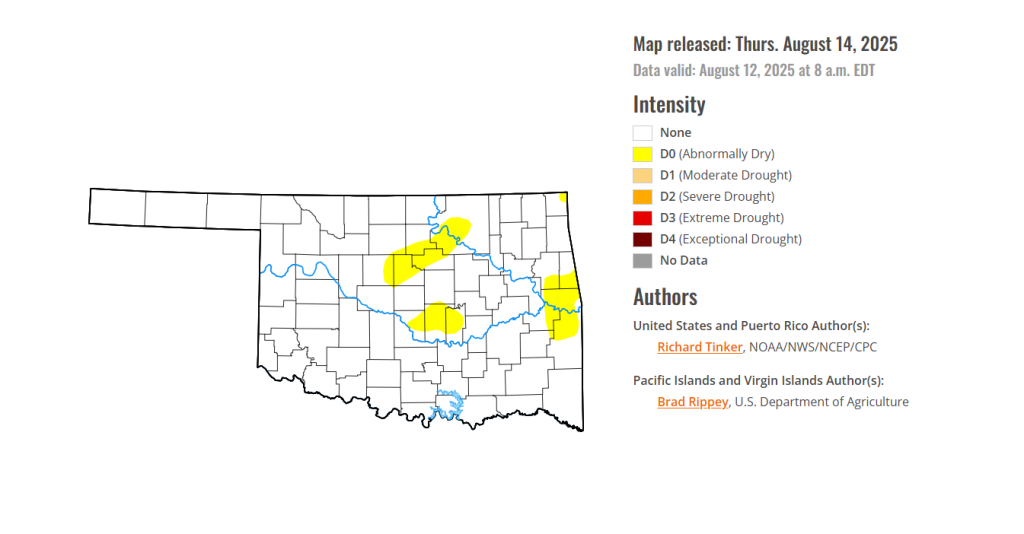
Figure 2. U.S. Beef Exports by Volume (metric tons) and Countries, 2020 to 2024 

Source: USDA

Article courtesy of southern ag Today: Calil, Yuri, and Felipe Martins Moreira. "U.S.–Brazil Beef Trade at a Crossroads." Southern Ag Today 5(32.4). August 7, 2025. Permalink

Cooperative Extension Serving Up Food Safety

The market value of American grown produce continues to rise, and that's good news for American famers. But foodborne illness outbreaks related to fresh produce pose a threat to farm operations. 

Cooperative Extension at the country's Land-grant Colleges and Universities offers vital resources to ensure that farmers have the tools they need to safely grow, harvest, process and ship their produce to market. 

Extension provides critical training to reduce contamination of fresh produce through their Good Agricultural Practices (GAP) and Food Safety Modernization Act (FSMA) programs. Both GAP and FSMA focus on building systems to prevent contamination rather than responding after it occurs. 

Recent Extension Program Highlights 

  • University of Georgia and Fort Valley State University agents guided 20 producers through a Demystifying the Good Agricultural Practices (GAP) Audit training program. The workshop covered best practices related to field sanitation and hygiene; worker health and hygiene; and effective recordkeeping. After the training, producers said they planned to adopt one or more practices.  
  • A Penn State Extension team is delivering training and other educational resources that will help Pennsylvania's food and agricultural industry comply with FSMA. The team's website includes guides, publications, articles and videos.
  • North Carolina State University Extension has developed commodity-specific guidance that provides preventative on-farm practices to reduce the possibility of contamination. In addition to vegetables and fruits, there are guides for fresh herbs, mushrooms and greenhouse products.
  • Purdue Extension offers Produce Safety Alliance Grower Training to help growers increase their postharvest handling and sanitation skills. Last year, more than 90% said they are more confident in implementing practices to address postharvest handling and sanitation risks.
  • Oklahoma State University Extension partnered with Pawnee Nation College to offer training in food production and safety as well as technical assistance to food related Tribal projects. After receiving training in food production, safe processing, regulatory compliance and business setup, the Pawnee Seed Preservation Society launched a food business producing freeze-dried traditional Pawnee foods. 

OSU President Jim Hess Talks Record Enrollment, New Facilities, and Career Readiness

Listen To Carli Davenport And President Jim Hess

Associate farm reporter Carli Davenport Spoke with Oklahoma State University president Jim Hess. As OSU prepares for the fall semester, President Jim Hess shared his optimistic outlook, highlighting another year of record-breaking enrollment. "We're going to have a record enrollment of freshmen this fall, following up on a record enrollment from the fall of '24," Hess noted. He estimated about 5,100 new freshmen would join the university. In addition to academic growth, Hess mentioned excitement around the upcoming football season, saying, "We have a lot of new players, and our coaches are enthused."

A major highlight for OSU's future is the construction of a new Veterinary Teaching Hospital, made possible through unprecedented state funding. "We acquired $250 million in appropriations to build a new animal teaching hospital for the College of Veterinary Medicine," Hess explained. Combined with $78 million already set aside, the $328 million project will be "the envy of all the colleges of Veterinary medicine in the nation." Hess emphasized its impact on rural veterinary care, saying the hospital will help "fulfill our mission of providing rural large animal and food animal veterinarians for our cattle producers and pork producers."

In addition to veterinary advancements, OSU is pursuing improvements in agricultural research with plans for a new greenhouse and the Wheat Improvement Center. Hess highlighted the global importance of OSU wheat genetics, stating, "About 12% of all wheat production on the planet is done with OSU wheat genetics." He noted the current limitations due to weather and facilities, and explained the need for a $25 million indoor facility that would allow multiple growing cycles annually. "When we achieve it, we'll be able to impact wheat genetic production across the world," he said.

President Hess also unveiled a new initiative focused on student career success through the addition of a dedicated career readiness counselor. "From day one, the day they arrive, they'll get an academic counselor and a career counselor," he explained. The program is designed to develop resume-writing, interviewing skills, and career planning throughout a student's college journey. With over 265,000 active OSU alumni, Hess said the program will also include "internships and partner mentoring relationships" to connect students with job opportunities in Oklahoma and beyond.

Looking ahead to the fall, President Hess affirmed OSU's long-term commitment to preparing students for the workforce. "Every student who comes to OSU will have a career readiness advisor to guide them," he stated. He tied the initiative to OSU's "ideal graduate" concept, defined as academically strong, community-engaged, and employable. "I would suspect that every parent out there would say that the ideal graduate gets a job," Hess said, reinforcing the university's focus on practical outcomes and real-world success for its students.

Senate Passes Chairman Mullin's FY 2026 Legislative Branch Appropriations Bill

On Friday, the U.S. Senate passed the Fiscal Year (FY) 2026 Legislative Branch Appropriations Act by a huge bipartisan vote of 81-15. U.S. Senator Markwayne Mullin (R-OK) serves as Chair of the Legislative Branch Appropriations Subcommittee which oversees entities such as the Architect of the Capitol, Library of Congress, Capitol Police, Government Accountability Office, Government Publishing Office, and the Office of the Attending Physician, among others.

The bill provides $7.1 billion in discretionary funding for legislative branch agencies, when combined with funding for the U.S. House of Representatives ($2.2 billion), to support the physical and cyber security, technology infrastructure, and overall legislative work capacity of Congress.

"The brave men and women of the U.S. Capitol Police and Sergeant at Arms work tirelessly every day to protect us as well as the millions of visitors. This bill will bolster their efforts to maintain a secure environment for Members of Congress, our families, staff, and visitors. It also continues to build on strategic investments to strengthen the capacity of the Legislative Branch and our agencies to work on behalf of the American people," said Senator Markwayne Mullin, Chair of the Legislative Branch Appropriations Subcommittee.

"This bill provides funding to support the men and women of the Capitol Police who work hard every day to keep the Capitol complex safe. It also includes resources that help Congress fulfill its constitutional responsibilities and funding for the Government Accountability Office, Library of Congress, and other agencies that allow Congress to do its work in a transparent and accountable way," said Senator Susan Collins, Chair of the Appropriations Committee.

Bill Highlights:

U.S. Senate: $1.47 billion to support legislative and oversight capacity and continue physical and cyber security initiatives.

U.S. Capitol Police (USCP): $855 million to support the most mission critical requirements, including the continued hiring of sworn officers and expanded resources for protective and intelligence operations. .

Congressional Budget Office (CBO): $71 million to expand transparency efforts and responsiveness to Congressional requests.

Architect of the Capitol (AOC): $698 million for the maintenance, preservation, and physical security of the Capitol complex.

Library of Congress: $852 million, including $136 million for the Congressional Research Service and $66 million for the National Library Service for the Blind and Print Disabled.

Government Accountability Office (GAO): $812 million to support GAO's oversight of federal expenditure of taxpayer dollars.

Security Enhancements: Includes additional funding for the Senate Sergeant at Arms and the USCP to implement Member security enhancements. This is in support of continued work from the Committee, the relevant authorizing committees, and Legislative Branch security entities to address mounting threats and safety concerns.

Telecommunications Ban: Retains provision prohibiting the acquisition of telecommunications equipment from Huawei or ZTE Corporation.

Chinese Drone Ban: Retains provisions prohibiting the purchase of drones manufactured in China by USCP and AOC.

Boxed Beef Continues Rally- Choice Beef Up $4.92 to $374.86 on Wednesday, August 6th

Boxed beef prices continued higher on Wednesday, with the Choice cutout gaining $4.92 to reach $374.86, marking the fourth straight daily increase and a $13.54 rise over that span. Select also advanced, up $5.42 to $351.36, while the Choice-Select spread narrowed slightly to $23.50, down from $24.00 on Tuesday. Total loads reported were 83, compared to 105 the previous day.

Among the primals, all major components showed gains except for Plate and Flank. The Rib rose to $551.08 (+$6.42), Chuck climbed to $315.44 (+$5.10), and Round moved up $5.22 to $327.39. Loin gained $7.05 to $483.99, while Brisket increased $3.88 to $316.51. Plate declined slightly to $272.69 (−$2.29), and Flank edged down $0.42 to $227.02.

U.S. Pork Exports Rebounded in June; China's Lockout Weighed on Beef Results

Listen to Dan Halstrom talk about this months numbers.

Exports of U.S. pork bounced back in June, finishing the first half of 2025 on a high note, according to data released by USDA and compiled by the U.S. Meat Export Federation (USMEF). Beef export volume was the lowest in five years, due in part to China's failure to renew registrations for the vast majority of U.S. plants.

June pork exports totaled 239,304 metric tons (mt), up 7% from a year ago, while value increased 3.5% to $682.6 million. For the first half of the year, exports were down 4% from last year's record pace at 1.46 million mt. Export value was $4.11 billion, down 3.5% from a year ago but still the third highest first-half total on record.

"We anticipated a June rebound for pork, following the de-escalation of trade tensions with China after the negotiations held in Geneva in May," said USMEF President and CEO Dan Halstrom. "China still tariffs most U.S. pork items at 57%, but at least the industry can move some pork variety meats at that rate. Elsewhere, June was another terrific month for U.S. pork in Mexico and demand was outstanding in Central America and Colombia. These critical free trade agreement partners continue to shine, as U.S. pork underpins consumption growth across the region."

Beef exports totaled 93,928 mt in June, down 15% from a year ago and the lowest since June 2020. Export value was $769 million, down 18% and the lowest in 17 months. For January through June, beef exports were 6.5% below last year's pace at 602,221 mt, while value fell 6% to $4.92 billion.

Lack of access to China not only results directly in lost business and missed opportunities, but the U.S. beef industry is also losing the premiums generated when Chinese buyers compete for cuts that are especially popular throughout Asia, such as short plate, top blade, chuck rolls and short ribs. Without exports to China, USMEF estimates the U.S. beef industry's lost opportunity at $150 to $165 per head of fed slaughter, or about $4 billion annually.

"The June export results really underscore the urgent need to resolve this impasse with China," Halstrom said. "China's tariff rate on U.S. beef is currently 32% – which is too high, but not insurmountable. The problem is, with only a few plants eligible to ship to China, the tariff rate becomes irrelevant. Consistent and transparent plant approvals, without expiration, were among the most important components of the 2020 Phase One Agreement with China, and it's time for China to return to those commitments."

While USMEF remains hopeful that access to China will be restored soon, the current situation highlights the importance of diversification and further development of emerging markets such as Central America and Southeast Asia.

June pork highlights include value surge for Mexico, variety meat rebound

Leading market Mexico was the pacesetter for June pork exports at 102,750 mt, up 24% from a year ago. Export value soared 33% to $249.4 million – the second highest on record, trailing only December 2024. This included a 20% increase in muscle cuts to 85,709 mt, accounting for 12% of U.S. pork production for the month. These exports went at higher prices,  as value increased by one-third to $221 million. For the first half of 2025, Mexico accounted for nearly 11% of U.S. pork muscle cut production.

June shipments of pork variety meats to Mexico also increased sharply, up 44% to 17,041 mt, with value climbing 36% to $28.6 million. Pork and pork variety meat shipments to Mexico closed the first half at 586,291 mt, 4% above last year's record pace, while value climbed 8% to $1.3 billion.

While June pork exports to China were modestly lower than a year ago – 33,735 mt, down 2% – volume was sharply higher than in May and well above the total posted in April. Although China's tariffs were reduced in May from the prohibitive April rates, they remain well above normal levels. This is reflected in lower export prices, as June export value was $72.7 million, down 11% year-over-year. The June results included 23,778 mt of pork variety meat, which was steady with last year, while value was down 8% to $56.6 million. The rebound in China (compared to May) contributed greatly to a strong month for U.S. pork variety meat exports globally, with volume up 10% from a year ago to 49,494 mt, valued at $100.8 million (up 4%). In addition to Mexico, markets posting year-over-year gains for June variety meat exports included Central and South America, South Korea, Vietnam and Trinidad and Tobago.

Led by growth in Honduras, Guatemala, El Salvador, Panama and Costa Rica, June was another outstanding month for pork exports to Central America. Shipments climbed 32% from a year ago to 13,685 mt, while value increased 26% to $43.3 million. First-half pork shipments to the region totaled 89,260 mt, up 20% from last year's record pace, while value climbed 22% $282.1 million.

Other January-June results for U.S. pork exports include:

  • With demand climbing in Colombia's retail and foodservice sectors, pork exports to Colombia have soared in 2025. June exports totaled 8,480 mt, up 11% from a year ago, valued at $31.3 million (up 20%). Through the first half of the year, shipments to Colombia were 17% above last year's record pace at 66,450 mt, while value climbed 21% to $190.5 million.
  • Surging demand in Cuba and larger shipments to the Dominican Republic and Trinidad and Tobago pushed June pork exports to the Caribbean to 10,237 mt, up 22% from a year ago, while value increased 21% to $31.3 million. First-half exports to the Caribbean increased 5% from a year ago in value ($192.6 million), despite a slight decline in volume (63,305 mt, down 1%).
  • Although June pork exports trended lower to the ASEAN region, Vietnam emerged as a bright spot as shipments reached 1,246 mt, up 760% from last year's minimal volume and the highest since 2020. Export value climbed 340% to $1.7 million. First-half exports to Vietnam were still down 9% year-over-year at 2,866 mt, valued at $4.6 million (down 25%). President Trump recently announced a trade deal with Vietnam, and it is essential that tariff and non-tariff barriers are eliminated in this highly competitive market,  where the U.S. is at a disadvantage to most competitors because of various trade agreements. Trade frameworks were also announced with the Philippines and Indonesia, but the details have yet to be finalized. There are also expectations of announcements for Thailand and Malaysia. First-half pork exports to the ASEAN region were just under 33,000 mt, down 17% from a year ago, while value fell 4% to $81.2 million.   
  • The Trump administration also recently reached a trade deal with Japan, where first-half pork exports totaled 162,315 mt, down 11% from a year ago, valued at $646.3 million (down 12%). Japan's duties have been eliminated on ground seasoned pork, canned hams and sausages. Tariffs are also being phased to zero for all processed products and for muscle cuts entering above the gate price of 524 yen/kg. These access terms were agreed in the U.S.-Japan Trade Agreement under the first Trump administration, which ensured that U.S. pork was on a level playing field with Japan's other major suppliers. This year Japan is importing more frozen and ground seasoned pork from the U.S., but less chilled pork, as importers continue to seek value options due to the relatively weak yen and lack of disposable income growth.
  • A trade deal was also recently announced with Korea, where first-half pork exports were down 13% from a year ago to 117,823 mt, valued at $379.2 million (down 17%). U.S. pork enters Korea at zero duty under the Korea-U.S. Free Trade Agreement. Most major pork suppliers also have duty-free access to Korea, although  Brazil and Mexico are notable exceptions.
  • Pork export value equated to $68.49 per head slaughtered in June, up 3% from a year ago, while the January-June average was down 2% to $65.07. Exports accounted for 31.3% of total June pork production and 26.7% for muscle cuts, each up about 1.5 percentage points from a year ago. The January-June ratios were 29.6% of total production and 26.1% for muscle cuts, down from 30.5% and 26.3%, respectively, in the first half of 2024.  

June beef exports sharply lower, but bright spots include Korea, Mexico, Central and South America

Beef exports to leading market South Korea totaled 19,310 mt, steady with a year ago, though value fell 5% to $181 million. January-June shipments increased 8% to 126,177 mt, while value climbed 9% to $1.2 billion. While a recently announced trade deal has restored some degree of certainly to U.S.-Korea trade relations, it is still unclear whether progress will be made on Korea's non-tariff barriers – including its restrictions on certain products from cattle under 30 months of age, a 100-days-on-feed requirement for imported Canadian cattle and a ban on beef from cattle more than 30 months of age.

But U.S. beef remains well-positioned in Korea, with a current tariff rate of just 2.7%, which will fall to zero at the beginning of next year, ahead of the competition. Before the Korea-U.S. Free Trade Agreement, U.S. beef was tariffed at 40%.  

Beef exports to Central America are on a record pace in 2025, and June was another robust month. Led by growth in Guatemala and Costa Rica, exports to the region reached 1,479 mt, up 11% from a year ago, while value soared 37% to $14 million. First-half exports to Central America totaled 11,655 mt, up 8% from a year ago, with value climbing 32% to $103.2 million. Exports to Guatemala are on pace to set a record for the ninth consecutive year in 2025, while shipments to Panama are also on a record pace.

June beef exports to Mexico were also steady with last year at 17,066 mt, while value increased 9% to $107.2 million. Shipments to Mexico closed the first half of the year at 106,088 mt, down 7% from a year ago, while value was down 2% to $647.3 million.

Other January-June results for U.S. beef exports include:

  • Robust growth in Chile, an ongoing rebound in Colombia and the largest volume of the year to Peru fueled strong June beef exports to South America. June shipments totaled 1,818 mt, up 33% from a year ago, while value soared 94% to $14.2 million. While January-June exports to the region were up just 3% in volume (9,588 mt), value climbed an impressive 39%. Growth was primarily led by Chile but demand is recovering in Colombia, where access was restricted for much of 2024 due to avian influenza-related restrictions. Full access to Colombia was restored in late September.
  • Beef variety meat exports to Egypt had trended lower for the past few months but rebounded in June to 3,522 mt, up 16% from a year ago and the highest since January. Export value climbed 39% to $6.4 million. January-June beef variety meat exports to Egypt were 5% below last year's pace at 19,129 mt, but value increased 12% to $34.7 million. The U.S. industry also received great news from the Middle East last week when restrictions related to halal certification were lifted in United Arab Emirates (UAE). The UAE is traditionally the region's largest market for U.S. beef muscle cuts, while most exports to Egypt are livers and other variety meat.
  • June beef exports to Africa, which are also primarily variety meat, totaled 1,191 mt, up 73% from a year ago, while export value doubled to just under $2 million. Beef variety meat exports were led by growth in Cote D'Ivoire, Morocco and Gabon, January-June shipments to Africa increased 21% from a year ago to 7,165 mt, valued at $11.4 million (up 37%).
  • As noted above, China is all but closed to U.S. beef, with only a handful of plants eligible to ship. June exports plummeted to just 3,104 mt, down 77% from a year ago, while value fell 80% to $24.1 million. Despite a fairly strong start to the year, January-June exports to China totaled 54,522 mt, down 38% from a year ago, while value fell 40% to $473.4 million.
  • June beef exports to Japan totaled 19,993 mt, down 10% from a year ago, while value declined 19% to $147.3 million. First-half exports to Japan were down 2% to 124,005 mt, valued at $920.3 million (down 6%). The Trump administration recently announced a trade and investment agreement with Japan, but major changes in beef market access are not anticipated. Japan's tariff rate on U.S. beef is currently the highest of any major import market at 21.6%, but it phases to 9% by 2033 under the U.S.-Japan Trade Agreement signed in 2020. U.S. beef is on a level playing field with Japan's other major suppliers, but Australia is also shipping less beef to Japan as demand has suffered from the combination of a weak yen, high import duties, and lack of consumer income growth.
  • Beef exports equated to $392.72 per head of fed slaughter in June, down 14% from a year ago (again, reflecting the absence of China). The January-June average was $410.00, down 2% from the first half of 2024. Exports accounted for 13.1% of total June beef production and 10.9% for muscle cuts, down from the very high ratios of 15% and 12.8%, respectively, in June 2024. For January through June, exports accounted for 13.5% of total beef production and 11.3% for muscle cuts, each down about one-half percentage point from the first half of last year.

June lamb exports above year-ago, but lowest of 2025

Exports of U.S. lamb muscle cuts totaled 223 mt in June, up 37% from last year's low volume, and export value was $905,000, up 21% from a year ago. However, both export volume and value were the lowest this year. Led by growth in Mexico, Canada, Trinidad and Tobago, Leeward-Windward Islands and Turks and Caicos, January-June lamb exports increased 43% to 1,590 mt, valued at $8.3 million (up 25%).

Complete January-June export results for U.S. pork, beef and lamb are available here. 

Oklahoma Revenue Grows Year-Over-Year in July as Gross Production Tax Surges

The Oklahoma State Treasurer's July 2025 report shows continued year-over-year growth in state tax collections, despite a modest 4.5% drop from the previous month. Total monthly receipts reached $1.41 billion, up 3.6% compared to July 2024, while 12-month collections totaled $16.97 billion, an increase of 0.3% over the prior year.

"Oklahoma's tax revenue continues to show steady year-over-year growth, even as monthly collections shift with seasonal and economic patterns," said State Treasurer Todd Russ. "Our state's consumer activity remains a strong pillar of stability amid national headwinds."

Oklahoma's 12-month rolling revenue trend posted its strongest monthly increase in over two years, suggesting signs of steadying economic conditions. This marks the clearest indication yet that the state may be turning a corner after more than a year of softening revenues.


Key Takeaways from the July 2025 Tax Revenue Report:

  • Gross Production Tax (oil & gas): Rose 41.4% month-over-month and 50.6% year-over-year, reflecting strength in energy markets.
  • Sales & Use Tax: Up 1.8% month-over-month, a positive sign of continued household spending for two consecutive months.
  • Other Sources: Increased 11.5% month over month and includes more than 70 different revenue streams.
  • The Business Conditions Index dropped to 49.0, indicating a potential pause in regional economic growth.

Ties to National Trends:

Nationally, state revenues continue to show mixed results as the U.S. economy adjusts to persistent inflation and elevated interest rates. While consumer spending is cooling and business activity is softening in some regions, Oklahoma remains comparatively strong—supported by steady employment, rising energy revenues, and a diversified, fiscally balanced economy.

  • The U.S. unemployment rate held at 4.2%, while Oklahoma's remains lower at 3.1%.
  • Inflation edged up slightly to 2.7%, while personal consumption prices continue to rise both increasing for three consecutive months.
  • National economic growth is expected to moderate, with Federal Reserve policy remaining tight, influencing borrowing, investment, and consumer behavior.
  • Despite these factors, Oklahoma's energy production and manufacturing exports continue to grow. The state recorded $2.9 billion in manufacturing exports in the first five months of 2025, up 3.5% from the same period in 2024.

"While we're seeing some short-term shifts in some tax categories, the long-term indicators remain strong," Treasurer Russ added. "Oklahomans are working, producing, and spending in ways that continue to support a healthy economy."


Access the Full Report

The complete July 2025 Tax Revenue Report is available at treasurer.ok.gov, including breakdowns by tax category, sector, and month.

Following Faith Day at the Great American Farmers Market, Secretary Rollins Hosts Secretary Lutnick, McMahon, and Administrator Zeldin to Honor America's Bravest on the National Mall

U.S. Secretary of Agriculture Brooke L. Rollins hosted the third day of the Great American Farmers Market yesterday on the National Mall with an evening of gratitude, service, and spiritual heritage in American agriculture.

Yesterday was themed "Faith and Fellowship Tuesday" and the day's programming celebrated the role of faith, gratitude, and service in agricultural communities. Secretary Rollins was joined by Secretary of Housing and Urban Development Scott Turner, Secretary of Veterans Affairs Doug Collins, and USDA Senior Advisor on Faith and Community Outreach Dr. Alveda King. The program also featured remarks by Pastor Jentezen Franklin, Director of the White House Faith Office Jenny Korn, Rabbi Levi Shemtov, Fr. Charles Trullols, and musical guests Free Chapel Band, and headlining artist Danny Gokey.

Coming up today – Forest and Firefighters: Protecting America's Legacy

On Wednesday, August 6, the Great American Farmers Market will spotlight wildfire readiness and honor the heroes who protect America's landscapes.

Program Features Include:

  • Headlining performance by LOCASH
  • Smokey Bear Birthday Bash: Celebrate Smokey Bear's 81st birthday, learn about wildfire tips, and join a scavenger hunt packed with prizes
  • Firefighters and Firetrucks: Join real-life heroes and climb aboard a firetruck on Jefferson Drive while learning how to outsmart wildfires
  • Spotlight Wildfire Readiness with Secretary of Agriculture Brooke Rollins, Secretary of Commerce Howard Lutnick, Secretary of Education Linda McMahon, & Environmental Protection Agency Administrator Lee Zeldin
  • Stop by the National Forest Foundation (NFF)'s booth to learn about our forests with tree sapling samples
  • Pick up a free Superhero Comic Book by Visa to learn about financial literacy for kids

Please refer to this link for a detailed event schedule.

In the spirit of National Farmers Market week, we encourage everyone around the country to visit their local farmers market. USDA's Agricultural Marketing Service connects consumers to producers at over 8,600 farmers markets nationwide through the National Farmers Market Directory at www.usdalocalfoodportal.com.

THANK YOU to our Generous Presenting Sponsors

Secretary Rollins gratefully acknowledges the support and sponsorship of the following companies for helping to make this event possible: Chobani, John Deere, Tractor Supply Company, and Visa.For updates and full programming details, please visit: www.usda.gov/gafm

Daily Email for August 6, 2025


Oklahoma's Latest Farm

and Ranch News

Wednesday August 6, 2025


Howdy Neighbors!

Dr. Temple Grandin Discusses Progress and Challenges in Low-Stress Livestock Handling

Dr. Temple Grandin, renowned animal behavior expert and animal science professor at Colorado State University, recently shared her insights on how livestock handling has evolved over the years and what challenges remain today with Oklahoma Farm Report Intern, Karleigh Erramouspe at the recent 580 Cattle Conference. Grandin highlighted the crucial role of calm, knowledgeable handlers combined with increasing awareness of genetic health problems in livestock.


"First of all, people need to calm down, because when cattle get all scared and excited, it takes 20 minutes to calm down," Grandin began, emphasizing that skilled livestock handling starts with composure. She explained that understanding animal behavior is equally important: "You need to learn some of the basic behavioral principles, like how the flight zone works, point of balance works, and working on the edge of the flight zone. Then, when they move where you want them to go, back off."


Grandin shared practical advice on minimizing stress caused by the environment: "You bring cattle in and they stop halfway up the chute, they might be seeing a reflection on a vehicle's bumper. Well, then move that vehicle, or a little piece of string, something like that, will stop them. Take those distractions out of facilities." Adding to this, she recommended low-stress movement techniques, saying, "I showed a little movement pattern when you walk back by the cattle in the opposite direction to get them to go forward. That can really help on getting them to move forward in chutes, those are just some real simple things people can start to do. And no yelling. Calm down. Stop the yelling."

During the Great American Farmers Market, Secretary Rollins Removes Unhealthy Food from SNAP

U.S. Secretary of Agriculture Brooke L. Rollins, joined by Secretary of Health and Human Services Robert F. Kennedy Jr., hosted Iowa Governor Kim Reynolds and West Virginia Governor Patrick Morrisey and signed six new food choice state waivers to further advance President Trump's efforts to Make America Healthy Again. The signed waivers will amend the statutory definition of food for purchase for Supplemental Nutrition Assistance Programs (SNAP) in West Virginia, Florida, Colorado, Louisiana, Oklahoma, and Texas, each commencing in 2026.


"It is incredible to see so many states take action at this critical moment in our nation's history and do something to begin to address chronic health problems. President Trump has changed the status quo, and the entire cabinet is taking action to Make America Healthy Again. At USDA, we play a key role in supporting Americans who fall on hard times, and that commitment does not change. Rather, these state waivers promote healthier options for families in need," said Secretary of Agriculture Brooke Rollins.


"We are making Oklahoma healthy again, and I'm grateful for the support of Secretary Kennedy and Secretary Rollins," said Oklahoma Governor Kevin Stitt. "It's common sense that taxpayer money shouldn't pay for foods that make us sicker. I'm glad we're finalizing this waiver for the health and well being of Oklahomans."

Kent Bacus Talks Trade Turbulence: China, Tariffs, and the Future of U.S. Beef Exports

Senior Farm and Ranch Broadcaster Ron Hays was at the 580 Cattle Conference in northwestern Oklahoma, where Kent Bacus, Executive Director of Governmental Affairs for the National Cattlemen's Beef Association, discussed the ongoing complexities of trade with China. Speaking about the current status of U.S. beef access to the Chinese market, Bacus said, "With the Chinese, we're still out of that market. On the beef side, they're still putting even further restrictions." He explained that China has backed away from commitments made in the Phase One agreement and is leveraging trade strategically: "These are the most capitalistic people in the world. So they're looking for a lot of different opportunities they're going to continue to put the squeeze on us."


Bacus emphasized the significant cost of being locked out of the Chinese market. "Loss of that market means we're losing about $150 per head on exports by not having access to a market that really takes a lot of the spare parts that we can't sell here in the U.S." While China remains the most powerful single market, Bacus noted the importance of diversification. "When you look at the UK, Indonesia, Philippines none of them have the buying power that China does. But...you start to be able to diversify away from the Chinese market."


He addressed the ongoing nature of trade talks, hinting that some progress may be on the horizon. "It looks like here in the next few days, the administration may announce a further delay of those retaliatory tariffs but we'll see, because these negotiations are ongoing." Bacus warned that a full decoupling from China would cause significant global economic disruption: "We're so heavily invested in each other's economies...to do that would really cause some global problems."

Oklahoma Farm Bureau works to improve the lives of all Oklahomans by supporting our state's agriculture community. As Oklahoma's largest general farm organization led by Oklahoma farmers and ranchers, OKFB takes grassroots values and advocates for agriculture at the state Capitol and in Washington, D.C., to ensure our way of life continues for generations to come. Farm Bureau hosts leadership events, supports our state's agricultural youth and connects consumers with agriculture in order to build a brighter future for our state. Become an OKFB member today online at okfarmbureau.org/join. Together, we are rural Oklahoma.

Oklahoma AgCredit supports rural Oklahoma with reliable and consistent credit, today and tomorrow. We offer loans for land, livestock, equipment, operating costs and country homes (NMLSR #809962) to farmers, ranchers and rural businesses across 60 counties. As a cooperative, we are owned by the members we serve. Through our Patronage Program, we have returned more than $74 million to our members since 1997.


For more information on our services or to find a location near you, visit our website here.

Ben Hale: Cattle Market Snaps Higher with Strong Demand, Quality Offerings

Ben Hale from Western Livestock noted strong activity at the Oklahoma National Stockyards this week, despite buyers being a bit choosy. "We wound up 6000, you know, with close to 4000 a year ago," Hale said, adding that "a lot of it was the quality cattle." He emphasized that prices jumped "from, you know, 10 to 20 higher" in just a week. Hale highlighted one impressive offering: "580 yearlings off one deal, predominantly all black hide it... they look like they come out of the same cow."


Prices were notably strong for heavier cattle. "Some of those 777-pound steers bring 350, some 860 threes at 335, and, you know, some 927 at 325, and the 1000 pounders at 305," he detailed. Hale made it clear that "the better kind of cattle, I don't know, it was any cheaper—maybe even a little bit better." However, he noted that "plainer type cattle, or cattle carrying a little more flesh, might have been steady to a little softer," though overall, "it was an awful snappy market yesterday."


Discussing current grazing conditions, Hale was optimistic. "People are... wanting to try to, you know, use the grass and potentially maybe some wheat down a few weeks down the road." He acknowledged some variability, noting "North Texas didn't get much rain," but emphasized that "the big part of west northwest Oklahoma's got good rains... people in awful good shape." This favorable environment is fueling demand, especially with light calves: "There's still not a lot of them moving... they're getting softer and shorter, weaned or unweaned as you go."

Mark Z. Johnson Discusses Expected Beef Yield from a Butcher Calf Part 2 Response to Questions

In response to questions received after the article last week on the expected beef yield from a butcher calf, this week additional information is provided. First, a quick recap of last week's article. When having a butcher calf processed we face the question of how much freezer space will be needed for the take home product. As a general guideline, expect to take home about 42 percent of the live weight.


If basing the prediction off of the HCW, expect to take home roughly two-thirds. For example, if we had a butcher calf with a 1,500 pound live finished weight, a dressing percentage of 63% would result in a 945 pound hot carcass weight. After breaking down the carcass and packaging the cuts, we should expect about 630 pounds of beef. The actual amount of product taken home for consumption will vary based on degree of fatness and muscularity, cutting specs and carcass aging.


The number of steaks yielded can vary a great deal based on the desired cut and thickness – most consumers prefer a steak between .75 – 1.5 inches of thickness. Steaks result from the rib and loin, which collectively account for just under 27% of the beef carcass. The remainder of the carcass is usually divided into roasts, tenderized steaks (often used for Chicken Fried Steaks), stew meat and ground beef.

Bayer Establishes Additional Provisions For Litigation In The United States

Bayer has established additional provisions of around 1.2 billion euros for the Roundup (glyphosate) litigation. This figure is included in the around 1.7 billion euro total. In addition to covering defense costs, these additional provisions were mainly attributable to an adverse verdict on the company's appeal in the Anderson et al. case. The company has taken further legal action against the ruling and filed an application for the case to be transferred to the Missouri Supreme Court for review.


Furthermore, the company has achieved a major settlement with a plaintiffs' law firm, reducing the total number of unresolved glyphosate claims to 61,000. Of the 192,000 claims in total, 131,000 have been settled or are not eligible.

Settlements are part of the company's multi-pronged strategy to significantly contain the US litigation by the end of 2026.


For PCBs, Bayer recorded 530 million euros in additional provisions and liabilities for the Burke case, potential future settlements related to the Sky Valley Education Center (SVEC) in the U.S. state of Washington, and other litigation costs. This figure is likewise included in the around 1.7 billion euro total mentioned above. Most of the claims alleging personal injury due to PCB exposure relate to the SVEC, a school building in the Seattle area. With respect to the past SVEC verdicts, Bayer continues to await a ruling from the Washington Supreme Court on the Erickson case.

Farm Bureau Announces Top 10 in Ag Innovation Challenge

Ten innovation-driven enterprises will go head-to-head for the top prize of $100,000 in the 2026 Farm Bureau Ag Innovation Challenge. The American Farm Bureau Federation, in partnership with Farm Credit, continues to encourage agricultural innovation through the Challenge.


"With the world around us changing at a rapid pace, there's a near-constant need for folks to innovate in the agriculture space. Farmers and ranchers are no stranger to the need to roll up our sleeves and lean into this entrepreneurial spirit," said AFBF President Zippy Duvall. "Farm Bureau is proud to offer innovators an opportunity to present new businesses and technology that have the potential to bring forth a better tomorrow for agriculture."


The Challenge is an opportunity for entrepreneurs to present to a panel of judges their emerging ideas and businesses in the agricultural industry, with a chance to earn $100,000 in startup funds. Farm Bureau is offering a total of $145,000 in funding throughout the course of the competition.

Dr. Jerry Dunn Details Southwestern Oklahoma State University Agricultural Business Degree

Associate Farm Editor Carli Davenport spoke with Dr. Jerry Dunn from Southwestern Oklahoma State University (SWOSU), who shared insights into their relatively new agriculture business degree. "Southwestern does have a business in agriculture degree. It kind of surprises people, because we have not had one in the past, nor do we have a history of agricultural programs per se," he explained.


The program was approved in 2019 and is housed in the College of Business rather than a College of Agriculture, which SWOSU does not have. "When we were designed, we were a regional institution primarily for education, pharmacy and business," Dunn added, noting that the ag business program has grown in popularity and student numbers despite setbacks from COVID.


The curriculum is built on a business core with an agricultural specialization. "Students primarily take a business core for their class schedules — the accounting, the management, the marketing, etc. —. And then we put a agricultural specialty with it," Dr. Dunn said. Some of the unique classes offered include "economics in agriculture," "financial issues in agriculture," and agricultural sales and marketing courses taught by Dr. Amanda Everett, as well as Ag Law taught by Dr. Raygan Chain.

Checking the Markets...

At the Beaver County Stockyards in Beaver, Oklahoma with 3,196 head on Tuesday August 5th- it was well above the last sale of July. Compared to last week: Feeder steers 15.00-20.00 higher. Steer calves 7.00-12.00 higher. Feeder heifers 9.00-14.00 higher. Heifer calves 11.00-15.00 higher, with 350-400 pound heifer calves 25.00 higher.


OKC West in El Reno reported 2,800 calves on Tuesday- Compared to last week: Cattle trade was very uneven today, with quality ranging from hard-weaned, high condition calves to unweaned and plainer type offerings. For the Wednesday yearling sale- OKC West expects 3,500 head- 1,400 Feeder Heifers @ 9:00 am and 2,100 Feeder Steers @11:00 am.


Boxed beef values continued to climb on Tuesday, with the Choice cutout rising to $369.94, up $4.15 from Monday, and the Select cutout reaching $345.94, up $4.35. The Choice/Select spread narrowed slightly to $24.00. Over the past three days, the Choice cutout has gained a total of $8.62.


OKC West is our Market Links Sponsor- they sell cattle three days a week- Cows on Mondays, Stockers on Tuesday and Feeders on Wednesday- Call 405-262-8800 to learn more.


Click here for our Markets Page on OklahomaFarmReport.Com- there you will find many of the reports we have linked on the right hand column found on the previous format of our email.

Our daily email is free because of our Sponsors!

OKAgCredit248x160.png
StewartMartinKubota-240.jpg
TulsaFarmShowSquareGraphic240.jpg
okfb.png
AMFeeds.png
Oklahoma-Wheat-Commission_Logo_Vertical_Full-Color_Gray240b-e1736195614699.jpg
GreatPlainsLogoFeb2025Update240.jpg
NAT_Logo_BlackRed160.png
OklaBeefCouncil.png
KIS-Logo240b.png
oca.png
Facebook

© 2025 Oklahoma Farm Report - All rights reserved


Examining August FSA Data to Forecast Final Cotton Acreage

In an article by Scott Stiles, he says Since 2011, the USDA's Farm Service Agency (FSA) has provided monthly reports of crop acreage beginning in August.   This information is based on farmer reports of planted, prevented planted, and failed acres received and summarized to date.  A final acreage summary is released in January.  Beginning in October (occasionally in September), these data are used by USDA's National Agricultural Statistics Service (NASS) for comparison to survey-based planted acreage estimates in the monthly Crop Production report. 

In this article, we examined the relationship between the preliminary August FSA planted acreage and the final FSA planted acreage for cotton.  We also looked at the relationship between final FSA planted acreage and NASS planted acreage.

While FSA acreage data represents a census of planted acreage enrolled in farm programs, the FSA acreage data does not function as official USDA planted acreage estimates (because not all farms are enrolled in the farm programs administered by the FSA). The official planted acreage estimates are the responsibility of NASS, the statistical agency of the USDA.  

As a starting point, we reviewed the relationship between the August and final (i.e., January) FSA planted acreage estimates for cotton (upland and Pima combined).  As noted in Figure 1, reporting during August 2020 was off significantly due to the reporting extension during the COVID pandemic. The data pre-2020 and post-2020 indicate all but a small percentage of planted acreage for cotton is generally reported to the FSA by August.  For example, over the 2015-2019 period, the average ratio of preliminary to final FSA planted acreage for cotton was 98.9 percent.  In recent years, 2021-2024, the average ratio increased to 99.7 percent in August. Arguably, the period 2021-2024 is the most representative part of the sample for making 2025 forecasts. 

Figure 1. Ratio of August to Final January FSA Estimate of U.S. Cotton Planted Acreage, 2015-2024

We also looked at the relationship between the final FSA planted acreage and final NASS planted acreage (Table 1).  In the years 2015-2024, the acreage relationship is quite consistent.  For cotton, the final FSA estimate of planted acreage averages 98.2 percent of final NASS planted acreage with a range of 0.9 percent.   The consistency of the relationships can be attributed to the fact that enrollment in FSA farm programs varies relatively little from year to year.

TablTable 1. U.S. Planted Acres of Cotton Estimated by NASS and Reported to FSA, 2015-2024

YearNASSFSADifferenceFSA/NASS(%)
20158,580,5008,450,939129,56198.5%
201610,073,5009,927,191146,30998.5%
201712,717,50012,413,314304,18697.6%
201814,081,30013,824,448256,85298.2%
201913,722,70013,405,957316,74397.7%
202012,086,00011,834,619251,38197.9%
202111,206,50011,025,710180,79098.4%
202213,749,00013,530,779218,22198.4%
202310,230,00010,077,091152,90998.5%
202411,183,00010,997,089185,91198.3%
     
Average  214,28698.2%
Low  129,56197.6%
High  316,74398.5%
Source: USDA Farm Service Agency and National Agricultural Statistics Service.

In 2025, historic spring rainfall disrupted cotton planting in some states, which has made for a challenging year.  Many industry observers questioned the NASS June Acreage survey that delivered much higher-than-expected cotton acreage estimates for the Midsouth region. The findings in USDA's first monthly acreage report of 2025 will be of particular interest to the cotton industry.  The report will be released on August 12th and can be found at this link:  FSA Crop Acreage Data. The information in these reports is widely followed by the market for clues about possible future revisions to the official USDA planted acreage estimates. Based on recent history, this report is expected to provide a strong indicator for overall cotton acreage in 2025. 


Article courtesy of : Stiles, H. Scott. "Examining August FSA Data to Forecast Final Cotton Acreage." Southern Ag Today 5(32.3). August 6, 2025. Permalink

Letter from Senator James Lankford

Dear Oklahoma friends and neighbors: This has been one of the most productive summers in the US Senate in decades. We started July with the passage of the remarkable tax and national security "One Big Beautiful Bill." We followed that by reducing federal spending with a historic vote to cut $9 billion out of current-year spending, as we confirmed even more of President Trump's nominees than in his first term and passed three appropriations bills—the earliest that appropriations bills have passed in the Senate in a decade. All of that is on top of the record number of votes taken in the last seven months. We have been very busy in Washington, DC.

Over the past seven months, Senate Republicans confirmed twice as many nominees as President Trump had in his first term. As August began, Senate Republicans and President Trump negotiated together to get even more nominees done until late on Saturday night, August 2, when Senator Schumer demanded billions of dollars in spending to confirm a handful of ambassadors, and President Trump rightly said no. Senate Democrats talk about the importance of diplomacy and the State Department, but when it came time to confirm ambassadors, they blocked even the nominees who passed in committee in a strong bipartisan vote. 

A new President nominates more than 1,200 people for Senate confirmation. Each of them could require three to 30 hours of debate time on the floor of the Senate. Because of the long Senate floor process, most nominees pass the Senate with a rapid "voice vote" with consent from both sides of the aisle once they get out of committee and everyone knows they will pass on the floor. At least that was how it used to happen. 

So far this year, Democrats in the Senate have prevented every one of President Trump's nominees to pass by voice vote. Zero nominees passing by voice vote at this point in the Senate calendar has literally never happened before. During the first terms of Presidents George W. Bush and Barack Obama, 90 percent of their nominees passed by voice vote. This unprecedented obstruction demands an unprecedented response.

Over the last seven months, we passed nominees the hard way, staying in session at night, on weekends, and into early August. Over the past seven months, we have been in session more days than any Senate in the last 40 years. We refused to allow Democrats to stall the America First agenda or stand in the way of President Trump's qualified nominees. However, everyday we are confirming nominees, we are not getting legislation done. We cannot allow Democrats to control the calendar by stalling nominees. Developing a new Senate process for nominees will be one of my many projects this month. Big Wins for Oklahoma and Our Nation I looked back on the past seven months while on the Senate floor this week to give a brief summary of what we have been able to get done this year. It has been truly historic. If you have a few minutes, I encourage you to CLICK HERE to watch my speech on the Senate floor highlighting the many successes so far in the Senate for President Trump's second term.

On July 4, the President signed into law one of the most significant bills the Congress has passed in decades, the aptly named, "One Big Beautiful Bill." I sent out a detailed overview of the bill, but if you missed it, CLICK HERE to read more about the details of the bill. 

The more people learn about the new tax policy, nonprofit deductions, secure border, modernized air traffic control systems, farm policies and more, the more they like the bill.

The economy under President Trump seems to have a new positive news story every other day. The second quarter of 2025 saw a jaw-dropping three percent increase overall in economic growth, which for the world's largest economy is a big deal. I recently met again with the US Trade Representative Jamieson Greer to give him our Oklahoma perspective on the many trade deals that he and the President are working through right now. He is opening up new markets for American products and getting tariffs to a consistent level. 

Just last week, President Trump finalized a trade deal with the EU that brings a $500 billion investment in the US and, more importantly for Oklahoma, a $750 billion investment in American energy. In addition to that great trade deal, he secured trade deals in Vietnam, Japan, Indonesia, UK and many more. His trade team even secured greater access to ag markets in Australia so we can sell American beef in Australia for the first time in 20 years! That is a huge win for Oklahoma producers. 

I hosted a live social media town hall from the US Capitol on July 30 to answer questions on energy, education, spending reductions, tax policy, foreign policy, and even a question on Jeffrey Epstein. CLICK HERE to watch the social media town hall. Getting Out from Under the Biden Budget

Because Congress passed a "Continuing Resolution" to fund the government last year, we are still living under the old Biden budget. It's past time to get out from under it. Under Chuck Schumer and the Democrats last year, the Senate passed exactly zero spending bills despite my continued to push to do our job and properly fund the government. Currently, we are still operating under a continuing resolution passed in December 2024, which is the Biden budget.

I am pressing my Senate colleagues to get all 12 spending bills (known inside the beltway as appropriations bills) passed so we can fund the government with the priorities of the Republican majority and President Trump in 2025. This week, the Senate passed three of the 12 spending bills. That is the earliest the Senate has passed an appropriations bill since 2018. The spending bills give new priorities for military construction, veterans, and agriculture.

CLICK HERE to watch my recent interview with Maria Bartiromo on Fox News talking about the need to fund the government and get out from under the Biden budget.

Breeding the Future: Dr. Brett Carver on Innovation in Oklahoma Wheat

Listen To KC Sheperd and Dr. Brett Carver

Dr. Brett Carver reflected on the long-standing legacy of Oklahoma's wheat research program during the 75th Anniversary Seed Stocks celebration. Farm Director KC Sheperd caught up with Dr. Carver at the Celebration, "It's been a wonderful history to be part of," he said. "One of the first people I met when I came here in 1985 was Oklahoma Foundation Seed Stock personnel." Carver noted the evolution of the seed industry over time and added, "I'd like to think it's in pretty good shape today. Yeah, we could all think we're better, but I think we're pretty healthy in the foundation seed business."

Looking to the future, Carver expressed strong hopes for the new Wheat Improvement Center and a modernized greenhouse facility. "I want glass or plastic now, and I want water that's reliable, all those things come together in making a greenhouse facility." He emphasized that it's not about expanding work for the sake of it but maximizing impact: "I think we can do more with the money we have. Instead of just spending and spending... let's spend it moving forward and investing in the future of wheat."

Dr. Carver referenced other standout facilities in the U.S. as inspiration. "I have seen really nice facilities in Washington... North Dakota... Kansas." One of the key goals, he said, is to extend the breeding season. "We are so compressed right now in a very dilapidated facility... When we can do that, we can squeeze more breeding cycles. Breeding cycles means more progress." He said the vision is straightforward: "We would take some features of all these places we've seen and put them into what's going to be a really dynamite facility moving forward."

Discussing future tools and technologies, Carver emphasized both physical infrastructure and high-tech tools as essential. "We got to have infrastructure... but then we also have these soft components," he explained. "We need to invest in technologies like gene editing. I really think that's where our home is." He added, "We're going to start addressing some real-world problems. Number one, weeds." Other exciting tools on the horizon include genome-wide sequencing and high-throughput phenotyping: "Whether it's in the sky or on the ground, we're going to be able to characterize our material so much better."

Finally, Dr. Carver emphasized the importance of collaboration with other institutions. "We end up with a lot of [K-State's] wheat. They end up with a lot of our wheat," he said. "I don't know that that's going to change very much. I'd like to think that we're going to be in that business, and K-State will be too." That spirit of shared progress, he suggested, will help elevate wheat research and production not just for Oklahoma, but for the region and beyond.

USDA Kicks Off 250th Anniversary Celebration with Inaugural Farmers Market Week

Listen to USDA's Rod Bain and Ag Secretary Brooke Rollins

In a lively celebration of agriculture and American heritage, Agriculture Secretary Brooke Rollins and Small Business Administration (SBA) Administrator Kelly Loeffler officially opened the first-ever Great American Farmers Market on the National Mall. This six-day event, coinciding with National Farmers Market Week, serves as the kickoff for a year-long celebration of the 250th anniversary of the nation's independence.

"Is there any better way to celebrate America than launching the effort with farmers representing more than 35 states?" Secretary Rollins remarked. The event is expected to be the first of many, with Rollins adding, "We don't expect it to be the only; we'll see you back here next year."

The farmers market highlights the critical contributions of rural America and small businesses to the nation's well-being. SBA Administrator Loeffler emphasized this point, stating, "There is nothing like small town America to power the American dream. That's where I came from. Country does well when small businesses and small communities do well."

Over 50 vendors from more than 35 states are participating, with daily themes spotlighting a variety of topics, including health, faith, forestry and firefighters, national history, and agricultural education. The celebration also features appearances from several cabinet members and a lineup of notable performers.

The market's opening ceremony was marked by a performance of "The Star-Spangled Banner" by operatic singer and actress Mary Milburn. This artist has performed for five different U.S. presidents. The event's musical lineup includes country star John Rich, contemporary Christian singer Danny Gokey, and country music duo LoCash. John Rich expressed his excitement, saying, "Hey folks, it's your buddy, John Rich here, big and rich me and big Kenny gonna be in Washington, DC to play for the kick-off event."

Made In Oklahoma was also well represented at the Celebration at the National Mall in DC as the Oklahoma Department of Agriculture, food, and forestry promoted "Made in Oklahoma" products.

For those interested in learning more about the Great American Farmers Market, additional details can be found online at www.usda.gov/GAFM.

For More Oklahoma Farmers markets to visit this week click here:

To Visit an Oklahoma Farmers Market and See other Locations, click here:

AFIA Opens Registration for 2025 Equipment Manufacturers Conference

The American Feed Industry Association (AFIA) has opened registration for its annual Equipment Manufacturers Conference (EMC), to be held Nov. 5-7 in Rancho Mirage, Calif. This year's theme is "Winning Strategies for Workforce Protection and Management."

"EMC is a unique forum for feed industry professionals to come together to discuss opportunities and challenges, foster camaraderie among the industry and support the next generation of leaders. We welcome attendees from all sectors of the animal food industry to join these important conversations," said Gary Huddleston, AFIA's director of feed manufacturing and regulatory affairs. "This year's theme of workforce protection and management is important and timely given workforce challenges in today's manufacturing environment"

Hosted by AFIA's Equipment Manufacturers Committee, this annual conference focuses on updating the equipment sector of the feed industry on current issues and trends, providing an environment for learning from educational speakers and industry leaders and bringing the industry together to network. The conference will feature educational sessions on industry safety standards, regulatory and policy updates from Washington, D.C., employee expectations and constraints and a panel discussion on today's business opportunities.

The three-day event kicks off with an annual golf tournament, which raises money for the EMC Scholarship Fund. The EMC scholarship fund provides scholarships for students pursuing a career in feed or grain sciences at seven universities.

Early-bird registration runs through Oct. 3, with a discounted rate for AFIA members. To register or learn more about EMC, visit afia.org/EMC.

Tricks of the Trade: Dr. Derrell Peel on Stretching Tight Beef Supplies

Listen To Ron Hays And Dr. Derrell Peel

In today's Beef Buzz, Senior Farm and Ranch Broadcaster Ron Hays was at the 580 Cattle Conference in northwestern Oklahoma,  where Dr. Derrell Peel, livestock market economist, discussed how the cattle industry has been using various strategies—or "tricks"—to stretch limited cattle supplies, particularly at the feedlot level. "It makes sense for them to do that. It's obviously what their incentives are, to try to keep the feedlots as full as possible and utilize those facilities well," Peel explained. However, he cautioned that these strategies, like extending days on feed and feeding more heifers, may have obscured how tight supplies have actually become. "There's only so far you can go with those," he said.

One significant impact of these strategies has been larger carcasses. "We've extended the days on feed, so the carcasses jumped sharply in 2024—they're still higher yet in 2025 above the trend line," Peel noted. While this increases total pounds for feedlots and packers, much of that gain is fat, not necessarily more meat. "It does enhance grading percentage slightly. So it's a mixed bag of effects," he added. But again, he warned that the industry is now reaching the limits of these tactics.

These larger, fatter carcasses are indirectly helping meet demand for ground beef, especially when paired with lean trimmings from imported beef. "That's how we end up with a lot of hamburger that we've got consumers wanting," said Peel. With cow slaughter down, "we are relying to a much bigger extent on those imported beef trimmings." This introduces more uncertainty due to trade policies, tariffs, and international relations. Peel emphasized, "They do get used, but they're not necessarily exactly what we're looking for when we make those cattle bigger."

The role of imports—especially from places like Brazil—remains controversial among U.S. cattle producers. "It's been a long-term education process," Peel acknowledged. He said the most common question he's fielded is, "Why do we need to import any beef?" His answer: domestic beef products don't exactly match what consumers demand. "If we can import trimmings and processing beef from other places, that allows us to produce the ground beef and service that market," without having to grind up higher-value cuts.

Ground beef continues to dominate U.S. beef consumption. "Ground beef represents between 40 and 50% of our total beef consumption in this country," Peel explained, highlighting its critical role in maintaining competitiveness with other proteins like poultry. "It really comes down to what we do in fast food markets," he added. Ground beef is a staple both at restaurants and in home kitchens. "A lot of households, you know, have ground beef—if they have nothing else," Peel said. "They may not know what they're going to do with it at 4:30 in the afternoon, but that winds up being one of many different products that constitute the evening meal."

The Beef Buzz is a regular feature heard on radio stations around the region on the Radio Oklahoma Ag Network and is a regular audio feature found on this website as well. Click on the LISTEN BAR for today's show and check out our archives for older Beef Buzz shows covering the gamut of the beef cattle industry today.

Supplementation Strategies for Stocker Calves Grazing Summer Pasture

Weekly, Oklahoma State University Extension Beef Cattle Nutrition Specialist Paul Beck offers his expertise on the beef cattle industry. This is part of the weekly series known as the "Cow Calf Corner," published electronically by Dr. Derrell Peel, Mark Johnson, and Beck. Today, Beck discusses Supplementation Strategies for Stocker Calves Grazing Summer Pasture.

Late summer is a critical period for stocker operations grazing both native rangeland and introduced pastures. While native grasses and introduced Old World bluestem pastures provide adequate forage during the growing season, their nutrient content—especially protein and energy—becomes limiting during late summer or under drought conditions. Introduced forage species such as bermudagrass are highly productive and usually provide adequate protein, but digestibility—and therefore energy content—declines in late summer, limiting stocker gains.

Strategic supplementation can help maintain optimal growth rates and maximize returns, but the key to success is matching the supplement to the pasture.

Why Supplement?

Correct major nutrient deficiencies:
As forages mature, their digestibility and protein levels decline. Stocker calves, especially those with high growth potential, may not meet their nutrient requirements from forage alone. Supplementation provides additional energy and protein to help calves maintain target average daily gains, improve feed efficiency, and reach market goals on time.

Deliver feed additives and minerals:
Medicated feed additives and minerals can be provided with the supplement to ensure proper dosage. Medicated feed additives improve performance and the efficiency of supplementation, and are often highly economical when included with supplements. Minerals are vital to all bodily processes, and deficiencies can negatively affect growth and immune function.

Support livestock management:
Often overlooked economically, supplementation also provides management benefits. It allows for easier observation of cattle, improves disposition and handling of animals not accustomed to human interaction, and enhances grazing distribution when supplement is placed in underutilized areas.

Increase pasture carrying capacity:
Feeding higher supplementation rates can replace a portion of forage intake, effectively increasing pasture carrying capacity. This approach is useful for maintaining stocking rates during droughts or boosting them under normal conditions.

Looking Ahead

In upcoming newsletters, we will look at how supplementation rates affect stocker cattle gains and supplemental efficiency and discuss guidelines for choosing the right supplement program based on pasture conditions and production goals.

Back to August: Oklahoma's Brief Respite From Summer Heat Comes to an End

After a pleasant, unseasonably mild stretch of weather, Oklahomans are being reminded that it is, in fact, still August. According to State Climatologist Gary McManus, the state is transitioning back to a more typical weather pattern after a "burst of late-September weather" that saw temperatures drop over the past week.

"Yesterday marked a transition from that burst of late-September weather, back to early August," McManus stated. "So we're back in the saddle again."

The milder temperatures, which were a welcome change for many, are being replaced by a more familiar late-summer heat. The warmth is expected to intensify, with the peak heat arriving on Friday. This hot spell is forecasted to persist throughout the weekend and into the early part of next week.

McManus's forecast indicates that while a "cold (i.e., kinda cool) front" is on the horizon, it won't bring significant relief in the form of rainfall. The front is expected to bring a slight cooling trend, but not enough to drastically change the overall weather pattern.

The State Climatologist offered a simple reminder for residents bracing for the return of the heat: "But, as a reminder, it's August, so get used to this for awhile." His words serve as a clear message that while the recent mild weather was a nice break, the state is now settling back into its typical late-summer conditions.

To read more from Gary McManus on his Mesonet Ticker, click here:

OKC West Calf Trade a Mixed Bag on August Fifth

OKC West in El Reno reported 2,800 calves on Tuesday- Compared to last week: Cattle trade was very uneven today, with quality ranging from hard-weaned, high condition calves to unweaned and
plainer type offerings.

For the Wednesday yearling sale- OKC West expects 3,500 head- 1,400 Feeder Heifers @ 9:00 am and 2,100 Feeder Steers @ 11:00 am.

Beaver County Stockyards Start August With Much Higher Sales

At the Beaver County Stockyards in Beaver, Oklahoma with 3,196 head on Tuesday August 5th- it was well above the last sale of July. Compared to last week: Feeder steers 15.00-20.00 higher. Steer calves 7.00-12.00 higher. Feeder heifers 9.00-14.00 higher. Heifer calves 11.00-15.00 higher, with 350-400 pound heifer calves 25.00 higher.

Choice Boxed Beef Prices Heading Higher- Up $4.15 to $369.94 on Tuesday

Boxed beef values continued to climb on Tuesday, with the Choice cutout rising to $369.94, up $4.15 from Monday, and the Select cutout reaching $345.94, up $4.35. The Choice/Select spread narrowed slightly to $24.00. Over the past three days, the Choice cutout has gained a total of $8.62. Among primals, the rib led the charge, jumping $9.31 to $544.66, now more than $41 higher than it was on July 21st, and at its highest level since June 2nd. The loin also posted strong gains, up $9.19 to $476.94, while the plate rose $12.28 to $274.98. Chuck and round were both modestly higher, while brisket and flank were little changed. Total loads reported Tuesday were 105, nearly even with Monday's 106.

Dr. Jerry Dunn Details Southwestern Oklahoma State University Agricultural Business Degree

Listen To Carli Davenport and Dr. Jerry Dunn

Associate Farm Editor Carli Davenport spoke with Dr. Jerry Dunn from Southwestern Oklahoma State University (SWOSU), who shared insights into their relatively new agriculture business degree. "Southwestern does have a business in agriculture degree. It kind of surprises people, because we have not had one in the past, nor do we have a history of agricultural programs per se," he explained. The program was approved in 2019 and is housed in the College of Business rather than a College of Agriculture, which SWOSU does not have. "When we were designed, we were a regional institution primarily for education, pharmacy and business," Dunn added, noting that the ag business program has grown in popularity and student numbers despite setbacks from COVID.

Pic courtesy of SWOSU Collegiate FB facebook page

The curriculum is built on a business core with an agricultural specialization. "Students primarily take a business core for their class schedules — the accounting, the management, the marketing, etc. —. And then we put a agricultural specialty with it," Dr. Dunn said. Some of the unique classes offered include "economics in agriculture," "financial issues in agriculture," and agricultural sales and marketing courses taught by Dr. Amanda Everett, as well as Ag Law taught by Dr. Raygan Chain.

Dr. Dunn also highlighted a wonderful hands-on class he introduced: Beef Cattle Management. "Being in western Oklahoma, being in Oklahoma period, cattle is a huge industry, so I wanted to try to bring that aspect to students that maybe already know about cattle, maybe some that don't," he said. The course covers a wide range of topics from calving and artificial insemination to genetics and breed selection. "It was a very fun class," Dunn said, emphasizing its practical nature. Last semester, students toured a variety of cattle producers' ranches and other agricultural businesses like Express Ranch, Davis Angus, and Keith's Butcher Shop. Students also earned their BQA ( beef quality assurance) certificate and a master of Beef Advocacy certificate.

Pic courtesy of SWOSU Collegiate FB facebook page With Senator Darcy Jech

Looking ahead, Dr. Dunn shared plans to expand access through online offerings. "This year, we are starting a little bit of a rotation with my courses into online," he said, citing the number of transfer students who work full-time while finishing their degrees. However, the beef cattle management class will remain in-person. "That would be very difficult to have that sort of experience, that hands-on experience, in an online setting," he explained.

In addition to academics, SWOSU ag students can get involved through the Collegiate Farm Bureau chapter on campus. "We'll be doing all sorts of activities. We bring in speakers, we go on field trips," Dr. Dunn said. The group is open to the entire student body and "we kind of look at it as an extension of an FFA. When you want to be an advocate for agriculture, it's a great student organization to have," he noted.

For those interested in the program, Dr. Dunn encouraged direct outreach. "You can contact Southwestern directly... or you can, of course, contact myself or Dr. Everett," he said. Despite teaching economics in the Department of Social Sciences, Dr. Dunn advises most ag business majors and coordinates closely with the College of Business. "I can give them any information that they like on that," he assured.

Pic courtesy of SWOSU Collegiate FB facebook page

Farm Bureau Announces Top 10 in Ag Innovation Challenge

Ten innovation-driven enterprises will go head-to-head for the top prize of $100,000 in the 2026 Farm Bureau Ag Innovation Challenge. The American Farm Bureau Federation, in partnership with Farm Credit, continues to encourage agricultural innovation through the Challenge.

"With the world around us changing at a rapid pace, there's a near-constant need for folks to innovate in the agriculture space. Farmers and ranchers are no stranger to the need to roll up our sleeves and lean into this entrepreneurial spirit," said AFBF President Zippy Duvall. "Farm Bureau is proud to offer innovators an opportunity to present new businesses and technology that have the potential to bring forth a better tomorrow for agriculture."

The Challenge is an opportunity for entrepreneurs to present to a panel of judges their emerging ideas and businesses in the agricultural industry, with a chance to earn $100,000 in startup funds. Farm Bureau is offering a total of $145,000 in funding throughout the course of the competition.

The 10 semi-finalist teams, who will participate in a virtual pitch first round, represent a variety of states and facets of agriculture. The semi-finalist teams are:

The four teams advancing to the final round will each receive $10,000 and will be announced on Sept. 10. The four teams will compete on Monday, Jan. 12 at the AFBF Convention in front of a live audience of Farm Bureau members, investors and industry representatives. Top titles and prizes will be awarded as follows:

  • Farm Bureau Ag Innovation Challenge Winner, total of $100,000
  • Farm Bureau Ag Innovation Challenge Runner-Up, total of $25,000

This will be the 12th year the competition has run. The Ag Innovation Challenge was the first national business competition of its kind to cater to rural entrepreneurs launching agricultural and food businesses.

Farm Bureau recognizes and supports these rural businesses with generous funding provided by sponsors  Farm Credit, Bayer, John Deere, Farm Bureau Bank, Farm Bureau Financial Services and T-Mobile.

To learn more about the Challenge visit: fb.org/challenge

Daily Email for August 5, 2025


Oklahoma's Latest Farm

and Ranch News

Tuesday August 5, 2025


Howdy Neighbors!

Congressman Frank Lucas Talks Farm Bill Progress, Trade Strategy, and Screw Worm Threats

On the sidelines of this past Saturday's 580 Cattle Conference in Woodward, Oklahoma Farm Report's Ron Hays talked with Oklahoma Third District Congressman Frank Lucas, who shared his enthusiasm about recent legislative wins that lay the groundwork for the 2025 Farm Bill. "It's been a struggle, as everyone knows, to pass a comprehensive Farm Bill," he admitted, citing ideological divisions in Congress. He praised Chairman Thompson for taking advantage of a legislative window, saying, "Let's come up with enough savings that we can fund the fundamental parts of the farm bill process, let's do it for six years."


Lucas said the ag provisions were largely left untouched during debate, which allowed for the critical funding mechanism to be locked in. "The Ag provisions were ignored by our usual antagonist because they were too busy squabbling about other stuff."


Lucas emphasized the importance of Title One of the Farm Bill, which was updated from the 2018 Farm Law in the Big Beautiful Bill. "Yes, it is the fundamental money that funds crop insurance and the price protection programs, the things that are the producers' safety net," he said. He pointed out that these updates reflect real changes in the ag economy: "Think about COVID, think about the trade wars, think about inflation, think about the European wars — all of those things that have raised producer input costs." While cattle producers might be doing well now, "everybody else is having tough times," which justifies the need for those safety net adjustments.

Latest Crop Progress Report Shows Improved Condition in Oklahoma Summer Crops

In the latest Crop Progress, National Corn statistics show Corn development continues steadily, with silking at 88%, slightly above last year but just below the five-year average. Corn condition remains strong, with 73% rated good to excellent. Soybeans are progressing similarly—blooming reached 85%. Soybean condition slipped slightly, with 69% rated good to excellent, down one point from the previous week.


National Cotton Statistics: Cotton squaring reached 87 percent, down three points from a year ago, and down two points from the 5-year average. Cotton Setting Bolls reached 55 percent, down four points from a year ago, down three points from the five-year average. Cotton bolls opening reached 5 percent, down two points from a year ago and down one point from the five-year average. Cotton Conditions reached 55 percent good to excellent equal to the previous week.


As for our Summer crops in Oklahoma: Corn crop conditions are now at 67% good to excellent this week equal to last week. The Oklahoma soybean crop is at 43% good to excellent versus 46% a week ago. Cotton in Oklahoma is at 62% good to excellent, versus 53% last week. Grain Sorghum is at 79% good to excellent up two points from a week ago at 77% Pasture and Range conditions are at 68% good to excellent this week versus 65% a week ago.

A Legacy of Growth: Oklahoma Seed Stock Celebrates 75 Years of Pioneering Agriculture

Farm Director KC Sheperd spoke with Jeff Wright, Director of Operations at OFSS, and reflected on the dramatic changes he's seen over the years during the 75th anniversary celebration. "When I came, we still had a couple of old Gleaner F combines, no semis of our own. We did everything in bushel bags, one bag at a time." As farmers began requesting treated seed and bulk bags, Wright responded, " I don't know, but let's try." Those early adjustments led to major efficiency improvements—"We actually do probably 85% of what we bag nowadays in 35-bushel bulk bags," he explained.


Wright also shared how OFSS evolved into an industry leader by embracing innovation. "We got our first new combine that's actually made for foundation seed production in 2013... we've had several other foundation seed organizations that came by and looked at our combine, and now they have one. So we were trendsetters, and I didn't realize it." With donated and acquired semis, he noted, "We can just do so much more, more efficiently than we used to."


When asked about the seed certification process, Wright broke it down: "Dr. Brett Carver used to give us a cup, maybe 10 bushels of seed, and we would take that 10 bushels... then we go out and walk that field in the spring. Make sure there's no off types. Make sure it's to the genetic purity." Attention to cleanliness and accuracy is crucial: "Every truck that goes in, make sure it's clean. Every conveyor it goes through, it's got to be cleaned. And I always tell my crew: no seed left behind."

As Oklahoma's largest John Deere dealer, P&K Equipment is proud to serve our communities & the surrounding areas through 18 Oklahoma locations & 2 Arkansas locations. The entire P&K team is ready to keeping your equipment up & running. So, when it comes time to buy John Deere parts, look no further than GetGreenParts.com. Shop 24/7 from the convenience of wherever you are & have the parts shipped directly to you! This spring and summer- P&K is committed to making it easier than ever to really own your John Deere equipment. And long after the sale- P&K will be here to support you at every step.

The Oklahoma Wheat Commission promotes greater use of wheat in domestic and international markets through research, market development and public education.


Our Commissioners develop policy and programs, direct the funding, represent producer interests and, of course, promote Oklahoma wheat!


Learn more about the Oklahoma Wheat Commission by clicking here for their website.


175 Ag Groups Agree- We Need a Sterile Fly Production Facility in the US ASAP

On Friday, 175 groups sent a letter to Secretary of Agriculture Brooke Rollins and the U.S. House and Senate in support of building a sterile fly facility in the U.S.


Three Oklahoma-based groups are signatories of the letter- the  Two groups that have Oklahoma members as a part of their makeup that signed include the Texas Cattle Feeders and the Texas and Southwestern Cattle Raisers.


 "We are grateful for the U.S. Department of Agriculture's (USDA) recent announcement at Moore Air Base regarding USDA's five-pronged plan for NWS Domestic Readiness and Response Initiative. The establishment of a sterile fly dispersal facility in partnership with the Panama-United States Commission for the Eradication and Prevention of Screwworm (COPEG) is a critical step forward in rebuilding our domestic defense against this devastating pest. However, much work remains. The U.S. still lacks a domestic sterile fly production facility, the foundation of any long-term eradication and response strategy," stated the letter.

Ag Groups React To Luke Lindberg as USDA Under Secretary for Trade and Foreign Agricultural Affairs

The Senate voted by a strong majority to confirm Luke J. Lindberg as under secretary for trade and foreign agricultural affairs on Aug. 2, 2025


NCBA Senior Vice President of Government Affairs Ethan Lane, "Trade has been front and center in this administration, and with the sheer volume of deals in progress, it's critical to have a Senate-confirmed official leading trade and foreign agricultural affairs for USDA. NCBA is thrilled to see Luke Lindberg confirmed to this post. Lindberg has spent his career expanding trade opportunities for American businesses and fixing unfair trade deals. We look forward to working with him to secure even more trade wins for America's cattle farmers and ranchers."


NASDA applauds Lindberg's confirmation. CEO Ted McKinney said, "NASDA welcomes Under Secretary Lindberg's enthusiasm in addressing agricultural trade challenges and opportunities for U.S. farmers. The agricultural industry needs a steadfast advocate in this role to stand with our farmers and exporters as they continue to provide safe and nutritious food to people worldwide. NASDA remains ready to collaborate closely with Under Secretary Lindberg and Secretary Rollins on these critical priorities."


American Farm Bureau Federation President Zippy Duvall commented, "Farm Bureau welcomes Luke Lindberg to his new role at USDA, guiding decisions that impact agricultural trade. Rarely has there been such an active time when it comes to trade discussions and impacts to American farmers, so Luke certainly has his work cut out for him. "Luke's experience working to expand international markets and ensure U.S. farmers get a fair shake will serve USDA and our country well. We look forward to working with him in this new capacity."


Dr. Derrell Peel:Winter Stocker Grazing Prospects

Dr. Derrell Peel, Oklahoma State University Extension Livestock Marketing Specialist, offers his economic analysis of the beef cattle industry as part of the weekly series known as the "Cow Calf Corner," published electronically by Dr. Peel, Mark Johnson, and Paul Beck. Today, Dr. Peel discusses Winter Stocker Grazing Prospects.


Why worry about winter grazing in early August? In just a few weeks, producers interested in grazing winter wheat (or other cool season cereals) for dual-purpose or forage-only grazing will be thinking about planting for fall/winter grazing. It's not too early to begin evaluating the economic and agronomic conditions and considerations for possible winter stocker production.


Agronomic conditions will determine the feasibility and potential for early wheat planting.  Factors such as soil moisture and soil temperature will determine just how early wheat can be planted. Additionally, producers must evaluate the early-planting trade-off between earlier grazing potential and the additional risk of limited forage production due to the likelihood of increased pest and weed challenges and uncertainty about fall moisture for continued growth of early-planted wheat.  

National Beef USPB reflect on first year of genetics-based grid premiums

There's a first for everything, and for the first time producers earned premiums on the U.S. Premium Beef, LLC (USPB) Kansas grid based on the genetic merit of their cattle, starting in August 2024. One year later, the Genetic Merit Scorecard℠ (GMS) remains the measuring stick for these National Beef Packing Co., LLC (NBP) premiums on the USPB grid. 


"It's predictable, consistent quality," said Chad Barker, vice president of cattle procurement with NBP. He adds that the GMS allows them to forecast and sell that quality with some confidence, because of the predictive power of the tool.  

"For us, this year's been more about validating what we expected from a performance perspective, and does it line up with our value-added business; and it does," Barker said. "To me, those things are both really positive. That makes it sustainable, and this program will probably continue to evolve as we learn and know more moving forward."  


The GMS is one of the AngusLink℠ value-added programs administered by the American Angus Association® in partnership with IMI Global and Where Food Comes From, and it objectively describes performance potential across four areas using a range from 0 to 200, with the industry average being 100.  

Corn Grower Leader Emphasizes Importance of Pesticide Access for Improving Soil Health

Without key pesticides corn growers could see a significant reduction in production and ability to continue conservation tillage and cover cropping practices, which are critical for reducing soil erosion, improving water quality and enhancing soil health, according to one of the nation's top farmer advocates.


The comment, made by Illinois farmer and National Corn Growers Association President Kenneth Hartman Jr. in a letter to Health and Human Services Secretary Robert F. Kennedy Jr., comes as the Make America Healthy Again Commission prepares to release policy recommendations to address childhood chronic disease this month.


"Pesticides are a vital component of all types of agricultural production systems (conventional and organic), and without these tools, yields would be compromised," Hartman said. "For instance, corn yields could be reduced by up to 70% without pesticides to ward off weeds, above and below ground pests, and humidity-loving fungi. Losses of this magnitude would impact food availability and grocery prices, ultimately harming the health of Americans."

Checking the Markets...

August Live Cattle futures settled at $230.90 on Monday, up $0.775 from Friday's close of $230.125. The contract has now posted gains in six of the last seven sessions, climbing a total of $5.10 since July 24, when it closed at $225.80. 


Choice boxed beef closed at $364.32/cwt, up $1.10 from Friday and up $3.00 over the past two sessions.


OKC West is our Market Links Sponsor- they sell cattle three days a week- Cows on Mondays, Stockers on Tuesday and Feeders on Wednesday- Call 405-262-8800 to learn more.


Click here for our Markets Page on OklahomaFarmReport.Com- there you will find many of the reports we have linked on the right hand column found on the previous format of our email.

Our daily email is free because of our Sponsors!

OKAgCredit248x160.png
StewartMartinKubota-240.jpg
TulsaFarmShowSquareGraphic240.jpg
okfb.png
AMFeeds.png
Oklahoma-Wheat-Commission_Logo_Vertical_Full-Color_Gray240b-e1736195614699.jpg
GreatPlainsLogoFeb2025Update240.jpg
NAT_Logo_BlackRed160.png
OklaBeefCouncil.png
KIS-Logo240b.png
oca.png
Facebook

© 2025 Oklahoma Farm Report - All rights reserved


Over 500,000 in US Growing Corn, NCGA Reports

The National Corn Growers Association (NCGA) released numbers from the U.S. Department of Agriculture today showing there are 526,263 farmers in the U.S. growing corn.

NCGA has long said it represents the interest of over 300,000 corn growers. But that number, published by USDA, is the number of farms in the country, not the number of farmers making the decisions on the farm.

"This new finding is exciting," said NCGA Economist Krista Swanson. "It shows the broader swath of farming individuals our association represents and gives us new insight for future economic analysis."

USDA released the numbers to NCGA in response to a special data tabulation request.

EPA Announces Availability of $9 Million to Protect Drinking Water from Natural Hazards and Cybersecurity Threats

Today, U.S. Environmental Protection Agency (EPA) is announcing over $9 million in grant funding for midsize and large water systems to help protect drinking water from cybersecurity threats and improve resiliency for extreme weather events. The agency is also publishing a report highlighting 10 recommendations to strengthen resiliency to cyberattacks in the water sector. 

"Drinking water and wastewater systems play a foundational role in EPA's Powering the Great American Comeback Initiative by providing essential services that protect public health and water resources while supporting American industry and commerce," said EPA Administrator Lee Zeldin. "With $9 million in grant funding and ten practical, effective, and collaborative recommendations to address cyberattacks, water systems across the country can strengthen their resiliency to threats—from hurricanes to flooding to cyber incidents." 

$9 Million for Water System Resilience

The Midsize and Large Drinking Water System Infrastructure Resilience and Sustainability grant program is authorized by Congress through the Safe Drinking Water Act. EPA is seeking grant applications from public water systems serving 10,000 people or more. This funding opportunity will remain open for 60 days on www.grants.gov.

Learn more about EPA's Midsize and Large Drinking Water System Infrastructure Resilience and Sustainability Program.

Water Cybersecurity Recommendations

EPA is publishing a report titled, Securing the Future of Water: Addressing Cyber Threats Today. The report includes recommendations calling for a holistic approach to strengthen cybersecurity in the water sector by enhancing coordination and collaboration across government, associations, and water utilities. Systems are being encouraged  to address unique needs, normalize and promote cybersecurity measures, and improve access to technical assistance. These recommendations were produced by a Water Sector Cybersecurity Task Force that EPA co-lead at the time they were developed.

There are several priority actions that accompany the recommendations, including the development of water-sector focused cybersecurity leadership training, increasing direct cybersecurity technical assistance, providing webinars and curated resources for utilities, integration of cybersecurity into operator certification and continuing education, coordination with state Chief Information Officers (CIO) Offices for Cybersecurity Support, and more.

EPA is taking action to advance the goals of the recommendations and priority actions. Learn more about the Water Sector Cybersecurity Task Force recommendations.

Background 

Cyberattacks against water systems have increased several-fold over the past few years and can disrupt or contaminate drinking water and compromise the treatment of wastewater. EPA, federal partners, and utilities have a collective responsibility to ensure that cyber threats do not imperil the critical lifeline of clean and safe water. Clean and safe water is central to strengthening the American workforce; powering industries — from auto manufacturing to Artificial Intelligence; and advancing energy dominance. In communities, it supports small businesses, hospitals, military bases, and schools.

The Cybersecurity Task Force was formed by members of the Water Sector Government Coordinating Council (GCC) and Sector Coordinating Council (SCC), groups which connect EPA with partners from the national associations, state primacy agencies, water utilities and other representatives from the Water Sector.

USDA Reminds Families to Pack Food Safety with Back-to-School Lunches

Back-to-school shopping usually means backpacks, notebooks and lunchboxes. But don't forget to add food safety to the list.

Young children, especially those under age five, are more likely to get seriously sick from foodborne illness. The U.S. Department of Agriculture (USDA) is reminding parents, caregivers, and anyone packing school lunches to follow a few simple food safety steps.

"As the school year begins, we want families to keep food safety top of mind," said USDA Food Safety and Inspection Service (FSIS) Administrator Dr. Justin Ransom. "Young children are more vulnerable to foodborne illness, and we want to make sure they stay healthy and ready to learn."

Here are USDA's top food safety tips for the school year.

Keep cold foods cold

Use at least two cold sources, such as gel packs, frozen water bottles, or frozen juice boxes. Place them on top and bottom of perishable items like meat, poultry, and eggs. This helps keep food out of the Danger Zone, which is between 40 and 140 degrees F. In this range, bacteria can grow quickly and cause illness.

Choose the right lunchbox

Use an insulated lunchbox. Paper bags are not a safe choice because they tear and leak as cold items thaw, which allows cold air to escape.

Keep hot foods hot

For hot foods like soup or chili, use an insulated container. Fill it with boiling water and let it sit for a few minutes before adding food. Dump out the water, add the hot food, and keep the lid closed until lunchtime. Hot foods should stay at 140 degrees F or higher.

Follow the four steps to food safety

  1. Clean: Wash hands with soapy water for at least 20 seconds before, during, and after handling food. Clean and sanitize lunchboxes regularly.
  2. Separate: Keep raw meat and poultry separate from fruits, vegetables, and other ready-to-eat foods. Discard any containers or bags that held raw items.
  3. Cook: Use a food thermometer to make sure foods are cooked to a safe internal temperature.
  4. Chill: Use two cold sources to keep perishable foods below 40 degrees F. Discard leftovers if they enter the Danger Zone (between 40 and 140 degrees F) for more than two hours.

LG Seeds' 2026 Seed Lineup Delivers Broad Agronomic Strength

Listening to growers has enabled LG Seeds to deliver consistent agronomic performance and strong yield potential. The corn seed products set to debut in 2026 boast a 9.5-bushel-per-acre yield increase in precommercial research testing compared to LG Seeds' commercial lineup and competitive checks.

"The gains are a testament to our focus on unique germplasm and the fully integrated team, a continual feedback loop from the grower and a focus on agronomic consistency," says Dustin Bowling, LG Seeds brand product manager. "As a 100% seed-focused provider, our proven genetics deliver consistent results across a wide range of environments."

"We're focused on providing products growers can count on to perform for multiple seasons," Bowling explains. "We're looking for root strength, stalk strength, and high tolerance scores to disease and pest threats. We deliver products that can handle a variety of soil types and weather patterns and still provide consistent results."

Corn seed tackles growers' challenges

Growers will have 16 new LG Seeds corn products to consider in 2026, each of which has proven itself consistent in agronomics and yield potential. It will also offer new trait options on six proven corn seed products and will introduce one new VT4PRO™ product for growers who need an additional tool for corn rootworm control.  

The 2026 class also fortifies growers' defenses against southern rust and tar spot. Following are just a few of the new corn products worth a closer look:

·       LG40C07 is a highly adaptable product with impressive stalk and root scores. It's able to perform under high-yield management as well as stressful environments, demonstrating yield stability that's a hallmark to LG Seeds. The 90-day relative maturity (RM) product features trait options in VT Double PRO® and SmartStax®.

·       LG47C12 is a new 97-day RM product in theDouble PRO® RIB Complete® trait option for 2026. Known for its excellent green snap tolerance and long, flexing ears, it stands out in the field. The versatile choice performs well on dryland and irrigated acres, and it responds especially well to high-yield practices like foliar fungicide applications.

·       LG55C40 features top-end corn yield potential and reliability across multiple environments. With the Trecepta® trait package, it has very good tolerance to Goss's wilt and high pH soils. The 105-day RM product produces a girthy semi-determinant ear with excellent grain quality.

·       LG58C16 provides the performance and look of an industry-leading product ­with showstopping ears, deep kernels and stellar test weight. This 108-day RM product is available as a conventional option as well as the VT Double PRO® trait package.

·       LG63C32 is the new, high-yielding counterpart to LG64C43, which was released the year prior. With a 113-day RM, broad-acre agronomics and the Trecepta trait package, it's a must-have product for 2026. It excels across yield environments and can move south well.

2026 soybean lineup focuses on standability, SCN control

Growers seeking higher soybean yields can benefit from 18 new LG Seeds soybean products launching in 2026.

One way to capture more yield is with better control of soybean cyst nematode (SCN). An increasing number of growers are aware of the threat SCN poses and the need to rotate sources of resistance. With its rollout of more Peking-based SCN resistance on both Enlist E3® and XtendFlex® soybeans, LG Seeds is giving growers more firepower in their war against SCN.

Standability is another focus with the 2026 soybean lineup. "High-yielding soybeans are only as good as the base you can put that yield on," Bowling points out. "A solid base is especially important as growers plant soybeans earlier and build that pod load early." A few standouts from the diverse 2026 class include:

·       LGS00905XF (0.09 RM) pairs top-end yield potential with very good iron deficiency chlorosis (IDC), brown stem rot and white mold tolerance, allowing these earlier-maturity soybean seeds to be planted in many northern geographies. These soybeans have great adaptability to high- and low-performing soils.

·       LGS1670E3 (1.6 RM) combines agronomics with superior yield potential. This high-performing product can handle stressful situations without sacrificing standability. It features a great combination of IDC and phytophthora field tolerance.

·       LGS3077XF (3.0 RM) is a proven yielder featuring Peking SCN resistance. It excels on well-drained, productive soils and displays good standability under multiple yield conditions.  

·       LGS3629E3 (3.6 RM) offers a balanced agronomic package. Whether you're looking for good tolerance to phytophthora, sudden death syndrome (SDS) and/or charcoal rot tolerance, this soybean has you covered.

·       LGS3960XF (3.9 RM) produces a medium-statured plant with excellent standability under high-yield conditions. It's a salt excluder variety with excellent stress tolerance across multiple growing conditions. It also stands up well to frogeye leaf spot and SDS.

A reliable partner you can trust
"Farmers need products that perform consistently — across seasons and environments," says Bowling. "We do that by listening to our customers, incorporating that feedback and putting each product through extensive field testing."

To try these new farmer-driven seed solutions on your farm, reach out to your local LG Seeds agronomist or district sales manager.

Dr. Temple Grandin Discusses Progress and Challenges in Low-Stress Livestock Handling

Listen to Temple Grandin and Karleigh's conversation above!

Dr. Temple Grandin, renowned animal behavior expert and animal science professor at Colorado State University, recently shared her insights on how livestock handling has evolved over the years and what challenges remain today with Oklahoma Farm Report Intern, Karleigh Erramouspe at the recent 580 Cattle Conference. Grandin highlighted the crucial role of calm, knowledgeable handlers combined with increasing awareness of genetic health problems in livestock.

"First of all, people need to calm down, because when cattle get all scared and excited, it takes 20 minutes to calm down," Grandin began, emphasizing that skilled livestock handling starts with composure. She explained that understanding animal behavior is equally important: "You need to learn some of the basic behavioral principles, like how the flight zone works, point of balance works, and working on the edge of the flight zone. Then, when they move where you want them to go, back off."

Grandin shared practical advice on minimizing stress caused by the environment: "You bring cattle in and they stop halfway up the chute, they might be seeing a reflection on a vehicle's bumper. Well, then move that vehicle, or a little piece of string, something like that, will stop them. Take those distractions out of facilities." Adding to this, she recommended low-stress movement techniques, saying, "I showed a little movement pattern when you walk back by the cattle in the opposite direction to get them to go forward. That can really help on getting them to move forward in chutes, those are just some real simple things people can start to do. And no yelling. Calm down. Stop the yelling."

Reflecting on changes in livestock handling, Grandin said, "Oh, people have gotten a lot better, a lot less prod use, calming everything down. You know, they're sending people out for training. There's a lot of workshops that are being put on, on low stress handling. There's been a lot of improvements in the last 20 years of handling. That's the thing that's really improved. That's the bright spot."

Intern Karleigh with Dr. Temple Grandin at the 580

Grandin also discussed emerging concerns related to animal health and breeding practices. She pointed out, "People, awareness is one of them. Also, I think you need to be measuring things. I'm very concerned about this lameness that's slowly gotten worse, that has a very strong genetic component, the heart failure problems that I've discussed in my talk, used to just be high altitude sickness at 10 or 12,000 feet. Now it's happening at much lower altitudes."

Expanding on the genetic aspect, she explained, "Anecdotally, feed yards that do beef on dairy, which is an Angus by Holstein cross, have traced late stage deaths, which are congestive heart failure, dead, back to single bulls. So it's very definitely, it's a strong genetic component, and it's related to just over selection of some of the production traits."

Dr. Grandin shared that progress is possible when handlers calm down, apply straightforward behavioral principles, continually educate themselves, and pay greater attention to genetics in breeding decisions.

Dr. Grandin has several books available on livestock handling, you can check out her website here:

Ben Hale Cattle Market Snaps Higher with Strong Demand, Quality Offerings

Listen To Ron Hays And Ben Hale

On Tuesdays, Senior Farm and Ranch Broadcaster Ron Hays visits with Ben Hale of Western Livestock Auctions as he talks about the latest in the markets and more. Established in 1995, Western has grown into a multi-generational family-owned and operated business and stands as a symbol of tradition, excellence, and a deep-rooted passion for the cattle industry. Western Livestock Auctions operates the Western Livestock Commission Firm, which sells cattle on Mondays and Tuesdays. They also operate the livestock auction markets in Woodward, Comanche, Waurika, and Knoxville, Iowa.

Ben Hale from Western Livestock noted strong activity at the Oklahoma National Stockyards this week, despite buyers being a bit choosy. "We wound up with 6000, with close to 4000 a year ago," Hale said, adding that "a lot of it was the of quality cattle." He emphasized that prices jumped "from, you know, 10 to 20 higher" in just a week. Hale highlighted one impressive offering: "580 yearlings off one deal, predominantly all black hide they look like they come out of the same cow." emphasising the quality.

Prices were notably strong for heavier cattle. "Some of those 777-pound steers bring $350, some 863 at $335, and, some 927 at $325, and the 1000-pounders at $305," he detailed. Hale made it clear that "the better kind of cattle, I don't know, it was any cheaper—maybe even a little bit better." However, he noted that "plainer type cattle, or cattle carrying a little more flesh, might have been steady to a little softer," though overall, "it was an awful snappy market yesterday."

Discussing current grazing conditions, Hale was optimistic. "People are wanting to try to use the grass and potentially maybe some wheat down a few weeks down the road." Hale acknowledged some variability, noting "North Texas didn't get much rain," but emphasized that "the big part of west northwest Oklahoma's got good rains people in awful good shape." This favorable environment is fueling demand, especially with light calves: "There's still not a lot of them moving they're getting softer and shorter, weaned or unweaned as you go."

On the pricing front, Hale expressed amazement at the current market. "We had a customer who yesterday sent some steers that weighed 601 pounds and weighed 684 pounds, and those cattle bring $390 and $395," he shared. "Those cattle are a dollar per and weigh way well over 2500, it's just amazing what they're doing." With such high prices, Hale stressed the importance of financial planning: "You've got to be better friends with your banker than ever before when you get them bought, now that interest starts ticking off pretty quick."

Hale also highlighted the strength of the bred cow and pair market, saying, "We had those cows last week in Comanche bring 4500, those heavy bred falls." He emphasized opportunities in the market with "several of them at Waurika today and Woodward last Tuesday." With high prices and tools like LRP (Livestock Risk Protection), Hale advised, "It's a good opportunity to protect yourself."

Hale can be contacted at 940-631-2333. Check out more about the marketing options that Western offers by clicking here.

Kent Bacus Talks Trade Turbulence: China, Tariffs, and the Future of U.S. Beef Exports

Listen To Ron Hays And Kent Bacus

In today's Beef Buzz, Senior Farm and Ranch Broadcaster Ron Hays was at the 580 Cattle Conference in northwestern Oklahoma, where Kent Bacus, Executive Director of Governmental Affairs for the National Cattlemen's Beef Association, discussed the ongoing complexities of trade with China. Speaking about the current status of U.S. beef access to the Chinese market, Bacus said, "With the Chinese, we're still out of that market. On the beef side, they're still putting even further restrictions." He explained that China has backed away from commitments made in the Phase One agreement and is leveraging trade strategically: "These are the most capitalistic people in the world. So they're looking for a lot of different opportunities they're going to continue to put the squeeze on us."

Bacus emphasized the significant cost of being locked out of the Chinese market. "Loss of that market means we're losing about $150 per head on exports by not having access to a market that really takes a lot of the spare parts that we can't sell here in the U.S." While China remains the most powerful single market, Bacus noted the importance of diversification. "When you look at the UK, Indonesia, Philippines none of them have the buying power that China does. But...you start to be able to diversify away from the Chinese market."

He addressed the ongoing nature of trade talks, hinting that some progress may be on the horizon. "It looks like here in the next few days, the administration may announce a further delay of those retaliatory tariffs but we'll see, because these negotiations are ongoing." Bacus warned that a full decoupling from China would cause significant global economic disruption: "We're so heavily invested in each other's economies...to do that would really cause some global problems."

A key issue Bacus raised was the delisting of U.S. beef plants by China. He explained, "The United States is the only country in the world that China has recognized USDA's authority to grant access for our own plants." However, that advantage is now under threat: "The Chinese are playing games here, and right now they've just really undercut USDA on all of this." For future negotiations, he stressed, "We have to have something with teeth that the Chinese can't back out of."

Regarding the broader trade strategy, Bacus said, "This is going to be the bumpy time for us. We are poking many people in the eyes Now that they're being forced into a reciprocal agreement, that's painful." He called for a commitment to fair and objective trade policy: "The important thing is that we continue to stand our ground advocate for science-based trade, objective trade, take the politics out of it."

Lastly, Bacus touched on emerging tensions with Canada and Mexico tied to U.S. tariffs related to fentanyl concerns. "These tariffs are related to fentanyl they do not apply to anything covered in the U.S.-Mexico-Canada Agreement." He added, "This is an important kind of first round of talks leading into the 2026 reset," warning that if Canada and Mexico "don't show that they're acting in good faith that's not going to set a good stage" for North American trade relations moving forward.

The Beef Buzz is a regular feature heard on radio stations around the region on the Radio Oklahoma Ag Network and is a regular audio feature found on this website as well. Click on the LISTEN BAR for today's show and check out our archives for older Beef Buzz shows covering the gamut of the beef cattle industry today.

During the Great American Farmers Market, Secretary Rollins Removes Unhealthy Food from SNAP

U.S. Secretary of Agriculture Brooke L. Rollins, joined by Secretary of Health and Human Services Robert F. Kennedy Jr., hosted Iowa Governor Kim Reynolds and West Virginia Governor Patrick Morrisey and signed six new food choice state waivers to further advance President Trump's efforts to Make America Healthy Again. The signed waivers will amend the statutory definition of food for purchase for Supplemental Nutrition Assistance Programs (SNAP) in West Virginia, Florida, Colorado, Louisiana, Oklahoma, and Texas, each commencing in 2026.

"It is incredible to see so many states take action at this critical moment in our nation's history and do something to begin to address chronic health problems. President Trump has changed the status quo, and the entire cabinet is taking action to Make America Healthy Again. At USDA, we play a key role in supporting Americans who fall on hard times, and that commitment does not change. Rather, these state waivers promote healthier options for families in need," said Secretary of Agriculture Brooke Rollins.

"For years, SNAP has used taxpayer dollars to fund soda and candy—products that fuel America's diabetes and chronic disease epidemics," said Health and Human Services Secretary Kennedy. "These waivers help put real food back at the center of the program and empower states to lead the charge in protecting public health. I thank the governors who have stepped up to request waivers, and I encourage others to follow their lead. This is how we Make America Healthy Again."

"I hope to see all 50 states join this bold commonsense approach. For too long, the root causes of our chronic disease epidemic has been addressed with lip service only. It's time for powerful changes to our nation's SNAP program," said FDA Commissioner Marty Makary, M.D., M.P.H. "The goal is simple—reduce mass suffering from diabetes, obesity, and other long term medical conditions. I applaud the leadership of Secretaries Rollins and Kennedy, and President Trump in going bold."

"Thanks to Secretary Rollins, Secretary Kennedy Jr., and the Trump administration, West Virginia is on the forefront when it comes to Making America Healthy Again," said West Virginia Governor Patrick Morrisey. "We are cleaning up the food, getting active, and rewarding healthy choices. Today's signing of our SNAP waiver to remove soda as a taxpayer-subsidized entitlement is another step toward reversing negative health trends and helping West Virginians live long, healthy, and purposeful lives."

"I appreciate the Trump Administration's focus on improving the health of Americans and am proud that Iowa was the first state in the country to submit a waiver to pilot a Healthy SNAP initiative," said Iowa Governor Kim Reynolds. "With the USDA's approval, starting on January 1, we'll begin directing all SNAP dollars to the purchase of non-taxable food items, eliminating soft drinks, candy, and other taxable foods and beverages as eligible SNAP purchases. These changes will empower families to take charge of their health and achieve SNAP's foundational goal—meeting their nutritional needs."

"In Florida, we are ensuring SNAP supports nutritious options that help families thrive, not unhealthy products that lead to long-term health problems," said Florida Governor Ron DeSantis. "Thank you to President Trump for approving our waiver request."

"Today, because of the leadership of President Trump, Secretary Rollins, and Secretary Kennedy, Louisiana's SNAP program just became much stronger and healthier, benefiting children and families for generations to come. Gone are the days of taxpayers subsidizing unhealthy lifestyles and eating habits," said Louisana Governor Jeff Landry. "With today's waiver signing, I am proud to say that Louisiana isn't just participating in the MAHA movement, we are leading it. Thank you, Secretary Rollins, for being a great friend to Louisiana!"

"We are making Oklahoma healthy again, and I'm grateful for the support of Secretary Kennedy and Secretary Rollins," said Oklahoma Governor Kevin Stitt. "It's common sense that taxpayer money shouldn't pay for foods that make us sicker. I'm glad we're finalizing this waiver for the health and well being of Oklahomans."

"Colorado is one of the healthiest states in the nation and has the lowest obesity rate of any state. Sadly, even Colorado's lowest obesity rate of 24.9% is too high, and obesity endangers and shortens the lives of too many Coloradans. Today's waiver is a big step towards improving the health of Coloradans, and reducing obesity rates, diabetes, and tooth decay. The Supplemental Nutrition Assistance Program is designed to support the nutritional needs of those struggling to put food on the table, and this waiver will help to ensure that more Coloradans participating in SNAP have access to healthy foods. Because many local grocers make stocking decisions in part based on SNAP eligibility, I'm confident that this waiver will also help reduce food deserts in Colorado by reducing shelf space for soda and increasing it for other nutritional food products eligible for SNAP. I am deeply appreciative and grateful to Secretary Rollins and the US Department of Agriculture for granting this waiver," said Colorado Governor Jared Polis.

"To ensure the health and well-being of Texans, we must promote better, healthier food habits," said Texas Governor Greg Abbott. "Earlier this year, I requested a waiver from the USDA to ensure SNAP benefits cannot be used to purchase junk food. I applaud Secretary Rollins and the Trump Administration for their approval of this waiver to support and promote healthy eating habits. The State of Texas will continue to consider innovative ways for Texans to lead healthy and productive lives."

Prior to these waivers, SNAP recipients could buy anything except alcohol, tobacco, hot and prepared foods, and personal care products. This historic action expands the list of products excluded from SNAP purchases in West Virginia, Florida, Colorado, Louisiana, Oklahoma, and Texas.

These waivers are further built on top of a movement started earlier this year. Secretary Rollins has previously signed waivers for Nebraska, Iowa, Indiana, Arkansas, Idaho, and Utah.

At the direction of President Trump, Secretary Rollins is ensuring programs work harder to encourage healthy eating and improved lifestyle habits while protecting taxpayer dollars. On Secretary Rollins' first full day in office, she sent a letter to the nation's governors (PDF, 88.8 KB), outlining her vision for the Department and inviting them to participate in a new "Laboratories of Innovation" initiative to create bold solutions to long-ignored challenges. Secretary Rollins and Health and Human Services (HHS) Secretary Robert F. Kennedy Jr. wrote an opinion piece in USA Today outlining their plan to Make America Healthy Again, including through SNAP waivers like the ones signed today.

Smithfield's "We Speak Pork" Campaign Features Pork So Good It Speaks for Itself

 Smithfield® has launched a new national advertising campaign, "We Speak Pork," showcasing pork so good it speaks for itself.

The video campaign features Emmy Award-winning writer, actor and comedian Ben Schwartz as the voice of Smithfield's portfolio of products, including bacon, Prime Fresh lunch meat, smoked hams and pre-marinated pork tenderloins. Schwartz's credits include NBC's "Parks and Recreation," "House of Lies," the "Sonic the Hedgehog" movie series, "The Afterparty," and the "Ben Schwartz and Friends Tour," which sold out Radio City Music Hall and the Sydney Opera House.  

"This new creative campaign is an extension of Smithfield Foods' continuing strategy to grow our leadership position in the value-added packaged meats segment," said Steve France, president of packaged meats for Smithfield Foods. "We Speak Pork puts our delicious Smithfield products front and center – in their own voice – to remind consumers of the unmatched flavor and quality of Smithfield's expertly crafted pork products. It's an entertaining way to appeal to new audiences and let them see the fun side of the Smithfield brand."

"I am proud to finally answer the question that has tormented mankind for years: "If Smithfield pork could talk, what would it sound like?" The answer is me. And in a way, I feel like we always knew. I am excited to work with Smithfield and begin my pork product journey as the voice of their "We Speak Pork" campaign," said Schwartz.

Designed to drive awareness among Gen Zs and Millennials, the campaign provides a relevant and authentic voice for the Smithfield brand to drive curiosity and consideration. The creative platform grabs attention with bold product visuals to showcase the versatility and convenience of Smithfield's products, which allow consumers to explore bold flavors for everyday use.

Smithfield holds the #1 market position in uncooked bacon and smoked ham in the U.S., and top-ten positions in uncooked breakfast sausage and packaged lunch meat nationwide.

The new "We Speak Pork" ads, directed by David Ma and created by The Escape Pod Chicago, are now on digital channels including streaming platforms, and are also available on the Smithfield brand's YouTube channel.

To see the complete line of Smithfield products, recipes, inspiration tips and more, please visit smithfield.sfdbrands.com.

The Smithfield brand leads Smithfield Foods' portfolio of iconic brands including Eckrich, Farmland and Nathan's Famous, among many others. Smithfield Foods' brands hold the #2 overall U.S. market position for branded packaged meats, with top-three share in 15 of the 25 packaged meats categories in which they compete.

Cow Calf Corner: Mark Z. Johnson Discusses Expected Beef Yield from a Butcher Calf Part 2 Response to Questions

Mark Johnson, Oklahoma State University Extension Beef Cattle Breeding Specialist, offers herd health advice as part of the weekly series known as the "Cow Calf Corner," published electronically by Dr. Derrell Peel, Johnson, and Paul Beck. Today, Johnson discusses Expected Beef Yield from a Butcher Calf.

In response to questions received after the article last week on the expected beef yield from a butcher calf, this week additional information is provided. First, a quick recap of last week's article. When having a butcher calf processed we face the question of how much freezer space will be needed for the take home product. As a general guideline, expect to take home about 42 percent of the live weight. If basing the prediction off of the HCW, expect to take home roughly two-thirds. For example, if we had a butcher calf with a 1,500 pound live finished weight, a dressing percentage of 63% would result in a 945 pound hot carcass weight. After breaking down the carcass and packaging the cuts, we should expect about 630 pounds of beef. The actual amount of product taken home for consumption will vary based on degree of fatness and muscularity, cutting specs and carcass aging.

Questions primarily focused on three topics.

  1. What is the expected yield of specific cuts?

Below, figure 1 shows the expected yield of specific cuts from a 750 pound hot carcass weight.

  1. What is the number of steaks expected?

In addition to the percentages and pounds expected shown in figure 1, the following serves as a general guideline:

  • 20 – 26 Ribeye Steaks
  • 22 – 28 T-Bone/Porterhouse Steaks
  • 6 – 8 Filets
  • 10 – 14 Sirloin Steaks

The number of steaks yielded can vary a great deal based on the desired cut and thickness - most consumers prefer a steak between .75 – 1.5 inches of thickness. Steaks result from the rib and loin, which collectively account for just under 27% of the beef carcass. The remainder of the carcass is usually divided into roasts, tenderized steaks (often used for Chicken Fried Steaks), stew meat and ground beef.

  1. How much external fat to leave on?

Strive for an optimum amount. Fat enhances flavor, palatability and the perception of tenderness. A calf's ability to put on fat is dependent on time on feed, the quality of the ration fed and genetic potential. Excessive amounts of external fat should be trimmed off. Although trimming off fat is not beneficial to the amount of take home product, a fatter carcass will lose less weight during the aging process. Most processors strive to provide the best quality product possible. Custom processing instructions allow the processor to provide the specific cuts the customer requests. Dialogue between the customer and processor often leads to a better eating experience.

References:

https://extension.okstate.edu/fact-sheets/print-publications/fapc-food-and-agricultural-products-center/custom-beef-processing-expected-yields-fapc-245.pdf

https://rutherford.tennessee.edu/wp-content/uploads/sites/200/2022/05/PB1822-How-Much-Meat-to-Expect-from-a-Beef-Carcass.pdf

Latest Crop Progress Report Shows Improved Condition in Oklahoma Summer Crops

U.S. Crop Progress:

National Corn Statistics: Corn silking reached 88 percent, up two points from the previous year and down one point from the five-year average. Corn Dough reached 42 percent down three points from a year ago and up two points from the five year average. Corn dent reached 6 points, equal to last year and the five-year average. Corn Conditions are rated 73 percent good to excellent, equal to the previous week.

National Soybean Statistics: Soybean blooming reached 85 percent, equal to last year and down one point from the five-year average. Soybean Setting Pods reached 58 percent, up one point from a year ago and equal to the five-year average. Soybean Condition rated 69 percent good to excellent, down one point from the previous week.

National Cotton Statistics: Cotton squaring reached 87 percent, down three points from a year ago, and down two points from the 5-year average. Cotton Setting Bolls reached 55 percent, down four points from a year ago, down three points from the five-year average. Cotton bolls opening reached 5 percent, down two points from a year ago and down one point from the five-year average. Cotton Conditions reached 55 percent good to excellent equal to the previous week.

National Sorghum Statistics: Sorghum headed reached 51 percent, down ten points from a year ago and down five points from the five-year average. Sorghum coloring reached 23 percent, down two points from a year ago and down one point from the five-year average. Sorghum conditions reached 66 percent good to excellent equal to the previous week.

As for our Summer crops in Oklahoma:

Corn crop conditions are now at 67% good to excellent this week equal to last week.

The Oklahoma soybean crop is at 43% good to excellent versus 46% a week ago.

Cotton in Oklahoma is at 62% good to excellent, versus 53% last week.

Grain Sorghum is at 79% good to excellent up two points from a week ago at 77%

Pasture and Range conditions are at 68% good to excellent this week versus 65% a week ago.

Checking Summer crops and Pastures in Kansas:

Corn crop conditions are rated 62% good to excellent this week versus 66% a week ago.

Soybean conditions are also rated 72% good to excellent this week, compared to 68% a week ago.

Cotton conditions in Kansas are rated 54% good to excellent this week versus 52% a week ago.

Grain Sorghum crop ratings are at 64% good to excellent this week versus 63% last week.

And Pasture and Range ratings are at 68% good to excellent vs 61% from a week ago.

Checking Summer Crops and Pastures in Texas:

Corn crop conditions are rated 54% good to excellent this week versus 63% from a week ago.

Cotton conditions in Texas are rated 46% good to excellent this week versus 50% a week ago.

Grain Sorghum crop ratings are 63% good to excellent this week versus 65% a week ago,

And Pasture and Range ratings are at 50% good to excellent this week versus 55% from a week ago

Bayer Establishes Additional Provisions For Litigation In The United States

Bayer has established additional provisions of around 1.2 billion euros for the Roundup (glyphosate) litigation. This figure is included in the around 1.7 billion euro total mentioned above. In addition to covering defense costs, these additional provisions were mainly attributable to an adverse verdict on the company's appeal in the Anderson et al. case. The company has taken further legal action against the ruling and filed an application for the case to be transferred to the Missouri Supreme Court for review.

Furthermore, the company has achieved a major settlement with a plaintiffs' law firm, reducing the total number of unresolved glyphosate claims to 61,000. Of the 192,000 claims in total, 131,000 have been settled or are not eligible.

Settlements are part of the company's multi-pronged strategy to significantly contain the US litigation by the end of 2026.

For PCBs, Bayer recorded 530 million euros in additional provisions and liabilities for the Burke case, potential future settlements related to the Sky Valley Education Center (SVEC) in the U.S. state of Washington, and other litigation costs. This figure is likewise included in the around 1.7 billion euro total mentioned above. Most of the claims alleging personal injury due to PCB exposure relate to the SVEC, a school building in the Seattle area. With respect to the past SVEC verdicts, Bayer continues to await a ruling from the Washington Supreme Court on the Erickson case.

Bayer will publish detailed results for the second quarter on August 6, 2025. Definitions of the key performance indicators applied can be found on pages 76 to 78 of the 2024 Annual Report.

To read the entire report click here.

Lankford Speaks on Senate Floor Discussing Senate's Historic Legislative Action Confirming President Trump's Nominees

US Senator James Lankford (R-OK) took to the Senate floor to spotlight the Senate's historic productivity in confirming President Trump's nominees, despite relentless obstruction from Senate Democrats.

Excerpts:

"We've done twice as many confirmations now as what we did under the first Trump administration. But we still have quite a few to go... We can do this the easy way or the hard way."

"There's about 1,200 people that have to be confirmed. So typically, things are done by voice vote. Under President George W. Bush, 90 percent of his nominees were actually done by voice vote in the Senate. Under President Obama, 90 percent of those were done by voice vote... So far in this Senate, zero. Every single nominee, even if it was the protocol officer for the State Department or a legislative affairs person in an agency, or the deputy secretary assistant of something literally that no American other than their family knows who they are, they've had to go through the full three-hour process, the intervening day to slow this down."

"That has not happened to any president ever in the history of the country. Ever. No president has ever faced this kind of obstruction, ever, for their nominees."

You can watch his full remarks on the floor HERE.

Cow Calf Corner Dr. Derrell Peel:Winter Stocker Grazing Prospects

Dr. Derrell Peel, Oklahoma State University Extension Livestock Marketing Specialist, offers his economic analysis of the beef cattle industry as part of the weekly series known as the "Cow Calf Corner," published electronically by Dr. Peel, Mark Johnson, and Paul Beck. Today, Dr. Peel discusses Winter Stocker Grazing Prospects.

Why worry about winter grazing in early August?  In just a few weeks, producers interested in grazing winter wheat (or other cool season cereals) for dual-purpose or forage-only grazing will be thinking about planting for fall/winter grazing.  It's not too early to begin evaluating the economic and agronomic conditions and considerations for possible winter stocker production.

Agronomic conditions will determine the feasibility and potential for early wheat planting.   Factors such as soil moisture and soil temperature will determine just how early wheat can be planted.  Additionally, producers must evaluate the early-planting trade-off between earlier grazing potential and the additional risk of limited forage production due to the likelihood of increased pest and weed challenges and uncertainty about fall moisture for continued growth of early-planted wheat.   

Economic considerations include preparing a budget, estimating the breakeven cost of production and evaluating returns potential and risk.  General market conditions determine the overall potential for stocker production, expressed as the gross margin, i.e. value of gain for added weight of feeder cattle.  Table 1 shows prices and value per head for steers in early August as well as current value of gain for a range of beginning weights and added weight gain.  For example, the table shows that the value of 250 pounds of gain for a 500-pound steer at the current time is $2.03/lb. The value of gain varies depending on the beginning weight and the total amount of weight added. Of course, changes in feeder cattle price levels and relative prices between stocker purchase prices and feeder sales prices also change the value of gain.

The next step is to determine the cost of production and determine if the value of gain covers production costs and offers acceptable returns for the stocker enterprise.  Beyond the first cost of the stocker animal (which is covered in the calculation of the value of gain), the value of gain must cover all other production costs plus economic returns to the enterprise.  In the example above, $2.03/lb. times 250 pounds of gain is a per head margin of $508, which must cover costs for feed (grazing and supplements), vet/medicine, death loss, interest, and daily care costs plus returns for management and unpaid labor. Total cattle and production cost divided by ending weight provides a breakeven value which is compared to expected selling price to determine potential returns.  Cattle breakevens will vary significantly across different operations and depend heavily on the grazing cost.  The values of gain in Table 1 suggest the likelihood of positive returns at current market prices.

The market risk of stocker production is due to the fact that the animal is not bought and sold at the same time.  The stocker purchase price is known from current market values, but the selling price depends on market changes during 4-5 months of stocker grazing.  Feeder futures prices can provide an indication of feeder prices in the coming months.  The current Feeder futures price for March 2026 is roughly $315-$320/cwt. (subject to lots of daily volatility).  The March futures price is significantly lower than current cash and futures prices.  Deferred futures are sharply discounted and have been rising to meet cash in recent months.  For example, the August feeder contract was priced at about $296/cwt. on May 1 but is currently over $336/cwt. moving toward expiration of the contract this month. 

It is likely that feeder prices will be higher than the March Feeder futures currently suggest, but the discounted futures prices means that some risk management alternatives are limited.  Current feeder market prices suggest decent potential for stocker returns, subject to high levels of risk.  Discounted futures prices means that it is likely not possible to lock in favorable margins for next spring and much of the return potential is "betting on the come".   Minimum pricing alternatives such as Puts or LRP contracts can provide some level of price coverage against market volatility and sharp price decreases.

Missouri Corn Growers Elected To U.S. Grains & BioProducts Council Leadership

Two Missouri Corn grower-leaders were elected to the newly renamed U.S. Grains & BioProducts Council (USGBC) board of directors during the 65th annual delegates meeting in Grand Rapids, Mich., Aug. 1. Former Missouri Corn Growers Association (MCGA) President Jay Fischer of Jefferson City was elected secretary-treasurer while Missouri Corn Merchandising Council (MCMC) Vice Chairman Dylan Rosier of Mound City was named an at-large director.

"The U.S. Grains & BioProducts Council is a crucial partner to Missouri corn farmers, putting boots on the ground in countries around the world to help increase market access for corn, ethanol, and corn co-products," notes Missouri Corn CEO Bradley Schad. "Both Jay and Dylan have been staunch supporters of the Council's mission, and we're proud to see their efforts to further open markets continue through their service to growers nationwide."

Fischer began his service to the Council board of directors in 2021, volunteering his time as an at-large director. Most recently, he has served as corn sector director, helping guide the organization's efforts to increase exports of U.S. corn and corn co-products. He has been a member of the Missouri Corn board of directors since 2009, currently serving in an ex-officio position. During his tenure, Fischer has also held the roles of MCGA vice president and secretary/treasurer, as well as Missouri Corn Merchandising Council (MCMC) secretary and vice-chairman.

Prior to his election, Rosier served on the USGBC Middle East/Africa/South Asia A-Team, and most recently as the team lead for the Western Hemisphere A-Team. He has been a member of the Missouri Corn board of directors since 2017. In addition to serving as MCMC vice chairman, Rosier has held the roles of secretary and treasurer. He has also served the state's growers as Missouri Corn Growers Association (MCGA) secretary/treasurer.

A longtime partner in progress, MCMC works with the USGBC to expand marketing opportunities for corn, ethanol, and corn co-products abroad. Approximately 20% of the U.S. corn crop is exported annually, including corn and value-added products such as ethanol and distillers dried grains. Learn more about the work of the U.S. Grains & BioProducts Council and its partners at www.grains.org.

Jordan Energy and American Farmland Trust Partner to Advance Smart Solar

American Farmland Trust (AFT) will partner with Jordan Energy to promote Smart SolarSM principles, which aim to safeguard land well-suited for farming and ranching, strengthen farm viability, and accelerate farmer-first solar energy development. Through this partnership, AFT and Jordan Energy will implement these principles to ensure farms and ranches can access affordable on-farm energy solutions. 

As solar energy deployment expands to meet America's growing energy needs, AFT takes a holistic approach centered on farm viability and a recognition that over 80% of solar energy projects could be sited on agricultural land. In response, AFT launched the Smart Solar Initiative in 2021 to provide research, policy recommendations, and direct engagement with farmers, solar developers, and policymakers. 

"Jordan Energy & Food Enterprises is thrilled to be partnered with American Farmland Trust," stated Bill Jordan, the company's founder and CEO. "Our primary core value is to develop solar + storage projects in ways that strengthen family farms. Except in the case of agrivoltaics, avoiding the use of prime farmland for solar is another core value we share with AFT. For over 16 years, we have seen how solar and storage have been an intelligent diversification for so many of our farm partners. Farmers of today and tomorrow are and will be producing both nutritious food and clean energy." 

AFT and Jordan Energy will seek opportunities to implement solar for on-farm energy loads and agrivoltaics, which is the integration of solar energy production with crop production and/or livestock grazing.  Agrivoltaics can provide mutually beneficial outcomes for farmers, ranchers, and the local power grid. Research shows this land use strategy has the potential to conserve water, protect crops and livestock from extreme weather, and significantly increase farm incomes. 

"There has never been a more important time to help producers manage rising energy costs through farmer-centered solar designed to support and enhance the viability of farms and agricultural businesses. We look forward to working with Jordan Energy to expand the use of agrivoltaics in solar development," said Ethan Winter, AFT's National Smart Solar Director. "This is another step forward in our goal to support renewable energy and help America's farms and ranches thrive."  

America needs both renewable energy and resilient farms, and collaborations like these may help achieve these equally important goals. For more information on AFT's Smart Solar initiative, visit www.farmland.org/solar. 

Senate Confirms Paige Hallen Hanson as EPA's Chief Financial Officer

The U.S. Senate confirmed Paige Hallen Hanson to serve as the U.S. Environmental Protection Agency's (EPA) Chief Financial Officer (CFO). Appointed by President Donald J. Trump, as CFO, Hanson will be responsible for overseeing nearly $100 billion currently appropriated for EPA's work, the development and management of EPA's annual budget, the agency's financial and resource management systems, and more than 300 employees.

"Paige brings a wealth of expertise in complex budgets and over two decades of government and financial experience to EPA. She understands the importance of stewarding every cent of taxpayer money and is uniquely and highly qualified to serve as EPA's Chief Financial Officer. I look forward to working with Paige in this new role to make EPA more transparent and efficient as we carry out our mission of protecting human health and the environment," said EPA Administrator Lee Zeldin.

"I am tremendously grateful for the opportunity to lead EPA's financial operations," said EPA Chief Financial Officer Paige Hanson. "From budgeting to payments, performance measures to financial technology, the work of this talented team enables the critical mission EPA plays in protecting human health and the environment." 

Prior to joining EPA, Hanson served as Senior Fellow at Tax Foundation and as a private sector CFO. She has extensive experience in financial operations and financial and economic public policy having served in the U.S. Senate on the Joint Economic Committee, Senate Budget Committee, and as finance policy staff for a Member of the Senate Appropriations and Finance Committees. 

She also previously served as EPA's Associate CFO for Policy during President Trump's first term. 

Hanson holds an MBA from Virginia Tech and an undergraduate degree in Government and Economics from Wofford College.

Here's what people are saying about Paige Hanson's presidential appointment: 

Senator Lindsey Graham (R-SC): "I am very pleased that South Carolina's own Paige Hanson has been confirmed by the U.S. Senate to be the Environmental Protection Agency's Chief Financial Officer. Originally from Lexington, Paige graduated from Wofford in the Upstate and went on to serve as a staffer in the U.S. Senate for seven years, specializing in financial issues. As Chief Financial Officer, Paige will be a great asset to Administrator Zeldin and the rest of the agency as they work to return it to its original mission: being good stewards of America's natural environment while also supporting economic growth."

Senator Tim Scott (R-SC): "I'm proud to support the confirmation of Paige Hanson, a native South Carolinian, as Chief Financial Officer of the Environmental Protection Agency. Paige brings proven financial expertise, a strong work ethic, and a commitment to public service that will serve the EPA and the American people well. South Carolina is proud to see one of our own take on such an important position in President Trump's administration, and I congratulate her on this well-deserved confirmation!" 

Senator Katie Britt (R-AL): "President Trump made a fantastic choice in nominating Paige Hanson as Chief Financial Officer for the EPA—I was proud to vote to confirm her for this important position. I know her expertise will advance Administrator Zeldin's mission of achieving clean water, air, and land for all Americans while unleashing U.S. energy to onshore production, lower costs for families and businesses, and achieve energy dominance."

Former EPA Administrator Andrew Wheeler: "Paige did a great job as Associate CFO in the first Administration, she has the experience and knowledge the agency needs, and she displays all of the characteristics needed for a CFO."  

Former EPA Chief of Staff Ryan Jackson: "Paige Hanson is perfectly qualified to serve as EPA's Chief Financial Officer. She served as a senior official in EPA's financial office in the President's first term and has years of experience in budget and appropriations on Capitol Hill, but most importantly, she is one of the most conscientious and hard-working individuals with whom I have ever worked." 

National Beef USPB reflect on first year of genetics-based grid premiums

There's a first for everything, and for the first time producers earned premiums on the U.S. Premium Beef, LLC (USPB) Kansas grid based on the genetic merit of their cattle, starting in August 2024. One year later, the Genetic Merit Scorecard℠ (GMS) remains the measuring stick for these National Beef Packing Co., LLC (NBP) premiums on the USPB grid.  

"It's predictable, consistent quality," said Chad Barker, vice president of cattle procurement with NBP. He adds that the GMS allows them to forecast and sell that quality with some confidence, because of the predictive power of the tool.  

"For us, this year's been more about validating what we expected from a performance perspective, and does it line up with our value-added business; and it does," Barker said. "To me, those things are both really positive. That makes it sustainable, and this program will probably continue to evolve as we learn and know more moving forward."   

The GMS is one of the AngusLink℠ value-added programs administered by the American Angus Association® in partnership with IMI Global and Where Food Comes From, and it objectively describes performance potential across four areas using a range from 0 to 200, with the industry average being 100.  

The GMS Beef Score specifically predicts genetic potential for feedlot performance and carcass value and is calculated using the Association database and genetic information on sires and the cow herd. For producers and feeders, cattle harvested August 5, 2024 and later with a Beef Score of 100 or greater on the AngusLink℠ GMS can earn a grid premium of $5 per head. In December 2024, a second grid premium – $10 per head for cattle with a GMS Beef Score of 150 or greater – took effect, while those scoring 100-149 continued to receive the $5 per head premium.

These premiums have been in addition to all other premiums and discounts available based on grading and carcass performance and are exclusively available for cattle marketed through USPB and delivered to NBP plant locations in Liberal and Dodge City, Kansas.

Predictable performance

Barker says NBP has been pleased with the quality of cattle qualifying for these premiums.

"I think all but maybe four pens have been really high prime," he said. "That's something we would not be able to sort out or find without the scorecard."

Troy Marshall, director of commercial industry relations with the Association, said the cattle going into the program have been extremely good, averaging close to 150 for their GMS Beef Score.

Brian Bertelsen, USPB vice president of field operations, explained the cattle with a GMS going through the USPB grid have been well-above average. Looking at data from August 2024 through mid-February 2025, over 44% have been Prime. The average for the industry is 11% Prime.   

These qualifying cattle have averaged more than $200 per head premium over selling in the cash market, Bertelsen said. As a reference, the non-GMS or USPB average premium during the same period was a little over $100 more than if those cattle were marketed on the average cash, live market in Kansas.  

Bertelsen shared that overall, these cattle have excelled in all areas except for Yield Grade 4s and 5s, with those being higher than average for the USPB grid. Their average live weight was close to 100 lbs. higher than all other USPB cattle.

"The better your genetics are for marbling, the longer you probably ought to feed them to let them do what you designed them to do," he said.

Barker says the traceability component of this is something they like, but it's also something that has not fully developed yet.

"We like being able to share and make progress and make improvements," Barker said. "We just have to find out what's an effective mechanism for sharing and communicating it."

Room to grow

At the one-year mark, Barker said the main challenge is getting enough volume consistently. Since January 2025, the number of cattle with the GMS being harvested at NBP has increased compared to the first several months of the program, but there is room and demand for more cattle.

"As long as we can continue to show a little incremental margin, we're going to be committed to growing it, and we know most good things take time," Barker said.  

To qualify for the GMS, calves' sires must be predominantly (50% or more) registered Angus and 75% of the bull battery must be registered.

"I know the guys that feed them like them," Barker said about AngusLink cattle. "Then they bring a pretty big grid return."  

Marisa Kleysteuber, managing partner of Triangle H near Garden City, Kansas, estimates between half to two-thirds of the cattle at their feedyard are enrolled in AngusLink, and 50% of those are customer cattle. The rest are owned by Triangle H and K Ranch. Most of the cattle fed attheir yard are marketed on the USPB grid.

"The GMS AngusLink program definitely rewards producers for producing high-quality beef," she said. "Our focus is the consumer and producing what the consumer wants; and they've clearly said they want high-quality beef. I think it's exciting that there's another program out there that is rewarding the cow-calf producers for their willingness to focus on high performance, quality cattle."  

Tracking cattle with the GMS to earn grid premiums, "it makes it a little more challenging, and we've had to adjust our management some with how we'd typically sort our cattle," she said. Other adaptations have included making sure all AngusLink certificate numbers are listed on the showlist for National Beef and providing that information two weeks ahead of harvest instead of one.  

"This is just another way to send the market signals, and every dollar helps," Kleysteuber said.

Who's participating?

Before these grid premiums were added, people retaining ownership of their cattle through the feeding phase did not have much incentive to enroll in the GMS program outside of benchmarking their genetic progress.

"They now have a financial incentive," said Doug Stanton, senior vice president of sales and business development at IMI Global. "They can see in the US Premium Beef grid that they can earn an additional $5 or $10 a head based on their Genetic Merit Scorecard on the Beef Score specifically. In most cases it's been eye-opening for them from the standpoint that cattle were maybe better than they thought they were."

Many of those who earned premiums this past year have been those already comfortable with marketing cattle on the USPB grid or retained ownership.  

"It's really nice that those people can get a little bit more premium, a little bit more recognition," said Bertelsen. "We can even better identify them in our data and recognize them with the higher premiums for the cattle that are truly genetically designed for our system."

Stanton said he anticipates new participation coming through USPB members buying cattle with the GMS, placing them in a USPB yard and then delivering them to NBP. Bertelsen agrees and adds that more will also participate during the second year simply because they will have heard more about it.

"Moving forward, we sure hope that more cattle feeders and feedlots will step out and buy AngusLink GMS-enrolled feeder cattle to really boost the volume of cattle," Bertelsen said. "The grid system really works. If you offer a carrot – in other words, a premium for the producer – at least some of them will chase that and achieve it."

Bertelsen recognizes it is a challenging time to ask feeders to do that, given the current cattle supply.  

"They certainly know and appreciate that genetics makes a difference," he said. "If the record-high prices of feeder cattle postpone their stepping out and buying these cattle, that'll change. This cattle cycle will come around eventually."

For those ready to take the next step, he said he is quick to remind producers that the process of enrolling and getting a GMS for cattle is pretty easy.

"You don't have to have an onsite audit," he said. "You just need to send the birth dates, the registration numbers (for sires), and a description of the cow herd."   

There is no additional cost associated with the GMS program, aside from IMI Global's Age and Source verification enrollment, which includes an EID tag. Plus, for cattle marketed on the USPB grid, a $1 per head premium is paid for each low-frequency EID tag that is read and assigned to a carcass ID number within each lot.

When available, feeders can lease USPB delivery rights to market cattle through USPB on the Kansas grid. Those interested should call USPB at 866-877-2525 or visit www.uspb.com for more information.

"As we see more and more acceptance of the scorecard as a valuable tool for describing cattle's genetic merit in the marketplace, I know we'll see this program progress," Marshall said. "There's tremendous value in better understanding the genetics of cattle in our industry, and this has just added to the momentum we see for rewarding the good work producers are already doing."

For questions about the GMS or AngusVerified℠, call 816-383-5100, or contact AngusLink℠ via email at anguslink@angus.org. IMI Global can also be reached to help start an enrollment at 303-895-3002, or producers can complete its contact form to get started at www.imiglobal.com/contact.

USDA Kicks Off Inaugural Great American Farmers Market with Concert, Vendors, and Celebration of Agriculture and Liberty

U.S. Secretary of Agriculture Brooke L. Rollins officially kicked off the inaugural Great American Farmers Market yesterday on the National Mall with an evening of festivities honoring America's farmers, freedom, and 250 years of agricultural heritage.

Sunday's programming was themed "America Grows: 250 Years of Liberty and Agriculture" and kicked off with the Ag Fest Concert, featuring performances by Mary Millben, the U.S. Navy Band, Boiled Jam, and headliners Big & Rich. Special appearances included Secretary of Agriculture Brooke Rollins and Small Business Administrator Kelly Loeffler.

"Yesterday we launched the inaugural Great American Farmers Market to honor our agricultural heritage and stand shoulder to shoulder with today's producers who continue in that tradition to feed and fuel our nation. President Trump is the most pro-farmer president of our lifetime, and through his leadership, we are supporting farmers through unprecedented new international market access, lowering taxes, and boosting the farm safety net," said Secretary Rollins. "Sunday was an incredible celebration of freedom, faith, and the families that built this country. Thank you to my friend and SBA Administrator Kelly Loeffler for joining us for the kickoff celebration, as well as the talented musical artists Mary Millben, the U.S. Navy Band, Boiled Jam, and headliners Big & Rich."

Throughout the day, visitors experienced interactive market activities including:

  • Golden Tractor Photo Op, Highland Cows, Live DJ Sets, and headliners Big & Rich
  • America250 Airstream: A mobile storytelling hub where attendees shared what America means to them
  • John Deere Tractor Display: Guests posed with iconic farming machinery
  • Barnyard Bash: Tractor Supply Company hosted games, giveaways, and ag education for kids
  • Chobani American-Made Dairy Booth: Highlighting farm-to fridge dairy products and giveaways
  • America250 Merch Tent & USDA Gift Shop: Limited-edition America250 merchandise and farmers market finds at the USDA giftshop

Coming Up Today: Make America Healthy Again (MAHA) Monday

On Monday, August 4, USDA continues the market with Make America Healthy Again Monday, highlighting wellness, fresh food, and healthy families.

Program features include:

  • A Live Cooking Demonstration with Secretary of Agriculture Brooke Rollins, Secretary of Health and Human Services Robert Kennedy Jr., and Fox News' Rachel Campos Duffy, using fresh ingredients from the farmers market
  • Goat Yoga on the USDA Lawn at 6:30pm (BYOM: Bring your own mat!)
  • Chobani's dairy and fruit tent showcasing American-grown ingredients
  • Grow and Snack Station with Common Threads

Please refer to this link for a detailed event schedule.

ARA Rising Stars Award Program Nominations Open

The Agricultural Retailers Association (ARA) today launched the 2025 Rising Stars award program, which is sponsored by Atticus. The Rising Stars program is a meaningful way for ARA member companies to recognize employees for their work in front of hundreds of industry professionals at the annual ARA Conference & Expo and to explore new ways to hone their leadership skills.

"The Rising Stars award program is a wonderful opportunity to recognize future leaders in agribusiness," said ARA's President and CEO, Daren Coppock. "Thank you to Atticus for sponsoring this program! We encourage all ARA members to nominate rising stars and attend ARA's Conference and Expo in Salt Lake City to recognize the individuals selected."

This year's award program theme is "Leading the Climb to the Summit of Success." 

Nomination Requirements:

  • A limit of two individuals from the same company may be nominated;
  • Nominee(s) must have 10 years of experience or less in the ag sector; and
  • Nominee(s) must be employed by an ARA member company in good standing.
  • Nomination forms are due by COB, September 19, 2025.


Additionally, each accepted Rising Star must submit a video related to the theme in order to participate in the award program. Video submissions are due by COB on September 30. 

Nominees will have the opportunity to participate in the program's Fan Favorite Video Contest for a chance to win a trip to the Atticus headquarters in Raleigh, North Carolina, and experience another side of ag retail. 

The 2025 ARA Conference & Expo will be held December 2-4 in Salt Lake City, Utah. Selected Rising Stars will attend the conference at a special discounted rate. 

Early bird registration is currently open for all interested attendees. Learn more about and register for the 2025 ARA Conference & Expo here.

Learn more about the Rising Stars program and nominate a Rising Star here.

Daily Email for August 4, 2025


Oklahoma's Latest Farm

and Ranch News

Monday August 4, 2025


Howdy Neighbors!

Secretary Of Agriculture Blayne Arthur Reflects on 75 Years of Progress

Farm Director KC Sheperd spoke with Secretary of Agriculture Blayne Arthur at the 75th anniversary of the Oklahoma Foundation seed stock. Secretary Arthur addressed both the challenges and successes in Oklahoma agriculture. "Certainly some hurdles that we have seen are the weather, as we always experience here in the state of Oklahoma.


Sometimes it's a wonderful friend to us, and sometimes it's not." Still, she praised producers' resilience, especially wheat growers: "They never give up. They navigate through all those things." On the positive side, she highlighted major advancements, noting, "Over 50% of the acres in the state of Oklahoma have an OSU variety planted on them," thanks to the Wheat Improvement Team.


 Secretary Arthur sees a major opportunity at Oklahoma State University, especially due to its unique combination of programs. "We are a land grant university, and we're really leaning into that, I think, in so many ways." She highlighted the strength of OSU's ag and vet programs: "We got a tremendous investment from the legislature for the College of Veterinary Medicine." She added, "When you think about Oklahoma State, and we've got the College of Ag, College of Veterinary Medicine, we have the Center for Health Sciences over in Tulsa, no one else really does that.

OCA Ranch Rodeo Returns to Lazy E August 15–16

Senior Farm and Ranch Broadcaster Ron Hays spoke with Michael Kelsey about OCA's ranch rodeo. "This is our 41st annual ranch rodeo," Michael Kelsey began, referring to the long-standing tradition once known as the Range Roundup.


"We changed the name to ranch rodeo, but this is our 41st edition up at the Lazy E." He noted the strong relationship with the venue and proudly added, "This is about our 21st year to partner with the Children's Hospital Foundation, and we are just a shade over $700,000 that we have raised for them."


Kelsey highlighted both the legacy and the fresh energy of the event. "We've got a couple of new teams in it this year. Some of our older teams, you know Tim Drummond, they've been in every one of these." He emphasized authenticity: "These are real cowboys and cowgirls. They're going to go back to work on Monday morning on the ranch."

Cultivating Success: Women in Ag and Small Business Conference Gears Up for August 7

The Women in Agriculture and Small Business Conference continues to grow and evolve, and Lauren Minyard with OSU Extension shared insight with Associate Farm Reporter, Carli Davenport, about what attendees can expect this year. "This is going to be the third year in our new location. It's at the Hilton Garden Inn and conference center in Edmond, Oklahoma.


It's a very nice facility. We've been very happy with it," she explained. The event is structured with an opening session, a keynote speaker, and five breakout session time slots, each offering four different tracks. "We kind of tailor it towards animals and horticulture, and then like more business, and then more like personal things," said Minyard, allowing attendees to follow a track or mix and match sessions to suit their interests.


The breakout sessions are designed to offer real value to attendees across many sectors of agriculture. "The last couple of years, we've added breakout session descriptions... so you know exactly what you're going to be going to," Minyard added. This thoughtful detail makes the conference more accessible and useful, no matter someone's background. "We have all over the spectrum of age groups, all over from people who are small producers to large producers... So it's really for every single person who's involved in agriculture in any way."

Dating back to 1891, Stillwater Milling Company has been supplying ranchers with the highest quality feeds made from the highest quality ingredients. Their full line of A & M Feeds can be delivered direct to your farm, found at their Agri-Center stores in Stillwater, Davis, Claremore and Perry or at more than 125 dealers in Oklahoma, Arkansas, Kansas and Texas. We appreciate Stillwater Milling Company's long time support of the Radio Oklahoma Ag Network and we encourage you to click here to learn more about their products and services.

National Livestock was founded in 1932 in Oklahoma City. National's Marketing Division offers cattle for sale weekly at the Oklahoma National Stockyards in Oklahoma City. The Finance Division lends money to ranchers across several states for cattle production. The Grazing Division works with producers to place cattle for grazing on wheat or grass pastures. 


National also owns and operates other livestock marketing subsidiaries including Southern Oklahoma Livestock Auction in Ada, Oklahoma, OKC West Livestock Market in El Reno, Oklahoma, and the nation's premier livestock video sale, Superior Livestock Auction. National offers customers many services custom made for today's producer. To learn more, click here for the website or call the Oklahoma City office at 1-800-310-0220.

Corn Grower Leaders Raise Alarm over High Input Costs

The National Corn Growers Association, along with 25 state-based corn grower groups, sent a letter to Trump administration officials today detailing the worsening economic situation caused by elevated prices for fertilizers and other inputs that are critical for growing corn.


The letter, sent to the U.S. trade representative, secretary of commerce and secretary of agriculture, painted a grim economic picture in the American countryside. Signatories pledged to work with the officials to help address concerns with input costs, implement new trade deals and remove trade barriers.


"Unfortunately, the combination of the low corn prices, trade uncertainty, and consistently high costs for fertilizers and inputs, including relevant countervailing duties, have resulted in a calamitous environment for farmers who are trying to plan for harvest and next season," the letter said. 

Senator Mullin Holds Telephone Town Hall, Highlights Top-Notch Oklahoma Military Installations, Trade Deals, and More

U.S. Senator Markwayne Mullin (R-OK) hosted a live telephone town hall event with Oklahomans across the state. During the call, Senator Mullin highlighted how Oklahomans will benefit from the recently passed 'One, Big, Beautiful Bill' and gave an update on how Senate Republicans are pushing through to get President Trump's nominees confirmed. He also took questions on the President's trade deals, working towards paying down the national debt, and the world-class military installations in Oklahoma, among other topics. Remarkably, over twenty thousand Oklahomans participated in the call.


On President Trump's historic trade deals:

"The trade deals are coming in. I mean, it seems like the President and the White House is announcing, I mean, exaggerated here, but it seems like every day they're announcing a trade deal. And that's good because it creates momentum, and most people are going to come into play... People want to do business with the United States. We're a more stable country. We obviously have a stronger economy, and our dollar is the currency of the world..."


On the tariff revenue coming in and paying down our national debt:

"In June, for the first time in years, the Treasurer actually saw a surplus of $25 billion, that's the first time that's happened in years. Instead of us going in debt, we actually had a surplus. That extra cash was then spent on the actual debt... We're also looking at instead of selling oil leases on public property, like we normally do, we're going to actually do revenue sharing, and the revenue sharing off of that, which is what most countries do, because the people of the United States, own that oil and gas. 

USDA Opens Public Comment Period on Department Reorganization Plan

U.S. Secretary of Agriculture Brooke L. Rollins announced the opening of a 30-day public comment period for stakeholders to provide feedback on the Department's reorganization plan, as outlined in the Secretary's memorandum (PDF, 2.6 MB) issued on July 24, 2025.


"As committed, we are continuing to hear stakeholder feedback on the USDA Reorganization. All stakeholders – including Capitol Hill offices, USDA employees, and members of the agricultural community – are encouraged to share their input during the open comment period. We value your perspective as we work to ensure that USDA is best positioned to serve America's farmers, ranchers, producers, and rural communities," said Secretary Brooke Rollins.


"President Trump made clear his second term would include relocating the sprawling federal bureaucracy to locations outside the National Capital Region," Deputy Secretary Stephen Vaden said in his Capitol Hill testimony on July 30, 2025. "The department's July 24 memorandum begins to deliver on this promise and does so in a way that right-sizes the USDA footprint, eliminates unnecessary management layers, consolidates redundant or duplicative functions, and, most importantly, allows USDA to deliver on its mission to the American people within the bounds of its available financial resources."

Ranchers Congratulate Brian Nesvik on his Confirmation as FWS Director

The National Cattlemen's Beef Association (NCBA) and the Public Lands Council (PLC) congratulated Brian Nesvik on being confirmed as the next Director of the U.S. Fish and Wildlife Service (USFWS).


"While the Trump administration is making huge progress reforming the Endangered Species Act and alleviating other regulatory burdens, ranchers need a permanent FWS Director, and this afternoon, the Senate confirmed a qualified, experienced leader. Nesvik has led western engagement on complex wildlife and natural resource issues, and we expect he will continue to be a decisive leader in Washington," said NCBA Executive Director of Natural Resources and PLC Executive Director Kaitlynn Glover.


"Nesvik is uniquely qualified for this role having previously served as the Director of the Wyoming Game and Fish Department and honed his leadership skills while serving in the National Guard with overseas deployments in Iraq and Kuwait. NCBA and PLC thank the Senate for diligently working to swiftly confirm nominees and reduce uncertainty for producers and livestock producers across the country congratulate Brian Nesvik on his confirmation to lead such an influential agency."


Klobuchar, Hoeven Reintroduce Bipartisan Legislation to Help Rural Businesses Access International Markets and Increase Exports

U.S. Senators Amy Klobuchar (D-MN) and John Hoeven (R-ND) reintroduced the Promoting Rural Exports Act, bipartisan legislation to formally establish a National Rural Export Center within the U.S. Commercial Service (USCS) and authorize the creation of up to nine Regional Rural Export Centers. The bill aims to help businesses in rural areas increase their exports by improving access to international markets. The Rural Export Centers provide critical research, tools, and analysis to support rural exporters and help them identify new buyers and strategies to reach international markets.


"Businesses in rural areas shouldn't be denied opportunities just because of their location," said Senator Klobuchar. "Our bipartisan Promoting Rural Exports Act will help ensure rural businesses have the resources they need to reach new markets, boost exports, and continue to innovate and grow."


"The National Rural Export Center in Fargo has been a critical support for rural businesses, helping them access a broader customer base overseas while improving our nation's balance of trade," said Senator Hoeven. "The Fargo-based center developed a successful model that is being replicated across the country. Our legislation would ensure they continue to lead the way in expanding rural export opportunities and establish better coordination across similar efforts at the Department of Commerce."

Checking the Markets...

As of Friday, negotiated cash trade was moderate on moderate demand in Kansas, with live purchases reported at $236.00, up $1.00 from Thursday. The Texas Cattle Feeders reported cash trade on Thursday of this past week in their area of Texas, Oklahoma and New Mexico at $235- up $3 versus the previous week.


Choice boxed beef cutout on August 1, 2025, was quoted at $363.22, up $1.90 from Thursday but down $3.46 compared to last Friday.


At the Oklahoma National Stockyards- they had 5.256 head on hand as of 9 PM. The sale will start at 8:00 am. They are expecting to start with 5,500 to 6,000.


OKC West is our Market Links Sponsor- they sell cattle three days a week- Cows on Mondays, Stockers on Tuesday and Feeders on Wednesday- Call 405-262-8800 to learn more.


Click here for our Markets Page on OklahomaFarmReport.Com- there you will find many of the reports we have linked on the right hand column found on the previous format of our email.

Our daily email is free because of our Sponsors!

OKAgCredit248x160.png
StewartMartinKubota-240.jpg
TulsaFarmShowSquareGraphic240.jpg
okfb.png
AMFeeds.png
Oklahoma-Wheat-Commission_Logo_Vertical_Full-Color_Gray240b-e1736195614699.jpg
GreatPlainsLogoFeb2025Update240.jpg
NAT_Logo_BlackRed160.png
OklaBeefCouncil.png
KIS-Logo240b.png
oca.png
Facebook

© 2025 Oklahoma Farm Report - All rights reserved


Tate joins OKFB as the summer public policy intern

Oklahoma State University student Luke Tate has joined the Oklahoma Farm Bureau public policy department as a summer intern.

Tate, a native of Ninnekah, Oklahoma, is a junior studying agricultural business with a pre-law option at OSU.

During his internship, Tate will assist with OKFB events, legislative research and various other policy-related projects.

"This position is teaching me how to better advocate for agriculture and share the agriculture story to those not closely related to the industry," Tate said.

Tate grew up on a hay operation in Grady County and was heavily involved with 4-H and FFA, where he competed in prepared public speaking events and land judging competitions.

Tate is a Collegiate Farm Bureau member at OSU, a member of Collegiate Republicans at OSU and is involved with the Grady County GOP.

Tate plans to go to law school after graduating from OSU in the spring of 2027.

Ag Groups React To Luke Lindberg as USDA Under Secretary for Trade and Foreign Agricultural Affairs

AFBF Welcomes Luke Lindberg Confirmation

American Farm Bureau Federation President Zippy Duvall today commented on the confirmation of Luke Lindberg as Under Secretary for Trade and Foreign Agricultural Affairs at USDA. "Farm Bureau welcomes Luke Lindberg to his new role at USDA, guiding decisions that impact agricultural trade. Rarely has there been such an active time when it comes to trade discussions and impacts to American farmers, so Luke certainly has his work cut out for him. "Luke's experience working to expand international markets and ensure U.S. farmers get a fair shake will serve USDA and our country well. We look forward to working with him in this new capacity."

NCBA Congratulates Luke Lindberg on USDA Trade Under Secretary Confirmation

Today, National Cattlemen's Beef Association (NCBA) Senior Vice President of Government Affairs Ethan Lane issued a statement on the confirmation of Luke Lindberg to serve as Under Secretary for Trade and Foreign Agricultural Affairs at the U.S. Department of Agriculture (USDA): "Trade has been front and center in this administration, and with the sheer volume of deals in progress, it's critical to have a Senate confirmed official leading trade and foreign agricultural affairs for USDA. NCBA is thrilled to see Luke Lindberg confirmed to this post. Lindberg has spent his career expanding trade opportunities for American businesses and fixing unfair trade deals. We look forward to working with him to secure even more trade wins for America's cattle farmers and ranchers."

NASDA applauds Lindberg's confirmation as USDA Under Secretary for Trade and Foreign Agricultural Affairs

National Association of State Departments of Agriculture CEO Ted McKinney congratulates Luke Lindberg on his recent confirmation as Under Secretary for Trade and Foreign Agricultural Affairs at the U.S. Department of Agriculture. McKinney issued the following statement: "NASDA welcomes Under Secretary Lindberg's enthusiasm in addressing agricultural trade challenges and opportunities for U.S. farmers. The agricultural industry needs a steadfast advocate in this role to stand with our farmers and exporters as they continue to provide safe and nutritious food to people worldwide. NASDA remains ready to collaborate closely with Under Secretary Lindberg and Secretary Rollins on these critical priorities."

U.S. Meat Export Federation (USMEF) President and CEO Dan Halstrom 

Dan Halstrom applauded the strong showing of bipartisan support in the Senate, noting Lindberg's expertise on trade issues and his passion for expanding agricultural exports. Lindberg was formerly chief of staff and chief strategy officer at the Export-Import Bank. He more recently worked under Agriculture Secretary Brooke Rollins at the America First Policy Institute and served as president and CEO of South Dakota Trade, an organization that helps South Dakota companies expand global business opportunities. When the Senate returns from its August recess, Halstrom also urges swift confirmation of Dr. Julie Callahan, President Trump's nominee to serve as chief agricultural negotiator at the Office of the U.S. Trade Representative.

Joint Statement from NMPF and USDEC on Senate Confirmation of Luke Lindberg as USDA Under Secretary of Trade and Foreign Agricultural Affairs:

The National Milk Producers Federation (NMPF) and U.S. Dairy Export Council (USDEC) today applauded the Senate's confirmation of Luke Lindberg to the position USDA Under Secretary of Trade and Foreign Agricultural Affairs Statement from Gregg Doud, President and CEO of NMPF: "We are excited to get to work with Under Secretary Lindberg, who has a proven track record of advancing American agricultural interests and will help USDA deliver results for American dairy producers and cooperatives. Mr. Lindberg's leadership and understanding of trade policy strengthen the future of U.S. dairy. We look forward to working with Under Secretary Lindberg and the entire Trump administration to champion American dairy farmer interests, fight back on unjustified and unscientific barriers to American exports and open markets across the globe." Statement from Krysta Harden, President and CEO of USDEC: "The confirmation of Luke Lindberg represents a significant win for U.S. dairy exporters and our industry's global competitiveness. Mr. Lindberg's experience leading trade missions and managing export initiatives position him perfectly to break down trade barriers and create pathways for American dairy to reach global consumers. Last year, U.S. dairy exports reached a historic $8.2 billion, demonstrating the tremendous global demand for American dairy products. This position is critical to advancing America's leadership in international dairy markets. Together we can put more Made in America dairy on more overseas shelves. We are delighted to have a strong advocate for policies that enhance competitive dairy access into international markets."

Growth Energy Statement on Luke Lindberg's Confirmation as USDA Under Secretary for Trade and Foreign Agricultural Affairs

Growth Energy, the nation's largest biofuel trade association, welcomed news that the Senate had approved the nomination of Luke Lindberg as the Under Secretary for Trade and Foreign Agricultural Affairs at the U.S. Department of Agriculture (USDA). "Our industry is confident that Lindberg will be a strong voice to speak on behalf of American farmers and ethanol producers on the global stage," said Growth Energy CEO Emily Skor. "His experience at South Dakota Trade and at the Export-Import Bank make him uniquely qualified to take bold action on behalf of our industry and our farm partners, and we commend the Senate for taking quick action on his nomination. We look forward to working with Lindberg and other leaders at USDA to make sure American farmers and rural communities benefit from the Administration's efforts to balance our trade relationships."

U.S. Grains & BioProducts Council Congratulates Lindberg, USDA Under Secretary

U.S. Grains & BioProducts Council President and CEO Ryan LeGrand spoke highly of the appointment of Luke Lundberg as USDA Under Secretary for Trade and Foreign Agricultural Affairs over the weekend: "The U.S. Grains & BioProducts Council congratulates newly named Under Secretary for Trade and Foreign Agricultural Affairs (TFAA) Luke Lindberg and looks forward to working with him on many ag trade efforts around the world. He will surely be an advocate for U.S. corn, sorghum, barley, ethanol and distillers grains in negotiations with many leaders in the markets in which we work to find homes for our products and I'm confident he will help lead the way in opening new markets for which they are sorely needed." Before his new role, Lindberg was Chief of Staff and Chief Strategy Officer at the Export-Import Bank of the United States during President Trump's first term. He also led South Dakota Trade, a public–private partnership focused on expanding international market access for regional exporters.

USW Welcomes Senate Confirmation of Luke Lindberg as USDA Undersecretary of Trade and Foreign Agricultural Affairs

U.S. Wheat Associates (USW) today welcomed the confirmation of Luke Lindberg as Under Secretary for Trade and Foreign Agricultural Affairs at the U.S. Department of Agriculture (USDA).  "We congratulate Luke Lindberg on his Senate confirmation and look forward to working with him as the USDA Under Secretary for Trade and Foreign Agricultural Affairs," said Mike Spier, USW President and CEO. "Lindberg will be helpful at the helm USDA's trade efforts as we navigate new trade deals and continue our efforts to expand markets for U.S. wheat farmers." "We also thank the U.S. Senate for prioritizing this position for confirmation. Having designated leadership for agriculture in place is critical during this period of rapid trade talks and for upcoming USDA trade missions." 

NSP Welcomes Lindberg as USDA Under Secretary for Trade

National Sorghum Producers today congratulated Luke Lindberg on his confirmation as U.S. Department of Agriculture Under Secretary for Trade and Foreign Agricultural Affairs. "We're excited to welcome Luke Lindberg into this important role," said NSP Chair Amy France, a farmer from Scott City, Kan. "Trade is the lifeblood of sorghum farming families, and having a strong advocate for agriculture at the table makes all the difference. I'm confident his experience and drive will help open more doors for U.S. farmers and ensure our voices are heard on the global stage." International trade is a top priority for National Sorghum Producers, and the organization looks forward to working with Under Secretary Lindberg to continue developing new markets and strengthening existing ones for U.S. sorghum.

FIA Congratulates Lindberg on Confirmation as USDA's Trade and Foreign Agricultural Affairs Undersecretary

The American Feed Industry Association (AFIA) congratulates Luke Lindberg for his Senate confirmation over the weekend as the U.S. Department of Agriculture's undersecretary for trade and foreign affairs. Lindberg previously served as chief of staff at the Export-Import Bank during the previous Trump administration. He also led South Dakota Trade as its president and CEO, supporting the state's businesses in navigating global markets. He has held a senior fellowship at the America First Policy Institute, co-founded by Agriculture Secretary Brooke Rollins. Committed to eliminating the $49.5 billion agricultural trade deficit, Lindberg has emphasized that he plans to collaborate with commodity groups and champion U.S. producers on the global stage. AFIA's President and CEO Constance Cullman issued the following statement today following the 77-18 Senate vote on Capitol Hill. "Congratulations to Luke Lindberg on his well-deserved confirmation as USDA undersecretary for trade and foreign agricultural affairs. Lindberg brings a deep understanding of global trade and a strong track record of advocating for American agriculture. His leadership comes at a critical time, and we're confident he will be a powerful voice in opening new markets, strengthening trade relationships and advancing the competitiveness of U.S. agricultural exports, which include animal food. We look forward to working closely with him in support of our nation's producers and and animal food manufacturers."

Cowherd Expansion is Not the Only Way to Capitalize on a Strong Calf Market

In an article by Kenny Burdine, he says Much has been written recently about the strength of the current cattle market. With beef cow inventory at a 60+ year low and demand being very strong, cow-calf operations are clearly in the driver's seat. Calf values are more than double what they were three years ago, which speaks to considerable opportunity for cow-calf operators to invest in their cowherds. Expansion is often the first opportunity that comes to mind in a strong calf market, and there is likely merit in expansion, if doing so is consistent with the goals of the operation. However, some producers may not be interested in growing the size of their cowherds due to land constraints, management limitations, or other reasons. The following are a few other investment opportunities worth consideration.

Genetics – Some producers may choose to use the current increase in cow-calf revenues to improve the genetics of their herds. Investment in genetics often has long-run implications, resulting in more valuable calves to sell over multiple years. Sires certainly come to mind, but the current calf market combined with the strong cull cow prices may provide an opportunity to cull a bit harder and also purchase some higher quality females.

Facilities – Working facilities are crucial resources for cow-calf operations for numerous reasons. Value-added opportunities such as health protocols, post-weaning programs, castration, implants, etc. are made much easier with quality working facilities. The same is true for receiving, sorting and loading of cattle. If facilities have historically been a constraint, the current market may be providing an opportunity to make improvements and position the operation to sell higher value calves in the future.

Grazing systems – Winter feeding days are typically the most expensive days for cow-calf operations as stored feed (hay) is being fed. Improved grazing systems (interior fencing, additional water sources, portable mineral feeders, etc.) allow for more efficient use of existing forage during the grazing season. This has the potential to increase the number of grazing days and reduce the number of hay feeding days. In most cases, this results in lower costs per cow per year and puts an operation in a better position when calf prices fall.

Debt service / financial management – Strong markets also provide an opportunity to make financial moves that set an operation up for the long run. Increased revenues may allow an operation to pay down some debt and thereby lower their cost structure going forward. Similarly, it may provide an opportunity to build some working capital and lower dependence on operating loans. In both cases, future interest expenses are reduced, which has implications for profitability.

To be clear, the purpose of this article was not to discourage expansion. There are likely operations that need to do just that. But I also live in an area where land constraints are real and know that expansion is not always feasible. Plus, I have seen situations where operations expanded during strong markets and wished they had not done so a few years later. The main point is that the current calf market provides a significant opportunity for a cow-calf operation to position itself for the long-run, and that will look different for each one of them.

Article courtesy of: Burdine, Kenny. "Cowherd Expansion is Not the Only Way to Capitalize on a Strong Calf Market." Southern Ag Today 5(32.1). August 4, 2025. Permalink

Plains Cotton Growers Welcome the Cotton Council International Vietnam Trade Delegation to Texas

Plains Cotton Growers enjoys their partnership with Cotton Council International — the export promotion arm of National Cotton Council — as we work together to promote the fiber we produce here on the Texas High Plains.

Fourteen textile mill executives from Vietnam joined the cotton industry in Lubbock on July 30 and 31. According to the National Cotton Council, the delegation is expected to purchase an estimated 400,000 cotton bales, representing 14% of all U.S. cotton sales to Vietnam in the 2024/2025 marketing year and 5% of Vietnam's total cotton imports.

Vietnam is the largest importer of U.S. cotton in the 2024/2025 marketing year. As of July 17, the U.S. has shipped a little over 2.9 million bales of raw cotton fiber to Vietnam during this period, according to NCC. Vietnam is also the world's second-largest cotton fiber importer, with mills importing an estimated 7.8 million bales in the 2024/2025 marketing year. The Vietnam delegation learned about High Plains cotton production systems from PCG; Texas cotton supply and quality from America's Cotton Marketing Cooperatives; Texas cotton quality in developmental research from Texas A&M AgriLife Research; and cotton's sustainability mission from the U.S. Cotton Trust Protocol.

Corn Grower Leader Emphasizes Importance of Pesticide Access for Improving Soil Health

Without key pesticides corn growers could see a significant reduction in production and  ability to continue conservation tillage and cover cropping practices, which are critical for reducing soil erosion, improving water quality and enhancing soil health, according to one of the nation's top farmer advocates.
 

The comment, made by Illinois farmer and National Corn Growers Association President Kenneth Hartman Jr. in a letter to Health and Human Services Secretary Robert F. Kennedy Jr., comes as the Make America Healthy Again Commission prepares to release policy recommendations to address childhood chronic disease this month.
 

"Pesticides are a vital component of all types of agricultural production systems (conventional and organic), and without these tools, yields would be compromised," Hartman said. "For instance, corn yields could be reduced by up to 70% without pesticides to ward off weeds, above and below ground pests, and humidity-loving fungi. Losses of this magnitude would impact food availability and grocery prices, ultimately harming the health of Americans."

The letter noted that farmers follow the labeling guidelines and instructions that accompany pesticides.

"Proper use of pesticides not only protects humans and the environment from potential exposures but also protects farm economics by preventing waste and unintended crop damage," Hartman said. "In fact, by following label directions, farmers have been able to dramatically reduce the amount of herbicides used per acre over the past 20 years."

In the letter, Hartman recommends the MAHA Commission:
 

  • Reinforce the robust, globally respected pesticide review process used by the Environmental Protection Agency.
     
  • Highlight the critical role of precision agriculture in pesticide application.
     
  • Support full congressional funding of EPA's Office of Pesticide Programs at the Pesticide Registration Improvement Act 5 statutory level of $166 million.

The letter also suggested that USDA provide increased funding for independent agricultural-based research that addresses topics such as precision applications, pesticide resistance and integrated pest management.
 

The letter is the latest of many efforts by NCGA to ensure that the MAHA recommendations rely on the years of science and evaluations showing that pesticides can be used safely for their intended uses.
 

Read the Letter 

Congressman Frank Lucas Talks Farm Bill Progress, Trade Strategy, and Screw Worm Threats

Listen To Ron Hays And Frank Lucas

On the sidelines of this past Saturday's 580 Cattle Conference in Woodward, Oklahoma Farm Report's Ron Hays talked with Oklahoma Third District Congressman Frank Lucas, who shared his enthusiasm about recent legislative wins that lay the groundwork for the 2025 Farm Bill. "It's been a struggle, as everyone knows, to pass a comprehensive Farm Bill," he admitted, citing ideological divisions in Congress. He praised Chairman Thompson for taking advantage of a legislative window, saying, "Let's come up with enough savings that we can fund the fundamental parts of the farm bill process... let's do it for six years." Lucas said the ag provisions were largely left untouched during debate, which allowed for the critical funding mechanism to be locked in. "The Ag provisions were ignored by our usual antagonist because they were too busy squabbling about other stuff."

Lucas emphasized the importance of Title One of the Farm Bill, which was updated from the 2018 Farm Law in the Big Beautiful Bill. "Yes, it is the fundamental money that funds crop insurance and the price protection programs, the things that are the producers' safety net," he said. He pointed out that these updates reflect real changes in the ag economy: "Think about COVID, think about the trade wars, think about inflation, think about the European wars — all of those things that have raised producer input costs." While cattle producers might be doing well now, "everybody else is having tough times," which justifies the need for those safety net adjustments.

Looking ahead to what some are calling the "skinny" or "light" Farm Bill, Lucas explained the continued emphasis on crop insurance and voluntary producer participation. "Participate if you want, if you don't want to, don't participate... pay those premiums, have that protection, be able to go to your banker and say, 'I'm doing everything I can to protect my farming operation.'" He stressed the importance of flexibility and local control in shaping agricultural policy, rather than relying on mandates or outside regulation.

Lucas also highlighted a growing threat from the New World screw worm fly and the urgent need to reinvest in sterile fly production. "They will eat livestock alive... and they will eat you alive if you have an infestation as a human being," he warned. He praised Secretary Rollins for decisive action and described the fly control program as a public good: "It's not chemicals, it's not something funky. It is simply something as basic as X-rays to sterilize billions of flies." Lucas believes that restoring and expanding the sterile fly program should be a top priority in the upcoming bill.

On trade and tariffs, Lucas acknowledged growing concerns but stood by the Trump administration's approach. "President Trump is, as my old grandfather would have said, a horse trader... he's making progress," Lucas said, citing gains with Japan and Europe. He stressed the importance of exports to his district: "85% of the cotton in this country goes out. 40% of the wheat raised in this country goes out." Lucas also spoke about energy trade with Europe, saying, "We truly do sit on... an ocean of natural gas," and argued that increasing exports of American energy to the European Union, displacing Natural Gas from Russia, would be "a better gift to Putin than selling the world American natural gas for money."

U.S. Grains Council Transitions To U.S. Grains & BioProducts Council; Maintaining 65 Years Of Brand Equity

Friday morning at the 65th Annual Board of Delegates Meeting, U.S. Grains Council members voted and passed an organizational name amendment to change from the U.S. Grains Council to the U.S. Grains & BioProducts Council (USGBC).

"The Council stands on the precipice, and there is the opportunity for exponential growth with becoming the U.S. Grains & BioProducts Council," said Ryan LeGrand, U.S. Grains and BioProducts Council CEO and President. "The U.S. Grains & BioProducts Council encompasses both the organization's grains side and ethanol side to create one global powerhouse organization."

"This organizational name change will open doors previously closed to us – those in the energy space for which our ethanol team are diligently trying to gain access to so we can spur sales in ways that we haven't been able to in the past."

The U.S. Grains & BioProducts Council was founded in 1960 as the U.S. Feed Grains Council in order to develop new markets for U.S. coarse grains and co-products. Since its founding, the Council has undergone this process once before, when it changed its name to the U.S. Grains Council in 1998.

"We have paid special attention to choosing the right name without abandoning the 65 years of brand equity our members and our past leaders have worked so hard to create," LeGrand said.

U.S. Grains & BioProducts Council is a non-profit organization that promotes the global use of U.S. barley, corn, sorghum and related products including ethanol and distiller's dried grains with solubles (DDGS).

With offices in nine countries, the Council operates programs in more than 50 countries and the European Union. The Council supports global economic development through partnerships, enabling U.S. agriculture's profitability.

To learn more about the U.S. Grains and BioProducts Council, visit grains.org.

NCBA's Kent Bacus Talks Beef Trade Breakthroughs and Tariff Progress

Listen To Ron Hays And Kent Bacus

In today's Beef Buzz, Senior Farm and Ranch Broadcaster Ron Hays was at the 580 Cattle Conference in Woodward, Oklahoma, and spoke with Kent Bacus, National Cattlemen's Beef Association's Executive Director for Government Affairs. Bacus highlighted the fast-paced nature of recent trade developments, noting, "It is definitely a fluid situation. This is positive, though. This is very good to be able to see all of this movement and with such speed when we hadn't seen anything in the last four years." He emphasized that these trade advancements aren't being announced as sweeping, single deals but rather as "progress reports on negotiations for each of these different steps." Importantly, he added, "Agriculture is involved in every single one of these negotiations. Cattle and beef are definitely on the table."

Bacus pointed to Australia's market opening to U.S. beef as a symbolic shift, even if it wasn't technically a formal agreement. "Australia has had this massive trade deficit... where they've been able to ship $29 billion worth of beef to the US, and we've been locked out of their market for 20 years." He celebrated the fact that Australia is "now fully recognizing the health and safety of our production practices and our food safety," calling it a sign of progress and proof that "this administration is putting agriculture first."

He viewed the Australia announcement as a broader message to other nations. "It's definitely a warning shot," he said, citing the President's message that countries rejecting U.S. beef are "on notice." Bacus added, "The President has our back on this," contrasting the current administration's support with past policies that used beef "as trade bait," and stating, "Now we have an administration that's listening to us. It's actually fighting on our behalf."

Turning to the EU, Bacus stressed the uphill battle U.S. beef faces due to deeply entrenched non-tariff barriers. "Where do you start?" he asked, citing issues like "the historic hormone case" and other unjustified restrictions. He noted a breakthrough, though: "That there is an agreement to address a lot of these non-tariff barriers, that's very important," signaling a change in tone from European leaders.

Finally, Bacus criticized the EU's regulatory approach to livestock standards. "The Europeans are so far behind in matching us... the only way their government feels that they can actually address those concerns is to create laws." In contrast, he praised the U.S. beef industry's self-regulation through programs like Beef Quality Assurance, saying, "It's science, it's proven applied science. It's really setting the stage and improving the overall quality of our production."

The Beef Buzz is a regular feature heard on radio stations around the region on the Radio Oklahoma Ag Network and is a regular audio feature found on this website as well. Click on the LISTEN BAR for today's show and check out our archives for older Beef Buzz shows covering the gamut of the beef cattle industry today.

Touch-A-Truck Bristow a HUGE success

Kylie Thomas, Ashlee Price, Rebecca Evans, and Jamie Braden at Touch-A-Truck Bristow, OK 2025 in front of Survival Flight 12 and Bennett Steel's crane. 

The Bristow Rodeo Grounds were bustling this past Saturday, August 2, as an estimated 4,000 people turned out for a back-to-school event. The crowd was so large it was equivalent to the entire population of Bristow's city limits.

The event was a huge success, thanks to the collaboration of numerous community partners and over 30 sponsors. By 10:30 a.m., more than 330 backpacks had been handed out to students. The giving continued as 350 meals were served by noon, ensuring families were well-fed as they enjoyed the day.

Attendees were treated to a variety of free activities, including face painting, bounce houses, and a mechanical bull. One of the day's highlights was a special appearance by Pistol Pete. In addition to the fun and games, the event also featured over 30 vendors and 62 "trucks" for visitors to explore.

Organized and funded by community partners such as the Rotary Club of Bristow, Community Bank, SpiritBank, Bristow Creative Arts Center, Bristow Round Up Club, and Kylie Thomas Photography, the event was a true testament to the spirit of the Bristow community. The organizers expressed their gratitude to everyone who attended, stating, "Thank you Bristow for making this the place to be for back-to-school fun!"

Here is The poetry contest winner, Rebecca Evans, poem about Touch-A-Truck. 

Once there was a little town 

and a little dream..

And no one could imagine, 

The life this dream would bring. 

It started small, just like most things.

With love, started to grow.

From firemen to monster trucks,

They all came to the show. 

We met some hometown heroes

We met those who are unseen. 

We stepped up on a trolley

And dreamed of places never been. 

We saw the light in children's eyes

When exploring something new.

With the overflow of laughs and smiles,

We knew this wasn't through. 

So dream, and grow, and dream we did

Till that dream outgrew its space.

It's amazing how a dream will grow

With hard work and lots of grace. 

Others joined in, and lent a hand.

That small town became the team,

That filled the needs, and helped us see

This small town is actually the dream.

Secretary Rollins Statement on Confirmation of Luke Lindberg as Under Secretary for Trade and Foreign Agricultural Affairs

U.S. Secretary of Agriculture Brooke L. Rollins applauds the Senate confirmation of Luke J. Lindberg as Under Secretary for Trade and Foreign Agricultural Affairs (TFAA), marking another milestone in the Trump Administration's efforts to put America first and increase opportunities for American agricultural trade.

"President Trump is reorienting our global trade relationships to put America First. Over the last four years, our trade agenda favored foreign competitors over America's farmers, ranchers, and producers. This led to a $50 billion agricultural trade deficit, when under President Trump we had a surplus. Our farmers, ranchers and producers feed, clothe and fuel the world, and they deserve a strong advocate in every trade negotiation and in every market promotion. We are thrilled to have Luke join our team and I have full faith that his drive and deep experience will ensure we not only defend our producers, but also open new doors to global trade." said Secretary Brooke Rollins. "At USDA we are ensuring American agriculture will be strong, secure, and resilient by safeguarding our food supply, strengthening critical infrastructure, and defending U.S. agricultural innovation from foreign adversaries. Luke will be critical to this core mission."

Luke Lindberg previously served as Chief of Staff and Chief Strategy Officer at the Export-Import Bank of the United States during President Trump's first term. Most recently, he led South Dakota Trade, a public–private partnership focused on expanding international market access for regional exporters. Lindberg holds degrees in Government & Politics, Public Policy, and Business Administration from the University of Maryland.

A Legacy of Growth: Oklahoma Seed Stock Celebrates 75 Years of Pioneering Agriculture

Listen To KC Sheperd and Jeff Wright

Farm Director KC Sheperd spoke with Jeff Wright, Director of Operations at OFSS, and reflected on the dramatic changes he's seen over the years during the 75th anniversary celebration. "When I came, we still had a couple of old Gleaner F combines, no semis of our own. We did everything in bushel bags, one bag at a time." As farmers began requesting treated seed and bulk bags, Wright responded, " I don't know, but let's try." Those early adjustments led to major efficiency improvements—"We actually do probably 85% of what we bag nowadays in 35-bushel bulk bags," he explained.

Wright also shared how OFSS evolved into an industry leader by embracing innovation. "We got our first new combine that's actually made for foundation seed production in 2013... we've had several other foundation seed organizations that came by and looked at our combine, and now they have one. So we were trendsetters, and I didn't realize it." With donated and acquired semis, he noted, "We can just do so much more, more efficiently than we used to."

When asked about the seed certification process, Wright broke it down: "Dr. Brett Carver used to give us a cup, maybe 10 bushels of seed, and we would take that 10 bushels... then we go out and walk that field in the spring. Make sure there's no off types. Make sure it's to the genetic purity." Attention to cleanliness and accuracy is crucial: "Every truck that goes in, make sure it's clean. Every conveyor it goes through, it's got to be cleaned. And I always tell my crew: no seed left behind."

He also took time to honor a longtime partner in the peanut industry—the Lasley family. "They were the first ones to grow foundation seed peanuts in 1956... They make my life easy in peanuts." He expressed deep appreciation for their independence and expertise: "I try to help them—I'm probably more of a hindrance, because they know what they're doing better than I do." Wright credited the family for shaping the peanut industry in Oklahoma: "That's where our peanuts start, with them.

Lasley Family

As the 75th anniversary celebration wrapped up, Wright was asked if he'd return for the 100th. "Maybe I'll come back out of retirement just to visit," he said.

Lankford Secures Major Wins for Oklahoma in Fiscal Year 2026 Military Construction and Veterans Affairs Appropriations Bill

US Senator James Lankford (R-OK), today announced more than $230 million in direct investments for Oklahoma's military installations as well as Department of Veterans Affairs (VA) improvements in the Fiscal Year 2026 Military Construction and Veterans Affairs Appropriations Act. The Senate passed this legislation ahead of schedule as part of the first series of appropriations bills to advance since 2018.

"This is another example of the historic legislative work Senate Republicans have accomplished since the American people made their voices heard last November," said Lankford. "These investments support the safety of our service members, the needs of military families, and ensure our veterans receive the care and respect they deserve. From critical infrastructure at McAlester and Tinker to modernizing the way the VA serves veterans, this bill delivers real, tangible results."

Lankford Secures $236 Million in Critical Infrastructure Upgrades at McAlester Army Ammunition Plant and Tinker Air Force Base:

$55 million for the Ammunition Demolition Shop at McAlester Army Ammunition Plant
Constructs a new facility to safely decommission munitions, protecting workers from exposure to hazardous chemicals like TNT. The project will limit worker exposure and protect the surrounding community.
$127 million for the Bomber Agile Common Hangar at Tinker Air Force Base
Builds a new four-dock hangar to support program depot maintenance, sustaining the mission readiness of Tinker's bomber fleet.

$54 million for a new Child Development Center at Tinker Air Force Base
Funds a modern childcare facility for military families, including classrooms, administrative and support spaces, kitchen, storage, and outdoor playgrounds. The facility is designed with advanced safety measures, including tornado shelters and active shooter protection.
Lankford Secures Key Policy and Oversight Victories for Veterans Nationwide:

Expanding Public/Private Partnerships at the Department of Veterans Affairs
Encourages the VA to identify and remove barriers to working with private healthcare providers, and private-sector professionals on everything from infrastructure improvements to addressing workforce shortages—especially in rural and underserved areas—to improve access to specialized care and provide a more comprehensive support network.
Modernizing Medical Records Distribution
Directs the VA to assess options for modernizing medical records storage and urges against the use of outdated compact discs to deliver medical records to veterans - the current VA practice. Other federal agencies have already moved to more accessible digital formats or hard-copy mailings, and this provision ensures the VA will follow suit.

Prohibiting Bonuses for Underperforming Contractors
Prohibits federal agencies from awarding bonuses to contractors that fall short of basic contract standards, are over budget, or behind schedule, unless narrowly justified. The federal government has awarded billions of dollars in unwarranted federal bonuses over the past decade. This provision will help save taxpayer dollars by linking bonuses to outcomes.

Protecting Fertility Services for Service-Connected Veterans
Allows VA Medical Services funds to provide fertility counseling, assisted reproductive technology that includes in-vitro fertilization (IVF), and adoption reimbursement for veterans whose service-connected injuries prevent natural conception. Removes time limits on embryo storage and prohibits funds from being used to create or destroy embryos for research purposes.

Strengthening Community Care Access and Transparency
Requires the VA to report on how often veterans' authorizations for community care are revoked and to explain why. This oversight measure ensures veterans who prefer and qualify for community care receive a timely and uninterrupted authorization to receive that care.

Choice Boxed Beef Up $1.90 to $363.22 on August First

Choice boxed beef cutout on August 1, 2025, was quoted at $363.22, up $1.90 from Thursday but down $3.46 compared to last Friday. Select cutout dropped $0.87 to $340.50, widening the Choice–Select spread to $22.72 on 72 total loads. Most primal values firmed on the day: rib rose to $538.68, chuck to $302.93, round to $317.54, loin to $469.85, brisket to $308.70, and flank to $226.99. The only decline came in the plate primal, which fell to $259.56 from $267.53 on Thursday and is now down nearly $42.60 from $302.16 on July 24—a notable drop in just over a week.

USDA Opens Public Comment Period on Department Reorganization Plan

U.S. Secretary of Agriculture Brooke L. Rollins announced today the opening of a 30-day public comment period for stakeholders to provide feedback on the Department's reorganization plan, as outlined in the Secretary's memorandum(PDF, 2.6 MB) issued on July 24, 2025.

"As committed, we are continuing to hear stakeholder feedback on the USDA Reorganization. All stakeholders – including Capitol Hill offices, USDA employees, and members of the agricultural community – are encouraged to share their input during the open comment period. We value your perspective as we work to ensure that USDA is best positioned to serve America's farmers, ranchers, producers, and rural communities," said Secretary Brooke Rollins.

"President Trump made clear his second term would include relocating the sprawling federal bureaucracy to locations outside the National Capital Region," Deputy Secretary Stephen Vaden said in his Capitol Hill testimony on July 30, 2025. "The department's July 24 memorandum begins to deliver on this promise and does so in a way that right-sizes the USDA footprint, eliminates unnecessary management layers, consolidates redundant or duplicative functions, and, most importantly, allows USDA to deliver on its mission to the American people within the bounds of its available financial resources."

The reorganization proposal reflects President Trump's commitment to relocate federal agencies beyond the national capital region, reduce bureaucracy, and strengthen USDA's presence in key agricultural regions across the country. As part of the plan, USDA will consolidate operations, close the South Building, and relocate approximately 2,600 Washington-based positions to five regional hubs: Raleigh, NC; Kansas City, MO; Indianapolis, IN; Fort Collins, CO; and Salt Lake City, UT.

USDA is conducting the reorganization under its authority established in the Reorganization Plan No. 2 of 1953 (5 U.S.C. app.; 7 U.S.C. 2201 note) and The Department of Agriculture Reorganization Act of 1994 (Pub. L. 103-354). The secretarial memorandum delegates authority to the Deputy Secretary and underscores USDA's focus on efficiency, geographic diversity, and long-term sustainability.

How to Submit Comments

All stakeholders, including USDA employees, members of Congress, and agricultural and nutrition partners, are encouraged to provide feedback by emailing reorganization@usda.gov. The comment period is open through August 26, 2025.

175 Ag Groups Agree- We Need a Sterile Fly Production Facility in the US ASAP

US Secretary of Ag Brooke Rollins in June at the southern border of the US

On Friday, 175 groups sent a letter to Secretary of Agriculture Brooke Rollins and the U.S. House and Senate in support of building a sterile fly facility in the U.S.

Three Oklahoma based groups are signatories of the letter- the Oklahoma Farm Bureau, Oklahoma Cattlemen's Association and the Oklahoma Livestock Marketing Association. Two groups that have Oklahoma members as a part of their makeup that signed include the Texas Cattle Feeders and the Texas and Southwestern Cattle Raisers.

 "We are grateful for the U.S. Department of Agriculture's (USDA) recent announcement at Moore Air Base regarding USDA's five-pronged plan for NWS Domestic Readiness and Response Initiative. The establishment of a sterile fly dispersal facility in partnership with the Panama-United States Commission for the Eradication and Prevention of Screwworm (COPEG) is a critical step forward in rebuilding our domestic defense against this devastating pest. However, much work remains. The U.S. still lacks a domestic sterile fly production facility, the foundation of any long-term eradication and response strategy," stated the letter.

    "Therefore, the undersigned organizations urge the Administration to immediately secure full federal funding and begin construction of a domestic sterile fly production facility. The Animal Health Protection Act was enacted to provide the Secretary with the necessary resources to protect our country and swiftly respond to animal disease and pest threats like NWS. We urge the USDA to use the powers granted under this act or any other avenue to fully fund this facility."

Among the national groups that signed the letter were the American Farm Bureau, Livestock Marketing Association, National Beef Cattlemen's Association and the National Milk Producers Association.

See the letter below:

Farm Bureau Shares MAHA Recommendations

The American Farm Bureau Federation today sent a series of recommendations to the Make America Health Again Commission that will benefit health outcomes and ensure farmers can continue growing safe, healthy and affordable food for America's families.

"Farmers and ranchers share the goal of advancing health in America," said Farm Bureau President Zippy Duvall. "Healthy meals start with healthy farms, which is a responsibility farmers take seriously. Investing in research, rewarding innovation and alleviating overregulation helps them reach that goal. We appreciate the opportunity to share these policy recommendations that can directly and positively improve farmers' ability to meet the needs of a healthy America."

AFBF's letter highlights four areas of recommendations to the MAHA Commission, including;

Advancing American Innovation and Sustainability
Promote the adoption of precision application technologies
Dedicate funding to improve mechanization and automation
Support plant biostimulants and biologicals as promising tools
Support a thoughtful and iterative public comment process on shared understandings of regenerative agriculture
Smart Regulatory Reform and Program Enhancements to Support Farmers and Ranchers
Modernize current agriculture labor workforce programs
Protect domestic markets from being flooded by foreign foods
Reintroduce whole milk into school meal programs
Enable schools/food banks to directly purchase food from farms
Make it easier for small- and medium-size farms to serve local markets
Public Investment in Agricultural Research
Invest in USDA agencies focused on research and innovation
Invest in projects which would help fruit, vegetable and nut crop growers
Pesticide Tools
Process improvements in the regulatory system to support the innovation pipeline for new discoveries
Increased resources for pesticide regulatory offices and programs
Farm Bureau is also a founding member of the Food and Agriculture Climate Alliance, which sent a report earlier this week to the MAHA Commission. FACA's recommendations focused on three key pillars to help agricultural producers and forest owners keep soil healthy and air and water clean.

Ranchers Congratulate Brian Nesvik on his Confirmation as FWS Director

Pic Credit Of Public Lands Council

Today, the National Cattlemen's Beef Association (NCBA) and the Public Lands Council (PLC) congratulated Brian Nesvik on being confirmed as the next Director of the U.S. Fish and Wildlife Service (USFWS).

"While the Trump administration is making huge progress reforming the Endangered Species Act and alleviating other regulatory burdens, ranchers need a permanent FWS Director, and this afternoon, the Senate confirmed a qualified, experienced leader. Nesvik has led western engagement on complex wildlife and natural resource issues, and we expect he will continue to be a decisive leader in Washington," said NCBA Executive Director of Natural Resources and PLC Executive Director Kaitlynn Glover. "Nesvik is uniquely qualified for this role having previously served as the Director of the Wyoming Game and Fish Department and honed his leadership skills while serving in the National Guard with overseas deployments in Iraq and Kuwait. NCBA and PLC thank the Senate for diligently working to swiftly confirm nominees and reduce uncertainty for producers and livestock producers across the country congratulate Brian Nesvik on his confirmation to lead such an influential agency."

Klobuchar, Hoeven Reintroduce Bipartisan Legislation to Help Rural Businesses Access International Markets and Increase Exports

U.S. Senators Amy Klobuchar (D-MN) and John Hoeven (R-ND) reintroduced the Promoting Rural Exports Act, bipartisan legislation to formally establish a National Rural Export Center within the U.S. Commercial Service (USCS) and authorize the creation of up to nine Regional Rural Export Centers. The bill aims to help businesses in rural areas increase their exports by improving access to international markets. The Rural Export Centers provide critical research, tools, and analysis to support rural exporters and help them identify new buyers and strategies to reach international markets.

"Businesses in rural areas shouldn't be denied opportunities just because of their location," said Senator Klobuchar. "Our bipartisan Promoting Rural Exports Act will help ensure rural businesses have the resources they need to reach new markets, boost exports, and continue to innovate and grow."

"The National Rural Export Center in Fargo has been a critical support for rural businesses, helping them access a broader customer base overseas while improving our nation's balance of trade," said Senator Hoeven. "The Fargo-based center developed a successful model that is being replicated across the country. Our legislation would ensure they continue to lead the way in expanding rural export opportunities and establish better coordination across similar efforts at the Department of Commerce."

In the Senate, this legislation is cosponsored by Senators Tina Smith (D-MN) and Kevin Cramer (R-ND).

"Rural businesses fulfill a crucial—and often overlooked—role in our economy," said Senator Smith. "The Rural Export Act gives local leaders in the agriculture, manufacturing, and energy sectors the tools necessary to compete on a global scale. The bill establishes permanent Rural Export Centers that offer recent market research, strategy development, and education opportunities for Americans that don't live close to major metropolitan areas.  It is more important now than ever that we make sure everyday Americans can access convenient, state-of-the-art resources like those provided by Rural Export Centers."

"The Rural Export Center in Fargo is a tremendous resource for North Dakota producers and businesses, helping them navigate trade opportunities across the globe," said Senator Cramer. "Once again, the excellent work done in North Dakota is being used as the model for other Rural Export Centers across the country. Our bill formally establishes the Fargo Rural Export Center as the national headquarters at the Department of Commerce, overseeing nine other regional Rural Export Centers."

The Promoting Rural Exports Act will: 

  • Direct the Assistant Secretary of Commerce to formally establish a Rural Export Center at the USCS to serve as the lead coordinating hub for rural export assistance nationwide;
  • Require the Rural Export Center to be located at an existing USCS office outside of a major metropolitan area, with selection preference based on prior nationwide rural export support;
  • Direct the Rural Export Center to provide customized market research services to help rural businesses target their exports;
  • Authorize the creation of up to nine Regional Rural Export Centers, subordinate to and coordinated by the National Center, to expand access to export services for rural businesses across the country;
  • Direct the National and Regional Rural Export Centers to provide customized market research, strategic planning, and export support services tailored to rural businesses; and
  • Require the Centers to make data relating to its effectiveness publicly available on its website.

Mark Wilson Elected U.S. Grains Council Chairman During Annual Summer Meeting

The delegates of the U.S. Grains Council (USGC) elected Mark Wilson of the Illinois Corn Marketing Board as chairman of its USGC Board of Directors at its 65th Annual Board of Delegates Meeting held in Grand Rapids, MI, today.

"I am humbled for the opportunity you have given me to represent you around the world, and I want to thank you for the confidence that you have in me," Wilson said. "I want to thank all of the past chairmen for their leadership and dedication that they have given to this organization who have encouraged and inspired me to get more involved with the Council."

Wilson operates a farm in Toulin, Illinois, where he grows corn and soybeans and has farmed full-time since 1988. Wilson has served as a Council delegate for 10 years and is a member of the Illinois Corn Marketing Board. He previously served as the corn sector director, Innovation & Sustainability A-Team lead, Asia A-Team lead, Farm Progress Show manager for USGC and chairman of the Illinois Corn Marketing Board.

In addition to Wilson, the delegates elected Jay Reiners of the Nebraska Corn Board as vice chairman and Jay Fischer of the Missouri Corn Growers Association as secretary-treasurer. Dylan Rosier of the Missouri Corn Merchandizing Council and Greg Alber of Iowa Corn Growers Association were also elected as at-large directors. The newly elected sector directors are Sean Broderick from CHS as the agribusiness sector director, Jolene Riessen of the Iowa Corn Growers Association as the corn sector director and Matthew Horlacher of Washington Grain Commission and Cold Stream Malt & Grain as the barley sector director.

The USGC Board of Directors now includes:

  • Mark Wilson, Illinois Corn Marketing Board: Chairman
  • Jay Reiners, Nebraska Corn Board: Vice Chairman
  • Jay Fischer, Missouri Corn Growers Association: Secretary-Treasurer
  • Verity Ulibarri, United Sorghum Checkoff Program: Past Chairwoman
  • Jennie Schmidt, Maryland Grains Producer Utilization Board: At-Large Director
  • Curt Mether, Iowa Corn Growers Association: At-Large Director
  • Dylan Rosier, Missouri Corn Merchandizing Council: At-Large Director
  • Greg Alber, Iowa Corn Growers Association: At-Large Director
  • Sean Broderick, CHS: Agribusiness Sector Director
  • Craig Willis, Eco-Energy: Ethanol Sector Director
  • Jolene Riessen, Iowa Corn Growers Association: Corn Sector Director
  • Adam Schindler, United Sorghum Checkoff Program: Sorghum Sector Director
  • Josh Roe, Kansas Corn Commission: State Checkoff Sector Director
  • Matthew Horlacher, Washington Grain Commission and Cold Stream Malt & Grain: Barley Sector Director
  • Ryan LeGrand, U.S. Grains Council: President and CEO

Wilson shared his goals for the year and unveiled his chairman's theme, The Time Is Now, during his incoming remarks.

"To assure you that the Council understands the urgency of the current trade climate, I want to reveal my chairman's theme for the year, The Time Is Now," Wilson said. "I promise that I will do everything that I can to keep your crops and products moving because I know how important this is for you."

For additional information around the 65th Annual Board of Delegates Meeting, please visit www.grains.org or follow the Council on social media @usgrainscouncil on X and Instagram and U.S. Grains Council on Facebook.

Secretary Rollins Announces Local Food Purchases for Communities in Need

U.S. Secretary of Agriculture Brooke L. Rollins today announced the U.S. Department of Agriculture's (USDA) intent to purchase up to $230 million in fresh seafood, fruits, and vegetables from American farmers and producers to distribute to food banks and nutrition assistance programs across the country. These purchases are being made through Section 32 of the Agriculture Act of 1935 and will assist producers and communities in need. Fiscal year to date, USDA has provided more than $924 million in purchases, all which benefit the charitable feeding network. This is one of many actions USDA has taken to support smaller scale family farmers and producers. The Trump Administration is working to increase America's economic prosperity and that includes the success of our farmers and ranchers.

"Today's announcement continues to prioritize American commodities for families and communities in need. On the eve of the Great American Farmers Market, USDA is proud to play a role in not only connecting smaller, local farmers to families, but doing its part to Make America Healthy Again," said Secretary Brooke Rollins. "This is yet another action by President Trump to improve the livelihoods of the American people. The Trump Administration has delivered historic tax cuts in the One Big Beautiful Bill, boosted the farm safety net, and is ensuring American agriculture will be strong, secure, and resilient for generations to come."

Agricultural Marketing Service Section 32 Purchases

On an ongoing basis, AMS purchases a variety of domestically produced and processed agricultural products as authorized by Section 32 of the Agriculture Act of 1935. These "USDA Foods" are provided to USDA's Food and Nutrition Service (FNS) nutrition assistance programs, including food banks that operate The Emergency Food Assistance Program (TEFAP), and are a vital component of the nation's food safety net.

USDA AMS will purchase $230 million of the following commodities:

  • Alaska Pollock: $100M
  • Dried Cranberries: $25M
  • Dry Beans: $50M (Black $16M | Pinto $13M | Kidney $10M | Navy $3M | Great Northern $6M | Small Red $2M)
  • Farm-Raised Catfish: $20M
  • Fresh Apples: $35M

OSU Agriculture News: OSU Agriculture celebrates 75 years of seed partnerships with Oklahoma farmers

Before 1950, producing Oklahoma wheat and peanut crops looked a little different from what it does now. Diseases, pests and yields were much more of a challenge for agricultural producers in the early 1900s, as farmers had few ways of obtaining new varieties with stronger genetics.

"I imagine wheat production would have been a game of 'whatever you can get your hands on,'" said Brett Carver, Oklahoma State University wheat genetics chair and head wheat breeder. "There were genetics available, but it was highly unregulated and unstructured, and there were a lot of unknowns."

Then, Oklahoma Foundation Seed Stocks, Inc. was born. The non-profit organization, which is part of OSU, was incorporated in 1950 to serve as a bridge between OSU plant breeders and certified seed growers. The facility distributes certified seeds for mungbeans, oats, peanuts, rye, barley, bermudagrass and wheat to producers. In those early years, certified crops also included soybeans, potatoes, alfalfa, tomatoes, cotton, millet, okra, watermelon, sorghum and several species of grasses.

"With wheat as an example, we take a small number of seeds from our wheat breeders and increase that to larger quantities to provide to our seedsmen across the state. We're the state's parent seed division," said Jeff Wright, director of the Seed Stocks.

Seedsmen produce seeds for grain producers, and those producers grow and sell the grain from those seeds. There are four classifications of seeds: breeder seeds, foundation seeds, registered seeds and certified seeds.

"We're taking breeder seed and producing foundation seed from it, and we sell that foundation seed to seedsmen, and they produce registered seed," Wright said. "They can also take their registered seed and produce one more generation of seed called certified seed." 

Certified seed is what the average Oklahoma farmer buys to produce grain.

"Research shows that planting certified seed is generally 3 to 5 bushels per acre better in yield, but it really comes down to knowing what you're planting," Wright said of the benefits of planting certified seed as opposed to producers saving their own seed. 

"If you're planting certified, you know you're getting weed-free seed and seed that has good germination. You're putting quality into the ground. As far as your end-use qualities, you are getting newer varieties that the end user has better use for, such as better baking and milling qualities."

Oklahoma Genetics, Inc. was founded in 2005 as a non-profit organization that would handle the licensing of OSU wheat varieties to protect the university's copyrights. The organization also works with producers across the state to grow large fields of experimental varieties.

Lasley Farms, a peanut producer in Eakly, has partnered with Oklahoma Foundation Seed Stocks for nearly 70 of its 75 years, starting with George Lasley, whose two grandsons, David and Loyd, now run the business. The Lasley family produced the first foundation seed peanuts somewhere around 1956.

"They contacted three peanut farmers down here in Caddo County, and grandaddy was the only one who had irrigation and the only one who had made a crop that year," Loyd Lasley said. "He started growing and shelling peanuts for the foundation, and we are still doing it to this day."

David Lasley said the family's biggest goal and challenge with the partnership has always been maintaining the purity of the foundation seeds.

"As a teenager, I remember when we'd have a cold front coming in and everyone was in high gear trying to get peanuts harvested, but we weren't able to do that because we had to vacuum every peanut out of a combine between varieties. Everyone else was blowin' and goin', and we were sitting there trying to blow every peanut out of every crack in that combine," David Lasley laughed.

David said now that their business sells peanut products for eating, maintaining purity in seeds is even more important to him. 

"Some peanuts don't work as well as peanut candies or as roasted peanuts as others because they don't have the same taste, and when you are putting them out for consumers, you want them to be as pure as possible," David said.

"We've always enjoyed working with the foundation seed," Loyd added. "It's always exciting to have new breeder seed and see how it's going to do."

And the feeling is mutual, according to Wright.

"Nowadays, with our contract growers, they are like extended family because we see them so much," Wright said. "Many of them have been contracted growers for way longer than I've been working here."

OSU Ag Research hosted a 75th anniversary celebration for the Foundation Seed Stocks on Friday at the facility in Stillwater, where the Lasley family was honored as a long-time partner, and OSU faculty and Oklahoma Secretary of Agriculture Blayne Arthur provided various updates on Oklahoma and OSU agriculture challenges, milestones and research.

"OFSS has been a crucial part of our breeding program since its inception," said Scott Senseman, associate vice president of OSU Ag Research. "They have successfully bridged the gap between new variety development and getting those high-quality genetics to producers. That's something worth celebrating."

Carver may have put it best when describing the importance of this 75-year-old focal point for Oklahoma crop agriculture.

"Oklahoma Foundation Seed Stocks provides the launchpad for putting new OSU wheat varieties into orbit for adoption by the United States wheat industry. Without it, we are a grounded spaceship," he said.

OSU Ag Research is Oklahoma's premier research and technology development agency in agriculture, natural resources and the life sciences.

MEDIA CONTACT: Alisa Boswell-Gore | Office of Communications & Marketing, OSU Agriculture | 405-744-7115 | alisa.gore@okstate.edu

OCA Ranch Rodeo Returns to Lazy E August 15–16

Listen To Ron Hays And Michael Kelsey

In today's Beef Buzz, Senior Farm and Ranch Broadcaster Ron Hays spoke with Michael Kelsey about the Oklahoma Cattlemen's Association Ranch Rodeo. "This is our 41st annual ranch rodeo," Michael Kelsey began, referring to the long-standing tradition once known as the Range Roundup. "We changed the name to ranch rodeo, but this is our 41st edition up at the Lazy E." He noted the strong relationship with the venue and proudly added, "This is about our 21st year to partner with the Children's Hospital Foundation, and we are just a shade over $700,000 that we have raised for them."

Kelsey highlighted both the legacy and the fresh energy of the event. "We've got a couple of new teams in it this year. Some of our older teams, you know Tim Drummond, they've been in every one of these." He emphasized authenticity: "These are real cowboys and cowgirls. They're going to go back to work on Monday morning on the ranch."

As for the competition, Kelsey said, "It's bragging rights only. If you win the whole thing, you get a set of spurs. Win an event, you get a nice belt buckle. But that's about it." He stressed the focus is on raising funds for the Children's Hospital Foundation: "We're just so blessed to have that facility here in Oklahoma, and I've talked to a lot of our OCA members who've used it with their children."

A cherished but lesser-known part of the event is the "kids rodeo." Kelsey explained, "On Saturday afternoon, we invite kids and their families from the hospital to come out. For them to see a horse, to touch it, and then to ride it is really a cool experience." He added, "Every year the moms and dads come to us and say, 'Thank you so much. I haven't seen him laugh like that in a long time.'"

Kelsey emphasized how meaningful this interaction is for the participants: "Every year I'll have a team tell me, 'We're going to ride as hard as we can tonight, but that Saturday afternoon was worth the whole thing.'" For many teams, he said, "Awards don't matter. That was it. And so that's just part of why we do this."

Discussing what fans can expect, Kelsey shared, "We've got five events: saddle bronc, team doctoring, team pinning, wild cow milking, and team branding." He noted a new twist: "We substituted out the stray gathering, and it's going to be exciting." He added, "Wild cow milking can get a little Western sometimes, but it's always a lot of fun."

Highlighting audience engagement, he explained the "Pass the Boot" fundraiser: "We started this about eight or nine years ago. One hundred percent of that boot fund goes straight into the children's network." He added, "It gives us an opportunity to bring our board members in, and we'll have some of those kids there with us and tell their story."

Kelsey praised the associated trade show: "Doors open at 5 PM, the event starts at 7. Our trade show is Western: saddles, bits, swag, clothing, jewelry." A standout feature, he said, is "the Happy Toy Maker. He sets up right there, and it's a great place for some little ones to play. Kenny just does a wonderful job for us."

Wrapping up, Kelsey reiterated how special the Lazy E is to the event: "We're just so blessed to be able to go out there. It's a premier event from a facility standpoint." He urged fans not to miss it: "August 15 and 16. It's too stinkin' hot to be outside, so come on up to the ranch rodeo. Get tickets on our website or Lazy E's website. It'll be a lot of fun." Click here for the webpage on the OCA website about this year's Ranch Rodeo.

The Beef Buzz is a regular feature heard on radio stations around the region on the Radio Oklahoma Ag Network and is a regular audio feature found on this website as well. Click on the LISTEN BAR for today's show and check out our archives for older Beef Buzz shows covering the gamut of the beef cattle industry today.

Corn Grower Leaders Raise Alarm over High Input Costs

The National Corn Growers Association, along with 25 state-based corn grower groups, sent a letter to Trump administration officials today detailing the worsening economic situation caused by elevated prices for fertilizers and other inputs that are critical for growing corn.

The letter, sent to the U.S. trade representative, secretary of commerce and secretary of agriculture, painted a grim economic picture in the American countryside. Signatories pledged to work with the officials to help address concerns with input costs, implement new trade deals and remove trade barriers.

"Unfortunately, the combination of the low corn prices, trade uncertainty, and consistently high costs for fertilizers and inputs, including relevant countervailing duties, have resulted in a calamitous environment for farmers who are trying to plan for harvest and next season," the letter said. 

The letter noted that farmers buy products from a variety of different supply chains – both domestic and imported – and placing penalties on imports can negatively impact corn growers.

"When imports are subjected to antidumping and/or countervailing duties, the resulting duty contributes to higher prices that is ultimately paid by farmers," the letter noted. "The current forecast for 2025 shows fertilizer alone accounting for 36 percent of a corn farmer's operating cost."

The letter noted that fertilizers crucial to corn growth have become exponentially costlier. Phosphates, for example, which play an important role in root development and plant growth, have seen a dramatic increase of more than 60 percent over the past decade. At the same time, current corn prices are extremely low, dropping by 14 percent from the beginning of 2025 and 50 percent since 2022.

The letter cited other fertilizers that have increased in costs, including one called urea ammonium nitrate, which has increased by 37 percent since the beginning of the year.

The signatories said the price hikes couldn't come at a worse time.


"After several years of sustained high prices for fertilizers and inputs, projections for calendar year 2025 show negative profit margins across the country, due to high input costs that exceed grain revenue by more than $100 an acre. Going forward, we will be closely coordinated with your agencies as farmers grapple with these financial conditions in order to stay in business."

The letter said the grower groups would continue to work closely with administration officials to address the high input prices.

Leading with PurposeNational Junior Angus Association member Lauren Wolter receives the Jim Baldridge Outstanding Leadership Award

Lauren Wolter beams with joy while receiving the Jim Baldridge Outstanding Leadership Award at the National Junior Angus show in Tulsa, Oklahoma, on July 4th.

During one of the final stops on the National Junior Angus Show's (NJAS) Route 66 road trip, one junior achieved a milestone she has worked towards for years.

From her early days as a 4-H member to FFA speaking contests, from mentorship through the Illinois Junior Angus Association (IJAA) to educational competitions at NJAS and leadership conferences, to her current studies at Kansas State University, each experience helped shape Lauren Wolter of Aviston, Illinois, into the leader she is today. Her dedication and growth culminated in being named the 2025 Jim Baldridge Outstanding Leadership Award recipient.


"My time within the Angus Association has been really impactful for me as a leader," Lauren Wolter said.


Wolter's passion for the Angus breed is rooted in family. Her family became first-generation Angus breeders when she was just six months old when they purchased their first Angus heifer.


"What was supposed to be just a youth project for me has exploded into a 500 head seedstock and direct to consumer beef operation known as Windy Hill Meadows," Wolter explained.

At eight years old, she showed her first Angus heifer, Jewel, at the county fair. Three years later, she entered the ring at NJAS for the first time.

This marked the beginning of her journey in agriculture and first steppingstone in helping build her confidence and skills that would later define her leadership. Her first hands-on experience in leadership came through her 4-H club.

"It was the first organization I ever held offices in and was where I really learned how to public speak and lead my peers," she said. "4-H gave me the confidence to run for positions within my state Angus association and eventually my FFA chapter."


From these initial experiences of leading 4-H club meetings to being a role model in her state association, Wolter has furthered her involvement in the National Junior Angus Association (NJAA), building on these fundamental skills she learned as a young junior member.

In 2024, Wolter was not holding a gavel running meetings or organizing cattle check-in but rather leading in a red blazer and sash with ruby red stones, as she represented the breed as Miss American Angus. The personal development skills she learned at a young age though 4-H and the mentorship she provided to peers on a state level only grew as she graced the ring at national shows to advocate for the Angus breed and agriculture across the country.

Wolter shared that her favorite part of being Miss American Angus was serving as a role model for young girls in the Angus industry, while also mentoring older girls preparing for college.

"I really enjoyed working with the girls that were trying to figure out what college they were going to go to," Wolter said. "I was a freshman in college, and I just lived that experience, so it was really fun for me to be like an older sister to those girls."

Beyond mentorship within the breed, Wolter found fulfillment in sharing her experiences with a wider audience. Her crown gave her a platform to engage with producers and industry professionals, bridging her personal story with broader conversations around the beef industry.

"I love being able to talk about experiences I had in conversations with producers and people in the industry" Wolter said. "It's rewarding being able to showcase how I've taken my experiences within the Angus Association and been able to make impacts in conversations with people outside of that [world], as well."

While serving as Miss American Angus was a highlight chapter in her Angus story, Wolter's leadership story can't be defined by just one role. From contests to conferences, officer positions to mentorship opportunities, each experience within the NJAA has shaped who she is today and has ultimately led her to Kansas State University.

Wolter is currently pursuing a degree in Animal Sciences and Industry with a concentration in Meat Science and plans to pursue a master's degree in either Meat Science or Agriculture Policy.

When she is not busy in the classroom, you will find her being a leader on campus.

"I feel my leadership skills have truly blossomed [at Kansas State]." Wolter said.

At K-State she is a College of Agriculture Ambassador, an Animal Sciences and Industry Mentor, and is serving as the Government Relations director within the Student Body President's cabinet.

"Serving in this role has allowed me to represent student perspectives in a way that makes an impact as well as share my passion for agriculture with students who are not familiar [with the industry]," Wolter said.

Wolter's leadership journey in NJAA has shaped not only her skills, but also her vision for the future. She sees herself as a bridge between science and communication.

"I want to be someone that's intelligent enough to understand things from research and a science perspective but is a strong enough communicator to make it valuable to the industry and beyond," Wolter said.

As she looks ahead, Wolter remains committed to using her voice and experiences to make a lasting difference in the agriculture industry. With a foundation built on experiences, opportunities and leadership, and an outlook focused on advocacy for agriculture, Wolter exemplifies the mission and purpose of the Jim Baldridge Outstanding Leader Award, recognizing a junior member for their involvement and supporting their future in agriculture.

This award is considered one of the most prestigious recognitions in the NJAA, one that is awarded to a special junior each year. The winner must submit an application that encapsulates a diversity of leadership and involvement experiences both within and outside of the NJAA.

Knowing the prestige of this award, Lauren set earning the title as a goal during her junior career but realized this accomplishment would take time and dedication to develop a winning application.

"It's not the easiest thing in the world to win," Wolter said. "So, I really kind of waited until the time was right and it felt like I would have the right material and the right type of things to be able to put on my application to feel really confident when I sent it in."

This award is in tribute to the late Jim Baldridge and his devotion to helping Angus youth through the NJAA. Bill and Betty Werner of Werner Angus in Cordova, Illinois, donated $50,000 to the Angus Foundation in 2013. Their donation created a permanent fund that awards a $5,000 scholarship each year to the winner of the NJAA's Outstanding Leadership Award. This award, first established in 1998, recognizes one exceptional NJAA member each year for their leadership in Angus.

  ABOUT THE ANGUS FOUNDATION Established as a 501(c)(3) organization in 1980, the Angus Foundation remains focused on its mission to support Angus education, youth, and research. The organization has distributed more than $4.9 million in youth scholarships since 1998 and has also invested more than $1.4 million in beef cattle research in the past decade.

For more information, contact the Angus Foundation at 816-383-5100.

ABOUT THE NATIONAL JUNIOR ANGUS ASSOCIATION. The National Junior Angus Association (NJAA) promotes the involvement of young people in raising Angus cattle while also providing leadership and self-development opportunities for more than 4,500 active members nationwide.

Service Oklahoma Offers Back-to-School After-Hours Driver Services

Service Oklahoma is expanding access to driver services with after-hours appointments available the week of August 11–16 at select locations across the state.

The Backpacks & Boarding Passes event is designed to help Oklahomans prepare for the busy back-to-school season and upcoming fall travel plans by offering convenient evening and weekend appointments for driver license and REAL ID services. Whether you're getting a teen ready for school or planning an upcoming flight, now is the time to check your ID and driver license needs off your list.

Driver services offered include REAL ID, written tests, drive tests and other driver license and ID needs. REAL ID is a federally compliant form of identification that is required for domestic air travel as of May 7, 2025.

All after-hours appointments must be scheduled in advance. Monday through Friday appointments will be available from 6–8 p.m., and Saturday appointments will be available from 1–5 p.m.

Appointments will be available at the following locations:

  • Chickasha (1701 Frisco Ave.)
  • Hinton (1802 N Broadway St.)
  • Muskogee (1806 N York St.)
  • OKC Classen (6015 N. Classen Blvd., Building 4)
  • Stillwater (111 West McElroy Rd.)
  • The Farm in Tulsa (6570 E. 51st St.)

"We know that back-to-school season and the busy fall months can make schedules especially hectic," said Diedra O'Neil, Chief Executive of Strategy & Operations at Service Oklahoma. "By offering service options outside the standard workday, we're giving Oklahomans more flexibility to take care of things like a teen's drive test or getting a REAL ID ahead of fall travel plans."

To see a full list of driver services offered and to schedule your after-hours appointment, visit service.ok.gov. Be sure to review the Required Documents page to ensure you have everything you need before your visit. 

Service Oklahoma also continues to offer after-hours appointments for REAL ID services on Mondays and Wednesdays at select locations. Customers can also check current wait times and get in line before arriving for walk-in service using the online waitlist tool at service.ok.gov/locations.

Saturday walk-in service is also available through October during Seasonal Saturdays, offered from 8 a.m. to 1 p.m. at the following locations: Broken Arrow, OKC Classen, OKC I-240 and The Farm in Tulsa.

Need a REAL ID?
Starting May 7, 2025, a REAL ID or valid passport is required to fly domestically or enter certain federal buildings. You can identify a REAL ID by the gold star in the top right corner. Learn more and find out what documents you need to apply at service.ok.gov/REALID.

Service Oklahoma: Oklahomans Helping Oklahomans 
Service Oklahoma's mission is to ease the stress of navigating government services while providing a best-in-class customer experience. Service Oklahoma provides driver license and motor vehicle services on behalf of the state both online and in-person. Service Oklahoma's partnership with licensed operators (formerly tag agents) provides essential services in all 77 counties at 270+ locations across the state. 

Media Contact 
Corey Robertson
Public Information Officer and Social Media Manager   
media@service.ok.gov
service.ok.gov

Senator Mullin Holds Telephone Town Hall, Highlights Top-Notch Oklahoma Military Installations, Trade Deals, and More

On Thursday,U.S. Senator Markwayne Mullin (R-OK) hosted a live telephone town hall event with Oklahomans across the state. During the call, Senator Mullin highlighted how Oklahomans will benefit from the recently passed 'One, Big, Beautiful Bill' and gave an update on how Senate Republicans are pushing through to get President Trump's nominees confirmed. He also took questions on the President's trade deals, working towards paying down the national debt, and the world-class military installations in Oklahoma, among other topics. Remarkably, over twenty thousand Oklahomans participated in the call.

Click here to listen and see below for highlights.

On President Trump's historic trade deals:

"The trade deals are coming in. I mean, it seems like the President and the White House is announcing, I mean, exaggerated here, but it seems like every day they're announcing a trade deal. And that's good because it creates momentum, and most people are going to come into play... People want to do business with the United States. We're a more stable country. We obviously have a stronger economy, and our dollar is the currency of the world..."

On the tariff revenue coming in and paying down our national debt:

"In June, for the first time in years, the Treasurer actually saw a surplus of $25 billion, that's the first time that's happened in years. Instead of us going in debt, we actually had a surplus. That extra cash was then spent on the actual debt... We're also looking at instead of selling oil leases on public property, like we normally do, we're going to actually do revenue sharing, and the revenue sharing off of that, which is what most countries do, because the people of the United States, own that oil and gas. And so instead of just selling the drilling rights to it and allowing somebody to receive full profits to it, we would start doing profit sharing, which is what we should have been doing years ago, but because of President Trump's leadership and being a businessman, he said, 'Why don't we fix this problem?' So, we're going through that process to where those resources that we have, the natural resources, which we're one of the richest countries in the world in natural resources... The profit sharing would go directly to paying down the national debt too."

On the top-notch military installations in Oklahoma:

"We have to make them a priority and that's our whole goal. Thank goodness for the relationships that I've been able to build, especially with this administration. We've been able to get people down there, see where the investments are needed, not just at Ft. Sill but also in McAlester, also Altus, also in Enid, and also at Tinker because we have quite an establishment. We have the ability to fight wars in Oklahoma because of what we have."

"I mean we have the ability to make the munitions. We have the ability to deploy. We have the planes to deliver and refuel. And we have the ability to train the pilots. And that's something, and those are mission sets, not every state can have. And they like Oklahoma, they like what we do."

On the possibility of nationwide concealed carry:

"You know, constitutional carry, we try to do that every single year. It gets stopped almost every single year. I think at some point we'll eventually win this and I think we're going to win this in the courts. Especially when you got a court that actually is looking... when you have judges that are actually looking at the Constitutional value of it, not political value of it, and, and so I believe at some point we're going to get a court case that will actually restore the rights that the Second Amendment had sought out, and I support 100% on."

Daily Email for August 1, 2025


Oklahoma's Latest Farm

and Ranch News

Friday August 1, 2025


Howdy Neighbors!

It's time for the Friday Farm Funny with very special guest Secretary of Agriculture Blayne Arthur! Farming is very stressful, so enjoy a little laugh!

Legislators and Governor Honor Youth Livestock Champions at the Capitol

Oklahoma Governor Kevin Stitt, along with Ag Secretary Blayne Arthur and Deputy Commissioner of the Oklahoma Department of Agriculture, Food, and Forestry, JanLee Rowlett, recently hosted a special event to honor the state's national champion junior livestock exhibitors.


The students were recognized for winning awards for exhibiting cattle at various shows across the country this summer.


Cattle, Sheep, Goat, and, of course, pig exhibitors who won championships throughout the year were invited by Secretary of Agriculture Blayne Arthur to a tour of the Oklahoma State Capitol to meet various legislators, along with the Governor.

The event began at the State Capitol lawn, where the exhibitors and their parents gathered together before moving inside the Capitol to take photos with the Governor and discuss their award recognition with him.

Abnormally Dry Conditions Spread In This Weeks Drought Monitor

According to the latest Oklahoma drought monitor report, exceptional drought remains at zero percent, unchanged from the start of the calendar year.

Extreme drought or worse conditions remain at zero percent, unchanged since the week of October 29, 2024. Severe drought or worse conditions remain at zero percent, unchanged since the week of May 29, 2025. Moderate drought or worse conditions remain at zero percent, unchanged since last week.


Abnormally dry or worse conditions have persisted this week in parts of Greer county, Beckham county, and Kiowa county and have extended into Jackson county, Tillman county, Comanche county, and Caddo county. According to the 6-to-10-day precipitation outlook map, most of the state of Oklahoma is leaning below 33-40% chance of rain through August 9 with western oklahoma leaning below 40-50% chance through that same date.


On this week's map, improvements were made in areas of South Texas and the Trans Pecos region of Texas in response to above-normal precipitation during the past 30-120 days. In these regions, improvements were made in numerous drought categories (D1-D3). In other areas of the region, degradations occurred in southwestern Oklahoma, northern Mississippi, and central Tennessee, where rainfall has been below normal during the past 30 to 60 day period.

Dr. Rod Hall: Neighboring States May Dictate Oklahoma's Response to New World Screwworm

Senior Farm and Ranch Broadcaster Ron Hays spoke with Dr. Rod Hall, Oklahoma's State Veterinarian, who continued his conversation about concerns about the potential arrival of the New World screw worm in the United States. Oklahoma State Veterinarian Dr. Rod Hall expressed serious concern over the potential arrival of the New World screwworm, emphasizing that Oklahoma may not be able to control its own regulatory fate if the pest makes its way into the state.


"That's exactly right, Ron," Hall said. "I've been in contact with some of our states that we send a lot of cattle to... if once we get it in Oklahoma, they will consider the entire state to be affected." He noted that some states will require Oklahoma cattle to be inspected and issued health certificates within five days — a sharp contrast from the standard 30-day window.


Dr. Hall underscored the importance of a coordinated plan between regulators and the cattle industry. "It's important that my team and I have a good plan," he said, "but it's also very important that we work with the industry to make that plan as effective as it needs to be, while still allowing people to stay in business as best we can." He added, "We can't restrict industry so much that we kill our business," acknowledging the need for balance between biosecurity and economic viability.

Stewart Martin Kubota is passionately committed to providing our customers with the highest quality products, most innovative solutions, and services delivered with integrity and professionalism. Stewart Martin Kubota has four locations to serve you in Bixby, Broken Arrow, Okmulgee and Muskogee. Stewart Martin offers a full line of tough Kubota tractors, mowers, utility vehicles, construction equipment and farm / hay implements.


Remember, If it's not orange, it's a lemon! Visit us at stewartmartinkubota.com

Midwest Farm Shows is proud to produce the two best Farm Shows in the State of Oklahoma annually- the Tulsa Farm Show each December and the Oklahoma City Farm Show each April.


The Tulsa Farm Show is Oklahoma's premier agricultural and ranching event- and returns to the SageNet Center (Expo Square) December 11,12 & 13, 2025. 


Now is the ideal time to contact the Midwest Farm Show Office at 507-437-7969 and book space at the 2025 Tulsa Farm Show.  To learn more about the Tulsa Farm Show, click here. 

Andrew Coppin of Ranchbot Monitoring Solutions CEO Discusses the Future of Ranch Technology 

In a recent interview, Andrew Coppin, Co-Founder and CEO of Ranchbot Monitoring Solutions, sat down with Oklahoma Farm Report intern Karleigh Erramouspe to discuss the evolution of technology on America's ranches. Coppin highlighted how innovation is reshaping the way ranchers manage their operations, particularly in terms of resource management.


"There's a lot of technology evolving in the ranch tech and ag tech space these days," Coppin shared. "Everything from weighing and identifying your cattle to thinking about your soil and pasture to running your infrastructure on the ranch. We're trying to automate those things so you can effectively have a remote control for the ranch in your pocket on your cell phone."


Coppin emphasized the critical role of technology in addressing growing demands and climate volatility. He explained, "We're living in a world where we have to produce more food for our growing population, and with 'weather whiplash', floods and droughts, we're going to need to use better technology to drive outcomes. If we just keep doing what we're doing, that's not going to be good enough."

Addressing Questions about Additional Base Acres in the One Big Beautiful Bill

Last summer, Bart Fischer with Texas A&M wrote about a novel new concept for adding base acres to farms that had been proposed in the House Ag Committee-passed version of the 2024 Farm Bill (Farm, Food, and National Security Act of 2024). While that farm bill never came to fruition, the concept ultimately was adopted in the One Big Beautiful Bill (H.R. 1) that was recently signed into law by President Trump.   The provision will allow up to 30 million additional base acres across the nation. Today's article addresses some of the questions we've been asked, while providing an overview of the mechanics. 


If this doesn't affect my existing base acres, then what does it do?  For those farms where recent plantings (described below) exceed the number of existing base acres on the farm, it allows the landowner to add additional base acres.


How does it work? There are essentially two simple components to the additional base provision that address acres planted to both covered and non-covered commodities. Covered Commodities:  If the average number of acres of covered commodities planted (or that were prevented from being planted) on a farm from 2019 through 2023 exceeds the number of existing base acres on the farm, you are eligible to add the difference as additional base acres.

Two students  inducted into the Oklahoma 4-H Hall of Fame

Maggie Evans, a member of the Rock Island 4-H Club, was honored during the Masonic Charity Foundation of Oklahoma Honor Night Assembly at the 104th State 4-H Roundup at Oklahoma State University. As a Hall of Fame inductee, she received a $5,000 scholarship sponsored by Farm Credit Associations of Oklahoma. She was also named to the Blue Award Group and was awarded a $1,500 Rule of Law Graduating Senior Scholarship sponsored by the Rule of Law Endowment.


Bridger Arrington, a member of the Mulhall-Orlando 4-H Club in Logan County, was honored during the Masonic Charity Foundation of Oklahoma Honor Night Assembly at the 104th State 4-H Roundup at Oklahoma State University. As a Hall of Fame inductee, he received a $5,000 scholarship sponsored by Farm Credit Associations of Oklahoma. He was also named to the Blue Award Group.

John Deere Unveils Operations Center PRO Service: Empowering Equipment Owners with Next Level Self-Repair Tools

John Deere announced the launch and availability of a new digital tool designed to enhance how equipment owners use, maintain, diagnose, repair, and protect their equipment. Operations Center PRO Service delivers new, industry-leading support capabilities for both connected and non-connected machines across John Deere's agriculture, turf, construction, and forestry equipment portfolio. New and enhanced features include the ability to install software when replacing electronic components or controllers, also known as reprogramming. 


Operations Center PRO Service was developed with customers at the center and adds to the suite of existing digital support tools available to John Deere equipment owners today – including the John Deere Operations Center, Equipment Mobile, and Shop.Deere.com – providing customers even more control over how they use, maintain, diagnose, repair, and protect their machines. The increased functionality of Operations Center PRO Service also replaces John Deere Customer Service ADVISOR™, which will be phased out over the next year.


"The launch of Operations Center PRO Service is a significant milestone that adds to John Deere's existing tools, and it reaffirms our longstanding commitment to empowering customers to choose how they repair their equipment," said Denver Caldwell, Vice President of Aftermarket & Customer Support. "Importantly, our development of these tools reaffirms John Deere's support of customer self-repair. We view continuously enhancing self-repair as consistent with our mission to ensure John Deere customers have the best machine ownership experience possible." 

Poultry Industry Files Brief and Proposed Judgement in 20-Year-Old Oklahoma Water Lawsuit

The Poultry Federation issued the following statement after 11 poultry companies filed a joint brief and proposed judgment in State of Oklahoma v. Tyson Foods, Inc. et al., a case with sweeping implications for agriculture in eastern Oklahoma:


"The Poultry Federation stands firmly with Oklahoma's farmers and ranchers as the poultry industry seeks the court's review of its brief and entry of its proposed judgment," said Marvin Childers, president of the Poultry Federation. "The Attorney General's proposal threatens to shut down a farming practice that has safely fed American families for generations. It targets the use of poultry litter, a safe and natural fertilizer, despite decades of expert evidence and state-approved best management practices. Oklahoma's farmers and private landowners, from grain and cattle producers to fruit growers, have consistently adhered to regulatory guidelines."


"While the vast majority of fields have no measurable impact on water quality, the State's universities and leaders have recognized poultry litter as a critical resource for maintaining productive agriculture," Childers continued. "Oklahoma's agencies report improving water quality within the Illinois River Watershed. Even Oklahoma's state legislature recognized the safety of poultry litter by approving its use at levels far higher than what the Attorney General now claims is dangerous."

Checking the Markets...

According to the National Beef Wire- cash cattle trade is still having a hard time this week happening. "Negotiated cash cattle trade was limited on Wednesday, with moderate demand noted in Kansas, where a few early purchases were reported at $235.00. However, volume was insufficient for an adequate market test. The last established market in Kansas was $230.00–$232.00. Trade remained mostly inactive in all other major feeding regions, also under moderate demand. In the Texas Panhandle, the most recent established trade occurred last week at $230.00–$232.00."


Boxed Beef ended July down 67 cents at $361.32- and off over $35 from the June 27th high for Choice Beef.


OKC West is our Market Links Sponsor- they sell cattle three days a week- Cows on Mondays, Stockers on Tuesday and Feeders on Wednesday- Call 405-262-8800 to learn more.


Click here for our Markets Page on OklahomaFarmReport.Com- there you will find many of the reports we have linked on the right hand column found on the previous format of our email.

Our daily email is free because of our Sponsors!

OKAgCredit248x160.png
StewartMartinKubota-240.jpg
TulsaFarmShowSquareGraphic240.jpg
okfb.png
AMFeeds.png
Oklahoma-Wheat-Commission_Logo_Vertical_Full-Color_Gray240b-e1736195614699.jpg
GreatPlainsLogoFeb2025Update240.jpg
NAT_Logo_BlackRed160.png
OklaBeefCouncil.png
KIS-Logo240b.png
oca.png
Facebook

© 2025 Oklahoma Farm Report - All rights reserved


Capitol Hill Recap With Congressman Tom Cole

Last November, the American people gave Washington a mandate when they overwhelmingly voted for change. Seventy-seven million Americans made it very clear to us that they wanted a secure border, the resurgence of American energy dominance, lower taxes, a lethal military focused on warfighting instead of woke initiatives, and a more efficient federal government that roots out fraud, waste, and abuse of taxpayer dollars – essentially the platform that President Trump ran on.

Now, Congress has helped to deliver on these promises. The One Big Beautiful Bill will secure our border and finally complete the border wall, unleash our domestic energy potential, and make generational investments in our national security. This legislation makes the 2017 Trump Tax Cuts permanent, providing lasting relief to families, workers, and small businesses and protecting the average taxpayer from the largest tax hike in history. Additionally, despite the dishonest fearmongering pushed by Democrats and far-Left media, the One Big Beautiful Bill strengthens, secures, and sustains Medicaid by reestablishing it as a program that provides vital healthcare to the most vulnerable Americans.

After passing this bill through Congress, it headed to the White House where President Trump signed it into law on July 4th, America's birthday, and officially delivered the result the American people voted for.

Voted to Restore American Military Strength

America's military ensures that the call of duty never echoes unanswered - and the Fiscal Year 2026 Defense Appropriations Act, that I voted in favor of just a few weeks ago, reflects that same unwavering commitment to our national security and the heroes in uniform who defend it.

This legislation ensures our troops can deter, fight, and win. It includes strategic investments that restore American military strength, accelerate innovation, and reinforce peace through strength. The bill also bolsters U.S. industrial supply chains, delivers next-generation weapons and assets, and includes a well-earned pay raise for our troops.

Each allocation in the Defense Appropriations Act upholds warrior ethos, restores deterrence, and ensures our forces remain unmatched. I am proud of this bill, as it truly ensures an America First defense.

Supported Holding Washington Accountable

Responsible governance means prioritizing fiscal sanity and holding Washington accountable. Just as everyday Americans make tough choices and cut costs, so should the government.

This is why I voted in favor of the Recissions Package earlier this month, which will advance accountability and save hard-earned taxpayer dollars. It is another step in fulfilling the promise President Trump and House Republicans made to the American people - to change the trajectory of our fiscal glide path and restore discipline across federal agencies.

Taken as a whole, this Recissions Package reflects a shared understanding that the status quo cannot remain, and I am steadfast in my support of advancing that comprehensive mission. This is just the start, as we will continue to reevaluate federal spending and target investments where they are needed most.

Voted to Aid Military Families and Veterans

Earlier this summer, I voted in favor of the Military Construction, Veterans Affairs, and Related Agencies Appropriations Act.

This legislation puts service and strength first - supporting U.S. veterans, military families, and base readiness. It fully funds veteran health care and benefits, marking enhanced investments under President Trump. It also strengthens the quality of life for the troops and their loved ones through housing and childcare resources, as well as reaffirms our commitment to peace through strength by providing for military base infrastructure and readiness efforts.

In conclusion, the Mil-Con, VA, and Related Agencies Appropriations Act reflects the promise we owe our heroes - past and present. In every aspect, by passing this legislation, we are upholding America's values by honoring those who have served and those who still stand ready to defend our freedom.

Supported President Trump's Decision to Strike Iran

When President Trump decided to conduct airstrikes in Iran, it prevented a lethal weapon and war.

After giving every chance to negotiate a solution, President Trump ended years of appeasement that emboldened the Iranian regime and its evil mullahs, the leading state sponsor of terrorism. It was an important and necessary step to neutralize a direct nuclear threat to regional and world peace and stability. It dramatically reduced the risk to America, our troops, and our steadfast ally, Israel.

The United States will always stand resolutely against terrorism and aggression. The Iranian regime has been disingenuous and unreliable - we had no choice but to act. In the face of threats, you must meet them with strength - that is how peace is kept.

There is no greater force for freedom and stability than the United States. God bless our troops and our nation.

Welcomed DoD Secretary Pete Hegseth to the House Appropriations Defense Subcommittee

It was great to welcome Department of Defense Secretary Pete Hegseth to the House Appropriations Defense Subcommittee earlier this summer, as we are living in a time of significant global uncertainty.

The threats facing America are diverse and evolving and therefore demand a strong, agile, and effectively funded DoD. As Chairman of the House Appropriations Committee, it is a priority of mine to do this by not only ensuring that our troops are fully equipped, trained, and prepared to meet any challenge, but also addressing the modernization of our military capabilities in a time when the nature of war is constantly shifting with new technologies.

It was a pleasure to welcome Secretary Hegseth to the Subcommittee, as I am committed to working with him to ensure a strong defense. At the very least, we owe it to our brave men and women in uniform.

Stay Informed

In addition to my newsletter, I encourage you to keep up with my work through my social media, like Facebook, Twitter, Instagram and YouTube.

In the meantime, if you have any questions or need assistance with a casework matter, my staff is available to help. Just call my office at (405) 329-6500, and my staff will be ready to assist.
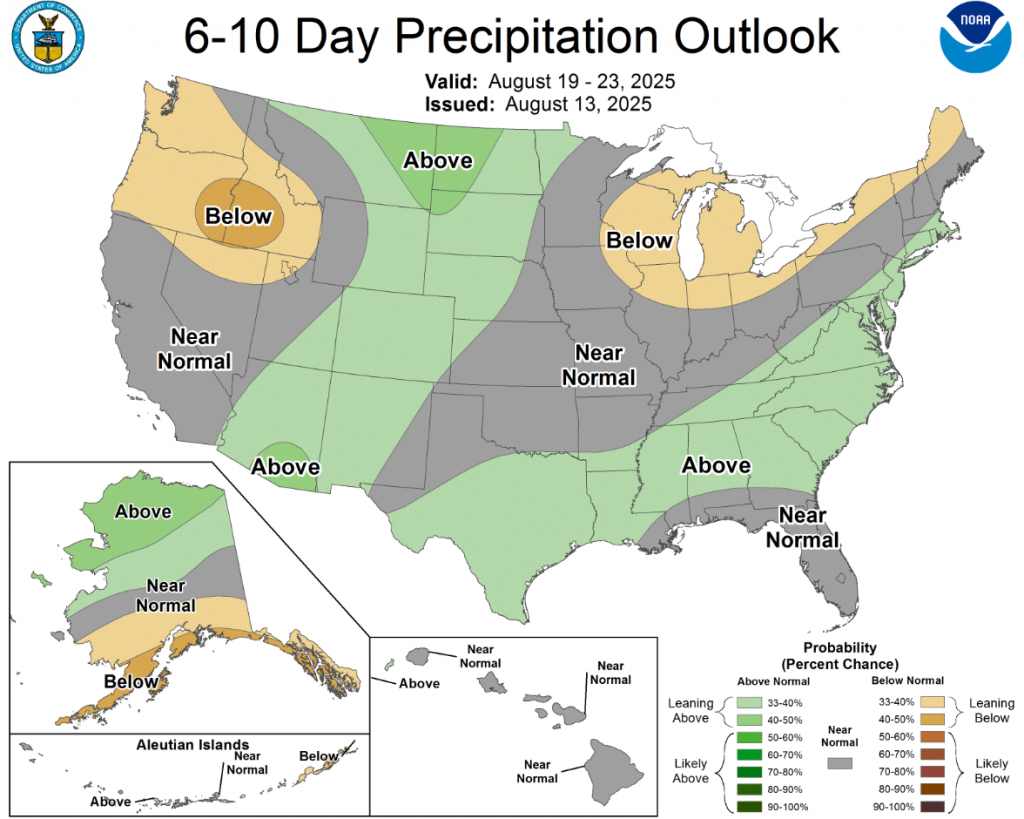
Sincerely,

Secretary Of Agriculture Blayne Arthur Reflects on 75 Years of Progress

Listen To KC Sheperd And Blayne Arthur

Farm Director KC Sheperd spoke with Secretary of Agriculture Blayne Arthur at the 75th anniversary of the Oklahoma Foundation Seed Stocks, Inc.  Secretary Arthur addressed both the challenges and successes in Oklahoma agriculture. "Certainly some hurdles that we have seen are the weather, as we always experience here in the state of Oklahoma. Sometimes it's a wonderful friend to us, and sometimes it's not." Still, she praised producers' resilience, especially wheat growers: "They never give up. They navigate through all those things." On the positive side, she highlighted major advancements, noting, "Over 50% of the acres in the state of Oklahoma have an OSU variety planted on them," thanks to the Wheat Improvement Team.

Secretary Arthur expressed deep admiration for Dr. Brett Carver and the global recognition of his work. "There is no question. Dr Carver is really, truly world-renowned, and he's kind of this jewel, and we've been so fortunate to have him here in Oklahoma and Oklahoma State University." She emphasized the impact of his passion, saying, "Ultimately, the work he's doing every day is helping feed more people around the world. I mean, that's the best kind of work to get to show up and do and see those results." His influence, she said, ripples through his team and contributes to pride in Oklahoma's ag community.

Looking ahead, Secretary Arthur sees a major opportunity at Oklahoma State University, especially due to its unique combination of programs. "We are a land grant university, and we're really leaning into that, I think, in so many ways." She highlighted the strength of OSU's ag and vet programs: "We got a tremendous investment from the legislature for the College of Veterinary Medicine." She added, "When you think about Oklahoma State, and we've got the College of Ag, College of Veterinary Medicine, we have the Center for Health Sciences over in Tulsa, no one else really does that."

She also voiced confidence in the next generation of agricultural professionals coming from OSU. "Our students who graduate from OSU will be able to go out and kind of lead, no matter what career they choose to pursue. I think they're going to be the leaders in all of those areas." Arthur reflected on her pride in collaborating with the university: "Very excited for that and very proud to get to work with the team at Oklahoma State University."

In closing, Secretary Arthur shared a personal story of her grandmother as a source of encouragement. "On my dad's side of the family, originally Germans from Russia who came to Hooker, Oklahoma." She emphasized perseverance: "They didn't give up. And I think that's what's great about folks in the ag sector." Reflecting on the agricultural spirit, she said, "Ag folks don't give up, and they just figure out a way to move forward." Secretary Arthur concluded, "That kind of entrepreneurial spirit that we have in agriculture, but also that grit that makes us get back up the next morning and go to work again is the best thing about Oklahomans, but certainly about ag producers."

The OSU Ag Media Release of the day of celebration can be found by clicking here.

AFT Kicks Off 17th Annual America's Farmers Market Celebration With $15,000 in Prizes

American Farmland Trust (AFT) kicks off the 17th annual America's Farmer's Market Celebration™ (AFMC) today – a celebration of the only annual ranking of the top farmers markets in the United States as voted on by the public.
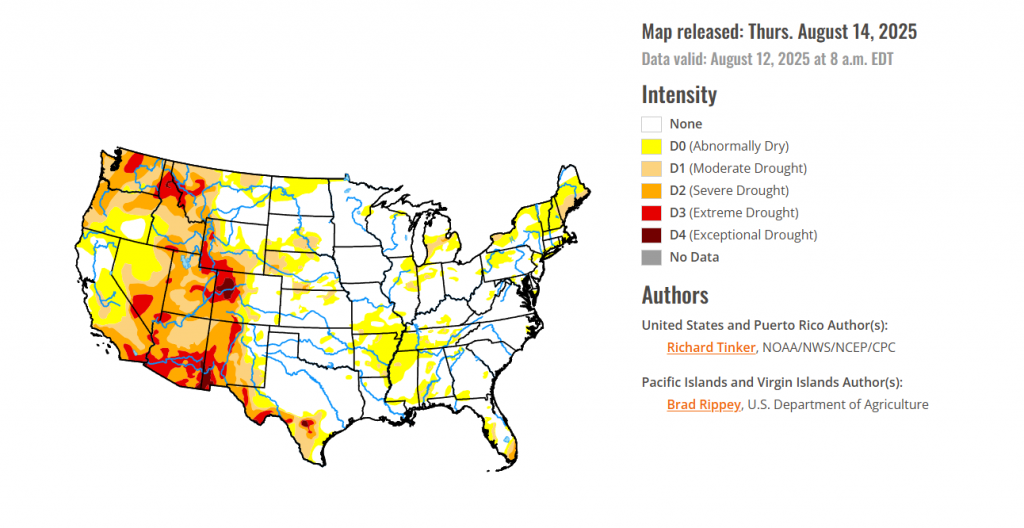
Since 2008, AFMC has highlighted the critical role farmers markets play in communities across the nation while celebrating the farmers, staff, and volunteers that make them possible. While they have long served as pillars of local food in urban centers and town squares, in recent years, farmers markets have gained the national recognition they deserve as essential businesses that power farmers and communities to thrive.

"Farmers markets represent the backbone of local food systems, providing essential income streams for thousands of farm families across the country," said John Piotti, AFT President and CEO. "Through America's Farmers Market Celebration, we're not just recognizing great markets – we're celebrating the farmers, vendors, and communities who prove every day that investing in local agriculture creates lasting economic and social benefits."

The 17th annual AFMC will run between August 1 and September 30 on markets.farmland.org. The event is a fun celebration that helps farmers markets across the country earn national recognition and local prestige. Markets can join the celebration and encourage their customers to vote, an excellent marketing tool and a pathway to winning a piece of the $15,000 prize pool.

AFT will award ten markets nationwide winners this year, and the breakdown of prize money is as follows: $2,500 for first, $2,000 for second, $1,500 for third, $1,250 for fourth, $1,000 for fifth-eighth, and $875 for ninth-tenth. The first place for "regional choice" and "state" winners for each region will receive a gift bag of merchandise and digital award package. AFT will also award a new "participation recognition" award, a digital participation badge that will be given to all eligible markets with at least 25 verified votes.

The top markets also receive national and local press coverage, complimentary American Farmland Trust membership, No Farms No Food gear, and other merchandise!

The AFMC also identifies the top markets in each state and in the Northeast, Southeast, Midwest, Southwest, and Pacific regions.

"We were truly honored to be named a winner of the 2024 America's Farmers Market Celebration," said Erica Meadows, Mount Washington Farmers Market Manager. "The recognition brought a renewed sense of pride and energy to our market and our entire community. It validated the hard work of our team, vendors, volunteers, and local supporters who show up week after week to make Mount Washington Farmers Market a place where community thrives. The award helped raise awareness of our mission to support local farmers and small businesses, and it brought in new visitors who continue to return. It's been a meaningful milestone that reminded us how powerful grassroots support can be."

The AFMC database and interactive map on markets.farmland.org contains more than 6,000 listings and now syncs with the USDA Farmers Market Directory. Markets must be listed in the USDA National Farmers Market Directory and can register here.

Ranking Member Angie Craig Statement on New Trump Tariffs

Today, House Agriculture Committee Ranking Member Angie Craig (MN-02) released the following statement after President Trump announced sweeping new import taxes that will be paid by American consumers and companies as part of his worldwide trade war.

"Despite promising to lower costs for American families, President Trump's chaotic tariff policy has made life more expensive. The cost of groceries is up. Farmers continue to face retaliatory tariffs on their exports and are losing export market share to our competitors. Working families continue to face financial challenges, and the response of the Republican Party has been to start worldwide trade wars, add $3 trillion to the federal deficit and make health care and food more expensive by cutting the heart out of Medicaid and SNAP. 

"The few hastily negotiated deals the administration has announced are more show than substance and make promises that may not be kept. If the president were serious about ushering in a new 'Golden Age' in America, he would be protecting basic needs programs, working with our trade partners to increase market access for our farmers and delivering on his promise to lower costs for working families."

Cultivating Success: Women in Ag and Small Business Conference Gears Up for August 7

Listen To Carli Davenport And Lauren Minyard

The Women in Agriculture and Small Business Conference continues to grow and evolve, and Lauren Minyard with OSU Extension shared insight with Associate Farm Reporter, Carli Davenport, into what attendees can expect this year. "This is going to be the third year in our new location. It's at the Hilton Garden Inn and conference center in Edmond, Oklahoma. It's a very nice facility. We've been very happy with it," she explained. The event is structured with an opening session, a keynote speaker, and five breakout session time slots, each offering four different tracks. "We kind of tailor it towards animals and horticulture, and then like more business, and then more like personal things," said Minyard, allowing attendees to follow a track or mix and match sessions to suit their interests.

The breakout sessions are designed to offer real value to attendees across many sectors of agriculture. "The last couple of years, we've added breakout session descriptions... so you know exactly what you're going to be going to," Minyard added. This thoughtful detail makes the conference more accessible and useful, no matter someone's background. "We have all over the spectrum of age groups, all over from people who are small producers to large producers... So it's really for every single person who's involved in agriculture in any way."

Inclusivity is a cornerstone of the event. "We have some people who are coming from college. We have people who are, you know, retired and doing this now in their free time," she said. Whether agriculture is someone's career, side business, or even just a passion, the conference welcomes all. "It doesn't even have to be a business... it's a little bit of everybody," Minyard emphasized, highlighting how the conference serves as a gathering point for women of all backgrounds and experiences.

A highlight of the conference each year is the keynote speaker, and 2025 is no exception. "We actually asked [Tammy Didlot] to speak this year, and I'm very, very excited to have her," said Minyard. "She has done anything and everything you can think of in agriculture and been involved with a lot of different organizations." Her breadth of experience promises a dynamic and inspiring message for all in attendance.

Minyard encouraged anyone interested to register online. "You can go to our website, Women in Ag. We also have a Facebook group... there's a link to click on there to go and get registered." The event will take place on Thursday, August 7, beginning with registration at 8:00 a.m. and concluding after the final breakout sessions and closing remarks. "We have all the details, and we're looking forward to seeing everybody this year".

To see the agenda, and get registered, sign up here: https://extension.okstate.edu/events/women-in-ag

Oklahoma Shifts from Flood to Drought Concerns as Summer Heats Up

After months of record-setting rainfall and severe weather, Oklahoma is experiencing a classic summer shift, with rising temperatures and drying conditions bringing a familiar concern: drought. According to State Climatologist Gary McManus, the drought that had largely disappeared in June is now making a comeback, particularly in the southwestern and central parts of the state.

The month of July marked a turning point. After a mild and wet start to the summer, Oklahoma saw a distinct change in weather patterns. A heat wave began on July 18, bringing triple-digit temperatures and heat index values that soared into dangerous territory. The Oklahoma Mesonet recorded 254 triple-digit temperatures in July, with a peak of 106 degrees in Kingfisher. The combination of heat and dwindling rain has already led to "abnormally dry" conditions (D0) appearing on the U.S. Drought Monitor map in southwestern Oklahoma, covering nearly 5% of the state by the end of July.

McManus noted that the recent dry spell in the southwest has been particularly pronounced, with some areas going over a month without a quarter-inch of rain in a single day. This is a significant change from June, when Oklahoma was completely drought-free for the first time in almost six years.

While the heat returned, the threat of tornadoes lingered. A single confirmed tornado near Vance AFB in July extended the state's tornado streak to five consecutive months. This brought the preliminary 2025 tornado count to 88 through July, far exceeding the annual average of 59.

Looking ahead, the outlook for August is not promising for rain lovers. The Climate Prediction Center forecasts increased odds of above-normal temperatures and below-normal precipitation for the western third of Oklahoma. The outlook specifically calls for drought development to be "likely" in the southwest quarter of the state and into the western edge of central Oklahoma.

"Drought coming back into SW and Central OK through the end of this month, and it did indeed escalate quickly," McManus said. For now, he advised Oklahomans to "just enjoy the mild, rainy weekend. And then...possible shenanigans."


Ron salutes our daily email sponsors!

Upcoming Events

November

S M T W T F S
1 2 3 4 5 6 7
8 9 10 11 12 13 14
15 16 17 18 19 20 21
22 23 24 25 26 27 28
29 30          

Visitor Polls

Do you like the new website?
Add a Comment
(Fields are Optional)

Your email address is never published.