Ag News Archives for 2026-05

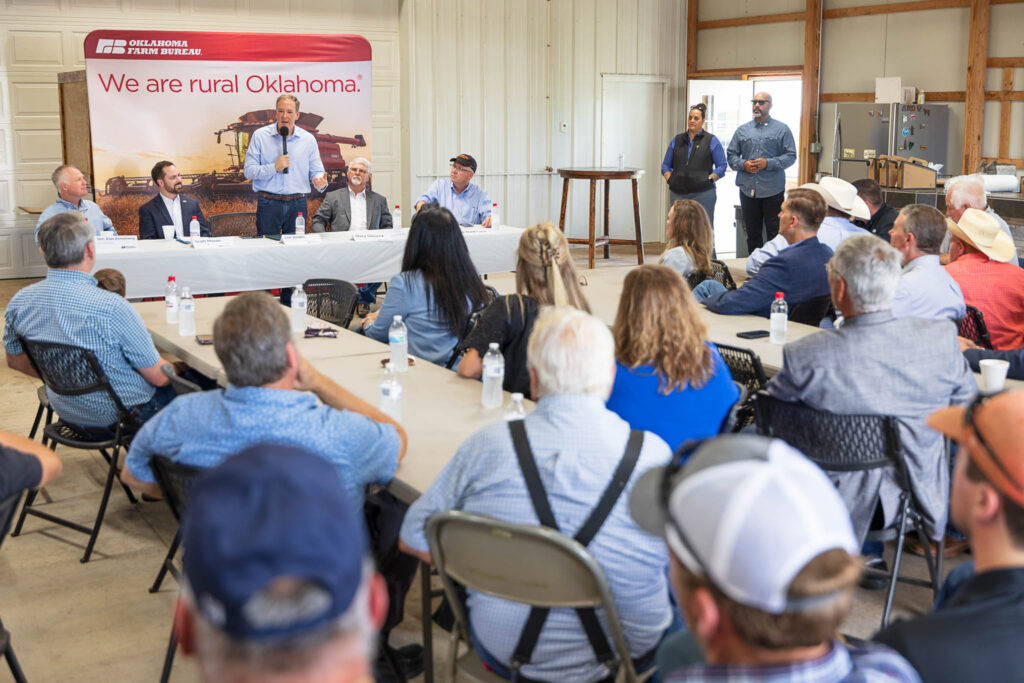
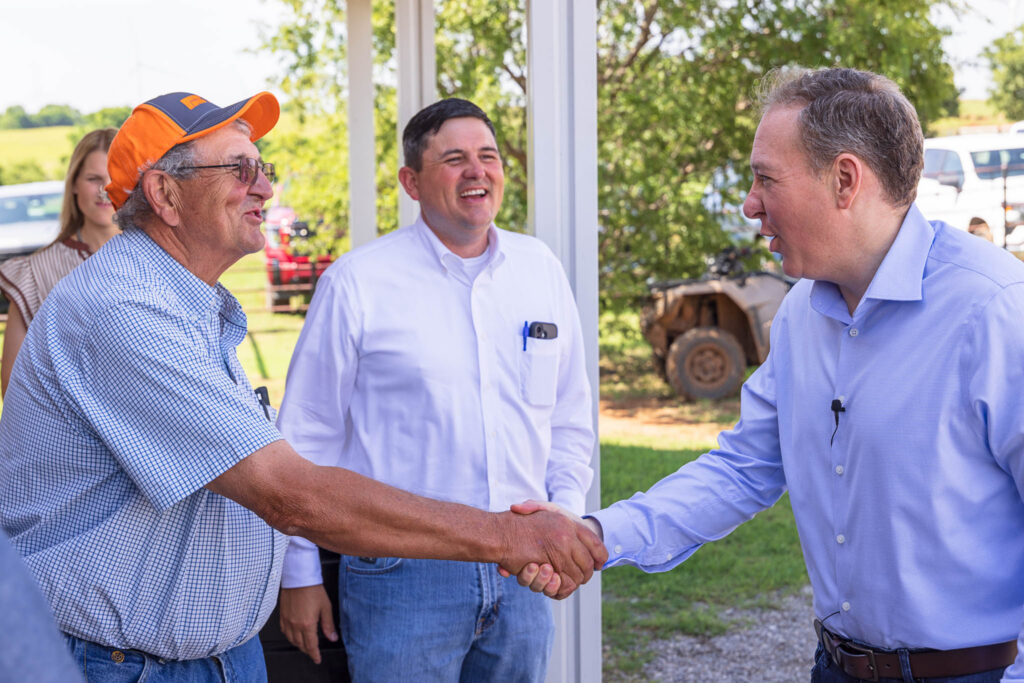
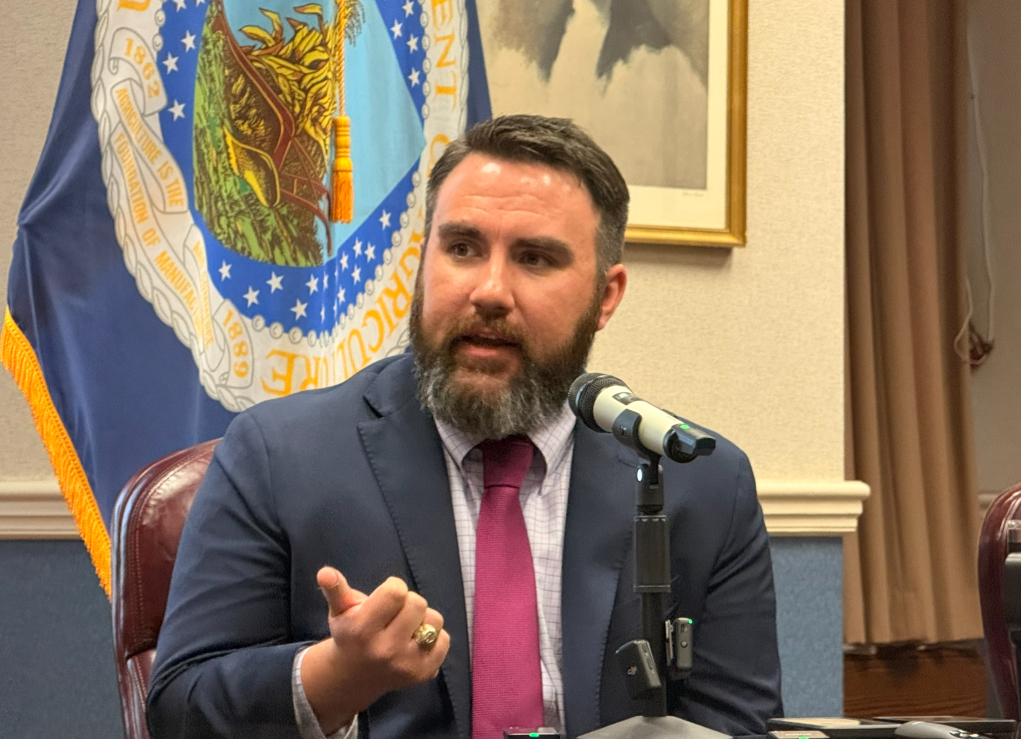
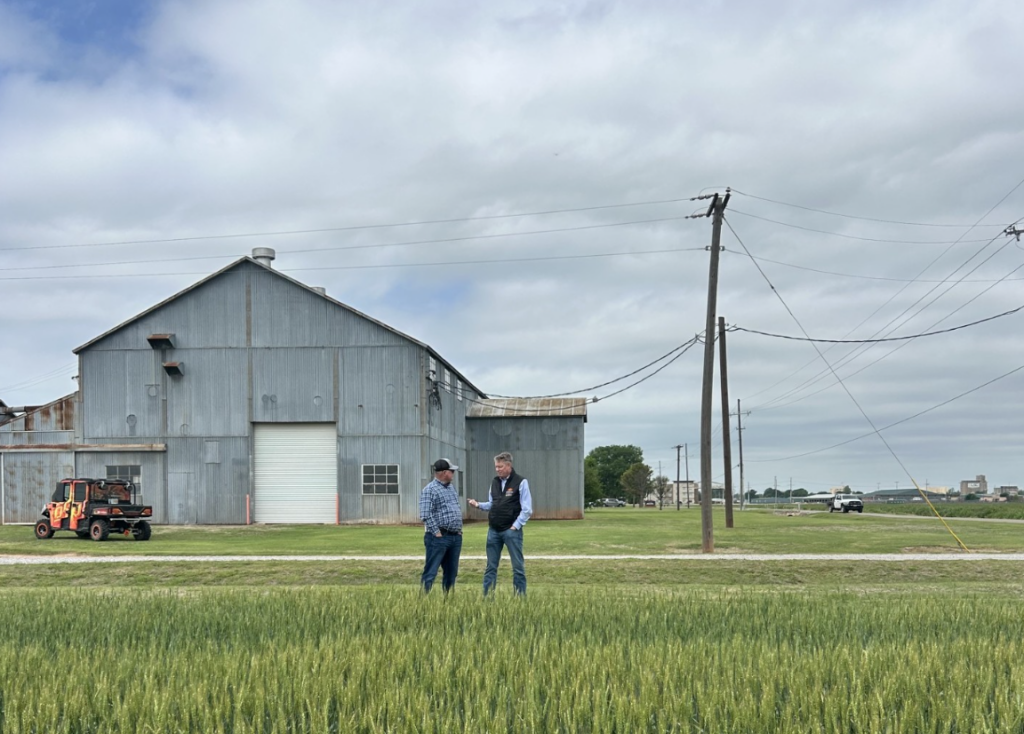
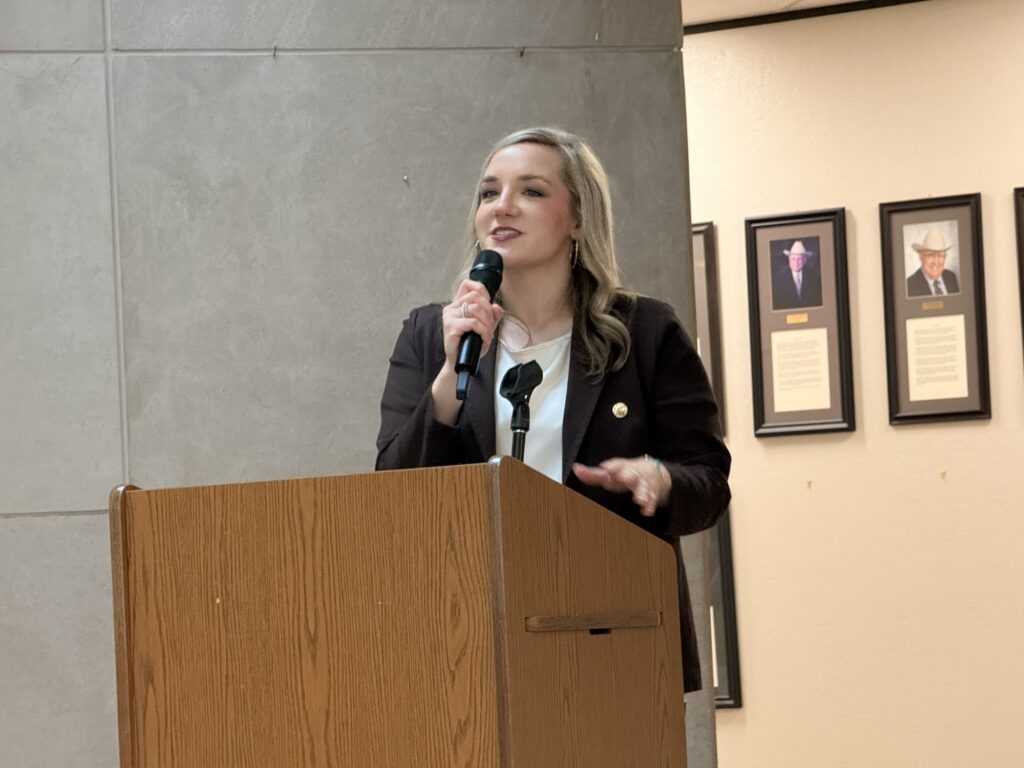
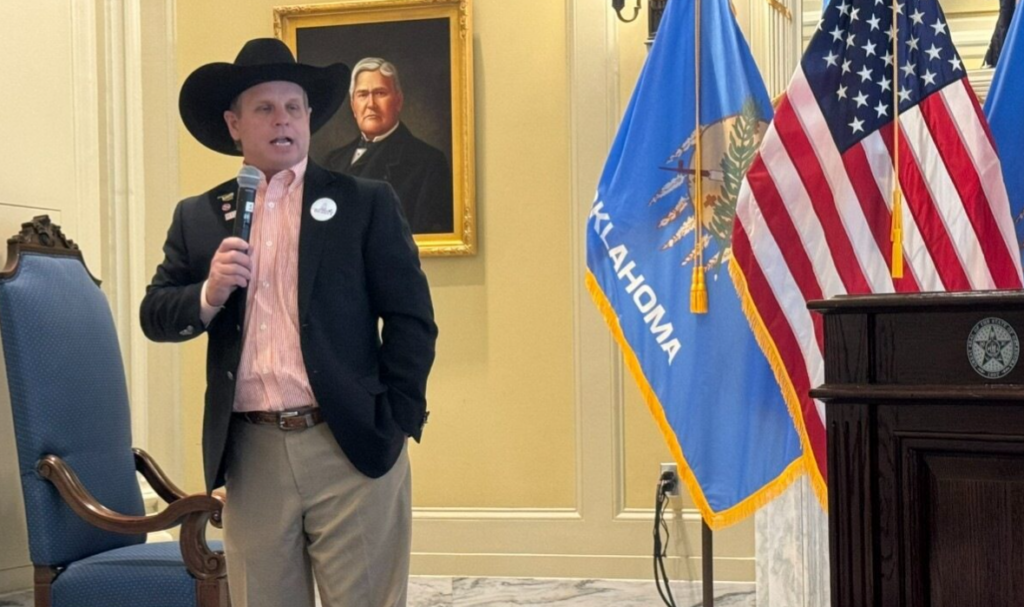
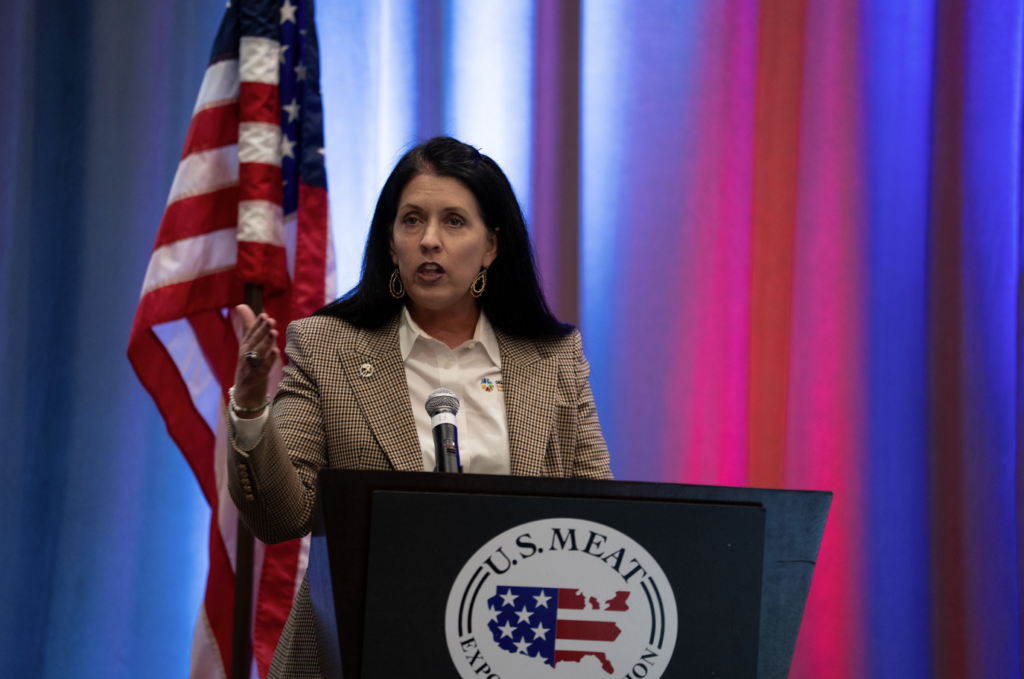
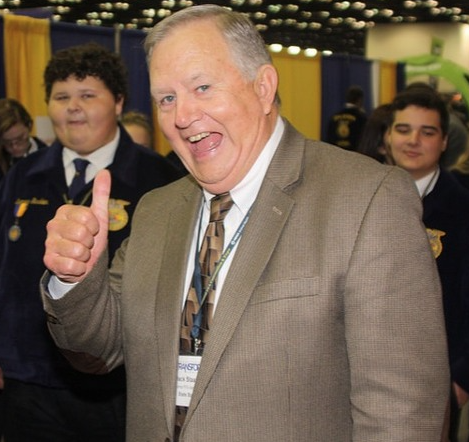
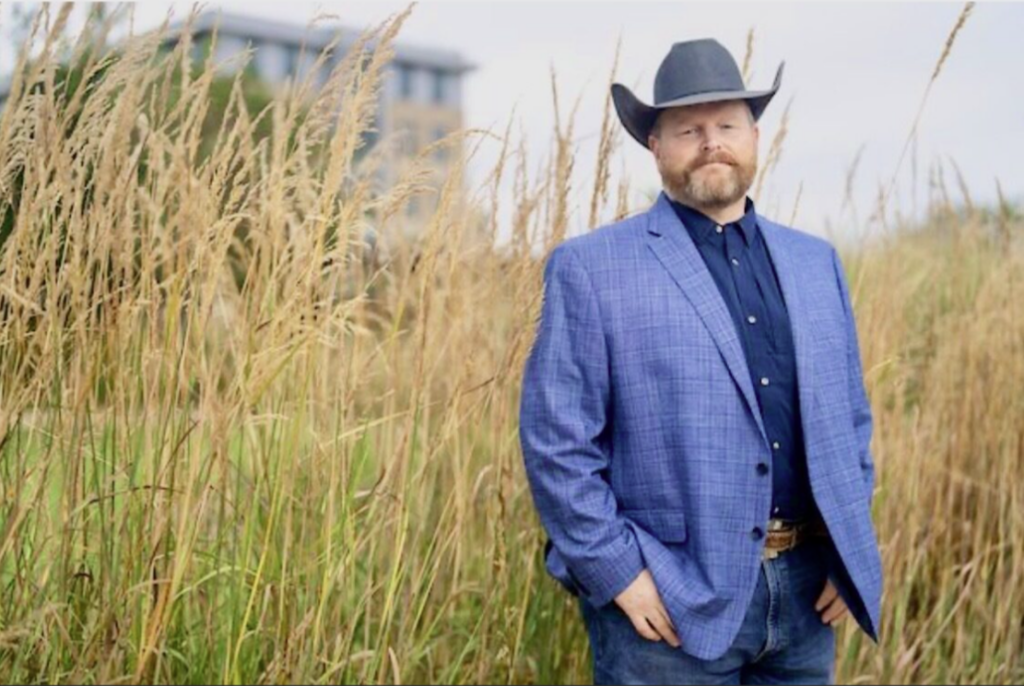
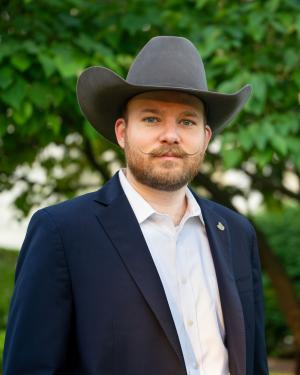
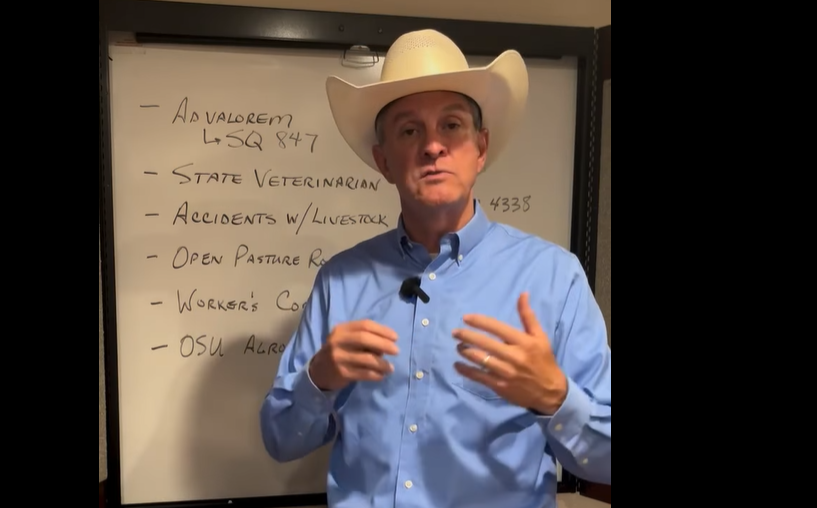
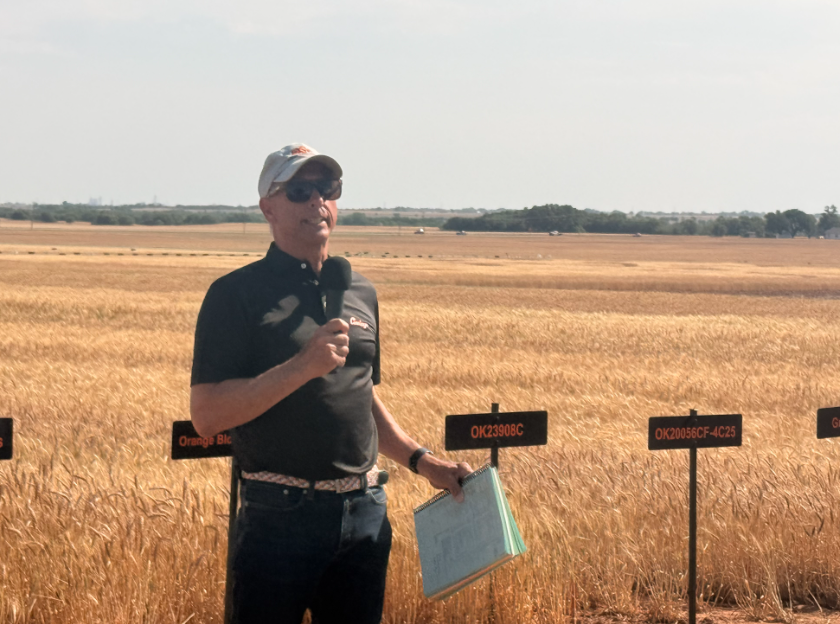
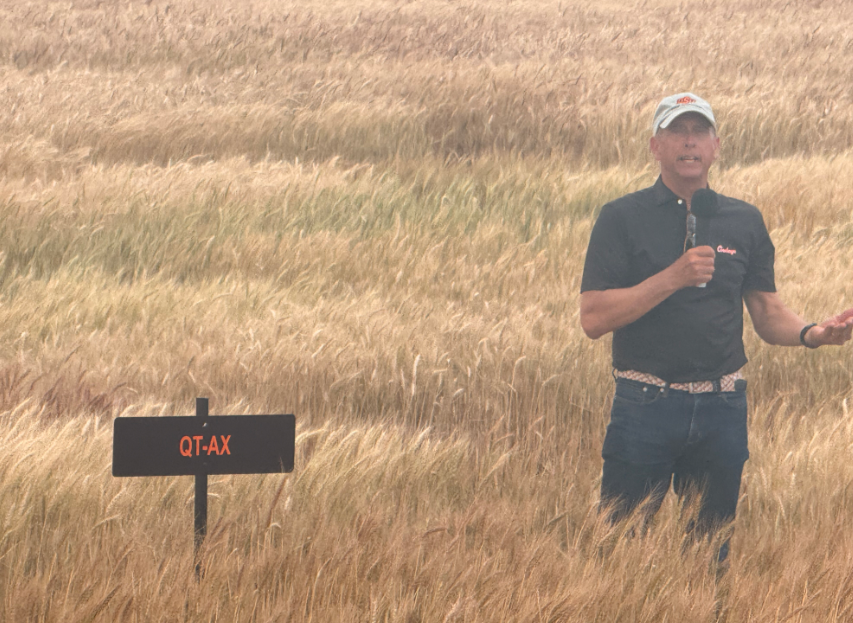
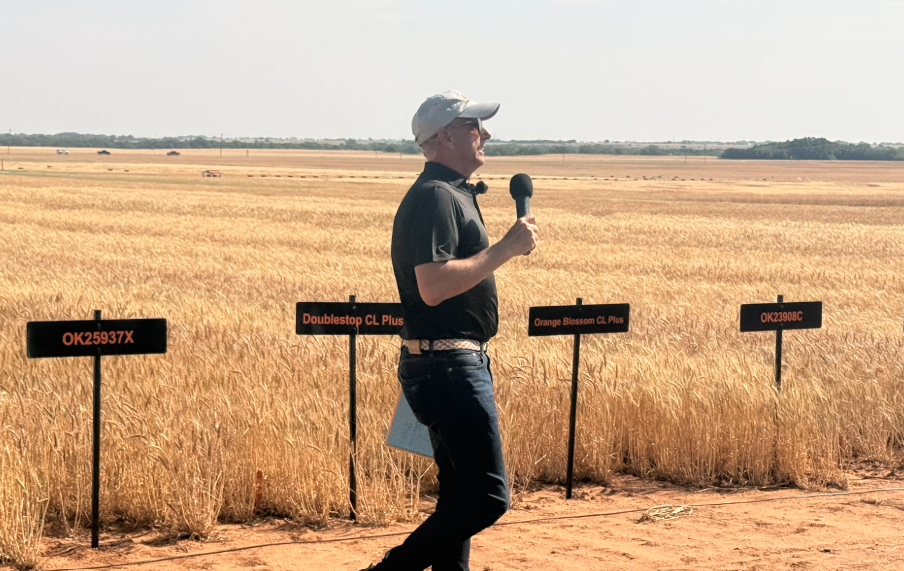
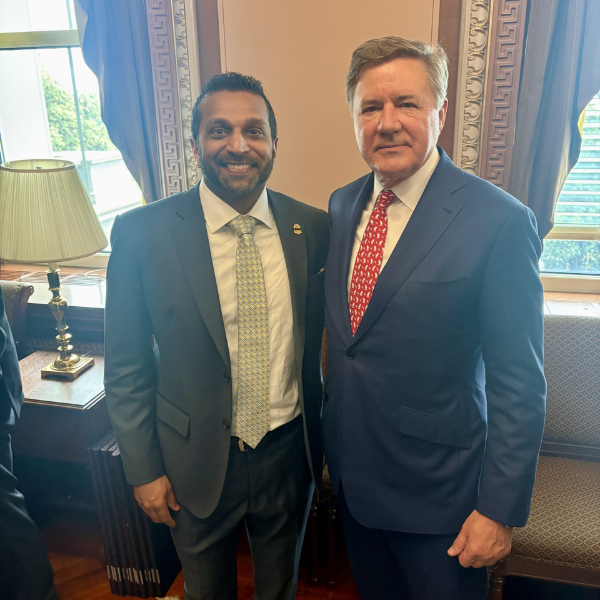
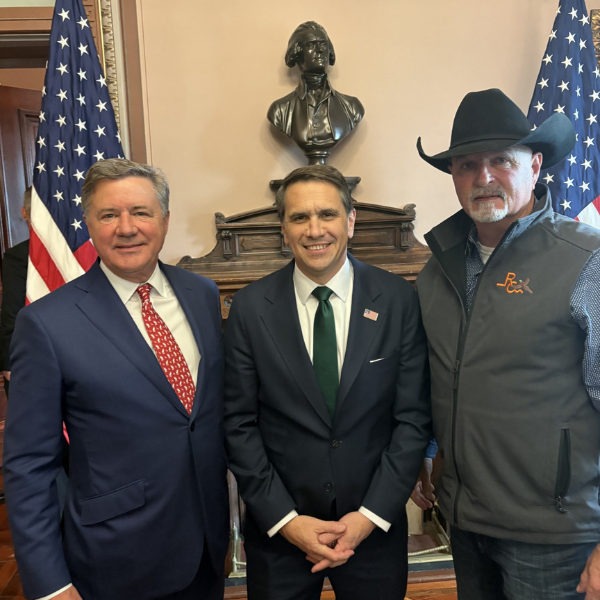
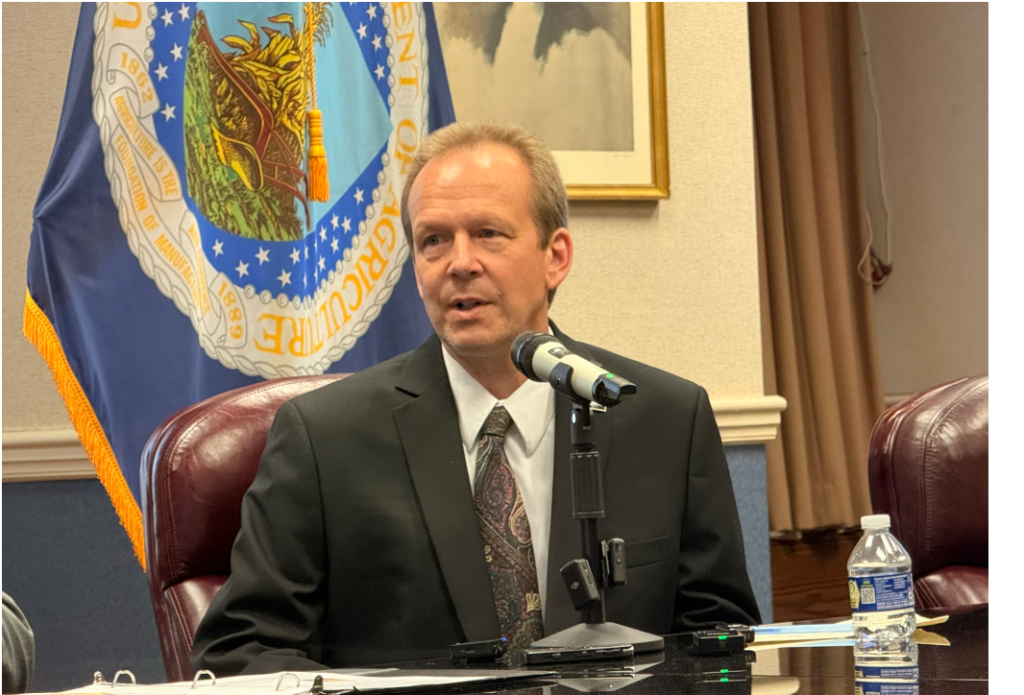
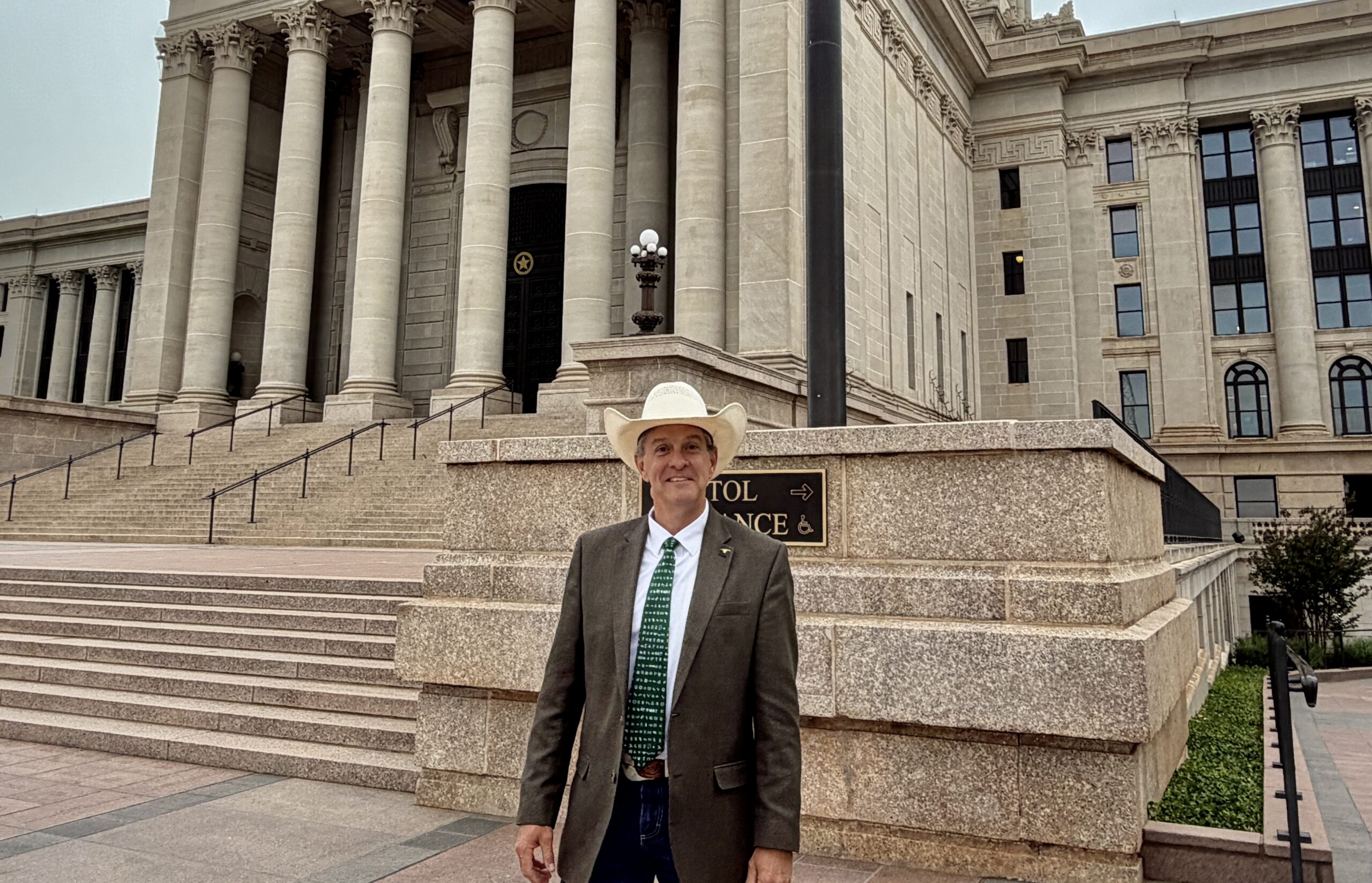
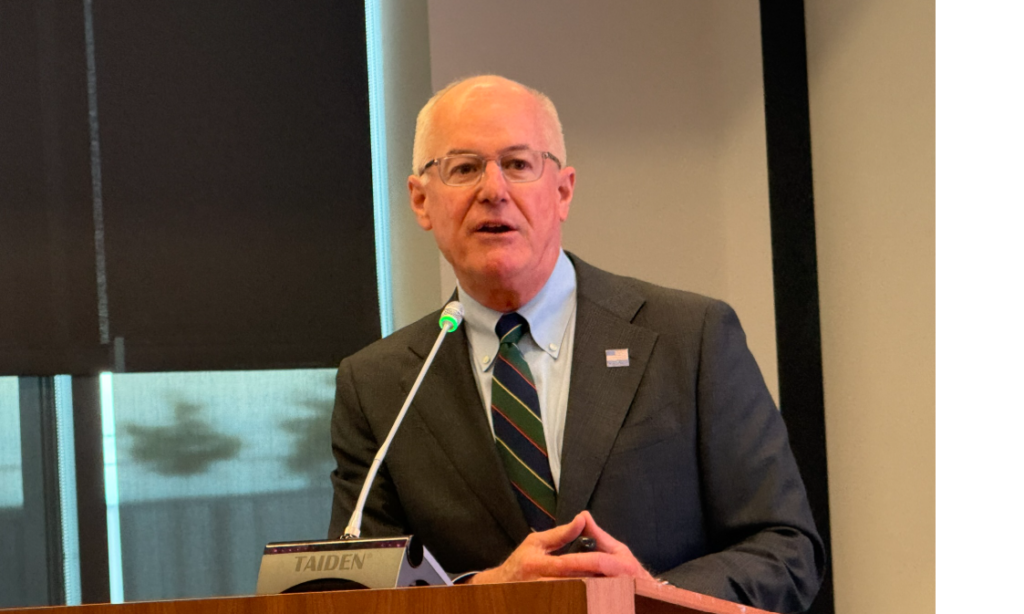
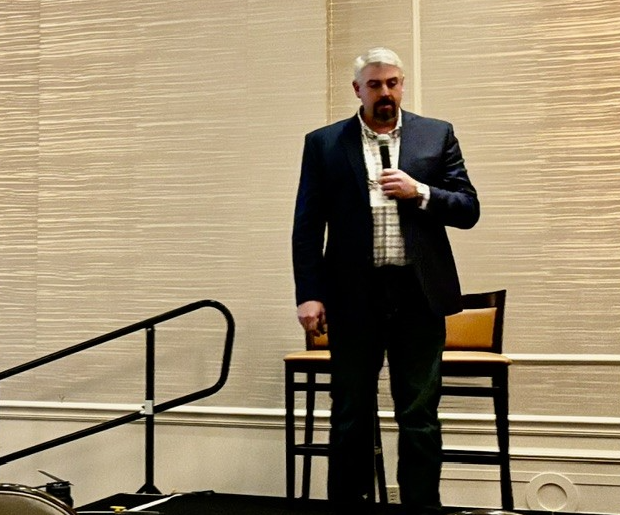
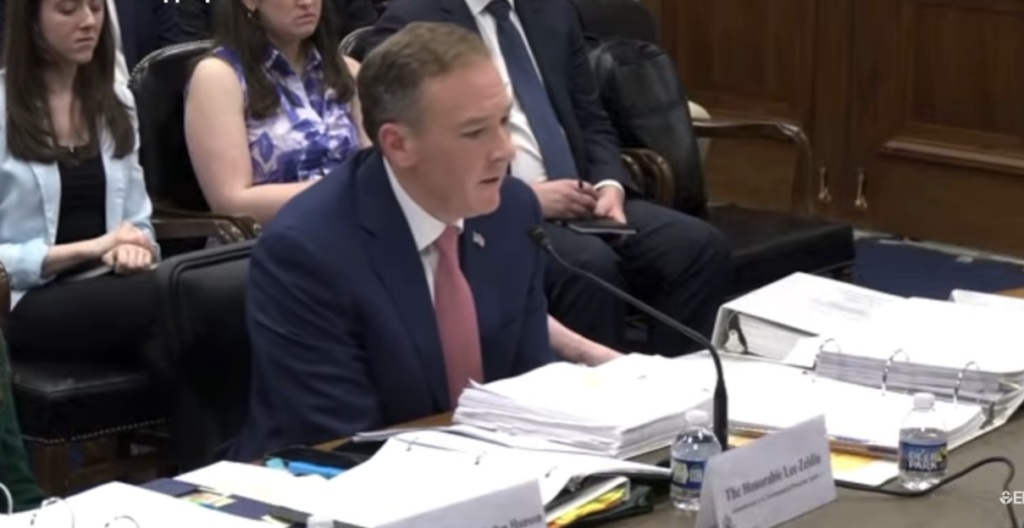
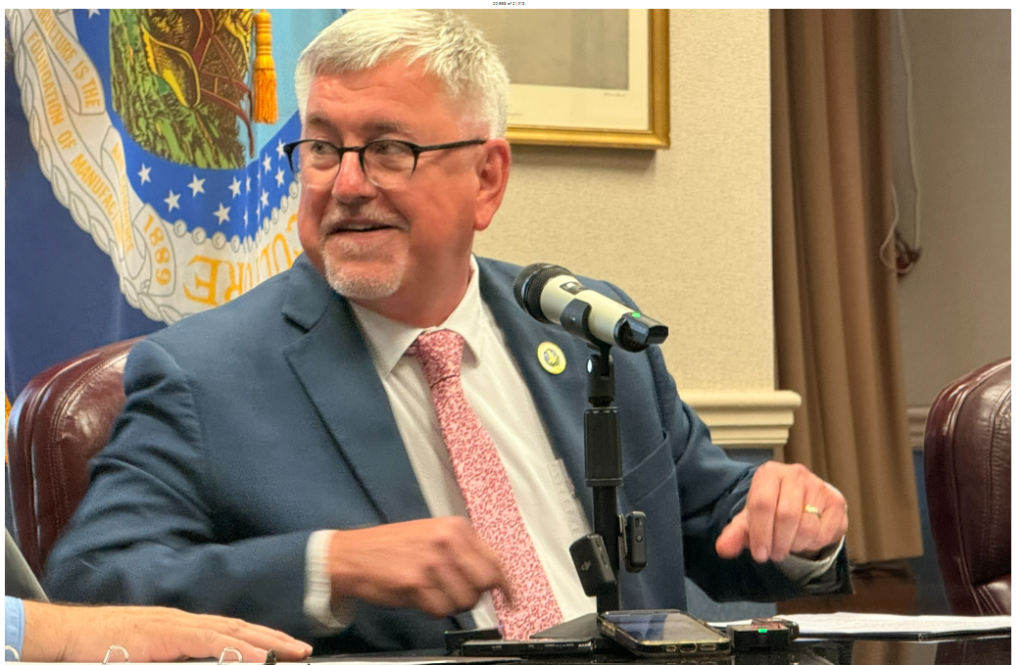
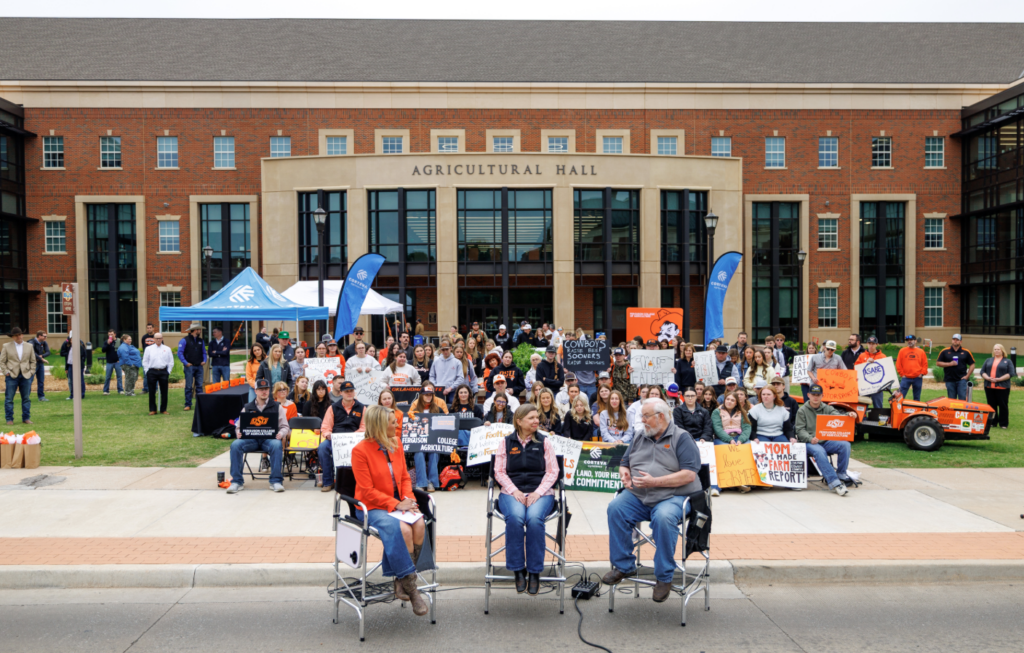
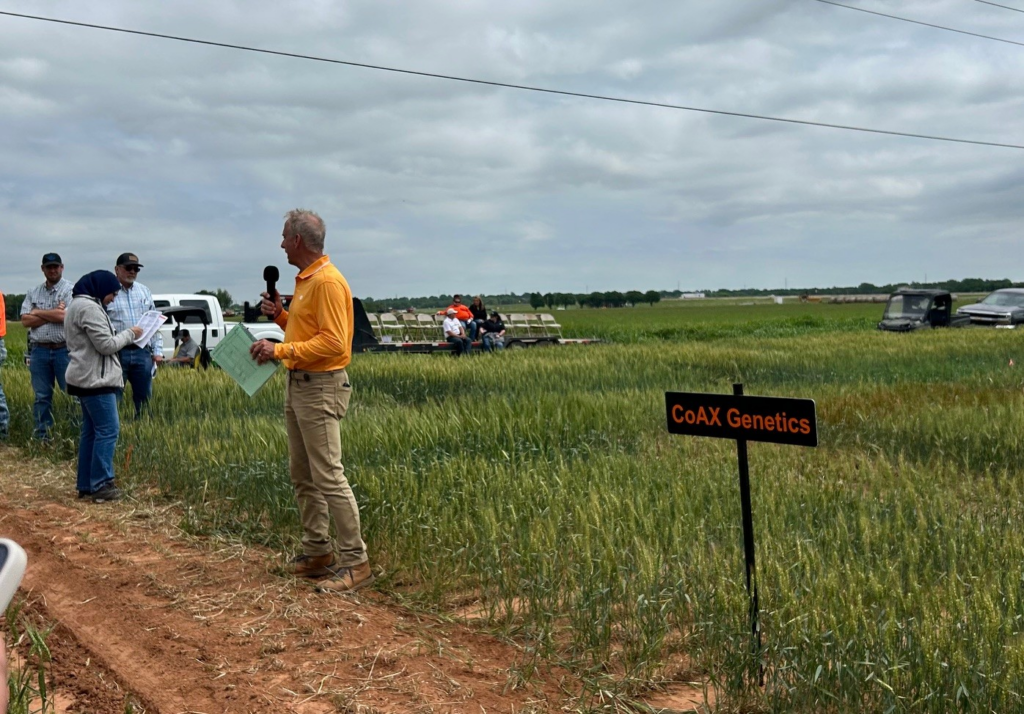
EPA Administrator Lee Zeldin speaking to farmers in Mulhall, Oklahoma

EPA Chief Zeldin Pledges Aggressive Rollback of DEF Regulations at Oklahoma Ag Roundtable

EPA Administrator Lee Zeldin at Roundtable meeting in Oklahoma

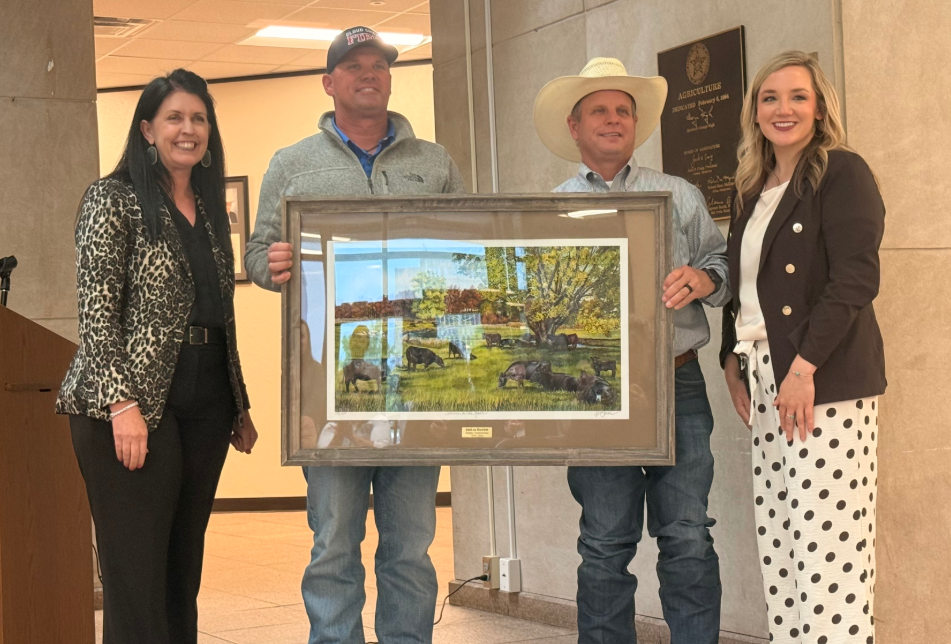
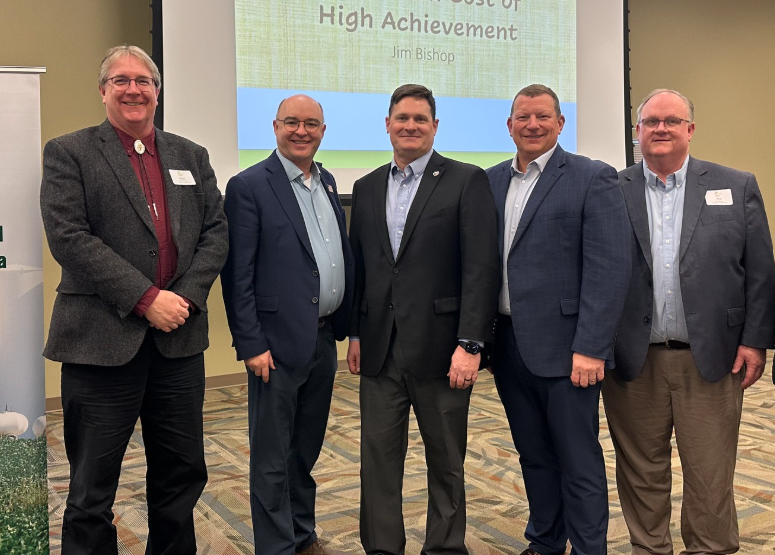
Speaking to a room of producers facing tight margins and regulatory bottlenecks, Environmental Protection Agency (EPA) Administrator Lee Zeldin vowed to dismantle standard federal mandates on Diesel Exhaust Fluid (DEF) systems. Zeldin made the remarks during a focused agricultural roundtable with Oklahoma farmers and ranchers on Saturday, May 30, emphasizing that current mitigation protocols are actively threatening farm survival during peak operating windows. Zeldin was hosted by Oklahoma Farm Bureau President Stacy Simunek on the ranch operation of John Pfeiffer, Jr in Logan County.

"When a tractor goes down in the middle of a harvest, it results in lost time and lost money, great frustration," Zeldin stated following the meeting in comments provided to Oklahoma Farm Bureau's Communications team. He acknowledged the precarious economic reality gripping the sector, noting that many producers are currently working to survive on "extremely low margins"—frequently lower than the non-farming public realizes—while bad years leave many operators unable to pay themselves at all.

"When it's time for harvest, and on particular crops, they need their equipment to work," Zeldin added. "They definitely don't need a federal regulation to prevent them from being able to do their job."

Timeline of Federal Action on DEF Requirements

Zeldin outlined a multi-phase strategy executed by the EPA and the Trump administration over the last ten months designed to systematically scale back equipment restrictions:

  • August 2025 (Iowa State Fair): Alongside Agriculture Secretary Rollins, Senator Joni Ernst, and Small Business Administration (SBA) Administrator Kelly Loeffler, the EPA announced an initial reversal to DEF deratements, launching direct initiatives with manufacturers to update software and assist equipment owners.
  • February 2, 2026 (Right to Repair Guidance): The EPA issued formal guidance clarifying that producers possess the right to repair their own tractors and non-farm machinery, or utilize trusted independent mechanics rather than being forced to rely on costly, geographically distant authorized dealerships.
  • February 2026 (Manufacturer Demand Letters): The agency issued formal demand letters to 14 major engine manufacturers—representing 80 percent of the market share—compelling them to surrender internal data regarding DEF system failures.
  • March 2026 (White House Actions): President Trump announced new administrative guidance on the South Lawn targeting the total elimination of DEF sensor requirements.

The Push for Permanent Eliminating of Deratements

According to Zeldin, the agency is leveraging data secured from the 14 engine manufacturers to push through a permanent regulatory overhaul. The EPA's proposed 2027 nitrous oxide rules—currently under interagency review at the Office of Management and Budget (OMB)—look to completely and permanently eliminate DEF deratements altogether.

Concurrently, a permanent legislative remedy is advancing through Capitol Hill. Zeldin highlighted a last-minute amendment added to the House version of the pending Farm Bill that targets DEF mandates and broader tractor emissions requirements. That legislation is now awaiting action in the Senate.

Zeldin noted that internal shifts within the EPA's Office of Enforcement and Compliance Assurance reflect this deregulation policy, citing President Trump's recent pardon of Wyoming operator Troy Lake as a benchmark for the administration's intent.

"We have heard the calls loud and clear from across the country, including right here in Oklahoma," Zeldin concluded. "It is our full intention, desire, [and] intent to do the maximum amount possible decommissioning these restrictions pursuant to the law."

Audio and pictures courtesy of Oklahoma Farm Bureau

USDA Announces Enrollment Period and Payment Rates for Specialty Crop Farmers

U.S. Secretary of Agriculture Brooke L. Rollins today announced payment rates and the enrollment period for the Assistance for Specialty Crops Farmers (ASCF) program. The U.S. Department of Agriculture (USDA) will issue $1.625 billion in payments to eligible specialty crop producers in response to elevated input costs and market disruptions resulting from foreign competitors engaging in unfair trade practices that impeded specialty crop exports. Producers who have a Login.gov account can access and submit their pre-filled application starting June 1, 2026. Producers who do not have a Login.gov account or prefer to enroll in person at their local Farm Service Agency (FSA) office can request their prefilled application beginning June 8, 2026. The ASCF enrollment period closes on Aug. 7, 2026.

"The Trump administration continues to put Farmers First and is committed to ensuring the economic strength of our specialty crop operations as we continue opening new markets abroad and strengthening demand domestically for American produce," said Secretary Rollins. "Building on the success of the Farmer Bridge Assistance program, we are using an expedited program application and payment process through the One Farmer, One File system to ensure specialty crop producers also receive the necessary financial assistance as quickly as possible, while we work to build a more robust market with lower input costs and more opportunities.

These payments are authorized under the Commodity Credit Corporation Charter Act and are administered by the Farm Service Agency (FSA). Specialty crop payments are intended to provide financial support to allow producers to pay for production and marketing inputs in the face of significant market disruptions during the 2025 growing season.

How to Apply

Pre-filled applications will be available online to producers with a Login.gov account who timely filed their 2025 crop acreage report for eligible specialty crops. Starting on June 1, 2026, producers who have a Login.gov account can access and submit their pre-filled application from fsa.usda.gov/ascf. Beginning June 8, 2026, producers can request their pre-filled ASCF application from their FSA county office.

The deadline to submit completed ASCF applications is Aug. 7, 2026. Producers can complete their applications online or submit them to their FSA county office.

Payments will be issued as applications are submitted and approved, beginning as early as the first week of signup.

Login.gov

Login.gov is the public's one account for government. Producers can use one account and password for secure, private access to participating government agencies, including FSA.

To apply for ASCF online, producers can start by visiting fsa.usda.gov/ascf to create their Login.gov account. Producers who have an existing Login.gov account can work with FSA using their existing account.

With a secure Login.gov account, producers can be amongst the first to apply for ASCF, allowing them to view, complete, certify, and submit their application as well as track their application and payment status.

For assistance creating a Login.gov account, visit login.gov/help.

Eligibility

Specialty crop acres of eligible crops reported to FSA as an initial, double crop, repeat crop, or subsequent crop by April 24, 2026, will be used to determine ASCF program payments. Acreage that is reported as a cover crop, prevented planted, or with an intended use of grazing, left standing, green manure, silage, forage, volunteer, or experimental will not be used to determine ASCF program payments.

For a list of eligible specialty crops visit fsa.usda.gov/ascf. Specialty crops grown in a controlled environment are not eligible, except for mushrooms.

Crop insurance linkage is not required; however, USDA strongly urges producers to take advantage of the new risk management tools provided in the Working Families Tax Cuts Act, also known as the One Big Beautiful Bill Act, to best protect against future price risk and volatility.

Payment Calculation

FSA used national average revenue per crop as a metric for developing the ASCF program payment categories and payment rates listed below. For a full list of eligible crops under each category, visit fsa.usda.gov/ascf.

  • Tier 1 - $650 per acre
    Includes eligible specialty crops with an average annual revenue of more than $10,000 per acre.
  • Tier 2 - $225 per acre
    Includes eligible specialty crops with an average annual revenue of more than $2,300 per acre and up to $10,000 per acre.
  • Tier 3 - $65 per acre
    Includes eligible specialty crops with an average annual revenue of up to $2,300 per acre.
  • Beans and Peas - $25 per acre
    Includes all types of beans and peas that were not eligible for the FBA program.


For more information on how revenue per acre was calculated, visit fsa.usda.gov/ascf.

The ASCF payment limitation is $250,000.

More Information

More information on ASCF is available online at fsa.usda.gov/ascf. Producers can also contact their local FSA county office.

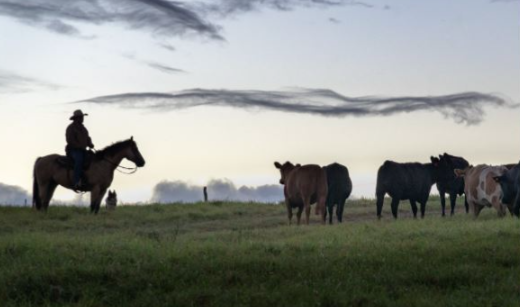
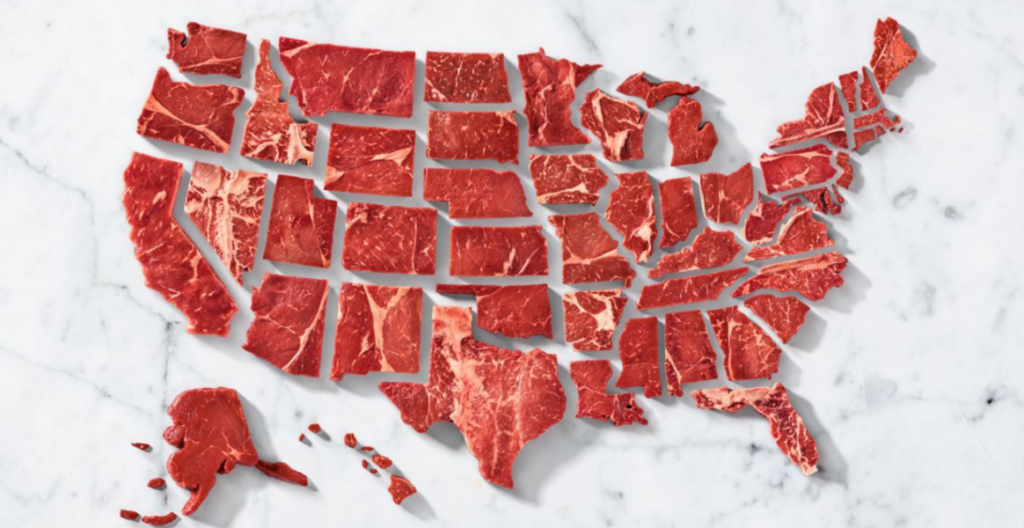
How Consumer Demand and Quality Helped Drive Beef's Remarkable Turnaround

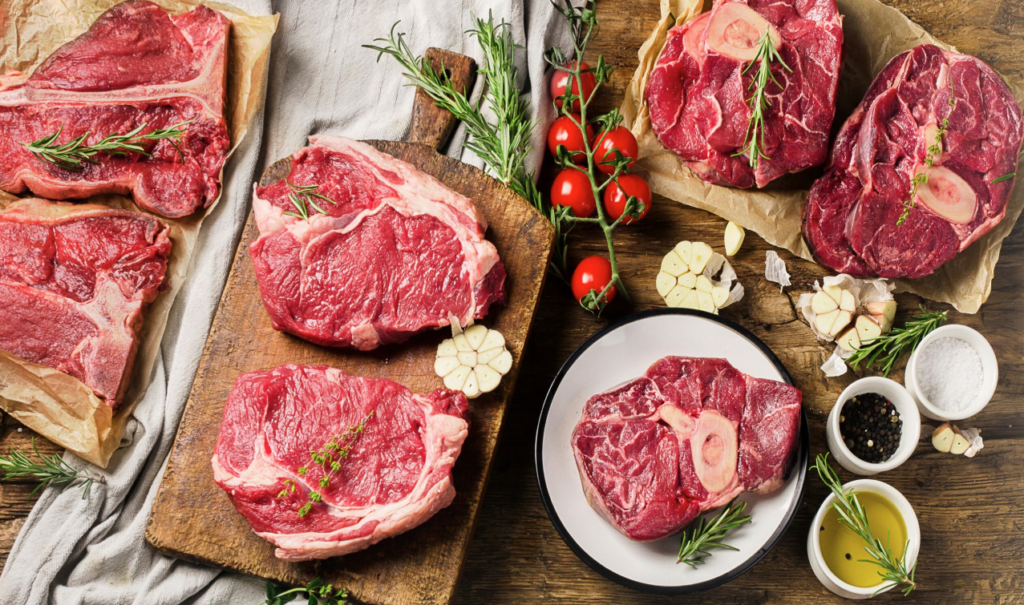
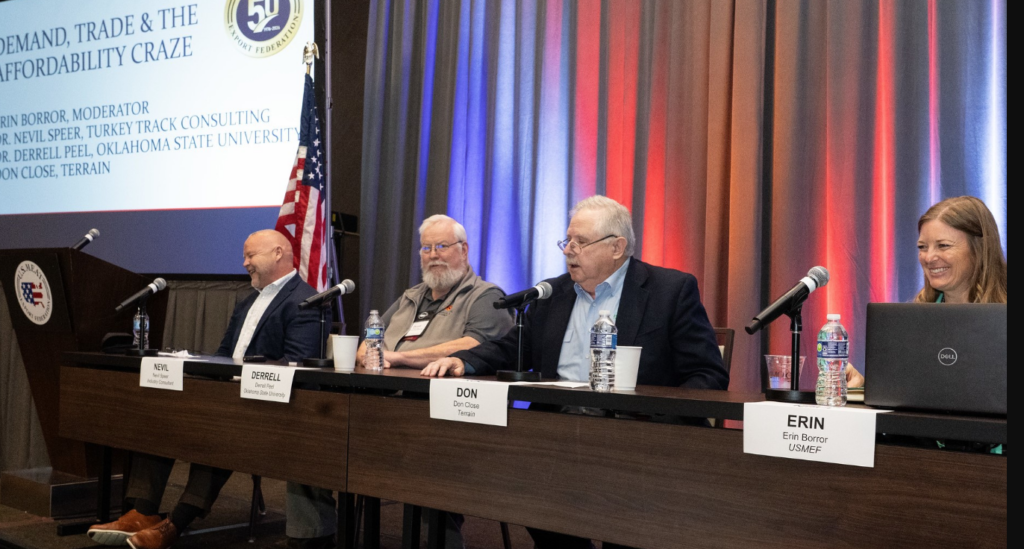
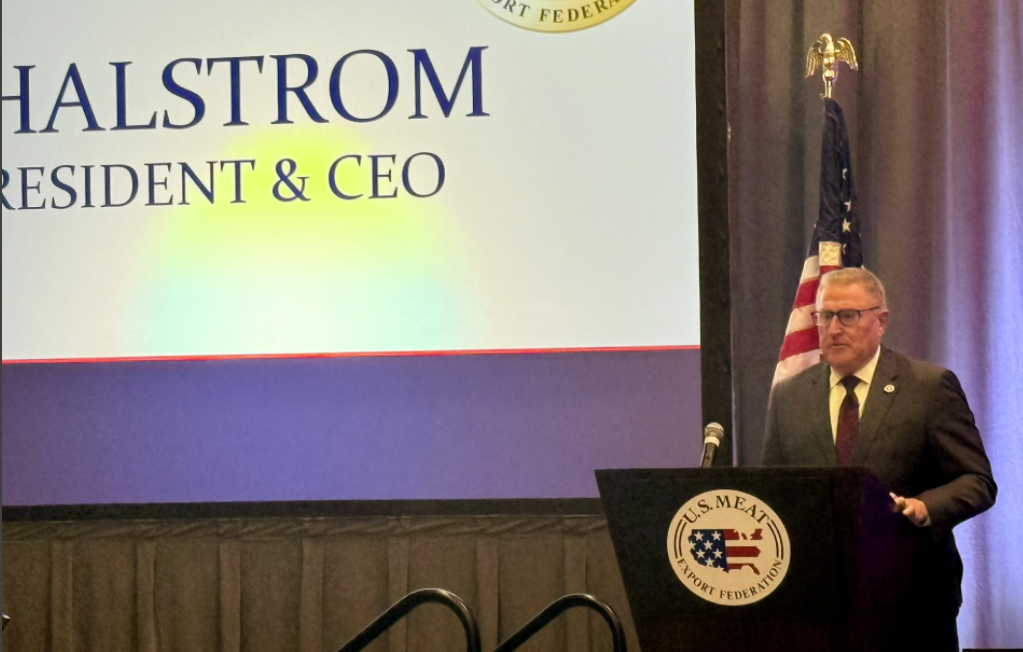
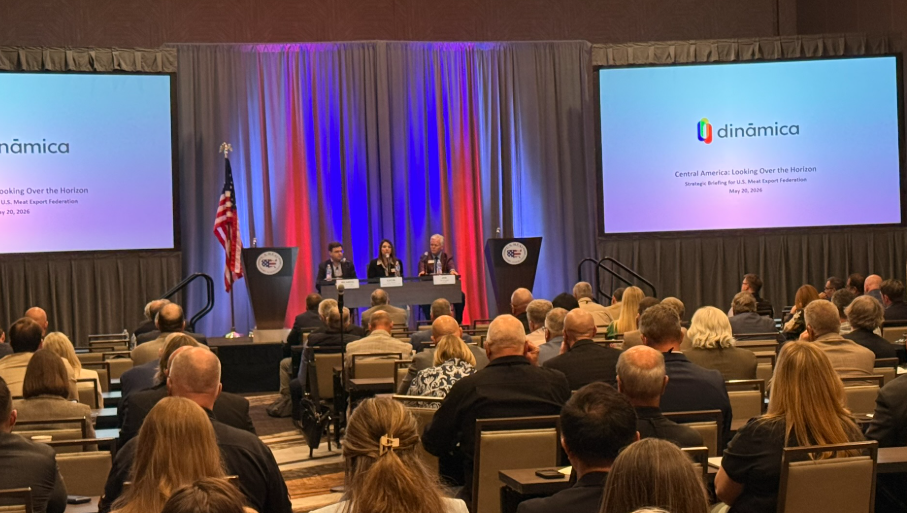
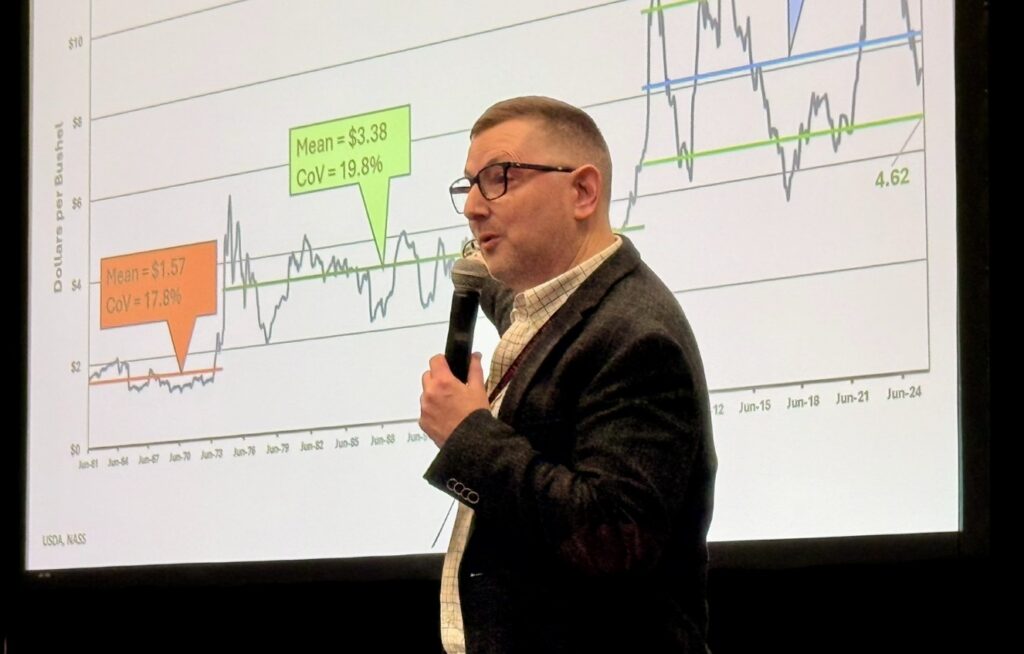
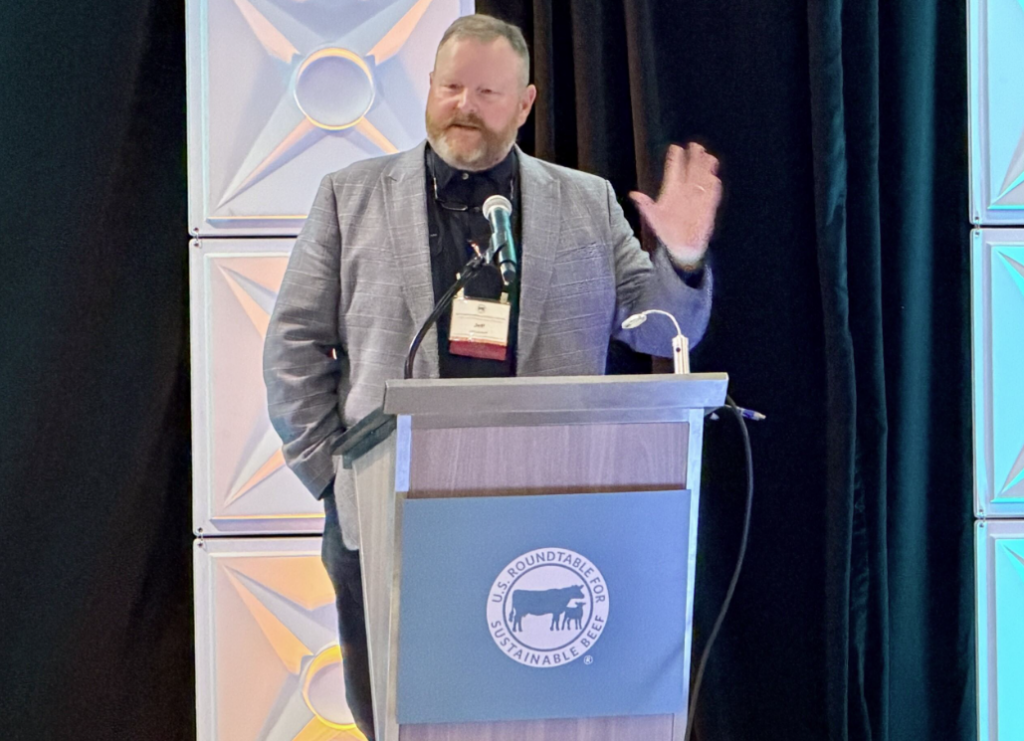
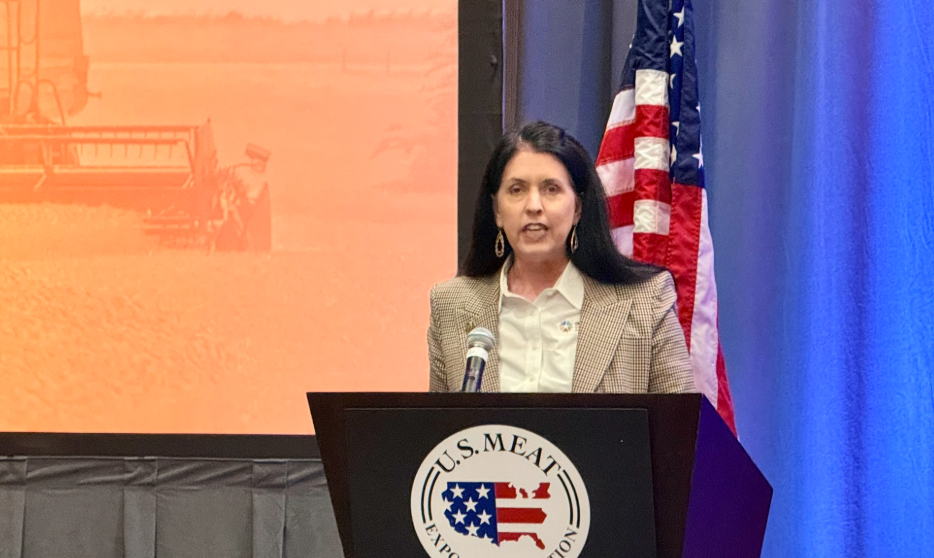
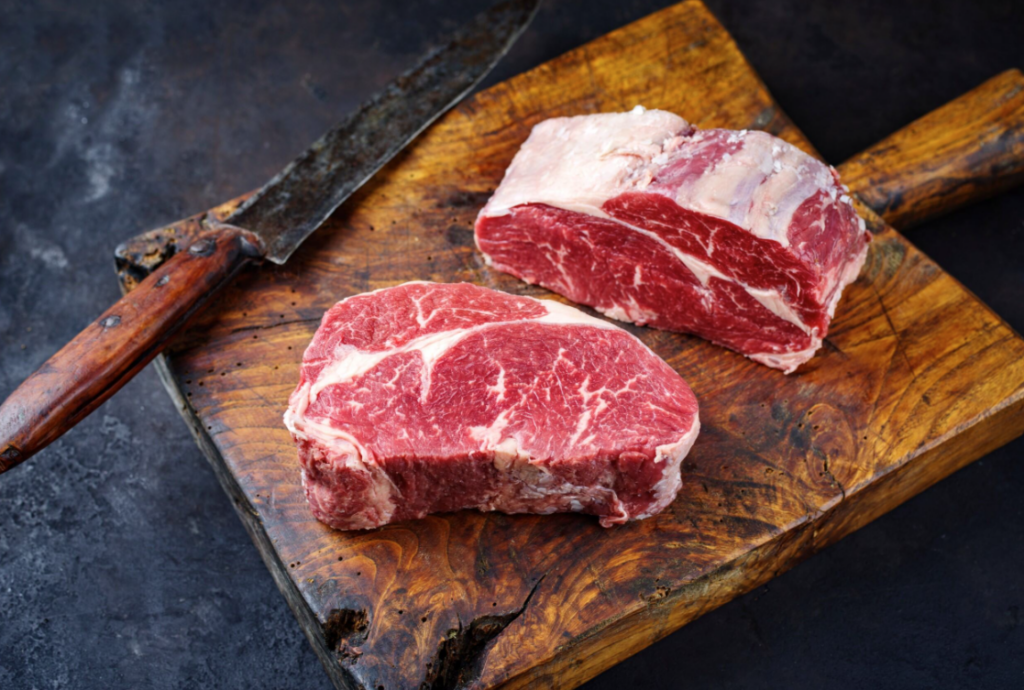
In today's Beef Buzz, senior farm and ranch broadcaster Ron Hays features comments from livestock industry consultant Dr. Nevil Speer, who spoke during the spring conference of the US Meat Export Federation in Oklahoma City about how the beef business transformed itself from years of stagnation into one of agriculture's strongest consumer-driven success stories.

From Stagnation to Growth

Speer pointed to a difficult stretch for the beef business between 1980 and the late 1990s. "Between 1980 and 1998 the beef industry gained $6 in new spending, $6 cumulative over 18, 19 years," Speer said. "Pork and poultry got $106."

He said the challenge becomes even clearer when inflation is considered. "Let's remind ourselves during that time what else was happening. It's inflation, very much an inflationary period," Speer said. "So actually the industry was going backwards in terms of real dollars coming in to the industry."

For Speer, the issue was simple: industries cannot grow without new revenue. "You can't grow an industry, you can't grow a business without top-line growth," he said. "No new revenue, no growth, that played out in a real way."

He noted that live steer prices reflected those struggles as well. "If you look at the live steer price, Kansas basis during that time, the change in price actually went down, and again, this is an inflationary period," Speer said.

A Turning Point Around 2000

According to Speer, momentum finally began to shift around the turn of the century. "What a turnaround," he said. "We started getting some traction. Everybody had chicken fatigue, the Atkins diet, those kinds of things."

Then came another major catalyst. "COVID, guess what happened? Consumers rediscovered beef and how good it actually is," Speer said. "That's huge."

He pointed to stronger consumer spending as evidence of the turnaround. "We had a 14% jump last year in terms of spending," Speer said. "The growth is real. More dollars coming into the industry, it really, really matters. That is not an accident."

At the center of that growth, he said, is consumer demand. "We've got a consumer good, and if we don't have consumer spending, we can't grow the business," Speer said. "Ultimately, when we start talking about what's going on in our business, it's a shift in demand."

Speer said the long-term numbers show how dramatic that demand shift has become. "2025 versus 2010, we basically added about $2.25 per pound in real terms, and that's over 30 million additional people versus 2010," he said. "This is what drives market demand. This started 40 years ago. This didn't just happen."

Beef Winning More of the Consumer Dollar

Speer said beef's position compared to competing proteins has changed significantly. "If you just look at total sales, 57% over the last 52 weeks, and it's been that way for about two years," he said. "But it's the sales growth we're getting — 74 cents of every new dollar."

He contrasted that with the industry's struggles decades earlier. "Remember, 1980 to 1998, that was the other way around," Speer said. "We weren't getting any new growth. This is dramatic."

The stronger demand environment has translated into historically strong cattle markets. "We've had a run here of 272 weeks," Speer said. "Of better prices year over year, we've missed four weeks."

He said the current cycle also feels different to producers. "They talk about, 'Yeah, my checkbook feels super fat right now,'" Speer said. "They also respect it this time. It's a different feel than it was last time."

Why Quality Changed Everything

For Speer, the biggest difference in today's beef business comes down to one thing: quality. "To me, the big difference is quality," he said.

He credited the beef checkoff and the industry's willingness to confront quality problems head-on. "If the checkoff did one thing — wait, two things," Speer said with a laugh, "helped with exports... it also funded the first beef quality audit and the subsequent ones, where we finally documented what was wrong with our business."

"Beef was too tough, wonky, too fat," he said. "This is why people wouldn't buy our product. They're not going to spend more money."

That effort, Speer argued, laid the foundation for today's stronger consumer confidence in beef. "We're now average in the Choice Plus category," he said. "Remember when we used to say, 'Oh yeah, they grade Choice. Who cares?' We're in a whole new realm." "This is what's bringing consumers back," Speer said. "It's the quality and the consistency, and this did not just happen."

He credited better genetics, management, and a stronger focus on what consumers actually want. "We've gotten better at genetics, and we've gotten better at management, and we're starting to listen to consumers," Speer said. "It makes all the difference in the world. And it is the anchor, truly."

The Beef Buzz is a regular feature heard on radio stations around the region on the Radio Oklahoma Ag Network and is a regular audio feature found on this website as well. Click on the LISTEN BAR above for today's show and check out our archives for older Beef Buzz shows covering the gamut of the beef cattle industry today.

Broadening Broadband: Rural Oklahoma Libraries Offer Lifeline for Internet Connectivity

The digital divide remains a significant challenge for many rural areas, but a long-standing program in Oklahoma is successfully bridging the gap. Through a strategic partnership between Oklahoma State University Extension and rural Oklahoma libraries, local communities are finding new ways to access the modern digital world. In a recent interview, Radio Oklahoma Ag Network Farm Director KC Sheperd sat down with OSU Extension Specialist for Rural Economic Development Brian Whitacre to discuss the ongoing success of this initiative and the shifting landscape of Oklahoma's digital infrastructure. The audio file brian.mp3 contains the full context of their discussion.

"This is a program we've had running for almost a decade now, and it is one where we partner with rural libraries across the state," Whitacre explained. "We partner with those libraries to loan out hotspot devices."

Meeting a Critical Community Need

The program targets smaller communities, ranging in population from a few hundred to 10,000 residents. For families lacking reliable home internet, these library-brokered hotspots provide a critical connection point for smartphones, tablets, and computers.

More than 90% of participating libraries choose to continue the hotspot program after their initial year, demonstrating a profound local reliance on the service.

"We try to go in and look at how many people in the community either don't have a regular home connection or are relying only on their smartphone," Whitacre noted. "You have to pay a lot of money for a regular monthly connection for your smartphone, and you can use up all that data—they charge you for overages. If you've got kids trying to do homework and trying to stay in touch with family and friends, it goes away quick. So yeah, there is a huge need for this."

Expanding the Initiative

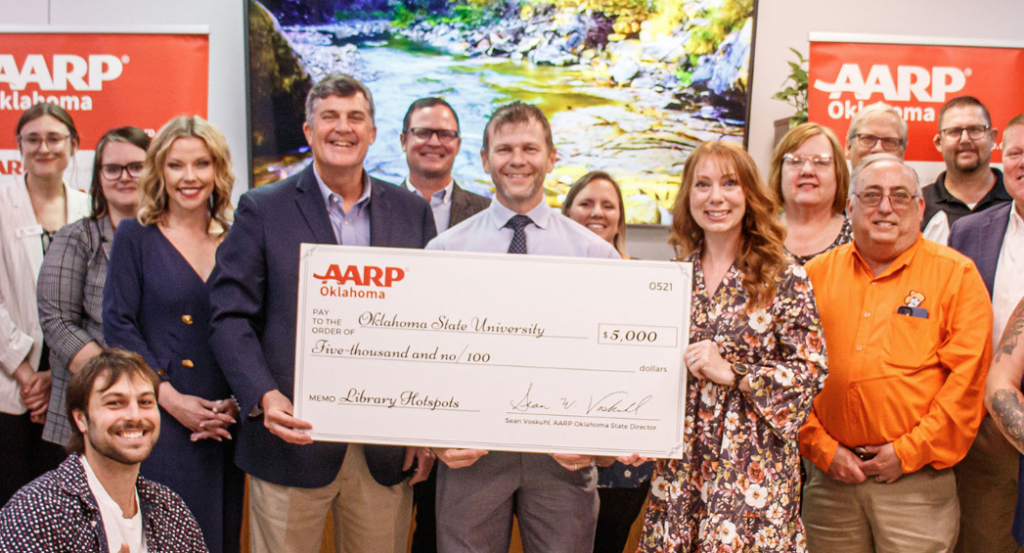
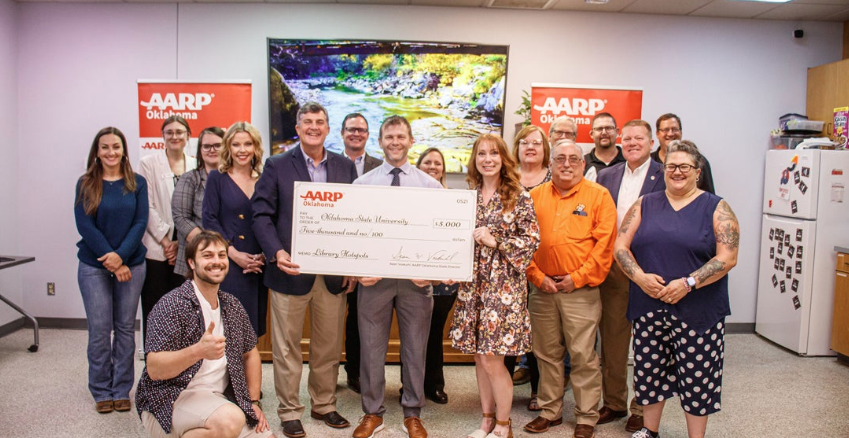
To keep the momentum going, the program is actively looking to recruit more locations. Supported by continued funding from AARP, the initiative provides substantial assistance to new libraries in establishing their own hotspot lending systems.

"We are looking for three or four more libraries, probably by the end of the summer," Whitacre said. "We would love to connect with them. AARP has once again provided a check for this next year, so we are looking to fund rural libraries. We usually partner with three or four, and we give them about seven to 10 devices and the full unlimited data for that first year."

Whitacre encourages interested library directors to reach out directly via email by searching for his contact information through Oklahoma State University.

The Digital Literacy Challenge and AI

While physical connectivity is the first step, navigating the internet safely and productively requires specific skills. As artificial intelligence continues to emerge as a powerful tool, digital literacy has become even more critical for rural residents.

"There's still kind of a digital skill component of this," Whitacre said. "It's great to have connectivity, but if you don't have an email account yet, you can't really go in and do a whole lot. Or if you don't know how to set up a banking account online, there's a need to help people productively use the internet."

He noted that the same learning curve applies to emerging technologies.

"The same thing is true with AI. If you've explored ChatGPT or Claude or some of the other ones that are out there, you can see how powerful they are, but it really takes some digging and some skills to help people use those tools productively," Whitacre stated. "That's something we're hoping to partner with this program. If we can lend out hotspots to people and then have some sessions where we explain things that they might struggle with, that's really something we would like to do."

Oklahoma's Broader Broadband Outlook

Beyond local library initiatives, a massive statewide infrastructure expansion is underway. Managed by the Oklahoma Broadband Office, three active programs are working concurrently to establish robust, permanent internet infrastructure across all 77 counties.

Infrastructure Progress Timeline

Program TypeTarget ScopeCompletion Timeline
ARPA Programs~70,000 unserved/underserved householdsComplete by December 2026
BEAD Program~40,000 remaining householdsEstimated completion by 2029

The strict federal guidelines tied to the ARPA funds ensure that the largest phase of the buildout will be finalized rapidly.

"The good news is that the two biggest of those programs that are going to connect about almost 70,000 of the households that still need good service will be done by the end of this year," Whitacre said. "These are ARPA programs... you got to spend the money by December 2026. So we've got a lot of providers out there actively working on this."

The remaining funding, allocated through the Broadband Equity, Access, and Deployment (BEAD) Act, will tackle the final, most remote locations over a four-year implementation window.

"The last chunk of money through BEAD was just allocated," Whitacre explained. "Those programs won't get rolling probably till the end of this year, and then they still have four years from then to hopefully finish off this piece. Those are going to be about another 40,000 households, and those probably will be done—again, they got four years to finish up, so we're talking 2029—by the time we have good connectivity everywhere across the state."

A Diverse Mix of Technologies

To achieve total state coverage, Oklahoma is utilizing an omnichannel technology strategy rather than relying on a single delivery method. While fiber-optic cable remains the primary target due to its speed and reliability, fixed wireless and satellite systems fill critical gaps in topographically challenging areas.

"Fiber is still the gold standard, and the good news for Oklahomans is that the vast majority of the money that's being spent across those three programs is for fiber," Whitacre emphasized. "I think 70% of the households that will get service will be through fiber, and then another 10% will get the satellite connections... and another 20% will get those fixed wireless that are often really good solutions in rural communities."

Residents seeking details on active construction and local service availability can access updated maps and monthly progress bulletins directly on the Oklahoma Broadband Office website.

dam safety team

May 31st is National Dam Safety Awareness Day

May 31 is National Dam Safety Awareness Day, a time to recognize the critical role dams play in protecting lives, supporting communities, and strengthening our water infrastructure.

Across Oklahoma, more than 4,700 dams provide essential benefits, including:

  • Flood risk reduction for downstream communities
  • Water supply for homes, agriculture, and industry
  • Hydropower generation and energy reliability
  • Recreational opportunities and local economic benefits

As dams across the state continue to age, maintaining and rehabilitating these structures becomes increasingly important. Changing development patterns downstream and more frequent extreme weather events reinforce the need for ongoing inspections, emergency planning, maintenance, and investment in dam safety improvements.

National Dam Safety Awareness Day also commemorates the 1889 South Fork Dam failure in Johnstown, Pennsylvania, where more than 2,200 lives were lost. The tragedy remains one of the deadliest infrastructure failures in United States history and serves as a lasting reminder of the importance of dam safety.

Dam safety is a shared responsibility that helps protect communities, infrastructure, water resources, and public safety for future generations.

For more information on dam safety topics and resources, visit the links below:

Samantha Ayoub on Specialty Crop Labor: "A Stable Workforce Is Critical to Our Food Supply"

Labor challenges in the specialty crop sector are continuing to draw attention, and Samantha Ayoub recently sat down with Oklahoma Farm Report's Maci Carter to discuss the growing urgency of workforce stability for fruit and vegetable producers.

Ayoub emphasized just how essential a reliable labor force is to keeping fresh produce moving from farm to table.

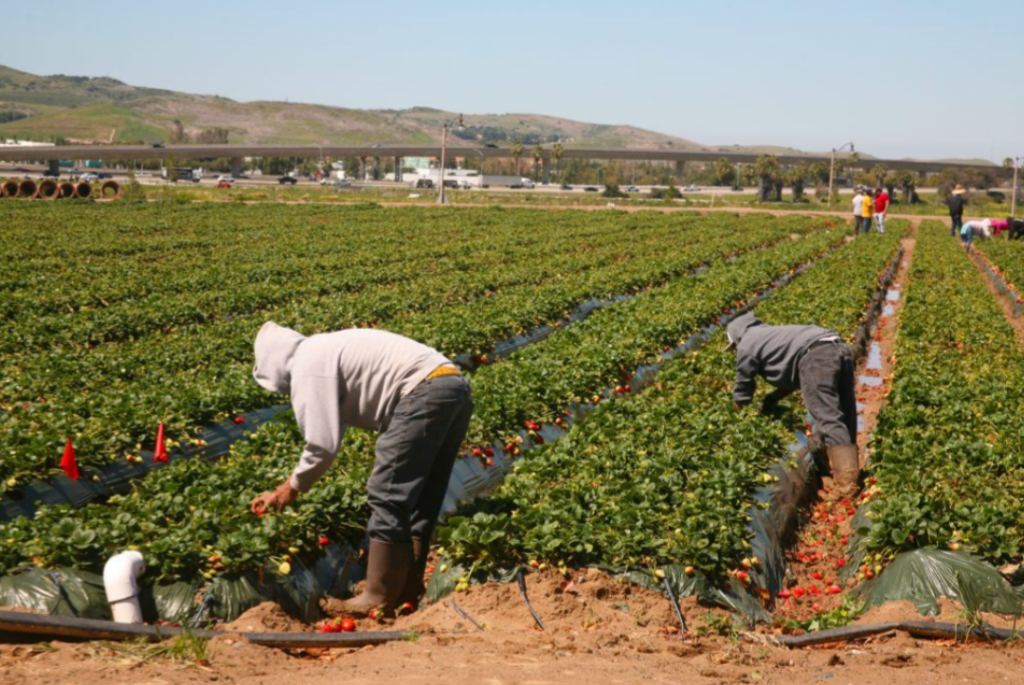
"Fruits and vegetables are extremely perishable and they're extremely fragile," she said. "A lot of the production that is done on specialty crop farms in the United States is still reliant on manual labor."

She added that labor needs stretch across the entire calendar year. "This is constant year-round between harvest, all the inputs that go into planting to trimming orchards... and so it's vital that we have a stable workforce year-round for these folks." The financial burden is significant as well.

"For specialty crop producers, up to 40% of their production expenses are spent on labor alone. So it's a huge part of these folks' businesses."

When asked about solutions, Ayoub pointed to the need for modernization of the H-2A Temporary Agricultural Worker Program.

"That has been 40 years since it's seen any sort of reforms to that program, and I don't think we can all agree not much is the same today as it was in 1986," she said.

She stressed that updates should both expand access and improve efficiency. "There are reforms that are much needed to both expand access to that program... as well as making sure that it's streamlined for folks to use and has a reliable, predictable wage structure."

Ayoub also highlighted the broader economic pressures producers are facing.

"We're really fortunate to see and thankful for the new interim final rule on H-2A wages that came out last October, and are hoping to see that made permanent," she said.

At the same time, she noted the squeeze on producers. "They're facing economic pressures across the board, with rising input costs in multiple categories and falling crop prices at the farm gate."

She closed with a message aimed at both voters and policymakers, underscoring the depth of the workforce shortage. "We have seen only 118 U.S. workers apply for positions out of over 415,000 posted in fiscal year 25," Ayoub said. "This is simply not a career that American workers are pursuing." She added that a dependable workforce is critical to maintaining the nation's food supply. "At the end of the day, to ensure that we have a healthy, reliable food source, we need and are reliant on our dependable workforce to make sure that happens."

USDA Details New Base Acre Allocation Process for ARC and PLC Programs

The U.S. Department of Agriculture is preparing to implement a major expansion of the federal farm safety net by adding up to 30 million new base acres to the Agricultural Risk Coverage and Price Loss Coverage programs. Under Secretary for Farm Production and Conservation Richard Fordyce explains that this update, authorized under the One Big Beautiful Bill Act, targets cropland with active production history that has been previously uncovered by these safety net programs. Farm Director KC Sheperd reports on how this expansion will impact landowners and operators across the country.

Understanding the Base Acre Allocation
The USDA is currently in the middle of this additional base acre allocation, which was directed by specific language in the One Big Beautiful Bill Act. The 30 million additional base acres will be distributed nationwide.

To prepare for the rollout, the Farm Service Agency is conducting a comprehensive review of historical planting data.

The FSA is currently finalizing what is being called a "history dig".

This process aims to identify the exact number of acres planted in specific crops from 2019 to 2023.

Once this research is complete, the agency will establish the precise number of eligible acres.

Once the data is finalized, Landowners will receive notification of any eligible additional base acres and information regarding any elections or decisions required through the Farm Service Agency.

However, Fordyce notes a strict limitation on how these acres may be applied: the total base acre designation cannot exceed the farm's actual physical footprint. For example, a producer operating a 100-acre farm cannot establish 120 acres of base.

Crucial Action Items and Timeline for Landowners
When the official notifications are delivered, landowners will automatically receive the allocation unless they choose otherwise. The only required action is if a landowner decides to opt out of the additional safety net coverage. Landowners who choose to opt out will have a strict 90-day window from the time of notification to officially inform the Farm Service Agency of their decision.

Important Communication Needed Between Operators and Landlords
A critical logistical aspect of this program is that the official USDA eligibility notifications are mailed directly to landowners, not to the tenants or farm operators who may actually be leasing and working the ground. Because a significant percentage of American farmland is rented, Fordyce urges farm operators to communicate immediately with their landlords.

Operators should ensure their landowners are aware that these letters are arriving and help explain what the notification means. Securing these additional base acres means the farm will have more acreage eligible for primary safety net programs like ARC and PLC, directly strengthening the operation's financial risk management.

TPWD withdraws proposed amendments after TSCRA and landowner pushback

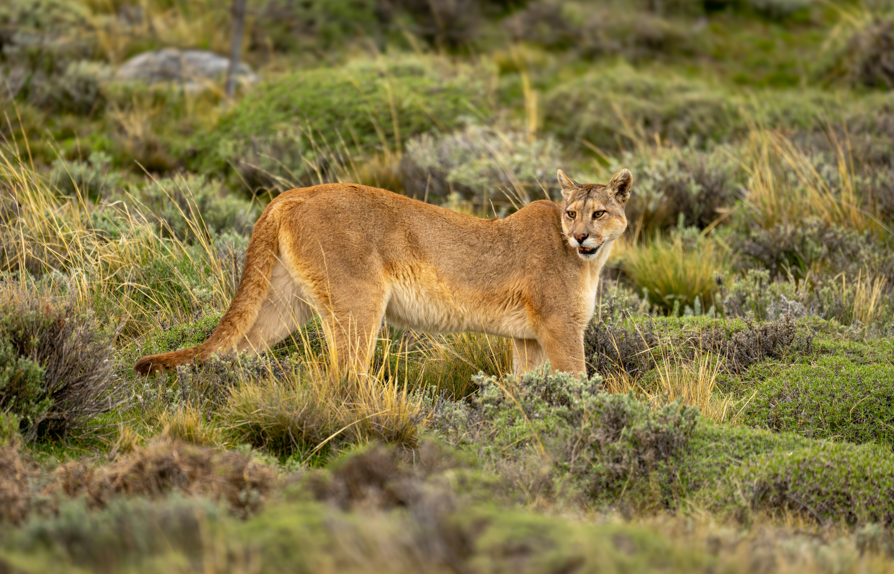
 Texas & Southwestern Cattle Raisers Association President Stephen Diebel submitted a letter to Texas Parks & Wildlife Department Chairman Paul Foster in response to the Department's proposed amendments on mandatory harvest reporting requirements for mountain lions in Texas. 

Texas Parks & Wildlife Department has retracted the proposed amendments due to stakeholder opposition.

"Texas Parks & Wildlife Department and rural landowners have a long history of working together to support conservation and wildlife management across this state," Diebel said. "We appreciate the department and commission taking the concerns of ranchers, landowners and agricultural producers seriously."

Texas & Southwestern Cattle Raisers Association remains firmly opposed not only to this proposal, but also to any future effort that would impose predator management restrictions that impede the ability of landowners and producers to responsibly manage their private property.

"TSCRA remains committed to supporting the Department's conservation efforts through voluntary programs and collaborative partnerships, respecting the vital role rural Texans and private landowners play as stewards of the land and wildlife resources of this state," Diebel said.

View Texas & Southwestern Cattle Raisers Association's letter on the proposed amendments here.

Klobuchar, Colleagues Raise Concerns about Food Safety and Inspection Service Reorganization

 Senator Amy Klobuchar (D-MN), Ranking Member of the Senate Committee on Agriculture, Nutrition, and Forestry, is leading 19 of her colleagues in raising strong concerns about the plan to reorganize the Food Safety and Inspection Service (FSIS) at the U.S. Department of Agriculture. 

"We write with serious concern regarding the announced reorganization of the Food Safety and Inspection Service (FSIS)," wrote the Senators. "Rather than strengthening the agency's effectiveness, this reorganization poses a risk to FSIS's core mission of protecting public health and ensuring the safety of our nation's food supply."    

"Losses in staff and institutional expertise as a result of this relocation could delay the identification and containment of outbreaks involving pathogens such as Salmonella, E. coli, or Listeria, allowing contaminated products to remain in commerce longer and increasing illnesses nationwide," the Senators continued. "Reduced coordination amongst FSIS and other food safety and public health agencies like the Food and Drug Administration, and state partners could also slow traceback investigations and public communication during multistate outbreaks, when rapid response is critical to prevent additional illnesses. Instead of moving its employees across the country, FSIS should be focused on maintaining food safety. Overall, this reorganization threatens to undermine FSIS's effectiveness and weakens an agency that American consumers rely on every day." 

Along with Klobuchar, the letter was signed by Senators Tammy Baldwin (D-WI), Richard Blumenthal (D-CT), Cory Booker (D-NJ), Dick Durbin (D-IL), John Fetterman (D-PA), Kirsten Gillibrand (D-NY), Martin Heinrich (D-NM), Ben Ray Luján (D-NM), Jeff Merkley (D-OR), Patty Murray (D-WA), Alex Padilla (D-CA), Adam Schiff (D-CA), Chuck Schumer (D-NY), Jeanne Shaheen (D-NH), Elissa Slotkin (D-MI), Tina Smith (D-MN), Chris Van Hollen (D-MD), Peter Welch (D-VT), and Ron Wyden (D-OR). 

The full letter is available here and below.  

Dear Deputy Secretary Vaden: 

We write with serious concern regarding the announced reorganization of the Food Safety and Inspection Service (FSIS). Rather than strengthening the agency's effectiveness, this reorganization poses a risk to FSIS's core mission of protecting public health and ensuring the safety of our nation's food supply. 

FSIS plays a key role in safeguarding American consumers. Not only does FSIS provide critical frontline inspection of meat, poultry, egg, and some fish products, but the agency also plays an important role in informing the public through outreach and education and coordinating with the many international, federal, state, and local agencies that play a part in food safety. When outbreaks inevitably happen, FSIS provides a rapid response to contain illness before it spreads widely. 

The Deferred Resignation Program implemented last year has already resulted in a loss of more than 500 FSIS employees, straining a key agency that operates under significant pressure. Now the Administration is asking two-thirds of the FSIS staff in the Washington, D.C. area to relocate to Iowa, Georgia, or Colorado within months, which could weaken interagency coordination and rapid response efforts during foodborne illness outbreaks, creating a greater risk to consumers and our food supply. Since FSIS was not explicitly included in the July 2025 Secretarial Memorandum on USDA's proposed reorganization, FSIS stakeholders, employees, consumer advocates, and industry partners have not been able to provide meaningful comments on changes that could have significant implications for the nation's food safety system. 

Losses in staff and institutional expertise as a result of this relocation could delay the identification and containment of outbreaks involving pathogens such as Salmonella, E. coli, or Listeria, allowing contaminated products to remain in commerce longer and increasing illnesses nationwide. Reduced coordination amongst FSIS and other food safety and public health agencies like the Food and Drug Administration, and state partners could also slow traceback investigations and public communication during multistate outbreaks, when rapid response is critical to prevent additional illnesses. Instead of moving its employees across the country, FSIS should be focused on maintaining food safety. Overall, this reorganization threatens to undermine FSIS's effectiveness and weakens an agency that American consumers rely on every day. 

We ask that you provide a detailed description of how you will ensure that FSIS will maintain full operational capacity during and after this transition. Specifically, we ask that you provide further details on what communication USDA has had with impacted FSIS employees, how the USDA will mitigate anticipated workforce losses, preserve critical expertise, and ensure that outbreak response, interagency coordination, and rulemaking activities are not compromised.

Thank you for your attention to this important matter, and we look forward to receiving your response within 30 days.

Oklahoma-Arkansas Chicken Litter Case Continues

Recent events have brought renewed attention to a long-running legal battle between the state of Oklahoma and major poultry companies in Arkansas over environmental concerns and water pollution.  The case centers on allegations that poultry waste generated in northwest Arkansas was contributing to water pollution in eastern Oklahoma, particularly in the Illinois River Watershed (IRW).

The lawsuit began in 2005 when Oklahoma officials filed claims in federal court against several poultry companies, including Tyson Foods, Cargill, and Cobb-Vantress.  Poultry production generates large quantities of chicken litter- a mixture of manure, bedding, feathers, and feed residue.  Growers commonly apply chicken litter to fields as fertilizer because it contains valuable nutrients such as nitrogen and phosphorus. However, excessive phosphorus application can create runoff problems that impair nearby streams and rivers.  In this case, Oklahoma officials argued that phosphorus from chicken litter spread on farmland in Arkansas was washing into the IRW, contributing to algae growth and declining water quality.

After years of discovery, pretrial motions and a fifty-two day trial, closing arguments were heard in February 2010.  The trial involved numerous legal claims, including public nuisance, trespass, negligence, and violations of environmental laws. Oklahoma sought injunctive relief that would require changes to litter management practices and requested damages for environmental remediation. The poultry companies denied liability and argued that growers, as independent contractors, controlled litter application decisions and should be held directly responsible for any damages. The companies also argued that the growers complied with existing state regulations and nutrient management requirements.

In January 2023, the court issued its 219 page ruling.  In short, however, the court held that poultry litter was a key non-point source of pollution in the watershed.  Additionally, it found that the poultry companies were responsible for the damages caused by the litter.  The court did not, however, specifically forbid the future use of litter.  Further, the court did not identify specific consequences for the ruling.  Instead, the parties were directed to "meet and attempt to reach an agreement with regard to remedies to be imposed".

The parties were unable to reach an agreement.  Further, the poultry companies filed a motion to dismiss, arguing that in the 13 years between the trial and the ruling, conditions in IRW "materially changed" enough that it was unfair to hold the poultry companies responsible for litter application.  The court held a hearing on the motion in December 2024, where experts from both sides presented evidence about the effects of the litter.  Six months after the hearing, the court issued a ruling finding that conditions in the watershed were not "materially changed," and continuing phosphorus run-off from litter application continued to be a significant source of injury to the IRW.

Soon after that, the court issued its ruling on damages.  In addition to civil penalties of $10,000 per violation, the court held the companies jointly and severally responsible for environmental cleanup efforts of the watershed.  Remediation would be paid for through a dedicated account, initially funded by the companies at $10 million.  A court-appointed special master would oversee remediation activities- predicted by the court to last 30 years- and provide ongoing progress reports.  The remedies also included restrictions on poultry litter application rates, generally limiting application to two tons per acre, while also holding the companies responsible for removal, storage, transport and disposal of future litter from barns in the watershed.

In the next few months, however, the Oklahoma Attorney General's office announced settlements with several of the companies that would 1) provide a sum of money to facilitate cleanup and 2) progressively reduce the amount of litter applied in the IRW.  No civil penalties would be imposed.  The settling companies include Cargill, George's, Peterson Farms and Tyson, who cumulatively agreed to pay $31 million.   

However, in April 2026, the judge rejected the settlement proposals.  In his ruling, he held that the proposed sum and scope of the settlements, which was substantially less than his ruling on damages, was insufficient to cover the costs of the cleanup.

Currently, there are pending appeals for both the substantive rulings and the rejection of the settlement.  The Oklahoma Attorney General and Oklahoma Secretary of Energy have joined the settlement appeal.  

While the results of this case are yet to be finalized, the Oklahoma legislature has passed legislation ensuring that similar cases in the future will be limited.  In 2024, Senate Bill 1424 was passed.  It prevents lawsuits against poultry companies over chicken waste pollution as long as the poultry farm has an approved waste disposal plan with the state. 

This case underscores the difficulty of regulating "nonpoint source pollution," a category that includes runoff from farms and agricultural land. Nonpoint source pollution is not directly regulated in the Clean Water Act, which leaves much of the responsibility for addressing agricultural runoff to the states and creates significant challenges for enforcing water quality protections when pollution comes from widespread, diffuse sources rather than a single discharge point.

The consequences of this ruling will have significant implications not only for poultry companies, but also for growers and others involved in the poultry industry, as well as residents of the area and those who enjoy the recreational opportunities available within the watershed.  As future decisions are made, updates will be available in Southern Ag Today.  

Rumley, Elizabeth. "Oklahoma-Arkansas Chicken Litter Case Continues." Southern Ag Today 

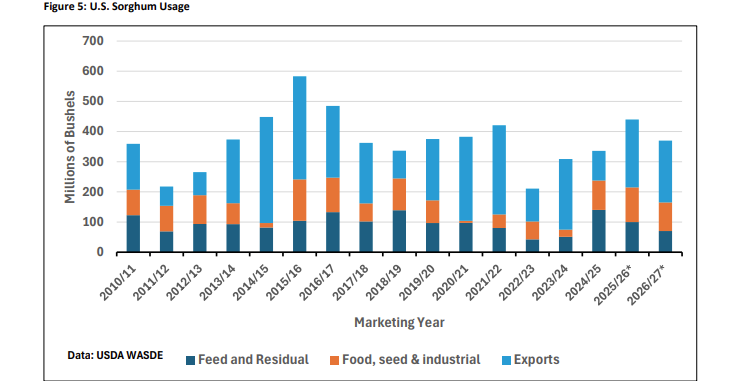
Trade Momentum Builds Across China, India and North America

Trade remained front and center this week, with several developments that could carry meaningfull
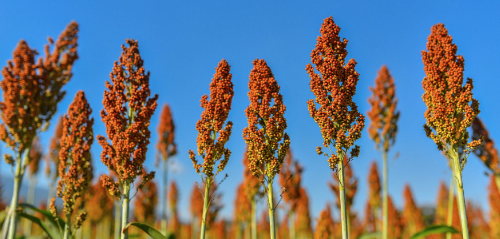
implications for U.S. sorghum producers. Following President Trump's recent meetings with Chinese President Xi Jinping, the White House announced China will purchase at least $17 billion per year in U.S. agricultural products in 2026, 2027 and 2028, in addition to previously announced soybean commitments. While commodity- specific details have not yet been released, NSP is encouraged by the scale of the commitment and the clear recognition that agriculture must remain a central component of the U.S.-China
relationship. China has historically been one of the most important export markets for U.S. sorghum, and meaningful purchase commitments would provide much-needed stability for farmers, merchandisers and rural communities across the Sorghum Belt. With sorghum averaging between $1.5 billion and $2 billion over the last several years, sorghum is positioned well to be a significant portion of the $17 billion going forward. NSP has worked for more than a year to keep sorghum in the conversation as trade negotiations have developed, and we will continue engaging with the
administration and our partners to ensure sorghum is positioned to benefit as details are finalized. Momentum also continues on a potential U.S.-India trade agreement. U.S. Ambassador Sergio Gor expressed confidence a deal could be finalized in the coming weeks or months, and NSP continues to view India as a promising long-term opportunity for sorghum. Expanded market access, science- based rules and stronger commercial ties could open the door for new demand in the Indian poultry
sector. Meanwhile, U.S. Trade Representative Jamieson Greer is expected to travel to Mexico City next week as discussions continue ahead of the USMCA joint review process. Mexico and Canada remain critical agricultural trading partners, and NSP will continue to support fair, predictable and
enforceable trade terms that strengthen North American agriculture.

Five Pork Producers Appointed to Help Drive Industry Progress

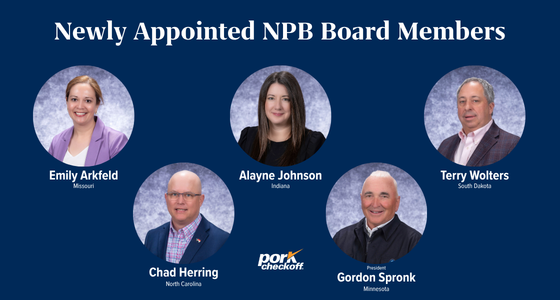
 The National Pork Board (NPB) welcomes five appointed pork producers to serve three-year terms beginning in June on the NPB Board of Directors.

  • Emily Arkfeld, Missouri
  • Chad Herring, North Carolina
  • Alayne Johnson, Indiana
  • Gordon Spronk, Minnesota
  • Terry Wolters, South Dakota

"The checkoff was built by producers for producers, so their experiences and ideas are critical to keep us moving forward." says David Newman, Ph.D., NPB CEO. "Board members play such an important role in charting the swine industry course for the future. The checkoff exists to tackle big challenges that producers can't solve entirely on their own, like disease elimination and increasing U.S. pork consumption. Producer perspectives today help set the direction for the decades ahead."

The board oversees Pork Checkoff investments in promotion, research and consumer information programs that strengthen U.S. pork and support the industry's strategic priorities. NPB's 15-member board is made up of pork producers or importers nominated by Pork Act Delegates at the National Pork Forum and appointed by the U.S. Secretary of Agriculture.

Producer input, state pork association collaboration and the We Care® Ethical Principles continue to guide NPB's work. Those perspectives help shape priorities across the Pork Checkoff, from the Taste What Pork Can Do® consumer marketing campaign, which highlights pork's rich flavor and versatility to millennial and Gen Z consumers, to the National Swine Health Strategy, a coordinated, science-based approach to protecting herd health and preparing for emerging challenges.

"I'm honored to serve alongside and welcome talented and passionate leaders on the NPB Board of Directors," says Gordon Spronk, DVM, NPB president. "The challenges we face are real, but so is the opportunity in front of us to improve them. If we want the future to look different than the present, we must keep advancing animal health, while also continuing to build pork's relevance with younger consumers. Being producer led and consumer focused means recognizing that a healthier U.S. swine herd and stronger consumer demand are not competing priorities – they are the foundation of a brighter future for pork producers. I believe this industry and our board can build that future."

Four producers will complete their service on the National Pork Board in June. Thank you to Stewart Leeth of Virginia, Santiago Vazquez of North Carolina, Morgan Wonderly of California and Al Wulfekuhle of Iowa for their dedicated service to America's pig farmers.

NCFC Applauds Trump Administration's Great American Cotton Plan

The National Council of Farmer Cooperatives (NCFC) today applauded the Trump Administration's Great American Cotton plan, a sweeping package of executive actions and legislative priorities from the U.S. Department of Agriculture (USDA) designed to strengthen American cotton production, boost domestic and global demand, and protect cotton farmers from risk.

The plan builds on provisions of the Working Families Tax Cuts and encompasses actions across four pillars: expanding domestic consumption of natural fibers, increasing demand and production, improving cotton trade, and protecting farmers from adverse risk.

"Today's announcement is a major win for cotton farmers and the farmer co-ops that serve them," said Kevin Brinkley, chairman of NCFC and president and CEO of Plains Cotton Cooperative Association. "In particular, the support for the Buy American Cotton Act and the Plant Not Plastic initiative will have a tremendous, positive impact for producers. We thank Secretary Brooke Rollins and the Trump Administration for their commitment to American cotton and to the farmers who grow it."

NCFC also expressed support for the Administration's backing of the Buying American Cotton Act, a bipartisan bill that would incentivize retailers to carry more products made from U.S. cotton.


About NCFC

Since 1929, NCFC has been the voice of America's farmer cooperatives. Our members are regional and national farmer cooperatives, which in turn consist of more than 1,600 local farmer cooperatives across the country. NCFC members also includes state and regional councils of cooperatives. Farmer cooperatives allow individual farmers the ability to own and lead organizations that are essential for continued competitiveness in both the domestic and international markets.

America's farmer-owned cooperatives provide a comprehensive array of services for their members. These diverse organizations handle, process and market virtually every type of agricultural commodity. They also provide farmers with access to infrastructure necessary to manufacture, distribute and sell a variety of farm inputs. Additionally, they provide credit and related financial services, including export financing.

Learn more at www.ncfc.org.

USDA Launches Great American Cotton Plan to Revitalize the Cotton Farm Economy

U.S. Secretary of Agriculture Brooke L. Rollins today announced the Great American Cotton Plan (PDF, 2.7 MB), a comprehensive USDA initiative to strengthen the cotton farm economy, restore domestic textile manufacturing, expand cotton trade opportunities, and increase demand for products made with American-grown cotton.

"Since 1607, cotton has helped build and sustain rural America. Our farmers grow some of the highest-quality cotton in the world, but over the last several years America's cotton growers have been crushed by rising costs, unfair foreign competition, and a flood of cheap synthetic products. In 2023, we lost our status as the world's top cotton exporter to Brazil. This change starts today," said Secretary Rollins. "The Trump Administration is committed to ensuring American cotton once again becomes the fiber of choice with the Great American Cotton Plan — a bold effort to restore profitability for cotton producers, strengthen rural economies, rebuild domestic textile manufacturing, and bring American cotton back into the products families use every day. Supporting natural fibers like cotton also aligns with the Make America Healthy Again agenda as Americans grow increasingly concerned about microplastics and synthetic materials in everyday products. Cotton is natural, breathable, biodegradable, and proudly grown by American farmers — not manufactured from petroleum-based plastics that can shed microplastics into our soil, water, and bodies."

The announcement comes as cotton producers face a fifth consecutive year of negative returns driven by rising input costs, trade distortions, and increasing competition from synthetic materials. As part of the plan, USDA will elevate the "Plant Not Plastic" initiative to encourage consumers to purchase products made with healthy natural American cotton fibers rather than synthetic plastic-based alternatives.

Cotton remains one of the most economically significant crops in the United States, supporting producers and rural communities. USDA estimates every $1 generated at the cotton farm gate creates approximately $15 in direct economic activity across related industries.

However, the cotton industry continues facing severe economic pressure. USDA forecasts producers could lose approximately $2.6 billion across 9 million planted acres during the upcoming crop year. Since 1980, the number of U.S. cotton gins has declined from 2,254 to 446, while domestic textile production facilities have sharply contracted over the last two decades.

At the same time, nearly 70 percent of the world's textile fibers are now synthetic, most of them plastic-based materials such as polyester.

Cotton is a natural fiber harvested from the cotton plant's seedpods and has been used in clothing and household products for thousands of years due to its breathability, softness, durability, and comfort. Unlike synthetic fibers such as polyester, nylon, and acrylic, which are petroleum-based and chemically manufactured, cotton is biodegradable and naturally breathable.

As part of the Administration's broader Make America Healthy Again priorities, USDA and HHS are promoting greater awareness around natural fibers and the potential impacts of synthetic materials. Cotton's natural structure allows for strong air circulation and moisture absorption, helping keep consumers cooler and more comfortable. Cotton can absorb up to 27 times its weight in water, making it especially effective at pulling moisture away from the skin during hot weather and physical activity. By contrast, synthetic materials often trap heat and reduce breathability.

The Great American Cotton Plan addresses these challenges through four key pillars:

Promoting Domestic Cotton Consumption

  • USDA and HHS are promoting the "Plant Not Plastic" initiative to encourage consumers to choose products made with American cotton
  • USDA is ensuring the BioPreferred Program remains funded so biobased products, including cotton products, can continue using the BioPreferred label
  • USDA is implementing increased marketing loan rates for upland and extra-long staple cotton authorized through the Working Families Tax Cuts Act


Providing Affordable Cotton by Increasing Domestic Demand and Production

  • USDA is prioritizing cotton processors and manufacturers within Rural Development's Business and Industry Guaranteed Loan Program to increase domestic production capacity
  • The Economic Adjustment Assistance for Textile Mills program payment rate will increase from 3 cents to 5 cents per pound of cotton processed
  • USDA will continue working with Congress to support the bipartisan Buying American Cotton Act


Improving Cotton Trade

  • USDA is implementing the Administration's Three-Point Trade Plan to expand export opportunities for U.S. cotton
  • Cotton Council International participated in an Agribusiness Trade Mission to Indonesia for the first time in program history earlier this year
  • USDA and USTR secured commitments from Indonesia and Bangladesh that will support future U.S. cotton purchases and textile production using American cotton
  • USDA continues supporting cotton exports through the Market Access Program and COTTON USA™ licensing initiatives


Protecting Cotton Growers from Adverse Risk

  • USDA Agricultural Research Service scientists are advancing research efforts to combat the spread of the cotton jassid pest
  • Cotton producers now have expanded access to Supplemental Coverage Option insurance tools
  • The Working Families Tax Cuts Act increased the seed cotton reference price for ARC and PLC programs by 14 percent beginning in fall 2026


USDA will continue coordinating with industry stakeholders, manufacturers, cotton growers, retailers, and Congress to advance policies that strengthen the cotton supply chain from the field to the fabric.

Clean Fuels Seeks Added Clarity in Final 45Z Clean Fuel Production Credit Rules

Today, Clean Fuels Alliance America Vice President of Federal Affairs Kurt Kovarik testified at a public hearing on Treasury's proposed rule for the 45Z Clean Fuel Production Credit. Clean Fuels again expressed appreciation for Treasury's responsiveness to industry input and urged the agency to provide additional certainty through timely final rules and updates to the 45ZCF-GREET model.

"We greatly appreciate the proposed regulations addressing qualified sales sold for use in a trade or business, transportation fuel and it being suitable for use, defining a qualified facility, as well as stating the allowance of the tolling relationship," Kovarik stated during the testimony. "While the Proposed Regulations provide much-needed market certainty for biodiesel and renewable diesel producers, we are requesting additional clarity in some areas. Specifically, for instance, we are awaiting publication of the modified 45ZCF-GREET model. We would also appreciate additional guidance as to how to apply the credit to fuel produced prior to publication of the proposed rule and further clarity on the Prevailing Wage and Apprenticeship requirements as they relate directly to 45Z."

Clean Fuels' testimony specifically asked for additional clarity on:

  • Renewable heating fuel as an example of a qualifying use of biodiesel or renewable diesel.
  • The term "single production line" as it relates to qualified facilities defined to apply specifically to production of fuel and not processing of feedstocks in an integrated facility.
  • Safe harbors and their application to fuel produced in 2025.
  • The definition of "qualified facility" and "alteration or repair" under the Prevailing Wage and Apprenticeship rules to be consistent with other provisions in the tax code.

Clean Fuels also requested timely action on implementation, including:

  • Updates to the 45ZCF-GREET model during the current tax year to include changes passed by Congress that became effective at the start of the year.
  • Providing farmers maximum flexibility for on-farm practices and feedstocks in the FD-CIC module for 45ZCF-GREET.

Kovarik added, "Producers are grateful that Congress adopted beneficial changes to the 45Z credit last July through the One Big Beautiful Bill. Taxpayers now need certainty that those changes can be claimed throughout the year. That requires publication of an updated 45ZCF-GREET model by DOE. Increased certainty will help achieve Congress' goals of producing more domestic energy and supporting farmers with domestic market opportunities."

Corn Growers Call Out Fertilizer Companies for Price Hikes

A coalition of corn organizations and commodity groups hosted a listening session in Texas today on competition issues in the fertilizer market. Federal Trade Commission Chairman Andrew Ferguson delivered keynote remarks at the event.
 
In response to the issues raised at the event, Ohio farmer and National Corn Growers Association President Jed Bower released the following statement.  
 

"We commend FTC Chairman Ferguson for taking part in the discussion and pledging to launch an investigation into the fertilizer industry. This comes as a welcome development, particularly as corn growers are facing their fourth consecutive year of negative returns and struggling to pay for exorbitantly expensive fertilizer products.
 

"NCGA is committed to eliminating the factors that keep fertilizer prices at near-record highs. For example, we are working to address the lack of competition in the U.S. marketplace, and we are supporting efforts to insert transparency and new suppliers into the market through legislation like the Fertilizer Transparency Act, Fertilizer Research Act and the Homegrown Fertilizer Act.
 

"We are also calling on the administration to remove countervailing duties on phosphate fertilizer imported from Morocco, which have hampered supplies and raised costs for farmers who can't solely rely on domestic supply. A resumption of phosphate imports from Morocco would offer some relief to U.S. farmers while global fertilizer supplies are constrained.  
 

"We appreciate the Trump administration's efforts to address constraints in the fertilizer supply chain and to push for free market competition in this critical industry."

Shoup honored with Award for Excellence in Undergraduate Advising and Mentoring

Dan Shoup, professor in the OSU Department of Natural Resource Ecology and Management, was recognized with the Excellence in Undergraduate Advising and Mentoring Award at the Ferguson College of Agriculture Scholarships and Awards Banquet in March. 

Shoup, who has taught in the Ferguson College of Agriculture since 2005, has advised more than 250 students at OSU. His teaching in the department focuses on undergraduate and graduate students in the fisheries and aquatic ecology option. 

"His mentoring extends well beyond formal advising appointments," said Jason Harmon, department head of natural resource ecology and management. "It is embedded in his daily interactions with students, his leadership of student groups and his sustained investment in helping undergraduates clarify their goals, navigate challenges and develop confidence in their academic and professional trajectories." 

Colleagues and students in the department lauded Shoup for his open-door policy—a simple gesture that encourages students to come talk with him. With this small action, Shoup hopes students understand he wants to be involved in their academic journey. 

Shoup's classwork is field-intensive and requires individualized instruction. To build rapport with students, Shoup focuses on meaningful, informal interactions. 

"Often, we're starting out with a conversation about their latest fishing exploit, then we stumble into something that becomes a career mentoring moment," Shoup said. "They weren't coming in to talk about something like classwork, but I'm then able to speak to that situation and give some advice." 

Shoup, who grew up in Ohio, had an early interest in fish and wildlife. Paired with his enjoyment of science, he was initially drawn to research as a career. But while working on his master's degree, he fell in love with teaching. 

"I think each student is unique," Shoup said. "You really need to approach each one differently. That can be hard in the classroom. Where I really like that philosophy is when I get to do individual work with students." 

Outside of the classroom, Shoup prioritizes undergraduate research as the best way to learn science. Students lead their own projects from planning to completion, and to date, 13 students have completed independent research projects in his laboratory. 

"I wish we could get every student involved in a project," Shoup said. "It's such a valuable thing to do."

Additionally, Shoup serves as an advisor for two clubs at OSU. Since 2005, he has worked with the Oklahoma Student Chapter of the American Fisheries Society, and Shoup has spent the past 20 years as advisor for the OSU Bass Fishing Team.

"Dr. Shoup's impact on students goes far beyond the classroom," said Cynda Clary, associate dean for academic programs. "His mentoring philosophy is rooted in the idea that every student matters as an individual, and he lives that out through his genuine investment in their personal and professional growth."

Shoup's philosophy on mentoring required a heavy investment. But getting to see students land their first job out of college, walk across the graduation stage or pursue a graduate degree makes it a worthwhile experience for him. 

"It's rewarding when you see the enthusiasm and realize they're really excited about what they get to do," he said. "Most of it was them but getting to play a small role in that is really rewarding."  

The Ferguson College of Agriculture believes in the value of hands-on education and the importance of having a well-rounded student experience. The college's award-winning faculty members are dedicated to developing students and are passionate about adding value to the total educational experience. With 16 majors, a variety of study options and more than 60 student organizations, the college is committed to expanding minds and inspiring purpose. Learn more at agriculture.okstate.edu

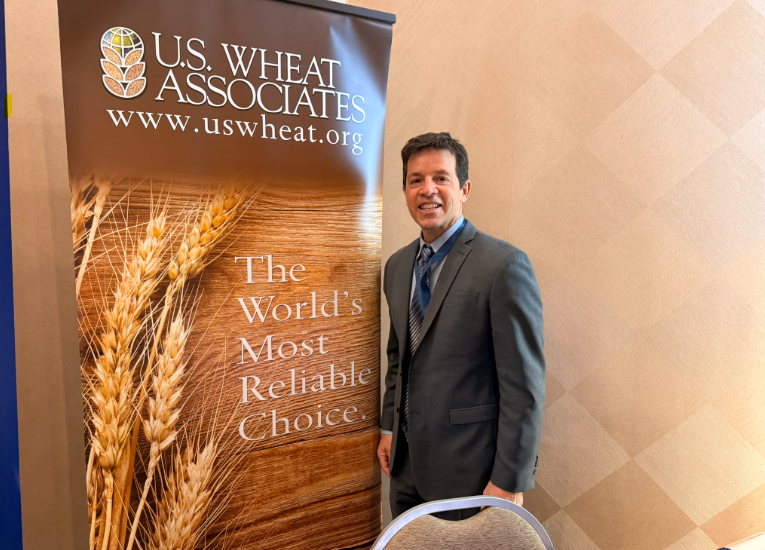
IGP Short Course Enhances Buyer Confidence in the U.S. Wheat Supply Chain

Professional development and technical assistance are two of the building blocks that U.S. Wheat Associates (USW) uses in its global strategy to engage with customers, open and maintain markets and establish a preference for U.S. wheat classes around the world.

One key component of this strategy is bringing international customers to the United States to participate in educational short courses, such as the IGP–KSU Grain Procurement and Purchasing short course, which took place from May 10 to 16, 2026. The in-person course was based at the IGP Institute on the north campus of Kansas State University in Manhattan, Kansas.

https://www.grains.k-state.edu/igp/on-site-training/grain-marketing/grain-purchasing/grain-purchasing-in-person

The course featured an orientation to the U.S. grain production and marketing system, including USDA grain standards and grading, ocean freight, contract terms, futures and derivatives and more. In addition to the lectures on campus, participants also had the opportunity to visit the Cargill Grain Terminal in Topeka and meet with the Kansas Wheat Commission and the Kansas Soybean Commission. The participants also visited the Kansas Grain Inspection Service, where officials explained U.S. wheat inspection and grading procedures.

U.S. Wheat sponsors purchasing staff and executives from top milling companies to attend educational short courses in the United States, like the course at the IGP Institute. The courses provide information to help buyers source higher-quality wheat at more competitive prices and help buyers better evaluate and compare offers from the United States and other competitors.

For this year's IGP course, Stephanie Bryant-Erdmann, USW assistant regional director for the Mexican, Central American, Caribbean Region, accompanied two milling participants from the Caribbean to the course. One participant was funded through the Regional Agricultural Promotion Program (RAPP), while the other was self-sponsored.

"The IGP short course in Kansas goes beyond classroom learning – it brings the U.S. wheat marketing system to life," Bryant-Erdmann said. "By connecting Caribbean millers directly with U.S. and Kansas farmers, it puts face, families and stories to the wheat arriving in their mills. Through visits to country elevators and FGIS, participants saw firsthand how wheat is graded and moves from the farm to the mill, building confidence in the integrity of the U.S. wheat inspection and marketing system."

The IGP Institute is one of the organizations that U.S. Wheat partners with to offer a variety of short courses related to the global wheat supply chain and processing industries, including the Northern Crops Institute (NCI) at North Dakota State University in Fargo, North Dakota, and the Wheat Marketing Center in Portland, Oregon. Combined, these institutions are key educational partners in USW's work to promote all six classes of U.S. wheat in an ever more complex world wheat market.

Navigating a Technical Lull: Drifting Grain Markets and the Shifting Global Landscape

The current agricultural trade landscape is heavily defined by drifting grain markets as prices slide into familiar territory due to a distinct lack of fresh fundamental news. The combination of early harvest progress, fluctuating international trade policies, and looming weather patterns has left traders searching for clear direction.

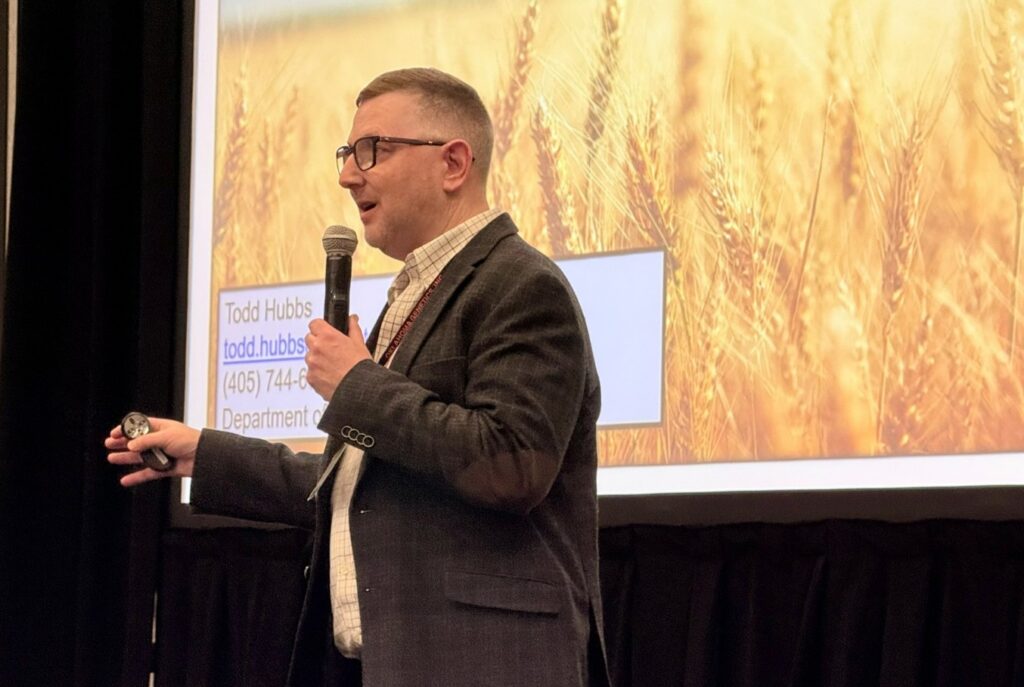
Farm Director KC Sheperd recently sat down with Oklahoma State University Crop Marketing Specialist Todd Hubbs to break down the technical factors driving the current market conditions and what producers should look for in the months ahead.

Wheat Markets Driven by Technical Moves and International Spillovers

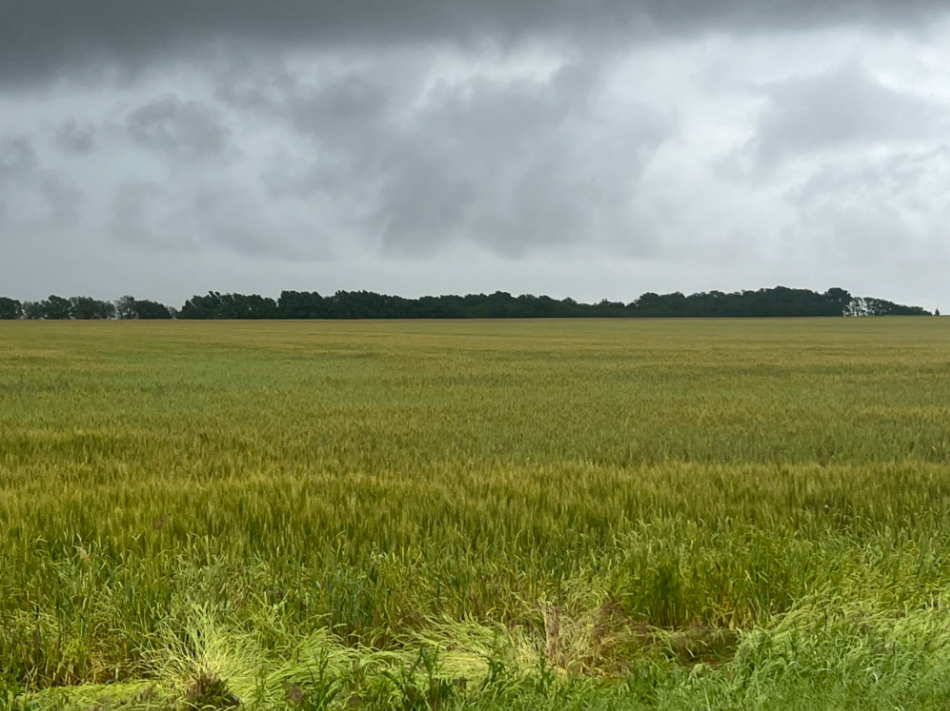
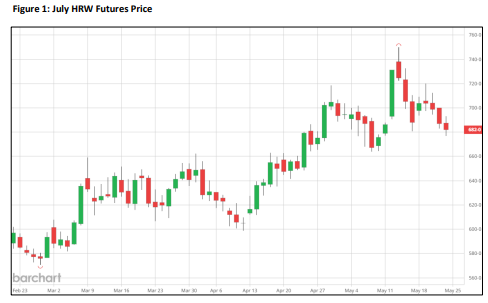
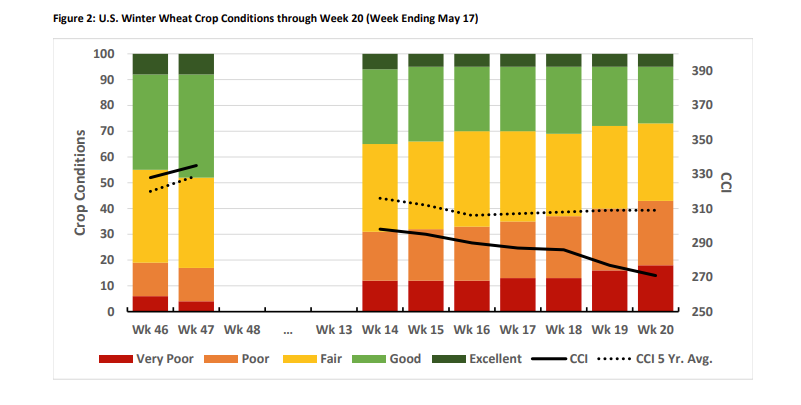
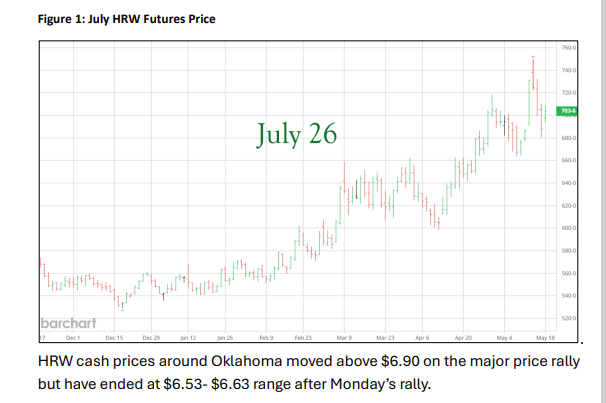
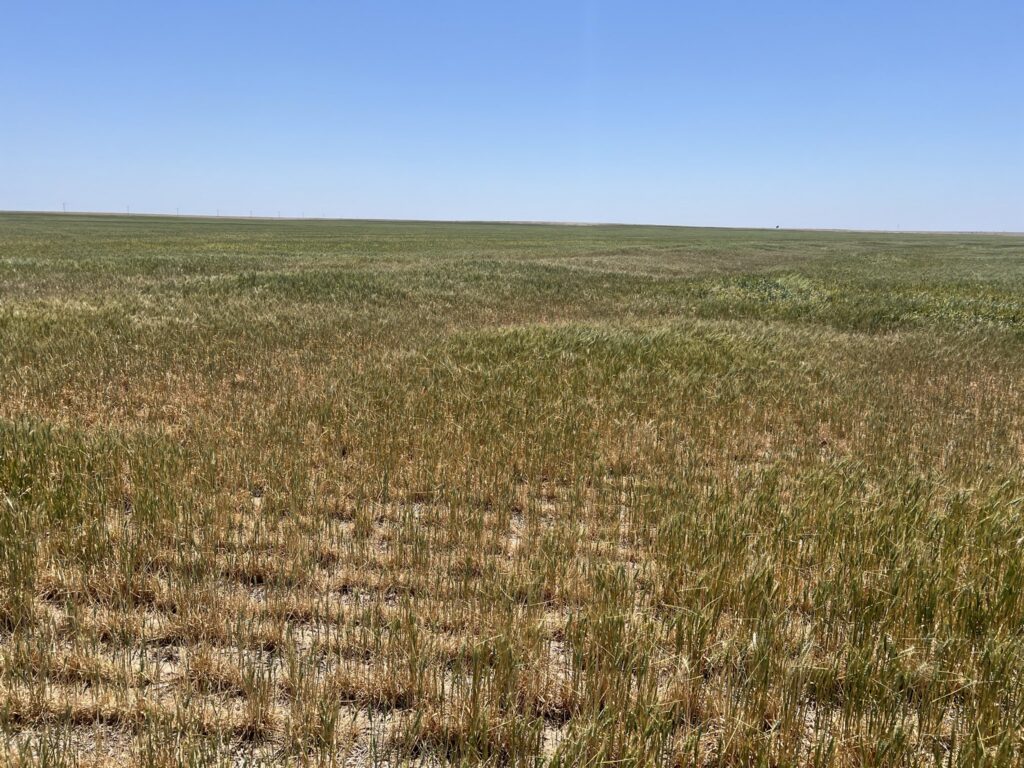
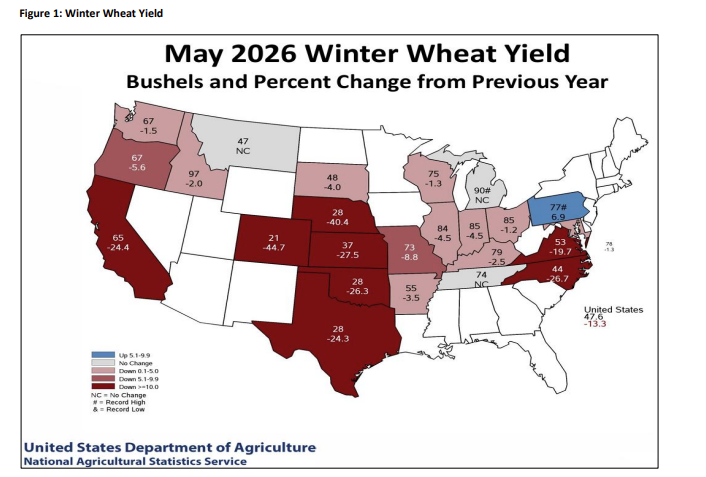
The winter wheat harvest is officially underway in areas fortunate enough to avoid recent rain delays, but the overall condition of the winter wheat crop remains poor. Despite the lackluster crop conditions, July hard red winter wheat futures have retreated, erasing the gains prompted by the bullish May crop production report. Hubbs attributed this downward trend primarily to technical trading rather than shifts in supply and demand.

"There's not a lot of fundamental information coming into the markets," Hubbs stated. "The wheat crop conditions are still poor for winter wheat... This week we've seen the prices for July futures, hard red winter, retreat back to levels before we got that really bullish May crop production report. It's a lot of technical moves, KC."

Hubbs noted that external factors, including energy markets, are also dragging grain prices down.

"A little bit of spillover from oil as we see the Strait of Hormuz thing look like it may come to some kind of resolution... It's a little bit technical, the weakness is a little bit of a spillover and we're just sort of mozying lower to the lower part of the range we've been in since early March for wheat," Hubbs said.

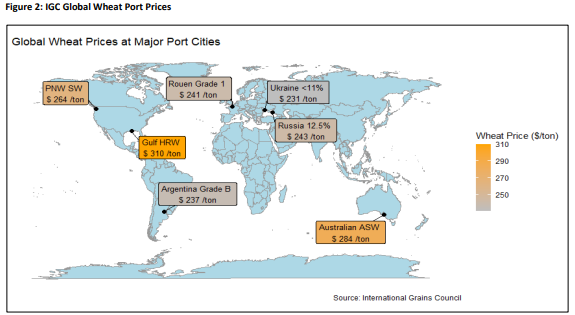
On the international stage, the market remains focused on production in the Northern Hemisphere, specifically within the European Union and the Black Sea region. While the EU is experiencing localized dryness in eastern nations like Poland and the Baltic States, the overall global supply looks stable, cushioned by previous record-breaking years. Russia's crop is currently projected to come in around 90 million metric tons.

Global Trade Disruptions and the El Niño Factor

International trade dynamics are shifting, particularly with speculative reports that Turkey may institute a wheat import ban following a strong domestic harvest. Because the United States produces a smaller hard red winter wheat crop and maintains slightly elevated prices on the world market, direct export volumes may not shift dramatically, but the broader global trade ecosystem will feel the impact.

"Turkey's talking about putting—there's speculation they might put an import ban on wheat because they've had a good crop," Hubbs explained. "That sort of throws off all those trade flows out of Europe and the Black Sea area. Maybe puts a little bit more wheat on the world market."

Looking further down the road, the arrival of the El Niño weather phenomenon this summer introduces long-term uncertainty, particularly for Southern Hemisphere producers.

"We've still got this El Niño phenomenon coming down the pike this summer... That has really strong implications for the Southern Hemisphere, but that's months away, KC," Hubbs noted.

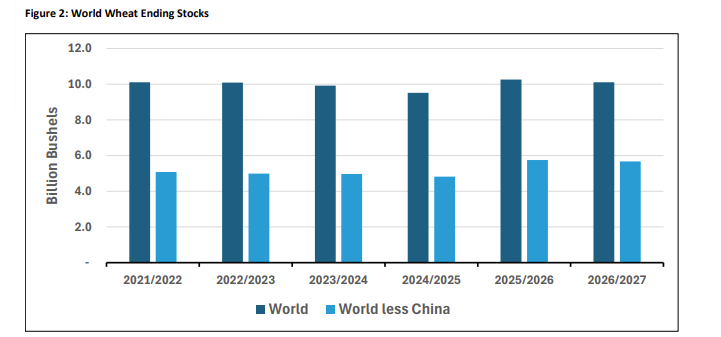
While Australia's acreage is down and dry conditions plague Western Australia, Hubbs believes a smaller Australian crop will eventually provide a late-year boost to the world market as global stocks tighten. However, for domestic hard red winter wheat prices to break out of their current pattern, the market will require a new macroeconomic trigger or geopolitical shock.

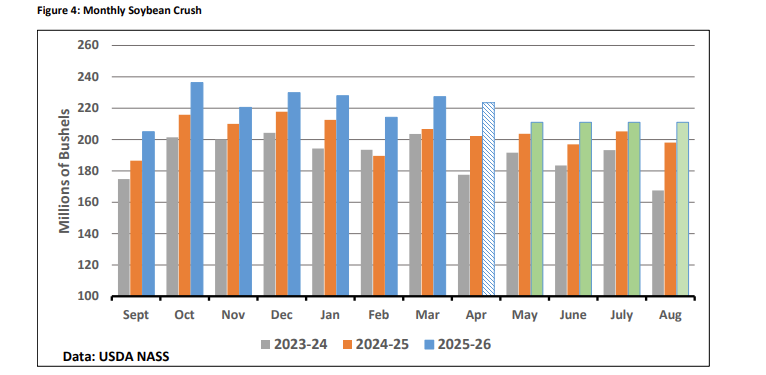
Soybeans Supported by Record-Breaking Domestic Crush

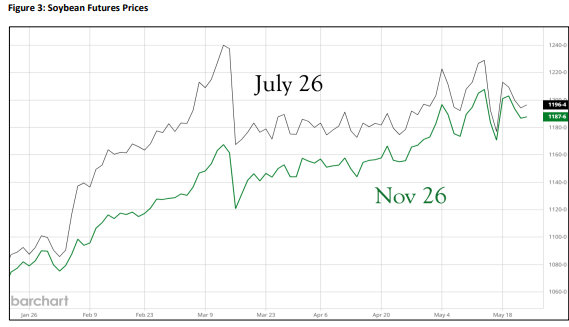
In contrast to the drifting wheat market, the soybean sector is experiencing robust domestic demand. Even as planting progresses smoothly—reaching 67% across tracked states—and prospective acreage remains high, booming domestic processing is keeping the market grounded.

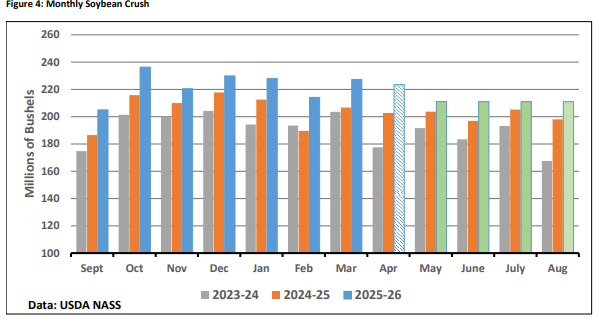
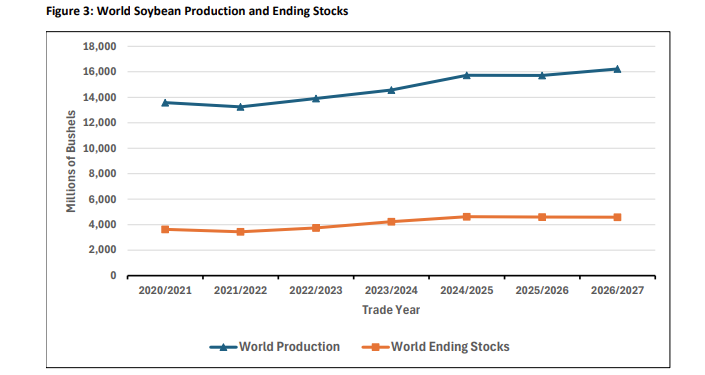
"We're just absolutely setting record crush numbers every month," Hubbs said. "USDA raised their crush in the last WASDE, lowered exports a little bit. I expect that to continue as we continue to see record monthly crush numbers to feed the biofuel RVOs (Renewable Volume Obligations)."

This domestic processing boom has generated a massive supply of soybean meal, which has found a eager market both at home and abroad.

"We've had really strong demand for soybean meal, both domestically and internationally," Hubbs emphasized. "There was a lot of concern that we wouldn't be able to move that much soybean meal as we expanded crush. I was always optimistic we would, and so far we have been."

While an extended energy crisis or logistical blockages in trade routes could eventually slow economic growth and impact meat demand in East Asia, Hubbs remains confident that the modernized livestock sectors in these importing nations will continue to favor high-quality U.S. soybean meal.

The China Wildcard: A "See It to Believe It" Outlook

When asked about potential trade breakthroughs regarding agricultural purchases from China, Hubbs expressed a highly cautious perspective, noting a lack of official confirmation from Chinese authorities regarding statements made by the U.S. administration.

"I haven't heard anything out of the Chinese really to confirm what the President and the administration said," Hubbs remarked regarding rumors of a $17 billion purchase outside of normal soybean commitments. "It sounds like there's something there... They always buy our milo, I can't see that stopping. Maybe they get a little bit of corn, maybe they take some wheat, I don't know."

Ultimately, Hubbs advises producers to maintain a realistic view of international trade announcements until concrete orders materialize.

"I'm a big 'see it to believe it' person when it comes to China... I'm glad the markets took some, but I think that's all disappeared to be honest with you, KC," Hubbs concluded.

ASA Supports Final 45Z Guidance to Expand Demand for U.S. Soybeans

Today, American Soybean Association Secretary Jordan Scott testified before the U.S. Department of the Treasury and Internal Revenue Service during a public hearing on proposed regulations for the Section 45Z Clean Fuel Production Credit, urging the administration to finalize timely guidance that supports U.S. biofuels and expands demand for American-grown soybeans.

Scott, a fifth-generation farmer from Valley Springs, South Dakota, highlighted the role of biofuels in strengthening domestic markets for U.S. soybean farmers at a time when the farm economy continues to face tightening margins and uncertainty.

"Federal tax credit certainty for the biofuel industry supports U.S. agriculture by bolstering market access and creating value-added opportunities for farmers," Scott said. "Conversely, the lack of tax credit certainty affects the markets that U.S. soybean farmers depend on."

In his testimony, Scott highlighted the importance of recent statutory changes to 45Z that improve the competitiveness of soy-based biofuels by removing indirect land use change penalties on agricultural feedstocks. He also voiced support for provisions limiting eligibility for the tax credit to biofuels produced using feedstocks sourced within the United States, Mexico and Canada.

Scott additionally encouraged Treasury and IRS to continue developing policy that would allow farmers to benefit directly from climate-smart practices, including no-till and cover crops, through USDA's Carbon Intensity Calculator.

"To ensure that 45Z supports not only biofuel production, but also the farmers who produce homegrown biofuel feedstocks, Treasury and IRS must work urgently to issue final tax guidance before we enter the 2026 harvest season," Scott said.

Don Close Says Drought High Cost of Money Still Delaying U.S. Beef Herd Rebuild

In today's beef buzz, senior farm and ranch broadcaster Ron Hays features comments from Don Close of Terrain, who says despite growing discussion about rebuilding the U.S. beef cow herd, producers still face significant financial and weather-related risks before widespread heifer retention becomes reality.

The U.S. beef cow herd currently stands at 27.6 million head, near its lowest level since 1961, fueling industry conversations about when cattle producers may begin retaining heifers and rebuilding inventory.

What Will It Take to Retain Heifers?

Close said the industry has spent years asking what conditions will finally convince producers to start holding back replacement females. "The topic we spent the last few years talking about is what it is going to take to convince these guys to retain heifers," Close said. "If you take replacement female prices, if you take the interest rates that are associated with the cost of retaining a $4,500 replacement female and you take a quick look at the current drought monitor, or if you look at the weekly pasture and range conditions and index that thing, we're asking a huge, huge ask of these guys to take on that debt."

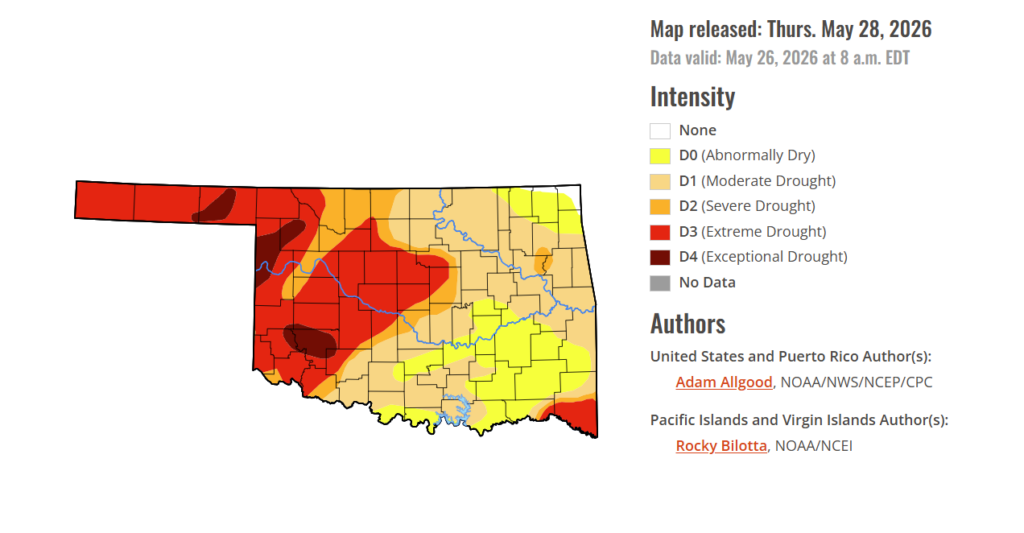
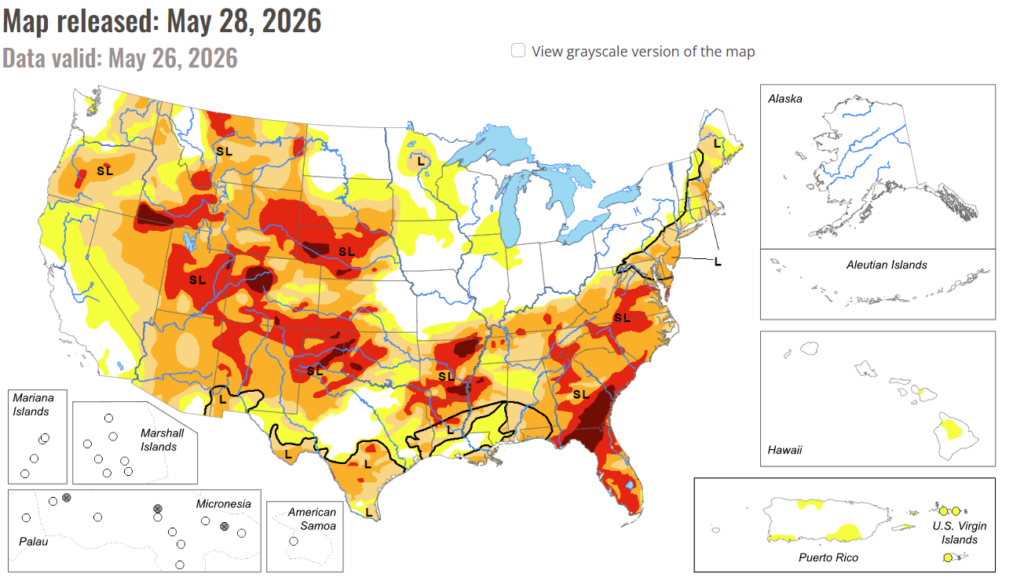
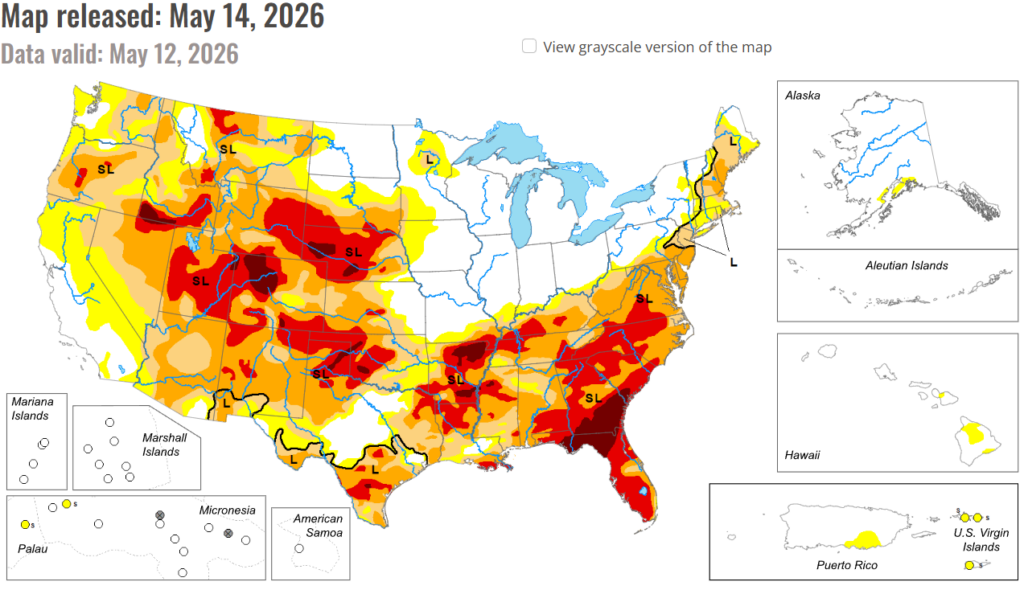
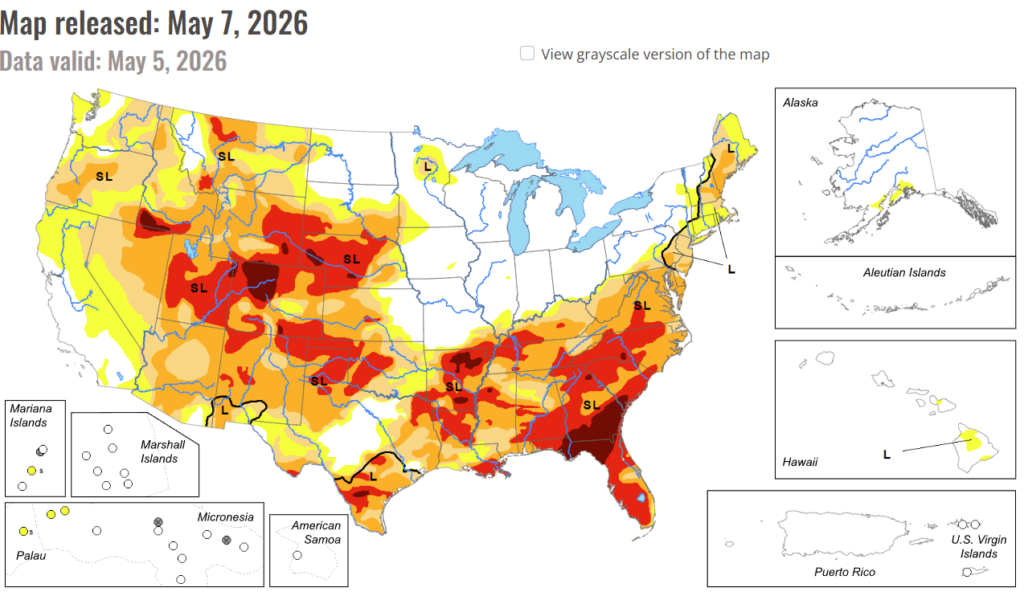
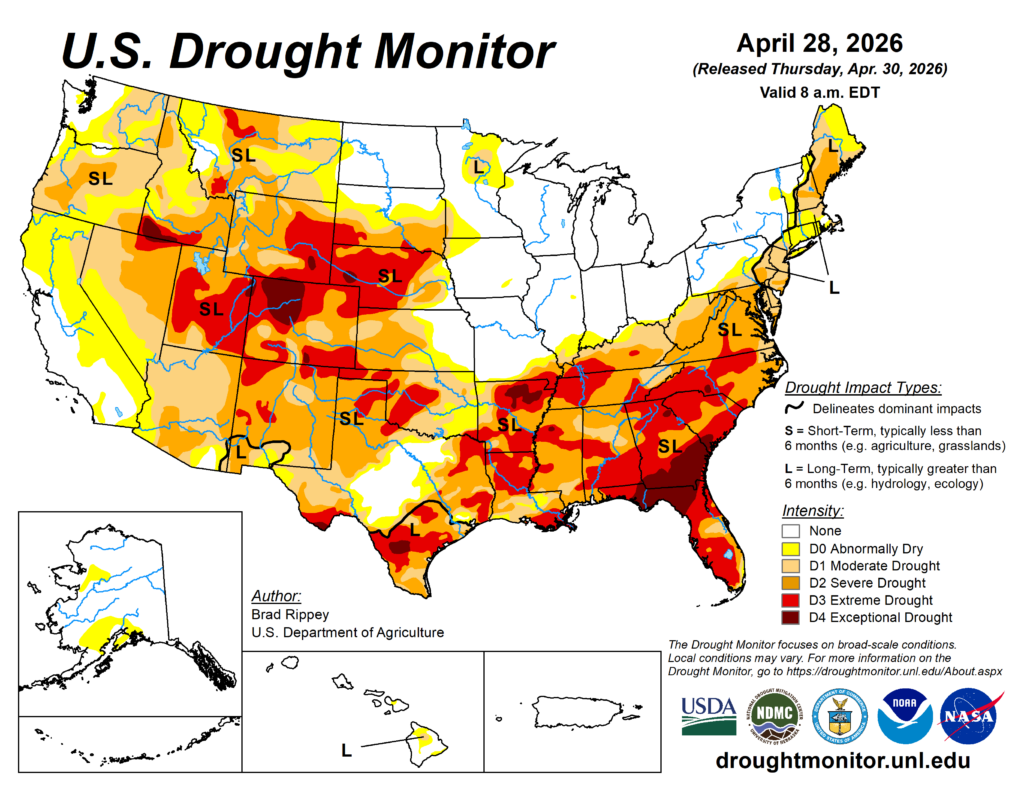
According to Close, drought remains one of the biggest obstacles standing in the way of herd rebuilding, particularly across major beef cow states. "Missouri is in the best shape. They're just at 19% moderate drought or worse," Close said. "And this week we're looking at 43% in Texas — that's not a bad number for them — moderate drought or worse, 59% in South Dakota, 82% in Oklahoma, and 90% of Nebraska, moderate drought or worse."

"So drought continues to rear its ugly head in this whole conversation of rebuilding the U.S. mama cow herd," he added.

The Economics Eventually Win

Even with those challenges, Close said he believes market economics will ultimately force expansion. "Now I am an absolute believer that economics work," Close said. "I believe with my core that before this market is over with, we're going to make that carrot so big that we will attract these guys to retain females. We're just not there yet."

Why Lower Cow Slaughter Isn't Enough

Close also pushed back on the idea that slowing cow slaughter alone signals stabilization in the cattle cycle. "You cannot stabilize the cow inventory by not killing cows if we're not putting replacement heifers on top of that," Close said. "We're going to continue to decline."

He said an overlooked issue is the aging of the nation's cow herd. "Every one of those cows has a clock," Close said. "By not killing the cows and not replacing with females, the average age of our cow herd is getting substantially older."

When expansion finally happens, Close said producers will face a bigger rebuilding challenge than many realize. "When we do finally start to expand, we're going to have to retain enough females, not only to rebuild what we've lost, but we're going to have to retain additional replacement females because of the accelerated attrition of the cows that are still out there," he said.

Tight Supplies Keep Markets Strong

Retaining heifers also means fewer animals available in the short term, something Close says continues to support cattle prices.

"Every time we do retain a heifer, we've got one less animal on foot," Close said. "That's why this market continues to be so explosively strong."

Producers Aren't Expanding—Yet

Looking ahead, Close said producers may not be expanding yet, but the conversation appears to be changing. He mentioned a quote from Dr. Derrell Peel, "I don't think that producers are expanding yet, but I think they're thinking about thinking about it," Close quoted Dr. Derrell Peel. "We're mathematically still not retaining enough heifers to grow this market."

With drought concerns, expensive replacement females, high borrowing costs, and an aging cow herd all in the mix, Close said the path toward rebuilding the U.S. beef cow herd remains complicated—and likely slower than many expect.

The Beef Buzz is a regular feature heard on radio stations around the region on the Radio Oklahoma Ag Network and is a regular audio feature found on this website as well. Click on the LISTEN BAR above for today's show and check out our archives for older Beef Buzz shows covering the gamut of the beef cattle industry today.

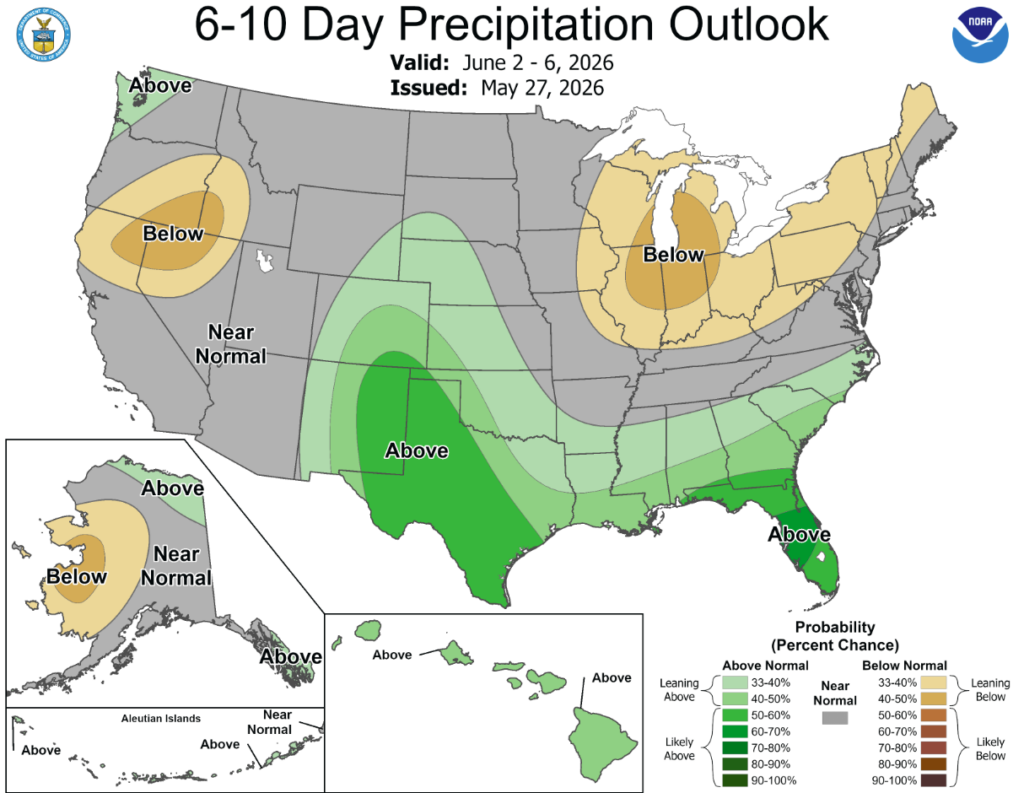
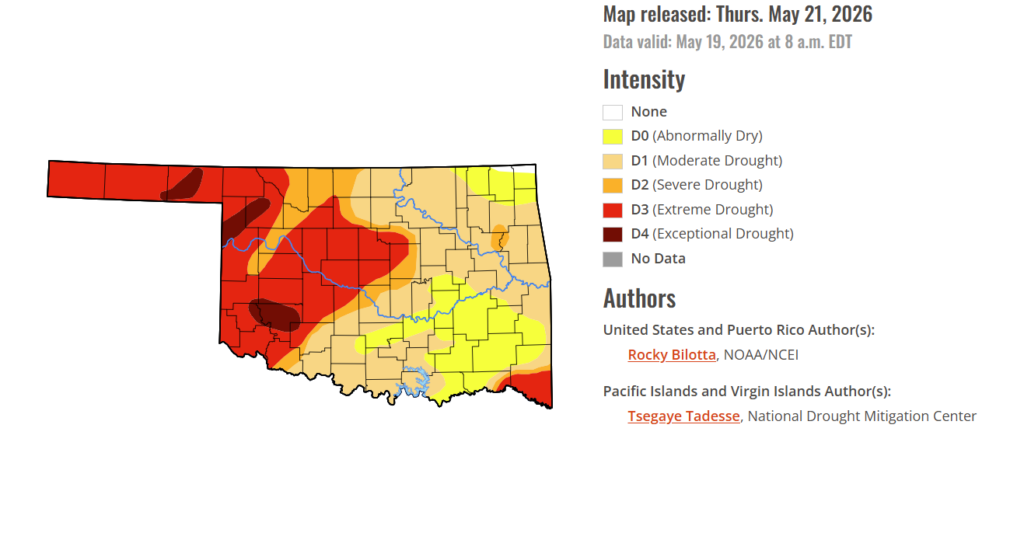
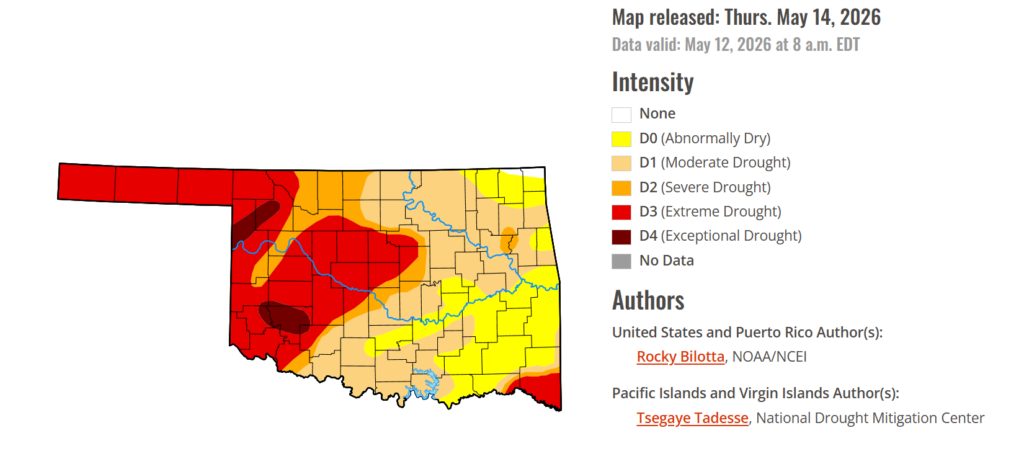
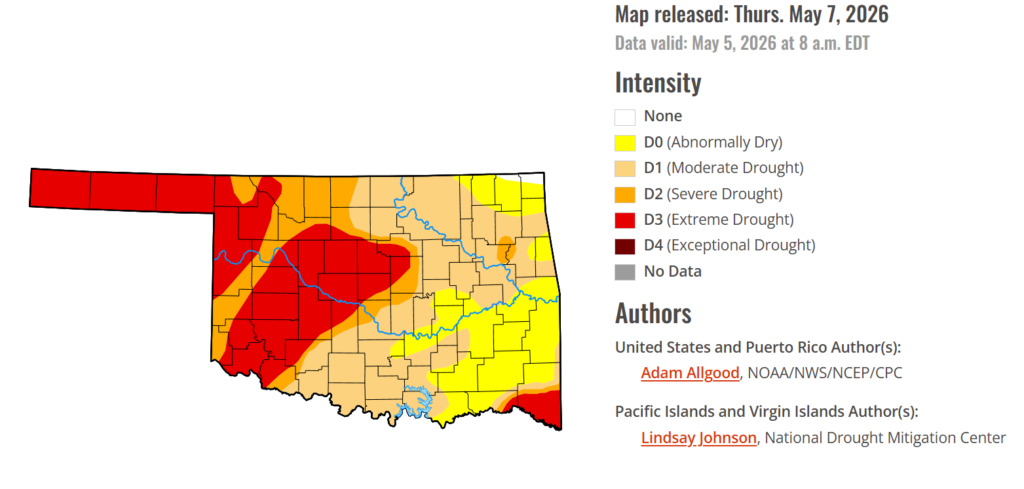
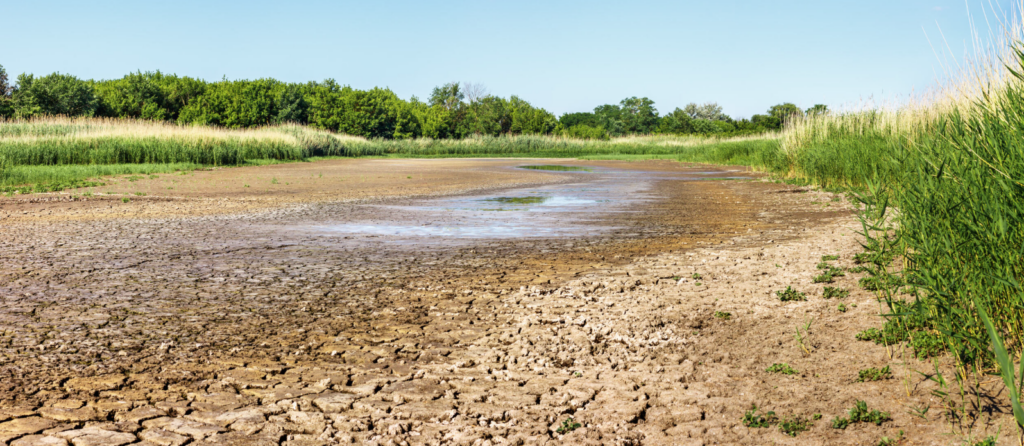
Oklahoma Drought Monitor Shows East-West Divide Growing Across State

To view the latest Oklahoma drought map, CLICK HERE.

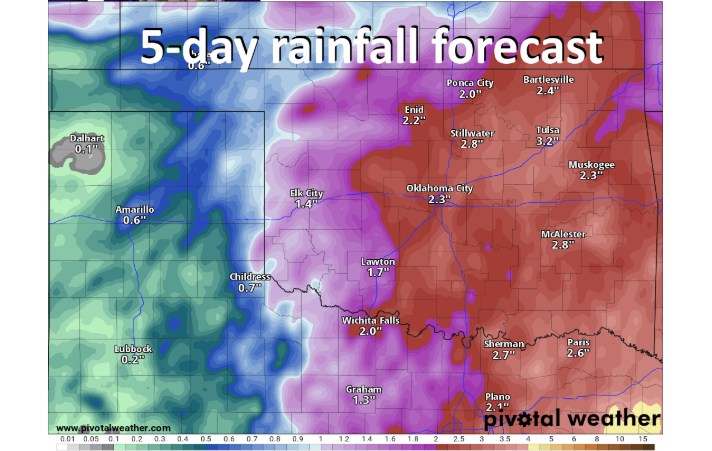
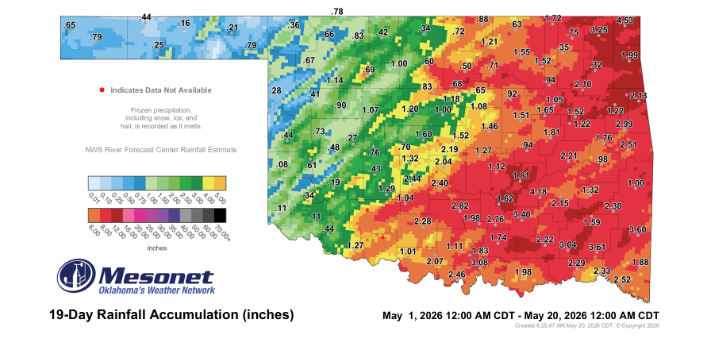
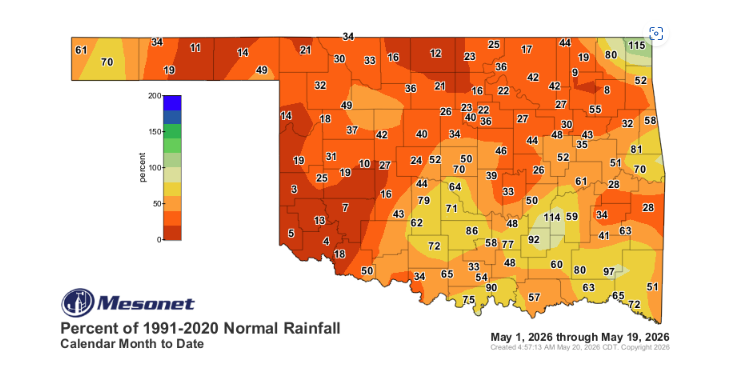
Drought conditions across Oklahoma remain sharply divided, with improving moisture in the east contrasting with worsening dryness in the west. While rainfall has eased conditions in some areas, western Oklahoma continues to face intensifying drought, stressing pastures, crops, and water supplies. The latest drought data shows I-35 still serving as a general dividing line between relief in eastern Oklahoma and worsening conditions farther west as producers move deeper into the summer season.

According to the latest Drought Monitor, exceptional drought persists in parts of western Oklahoma, including Kiowa County, Ellis County, Beaver County, Woodward County, and surrounding areas. Historic impacts of exceptional drought include rising hay and water costs, limited supplies, and herd liquidation by producers. Ranchers and farmers are facing severe economic losses as failed crops are baled or abandoned, pastures turn bare, and cracked, dry land leaves some fields unusable. Exceptional drought currently covers 4.35% of the state.

Moderate to extreme drought conditions in the current period indicate that 81.25% of the state is affected. At this point, only 0.65% of the state remains drought-free in far northeastern Oklahoma.

The trend of easing drought conditions in eastern Oklahoma and worsening conditions in western Oklahoma continues, with I-35 generally serving as the dividing line between the two.

According to the 6-to-10-day precipitation outlook map, a majority of Oklahoma is leaning above a 33-50% chance of precipitation through June 6th, while northeastern Oklahoma is expecting near normal conditions through that same date.

During the week, a highly variable weather pattern brought wide temperature swings to much of the contiguous United States. An unusually cold airmass that had settled over the Plains at the start of the week pushed eastward, bringing a rapid and stormy end to the early season heat wave across the Eastern Seaboard. In contrast, the West baked under much above normal temperatures. By mid-week, much above-normal temperatures had returned to the Plains, with daily maximum temperatures climbing into the upper 90s in some locations. As temperatures began to rebound across the East, cooler air overspread the Pacific states by the end of the week. The strong temperature gradients that set up across the Nation, coupled with ample Gulf moisture streaming northward resulted in widespread heavy and persistent precipitation, with many locations exceeding two inches from eastern Texas and Oklahoma northeastward to the mid-Atlantic states, and isolated instances of 6 or more inches in some spots. Widespread rainfall, albeit with lighter accumulations, fell across the north-central Plains as daily temperatures warmed, but mostly dry weather prevailed across the upper Mississippi Valley and western Corn Belt. West of the Rockies, mostly dry weather prevailed for most of the week, but showers associated with a strong cold front overspread the Northwest at the very end of the period.

In the South: Widespread heavy rainfall overspread the Southern Region, with amounts increasing from west to east. Accumulations of 2 to locally more than 5 inches fell across most of Tennessee, engendering widespread drought reduction. Rainfall was locally heavy but a bit spottier across Louisiana and Arkansas, which also saw widespread drought reduction but with less coverage. Across Texas, heavy rainfall across the eastern half of the state yielded drought improvements and also localized flooding. Across North Texas, localized convection brought relief to some areas, but hot conditions resulted in degradation where precipitation did not occur.

In the High Plains: As below-normal temperatures transitioned back to a hot pattern across the High Plains, widespread precipitation moved through the region. Areas of convection brought up to 2 inches of rain to portions of eastern Nebraska and eastern Colorado, while amounts were generally an inch or less elsewhere. This precipitation was sufficient to bring some drought reduction across northern and northeastern Colorado, but drier conditions across southeastern Colorado and Kansas, coupled with hot temperatures, resulted in degradation. A sharp cutoff in precipitation was also noted across the far western Dakotas, where small areas of degradation were noted along the borders with Wyoming and Montana.

In the West:  Mostly dry weather and above-normal temperatures dominated the Western Region during the week sparking some small-scale degradation across Montana, Idaho, and New Mexico, where the effects of the meager winter snow cover are beginning to be felt in falling streamflow values. Status quo was maintained west of the Rockies for the most part, as reservoir conditions remain good across California during a climatologically dry time of year. At the end of the week, a strong cold front brought abnormal moisture to the Northwest and northern Rockies. While not sufficient to substantively alter the drought depiction, a modest reduction in abnormal dryness was noted in far northwestern Washington.

To view the 6-10 Day Precipitation Outlook Map, click here.

To view the 6-10 Day Temperature Outlook Map, click here.

To view the Monthly Drought Outlook Map, click here.

Cow Calf Corner Paul Beck: Bull Selection, Growth, Feed Efficiency, and Carcass Outcomes

Bull selection is one of the most important long-term decisions in a cow-calf operation. Sires influence not only the next calf crop, but also the genetics of replacement females retained in the herd. For that reason, selection pressure should match the ranch's forage resources, cowherd goals, and marketing endpoint.

Research funded by the USDA Agriculture and Food Research Initiative Grant 2022-67016-36201 at Oklahoma State University evaluated steer calves sired by Angus bulls selected for either high or moderate yearling weight EPD to produce calves with divergent post-weaning growth potential. Steers were raised in OSU spring- and fall-calving cowherds, weaned, preconditioned for 60 days, and then finished at the Willard Sparks Beef Research Center.

Weaning weights were not affected by the sire genetics, indicating that the extensive range environment was insufficient for full expression of the genetic potential for pre-weaning growth. As expected, calves from high-growth sires gained faster after weaning and were heavier at harvest, with fewer days on feed. This shows that when nutritional limitations are removed the high-growth steers could really show their true potential. The High-growth steers averaged 1,500 pounds at harvest compared with 1,428 for moderate-growth steers. Hot carcass weight averaged 911 pounds for high-growth steers compared with 884 pounds for moderate-growth steers.

With the increased performance came greater feed intake. High-growth steers consumed more feed per day, averaging 31.5 pounds DM/day compared with 27.5 pounds DM/day for moderate-growth steers, resulting in reduced feed efficiency for high-growth steers. Residual feed intake, an efficiency metric that measures the amount of feed consumed above or below expectations based on the level of performance, favored the moderate-growth steers, indicating they consumed less feed than expected for their body weight and gain. In contrast, residual average daily gain, an efficiency metric that measures the amount of gain above or below expectations based on the amount of feed intake, tended to favor high-growth steers. This illustrates that different feed efficiency measurements describe different biological outcomes. More growth does not always mean better efficiency, but it depends on how you measure it.

Carcass quality also differed. Even though backfat thickness and yield grade were similar, moderate-growth steers had greater percentages of carcasses grading Prime and High Choice. This may reflect differences in maturity pattern and nutrient partitioning, with moderate-growth cattle having more opportunity to deposit intramuscular fat when finished to a similar fat endpoint.

High-growth genetics can increase body weight, carcass weight, and reduce days on feed. But they may also increase feed intake and may not improve all measures of efficiency. Growth EPDs should be considered alongside mature size, feed intake, carcass merit, maternal traits, health, and marketing goals. Increased performance is valuable only when it fits the production system's environment.

USDA Announces Base Acre Increase Opportunity for Agriculture Risk and Price Loss Coverage Safety Net Programs

The U.S. Department of Agriculture's (USDA) Farm Service Agency (FSA) today announced eligible landowners have from June 1 until Aug. 31, 2026 to review and consider base acre increases on farms enrolled in the Agriculture Risk Coverage (ARC) and Price Loss Coverage (PLC) programs, as authorized by provisions included in the Working Families Tax Cuts Act, also known as the One Big Beautiful Bill Act. 

Signed into law by President Donald J. Trump on July 4, 2025, the Act provides landowners with the opportunity to update and increase base acres in preparation for enrollment in ARC and PLC beginning with the 2026 and future crop years. Nationwide, up to 30 million new base acres can be added by eligible farms. 

ARC and PLC are cornerstone commodity safety net programs that provide financial protection to farmers when market prices or revenues decline. These programs help producers manage risk and maintain the economic viability of their operations amid challenging market and weather conditions. 

"This is the first chance for adding base acres since 2002. President Trump and Secretary Rollins continue to put Farmers First by ensuring USDA programs help producers protect their operations for generations to come," said FSA Administrator Bill Beam. "These base acre improvements will help strengthen the farm safety net for producers across the country and help them better manage risk by providing greater flexibility for operations that have expanded or diversified since the last time we revisited base allocations." 

FSA began notifying eligible landowners, by direct mail, that Base Allocation Summaries outlining potential base acre updates will be available for review beginning June 1, 2026. These Base Allocation Summaries can be accessed online at fsa.usda.gov/arc-plc using a Login.gov account. Landowners who do not currently have a Login.gov account are encouraged to contact their local FSA county office to obtain their Base Allocation Summary beginning June 1, 2026. The Base Allocation Summary should be reviewed and any necessary actions completed by Monday, Aug. 31, 2026.  

Farm operators often maintain detailed historical planting records. Early communication between landowners and farm operators will ensure the Base Allocation Summary is accurate and all necessary actions are completed by the deadline. 

To be eligible for new base acres, a current covered commodity must have been planted or prevented from being planted on the farm during the 2019 through 2023 crop years. The farm's average planted and prevented planted acres during that period must exceed the total existing base acres for all covered commodities in effect on Sept. 30, 2024, excluding unassigned base acres. FSA farm total base acres cannot exceed the farm's total cropland acres. If eligible requests exceed the nationwide cap of 30 million acres, USDA will apply an across-the-board, prorated reduction to all approved new base acres. 

For additional information, producers should contact their local FSA county office or visit U.S. Department of Agriculture online at fsa.usda.gov/state-offices.

Crop and Livestock Income Protection (CLIP) Basics for Spring Crop Producers

Davis, Walker, and Amy Hagerman from Oklahoma State University write in Southern Ag Today: The Crop and Livestock Income Protection (CLIP) product, first offered in 2026, acts as an umbrella policy layered on top of your existing Revenue Protection (RP) policies, offering a higher coverage level across two or more different spring crops grown in the same county. Producers do still need to enroll in RP for each individual crop to be eligible for CLIP. RP policies trigger as they normally would, where CLIP triggers when combined revenues fall below the CLIP guarantee. 

In a year with a revenue loss, indemnities trigger in two stages. First, individual crop revenue losses still work as they normally would. Consider a producer who has both corn and grain sorghum in a single county that experiences losses for both crops. The producer would work with his or her crop insurance agent to report the loss for each crop individually. Second, after all RP policy production to count valuations are determined, the combined revenue to count of the CLIP insured commodities is compared to the CLIP guarantee. If there is a shortfall, CLIP pays the difference. Because CLIP can be set at a higher coverage level than your underlying RP, it may trigger even when neither individual RP policy does.

CLIP coverage levels run from 55% to 85%, capped at 25 points above your lowest individual RP policy coverage election. To show what this means in practice, consider a Garfield County, Oklahoma producer with 500 acres each of corn and grain sorghum, both under RP at 75% coverage—a common coverage level in this area. The producer's cost of that base coverage and comparisons of three options are provided in Table 1: (1) increase the coverage level of individual RP policies, (2) adding CLIP umbrella policy on top of 75% coverage RP, and (3) adding a Supplemental Coverage Option (SCO) area coverage on top of 75% RP policies. SCO will trigger based on county average revenue, and preference may be heavily influenced by field level performance as compared to the county average. A producer cannot enroll in both SCO and CLIP. This comparison is shown in Table 1. 

The simple comparison in a single county offers a few insights. 

  1. CLIP offers comparable individual-based revenue coverage at significantly lower producer-paid premium. CLIP1 yields savings of $9,061, or 28% less than RP1 for comparable 80% coverage protection for producers growing multiple spring crops. 
  2. Savings widen substantially at higher coverage levels. Electing 85% RP on both crops individually carries a producer premium of $45,625, while a CLIP 85% umbrella policy achieves comparable protection for a producer premium of $25,452.
  3. SCO offers a comparable producer cost to CLIP but with a fundamentally different trigger. The SCO scenario (86% coverage) has a near-identical producer premium to a CLIP policy with 85% coverage, differing by just $194 for the entire operation. However, these two products behave very differently at claim time: SCO triggers on county-average revenue loss, where CLIP triggers on personal revenue loss. Your crop insurance agent can provide a comparison of SCO with CLIP for an individual operation, including the production history of the fields in question and the county benchmarks. 

CLIP may provide a viable option to increase protection for a producer growing multiple spring crops. Although it cannot currently be used for winter crops such as wheat or oats, producers do have the option to include under CLIP livestock insured through the Weaned Calf Risk Protection program. CLIP is now available in 13 states. These states include Alabama, Arkansas, Colorado, Georgia, Kansas, Louisiana, Mississippi, Nebraska, North Dakota, Oklahoma, South Dakota, Tennessee, and Texas. It must be purchased by the earliest sales closing date of your eligible crops and is sold exclusively through licensed crop insurance agents. 

Davis, Walker, and Amy Hagerman. "Crop and Livestock Income Protection (CLIP) Basics for Spring Crop Producers." Southern Ag Today

USDA Administration of Food for Peace Program Highlighted During Kansas Ag Roundtable

U.S. Wheat Associates (USW) helped welcome Luke J. Lindberg, USDA Under Secretary for Trade and Foreign Agricultural Affairs, U.S. Representative Tracey Mann (KS-01) and U.S. Senator Jerry Moran (R-Kan.) to the Kansas Wheat Innovation Center on May 27 for a roundtable discussion with agricultural stakeholders on trade negotiations and agreements, USDA administration of the Food for Peace program and other top-of-mind issues. 

"We were excited to have Under Secretary Lindberg, Senator Moran and Congressman Mann visit the Kansas Wheat Innovation Center for an opportunity to talk about the importance of trade with leaders from Kansas commodities," said Justin Gilpin, Kansas Wheat CEO. The Under Secretary has a unique understanding of why producers need to be able to sell our products around the world to consistent buyers, especially in these times when there's so much volatility and geopolitical uncertainty." 

In addition to the global food security discussion, the delegation toured the Hal Ross Flour Mill, the IGP Institute and the Kansas Wheat Innovation Center. Throughout the day, the delegation discussed how the programs at these facilities reaffirm to the world that the United States is not just a seller of grain, but a dedicated partner in global food security.

"The Big First District is home to farmers, ranchers, producers, researchers, and agricultural leaders who help feed, fuel, and clothe the world," said Rep. Mann in a release. "I was grateful to host Under Secretary Lindberg in the Big First today to show him firsthand how Kansas State University and our hardworking producers are strengthening America's food supply and expanding our ability to meet the needs of a hungry world. Food security is national security, and Kansas producers are at the center of making sure American-grown commodities remain at the heart of our global food aid programs like Food for Peace."

Global food aid programs were a highlight of the day's discussions, particularly the shift of the administration of the Food for Peace program to the USDA. Earlier to this year, USDA announced the award of 30,000 metric tons (MT) (1.1 million bushels) for emergency feeding programs under the Food for Peace program. The wheat is destined for emergency feeding programs in East Africa, which will be delivered by the World Food Program. Shipment is expected to take place this summer along with other commodities, including rice and sorghum.

"The delegation's visit to Kansas is well timed, just ahead of the first trains set to load for a Food for Peace shipment from Kansas next month," said Dalton Henry, USW vice president of policy and communications. "Farmers take tremendous pride in helping to feed the world. We are excited to see the deployment of Food for Peace program resources under the USDA's administration, especially at a time of growing global hunger." 

Following their Manhattan visits, Rep. Mann and Under Secretary Lindberg toured the Dwight D. Eisenhower Presidential Library and ADM Milling in Abilene. Their final stop was the wheat farm of Greg Wilson, a Dickinson County farmer who represents the 70th District in the Kansas House of Representatives. 

Wheat farmers have been champions of U.S. food aid assistance since before today's programs came into existence. Food for Peace began with an idea from Cheyenne County farmer Peter O'Brien, whose proposal to use surplus American commodities to feed hungry nations was adopted by the Kansas Farm Bureau, sponsored in Congress by Kansas Senator Andy Schoeppel, and signed into law by President Dwight D. Eisenhower on July 10, 1954. 

More than 70 years later, U.S.-grown wheat has remained an important commodity for food assistance, often representing half of the bulk in-kind aid and routinely using around one million metric tons of U.S. wheat annually.

"Kansas is at the epicenter of feeding the world," Under Secretary Lindberg said. "Not only is it an exporting powerhouse for beef, wheat, corn, soybeans, sorghum, and other agricultural products that the world has come to enjoy; it's also the home to the American generosity of the global food security movement. I am thankful to Representative Mann and Senator Moran for showcasing the best of Kansas to me this week."

Synovex® ONE Grower Receives Additional Label Indication for Dry Lot Cattle

 Zoetis announced today it has received an expanded label approval from the Food and Drug Administration's Center for Veterinary Medicine (CVM) for Synovex® ONE Grower increased rate of weight gain for up to 200 days in growing beef steers and heifers in a dry lot.

"This approval gives dry lot cattle producers a long-acting implant option to support longer term dry lot periods, whether in confinement or on pasture with insufficient forage quality/yield. As one of only three implants containing trenbolone acetate (TBA) approved for dry lot production, it supports additional weight gain for up to 200 days in growing beef steers and heifers when paired with proper nutrition," said Jase Ball, PhD, associate director of Global Clinical Research and Development at Zoetis.

Effective immediately, existing packages of Synovex® ONE Grower can be used in the dry lot production phase. Animal health product suppliers and cattle producers will begin seeing packaging for Synovex® ONE Grower with the updated indications by the end of 2026.

"The approval of Synovex® ONE Grower in the dry lot production phase adds one more tool in the toolbox for dry lot and integrated operations, especially those that are needing extra days of implant coverage in their production systems" said Dirk Burken, PhD, MBA nutritionist with Zoetis Beef Strategic Technical Services. "It's exciting to be able to offer this added flexibility and value to our growing cattle customers. This approval further reflects Zoetis's commitment to implant technology and, most importantly, to our customers."

For more information on how the expanded label could fit your operation, please visit with your Zoetis sales representative. You also can visit www.Synovex.com to learn more.

Refer to individual labels for complete directions for use, precautions, and warnings. 

About Zoetis

Zoetis is the world's leading animal health company, driven by a singular purpose: to nurture our world and humankind by advancing care for animals. With a legacy of nearly 75 years, Zoetis continues to pioneer ways to predict, prevent, detect, and treat animal illness, supporting veterinarians, livestock producers, and pet owners in over 100 countries. We integrate deep scientific expertise, data-driven R&D, advanced manufacturing, and commercial excellence to deliver meaningful innovation across medicines, vaccines, diagnostics, biopharmaceuticals, and digital solutions. Guided by our vision to be the most trusted and valued animal health company, Zoetis is committed to setting new standards for the future of animal care through innovation, customer obsession, and purpose-driven colleagues. To learn more, visit Zoetis.com.

Economic Pressures and Strategic Solutions in the Modern Farm Economy

The current farm economy is facing a complex array of challenges, from fluctuating balance sheets to long-standing labor shortages. In a recent conversation, Farm Director KC Sheperd sat down with Duane Simpson, President and CEO of the National Council of Farmers Cooperatives (NCFC), to discuss the financial landscape for producers and the vital role of cooperatives in maintaining stability. According to Simpson, while market volatility remains high, the adaptive nature of agriculture is paving new paths for domestic growth.

Managing the Farmer Balance Sheet

The primary concern for producers over the last several years has been the stability of the farmer's balance sheet. Simpson noted that geopolitical tensions have directly translated into higher operational costs for American growers.

"Farmer balance sheets are the number one issue... with the conflict in Iran, seeing the price spikes on both fuel and fertilizer—that didn't come with a price spike in commodities. That's having the biggest impact for farmers today."

To combat these rising costs, Simpson highlighted three primary levers for policy and industry support:

  1. Lowering Costs: Increasing domestic production of essentials like fertilizer and reducing regulatory burdens.
  2. Opening Markets: Expanding trade opportunities and boosting domestic consumption through biofuels and value-added products.
  3. Direct Payments: While effective in the short term, Simpson noted these are often not a sustainable long-term solution.

The Chronic Challenge of Ag Labor

Beyond input costs, ag labor remains a critical bottleneck for both individual farmers and large-scale cooperatives. Simpson emphasized that this is not a new struggle, but one that requires urgent congressional action to provide a reliable, skilled, and affordable workforce.

"Ag labor is an issue that we've been leading the fight on for a very long time... It's a challenge that almost every farmer faces, and it's one that we need a policy solution—frankly, we need Congress to do the work on."

Shifting Consumer Demands and Value-Added Ag

One of the most significant shifts in the farm economy is the transition from focusing solely on "cheap calories" to meeting the demand for nutrient-dense, healthy products. Simpson noted that whether it is the "Maha" influence or the rise of GLP-1 medications, American eating habits are changing.

"The days of producing the cheap calories to feed the world, versus producing nutrient-dense healthy products that Americans want to buy—I think those days are changing for us. As agriculture, our job is to meet that moment."

This shift represents a massive opportunity for row crop and livestock farmers alike. Increased consumption of fresh fruits, vegetables, beef, pork, and dairy creates a "value-added" ripple effect that benefits the entire agricultural supply chain.

The Enduring Strength of Cooperatives

As the backbone of rural America, cooperatives provide a unique safety net during lean economic times. Because they are owned and managed by the farmers themselves, they are designed to mitigate risk and return profits directly to the producers.

"Cooperatives shine best in tough economic times. When the ag economy is booming, everybody's making money... the reality is, though, that we help mitigate risk because cooperatives are owned by farmers, managed by farmers, for the benefit of farmers."

By diversifying into sectors like broadband and internet to meet modern needs, cooperatives continue to ensure that rural communities remain competitive in a global marketplace.

Klobuchar, Colleagues Raise Concerns about Food Safety and Inspection Service Reorganization

Senator Amy Klobuchar (D-MN), Ranking Member of the Senate Committee on Agriculture, Nutrition, and Forestry, is leading 19 of her colleagues in raising strong concerns about the plan to reorganize the Food Safety and Inspection Service (FSIS) at the U.S. Department of Agriculture. 

"We write with serious concern regarding the announced reorganization of the Food Safety and Inspection Service (FSIS)," wrote the Senators. "Rather than strengthening the agency's effectiveness, this reorganization poses a risk to FSIS's core mission of protecting public health and ensuring the safety of our nation's food supply."    

"Losses in staff and institutional expertise as a result of this relocation could delay the identification and containment of outbreaks involving pathogens such as Salmonella, E. coli, or Listeria, allowing contaminated products to remain in commerce longer and increasing illnesses nationwide," the Senators continued. "Reduced coordination amongst FSIS and other food safety and public health agencies like the Food and Drug Administration, and state partners could also slow traceback investigations and public communication during multistate outbreaks, when rapid response is critical to prevent additional illnesses. Instead of moving its employees across the country, FSIS should be focused on maintaining food safety. Overall, this reorganization threatens to undermine FSIS's effectiveness and weakens an agency that American consumers rely on every day." 

Along with Klobuchar, the letter was signed by Senators Tammy Baldwin (D-WI), Richard Blumenthal (D-CT), Cory Booker (D-NJ), Dick Durbin (D-IL), John Fetterman (D-PA), Kirsten Gillibrand (D-NY), Martin Heinrich (D-NM), Ben Ray Luján (D-NM), Jeff Merkley (D-OR), Patty Murray (D-WA), Alex Padilla (D-CA), Adam Schiff (D-CA), Chuck Schumer (D-NY), Jeanne Shaheen (D-NH), Elissa Slotkin (D-MI), Tina Smith (D-MN), Chris Van Hollen (D-MD), Peter Welch (D-VT), and Ron Wyden (D-OR). 

The full letter is available here and below.  

Dear Deputy Secretary Vaden: 

We write with serious concern regarding the announced reorganization of the Food Safety and Inspection Service (FSIS). Rather than strengthening the agency's effectiveness, this reorganization poses a risk to FSIS's core mission of protecting public health and ensuring the safety of our nation's food supply. 

FSIS plays a key role in safeguarding American consumers. Not only does FSIS provide critical frontline inspection of meat, poultry, egg, and some fish products, but the agency also plays an important role in informing the public through outreach and education and coordinating with the many international, federal, state, and local agencies that play a part in food safety. When outbreaks inevitably happen, FSIS provides a rapid response to contain illness before it spreads widely. 

The Deferred Resignation Program implemented last year has already resulted in a loss of more than 500 FSIS employees, straining a key agency that operates under significant pressure. Now the Administration is asking two-thirds of the FSIS staff in the Washington, D.C. area to relocate to Iowa, Georgia, or Colorado within months, which could weaken interagency coordination and rapid response efforts during foodborne illness outbreaks, creating a greater risk to consumers and our food supply. Since FSIS was not explicitly included in the July 2025 Secretarial Memorandum on USDA's proposed reorganization, FSIS stakeholders, employees, consumer advocates, and industry partners have not been able to provide meaningful comments on changes that could have significant implications for the nation's food safety system. 

Losses in staff and institutional expertise as a result of this relocation could delay the identification and containment of outbreaks involving pathogens such as Salmonella, E. coli, or Listeria, allowing contaminated products to remain in commerce longer and increasing illnesses nationwide. Reduced coordination amongst FSIS and other food safety and public health agencies like the Food and Drug Administration, and state partners could also slow traceback investigations and public communication during multistate outbreaks, when rapid response is critical to prevent additional illnesses. Instead of moving its employees across the country, FSIS should be focused on maintaining food safety. Overall, this reorganization threatens to undermine FSIS's effectiveness and weakens an agency that American consumers rely on every day. 

We ask that you provide a detailed description of how you will ensure that FSIS will maintain full operational capacity during and after this transition. Specifically, we ask that you provide further details on what communication USDA has had with impacted FSIS employees, how the USDA will mitigate anticipated workforce losses, preserve critical expertise, and ensure that outbreak response, interagency coordination, and rulemaking activities are not compromised.

Thank you for your attention to this important matter, and we look forward to receiving your response within 30 days.

Oklahoma Wheat Harvest Reaches 12%–14% Complete Amid Wide Crop Differences

pic courtesy of OK Wheat Commission FB Page

The Oklahoma wheat harvest is moving rapidly, offering producers, grain handlers, crop consultants, and industry partners a field-level look at how the crop is shaping up across the state. According to the latest Oklahoma Wheat Crop Update from the Oklahoma Wheat Commission, harvest is currently reported at 12% to 14% complete.

As combines move through Oklahoma wheat country, the data reveals that this season's crop is far from uniform. Weather patterns, regional timing, variety selection, and localized management strategies are drastically shaping the final results, creating significant differences from one field to the next.

Harvest Progress and Field Conditions

With the harvest pace accelerating, early reports highlight a wide variation in crop conditions. Producers are seeing a stark contrast between dryland fields that bore the brunt of the season's elements and areas that managed to catch timely moisture.

Regional Moisture and Drought Stress

Drought stress remains a primary factor in this year's outcomes, with moisture differences creating distinct regional disparities. While some areas benefited from critical rain events that sustained the crop through key development stages, other regions faced prolonged dry spells, limiting overall growth and driving early maturity.

Yield Potential and Crop Variability

Because of these localized weather splits, yield expectations and overall crop potential are highly variable. The Oklahoma Wheat Commission emphasizes that crop performance is highly dependent on geography and management, with some fields showing resilient yields while others reflect the harsh realities of dry conditions.

Disease, Pest, and Late-Season Management

In addition to weather challenges, the update highlights the role of disease, pests, and late-season management considerations in determining final quality. Producers who managed to stay ahead of late-season pressures are seeing those efforts pay off as the grain hits the bins.

As the combines continue their march across the state, industry partners and producers are advised to keep a close eye on changing field conditions and regional yield trends to navigate the remainder of the harvest season.

This update covers:

• Current Oklahoma wheat crop conditions

• Harvest timing and field progress

• Drought stress and moisture differences by region

• Yield potential and crop variability

• Disease, pest and late-season management considerations

• What producers should keep an eye on as harvest continues

Oklahoma's wheat crop is never the same from one field to the next, and this season is showing just how much weather, timing, variety selection and management can shape final results.

Rural Renewal Initiative Seed Grants fund rural research

 The Rural Renewal Initiative Seed Grant Program invests in rural-focused research across Oklahoma, providing critical funds to enhance rural communities.

"The seed grants are a way for researchers to address the grand challenges rural community members face," said Linnea Harvey, Rural Renewal Initiative coordinator. "The research conducted through these grants involves getting the community perspective injected into the research process."

Each year, this competitive program awards two $90,000 seed grants to launch research that engages rural Oklahoma communities. The winning proposals for the 2026 grants focus on water insecurity and community journalism.

Nila Pradhananga, an assistant professor in the OSU Department of Nutritional Sciences and nutrition state Extensionspecialist in Family and Consumer Sciences, is the primary investigator for research evaluating and addressing water security in rural western Oklahoma and its connection to nutrition.

"Food insecurity is found to be substantially higher among participants who have experience of mild to severe water insecurity," Pradhananga said. "It is important to explore water security issues as it plays an important role in food preparation as well as drinking water; however, this hasn't really been explored in the realm of community nutrition research."

As part of Pradhananga's community-based participatory research, data will be collected from community members through Photovoice, fostering local awareness and dialogues. Her research also aims to present the rationale for new water-relevant FCS and agriculture Extension programming.

Rosemary Avance, OSU media and strategic communications assistant professor, is the primary investigator for a project that builds upon three years of research examining access to local news in rural areas.

"We've found that many rural communities no longer have their own newspaper or dedicated journalists writing about the community," Avance said. "In addition to many newspaper closures, larger companies are buying smaller newspapers, and local stories aren't being properly shared."

This shift has contributed to a disconnect between community members and the information that affects them. To address this issue, Avance and her collaborator, Andrew Abernathy, will pilot a course in citizen journalism for rural high school juniors and seniors. Participants will research and write news stories about issues affecting their communities, which will be shared within their communities and news organizations, including KOSU and the O'Colly.

"We are piloting our citizen journalism program to help establish a new means of information flow in and out of rural communities," Abernathy said. "By working with high school-aged students, we're designing a program that will help enhance their media literacy and their awareness of the role reliable information plays in democratic governance."

This year's funds will become available in August and will be used over a two-year period. Pradhananga's research will focus on western Oklahoma, and Avance and Abernathy will start in southwest Oklahoma the first year and shift to the southeast portion of the state for the second year.

MEDIA CONTACT: Alisa Gore | Office of Communications & Marketing, OSU Agriculture | 405-744-7115 | alisa.gore@okstate.edu

Free Envu Webinar to Explore the Role Invasive Annual Grasses Play in Escalating Wildfire Risk

 Wildfires continue to pose a threat to life and property across the Western U.S, and as wildfire season quickly approaches, Envu® will host a free webinar that addresses a critical but often overlooked part of proactive wildfire control: tackling invasive annual grasses. The webinar, titled, Breaking Vicious Wildfire Cycles: How Proactively Controlling Invasive Annual Grasses Can Lessen the Intensity and Speed of Wildfires in the West, will take place on May 29 at 11 a.m. CT and will feature Cara Applestein, an ecologist with the United States Geological Survey, and John Watson, wildlife habitat specialist with the Laramie County Conservation District. Ranchers, landowners and government officials can register for the webinar here. 

"Invasive annual grasses now dominate more than 120 million acres of western rangelands and are a primary driver of faster and more frequent wildfires. Each year, public entities and private citizens grapple with wildfire suppression and recovery costs," said Derek Sebastian, Envu vegetation management senior technical service manager. "With this webinar, ranchers, landowners and government officials have an opportunity to get a greater understanding of how exactly invasive annual grasses can serve as the fine fuels needed for wildfires to spread and how shifting to proactive control of those invasive grasses can improve habitat quality and save time and money on reactive suppression."

Applestein and Watson will each present research relating to how invasive annual grasses contribute to wildfires and how different methods of control of those invasive grasses could improve outcomes in the future. 

Envu Range & Pasture offers a broad range of products and services that help ranchers effectively tackle invasive species, including Rejuvra® and Marshal™ Imazapic herbicides. Rejuvra shows consistent control of invasive annual grasses like cheatgrass for up to four years in one application, with some applications demonstrating efficacy beyond five years. When paired with Rejuvra, Marshal Imazapic delivers a stronger start in year one and lasting control for years to come, reducing the need for annual applications.

Ranchers, government officials and members of the media are encouraged to register for the webinar here. 

Learn more about Rejuvra herbicide, Marshal Imazapic herbicide, and the full suite of Envu Range & Pasture products here: us.envu.com/range-and-pasture/healthy-forage. 

National Pork Board CEO David Newman Focuses on Demand, Producer Value, and Pork's Future

Photo by Mitchell Alcala, OSU Agriculture

Protein demand is surging, and leaders in the pork industry are working to ensure producers benefit from growing consumer interest. Speaking with associate farm reporter Carli Davenport during a Dean's Dialog at Ag Hall, Dr. David Newman, CEO of the National Pork Board, discussed the unique structure of the pork checkoff, efforts to grow pork demand, producer priorities, and the challenges shaping the future of the industry.

Pork Checkoff Built Differently Than Other Commodity Programs

Newman said one of the first things producers and consumers should understand is that pork's checkoff program operates differently than many other agricultural commodity organizations. "One of the things that I like to explain is all of the checkoffs are uniquely different," Newman said. "How they were organized, their focus area on behalf of the producers they represent, and then even the assessment rate that is collected."

Newman says, the pork checkoff was established in 1985 and follows a distinct funding and mission model. "Pork is very unique and different than any of the other proteins," Newman explained. "Our checkoff was created in 1985 and we have an assessment rate of 35 cents per $100 value. That's how it works."

Capitalizing on Protein's Popularity

With protein consumption continuing to trend upward among consumers, Newman said the National Pork Board sees a major opportunity to expand pork demand both domestically and internationally. "Encouraging demand with consumers and this promotion aspect is one of the core fundamental principles of what we do," Newman said.

He explained that the organization invests heavily in understanding changing consumer habits and targeting future demand. "At the checkoff, we have an entire staff that is dedicated to not only working with different consumer segments and really focusing on what the future consumer of pork looks like, how we help drive the entire category, not just an individual brand," Newman said.

Rather than promoting one company or label, Newman said the mission is broader. "This is about- how do we get more people eating more pork more often," he said.

That effort extends beyond U.S. borders as well. "Not just domestically, but also the investments we have internationally with our largest trading partners like Mexico, Japan, and Korea," Newman said.

A CEO Focused on Producer Value

After being named CEO in September of last year, Newman said his priorities center on creating measurable value for pork producers while positioning the industry for long-term success. "My goals really align very much with the 15-member board of directors that I represent every day," Newman said. "Every hour that I am putting into this role is about how can I drive value for the producers that we represent."

He said the National Pork Board approaches that mission with a dual focus. "We drive value by focusing on the consumer and focusing on the producer," Newman explained. "Literally our motto is consumer focused, producer led."

For Newman, strategic investments are essential to keeping the pork sector competitive. "What are the investments that we can make strategically to actually drive the future of this business into a positive direction?" he asked.

He pointed to demand-building, producer support, and animal health as key priorities. "That strategy is around our demand and promotion efforts, how we work with our producers on the numerous factors that they're dealing with every day," Newman said. "Really honing in very specifically on some of those factors that are having the biggest impact—for example, right now, swine health."

Protecting Pork's Image With Consumers

Newman also addressed challenges surrounding consumer perception, particularly among younger audiences, as producers continue navigating issues such as Proposition 12 and broader public scrutiny of agriculture. "We have a great story to tell about the American agriculture story—one that I think we should all be very proud of," Newman said.

While emphasizing that the National Pork Board is not the policy arm of the industry, Newman said education remains one of its most important responsibilities. "One thing that we certainly can do in our educational efforts is work very closely with our producers, with our state pork associations, and with our consumers, most importantly," he said.

Part of that message, Newman explained, is helping consumers better understand food production and confidence in pork. "To help them understand that not only is pork safe," Newman said, "but when we think about the factors of how consumers actually relate to and think about pork, one, it's about driving relevance in the category."

Once consumers see pork as relevant to their lives, he said, education becomes increasingly important. "Then it's about making sure that our consumers are educated well on the factors that impact the producers themselves, but how it can positively impact the consumer side of the business," Newman said.

Ribbon-cutting at new lab

TSCRA attends ribbon cutting at Kerrville ARS facility

Texas & Southwestern Cattle Raisers Association President Stephen Diebel today attended the grand opening and 80th anniversary of the Knipling-Bushland U.S. Livestock Insects Research Laboratory operated by the Agricultural Research Service (ARS).

Texas & Southwestern Cattle Raisers Association was well represented at the grand opening and communicated the association's support of the valuable research conducted at the Kerrville facility focused on protecting livestock from pests, such as the New World screwworm.

"The Kerrville facility has a rich history in the New World screwworm fight," Diebel said. "The groundbreaking work that took place 70 years ago continues to serve as an investment in pest management for our livestock industries."

This new laboratory will provide the U.S. cattle industry and public with innovative ways to control and eliminate invasive arthropod pests of veterinary importance.

"We are grateful for the work the scientists, researchers and staff continue conducting at this historic site," Diebel said. "For cattle producers, this facility sends an important message. Animal health and continued investment in agricultural research matters."

Operating at the Kerrville site in 1950, Dr. Raymond C. Bushland successfully demonstrated that viable sterile male screwworms could be produced. Today, the facility is utilized to develop novel, integrated management techniques to control or mitigate livestock arthropod pests, including tools that extend well beyond the use of traditional pesticides.

USDA Opens State-of-the-Art Livestock Insects Research Laboratory to Combat Livestock Pests

The United States Department of Agriculture's (USDA) Agricultural Research Service (ARS) opened the Knipling-Bushland U.S. Livestock Insects Research Laboratory, a state-of-the-art laboratory facility today that will provide the U.S. cattle industry with innovative tools and advanced technologies to manage and eliminate the invasive fly and tick pests that threaten the U.S. cattle industry.

"The Trump Administration has been committed to eradicating pests that could harm our American livestock since the President has been sworn in. The brand new Knipling-Bushland U.S. Livestock Insects Research Laboratory will allow us to research and find new active measures to keep current and future threats away from our borders," said U.S. Secretary of Agriculture Brooke L. Rollins. "We have taken extraordinary actions to keep New World Screwworm out of the United States and this lab will help us accelerate our offensive efforts to drive this pest further away from our borders."

"For the last 250 years, our nation has relied on research leading to science-based innovation as a means to overcome some of America's greatest agricultural challenges, including the exclusion of New World Screwworm from the United States with novel Sterile Insect Techniques," said USDA Under Secretary for Research, Education, and Economics Dr. Scott Hutchins. "The Knipling-Bushland U.S. Livestock Insects Research Laboratory -- named after ARS pioneers that every entomologist and entomology student knows of through their breakthrough work -- will build on their legacy by protecting livestock health, ensuring that America's ranches remain productive, safe, and profitable for generations to come."

The new 52,000‑square‑foot laboratory features cutting‑edge laboratory spaces, advanced cattle facilities, and a state‑of‑the‑art genomics core to drive research that delivers innovative control technologies for the U.S. livestock industry. Other on-site research opportunities will involve improved surveillance and trapping tools, novel insecticides and acaricides, enhanced pesticide delivery techniques for cattle and wildlife, sustainable treatments to prevent and mitigate outbreaks of invasive/quarantine arthropod species, improved approaches to combat pesticide resistance, and insect genomics to identify pest vulnerabilities.

The facility also houses two ARS research units: the Livestock Arthropod Pest Research Unit and the Veterinary Pest Genetics Research Unit. Collectively, these units improve the health, sustainability, and profitability of U.S. livestock production and protect the U.S food supply from devastating arthropod pests, including biting flies, ticks, and the New World Screwworm. On-site research also plays a role in critical research to eradicate other ticks and blood feeding flies that can harm, infect, and kill cattle.

"This new laboratory will equip our researchers with advanced tools to combat the most destructive invasive insects already impacting the United States, as well as those posing future threats at our borders," said ARS Administrator Joon Park. "The important ARS research conducted here in Kerrville will continue to play a vital role in protecting and strengthening the future of the U.S. cattle industry."

This is a full circle moment due to the 80 years of historic research done at previous ARS laboratory facilities in the Kerrville area. This includes:

  • Research on the biology of control of New World Screwworm that led to its eradication from the United States in the 1970s.
  • Development and evaluation of novel pesticides like macrocyclic lactones for controlling biting flies and ticks on cattle and wildlife.
  • Sequencing the genome of over 25 important livestock arthropod pest species.


The laboratory is named after two influential and pioneering USDA researchers: Drs. Edward F. Knipling and Raymond C. Bushland. In 1937, Knipling first developed the theory that screwworms could be controlled using the sterile male technique. In the early 1950s, Bushland successfully demonstrated that the theory worked, that viable sterile male screwworms could be produced and used to control screwworm populations. This biocontrol technique, known as Sterile Insect Technique (SIT), became the keystone component of the strategy that eventually led to the eradication of the screwworm from the United States, Mexico, and Central America. Nearly 80 years later, SIT is still being employed to fight New World Screwworm in Mexico and Central America, in an effort to keep the devastating insect from reestablishing itself once again in the United States.

The Agricultural Research Service is the U.S. Department of Agriculture's chief scientific in-house research agency. Daily, ARS focuses on solutions to agricultural problems affecting America.

U.S. Fertilizer Expansion: Inside the Strategy to Reshore Production and Boost Infrastructure

Federal officials gathered at the U.S. Department of Agriculture (USDA) headquarters to detail short- and long-term initiatives to expand domestic fertilizer production. Reporting for the USDA from Washington, D.C., Rod Bain shared updates on significant regulatory adjustments and financial investments aimed at bringing fertilizer manufacturing back to American soil.

The World's Largest Ammonia Plant Slated for Louisiana

Agriculture Secretary Brooke Rollins highlighted the Blue Point project in Louisiana as a major component of the expansion strategy. According to Secretary Rollins, permitting for the project is expected to conclude within 45 days, clearing the way for the construction of a $3.7 billion ammonia facility. Once operational, the plant is projected to be the world's largest ammonia production facility.

Accelerating Projects Through FPEP

The administration is using the Fertilizer Production Expansion Program (FPEP) to advance projects previously delayed by regulations. Secretary Rollins characterized the program as an immediate step toward a long-term strategy of reshoring all fertilizer manufacturing to the United States.

  • Large-Scale Investments: Under FPEP, higher-impact awardees are receiving assistance to finalize stalled developments. This includes an $80 million investment in Washington State for a project projected to generate 700,000 tons of hydrogen ammonia fertilizer annually and support over 200 jobs, with construction scheduled to begin this year.
  • Small-Scale Initiatives: The program is also funding smaller, decentralized operations to reduce market consolidation. A $3.9 million project in Iowa will hold a ribbon-cutting ceremony this summer to expand domestic organic fertilizer capacity through large-scale composting and nutrient processing.

Enhancing Market Transparency and Infrastructure

Future legislative considerations include the appointment of a USDA input economist to lead a departmental effort to improve transparency in the fertilizer market.

Concurrently, the U.S. Army Corps of Engineers is working to expedite the permitting process for infrastructure critical to domestic fertilizer logistics. War Department Assistant Secretary Adam Telle stated that the agency is applying the same framework used under the energy executive order—which permitted more than 1,000 energy-related facilities—to accelerate fertilizer infrastructure projects.

A primary focus of this infrastructure effort is the Blue Point complex, strategically located along the Mississippi River. Assistant Secretary Adam Telle emphasized that the inland waterway system, built and maintained by the Corps, is essential for moving manufacturing inputs to agricultural producers across the American heartland and distributing finished products nationwide and globally.

USDA Chief Economist Justin Benevidez Discusses Farm Economy and Market Trends

USDA Chief Economist Justin Benevidez recently shared insights on the state of the agricultural economy and emerging market trends during the National Association of Farm Broadcasters' Washington Watch event. Addressing a group of farm broadcasters, Benevidez provided a comprehensive outlook on various sectors, from livestock profitability to the challenges facing row crop producers.

Navigating Economic Cycles and Market Divergence
Reflecting on his first four months in the role, Benevidez noted that the agricultural landscape is currently defined by a "sustained divergence" in input costs versus returns to output. While many speak of traditional profitability cycles, he emphasized that the last 15 years have presented a more complex challenge.

"Rather than talking about some short-term solutions to get us out of quick fixes... we've got to talk about ways to, in the long run, expand demand and find cheaper input costs," Benevidez explained. He highlighted the importance of innovative sales venues and the growing role of the biofuels sector, specifically mentioning record-high Renewable Volume Obligations (RVOs) and the 45Z tax credit rule as pivotal factors for the industry's future.

The Cattle Cycle and Herd Rebuilding
A major point of discussion was the current state of the cattle market. Benevidez observed that while the market is pushing for herd rebuilding due to high prices, environmental factors remain a constraint.

Early Indicators: USDA data suggest the earliest signs of a herd rebuild, with a slight year-over-year uptick in heifer retention.

Weather Challenges: Lack of forage and ongoing weather concerns in certain regions may slow the pace of expansion.

Price Outlook: Benevidez anticipates that prices will eventually begin a gradual downward turn as inventories increase, though this shift is likely to be slow given the biological timelines of cattle production.

Row Crops and Input Costs
For row crop producers, the outlook remains tempered by "burdensome stocks" that have persisted since the onset of the conflict in Ukraine. Without significant disruptions in global transportation or major weather issues in key "breadbasket" regions, stock levels are expected to remain high, keeping pressure on prices for the next one to two years.

Benevidez also addressed the volatility of fertilizer prices. He noted that supply chain issues, particularly in the Gulf, continue to impact costs. Even when facilities are operational, the lead time for transport and processing means that relief from elevated fertilizer prices is often weeks or months away.

Consumer Behavior and Labeling
When asked about the impact of "Product of USA" labeling and mandatory Country of Origin Labeling (COOL), Benevidez pointed to historical data indicating that consumers are primarily price-sensitive.

"The data historically has told us that consumers are price-sensitive," he stated. While consumers often express a preference for domestic labels, they frequently revert to cheaper options when faced with a price premium. This trend is also evident in protein substitution; as beef prices rise, consumers may shift toward poultry or pork to manage household budgets.

Global Trade and Competition
Benevidez concluded by discussing the long-term impacts of trade negotiations and global competition. He cited Brazil's rise as a low-cost cotton producer following trade disruptions between 2018 and 2020. Such shifts can lead to permanent structural changes in global markets, underscoring the need for the U.S. to address sanitary and phytosanitary barriers that limit access, even in countries with free trade agreements.

Dan Halstrom: Global Demand for U.S. Beef Remains Strong Despite China Slowdown

In today's Beef Buzz, senior farm and ranch broadcaster Ron Hays features comments from Dan Halstrom, President and CEO of the U.S. Meat Export Federation, who says global demand for U.S. beef remains remarkably strong despite challenges in one key market.

Demand Holds Strong Even as China Weighs on Numbers

Speaking during the spring conference of the U.S. Meat Export Federation in Oklahoma City, Dan Halstrom offered a state-of-the-world business update and a close look at U.S. beef exports in the first quarter of 2026.

Halstrom acknowledged export numbers are down overall compared to last year, but quickly pointed to one major factor behind that decline. "The first quarter of 2026, we were down last year, so the first quarter of 2026, our volume is down 11%, and the value's down about nine, I think it's 9%," Halstrom said. "But if you take China out, we're up 3% on volume, we're up 9% on value, so the rest of the world is performing."

According to Halstrom, many international destinations continue to show impressive growth. "Even in the first quarter, before we started talking about this China relistment, you got markets like Taiwan that are up, Mexico was up on beef, you got the Caribbean and DR region was up, which to me Central America was up, which to me is amazing," he said.

A Global Shift Toward Higher Quality Beef

Halstrom said something larger is happening in the marketplace — a transformation in what consumers across the globe are willing to pay for. "We're not record pricing, but we're close. 390 choice cutout that's a heavy lift for some of these markets that didn't used to even buy choice and higher," Hallstrom said.

"I think we're seeing a real transformation on the demand side on beef," he added. "A consumer is willing to pay for value. That's the reason our slaughter production percentage today is 88% choice and higher, that's because the consumer is demanding it."

While longtime premium markets such as Korea, Japan, and Taiwan have historically preferred higher quality beef, Halstrom said the biggest surprise is coming from newer regions. "We know they're demanding it in the U.S., but we're also seeing it being demanded internationally in non-traditional countries," he said. "Korea, Japan, Taiwan pretty much have always demanded it, choice and higher. The Latin American countries, this is relatively new, and this is a good thing."

He pointed to retailers helping move premium beef into international markets. "They're recognizing the value," Hallstrom said. "Costcos of the world, the Sam's Clubs of the world."

Despite tight cattle supplies and historically high prices, Hallstrom said buyers continue stepping up. "You can talk about how we don't have enough cattle, you can talk about near record pricing," Hallstrom said. "We're not seeing a crack in the demand side."

"Demand remains very, very... I mean, they don't like paying it, but what do they do?" he said. "So, we're in a good spot demand-wise."

Record Value Per Head

Halstrom also highlighted growing export value on a per-head basis, saying March set a notable milestone. "So, you're looking at $432 a head in the first quarter, but in the month of March it was $456 a head, which would be an all-time per head record," Hallstrom said.

He said that reflects the premium consumers are increasingly willing to pay for choice and prime beef. "So in the last 10 years the value per head growth is 77%," Hallstrom said. "We went from 2016 quarter one $243 and in quarter one of this year $432 per head."

Growth in several international markets has been especially dramatic. "Korea, for example, went from $37 a head, $202 a head, tremendous growth," Hallstrom said. "We pretty much knew about that one."

He pushed back on assumptions that demand in Japan is fading because of demographics. "I've heard for years talk about Japan, you know, it's an older demographic. The business is slowing down," Hallstrom said. "It is an older demographic. The business is not slowing down." "You can see what's happening here," he added. "$53 a head, up to 80."

Halstrom also highlighted the growing demand in Mexico and Taiwan. "Mexico is growing, you know, almost $30 a head," he said. "Taiwan has tripled in 10 years. We don't talk a lot about Taiwan, but you have a lot of spending power there for high-quality U.S. beef."

Smaller Markets, Big Opportunity

Some of the fastest-growing regions for U.S. beef exports may not always grab headlines, but Halstrom said they are increasingly important. "These are the four big buckets where we've seen the most growth," Halstrom said, pointing to the Caribbean and Dominican Republic region, ASEAN region, Central America, and South America.

"The Caribbean and DR — look at that, more than doubled, $41 million up to $103 million," he said.

"Asean region, 31 to 65 million. Central America, 20 to 63 million, and South America, which would be Chile, Peru, and Colombia primarily, 20 million to 48 million."

Halstrom believes Southeast Asia may hold the greatest long-term upside despite trade barriers. "The ASEAN region, we talk a lot about it, that probably has the most potential," Hallstrom said. "Why? Because we probably have the most headwinds there in terms of barriers."

"I mentioned Indonesia a little bit ago on getting permits," he added. "That could easily be a three to $400 million a year opportunity once it ramps up."

Meanwhile, premium demand is emerging in places Halstrom once never expected. "I never thought I'd see a day where El Salvador and Guatemala are demanding prime beef," Hallstrom said, "but we're seeing it today."

Halstrom said the conversation now becomes balancing investment in growing markets while protecting larger established customers. "This is an area we're focused on," he said. "The question is always, how much money we put here, while defending those bigger markets. It's a very healthy conversation, one we should have."

The Beef Buzz is a regular feature heard on radio stations around the region on the Radio Oklahoma Ag Network and is a regular audio feature found on this website as well. Click on the LISTEN BAR above for today's show and check out our archives for older Beef Buzz shows covering the gamut of the beef cattle industry today.

Checkoff Brings 'Body by Cheese' To Life for National Cheese Day

With consumers increasingly seeking protein-rich foods to support active lifestyles, the dairy checkoff is leveraging National Cheese Day on June 4 to position cheese as a convenient, high-quality protein option through its Dairy Does More platform.

The National Cheese Day activation, launched by Dairy Management Inc. (DMI), introduces "Body by Cheese," a lighthearted campaign designed to connect cheese with fitness, wellness and snacking occasions. At the center of the effort is the Parm Bar, a 2-ounce block of domestically produced parmesan packaged in a protein-bar-inspired wrapper that highlights cheese's protein benefits in a modern way.

The Parm Bar is not a retail product and will only be distributed through a limited-time social media influencer giveaway tied to the campaign. It is designed to give audiences a humorous hook to stop scrolling and start thinking about how cheese is another way to build their protein intake.

The activation represents an extension of Dairy Does More, which DMI created to help consumers think differently about dairy foods and recognize benefits beyond taste.

"Consumers already love cheese but our opportunity is helping them think about cheese differently and creating new usage occasions," said Aris Georgiadis, DMI senior vice president of integrated marketing. "This campaign is about reinforcing that dairy does more than consumers may realize, particularly when it comes to protein, energy and satiety. If consumers already buy cheese for toppings or meals, can we inspire them to see cheese as another snack or protein option throughout the day?"

The National Cheese Day effort is targeted toward younger, fitness-minded consumers who seek protein in their diets but may not immediately think of cheese as part of their workout or wellness routines. Through influencer partnerships, social media activations and earned media outreach, the campaign aims to insert cheese into broader cultural conversations around fitness and nutrition.

"Many consumers don't realize cheese is a good source of protein," said Monica LaBelle, DMI vice president of digital ecosystem. "We want to create something fun and memorable that helps people rethink cheese as more than just a topping or indulgence. The Parm Bar showcases that parmesan can be a simple, real-food protein option that fits naturally into active lifestyles."

Parmesan delivers approximately 9 grams of protein per ounce, making it a convenient, nutrient-dense option for consumers seeking foods that support active lifestyles.

To expand the campaign's reach with younger consumers, DMI and state and regional checkoff teams partnered with seven fitness-focused influencers, including national spokesperson Adrian Williams. Influencers will post content June 2-5 highlighting cheese's protein benefits while encouraging followers to participate in the National Cheese Day giveaway featuring cheese-themed workout gear packaged inside a parmesan wheel-inspired box.

"Working with influencers allows us to reach consumers where they already spend time and in ways that feel authentic to them," LaBelle said. "These creators talk about wellness, fitness and balanced eating, so they're helping introduce cheese into those conversations naturally."

For more information on how the dairy checkoff is driving sales and building trust, visit www.dairycheckoff.com.

Thanks to Working Families Tax Cuts Act, USDA Invests $65 Million for Projects that Help Farmers Improve their Operations and Conserve Natural Resources through Science and Innovation

The U.S. Department of Agriculture (USDA) today announced the availability of $65 million in funding this year for new tools, approaches, practices and technologies to further natural resource conservation on private lands through the Conservation Innovation Grants (CIG) program. 

CIG is supported by the Working Families Tax Cuts Act (WFTCA), which increased funding for farm bill conservation programs, like the Environmental Quality Incentives Program (EQIP), which funds CIG. The WFTCA strengthens the ability of USDA's Natural Resources Conservation Service (NRCS) to support farmers, ranchers, and partners in tackling conservation challenges at the landscape scale.  

"America's strength is rooted in the hands that work the land. With the announcement of new NRCS Conservation Innovation Grants, we're investing in the farmers, ranchers, and private landowners who keep our soil healthy, our water clean, and our nation strong," said NRCS Chief Colton L. Buckley. "Strong farms build a strong America. NRCS Conservation Innovation Grants are helping producers pioneer the next generation of conservation while protecting the working lands that define our nation." 

The national CIG program has two parts: CIG Classic and CIG On-Farm Conservation Innovation Trials. Through CIG Classic, partners develop new tools, technologies, and strategies to support next-generation conservation efforts on working lands and develop market-based solutions to resource challenges. Through CIG On-Farm Trials, partners focus on widespread adoption and evaluation of innovative conservation approaches in partnership with agricultural producers. Incentive payments are provided to producers to offset the risk of implementing innovative approaches. 

For fiscal 2026, NRCS is investing $50 million for CIG On-Farm Trials and $15 million for CIG Classic. 

This year's priorities for CIG On-Farm Trials are: 

·       Irrigation water management technologies; 

·       Nutrient management; 

·       Grazing lands; and 

·       Soil health demonstration trials. 

This year's priorities for CIG Classic are: 

·       Water management; 

·       Conserving ecosystems by managing pest pressure; 

·       Soil; 

·       Habitat improvement; and 

·       Farmer-focused conservation outcomes. 

Notices of funding for CIG Classic and CIG On-Farm Trials are available on Grants.gov. Applications are being accepted now through July 27, 2026. 

Since 2004, NRCS has invested $528 million to fund 923 innovative projects and 467 partners through CIG. For more information visit the CIG website.  

For more than 90 years, NRCS has helped farmers, ranchers and forestland owners make investments in their operations and local communities to improve the quality of our air, water, soil, and wildlife habitat.  NRCS uses the latest science and technology to help keep working lands working, boost agricultural economies, and increase the competitiveness of American agriculture. NRCS provides one-on-one, personalized advice and financial assistance and works with producers to help them reach their goals through voluntary, incentive-based conservation programs. For more information, visit nrcs.usda.gov.   

Cow Calf Corner Mark Johnson: Cattle Facilities and Safety

Profitability in the cow-calf sector over the past several years creates the potential to upgrade cattle working facilities. Good design and layout of pens, chutes and alleyways can lead to improved profit potential in cow-calf operations but requires intentionality and proper planning. Objectives of good cattle working facilities include reducing stress on the animals, increasing the efficiency of labor, and the safety of both cattle and humans alike. Proper facility design and good stockmanship skills are critically important to handling cattle as safely and efficiently as possible. A good working facility, understanding animal behavior and good animal husbandry skills all work in synergy with regard the safe handling of cattle. Consider the following when planning facility upgrades and layout:

-  animal behavior

-  site selection

-  lighting

-  drainage

-  surface (dirt, rock, concrete)

-  number of animals to be worked

-  size of animals to be worked

-  frequency of use

 Effective stockmanship is typically the result of understanding the following aspects of cattle behavior:

-          cattle want to see you

-         cattle do not like to be alone, they will go to other cattle

-          cattle typically have one thought at a time, they are motivated by fear and have a "fight or flight" mentality

-          cattle want to remove pressure

-          cattle have a flight zone

-          cattle have a point of balance

The Human Element

For those of us who work in production agriculture, physical risks are inherent on a daily basis. Agricultural occupations are consistently ranked as one of the most dangerous. An OSU study done by researchers in the Department of Biosystems and Agricultural Engineering showed that over 50% of injuries sustained while working cattle were the result of human error. Equipment and facilities were perceived as the cause about 25% of the time. In most cases, a better understanding of how an animal may respond to human interaction and its immediate surroundings will help keep someone from becoming an injury victim. Human errors in judgement are due to a variety of reasons, but are more likely to occur when people are tired, hurried, upset, preoccupied or careless. Remember, the human factor greatly influences the occurrence of life-threatening accidents. Using this information in combination with good facilities and proper cattle handling techniques will reduce the risk of injury.

Chapter 40 of the eighth edition of the OSU Beef Manual is an excellent source of information for producers interested in more information on cattle handling facilities.

Early Oklahoma Wheat Harvest Underway as Crop Conditions Struggle In This Weeks Crop Progress

According to the latest crop progress report released on May 26th, 2026, Oklahoma's winter wheat headed is at 98%, while winter wheat conditions are rated 12% good to excellent, 56% poor to very poor, and 32% fair. Oklahoma winter wheat harvested is at 7% this week.

Kansas winter wheat headed is at 97% winter wheat crop is ranked 15% good to excellent, 30% fair, and 55% poor to very poor.

Texas winter wheat crop is ranked 14% good to excellent, 26% fair, and 60% poor to very poor, while winter wheat headed for the state is at 95%. Texas winter wheat harvested is at 14% this week.

Nationally, winter wheat conditions rank at 26% Good to excellent, 30% fair, and 44% poor to very poor. Winter wheat headed nationally currently sits at 78%

Pasture and range conditions

Oklahoma: 35% poor to very poor, compared to 36% last week. 33% Fair compared to 37% last week, and 32% good to excellent compared to 27% last week.

Kansas: 40% poor to very poor compared to 39% last week. 35% fair compared to 29% last week, and 30% good to excellent compared to 32% last week.

Texas: 39% poor to very poor, equal to last week. 27% fair compared to 32% last week, and 34% good to excellent compared to 29% last week.

Nationally: 44% poor to very poor, equal to last week. 27% fair compared to 28% last week, and 29% good to excellent compared to 28% last week.

Corn Statistics

Oklahoma corn planted is at 89% this week, and corn emerged is at 61%

Kansas corn planted sits at 77% this week, compared to 83% a year ago. Kansas corn emerged is at 57%

Texas corn planted is at 92% this week, equal to a year ago. Texas corn emerged is at 85%

Nationally, corn planted is at 86%, and corn emerged is at 60%

Soybean statistics:

Oklahoma soybeans planted are at 45%, soybeans emerged are at 23%

Texas soybeans planted are at 60%, soybeans emerged are at 52%

Kansas soybeans planted are at 66% this week even with a year ago, soybeans emerged are at 40%

Nationally, soybeans planted are at 79% this week, and soybeans emerged are at 49%

Cotton statistics:

Oklahoma cotton planted is at 50% this week up from 31% a year ago.

Kansas cotton planted is at 56% this week, down from 70% a year ago.

Texas cotton planted is at 42% this week, down from 45% a year ago.

Nationally, cotton planted sits at 53%.

Sorghum statistics:

Oklahoma sorghum planted is at 30%, down from 33% a year ago.

Kansas sorghum planted is at 17% down from 20% a year ago.

Texas sorghum planted is at 80%, even with a year ago.

Nationally sorghum planted is at 36%

Farm Bureau members appointed to boards and commissions

Four Oklahoma Farm Bureau members were recently appointed to several boards and commissions by Oklahoma Gov. Kevin Stitt.

Garfield County Farm Bureau member Tyler Schnaithman was appointed to the Oklahoma State Board of Agriculture, which oversees the work of the Oklahoma Department of Agriculture, Food and Forestry. In his role, Schnaithman will represent 16 counties in Northwest Oklahoma. Schnaithman is a fifth-generation farmer, and he and his family raise cattle, wheat, corn and soybeans on their family farm in Garber.

Jessica Wilcox, a Major County Farm Bureau member, was tapped to serve a five-year term as Area 1 Commissioner for the Oklahoma Conservation Commission, which works to conserve, protect and restore Oklahoma's natural resources. Jessica and her husband, Clint, raise cattle, wheat, soybeans, canola and milo near Fairview.

Adair County Farm Bureau member Megan Langley was appointed to the Arkansas-Oklahoma Arkansas River Compact Commission, which oversees the apportionment of water from the Arkansas River between the two states and manages pollution abatement efforts in the waters of the Arkansas River Basin. Megan and her husband, Kyle, raise poultry for Simmons Foods in Adair County.

Russell Isaacs, a Beaver County Farm Bureau member, was appointed to serve a seven-year term on the Oklahoma Water Resources Board, the state's water resources planning and development agency. He raises wheat, cotton, corn and milo in the Oklahoma panhandle.

Each appointee was tapped by Gov. Kevin Stitt and confirmed by the Oklahoma Senate in May.

Dr. Jayson Lusk Highlights OSU Investments in Wheat, Beef, and Agricultural Research

OSU agriculture investments are helping position Oklahoma producers for the future, according to Dr. Jayson Lusk, Dean of Agriculture at Oklahoma State University, who says new facilities, research initiatives, and stronger industry partnerships are aimed at improving profitability and advancing science for farmers and ranchers across the state.

Speaking with associate farm reporter Carli Davenport during a Dean's Dialog event, Dr. Lusk reflected on conversations with pork industry leadership, current wheat field conditions, a major new agronomy investment, and the university's plans for a new Beef Center of Excellence.

Connecting Agriculture Research to Industry Needs

Dr. Lusk said bringing agricultural leaders to campus is an important way to ensure university research stays grounded in real-world needs.

During the Dean's Dialog, Dr. Lusk hosted David Newman, CEO of the pork board, to discuss challenges and opportunities facing the pork industry. "I think it's really important that as an academic institution we don't get stuck in an ivory tower, and that we learn what's happening in the world, and that we get connected to what's happening there."

He said having someone "leading one of the major commodity organizations in the United States in the animal protein industry" speak directly with faculty and students helps the university remain relevant. "Having somebody like David come talk to us about what's important to that industry and how they're thinking about the future helps us make sure that we're relevant and connected and producing the kind of knowledge and training that we need to here at the University."

Dr. Lusk said his goal during the conversation was to better understand "the big positive things, and the big negative things" affecting the pork sector and use those insights to guide research and education priorities.

Wheat Field Days Offer Learning Opportunities Despite Tough Crop Conditions

Turning to wheat, Dr. Lusk acknowledged that many producers are facing difficult conditions across Oklahoma. "We're excited to have a chance to engage with producers and look at the wheat crop throughout Oklahoma," he said. "Unfortunately, the crop isn't good in big parts of the state."

Dr. Lusk said wheat field days provide an opportunity to evaluate crop conditions while sharing research that could improve future production. "One reason we do these field days is to see what the crop conditions are, and to try to share what research we know about how we can improve those yields in the future, or what to make of a poor crop, help people understand how they could get ahead of some of the plant disease issues in the future," he said.

Drought remains one of the biggest uncontrollable challenges. "Unfortunately, not a lot we can do about drought, other than try to produce new varieties of wheat that are more drought-tolerant," Dr. Lusk said.

He added that field days also help university leaders stay connected to ongoing research efforts and innovations happening in real time. "It's a great opportunity for me to get to learn what our faculty are doing and the research that they're working on," Dr. Lusk said.

One of the most notable developments he recently saw at the Lahoma Wheat Field Day involved new technology capable of rapidly measuring crop performance. "One of the things I learned at our most recent field day in Lahoma was we've got a new robot that can go out throughout the field and measure heights of wheat plants, estimate yield, estimate test weight, these kinds of things in real time in a more accurate and timely way than we could do by hand the old fashioned way," he said.

$40 Million Agronomy Investment Targets Wheat and Beyond

Lusk also discussed Oklahoma State University's newly approved $40 million investment in a new agronomy center, calling it a major opportunity to modernize agricultural research infrastructure. "It's an incredible opportunity for us to invest in the future, and we're very grateful that the state legislature has invested in us, and we're very grateful for our partners in the industry that have also come forward and made some generous donations," he said.

The new facilities will strengthen the university's wheat improvement efforts, including the development of more resilient varieties. "This is where we grow new wheat varieties that are more drought tolerant, more disease resistant, can hopefully produce more bushels, put more dollars in the back pockets of farmers," Lusk said.

He added that researchers are also focused on improving wheat quality for consumers. "We want to produce new wheat varieties that are even better for our health, and there's a lot of work we're doing in that space," he said.

According to Dr. Lusk, existing facilities are outdated and increasingly unable to meet modern demands. "The facilities we have today were built in the 1940s and unfortunately just can't withstand the temperatures that we have in the winter these days."

While wheat research remains central, Dr. Lusk emphasized that multiple agricultural sectors will benefit. "The generous investment by the state's going to allow us to invest in more than just wheat," he said, noting improvements planned for turfgrass, sorghum, cotton, and peanut research. "All the agronomy programs are going to get a facelift, and we're really excited about the future," Dr. Lusk said.

Beef Center of Excellence Aims to Support Rancher Profitability

Dr. Lusk said the university is also focused on strengthening Oklahoma's beef industry through the development of the Beef Center of Excellence. "We're the number two state in the nation in terms of number of beef cows," he said, adding that Oklahoma State wants to become the top destination for beef production knowledge.

"When people think about where do I go to learn about beef production and what's happening in terms of new knowledge, new science, we want them to think Oklahoma State University," Dr. Lusk said.

The initiative will support research, education, and industry outreach, backed by donor support and advisory involvement. "The goal is to drive some resources towards doing outstanding research, getting that research in the hands of farmers and ranchers that need it."

Dr. Lusk said the center will also focus on workforce development while supporting cattle producers financially. "We want to train students that want to go work in the beef industry and position the new future leaders for that sector," he said. "But ultimately we want to improve profitability of the beef cattle producer and make Oklahoma State be the go-to place for beef cattle knowledge and scientific information."

Kansas Wheat Quality Tour Finds Low Yields; Biofuel Demand Spurred by Geopolitical Tension

The agricultural sector continues to navigate a complex landscape of shifting weather patterns, policy developments, and global energy demands. To break down these challenges, University of Illinois Extension's Todd Gleason spoke with Agricultural Economist Dan O'Brien from Kansas State University Extension to provide an in-depth look at the current outlook for the Kansas wheat crop and emerging trends in global agricultural energy.

Kansas Wheat Outlook: Mixed Conditions and Rising Abandonment

The current state of the Kansas wheat crop is highly variable across the region. When Gleason asked how the conditions looked, O'Brien noted that describing the situation usually requires a nuanced answer.

"The favorite answer of anybody answering about Kansas conditions is that it's mixed and spotty," O'Brien stated. "It's just not consistent, but a lot of dry areas and lots of concern."

Following prolonged dry periods, the wheat crop has sustained damage in several parts of the state. This persistent dryness has led to discussions surrounding historically high abandonment rates, with some estimates reaching 20% to 25%.

The severity of the situation depends heavily on the specific region. For example, O'Brien pointed out that in central Kansas, particularly around Hutchinson and Lion, fields have already been terminated.

"The wheat fields a month ago were yellow, which meant they had already been sprayed and killed off because they gave up on the wheat," O'Brien said. "They're going to plant no-till corn or sorghum into it probably."

Consequently, the final harvested percentage of planted acres will likely fall well below historical norms. While Kansas rarely sees harvested acreage drop below 70%, O'Brien indicated that hitting that threshold this year would not be surprising, despite some pockets of resilient, high-yielding wheat remaining. The USDA currently projects a Kansas wheat yield of 37 bushels per acre, while the recent Kansas Wheat Quality Tour estimated it slightly higher at 38.7 bushels per acre.

Global Policies and the Push for E15

Turning to agricultural energies, Gleason brought up the legislative push for E15 in Washington D.C., noting that while it passed the United States House of Representatives, it faces a tough road in the Senate. Global geopolitical factors—including international conflicts and supply chain vulnerabilities—continue to exert pressure on domestic energy policies.

O'Brien explained that current energy market uncertainties are a primary driver behind the push for biofuels, making a Senate passage more plausible than under normal circumstances.

"If we didn't have what's going on in the oil market and the energy markets, we'd be probably less likely to see the potential for passing of E15 through the Senate and adoption overall," O'Brien explained.

The current economic environment has significantly boosted the value of biofuels, with ethanol processing values tracking approximately $0.50 or more per bushel higher than in previous periods. Soybean processing values in Illinois, driven largely by the biofuels sector, were estimated at $17.09, up from $12.78 a year ago. This demand is incentivizing ethanol and renewable diesel plants across both the Eastern and Western Corn Belts to sustain and expand production capacity.

International Biofuel Trends and Market Impacts

When Gleason asked whether the rest of the planet is leaning toward biomass-based liquid fuels, as in the United States, O'Brien confirmed that countries such as Brazil and Australia are increasingly turning to domestic biofuel production to mitigate supply chain disruptions and geopolitical risks.

Brazil, a major player in the global corn market, has seen substantial growth in its domestic biofuel sector. Current policies and market demands have driven renewable sources to account for more than 40% of Brazil's domestic fuel usage.

This shift could have long-term implications for global trade. As Brazil utilizes more of its corn allocation for domestic energy production, it raises questions about whether industrial biofuel demand will eventually limit their export capacity. Because the U.S., Brazil, and Argentina are the world's primary corn exporters, any significant reduction in Brazilian export availability could directly impact U.S. corn market dynamics.

"If Brazil starts to push its domestic fuel usage of fuel production usage of corn to the place the United States does, then hey, you're having some crowding out effect," O'Brien noted.

While Brazil's export numbers for the upcoming summer harvest remain strong—projected at approximately 1.8 billion bushels, up from 1.5 and 1.6 billion bushels in previous years—the long-term trajectory warrants close watch, especially as the country evaluates higher ethanol blends like E32 or E35.

O'Brien cited Jeff Cooper of the Renewable Fuels Association, noting that nations worldwide are actively seeking any viable source of liquid fuel they can secure to safeguard their energy independence amid ongoing geopolitical volatility.

Market Experts Consider Mexican Cattle Imports and Border Impacts on US Cattle Supply

In today's Beef Buzz, senior farm and ranch broadcaster Ron Hays features comments from a panel of leading cattle market analysts brought together at the spring meeting of the U.S. Meat Export Federation in Oklahoma City to discuss one of the cattle industry's biggest questions: What new world screwworm concerns and the closure of the Mexican border to cattle imports mean for the U.S. beef supply chain. The panel featured Dr. Derrell Peel of Oklahoma State, Don Close, animal protein analyst at Terrain, and beef industry consultant Neville Speer.

Dr. Derrell Peel: "A bunch of the impact has already happened."

Fresh off a trip to the border, Dr. Derrell Peel said producers should recognize that many effects of the Mexican cattle import shutdown are already unfolding. "There's a bunch of issues here in terms of the impact that the border closure has on our industry," Peel said. "In many ways, I would argue a bunch of the impact that it has has already happened."

According to Peel, feedyards and producers on both sides of the border have already adjusted operations as cattle movement restrictions have persisted. "We've lost some feedlots, we've already seen a lot of people on both sides of the border have to make adjustments to how they're going to utilize these cattle, and so on," he said. "The longer it stays closed, I think the more implications there are for permanently changing things."

After meeting with leaders from Mexico's cattle sector, Peel emphasized that the industry south of the border is not standing still while the U.S. market waits. "The world doesn't sit still just because the border's closed," Peel said. "Things continue, and the longer we make adjustments to deal with the situation, the more those things might become permanent in nature."

Mexico Has the Infrastructure to Handle Cattle

One misconception Peel addressed directly is the belief that Mexico lacks the capacity to process or feed cattle without exporting them to the United States. "I think there's a lot of feeling that Mexico has no ability to utilize these cattle, and that is absolutely wrong," Peel said. "They've got significant processing capabilities and cattle feeding capabilities." He explained that Mexican operations are already adapting to reduced exports. "The longer that they don't export cattle to the U.S., they can utilize those cattle, and they are using those cattle," he said.

Peel pushed back on fears that a massive backlog of feeder cattle is building just south of the border. "I don't believe there's any significant backlog of cattle beyond what there would have been," he said. "There's some calves that maybe they've held a couple of months, but they can't hold them indefinitely. They're moving."

Even if the border reopened soon, Peel suggested the flow of cattle would likely return gradually. "If the border were to open anytime soon, it'll take a while to get it ramped back up," he said. "By this fall, we could see some flow of cattle."

He added that while futures markets may react immediately to reopening news, market fundamentals could quickly temper expectations. "I think certainly the futures market will react if the border announcement comes today," Peel said, "but I think the reality will show up pretty quickly that there's not a lot of backlog."

Drought Inflated Mexican Imports in Recent Years

Don Close agreed with Peel's assessment and cautioned producers against expecting import volumes to immediately return to recent highs. "I agree with that completely," Close said.

He pointed to severe drought in Mexico during recent years as a major factor behind elevated cattle movement into the U.S. "If you go back to '22 specifically '23 and '24, Mexico was having a horrific drought," Close said. "The marketplace collectively thinks that, okay, they open the border, and we'll automatically be talking million, million two — that import number had been inflated because of the aggressive liquidation they were going through." In other words, Close said expectations of an immediate return to more than a million head of imports may not reflect reality. "If we open up there, it's not going to be that big," he said.

Peel echoed that point, noting the 2025 total likely would have fallen below recent levels even without a shutdown. "It wouldn't have been that big in 25," Peel said. "It would have been lucky to get a million head in 25 after what happened in 24."

Genetics, Geography, and Market Shifts

Close also explained that the cattle traditionally exported to the U.S. largely come from Mexico's border states, while Mexican feedyards source cattle from much farther south. "The cattle that typically come to the U.S. come from the five border states," close said. "The Mexican feed yards are in the north, but they buy cattle — they go all the way to Guatemala to source some feeder cattle."

That system has shifted since the border closure, creating unexpected opportunities for Mexican feeders. "We closed the border, and it has enabled the Mexican feeders to buy superior genetics closer to the feed yard with about a 25 percent discount," Close said. "It's been a field day for those guys."

Close also noted that if cattle inventories are building anywhere, the greater risk may be farther south in Mexico, not near the U.S. border. "If there's a real risk of numbers building up, it's cattle south of the TB line," he said. "It's not cattle that are inclined to come to the U.S."

The Beef Buzz is a regular feature heard on radio stations around the region on the Radio Oklahoma Ag Network and is a regular audio feature found on this website as well. Click on the LISTEN BAR above for today's show and check out our archives for older Beef Buzz shows covering the gamut of the beef cattle industry today.

USDA Poultry Grower Pay Rule Could Reshape Broiler Contract Payments

In early 2025, USDA's Agricultural Marketing Service (AMS) proposed the Poultry Grower Payment Systems and Capital Investment Systems rule. If finalized, this rule would amend the Packers and Stockyards Act and require poultry companies to change how contract broiler growers are paid. The proposed changes closely reflect payment terms required by the U.S. Department of Justice for the Wayne‑Sanderson Farms merger completed in 2022.

Under the proposal, integrators would no longer be allowed to use negative performance-based payment adjustments that reduce grower pay. All growers would instead receive a guaranteed minimum base pay rate, regardless of individual farm performance. According to USDA, the intent of the rule is to create a more "fair comparison" across contract payment systems. Companies could still offer positive performance incentives, but they would not be required to do so. Although the rule was originally scheduled to take effect on July 1, 2026, implementation has been delayed until at least December 31, 2027.

Given the potential implications of this rule, two prior SAT articles examined whether contract pay rate or total pounds produced has a greater impact on grower revenue, and whether those differences are large enough to influence management decisions. Part 3 of this series builds on that work by evaluating how the proposed changes could affect revenues for farms with different production performance levels.

Most broiler growers today are paid based on a rate per pound (hundredweight in our example) multiplied by the total live weight of birds delivered to the processor. Under the current tournament payment system, the final pay rate varies depending on each farm's cost of production relative to other farms delivering birds in the same tournament period. Factors such as mortality, feed conversion, and average daily gain influence these costs. Farms that perform below the weekly average for these measures typically receive a lower effective pay rate, while higher-performing farms receive a higher rate.

If the proposed rule were implemented, many companies may choose to move to a flat, guaranteed base pay system. This base rate would probably be set close to what most companies already refer to as "average pay" or "contract base pay," which currently serves as the starting point for pay adjustments under tournament systems.

To better understand how this shift could affect grower revenue, we compare farms with different performance profiles across 17 flocks during the same period. One of the farms, "Farm B", was analyzed in Parts 1 and 2 of this series. It is an older, but updated, farm that performed slightly below average over the three-year period. "Farm C" is a newer farm growing similar-sized birds but achieving above-average performance over the same period. Both farms operated under a contract base pay rate of $7.45 per hundredweight (CWT) before tournament performance adjustments.

The key question: What would have happened to flock-level and overall revenues if the proposed rule had been in place during this period? To answer this, each farm's actual tournament-based revenue was compared to a hypothetical scenario in which all birds were paid at the flat base rate of $7.45 per CWT. Revenues were analyzed on a per–square foot basis by flock, with percentage changes by flock shown in Figure 1 and 2 below.

As expected, a guaranteed base pay system benefits lower-performing farms while reducing revenue for higher-performing farms. Farm B would have seen a net revenue increase of 2.9 percent. This would have raised its effective pay rate from $7.23 to $7.45 per CWT, or about $0.015 per square foot. In contrast, Farm C would have experienced a revenue decline of approximately 1.4 percent, reducing its effective rate by $0.10 per CWT, from $7.55 to $7.45, or about $0.008 per square foot. Support for the proposed rule obviously varies among growers.

Integrators are concerned about their bottom-line production costs and the signals they send to growers. As the ruling is currently written, the option would remain for integrators to implement a guaranteed minimum pay rate by the pound that is "fair and not arbitrarily low", allowing for positive performance incentives. However, as the industry moves forward, there could still be winners and losers, and continued questions of fairness, transparency, and the incentives in payment systems.

Brothers, Dennis. "Broiler Revenue Questions – Part 3." Southern Ag Today


Part 1
Part 2
Part 3

Todd Hubbs: Wheat and Soybean Markets Face Volatility as Harvest Nears

Geopolitical and weather factors turned the agricultural markets slightly bearish over the last week. The on again-off again Iran conflict is tilting toward a compromise while rains in the southern half of the U.S. provided much-needed
relief.

Wheat Market Outlook:
HRW futures markets dropped over the last week after touching $7.50 after the release of the May Crop Production report. As shown in Figure 1, KC July hard red winter wheat prices closed last Friday at $6.82. Major shifts in expectations regarding the Iran conflict along with supportive weather created a bearish sentiment. July delivery basis sits at -45 to -55 across the state with various locations sitting at 35 under. Despite the recent retreat in prices, expect a
continuation of volatility through harvest. Demand remains on pace with current USDA forecasts for the marketing year. Conditions continue to impact winter wheat production and speculation around the USDA May forecast for winter
wheat production will stay in focus. If the crop is larger, the difference seems unlikely to be exceptionally large.


commitments at 921 million bushels. The total place all wheat exports at 102 percent of USDA's forecast. Over the last five years, the average at this point in the marketing year is 103 percent. Cancellations and shifting exports into the next marketing year account for the greater than 100 percent total. Outstanding sales for next marketing year sit at 75 million bushels, down from 123 million bushels at this point last year. Wheat exports stay on track to hit USDA's forecast. HRW exports converge on the USDA forecast as well. HRW total commitments sit at 324 million bushels with 31 million bushels of outstanding sales. The prospect of a much smaller HRW crop this year is showing up in next marketing year sales as U.S. prices moved higher. HRW outstanding sales for the next marketing year sit at 11.5 million bushels through May 14, down from 34.7 million bushels at this time last year.


Global competitors, at present, have concerns as well. Canada's spring wheat crop in the Prairie provinces is going in slower than last year with Manitoba, Saskatchewan, and Alberta all reporting lower planting pace. The spring wheat crop is typically around 96 percent of Canadian wheat production. The EU wheat crop is forecast at 136 million metric tons by USDA, but recent analysis from MARS in the EU showed dryness in Poland and the Baltic states that may take tons out of the forecast. Even so, the consensus forecast is on par with production from two year ago after the large crop last year.

Exports out of the EU recently slowed with reports of large domestic wheat crops in North Africa and Turkey possible slowing imports in those regions this year. Turkey is a major importer and the possibility of an import ban on wheat impacts prices in the Black Sea region and the globe. Ukrainian wheat production remains on track to be around USDA's 23 MMT forecast with exports ticking up out of the Black Sea region in general. Australia saw export prices rise as concerns about severe dryness in Western Australia and the potential for a major El Nino event on track to impact production in the region. Figure 2 shows major exporter wheat prices as of May 19. U.S. competitiveness remains
contingent on quality and price competitiveness. The dollar strengthened against competitor currencies over the last two weeks and uncertainty regarding the macroeconomic situation will keep the dollar in the spotlight.


Soybean Market Outlook:


Soybean futures prices moved slightly down over the last week despite indications of continuing strong crush from NOPA. Export sales data for total commitments pace sit three percent, at 95 percent, below the 5-year average pace on USDA's forecast as of May 14. Soybean planting sat at 67 percent on May 17, up from the 5-year average of 53 percent. Planting is ahead of the 5-year pace in each of the 18 states tracked in the Crop Progress report except for Michigan. The prospect of soybean acreage hitting or exceeding the Prospective Plantings report total seem high at this point. As seen in Figure 3, July futures climbed higher last Friday to close at $11.96. The November contract closed at $11.87 and continues a sideways pattern seen since the beginning of May. Cash prices in Oklahoma are around $10.91 - $11.06 with -90 to -105 basis. Harvest prices came in near $10.97 with basis at 90 under the November contract.

NOPA released soybean crush data for April last week. The data gives a reliable indication of crush totals USDA estimates for April that is reported on June 1. NOPA placed crush at 211.86 million bushels. Based on previous relationships, April crush may be 223.5 million bushels or in that range. As Figure 4 shows, estimated crush pace through April implies 211.3 million bushels a month is necessary from May through August to hit USDA's 2.63-billion-bushel forecast. Thus far this marketing year, crush came in below 211 million bushels only once and that was in September at the start of the marketing year.

The potential to raise crush to higher levels relies on estimates of soybean meal demand. At present, soybean meal usage is at record levels for both domestic and export categories. Meal prices remain above $300 per short ton in futures markets with cash prices reported above futures in most areas of the U.S. The prices indicate meal demand can stay up to pace with expanded crush levels now. Demand for U.S. soybean meal can expand even higher than current record level projections. The prospect of slower economic growth due to the energy shock hangs over the rosy picture.


Soybean oil prices remain in the mid-70 cent area on bright prospects for biofuel usage. The EPA released data last week for April. Biodiesel production came in at 129.2 million gallons, up from 117.1 in March. Renewable diesel totaled 274 million gallons, up from 263.9 million. While higher production is supportive for soybean oil prices, production or imports of biodiesel/renewable diesel need to increase further still to hit the RFS requirements for 2026.


Soybean export sales data through May 14 place U.S. total commitments for soybeans at 1.447 billion bushels. Weekly new sales have fallen to average 7.8 million bushels per week over the last month. The massive Brazilian crop continues to provide stiff competition in the export market. U.S. Gulf soybean prices have been running around $30 per ton (82 cents a bushel) higher than port prices in Paranaguá. While China's agreement to buy U.S. soybeans seems to be in effect, the timing of sales remains flexible and uncertain.

2026 Heartland Regional Winners Have Been Selected

Heartland Regional Junior Limousin Winners Have Been Selected

The North American Limousin Junior Association members participated in the 2026 Heartland Regional Junior Limousin Show on Sunday, May 24, 2026. The show was held in Springfield, Missouri, where Judge Taylor Frank evaluated Limousin and Lim-Flex cattle.

A complete list of winners follows:

2026 Heartland Regional Junior Limousin Show
May 24, 2026
Springfield, Mo.
Judge: Taylor Frank, Kansas
Entries: 63 head

Grand Champion Limousin Female: Legacy's Molly, 11/02/2024, 82% Limousin, sired by TASF Hole In One 411H ET, out of Legacy's Fancy, exhibited by Jocelyn Ruppert, Witt, IL.

Reserve Champion Limousin Female: Legacy's Nia, 06/07/2025, 81% Limousin, sired by CELL Legacy 3134L ET, out of Legacy's Grace, exhibited by Jocelyn Ruppert, Witt, Ill.

Grand Champion Lim-Flex Female: Legacy's Nala ET, 02/12/2025, 45% Lim-Flex, sired by PVF DLX King Pin 0058, out of Legacy's Fancy, exhibited by Jocelyn Ruppert, Witt, Ill.

Reserve Champion Lim-Flex Female: MINO MARDI GRAS 209M ET, 10/01/2024, 39% Lim-Flex, sired by STAG Good Times 201 ET, out of AUTO Genevieve 284G ET, exhibited by Max Rost, Niangua, Mo.

Grand Champion Limousin Bull: MINO New News 306N, 9/10/2025, 76% Limousin, sired by SSTO Guns N Roses 9408G ET, out of MINO Juniper 031J, exhibited by Gabriel Minor, Strafford, Mo. 

Grand Champion Lim-Flex Bull: KESC Kenough 5N, 01/22/2025, 46% Lim-Flex, sired by FWLY Can Do, out of KESC Lucy's Marvel 5L ET, exhibited by Kesler Collins, Flanagan, Ill.

Reserve Champion Lim-Flex Bull: JKBS Icecube 2126P, 01/12/2026, 50% Lim-Flex, sired by Ratliff Icedout 704J, out of SSUL How About Her 3204L ET, exhibited by Baylee Smith, Checotah, Okla.

Grand Champion Prospect Steer: OERJ Nash, 07/14/2025, 12% Limousin, sired by FSF Fire in the Hole, out of SPBB Jolene 108J, exhibited by Olivia E Jacquin, Marthasville, Mo.

Grand Champion Progress Steer: BEHE Napoleon Dynamite 21N, 03/04/2025, 19% Limousin, sired by CELL Keep It Real 2025K, out of Commercial Cow 21, exhibited by Bennett Heman, Napoleon, Mo.

Reserve Champion Progress Steer: CAHE Newt 165N, 03/15/2025, 39% Limousin, sired by TRHE Hairy 39H, out of Commercial Cow 165, exhibited by Carly Heman, Napoleon, Mo.

Grand Champion Limousin Cow/Calf Pair: DL Main Event 942M ET, 04/04/2024, 83% Limousin, sired by TASF Crown Royal 960C ET, out of DL Gypsy 02G, exhibited by Kharis Wilson, Marshfield, Mo. 

Reserve Champion Limousin Cow/Calf Pair: MINO Looks to Kill 501L ET, 12/08/2023, 78% Limousin, sired by TMCK Durham Wheat 6030X, out of MINO Fiona ET, exhibited by Gabriel Minor, Strafford, Mo. 

Grand Champion Bred & Owned Limousin Female: Legacy's Molly, 11/02/2024, 82% Limousin, sired by TASF Hole In One 411H ET, out of Legacy's Fancy, exhibited by Jocelyn Ruppert, Witt, Ill.

Reserve Champion Bred & Owned Limousin Female: Legacy's Nia, 06/07/2025, 81% Limousin, sired by CELL Legacy 3134L ET, out of Legacy's Grace, exhibited by Jocelyn Ruppert, Witt, Ill.

Grand Champion Bred & Owned Lim-Flex Female: Legacy's Nala ET, 02/12/2025, 45% Lim-Flex, sired by PVF DLX King Pin 0058, out of Legacy's Fancy, exhibited by Jocelyn Ruppert, Witt, Ill.

Reserve Champion Bred & Owned Lim-Flex Female: TESE Night Light, 12/30/2025, 59% Lim-Flex, sired by SSTO Kash Money 204K ET, out of Auto Jolene 645J, exhibited by Tenley Edwards, Higginsville, Md. 

Limousin Junior Female Show Division Winners:

Division I Champion: AKLF Miss Nova 572N, 12/05/2025, 87% Limousin, sired by SSTO Guns N Roses 9408G ET, out of AUTO Daphne 203D ET, exhibited by Kambrie Kautsch, Russellville, Mo. 
Division I Reserve: MINO Nothin But Luckie 203N ET, 11/07/2025, 92% Limousin, sired by Ratliff Jurisdiction 435J ET, out of AUTO Luckie Too 423Y, exhibited by Max Rost, Niangua, Mo.

Division II Champion: MINO Neverland 332N ET, 10/02/2025, 76% Limousin, sired by Schilling Halas ET, out of MINO Juniper 031J, exhibited by Gabriel Minor, Strafford, Mo. 
Division II Reserve: ATAK Nice and Cute ET, 09/12/2025, 92% Limousin, sired by Ratliff Jump Start 340J ET, out of Boss Lake Ms Molly 068H, exhibited by Dixon Schmalshof, Avon, Ill. 

Division III Champion: Legacy's Nia, 06/07/2025, 81% Limousin, sired by CELL Legacy 3134L ET, out of Legacy's Grace, exhibited by Jocelyn Ruppert, Witt, Ill.

Division IV Champion: KESC Kimmy 14N, 03/14/2025, 87% Limousin, sired by TASF Guiness 315G ET, out of Ratliff Houdini 056H ET, exhibited by Kesler Collins, Flanagan, Ill.
Division IV Reserve: TASF Miss Molly 998N ET, 04/02/2025, 76% Limousin, sired by WWST The Comback Kid 928K, out of Boss Lake Ms Molly 144J ET, exhibited by Tripp Wyatt James, Durant, Okla. 

Division V Champion: WMGR Nilly 125N, 01/08/2025, 87% Limousin, sired by OLIM Keystone 23K, out of AUTO Episode 417E ET, exhibited by Tucker Amon Wheeler, Marshfield, Mo.
 
Division VI Champion: Legacy's Molly, 11/02/2024, 82% Limousin, sired by TASF Hole In One 411H ET, out of Legacy's Fancy, exhibited by Jocelyn Ruppert, Witt, IL.
Division VI Reserve: Little's Micah 128M ET, 09/01/2024, 93% Limousin, sired by CELL Envision 7023E, out of CJSL X-Cel 0356X, exhibited by Sam McMillin, New Cambria, Mo.

Lim-Flex Junior Female Show Division Winners:

Division I Champion: TESE Night Light, 12/30/2025, 59% Lim-Flex, sired by SSTO Kash Money 204K ET, out of AUTO Jolene 645J, exhibited by Tenley Rae Edwards, Higginsville, Mo.
Division I Reserve: NCC CMMJ Niki 507N, 11/14/2025, 59% Lim-Flex, sired by EF Xcessive Force, out of NCC Niki 209K, exhibited by Chelsea Pinnell, Cuba, Mo. 

Division II Champion: Sennett Notice Me 540N, 10/10/2025, 44% Lim-Flex, sired by Sanders Coor Endeavor 23L, out of J6 Caitlyn 275H, exhibited by Jaxon Meyer, Bowling Green, Mo. 
Division II Reserve: SSUL How Bout It 5852N ET, 09/18/2025, 42% Lim-Flex, sired by BNWZ Dignity 8017, out of Ratliff Howboutit 008H ET, exhibited by Baylee Smith, Checotah, Okla.

Division III Champion: Sennett Nirvana 527N, 05/28/2025, 26% Lim-Flex, sired by WWST The Comeback Kid 928K, out of Sennett Sophie 17F, exhibited by Jaxon Meyer, Bowling Green, Mo. 
Division III Reserve: OERJ Noelle, 07/02/2025, 58% Lim-Flex, sired by Ratliff Icedout 704J, out of CELL Laura 3125L ET, exhibited by Olivia E Jacquin, Marshfield, Mo. 

Division IV Champion: Eathington Nova ET, 03/25/2025, 42% Lim-Flex, sired by Ratliff Jump Start 340J ET, out of PVF Missie 0304, exhibited by Peyton Schmalshof, Avon, Ill. 
Division IV Reserve: KHRS Naughty By Nature 410N ET, 04/10/2025, 50% Lim-Flex, sired by TASF Heineken 405H ET, out of LLJB Absolute Style 3056A, exhibited by Kharis Wilson, Marshfield, Mo.

Division V Champion: Legacy's Nala ET, 02/12/2025, 45% Lim-Flex, sired by PVF DLX King Pin 0058, out of Legacy's Fancy, exhibited by Jocelyn Ruppert, Witt, Ill.
Division V Reserve: KQLL North Star 5004N ET, 01/03/2025, 64% Lim-Flex, sired by AUTO Lucky Guy 140D ET, out of CELL Cardi 1403J ET, exhibited by Holden Linhart, Weldon, Iowa. 

Division VI Champion: MINO MARDI GRAS 209M ET, 10/01/2024, 39% Lim-Flex, sired by STAG Good Times 201 ET, out of AUTO Genevieve 284G ET, exhibited by Max Rost, Niangua, Mo.
Division VI Reserve: MINO Mia Tia 220M ET, 10/15/2024, 64% Lim-Flex, sired by TASF Heineken 405H ET, out of Auto Genevieve 284G ET, exhibited by Kambrie Kautsch, Russelville, Mo.

Lim-Flex Junior Bull Show Division Winners:

Division I Champion: JKBS Icecube 2126P, 01/12/2026, 50% Lim-Flex, sired by Ratliff Icedout 704J, out of SSUL How About Her 3204L ET, exhibited by Baylee Smith, Checotah, Okla.
Division I Reserve: RNIC Nestle 501N, 12/15/2025, 70% Lim-Flex, sired by LPIN Little Louie 068L, out of LPIN Lollipop 339L, exhibited by Reina Nichols, Saint James, Mo.

Division III Champion: KESC Kenough 5N, 01/22/2025, 46% Lim-Flex, sired by FWLY Can Do, out of KESC Lucy's Marvel 5L ET, exhibited by Kesler Collins, Flanagan, Ill.
Division III Reserve: Legacy's Nacho, 02/10/2025, 60% Lim-Flex, sired by Legacy's King Kong, out of AUTO Cym 414C ET, exhibited by Jocelyn Ruppert, Witt, Ill.

Showmanship Winners:

Champion Novice Showman: Kharis Wilson
Reserve Champion Novice Showman: Garrison Christiansen

Champion Junior Showman: Kambrie Kautsch
Reserve Champion Junior Showman: Faith Crider

Champion Intermediate Showman: Jocelyn Ruppert
Reserve Champion Intermediate Showman: Tripp James

Champion Senior Showman: Karlee Favor
Reserve Champion Senior Showman: Baylee Smith

Cow Calf Corner Dr Derrell Peel: Cattle and Beef Markets from All Directions

The ten days leading up to Memorial Day were very busy and touched on many aspects of cattle and beef markets – with lots of driving. 

Days 1-3 The adventure began with travel from Oklahoma to New Mexico.  Pasture conditions were very dry, punctuated by numerous wildfires across the Texas Panhandle and in New Mexico.  New Mexico is currently reporting 60 percent of pasture and range in poor to very poor condition.   The Livestock Marketing Information Center (LMIC) meeting in Las Cruces included, among others, a presentation on cattle and sheep predation losses due to Mexican wolves.  

Day 4 The following day, the LMIC group toured the (very quiet) cattle border crossing facility at Santa Teresa, New Mexico.  The border has been mostly closed since November 2024. The group included numerous university and agency folks who had not been to the border before. It's an impressive facility that accounts for roughly 50 percent of Mexican cattle entering the U.S. when it is operational. Presentations on the history and operation of the facility were augmented by comments from the current president of the Union Ganadera Regional de Chihuahua on the impact of the border closure in Mexico and ongoing developments.

Days 5-6 Next was a return to Oklahoma City for the U.S. Meat Export Federation (USMEF) Spring conference.  I was part of a very dynamic panel discussion on U.S. and international cattle and beef markets.  Take-home messages in this discussion included the importance of rebuilding the market in China and the vital need to maintain the U.S. – Mexico – Canada Free Trade Agreement (USMCA) in the upcoming review.

Day 7 This was the one day in the office at OSU to catch up on email.  Featured that day was the release of the May Cattle on Feed report showing the first year over year increase in feedlot inventories in 18 months.  April placements were up 5.5 percent over last year and marketings were down 10.0 percent year over year.  The numbers do not suggest any significant change in feedlot supply fundamentals but some changes in timing with feedlots slightly more front-loaded in the next few months.  The day included five media interviews about the COF report and other topics.

Day 8 The day was filled with driving north from Oklahoma, across Kansas to I-80 in Nebraska and turning west.  Passing Grand Island brought to mind the JBS plant there and the challenges packers are having due to reduced cattle volume.  A few miles west and we passed Lexington, Nebraska – home of the first casualty of prolonged reductions in cattle inventory with the closure earlier this year of the Tyson plant there.  Farther west yet was North Platte, home to the new Sustainable Beef packing facility.  Nebraska is home to the most commercial cattle slaughter of any state.  Approaching Scottsbluff, the dry conditions were evident.  Nebraska is currently reporting 83 percent of pasture and range in poor to very poor condition.

Day 9 Pushing west out of Nebraska, we passed through Torrington, Wyoming where the livestock auction has reported unusually large volume sales in recent weeks due to drought liquidation in the region.  Wyoming pasture and range conditions are currently reported at 65 percent poor to very poor.  Ranges were slightly greener in northern Wyoming compared to most of the eastern part of the state.

Day 10 Memorial Day in Montana.  The kickoff to summer grilling – with boxed beef prices this week at $392.65/cwt., up 9.3 percent compared to the same time last year.  The boxed beef cutout has averaged 14.8 percent higher year over year every week thus far in 2026. Beef demand continues to be very robust and resilient, which combines with the multi-decade low in cattle inventories to support unprecedented cattle and beef markets.   

 I have driven about 3100 miles the last ten days with a wide range of cattle industry sights and conditions from the Mexican border almost to the Canadian border.  I'm headed to the Beef Improvement Federation (BIF) meeting in Boise, Idaho next week before returning to Oklahoma.  

By-Product Values Surge Higher

By-product values for cattle and hogs have surged higher in recent weeks to the highest levels since January 2023 for cattle and January 2024 for hogs.  By-products include the hides, offal, variety meats (organs), and many other items.  By-product values are often referred to as the "drop credit" because it's the value of anything that "drops" off the carcass in the packing plant.

Cattle

Steers hide, and offal values have climbed from $12.32 per cwt to $14.35 per cwt over the last two months.  In the case of by-products, the values are quoted in dollars per cwt of the live steer.  Hides and offal were worth about $11.50 per cwt at this time last year.  

Some by-product values have more than doubled in value compared to a year ago.  Honeycomb tripe and liver prices are 112 percent and 106 percent higher than last year.  Cheek meat, head meat, and lips are up from 52 percent to 78 percent above a year ago.  Hide values are a bit mixed.  Heavy steer hides are up 10 percent, and butt branded steer hides are 33 percent higher than a year ago.  Cow hides are as much as 60 percent lower than last year.  

What is driving these values higher?  The first reason is reduced supplies.  As cattle slaughter has declined, there are reduced supplies of hides and offal.  Another reason is surging exports.  Variety meat exports during the first quarter of 2026 were 14.1 percent larger than during the first quarter of 2025.  Cattle hide exports increased from 36.7 million metric tons to 44.7 million tons over the same period.  In terms of value, variety meat exports increased 45.5 percent and hides increased 18 percent.  While a lot of attention has been paid to reduced beef and veal exports this year, hides and offal exports are a bright spot in trade.

Hogs

Hog by-products values are up about 16 percent compared to a year ago and have steadily increased this year.  Lard values have increased, year-over-year, by 46 percent.  Choice white grease, snouts, and salivary glands have increased from 10 percent to 45 percent compared to last year.  

Like beef, exports in metric tons of pork variety meat and lard have increased this year.  Pork variety meat exports increased 1.8 percent in the first quarter of 2026 compared to 2025.  Sausage casing and lard exports have increased by 20 percent and 47 percent, respectively, compared to 2025.  Pig skin exports have declined 43 percent in volume.  By value, sausage casings and lard exports have increased by 38 percent and 40 percent, while the value of variety meat and skin exports has declined by 15 percent and 31 percent, respectively.

On balance, by-product values are boosting cattle and hog values this year.  Growing exports are an important part of higher values.

Anderson, David. "By-Product Values Surge Higher." Southern Ag Today

Smithfield Foods Partners with Operation Homefront to Support Military and Veteran Families

Smithfield Foods made a $150,000 contribution to Operation Homefront, a national military nonprofit, to support its mission of helping military and veteran families achieve long-term stability and security.

"On Memorial Day, we pause to honor those who made the ultimate sacrifice, while also recognizing the ongoing needs of the military families who carry their legacy forward," said Jim Monroe, vice president of corporate affairs for Smithfield Foods. "Through our partnership with Operation Homefront, we are proud to invest in programs that provide meaningful, lasting support to military and veteran families across the country."

Operation Homefront will use Smithfield's investment to support two of its cornerstone initiatives: Transitional Homes for Veterans and Holiday Meals for Military®.

"We are grateful that Smithfield Foods is joining Operation Homefront in building strong, stable and secure military and veteran families," said Regan Huneycutt, chief revenue officer for Operation Homefront. "We are seeing significant and growing needs among the families we serve, including an alarming increase in requests for food assistance and challenges associated with transitioning back to civilian life. Military families face unique hardships, and with this support, we can continue meeting them where and when they need us most."

Supporting Military Families Through Transitional Housing

On May 22, Smithfield employees volunteered at a home in Operation Homefront's Transitional Homes for Veterans program in Fayetteville, North Carolina, completing hands-on projects including assembling new patio furniture, children's toys and a barbecue grill, as well as landscaping and gardening to create a welcoming outdoor space for the veteran family.

The company will continue its support with an upcoming volunteer event in Salt Lake City, Utah, on May 29.

Operation Homefront's portfolio of transitional housing programs provides rent- and utility-free housing combined with personalized financial counseling, employment support and case management. These programs are designed to help veterans and their families transition successfully to civilian life, build financial independence and ultimately achieve long-term housing stability.

Smithfield's support is expected to help fund housing assistance and services for approximately 10 to 15 military families, reducing immediate financial pressures that often accompany a service member's transition to civilian life, while equipping participants with tools for long-term success.

Providing Holiday Meals for Military®

Smithfield and Operation Homefront will host four Holiday Meals for Military® events in 2026: one in June in Omaha, Nebraska, and three in November in Junction City and Wichita, Kansas, and Jacksonville, North Carolina.

The Holiday Meals for Military® program helps address food insecurity among military families by providing pantry staples and grocery gift cards so families can prepare a traditional holiday meal of their choice. Since its inception, the program has provided over 230,000 meals to military and veteran families nationwide.

Smithfield's investment will help provide approximately 750 meals to military and veteran families across Operation Homefront's central and east regions, ensuring families can gather, share traditions and experience the comfort of a holiday meal together.

Smithfield is committed to honoring the service and sacrifice of American veterans and their families through its Helping Our Heroes program, which focuses on strengthening the community and family support systems veterans rely on. To learn more about Smithfield's initiatives, visit smithfieldfoods.com/veterans. 

Fresh Produce Industry Pushes Policy Changes to Boost Consumption and Protect WIC Benefits

Fresh fruits and vegetables are at the center of a growing national conversation about nutrition, policy, and agricultural production—and industry leaders say increasing consumption is both the biggest challenge and the greatest opportunity ahead.

Speaking with Oklahoma Farm Report's Maci Carter in Washington, D.C., Mollie Van Lieu outlined what the fresh produce sector represents and why it matters. "It really includes all fresh fruits or vegetables—think about what you see in the produce department at the grocery store," Van Lieu said. "When we talk about public policy... It's things that will benefit all of those fruits and vegetables collectively."

Policy Focus: Increasing Access and Consumption

Van Lieu emphasized that many of the industry's policy priorities center on improving access and encouraging Americans to eat more fruits and vegetables. "How do you get more people to purchase it at retail? How do you get more fresh fruits and vegetables into the school meals program? How do we get it to food banks?" she said.

She pointed to the latest dietary guidelines, which continue to recommend that about half of a person's diet consist of fruits and vegetables. "We're focused on both how do we get consumers to understand that better, but here in D.C., what are the policies that we can put in place that will help Americans to eat more," she explained.

Concerns Over WIC Benefit Cuts

One of the most pressing concerns raised by Van Lieu is a proposed reduction to the fruit and vegetable benefit within the WIC program. "We are disappointed in the President's budget... because it is a 75% cut in that benefit," she said, noting it could result in about $1.4 billion in lost fruit and vegetable sales nationwide.

The impact in Oklahoma alone is significant. "That's more than $15 million a year," Van Lieu said. She added that these benefits are often redeemed at independent and rural grocery stores, amplifying the economic ripple effect. "It's a big hit," she said.

Farm Bill and Specialty Crop Support

Van Lieu also highlighted the importance of the Farm Bill in shaping the future of specialty crops, including fruits and vegetables. While the sector represents a large share of U.S. agriculture, it receives a smaller portion of Farm Bill resources. "Despite representing about half of the farm gate in the U.S., we do not get half of the Farm Bill," she said.

She noted support for provisions that would expand fresh produce access through food banks by strengthening regional supply chains. At the production level, she emphasized the diversity within the sector. "What it takes to grow a potato versus a raspberry are very different," she said. "We have a lot of different needs... and we have to split [resources] among a lot of different commodities."

Labor Challenges and Industry Reality

Labor remains one of the most critical issues facing fresh produce growers. "It's hugely critical—you either import your workers or you import your food," Van Lieu said, underscoring the dependence on a stable workforce to maintain domestic production.

Looking Ahead: A Major Opportunity

Despite the challenges, Van Lieu sees a clear path forward rooted in consumer behavior. "Only 10% are eating them today—10% of the recommended amount," she said. "If we can get that to 50% of the diet, that'll be huge."

Annual Winter Wheat Tour Provides Direct Field Insights for USW Staff and Global Customers

Wheat customer from Panama measures potential wheat yield on Day 1 of the Wheat Quality Council's annual winter wheat tour in Kansas.

Ryan Olson, director of trade policy for U.S. Wheat Associates (USW), joined more than 60 people from 16 U.S. states and three countries on the Wheat Quality Council's 68th Annual Hard Red Winter Wheat Evaluation Tour in Kansas from May 11 to 14, 2026. Olson took the wheel in one of 17 cars that traversed six routes from Manhattan to Colby to Wichita and back to Manhattan.

The tour included representatives from across the U.S. wheat supply chain, from farmers to wheat breeders to grain sellers and buyers to international flour millers. For Olson, the tour was a chance not only to interact with the supply chain but also to evaluate fields firsthand and meet with farmers to ask questions directly.

"Since I work in trade policy, it's always super valuable for me to get out into the field and see wheat production areas, talk to growers and see growing practices and crop quality firsthand," Olson said. "It grounds my work and provides a stronger connection between the policy arena, the wheat as a product and the growers we represent."

Olson's route covered the mid-central part of the state. On the first day, his van traveled south from Manhattan through Abilene to Great Bend, then turned north, crossed I-70 near WaKeeney and swung through Hill City before rejoining the rest of the tour participants in Colby. Joining him for the day was a USW-sponsored customer from Panama and a quality control professional from a large U.S. mill.

Wheat tour participants compare notes on their measurements in a Kansas wheat field.

The second day, Olson's van followed a similar route, headed back east, just a bit to the south of the prior day's route. After stopping in Cimarron for some sweet treats, the group followed Route 50 all the way through Hutchinson and then south to Wichita, which was the gathering point for the evening.

Olson pointed out that if he had stayed on Route 50 for another 1,000 miles, he would have had a straight shot to the USW Headquarters Office in Arlington, Virginia. This day, he was joined by a staff member from USDA's Foreign Agricultural Service (FAS), a reporter and a customer from Latin America.

This mix of wheat industry stakeholders is a unique part of the tour. Olson remarked that he constantly heard from two Fulbright fellows from Australia that this type of event – with participation from farmers, traders, millers, exporters and overseas customers – does not exist elsewhere in the world. This sentiment was a testament to the tour's overall value.

"The real value of the tour, aside from physically seeing the crop and the conditions, is the opportunity to network with folks throughout the entire industry," Olson said. "The focus of our whole supply chain on quality is a real differentiator for U.S. wheat farmers."

U.S. Wheat Associates (USW) sponsors global grain buyers to come on the annual wheat tour to see the current crop firsthand and learn more about U.S. production practices and the grain supply chain.

On the final morning of the tour, all of the vans headed back to Manhattan, making a few final stops in wheat fields along the way from Wichita. The van included customers from Central and South America.

"We were thrilled to have customers from Latin America participate in this year's tour," Olson said. "They consistently expressed appreciation for being able to see the crop, understand the production practices and interact with growers and peers in the supply chain. While the production estimates were lower this year, our customers noted the U.S. supply chain's reputation for quality and focus on continuous improvement to help farmers overcome Mother Nature's challenges."

The final estimates from the tour were not overly optimistic for this year's wheat crop. The three-day average from all routes was calculated at 38.9 bushels per acre. As reported by Kansas Wheat, an estimated 7.0 million acres of wheat were planted in the fall, but USDA's National Agricultural Statistics Service (NASS) estimated 5.8 million acres will be harvested this summer.

Kansas Wheat reported the official tour projection for total wheat production in Kansas was 218 million bushels. This number is the average of estimated predictions from tour participants who gathered information from 394 fields across the state. Based on May 1 conditions, NASS predicted the crop to be slightly lower at 214.6 million bushels, with a yield of 37 bushels per acre.

Mother Nature was not kind to the 2026 winter wheat crop in Kansas, but wheat breeders and farmers work to make continuous improvements to help wheat varieties persist in tough conditions.

"We did hear disappointment in the outcome of this year's crop because of ongoing drought, but we also consistently heard that if it hadn't been for genetic and operational improvements made by breeders and growers over the last few decades, the impacts would have been much worse," Olson said. "For me, this highlighted the importance that technology and innovation play in promoting resilience in production and our growers' livelihoods."

Rebuilding Oklahoma Soil Health: How Long-Term Manure Application Benefits Wheat Country

Producers across Oklahoma are constantly looking for innovative ways to manage rising fertilizer costs while maintaining productive fields. At the recent Oklahoma Wheat Field Day, Radio Oklahoma Ag Network Farm Director KC Sheperd caught up with Daniel Adamson, Oklahoma State University Extension soil management specialist, to discuss a promising proof-of-concept study focused on rebuilding Oklahoma soil health. The research explores the long-term fertility and soil health benefits of applying a single, heavy manure load to western Oklahoma wheat fields, offering a strategic alternative to traditional synthetic inputs during periods of global market volatility.

"Wheat country is a nutrient-exporting part of the state, right?" Adamson explained. "So, every bushel of wheat goes somewhere else, people consume that, in that wheat are nutrients, right? Phosphorus, especially, is one of concern."

Because nutrients are continually hauled away at harvest, producers face a structural challenge in keeping their ground fertile. "We're constantly moving phosphorus out of our wheat fields towards cities or things like that, and it's hard to get that phosphorus back in," Adamson said. "We depend on synthetic fertilizer to do that."

To break that cycle, researchers are looking at alternative, organic nutrient sources that can be trucked into the region. "If we can source other material, manure being something that could bring phosphorus back in, that could potentially be very beneficial long term," Adamson noted. "The problem is it's expensive, right? It's heavy, it's hard to truck. Most of our poultry production is in the eastern half of the state, and a lot of our feedlots are in the panhandle. So, wheat country is far away from that."

Despite the logistical hurdles, shifting economics are making these organic options much more attractive. "On years like this year, when phosphorus prices are getting high again because of some global unrest, we need to be thinking about long-term strategies, not only about soil fertility, but also about soil health," Adamson said. "And manure can give that load of organic matter that can really help these arid western soils as we have in wheat country here."

The ongoing study aims to demonstrate that a massive, one-time application can deliver sustained returns for decades, thereby justifying the high initial investment. "What we're doing is a proof of concept," Adamson explained. "We want to see if there's any merit to applying a heavy load once and then potentially not having to go back to it for a long time."

If the concept proves successful, it will completely change how producers calculate the value of hauling manure. "That might help, although it's expensive the first year, it could potentially help pencil out this long-term strategy of can we get more material in the ground that allows the soil to function at a better fertility status and better soil health status for maybe even a couple of decades," Adamson said.

Data from surrounding regions suggests that this long-term resilience is entirely possible. "We've seen some research out of Montana, Wyoming, and Utah that suggests that they can still measure improvements in fertility and soil health measurements two decades after they applied manure just once," Adamson noted. "So, that's what we're looking at."

While the Oklahoma study is still in its early stages, the initial visual and chemical indicators are highly encouraging. "We don't have any yield data yet this year," Adamson said. "We did see some early-season vegetation changes, and of course, we picked up an increase in a lot of different soil nutrients. So, obviously, the big three—nitrogen, phosphorus, potassium—but we also saw micronutrients increase as well."

Beyond simply feeding the crop, moving poultry litter from the lush eastern side of Oklahoma to the drier western fields solves two regional agricultural challenges at once. "Yep, that's a classic problem, and it's good to just move that nutrient load west," Adamson said. "A, because we can use that nutrient out here, and B, then it doesn't become an environmental problem in our streams and lakes and things like that. But again, it's heavy, so it takes resources to move that west."

For producers interested in utilizing poultry litter, Adamson emphasizes that proper management and precise spreading are critical to achieving the best results. "When you're working with organic fertilizers, manures, right? It's not as uniform an application as urea, DAP," Adamson said. "Poultry litter is an easier product to spread, and if you are going to spread poultry litter in the state, you need to work with a certified applicator. So, those are folks who know what they're doing. They will help you with the nutrient management plan of that application, and ideally, you can see some nice, pretty even responses from that application."

As commercial fertilizer prices remain a volatile variable for farm budgets, shifting the focus toward long-term soil biology offers a buffer against global uncertainty. "Long-term soil health is a long-term strategy, right?" Adamson concluded. "And hopefully, it's something that helps make our soils and cropping systems more resilient and kind of ride out these periods of time when markets are unpredictable."

Successfully managing this transition requires an understanding of the unique history of each piece of land, as the legacy of past management dictates how quickly the ground can recover. "I have learned a lot about Oklahoma," Adamson said. "It's a fascinating state with the history of the Land Run, how different parts of the state were farmed, and how that legacy remains. And how your soil developed and how it was treated in the past is really something that's important to think about. So, rebuilding will depend on how that soil has been treated in the past. Some will take more TLC, some can respond really quickly. So, those are things to keep in mind, something I'd like to work on for the next several years."

USMEF Conference Concludes with Focus on Marketing Innovations and Factors Impacting U.S. Red Meat Supply

The U.S. Meat Export Federation (USMEF) wrapped up its Spring Conference in Oklahoma City on Friday with a panel discussion detailing innovative marketing strategies and activities that have helped expand demand for U.S. red meat in Asian and Latin American markets. Panelists included Jihae Yang, USMEF vice president for the Asia Pacific, who shared insights from Taiwan, South Korea and Japan.

One of the latest innovations in Japan is the marketing of U.S. beef short plate as a barbecue cut available to retail consumers. While short plate has long been a staple of Japan's foodservice sector, new variations of the cut are gaining traction at supermarkets and other retail outlets. In Taiwan, Yang explained how USMEF is working with 7-11 convenience stores to expand the availability of chilled U.S. beef cuts. She noted that this is a marketing breakthrough not previously achieved in Taiwan – or even in Japan and Korea, which have long been considered the leading-edge markets for the convenience store sector.

In South Korea, Yang explained that USMEF has partnered with retail giant E-Mart to heighten awareness of Prime grade, chilled U.S. beef cuts, including the chuck eye roll, top blade and chuck flap tail.

Lucia Ruano, USMEF representative in Central America and the Dominican Republic, offered highlights from campaigns that inform health-conscience consumers about the nutritional and fitness benefits of U.S. red meat. She also spotlighted online training tools that help educate prospective customers and other key decision makers about the attributes of specific U.S. pork and beef cuts.

Ruano noted that USMEF has also expanded its engagement with restaurateurs and foodservice purchasing managers in the region, showcasing the attributes of underutilized U.S. pork and beef cuts that can enhance the range and quality of restaurant menus.

USMEF Latin America Representative Homero Recio addressed USMEF members on developments in other Western Hemisphere markets, including Colombia and Mexico. Recio explained that the presence of U.S. pork continues to expand in Colombia's retail sector, but added that the introduction of underutilized beef cuts in a wider range of retail venues has also opened new doors for U.S. beef. USMEF also has promotional activities planned in conjunction with the upcoming FIFA World Cup soccer tournament – which is wildly popular in Colombia – allowing retail customers to qualify for entry into VIP viewing venues.

Recio also highlighted Cantina Vibes, a campaign in which USMEF has expanded the penetration of U.S. pork and beef variety meats in Mexico's casual dining sector. He also explained how U.S. pork jowls are being merchandised as a flavorful, convenient, high-protein snack by street vendors and at stadium concession stands.

On Thursday, USMEF members gained insights from a distinguished panel of livestock industry experts that included Dr. Derrell Peel of Oklahoma State University, Dr. Nevil Speer of Turkey Track Consulting and Don Close, senior animal protein analyst with Terrain.

The panel addressed factors impacting protein demand in both the international and domestic markets, noting the important role exports play in bolstering the profitability of livestock producers and incentivizing industry expansion. But expansion of the beef cattle herd has been elusive, due to factors such as volatile grazing conditions and hay availability, and persistently higher operating costs.

"You cannot stabilize the cow inventory by not killing cows," Close explained. "If we're not putting replacement heifers on top of that, we're going to continue to decline. By not killing the cows and not replacing with females, the average age of our cow herd is getting substantially older. When we do finally start to expand, we're going to have to retain enough females, not only to rebuild what we've lost, but we're going to have to retain additional replacement females because of the accelerated attrition of the cows that are still out there."

The tight cattle supply has fueled misperceptions about the impact of trade, with some media outlets suggesting that exports reduce availability for U.S. consumers. Peel illustrated the benefits of trade by drawing a comparison with households that periodically fill their home freezer with a full range of beef cuts.

"I always remind producers, because they almost all have freezer beef, what's it like when you get down to the stuff that's in the bottom of the freezer," he said. "When you start talking to the other half of the household about how you need to get another beef in the freezer, you get reminded: 'no, you've got to eat that stuff before we get another one.' By exporting the cuts we don't like to eat as much, trade allows us to clean out the bottom of the freezer, so that we can focus U.S. demand on the cuts we really want."

Speer highlighted the benefits producers have realized from raising higher grading cattle that meet consumers' demand for high-quality beef. He contrasted the current situation with the 1980s and 90s, when the beef industry was losing the battle for consumer dollars spent on protein.

"Now we're in a whole new realm," Speer said. "This is what's bringing consumers back – the quality and the consistency. And this did not just happen, right? We've gotten better at genetics, we've gotten better at management, and we're starting to listen to consumers, and it makes all the difference in the world."

Thursday's agenda also included breakout sessions for USMEF's pork, beef, exporter and feedgrain/oilseed sectors, in which members received additional market updates from USMEF's international staff. The conference kicked off on Wednesday, when the program focused on the rapid growth of U.S. red meat exports to Central America and recent developments impacting access to China, Saudi Arabia and other key markets.

Feedlot in High Plains

USDA Cattle on Feed Report Shows Unexpected 2% Rise in Inventory, First Increase in 18 Months

Ron Hays Beef Buzzes with Derrell Peel on the Latest Cattle on Feed Report

The U.S. Department of Agriculture (USDA) released its May 1 Cattle on Feed report on Friday afternoon, revealing a surprise uptick in feedlot inventories. The data marks a shift in recent market directions, marking the first year-over-year inventory increase the industry has seen in 18 months.

In the latest Beef Buzz, Senior Farm and Ranch Broadcaster Ron Hays sat down with Dr. Derrell Peel, Oklahoma State University Extension livestock marketing specialist, to break down the numbers and discuss what this means for cattle markets moving forward.

According to the USDA, cattle and calves on feed for the slaughter market in the United States for feedlots with a capacity of 1,000 or more head totaled 11.6 million head on May 1, 2026. The total inventory sits at 2% above May 1, 2025, topping average pre-report analyst expectations.

Drought Drives Unexpected April Placements Up 6%

The primary catalyst behind the heavier total inventory was a significant increase in April placements, which totaled 1.70 million head—a 6% increase compared to the same period last year. Analysts had projected a lighter placement number.

Dr. Peel noted that persistent, severe environmental conditions across key grazing regions forced producers to alter their typical spring management plans.

"Drought conditions continue to plague much of the High Plains, which forced some producers to sell early, as they simply don't have the grass to turn cattle out onto this summer," Peel explained, addressing the movement of lighter-weight animals into feedlots rather than summer pastures.

The placement numbers reflect an ongoing lack of regional moisture that has left forage resources severely restricted, overriding typical seasonal patterns where cattle remain on grass for longer durations.

Slower Turnover and Sluggish Marketings

On the outbound side of the ledger, feedlots marketed 1.64 million head of fed cattle during April, a 10% decrease compared to April 2025. This reduction in marketings represents a slower-than-average turnover rate in commercial yards.

Peel attributed the slow movement out of feedlots to fundamental shifts in how cattle are currently being managed and fed out.

"Cattle today spend far more time on feed," Peel noted. "The industry standard used to be 120 days on feed to finish, but there are far more cattle that kill around 190 days on feed today than there are those that finish at 120 days."

By feeding cattle to significantly greater final weights, feedlots are intentionally slowing down their supply pipeline, which effectively stacks up inventories on paper despite a historically tight national cattle herd.

Market Outlook and Rebuilding Horizon

While the immediate report presents a somewhat heavier supply of cattle in feed yards than the trading pits anticipated, Dr. Peel emphasizes that the long-term, structural reality of the beef industry remains unchanged. The national cow herd remains at multi-decade lows following years of intense drought liquidation.

The slow pace of heifer retention suggests that any meaningful expansion of the domestic beef supply remains far on the horizon.

"If we start saving heifers in 2026, we can breed them in 2027 and have their calves in 2028," Peel said regarding the biological timeline of the cattle cycle. "By the time those calves are on the ground and weaned and through the feedlot, we're pretty close to the end of the decade, and there isn't anything that anybody can do to change that."

For producers navigating the current market climate, Peel advises keeping a steady hand and focusing tightly on input management, adding that "a little bit of flexibility goes a long way in this market, because it is very resilient". He recommends utilizing risk management strategies, such as Livestock Risk Protection (LRP) or traditional futures options, to safely clear short-term marketing windows during periods of temporary report-driven volatility.

May 2026 Cattle on Feed Summary Table

CategoryUSDA Actual VolumePercentage of Previous YearPre-Report Average Estimate
On Feed (May 1)11.58 million head102%101.6%
Placements (April)1.70 million head106%103.4%
Marketings (April)1.64 million head90%90.7%

The Beef Buzz is a regular feature heard on radio stations around the region on the Radio Oklahoma Ag Network and is a regular audio feature found on this website as well. Click on the LISTEN BAR above for today's show and check out our archives for older Beef Buzz shows covering the gamut of the beef cattle industry today.

OSU Agriculture's Dean's Dialogue focuses on the future of the pork industry

Oklahoma State University Agriculture's Dean's Dialogue series continued on May 19, hosting David Newman, chief executive officer for the National Pork Board.

Dean's Dialogue launched in 2023 as a platform for agricultural leaders to share perspectives and focus on essential conversations in the industry. 

Jayson Lusk, vice president and dean of OSU Agriculture, sat down with Newman to discuss the pork industry and its future. Newman currently leads the Pork Checkoff-funded promotion, research and education projects on behalf of the nation's 60,000 pork producers. 

"It was a privilege to bring David onto campus and hear his perspectives," Lusk said. "Learning from David about current trends in the pork industry and how technology is intertwined into their work was fascinating. His insights on consumer habits and perception were valuable for students, faculty and staff."

The pair discussed a handful of topics, including current trends in the pork industry, the impact artificial intelligence could have and the public perception of pork during the hour-long talk. 

Newman, a third-generation pig farmer, worked as a professor at North Dakota State University and Arkansas State University, where he led meat science and swine research, before joining the National Pork Board. 

Before becoming CEO, Newman led the National Pork Board's market growth team on projects related to international and domestic demand, health and nutrition. 

"It's humbling to be able to work for producers," Newman said. "It's been a fun ride."

Several trends in the pork industry excite Newman. Current consumer trends suggest people are seeking ways to incorporate more protein into their diets, which Newman sees as a massive opportunity for the industry. 

"If you think about affordable, nutrient-dense protein, pork's at the top of that list," Newman said. "It's an exciting time to be in the business."  

He also pointed to international sales. In 1995, the United States was a net importer of pork products. The following year, the U.S. became a net exporter and has grown steadily over the past three decades. 

Newman is also excited for future technological advances in the industry. The ability to measure everything, from water flow to feed consumption, has progressed rapidly over the past 25 years and continues to improve efficiency for producers. 

"All the classic measurements that animal scientists would think about, and our ability now to quantify and measure, our ability to market our animals better," Newman said. "We're able to pick up on disease metrics earlier. Swine health is the biggest challenge in the business today."

The efficiency is also improving with artificial intelligence. Newman told a story about how, after the organization implemented an enterprise-wide artificial intelligence to help analyze research faster, the IT department was asked to speak at a conference about how the tool was being utilized. 

"The way that's going to get embedded now, and who the future leader is going to be in some of those areas fascinates me," Newman said. 

He closed the conversation discussing academia and outreach efforts. At North Dakota State University, Newman served as a state swine Extension specialist and professor and spoke about the importance of that work today. 

"When I think about the value of Extension, I still say these basic on-farm protocols, the things we've been teaching for 20-30 years, they are more relevant now than they have ever been because the whole world is paying attention," Newman said. 

To watch the event in its entirety, please view the Dean's Dialogue video.  

OSU Agriculture is dedicated to improvingthe quality of life of Oklahomans through science-based information and education. It is comprised of the Ferguson College of Agriculture and two state agencies: OSU Ag Research and OSU Extension.

US Cotton Sustainability Study Shows Net Negative Carbon Footprint in New Life Cycle Assessment

A newly released Lifecycle assessment of United States cotton fiber production is giving growers, brands, and retailers a deeper look at the environmental impacts of cotton production—and according to Dr. Jesse Daystar of Cotton Incorporated, the findings show U.S. cotton is positioned strongly when it comes to sustainability and transparency.

Speaking with associate farm reporter Carli Davenport, Dr. Jesse Daystar, Vice President and Chief Sustainability Officer for Cotton Incorporated, described the newly released assessment as "the most comprehensive data-driven LCA of U.S. cotton production."

"It took a lot of growers to provide their data" Daystar said. "We synthesize that information and turned it into an ISO conformant lifecycle assessment report that has been reviewed by experts and is focused on cradle to gate."

According to Daystar, the report relied on participation from 753 cotton growers across 17 cotton-producing states. "About 753 growers actually volunteered their data, which is really helpful in us creating this analysis and completing the results," he said, noting the study represents cotton production across 17 states of the cotton belt.

Cotton's Environmental Impact

Daystar explained that the assessment was designed to identify where environmental impacts occur during cotton production, particularly greenhouse gas emissions and water use. "This one was to really examine where do the impacts of cotton production occur," Daystar said.

He explained that one of the biggest findings centered on fertilizer. "We found that they really are driven by fertilizer production, the creation of nitrogen fertilizer, for example," he said. "Then also, when you apply that fertilizer in the field, some of it turns into nitrous oxide instead of going into the plant where you want it."

Daystar called those areas "two of the major hotspots for greenhouse gas emissions."

On water use, he said irrigation stood out as another major factor. "Irrigation has obviously shown to be a certain amount of water used, and that creates kind of the hotspot there," he explained.

Why U.S. Cotton Has a Net Negative Carbon Footprint

One of the report's headline findings is that U.S. cotton demonstrated a net negative cradle-to-gate carbon footprint.

Daystar said that means cotton removes more carbon dioxide from the atmosphere during production than is released through farming and processing activities. "When you look at the overall cradle-to-gate lifecycle, cotton pulls in CO₂ from the atmosphere through photosynthesis and actually stores that in cotton fiber," Daystar said.

He explained that fossil carbon emissions still occur during production through fuel, fertilizer manufacturing, and processing. "During production you have the diesel on the field, fertilizer production, ginning energy—those things release CO₂," he said. "Meanwhile, when you grow cotton, photosynthesis pulls CO₂ out of the atmosphere and fixates it in the cotton stalks, the cotton seed, and ultimately the cotton fiber."

That carbon, he said, remains stored for a period of time in cotton products. "It's turned into a garment. We use those garments, we get the garments in our closets for a period of time, and ultimately you can recycle it or dispose of it," Daystar said.

Still, he noted an important caveat. "That carbon is stored for a period of time in our clothing, but not forever, so that will be released at a later point," he explained. "How you account for those emissions, there is some nuance, but it's pretty cool that cotton can do that."

A Tool to Build Trust in U.S. Cotton

For producers, Daystar said the larger takeaway is that the assessment provides data to document improvements and strengthen confidence in U.S.-grown cotton.

"U.S. cotton, I think, is really a shining star amongst the landscape of cotton production areas in terms of their efficiency, the regulations, and we need to talk about that," he said.

He added that the lifecycle assessment provides credible information for brands and retailers evaluating sustainability claims.

"The lifecycle assessment gives data to really put to that conversation that helps brands be more trusting of U.S. cotton," Daystar said. "The data is there really like no other region, so it instills trust."

Daystar said that transparency will become increasingly important moving forward as companies look for fibers backed by documented sustainability information.

"We likely will be doing this in the future to stay on top of this compliance issue and to really show off all the great work that cotton producers are doing across the cotton belt," he said.

Beyond the report itself, Daystar said Cotton Incorporated plans to continue improving how cotton sustainability is measured and communicated. "We're just trying to position cotton as the compliant-ready fiber that solves a lot of the environmental issues we have today," he said, adding that cotton provides an alternative to synthetic fibers that "release microfibers, micro plastics in the environment."

The full study is added below, and for any additional information, events, and webinars, visit Cotton Inc.'s website here.

Unprecedented Focus on Concentration Problem

For decades, beef packer concentration was a silent killer of America's cattle farming and ranching operations and beef price fairness for American consumers. Market concentration reduced competition, shrinking marketing opportunities for cattle producers and distorting both cattle and beef prices. This concentration was a major contributor to the demise of hundreds of thousands of U.S. cattle farms and ranches, the historic shrinking of the U.S. cattle herd, and the disconnect between consumer beef prices and cattle prices.

For over two decades, organizations like R-CALF USA have constantly issued warnings to policymakers about the imminent danger facing America's food security and economy if marketplace concentration continues unabated. But the warnings by R-CALF USA and other groups were ignored by policymakers and scoffed at by the multinational beef packers and their beef industry lobbyists.

It's been over a century since policymakers lifted a meaningful finger to address concentration in the U.S. beef packing sector. It was in the early 1900s when the Federal Trade Commission and the U.S. Department of Justice initiated a probing investigation into antitrust and anticompetitive marketing practices of the highly concentrated beef packers, which were far less concentrated at the time than they are today. Following that century-old investigation, Congress passed the Packers and Stockyards Act of 1921 to put an end to market-destroying antitrust conduct and farmer and rancher-destroying anticompetitive practices.

And for over a century thereafter, every Congress and every Administration coasted, apparently believing the problem had been forever solved; or, to them, it just didn't matter. But the problem wasn't solved, and during the past generation or so, beef packer concentration soared, and cattle farmers and ranchers were forced out of business in droves.

But 2026 is unfolding as the year potentially marking an end to the public and government's decades-long indifference to beef packer concentration. There is now a renewed and intense interest in reversing the damages that unrestrained beef packer concentration is wreaking upon the U.S. economy, U.S. farmers and ranchers, U.S. consumers, and national security.

A national press conference was held on May 4, 2026, by the U.S. Department of Justice, the U.S. Department of Agriculture, and the White House, and it included cattle rancher Shad Sullivan, a leader in the R-CALF USA organization. The federal officials highlighted their ongoing investigation into potential collusion and price manipulation by both domestic and foreign beef packers. Foreign-owned beef packers were particularly singled out as a threat to U.S. sovereignty, and JBS, the world's largest beef packer, was admonished for its practice of handing out money "like it's candy," presumably to curry government favors.

Very importantly, while the federal officials vowed to put an end to collusion and price manipulation by the concentrated meatpackers, they emphasized that they need the public's help to do so. They're calling upon the public to provide investigators with information through the Department of Justice's Antitrust Whistleblower Program. The DOJ's Antitrust Whistleblower Program is confidential, and it financially rewards people who report antitrust crimes, such as price fixing, bid rigging, and market allocation, as well as for other anticompetitive offenses that result in criminal fines or other monetary recoveries of $1 million or more. Those who provide such information can receive up to 30% of the fine or recovery.  

The reason the DOJ is calling for whistleblowers to help in the investigation was recently explained by White House Senior Counselor for Trade and Marketing Peter Navarro, who participated in the press conference and who previously wrote that in such a highly concentrated marketplace as in the fed cattle market, true price signals are hidden, and "word of slaughter volumes and slowdowns travels fast, making coordination easy to pull off and almost impossible to prove."

Acting Attorney General Todd Blanche further explained during the press conference that "people coming forward with information they have is one of the best and most efficient ways [the DOJ] has to solve antitrust violations."

Agriculture Secretary Brooke Rollins said during the press conference that "perhaps more than ever before in American history, we now realize the threat to our sovereignty, to our freedom, [and] to our liberty as we look in total at the consolidation in America[.]"

And so it is that the national press conference focusing specifically on beef packer concentration is historic, as never during the past century has such a coordinated and focused multi-agency investigation been undertaken to restore competitive markets for both cattle farmers and ranchers and consumers.

If anyone has information that can help the Department of Justice identify antitrust and anticompetitive practices in the cattle market, please visit "Department of Justice Antitrust Whistleblower Program" and submit your information online.

Feeding Protein for Horses

OSU Equine News- Protein is often both over (provision of high protein feeds) and underfed (low quality forage sources) in horses.  Feeding of horses does not focus on optimizing feed efficiency and growth as in other species where the depth of knowledge on protein and even amino acid requirements is much more detailed. Unfortunately, in horses, the knowledge of specific amino acid requirements is lacking.  Current protein requirements are based on crude protein amounts needed to keep a horse in zero nitrogen balance, or essentially when the same amount of nitrogen entering the horse as leaving (urine, manure).  However, this does not account for other nitrogen losses such as hair, sweat etc.  Crude protein requirements are therefore just an estimate of the amount of nitrogen needed, and does not take into account the digestibility of the crude protein source.

In general, digestibility rates of concentrates such as soybean meal (58 to 72%) are greater than forage (only 27-41% digestibility). This is because protein in concentrates and cereal grains are digested enzymatically in the foregut, whereas forage digestion takes place through fermentation in the hindgut.  There is little evidence to support any amino acid uptake out of the hindgut of the horse. Therefore, it is common to ensure adequate protein and amino acid intake by provision of cereal grain protein sources, especially with lower quality forage sources.  Supplemental amino acids or crystalline amino acids can be used to augment lower quality protein and improve the amino acid profile of the diet.

Unlike in other species, the only amino acid which is listed as a known value of the horse's requirement is lysine. The remainder of amino acid requirements are extrapolated from lysine requirements, in the proportion that they appear in muscle tissue. However, this may underestimate amino acid requirements without the knowledge of digestibility, or utilization of amino acids in tissues other than muscle. For example, threonine and glutamine are catabolized extensively in the gut for energy.
The unique organization of the horse's digestive tract, with the site of fermentation following the small intestine where  amino acid uptake takes place, means that horses will require higher quality amino acids than ruminants.  For example, urea, a nonprotein nitrogen source, can be used to synthesize microbial protein in the ruminant, but is of little value in the horse.  Compared to horses, ruminants can utilize forage protein to a greater extent.  This explains why "horse hay" is typically higher quality, higher in protein and lower in fiber, than that for cattle.

Because of the limited amount of information regarding specific requirements for horses beyond crude protein, it is common to overfeed protein. Unfortunately, amino acids fed in excess of the horse protein requirements will not result in increased muscle mass.  Instead, excess amino acids will be catabolized and used for immediate energy needs or stored as fat. In exercising horses, excess protein may be detrimental as it may lower blood pH, and cause the animal to drink and retain more water needed to facilitate N excretion in the urine.  However, supplementation of as little as 5 – 7 grams of lysine per day, have improved growth characteristics of yearling horses.
Requirements for 1100 pound horse with different classifications.

Crude protein (CP), lysine and threonine requirements for a 1100 pound horse.

Many horse owners may question why so little information is available on specific amino acid requirements for horses, or if protein requirements further change according to age, work or disease state.  Unfortunately, this type of work is relatively expensive.  Large numbers of horses which are genetically similar are not available as in cattle, chickens or pigs.  Further, each individual horse has relatively greater value than other livestock species.  Equine research also necessitates less invasive testing versus terminal states.  While there are other methods which allow for testing amino acid requirements, available of funding will continue to limit our understanding. Until then, focus on providing high quality forages, or supplement with concentrates which provide readily digestible protein sources.

US Beef Exports to China Show Hope as Market Access Nears Return

In today's Beef Buzz, senior farm and ranch broadcaster Ron Hays features comments from Dan Halstrom, president and CEO of the U.S. Meat Export Federation who spoke at the spring conference, about renewed optimism surrounding U.S. beef access to China after American cattle producers have been effectively shut out of the market since early 2025.

Why China Matters for U.S. Beef

China has become one of the most important export destinations for U.S. beef over the last several years, after trade negotiations during President Trump's first administration opened the door through the Phase One trade agreement.

The market quickly became a major buyer of American beef. U.S. beef exports to China reached approximately $1.5 billion in 2021, climbed to a peak of $2.14 billion in 2022, and remained strong in both 2023 and 2024 before access problems began disrupting trade in 2025.

Halstrom said recent developments tied to a high-level meeting between President Donald Trump and Chinese President Xi Jinping could mark a turning point. "Well, I had a bunch of interviews week before, and I kept getting the question, 'Will beef open? Will beef open?' and I said, 'I don't know, I hope so,'" Halstrom said. "But in my opinion, it took some sort of a landmark event for it to happen."

Halstrom said for months he believed only the top leaders of both countries could resolve the impasse. "I've been saying all along that there's probably one or two guys that know — well, those are the two, Trump and Xi together," he said.

A Breakthrough, But Not a Full Resolution

According to Halstrom, recent talks appear to have delivered meaningful progress. "Sure enough, we were told that USTR had — of course soybeans were number one on the list — but they said beef was right there," Halstrom said. "By golly, they got it done, so we got the 425 plants relisted."

Still, the reopening is not complete. "We still have 25 that are suspended for a different reason around residue violations, but there's a commitment to work on that quickly," Halstrom said. "So I feel pretty good about things after hearing that. The report we got back from Ambassador Greer and USTR in general was very positive."

Halstrom emphasized that optimism is growing, but implementation matters. "We still have plants that are suspended, though, for separate violations that involve residue testing or residue levels," he said. "This is another area that's a little bit difficult to deal with."

He added that while residue concerns were discussed during meetings, more technical work remains. "While it wasn't solved in the meetings last week, it's going to be focused on here in the very near future," Halstrom said. "So that's a pretty optimistic readout. We're pretty happy with that week, but now the follow up is the key."

Technical Challenges Remain

In a reminder from an earlier conversation with USMEF vice president of economic analysis Erin Borror- Hays was warned that even if political leaders reopened the market, technical barriers could still prevent beef shipments from resuming smoothly. "A lot of our biggest plants are among those 30 that are suspended," Borror explained. "So that is one of our fears, is that it would be easy to have a high-level meeting and say, 'All right, yeah, we're going to reopen the beef market,' they just update the cipher, and we are still stuck."

Borror said suspended facilities represent some of the industry's most critical production capacity.

"Having again a lot of our really important big plants being out suspended, and we also have other residue issues that China has politicized," she said, "there would be a fear of, can we even ship for those that are not suspended and would have been relisted?"

Because of that, she described the challenge as more than just a diplomatic issue. "There's still really at least a twofold layer of technical engagement that's needed," Borror said. "And that's about these residue issues, which is actually kind of tied to an ability to relist suspended facilities."

Customers in China Are Ready for U.S. Beef

Even with lingering hurdles, Halstrom said demand for American grain-fed beef in China remains strong and buyers are prepared to move quickly if shipments resume. "I'm guessing what will happen is, packers are at risk- they're going to be slow on going about it methodically," Halstrom said. "But if there's a chance to start shipping beef, they'll do it."

Halstrom said USMEF's team in China reports eager customers waiting for American products to return. "We can tell you this — the marketplace, our office in China, we have customers ready to go now," he said. "We got Sam's Club, the largest big box retailer in China. They are ready to go."

In the meantime, Chinese retailers have turned to alternative suppliers. "They've had to use Australian with our absence," Halstrom said. "And they've told us, quite frankly, their business is down. It doesn't move like U.S. grain-fed beef, of course."

The Beef Buzz is a regular feature heard on radio stations around the region on the Radio Oklahoma Ag Network and is a regular audio feature found on this website as well. Click on the LISTEN BAR above for today's show and check out our archives for older Beef Buzz shows covering the gamut of the beef cattle industry today.

NCGA: How We're Tackling Sky-High Input Costs for American Corn Growers

American farmers are looking at a loss of $100 per acre if something doesn't change.

American farmers are facing a profitability crisis in the current markets.

Some economists estimate that growers could LOSE $100 per acre this year if costs and prices continue as they are.

NCGA is always looking for ways to boost corn demand and increase prices for America's crop.

But with skyrocketing input costs, onerous duties on fertilizer, and the spiking cost of diesel fuel, our growers are feeling the pinch from both sides of the equation.

So NCGA has convened a task force aimed at addressing those rising costs as well.

And in this episode, we talk to NCGA First Vice President Matt Frostic, who's leading this effort to find savings for American corn farmers.

He's joined by NCGA VP of Sustainable Production & Value Chain Engagement Sean Arians, NCGA's staff lead on the task force, as well as NCGA staff economist Gretchen Kuck, to explore the tools that NCGA has at its disposal in this time of extreme difficulty. 

As always, NCGA's greatest strength is the voice of its members.

And you can get involved in this effort by clicking this link: ncga.com/join-ncga

JanLee Rowlett Reflects on Seven Years Serving Oklahoma Agriculture as She Heads to New Role with LMA

After more than seven years serving Oklahoma agriculture as the Deputy Commissioner for the Oklahoma Department of Agriculture, Food, and Forestry, JanLee Rowlett is saying goodbye to ODAFF as she prepares to take on a new role with the Livestock Marketing Association. Speaking with Farm Director KC Sheperd at a farewell gathering, Rowlett reflected on her time working alongside Oklahoma farmers, ranchers, and agricultural organizations, calling it a chapter she will always value.

Her path to Oklahoma began when she moved to Stillwater to attend Oklahoma State University, where she graduated with a bachelor's degree in animal science. While at OSU, her involvement in Class X of the Oklahoma Agricultural Leadership Encounter (OALE) sparked a deep interest in agricultural policy. This path led her to attend Washburn University School of Law in Kansas, where she earned her Juris Doctor.

Rowlett joined ODAFF in February 2019, initially serving as the agency's Legislative Liaison, where she managed government relations and agricultural policy initiatives. In July 2020, she was promoted to Deputy Commissioner. In her leadership role, she focuses heavily on creating a producer-friendly environment for Oklahoma's farmers and ranchers, managing key legislative priorities such as water management, foreign ownership tracking of agricultural lands, and drought mitigation programs.

Her contributions to the state's agricultural community earned her recognition as the 2025 Oklahoma Ag Woman of the Year by the Diamond Hats organization, marking the first time an OALE graduate has received the award.

'A Wonderful Opportunity' Serving Oklahoma Agriculture

"I have enjoyed a little over seven years here at the Oklahoma Department of Ag, and it truly has been a wonderful opportunity, and just a privilege, really," Rowlett said. "I sincerely mean this, to work for Oklahoma farmers and ranchers and be a part of our team here."

Rowlett said the opportunity to serve agriculture in Oklahoma exceeded anything she imagined early in her career. After attending college and later working in other states, she said the chance to return felt like the right fit. "I was ready to come back to Oklahoma and get back to this part of the world, and this opportunity presented itself," Rowlett said. "I could never have dreamed of having had this opportunity, especially pretty early in my career, but I have just learned so much and have had so many doors open here."

What Makes Oklahoma Agriculture Different

She credited strong leadership and teamwork with shaping her experience in the department, pointing to Oklahoma agriculture's close-knit culture as unique. "There are so many things that make Oklahoma so special," Rowlett said. "The camaraderie, and again, the kind of team effort that working for agriculture in this state is, is not something that I think every other state has, and something that's really special and unique for Oklahoma."

Reflecting on memorable moments over the years, Rowlett laughed about experiences at legislative showmanship events, where even unpredictable moments became lasting memories. "There are lots of things that I will never forget," she said. "Those are some of those moments that, yes, will be with me for a long time."

A New Chapter with the Livestock Marketing Association

Looking ahead, Rowlett will join the Livestock Marketing Association in the Kansas City area, where she will work on behalf of livestock auction markets nationwide. "I am joining the Livestock Marketing Association, so moving to the Kansas City area, and really excited to join the team there and get to work on behalf of livestock auction markets across the U.S.," Rowlett said.

The move represents a shift from state-level agriculture policy and communication work to broader national issues affecting livestock producers and markets. "For every new opportunity I think comes with some excitement, a little bit of nerves," Rowlett said. "I'll get to work more on some federal issues, so switch gears a little bit from a lot of the state work that we've done here, but a lot of the same issues."

'I Will Be Back' to Oklahoma

Despite the move, Rowlett emphasized that Oklahoma will remain close to her heart and promised she will continue returning to work with producers and industry friends across the state. "Luckily, there are lots of auction markets in Oklahoma," she said. "I could never take a job that didn't allow me the chance to get back here and continue to work with the crew here in Oklahoma that I now have called friends for a long time, and would even consider family."

Closing out the conversation, Rowlett expressed gratitude for the relationships she built during her time in Oklahoma's agriculture industry. "Thank you, truly," she said. "It has been a pleasure to work with you all and everybody else here that is part of our ag family in Oklahoma."

Insects of impact: Research helps bridge gap between insects and human health

The hum of LED lights and the soft shuffle of microscope slides fill the entomology lab in the Oklahoma State University Noble Research Center. Students work intently, while Haobo Jiang moves through the room, offering guidance and sharing insights from the research he began in 1991.

Jiang, entomology and plant pathology professor at OSU, received his undergraduate degree from a university in Shanghai, China.

Jiang then moved to Kansas in 1991 to begin his graduate studies at Kansas State University, where his research on the tobacco hornworm began.

Jiang's research is aimed at animal and human health improvement and agricultural pest control, he said.

"Nobody knows what's going on inside an insect," Jiang said. "If we understand the interactions that go on inside them, we can use the knowledge to control agricultural pests."

The tobacco hornworm, while not directly related to human health, is the model system in entomology research, said Michael Kanost, professor at KSU and Jiang's graduate professor in 1991.

"It's easy to grow, and it's big," Kanost said. "The tobacco hornworm is the entomologist's version of the mouse for research."

In 2000, Jiang accepted a job in the OSU Ferguson College of Agriculture where he continued the research on the tobacco hornworm.

The research consists of studying the insect's genetic makeup and what signals are sent during the wound healing and immune responses to infection in the caterpillar's blood.

"Understanding these pathways is key," Kanost said. "The proteins found in a hornworm's blood can be the key to understanding insect-to-human disease transfer in other insects."

The versatility of the tobacco hornworm's genes and its body size allow the research to be used to understand more complex and smaller insects, such as mosquitoes or ticks, Jiang said.

"It's the elephant in the insect kingdom," Jiang said. "Let's start by working on this big caterpillar and then work on something smaller."

Not only are ticks and mosquitoes pests in the agricultural industry, but also these insects carry deadly diseases to humans and animals, Jiang said. Mosquitoes can carry malaria, parasites, and Dengue, Zika, yellow fever and West Nile viruses, while ticks can carry Lyme disease and anaplasmosis, Jiang said.

"Of course, mosquitoes are tiny," Jiang said. "Therefore, you can only get a tiny amount of blood to study."

By graphing and documenting the tobacco hornworm's genetic makeup, Jiang and his lab team have made academic strides toward working directly on the smaller insects that cause consistent issues for the agricultural industry, he said.

"Understanding the relationship between the parasite and host is vital," Jiang said. "We may be able to use this new knowledge to control these agricultural pests, and that's just one thing we can gain." 

Although the desire to study mosquitoes is more prevalent in entomology, a researcher must start from somewhere, Jiang said.

"The knowledge from our basic biochemical research on a caterpillar was used to produce technology for a significant medical use," Jiang said in part of his accepted grant proposal to the National Institute of General Medical Science.

The tobacco hornworm research continues to thrive because of the health impacts predicted by the results, Jiang said.

"NIGMS bought this theory because you need to start from the basics," Jiang said. "Research needs to be built on a solid background, which is biochemistry. So, we can start there and build to other species."

Although the tobacco hornworm research done by Jiang and his OSU team still needs time to continue to progress and expand, the concept that humans can be indirectly healed through caterpillar blood studies is possible, Jiang said.

"If smaller insects cannot be studied directly, we can study something that's a bit of a long shot and still benefit," Jiang said. "It is a very practical way to go toward what we need."

Understanding this research from an outside perspective can be difficult, Jiang said. However, knowing the tangible solutions it can have on the agricultural industry is the reason behind his passion, he said.

Having worked with this same caterpillar species since 1991, Jiang has a genuine passion and love for finding ways to better human and animal health, he said.

"At this age, this is my destiny," Jiang said.

April 2026 Investment Report

April 2026

ECONOMIC DEVELOPMENTS

According to the Bureau of Labor Statistics (BLS), nonfarm payroll employment increased by 115,000 in April, marking the strongest two-month gain since 2024.

  • The unemployment rate was unchanged at 4.3%, with the number of unemployed people little changed at 7.4 million.
  • Job gains were concentrated in health care +37,000, transportation and warehousing +30,000, and retail trade +22,000, while federal government employment continued to decline (-9,000).
  • Since reaching a peak in October 2024, federal government employment is down 348,000, or 11.5%.
  • Average hourly earnings rose 0.2% month over month (MOM) and 3.6% year over year, while the labor force participation rate held at 61.8%. February payrolls were revised down by 23,000 and March payrolls were revised up by 7,000, for a combined net downward revision of 16,000.

The Consumer Price Index rose 3.8% year over year in April, up from 3.3% in March, the largest 12-month advance since 2023.

  • The Core CPI, which excludes food and energy, rose 0.4% from March and increased to 2.8% year over year (YOY), up from 2.6% in March.
  • On a monthly basis, the all-items index rose 0.6%, with energy accounting for over forty percent of the increase as the energy index rose 3.8% and gasoline prices climbed 5.4%.
  • The food index rose 0.5% and food at home up 0.7% as grocery prices post largest monthly gain in almost four years.
  • Shelter costs rose 0.6%, while airfares advanced 2.8% as higher jet fuel prices prompted airlines to raise fares, keeping inflation pressures broad-based and well above the Federal Reserve's 2% target.

The Producer Price Index for final demand increased 1.4% month over month in April, the largest advance since March 2022, following a 0.7% rise in March.

  • The index rose 6.0% YOY, the largest 12-month increase since December 2022, according to the BLS.
  • Final demand for goods prices rose 2.0%, with energy goods jumping 7.8% and gasoline prices climbing 15.6%, while final demand for services prices increased 1.2%, the largest monthly gain in four years.
  • The index for final demand for less foods, energy, and trade services rose 0.6% during the month and 4.4% YOY, the largest 12-month advance since February 2023.

Retail sales advanced for a third straight month in April. According to the U.S. Census Bureau, advance estimates of retail and food services sales totaled $757.1 billion, up 0.5% from March 2026 and up 4.9% from April 2025.

  • March 2026 sales were revised to $753.4 billion, reflecting a 1.6% gain from the prior month.
  • Retail trade sales rose 0.5% MOM and 5.2% YOY, with gains in nine of thirteen categories.
  • Nonstore retailers posted strong YOY growth of 11.1%, while food services and drinking places rose 2.7% from April 2025. Receipts at gas stations rose 2.8% as the conflict pushed gasoline prices to their highest levels since 2022.

The housing sector showed modest improvement in April. According to the National Association of Realtors, existing home sales rose 0.2% MOM to a seasonally adjusted annual rate of 4.02 million units.

  • Unsold inventory rose 5.8% to 1.47 million units, representing 4.4 months of supply.
  • Inventory levels continued to build, reflecting easing supply constraints alongside still-soft buyer demand.
  • Affordability pressures from high mortgage rates and stretched home prices continued to weigh on transaction activity.

Real GDP increased at an annualized rate of 2.0% in the first quarter of 2026, according to the advance estimate released by the U.S. Bureau of Economic Analysis, a significant acceleration from the 0.5% pace recorded in the fourth quarter of 2025.

  • The acceleration reflected upturns in government spending and exports, along with an acceleration in investment, partly offset by a deceleration in consumer spending.
  • Business investment on equipment and structures advanced 10.4%, the fastest pace in almost three years, supported by rapid investment in artificial intelligence.
  • The PCE price index rose 4.5% in the first quarter, up from 2.9% in the fourth quarter, while the PCE price index excluding food and energy rose 4.3%, up from 2.7%, signaling renewed inflationary pressures alongside firmer growth.

COLLATERALIZATION

All funds under the control of this office requiring collateralization were secured at rates ranging from 100% to 110%, depending on the type of investment.

signature

Alternative Proteins: Litigation and Legislation Updates

In 2026, alternative proteins remains one of the most talked about areas of food law. For example, the year is not even at its halfway point, and there have already been multiple court rulings and numerous legislative enactments related to alternative proteins. This article will further explore those updates. 

Background on Alternative Proteins Legislation 

Alternative proteins is a term that is used to describe lab-grown protein products or meat substitutes, such as plant or insect-based proteins. Over the past several years, the regulation of alternative proteins has received a lot of attention at the state level. Specifically, states have passed laws requiring these products to bear certain labeling disclosures or prohibiting them from using terms that have historically been associated with "traditional" meat food products. For instance, in Alabama, cell-cultured meat is prohibited from being labeled as "meat." However, in Oklahoma, a cell-cultured meat product may be labeled as "meat" if it also contains the disclosure "lab-grown." There are currently 23 states with laws creating specific labeling requirements for alternative proteins. 

Additionally, over the past few years, eight states have passed legislation that restricts the sale or manufacture of cell-cultured proteins. Three of these prohibitions are temporary, while the other 5 are permanent. Another recent trend involves prohibitions on the expenditure of state money on cell-cultured meat. To learn more about the specifics of these state laws, click here to visit NALC's Alternative Proteins Laws State Compilation. 

2026 Updates 

So far, five states have passed legislation related to alternative proteins. South Dakota passed legislation that would ban the "sell[ing], offer[ing] for sale, hold[ing] for sale, or distribut[ing] . . . any product containing cell-cultured protein from July 1, 2026 to June 30, 2030. Mississippi became the first state in the nation to ban cultivated dairy. Defined as a product that "intend[s] to replicate or to substitute for milk and that is derived from animal cells cultured outside of a live animal," a cell-cultured dairy product is prohibited from being sold or offered for sale in the state of Mississippi. 

Further, three states passed legislation that creates labeling requirements for alternative proteins. Ohio now requires that cultivated-protein food products, plant-protein food products, insect-protein food products, and fabricated-egg products must bear a "qualifying term," such as "vegan" or "fake," if the product's label includes terms or language suggesting or describing it as a meat or egg product. Ohio's bill directs state education providers to adopt a policy preventing their purchase of cell-cultured protein food products. Ohio Rev. Code § 3313.8110. 

Similar to Ohio's labeling law, Virginia passed legislation that classifies plant-based, insect-based, fungus-based, and cultivated protein food products to be misbranded if it uses a term which "identifies the food as a meat food product or poultry product" unless it bears a "qualifying term" in close proximity. The Virginia law includes terms like "imitation," "meatless," "plant-based," or "veggie" as qualifying terms. 

Last, Idaho passed legislation that required cell-cultivated animal proteins to be labeled with the phrases "lab-grown," "cell-cultivated," or "cell-cultured." Further, while the Idaho law does not exclude cell-cultivated animal proteins from being labeled with traditional meat terms like "beef" or "chicken," it does prohibit the use of specific meat cut terms like "steak" or "brisket" on cultivated meat "not derived from traditional livestock production or wild game harvest." 

2026 Litigation Updates 

A number of the alternative protein laws that have been enacted in previous years have faced challenges in the courts, and so far in 2026, three notable decisions have been made. 

Texas Cell-Cultured Protein Ban 

First, in January, a federal court in Texas ruled that the federal Poultry Products Inspection Act (PPIA) does not preempt Texas' ban on cell-cultured proteins. The PPIA is the federal law that "regulates the processing, inspection, distribution, labeling, and sale of poultry products sold in interstate commerce," and it includes an express preemption clause that prohibits states from imposing additional requirements "with respect to premises, facilities, and operations of any official establishments." Here, the court found that Texas' ban on cell-cultured proteins does not fall within the scope of the PPIA's preemption clause because it is a "complete sales ban" and has no impact on food safety or behaviors that could lead to an adulterated chicken product. Thus, the court dismissed the plaintiff's preemption claim. However, because only one of the plaintiff's claims was dismissed, the litigation remains ongoing. To read more details about this case, click herefor the NALC article "Texas Food Law Litigation Updates: Part 2." 

Texas Alternative Protein Labeling Law

Additionally, in January, a Texas federal court struck down the Texas law that created labeling requirements for "analogue products." These products are defined as "a food product derived by combining processed plant products, insects, or fungus with food additives to approximate the texture, flavor, appearance, or other aesthetic qualities or the chemical characteristics of any specific type of egg, egg product, fish, meat, meat food product, poultry, or poultry product." Here, the court found that the Texas law was an unconstitutional violation of the First Amendment. Because the "speech" at issue here was the labels used on food products, it was considered "commercial speech." Here the court determined that this commercial speech was improperly restricted by Texas because 1) the labels were not misleading, 2) the law did not target a substantial government interest, 3) Texas did not directly advance the government interest asserted, and 4) the law did not achieve the desired goal in the least restrictive way. 

Because the Texas law was found to violate the First Amendment, it was struck down. However, because it was determined earlier in the case that the plaintiffs did not have standing to challenge the cell-cultured product labeling laws, those are still enforceable. To learn more about this case, click here to read NALC article "Texas Food Law Litigation Updates: Part 1." 

Florida Cell-Cultured Meat Ban 

Last, in March 2026, the Eleventh Circuit published an opinion that upheld Florida's ban on the production and sale of cell-cultured meat. This ruling is noteworthy because it was one of the first times an appellate court has weighed in on the regulation of the sale of alternative proteins. However, this was not a ruling on the merits. The Eleventh Circuit determined here that the distinct court's denial of a preliminary injunction was proper and agreed that the Florida ban was likely not preempted by the PPIA. Nevertheless, while the preliminary injunction question was at the Eleventh Circuit, the lower district court did rule to dismiss the preemption claims and that ruling is final. The litigation remains ongoing though as the district court considers a separate claim – whether Florida's law violates the Dormant Commerce Clause. For more detail about the Eleventh Circuit's decision, click here to read NALC article "Eleventh Circuit takes up Florida's Ban on Cell-Cultured Meat." 

To stay up to date on emerging news stories related to alternative proteins, click here to subscribe to NALC's bi-weekly newsletter, "The Feed." 

Stone, Emily. "Alternative Proteins: Litigation and Legislation Updates." Southern Ag Today 

Central American Agricultural Markets: Ensuring Stable U.S. Meat Exports Through Trade Certainty

The United States Meat Export Federation (USMEF) Spring Conference in Oklahoma City highlighted the rapid growth and underlying political realities of the Central American market for American beef and pork. As global demand rises, agricultural experts and foreign policy professionals are analyzing how deep-rooted trade agreements like the Dominican Republic-Central America-United States Free Trade Agreement (CAFTA-DR) provide essential market access, while emphasizing that ensuring stable U.S. meat exports through trade certainty requires actively navigating regional shifts and geopolitical friction.

The panel was hosted by USMEF Vice President of Communications Joe Schuele and featured Ricardo Zúñiga, founding partner of Dinámica Americas and a 30-year veteran of the U.S. Senior Foreign Service, as well as USMEF Central America Representative Lucía Ruano.

A Powerful Commercial Success Story

Opening the session, Joe Schuele detailed the immense commercial scale the region has achieved, projecting it to become a billion-dollar destination in the near future.

"We've had this fabulous growth in Central America," Schuele said. "It's just developed into a tremendous market. About 800 million in business last year, 600 million on the pork side, about 200 million on the beef side. So we're on a trajectory in the not-too-distant future for Central America to be a billion-dollar market".

Ricardo Zúñiga, who served for three years as the principal White House advisor for the Americas on the National Security Council, emphasized that this economic boom is structurally deep and culturally aligned with the United States.

"Central America is 50 million people. That's bigger than any U.S. state," Zúñiga noted. "The combined GDP of the CAFTA-DR countries is $425 billion. And what's important about it is a lot of that GDP is connected to the United States".

Zúñiga outlined five structural drivers behind this growth:

  • Rising Incomes: Moving along paths similar to other emerging markets.
  • Rapid Urbanization: The region is now 70% urban, reversing the 1970s' 70% rural reality. Urban environments radically transform diets by opening up access to refrigeration, cold chains, and supermarkets.
  • Remittances: Money sent by family members working in the U.S. significantly increases disposable income.
  • Tourism and Services: Expanding strongly across countries like Guatemala, Honduras, and El Salvador.
  • Sophisticated Retail Infrastructure: Heavy investment in modern cold chains by major retailers such as Walmart, PriceSmart, and local supermarkets has established high-quality food delivery mechanisms.

The Critical Role of Remittances

A massive driver of cash directly impacting food purchases and protein demand is the steady flow of remittances from workers living in the United States back to their families in Central America.

"Money sent from abroad raises disposable income significantly, more than almost anything else," Zúñiga explained. "For many families, it's the single largest source of income, of disposable income, and that goes right into the diets, right into the food purchases of families".

Providing concrete figures, Zúñiga noted that in Guatemala, remittances account for approximately 20% of the country's GDP, totaling $21 billion annually. In Honduras, reliance is even greater, accounting for 25% of total GDP. "That's the story in terms of disposable income. That's it," he said. "So it's, for many families, the single largest source of income".

Evolving Consumer Perceptions of U.S. Pork

USMEF Central America Representative Lucía Ruano explained how targeted marketing and structural demand-chain education are changing the foundational perception of pork among regional consumers.

"I think that the biggest shift that we are looking at in Central America is the perception that consumers are having about pork," Ruano stated. "We are teaching them to know U.S. pork as a high-end, quality protein. We are building this culture of people to consume protein as part of their daily diet".

Historically, local conversations about pork revolved strictly around low prices or its use as a raw ingredient for regionally processed items. Today, international consumer priorities are far more sophisticated.

"Now that conversation has changed," Ruano remarked. "Now consumers, especially, are asking if that protein will fit in their daily lifestyle, if it's a protein that helps or supports their health growth, and how they can use the U.S. pork cuts in new ways or different ways based on their daily meals".

Ruano highlighted USMEF's comprehensive strategy across the entire value chain, educating food service professionals and retailers, creating tailored digital content, and developing experiential wellness and fitness programs. They are also showing modern consumers how to prepare U.S. pork cuts using modern kitchen appliances such as the Instant Pot, air fryers, and smart, multifunctional systems like the Thermomix.

"At the end, I think that the demand is not the result of just one campaign or specific program or chain," Ruano said. "It's the result of creating multifunctional touchpoints that are moving the consumer from awareness, to trial, to menu integration, and adopting a long-term consumption lifestyle of the protein".

CAFTA-DR Survives Political Challenges

While market demand remains strong, the geopolitical background has required careful management. Schuele brought up what he termed the "CAFTA eviction notice," referring to past political moves to reconsider or strip trade benefits from nations that act as geopolitical adversaries to the U.S., specifically Nicaragua. Nicaragua remains an autocratic regime with a strong Chinese and Russian presence, yet it remains a beneficiary of CAFTA-DR.

Zúñiga revealed how close the trade agreement came to being upended and credited private-sector voices for protecting the framework.

"CAFTA survived a really tough year," Zúñiga reported. "It wasn't going to make it. When you talked to people in the administration, the first order of business of the Latin America team at the White House when Trump came to office was to put Nicaragua on the list for removal from CAFTA".

The plan was not to dissolve the entire regional pact, but rather to establish distinct conditions that effectively excluded Nicaragua while allowing other cooperative nations to remain. However, the intricate supply chains linking the region to U.S. commerce prompted rapid pushback.

"At the very last second, the U.S. textile industry weighed in, calling the White House... to make the point of how damaging that was going to be for the U.S. textile industry and for U.S. retailers," Zúñiga revealed. "And that changed the picture overnight... in a period of 48 hours, because of a couple of calls from major U.S. retailers. So there are your allies in keeping CAFTA alive and kicking".

Looking Around the Corner: Regional Risks

Analyzing the next 24 months, Zúñiga pointed out key risk indicators that agricultural exporters must watch closely, including local political shifts, trade policy updates, and external international conflicts.

While individual country dynamics vary—ranging from Guatemala's economically robust private sector to the fluid political realities of Honduras and El Salvador—broader macro issues pose the greatest challenges.

The ongoing conflict involving Iran has pushed crude oil prices to volatile highs, which creates immediate problems for Central American states. "Central America is not an oil producer... they pay market rates," Zúñiga noted. High energy costs quickly drain the limited fiscal space regional governments have to subsidize fuel and support consumer purchasing power.

Furthermore, rising global fertilizer and diesel costs put pressure on both U.S. production and Central American agricultural sectors like sugar and coffee.

Ultimately, Zúñiga identified the U.S. economy's overall health as the single most important factor in the region's near-term stability.

"U.S. recession risk is probably the single biggest iceberg for Central American economies. Not Iran, not remittances, not deportation numbers, and now, thank God, not CAFTA," Zúñiga concluded. "A recession in the United States... that has real impact. You can almost track historically how those numbers go up and down, and they track very closely to the United States".

The Path Forward

Despite the global and regional hurdles, the panel's overriding message was that Central America remains a remarkably resilient, high-value, and reliable partner for U.S. agriculture. Exporters are strongly encouraged to actively utilize formal feedback channels with the Office of the United States Trade Representative (USTR) to address technical barriers, protect market access, and continue expanding the bilateral trade relationship.

LRP Cattle Insurance Offers Stability Amid Market Volatility

With LRP cattle insurance becoming a growing topic of conversation as cattle markets swing sharply from day to day, Clay burtrum of Farm Data Services says producers are facing a market environment that feels increasingly unpredictable — making risk protection more important than ever. Speaking with Farm Director KC Sheperd, Burtrum said price movement on the board continues to resemble a roller coaster, while cash cattle markets have remained comparatively steady.

"I sound like a broken record, but the market is just a yo-yo," Burtrum said. "It goes up, it goes down, and we've seen very little effect on what the cash is doing, if you're continuing to watch that and follow along with the market reports, but we base our LRP prices off of what the market does on a daily basis."

Burtrum explained that livestock producers often misunderstand how claims are calculated under Livestock Risk Protection (LRP), particularly during dramatic board swings. "For example, today we're locked limit down, it's the day before a cattle on feed, and Monday's a holiday, so we'll go about five days, let everybody kind of calm down or something, and see what Tuesday looks like for new LRP prices," he said.

He noted that producers sometimes assume a sharp market drop automatically means a payout is coming, but LRP claims work differently. "If you're somebody that's settling right now, you might say, 'Oh my gosh, the board went down, locked limit down, I'm going to have a claim,'" Burtrum said. "Well, that claim is figured on the seven-day moving average of what the index is of a seven to 900-pound steer, so we don't have the relative between the board and what the cash is doing."

Because of that disconnect, some cattlemen may not see a claim even if futures prices decline sharply. "Many producers ask, 'Why don't I have a claim? My cattle didn't bring this,'" burtrum said. "But if you look back, we're increasing the value of those cattle, which is more than the premium and more than the strike price."

Why LRP Matters During Volatile Markets

With volatility fueled by market uncertainty and geopolitical concerns, Burtrum said LRP allows producers to plan farther ahead and secure a price floor for cattle months in advance. "Many guys are doing their spring work right now," he said. "You know how many steers, you know how many heifers you're going to have, whether you're going to sell those in October or you're going to carry them on to wheat pasture and sell next May."

That flexibility, he said, is one of LRP's greatest advantages. "We can reach out that far," Burtrum said. "Whether you're a five-weight calf in October or you're looking for a 900-pound steer heifer that's going to ship next year off of wheat pasture, we can insure those."

He emphasized that producers are not limited by cattle class or marketing plans. "We can insure all classes," Burtrum said. "Whether you bought bred heifers, whether you've got weaned calves that you're going to sell in October, or you're going to reach all the way out there, we can look at all those different classes to insure those."

Herd Size Doesn't Matter

One misconception Burtrum hears frequently is that smaller producers may not qualify for protection. "Herd size doesn't matter," he said. "You don't have to have a full contract to insure under LRP. You can insure as minimum as one head and as many as 1,000 per day, if that's how many you're buying to protect yourself."

That accessibility makes LRP useful for operations of nearly every size, from small cow-calf producers to larger cattle operations managing significant inventory risk.

"A Much Easier Way to Sleep at Night"

Beyond price protection, Burtrum said LRP helps producers maintain financial credibility and secure financing by showing lenders they have downside protection in place. "It is a much easier way to sleep at night," he said.

But he said the benefit goes beyond peace of mind. "The other thing that I tell people is it keeps you bankable," Burtrum said. "You're able to tell the person providing you money, or even if you're just running on cash, that you have that bottom-line protection."

He offered an example of how affordable coverage can be in today's market. "For example, we can insure a baby calf right now for about $2,000 for about $70 for next fall," Burtrum said. "Then you can also roll that if you decide to keep them, so you don't have to sell your cattle."

He added that LRP can also offer flexibility in difficult situations, including drought-related marketing decisions. "You can sell in the middle of a drought if you need to, within the right parameters," Burtrum said. "But I encourage guys to work with an agent that understands LRP to help them walk through those scenarios."

Important Deadline Approaching for LRP Producers

As producers think about insurance decisions, Burtrum reminded listeners that the next LRP year begins July 1. "As a reminder, the new LRP year will start July one, so the month of June is transfer applications," he said. "If you're looking to move to another insurance provider, a different agent, this is the 30-day window that allows you to do that, and you need to get those applications into your approved insurance provider at that time."

New World Screwworm Cases Creep Closer- Closest Case Found in a Cat 57 Miles from the US Border

The following is an open letter from Oklahoma State Veterinarian Dr. Rod Hall as he updates stakeholder on the New World Screwworm situation:

"I wanted to give a New World Screwworm update, now that we're on our way into summer and fly larvae will be a common occurrence.

"Mexico, USDA, and Texas continue to take actions to prevent incursion of NWS into the United States.  Mexico is reporting cases almost daily within 100 miles of the Texas border. 

"100 million sterile flies continue to be produced in Panama.  They are all being released in northern Mexico in the States of Tamaulipas, Nuevo Leon, and Coahuila, and about 25 miles into Texas from around Del Rio to Matamoros.  USDA and Texas are setting out fly traps along the border to hopefully find fertile NWS flies if they do make it into Texas.  There is a map above that shows the area of fly releases.

"Later this summer, Mexico will have a plant online producing an additional 100 million sterile flies.  Our hope is that the partners can keep the flies south of the border until fly reinforcements are available.

"The message I want you to remember is:

  • There are no confirmed cases of NWS in the USA currently.
  • NWS does not affect food for human consumption.
  • Don't panic or frighten the public unintentionally.
  • Be aware and report suspicious cases BEFORE sending samples to the lab.
  • It's very common to see fly larvae (maggots) during fly season.  Just because there are maggots does not mean they are NWS maggots.
  • NWS flies only lay eggs on living, warm blooded animals.  The eggs tend to be laid in "shingle like" patterns.  The maggots tend to burrow deep into the living tissue with their rear ends pointing toward the outside of the wound.  NWS myiasis has a very distinct foul smell and wounds commonly have drainage.

"To report suspicious cases, please call our office at 405-522-6141."

Learn more about the efforts at the federal government level- click here for Screwworm.Gov.

Note: The May 18th cases of screwworm reported by the Mexican government include a sixteen month old feline 57 years from the US border- discovered on May 16, 2026..

EPA Cuts Biden-Era Refrigerant Rules, Saving Americans Over $2.4 Billion and Lowering Food Costs

Alongside President Trump in the Oval Office, U.S. Environmental Protection Agency (EPA) Administrator Lee Zeldin today announced two actions that together are estimated to save American families and businesses more than $2.4 billion, with savings expected to flow directly to consumers. The actions, a final rule revising the Biden-Harris Administration's 2023 Technology Transitions Rule and a proposed technical fix to the 2024 Emissions Reduction and Reclamation (ER&R), address costly overreaching restrictions limiting the type of refrigerants American businesses and families can use. Together, the Biden-era rules significantly increased grocery prices and the transportation of refrigerated goods to grocery stores and restaurants, among other essential items. The savings delivered by the Trump EPA's actions add to the extensive other regulatory relief EPA has already delivered under Administrator Zeldin's leadership.

The Trump EPA's final revisions to the 2023 Technology Transitions Rule extend compliance deadlines for the use of hydrofluorocarbons (HFCs), making a wider variety of refrigerants available to businesses while still meeting statutory requirements under the American Innovation and Manufacturing (AIM) Act. This added flexibility will be felt by supermarkets, in home AC systems, the manufacturing of semiconductor chips, and in the transportation of medical supplies. This will lower food prices across the nation and ensure the U.S. remains competitive on the world stage, while following the law and prioritizing human health and the environment.

"Americans were right to be frustrated with the Biden-era refrigerant rules. They didn't protect human health or the environment and instead piled on costly, unattainable restrictions beyond what the law requires," said EPA Administrator Zeldin. "Today, the Trump EPA is fulfilling President Trump's promise to lower costs and is fixing every problem we can under the authority Congress gave us. Our actions allow businesses to choose the refrigeration systems that work best for them, saving them billions of dollars. This will be felt directly by American families in lower grocery prices."

EPA is also proposing to exempt all road refrigerant transport appliances from HFC leak repair requirements established in the 2024 ER&R Rule, removing burdens for owners and major U.S. operators of these appliances. The Biden Administration made an error in its final 2024 rule, subjecting the refrigerant transport sector to these leak requirements, even though it presents a low risk to human health. The agency will also be reconsidering the rest of the 2024 ER&R Rule in the future. EPA is committed to fulfilling its statutory obligations pursuant to the AIM Act, which must be met unless and until Congress amends federal law.

The savings at a glance include:

  • Over $900 million from revisions to the 2023 Technology Transitions Rule, including more than $800 million at the supermarket
  • Up to $1.5 billion in projected savings for transporters of refrigerated goods under the proposed ER&R technical fix if finalized
  • More than 350,000 high-skilled American jobs safeguarded

For more information, please visit EPA's website.

Background

On March 12, 2025, Administrator Zeldin announced that the agency was reconsidering the 2023 Technology Transitions Rule. In August 2025, Administrator Zeldin joined Vice President J.D. Vance to tour Alta Refrigeration in Peachtree City, Georgia. Shortly following that trip, in September 2025, EPA issued a Notice of Proposed Rulemaking to reform the 2023 Technology Transitions Rule.

The Biden Administration finalized the 2023 Technology Transitions Rule to force companies to change to specific refrigerants. With insufficient time to safely meet the new costly compliance deadlines and a narrow scope of options, the rule posed a grave risk to human health and the ability for Americans to afford everyday essentials. Had the 2023 Technology Transitions Rule been fully implemented, grocery stores would not have been able to afford equipment to store perishable foods, semiconductor manufacturing would have come to a halt, and families would have been left without AC in the summer.

The 2024 ER&R rule established, among other provisions, leak repair requirements for appliances that contain at least 15 pounds of HFC refrigerants used to transport perishable goods, despite most appliances in the transportation sector utilizing over 15 pounds of refrigerant.

Market Uncertainty and Geopolitical Shifts Drive Fluctuations in Grain and Soybean Prices

The agricultural markets are experiencing notable volatility, driven by international political developments and shifting economic forecasts. Farm Director KC Sheperd recently sat down with Todd Hubbs from Oklahoma State University (OSU) to discuss the current state of the markets and what producers can expect in the coming weeks. The conversation highlighted how global events, particularly recent discussions between the United States and China, are affecting commodity prices, such as grain and soybean prices.

Global Factors Dampen Market Rallies

While there was an initial boost in the markets following high-level international meetings, that momentum has faced headwinds. The market initially reacted positively to a meeting between the U.S. President and Chinese President Xi Jinping, but those gains have since receded.

"We got a little jump out of the announcement with the President's meeting with Xi in China, and that was nice, but we've just sort of been fading out of it ever since then," Hubbs noted. "I would love to see us get back to where we were after the WASDE report kicked off, but I think there is just too much uncertainty with everything going on geopolitically."

Beyond geopolitical tensions, broader financial factors are also influencing the agricultural sector. Hubbs pointed out that "there's probably some questions about this deal we have with China, and in general, just economic growth around the world—this long tail on this energy supply shock." Consequently, a brief period of weakness has emerged, though current positions remain stronger than in previous months, with July futures hovering near $6.60 after previously approaching $7.50 following the May production report.

Soybeans Show Resilience Amid Volatility

Soybeans have been a primary focus of recent trade discussions with China. Although prices rallied slightly following the bilateral meetings, they have since flattened out. Hubbs explained that broader global economic pressures are limiting sustained upward movements across multiple crops.

"The crops in general, I think just everything going on in the world is sort of taking the juice out of our rallies," Hubbs stated. "Just loads of uncertainty, both macro and geopolitically, and we're just having a tough time keeping prices moving higher."

Despite these challenges, specific indicators for the soybean market remain positive:

  • November beans are trading around $11.95, while July contracts are near $12.04.
  • The market is experiencing sideways-to-down actions, alongside ongoing volatility linked to trade dynamics in the Strait of Hormuz.
  • Recent crush numbers from the National Oilseed Processors Association (NOPA) came in strong early in the week.
  • Demand for soybean meal remains robust, and soybean oil prices are holding in the mid-70s due to a rally in biofuels.

"I think there's some real support under soybeans, and hopefully, it drags some of these other crops up higher with it," Hubbs added.

Wheat Harvest Underway Early in Oklahoma

In addition to market analysis, Hubbs shared details regarding his recent travels to Enid, Oklahoma, where he co-hosted an annual educational event alongside Dr. Phil Kenkel. The grain grading school focuses on teaching elevator employees how to properly grade Hard Red Winter wheat to ensure fair pricing during transactions.

This training coincides with what is shaping up to be an unusually early harvest season. "This is one of the earliest harvests we've had in a while," Hubbs confirmed, noting that recent rainfall across the Southern Plains may have arrived too late to significantly alter production outcomes.

"I don't think it's going to help us as much at this point in large parts of the Southern Plains," Hubbs explained regarding the recent rain. "It's probably a little bit too little, too late. Maybe there's some places that get a little boost, but yeah, it's already kicking off."

This early start is also being reported anecdotally in Kansas, with wheat beginning to arrive at elevators in scattered trickles, a trend expected to accelerate significantly over the next two weeks. While the USDA previously released a bullish price outlook coupled with a bearish production estimate for the region, Hubbs believes those production figures are likely accurate for Oklahoma. "I think this has been a really rough year for Hard Red Winter wheat," he concluded.

Strategic Advice for Producers

Given the rapid shifts in market conditions, Hubbs offered guidance for agricultural producers looking to manage their risk effectively. With cash prices in Oklahoma currently topping out at around $6.97, producers must remain vigilant about weather patterns in the Midwest corn belt, where emerging dryness could trigger sudden market movements.

"If you missed this last rally, I'd really start thinking about what kind of price is profitable for me," Hubbs advised. "Hopefully we know that, start setting some targets on where you might want to sell your wheat, and maybe keep your bids active."

Because daily price fluctuations can reach 25 to 30 cents per bushel, automated target bids can help producers capture brief upward spikes that they might otherwise miss during a busy harvest season.

Klobuchar, Colleagues Raise Concerns about Food and Nutrition Service Reorganization

Senators Amy Klobuchar (D-MN), Ranking Member of the Senate Committee on Agriculture, Nutrition, and Forestry, is leading 25 of her colleagues in raising strong concerns about the plan to reorganize the Food and Nutrition Service (FNS) at the U.S. Department of Agriculture. 

"We write with strong concern regarding the reorganization of the Food and Nutrition Service (FNS) at the U.S. Department of Agriculture," wrote the Senators. "After dramatic cuts to nutrition assistance programs and the significant staff losses at FNS in the past year, this reorganization will further weaken the ability of the agency to administer federal nutrition assistance programs."    

"FNS administers 16 federal nutrition assistance programs including the Supplemental Nutrition Assistance Program (SNAP), the Special Supplemental Nutrition Program for Women, Infants, and Children (WIC), and the National School Lunch and School Breakfast Programs," the Senators continued. "Unfortunately, this administration has engaged in repeated efforts to undermine these crucial programs: canceling over 90 million pounds of food ordered for food banks and schools; enacting the deepest cuts to SNAP in history; refusing to comply with court orders to fund SNAP benefits during the government shutdown; and terminating a long-standing food insecurity survey that has measured hunger in America since the 1990s."

Along with Klobuchar the letter was signed by Senators Tammy Baldwin (D-WI), Richard Blumenthal (D-CT), Cory Booker (D-NJ), Dick Durbin (D-IL), John Fetterman (D-PA), Kirsten Gillibrand (D-NY), Martin Heinrich (D-NM), Andy Kim (D-NJ), Ben Ray Luján (D-NM), Jeff Merkley (D-OR), Patty Murray (D-WA), Alex Padilla (D-CA), Jack Reed (D-RI), Jacky Rosen (D-NV), Bernie Sanders (I-VT), Adam Schiff (D-CA), Chuck Schumer (D-NY), Jeanne Shaheen (D-NH), Elissa Slotkin (D-MI), Tina Smith (D-MN), Chris Van Hollen (D-MD), Raphael Warnock (D-GA), Peter Welch (D-VT), Sheldon Whitehouse (D-RI) and Ron Wyden (D-OR). 

The full letter is available here and below. 

Dear Deputy Secretary Vaden:

We write with strong concern regarding the reorganization of the Food and Nutrition Service (FNS) at the U.S. Department of Agriculture. After dramatic cuts to nutrition assistance programs and the significant staff losses at FNS in the past year, this reorganization will further weaken the ability of the agency to administer federal nutrition assistance programs.

FNS administers 16 federal nutrition assistance programs including the Supplemental Nutrition Assistance Program (SNAP), the Special Supplemental Nutrition Program for Women, Infants, and Children (WIC), and the National School Lunch and School Breakfast Programs. Together, these programs help Americans put nutritious food on the table and promote healthy eating.

These programs serve tens of million Americans in all 50 states from birth to old age in homes, schools, childcare settings, and afterschool programs, among others. Unfortunately, this administration has engaged in repeated efforts to undermine these crucial programs: canceling over 90 million pounds of food ordered for food banks and schools; enacting the deepest cuts to SNAP in history; refusing to comply with court orders to fund SNAP benefits during the government shutdown; and terminating a long-standing food insecurity survey that has measured hunger in America since the 1990s. At the same time, the USDA has greatly reduced the capacity of the Food and Nutrition Service to administer nutrition assistance programs and almost 30 percent of FNS staff have left the agency as a result of last year's Deferred Resignation Program.

USDA's reorganization announcement on April 30 would further break apart this already hobbled agency. The USDA's plan would close five of the seven regional offices and have staff relocate to different offices based on programmatic work, which would appear to reduce alignment and efficiencies among the nutrition assistance programs. In fact, the Government Accountability Office found that USDA's 2019 relocation of the Economic Research Service and the National Institute of Food and Agriculture resulted in the loss of over half those agencies' staff and a significant reduction in productivity. This reorganization push will likely result in similar or worse attrition at FNS, with a tremendous loss of capacity, expertise, and institutional memory.

Please provide a detailed description of what steps the USDA is taking to ensure the FNS is able to meet its mission as it implements this reorganization plan, including the following, with responses to each of the following questions no later than June 5, 2026:

·         How does this proposed reorganization plan take into account GAO's recommendations after the ERS and NIFA relocation, including engagement with stakeholders and staff, as well as adherence to best practices relating to change management?

·         Has the USDA conducted a cost-benefit analysis on the FNS reorganization and renaming? If so, please provide a copy of any analysis.

·         Please provide USDA's estimated timeline for union negotiations, notifying affected employees, and requiring affected employees to relocate.

·         Please provide any estimates regarding how many current FNS employees will leave the agency as part of the reorganization. Please also provide the number and percentage of FNS employees who have received or will be receiving relocation notices to relocate, broken down by current location, job function and job function, such as program integrity, financial management, and management reviews.

·         Please provide a detailed description of how USDA intends to ensure that states, households, and other stakeholders are receiving timely guidance on the implementation of the benefit cost-shift in H.R. 1 and other expected changes to nutrition assistance programs during this reorganization process and any accompanying loss of experienced FNS employees.

·         With major new program rules relating to nutrition standards for various food assistance programs anticipated in coming months, most notably for the School Lunch and School Breakfast Programs, please explain how USDA will manage these significant efforts in the midst of a major reorganization and in light of almost certain reduced staff capacity as a result of it.

Thank you for your attention to this important matter.

Day One of USMEF Spring Conference Spotlights Market Access Developments, Robust Growth in Central America

Livestock and grain producers, red meat processors and exporters, and other key stakeholders gathered in Oklahoma City Wednesday for opening day of the U.S. Meat Export Federation (USMEF) Spring Conference.

Oklahoma Secretary of Agriculture Blayne Arthur welcomed the group, detailing the importance of international trade to Oklahoma's agricultural economy. Sec. Arthur, who is also a cattle producer, shared highlights from a recent visit to Japan in which she met with USMEF staff and saw firsthand how U.S. red meat is merchandised and served in the Japanese market.

"I don't know that I've ever consumed so much animal protein as I did when we were on that trip in Japan," Arthur said. "They made sure that we got a sampling of everything. It makes you very proud as a United States beef producer to be in another country and to see our products displayed, and see the work that is happening across the world."

USMEF Chair Jay Theiler, executive vice president of corporate affairs for Idaho-based Agri Beef Co., also shared recent experiences from international markets. Last month Theiler led a USMEF delegation to Mexico City for a market tour and a two-day USMEF symposium that attracted importers and other prospective customers from throughout Mexico. In late April, Theiler traveled to London to participate in events celebrating the return of duty-free access for U.S. beef in the United Kingdom. See full highlights from these events here:

Mexico City

London

USMEF President and CEO Dan Halstrom gave attendees an overview of the latest export results for U.S. pork, beef and lamb. He also offered insights on key developments affecting market access for U.S. red meat, including last week's announcement that China had finally renewed registrations for U.S. beef establishments. This impasse had kept most U.S. beef ineligible for export to China for about the past year, but some shipments have now resumed. Halstrom cautioned, however, that China must remove significant technical barriers before the market can be considered fully reopened.

"While that wasn't solved last week, it's going to be focused on in the very near future," Halstrom said. "And I can tell you this – we have customers in China who are ready to go now."

Halstrom also applauded a recent breakthrough with Saudi Arabia, in which Saudi officials agreed to remove barriers that had effectively locked most U.S. beef out of the market for the past dozen years.

"That's a big, big deal that could lead to exports as high as a couple hundred million dollars per year, once the business gets going," he said. "For both China and Saudi Arabia, I want to thank the Office of the U.S. Trade Representative and the U.S. Department of Agriculture for their tireless efforts to reopen these markets. These are tremendous wins for our industry."

Wednesday's meeting concluded with an economic and political overview of Central America, one of the fastest growing regions in the world for U.S. red meat exports. Last year Central America took nearly $600 million in U.S. pork exports and more than $200 million in U.S. beef, with significant potential for further growth.

Ricardo Zúñiga, founding partner of consulting firm Dinámica Americas, offered an optimistic outlook for Central America going forward, thanks in large part to the stability provided by the Central America-Dominican Republic-U.S. Free Trade Agreement, commonly known as CAFTA.

"Let me give you the headline right up front – CAFTA survived a very tough year," Zúñiga said. "CAFTA was not in the news, and that's some of the best news there could be, because it's not the case for many free trade agreements that the United States has been either renegotiating or setting aside. In the case of CAFTA, it's been largely respected."

But Zúñiga cautioned that political transitions can have a rapid impact on market conditions in Central America, so U.S. companies should monitor these situations carefully. He added that U.S. migration enforcement can dramatically impact remittances to Central America, which represent a significant portion of consumers' disposable income in the region.

"I don't know if people realize how much remittances from the United States are a part of the growth story for U.S. meat exports to Central America," Zúñiga explained. "But they are a huge part of why U.S. beef and pork products are becoming more and more a part of the diet in the region."

The USMEF Spring Conference continues Thursday with a panel discussion featuring Dr. Derrell Peel, professor of agricultural economics at Oklahoma State University, industry consultant Dr. Nevil Speer, and Don Close, senior animal protein analyst with Terrain. They will break down the current landscape for U.S. beef and pork, as well as examine the forces shaping consumer demand and how these trends compare with USMEF's insights from global markets. Thursday's agenda also includes breakout sessions for USMEF's pork, beef, exporter and feedgrain/oilseed sectors.

The conference will conclude Friday with detailed USMEF staff presentations from Latin America and the Asia-Pacific region.

Global Market Prospects for U.S. Long-grain Rice for the Upcoming Marketing Year

In the last three years, the global rice market has been dominated by the supply side, with global production outpacing global demand and leading to increasing ending stocks and decreasing international prices. A lot has been said already about the role of India's production and exportable surplus in previous issues (e.g., https://southernagtoday.org/2025/05/15/global-market-prospects-for-u-s-long-grain-rice-for-the-upcoming-marketing-year-3/), which is still at play in marketing year 2025/26.

The war in Iran, and particularly the situation in the Strait of Hormuz, has added more uncertainty/risk to the market through higher energy and input costs and trade disruptions. The impact of the war on input costs affects rice producers differently in different countries, depending on the level of input use and support policies. Producers in countries such as the U.S. that use energy-derived inputs (e.g., fertilizers) without domestic subsidies are more exposed than producers in countries that either use inputs less intensively and/or subsidize inputs (e.g., India). The trade disruptions also affect countries differently depending on how much they trade with countries in the Middle East. For example, the U.S.'s long-grain milled rice exports to Iraq and long-grain parboiled milled rice to Saudi Arabia, Thailand's long-grain milled rice exports to Iraq, and India's long-grain milled parboiled rice and basmati rice to Saudi Arabia and the United Arab Emirates have been disrupted. On the other hand, Vietnam's and Mercosur's rice exports are for the most part unaffected, given the low exposure to trade with the Middle East. Overall, the resulting higher production costs and marketing risks have resulted in a shift in the international price trend in the last month (Figure 1).

Figure 1. Monthly average export price of long-grain rice from selected exporters.

Arguably, the biggest factor looming on the global rice market is the growing concerns tied to potential El Niño drought conditions in Southern Asia later in 2026. Experts worry about potentially large reductions in production in Thailand, India, and the Philippines, which could shock the global rice market given their relevance as rice producers and traders. India and Thailand are the two largest exporters, and the Philippines is the largest importer of rice globally. If El Niño drought conditions materialize, we will most certainly see rice prices strengthening in the second half of 2026.    

The U.S. long-grain rice industry is facing a major downturn. Planted acreage in 2026 is projected at about 1.65 million acres, the lowest in over 40 years and nearly 1.17 million acres below the 2010 peak. Acreage is expected to decline across all major producing states, led by Arkansas (-24% to 900,000 acres). The USDA (2026) projects that long-grain rice production will decrease by 20% relative to 2025, with total supply decreasing by 12% year-to-year (the smaller decrease in supply than production is due to expected increases in initial stocks and imports of 6% and 5%, respectively). Producer prices are expected to strengthen in 2026 to $12/cwt relative to the projected $10.4/cwt for 2025 (USDA, 2026). The projected price level will still be insufficient for rice farmers to break even in the current cost environment.

Given the global and regional situation, what can we expect for the upcoming 2026 marketing year? The answer hinges primarily on the war in Iran and the prospects of drought conditions throughout Southern Asia (El Niño can also undermine production in Mercosur due to wetter than expected conditions). Both factors can either offset or reinforce each other. If the war in Iran resolves (and trade through the Strait of Hormuz resumes and energy costs decrease) and the drought conditions in Southern Asia do not materialize, we could see downward pressure on rice prices to prevail in marketing year 2026/27. If both events evolve in the opposite direction, we could see significant price increases in the upcoming year. Many other plausible scenarios in between the two extremes above are possible, and therefore, watching the evolution of those two factors in the coming months would be crucial for rice actors in the U.S. and worldwide. Given the production disruption it could generate, it could be argued that an El Niño year would disrupt the global rice market (and strengthen rice prices) more than the war in Iran. 

Chairman-Elect Dr. Jeff Goodwin Talks Cow Size, Sustainability, and Drought Planning

In today's Beef Buzz, senior farm and ranch broadcaster Ron Hays continues his conversation with Dr. Jeff Goodwin, chairman-elect of the U.S. Roundtable for Sustainable Beef, about some of the biggest questions facing the cattle industry — from balancing larger carcass weights with efficiency to managing drought and building practical sustainability solutions for ranchers across the country. See part one of Hays and Dr. Goodwin's conversation here.

Dr. Goodwin serves as the Director of the Center for Grazinglands and Range Management for Texas Agrilife.

Bigger Carcass Weights Bring Bigger Efficiency Questions

As cattle carcass weights continue growing, Goodwin said conversations at the ranch level increasingly focus on what defines the "right-size" cow in an efficient and sustainable beef system. "I think it's a question of efficiency, right?" Goodwin said. "And so we've done a really good job creating an efficient beef animal, but it's another question of how efficient is that animal at converting, at a beef produced per acre perspective, right?"

Goodwin explained that efficiency must go beyond animal performance alone and include what happens at the ranch scale. "It's one question to say, are we efficient from a performance perspective, but also we've got to be efficient at the ranch scale" he said. "Is that reducing the number of cows that we run on a ranch because they're bigger and they eat more, And so it's an efficiency question, and those are some of the questions we're trying to work on here in this project."

Rather than expecting a one-size-fits-all answer, Goodwin emphasized that sustainability and efficiency vary depending on geography, forage resources, and management systems. "Context is the driver of all, right, and so what may work for an operation in Michigan is likely not going to be — it may look different in South Texas, for instance."

Common Principles, Different Ranch Applications

Even though management practices vary regionally, Goodwin said there are likely core principles that apply broadly across the beef industry. "There are likely base principles that are going to apply anywhere," Goodwin said, "but how those practices are implemented in a different context, it may look different, but I think some of the base principles and questions are going to be similar."

That flexibility is central to sustainability discussions at the Roundtable, where researchers are trying to answer practical questions producers face every day.

Land-Grant Universities Team Up on Sustainability Research

Pic Credit Of okstate.edu

Goodwin said one of the strengths of current sustainability work is the collaboration happening among researchers from leading land-grant universities in cattle country. "We've got some of the main players — of course, Texas A&M, but also Oklahoma State University, Kansas State, Michigan State, Colorado State," Goodwin said.

Because much of the nation's cattle inventory is concentrated in the central United States, Goodwin said the goal has been to bring together the strongest scientific expertise to solve industry challenges.

"It's no surprise most of the cattle are in the middle part of the country, and so we've really tried to seek out some of the leading researchers at those institutions and get the right people in the right room to answer the right questions," he said. "Hopefully, we're doing that."

Drought Planning Requires Producers to Stay Proactive

Beyond sustainability metrics and cattle efficiency, drought preparedness remains a major topic of conversation between researchers and producers. "Drought management and really contingency planning is a big part of what we do every day," Goodwin said.

Rather than reacting after conditions worsen, he encouraged producers to think proactively and build management flexibility into their operations. "We talked a little bit about being offensive, and I think another way to say that is be proactive in your management and build your adaptive capacity," Goodwin said.

He added that drought planning is not optional in cattle country — it is cyclical and inevitable. "As producers begin to build contingency plans, we know the drought's coming, it's here, it's going to rain again, but then the drought's coming back again," Goodwin said. "Those are contingencies that we have to plan for and stay adaptive and work through them."

The Beef Buzz is a regular feature heard on radio stations around the region on the Radio Oklahoma Ag Network and is a regular audio feature found on this website as well. Click on the LISTEN BAR above for today's show and check out our archives for older Beef Buzz shows covering the gamut of the beef cattle industry today.

Oklahoma Drought Conditions Persist as Rain Chances Increase Across State

To view the latest Oklahoma drought map, CLICK HERE.

Oklahoma's drought picture remains sharply divided, with better conditions emerging across much of eastern Oklahoma while western counties—including parts of the Panhandle and southwest—continue battling exceptional drought, bare pastures, and mounting strain on farmers and ranchers. More than 82% of the state remains under some level of drought, and in the hardest-hit western areas, rising hay and water costs, failed crops, and herd liquidation are taking a serious economic toll. Still, there may be some relief ahead, as much of Oklahoma is forecast to see a 50% to 60% chance of above-normal rainfall through the end of May, offering hope for drought-stressed land.

According to the latest Drought Monitor, exceptional drought persists in parts of western Oklahoma in Kiowa County, Ellis County, Beaver County, Woodward County, and parts of surrounding areas. Historic impacts of exceptional drought include rising hay and water costs, limited supplies, and herd liquidation by producers. Ranchers and farmers are facing severe economic losses as failed crops are baled or abandoned, pastures turn bare, and cracked, dry land leaves some fields unusable.

Moderate to extreme drought conditions in the current period indicate that 82.72% of the state is affected.

At this point, only 0.39% of the state remains drought-free in far northeastern Oklahoma.

Eastern Oklahoma is still seeing drought conditions ease, except in McCurtain County, where extreme drought lingers in the south, with other areas shifting into the lower drought tier of abnormally dry conditions.

According to the 6-to-10-day precipitation outlook map, a majority of Oklahoma is leaning above a 50-60% chance of rain through May 30th, while the panhandle is leaning above a 40-50% chance through the same date.

During the week, the contiguous United States exhibited significant regional temperature anomalies driven by a highly amplified synoptic pattern. Early in the period, a pronounced unseasonable cold air mass influenced the Northern Plains, Upper Midwest, and Northeast, depressing temperatures 5°F to 15°F below normal across the Dakotas, Minnesota, New York, and Pennsylvania. Conversely, the Southwest and South Texas experienced anomalous warmth, with maximum temperatures exceeding 90°F and averaging up to 15°F above normal. By the latter half of the week, this warm air mass expanded eastward into the Ohio Valley and Mid-Atlantic, initiating an early-season heatwave with observed maximum temperatures climbing into the mid-80s to low 90s. Precipitation regimes during this period were characterized by severe convective outbreaks and pronounced moisture disparities. In the early portion of the week, persistent onshore moisture transport resulted in heavy rainfall totals of 4 to 6 inches across the central Gulf Coast, specifically affecting Louisiana, Mississippi, and Alabama. Between May 17 and 18, a powerful frontal system traversing the central United States triggered widespread severe weather across the Great Plains and Midwest. This system produced damaging winds up to 80 mph, large hail, and multiple tornadoes across South Dakota, Nebraska, Iowa, Kansas, and Missouri, alongside localized flash flooding. In contrast, extreme moisture deficits persisted west of the Rocky Mountains, where weekly precipitation totals generally remained under 0.10 inches, further elevating wildfire risk across the southern High Plains.

In the South: Below-normal precipitation dominated the South this week. The vast majority of Texas, Oklahoma, Arkansas, Louisiana, Mississippi, and Tennessee received less than 0.10 to 0.50 inches of total rainfall, leaving nearly the entire geographic footprint under exceptionally dry conditions. This lack of rainfall translated into widespread departures ranging from 0.75 to 1.50 inches below normal. Below-normal rainfall totals resulted in the introduction of exceptional (D4) drought in the Oklahoma Panhandle and D4 expansion in parts of Arkansas and Mississippi. Extreme (D3) to severe (D2) drought were expanded in parts of Oklahoma, Arkansas, Mississippi, and Tennessee. The major exception to this dry regime was concentrated in southern portions of the region, specifically southern Texas, where localized convective storms delivered 1.0 to 3.0 inches of rainfall, resulting in the improvement of extreme (D3) drought in southern portions of Texas, Louisiana, and Mississippi. Temperatures were above normal across much of the region, ranging from the upper 50s and low 60s in Tennessee to the upper 80s in parts of Texas. Looking at departures from normal, a highly anomalous zone of intense warmth gripped the western half of the region, where temperatures averaged 6°F to 15°F above historical norms. Conversely, the eastern tier of the region bucked the western warming trend entirely; Mississippi and Tennessee experienced unseasonably cool conditions, with temperatures suppressing to 3°F to 6°F below normal.

In the High Plains: Temperatures were above normal across much of the region this week, with average readings ranging from the low 40s along the Canadian border and in the mountains to the mid-70s across southern Kansas. Highly anomalous early-season warmth gripped the southern half of the region. The core of this heat anomaly was centered over Kansas and Colorado, where weekly temperatures soared 6°F to 12°F above historical averages, with localized spots in southern Kansas peaking more than 12°F above normal. This unseasonable warmth extended moderately northward into Nebraska, yielding departures of 3°F to 6°F above average. Conversely, the northern High Plains remained under a more seasonal air mass; North Dakota, South Dakota, and northern Wyoming experienced below-normal conditions, fluctuating within 3°F to 6°F of historical baseline temperatures. Precipitation amounts varied across the region, with extreme dryness across the much of the region and a highly concentrated deluge along the southeastern boundary. Large portions of Wyoming, Colorado, and western parts of North Dakota, South Dakota, Nebraska, and Kansas, reported weekly totals below 0.50 inches, with extensive areas receiving less than 0.10 inches. This lack of moisture resulted in departures of 0.5 to 1.5 inches below average, causing conditions to deteriorate. Extreme (D3) drought expanded in southwestern Kansas and southern Colorado. Severe (D2) in parts of Colorado and northeast Wyoming, while moderate (D1) drought expanded in parts of South Dakota. In powerful contrast, intense convective activity generated a sharp corridor of heavy rainfall across eastern portions of Kansas and Nebraska. Totals in this localized zone rapidly climbed between 2.5 and 5.5 inches, with departures ranging between 1.5 to over 4.5 inches above normal, resulting in improvements to moderate (D1) to exceptional (D4) drought in Nebraska and moderate (D1) to extreme (D3) drought in Kansas. Heavy rainfall also brought improvements to severe (D2) to exceptional (D4) drought in northern Colorado and a reduction of exceptional (D4) drought in southern Wyoming this week.

In the West: Temperatures varied across the region this week, with average readings ranging from the mid-30s and 40s across the northern tier and high elevations to the low 80s in the desert Southwest. In terms of departures from normal, unseasonably cold conditions dominated the northern half of the region, with departures ranging between 3°F and 9°F below normal. In sharp contrast, the southern tier experienced unseasonable warmth. A building ridge over the Southwest drove temperatures in southern California, Arizona, and New Mexico 3°F to 9°F above normal, with eastern New Mexico seeing the greatest extremes. Precipitation across the Western region was characterized by an extreme contrast between a highly active storm track in the Pacific Northwest and aridity across the remainder of the region. Above-normal precipitation was confined to much of Washington, and parts of Oregon and Montana, where weekly rainfall totals ranged between 1.5 to 3.5 inches, with localized totals in the Cascade Range exceeding 4.5 inches. This activity generated substantial departures of 0.75 to over 3.0 inches above normal, justifying moderate (D1) to severe (D2) drought and abnormal dryness (D0) improvements in Washington and northern Idaho, and improvements to abnormal dryness (D0) to northwestern Oregon and western Montana. Conversely, dry conditions persisted across nearly the entire remaining geographic footprint. Widespread areas across California, Nevada, Arizona, New Mexico, and parts of Idaho, Montana, Utah recorded negligible rainfall totals of less than 0.10 inches. Due to the climatological onset of the dry season in parts of the West, this lack of rainfall translated into modest negative departures ranging from near-normal to 0.75 inches below seasonal averages. Nonetheless, deteriorating conditions led to the expansion of exceptional (D4) drought in southern Idaho, and extreme (D3) drought in parts of New Mexico, Arizona, Utah, Montana, and southern Idaho. In addition, severe (D2) drought was expanded in Oregon, Montana, and Arizona, while moderate (D1) drought expanded in parts of Idaho, Montana, Nevada, and Arizona.

To view the 6-10 Day Precipitation Outlook Map, click here.

To view the 6-10 Day Temperature Outlook Map, click here.

To view the Monthly Drought Outlook Map, click here.

Wheat Disease Pressure in Oklahoma: OSU Expert Warns of Rising Wheat Streak Mosaic Concerns

Wheat disease pressure in Oklahoma has intensified this season, with multiple viruses and fungal infections affecting fields across the state, according to Oklahoma State University plant pathologist Dr. Meriem Aoun. Speaking during the Lahoma Wheat Field Day with summer intern Presley Strickland, Aoun said growers are seeing unusually widespread disease activity, particularly from wheat streak mosaic, barley yellow dwarf, and leaf rust.

Wheat Streak Mosaic Expands Across Oklahoma

Aoun described wheat streak mosaic as the most significant issue facing producers this season and noted that it has expanded well beyond its traditional footprint.

"This season, the main disease that we saw is a wheat streak mosaic," Aoun said. "This is the second year in a row that we have this disease widespread, not only at the Panhandle, where we usually see it, but also down the state, and in southern counties in the state."

She explained that wheat streak mosaic is not a single disease but rather a viral complex transmitted by wheat curl mites. "It is comprised of a complex virus," she said. "We have the wheat streak mosaic virus, and we have the triticale mosaic and the high plains mosaic, so all three viruses are transmitted by the wheat curl mites."

According to Aoun, what stands out in 2026 is the frequency of triticale mosaic virus compared to prior years. "The frequency of triticale mosaic virus was very high compared to what I saw in previous years, like in 2022 or last year in 2025," she said. "Wheat streak mosaic virus is still there, but at very low frequency, we are seeing high plains mosaic virus."

Barley Yellow Dwarf Showing Up Statewide

Beyond wheat streak mosaic, Aoun said another virus is proving especially noticeable across Oklahoma fields.

"We are seeing barley yellow dwarf, so that's another virus," she said, explaining it is spread by cereal aphids. "It was almost everywhere I went. I was seeing barley yellow dwarf. It is a common virus in Oklahoma, but I didn't see this level of infection compared to previous years."

Leaf Rust Defies Dry Conditions

The third major concern is leaf rust, a fungal disease that has surprised researchers because of the state's dry conditions. "Although we have a dry season — fungi usually like humidity — this year we are seeing a high level of leaf rust, although we don't have that much rainfall," Aoun said.

She added that similar observations are being reported farther south. "This was similar to what our colleagues are seeing also in Texas, so usually the inoculum that is in Texas gets spread north to Oklahoma, and I think it goes all the way north to Canada."

Why Disease Pressure Research Matters

Strickland also asked about comments from wheat breeder Dr. Brett Carver regarding disease pressure and why variety testing matters. Aoun said resistance and tolerance become especially important during heavy disease years. "Some varieties have some tolerance to the disease," Aoun explained, pointing to Double Stop as an example. "Although it doesn't have a resistant gene like WSM1 or WSM2 genes, it has tolerance. We don't know why that is in Double Stop, but under high pressure it may not perform well."

She cautioned producers not to assume resistant genetics guarantee protection, especially as triticale mosaic pressure increases. "Many of the varieties that carry WSM1 and WSM2 provide resistance to wheat streak mosaic virus, but not to the tritical mosaic virus," Aoun said. "Because we are having higher frequency of tritical mosaic virus, high pressure of the disease, those varieties that we think have the resistant gene, they may not perform well."

What Causes a Bad Wheat Streak Mosaic Year?

When asked why some years produce heavier wheat streak mosaic outbreaks than others, Aoun pointed to a combination of lingering virus pressure, mite survival, planting timing, and weather patterns. "For this year, we already had the curl mite population that had the virus from the last season," she said. "If we plant early, usually the virus is going to be transported to the new crop."

A mild winter also likely contributed to increased disease pressure. "We didn't have a cold winter, and if we don't have that cold, the population of mites can still survive in the winter," she said. "That's going to cause a problem in the field."

Looking Ahead: Disease Pressure Remains Hard to Predict

Even with growing research, Aoun acknowledged there is still unpredictability surrounding outbreaks. "Sometimes it's unknown," she said. "We cannot predict when the disease will happen. It happened in 2022, then 2023 and 2024 were fine, but 2025 and 2026 we had high disease pressure."

Ultimately, she believes this year's challenges may stem from a continuation of last season's problems. "Last year, I think the inoculum was transmitted to this year," Aoun said. "It's a continuation of what we saw last year."

Blayne Arthur Welcomes USMEF to Oklahoma, Highlighting Resiliency and Global Meat Demand

The opening session of the U.S. Meat Export Federation (USMEF) Spring meeting focused on expanding global meat demand and the vital connection between international market development and local farm families. Oklahoma Secretary of Agriculture Blayne Arthur welcomed attendees, emphasizing that while large-scale market strategies look at trade from a high-level perspective, the true impact is felt right at home on the farm.

"When we have the chance to be ultimately moving this product internationally and trying to help our farmers and ranchers be successful, I think it's always this reminder that that's this big scale, right? Like this is this 30,000-foot view of we're trying to move product around the world," Secretary Arthur noted. "But a lot of times... who we're really impacting in a really positive way is families, and kiddos, and husbands and wives, and folks that are working every day to keep their operation going."

Export markets play a critical role in maximizing the value of every carcass by finding homes for products that have lower demand domestically but command a premium globally. Secretary Arthur pointed out that these international channels help ensure financial viability for producers who are laser-focused on their everyday operations.

"Why are these markets all over the world so important? And you all know why—because we're adding that additional value to that carcass for that producer," she said. "They're kind of laser-focused on raising calves and keeping cows alive in a blizzard or whatever that might be, but all of those things tie together in a really unique way that helps us feed people around the world."

Observing Global Meat Demand in International Markets

Recent trade missions underscore the importance of firsthand market engagement to understand consumer preferences and formatting in key export destinations. Last September, a delegation that included Oklahoma Lieutenant Governor Matt Pinnell and Deputy Commissioner JanLee Rowlett traveled to Japan to observe how American beef and pork products are marketed and perceived by Japanese consumers.

Japan remains a sophisticated and high-value destination for U.S. red meat. Reflecting on the trip, Secretary Arthur shared how meaningful it was to see U.S. products showcased effectively on foreign shelves and to engage directly with local buyers to learn what drives their purchasing decisions.

"What an interesting thing to be an American consumer, but have that chance to have that dialogue with a Japanese consumer about, 'When you're looking here at the store, and you're deciding what you're going to purchase, what does that look like for you?'" she explained. "And how things are presented, how they're labeled, what's of value to them—I think it just shows a really good work that's going on every day that ultimately benefits our producers here in Oklahoma and across the United States."

The hospitality and agricultural showcasing during the mission left a strong impression on the entire delegation, including those not traditionally embedded in the industry.

"The Lieutenant Governor was very, very impressed. He is not an Ag guy—we've tried to pull him into the ag world as much as we can—but he was certainly very impressed with the work that goes on and the collaboration that we had," Secretary Arthur added. "It makes you very proud as a United States beef producer to be in another country and to see that product displayed and see that work that is happening across the world."

The Outlook for Agricultural Production and Trade

Despite current cyclical challenges in the agricultural sector, long-term indicators suggest a strong future for agricultural production and trade. Global demographic trends indicate that as disposable income rises in developing nations, consumer demand for high-quality animal protein increases consistently.

"I am always incredibly optimistic about ag and agriculture here in the United States," Secretary Arthur emphasized. "When people across the world start adding animal protein into their diet—when they come to that income level that allows them to add it into their diet—they don't want to take it out. That's something that they don't want to take out of their diet. So I believe there's unlimited opportunity for us in that particular space."

The United States maintains a competitive advantage in global trade due to its abundant natural resources, advanced agricultural technology, and ongoing industry research. However, the primary driver of resiliency within the sector remains the dedication of individual producers who navigate volatile market shifts and adverse weather patterns to maintain a reliable food supply.

"We're resilient, we're going to find a way to make it happen," Secretary Arthur concluded. "People need to eat, people need to eat three times a day. We've got the people who can produce the food they need; we know how to make it happen; we can work collaboratively; and ultimately, ag is a pretty non-partisan issue... The people in your community like to have the safest, most affordable food supply in the world available to them, and all of us here in the room make that happen every single day."

Wheat Harvest in Jackson County- the variety is Ok Corral- provided by Fred Schmedt

Oklahoma Wheat Harvest Kicks Off Weeks Ahead of Schedule- One of the Earliest Ever

Wheat Harvest near Hess in Jackson County May 14, 2026

The Oklahoma wheat harvest is officially underway, marking one of the earliest starts in recent memory, according to Mike Schulte, Executive Director of the Oklahoma Wheat Commission. Speaking with senior farm and ranch broadcaster Ron Hays of the Oklahoma Farm Report, Schulte detailed a sharply divided state crop landscape that he described as a literal "tale of two different worlds." Listen to Hays and Schulte by clicking on the audio bar above.

An Unprecedented Harvest Timeline

What will be one of the smallest crops ever will also be remembered as one of the earliest harvest starts in memory. While the USDA reported Oklahoma's harvest progress at 2% complete in the May 17th Crop Progress report (one of the earliest ever reported in the weekly reports), Schulte believes the state has advanced the harvest numbers past that mark.

"I think we're a little higher than that now statewide—probably 7% or 8%," Schulte said. "We are probably two to three weeks early for harvest in certain regions... I had been talking to a couple of older producers that said, 'You know, we've seen a lot in our lifetime, but this is the earliest harvest that they remember.'"

The geographic progression of this year's harvest has flipped standard traditions on their head. Typically, harvesting begins on the Texas border and moves north, but erratic spring rainfall patterns bypassed central Oklahoma entirely. Because southwest Oklahoma received late rains that delayed maturity, central Oklahoma took the lead.

"The harvest is probably 5 to 10 days away from what it is in central Oklahoma, which is very unusual to be harvesting in the central regions in the amount that we are compared to southwest Oklahoma," Schulte observed. However, activity is ramping up quickly across Kingfisher, Canadian, and Blaine counties, as well as along the Oklahoma-Texas border and just north of Enid.

Yields and Test Weights Vary Widely

Early data rolling in from elevator intake points shows highly volatile numbers that depend entirely on highly localized rainfall, variety type, and management choices.

  • Yields: Most early data aligns with the Oklahoma Grain and Feed Association's earlier projections. "We're seeing yields kind of vary pretty much from hearing things from 12 to 25 bushels per acre," Schulte said. He added that while exceptional instances of yields hitting the 40s and 50s have happened, "that's very few and far between instances."
  • Test Weights: Early test weights are ranging wildly from 52 to 61 pounds per bushel. "I think right now currently on early harvested wheat, we're looking at like a 57 to 59-pound average on early reports," Schulte noted. He clarified that fields testing below 52 pounds will likely be zeroed out or abandoned entirely rather than hauled to town.

Looking Ahead: A Simultaneous Statewide Push?

With widespread rains forecasted across Oklahoma through the Memorial Day holiday weekend and into early next week, producers are currently racing against the clock.

Oklahoma's farming communities desperately need the moisture to recharge subsoil levels for future crops, but they also want to avoid a repeat of last year's prolonged, rain-delayed harvest. If the upcoming weather system allows the fields to dry quickly, it will likely set off a massive, simultaneous harvest from border to border.

"I think if machines could get rolling again... there's going to be a lot of areas from the Oklahoma-Texas border all the way to the Oklahoma-Kansas border that we're going to see all at once be ready, ready to go," Schulte concluded.

Deep Divide in the Panhandle

Meanwhile, the Oklahoma Wheat Commission recently wrapped up its final variety plot tours in the panhandle, specifically observing dryland and irrigated trials in Texas and Beaver counties. The findings highlight severe regional disparities driven by a lack of moisture since planting.

"A lot of the dryland wheat in Texas County just has really never had a chance from planting, and so there's going to be a lot of abandonment in that region," Schulte stated bluntly. While some dryland wheat may see a combine in the central parts of the panhandle, Schulte noted that expectations are incredibly low, estimating yields in the meager 12 to 25 bushels per acre range.

The news is slightly better for irrigated fields, though still heavily impacted by the lack of natural precipitation. "Irrigated wheat in places where we've seen it does look favorable, but certainly not going to be like in years where we have had moisture to help us along the way," Schulte explained.

Editor's Note- the picture above was provided by Fred Schmedt- Wheat Harvest in Jackson County on May 14, 2026- the variety is Ok Corral

Colorado man arrested on livestock theft charges following TSCRA investigation

A Texas & Southwestern Cattle Raisers Association Special Rangers investigation has resulted in the arrest of Edward A. Schwartz, 49, of Sanford, Colorado, on livestock theft charges connected to the purchase of a registered Quarter Horse.

The investigation began in January 2026 after TSCRA Special Ranger Bo Fox received a report from a Hopkins County resident alleging Schwartz failed to pay for a 2024 American Quarter Horse Association palomino stallion purchased Nov. 29, 2025, for $8,000.

Authorities allege Schwartz took possession of the horse and provided two checks totaling $8,000, both of which were later returned for insufficient funds. Despite receiving a formal demand letter, Schwartz allegedly failed to remit payment or return the horse.

The case was presented to the 8th Judicial District Attorney's Office, and a Hopkins County grand jury returned an indictment May 1 for theft of livestock, a second-degree felony enhanced because the victim was older than 65. A capias warrant was subsequently issued with a $50,000 bond.

Schwartz was arrested May 17 by the Wagner Police Department in Wagner, South Dakota. He is currently being held at the Charles Mix County Sheriff's Office awaiting extradition to Texas.

The investigation remains ongoing.

Texas & Southwestern Cattle Raisers Association Special Rangers would like to thank the Hopkins County District Attorney's Office, Hopkins County Sheriff's Office, Wagner Police Department, South Dakota Brand Board and Charles Mix County Sheriff's Office for their assistance in the investigation.

OSU student research in rural Oklahoma communities continues in 2026

Students from Oklahoma State University are preparing for the Rural Scholars program offered by Oklahoma State University's Rural Renewal Initiative, which also includes participants from universities nationwide. 

In its seventh year, Rural Scholars is a paid internship experience that sends college students to live in rural Oklahoma communities for 10 weeks to research rural issues, participate in service projects and support community initiatives.  

Adeyinka Olusanya will be based in Altus, where he is studying the role of smart water metering in groundwater conservation and sustainable agriculture. His research focuses on how water meters can support more efficient irrigation practices in rural communities. 

"Building a strong foundation of research around how smart water metering can support groundwater conservation and sustainable agriculture in rural Oklahoma is what drives this project," Olusanya said. "There is so much to learn from the communities, values and landscapes of Jackson County, and I want this work to reflect the real experiences of the farmers who depend on this land every day." 

The following OSU students will begin internships in Oklahoma communities in late May: 

  • Sadie Paden – Hollis, aging stronger in rural Oklahoma 
  • Karleigh Erramouspe – Hollis, living healthy in rural Oklahoma: women's perceptions, beliefs and lived experiences navigating healthcare. 
  • Adeyinka Olusanya – Altus, examining water meters as a tool for sustainable irrigation in rural communities 
  • Hannah Douglas – Altus, assessing the motivations of outmigration of rural youth  
  • Emily Ingram – Wilburton, human flourishing in Oklahoma 
  • Joseph Block – Langston, assessing weed management goals of integrated wheat cattle producers 
  • Juliana Cueva- Sallisaw, human flourishing in Oklahoma stud 
  • Angelique Robinson – Woodward, human flourishing in Oklahoma  
  • Kalli McCoy – Woodward, the impact of rural art 
  • Tinley Sitton – Woodward, perceptions and barriers of transition and estate planning in Oklahoma agriculture 
  • Jonas Sample - Marietta, improving stormwater drainage in downtown Marietta 
  • Hayden Dailey - Marietta, knowledge of health, fitness and diabetes in rural communities  
  • Jace Johnson - Enid, toolkit for creating affordable housing in rural communities 

Returning rural scholar Angelique Robinson, who will be studying human flourishing in Oklahoma in Woodward, said her experience in the program has shaped her perspective on rural communities. 

"Transitioning from studying diabetes and nutrition in Latimer County last year to exploring what helps a rural community truly thrive has given me a much deeper appreciation for the resilience found in these towns," Robinson said. "Last year's work highlighted the systemic challenges rural populations face regarding exercise and food access. This year feels like a natural and hopeful next step. I am looking forward to shifting the lens toward community flourishing and discovering the factors that allow these communities to not just survive but truly blossom." 

Robinson said returning to the program allows her to build on previous research while focusing on the strengths that sustain rural Oklahoma. 

The Rural Renewal Initiative launched a second variation of the Rural Scholars internship in 2024. Known as the Research and Extension Experience for Undergraduates, it invites students from universities across the nation to participate. Linnea Harvey, coordinator of the Rural Renewal Initiative, said the program continues to expand Rural Scholars' reach by bringing in perspectives from students across the United States. 

"The Rural Scholars program allows students to gain hands-on experience in research and community engagement while also gaining a perspective that can't be taught in a classroom," Harvey said. "For many communities, having students from outside come in and invest their time and energy is refreshing. They can share perspectives, spark meaningful conversations and learn from each other." 

The Research and Extension Experience for Undergraduate scholars program is an extension of the Rural Scholars internship that places undergraduate students in rural communities for 11 weeks. Learn about this year's student projects at https://news.okstate.edu/articles/agriculture/2026/osu-welcomes-students-nationwide-for-rural-research-internships.

OSU Ag Research is Oklahoma's premier research and technology development agency in agriculture, natural resources and the life sciences.

EPA Announces $2.9 Billion for States to Reduce Lead in Drinking Water and Protect Americans' Health

Today, U.S. Environmental Protection Agency (EPA) is announcing nearly $2.9 billion in funding to protect Americans from exposure to lead in drinking water. Lead is a powerful neurotoxin that is especially harmful to children. This investment will go directly to states through the Drinking Water State Revolving Fund (DWSRF) and is part of EPA's unwavering commitment to Making America Healthy Again. 

This funding will advance state and local efforts to find and replace lead pipes (also known as lead service lines) that deliver water to homes. Communities can use these funds for identifying lead pipes, planning removal projects, and funding replacement of these lead service lines. Each lead pipe removed and replaced delivers real, tangible public health benefits in communities across our great nation.

"An investment in removing lead pipes is an investment in America's children and families," said EPA Assistant Administrator for Water Jess Kramer. "The Trump EPA is committed to tackling lead exposure and this $2.9 billion will help protect current and future generations by accelerating local efforts to find and replace toxic lead pipes."

Providing clean, safe drinking water is a top priority under EPA's Powering the Great American Comeback Initiative and reducing exposure to lead is a critical piece of ensuring clean water for all Americans. 

The Drinking Water State Revolving Funds are financial assistance programs run by states to help water systems achieve the health protection objectives of the Safe Drinking Water Act (SDWA). The agency is distributing funding based on the best available information on the location of approximately 4 million lead service lines across the country. As good stewards of taxpayer dollars, EPA will work with states to ensure this funding is promptly provided to communities to support efforts to reduce exposure to lead through drinking water.  

EPA is also announcing the redistribution of an additional $18 million in previously announced DWSRF funding to address lead. These funds were made available to states but have not been used. Consistent with the Safe Drinking Water Act's directive to reallocate unused funds, these investments are now available to different eligible states with lead service line replacement needs. 

The Trump EPA is committed to tackling the lead issue like never before. EPA recently published a revamped lead website, found at epa.gov/lead, including a new StoryMap about Lead and Children's Health. The streamlined website allows parents and caregivers, contractors, health care professionals, and other users to quickly find critical information on how to prevent exposures from lead. This is one of many actions being undertaken by EPA under the government-wide Federal Lead Action Plan, which was launched in President Trump's first term as a blueprint for reducing lead exposure through collaboration among federal agencies. 

The FY2026 Lead Service Line Replacement allotments are available on the DWSRF Webpage.

US Wheat Exports Rise in 2026 Driven by Global Quality and Service

The landscape for US Wheat Exports is undergoing a period of robust growth and strategic diversification in 2026. Farm Director KC Sheperd, reporting from Washington, D.C. while attending the National Association of Broadcasters event, recently spoke with Ralph Loos of US Wheat Associates to discuss the industry's upward trajectory. Their conversation highlighted a remarkable 19% increase in export volume compared to the same period last year, signaling strong global demand for American wheat.

While traditional trade partners such as Mexico, Japan, and the Philippines continue to serve as the industry's cornerstones, US Wheat Associates is aggressively pursuing opportunities in emerging markets. This proactive expansion into new regions is designed to ensure long-term stability and sustainable growth for the sector.

Strategic Market Diversification

US Wheat Associates is focused on broadening its scope beyond established partners. Recent efforts have targeted smaller but high-potential markets, including:

  • Bangladesh and Indonesia: While current import levels are lower, these regions represent a significant opportunity for growth through dedicated service and technical training.
  • Egypt: A recent bakery workshop in Egypt hosted 30 of the country's top bakers, demonstrating the milling and baking superiorities of US wheat varieties.
  • Southeast Asia: Continued engagement through trade missions to the Philippines and Indonesia ensures that US wheat remains a preferred choice for millers and bakers.

The Competitive Advantage of Quality and Service

The primary driver behind the success of US Wheat Exports is the consistent quality and specialized service provided to international customers. Unlike competitors such as Russia and Ukraine, the US offers extensive technical support.

"What we do that other countries don't do... is that we provide service. We provide baking experts, milling experts... teaching them how to get the most out of the US wheat they buy." — Ralph Loos

The US produces six distinct classes of wheat, each tailored for specific end-use products:

  • Hard Red Winter: Primarily used for versatile bread production.
  • Soft Red Winter: Preferred for crackers and cookies.
  • Durum: The essential ingredient for high-quality pasta.
  • Hard White and Soft White: Popular in Pacific Northwest markets like Japan and Korea for sponge cakes and delicate pastries.

Overcoming Global Hurdles

Despite the positive trend, the industry faces challenges, particularly regarding pricing and global competition. When US wheat prices rise, some price-sensitive markets may reduce purchases. To combat this, US Wheat Associates trains international buyers in "blending" techniques, allowing them to maintain product quality by mixing US wheat with other varieties while managing costs.

Additionally, 2026 marks significant milestones for international relations, including the 70th anniversary of the US Wheat Associates office in Tokyo and the 60th anniversary of the office in Taiwan. These long-standing presences reinforce the reliability and dedication that support the continued expansion of US Wheat Exports worldwide.

U.S. Meat Consumption Increases Despite Rising Prices

 America's demand for meat continues to grow, even as the cost of beef, pork and chicken rises. Memorial Day weekend is the unofficial kickoff to grilling season, and in the latest Market Intel, American Farm Bureau Federation economists analyzed what prices shoppers may find at the grocery store.

Industry analysis shows meat sales hit $112 billion in 2025, with more than 98% of American households purchasing meat for daily meals. USDA is forecasting consumption of beef, pork and chicken to rise in 2026.

"Beef remains the centerpiece of many cookouts, but record-high prices and historically tight cattle inventories continue to challenge both consumers and producers," the Market Intel states. "Pork offers relative value and stability, supported by efficient production and strong export markets, even as producers navigate ongoing disease risks. Meanwhile, chicken stands out as the most accessible option, with steady production growth and modest prices helping it maintain its place as America's most-consumed protein."

USDA reports the average retail price for beef set a record in April at $9.64 per pound, up about 13% from the previous year. Beef prices remain elevated by strong demand and the smallest U.S. cattle herd in 75 years. This is a result of years of drought, reduced income following the pandemic and elevated operating costs that have led farmers to liquidate their herds.

The average price of pork increased 2.3% from April 2025 to April 2026. Pork chops are the most popular cut. The average retail price for pork chops in U.S. cities was $4.33 per pound in April 2026, up 9 cents per pound from the same time last year. Prices reflect a balanced supply of hogs and growing consumer demand.

For chicken, USDA estimates about 42.2 billion pounds of chicken will be purchased in 2026, up 46 million pounds from 2025. The overall price of chicken fell in April by 0.7% compared to April 2025. Boneless chicken breasts in U.S. cities cost an average of $4.17 per pound in April, down a penny from the same time last year. Poultry flocks continue to recover from avian influenza, which has helped to control price increases.

American Farm Bureau Federation President Zippy Duvall said, "Home-grown meat continues to be a staple for America's families. Despite higher prices at the grocery store, families trust America's farmers and ranchers to grow the food that is put on the grill and on dinner tables across the country. We urge the administration and Congress to prioritize ranchers as they rebuild herds so they can continue to meet the needs of the nation's families."

For shoppers looking to save money, retailers and grocery stores generally increase promotional sales and specials as holidays draw closer.

While this is a snapshot of current meat prices, the American Farm Bureau Federation conducts annual surveys of the average cost of a full Thanksgiving dinner and a 4th of July cookout. The 4th of July marketbasket survey will be released on June 26, 2026.

Read the full Memorial Day Market Intel here.  

Sun protection for children, youth to be featured in June 5 webinar

Childhood and teenage years are peak times for sun exposure. Sunburns during these years significantly increase the risk of developing skin cancer later in life.

Join Brianne Haskell-Hanisch, M.D., Marshfield Clinic Dermatology Department, who will share sun safety strategies during the Childhood Agricultural Safety Network quarterly meeting, June 5, beginning at 1 p.m. (Central Time). A question-and-answer period will follow the presentation.

Dr. Haskell-Hanisch grew up in rural Nebraska, surrounded by farmers and ranchers, some of them family members. She completed medical school at the University of South Dakota and is nearing the end of her second year of residency. Marshfield Clinic Dermatology has decades of experience diagnosing and treating farmers for skin cancer, including screening at farmer-focused events.

There is no cost to attend the meeting but registration is required. Please use the following link: https://us06web.zoom.us/meeting/register/p0ocYVYXTLOgMZqNm5PsRA

The Childhood Agricultural Safety Network, established in 2000, is a coalition of nearly 300 individuals and organizations dedicated to young people growing up safely on farms and ranches. The network is facilitated by the National Children's Center for Rural and Agricultural Safety and Health, Marshfield Clinic Research Institute. The National Children's Center is one of 12 agricultural safety and health centers funded by the National Institute for Occupational Safety and Health. 

The Childhood Agricultural Safety Network offers free membership, an online community and use of all campaign materials.

For more information contact Chris Wanat, Christopher.Wanat@SanfordHealth.org.

FARM Environmental Stewardship Integrates Newly Updated RuFaS Model

The National Dairy Farmers Assuring Responsible Management (FARM) Environmental Stewardship Program today released revisions to its Version 3 evaluation tool, integrating the latest scientific updates from the Ruminant Farm Systems (RuFaS) model that powers FARM ES Version 3.

"FARM Environmental Stewardship continues to adapt as science and technology advance within the dairy sector," said Nicole Ayache, National Milk Producers Federation's chief sustainability officer. "By integrating the latest model into the evaluation tool, farmers can better understand how practices affect their footprint and identify stewardship opportunities that align with business goals."

Using RuFaS means FARM Environmental Stewardship benefits from a model that adapts as technology and scientific knowledge advance. Updating the platform upholds FARM Environmental Stewardship's commitment to offer the best available scientific methods that work for farms of all sizes, geographies and production styles.

The new release includes features like the integration of homegrown feeds into the total farm footprint to better capture field-level practices. The scientific methodology that underpins the modeling of youngstock manure as well as manure storage have also been improved, with the latter more accurately sensitive to the effects of temperature.

FARM Environmental Stewardship provides a platform built by and for the U.S. dairy community, powered by peer-reviewed, credible science. U.S. dairy farmers are actively involved in shaping the program, unifying industry response to supply chain interests and helping to streamline sustainability measurement into one program. FARM ES showcases the great conservation work dairy farmers have done for generations, while increasingly serving as a gateway for farmers to access supply chain incentive projects and other mechanisms that directly support their stewardship efforts.

To learn more about FARM Environmental Stewardship, visit nationaldairyfarm.com.

Smithfield Foods Awards 12 Impact Grants Nationwide

Smithfield Foods has awarded more than $280,000 in Impact Grant funding to 12 nonprofit organizations working to strengthen communities where Smithfield employees live and work. These grants build on the more than $24 million Smithfield invested in 2025 to strengthen communities nationwide, including donating more than 16 million servings of protein to neighbors experiencing food insecurity.

"Through our Impact Grant Program, we are proud to partner with local organizations that are addressing real needs and creating lasting positive change," said Jim Monroe, vice president of corporate affairs for Smithfield Foods. "These grants reflect our continued commitment to investing in programs that build stronger, healthier and more vibrant communities."

The following organizations have been selected to receive 2026 Impact Grants:

·       Boys & Girls Clubs of Southeastern North Carolina – Duplin County, North Carolina
Support will expand science, technology, engineering, arts and agriculture education programming, helping students in Duplin County better understand the industry's role in North Carolina's economy.

·       Carrollton Elementary – Carrollton, Virginia
A new outdoor classroom will provide a dedicated space for hands-on learning and student engagement.

·       City of Newtown – Newtown, Missouri
Plans include demolishing a vacant building and constructing a new community park to create a safe, welcoming gathering space.

·       Crawford County Hunger Fighters – Denison, Iowa
Funding will strengthen bulk food distribution efforts and a backpack program that provides meals to students on weekends.

·       DeGood Foundation – Isle of Wight County, Virginia
Sustain Dolly Parton's Imagination Library of Isle of Wight County, delivering free monthly books to children ages 0–5 to promote early literacy.

·       Luter Family YMCA – Smithfield, Virginia
Through the Bright Beginnings program, local children will receive back-to-school clothing and essential items.

·       Make-A-Wish Greater Virginia – Hampton Roads, Virginia
A life-changing wish will be granted for a child in the region, creating a meaningful experience for the child and their family.

·       Ripe for Revival – Sampson County, North Carolina
Operational support will help maintain a mobile market that delivers accessible, affordable groceries to underserved communities.

·       Siouxland Soup Kitchen – Sioux City, Iowa
New commercial kitchen equipment will allow the organization to continue preparing and serving meals to those facing food insecurity.

·       Social Innovation Laboratory – Wichita, Kansas
The "That Pop-Up Restaurant" program will expand access to free meals for children and subsidized meals for adults across multiple locations.

·       Turkey Volunteer Fire Department – Turkey, North Carolina
A new fire engine will strengthen emergency response capabilities for the department and surrounding communities.

·       Virginia Peninsula Foodbank – Hampton, Virginia
Renovations to the agency shopping floor will improve how partner organizations access and distribute food to neighbors in need.

Impact Grant funds support programs aligned with Smithfield's four philanthropic focus areas: hunger relief, education, hometown heroes and community vitality. These investments enable nonprofit partners to expand services, strengthen infrastructure and deliver meaningful, measurable impact in the communities they serve.

Applications for additional Impact Grants are now open. Eligible nonprofit organizations serving communities where Smithfield operates are encouraged to apply through a competitive process. Grants of $10,000 or more will be awarded based on demonstrated need, potential impact and alignment with the company's philanthropic priorities. Apply online at smithfieldfoods.com/impactgrant by June 30.

To learn more about Smithfield's initiatives to strengthen local communities, visit smithfieldfoods.com/good-is-what-we-do. 

Welcoming our next President and CEO, Ashley McKeon

Ashley McKeon, a seasoned agriculture and sustainability executive, will lead the Soil Health Institute into its next decade.

McKeon, who previously led regenerative agriculture strategy for Cargill in Washington, D.C., will assume the role on June 1, 2026.

She will work alongside Founding President and CEO Dr. C. Wayne Honeycutt during a brief transition period before Dr. Honeycutt retires.

"Under Dr. Honeycutt's leadership, the Soil Health Institute has developed into a trusted, science-based organization focused on helping farmers protect and improve their most valuable asset — their soil. I'm honored and excited to build on that legacy," McKeon said. "I look forward to working with SHI's talented staff and partners to expand our impact and strengthen the resilience of farms, ranches, and the land we all depend on."

McKeon was selected by SHI's Board of Directors after a nationwide search.

Ashley's deep and varied experience make her an exceptional choice to steward not just SHI's evolution, but the soil health movement as a whole," said Dr. Diana Jerkins, SHI's Board Chair.

McKeon's appointment comes at a time when a resilient agriculture industry and sustainable supply chains matter more than ever. She brings experience across government, business, and nonprofit sectors, with a focus on advancing systems that support farmers and ranchers and strengthen conservation and environmental outcomes across landscapes.

McKeon previously served in leadership roles in the U.S. Department of Agriculture and as Senior Professional Staff with the U.S. Senate Committee on Agriculture, where she helped shape federal conservation policy and championed significant new investments in soil health and conservation through the 2018 Farm Bill. She later joined Cargill, one of the world's largest privately held companies, where she held roles including Director of Federal Government Relations and Director of Regenerative Agriculture.

As SHI's President and Chief Executive Officer, McKeon will direct the global nonprofit's efforts to empower farmers and ranchers to use regenerative soil health systems that improve profitability and resilience, benefiting rural communities and the environment.

Dr. Honeycutt will retire on June 20.

"I feel very fortunate to pass SHI's leadership into such capable hands," Dr. Honeycutt said. "Ashley brings new skills, experiences, and networks that will elevate SHI's programs and impact to another level." 

Oklahoma Ag Education Mourns the Loss of Legendary FFA Advisor Jack Staats

Pic courtesy of OYE fb page

The Oklahoma agricultural education community is mourning the loss of one of its most dedicated and influential champions, Jackie "Jack" Dean Staats. Born December 15, 1951, Staats dedicated nearly five decades of his life to shaping the future of agricultural youth, serving as a high school instructor, the State FFA Advisor, and a university educator.

Growing up on a farm and ranch between Laverne and Buffalo, Oklahoma, Staats was immersed in agriculture and FFA from an early age, serving as president of his local chapter. After studying at Panhandle State University and eventually graduating from Oklahoma State University with a degree in agricultural education, he began a classroom legacy that spanned 34 years.

He touched countless lives as an ag teacher at Freedom High School from 1973 to 1976, at Buffalo High School from 1976 to 1977, and, most notably, during his thirty-year tenure at Alva High School from 1977 to 2007.

In 2008, Staats transitioned to state leadership, taking on the role of program manager for agricultural education and Oklahoma State FFA Advisor at the Oklahoma Department of Career and Technology Education. For 12 years, he guided thousands of Oklahoma blue-jacketed members, instilling the values of leadership, personal growth, and career success until his retirement from the state office in the spring of 2020.

His commitment to training the next generation of agricultural leaders didn't end with retirement. In the fall of 2020, Staats joined the faculty at Northwestern Oklahoma State University as the William Donald Campbell Family Chair in Agriculture, drawing on his extensive experience to recruit, mentor, and prepare the next generation of classroom-ready ag educators.

Ok Career Tech FB page

Throughout his storied career, Staats earned the highest respect of his peers nationwide, culminating in his induction into the Oklahoma CareerTech Hall of Fame and receiving the prestigious National FFA VIP Citation in 2021.

Jack Staats leaves behind a monumental legacy that will continue to live on through the hundreds of agricultural educators he trained, the thousands of students he inspired, and the enduring strength of the Oklahoma FFA Association.

Services will be held at the Salt Fork Event Center, 27251 County Rd 460, Alva, Oklahoma, at 11am this Friday, May 22.

Six years ago, as Staats retired from his time with Career tech, Ron Hays sat down with him and they looked back at his life in agriculture and in ag education- click here to listen to that visit between Hays and Staats.

From The Oklahoma Youth Expo: "Jack was many things to many people, and for 'The Greatest Show,' that is no exception. Jack was a change-maker, leader, jokester, and encourager. He began his involvement with the Oklahoma Youth Expo in 2007, the same year he was deemed the State Program Administrator for Agricultural Education and State FFA Advisor of Oklahoma at the Oklahoma Department of CareerTech. He served on the OYE Board of Directors for his 13 years of service, and for nearly two decades, Jack worked diligently and in numerous capacities to make OYE a better place for the agricultural youth of Oklahoma to gather and compete.

Perhaps his most notable involvement with the Oklahoma Youth Expo is his service as the OYE Goat Superintendent. Because of Jack's gift for establishing relationships and his natural leadership, in addition to his impressive 34-year teaching career in agricultural education, Jack was a catalyst in strengthening the Ag-Ed community's belief in the Oklahoma Youth Expo.

Jack's impact has also spanned far beyond the realm of OYE. He was a helping hand in every role he took on. There to make the tough decisions, gift laughter, and assist in whatever way was needed, Jack Staats was the man you wanted on your team and in your corner. He made the Oklahoma Youth Expo a better show and our staff better people.

Thank you, Jack, for making our show and our state better with your servant heart. May we always remember your wise words today and every day: "There's never a wrong time to do the right thing." Rest in peace, Mr. Staats"

The Oklahoma FFA Association: "Today, the Oklahoma FFA family mourns the passing of former State Supervisor of Agricultural Education and Oklahoma State FFA Advisor, Jack Staats.

Mr. Staats dedicated his life to agricultural education, FFA, and the development of young people across Oklahoma. His leadership, vision, and servant heart left a lasting impact on countless students, teachers, and communities.

We are grateful for his many years of service and the legacy he leaves behind. Our thoughts and prayers are with the Staats family and all who were blessed to know him."

Oklahoma House Speaker Kyle Hilbert, R-Bristow, today issued the following statement on the passing of former Oklahoma FFA Advisor and longtime agricultural educator Jackie "Jack" Staats:

"Jack Staats was one of those people who could walk into any room and instantly make it better. He dedicated his life to investing in young people, strengthening agricultural education and mentoring generations of Oklahomans who went on to serve their communities and our state.

I first got to know Jack as a State FFA officer and later had the privilege of working with him as a student employee at Oklahoma State University (OSU) in the agricultural education division at CareerTech. He was a mentor and friend to me from a young age, and like so many others, I benefited from his wisdom, encouragement and contagious positivity.

Jack never stopped advocating for students, teachers and retired educators. Every year I've served in the Legislature, he has called me to talk about the importance of fixing retire-rehire policies so experienced educators could continue serving Oklahoma students. I truly do not believe this year's retire-rehire legislation, House Bill 2288, would have happened without Jack Staats' persistence and passion for the issue.

From the high school classroom to serving as Oklahoma FFA state adviser, Jack's impact on agricultural education in our state is immeasurable. He helped shape not only programs and policy, but the lives and character of countless young Oklahomans.

Oklahoma lost a tremendous educator, mentor and advocate. My prayers are with his family, friends, former students and the entire agricultural education community during this difficult time."

Rep. Carl Newton, R- Cherokee, joins Hilbert in mourning and praying for the Staats' family.

"Mr. Staats was a wonderful influencer in so many youth and agriculture organizations across our state," said Newton. "His total impact made on Oklahoma agriculture is beyond measure.  I will truly miss his warm smiles and firm handshakes."

Staats served more than four decades in agricultural education, including 30 years at Alva High School and 13 years as Oklahoma FFA state adviser and state supervisor for agricultural education. He was inducted into the Oklahoma CareerTech Hall of Fame in recognition of his lifelong contributions to education and leadership.

Banner image

New AFT Podcast on the Future of Farming Premiers

 American Farmland Trust has launched a new podcast focused on the challenges farmers and ranchers face whentransitioning land from one generation to the next. LANDED features succession stories of both young and elder producers and focuses on how they plan for the future of their land. 

"We hope that this new series will reach farmers and ranchers across the country, as well as urban and suburban people who may not understand the challenges facing agrarian communities," said AFT Special Advisor for Strategic Communications and co-host Brooks Lamb. "Over the next two decades, more than 300 million acres of American farmland will change hands as current owners retire or die. How that land transfers, and to whom it transfers, will determine the future of rural communities and our food system. This podcast explores these land transitions through grounded stories." 

The series takes listeners from pick-up trucks and packing sheds to cattle pastures and kitchen tables. Each episode introduces the audience to the people who tend the land and sustain our country -- young farmers who are just getting their start, aging ranchers who are ready to slow down, and advisors who support them all. One episode features a fifth-generation farmer who returns to family land with a vision to start a new regenerative grazing business. Another highlights a first-generation vegetable farmer who navigates a long-term lease with her landlords. Others share moments of triumph - and heartbreak -- that illustrate just why succession planning and generational transitions are so important. 

LANDED released its prologue episode on May 19. The podcast will publish its full-length episodes once per week for six straight weeks, starting in early June. For the podcast's creators, the launch feels like a long time in the making. 

"We are so excited for LANDED to air," said AFT Outreach and Resource Senior Manager and co-host Megan Faller. "We created this series because we see the challenges farm families face and wanted to show them that they are not alone. There are resources and people available to support them. Hopefully this show can reinforce that - and show listeners of all backgrounds why succession planning and farm transfer matters." 

To learn more and listen, visit www.farmland.org/landed-podcast or search for LANDED on your favorite podcast platform. Radio stations are welcome to contact AFT about airing this show at no cost. Get in touch at landed@farmland.org.

Oklahoma Drought Relief: Climatologist Gary McManus Eyes Upcoming Rainfall to Rescue a Dry May

The calendar says late May, but Oklahoma's recent weather has been acting a bit confused. According to State Climatologist Gary McManus, a recent unseasonable stretch felt much closer to December than late spring, but hopefully, more rainfall is on the way.

Shifting back to the current season, the primary concern for Oklahoma agriculture is the lack of moisture during what is typically one of the wettest periods of the year. May has been underwhelming across much of the state, though the distinct lack of tornadoes remains a welcome exception.

With only 11 days remaining in the month, the statewide rainfall totals are a far cry from historic averages. The normal statewide average for May stands at 4.93 inches. Currently, Oklahoma is sitting at just 1.33 inches for the month thus far. The state has managed to surpass the driest May on record, which occurred in 1988 with 1.23 inches, but remains over a ruler away from the record-breaking 2015 total of 14.42 inches. Finding a middle ground between those two extremes would be ideal for producers across the state.

McManus reports that agricultural producers are keeping a close eye on the horizon as a shifting forecast promises potential relief. McManus noted that while history shows it is difficult to break out of a dry cycle because it simply does not rain much during droughts, every drought eventually comes to an end.

Whether the end comes from a singular, dramatic weather event like the historic May of 2015, or through the steady accumulation of millions of raindrops, the upcoming week offers a critical opportunity. The predicted rainfall over the next seven days is vital to pulling Oklahoma closer to its normal monthly averages and chipping away at the lingering moisture deficits.

To read more from Gary McManus on his mesonet ticker, click here:

Forecast for OKC/Metro

Beef Sustainability Research Focuses on Profitability, Grazing, and Supply Chain Resilience

In today's Beef Buzz, senior farm and ranch broadcaster Ron Hays speaks with Dr. Jeff Goodwin, who explains how the beef industry is working to answer sustainability questions through research, collaboration, and data-driven tools designed to benefit producers across the supply chain. Hays and Dr. Goodwin talked at the 2026 General Assembly Meeting of the US Roundtable for Sustainable Beef about the efforts to coordinate sustainability up and down the supply chain. At that same meeting,  Goodwin was named the Chairman Elect of the organization.

Building Better Questions for Beef Sustainability

Goodwin, who leads the Center for Grazing and Ranch Management through Texas AgriLife, said one of the biggest priorities for the beef industry is making sure it is asking the right questions before trying to find solutions. "One of the things that we've tried to prioritize is making sure that we're asking the right questions," Goodwin said. "We've tried to bring together some of the brightest in the industry to help us identify the research gaps that we find, and then not just identify the gaps but find solutions."

He said the collaborative structure of the U.S. beef industry has helped create an environment where supply chain partners can work together to solve problems and develop meaningful answers. "We're not just trying to answer the questions of the cow-calf producer," Goodwin said. "There's questions at the retail food service area, into the supply chain as well, and so we're trying to create an opportunity where we've identified the key questions that need to be answered, find a solution, conduct the research, and then provide decision support tools or informed data-driven models to help us answer those questions."

Sustainability Solutions at the Right Scale

Goodwin emphasized that sustainability research must work for producers and businesses of different sizes and needs, rather than taking a one-size-fits-all approach. "We're trying to work towards providing those solutions at scales that are relevant to the person asking that question," he explained. "We have questions at the ranch scale, we have questions at supply shed scale. It's not a one-size-fits-all opportunity, but we really want to begin to try to find those solutions at scales that matter to the person asking."

He noted that with roughly 750,000 beef cattle operations across the country, research priorities must focus on practical questions producers face every day, especially around grazing management and land stewardship. "There's a lot of questions around grazing management," Goodwin said. "How does grazing management impact the ecosystem services that we're interested in, whether that's the production of food and fiber or carbon sequestration?"

Measuring Sustainability and Producer Value

According to Goodwin, the conversation has shifted from whether cattle producers provide environmental benefits to how those benefits can be measured and valued. "It's not a matter anymore of are we providing those ecosystem services," he said. "The questions now are, how do we measure it? Can we accurately measure it, validate it at the ranch scale? And then, what's the value?"

Goodwin said determining whether those benefits provide economic returns—or other forms of value—is central to helping producers stay in business. "What's the value back to a producer?" he asked. "Is that an economic value or an intrinsic value? What is the value of that, and how do we balance that with a profitability goal for an individual operator?"

Profitability Still Drives Sustainability

Goodwin stressed that sustainability efforts must remain grounded in economics, arguing profitability is essential for long-term success in the cattle business. "That's been our goal from day one, is to try to provide the opportunities for producers and supply chain partners to be as sustainable as possible," Goodwin said. "Part of sustainability is being profitable. If you're not profitable, you're not going to be in the business for very long."

He added, "Economics is a big part of what we do, and that's been a big driver on the research side as well."

Supply Chain Resilience Matters Too

Looking further down the beef supply chain, Goodwin said food and beverage companies are increasingly focused not only on environmental reporting, but also on maintaining a dependable supply of beef. "From a carbon side, I think they have requirements in their business models where they have to do some level of reporting," Goodwin said. "But bigger than environmental reporting, those businesses are very interested in ensuring that we have a resilient supply chain."

He said protecting the viability of producers is critical to maintaining a consistent beef supply for consumers. "Ensuring that those producers at the base of that supply chain can continue to provide a beef product," he said, is key because companies want "a consistent supply," adding that supply chain resilience has become "a big deal for the food and beverage sector."

The Beef Buzz is a regular feature heard on radio stations around the region on the Radio Oklahoma Ag Network and is a regular audio feature found on this website as well. Click on the LISTEN BAR above for today's show and check out our archives for older Beef Buzz shows covering the gamut of the beef cattle industry today.

Speculative Long Positioning Coincides with Rising Cotton Prices

The Commodity Futures Trading Commission (CFTC) publishes weekly "Commitment of Traders" (COT) data on the positions of index funds and hedge funds in agricultural futures markets (Figure 1).  The changes in these speculative futures positions have near term value in explaining fluctuations in ICE cotton futures.  

For roughly two years, the hedge fund (or "non-commercial" or "managed money") speculative position has been net short, meaning there is an excess of outright short sellers over longs.  This position has been associated with a low level and relatively flat pattern of ICE cotton nearby futures settlements.

In April of 2026, the hedge fund short position in ICE cotton flipped to net long (see the thin upward green spike on the right-hand side of Figure 1).  This move was associated with initial buying to cover open short positions, followed by outright new buying.  This move is also associated with a twenty-cent rally in nearby ICE cotton futures.

What other market implications are there from this speculative positioning?  Judging from the narrowness of many of the green spikes in Figure 1, we observe that the bullish or bearish influence of hedge fund positioning can sometimes be short lived. In the present case, hedge fund buying can act like a catalyst for higher prices, perhaps influencing prices to trend higher and move more quickly than fundamentals might justify.  The same can happen in reverse, i.e., liquidation of long speculative positions can contribute to volatility.  This has implications for the need for pre-harvest pricing strategies.

The current price outlook for U.S. cotton in 2026 is fundamentally neutral in terms of the year-over-year comparison of ending stocks. The 2026/27 projection of ending stocks is within 500,000 bales of the 2025/26 estimate of ending stocks.  But in the near term, speculators and commercials are likely waiting for the unfolding of a so-called "weather market", i.e., the effect of early dryness and forecasted El Niño moisture on the supply outcome.  The hedge funds will play their speculative role in this outcome, and likely contribute to seasonal price volatility.

Figure 1. ICE Cotton Net Position of Index funds and Hedge Funds vs. Nearby ICE Cotton Futures Settlement

Robinson, John. "Speculative Long Positioning Coincides with Rising Cotton Prices." Southern Ag Today 

Voter Registration Deadline

The deadline to register to vote or update a voter registration for the June 16 Election is Friday, May 22. Secretary of the State Election Board Paul Ziriax said individuals can register online, in person, or by mail.

Online - To register using the Online Voter Registration System, the applicant must have a current and valid Oklahoma Driver License or State ID on file with Service Oklahoma and the address on the ID must match the address the applicant intends to use for voter registration.

In Person – Individuals can register to vote at their county election board or with their local motor license agent. A directory of county election boards can be found on the State Election Board website.

By Mail – Voter registration applications are available at county election boards, most tag agencies, post offices, and public libraries. Voters can also download a Voter Registration Application from the State Election Board website. Mailed applications must be postmarked no later than May 22.

All voters are encouraged to confirm their registration using the OK Voter Portal prior to the voter registration deadline. Voter registration changes must be submitted no later than May 22, in order for those changes to be applied in time for the June 16 Election.

Voters are reminded that all primary elections held during the June 16 Election are closed. Voters may participate in a party's primary election only if they are a registered voter of that party. State law does not permit party affiliation changes from April 1 – August 31 of even-numbered years. Party affiliation changes submitted during that time will be processed after August 31.

While a number of primaries will take place on June 16 – all voters are eligible to vote on the state question which will appear on the ballot. Some voters may also have nonpartisan elections to decide.

Instructions for registering to vote and updating your voter registration are available on the State Election Board website. The list of elections can also be found on the State Election Board website. Sample ballots are available by logging into the OK Voter Portal.

Entomological Society honors Edmond Bonjour for innovation in Extension outreach

 Edmond Bonjour has received the Distinguished Achievement Award in Extension from the Southwestern Branch of the Entomological Society of America for his leadership and the impact of his work in entomology. The award recognizes those who have demonstrated excellent performance through program creativity, impact, achievement and delivery. 

A senior Extension specialist with Oklahoma State University Extension and director of OSU's Oklahoma Agricultural Leadership Program, his career has spanned more than 40 years. He was instrumental in enhancing the Integrated Pest Management program for stored grain at OSU. He was also a leader in the management of the Stored Products Research and Education Center at OSU where he led numerous training sessions.

"It's exciting to be acknowledged by my colleagues in the ESA for my work in Extension," he said. "I'm honored to be recognized by the whole region."

This Southwestern Branch award qualifies him as a candidate for the national award that will be presented later this year at the national Entomological Society of America meeting. ESA consists of five branches, all of which select a Distinguished Achievement Award winner for consideration for the national award. 

Bonjour has been a member of the organization since 1986. He has judged posters and papers and served as a moderator for oral presentations. He has also served on numerous committees, including the local arrangements committee for planning regional meetings. In addition, he has been the official photographer for the Southwestern Branch for 20 years.

Wizzie Brown, an Extension program specialist with Texas A&M Agrilife, said Bonjour continually demonstrates dedication and innovation in his work.

"He provides high-quality, relevant research and outreach that improves the lives and health of the people of Oklahoma," she said. "He has built a diverse and impactful Extension program that reaches a wide audience, providing educational programming on Integrated Pest Management of stored product pests and fumigation."

Bonjour said a favorite aspect of his career has been working with and serving as a mentor for students of all ages.

"I'm able to interact and plant a seed in the grade school students who come to the Insect Expo at our Southwestern Branch meetings by talking about different careers in entomology," he said. "And, I get to moderate sessions with college students. I enjoy listening to them explain their research. These are things that broaden my background."

Michael Toews, associate dean for Extension at the University of Georgia, was a graduate student at OSU when he met Bonjour, who managed the lab where Toews worked.

"Edmond was the first person to review every document, poster and presentation that I produced as a graduate student," Toews said. "His helpful suggestions and eye for creative design fostered tremendous growth in my professional abilities. We have continued as professional collaborators in our respective roles as state stored grain Extension specialists."

Bonjour said his ESA membership is important because it helps him learn about both the research and Extension sides of the entomology field and meet people outside his specialty area.

"This is helpful because I get calls and emails on a lot of different topics," he said. "It's important for me to know who the experts are if the question is outside of my area. The other members are great resources to which I can refer."

A native of Iowa, Bonjour earned his bachelor's degree in biology and mathematics from Wartburg College and his master's degree in entomology from OSU. 

OSU Extension uses research-based information to help all Oklahomans solve local issues and concerns, promote leadership and manage resources wisely throughout the state's 77 counties. Most information is available at little to no cost.

Payne County Pasture Tour to Highlight Practical Grazing Strategies, New Technology, and Cattle Efficiency

Cattle producers and landowners in north-central Oklahoma will have an opportunity to learn practical pasture management strategies and see emerging technology in action during the upcoming Payne County Pasture Tour on June 3.

Jennifer Patterson, Ag Extension Educator in Payne County, said in a recent conversation with associate farm reporter Carli Davenport that the annual event is designed to provide hands-on education that producers can immediately apply to their own operations.

"This is one of my favorite programs," Patterson said. "This is outside hands-on learning in the field. This is where we get to demonstrate recommended practices right here in the county—what works and what doesn't work."

Three Stops Planned Across Payne County

Patterson said this year's tour will feature three stops, each focused on current challenges and opportunities for cattle operations.

The first stop, west of Stillwater near Lake Carl Blackwell, will focus on prescribed fire and herbicide use as tools to improve pasture conditions. "We're going to be talking about controlled burns and herbicides and how those two tools can work together to improve effectiveness in your pastures," Patterson said.

The second stop will be at the North Range Beef Center west of Lake Carl Blackwell, where participants will discuss Bermuda grass pasture reclamation and herd efficiency. "We've been talking about this a lot the last few years," she said. "The extreme environmental conditions that we've had the past 10 to 12 years, we're seeing some effects on our introduced forages."

Patterson said attendees will also evaluate cow-calf pairs and discuss traits that improve productivity. "We get to look at cow calf pairs and talk about what makes a good cow, what makes a forage efficient cow," she said.

That stop will also feature a plant identification contest and interactive livestock producer contest with prizes.

Drones and Precision Agriculture on Display

The final stop, at the Purebred Beef Range Unit east of Lake Carl Blackwell, will showcase drone technology for woody plant control. "We're going to have some drones out there and talk about woody plant control," Patterson said. "That's a newer technology that's gaining some traction for those hard to reach places, rough terrains, and some of the areas that we have."

She said the tour offers a strong combination of proven management practices alongside newer precision agriculture tools. "It's a good mix of what we might call traditional practices, along with some newer tools that producers might be introduced to," she said.

Why Pasture Management Matters Now

Patterson said strong pasture management is especially important this year as producers deal with high costs and uncertain weather conditions. "Input costs are high, and Mother Nature—we love her—but she likes to complicate some things at times too," Patterson said.

She added that producers need to focus on maximizing every acre through weed control, fertility, stocking rates, and grazing management. "The pasture management always just directly affects your bottom line," she said. "If your forage base is strong, it reduces the need for supplementation, which in return reduces cost too."

Registration Details

The Payne County Pasture Tour will be held June 3 as a day-long program. Registration is requested by May 28 through the Payne County OSU Extension Office or through the online registration link. The event is free to attend and includes lunch. Patterson said it is open to cattle producers, landowners, and anyone interested in pasture productivity.

"Whether you've been in the business for years or just starting out, I think there's a take-home for that," she said. The event will also offer three CEU credits for pesticide applicators needing to maintain certification.

register here

Cow Calf Corner Paul Beck: Extended Days on Feed Increasing Carcass Weight, Carcass Quality, and Fat

Carcass weights have been steadily increasing at about 5 pounds per year for the last 60-years, but in the last few years they have increased by over 20 pounds per year. We evaluated the impact of extended days on feed on carcass composition from 5,656 cattle to model either a historically typical marketing endpoint of  10% of the pen graded Yield Grade 4 or 5 or  a longer-fed endpoint more common to the beef industry currently, where approximately 30% of the pen grade hit Yield Grades of 4 or 5.

The extended-feeding scenario increased average hot carcass weight from 889 to 918 pounds, a 29-pound increase per head. Increased marbling score increased the percentage of carcasses grading Choice or greater from 77.8% to 90.7%.

Backfat thickness increased from approximately 0.54 to 0.64 inches. Estimated total body fat increased from approximately 262 to 287pounds, or about 25 pounds more fat per head, making up 87% of the extra 29 pounds of carcass weight.

Extended feeding can increase carcass weight and improve quality grade, which increases gross carcass value when Choice and Prime premiums are strong and heavy carcass discounts are limited.

Extended days on feed are a marketing and management decision. Longer feeding can be profitable when the value of added carcass weight and improved quality grade exceeds the added feed cost, yardage, death loss risk, interest cost, and yield grade discounts, but can be costly if market conditions change to increase discounts for heavyweight or over-finished carcasses or if feed costs increase.

Conditional Approval Granted for 100 mL Bottle of Dectomax®-CA1 for the Prevention and Treatment of New World Screwworm Larvae

Zoetis Inc. announced that Dectomax/Dectomax®-CA1 (doramectin injection) was recently granted conditional approval of the 100 mL vial size for the prevention and treatment of infestations caused by Cochliomyia hominivorax (New World screwworm) larvae in cattle, and prevention of reinfestation for 21 days.

With previous conditional approval of the 250 mL and 500 mL sizes, Dectomax-CA1 Injectable is now available in all three sizes. Dectomax-CA1 remains the only nonprescription product conditionally approved by the FDA to prevent and treat infestations caused by New World screwworm larvae in cattle.

This conditional approval applies to beef cattle, female dairy cattle less than 20 months of age, pregnant beef cows, newborn calves and bulls. Dectomax-CA1 is not for use in calves to be processed for veal. Dectomax-CA1 is not for use in female dairy cattle 20 months of age or older, except under the conditions of the recently granted Emergency Use Authorization (EUA).

Zoetis has been granted an EUA for use of Dectomax/Dectomax-CA1 in dairy cattle, horses, sheep, pigs and deer. The EUA, issued by the U.S. Food and Drug Administration (FDA), is for the emergency use of the approved/conditionally approved products Dectomax/Dectomax-CA1 for the following indications:

  • The prevention and treatment of infestations caused by Cochliomyia hominivorax larvae (myiasis) in dairy cattle (lactating dairy cows with a 468-hour milk withdrawal period, dry dairy cows, and replacement dairy heifers 20 months of age and older), except for calves to be processed for veal.  
  • The prevention of infestations caused by Cochliomyia hominivorax larvae (myiasis) in swine, sheep except for lactating sheep, and deer.
  • The prevention of infestations caused by Cochliomyia hominivorax larvae (myiasis) in horses one year old and older.

This EUA does not provide full or conditional approval but the Center for Veterinary Medicine (CVM) at the FDA has determined Dectomax/Dectomax-CA1 may be effective and safe for indications against NWS in these additional species. To date, there are no animal drugs with a full FDA approval for NWS myiasis.

"We continue to work with CVM to find product solutions that may be safe and effective for use in additional species," says Mike Lormore, DVM, MS, MBA, Director of Cattle and Pork Technical Services at Zoetis. "The recent conditional approval and emergency use authorization will enable additional producers, veterinarians and animal caretakers to implement prevention and treatment procedures to help protect against New World screwworm."

For more information on New World screwworm, the current conditional approval and the EUA for Dectomax/Dectomax-CA1, visit zoetisus.com/NewWorldscrewworm.

Dairy Cattle, Swine, Sheep and Deer Fact Sheet

Horse Fact Sheet

Dectomax-CA1 is conditionally approved by FDA pending a full demonstration of effectiveness under NADA 141-616.

Important Information:

Consult your veterinarian for assistance in the diagnosis, treatment, and control of parasitism.

Dectomax-CA1 Injectable (Cattle only), as authorized under the Conditional Approval for use against New World screwworm, has a 35-day pre-slaughter withdrawal period. Do not use in calves to be processed for veal. Do not use in female dairy cattle 20 months of age or older, except under the conditions of the Emergency Use Authorization. Use in dogs may result in fatalities.

Dectomax/Dectomax-CA1 Injectable Emergency Use Authorization, authorized for the duration of the emergency declaration, does not provide full or conditional approval but the Center for Veterinary Medicine (CVM) at the Food and Drug Administration (FDA) has determined that Dectomax/Dectomax-CA1 may be effective and safe. Dectomax/Dectomax-CA1 Injectable, as authorized under the Emergency Use Authorization for use against New World screwworm, has a 35-day pre-slaughter withdrawal period for lactating dairy cattle, dry dairy cattle, replacement dairy heifers, sheep and deer, and a 24-day pre-slaughter withdrawal period for swine. Treated calves and calves born to treated cows should not be processed for veal. Withhold milk from dairy cattle for 468 hours (19.5 days) after treatment has ended. Not for use in lactating sheep. Not for use in horses less than 1 year of age.

About Zoetis

Zoetis is the world's leading animal health company, driven by a singular purpose: to nurture our world and humankind by advancing care for animals. With a legacy of nearly 75 years, Zoetis continues to pioneer ways to predict, prevent, detect, and treat animal illness, supporting veterinarians, livestock producers, and pet owners in over 100 countries. We integrate deep scientific expertise, data-driven R&D, advanced manufacturing, and commercial excellence to deliver meaningful innovation across medicines, vaccines, diagnostics, biopharmaceuticals, and digital solutions. Guided by our vision to be the most trusted and valued animal health company, Zoetis is committed to setting new standards for the future of animal care through innovation, customer obsession, and purpose-driven colleagues. To learn more, visit Zoetis.com.

Dr. Amanda Silva: Wheat Harvest Underway Across Oklahoma as Research Highlights Management Insights

An uncommonly accelerated growing season has wheat harvest already underway across parts of Oklahoma. To check on the crop's status and review the findings from recent field days, Farm Director KC Sheperd sat down with Dr. Amanda Silva, Oklahoma State University Extension Small Grains Specialist. Dr. Silva shared critical data on variety performance across diverse management systems, updates on advanced field-testing technology, and a look ahead to the final leg of the state's wheat plot tours.

Dr. Silva recently interacted with producers at the Lahoma Wheat Field Day, where OSU showcased extensive research trials. The station evaluates standard versus intensive crop management, various seeding rates, and shifting planting dates across multiple varieties.

"With the weather this year, it's been really tough for the wheat as a whole, and for research," Dr. Silva noted. "But it's also a good year for us to get information on variety drought tolerance and management practices to see what works best under these conditions."

Intensive vs. Standard Management Outcomes
One of the primary focuses at Lahoma was contrasting standard regional practices with intensive management. Standard management represents typical area practices, which omit fungicide applications and utilize a nitrogen rate tailored to a 70-bushel yield goal. Conversely, intensive management pushes the crop further by adding an extra 40 pounds of nitrogen and executing two targeted fungicide passes.

This year's observations revealed distinct benefits from increased inputs due to late-season disease pressure. Dr. Silva reported severe infestations of wheat streak mosaic virus alongside late-emerging leaf rust.

"What we are really learning is just how advantageous it is to have varieties resistant to rust or how beneficial a fungicide can be when rust comes in late," Dr. Silva explained. However, she noted that timing remains a challenge for producers, as late-arriving rust can sometimes appear past the window for effective management. The OSU team expects the final harvest data to reveal significant performance differences between the standard and intensive plots due to these fungicide applications.

Israel Molina Cyrineu

Rethinking Late-Season Seeding Rates
The field day also highlighted research conducted by one of Dr. Silva's graduate students, Israel Molina Cyrineu. His work reinvestigates established assumptions surrounding late-planting seeding rates. Historical data typically suggested that producers must increase their seeding rate when planting is delayed to compensate for reduced tillering and slower canopy closure.

Israel's research indicates that modern wheat varieties may not require this adjustment. Testing a wide range of seeding rates—both well below and well above standard state recommendations—showed no significant yield improvement from elevated seeding rates in late-planted fields.

"Modern varieties seem to compensate more for that lack of time for growth," Dr. Silva said. This finding has prompted the OSU wheat team to launch new research initiatives to determine if current standard seeding rates are higher than necessary during optimal planting windows.

Real-Time Updates via Wheat Text Group
To improve communication with growers, the OSU wheat team continues to utilize its dedicated group text platform. Producers can join the loop by scanning an extension QR code, allowing them to receive immediate wheat updates directly on their mobile phones without downloading an external application.

Technology Spotlight: The 'Wheat Rover' Phenotyping Cart
On the technology front, OSU debuted its new high-throughput phenotyping cart, nicknamed the "Wheat Rover." Developed in collaboration with the OSU Department of Biosystems and Agricultural Engineering, the remote-controlled cart is equipped with specialized sensors and cameras designed to capture detailed crop images throughout the season.

The goal of the Wheat Rover project is to replace time-consuming visual ratings and manual fieldwork with efficient digital data collection. The cart gathers data on:

Biomass accumulation

Plant architecture

Specific crop growth stages

Wheat Rover

While the technology is still undergoing validation to calibrate its sensors against actual field performance, Dr. Silva emphasizes that the project represents a major step forward. OSU intends to utilize the Wheat Rover for both academic research and future extension demonstrations.

The system operates as a private, direct line to the OSU wheat extension team. Growers receive timely management alerts and can text back questions or field observations. Because replies are only visible to the university team, subscriber inboxes remain free from group chat clutter.

Historical Harvest Pace and Upcoming Plot Tours
Warm temperatures and high winds over the past weeks pushed the state's wheat crop to maturity much faster than normal. Dr. Silva confirmed that combine harvesters began rolling in some areas over the weekend. Despite scattered rain and cloud cover briefly slowing fieldwork in certain regions, the crop is widely ready for harvest.

"Being at Lahoma last week, the wheat was ready to be cut," Dr. Silva observed. "It was impressive. This will be one of the earliest harvests and the shortest growing season in history for us."

As harvest gains momentum, the OSU wheat team is wrapping up its annual plot tour schedule. The final tours give producers a final opportunity to view regional performance firsthand:

Balko: Tuesday at 4:00 PM

Hooker: Wednesday

Miami: Friday (Northeast Oklahoma tour)

Following the conclusion of these regional meetings, the OSU extension team will transition fully to operating its own harvest machinery to collect final data from the state research stations.

OSU Agronomy Infrastructure and Agricultural Revitalization Set for Major Boost

The future of agricultural education and research at Oklahoma State University is undergoing a monumental transformation following a significant legislative victory. In a recent "Hess Address" broadcast, OSU President Dr. Jim Hess sat down with Farm Director KC Sheperd to discuss how a new $50 million investment will drive OSU agronomy infrastructure and agricultural revitalization. The funding represents a collaborative effort between state leaders and private donors to replace outdated facilities on the west side of Stillwater along Highway 51, positioning the university to better serve the state's robust agricultural economy.

"I could not be more thrilled and thankful at the same time," Dr. Hess said regarding the funding injection. "I want to give a real shout-out to our legislative leadership; they really came through for us. This was an important project for the future of our agronomy program. As you all know, as you come in on the west side of Stillwater on Highway 51, those facilities have been there for a very, very long time. And it was really inhibiting our ability to finally make some—we've made great progress with Brett Carver's work, as you know. But we really had a kind of an obstacle of being able to really leverage for the future if we didn't have a new facility."

The new agronomy research facility carries a total price tag of $50 million, structured as a public-private partnership. The State of Oklahoma has committed $40 million from state resources, leaving a remaining $10 million to be secured through private donations. According to Dr. Hess, the university has already raised approximately $6.5 million of that private capital.

"We're really excited about it because you're going to see a real land-grant statement as you come in from the west on Highway 51," Dr. Hess noted. "Because you'll see our new agronomy research facility, 12 new greenhouses, and then also in that same area, our animal teaching hospital that we're building for Vet Med. So you'll be able to recognize that this is a land-grant university as you come in from the west side on Highway 51."

Expanding Research Capabilities From Varieties to Greenhouses

For years, the OSU wheat breeding program, led by Dr. Brett Carver, has focused heavily on developing resilient grain varieties. The program has been highly successful, responsible for 41—and soon to be 42—distinct wheat varieties that support producers across the region. However, the physical constraints of the older buildings limited broader environmental research capabilities.

Sheperd noted that in previous conversations with Dr. Carver, the excitement surrounding the shift in operational capabilities was palpable. "For years, we've really just put most of the focus on the varieties and now we get to focus on the greenhouses," Sheperd recalled him saying.

Dr. Hess affirmed this excitement, noting that the infrastructure upgrades will benefit multiple facets of OSU's plant and soil science research, including turfgrass development, which routinely impacts major national venues.

"A lot of people, wheat's obviously very important to our ag economy," Dr. Hess explained. "But in addition, our turfgrass development has really been significant over the last few years. For folks who love to watch NFL football or soccer, when you see the stadiums that have natural turfgrass, that's OSU turfgrass. Like the Super Bowl was played on OSU turfgrass, and many of these soccer stadiums around the world are covered in OSU turfgrass. So, in every way, Dr. Carver is a rock star. I mean, he just really continues to amaze me with his scientific discoveries and his ability to really help our ag economy."

World-Class Advancements in Veterinary Medicine

Beyond agronomy, OSU is making substantial progress on its new $329 million animal teaching hospital, an facility designed to lead the nation in veterinary medical education. The project received a critical push during the last legislative session, allowing the university to begin construction.

"We have been fortunate," Dr. Hess shared. "We obviously have been planning and starting to really maybe come out of the ground here in the next 12 months with a $329 million animal teaching hospital. It'll be the best in the United States, without question. And our facilities, as you know, were well past their useful life, and so last legislative session we were fortunate to be able to receive an appropriation to really upgrade our facilities."

Accompanying the physical construction is a leadership transition at the College of Veterinary Medicine. The university recently named Richard Prather, a native of Shattuck, Oklahoma, as the new dean. Prather's appointment represents a distinct directional shift for the program.

"We are the second land-grant university in the United States to appoint what would be commonly referred to as a non-traditional dean," Dr. Hess said. "You know, a lot of deans come from the academic world. We felt it was important to focus on our large-animal and food-animal work, and Richard was obviously a natural choice for us. He'd been serving on the OSU Vet Med Authority for a number of years, and so he had been intimately involved in the College of Veterinary Medicine over the last several years."

To complement the focus on rural veterinary care, OSU has established a targeted scholarship program to incentivize students to pursue large-animal and food-animal practices across the state.

"We've had a scholarship program to encourage students to do large animal and food animal veterinary medicine practices," Dr. Hess explained. "We now have 16 Vet Med students in their junior and senior year who are committed to practicing large animal, food animal veterinary medicine in rural Oklahoma. So that program provides tuition scholarships for those students, and we've got 16 who are going to be leaving OSU and heading into rural Oklahoma. We couldn't be more excited about that."

Dr. Hess also credited the ongoing momentum within the university's livestock programs to the leadership at the Biffle Center for Excellence. "Our Beef Excellence program is really taking off, and Jason Less deserves all the credit for that," Dr. Hess stated. "I would love to tell you that I had a whole lot to do with that, but he has really done a good job with that program and he deserves all of the credit for it."

A Firm Commitment to the Land-Grant Mission

Stepping into the role of university president required tackling entrenched infrastructural and funding issues immediately. Sheperd pointed out that university presidents are not always universally focused on agricultural portfolios, suggesting that Dr. Hess's immediate immersion into complex agricultural issues was akin to "drinking from the fire hose."

Dr. Hess agreed with the characterization but emphasized that his professional identity is rooted in agriculture.

"I really was," Dr. Hess said of the fast-paced start. "When I was asked to come back to Stillwater in this job, one of my conversations with our board and others, our other constituents, was that I'm an ag guy. And I really want to be committed to revitalizing our agricultural and land-grant missions. And it was going to require a lot of, you know, legislative effort. And so again, we're so grateful for the leadership that we have in the legislature and their commitment to understanding what OSU's role is in our ag economy."

Reflecting on the challenges of his tenure so far, Dr. Hess remained resolute about the university's path forward.

"We've had a lot of fun," Dr. Hess said. "It was, I think, probably the biggest challenge of my career to date, but it was well worth the effort, and we've got some more work to do. But you can be assured that our commitment to the land-grant mission will not wane."

Cultivating the Next Generation of Agricultural Leaders

The university's connection to Oklahoma communities is consistently reinforced through youth development initiatives, including FFA and 4-H programs. Events such as the Lahoma Wheat Field Days and the annual 4-H Roundup draw thousands of young people to campus, a dynamic that Dr. Hess finds reassuring for the state's future.

"The thing that I love about all of these activities, FFA and 4-H specifically, you know, for anybody who's concerned about the future of our state or our country, if they'll just spend some time with those young people, their fears are going to be alleviated," Dr. Hess observed. "They are the future, and I couldn't be more proud of them."

Dr. Hess noted that these interactions highlight the personal qualities and work ethic of Oklahoma's agricultural youth, making them excellent prospective students and future employees.

"There's nothing like going and participating in one of their events, because they're so excited and they are going to set the world on fire," Dr. Hess said. "They are rock stars, and they could not be more well-mannered and polite, respectful, but energetic. And they know so much about whatever animals they're interested in or whatever activities they're in. They know so much, and they are constantly educating me and others, anybody that'll listen, about what their interests are."

Sheperd added that the defining characteristic of these students is their readiness to work hard.

"They work hard," Dr. Hess agreed. "And they smile about it, too. You know, there's a difference between having a good work ethic and viewing it as drudgery, and they don't. They just smile, and they're excited and enthusiastic about it, and those are the kinds of employees you really want someday. Because they understand that the reward for great work is more work. And they understand that, and they'll do great in whatever job or career they pick."

Graduation Traditions and a Unique Handshake Lesson

The spring commencement season brought thousands of families to the Stillwater campus. Sheperd attended the agricultural graduation ceremonies to watch former network intern Macy Carter receive her degree, noting the vibrant atmosphere on campus filled with parents and grandparents celebrating in traditional OSU orange.

Dr. Hess, who participated in nine separate commencement ceremonies across the university system, revealed that a scheduling change for the Ferguson College of Agriculture ceremonies was made for a very practical, physical reason.

"You notice, KC, that we moved the ag graduation up in the rotation; they were earlier," Dr. Hess shared. "In years past, they've been later in the series of graduation ceremonies, and that was because of me. And let me tell you a funny story about that. I shake every graduate's hand, because I think they deserve that. They worked hard, and they deserve my acknowledgment of their hard work. So I get to shake about 5,000 hands."

Through his time presiding over graduation, Dr. Hess discovered a distinct physiological difference among the student body.

"What I learned last year was a great lesson for me, the ag students have a much different handshake than other students," Dr. Hess laughed. "And so, you want those handshakes to be the very first ones, not after you've shaken about 4,000 hands. Because they come in hot. And I got to tell you, I love it because it's part of their persona, and it's part of how they're raised. They don't give you a limp little handshake, they come in hard, and I thought, I love that, but I want to make sure those are the first hands, not the last ones."

With major infrastructural investments secured, new academic leadership in place, and a steady stream of dedicated students entering the system, the focus at Oklahoma State University remains firmly locked on its foundational agricultural mission.

Strong First-Quarter Beef Demand Meets Record Prices and Growing Drought Concerns

In today's Beef Buzz, senior farm and ranch broadcaster Ron Hays features comments from Tyler Cozzens, director of the Livestock Market Information Center, who breaks down strong first-quarter beef demand, record-setting retail beef prices, worsening drought conditions across cattle country, and what shrinking hay supplies could mean heading into summer.

First-Quarter Beef Demand Posts a Big Jump

Cozzens says March trade data helped complete the numbers needed to evaluate demand during the opening months of 2026, and the results showed consumers continuing to buy beef despite higher prices. "We actually had the March trade data that was released a couple of weeks ago, and that piece of information actually gave us the final statistics that we needed for the first quarter of 2026 to calculate our first quarter demand indices for both beef and pork," Cozzens said.

According to Cozzens, LMIC's retail all-fresh beef demand index posted a strong gain. "Livestock Market Information Centers calculates retail all fresh beef demand index, and that was reporting a strong first quarter for 2026 with an index value of 147," he said. "This index value actually increased 10 points, or about 7% from the prior year, so big jump there."

Looking at the bigger picture, Cozzens said beef demand has shown major growth over time. "Over the last seven years, since 2019 on the first quarter basis side of things, the all fresh retail beef demand index actually increased 41 points," he said. "That's an increase of about 39% over the last seven years."

He added that this type of year-over-year increase is uncommon. "A 10-point annual jump year over year in the first quarter has only occurred five other times," Cozzens said, noting comparable jumps occurred during periods including 2003–2004, 2014–2015, and several years since 2019.

Record Beef Prices Raise Summer Questions

What makes the demand story even more notable, Cozzens explained, is that stronger beef demand happened while prices climbed to historic highs. "The rise in the all fresh beef demand index during the first quarter, 2026 occurred while the all fresh beef retail price averaged $9.55 per pound, so that was a record," he said. "Actually an increase of $1.25, or 15% from the previous year."

He noted prices moved even higher in April. "The April all fresh retail beef price was a record at $9.64," Cozzens said, adding that ground beef, roasts, and steaks all reached new highs. "Ground beef was $7.06 per pound in April. Roasts were also a record at $9.41 per pound in April, and we also saw a record for steaks at $13.02 in April."

Drought Expands Across Cattle Country

Beyond demand and prices, Cozzens said drought conditions remain a growing concern for cattle producers. "The latest drought monitor map actually shows that 76% of the U.S. was experiencing dryness or drought conditions," he said. "At the same time last year, only 55% was experiencing dryness or drought."

He added that drought pressure is increasingly affecting cattle-producing areas. "As noted by USDA on May 12, approximately 62% of the cattle inventory is within an area experiencing drought, compared to 29% at the same time last year," Cuzzens said. "So, a 33% increase in drought across cattle country."

Hay Stocks Drop, But Regional Differences Matter

Cozzens said LMIC is also closely watching hay inventories, particularly the twice-a-year USDA reports. "That's one of those pieces of information that we only get twice a year, December 1 and May 1," he said. "Getting this May 1 piece of hay stocks inventory data is quite key."

Nationally, hay supplies moved lower. "The May 1 hay stocks data was released last week and actually was reported at 23.3 million tons," Cozzens said. "That was actually down about 3% from last year nationally."

While western states and parts of the Northern Plains posted double-digit declines, Cozzens noted some Southern Plains states moved in the opposite direction. "Texas actually fell 33% from last year, while a rise in hay stocks was seen for Kansas, which increased 70%, and Oklahoma, which increased 38%," he said.

Even with lower inventories and declining pasture conditions, Cozzens said hay prices have remained relatively stable so far. "Hay prices are currently tracking close to year-ago levels, but if drought persists, this could impact hay prices over the summer months," he said.

The Beef Buzz is a regular feature heard on radio stations around the region on the Radio Oklahoma Ag Network and is a regular audio feature found on this website as well. Click on the LISTEN BAR above for today's show and check out our archives for older Beef Buzz shows covering the gamut of the beef cattle industry today.

Oklahoma Wheat Crop Update for May 19, 2026

Oklahoma wheat harvest is starting early after a dry, difficult season that left much of the crop short, stressed and sharply divided by moisture.

In this Oklahoma Wheat Crop Update from the Oklahoma Wheat Commission, Dave Deken reports from OSU wheat plot tours near Kingfisher, Homestead and Lahoma, while checking fields near Seiling and Canton.

Amanda Silva, Ph.D., Oklahoma State University's extension small grains specialist, shares what she is seeing in the field, including drought stress, shortened grain fill, possible small kernels, abandoned and hayed acres and wind-related shattering risk.

Oklahoma winter wheat is now 94% headed, and the crop condition remains tough: 20% very poor, 28% poor, 40% fair, 10% good, and 2% excellent.

The update also looks at the latest drought conditions, the east-to-west soil moisture split shown by the Oklahoma Mesonet and what producers should watch as combines begin rolling.

Key takeaways:

• Oklahoma wheat harvest is beginning earlier than normal in many areas.

• Drought continues to pressure wheat across much of the state.

• Some fields have already been abandoned or baled.

• Shortened grain fill may lead to smaller kernels.

• Wind and dry conditions could increase shattering risk in some varieties.

• Moisture remains much lower in western Oklahoma and the Panhandle than in central and eastern Oklahoma.

Click on the video below to watch the full update:

Follow the Oklahoma Wheat Commission for more Oklahoma wheat crop updates as harvest moves across the state.

Oklahoma Cattle Prices Stay Strong Despite Seasonal Slowdown, Says Ben Hale

On Tuesdays, Senior Farm and Ranch Broadcaster Ron Hays visits with Ben Hale of Western Livestock Auctions as he talks about the latest in the markets and more. Established in 1995, Western has grown into a multi-generational family-owned and operated business and stands as a symbol of tradition, excellence, and a deep-rooted passion for the cattle industry. Western Livestock Auctions operates the Western Livestock Commission Firm, which sells cattle on Mondays and Tuesdays. They also operate the livestock auction markets in Woodward, Comanche, Waurika, and Knoxville, Iowa.

The cattle trade at Oklahoma National Stockyards closed out May with steady yearling prices and active buyer interest, according to Hale, even as lighter volumes and softer calf prices reflected seasonal shifts. Hale said feeder cattle "held in there pretty good," adding that in some areas " it was very active." He noted grazer cattle traded a bit lower as more new crop calves entered the market, explaining that "when you mix in that many new crops, it kind of affects [prices] a little bit," even though quality front-end calves continue to "sell extremely well."

Hale acknowledged USDA reports showing weaker prices for weaned steer and heifer calves but said demand remains strong despite the seasonal slowdown. "Still very active, but yes, I think you're kind of getting to the point in time," he said, pointing to the Memorial Day break and hopes for widespread rainfall. Hale added, "Got good rain chances all next week, so we hopefully get it over a big area. We sure need it."

As producers head into summer, Hale said many customers remain surprised by the value cattle are bringing. "I think a lot of them are still amazed at what they bring, dollars per head," he said, especially for sellers who do not market cattle regularly. While markets may be leveling off after weeks of sharp gains, Hale said optimism remains if the weather cooperates. "There's still a lot of energy in the market, on both sides, feeders and grazers," he explained, adding that rain could restore confidence in grazing and stock cow demand.

Cull cows are another bright spot in the market, Hale said, with prices remaining historically strong despite large runs. "Still running quite a few cows, but even as many as they're running, that market just seems to be holding them," he said. Hale added, "We just kind of break new highs every week," as beef demand continues to support stronger cow values. Those higher cull cow prices are also helping producers replace older females with younger stock, saying, "The cows are bringing a lot, and those bulls are bringing a lot," while risk protection tools make replacement decisions easier.

Looking ahead, Hale said Western Livestock's sale barns across the state remain busy despite Oklahoma City pausing for the Memorial Day holiday. He said markets at Waurika, Comanche, and Woodward are expecting strong runs of cattle and cows, adding, "Just full speed ahead next week in the out markets." While Oklahoma City will be off for Memorial Day, Hale confirmed sales at regional markets will continue as normal.

Hale can be contacted at 940-631-2333. Check out more about the marketing options that Western offers by clicking here.

Cow Calf Corner Mason Henson: Warm-Season Legumes: Expanding Nitrogen Management into Summer Systems

Legumes are commonly associated with cool-season forage systems, particularly through the use of clovers to improve spring grazing and reduce nitrogen fertilizer requirements. However, warm-season legumes can provide similar benefits during the summer months. As input costs remain elevated and forage quality becomes more variable through the summer, incorporating warm-season legumes offers an opportunity to improve both system efficiency and nutritional value.

The primary advantage of legumes lies in their ability to fix atmospheric nitrogen through a symbiotic relationship with rhizobia bacteria. This biological nitrogen fixation can supply a portion of the nitrogen required for plant growth, reducing dependence on synthetic fertilizers. During the summer, when warm-season grasses such as bermudagrass actively growing and highly responsive to nitrogen, the inclusion of legumes can contribute to both forage production and crude protein content.

Several warm-season legumes are adapted to Oklahoma and similar environments. Cowpeas are widely used due to their relatively strong establishment and grazing tolerance, along with their contribution to forage quality. Sunn hemp has gained interest for its rapid growth and high biomass production, although it tends to mature quickly and requires timely utilization to maintain quality. Forage-type soybeans are another option that can be incorporated into systems targeting higher nutritional demands.

Warm-season legumes are generally most effective when included in mixtures rather than grown as monocultures. When combined with grasses such as bermudagrass or summer annual species, they contribute to a more balanced forage system. Grasses provide yield and persistence, while legumes enhance protein concentration and supply nitrogen. When 30%-50% of the total forage production in a pasture is from legumes, it is predicted that the N fixation annually is the equivalent of 100-150 units of N. A grass-legume combination can improve overall forage utilization and animal performance, particularly in grazing systems where diet selection plays an important role.

Soil temperatures should be consistently warm, generally above 60 degrees, and adequate soil moisture is necessary to support germination and early growth. This typically makes ideal planting fall in May across much of Oklahoma. Proper inoculation is essential to ensure effective nitrogen fixation.

While warm-season legumes are not a complete substitute for nitrogen fertilizer, they represent a practical tool for reducing input costs and improving forage quality. Incorporating these species into summer forage systems can enhance overall productivity and provide greater flexibility in grazing management.

Sources: Oklahoma State University Extension, USDA-NRCS, University of Georgia Extension, and Hay & Forage Grower.

NCBA, ASI, and PLC Congratulate BLM Director Pearce's Senate Confirmation

 Today, the National Cattlemen's Beef Association (NCBA), American Sheep Industry Association (ASI), and Public Lands Council (PLC) congratulated former New Mexico Congressman Steve Pearce on being confirmed by the Senate to serve as the new Director of the Bureau of Land Management (BLM). All three industry groups have supported Director Pearce's nomination from the beginning and pushed for his confirmation because ranchers need a permanent BLM Director to be able to efficiently do their jobs. 

"Director Pearce is the right person to lead the BLM and increase partnerships with the ranchers that manage millions of acres of range and pastureland land. NCBA is proud to have supported Pearce's nomination since the beginning of the process and we are excited to continue working with him to the benefit of cattle producers across the West." said NCBA President Gene Copenhaver. 

"We are excited to welcome Steve Pearce as the new BLM Director and congratulate him on this appointment. We look forward to working with him in the months ahead." said ASI President Ben Lehfeldt. 

"Director Pearce has always been a strong advocate in upholding the multiple use mandate that guides federal land use policy and working closely with ranchers during his decades of public service. As BLM Director, he will be able to utilize his expertise to ensure ranchers are able to carry out the voluntary conservation work that is vital to maintaining America's treasured natural resources. PLC and western livestock producers congratulate Director Pearce and stand ready to work with him to make much-needed changes to the BLM." said PLC President and Colorado permittee Tim Canturbury.

Big Check Presentation highlights OSU Extension's rural broadband work

 Nearly one decade ago, Brian Whitacre, Oklahoma State University Extension specialist for rural economic development, set out to help connect rural Oklahomans with a stable internet connection. 

The design was simple: Extension partners with several rural libraries each year. Through AARP Oklahoma funding, libraries receive small, portable internet hotspots that are loaned to residents, allowing them to connect to cellular data. 

The devices can connect to 5-10 devices in a user's home, with devices loaned out for 1-2 weeks at a time. 

After one year, the cost shifts to the libraries, who can choose whether to continue offering the devices. To date, more than 90% of libraries that participated in the program continue to operate the program themselves. 

"People know how important broadband and connectivity are," Whitacre said. "I'm a little overwhelmed by how many libraries are able to keep it running and see the benefit of it, especially considering the shoestring budgets that many rural libraries face."

Almost 10 years later, OSU's Rural Hotspot Lending Program has exceeded his expectations.

On May 1, OSU Extension celebrated the program. Named the Big Check Presentation, this year's event was held at Fairview Public Library, in conjunction with AARP Oklahoma. An oversized check--representing AARP's contribution to expand the program over the past year—was presented, and leaders like Whitacre spoke about the program's impact.

"Providing hotspots has been a win-win situation for the patrons and the library," said Crystal Privette, Fairview's library director. "Our library has been happy to provide another surprising, yet beneficial service to the community. We look forward to continuing the program for as long as the service is needed."

OSU Extension isn't embarking on this program alone. After the inaugural year, Whitacre has partnered with AARP, which has funded the program every year since, donating $5,000 each year to purchase the devices, buy the data and distribute them to libraries. 

"Oklahomans and their families deserve reliable internet access. Unfortunately, many rural areas still lack connectivity in their homes," said Sean Voskuhl, AARP Oklahoma state director. "Through our continued partnership with Oklahoma State University's Division of Agricultural Sciences and Natural Resources and the Oklahoma Cooperative Extension Service, we are making a difference and bringing digital connectivity to rural communities. This access connects them to essential resources like healthcare, entertainment, and job and education opportunities, while enhancing their social connections."

In Oklahoma, recent data shows that only 68% of households have a steady, wired internet connection, which ranks below the national average. Oklahomans are also more likely to be reliant on cellular data plans only, which are typically limited and require constant usage monitoring. The hotspots that are part of this program come with unlimited data, allowing patrons to connect without worrying about "overuse" charges. To date, OSU Extension has partnered with 36 rural libraries, with an estimated 4,200 Oklahomans using the hotspots annually. 

The devices have had a wide array of uses. Students have used it to complete homework. Others have used it as an opportunity to go back to school. People have connected with family across the country. Whitacre said others have made extra income online, selling items on reselling platforms or starting a new business. 

"I've worked on a lot of different programs here at OSU," Whitacre said. "Some of my most rewarding moments are reading the survey responses from hotspot patrons. We hear lots of cool stories. I love the Extension part of my job because it really does relay that real-world impact our programming has."

His favorite response to see in survey results: Students who can work on homework. 

"You think about K-12 education nowadays, and a lot of it has moved online," Whitacre said. "My own kids typically have some type of assignment outside of school each night. Some kids don't have a regular connection at home. So, helping kids with schoolwork or projects is great to hear. That's the next generation of Oklahoma."

Moving forward, the program will continue evolving with the ever-changing technology landscape. Whitacre alluded to artificial intelligence and its potential role in the hotspot lending program moving forward. 

"I really would like to see a digital skills component to this, helping people with questions they have about how to productively use the internet," Whitacre said. 

Whitacre is still taking applications from rural libraries wanting to participate in the program through the end of summer 2026. Any libraries interested in joining can reach out to Whitacre via email at brian.whitacre@okstate.edu.

"There's solid data out there on how many people in your local community have a good connection to the Internet," Whitacre said. "If it's low, if you have a lot of people only dependent on cell phones, this program can really help."

OSU Extension uses research-based information to help all Oklahomans solve local issues and concerns, promote leadership and manage resources wisely throughout the state's 77 counties. Most information is available at little to no cost.

USDA May Reports Jolt Winter Wheat Markets Amid Production Deficits and Volatility

OSU's Dr. Todd Hubbs writes in his weekly newsletter: USDA's May reports put a jolt into hard red winter wheat markets as production estimates came in well below market expectations. In general, the initial forecasts for the 2026-27 marketing year held few surprises beyond wheat production levels. Volatility and uncertainty remain prominent. The administration's announcement that China agreed to purchase $17 billion worth of agricultural products supported the markets on Monday after the initial surge following the May USDA reports faded. The veracity of the announcement remains in question.

Wheat Market Outlook: Hard Red Wheat futures prices moved sharply higher on Monday. July HRW contract prices hit $7.50 after the release of the May Crop Production report but faded over the remainder of the week. July HRW futures broke out of the short-term range of $6.50 - $7.00 only to fall back and hover in the $6.90's. July HRW closed at $7.03 on Monday.

HRW cash prices around Oklahoma moved above $6.90 on the major price rally but have ended at $6.53- $6.63 range after Monday's rally.

It seems increasingly unlikely that HRW cash prices in Oklahoma will move through that $6.90 - $7.00 range without a substantial deterioration in spring crop prospects, like corn, or continued trouble for international wheat crops.

Recent crop tours are raising mild questions about the USDA's dreary production forecast, as a Kansas wheat tour last week pegged yield at 38.9 bushels per acre. Wheat tour participants expect Kansas to outperform the USDA's 37 bushels per acre. Given the Kansas harvested acreage estimate of 5.8 million acres, the crop tour estimate would add 11 million bushels of wheat to the count. Given drought stress and other issues, one should not count those bushels before they are harvested.

Last Thursday's drought readings for May 12 placed 71 percent of the winter wheat crop in various levels of drought, with expansion in the extreme drought category by two percent to seventeen. This is the third week in a row that the extreme drought category has increased. Since mid-January, the drought footprint for winter wheat has expanded by 30 percent. USDA crop conditions continue to deteriorate amid the drought.

The crop condition ratings for Week 20 (through May 17) are presented for U.S. winter wheat. The percentage of the national winter wheat crop rated good or excellent fell one percent to 27 percent this week. Oklahoma's good and excellent categories tallied 12 percent, a slight decline from last week. Kansas totaled 15 percent good and excellent. In terms of a commonly used crop condition index, the national index fell 6 points to 271 from last week's conditions and sit well below the five-year average for this week of the year.

Hard red winter wheat export pace continues to show decent demand despite all the uncertainty. Export data for HRW remains on pace to hit USDA's 320 million bushels as we close the marketing year. Outstanding sales for the next marketing year come into focus with export sales data through May 7 showing HRW sales at 11.5 million bushels, down from 28.5 million at this point last year. Mexico is on record for holding 4.3 million bushels of those outstanding sales. Taiwan, Korea, and Thailand have 3.9 million bushels of sales. Given the smaller crop, a reduction in exports seems certain. Food usage for HRW remains stable in any given marketing year.

The potential for HRW prices to take another leg up may rely on production elsewhere. HRW production forecasts for competitors provided by USDA in the 2025-26 trade year are lower across the board. Russia, Ukraine, Canada, Australia, Argentina, and the EU have lower production forecasts. The developments of the crops in the Southern Hemisphere seem important, given the forecasts of an extraordinarily strong El Niño arriving later this year and the impact such an event has on those regions. Australia is vulnerable to dryness under El Niño.

Corn Market Outlook: Corn prices continue to struggle to gain momentum despite uncertainty over production prospects and geopolitical issues. The 2026-27 balance sheet forecast for corn held few surprises. A trend yield of 183 bushels per acre will come under criticism, but a more muted version than previous years after the 186.5 bushels per acre registered last year. Forecasting demand for the new crop this far out provides an idea of demand possibilities but the turns and twists possible in the market between now and September are massive.

Corn area in drought equaled 26 percent as of May 12. Drought affected the U.S. corn area, which fell 25 percent from early March as rains in key areas of the Corn Belt came before planting got underway in earnest. The dryest areas for corn acreage are in the plains and the deep South. The corn crop is going in at a timely pace. Planting pace for May 17 sat at 76 percent, which is six percent above the 5-year average and well on pace to hit key planting levels by the end of May. The lack of extreme dryness in the heart of the Corn Belt along with the crop progressing in a timely manner takes speculation on acreage down a bit. At present, there is not a strong supply side issue available for rallying prices. Demand remains on pace to hit USDA's forecasts.

Exports and ethanol grind maintain support for corn demand. Export sales data for corn through May 7 place total commitments at 3.06 billion bushels, with outstanding sales accounting for 785 million bushels of that total. Corn exports need to average 15 million bushels per week for the remainder of the marketing year to hit the 3.3-billion-bushel forecast. Over the last month, weekly net sales averaged 49 million bushels. Total commitments stand at 93 percent of the forecast. The 5-year average for corn at this point is 95 percent of the total. The final tally depends on corn production in South America, as well as the impacts of the energy price shock on transportation costs and global economic growth.

Corn use for ethanol totals 3.224 billion bushels through March, up 20 million bushels over the previous marketing year. Ethanol production from the beginning of April is up 3.7 percent over the same period last year, which is on par with the pace thus far in the current marketing year. To hit USDA's forecast implies corn accounting for a higher percentage of the feedstock used in production than in earlier months. Gas demand remains stable despite higher prices, highlighting how inelastic gasoline is for the American consumer. The higher prices may cut into the summer driving season and reduce demand. At present, USDA's ethanol forecast is slightly high but not egregiously so.

December corn futures moved lower after the USDA reports and struggled to break out of the $4.70-$5.00 range that has held since early March. December prices settled at $4.98 per bushel yesterday. Corn prices reflect the massive carry along with the USDA's current demand level as a potential maximum with downside potential. The July contract closed at $4.77 on Monday, up from last week. Cash prices across Oklahoma locations range between $4.22 – $4.27 with higher prices reported in some locations.

U.S. Beef Exports to China Bottleneck

U.S. beef exports to China have been an ever-evolving story in recent years. As shown on the chart above, exports were effectively zero until 2017 when China removed a ban on U.S. beef that dated back to 2003. Exports surged in 2021 and 2022, briefly making China a top-three destination alongside Japan and South Korea. Since early 2025, beef exports to China have plummeted to very low levels amid broader trade challenges. For the first three months of 2026, beef exports to China totaled just 5.3 million pounds, a 95 percent decline from a year ago. 

The lower exports over the past year have been driven by the lack of U.S. beef facilities registrations that are required for all food manufacturers who export into China. Over 400 U.S. beef plants lost the ability to export into China after registrations expired and were not renewed over the past year. President Trump's summit with Chinese leader Xi Jinping in China last week led to hope from the beef industry that these expired registrations would be renewed and that larger exports to China could resume. 

On Friday, the U.S. Meat Export Federation reported registration extensions have been granted to 425 overdue beef establishments, and an additional 77 establishments have been added, while 38 establishments remain suspended. This is good news for U.S. beef exports amid challenging export dynamics. Tight supplies of U.S. beef and high domestic prices have been a headwind to beef exports. Those headwinds remain with the renewed registrations, but China is a key market. 

It is also worth mentioning U.S. beef exports to Hong Kong have increased over the past year, while exports to China declined. It is helpful to combine exports to both countries when looking at overall trends. While Hong Kong has offset some of the decline in exports to mainland China, combined exports to China and Hong Kong remain well below the levels seen during 2021–2024, when mainland China was a much larger buyer.


Article courtesy of Southern Ag Today: Maples, Josh. "U.S. Beef Exports to China Bottleneck." Southern Ag Today 6(21.2). May 19, 2026. Permalink

Feeding the Economy Report Shows Agriculture's $10.4 Trillion Impact, Says Spencer Chase

Speaking with Oklahoma Farm Reports' Maci Carter at Washington Watch, Spencer Chase of the Corn Refiners Association (CRA) broke down the findings of the newly released "Feeding the Economy" report, highlighting just how deeply food and agriculture shape the U.S. economy.

At the corner of industry data and national policy discussion, Chase said the report is designed to help people see agriculture beyond individual sectors.

Feeding the Economy: A "Farm to Fork" View of Agriculture

Chase explained that the annual report takes a broad look at the entire food system—from production agriculture to retail and transportation.

"The feeding the economy report is something that CRA is one of 35 organizations that sponsored their report this year," Chase said. "And really what it does is it offers us an opportunity to look at food and agriculture as a comprehensive unit."

He emphasized that many people only see fragments of the industry. "A lot of folks are very familiar with their specific silo of food and agriculture," he said. "They might be very familiar with the beef industry, the corn industry, the wheat industry, but really, when you zoom out, it takes a lot to get from farm to fork."

That broader view, he added, helps both industry leaders and consumers understand scale and pressure points.

A $10.4 Trillion Economic Engine

One of the most striking findings in the report is the size of the U.S. food and agriculture system.

"When you look at it, a $10.4 trillion economic output American food and agriculture, that's about 20% of the overall American economy," Chase said. "Something that I think I certainly didn't realize it was even quite that big. And I've worked in agriculture my entire career."

The report also highlights employment across the entire supply chain, from farms to food service.

"Nearly 49 million jobs in that entire system... about 24 million direct jobs in food and agriculture," Chase said.

He noted that this includes everything from production agriculture to logistics, processing, and retail.

"Folks that are working the trucking in between... food retail, food service, folks that are working and the trucking in between, for example," he said.

Oklahoma's Role and Localized Impact

The report also breaks down data by state and congressional district, showing agriculture's reach even in urban areas. "Looking just at the state of Oklahoma, it had an economic output of $124.1 billion," Chase said.

He added that the interactive tools available through the report help visualize agriculture's footprint nationwide. "Folks can go to feedingtheeconomy.com and play with an interactive map that shows us numbers across the country," he said, noting that nearly every congressional district is impacted in some way.

That includes roles outside traditional farming. "Ag manufacturing... taking and processing those raw commodities into a consumer-ready product... that's about 2.3 million people in this country," Chase said.

Why the Data Matters Going Forward

Chase said the value of the report goes beyond numbers—it's about shaping how policymakers and consumers view agriculture.

"I think it's an opportunity for you know, I mentioned the congressional district by congressional district level data," he said. "A lot of folks might think, well, food and agriculture is great, but I live in an urban center, well, it's beyond that."

He emphasized that agriculture's influence extends into transportation, storage, and retail systems nationwide. "Folks are actively involved in food and agriculture, whether they know it or not," Chase said. "And so having these localized figures... really gives us an opportunity to tell that story."

Bioeconomy and Trade Driving the Future of Corn

Looking ahead, Chase said demand growth—especially through the bioeconomy—is critical for agriculture and corn refining. "The most important thing that we see right now is that agriculture needs markets," he said. "Whether that's domestic markets... or international markets."

He pointed to the bioeconomy as a major opportunity. "The bio economy... has about 4 million people employed within the United States, about a $489 billion economic impact," Chase said. "There is so much more that we can be doing with agricultural input, specifically corn in this case."

He also stressed the importance of global trade stability. "We are firm believers in science-based, rules-based trade," he said. "Making sure that those rules are being followed... are hugely important for us in corn refining and for American agriculture more broadly."

Final Takeaway on Corn Refining

Chase closed with a message about the role of corn refining in modern agriculture.

"The corn refining industry is an industry of chemical engineering, and it is incredibly important in the United States," he said. "Nobody is more productive. Nobody is more sustainable than the American corn farmer, and we are proud to partner with them every day at America's Corn Refiners."

Crop Progress: Oklahoma Winter Wheat Reaches 94% Headed

According to the latest crop progress report released on May 18th, 2026, Oklahoma's winter wheat headed is at 94%, while winter wheat conditions are rated 12% good to excellent, 48% poor to very poor, and 40% fair.

Kansas winter wheat headed is at 93% winter wheat crop is ranked 15% good to excellent, 27% fair, and 58% poor to very poor

Texas winter wheat crop is at 10% good to excellent, 25% fair, and 65% poor to very poor, while winter wheat headed for the state is at 91%

Nationally, winter wheat condition ranks 27% Good to excellent, 30% fair, and 43% poor to very poor. Winter wheat headed nationally currently sits at 71%

Corn Statistics

Kansas corn planted sits at 63% this week, compared to 71% a year ago. Kansas corn emerged is at 45%

Texas corn planted is at 88% this week, equal to a year ago. Texas corn emerged is at 80%

Nationally, corn planted is at 76%, and corn emerged is at 39%

Soybean statistics:

Kansas soybeans planted are at 53% this week compared to 54% last week, soybeans emerged are at 45%

Nationally, soybeans planted are at 67% this week, and soybeans emerged are at 39%

Cotton statistics:

Oklahoma cotton planted is at 29% this week up from 25% a year ago.

Kansas cotton planted is at 45% this week, up 33% from a week ago

Texas cotton planted is at 34% this week, even with a year ago.

Nationally, cotton planted sits at 41%.

Sorghum statistics:

Oklahoma sorghum planted is at 25% this week.

Kansas sorghum planted is at 12%

Texas sorghum planted is at 77%, even with a year ago

Nationally sorghum planted is at 30%

Pasture and range conditions

Oklahoma: 27% good to excellent, 37% Fair, 36% poor to very poor

Kansas: 32% good to excellent, 29% fair, 39% poor to very poor

Texas: 29% good to excellent, 32% fair, 39% poor to very poor

National: 28% good to excellent, 28% fair, 44% poor to very poor

EPA Advances Comprehensive PFAS Strategy with Legally Defensible, Practical, Scientifically Sound Drinking Water Protections

Today, U.S. Environmental Protection Agency (EPA) is reaffirming its commitment to Make America Healthy Again at a PFAS destruction event alongside U.S. Department of Health and Human Services (HHS) Secretary Robert F. Kennedy Jr. by advancing a comprehensive, lifecycle-based strategy to address per- and polyfluoroalkyl substances (PFAS). As part of that strategy, EPA is highlighting innovative PFAS treatment and destruction technologies, announcing nearly $1 billion in new funding to states to address PFAS in drinking water, and issuing two proposed rules for public comment that uphold the National Primary Drinking Water Standards for perfluorooctanoic acid (PFOA) and perfluorooctane sulfonic acid (PFOS) while enhancing practical implementation and proposing to correct potential failures of the Biden-Harris Administration to follow the clear requirements of the Safe Drinking Water Act (SDWA). Together with EPA's parallel work to address PFAS before it enters the environment, EPA is delivering real solutions to reduce PFAS exposure for Americans.

"The Trump EPA is committed to Make America Healthy Again by ensuring clean air, land, and water—and by taking on PFAS the right way, across the full lifecycle and built to last," said EPA Administrator Lee Zeldin. "That means rules grounded in gold-standard science and the Safe Drinking Water Act, support for water systems on the front lines, and action to stop PFAS pollution at the source before it ever reaches a tap. The Biden administration cut corners and failed to follow the law. We are fixing that error with standards water systems can actually implement and that will hold up to scrutiny, while addressing PFOA and PFOS, two of the best-studied PFAS with well-documented health impacts."

"PFAS contamination is a serious public health challenge that demands rigorous science, clear standards, and practical solutions," said HHS Secretary Robert F. Kennedy, Jr. "Across HHS, we are advancing gold-standard research to better understand PFAS exposure, toxicity, and long-term health impacts on Americans. EPA's actions today take important steps to reduce exposure, strengthen drinking water protections, and support communities as we work to address environmental contributors to chronic disease and advance the Make America Healthy Again agenda."

The agency is also announcing nearly $1 billion in grant funding to address PFAS and other emerging contaminants in drinking water through the Emerging Contaminants in Small or Disadvantaged Communities Grant. With this grant allotment, the agency has made $5 billion available through this program over five years. EPA will be taking steps to ensure that available funding is expeditiously getting into communities that need it to identify and address PFAS and reduce exposure through drinking water.

A drinking water standard only protects Americans if it can actually be implemented by the nation's water systems and survive legal challenge. When a Maximum Contaminant Level (MCL) is rushed, it minimizes the opportunity for meaningful public comment, or fails to follow the statutory process Congress laid out in the SDWA, utilities face years of uncertainty, ratepayers face avoidable costs, and public health protections can be delayed or undone in court. The Trump EPA's approach is straightforward: follow the law, follow the science, and give water systems standards they can build their compliance programs around with confidence. The first proposed rule, if finalized, would continue supporting the health-protective federal drinking water standards for perfluorooctanoic acid (PFOA) and perfluorooctane sulfonic acid (PFOS) while strengthening practical implementation by establishing an opt-in process through which eligible drinking water systems may apply for up to two additional years—until 2031—to come into compliance with enforceable limits.

Under the agency's proposal, the extension would not be automatic. Drinking water systems that wish to receive additional time would need to affirmatively seek the extension and meet specific criteria EPA will set out in the final rule. Systems that do not opt in would remain subject to the original 2029 compliance deadline. This design ensures that systems prepared to meet 2029 are not slowed down, while systems facing legitimate implementation hurdles have a transparent, accountable path to additional time.

Where sources of drinking water are contaminated with PFOA and PFOS, protecting public health generally requires drinking water systems to diagnose the severity of contamination through robust sampling; evaluate various compliance options, including changing source water or installing new control systems; construct and test new controls, often including pilot studies; evaluate financing options; and train their workforce to support construction, operation, and maintenance.

Allowing drinking water systems to seek additional time for this work could also allow the cost of PFAS removal technologies to come down through technological advancements and production efficiencies. Continued federal investment, paired with a growing market for treatment technologies, is already driving costs down, better informing water utilities about what works, and expanding the toolkit available to remove PFAS in its various forms. That means lower water bills for Americans and more durable public health protections.

The second proposed rule, if finalized, would address some stakeholders' legal concerns related to the Biden Administration's failure to follow statutory requirements articulated in the SDWA when establishing regulations for perfluorohexane sulfonic acid (PFHxS), perfluorononanoic acid (PFNA), hexafluoropropylene oxide dimer acid (HFPO-DA, commonly referred to as GenX chemicals), and the hazard index of these three plus perfluorobutane sulfonic acid (PFBS).

The SDWA requires a sequential approach to regulation, where the Agency must first propose to regulate a particular drinking water contaminant and seek public comment on whether a regulation would be appropriate. Only after the public has had the opportunity to comment on that proposal and when the EPA has finalized a determination to regulate may the EPA publish a proposed regulation of that contaminant. Instead of abiding by that process set out in the SDWA, the Biden EPA combined steps simultaneously, which is not permitted, denying the public a chance to weigh in on the threshold question for PFHxS, PFNA, HFPO-DA and the Index PFAS, prior to locking in the new standard.

The proposed rule takes comment on whether the previous regulation did not adhere to the procedural and substantive requirements the statute imposes, leaving it legally vulnerable and creating implementation uncertainty for water systems.

Following the second proposal, if finalized, the Trump EPA would deliver on its commitment to evaluate these PFAS for regulation under the SDWA and do it correctly by supporting transparency and following gold-standard science. While EPA cannot pre-determine the outcome of the rulemaking, it is possible that the result could be more stringent requirements addressing these PFAS in drinking water. What Americans and water systems can count on is that whatever standards emerge will be built on a defensible legal and scientific record.

Stopping PFAS contamination before it reaches drinking water sources is central to EPA's strategy. The agency is advancing technology-based effluent limitations and pretreatment standards for key industrial categories that discharge PFAS, including chemical manufacturers and other sources, to keep PFAS out of waterways in the first place. The agency is currently developing a proposed rule that will be issued for public comment in the coming months. EPA is also using its authorities under the Toxic Substances Control Act (TSCA) to ensure new and existing chemicals are subject to the most robust, gold-standard scientific review before they enter commerce. The agency is also looking to hold polluters accountable for legacy contamination consistent with the polluter-pays principle, rather than the passive receivers that never placed these chemicals into the environment but have been left to manage them. Because enforcement discretion alone cannot shield passive receivers from third-party cleanup lawsuits and can be reversed by a future administration, a durable statutory fix from Congress is necessary.

By reducing PFAS at the point of discharge, EPA lowers the long-term treatment burden on water systems and their ratepayers and gets closer to the source of the problem. Source reduction also limits the volume of PFAS-laden residuals that water systems must ultimately manage, making destruction and disposal more tractable.

These proposals are just one piece of a bigger effort to address PFAS, including proactive support to drinking water systems, funding for infrastructure upgrades, additional monitoring and evaluation, and wastewater discharge limits.

The Trump EPA is also making measurable progress identifying and validating the next generation of technologies to treat, remove, and destroy PFAS. That toolkit spans proven separation technologies that pull PFAS out of water such as granular activated carbon, ion exchange resins, and high-pressure membranes such as reverse osmosis, alongside a class of destruction technologies under study, such as supercritical water oxidation, electrochemical oxidation, hydrothermal alkaline treatment, non-thermal plasma, and the pyrolysis and gasification of PFAS-laden residuals.

To keep pace with a fast-moving field, in April, the agency announced it has moved its PFAS Destruction and Disposal Guidance from a three-year update cycle to annual updates, allowing EPA to continually assess the real-world effectiveness of available and emerging technologies and put the best-performing options in front of the water systems that need them. That assessment is increasingly informed by performance in the field. For example, EPA completed four full-scale PFAS treatment systems serving the Irvine Ranch and Orange County Water Districts in southern California, protecting more than 9,500 households. Each deployment generates verified performance data that sharpens utility decision-making, narrows the gap between promising and proven technologies, and steadily expands the toolkit available to remove and destroy PFAS in the many forms in which it appears.

Underpinning this work is a robust and ongoing EPA research program. Agency scientists are continually developing, validating, and refining gold-standard analytical methods, both targeted methods that measure specific known PFAS and nontargeted methods that use advanced instrumentation to surface previously unidentified compounds, across drinking water, surface water, wastewater, soil, and air. EPA recently developed a method capable of detecting 40 PFAS compounds across media ranging from groundwater and sediment to landfill liquid and fish tissue, and the agency continues to invest in research to understand the thousands of PFAS compounds and to advance new treatment and destruction technologies. This research foundation ensures that the standards EPA sets and the cleanup actions it supports rest on data the agency can stand behind.

EPA has established a cross-agency coordinating group, led by the Office of the Administrator and the Office of Water, and drawing senior technical and policy leaders from across EPA program offices and Regions to share research, innovation, and actions, and accelerate the cleanup of PFAS contamination. An overview of the agency's first-year PFAS work, spanning testing and detection, direct community support, enforcement, public education, commonsense regulation, and cutting-edge research, is detailed in EPA's roundup of major year-one PFAS actions.

On April 14, EPA announced its PFAS OUTreach—or PFAS OUT—initiative accelerating progress in addressing PFAS in drinking water. This new program proactively works with communities and water systems to reduce exposure to PFOA and PFOS in drinking water. Recognizing that small, rural, and disadvantaged water systems often have fewer resources, PFAS OUT is specifically designed to ensure these communities are not left behind. PFAS OUT will help every drinking water system dealing with PFOA or PFOS to effectively understand the challenge and reduce exposure as soon as possible while positioning them for successful compliance with enforceable drinking water standards.

EPA has additional funding programs to help drinking water systems address PFAS:

  • $4 billion is being invested through the Drinking Water State Revolving Funds dedicated to addressing PFAS and emerging contaminants. This is in addition to general state revolving fund money that can be used for PFAS-related projects.
  • More than $6.5 billion in low-interest financing is currently available through EPA's Water Infrastructure Finance and Innovation Act (WIFIA) Loan program, which can also be used to address PFAS.

Sustained investment of this scale does more than fund individual projects. It drives down the per-system cost of treatment, generates real-world performance data that better informs utility decision-making, accelerates innovation in destruction and disposal technologies, and helps mitigate PFAS across the many forms in which it appears in source water.

EPA is continuing to use the tools under the SDWA to address Americans' concerns about chemicals in drinking water. Earlier this spring, EPA proposed to prioritize funding and research for PFAS, microplastics, and pharmaceuticals by including them as groups on the draft sixth Contaminant Candidates List.

The two proposed rules will be published in the Federal Register with a 60-day public comment period, and EPA will hold a public hearing on July 7, 2026. EPA encourages robust participation in this process as we work together to protect Americans from PFAS exposure in the most effective way possible. 

For more information about the proposed rules, including pre-publication versions of the proposals, fact sheets, directions for submitting comments, and information about a forthcoming public hearing, visit EPA's webpages here and here. Also, learn more about PFAS OUT.

NACD Thanks Chief Bettencourt for Her Service, Welcomes Colton Buckley as NRCS Chief

The National Association of Conservation Districts (NACD) expresses its gratitude to Aubrey Bettencourt upon her departure as Chief of the United States Department of Agriculture's Natural Resources Conservation Service (NRCS) and congratulates Colton L. Buckley on his selection to lead the agency effective May 18, 2026.

During her tenure, Bettencourt championed a Farmer-First vision for NRCS and recentered the agency's work around the needs of America's farmers, ranchers, and forest landowners. Her leadership affirmed the importance of voluntary, locally led conservation, a key tenet of the partnership between NRCS and America's nearly 3,000 conservation districts that are on the front lines of conservation delivery on working lands.

"NACD thanks Chief Bettencourt for her service and her commitment to voluntary, locally led conservation," said NACD President Gary Blair. "We welcome Chief Buckley to this role and look forward to working alongside him and America's conservation districts to support producers and advance conservation across the country."

Buckley has been instrumental in advancing NRCS' priorities since joining the agency last year as Chief of Staff before becoming Associate Chief. Prior to joining the Trump administration, Chief Buckley served as Chief Executive Officer of the National Association of Resource Conservation and Development Councils, a key partner to NACD and conservation districts. Raised on his family's cattle ranch outside Gatesville, Texas, he has demonstrated a lifelong commitment to stewarding America's working lands.

America's conservation districts play a vital role in the administration of NRCS conservation programs and stand ready to partner with Chief Buckley to advance voluntary, locally led, incentive-based conservation that works for producers and protects our natural resources.

USDA Risk Management Agency Announces Livestock Insurance Program Enhancements

The U.S. Department of Agriculture's (USDA) Risk Management Agency (RMA) announced a series of updates to improve insurance coverage through the Livestock Risk Protection (LRP), Livestock Gross Margin (LGM), and Dairy Revenue Protection (DRP) insurance programs beginning with the 2027 crop year. These updates were approved by the Federal Crop Insurance Corporation Board of Directors.

Uniform changes across LRP, LGM and DRP include:

  • Adding subsidy capture language to address off-exchange contracts.
  • Updating the definition of beginning farmer or rancher and subsidy percentages to align with the One Big Beautiful Bill Act.
  • Permitting concurrent coverage between similar livestock programs.
  • Enabling policies that have not earned premium for three consecutive years to be subject to cancellation.
  • Revising transfer of coverage language to clarify when coverage can be transferred.
  • Updating general policy language for consistency with other RMA insurance policies.

"These updates expand coverage options, update eligibility definitions and strengthen program consistency across RMA's livestock portfolio," said RMA Administrator Pat Swanson. "These enhancements are another way we are putting Farmers First. We want to ensure that livestock and dairy operations across the country have the best tools available to manage risk."

Livestock Risk Protection 

LRP provides protection for livestock producers looking to insure against declining market prices. This program offers coverage levels ranging from 75% to 100% of the expected ending values (expected price at the end of the insurance period). 

The changes to LRP include: 

  • Expanding guidelines for the forage disaster exemption to address extended drought and other natural disasters and include specific grazing dates during which the exemption may apply. 
  • Increasing the maximum weight threshold for Fed Cattle types. 
  • Extending Cull Cow coverage to a maximum of 52 weeks. 
  • Adding three new feeder cattle types, Unborn Bulls and Heifers Weight 2, Unborn Brahman Weight 2, and Unborn Dairy Weight 2, with a weight range of 6.0 to 9.0 hundredweight (cwt), broadening coverage options for producers with unborn livestock.

Livestock Gross Margin 

LGM provides protection to cattle, dairy, and swine producers against unexpected decreases in gross margin (market value of livestock or milk minus input costs). The program calculates the expected gross margin for a period using futures market prices and pays an indemnity to the extent that the actual gross margin is less than the expected gross margin. 

The changes to LGM include: 

  • Increasing the maximum insurable weight for the LGM Cattle to 1,800 lbs. 
  • Revising the definition of "target feeder cattle weight" to increase the maximum allowed target weight from 9 to 12 cwt for yearling finishing operations and stipulated that the difference between target live cattle weight and target feeder cattle weight must not exceed 6 cwt for yearling finishing operations and 10 cwt for calf finishing operations. 
  • Modified the definition of "share" for LGM Cattle to require that the producer own the calves for a minimum of five months for yearling finishing or eight months for calf finishing. 
  • Revising the definition of "target live cattle weight" to increase maximum allowed target weight from 15 to 18 cwt for yearling finishing operations and 13 to 16 cwt for calf finishing operations. 

Dairy Revenue Protection 

For dairy producers, DRP provides protection against a decline in revenue (yield and/or price) on the milk produced from dairy cows on a quarterly basis. The expected revenue is based on futures prices for milk and dairy commodities, and the amount of covered milk production elected by the dairy producer. 

The change to DRP: 

  • Moving the sales period end date to the following calendar day, making DRP consistent with the sales period structure used in other livestock insurance programs. 

More Information

LRP, LGM and DRP are available to livestock producers in all states and counties. 

RMA secures the future of agriculture by providing world class risk management tools to rural America through Federal crop insurance and risk management education programs. RMA provides policies for more than 130 crops and is constantly working to adjust and create new policies based on producer needs and feedback.

Contact a crop insurance agent to see how Federal crop insurance can meet the specific needs of your operation. Crop insurance is sold and delivered solely through private crop insurance agents. A list of crop insurance agents is available online at the RMA Agent Locator. Producers can learn more about crop insurance and the modern farm safety net at rma.usda.gov or by contacting their RMA Regional Office. RMA's Basics for Beginners provides information for those new to crop insurance.

U.S. Beef Access to China Expands After Breakthrough at Trump-Xi Summit

On Friday, May 15, China's General Administration of Customs (GACC) granted a five-year registration extension to 425 overdue U.S. beef establishments in China's Food Import Food Establishment (CIFER) system – a critical step toward restoring market access for U.S. beef. Additionally, 77 new U.S. beef establishment registrations were added to the CIFER system, with registrations valid for five years. While some U.S. beef establishments remain suspended from exporting to China, a White House fact sheet posted on Sunday states that China will work with U.S. regulators to lift all suspensions of U.S. beef facilities.

U.S. Meat Export Federation (USMEF) President and CEO Dan Halstrom offers more details on these developments, thanking the Office of the U.S. Trade Representative and the U.S. Department of Agriculture for prioritizing beef access in last week's summit meeting between President Trump and Chinese President Xi Jinping. Halstrom emphasizes that this is tremendous news for the U.S. beef industry and for customers in China who are anxious to resume imports. He adds that access to China also enhances the value of similar cuts the U.S. industry exports to other Asian markets such as Japan, South Korea and Taiwan.


Major progress has been made toward restoring U.S. beef access to China following last week's U.S.-China summit, as export leaders say a year-long lockout is beginning to ease. According to Dan Hallstrom, meetings between Donald Trump and Xi Jinping led to a key breakthrough for the beef industry.

Hallstrom said "425 plants were granted five-year extensions," calling it "what we've been waiting for, really, for almost a year now on most of these plants." He added that Chinese buyers "have been clamoring to regain access to U.S. beef," saying customers are "ready and able and ready to go." He also noted work continues to restore access for plants that remain suspended, saying trade officials are "working on getting those suspended plants reengaged as well."

Hallstrom credited the effort to persistence by federal trade and agriculture officials, saying the industry had pushed for nearly a year to make China beef access a priority. "It took a team effort to get this done," he said, praising the work of trade representatives and the U.S. Department of Agriculture.

Beyond exports, Hallstrom said renewed access could boost beef values across Asia because of shared demand patterns in markets like Japan, Korea, Taiwan, and China. He said products like short plates could see "one to $2 a pound increases in price" from what he described as a "halo effect" of China reentering the market, adding, "The beef industry is much better off today because of this announcement."

NMPF Statement on the Retirement of Michael Dykes

 From NMPF President & CEO Gregg Doud:

"Michael Dykes has been an absolute workhorse for American agriculture. Dating from his childhood on a dairy farm through his decade of leadership at the International Dairy Foods Association, Michael's accomplishments on behalf of the farmers of this country is a very long list. It has been an absolute honor to work with him on many issues over many years, and his dedication to the industry he serves has always been inspiring. Dairy farmers thank him for his leadership and wisdom, and we wish him the best in his next chapter."

Oklahoma Conservation Commission Announces Fourth Annual Crossroads Conference

The Oklahoma Conservation Commission (OCC) and Garfield County Conservation District are excited to announce the fourth annual Crossroads Conference, set to take place on July 22, 2026 at the Autry Technology Center in Enid, Oklahoma. After taking the conference on the road at the 2025 Crossroads on the Road bus tour, partners are anticipating the return to a conference event, building on the success and growth of an event featuring real-world producers speaking about their approach to relatable challenges in today's agriculture.

Held at the crossroads of our nation, the 2026 Crossroads Conference is designed to bring agricultural producers together to connect, share knowledge, and foster innovation at the intersection of multiple production systems. This year's event will feature three distinct tracks tailored to farmers, ranchers, and urban/small farm food producers, ensuring relevant and valuable content for everyone in agriculture.

"Agriculture is constantly evolving, and the Crossroads Conference provides a critical space for producers to learn what others do to stay ahead of the curve. By bringing farmers together to learn how others are improving their soil health and land system function, we can continue to drive progress and build resilience in our agricultural operations," said Greg Kloxin, OCC Soil Health Program Director.

This year's conference will feature guest speakers, including Kit Pharo, Shaffer Ridgeway, and Brett Peshek. Owner of Pharo Cattle Company, Kit is a prolific blogger, podcaster, and rancher focused on developing cattle that fit their environment and can survive strictly on what the ranch produces with little to no additional inputs. Shaffer Ridgeway, owner of Southern Goods Farm, is several years into a small, multi-enterprise, direct-to-consumer farming operation, which he started to gain personal experience in building soil health and system function. Brett Peshek is an Oklahoma-based regenerative rancher and entrepreneur who is widely recognized for his work promoting multi-species rotational grazing, biodiversity, and soil health.

"We hope to connect people whose agriculture practices differ from what their neighbors commonly do, so they can find a community of like-minded people to share ideas and advice with," said Meg Greski, OCC Soil Health Program Coordinator. "We also want to bring in knowledge and experiences from other parts of the US and the world that can be applied to solve problems close to home."

To register for the 2026 Crossroads Conference or to become a sponsor, please visit: https://bit.ly/4dqM6mJ

For more information, please contact Meg Greski at 580-827-5060 or meg.greski@conservation.ok.gov

Restoring Rancher Resilience: Karen Budd-Falen Outlines Strategic Reforms at Interior

During the recent National Association of Farm Broadcasters Washington Watch event, Karen Budd-Falen, Deputy Solicitor for Parks and Wildlife at the Department of the Interior, shared her department's commitment to restoring rancher resilience through significant regulatory and land-management reforms. A fifth-generation rancher herself, Budd-Falen emphasized that her return to the Department of the Interior was driven by a deep respect for the agricultural community and a desire to ensure that farmers and ranchers have a prominent voice in federal decision-making. She articulated a vision where the expertise of local land managers is prioritized to improve both agricultural productivity and environmental health.

Regulatory Reforms and Grazing Land Management

A primary focus of Budd-Falen's address was the modernization of grazing regulations. She announced that the Department of the Interior would soon release a draft grazing rule, with the Forest Service following close behind. These reforms aim to streamline the permitting process and provide more flexibility for ranchers who utilize federal lands.

  • Debunking the "Cheap Grazing" Myth: Budd-Falen addressed the misconception that federal grazing fees are unfairly low, explaining that the formula accounts for the significant costs ranchers bear for infrastructure, such as fence maintenance and water improvements, which are typically handled by landlords on private property.
  • Ecological Benefits of Grazing: She highlighted the role of well-managed grazing in enhancing soil health, controlling invasive species like cheatgrass, and mitigating wildfire risks.
  • NEPA Modernization: Significant updates to the National Environmental Policy Act (NEPA) have been implemented to increase categorical exclusions for routine ranch improvements, such as pipeline installations and permit renewals.

Managing Wildlife and Endangered Species

Budd-Falen detailed the department's approach to complex wildlife management issues, stressing the importance of state-led efforts and balanced ecosystems.

  • Wolf Management: She clarified the varying management authorities for wolf populations across different states and indicated that the department is reviewing regulations to better protect livestock and human safety.
  • Grizzly Bear Status: Efforts are underway to down-list the grizzly bear to "threatened" in specific regions, which would allow for more flexible management strategies under a 4(d) rule.
  • Wild Horse Management: A new Rangeland Health Initiative is being developed to address the overpopulation of wild horses, which Budd-Falen noted can lead to severe range degradation and poor animal welfare during drought conditions.

Addressing Climate and Environmental Challenges

The Department of the Interior is actively preparing for a potentially severe wildfire season, driven by widespread drought conditions across the Western United States.

  • Wildfire Suppression: Budd-Falen underscored a "zero-tolerance" policy for letting fires burn on federal lands this year, prioritizing immediate suppression to protect both natural resources and local communities.
  • Collaboration with Local Producers: The department is strengthening its partnerships with local ranchers and fire departments, recognizing that those on the ground are often the first to identify and respond to new ignitions.
  • Opening Refuges for Grazing: In response to the drought, the U.S. Fish and Wildlife Service is conducting compatibility determinations to identify additional grazing opportunities on wildlife refuges to support livestock producers.

Farm Director KC Sheperd was among the broadcasters who engaged with Budd-Falen during the session, exploring how these federal shifts will directly impact producers in Oklahoma and beyond.

Cow Calf Corner Dr Derrell Peel: The Importance of China in Global and U.S. Beef Markets

The role of China in global beef markets has changed rapidly in the past two decades.  China (including Hong Kong) was not a player at all in global beef markets as little as fifteen years ago but has risen rapidly to become the largest beef importer in the last decade (Figure 1).  For many years, China was a large beef producing and consuming country but had almost no presence in global beef markets.  Starting about 2013, rising beef consumption in China began to exceed domestic beef production leading for the first time to significant beef imports. 

Although per capita beef consumption in China remains relatively low, roughly 13 pounds compared to 59 pounds in the U.S., the large population means that small increases in beef consumption represent large amounts of beef in total.  As a result, China/HK quickly became the largest beef importing country, surpassing the U.S. by 2017 (Figure 2).  As recently as 2022, China/HK accounted for over 35 percent of global beef imports.

Part of the growth in beef imports in China/HK included increased exports of U.S. beef to China. Hong Kong was a significant beef export market in the 2010s, representing as much as 16 percent of total U.S. beef exports, and was the number three export market.  It was generally recognized that a portion of exports to Hong Kong were subsequently transshipped into China.  After the U.S. achieved official access to China, beef exports began to grow, with exports to Hong Kong decreasing as expected (Figure 3).  For this reason, data from China and Hong Kong are combined, although still reported separately. 

In 2025, with tariffs in place and U.S. access to China revoked, exports to China/HK decreased sharply, although beef exports to Hong Kong increased to slightly offset the total decrease (due to different political responses in Hong Kong).  The China/HK share of U.S. beef exports dropped from 18.7 percent (third largest) to 10.4 percent of total beef exports and fourth place among beef export destinations (Figure 4).

While China/HK quickly grew to be a major U.S. beef export market after 2020, the U.S. share of total China/HK beef imports has been relatively small. The U.S. share of total beef imports in China/HK peaked at 8.8 percent in 2022 and dropped to 3.7 percent in 2025.  There is no doubt that China/HK generally represents significant beef export potential for the U.S. in the absence of political barriers.

Figure 4 shows the dramatic loss of China/HK beef exports in 2025 relative to other major beef export markets.  Decreased beef exports to China/HK accounted for 68 percent of the total decrease in U.S. beef exports in 2025.  The impact of this loss in U.S. beef market was largely unrecognized simply because the domestic U.S. market was so strong and trending higher.  Under different market circumstances, the impact would be much more evident.  Part of the future prospects for herd rebuilding and increased beef production in the U.S. will depending on maintaining and building robust beef export markets and China/HK will certainly be a key component.

NAWG Names Ross Bodine Policy Manager

The National Association of Wheat Growers (NAWG) is pleased to announce that Ross Bodine has joined the organization as Policy Manager. In this role, Bodine will support NAWG's advocacy efforts on Capitol Hill and with federal agencies, working to advance federal policy priorities on behalf of U.S. wheat growers.

Prior to joining NAWG, Bodine served as a Government Relations Intern with CropLife America, where he supported federal and state advocacy initiatives and helped coordinate the D.C. Agriculture Intern Network. He also brings hands-on research experience from his time as an undergraduate research assistant under Dr. Dean Riechers at the University of Illinois, as well as industry experience through internships with Corteva Agriscience and KWS Wheat. Ross earned his Bachelor of Science in Plant Biotechnology from the University of Illinois Urbana-Champaign.

"I'm excited to join NAWG and advocate on behalf of wheat growers across the country," said NAWG Policy Manager Ross Bodine. "Growing up around agriculture, I've seen firsthand how deeply these policies affect farm families and rural communities.   At a time when agriculture is central to major policy conversations in Washington, I look forward to working alongside the NAWG team to ensure wheat growers' voices are heard and their priorities remain front and center.""

"Ross brings a great combination of technical knowledge and policy proficiency to our team," said NAWG CEO Sam Kieffer. "His energy, familiarity with hands-on agriculture research, and early DC policy experiences will complement the NAWG team as we continue to advance policies that support wheat growers and rural communities."

Oklahoma Legislative Session Adjourns Early: Michael Kelsey Outlines Key Wins for Ag and Property Rights

The second session of the 60th Oklahoma Legislature has officially concluded, with both the House and Senate adjourning sine die. Oklahoma Cattlemen's Association (OCA) Executive Vice President Michael Kelsey noted that this year's Oklahoma legislative session wrapped up earlier than usual, primarily driven by the upcoming June primary elections.

"This is really early, in fact, since I've been here, this is the earliest it's ever been," Kelsey said regarding the fast-tracked timeline. "I was over the Capitol talking to a couple of lobbyists who are pretty long in the tooth, and they can't remember a budget agreement before Easter. This is kind of unprecedented. We're in new territory."

With numerous lawmakers facing challengers in their primary races, there was a strong push to finalize state business so members could return home to campaign. An agreement on the state budget was reached before Easter, allowing the legislature to conclude its work efficiently.

State Question 832: Minimum Wage Initiative

On the upcoming June primary ballot, Oklahoma voters will decide on State Question 832, which proposes increasing the state minimum wage to $15 per hour. Kelsey reported that the OCA is actively urging a "No" vote on this measure.

The primary concern for the agricultural sector is that the proposal completely eliminates all existing agricultural exemptions. Agriculture operates as a task-oriented industry, such as paying contractors by the mile for fence construction rather than by the hour. Kelsey emphasized that requiring agricultural operations to pay on a strict hourly minimum wage basis would significantly disrupt traditional industry practices, as producers build fences by the mile rather than by the hour.

Kelsey added that four additional state questions are anticipated to appear on future ballots, most likely during the November general election.

Ad Valorem and Property Tax Protections

Ad valorem taxation was a major focal point leading into the session, and Kelsey highlighted the importance of State Question 847. This legislative referendum will appear on the November ballot as a proposed constitutional amendment.

  • The measure lowers the maximum annual cap on property tax assessment increases for residential and agricultural real property from 3% to 1.75%.
  • For all other property classifications, the maximum annual increase is adjusted from 5% to 4%.
  • The legislation incorporates specific caps and freezes to protect older demographics and seniors.

Kelsey explained that this measure serves as a critical counterproposal to an alternative initiative seeking to eliminate property taxes on residential homes only.

"We've got this state question... that would eliminate property taxes on residential only—very, very bad state question for rural Oklahoma agriculture," Kelsey previously warned. He explained that a residential-only exemption "will heavily shift the Ad Valorem, the property tax burden, onto land—agriculture land, commercial land, renters, industrial, stuff like that."

Agricultural and Veterinary Legislation

Kelsey outlined several key pieces of legislation directly impacting agricultural operations that were passed and signed into law by the governor:

  • State Veterinarian Qualifications: New legislation requires that the individual appointed as State Veterinarian must possess specific, practical experience with large animals. "State veterinarian requirement... would require that the state veterinarian have large animal experience," Kelsey said. "We think that's very, very appropriate and important."
  • Livestock Transport Accidents: Working in conjunction with the Livestock Marketing Association (LMA), legislation was enacted to establish clear parameters for emergency management personnel responding to vehicular accidents involving livestock. The law ensures the welfare and proper handling of cattle are prioritized during accident recovery before righting overturned transport vehicles.
  • Open Pasture Roads: Updates were made to the Open Pasture Roads bill to reopen the enrollment period. Kelsey explained the intent was to provide essential liability protections for the landowner whose cattle may cross a county road running through unfenced land. He reminded producers that Oklahoma remains strictly a "fence-in" state, not an open-range jurisdiction.
  • Workers' Compensation Modifications: Senate Bill 1944 clarifies workers' compensation requirements regarding independent contract services in agriculture. Kelsey noted that the law specifies agricultural operators are not required to provide workers' compensation coverage for independent commercial truck drivers hired to transport livestock, clarifying the distinction between corporate employee relationships and independent contractor agreements.

Higher Education and Industry Events

Kelsey highlighted that the legislature approved critical funding for Oklahoma State University (OSU) Agronomy. This priority addresses aging agronomy facilities that have not been updated since the 1950s.

"That agronomy center... needs to be updated... in Oklahoma, we're so blessed to be able to graze that wheat," Kelsey said, noting the direct connection to the cattle industry. "What [researchers are] able to do is almost nothing short of miraculous... now we can start to see some facility upgrades that will... make that even more robust and more competitive."

The OCA also reported successful regional engagement through five district drive-in events, as well as a specialized event for collegiate cattle producers from three state universities. Additionally, Kelsey noted that the annual Beef Day at the Capitol event successfully highlighted the industry.

"This is so much fun... we started this tradition a good handful of years ago, Beef Day at the Capitol—just an opportunity to highlight the beef industry," Kelsey remarked. The event successfully served up nearly 500 ribeye steak sandwiches to lawmakers and Capitol staff, with support from Certified Hereford Beef.

Ground Water and the Brine Act

House Bill 4338, also known as the Brine Act, addresses the ownership of produced water generated during oil and gas exploration.

Kelsey explained that the legislation officially codifies that subterranean groundwater belongs to the surface owner. Consequently, if any economic value is derived from extracted produced water—such as the extraction of iodine, lithium, bromine, or the direct sale of the water itself—the financial benefits belong to the surface owner.

To expand on this legislation and broader water rights, Kelsey announced that a dedicated educational session on surface owner opportunities related to produced water will be held during the 74th Annual OCA Convention, scheduled for July 24th and 25th in Tulsa.

China Beef Access Back in the Conversation: USMEF Says Renewed Registrations Are Critical Step

In today's beef buzz, senior farm and ranch broadcaster Ron Hays speaks with Joe Schuele, vice president of communications for the U.S. Meat Export Federation, about renewed momentum for U.S. beef access to China after beef trade concerns were raised during talks between the United States and China. Schuele says renewed plant registrations mark a significant breakthrough after more than a year of setbacks and limited market access.

Beef Access Was Prioritized

Schuele says the industry received welcome news after U.S. beef became part of discussions between President Trump and Chinese leadership, resulting in renewed establishment registrations for U.S. beef plants. "We have a tangible gain there with U.S. beef establishments registrations being renewed for China," Schuele said. "That's one key step to fully restoring access to the market."

He emphasized that seeing beef access addressed at such a high-level meeting was far from guaranteed, but certainly welcome. "You always worry about such a high-level meeting," Schuele said. "They have so many issues to go through that don't even relate to trade. Then you have so many trade issues that we were really, really pleased to see that beef access was prioritized and that progress was made."

Plant Eligibility

According to a White House Fact Sheet released on Sunday- the Administration expects the Chinese to roll back to the Phase One deal from the Trump 1.0: "China restored market access for U.S. beef by renewing expired listings of more than 400 U.S. beef facilities and adding new listings.  China will work with U.S. regulators to lift all suspensions of U.S. beef facilities."

While registrations are being renewed, Schuele explained that the situation remains complicated because not every processing facility is immediately cleared to export beef into China. "The plant registration started to expire in March of 2025," Schuele explained, noting it coincided with the five-year anniversary of the Phase One trade agreement when many U.S. plants became active in the China market.

Over time, more facilities lost eligibility as registrations expired, while others faced suspensions tied to what Schuele described as alleged technical violations. "We feel that China is not following international standards, and they're not following reasonable standards before they delist these plants," Schuele said.

According to Schuele, nearly half of U.S. beef production still faces hurdles before becoming eligible for China because suspended facilities must complete corrective actions before regaining access. "We really need China to adhere to the agreement, the commitments they made in the Phase One agreement," Schuele said. "If they would regulate the product similar to Japan or Korea or Taiwan ... then we wouldn't be running into so many obstacles."

Relief for Customers and Added Value for Producers

Even though some facilities still face restrictions, Schuele says the renewed registrations immediately improve prospects for customers in China who have struggled to access U.S. beef supplies. "We basically had almost nothing that was eligible for China except pipeline product," Schuele said, referring to beef produced before individual plant registrations expired. "You've had this trickling of product into China over the past few months, but it's not nearly enough to meet our customers' needs."

Schuele said Chinese buyers are expected to be "thrilled" to regain access to the product and stressed that the benefits extend well beyond China itself. "Simply having China back in the mix for these cuts that are very popular in Asia, like short plates and chuck rolls and short ribs," he said, "that's going to add value to every cut that we ship to Asia, regardless of the destination."

He described it as a "halo effect" for beef exports, explaining that renewed Chinese demand increases the value of products sent to other major Asian customers as well. "This will add a premium to the cuts we send to Japan, Korea, Taiwan," Schuele said. "It's really kind of a halo effect on the value of those popular Asia cuts that we've been missing out on since we lost access to China."

Waiting for Further Details

Schuele cautioned that more work remains before the U.S. beef industry can consider full access restored. "There are other actions that need to be taken before we feel like we're fully back into the market," Schuele said, adding that conversations with trade officials are expected to continue in the coming weeks.

Still, he stressed the significance of what has already been accomplished. "We don't want to overlook the fact that this is really a major critical step," Schuele said, "and really good news for the industry."

The Beef Buzz is a regular feature heard on radio stations around the region on the Radio Oklahoma Ag Network and is a regular audio feature found on this website as well. Click on the LISTEN BAR above for today's show and check out our archives for older Beef Buzz shows covering the gamut of the beef cattle industry today.

Check in on Current Non-Real Estate Farm Debt

As mentioned in previous Southern Ag Today (SAT) articles (Martinez and Ferguson 2022, Martinez 2023), monitoring Non-Real Estate Farm Debt provides insight into debt health. At the time of this article, planting season has begun or is in full swing for others, input prices have increased over the last few weeks, and livestock prices have remained at high levels. Last month, the Federal Financial Institutions Examination Council released its most recent Call Reports, which provided insights into the final quarter of 2025. As a refresher, every commercial bank in the U.S. submits its quarterly Reports of Condition and Income, which are known as call reports. Within these call reports are totals of agricultural loans and the status (on time or late) of the loans. Figure 1 displays the total loan volume (yellow line) and loan volume for three late categories (30-89 days late, 90+ days late, non-accrual) for the last 12 quarters (3 years). The totals are for all the Southern Ag Today States. 

In the fourth quarter of 2025, total non‑real estate loans (yellow line) continued to trend upward overall and was 4% higher compared to 2024 Q4. Non-accrual (blue line) loans remained elevated at the 2025 Q3 levels, and increased 172% from 2024 Q4. Loans that are 90+ days late (grey line) remained about the same as 2024 Q4, and decreased 3%. Last year, the most concerning statistics were the loans that were 30-89 days late (orange line), which increased to $108.9 million in Q1 in the SAT states. By the end of the year, total loan amounts in this category decreased to $49.6 million, but it seems the decline was the result of debt moving to the non-accrual category by Q4 of 2025. While this loan type decreased from Q1, the amount increased by 35% compared to 2024 Q4. Due to the varying size of states, measuring the percentage of 30-89 days late loans compared to total loan volume is a good way to compare the SAT states and the impacts of these bad loan types. In 2025 Q4, the quarterly average of 30-89 days late loans to total loan volume was 0.3% (which is stable), with the highest being  Kentucky (0.8%), North Carolina (0.5%), and Louisiana (0.4%). When comparing the percentage of total late debt (non-accrual, 30-89 days late, and 90+ days late) relative to total loan volume, the quarterly average was 0.9%. Alabama (3.1%), Georgia (2.4%), Louisiana (1.8%), Mississippi (1.2%), and Arkansas (1.1%) were the only states above the SAT average. North Carolina and South Carolina were the only two states below 1%. 

Taking a broad view, the 2025 fourth‑quarter bank reports give a useful snapshot of farm debt conditions following a difficult profitability year for many row‑crop operations and a strong revenue year for livestock producers across the SAT states. The reports show that financial condition remains stable in several states, but there are also early warning signs in others that warrant close attention. Recent improvements in row‑crop prices offer some potential relief for operating debt in 2026, though margins remain tight. Government payments will also be an important factor this year; ARC and PLC payments are expected again for the current crop year, though they will not be received until October 2026, and should help reduce some problem loan balances. In the meantime, producers should closely monitor working capital, manage short‑term debt carefully, and continue the sound production, marketing, and risk‑management practices they already have in place. Overall, while reliance on non‑real estate credit has increased, rising input costs, higher interest rates, and income variability are placing added pressure on farm finances, making proactive financial management especially important in the months ahead.

Martinez, Charley, Mason Collins, and Eli Mundy. "Check in on Current Non-Real Estate Farm Debt." Southern Ag Today 

Nominations now open for Texas Environmental Stewardship Award Program

Texas & Southwestern Cattle Raisers Association, in partnership with the Texas Grazing Lands Coalition, today announced nominations are open for the Texas Environmental Stewardship Award Program. 

This annual award honors Texas cattle raisers who demonstrate an outstanding commitment to conservation and land stewardship, recognizing those who lead by example through sustainable practices that protect and enhance the state's livestock, wildlife and natural resources. 

Nominees should exhibit innovative stewardship approaches that also maintain economic viability, with measurable, positive environmental outcomes. 

The recipient will be recognized during the Cattle Raisers Convention & Expo in April 2027 and will advance to compete for the Region IV Environmental Stewardship Award. If selected, the winner will then compete at the national level. 

Nominations are open to landowners who wish to nominate themselves or to those submitting on behalf of another landowner. 

The nomination period runs through July 1.  

For full details and submission guidelines, visit tscra.org/esap.

USMEF Statement on U.S.-China Beef Trade Developments

China's General Administration of Customs (GACC) has granted a five-year registration extension to 425 overdue U.S. beef establishments in China's Food Import Food Establishment (CIFER) system. Additionally, 77 new U.S. beef establishment registrations have been added to the CIFER system with an effective date of May 15, 2026, and registrations are valid for five years. There are 38 beef establishments which remain suspended. Of the suspended facilities, 25 were also expired and are now renewed, but remain ineligible for export.

The U.S. Meat Export Federation (USMEF) is awaiting more details from the U.S. government on these developments but offers the following comment, which can be attributed to USMEF President and CEO Dan Halstrom:

USMEF greatly appreciates U.S. beef access being prioritized at the summit meeting between President Trump and President Xi. Renewal of U.S. beef establishment registrations is a critical step forward for U.S. beef exports to China. We await more details and a further readout from USTR's engagements with China, and note with appreciation Ambassador Greer's optimism for U.S. agricultural trade with China.

China's renewal of U.S. beef establishments is excellent news for the U.S. beef industry and for the customers in China who are anxious to resume purchases. This major positive development also comes ahead of China's huge SIAL food show, opening this weekend in Shanghai.

Oklahoma House and Senate Adjourn Sine Die, Celebrate Major Policy Wins for Oklahomans

The second regular session of the 60th Oklahoma Legislature adjourned, sine die. The House was committed throughout session to advancing conservative priorities for Oklahomans and many significant policy wins will make Oklahoma better in the years to come. 

The House, Senate and Governor came to an early agreement on the FY27 budget, the earliest in recent state history. The budget prioritized fiscal discipline while making strategic investments in critical areas of state government.

The budget makes significant strategic investments in education, including $27.3 million to fund health insurance increases for teachers, almost $80 million dedicated to reading and math initiatives, including support for the Strong Readers Act, and $100 million for teacher pay raises. These investments, along with others reinforce the Legislature's commitment to improving student outcomes while strengthening Oklahoma's education workforce. In total, the Legislature committed $232 million in new money to common education this year, triggering a 7-day increase in the school year to a minimum of 173 days in accordance with HB3151.

The budget also increases funding for the Department of Mental Health to support efforts with the ongoing consent decree, the Oklahoma Healthcare Authority for increased Medicaid utilization and the Department of Human Services for Advantage waiver, changes to the SNAP program and child care teacher recruitment and retention. 

This budget also includes a cost of living adjustment for the Teachers Retirement System (TRS), Oklahoma Public Employees Retirement System (OPERS), Oklahoma Law Enforcement Retirement System (OLERS), Police and Firefighters Pension and Retirement System and Uniform Retirement System for Justices and Judges.

Once again, the Legislature made historic investments in education coupled with meaningful reform. Senate Bill 1778, authored by House Speaker Kyle Hilbert, R- Bristow, strengthens early literacy efforts through statewide reading screenings, targeted interventions grounded in the science of reading, additional support and training for teachers, stronger accountability measures and improved communication with parents about their child's reading progress.

Under the new law, schools will identify reading deficiencies earlier and provide evidence-based interventions to help students improve before they fall behind. The legislation also expands teacher training opportunities, increases classroom support for educators and establishes new expectations for colleges of education preparing Oklahoma's future teachers.

House Bill 2288 changes an existing 36-month waiting period to six months for teachers who retire before they can return to teaching in Oklahoma public schools, while also drawing on their earned retirement benefits. Currently, teachers are allowed to go into a job in the private sector or in a private school, but must wait 36 months before returning to a public school classroom.

House Bill 1276, or "Bell to Bell no Cell" by Rep. Chad Caldwell, R-Enid, requires school districts to permanently adopt a policy prohibiting students from using cell phones on campus during the school day.

The House also increased the annual cap on the Parental Choice Tax Credit, giving more parents the chance to choose the educational experience that best meets their child's needs. Additionally, House Bill 3372, authored by Rep. Rob Hall, R-Tulsa, establishes a revolving loan fund program to provide lower-interest financing options for charter school capital projects, including construction, renovation and property acquisition. It also creates a bond credit enhancement program to help qualifying charter schools access more favorable financing terms.

Other legislation aimed at improving our student outcomes:

  • House Bill 3151– increases the minimum number of instructional days from 166 to 173 for schools operating under an hours-based calendar, while maintaining the current minimum of 1,086 instructional hours
  • Senate Bill 1177– creates the school security revolving fund and extends $50 million in annual school security funding for three years
  • Senate Bill 1481– requires schools to provide students in grades pk-5 with 40 minutes of recess per day, which may be divided into two 20-minute periods

Since 2019, Majority Floor Leader Josh West, R-Grove, worked towards strong data privacy laws in Oklahoma. Senate Bill 546, authored by West, establishes new consumer rights regarding personal data and creates clear rules for businesses that collect and process information from Oklahoma residents. Under the new law, Oklahomans will be able to access, correct, delete and obtain copies of their personal data, as well as opt out of the sale of their personal data and certain targeted advertising practices. 

House Bill 1168, authored by Rep. Denise Crosswhite-Hader, R-Piedmont, creates a felony offense for anyone to knowingly possess or deliver abortion-inducing drugs to someone who intends to use them for an abortion.

Senate Bill 633, also known as Leo's Law, made its way to the governor's desk today. Leo's Law is written in honor of  Leonardo "Leo" Towe, a three-year-old Oklahoma child who died from fentanyl poisoning during an ongoing custody dispute. This legislation establishes the Child Welfare Fentanyl Testing Revolving Fund and appropriates over $1 million to support testing and child welfare response efforts.

"The House entered this session committed to protecting taxpayers, defending conservative values and delivering results for the people of Oklahoma," said Hilbert. "While not every priority reached the finish line, we made meaningful progress on education reform, public safety, economic development, government accountability and protecting individual freedoms. I am proud of the work of our members this session and remain committed to continuing the fight for policies that keep Oklahoma strong and prosperous for generations to come."


The Oklahoma Senate Thursday, adjourned the Second Session of the 60th Legislature sine die, marking the official end to this year's Legislative Session.

Pro Tem Lonnie Paxton, R-Tuttle, said it was a successful year with meaningful laws passed and signed into law for all Oklahomans.

"From strengthening our schools and delivering a historic teacher pay raise to making insulin more affordable, investing in water infrastructure and protecting Oklahomans, this was a highly productive legislative session, where we delivered on things that matter most to Oklahomans," Pro Tem Lonnie Paxton said. "We passed a responsible state budget that makes significant investments in core areas of state government, while maintaining our commitment to conservative fiscal stewardship. We also advanced important reforms to improve literacy and math achievement, support parental choice and uphold election integrity. I am proud of the work the Senate accomplished this year, and I appreciate the dedication of our members and staff in helping us deliver meaningful results for the people of Oklahoma."

Session Highlights

Budget: Senate Bill 1177, the state budget bill for Fiscal Year 2027, was passed in recent record time. The budget included The General Appropriations bill is the backbone of the state budget and sets the framework for state agency appropriations. The bill includes a $232 million increase in common education funding for teacher pay raises and initiatives to help young students learn to read and understand fundamental math skills.

Additionally, the budget increases funding for health care, public safety and mental health services while also making targeted investments in critical infrastructure projects and economic development initiatives. It also puts millions toward investments in water infrastructure.

Federal Gas Tax Relief: The Senate amended House Bill 1370, which repeals an outdated law ensuring consumers will benefit directly from any federal gas tax suspension. President Trump said he wants to suspend the federal gas tax to help Americans facing higher fuel costs. During a review of state law, Senate Appropriations Chairman Chuck Hall, R-Perry, and Senator Grant Green, R-Wellston, identified a little-known provision enacted in the 1990s that would automatically raise Oklahoma's state fuel tax by the same amount as any federal tax reduction.

The Senate adopted an amendment to House Bill 1370 repealing the outdated trigger language and ensuring consumers would benefit directly from any federal gas tax suspension.

Strong Readers Act: Senate Bill 1778 – strengthens the state's Strong Readers Act to improve early literacy. The law mandates statewide reading screenings, science-based interventions, and stricter retention policies for third graders, with key provisions effective in the 2027–2028 school year.

Teacher Pay Raise: Senate Bill 201 – provides a $2,000 increase across the board pay raise for teachers.

Making Insulin More Affordable: Senate Bill 1344 – creates the Insulin Access and Affordability Program, which will be administered by the State Department of Health in order to increase patient access to affordable insulin, reduce prescription drug costs, bolster American manufacturing, increase marketplace competition, and address market shortages for generic insulin.

More Recess for Kids: Senate Bill 1481 – requires schools to provide students in grades pk-5 with 40 minutes of recess per day, which may be divided into two 20-minute periods. Schools are prohibited from withholding recess as a form of discipline.

Disrupting Religious Meetings: Senate Bill 743 – modifies the punishment for disturbing a religious meeting by allowing fines of not more than $500 and/or imprisonment for up to 1 year in the county jail. A second or subsequent offense is a felony, punishable by a fine of up to $1,000, imprisonment for up to 2 years or both.

Restrictions on SNAP Benefits: Senate Bill 1833 – directs the Department of Human Services to submit a request for a federal waiver to the U.S. Department of Agriculture Food and Nutrition Services to prohibit the use of SNAP benefits for the purchase of candy and soft drinks and any other foods the Director of Human Services deems to be an unhealthy food item. If the waiver is approved, the Department must implement the restrictions within 6 months of receiving federal authorization.

Data Center Consumer Ratepayer Protection Act of 2026: House Bill 2992 – requires data center developers and other large energy users to provide notice to the Corporation Commission, local county commissioners, and neighboring property owners within 60 days of buying land for a project. This legislation requires data centers to cover their electricity and infrastructure costs, and those costs cannot be passed onto Oklahoma ratepayers.

Protection for Victims of Child Sexual Crimes: House Bill 4227 – mandates that any settlement agreement that conceals the details relating to a claim of child sexual abuse or child sexual exploitation is void and unenforceable. This law also allows for prosecutions for sexual crimes against children may be commenced at any time after the commission of the offense.

Home Insurance Reforms to Ease Rates: House Bill 3781 - modernizes Oklahoma's insurance rate filing system by transitioning the state from a "use-and-file" model to a "file-and-use" system. Insurance carriers will have to submit proposed rate changes to the Oklahoma Insurance Department before those rates can take effect, providing regulators additional time to review filings and challenge excessive increases.

Allowances for Opioid Antagonists: Senate Bill 65 – allows for any person to possess and store emergency opioid antagonists, acquire emergency opioid antagonists by purchase or donation, distribute or make emergency opioid antagonists available to any person to the extent permitted under federal law, and administer an emergency opioid antagonist to any person believed to be experiencing an opioid overdose.

Human Trafficking Victim Protection: Senate Bill 1810 – creates where in an action in a court in Oklahoma, if a party offers evidence of human trafficking, the testimony of an expert witness is to be admissible as evidence. The measure directs the Victims Services Unit within the Office of the Attorney General to provide services for victims of human trafficking and directs the Attorney General to enter into agreements or contracts for shelter of victims.

Increasing Minimum Instructional Days: House Bill 3151 – approved by Governor Stitt on May 1, 2026, increases the minimum number of instructional days for schools operating under a school-hours calendar to 173 days and allocates an additional $175 million in funding to the State Department of Education. This law also requires school districts to hold any parent-teacher conferences during school days.

More Funding for Parental Choice Tax Credit: House Bill 3705 – Increases the cap on tax credits for private school students under the Parental Choice Tax Credit to $275 million total.

Oklahoma Math Achievement and Proficiency Act: Senate Bill 1360 – creates an Office of Mathematics Improvement within the State Department of Education devoted to improving math instruction across the state. This legislation also includes screening requirements to ensure students in key grades are understanding critical math skills and creates math instructional teams to help educators better help kids who are struggling in math and those who are performing above their grade level.

Stopping Domestic Violence - Senate Bill 1238 makes domestic violence in front of a child a felony on the first offense. Senate Bill 1325 allows courts to require certain domestic abusers to wear a GPS-tracked monitor as a condition of bail.

Support for the TMaH Model: Senate Bill 1565 – requires that for participation in the Transforming Maternal Health (TMaH) Model, the Oklahoma Health Care Authority must have the power and duty to accept, receive, and expend federal funds, grants, cooperative agreements, or demonstration model funding awarded by CMS. Such funds must only be used for maternal health services and support for pregnant and postpartum women who are Medicaid members.

Right to Try for Individualized Treatments Act: Senate Bill 933 – allows certain patients with life-threatening or severely debilitating illnesses, typically terminal diseases, to access individualized treatments developed specifically for their genetic profile when no other approved options remain.

Restriction in the Electronic Monitoring Program: Senate Bill 137 – excludes inmates convicted of DUI, which results in an accident with great bodily injury, from eligibility in the Electronic Monitoring Program.

Minor Protection from AI: Senate Bill 1521 – establishes regulations for operators of conversational AI services that interact with minors. Operators must provide parental management tools for minor accounts and ensure the AI directs users who express self-harming or suicidal thoughts to the appropriate crisis services.

Penalty for Funding Gender Transition Procedures: Senate Bill 904 – requires that public funds must not be used or distributed to any entity for the provision or subsidy of any gender transition procedures, regardless of if the procedures are provided to a child or an adult. The measure also provides that the state Medicaid program must not reimburse or provide coverage for gender transition procedures for minors or adults.

Leo's Law: Senate Bill 633 - strengthens protections for children who are exposed to the dangers of fentanyl by directing the Oklahoma Department of Human Services to conduct a safety analysis when a child is believed to be drug-endangered and to seek parental consent for drug screening.

Cracking Down on Repeat DUI Offenses: Senate Bill 1543 - closes a loophole in state law that allows someone to be charged with multiple DUI charges before their first offense is fully adjudicated. Under this measure, multiple misdemeanor DUI charges can be prosecuted as one felony offense.

Presidential Fitness Test: Senate Bill 1437 - creates the Donald J. Trump Physical Fitness Test and directs the Oklahoma State Department of Education to assess the overall fitness of students.

Extending Foster Care Services: Senate Bill 1806 - extends support services for young adults transitioning out of the foster care to eligible individuals between the ages of 18 and 21.

Harsher Penalties for Impersonating Law Enforcement: Senate Bill 1936 - makes it a D1 felony to falsely impersonate a law enforcement officer.

Uniform Faithful Presidential Electors Act: Senate Bill 1491 establishes a person appointed to fill a vacancy for a presidential elector must take an oath stating they will cast a ballot for the persons nominated for the offices of president and vice president by the appointee's political party. The oath must be witnessed by the governor or designee and filed with the Secretary of State.

State Questions

Property Tax Relief: State Question 847 proposes giving Oklahomans the lowest fixed cap on annual property tax increases nationwide and expands the state's existing "senior freeze" to prevent increases on property tax bills for many Oklahomans age 65 and older. Under this measure, the increase in the fair cash value for homestead property and agricultural land would decrease from 3% to 1.75%, while the cap for all other properties would decrease from 5% to 4%.

Election Integrity: State Question 846 ensures illegal aliens aren't voting in Oklahoma elections by adding a voter ID requirement to our state Constitution. Voters are already required to show an ID at the polls under state law, but including this language in our Constitution adds another layer of election security that cannot be overridden by future legislators.

Judicial Reform: State Question 845 proposes modernizing the Judicial Nominating Commission to change the way judges are vetted and selected in Oklahoma. These proposed changes to the members who make up the JNC will make sure that the judges selected for the state's highest courts reflect the views of the majority of Oklahomans.

APHIS Announces Funding to Support Chronic Wasting Disease Control and Prevention

The U.S. Department of Agriculture's Animal and Plant Health Inspection Service (APHIS) will provide approximately $12 million to support efforts by States and Tribal governments, research institutions, and universities to control and prevent chronic wasting disease (CWD) in wild and farmed cervids (e.g., deer, elk).

"Chronic wasting disease poses a serious threat to U.S. wildlife and agriculture. This funding reflects our commitment to working collaboratively with States, Tribes, and research partners to develop innovative solutions and protect the health of our nation's cervid populations," said Dr. Alan Huddleston, Acting U.S. Chief Veterinary Officer.

APHIS will competitively fund the most promising projects that develop innovative tools or methods, support State and Tribal CWD control programs at the local level and provide indemnity payments to cervid owners with pending claims. This includes:

  • Approximately $6 million to support critical projects to control and prevent CWD in farmed cervids,
  • Approximately $5.5 million to support research and management of CWD in wild cervids, and
  • Approximately $500,000 to support CWD prevention and management on Tribal lands.


CWD is an infectious, degenerative disease of cervids that causes brain cells to die, ultimately leading to the death of the affected animal. The incubation period can be lengthy, and infected animals may look healthy until the end stages of the disease, making it difficult to distinguish affected animals from healthy animals. Animals infected with CWD can transmit the disease to other animals during the "silent" incubation period. The disease has spread widely and the limited number of tools, as well as their efficacy, impacts the ability to effectively control the disease.

Cooperative agreement funding in previous years has resulted in the development and implementation of predictive genetics to assist farmed cervid owners in breeding for less susceptible deer, the removal of CWD-positive farmed cervid herds, increased diagnostic capabilities, increased CWD surveillance in wild cervid populations, hunter and public education, and carcass disposal options to reduce spread of CWD.

This year's investment will allow State departments of agriculture, State animal health agencies, State departments of wildlife or natural resources, federally recognized Native American Tribal governments and organizations, and research institutions and universities to further develop and implement CWD research, management, and response activities.

Oklahoma Wheat Varieties and Disease Resistance Take Center Stage at Lahoma Wheat Field Day

At the recent Lahoma Wheat Field Day, discussions around Oklahoma wheat varieties and disease resistance highlighted both the challenges and opportunities facing producers after one of the toughest growing seasons in recent memory. Speaking with Farm Director KC Sheperd, Oklahoma State University wheat breeder Dr. Brett Carver reflected on the difficult year, promising new varieties, disease pressures, and the future of wheat breeding in Oklahoma.

"Every year is a good learning year," Carver said. "They're all different, so we talk a lot about how we tested this line for six years before releasing it. Well, this is the reason why. We just need to make sure we get as many of these types of environments as we can."

Wyatt Variety Shows Promise Despite Tough Conditions

While drought and disease pressure limited many wheat fields this season, Carver said a few bright spots stood out — including OSU's newly released wheat variety, Wyatt. "I'm still pretty enthusiastic about Wyatt," Carver said. "That's the 20708 that was released by the OSU Ag Research in February."

Carver said researchers are hoping to have roughly 2,000 bushels available for future distribution, depending on the success of irrigated grow-outs in the Oklahoma Panhandle. "If that goes well, then we'll have a lot to distribute, and I hope we can distribute across the state," he said.

Even under harsh drought conditions, Carver believes the variety has strong potential if growers receive timely moisture during key developmental stages. "If we can get that quarter-inch, half-inch in March, when it's really critical — and of course, half-inch here and there — we don't need inches," Carver explained. "Just that little amount at very critical times. I think our producers are going to see a jump up, a tick up in yielding ability, and also keep the crop upright, good standability."

Regional Partnerships Strengthen Wheat Breeding Efforts

Carver also emphasized the importance of collaboration with neighboring universities and breeding programs, including efforts with Kansas State, Colorado, and Texas researchers. "Extremely important," Carver said of those partnerships. "I'd like to think that we can operate in a vacuum... just run our own little program here and be just fine. No."

He explained that sharing germplasm, technology, and breeding resources allows programs across the region to improve wheat development more efficiently. "If we can piggyback off the success of other breeding programs — breeding programs that produce germplasm that is relevant to Oklahoma wheat production —now we have an opportunity to raise our gain," he said.

"We're not going to double our yield gains, but we're going to do something better than 1x," Carver continued. "We might be able to access certain traits that we just cannot access here."

Carver added that the collaboration benefits the entire Southern Plains region. "We put that together. That is a breeding program, I think, for the region."

Wheat Streak Resistance Remains a Major Focus

One of the biggest ongoing priorities for the OSU wheat breeding program remains resistance to wheat streak mosaic and related viruses. "We tried adamantly to not just go after one known gene that might help us in wheat streak," Carver explained. "I wanted to put a package together."

That process has been lengthy and difficult, particularly because some resistance traits originated from wild wheat relatives. "That really did take some time, because now you've got to assemble the package for the disease, and then you've got to assemble the package for the entire background — the agronomics and the quality," he said.

Carver admitted the process has sometimes been frustrating. "I had to admit that was a little bit frustrating, especially working with genes for wheat streak resistance that came from a wild relative that always amps up the difficulty level," he said.

Still, he believes the program has turned a corner. "I think we've turned a point now," Carver said. "I think we now have something we can commercialize."

Disease Pressure Surprised Producers During Drought

Another major topic during the field day was the unusual disease pressure seen during severe drought conditions.

Carver said viral diseases remain especially problematic because they are less dependent on rainfall than many fungal diseases. "The viruses usually play that game with us," Carver said. "They're notorious for it."

He pointed specifically to barley yellow dwarf and wheat streak mosaic as significant issues this season. "I think our crop was significantly impacted by BYD," he said. "If we didn't use a seed treatment or if we didn't use BYD resistance in our varieties, I think there was a penalty there."

He also discussed leaf rust, calling it "the common cold of wheat" because of how adaptable it is across environments.

Purple Wheat Could Help Connect Consumers to Agriculture

Carver also shared excitement about research involving purple wheat varieties. "I think we're going to reach directly with the consumer," Carver said. "I love working with farmers, and we'll continue to do that, but if you can connect to the consumer, I think now we have an opportunity to not just push wheat onto our plates, but we can pull it."

Carver believes consumer interest in specialty wheat products could create new opportunities for the industry. "The consumer will do the pulling, and now we give them something to pull on," he said. "Anthocyanins, colored wheat, is something to pull on." He added, "I think that's a great opportunity for our industry as a whole."

New Funding Brings Major Opportunities for OSU Wheat Research

Carver also discussed the impact of a recently announced $40 million investment supporting future research efforts. "First goal is to say thanks," Carver said. "Very appreciative of this. This is monumental."

Carver said one of the first priorities will be upgrading aging greenhouse facilities that have become a bottleneck for research progress. "I feel like we are being held back," he said. "Our greenhouses look like they're 60 years old, and they're performing like they are that old."

Oklahoma Farm Report also recorded Dr. Carver's complete presentation in the Wheat Fields at Lahoma, where me mentioned specific varieties and traits. You can listen by clicking below:

The threat of wheat streak mosaic virus is not a temporary hurdle for producers, but rather a long-term challenge requiring sophisticated management. In recent field evaluations, researchers emphasized that addressing the disease complex—which often involves both wheat streak mosaic virus and Triticum mosaic virus—is highly complicated, and producers must look beyond simple labels of "resistance" to make informed variety selections.

The Role of Mite Pressure and Environment
Mite pressure plays a critical role in how well a variety performs under disease stress. The timing of curl mite arrival and the duration of their infestation heavily influence final outcomes. For instance, in areas with severe mite infestations, a variety like Showdown—which possesses native tolerance inherited from Jagger—can show drastically different results based on planting dates. When planted late under intense mite pressure, it can be severely hammered, whereas early planting can allow it to handle the pressure successfully, resulting in yield differences of 30 to 40 bushels per acre.

Producers must differentiate among viruses present in their fields and understand the specific genetics of the varieties they choose, particularly when a line relies on a single resistance gene.

Evaluating New Variety Candidates
Several experimental and newly graduating lines demonstrate unique trade-offs between yield, kernel size, and disease packages:

Wyatt: A large-kernel, high-yielding variety that represents a cross of Eastern European and United States genetics (Smith's Gold). While it offers substantial yield rewards, it possesses weaker disease resistance under severe conditions and requires careful management.

Line -91: A cross of Smith's Gold by Green Hammer that is currently a few years behind Wyatt in development. It is being evaluated as a potential fit for the southwestern part of the state, offering a strong overall disease package that echoes the historic combination of Showdown and Green Hammer.

Paradox: A high-functionality dough variety that commands a premium price but must be grown separate from commodity wheat.

24OX: A deliberate cross of a Paradox sibling by Showdown, bred to tame some of the extreme dough strength of Paradox while making it more multi-functional for bread baking and higher yielding.

Advancements in Coaxium and Herbicide-Tolerant Lines
The adoption of Coaxium technology continues to progress with the evaluation of several experimental lines aimed at delivering clean fields and improved agronomics:

031, 044, and 055X: These lines are being compared to evaluate yield performance, with the 055X line notably recovering well from a 2X rate of a herbicide stressor during testing.

088X: This line combines the grazeability traits of the 031X line with enhanced baking quality, addressing the wide variation in quality seen across early experimental Coaxium material. It also carries the Uncharted trait for barley yellow dwarf resistance.

116X: A late-planted, acid-soil-tolerant line that combines Baker's and Uncharted genetics alongside the Coaxium trait.

937X: Unlike the double-haploid lines, this is a conventionally inbred line. Conventionally inbred lines benefit from multiple rounds of herbicide applications across generations, effectively weeding out the more susceptible plants over a three-year period. The 937X stands out as one of the most herbicide-tolerant lines in the breeding program.

Clearfield Choices and Green Hammer Derivatives
In the Clearfield system, Orange Blossom has shown an earlier maturity pattern compared to Double Stop. Double Stop is photoperiod-sensitive (day-length-sensitive), meaning it heads out precisely when it wants to, regardless of temperature, making it consistently later than most varieties. While Double Stop offers reliable protection against stripe rust, Orange Blossom provides outstanding resistance, a trait researchers are actively studying to improve breeding efficiency.

Additionally, three general-purpose lines derived from Green Hammer (62, 109, and 46) are undergoing continued evaluation to find the right balance of yield and disease defense.

The Genetics of Wheat Streak Resistance: WSM1 vs. WSM2
The breeding program utilizes distinct genetic sources to combat the wheat streak mosaic complex, each with clear strengths and limitations:

WSM1 (Breakthrough): Inherited from a wild relative (intermediate wheatgrass), this gene provides robust protection. Developed through a three-way collaboration among K-State, Colorado State, and local selection, Breakthrough carries this gene and has proven well-adapted to the high plains.

WSM2 (Snowmass, Joe): Derived from common wheat, the WSM2 gene performs adequately under low mite pressure as long as only wheat streak mosaic virus is present. However, if Triticum mosaic virus hits the field, WSM2 fails to provide effective defense.

021: This line attempts to bolster WSM2 by pairing it with a curl mite resistance gene. While it provides direct protection against the mite and outpaces standalone WSM2 lines, testing under systematic mite infestations demonstrates it does not achieve the advanced defense level provided by WSM1 alone. It remains under consideration for release in the panhandle and down-state regions.

840 and 338: These lines combine WSM1 with the CMC4 gene, achieving the advanced level of protection researchers have targeted. While the 838 line carries some Overley influence that introduces a slight risk of shattering, the 840 line remains a favorite for its balanced agronomic profile. Both are being tested side-by-side to determine their long-term fitness for down-state and panhandle producers.

Efforts also continue around WSM3, another gene sourced from intermediate wheatgrass. Because it carries significant unwanted genetic "baggage" from its wild relative, geneticists are continually whittling down the chromosome segment to isolate the WSM3 gene cleanly, ensuring that future varieties can utilize it without compromising essential agronomic traits.

OSU wheat variety testing plot tours benefit producers

Oklahoma State University is hosting wheat variety testing plot tours across the state as part of the annual wheat variety trials to allow producers to learn about local growing conditions and how different wheat varieties respond to them.

Funded by the Oklahoma Wheat Commission and the Oklahoma Wheat Research Foundation in partnership with OSU Extension and OSU Ag Research, the 2026 plot tours are in 17 locations across the state, starting at the end of April and ending in May. The tours include both replicated and demonstration plots to show treatments and management techniques side-by-side at the field scale.

"The wheat plot tours are a great opportunity for producers to see how varieties are performing under real field conditions, especially under the drought and disease pressure we are seeing this year," said Amanda Silva, OSU Extension small grains specialist. "They also get to see the latest research from our programs."

Producers from across Oklahoma and surrounding states use these plot tours to make informed decisions about their own growing operations.

"I see a lot of the same people year after year," said David Gammill, a producer in Cotton County. "It's an effective way to see how different varieties from different institutions stand out badly or stand out well in the area."

During the plot tours, producers can engage with Extension educators and specialists, as well as fellow producers who share similar experiences.

"It is our chance to hear from producers about their challenges and needs," Silva said. "We develop our research program around their interests, so we always look forward to these moments to interact with and learn from them, too." 

The plot tours so far have shown a severely drought-stressed crop, which will result in a large reduction in yield and harvested acres in the state, Silva said.

"We are also seeing lots of fields with wheat streak mosaic and barley yellow dwarf virus infestations," she said.

Following the plot tours, OSU will conduct wheat variety trials on these locations across the state to collect data on yield, test weight, protein concentration, disease resistance and key traits such as maturity and lodging or any other characteristic that appears in the season, offering a snapshot of the challenges and conditions faced by Oklahoma wheat producers this season. 

Information from these trials will help producers choose the best wheat variety to maximize profit.

More than 70% all wheat acres in Oklahoma are planted with varieties developed at OSU, including 43 varieties commercialized by the OSU Wheat Improvement Team since 2000. This team directly and significantly impacts food security worldwide, with wheat supplying 20% of the energy humans derive from food.

Efforts are underway to modernize the OSU's Agronomy Research Station and create the Agronomy Discovery Center with new and updated facilities to better serve key constituents and lead in comparative advantage areas in the wheat industry.

To learn more about the plot tours and variety trials, visit Wheat Research and Extension online.

Permanent Forestry Equipment Tax Exemption Becomes Law

A bill making a sales tax exemption for commercial forestry equipment permanent has been signed into law.House Bill 3661, authored by Rep. Eddy Dempsey, R-Valliant, and Sen. Casey Murdock, R-Felt, removes the January 2027 sunset date on the sales tax exemption for commercial forestry service equipment used by logging, timber and tree farming businesses.

Dempsey said the measure will continue supporting one of southeast Oklahoma's longstanding industries and help forestry businesses reinvest in their operations.

"Forestry is an important part of the economy in my district, southeast Oklahoma and across many rural communities in our state," Dempsey said. "Making this exemption permanent gives businesses certainty and helps keep operating costs manageable so they can continue investing in equipment and the future of the industry."

By removing the sunset date, qualifying equipment will continue to include forwarders, fellers, bunchers, skidders, hydraulic excavators, delimbers, soil compactors and skid steer loaders used in commercial forestry operations.HB3661 takes effect Nov. 1.

Resolving Agricultural Disputes through Oklahoma Ag Mediation Services

The Oklahoma Ag Mediation program offers a specialized, no-cost resource for farmers and ranchers to resolve complex disputes outside of the courtroom. Founded in 1988, the program has assisted thousands of producers in navigating disagreements with neighbors, financial institutions, and government agencies. By providing a neutral environment, Oklahoma Ag Mediation helps parties find mutually agreeable solutions to maintain the stability of their agricultural operations.

Addressing Diverse Agricultural Challenges

The program handles roughly 15 different types of cases under its grant program. Mike Mayberry notes that financial issues are currently at the forefront of their caseload.

"Right now we're seeing a lot of financial or financially-based cases. It might be a loan acceleration... the times right now have accumulated to the point where people sometimes are having trouble paying their bills."

Common financial disputes involve housing loans through USDA agencies, bank loans, or USDA-guaranteed loans. Beyond finance, the program also assists with sensitive matters like family farm transitions, which can involve multiple heirs and complex details.

The Mediation Process: Efficiency and Neutrality

When a producer contacts the office, the staff identifies the necessary participants and schedules a convenient time and place for the session. A typical mediation is efficient, often concluding in two hours or less.

Mayberry emphasizes that the mediator does not impose a decision. Instead, the mediator's role is to facilitate productive dialogue.

"The mediator doesn't decide the outcome of the mediation—the parties do. The mediator's job is to keep people talking and exploring options as to what the outcome might be. Then, when the parties find something they can both agree to, that's when a mediation is successful."

Each party is given the opportunity to present their version of the situation, allowing the group to "knit together possible solutions" that might not have been considered previously.

Benefits Over Litigation

Choosing mediation over legal action offers several advantages, including cost savings and confidentiality. The program boasts a success rate in the high 80% range.

"It's an excellent environment to discuss the problem and see what's going on really. Sometimes people stop talking when they think they're in controversy... A good mediator can sometimes spot an option that nobody even considered."

Mayberry stresses that the process is entirely confidential; discussions held at the mediation table are not shared with outside parties. Furthermore, the service is provided at no cost to the participants.

Early Intervention and Accessibility

Agricultural producers are encouraged to reach out as soon as a dispute arises. Early intervention often leads to a wider range of available resolution options. Mayberry points out that there is no reason for producers to feel anxious about calling for help.

"If somebody has an anxiety about calling us, they shouldn't. We're very friendly, very easy to work with. It's not lawyer-like... it's an easy environment to enter and to stay in until your problem is resolved at the best level it can be."

While the office does not provide legal advice, they can quickly determine if a case is eligible for their services. For more information, producers can visit the official website at www.ok.gov/mediation or call their toll-free number at 1-800-248-5465.

Limited Sterile Fly Supply Prompts Strategic Screwworm Response Says Rear Admiral Michael Schmoyer

In todays beef buzz, senior farm and ranch broadcaster Ron Hays talks with Rear Admiral Michael Schmoyer, Associate Administrator for APHIS and Director of the New World Screwworm Directorate, who gives an update on new world screwworm cases, movement, and preemptive planning. In this role, RDML Schmoyer leads national efforts to protect U.S. agriculture, the economy, and public health from the threat of New World screwworm. 

Limited flies need to make big impact

Over 1800 active cases are currently in Mexico; of those, 15 cases are less than 100 miles from the US border. Mostly calves have been reported, but dogs and goats have been reported with cases as well. The current goal is to release sterile flies where they're most likely to do the most good. Data from traps is vital and tells officials where the flies should be dropped to make the most impact.

"We're dropping flies mostly on the Northern Gulf side of Mexico. We have about 50 miles where these flies are also being dropped over the US border in Texas."

"When we make these decisions, we look at a variety of different data based on modeling, and we predict, we forecast, and we assess based on a variety of different things. As far as surveillance, all of those things come together and help us to determine where is the best use of our flies, and how can we distribute what is a limited number that we have at this moment."

Predicting fly movement for defense

Admiral Schmoyer says it's important to be deliberate and intentional when dispersing sterile flies because numbers are limited. Data from a variety of sources, including Mexico, helps officials track where screwworm flies are currently located — and, more importantly, where they are likely moving next.

"We take into consideration all of these different things that are data sources for us. And so by and large, the majority of these data sources are provided to us by our partners in Mexico.

This pre-planning helps fight the border battle. " What we do is we anticipate, not where the fly is right now, but really where can the fly be moving towards. And so in a in a over leaning of preparation, we lean forward aggressively as far as where we disperse our flies, beyond where we know the flies to be, but where they could be in a few weeks.

Ready if Screwworm Arrives

Admiral Schmoyer says the planning extends far beyond the field, with state partners working together through "tabletop exercises" designed to prepare for a wide range of possible scenarios.

"How would we address this situation, if x happens, who would be at the table if y were the situation? Those tabletop exercises are tremendously important that we've done with our state partners."

The USDA has even developed a new world screwworm playbook — a comprehensive guide built from industry feedback, research, and collaboration that outlines what happens, when, and where response actions take place, and how officials would handle a potential outbreak.

"We have the new world screw worm playbook, Version 2.0 is out. That has been developed with feedback and content from our state partners, industry partners, and other federal agencies. This is the element that helps to be able to say, boots on the ground If this situation happened, how would we handle it?

Admiral Schmoyer also notes that new ideas are being developed to combat screwworm, including looking at things they've never done before and practices used in similar situations.

"And finally, we're also very excited, because the Secretary has charged us to lean forward and look at other ways that we can do things. Her five-prong plan that she put forward last summer really helps to address those things in a variety of ways. We're currently going through those applications to determine the best way to put American taxpayer dollars up to $100 million and to determine what innovations could really make a difference in what we're already doing are?

The Beef Buzz is a regular feature heard on radio stations around the region on the Radio Oklahoma Ag Network and is a regular audio feature found on this website as well. Click on the LISTEN BAR above for today's show and check out our archives for older Beef Buzz shows covering the gamut of the beef cattle industry today.

Oklahoma launches 2026 Onion Burger Trail

The Oklahoma Department of Agriculture, Food and Forestry alongside Oklahoma Lieutenant Governor Matt Pinnell are celebrating Beef Month with the launch of the 2026 Oklahoma Onion Burger Trail. 

The trail highlights dozens of restaurants and diners across our great state and we encourage everyone to get out and try this Oklahoma classic.  

"Oklahoma is known for a lot of things but one of the tastiest is the onion burger, created right here in El Reno," said Oklahoma Lieutenant Governor Matt Pinnell. "Stop by one of these amazing restaurants and see why Oklahoma is the top onion burger destination in the world."

Created in the 1920's, Oklahoma onion burgers have been a staple for both travelers and locals across the state. An authentic onion burger made with a delicious burger patty, smashed in with thinly chopped caramelized onions cooked to perfection represents the essence of Oklahoma.

"May is Beef Month in Oklahoma and we are so excited to highlight Oklahoma's beef industry with the Oklahoma Onion Burger Trail," said Oklahoma Secretary of Agriculture Blayne Arthur. "Beef is a cornerstone of Oklahoma's agriculture industry and a leader locally, nationally and internationally thanks to the hard work of Oklahoma's beef producers."

Learn more about the Oklahoma Onion Burger Trail and find a participating restaurant near you, here.

Study Quantifies How Red Meat Exports Boost Domestic Feed Demand for Corn and Soybeans

Red meat exports delivered significant returns to corn and soybean producers in 2025, according to an independent study conducted by the Juday Group and released by the U.S. Meat Export Federation (USMEF).

Nationally, U.S. beef and pork exports accounted for $2.18 billion in market value to corn producers in 2025, $375 million to distiller's dried grains with solubles (DDGS), and $1 billion to soybean producers, according to the study. U.S. beef and pork exports contributed an estimated total economic impact of 13.5% per bushel to the value of corn and 10.3% per bushel to soybeans in 2025.

"Red meat exports bring significant value to corn and soybean producers by driving demand for feed," says USMEF Chair-Elect Dave Bruntz, who raises corn, soybeans and cattle in south-central Nebraska. "This study shows that red meat exports accounted for more than 500 million bushels of corn usage and nearly 100 million bushels of soybeans in 2025."

Corn and soybean growers support the promotion of U.S. pork, beef and lamb by investing a portion of their checkoff dollars in market development efforts conducted by USMEF.

"We initiate this study every year because it quantifies the value that beef and pork exports bring to the red meat supply chain. This added value is why a diverse range of ag industry sectors work together through USMEF to build global demand for U.S. red meat," says USMEF Senior Vice President John Hinners.

Key findings from the study, which utilized 2025 statistics provided by USDA's National Agricultural Statistics Service and data compiled by the Juday Group, include:

Exporting corn through U.S. beef and pork

  • Beef and pork exports accounted for 508.4 million bushels of U.S. corn usage, which equated to a market value of $2.18 billion (at an average 2025 corn price of $4.29 per bushel).
  • Beef and pork exports accounted for 2.68 million tons of DDGS usage, equating to $374.7 million (at an average price of $139.82 per ton in 2025).
  • Beef and pork exports contributed an estimated total economic impact of 13.5%, or $0.58, of bushel value at an average price of $4.29 per bushel in 2025.

Exporting soybeans through U.S. pork

  • Pork exports accounted for 98.8 million bushels of U.S. soybean usage, which equated to a market value of $1 billion (at an average price of $10.17 per bushel in 2025).
  • Pork exports contributed an estimated total economic impact of 10.3% of bushel value, or $1.05, at an average price of $10.17 per bushel in 2025.

Handouts detailing the impact of red meat exports at the national level are available here:

Impact handouts at the state level are also available here:

Incorporating AI and Digital Technologies: Opportunities and Challenges for Rural Counties

In a recent Southern Ag Today article, Authors An-Ting Liao & Chrystol Thomas write: Agriculture is a critical pillar of economic activity in rural communities, driving employment, income stability, and local economic development (Unjia et al., 2024). Recent advancements in artificial intelligence (AI), machine learning, and digital twins present new opportunities for businesses, enabling improvements in performance and competitiveness. As agricultural systems continue to evolve, rural communities cannot be left behind. Adopting digital technologies is essential for sustaining agribusiness, including farming, food processing, and distribution, and for supporting future community development.

AI and digital technologies offer substantial opportunities to improve agribusiness operations (Cavazza et al., 2023). AI systems can enhance business processes by optimizing transactions, refining pricing strategies, and improving supply chain coordination through real time data analysis. For example, digital twins enable the creation of virtual farm models that allow producers to simulate different scenarios and evaluate potential outcomes before making operational decisions (Verdouw et al., 2021). Machine learning applications can also be used to predict crop yields, analyze weather patterns, and forecast market demand fluctuations, enabling more informed and timely decision making. Generative AI tools such as Claude, ChatGPT, and Gemini, and similar tools can support agribusiness operations by enhancing decision-making, facilitating market analysis, and improving access to information. Empirical evidence suggests that agribusinesses adopting these technologies can achieve higher operational efficiency, reduce input costs, and improve long term financial performance (Yuan et al., 2025). In addition, by integrating AI tools into production and management systems, rural agribusinesses also enhance their adaptability and resilience in a competitive and dynamic market environment.

However, rural agribusinesses are likely to face challenges in adopting advanced technologies. Limited financial capital remains a primary barrier, as small and medium sized enterprises typically lack the resources required for initial investments in digital infrastructure, software, and system maintenance (Gálvez Nogales and Casari, 2023). In addition, technical capacity constraints and limited digital infrastructure restrict rural agribusiness's ability to implement and manage AI tools effectively, as many rural counties still experience unreliable connectivity. Demographic factors also contribute to these challenges, as rural areas often face shortages of younger, technologically skilled workers due to outmigration. Furthermore, there is limited awareness and training related to AI applications among agribusiness operators, reducing their ability to integrate these tools into operations (Udoh et al., 2025).

Addressing barriers to technology adoption requires accessible resources, targeted strategies, and institutional collaboration. The growing availability of free or low-cost digital tools and AI platforms provides rural agribusinesses with entry for integrating technology into their operations. Strengthening digital literacy and workforce training is essential for effective use, while embedding digital technologies into daily practices supports gradual and sustainable adoption. Collaboration with academic institutions, including cooperative extension services and land-grant universities, also play a key role in building local capacity through technical assistance, training, and research-based support (Jaiswal et al., 2025). These efforts further strengthen efficiency, profitability, and resilience in agribusiness systems, reinforcing the long-term competitiveness and sustainability of rural communities.

Liao, An-Ting, and Chrystol Thomas. "Incorporating AI and Digital Technologies: Opportunities and Challenges for Rural Counties." Southern Ag Today

Power-start the day with a balanced breakfast

Starting the day with a balanced breakfast is a great way to fuel the body for a busy schedule. While some people carefully plan healthy lunches and dinners, breakfast is often given little thought and eaten on the go, even though it is the most important meal of the day.

After a night of fasting, the human body needs proper refueling to restore energy levels and jumpstart metabolism, said Nila Pradhananga, Oklahoma State University Extension food and nutrition security specialist.

"Research shows that eating a balanced breakfast is linked to lower stress and mood improvement," she said. "A balanced breakfast of protein, fiber, and healthy fats will stabilize blood sugar and help prevent energy crashes. Oftentimes, when people are in a hurry, they'll just grab a breakfast pastry or a bowl of sugary cereal, which leads to fatigue and sluggishness later in the morning."

Despite feeling a time crunch in the morning, breakfast doesn't have to be elaborate to be effective. Build a healthy breakfast around whole grains, protein, fruits/vegetables, and dairy or fortified alternatives.

Pradhananga said eggs are a great, versatile choice, but they aren't the only holy grail of breakfast. One large egg contains about 6 grams of protein, along with important nutrients such as vitamin D, choline and healthy fats.

"Most people don't want to eat eggs every day. Instead, try Greek yogurt, oatmeal, tofu, cottage cheese, beans/lentils, smoothies and chia puddings," she said. "Pair the yogurt with a banana or a slice of whole-grain toast with nut butter – this is a great choice for a quick grab-and-go breakfast."

Many people experience increased irritability and fatigue when they skip breakfast. These healthy food choices will help restore glucose levels and support cognitive function. A protein-rich breakfast improves satiety, supports sustained energy release, and helps maintain better metabolic control throughout the day.

"Planning your breakfast can make it easier to incorporate healthy options into your daily routine, which will provide the needed fuel to get your day started on the right foot," she said.

OSU Extension uses research-based information to help all Oklahomans solve local issues and concerns, promote leadership and manage resources wisely throughout the state's 77 counties. Most information is available at little to no cost.

OKFB to host FFA Communications Conference July 13 in Edmond

Registration is now open for Oklahoma Farm Bureau's sixth-annual FFA Communications Conference on Monday, July 13, in Edmond.

The FFA Communications Conference will equip students with knowledge of basic communications techniques and concepts in areas including writing, photography, social media and more, all taught by leading Oklahoma communications professionals.

The conference will be held in Edmond at the Hilton Garden Inn. A lunch will be provided, and students will have an opportunity to win prizes that will help them tell their FFA chapter's story throughout the upcoming school year.

Because space is limited, the conference will accept students on a first-come, first-served basis, with a maximum of two students per chapter. The registration cost is $25 per student.

To sign up, students must register through their agricultural education instructors, who have received an email with conference registration information. Payment must be submitted no later than Monday, June 29, to secure your registration.

For more information about the conference, contact Rachel Havens at (405) 523-2300.

Year-Round E15 Access: Boosting Rural Economy and Lowering Pump Prices

The Renewable Fuels Association (RFA) is celebrating a major legislative milestone after the U.S. House of Representatives passed H.R. 1346, the Nationwide Consumer and Fuel Retailer Choice Act. In a detailed discussion with Farm Director KC Sheperd, Jared Mullendore, RFA's Policy Counsel and Director of Government Affairs, emphasized that the bipartisan 218-203 vote represents a hard-fought victory toward securing permanent, nationwide access to the 15% ethanol fuel blend. After shifting strategy from attaching the measure to the Farm Bill to advancing it as a standalone floor vote, the RFA is now turning its attention to the Senate to secure final passage. Rather than a heavy-handed mandate, the legislation removes decades of regulatory red tape and applies consistent fuel volatility standards, providing the long-term market certainty that retailers and refiners need to meet consumer demand for cheaper, American-made fuel without seasonal interruptions

Bridging the Gap with Oklahoma Refiners

A significant portion of the E15 conversation centers on the refining industry, particularly in states like Oklahoma, where energy production is a cornerstone of the economy. Mullendore noted that many refiners have already successfully integrated ethanol into their operations to meet modern standards.

  • Collaborative Solutions: Mullendore highlighted that "refiners, many of whom in your state [Oklahoma], have figured out how to add that octane and get their fuel to modern standards... at a pretty low price using ethanol".
  • Fairness in Transition: He emphasized a desire for a fair approach that respects the diverse portfolios of refiners, stating, "We want to work with refiners... let's figure out a solution that works for us moving forward".
  • High Consensus: The legislative product currently under discussion has a "high level of consensus" because most refiners have already adopted ethanol as a standard additive.

Economic Impact: A Win for Corn Growers

The move to year-round E15 isn't just about the fuel pump; it is a massive demand driver for the agricultural sector. For corn growers facing a large harvest, even a minor shift in the national fuel mix represents a significant market expansion.

Mullendore provided a striking breakdown of the potential impact: "One percent [increase in the blend] would be 1.5 billion gallons of ethanol; it'd be half a billion bushels of corn". He challenged listeners to consider the scale of that shift, asking, "What would half a billion bushels of demand look like to those [growers]?" This market boost is particularly efficient because it uses existing vehicle technology. "These are things that don't require—we don't have to make new cars," Mullendore noted. "It's a pretty quick switch over at the gas station".

Dispelling Myths and Enhancing Safety

Addressing the "biggest misconception" that E15 harms engines, Mullendore was blunt: "We don't have any engine damage documented". He clarified that for any vehicle manufactured from 2001 onward, E15 is EPA-certified and safe for use.

Furthermore, replacing expensive petroleum aromatics (B-TEX) with ethanol offers both financial and health benefits. "We're getting rid of the B-TEX... all the stuff that not only can have its health effects, but also is pretty expensive," Mullendore explained. By focusing on a product that is "stable through conflict" and "American-made," the RFA aims to provide a reliable fuel supply that supports both the driver's wallet and the farmer's bottom line.

House Adjourns, Celebrates Significant Policy Wins for Oklahomans

Today, the second regular session of the 60th Oklahoma Legislature adjourned, sine die. The House was committed throughout session to advancing conservative priorities for Oklahomans and many significant policy wins will make Oklahoma better in the years to come. 

The House, Senate and Governor came to an early agreement on the FY27 budget, the earliest in recent state history. The budget prioritized fiscal discipline while making strategic investments in critical areas of state government.

The budget makes significant strategic investments in education, including $27.3 million to fund health insurance increases for teachers, almost $80 million dedicated to reading and math initiatives, including support for the Strong Readers Act, and $100 million for teacher pay raises. These investments, along with others reinforce the Legislature's commitment to improving student outcomes while strengthening Oklahoma's education workforce. In total, the Legislature committed $232 million in new money to common education this year, triggering a 7-day increase in the school year to a minimum of 173 days in accordance with HB3151.

The budget also increases funding for the Department of Mental Health to support efforts with the ongoing consent decree, the Oklahoma Healthcare Authority for increased Medicaid utilization and the Department of Human Services for Advantage waiver, changes to the SNAP program and child care teacher recruitment and retention. 

This budget also includes a cost of living adjustment for the Teachers Retirement System (TRS), Oklahoma Public Employees Retirement System (OPERS), Oklahoma Law Enforcement Retirement System (OLERS), Police and Firefighters Pension and Retirement System and Uniform Retirement System for Justices and Judges.

Once again, the Legislature made historic investments in education coupled with meaningful reform. Senate Bill 1778, authored by House Speaker Kyle Hilbert, R- Bristow, strengthens early literacy efforts through statewide reading screenings, targeted interventions grounded in the science of reading, additional support and training for teachers, stronger accountability measures and improved communication with parents about their child's reading progress.

Under the new law, schools will identify reading deficiencies earlier and provide evidence-based interventions to help students improve before they fall behind. The legislation also expands teacher training opportunities, increases classroom support for educators and establishes new expectations for colleges of education preparing Oklahoma's future teachers.

House Bill 2288 changes an existing 36-month waiting period to six months for teachers who retire before they can return to teaching in Oklahoma public schools, while also drawing on their earned retirement benefits. Currently, teachers are allowed to go into a job in the private sector or in a private school, but must wait 36 months before returning to a public school classroom.

House Bill 1276, or "Bell to Bell no Cell" by Rep. Chad Caldwell, R-Enid, requires school districts to permanently adopt a policy prohibiting students from using cell phones on campus during the school day.

The House also increased the annual cap on the Parental Choice Tax Credit, giving more parents the chance to choose the educational experience that best meets their child's needs. Additionally, House Bill 3372, authored by Rep. Rob Hall, R-Tulsa, establishes a revolving loan fund program to provide lower-interest financing options for charter school capital projects, including construction, renovation and property acquisition. It also creates a bond credit enhancement program to help qualifying charter schools access more favorable financing terms.

Other legislation aimed at improving our student outcomes:

  • House Bill 3151- increases the minimum number of instructional days from 166 to 173 for schools operating under an hours-based calendar, while maintaining the current minimum of 1,086 instructional hours
  • Senate Bill 1177- creates the school security revolving fund and extends $50 million in annual school security funding for three years
  • Senate Bill 1481- requires schools to provide students in grades pk-5 with 40 minutes of recess per day, which may be divided into two 20-minute periods

Since 2019, Majority Floor Leader Josh West, R-Grove, worked towards strong data privacy laws in Oklahoma. Senate Bill 546, authored by West, establishes new consumer rights regarding personal data and creates clear rules for businesses that collect and process information from Oklahoma residents. Under the new law, Oklahomans will be able to access, correct, delete and obtain copies of their personal data, as well as opt out of the sale of their personal data and certain targeted advertising practices. 

House Bill 1168, authored by Rep. Denise Crosswhite-Hader, R-Piedmont, creates a felony offense for anyone to knowingly possess or deliver abortion-inducing drugs to someone who intends to use them for an abortion.

Senate Bill 633, also known as Leo's Law, made its way to the governor's desk today. Leo's Law is written in honor of  Leonardo "Leo" Towe, a three-year-old Oklahoma child who died from fentanyl poisoning during an ongoing custody dispute. This legislation establishes the Child Welfare Fentanyl Testing Revolving Fund and appropriates over $1 million to support testing and child welfare response efforts.

"The House entered this session committed to protecting taxpayers, defending conservative values and delivering results for the people of Oklahoma," said Hilbert. "While not every priority reached the finish line, we made meaningful progress on education reform, public safety, economic development, government accountability and protecting individual freedoms. I am proud of the work of our members this session and remain committed to continuing the fight for policies that keep Oklahoma strong and prosperous for generations to come."

Drummond invited to White House to discuss state's public safety wins

Oklahoma Attorney General Gentner Drummond today participated in a high-level meeting at the White House alongside acting U.S. Attorney General Todd Blanche and FBI Director Kash Patel. Drummond was among eight state attorneys general selected to participate in a roundtable discussion focused on national public safety priorities, law enforcement achievements and the critical role state attorneys general play in protecting their communities. Also joining the meeting on behalf of the National Sheriffs' Association was Oklahoma's Canadian County Sheriff Chris West.

AG Drummond at the White HouseThe meeting, held during National Police Week, recognized the service and sacrifice of law enforcement officers across the country and focused on strengthening collaboration between federal, state and local agencies to combat violent crime and improve public safety nationwide. Participants discussed ongoing efforts to restore public safety, support law enforcement and enhance coordination between state attorneys general and federal partners.

"Today's meeting was an important and collaborative conversation about keeping Americans safe. Oklahoma is proud of the progress we have made. Under my leadership, we've taken dangerous fugitives off the streets and dismantled cartel networks threatening our communities," Drummond said. "I look forward to continuing this critical partnership with our federal allies to deliver real results for the people of Oklahoma and this nation."

During the discussion, federal officials highlighted significant nationwide reductions in violent crime over the past year, including declines in murders, robberies and aggravated assaults, as well as increased enforcement efforts targeting violent offenders and organized criminal networks.

"These statistics represent more than just numbers," Drummond said. "They represent communities protected, families kept safe, criminals forced out of our country and increased national security. Americans are now safer due to President Trump's leadership and commitment to public safety."

Drummond outlined Oklahoma's own aggressive efforts to combat cartels and shut down crime enterprises throughout the state. He also highlighted Oklahoma's continued success in apprehending fugitives from justice, emphasizing the effectiveness of the Attorney General's 10 Most Wanted program, which has led to the capture of 17 dangerous fugitives since its launch in September 2024.

Drummond also discussed the significant accomplishments of his Organized Crime Task Force, which has proven to be a critical weapon in Oklahoma's fight against criminal organizations. Since its creation in 2023, the task force has been an indispensable tool in dismantling sophisticated, multi-state criminal enterprises and instrumental in shutting down more 7,000 illegal operations across Oklahoma. Most recently, the task force dismantled a sophisticated criminal enterprise responsible for approximately one million pounds of illegal marijuana valued in the billions, resulting in 20 arrests and four deportations.

"I greatly appreciate being included in today's critical discussions and the opportunity to highlight Oklahoma's incredible successes in combating organized crime," Drummond said. "I look forward to continuing this strong partnership with our federal allies as we work together to protect our communities, dismantle criminal networks and keep Americans safe."

EPA Proposes to Delay Unattainable Biden-era Vehicle Standards, Projecting $1.7 Billion in Savings

Today, U.S. Environmental Protection Agency (EPA) Administrator Lee Zeldin proposed another massive deregulatory action to restore consumer choice and make vehicles more affordable for all American families. EPA is proposing to delay the compliance deadlines for Biden-era emission standards for light-and medium-duty vehicles for two years until model year (MY) 2029 following the shift away from electric vehicles (EVs) after Americans overwhelmingly rejected the vehicles and auto companies have lost billions investing in them. EPA's action is projected to save over $1.7 billion, providing hundreds of dollars saved per vehicle for American families.

"Freedom is the foundation of this nation, and this includes the freedom to choose the car you drive. The American people have been very clear; they do not want EVs forced upon them," said EPA Administrator Zeldin. "This proposal aims to return EPA regulations to reality, restoring consumer choice, protecting good paying American jobs, and strengthening the nation's global competitiveness while the agency works to reconsider the Tier 4 standards."

The 2024 Tier 4 emissions standards for criteria pollutants were based on faulty assumptions by the Biden Administration that EVs would make up a significant percentage of MY 2027 and beyond fleets, causing the administration to set unrealistic emission standards for internal combustion engine (ICE) vehicles. In the intervening years since the Biden-Harris Administration established the 2024 Tier 4 emission standards, the assumptions about the trajectory of EVs have not come true. This makes the Tier 4 standards unattainable for manufacturers and drives up the cost of vehicles as they try to comply.

In response to low consumer appetite for EVs, and federal changes ending avenues used to force EVs onto Americans—including the Congressional Review Act disapproval of three California vehicle emission waivers—many major automakers are reducing their EV fleets and developments. Recently, General Motors announced a $4 billion investment to boost ICE vehicle production and a further "$6 billion charge to unwind some [EV] investments." Similarly, Ford cancelled plans for electric SUVs and Stellantis announced it was scrapping its plug-in EV lineup, citing waning customer demand.

If finalized, manufacturers would continue to comply with the well-established and highly effective Tier 3 standards, which currently deliver substantial emissions reductions of up to 80 percent, for MY 2027 and MY 2028 vehicles. This would give adequate lead time for manufacturers to phase in Tier 4 standards with MY 2029 fleets that better fit consumer demand for less EVs.

Today's announcement is Part 1 of a comprehensive review of the Tier 4 standards as EPA works to protect and bring back American auto jobs and fulfill President Trump's agenda. In Part 2, EPA plans to reconsider the Tier 4 program, which may include proposed changes to the Tier 4 standards, implementation dates, phase-in schedules, and test procedures. EPA is committed to ensuring human health and the environment are at the forefront of all of the agency's rulemaking, while also ensuring rules are practical for implementation by stakeholders.

EPA will hold a 45-day public comment period on today's proposal. For more information, please visit EPA's website here.

NCGA Analysis Confirms Positive Benefits of E15 for Corn and Soybean Farmers

As legislation to authorize year-round E15 now heads to the U.S. Senate for consideration, the National Corn Growers Association today released an analysis demonstrating a net positive benefit of year-round E15 for corn and soybean farmers.  
 

"For corn farmers, most of whom also grow soybeans, the overall impact is positive," the study explains. "On average, a representative farm with equal corn and soybean acres realizes a net benefit exceeding $5 per acre over the projection period."  

Using a model developed by World Agricultural Economic and Environmental Services for NCGA, the study finds expanded E15 use, when accounting for updated Renewable Fuel Standard volumes and industry market assumptions for E15 adoption:  
 

  • boosts corn demand  
  • positively supports corn prices 
  • reduces net corn and soybean ARC/PLC outlays; and,  
  • increases the sum of overall net returns across the two crops   

"At a time when farmers are facing tight margins, allowing year-round, nationwide E15 stands out as a market-driven solution that strengthens rural economies and delivers savings to taxpayers," the study noted.  
 

Read the analysis here.  

USDA Emergency Loans Available for Producers Facing Severe Drought Conditions

Agricultural producers across the Southern Plains have access to emergency credit following a secretarial natural disaster designation. This designation allows the United States Department of Agriculture (USDA) Farm Service Agency (FSA) to provide emergency loans to those recovering from the impacts of significant drought.

Understanding Emergency Credit and Eligibility

Emergency loans are designed to meet a variety of recovery needs. Producers can utilize these funds to replace essential items such as livestock or equipment, reorganize farming operations, or refinance specific debts. When reviewing applications, the FSA evaluates the extent of the losses, available security, and the applicant's ability to repay the loan.

Eligibility is based on the U.S. Drought Monitor. To qualify, counties must have experienced a drought intensity value during the growing season of:

  • D2 (Severe Drought) for eight or more consecutive weeks.
  • D3 (Extreme Drought) or D4 (Exceptional Drought).

Impacted Areas and Deadlines

Two specific disaster triggers have been identified, impacting regions across Oklahoma, Texas, Kansas, Colorado, and New Mexico. The application deadline for both triggering disasters is January 6, 2027.

Disaster Trigger #1 Primary eligibility includes Cimarron, Ellis, and Woodward counties in Oklahoma. Contiguous counties also eligible for assistance include:

  • Oklahoma: Beaver, Dewey, Harper, Major, Roger Mills, Texas, and Woods.
  • Colorado: Baca.
  • Kansas: Morton.
  • New Mexico: Union.
  • Texas: Dallam, Hemphill, Lipscomb, and Sherman.

Disaster Trigger #2 Primary eligibility centers on a wide range of Texas counties, including Andrews, Armstrong, Carson, Dallam, Donley, Ector, Gray, Hansford, Haskell, Hemphill, Hill, Hutchinson, Lipscomb, Moore, Ochiltree, Potter, Randall, Roberts, Swisher, and Wheeler. Contiguous counties also eligible include:

  • Oklahoma: Beaver, Beckham, Cimarron, Ellis, Roger Mills, and Texas.
  • New Mexico: Lea and Union.
  • Texas: Baylor, Bosque, Briscoe, Castro, Collingsworth, Crane, Deaf Smith, Ellis, Floyd, Gaines, Hale, Hartley, Johnson, Jones, King, Knox, Limestone, McLennan, Martin, Midland, Navarro, Oldham, Shackelford, Sherman, Stonewall, Throckmorton, Upton, Ward, and Winkler.

Resources for Producers

Several tools are available on farmers.gov to help producers navigate their options, including the Disaster Assistance Discovery Tool, the Loan Assistance Tool, and the Disaster Assistance-at-a-Glance fact sheet. To file a Notice of Loss or to receive more information regarding available programs, producers should contact their local USDA Service Center.

Chairmen Thompson, Hill Statement on Senate Banking Committee Advancing the CLARITY Act

 Today, House Committee on Agriculture Chairman Glenn "GT" Thompson (PA-15) and House Committee on Financial Services Chairman French Hill (AR-02) issued the following statement after the U.S. Senate Banking Committee advanced the CLARITY Act out of committee:

"Last July, the House sent a strong bipartisan message when 78 Democrats joined 216 Republicans to pass the CLARITY Act. On January 29, 2026, Senate Agriculture Committee Chairman John Boozman (R-AR) took the first step and advanced digital asset market structure legislation. We commend Chairman Tim Scott (R-SC) and the Senate Banking Committee for continuing that momentum and moving this bill forward.

"This landmark bill brings long-overdue certainty to the digital asset ecosystem and solidifies the United States as the global leader in the future of blockchain use in financial services. A clear framework will protect consumers, encourage responsible innovation, and keep investment and technological development here in the United States. 

"We look forward to continuing to work with our Senate colleagues as the Banking and Agriculture Committees finalize the CLARITY Act and advance this historic legislation to the Senate floor. We must get a strong, durable framework that reflects the priorities of both Chambers across the finish line and to President Trump's desk."

New Oklahoma Law Expands Raw Milk Sales

A bill giving Oklahoma dairy producers more freedom to sell raw milk has been signed into law.

Senate Bill 2028, introduced by Sen. Jonathan Wingard, R-Ada, and Rep. David Hardin, R-Stilwell, allows dairy producers to advertise the sale of raw milk on their farms. It also raises the monthly sales cap, enabling producers to sell up to 1,500 gallons of raw milk per month. 

Wingard said the bill expands opportunities for direct-to-consumer raw milk sales as demand for the product continues to grow.

"Under this new law, we're trusting Oklahomans to make their own informed decisions without government getting in the way," Wingard said. "This will make it easier for consumers to find and support local dairies that sell raw milk. Small family farms are the lifeblood of rural Oklahoma. Raising the sales limit on raw milk and legalizing advertising of this particular product gives consumers the freedom to make their own dietary choices while providing new opportunities for dairy producers to expand their homegrown businesses."

SB 2028 took effect immediately upon the governor's signature.

"This measure came from conversations with Oklahomans who wanted the freedom to buy and sell raw milk without unnecessary government interference while still making sure people have clear information about the product," Hardin said. "I appreciate Sen. Wingard's partnership and the work he put in to help get this across the finish line."

Landmark E15 Legislative Shifts and Market Volatility Dominate Agricultural Outlook

The U.S. agricultural sector is bracing for a summer of significant policy and market adjustments as new legislative changes look to rewrite domestic biofuel demand and a historic crop report alters the winter wheat landscape. In a detailed market analysis, Oklahoma State University crop marketing specialist Todd Hubbs sat down with Radio Oklahoma Ag Network Farm Director KC Sheperd to break down what these rapidly evolving realities mean for independent producers, grain markets, and regional baseline prices. The core focus of their discussion centered on how structural policy shifts and weather-driven supply constraints are combining to create a highly volatile environment for summer marketing strategies, with a specific eye on the future of E15 fuel adoption and supply-side shortfalls.

E15 Legislation and the New Reality for Small Refinery Exemptions

Federal lawmakers have advanced a major bipartisan piece of legislation to permanently remove the regulatory hurdles that have historically capped summer ethanol blending. By expanding the 1-pound Reid Vapor Pressure (RVP) waiver nationwide on a permanent basis, the bill eliminates the annual summertime ban on E15, giving fuel retailers the long-term confidence required to invest in higher-blend infrastructure.

"It seems like a decent bill," Hubbs noted. "What it does is it extends the 1-pound Reid Vapor Pressure waiver up to 15% for ethanol nationwide and permanently. So, I guess it gives some... takes away some of the uncertainty for people who want to invest in E15 infrastructure, because it'll be available year-round and there's no sunset on it. Like right now, in the summertime, it goes away."

Beyond simply extending year-round access to E15, the legislation fundamentally alters how the Environmental Protection Agency (EPA) manages Small Refinery Exemptions (SREs), a long-standing point of contention within the Renewable Fuel Standard (RFS). The bill redefines the very criteria of a small refinery, shifting the designation from an individual facility baseline to an overall company-wide basis.

"The small refinery exemptions as we know them will change under this bill," Hubbs explained. "It basically replaces them with a flat 75% RVO haircut for all small refiners, which is 75,000 barrels per day or less, and there's no reallocation. It says, look, we're going to change the definition of a small refinery from a facility to a company basis in general. So like, if you're a small refinery less than 75,000 barrels a day of throughput, but you're affiliated with like Chevron, you're not going to qualify."

By establishing a flat 75% Renewable Volume Obligation (RVO) haircut for independent refiners and entirely eliminating the controversial reallocation mechanism, the bill removes the administrative lag that historically injected volatility back into the market. Additionally, it features a mechanism to retroactively return Renewable Identification Numbers (RINs) from the 2016–2018 period to qualifying small refineries, provided their paperwork was submitted by 2022.

While the policy changes are being praised by corn growers, they have created a clear divide within the broader agricultural lobby. "I don't think the soybean people are all that jazzed about it," Hubbs admitted, "but I think for getting E15 nationwide permanently, and the compromise on SREs... I think it's a pretty good compromise."

For local producers in the Southern Plains, the immediate impact on local fuel pumps may be gradual, but the structural safety net it provides for grain demand is undeniable. "Will we do E15 in Oklahoma? I don't know. I'm sort of leaning toward probably not as much as other places," Hubbs said. "But if gas stations want to invest in the infrastructure to put E15 at the pumps, they'll have some certainty around it. And what's nice about this is it's not a mandate. So if consumers want E15, and when gas prices are this high, you see this big discount... if you want to put E15 in your tank, you can."

Historic WASDE Reductions Send Shockwaves Through Wheat Country

While energy policy dominated the long-term demand outlook, the immediate focus for wheat producers shifted to the devastating supply realities revealed in the USDA's latest World Agricultural Supply and Demand Estimates (WASDE) report. The agency shocked the trading floor by slashing the projected U.S. Hard Red Winter (HRW) wheat crop down to a mere 515 million bushels—a steep drop from last year's 804 million bushels that caught the industry completely off guard.

"I thought the Hard Red Winter crop devastated—515 million bushels," Hubbs said. "It was way outside industry expectations. It was way below what I thought it was, and I thought it was horrible. So, it's a really, really tough crop this year in HRW."

The severe reduction confirms the widespread winterkill, drought, and high abandonment rates that regional producers have been battling for months. While other wheat classes saw minor adjustments, the HRW belt bore the brunt of the damage. "Soft Red Winter wheat, White wheat... yields were sort of down from last year across the board, but in their case, they just had massive crops last year, so their production's not down all that much in the big scheme of things," Hubbs noted. "But we're down from 804 million bushels in HRW to 515, and you're sort of seeing it confirmed in the crop tours that are going on right now."

The immediate market reaction was swift, sending July HRW contracts limit-up shortly after the data hit the wires. "What we saw when the report dropped was a limit up in HRW contracts. Now, since then, it's peeled back a little bit, but we hit $7.50 a bushel on the July contract," Hubbs reported.

However, sustaining those high numbers will require additional global catalysts. For Oklahoma producers seeing local cash prices hovering in the upper six-dollar range, Hubbs strongly recommends a disciplined, numbers-based approach rather than holding out for an elusive market peak.

"For me, that $7.50 we hit... that felt like maybe peak," Hubbs cautioned. "I hate to call tops because I always say you're a fool for doing it, but yeah, I'll be a fool for this time. I think we'd have to see something geopolitical, or another real major problem in a crop overseas, to bust through that level. So when you're seeing cash wheat prices in the $6.90 to $7.00 range here in Oklahoma, you might want to think about it."

The international balance sheet offers some support, with global production estimates revised downward by 910 million bushels compared to last year. Major exporting nations, including Australia, Argentina, Canada, and the European Union, are all facing tighter projected supplies due to lower planted acreage and unfavorable weather.

Looking ahead, a transitioning global weather pattern could further disrupt global production. "The weather situation around the globe... we talked earlier about this super El Niño, or just whatever it's going to be," Hubbs said. "If that does hit, it tends to see dryness in places like Australia, but moisture in our neck of the woods here in Oklahoma, and in Argentina, Paraguay, and in the Black Sea area. So, we could see another crop drop in this thing, but right now, I don't see it running much above that."

Summer Marketing Strategy: Navigating Commodity Volatility

With multiple geopolitical situations unfolding overseas, shifting energy mandates, and unpredictable weather on the horizon, agricultural markets are entering the summer months with heightened volatility.

"Every day it seems like we're seeing huge moves in the markets, up and down," Hubbs emphasized. "There's just a lot going on, and when there's a lot going on and there's a lot of uncertainty, you get a lot of volatility in the markets. I'm a big believer: if you know your cost of production, which you should, and you know what a profitable price is for you, and you have some kind of aspiration about what kind of price you'd take for what wheat you have... set targets. Submit bids and keep them active. You never know when they'll hit and get out of it."

Spring-Planted Crop Outlook: Soybeans, Corn, and Sorghum

Outside of the wheat complex, the WASDE report brought few surprises for spring-planted crops, though shifting domestic processing capacity continues to alter traditional balance sheets.

Soybeans: The USDA raised its domestic crush projection to a robust 2.7 billion bushels, a move that aligns with the rapid expansion of the domestic renewable diesel market. "I think that makes a lot of sense, seeing the crush pace we've had," Hubbs noted. "They're forecasting another record Brazilian crop... but overall in the bean market, with the new RVOs and the biofuel policy in place, the kind of crush we've seen, the kind of demand we've seen for soybean meal both domestically and internationally—it's completely doable. So, pretty positive for the most part."

Corn: World corn production was adjusted slightly lower, anchored by reduced U.S. acreage and a baseline trend yield of 183 bushels per acre. Despite ongoing debates regarding finalized summer acreage, Hubbs remains comfortable with the USDA's current yield baseline. "Are we going to do it? Probably not. But it is what it is," he remarked.

Crucially, global corn demand continues to track at a stable 1% growth rate. Regional planting progress remains incredibly efficient, proving that when conditions align, producers favor corn's sheer volume potential. "People love corn," Hubbs smiled. "It's becoming like the corn belt—the varieties are really good. I think one of the things about corn is the demand's there, and you can hit a home run with it. When you have a good corn crop, you can really put up the bushels, and you can move them."

Sorghum (Milo): The sorghum balance sheet remains firmly anchored by steady export interest from China following the resolution of trade discussions late last year. "They're basically penciling in another decent year of China buying milo for us domestically," Hubbs said. "We've seen them pick up after we got that resolution last November. The crop's much smaller because the acreage is lower... but we're seeing decent demand for milo." While the smaller crop size prompted the USDA to scale back its domestic ethanol grind projections for sorghum, the monthly grind pace has consistently held above the 10-million-bushel mark, maintaining a solid price floor for regional growers.

Democratic Senators Raise Concerns About USDA Research Organization Efforts

Senator Amy Klobuchar (D-MN), Ranking Member of the Senate Committee on Agriculture, Nutrition, and Forestry, is leading 23 of her colleagues in raising strong concerns about the reorganization of the Research, Education, and Economics (REE) mission area at the U.S. Department of Agriculture.

"We write with strong concern regarding the reorganization and restructuring of the Research, Education, and Economics (REE) mission area at the U.S. Department of Agriculture (USDA)," wrote the Senators. "While we support actions to improve efficiencies and enhance service, this effort will erode the capacity of USDA's research agencies and threaten their ability to deliver innovation and timely economic data for farmers, ranchers, and rural communities."    

"In order to address these concerns, we ask that you provide a detailed description of actions the Department has taken to minimize disruptions to farmers, ranchers, and ag researchers and adhere to recommendations as outlined by GAO regarding agency reorganizations," the Senators continued. "As strong supporters of USDA's research agencies, it is our goal to make sure the REE mission functions as Congress intends – focused on helping farmers, ranchers, and rural communities overcome the challenges they face through scientific innovation and complex data analysis."

Along with Klobuchar, the letter was signed by Senators Angela Alsobrooks (D-MD), Tammy Baldwin (D-WI), Cory Booker (D-NJ), Tammy Duckworth (D-IL), Dick Durbin (D-IL), John Fetterman (D-PA), Martin Heinrich (D-NM), Mazie Hirono (D-HI), Angus King (I-ME), Ben Ray Luján (D-NM), Jeff Merkley (D-OR), Patty Murray (D-WA), Alex Padilla (D-CA), Bernie Sanders (I-VT), Adam Schiff (D-CA), Chuck Schumer (D-NY), Jeanne Shaheen (D-NH), Elissa Slotkin (D-MI), Tina Smith (D-MN), Chris Van Hollen (D-MD), Raphael Warnock (D-GA), Peter Welch (D-VT), and Ron Wyden (D-OR). 

The full letter is available here and below. 

Dear Deputy Secretary Vaden: 

We write with strong concern regarding the reorganization and restructuring of the Research, Education, and Economics (REE) mission area at the U.S. Department of Agriculture (USDA). While we support actions to improve efficiencies and enhance service, this effort will erode the capacity of USDA's research agencies and threaten their ability to deliver innovation and timely economic data for farmers, ranchers, and rural communities. 

Previous relocations of the Economic Research Service (ERS) and the National Institute of Food and Agriculture (NIFA) in 2018 and 2019 resulted in dramatic staff losses, as outlined in a December 2022 report from the U.S. Government Accountability Office (GAO). In their publication, GAO noted that this relocation resulted in ERS and NIFA losing over half their staff, with the USDA failing to engage employees, Congress, and stakeholders throughout the relocation process or follow best management practices. 

Agencies of the REE mission area were also impacted by dramatic staff losses in 2025, including a loss of over 30 percent of staff within the National Agricultural Statistics Service (NASS). These staff losses have real and immediate impacts on farmers, with many stakeholders now questioning the reliability of USDA's own data reports. The REE reorganization and restructuring announced this April proposes to relocate REE mission area staff to over 27 different locations within months, but specific details of the relocations remain unclear. This could result in decreased agency capacity, further deteriorating the Department's ability to conduct research, administer funding, and produce timely and reliable data products. 

In order to address these concerns, we ask that you provide a detailed description of actions the Department has taken to minimize disruptions to farmers, ranchers, and ag researchers and adhere to recommendations as outlined by GAO regarding agency reorganizations. Additionally, we ask that you detail your engagement with REE mission area staff, including plans to engage with staff covered by existing collective bargaining agreements as well as non-bargaining unit employees. Proactive and ongoing engagement with these employees will be necessary to prevent major disruptions to research, data collection, and education.

As strong supporters of USDA's research agencies, it is our goal to make sure the REE mission functions as Congress intends – focused on helping farmers, ranchers, and rural communities overcome the challenges they face through scientific innovation and complex data analysis. Thank you for your attention to this issue, and we look forward to receiving your response within 30 days.

Oklahoma CattleWomen Preparing for Second Annual Kids Cattle Camp

The Oklahoma CattleWomen's Association is gearing up for its second annual Kids Cattle Camp, a one-day educational event designed to introduce Oklahoma youth to agriculture and the cattle industry through hands-on learning experiences.

Amy McKinney with the Oklahoma CattleWomen's Association visited with associate farm reporter Carli Davenport about the event. McKinney said the camp is focused on helping children better understand where their food comes from while creating a fun learning environment.

"It is a one-day event that introduces Oklahoma kids from across the state to agriculture, but specifically the cattle industry," McKinney said. "Families can expect a fun day of learning, playing, meeting new friends, a wonderful beef lunch while learning about the different aspects of the cattle industry."

Hands-On Learning Opportunities

Campers will participate in activities throughout the day, including feed rationing, cattle care demonstrations, tractor safety, ear tagging, vaccinations, and cattle herding exercises. "Hands-on is going to be the majority of the activities that they're going to have," McKinney said.

Students will also learn about the ruminant digestive system, beef quality assurance practices, and even take part in ice cream making and an Oklahoma soil art project. "We'll have vaccinations and ear tagging activities that will allow kids to better understand the great care and management that cattle producers provide to their herds," she explained.

Event Details and Registration

The camp is open to 50 Oklahoma students who have completed kindergarten through eighth grade. Parents and guardians are also welcome to attend.

This year's camp will be held Saturday, June 6, from 9 a.m. to 5 p.m. at Bryant Ranch in Cushing.

"We have been very blessed to have the Bryants from Bryant Ranch in Cushing offer their ranch for this educational event," McKinney said. Families can register through the Oklahoma CattleWomen's Association website or by scanning the QR code posted on the organization's social media pages.

More Beef Month Activities Ahead

McKinney also highlighted additional events the Oklahoma CattleWomen are supporting during Beef Month this May, including Agpalooza in Stockyard City on May 30 and Oklahoma's Best Beef steak sampling competition.

McKinney said Agpalooza is designed to reconnect families with agriculture through interactive exhibits and educational experiences centered around farming and ranching.

"There are a lot of folks that are three or four generations removed from the ranch or the farm, but they long to have that connection back to the land," McKinney said. "This Agpalooza event will offer a way to make that happen."

The event is expected to feature an "Ag Venture Land" area for children with agriculture-themed hands-on activities, along with attractions like touch-a-tractor exhibits and opportunities for families to learn more about beef production and modern agriculture.

The Oklahoma CattleWomen are also helping host the Oklahoma's Best Beef competition during Agpalooza, a ticketed steak sampling event that allows consumers to meet Oklahoma beef producers, ask questions about how cattle are raised, and sample beef produced by ranchers from across the state.

Ainsley Partain & Austen Lindenfelser

North Fork of Red River Conservation District Awards Two Scholarships to Beckham County Students

The North Fork of Red River Conservation District awarded Austen Lindenfelser of Erick, OK, and Ainsley Partain of Elk City, with the Kenneth Hart Memorial Scholarship on May 12, 2026. This scholarship was formed in memory of Kenneth Hart of Elk City, Oklahoma (October 31, 1940-November 20, 2024).

A longtime member of the North Fork of Red River Conservation District Board, Hart was also a member of the Kiwanis Club, served on the Ag Expo Board, was a member of the Elk City Historical Society, Help Inc., and the Elk City Housing Authority. A principal for much of his career, Kenneth had a lasting impact on his county's youth.

"Kenneth was always a very generous person. He would be very proud to know there was a scholarship in his honor to help further students' education in Beckham County. I remember on one of our trips, Kenneth buying my family's meal and me telling him he didn't need to do that. He told me just to pay it forward and do it for someone else sometime," said North Fork of Red River Conservation District board chairman Mark DeLeon.

After Kenneth passed, the North Fork of Red River Conservation District board wanted to honor him in a meaningful way, recognizing the significant impact he had on the Elk City community. What started as a $1,000 scholarship to one student, awarded to Merritt High School senior Luke Peffer in 2025, has now doubled through a generous $10,000 donation from First National Bank & Trust of Elk City. This donation will help fund two $1,000 scholarships each year to qualifying applicants.

"When I think about Kenneth Hart, I think integrity, kindness, and all the lives he positively impacted. I am one of the lucky ones who got to call him a friend," said Sandy Werner, Chief Executive Officer & President of First National Bank & Trust of Elk City.

Those interested in contributing to the Kenneth Hart Memorial Scholarship Fund in support of the North Fork of Red River Conservation District and its mission to honor Kenneth Hart's legacy while continuing to positively impact students in Beckham County may contact Cassandra Ausher, District Manager, at 580-928-3113, ext. 3019.

American Farmland Trust Names Julia Valliant Director, Farms for a New Generation

American Farmland Trust has named Julia Valliant as Director of the national Farms for a New Generation team, where she will lead efforts to increase access to land and capital for the rising generation of farmers and ranchers and support elder farmers and landowners in transferring their farms with dignity and confidence.

"I am excited to take on this role as FNG's director because I know the profound impact this work has," said Valliant. "To help landowners plan for succession to our next farmers and ranchers is pivotal to our society, leading to broad benefits for farm businesses, the elder generation's legacy, the surrounding community, and the earth itself. I want to be at the forefront of that work." 

Farms for a New Generation supports next-generation farmers and ranchers to gain access to land, steward it well, and succeed in agriculture. FNG strives to address the bottlenecks to opportunity that America's next farmers and ranchers navigate every day, such as limited access to land and capital, a competitive disadvantage, soaring land prices, and other economic pressures. Valliant's passion to tackle these problems and advance the country's responses on behalf of our next farmers motivates her the most.  

"Our focus is always on those who are called to work the land as their vocation," said Valliant. "We know that there is no shortage of America's next farmers and ranchers – they just face steep barriers to opportunity, entry, and success. So, we focus on overcoming those barriers by instead increasing access to opportunity for the country's next farmers and ranchers, and our country's level of investment in them."

Valliant has spent much of her career in the farmland access and transfer space. Prior to joining AFT, she served as a research scientist with Indiana University where she focused on up-and-coming farmers as they worked to access and afford land bases for their businesses, and navigate secure tenure, home, and community. She also learned from elder landholders approaching their legacies through succession, transfer, and estate; from heirs; and from advisors, policymakers, advocates, and service providers who step forward to support people as they transfer land from one to the next.

Indiana University honored her with its first ever Food and Agrarian Systems Program Domestic Research Impact Award. Valliant holds doctoral and master's degrees from Johns Hopkins University and a bachelor's degree from the University of Virginia. She and her family reside in Indiana near her parents' farm and forest land. 

National's Scott McCornack-Strong Calf Market Continues as Wheat Pasture Cattle Move to Town

In today's Beef Buzz, senior farm and ranch broadcaster Ron Hays speaks with Scott McCornack of National Livestock about cattle movement at the Oklahoma National Stockyards, shifting market conditions, and how recent rains could shape cattle numbers heading into summer.

McCornack said Oklahoma City saw a large run of feeder cattle this week as the final groups of calves continue coming off wheat pasture grazing programs. "We had close to 5,200 to 5,500 head of feeder cattle," McCormack said. "A lot of cattle coming off wheat, and a lot of fleshy cattle. The yearlings really packed on the pounds."

Even with dry conditions and shorter wheat in some areas, McCornack said cattle still performed well on pasture this spring. He expects the wheat grazing run to wrap up soon as more traditional calf runs begin to appear. "I think we'll see this week and next, and then the wheat run will be close to the end," he said. "We're starting to see some softer, unweaned calves show up."

Market Volatility Creates Uncertainty

While the cash market remains active, McCornack noted that futures market volatility has created some uncertainty for producers and buyers alike. "It was five to ten cheaper Monday," he explained. "The board has been pretty volatile the last week and a half, and that's kind of made some uncertainty. But it's pushed up later in the week here and looks like it's headed in the right direction."

Despite the swings, demand for calves remains strong, especially for heavier, weaned cattle. "As high as these prices are, it's a good time to pack on the pounds and get your calves as big as you can to get that premium," McCornack said.

He added that the current market strongly favors cow-calf producers. "The cow-calf guy is extremely happy," he said. "He's kind of in the driver's seat right now. These calves are bringing a premium they've been waiting for for several years."

At the same time, he noted pressure is building for backgrounders and yearling operators. "The margins on a background or yearling guy are getting cut pretty thin," McCornack said. "When this board backs up six to ten dollars a week like it has, it makes it pretty tight."

Rainfall Will Be the Key Factor

According to McCornack, weather conditions over the next several weeks will play a major role in determining cattle movement and herd rebuilding decisions. "We've had several good rains here the last week or so, and we kind of need to keep that going forward or it'll change pretty fast," he said.

While parts of eastern Oklahoma are in decent shape, western Oklahoma continues struggling with drought conditions. "You get west of Oklahoma City 40 to 50 miles, and it's still extremely dry out there," McCornack said. "Northeast Oklahoma seems to be in pretty good shape, and southeast Oklahoma seems to be in pretty good shape."

Looking ahead, he expects lighter sale numbers if grass conditions continue improving. "I think we're going to see lighter numbers at the sale," he said. "If there's ample grass, they're going to try to get that cheap gain on some of these calves."

Producers Beginning to Retain Heifers

McCornack also said some producers are beginning to hold back replacement females as optimism slowly builds around herd expansion. "We are seeing that in areas," he said. "Several heifers have been retained for breeding heifers." or other purposes.

Still, he cautioned that weather will determine how aggressive producers can be moving forward. "I really think weather is going to dictate that," McCormack said. "If we fall off into a drought this summer, it's going to be hard to retain heifers and keep building the cow herd."

He added that continued rainfall would not only support pasture conditions but also help producers rebuild hay supplies. "If it'll keep raining, we'll get some hay inventory back up, and that's going to be a big factor also," he said.

The Beef Buzz is a regular feature heard on radio stations around the region on the Radio Oklahoma Ag Network and is a regular audio feature found on this website as well. Click on the LISTEN BAR above for today's show and check out our archives for older Beef Buzz shows covering the gamut of the beef cattle industry today.

Exceptional Drought Emerges In This Weeks Drought Monitor

To view the latest Oklahoma drought map, CLICK HERE.

Despite several rounds of much-needed rainfall across Oklahoma in recent weeks, drought conditions continue to tighten their grip on large parts of the state, and now, for the first time this year, exceptional drought has emerged across portions of western Oklahoma. Historically, exceptional drought is devastating for farmers and ranchers, bringing soaring hay and water costs, shrinking supplies, failing crops, bare pastures, and in many cases forcing producers to liquidate cattle herds just to survive. Nearly 80 percent of the state remains under moderate to extreme drought conditions, while less than one percent of Oklahoma is currently drought-free. Even with additional rain chances in the forecast through late May, many producers across western Oklahoma are facing deep concern as dry conditions continue to take a heavy economic toll on rural communities.

According to the latest Oklahoma Drought Monitor, exceptional drought has emerged for the first time this year in Kiowa County, Ellis County, Woodward County, and parts of surrounding areas covering 2.90% of the state. Historic impacts of exceptional drought include: rising hay and water costs and supplies becoming scarce; producers are liquidating herds. Ranchers and farmers are desperate and experiencing huge economic losses. Ground is cracking; farmers are bailing failed crops or abandoning fields; pastures are bare; land is abandoned

Moderate to extreme drought conditions in the current period indicate that 79.74% of the state is affected in those categories.

At this point, only 0.44% of the state remains drought-free in far northeastern Oklahoma.

Southeastern Oklahoma is still seeing drought conditions ease, except in McCurtain County, where extreme drought lingers in the south, with other areas shifting into the lower drought tier of abnormally dry conditions.

According to the 6-to-10-day precipitation outlook map, all of Oklahoma is leaning above 40-50% chance of precipitation through May 23rd.

This week was defined by a significant precipitation divide, highlighted by a major deluge across parts of the South and Gulf Coast. Persistent storm systems funneled heavy moisture into Louisiana, Mississippi, and Alabama, where total rainfall reached 4 to 6 inches—and in some coastal pockets even higher—representing departures of 3 to 5 inches above seasonal norms. While an active frontal corridor brought a secondary band of moderate rain (1 to 3 inches) from Texas through the Ohio Valley and into the Northeast, the Western U.S. remained exceptionally dry, with most areas west of the Rockies receiving less than 0.1 inch of rain. This lack of moisture, paired with blustery winds, triggered extreme fire danger across the Upper Mississippi Valley, though the period concluded with a pattern shift as a significant Pacific low-pressure system finally moved onshore to deliver moisture to the Northwest. Temperature patterns showed an equally sharp geographical split, with unseasonable warmth gripping the West and parts of the South while a late-spring chill lingered over the North. In the Southwest and South Texas, summer-like heat took a firm hold as Rio Grande Village, Texas, hit a national high of 105°F and Death Valley consistently reached the triple digits; overall, the Western U.S. averaged 5 to 15°F above normal. Conversely, a significant cool-down settled over the Northern Plains and Upper Midwest, where the Dakotas and Minnesota experienced temperatures 5 to 15°F below seasonal averages. This thermal contrast was further sharpened by winter-like conditions in high-elevation regions of the West, where stations in Utah recorded lows as cold as 10°F, even as record-challenging warmth began to expand across the Pacific Northwest and the Southern Border states.

In the South: The Southern region experienced a stark contrast in both precipitation and temperature during the week, defined by torrential Gulf Coast rains and a significant late-spring chill across the interior. Precipitation was most intense across the central Gulf Coast, particularly in Louisiana and southern Mississippi, where weekly totals reached 7 to over 9 inches. These amounts represent exceptional departures of 6 to 7.5 inches above normal. Moderate (D1) to Exceptional (D4) drought was reduced in southern and eastern portions of Texas, and in parts of Louisiana, Mississippi, and southern Tennessee. Abnormal dryness (D0) was improved in parts of Texas and southern Louisiana. Conversely, drier conditions prevailed in West Texas, Oklahoma, and much of the Tennessee Valley, where precipitation was generally 1.5 to 3 inches below average. Exceptional (D4) was introduced in southwest Oklahoma and from the Texas Panhandle into northwest Oklahoma, and expanded in parts of Arkansas and northern Mississippi. Extreme (D3) expanded in northern portions of Texas and western Oklahoma. Heat persisted in southern Texas, where average temperatures reached the 80s and 90s, representing departures of up to 5°F above normal. However, a powerful cold anomaly gripped the northern, eastern, and central portions of the region. In these areas, temperatures were broadly 5 to 10°F below normal for the week.

In the High Plains: Anomalous warmth dominated most of the High Plains this week, while precipitation was defined by a significant east-west gradient. The eastern portions of the region, remained under a persistent late-spring chill with average temperatures falling 4°F to 10°F below seasonal norms. This area was also exceptionally dry, receiving less than 0.05 inches of rain, which resulted in precipitation deficits of 0.6 to 1.2 inches. Persistent dryness resulted in the expansion of exceptional (D4) drought in Nebraska, while and moderate (D1) to extreme (D3) drought were expanded in northeastern Wyoming, South Dakota, Nebraska, and Kansas. In contrast, the western High Plains across Wyoming, much of Colorado, and western portions of South Dakota and Nebraska, experienced unseasonable warmth, with departures ranging from 2°F to 6°F above normal. This warmth was accompanied by an active moisture corridor through the southern High Plains; while northern and eastern reaches were dry, portions of Colorado and adjacent areas of Wyoming and Kansas recorded 0.7 to 1.6 inches of precipitation, ranging from 0.3 to 0.9 inches above normal. This above-normal precipitation resulted in the removal of exceptional (D4) and reduction of extreme (D3) drought in Wyoming, and improvements to severe (D2) to exceptional (D4) drought in Colorado and severe (D2) to extreme (D3) drought in western Kansas.

In the West: The West was characterized by unseasonable warmth and widespread dryness across the Pacific Coast and Great Basin, contrasted by cooler, more active conditions in the Rocky Mountains this week. The eastern portion of the region—specifically eastern portions of Montana, Utah, and New Mexico—remained notably cooler, with departures ranging 3°F to 6°F below normal. However, most of the region, particularly in parts of Oregon, California, and Nevada, experienced significant temperature departures of 6°F to over 12°F above normal, with actual average readings in the Desert Southwest reaching the 80s and 90s. This heat was paired with minimal moisture, as coastal and interior basin states recorded less than 0.1 inches of rain, resulting in precipitation deficits of 0.6 to 1.5 inches below seasonal averages. Exceptional (D4) drought was expanded in southern Idaho, while extreme (D3) drought was introduced in Oregon and expanded in Montana, Idaho, and Nevada this week. Severe (D2) and moderate (D1) drought were expanded in Oregon, Idaho, and Montana. Severe (D2) drought was also introduced in northern Washington and expanded in northern Nevada. Conditions deteriorated over parts of southwest Washington and northwest Oregon resulting in the expansion of abnormal dryness (D0) in these areas. Conversely, localized moisture resulted in the moderate (D1) to severe (D2) drought and abnormal dryness (D0) improvements in southern Arizona, while improvements to moderate (D1) drought occurred in parts of western Nevada.

To view the 6-10 Day Precipitation Outlook Map, click here.

To view the 6-10 Day Temperature Outlook Map, click here.

To view the Monthly Drought Outlook Map, click here.

U.S. Wheat Associates Welcomes USDA Announcement of Award for Food for Peace Program

U.S. Wheat Associates (USW) welcomes the announcement of the award of 20,000 metric tons (MT) (735,000 bushels) for emergency feeding programs under the U.S. Department of Agriculture's (USDA) administration of the Food for Peace program. 

"We appreciate the efforts of Agriculture Secretary Brooke Rollins, Under Secretary for Trade and Foreign Agricultural Affairs Luke Lindberg and their teams for their hard work to bring this first award of wheat under the USDA's administration of the Food for Peace program," said Dalton Henry, USW vice president of communications and policy. 

The wheat is destined for emergency feeding programs in East Africa, which will be delivered by the World Food Program. Shipment is expected to take place later this summer along with other commodities, including rice and sorghum. "This is the first of hopefully many shipments under the USDA's administration of the Food for Peace program," said Amanda Hoey, chief executive officer of the Oregon Wheat Commission and chair of the USW Food Aid Working Group. "Through this program, we reaffirm to the world that the United States is more than a seller of grain, but a dedicated partner in feeding millions of hungry people around the world." 

Food for Peace, also known as Public Law 480, was signed into law in 1954 by President Dwight D. Eisenhower. Since the program's inception, U.S.-grown wheat has remained an important commodity for food assistance, often representing half of the bulk in-kind aid and routinely using around one million metric tons of U.S. wheat annually.  

In December 2025, the USDA and the U.S. Department of State signed an interagency agreement to USDA to assume administration of the Food for Peace program. The USDA already operates the other in-kind international feeding programs, including the school feeding-focused McGovern-Dole Food for Education and the development-focused Food for Progress programs. 

Like these other programs, Food for Peace is authorized by the Farm Bill and falls under the jurisdiction of the agricultural appropriations subcommittees, and a permanent shift of program administration to USDA would require Congressional action. 

"The USDA's administration of the Food for Peace program aligns with the agency's agricultural focus and technical expertise for this flagship program," Henry said. "We look forward to the continuation of the program's successful track record of humanitarian assistance, including those who will be future customers for U.S. wheat farmers."

In addition to the commodities already awarded, U.S. Wheat also welcomed USDA's announcement of a second tranche of funding for the Food for Peace program. Under the Notice of Funding Opportunity (NOFO), USDA will accept applications from feeding programs working in the Democratic Republic of Congo, El Salvador, Ethiopia, Guatemala, Haiti, Kenya and Rwanda.

"USDA is working to return Food for Peace to its core functions," said Deputy Under Secretary for Trade and Foreign Agricultural Affairs Michelle Bekkering in the release. "This funding will more responsibly deliver lifesaving food assistance with high-quality American commodities, helping American farmers and producers at home and people in need across the world." 

Ag Groups React To Passage Of Year Round E15

Pic Credit Of AFBF


Year-round E15 moved one step closer to becoming a reality this week as the U.S. House passed the Nationwide Consumer and Fuel Retailer Choice Act, legislation designed to allow the higher ethanol fuel blend to be sold across the country all year long. Supporters say the move is important not only for corn farmers and rural communities facing another year of tight margins and high input costs, but also for consumers, as E15 can lower fuel prices by an estimated 10 to 30 cents per gallon. Ag groups react to this news below:

Corn Growers Thrilled by Passage of E15 Legislation- The U.S. House of Representatives voted 218 to 203 to pass H.R. 1346, the Nationwide Consumer and Fuel Retailer Choice Act. In response, Ohio farmer and National Corn Growers Association President Jed Bower released the following statement:  "We are thrilled to see that E15 legislation passed the House today and are deeply appreciative of the legislation's sponsors, co-sponsors and all its congressional supporters.   "Passage of this bill is essential to the success of corn farmers and rural communities, particularly as our growers face their fourth year of net losses and struggle with high input costs.  It would also help drivers across the country who could save 10 to 30 cents per gallon on gas as fuel prices continue to rise.   "We encourage members of the Senate to quickly take up this bill and send it to the president's desk for signature." 

American Farm Bureau Federation President Zippy Duvall commented on House passage of the Nationwide Consumer and Fuel Retailer Choice Act, which will allow for year-round sales of fuels blended with 15% ethanol, known as E15.  "Farmers applaud the House of Representatives, which proved what is possible when lawmakers work together on behalf of the American people. The bipartisan vote to allow the sale of year-round E15 will benefit drivers and farmers at a time both are desperately in need of good news. Fuels blended with 15% ethanol will increase demand for corn, which will help a struggling farm economy. America's drivers will also have the choice to fill their tanks with fuel that is typically 10 to 30 cents cheaper per gallon.  "We urge the Senate to follow the House's lead and get this to the desk of President Trump, who has already signaled his support for E15. It's a win-win for farmers, and for all of America." 

National Sorghum Producers (NSP) applauded the U.S. House of Representatives for passing legislation to permanently allow nationwide, year-round sales of E15, calling the vote a major victory for America's farmers, rural communities and domestic energy production. NSP thanked congressional leaders, coalition partners, fuel retailers, ethanol advocates and sorghum farmers across the country who worked for years to advance a permanent legislative solution. "This is a major step forward for American agriculture and rural America," said NSP Chair Amy France, a farmer from Scott City, Kan. "Year-round E15 expands domestic demand for American-grown crops, strengthens U.S. energy security and provides greater certainty for farmers and consumers alike. We appreciate the House taking action to finally deliver a permanent solution." "For years, farmers have been told to wait while Washington studied, delayed and debated a policy that was already proven to work," France said. "Today's vote sends a clear message that Congress recognizes the importance of expanding domestic fuel markets and supporting American agriculture." Sorghum plays an important role in ethanol production, as a key feedstock. NSP noted that year-round E15 will help strengthen long-term market opportunities for sorghum growers while supporting broader demand growth across agriculture. NSP also thanked the organization's grower members and state leaders who participated in advocacy efforts, fly-ins, grassroots campaigns and direct outreach to lawmakers throughout the process. "We are especially grateful to the farmers who stepped up, shared their stories and helped keep pressure on Congress to get this done," France said. "This victory belongs to rural America." While applauding House passage, NSP urged the Senate to move quickly to approve the legislation and send it to the president's desk. "Farmers need certainty now, not more delays," France said. "We urge the Senate to act swiftly and finish the job."

Missouri corn growers applaud passage of year-round E15- The U.S. House of Representatives today passed H.R. 1346, the Nationwide Consumer and Fuel Retailer Choice Act, moving the country one step closer to year-round access to E15, a fuel blend containing 15% ethanol often marketed as Unleaded 88. Missouri Corn Growers Association (MCGA) President Brian Lehman of Versailles said the vote is a commonsense solution for consumers, farmers, and fuel retailers. "At a time when families are getting squeezed at the pump, and farmers are facing uncertainty from every direction, this is one of the clearest bipartisan solutions in front of Congress. We greatly appreciate Reps. Mark Alford, Sam Graves, Jason Smith, Ann Wagner, Emanuel Cleaver, and Wesley Bell for recognizing year-round E15 means more homegrown American energy, lower fuel costs, and stronger corn markets. It consistently saves drivers money at the pump, and right now that matters." "For corn farmers in Missouri and across the country facing tight margins and continued economic uncertainty, this is about building dependable demand. Expanding access to E15 creates stronger domestic markets and supports rural communities tied to agriculture and renewable fuels. This is exactly the kind of commonsense policy that benefits consumers, agriculture, and American energy security. "While today's vote is a major milestone, the job is not finished. Our focus now shifts to the Senate to remove the outdated restrictions and deliver permanent, nationwide certainty for E15. MCGA will continue working alongside political leaders and industry partners to get this across the finish line and finally deliver certainty for consumers and farmers."

Success in Organic Vegetable Farming: Mike Appel Highlights Upcoming Farm Tour and Field Day

In a recent interview with Farm Director KC Sheperd, Mike Appel, a member of the Organic Farmers Association policy committee, discussed the upcoming Farm Tour and Field Day and the sustainable practices that have led to over 20 years of success in organic vegetable farming. Operating in the "green country" of Cherokee County, Appel emphasized that the secret to thriving in Oklahoma's unpredictable climate lies in a commitment to soil health and crop variety.

The Foundation: Building Soil Health through Biomass

For Appel, the journey began with a focus on transformation. When he started his operation two decades ago, the land was exhausted, requiring a long-term strategy to restore its productivity without relying on outside chemicals.

"When we started farming our soil was very, very poor. It's old weathered soil... so over time what we've really focused on is building that soil. And so what we do is a lot and lot of cover cropping."

By rotating winter crops like rye and vetch with summer cover crops like Sudan grass and sunn hemp, the farm has become a closed-loop system of fertility.

"All of that stuff is returned to the soil. So we're constantly adding biomass back to the soil... we've seen a tremendous improvement in our soil where we do not have to input, import any new fertility. We're not buying fertilizers; we don't have to bring in compost. Everything is really kind of done on the farm."

Managing the Elements: Diversity as Insurance

Oklahoma's weather is notoriously fickle, often swinging between extreme drought and heavy rainfall. Appel explained that a diverse planting strategy is the only way to ensure a full-time livelihood in such an environment.

"It really goes back down to that diversity of crops... we're going to have some things fail every year. We just know that. And that's when other things kind of pick up the slack."

The farm maintains a robust variety of produce to mitigate these risks, ensuring that something is always ready for the market.

"We grow over three dozen different varieties... we have our spring crops, which are like cool weather crops like the brassicas, broccoli, cauliflower, cabbage... we also have our summer crops as well in the ground... tomatoes and peppers and eggplant and squash and cucumbers."

Advocacy and Community: The Organic Farmers Association

Beyond the field, Appel serves on the policy committee for the Organic Farmers Association. He noted that the organization serves as a critical bridge between the local producer and national policy.

"It's a great organization that it's all made up of organic farmers. And so we set our own policy... we advocate on behalf of the organic farmers. We do lobby days in D.C... I'm in contact with our local representatives about policy surrounding organic agriculture."

Event Details: Farm Tour and Field Day in Oaks

The upcoming Farm Tour and Field Day offers a rare opportunity for the public and other producers to see these organic principles in action. The event is designed to be an educational exchange rather than just a lecture.

"On Monday we're opening our doors, so to speak, for people to come and visit... we're just going to show them around what we do... kind of the production we've set up for ourselves being a two-person operation and being in Oklahoma for over 20 years."

The tour will provide a deep dive into the technical side of organic production, specifically how to manage transitions between crop cycles.

"We'll talk about how we go from a cover crop field to planting to harvest, so people can kind of see all the different stages of that. It's a great time of year to see that."

Ultimately, Appel views the event as a way to strengthen the farming community through shared innovation.

"Farmers are so innovative and it's a great opportunity for us to get together and talk, which doesn't happen so often because we're all so busy on our farms... we always learn a lot as well from other people."

The event kicks off at 1:00 PM in the town of Oaks. While walk-ins are welcome, attendees are encouraged to RSVP via the Organic Farmers Association website to help the organizers prepare.

Kansas Wheat Crop Tour 2026- Poor Wheat in Meade County

Kansas Wheat Crop Tour Day 2: "Brutal" Conditions and Stunted Yields Point to Short Crop

Day Two of Kansas Wheat Tour- Field with Poor Yield Potential in Meade County


As the Kansas Wheat Crop Tour crossed through the southern tier of the state and into Oklahoma on Day 2, the outlook for the 2026 harvest remains grim. Farm broadcaster Ron Hays and veteran scout Dennis Schoenhals, immediate past president of the Oklahoma Wheat Growers, recapped a day defined by extreme drought, temperature swings, and stunted crops. Click on the audio bar above to hear their conversation.

The tour's Day 2 average across all cars came in at a disappointing 39.3 bushels per acre, a figure Schoenhals says reflects the harsh reality of the Oklahoma Panhandle and Southwest Kansas. That Day Two average compares to the 2025 Day Two Estimate from the tour of 53.2 bushels per acre. The two day total of the Tour now stands at 38.8 bushels per acere over 364 stops.

From Southwest Kansas Into the Oklahoma Panhandle

The western regions faced the most severe conditions, with many fields deemed nearly impossible to harvest or even photograph due to extreme drought.

  • Liberal & Turpin: Scouts found wheat in this area to be exceptionally short. Out of three fields checked near the state line, only one measured above 15 bushels per acre, with all three falling above at least 10 bushels.
  • Hooker: This area has reportedly gone nearly a full year without receiving more than a quarter-inch of rain, leading to deep "cracks in the ground" and stunted growth.
  • Buffalo: Conditions were not significantly better than the Panhandle, with very low yield potential noted as scouts moved toward the Cimarron River.

North Central Oklahoma

As the tour moved east of the Cimarron River and Camp Houston, yield prospects began to improve significantly.

Pond Creek, Kremlin, & Medford: These areas were noted to be much closer to harvest than the fields further north in Kansas.

Alva & Ingersoll: Scouts identified wheat that appeared much healthier, with yields testing or pushing 40 bushels per acre. Specific stops near Ingersoll at a local producer's farm measured two fields at 52 and 63 bushels per acre.

Cherokee: This area produced the "best field" of the day, located two to three miles south of town. The field was estimated at 76 bushels per acre, featuring clean, tall stalks and big heads filling three kernels per spikelet.

Cherokee, Oklahoma Wheat Field measured by Dennis Schoenhals' car at 76 bushels per acre- May 13, 2026

Beyond the drought, Schoenhals highlighted a "rollercoaster" of temperatures in March that decimated the crop's potential.

  • Heat Stress: Highs reached 96°F in March, causing the plants to "slough off" tillers early.
  • Freeze Damage: Just days after the heat, temperatures plummeted to 38°F, causing visible damage to the heads.
  • Disease & Hail: Wheat streak mosaic continues to plague fields, and recent hailstorms in Garfield and Grant counties have further thinned out production.
Day Two totals of the 177 Stops for the Kansas Wheat Crop Tour

"A Really Short Crop"

Looking ahead to the final tally in Manhattan, Schoenhals expects the final numbers to align with, or perhaps fall below, the Oklahoma tour's estimate of 47.8 to 48 million bushels.

"I think it's going to be a really short crop," Schoenhals concluded. "It's been like a rollercoaster... we were losing production back in March already. It's a short crop and it's going to be a challenge to get it through the combine."

The tour concludes Thursday with a final report session in Manhattan, where the official total crop estimate for the Kansas crop will be released.


Summary of Day 2 Findings:

RegionObservationEstimated Yield
Liberal, KSExtremely short, drought-stressed10–15 bu/acre
Alva, OKImproved moisture~40 bu/acre
Cherokee, OKBest field of the day; clean~76 bu/acre
Sumner/Sedgwick, KSShort on moisture; mosaic virus20–30 bu/acre

Corn Growers Thrilled by Passage of E15 Legislation

The U.S. House of Representatives voted 218 to 203 today to pass H.R. 1346, the Nationwide Consumer and Fuel Retailer Choice Act. In response, Ohio farmer and National Corn Growers Association President Jed Bower released the following statement: "We are thrilled to see that E15 legislation passed the House today and are deeply appreciative of the legislation's sponsors, co-sponsors and all its congressional supporters.  

"Passage of this bill is essential to the success of corn farmers and rural communities, particularly as our growers face their fourth year of net losses and struggle with high input costs. It would also help drivers across the country who could save 10 to 30 cents per gallon on gas as fuel prices continue to rise.  

"We encourage members of the Senate to quickly take up this bill and send it to the president's desk for signature." 

R- Calf USA Addresses Consumer Beef Prices

If we're to address retail beef prices, which are the prices consumers pay for beef, then we need to start at the retail beef market and work our way upstream into the beef supply chain.

We know that retail beef prices have been increasing for more than a decade, so let's determine how much of that increased beef price is attributable to higher input costs versus the concentrated retail sector's leverage over beef pricing. Of course, the main input cost borne by retailers is the cost of the wholesale beef product purchased from the beef packer. This is a readily measurable cost as the U.S. Department of Agriculture publishes monthly wholesale and retail beef prices.

To begin, we need to determine how the retail sector's margins have changed over the past decade. The retail sector's margin is the difference between what the retailer pays for wholesale beef and the price the retailer charges to consumers.

For the first four years of the past decade, from 2016 through 2019, the retail sector's margins remained relatively constant and averaged about $1,345 per head of cattle. Now this calculation is made by using the USDA's rule of thumb that it takes about 2.4 pounds of a standard animal to produce 1 pound of retail beef. So, a 1,200 lb. live steer would be expected to produce 500 lbs. of retail beef, and the per head calculations I am making are based on 500 lbs. of retail beef equaling one animal. Keeping this factor constant will ensure that we can make a relatively accurate determination regarding the change in the retail sector's margins over time.

So, at the beginning of the decade, the retail sector's monthly margin averaged about $1,345 per head. In 2020, the year of the COVID pandemic, the retail sector's average margin increased to $1,440 per head, nearly a $100 increase over the first four years of the decade.  

2020 was a pivotal year as the retail sector's margins increased significantly post 2020. For the next four years of the decade, from 2021 through 2024, the retail sector's margins increased to an average of $1,703 per head, a $358 increase from the first four years of the decade.

Then, in 2025, the retail sector's margins exploded to a monthly average of $1,963 per head, an increase of $618 per head above the decade's monthly average over the first four years.

And, this year, January 2026 through March, the retail sector's average monthly margin jumped to $2,035 per head. This represents a $595 increase since the COVID year and a $690 per head increase over the first four years of the decade, 2016-2019.  

Why did this happen? How is it that the retail sector has substantially increased its margins during the past decade? 

Was it because cattle prices started clawing their way upward after 2020? Well, no. That couldn't be because the retail sector does not buy cattle. What we're measuring is the difference between wholesale beef prices and the prices retailers charge consumers. Therefore, the cost of the retailer's main input cost is not the price of cattle, it's the price of wholesale beef.

What this tells us is that over the past decade, the retail sector has been progressively increasing its markup price above the wholesale beef price, which has significantly increased the retail sector's revenues.

Now, whether this progressive and substantial markup was due to increases in the retail sector's other input costs, such as increased labor, interest, transportation, promotion and advertising costs, is unknown.

But this progressive markup, which is roughly a 50% markup over the past decade, warrants an investigation to determine if it is justified by inflationary factors, or if all or part of the markup was achieved through the retail sector's improper exercise of market power.

We know that in today's market structure, cattle producers do not possess market power and do not have the opportunity to move the market; this is because they are widely dispersed and decentralized participants in the beef supply chain and are considered price takers.  

But on the other hand, downstream beef packers and retailers are highly concentrated and do possess market power, which gives them the opportunity to move prices.

Before policies are implemented to lower cattle prices in the hope that lower cattle prices translate into lower consumer beef prices, regulators and antitrust enforcers should first determine what percentage of increased retail beef prices is attributable to competitive market forces versus what is attributable to anticompetitive buying and selling practices of the concentrated beef packers and retailers.  

We know, for example, that if the retailer margin was the same in March 2026 as it was in March 2016, Choice retail beef prices would be $1.40 per pound less than what they are today.  

Forest Service Announces Additional 2026 Fee‑Free Day on June 6

The U.S. Forest Service today announced an additional 2026 recreation fee-free day on June 6 in celebration of National Trails Day, providing no cost use of all standard amenity recreation sites on national forests and grasslands.

National Trails Day was established by the American Hiking Society in 1993 and occurs annually on the first Saturday in June. It brings together federal land managers, partners, and volunteers to celebrate trails and accomplish trail stewardship projects to ensure they are safe, well-maintained, easy-to-follow and accessible.

"We are so excited to invite Americans to visit our national forests free of charge on National Trails Day and view the beauty of our nation in person!" said Secretary of Agriculture Brooke L. Rollins. "We hope families and friends can come together and celebrate this special day and reconnect with our nation's spirit in this positive setting and learn more about our amazing forest landscapes."

"For National Trails Day in 2025, Forest Service trail managers, partners, and volunteers hosted 80 events, including 54 stewardship projects, engaging with more than 3,100 volunteers who maintained 173 miles of trail," said Forest Service Chief Tom Schultz. "We hope those who love Forest Service trails will join us at the trailhead on June 6, whether it's volunteering to build new trails, pick up trash near a trailhead, participating in a nature walk, or taking advantage of the fee-free day benefits."

Find a local National Trails Day event and join the nationwide movement. Consider hosting an event in cooperation with local Forest Service staff if one doesn't currently exist near you. The Forest Service is also encouraging all visitors to Take the #NationalTrailsDay Pledge and commit to leaving the trails better than you found them.

The Forest Service-managed trail system, at more than 165,000 miles, is the largest public trails system in the U.S. with trailheads in nearly every state making recreation opportunities accessible to hike, bike, ATV, ride horseback, snowmobile, snowshoe, etc. In 2025, volunteers and partners accounted for more than 60 percent of all trail maintenance accomplishments, or nearly 26,000 miles.

For all 2026 fee free days on National Forest System lands, please visit www.fs.usda.gov/visit/passes-permits.

Lahoma Wheat Field Day Coming up Friday, May 15

Oklahoma State University Agriculture would like to invite you to the Lahoma Wheat Field Day from 9 a.m. to 1:30 p.m. on May 15 at the OSU North Central Research Station in Lahoma where our wheat experts will talk about their latest innovations and discoveries in the wheat variety trials and the OSU wheat breeding program. 

OSU Agriculture Field Days are educational events presented by OSU Ag Research and OSU Extension to share research-based information and resources with Oklahomans. Field days showcase current agricultural research and relevant best practices through presentations, tours, hands-on workshops and discussions. 

This event is a great opportunity to mingle with members of the OSU Wheat Improvement Team and their various industry partners, as well as producers, while learning about what goes on in the wheat research and Extension programs. 

The following is the schedule for the event:

  • Welcome and OSU updates from President Jim Hess and OSU Agriculture leadership 
  • Wheat variety trial and Wheat Rover demonstration - Amanda Silva, associate professor and Extension specialist, small grains
  • Wheat seeding rate research - Amanda Silva
  • Wheat disease update and management - Meriem Aoun, assistant professor and small grains pathologist
  • Wheat improvement for the north central region - Brett Carver, Regents professor and Wheat Improvement Team lead
  • Cultural and fall-applied chemical weed control in wheat - Liberty Galvin, assistant professor and Extension specialist, weed science
  • CoAxium wheat herbicide tolerance - Brett Carver; Jeff Wright, Oklahoma Foundation Seed Stocks coordinator of production operations
  • Exploring long-term soil health & fertility impacts of manure application to wheat - Daniel Adamson, assistant professor and Extension specialist, soil and water management and conservation

What: Lahoma Wheat Field Day

When: 9 a.m. to 1:30 p.m. on May 15

Where: North Central Research Station (1 mile west of Lahoma on Highway 60) near Lahoma.

Lunch will be provided at the event. For more information, visit the Field Days website at https://agresearch.okstate.edu/field-days.html. 

Cow Calf Corner David Lalman: Selecting the Right Calving Season for Your Ranch

One of the most important management decisions in a cow/calf operation is determining when cows should calve. Yet, there is no single "best" calving season for every ranch. The ideal system depends on forage resources, labor availability, weather patterns, marketing plans, and overall management goals. Regardless of whether producers choose spring calving, fall calving, or even a combination of both, having a defined and controlled calving season is one of the most effective ways to improve efficiency and profitability.

Research and standardized performance analysis (SPA) data collected from nearly 400 herds in Texas, Oklahoma, and New Mexico demonstrated that longer breeding seasons increased cost of production. In fact, each additional day in the breeding season increased cost per hundredweight of calf weaned. Herds that reduced breeding seasons from year-round exposure to approximately 75 days substantially lowered production costs while also improving calf uniformity. Uniform groups of calves are generally worth more at sale time because buyers prefer cattle that are similar in age, size, and management background.

Controlled breeding and calving seasons also simplify management. Vaccination schedules, nutritional management, pregnancy diagnosis, weaning, and marketing can all be streamlined when cows calve within a relatively short window. In contrast, year-round calving often creates nutritional and labor challenges because cows are in different stages of production simultaneously.

Spring calving remains the most common system in Oklahoma and much of the Southern Plains. One advantage of spring calving is that cows are typically dry (not producing milk) and pregnant during winter feeding. The dry, gestating period represents lower nutritional requirements compared to post-calving when cows are producing milk. Thus, wintering costs are generally lower for spring-calving cows. Calving too early (January and February) in Oklahoma offsets some of this advantage.

Spring-calving systems are not without challenges. Severe late-winter and early-spring storms can result in newborn calf losses. Another disadvantage is that cows can slip in body condition during early spring forage green up. They tend to burn a lot of energy "chasing" bits of tender green forage and ignore available low-quality standing forage or hay provided, resulting in inadequate forage intake and weight loss. This challenge is exacerbated when the early green up period coincides with peak lactation.  Finally, delaying the calving season too long exposes females and herd sires to extreme late-summer heat stress during the breeding season. 

Fall-calving systems offer a different set of advantages and disadvantages. Fall-calving cows are usually in excellent body condition at calving because they have recovered body reserves during summer grazing. Calves are also generally older and heavier at weaning. However, on most ranch operations in Oklahoma, winter supplementation costs are greater in fall-calving cows. Increased nutrient requirements for lactation in combination with lower quality winter forage or hay results in a dramatic gap in nutrient supply. Without proper adjustments in the nutritional program, cows can experience rapid weight and body conditions loss during the breeding season. In addition, if calving starts too early, extreme heat during late summer can lead to weak or even stillborn calves. 

Heat stress deserves increasing attention in Southern beef systems. Breeding cattle during periods of high heat and humidity can reduce conception rates, lengthen the postpartum interval, and negatively impact bull fertility. In some regions, pregnancy rates may decline substantially when cows are bred during late July through early September. Adjusting breeding and calving seasons to avoid predictable periods of extreme heat may improve reproductive performance.

Regardless of calving season, body condition management remains critical. Mature cows should generally calve in a body condition score (BCS) of approximately 5, while first-calf heifers should be closer to a BCS 6. Long-term data consistently show that pregnancy rates decline dramatically in thin cows. Producers should evaluate whether their calving season aligns with forage availability and allows cows to maintain adequate body condition economically. Adoption of synchronization and artificial insemination (AI) is gradually increasing in the commercial beef cattle operations. Recent research indicates that pregnancy rates to AI are improved when cows are slightly gaining weight and condition during the breeding season. This is most economically achieved through timing of the calving season and selection for cattle that are a good match to the forage system. 

There are also tradeoffs between operating one calving season versus two. A single calving season simplifies management and creates larger, more uniform groups of calves to market. Multiple calving seasons may spread marketing risk and increase bull utilization, but they also complicate labor, nutrition, and herd health programs.

Ultimately, the "best" calving season is the one that best matches the ranch environment and available resources. Producers should design systems that minimize purchased feed, maintain reproductive efficiency, and fit local forage resources.

Dr. David Lalman discusses calving Season & Cow Efficiency at the 2019 OSU Cow/Calf Bootcamp in Ada, OK on April 15-17, 2019 at https://www.youtube.com/watch?v=HDKV8KdMDL0

National Corn Growers Association Statement on E15 Analyses

Multiple recent analyses show potential impacts of year-round E15 adoption. In response to these reports, Krista Swanson, the National Corn Growers Association's chief economist, released the following statement: 

"We disagree with two fundamental assumptions with recent analyses related to year-round E15 adoption: they do not factor in the historically high final RVO volumes recently set for biomass-based diesel and they assume slower E15 adoption than industry projections.  

"NCGA has also conducted its own analysis of year-round E15 and all outcomes point in the same direction: E15 strengthens corn demand and farm income for corn farmers, most of whom also raise soybeans. Year-round E15 saves drivers money at the pump, supports America's corn farmers and improves energy security for our country. H.R. 1346 deserves a yes vote."  


Farmers Grain Company, Farmers Cooperative Grain Association, Two Rivers Consumers Cooperative Association & CoMark Equity Alliance Announce New Partnershipin Wellington, Kansas

Wellington Grain Terminal LLC announced today that it has entered into an agreement with Scoular to acquire its two grain facilities located in Wellington, Kansas. The transaction is expected to close in May.


Wellington Grain Terminal, LLC is a new farmer owned partnership formed by Farmers Grain Company of Pond Creek, Oklahoma; Farmers Cooperative Grain Association of Conway Springs, Kansas; Two Rivers Consumers Cooperative Association of Arkansas City, Kansas; and CoMark Equity Alliance (CEA) of Enid, Oklahoma.


The Wellington facilities will enable all partners to expand their footprint across south-central Kansas, as well as connecting the valued patrons of the Wellington Grain Terminal cooperative network to global and domestic trade opportunities. Wellington Grain Terminal will continue to develop the strong relationships each partner has with their producer base, along with opening doors to all commercial grain trading partners with a 4-million-bushel rail terminal.


"This is an acquisition we're incredibly excited about" said Scott Keller, CEO of CoMark Equity Alliance. "We will bring cooperative partners together to benefit our ultimate owner, the producer, who is the backbone of our business. CEA will continue to strategically look at opportunities to create long-term success for our 14,000+ producer owners by efficiently bringing them closer to the end user, whether that be domestically or globally.


We have aggressively realigned CoMark Equity Alliance to become the trading company our owners and
customers expect. I'm proud of the expertise our team has and with their experience we will continue to
work with our strategic partners in this industry to become an origination and trading company that
benefits all."


Travis Neal, CEO of Farmers Grain Company, said, "This acquisition continues the commitment to provide an efficient avenue for our owner's products to supply our end users as proficiently as possible and reaffirms FGC's dedication to our Kansas members. We are also excited about creating stronger partnerships within the CEA membership to better all our companies."


"With our partnership in the Wellington Grain Terminal, we expect beneficial logistic flexibility for our local operations. We look forward to the opportunity for growth in our area and the relationships that will be gained from this acquisition. This will ultimately bring more value back to our member owners who are at the center of all our decision-making processes." said Chris Stevens, CEO of the Farmers Cooperative.

Trump Administration Pulls Back Imported Beef Proposal- Dr. Peel Says was Unlikely to Move U.S. Beef Prices

In today's Beef Buzz, senior farm and ranch broadcaster Ron Hays speaks with livestock market economist Dr. Derrell Peel about discussions inside the Trump administration regarding a possible move to eliminate tariffs on imported beef in an effort to lower beef prices for consumers. The latest on the tariff on beef issue now has the Trump administration officially shelving the executive order that would have suspended tariffs on imported beef. The proposal, which would have lifted tariff-rate quotas (TRQs) for a 200-day window, was expected to be signed on Monday but was put on hold following an intense "rancher revolt" from core political constituencies.

Market Forces Already Bringing in Beef Supplies

Peel says the current market is already functioning efficiently, with imported beef flowing into the U.S. because of tight domestic cattle supplies and historically high prices. "We are importing about as much as the market wants right now," Peel said. "All of the indications are that market forces are at work here."

According to Peel, imported beef serves a very specific role in the U.S. beef system and would not directly replace most domestically produced beef products. "Imported beef is coming in. It's not priced at the exact same level as U.S. domestic beef, partly because it's a frozen product, partly because it's used in specific ways," he explained.

He added that even if tariffs were reduced or removed, the impact on overall beef prices would likely be very limited. "Lowering the tariffs won't necessarily stimulate a lot more imports," Peel said. "It's certainly probably not enough to have much impact on beef prices in the U.S."

Ground Beef Market Would See the Biggest Effect

Peel noted that if any sector were affected, it would likely be the lean grinding beef market used for hamburger production. "The beef that we buy from other countries, almost totally lean beef that we use to make hamburger," Peel said. "As far as muscle cuts, it's just not a factor."

He emphasized that imported beef is not a one-for-one substitute for U.S.-raised beef. "It's not going to substitute directly for U.S.-produced beef for the most part," he said.

Peel also pointed out that imported lean beef is already trading below domestic lean beef prices, signaling that the market is likely already importing the volume it wants. "We're probably importing about as much of it as we want in the market right now," he said.

"Political Theater" More Than Market Reality

Peel described the discussion as more political messaging than meaningful market intervention. "Markets are pretty creative. They get done what they want done," Peel said. "This is really just the latest chapter."

He compared the current tariff discussion to earlier conversations surrounding increased imports of Argentinian beef. "It's a matter of what they can say, what they're trying to do," he said. "There's just simply nothing, frankly, that they can do to appreciably change the situation in the U.S. market."

Rebuilding the Herd Remains the Real Solution

Ultimately, Peel says the only long-term solution to high beef prices is expanding the U.S. cattle herd — a process that takes years. "It really boils down to the fact that we just need to produce more calves in this country," Peel said. "That means more mama cows eventually."

While strong cattle prices are sending signals for expansion, producers still face major challenges. "We've got lots of challenges going forward that I think are slowing down that process," he said. "One of which, frankly, is uncertainty relative to policy and political postures."

Peel also cited drought concerns, high borrowing costs, and overall producer uncertainty as factors slowing herd rebuilding. "It's a two- to four-year process," Peel explained. "In the meantime, it means that we're actually going to take tight supplies and make them even tighter, because we're going to have to hold back some heifers at some point and keep them for breeding."

Little Expected Impact on Producers or Consumers

At the end of the day, Peel says even if tariffs on imported beef were paused or eliminated, the overall cattle market likely would not change much. "I don't think it would stimulate much increase in imports," Peel said. "Certainly would not change for consumers, wouldn't change beef prices, nor would, I think, affect the market overall and impact cattlemen."

The Beef Buzz is a regular feature heard on radio stations around the region on the Radio Oklahoma Ag Network and is a regular audio feature found on this website as well. Click on the LISTEN BAR above for today's show and check out our archives for older Beef Buzz shows covering the gamut of the beef cattle industry today.

Sorghum Industry Outlook: National Sorghum Producers Chair Amy France Discusses the Future of the Crop

In a recent discussion with Farm Director KC Sheperd, the Sorghum Industry Outlook took center stage as Amy France, Chair of the National Sorghum Producers (NSP), shared insights on the crop's evolving role in American agriculture. As a third-generation farmer from Scott City, Kansas, France highlighted how sorghum is transitioning from a traditional "buffer crop" to a primary player in global markets and sustainable fuel production.

A Pivotal Moment for Sorghum Growers

The conversation touched on the critical timing for the industry, particularly regarding policy and market expansion. France emphasized that the current economic landscape requires strong, unified leadership to navigate both legislative challenges and emerging opportunities.

"Strong farmer leadership has never been more important. As we face both challenges and new opportunities, we need producers at the table who are willing to step up, engage, and help guide the direction of our industry."

Biofuels and Market Demand

A significant portion of the dialogue focused on the importance of biofuels as a cornerstone for sorghum demand. With the finalization of Renewable Fuel Standards and the push for clear guidance on clean fuel production credits, France noted that these developments provide much-needed stability for family farms.

"Farmers are facing structural economic challenges, and biofuels remain one of the most important markets for sorghum. Getting this right will provide the certainty farmers and lenders need to invest, innovate, and remain competitive."

Policy and the Farm Bill

As Lawmakers move forward with the Farm, Food, and National Security Act of 2026, France shared her perspective on why legislative progress is vital for risk management.

"Moving a strong, bipartisan farm bill forward will help ensure producers have the certainty and tools they need to remain competitive. A strong farm bill is essential not only for maintaining a strong American agricultural economy but also for ensuring our nation's food security."

Looking Ahead: The International Year of the Woman Farmer

Reflecting on her tenure and the broader agricultural community, France also spoke to Farm Director KC Sheperd about the significance of "The International Year of the Woman Farmer." She noted the growing excitement surrounding the crop's versatility—from sustainable aviation fuel to its resilience in arid climates—and encouraged the next generation of producers to get involved in advocacy.

"If you care about the future of sorghum and agriculture, we encourage you to apply [for leadership roles]. This is a pivotal time for agriculture, and our board helps ensure sorghum producers have a strong, unified voice."

Navigating U.S. Agricultural Supply Chain Challenges in a Global Market

The agricultural landscape in early 2026 is defined by a volatile "asymmetry" in which record-high input costs collide with softening commodity prices. During a deep-dive panel discussion featuring leaders from the Ag Transportation Coalitions, Peter Friedman, the International Food Policy Research Institute's Joseph Glauber, the American Farm Bureau's Faith Parum, and the National Council of Farmers Cooperatives' Duane Simpson, experts warned that "self-inflicted wounds" in domestic policy are exacerbating the global crisis caused by conflict in the Middle East.

Navigating U.S. Agricultural Supply Chain Challenges in a Global Market

The resilience of the U.S. agricultural supply chain is facing a critical test as producers contend with a volatile mix of high input costs, logistical bottlenecks, and increasing global competition. During a recent industry panel, experts highlighted that while American agriculture remains a powerhouse, "self-inflicted wounds" in domestic policy and infrastructure are making it harder to compete on the world stage.

Transportation and Logistics: The Weight of Regulation

Peter Friedman, executive director of the Ag Transportation Coalition, focused heavily on the physical constraints hindering American exports. He pointed out that U.S. truck weight limits—stuck at 80,000 pounds—are among the lowest in the developed world, creating an immediate disadvantage for heavy agricultural goods.

"The best thing you can do if you want to reduce the weights on the roads is increase the weight limits in each truck with the spreader bars or with the extra axles they put on," Friedman said. He noted that while countries like Canada and France safely manage limits exceeding 100,000 pounds, the U.S. remains inefficient, effectively requiring more trucks, more drivers, and more fuel to move the same amount of product.

The Fertilizer Crisis and Global Market Shifts

The cost of production remains a primary concern for the American Farm Bureau Federation. Faith Parum, an economist with the organization, shared insights from a recent survey of over 5,700 farmers and ranchers, noting that approximately 65% of U.S. farmers are unable to afford all the fertilizer they need for the 2026 season.

A significant driver of this pressure is the volatility of the global fertilizer market. Parum explained that nearly 49% of the world's urea is sourced from the Persian Gulf, leaving U.S. farmers vulnerable to geopolitical disruptions like the closure of the Strait of Hormuz. "Even if the conflict stopped today, and we saw normal shipments resuming, it would take a while for those prices to come back down to normal," Parum stated.

Joseph Glauber, a research fellow with the International Food Policy Research Institute (IFPRI), added that the current situation is particularly difficult because grain prices have softened significantly since 2022. While crop revenues helped absorb high input costs two years ago, that offset no longer exists in 2026.

Seeking Long-Term Solutions Through Domestic Production

Duane Simpson, President and CEO of the National Council of Farmer Cooperatives, argued that the long-term solution to fertilizer volatility lies in domestic self-reliance. He advocated for "de-bottlenecking" existing U.S. facilities to increase output more quickly than the 12 years typically required to build a new plant.

"Ultimately, if you're going to solve the fertilizer problem in the U.S., the best thing you can do is have domestic production," Simpson said. He also emphasized the importance of maintaining a competitive edge through trade agreements, noting that the U.S. is no longer the automatic low-cost producer for commodities like cotton and soybeans, especially as Brazil continues to expand its footprint.

The consensus among the panel was clear: for the U.S. agricultural sector to thrive, it must address domestic regulatory hurdles that increase costs while also pursuing new global market opportunities.

Dr. Todd Hubbs: Wheat Markets Surge Amid Lower Production and Geopolitical Tensions

On Tuesday May 12, USDA released the Crop Production and WASDE reports. The May Crop Production report provides the initial projection of the winter wheat crop and the WASDE puts forth the first balance sheets for the 2026-27 crop marketing years. The reports capped another volatile week in which the futures markets moved dramatically due to news on the Iran war and the release of the USDA forecasts.

The reports came in particularly bullish for wheat markets on lower-than-expected production. This newsletter reviews the major takeaways and implications from those reports.

Wheat Market Outlook

The USDA reports reflected the production issues in wheat seen around the world and provided greater support to the wheat market. Prices moved higher across all major wheat futures contracts after the release of the data. Wheat prices continue to work through the information from geopolitical events. In combination with expectations of lower production, HRW prices should remain strong with the potential for extreme volatility due to developing crop potential around the globe and issues surrounding the Iran conflict.

On the domestic balance sheet, the WASDE report lowered domestic use of wheat by dropping food usage seven million bushels to 960 on the 2025-26 balance sheet. Most of the lost food usage, six million bushels, was in hard red winter. Exports offset the food drop with a 10 million bushel increase to 910 million. The export increase came from increasing soft red winter and hard red spring exports by 5 million bushels each. Ending stocks came in at 935 million bushels, three down from last month. The overall impact from old crop balance sheet changes is neutral for prices. New crop developments tell an entirely different story.

The USDA winter wheat production report for May came in below analysts' estimates. At 1.047 billion bushels, the estimated winter wheat crop dropped 25.3 percent from last year. Harvested acreage and yields fell across the country. Harvested acreage totaled 22.015 million acres, down 13.7 percent from last year. The harvested to planted acreage ratio equaled 67.9 percent, slightly above the 66.9 seen in 2023. Oklahoma harvested acreage came in at 2.3 million, down 17.9 percent from last year. Harvest acreage across the plains came in low and supported the poor conditions reported across the region.

Winter wheat yield is estimated at 47.6 bushel per acre. Like harvested acreage, yield across the region is down sharply. Oklahoma's estimated yield of 28 bushel per acre in on par with yields seen in 2022 and 2023 in the state. Total production for hard red winter wheat sits at 515 million bushels, down 36 percent from last year. Soft red winter production totaled 301 million bushels, down 14.7 percent. Even white winter wheat came in 5 percent down from last year at 232 million bushels.

Lower production for winter wheat is reflected in the new crop balance sheet for wheat. By class forecasts are not released until July so the wheat balance sheet reflects all the classes. Wheat production is forecast at 1.56 billion bushels with supply equaling 2.64 billion, down 328 million bushels from last marketing year. Lower supply is reflected in feed and residual falling to 80 million bushels and exports being lowered to 775 million bushels from the old crop total of 910. Ending stocks for the marketing year equate to 762 million bushels under these projections. While usage is down, the domestic production scenario remains bullish for prices.

2026-27 world wheat production came in at 30.95 billion bushels, down 910 million bushels from the 2025-26 crop. Smaller projected crops in Argentina, Australia, Canada, the EU, Kazakhstan, Ukraine, and Russia combined with the U.S. forecast to lower wheat production around the globe. A significant amount of discussion over the last month about crop issues related to fertilizer, acreage, and weather materialized in this report. Australia and Argentinian wheat production came in 254 and 220 million bushels lower than last crop year. The Russia crop totaled 3.2 billion bushels, down an additional 158 million bushels. EU production was lowered 335 million bushels from last year to total 4.997 billion bushels. Production in major importers is projected up 517 million bushels year over year to 8.07 billion bushels.

Ending stocks outside of China are forecast at 5.67 billion bushels, a decrease of 80 million bushels from the prior year. In compensation for lower production, global trade in wheat is expected to fall with trade year exports for 2026-27 totaling 7.8 billion bushels, down 440 million bushels year over year.

The result of the stark production forecasts is KC hard red winter wheat prices exploded higher on Tuesday to close at $7.31 in the July futures contract. The limit up gain in futures pushed HRW prices well above recent ranges and reflects the bullish scenario over the near term. In Oklahoma, cash prices for delivery and July delivery converged with prices seen in the $6.81 - $6.91 range.

Soybean Market Outlook

Soybean futures prices moved higher across the forward curve yesterday on the USDA data release. The July soybean contract popped thirteen cents higher to sit at $12.27 and the November contract closed at $12.05, up ten cents. The rally came despite a forecast of larger global production in 2026-27 and global ending stocks coming in slightly lower than 2025-26. Cash prices in Oklahoma sat at $11.31 - $11.37 for delivery. Harvest prices came in at $11.15.

Old crop soybean balance sheet saw crush raised 20 million bushels to 2.63 billion on strong pace thus far in the 2025-26 marketing year. Ending stocks were lowered to 340 million bushels as exports dropped 10 million to 1.53 billion bushels. The probability of these adjustments continuing as the marketing year progresses appears high at this point.

The initial forecast for the 2026-27 marketing year placed soybean yield at 53 bushels per acre which is no change from last year. Supply increased year over year on higher harvested acreage of 83.7 million and a minor increase of beginning stocks. Supply of 4.8 billion bushels was a 188-million-bushel increase. New crop soybean crush is forecast at 2.75 billion bushels, up 120 million over the current year estimate. Driven by supportive biofuels policy and strong demand for soybean meal both domestically and overseas, this crush forecast is ambitious but doable. USDA projected soybean exports at 1.63 billion bushels, up 100 million bushels from last year. The increase came despite U.S. prices sitting well above competitors and projecting Brazilian production up 220 million bushels at 6.8 billion bushels. One must assume Chinese purchases helping this forecast with the expectation of intense competition out of South America. Ending stocks were down 30 million to 310 million bushels.

Soybean oil production came in higher on stronger crush with soybean oil use for biofuels forecast to hit 17.8 billion pounds in 2026-27. Decreased exports and food usage offset the drop in biofuels usage. Soybean meal production is up with a projected increase in exports and domestic usage. Lower prices for meal are expected to drive a strong demand in 2026-27.

Global soybean production for 2026-27 was forecast 512 million bushels higher at 16.2 billion bushels. Major exporters in South America are expected to increase production by 276 million bushels to 9.2 billion bushels but exports out of the region are forecast to fall slightly. Time will tell if domestic usage, particularly for biodiesel, in South America materializes to support this curious development. Global ending stocks are projected to fall slightly.

Corn/Milo Outlook

Corn markets saw a more muted price change after the reports. July corn futures increased four cents after the report to $4.80 per bushel. December corn futures followed suit to close at $5.02. Corn in Oklahoma was priced on average around $4.25 per bushel with harvest prices in the $4.62 - $4.67 range. It appears likely that corn markets hold a slightly positive tone for the near future.

The corn balance sheet saw one change to the old crop balance sheet as FSI was lowered 15 million bushels which led to ending stocks being raised to 2.142 billion bushels. New crop corn supply came in lower than last year with the initial forecast which should come as no surprise to anyone. USDA's corn yield forecast of 183 million bushels follows a trend yield model that has come under question by analysts. It is not farfetched. Harvested acres of 87.4 million is based off the planted acreage of 95.3 put forth in the March reports. Supply came in at 18.6 billion bushels on 16 billion bushels of production. A significant amount of speculation and consternation will revolve around these acreage and yield numbers for the next few months.

Corn usage is forecast to hit 16.2 billion bushels for 2026-27 marketing year with exports and feed/residual usage projected slightly lower than last year. While exports are forecast lower, the U.S. share of the world corn trade is projected to have a modest drop to 38.6 percent and remain well above the normal average of around 30 percent typically seen over the last decade under normal conditions.

Corn global production is forecast at 51 billion bushels, down 681 million from last marketing year. The largest reductions in production are for the United States, Argentina, South Africa, Mexico, and Ukraine. Larger crops projected for China, Brazil, Serbia, Kenya, and Russia offset some of the production loss. World corn consumption is forecast up less than 1 percent to a record 51.8 billion bushels. Ending stocks decreased to 10.93 billion bushels, down from 11.69 billion in 2025-26 and would be the lowest since 2013-14 if they happen.

Milo production was forecast at 367 million bushels, down 70 million from 2025-26. Harvested acreage at 5.3 million acres, down 700,000, combined with a trend yield of 69.2 bushels per acre composes the 2026-27 production total. Milo supply of 404 million bushels is down 73 million.

USDA forecast ending stocks at 34 million bushels, down three million from last year. The smaller supply sees usage revert lower. Food, seed, and industrial use is projected at 95 million bushels, down 20 million year-over-year and indicating an expectation of lower milo totals in the ethanol grind. Feed and residual fell to 70 million on the smaller crop. Exports are forecast at 205 million bushels which indicates on expectation of China buying once again. Cash milo prices in Oklahoma were reported in the $3.70 range with harvest prices at $4.02 - $4.07.

NMPF and USDEC Statement on House Passing the Combatting Organized Retail Crime Act

The National Milk Producers Federation and the U.S. Dairy Export Council issued the following statement on the House passing the Combatting Organized Retail Crime Act (CORCA):

"CORCA is an important tool for our dairy producers to ensure that their products reach end customers safely and on time," NMPF President & CEO Gregg Doud said. "We appreciate Reps. Joyce, Lee, Valadao and Titus for leading this commonsense legislation to crack down on cargo break-ins that continue to affect U.S. dairy shippers. We look forward to working to move the bill forward in the Senate and into law."

"U.S. dairy exporters rely upon a supply chain that is safe and reliable in order to reach customers around the world," USDEC President & CEO Krysta Harden said. "Unfortunately, our dairy exports have been collateral damage as criminals break into shipping containers in search of high-value retail goods. The bipartisan legislation passed by the House is a critical step toward providing our dairy shippers and law enforcement the resources needed to better confront this issue. Thank you to Representatives Joyce, Lee, Valadao and Titus for championing this important effort."

USDA Revokes Approved Lender Status of Ten Lenders: Irresponsible Lending Has No Place in Government Programs

U.S. Department of Agriculture Secretary Brooke Rollins has announced the removal of ten lenders from participation in the USDA Rural Development (RD) OneRD Guaranteed Lending Program. These lenders will be precluded from further participation in the program.

"The Trump Administration has absolutely no tolerance for the irresponsible and noncompliant actions of these lenders and has banned them from participating in USDA guaranteed lending programs," said Secretary Rollins. "I will continue to protect the American taxpayer and ensure their hard-earned dollars are spent where they belong - on projects that revive and strengthen rural America."

The removed lenders listed below have portfolios with approximately $620 million in delinquent loans, accounting for approximately 47% of Rural Development's delinquent loans:

  • Bank of Montgomery (BOM) Bank
  • Byline Bank
  • Celtic Bank
  • Community Bank & Trust – West Georgia
  • Genisys Credit Union
  • Greater Nevada Credit Union
  • North Avenue Capital
  • Optus Bank
  • U.S. Eagle Federal Credit Union
  • ReadyCap Commercial


By taking immediate action to root out abuse, the USDA is strengthening its commitment to responsible lending practices and program integrity. This action will allow the USDA to provide improved customer service and support to the over 750 remaining lenders who continue to provide critical access to capital for rural America through the OneRD Guaranteed Lending Program. Information on lenders in USDA's OneRD Guaranteed Lender Program can be found online at the Lender Lens.

USDA Rural Development invests in rural America with loan, grant, and loan guarantee programs to promote rural prosperity. The commitment and resources we bring to rural communities help drive economic security and prosperity. Our programs expand access to high-speed internet, electric, and transportation infrastructure, and support business growth, healthcare, education, housing, and other community facilities. Learn more online at www.rd.usda.gov.

For more information on USDA Rural Development investments in rural America, visit the Rural Data Gateway.

Klobuchar Addresses Rising Fertilizer Prices at Senate Agriculture Committee Hearing

U.S. Senator Amy Klobuchar (D-MN), Ranking Member of the Senate Committee on Agriculture, Nutrition, and Forestry, today delivered the following opening statement at the Agriculture Committee hearing titled "Perspectives on the Fertilizer Industry: Ensuring a Stable and Affordable Supply for American Producers." In her remarks, Senator Klobuchar addressed the rising fertilizer costs in America due to the war in Iran, tariffs, and market consolidation. 

In March, Klobuchar, John Thune (R-SD), and Roger Marshall (R-KS) introduced bipartisan bills to address high fertilizer costs in the wake of the war in Iran, tariff threats on fertilizer imports, and fertilizer market consolidation.

The Fertilizer Transparency Act (Thune-Klobuchar) will create a mandatory price reporting system to offer market participants of all sizes with comparable levels of market information on fertilizer components. This bill is also cosponsored by Senators Grassley and Baldwin. 

The Homegrown Fertilizer Act (Klobuchar-Marshall) will create a grant and loan program to expand domestic fertilizer production and improve fertilizer storage capacity.

A rough transcript of Klobuchar's full opening statement is available below and a video can be downloaded here. 

Senator Klobuchar: Thank you very much, Chairman Boozman, and thank you for holding this important hearing today and for bringing such distinguished witnesses. In particular, I would mention the farmers who have come to Washington in the middle of planting season to share their perspective. So thank you for doing that, including a number from Minnesota.

As we hear from our witnesses today, I would say that farmers need policies that encourage new investment, reduce supply disruptions, and improve transparency in the fertilizer market. We know there are many reasons that fertilizer prices are astronomically high. They were high before the war started, but I will note that there is a direct link between recent escalations and this war. 

In the months since the President started the war, with no consultation or authorization from Congress, fertilizer prices ... urea has spiked more than 40%, the cost of diesel has hit near record highs in Midwest states. Now, why? Well, nearly half of the global urea goes through the Strait of Hormuz. 30% of ammonia goes through the Strait of Hormuz.

Yet, even before the war, farmers were walloped by the presence of across-the-board tariffs. An analysis by North Dakota State University — you may not like the result, go Bison, here's what it found — found that IEEPA tariffs added nearly 1 billion in costs to critical inputs like fertilizer, seed, machinery, and chemicals from February through October of last year. 

I was at the Supreme Court argument, and, as you are well aware, the Supreme Court found the tariffs illegal. And last week, the Court of International Trade ruled against the President's authority to use a different statute for these authorities for these tariffs. And again, they are not targeted. They are across-the-board, and it has led to part of these problems. 

Just last month, I was at a family farm in Cannon Falls, Minnesota, where I met with corn and soybean farmers who are facing escalating costs this planting season. Many of them said stubbornly high fertilizer prices have been an issue for years in a market with little competition. Some of them were able to lock in before the war, not knowing it was going to happen, but others now are even in worse shape. 

Beyond the geopolitical challenges, there are other reasons: farmers have just a handful of domestic suppliers to choose from, with little transparency about the prices that they ultimately pay. In 2024, just four fertilizer companies accounted for 77% of U.S. nitrogen fertilizer sales and all domestic potash and phosphate. That's why I partnered with Senator Thune, who's here with us, and farmers in our states, to introduce the Fertilizer Price Transparency Act to create a mandatory price reporting structure at USDA to ensure farmers and co-ops have adequate market information on fertilizer components, especially at times when we see major supply chain shocks. We believe getting this information out there would be very helpful. 

Aside from price transparency, we need to increase domestic fertilizer production and storage. Senator Marshall, who's also with us, and I have introduced the Homegrown Fertilizer Act to do just that, so we can ease our dependence on imports. And I know Senator Grassley and others on this committee have introduced other pieces of legislation to address these issues. 

Acting now will ultimately help stabilize prices and give farmers the certainty they need. But it is going to have to be a combination of things: ending the tariffs, or reducing them, or making them much more targeted, ending this war, finding a way to resolve it, so the Strait of Hormuz is open again, and then going at this long-term systemic problem about the lack of competition in this area. 

Thank you to our witnesses today.

2026 Kansas Wheat Crop Tour- Barton County

Day One of the Kansas Crop Tour- Freeze and Drought Damage Obvious in Northwestern Kansas

Wheat showing drought and freeze damage in Barton County- 2026 Kansas Wheat Crop Tour

As the first leg of the 2026 Kansas Wheat Crop Tour drew to a close on Tuesday, participants emerged with a narrative of two crops: one flourishing in the eastern corridors and another struggling against the harsh realities of a dry, cold winter in the west. Senior Farm and Ranch Broadcaster Ron Hays caught up with Kremlin, Oklahoma wheat producer Dennis Schoenhals after a day of travel from Manhattan to Colby, Kansas.

Dennis Schoenhals, immediate past president of the Oklahoma Wheat Growers Association and a veteran of the tour, reported a day of stark contrasts. Traveling from Manhattan through Junction City and eventually out to Colby, the scouting teams witnessed a dramatic shift in crop health as they crossed US Highway 281- north of Russell, Kansas.

The "Tale of Two Crops"

The initial trek began with optimism. "We saw several really good fields of wheat there as we headed west towards Highway 81," Schoenhals noted. However, the optimism faded as the teams pushed further into the western third of the state.

By the time the tour reached the Russell area, the agricultural landscape had shifted significantly. "We started seeing very short moisture," Schoenhals said. "The grounds, the fields were cracked. The plants were about 10 to 12 inches shorter than the fields that were east of Highway 281."

Environmental Toll: Freeze and Disease

Beyond the lack of rainfall, western Kansas wheat has endured a brutal temperature regime. Schoenhals highlighted significant freeze damage resulting from a stretch where temperatures plummeted below 24°F for three consecutive days during the critical "boot" stage of development.

The physical evidence of this stress was undeniable in the fields:

  • Physical Damage: Yellowed plants, "white heads," and heads that were kinked or struggling to emerge from the boot.
  • Disease Pressure: Observations of Wheat Streak Mosaic, a persistent issue that also plagued the region in 2025.
  • Yield Loss: Estimates suggested that in some fields, 15% to 20% of the crop had been significantly impacted by these combined factors.

Surprising Yield Indicators

Despite the visible damage, the day's final numbers offered a surprising glimmer of resilience. While some western fields yielded measurements as low as 21 bushels per acre, others nearby hit the 50-bushel mark.

"It was very spotty," Schoenhals explained, echoing a prediction from Justin Gilpin, Executive Director of the Kansas Wheat Commission. "You're going to drive along and see a really good field... and 10 miles later down the road you'll see a really poor field. That's just how spotty the rain was or the snow was this last winter."

The day's 12-field car average ended at 43 bushels per acre, a figure that Ron Hays of the Oklahoma Farm Report noted was "not too awfully bad" given the environmental gauntlet the crop has run. Schoenhals agreed, stating the teams were "pleasantly surprised" that indicators were higher than anticipated.

A total of 17 cars drove various routes across the top of Kansas- and the at the report session in Colby- 187 stops were made by the scouts- and came up with an average yield of 38.3 bushels per acre. That compares to the 2025 which had 196 stops for day one with an average yield of 50.5 bushels per acre.

More than 60 are participating in this year's event, said Sean Finnie, Wheat Quality Council interim executive director. Over the course of three tour days, the group will collectively travel thousands of miles across multiple routes in Kansas, along with one route in southern Nebraska and one in northern Oklahoma. Along the way, the scouts will stop in hundreds of wheat fields and estimate the crop's overall yield potential, assessing its condition and quality and noting the presence and severity of insects and disease.


Looking Ahead: The Oklahoma Border

On Wednesday, the tour shifts its focus southward. Schoenhals and his team will drop down through Liberal, Kansas, crossing into the Oklahoma Panhandle near Forgan.

The transition into Oklahoma marks a shift from scouting to the brink of harvest. "I was telling my son Sunday afternoon I thought maybe we could be sampling on a week from yesterday," Schoenhals said, noting that his custom cutters are already moving equipment into place. "Next Monday we might be... my cutter's already got a combine down ready to go."

The tour will conclude Thursday midday in Wichita, where final reports will be synthesized to provide a clearer picture of the 2026 winter wheat production outlook for the largest wheat producing state in the US. .


Key Tour Stats - Day 1 (Schoenhals Car):

  • High Yield Measurement: 50 bu/acre
  • Low Yield Measurement: 21 bu/acre
  • Car Average: 43 bu/acre
  • Primary Concerns: Freeze damage, drought stress, Wheat Streak Mosaic.

Ranchers Welcome Return to Common-sense Land Management

American Farm Bureau Federation President Zippy Duvall commented today on Bureau of Land Management actions to update grazing regulations and rescind the misguided Conservation and Landscape Health Rule.

"Ranchers appreciate Department of the Interior Secretary Doug Burgum and President Trump for working to provide certainty to ranchers who use public lands for livestock grazing, which is crucial to the success of farmers and ranchers in the Western United States. Modernizing decades-old grazing regulations will provide more flexibility for updated management practices and will help ranchers rebuild America's cattle herds. Ranchers care for the land they've been entrusted with, and responsible stewardship of public lands helps to reduce wildfires, control invasive species, and promote overall health benefits to the land.

"Rescinding the Conservation and Landscape Health Rule and updating grazing regulations recognizes the important balance our country has achieved on public lands. It ensures ranchers have critical access to rangelands, which ultimately supports the stability and availability of homegrown protein for America's families." 

PLC Delivers Updated Grazing Regulations and Restores Multiple-Use Mandate

Today, the Trump administration announced a final rule to rescind the ill-advised Biden-era Conservation and Landscape Health rule, also known as the Public Lands Rule, alongside a landmark proposed rule to reform the Bureau of Land Management's (BLM) grazing regulations. Individually, these actions are consequential to cattle and sheep producers across the West; together, they are a clear signal of BLM's commitment to restoring effective multiple-use management and the agency's investment in promoting strong rangeland resilience. The Public Lands Council (PLC) thanks Secretary Burgum and applauds these important steps.

"From Day One, public lands ranchers were clear with the Trump administration: we needed them to remove policies that illegally picked winners and losers in public land management, and we needed them to deliver on their commitment to bring important reforms to the agency's 35-year-old grazing regulations. Today, they have delivered repeal of the Public Lands Rule that would have resulted in removal of grazing under the guise of 'conservation' principles, even though science demonstrates the benefits of our highly-managed grazing on these landscapes," said PLC President and Colorado permittee Tim Canterbury.

"For far too long, BLM has been operating under a set of rules that were developed in response to the 'cattle free by [19]93' campaign. The resulting regulations all but ensured ranchers did not have the flexibility to take full advantage of the scientific and management advances that the industry has made over the last 35 years. PLC called on the administration early in their term to incorporate principles of adaptive management into these regulations. Cattle and sheep producers – and the agency line officers they work with – should have the flexibility to make the best possible management decisions for the land, water, and permit conditions, unconstrained by antiquated regulations. Today's announcement is a massive step forward." said Canterbury.

Public Lands Rule Background
PLC led industry efforts to repeal the Public Lands Rule since it was initially finalized in 2024, including through congressional resolutions of disapproval and seeking legal remedies for the harm that would have been done to public lands ranchers and the resources they manage. Not only was this rule illegal, but it would also have enabled the federal government to remove family-owned livestock operations from working lands and increase the risk for catastrophic wildfires by leaving countless acres of rangeland unmanaged.

Grazing Regulations Background
PLC has long led industry efforts to improve flexibility in grazing policy that would allow land managers and livestock producers to make decisions year-to-year that fully incorporated needs of the land, livestock, and multiple-use requirements. PLC submitted comprehensive comments during the 2020 scoping period and continued advocacy in the intervening years to improve BLM guidance documents and on-the-ground administration but was limited by outdated and exceedingly rigid regulations. Updated regulations will improve public land administration and allow the agency to benefit from the full power of wildfire risk reduction, food and fiber production, and protection of biodiversity that comes from livestock grazing expertise.

Lowest Hard Red Winter Wheat Production Since 1957 Highlighted in Latest WASDE Report

The agricultural landscape shifted significantly following the release of the latest World Agricultural Supply and Demand Estimates (WASDE) report. The data delivered a series of unexpected shocks to the grain and fiber sectors, specifically concerning the WASDE report wheat production. Farm Director KC Sheperd visited with Allendale's Rich Nelson to digest the numbers, which provided the industry's first official look at new crop projections based on the March acreage survey and trend yields.

The most jarring revelation involved the domestic wheat supply. Total production is now estimated at 1.561 billion bushels, representing a staggering drop of over 300 million bushels from the previous year. However, the true story lies within the specific classes of wheat, where Hard Red Winter (HRW) production has plummeted.

"We'll certainly talk about the wheat production numbers, which are live, and how they gave us a big surprise there," Nelson noted. He pointed out that the HRW crop is pegged at only 515 million bushels, marking the "lowest hard red crop since 1957. So, dramatically lower."

While the domestic numbers were startling, Nelson cautioned that the global market might absorb the blow differently than local producers expect. He clarified the distinction between the specific variety and the broader commodity, stating, "This is a hard red story, this is not a wheat story... It is a bullish report for hard red, it doesn't exactly change the general wheat story as a whole."

Persistent environmental challenges in the Plains are the primary driver behind these historic lows. The drought has tightened its grip on the region, leaving a clear mark on the balance sheets. "I hate to say this, this is primarily a plains issue," Nelson explained. "This is a hard red winter wheat crop issue." He added that for many producers on the ground, the numbers reflect a harsh reality: "Definitely a lot of producers would agree with these numbers 100%—but certainly they are quite a bit more than expected to see here."

As the markets react to these supply shocks, KC Sheperd raised critical questions regarding how U.S. commodities will compete globally. With production down and prices potentially rising, the export outlook faces new hurdles. Sheperd asked, "Will higher prices simply, you know, price U.S. wheat out of the market?"

Nelson agreed that the price surge presents a double-edged sword for American trade. "It will give us an issue here," Nelson responded. "And certainly it will give perhaps some other competitors maybe a little better discussion point this year."

The report also brought a "sizable surprise" for the soybean market. Ending stocks for the new crop were projected at just 310 million bushels, coming in significantly lower than the 360 million bushels the trade had anticipated. Nelson attributed this shift to the USDA's optimistic view on usage, noting, "The big surprise was that USDA's view on crush as well as exports increases for both of them... that actually would result in a net decline for ending stocks to only 310 million bushels."

The soybean sector provided a "sizable surprise" as ending stocks for the new crop were projected at just 310 million bushels, falling well below the 360 million bushels anticipated by the trade. Nelson attributed this bullish shift to the USDA's aggressive outlook on usage, noting, "The big surprise was that USDA's view on crush as well as exports increases for both of them... that actually would result in a net decline for ending stocks to only 310 million bushels." This tightening of the soybean balance sheet, combined with higher usage projections, could potentially add another 20 cents to prices, bringing them toward the 12.40 mark even without changes to acreage.

Cotton producers also found significant data to parse, as ending stocks showed a notable tightening. Nelson described the cotton outlook as "really interesting," though he labeled the current figures "kind of a false report" because the agency had not yet fully accounted for yield adjustments.

"They started out basically saying ending stocks—4.4 million bales last year—4.4 will transition to 3.9," Nelson reported. "So this would be the smallest stock number in two or three years, even before USDA takes declines for yields in the coming reports." With prices showing strength, Nelson noted the dilemma facing farmers: "Will producers lower acreage from that March survey due to the problems with drought—or is this higher price going to keep a few acres involved?"

In the corn sector, old-crop stocks were slightly raised by 15 million bushels, a move Nelson described as "not a big surprise," though he expects further adjustments as the season progresses. "Keep in mind for the corn balance sheet, this will likely improve in June as we take off some acreage," he added.

The livestock sector saw its own adjustments, with the USDA trimming 2026 beef production by 200 million pounds. However, Nelson pointed out that the agency has been "active in jumping imports and lowering exports," with a net increase in imports of over 500 million pounds. This influx of foreign products is expected to buffer the decline in domestic production, even if the quality differs. "Much of the beef trade is kind of ignoring this import story, as this is a lower-rated product as far as quality," Nelson observed. "It was a bearish report for beef."

Hard Red Winter Wheat In Southern Plains States Plummet Versus A Year Ago

Picture Credit Of Dennis Schoenhals of OK wheat Growers at 2026 Wheat Tour Near Plainfield Ks

The latest USDA crop report shows a tough year developing for wheat across the Southern Plains, while hay supplies remain tight and cotton is seeing mixed results in Kansas, Oklahoma, and Texas.

For wheat, all three states are dealing with drought stress and freeze damage. Winter wheat production is forecast at 1.05 billion bushels, down 25 percent from 2025. As of May 1, the United States yield is forecast at 47.6 bushels per acre, down 7.3 bushels from last year's average yield of 54.9 bushels per acre. Area expected to be harvested for grain or seed totals 22.0 million acres, down 14 percent from last year.


Hard Red Winter production, at 515 million bushels, is down 36 percent from a year ago. Soft Red Winter, at
301 million bushels is down 15 percent from 2025. White Winter, at 232 million bushels, is down 5 percent from last year. Of the White Winter production, 8.03 million bushels are Hard White and 224 million bushels are Soft White.

  • Oklahoma wheat production is projected at 64.4 million bushels, down significantly compared to 106.4 million a year ago but up from the grain and feed association estimate of a week ago.

  • Kansas winter wheat production is forecast at 214.6 million bushels, down sharply from 346.8 million last year.

  • Texas wheat is expected at 47.6 million bushels, down from 85.1 million last year. Wheat conditions have also struggled, with 44% of Kansas wheat rated poor to very poor, 49% in Oklahoma, and 56% in Texas earlier this month.

Hay supplies are also running lower than normal in parts of the region. As of May 1:

  • Kansas hay stocks were estimated at 1.53 million tons
  • Oklahoma at 1.65 million tons
  • Texas at 2 million tons.

Nationwide hay stocks are down 3% from last year as drought continues to pressure pastures and hay production areas.


Cotton numbers were more mixed.

  • Texas remains the nation's largest cotton producer, with 2025 production estimated at just over 5.2 million bales, up from the previous year.
  • Oklahoma cotton production also improved to 665,000 bales
  • Kansas cotton production slipped slightly to 155,000 bales. National cotton production overall was down 4% from 2024, with lower yields reported in many areas.

Leaders Cite Economic Hardship, Gas Prices as They Call for E15 Passage

Members of Congress and leaders from several agricultural and biofuel organizations gathered outside the Capitol today to call on the U.S. House of Representatives to pass legislation that will allow for the sale of fuel with 15% ethanol blends, often referred to as E15, all year long.  
 
A vote is scheduled for Wednesday in the U.S. House of Representatives on H.R. 1346, the Nationwide Consumer and Fuel Retailer Choice Act, which would eliminate an outdated regulation restricting year-round sales of E15. 
 
Several legislative supporters of the bill said now is the time to act on the legislation. 

"When I first came to Congress, I made a promise to the people I represent—especially our farmers—that I would work across the aisle to deliver real results," said Rep. Nikki Budzinski (D-Ill.). "Today, we're one step closer to providing the certainty and relief they've been waiting for with the passage of year-round E15. Expanding access to E15 is a win for everyone: it strengthens markets for homegrown corn, lowers costs at the pump, and supports jobs, investment, and economic growth across rural America. Now is the time to finish the job, and I urge all of my colleagues to come together and deliver this victory for the American people." 

Buzinski's comments were echoed by her colleagues. 

"Right now, Congress has the power to lower prices at the pump for consumers, expand much-needed market access for biofuel producers, and unleash America's energy independence—all by passing my Nationwide Consumer and Fuel Retailers Choice Act. It is past time for Congress to do the right thing and join me in making nationwide, year-round E15 a reality," said Rep. Adrian Smith (R-Neb.). 

"America needs year-round E15. Consumers, farmers, and working families need year-round E15. At a time when families are getting squeezed at the pump and farmers are facing uncertainty from every direction, this is one of the clearest bipartisan wins in front of Congress. Year-round E15 means more homegrown American energy, lower costs, and stronger markets. I'm proud to stand with colleagues on both sides of the aisle on this issue and it's time for Congress to get this done," said House Agriculture Committee Vice Ranking Member Rep. Shontel Brown (D-Ohio). 

"Permanent year-round E15 availability provides lower costs at the pump, provides more domestic markets for our farmers and ethanol producers, and ensures America can move toward energy independence again," said Rep. Randy Feenstra (R-Iowa). "I have always been a strong advocate for Iowans and for ensuring our families, farmers, and producers are represented at the policy table. Passing legislation that provides the certainty of year-round E15 will promote homegrown energy that supports our farmers and rural energy producers. I am grateful to my colleagues, industry leaders, and the farmers who have stood behind this effort. The vote on this legislation will end over a decade of Washington gridlock and address the critical needs of the American farmer. I am proud to support legislation that ensures families can fill up their tanks with lower-cost fuel, while providing our farmers with an expanded market for their products. From the field to the fuel pump, this policy provides a pathway to promote American energy dominance while reducing costs for families." 

"Year-round E15 is a commonsense win for farmers and for families facing high gas prices. We should be expanding markets for American agriculture, not creating more delays or uncertainty through political games or unnecessary studies. I'll keep working to get this done and finally deliver certainty for our producers and lower prices at the pump," said Rep. Eric Sorensen (D-Ill.).  

"The benefits of year-round E15 are clear: lower prices for American families, consistent markets for our framers, and increased energy independence," said Rep. Michelle Fischbach (R-Minn.). "It's time we pass this legislation and finally provide the permanent, common-sense certainty our farmers and drivers deserve." 

A farmer also spoke about the benefits of E15 during the press conference.  
 
"Corn farmers want to sell their products at a fair price in the marketplace, and year-round E15 grows that market for us," said Ohio farmer and National Corn Growers Association (NCGA) President Jed Bower. "Expanding access to E15 helps create a stronger, more reliable domestic market for corn. It's a practical way to help absorb U.S. corn supply and boost demand for ethanol and for corn." 

E15, sometimes seen as UNL 88 at the pump, can be used in all cars made in 2001 and newer, representing  96% of the vehicles on the road today. The fuel blend can save consumers up to 30 cents per gallon on average and estimates show that it could save drivers more than $150 million this summer alone.   

Several people at the press conference pointed to the economic hardships facing farmers as well as rising gas prices as reasons to pass the legislation.

American Farm Bureau Federation President Zippy Duvall said, "Year-round E15 is a win-win for drivers and farmers. Ethanol blended fuels offer substantial savings at the pump and create vital markets for farmers who are struggling with historically low corn prices. This is an opportunity for Congress to address several important issues with one piece of legislation." 

"Gas prices are at their highest level in four years, and families need relief now," said Growth Energy CEO Emily Skor. "Year-round E15 will deliver more savings for more Americans, and it can do so right away. If we're serious about lowering fuel prices nationwide, we need a permanent solution that expands access to E15 across the U.S., instead of in just a few regions." 

"With a vote within reach, family farmers are counting on Congress to deliver year-round, nationwide E15," said Rob Larew, president of the National Farmers Union. "This is commonsense, bipartisan policy that puts more American-grown fuel in the tank, strengthens rural economies, and brings real relief at the pump for families feeling the pinch of higher energy costs. A vote for E15 is a vote for farmers, consumers, and energy independence. We urge lawmakers on both sides of the aisle to get it done." 

Others emphasized the hard work that has gone into getting the legislation across the finish line. 

"Allowing year-round nationwide access to E15 would help lower pump prices at a time when American families really need that relief," said Renewable Fuels Association (RFA) President and CEO Geoff Cooper. "This legislation represents a compromise that was carefully negotiated by lawmakers, farmers, ethanol producers, fuel retailers, oil refiners, and many others across the supply chain. It has broad-based support, and now is the time to get this done." 

"This has been a long-running issue, National Sorghum Producers CEO Tim Lust noted. "But the important thing is that momentum is still there. The legislation is now moving forward on its own track, and there is a real opportunity to finally get this done."

Leaders Cite Economic Hardship, Gas Prices as They Call for E15 Passage

Members of Congress and leaders from several agricultural and biofuel organizations gathered outside the Capitol today to call on the U.S. House of Representatives to pass legislation that will allow for the sale of fuel with 15% ethanol blends, often referred to as E15, all year long.  
 
A vote is scheduled for Wednesday in the U.S. House of Representatives on H.R. 1346, the Nationwide Consumer and Fuel Retailer Choice Act, which would eliminate an outdated regulation restricting year-round sales of E15.
 
Several legislative supporters of the bill said now is the time to act on the legislation. 

"When I first came to Congress, I made a promise to the people I represent—especially our farmers—that I would work across the aisle to deliver real results," said Rep. Nikki Budzinski (D-Ill.). "Today, we're one step closer to providing the certainty and relief they've been waiting for with the passage of year-round E15. Expanding access to E15 is a win for everyone: it strengthens markets for homegrown corn, lowers costs at the pump, and supports jobs, investment, and economic growth across rural America. Now is the time to finish the job, and I urge all of my colleagues to come together and deliver this victory for the American people." 

Buzinski's comments were echoed by her colleagues. 

"Right now, Congress has the power to lower prices at the pump for consumers, expand much-needed market access for biofuel producers, and unleash America's energy independence—all by passing my Nationwide Consumer and Fuel Retailers Choice Act. It is past time for Congress to do the right thing and join me in making nationwide, year-round E15 a reality," said Rep. Adrian Smith (R-Neb.). 

"America needs year-round E15. Consumers, farmers, and working families need year-round E15. At a time when families are getting squeezed at the pump and farmers are facing uncertainty from every direction, this is one of the clearest bipartisan wins in front of Congress. Year-round E15 means more homegrown American energy, lower costs, and stronger markets. I'm proud to stand with colleagues on both sides of the aisle on this issue and it's time for Congress to get this done," said House Agriculture Committee Vice Ranking Member Rep. Shontel Brown (D-Ohio).

"Permanent year-round E15 availability provides lower costs at the pump, provides more domestic markets for our farmers and ethanol producers, and ensures America can move toward energy independence again," said Rep. Randy Feenstra (R-Iowa). "I have always been a strong advocate for Iowans and for ensuring our families, farmers, and producers are represented at the policy table. Passing legislation that provides the certainty of year-round E15 will promote homegrown energy that supports our farmers and rural energy producers. I am grateful to my colleagues, industry leaders, and the farmers who have stood behind this effort. The vote on this legislation will end over a decade of Washington gridlock and address the critical needs of the American farmer. I am proud to support legislation that ensures families can fill up their tanks with lower-cost fuel, while providing our farmers with an expanded market for their products. From the field to the fuel pump, this policy provides a pathway to promote American energy dominance while reducing costs for families." 

"Year-round E15 is a commonsense win for farmers and for families facing high gas prices. We should be expanding markets for American agriculture, not creating more delays or uncertainty through political games or unnecessary studies. I'll keep working to get this done and finally deliver certainty for our producers and lower prices at the pump," said Rep. Eric Sorensen (D-Ill.).  

"The benefits of year-round E15 are clear: lower prices for American families, consistent markets for our framers, and increased energy independence," said Rep. Michelle Fischbach (R-Minn.). "It's time we pass this legislation and finally provide the permanent, common-sense certainty our farmers and drivers deserve." 

A farmer also spoke about the benefits of E15 during the press conference.  
 
"Corn farmers want to sell their products at a fair price in the marketplace, and year-round E15 grows that market for us," said Ohio farmer and National Corn Growers Association (NCGA) President Jed Bower. "Expanding access to E15 helps create a stronger, more reliable domestic market for corn. It's a practical way to help absorb U.S. corn supply and boost demand for ethanol and for corn." 

 
E15, sometimes seen as UNL 88 at the pump, can be used in all cars made in 2001 and newer, representing  96% of the vehicles on the road today. The fuel blend can save consumers up to 30 cents per gallon on average and estimates show that it could save drivers more than $150 million this summer alone.   
 
Several people at the press conference pointed to the economic hardships facing farmers as well as rising gas prices as reasons to pass the legislation. 

American Farm Bureau Federation President Zippy Duvall said, "Year-round E15 is a win-win for drivers and farmers. Ethanol blended fuels offer substantial savings at the pump and create vital markets for farmers who are struggling with historically low corn prices. This is an opportunity for Congress to address several important issues with one piece of legislation." 

"Gas prices are at their highest level in four years, and families need relief now," said Growth Energy CEO Emily Skor. "Year-round E15 will deliver more savings for more Americans, and it can do so right away. If we're serious about lowering fuel prices nationwide, we need a permanent solution that expands access to E15 across the U.S., instead of in just a few regions." 

"With a vote within reach, family farmers are counting on Congress to deliver year-round, nationwide E15," said Rob Larew, president of the National Farmers Union. "This is commonsense, bipartisan policy that puts more American-grown fuel in the tank, strengthens rural economies, and brings real relief at the pump for families feeling the pinch of higher energy costs. A vote for E15 is a vote for farmers, consumers, and energy independence. We urge lawmakers on both sides of the aisle to get it done." 

Others emphasized the hard work that has gone into getting the legislation across the finish line. 

"Allowing year-round nationwide access to E15 would help lower pump prices at a time when American families really need that relief," said Renewable Fuels Association (RFA) President and CEO Geoff Cooper. "This legislation represents a compromise that was carefully negotiated by lawmakers, farmers, ethanol producers, fuel retailers, oil refiners, and many others across the supply chain. It has broad-based support, and now is the time to get this done." 

"This has been a long-running issue," National Sorghum Producers CEO Tim Lust noted. "But the important thing is that momentum is still there. The legislation is now moving forward on its own track, and there is a real opportunity to finally get this done." 

Soybean Nodulation Fuels Season-Long Crop Performance

As one of the first measurable indicators of crop performance, soybean nodulation serves as an early checkpoint. Robust nodulation is an early signal for strong yield potential.

"It's your first early-season report card when you can determine if you're doing things correctly in the field at planting or if changes to crop management plans are needed," says TeeJay Hagen, Mustang Seeds field agronomist.

Importance of soybean nodulation
Nodulation describes the symbiotic relationship between soybeans and the bacteria Bradyrhizobium japonicum, which creates root nodules that supply 50% to 90% of the plant's nitrogen needs. Soybeans require large amounts of nitrogen, especially during pod setting. Proper nodulation sets the crop up for the whole season.

"If nodulation is poor, you're leaving a major nitrogen source on the table that synthetic fertilizers can't replace," says Hagen. "It's hard to overcome that, and you're setting yourself up for yield loss right away."

Weather and soil compaction both impact nodulation. Too much or too little moisture can lead to poor nodulation.

A complete seed treatment package with an inoculant can help support nodulation, especially in cold, wet soil or in fields where soybeans weren't planted in recent years. Populations of the Bradyrhizobium bacteria may be too low for strong nodulation in those fields. An inoculant puts that bacteria back in the soil, so the plant has the tools it needs to supply nitrogen for strong yield potential.

Grab a spade and scout
Nodules typically begin forming a week after emergence. Hagen recommends checking soybean nodulation about five weeks after emergence.

For the best results, dig (don't pull) five to 10 plants from several different parts of the field, gently remove the dirt and cut open the nodules.

"You want to see eight to 20 nodules for healthy plants at V3 to V5, which is around that five-week post emergence period. The tap root should have five to seven nodules," says Hagen. "If you used an inoculant, the nodules should start forming first on the main tap root and then out to the other roots."


When cut open, healthy nodules should appear pinkish red inside. A white or green color can mean nodules haven't begun to fix nitrogen, while brown, soft nodules are no longer fixing nitrogen or dead.


Growers can scout for other agronomic issues while they're in the field. "See if your weed control program is meeting your needs, check your soil moisture and watch for compaction," says Hagen.


Adjust your management plans

In-season options for responding to poor nodulation are limited. Supplemental nitrogen or a foliar product may help, but it's not a common approach.


If nodulation is poor, it's an early indicator to make changes for next season. That could mean addressing soil fertility or pH imbalances, revisiting seed treatments with inoculants, or correcting compaction or seed placement issues.


For help making those adjustments or planning for next year, reach out to your Mustang Seeds agronomist.

Eastern Red Cedar and Woody Encroachment Threaten Great Plains Grasslands

In today's Beef Buzz, senior farm and ranch broadcaster Ron Hays speaks with Dr. Dirac Twidwell, professor and rangeland ecologist at the University of Nebraska-Lincoln, where he leads the Large-Scale Rangeland Conservation Lab.

They discussed the growing concern surrounding grassland loss and woody encroachment across the United States, a major topic of discussion at the recent U.S. Roundtable for Sustainable Beef General Assembly.

Twidwell said conversations around sustainability are evolving beyond just cattle production and are increasingly focused on protecting the grassland ecosystems that support the beef industry.

"When you're looking at U.S. Roundtable Sustainable Beef, so much of what we start to focus on is the animal side," Twidwell said. "You have everybody else that might have a different priority. You have wildlife tied to grasslands, you have water or carbon."

He explained that, unlike forests or fisheries, grasslands lack a centralized group dedicated solely to their protection, despite their importance to agriculture, wildlife habitat, water quality, and air quality.

"Grasslands as a land use have lost more than any other major vegetation type on the planet, much more than tropical rainforest, and most people in the United States don't know," he said.

Woody Encroachment Becoming a Major Threat

Twidwell pointed to woody encroachment as one of the biggest drivers of grassland loss, especially across the Great Plains.

"Woody encroachment's one of the biggest drivers of grassland loss, not just in the Great Plains where we are at, which is one of the big beef factories here in the U.S., but it's an issue all over the world," he said.

While historic grassland losses largely came from row crop conversion and cultivation, Twidwell said areas untouched by the plow are now increasingly threatened by trees, urbanization, and energy development.

For the Southern Plains, Twidwell said the prime example is Eastern Red Cedar. "Eastern red cedar in the Plains is the poster child," Twidwell said. "Before there was this thought that there was a magical line in the sand where it wouldn't go further north and west. Increasingly, we're seeing that become something that more and more people understand."

He added that ranchers and landowners are beginning to work together more proactively, but much work remains.

Ranchers Carry More Than Production Responsibilities

Twidwell emphasized that ranchers today are expected to manage much more than livestock production alone. "We ask ranchers to do a lot," he said. "They get paid for cattle production, livestock production, but they're also asked to do more than that on their lands."

He noted that private working lands across states like Nebraska, Kansas, Oklahoma, and Colorado play a major role in wildfire prevention, water quality, wildlife conservation, and endangered species management. "The rancher story, we tend to think of that as just their cow herd," Twidwell explained. "In reality, the rancher story goes way beyond that."

Twidwell said society is beginning to recognize the broader value of grasslands and the ecosystem services they provide, but conversations about how to support ranchers financially or through incentives are still developing. "That's going to be the discussion," he said. "Whether that means payments, incentivization, just better appreciation and value, I think there's more ways we can get creative in that space, and that's being explored for the first time, and it's probably overdue."

Industry Organizations Have a Role to Play

Twidwell said organizations like the National Cattlemen's Beef Association, American Farm Bureau Federation, and the Roundtable itself all have an important role moving forward. "It's increasingly being recognized that our obligation is to not take for granted our ecosystem," Twidwell said.

He said collaboration between researchers, ranchers, industry leaders, communities, and government agencies will be essential in finding workable solutions. "Everybody has their role and niche in this, and it's bringing those people together to solve modern problems of today."

The Beef Buzz is a regular feature heard on radio stations around the region on the Radio Oklahoma Ag Network and is a regular audio feature found on this website as well. Click on the LISTEN BAR above for today's show and check out our archives for older Beef Buzz shows covering the gamut of the beef cattle industry today.

ASA Statement on Mosaic Phosphate Production Cuts

the American Soybean Association issued a statement in response to reporting on The Mosaic Company's plans to scale back domestic phosphate production:

"This unsettling news from Mosaic comes at a time when U.S. soybean farmers are facing major economic headwinds, and neither the skyrocketing cost nor the availability of inputs – like phosphate fertilizer – are helping ease those challenges," said ASA President and Ohio soybean farmer Scott Metzger. "This is the worst time possible for Mosaic to decrease domestic phosphate production. High sulfuric acid costs are disrupting the global fertilizer market, and farmers are ultimately paying the price through higher input costs."

ASA again calls on the Trump administration to help address the high cost and availability of phosphate fertilizers by terminating the countervailing duty on imported phosphate fertilizers from Morocco and Russia, Metzger said, adding, "this ill-conceived duty has increased the cost of phosphate fertilizer for farmers by $6.9 billion over the past five years while commodity prices continue to trend downwards. We urge the President to remove the CVD on phosphate fertilizers to address the availability and affordability of this important input."

R-CALF USA Statement on Suspension of Tariff Rate Quotas for Beef

The White House today announced a 200-day suspension of certain tariff-rate quotas for beef, a move that is expected to increase imports of foreign beef into the United States at a time when the U.S. cattle herd has already declined to historically low levels.

Tariff-rate quotas are a means of limiting the quantity of foreign beef by establishing country-specific annual quantity limits and charging a higher tariff rate above those limits to discourage further imports. The purpose of the tariff rate quota system for beef is to sustain and protect domestic beef production from price-depressing import surges that can cause domestic production to contract.

The U.S. cattle industry has been contracting for decades due to both excessive imports and a monopolistic market structure. This combination of market control by the four largest beef packers, along with their access to excessive import supplies, has contributed to an exodus of domestic cattle producers, a purging of domestic cattle inventories, and an acute imbalance between domestic beef production and domestic beef consumption.

Today, as a result of the acute supply-and-demand imbalance caused by decades of failed trade policies that encouraged an overreliance on imports and a lack of antitrust enforcement that reduced marketplace competition, the price of the remaining cattle in America's diminished cattle herd is historically high, as is the price of beef that consumers purchase for themselves and their families.

Presumably, the White House's 200-day suspension of tariff rate quotas is intended to increase the availability of foreign beef in the U.S. retail market, thus creating an improved supply-and-demand balance that policymakers expect to bring down consumer beef prices.

The U.S. does not require country-of-origin labeling on beef. Without it, consumers cannot distinguish imported beef from domestic beef at the retail level, which means increased lower-cost imports may simply be absorbed into the marketplace without delivering the consumer price relief the White House is expecting.

R-CALF USA CEO Bill Bullard issued the following statement in response to the White House's plan:

"While increasing the supply of domestic beef through additional foreign beef would be expected to lower consumer beef prices in a competitive market, the U.S. cattle and beef markets are not competitive because of the control exerted by monopolistic beef packers and monopolistic beef retailers. There is a high probability that dominant beef packers and retailers will extract supra-competitive profits from this plan unless controls are instituted to constrain their inherent market power.

"The long-term solution for rebalancing domestic beef production with domestic beef demand is to incentivize the expansion of the domestic cattle herd, which will only occur if America's cattle farmers and ranchers have confidence that their prices will not be continually manipulated by dominant beef packers or continually undercut by excessive imports. Temporarily increasing the quantity of imported beef, which has already contributed to the contraction of the U.S. cattle herd, will likely delay expansion of the U.S. cattle herd unless the White House commits to reestablishing more meaningful tariff rate quotas two to three years from now. Producers need confidence that their expansion-related investment won't be undercut again by cheaper imports.

"This plan is no doubt an experiment. It gives all the market control to the dominant beef packers and retailers while leaving domestic cattle producers, the rural communities that depend on them for their economic survival, and consumers none. At the very least, the White House should provide domestic cattle farmers and ranchers with the tools they need to mitigate the financial harm they will likely incur from an increase in price-depressing imports, and it should empower consumers to choose which countries' beef they wish to consume.

"The White House should require all beef sold in America to be labeled as to its country-of-origin and it should stop requiring that domestic cattle producers pay to advertise and promote foreign beef through the government-controlled mandatory beef checkoff program.

"We wish to continue working with the White House, the U.S. Department of Agriculture, and Congress to achieve a more favorable balance between domestic beef production and domestic beef consumption. This is the only way to achieve America's national security interest of becoming self-reliant in the production of beef, a vital protein source for America's consumers."  

Senseman receives award from the national land-grant system

 Scott Senseman, associate vice president of OSU Ag Research, has been presented with agInnovation's Award for Excellence in Leadership, honoring his work with the organization.

AgInnovation is the nationwide system of agricultural research stations, which is operated by leadership from land-grant universities across the nation. The organization focuses on research collaborations and strategic planning to strengthen water resilience, protect working lands and ensure sustainable food systems.

The national award is given in recognition of those who have served the regional associations of agInnovation and the national land-grant system with exemplary distinction, with recipients having personified the highest level of excellence by enhancing the cause and performance of agInnovation in achieving its mission. 

"In this role, Scott Senseman has been intensifying his impact as a land-grant university leader. I have witnessed his dedicated and effective leadership," said Hongwei Xin, dean and director of the University of Tennessee AgResearch and fellow agInnovation member. "Dr. Senseman has touched and impacted many lives through his unwavering commitment to the land-grant mission, and he is not done yet."

Senseman has been instrumental in shaping the vision and momentum of agInnovation, serving on the agInnovation Budget and Legislative Committee and playing a central role in agInnovation South, where he served as chair in 2024, sits on the executive committee and contributes to the Strategic Implementation Team. He is also an active participant in key USDA multistate research initiatives.

"Beyond his technical expertise, Dr. Senseman is recognized for the values that drive his leadership: strategy, integrity and empathy. His approach is shaped by his belief in building strong teams driven by a shared mission," said Jayson Lusk, vice president and dean of OSU Agriculture. "Dr. Senseman demonstrates a rare combination of strategic insight, scholarly excellence and unwavering commitment to public service. His work reflects the highest ideals of the land-grant system: innovation, accessibility and service to the people of Oklahoma and the region."

Senseman said he has been fortunate to work with other research leaders across agInnovation's southern region, who have been helpful and inspirational in their examples of leadership at their institutions.

"I have learned a great deal from all of them, as well as our Executive Director for agInnovation South, Dr. Gary Thompson," Senseman said. "I'm humbled by the nomination put forward on my behalf from our administration and receiving this award, knowing the list of honored individuals who have received this award before me."

OSU Ag Research is Oklahoma's premier research and technology development agency in agriculture, natural resources and the life sciences.

USDA Offers Disaster Assistance to Agricultural Producers in Oklahoma Impacted by Recent Tornadoes

Agricultural operations in Oklahoma have been significantly impacted by recent severe weather and tornadoes. The U.S. Department of Agriculture (USDA) has technical and financial assistance available to help farmers and livestock producers recover from these adverse weather events.

"USDA has a suite of programs to support farmers and ranchers as they recover from disasters," said Farm Production and Conservation Under Secretary Richard Fordyce. "I encourage impacted producers to contact their local USDA Service Center to report losses and learn more about program options available to assist in their recovery from crop, land, infrastructure, and livestock losses and damages." 

USDA Disaster Assistance    

Producers who experience livestock deaths in excess of normal mortality or sell injured livestock at a reduced price may be eligible for the Livestock Indemnity Program (LIP). To participate in LIP, producers will have to provide acceptable documentation of death losses or evidence of reduced sales resulting from an eligible adverse event, including an adverse weather event, and must submit a notice of loss to the USDA Farm Service Agency (FSA) no later than March 1, 2027, for 2026 calendar year losses.

Meanwhile, the Emergency Assistance for Livestock, Honeybees, and Farm-Raised Fish Program (ELAP) provides eligible producers with compensation for feed and grazing losses. Honeybee producers who incur hive or structure losses may be eligible for ELAP colony or hive loss assistance. For ELAP, producers are required to complete a notice of loss and application for payment to their local FSA office no later than March 1, 2027, for 2026 calendar year losses.     

Additionally, eligible orchardists and nursery tree growers may be eligible for cost-share assistance through the Tree Assistance Program (TAP) to replant or rehabilitate eligible trees, bushes or vines. TAP complements the Noninsured Crop Disaster Assistance Program (NAP) or crop insurance coverage, which covers the crop but not the plants or trees in all cases. For TAP, a program application must be filed within 90 days of the disaster event or the date when the loss of the trees, bushes or vines is apparent.  

"Impacted producers should timely report all crop, livestock and farm infrastructure damages and losses to their local FSA county office as soon as possible," said Eddie Fields, State Executive Director for FSA in Oklahoma. "As you evaluate your operation, take time to gather important documents you may need to get assistance, including farm records, herd inventory, receipts and pictures of damages or losses."   

FSA also offers a variety of direct and guaranteed farm loans, including operating and emergency farm loans, to producers unable to secure commercial financing. Producers in counties with a primary or contiguous disaster designation may be eligible for low interest emergency loans to help them recover from production and physical losses. Loans can help producers replace essential property, purchase inputs like livestock, equipment, feed and seed, cover family living expenses or refinance farm-related debts and other needs.

Additionally, FSA offers several loan servicing options available for borrowers who are unable to make scheduled payments on their farm loan programs debt to the agency because of reasons beyond their control.        

The Farm Storage Facility Loan Program (FSFL) provides low-interest financing so producers can build, repair, replace or upgrade facilities to store commodities. Loan terms vary from three to 12 years. Producers who incurred damage to or loss of their equipment or infrastructure funded by the FSFL program should contact their insurance agent and their local USDA Service Center. Producers in need of on-farm storage should also contact USDA.   

Risk Management   

Producers with NAP coverage should report crop damage to their local FSA office and must file a Notice of Loss (CCC-576) within 15 days of the loss becoming apparent, except for hand-harvested crops, which should be reported within 72 hours.   

Producers with risk protection through Federal Crop Insurance should report crop damage to their crop insurance agent within 72 hours of discovering damage and be sure to follow up in writing within 15 days. 

"Crop insurance and other USDA risk management options are offered to help producers manage risk because we never know what nature has in store for the future," said Franco Trevino, Director of USDA's Risk Management Agency (RMA) Regional Office that covers Oklahoma. "Disasters can be trying for producers, and they should stay in close contact with their crop insurance agent. Producers can be assured that the Approved Insurance Providers, loss adjusters and agents are experienced and well-trained in handling these types of events."    

Conservation   

FSA's Emergency Conservation Program (ECP) can assist landowners with financial assistance to restore damaged farmland and conservation structures.         

More Information   Additional USDA disaster assistance information can be found on farmers.gov, including USDA resources specifically for producers impacted by severe weather. Those resources include the Disaster Assistance Discovery Tool, Disaster-at-a-Glance fact sheet, Loan Assistance Tool, and Natural Disasters and Crop Insurance fact sheet. Additionally, FarmRaise offers an FSA educational hub with LIP and ELAP decision tools as well as farm loan resource videos. For FSA and NRCS programs, producers should contact their local USDA Service Center. For assistance with a crop insurance claim, producers and landowners should contact their crop insurance agent.    

Ben Hale: Oklahoma Cattle Trade Turns Volatile as Cash Prices Push Higher

On Tuesdays, Senior Farm and Ranch Broadcaster Ron Hays visits with Ben Hale of Western Livestock Auctions as he talks about the latest in the markets and more. Established in 1995, Western has grown into a multi-generational family-owned and operated business and stands as a symbol of tradition, excellence, and a deep-rooted passion for the cattle industry. Western Livestock Auctions operates the Western Livestock Commission Firm, which sells cattle on Mondays and Tuesdays. They also operate the livestock auction markets in Woodward, Comanche, Waurika, and Knoxville, Iowa.

Moisture across parts of cattle country helped trim receipts at the Oklahoma National Stockyards this week, with Monday's run totaling just over 5,300 head — about 1,000 fewer than a year ago. Hale said some of that lighter run was likely tied to recent rainfall. "Probably some of that would have been due to moisture that fell in some areas there Sunday into Monday," Hale said. While feeder cattle traded softer, he noted the market still reflected strong underlying demand, especially considering how aggressive last week's trade had been.

Hale described Monday's futures action as unusually volatile, especially as cash cattle prices continued to move higher. "They were already bidding 260 on fats early yesterday morning, which obviously means they're tight," Hale said. "Then at about that time, the board crashed hard and went from $2 up to six down." Despite the futures pressure, some negotiated cash cattle sales later reached $265, leaving many in the industry uncertain about overall market direction. Hale called it "kind of a strange deal," with fat cattle moving higher while feeders weakened.

Even with softer feeder prices, Hale emphasized that quality cattle are still commanding strong premiums. "The long-weaned steers still got along extremely well," he said. "Those cattle still bring a lot of money." He added that heavier new-crop calves are beginning to see some seasonal pressure, though prices remain historically strong. "The fatter new crop calves, yeah- we're starting to see a little bit of pressure," Hale said, "but they still bring 23 to 2500." On the calf side, lighter supplies were noted, though several loads of Red Angus calves from North Texas sold well.

Hale said widespread uncertainty continues to weigh on producer sentiment, fueled by conflicting headlines surrounding tariffs, global events, and livestock health concerns. "There's just so much news going around," he said. "I don't think anybody knows what the actual news is — true news that it is." He added that producers are trying to make business decisions amid constant speculation and misinformation. Looking ahead, Hale said markets across the region still have strong demand for quality replacement cattle and feeder numbers remain tight. "Hopefully this board will rebound this today and the rest of the week," he said, "because these numbers are going to be tight on these feeders."

Hale can be contacted at 940-631-2333. Check out more about the marketing options that Western offers by clicking here.

Crop Protection Tools, Regulation, and Why Farmer Voices Matter in U.S. Agriculture


Crop protection tools play a critical role in helping farmers maintain productivity while navigating increasing scrutiny and evolving regulations. In a conversation with Oklahoma Farm Report's Maci Carter, Alex Dunn of CropLife America outlined how the industry supports growers, balances innovation with safety, and why timely access to these technologies is essential for U.S. agriculture.

What CropLife America Represents

Alex Dunn explains that CropLife America serves as a key voice for the crop protection industry, representing companies that develop and deliver essential tools for farmers. "CropLife America is the national trade association of pesticide companies... our companies together make herbicides, insecticides, and fungicides."

She added that the organization also includes distributors and partner industries, noting they are "innovating and discovering them, and then... formulating them into new products for American farmers."

Balancing Innovation and Safety

Dunn emphasized that strict federal oversight ensures these products are both effective and safe. "We rely very much on FIFRA... and FIFRA is a very robust statute," she said, explaining that regulations require products to be tested for performance, human health, and environmental impact. She noted the process is extensive, adding that "EPA has to look at that pesticide product... make sure that it actually works... and that farm workers... and the environment are protected."

Why Crop Protection Tools Matter

According to Dunn, these technologies are critical to maintaining the nation's food supply with fewer farmers. "We have over 350 million people... and we are lucky to have abundant, affordable, accessible food," she said. She explained that tools like herbicides and fungicides help farmers "manage loss... by not losing it to weeds... pests... or disease pressure," allowing them to sustain high production levels.

Regulation, Delays, and Global Competition

While Dunn supports strong regulation, she pointed out that slow approval timelines can create challenges. "We're an industry that wants to be regulated because it gives us great credibility," she said. However, she stressed that "the regulations are slower than we need them to be... thorough doesn't have to mean slow." Delays, she warned, can put U.S. farmers at a disadvantage globally, as competitors may gain faster access to newer tools.

Looking Ahead and Farmer Advocacy

Dunn believes the future of crop protection will include more biological products, precision technology, and integrated pest management. "We are going to see more use of biological products... and more precision application," she said. She also encouraged farmers to share their story, emphasizing, "the time is really to be heard... take five minutes and send a letter," adding that farmer voices are highly trusted and influential in shaping policy.

Cow Calf Corner Mason Henson: Incorporating Warm-Season Annuals

As wheat pasture declines in late spring, many producers face a transition period in which forage availability and quality may be limited. This gap between cool-season and warm-season perennial forages can be particularly challenging for operations with higher nutritional demands, such as stocker cattle or cow-calf operations. Summer annual forage mixtures offer a practical way to maintain productivity and extend high-quality grazing into the summer months, and early May is an ideal time to begin planting across much of Oklahoma.

Summer annuals are valued for their rapid growth, high yield potential, and flexibility in use. They can be utilized for grazing, hay production, or as part of a broader soil management strategy. In many cases, these forages provide higher nutritive value than warm-season perennial grasses, particularly during periods when perennial systems are still developing or beginning to decline in quality.

Effective mixtures typically include both grass and legume components. Sorghum-sudan hybrids and pearl millet are commonly selected for their productivity and adaptability, while crabgrass offers excellent forage quality, palatability and regrowth potential under appropriate grazing management. The inclusion of legumes such as cowpeas or sunn hemp can enhance crude protein content and contribute nitrogen to the system, reducing fertilizer requirements if implemented annually.

Establishment is a critical factor in the success of summer annual mixtures, and planting method can influence both stand success and early growth. In most systems following wheat pasture, producers will either drill seed directly into residue or broadcast seed with light incorporation. Each method can be effective when managed appropriately, but seeding depth, rate, and seed-to-soil contact become especially important.

No-till drilled plantings generally provide the most consistent establishment due to improved seed placement and moisture access. This approach is particularly beneficial in drier conditions or when planting into heavier residue. A general rule of thumb is to plant seeds at a depth 2-3 times the diameter of the seed.

Broadcast plantings can be effective when equipment or time limits drilling, particularly when rainfall is expected. However, success depends heavily on achieving adequate seed-to-soil contact, often through light disking, dragging, or cultipacking. Broadcast systems typically require slightly higher seeding rates to compensate for reduced uniformity and potential seed loss.

Across both methods, planting should occur when soil temperatures are consistently above 60°F and adequate moisture is available to support germination.

Regardless of method, mixtures should be adjusted to avoid excessive competition, and fertility programs should account for the inclusion of legumes, which can reduce nitrogen requirements. Careful attention to planting depth and timing will improve establishment success and help ensure these systems reach their full production potential.

Sources: Oklahoma State University Extension, USDA-NRCS, Kansas State University Extension, Texas A&M AgriLife Extension, and Hay & Forage Grower.

Dr. Mason Henson and Mark Johsondiscuss how grazing timing impacts pasture productivity on SunUpTV's Cow-Calf Corner at https://www.youtube.com/watch?v=XU9gJzKuhh8&list=PLglOSpV-Tcac6-pVMv0BEAk78_7tJCuap&index=1

U.S. Beef Imports Hit Record Pace as Exports Drop

Through the first quarter of 2026, the U.S. imported 1.7 billion pounds of beef, which is up more than 15 percent from the same period last year. Beef exports fell nearly 18 percent to 586 million pounds. Both trends reflect the tight U.S. cattle herd and high domestic beef prices.

South Korea and Japan together accounted for nearly half of all U.S. beef exports but have both declined, down 7 percent and 17 percent, respectively. Mexico and Canada, the third and fourth largest destinations, each declined around 8 percent, while Taiwan was the lone increase among major markets, up nearly 8 percent. Exports to China during the first three months of 2026 totaled only 5.3 million pounds, down 95 percent from a year ago and a dramatic reversal from recent years when China was among the top U.S. beef markets.

On the import side, the U.S. imported 1.7 billion pounds through the first quarter, up 15.3 percent year over year. Brazil leads all import sources with 394 million pounds, up 8 percent.  The majority of those shipments entered at the higher out-of-quota tariff rate of 26.4 percent after the "Other Countries" annual quota was filled within the first week of 2026. Australia posted a 12 percent gain to 334 million pounds. The largest gain among major suppliers came from Mexico, up 23 percent to 197 million pounds. It's likely that some increase in beef imports from Mexico are due to the border closure to feeder cattle, leading to increased beef production in Mexico, boosting their exportable supplies. Argentina ranked sixth among suppliers at 3.6 percent of total imports despite shipments nearly doubling year over year.

USDA currently projects 2026 will set another annual import record. Tight domestic cattle supplies and strong beef demand are expected to keep imports elevated and exports under pressure well into 2026. The May 11thannouncement of suspension of the tariff rate quotas for beef, effectively reducing import tariff levels, could lead to even higher beef import totals. It's worth remembering that the majority of beef imports are lean beef trimmings for ground beef so any potential impacts of more imports due to TRQ related tariffs would fall on trimmings and cull cow markets. But, even then, price impacts are expected to be limited.  

Article courtesy of: Authors: Josh Maples and David Anderson on Southern Ag Today

Crop Progress: Winter Wheat Headed Near Completion Despite Poor Ratings

According to the latest crop progress report released on May 11th, 2026, Oklahoma's winter wheat headed is at 92%, while winter wheat conditions are rated 9% good to excellent, 51% poor to very poor, and 40% fair.

Kansas winter wheat headed is at 86% winter wheat crop is ranked 17% good to excellent, 32% fair, and 51% poor to very poor.

Texas winter wheat crop is at 10% good to excellent, 30% fair, and 60% poor to very poor, while winter wheat headed for the state is at 82%.

Nationally, winter wheat condition ranks 28% Good to excellent, 32% fair, and 40% poor to very poor. Winter wheat headed nationally currently sits at 61%.

Corn Statistics

Kansas corn planted sits at 52% this week, compared to 59% a year ago. Kansas corn emerged is at 32%

Texas corn planted is at 83% this week, equal to a year ago. Texas corn emerged is at 75%

Nationally, corn planted is at 57%, and corn emerged is at 23%

Soybean statistics:

Kansas soybeans planted are at 36% this week compared to 25% last week, soybeans emerged is at 11%

Nationally, soybeans planted are at 49% this week, and soybeans emerged are at 20%

Cotton statistics:

Oklahoma cotton planted is at 13% this week up from 8% a year ago.

Kansas cotton planted is at 12% this week.

Texas cotton planted is at 27% this week, even with a year ago.

Nationally, cotton planted sits at 29%.

Sorghum statistics:

Oklahoma sorghum planted is at 20% this week, compared to 23% a year ago

Kansas sorghum planted is at 6%

Texas sorghum planted is at 73%, even with a year ago

Nationally sorghum planted is at 25%

Pasture and range conditions

Oklahoma: 28% good to excellent, 40% Fair, 32% poor to very poor

Kansas: 39% good to excellent, 31% fair, 30% poor to very poor

Texas: 32% good to excellent, 31% fair, 37% poor to very poor

National: 31% good to excellent, 28% fair, 41% poor to very poor

OSU Extension celebrates 112 years with open houses across Oklahoma

As Oklahoma State University Extension celebrates its 112th anniversary, local county offices across the state will host open houses throughout the month, allowing residents to understand the programming offered by Extension. 

Counties are already having success. On May 5, the Oklahoma County Oklahoma State University Extension office held its open house, offering a wide array of activities for attendees. People walked through the demonstration gardens and met with Master Gardeners. Residents could bring soil and water samples for testing. 

"It was exciting to meet people in the community who haven't used our services," said Ladonna Hines, Oklahoma County OSU Extension director. "Exciting to show them everything we have to offer." 

A similar scene unfolded May 7 at the Payne County OSU Extension office, with an open house showcasing 4-H youth development, agriculture, horticulture and family and consumer sciences programming. 

"I want guests to better understand how Extension serves as the outreach arm of OSU by providing research-based education and hands-on learning opportunities," said Summer Leister, county Extension director for Payne County. "Our goal is for visitors to leave feeling more connected to Extension and aware of the many resources and programs available to them."

May 8 marks 112 years since the federal government passed the Smith-Lever Act, creating a nationwide agricultural Extension service. OSU Extension is used to teach, train and support youth, adults, families, businesses and communities to advance Oklahoma. 

Its importance and impact are still felt today, more than a century later. 

"OSU Extension has been fundamental to Oklahoma for generations," said Dr. Damona Doye, associate vice president of OSU Extension. "Our strengths in 4-H youth development, agriculture and natural resources, family consumer sciences, community health and economic development in communities across the state will continue to positively impact rural and urban areas for another century and beyond."

What is Extension?

The Morrill Act of 1862 granted federal lands for public universities throughout the country to provide agriculture, military and engineering instruction to members of the working class. The Hatch Act f 1887 allowed federal funds to establish an agricultural experiment station connected to each state's land-grant institution. 

The Smith-Lever Act in 1914 permanently authorized ongoing federal support for Extension services through the U.S. Department of Agriculture, allowing OSU to found a Cooperative Extension Service. 

Making an impact

4-H youth development, agriculture and natural resources, family consumer sciences, community health and economic development have resulted in a significant impact across Oklahoma. 

More than 14,000 participants were enrolled in 4-H, and programs reached more than 183,000 youth across Oklahoma in 2025. A flagship program under the 4-H umbrella, the STEM Innovator Program, helps participants build leadership skills while teaching workshops in areas such as agriculture and robotics. 

Family and consumer science programming in 2025 reached 43,000 participants, with volunteers contributing over 180,000 hours of service to their communities. 

"Extension's success over the past 112 years would not be possible without the support of our communities, volunteers, stakeholders, county leaders and partners," Leister said. "The relationships built through Extension are what make Extension so impactful and meaningful."

One of the most frequently used agricultural services is water, soil and forage testing. OSU Extension's Hotspot Lending Program allows rural residents access to broadband internet. Other programming includes The Beginning Farmer and Rancher Webinar Series, which has reached more than 500 producers. Extension's work continues to evolve to best meet local stakeholder needs. 

In the digital age, resources have moved online. That shift has allowed OSU Extension to extend its reach even further across the state, making a lasting impact on residents.  

"I have worked with OSU Extension for nearly 25 years," Hines said. "I have seen the Extension service grow with the use of technology. We can reach more people through hybrid or online platforms, along with being able to do our job faster using current technology."

Even in the ever-evolving environment, OSU Extension remains true to its purpose to serve Oklahoma. 

"I have seen Extension become more innovative in how it reaches people through technology, social media, virtual programming and hands-on experiences," Leister said. "Even as methods have changed, the heart of Extension has remained the same, providing research-based information, building relationships and serving communities in meaningful ways."

OSU Extension uses research-based information to help all Oklahomans solve local issues and concerns, promote leadership and manage resources wisely throughout the state's 77 counties. Most information is available at little to no cost.

Diesel Price Shock: Record Fuel Prices Tighten 2026 Corn Budgets

Diesel powers the tractors, planters, sprayers, and grain-handling equipment needed to grow a crop. As corn farmers move through one of the most diesel-intensive stretches of the production calendar, new USDA data show farm diesel prices climbing to record territory, adding another layer of cost risk to an already strained 2026 farm economy. Many farms use thousands of gallons of diesel fuel to plant and manage their crops, so a per-gallon swing is magnified many times over for an individual farm's budget. When those budgets are already penciling out in the red, fuel spikes can quickly widen losses and tighten working capital.

Record Highs in USDA Reporting

In the bi-weekly USDA AMS Illinois Production Cost Report for the week ending May 1 (a series dating back to 2008), the average farm diesel price reached a record high $5.41 per gallon. Year over year, the current average price is up 95% from $2.77 per gallon a year ago. The only other time the average cleared $5.00 was June 2022, when it hit $5.30 per gallon.

2026-5-6_Diesel

Along with the simple average, the report includes the high and low prices farmers paid to fuel distributors during the period. The latest report's $5.88 high price also set a record, exceeding the previous highest high of $5.45 by $0.43.

Diesel in the "Currency of Corn"

Using the nearby corn price for the same period, it now takes 1.18 bushels of corn to buy a gallon of farm diesel, another record high. Current diesel prices are nearly double a year ago, while corn prices are slightly lower, worsening the diesel-to-corn exchange rate. One year ago, it took exactly half as much: 0.59 bushels of corn per gallon. Over the past 10 years, the average has been 0.62 bushels per gallon, well below what farmers are paying today.

2026-5-6_DieselCorn

Why Timing Matters

This price spike hits when farmers are burning through fuel rapidly: planting their crops, plus applying fertilizer and weed control solutions. Using a simple assumption of about 3 gallons of diesel per acre for spring-and-summer fieldwork, the current average implies roughly $16 per acre in fuel (3 × $5.41 = $16.23), before accounting for harvest fuel use, grain hauling, and fall fieldwork. Because diesel prices are nearly double, the cost per acre is too. With per-acre costs already exceeding expected revenues by more than $100 per acre, that additional fuel burden compounds the pressure.

Looking Ahead to Harvest

Fuel risk doesn't end once the crop is in. Harvest operations, grain movement, and fall fieldwork extend farm diesel demand into the fall, when corn growers could use another 3 gallons of diesel per acre. Global uncertainty can add volatility to energy markets, including ongoing tensions involving Iran and broader shipping risk through key routes like the Strait of Hormuz. In a year when profitability is already tight, that volatility raises the stakes for farm budgets and management decisions. Fuel costs volatility is difficult for farmers to manage, with few practical options to reduce needs or manage costs. Farmers may look for ways to reduce trips across the field, but agronomic tradeoffs still matter when yield depends on timing, pest pressure, and nutrient needs.

Bottom line: With farm diesel setting new records in USDA AMS reporting, fuel is once again a headline input cost for corn producers. Along with fertilizer concerns, record diesel prices are another reminder that the 2026 corn economy is being shaped as much by input-cost volatility as by the price of corn itself. The near-doubling from last year amplifies margin pressure in an already strained farm economy, and even small shifts in fuel assumptions can be the difference between making a profit for a year of work – or not.

Cow Calf Corner Dr Derrell Peel: U.S. Beef Packing Industry Structure

In 2025, total cattle slaughter was 29.252 million head, down 6.4 percent year over year and down 13.1 percent from the recent cyclical peak in 2022.  Cattle slaughter in 2025 was at the lowest level since 2015.  Table 1 shows the breakdown of 2025 cattle slaughter by size categories of beef packing plants.  This includes both fed and cow slaughter plants. Out of a total of 937 federally inspected packing plants, 94.8 percent (888 plants with capacity up to 100,000 head per year) accounted for 1.92 million head, 7.14 percent of total slaughter.  By contrast, a total of eleven plants, with capacity in excess of one million head per year, accounted for 13.834 million head, or 47.3 percent of total cattle slaughter.  On average, fed slaughter is about 80 percent of total cattle slaughter.  These eleven plants accounted for 58.1 percent of fed slaughter (Figure 3).  Fed slaughter is currently 81.4 percent of total cattle slaughter, the highest percentage since 2007.  Low cow slaughter since 2022 has increased the fed slaughter percentage.

Table 1.  Beef Packing Industry Structure by Size, 2000 and 2025.

 20002025
Size# of PlantsHeadAvg Capacity% of Total# of PlantsHeadAvg Capacity% of Total
Head/Year 1000 HDHead/Day  1000 HDHead/Day 
1-999546160.21.150.4677223.71.300.8
1,000 – 9,99999329.413.10.9174408.29.21.4
10,000 – 49,99927644.393.61.825586.492.02.0
50,000 – 99,99911786.2280.32.212869.3284.13.0
100,000 – 199,999152,277.3595.46.4111,630.3581.25.6
200,000 – 299,99961,483.3969.54.271,773.7993.76.1
300,000 – 499,99993,590.01,564.310.1135,119.01,544.217.5
500,000 – 999,99995,297.52,308.314.974,806.62,692.816.4
>1,000,0001621,063.25,162.559.11113,834.74,932.247.3
Total73835,631.4  93729,252.0  

Source:  Livestock Slaughter Summary, USDA-NASS, 2001 and 2026

The general structure of the beef packing industry has been in place for nearly 35 years.  Figure 1 shows the four-firm concentration ratio for beef packing as calculated by the Packers and Stockyards Division of USDA.  Beef packing in the U.S. consolidated rapidly in the 1980s and early 1990s.  By 1993, the industry achieved a high level of concentration that has remained mostly constant since.  The annual Livestock Slaughter summary first reported plants with a capacity of one million head or more in 1991.  The number of large plants has varied between sixteen plants in 2000 to the current eleven plants in 2025.  The closure of the Lexington, Nebraska plant this year will drop the number of one million+ head plants to ten.

Table 1 shows that the basic size structure in 2025 is not appreciably different than in 2000, the only year with 16 large plants. Fed slaughter was at a record level of 29.6 million head in 2000 and has dropped to 23.8 million head in 2025, a decrease of 19.5 percent. However, Figure 2 shows that large plants have been accounting for a declining percentage of fed slaughter since 2019, with the current percentage the smallest since 1994. 

Source: Packers and Stockyards Division, USDA

Between 1991 and 2007, the total number of federally inspected beef packing plants decreased from 1,031 plants to 626 plants.  Recent interest in small packing plants has resulted in the total number increasing since 2021 to 937 plants in 2025.  Plants with less than 100,000 head capacity accounted for 3.9 percent of cattle slaughter in 2007 and has increased to 7.1 percent in 2025. 

Derrell Peel breaks down how global beef markets are shifting and what that means for U.S. cattle producers today on the Cattle USA Daily Podcast from May 4, 2026 at https://www.youtube.com/watch?v=oAID-B36kQI

Kansas E15 Incentive Will Lower Prices, Support Farmers

Growth Energy, the nation's largest biofuel trade association, commended the Kansas legislature and Kansas Governor Laura Kelly for enacting an incentive for fuel retailers in the state to sell E15, a fuel choice made with 15% American-made ethanol that costs less and can be used in 96% of all cars on the road today. 

"Kansas is the latest addition to a growing list of states taking action to save their constituents money by increasing E15 availability," said Growth Energy CEO Emily Skor. "Drivers, farmers, and fuel retailers will all benefit from this incentive. We applaud Gov. Kelly, and the Kansas lawmakers and state biofuels and corn organizations who championed this legislation and worked together to see it signed into law. While this is welcome news for Kansans, we hope that Congress is paying attention and delivers the same savings to all Americans by passing a nationwide, year-round fix for E15 as soon as possible. Consumers can't wait any longer." 

Learn more about the Kansas E15 tax incentive here. To learn more about E15, click here. 

EPA Issues Guidance on Streamlining Clean Air Act Title V Operating Permit Process To Expedite Approvals

Today, U.S. Environmental Protection Agency (EPA) issued guidance clarifying the agency's review process of Clean Air Act (CAA) title V permits to streamline and expedite approvals. This action, which can shave additional time off the permitting process, gives American businesses regulatory certainty and states flexibility to work through the process with the public without slowing down the ability to issue a permit.

"This guidance provides commonsense clarifications that will help get title V permits out the door quickly, speeding up economic development all while maintaining the same level of transparency, accountability, and public participation," said EPA Assistant Administrator for Air Aaron Szabo. "For too long the Clean Air Act has been used as an excuse to slow walk projects beneficial to our communities, the Trump EPA is changing this through the plain reading of the law. We can protect human health and the environment and have an efficient permitting process."

The guidance clarifies that state, local, and Tribal permitting authorities may submit title V permit applications to EPA before opening the public comment periods, then conduct public comments concurrently with EPA's review. This preserves public participation and is particularly effective when the permitting authority does not anticipate adverse comment on the draft permit. The guidance also affirms that the CAA does not require a full 45-day review by EPA. Therefore, EPA is encouraging its regional offices to expedite their review of proposed permits where appropriate and upon request from EPA's permitting partners. This approach will reduce unnecessary delays by allowing simultaneous and expedited review, rather than slowing paperwork down in sequential steps. The guidance does not change or substitute for any law, regulation, or any other legally binding requirement. The Trump EPA is committed to following all of its statutory obligations and fulfilling its core mission of protecting human health and the environment.

Today's action reinforces EPA's commitment to reduce administrative burdens and permitting delays. The agency will continue working closely with permitting authorities to support implementation of these improvements and identify additional opportunities to enhance the title V and other CAA programs.

To read the guidance, visit: Title V Operating Permit Policy and Guidance Document Index.

Background

In April, EPA issued different guidance to streamline the title V operating permit renewal process.

Title V of the CAA requires all air pollution requirements for major industrial sources to be consolidated into a single, federally enforceable operating permit. These programs are primarily administered by state, local, and Tribal air agencies, and permits typically must be renewed every five years.

USDA NRCS Chief Aubrey Bettencourt Highlights Soil Health and Resilience in Oklahoma Visit

NRCS Chief Aubrey Bettencourt recently visited Oklahoma to witness the state's ongoing conservation efforts and engage with over 900 youth participants at a national land judging contest. Farm director KC Sheperd was on hand with Bettencourt who described the state as the "birthplace of the service," Bettencourt emphasized that the agency's primary mission is to remove "friction points" and provide the technical expertise necessary to keep producers sustainable. "I need to hear from them what it would take to keep them in this industry," Bettencourt said, highlighting a department-wide focus on ensuring that local staff have the flexibility to address the unique challenges facing Oklahoma producers today.

Cultivating Leadership and Soil Health

A major focus of Bettencourt's visit was the intersection of youth education and the practical application of soil health principles. She observed that while soil health has occasionally become a "buzzword," seeing hundreds of students actively studying the landscape provides a more profound perspective on the industry's future. "It was fun to watch folks from different parts of the country all of a sudden just be shocked that like, 'we don't have anything like this back home,'" she remarked, noting the high level of commitment shown by the competitors.

Bettencourt believes the value of these programs extends far beyond the farm gate. "They learn what it means to function in the real world—what it means to, if you don't show up, something suffers and dies," she stated. Whether these students become doctors, lawyers, or members of the military, she noted that they carry a unique brand of leadership developed through their connection to the land. "To take what they learn here as leaders and they learn to lead where they stand, that's what gives me hope," she added.

Managing Through "Flaming Red" Disasters

During the event, Sheperd asked Bettencourt about the agency's concern regarding the current weather patterns. Bettencourt expressed vital concern for the drought across the plains and the country, noting that the drought monitor is currently "flaming red" from Georgia through the Oklahoma panhandle. She highlighted that many producers are facing a "double hit" of recovering from wildfires and moving directly into an extended drought, and emphasized that the NRCS is prioritizing flexibility for local staff to ensure they have the resources to meet producer needs during these sequential disasters.

She praised the resilience of producers who are prioritizing long-term land health even in the wake of total loss. She specifically recalled a conversation with a local woman who had lost nearly everything but remained steadfast in her commitment to stewardship. "Her biggest concern wasn't just how do I find places to feed my cows, but I don't want to overfeed or graze on something that's been burned and not allowed the landscape to heal," Bettencourt shared.

The Chief emphasized that the USDA's role is to support this mindset of investment amid crisis. "She was thinking through the changes she learned from the fire... she wanted to invest in the face of crisis so that she's more resilient," Bettencourt explained. She reiterated that the agency must be more than a contract-signing entity: "It shouldn't be about how to sign a contract and get the program out the door; it needs to be about what is best for the producer and having that relationship to address those resource concerns".

Supporting Industry Innovation with Historic Support

Bettencourt confirmed that the NRCS is currently operating with its largest baseline funding in history, which she views as a vital tool for keeping the agency in sync with modern agricultural technology and producer needs. "There's this feeling of needing to catch up with industry... making sure the agency is keeping up with where industry and where producers want to go," she noted. This includes a push to ensure that programs like the Environmental Quality Incentives Program (EQIP) are as accessible and effective as possible.

Ultimately, Bettencourt sees the NRCS's success as a direct result of its presence in local communities. "It's really a testament to that relationship that we have been one of the forward-most facing agencies of the federal government," she said, concluding that the agency's strength lies in empowering "those closest to the problem to have the tools they need to address it". This collaborative approach between national leadership and local producers remains the cornerstone of Oklahoma's agricultural success.

Hope for the Next Generation

When asked what gives her hope after witnessing the contest, Bettencourt pointed to the massive turnout of over 900 young people. She noted that regardless of whether they stay in production agriculture, the leadership and responsibility they are learning now will serve them in any profession. "What gives me hope is that there are over 900 kids here. And not all of them will end up in farming. But they're all a part of agriculture," she said. She highlighted that these students are learning to "lead where they stand" and understand the real-world consequences of stewardship at a young age, "And thats what gives me hope."

USDA Designates Multiple States as Natural Disaster Areas Due to Severe Drought

The United States Department of Agriculture (USDA) has officially issued a Secretarial natural disaster designation for numerous counties across Texas, Kansas, Colorado, Nebraska, and Oklahoma. This fast-track designation is triggered by significant drought conditions recorded by the U.S. Drought Monitor, specifically in areas that have experienced at least eight consecutive weeks of D2 (Severe Drought) or higher-intensity D3 (Extreme) and D4 (Exceptional) drought during the growing season.

This designation allows the USDA Farm Service Agency (FSA) to provide emergency credit to agricultural producers through emergency loans. These funds are designed to assist in the recovery process, covering essential needs such as replacing livestock and equipment, reorganizing farming operations, or refinancing specific debts.

The FSA will evaluate loan applications based on the extent of the losses suffered, the producer's repayment ability, and the available security.

Impacted Areas and Eligibility

The designation covers a wide geographic range, identifying both primary counties and contiguous counties where producers may be eligible for assistance.

Texas Primary Counties: Briscoe, Childress, Clay, Cottle, Falls, Fisher, Freestone, Glasscock, Hale, Hall, Hardeman, Harrison, Henderson, Hockley, Howard, Jefferson, Kent, King, Knox, Lamb, Limestone, Martin, Midland, Mitchell, Navarro, Newton, Orange, Scurry, Smith, Stonewall, Van Zandt, Walker, Wichita, and Yoakum.

Texas Contiguous Counties: Anderson, Andrews, Archer, Armstrong, Bailey, Baylor, Bell, Borden, Castro, Chambers, Cherokee, Cochran, Coke, Collingsworth, Crosby, Dawson, Dickens, Donley, Ector, Ellis, Floyd, Foard, Gaines, Garza, Gregg, Grimes, Hardin, Haskell, Hill, Houston, Hunt, Jack, Jasper, Jones, Kaufman, Leon, Liberty, Lubbock, Lynn, McLennan, Madison, Marion, Milam, Montague, Montgomery, Motley, Nolan, Panola, Parmer, Rains, Reagan, Robertson, Rusk, Sabine, San Jacinto, Sterling, Swisher, Taylor, Terry, Throckmorton, Trinity, Upshur, Upton, Wilbarger, and Wood.

Kansas, Colorado, Nebraska, and Oklahoma:

  • Kansas Primary: Cheyenne and Meade.
  • Kansas Contiguous: Clark, Ford, Gray, Haskell, Rawlins, Seward, and Sherman.
  • Colorado Contiguous: Kit Carson and Yuma.
  • Nebraska Contiguous: Dundee.
  • Oklahoma Primary and Contiguous: Beaver, Cotton, Harmon, Jackson, Jefferson, and Tillman.
  • Louisiana Contiguous: Beauregard, Caddo, Calcasieu, Cameron, Sabine, and Vernon.
  • New Mexico Contiguous: Lea.

Application and Resources

Producers located in the designated areas have until December 24, 2026, to apply for emergency loan assistance.

To explore available options, the USDA offers several online resources, including the Disaster Assistance Discovery Tool, the Disaster Assistance-at-a-Glance fact sheet, and the Loan Assistance Tool on farmers.gov. For specific questions or to file a Notice of Loss, producers should contact their local USDA Service Center.

Oklahoma FFA and Beef Council Reach 8,000 Students Through Masters in Beef Advocacy Program

In today's Beef Buzz, senior farm and ranch broadcaster Ron Hays speaks with Executive Director of the Oklahoma Beef Council Heather Buckmaster about the long-running partnership between the Oklahoma Beef Council and the Oklahoma FFA Association to teach the Master of Beef Advocacy program in classrooms across the state.

Teaching the Next Generation About Beef

Buckmaster said the program, funded through the Beef Checkoff, is designed to help students better understand the beef industry and communicate confidently about it.

"The Masters of Beef Advocacy Program is a checkoff-funded project, and it's designed to equip farmers, ranchers and our youth with the information they need to be advocates for the industry," Buckmaster said.

She explained the curriculum covers topics ranging from nutrition to animal care and environmental stewardship. "They learn about the role of beef in a healthy diet, the care that animals are raised with, really talk about the environment, nutrition — really across the board — be able to be that advocate for the beef industry," she said.

More Than 8,000 Students Reached

The partnership between Oklahoma FFA and the Beef Checkoff has now lasted for more than a decade, reaching thousands of students statewide.

"We've had a relationship now for over 10 years with Oklahoma FFA, in which we've been able to help integrate the MBA program into the classroom, and it's just been a great way for us to reach this next generation of agriculturalists," Buckmaster said.

In 2026 alone, more than 850 Oklahoma FFA members completed the certification program across 60 classrooms. Over the course of the partnership, Buckmaster estimates roughly 8,000 students have participated.

"We think probably about 8,000 kids have gone through the program, and I think that's really amazing," she said. "8,000 kids have learned about beef and can talk about beef to consumers, to their peers."

Certification Program Builds Beef Advocates

Buckmaster noted the program is more than just coursework — students are tested and certified on the material they learn.

"It's a tested program. It's a certification program," Buckmaster said. "We know that they've learned the content on beef nutrition, beef environment, animal care, and we've tested them on that."

She added that while some participants may never work directly in cattle production, the knowledge they gain still benefits the industry. "We know most of these kids will probably not end up in cattle production," she said. "They're going to go out into the world, and they can be an advocate for beef no matter where they end up in their careers."

Buckmaster said that's especially important today as fewer Americans have direct ties to agriculture.

"In this day and age where the cattle industry is a tiny percentage of the population, anybody who can learn more about beef — that's a positive."

The Beef Buzz is a regular feature heard on radio stations around the region on the Radio Oklahoma Ag Network and is a regular audio feature found on this website as well. Click on the LISTEN BAR above for today's show and check out our archives for older Beef Buzz shows covering the gamut of the beef cattle industry today.

U.S.-China Trade Talks Could Boost Sorghum Demand Amid Global Market Uncertainty

Recent developments across global trade policy continue to highlight both uncertainty and opportunity for U.S. agriculture, with sorghum positioned within ongoing high-level negotiations and evolving market dynamics.

Last week, Senator Jerry Moran emphasized that agriculture could serve as a stabilizing force in U.S./China relations, noting that increased Chinese purchases of U.S. commodities may help anchor a broader economic reset between the two countries. For sorghum producers, this reinforces a consistent theme: agriculture is often at the center of diplomatic progress, particularly when trade relationships are used as a tool for stability and mutual benefit.

Looking ahead, attention now turns to next week's expected meeting between President Donald Trump and President Xi Jinping, which could play a meaningful role in shaping near-term agricultural trade flows. Building on recent dialogue around agriculture's role in strengthening bilateral ties, there is cautious optimism that renewed engagement may help reinforce Chinese demand for U.S. commodities, including sorghum. While key issues remain on the table, agriculture continues to stand out as one of the most actionable areas for delivering tangible progress in the broader relationship.

At the same time, global market conditions remain competitive, with strong production internationally and ongoing shifts in trade patterns reinforcing the need for dependable, long-term demand. In this environment, consistent access to key export markets is especially important for maintaining price stability and producer confidence.

NSP will continue engaging with policymakers to ensure sorghum remains part of these critical trade discussions and to advocate for stable, predictable access to global markets that support long-term growth for U.S. producers.

Initial Response of Fertilizer and Fuel Price Spikes on Farm Costs and Returns

The ongoing conflict in the Middle East has created volatility in fertilizer prices. While the duration of the conflict is hard to predict, the prolonged rise in energy prices (crude oil and natural gas) can have an impact on the price that U.S. agriculture producers pay for fertilizer. In turn, this can impact farm profitability at a time when margins are razor thin. 

The Fertilizer Institute noted that 65% of overall U.S. agricultural nitrogen (N), phosphate (P), and potassium (K) needs are sourced by domestic production. However, the remaining 35% is supplemented by imports. Measured as the percent of imports relative to consumption, the U.S. imports 6% of its N needs- mainly from Trinidad and Tobago and Canada; 13% of its P needs from Peru and Morocco; and 94% of its K needs from Canada, Russia, Belarus, and Israel (Monaco, Schnitkey, and Paulson, 2025). Therefore, exposure to the global fertilizer market can lead to significant price volatility when geopolitical conflicts arise.

By examining fertilizer and fuel costs associated with corn, cotton, rice, and soybean production in Louisiana, a comparison is made between early January and mid-March prices. The early-January fertilizer and farm diesel expenditures were revisited by using the March 13, 2026, USDA AMS Alabama Production Cost Report's diesel price and average bids for urea, DAP, and potash fertilizers. The price increase varies across nutrients, with N (urea) increasing by 27%, followed by K (potash) at 10%. Interestingly, DAP (P) declined but did show a relatively large price range ($756 to $1,075 per ton) in the weekly USDA report. Fuel prices increased from $2.85 to $4.04 per gallon, a $1.19 (42%) increase. 

Table 1. Fertilizer input unit prices ($ per pound of active ingredient), January and March estimates.

FertilizerJanuaryMarchChangeChange
N$0.60$0.76$0.1627%
P$1.03$0.99-$0.04-4%
K$0.40$0.44$0.0410%

The level of fertilizer and fuel needs varies by crop nutrient requirements and irrigation method/frequency. For Louisiana crops, per-acre N needs are the highest in corn (210 pounds) and hybrid rice (150 pounds), while cotton requires 90 pounds and soybeans require none. P and K needs are relatively consistent among the selected crops at 60 and 40 pounds per acre. The suggested fertilizer rates for poly-pipe and flood irrigation applications were obtained from the LSU AgCenter. Tables 2-5 provide a January and March comparison of production expenditures for these energy-related inputs on a dollar per acre basis. 

Table 2. Corn, cotton, rice, soybean fertilizer and fuel expenditures per acre, January and March estimates for Louisiana production. 

Corn 
Early-January Mid-March  
ItemCostItemCostChange ($)Change (%)
Fertilizer$180.90Fertilizer$214.96$34.0619%
Fuel $49.49Fuel $70.16$20.6742%
Total $230.39Total $285.12$54.73 
      
Cotton
Early-January Mid-March  
ItemCostItemCostChange ($)Change (%)
Fertilizer$139.80Fertilizer$153.82$14.0210%
Fuel $65.43Fuel $92.75$27.3242%
Total $205.23Total $246.57$41.34 
      
Rice
Early-January Mid-March  
ItemCostItemCostChange ($)Change (%)
Fertilizer$155.20Fertilizer$179.45$24.2516%
Fuel $128.09Fuel $181.57$53.4842%
Total $283.29Total $361.02$77.73 
      
Soybeans
Early-January Mid-March  
ItemCostItemCostChange ($)Change (%)
Fertilizer$71.50Fertilizer$71.44-$0.060%
Fuel $33.04Fuel $46.83$13.7942%
Total $104.54Total $118.27$13.73 

For example, Louisiana corn fertility cost increased by $34 while diesel fuel for tractors, implements, and irrigation pumps increased by $21 per acre. In total, corn's energy-related input costs increased by almost $55 per acre. Cotton's energy-related input costs increased by $41 per acre. From Table 4, the energy-related input costs for rice increased by $78 per acre due to the paddy flood irrigation practice. Since soybeans received no N, the cost increase was the lowest at $14 per acre. 

As economic conditions in the farm economy remain a concern for producers, restrictions on cash flows have acted to reduce the amount of inputs producers may pre-book earlier in the year when fertilizer and fuel prices were lower. This is an example of how geopolitical unrest and market distributions can affect local farming profitability. 

Translating this production cost increase as a function of increased yield, a producer would have to yield an additional 11 bushels of corn per acre (at a price of $5.00); 111 pounds of cotton lint ($0.70 price); 6.4 hundredweights of rice ($12.20 price); and 7 bushels of soybeans ($11.80 price). As Louisiana benefited from favorable production conditions in 2025, further increases in yield per acre would likely exceed state records. While this information is specific to Louisiana, the application of partial enterprise budgeting can be applied to other states. This economic analysis understates the fact that, given the current farm economic conditions, generating additional per-acre production to compensate for increasing production costs is difficult even with a moderate improvement in commodity prices. 

References

Deliberto, M. and B. Hilbun. "Projected Costs and Returns for Corn in Louisiana." LSU AgCenter, January 2026.

Deliberto, M. and B. Hilbun. "Projected Costs and Returns for Cotton in Louisiana". LSU AgCenter, January 2026.

Deliberto, M. and B. Hilbun. "Projected Costs and Returns for Rice in Louisiana." LSU AgCenter, January 2026.

Deliberto, M. and B. Hilbun. "Projected Costs and Returns for Soybeans in Louisiana." LSU AgCenter, January 2026.

Monaco, H., G. Schnitkey, and N. Paulson. "U.S. Fertilizer Industry in Global Markets: Structure and Supply Risks." farmdoc daily (15):137, Department of Agricultural and Consumer Economics, University of Illinois at Urbana-Champaign, July 29, 2025. https://farmdocdaily.illinois.edu/2025/07/us-fertilizer-industry-in-global-markets-structure-and-supply-risks.html

The Fertilizer Institute. ""Pressure Cooker: Competition in the Seed & Fertilizer Industries." Written remarks of Mr. Corey Rosenbusch, President and CEO of The Fertilizer Institute, before the U.S. Senate Judiciary Committee. October 28, 2025.  https://www.judiciary.senate.gov/imo/media/doc/57806f69-9cd2-0a74-ac7a-d2b236ce9e3b/2025-10-28_Testimony_Rosenbusch.pdf

USDA, AMS. "Alabama Production Cost Report". March 13, 2026.

Deliberto, Michael. "Initial Response of Fertilizer and Fuel Price Spikes on Farm Costs and Returns." Southern Ag Today 

With Thirteenth-Straight Qualified Ride, Luciano De Castro Advances to 4-for-4 to Lead 2026 PBR World Finals: Unleash The Beast

 No. 11 Luciano De Castro (Guzolandia, Brazil) recorded his thirteenth-straight qualified ride aboard Sour Patch (90.15 points) to lead the 2026 PBR (Professional Bull Riders) World Finals: Unleash The Beast in Fort Worth, Texas, on Sunday afternoon.

The veteran's successful strike on the final day of competition inside Cowtown Coliseum tied him for the fifth-longest qualified ride streak in PBR history while earning him the top spot on the event leaderboard heading into Dickies Arena where competition resumes Thursday night.

"I'm very happy. I want to thank my Lord, Jesus. He's blessed me a lot. I want to thank my family. My family came here with me and I feel very strong." Castro said on the Paramount+ telecast.

"I'm very happy to have done a great job here at the first weekend of World Finals. I ride bull by bull, jump by jump, and I don't put pressure on myself. I pray a lot and I work hard."

Castro became the first man to go 4-for-4 Sunday and earned 29 UTB points for his fourth place finish in Round 4. He sits 1.75 points ahead of No. 14 Hudson Bolton (Milan, Tennessee) in the event aggregate ahead of Round 5.

The 2025 PBR Rookie of the Year in Hudson continued his own electric run Sunday, going the distance atop Big Dawg for 88.25 points, now successful in 12 of his last 13 attempts.

Bolton was the only other cowboy to go 4-for-4 at Cowtown Coliseum, which sold out for the fourth straight day. He earned 13 UTB points for his 11th place effort in Round 4 and improved to 10-for-12 all-time within World Finals outs.

Each of the tour's Top 3-ranked cowboys in No. 3 Sage Steele Kimzey (Strong City, Oklahoma), No. 2 Brady Fielder (Clermont, Australia) and No. 1 John Crimber (Decatur, Texas), who fell to 0-for-4 inside Cowtown Coliseum, bucked off Sunday.  Kimzey and Fielder trail Crimber by 179.5 and 135.5 points, respectively.

No. 4 Leandro Zampollo (Pirassununga, Brazil) ditched his three-out buckoff streak to begin World Finals by besting OptiWize Mercy for 87.95 points Sunday.

No. 5 Paulo Eduardo Rossetto (Colorado, Brazil) sits in sixth place on the big board after surviving the requisite 8 atop Dirty South (88.35 points) in Round 4. He netted 16 UTB points and exited Cowtown Coliseum with a 3-for-4 slate, 402.5 points behind Crimber.

No. 12 Marco Rizzo (Quitman, Georgia) bested El Patron for 89.75 points to record his career-first conversion on the World Finals stage while defending his lead atop the Rookie of the Year race. Rizzo holds a 29-point lead over No. 20 Maverick Smith (Cabool, Missouri), who also went 1-for-4 during the first weekend of action. 

Twenty-six different riders recorded at least one qualified ride throughout the first four days of competition in Fort Worth. Fifteen conversions in Sunday's fourth round were highlighted by five 90-point rides.

2018 World Champion Kaique Pacheco (Itatiba, Brazil) earned his first round win of the season courtesy of an epic 90.55-point ride on Jeffrey D. He earned 59 UTB points and improved from No. 32 to No. 26, now 13th in the event standings.

Returning to the top of the World Finals leaderboard, No. 9 Claudio Montanha Jr. (Ribeirao dos Indios, Brazil) briefly held the top spot on the big board in Round 4, scored 88.70 points for his 8-second effort aboard Jameson on his way to improving to 3-for-4 on the weekend.

The veteran earned 18 UTB points for his eighth-place finish in Round 4 and now sits in third place on the event leaderboard as the top-scoring cowboy with three ride scores.

No. 28 Lucas Divino (Nova Crixas, Brazil) sits in fourth place following an 89-point dance with Johny Dang, while No. 24 Callum Miller (Warwick, Australia) rounds out the Top 5 in fifth place after besting Eyes On Me for 88.30 points Sunday.

Divino earned 18 UTB points, while Miller gained 14 UTB points.

No. 34 Dener Barbosa (Paulo de Faria, Brazil) sits in seventh place as the final cowboy to record a 3-for-4 start to the weekend.

Five riders exited Round 4 with two ride scores, including No. 3 Kimzey, No. 6 Daylon Swearingen (Piffard, New York), No. 15 Kaiden Loud (Kaufman, Texas), No. 21 Daniel Keeping (Montague, Texas) and No. 10 Keyshawn Whitehorse (McCracken Spring, Utah).

Action for the 2026 PBR World Finals: Unleash The Beast continues at Dickies Arena Thursday, May 14 at 7:45 p.m. CT, with Round 5 coverage set to begin on Paramount+ at 8 p.m. CT.

Limited tickets remain available for the final four rounds of World Finals competition at Dickies Arena May 14-17 at Ticketmaster.com.

All eight days of World Finals competition are available via Paramount+.

Unleash The Beast – 2026 PBR World Finals  
Cowtown Coliseum – Fort Worth, Texas   
Event Leaders (Round 1-Round 2-Round 3-Round 4-Round 5-Round 6-Round 7-Round 8-Round 9-Event Aggregate-Event Points)
1. Luciano De Castro, 88.45-89.25-87.55-90.15-0-0-0-0-0-355.40-89 Points.

2. Hudson Bolton, 89.65-86.4-89.35-88.25-0-0-0-0-0-353.65-85 Points.

3. Claudio Montanha Jr., 0-90.9-89.3-88.7-0-0-0-0-0-268.90-74.5 Points.

4. Lucas Divino, 0-89.9-87.15-89-0-0-0-0-0-266.05-55 Points.

5. Callum Miller, 90.25-0-83.9-88.3-0-0-0-0-0-262.45-57 Points.

6. Paulo Eduardo Rossetto, 84.55-0-89.2-88.35-0-0-0-0-0-262.10-55 Points.

7. Dener Barbosa, 87.7-87.7-0-85.9-0-0-0-0-0-261.30-50 Points.

8. Sage Steele Kimzey, 90.5-92.6-0-0-0-0-0-0-0-183.10-118 Points.

9. Daylon Swearingen, 89.85-0-0-90.8-0-0-0-0-0-180.65-63 Points.

10. Kaiden Loud, 0-0-90-90.1-0-0-0-0-0-180.10-86 Points.

11. Daniel Keeping, 0-0-87.05-90.9-0-0-0-0-0-177.95-44 Points.

12. Keyshawn Whitehorse, 86.95-90.2-0-0-0-0-0-0-0-177.15-48 Points.

13. Kaique Pacheco, 0-0-0-91.55-0-0-0-0-0-91.55-59 Points.

14. Julio Cesar Marques, 0-91.1-0-0-0-0-0-0-0-91.10-34 Points.

15. Thiago Salgado, 0-90.6-0-0-0-0-0-0-0-90.60-29 Points.

16. Marco Rizzo, 0-0-0-89.75-0-0-0-0-0-89.75-23 Points.

17. Brady Fielder, 0-0-89.55-0-0-0-0-0-0-89.55-33 Points.

18. Mauricio Gulla Moreira, 0-0-89.5-0-0-0-0-0-0-89.50-31 Points.

19. Manoelito de Souza Junior, 0-0-89.3-0-0-0-0-0-0-89.30-24.5 Points.

20. Mason Taylor, 0-0-88.5-0-0-0-0-0-0-88.50-18 Points.

21. Alex Junior da Silva, 0-0-88.45-0-0-0-0-0-0-88.45-16 Points.

22. Leandro Zampollo, 0-0-0-87.95-0-0-0-0-0-87.95-12 Points.

23. Maverick Smith, 0-0-87.6-0-0-0-0-0-0-87.60-14 Points.

24. Macaulie Leather, 0-0-0-87.4-0-0-0-0-0-87.40-11 Points.

25. Andy Guzman, 0-0-87.2-0-0-0-0-0-0-87.20-12 Points.

26. Bruno Carvalho, 0-0-0-86-0-0-0-0-0-86.00-10 Points.

John Crimber, 0-0-0-0-0-0-0-0-0-0.00

Alex Cerqueira, 0-0-0-0-0-0-0-0-0-0.00

Dalton Kasel, 0-0-0-0-0-0-0-0-0-0.00

Bob Mitchell, 0-0-0-0-0-0-0-0-0-0.00

Cort McFadden, 0-0-0-0-0-0-0-0-0-0.00

Cassio Dias, 0-0-0-0-0-0-0-0-0-0.00

Jess Lockwood, 0-0-0-0-0-0-0-0-0-0.00

Andrew Alvidrez, 0-0-0-0-0-0-0-0-0-0.00

Felipe Furlan, 0-0-0-0-0-0-0-0-0-0.00

Eduardo Aparecido, 0-0-0-0-0-0-0-0-0-0.00

Alan de Souza, 0-0-0-0-0-0-0-0-0-0.00

Kase Hitt, 0-0-0-0-0-0-0-0-0-0.00

Trace Redd, 0-0-0-0-0-0-0-0-0-0.00

João Ricardo Vieira, 0-0-0-0-0-0-0-0-0-0.00

Alison dos Santos, 0-0-0-0-0-0-0-0-0-0.00

Wyatt Rogers, 0-0-0-0-0-0-0-0-0-0.00

Romario Leite, 0-0-0-0-0-0-0-0-0-0.00

Lucas Martins Costa, 0-0-0-0-0-0-0-0-0-0.00

Grayson Cole, 0-0-0-0-0-0-0-0-0-0.00

Gustavo Luiz da Silva, 0-0-0-0-0-0-0-0-0-0.00

2026 Professional Bull Riders Unleash The Beast Standings
(Place, Rider, Events, Wins, Top 5's, Points, Total Winnings)
1. John Crimber, 19, 2, 7, 984.50, $209,990.00

2. Brady Fielder, 19, 3, 6, 848.00, $218,284.17

3. Sage Steele Kimzey, 16, 3, 4, 805.00, $179,187.62

4. Leandro Zampollo, 16, 0, 6, 620.50, $121,850.12

5. Paulo Eduardo Rossetto, 19, 1, 6, 582.00, $112,155.00

6. Daylon Swearingen, 14, 2, 2, 563.50, $156,590.00

7. Alex Cerqueira, 19, 0, 3, 541.50, $91,765.00

8. Dalton Kasel, 16, 2, 4, 506.50, $133,348.33

9. Claudio Montanha Jr., 19, 0, 3, 479.50, $70,982.14

10. Keyshawn Whitehorse, 18, 1, 1, 453.00, $72,491.67

11. Luciano De Castro, 17, 0, 5, 446.00, $50,782.98

12. Marco Rizzo, 19, 1, 3, 445.00, $97,340.00

13. Julio Cesar Marques, 18, 0, 3, 442.00, $74,005.48

14. Hudson Bolton, 11, 0, 3, 424.00, $71,492.50

15. Kaiden Loud, 17, 0, 3, 422.00, $54,863.33

16. Cort McFadden, 15, 0, 2, 414.00, $50,730.48

17. Clay Guiton, 8, 0, 4, 409.50, $89,715.48

18. Bob Mitchell, 16, 0, 3, 406.50, $66,921.67

19. Cassio Dias, 19, 1, 1, 399.50, $73,240.48

20. Maverick Smith, 17, 0, 2, 393.00, $65,358.33

21. Daniel Keeping, 18, 0, 1, 322.00, $38,575.00

22. Thiago Salgado, 16, 0, 1, 313.50, $41,190.00

23. Jess Lockwood, 9, 1, 1, 292.00, $78,125.00

24. Callum Miller, 17, 0, 2, 283.00, $27,697.14

25. Koltin Hevalow, 18, 0, 1, 260.50, $43,033.33

26. Kaique Pacheco, 18, 0, 1, 254.50, $18,475.00

27. Andrew Alvidrez, 17, 1, 1, 229.00, $61,133.33

28. Lucas Divino, 14, 0, 1, 223.00, $17,550.00

29. Bruno Carvalho, 14, 0, 0, 214.50, $8,700.00

30. Jose Vitor Leme, 11, 0, 1, 211.50, $27,900.00

31. Felipe Furlan, 11, 0, 3, 197.00, $39,197.14

31. Eduardo Aparecido, 18, 0, 1, 197.00, $32,790.00

33. Alan de Souza, 17, 0, 1, 190.00, $20,100.00

34. Dener Barbosa, 5, 0, 1, 160.00, $10,700.00

35. Kase Hitt, 16, 0, 1, 147.00, $16,632.14

36. Mauricio Gulla Moreira, 19, 0, 0, 139.00, $15,600.00

37. Manoelito de Souza Junior, 14, 0, 1, 136.50, $18,500.00

38. Trace Redd, 8, 0, 1, 128.00, $23,000.00

39. Afonso Quintino, 15, 0, 0, 127.00, $11,307.14

40. Kade Madsen, 5, 0, 0, 106.00, $3,150.00

41. João Ricardo Vieira, 15, 0, 0, 92.50, $7,183.33

42. Andy Guzman, 14, 0, 0, 90.00, $12,050.00

43. Austin Richardson, 8, 0, 0, 80.50, $12,875.00

44. Alex Junior da Silva, 7, 0, 0, 78.50, $4,275.00

45. Alison dos Santos, 10, 0, 0, 65.00, $5,100.00
Optimizing Cotton Planting: Key Strategies for the 2026 Season

As the 2026 cotton planting season approaches, Oklahoma producers are closely monitoring environmental conditions to ensure a successful start. Farm Director KC Sheperd recently spoke with Oklahoma State University (OSU) Cotton Extension Specialist Jenny Dudak to discuss the critical factors farmers should consider before putting seed in the ground.

Monitoring Soil and Air Temperatures

The foundation of a strong cotton crop begins with proper soil temperature. Dudak emphasizes that producers should be looking for a three-day average soil temperature of at least 65°F.

"This morning I looked up our three-day average soil temperature pretty much all across our cotton-producing regions were, you know, low to mid-60s and then some locations are actually in the 70s as well," Dudak noted. "According to all the literature, you know, 65 degrees or warmer soil temperature is kind of where we want to be."

While soil temperature is vital, air temperature also plays a significant role, particularly in the days following planting. Dudak advises tracking heat units to gauge the environment's favorability for seedling emergence.

The Heat Unit Calculation

To determine the daily heat units, producers can use a specific formula:

"A little rule of thumb is you want to kind of make sure that you're getting between 6 to 10 heat units a day for five to seven days after you plant," Dudak explained. It typically requires about 50 to 60 total heat units from planting to emergence.

Managing Moisture and Pests

Drought remains a concern for many Oklahoma producers in 2026. In dry conditions, some farmers may consider "dusting it in"—planting shallower in hopes of upcoming rain. However, Dudak stresses the importance of long-range forecasting, recommending that producers look at least five days out before making planting decisions.

In addition to moisture, early-season pest management is crucial. Dudak highlights the importance of scouting for thrips, especially when planting into cooler conditions where cotton growth may be less vigorous.

"Kind of rule of thumb is you get about two weeks of thrips protection from some of those seed treatments," she said. "But if we are planting in cooler conditions... thrips can be a major issue."

The Value of Residual Herbicides

Despite the economic challenges posed by drought, Dudak remains a firm advocate for using residual herbicides behind the planter to prevent weed competition.

"I think it's better to have a residual and not need it than need a residual and not have it," Dudak asserted. "One product is good, two products tank-mixed together even better to try to target, you know, a wider range of weeds that you might have on your farm."

Resources and Outlook

For reliable data, Dudak points producers toward the Oklahoma Mesonet as a primary resource for tracking soil temperatures and local weather patterns.

Looking ahead, the USDA is projecting a slight increase in cotton acreage for 2026 compared to the previous year. With stronger future contracts and favorable price outlooks, there is a sense of cautious optimism in the industry.

"I'm praying for everybody for a successful planting season," Dudak concluded, "and I'm really excited to see what 2026 brings for the cotton industry in Oklahoma".

USDA Implements President Trump's Whole Milk for Healthy Kids Act

U.S. Secretary of Agriculture Brooke L. Rollins today announced the U.S. Department of Agriculture (USDA) has issued a final rule implementing the Whole Milk for Healthy Kids Act, restoring whole and reduced-fat (2%) milk options in federal Child Nutrition Programs for children and adults ages 2 and older.

The rule advances President Donald J. Trump's commitment to improving childhood nutrition and supporting America's dairy farmers by ensuring schools and child nutrition providers can once again offer students nutrient-dense dairy options that align with the latest nutrition science and consumer preference.

"President Trump promised to Make America Healthy Again, and restoring whole milk to schools is a major step toward delivering on that promise," said U.S. Secretary of Agriculture Brooke L. Rollins. "For years, outdated federal rules kept nutritious whole milk off school menus, despite growing evidence showing the importance of healthy fats and nutrient-dense foods for child development. USDA is proud to implement the Whole Milk for Healthy Kids Act and give schools the flexibility to serve real, wholesome milk options that help children grow, learn, and thrive."

Whole milk and other dairy products provide essential nutrients including protein, calcium, potassium, phosphorus, riboflavin, niacin, and vitamins A, D, and B12. Whole milk is especially important for young children aged 1 to 10 to support energy needs and brain development.

USDA is also continuing the multi-year process to update school meal standards based on the latest Dietary Guidelines for Americans recommendations. In the meantime, USDA is taking immediate action to increase access to real, nutrient-rich foods in schools and child nutrition settings, including local beef and other locally grown foods.

The Whole Milk for Healthy Kids Act was signed into law by President Trump on January 14, 2026.

For more information on USDA Child Nutrition Programs, visit USDA Food and Nutrition Service.

From science to market: OSU Ag Research advances understanding of dark-cutting beef

Oklahoma State University researchers are advancing industry understanding of dark-cutting beef through coordinated, interdisciplinary work across the OSU Department of Animal and Food Sciences and the Robert M. Kerr Food and Agricultural Products Center (FAPC).

Dark-cutting beef occurs when pre-harvest reduces muscle glycogen, resulting in a darker appearance and an elevated pH. Although the product remains safe and nutritious, the color difference can influence consumer perception and reduce value across the beef supply chain. Industry research, including work supported by the Oklahoma Beef Council and National Beef Quality Audit findings, has estimated the condition results in tens to hundreds of millions of dollars in annual losses for the United States beef industry.

Research funded by the National Cattlemen's Beef Association, with support from the Oklahoma Beef Council and the University of Nebraska-Lincoln Department of Animal Science, allows OSU researchers to examine dark-cutting beef from multiple angles – from biological causes to consumer response and economic impact. The current research is evaluating the potential impact of high-pressure processing on the value of dark-cutting beef.

Within the OSU Department of Animal and Food Sciences, Ranjith Ramanathan, professor and Leo and Kathy Noltensmeyer Endowed Research Chair, continues to lead research on the biochemical mechanisms that contribute to dark-cutting beef, including muscle chemistry and stress-related factors that influence color.

"Meat color is one of the first things consumers notice, and it's directly tied to complex biological processes in the muscle," Ramanathan said. "Our research focuses on understanding those mechanisms, so the industry has a stronger scientific foundation to address quality challenges like dark-cutting beef."

Complementing this work, Morgan Pfeiffer, assistant professor of meat science, and her graduate research team are conducting consumer-perception studies using the Tobii eye-tracking system to measure how shoppers visually engage with beef products and respond to color differences. The research includes work conducted in a simulated retail setting at FAPC, allowing researchers to observe how consumers interact with products in a real-world purchasing environment.

"Consumer perception plays a key role in how beef products are valued," Pfeiffer said. "Using tools like eye-tracking, we can better understand how shoppers notice and interpret color differences, which helps connect product characteristics to real-world purchasing behavior."

At FAPC, Rodney Holcomb, agricultural economist, is evaluating how quality-related challenges, such as dark-cutting beef, affect product value and how potential processing approaches, including high-pressure processing, may influence processor decision-making.

"Economic modeling helps bring clarity to complex decisions," Holcomb said. "Processors need to understand how quality challenges – and potential strategies to address them – can impact their bottom line. Our role (at FAPC) is to provide applied analysis so industry partners can make informed, practical decisions."

Holcomb said processors often face limited options when managing dark-cutting beef, with the product frequently sold at a discount, diverted to foodservice channels or used in further-processed foods, particularly when higher-value cuts, such as rib and loin, are affected. He also noted that evaluating potential solutions, including technologies like high-pressure processing, requires careful consideration of factors, such as processing capacity, cost and market acceptance.

Together, these research efforts are helping answer critical questions for the beef industry – why dark-cutting beef occurs, how consumers respond to color differences, including those influenced by processing methods, such as high-pressure processing, and what it ultimately means for product value. At the same time, they are identifying new questions around how quality challenges can be better managed across the supply chain.

As FAPC continues to expand its processing capabilities, including the planned addition of high-pressure processing technology, future opportunities may exist to further support applied research and industry needs in this area.

By combining economic analysis, biochemical research and consumer-behavior insights, OSU Agriculture is building a more complete understanding of dark-cutting beef that can help producers and processors make more informed decisions, and ultimately, improve economic outcomes.

The Robert M. Kerr Food and Agricultural Products Center at Oklahoma State University supports the growth of value-added food and agricultural businesses through technical assistance, research and educational programs that drive economic impact across the state.

outreach header image

NPB Forms Producer-Led Advisory Commitee to Advance National Swine Health Strategy

 The National Pork Board (NPB) has established a new Swine Health Advisory Committee, which held its inaugural meeting this month in Des Moines, Iowa. The producer-led committee will provide strategic input and guidance to help ensure the National Swine Health Strategy remains aligned with industry priorities and delivers meaningful progress.

"The National Swine Health Strategy is informed by producers and is for producers," says Dr. Seth Krantz, advisory committee member and NPB board member. "Producers have felt the significant mental and economic stress of swine disease for too long. The time has come for our industry to unite around the long-term mission of improving herd health. It will take daily individual actions and decisions on farms around the nation to make a measurable difference for the entire pork industry, but that is the goal."

The National Swine Health Strategy aims to reduce the impact of domestic diseases like porcine reproductive and respiratory syndrome virus (PRRSV) and porcine epidemic diarrhea virus (PEDV), lessen the spread of disease, and keep foreign and emerging diseases out.

"I look forward to collaborating with others across the industry to take this important next step and moving the needle on swine health for the future sustainability of our industry and the well-being of our animals and caregivers," continues Krantz.

The advisory committee will offer ongoing strategic input and recommendations to NPB staff and board members in three areas of their work:

·       Prioritizing proposed plans to find efficiencies and opportunities across industry resources;

·       Defining clear actions and measurable outcomes to track progress and demonstrate impact on turning research into action; and

·       Addressing both the risk of transboundary diseases and the ongoing burden of disease, including PRRSV and PEDV.

"The formation of this new producer-led advisory committee is an important step in advancing the National Swine Health Strategy and continuing to transform valuable research and resources into practical, slat-level solutions for producers," says NPB Chief Veterinarian Dr. Dusty Oedekoven. "I am excited and energized at the opportunity to collaborate with this group of engaged, wise and generous producers who are willing to contribute their time and expertise to help improve swine health for the entire pork industry."

NPB Swine Health Advisory Committee members include, in alphabetical order:

·       Dr. Matt Anderson, Suidae Health and Production

·       Paul Ayers, The Maschhoffs, NPB board member

·       Dr. Alexandra Buckley, USDA Agricultural Research Service

·       Cheryl Day, Ohio Pork Council

·       Joe Dykhuis, Michigan producer

·       Dr. Anna Forseth, National Pork Producers Council  

·       Scott Hays, Missouri Pork Association

·       Jesse Heimer, Missouri producer, NPB board member

·       Stacy Herr, Indiana Pork Producers Association

·       Nathan Isler, Ohio producer

·       Dr. Clayton Johnson, Carthage Veterinary Services, LTD

·       Dr. Jeff Kaisand, Iowa Animal Industry Bureau

·       Dr. Seth Krantz, Tosh Farms, NPB board member

·       Dr. Joel Nerem, Pipestone

·       Dr. Megan Niederwerder, Swine Health Information Center

·       Dr. Kathleen O'Hara, USDA Animal and Plant Health Inspection Service

·       Lawrence Parks, The Parks Companies

·       Brock Pillen, Nebraska producer

·       Jeremy Robertson, Iowa producer

·       Brandon Schafer, Minnesota producer

·       Dr. Harry Snelson, American Association of Swine Veterinarians

·       Dr. Gordon Spronk, Minnesota producer, NPB board member

·       Dr. Matthew Turner, JBS Live Pork

·       Kraig Westerbeek, Smithfield Foods

·       Todd Wiley, Iowa producer

·       Noel Williams, Seaboard Foods

·       Clay Zwilling, National Swine Registry

The health of the U.S. swine herd is the foundation of every producer's livelihood. By working together, the industry is strengthening its ability to protect long-term herd health and improving the lives of pigs and America's 60,000 pig farmers. NPB supports producers through swine health research and on-farm tools like U.S. SHIP, AgView® and the Secure Pork Supply Plan. Learn more at porkcheckoff.org/strategy.

New Sorghum Assurances Protocol Supports Buyer Confidence in U.S. Sorghum

The U.S. sorghum industry today announced the first issuance of Sorghum Assurances Protocol certificates, a major milestone that strengthens the crop's position in global markets by providing verified documentation of U.S. sorghum production practices.

Developed by the United Sorghum Checkoff Program (USCP) in partnership with the U.S. Grains & BioProducts Council (USGBC), the Sorghum Assurances Protocol establishes a standardized framework to document how U.S. sorghum is produced across key areas including production practices, supply chain integrity and traceability. The issuance of the first certificates marks the transition from development to real-world application, allowing verified sorghum to move through commercial channels.

"This is an important step forward for U.S. sorghum growers and the entire value chain," said Tim Lust, CEO of USCP. "We've worked for several years to build a system that clearly communicates the value of U.S. sorghum to our customers around the world. With these first certificates, we're now delivering that value in a way that is tangible, credible and aligned with customer and market needs."

The certificates provide buyers and end users with additional confidence in U.S. sorghum, helping support continued access to key export markets and future growth opportunities across food, feed and fuel sectors.

"This achievement reflects strong collaboration across the sorghum industry to develop a program that works for producers, customers and the broader supply chain," said Kim Baldwin, USCP Board Chair and USGBC Innovation & Sustainability Advisory Team Lead. "Through the Innovation & Sustainability Advisory Team, we've worked to build a practical framework that supports producer opportunities while helping position U.S. sorghum as a trusted, sustainable choice in global markets."

For producers, the milestone represents another step in strengthening demand for U.S.-grown sorghum at a time when global markets are increasingly focused on documented production practices.

"Global customers are increasingly asking for greater transparency and documentation across agricultural supply chains," said Ryan LeGrand, President and CEO of USGBC. "The Sorghum Assurances Protocol helps meet that demand and reinforces the reliability and value of U.S. sorghum in international markets. This is an important step in maintaining and growing market access for our producers."

The voluntary, industry-led effort helps communicate how U.S. sorghum is produced and handled while supporting customer requests and strengthening market opportunities for U.S. sorghum. By aligning with globally recognized frameworks, the protocol further positions U.S. sorghum as a reliable, high-quality ingredient across food, feed and fuel markets.

"As global demand evolves, it's critical that U.S. agriculture continues to lead with innovation and transparency," Lust added. "This work ensures sorghum remains well-positioned not just today, but into the future."

More information about the Sorghum Assurances Protocol is available at [sustainablesorghumexports.org]sustainablesorghumexports.org.

Empowering the Next Generation: Larry Wright on the National Land and Range Judging Contest

The National Land and Range Judging Contest is far more than a simple academic competition; it is a cornerstone for the future of global food security and environmental stewardship. As Farm Director, KC Sheperd discussed with Larry Wright, the event's longtime leader, the contest represents a lifelong commitment to the protection of natural resources. For Wright, who grew up in a farming family, the contest is a way to pass on a passion for conservation that he simply "can't get away from," even in retirement.

A Foundation for Global Food Production

At its core, the contest is driven by the fundamental need to feed a growing population. Wright emphasizes that understanding and protecting the soil is a prerequisite for feeding families, the nation, and the world through exports. By teaching young people to "use our soil wisely," the program ensures that the conservation practices developed over decades continue into the next generation.

Professional Pathways and Mentorship

The significance of the contest extends into the professional realm, serving as a primary pipeline for future agricultural leaders.

  • Career Development: The contest is a premier learning experience for students interested in careers with the Natural Resources Conservation Service (NRCS) or the USDA.
  • Expert Access: Students work directly with professional soil and range scientists who set up the official contest sites.
  • Networking: National leaders, such as the NRCS Chief, attend the event to observe the "brightest and the best" young minds in the field.

The Magnitude of the Competition

The emotional and logistical weight of the event is reflected in its massive scale and the dedication of its participants.

  • Elite Participation: To even attend the national event, teams must first win at the state level.
  • National Reach: This year, 191 teams representing 32 different states traveled to Oklahoma to compete.
  • Community Impact: Including alternates and coaches, the final banquet hosts approximately 1,400 individuals, celebrating the hard work of nearly 1,000 contestants.

For the students, the contest is an eye-opening experience that challenges their knowledge of the region. For instance, contestants from the Houston area, accustomed to coarse, rocky ground, are often amazed by the fine, "flower-like" textures of Oklahoma soils. Ultimately, the medals and trophies awarded to the top 4-H and FFA teams are symbols of a much larger achievement: the mastery of the very earth that sustains us all.

For the list of winners in the National Land and Range Contest, click here:

DOJ Investigation Into Meatpackers Draws Calls for Whistleblowers and Fair Competition

In today's Beef Buzz, senior farm and ranch broadcaster Ron Hays features comments from Acting Attorney General Todd Blanche, U.S. Secretary of Agriculture Brooke Rollins, White House advisor Peter Navarro, Shad Sullivan, ag journalist Jerry Hagstrom, and NCBA Colin Woodall regarding the ongoing Department of Justice investigation into the nation's four largest meatpackers. While no fresh developments were announced during the briefing, officials emphasized that the investigation remains active and that more work still lies ahead.

Acting Attorney General Todd Blanche used the event to encourage industry insiders to come forward with information related to possible antitrust violations. Blanche said the Department of Justice is seeking information involving "price fixing, bid rigging, market allocation, or even procurement fraud" through its whistleblower rewards program. He noted that whistleblowers whose information leads to fines exceeding $1,000,000 could receive up to 30% of the penalty amount.

Secretary of Agriculture Brooke Rollins focused much of her remarks on concentration within the meatpacking industry, specifically referencing Brazilian-owned companies including JBS USA and National Beef. Rollins stressed the importance of maintaining a strong domestic food supply and protecting rural America. Responding to a question from longtime ag journalist Jerry Hagstrom about whether the administration hopes to break up large meatpacking companies or demand the Brazilian companies to sell their interests to American buyers, Rollins said, "The goal is to preserve a way of life of rural America, to ensure that our food security is absolute." The Secretary added "I can't answer that question" as that is what the investigation will determine. 

Rollins added that the investigation is aimed at understanding "what we need to do to ensure that our ranchers and our farmers and our agricultural community have everything they need." She also tied the issue to the administration's "Make America Healthy Again" initiative, saying that as consumers move toward eating more "real food," American farmers and ranchers stand to benefit.

One cattle producer invited to speak during the DOJ event was Shad Sullivan, who ranches in Colorado and North Texas and serves as chair of the property rights committee for R-CALF USA. Sullivan said, "Restoring a fair marketplace, rebuilding a resilient American food system, and protecting the food security of this nation are critical." He added that the administration's actions signal that concentration concerns in the cattle industry "are being taken seriously."

The National Cattlemen's Beef Association did not participate in the event directly but released a statement afterward. NCBA CEO Colin Woodall said, "NCBA appreciates acting Attorney General Todd blanche for providing an update on the antitrust investigation into the meat packing sector. This is the first update we've received in the six years since these investigations have opened. We appreciate the transparency in the process and look forward to further developments."

While the Secretary and the Acting Attorney General did not specifically call for the breaking up of the largest meat packers that buy and process cattle in the US- there are groups that believe that should happen. Steve Dittmer who runs the Agribusiness Freedom Foundation says flatly- that would be a mistake. He says
Breaking up larger packers that produce the biggest volume of beef at the lowest average cost would result in:

  • Higher average beef costs to consumers
  • Higher average processing costs for the packing industry
  • Supply disruptions as ownership changes
  • buyers for fed cattle with needs for fewer cattle and less deeper pockets.


Dittmer adds that twenty years ago "Major meat packer Swift was on the market for years looking for a buyer. Why did it languish? Investment capital looks for the best return on investment. Processing yields roughly 2.5 to 3 percent profit in good times. Packaged processed meats, like bacon or hot dogs or pre-cooked meats, can generate 10 percent or more. Of all the private capital or public companies in America, no one stepped forward."

Dittmer reminds us that JBS of Brazil did and bought Swift in 2007. They brought a ton of capital into the U.S. beef industry, regardless of how they managed to marshal or leverage it. No one else did as much.

The Beef Buzz is a regular feature heard on radio stations around the region on the Radio Oklahoma Ag Network and is a regular audio feature found on this website as well. Click on the LISTEN BAR above for today's show and check out our archives for older Beef Buzz shows covering the gamut of the beef cattle industry today.

Advancing Agriculture: Insights from The Fertilizer Institute on Supply and Policy

In a recent discussion at The Fertilizer Institute, Farm Director KC Sheperd sat down with Chris Glen to discuss the current landscape of the fertilizer industry. As the spring planting season approaches, the conversation focused on the industry's efforts to ensure growers have the crop nutrients they need to maintain the nation's food and fuel production.

Supply Stability and Proactive Management

Addressing concerns regarding potential shortages, Glen noted that the industry is heavily focused on meeting farmer needs despite a challenging season. He highlighted that many row croppers, such as those growing corn and wheat, typically mitigate risks by purchasing their supplies well in advance.

"The fertilizer industry is focused on ensuring the farmers have the crop nutrients they need to grow the food and the fuel that we all rely on in this country," Glen stated.

While supply remains a priority, Glen clarified that recent hurdles have often been logistical rather than a lack of raw materials. "There wasn't a supply issue; it was more of a... we need to get it to where it is," he explained, noting that the institute has worked closely with the administration to find "quick fixes" within the supply chain.

Navigating Policy and International Logistics

The industry is currently navigating several complex regulatory and geopolitical factors:

  • Import and Maritime Solutions: Efforts are underway to address insurance for vessels and issues related to imports from Venezuela.
  • The Jones Act: This legislation plays a critical role in ensuring that the "first mile and last mile" of transport effectively reaches the grower.
  • Global Transit: Ongoing monitoring of conditions in the Strait of Hormuz remains vital for international trade stability.

Investing in the Future: Production and Permitting

To bolster long-term stability, the fertilizer industry invests approximately $2.4 billion annually in capital improvements and domestic production. A significant part of The Fertilizer Institute's advocacy involves permitting reform to reduce the time and cost required to bring new facilities online.

"There are a lot of instances where it takes a mine 10 years and $24 million to come online," Glen noted. "So we need to cut some of that tape".

A major milestone in this effort was the designation of phosphate and potash as critical minerals. While this does not exempt projects from environmental reviews, Glen explained it streamlines the process by putting a single agency in charge to keep the process moving forward.

The Fertilizer Institute remains committed to finding both short-term logistical solutions and long-term policy reforms to ensure that fertilizers are delivered to farmers exactly when and where they are needed.

USDA Clears Path for Whole Milk in Schools

The National Milk Producers Federation today applauded USDA's Interim Final Rule, "Expanding Fluid Milk Options in Child Nutrition Programs," which includes whole and 2% milk as options in the school breakfast, Special Milk and Child and Adult Care Food programs.

The rule is an important step in implementing the Whole Milk for Healthy Kids Act of 2025 that was signed into law in January.

As the rule was developed, NMPF requested clarification from USDA that schools would have the option to provide whole and 2% milk for school breakfasts as well as school lunches; today's rule meets that need and benefits schoolchildren by ensuring a full range of milk options at every school meal.

"Today's announcement marks a significant step forward in delivering whole and 2% milk back into schools," NMPF President & CEO Gregg Doud said. "Offering whole and 2% milk in schools helps students meet recommended daily values for many essential nutrients. It's logistically challenging for schools to offer this milk for lunches but not for other meals, which weakens the benefits that whole and 2% milk provide. Today's rule provides much needed clarification so that schools can offer the same milk options during breakfast and lunch."

The Whole Milk for Healthy Kids Act gives schools the option of serving whole and 2% milk varieties — in addition to the 1%, fat-free, and flavored options already offered — in federally funded programs for the first time since federal rules in 2012 cut them.

"When the Whole Milk for Healthy Kids Act passed, NMPF pledged our fullest support to federal officials and school districts across the nation to help implement this important legislation," Doud said. "We appreciate USDA's swift, comprehensive efforts on implementation to ensure that schools have the information they need to make purchasing decisions and whole and reduced fat milk offerings return to school menus."

The Interim Final Rule takes effect in a month and is now open for public comment to inform a future final rule.

Oklahoma's Trey Myers Reflects on a Surreal Year as National FFA President

As the 100th State FFA Convention gathered students, advisors, and supporters from across Oklahoma, one familiar face returned home wearing the national blue and gold jacket at the highest level. National FFA Organization President Trey Myers joined senior farm and ranch broadcaster Ron Hays to reflect on the whirlwind journey that has taken him around the world since being elected national president last fall.

"The Magic Carpet Ride" of a Lifetime

Myers said the pace of the year has been nonstop since the moment he was elected.

"The year starts with the sprint on stage, and it feels like the sprint hasn't stopped up until this moment," Myers said. "We traveled all across the world, hit about 15 to 17 states this far, fifth state convention, and then we've also got to travel to Japan as a national officer team."

Despite the travel and excitement, Myers said returning home to Oklahoma carries a special meaning.

"It's just an absolute honor and a privilege to travel all the world. But there's no place like here in the BOK Center."

The Moment It Finally Felt Real

While hearing his name announced on stage at the national convention was unforgettable, Myers admitted the reality of the honor did not fully sink in until he returned to his hometown.

He described attending the Perkins-Tryon FFA pork chop supper after coming home to Oklahoma and seeing the community that supported him throughout his journey.

"I walked back in and just saw the whole community that really raised me as a young man, and I broke down and got a little bit emotional, because there's the people that poured into me," Myers said. "So I would say that's when it really, really hit in that this is real."

Inspired by the Next Generation of FFA Members

One of the biggest takeaways from the year so far has been witnessing the innovation and determination of FFA students across the country.

Myers recalled meeting a student in Montana who turned an FFA project into a real business venture.

"I met a student that developed a product. It's a salad dressing as an FFA project, and then has spun that project into a full-time business," he said.

Experiences like that continue to reinforce his confidence in the future of agriculture and leadership.

"Young people cease to amaze me," Myers said. "There's just been countless stories that you hear, and you're just constantly amazed at what our FFA members are doing."

A Bond Built Within the National Officer Team

Myers also spoke about the friendships formed with his fellow national officers.

"They're the biggest gift, five people that I will just cherish for a lifetime," he said.

One moment early in the year especially impacted him. Myers shared that while attending the funeral of former national officer, the entire former officer team showed up in support.

"That hit me like a ton of bricks, because that was what I stepped into this year," Myers said. "And they're just my five best friends on the planet."

Finding Hope in Agriculture's Young Leaders

As he travels the country representing FFA, Meyers said his perspective on the organization has deepened even further.

"The more and more that I see of FFA in our country, the more I'm reminded about the grit and determination of young people," he said.

Myers believes today's FFA members stand out because they are willing to embrace hard work and responsibility.

"If there's one group of individuals in our country that's inspiring and gives me hope, it's young FFA members that are growing up in agriculture who have the capability to have hard work and grit."

"Don't Waste Your Life"

Looking ahead to the end of his year as national president and eventually taking off the jacket for the final time, Myers said the biggest lesson he hopes to carry forward is keeping focus on what truly matters.

"I think so often we get caught up on chasing titles, success, the next big thing, and then we get it and we realize just how empty it was," Myers said.

He said the experiences of this year have challenged him to think beyond accomplishments and focus instead on purpose.

"If we don't realize that there are very few things in life that actually matter, we'll have a life that we ultimately wasted," Myers said. "So realizing what matters and going after that with everything we possibly can."

Our coverage of the 2026 Oklahoma FFA Association State Convention is sponsored by Oklahoma Farm Bureau, proud to support the young men and ladies of the Oklahoma FFA as they strive for excellence in all they do. Oklahoma Farm Bureau- We Are Rural Oklahoma. 

Learn more about the 100th Annual Convention of the Oklahoma FFA by clicking here for the convention highlights. 

Grazing and Raising: Cattle Performance Begins with a Strong Health Program and Quality Forage

Stocker operations have a specific role in U.S. beef production and are critical in the southeastern United States. A focused plan on animal and forage health is key to productive stocker operations.

"The stocker business is a unique opportunity, especially in the southeastern United States where our cow/calf operations are a lot smaller," says Mark Alley, DVM, managing veterinarian with Zoetis beef technical services. "Those small calves, as they're coming off the farm, are not prepared to go into the feedlot, and the feedlot is not prepared to take care of those calves."

Alley spoke during the Let's Talk Grazing and Raising event in Nashville, Tennessee, along with experts from Corteva Agriscience and John Deere.

"Stocker cattle have two phases: the survival phase and the growth phase. We have to help them get healthy and survive the on-arrival phase. Then, we can add pounds and frame during the growth phase," Alley says.

John Sparks, who owns and operates a beef stocker business near Paris, Kentucky, buys many calves in Kentucky and the surrounding area that are 300- to 400-pound bull calves from the farm. "The average cowherd size in Kentucky is around 27 head," Sparks says. "We have a lot of small herds and, a lot of times, those cattle are not vaccinated."

One management strategy Sparks incorporated in the past four years is ear notch testing for persistent infection (PI) of bovine viral diarrhea virus (BVDV) at arrival time. Sparks explains the results are available within two to three hours and they can pull any BVD-PI positive calves right away.

"About half a percent of all the cattle we purchase will test positive for BVD," Sparks says. "Those BVD-PI positive calves can really wreak havoc in a group of cattle. In our experience, if we have a BVD-PI calf in a group, we will triple our death loss on average and double our treatments in that group."

Alley recommends that operations lean into their veterinarian and nutritionist for guidance on handling at-risk calves. "Whether we treat cattle on-arrival or we vaccinate them after they have time to settle, that helps get calves on a healthy path," Alley says. "We also need to control the internal and external parasites, including coccidia. A nutritionist can help make sure the forage, whether grazing pasture or consuming hay, is supplemented correctly so cattle can respond to our vaccines, antibiotics and implants."

Sparks adds that it is key to have access to high-quality hay during the first 35 days after calves arrive. "Once calves are ready, we count on high-quality pasture to meet their nutritional needs and keep the calves growing," Sparks says.

To improve the quality of pasture or hay ground, weed control is critical. "With a good weed control plan, you can gain up to a pound or more of usable forage for every pound of weeds you take out," says Abe Smith, range & pasture specialist, Corteva Agriscience. "I can tell you just historically from working in Nebraska, even going back to plots that I was part of in the nineties, we can put up to a ton to a ton-and-a-half of forage back into many pastures if they control the weeds."

Smith recommends working with a local specialist when forming a plan for controlling key weed species to improve pasture and hay fields. He also reminded cow/calf producers not to overlook weed control in calving pastures. "As you are making trips across the field around some of these calving areas, take inventory of the weeds that you have or the problem areas that you have in some of these pastures," Smith says. "Coming out of calving season, make sure you're doing positive things for the calving pastures that have treated you so very well through calving season."

"We know forage quality directly impacts animal health and performance, so consistency is critical," says Kaylene Ballesteros, marketing manager for hay and forage equipment at John Deere. "Automation helps ensure that no matter who's in the seat, every pass delivers the same high standard of baling, protecting forage quality. Automation also documents every pass in the field, whether it's for simple bale count, bale by bale weight, moisture or overall field by field yield. You always have the confidence that inputs are used efficiently, every time.""

The panelists encouraged producers to work with their local trusted partners to establish a strong plan of action.

The Let's Talk Grazing and Raising event, hosted by Corteva Agriscience, John Deere and Zoetis, was held during the 2026 Cattle Industry Convention in Nashville, Tennessee.

Agricultural Market Outlook with Todd Hubbs: Navigating Volatility in Wheat, Corn, and Soybeans

The agricultural commodities market is currently facing significant downward pressure, as highlighted by OSU Crop Marketing Specialist Todd Hubbs in a recent conversation with Farm Director KC Sheperd. This agricultural market outlook reveals a landscape of "red" in the futures markets, driven largely by geopolitical developments and shifting investor sentiment. Hubbs noted that proposed administrative actions regarding Iran and deliberations over opening certain straits have led to a dramatic fall in oil prices, a trend the broader ag complex has mirrored.

Wheat Market Challenges and Production Forecasts

The wheat market, particularly Hard Red Winter (HRW) wheat, has seen a substantial decline.

  • July HRW wheat contracts are currently trading in the mid-$6.60s, down from previous highs above $7.00.
  • In Oklahoma, production is projected to be only about half of last year's crop.
  • Despite recent rainfall in some areas, the benefit to the wheat crop is inconsistent, as much of the crop in Western Oklahoma and North Central areas is already headed and developed.
  • Globally, while the Russian and EU crops appear strong, the Ukrainian crop is down, and there are concerns regarding lower acreage and fertilizer issues in the Southern Hemisphere, specifically Australia.

Corn and Soybean Market Dynamics

The outlook for corn and soybeans also shows a downward trend in prices, though specific internal dynamics differ.

  • Corn: Current prices are down, and the market is awaiting the upcoming WASDE report. While exports for old crop corn remain strong, the USDA is expected to use trend yields based on March acreage for future projections.
  • Soybeans: Prices have dipped, but there is a strong push for soybean oil use in biomass-based diesel.
  • Soybean Meal: Export data for soybean meal has been exceptionally strong, exceeding previous USDA forecasts, though there are concerns that global energy shocks could eventually dampen demand in regions like Asia.

Cotton: A Relative High Point

In contrast to the significant losses seen in grains, cotton has remained relatively stable. Although it has dipped slightly into the low 80s for July contracts, it has not experienced the "bloodbath" seen in the wheat and corn markets.

Anticipating the WASDE Report

Market participants are closely watching for the next World Agricultural Supply and Demand Estimates (WASDE) report. Hubbs expects the report to reflect:

  • Lower global production and export numbers for wheat.
  • Potential increases in old crop corn exports due to high movement.
  • Continued volatility as the market transitions into the 2026-27 marketing year.

As harvest approaches, Hubbs anticipates that the lower wheat supply may lead to a strengthening of the basis, although significant old-crop supplies from last year's large harvest continue to influence the landscape.

USDA Meteorologist Outlines 2026 Weather Outlook and Drought Impacts

The 2026 weather outlook and its profound impact on American agriculture took center stage at the NAFB Washington Watch event, where USDA Meteorologist Brad Rippey detailed the transition from neutral conditions to a strengthening El Niño pattern. Rippey, who serves as the managing editor of the Weekly Weather and Crop Bulletin, provided a comprehensive review of the extreme weather events that have already defined the early months of 2026, including devastating ice storms in the South and historic wildfires in the Plains, while offering a glimpse into what producers can expect for the remainder of the year.

The Dynamics of Drought and Disaster Assistance

Rippey emphasized the critical role of the U.S. Drought Monitor, a federal-academic partnership that has guided agricultural policy since the late 1990s.

  • Since 2008, the Drought Monitor has been directly tied to the Livestock Forage Disaster Program (LFP).
  • Recent legislative updates have "sweetened" the program by closing gaps in monthly payments, providing a more robust safety net for producers.
  • Total direct assistance to American producers based on drought has reached nearly $30 billion over the program's 27-year history.
  • Currently, drought coverage across the lower 48 states stands at approximately 63%, nearing the record highs seen during the 2012 drought.

Extreme Weather Events of Early 2026

The first four months of 2026 have been marked by significant climate anomalies that have disrupted planting and damaged specialty crops.

  • Ice and Snow: A 2,000-mile swath of snow and ice in late January hammered the Mid-South, with North Mississippi recording 1.5 inches of ice accumulation, leading to substantial timber and orchard losses.
  • Florida Freeze: Early February brought the most significant deep-south freeze for Florida since 2010, resulting in an 8% loss in sugarcane production and damaging citrus, blueberries, and strawberries.
  • Wildfires: Approximately 1.8 million acres have burned nationally as of late April, nearly double the 10-year average. This includes the historic Moral Fire in Nebraska and the Ranger Road Fire in Oklahoma and Kansas.

2026 Weather Outlook: The Shift to El Niño

The primary driver for the upcoming seasons will be the development of El Niño, which Rippey expects to exert a dominant influence by the autumn and winter months.

  • Short-Term Risks: Late April and early May forecasts indicate a risk of late-season frost in the Mid-Atlantic and Eastern Corn Belt, potentially threatening emerging summer crops and specialty fruits.
  • Summer Expectations: A ridge of high pressure is expected to persist over the Western U.S., potentially intensifying drought conditions in that region, while the Midwest may see more moderate temperatures.
  • Winter Forecast: A strong El Niño is likely to produce a generally mild winter across the U.S., with wetter conditions in the South and drier patterns in the North.

Agricultural Productivity and Soil Moisture

Despite the widespread drought, Rippey noted a "sharp line" between the haves and have-nots in terms of soil moisture.

  • The Midwest remains relatively optimistic, with only 27% of corn and 30% of soybean production areas currently in drought.
  • In contrast, 100% of peanut and cotton production areas are currently experiencing drought conditions.
  • Michigan and Wisconsin have faced the opposite challenge, with excessive moisture delaying sugar beet planting; Michigan reported only 3% planted compared to a five-year average of 51%.

Farm Director KC Sheperd noted that the transition to El Niño offers hope for long-term drought relief, though the immediate future remains a balancing act for producers dealing with erratic spring moisture and the lingering threat of late-season freezes.

April 2026

Oklahoma Revenues See Tax Season High in April

State Treasurer Todd Russ released the April 2026 State Tax Revenue Report, showing total monthly revenue of $2.5 billion, a 23.2% increase from April 2025. Revenues also rose 76.1% from March, driven by strong gains in income and sales tax collections. This marks a new high for the peak filing month of April. Over the last 12 months, Oklahoma revenues total $17.79 billion, up 5.3% year-over-year, marking continued strength in the state's fiscal position.

"April's report reflects a strong tax season in Oklahoma's revenue, with income tax driving a significant increase in overall revenues," said Treasurer Russ. "While much of the monthly growth is seasonal, the rolling 12-month total continues to strengthen, reinforcing Oklahoma's long-term fiscal stability as we move into the second quarter of 2026."

Key Takeaways from the April 2026 Tax Revenue Report

Total Monthly Revenue: $2.5 billion, up 23.2% year-over-year and up 76.1% month-over-month, reflecting broad-based gains across major categories.
Income Tax: $1.5 billion, up 36.7% from last year, driven by strong individual filings during tax season.
Sales & Use Tax: $626.0 million, up 6.2% year-over-year, signaling continued stability in consumer spending.
Gross Production Tax (oil & gas): $109.2 million, up 24.1% from last year, reflecting improved energy activity.
Motor Vehicle Tax: $78.2 million, up 7.0% year-over-year, indicating steady vehicle-related activity.
Other Sources: $144.2 million, down 3.1% year-over-year, reflecting mixed performance across smaller revenue streams.
12-Month Total: $17.79 billion, up $894.6 million (5.3%) year-over-year, demonstrating continued growth in Oklahoma's overall fiscal base.
Revenue Trend and Economic Context

After a steadier pace early in the year, revenue growth strengthened in March and accelerated sharply in April. The 12-month ending revenue growth increased to 2.70% in April, marking the highest level in over a year and extending a streak of eight consecutive months of positive growth. This continued rise in the rolling annual total signals strengthening momentum beyond seasonal tax receipts and reinforces Oklahoma's underlying fiscal stability.

Economic indicators show a more mixed but still stable environment. Oklahoma's Business Conditions Index declined to 45.7, reflecting softer business activity driven in part by inventory adjustments rather than a sharp drop in demand. The state's unemployment rate rose slightly to 3.9%, remaining below the national rate of 4.3%.

Inflation pressures increased noticably, with the Consumer Price Index at 3.3%, while national conditions continue to evolve with shifting labor and price trends.

"Oklahoma's economy continues to demonstrate strength and adaptability," Treasurer Russ added. "Growth across key revenue sources, steady consumer activity, and improving long-term trends provide a strong foundation for the state's economic outlook."

The complete April 2026 Tax Revenue Report is available at treasurer.ok.gov, including breakdowns by tax category, sector, and month.

OSU seniors leave their mark on the future of agriculture

Oklahoma State University engineering students made their mark on the future of agriculture in their senior year by contributing to research on a technology that could change the way farmers plant seeds.

"Usually, when you plant, you'll plow the land beforehand, and the purpose of a no-till drill is so that you don't have to plow," said Harrison Reed Frazier, a biosystems and agricultural engineering senior set to graduate this week. "Right now, in Oklahoma, it's a big deal to not plow before you plant because the dust here can cause your seeds to shift."

Frazier was part of a research team called DJR Implements for his senior design project. Every OSU engineering student is required to participate in an engineering design project, most of which work with external industry clients to help solve a problem.

Logan Miller, owner of LL Implements, an agricultural equipment manufacturer based out of Oklahoma City, is building a no-till drill that attaches to a tractor and opens a furrow in the soil to plant seeds without disturbing the soil. 

"On this technology, you have a part that opens the soil. You plant the seed, and then you close the soil right back up instead of opening every hole before you plant the seed," Frazier said.


What Miller was missing was the technology to manage the distance at which the seeds are planted.

"Essentially, it's the same concept as metering electricity or water – you're controlling the flow of it," Frazier said. "When you meter seeds, you're controlling the distance between the seeds in the furrow. So, for corn, you're going to have a larger distance in the row between the seeds than you would for wheat."

Miller needed a seed metering system designed for his drill, which is where the DJR Implements team stepped in.

With a limited project budget, the team began by reviewing patents for other types of no-till machinery, as well as Miller's patent. While the team did not have the time or budget to develop the technology for Miller in one school year, they were able to complete the project by presenting their client with all the information they learned from their research, as well as offer a proposal for potential technology solutions.

"Both systems we designed need more adjustments and refinement," said DJR Implements team member Doug Harshbarger. "Although we did not get the designs running smoothly, I believe if testing and prototyping continue, it won't be long before successful tests are acquired. Throughout the project, we encountered several setbacks, but we learned how to face and adjust to different circumstances that may arise."

Team members said they learned a lot about a different sector of the farming industry and learned skills in 3-D printing.

"It's been a good experience," Frazier said. "It taught me a lot about project management. Managing something like this was something I had never done before."

Miller said he is grateful the DJR Implements team was willing to take on the task of researching and designing seed metering solutions for his no-till seeder. 

 "Through their research, we were able to narrow down to two possible solutions for a seed metering system that I will be able to start building into my prototype," Miller said. "Additionally, the test apparatus the team built will be useful for future projects testing seed metering systems. DJR Implements' work provides an extra boost to the work I am doing to bring no-till implements to small-scale farms, who currently do not have this type of equipment available to them."

OSU Ag Research is Oklahoma's premier research and technology development agency in agriculture, natural resources and the life sciences.

Cattlemen's Column: Striking a balance

 Water may be the most important issue facing Texas throughout the next decade and beyond. As our state continues to grow, so will the demand for water — from expanding cities, new industries and water-intensive data centers. At the same time, we must ensure rural landscapes remain productive, supplying food and fiber to sustain our economy. Cities cannot prosper without healthy working lands.

Meeting this challenge will require collaboration, accurate science, common-sense planning and commitment to protecting the water resources that
Texans depend on.

Because there is no silver bullet solution, addressing the state's water future will require several approaches: replacing and repairing aging infrastructure; improving conservation; developing brackish groundwater resources; and expanding desalination, where appropriate.

Equally important is continuing responsible land stewardship. Public and private landowners should continue to maintain and expand natural resource conservation practices as they long have. This includes managing invasive species, like mesquite and juniper, that reduce water flows and limit aquifer recharge.

Groundwater plays a central role in this discussion. A large share of the state's water supply, especially in rural communities, comes from underground aquifers.

Texas water law is governed by the rule of capture. As laid out in the Texas Constitution, a landowner owns the water under his land unless it has been severed. Texas & Southwestern Cattle Raisers Association has long supported this fundamental private property right.

Groundwater conservation districts are the primary mechanism for regulating groundwater pumping in Texas. Typically established along political boundaries, these locally governed districts are designed to reflect the needs and priorities of the communities they serve. Local control allows decisions to be made by those elected to the groundwater district board.

As we know, groundwater does not follow county lines or district boundaries. Aquifers stretch across multiple districts and regions. To address this, the state also relies on groundwater management areas — regional planning groups that coordinate groundwater policy across shared aquifers.

Today, Texas has 16 groundwater management areas and roughly 100 groundwater districts that provide local regulation. Working through the Texas Water Development Board, groundwater management areas establish desired future conditions for aquifers. These conditions represent long-term goals that describe how groundwater levels, spring flows and water quality should look in future decades.

Cities need reliable supplies to support growth. Agriculture and ranching need water to maintain productive lands. Communities across the state rely on healthy aquifers for their long-term prosperity. This layered system helps the state balance all of these competing water demands.

Texas & Southwestern Cattle Raisers Association supports this balanced approach. Local control remains essential, but sound groundwater stewardship also requires aquifers to be managed through regional coordination. Management by aquifer should play an important role in state water planning to ensure decisions are rooted in consistent, accurate science and coordinated across regions.

As Texas continues to grow, tension between rural and urban water demands will inevitably increase. Drought can intensify these conflicts, but even after drought conditions pass, the underlying challenge remains: more people are competing for limited resources.

Protecting our water requires thoughtful planning and cooperation. If Texas gets groundwater management right through balancing growth, conservation and local stewardship, we can ensure that both our rural landscapes and cities thrive for generations to come.

Seed Industry Innovation Starts the Food Chain, Says American Seed Trade Association

Farmers often focus on weather, markets, and equipment, but every season truly begins long before planting—with the seed itself. That foundational role is exactly what leaders in the seed industry say deserves more attention as innovation, regulation, and global trade continue to shape the future of agriculture.

A Legacy Rooted in Innovation

Speaking with Oklahoma Farm Report's Maci Carter at Washington Watch in Washington, D.C., Andy LaVigne of the American Seed Trade Association highlighted the organization's long-standing mission and its continued relevance today.

The American Seed Trade Association is a very old association. We were founded in 1883, and our goal... was to provide high-quality genetics for America's farmers. That's still our goal today. "

LaVigne explained that the association represents a wide range of crops and production systems. "We represent anything planted by seed, so from alfalfa to zucchini... organic, conventional, and biotech. But it's all about the seed, high-quality seed and plant breeding."

That diversity underscores just how deeply seed touches every part of agriculture—from row crops to specialty crops and beyond.

The Starting Point of the Food System

While seed may seem like a small input compared to others, LaVigne emphasized that it is, quite literally, where everything begins.

"If you think about it, nobody eats unless you put a seed in the ground... it really is the start of everything. If we don't plant a seed, we don't eat."

He added that seed plays a role far beyond food production alone. "Seed is absolutely essential for every part of that food system, as well as food, fuel, and clothing." From livestock feed to fiber crops and renewable fuels, the ripple effect of seed innovation extends across the entire economy.

Rapid Advances in Seed Technology

The pace of innovation in plant breeding is accelerating, and LaVigne says the industry is learning more about genetics at an unprecedented rate.

"We call it the Moore's Law of genetics, we're increasing or doubling our understanding of the genetic code almost on a five to seven year basis."

Those advancements are translating into real-world improvements for farmers.

"You're seeing a lot of things that deal with better flavor, better oil quality, improved disease and pest resistance, and it's not just happening in corn and beans, it's happening in fruits and vegetables, cover crops, conservation crops, and others."

This broad-based innovation is opening new opportunities across the agricultural landscape, not just in traditional commodity crops.

Regulatory and Trade Challenges

Despite rapid progress, LaVigne pointed to regulatory uncertainty and trade barriers as ongoing concerns for the industry.

"The regulatory burdens continue to slow down... the uncertainty on breeding methods is key. How are gene edited products going to be treated in the marketplace?"

He also noted the lengthy timeline for bringing new technologies to market. "We still have eight to 10 years to bring a new product to market, which is just crazy and that impacts the farmer's ability to access new technology."

Trade adds another layer of complexity.

"Every time we move seed, even if it's research seed, we're paying a tariff, and that impacts the cost that ultimately goes on to the farmer."

Because seed production often relies on multiple growing cycles across different regions, the ability to move seed internationally is critical for research, development, and supply.

What Farmers Should Watch

Looking ahead, LaVigne encouraged farmers to stay informed about emerging tools and technologies that can improve efficiency and resilience.

"Seed treatment is a fascinating place. You've got it right on the seed automatically. That's one less pass before you plant."

He also pointed to new crop traits and market opportunities.

"We see short-stature corn... improved oil qualities... new varieties coming out... and those new markets for our customers mean new markets for the seed."

With tighter planting windows and evolving weather patterns, tools that help farmers act quickly and efficiently are becoming increasingly valuable.

Beef Demand Remains Strong Despite Consumer Economic Concerns

In today's Beef Buzz, senior farm and ranch broadcaster Ron Hays features comments with Dr. Glynn Tonsor  about the latest consumer demand trends from the monthly Meat Demand Monitor and why beef continues to outperform other proteins. Tonsor, a livestock market economist at Kansas State University, works with both the beef and pork checkoff programs to monitor consumer meat demand. He said the newest April data shows beef demand remains surprisingly resilient.

"So you asked about willingness to pay retail — grocery store demand for meat in April was up in six of the eight categories we track," Tonsor said. "Specifically to beef, ribeye steak and ground beef, the willingness to pay numbers were higher than they were in March, which is great."

While retail demand strengthened, Tonsor said restaurant demand softened slightly compared to the previous month. "When we look over to food service, it's actually the opposite, so we've had some pullback," Tonsor explained. "I want to pause there, though, because March had some very strong food service numbers."

Tonsor believes beef demand remains strong despite broader economic uncertainty. "I would put a bow on this and say the beef side of demand remains pretty good, surprisingly good, given lots of the other kind of challenges and uncertainties outside of the industry," Tonsor said.

Beef Continues to Outperform Other Proteins

According to Tonsor, longer-term trends continue to favor beef over competing proteins like pork and poultry.

"If you back up and do kind of a broader year-over-year, what's the two, three, five-year trend in demand here, and not just with Meat Demand Monitor but multiple data points, I'm always watching," Tonsor said. "The beef demand strength is definitely outpacing what's going on in pork and chicken."

The Meat Demand Monitor also tracks the factors driving consumers' purchasing decisions. Tonsor said taste consistently remains the top reason consumers choose beef. "So it's a list of 12 things, and it's a forced rank," Tonsor explained. "We regularly find taste and freshness lead the decision. They are most frequently the top decision factor for folks."

Price and food safety typically follow behind taste and freshness, although price has become increasingly important over the past few years. "There was a time when safety outpaced price," Tonsor said. "About halfway through this MDM project, three years ago or so, price replaced safety. So price has grown in importance."

Meanwhile, factors such as environmental impact, traceability, animal welfare, and hormone or antibiotic use continue ranking much lower among most consumers.

"Taste is the key determinant factor," Tonsor emphasized. "That's not a new statement, but just because something isn't new doesn't mean it isn't useful for us to remember it, and I think it's critical to the beef demand success story we've witnessed the last few years."

Consumer Finances Influence Beef Consumption

The monthly survey also tracks consumers' attitudes toward their personal finances and how those attitudes affect meat purchases.

"So in April in the MDM, 17% told us their finances are better than April of 2025," Tonsor said. "Contrast that with a full 38% — so over a third — say they're worse."

Those perceptions directly influence beef consumption levels.

"If you tell me your finances are better than a year ago, you consumed a little less than one meal — specifically .86 meals yesterday — that included beef," Tonsor said. "Conversely, if you tell me, 'No, my finances are worse,' it's more like .6."

Tonsor said those differences may seem small individually, but they become significant when multiplied across the U.S. population.

"We're a country of over 300 million people, so these small differentials times a big number, it adds up," Tonsor said.

He added that consumers feeling financial pressure are especially likely to reduce restaurant spending.

"What market channel are we seeing these differentials show up in?" Tonsor asked. "It's primarily if your finances are worse, you go to restaurants and spend money at restaurants less."

The Beef Buzz is a regular feature heard on radio stations around the region on the Radio Oklahoma Ag Network and is a regular audio feature found on this website as well. Click on the LISTEN BAR above for today's show and check out our archives for older Beef Buzz shows covering the gamut of the beef cattle industry today.

Relief Continues to Build in the East While Extreme Drought Expands In The West In This Weeks Drought Monitor

To view the latest Oklahoma drought map, CLICK HERE.

Oklahoma's drought story continues to move in two very different directions, with southeastern parts of the state seeing gradual improvement while western Oklahoma slips deeper into extreme drought. The latest U.S. Drought Monitor shows more than 80 percent of the state remains in drought, with extreme drought expanding across much of western Oklahoma this week. Recent rains are helping ease conditions in the southeast, but western rangeland and winter wheat areas continue to struggle. Even with above-normal rain chances in the outlook through mid-May, the divide between eastern relief and western stress remains firmly in place.

According to the latest Oklahoma Drought Monitor report, exceptional drought remains at 0 percent, unchanged from the start of the calendar year.

Moderate to extreme drought conditions in the current period indicate that 80.63% of the state is affected by drought, equal to last week.

Southeastern Oklahoma is seeing drought conditions ease, except in McCurtain County, where extreme drought lingers in the south, with other areas shifting into the lower drought tier of abnormally dry conditions.

Extreme Drought conditions have increased this week by 3.77%, covering 30.85% of the state, affecting a majority of western Oklahoma.

According to the 6-to-10-day precipitation outlook map, all of Oklahoma is leaning above 40-50% chance of precipitation through May 16th.

Widespread soaking rains fell across Texas and the Deep South, bringing a much needed moisture boost to these drought stricken areas. While sufficient to ease drought conditions across portions of Texas, the lower Mississippi Valley, and the Tennessee Valley, drought conditions remained mostly unchanged across southeastern Alabama, Georgia and northwestern Florida, where soil moisture and streamflows remain extremely low. Lighter rainfall also overspread the Northeast, which, combined with cooler temperatures helped slow the advancement of drought, and improved drought conditions in Maine. Where lighter accumulations occurred, there was slight expansion of drought and abnormal dryness across portions of the mid-Atlantic, Hudson Valley, and southeastern New England. Cooler temperatures and mostly dry weather overspread the Plains and Midwest. While drought conditions continued to expand across the Plains, the drier weather was mostly welcome across the upper Midwest and Corn Belt, allowing fieldwork to progress. Hot, dry weather promoted degradation across Arizona and northwestern Washington, while late season moisture across northern California did little to change the meager snowpack conditions.

In the South: Following last week's beneficial rainfall, additional rain overspread much of Texas and Louisiana over the last several days, sparking additional drought reductions. Rainfall across central and western Texas eased drought across the upper Rio Grande Valley as well. Despite the beneficial rainfall, widespread severe to exceptional drought continues across the South Region, and it will take a sustained series of heavy precipitation events to begin any widespread easing of impacts. The beneficial rainfall missed the Texas Panhandle and western Oklahoma, where poor conditions continue to affect rangeland and winter wheat. Drought conditions also expanded across Arkansas.

In the High Plains: Light to moderate precipitation overspread much of the High Plains, with the heaviest accumulations (0.5 - 1.5 inch) falling across central Colorado, including late season snow across the higher elevations. This precipitation resulted in some drought reduction across central Colorado. Across the rest of the Plains, however, the moisture was not sufficient to engender substantive improvements. Despite cooler temperatures lowering evapotranspiration rates, some degradation occurred across Kansas and Nebraska, and far western North Dakota.

In the West: Outside of northern California, where late season moisture provided a boost to short-term streamflows and soil moisture but did little to change the unusually low snow cover across the northern Sierras, seasonably dry weather overspread most of the West. Recent moisture eased drought conditions across far western Montana. While little change to the drought depiction occurred across the West, hot, dry conditions exacerbated impacts across Arizona, resulting in some substantial degradation. Short term dryness also increased across northwestern Washington, resulting in expansion of D0.

To view the 6-10 Day Precipitation Outlook Map, click here.

To view the 6-10 Day Temperature Outlook Map, click here.

To view the Monthly Drought Outlook Map, click here.

USDA Requires SNAP Authorized Retailers to Carry More Real Food

Today, the U.S. Department of Agriculture (USDA) published the final rule regarding stocking standards for retailers participating in the Supplemental Nutrition Assistance Program (SNAP), ensuring a broader variety of nutritious food is available to SNAP participants at authorized retailers across the country.

Since the beginning of the Trump Administration, the Food and Nutrition Service has taken action on nearly 3,200 retailers regarding current stocking standards, either for failing to meet them upon application or failing to maintain them once authorized. The latter results in disqualification from accepting SNAP benefits.

"To turn the tide on our nation's health crisis, we need to ensure our nutrition assistance programs emphasize real food first, and that's exactly what these updates to SNAP retailer requirements will do," said U.S. Secretary of Agriculture Brooke L. Rollins. "SNAP authorized retailers accept over $90 billion a year, or $236 million a day, in taxpayer dollars—USDA is making sure they're actually in the business of selling food. And for those retailers who are the only food outpost for miles, I know you will be so excited to serve your customers and communities healthy food."

"This rule puts real food back at the center of SNAP," said U.S. Department of Health and Human Services Secretary Robert F. Kennedy, Jr. "I thank Secretary Rollins for her leadership in advancing these commonsense reforms. It demands more from retailers and delivers better options for the families who depend on this program. This administration is committed to working across government to improve nutrition, strengthen accountability, and drive better health outcomes nationwide. This is how we Make America Healthy Again."

Retailers authorized to accept SNAP benefits must now carry seven varieties of items across four categories of staple foods: protein, grains, dairy, and fruits and vegetables. This change more than doubles the requirement of available foods, emphasizes more whole foods, increases the perishable food requirements, and eliminates loopholes that for too long have allowed retailers to count certain snack foods toward their staple food requirements.

These changes will not only ensure vulnerable families in need have more nutritious options wherever they shop but demand more accountability from retailers who not only have stocked the bare minimum, but have seen the most program violations, including benefit trafficking and other fraudulent behavior.

These updates go into effect Fall 2026, and the Department plans to issue additional guidance to retailers in the coming weeks.

U.S. Agricultural Competitiveness and Regulation Costs

Southern Ag Today writes: The U.S. is highly competitive in agricultural production and the largest agricultural exporter in the world. In 2024, these exports were estimated to total $181.3 billion. Given that the world population is expected to reach nearly 10 billion by 2050, the U.S. is well positioned to be the source of agricultural products to feed the growing population.  Moreover, global GDP is expected to grow between 2 and 4 percent through 2050. This means that not only will there be more people to feed, but also those people will have more purchasing power.

Of the top eight U.S. agricultural export commodities, the U.S. ranks first in global exports of corn and pork, and second in soybeans, cotton, and poultry (Table 1).  Meanwhile, Brazil, another powerhouse in agricultural production with $144.4 billion in agricultural exports in 2024, ranks first in global exports of soybeans, beef and veal, cotton and chicken, and second in corn and soybean meal.  Brazil's ability to double crop, produce two crops in the same season, and its potential to double or even triple its cropland puts it in a very advantageous position to continue to increase its global food market share. On the other hand, U.S. productivity and agricultural infrastructure, i.e., roads, rail, waterways, and ports, help in remaining competitive globally.

One area that erodes U.S. competitiveness is the increase in government regulations.  To illustrate, Figure 1 shows the total number of pages published in the Code of Federal Regulations, increasing from around 15,000 in 1950 to around 190,000.   If the cost of U.S. regulations were a country, it would be the fourth richest country in the world, just behind the U.S., China, and Japan. Moreover, a study by the National Association of Home Builders stated that 23.8 percent of the cost of a new single-family home, or an average of $93,870, is due to government regulations.  Finally, regulatory costs, also known as societal hidden taxes, are equivalent to $14,684 or 22 percent of the 2020 annual household expense budget; more than any other expenses except housing, which is $22,624 (Figure 2).

Regulatory costs are an added source of concern to agricultural production as well. A study by Hamilton and McCullough (2025) showed that while production costs for a lettuce farmer in Salinas Valley, California, have increased significantly over the years, regulatory costs have increased exponentially from 2006 to 2024 (Table 2). In 2006, the cooperating lettuce grower reported regulatory costs totaling $109.15 per acre, increasing to $977.30 per acre in 2017, and growing to $1,600.12 per acre in 2024, which is a 63.7 percent increase from 2017 and a 1,366 percent increase since 2006. Regulatory costs comprised just 1.24 percent of production costs in 2006, then rose to 8.9 percent in 2017 and 12.6 percent of production costs in 2024.  Agriculture is a hard business to be in; producers deal with constant price volatility, increasing input costs, pests, and weather, among many other challenges outside of their control.  On top of that are increasing regulatory costs, which add yet another barrier to remaining competitive in the global arena with countries that do not have such a burden. 

Table 1. Ranking of Agricultural Exports for Selected Commodities, 2025

 United StatesBrazil
Corn12
Soybean21
Beef-Veal41
Pork13
Wheat510
Soybean Meal32
Cotton21
Poultry21

Source: Production, Supply, Distribution (USDA/FAS)

Figure 1. Total Pages Published in the Code of Federal Regulations, 1950-2023.

Figure 2. U.S. Household Expense Budget of $66,928 Compared to Regulatory Costs

Table 2. Regulatory Costs for Salinas Valley Lettuce Grower, 2006, 2017, and 2024.

Regulatory Category200620172024
 Cost per acre
Education/Training for Regulatory Compliance$1.27$26.31$25.60
Air Quality Requirements $0.00$5.31$8.29
Water Quality/Quality Requirements $4.30$18.57$29.72
Department of Pesticide Regulation$22.98$35.55$47.59
Food Safety – LGMA Assessments$0.64$181.48$244.15
Food Safety – PR Assessments$19.66$14.88$13.18
Labor Health & Safety Requirements$0.00$28.72$43.71
Worker's Compensation$58.94$336.23$428.40
ACA Requirements$0.00$141.19$334.47
Labor Wage Requirements$1.36$189.10$425.00
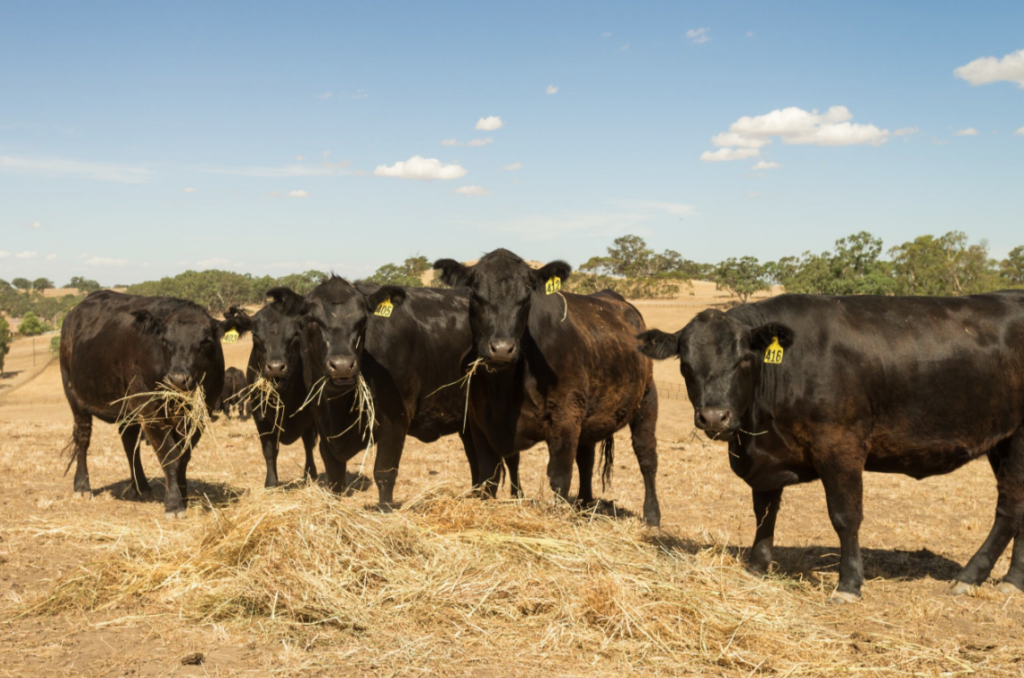
Totals (per acre)$109.16$977.34$1,600.12

Source: Hamilton & McCullough, 2025

References

Adcock Flynn, Luis A. Ribera, Yuri Calil, and Constanza Valdes.  "Brazil at 2040: Customer and Competitor."  Center for North American Studies, Department of Agricultural Economics, Texas A&M University.   CNAS Report 2018-02.  October 2018.

Coffey, Bentley, Patrick A. McLaughlin, and Pietro Peretto.  "The Cumulative Cost of Regulations."  April 2016

Crews Jr., Clyde Wayne.  2026. "Ten Thousand Commandments, 2026: An Annual Snapshot of the Federal Regulatory State."  30th Anniversary Competitive Enterprise Institute Edition.

Calil, Yuri and Luis A. Ribera.  2019. "Brazil's Agricultural Production and Its Potential as Global Food Supplier."  Choices Magazine.  Quarter 3.

Hamilton, Lynn and Michael McCullough. "A Decade of Change: A Case Study of Regulatory Compliance Costs in the Produce Industry." Cal Poly, San Luis Obispo. January 2025.

IMF World Economic Outlook (WEO). October 2015.

World Bank. "Global Economic Prospects." January 2026.

World Trade Organization. "World Trade in Agriculture." January 22, 2026.

Ribera, Luis, and Landyn K. Young. "U.S. Agricultural Competitiveness and Regulation Costs." Southern Ag Today 

FMC Corporation Announces Agreement to Divest India Commercial Business to Crystal Crop Protection Limited

FMC Corporation (NYSE:FMC), a leading global agricultural sciences company, announced today it has signed a definitive agreement to sell FMC India Private Limited (FMC India) to Crystal Crop Protection Limited, a crop solutions company in India, for consideration of $252 million USD, subject to customary adjustments for cash, debt and working capital. FMC will continue to receive all cash generated from the ongoing operation of the India business until closing, primarily through monetization of working capital.

In July 2025, FMC announced its decision to divest the company's crop protection commercial business in India, enabling FMC to participate in the Indian market through a new go-to-market approach while deploying resources to its highest-growth opportunities globally. The transaction is expected to close by year-end 2026, subject to regulatory approval and other customary closing conditions. FMC intends to allocate all proceeds from the sale to debt reduction.

"Crystal Crop Protection Limited is well-positioned to serve Indian farmers with FMC's portfolio of innovative technologies, and we look forward to supporting their growth through our supply agreement," said Pierre Brondeau, FMC chairman, chief executive officer and president. "FMC remains committed to India and will continue to conduct global R&D activities and maintain global manufacturing operations in the country."

Through this transaction, Crystal Crop Protection Limited will acquire FMC India's commercial operations in the crop protection field, including a license to FMC's brands sold in India. Crystal Crop Protection Limited will also receive a preferred supply agreement for certain FMC active ingredients and formulated products, as well as preferred access to FMC's pipeline of active ingredients in India for the crop protection field.

"We are excited on signing this definitive agreement to acquire this business of FMC in India," said Ankur Aggarwal, chairman and managing director, Crystal Crop Protection Limited. "We look forward to welcoming a talented workforce into the Crystal group and aim at accelerating innovation across both chemical and biological domains of crop protection. FMC's innovative portfolio, blockbuster brands and future pipeline give us an opportunity to provide Indian farmers access to innovative products. We look forward to further enhancing and building on our relationship with FMC."

BofA Securities acted as exclusive financial adviser while Davis Polk & Wardwell LLP served as U.S. legal adviser and Khaitan & Co assisted as legal adviser for FMC on this transaction. EY acted as exclusive buy side M&A adviser to Crystal Crop Protection Limited and Shardul Amarchand Mangaldas & Co served as legal adviser. Further terms and conditions of the agreement were not disclosed.

About FMC

FMC Corporation is a global agricultural sciences company dedicated to helping growers produce food, feed, fiber and fuel for an expanding world population while adapting to a changing environment. FMC's innovative crop protection solutions – including biologicals, crop nutrition, digital and precision agriculture – enable growers and crop advisers to address their toughest challenges economically while protecting the environment. FMC is committed to discovering new herbicide, insecticide and fungicide active ingredients, product formulations and pioneering technologies that are consistently better for the planet. Visit fmc.com to learn more and follow us on LinkedIn®.

About Crystal Crop Protection Limited
Established in 1994, Crystal Crop Protection Limited is a crop solutions company with agrochemicals and seeds at the core of its offerings. It operates on a fully integrated model, that integrates robust synthesis research and development in crop protection products and natural crop solutions as well as robust seeds breeding program, with backward-integrated technology enabled manufacturing and pan-India distribution, with a farmer-centric approach. To learn more, visit www.crystalcropprotection.com

Statement under the Safe Harbor Provisions of the Private Securities Litigation Reform Act of 1995: FMC and its representatives may from time to time make written or oral statements that are "forward-looking" and provide other than historical information, including statements contained in this press release, in FMC's other filings with the SEC, and in presentations, reports or letters to FMC stockholders.

In some cases, FMC has identified these forward-looking statements by such words or phrases as "outlook", "will likely result," "is confident that," "expect," "expects," "should," "could," "may," "will continue to," "believe," "believes," "anticipates," "predicts," "forecasts," "estimates," "projects," "potential," "intends" or similar expressions identifying "forward-looking statements" within the meaning of the Private Securities Litigation Reform Act of 1995, including the negative of those words or phrases. Such forward-looking statements are based on our current views and assumptions regarding future events, future business conditions and the outlook for the company based on currently available information. The forward-looking statements involve known and unknown risks, uncertainties and other factors that may cause actual results to be materially different from any results, levels of activity, performance or achievements expressed or implied by any forward-looking statement. These statements are qualified by reference to the risk factors included in Part I, Item 1A of our Annual Report on Form 10-K for the year ended December 31, 2025 (the "2025 Form 10-K"), the section captioned "Forward-Looking Information" in Part II of the 2025 Form 10-K and to similar risk factors and cautionary statements in all other reports and forms filed with the Securities and Exchange Commission ("SEC"). We wish to caution readers not to place undue reliance on any such forward-looking statements, which speak only as of the date made. Forward-looking statements are qualified in their entirety by the above cautionary statement.

We specifically decline to undertake any obligation, and specifically disclaim any duty, to publicly update or revise any forward-looking statements that have been made to reflect events or circumstances after the date of such statements or to reflect the occurrence of anticipated or unanticipated events, except as may be required by law.

Speaker Lineup and Agenda Released for 2026 National R-CALF USA Convention; Registration Open

May 6, 2026—R-CALF USA today released the speaker lineup and agenda for its 2026 National Convention and Trade Show, set for June 16–18 at The Monument in Rapid City, South Dakota. Registration is now open.

At a time when consolidation, market volatility and global pressures continue to reshape the cattle industry, the convention will bring together hundreds of producers, industry leaders and policy experts for three days focused on the most pressing challenges facing U.S. cattle and sheep producers.

Themed Fire in the Brand, the event will reflect the conviction of independent producers to stand behind their industry, their livelihoods and the future of U.S. cattle production.

Pre-convention activities will begin Tuesday, June 16, with committee meetings for policy development, an affiliate council meeting and a welcome reception featuring a sponsor presentation, followed by committee reports covering key policy areas.

The main program begins Wednesday, June 17, with a prayer breakfast led by R-CALF USA Animal Health Chair and former president Dr. Max Thornsberry. Sessions throughout the day will include Good Ranchers Founder and CEO Ben Spell on connecting American consumers to American beef; R-CALF USA Checkoff Chair and South Dakota rancher Brett Kenzy on checkoff reform; Western Justice Executive Director Dave Duquette on wolf and predator issues; and Coalition for a Prosperous America Trade Counsel Charles Benoit on tariffs and trade policy.

Wednesday afternoon will feature an electronic identification (EID) panel with South Dakota veterinarians Dr. Jim Stangle and Dr. Julie Trask, alongside R-CALF USA Animal ID Chair Kenny Fox. The panel will be followed by a social and the For the Brand Banquet and Supper. A keynote speaker will be announced in the coming weeks.

Thursday, June 18, will open with a membership breakfast and updates from R-CALF USA CEO Bill Bullard, Scott + Scott Partner Patrick McGahan on the organization's antitrust litigation, and New Civil Liberties Alliance Senior Litigation Counsel John Vecchione on the group's EID lawsuit.

Additional sessions will feature rancher and attorney Hayden Ballard on private property rights; U.S. Department of Homeland Security Policy Advisor Dr. Lora Bledsoe on New World screwworm and "narco-ranching"; and University of Nebraska-Lincoln Assistant Professor T. Jake Smith on competition and buyer power in the beef packing industry. Presentations will conclude with R-CALF USA Property Rights Chair and Texas-Colorado rancher Shad Sullivan.

The organization's annual business session will take place Thursday afternoon, where members will present proposed policy resolutions and debate positions that guide R-CALF USA's advocacy efforts nationwide. Final voting will take place via mail-in ballot.

The convention will also feature a full trade show and activities, including a branding party where attendees are encouraged to bring their branding irons to leave their mark on a commemorative display. The event will conclude with the Denim and Diamonds Gala, including a steak dinner, auction and dance featuring JJ Kent and the Aces and 8's.

Additional speakers and program updates will be announced, including several invited federal officials.

Early-bird registration rates increase June 1, and attendees are encouraged to secure their spot soon.

Event details, the full agenda, hotel information and registration are available at www.rcalfconvention.com. Room blocks close May 20.

The event is open to media. For media inquiries, contact 406-252-2516 or r-calfusa@r-calfusa.com.

March Pork Exports Third Largest on Record; Beef Variety Meat Value Reaches New High

March exports of U.S. pork were among the largest on record, concluding a very strong first quarter, according to data released by USDA and compiled by the U.S. Meat Export Federation (USMEF). While March beef exports were below last year – largely due to the ongoing lockout by China – the value of beef variety meat shipments reached a new monthly high, surpassing the previous record from January.

Monster first quarter for pork to Mexico, Central America and DR; strong rebound in Japan

Pork exports totaled 285,567 metric tons (mt) in March, up 6% from a year ago, the largest in five years and the third largest on record. Export value increased 4% to $803.2 million, the second highest on record, trailing only April 2021. March exports increased year-over-year to leading market Mexico, as well as to Japan, Central America, the Dominican Republic, the Philippines and Taiwan. Shipments were steady to South Korea and Canada. March was an outstanding month for export value per head slaughtered, which was the third highest on record at $72.93.

Through the first quarter, pork exports were 3% above last year's pace in both volume (778,939 mt) and value ($2.17 billion). Exports are on a record pace to Mexico and Central America.

For the third time in four months, beef variety meat value reaches a new high

March beef exports totaled 97,731 mt, down 11% from a year ago, while value fell 8% to $844.7 million. Shipments increased year-over-year to Mexico, Central and South America, the Caribbean and Indonesia, and were steady to Korea and Taiwan. But these results were offset by minimal exports to China, and exports were also below last year to Japan and the Middle East. Excluding China, March exports were 4% above last year's volume and increased 8% in value.

The March export results included 29,062 mt of beef variety meat, up 24% from a year ago and the largest since 2017. Variety meat export value increased 50% to $135.6 million, the highest on record.

March was a very robust month for per-head export value, which equated to $456.56 per head of fed slaughter.

Through the first quarter, beef and beef variety meat exports totaled 275,355 mt, down 11% from a year ago, while value fell 7% to $2.35 million. Excluding China from these results, exports were 3% higher than a year ago in volume and increased 9% in value.

"The sustained momentum for U.S. pork exports is impressive in the Western Hemisphere, but it is also encouraging to see demand climbing in key Asian markets, led by a welcome rebound in Japan," said USMEF President and CEO Dan Halstrom. "On the beef side, while China has now been absent for more than year, the U.S. industry is making strides in other markets. The supply situation makes it difficult to grow export volumes, but exports are commanding strong prices. Expanding beef variety meat demand is especially critical, as this makes such a key contribution to the value of every animal."

Lamb export volume lower in March, but value up slightly

March exports of U.S. lamb muscle cuts totaled 247 mt, down 11% from a year ago, but value increased 4% to $1.6 million. First-quarter exports were 9% above last year's pace in both volume (811 mt) and value ($4.5 million). Growth was primarily led by the Caribbean, but shipments also increased to Central America and Asian markets.

A detailed summary of the January-March export results for U.S. pork, beef and lamb, including market-specific highlights, is available from the USMEF website.

For questions, please email Joe Schuele or call 303-547-0030.

Reps. Lucas, Cole, Bice Join FAA Administrator Bedford in Tour of Mike Monroney Aeronautical Center

Today, Representative Frank D. Lucas (OK-03), along with Representatives Tom Cole (OK-04) and Stephanie Bice (OK-05), joined Federal Aviation Administration (FAA) Administrator Bryan Bedford in touring the Mike Monroney Aeronautical Center's Air Traffic Control Training Academy. The tour provided an overview of controller training programs and the technologies used to prepare the aviation workforce.

The tour included visits to the Tower Simulator System Lab and the En Route Automation Modernization Lab.

"It was a great day in Oklahoma City with Administrator Bedford as we toured the impressive Mike Monroney Aeronautical Center," said Representative Lucas. "The innovative technology that we saw today has, and will continue to, completely change the training curriculum for future aviation experts. This will bring our nation's opportunities in aviation to new heights, and it will also enable our workforce to be equipped with more skills and services that will only further advance their careers. I'm optimistic about the future of aviation, and I'm proud that this innovation is occurring here in Oklahoma's third congressional district."

"I'm grateful to the Oklahoma congressional delegation, including Chairman Tom Cole, Representative Frank Lucas, Vice Chair Stephanie Bice as well as Senators Lankford and Armstrong for their strong leadership here in Oklahoma," said FAA Administrator Bryan Bedford. "This center is one of the crown jewels of research and development, and sustainment for the national airspace system. It all happens here. Training new air traffic controllers, technicians, and first and second level engineers. We had the most successful recruiting day in the history of the FAA for our air traffic controllers, we've shortened the hiring process and we are getting trainees into the Academy faster than ever."

"Thanks to the Mike Monroney Aeronautical Center, Oklahoma has long been a hub for aerospace and aviation industry development," said Representative Cole. "The Center is not only a key administrative, research, and safety hub for the FAA, but it is also home to the FAA Academy, which is the only training center in the country for FAA-certified air traffic controllers. Therefore, it is no exaggeration to say that America's national aviation industry cannot exist without the workforce the Mike Monroney Aeronautical Center produces – and that was made very clear through the advanced technology and new curriculum we saw on the tour today. I would like to thank FAA Administrator Bedford for taking the time to come out to Oklahoma, as it is critical for the Mike Monroney Aeronautical Center to continue to thrive."

"It was great to be alongside Administrator Bedford at the Mike Monroney Aeronautical Center," said Representative Bice. "On his visit, the first by an FAA Administrator in a decade, we witnessed the incredible work happening daily in Oklahoma City. I was proud to see new innovative technologies, funded through the One Big Beautiful Bill, which are helping to prepare future air traffic controllers and the next generation of professionals. Their mission is critical and the Oklahoma delegation is laser focused on providing the support they need."

Oklahoma FFA Officers for 2026-2027

Coy Davidson with Elgin FFA to lead Oklahoma FFA for 2026-2027

Coy Davidson (front center), member of the Elgin FFA Chapter, will lead the nearly 31,000 members of the Oklahoma FFA Association for 2026-2027.  
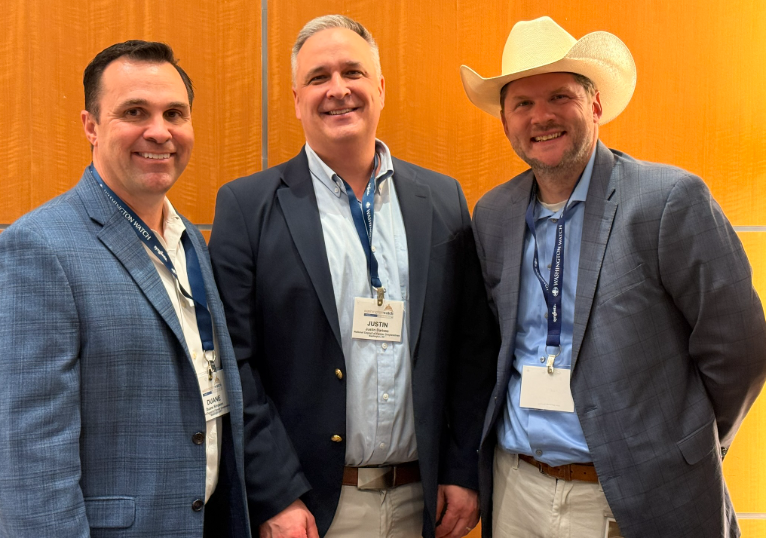
 Members elected the 19-year-old to his presidential position during the 100th Oklahoma FFA Convention on May 6. An agricultural economics major at Oklahoma State University, Davidson previously served as the 2025-2026 Oklahoma FFA Secretary. He is the son of Dustin and Jennifer Davidson.

 Seven additional FFA members will join Davidson on the 2026-2027 Oklahoma FFA Association officer team: Kaden Pliler (front left), Purcell FFA, secretary; Colby Barnes, Balko FFA, reporter; Sloane McIntire (back left), Skiatook FFA, northeast area vice president; Annie Schneider, Seiling FFA, northwest area vice president; Jace Myers, Perkins-Tryon FFA, central area vice president; Aspen Chumley, Byng FFA, southeast area vice president; and Makayla Morris, Chickasha FFA, southwest area vice president.  

FFA is an integral part of the agricultural education division in the Oklahoma Department of Career and Technology Education system. With nearly 31,000 members and 372 chapters, the Oklahoma FFA Association is the sixth-largest state FFA association. The FFA mission is to make a positive difference in the lives of students by developing their potential for premier leadership, personal growth and career success through agricultural education. To learn more about the Oklahoma FFA, visit okffa.org.
Our coverage of the 2026 Oklahoma FFA Association State Convention is sponsored by Oklahoma Farm Bureau, proud to support the young men and ladies of the Oklahoma FFA as they strive for excellence in all they do. Oklahoma Farm Bureau- We Are Rural Oklahoma. 

Learn more about the 100th Annual Convention of the Oklahoma FFA by clicking here for the convention highlights. 

Dr. Charles Nichols of Arnet, Ok

Oklahoma Cattlemen's Association Mourns the Loss of Past President Dr. Charles Nichols

The Oklahoma Cattlemen's Association joins family, friends, Oklahoma State University, the ranching community and cattlemen across the state in mourning the loss of Dr. Charles Nichols of Arnett, Oklahoma, who passed from this life on May 3, 2026. He was 89.

Nichols was a respected rancher, educator, cattle industry leader and public servant whose influence reached from local ranch country to state and national agricultural organizations. After earning his bachelor's degree in Animal Husbandry from Texas A&M University, he completed graduate work at Colorado State University, where he earned a Master of Science Degree in Wool Technology. He later came to Oklahoma State University to complete his doctoral work in Animal Breeding with a minor in Physiology.

Following completion of his Ph.D., Nichols served as the OSU State Extension Animal Breeding Specialist from 1964 to 1973. In that role, he traveled across Oklahoma teaching cattle producers about herd improvement and worked on early computer systems used to process performance records. His OSU involvement continued throughout his life, including service on the Dean's Advisory Committee for the College of Agriculture and the Industry Advisory Committee for Oklahoma Food & Ag Products Research & Technology.

In 1973, Charles and his wife Sherry moved to Arnett to join the Davison family ranching operation. There, he dedicated himself to improving both cattle and rangeland through Davison & Sons Cattle Company. His work reflected a deep commitment to land stewardship, livestock improvement, employees, neighbors and the rural way of life.

Nichols' leadership within the cattle industry was vast. He served as an Executive Board member and President of the Oklahoma Cattlemen's Association, and also served on the Oklahoma Beef Commission. His national service included numerous board positions within the National Cattlemen's Beef Association and the Cattlemen's Beef Promotion and Research Board with USDA. He also served two terms on the Kansas City Federal Reserve Board.

"OCA laments the loss of this great leader," said Michael Kelsey, OCA Executive Vice President. "Dr. Nichols represented the very best of Oklahoma's cattle industry. He gave generously of his time, wisdom and leadership to OCA, Oklahoma State University and cattle producers across this state and nation. His legacy will be felt for generations, and we extend our heartfelt sympathy to Sherry, his daughters, grandchildren, great-grandchildren and the entire Nichols family."

Nichols is survived by his wife Sherry of nearly 57 years; daughters Jennifer and her husband Brent Shaw and Ruth Ann and her husband Weston Givens and their families; seven grandchildren; three great-grandchildren; his five sisters; and many extended family members.

Memorial donations may be made to the OSU Foundation – Dr. Charles W. Nichols; Oklahoma Cattlemen's Association Foundation; or Newman Memorial Hospital in Shattuck, Oklahoma.

Visitation for Dr. Nichols is on Saturday May 9th from 9 AM to 6 PM and Sunday May 10th from 2 pm to 6 pm at the Shaw Funeral Home in Arnet. A Memorial Service is planned Monday, May 11th at First Christian Church of Arnet at 10 AM.

2026 Theme of Oklahoma FFA Convention- Empower

2026 FFA Stars Over Oklahoma Named at 100th Convention in Tulsa

The 2026 Stars over Oklahoma represent the very highest achievement within the youth organization, as the four winners are the very best in their respective SAE categories- Agriscience, Ag Placement, Agribusiness and Ag Production. Each honoree will receive a scholarship in the amount of $29,484 from the Carl C. Anderson Trust. They will also receive the Governor's Trophy for their efforts.

Each Star was interviewed by Farm Director KC Shepherd and a link to those stories are found below- and Senior Farm and Ranch Broadcaster Ron Hays hosted a video with each Star that was shown at the Fifth Session of the Convention as that Star was named the 2026 winner- that video can be seen with each thumbnail:

Oklahoma Star Farmer of 2026- Joel Parker of Cherokee FFA

Joel Parker of Cherokee FFA

Joel Parker of the Cherokee FFA chapter got his start in the cattle business with a simple opportunity from his family. "My dad gave me a couple of old cows—'dinosaur cows' is what I like to call them—and that's how I really got started."

From there, Parker turned his supervised agricultural experience into a true cow-calf operation. Beginning his sophomore year, he retained his own replacement heifers and steadily expanded his herd. "Everything I own, I've calved out as heifers," he said.

That foundation has allowed him to build a self-sustaining program, where each generation of cattle is raised from within his own herd

Like many young producers, Parker says some of his biggest lessons came through challenges. One early setback came when using the wrong type of bull on his heifers. "I used a neighbor's bull that really wasn't a heifer bull... I didn't know that, but I figured it out."

Since then, he's taken a more strategic approach—studying EPDs and investing in his own bull to better manage genetics. "You just got to stick with it. It's not always going to go perfectly as planned... one day it will go perfectly."

Star in Agribusiness- Zach Allen of Guthrie FFA

Zach Allen of Guthrie FFA

From a birthday mower to a growing business, Zach Allen of the Guthrie FFA Chapter has turned an early work ethic into a standout FFA success story. The owner of A to Z Lawn Care has built his lawn care company from the ground up, learning firsthand what it takes to run and expand a business.

Allen says one of the biggest lessons has been learning how to manage people. He currently has seven employees working for him.

"One thing I've had to learn was employee management," Allen said. "Trying to get them to show up and kind of trying to manage them has been one difficult thing, but we're still learning."

Customer service is another priority. He says they stay in touch with customers, welcome feedback, and use social media to stay connected. Looking ahead, Allen says one major goal is reaching $100,000 in revenue next year.

Star in Ag Placement- Faith Wright of Stratford FFA

Faith Wright of Stratford FFA

Stratford FFA member Faith Wright explains that her supervised agricultural experience has centered around both livestock production and direct-to-consumer sales.

"I have had two major ag projects. One was working for a diversified livestock production farm, and then the other is working at a fruit and vegetable roadside stand in the Stratford area."

While the livestock experience built technical skills, Wright found herself drawn to the customer interaction and fast-paced environment of the roadside stand—especially during peach season.

"Working at the roadside stand, I mainly work in the stand selling directly to the consumer and the customers, selling fruits and vegetables, and just getting to work with customers every day."

That daily connection made a lasting impression. "I have kind of stuck to the peaches and the fruit stand more because I get to talk to people every day... the livestock don't talk back."

Star in Agriscience- Maddie Bishop of Stillwater FFA

Maddie Bishop of Stillwater FFA

What began as a simple question about how often eggs really need to be turned in an incubator has grown into five years of detailed Agriscience research for Madilyn "Maddie" Bishop. The Stillwater FFA member has built an impressive record of poultry-based studies focused on egg freshness, fertility, and the use of technology in animal science.

Beyond research, Bishop has grown as a leader through FFA. A first-generation member with no deep agricultural background, she said she found her place early through leadership contests and public speaking. "I started by doing opening and closing ceremonies, and I fell in love with it, with public speaking, and then agriscience," she said.

Now serving as Stillwater FFA president, Bishop leads a chapter of more than 250 members while encouraging younger students to explore agricultural careers. "We've had a speaker... every single month that has an agriculture background and is working in agriculture right now," she said. "To get them really excited about there are other careers in agriculture that are not just a farmer."

Looking ahead, Bishop plans to attend Oklahoma State University and major in agribusiness and animal science with an emphasis on reproduction. "For sure, I am planning on continuing," she said. "My senior year project has never been done before, and so I plan on getting that one out there."


Our coverage of the 2026 Oklahoma FFA Association State Convention is sponsored by Oklahoma Farm Bureau, proud to support the young men and ladies of the Oklahoma FFA as they strive for excellence in all they do. Oklahoma Farm Bureau- We Are Rural Oklahoma. 

Learn more about the 100th Annual Convention of the Oklahoma FFA by clicking here for the convention highlights. 

Ahead of Schedule, EPA Fully Achieves Potomac River Recovery Goals

U.S. Environmental Protection Agency (EPA) has accomplished its remediation of the Potomac Interceptor collapse and fully demobilized the federal presence onsite, finishing months ahead of upcoming America 250 festivities and delivering on the agency's commitment to restore the Potomac to pre-collapse conditions.

On March 14, wastewater flow was restored to the Potomac Interceptor a full week ahead of schedule, allowing ongoing work to focus on environmental remediation. Led by EPA, in coordination with the Federal Emergency Management Agency (FEMA), U.S. Army Corps of Engineers (USACE), National Park Service (NPS), and other federal partners, remediation activities included:

  • Water and soil sampling;
  • Raking and removing contaminated material, including sewage-impacted soils;
  • Covering disturbed soil with seed mix and erosion-control blankets;
  • Removing branches, fallen trees, brush and debris; and
  • Flushing the C&O Canal with fresh water from the Potomac.

DC Water continues targeted soil remediation between Locks 10 and 11 of the C&O Canal, with completion expected by the end of May.

"From the moment President Trump received the formal request for federal assistance, he instantly deployed his administration to do everything in our power to help resolve this sewage crisis," said EPA Administrator Lee Zeldin. "EPA answered the call, and today I'm proud to announce that our remediation work is complete months ahead of schedule, in plenty of time for America 250 celebrations."

"From the onset of this response, we made clear EPA would be on the ground, working at full speed, until the Potomac Interceptor site and surrounding area were fully remediated," said EPA Assistant Administrator for Water and Senior Response Officer Jessica Kramer. "Thanks to President Trump's decisive action and leadership and a coordinated effort across federal agencies, we kept that promise and restored the Potomac River to pre-collapse conditions for the enjoyment of residents and visitors to our nation's capital region this summer."

"This milestone is a testament to the effective collaboration with local agencies, EPA and other federal partners – fully leveraging the capabilities of subject matter experts to support locally-led recovery efforts," said FEMA Federal Coordinating Officer Mark O'Hanlon. "Our expedited approach to the response and synchronization across all levels of government was key to completing this critical work ahead of schedule."

"For more than 165 years, the U.S. Army Corps of Engineers has ensured the National Capital Region receives safe water from the Potomac River through the Washington Aqueduct. The systematic interagency response to the Potomac Interceptor collapse was essential to protecting local communities and maintaining the integrity of this critical infrastructure," said USACE Baltimore District Commander Col. Francis Pera. "This milestone proves that dedicated professionals across all levels of government can solve the nation's most complex challenges through collaboration." 

"Progress like this does not happen by accident. It comes from steady coordination, shared purpose and hard work by every partner involved," said National Park Service Regional Director for the National Capital Region Jennifer T. Nersesian. "Together, we are caring for these lands and waters, supporting rehabilitation and serving visitors, neighboring communities and the American public with urgency, care and a common commitment." 

Background

The Potomac Interceptor collapse resulted in at least 240 million gallons of raw, untreated sewage discharging into the Potomac River. Upon President Trump receiving DC Mayor Muriel Bowser's request for federal assistance, the White House assigned EPA as the lead federal response agency.

Throughout the repair and remediation process, EPA actively coordinated with partners at all levels to ensure appropriate and expeditious measures were utilized to protect public health and prevent additional overflows until the pipe was repaired and the Potomac Interceptor became fully functional again in mid-March.

On March 16, the agency assumed responsibility for water quality sampling previously conducted by the DC Department of Energy and Environment (DOEE). The daily sampling results were processed at EPA's Environmental Science Center located at Fort Meade, Maryland. The results for each day's sampling were evaluated and quality assured before being posted publicly on DOEE's Potomac Interceptor Monitoring webpage.

In addition to water quality and soil sampling, EPA and its federal partners assisted on the ground, providing stormwater diversion and management infrastructure, site remediation work, and general technical assistance. All of these environmental remediation activities were concluded by May 6.

EPA Launches Transparent, Interactive Permitting Map

Today, U.S. Environmental Protection Agency (EPA) is launching the EPA Permitting Authority Map. The interactive map—accessible via EPA's website—identifies which regulatory agencies have the authority to issue permits covering all of EPA's permitting programs and environmental statutes. The development of the map is an integral resource in advancing Pillar 3 of Administrator Lee Zeldin's Powering the Great American Comeback initiative: Permitting Reform, Cooperative Federalism, and Cross-Agency Partnership.

"Too often, uncertain permitting processes stand in the way of innovation, efficiency, economic opportunity, and prosperity. Thanks to the Trump EPA, anyone can now select a location and see exactly which permitting authority is responsible for issuing environmental permits with the click of a button," said EPA Deputy Administrator David Fotouhi. "This new innovative map provides state and local leaders, Tribes, entrepreneurs, and the public the information they need in one place on the regulatory authorities of permits throughout EPA's permitting programs."

The EPA Permitting Authority Map supports federal agencies, states, territories, Tribal nations, local agencies/governments, and the general public with:

  • The ability to make a quick determination whether the permitting authority is with EPA or if there has been an approved delegation, primacy, or authorization given to a state, territory, Tribal nation, or local agency.
  • The use of a Geo Platform based web map, which provides maximum flexibility for site visualization and project planning ability.

Although EPA directly issues some permits, many jurisdictions—such as states, territories, Tribal nations, and local agencies—are often approved to directly implement federal environmental permit programs on EPA's behalf (entirely or in part), with the agency retaining federal oversight and/or enforcement authority when necessary.

Background

On April 15, 2025, President Trump signed the Presidential Memorandum, Updating Permitting Technology for the 21st Century, to enhance transparency, reduce fragmented data management, and update technology in the federal environmental review and permitting process. EPA is making strides to make permitting faster, cheaper, and easier – and is working closely with states and localities to help them build and improve their communities. The EPA Permitting Authority Map supports these goals by providing transparency and efficiency in identifying the regulatory authorities for EPA Permit Programs.

EPA also released new informational tools and resources to help community members, local officials, data center developers, and other interested parties assess the viability of Brownfield and Superfund sites as possible locations for industrial reuse. EPA's Redevelopment Mapper for Superfund and Brownfield Sites can help screen for suitable site characteristics on a Brownfield or Superfund site. The Mapper provides site locations and options for adding data layers that highlight site features and surroundings. 

High-Oleic Soybean Expansion: Driving Market Diversity for U.S. Farmers

U.S. Soy Strategy: High-Oleic Expansion and Nutritional Innovation

The United Soybean Board (USB) is aggressively pursuing new market segments by focusing on high-oleic soybean varieties and emerging nutritional trends to build long-term value for American producers. Mary Stewart, a Maryland soybean farmer and USB director, recently sat down with Farm Director KC Sheperd to discuss how these targeted checkoff investments are securing a foothold in the global food and feed industries.

Targeting the Health and Wellness Demographic

A major priority for the USB is aligning soybean products with current health trends, specifically the rise of GLP-1 weight-loss medications. Stewart noted that soy is uniquely positioned to serve this growing population as a nutrient-dense, lean protein source.

"About 15% of our population right now is on GLP-1. That's just going to skyrocket from here. So we want to make sure soy has a really great spot to fill there because obviously we have heard that we need more protein... especially those on that weight loss supplement because they need that lean protein."

Beyond protein, Stewart emphasized that soy provides essential fiber, a component often lacking in American diets. To increase consumer awareness, the USB is collaborating with the Soy Nutrition Institute (SNI) and the Center for Food Integrity to educate the public through professional chefs and social media influencers.

The High-Oleic Surge in Dairy and Retail

The adoption of high-oleic soybeans is accelerating rapidly, driven largely by the dairy industry's demand for high-quality, domestic feed. Stewart highlighted several key developments:

  • Dairy Sector Adoption: Approximately 65% of dairy farmers in New York have integrated high-oleic soy into their rations.
  • Producer Benefits: Farmers are seeing increased protein levels in milk, leading to higher premiums in their milk checks.
  • Supply Chain Pressure: Demand is so strong that some states are now coordinating with neighbors to secure sufficient high-oleic supply.

The USB is also working to move high-oleic soybean oil into the retail space. Stewart's group is exploring ways to bottle and label the oil for grocery stores, touting its stability, neutral flavor, and extended shelf life as a premium, American-made product.

Defending Market Share Through Diversification

The soybean checkoff program serves as a critical defense for the industry. Stewart credited the USB's proactive research for ensuring soy remained a part of federal dietary guidelines during recent reviews.

"We had to play a little bit of defense, I think about a year and a half ago when the guidelines first rolled out... but I am grateful for the checkoff already having all that information and science and research that kept it on there."

Stewart concluded by emphasizing that diversification is the key to resilience. By expanding into food-grade soy, high-oleic oils, and specialized livestock feed, the USB aims to protect farmers from market volatility. As she told Farm Director KC Sheperd, a diverse portfolio is essential for the long-term success of any farm business.

"We don't want all our eggs in one basket. Everything changes. So we've got to be innovative and creative and have a diversity in our portfolio."

Oklahoma Beef Day Highlights Industry Impact and Legislative Wins

In today's Beef Buzz, senior farm and ranch broadcaster Ron Hays speaks with Michael Kelsey, who highlights a successful legislative session and the continued importance of connecting Oklahoma's beef industry with state leaders during Beef Day at the Capitol. Kelsey tells Hays that the lawmakers are on track to effectively end the 2026 session this Thursday, but will not officially sine dei until the end of May.

A Tradition of Beef Advocacy at the Capitol

Kelsey says Beef Day at the Capitol has become a meaningful tradition for the industry, offering both great food and valuable face time with lawmakers. "This is so much fun... we started this tradition a good handful of years ago, Beef Day at the Capitol—just an opportunity to highlight the beef industry."

This year's event featured a strong partnership to help serve up a crowd favorite. "We do ribeye steak sandwiches. This year, we're partnering with Certified Hereford Beef... they're helping with the ribeye steaks."

Beyond the meal, Kelsey emphasized the deeper purpose of the event. "Gives us an opportunity... for our members to come in and talk to legislators about the importance of the beef industry. It's just an awesome day."

Legislative Wins for Cattle Producers

As the session nears its conclusion, Kelsey describes it as a productive one for Oklahoma cattle producers, despite an unusual pace at the Capitol. "This has really been a pretty good session for us, they finished the budget so early, first time in my history that they've ever finished it before Easter."

He noted that the accelerated timeline and election pressures contributed to a faster-moving session. "A lot of folks up here have drawn an opponent... so they want to be home campaigning... I think that has incentivized this early session."

Among the key wins for the industry were protections and policy advancements tied to land and resources. "We've gotten some things done on produced water... very important to surface owners... also regarding mineral rights... and some private property rights we've protected."

Property Tax and Water Take Center Stage

Kelsey says water policy and property taxes emerged as major issues during the session, with long-term implications for rural Oklahoma. "Water has been a big issue... maybe the biggest issue is property tax."

He pointed to an upcoming ballot measure aimed at limiting property tax increases while maintaining funding for essential rural services. "What's going to be on the ballot is something that's going to reduce the maximum annual increase... so that's good for us... preserve some of those funding mechanisms... such as sheriffs, roads and bridges, schools."

Investment in OSU Agronomy a Big Win

Another highlight for the cattle industry was funding support for improvements to agronomy facilities at Oklahoma State University, which play a critical role in wheat pasture and grazing systems. "That agronomy center... needs to be updated... in Oklahoma, we're so blessed to be able to graze that wheat... we bring in a lot of cattle into this state to graze our wheat pasture."

Kelsey expressed strong support for the investment and its future impact. "We were highly supportive... and we saw that go through, and we're just tickled for it."

He also praised the work being done by OSU researchers to advance wheat genetics. "What he's able to do is almost nothing short of miraculous... now we can start to see some facility upgrades that will... make that even more robust and more competitive."

Wrapping Up a Strong Session

With the legislative session nearing adjournment, Kelsey says the cattle industry is in a solid position thanks to key policy wins and continued engagement with lawmakers.

The Beef Buzz is a regular feature heard on radio stations around the region on the Radio Oklahoma Ag Network and is a regular audio feature found on this website as well. Click on the LISTEN BAR above for today's show and check out our archives for older Beef Buzz shows covering the gamut of the beef cattle industry today.

Oklahoma Wheat Crop Update — May 5, 2026

Oklahoma wheat producers are entering a critical stretch as drought stress, uneven rainfall, disease pressure and an earlier-than-normal harvest window shape the 2026 crop outlook.

This Oklahoma Wheat Crop Update looks at current wheat conditions across the state, with a special focus on southwest and western Oklahoma. The crop remains under pressure, with nearly half of Oklahoma wheat rated poor to very poor, while only a small share is rated good to excellent. Even so, some areas near Apache, El Reno, and parts of Caddo and Washita counties are still showing yield potential, with moisture and stand conditions holding on.

The big story is how uneven this crop has become. Some fields are moving toward harvest, some have already been sprayed out or desiccated, and others may still have enough yield potential to protect. Producers should carefully scout for rust, wheat streak mosaic, barley yellow dwarf, true armyworm activity, and weed pressure in thin stands.

See the video link below

Notes: This video was produced before today's Oklahoma Grain & Feed 2026 crop estimate was released. The estimate is 47.799 million bushels, significantly below the 10-year average of 94.499 million bushels.

Next week's crop update will come out on Wednesday due to the district I election. See you in Pond Creek on Tuesday!

ASA Vice President Urges Caution in USTR Section 301 Investigation

 Soybean farmers are already facing significant economic headwinds and new trade actions could add further strain, American Soybean Association (ASA) Vice President and Iowa soybean farmer Dave Walton said today in testimony before the Office of the United States Trade Representative (USTR).

"Soybeans are the largest ag export in the U.S., and robust trade is a top priority for our industry," Walton emphasized, noting that in the 2024–2025 marketing year, the U.S. exported 68.7 million metric tons of soybeans, soybean meal, and soybean oil, valued at $29.6 billion and accounting for 58% of total U.S. soy production.

Walton highlighted real-world impacts of past trade disputes, including a 76% drop in the value of U.S. soybean exports to China during the 2018 trade conflict.

"We are concerned this investigation could lead to remedies that will set back ongoing negotiations and lead the reimposition of even higher tariffs against U.S. soybeans by China," Walton said.

Farmers are also facing mounting financial pressure, as soybean producers are expected to incur a $117 per acre market loss this year while continuing to manage elevated input costs tied to global supply chains.

Building on those concerns, Walton added, "As USTR moves forward with this investigation, it is the recommendation of ASA that USTR and the administration keep in mind two major recommendations."

He urged USTR to pursue targeted remedies, including exemptions for critical agricultural inputs, and to avoid actions that could disrupt key trading relationships by exempting Mexico and Canada from any future Section 301 remedies.

ASA submitted joint written comments alongside the U.S. Soybean Export Council (USSEC) and will continue engaging with the administration on trade policies impacting U.S. soybean farmers.

IFEEDER Adds Ruminant-focused Mini Reports to the Vitamin and Amino Acid Supply Chain Assessment

The Institute for Feed Education and Research (IFEEDER) today announced the release of two new species-specific reports, focusing on beef and dairy cattle, the final additions to its expansive analysis examining the nutrition and production impacts of vitamin and amino acid supply chain disruptions to animal feed for major U.S. livestock sectors.

These reports are part of IFEEDER's broader analysis, "The Strategic Assessment on the Impact of Vitamin and Amino Acid Supply Chain Disruptions on U.S. Food Security," originally released in November 2025. Each report highlights how disruptions in access to essential feed ingredients could affect animal health and welfare, production viability and the resilience of the U.S. food supply. With today's additions, IFEEDER has now published six species reports, building on the four species reports (i.e., broiler chickens, laying hens, turkeys and swine) published in January.

"From poultry to cattle, we're providing critical insights into how nutrient disruptions could directly impact essential sectors in U.S. agriculture," said Lara Moody, IFEEDER's executive director. "Understanding these risks helps producers and stakeholders better prepare for challenges that could affect both productivity and food availability."

The beef and dairy cattle reports provide tailored insights into how vitamin and amino acid supplementation can impact performance, production and overall herd health, factors that are critical to maintaining a stable and affordable supply of beef and dairy products for consumers.

While the original strategic assessment outlines the importance of key vitamins and amino acids and the consequences of supply disruptions, the species-specific reports allow companies, researchers, feed manufacturers and policymakers to focus on the ingredients most relevant to their operations and decision-making.

For example, dairy stakeholders can evaluate how shortages in specific vitamins may affect milk yield and reproduction, while beef producers can assess potential impacts on weight gain and herd health. Across all species, the reports illustrate how reduced access to essential nutrients can ripple through the supply chain, ultimately affecting food availability and cost.

Each report also includes insights from industry professionals, with input from technical experts and practicing nutritionists reflecting real-world challenges and considerations. These perspectives reinforce the critical role that vitamins and amino acids play in supporting animal performance and ensuring a secure, sustainable food supply.

The beef and dairy cattle reports, along with the previously released species reports, are available at IFEEDER.org.

Keeping You in the Loop--Lankford Letter

Dear Oklahoma friends and neighbors, In this edition of the Lankford Letter: Funding for the Department of Homeland Security Protecting Us from Terrorism Military Operations in Iran Okies in Washington, DC Keeping You in the Loop Spring in Oklahoma usually means severe weather. So far, every part of the state has had" one of those days." So far, Enid and the surrounding area have been hit the hardest, but southeast Oklahoma has also been hit several times. I spent some time in Enid praying with local families as we stood in the debris of their home and meeting with the base leadership at Vance Air Force Base. Vance took some damage on the south end of the base, but the professionals on base quickly helped them recover.

They are already back to flight training. Unfortunately, many of the homes to the east of Vance cannot be recovered. They were totally destroyed. Please continue to pray for those impacted and to find practical ways to help demonstrate the Oklahoma Standard once again. We know how to take care of each other. Speaking of taking care of each other, make sure you remember to celebrate your Mom next weekend for Mother's Day. Thank you to all the Moms who have sacrificed so much for their family. As many of you know, I lost my Mom to Parkinson's disease four years ago, but I am still so grateful for the love and legacy she left me. Give your Mom a big hug. You can never give too many. 

Funding the Department of Homeland Security and Ending Government Shutdowns The Department of Homeland Security (DHS) is FINALLY open. After 75 days of shutdown, the drama is finally over for every part of DHS except Border Patrol and Immigration and Customs Enforcement. Democrats continue to block any funding for border security. However, Republicans in the Senate and House have started the long budget process called "reconciliation" to fully fund all border security for the next three years. It will take another three weeks to complete the mandatory legislative process for reconciliation, but we will get it done, despite Democrats' opposition. Protecting our nation should not be controversial.  For the past month, funds were diverted to pay salaries in DHS, but they had no program money and no way to pay the contracts and contractors that work for the agency. The lack of funding has been a huge problem for the Coast Guard, Secret Service, FEMA, TSA, Cyber Security, and many more offices.

Withholding funds from our federal law enforcement and disaster relief staff is a foolish way to fight in Washington, DC. We can and must stop government shutdowns. As you may know, I have worked for years to prevent government shutdowns. Last session of congress, my bill had 57 votes, but I needed 60 votes in the Senate. Since the election last year, I have worked with my colleagues to get the necessary votes to finally pass my prevent shutdowns bill. We are very close now. CLICK HERE to read a recent op-ed I wrote about my Prevent Government Shutdowns Act to take government shutdowns off the table for good. What is a "FISA"? After September 11, 2001, the US determined we should be better at spying on foreign terrorists so we could know their plans before they attack us.

Congress passed the Foreign Intelligence Surveillance Act, now called FISA, to give new authority to our spy agencies to listen to the bad guys overseas but prevent any spying on American citizens. Every few years, the FISA program is re-evaluated to make sure American civil liberties are still protected. When a problem is discovered, the FISA program has been reformed. As a member of the Senate Intelligence Committee, I can assure you, the FISA program has stopped many terror attacks in our nation and saved countless lives over the past few years. We are debating the FISA authority again right now in Congress. There are additional penalties that we want to add to anyone caught using the FISA database for anything other than terror investigations. We also want additional requirements to view any
information in the database, just to make sure no one abuses it.

UPDATE: Iran The conflict in Iran has continued for two months. Our US military has performed exceptionally in each part of the operation. We have targeted thousands of military sites, sunk most of their navy, and destroyed thousands of attack drones, missiles, and missile launchers. Special Forces also carried out a heroic rescue of one of our downed airmen off a mountaintop in Iran. While most Americans worry about higher prices at the pump, they are putting their lives on the line to protect us and our children.

During the current ceasefire, negotiators continue to work to resolve the current conflict by ending the Iranian nuclear weapons program, stopping their support of global terrorism, and reopening international shipping lanes. For almost five decades, Iran
has attacked Americans who live and work in the Middle East. President Trump is focused on bringing peace to the region and security for all Americans, whereever they live and work. We all pray for a quick resolution. I continue to receive regular briefings on Iran. This is a battle no one wanted to fight, but we cannot just ignore the threats we could face from a nuclear-armed terror regime.

We need to complete our mission and come home. I will stay focused on the critical goals and work to end the conflict as soon as possible. Nominations The Senate is almost through another large group of President Trump's nominees (50) who will be confirmed soon. We have recently confirmed more judges, agency heads, and many US Attorneys.  Okies in DC And the Okie Back Home The Enid Chamber of Commerce members were in Washington, DC, in the days preceding the tornado. They visited with the staff at the Pentagon to make sure they are aware of our community support and engagement. Tulsa and Oklahoma City Chambers combined to meet with key leaders in Washington, DC, as well as our entire federal delegation. I also hosted groups from the South OKC, Moore, and Norman Chambers, the Owasso Chamber, the McAlester "Stampede," the Oklahoma Cattlemen, Hunger Free Oklahoma, Oklahoma Community Bankers, tribal leaders, Leadership Durant and so many more.

When I cannot be home, it's always good to see so many from home in Washington, DC. When I was back in Oklahoma the days around Easter, I welcomed Veterans Affairs Secretary Doug Collins and FBI Director Kash Patel to OKC, Tulsa, and Muskogee. I traveled for meetings in Walters, Lawton, Tulsa, Jenks, and Norman. I also spoke to a great group of Oklahoma attorneys at an Oklahoma Bar Institute symposium on civility and ethics with my Democrat friend, Mike Turpen. He and I sat on a panel to talk about civility in disagreement. We don't vote or think alike, but we both know how to treat people with respect. I think we could use a little more of that in our nation right now.
ImagePreventing Fraud in Federal Funds Recently, my Recover Fraudulent COVID Funds Act was included in a comprehensive, anti-fraud legislative package that brings together 17 commonsense bills to recover stolen funds, protect taxpayer dollars, and stop fraudsters. My bill claws back more than $65 billion in unspent COVID funds to make sure COVID criminals can't escape accountability. CLICK HERE to read more about my bill and my work to end government waste, fraud, and abuse.
Requiring Citizenship Status to be Shown on REAL IDs  I introduced the Citizenship Documented License (CDL) Act to strengthen federally recognized identification, reinforce confidence in elections, and establish clear national standards for commercial driver's licenses. Currently, REAL IDs do not show if you are an American citizen, but they could. That simple change could make a huge difference for voter verification, employment, and highway safety. Oklahomans have seen the painful consequences of individuals who are here unlawfully behind the wheel of large commercial vehicles. CLICK HERE to read more about my CDL bill.
Filling Vacancies on Our US Military Installations I sent a letter to the Secretaries of the US Air Force, Army, and Navy highlighting a policy I secured in the Fiscal Year 2026 Defense Bill, which expanded the Department of War's ability to utilize "direct hire authority" to fill critical positions at depots, arsenals, shipyards, and industrial facilities. CLICK HERE to read more about this important bill to make sure our military installations have the personnel they need.
Addressing the High Cost of Rx Drugs Most Oklahomans assume a generic drug will be cheaper at the pharmacy counter, but that's not always the case because of the pricing games played by insurance companies and pharmacy benefit managers. I introduced a bill that makes sure lower-cost generics and "biosimilars" are actually sold cheaper than brand-name drugs. CLICK HERE to read my bill to stop this gimmick from forcing Oklahomans to pay more for Rx drugs.
Protecting Federal Retirement Benefits I reintroduced the Retirement Annuity Supplement Clarity Act, which addresses the way the Office of Personnel Management (OPM) calculates retirement annuity settlements for federal employees, primarily for federal law enforcement personnel, who have settlement agreements dividing their annuity. This is something we can and should address. CLICK HERE to read more about this bill to help federal retirees. 
Speaking Out for Life I had the honor of speaking at the national gathering of the Susan B. Anthony Pro-Life America event in Washington, DC. It was an incredible dinner full of optimistic people who are committed to the value of every human life, no matter how young. Thank you to all the volunteers and advocates for the most vulnerable in our nation: the unborn.
Image Cindy and I spent the day in Enid after the devastating tornado to see how we can help and to pray with the families affected. We were grateful to see so many Oklahoma friends and neighbors lending a hand to clean up the day after the storm.
Oklahoma has a strong ag community, and we are doing our part to raise the next generation of farmers, ranchers, and producers to help feed and clothe America and the entire world. This is our next generation of Oklahoma leaders.
Image The incredible nonprofit ministry "Bridging Hunger" in Jenks just opened their new distribution warehouse. They supply food to dozens of churches around our state so they can take care of those in need. The first safety net is our families, the second is churches and nonprofits, and the last is government. Thank you to all those who sacrifice so much to feed Oklahomans in need. Image It is always a distinct and high honor to welcome our nation's heroes to Washington, DC, to visit our nation's war memorials and see how a grateful nation continues to say thank you for our freedom. A group of Oklahoma Korean and Vietnam War veterans recently spent the day in Washington, DC, seeing the memorials built in their honor.
Image Joe Castiglione or "Joe C" as most Oklahomans know him, is retiring from one of the greatest jobs in sports: the Athletic Director for the University of Oklahoma. No matter who you cheer for in sports, you have to respect what Joe C has brought to college sports in our state. More than half of OU's many national championships in all sports happened during Joe's leadership. I honored his legacy in the official Senate record and presented him a copy of the congressional record over lunch in Norman. Thank you, sir. Boomer Sooner.
Folks from McAlester are proud of the McAlester Army Ammunition Plant and the community they've built there. They proudly fly into Washington, DC, each year to make sure everyone remembers the great story of McAlester and the hard work they do to support the Army's mission as well as the Oklahoma business community.
Image In a rare and wonderful moment of state unity, Tulsa and Oklahoma City business leaders joined together in Washington, DC, to bring Oklahoma priorities directly to lawmakers. If Oklahoma City and Tulsa can work together, surely the rest of the nation can work together!

Investing in the future of the cow herd with genetic testing

The beef industry is in the perfect storm right now with one of the smallest cow herds on record while experiencing continued demand for high-quality beef and an increasing per-capita consumption of beef. Beef producers are seeing record-high prices for the cattle they are selling. This is a perfect time to invest in the future of your cow herd to prepare for the next price cycle.

When commercial cow/calf producers ask me why they should use genomic testing, I like to use a golf example with them. If a friend and I are choosing teams for a round of golf, I'll let my friend choose three golfers from the group first. He chooses three people to complete his team of four based on whether they look athletic or look like they play golf.

Now, it's my turn; and I look out among the crowd and ask, "How many people have a handicap under 20? How many people have a handicap under 10? How many people have a handicap under five?" I pick from that group to form my team.

Then, I ask the producers who they think is going to win the round of golf. Most will say that I will win the round because of how I picked my team.

That analogy is a perfect demonstration of how we pick our replacement heifers today, if we aren't genomic testing. We go in the pen and say, "Well, that one looks like she'll make a good cow." But if I layer in more data about the genetics behind those heifers, then I can make smarter decisions than I can on just phenotype alone.

Dr. Bob Weaber with Kansas State University once shared that you can make progress a certain percentage faster by using genomic-enhanced expected progeny differences (GE-EPDs) than by not using them. I think it's hard to see that easily in a cow herd. But if I run "X" percent faster than my friend, that's easier to see. We need to ask ourselves, "What if the race is continuous, like when you are building a herd?" That distance between the herds selecting replacements with GE-EPDs and the herds not using them is going to keep getting bigger with the faster genetic progress.

Getting Started

I always tell producers who want to start genomic testing that the earlier you test in an animal's life, the more decisions you can make with the results. For many spring-calving herds, spring branding and turnout are just around the corner. That is the next big opportunity we have to collect a DNA sample from heifer calves. If you collect the sample in the spring, you will have results back and can make more-informed culling decisions at weaning.

Or if you are a fall-calving herd, you either just weaned or are weaning. That is another opportunity to collect DNA samples. You can then get the results, which can help inform some breeding decisions or even decisions on which heifers to keep in the herd for breeding.

Zoetis Precision Animal Health helps remove the barriers to genomic testing through providing access to tissue sampling units (TSUs) and the applicator to take the samples. The inside sales representatives can help with the ordering process and where to send samples once they are collected. Once the results are back, we offer support in how to read the results and how to use them in making decisions.

The next question I get from producers is: "How many should I test?" My response to that depends on how fast you want to make progress. If you have time and you want to make slower progress, then test only your heifer calves to help determine your replacements. Continue testing replacements every year, and, eventually, your whole herd will be tested.

If you want to get there faster, test all your cows, along with your replacement heifers. It's a bigger investment, but you will have a more complete picture of the genetics behind your herd: strengths, weaknesses and areas to improve through breeding decisions. You may also decide it's time to sell the cows that truly don't fit your goals.

INHERIT® Select offers genetic predictions in 21 economically important traits, including the first commercially available genetic predictions for bovine respiratory disease (BRD) health (BRDH) and BRD survival (BRDS), along with four economic indexes.

I always caution commercial cow/calf producers to not overselect on any single trait. BRDH and BRDS are great additions, but they aren't silver bullets. How I describe it to producers is: Select the heifers that you would normally select and then use the BRD genetic predictions as tiebreakers. Or another example: You tested 100 heifers and want to keep 50, but there are five heifers in that top 50 that are really bad in the BRD traits, so I might keep Nos. 51 through 55 to replace those and put those heifers that have poor GE-EPDs for BRD in the cull pen.

We have record calf prices, and now is the time to build the genetics in your cow herd to withstand the next low cycle. If you have a better cow herd that's more profitable when the next low cycle gets here, you're going to be the person who survives it. There's been no better time in the history of the cattle business to invest in genetics.

Visit beefgenetics.com to connect with one of our team members to begin your genomic testing journey.

Tractor tragedy highlights need for rollover protection on older farm equipment

A new article detailing the tragic death of 14‑year‑old Taylor VanderWeele underscores the urgent need for increased adoption and funding of rollover protective structures (ROPS) on older farm tractors.

The article, part of the Telling the Story Project, recounts the VanderWeele family's experience following a fatal tractor rollover on June 24, 2009, when Taylor was hauling chopped hay in Sheboygan County, Wis. The tractor Taylor operated, a 1965 John Deere Model 4020, was not equipped with a ROPS, a safety feature that did not become standard on U.S. tractors until 1985.

The article emphasizes that safety training alone is not enough. Taylor had completed the Wisconsin Tractor Safety Course and was described by those who knew him as conscientious and careful. His death illustrates that even skilled, trained operators are vulnerable when essential safety equipment is missing.

A ROPS would almost certainly have saved Taylor's life.

"We're sharing Taylor's story to give it a purpose, to prevent other rollovers and injury events," said Cindy VanderWeele, Taylor's mom.

The tractor is the most common and essential vehicle on American farms, and also the most dangerous. Tractor incidents are the leading cause of traumatic death to farmers, according to the National Institute for Occupational Safety and Health (NIOSH). Rollovers account for the majority of those fatalities. An estimated 100 tractor rollover fatalities occur per year. Due to underreporting, the true number is likely higher.

When combined with a seatbelt, ROPS systems are 99 percent effective at preventing serious injury or death in the event of a rollover. Despite this, an estimated half of all tractors in use nationwide lack this life‑saving protection.

Retrofitting an older tractor with ROPS can cost between $1,500 and $2,500, a significant expense for farm operations that often rely on multiple aging machines. While programs such as the National ROPS Rebate Program have helped offset these costs, funding is limited and availability varies by state.

Cindy and Jay VanderWeele, Taylor's parents, are sharing their son's story to advocate for renewed and expanded investment in agricultural injury prevention.

"We're asking state legislatures to support and prioritize adequate funding for ROPS rebate programs so that other parents, siblings, spouses and farm owners do not have to live our experience," Cindy said. "This is a simple, proven prevention effort that can eliminate the leading cause of death for agricultural workers."

Taylor's Story is part of the Telling the Story Project website, a collaboration of three agricultural safety centers funded by NIOSH. The project's stories weave injury prevention messages into first-hand accounts of farmers and others impacted by agricultural trauma incidents.

Participating centers include: Central States Center for Agricultural Safety and Health (Nebraska); National Children's Center for Rural and Agricultural Health and Safety; and the Upper Midwest Agricultural Safety and Health Center (Minnesota).

How Financial Markets Shape Farm Prices

In their April 8, 2026, Southern Ag Today article, Will Maples and Wendiam Sawadgo explained why futures markets matter for producers. Futures markets help farmers manage price risk, but speculators also play a useful role. Speculators add liquidity and take the "other side" of hedges, assuming price risk. But there is a second question worth asking. What happens when large amounts of financial capital enters agricultural futures markets?

Today's agricultural commodity prices reflect more than local crop fundamentals. They also reflect money moving across asset classes. Economists call this "financialization"—the flow of capital into and out of agricultural futures by pension funds, index investors, exchange-traded funds, and managed money. Financial investors trade commodities for different reasons, including diversification and inflation protection. While stocks and bonds respond to interest rates, earnings, and Federal Reserve policy, agricultural commodities respond more directly to drought, exports, livestock cycles, biofuel demand, and global food demand. That difference makes commodities an attractive investment in a portfolio. As commodity index products have grown, agricultural futures markets have gained a larger and more persistent source of outside capital, contributing to price movements that may not always align with underlying crop fundamentals.

The extent to which financialization affects commodity prices remains debated. Fundamentals still dominate long-run agricultural prices, but financial participation can matter at the margin and add liquidity. It can also increase price volatility, moving with oil and other financial markets, as well as news from outside agriculture. Tang and Xiong (2012) found that after the growth of index investment, agricultural commodity futures became more correlated with broader financial markets, especially for commodities included in major indexes.

Using cotton markets as an example, Figure 1 plots the rolling 12-month correlation between monthly ICE cotton futures returns and monthly S&P 500 returns from December 2012 through May 2026. The correlation is positive in most months, averaging about +0.25. It reached +0.91 in the summer of 2020, when cotton and equities rallied together during the pandemic-era policy response. It can also turn negative, such as what occurred in late 2021 and early 2026. Some of this co-movement is fundamental. Cotton is an industrial input for textiles, and apparel demand rises and falls with consumer spending. However, the swings suggest that broader financial conditions may have affected the cotton price signal alongside fundamentals.

Figure 2 helps explain the financial channel. Index trader positions are large and slow to change. Hedge fund positions swing more sharply. Nearby cotton futures prices often move with those swings, but that does not mean hedge funds determine cotton prices. Robinson (2021) estimated that hedge fund positioning contributed to the 2021 rally, while flagging that tightening fundamentals and index fund buying were also at work. The lesson is that speculative flows can amplify short-run price moves.

Financialization does not displace fundamentals. Drought, exports, livestock cycles, and global food demand still drive agricultural prices in the long run. But financial flows now also shape how prices move in the short run, and the strength of that influence varies with the macroeconomic environment. Commodity futures prices carry two signals: one from the field and one from Wall Street. The weight of each changes over time. Producers do not need to become Wall Street traders, but understanding how that signal is built is now part of marketing agricultural commodities.

Figure 1. Rolling 12-Month Correlation Between ICE Cotton No. 2 Futures and the S&P 500, December 2012 Through May 2026.

Source: Author's calculations from ICE Cotton No. 2 and S&P 500 monthly prices.

Figure 2. Cotton Net Positions of Index Funds, Hedge Funds, vs Nearby Futures Prices. January 3, 2006, through April 28, 2026

Source: The Cotton Marketing Planner (2026), Prof. John Robinson.

Strategic Agricultural Insights Shared at NAFB Washington Watch

At the recent NAFB Washington Watch event in Washington, D.C., Val Dolcini, Head of Public Affairs for Syngenta Crop Protection North America, provided attendees with a deep dive into the current political and economic pressures facing the agriculture industry. With nearly three decades of experience in agricultural policy, Dolcini highlighted the transactional nature of the current administration and its profound impact on farmers and ranchers nationwide.

The Shift in Executive Leadership

Dolcini noted a significant shift in Washington's landscape, characterized by a move away from traditional ideological stances toward a more transactional, unilateral approach. He pointed out that the current executive branch has increasingly utilized executive orders—surpassing 230 by recent counts—to implement policy without waiting for congressional action. This shift, he explained, has upended long-standing norms and placed the President as the singular focus of political attention.

Economic and Trade Pressures

A primary concern raised during the session was the historically high tariffs, which have not been this high since the McKinley administration over 120 years ago. Dolcini emphasized that these trade barriers, while intended as leverage, directly impact the bottom line for American producers who rely on export markets. He specifically pointed to the complex relationship with China, which remains the largest buyer of American farm goods despite increasing geopolitical tensions.

Legislative Hurdles and Public Sentiment

The presentation also touched on the difficulty of passing a traditional, bipartisan Farm Bill. Dolcini noted:

There once was a time when urban and rural members got together on things like farm policy because the urban members supported commodity programs and the rural members supported the nutrition programs. That coalition doesn't exist anymore.

This lack of coalition-building has led to a "skinny" Farm Bill approach and reliance on reconciliation processes, which often leaves specialized policy needs on the cutting room floor. Meanwhile, public sentiment continues to be driven by domestic economic concerns such as:

  • The rising cost of living and housing
  • Increased input prices for fertilizer and fuel
  • Ongoing concerns regarding interest rates

Moving Agriculture Forward

Despite the hurdles, Dolcini remained optimistic about the nation's future, citing moments of national unity, such as the Artemis moon missions, as proof that common goals can still bridge divides. For the agricultural community, he suggested focusing on smaller, achievable victories—such as ensuring AM radio remains standard in vehicles to protect rural communication—as a way to build momentum.

While the audio session provided a broad overview of the political landscape, here are several more specific insights and quotes from Val Dolcini regarding the intersection of policy, the "Make America Healthy Again" (MAHA) movement, and international relations.

On the MAHA Movement and RFK Jr.

Dolcini highlighted the significant role of Secretary Robert F. Kennedy Jr. within the current administration and his influence on agricultural standards:

  • A Lasting Shift: "For the industry that I work in, crop protection, it's had a major impact on us. There's been a lot more public debate and discussion around pesticide use and labeling issues. That's been sort of a central theme of the MAHA movement."
  • Political Alliance: "The President was endorsed by RFK in August of 2024 and really firmly believes that RFK's support... was able to get him over the top in November of 2024. So he's an important part of the cabinet."
  • State-Level Impact: Dolcini noted that while federal action is visible, the movement is highly active locally: "In 2025 we saw over 800 bills on MAHA-related issues, including food dyes and nutrition bills and pesticide bills... from California to New England and everywhere in between."

On the $66 Billion "One Big Beautiful Bill"

Dolcini discussed the massive piece of legislation passed in the summer of 2025, which served as a de facto Farm Bill:

  • Replacing Tradition: "This $66 billion... really took the place of a farm bill. We've not passed a farm bill in the traditional sense in over seven years now. The reconciliation process really contained a lot of the policies that I think you would normally find in a farm bill."
  • Impact on Producers: He noted that this funding, along with a subsequent $12 billion aid package, is critical as farmers face "low prices, higher input prices... [and] fertilizer prices are higher."

On the Relationship with China

As the President prepares for an upcoming trip to Beijing to meet with President Xi, Dolcini analyzed the administration's internal dynamics:

  • The President as a Moderate: "He's probably the most moderate voice on China issues in his administration... There are lots of members of the cabinet... who are quite more hawkish on China, like the Vice President."
  • The Goal of the Visit: "The President really wants to be able to come home with some deliverables for farmers and American consumers and then he wants to be able to host President Xi here in Washington likely in October or November of this year."

On the "Disconnected" Public

Dolcini addressed the growing gap between the general population and the source of their food:

  • Loss of Connection: "It becomes increasingly challenging when so many millions of Americans—the vast majority really—don't have any connection to the farm anymore... Less than 2% of our population really has a connection to the farm."
  • A Call for Small Victories: "I wouldn't look for the big global victories. I would look for areas that... may be smaller in their policy impacts but represent an opportunity to get a win."

Cow Calf Corner Paul Beck: Nitrogen Fertilizer Economics in Cow–Calf Operations

Nitrogen fertilizer has always been one of the most powerful tools available to forage-based cattle producers, but it is also one of the most expensive. Nitrogen is produced from natural gas, so fertilizer prices tend to rise and fall with energy markets. As fertilizer costs increase, the key question for cow–calf producers is not "Can I afford to fertilize?" but should be "Under what conditions does fertilization provide a payback?" and "Can I afford not to fertilize?"

For bermudagrass, Old World bluestem, and other warm-season perennial pastures nitrogen remains one of the most reliable inputs for increasing forage production. A good rule of thumb is that each pound of nitrogen applied will produce 30 to 40 pounds of additional forage under adequate moisture and soil fertility conditions. That response has been remarkably consistent over time and across operations.

However, the economics change as fertilizer prices increase. At $800 per ton of urea, nitrogen cost is 87 cents per pound, the cost of additional forage runs up to $60 to $80 per ton, depending on application efficiency and growing conditions. That is significantly higher than what many of us were used to just a few years ago. The decision to fertilize should therefore be based on the value of the forage produced, not just the cost of fertilizer.

One useful way to think about nitrogen fertilizer in cow–calf systems is in terms of calf value. In stocker systems, each pound of nitrogen can produce roughly 1.5 to 2 pounds of additional gain. In cow–calf operations, the response is less direct but still meaningful through improved carrying capacity and weaning weights. A practical guideline is that a calf value–to–nitrogen cost ratio of 2.5 indicates fertilization is economically justified. At current fertilizer price levels and with a 500-lb calf valued at about $5.00 per pound, the economics strongly favor fertilization in many operations, with a calf value–to–nitrogen cost ratio exceeding 5.
If fertilizer budgets are tight, producers still have options. The first is to apply nitrogen strategically rather than uniformly. Target fields with the highest yield potential, adequate soil fertility, and reliable moisture. The second is to improve forage utilization. Better grazing management, timely rotation, and maintaining proper stocking rates can increase the amount of forage harvested by cattle rather than lost to trampling or excessive maturity.

Nitrogen fertilizer is an investment not just an expense. When cattle prices are strong, the economics often favor maintaining fertility programs, even in periods of high input costs. The key is to match fertilizer use with forage demand, manage pastures efficiently, and make each pound of nitrogen work as hard as possible.

Farmer sentiment declines in April amid input costs and availability concerns

Farmer sentiment fell in April as concerns about rising input costs, tighter availability and global instability continued to weigh on the agricultural outlook. The April Purdue University/CME Group Ag Economy Barometer dropped to 121, down from 127 in March. The decline was also driven by a decrease in confidence about current conditions, which dropped by 11 points, while producers' expectations for the future fell 4 points from the March survey and were 28 points below last year's April index. The survey was conducted among 400 farmers across the nation from April 13-17. 

Only 15% of producers indicated that financial conditions improved in April compared to the same period last year. When looking at the year ahead, 28% of respondents cited expectations of worse financial performance, compared with 25% expecting better financial performance. The Farm Capital Investment Index also fell by 9 points to 44, its lowest level since October 2024, indicating a decline in willingness to make large investments.

April's survey also examined the impact of current events on farm income and corn break-even prices in 2026. Approximately two-thirds of respondents expect to reduce their farm's net income in 2026. Among producers who planted corn in 2025, about half expect corn break-even prices to increase by up to 6% in 2026, 14% expect increases of 6% to 9%, and 37% anticipate increases of 10% or more.

"Producers are still under pressure from high input costs, and this month we observed a slight rise in concerns about fertilizer availability," said Michael Langemeier, the barometer's principal investigator and director of Purdue's Center for Commercial Agriculture. "Simultaneously, the impact of current events on fertilizer and energy markets increases global uncertainty, adding to the existing difficulties farmers face as they plan for the future."

The monthly survey occasionally asks about a farm's competitive standing and its capacity to manage strategic risks. This month's survey included a question on farm competitiveness and cost structure. Approximately 58% of respondents agreed that their operations have lower per-unit fixed costs than their most efficient peers, including 9% who strongly agreed.

Farmland value expectations weakened in April, with the Short-Term Farmland Value Expectations Index declining from 125 to 121 and the Long-Term Farmland Value Expectations Index declining from 159 to 155. Producers identified alternative investments, interest rates and inflation as the primary factors influencing farmland values. Optimism about the direction of the U.S. economy also declined, with 57% of producers indicating the country is headed in the "right direction," down from 65% in March.

Oklahoma FFA Public Speaking Champion Cierra Collins Highlights Mushrooms' Role in Agriculture and Plastic Decomposition

At the 100th Oklahoma State FFA Convention in Stillwater, senior farm and ranch broadcaster Ron Hays caught up with 2026 State Prepared Public Speaking Champion Cierra Collins, a standout student from Frederick FFA who is bringing a unique and timely topic to the national stage.

"I appreciate it," Collins said after earning the top honor. "It's a very unique topic." Her award-winning speech focuses on how fungi—specifically mushrooms—can play a role in both agriculture and environmental solutions.

Turning Mushrooms into a Solution for Pollution

Collins' speech explores how mushroom growth can break down plastics while also improving soil health.

"My speech is about how mushroom growth is actually able to decompose plastic," she explained. "And I also talk about how the fungi is essential to crop health, and how it can benefit farmers by implementing fungi into their soil."

Her inspiration came from an agricultural publication and a deeper curiosity about solving real-world problems. "My mom and I were reading Drovers magazine... and we came across a man... using fungi to help his soil," Collins said. "Then we dug a little deeper and found how these mushrooms can break down plastic."

She added, "I wanted to be able to tie a problem with our society back to agriculture, because I believe agriculture is the basis of all things."

From Construction Waste to Crop Yields

A key highlight of Collins' speech centers on innovation already happening in the field. "A major highlight is the company Mycocycle," she said. "They're able to use mushroom growth to break down construction waste like asphalt shingles and insulation board."

She also pointed to the broader plastic problem:

"Polypropylene is a type of plastic that is widely used, but only 1% of it is recycled—but mushrooms are able to decompose that plastic."

Beyond environmental benefits, Collins emphasized the agricultural upside: "Mushroom growth can increase crop yields by 40%, so it's something that can be very beneficial for farmers."

A Proven Competitor on the Big Stage

Now a junior at Frederick High School, Collins is no stranger to success in FFA speaking events. "I was very fortunate to win state FFA Creed my freshman year, and I went on to Nationals and made it to the top four," she said.

This year alone, she competed across multiple categories.

"I gave speeches in plant science, animal science, and natural resources, and I was fourth in extemp," Collins added. "Extemp was a new thing for me. It really got me out of my comfort zone."

Looking Ahead to Nationals

With another trip to Indianapolis ahead, Collins is preparing to represent Oklahoma once again on the national stage.

"It's surreal. This is such an incredible opportunity," she said. "I experienced the pressure of representing Oklahoma well... and I know how much of a responsibility it is."

She's determined to continue the state's strong reputation in public speaking. "Oklahoma is frankly feared when it comes to public speaking, and I look forward to maintaining that reputation," Collins said.

As she refines her speech for nationals, Collins welcomes feedback and growth. "I'm someone that loves helpful criticism... I'm always looking to learn and better myself."

Our coverage of the 2026 Oklahoma FFA Association State Convention is sponsored by Oklahoma Farm Bureau, proud to support the young men and ladies of the Oklahoma FFA as they strive for excellence in all they do. Oklahoma Farm Bureau- We Are Rural Oklahoma. 

Learn more about the 100th Annual Convention of the Oklahoma FFA by clicking here for the convention highlights. 

Register for the Lahoma Wheat Field Day

Oklahoma State University Agriculture would like to invite you to the Lahoma Wheat Field Day from 9 a.m. to 1:30 p.m. on May 15 at the OSU North Central Research Station in Lahoma where our wheat experts will talk about their latest innovations and discoveries in the wheat variety trials and the OSU wheat breeding program. 
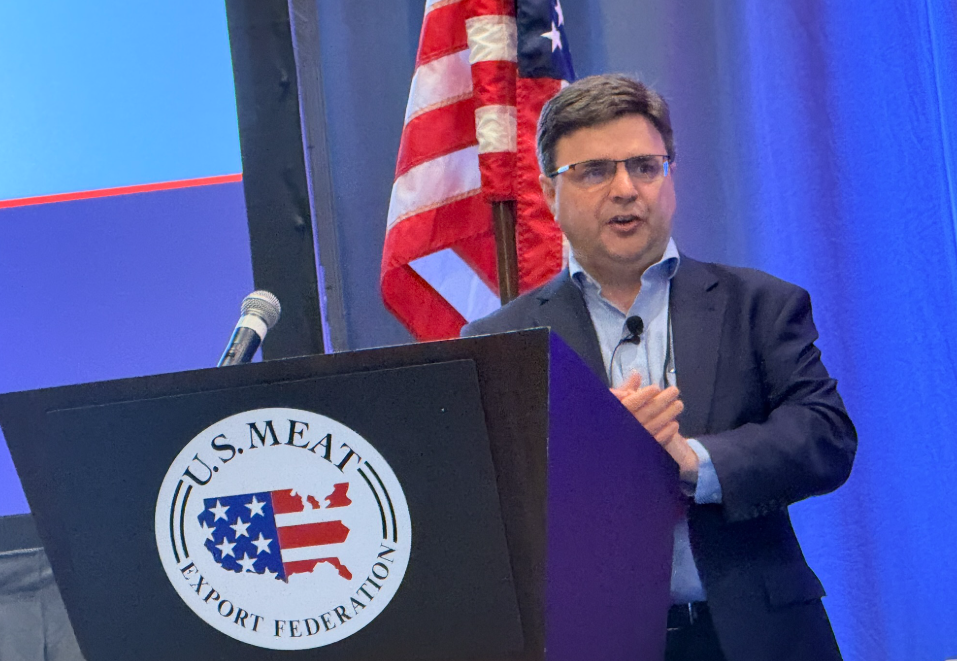
OSU Agriculture Field Days are educational events presented by OSU Ag Research and OSU Extension to share research-based information and resources with Oklahomans. Field days showcase current agricultural research and relevant best practices through presentations, tours, hands-on workshops and discussions. 

This event is a great opportunity to mingle with members of the OSU Wheat Improvement Team and their various industry partners as well as producers while learning about what goes on in the wheat research and Extension programs. 

The following is the schedule for the event:

  • Welcome and OSU updates from President Jim Hess and OSU Agriculture leadership 
  • Wheat variety trial and Wheat Rover demonstration - Amanda Silva, associate professor and Extension specialist, small grains
  • Wheat seeding rate research - Amanda Silva
  • Wheat disease update and management - Meriem Aoun, assistant professor and small grains pathologist
  • Wheat improvement for the north central region - Brett Carver, Regents professor and Wheat Improvement Team lead
  • Cultural and fall-applied chemical weed control in wheat - Liberty Galvin, assistant professor and Extension specialist, weed science
  • CoAxium wheat herbicide tolerance - Brett Carver; Jeff Wright, Oklahoma Foundation Seed Stocks coordinator of production operations
  • Exploring long-term soil health & fertility impacts of manure application to wheat - Daniel Adamson, assistant professor and Extension specialist, soil and water management and conservation

What: Lahoma Wheat Field Day

When: 9 a.m. to 1:30 p.m. on May 15

Where: North Central Research Station (1 mile west of Lahoma on Highway 60) near Lahoma.

Lunch will be provided at the event. For more information, visit the Field Days website at https://agresearch.okstate.edu/field-days.html. 

R-Calf Weekly Address: Priorities of U.S. Cattle Industry

R-CALF USA's board, several members and staff traveled to Washington, D.C., to inform Congress and the administration about what needs to be done to incentivize the expansion of our domestic cattle and sheep herds and to establish conditions under which the livestock producers who do expand will have a meaningful opportunity to be profitable.

We asked Congress and the administration to use their respective authorities to i) pass laws to promote competition, ii) promulgate rules to implement and enforce existing pro-competition laws, iii) free cattle producers from inappropriate government mandates, iv) establish meaningful tariff-rate quotas and tariffs for imported beef and lamb, and v) confirm that maintaining self-sufficiency in beef and lamb production is a national security priority.

To promote marketplace competition, we asked Congress to pass mandatory country of origin labeling (MCOOL) for beef in the Farm Bill, so consumers can buy beef from the country of their choice and American cattle producers can showcase their superior beef to American consumers.

The Packers and Stockyards Act, passed over 100 years ago, is an existing pro-competition statute. It prohibits dominant packers from engaging in unfair practices against individuals and unfair practices that reduce competition in the marketplace. A clear example is the global beef packers' use of cattle procurement contracts that require cattle feeders to deliver their cattle to the packer without ever knowing what even the base price of those cattle will be until after delivery. These contracts, known as formula contracts, are inherently anticompetitive, as they allow packers to circumvent competition.

So, we asked the administration to promulgate rules to clarify that formula contracts that do not contain at least a negotiated base price are an unlawful means of fed cattle procurement under the Packers and Stockyards Act.

While both MCOOL and Packers and Stockyards Act rules will promote marketplace competition that will help incentivize the rebuilding of America's livestock herds, America's cattle producers need to be freed from mandatory government programs that force them to pay for programs that are contrary to their financial interests. The beef checkoff program is one such misguided government mandate, as it forces producers to pay a tax that is used by global agribusinesses to prevent market reforms, including MCOOL, and to support trade policies detrimental to the financial interests of American cattle producers. Reform of the beef checkoff program by the administration and/or Congress, including a prohibition against the use of checkoff funds by any organization that is in the business of lobbying on agriculture issues, is the third priority on our list.

The other misguided government mandate we seek to reverse is the recently implemented mandatory electronic identification rule that uses disease traceability as a pretext for the government's real goal of wanting more control over America's cattle producers, their cattle, and their farms and ranches.

Now, the fifth priority on our list is essential for rebuilding our U.S. livestock herds. It calls for tariff-rate quotas, which are volume limits on imports, and tariffs to accomplish two goals: First is to give America's cattle and sheep producers sufficient space to rebuild their herds by protecting the domestic supply chains from excessive, price-depressing imports. This is what volume limits would do. Second is to level the playing field so imports that are allowed under the volume limit are not priced at levels that undercut domestic production.

These first five priorities will incentivize the rebuilding of our decimated cattle and sheep inventories, but we also need to look at what is needed to impart staying power within our domestic livestock industries. This means we need to impart in the minds of current and aspiring livestock producers the confidence that they will have a long-term, meaningful opportunity to operate profitable cattle and sheep operations. Importantly, they must know that their opportunities will not be undercut by misaligned, self-interested groups and people whose objectives are opposite that of securing national security by achieving self-sufficiency in beef and lamb production.

To achieve this, Congress and the administration must make clear that they will protect and defend the property rights of landowners, which, of course, includes water and grazing rights on federally managed lands. And both Congress and the administration need to demonstrate their resolve to meaningfully address ongoing and emerging threats to America's livestock operations. This means that preventing the introduction of foreign animal diseases and pests must remain a nonnegotiable government priority. And, given the ever-increasing threat posed by the proliferation of wolf populations, Congress and the administration must take action to substantively reduce injuries that wolves are causing to the economic viability of America's livestock operations.

USDA Risk Management Agency Upgrades Rainfall Data Source

 The U.S. Department of Agriculture's (USDA) Risk Management Agency (RMA) is upgrading the source for rainfall data used in several Federal crop insurance programs, moving from the National Oceanic and Atmospheric Administration's Climate Prediction Center (CPC) to the National Centers for Environmental Information (NCEI). RMA will begin this transition with the Tropical Storm Option on the Hurricane Insurance Protection - Wind Index program on April 30, 2026. 

This change will also affect Pasture, Rangeland, Forage (PRF); Annual Forage (AF); Apiculture; and Shellfish insurance programs that use precipitation data to calculate coverage and indemnities. PRF, Apiculture, and Shellfish will transition on August 31, 2026, with AF following on April 30, 2027. RMA will release corresponding producer tools and resources at each contract change date to help explain the new dataset. Producers should work with their crop insurance agent to review impacts on their coverage.

"These upgrades are about giving producers and their agents better tools to understand and trust the data behind their coverage," said RMA Administrator Pat Swanson. "The coverage areas, the way these programs work and our commitment to actuarial soundness are not changing. What is changing is that producers and agents will now be able to look up the rainfall data themselves in a format they can use."

The geographic grids used to measure rainfall and overall structure of the programs will remain the same. Keeping the grids in place helps minimize impacts to producers. With this upgrade, RMA anticipates that final grid index values and indemnity payments will be delivered faster. Historical data shows that overall loss ratios remain nearly identical under the new data source.

Producers and agents have raised concerns about the current data source. The transition to using NCEI data addresses those concerns in three key ways:

  • It's easy to access. NCEI data is available in formats like Microsoft Excel that anyone can open and read. The current CPC data is in a technical format that requires special software to view.
  • Potential for data enhancements. RMA is working with NCEI and state climatologists to review options on expanding the number of weather stations used in the data over time which was previously not an option with CPC. 
  • It comes with better support. RMA has a formal agreement with NCEI that includes dedicated staff to respond to RMA questions, a consistent data release schedule, and a pathway to add more weather stations over time. This supports faster, more predictable indemnity payments.

More Information

RMA secures the future of agriculture by providing world class risk management tools to rural America through Federal crop insurance and risk management education programs. RMA provides policies for more than 130 crops and is constantly working to adjust and create new policies based on producer needs and feedback.

Contact a crop insurance agent to see how Federal crop insurance can meet the specific needs of your operation. Crop insurance is sold and delivered solely through private crop insurance agents. A list of crop insurance agents is available online at the RMA Agent Locator. Producers can learn more about crop insurance and the modern farm safety net at rma.usda.gov or by contacting their RMA Regional Office. RMA's Basics for Beginners provides information for those new to crop insurance.

April 2026

State Tax Revenue Report - April 2026

About

Formally known as the Gross Receipts Report, this report is a timely, broad view of the state's economy and releases in conjunction with the General Revenue Fund report. Providing information to state agencies for budgetary planning purposes, the General Revenue Fund acts as the state's main operating account and receives a portion of the state's gross receipts as well as state, city and county funds.

April

Oklahoma's 2026 Wheat Crop Cut in Half By Drought

At the 2026 Oklahoma Grain and Feed Association meeting, crop scouts, extension specialists, and grain elevator representatives painted a sobering picture of this year's hard red winter wheat crop. Their estimates say the 2026 crop is roughly half the size of the previous two years, with production projected at 48.9 million bushels compared to 101.1 million bushels in 2025. The outlook is based on an average yield of 23.93 bushels per acre across an expected 2.043 million harvested acres, highlighting the significant downturn facing Oklahoma wheat producers. Senior farm and ranch broadcaster Ron Hays visited with Josh Bushong from Oklahoma State University, who gave the details.

A Season Defined by Drought and Extremes

Bushong pointed to persistent drought as the biggest factor shaping this year's crop. "We started with a little bit of moisture... but for the most part, it was a very dry winter, and then coming into early spring, hot, dry and windy," he explained. "So it just kind of persisted—that drought. We really didn't get much chance to set a good crop yield."

That lack of moisture, combined with heat, limited the crop's ability to develop. "That heat kind of limited some of our later tiller production, we just kind of capped our grain yield potential," he said. While disease and insect pressure were generally lower, drought-stricken areas saw additional challenges. "The drought brought in more mites, more aphids, some more viral issues so they just kind of compounded in those more droughty areas."

Crop Adjusters Busy Across the State

With conditions deteriorating in many regions, Bushong said crop adjusters have been active in evaluating damaged fields. "There's a lot of activity from the crop adjusters, trying to get them scheduled out there as soon as we can," he said. "We don't want to destroy anything before we have to."

He also encouraged producers to think long-term when making insurance decisions. "We don't want to be shooting for low numbers. That helps us short-term for a bigger check, but we start dropping that APH over time, our premiums go up, coverage is less," Bushong said. "We want to be mindful of trying to be forward-thinking as well."

Improved Genetics Offer Some Hope

Despite the tough year, Bushong emphasized that wheat genetics continues to be a bright spot for Oklahoma producers. "I think genetics is a big win for Oklahoma farmers," he said, noting that many of the top varieties planted come from OSU's wheat improvement program.

"The number one seeded variety is DoubleStop... most are growing it just for its genetics and agronomics," Bushong explained. "It has a great disease package, great grazing tolerance and recovery, so that's why we see that on a lot of acres—especially in western Oklahoma."

Production Takes a Major Hit

After strong production years in 2024 and 2025, Bushong said 2026 will look very different. "It's going to be a short crop—not just in height, but also in production. Acres are way down, yields way down," he said. "Overall, we might be looking at maybe 50 million bushels of wheat, so it's going to take a pretty big hit."

Yields vary widely depending on rainfall. "I've seen some stuff this past week—50 bushels and up... there's a lot of 30 bushel," he said. "But most of it is that 15 to 25 bushels, where it kind of drops that average."

A Patchwork Crop Across Oklahoma

The 2026 crop tells a story of extremes, with sharp differences even within the same county. "It's kind of hit and miss," Bushong said. "You can tell who got that timely rain. Each county has a pocket more or less."

Weather damage added to the variability. "Some got hit harder by hailstones and storms... but overall, if they caught a rain or two, they might have a few fields that yield pretty good," he said. "But overall, it's either that 30 to 50 or 15 to 20."

Geographically, the outlook worsens moving west. "Central Oklahoma, north central—even up into Alfalfa County—I saw quite a bit of good wheat," Bushong noted. "But in general, the further west you go, the worse it gets. The Panhandle was really hit multiple times... southwest Oklahoma is pretty drought-stricken as well."

As harvest approaches, Oklahoma's wheat crop reflects a year of tough conditions and tough decisions, with producers relying on both improved genetics and careful management to navigate one of the more challenging seasons in recent memory.

ROFI Drives New Approach to Crop Nutrition

With input costs continuing to pressure farm budgets, some growers are making difficult decisions to reduce fertilizer application rates. While that strategy may ease upfront expenses, it is also accelerating a broader shift across agriculture that is placing greater importance on nutrient use efficiency and return on fertilizer investment (ROFI)to help growers get more value from every pound of fertilizer applied.

"Maximizing return on fertilizer investment is about making the decisions that, at the end of the day, put more dollars in your pocket," said Chad Becker, field agronomist with Mosaic Biosciences. "Nutrients are one of the most important inputs for crop success. When we start looking at nutrient management as a strategy instead of just a necessary commodity, we can make more informed decisions."

The ROFI strategy centers on nutrient use efficiency, ensuring that applied nutrients are available, taken up by the plant and fully utilized throughout the growing season. When any part of that chain breaks down, growers risk losing value.

"Nutrients can be lost from the soil in a variety of ways," said Cameron Blackford, agronomist with Mosaic Biosciences. "They can be physically carried off the field through soil erosion or runoff from heavy rains, pushed down deeper into the soil profile below the root zone, or even be turned into a gas and leave the soil and go into the atmosphere. When that happens, you're not just losing nutrients, you're losing return."

The implications are magnified when fertilizer rates are reduced. With less applied upfront, there is less margin for inefficiency and a greater risk that yield potential could suffer if nutrients are not fully utilized.

"When we look at crop nutrition on a per-acre basis, it's not just about total pounds applied," said Keith Byerly, commercial sustainability lead at The Mosaic Company. "It's about the net gain from that investment and understanding how to ensure that those nutrients translate into yield and profitability." 

Increasingly, that conversation is turning toward tools and practices that enhance nutrient availability and uptake. Among them are biological technologies designed to improve how nutrients move through the soil and into the plant.

"Products like BioPath® and PowerCoat® from Mosaic Biosciences utilize plant growth-promoting rhizobacteria that colonize the root system," said Tim Robie, regional sales manager with Mosaic Biosciences. "They start releasing acids and enzymes that help free up nutrients that are otherwise tied up in the soil and make them available to the crop for uptake."

Beyond direct nutrient release, improved root development plays a critical role in overall efficiency.

"If you can grow a more robust root system, you directly influence the plant's ability to take up nutrients from the soil and influence yield potential," Robie added.

Field data supports that impact. Bio crop nutrition products such as BioPath and Powercoat have  demonstrated measurable increases in total nutrient uptake—approximately +15.8 pounds per acre and +24.8 pounds per acre, respectively, across multiple nutrients. 

Group 2, Grouped object

From an economic standpoint, those gains can be significant. In many cases, the increased nitrogen uptake alone can offset the cost of application, while additional phosphorus and potassium uptake provide incremental return.

"Every dollar you invest in inputs should be working as hard as your equipment and your team," Becker said. "When you improve nutrient uptake and utilization, you're not just applying fertilizer, you're amplifying its return."

In a reduced-rate environment, success depends less on how much fertilizer is applied and more on how effectively it performs. That means evaluating crop nutrition programs through a lens that emphasizes efficiency, timing and overall system performance.

"Even modest improvements—$10 or $20 per acre—can have a major impact when scaled across an operation," Byerly said. "That's the power of focusing on return instead of just cost." 

As growers continue to navigate volatile input markets, ROFI will be an increasingly important factor in crop nutrition decisions. The goal is not simply to reduce inputs, but to ensure that every pound applied contributes as much as possible to yield and profitability.

To learn more, contact your local Mosaic Biosciences representative or visit cropnutrition.com.

Oklahoma Wheat Disease Update:

Barley yellow dwarf  and wheat streak mosaic are widespread and severe in multiple Oklahoma wheat production regions

Barley yellow dwarf (BYD) remains severe in multiple locations in Oklahoma. Symptoms of BYD include stunting and yellow or purple discoloration on leaf tips (Figure 1). The discoloration increases over time, progressing from the leaf tip toward the base until much or all of the leaf is discolored. Barley yellow dwarf virus is transmitted by cereal aphids. When infection occurs in the fall, the virus has more time to disrupt plant growth, and yield losses are usually higher than when infection occurs in the spring. This season, BYD has been observed in Payne, Noble, Grant, Woods, Texas, Garfield, and Grady counties. The high incidence of BYD in 2026 could be attributed to warmer winter conditions, which favored aphid survival and virus transmission. In addition, early spring freeze stress may have contributed to more pronounced BYD symptom expression.

Figure 1. Barley yellow dwarf symptoms in Stillwater, OK (April 7, 2026).

Since early March, wheat streak mosaic (Figure 2) has been observed in Blaine, Garvin, Noble, Kay, Texas, Payne, Beaver, Kingfisher, Garfield, and Grady counties. The WSM virus complex, includes wheat streak mosaic virus (WSMV), Triticum mosaic virus (TriMV), and the High Plains wheat mosaic virus (HPWMV), all of which are transmitted by the wheat curl mite. Samples submitted to the OSU Plant Disease and Insect Diagnostic Lab, indicated that WSMV was the most commonly detected virus. Compared with previous years, the frequency of TriMV has increased. Triticum mosaic virus was confirmed in samples from Garvin, Texas, Grant, Beaver, and Kingfisher counties. In most cases, TriMV was detected alongside WSMV, although some samples were infected with TriMV alone. High Plains wheat mosaic virus was also detected, but at lower frequency and confirmed in samples from Kingfisher, Kay, Garvin, and Blaine counties.

Figure 2.  Wheat infected with wheat streak mosaic at Chickasha, OK (April 24, 2026).

Wheat plants exhibiting symptoms of both BYD and WSM (Figure 3) were observed in Garfield, Grady, Payne, Noble, Grant, and Texas counties. Co‑infection with multiple viruses can increase symptom severity and yield losses.

Figure 3. Wheat research plots showing symptoms of barley yellow dwarf and wheat streak mosaic at Lahoma, OK (April 18, 2026; Photo by Dr. Brett Carver).

High leaf rust incidence and severity

Leaf rust incidence and severity increased rapidly during the last two weeks of April and into early May. Leaf rust has been observed in nearly every field visited across Oklahoma, including drought‑stressed fields in southwest Oklahoma. On April 20, low levels of leaf rust were detected in the variety trial at Walters (Cotton County in southwest OK). Higher incidence and severity have been observed in other locations in Central and North Central Oklahoma. On April 24, moderate levels of leaf rust were observed at Chickasha (Grady County). Higher incidence and severity developed during late April and early May at Stillwater (Payne County) and Lahoma (Garfield County), where severity reached up to 100% on susceptible varieties. As leaf rust increased, much of the wheat crop had already passed the flowering stage, limiting opportunities for fungicide application. At this stage, the primary line of defense is the use of resistant varieties. Because infection occurred relatively late in crop development, yield losses associated with leaf rust will be lower than those that could have occurred if infection had occurred earlier.

Figure 4. Leaf rust on a susceptible variety at Lahoma, Oklahoma (April 26, 2026).


Article courtesy Of: Meriem Aoun, Small Grains Pathologist

Challenges Ahead for Oklahoma Farms

In an Article by Alberto Amador, West Area Ag Economics Specialist, he writes: it seems that the first quarter of 2026 is bringing several challenges for farmers and ranchers. Geopolitical conflicts in the Middle East have impacted both agricultural commodities and energy markets, affecting Oklahoma's food production and farm profitability. Weather, like every year, is another relevant factor that should be closely monitored. Recently, some forecasts suggest a high possibility of a fast transition from La Niña to El Niño. Let's analyze how these factors may impact farms in Oklahoma.

To begin with, let's analyze the implications of the Middle East conflict. The attacks have posed a high risk to shipping and transportation, especially through the Strait of Hormuz, where energy and fertilizer products are transported to their destinations. Approximately 20% of the world's oil and natural gas transit across the Strait and the Gulf. As a result, fuel prices increase, but this also affects other industries, such as fertilizers. Natural gas is a crucial input in nitrogen fertilizers, so production costs have increased. Additionally, beyond the Strait of Hormuz, Middle Eastern countries play a key role in global fertilizer production. Interruptions in trade flows and constrained input availability could result in the shutdown of refineries and fertilizer plants in the region. According to RaboBank, the region accounts for 44% of global urea exports, 27% of global ammonia exports, 25% of global phosphate fertilizer exports, 36% of global phosphate rock exports, 47% of global sulfur exports, and 9% of global potash exports.

After the conflict began in the first week of March, a DTN retail fertilizer price tracker showed discrepancies in seven of the eight principal fertilizers. The largest increases were in urea and anhydrous ammonia, by 2.3% and 3.5%, respectively, while DAP decreased by 0.4%, and 10-34-0 fell by 0.3%. The nitrogen fertilizers rose due to constraints in global supply. The U.S. doesn't rely on nitrogen imports as much as it does on potassium. For this reason, we should expect an increase in potassium fertilizer prices, especially for spring production.

The weather is a crucial factor that is analyzed each year. During the first months of 2026, La Niña effects have been present, and some forecasts have suggested a possible fast transition to El Niño this year. If that occurs, the chance of a dry spring is high (currently, some areas are in drought). While dryness allows field preparation for spring crops, it can impact wheat yield, and summer precipitation could be volatile, with periods of good rain but short dry intervals. As a consequence, estimated production may decrease, and prices may rise.

Regarding wheat, both geopolitical conflict and a faster transition into El Niño are driving price shifts. The situation in the Middle East has already affected wheat prices. After the conflicts began, future prices for the July contract are above $600/cwt, although how long these high prices last will depend on how long the war continues. So far, global and domestic demand remain constant. Therefore, weather risks, including spring drought, threaten the expected wheat production. High prices may look positive for producers, but it's important to remember that these are only speculations, and the duration of high prices is uncertain. Even though wheat is not facing high fertilizer prices or high fuel costs for harvesting, the quality of the crop during grain filling in spring remains a risk to consider.

In contrast, spring crops, hay, and pasture are more vulnerable to the rising production costs. Fertilizers, fuel, and repair and maintenance costs are all trending upward. This year seems to be under a multifaceted, complex umbrella, with expensive fertilizers, the risk of spring drought, and no consistent precipitation in summer. Good timing for planting and fertilizer applications could be key to good results. I suggest analyzing and calculating costs for different tillage methods and comparing the overall cost-benefit. Finally, for ranchers, adjusting stocking rates based on summer conditions and considering the economic costs of hay, especially for nutrition, are important management actions.

In scenarios like this, decision-making becomes more complex, as conditions are rarely optimal and timing for inputs or key operations may not align with original plans. While current forecasts suggest potential risks, outcomes remain uncertain, and conditions may change. This year may require a flexible approach, where producers adjust decisions based on evolving weather patterns and market signals. Prioritizing key areas such as input use, planting timing, and forage management can help improve results. Developing a business plan and using available resources can also help reduce risk exposure.

Wolfinger named Ferguson College of Agriculture orange gown honoree

The Oklahoma State University Ferguson College of Agriculture has selected Jacie Wolfinger, an animal science major from Lexington, Nebraska, as its spring 2026 orange gown recipient. The orange gown honor recognizes one graduating senior from each academic college for their excellence in leadership, academics and service. 

As part of the orange gown distinction, Wolfinger will represent the Ferguson College as its gonfalon carrier during OSU's spring commencement ceremony on May 8.

"When I began my education at Oklahoma State University, I knew I wanted to do more than simply earn a quality degree," Wolfinger said. "I wanted to make a meaningful impact. Through leadership, mentorship, kindness and industry involvement, I believe I have fulfilled that goal during my time in the Ferguson College of Agriculture."

Wolfinger served as a Ferguson College of Agriculture Ambassador and a Leader of Excellence in Animal and Food Sciences, roles she describes as her most meaningful at OSU. In these positions, Wolfinger connected with prospective students, sharing her personal experience, offering guidance and helping students explore opportunities in the college. 

"Transitioning to college can be overwhelming, and I was grateful for the opportunity to serve as a familiar and supportive presence for students navigating new academic and social environments," she said. 

Academically, Wolfinger served as a student worker in OSU's Meat and Muscle Biology Lab since 2023. She has assisted with graduate research thesis work, taste panels and other various tasks in a lab setting. 

"We are proud to honor Jacie as the orange gown recipient," said Cynda Clary, associate dean for academic programs. "Through her leadership and service, Jacie has made a meaningful impact within the Ferguson College and her department and has helped others find their home within OSU."

Wolfinger is involved in several clubs at OSU, including the Oklahoma Collegiate Cattlemen's Association, the Block and Bridle Club and the Meat Science Association, which she serves as president. 

"I definitely think college gives you an opportunity to grow so much as a leader," Wolfinger said. "It's all about what you do with those opportunities that college presents to you."

Wolfinger also participated in OSU's Intercollegiate Meat Judging Team, attending weekly practices and traveling to major packing plants. She competed in seven contests across 2025. 

"Competing has pushed me to grow mentally and technically while building connections with students and industry leaders across the country," Wolfinger said. "It has strengthened my decision-making, sharpened my industry knowledge and taught me the value of discipline and preparation." 

After graduation, Wolfinger plans to return to Nebraska and apply the skills she learned at OSU to her family's feedyard and cow-calf operation. 

"Being an orange gown recipient has really excited me and reassured me that I made the right decision coming to OSU," Wolfinger said. "I'm walking away with a great peer group, great faculty and professors behind me, and a wonderful experience that was second to none." 

The Ferguson College of Agriculture believes in the value of hands-on education and the importance of having a well-rounded student experience. The college's award-winning faculty members are dedicated to developing students and are passionate about adding value to the total educational experience. With 16 majors, a variety of study options and more than 60 student organizations, the college is committed to expanding minds and inspiring purpose. Learn more at agriculture.okstate.edu

Industry Leaders Focus on Progress At Sustainability Alliance Meeting

More than 260 dairy value chain leaders – including 26 farmers – gathered April 28-30 for the 2026 Dairy Sustainability Alliance® Spring Meeting, with a focus of turning shared priorities into practical progress across the industry.

The Dairy Sustainability Alliance – created through the checkoff-founded Innovation Center for U.S. Dairy – brings together farmers, cooperatives, processors, retailers, foodservice, researchers and NGOs to collaborate to advance dairy's shared social responsibility priorities.

Dennis Rodenbaugh, president and CEO of Dairy Farmers of America and chair of the Innovation Center for U.S. Dairy, began the meeting by emphasizing progress starts with alignment.

"Everyone here represents something essential to our industry – farmers, cooperatives, processors and customers," Rodenbaugh said. "All of you are here as partners in this ongoing pursuit."

Rodenbaugh highlighted the evolution he has seen, noting a growing focus on nutrition, increased confidence in telling dairy's story and a stronger commitment to facts and action.

"That kind of alignment doesn't happen automatically," he said. "It happens because this industry understands something many others do not: real progress requires shared responsibility and aligned execution."

He pointed to the Innovation Center's role in bringing the industry together around priorities, including nutrition, food accessibility and affordability, animal care and environmental stewardship – and turning those priorities into coordinated action.

He also underscored that sustainability in dairy is rooted in long-standing farmer practices.

"U.S. dairy farmers have been practicing sustainability for generations," he said. "They think generationally, not quarterly. Their goal is preservation for the next generation."

He noted significant gains in efficiency, with today's cows producing five times more nutrition than mid-century herds while using substantially fewer resources. He stressed sustainability must be defined broadly to include environmental, economic and social outcomes.

"Ultimately, the credibility of dairy will not depend on what we do individually, but on how well we align and coordinate as an industry," Rodenbaugh said. "This is the Alliance. This is the room where that alignment happens."

Nutrition Momentum Creates Opportunity

A major focus of the meeting was the growing momentum around dairy's role in health and nutrition.

Leaders from National Dairy Council and National Milk Producers Federation highlighted the 2025-2030 Dietary Guidelines for Americans, which recommend three servings of dairy per day but now include whole-fat options. At the same time, whole milk can be offered as an option in schools.

Speakers said those changes open the door for growth and new opportunities across the dairy community.

"It's a really exciting time for dairy," said Abbey Copenhaver, a New York dairy farmer and registered dietitian. "As a farmer, it excites me that dairy has been emphasized in the new guidelines because we want to move product. But as a dietitian, I'm excited because I truly believe in my core about the health benefits that dairy delivers for Americans."

Sessions focused on how to turn this momentum into real demand by better connecting with consumers. Attendees got an overview of Dairy Management Inc.'s new Dairy Does More campaign designed to highlight both the familiar and unexpected benefits of dairy.

Also, Shamrock Farms shared how the company is leveraging key dairy health and wellness benefit areas and Innovation Center tools to innovate, update packaging and promote dairy nutrition at retail and to consumers.

Making Sustainability Work on Farm

Farmer-focused sessions centered on what it takes to make sustainability efforts practical and economically viable.

A look at Feed in Focus – with partners including The Nature Conservancy and the Michigan Milk Producers Association – shared lessons learned from real farms, highlighting the importance of flexibility, trusted technical support and farmer-first program design.

Other sessions showed how sustainability can translate into revenue, with farmers and leaders from Dairy Farmers of America, Newtrient, Athian and ALDI highlighting how coordinated efforts are generating payments tied to verified environmental outcomes.

Beyond the farm, discussions tackled global reporting expectations and packaging challenges.

Speakers from companies including Land O'Lakes, Schreiber Foods, HP Hood and Agri-Mark/Cabot Creamery Co-operative emphasized the need for practical, science-based approaches as customer requirements evolve.

Leaders also highlighted the role of the National Dairy FARM Program in supporting continuous improvement and building trust. New York farmer Val Lavigne, along with representatives from Land O'Lakes and Leprino, stressed how consistent, science-based standards help strengthen credibility and market access.

Measuring Progress, Driving Improvement

On the meeting's second day, Lori Captain, group executive vice president and executive director of the Innovation Center for U.S. Dairy, shared an update on how environmental sustainability work is advancing across the industry and what it means for farmers.

Captain emphasized that expectations around sustainability are rising, with greater focus on water, transparency and broader system impacts alongside greenhouse gas emissions, even as the foundation of the work remains rooted in long-standing farmer stewardship.

She outlined how the industry is strengthening this foundation for credible progress through improved measurement and science-based tools, including updated lifecycle assessments that track greenhouse gas emissions, expanded water research and continued investment in the HERD Initiative and Greener Cattle Initiative.

"Progress in environmental sustainability does not come from a single solution," Captain said. "It comes from science, tools and partnerships working together, and that system only matters if it holds up on farm. This work only succeeds if it works for farmers."

Farmer Perspective Remains Central

The meeting closed with a farmer-led panel that grounded the conversation in day-to-day realities on the farm. Producers David Elliott (South Dakota), Maynard Mallonee (Washington) and Ben Smith (Virginia) shared how evolving sustainability expectations are shaping decisions on their operations.

From feed and manure management to technology investments and participation in emerging programs, the panel highlighted how farmers are weighing new opportunities against real-world constraints, including cost, labor, regional differences and long-term risk.

The discussion reinforced that sustainability does not look the same on every operation, and that progress depends on solutions that work across different regions, sizes and production systems.

For information about the Innovation Center, visit https://innovationcenter.usdairy.com/

Evaluate Early-Season Corn Conditions for Better Yield Outcomes

Evaluating corn vigor soon after emergence can help identify early-season issues and support a stronger finish at harvest.

"The V4 to V6 stage is when we determine the number of kernel rows around the ear," says Jeff Morey, AgriGold field agronomist. "If we have any stress during that time, corn genetics that normally would have 16 kernel rows around could possibly drop to 14 rows around, impacting yield."

Defining good corn vigor

Even emergence is the primary indicator of good corn vigor. Morey says corn plants separated by more than one leaf stage can indicate future yield loss.

"Let's say, for example, 90% of my plants are at V4 and the other 10% are V2," says Morey. "That 10% has likely given up some yield."

Plant health and dark green leaves are other signs of good corn vigor. Yellowing may indicate a nitrogen deficiency, while purpling could point to a phosphorus shortage. "Discolored or stressed plants can signal a yield hit," says Morey. "That said, it's important to keep in mind that hybrids naturally vary in color."

To get a complete picture of crop vigor, Morey recommends digging plants to inspect root development. Morey says, "If you dig that root early, you may be able to see things like herbicide damage or disease infections."

Scouting for weather-related concerns

Both wet and dry conditions can lead to uneven emergence, but the specific issues you scout for will depend on the weather you're experiencing.

In a cool, wet spring, farmers should watch out for poor root development or damping off. "The root development may be limited because of saturated soils depleting the oxygen, which is essential for root respiration and nutrient uptake," says Morey. "If you encounter drought stress later on, this could be a problem because you'll have a mass of roots near the soil surface where it dries out first."

Dry conditions create the opposite challenge by reducing nutrient availability in the soil. "If nutrients aren't there in a soil solution for the plant to take up, it will struggle from the get-go — and we don't want that stress in front of the V4 to V6 timeframe," says Morey.

"On the positive side, if you get just enough water and have some dryness, roots will dive deeper, forming a root mass that's able to access water and nutrients later in the season because they're deeper in the soil," says Morey.

Farmers should also scout for signs of early-season diseases and insect pressure from cutworm, seed corn maggot and white grub.

When to take action

When deciding which issues to address, Morey says farmers need to determine what percent of the field is being impacted and whether the issue justifies intervention. Walk your fields, dig some roots, put your pencil to the paper and reach out to your local AgriGold field agronomist for additional support.

For support making the most of every acre — from seed selection to in-season decisions like improving corn vigor — reach out to your local AgriGold agronomist.

stephanie bice oklahoma flag

Congresswoman Stephanie Bice Discusses Oklahoma Agriculture and the 2026 Farm Bill

In a comprehensive legislative update, Congresswoman Stephanie Bice sat down with Farm Director KC Sheperd to pull back the curtain on the intense negotiations surrounding the 2026 Farm Bill. As the House of Representatives dives into a high-stakes appropriations season, Bice noted that while a significant portion of core agricultural provisions were secured last year, the current version of the 2026 Farm Bill is the essential vehicle for addressing the "loose ends" that directly impact rural economies.

Fueling the Future: The E15 Push

A centerpiece of Bice's current agenda is expanding E15 fuel options, which she views as a critical choice for Oklahoma producers. "I have a lot of my colleagues who represent corn-growing communities in districts, and they really want to see E15 as an option for states, not a mandate, but an option," Bice explained. She noted that this effort bridges the gap between the energy and agricultural sectors, stating, "Whatever I think gets the most support is the direction that we're going to go. We have the option to do it either way right now".

Economic Headwinds and the Bipartisan Bridge

The Congresswoman emphasized that the 2026 Farm Bill must remain a bipartisan effort because food security is a national priority that transcends party lines. "Food and fuel are incredibly important to their communities as well, and that's why they want to see a Farm Bill passed," she remarked. She highlighted the rising economic pressures on farmers, noting, "We know fertilizer prices are up, we know that interest rates are up on farm equipment, and it's really putting a huge strain on all of our farmers across the country".

Reform and Accountability in Nutrition

Addressing the complex relationship between farm support and nutrition assistance, Bice detailed the House's approach to SNAP (Supplemental Nutrition Assistance Program). "I want people to be able to access these nutrition programs if they need it," she said, but warned that "many of these states... were not adhering to what I think is reasonable SNAP thresholds". Pointing to severe oversight issues, she shared a startling example: "Alaska had a 60—KC, six-zero—60% error rate on SNAP, meaning 60% of the people on SNAP didn't qualify".

Oklahoma's Research Edge

As a proud graduate of Oklahoma State University, Bice celebrated the recent $40 million investment directed toward OSU's research and extension programs. "They've done some phenomenal things that I think many of your listeners wouldn't even know about, including... they have created a sort of turf on the White House lawn that was made right there in Stillwater, America," she shared. Bice views these investments as a shield against global instability, noting, "If we can't eat, we can't feed our communities, we have a big problem".

Restoring the Human Element to Politics

Reflecting on the tone of discourse in Washington, Bice expressed a deep concern for the breakdown of interpersonal communication. "I think that you see people communicating via social media too much, frankly, and there's sort of this distrust that becomes, I think, percolated because of it," she lamented. She advocated for a return to the style of leaders like President Reagan and Tip O'Neill, noting that "having really tough conversations in person—that's how you build trust and you build relationships with people".

"I tell my staff that all the time: this job is not hard, just be nice and respectful to people," Bice added, emphasizing that personal respect is the key to passing a successful 2026 Farm Bill. She concluded that while policy disagreements are natural, "I may not agree with my colleagues... but I want to understand where they're coming from and why it's important to them".

Cull Cow Prices Keep Climbing

While calf and fed cattle prices have continued to set new record highs in the cash and futures market, cull cow prices have continued their slow ascent to new highs as lean beef prices keep pulling cow prices higher. Southern Plains cull cow auction prices increased to almost $180 per cwt in late April, up about $15 per cwt since January. The seasonal price increase has been smaller than normal this year. Cutter quality cows have increased about $30 per cwt, almost 25 percent, since the beginning of the year. 

One overlooked boost to lean beef prices has been record large fed cattle dressed weights. Average federally inspected fed steer dressed weights have remained over 980 pounds per carcass since late 2025. Larger carcasses produce additional fat that requires more lean beef for blending to boost its value as ground beef rather than just tallow entering the fats and oils market.

After exceeding slaughter of a year ago through the first 10 weeks of 2026, dairy cow culling pulled back to year-ago levels during April. Dairy cow culling typically peaks in January and February each year, then declines into mid-year. The decline in dairy cow slaughter has pulled down total cow culling as weekly beef cow slaughter has held at steady, but low levels. For the year, total dairy cow slaughter is reported up 6 percent compared to last year while total cow slaughter (beef and dairy) is down 5 percent. Beef and dairy cow slaughter is reported weekly by region of the U.S. In recent weeks, reported regional cow slaughter data has declined due to confidentiality rules that prevent publication if there are too few buyers to prevent revealing any one operation's actions. The lack of reporting due to confidentiality concerns has been a problem in fed cattle reporting for many years. On the positive side, the weekly national cow slaughter data includes all of the regions, including those that could not be reported regionally.

Record high calf prices are likely keeping cows on the ranch or dairy that otherwise would have been culled to get one more calf out of them. As those calves are born and move to weaning, there may be an increase in culling as those cows come to market. Cull prices tend to peak mid-year, so there is room for cow prices to continue to increase over the next couple of months. Beyond just the seasonal pattern arguing for higher prices, cow culling should continue to be lower than last year, further supporting prices. Beef cow slaughter is expected to remain well below a year ago. Better milk prices should restrain dairy cow culling even though the herd remains large. 

Anderson, David. "Cull Cow Prices Keep Climbing." Southern Ag Today

Ben Hale: Strong Demand and Optimism Drive Oklahoma Cattle Markets Despite Volatile Board

On Tuesdays, Senior Farm and Ranch Broadcaster Ron Hays visits with Ben Hale of Western Livestock Auctions as he talks about the latest in the markets and more. Established in 1995, Western has grown into a multi-generational family-owned and operated business and stands as a symbol of tradition, excellence, and a deep-rooted passion for the cattle industry. Western Livestock Auctions operates the Western Livestock Commission Firm, which sells cattle on Mondays and Tuesdays. They also operate the livestock auction markets in Woodward, Comanche, Waurika, and Knoxville, Iowa.

Cattle markets stayed active this week, even with volatility in the futures trade. Hale said receipts were strong, noting, "I think set a little over seven (thousand head)... quite a bit more than a year ago... very active." Despite a choppy board that moved higher late last week and then dropped, Hale added, "it didn't seem to bother," as feeder steers held "kind of steady, higher." While heifers weren't quite as aggressive, he emphasized they "still got along extremely well," pointing to continued strength across most classes.

Demand for calves and grazing cattle continues to push the market forward, especially for higher-quality animals. Hale explained, "we're seeing a lot of new crop calves, but not a big difference in price," highlighting strong buyer interest in front-end cattle with potential. He added, "these better... grazers that still got some condition and still got some go... they're still active and still going after them." Whether headed to grass or grow yards, cattle are benefiting from relatively affordable feed options and solid demand, helping sustain what he described as ongoing advances, particularly in the calf market.

Pasture conditions remain mixed across the state, influencing some marketing decisions. Hale noted, "the middle part of the state... and then of course East still got lots of demand for the grass," while conditions deteriorate moving west and north, where "it gets pretty barren pretty quick." Even so, buyer sentiment remains upbeat. "Everybody's pretty good. lot of optimism and not much faith in what the board's doing," he said, adding that cash cattle markets continue to perform well. With upcoming sales planned across multiple locations, Hale summed up the current outlook simply: "just rolling along and praying for rain."

Hale can be contacted at 940-631-2333. Check out more about the marketing options that Western offers by clicking here.

Members of Congress Seek Removal of Phosphate Duties

A bill that would remove countervailing duties from phosphate fertilizer imports from Morocco was introduced today in the U.S. Senate and the U.S. House of Representatives.  
 

Sen. Marshall (R-Kan.) sponsored the legislation, entitled the Lowering Input Costs for American Farmers Act, and it is co-sponsored by Sens. Chuck Grassley (R-Iowa), Cindy Hyde-Smith (R-Miss.) and Joni Ernst (R-Iowa) with Congresswoman Mariannette Miller-Meeks (R-Iowa) and Ashley Hinson (R-Iowa) sponsoring the legislation in the House.
 
"Corn farmers have been consistently vocal about the negative impact of duties on imported fertilizers," said Ohio farmer and National Corn Growers Association President Jed Bower. "We applaud these members of Congress – long-time farmer allies – for taking action to address one of the issues that is causing a hike in fertilizer costs."
 
Phosphate fertilizer is an essential input for modern crop production, used predominantly for growing corn, soybeans, cotton, and other agricultural commodities. In the last five years, corn farmers have paid record and near-record highs to purchase phosphate following government action that cut off imported supplies.  
 
In 2020, the Commerce Department, acting on a petition filed by Mosaic Company, imposed duties on phosphate fertilizers imported from Morocco and Russia. Mosaic claimed at the time that unfairly subsidized foreign companies were flooding the U.S. market with fertilizers and selling the products at extremely low prices. The petition was supported by J.R. Simplot.  

Corn growers have been critical of the process used to determine the duties, which led to inaccurate calculations. Further, the outsized impact of restricting phosphate imports has negatively affected farmers across the United States. This year, the duties are being examined under a sunset review process that will determine if the duties should continue.
 
The duties have had major effects on the phosphate fertilizer market. At least one Moroccan company halted shipments of phosphate fertilizers into the U.S., which led to price hikes and shortages, saddling farmers with a hardship that has only worsened in recent weeks with the conflict in the Middle East.

Cow Calf Corner: Timing Bermudagrass Turnout for Maximum Summer Production

Mason B. Henson, Oklahoma State University Sustainable Livestock Production Specialist &

Mark Z. Johnson, Oklahoma State University Extension Beef Cattle Breeding Specialist and

Much of Oklahoma's bermudagrass finished the summer and fall of 2025 with some degree of drought stress. Input costs, especially fertilizer have spiked in price over the past several weeks. Now, in the season when soil temperature and photoperiod are priming warm season grasses to grow, it is important to assess pastures and manage for long-term health and productivity. Over the next three weeks, we will address bermudagrass pasture management, the use of warm season annuals and legumes as a means to improve range health, beef production and profit potential.

Spring rainfall and increasing temperatures results in rapid green-up of bermudagrass, creating the appearance of readiness for grazing. However, initiating grazing too early in the growth cycle can have negative consequences for pasture productivity throughout the remainder of the season. Proper timing of initial grazing is critical to ensure plant health and maximize forage yield.

During early spring growth, bermudagrass relies heavily on energy reserves stored in roots and rhizomes. The initial development of leaf tissue is supported by these reserves rather than current photosynthetic activity. Before the plant can sustain active growth, it must rebuild root reserves and establish a functional photosynthetic system. This process requires adequate leaf area and time. Grazing during this early stage removes leaf tissue that is essential for energy production, limiting the plant's ability to replenish reserves. As a result, root development may be restricted, and overall plant vigor can be reduced. Although the pasture may continue to appear green, the long-term effects often include decreased forage production, slower recovery following grazing, and reduced tolerance to environmental stress, particularly drought.

To minimize these risks, grazing should be delayed until bermudagrass has reached an appropriate height, generally between 6 and 8 inches, and exhibits consistent, active growth. This indicates that the plant has transitioned from reliance on stored reserves to sustained growth supported by photosynthesis. Monitoring growth patterns rather than relying solely on visual greenness can improve grazing decisions.

Delaying turnout may require temporary adjustments in management, including continued use of stored forages or alternative grazing areas. Protecting bermudagrass during this early stage helps ensure stronger growth, better yields, and improved resilience if conditions become dry later in the summer. With favorable moisture conditions, bermudagrass has the potential to produce substantial forage yields. Ensuring that grazing is initiated at the appropriate time is a key factor in realizing that potential and maintaining pasture productivity throughout the summer.

References:

Oklahoma State University Extension. (n.d.). Bermudagrass pasture management. Stillwater, OK: Oklahoma State University.

Hay & Forage Grower. (2017). Give warm-season perennials a fighting chance. Retrieved from https://hayandforage.com/article-5670-Give-warm-season-perennials-a-fighting-chance.html

Pasture Recovery Following Drought. Oklahoma Cooperative Extension Fact Sheet PSS-2592

Mark Johnson explains how cattle producers can make the most of their fertilizer applications for stronger forage performance on SunUpTV from May 2, 2026. https://www.youtube.com/watch?v=zOPji20a-TA

Crop Progress: Wheat Condition Concerns Persist into May

According to the latest crop progress report released on May 4th, 2026, Oklahoma's winter wheat headed is at 70%, while winter wheat conditions are rated 16% good to excellent, 49% very poor to poor, and 35% fair.

Kansas winter wheat headed is at 70% winter wheat crop is ranked 22% good to excellent, 34% fair, and 34% poor to very poor.

Texas winter wheat crop is at 16% good to excellent, 28% fair, and 56% poor to very poor, while winter wheat headed for the state is at 76%.

Nationally, winter wheat condition ranks 37% Good to excellent, 35% fair, and 35% poor to very poor. Winter wheat headed nationally currently sits at 49%.

Corn Statistics

Kansas corn planted sits at 41% this week, compared to 48% a year ago. Kansas corn emerged is at 20%

Texas corn planted is at 77% this week, equal to a year ago. Texas corn emerged is at 70%

Nationally, corn planted is at 38%, and corn emerged is at 13%

Soybean statistics:

Kansas soybeans planted are at 25% this week compared to 15% last week, soybeans emerged is at 3%

Nationally, soybeans planted are at 33% this week, and soybeans emerged are at 13%

Cotton statistics:

Oklahoma cotton planted is at 1% this week down from 3 % a year ago.

Kansas cotton planted is at 5% this week.

Texas cotton planted is at 24% this week, even with a year ago.

Nationally, cotton planted sits at 21%.

Sorghum statistics:

Oklahoma sorghum planted is at 14% this week, compared to 15% a year ago

Kansas sorghum planted is at 5%

Texas sorghum planted is at 69%, down 1 point from a year ago

Nationally sorghum planted is at 22%

Pasture and range conditions

Oklahoma: 31% good to excellent, 36% Fair, 33% poor to very poor

Kansas: 38% good to excellent, 35% fair, 27% poor to very poor

Texas: 28% good to excellent, 30% fair, 42% poor to very poor

National: 30% good to excellent, 29% fair, 41% poor to very poor

compared to a year ago, pasture and range conditions ranked:

Oklahoma 45% Good to Excellent, 38% Fair and 17% Poor to very poor

Kansas 55% good to Excellent, 28% Fair and 17% Poor to very Poor

Texas 36% Good to Excellent, 39% Fair and 25% Poor to Very Poor

Federal Officials Highlight Ongoing Investigation into Meatpacker Market Concentration

Today, the U.S. Department of Justice, U.S. Department of Agriculture, and the White House held a press conference outlining ongoing efforts to examine competition and market concentration in the cattle and beef supply chain.

"Today's joint press conference was unprecedented. It demonstrated how seriously the Administration is taking the ongoing problem of concentration in cattle and beef markets," said R-CALF USA CEO Bill Bullard.

R-CALF USA Property Rights Chair Shad Sullivan represented the organization at the briefing and delivered remarks.

"Farmers, ranchers, and American consumers have suffered for too long at the hands of consolidated power," Sullivan said.

"Just in the last generation, we have lost more than 665,000 beef cattle operations, nearly 50 percent of producers since 1980," Sullivan said. "This has been driven by years of mergers and acquisitions of multinational corporations and foreign meat conglomerates, creating a level of economic and political power that too often escapes oversight and accountability."

Bullard said R-CALF USA is encouraged by the administration's continued focus on the issue.

"We hope people in the industry will respond to the request for whistleblowers to come forward and help with the investigation," said Bullard. "We are extremely grateful that we have an administration that is committed to reforming our markets, reversing the downward trajectory of our cattle inventories and farmers and ranchers, and ensuring that consumers are not forced to pay monopoly-controlled prices for their beef."

Watch the full press conference: https://www.youtube.com/live/Q9SRJ_DU3uo

Optimizing Agricultural Labor and Rural Healthcare: A Discussion with Senator James Lankford

Optimizing Agricultural Labor and Rural Healthcare: A Discussion with Senator James Lankford
In a recent interview conducted by Farm Director KC Sheperd at Senator James Lankford's Washington, D.C. office, the discussion centered on the critical intersection of immigration reform, rural healthcare funding, and the upcoming Farm Bill. This conversation highlighted legislative efforts to stabilize Oklahoma's agricultural and medical infrastructure. The Senator provided insights into the ongoing "border policy fights" and noted that Mark Wayne Mullin now leads the Department of Homeland Security (DHS) with a focused team, including Oklahoman Rodney Scott as the head of CBP.

Addressing the Agricultural Workforce Gap
A primary concern for Oklahoma producers is the stability of the workforce, particularly regarding legal immigration and seasonal labor. Senator Lankford emphasized that once the border is secured, the focus must shift to refining the legal immigration process to support farmers, ranchers, and processors who rely on a consistent labor supply.

"The next set of decisions is what the White House has to be able to make... is what happens for legal immigration? Where is that going? Seasonal labor, long-term visas, work visas—that's the next step," Senator Lankford stated.

He acknowledged that labor shortages extend beyond the field, impacting healthcare facilities and senior centers in rural areas. He advocated for a more efficient process to allow year-round workers to support the processing industry when local labor is unavailable.

Strengthening Rural Healthcare
The Senator highlighted a significant financial infusion for Oklahoma's medical sector, noting that the state is set to receive approximately $223 million in rural healthcare assistance next year. This funding, part of a broader $10 billion annual commitment over five years, is designed to modernize infrastructure that has faced long-term neglect.

"This is on innovation, this is catching up on facilities, this is catching up on diagnostic equipment... a lot of the back-office stuff that's just been neglected quite frankly as people just don't have the finances to be able to keep up with it," Lankford explained.

Navigating the Farm Bill and SNAP Reform
As discussions surrounding the Farm Bill continue, Senator Lankford stressed the necessity of a bipartisan approach, particularly concerning the Supplemental Nutrition Assistance Program (SNAP). He addressed the need for greater efficiency and lower error rates in state-managed SNAP programs, noting that Oklahoma is working to align with national standards.

"The Farm Bill is always a bipartisan bill... there's never been a time it's been a partisan bill," Lankford said. "We've got to be more efficient to make sure that the people that actually receive SNAP are the people that qualify for SNAP."

He also touched on state-level discussions about excluding high-profit, low-nutrition items like candy and soft drinks from SNAP benefits, prioritizing healthier options for recipients.

Emerging Agricultural Threats and Safety
Beyond legislation, the Senator is monitoring emerging biological threats to the livestock industry, including the New World screwworm and new tick-borne diseases. He noted that research and eradication efforts are being prioritized to protect Oklahoma's cattle industry. Additionally, he expressed the urgency of resolving DHS funding, which impacts FEMA and security preparations for the upcoming Olympics in Oklahoma.

Reflecting on the diverse responsibilities of his office, Senator Lankford noted the complexity of managing international policy, energy, and trade all within a single day.

"In a typical day, there are so many issues that we have to deal with... tomorrow's eight or ten things may be different than the eight or ten that are today," he remarked.

Colorado County man arrested on livestock theft charges following TSCRA investigation

Ben Lee Johnson, 65, of Montalba, was arrested on felony charges following investigations by Texas & Southwestern Cattle Raisers Association Special Rangers into livestock theft and issuance of a non-sufficient funds check.

The case began in August 2025, when TSCRA Special Ranger Mike Boone received a report that Johnson failed to pay for cattle purchases totaling $221,730.20 at a local auction barn. Johnson was arrested in November 2025. Following the arrest, a Jasper County grand jury indicted him for theft of livestock March 16.

A second investigation was initiated in early 2026 by Special Ranger Robert Pemberton. Authorities allege Johnson issued a non-sufficient funds check for $31,629.75 Jan. 9, to a livestock auction in Northeast Texas. Johnson failed to remit payment after receiving a formal demand.

Investigators determined Johnson continued to buy and sell cattle at other auction barns while failing to pay outstanding debts.

Based on the investigation, a warrant was issued April 7 and Johnson was arrested April 9, in Limestone County.

The case has been submitted to the district attorney's office and remains under investigation.

Texas & Southwestern Cattle Raisers Association Special Rangers worked with the Jasper County District Attorney's Office, Rains County District Attorney's Office, and sheriff's offices in Rains, Limestone and Jasper counties.

Cow Calf Corner Dr Derrell Peel: Drought Threatens the Herd Rebuild

Moving into May, drought conditions take on a new urgency.  Pasture and hay production in the next few weeks will determine cattle production potential for much of the year.  The latest Drought Monitor (Figure 1) shows that drought is widespread across much of the country.  The Drought Severity Coverage Index (DSCI) is calculated from Drought Monitor categories to provide a summary measure of drought.  The current DSCI for the continental U.S. is a value of 202, down fractionally from the 204 level of the previous week.  The current DSCI is the largest value for the end of April in the history of the Drought Monitor, back to 2000. 

Not only has the DSCI never reached a value of 200 at this time of year, the DSCI for the U.S. has only exceeded a level of 200 a total of 26 times in 1,374 weeks since the Drought Monitor began. The DSCI has averaged 108, ranging from 11 to 215 over the last 26+ years.  The current values over 200 are more than two standard deviations above average and have occurred less than two percent of the time in the history of the Drought Monitor.  

The DSCI provides a measure of drought intensity but does not specifically address drought affecting beef cattle production.  In 26 states accounting for 88 percent of the 2026 beef cow inventory, the percentage of drought in each of is applied to the beef cow inventory in each state.  The results show that over 79 percent of the beef cow herd in those 26 states are currently impacted by drought. That means that over 70 percent of the total beef cow herd is impacted even without considering drought in any remaining states.  It is clear that drought is a significant threat to beef cattle production and potential herd rebuilding in 2026.

Decreased cow culling is an important part of stopping herd liquidation and stabilizing the cow herd.  Beef cow herd culling dropped sharply in 2023-2025, reaching a cyclically low level of 8.4 percent in 2025.  Thus far in 2026, beef cow slaughter is down over 17 percent year over year, a level that would lead to an annual herd culling rate of roughly 7.0 if it persists for the balance of the year. This would be a record low culling rate and would certainly help stabilize the beef cow herd. However, current drought conditions may cause cow slaughter to increase and lead to additional herd liquidation.  

There are indications of the very early stages of heifer retention as well.  The January 1 beef replacement heifer inventory was up slightly, by 0.9 percent year over year.  This is consistent with the indications in the steer to heifer slaughter ratio in Figure 2.  This ratio has peaked in each of the last four herd expansions and typically starts increasing prior to the herd inventory low.  The chart shows that the ratio has started to increase and indicates the very early stages of heifer retention.  Little or no herd rebuilding is indicated for 2026, but the process may be starting for later.  However, continued or accelerated drought in 2026 could interrupt early heifer retention and further delay herd rebuilding.   

Derrell Peel discusses the impact of delayed herd expansion on the cattle markets on the U.S. Farm Reports college roadshow visit at Oklahoma State University. https://www.facebook.com/USFarmReport/videos/-how-long-can-the-cattle-market-stay-hotoklahoma-states-derrell-peel-says-hes-ne/954263747500594/  

State Issues Have National Implications; We're Going There

Since it began in 1916, the National Milk Producers Federation has been the premier voice for dairy farmers and the cooperatives they own in Washington, offering federal-level and expertise that best serve our members.

But Washington isn't the only, or often even the most important, place where policies originate that affect dairy farmers. State legislatures and regulators take actions that often have implications nationwide — and in 2026, understanding state and federal policy, and how they interact, is crucial to advocate effectively at either level. That's why, as part of NMPF's longer-term strategic planning, we're changing how we approach state-level issues, with resources and initiatives to better serve dairy and support advocates at the state level, even as those efforts enhance our work in Washington.

State issues hit farmers differently, depending on where they are. For example, take a look at Extended Producer Responsibility (EPR) laws, which shift responsibility for managing packaging waste from consumers and municipalities to producers. The laws have significant implications for dairy farmers and cooperatives — packaging ensures food safety, extends shelf life and maintains product quality.

States including California, Colorado, Maine, Maryland, Minnesota, Oregon and Washington are implementing EPR frameworks. The state-by-state patchwork that's resulting creates headaches for cooperatives and dairy businesses that operate across state lines. But the issue hasn't bubbled up to the federal level, which means that, as important as EPR is as a policy issue for dairy, it's not one that, as of yet, has fallen in NMPF's "lane" as an organization that advocates on federal policy.

But that doesn't make it any less important for our members.

Our response on EPR, and on other issues such as raw milk, has been to up our game on understanding state-level issues and helping our members coordinate efforts as what happens in one state is likely to have an echo elsewhere. Delving more deeply into state-level concerns helps us anticipate what's coming next in Washington and also helps make sure that dairy's opponents don't gain wins by bypassing the federal government altogether, without us having done our part to positively influence the debate. In a policy environment where all the pieces fit together in incredibly complex ways, we're making sure that dairy knows what's happening in capital cities everywhere — helping us advance dairy in Washington and offering support as needed outside it.

Here are a few of the steps we are taking:

  • We're strengthening coordination with member cooperatives and state dairy policy associations by designating a point of contact for state and regional issues and holding more regular regional coordination meetings.
  • We've established a State Issues Advisory Council to provide insights and feedback on state-level issues and our priorities.
  • We've launched a monthly, members-only State Issues Digest that summarizes key issues affecting dairy farms and their cooperatives at the state level.
  • We have also enhanced our State Dairy Association Summit, scheduled for July 14–15 in Arlington, VA, which will bring together state policy partners to discuss emerging developments. The summit will serve as a forum to address shared challenges and opportunities, while also giving our team a valuable opportunity to hear directly what is happening at the state level and explore how we can best support our state partners.

To be clear: All this work doesn't mean that NMPF is going to become a state-level lobbyist. That's not our established mission. But by convening experts from across America, providing information and offering case-by-case support, we're responding to the policy pressures dairy farmers face every day — and enhancing our own work in Washington. It's a win-win and a challenge we are ready to face.

NMPF exists to serve dairy farmers and the cooperatives they own. We're the premier dairy advocate in Washington, and we're proud to do work that matters to every dairy farmer, everywhere, every day. The policy landscape is changing, and we're taking the lead in responding to it.

As always, please do not hesitate to reach out to us with your own observations and concerns. Everyone can be an advocate for dairy, and everyone can serve as eyes and ears at every level of government. Thank you for your help; we aim to serve.

Pasture Prep: The story of checking before you turn them out Artwork

Pasture Prep: The story of checking before you turn them out

Jennifer Patterson of Oklahoma State University Cooperative Extension, provides advice for horse owners on how to make sure their pastures are ready for grazing.  We talk a bit about uniqueness of Oklahoma but her advice is applicable to all horse owners!

Listen here

National Land & Range Contest Returns to El Reno on May 5th

Since 1952, Oklahoma has welcomed high school students from across the United States to the National Land and Range Judging Contest. This national contest now averages over 700 participants each year.

 The contest consists of three separate events – land judging, range judging, and homesite judging.

Land judging examines soil characteristics to assess its quality and capabilities. Examples of areas reviewed are erosion, slope, drainage, and permeability. Reviewing these characteristics allows students to learn about how our soil can be used, how different soils should be managed, and, most importantly, how to conserve one of our critical natural resources. Range judging teaches students how to properly identify plants, their growth habits, and their value for livestock, as well as how to best manage and preserve range land to maximize use and minimize negative impact. The purpose of the homesite judging contest is to raise awareness of the importance of our soil resources and to educate students about the diversity of soils. The contest will introduce them to the basics of soil assessment and proper management for agricultural and urban land uses.

Contestants must first qualify in their home state to be eligible to register and compete at the National Land and Range Judging Contest held in Oklahoma. 

The National Land and Range Judging Contest is judged by soil scientists from Oklahoma State University (OSU) and the Natural Resources Conservation Service (NRCS). These volunteers dedicate their time to educating participants about soil and plant conservation and provide valuable feedback to the participants. 

NLRJ 2026 will be held Tuesday, May 5th - Thursday, May 7th in El Reno, OK.

LINKS TO ALL CONTEST MATERIALS ARE BELOW.

Still have questions? Contact OACD

Email: taylormarshall@okconservation.org or call (918) 729-4229.

OKFB Legislative update: 2026 legislative session nears the finish line after final major committee deadline

The end of the 2026 Oklahoma legislative session is on the horizon as lawmakers enter the last few weeks of work at the state Capitol.

With the sine die deadline just under a month away, bills are making their way through the legislative process on the opposite side of the rotunda from which they began.

After the last major committee deadline passed on Thursday, April 23, only bills that advanced from their opposite-chamber committee remain alive for consideration on the floor, and of the hundreds of bills Oklahoma Farm Bureau was tracking at the beginning of session, several remain viable.

One such bill is SB 2112 by Sen. Casey Murdock and Rep. Rande Worthen, which would modify the designation of open pasture roads. OKFB has kept a close eye on the bill throughout session, and it is open for consideration on the house floor after passing the House Judiciary and Public Safety Oversight Committee last week.

Similarly, SB 1944 by Sen. Casey Murdock, which deals with workers' compensation for agricultural employees, is also available for consideration on the house floor after passing the same committee.

SB 2159, authored by Sen. Roland Pederson, is also awaiting a house vote. The measure would designate wheat as the official crop of the state of Oklahoma.

Conversely, HB 3405 by Rep. Kenton Patzkowsky and Sen. Roland Pederson will not advance any further after failing to be heard in the Senate Agriculture Committee before last week's deadline. The bill would have labeled poison hemlock and kudzu as noxious weeds.

The trio of groundwater bills OKFB has been monitoring has been reduced to two as HB 4459 was not heard in the Senate Energy Committee before the deadline. However, SB 1928 and SB 259 both remain eligible to be heard on the house floor.

While these bills and others were making the dash to the finish line, Gov. Kevin Stitt saw several of his appointees to the Oklahoma Department of Agriculture, Food and Forestry board and the Oklahoma Conservation Commission board approved in their respective Senate committees. These nominees now move to the Senate floor for final confirmation.

To stay up to date on what OKFB is doing at the state Capitol during legislative session, be sure to tune in to OKFB's weekly public policy update each Friday at noon via Zoom. Contact your field representative for more information on how to get connected.

Dr. Dave Lalman on Selecting Efficient Heifers for Forage-Based Herds

In today's Beef Buzz, senior farm and ranch broadcaster Ron Hays speaks with Professor and Extension Beef Cattle Specialist at Oklahoma State University, Dr. Dave Lalman, who shares practical strategies for identifying more efficient replacement heifers that can thrive in forage-based systems.

Sorting Heifers for Forage Efficiency

Lalman says producers can take a hands-on approach to identifying which females are best suited for long-term productivity on grass. "One idea would be to wean your heifers, weigh them... then turn them out for a period of time on moderate quality forage... maybe 70 days... and then bring them back in and weigh them again," he explained.

The goal is simple: "What we're trying to do there is simply rank those females for their ability to gain weight in a forage environment."

According to Lalman, this measurement is critical. "We have discovered in our research program that the ability to gain weight on forage is a big piece of this forage efficiency concept."

Keep the Best, Market the Rest

Once heifers are ranked, Lalman says producers need to be selective—and willing to cull hard. "You probably have to keep and test more heifers than you're going to need as replacements," he said.

The payoff comes from keeping only the top performers. "The most impactful thing you could do is market the lower end as feeders and retain the ones that have proven to you that they can thrive in a strict forage environment."

Some cattle make the decision easy. "We have heifers that lose weight on really nice quality grass hay... they have no business becoming a cow."

Managing Intake to Control Costs

Beyond gain, Lalman emphasized the importance of how much forage cows consume. "We have cows that consume 20 pounds of forage, and we have cows that consume 40 pounds," he said, noting the wide variation within herds.

That difference directly impacts profitability. "If you have a ranch that can support 1,000 of the 40-pound cows, the same ranch could support 2,000 of the 20-pound cattle."

To manage those costs, Lalman recommends using available genetic tools. "We suggest combining... dry matter intake EPD... and moderate mature cow weight... you're doubling down on the idea of controlling cow costs."

Importantly, he says efficiency doesn't mean sacrificing carcass quality. "You don't have to give up on marbling to do that, there's no relationship."

Lalman's bottom line is clear: by identifying heifers that gain efficiently on forage and selecting for moderate intake and size, producers can build a cow herd that is both productive and cost-effective for the long haul.

The Beef Buzz is a regular feature heard on radio stations around the region on the Radio Oklahoma Ag Network and is a regular audio feature found on this website as well. Click on the LISTEN BAR above for today's show and check out our archives for older Beef Buzz shows covering the gamut of the beef cattle industry today.

What Makes a Good Agricultural Lender?

In the first article of this series, we explored how farmers describe their relationships with lenders, identifying three general types: trusting and collaborative, strained and tense, and transactional and unstable. In the second article, we discussed the challenges that can disrupt or strain the farmer lender relationship. In this final article, we address the question of what qualities farmers value most in a lender. Many farmers emphasized that strong lender relationships can influence farm management decisions and reduce stress.

Through 74 interviews with 98 farmers and ranchers across four states (Alabama, Kansas, Montana, and North Carolina), producers consistently described important traits associated with a strong lender relationship. Farmers often described their lenders as partners, advisors, and collaborators who understand agriculture and support their operations' success. Several key traits emerged:

  • Lenders as partners and advisors
  • Open, honest communication and trust
  • A strong understanding of agriculture
  • Long-term and personal relationships

Lenders as Partners and Advisors

"The specific loan officer that we have, it's almost like a partnership. Like he is aware of what we're trying to do here." - Alabama livestock producer

Farmers consistently emphasized the importance of having a lender relationship that is more than transactional and business. Lenders were described as partners and advisors who were willing to participate in planning, provide advice, and, at times, even challenge decisions. This collaborative approach makes financial decisions feel less stressful and supports the idea that the lender is invested in the farm's success.

Open Communication

"I want to know how he feels about it. And I want to trust him. I mean, he was hard on us when he needed to be hard on us." - Kansas livestock, row crops, grain, and forage producer

Open and honest communication was a defining trait of a strong lender relationship. Farmers valued lenders who were transparent. For many, trust developed over years of consistent, transparent communication. When lenders are responsive and approachable, farmers feel more confident discussing concerns and questions.

Understanding Agriculture

"And he [our lender] was great. Yeah. Because he grew up in the industry. He understood it." - Montana livestock, row crop/grains, oilseeds and pulses producer

A lender's understanding of agriculture was another key trait farmers noted. Farming presents a unique set of financial challenges, including seasonal cash flow, production risks, and volatile markets. Lenders who understand the dynamics are better able to provide advice and suggest solutions. This knowledge of agriculture helps align financial decisions with the realities of the farming operation.

Long-term and Personal Relationships

 "He [our lender] used to date my sister a long time ago. Oh, but we've been with Southern Bank for as long as I can remember." - North Carolina row crops, grain, and specialty producer

Strong lender relationships are often built over time. Many farmers described working with the same lender for years or even decades, creating a sense of trust and consistency. These long-term relationships allow lenders to develop a deeper understanding of the farm and its goals, making communication more efficient and allowing for more goal-focused decisions. For many producers, these relationships extended beyond business, with some becoming personal friends outside of work. This familiarity reflects a deeper level of trust that strengthens the relationship.

Conclusion

A strong lender relationship does more than provide access to capital; it helps reduce stress and supports better financial decision-making. Farmers consistently value lenders who communicate openly, understand agriculture, and invest in long-term relationships. These qualities create partnerships that strengthen operations and support the farm's long-term success.

Briges, Gracen, Kelli Russell, and Mykel Taylor. "What Makes a Good Agricultural Lender?" Southern Ag Today 

Five Things to Know Following Administrator Zeldin's Budget Hearings on Capitol Hill

This week, U.S. Environmental Protection Agency (EPA) Administrator Lee Zeldin wrapped up congressional testimony before three committees regarding EPA's Proposed Fiscal Year 2027 Budget. Throughout all three hearings, Administrator Zeldin corrected many absurd claims from congressional Democrats attempting to dismiss or outright lie about the agency's historic achievements since President Trump entered office.

Administrator Zeldin testified in front of House Appropriations Subcommittee on Interior, Environment, and Related Agencies; the House Energy and Commerce Committee; and the Senate Environment and Public Works Committee. Here are five things to know from Administrator Zeldin's congressional testimony:

On Monday, Representative Rosa DeLauro (D-CT-03) asked Administrator Zeldin to justify EPA's actions since President Trump assumed office in January 2025. The Administrator cited his obligation to follow the law, including abiding by Section 202 of the Clean Air Act, and the U.S. Supreme Court's decisions in Loper Bright Enterprises v. Raimondo, West Virginia v. EPA, and Michigan v. EPA. Though Rep. DeLauro was unaware of these significant legal requirements that guide the agency's actions, the Trump EPA will always adhere to the best available reading of federal statute without apology or regret.

On Wednesday, Administrator Zeldin faced off against Senator Sheldon Whiteclub, whose pitiful attempt at a math lecture went horribly wrong. Once Senator Whiteclub realized Administrator Zeldin actually understood the math of unreliable offshore wind energy versus reliable baseload power plants, he attempted to dodge and filibuster his way through his 5 minutes of questioning time.

President Trump's One Big Beautiful Bill (OBBB) Act, also known as the Working Families Tax Cuts Act, was passed by Congress on July 4, 2025, and delivered immediate savings to taxpayers across the country through the recission of the Greenhouse Gas Reduction Fund (GGRF), streamlined permitting so we can start building again and investing in AI, and prioritization of baseload power to unleash American energy dominance. When Representative Greg Landsman (D-OH-01) asked Administrator Zeldin if he would have voted for the OBBB if he was in Congress, Administrator Zeldin enthusiastically said he would have because it delivered incredible economic wins to the American people and unlocked domestic energy resources that were strangled under the previous Administration.

Under Administrator Zeldin's leadership, EPA is committed to being exceptional stewards of taxpayer dollars. On Tuesday, Representative Rob Menendez (D-NJ-08) was unable to defend the poor management and wasteful spending of American tax dollars under the Biden Administration. He appeared visibly upset when referencing Administrator Zeldin's cancellation of roughly $30 billion in wasteful grants and contracts across the agency, including the $27 billion in GGRF money riddled with self-dealing, conflicts of interest, unqualified recipients, and intentionally reduced government oversight. Courtesy of the Trump EPA, the days of colossally wasteful spending and subjecting hard-earned American tax dollars to waste and abuse are over.

Despite this week's attempts from some members of Congress to claim otherwise, Administrator Zeldin demonstrated the agency's ability to protect human health and the environment and deliver clean air, land, and water to all Americans, while also growing our economy. It no longer has to be a binary choice. During his testimony, Administrator Zeldin was proud to pull from the list of 500 environmental accomplishments delivered by the Trump Administration during President Trump's first year back in the White House. These accomplishments are just a fraction of the agency's incredible efforts, as we also work to unleash American energy dominance, advance cooperative federalism, make America the AI capital of the world, and revitalize our domestic auto manufacturing industry.

Beef Day at the Capital Set for Tomorrow, May 5th

Oklahoma's cattle industry will take center stage tomorrow, May 5, as producers from across the state gather at the State Capitol for the annual Beef Day at the Capitol. This high-visibility event serves as a critical bridge between the ranching community and state lawmakers, providing a platform to discuss the economic and cultural impact of the beef industry during National Beef Month.

The centerpiece of the day is the traditional beef lunch, where cattlemen and industry representatives serve up high-quality Oklahoma beef to legislators and staff. This informal setting allows for direct interaction, giving producers the chance to share their personal stories of stewardship while lawmakers get a literal taste of the industry's success.

Beyond the food, the event is deeply rooted in policy. Throughout the day, members of the Oklahoma Cattlemen's Association and other industry stakeholders will walk the halls of the Capitol to meet with their local Senators and Representatives. Key topics for the 2026 session include property tax levels, land rights, and monitoring legislation, such as SB 2121, which addresses the production and sale of lab-grown protein products.

The Oklahoma Cattlemen will be serving ribeye steak sandwiches again this year on the west lawn. Sandwiches will start being served around 11 am.  Legislators love to see cattlemen and enjoy a free boot shine and a great ribeye steak sandwich.  

The event takes place in the 4th Floor Rotunda, with displays from various agricultural organizations highlighting that cattle production remains the largest sector of the state's agricultural economy. For producers, it is an opportunity to ensure that the voice of rural Oklahoma is heard loud and clear in the heart of Oklahoma City.

AFR Insurance and OKFB Insurance Donate to Volunteer Fire Departments Impacted by Wildfires

Wildfires have burned significant acreage in the Oklahoma Panhandle in recent days, with impacted land in the region exceeding 300,000 acres. With more high-fire-danger days ahead, American Farmers & Ranchers Mutual Insurance Company (AFR Insurance), Oklahoma Farm Bureau (OKFB) and Oklahoma Farm Bureau Insurance have teamed up to help the fire departments working tirelessly to protect lives and property.


Collectively, AFR Insurance, OKFB and OKFB Insurance are donating $30,000 toward the replacement of firefighting equipment lost in last week's fire containment efforts. All funds will be given to specific local volunteer fire departments directly impacted by the wildfires.


"Local volunteer firefighters have been working around the clock to protect Oklahomans, their homes and their livestock from recent wildfires," said Sen. Casey Murdock, R-Felt. "Being on the front lines day and night, many of these departments have suffered significant equipment damage while answering the call of duty. I am so grateful that AFR and the Farm Bureau are stepping up to support these firefighters. Their generosity will ensure that these dedicated volunteers have the resources they need to keep themselves safe while continuing to protect their communities."
The likelihood of early spring wildfires has increased in recent years and Western Oklahoma will continue to experience high fire danger over the coming days.


"Firefighters in western Oklahoma work tirelessly for hours and days on end during wildfire season," said AFR Cooperative President Scott Blubaugh. "Well-equipped rural fire departments are the best line of defense our rural communities have against wildfires. We're honored to come together as Oklahoma's largest farm and ranch insurance providers to contribute to our rural firefighters' volunteer efforts and we thank them for their bravery and selflessness."
"When fires break out in rural Oklahoma, it is our fellow community members who serve as rural volunteer firefighters and spring into action to protect lives and properties," said OKFB President Stacy Simunek. "Our rural friends and neighbors who serve on the front lines need our help and support after major disasters like we have seen over the last few weeks in Oklahoma, and we are proud to team up to provide resources to ensure they are equipped to respond to future calls."

USDA Under Secretary Richard Fordyce Provides Update on Agricultural Programs at NAFB Washington Watch

In a comprehensive update at the NAFB Washington Watch event, USDA Under Secretary for Farm Production and Conservation, Richard Fordyce, detailed the progress and future of several key agricultural programs, highlighting the significant impact they are having on farmers across the country. Fordyce, a Missouri farmer himself, emphasized the USDA's commitment to supporting producers through innovative technology and efficient program management.

Progress of the Farmer Bridge Assistance (FBA) Program

One of the primary focuses of Fordyce's presentation was the Farmer Bridge Assistance (FBA) program. He reported that since the sign-up period began on February 23 and concluded on April 17, the response has been overwhelmingly positive.

  • Applications Approved: Over 540,000 applications have been approved.
  • Funding Obligated: More than $10 billion of the $11 billion program budget has already been obligated.
  • Ongoing Processing: USDA staff are continuing to work through remaining applications, with expectations that the total obligation will closely approach the $11 billion mark.

Assistance for Specialty Crop Farmers (ASCF)

Fordyce also provided an update on the $1 billion Assistance for Specialty Crop Farmers (ASCF) program.

  • Acreage Reporting: The acreage reporting period for specialty crop farmers concluded recently, allowing the USDA to begin calculating the total universe of eligible acres.
  • Payment Rates: Work is underway to determine payment rates per acre by crop, an effort Fordyce acknowledged is more complex due to the wide variety of crops included in the program.
  • Sign-up Outlook: An announcement regarding the start of the sign-up period is expected soon.

Modernizing USDA IT Systems: One Farmer, One File

A significant portion of Fordyce's talk centered on the "One Farmer, One File" initiative, aimed at streamlining the interaction between farmers and the three agencies he oversees: the Farm Service Agency (FSA), the Natural Resources Conservation Service (NRCS), and the Risk Management Agency (RMA).

  • System Overhaul: The USDA is working to consolidate a vast and fragmented map of IT systems into a common geospatial mapping platform.
  • Real-Time Data Sharing: This new platform will allow all three agencies to access and update the same real-time data, reducing redundancy for farmers who currently often have to submit similar information to multiple agencies.
  • Pilot Testing: A modernized acreage reporting piece is currently being piloted in 12 to 15 counties across the country to test its functionality in various conditions, including areas with low bandwidth.
  • Precision Ag Integration: The goal is to eventually allow farmers, with their permission, to use precision agriculture data to automatically populate acreage reports and other necessary documentation.

Staffing and Support for Local Offices

Addressing concerns about staffing levels at local FSA and NRCS offices, Fordyce noted that Secretary Rollins recognizes these positions as mission-critical.

  • Strategic Staffing: The USDA is utilizing data tools to inform staffing decisions, ensuring that personnel are placed where they are most needed to support local producers.
  • Ongoing Challenges: Fordyce acknowledged that while some offices are operating normally, others have been more affected by program demands and staffing shifts, and the department is committed to reaching ideal staffing levels.

Updates on Disaster and Risk Management

Fordyce highlighted the ongoing support provided through standing disaster programs and improvements in risk management.

  • Disaster Response: FSA and NRCS continue to provide aid for disasters ranging from wildfires to prolonged droughts.
  • Risk Management Improvements: Recent policy changes through RMA allow some producers to insure up to 95% of their guarantee while paying lower premiums, a move that saw a significant increase in participation this year.
  • STRP Top-Off: In a significant announcement, Fordyce noted that the STRP program will be topped off with an additional 35%, bringing total payments to 70% of what producers were eligible for. This top-off was processed recently and should reach producers' accounts soon.
  • Sign-up Extension: The sign-up for the quality component of the STRP program has been extended to August 12 to allow producers more time to work through the complex documentation required for various crops.

Farm Director KC Sheperd added that these updates underscore the department's focus on both immediate financial relief and long-term structural improvements to better serve the agricultural community.

Investing in the Bioeconomy: A Priority for the Corn Refiners Association

The Corn Refiners Association (CRA) and the Plant Based Products Council (PBCC) are leading the charge in Washington, D.C., to advocate for policies that bolster the U.S. bioeconomy. Danielle Beck, representing both organizations, recently met with Maci Carter of the Oklahoma Farm Report to discuss the industry's legislative priorities, emphasizing the critical role of domestic feedstock in fueling economic growth and national security.

The Strategic Importance of the Bioeconomy

The American bioeconomy is a significant economic engine, responsible for 4 million jobs and generating nearly $500 billion in annual economic impact. Beck highlights that while the U.S. grows the world's best feedstock, the goal is to ensure the entire manufacturing lifecycle remains on domestic soil.

"If we're growing the best feedstocks globally, which we are... let's figure out how we can do all that manufacturing here on domestic soil as well so that our consumers are able to enjoy products that are not only grown but then produced here at home".


Farm Bill and Legislative Priorities

A primary focus for the CRA is the reauthorization of the Farm Bill. Specifically, the industry is pushing for the five-year reauthorization of the USDA BioPreferred Program, which Beck compares to the "Energy Star" program at the Department of Energy.

Key objectives for the program include:

  • Uniform Terminology: Establishing clear definitions for "biobased" and "plant-based" products to provide clarity for both businesses and consumers.
  • Market Confidence: Creating a consistent framework that allows companies to invest and market their products safely.
  • Critical Infrastructure: Investing in technologies and policies that expand market uses for domestic feedstocks like corn, soy, algae, and woody biomass.

Innovation through Policy and Regulation

Beyond the Farm Bill, the CRA is advocating for tax legislation to bolster manufacturing and innovation for plant-based product manufacturers. Beck noted the importance of collaborating with the administration to streamline regulations and protect domestic markets through sound trade policy.

"We think there's a lot of opportunity for us to partner with the administration... recognizing that the advanced bioproduct space is one of national security importance".

As the legislative session continues, the CRA remains focused on moving appropriations bills through regular order to ensure the USDA has the necessary funding to implement these vital programs.

U.S. Farm Report's College Roadshow visits Oklahoma State University

On April 30, U.S. Farm Report filmed its College Roadshow broadcast from Oklahoma State University in front of Agricultural Hall. 

The live taping allowed for students, faculty, staff and fans to participate in the event, with students getting creative and hand-designing signs to be held in the background of the shoot. The program will air on KFOR Channel 4 at 5 a.m. Saturday and KAUT Channel 24 and KJRH Channel 2 at 5 a.m. Sunday. It will also be available on U.S. Farm Report's YouTube channel after. 

Guests included OSU President Jim Hess and Jayson Lusk, vice president and dean of OSU Agriculture. Hess spoke about OSU Agriculture's importance to the university and the state, highlighting the new Agricultural Hall as the front door for OSU Extension, OSU Ag Research and the Ferguson College of Agriculture. 

"This is a great opportunity to showcase the incredible work happening every day across OSU Agriculture," Hess said. "We are proud of our students, faculty, staff and Extension educators who advance agriculture in ways that make a real difference for producers and rural communities while carrying out our land-grant mission. When that work is shared on a national stage, it highlights the real impact we're making for producers and communities across Oklahoma and beyond."

Lusk spoke on several key topics related to OSU Agriculture, discussing two new wheat varieties that were announced this year and OSU's latest turfgrass variety, Endarra 81. He also touched on the Beef Center of Excellence, a cross-disciplinary hub designed to unite experts across the beef supply chain, as well as the recent $40 million investment for the Agronomy Discovery Center.

"We're thrilled to welcome U.S. Farm Report to Oklahoma State University for its College Roadshow," Lusk said. "For the past three years, our team has been working to bring this opportunity to OSU because we believe our students, faculty and alumni have an important story to tell about the future of agriculture. Having U.S. Farm Report on campus is a testament to the national impact of the work happening here every day."

Additionally, Amy Hagerman, OSU Extension agricultural and food policy specialist, and Derrell Peel, Charles Breedlove Professor in Agribusiness and OSU Extension livestock marketing specialist, sat down with award-winning host Tyne Morgan to discuss current agricultural topics, including cattle markets, the Farm Bill and New World screwworm.

Segments featuring Todd Hubbs, OSU Extension crop marketing specialist, Brett Carver, Regents professor and wheat genetics chair; Clay Burtrum, OSU alumnus; Shannon Ferrell, agricultural economics professor; Mari Chinn, biosystems and agricultural engineering department head; Kevin Moore, biosystems and agricultural engineering assistant professor, Gary McManus, state climatologist for the Mesonet, and Tatumn Kennedy, Ferguson College of Agriculture 2026 Louis and Betty Gardner Outstanding Senior, will also air during the show.  

U.S. Farm Report first began airing on television in 1975, and today, more than 150 stations broadcast the show across the country. Typically, the show makes campus visits in the fall, but OSU marks its first spring stop, Morgan said.

"This was a very special visit to Oklahoma State University," Morgan said. "We travel to a lot of universities, and it is refreshing to see agriculture and the land-grant mission be celebrated in such a big way at OSU. For us to be able to showcase that on a national stage has been an amazing experience."

OSU Agriculture is dedicated to improvingthe quality of life of Oklahomans through science-based information and education. It is comprised of the Ferguson College of Agriculture and two state agencies: OSU Ag Research and OSU Extension.

Oklahoma Wheat Breeding: Drought Resilience, Genetic Innovation, and Infrastructure Investment

Brett Carver, Regents Professor and Wheat Breeding Chair at Oklahoma State University (OSU), recently sat down with Associate Farm Reporter Carli Davenport to discuss the current state of the Oklahoma wheat crop and the future of the university's breeding program. The discussion centered on environmental challenges, the development of specialty varieties, and a significant capital investment in research facilities.

Current Crop Conditions and Drought Stress

The Oklahoma wheat crop is currently facing substantial pressure from persistent drought conditions. While disease pressure remains a secondary concern this year, Carver noted that the focus has shifted toward how modern genetics are responding to limited moisture.

"I think the genetics is getting better at handling these droughts that we seem to be having more frequently. So yeah, drought stress is a big one this year... disease pressure has had to take a back seat to the drought conditions, because diseases like moist conditions too."

Specialized Varieties: OSU P92 Purple Wheat

One area of significant interest in the OSU breeding program is the development of OSU P92, a purple wheat variety. Carver clarified that while the exterior color is distinct, the agronomic performance remains consistent with established high-performing varieties like Big Country. The focus for this variety is human nutrition and market branding opportunities for food producers.

"This purple wheat is called OSU P92... I wanted to use a numbered name that's kind of generic to allow those who license that variety and make some food out of it for them to put their own stamp, their own branding on that."

Beyond color, the program is investigating other value-added traits to increase producer profitability, including the "Ox" trait system for gluten strength and modifications to wheat fiber content.

"We continue to look at ways we can allow the wheat producer to be more profitable... we did that and continue to do that through what we call the ox trait system, where it's a really strong, super, super strong gluten that is not characteristic of a hard red winter wheat."

Agronomy Center Infrastructure and Funding

A major development for the Oklahoma agricultural community is the $40 million secured for the OSU Agronomy Center. This investment is intended to upgrade aging facilities that support wheat breeding and other agronomic research. The project requires a $10 million match, an effort currently being managed by the OSU Foundation.

"We're at a crucial point in the wheat breeding program and other programs that share those facilities that are being looked at for upgrading... It's about ensuring our future in terms of our food supply, and wheat is a big part of our food supply, and really across the world."

Carver emphasized that this funding represents a shift from discussing past needs to actively building future research capacity, which remains vital for global food security and the long-term viability of the Oklahoma wheat industry.

TSCRA opens applications for fall 2026 Gilly Riojas Memorial Internship Program

Texas & Southwestern Cattle Raisers Association (TSCRA), the largest and oldest livestock association in the Southwest, today announced applications for the fall 2026 Gilly Riojas Memorial Internship Program are now open.

The program, supported by the TSCRA Leadership Development Foundation, provides students with hands-on experience and exposure to career opportunities across the beef industry and agricultural advocacy.

Internship opportunities include:

Fort Worth headquarters internship – A semester-long opportunity to work alongside TSCRA staff and leadership in administration, communications, education, events, and membership.
Austin government relations internship – A semester-long position focused on supporting TSCRA's advocacy and government affairs initiatives at the state and federal levels.
Internship placement program – A new opportunity connecting qualified applicants with participating TSCRA member ranches and Business Partner Members for experiences across all facets of the cattle industry.
Applications for the 2026 fall TSCRA Gilly Riojas Memorial Internship Program are due June 1, and are available online at tscra.org/leadership-development-foundation.

Lessons from the Recent EHM Outbreak: What Horse Owners Need to Know

Late last fall, many horse owners across the southern United States found themselves navigating uncertainty as cases of Equine Herpesvirus Myeloencephalopathy (EHM) emerged across Texas, Oklahoma, and neighboring states. In a recent episode of Extension Horses Tack Box Talk: Horse Stories with a Purpose, Dr. Kris Hiney (Oklahoma State University Extension) sat down with Dr. AJ Manship, veterinarian at the OSU College of Veterinary Medicine, to reflect on what happened—and, more importantly, what we can learn moving forward.

What is EHM, and How Is It Different from "Regular" EHV?

EHM is a neurologic form of disease caused by Equine Herpesvirus type 1 (EHV‑1). EHV‑1 is extremely common in the horse population and is best known for causing respiratory illness—fever, nasal discharge, and cough—particularly in young or newly congregated horses.

In some cases, however, EHV‑1 can progress beyond the respiratory tract. After a horse develops a fever (often a biphasic fever, meaning two distinct fever spikes a few days apart), the virus may enter the bloodstream. If it reaches the blood vessels supplying the brain or spinal cord, inflammation and damage can occur, resulting in the neurologic signs we recognize as EHM.

Importantly, EHM is not caused by a separate virus. It is a less common but more severe outcome of an EHV‑1 infection.

Why Do Only Some Horses Develop Neurologic Disease?

This remains one of the biggest unanswered questions. While a "neurotropic strain" of EHV‑1 was once suspected, research has shown that both neurologic and non‑neurologic cases can occur with the same viral variants. Risk appears to be influenced by a combination of factors, including:

  • Amount of virus circulating in the body (viremia)
  • Stress (transport, frequent competition, illness)
  • Age
  • Host immune response

Because EHV‑1 is a herpesvirus, once a horse is infected it may carry the virus for life. During periods of stress, some horses can shed virus without appearing sick, creating a major challenge for outbreak prevention.

Why This Outbreak Spread So Quickly

The timing of the outbreak played a significant role. Late fall and early winter bring together several compounding risk factors:

  • Heavy horse movement associated with major competitions and end‑of‑year events
  • Environmental conditions (cooler temperatures and higher moisture) that favor virus survival
  • Close contact as horses are stalled or housed more closely

Many horses were traveling long distances, attending multiple events in short succession—creating, as Dr. Manship described it, a "perfect storm" for disease transmission.

A Word About Blame—and Asymptomatic Shedding

One critical point emphasized in the discussion is that outbreaks like this are rarely caused by someone knowingly hauling a sick horse. Because horses can shed EHV‑1 before obvious signs appear—or without showing signs at all—it is very likely that the initial source horse looked healthy at the time of travel.

This reality underscores why biosecurity, rather than blame, must remain the focus during outbreaks.

Vaccination: What It Does—and Doesn't—Do

No currently available vaccine is labeled to prevent EHM. However, EHV‑1 vaccination does reduce viral shedding and severity of disease, which helps lower overall risk within the population.

Key take‑home vaccination points include:

  • Do not vaccinate horses with known direct exposure during an active outbreak
  • Vaccination remains recommended for high‑risk horses, including those that travel frequently, show regularly, or are young and mixing with other horses
  • EHV‑1 is considered a risk‑based vaccine, meaning not every horse needs it, but many do
  • Immunity (from vaccination or natural infection) is relatively short‑lived—about 3–4 months
  • Vaccines should be timed so immunity peaks 2–3 weeks before high‑risk periods such as major competitions

Decisions about vaccinating retired horses depend on housing, age, and exposure risk and should be made in consultation with a veterinarian.

Was the Worry Justified?

In short: yes. Horses were lost, competition schedules were disrupted, and the outbreak had real financial and emotional impacts. More importantly, it had the potential to spread across disciplines and into national events.

At the same time, the outbreak also showcased the best of the horse industry—cooperation among veterinarians, owners following quarantine recommendations, and rapid communication to contain spread.

The Biggest Lesson Moving Forward

If there is one clear message from this outbreak, it is the critical importance of everyday biosecurity. Simple practices—monitoring temperatures, isolating returning horses, using dedicated equipment, and having a quarantine plan in place before there is a problem—can significantly reduce risk.

As Dr. Manship noted, horse owners are willing to do the right thing when they understand the "why" behind the recommendations. Education, preparation, and communication remain our strongest tools against future outbreaks.

Staying informed, planning ahead, and working closely with your veterinarian can make all the difference—not just during outbreaks, but year‑round.

USDA's Justin Benavidez: Early Signs of Herd Rebuild Emerging in U.S. Cattle Market

In today's Beef Buzz, senior farm and ranch broadcaster Ron Hays features comments from Justin Benavidez, who joined Farm broadcasters from across the country and stakeholders at the National Farm Broadcasters Washington Watch to break down cattle market dynamics, herd rebuilding signals, and broader economic pressures shaping the industry.

Early Signals of Herd Rebuilding Emerge

Benavidez says the cattle cycle remains a reliable guidepost, even as producers debate what's really happening on the ground. "The cattle profitability is all based on the cycle... looking back over over 100 years, the U.S. cattle cycle is a very well-documented phenomenon."

While opinions vary widely, he points to gradual trends in the data as the clearest indicator. "What the data is telling us in that pattern over time is that we're seeing the earliest indicators of a herd rebuild... a slight retention in heifer uptick year over year."

Even so, he acknowledges uncertainty remains. "I hear people... very passionate on both sides of we're not retaining heifers, or we are retaining heifers, and USDA data... is not telling the full story." Even so, he says those year-over-year trends still offer the best directional signal for where the industry is headed.

Prices, Feed Costs, and the Turning Point

Strong cattle prices are beginning to encourage expansion—but weather and forage availability could complicate progress. "I think we're at the point where prices are motivating a rebuild. Some of those weather concerns, lack of forage, are going to make it a little bit questionable."

Looking ahead, Benavidez expects a gradual shift in the market. "We will probably see more heifers retained... that does not mean an immediate overnight loss in price, but I think we'll begin that gradual turn... lower prices, higher inventories year over year."

He also emphasized the role of feed costs, noting favorable conditions for livestock producers. "As long as we don't have... major weather issues... we're going to continue to have burdensome stocks... [which means] cheap feed for our livestock."

Consumer Behavior and Country of Origin Labeling

On the issue of labeling, Benavidez says consumer behavior ultimately comes down to price. "The data historically has told us that consumers are price sensitive."

Even when preferences are clear, price often wins out. "If they have to pay more for it, that price usually pushes them back into a cheaper product."

Still, he says voluntary labeling efforts could provide valuable insights moving forward. "It'll be interesting to see what this new sort of experiment... tells us in terms of the data we collect after the fact."

Packing Capacity Concerns and Market Volatility

Benavidez also addressed ongoing concerns about packing plant capacity, especially following recent closures and slowdowns. "The cattle cycle is very gradual... but losing a plant is a very binary outcome."

That imbalance can create ripple effects across the supply chain. "A packer is pricing and covering their cost on hooks filled... not necessarily the weight sold." He expressed particular concern for smaller, regional operations. "I do worry about some of our mids and our regionals if they don't have enough throughput."

Over time, those disruptions can amplify volatility in the cattle market. "It becomes a vicious liquidation cycle of hook space... that really creates a lot more volatility... and that's why we see... price swings that are so drastic on both sides of the cycle."

From herd rebuilding signals to structural challenges in processing, Benavidez says the cattle industry is approaching a turning point—one that could gradually reshape supply, prices, and profitability in the years ahead.

The Beef Buzz is a regular feature heard on radio stations around the region on the Radio Oklahoma Ag Network and is a regular audio feature found on this website as well. Click on the LISTEN BAR above for today's show and check out our archives for older Beef Buzz shows covering the gamut of the beef cattle industry today.

Bill Adding Alpha-gal Syndrome to State Reporting Heads to Governor's Desk

A bill that would add the condition commonly known as the red meat allergy to the state's list of reportable diseases and conditions is now headed to the governor's desk for final consideration.

Senate Bill 1644, authored by Rep. Cynthia Roe, R-Lindsay, would require health care providers and laboratories to report suspected cases of alpha-gal syndrome and add the condition to the Oklahoma State Department of Health's list of reportable diseases and conditions.

"Because symptoms can vary widely and there is no single definitive test, it is important we capture suspected cases across the state to improve awareness and prevention," Roe said. "By tracking alpha-gal syndrome in Oklahoma, we can better inform the public and help reduce future cases through early detection."

Alpha-gal syndrome is a tick-borne allergic condition caused by the bite of the lone star tick (amblyomma americanum). The condition can trigger a delayed allergic reaction, typically three to six hours after consuming red meat or other mammalian products, due to the body's immune response to the alpha-gal sugar molecule.

Those most at risk include individuals who spend extended time outdoors and those exposed to tick habitats. Roe said the legislation intends to provide data as cases increase across the country and for the state to tap into federal funds to help with research once the number of cases is known.

"We have many hunters, farmers and outdoor workers who could experience alpha-gal in our state, and with its growing prevalence across the country, it is important we get an accurate picture of the numbers," Roe said. "We also need to identify where cases are occurring in Oklahoma and position ourselves to access any available federal resources to help address it."

According to the Centers for Disease Control and Prevention, about 0.15% of Americans have been diagnosed with alpha-gal syndrome, though the actual number is believed to be higher due to underreporting and the condition not being nationally notifiable. By requiring suspected cases to be reported at the state level, SB1644 aims to bridge the gap and improve understanding of the condition's impact in Oklahoma.

If signed into law, the SB1644 will take effect Nov. 1.

Agricultural Retailers Association Navigates Policy Risks and Global Supply Chain Shifts

The Agricultural Retailers Association (ARA) is currently navigating a complex landscape of policy risks and market volatility driven by international conflict and domestic regulatory shifts. In a recent discussion with Maci Carter of the Oklahoma Farm Report, Richard Gupton, Senior Vice President of Public Policy and Counsel for the ARA, highlighted the critical issues facing the industry, from skyrocketing input costs to the upcoming 2026 Farm Bill.

Immediate Policy Risks and Economic Pressures

The primary concern for agricultural retailers and their farmer customers is the instability in energy and fertilizer markets, exacerbated by the Iran conflict. This global instability has directly translated into higher diesel prices and reduced product availability.

"The Iran conflict has created some instability related to the fertilizer market... and that has it also in the oil and gas industry. You're looking at high diesel prices. So all of those things are increasing costs on our retail members' operating costs, but also on farmers too."

To combat these pressures, the ARA is working with lawmakers to find both short-term and long-term relief, including advocating for tariff reductions on fertilizers and measures to bolster supply chain stability.

Legislative Priorities: The 2026 Farm Bill and Regulatory Relief

A significant focus for the ARA is developing a multi-year Farm Bill that provides long-term stability for the agricultural sector. Gupton emphasized several key areas of interest within the legislation:

  • Conservation Programs: Strengthening public-private partnerships to implement conservation initiatives, especially given staffing shortages at the USDA.
  • Certified Crop Advisors: Ensuring that USDA recognizes these professionals as technical service providers.
  • Crop Insurance: Maintaining a robust and reliable crop insurance program.
  • Pesticide Provisions: Seeking regulatory certainty regarding pesticide use and registration.

Additionally, the ARA is pushing for year-round availability of E15 fuel and increased domestic energy production to lower pump prices.

Technological Innovation and Future Opportunities

Despite the current challenges, Gupton sees significant opportunities in emerging technologies. The development of bio-stimulants and new agricultural chemicals currently in the EPA registration pipeline promises to help lower operating costs and keep U.S. farmers globally competitive.

However, the ability to utilize these innovations depends on a functional transportation infrastructure. The ARA is advocating for continued investment in rail, highways, bridges, and inland waterways.

"You have to be able to move it through rail, highways and bridges and inland waterway systems... we need to do the same here and get rid of outdated laws or at least reform them on things like the Jones Act."

A Call for Industry Engagement

Gupton concluded by stressing the importance of active participation in the political process. He urged retailers and farmers to stay engaged with their trade associations at both state and national levels to ensure their voices are heard in Washington, D.C.

"You got to get engaged. You have to speak up, be involved with your trade associations... because as we say, if you're not at the table, you're on the menu."

USDA Opens Enrollment for Grassland Conservation Reserve Program

The U.S. Department of Agriculture (USDA) today announced that agricultural producers and private landowners can enroll in the Grassland Conservation Reserve Program (Grassland CRP) starting May 4, 2026, through May 29, 2026. USDA's Farm Service Agency (FSA) administers Grassland CRP, a voluntary working lands conservation program that enables participants to conserve grasslands while also continuing most grazing and haying practices. 

Grassland CRP emphasizes support for grazing operations, plant and animal biodiversity, and grasslands and land with shrubs and forbs under the greatest threat of conversion.    

"Our Grassland CRP enrollment will be competitive just like our previous enrollment periods since we are very close to the 27-million-acre statutory cap," said FSA Administrator Bill Beam. "Grassland CRP is designed to strike a balance between the importance of continued agricultural productivity and prioritizing the stewardship of America's ecologically significant grasslands. USDA continues to put Farmers First by providing viable economic incentives while preserving working lands." 

CRP is USDA's flagship conservation program, providing financial and technical support to agricultural producers and landowners who place unproductive or marginal cropland under contract for 10-15 years and who agree to voluntarily convert the land to beneficial vegetative cover to improve water quality, prevent soil erosion and support wildlife habitat. The Continuing Appropriations, Agriculture, Legislative Branch, Military Construction and Veterans Affairs, and Extensions Act, 2026, extends FSA's authority to administer CRP through Sept. 30, 2026.   

Currently, more than 26.2 million acres are enrolled in CRP, with nearly 10.3 million acres in Grassland CRP. FSA recently closed the enrollment period for General CRP and Continuous CRP closes May 1, 2026.  FSA is reviewing submitted offers and will announce accepted offers at a later date. Due to the 27-million-acre statutory cap, only 1.9 million acres are available for all CRP enrollment this fiscal year.      

NCBA Backs FAIR Labels Act to Ensure Transparency in Protein Labeling

Today, the National Cattlemen's Beef Association (NCBA) endorsed the Fair and Accurate Ingredient Representation on Labels (FAIR Labels) Act. This legislation would ensure consumer transparency by addressing the labeling of cell-cultivated protein and plant-based alternative protein products. Sen. Pete Ricketts, R-Neb., and Sen. John Fetterman, D-Pa., sponsored the bipartisan Senate version of the FAIR Labels Act. Reps. Mark Alford, R-Mo., August Pfluger, R-Texas, Mike Flood, R-Neb., Mike Simpson, R-Idaho, Buddy Carter, R-Ga., and Tony Weid, R-Wis., sponsored the House version.

"Currently, there is no federal statute for labeling cell-cultivated protein products in the marketplace. For far too long, lab-grown protein companies have exploited the use of terms like "meat" and "beef" to describe their products, creating the potential for consumer confusion through misleading marketing," said Gene Copenhaver, NCBA president and Virginia cattle producer. "The FAIR Labels Act will establish a federal guideline for labeling cell-cultivated and plant-based alternative protein products, ensuring consumers can easily differentiate these products from real beef products produced by U.S. cattlemen and cattlewomen. We thank these members of the House and Senate for their efforts to protect truthful beef labeling and deliver clarity in the marketplace."

The FAIR Labels Act would:
Require lab-grown protein products to bear the label, "cell-cultivated protein."
Require plant-based "meat" products to bear the label, "plant-based alternative protein."
Mandate cell-cultivated and plant-based protein products include a disclaimer, noting the product in its final form was not derived from a live animal.
Direct the Secretaries of Agriculture and Health and Human Services to revise their departments' current Memorandum of Understanding (MOU).
Direct the Secretaries of Agriculture and Health and Human Services to coordinate in developing necessary common standards of identity for cell-cultivated and plant-based alternative protein products.
"For years, lab-grown and plant-based protein products have used traditional beef labeling terms, creating confusion for consumers," said NCBA Senior Vice President of Government Affairs Ethan Lane. "The FAIR Labels Act is a critical step toward protecting the integrity of real food animal products and ensuring consumers have clear, accurate information at the meat case. We welcome the growing bipartisan effort to address mislabeling on these manufactured products and encourage Congress to swiftly pass the FAIR Labels Act."

Beef experts unite at OSU to discuss future of cattle industry

Oklahoma State University welcomed experts from across the beef supply chain to campus for the inaugural Beef Center of Excellence Advisory Board meeting.

The Beef Center of Excellence is a cross-disciplinary effort to drive innovation, sustainability and profitability for cattle producers.

"We're just getting started, but I hope the advisory board can come together and bring real ideas for change in the beef industry," said Ben Hale of Western Livestock Auctions. "As ambassadors of the Beef Center of Excellence, we can tell our stories and be advocates to the industry as a whole."

The advisory board members had the opportunity to connect with faculty and students and learn about the research and Extension activities happening across OSU Agriculture.

Beginning at the Purebred Beef Center, Jayson Lusk, vice president and dean of OSU Agriculture, led a roundtable discussion with Mark Johnson, Extension livestock evaluation specialist, and Rosslyn Biggs, Extension beef cattle specialist, about issues in the beef industry. Many topics surfaced, including animal health, disease threats such as New World screwworm, finding efficiencies and educating those outside the beef industry.

Barry Pollard of Pollard Farms said the Beef Center of Excellence is an opportunity to strategically prioritize based on industry and academic needs and to plan for the future.

"There are so many issues we can work on," Pollard said. "We can work on fertility, feed efficiencies, health, disease resistance and a number of things that are meaningful to the industry. We can work together and find ways to coordinate the research that's being done into meaningful messages that have practical applications."

The group visited the Bluestem Research Range for demonstrations of ranch automation technology, such as the Ranch Rover, virtual fencing, liquid feed monitoring and drone surveillance, led by Ryan Reuter, George Chiga Endowed Professor in the Department of Animal and Food Sciences, and student researchers.

"We wanted to highlight the innovative research we are doing around precision livestock production and ranch automation," Reuter said. "The research we are doing to address management questions with this technology and the associated student development will have a long-term impact on the industry."

The advisory board concluded its visit at Agricultural Hall, interacting with food science faculty and students, participating in a taste panel featuring a variety of steaks, and holding the first advisory board meeting to discuss the future of the Beef Center of Excellence.

"The board had a robust and wide-ranging discussion on the opportunities and threats facing the beef industry," Lusk said. "The group was unanimous in their desire and intention to position OSU as the leading destination for students interested in learning about the beef cattle industry and the premier source of beef research and Extension programming. We will soon initiate a process to identify a director to lead the center."

The founding members of the Beef Center of Excellence Advisory Board include Tracie and Eric Chapman, Chapman Ranch; Vanessa and Ford Drummond, F.F. Drummond Ranch; Jamae and Mike Frey, Frey Angus; Aimee and Ben Hale, Western Livestock Auctions; Kari and Robert Hodgen, King Ranch; Gaye and John Pfeiffer Jr., Pfeiffer Angus Farm; Roxanne and Barry Pollard, Pollard Farms; Martha and Mark Shaw, IGNITE Veterinary Solutions; Mary and Rob Shuey, U.S. meat and livestock industry consultant; Merck Animal Health; Corteva Agriscience; Oklahoma Beef Council; and Oklahoma Cattlemen's Association.

For more information about the Beef Center of Excellence, visit Animal Excellence online.

The Economic Contributions of the Southeast Region's Green Industry

The U.S. environmental horticulture industry, commonly referred to as the green industry, is an economically important sector that encompasses firms involved with the production and sales of horticultural products and services, including greenhouses, wholesale nurseries, turfgrass sod producers; landscape design, construction, and maintenance firms, and wholesale and retail distribution channels including garden centers, mass merchandisers, and allied trade suppliers. The Green Industry has been a consistent contributor to the U.S. economy, with national impact studies conducted since the 1980s documenting its employment, output, and GDP (gross domestic product) contributions using national surveys and IMPLAN input-output modeling (Hall et al. 2006; Hodges et al. 2011; Hodges et al. 2015; Hall et al. 2020). Between 2013 and 2018 alone, industry contributions grew by 16.2% in employment and 17.3% in output in inflation-adjusted terms (Hall et al. 2020), underscoring the sector's resilience and economic footprint.

The present study extends this research to 2023, providing updated national estimates and a focused look at economic contributions across southern U.S. regions. In the U.S., the South includes key states involved with producing horticultural products. Eight regions were used for the analysis: Southeast, Southcentral, Appalachian, Northeast, Midwest, Great Plains, Mountain, and Pacific (Figure 1). The data presented here was collected by the Green Industry Research Consortium, which has collected data on industry-related topics for more than 30 years. The Consortium is a multi-state research project group of agricultural economists and horticulturists that conduct economic impact statements for the Green Industry in the U.S. every five years. Results from the latest data collected by the group are presented below and are based on Knuth et al. (2026). Understanding where economic activity is concentrated within the South has direct implications for resource allocation decisions, Extension programming priorities, and industry advocacy efforts at the state level.

Total U.S Green Industry Economic Impacts

In 2023, across industry sectors, the U.S. green industry supported approximately 2.9M jobs and generated $519.7B in total economic output (Table 1). Compared to 2018 estimates of 2.3M jobs and $348.1B in output (Hall et al. 2020), this represents roughly a 27% increase in employment and nearly 50% growth in output over five years, a notable trajectory for an industry that had been characterized as entering a mature, slow-growth phase in prior decades. These gains likely reflect post-pandemic rebounds in residential landscaping demand, increased consumer investment in outdoor living spaces, and growth in green infrastructure spending.

Value-added output, the industry's direct contribution to GDP, reached $302.7B, with labor income accounting for $175.1B of that total. These figures underscore that the green industry is not only large in terms of sales volume but also generates substantial wages and benefits for millions of workers across production, services, and retail segments. The industry also contributed $69.1B in taxes across all levels of government, including $11.7B in local taxes, $15.2B in state taxes, and $42.1B in federal taxes. Federal taxes accounted for the largest proportion of the industry's tax contribution, which is not surprising given the size of the green industry workforce.

Southern Region Green Industry Economic Impacts

Three regions will be focused on for this section, including the Southeast, Southcentral and Appalachian regions which consist of 15 states across the South. Collectively, these three regions accounted for roughly 35% of national green industry employment (1.0M jobs) in 2023, with the largest portion being in the Southeast region, followed by the Southcentral and Appalachian regions (Figure 2). The regions accounted for $174.8B in total economic output (34% of total economic output in 2023) with a similar trend where the Southeast region has the highest output ($75.9B), followed by the Southcentral and Appalachian regions. The Southeast region led all three southern regions across these economic indicators, more than the Southcentral and Appalachian regions combined. This is consistent with the concentration of nursery and floriculture production, landscaping services, and retail distribution in states like Florida, Texas, North Carolina, and Georgia, which have historically ranked among the top green industry states nationally (Hall et al. 2020).

Value-added output across the three regions totaled $103.0B, led by the Southeast region, then the Southcentral region, and the Appalachian region. The regions had $59.3B in labor income and $23.6B in total taxes. The federal taxes were $14.3B, while state taxes were $5.2B, and local taxes were $4.0B. The distribution of tax contributions mirrors the employment pattern, with the Southeast region generating the largest fiscal impact at all levels of government, followed by the Southcentral region and Appalachian region.

Summary

The U.S. green industry remains a major economic force, supporting approximately 2.9M jobs and generating $519.8B in output nationally in 2023—representing roughly 27% employment growth and nearly 50% output growth since 2018, demonstrating continued resilience despite broader economic disruptions. The industry's $302.7B in value-added contributions and $175.1B in labor income reflect its deep integration into the broader U.S. economy, while its $69.1B in tax contributions across federal, state, and local levels underscore its fiscal significance. Southern states play a particularly prominent role, with the Southeast, Southcentral, and Appalachian regions collectively accounting for approximately one-third of national green industry employment and output. Among these, the Southeast region dominates across all economic indicators, driven by the concentration of nursery and floriculture production, landscaping services, and retail distribution in states such as Florida, Texas, North Carolina, and Georgia. These findings have direct implications for multiple stakeholders: green industry firms can use the data to inform investment decisions, business planning, and competitive positioning within their respective markets; Extension professionals can leverage regional economic profiles to prioritize programming efforts and tailor educational resources to areas of greatest industry concentration; and industry associations and advocacy groups can employ these economic impact figures to strengthen policy arguments, justify workforce development initiatives, and secure support for infrastructure investments that benefit the sector. Understanding where economic activity is concentrated also helps state and local governments recognize the green industry's contributions to employment and tax revenues, potentially influencing decisions related to land use, water access, and labor policy.

Figure 1. U.S. Regions Used in the Economic Impact Analysis.

Table 1. Economic Contributions of the U.S. Green Industry Nationally and By Region.

Authors: Alicia Rihn, Melinda Knuth, Charlie Hall, Ariana Torres, Southern Ag Today

USDA Opens Enrollment for Grassland Conservation Reserve Program

The U.S. Department of Agriculture (USDA) today announced that agricultural producers and private landowners can enroll in the Grassland Conservation Reserve Program (Grassland CRP) starting May 4, 2026, through May 29, 2026. USDA's Farm Service Agency (FSA) administers Grassland CRP, a voluntary working lands conservation program that enables participants to conserve grasslands while also continuing most grazing and haying practices.

Grassland CRP emphasizes support for grazing operations, plant and animal biodiversity, and grasslands and land with shrubs and forbs under the greatest threat of conversion.   

"Our Grassland CRP enrollment will be competitive just like our previous enrollment periods since we are very close to the 27-million-acre statutory cap," said FSA Administrator Bill Beam. "Grassland CRP is designed to strike a balance between the importance of continued agricultural productivity and prioritizing the stewardship of America's ecologically significant grasslands. USDA continues to put Farmers First by providing viable economic incentives while preserving working lands."

CRP is USDA's flagship conservation program, providing financial and technical support to agricultural producers and landowners who place unproductive or marginal cropland under contract for 10-15 years and who agree to voluntarily convert the land to beneficial vegetative cover to improve water quality, prevent soil erosion and support wildlife habitat. The Continuing Appropriations, Agriculture, Legislative Branch, Military Construction and Veterans Affairs, and Extensions Act, 2026, extends FSA's authority to administer CRP through Sept. 30, 2026.    

Currently, more than 26.2 million acres are enrolled in CRP, with nearly 10.3 million acres in Grassland CRP. FSA recently closed the enrollment period for General CRP and Continuous CRP closes May 1, 2026. FSA is reviewing submitted offers and will announce accepted offers at a later date. Due to the 27-million-acre statutory cap, only 1.9 million acres are available for all CRP enrollment this fiscal year.     

Oklahoma FFA to Remain in Tulsa until 2031

As the Oklahoma FFA Association prepares to host its 100th convention next week at the BOK Center in Tulsa, officials for the state largest youth organization have committed to hosting the annual event in Tulsa through 2031.


The association worked with representatives of the Tulsa Convention & Visitors Bureau to extend the five-year partnership.


"We love Tulsa and appreciate our partnership with the Tulsa Convention & Visitors Bureau," said Trevor Lucas, Oklahoma FFA executive secretary. "Everyone has been great to work with, which helps us ensure we can keep our convention a premier youth event and free for all FFA members." The Oklahoma FFA has its first convention in Tulsa in 2022.


"We are so happy to be a place where the Oklahoma FFA convention can remain such an important event for FFA members," said Kathleen Borgne, director of sales for the Tulsa Convention & Visitors Bureau. "We are excited for the future and look forward to many more successful years together in Tulsa." FFA is an integral part of the agricultural education division in the Oklahoma Department of Career and Technology Education system. With nearly 31,000 members and 372 chapters, the Oklahoma FFA Association is the sixth-largest state FFA association. The FFA mission is to make a positive difference in the lives of students by developing their potential for premier leadership, personal growth and career success through agricultural education. To learn more about the Oklahoma FFA, visit okffa.org.

The CAB Bite: A New Podcast for Ranchers

Ever wonder how Certified Angus Beef® went from an idea to an industry-leading beef brand—or how it's still driving demand for Angus genetics today? The CAB Bite podcast serves up the answers. 

Each episode clocks in at 20 minutes or less—just enough time to dig into fresh news, useful insights and practical takeaways without slowing chores down. The podcast launched in April, and the first three episodes are already live, so you can jump right in. 

Hosted by CAB director of producer communications Lindsay Graber Runft, The CAB Bite features guests from across the brand and the beef community, talking all things CAB and premium beef production. Think behind-the-scenes stories, real-world perspectives and conversations worth tuning in for. 

New episodes drop on an ad hoc basis as part of CAB's expanding communications efforts—because staying connected never goes out of style. Early guests include CAB President John Stika and American Angus Association® CEO Mark McCully, covering everything from the brand's beginnings to live animal specifications and even international production in Uruguay. 

Ready to take a bite? Find The CAB Bite podcast at www.cabcattle.com/podcast or wherever you get your podcasts. 🎙️🥩

Facing Farm Bill Challenges: A National Perspective on Pork Production

Pic from Nat Pork Producers FB

The primary focus for pork producers today centers on navigating legislative hurdles, specifically the upcoming Farm Bill and its potential to address industry-wide concerns regarding interstate trade regulations. During a recent conversation at the National Pork Producers Council booth in Washington D.C., Todd Marotz discussed these pressing issues with Maci Carter for the Oklahoma Farm Report. Marotz highlighted the critical need for a federal fix to Proposition 12 to prevent a disjointed "patchwork" of state-level regulations that complicates how livestock is raised across the country.

The Impact of Proposition 12 and Question 3

A major point of concern for the industry is California's Proposition 12 and the subsequent Question 3 in Massachusetts. These measures set specific square footage requirements for livestock housing, which Marotz argues infringes on the rights of producers in other states.

"We're all for the good people in California... let the free market decide how that should work and the pricing of that... but don't force or infringe on other states on how they produce their product."

This regulatory shift has already led to tangible economic consequences in California, including:

  • A 16% increase in bacon prices.
  • A 32% increase in the price of loins.
  • An overall decrease in the volume of pork sold within the state.

Trade Opportunities and Challenges

Beyond domestic regulations, the council is closely monitoring international trade agreements. The USMCA (United States-Mexico-Canada Agreement) remains a top priority as it undergoes review. Marotz also pointed to significant growth opportunities in Asian markets, particularly the Philippines.

A specific area of interest is the export of variety meats, often referred to as "offal." While these products have low demand in the United States, they are staples in many Asian cuisines. Successfully expanding these exports could add approximately $10 per head in value for producers, turning a product that often goes to rendering into a profitable asset.

Animal Health and Biosecurity

Protecting the national swine herd from foreign animal diseases remains a paramount concern. Marotz emphasized the importance of prevention and the success of the "Beagle Brigade" at ports of entry to detect unauthorized pork products.

The industry is also advocating for:

  • Increased funding for the Swine Health Improvement Program (SHIP).
  • Support for National Animal Health Laboratory Network (NAHLN) labs.
  • Maintenance of robust vaccine banks and surveillance programs.

Looking Toward the Future

Despite the current challenges, Marotz expressed pride in the multi-generational nature of the pork industry. He noted that while regulations like Proposition 12 can negatively impact the carbon footprint and the sustainability of small to medium-sized farms, the industry remains committed to evolving for future generations.

As the summer grilling season approaches, the message to consumers is simple: support the industry by enjoying affordable protein. "Go get [a pork chop] right now and get ready for spring," Marotz encouraged, noting the current affordability of pork products.

NCBA Backs FAIR Labels Act to Ensure Transparency in Protein Labeling

Today, the National Cattlemen's Beef Association (NCBA) endorsed the Fair and Accurate Ingredient Representation on Labels (FAIR Labels) Act. This legislation would ensure consumer transparency by addressing the labeling of cell-cultivated protein and plant-based alternative protein products. Sen. Pete Ricketts, R-Neb., and Sen. John Fetterman, D-Pa., sponsored the bipartisan Senate version of the FAIR Labels Act. Reps. Mark Alford, R-Mo., August Pfluger, R-Texas, Mike Flood, R-Neb., Mike Simpson, R-Idaho, Buddy Carter, R-Ga., and Tony Weid, R-Wis., sponsored the House version.

"Currently, there is no federal statute for labeling cell-cultivated protein products in the marketplace. For far too long, lab-grown protein companies have exploited the use of terms like "meat" and "beef" to describe their products, creating the potential for consumer confusion through misleading marketing," said Gene Copenhaver, NCBA president and Virginia cattle producer. "The FAIR Labels Act will establish a federal guideline for labeling cell-cultivated and plant-based alternative protein products, ensuring consumers can easily differentiate these products from real beef products produced by U.S. cattlemen and cattlewomen. We thank these members of the House and Senate for their efforts to protect truthful beef labeling and deliver clarity in the marketplace." 

The FAIR Labels Act would:

  • Require lab-grown protein products to bear the label, "cell-cultivated protein." 
  • Require plant-based "meat" products to bear the label, "plant-based alternative protein." 
  • Mandate cell-cultivated and plant-based protein products include a disclaimer, noting the product in its final form was not derived from a live animal.
  • Direct the Secretaries of Agriculture and Health and Human Services to revise their departments' current Memorandum of Understanding (MOU).
  • Direct the Secretaries of Agriculture and Health and Human Services to coordinate in developing necessary common standards of identity for cell-cultivated and plant-based alternative protein products.

"For years, lab-grown and plant-based protein products have used traditional beef labeling terms, creating confusion for consumers," said NCBA Senior Vice President of Government Affairs Ethan Lane. "The FAIR Labels Act is a critical step toward protecting the integrity of real food animal products and ensuring consumers have clear, accurate information at the meat case. We welcome the growing bipartisan effort to address mislabeling on these manufactured products and encourage Congress to swiftly pass the FAIR Labels Act."


Ron salutes our daily email sponsors!

Upcoming Events

November

S M T W T F S
1 2 3 4 5 6 7
8 9 10 11 12 13 14
15 16 17 18 19 20 21
22 23 24 25 26 27 28
29 30          

Visitor Polls

Do you like the new website?
Add a Comment
(Fields are Optional)

Your email address is never published.