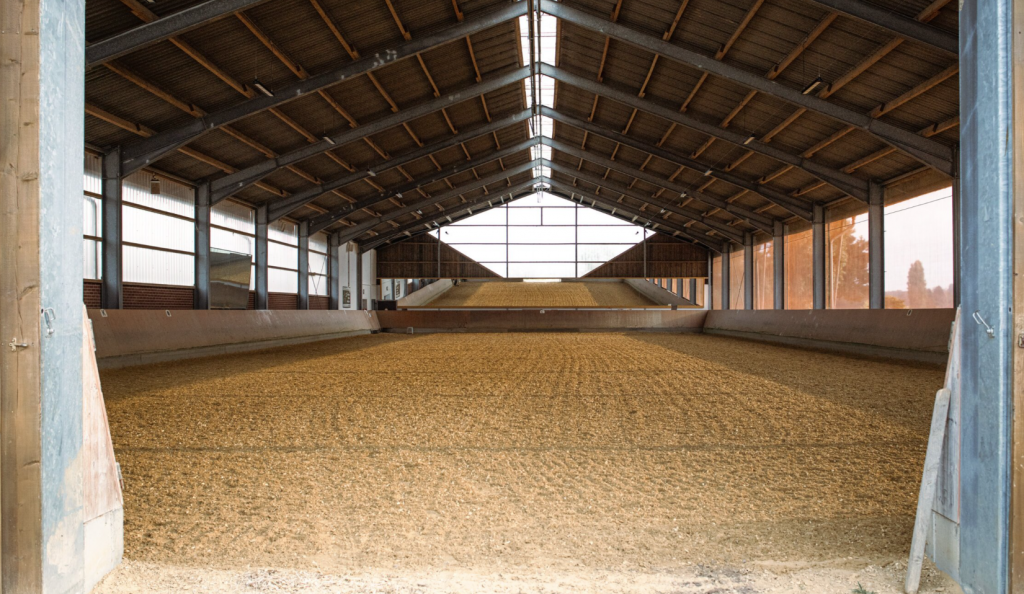
On the right- the Big House or the Jim Norick Arena- on the left- the New Arena to be called OG&E Coliseum
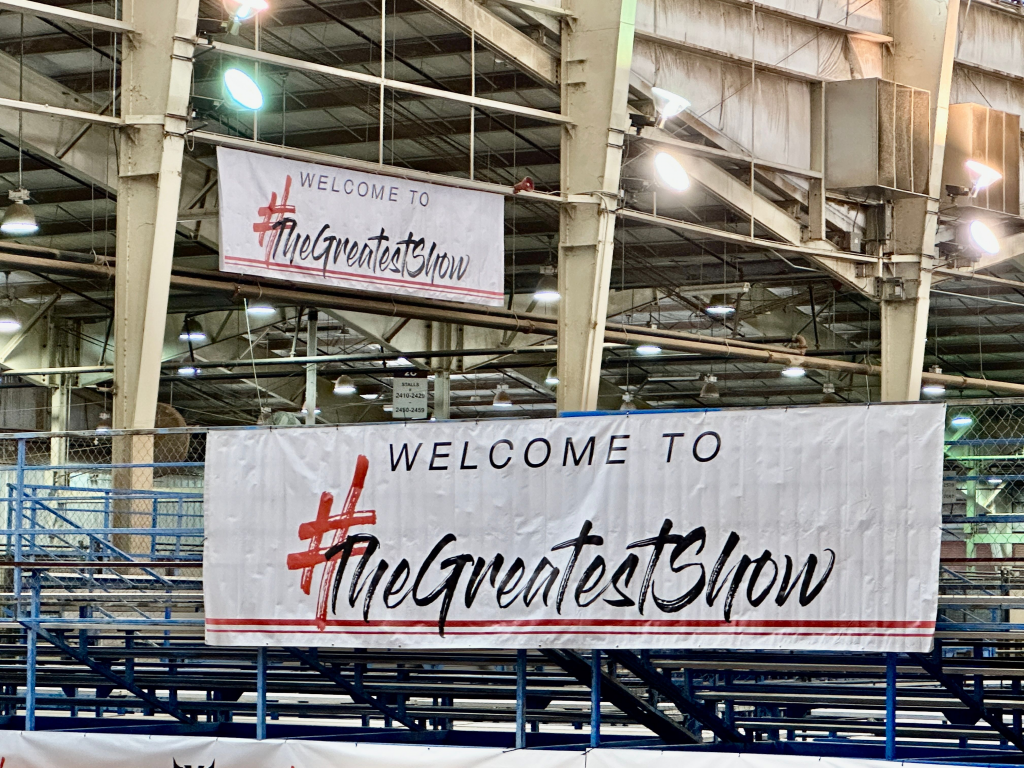
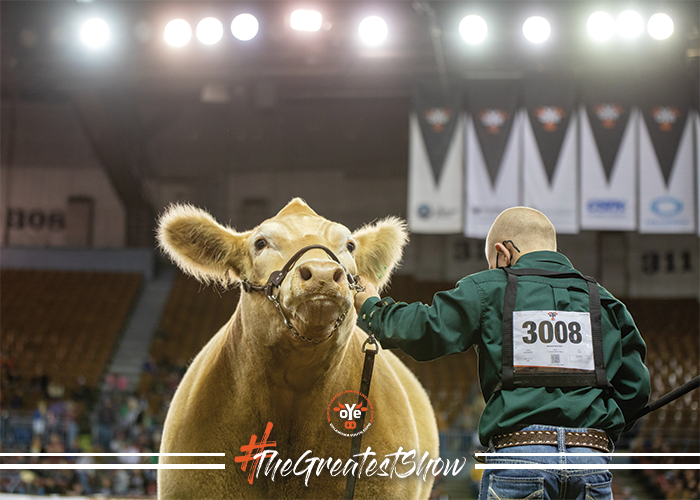
The official name of the arena that will turn sixty years old next year on the OKC Fairgrounds is the Jim Norick Arena- but most folks out across Oklahoma know it as the Big House. It has housed hundreds of horse shows, events annually at the State Fair, high school basketball and wrestling and of course, livestock events. For the past twenty years, it has been a key part of the "world's largest livestock show" otherwise known as the Oklahoma Youth Expo. And it has been the main show arena for what was become the largest Purebred Beed Cattle Show in the US- Cattlemen's Congress.
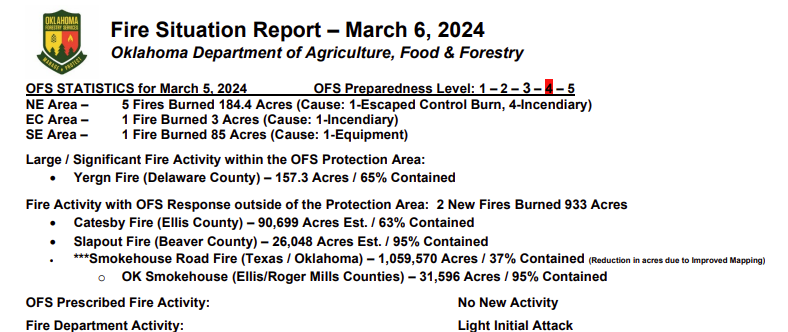
But it's time will soon be done. The shows will continue here in 2024 and likely in the first few months of 2025 before the New House (what OYE's Tyler Norvell called it when we talked about the transition back during the 2024 Cattlemen's Congress) takes its place.
There will almost certainly be one more Cattlemen's Congress in the Norick Arena and very likely one more OYE- but then it's hello New House- which was given a name this past week. For the first ten years of it's use starting later in 2025- the Maps 4 Arena at the OKC Fairgrounds will be known as the OG&E Coliseum.
The gift is being given by the OG&E Energy Corporation Foundation- and they cut a deal with the City to make it a "Undisclosed amount" as far as the gift that provides naming rights for the next decade and helps finish the $126 million dollar project. The project is funded through MAPS 3, MAPS 4, hotel tax revenue and other funding sources.
When all is said and done, the new coliseum will have between 7,000 and 8,500 seats. The new building will include a lounge, suites and a full service kitchen.
Construction underway as of March 31, 2024 of the OG&E Coliseum
This past Friday, the U.S. Department of Agriculture, U.S. Food & Drug Administration and Centers for Disease Control and Prevention issued a joint statement regarding the detection of highly pathogenic avian influenza (HPAI) in dairy cows.
Here is the latest update from the agencies(as of Saturday):
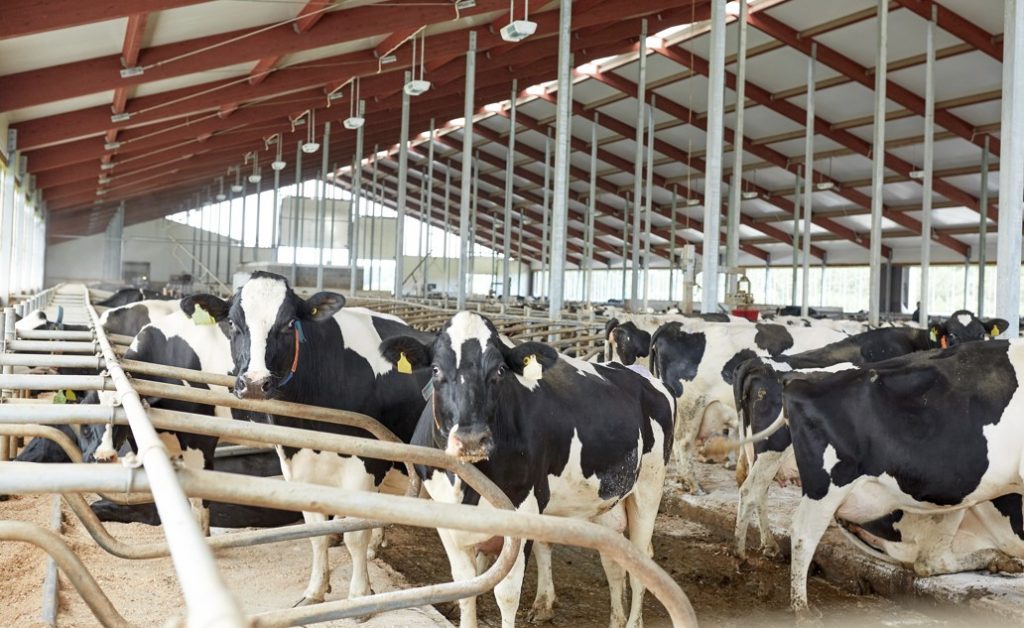
The U.S. Department of Agriculture (USDA), Food and Drug Administration (FDA) and Centers for Disease Control and Prevention (CDC), as well as state veterinary and public health officials, are continuing to investigate an illness among dairy cows that is causing decreased lactation, low appetite, and other symptoms.
On Monday, March 25, the agencies confirmed the detection of highly pathogenic avian influenza (HPAI) in two dairy herds in Texas and two dairy herds in Kansas that had cattle exhibiting these symptoms.
USDA's National Veterinary Services Laboratories (NVSL) has now also confirmed the presence of HPAI in a Michigan dairy herd that had recently received cows from Texas. Presumptive positive test results have also been received for additional herds in New Mexico, Idaho, and Texas; USDA will share updates if those tests are confirmed positive by NVSL. Federal and state agencies continue to conduct additional testing in swabs from sick animals and in unpasteurized clinical milk samples from sick animals, as well as viral genome sequencing, to assess whether HPAI or another unrelated illness may be underlying any symptoms.
The NVSL has also confirmed that the strain of the virus found in Michigan is very similar to the strain confirmed in Texas and Kansas that appears to have been introduced by wild birds (H5N1, Eurasian lineage goose/Guangdong clade 2.3.4.4b). Initial testing has not found changes to the virus that would make it more transmissible to humans. While cases among humans in direct contact with infected animals are possible, this indicates that the current risk to the public remains low.
Spread of symptoms among the Michigan herd also indicates that HPAI transmission between cattle cannot be ruled out; USDA and partners continue to monitor this closely and have advised veterinarians and producers to practice good biosecurity, test animals before necessary movements, minimize animal movements, and isolate sick cattle from the herd. Among the dairies whose herds are exhibiting symptoms, the affected animals have recovered after isolation with little to no associated mortality reported.
There continues to be no concern about the safety of the commercial milk supply because products are pasteurized before entering the market, or that this circumstance poses a risk to consumer health. Dairies are required to send only milk from healthy animals into processing for human consumption; milk from impacted animals is being diverted or destroyed so that it does not enter the human food supply. In addition, pasteurization has continually proven to inactivate bacteria and viruses, like influenza, in milk. Pasteurization is required for any milk entering interstate commerce for human consumption. FDA's longstanding position is that unpasteurized, raw milk can harbor dangerous microorganisms that can pose serious health risks to consumers, and FDA is reminding consumers of the risks associated with raw milk consumption in light of the HPAI detections.
Because of the limited information available about the transmission of HPAI in raw milk, the FDA recommends that industry does not manufacture or sell raw milk or raw/unpasteurized milk cheese products made with milk from cows showing symptoms of illness, including those infected with avian influenza or exposed to those infected with avian influenza. At this time, the FDA is not aware that any milk or food product from symptomatic cows is entering interstate commerce. Furthermore, if milk from cows showing symptoms of illness, including those infected with avian influenza or exposed to those infected with avian influenza is intended to be used to feed calves, FDA strongly encourages that it be heat treated to kill harmful bacteria or viruses, such as influenza, before calf feeding. Food safety information from FDA, including information about the sale and consumption of raw milk, can be found here.
Milk loss resulting from symptomatic cattle to date is too limited to have a major impact on supply and there should be no impact on the price of milk or other dairy products. Further, the U.S. typically has a more than sufficient milk supply in the spring months due to seasonally higher production.
Federal agencies are also working with state and industry partners to encourage farmers and veterinarians to report cattle illnesses quickly so that we can monitor potential additional cases and minimize the impact and risk to farmers, farmworkers, consumers and other animals. Producers are urged to work with their veterinarian to report cattle illnesses quickly and practice enhanced biosecurity measures. More information on biosecurity measures can be found here.
USDA and federal and state partners will continue to share additional updates as information becomes available. APHIS has also prepared Frequently Asked Questions document, which can be accessed here
Hy-Vee grew pork sales by more than 20% from Feb. 5 to March 3 during their All Pork Mega Meat Sale. A variety of pork cuts were featured, including:
Ribs
Shoulders
Chops
Brats
Meal-Time Meatballs (*new product)
Six state pork associations (IA, IL, KS, MN, MO, WI) and NPB have been working with Hy-Vee to bring pork products to the forefront and entice consumers to purchase pork more often. The sale was promoted on Hy-Vee's social media, website and app, and a TV commercial.
Exploring Consumers' Preference for Pork
NPB and Illinois Pork ventured into Chicago, where diversity thrives and consumer preferences vary. NPB staff and 4 Illinois pork producers visited retail stores and discovered the differences in how pork is uniquely merchandised in each store to meet the needs of different consumers.
Influencers Help Build a Bigger Appetite for Pork
At the National Pork Industry Forum, Dr. David Newman moderated a discussion with 2 of NPB's content creation partners, Eddie Zamora and Ashley Sampson, to demonstrate how NPB's consumer insights are applied to making pork more relevant to millennial, Gen Z and multicultural audiences. In partnership with NPB, Eddie and Ashley show their audiences how easy (and fun!) it can be to cook with pork.
Check out Eddie and Ashley on Instagram and other popular social media channels.
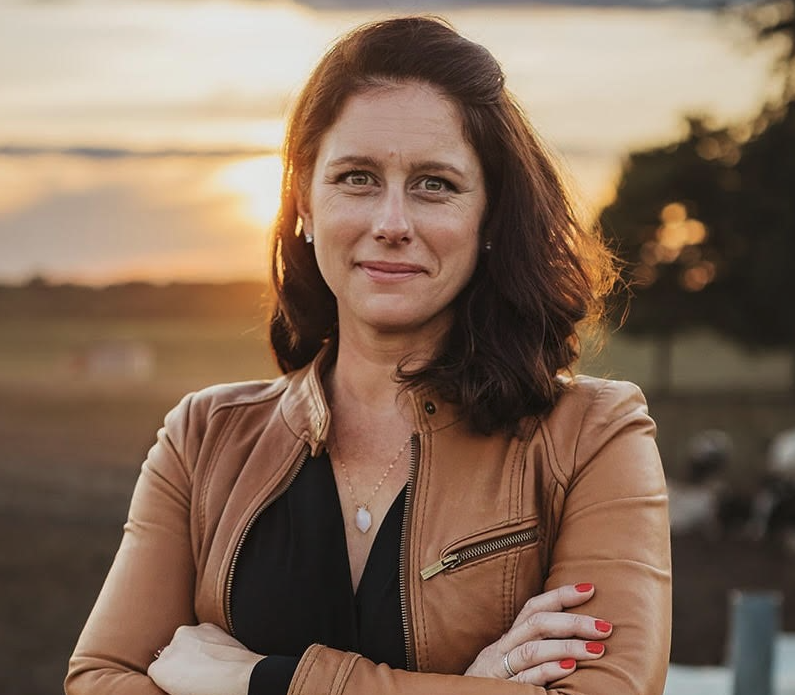
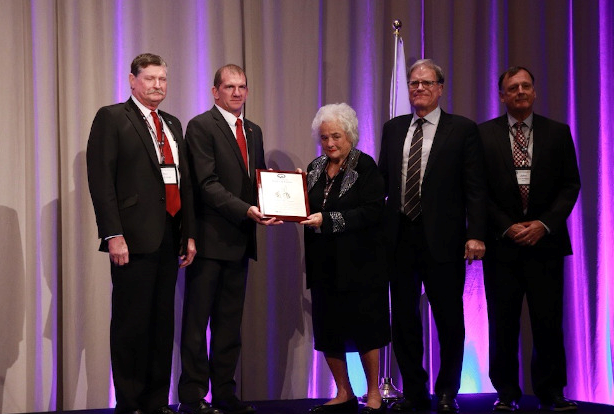
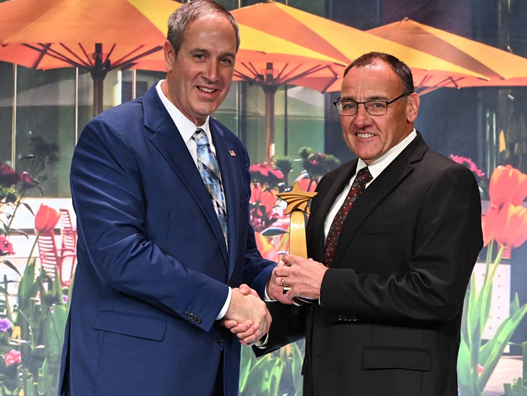
Terry Stuart Forst, a fifth generation Oklahoman who owns and manages the state's oldest and most continuous family-operated ranch, has been named the 2024 recipient of Governor Stitt's Outstanding Achievement in Agriculture Award. Forst is the 27th inductee into the Oklahoma Agriculture Hall of Fame and becomes the first woman to earn the state's most prestigious agricultural honor.
"I have a tremendous amount of respect for Terry Stuart Forst as a rancher, a leader and an Oklahoman," said Sec. of Agriculture Blayne Arthur. "Having had the chance to visit her operation and watch Terry and her family work side-by-side to build and continue the success of their business, I know first-hand how deserving she is of this award. Terry is incredibly accomplished and has already received several accolades, so it's very fitting that she is the latest inductee into the Oklahoma Agriculture Hall of Fame."
Forst's leadership of the 7S Stuart Ranch has left a profound impact on the agriculture industry in Oklahoma. The 45,000-acre cattle and horse operation represents a model of best management practices and has become one of the most elite ranches in the Southwest.
Forst strives to improve all facets of her ranch while maintaining practices designed to conserve resources and shares learned experiences with the community. Forst continually devotes her talent and time by consulting on beef production methods and volunteering her own assets for workshops and demonstrations.
A lifelong learner, her dedication to research and excellence has led to improvements in every aspect of the operation, from pasture and rangeland health to livestock efficiency and longevity and overall business profitability.
Forst adds this honor to a long list of accomplishments that include induction into the Oklahoma Hall of Fame and the National Cowgirl Hall of Fame. She also received the Oklahoma State University Distinguished Alumni Award. She served as a president of the Oklahoma Cattlemen's Association, is a recipient of the Cattleman of the Year Award and received many other recognitions for her leadership in sustainability and ranch management.
Forst will be formally honored at an event this summer. The details will be announced on a later date.
Allendale's Rich Nelson says USDA Estimates Farmers Will Plant 47.5M Wheat Acres, 86.5M Soybean Acres This Year
Kim Anderson Says Another Week of Minimal Movement in the Crop Markets
NCBA Fights for America's Beef Industry as Anti-Animal Ag Groups Pick up Speed
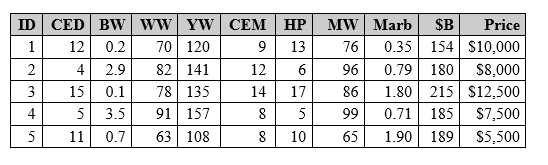
Genetic Merit Pricing Task Force Holds February Meeting in Kansas City
A Borrowed Tomb Today- Empty by Sunday Morning!
Good Friday- Wall Street and Ag Futures Are Closed
Good Friday has arrived. It's the start of the Easter Weekend and it's a holiday for some and a normal workday for many.
It is not a Federal holiday. However, twelve states recognize Good Friday as a state holiday: Connecticut, Delaware, Florida, Hawaii, Indiana, Kentucky, Louisiana, New Jersey, North Carolina, North Dakota, Texas, and Tennessee. Additionally, the New York Stock Exchange and other financial markets close on Good Friday- that includes our Ag Futures trade.
Some banks may be closed- many others will be open- but a phone call to your bank or other businesses you need to interact with on Good Friday will confirm whether they may have special Good Friday hours.
Because Uncle Sam is open- USDA Market News will have reports that we normally expect to have on Fridays.
Invenergy is committed to Oklahoma, having completed its first project in the state in 2006. Today, Invenergy operates three wind energy centers in our state, employs over 60 Oklahomans and continues investing in our project communities. We believe building relationships is the key to being good community partners and we work to develop relationships to benefit our landowners, our employees, and our communities.
We invest in Oklahomans, and we take pride in their success. Our energy facilities provide jobs, tax revenues, landowner payments and other sources of local economic development.
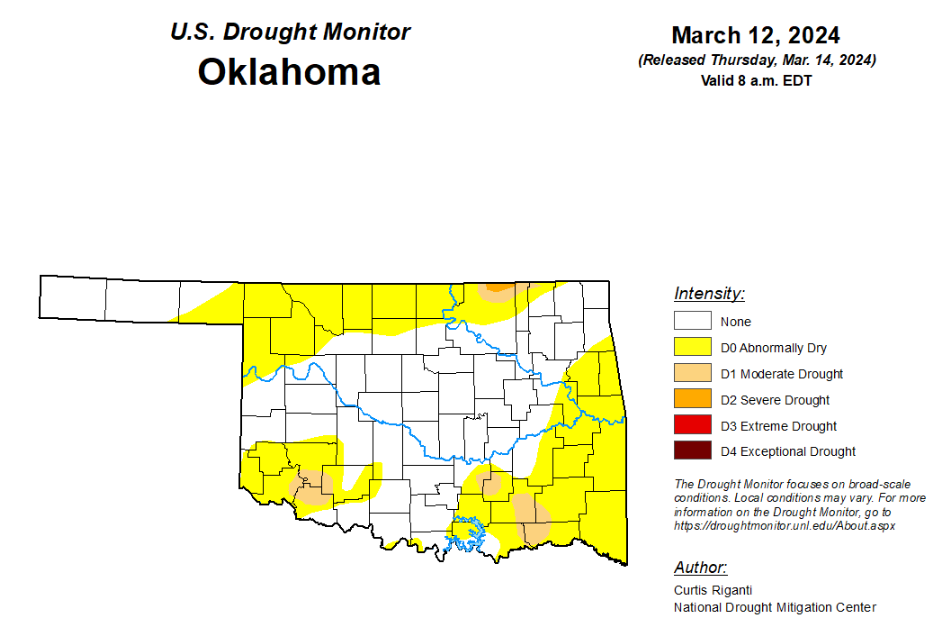
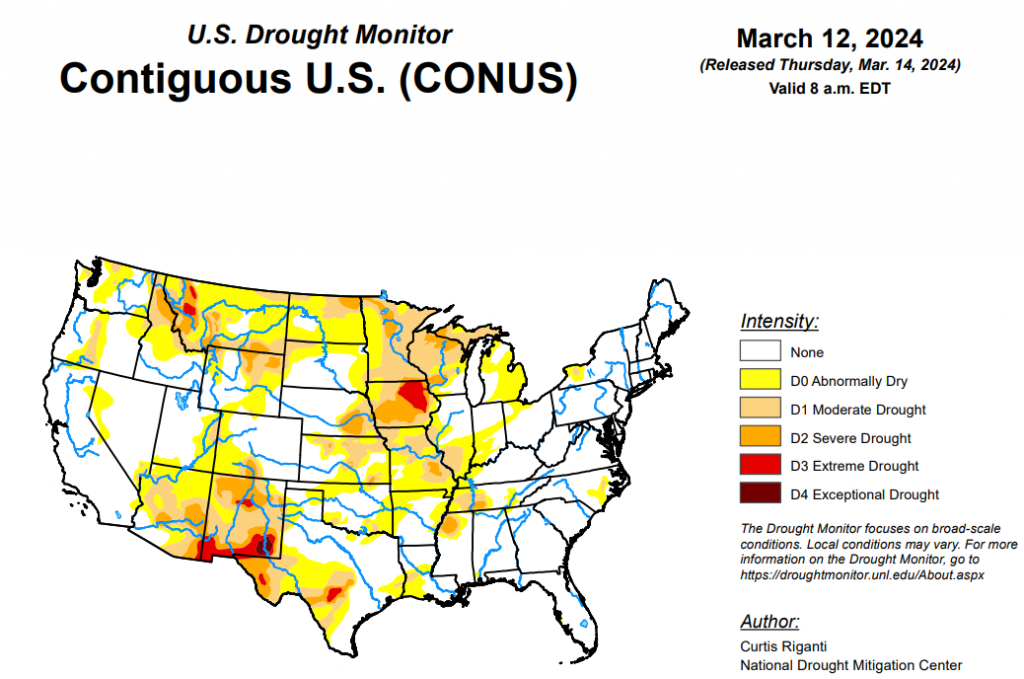
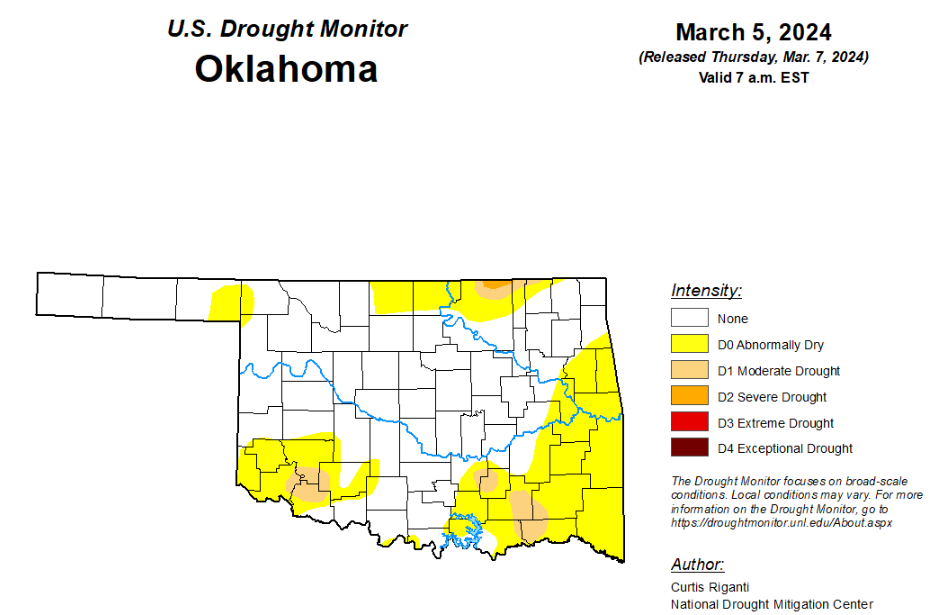
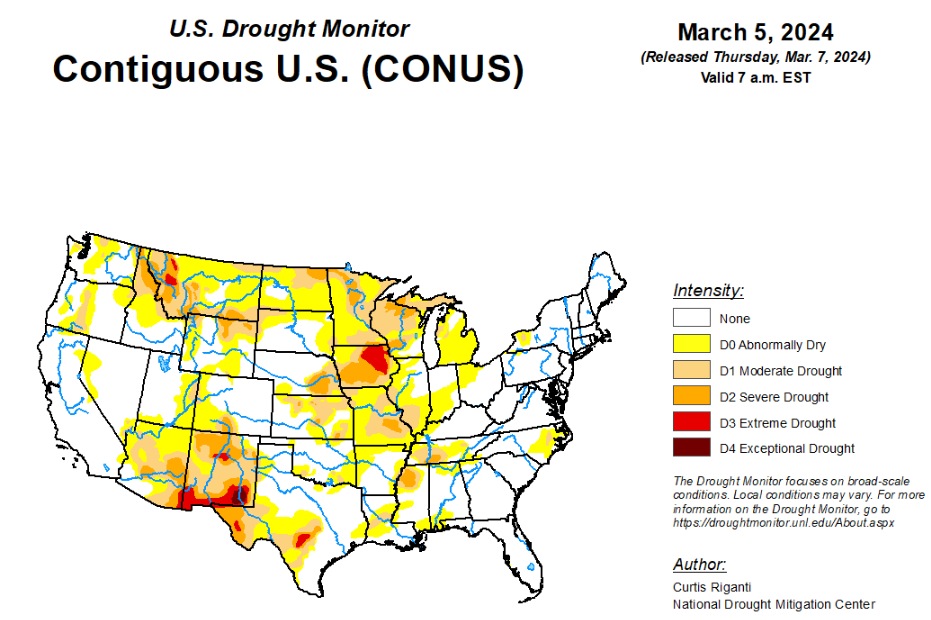
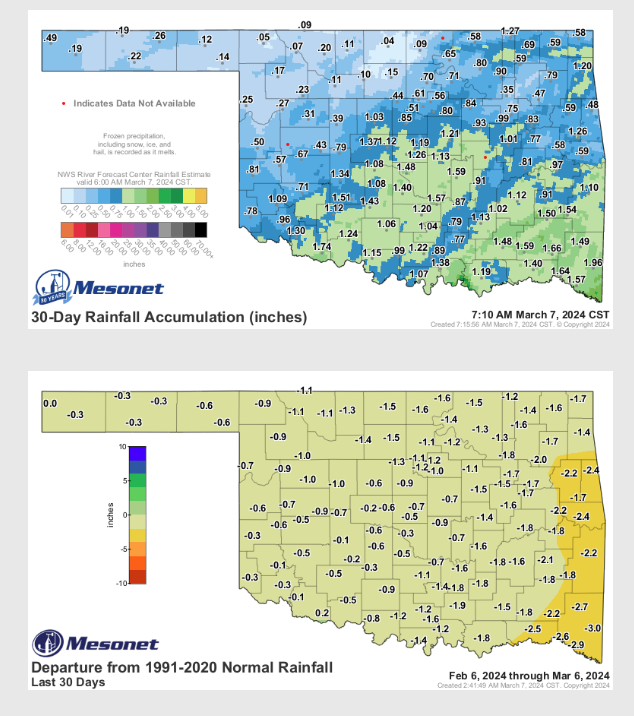
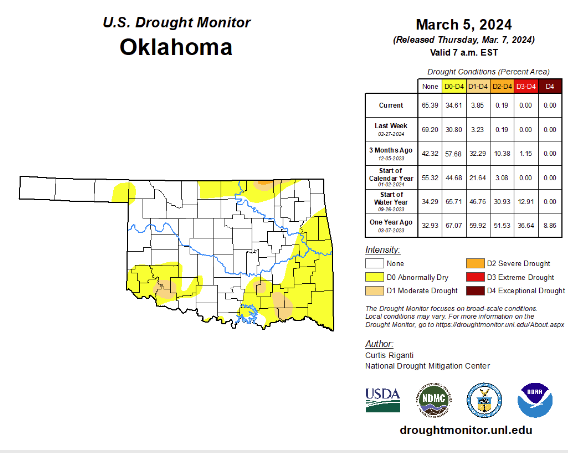
Oklahoma Drought Monitor Sees Moderate Drought Rising- McManus Predicts Worsening Conditions Over Next Few Months
To view the latest Oklahoma drought map,CLICK HERE.
According to the latest Oklahoma drought monitor report, exceptional drought and extreme drought remain at zero percent, unchanged from the start of the calendar year.
Severe drought or worse is unchanged from the past six weeks at .19 percent.
Moderate drought or worse is now at 8.83 percent, up from last week's 3.53 percent.
Abnormally dry or worse conditions are now at 33.76, improved from last week's 43.56 percent.
That moderate drought in the latest map is pretty much all in the northern tier of counties- and State Climatologist Gary McManus thought we were close to a flash drought earlier this week at the Drought Commission meeting- after the latest Drought Monitor- he says it is Flash Drought in those northern counties. Click here for how he sees things in his latest Mesonet Ticker.
Nelson said there is discussion about low corn acreage, down about 4.6 million acres. Soybeans on the other hand are up 2.9 million acres, he added.
"This does reflect the fact that the current new crop breakeven which some might estimate at about $5.10 per bushel, and that is a cash price, is maybe a bit concerning here for us," Nelson said.
Given the higher prices, Nelson said it was expected to see a large jump in cotton acres. In this case, Nelson said USDA did not see much of an increase, at only about 400,000 extra acres from last year. Therefore, cotton is starting out the year tighter than the trade expected to see.
"As far as big picture surprises, there are not any major issues here," Nelson said. "One thing I will point out, though is that (in the Quarterly Grains Stocks Report) we are talking about corn, soybeans and wheat here in this case, so three crops. The total will be down 3.8 from last year. That does fit in relatively normally with what you would expect in a financially stressed year."
For our farmers who have either- always have had cotton on their farms- or those who have more recently have added the fiber crop to their operations- we have a daily report heard on several of our Radio Stations- It's Called Cotton Talk!
Click on the Button below to listen to our most recent report
USDA Prospective Plantings Analysis from OSU's Kim Anderson
OSU Extension Grain Market Economist Dr. Kim Anderson provided us some comments after the Friday release of the 2024 Prospective Plantings Report. Here are those thots from Dr. Anderson: "The report appeared to be slightly bullish for corn, soybeans, and soft red winter wheat. The report appeared to be bearish for hard red winter wheat and neutral for cotton.
"The market's immediate reaction to the report was a 17-cent increase in corn prices, essentially no change in soybeans, and a 14-cent increase in hard red winter wheat prices. Cotton prices were marginally higher. The Plantings report provided essential information but the near-term impact will probably be neoglacial.
"For wheat, the plantings report must be taken "with a grain of salt." Using the 10-year average (2014 through 2023), U.S. wheat production is only seven percent of world wheat production. Also, Russia is projected to product a record 3.4 billion bushels in 2024 and Russia's wheat ending stocks are projected to be 17 percent above the 5-year average.
"U.S. hard red winter wheat planted acres was estimated to be 24.3 million acres compared to the 24 million planted acres estimated in the January 2024 report. Oklahoma wheat planted acres were estimated to be 4.35 million acres up from January's estimate of 4.3 million acres."
We invite you to listen to us on great radio stations across the region on the Radio Oklahoma Ag Network weekdays-
if you missed this morning's Farm News - or you are in an area where you can't hear it- click below for this morning's Farm news from Ron Hays and KC Sheperd on RON.
The vision of the Oklahoma Beef Council is to be a positive difference for Oklahoma's farming and ranching families and the greater beef community, and its mission is to enhance beef demand by strengthening consumer trust and exceeding consumer expectations.
To learn more, visit www.oklabeef.org. Also, don't forget to like its Facebook page at www.facebook.com/oklabeef for stories on Oklahoma's ranching families and great beef recipes.
And Check out this video below that helps you learn more about the Beef Checkoff- .
NCBA Fights for America's Beef Industry as Anti-Animal Ag Groups Pick up Speed
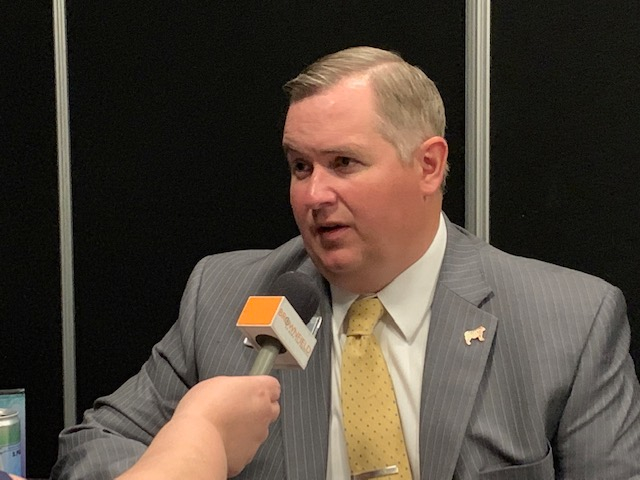
At the 2024 Southwestern and Texas Cattle Raisers Convention, I caught up with the Senior Director of Government Affairs at the National Cattlemen's Beef Association, Tanner Beymer, about anti-animal agriculture groups.
"Things in D.C. are pretty dysfunctional at the moment," Beymer said. "These radical animal rights activists and their partners and their shell groups have been taking advantage of the chaotic situation to try and advance their radical agenda."
While liberal Democrats have been the typical base of support for anti-animal agriculture groups over the years, Beymer said recently more moderate individuals and some Republicans have also been more sympathetic to the messages being relayed.
"I think part of the reason for that is these animal rights activists have gotten more creative, and they are using some of these shell groups, and using what they think are cattle producers, and dressing them up in a costume and sending them up to Capitol Hill saying, 'I'm a farmer, and by golly, I want you to kill the Beef Checkoff,' or 'I want you to allow California to implement Prop 12.' Things that no farmer or rancher in their right mind would ever ask for."
Kim Anderson Says Another Week of Minimal Movement in the Crop Markets
This week on SUNUP is Oklahoma State University Extension grain market economist Kim Anderson. During this week's edition, Anderson talks about the latest crop prices and more.
Anderson said there has not been much change in the crop markets for the past few months.
"You have got wheat prices moving between $5.00 and $5.50," Anderson said. "About $5.30 right in the middle of that range."
Corn has been moving in between a ten-cent range, Anderson said, from $4.00 to $4.50.
"These prices are forward contract prices for the '24 crop," Anderson said. "These are not current prices. This is what we are going to get for crops we are putting in the field or have in the field now."
Anderson said corn is forward contracting for about $4.40 and $4.50 now, and soybeans are forward contracting for around $11.10 and $11.20.
"The one thing we know about these prices is that something is going to happen in the market to make them pop out at either the top or the bottom," Anderson said. "We hope it is the top, but you never know."
Anderson said the release of USDA's prospective plantings report and quarterly grain stocks report has some potential to impact prices.
"The market is going to take what they expected and compare it to what USDA said and that could potentially move the market," Anderson said.
Genetic Merit Pricing Task Force Holds February Meeting in Kansas City
The Genetic Merit Pricing Task Force held its second meeting last month in Kansas City. Since convening in late 2023, the industry-based group has been working to help the cattle market transition toward widespread use of genetic information in pricing feeder cattle and calves. More than 95% of U.S. feeder cattle change ownership without the benefit of objective genetic information. Thus, genetic information plays almost no meaningful role in the value discovery process.
The group includes OSU Livestock Market Economist Dr. Derrell Peel and three former Presidents of the NCBA- Jennifer Houston, Craig Uden and Don Schiefelbein.
Ken Odde, Ph.D., former Kansas State University animal science department head and the group's facilitator, says the Genetic Merit Pricing Task Force has an important mission that can help make all industry segments more efficient. "Today, few commercial beef herds use quantitative genetic information when marketing their feeder calves. While most buy bulls with EPDs and Indexes, they are not using that information in marketing their calves. Investing in genetics that are superior for growth and carcass traits without using that data for marketing purposes may be leaving money on the table." Odde said. "Prospective buyers would then have genetic information that would help them more properly value feeder cattle they are seeking to purchase."
At their February meeting, task force members discussed numerous topics, including the ability of genetically superior Bos Indicus cattle to grow rapidly and create valuable carcasses, as well as the important role of auction markets in helping bring genetic information into feeder cattle price discovery.
Easter is an unique holiday in the United States- our Federal government chooses not to celebrate this particular holiday- but those of us who are Believers- it is the most important of days to celebrate.
But it is a brutal remembrance when you look from Thursday to Sunday back 2000 years ago. It was a time of celebration- then betrayal, pain, blood, fear, loneliness, death and then victory over death.
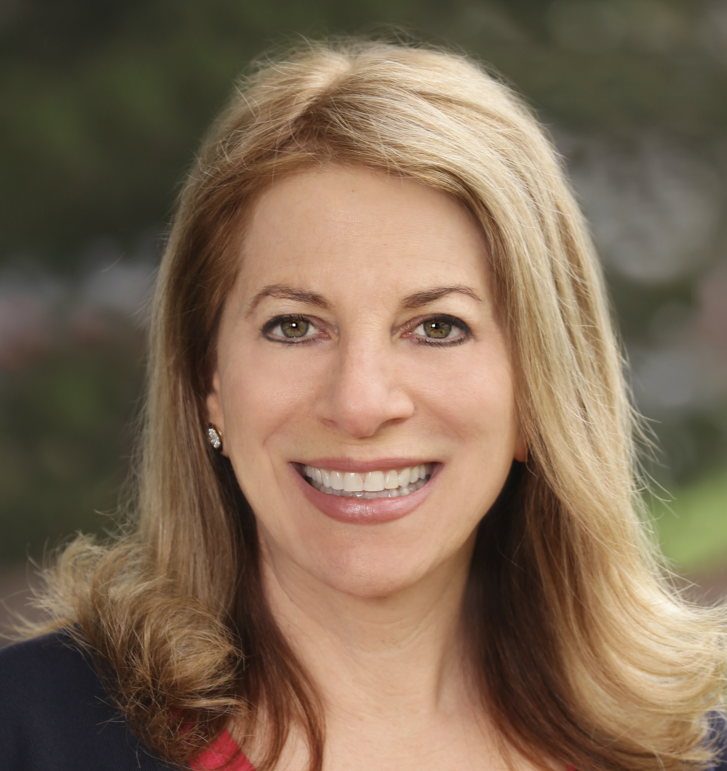
A modern day look back written by a lady from Michigan captures the fear and the promise of that event- she writes "No one saw the actual resurrection. Mary and the two disciples saw evidence at the tomb, but no one on earth saw God raise Jesus from the dead. In forty days, they will physically watch as Jesus ascends into heaven. But they had not actually seen the miracle that first Easter weekend. So, the disciples did what we would do, they assumed the worst. Grave robbers. Everyone was worried about grave robbers.
"When Mary got to the tomb that first Easter morning, it looked like the thing most feared by all sides had happened. The tomb was empty.
"I know I struggle with the same issues. Rather than seeing the promises inherent in the empty tomb, I often only see empty space. Fear can grip me, just like it gripped Mary Magdalene when she ran to get Peter and the other disciple. Mary hadn't even entered the tomb yet. She had only seen the rock, moved from where it should have been."
Jan and I have greatly enjoyed the series "The Chosen" as it has brought to life how Jesus lived and walked this earth and interacted with His Disciples and others who crossed His path. That makes what Peter and the others who were dealing with the death of Jesus more relatable to us- so much fear- yet as the Disciples later experience the joy of resurrection- it sets things up for us to experience a relationship for today- and for eternity.
Easter is not decorated eggs and ham for dinner- it's about Eternity- as I have offered in years gone by- if you want to talk about your opportunity to go "all in" on that eternity- email me or give me a call (My number is at the bottom of the email)
You and all that read this daily email are a blessing to me and to our entire team at the Oklahoma Farm Report. We are honored you trust us to help keep you up to date on the news impacting our world of US and Oklahoma agriculture- and we work daily to earn that trust- major life events like Easter help us reflect on our blessings and that includes our farm and ranch family of readers and listeners.
May your Easter be a celebration of life- thanks for allowing me to share!
Let's Check The Markets!
OKC West is our Market Links Sponsor- they sell cattle three days a week- Cows on Mondays, Stockers on Tuesday and Feeders on Wednesday- Call 405-262-8800 to learn more.
Today's First Look:
Ron on RON Markets as heard on K101
mornings with cash and futures reviewed- includes where the Cash Cattle market stands, the latest Feeder Cattle Markets Etc.
Each afternoon we are posting a recap of that day's markets as analyzed by Justin Lewis of KIS futures - click below for the latest update on the Livestock and Grain Futures Trade..
Daily Oklahoma Cash Grain Prices- as reported by the Oklahoma Dept. of Agriculture- The report available after the close of the Futures Trade for that day.
Ron Hays, Senior Farm/Ranch Broadcaster and Editor
KC Sheperd, Farm Director and Editor
Dave Lanning, Markets and Production
Reagan Calk, Farm News and Email Editor
Pam Arterburn, Calendar and Template Manager
Podcasts From Oklahoma Farm Report and More
Two of our regular reports are also podcasts that you can subscribe to- Our daily Farm and Ranch News with KC Sheperd- available here on the Apple Podcast Platform
The second is our daily Beef Buzz with Ron Hays- available here on the Apple Podcast Platform
Periodically- we offer interviews on our Ag Perspectives Podcast series- this podcast is available here.
Ron has also has a series of podcasts from interviews with newsmakers at the Cattlemen's Congress- Click here or you can find them on your favorite Podcast platform- look for them by searching for Cattlemen's Congress Conversations.
We are making plans to jump back into regular installments of what has been called the Road to Rural Prosperity- a new name and fresh content is in the works- for now- click on the blue button below for one of our favorites that is a timeless classic.
For your convenience, we have our sponsors' websites linked here- just click on their name to jump to their website- check their sites out and let these folks know you appreciate the support of this daily email, as their sponsorship helps us keep this arriving in your inbox on a regular basis- at NO Charge!
We invite you to check out our website at the link below too that includes an archive of these daily emails, audio reports and top farm news story links from around the globe.
Dr. Rodney Holcomb (right) and graduate student Nicholas Scribner (left) present their research at the Farm Bureau Target Training in Columbus, Ohio.
Listen to Maci Carter talk with Dr. Rodney Holcomb about his marketing expansion research.
After the Farm Bureau Target training in Columbus, Ohio, Oklahoma Farm Reporter Maci Carter recently had the chance to talk with Dr. Rodney Holcomb, an Oklahoma State University professor of Agricultural Economics. Holcomb discussed the research he has conducted using 3D eye-tracking technology with his graduate student, Nicholas Scribner.
"When it comes to any kind of food marketing, whether it is national, or regional or local, it really comes down to the concepts of supply and demand, and if there is no demand, supply is irrelevant," Holcomb said. "No matter what you as a small producer may be growing, you really need to figure out what does the consumer want, what catches the consumers attention, and what makes them buy your product versus somebody else's product."
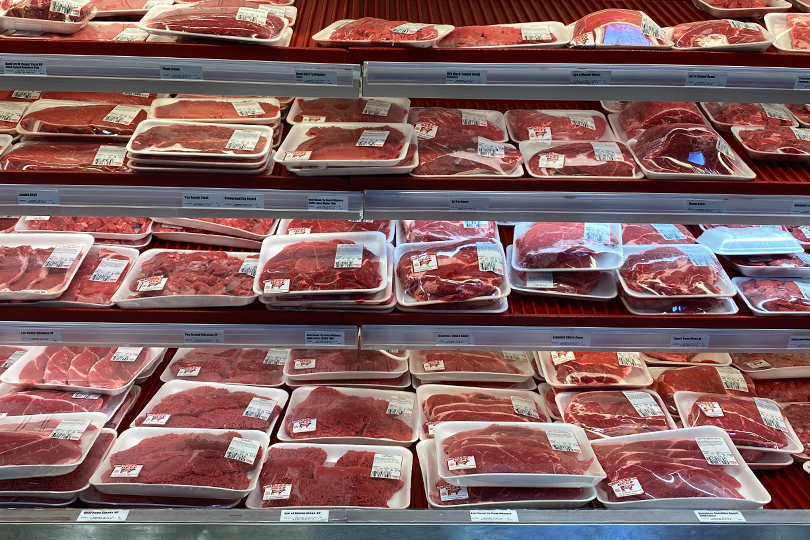
Using the Cowboy Meats Retail Store within OSU's Food and Agricultural Products Center as an example, Holcomb said they looked into expansion by marketing more products on and off campus. The first step in this process, Holcomb said, is finding ways to set the product apart from others.
"We took a bunch of ribeye steaks that were almost identical, as close as we could get them, and we used different labels just to see which ones would attract the most consumer attention," Holcomb said.
By having consumers in the study wear an eye-tracking device called the Tobii Pro Glasses 3, Holcomb said they were able to capture which products individuals' eyes were drawn to.
"We used six different labels, various label elements on the steaks, and had the people come in and look at the display case for two minutes, just to see what caught their attention," Holcomb said.
Cowboy Meats is an OSU product, so Holcomb said consumers are purchasing these products because of that marketing piece. Just as the target audience of Cowboy Meats is OSU supporters, Holcomb said for any product, it is critical to identify that target audience so the marketing can appeal to them.
"What we found was, it really came down to that OSU," Holcomb said. "They wanted to see the OSU logo. The bigger the logo, the better. If you made that logo orange and black instead of just black and white, that was it."
Each steak was nearly identical in the study, Holcomb said, yet consumers seemed to gravitate toward the steaks with a big, black, and orange OSU logo.
"Those customers see that OSU, and it means something to them," Holcomb said. "They see that orange and black OSU brand, and it means even that much more."
Not every company will have access to 3D eye-tracking technology to advance their marketing techniques, but Holcomb says this is not an issue. Holcomb said anyone is welcome to contact him and coordinate a study through the university for businesses looking to try out this technology.
To view Dr. Holcomb's contact information, CLICK HERE.
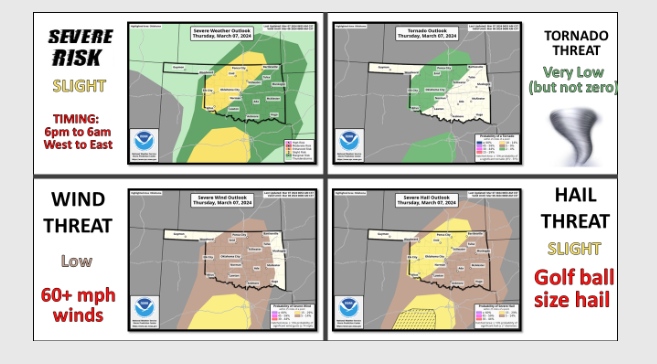
With Temperatures warming up across the state and spring-like conditions, that always means a possibility of severe weather in Oklahoma. According to State Climatologist Gary McManus, storms could be a possibility: "Looks like we'll see a classic springtime setup for Oklahoma, with a front and dryline, moisture return from the Gulf, and then it's shake, rattle, and roll."
The Local NWS Offices say, "As the nose of the jet moves over the moist and unstable airmass during the afternoon and evening, widespread severe weather is expected to occur. Strong deep-layer shear and steep lapse rates are forecast to be favorable for a large-hail threat with supercells across parts of Texas, Oklahoma, and Kansas eastward into the lower Missouri Valley. Tornadoes and wind damage will also be possible, especially as the low-level jet strengthens and an MCS organizes across the region during the evening."
As true for Oklahoma, things can change in just a few days, so McManus just reminds everyone to stay weather aware.
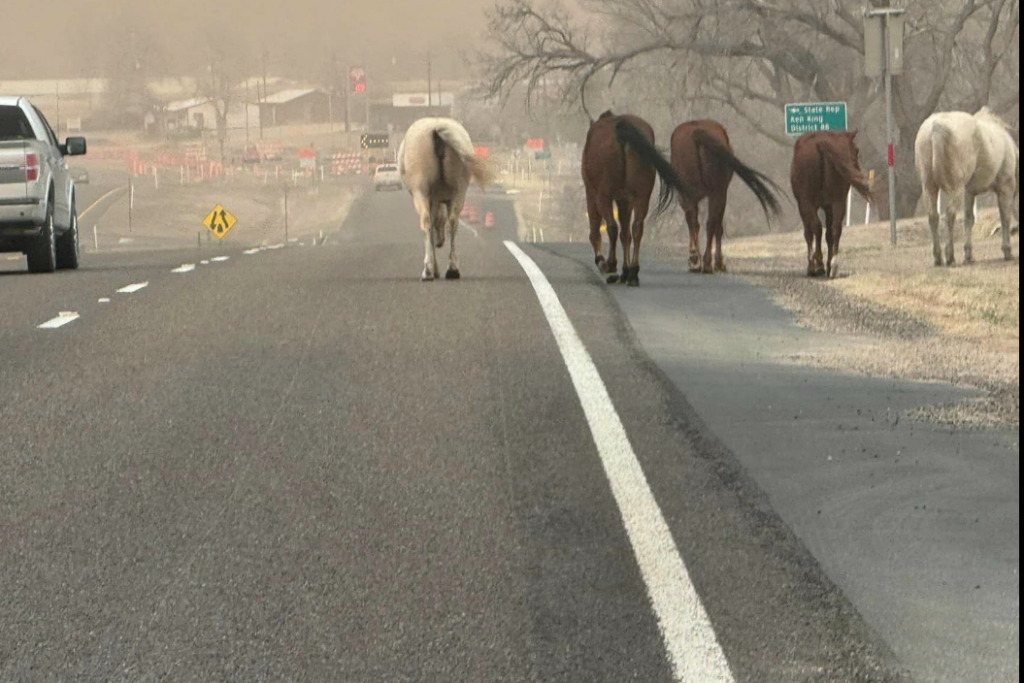
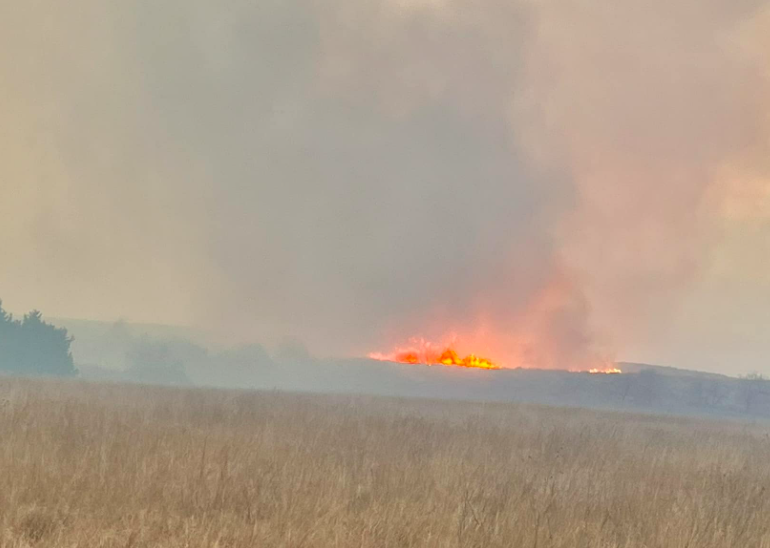
Today is going to be Windy across the state with Fire danger elevated.
Western Oklahoma is still hoping to see some rain come through where flash drought is starting to take shape.
If you have started planting flowerbeds and gardens for the Spring, McManus says the freezing weather is starting to look more scarce, but with Oklahoma anything is possible.. so be weather aware!
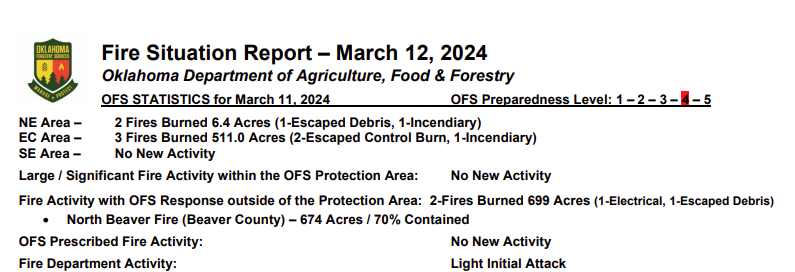
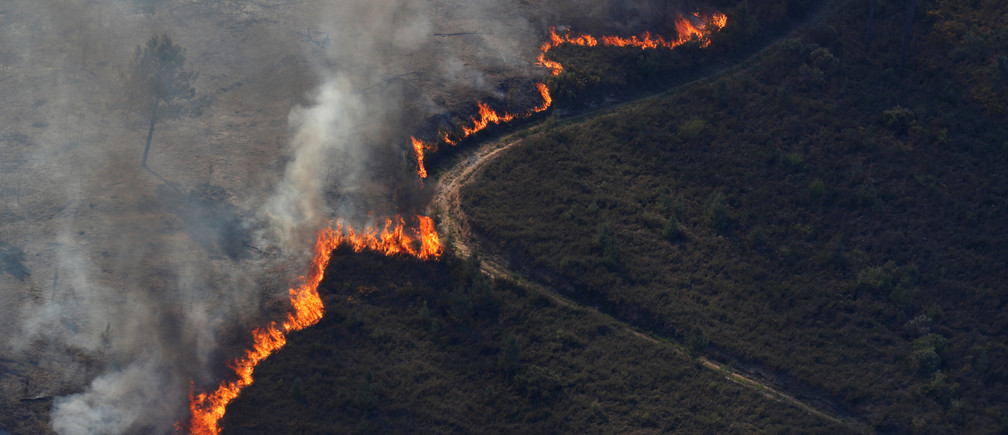
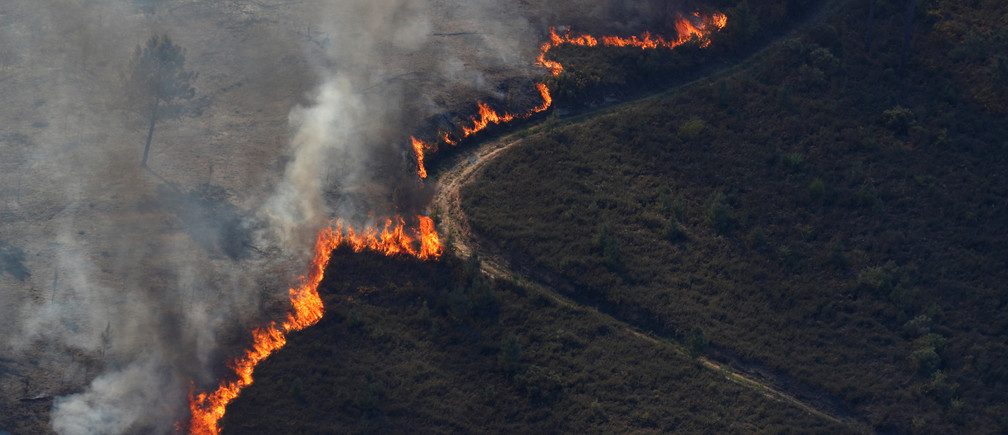
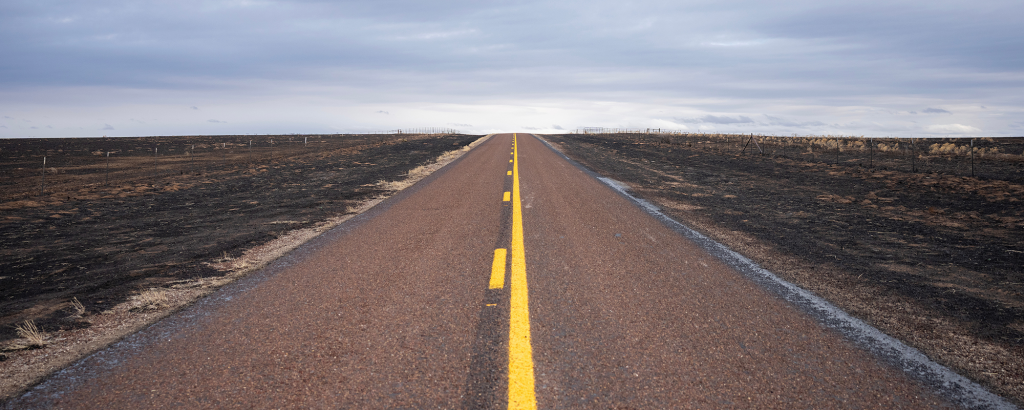
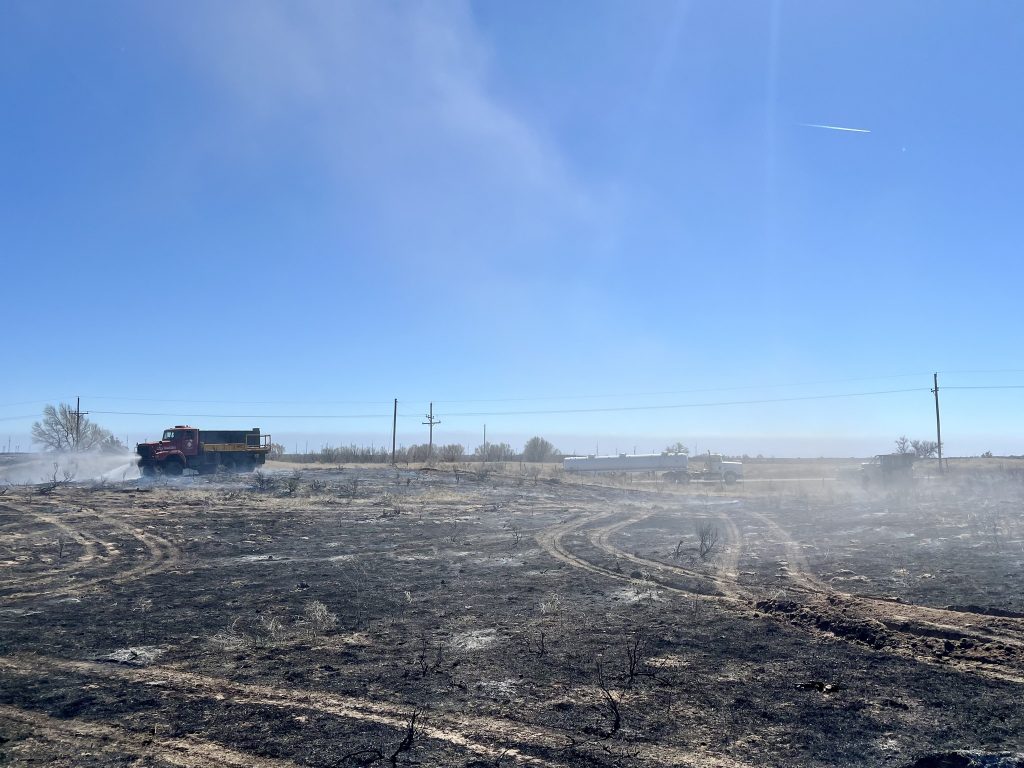
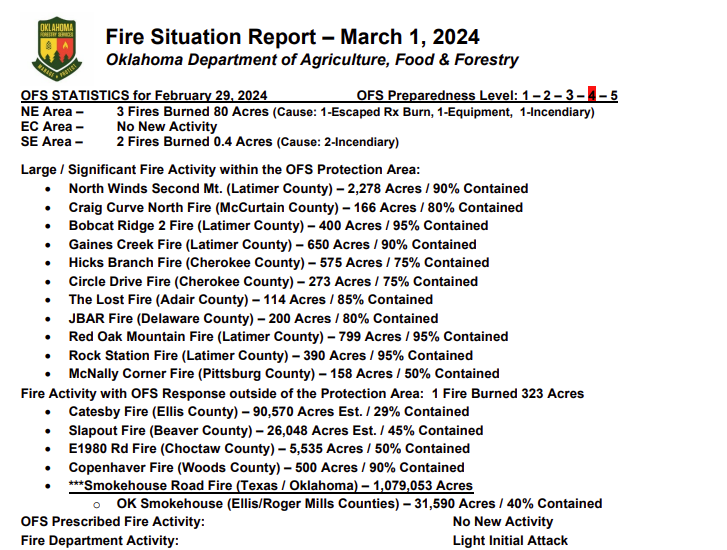
Statewide Discussion: Southwest winds will increase today following a drying day yesterday. Several controlled burns/prescribed fires occurred yesterday that will merit thorough mop-up and patrol limiting escape potential as winds increase through the day. A Red Flag warning is in effect today in Cimarron County as dry air flexes into the Panhandle. Today will have the highest concern through the Easter Weekend with dry air moving across the Panhandle counties each afternoon generally stalling along the OK/TX state line at the 100th Meridian. Dry conditions will persist through the weekend with diurnal burning periods. Increasing initial attack activity is expected with emergence of some large wildfires (>300 acres) although significant wildfire occurrence appears to be limited.
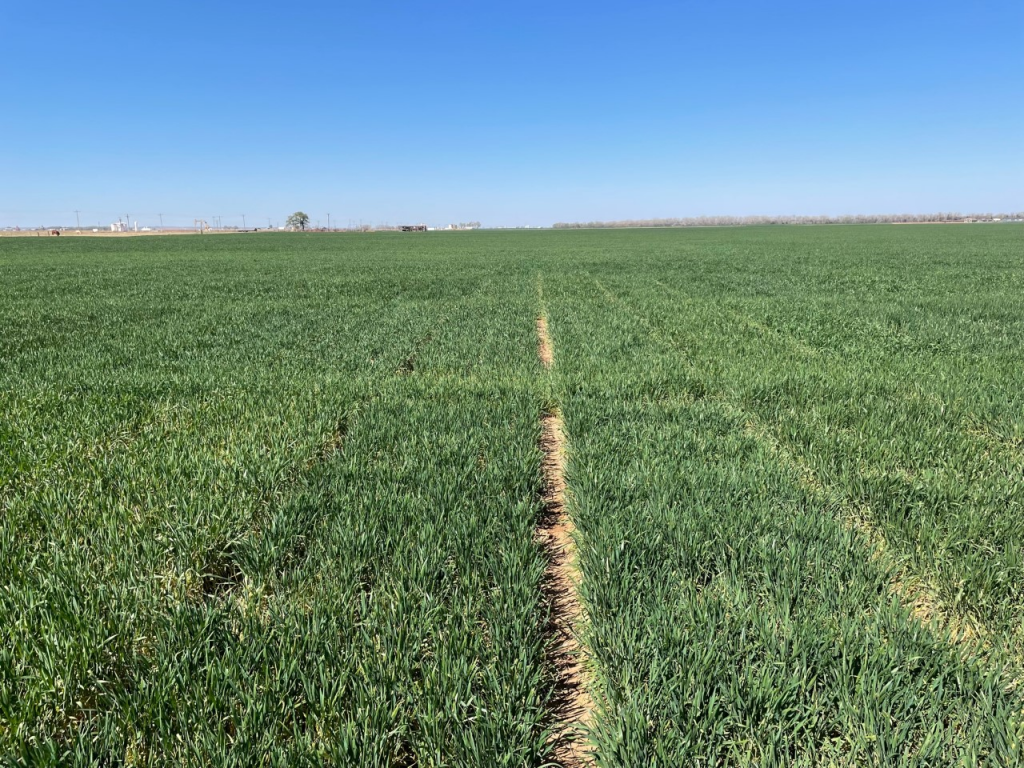
Today: Red Flag Warning in effect today in Cimarron County from Noon through 9:00 PM. Elevated fire weather will overspread much of the state today. In the Panhandle counties elevated criteria is driven largely by low afternoon relative humidity while elsewhere in Oklahoma the concern is supported by more intense, gusty winds. The fuelscape in the wheat belt in the vicinity of US 81 as well as areas along and south of I-44 continue to see improvements in herbaceous greenness offering several barriers to fire spread. The rangelands in north-central and northeastern Oklahoma will also support active fire behavior, and while composite fuel moisture is not presenting undue resistance to control, suppression difficulty will be noticeable given stronger winds today.
Oklahoma Panhandle / Far Northwestern Oklahoma: Moderate overnight moisture recovery will quickly erode today yielding afternoon relative humidity values 10-17% as temperatures warm into the 77°-81° under partly cloudy skies. Fine-dead fuel moisture values will register 3% across the area supporting enhanced fuel receptiveness. West-southwest winds this afternoon sustained 13-19 mph with some higher gusts will support head fire rates if spread in rangeland fuels this afternoon at 127-190 ft/min and flame lengths 11-14 ft. Winds will relax a bit with sunset although overnight moisture recovery will be very slow to respond supporting an extended burning period today.
North-Central/Northeastern Oklahoma: The fire environment yesterday supported very good opportunity for conducting prescribed fires with several controlled burns as well. Those recently burned areas will require mop-up and patrol today as winds ratchet up challenging control lines, especially where heavier fuel concentrations are in proximity. Temperature will warm into the mid- to maybe upper-70°'s under some skycover with relative humidity values only getting to around 40%. Fine-dead fuel moisture will hover around 6-7% this afternoon. Southerly winds will increase through the day sustained 18-24 mph gusting to near 40 mph during peak heating this afternoon. Rangeland fuels in the area will support moderate to rapid rates of fire spread today dependent upon overall fuel loading. Head fire rates of spread on free burning fires at 130-190 ft/min with flame lengths 14-19 ft. should be anticipated during peak burning conditions today. Winds will persist into the evening although overnight moisture recovery is expected to be good.
Saturday: Dry conditions continue across Oklahoma with temperatures above-normal continuing. The highest fire danger indices will again develop in the Panhandle counties as dry air flexes back into the area while moderate fire danger indices are expected elsewhere in the state. Winds do relax on Saturday limiting fire spread potential although receptive fuels continue to dominate much of the landscape across northern Oklahoma. It is anticipated that several burns will occur ahead of precipitation potential early next week, especially in the Southern Flint Hills in north-central/northeastern Oklahoma.
Easter Sunday: Very good overnight moisture recovery will serve to stall development of concerning fire behavior although very dry air will again transition into the Panhandle counties coupled with strong southwesterly winds placing the highest fire danger indices in this area likely meriting a Red Flag Warning. Dry conditions persist across Oklahoma through the day although current forecast data holds skycover in place limiting insolation on wildland fuels reducing overall ignition potential. Additionally, rain chances move into the area overnight Sunday in southern Oklahoma extending into northeastern Oklahoma.
Near-Term: Rain chances, and some severe weather potential, enters the forecast for Monday throttling back fire danger concern. Realized precipitation will play a large role in determining fire danger moving into later in the week following a cold front. County Burn Bans:Click HERE for the most current burn ban information
As many people are aware, the State Treasurer was tasked with returning unclaimed property to the people of Oklahoma in 2000. More than half of my office is specifically tasked with this job. As rewarding of a job as this is for my office and staff, there are always bad actors to beware of, a few tips to avoid them are;
Beware of calls with unclaimed property refund promises.
Do not accept any protection offers in any form, for any cost, over the phone.
If you receive an unknown call, hang up and dial the listed phone number.
As these calls promise thousands and even millions, Oklahomans must stay on guard against scammers. Your information is important to you and my office is committed to maintaining the privacy of all Oklahomans when it comes to reuniting their unclaimed property.
Both offices, the office of the State Treasurer in the State Capitol on Lincoln and the Unclaimed Property office on May, report receiving multiple calls stating false monetary and protection promises. With these calls for money, protection in the forms of a "made-up" certificates can be offered.
Like banks, the Office of the State Treasurer and its Unclaimed Property Division will not call you for money or private information. In most unclaimed property cases, Oklahomans see an average claim amount of $1,200. In cases of large estates, heir finders look for large claims in hopes to connect an heir with their money, often receiving a twenty-five percent return in the end.
If you receive a call from a stranger, claiming any action to be done. Hang up and look up the listed phone number. In this case, call 405-521-4273 for any unclaimed property services.
Listen to Ron Hays talk with Tanner Beymer about anti-animal ag legislation and more.
Senior Farm and Ranch Broadcaster, Ron Hays, is back talking with the Senior Director of Government Affairs at the National Cattlemen's Beef Association, Tanner Beymer about the OFF Act, Farm Bill, changes to the Packers and Stockyards Act, and more.
"That OFF Act is something that just keeps getting introduced like a bad penny," Beymer said. "Luckily for us, it has never been seriously considered for independent floor action in either the House or the Senate. It is usually an amendment to a Farm Bill."
Beymer said he does not expect to see a Farm Bill for the remainder of this Congress. In fact, Beymer added he believes it will be 2025 before a completed Farm Bill is seen.
"At the time that happens, there is going to be floor action, and this (OFF Act) will be an amendment to the Farm Bill," Beymer said. "We are going to have to work closely as all of agriculture to make sure we are pushing back against these false narratives about commodity checkoff programs so we can keep these harmful amendments at bay."
One piece of the OFF Act is the prohibition of any lobbying ties to groups that may be associated with the Beef Checkoff.
"That is very transparently aimed at NCBA, since we do have the policy and federation divisions and that big firewall between them to make sure there is no co-mingling of funds and resources," Beymer said. "We are not the only organization in agriculture that is structured like that. It is very narrow and short-sided because that would also apply to subcontractors as well."
Beymer said there are already bans in place to prohibit Checkoff funds from being used to influence public policy, so it is not necessary to add further complications into the mix that are designed to decrease the efficacy of the Beef Checkoff.
Beymer discussed the latest Packers and Stockyards Rule from the Biden administration and how it will impact the industry.
Formerly known as the GIPSA rules, the fairness rules within the Packers and Stockyards Act are being rolled out as separate rules. The first and second rules have already been released, and a third is now in the pipeline and may be on the way in 2024.
"That second one is called Exclusive Competition and Market Integrity under the Packers and Stockyards Act, and it is really kind of designed to make sure that packers or other regulated entities are not discriminating against producers on the basis of age, race, sexual orientation...," Beymer said.
The first issue with this second rule, Beymer said, is that discrimination is already illegal.
"We definitely don't like the rule," Beymer said. "We have some serious concerns with it's eventual effects on the overarching harm to competition standard, but it is not nearly as scary as it was when it came out."
Beymer said the third part of this rule, which is expected to completely roll back the harm to competition standard, is at the Office of Management and Budget at the White House awaiting review right. Therefore, Beymer said the rule could come out in its proposed form in the next six to eight weeks.
"Based on the summaries that are available online right now, I can tell you that NCBA will be very opposed to it, and we are going to be pursuing every opportunity at our disposal to prohibit that from taking final effect," Beymer said.
To listen to Ron Hays talk with NCBA's Ethan Lane about the Biden Administration's changes to the Packers and Stockyards rules, CLICK HERE.
The Beef Buzz is a regular feature heard on radio stations around the region on the Radio Oklahoma Ag Network and is a regular audio feature found on this website as well. Click on the LISTEN BAR at the top of the story for today's show and check out our archives for older Beef Buzz shows covering the gamut of the beef cattle industry today.
Listen to KC Sheperd talk with Bob Rodenberger about the latest in the cattle markets.
Farm Director KC Sheperd is back talking with Bob Rodenberger, a partner with Stockman Oklahoma Livestock, as he gives the latest on the cattle markets.
Markets started out sluggish this week, but Rodenberger said they are getting back to a steady pace. Whatever the reason may be for the break in the market, Rodenberger said sometimes these things happen.
Lower numbers this week are seasonal, Rodenberger said, but this week's downturn also could be because of the weather, release of the USDA Cattle on Feed Report or other factors.
"In the next 45 days, whatever cattle are out on wheat are all going to come to town, and they are all going to come to town at the same time, they are all going to be big, and they are all going to be fat," Rodenberger said.
After the Easter holiday, Rodenberger said he expects markets to start out steady next week.
"My biggest concern is that we have got to keep demand," Rodenberger said. "Outside of that, the rest of it is all just part of the movement of the market.
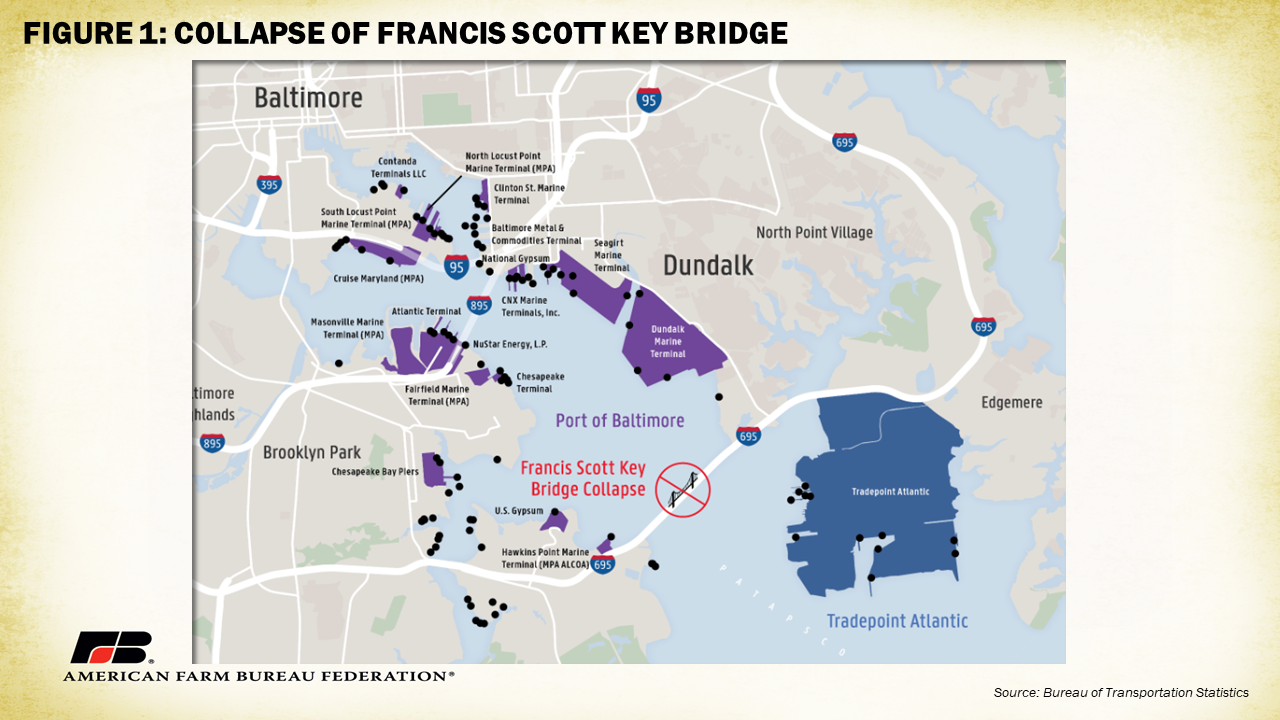
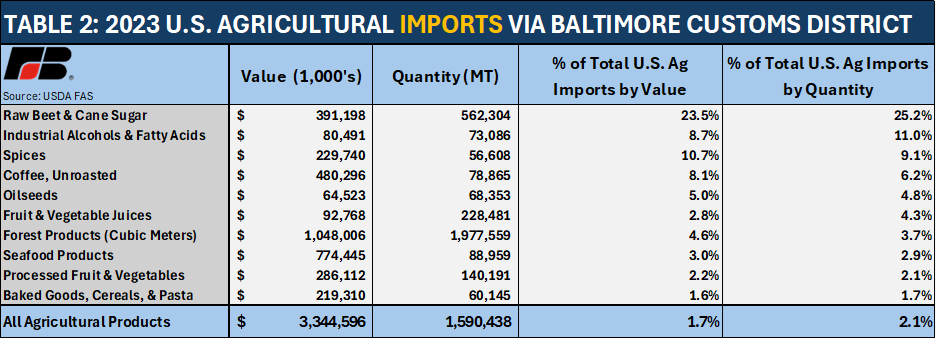
The Francis Scott Key Bridge in Baltimore dramatically tumbled into the water in a matter of seconds early Tuesday morning when a massive cargo ship piled with containers lost power leaving the port; the vessel had few minutes to issue a mayday to halt vehicle traffic over the bridge and attempt to warn a road construction crew working the early morning hours overnight.
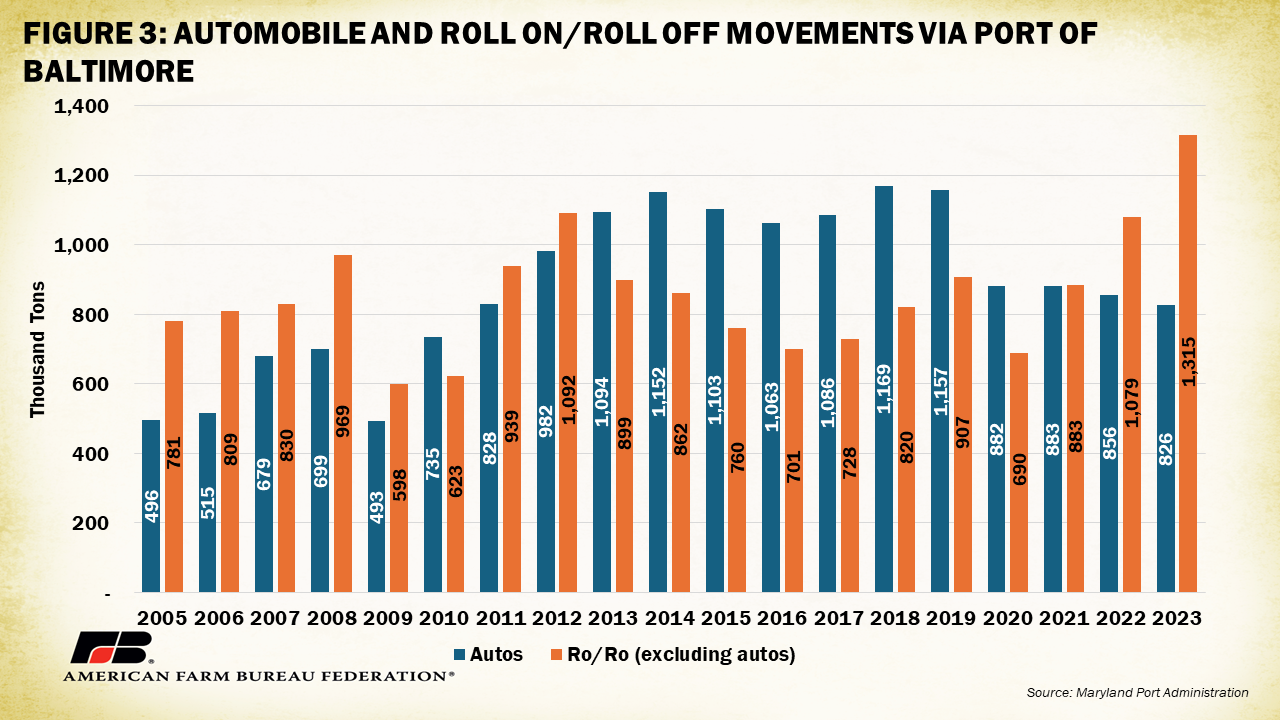
The collapse of the bridge along Interstate 695 leaves in its wake both tragedy, as recovery efforts continue to find those who were plunged into the Patapsco River, and uncertainty, as industries ranging from sugar to automobiles assess the weeks ahead. While only the 17th largest port in the nation, the Port of Baltimore is key for those two industries, coal, and others, with the Maryland port home to a major Domino Sugar refinery and a hub for heavy cargo and inbound coal shipments.
The Soy Transportation Coalition reports the top five agricultural products handled (import and export combined) at the Port of Baltimore are:
1.) Sugar
2.) Soybeans
3.) Grain products (including corn and wheat)
4.) Coffee
5.) Grocery Items
STC Executive Director Mike Steenhoek said, "While [in context] the Port of Baltimore is not a significant port region for soybeans and grain, it is a significant resource for the broader economy. It also underscores the reality that while our oceans are vast and expansive, the ports that serve as the origins and destinations for global commerce can be vulnerable – whether due to weather, accident, or attack. Investing in, maintaining, and securing these essential links in our national and global economy must remain a national priority."
In this article from the Washington Post, Steenhoek mentions the domino effect from a single port being down on other ports, given many vessels make multiple stops on their way overseas.
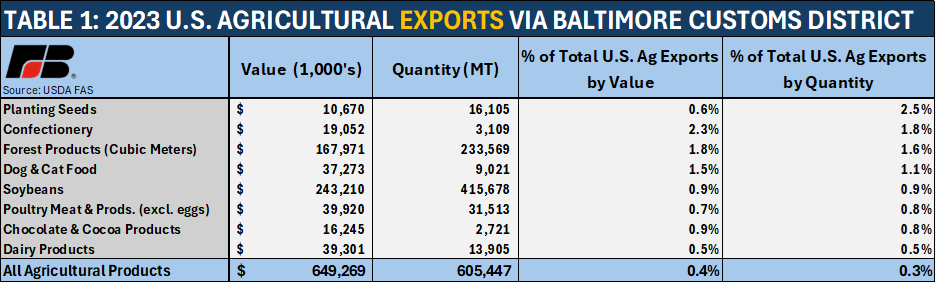
Approximately $250 million in soybeans exports shipped from the Port of Baltimore in calendar year 2023. See more on soybeans below in our "What We're Watching" section. ASA is continuing to monitor the situation from both shipping and hauling perspectives, as farming equipment and inputs are likely to be impacted by this event. Soybean farmers, especially those on the Delmarva Peninsula and surrounding areas, are encouraged to contact ASA staff so that impacts may be relayed to appropriate federal entities.
The global agriculture sector faces various challenges, including the impacts of climate change and labor shortages. Robotics can help agriculture companies tackle these challenges by automating machines and supporting vertical farming. Against this backdrop, the robotics industry is set to grow at a compound annual growth rate (CAGR) of 17% from $63 billion in 2022 to to $218 billion in 2030, forecasts GlobalData, a leading data and analytics company.
GlobalData's latest Thematic Intelligence report, "Robotics in Agriculture," reveals how robotics is helping to achieve precision agriculture and support workers in a new agricultural revolution. Precision agriculture involves using agrochemicals in a prescriptive manner to minimize waste and pollution. It is particularly important given the simultaneous issues of increased demand for food and rising labor and agricultural input prices.
Holly Anness-Bradshaw, Associate Thematic Intelligence Analyst at GlobalData, comments: "Robots can carry out the strenuous and monotonous tasks that lead to injuries and fatigue. The agriculture industry is investing and innovating in many parts of the robotics industry, including drones, field robots, and robotics intelligence. Robots can be found on vineyards, with Burro's robots helping workers carry up to 500 pounds of crops around fields and back to sorting houses."
The future of agriculture will be underpinned by robots that augment the industry's workforce. Robots will assist workers in the agriculture sector, not replace them.
Anness-Bradshaw continues: "Traditional agricultural companies like John Deere and Cargill, as well as agricultural startups, are all hiring and innovating in robotics. The agricultural sector is becoming increasingly aware of the potential and need for robotics to support labor and increase agricultural productivity. Traditional companies are forming partnerships with startups, like that between John Deere and Blue River Technologies, which led to the launch of the See & Spray. The See & Spray is a robot that uses sensors and AI to target weeds and spray pesticides precisely. Robots will support human workers by automating repetitive and strenuous tasks, such as tilling, but will also learn crop health and growing patterns."
Robots are learning the growing patterns of specific produce. With the integration of artificial intelligence (AI) with agricultural robots, this data is used to improve farm management strategies.
Anness-Bradshaw concludes: "Companies like Dogtooth are aiming to fully automate the lifecycle of strawberries to alleviate the pressure of labor shortages that lead to excess food waste so crops do not go unpicked. Dogtooth is a strawberry-picking robot arm, which is integrated with sensors, cameras, and AI. The robot can navigate rows of strawberries, determine whether they are ripe, delicately pick the berries, and then package them into punnets."
Quotes provided by Holly Anness-Bradshaw, Associate Thematic Intelligence Analyst at GlobalData
GlobalData's latest report, "Robotics in Agriculture," provides an invaluable guide to this important theme in this sector. It includes comprehensive lists of the leading players across all aspects of the robotics value chain, helping companies identify the right partners.
The report also includes a guide to the major threats facing the agricultural industry like climate change, labor shortages and pressures on limited resources. The report then details how robotics can help alleviate these challenges.
About GlobalData 4,000 of the world's largest companies, including over 70% of FTSE 100 and 60% of Fortune 100 companies, make more timely and better business decisions thanks to GlobalData's unique data, expert analysis and innovative solutions, all in one platform. GlobalData's mission is to help our clients decode the future to be more successful and innovative across a range of industries, including the healthcare, consumer, retail, financial, technology and professional services sectors.
U.S. Department of Agriculture (USDA) Oklahoma State Director Kenneth Corn today announced that USDA is investing more than $3 million in renewable energy projects to lower energy costs, generate new income and create jobs for Oklahoma farmers, ranchers, agricultural producers and rural small businesses.
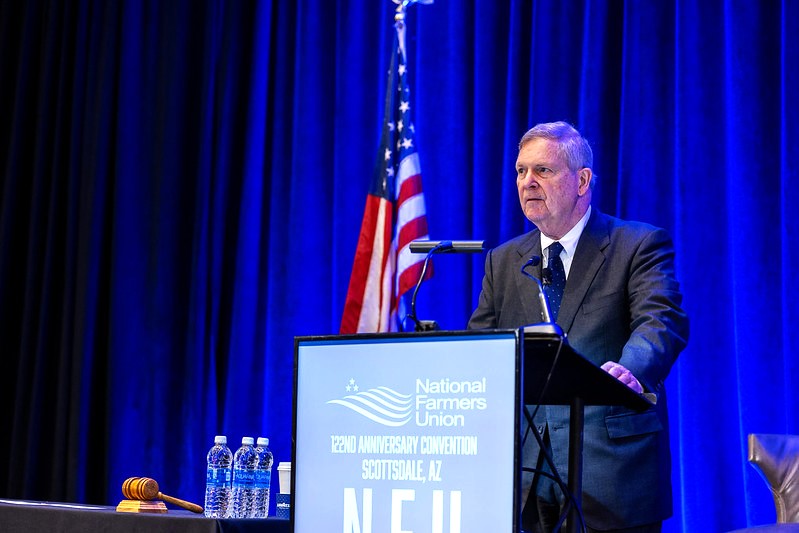
USDA Secretary Tom Vilsack made an announcement during a visit to University of Nebraska Omaha, where he discussed USDA's $124 million investment efforts under the Biden-Harris Administration to invest in rural communities nationwide. Most of the projects announced today are being funded by President Biden's Inflation Reduction Act, which are the administration's efforts to reduce costs on businesses and consumers. In total, this funding advances the President's Investing in America agenda to grow the nation's economy from the middle out and bottom up by increasing competition in agricultural markets, lowering costs, and expanding clean energy.
"These investments directed by President Biden are spurring economic activity in nearly every corner of Oklahoma and at the same time reducing the burden on our rural businesses and farming operations by lowering their energy costs," Corn said. "The investments create good-paying jobs and save people money that are often reinvested in Oklahoma rural communities."
Through the REAP program, USDA provides grants and loans to help ag producers and rural small business owners expand their use of wind, solar and other forms of clean energy and make energy efficiency improvements. These innovations help them increase their income, grow their businesses, address climate change and lower energy costs. These investments will cut energy costs for farmers and ag producers that can instead be used to create jobs and new revenue streams for people in their communities. Projects funded in Oklahoma include:
Renewable Energy Programs
Ground Zero Shelters, $429,615
R Base Farms Inc., $30,552
Park Hills Motel Inc., $92,500
Blessed B Ranch LLC, $34,750
Cade Nickeson Farm Operation, $51,449
KCL Enterprises LLC, $449,519
HTM Underground LLC, $92,424
Foundation Energy Fund VII-A LP, $432,500
Broce Manufacturing Co. Inc., $540,072
Woodshed of Adair LLC, $387,500
Newell Coach Corporation, $423,500
Energy Efficiency Programs
106 Randolph Place Inc., $52,517
Newell Coach Corporation, $78,874
Newton Wall Company, $33,728
USDA continues to accept REAP applications and will hold funding competitions quarterly through September 30, 2024. The funding includes a dedicated portion for underutilized renewable energy technologies. For additional information on application deadlines and submission details, see page 19239 of the March 31 Federal Register.
"Thanks to President Biden delivering on his economic promises, we can expect these Oklahoma businesses and agriculture producers to save more than half a million dollars a year on their energy costs," Corn said. "These are real dollars that will make real impacts for strengthening our Oklahoma economy for years to come. There is still an opportunity for applicants to reach out to us for future grant announcements by contacting our State Office at okenergy@usda.gov."
USDA touches the lives of all Americans each day in so many positive ways. Under the Biden-Harris Administration, USDA is transforming America's food system with a greater focus on more resilient local and regional food production, fairer markets for all producers, ensuring access to safe, healthy and nutritious food in all communities, building new markets and streams of income for farmers and producers using climate-smart food and forestry practices, making historic investments in infrastructure and clean energy capabilities in rural America. To learn more, visit https://www.rd.usda.gov/ok.
Each week, Beltway Beef brings you the latest policy news affecting the U.S. cattle and beef industry. Hear from subject-matter experts, producers, and industry leaders on the topics that impact the business viability of farms and ranches across the country.
On this episode, NCBA Executive Director of Government Affairs Allison Rivera joins to share updates on disaster relief programs that provide support to cattle producers following natural disasters. Rivera details NCBA's Farm Bill priorities as Congress continues discussing possible legislation. She also explains NCBA's support of new legislation to improve the Livestock Indemnity Program.
Ty Gregson encourages communities to acknowledge and understand mental health struggles and substance use when supporting those with addictions. (Photo provided by Ty Gregson)
Ty Gregson joined Oklahoma State University Extension in May 2023 as the assistant state specialist in opioid and substance use prevention. He serves Oklahoma communities by providing educational resources on addiction and substance use.
Gregson received his undergraduate degree in human development and family studies at Brigham Young University in Provo, Utah, and launched his initial career in writing, mostly fiction and children's stories.
"I wrote some content on marriage, and it gained a lot of traction," Gregson said. "As I was searching for my next steps, a lot of people encouraged me to get into education, which is what led to getting my master's from OSU."
He earned a master's degree in marriage and family therapy when he realized he enjoyed helping families through his writing projects. After graduate school, he began a position that promoted mental health awareness related to challenges with poverty, substance use and family struggles. The experience led him to his current role in OSU Extension.
"I enjoy the creativity," Gregson said. "Not only does the position relate to my background, but it gives me the freedom to develop programming in substance use prevention.
Gregson primarily focuses on mental health education to minimize substance use issues in Oklahoma communities.
"No matter the addiction, whether opioid use or sports betting, all addiction is a means to get to the end of the day," Gregson said.
Gregson and his colleagues are creating programming for Extension educators to implement within communities. New resources will range from handouts to workshops that he and educators can use when discussing difficult topics like mental health and substance use.
"There's currently no book or paper for county educators to use when communicating about substance use with communities," Gregson said. "We're working on a few resources both internally and externally."
In addition to handouts, Gregson and his colleague, Danyelle Kuss, Oklahoma County Extension educator, developed a mental health card game for middle school students. The game is designed to present healthy coping skills and explain how to apply them in real-world situations.
Gregson hopes the resources can be shared with many other Extension educators in the future.
"A lot of people fear opioids and don't know how to combat addiction," Gregson said. "Communities need information to understand the uncomfortable things like mental health struggles and substance use."
The Woodward Livestock Market reports very light run of 795 head on Thursday, March 28- and according to USDA Market News- Compared to last week: Feeder steers 8.00 to 10.00 lower. Feeder heifers mostly steady. Steer can heifer calves unevenly steady on a light test.. Demand was moderate. Quality average.
Today, Congressman Tom Cole (OK-04) released the following statement after attending the groundbreaking ceremony for the upcoming Midwest City industrial rail spur projects. This comes after Congressman Cole secured $3 million in government funding for the projects as a part of the Fiscal Year 2024 appropriations package.
"I am very proud to announce that I was able to secure $3 million for Midwest City to execute important rail spur projects. These rail projects will give the area a major economic boost, which will greatly benefit the two industrial development sites located adjacent to the short line railroads, as well as create more jobs in this part of the city," said Congressman Cole. "I am very excited to have obtained this historic funding for these projects, and I cannot wait to see the impact it has on the community."
"The approval of this funding is a direct result of Congressman Cole's work to help our community," said City Manager Tim Lyon. "We'd like to thank him for working so tirelessly for us. The American Glass and Centrillium developments are key components to our growth in Midwest City and we're excited that these funds could help us quickly fulfill our commitments to those projects." "Thank you to Congressman Cole for his continued support of our city," added Midwest City Mayor Matt Dukes
Listen to Kim Anderson talk about the latest in the crop markets.
This week on SUNUP is Oklahoma State University Extension grain market economist Kim Anderson. During this week's edition, Anderson talks about the latest crop prices and more.
Anderson said there has not been much change in the crop markets for the past few months.
"You have got wheat prices moving between $5.00 and $5.50," Anderson said. "About $5.30 right in the middle of that range."
Corn has been moving in between a ten-cent range, Anderson said, from $4.00 to $4.50.
"These prices are forward contract prices for the '24 crop," Anderson said. "These are not current prices. This is what we are going to get for crops we are putting in the field or have in the field now."
Anderson said corn is forward contracting for about $4.40 and $4.50 now, and soybeans are forward contracting for around $11.10 and $11.20.
"The one thing we know about these prices is that something is going to happen in the market to make them pop out at either the top or the bottom," Anderson said. "We hope it is the top, but you never know."
Anderson said the release of USDA's prospective plantings report and quarterly grain stocks report has some potential to impact prices.
"The market is going to take what they expected and compare it to what USDA said and that could potentially move the market," Anderson said.
This week on SUNUP:
Alex Rocateli, OSU Extension forage specialist, has tips on how to identify bermudagrass in pastures.
Wes Lee, OSU Extension Mesonet agricultural coordinator, discusses the data from the recent cold front. State climatologist Gary McManus looks at the recent rainfall amounts.
Rosslyn Biggs, OSU Extension beef cattle specialist, says if you do not have vaccination plan for your herd, now is the time to put one together.
Mark Johnson, OSU Extension beef cattle breeding specialist, discusses the genetic differences among cattle breeds.
Below is an analysis of the March 28th Prospective Plantings Report written by OSU crop marketing specialist Dr. Kim Anderson:
The USDA released the 2024 Prospective Plantings report. The report appeared to be slightly bullish for corn, soybeans, and soft red winter wheat. The report appeared to be bearish for hard red winter wheat and neutral for cotton.
The market's immediate reaction to the report was a 17-cent increase in corn prices, essentially no change in soybeans, and a 14-cent increase in hard red winter wheat prices. Cotton prices were marginally higher. The Plantings report provided essential information but the near-term impact will probably be neoglacial.
For wheat, the plantings report must be taken "with a grain of salt." Using the 10-year average (2014 through 2023), U.S. wheat production is only seven percent of world wheat production. Also, Russia is projected to product a record 3.4 billion bushels in 2024 and Russia's wheat ending stocks are projected to be 17 percent above the 5-year average.
U.S. hard red winter wheat planted acres was estimated to be 24.3 million acres compared to the 24 million planted acres estimated in the January 2024 report. Oklahoma wheat planted acres were estimated to be 4.35 million acres up from January's estimate of 4.3 million acres.
U.S. winter wheat planted acres was estimated to be 34.1 million acres compared to the pre-release estimate (survey of market analysts) of 34.9 million aces.
Corn planted acres came in at 90 million acres compared to the pre-release estimate of 91.8 million acres and 2023 plantings of 94.6 million acres. Oklahoma's corn planted acres was 400,000 acres compared to 390,000 acres in 2023.
U.S. soybean planted acres was estimated to be 86.5 million acres compared to 83.6 million acres in 2023. Oklahoma is expected to plant 550,000 acres compared to 460,000 in 2023.
U.S. cotton planted acres was estimated to be 10.7 million acres compared to 10.2 million acres in 2023. Oklahoma's planted cotton acres was estimated to be 500,000 acres compared to 420,000 in 2023.
Oklahoma's canola planted acres was estimated to increase from 3,000 acres in 2023 to 22,000 acres in 2024.
numbers were already factored in current prices. Weather and world production will be the major price determinants between now and harvest.
Roff, Oklahoma, native, Jason Don Price, also known as "Bacon," was arrested and charged with 44 felony counts of larceny of livestock for allegedly stealing cattle from the Southern Oklahoma Livestock Auction in Ada, Oklahoma. The arrest comes after an investigation led by Texas & Southwestern Cattle Raisers Association Special Ranger Cody Hyde.
Hyde initiated an investigation in January 2024 at the request of the Southern Oklahoma Livestock Auction. Evidence obtained from the sale barn supported allegations that Price unlawfully obtained a total of 44 head of cattle from the auction between January 2023 and February 2024.
The investigation revealed Price generated fraudulent documents for cattle at Southern Oklahoma Livestock Auction's inventory, listing them under his girlfriend's name for sale.
Hyde located Price at his residence in Roff and upon questioning, obtained probable cause. Price was arrested Feb. 28, 2024, and booked into the Pontotoc County jail.
Texas & Southwestern Cattle Raisers Association thanks the Pontotoc County District Attorney's office for their collaborative efforts in this investigation to successfully bring this case to prosecution. Individuals with any information regarding potential co-conspirators involved in Price's illegal activities are urged to call Hyde at 918-315-2925
Here is Your Daily Oklahoma Farm and Ranch News Update:
2024 Denim Ball Set for April 5th and 6th at the Skirvin Hilton Hotel in OKC
Dairy Cattle Test Positive for HPAI- State Vet Rod Hall Explains What We Know
Texas Ag Commissioner Sid Miller Provides Update on HPAI Detection in Texas and Kansas Dairy Herds
4-H Excused Absences Signed by Governor Stitt
Hemphill County Texas A&M AgriLife Beef Cattle Conference Set for April 23-24 in Canadian, Texas
Is Your Dewormer Working?
Biofuel and Ag Groups Call on EPA to Issue E15 Emergency Waiver
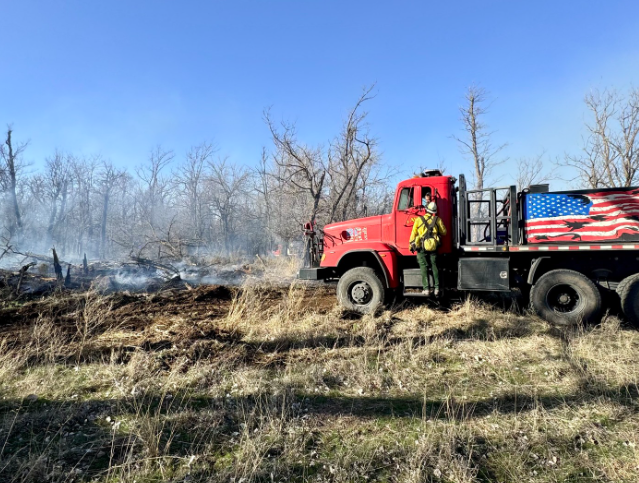
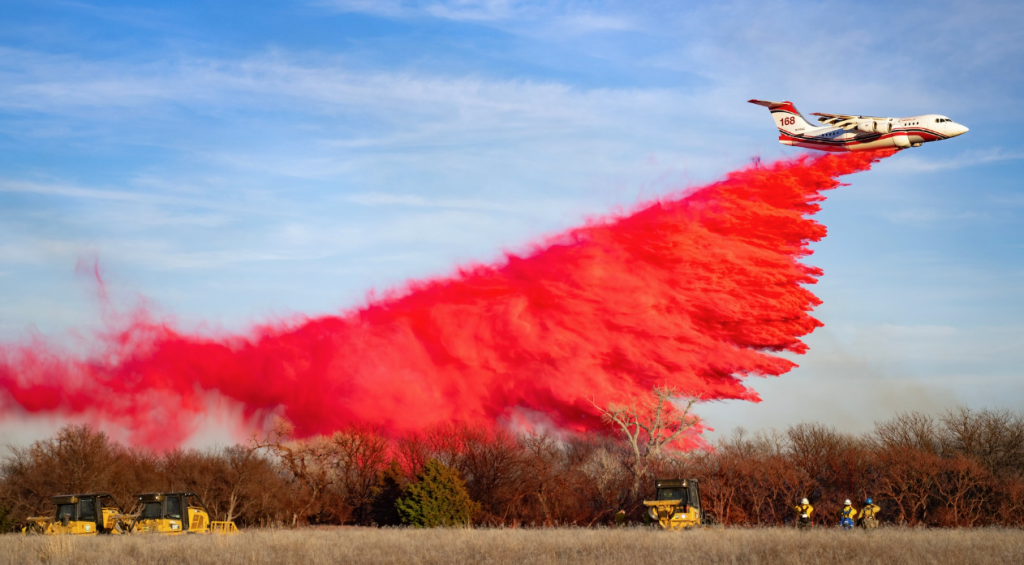
Spring Wildfire Prevention and Protection
Griswold Grass to Grid Production Sale Set for Friday, March 29th
2024 Denim Ball Set for April 5th and 6th at the Skirvin Hilton Hotel in OKC
The 2024 Denim Ball will be held on April 5th and 6th at the Skirvin Hilton Hotel in Oklahoma City! Farm Director KC Sheperd is talking about this year's event with Charity Martin of the Oklahoma Cotton Council.
Martin said so far, the Denim Ball has fantastic pre-registration numbers, and everything is running smoothly in preparation for this year's event. While it is not required to RSVP, Martin said it is certainly appreciated. To register, CLICK HERE!
On Friday night, the weekend will kick off with a welcome reception, "Casino Night," in the Skirvin-Venetian room. Attendees will receive an hour of free drinks while they mingle with one another.
"Saturday morning is going to be the golf tournament," Martin said.
The golf tournament has almost reached capacity on teams, so if someone is interested in playing, Martin said to contact herfor help finding a spot to play. The tournament will begin at 10 a.m. at the Trosper Park Golf Course, and awards will be given to first, second and third place, along with the longest drive and closest to the pin.
Oklahoma AgCredit supports rural Oklahoma with reliable and consistent credit, today and tomorrow. We offer loans for land, livestock, equipment, operating costs and country homes (NMLSR #809962) to farmers, ranchers and rural businesses across 60 counties. As a cooperative, we are owned by the members we serve. Through our Patronage Program, we have returned more than $74 million to our members since 1997.
For more information on our services or to find a location near you, visit our website here.
Dairy Cattle Test Positive for HPAI- State Vet Rod Hall Explains What We Know
On March 25th, the U.S. Department of Agriculture confirmed highly pathogenic avian influenza (HPAI) in two dairy cow herds in Texas and two herds in Kansas. Importantly, USDA confirmed there is no threat to human health, and milk and dairy products remain safe to consume. I am talking with Oklahoma State Veterinarian Dr. Rod Hall about HPAI found in dairy cows.
"It is a strain we have been dealing with for two years now in poultry and wild waterfowl," Hall said.
While HPAI is highly contagious in birds, Hall said it is not transferable from cow to cow. When a cow contracts HPAI, Hall said they will recover.
"They do not appear to be terribly sick, and certainly not dying from it," Hall said. "There is no indication that cows are passing it from one cow to the next. If we thought that is was being transmitted from cow to cow and could move that way, then we would have to at least consider the possibility of depopulating those herds, but that is just not the case right now."
Hall added that it is unclear what the cause of HPAI is at this time.
Texas Ag Commissioner Miller Provides Update on HPAI Detection in Texas and Kansas Dairy Herds
On Wednedsday, Texas Agriculture Commissioner Sid Miller provided an update on the confirmed presence of highly pathogenic avian influenza (HPAI) found in diagnostic samples from dairy operations in Texas and Kansas. Diagnostic samples of unpasteurized milk from affected cattle collected from two dairy farms in Kansas and one in Texas were confirmed to be positive for HPAI on March 25, 2024. Another Texas dairy also confirmed the presence of HPAI through an oropharyngeal swab test. The Texas Department of Agriculture (TDA), The Texas Animal Health Commission (TAHC), and the United States Department of Agriculture (USDA) are closely monitoring the situation and its impact to Texas dairies.
"This outbreak has quickly grabbed the attention of the agriculture industry on a national level," Commissioner Miller said. "Understanding the details surrounding the transfer of avian virus to livestock is the top priority of animal health professionals and agriculture agencies. While troubling, this outbreak is not currently expected to threaten our nation's commercial dairy supply."
For our farmers who have either- always have had cotton on their farms- or those who have more recently have added the fiber crop to their operations- we have a daily report heard on several of our Radio Stations- It's Called Cotton Talk!
Click on the Button below to listen to our most recent report
4-H Excused Absences Signed by Governor Kevin Stitt
Gov. Stitt on Tuesday signed House Bill 1006 into law, which will grant 4-H students an excused school absence when participating in an approved activity.
The bill's author, Rep. Rick West, R-Heavener, said he's pushed the legislation for the past four years as a way to provide fairness for students that participate in 4-H.
"Students that participate in FFA and other school activities already get excused absences," West said. "Our 4-H students deserve the same consideration to not have their grades negatively affected when they participate in an activity that is recognized by the county 4-H facilitator."
This will allow students to make up any missed work, West said.
He said the request for the measure was from a constituent, but it has gained statewide support.
We invite you to listen to us on great radio stations across the region on the Radio Oklahoma Ag Network weekdays-
if you missed this morning's Farm News - or you are in an area where you can't hear it- click below for this morning's Farm news from Ron Hays and KC Sheperd on RON.
Oklahoma Farm Bureau works to improve the lives of all Oklahomans by supporting our state's agriculture community. As Oklahoma's largest general farm organization led by Oklahoma farmers and ranchers, OKFB takes grassroots values and advocates for agriculture at the state Capitol and in Washington, D.C., to ensure our way of life continues for generations to come. Farm Bureau hosts leadership events, supports our state's agricultural youth and connects consumers with agriculture in order to build a brighter future for our state. Become an OKFB member today online at okfarmbureau.org/join. Together, we are rural Oklahoma.
Hemphill County Texas A&M AgriLife Beef Cattle Conference Set for April 23-24 in Canadian, Texas
The 2024 Hemphill County Texas A&M AgriLife Beef Cattle Conference will be held April 23-24, 2024, Jones Pavilion, Canadian, Texas. The Tuesday and Wednesday beef cattle event has established itself as one of the nation's leading sources for cutting edge, critical information for beef cattle producers. Andy Holloway, County Extension Agent, Texas A&M AgriLife Extension Service Hemphill County who founded this event in 2015 said the Beef Cattle Conference has truly become a "Field of Dreams" story, "You Build, and They Will Come". In the last several years more that 12 states have been represented by beef cattle producers and including almost one third to the counites in Texas. Go to www.hemphillcotxbeef.com to register, see the agenda, accommodations, speakers information, grand prize drawings and more.
The conference features some to the most important topics in 2024 that are facing producers. The theme for the beef cattle conference is "BETTER RANCHING FOR BETTER LIFE". International and national known speakers include Troy Applehans of Cattle Fax; Mark Makens, Atmospheric Scientist; Dr. Shannon Ferrell of Oklahoma State University; Mark Gardiner of Gardiner Angus Ranch; Kade Lawrence of Texas 4-H State Council; Dr. Loni Lucherk of West Texas A&M University; JoJo Carralles of Heart Brand Beef; Dr. Jason Smith of Texas A&M AgriLife Extension; Travis Thorne of Capital Farm Credit; Dr. Morgan Treadwell, Texas A&M AgriLife Extension; and Dallas Mount of Ranching For Profit.
On today's Cow-Calf Corner, Rosslyn Biggs, DVM, OSU College of Veterinary Medicine, State Extension Beef Cattle Specialist talks about internal parasite resistance in Oklahoma cow-calf herds and how Oklahoma ranchers can participate in the latest research.
Anthelmintic (dewormer) resistance is a growing concern, and given the expense of dewormers, producers and veterinarians need to be sure they are working. Recent Oklahoma State University (OSU) research has shed light on the seeming need to mitigate the challenge of internal parasite resistance in beef cattle.
OSU research is ongoing with an expanded opportunity for Oklahoma cattlemen and veterinarians in 2024. Researchers from Veterinary Medicine, Animal and Food Sciences, and Extension are currently conducting a larger study of Oklahoma herds. The study hopes to collect data from at least 50 different groups of cattle from around the state. Samples can be collected from now through fall 2024.
If you are interested in participating in this project, please fill out the interest form. Once received, the research team will be in contact to coordinate delivery of the sampling kits and other details. Questions on the project may be directed to rosslyn.biggs@okstate.edu or david.lalman@okstate.edu.
Biofuel and Ag Groups Call on EPA to Issue E15 Emergency Waiver
Today, Growth Energy, Renewable Fuels Association, National Corn Growers Association, American Farm Bureau Federation, National Farmers Union, and National Sorghum Producers sent a letter to the Environmental Protection Agency (EPA) calling on Administrator Michael Regan to act swiftly on an emergency waiver for E15 sales:
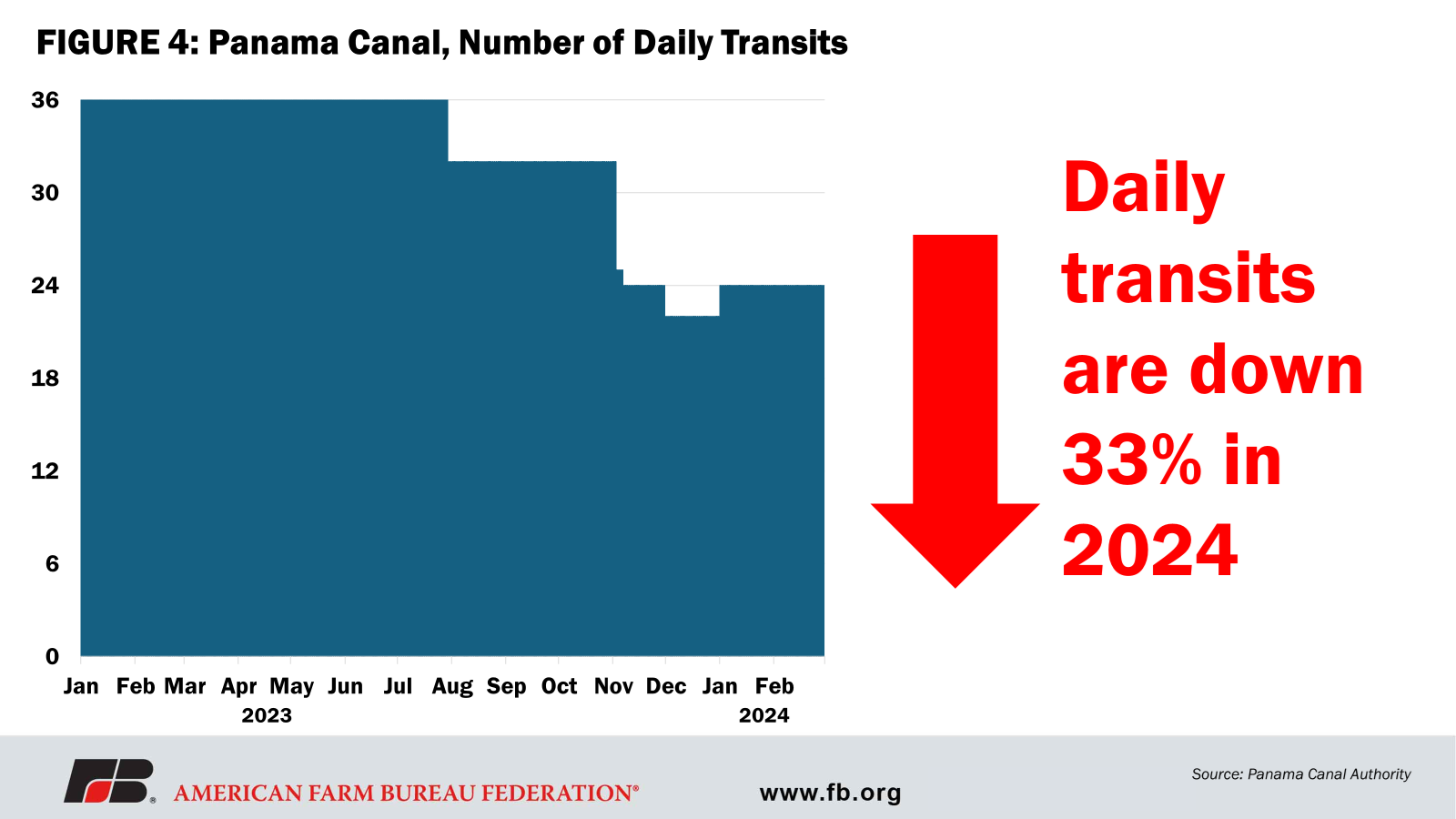
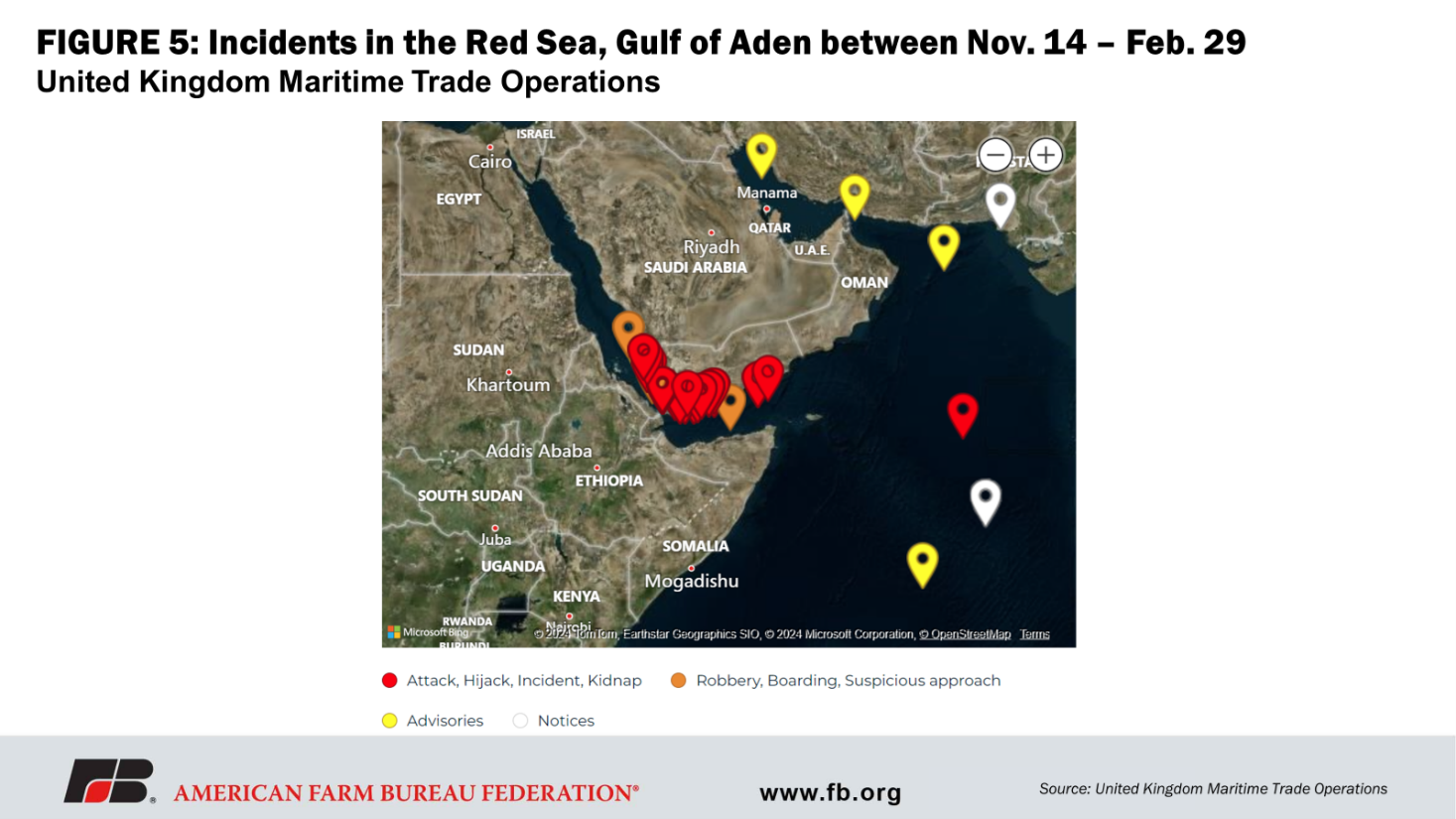
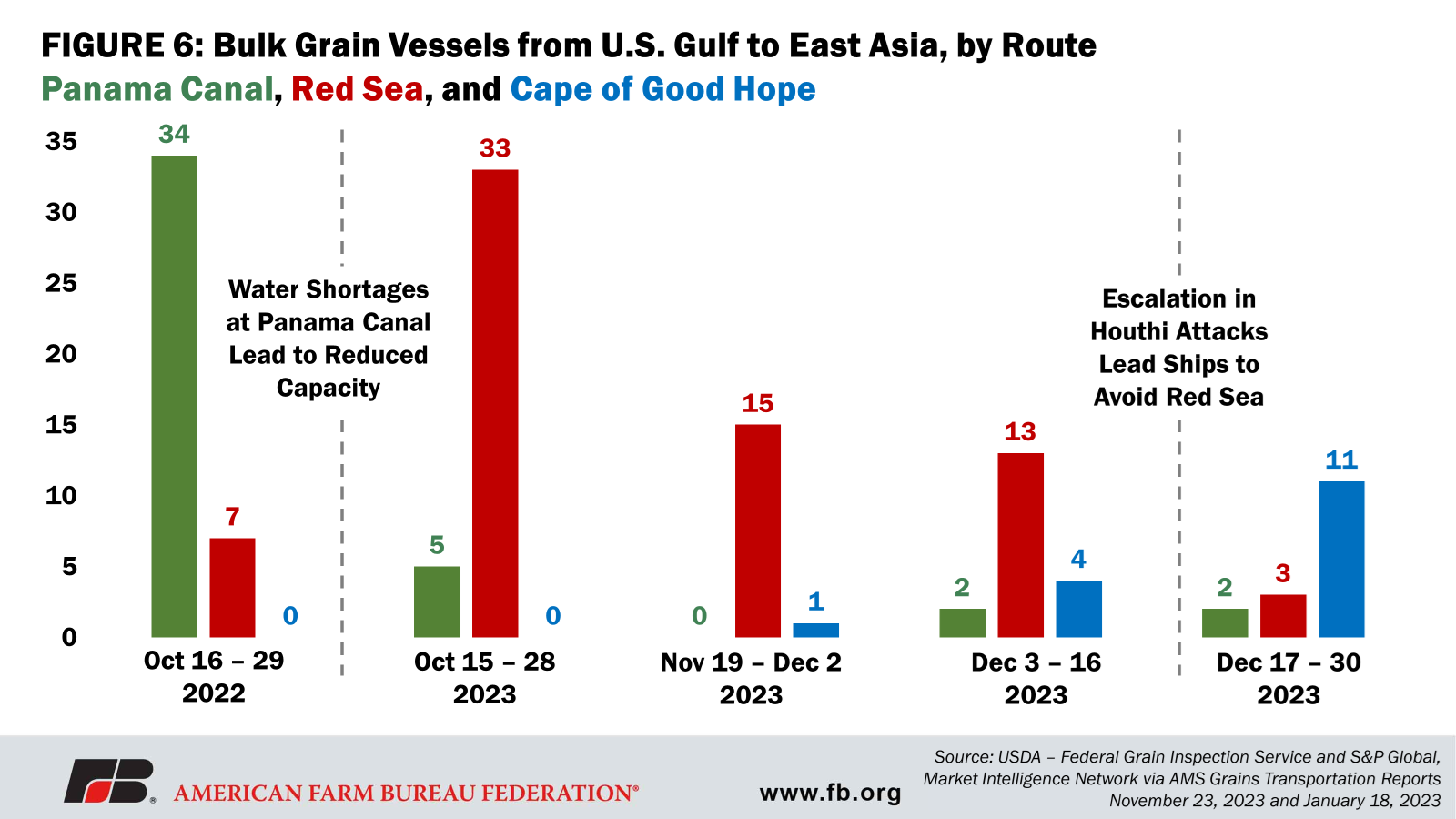
"New and ongoing conflicts across the globe continue to pose risks to the United States' transportation energy supply. In addition to the conflict in Ukraine, now extending into its third year, the recent unrest and volatility in the Middle East present additional challenges to American energy security. In particular, attacks on shipping in the Red Sea have already had a disruptive effect on the transit of fuel in the region, raising the specter of constrained supply and increased gasoline prices at home," wrote America's top biofuel advocates.
To remedy the ongoing disruptions to global energy markets, stabilize gasoline prices for American consumers, and support domestic energy security, the authors urged EPA to quickly authorize the summer sale of gasoline blended with up to 15 percent ethanol.
"The consumer cost savings that result from allowing the year-round sale of E15, even on a temporary basis, are well-established. As a result of the emergency waivers issued in 2022 and 2023, consumers choosing E15 experienced average cost savings of 10-30 cents per gallon, with some locations offering over $1 off per gallon," they added.
Spring Wildfire Prevention and Protection
What to know
Dry air, low humidity levels and strong winds are the ideal conditions for outbreaks that can occur any time of year but are historically prevalent in March, the windiest month of the year. Oklahoma's wide, open spaces, particularly in the western part of the state, are what allow small fires to spread and grow quickly.
Communities are encouraged to participate in the National Firewise USA program, which educates residents on how to protect homes and neighborhoods in areas at high risk of wildfire. Landowners living in remote, rural areas should take the following precautions during wildfire season:
Survey the status of the home, other buildings and equipment. Determine how the property can stand alone if fire response is delayed or not available.
Keep the area mowed down short and make sure any kind of flammable shrubs or trees are a safe distance from the home and buildings.
Prune tree limbs to prevent fire from spreading to the crown of trees.
There's more great tips to consider- click on the blue button check them out.
Coming Friday- the Griswold Grass to Grid Production Sale
The Griswold Family's Grass to Grid Production sale happens Friday, March 29th at 12:30 pm at the Griswold Cattle Sale Facility, 9313 East 6th Street, Stillwater. The Sale Facility is 7 miles east of the junction of Highways 177 and 51.
They will be selling 200 Angus, Sim-Angus and Maine-Angus bulls. 100 Open Heifer Calves Ready to Breed
85 Pairs and Heavy Bred One Iron Angus Straight Four Year Olds
AND 50 Commercial first calf heifer spring pairs and heavy breds.
For last minute info- call John Griswold at 405-780-3300 or Jeanne Griswold at 435-421-1200.
Click here for the webpage on their website that has the link to the catalog and the videos of the offering.
Attend in person or participate on CCI.Live- available here
Let's Check The Markets!
OKC West is our Market Links Sponsor- they sell cattle three days a week- Cows on Mondays, Stockers on Tuesday and Feeders on Wednesday- Call 405-262-8800 to learn more.
Today's First Look:
Ron on RON Markets as heard on K101
mornings with cash and futures reviewed- includes where the Cash Cattle market stands, the latest Feeder Cattle Markets Etc.
OKC West in El Reno had 5,743 head on Tuesday and Wednesday of his week- and both days saw sharply lower prices.
According to USDA Makert News- Compared to last week: Feeder steers and heifers traded fully 5.00-10.00 lower. Demand light to moderate. Steer and heifer calves sold 5.00-10.00 lower. Demand moderate. The CME Live and Feeder Cattle contracts on the CME closed sharply lower early in the week causing buyers to be more cautious.
Meanwhile- OKC West Manager Bill Barnhart offered this commentary on the market's Facebook page last night- "After weeks of upward movement the market had a sharp correction this week. Futures have lost 8.00-10.00 in the last week and the cash market followed suit on all classes except cows/bulls. The downturn all started with a negative on feed report followed by reports of avian flu infecting dairy herds in Texas. Fundamentals have not changed with the market but at these precarious levels it doesn't take much to unnerve commodity players and in turn cattlemen alike. Some fat trade reported today at 185 in Kansas. Most will wait it out. Have a great Easter."
Each afternoon we are posting a recap of that day's markets as analyzed by Justin Lewis of KIS futures - click below for the latest update on the Livestock and Grain Futures Trade..
Daily Oklahoma Cash Grain Prices- as reported by the Oklahoma Dept. of Agriculture- The report available after the close of the Futures Trade for that day.
Ron Hays, Senior Farm/Ranch Broadcaster and Editor
KC Sheperd, Farm Director and Editor
Dave Lanning, Markets and Production
Reagan Calk, Farm News and Email Editor
Pam Arterburn, Calendar and Template Manager
Podcasts From Oklahoma Farm Report and More
Two of our regular reports are also podcasts that you can subscribe to- Our daily Farm and Ranch News with KC Sheperd- available here on the Apple Podcast Platform
The second is our daily Beef Buzz with Ron Hays- available here on the Apple Podcast Platform
Periodically- we offer interviews on our Ag Perspectives Podcast series- this podcast is available here.
Ron has also has a series of podcasts from interviews with newsmakers at the Cattlemen's Congress- Click here or you can find them on your favorite Podcast platform- look for them by searching for Cattlemen's Congress Conversations.
We are making plans to jump back into regular installments of what has been called the Road to Rural Prosperity- a new name and fresh content is in the works- for now- click on the blue button below for one of our favorites that is a timeless classic.
For your convenience, we have our sponsors' websites linked here- just click on their name to jump to their website- check their sites out and let these folks know you appreciate the support of this daily email, as their sponsorship helps us keep this arriving in your inbox on a regular basis- at NO Charge!
We invite you to check out our website at the link below too that includes an archive of these daily emails, audio reports and top farm news story links from around the globe.
Nelson said there is discussion about low corn acreage, down about 4.6 million acres. Soybeans on the other hand are up 2.9 million acres, he added.
"This does reflect the fact that the current new crop breakeven which some might estimate at about $5.10 per bushel, and that is a cash price, is maybe a bit concerning here for us," Nelson said.
Given the higher prices, Nelson said it was expected to see a large jump in cotton acres. In this case, Nelson said USDA did not see much of an increase, at only about 400,000 extra acres from last year. Therefore, cotton is starting out the year tighter than the trade expected to see.
"As far as big picture surprises, there are not any major issues here," Nelson said. "One thing I will point out, though is that (in the Quarterly Grains Stocks Report) we are talking about corn, soybeans and wheat here in this case, so three crops. The total will be down 3.8 from last year. That does fit in relatively normally with what you would expect in a financially stressed year."
Overall, according to the U.S. Prospective Plantings Report (Grain Stocks to follow):
Corn Planted Acreage Down 5 Percent from 2023
Soybean Acreage Up 3 Percent
All Wheat Acreage Down 4 Percent
All Cotton Acreage Up 4 Percent
Corn planted area for all purposes in 2024 is estimated at 90.0 million acres, down 5 percent or 4.61 million acres from last year. Compared with last year, planted acreage is expected to be down or unchanged in 38 of the 48 estimated States.
Soybean planted area for 2024 is estimated at 86.5 million acres, up 3 percent from last year. Compared with last year, planted acreage is up or unchanged in 24 of the 29 estimated States.
All wheat planted area for 2024 is estimated at 47.5 million acres, down 4 percent from 2023 for comparable States. The 2024 winter wheat planted area, at 34.1 million acres, is down 7 percent from last year and down 1 percent from the previous estimate for comparable States. Of this total, about 24.3 million acres are Hard Red Winter, 6.26 million acres are Soft Red Winter, and 3.59 million acres are White Winter. Area expected to be planted to other spring wheat for 2024 is estimated at 11.3 million acres, up 1 percent from 2023. Of this total, about 10.7 million acres are Hard Red Spring wheat. Durum planted area for 2024 is expected to total 2.03 million acres, up 22 percent from the previous year for comparable States.
All cotton planted area for 2024 is estimated at 10.7 million acres, up 4 percent from last year. Upland area is estimated at 10.5 million acres, up 4 percent from 2023. American Pima area is estimated at 203,000 acres, up 38 percent from 2023.
Oklahoma Prospective Plantings:
Corn planted area for 2024 is estimated at 400,000 acres, up 3 percent or 10,000 acres from last year.
Soybean planted area for 2024 is estimated at 550,000 acres, up 20 percent or 90,000 acres from last year.
Winter wheat planted area for 2024 is estimated at 4,350,000 acres, down 4 percent or 200,000 acres from last year.
Cotton planted area for 2024 is estimated at 500,000 acres, up 19 percent or 60,000 acres from last year.
Finally, one of the biggest losers when it comes to smaller acres expected to be planted in 2024 will be grain sorghum acres in Oklahoma- predicted to be 300,000 acres, down 110,000 acres from 2023.
Kansas Prospective Plantings:
Corn planted area for 2024 is estimated at 5,700,000 acres, down 1 percent or 50,000 acres from last year.
Soybean planted area for 2024 is estimated at 4,250,000 acres, down 4 percent or 180,000 acres from last year.
Winter wheat planted area for 2024 is estimated at 7,700,000 acres, down 5 percent or 400,000 acres from last year.
Cotton planted area for 2024 is estimated at 110,000 acres, down 2 percent or 20,000 acres from last year.
Texas Prospective Plantings:
Corn planted area for 2024 is estimated at 2,100,000 acres, down 16 percent or 400,000 acres from last year.
Soybean planted area for 2024 is estimated at 100,000 acres, down 20 percent or 25,000 acres from last year.
Winter wheat planted area for 2024 is estimated at 5,900,000 acres, down 8 percent or 500,000 acres from last year.
Cotton planted area for 2024 is estimated at 5,540,000 acres, down 1 percent or 39,000 acres from last year.
Corn stocks in all positions on March 1, 2024 totaled 8.35 billion bushels, up 13 percent from March 1, 2023. Of the total stocks, 5.08 billion bushels were stored on farms, up 24 percent from a year earlier. Off-farm stocks, at 3.27 billion bushels, are down 1 percent from a year ago. The December 2023 - February 2024 indicated disappearance is 3.82 billion bushels, compared with 3.42 billion bushels during the same period last year.
Soybeans stored in all positions on March 1, 2024 totaled 1.85 billion bushels, up 9 percent from March 1, 2023. Soybean stocks stored on farms are estimated at 933 million bushels, up 24 percent from a year ago. Off-farm stocks, at 912 million bushels, are down 3 percent from last March. Indicated disappearance for the December 2023 - February 2024 quarter totaled 1.16 billion bushels, down 13 percent from the same period a year earlier.
All wheat stored in all positions on March 1, 2024 totaled 1.09 billion bushels, up 16 percent from a year ago. On-farm stocks are estimated at 272 million bushels, up 20 percent from last March. Off-farm stocks, at 816 million bushels, are up 14 percent from a year ago. The December 2023 - February 2024 indicated disappearance is 334 million bushels, 10 percent below the same period a year earlier.
At the Advanced Bioeconomy Leadership Conference (ABLC) in Washington D.C., the National Corn Growers Association (NCGA) once again sponsored and facilitated a special session, outlining the national incentive for biobased chemicals and renewable materials that NCGA, along with Biotechnology Innovation Organization (BIO) and other partners have been working on.
The panel was moderated by Sarah McKay, NCGA Market Development Director, and participants included John Torres, Director, Federal Government Relations at BIO, Ken Rubin, president, Gross-Wen Technologies, and Manning Feraci, Principal, Playmaker Strategies. The panel highlighted the efforts to date to support industrial biotechnology and develop for a national incentive for biobased products. Rubin also shared Gross-Wen's technology and his perspective on how this national incentive will benefit a variety of agricultural feedstocks, a key component of the national incentive. McKay emphasized the value and sustainability of corn as an industrial feedstock and how utilizing corn addresses key areas of importance for the public as it relates to industrial biotechnology. Further, the panel had a robust Q&A session with the audience on programs and policies, including a detailed overview of the national incentive for biobased materials and what technologies would qualify.
"U.S. corn farmers continue to produce an affordable, high-quality and reliable crop each year," said McKay. "That crop can be turned into more than just food, feed and fuel. The corn kernel can be utilized in so many ways, which is why we focus on new uses and corn as an industrial feedstock. NCGA is working on this national incentive with partners across the agricultural and biotech industry to help a variety of new technologies overcome barriers to commercialization so they can begin to grind more corn."
NCGA continues work in the new uses and industrial feedstock space through the Consider Corn Challenge, Radicle Challenge, and state and national New Uses Consortium. NCGA also works to accelerate new uses through a partnership with DigestData, continued conversations with government agencies like the Department of Energy's (DOE) Bioenergy Technologies Office (BETO), and engagement with the airline community and technology providers to make sustainable aviation fuel (SAF) a reality. Learn more about NCGA's additional new uses programs and efforts at ncga.com/newuses.
Texas A&M student Lee Thornton joined the National Association of Wheat Growers (NAWG) as the spring policy intern. Lee Thornton grew up in Winnie, Texas on a calf-cattle ranch where he first became invested in the agricultural industry. This background led him to pursue an Agribusiness major with a minor in Economics. At Texas A&M, he is heavily involved in volunteering and giving back to the community through the Alpha Phi Omega service organization. Thornton spent the summer of 2023 in Manhattan, Kansas working on research in soil conservation and nitrogen rate levels with Kansas State University. In this internship, he broadened his understanding about the challenges facing the wheat market.
Over the course of his NAWG internship, which concludes in May, Lee has been involved in numerous visits to Capitol Hill, NAWG's winter meeting, Commodity Classic, and policy work related to the Farm Bill and appropriations process.
"I have looked forward to potentially working in Washington, D.C. since I was a freshman in college and to say I am grateful to NAWG for the opportunity to work on agricultural advocacy would be an understatement," said Thornton. "I can't wait to be back in D.C. once I graduate and continue working on agricultural issues on the national level. This position has provided opportunities and connections that I don't believe I would have gotten anywhere else, and I want to personally thank NAWG staff for this experience."
"Lee has been a tremendous help in setting up for hill visits and NAWG meetings this spring," said NAWG CEO Chandler Goule. "We really appreciate his contributions to our team during the course of his internship and look forward to seeing where he goes from here."
Thornton hopes to return to Washington, D.C., in the summer of 2025 to work on Capitol Hill, where he can continue advocating for agriculture issues and then pursue graduate school in the future.
MyLand, a soil health company, honors the 2024 World Water Day by releasing new data on water conservation benefits achieved through its Soil as a Service (SaaS) offering. The data demonstrates MyLand's impact on water conservation in the critical Southwestern states of Arizona and California.
MyLand partners with growers to improve soil health and soil function by harnessing the land's native organics, resulting in profound impacts on water conservation. Increased water holding capacity and soil organic matter represent two fundamental soil health indicators of water conservation. Healthy soil can hold onto more water for longer periods, reducing the need for frequent irrigation and lowering overall water usage. On average, MyLand serviced farms stored 8,685 more gallons of water per acre foot of soil. This is primarily through increases in soil organic matter, which improve water retention, infiltration, soil structure and aggregation, while decreasing evaporation and soil erosion.
In the arid American Southwest, the usage and conservation of critical water resources are essential to meet the demand for growing population dynamics, energy production, food security, and of course, agriculture, "especially in environments that are desertified or are on the way to being desertified," said MyLand Principal Scientist & Research Director Kris Nichols. "If we're going to get serious about water conservation in the American Southwest, then improving our agriculture soils must be part of the solution," added Nichols.
California grows more than 33% of the vegetables and nearly 75% of the fruit and nuts1 produced in the U.S., using 34 million acre feet of water annually2 (enough to supply over 75 million households annually). As healthier soils can retain more water, MyLand's Service has shown promising water conservation results in California almond production after only nine months:
• Water use decreased by 10% relative to control.
• Water use efficiency increased by 24% relative to control.
Arizona is similarly hungry for water to support its agriculture, communities, businesses, and infrastructure. Agriculture is the largest user of water in Arizona, representing 74% of the available water supply3. MyLand serviced acres in Arizona experienced a decrease in water use by 15% in alfalfa.
"Water scarcity and growing population dynamics in desert agriculture create a lot of challenges, especially as the demand for water is projected to increase," said Nichols. "In desert agriculture it's essential to look to biologically based solutions like microalgae to address these issues."
Microalgae supports water and nutrient use efficiencies. As part of the MyLand Service, live, native microalgae have been shown to improve soil structure and nutrient cycling, which improves water use efficiencies.
"With the help of microalgae as a food source for the microbial life within the soil, the mutual alliance between microorganisms and plants will kickstart and flourish at a higher rate than if the food source was absent," said Kelsey Neppel, MyLand Director, Agriculture Science. "This relationship in the soil supports nutrient absorption, improves soil structure, and protects against soil borne pathogens. A well-fed microorganism leads to a well-fed plant with an elevated immune system, and a healthy immune system will always lead to a stabilized crop yield."
Soluble salts in soil can make it difficult for plants to extract water and uptake critical nutrients. MyLand soils showed a decrease in soil salinity by an average of 63% in California tree nuts and 68% across crops in Arizona. Soil salinity often requires flushing with water for removal, which compounds water usage.
MyLand's impact on water conservation extends beyond these promising results in Arizona and California. The company is also working with growers in Texas, Washington, and Florida to realize improved water usage.
The patented MyLand Soil as a Service (SaaS) technology benefits not only growers but also food and beverage manufacturers who have set ambitious water stewardship (e.g., Replenish and Net Positive strategies) and regenerative agriculture goals. MyLand offers a unique opportunity for food and beverage companies to build a sustainable and resilient agricultural supply chain.
About MyLand MyLand is a soil health company. MyLand's innovative and patented technology and unique Soil as a Service™ approach allows farmers to easily and rapidly implement regenerative agriculture practices and improve their soil health by harnessing the land's own native ecosystem, because No Two Farms Are Alike™. MyLand partners with farmers to infuse life into their soil, helping to return farms to their most fertile state, achieving greater productivity and enhanced profitability. By improving soil health, MyLand is helping to tackle two of the world's biggest challenges: food security and climate disruption. For additional information on how MyLand is transforming soil health globally, visit MyLand.ag.
On March 26, a container ship rammed into Baltimore's Francis Scott Key Bridge resulting in the structure's collapse and the tragic loss of six construction workers. Aside from the everlasting impacts to the families that lost loved ones, the destroyed bridge has physically cut off key coal, container and automobile terminals at the Port of Baltimore from the outside world. In 2021, the port's terminals processed over 37 million short tons of combined import and export product. This ranks the Port of Baltimore 17th in terms of cargo throughput in the United States. According to the government of Maryland, the port generates over $3.3 billion in personal income, 15,330 direct jobs and 139,190 related jobs. As the wreckage of the bridge continues to prevent the movement of ships to and from port terminals, negative economic impacts compound. This article provides an overview of the potential implication of the blockage on agriculture.
USDA's Global Agricultural Trade System provides data on the quantity and value of agricultural trade to and from certain U.S. customs districts or locations where ag trade enters and leaves the country. Selecting Baltimore allows for the isolation of agricultural trade through Baltimore's ports. While some product volume likely arrives in Baltimore via air, the vast majority arrives on cargo ships, providing a window into the importance of the Port of Baltimore to agricultural markets.
On the export side, in 2023, over 605,000 metric tons (MT) of agricultural products were exported from Baltimore corresponding to nearly $650 million in value (price of products times quantity purchased). This equates to just 0.3% of total U.S. ag exports by quantity and 0.4% by value. In terms of volume, 415,678 MT of soybeans were exported from Baltimore in 2023, or 0.9% of all U.S. soybean exports, valued at $243 million. Over 230,000 cubic meters of forest products also left the port in 2023, corresponding to 1.6% of all U.S. forest product exports valued at $167 million. In terms of quantity exported, the customs district of Baltimore ranks 22nd (out of 43), right behind Mobile, Alabama, and ahead of Ogdensburg, New York. It is important to remember customs districts include some landlocked locations such as El Paso and Laredo in Texas, meaning these comparisons also include railway and truck crossing volumes. In terms of value, the largest export destinations for agricultural products leaving Baltimore were Taiwan, China and Colombia. Note, "all agricultural products" on below charts do not include product volumes measured in units besides metric tons.
On the import side, in 2023, over 1.59 MT of agricultural products entered though Baltimore, corresponding to nearly $3.34 billion in value. By quantity, over 25% of all U.S. imported raw beet and cane sugar entered through Baltimore (562,000 MT valued at $391 million). Over $1 billion in forest products were imported through Baltimore in 2023 (1.98 million cubic meters), 3.7% of all imported U.S. forest products. Baltimore also serves as a significant receiver of industrial alcohols and fatty acids (11% of U.S. imports), spices (9.1% of U.S. imports) and coffee (6.2% of U.S. imports). In terms of quantity imported, the customs district of Baltimore ranks 18th (out of 41), right behind Duluth, Minnesota, and ahead of Ogdensburg, New York. The largest import origins for agricultural products entering Baltimore, by value, were Brazil, Indonesia and Spain.
Baltimore has a fairly minor role, comparatively, in U.S. ag trade although its value in providing businesses, including farmers in the region and even across the nation, access to international markets should not be understated. Part of the port's origins were in fueling the growth of the nation's nascent ag economy. The central and inland location gave it convenient access to Maryland, central and western Pennsylvania and – by some of the nation's earliest railways – the Midwest. Today those benefits persist. The Bureau of Transportation Statistics provides cumulative export values of product leaving the Port of Baltimore by origin state (Figure 2). This includes all products, meaning we cannot differentiate only agricultural products. Regardless, states as far away as Washington benefit from the Port of Baltimore with over $7.4 million in export value originating from there. As expected, the closer you get to Maryland, generally, the higher the value goes. Over $1.3 billion in Michigan products leave Baltimore, likely linked to the state's car manufacturing industry. Until the Port of Baltimore reopens, these businesses will have to find other options to ship product and inbound cargo will have to find alternative locations to unload. Even minor disruptions backlog the broader cargo system that is dependent on containers and ships arriving and departing on schedule.
Of all ag-related businesses, sugar refineries appear to be the most exposed to possible negative impacts from the Port's closure. Nearby refineries, however, have assured customers they had six to eight weeks of raw sugar on hand before operations could potentially be impacted. Ag equipment manufacturers may also face challenges. Roll on/roll off (Ro/Ro) vehicles which includes farm and construction machinery, are common passengers through the Port of Baltimore. Since 2010, over 600,000 tons of non-automobile Ro/Ro cargo have transited the port each year. Since 2022, the volume of Ro/Ro vehicles has even surpassed automobiles – one of the Ports most served industries (Figure 3). In 2023, over 1.3 million tons of Ro/Ro cargo crossed Baltimore terminals. The inability of farmers, domestically or internationally, to receive equipment they ordered could have a significant impact as spring planting season arrives. The Association of Equipment Manufacturers noted the port is a "very important part of our industry's ability to ship equipment and equipment components all over the world" but also shared, "it is too early to predict the impact currently."
Data on the impact to other important inputs, such as fertilizer, is limited. There was one report of a Urea Ammonium Nitrate vessel that was scheduled to unload in Baltimore. It is likely the vessel will be diverted to other nearby ports, perhaps to Chesapeake, Virginia, or Philadelphia. Supply chain issues usually lead to higher prices for goods, and it would not be surprising to see the local price of inputs tick up in response. Most farmers have likely already paid for their fertilizer supply for the year, but for those in the region waiting on shipments, diversions may cause headaches.
Summary
The collapse of Baltimore's Francis Scott Key Bridge following a container ship collision shocked the nation and tragically claimed the lives of six people. Farmers and ranchers across the country joined many others in praying for the families affected. In the aftermath, questions have emerged about the potential impact on agricultural markets. The Port of Baltimore is responsible for moving 0.3% of U.S. ag exports and 2.1% of imports, meaning its impact on overall U.S. ag trade is quite minor. Despite its limited role, its significance in providing access to international markets for businesses, including farmers, should not be minimized. Industries reliant on the port, such as sugar refineries and ag equipment manufacturers, appear to face more imminent challenges, while longer term supply chain disruptions may lead to increased prices and logistical hurdles for farmers awaiting inputs. Thankfully, the global freight network has become accustomed to uncertain shipping conditions, allowing it to adapt effectively to such situations.
Congressman Josh Brecheen will be hosting a telephone town hall on April 11th at 7 PM CT.
During the call, Congressman Brecheen will provide an update on some of the most pressing policy issues facing our country, including our more than $34 trillion national debt, and answer live questions from constituents.
Details for participating in the telephone town hall are below:
Date: Thursday, April 11, 2024
Time: 7:00-8:00 p.m. CT
Dial-in Number: 888-480-3675
Constituents should dial 888-480-3675 on April 11th at 7 PM CT if they would like to participate in the call. To watch a live stream of the call, constituents can visit our Facebook page here.
The Emergency Drought Commission met on Tuesday and voted on several motions regarding the Emergency Drought Cost-Share Program. The deadline for practices related to water well drilling, pipeline, pumping plant and water facilities has been extended to December 31, 2024.
In a separate motion, the Emergency Drought Commission voted to maintain the initial June 30 deadline for pond clean practices. Producers who are unable to complete a pond clean out by the deadline will receive priority during the next application period for the emergency drought cost-share.
"While the deadline will remain in effect, districts will notify the producer," said Director of Conservation Programs Tammy Sawatzky. "If they have not submitted receipts by the June 30 date, they will not be eligible for a reimbursement claim."
State Climatologist Gary McManus provided a weather update and said El Niño provided drought relief for the state of Oklahoma.
"The combination of above normal temperatures and below normal perception will lead to more drought conditions across the state of Oklahoma," McManus said. "Drought is fading considerably, but I am hesitant to say that this drought is over."
The Emergency Drought Commission also heard updates from Oklahoma Forestry Services regarding wildfire preparedness and response. "We are constantly watching weather conditions and outlooks by working closely with National Weather Service (NWS) to preposition resources and bring in additional outside resources," said Director/State Forester Mark Goeller. "Minutes count. Hot spot notifications are a new implementation and fire warning can be out within a matter of minutes."
Listen to Ron Hays talk with Tanner Beymer about anti-animal agriculture groups.
At the 2024 Southwestern and Texas Cattle Raisers Convention, Senior Farm and Ranch Broadcaster, Ron Hays, caught up with the Senior Director of Government Affairs at the National Cattlemen's Beef Association, Tanner Beymer, about anti-animal agriculture groups.
"Things in D.C. are pretty dysfunctional at the moment," Beymer said. "These radical animal rights activists and their partners and their shell groups have been taking advantage of the chaotic situation to try and advance their radical agenda."
While liberal Democrats have been the typical base of support for anti-animal agriculture groups over the years, Beymer said recently more moderate individuals and some Republicans have also been more sympathetic to the messages being relayed.
"I think part of the reason for that is these animal rights activists have gotten more creative, and they are using some of these shell groups, and using what they think are cattle producers, and dressing them up in a costume and sending them up to Capitol Hill saying, 'I'm a farmer, and by golly, I want you to kill the Beef Checkoff,' or 'I want you to allow California to implement Prop 12.' Things that no farmer or rancher in their right mind would ever ask for."
One example Beymer mentioned is that an Indiana Congresswoman, Victoria Spartz, used the appropriate process last year in an attempt to weaken Checkoff programs.
"She offered an amendment to the House Agriculture Appropriations Bill last August, which would prohibit any taxpayer dollars from being used to implement the Commodity Checkoff Program," Beymer said. "The reason that is a little bit bizarre sounding is that there are no taxpayer dollars used to implement Checkoffs. Everything from the grants to the administrative costs, to the staff time by USDA personnel to oversee the programs are entirely funded by the assessments themselves."
The Beef Buzz is a regular feature heard on radio stations around the region on the Radio Oklahoma Ag Network and is a regular audio feature found on this website as well. Click on the LISTEN BAR for today's show and check out our archives for older Beef Buzz shows covering the gamut of the beef cattle industry today.
In 2006, the United States, Republic of Ireland and Northern Ireland launched a research and development partnership to accelerate economic development and cooperation across borders by encouraging trilateral research collaboration. In 2015, the U.S. Department of Agriculture, Republic of Ireland Department of Agriculture, Food and the Marine and the Northern Ireland Department of Agriculture, Environment and Rural Affairs added agriculture as a partnership priority area.
With funding from USDA's National Institute of Food and Agriculture, researchers from the United States, Republic of Ireland and Northern Ireland are working to solve critical agricultural issues of concern to all three countries as part of this trilateral research collaboration.
Understanding Bovine Respiratory Disease
Bovine respiratory disease (BRD) is the most prominent disease in the cattle industry. In both the United States and Ireland, respiratory disease is the most common cause of mortality in cattle. In the U.S., more than 50% of feedlot deaths are attributable to BRD. Approximately 45% and 32% of deaths are attributable to BRD in calves aged 1 to 5 months old in Northern Ireland and Republic of Ireland, respectively. Estimated economic loss due to BRD is over $1 billion USD and up to £772 per animal in Ireland annually when considering the costs of prevention and treatment.
As a result, researchers with the USDA Agricultural Research Service (ARS) U.S. Meat Animal Research Center, North Carolina State University, Teagasc in Ireland and the Agri-Food and Biosciences Institute in Northern Ireland aim to reduce BRD associated costs, increase understanding of the disease complex and improve animal welfare. Specifically, they are working to better understand cattle respiratory pathogens, including bacterial and viral pathogens associated with BRD in U.S. beef herds and in Irish dairy calf-to-beef rearing herds and suckler calf-to-beef herds.
"An understanding of the interaction of the bacterial and viral pathogens in the upper respiratory tract may help us to understand the impact of these pathogens on incidence and development of BRD in cattle," said Tara McDaneld, a research geneticist at ARS. "This will enable study of the role of respiratory pathogen variation in respiratory disease incidence, which will provide a clearer picture of the relationships of profiles in animals that develop BRD or not and may lead to specific recommendations for treatment or vaccination."
To date, for the U.S. herd, ARS researchers have been able to evaluate changes in the bacterial and viral populations of the upper respiratory tract across multiple timepoints prior to weaning in addition to when the calves were diagnosed with BRD in the feedlot. This research also allowed them to identify common and novel bacterial and viral pathogens in U.S. and Irish cattle populations.
"This information will aid in the diagnostic quest and influence the management of animals to reduce both the pathogen source and pathogen transmission," McDaneld said. "Furthermore, we envisage that our data will be combined and integrated into international datasets and contribute to the global effort to understand the pathogens associated with BRD and utilize this information to generate diagnostics for early BRD detection and improved vaccine development."
Improving Pig Health
The United States plays a significant role in global pork production. However, the opportunistic pathogen Streptococcus suis is a major concern in hog farming as pigs infected with S. suis have decreased growth rates. While antibiotics are commonly used to treat S. suis, broad application of antibiotics raises concerns because of the development of antibiotic resistant bacteria. Therefore, new treatment strategies to eradicate S. suis independent of antibiotics are needed.
With funding from USDA NIFA, DAFM in Ireland and DAERA in Northern Ireland, researchers at the University of Wisconsin, Teagasc, University College Cork and Queen's University Belfast have developed a health promoting bacteria to release antimicrobials to combat S. suis. Specifically, they engineered the probiotic Limosilactobacillus reuteri, or L. reuteri, to release proteins that are normally produced by bacterial viruses. These proteins are called 'lysins' can 'lyse' destroybacteria. L. reuteri contains these antimicrobials inside the cell. If L. reuteri passes through the GI tract, antimicrobials are released from the probiotic.
"Success in this endeavor promises a breakthrough in combating S. suis independently of antibiotic or vaccination treatments," said J.P. van Pijkeren, principal investigator at the University of Wisconsin. "Our research is significant not only for its potential to reduce reliance on antibiotics in agriculture and reduce the selection for antibiotic-resistant bacteria but also for its broader implications for animal welfare, farm sustainability and even human health."
The research's economic impact will be significant for the U.S. pork industry. With gross cash receipts from hog marketing reaching $28.02 billion USD in 2021, the industry supports a wide range of economic activities beyond direct sales. An estimated 613,823 jobs are involved in various stages of the pork value chain. This translates to approximately $35.86 billion USD in personal income and $57.20 billion USD in gross national product supported by the U.S. pork industry.
According to Teagasc, the Irish pork and pigmeat industry is the third most important agricultural sector in Ireland, ranking third in Gross Agricultural Output after beef and dairy and employing an estimated 8,300 people. It contributes nearly €1.5 billion to Ireland's economy.
"By addressing challenges such as Streptococcus suis-associated diseases in pig populations, this research contributes to the industry's sustainability and resilience. By safeguarding pig health and productivity, the research helps maintain stable production levels, which in turn sustains jobs and economic activity throughout the pork value chain," van Pijkeren said.
"Furthermore, by reducing reliance on antimicrobials and mitigating the risk of antimicrobial resistance, the research safeguards the long-term viability of the industry and helps protect against potential economic disruptions caused by antimicrobial-resistant pathogens," he said.
To view the latest Oklahoma drought map, CLICK HERE.
According to the latest Oklahoma drought monitor report, exceptional drought remains at zero percent, unchanged from the start of the calendar year.
Extreme drought or worse remains at zero percent, unchanged from the start of the calendar year.
Severe drought or worse is unchanged from the past six weeks at .19 percent.
Moderate drought or worse is now at 8.83 percent, up from last week's 3.53 percent.
Abnormally dry or worse conditions are now at 33.76, improved from last week's 43.56 percent.
According to the 6-to-10-day precipitation outlook map, the western half of the panhandle can expect "near normal" changes of precipitation through April 6th. The rest of the state is leaning below a 33 to 40 percent chance of precipitation through April 6th.
At the Emergency Drought Commission meeting on March 26th, State Climatologist Gary McManus gave a drought update for Oklahoma. According to McManus, drought conditions are lower now due to El Nino and the strengthening of the subtropical Jetstream.
"We are really lucky we had that El Nino because that is one of the reasons we are so good right now," McManus said.
McManus said drought conditions began for Oklahoma in August of 2021, and since that time, the state has seen three flash droughts. Most of the state saw a surplus of moisture this winter, McManus said, and although southeast Oklahoma missed some of the bigger rains, it has since made up for it.
Drought concerns for the spring and summer of 2024 are elevated, McManus said, because La Nina is forecasted to make a comeback.
"Flash drought is imminent across north and west Oklahoma," McManus said.
Looking back, McManus said summers after the last three big El Nino events, like the one we are seeing now, have typically been hot and dry, with below-normal precipitation and above-normal temperatures. This is concerning for farmers as the winter wheat crop comes out of dormancy and starts to progress because it will need moisture.
McManus said drought concerns for the fall of 2024 and spring of 2025 are also high. As of now, McManus said El Nino is expected to transition to neutral conditions by April-June, and there is a 62 percent chance of seeing La Nina by June-August.
With these predictions in mind, McManus advises producers to be mindful of what is to come and take proper precautions for future drought events.
To view the United States Drought Map, click here.
According to the latest U.S. Drought Monitor, a winter-like storm system crossing the central Plains and upper Midwest resulted in a variety of weather hazards, including blizzard conditions, high winds, heavy rain, and locally severe thunderstorms. That storm was preceded by a weaker system, which produced a stripe of snow from northern Montana into portions of the Great Lakes States. Combined, the two storms produced 40 to 50% of the season-to-date snowfall in 4 to 5 days at several upper Midwestern locations, including Eau Claire, Wisconsin, and Minneapolis-St. Paul, Minnesota. Though the winter-like storm eventually weakened and drifted northward into Canada, impacts lingered. For example, the wettest day ever observed during March was noted on the 23rd in mid-Atlantic locations such as Philadelphia, Pennsylvania, and New York's LaGuardia and JFK Airports. Elsewhere, the West received widespread but generally light precipitation.
In the Southern Plains, additional heavy showers further trimmed coverage of abnormal dryness (D0) and moderate to severe drought (D1 to D2) in the mid-South and western Gulf Coast region. In fact, severe drought (D2) was eliminated from Mississippi, while moderate drought (D1) was eradicated from Louisiana. Farther west, however, there was modest expansion of dryness and drought in northern and western sections of Oklahoma and Texas. On March 24, high winds raised dust in western Texas, where Lubbock clocked a southwesterly wind gust to 73 mph and reported visibilities as low as 2 miles. On March 24, according to the U.S. Department of Agriculture, topsoil moisture was rated 44% very short to short in Texas, along with 27% in Oklahoma. On the same date, 51% of the winter wheat in Texas was rated in good to excellent condition, along with 70% of the crop in Oklahoma.
In the High Plains, while much of the region experienced precipitation, including late-season snow, there were some targeted areas of expansion of abnormal dryness (D0) and moderate drought (D1), especially in southern Kansas. General reductions in the coverage of D0 and moderate to severe drought (D1 to D2) were observed in several areas, including parts of the Dakotas, northern Kansas, and eastern sections of Montana and Nebraska. According to the U.S. Department of Agriculture, topsoil was rated more than 40% very short to short on March 24 in Wyoming (55%), North Dakota (49%), South Dakota (47%), Nebraska (47%), Kansas (45%).
In the West, drought changes were mostly minor, although a reassessment of season-to-date precipitation and conditions led to some drought improvement being depicted in parts of New Mexico. Approaching the traditional Western peak snowpack date of April 1, snow-water equivalencies were mostly near or above average, except in much of Montana, Washington, northern Idaho, and northeastern Wyoming. Those low snowpack numbers were reflected in ongoing moderate to extreme drought (D1 to D3) in the northern Rockies and environs.
Looking ahead, rain will linger along the Atlantic Coast through Thursday, with parts of interior New England experiencing a rain-to-snow transition on Friday. Farther west, Pacific storminess will initially affect the northern half of the western U.S. By Friday, however, the focus for stormy weather will shift into California. During the weekend, precipitation will spread farther inland across the Great Basin, Intermountain West, and parts of the Southwest. Early next week, precipitation will return across the nation's mid-section, initially extending eastward from Colorado and Wyoming.
The NWS 6- to 10-day outlook for April 2 – 6 calls for the likelihood of near- or below-normal temperatures nationwide, except for warmer-than-normal weather in California, the Great Basin, northern New England, and southern Florida. Meanwhile, near- or above-normal precipitation across much of the country should contrast with drier-than-normal conditions in coastal sections of Oregon and northern California, as well as a broad area covering much of the eastern Plains, mid-South, and Midwest.
To view the 6-10 Day Precipitation Outlook Map, click here.
To view the 6-10 Day Temperature Outlook Map, click here.
To view the Monthly Drought Outlook Map, click here.
The Oklahoma Farm Bureau Women's Leadership Committee shared the agriculture story with legislators during the group's annual Farm City Festival at the Oklahoma State Capitol Wednesday, March 27.
WLC members hosted a lunch in the second-floor rotunda of the Capitol for legislators, their staff and Capitol employees to thank them for supporting policies that enable Oklahoma farmers and ranchers to continue providing food, fuel and fiber for a growing world.
"Our Farm City Festival is a tradition," said Mignon Bolay, OKFB WLC chair. "It is a tradition for the Farm Bureau women to come to the Capitol and thank our legislators and their assistants, and feed the employees. It's a great day to come and celebrate agriculture with them and say, 'Thank you.'"
The meal featured made-in-Oklahoma foods and included home-baked desserts provided by county Farm Bureau members. The main feature of the meal was a sausage from Stigler-based Mountain View Meats. OKFB District Three Board Member David VonTungeln baked fresh bread that was served to each visitor.
The meal was served to legislators, staff and guests by nine members of the state WLC committee along with 30 county WLC members from around the state. The Farm Bureau women took the opportunity to visit with legislators and share the important role agriculture plays in Oklahoma and how Farm Bureau supports family farmers and ranchers.
"It's an honor to be able to do this and represent agriculture, our women's committee and our Farm Bureau women around the state," Bolay said.
The global agriculture sector faces various challenges, including the impacts of climate change and labor shortages. Robotics can help agriculture companies tackle these challenges by automating machines and supporting vertical farming. Against this backdrop, the robotics industry is set to grow at a compound annual growth rate (CAGR) of 17% from $63 billion in 2022 to to $218 billion in 2030, forecasts GlobalData, a leading data and analytics company.
GlobalData's latest Thematic Intelligence report, "Robotics in Agriculture," reveals how robotics is helping to achieve precision agriculture and support workers in a new agricultural revolution. Precision agriculture involves using agrochemicals in a prescriptive manner to minimize waste and pollution. It is particularly important given the simultaneous issues of increased demand for food and rising labor and agricultural input prices.
Holly Anness-Bradshaw, Associate Thematic Intelligence Analyst at GlobalData, comments: "Robots can carry out the strenuous and monotonous tasks that lead to injuries and fatigue. The agriculture industry is investing and innovating in many parts of the robotics industry, including drones, field robots, and robotics intelligence. Robots can be found on vineyards, with Burro's robots helping workers carry up to 500 pounds of crops around fields and back to sorting houses."
The future of agriculture will be underpinned by robots that augment the industry's workforce. Robots will assist workers in the agriculture sector, not replace them.
Anness-Bradshaw continues: "Traditional agricultural companies like John Deere and Cargill, as well as agricultural startups, are all hiring and innovating in robotics. The agricultural sector is becoming increasingly aware of the potential and need for robotics to support labor and increase agricultural productivity. Traditional companies are forming partnerships with startups, like that between John Deere and Blue River Technologies, which led to the launch of the See & Spray. The See & Spray is a robot that uses sensors and AI to target weeds and spray pesticides precisely. Robots will support human workers by automating repetitive and strenuous tasks, such as tilling, but will also learn crop health and growing patterns."
Robots are learning the growing patterns of specific produce. With the integration of artificial intelligence (AI) with agricultural robots, this data is used to improve farm management strategies.
Anness-Bradshaw concludes: "Companies like Dogtooth are aiming to fully automate the lifecycle of strawberries to alleviate the pressure of labor shortages that lead to excess food waste so crops do not go unpicked. Dogtooth is a strawberry-picking robot arm, which is integrated with sensors, cameras, and AI. The robot can navigate rows of strawberries, determine whether they are ripe, delicately pick the berries, and then package them into punnets."
The U.S. Senate just passed a resolution of disapproval to stop the U.S. Department of Agriculture (USDA) from implementing a trade policy the agency estimated would injure American ranchers by up to $24 million annually. But history tells us the USDA is notorious for grossly understating the economic injuries its trade policies are causing American ranchers.
The recent Senate action was a resolution disapproving the USDA's final rule allowing the importation of fresh beef from Paraguay. The Senate resolution of disapproval, which passed by a 70 to 25 vote, made history – it was the widest margin of victory on a resolution of disapproval vote in the Senate's history.
One of the big problems with the final rule is that Paraguay is not free of foot-and-mouth disease, one of the most contagious diseases known to cattle, hogs, sheep and other two-toed animals, including wildlife.
Little is being said about the other big problem, that of causing long-term economic injury to America's ranchers. So let's focus on this.
Here's what the USDA said about the economic injury the final Paraguay rule was expected to exact on ranchers:
"[C]onsumer gains of $14 million to $27 million would outweigh producer losses of $12 million to $24 million, yielding annual net social welfare gains of $1.6 million to $3 million."
In other words, a key part of USDA's trade policy is to invite more beef imports into the United States even though those imports are fully expected to cause economic injury to America's ranchers. The deciding factor used by the agency is whether the theoretical benefits it monetizes for consumers by having a larger supply of beef in the domestic market exceeds the expected loss to producers.
Now that we know the basis for the USDA's trade policy, let's look at the agency's track record.
About a decade ago the USDA issued a final rule to allow fresh beef from Brazil, which is yet another country not free of foot-and-mouth disease. In that final rule, the USDA found that American ranchers would suffer an economic injury of $143 million, but the agency concluded that was okay because they theorized that consumers would benefit more, thus offsetting the injury to cattle producers.
Importantly, this expected economic injury to cattle producers was based on the USDA's assumption that the U.S. would annually import 40,000 metric tons of beef from Brazil.
The USDA grossly understated the amount of beef its new trade policy would invite from Brazil. During the past four years (2020-2023) the U.S. imported on average 113,000 metric tons of beef each year from Brazil, which is nearly three times the amount of beef the USDA estimated it would take to cause $143 million in economic injury to America's ranchers.
Since the USDA expected American ranchers to suffer $143 million in losses each year for every 40,000 metric tons of Brazilian beef imported, then it's safe to say that during the past four years, American ranchers likely suffered an economic loss of well over $400 million each year since the actual amount imported from Brazil was nearly triple what the USDA had assumed.
The USDA did the very same thing with its final rule to allow fresh beef from yet another country not free of foot-and-mouth disease – Argentina. In that final rule the USDA expected to cause an economic injury of nearly $8 million to American ranchers based on its assumption that the U.S. would import 20,000 metric tons of beef each year. But during the past four years, Argentinian beef imports averaged over 2,000 metric tons more each year than the USDA had assumed.
It's important to note that USDA's trade policies provide no opportunity whatsoever for American ranchers to recoup any of the losses the USDA has been knowingly and willingly inflicting upon them, while at the same time increasing the risk of introducing a debilitating disease into the United States.
Clearly, these hundreds of millions of dollars in economic injury inflicted on America's ranchers by the USDA's trade policies have contributed greatly to what we learned in the 2022 census – and that is that during each of the past five years, on average more than 21,000 American ranchers have quit ranching, with a total loss of ranchers of 107,000 during that short period.
This is why the Senate's resolution of disapproval is so important. It's the first time ever that Congress has taken action to stop the USDA from inflicting serious economic injury upon America's ranchers.
The resolution of disapproval must now be passed in the House of Representatives. So please call your U.S. Representatives immediately and urge them to vote "Yes" on the resolution of disapproval that will reverse the USDA's final rule to allow fresh beef imports from Paraguay.
A new Rancher's Thursday Lunchtime Webinar Series will run every Thursday at noon from April 4th to May 2nd. This Webinar will cover the management of Dairy Beef crossbreds in the beef production system. There will be presentations on research dealing with the effects of sire selection and early life management on finishing performance as well as management and performance of dairy-beef crosses in commercial feeding operations. Experts from across the nation will cover recent research and real-world experiences in managing and marketing these unique animal resources.
The Genetic Merit Pricing Task Force held its second meeting last month in Kansas City. Since convening in late 2023, the industry-based group has been working to help the cattle market transition toward widespread use of genetic information in pricing feeder cattle and calves. More than 95% of U.S. feeder cattle change ownership without the benefit of objective genetic information. Thus, genetic information plays almost no meaningful role in the value discovery process.
Ken Odde, Ph.D., former Kansas State University animal science department head and the group's facilitator, says the Genetic Merit Pricing Task Force has an important mission that can help make all industry segments more efficient. "Today, few commercial beef herds use quantitative genetic information when marketing their feeder calves. While most buy bulls with EPDs and Indexes, they are not using that information in marketing their calves. Investing in genetics that are superior for growth and carcass traits without using that data for marketing purposes may be leaving money on the table." Odde said. "Prospective buyers would then have genetic information that would help them more properly value feeder cattle they are seeking to purchase."
At their February meeting, task force members discussed numerous topics, including the ability of genetically superior Bos Indicus cattle to grow rapidly and create valuable carcasses, as well as the important role of auction markets in helping bring genetic information into feeder cattle price discovery.
The group also participated in two breakout sessions. The first involved adding useful genetic data to written cattle descriptions that did not originally contain such information. The second breakout focused on identifying barriers to advancing the use of genetic information on both the buyer and seller side of the market. Task force members recognize numerous challenges to the industry using genetic information, many of which relate to sellers not having the necessary data and buyers not asking for or knowing what this data means.
"We call this the cold start problem," said Tom Brink, CEO of the Red Angus Association of America and one of the task force founders. "Sellers need to begin offering genetic information before buyers will pay attention and start to use it. Buyers need to request it to encourage sellers to step up and obtain genetic information on their cattle. Both sides need to take action if we are going to make progress down this road."
The task force also discussed the need for more genetic 'proof of concept' data and helping both cattle sellers and buyers understand that the genetic tools available today, Expected Progeny Differences, $Indexes and commercial DNA tests, are useful in identifying better performing cattle. David Trowbridge, task force member and manager of Gregory Feedlots in Tabor, Iowa, believes more people need to become convinced that various genetic metrics work effectively in the real world. "There are people who are still skeptical about EPDs, but there is ample research to support their predictive accuracy, especially on the highly heritable growth and carcass traits."
The next quarterly meeting of the Genetic Merit Pricing Task Force is scheduled for May 7-8 in Denver.
With 5,743 head sold on Tuesday and Wednesday of this week- the OKC West market followed other recent markets in the region sharply lower. According to USDA Market News, compared to last week: Feeder steers and heifers traded fully 5.00-10.00 lower. Demand light to moderate. Steer and heifer calves sold 5.00-10.00 lower. Demand moderate. The CME Live and Feeder Cattle contracts on the CME closed sharply lower early in the week causing buyers to be more cautious.
The 2024 Hemphill County Texas A&M AgriLife Beef Cattle Conference will be held April 23-24, 2024, Jones Pavilion, Canadian, Texas. The Tuesday and Wednesday beef cattle event has established itself as one of the nation's leading sources for cutting edge, critical information for beef cattle producers. Andy Holloway, County Extension Agent, Texas A&M AgriLife Extension Service Hemphill County who founded this event in 2015 said the Beef Cattle Conference has truly become a "Field of Dreams" story, "You Build, and They Will Come". In the last several years more that 12 states have been represented by beef cattle producers and including almost one third to the counites in Texas. Capital Farm Credit of Texas is the Title Sponsor of the 2024 Beef Cattle Conference. Kody King of CFC says it's one of the most important events for ranchers, land owners and beef cattle producers in the region. Go to www.hemphillcotxbeef.com to register, see the agenda, accommodations, speakers information, grand prize drawings and more.
Donnell and Tucker Brown of the RA Brown Ranch, Throckmorton, Texas a father/son team will co-moderate the 2024 Beef Cattle Conference. This dynamic duo has generations of experience behind them in the Texas beef cattle business. The Brown's are also some of the most recognized and well-known cattlemen in Texas.
The conference features some to the most important topics in 2024 that are facing producers. The theme for the beef cattle conference is "BETTER RANCHING FOR BETTER LIFE". International and national known speakers include Troy Applehans of Cattle Fax; Mark Makens, Atmospheric Scientist; Dr. Shannon Ferrell of Oklahoma State University; Mark Gardiner of Gardiner Angus Ranch; Kade Lawrence of Texas 4-H State Council; Dr. Loni Lucherk of West Texas A&M University; JoJo Carralles of Heart Brand Beef; Dr. Jason Smith of Texas A&M AgriLife Extension; Travis Thorne of Capital Farm Credit; Dr. Morgan Treadwell, Texas A&M AgriLife Extension; and Dallas Mount of Ranching For Profit.
Featured keynote speaker for the 2024 Hemphill County Beef Conference, Kayleigh McEnany is the former White House press secretary and current co-host of Outnumbered on the Fox News Channel. Prior to serving in the White House, Kayleigh worked as the national press secretary for the Trump Campaign and formerly the national spokesperson for the Republican National Committee. Before joining the RNC, Kayleigh worked as a political commentator at CNN. Kayleigh graduated from Harvard Law School with a Juris Doctor and Georgetown University School of Foreign Services with a degree in international politics. She also studied politics and international relations at Oxford University, St Edmund Hall. Kayleigh is a recipient of the Department of Defense Medal for Distinguished Public Service and the Department of Homeland Security Secretary's Public Service Award. She is the author of the New York Times bestselling books, "For Such a Time as This and & Serenity in the Storm: Living through Chaos by Leaning on Christ."
A panel discussion that will be interactive with the crowd which will focus on "What the Commercial Cow will need to be like 20 years from now". The panel will include Donnell Brown of the RA Brown Ranch, Mark Gardiner of Gardiner Angus, Dr. Kevin Pond of West Texas State University and Laura Burandt Ochiltree County Rancher.
A new feature in the 2024 Hemphill County Texas A&M AgriLife Beef Cattle Conference is the Texas Beef Council Chef, Robert Hale. Who will be prominently on display in the New Tent featuring Texas Beef Council information, research developments with Texas Beef Checkoff Dollars, new beef products that are being promoted from Texas beef carcasses that are enhancing values, and finally a taste testing opportunity to try out some of the new beef products. Chef Hale will be assisted by members of the West Texas A&M University International Champion Meats Judging Team as well.
Three beef meals including barbeque, Akaushi Prime Rib, and Ribeye steaks will be served at the two day conference. Over 100 trade show exhibitors featuring some of the nation's leading agribusiness professionals will be on display. Holloway said the trade show is one of the most important parts of the beef cattle conference annually. He says networking, socializing and educational information is second to none.
Tickets are available on-line through the website at www.hemphillcotxbeef.com or call the Hemphill County Texas A&M AgriLife Extension Office at (806) 323-9114. Credit and debit cards are accepted plus a transaction fee. The tickets are $150/person and a spouse ticket is available for $125 until April 15, 2024. After that and up until the beef cattle conference the tickets go up to $175/person and spouse ticket is $150/spouse. Canadian is considered "The Diamond of The Texas Panhandle" come out and enjoy this quality event. Andy Holloway can be reached at (806) 323-9114.
Today, Texas Agriculture Commissioner Sid Miller provided an update on the confirmed presence of highly pathogenic avian influenza (HPAI) found in diagnostic samples from dairy operations in Texas and Kansas. Diagnostic samples of unpasteurized milk from affected cattle collected from two dairy farms in Kansas and one in Texas were confirmed to be positive for HPAI on March 25, 2024. Another Texas dairy also confirmed the presence of HPAI through an oropharyngeal swab test. The Texas Department of Agriculture (TDA), The Texas Animal Health Commission (TAHC), and the United States Department of Agriculture (USDA) are closely monitoring the situation and its impact to Texas dairies.
"This outbreak has quickly grabbed the attention of the agriculture industry on a national level," Commissioner Miller said. "Understanding the details surrounding the transfer of avian virus to livestock is the top priority of animal health professionals and agriculture agencies. While troubling, this outbreak is not currently expected to threaten our nation's commercial dairy supply."
The HPAI virus detections in Texas may have been introduced by wild birds. It is not confirmed if HPAI is the lone causative agent of reported bovine illness. National Veterinary Services Laboratories (NVSL) have not found alterations to the virus that would make it more transmissible to humans. The current risk to the public remains minimal. Further efforts to continue epidemiological investigations are underway to ensure a complete picture of the situation can be evaluated.
"Our producers in the Texas Panhandle have already endured enough," said Commissioner Miller. "The Texas Department of Agriculture will use every resource available to maintain the high standards of quality and safety that define Texas agriculture."
Routine testing and well-established protocols for U.S. dairies will continue to ensure that only safe milk enters the food supply. In keeping with the federal Grade "A" Pasteurized Milk Ordinance (PMO), milk from sick cows must be collected separately and is not allowed to enter the food supply chain. This means affected dairy cows are segregated, as is normal practice with any animal health concern, and their milk does not enter the food supply.
The USDA, TAHC, TDA, and other agencies continue to assess this situation to fully understand the role of HPAI in the affected cattle. At present, HPAI has not been detected in beef cattle. However, all producers are encouraged to implement enhanced biosecurity measures on their farms and ranches to help protect their herds.
"This new confirmed infection of dairy cattle is an unprecedented development," Commissioner Miller continued. "What we are doing now is working to get the facts straight. We anticipate more developments in the coming days. TDA and other state and national agencies are working around the clock to ensure the safety of our food supply."
Cattle impacted by HPAI exhibit flu-like symptoms like fever and thick and discolored milk accompanied by a sharp reduction in milk production. The Food and Drug Administration (FDA), Center for Disease Control and Prevention (CDC), TAHC, Texas A&M Veterinary Medical Diagnostic Laboratory (TVMDL), and dairy veterinarians, along with other partners, are working closely to evaluate symptoms among primarily older dairy cows in Texas, Kansas, and New Mexico. Symptoms may include decreased lactation, low appetite, and other clinical signs. It is vital that dairy facilities nationwide practice heightened biosecurity measures to mitigate further spread.
If farmers believe dairy cattle within their herds are showing clinical signs, they are urged to contact their herd veterinarian immediately. Veterinarians at the dairy facility level can best assess these animals, decide on the appropriate supportive care for them, and determine the appropriate samples to be taken and diagnostics to be performed.
Veterinarians should contact TVMDL-Canyon, 806-651-7478, for additional diagnostic guidance. This is an evolving situation, and additional updates will be provided as they become available.
Listen to KC Sheperd talk with Charity Martin about the 2024 Denim Ball.
The 2024 Denim Ball will be held on April 5th and 6th at the Skirvin Hilton Hotel in Oklahoma City! Farm Director KC Sheperd is talking about this year's event with Charity Martin of the Oklahoma Cotton Council.
Martin said so far, the Denim Ball has fantastic pre-registration numbers, and everything is running smoothly in preparation for this year's event. While it is not required to RSVP, Martin said it is certainly appreciated. To register, CLICK HERE!
On Friday night, the weekend will kick off with a welcome reception, "Casino Night," in the Skirvin-Venetian room. Attendees will receive an hour of free drinks while they mingle with one another.
"Saturday morning is going to be the golf tournament," Martin said.
The golf tournament has almost reached capacity on teams, so if someone is interested in playing, Martin said to contact her for help finding a spot to play. The tournament will begin at 10 a.m. at the Trosper Park Golf Course, and awards will be given to first, second and third place, along with the longest drive and closest to the pin.
"Of course, Saturday night, April 6th, 2024, is the main event, Denim Ball," Martin said. "The biggest part of that is we are inducting our two members of the Oklahoma Cotton Hall of Fame, and then, of course, the silent and live auction. We have some awesome auction items this year."
Martin also emphasized the importance of reserving a room as soon as possible, as the rooms fill up quickly.
To see information about the 2024 Denim Ball schedule, registration, and more, CLICK HERE!
To visit the Denim Ball Facebook page, CLICK HERE!
Here is Your Daily Oklahoma Farm and Ranch News Update:
Emergency Drought Commission Meets to Discuss Remaining Projects and Funding for 2024 Fiscal Year
Randy Blach of Cattle Fax Talks Beef Demand, Value-Added Programs and More
Oklahoma Farm Bureau Legal Foundation Continues Battle to Derail State Question 832
Across Breed EPD Adjustment Factors with OSU's Mark Johnson
U.S. Cotton Protocol's Tillman White Outlines Upcoming Deadlines for Producers
USDA Authorizes CRP Graze and Hay Donations to Wildfire- Impacted Producers in Nebraska, Oklahoma and Texas
45 Groups Press EPA to Strengthen Water Pollution Standards for Slaughterhouses
AFR's Youth Agriculture Achievement Contest Results Announced
Emergency Drought Commission Meets to Discuss Remaining Projects and Funding for 2024 Fiscal Year
On Tuesday, March 26, the Emergency Drought Commission met at the Oklahoma Department of Agriculture and Food Forestry to discuss the progress of drought relief projects across the state funded by the legislature and plans for the fiscal year of 2024. Following the meeting, Associate Farm Editor caught up with Ag Secretary Blayne Arthur and talked about the highlights from the meeting.
The meeting began with remarks from Oklahoma State Forester Mark Goeller, who gave an update on fire statistics in the state. For the past few years, Goeller said Oklahoma has been a top-ten state in the U.S. for the number of wildfires, and the dry conditions haven't helped. Goeller expressed the forestry department's need for wildfire response funding, explaining that local fire departments are great for initial attack response. Still, the forestry department is essential in the extended attack, as some fires last for days.
Regarding projects funded through the Oklahoma Emergency Drought Commission, Oklahoma Conservation Commission's Trey Lam gave the numbers for practices installed across the state, and the budget. With the funds allocated for drought relief, Lam said 5,694 practices have been installed so far, including projects such as water wells, pond cleanouts, cover crops, forest establishment, and more.
Six conservation districts have finished implementation of practices, and there are now 1,993 remaining projects to be completed. Of those remaining projects, Lam said 658 are pond cleanouts and 494 are water wells.
Dating back to 1891, Stillwater Milling Company has been supplying ranchers with the highest quality feeds made from the highest quality ingredients. Their full line of A & M Feeds can be delivered direct to your farm, found at their Agri-Center stores in Stillwater, Davis, Claremore and Perry or at more than 125 dealers in Oklahoma, Arkansas, Kansas and Texas. We appreciate Stillwater Milling Company's long time support of the Radio Oklahoma Ag Network and we encourage you to click here to learn more about their products and services.
Randy Blach of Cattle Fax Talks Beef Demand, Value-Added Programs and More
At the 2024 Texas and Southwestern Cattle Raisers Convention, I had the chance to catch up with the President and CEO of CattleFax, Randy Blach, and talk about supply and demand in the beef industry.
"We have just got to stay focused and listen to the consumer," Blach said. "They have rewarded us with some tremendous demand over the last decade or two decades now. Producers should be emboldened by seeing the way that consumers are acting toward the quality of product we are producing."
While demand for high-end beef products has been slower due to price increases, Blach said other types of beef remain strongly sought after.
"If you look at a wholesale level, January and February demand numbers were excellent," Blach said.
When significant declines in production are seen on an annual basis, Blach said the prices will reflect that. Therefore, Blach said it is no surprise when demand slows down due to higher prices.
"You have got to go all the way back since 2015 since these cow-calf producers really made any money," Blach said. "They made a little money last fall, but it has been a grinder for these folks, and they need to make a run of three to four years of significant profitability to retire some debt that has accumulated and get some confidence that they can reinvest in these herds."
Oklahoma Farm Bureau Legal Foundation Continues Battle to Derail State Question 832
The Oklahoma Farm Bureau Legal Foundation continues to partner with the Oklahoma State Chamber of Commerce in filing a petition for a rehearing of a legal challenge to the initiative petition asking voters to put a state question on the ballot to raise the minimum wage in Oklahoma.
Earlier this week, Secretary of State Josh Cockroftset the start of signature gathering on State Question 832 as April 8. He pulled back on the start date due to the renewed legal challenge from Farm Bureau and the State Chamber.
According to the State Secretary of State's website- the current status is "Petition for rehearing filed with the Supreme Court, Monday, March 25, 2024 (Supreme Court case no. 121777); The signature circulation date previously assigned is no longer effective and cannot be reassigned until all challenges have been resolved with the Supreme Court."
Last fall, the Legal Foundation announced their concern over this drive to uncouple the Oklahoma minimum wage from the Federal minimum wage of $7.25 an hour. Among other things- it would end the exemption from the minimum wage law for certain ag workers.
The Farm Bureau Legal Foundation says the initiative seeks to double the minimum wage by 2029 and increase it annually beginning in 2030 based on the Consumer Price Index for Urban Wage Earners and Clerical Workers. This change would remove the responsibility of determining a minimum wage from the Oklahoma legislature and instead tie it to national economic projections that do not accurately reflect Oklahoma's economy.
"Taking a closer look at the CPI reveals it excludes all of rural Oklahoma," said Steve Thompson, OKFB vice president of public policy. "One of our primary concerns is how the buying power of rural Oklahomans could be affected by an index that does not consider the unique needs of rural life."
For our farmers who have either- always have had cotton on their farms- or those who have more recently have added the fiber crop to their operations- we have a daily report heard on several of our Radio Stations- It's Called Cotton Talk!
Click on the Button below to listen to our most recent report
Across Breed EPD Adjustment Factors with OSU's Mark Johnson
Mark Johnson, Oklahoma State University Extension Beef Cattle Breeding Specialist, offers herd health advice as part of the weekly series known as the "Cow Calf Corner," published electronically by Dr. Peel, Mark Johnson, and Paul Beck. Today, Johnson talks about breed EPD adjustment factors.
National Cattle Evaluation (NCE), and the resulting Expected Progeny differences (EPDs), have resulted in substantial genetic change since their inception. Typically EPDs are only comparable within breed; however, since 1993 the U.S. Meat Animal Research Center (USMARC) has produced a table of additive adjustment factors which can be used to compare the genetic values of individual animals across breeds. These adjustment factors are available for each of the 18 breeds included in the USMARC database.
When producers find themselves in a bull selection situation including multiple breeds, the EPDs can be compared by adding/subtracting the appropriate adjustment factors to the EPDs resulting from the most recent genetic evaluations for each of the 18 breeds. Traits for which factors are estimated include birth weight, weaning weight, yearling weight, milk, marbling score, ribeye area, fat thickness and carcass weight. These factors adjust the EPDs to an Angus basis.
We invite you to listen to us on great radio stations across the region on the Radio Oklahoma Ag Network weekdays-
if you missed this morning's Farm News - or you are in an area where you can't hear it- click below for this morning's Farm news from Ron Hays and KC Sheperd on RON.
As the premier John Deere dealer across Oklahoma & Arkansas, P&K Equipment is proud to serve our 20 communities and the surrounding areas. From residential, small ag & hay, large ag, & compact construction equipment- the P&K team makes it easy to buy & own your John Deere equipment. You'll find transparent pricing & easy financing options on the website & in stores. You'll have technology, sales, parts, and service support long after the sale. So when you're ready to experience the ease of operating John Deere equipment- you can trust the experts at P&K Equipment.
U.S. Cotton Protocol's Tillman White Outlines Upcoming Deadlines for Producers
KC Sheperd, Farm Director, is visiting with the Program Operations Manager for the U.S. Cotton Trust Protocol, Tillman White, talking about a few deadlines coming up for cotton producers.
"The enrollment period for 2024 U.S. cotton producers who want to enroll in the Trust Protocol is currently open, and the application for the U.S. Climate Smart Cotton Program is also available during the enrollment period."
Growers who completed their enrollment during the 2023 period are able to reenroll this year, Tillman added.
Beginning in January, U.S. cotton growers can enroll in the Trust Protocol. Those who have completed data entry and bale uploads for the 2023 crop are also eligible to apply for the Climate Smart Cotton Program until midnight on April 30.
The U.S. Cotton Trust Protocol is proud to lead the Climate Smart Cotton Program, which aims to improve the carbon footprint of the U.S. cotton industry. It is a five-year initiative that presents a transformative opportunity for U.S. cotton growers to enhance their profitability, operations, and environmental stewardship. For brands and retailers, the program will support efforts to reduce greenhouse gas (GHG) emissions and allow reporting against Scope 3 emissions reductions for cotton used in products.
Producers who have completed enrollment in the Trust Protocol, which includes data entry and bale uploads, are eligible to apply for the Climate Smart Cotton Program.
USDA Okays CRP Graze and Hay Donations to Wildfire- Impacted Livestock Producers in Nebraska, Oklahoma and Texas
The U.S. Department of Agriculture (USDA) authorizes the release of emergency haying and grazing of Conservation Reserve Program (CRP) acres nationwide, including CRP acres in Oklahoma, to livestock producers affected by the recent wildfires in Nebraska, Oklahoma and Texas.
"Many ranchers in Nebraska, Texas and Oklahoma impacted by the recent, devastating wildfires are in need of grazing acres and hay resources to sustain their herds while they work over the coming months to restore their operations," said Steve Kouplen, State Executive Director for USDA Farm Service Agency (FSA) in Oklahoma. "If you have Conservation Reserve Program acres that you are willing to donate to these livestock producers for the purpose of grazing and haying, please contact your local FSA office. Your donations are needed and greatly appreciated." States and counties currently affected by wildfire include:
Nebraska: Custer, Lincoln and Logan
Oklahoma: Beaver, Dewey, Ellis, Harper, Kay, Roger Mills, Texas, Woods and Woodward.
Texas: Armstrong, Carson, Gray, Hartley, Hemphill, Hutchinson, Lipscomb, Moore, Ochiltree, Oldham, Potter, Roberts and Wheeler.
45 Groups Press EPA to Strengthen Water Pollution Control Standards for Slaughterhouses and Animal Rendering Facilities
Forty-five community, environmental, and animal welfare organizations—together representing tens of millions of people across the United States—filed public comments yesterday with the U.S. Environmental Protection Agency, pressing for strong protections against water pollution from slaughterhouses and animal rendering facilities. The EPA published a proposal to strengthen existing protections in January 2024, following lawsuits from several of the commenting organizations. Yesterday's comments emphasized that the EPA must improve its proposal to address environmental injustice and reduce harm to people and the environment.
Food & Water Watch Attorney Dani Replogle said: "EPA's preference for weak slaughterhouse regulations privileges the health of a polluting industry over that of frontline communities and our nation's waters. To adopt anything less than the most stringent clean water protections in the agency's final rule would be a missed opportunity and a big mistake."
AFR's Youth Agriculture Achievement Contest Winners Announced
Ten agricultural youth from across Oklahoma have earned top placings in the 2024 American Farmers & Ranchers (AFR) Agricultural Achievement Contest. The contest was conducted in conjunction with the Oklahoma Youth Expo (OYE) in Oklahoma City March 13-22. This year, AFR presented $5,000 in prizes to contestants prior to the Oklahoma Youth Expo Grand Drive March 21.
The AFR Agricultural Achievement Contest recognizes outstanding youth in Oklahoma who display exceptional showmanship skills and possess extensive knowledge of the livestock industry, including production, management, processing and end product utilization.
OKC West is our Market Links Sponsor- they sell cattle three days a week- Cows on Mondays, Stockers on Tuesday and Feeders on Wednesday- Call 405-262-8800 to learn more.
Today's First Look:
Ron on RON Markets as heard on K101
mornings with cash and futures reviewed- includes where the Cash Cattle market stands, the latest Feeder Cattle Markets Etc.
OKC West in El Reno had 1,800 head of calves that cold on Tuesday, March 26th.
Compared to last week: Steer and heifer calves sold 5.00-10.00 lower. Demand moderate. The CME Live and Feeder Cattle contracts on the CME closed sharply lower. Supply included: 100% Feeder Cattle (50% Steers, 40% Heifers, 10% Bulls). Feeder cattle supply over 600 lbs was 16%
Each afternoon we are posting a recap of that day's markets as analyzed by Justin Lewis of KIS futures - click below for the latest update on the Livestock and Grain Futures Trade..
Daily Oklahoma Cash Grain Prices- as reported by the Oklahoma Dept. of Agriculture- The report available after the close of the Futures Trade for that day.
Ron Hays, Senior Farm/Ranch Broadcaster and Editor
KC Sheperd, Farm Director and Editor
Dave Lanning, Markets and Production
Reagan Calk, Farm News and Email Editor
Pam Arterburn, Calendar and Template Manager
Podcasts From Oklahoma Farm Report and More
Two of our regular reports are also podcasts that you can subscribe to- Our daily Farm and Ranch News with KC Sheperd- available here on the Apple Podcast Platform
The second is our daily Beef Buzz with Ron Hays- available here on the Apple Podcast Platform
Periodically- we offer interviews on our Ag Perspectives Podcast series- this podcast is available here.
Ron has also has a series of podcasts from interviews with newsmakers at the Cattlemen's Congress- Click here or you can find them on your favorite Podcast platform- look for them by searching for Cattlemen's Congress Conversations.
We are making plans to jump back into regular installments of what has been called the Road to Rural Prosperity- a new name and fresh content is in the works- for now- click on the blue button below for one of our favorites that is a timeless classic.
For your convenience, we have our sponsors' websites linked here- just click on their name to jump to their website- check their sites out and let these folks know you appreciate the support of this daily email, as their sponsorship helps us keep this arriving in your inbox on a regular basis- at NO Charge!
We invite you to check out our website at the link below too that includes an archive of these daily emails, audio reports and top farm news story links from around the globe.
Gov. Stitt on Tuesday signed House Bill 1006 into law, which will grant 4-H students an excused school absence when participating in an approved activity.
The bill's author, Rep. Rick West, R-Heavener, said he's pushed the legislation for the past four years as a way to provide fairness for students that participate in 4-H.
"Students that participate in FFA and other school activities already get excused absences," West said. "Our 4-H students deserve the same consideration to not have their grades negatively affected when they participate in an activity that is recognized by the county 4-H facilitator."
This will allow students to make up any missed work, West said.
He said the request for the measure was from a constituent, but it has gained statewide support.
The number of excused absences allowed is still subject to the attendance policy of the a local school board. Students are not excused if they miss days during statewide assessments or during any period of time for which the student has been disciplined, suspended or expelled, if the terms of punishment would preclude them from participating in an educational field trip or extracurricular activity.
4-H is not offered through local school districts but is instead part of the Oklahoma State University Extension Program. FFA, by contrast, is offered through local school districts but overseen by the state Department of Career and Technology Education.
That was part of the challenge West said he had to overcome in convincing other lawmakers to vote in favor of the bill. The measure passed the House in 2023 but only passed the Senate on March 19 this year.
West praised his Senate author, Sen. Casey Murdock, R-Felt, for getting the bill over the final hurdle and sent to the governor who quickly signed it into law. The bill will become effective 90 days after the Legislature adjourns sine die, in time for the next school year, West said.
Yesterday, U.S. Senator Markwayne Mullin (R-OK) returned to the Oklahoma City area to kick off a busy Easter work period. Over the next 10 days, the Senator will visit with hundreds of Oklahomans, hear their issues, answer questions, and discuss community and federal solutions. Senator Mullin began the day at Mid-America Christian University (MACU). First, the Senator meet with MACU President Rev. Phil Greenwald, Dr. Harold Kihega of the School of Science, and Athletic Director Marcus Moeller. He toured MACU's new science labs and met with Biology and Chemistry students to hear how they're benefiting from the university's new STEM-based programs. He also received an update on the school's nursing labs and MACU's outstanding support for the veteran community.
Then, Senator Mullin met with the Greater OKC Hispanic Chamber of Commerce at Abel's Mexican Restaurant in Warr Acres, Oklahoma. As a business owner, the Senator spoke about some of the common challenges facing job creators in the community. The Chamber members expressed concern with illegal immigration and asked questions regarding military and retention issues, energy security, and the ongoing crisis on the southern border. The Senator also took questions from local press at the conclusion of this visit.
Yesterday afternoon, Senator Mullin sat down with Warr Acres Mayor Roger Goodwin, Bethany Mayor Nikki Lloyd, and a dozen local leaders from both cities to discuss a range of issues, including pressing water and wastewater infrastructure needs, federal grant opportunities, illegal marijuana growing operations, and the border crisis. The Senator also provided an update on his work as a member of the Senate Environment and Public Works Committee to cut red tape and streamline regulatory conditions for local communities and businesses.
Senator Mullin concluded the day at the University of Central Oklahoma (UCO), the 3rd largest public four-year university in the state. The Senator visited with UCO President Todd Lamb for a brief tour of campus and discussion regarding workforce development, FAFSA, and grant funding opportunities. As a former collegiate wrestler, Senator Mullin also had the opportunity to congratulate Head Wrestling Coach Todd Steidley, who was recently named the 2024 Division II Coach of the Year, and the wrestling team for winning their second straight national title. Senator Mullin spoke with the athletes about his own wrestling career and answered questions from the students about how he started his businesses and ended up in politics
Stephen Diebel talking with Ron Hays and Carey Martin at TSCRA Convention in Ft. Worth
Listen to Stephen Diebel talk about TSCRA priorities, wildfire relief, and more.
At the 2024 Texas and Southwestern Cattle Raisers Convention, Senior Farm and Ranch Broadcaster Ron Hays and Carey Martin of the Texas Farm Bureau Radio Network had the chance to talk with Stephen Diebel, who was newly elected as the First Vice President of TSCRA.
Diebel is a fifth-generation rancher operating in Victoria and Goliad counties. After receiving his college degree at Texas A&M University, he returned home to run the family business.
Many ranchers in Texas and Oklahoma have suffered great losses due to recent wildfires. Diebel has worked closely to provide aid for those producers and applauded the engagement of partners and TSCRA members who have helped in those efforts.
"It is a travesty what has happened to those producers," Diebel said.
The TSCRA has a disaster relief fund that provides financial assistance to ranchers in Texas and Oklahoma who are victims of a natural disaster and consequently are financially needy to otherwise distressed. Assistance funds are designated for damage that occurred in disaster counties as declared by Texas. Producers must submit applications within 60 days of when the damage took place.
To donate or apply to the TSCRA disaster relief fund, CLICK HERE.
To see livestock supply points, information on USDA loss loans, documenting livestock losses, and a hub of links for those impacted or looking to help, CLICK HERE.
Looking into this next year at TSCRA, Diebel said advocacy efforts are of top priority.
"We have got a lot of educating to do with new members in our Texas House especially, and I think it is going to be a big job, but I think it is an opportunity where we can get more collective minds to the table, and we can educate more people in agriculture."
Listen to Ron Hays talk with Dr. Rod Hall about HPAI in dairy cows.
On March 25th, the U.S. Department of Agriculture confirmed highly pathogenic avian influenza (HPAI) in two dairy cow herds in Texas and two herds in Kansas. Importantly, USDA confirmed there is no threat to human health, and milk and dairy products remain safe to consume. Senior Farm and Ranch Broadcaster Ron Hays is talking with Oklahoma State Veterinarian Dr. Rod Hall about HPAI found in dairy cows.
"It is a strain we have been dealing with for two years now in poultry and wild waterfowl," Hall said.
While HPAI is highly contagious in birds, Hall said it is not transferable from cow to cow. When a cow contracts HPAI, Hall said they will recover.
"They do not appear to be terribly sick, and certainly not dying from it," Hall said. "There is no indication that cows are passing it from one cow to the next. If we thought that is was being transmitted from cow to cow and could move that way, then we would have to at least consider the possibility of depopulating those herds, but that is just not the case right now."
Hall added that it is unclear what the cause of HPAI is at this time.
"In this world where we live now, where people and products move so much more rapidly than what they used to, the potential for spreading any kind of disease or contaminant is just a lot higher than it used to be," Hall said. "We have to be much more aware."
Pasteurization (high-heat treatment) kills harmful microbes and pathogens in milk, including the influenza virus. Consumers in the United States and around the world can remain confident in the safety and quality of U.S. dairy.
To read a joint dairy cow organization statement on HPAI in cows, CLICK HERE.
To read a statement from NCBA on HPAI in cows, CLICK HERE.
American Agri-Women (AAW) is excited to announce the expansion of its annual Washington DC Fly-In event, opening it up for the first time to all women involved in the agricultural and natural resource industries. The 2024 American Agri-Women Fly-In promises to be a historic gathering, uniting women from across the country to make their voices heard on behalf of the agricultural industry in the nation's capital.
Taking place from June 2nd to June 4th, 2024, in our nation's capital, this groundbreaking event offers a unique opportunity for women across the agricultural and natural resource sectors to come together, share insights, and advocate for critical issues affecting their industries. Key Highlights of the Event Include:
• Presentations: Engaging sessions on how to make an impact at the local, state, and federal levels of government, as well as discussions on the topic of climate change regulation and its financial impact to producers.
• USDA Agency Roundtable: Interactive discussions with representatives from various USDA agencies, including FSA, Trade, NASS, APHIS, and Forestry.
• Meeting with the EPA: Limited space available for a meeting with the Environmental Protection Agency. Early registration is encouraged to secure a seat at the table.
• Cultural Experience: A visit to the Embassy of Spain, offering attendees a glimpse into the cultural and agricultural connections between Spain and the United States.
• Congressional Reception: An opportunity to network and engage with congressional representatives, fostering dialogue on important agricultural issues.
• Senate & Congressional Visits: Participants have the chance to schedule visits with their preferred members of Congress to discuss priority AAW issues. Join Us in Washington, DC: The 2024 American Agri-Women Fly-In offers a unique opportunity for women across the agricultural and natural resource industries to come together, advocate for important issues, and make a lasting impact. Don't miss this chance to unite as one voice in the nation's capital!
American Agri-Women (AAW) promotes the welfare of our national security through a safe and reliable food, fiber and mineral supply. Since 1974, AAW members have worked together to educate consumers; advocate for agriculture; and offer networking and professional development opportunities. For more information, or to join, visit AmericanAgriWomen.org. Find AAW on social media at: facebook.com/AgriWomen and twitter.com/Women4Ag.
Oklahoma will have many great viewing spots for the solar eclipse as many cities are in the path of totality. AAA is warning drivers be alert because the fast moving phenomenon could impact traffic safety.
"As spectacular as this once-in-a-lifetime event will be, if you happen to catch a glimpse of it while behind the wheel, do not turn your eyes away from the road," says Rylie Fletcher, public affairs manager, AAA Oklahoma. "Aside from damaging your eyes, looking at the eclipse while driving is distracted driving at its worst. While AAA recommends staying off the road during the eclipse, if you have to drive keep sun visors and cell phones down to protect your eyes, reduce temptation to look at the sun, and avoid distracted driving."
According to the Great American Eclipse website, many towns in Southeastern Oklahoma will witness totality, including Idabel and Broken Bow. Traffic safety advocates are expecting an influx of people in the area.
AAA Warns: Expect Traffic Jams
Sky gazers could take to the roads at the last minute, looking for a good view of the eclipse.
April 8 will be spring break vacation time for some in the country – there may be increased travel (and subsequently traffic) up to and including April 8.
Pack your patience, whether traveling great distance or locally, people will be out and about to catch a glimpse of the eclipse.
AAA Driver Safety Tips During the Solar Eclipse
Keep headlights on.
Put the sun visor down to block your view of the sun.
Do NOT wear eclipse glasses while driving.
Do NOT try to photograph or video the eclipse while driving.
Do NOT pull over to the side of the road, highway or interstate to view the eclipse.
Exit the roadway and park in a safe area away from traffic to view the eclipse.
Be mindful of pedestrians that many be walking around with their eyes on the sky.
Now entering its 60th year, the National Corn Growers Association (NCGA) Corn Yield Contest is an institution in the agriculture world.
Growers from all across the country can compete against one another to see who can coax the most bushels per acre out of their ground, blending tried-and-true techniques with new and emerging practices to maximize their production.
Last year, NCGA launched a new pilot class for the contest, the first in its history to limit an input in the hunt for high corn yields.
So in this episode of the Cobcast, we're discussing the Nitrogen Management Pilot Class of the Corn Yield Contest with Nick Preissler, the first-ever winner of the class, and Jim Isermann, an agronomist working with the NCGA to design rules for the class.
Together we'll discuss the impetus behind the development of the class, the challenges and opportunities it presents and the specific limitations set for nitrogen usage. Nick will share what he learned on his operation in Aurora, Nebraska, and what other growers can take away from his experience.
To learn more about the new pilot class, and the Corn Yield Contest in general, visit ncga.com/yieldcontest.
On today's Cow-Calf Corner, Rosslyn Biggs, DVM, OSU College of Veterinary Medicine, State Extension Beef Cattle Specialist talks about internal parasite resistance in Oklahoma cow-calf herds and how Oklahoma ranchers can participate in the latest research.
Anthelmintic (dewormer) resistance is a growing concern, and given the expense of dewormers, producers and veterinarians need to be sure they are working. Recent Oklahoma State University (OSU) research has shed light on the seeming need to mitigate the challenge of internal parasite resistance in beef cattle.
OSU College of Veterinary Medicine researchers recently published findings that provided evidence of apparent internal parasite resistance in Oklahoma cow-calf herds. In this small study, thirteen of 16 (81%) participating herds had evidence of apparent anthelmintic resistance based on fecal egg count reduction testing (FECRT).
OSU research is ongoing with an expanded opportunity for Oklahoma cattlemen and veterinarians in 2024. Researchers from Veterinary Medicine, Animal and Food Sciences, and Extension are currently conducting a larger study of Oklahoma herds. The study hopes to collect data from at least 50 different groups of cattle from around the state. Samples can be collected from now through fall 2024.
The study is seeking a minimum of 20 (preferably 30) animals that are within the same stage of production. For example, classes of cattle enrolled in the study could be mature cows of approximately the same age, weaned calves, purchased growing and weaned steers or stocker heifers, or replacement heifers. Preference to participate will be given to operations with young animals between the ages of weaning and yearling. More information is needed on these age groups of cattle.
Good animal handling facilities are required where cattle can be safely restrained for fecal collection. The first collection must occur at initial processing/deworming or within seven days prior to that initial processing/deworming. The second collection must occur 10-17 days post-deworming.
Sampling supplies will be provided at no cost. OSU research personnel will coordinate with the participant and extension personnel will make every effort to be present at sampling. Samples must be shipped to the laboratory as soon as possible and a summary of the results along with veterinary interpretation will be provided. There is no cost to the producer for laboratory testing or interpretation.
If you are interested in participating in this project, please fill out the interest form. Once received, the research team will be in contact to coordinate delivery of the sampling kits and other details. Questions on the project may be directed to rosslyn.biggs@okstate.edu or david.lalman@okstate.edu.
Intelinair, the makers of AGMRI and a leading ag data analytics company, today announced the achievement of Systems and Organization Controls (SOC) 2 (Type 1) compliance certification and a major milestone for the company. The rigorous SOC 2 compliance is a widely recognized framework comprising standards of data security, privacy, and operational integrity. Meeting the security criteria and validation through a third-party audit are required to successfully complete the certification.
Intelinair SVP of Engineering David Wilson, who led the process at Intelinair, says by achieving SOC 2 compliance, Intelinair has demonstrated its commitment to data safety and integrity. "Security is a top priority for us, and while this security certification marks an important milestone for our company, we are dedicated to continuously enhancing our systems following quality, industry-leading data security standards."
Ag retailer and farmer customers rely on Intelinair's digital platforms for in-season and postseason data-driven decision-making for crop production. Current platform users can now have even greater confidence in the security and integrity from this next level of data security. Using AI and machine learning, Intelinair tracks several factors - emergence, weeds, disease, nutrient deficiency, yield and more - to provide the insights to help protect yield potential and identify sustainability opportunities.
The SOC 2 standard was developed by the American Institute of Certified Public Accounts (AICPA). As part of the certification process, a SOC 2 audit is performed by an accredited CPA firm and verifies that safeguards are in place to protect customer data, such as internal controls, policies and procedures and that safeguards are operational per the SOC 2 security criteria over an extended period of time.
For more information about our security initiatives or to download our SOC 2 report, visit Intelinair's trust center here.
For more information about Intelinair and its agriculture technology, visit intelinair.com.
About Intelinair
Intelinair provides whole field insights all season long to farmers and ag retailers through its easy-to-use interactive platform, AGMRI. Through AGMRI Insights and AGMRI Analyze, Intelinair's proven data analytics capabilities tracks every acre, every factor - emergence & population impacts, nutrient utilization, hybrid and variety performance, and even weather impact - for data-driven in season and postseason decision making and identifies sustainability opportunities. Learn more atIntelinair.com or visit our social media channels.
Drought Commission listens to Oklahoma State Forester Mark Goeller's update on fire statistics.
Listen to Reagan Calk talk with Ag Secretary Blayne Arthur about drought relief in Oklahoma.
On Tuesday, March 26, the Emergency Drought Commission met at the Oklahoma Department of Agriculture and Food Forestry to discuss the progress of drought relief projects across the state funded by the legislature and plans for the fiscal year of 2024. Following the meeting, Associate Farm Editor caught up with Ag Secretary Blayne Arthur and talked about the highlights from the meeting.
The meeting began with remarks from Oklahoma State Forester Mark Goeller, who gave an update on fire statistics in the state. For the past few years, Goeller said Oklahoma has been a top-ten state in the U.S. for the number of wildfires, and the dry conditions haven't helped. Goeller expressed the forestry department's need for wildfire response funding, explaining that local fire departments are great for initial attack response. Still, the forestry department is essential in the extended attack, as some fires last for days.
Regarding projects funded through the Oklahoma Emergency Drought Commission, Oklahoma Conservation Commission's Trey Lam gave the numbers for practices installed across the state, and the budget. With the funds allocated for drought relief, Lam said 5,694 practices have been installed so far, including projects such as water wells, pond cleanouts, cover crops, forest establishment, and more.
Six conservation districts have finished implementation of practices, and there are now 1,993 remaining projects to be completed. Of those remaining projects, Lam said 658 are pond cleanouts and 494 are water wells.
Due to the extreme wait times for contractors, many producers are edging closer to the June 30th deadline set earlier by the commission. At the meeting, it was decided that producers implementing a pipeline, pumping plant, watering facility or water wells will now have that deadline extended until December 31, 2024. All other projects, such as pond cleanouts, will still be held to the June 30th deadline.
If producers cannot complete their projects and submit receipts by the June 30th deadline, they will not be eligible for reimbursement but will be at the top of the list for the next round of funding for the 2024 fiscal year, which is an approved 23 million dollars.
Looking ahead, Secretary Arthur said a more regionalized approach may be needed, as not all parts of the state are experiencing drought at the same time.
"You may have received moisture in the eastern side of Oklahoma, but if northwestern hasn't, are there ways we can move those dollars out there," Arthur said.
The meeting closed out with a presentation from State Climatologist Gary McManus. While he said the state is in great condition now, McManus said drought concerns for the spring and summer of 2024 are elevated due to the return of La Nina.
McManus said factors point to drier than normal conditions ahead, although the strength of La Nina is yet to be known.
According to Secretary Arthur, the Oklahoma Emergency Drought Commission's next meeting will most likely be in July. See the Emergency Drought Cost Share Summary from March 26, 2024 below:
Prescribed burns on strategic areas of rangeland can help reduce the risk of wildfire devastation. (Photo by Mitchell Alcala, OSU Agriculture)
Oklahoma's wildfire season runs from November through March when plant life and vegetation are dormant.
What to know
Dry air, low humidity levels and strong winds are the ideal conditions for outbreaks that can occur any time of year but are historically prevalent in March, the windiest month of the year. Oklahoma's wide, open spaces, particularly in the western part of the state, are what allow small fires to spread and grow quickly.
Protecting land and property
Communities are encouraged to participate in the National Firewise USA program, which educates residents on how to protect homes and neighborhoods in areas at high risk of wildfire. Landowners living in remote, rural areas should take the following precautions during wildfire season:
Survey the status of the home, other buildings and equipment. Determine how the property can stand alone if fire response is delayed or not available.
Keep the area mowed down short and make sure any kind of flammable shrubs or trees are a safe distance from the home and buildings.
Prune tree limbs to prevent fire from spreading to the crown of trees.
Clean up other flammable items around the home and buildings, including firewood. Stack or store firewood a safe distance away from the home.
Consider the fire entry points of a home. Keep windows and doors shut on barns to prevent the entry of flying embers.
Identify bare ground or a gravel area where equipment can be stored in case of fire.
Spread out hay supplies – don't store all hay in one area.
Develop a livestock contingency plan. Determine where animals can be moved to a trampled-down area or corral until the fire passes.
Check with the insurance company for details on current wildfire coverage. Make sure the policy is up to date and determine if the plan needs to be modified.
Prescribed burning to prevent wildfires
Prescribed fires and other controlled burns are most common in early spring to help restore and conserve rangeland ecosystems. More than a million Oklahoma acres are treated with prescribed fire each year.
"With widespread use of prescribed fire, volatile fuels like eastern red cedar become a non-issue for landowners and for firefighters trying to control wildfires," he said.
OSU Extension uses research-based information to help all Oklahomans solve local issues and concerns, promote leadership and manage resources wisely throughout the state's 77 counties. Most information is available at little to no cost.
Forty-five community, environmental, and animal welfare organizations—together representing tens of millions of people across the United States—filed public comments yesterday with the U.S. Environmental Protection Agency, pressing for strong protections against water pollution from slaughterhouses and animal rendering facilities. The EPA published a proposal to strengthen existing protections in January 2024, following lawsuits from several of the commenting organizations. Yesterday's comments emphasized that the EPA must improve its proposal to address environmental injustice and reduce harm to people and the environment.
Food & Water Watch Attorney Dani Replogle said: "EPA's preference for weak slaughterhouse regulations privileges the health of a polluting industry over that of frontline communities and our nation's waters. To adopt anything less than the most stringent clean water protections in the agency's final rule would be a missed opportunity and a big mistake."
"For decades, slaughterhouses and meat processing plants have benefited from lax water pollution standards, and we are pleased that the EPA is finally taking action to strengthen these standards for some of the largest plants," saidSarah Kula, Attorney for the Environmental Integrity Project. "But EPA's proposal falls far short of what the Clean Water Act requires and exempts thousands of polluting plants that put downstream communities and our waterways in harm's way. EPA must require that these plants install modern water pollution controls and clean up their act."
Nearly 10 billion animals are killed each year in slaughterhouses across the United States—that is, over 18,825 animals every minute. Slaughterhouse byproducts such as fat, bone, and feathers frequently are sent to rendering facilities for conversion into tallow, animal meal, and other products. Both slaughterhouses and rendering facilities require a near-constant flow of water, and every year, these facilities discharge hundreds of millions of pounds of water pollution into rivers and streams. According to EPA, slaughterhouses and rendering facilities, which together comprise the Meat and Poultry Products ("MPP") industrial point source category, are the largest industrial source of phosphorus pollution and the second largest industrial source of nitrogen pollution.
"EPA knows that pollution from slaughterhouses and rendering facilities disproportionately harms under-resourced communities, low-income communities, and communities of color," said Earthjustice attorney Alexis Andiman. "Yet EPA's proposal expressly ignores environmental justice and, instead, champions weak standards that, it claims, are necessary to thwart disruptions to the nation's meat supply—despite clear evidence that stronger regulations will have virtually no impact on meat producers or consumers. The Agency's priorities are backwards. We need the EPA to protect people and the environment, not corporations."
Pollution from MPP facilities has devastating consequences for human health and the environment, and it disproportionately harms people living in vulnerable and under-resourced communities. Nonetheless, EPA has failed to revise its regulations governing water pollution from the MPP industry for at least 20 years. Some MPP facilities are still subject to outdated and under-protective standards promulgated in the mid-1970s. EPA's existing regulations fail to impose any restrictions on discharges of phosphorus, and the Agency has never published national standards applicable to the vast majority of MPP facilities, which discharge wastewater indirectly through publicly owned treatment works ("POTWs"), even though EPA has known for decades that—without adequate pretreatment—pollutants in MPP wastewater pass through many POTWs into our nation's rivers and streams.
The EPA's proposal set out three options to strengthen existing standards. The comments made clear that the EPA's preferred option, which offers the weakest protections for people and the environment, is inconsistent with federal law—not least because it is motivated by a desire to avoid disruptions to the country's meat supply, even though claims of past disruptions have been resoundingly debunked. Instead, the commenting organizations pressed the EPA to select and strengthen the most protective of the regulatory options presented, which would prevent over 320 million pounds of pollution, reduce nitrogen and phosphorus pollution by 85%, and help to protect over 22 million people.
"We call on the EPA to rise above Big Ag's push to weaken this plan to reduce harms from the millions of gallons of pollution slaughterhouses and animal rendering plants are spewing into our waterways," saidHannah Connor, deputy director of environmental health at the Center for Biological Diversity. "This proposal would put very reasonable updates in place that will give critically imperiled fish and mussels the protections they need to survive."
Forty-five community, environmental, and animal welfare organizations—together representing tens of millions of people across the United States—filed public comments yesterday with the U.S. Environmental Protection Agency, pressing for strong protections against water pollution from slaughterhouses and animal rendering facilities. The EPA published a proposal to strengthen existing protections in January 2024, following lawsuits from several of the commenting organizations. Yesterday's comments emphasized that the EPA must improve its proposal to address environmental injustice and reduce harm to people and the environment.
Food & Water Watch Attorney Dani Replogle said: "EPA's preference for weak slaughterhouse regulations privileges the health of a polluting industry over that of frontline communities and our nation's waters. To adopt anything less than the most stringent clean water protections in the agency's final rule would be a missed opportunity and a big mistake."
"For decades, slaughterhouses and meat processing plants have benefited from lax water pollution standards, and we are pleased that the EPA is finally taking action to strengthen these standards for some of the largest plants," saidSarah Kula, Attorney for the Environmental Integrity Project. "But EPA's proposal falls far short of what the Clean Water Act requires and exempts thousands of polluting plants that put downstream communities and our waterways in harm's way. EPA must require that these plants install modern water pollution controls and clean up their act."
Nearly 10 billion animals are killed each year in slaughterhouses across the United States—that is, over 18,825 animals every minute. Slaughterhouse byproducts such as fat, bone, and feathers frequently are sent to rendering facilities for conversion into tallow, animal meal, and other products. Both slaughterhouses and rendering facilities require a near-constant flow of water, and every year, these facilities discharge hundreds of millions of pounds of water pollution into rivers and streams. According to EPA, slaughterhouses and rendering facilities, which together comprise the Meat and Poultry Products ("MPP") industrial point source category, are the largest industrial source of phosphorus pollution and the second largest industrial source of nitrogen pollution.
"EPA knows that pollution from slaughterhouses and rendering facilities disproportionately harms under-resourced communities, low-income communities, and communities of color," said Earthjustice attorney Alexis Andiman. "Yet EPA's proposal expressly ignores environmental justice and, instead, champions weak standards that, it claims, are necessary to thwart disruptions to the nation's meat supply—despite clear evidence that stronger regulations will have virtually no impact on meat producers or consumers. The Agency's priorities are backwards. We need the EPA to protect people and the environment, not corporations."
Pollution from MPP facilities has devastating consequences for human health and the environment, and it disproportionately harms people living in vulnerable and under-resourced communities. Nonetheless, EPA has failed to revise its regulations governing water pollution from the MPP industry for at least 20 years. Some MPP facilities are still subject to outdated and under-protective standards promulgated in the mid-1970s. EPA's existing regulations fail to impose any restrictions on discharges of phosphorus, and the Agency has never published national standards applicable to the vast majority of MPP facilities, which discharge wastewater indirectly through publicly owned treatment works ("POTWs"), even though EPA has known for decades that—without adequate pretreatment—pollutants in MPP wastewater pass through many POTWs into our nation's rivers and streams.
The EPA's proposal set out three options to strengthen existing standards. The comments made clear that the EPA's preferred option, which offers the weakest protections for people and the environment, is inconsistent with federal law—not least because it is motivated by a desire to avoid disruptions to the country's meat supply, even though claims of past disruptions have been resoundingly debunked. Instead, the commenting organizations pressed the EPA to select and strengthen the most protective of the regulatory options presented, which would prevent over 320 million pounds of pollution, reduce nitrogen and phosphorus pollution by 85%, and help to protect over 22 million people. "We call on the EPA to rise above Big Ag's push to weaken this plan to reduce harms from the millions of gallons of pollution slaughterhouses and animal rendering plants are spewing into our waterways," saidHannah Connor, deputy director of environmental health at the Center for Biological Diversity. "This proposal would put very reasonable updates in place that will give critically imperiled fish and mussels the protections they need to survive."
Oklahoma is no stranger to flooding. With its diverse geography and intense weather patterns, the state frequently experiences flood events that cause both the tragic loss of lives and significant property damage. Some Oklahoma communities have already faced floods in 2024.
That's why the Oklahoma Water Resources Board, the Oklahoma Floodplain Managers Association, and Governor Kevin Stitt have teamed up to proclaim March as "Flood Insurance Awareness Month" in Oklahoma.
"Oklahomans should take the first opportunity to get informed about nearby floodplains, floodplain development regulations, and make decisions about flood insurance and flood preparation," said OWRB Executive Director Julie Cunningham. "Given the deadly and expensive nature of floods and the rapid timeframe in which they can occur, being ready for the next event is essential."
Some ways to get prepared before the flood include determining if you live in or near a floodplain, checking flood insurance status, and making a plan for what to do in the event of a flood.
Oklahoma Flood Facts
· There is statistically a 1 in 4 chance that your home will flood during a 30-year mortgage
· Oklahomans have received more than $200,000,000 in National Flood Insurance Program (NFIP) payments.
· 30 percent of NFIP claims come from areas outside of the 100-year flood boundary.
· 405 Oklahoma counties, towns and tribes participate in the NFIP.
· You can also check if you live in or near a floodplain by visiting the FEMA Flood Map Service Center: https://msc.fema.gov/portal
Do I need Flood Insurance? Am I prepared for a flood event?
Your regular homeowner's insurance policy does not cover flood damages. Consequently, one of the best ways to lessen the impact of flooding is to purchase flood insurance. Over 400 Oklahoma communities have joined the NFIP, which makes affordable flood insurance available on almost any building and its contents. Although insurance can't prevent flooding, it can cover much of the costs (less the deductible) associated with flood damages.
To find out more about flood insurance eligibility and your property's exposure to flood risk, contact any licensed property or casualty insurance agent or broker, or call the National Flood Insurance Program's toll free number, 1-877-FEMAMAP or floodsmart.gov
Additional basic preparations for an eventual flood event:
· Learn the flood-warning system in your community. Find the safest route from your home to higher ground, then practice taking the route with your entire family.
· Make a list of your possessions. You should itemize your personal property, such as clothing, furnishings, and other valuables. This will provide you with a good record that will support your flood insurance claims. Photos of your property are also helpful.
· Keep a battery-operated radio and flashlight ready and in good working order. Have emergency food, water, and medical supplies on hand. If your home is severely flood prone, consider stockpiling sandbags, plastic sheeting, and other materials that can be used to temporarily protect your property.
· Keep valuables, legal documents, and insurance policies safe.
Farmers and ranchers have long been stewards of the land, feeding the world while also protecting natural resources. Today, when confronted by unprecedented natural disasters and other environmental challenges, their role as stewards has never been more important. The National Association of State Departments of Agriculture Foundation recognizes this responsibility and encourages the use of technology and climate-smart practices in supporting agricultural conservation efforts across the U.S. As testament to the organization's commitment to environmental conservation, the NASDA Foundation launched a $3 million cooperative agreement last year with the U.S. Environmental Protection Agency. The organizations will use the funding to benefit ecosystems within the Gulf of Mexico watershed.
The goal of the cooperative agreement is to empower historically underserved farmers in implementing conservation-led practices. This cooperative agreement serves as an important example of how federal government agencies and state agriculture organizations can support economic development among underserved farmers while also recognizing their role in enhancing water quality, ensuring habitat resilience and promoting information exchange. The Foundation recently announced a list of 14 sub-awardee organizations, who represent a diverse network across the Gulf of Mexico watershed. These organizations will work directly with underserved farmers on implementing innovative practices on their farms to reduce non-point source pollution and promote sustainability. The sub-awardees will also integrate expertise from regional partners to support information-sharing and ensure that educational and other resources are readily accessible among historically underserved communities.
The funded organizations will each focus on water quality, habitat restoration or sustainable forest management initiatives. Together, these programs will address long-term sustainability across the watershed, from protecting wildlife corridors to more effectively leveraging nitrogen inputs in cropland operations. Following the program's conclusion in 2026, local communities across the watershed will be offered access to the program's results and data collection resources to help inform sustainable management practices for the future. As these projects begin to be implemented this year across the Gulf of Mexico watershed, they are already showcasing the importance of equipping farmers with the resources and tools they need to lead as environmental stewards. With natural resource conservation at the forefront of these programs, the NASDA Foundation is demonstrating how organizations like ours can support regional economic development that is rooted in climate-smart, sustainably-focused management practices.
Listen to KC Sheperd talk with Tillman White of the U.S. Cotton Protocol.
KC Sheperd, Farm Director, is visiting with the Program Operations Manager for the U.S. Cotton Trust Protocol, Tillman White, talking about a few deadlines coming up for cotton producers.
"The enrollment period for 2024 U.S. cotton producers who want to enroll in the Trust Protocol is currently open, and the application for the U.S. Climate Smart Cotton Program is also available during the enrollment period."
Growers who completed their enrollment during the 2023 period are able to reenroll this year, Tillman added.
Beginning in January, U.S. cotton growers can enroll in the Trust Protocol. Those who have completed data entry and bale uploads for the 2023 crop are also eligible to apply for the Climate Smart Cotton Program until midnight on April 30.
The U.S. Cotton Trust Protocol is proud to lead the Climate Smart Cotton Program, which aims to improve the carbon footprint of the U.S. cotton industry. It is a five-year initiative that presents a transformative opportunity for U.S. cotton growers to enhance their profitability, operations, and environmental stewardship. For brands and retailers, the program will support efforts to reduce greenhouse gas (GHG) emissions and allow reporting against Scope 3 emissions reductions for cotton used in products.
Producers who have completed enrollment in the Trust Protocol, which includes data entry and bale uploads, are eligible to apply for the Climate Smart Cotton Program.
To apply for the Climate Smart Cotton Program, CLICK HERE!
To register as a member of the U.S. Cotton Trust Protocol, CLICK HERE!
For producers who are not familiar with the Cotton Trust Protocol, Tillman said the program is a voluntary farm-level and science-based sustainability program initiative that is free for all producers. Tillman said the Cotton Trust Protocol sets a new standard for value from fiber to finished products.
Launched in 2020, the U.S. Cotton Trust Protocol is built on a foundation of robust data capture, aggregation and reporting that drives continuous improvement across six key sustainability metrics – water use, energy efficiency, greenhouse gas emissions, soil conservation, soil carbon and land use – and is the world's first sustainable cotton fiber program to offer article-level supply chain transparency.
"For the U.S. Cotton Growers, one thing that is important is joining the Trust Protocol helps ensure U.S. cotton's leading global producer status, and provides not only access to a viable market, but also it is providing personalized data to help further improve their sustainability, environmental footprint, and yield."
Looking at the 2023 numbers, Tillman said the U.S. Cotton Trust Protocol was able to capture around 1.7 million planted cotton acres across the entire cotton belt. Tillman said the cotton belt represents around 23 percent of cotton grown out of all cotton-growing states.
Here is Your Daily Oklahoma Farm and Ranch News Update:
Oklahoma's Good to Excellent Winter Wheat Conditions Jump to 70% This Week
Baby- It's Cold Outside...At Least a Little Bit
Latest Cattle on Feed Report Shows Placements Higher than Pre-Report Estimates
Pesticide Disposal Events set for Altus and Shawnee
Diamond Hats Supports Future Agriculturalists at 2024 OYE Sale of Champions
Oklahoma City Farm Show Set for April 4-6 at OKC Fairgrounds
Groundbreaking Working Grant program launches in Texas and Oklahoma
NCBA and Dairy Industry Statements on HPAI Detected in Dairy Cattle
Oklahoma's Good to Excellent Winter Wheat Conditions Jump to 70% This Week
According to the latest Oklahoma Crop Progress and Condition Report released on March 18, 2024, winter wheat jointing reached 36 percent, up 11 points from the previous year and up 8 points from normal. Winter wheat conditions rated 70 percent good to excellent, 24 percent fair and 6 percent poor to very poor. Last week's conditions rated 61 percent good to excellent, 32 percent fair and 7 percent poor to very poor.
Pasture and range conditions rated 41 percent good to excellent, 41 percent fair and 18 percent poor to very poor. Last week's conditions rated 38 percent good to excellent, 38 percent fair and 24 percent poor to very poor.
Winter wheat conditions rated 53 percent good to excellent, 34 percent fair, and 13 percent poor to very poor. Last week's conditions rated 55 percent good to excellent, 33 percent fair and 12 percent poor to very poor.
Winter wheat headed reached 17 percent, down 7 percentage points from the previous year and down 1 point from the average. Winter wheat conditions rated 41 percent good to excellent, 35 percent fair and 14 percent poor to very poor. Last week's conditions rated 46 percent good to excellent, 35 percent fair and 19 percent poor to very poor.
National Livestock was founded in 1932 in Oklahoma City. National's Marketing Division offers cattle for sale weekly at the Oklahoma National Stockyards in Oklahoma City. The Finance Division lends money to ranchers across several states for cattle production. The Grazing Division works with producers to place cattle for grazing on wheat or grass pastures.
National also owns and operates other livestock marketing subsidiaries including Southern Oklahoma Livestock Auction in Ada, Oklahoma, OKC West Livestock Market in El Reno, Oklahoma, and the nation's premier livestock video sale, Superior Livestock Auction. National offers customers many services custom made for today's producer. To learn more, click here for the website or call the Oklahoma City office at 1-800-310-0220.
Baby- It's Cold Outside...
It's chilly on this March 26th- but not historically bad- and in fact, according to Gary McManus, our state climatologist, we are a few days away from even hitting our average last freeze of the spring across Oklahoma- Gary even provides this map:
It will be on the chilly side for much of the rest of the week- but Good Friday is looking like we could touch back into the 70s with plenty of wind- and Saturday of Easter weekend looks really nice- then Easter Sunday chances of rain are in the forecast for parts of Oklahoma. That seems to be the next chance of moisture for anybody in the state as it stands right now.
In the meantime- don't put away those jackets just yet.
Latest Cattle on Feed Report Shows Placements Higher than Pre-Report Estimates
I am talking with Oklahoma State University Livestock Market Economist, Derrell Peel, about the latest USDA Cattle on Feed Report released on March 22, 2024.
"The March Cattle on Feed Report showed placements in the month of February that were up 9.6 percent over last year," Peel said. "Marketings in February were up 3 percent over last year. That gives us a March 1 on-feed total that is up 1.3 percent compared to one year ago."
Peel said the placement number was larger than the pre-report estimates, but it is important to note that January was down significantly, and February was up. When you put the two together, Peel said they average out to about the same number as last year.
"Cattle on Feed Reports don't make cattle, so if we come in with a bigger placement number, it means that we changed the timing of cattle, but it doesn't change the overall numbers that much," Peel said.
Cattle prices have been moving up steadily, but Peel said some of that is because the seasonality of light calves and feeder cattle generally increases through the first quarter of the year.
"This may give us a little pause and might give us a slight correction in the futures market," Peel said. "I don't think we will see the kind of correction we had last fall that really kind of overcorrected, in my opinion. I would be surprised if we saw that kind of reaction."
For our farmers who have either- always have had cotton on their farms- or those who have more recently have added the fiber crop to their operations- we have a daily report heard on several of our Radio Stations- It's Called Cotton Talk!
Click on the Button below to listen to our most recent report
Pesticide Disposal Events set for Altus and Shawnee
What: Unwanted pesticides are unusable as originally intended for various reasons including pesticides that are left over or no longer registered in Oklahoma, those that no longer have labels or chemicals that are no longer identifiable. Farmers, ranchers, commercial and non-commercial applicators, pesticide dealers and homeowners may bring up to 2,000 pounds of pesticides to the drop-off sites for proper disposal at no charge. A fee is required if bringing more than 2,000 pounds of pesticides. Pesticide dealers are asked to pre-register due to the potential of large quantities coming in from multiple dealers or locations.
When and where:
8 a.m. to 1 p.m., April 22, Jackson County Expo Center, 412 Todd Lane, Altus
8 a.m. to 1 p.m., April 24, Heart of Oklahoma Expo Center, 1700 W. Independence St., Shawnee
WHY: Originating in 2006, 1.326 million pounds of pesticides have been properly disposed of during the Unwanted Pesticide Disposal Days, preventing the chemicals from running into rivers, streams, landfills, storm drains and illegal roadside dumps. People cleaning out garages, barns and storage buildings can use this opportunity to safely dispose of old pesticides and chemicals.
We invite you to listen to us on great radio stations across the region on the Radio Oklahoma Ag Network weekdays-
if you missed this morning's Farm News - or you are in an area where you can't hear it- click below for this morning's Farm news from Ron Hays and KC Sheperd on RON.
The Oklahoma Agriculture Mediation Program knows this is a hard time for farmers and ranchers. We want you to know we are still open, and we are still here for you. The Ag Mediation program is a free service that provides mediation to agriculture producers who may need help with ag-related disputes.
At Oklahoma Ag Mediation, we have been helping people in agriculture resolve conflicts since 1987. We know firsthand about working together to resolve conflicts, so you don't have to go through the court systems. Let our professional mediators help you. Mediation is allowed for lease issues, farmer/neighbor disputes, family farm transitions, and more. These services are available at no cost for Oklahoma farmers and ranchers in all 77 counties. For more information, you can go to ok.gov/mediation, or give us a call at 800 248 5465.
Diamond Hats Supports Future Agriculturalists at 2024 OYE Sale of Champions
At the 2024 Oklahoma Youth Expo's Sale of Champions, Farm Director KC Sheperd talked with Marilyn Harrel of Diamond Hats to recap this year's OYE and Diamond Hats' role in the event.
Harrell first talked about the "This One's for the Girls Event" hosted by Diamond Hats, which took place earlier in the week. To check out Oklahoma Farm Reporter Maci Carter's coverage of the event, CLICK HERE.
"Today, we are here at the Sale of Champions to spend the money that we made at the gala this past year where we raised nearly $300,000, and we will spend probably $200,000 of it today," Harrel said. "We spent some last night as we gave away around $20,000 worth of scholarships."
Through buying market animals of exhibitors at OYE, Harrel said Diamond Hats has the chance to support the youth of Oklahoma, who are the future of agriculture.
"There is nothing like mentoring our farm kids and encouraging them," Harrel said.
Looking back on how Diamond Hats began, Harrel said the group has seen tremendous growth.
"Mr. (Bob) Funk came to me, or called me and asked me about starting an organization to get the ladies more involved," Harrel said. "Basically, he said, 'I want to elevate the image of agriculture, I want to have a gala event where all of these cowgirls can get dressed up in their finest, and the men can put on their finest,'"
Oklahoma City Farm Show Set for April 4-6 at OKC Fairgrounds
The 20th Annual Oklahoma City Farm Show is set to feature the latest agricultural machinery, equipment, technology, and services from hundreds of exhibitors representing more than 1000 products and services. Indoor exhibits will fill the Bennett Event Center, along with outdoor exhibits located directly in front of the event center. The show is free to attend and there is plenty of free parking at the OKC Fairgrounds complex.
Attendees can stay up to date on the event and view the interactive show floor plan at the event website, OklahomaCityFarmShow.com. The interactive floor plan provides the most up-to-date exhibitor information, along with contact information and exhibit location. Social media users can also stay informed of daily event announcements and interact with fellow attendees and exhibitors by following the show at facebook.com\OklahomaCityFarmShow.
In addition to more than 150,000 square feet of agricultural and ranching exhibits, the show kicks off each morning with complimentary coffee and rolls until 10:00 AM. Early attendees can also take advantage of the opportunity to sign up for the daily $1,000 Showbucks prize drawing, sponsored by Great Plains Kubota. The Showbucks drawing will be held each day at 1:00PM. Showbucks can be used as cash to purchase products from show exhibitors. Attendees can sign up for the drawing at the Great Plains Kubota exhibit.
Groundbreaking Working Grant program launches in Texas and Oklahoma
During the 2024 Cattle Raisers Convention & Expo, Texas & Southwestern Cattle Raisers Association (TSCRA) Leadership Development Foundation announced the launch of the new TSCRA Leadership Development Foundation Working Grant Program. This groundbreaking program aims to support those starting or growing a business in ranching, beef production or related area supporting the beef value chain.
The program is administered through the TSCRA Leadership Development Foundation, a 501(c)(3) organization established by Texas & Southwestern Cattle Raisers Association in February. In addition to financial assistance, it provides individuals access to mentorship, educational resources and networking opportunities to enhance their skills and expertise.
"Whether it's helping a young producer purchase their first parcel of land, or it's enabling a veterinarian to open a large animal clinic in a rural community, or giving a generational producer the opportunity to grow their operation, these grants have the power to transform lives and revitalize our rural economies," said TSCRA President Carl Ray Polk Jr.
The Texas & Southwestern Cattle Raisers Association Leadership Development Foundation will accept application twice annually in May and November and is open to applicants in Texas and Oklahoma involved in various segments of the beef industry, including cow-calf operations, stockers, feeders, packing plants, veterinary clinics, and other segments of the beef value chain.
Applications for the TSCRA Leadership Development Foundation Working Grant Program will open May 1, 2024.
NCBA and Dairy Industry Statements on HPAI Detected in Dairy Cattle
The National Cattlemen's Beef Association (NCBA) is aware that the U.S. Department of Agriculture (USDA) and the U.S. Food and Drug Administration (FDA) confirmed Highly Pathogenic Avian Influenza (HPAI) in samples collected from dairy cattle in the United States. Importantly, the agency confirmed there is no threat to human health, and milk and meat remains safe to consume. USDA has confirmed that affected dairy cows do not appear to be transmitting the virus to other cattle within the same herd.
At present, HPAI has not been detected in beef cattle. However, producers are encouraged to implement enhanced biosecurity measures on their farms and ranches to help protect their herds. For more information on animal health protocols and developing an effective biosecurity plan, cattle farmers and ranchers are encouraged to visit www.bqa.org, and complete or update their certification in Beef Quality Assurance practices. Producers can also visit usda.gov for resources on how to manage wildlife to limit exposure to HPAI.
There is also a statement released late yesterday from the dairy industry-
"Earlier today, the U.S. Department of Agriculture confirmed highly pathogenic avian influenza (HPAI) in two dairy cattle herds in Texas and two herds in Kansas.
"Importantly, USDA confirmed that there is no threat to human health and milk and dairy products remain safe to consume. Pasteurization (high heat treatment) kills harmful microbes and pathogens in milk, including the influenza virus."
Read the full joint statement from four key dairy groups by clicking here.
Let's Check The Markets!
OKC West is our Market Links Sponsor- they sell cattle three days a week- Cows on Mondays, Stockers on Tuesday and Feeders on Wednesday- Call 405-262-8800 to learn more.
Today's First Look:
Ron on RON Markets as heard on K101
mornings with cash and futures reviewed- includes where the Cash Cattle market stands, the latest Feeder Cattle Markets Etc.
Oklahoma National Stockyards had 6,800 head on Monday,March 25, 2024
Compared to last week: Feeder steers 3.00-6.00 lower. Feeder heifers 4.00-8.00 lower. Steers calves steady to 5.00 lower. Heifer calves steady to 2.00 lower. Demand moderate to good. Quality mostly average. it appears some of the grass buyers have pulled out of the market as some of the tight 7 weight steers and 6 weight heifers that would normally go to grass are selling sharply lower.
Each afternoon we are posting a recap of that day's markets as analyzed by Justin Lewis of KIS futures - click below for the latest update on the Livestock and Grain Futures Trade..
Daily Oklahoma Cash Grain Prices- as reported by the Oklahoma Dept. of Agriculture- The report available after the close of the Futures Trade for that day.
Ron Hays, Senior Farm/Ranch Broadcaster and Editor
KC Sheperd, Farm Director and Editor
Dave Lanning, Markets and Production
Reagan Calk, Farm News and Email Editor
Pam Arterburn, Calendar and Template Manager
Podcasts From Oklahoma Farm Report and More
Two of our regular reports are also podcasts that you can subscribe to- Our daily Farm and Ranch News with KC Sheperd- available here on the Apple Podcast Platform
The second is our daily Beef Buzz with Ron Hays- available here on the Apple Podcast Platform
Periodically- we offer interviews on our Ag Perspectives Podcast series- this podcast is available here.
Ron has also has a series of podcasts from interviews with newsmakers at the Cattlemen's Congress- Click here or you can find them on your favorite Podcast platform- look for them by searching for Cattlemen's Congress Conversations.
We are making plans to jump back into regular installments of what has been called the Road to Rural Prosperity- a new name and fresh content is in the works- for now- click on the blue button below for one of our favorites that is a timeless classic.
For your convenience, we have our sponsors' websites linked here- just click on their name to jump to their website- check their sites out and let these folks know you appreciate the support of this daily email, as their sponsorship helps us keep this arriving in your inbox on a regular basis- at NO Charge!
We invite you to check out our website at the link below too that includes an archive of these daily emails, audio reports and top farm news story links from around the globe.
Listen to Ron Hays talk with Ben Hale about the latest in the cattle markets.
On Tuesdays, Senior Farm and Ranch Broadcaster, Ron Hays, visits with Ben Hale of Western Livestock Auctions as he talks about the latest in the markets and more. Established in 1995, Western has grown into a multi-generational family-owned and operated business and stands as a symbol of tradition, excellence, and a deep-rooted passion for the cattle industry. Western Livestock Auctions is located in Oklahoma City, Woodward, and Comanche.
After USDA released the Cattle on Feed Report last Friday, Hale said cattle prices have been lower. The marketings were good, Hale added, but the placements were high.
"We had 6800 yesterday compared to about 6050 a year ago, and they kind of called the feeders 2.00 to 4.00 lower, in some spots those heifers a little bit more," Hale said. "The calves are not as low, but probably some of the bigger six-weight yearling steers and heifers and on up to seven (weights) that were thin enough to go to grass probably would have been significantly cheaper. Lots of players out on them yesterday."
Hale said the sale barn Commanche would have a lighter run on Wednesday the 26th, but this is seasonal to be softer this time of year.
"There is still lots of grazing around, and we are still getting some rains, so there is no need to move them right now, and just kind of ride this market out a little bit," Hale said.
The U.S. Department of Agriculture (USDA) authorizes the release of emergency haying and grazing of Conservation Reserve Program (CRP) acres nationwide, including CRP acres in Oklahoma, to livestock producers affected by the recent wildfires in Nebraska, Oklahoma and Texas.
"Many ranchers in Nebraska, Texas and Oklahoma impacted by the recent, devastating wildfires are in need of grazing acres and hay resources to sustain their herds while they work over the coming months to restore their operations," said Steve Kouplen, State Executive Director for USDA Farm Service Agency (FSA) in
Oklahoma, "If you have Conservation Reserve Program acres that you are willing to donate to these livestock producers for the purpose of grazing and haying, please contact your local FSA office. Your donations are needed and greatly appreciated." States and counties currently affected by wildfire include:
Nebraska: Custer, Lincoln and Logan
Oklahoma: Beaver, Dewey, Ellis, Harper, Kay, Roger Mills, Texas, Woods and Woodward.
Texas: Armstrong, Carson, Gray, Hartley, Hemphill, Hutchinson, Lipscomb, Moore, Ochiltree, Oldham, Potter, Roberts and Wheeler.
CRP Emergency Haying and Grazing
Earlier this month FSA expanded authorization of emergency haying and grazing of CRP acres to support the relocation of livestock for grazing purposes. There is no fee or annual rental payment reduction assessed for emergency haying and grazing.
Emergency haying and grazing is available until the beginning of the Primary Nesting Season (PNS) in each state. Primary nesting season dates in Oklahoma are May 1 – July 1. Emergency grazing can continue during the PNS with a 50% reduction in stocking rate if the county meets the Livestock Forage Program drought eligibility trigger of D2 for eight consecutive weeks or D3 or greater on the U.S. Drought Monitor.
How to Donate CRP Grazing and Haying Rights
Eligible CRP participants who want to donate CRP acres for the purpose of emergency grazing and haying must obtain a modified conservation plan, which includes emergency grazing requirements from either USDA's Natural Resources Conservation Service (NRCS) or the participant's Technical Service Provider before the CRP acres are hayed or grazed. To ensure emergency haying or grazing of CRP acres is only being utilized by livestock producers adversely impacted by the wildfire, the livestock producer must file a CCC-576 (Notice of Loss) or provide a written certification to be included in the CRP contract file.
Haying or grazing activities are not authorized if these activities will cause long-term damage to the vegetative cover on the land as determined on a contract-by-contract basis. The CRP participant is responsible for noncompliance with the CRP contract provisions.
Due to privacy laws, FSA cannot release the names of producers willing to assist livestock producers in the fireimpact areas without their written consent. CRP participants must voluntarily disclose their willingness to assist livestock producers and consent to the disclosure of their personal information before FSA can release the information to livestock producers seeking assistance.
CRP participants who are interested in donating CRP grazing and haying privileges should contact their local USDA Service Center to confirm CRP practice eligibility and obtain approval from FSA prior to grazing or haying eligible CRP acres.
Non-Emergency Grazing and Haying of CRP Acres
As a reminder, non-emergency haying and grazing authority is also an available option for wildfire-impacted livestock producers. Non-emergency grazing and haying activities can occur according to the CRP participant's conservation plan during drought or natural disaster conditions, but the site conditions should be taken into consideration and the plan modified, as needed. Non-emergency harvesting for hay is authorized once during the approved event and no later than Aug. 31. Participants must leave 25% of the contract acres unharvested or hayed. Non-emergency grazing must not exceed 120 days. During the PNS, there must be a 50% carrying capacity reduction. For both non-emergency grazing and haying, there will be a 25% annual rental payment reduction.
In addition to CRP emergency and non-emergency grazing and haying provisions, FSA recently announced policy flexibilities for several key disaster assistance programs to aid agricultural producers who have experienced significant livestock, feed, forage and infrastructure loss from recent wildfires. See March 8, 2024, news release for more information.
USDA touches the lives of all Americans each day in so many positive ways. Under the Biden-Harris administration, USDA is transforming America's food system with a greater focus on more resilient local and regional food production, fairer markets for all producers, ensuring access to safe, healthy and nutritious food in all communities, building new markets and streams of income for farmers and producers using climate smart food and forestry practices, making historic investments in infrastructure and clean energy capabilities in rural America, and committing to equity across the Department by removing systemic barriers and building a workforce more representative of America. To learn more, visit usda.gov.
The effects of drought conditions on the cow herd can extend beyond the cow to the newborn calves, especially if they're born into wet conditions, said Jess Hinrichs, DVM, with Zoetis beef technical services, and based in Sutton, Nebraska.
"It comes down to cows with poor body condition scores. It's well documented that cows with poor body condition will have poor-quality colostrum, and that we get less colostral transfer to those calves," Dr. Hinrichs said. "After a drought, these cows have been impacted and haven't gained any body condition. Their calves are going to get less immunity through their colostrum than they would in a normal year. The calves are going to be more susceptible to early life or neonatal health challenges if we don't have that foundation of immunity that we typically get from colostrum."
As far as disease challenges facing these immunosuppressed calves, the main ones are scours (neonatal diarrhea) and respiratory disease.
"We're going to be dealing with conditions at calving that are much wetter than we've expected and more favorable for stress and pathogen exposure," Dr. Hinrichs said.
Scours tends to be more of a management disease, so reducing pathogen exposure and increasing the comfort for those calves is a good start to helping the calves get through the period of greatest risk.
If possible, he recommends employing a "Sandhills" style calving system which includes some rotation throughout the calving period with expecting cows removed to a fresh pasture and leaving cow/calf pairs behind.
Other practices that can help include giving cow/calf pairs more space, providing ample bedding and/or a sheltered area that calves can access. These areas need to be cleaned out and re-bedded on a routine schedule so they don't become heavily contaminated.
For respiratory conditions, Dr. Hinrichs recommends focusing more on colostrum management and potentially supplementation, whether with actual colostrum from within the herd or from some of the commercial colostrum supplements on the market. "This might be a good year to try to manage colostrum better and provide extra supplementation for those calves," he said.
He notes increasing the use of intranasal vaccines, such as Inforce 3®, early in life helps provide respiratory protection without maternal antibody interference sometimes seen with injectable respiratory vaccines.
Dr. Hinrichs also recommends giving calves a respiratory vaccine just before they're turned out on grass. For cow/calf producers, respiratory disease is a large component of calf losses, so providing a boost with another vaccination at branding or turnout can help limit those losses. At turnout or branding, the two-month-old calf's immune system is more mature than it was at a week of age, so there is going to be a stronger immune response to that vaccine, providing protection into the summer months.
These later vaccinations also help prime the calves for the next round of vaccines at preconditioning or weaning, Dr. Hinrichs said. If the immune system is primed from a branding vaccination for respiratory disease, there is a two-fold benefit from those vaccines: (1) calves are better protected while on grass, and (2) calves are set up for a quicker and higher level of protection at weaning.
With the calves set up for a strong start, it is also time to support the cow as she prepares for the breeding season. "The biggest thing we can do to help that cow is supporting her nutritionally. We've got to be heavily focused on rations and make sure we're providing her with everything she needs," Dr. Hinrichs said.
This means working with a nutritionist to make sure rations are meeting nutritional needs to get the cow herd into at least a maintenance state or better yet gaining body condition heading into breeding season. Micronutrients – vitamins and minerals – should not be neglected at this time, he said, as deficiencies are often seen after a drought and drought-stressed forages may have the same deficiencies. It may be more important to test forages this year as they may not contain the expected nutrient levels.
While the nutritional side of cattle management is important in the gestation period, producers should not neglect their vaccination programs either, Dr. Hinrichs said. "We want to do everything we can do to protect those fetuses because fetal losses can add up, and fetuses may be more fragile this year than other years due to the drought."
After drought, managing calf and cow health is critical
The effects of drought conditions on the cow herd can extend beyond the cow to the newborn calves, especially if they're born into wet conditions, said Jess Hinrichs, DVM, with Zoetis beef technical services, and based in Sutton, Nebraska.
"It comes down to cows with poor body condition scores. It's well documented that cows with poor body condition will have poor-quality colostrum, and that we get less colostral transfer to those calves," Dr. Hinrichs said. "After a drought, these cows have been impacted and haven't gained any body condition. Their calves are going to get less immunity through their colostrum than they would in a normal year. The calves are going to be more susceptible to early life or neonatal health challenges if we don't have that foundation of immunity that we typically get from colostrum."
As far as disease challenges facing these immunosuppressed calves, the main ones are scours (neonatal diarrhea) and respiratory disease.
"We're going to be dealing with conditions at calving that are much wetter than we've expected and more favorable for stress and pathogen exposure," Dr. Hinrichs said.
Scours tends to be more of a management disease, so reducing pathogen exposure and increasing the comfort for those calves is a good start to helping the calves get through the period of greatest risk.
If possible, he recommends employing a "Sandhills" style calving system which includes some rotation throughout the calving period with expecting cows removed to a fresh pasture and leaving cow/calf pairs behind.
Other practices that can help include giving cow/calf pairs more space, providing ample bedding and/or a sheltered area that calves can access. These areas need to be cleaned out and re-bedded on a routine schedule so they don't become heavily contaminated.
For respiratory conditions, Dr. Hinrichs recommends focusing more on colostrum management and potentially supplementation, whether with actual colostrum from within the herd or from some of the commercial colostrum supplements on the market. "This might be a good year to try to manage colostrum better and provide extra supplementation for those calves," he said.
He notes increasing the use of intranasal vaccines, such as Inforce 3®, early in life helps provide respiratory protection without maternal antibody interference sometimes seen with injectable respiratory vaccines.
Dr. Hinrichs also recommends giving calves a respiratory vaccine just before they're turned out on grass. For cow/calf producers, respiratory disease is a large component of calf losses, so providing a boost with another vaccination at branding or turnout can help limit those losses. At turnout or branding, the two-month-old calf's immune system is more mature than it was at a week of age, so there is going to be a stronger immune response to that vaccine, providing protection into the summer months.
These later vaccinations also help prime the calves for the next round of vaccines at preconditioning or weaning, Dr. Hinrichs said. If the immune system is primed from a branding vaccination for respiratory disease, there is a two-fold benefit from those vaccines: (1) calves are better protected while on grass, and (2) calves are set up for a quicker and higher level of protection at weaning.
With the calves set up for a strong start, it is also time to support the cow as she prepares for the breeding season. "The biggest thing we can do to help that cow is supporting her nutritionally. We've got to be heavily focused on rations and make sure we're providing her with everything she needs," Dr. Hinrichs said.
This means working with a nutritionist to make sure rations are meeting nutritional needs to get the cow herd into at least a maintenance state or better yet gaining body condition heading into breeding season. Micronutrients – vitamins and minerals – should not be neglected at this time, he said, as deficiencies are often seen after a drought and drought-stressed forages may have the same deficiencies. It may be more important to test forages this year as they may not contain the expected nutrient levels.
While the nutritional side of cattle management is important in the gestation period, producers should not neglect their vaccination programs either, Dr. Hinrichs said. "We want to do everything we can do to protect those fetuses because fetal losses can add up, and fetuses may be more fragile this year than other years due to the drought."
As the world's leading animal health company, Zoetis is driven by a singular purpose: to nurture our world and humankind by advancing care for animals. After innovating ways to predict, prevent, detect, and treat animal illness for more than 70 years, Zoetis continues to stand by those raising and caring for animals worldwide – from veterinarians and pet owners to livestock farmers and ranchers. The company's leading portfolio and pipeline of medicines, vaccines, diagnostics and technologies make a difference in over 100 countries. A Fortune 500 company, Zoetis generated revenue of $8.5 billion in 2023 with approximately 14,100 employees. For more information, visit www.zoetis.com.
Today, Growth Energy, Renewable Fuels Association, National Corn Growers Association, American Farm Bureau Federation, National Farmers Union, and National Sorghum Producers sent a letter to the Environmental Protection Agency (EPA) calling on Administrator Michael Regan to act swiftly on an emergency waiver for E15 sales:
"New and ongoing conflicts across the globe continue to pose risks to the United States' transportation energy supply. In addition to the conflict in Ukraine, now extending into its third year, the recent unrest and volatility in the Middle East present additional challenges to American energy security. In particular, attacks on shipping in the Red Sea have already had a disruptive effect on the transit of fuel in the region, raising the specter of constrained supply and increased gasoline prices at home," wrote America's top biofuel advocates.
To remedy the ongoing disruptions to global energy markets, stabilize gasoline prices for American consumers, and support domestic energy security, the authors urged EPA to quickly authorize the summer sale of gasoline blended with up to 15 percent ethanol.
"The consumer cost savings that result from allowing the year-round sale of E15, even on a temporary basis, are well-established. As a result of the emergency waivers issued in 2022 and 2023, consumers choosing E15 experienced average cost savings of 10-30 cents per gallon, with some locations offering over $1 off per gallon," they added.
Listen to Ron Hays talk with Randy Blach about supply and demand in the beef industry.
At the 2024 Texas and Southwestern Cattle Raisers Convention, Senior Farm and Ranch Broadcaster Ron Hays had the chance to catch up with the President and CEO of CattleFax, Randy Blach, and talk about supply and demand in the beef industry.
"We have just got to stay focused and listen to the consumer," Blach said. "They have rewarded us with some tremendous demand over the last decade or two decades now. Producers should be emboldened by seeing the way that consumers are acting toward the quality of product we are producing."
See the graph below of the rise in choice and prime being produced by U.S. cattlemen. In, 2002 choice and prime totaled 57 percent. In 2024, it is expected to be just under 83 percent.
While demand for high-end beef products has been slower due to price increases, Blach said other types of beef remain strongly sought after.
"If you look at a wholesale level, January and February demand numbers were excellent," Blach said.
When significant declines in production are seen on an annual basis, Blach said the prices will reflect that. Therefore, Blach said it is no surprise when demand slows down due to higher prices.
"You have got to go all the way back since 2015 since these cow-calf producers really made any money," Blach said. "They made a little money last fall, but it has been a grinder for these folks, and they need to make a run of three to four years of significant profitability to retire some debt that has accumulated and get some confidence that they can reinvest in these herds."
Although it has not begun yet, Blach expects the cowherd expansion to be slow and prolonged. He also talked with Hays about protecting value-added programs.
"That is the last thing we need to do is to see a situation that we see the government come in and mandate that we have to sell half of these cattle in the cash, or whatever the case may be, and take that kind of opportunity and take that kind of profitability out of our industry," Blach said.
The Beef Buzz is a regular feature heard on radio stations around the region on the Radio Oklahoma Ag Network and is a regular audio feature found on this website as well. Click on the LISTEN BAR for today's show and check out our archives for older Beef Buzz shows covering the gamut of the beef cattle industry today.
Huma® proudly announces the appointment of Lyndon W. Smith as the new Chairman of The Fertilizer Institute's Biostimulant Council, effective January 1, 2024. Bringing decades of industry expertise and a profound understanding of the fertilizer and biostimulant sector, Smith is set to lead the council toward new heights.
Smith, who plays a pivotal role in elevating Huma®, a 50-year-old global player in the humic space, expressed gratitude for his association with TFI dating back to the 90s. "Huma®'s long-standing participation with TFI has provided me an opportunity to understand the intricacies, challenges, and untapped potentials of the fertilizer and biostimulant industry. It's a unique privilege to be part of an organization that encourages collaboration over competition, where industry players unite for a common cause – to elevate ourselves, the industry, and to collectively address challenges on both governmental and industry fronts."
Recently elected by the Biostimulant Council's executive committee, Smith also mentioned that he is excited to collaborate with Dr. Rachel Slater, the newly elected vice-chair, to steer the council's efforts.
The Biostimulant Council's mission is to advocate for regulatory reform in the U.S. biostimulant industry, aiming to separate it from the Federal Insecticide, Fungicide, and Rodenticide Act (FIFRA). This move would facilitate state regulation under The Association of American Plant Food Control Officials (AAPFCO), ensuring a standardized approach and recognition of biostimulants.
Smith emphasizes the transformative phase expected in the biostimulant industry. "The next two years promise change, and all TFI member companies, including Huma®, are actively engaged to be a part of this change. As we witness the sustainability and regenerative agriculture movement gaining momentum, biostimulants are poised to play a pivotal role as well. I am fortunate to lead two great organizations that share a vision of transforming modern agriculture," Smith said.
"Lyndon steps into this role during an incredibly exciting time for biostimulants. Growers are increasingly being asked to do more with less and biostimulants can play an important role in maximizing crop yields while minimizing environmental impacts," said TFI President and CEO Corey Rosenbusch. "More growers are looking to include biostimulants into their nutrient management plans and the TFI Biostimulant Council is working hard to increase grower adoption, as well as grower confidence through the Certified Biostimulant Program."
About Huma®
At Huma®, Inc., previously known as Bio Huma Netics, Inc., we harness the power of ancient sunlight to develop humic solutions with a human touch. As a global leader offering all-natural humic solutions and biostimulants across the world, Huma was founded in 1973 and is a three-generation, employee-owned company headquartered in Gilbert, Ariz. The company's extensive product line accelerates regenerative ag systems, enhances beneficial microorganism activity, improves soil and crop health, increases nutrient availability and uptake, helps crops overcome abiotic or environmental stresses, and remediates or breaks down excess or toxic hydrocarbon and chemical compounds. For more information visit huma.us.
About The Fertilizer Institute:
The Fertilizer Institute (TFI) is the leading voice of the nation's fertilizer industry. Tracing its roots back to 1883, TFI's mission is to represent, promote, and protect the fertilizer industry, which provides farmers with the necessary nutrients to nourish crops and feed a growing global population. For more information visit https://www.tfi.org/.
Mark Johnson, Oklahoma State University Extension Beef Cattle Breeding Specialist, offers herd health advice as part of the weekly series known as the "Cow Calf Corner," published electronically by Dr. Peel, Mark Johnson, and Paul Beck. Today, Johnson talks about breed EPD adjustment factors.
National Cattle Evaluation (NCE), and the resulting Expected Progeny differences (EPDs), have resulted in substantial genetic change since their inception. Typically EPDs are only comparable within breed; however, since 1993 the U.S. Meat Animal Research Center (USMARC) has produced a table of additive adjustment factors which can be used to compare the genetic values of individual animals across breeds. These adjustment factors are available for each of the 18 breeds included in the USMARC database.
When producers find themselves in a bull selection situation including multiple breeds, the EPDs can be compared by adding/subtracting the appropriate adjustment factors to the EPDs resulting from the most recent genetic evaluations for each of the 18 breeds. Traits for which factors are estimated include birth weight, weaning weight, yearling weight, milk, marbling score, ribeye area, fat thickness and carcass weight. These factors adjust the EPDs to an Angus basis.
The table below shows the current adjustment factors needed to compare four EPDs across breeds.
As an example, we will look and Birth and Yearling Weight EPDs of three bulls from three different breeds selling in the OSU Cowboy Classic sale on April 7th, 2024.
Lot 29 is an Angus bull:
Birth Weight EPD = 2.2
Yearling Weight EPD = 144
We are also considering the lot 58 Hereford Bull:
Birth Weight EPD = 2.6
Yearling Weight EPD = 123
And the lot 71 Brangus Bull:
Birth Weight = -0.9
Yearling Weight = 56
No adjustment is needed for the EPDs of the Angus bull. Note the Birth Weight EPD adjustment factor for Hereford is 0.8 and for Brangus is 2.7. The yearling Weight EPD adjustment factor for Hereford is -39.3 and for Brangus is 11.6. Therefore below we show the EPDs adjusted to an Angus basis:
Lot 58 Hereford Bull:
Birth Weight EPD = 2.6 + .8 = 3.4
Yearling Weight EPD = 123 – 39.3 = 83.7
And the lot 71 Brangus Bull:
Birth Weight = -0.9 + 2.7 = 1.8
Yearling Weight = 56 + 11.6 = 67.6
Using the values from the table helps when bull selection decisions involve several breeds. In this example, assuming Yearling Weight is the trait of primary interest, we would expect the lot 29 Angus bull to sire yearlings weighing approximately 60 pounds heavier than the lot 58 Hereford (144 – 83.7 = 60.3). The lot 58 Hereford bull should sire yearlings weighing approximately 16 pounds heavier than the lot 71 Brangus bull (83.7 – 67.6 = 16.1).
The adjustment factors are based on comparisons of progeny of sires from each of the breeds in the Germplasm Evaluation Program at USMARC in Clay Center, Nebraska. These factors are released near the beginning of each year to facilitate the use of these tools during the spring bull buying season.
Reference:
Oklahoma State University Purebred Beef Cattle Center 2024 Cowboy Classic Sale book:
Ten agricultural youth from across Oklahoma have earned top placings in the 2024 American Farmers & Ranchers (AFR) Agricultural Achievement Contest. The contest was conducted in conjunction with the Oklahoma Youth Expo (OYE) in Oklahoma City March 13-22. This year, AFR presented $5,000 in prizes to contestants prior to the Oklahoma Youth Expo Grand Drive March 21.
The AFR Agricultural Achievement Contest recognizes outstanding youth in Oklahoma who display exceptional showmanship skills and possess extensive knowledge of the livestock industry, including production, management, processing and end product utilization.
"As an organization, we are proud to offer development and scholarship opportunities to the youth of Oklahoma," said AFR President Scott Blubaugh. "Our annual Agricultural Achievement contest in particular is a great way for us to support the future of Oklahoma agriculture."
Participation in the AFR Agricultural Achievement Contest is limited to Oklahoma junior and senior high school students who exhibit an animal at OYE. Contestants participate in showmanship rounds with their OYE animal and take a written test about the livestock industry. The top 10 finalists are interviewed on their individual livestock project and the industry as a whole to determine final placing.
The 2024 AFR Ag Achievement Top Ten are:
First Place: Ryne Crosthwait, Stillwater Second Place: Addyson Schneberger, Hydro-Eakly Third Place: Aubrie McEndoo, Stillwater Fourth Place: Cooper Kline, North Rock Creek Fifth Place: Kyriana Beard, Stillwater Sixth Place: Emma Yates, Stillwater Seventh Place: Paisley Beshear, Wister Eighth Place: Kynseth Zubrod, Guthrie Ninth Place: Dade DeLozier, Adair Tenth Place: Breya Sargent, Norman
The AFR Ag Achievement Contest is just one of many AFR Youth Program traditions. The organization also hosts a youth leadership summit, statewide scholarships, speech contests, livestock judging and grading competitions, and many other development opportunities. For more information on this contest or other AFR Youth Program projects, contact AFR Youth Development Program afryouth@afrmic.com<mailto:afryouth@afrmic.com>.
AFR Cooperative is a membership services organization established in 1905 as Oklahoma Farmers Union. AFR provides educational, legislative and cooperative programs across the state and serves as a watchdog for Oklahoma's family farmers and ranchers and rural communities. The organization is actively supportive of the state's agricultural industry and rural population with membership consisting of farmers actively involved in production agriculture and non-farmers adding their voice in support of AFR principles.
According to the USDA Market News, the Monday, March 25th market at the Oklahoma National Stockyards in Oklahoma City saw significantly lower prices- Compared to last week: Feeder steers 3.00-6.00 lower. Feeder heifers 4.00-8.00 lower. Steers calves steady to 5.00 lower. Heifer calves steady to 2.00 lower. Demand moderate to good. Quality mostly average. it appears some of the grass buyers have pulled out of the market as some of the tight 7 weight steers and 6 weight heifers that would normally go to grass are selling sharply lower.
According to USDA Market News- at the Joplin Regional Stockyards on Monday, March 25th- Compared to last week feeder steers sold steady to 8.00 lower. Feeder heifers sold from 8.00 lower to 5.00 higher. Supply and demand was moderate.
According to the latest Oklahoma Crop Progress and Condition Report released on March 18, 2024, winter wheat jointing reached 36 percent, up 11 points from the previous year and up 8 points from normal. Winter wheat conditions rated 70 percent good to excellent, 24 percent fair and 6 percent poor to very poor. Last week's conditions rated 61 percent good to excellent, 32 percent fair and 7 percent poor to very poor.
Pasture and range conditions rated 41 percent good to excellent, 41 percent fair and 18 percent poor to very poor. Last week's conditions rated 38 percent good to excellent, 38 percent fair and 24 percent poor to very poor.
Livestock conditions rated 61 percent good to excellent, 33 percent fair and 6 percent poor to very poor. Last week's conditions rated 55 percent good to excellent, 39 percent fair and 6 percent poor to very poor.
Winter wheat conditions rated 53 percent good to excellent, 34 percent fair, and 13 percent poor to very poor. Last week's conditions rated 55 percent good to excellent, 33 percent fair and 12 percent poor to very poor.
Winter wheat headed reached 17 percent, down 7 percentage points from the previous year and down 1 point from the average. Winter wheat conditions rated 41 percent good to excellent, 35 percent fair and 14 percent poor to very poor. Last week's conditions rated 46 percent good to excellent, 35 percent fair and 19 percent poor to very poor.
Corn planted reached 46 percent, down 3 percentage points from the previous year and up 3 points from the average.
Sorghum planted reached 37 percent, up 2 percentage points from the previous year and up 1 point from the average.
Range and pasture conditions rated 21 percent good to excellent, 37 percent fair and 42 percent poor to very poor. Last week's conditions rated 14 percent good to excellent, 35 percent fair and 51 percent poor to very poor.
Statement from the National Milk Producers Federation (NMPF), the International Dairy Foods Association (IDFA), the U.S. Dairy Export Council (USDEC) and Dairy Management Inc. (DMI)
Earlier today, the U.S. Department of Agriculture confirmed highly pathogenic avian influenza (HPAI) in two dairy cattle herds in Texas and two herds in Kansas.
Importantly, USDA confirmed that there is no threat to human health and milk and dairy products remain safe to consume. Pasteurization (high heat treatment) kills harmful microbes and pathogens in milk, including the influenza virus.
Also, routine testing and well-established protocols for U.S. dairy will continue to ensure that only safe milk enters the food supply. In keeping with the federal Grade "A" Pasteurized Milk Ordinance (PMO), milk from sick cows must be collected separately and is not allowed to enter the food supply chain. This means affected dairy cows are segregated, as is normal practice with any animal health concern, and their milk does not enter the food supply.
Consumers in the United States and around the world can remain confident in the safety and quality of U.S. dairy.
Enhanced Biosecurity Protocols Underway on U.S. Dairy Farms
As information related to an illness affecting dairy cows in several states began to circulate over the past two weeks, USDA's Animal and Plant Health Inspection Service (APHIS) worked with state veterinary authorities as well as federal partners including the FDA to swiftly identify and respond to detections and mitigate the virus' impact on U.S. dairy production. Dairy farmers also have begun implementing enhanced biosecurity protocols on their farms, limiting the amount of traffic into and out of their properties and restricting visits to employees and essential personnel. Avian influenza is an animal health issue, not a human health concern. Importantly, mammals including cows do not spread avian influenza—it requires birds as the vector of transmission and it's extremely rare for the virus to affect humans because most people will never have direct and prolonged contact with an infected bird, especially on a dairy farm. As a precaution, dairy farmers are taking important measures to protect their workers.
Dairy farmers who observe clinical signs in their herd consistent with this outbreak, such as a significant loss of animal appetite and rumination or an acute drop in milk production, should immediately contact their veterinarian. Veterinarians who observe these clinical signs and have ruled out other diagnoses on a client's farm should contact the state veterinarian and plan to submit a complete set of samples to be tested at a diagnostic laboratory.
What is Pasteurization?
Pasteurization is a process that kills harmful bacteria and pathogens, including viruses, by heating milk to a specific temperature for a set period of time. The processing of milk products involves pasteurization of the raw milk to a minimum of 161.5˚F for 15 seconds and then immediately cooling it. Ultra pasteurization is a process that heats milk at a higher temperature for specified times to extend a product's shelf life.
What is Avian Influenza?
Detections of avian influenza in birds, including chickens, are common in the United States in the spring and fall due to wild birds spreading the virus as they migrate to and from their seasonal homes. While it is uncommon for Highly Pathogenic Avian Influenza to affect dairy cows, USDA APHIS has been tracking detections of HPAI in mammals for many years in the United States, leading dairy farmers and veterinarians in the United States to prepare for this eventuality. As a result, dairy farmers have taken immediate measures to enhance biosecurity measures in and around dairy farms to keep the food supply safe.
About the Illness in Cows
Dairy producers with affected cows are reporting a rapid onset illness in herds, specifically among older, lactating cows. Clinical signs include:
Decreased herd level milk production
Acute sudden drop in production
Decrease in feed consumption
Abnormal feces and some fever
Older cows may be more likely to be severely impacted than younger cows
According to dairy farmers and veterinarians reporting on affected herds, most affected cows recover within two to three weeks.
Information for Affected Producers
Producers who believe dairy cattle within their herd are showing the clinical signs described above should report these signs immediately to state veterinarians. Animals may also be reported to APHIS' toll-free number at 1-866-536-7593.
Trade and Exports
The U.S. dairy industry will continue to work with the U.S. federal government, trading partners and the World Organization for Animal Health (WOAH) to encourage adherence to WOAH standards and minimize all unnecessary or unfair trade impacts. It is essential that trading partners do not impose bans or restrictions on the international trade of dairy commodities in response to these and future notifications and rely on the science-based food safety steps taken in U.S. dairy processing, namely pasteurization, in preserving market access.
Additional Information
To provide context on the overall size of the U.S. dairy herd, there are more 9.3 million dairy cows in the United States.
U.S. dairy export value was $8.11 billion in 2023, the second largest value on record.
The National Cattlemen's Beef Association (NCBA) is aware that the U.S. Department of Agriculture (USDA) and the U.S. Food and Drug Administration (FDA) confirmed Highly Pathogenic Avian Influenza (HPAI) in samples collected from dairy cattle in the United States. Importantly, the agency confirmed there is no threat to human health, and milk and meat remains safe to consume. USDA has confirmed that affected dairy cows do not appear to be transmitting the virus to other cattle within the same herd.
At present, HPAI has not been detected in beef cattle. However, producers are encouraged to implement enhanced biosecurity measures on their farms and ranches to help protect their herds. For more information on animal health protocols and developing an effective biosecurity plan, cattle farmers and ranchers are encouraged to visit www.bqa.org, and complete or update their certification in Beef Quality Assurance practices. Producers can also visit usda.gov for resources on how to manage wildlife to limit exposure to HPAI.
What is Avian Influenza? Detections of avian influenza in birds are common in the United States. While it is uncommon for HPAI to affect mammals, USDA's Animal and Plant Health Inspection Service has been tracking some limited detections of HPAI in mammalian wildlife for many years in the United States. Cattle producers are encouraged to implement enhanced biosecurity measures in and around farms and ranches to keep their cattle and workforce healthy and the food supply safe.
Today is National Medal of Honor Day – a special day set aside to honor those who have been awarded the Medal of Honor, our nation's highest military decoration.
National Medal of Honor Day was first declared a holiday in 1990 when President George H.W. Bush signed it into law. Since then, every year on March 25th, we have celebrated the more than 3,500 brave American heroes who have been honored with this prestigious award for embodying the six pillars of courage, sacrifice, patriotism, citizenship, integrity, and commitment.
Today, on this National Medal of Honor Day, while reflecting on the service and sacrifice of these brave Medal of Honor recipients, I have also begun to think about the millions of other Americans who have also selflessly chosen to serve our great nation alongside these distinguished heroes.
As the son of an Air Force veteran, I grew up seeing firsthand the enormous sacrifices that our men and women in uniform make every single day. When these individuals answer the call to serve, they chose to make these tremendous sacrifices for their family and friends, as well as all Americans, even those they have never even met. They will miss holidays, weddings, funerals, and the births of their own children – and of course some will sadly pay the ultimate sacrifice. We are truly indebted to them, as it is because of their sacrifices that we are able to live our lives with a sense of safety, peace, and freedom.
As a member of the House Appropriations Defense Subcommittee and the representative for two military installations in Oklahoma's Fourth District, Tinker Air Force Base and Fort Sill Army Installation, as well as several National Guard facilities, it is one of my greatest priorities in Congress to ensure that we are providing our servicemembers with everything they need to ensure that they are prepared and ready to serve when called to action. I will always fight to make sure they are armed with the most robust equipment and weaponry to provide them with the best chance of success when they are away fighting for us.
In addition to ensuring they are provided with the best resources, we must also prioritize quality-of-life for our servicemembers, as well as their families – and, this year, I am proud to share that we were able to secure the largest increase in basic military pay in over twenty years, as well as an additional $177 million for quality-of-life initiatives.
However, it is not enough to only support our military members while they are in uniform. We must continue to aid and assist them as veterans by fully funding the Department of Veterans' Affairs to allow them to provide much needed medical care for our veterans and address the current shortfalls of VA medical centers across the country.
At the end of the day, as a Congress and a country, we can truly never do enough to honor those who serve us, both past and present. Our brave men and women of the armed services are some of America's finest and are deserving of all of our appreciation.
So, to all of those who serve and have served in our Army, Navy, Air Force, Marine Corps, Coast Guard, and Space Force – thank you.
Alltech and Thai Wah Public Co. (TWPC) have joined forces to advance carbon reduction efforts in the Asian agri-food industry by leveraging scientific nutritional solutions and technologies.
A memorandum of understanding was signed on Feb. 15 by Dr. Mark Lyons, president and CEO of Alltech; Jonathan Forrest Wilson, president of Alltech Asia-Pacific; Ho Ren Hua, CEO of Thai Wah; and Hataikan Kamolsirisakul, chief of staff and AVP for strategy, sustainability and innovation at Thai Wah.
Carbon emissions from the agri-food industry remain significant across Asia, accounting for approximately 42% of all agri-food emissions globally, according to the third edition of the biennial Asia Food Challenge Report, which centers on opportunities to decarbonize the agri-food value chain in Asia.
At least two-thirds of emissions in the Asian agri-food value chain occur before the produce has even left the farm, the report said. These upstream agricultural activities are resource intensive and less efficient than many industrial processes further down the value chain, resulting in higher emissions. Addressing upstream actions offers the most impact.
Recognizing the critical importance of this issue, Alltech and Thai Wah are collaborating to boost sustainable animal feed production, enhance animal feed nutrition for optimal health and performance, and promote efficient waste utilization through a biogas project. Additionally, the companies will work together to reduce Thai Wah's carbon footprint and advance its overall sustainability practices.
Through this partnership, Alltech will provide Thai Wah with innovative solutions and technologies in precision nutrition, digital farming transformation and waste management, as well as carbon footprint assessment and reduction roadmapping.
Thai Wah is renowned for its leadership in starch and starch-related food production, offering premium products to consumers through 16 operations across Southeast Asia, China and India, with a global customer base. The company collaborates with over 50,000 smallholder farmers across Thailand, Vietnam and Cambodia and is dedicated to supporting these farmers through three key areas: reducing upstream emissions and food loss and waste, promoting biofertilizers, valorizing food loss and waste, and developing bioplastic mulch film and sustainable farming practices. These initiatives are designed to reduce input costs while enhancing Thai Wah's profitability through additional revenue streams from its byproducts.
Alltech, a global leader in agriculture, is committed to delivering smarter, more sustainable solutions that enhance the health and performance of plants and animals, resulting in better nutrition for all and a decreased environmental impact. Alltech believes that agriculture has the greatest potential to positively influence the future of our planet. Through its mission of Working Together for a Planet of Plenty™, Alltech is uniting the agri-food industry to take collective action to provide nutrition for all, revitalize local economies and replenish the planet's natural resources. The company has forged strong industry connections by leveraging global resources and experience to offer tailored solutions for farmers and producers.
Alltech and Thai Wah signed the agreement during Alltech's 25th-anniversary celebration in Thailand.
"This partnership is an exciting opportunity to bring together technologies and resources to create more value for Thailand's agri-food industry," said Dr. Mark Lyons. "Alltech and Thai Wah are aligned in our values and our vision to create a world of abundance for future generations."
Hataikan Kamolsirisakul said, "In collaboration with Alltech, we're excited to pioneer agricultural innovation and promote sustainable farming practices in Southeast Asia. Together, we're committed to building a resilient and sustainable agri-food ecosystem. Let's work towards a future where every harvest benefits both people and the planet."
Alltech's Planet of Plenty vision aligns with Thai Wah's vision of Creating Innovation and Sustainability from Farm to Shelf, and highlights the companies' shared commitment to sustainability, innovation and operational excellence.
Here is Your Daily Oklahoma Farm and Ranch News Update:
Another Fantastic OYE Sale of Champions Raising $1.5 Million
OYE for 2024 is Done- But It's Impact Will Last for Years
Ag Spire Helps Ranchers Apply Practical Sustainability Goals that Generate Income
Ranchers Frustrated by Biden Administration's Relocation of Grizzly Bears in the PNW
Carl Ray Polk is New President of the Texas and Southwest Cattle Raisers
Soy Checkoff Partners With DEWALT® To Produce a Soy-Based Bar and Chain Oil
Drummond Joins Legal Brief Supporting Texas' Immigration Law
Another Fantastic OYE Sale of Champions Raising $1.5 Million
The 2024 OYE is in the record books- and the Sale of Champions provided a strong finish- the sale of 214 top market animals sold for $1.5 million- matching last year's record.
Ruby Bell of the Bristow FFA Chapter saw her Grand Champion Steer Bring $105,000, about $3,000 higher than last year's Grand Champion. Bell's Steer was the Champion Crossbred at the 2024 Show, and Ruby was all smiles as they hit the sale ring! The Buyers Group Included: Express Ranches, LNC, BOWO, McAfee & Taft, Express Pros, & OK Ag Credit.
The Grand Champion Barrow, owned by Wade Richey, sold for $30,000 with his Hampshire. The buyer who bought the 2023 Grand Barrow is Westgate Marketplace.
Next up was the Grand Champion Market Lamb, which sold for $16,000, up $1000 from last year. Clay Randall of the Canute FFA Chapter owned it. Last year, Clay's Older Brother Colt earned himself a ride in the limousine at OYE, so Clay said this year's event was extra special. Buyers for Randalls Lamb were CSTK and the Oklahoma State Fair.
The Final Grand Champion, the Market Goat shown by Jase Sparks of Hartsthorne FFA, brought $20,000, up $5,000 from last year's total. This is the 20th year of the Goat Show at OYE. Buyers included McDonalds, Choctaw Nation of Oklahoma, Mock Livestock Symposium, and Pfeiffer.
KIS FUTURES specializes in Futures and Options for Institutions, Commercials, Hedgers, and Individual Traders and executes trades for its clients in the following markets: Livestock, Grains, Energy, Metals, Softs, Financials, Currencies, and Stock Index Futures. For more information, please give them a call Toll Free at (800) 256-2555. Click here for their website to learn more.
And- their iPhone App, which provides all electronic futures quotes is available at the App Store- click here for the KIS Futures App for your iPhone
2024 Oklahoma Youth Expo is Done- But Its Impact Will Reverberate for Years
The 2024 OYE came to a conclusion this past Friday with the Sale of Champions as described above- and what has traditionally been the biggest pay day of the two week event was actually eclipsed this year- at least when it comes to a final dollar amount.
As we covered it earlier last Tuesday- the Night of Stars had a higher total amount of dollars generated in 2024- $1.61 million dollars from the hybrid in person/online sale of 130 gilts that were the best of the Breeding Gilt Show that kicked off OYE March 12th. (Pictured above is the Supreme Commercial Breeding Gilt that sold for $175,000 last Tuesday)
Add in the $350,000 in Scholarships awarded during OYE this year- and you are pushing to around $3.5 million dollars generated for 4-H and FFA members involved in the world's largest junior livestock show.
The levels of participation continue to expand- all 77 counties sent more than 7,600 exhibitors to be involved in OYE one way or another- and that includes the growing Ag Mechanics Competition, the Shooting Sports Contest unveiled this past year and more.
BY the way- you can go back and check out our more than twenty stories we posted during the 2024 OYE by visiting our Blue Green Gazette section of our website- available here.
Ag Spire Helps Ranchers Apply Practical Sustainability Goals that Generate Income
I am talking with Jared Knock, the Vice President of Business Development at Ag Spire, about how cattle producers can profit from sustainability plans.
While Knock is not working with Oklahoma producers just yet, he talks about what the future can look like for producers across the U.S. He said producers can learn about different sustainability programs by visiting https://thesustainagnetwork.com/ .
"One of those is a project where we are looking to enroll 300 ranches in South Dakota, North Dakota, and surrounding states over the next five years," Knock said. "It involves an incentive premium for calves, it involves cost-share mechanisms and technical assistance for forage plantings, cover crop plantings, rangeland plantings, and prescribed grazings."
Knock said there are several different opportunities provided by Ag Spire to add revenue and practices that are beneficial to cow-calf operations with built-in incentives.
"To qualify for a program that we are doing, you have to be a grazing rancher," Knock said. "Your cattle have to be out grazing at least six months out of the year."
These programs are designed for the ranchers who rely extensively on grazing, Knock said, and they must commit to about 200 acres per year of regenerative seedings such as forest planting, range planting or cover cropping.
For our farmers who have either- always have had cotton on their farms- or those who have more recently have added the fiber crop to their operations- we have a daily report heard on several of our Radio Stations- It's Called Cotton Talk!
Click on the Button below to listen to our most recent report
Ranchers Frustrated by Biden Administration's Continued Relocating Grizzly Bears in Pacific Northwest
Today, the National Cattlemen's Beef Association (NCBA) and Public Lands Council (PLC) condemned the U.S. Fish and Wildlife Service's (USFWS) indication that they intend to proceed with translocating grizzly bears to the North Cascades Ecosystem in northwest Washington state, despite longstanding and vocal objections from local communities and elected officials.
The final environmental impact statement released today is not a final decision, but indicates that USFWS is likely to translocate bears to the area with a Section 10(j) rule under the Endangered Species Act in place — with the goal of eventually reaching a stable population of 200. A final decision is expected in the coming weeks.
"Dropping new apex predators into rural Americans' backyards is not something that the federal government should undertake without consensus. State and local stakeholders have made their serious concerns about this proposal known for years now, and plowing forward to the detriment of local farmers and ranchers would be unwise for both conservation of the species and health of the rural economy. We urge the administration to listen to local communities and reconsider this plan."
We invite you to listen to us on great radio stations across the region on the Radio Oklahoma Ag Network weekdays-
if you missed this morning's Farm News - or you are in an area where you can't hear it- click below for this morning's Farm news from Ron Hays and KC Sheperd on RON.
Midwest Farm Shows is proud to produce the two best Farm Shows in the State of Oklahoma annually- the Tulsa Farm Show each December and the Oklahoma City Farm Show each April.
Up next will be the Oklahoma City's premier spring agricultural and ranching event with returns to the State Fair Park April 4-5-6, 2024.THIS IS NEXT WEEK!!!
Now is the ideal time to contact the Midwest Farm Show Office at 507-437-7969 and book space at the 2024 Oklahoma City Farm Show. To learn more about the Oklahoma City Farm Show, click here.
Carl Ray Polk is New President of the Texas and Southwest Cattle Raisers
Texas & Southwestern Cattle Raisers Association, the oldest and largest livestock association in the Southwest, elected Carl Ray Polk Jr. as president during the 2024 Cattle Raisers Convention & Expo on Saturday.
Polk, of Lufkin, Texas, is a respected figure within the industry, bringing extensive expertise and a proven advocacy track record to his two-year term as TSCRA president. As a third-generation rancher and land steward, Polk is well-positioned to steer the association toward continued growth and success.
After the business session on Saturday in Ft. Worth, Oklahoma Farm Report's Ron Hays and Carey Martin with the Texas Farm Bureau Radio Network talked to Polk on the Trade Show floor about his vision for the year ahead.
Polk acknowledges agriculture has issues- "we are in an industry that is challenged- whether it's weather, whether it's cost of capital- it's a challenging industry- so therefore our membership is flat- so I feel like one of my focuses is to engage as many of our members as we can and be able to offer our platform to new members."
Polk is proud of how people have responded to the historic wildfires of early March across the Texas Panhandle into western Oklahoma. "It's pretty amazing- over 1.2 million acres were impacted and as of this morning, we have had almost 1400 donations and we are hovering right around $1.2 million dollars" given to their disaster assistance fund. He says that they have opened the application process for those who need help on their ranches because of the wildfire- he urged those who need assistance in both Texas and Oklahoma toclick hereand apply right away.
While TSCRA is primarily a Texas organization- they have members in Oklahoma and the group has several Special Rangers that help investigate ranch related theft in the state.
Soy Checkoff Partners With DEWALT® To Produce a Soy-Based Bar and Chain Oil Now Available at Home Depot
What's the newest use for U.S. Soy? Try a biobased oil for chainsaws because the innovation isn't slowing down – or bogging down in this case. Through a soy checkoff research and development investment, U.S. soybean farmers, in partnership with DEWALT® and Dynamic Green Products (DGP), introduce a groundbreaking sustainable solution: DEWALT®'s soy-based Bar & Chain Biodegradable Oil, now available at Home Depot stores nationwide. With over 1,300 Home Depot locations, as well as online platforms including Bomgaars, Mac Tools, Grainger and Amazon, among others, consumers and farmers alike have easy access to this environmentally friendly product.
"It's exciting to see the checkoff investment in this bar and chain oil pay dividends as it becomes widely available to more farmers as well as the professionals who care for parks, forests and more," said Steve Reinhard, United Soybean Board chair and soybean farmer from Ohio. "This oil is yet another example of U.S. Soy delivering performance and sustainability benefits."
This USB initiative in partnership with DGP is part of a strategic collaboration with the Airable Research Lab, a division of the Ohio Soybean Council dedicated to bringing sustainable soy solutions to the market in 2024. Fifth-generation farmer Bret Davis, who grows soybeans, corn and wheat in Delaware County, Ohio, describes his eagerness to be an early adopter of the product.
Drummond Joins Legal Brief Supporting Texas' Immigration Law
A day after encouraging the Oklahoma legislature to pass its own version of Texas' Senate Bill 4, Attorney General Gentner Drummond has joined a legal brief supporting Texas in its effort to preserve that law.
If successful, Oklahoma and other states will be empowered to declare illegal immigration a state crime and authorize state officials to enforce it. House and Senate leaders already have indicated a willingness to craft similar legislation to protect Oklahoma.
"The Biden Administration refuses to secure the border, so the states must act to protect our people," Drummond said. "Oklahoma suffers the consequences of our porous border every single day. A legal victory for Texas clears the way for local law enforcement in Oklahoma and throughout the country."
Filed by Drummond and 21 other state attorneys general, the amicus brief argues that states have the right to enact and enforce laws that do not explicitly conflict with federal statute. "Texas essentially has codified portions of federal immigration law as Texas state law," reads the brief. "That renders much, if not all, of S.B. 4 complimentary to federal law, not in conflict with it."
OKC West is our Market Links Sponsor- they sell cattle three days a week- Cows on Mondays, Stockers on Tuesday and Feeders on Wednesday- Call 405-262-8800 to learn more.
Today's First Look:
Ron on RON Markets as heard on K101
mornings with cash and futures reviewed- includes where the Cash Cattle market stands, the latest Feeder Cattle Markets Etc.
Oklahoma National Stockyards had 6,262 as of nine pm last night. The sale will start at 6:30 am this morning. We are expecting to start with 6,200 to 6,500.
Last Monday on March 18th- Compared to the previous week week: Feeder steers 2.00-6.00 higher, over 900 lbs mostly steady. Feeder heifers steady to 5.00 higher. Stocker cattle and calves 5.00-15.00 higher, those with flesh conditions suitable for grass selling 30.00 plus higher. Demand moderate to good for feeder cattle; extremely good for stockers and calves.
Here's our regular feature that is a part of the Monday Daily Email- market commentary from Bob Rodenberger, a partner with Stockman Oklahoma Livestock Marketing.
Each afternoon we are posting a recap of that day's markets as analyzed by Justin Lewis of KIS futures - click below for the latest update on the Livestock and Grain Futures Trade..
Daily Oklahoma Cash Grain Prices- as reported by the Oklahoma Dept. of Agriculture- The report available after the close of the Futures Trade for that day.
Ron Hays, Senior Farm/Ranch Broadcaster and Editor
KC Sheperd, Farm Director and Editor
Dave Lanning, Markets and Production
Reagan Calk, Farm News and Email Editor
Pam Arterburn, Calendar and Template Manager
Podcasts From Oklahoma Farm Report and More
Two of our regular reports are also podcasts that you can subscribe to- Our daily Farm and Ranch News with KC Sheperd- available here on the Apple Podcast Platform
The second is our daily Beef Buzz with Ron Hays- available here on the Apple Podcast Platform
Periodically- we offer interviews on our Ag Perspectives Podcast series- this podcast is available here.
Ron has also has a series of podcasts from interviews with newsmakers at the Cattlemen's Congress- Click here or you can find them on your favorite Podcast platform- look for them by searching for Cattlemen's Congress Conversations.
We are making plans to jump back into regular installments of what has been called the Road to Rural Prosperity- a new name and fresh content is in the works- for now- click on the blue button below for one of our favorites that is a timeless classic.
For your convenience, we have our sponsors' websites linked here- just click on their name to jump to their website- check their sites out and let these folks know you appreciate the support of this daily email, as their sponsorship helps us keep this arriving in your inbox on a regular basis- at NO Charge!
We invite you to check out our website at the link below too that includes an archive of these daily emails, audio reports and top farm news story links from around the globe.
Marilyn Harrel with JanLee Rowlett at the OYE Sale of Champions
Listen to KC Sheperd talk with Marilyn Harrell about OYE and Diamond Hats.
At the 2024 Oklahoma Youth Expo's Sale of Champions, Farm Director KC Sheperd talked with Marilyn Harrel of Diamond Hats to recap this year's OYE and Diamond Hats' role in the event.
Harrell first talked about the "This One's for the Girls Event" hosted by Diamond Hats, which took place earlier in the week. To check out Oklahoma Farm Reporter Maci Carter's coverage of the event, CLICK HERE.
"Today, we are here at the Sale of Champions to spend the money that we made at the gala this past year where we raised nearly $300,000, and we will spend probably $200,000 of it today," Harrel said. "We spent some last night as we gave away around $20,000 worth of scholarships."
Through buying market animals of exhibitors at OYE, Harrel said Diamond Hats has the chance to support the youth of Oklahoma, who are the future of agriculture.
"There is nothing like mentoring our farm kids and encouraging them," Harrel said.
Looking back on how Diamond Hats began, Harrel said the group has seen tremendous growth.
"Mr. (Bob) Funk came to me, or called me and asked me about starting an organization to get the ladies more involved," Harrel said. "Basically, he said, 'I want to elevate the image of agriculture, I want to have a gala event where all of these cowgirls can get dressed up in their finest, and the men can put on their finest,'"
The Diamond Hats Annual Gala began in 2004, Harrel said, and in the first year, Bob Funk matched the money raised in membership.
"He ended up giving me $50,000 to get started on," Harrel said.
From 100 in attendance at the first Diamond Hats Annual Gala, Harrel said the event has grown to close to 500. The entertainer for the next gala will be Joe Nichols, Harrel added.
The Oklahoma Farm Report team snapped pictures from start to finish- and you can see them in our Flickr album for 2024- available here.
Our coverage of the 2024 Oklahoma Youth Expo is sponsored by Hilliary Communications. More than 60 years ago, the Hilliary Family acquired a small telephone company in rural southwest Oklahoma. Now in its third generation, the company has grown from a single exchange with just 100 access lines covering 22 square miles to now serving more than 19,000 customers in 22 counties throughout Oklahoma & Texas. The company also offers IP television service and internet speeds up to 1 Gig. Click here to learn more about Hilliary Communications.
Oklahoma State University's Pesticide Safety Education Program will partner with the Oklahoma Department of Agriculture, Food and Forestry to host two unwanted pesticide disposal days in Altus and Shawnee. (Photo by Mitchell Alcala, OSU Agriculture)
What: Unwanted pesticides are unusable as originally intended for various reasons including pesticides that are left over or no longer registered in Oklahoma, those that no longer have labels or chemicals that are no longer identifiable. Farmers, ranchers, commercial and non-commercial applicators, pesticide dealers and homeowners may bring up to 2,000 pounds of pesticides to the drop-off sites for proper disposal at no charge. A fee is required if bringing more than 2,000 pounds of pesticides. Pesticide dealers are asked to pre-register due to the potential of large quantities coming in from multiple dealers or locations.
When and where:
8 a.m. to 1 p.m., April 22, Jackson County Expo Center, 412 Todd Lane, Altus
8 a.m. to 1 p.m., April 24, Heart of Oklahoma Expo Center, 1700 W. Independence St., Shawnee
WHY: Originating in 2006, 1.326 million pounds of pesticides have been properly disposed of during the Unwanted Pesticide Disposal Days, preventing the chemicals from running into rivers, streams, landfills, storm drains and illegal roadside dumps. People cleaning out garages, barns and storage buildings can use this opportunity to safely dispose of old pesticides and chemicals.
Participants will need to safely transport their pesticides to one of the collection sites. Pick-up services are not available. Read these safe transportation tips before bringing chemicals to the drop-off site.
For more information, visit the OSU Pesticide Safety Education Program website or contact Charles Luper, OSU Extension associate, at 405-744-5808.
OSU Extension uses research-based information to help all Oklahomans solve local issues and concerns, promote leadership and manage resources wisely throughout the state's 77 counties. Most information is available at little to no cost.
Dr. Derrell Peel, Oklahoma State University Extension Livestock Marketing Specialist, offers his economic analysis of the beef cattle industry as part of the weekly series known as the "Cow Calf Corner," published electronically by Dr. Peel and Mark Johnson. Today, Dr. Peel talks about the latest USDA Cattle on Feed Report.
The March Cattle on Feed report showed February placements at 109.6 percent of one year ago. Placements were anticipated to be higher year over year, but the total was slightly above average pre-report expectations. February feedlot marketings were 103.4 percent of last year, close to expectations. February had an extra day due to leap year, which accounts for some of the February increases. Some of the increased February placements was also due to weather disruptions in January that delayed cattle movements. In fact, combined January and February placements were up just 0.6 percent year over year.
The March 1 feedlot inventory was 11.838 million head, up 1.3 percent compared to 2023. Feedlot inventories have been stubbornly slow to adjust down compared to cattle inventories generally. Table 1 shows that the U.S. calf crop since 2018, the largest calf crop in the last decade, has decreased by 7.5 percent to 2023. This is a total reduction in calf production of 2.72 million head in that six-year period. The 2024 calf crop is expected to be lower still with a smaller beef cow herd coming into this year. The calculated feeder supply on January 1, 2024 was the lowest in data available back to 1972.
Table 1. Calf Crop and Cattle on Feed Dynamics
However, feedlot inventories have remained relatively large despite declining cattle numbers. Table 1 shows that the total U.S. cattle on feed inventory on January 1, 2024 was actually higher than the total cattle on feed on January 1, 2019, following the peak calf crop. Feed inventories continued to climb until 2022. The January 1, 2024 feedlot inventory was down just 1.8 percent from the 2022 peak.
The monthly cattle on feed reports tell the same story. Average monthly feedlot inventories continued to climb until the September 2022 peak of 11.836 million head (Figure 1). The 12-month moving average of monthly feedlot inventories declined from October 2022 – October 2023 before increasing to the current level of 11.62 million head in March 2024, down 1.8 percent from the peak. Recent increases in feedlot inventories are due to short-run changes in timing of cattle, i.e. pulling cattle ahead, but are not sustainable given the smaller overall cattle supplies.
Figure 1 shows that average monthly feedlot inventories decreased to a low of 10.375 million head in 2014 as head rebuilding began. One of the primary reasons that feedlot inventories have remained as high thus far is due to the continued placement and feeding of heifers. At some point, increased heifer retention will lead to more pronounced decreases in feedlot inventories, perhaps to levels similar to the 2014 low. It's not clear when that will happen as herd rebuilding appears to be progressing slowly and drought continues to be a threat to the size of the beef cow herd. Other factors have contributed somewhat to maintaining feedlot inventories, especially additional days on feed and heavier finishing weights. The year over year increase in Mexican cattle imports in 2023 may be contributing somewhat to the current increase in feedlot inventories but do not explain the generally larger feedlot inventories in recent years. Total feeder cattle imports from Mexico and Canada have been down over the period.
On January 1, 2024, the total feedlot inventory represented a record of 16.5 percent of the All Cattle and Calves inventory in the country. However, decreased cattle numbers and herd rebuilding will inevitably lead to smaller feedlot inventories in the coming months.
Listen to Ron Hays talk with Derrell Peel about the latest USDA Cattle on Feed Report.
Senior Farm and Ranch Broadcaster, Ron Hays, is talking with Oklahoma State University Livestock Market Economist, Derrell Peel, about the latest USDA Cattle on Feed Report released on March 22, 2024.
"The March Cattle on Feed Report showed placements in the month of February that were up 9.6 percent over last year," Peel said. "Marketings in February were up 3 percent over last year. That gives us a March 1 on-feed total that is up 1.3 percent compared to one year ago."
Peel said the placement number was larger than the pre-report estimates, but it is important to note that January was down significantly, and February was up. When you put the two together, Peel said they average out to about the same number as last year.
"Cattle on Feed Reports don't make cattle, so if we come in with a bigger placement number, it means that we changed the timing of cattle, but it doesn't change the overall numbers that much," Peel said.
Cattle prices have been moving up steadily, but Peel said some of that is because the seasonality of light calves and feeder cattle generally increases through the first quarter of the year.
"This may give us a little pause and might give us a slight correction in the futures market," Peel said. "I don't think we will see the kind of correction we had last fall that really kind of overcorrected, in my opinion. I would be surprised if we saw that kind of reaction."
Peel said the rate of cattle coming to town has been consistent, and producers have also been taking advantage of good wheat pasture and good cattle markets. When it comes to conversations on heifer retention, Peel said there is not much indication that producers have begun the retention process.
"It is not clear yet that we are doing that, so I think we have to wait and see," Peel said. "Next month's Cattle on Feed Report for April will give us a quarterly breakdown of steers and heifers in feedlots. That may give us some indication of whether we are beginning to reduce the rate at which we have been placing heifers in the feedlot."
Peel said this season for wheat pasture has certainly been the best in a few years, so some bigger feeder cattle are expected to come to town later in April and May.
"Producers have taken advantage of this market, but we certainly have continued to see very strong prices that reflect the strong underlying support from these tight supply fundamentals."
The Beef Buzz is a regular feature heard on radio stations around the region on the Radio Oklahoma Ag Network and is a regular audio feature found on this website as well. Click on the LISTEN BAR for today's show and check out our archives for older Beef Buzz shows covering the gamut of the beef cattle industry today.
During the 2024 Cattle Raisers Convention & Expo, Texas & Southwestern Cattle Raisers Association (TSCRA) Leadership Development Foundation announced the launch of the new TSCRA Leadership Development Foundation Working Grant Program. This groundbreaking program aims to support those starting or growing a business in ranching, beef production or related area supporting the beef value chain.
The program is administered through the TSCRA Leadership Development Foundation, a 501(c)(3) organization established by Texas & Southwestern Cattle Raisers Association in February. In addition to financial assistance, it provides individuals access to mentorship, educational resources and networking opportunities to enhance their skills and expertise.
"Whether it's helping a young producer purchase their first parcel of land, or it's enabling a veterinarian to open a large animal clinic in a rural community, or giving a generational producer the opportunity to grow their operation, these grants have the power to transform lives and revitalize our rural economies," said TSCRA President Carl Ray Polk Jr.
The Texas & Southwestern Cattle Raisers Association Leadership Development Foundation will accept application twice annually in May and November and is open to applicants in Texas and Oklahoma involved in various segments of the beef industry, including cow-calf operations, stockers, feeders, packing plants, veterinary clinics, and other segments of the beef value chain.
Applications for the TSCRA Leadership Development Foundation Working Grant Program will open May 1, 2024. Individuals interested in applying are encouraged to visit tscra.org/what-we-do/leadership-development-foundation/ for more information.
The 20th Annual Oklahoma City Farm Show is set to feature the latest agricultural machinery, equipment, technology, and services from hundreds of exhibitors representing more than 1000 products and services. Indoor exhibits will fill the Bennett Event Center, along with outdoor exhibits located directly in front of the event center. The show is free to attend and there is plenty of free parking at the OKC Fairgrounds complex.
Attendees can stay up to date on the event and view the interactive show floor plan at the event website, OklahomaCityFarmShow.com. The interactive floor plan provides the most up-to-date exhibitor information, along with contact information and exhibit location. Social media users can also stay informed of daily event announcements and interact with fellow attendees and exhibitors by following the show at facebook.com\OklahomaCityFarmShow.
Great food, extension seminars, prizes and music
In addition to more than 150,000 square feet of agricultural and ranching exhibits, the show kicks off each morning with complimentary coffee and rolls until 10:00 AM. Early attendees can also take advantage of the opportunity to sign up for the daily $1,000 Showbucks prize drawing, sponsored by Great Plains Kubota. The Showbucks drawing will be held each day at 1:00PM. Showbucks can be used as cash to purchase products from show exhibitors. Attendees can sign up for the drawing at the Great Plains Kubota exhibit.
OSU Extension seminars will be featured on Thursday and Friday at 11:00am and 1:30pm. OSU Area Agronomist, Mike Trammell, will present "How to Save Money by Calibrating Your Sprayer" at 11:00am Thursday 1:30pm Friday. On Thursday at 1:30, OSU Small and Beginning Farms Specialist, Josh Campbell, will present "Producing Eggs for Your Family and Others." And on 11:00am Friday, OSU Farm Management Specialist and Bee Group Advisor, Courtney Bir will present "Raising Honey Bees." Coffee and cookies will be provided for seminar attendees.
Returning this year, country singer, Rusty Rierson, will perform daily acoustic shows inside the Bennett Event Center. Rusty is a native of Kansas and has produced eight albums and performed across the country. Rusty always pays tribute to George Strait, Don Williams, and some of his other heroes, as well as his own music.
"We are excited to be hosting the 20th Annual Oklahoma City Farm Show in support of Oklahoma's great farm and ranch industry," said show manager, Penny Swank. "The OKC Fairgrounds provides great facilities, with hundreds of indoor and outdoor farm and ranch exhibits at the Bennett Event Center. It's a state-of-the-art facility and provides a clean and comfortable climate-controlled environment. Free admission and free parking make for an easy and enjoyable experience."
The Oklahoma City Farm Show runs April 4, 5 & 6 at the Bennett Event Center, located on the OKC Fairgrounds Complex in Oklahoma City. Show hours are 9AM-5PM on Thursday and Friday, and 9AM4PM Saturday. The OKC Fairgrounds complex is located off NW 10th Street in Oklahoma City, between I-44 and May Avenue. For more information on the Bennett Event Center and the OKC Fairgrounds, visit OKStateFair.com. For more information on the Oklahoma City Farm Show, including the most current event schedules, visit OklahomaCityFarmShow.com.
Texas & Southwestern Cattle Raisers Association, the oldest and largest livestock association in the Southwest, elected Carl Ray Polk Jr. as president during the 2024 Cattle Raisers Convention & Expo on Saturday.
Polk, of Lufkin, Texas, is a respected figure within the industry, bringing extensive expertise and a proven advocacy track record to his two-year term as TSCRA president. As a third-generation rancher and land steward, Polk is well-positioned to steer the association toward continued growth and success.
After the business session on Saturday in Ft. Worth, Oklahoma Farm Report's Ron Hays and Carey Martin with the Texas Farm Bureau Radio Network talked to Polk on the Trade Show floor about his vision for the year ahead. You can listen to his first conversation with the media as President by clicking on the Listen Bar below:
Carl Ray Polk talks with Carey Martin and Ron Hays after being elected as President of the TSCRA
Polk acknowledges agriculture has issues- "we are in an industry that is challenged- whether it's weather, whether it's cost of capital- it's a challenging industry- so therefore our membership is flat- so I feel like one of my focuses is to engage as many of our members as we can and be able to offer our platform to new members."
"When you look back through TSCRA history, it is beyond humbling to be part of this long-standing organization," Polk said. "I'm honored to serve alongside our leadership, board of directors, committee leaders and volunteers in support of our membership and mission.
Polk is proud of how people have responded to the historic wildfires of early March across the Texas Panhandle into western Oklahoma. "It's pretty amazing- over 1.2 million acres were impacted and as of this morning, we have had almost 1400 donations and we are hovering right around $1.2 million dollars" given to their disaster assistance fund. He says that they have opened the application process for those who need help on their ranches because of the wildfire- he urged those who need assistance in both Texas and Oklahoma to click here and apply right away.
During the 2024 Cattle Raisers Convention & Expo, the TSCRA Executive Committee met to approve the newest additions to leadership roles for the organization. Stephen Diebel of Victoria was named first vice president and Dan Gattis of Georgetown was elected as second vice president.
Martin and Hays also talked with Diebel on the Trade Show Floor- click to listen to their conversation:
Four members were elected to the TSCRA Board of Directors. These include: Anson Howard, San Antonio; Michael Sasser, Corpus Christi; Richard Marbach, Victoria; and Ross Thompson, Iowa Park. Three members were elected to the executive committee: Austin Brown III, Beeville; Claudia Scott Wright, Richmond; and James L. Donnell Jr., Fowlerton.
Polk succeeds Arthur Uhl, whose leadership and dedication have been instrumental in driving TSCRA's mission. On behalf of the association, Polk extended his appreciation to Uhl for his invaluable contributions and wished him continued success in his future endeavors.
"I want to thank Arthur for setting an outstanding example of what a Texas & Southwestern Cattle Raisers Association president should stand for," Polk said. "I hope to uphold many of the examples he's set."
To learn more about Texas & Southwestern Cattle Raisers Association and its leadership, visit tscra.org.
Ruby Bell-Bristow FFA with the Grand Champion Crossbred Steer
Listen as the Grand Champion Steer is Auctioned off
The 2024 OYE is in the record books- and the Sale of Champions provided a strong finish- the sale of 214 top market animals sold for $1.5 million- matching last year's record!
Ruby Bell of the Bristow FFA Chapter saw her Grand Champion Steer Bring $105,000, about $3,000 higher than last year's Grand Champion. Bell's Steer was the Champion Crossbred at the 2024 Show, and Ruby was all smiles as they hit the sale ring! The Buyers Group Included: Express Ranches, LNC, BOWO, McAfee & Taft, Express Pros, & OK Ag Credit.
The Grand Champion Barrow, owned by Wade Richey, sold for $30,000 with his Hampshire. The buyer who bought the 2023 Grand Barrow is Westgate Marketplace.
Wade Richey from the Altus 4H Club with his Grand Champion Hampshire Barrow
Next up was the Grand Champion Market Lamb, which sold for $16,000, up $1000 from last year. Clay Randall of the Canute FFA Chapter owned it. Last year, Clay's Older Brother Colt earned himself a ride in the limousine at OYE, so Clay said this year's event was extra special. Buyers for Randalls Lamb were CSTK and the Oklahoma State Fair.
Clay Randall, Canute FFA, with his Grand Champion Blackface Crossbred Lamb
The Final Grand Champion, the Market Goat shown by Jase Sparks of Hartsthorne FFA, brought $20,000, up about $5,000 from last year's total. This is the 20th year of the Goat Show at OYE. Buyers included McDonalds, Choctaw Nation of Oklahoma, Mock Livestock Symposium, and Pfeiffer.
Jase Sparks, Hartsthrone FFA, with his Grand Champion Market Goat
Leading off the Reserve Grand Champions- the Reserve Grand Steer owned by Kelton Arthur of Ripley FFA brought $40,000- the buyers group included FC of Western OK, Diamond Hats, BOWO, Express Oil, Hilliary Communications & Dillion and Chelsea.
Kelton Arthur, Ripley FFA with his Reserve Grand Champion Crossbred Steer
The Reserve Grand Champion Market Barrow was shown Channing Goodson of Tecumseh FFA. The group that bought her barrow for $15,000 included Blue and Gold sausage, OK Pork Council & OYE.
Channing Goodson of the Tecumseh FH Showing her Reserve Grand Champion DarkCrossbred Barrow
Next up was the Reserve Grand Champion Market Lamb. Hayz Wilson of the Mason 4-H Chapter, with his Blackface Crossbred, sold his lamb for $10,000. The Buyer Group Included Boot Barn and OAEC.
Hayz Wilson of the Mason 4H Chapter with his Reserve Grand Blackface Crossbred Lamb
Canute FFA's Sayde Allen was next with her Reserve Grand Champion Market Goat. Sayde Has consistently shown a champion and made the sale for the past three years. Last year, she also had the Reserve lamb, which cost $10,000. In 2022, she had the Grand Champion Market Lamb and Grand Champion Market Goat This year, her Market Goat brought $10,000 and was bought by OSF and Bank of Western Oklahoma.
This brings up the Bronze Medallion Winners. First up was Landry Fuss of Cushing FFA with his Charlois Steer. This steer brought $15,000 and was bought by Express Oil.
Landry Fuss, Cushing FFA with his Bronze Medallion Charlois Steer
Next was Gavin Straka of the Yukon, FFA Chapter, with his Hampshire Barrow that sold for $10,000. The buyer group included Cavenders and the Generator Super Center.
Gavin Straka, Yukon FFA, with his Bronze Medallion Hampshire Barrow
Sayde Allen of Canute FFA was back again with her Bronze Medallion Hampshire Lamb. This year, her lamb brought $7500. This year, CSTK bought the winning Lamb.
Sayde Allen, Canute FFA, with her Bronze Medallion Hampshire Lamb
Wrapping up the Bronze Awards was Taylor Glover of Elgin FFA with her Market Goat, which brought $8,000 and was purchased by FCWOK, Pfeiffer, & Paxton Crew,
Taylor Glover, Elgin FFA, with the Bronze Medallion Market Goat
Click here for the full schedule for the 2024 OYE. The Oklahoma Farm Report team will be snapping pictures from start to finish- and you can see them as we add them to our Flickr album for 2024- available here. If you want to look back to the 2023 OYE- click here for our pictures from last year's event.
Our coverage of the 2024 Oklahoma Youth Expo is sponsored by Hilliary Communications. More than 60 years ago, the Hilliary Family acquired a small telephone company in rural southwest Oklahoma. Now in its third generation, the company has grown from a single exchange with just 100 access lines covering 22 square miles to now serving more than 19,000 customers in 22 counties throughout Oklahoma & Texas. The company also offers IP television service and internet speeds up to 1 Gig. Click here to learn more about Hilliary Communications.
Congressman Tom Cole (OK-04) released the following statement after Chairwoman Kay Granger announced she plans to step down from her role as Chairwoman of the House Appropriations Committee:
"It is bittersweet news to learn that my longtime friend and chair, Chairwoman Kay Granger, is stepping down from her role as the Chair of the House Appropriations Committee. Throughout her long and distinguished career on the Committee, she has truly been a trusted leader and friend to my colleagues and me as we have worked to responsibly fund the government year after year. I would like to thank and congratulate Chairwoman Granger for her splendid work throughout her last 27 years in Congress, and I look forward to continuing to work with her as a trusted advisor," said Congressman Cole.
Here is Your Daily Oklahoma Farm and Ranch News Update:
OYE Grand Drive- Meet Ruby and Wade!
Oklahoma Drought Map Largely Unchanged Again This Week
Genomic Data Works Alongside Performance Records to Optimize Cow-Calf Operation Production
NCBA and OCA Applaud Senate Vote to Block Paraguayan Beef Imports
OSU's Kim Anderson Previews Next Week's Perspective Plantings and Quarterly Grain Stocks
OYE Grand Drive- Meet Clay and Jase
Over 300 Girls attend OYE's "This One's for the Girls" Spreading Positive Messages & Energy
More Stories for Your Weekend Reading
OYE Grand Drive- Meet Ruby and Wade
The 2024 Oklahoma Youth Expo is headed to the finish line as the Sale of Champions will happen this afternoon at 4 PM in the Norick Arena at the OKC Fairgrounds. The Sale Order for the 214 animals of the four species can be seen by clicking here.
Let's talk Grand Drive from last night- the Grand Champion Market Steer that will lead off the sale later today was the Champion Crossbred- owned by Ruby Bell of the Bristow FFA Chapter.
The Reserve Grand Champion Steer was shown by Kelton Arthur of the Ripley FFA Chapter. Arthur showed the reserve crossbred.
CLICK HERE for more details about the grand steer drive.
As for the market barrows- the 2024 Grand Champion Market Barrow was the Champion Hampshire barrow shown by Wade Richey of Altus 4-H.
Reserve Grand Champion was Channing Goodson of the Tecumseh 4-H, who showed the Champion Dark Cross Barrow.
CLICK HERE for more details about the grand barrow drive at the 2024 OYE.
Details about the best in show for the Market Lambs and Market Goats are further down in today's email.
Our coverage of all the young people involved at the OYE is powered by Hilliary Communications.
Sponsor Spotlight
The vision of the Oklahoma Beef Council is to be a positive difference for Oklahoma's farming and ranching families and the greater beef community, and its mission is to enhance beef demand by strengthening consumer trust and exceeding consumer expectations.
To learn more, visit www.oklabeef.org. Also, don't forget to like its Facebook page at www.facebook.com/oklabeef for stories on Oklahoma's ranching families and great beef recipes.
And Check out this video below that helps you learn more about the Beef Checkoff:
Oklahoma Drought Map Largely Unchanged Again This Week
To view the latest Oklahoma drought map, CLICK HERE.
According to the latest Oklahoma drought monitor report, exceptional drought remains at zero percent, unchanged from the start of the calendar year.
Extreme drought or worseremains at zero percent, unchanged from the past 12 weeks.
Severe drought or worse is unchanged from the past five weeks at .19 percent.
Moderate drought or worse is now at 3.53 percent, down slightly from last week's 3.82 percent.
Abnormally dry or worse conditions are now at 43.56 percent, down from last week's 45.16 percent.
According to the 6-to-10-day precipitation outlook map, almost the entire state is at a "near normal" chance of precipitation through March 30. A small strip of the southern border of the state is leaning below a 33 to 40 percent chance of precipitation through March 30.
Genomic Data Works Alongside Performance Records to Optimize Cow-Calf Operation Production
I am back talking with Kelli Retallick-Riley, the President of Angus Genetics Inc. (AGI), a subsidiary of the American Angus Association. Retallick-Riley talks about the latest genomic advancements in the Angus industry.
To hear part 1 of the conversation with Kelli Retallick-Riley, CLICK HERE.
"We just launched our functional longevity research EPD, so functional longevity is obviously important for a commercial cow-calf man. We want our cows to stay in the herd and have a calf every year," Retallick-Riley said. "We know that, and that is really where we want to land. We have been able to accumulate a lot of phenotypes- actual records and management records from our producers over the years and try to come up with a genetic prediction for that specific trait."
Coming up near mid-summer or early fall of 2024, Retallick-Riley said, is a teat and udder score EPD, which measures teat and udder suspension scores.
"We have never had a huge issue in the Angus breed with overall udder design and makeup, but we do see variation in those scores as our breeders are continuing to promote them," Retallick-Riley said. "We want to be able to have those types of traits out there."
For our farmers who have either- always have had cotton on their farms- or those who have more recently have added the fiber crop to their operations- we have a daily report heard on several of our Radio Stations- It's Called Cotton Talk!
Click on the Button below to listen to our most recent report
NCBA and OCA Applaud Senate Vote to Block Paraguayan Beef Imports
Yesterday, the National Cattlemen's Beef Association (NCBA) thanked the U.S. Senate for passing a resolution to block Paraguayan beef imports. The resolution comes in response to a U.S. Department of Agriculture (USDA) rule that lifted the longstanding ban on Paraguayan beef imports despite the country's concerning animal health track record.
"Thank you to the strong bipartisan group of senators who voted to overturn the harmful decision to allow Paraguay beef imports into the United States," said NCBA President and Wyoming rancher Mark Eisele. "Our animal health standards are second to none, and we must be vigilant in protecting the U.S. cattle herd from harmful foreign animal diseases that could have a devastating impact on U.S. agriculture. Paraguay's history of foot-and-mouth disease is a great concern, and anyone who wishes to trade with the United States must demonstrate they can meet our high standards."
Meanwhile- the Oklahoma Cattlemen's Association also cheered the Senate vote- Michael Kelsey provided this comment to us: "We greatly appreciate the US Senate voting in a bipartisan manner to advance a resolution blocking beef imports from Paraguay. USDA approved the importation of Paraguay beef based upon very old data and inspections. With their recent history of Foot-and-Mouth Disease, it is inappropriate to risk the health of our US herd by opening beef trade to Paraguay. We urge the House to pass this resolution asap."
We invite you to listen to us on great radio stations across the region on the Radio Oklahoma Ag Network weekdays-
if you missed this morning's Farm News - or you are in an area where you can't hear it- click below for this morning's Farm news from Ron Hays and KC Sheperd on RON.
Invenergy is committed to Oklahoma, having completed its first project in the state in 2006. Today, Invenergy operates three wind energy centers in our state, employs over 60 Oklahomans and continues investing in our project communities. We believe building relationships is the key to being good community partners and we work to develop relationships to benefit our landowners, our employees, and our communities.
We invest in Oklahomans, and we take pride in their success. Our energy facilities provide jobs, tax revenues, landowner payments and other sources of local economic development.
OSU's Kim Anderson Previews Next Week's Perspective Plantings and Quarterly Grain Stocks Reports
This week on SUNUP is Oklahoma State University Extension grain market economist Kim Anderson. During this week's edition, Anderson talks about the latest crop prices and more.
"There hasn't been much movement at all in crop prices over the last couple of weeks, or maybe even over the last month," Anderson said.
Anderson said the reason for this lack of movement has a simple answer: There is just not much going on.
"We have got the winter wheat crop, it is all planted and in relatively good condition both in the United States and around the world," Anderson said. "We have got the corn and soybean summer crop plantings coming up, but again, moisture is relatively good around. I think the market feels like they have got a good handle on things in the U.S. and the world, and there is just not much happening."
The Perspective Plantings report will be released from the USDA next Thursday, Anderson said, and it will contain the estimates for all summer crops, including spring wheat. It will also contain the final planting estimates for hard red winter wheat and soft red winter wheat, Anderson added.
And finally- your 2024 Grand Champion Market Goat was shown by Jase Sparks of Hartshorne FFA, who won division three champion on Wednesday.
Reserve Champion was awarded to Sayde Allen of the Canute FFA Chapter, who won division four earlier in the week.
CLICK HERE for the full story from the Market Goat Grand Drive.
The Sale Order for the 214 animals of the four species in this afternoon's Sale of Champions can be seen by clicking here.
We have loads of photos from this year's OYE to check out Flickr album for 2024- available here!
Over 300 Girls attend OYE's "This One's for the Girls" Spreading Positive Messages & Energy
At the Oklahoma Youth Expo, Oklahoma Farm Reporter Maci Carter had the chance to visit with Lacey Dale Gracia and talk about this year's "This One's for The Girls" event put on by Diamond Hats. Gracia, who is now with Diamond Hats, was previously the Marketing Manager for Express Ranches.
This year's theme centered around Bees, as girls were encouraged to "Bee Kind," "Bee Thankful," "Bee Present," "Be Professional," Bee Yourself," "Bee Informed," and "Be Polite." Over 300 girls attended the event filled with positive messaging and energy.
"It was the dream born in my heart that I visited with Mr. Bob Funk about in the early days of Diamond Hats when we were sitting at the National Finals Rodeo women's luncheon," Gracia said. "I said, "I really want to go home and impact girls, give them a couple of hours to escape out of the barn where they are working alongside the boys, and as hard as the boys, and just give them an impactful party experience where they are reminded that they are girls, and they can come sparkle,'"
At the event, Gracia said attendees had the chance to visit different themed booths to engage in fun activities and learn lifelong skills.
OKC West is our Market Links Sponsor- they sell cattle three days a week- Cows on Mondays, Stockers on Tuesday and Feeders on Wednesday- Call 405-262-8800 to learn more.
Today's First Look:
Ron on RON Markets as heard on K101
mornings with cash and futures reviewed- includes where the Cash Cattle market stands, the latest Feeder Cattle Markets Etc.
Each afternoon we are posting a recap of that day's markets as analyzed by Justin Lewis of KIS futures - click below for the latest update on the Livestock and Grain Futures Trade..
Daily Oklahoma Cash Grain Prices- as reported by the Oklahoma Dept. of Agriculture- The report available after the close of the Futures Trade for that day.
Ron Hays, Senior Farm/Ranch Broadcaster and Editor
KC Sheperd, Farm Director and Editor
Dave Lanning, Markets and Production
Reagan Calk, Farm News and Email Editor
Pam Arterburn, Calendar and Template Manager
Podcasts From Oklahoma Farm Report and More
Two of our regular reports are also podcasts that you can subscribe to- Our daily Farm and Ranch News with KC Sheperd- available here on the Apple Podcast Platform
The second is our daily Beef Buzz with Ron Hays- available here on the Apple Podcast Platform
Periodically- we offer interviews on our Ag Perspectives Podcast series- this podcast is available here.
Ron has also has a series of podcasts from interviews with newsmakers at the Cattlemen's Congress- Click here or you can find them on your favorite Podcast platform- look for them by searching for Cattlemen's Congress Conversations.
We are making plans to jump back into regular installments of what has been called the Road to Rural Prosperity- a new name and fresh content is in the works- for now- click on the blue button below for one of our favorites that is a timeless classic.
For your convenience, we have our sponsors' websites linked here- just click on their name to jump to their website- check their sites out and let these folks know you appreciate the support of this daily email, as their sponsorship helps us keep this arriving in your inbox on a regular basis- at NO Charge!
We invite you to check out our website at the link below too that includes an archive of these daily emails, audio reports and top farm news story links from around the globe.
Congressman Tom Cole (OK-04), Vice Chairman of the House Appropriations Committee, released the following statement after voting in favor of the Further Consolidated Appropriations Act of 2024, which is the final package of appropriations bills for the Fiscal Year 2024:
"Today, after months of negotiations, the Further Consolidated Appropriations Act of 2024 passed the House of Representatives, which, combined with the first six appropriations bills that passed earlier this month, will change the trajectory of government spending in Washington. This legislation is saturated with Republican wins, as it cuts overfunded programs, while still prioritizing our national security, and rejects detrimental policies proposed in the President's budget," said Congressman Cole. "The Further Consolidated Appropriations Act of 2024 provides an increase in robust funding for critical national defense initiatives, funds the largest increase in basic military pay in over twenty years, will aid us in countering Chinese aggression, upholds our commitment to our great ally, Israel, prohibits federal funding for abortions, defunds part of President Biden's army of IRS agents, grants the highest level of funds ever for Border Patrol agents, increases funding for overall border security efforts, claws back unnecessary COVID-19 funding, sustains critical oversight funding to hold the Biden Administration accountable, and much more."
"I am very happy to see this final appropriations package cross the finish line today. I would like to thank House Appropriations Chairwoman Granger, Republican leadership, and all my fellow Appropriations Committee colleagues for the hard work they have put in to get these critical funding bills passed today. Even with a Democrat President, a divided Congress, and a slim majority, we were able to put forward a bill that will save the taxpayers more than $200 billion over the next ten years, while at the same time invests in our military and border security to keep the American people safe from threats both at home and abroad. This year, it is apparent that House Republicans were included in appropriations negotiation talks, and I am very proud of the results," said Congressman Cole.
Key Provisions of the Further Consolidated Appropriations Act of 2024:
Defense Appropriations Act of 2024
Provides a $27B increase for robust national defense work, including countering China and increasing the quality of life for servicemembers and their families.
Makes critical investments in next-generation fighter aircraft, tactical combat vehicles, helicopters, and submarines.
Funds a 5.2% increase in basic military pay, which is the largest increase in over twenty years.
Cuts $50.5M from diversity and inclusion programs for the military.
Prohibits funding for the Wuhan Institute of Virology and EcoHealth Alliance in China.
Provides of $66B in INDOPACOM-relevant capabilities, including $42M in underfunded priorities to bolster U.S. military capabilities in the region.
Rejects the Biden Administration's inadequate shipbuilding plan.
Funds the hiring of 22,000 Border Patrol agents, which is the highest level ever funded.
Provides $125M for increases to Border Patrol overtime pay.
Increases funding for new border security technology.
Prohibits the hiring of illegal aliens.
Funds a detention bed level of 41,500, which is 16,500 above President Biden's request.
Provides $721M for additional illegal alien transportation and removal operations.
Allocates $348M in equipment to detect fentanyl and other dangerous narcotics coming in through official ports of entry.
Financial Services and General Government Appropriations Act of 2024
Rescinds $10.2B from the Biden Administration.
Partially defunds President Biden's army of IRS agents.
Claws back $2.16B in unused COVID-19 funds.
Prevents efforts to ban gas stoves.
Prohibits federal funding for abortions.
Blocks the IRS from targeting Americans for exercising their First Amendment rights.
Cuts funding for financial regulators to slow their costly and burdensome regulatory agendas.
State, Foreign Operations, and Related Programs Appropriations Act of 2024
Prioritizes funding to counter Chinese aggression.
Prohibits funding to the Chinese government or to repay debt owed to China by other nations.
Reaffirms our commitment to Israel.
Prohibits funds for programs that encourage, organize, facilitate, or promote migrant caravans to the U.S.-Mexico border.
Holds the United Nations accountable for blatant bias against our allies.
Slashes the Act's overall spending by 6% by cutting funding that the Biden Administration could use on controversial programs that are not national security related.
Labor, Health and Human Services, Education, and Related Agencies Act of 2024
Supports robust biomedical research funding for investigating and finding cures for cancers, Alzheimer's disease, and other chronic and rare diseases.
Provides resources for rural communities to help with vital telehealth and opioid response resources.
Claws back $4.3B in unnecessary COVID-19 funding.
Ensures federal funding cannot be used for abortion services.
Guarantees federal funding cannot be used to advocate for or promote gun control.
Legislative Branch Appropriations Act of 2024
Reins in bureaucratic growth at Legislative Branch agencies and shrinks that bureaucracy by 2.2%.
Sustains critical oversight funding for the House of Representatives to hold the Biden Administration accountable.
Requires unspent money from Members' Representational Allowances to be used for debt and deficit reduction.
Congressman Cole Requests and Priorities in the Consolidated Appropriations Act of 2024:
Defense Appropriations Act of 2024
Increases funding by $86 million above the President's request for the Army's Paladin Integrated Management artillery.
$200 million increase in funding for research, development, test, and evaluation for the E-7 airborne early warning and control aircraft in order to help accelerate this replacement for the aging E-3 AWACS platform at Tinker Air Force base.
Research for a wide variety of Army, Air Force, and Navy development programs to address some of the DoD's highest priority modernization and capability enhancement priorities.
Fully funds the Air Force's B-52 engine replacement program.
Fully funds the F-35 engine core upgrade effort.
Homeland Security Appropriations Act of 2024
$283.5M for border security technology, with $163.5M for Integrated Surveillance Towers and Autonomous Surveillance Towers.
Financial Services and General Government Appropriations Act of 2024
Report language that directs the Federal Communications Commission to study the demands associated with edge provider data transmitted over rural broadband networks.
$28 million for the Community Development Financial Institutions' Native Initiatives Programs.
$5 million for the Small Business Administration's Native American Outreach.
State, Foreign Operations, and Related Programs Appropriations Act of 2024
Full funding included for foreign military financing for Israel.
$1.4 billion included for international narcotics control and law enforcement.
$10.03 billion included for global health programs.
Labor, Health and Human Services, Education, and Related Agencies Act of 2024
$95 million in tribal set-asides in the Department of Health and Human Services for opioid and addiction treatment, HIV/AIDS and chronic disease prevention, and support for health care professionals.
$201 million for heart disease and stroke prevention, ALS, and Interstitial Cystitis research at the Centers for Disease Control.
$4.17 billion towards strategic biomedical and pandemic preparedness and response programs.
$46.7 billion for the National Institutes of Health in the Department of Health and Human Services, including $431 million for institutional development awards, an increase of $300 million in discretionary budget authority.
$100 million increase for Alzheimer's Disease and Alzheimer's Disease-Related Dementias research at the National Institutes of Health.
$60 million for medical student education programs in the Department of Health and Human Services to support graduate education in states with the most severe health provider shortages.
$24 million for Good Health and Wellness in Indian Country in the Centers for Disease Control and Prevention.
$60.5 million for Native American programs in the Administration for Children and Families in the Department of Health and Human Services.
$6 million for Improving Native American Cancer Outcomes in the National Institutes of Health.
$47 million for the Tribal behavioral health and substance abuse prevention grants in the Department of Health and Human Services.
$12.3 billion for the Head Start program in the Department of Health and Human Services, which serves over nine thousand students in Oklahoma.
$1.2 billion for Federal TRIO programs in the Department of Education.
$388 million for GEAR UP at the Department of Education.
$50 million for Native American aging and disability support services.
$60 million for Indian and Native American programs in the Department of Labor.
$4 million for the center for indigenous innovation and health equity in the Department of Health and Human Services.
$3 million for State Indian Child Welfare Act Compliance under the Department of Health and Human Services.
$1.5 billion for Impact Aid Basic Support payments program in the Department of Education, including for the 181 school districts in Oklahoma that receive this aid to serve military and Native children.
$64 million for Tribal postsecondary education programs.
$440 million for the Charter Schools program in the Department of Education.
$36 million for the Special Olympics in the Department of Education.
$2 million for the child abuse hotline in the Department of Health and Human Services.
Today, the National Cattlemen's Beef Association (NCBA) and Public Lands Council (PLC) condemned the U.S. Fish and Wildlife Service's (USFWS) indication that they intend to proceed with translocating grizzly bears to the North Cascades Ecosystem in northwest Washington state, despite longstanding and vocal objections from local communities and elected officials.
The final environmental impact statement released today is not a final decision, but indicates that USFWS is likely to translocate bears to the area with a Section 10(j) rule under the Endangered Species Act in place -- with the goal of eventually reaching a stable population of 200. A final decision is expected in the coming weeks.
"The 10(j) status included in today's announcement may be the administration's attempt to placate the state, but we continue to stand with the ranchers and rural families in northwest Washington who do not want this proposal to move forward at all," said Director of PLC and NCBA Government Affairs Sigrid Johannes. "Dropping new apex predators into rural Americans' backyards is not something that the federal government should undertake without consensus. State and local stakeholders have made their serious concerns about this proposal known for years now, and plowing forward to the detriment of local farmers and ranchers would be unwise for both conservation of the species and health of the rural economy. We urge the administration to listen to local communities and reconsider this plan."
NCBA and PLC previous submitted comments to the administration opposed to this plan.
AgBiome initiates the strategic sale of its industry-best biological fungicide products to Certis Biologicals, reaffirming the competitive prowess of microbial solutions in the industry landscape.
AgBiome, Inc., a leader in agricultural innovation and developer of novel biological and trait products from the Earth's microbial communities, has announced sale of its products to Certis Biologicals. Certis, possessing global expertise, infrastructure and scale in biological crop protection, will provide the products with new opportunities, enabling them to realize fully their transformative potential.
Founded in 2012, AgBiome embarked on a visionary journey to make a real difference in the world and emerge as a leading force in agricultural innovation. Throughout its trajectory, the company has remained steadfast in its mission to revolutionize crop protection, demonstrating that microbial solutions can rival established conventional technologies.
"AgBiome's products, Howler and Theia fungicides, are the most effective biological fungicides with unique modes of action and efficacy similar to synthetic chemicals but with substantial environmental benefits. We are delighted that a company like Certis Biologicals, with a deep commitment to these products, will steward their future growth and development. More growers than ever will be able to see first hand the benefits of these products," said Scott Rabe, Head of Product Development.
Howler® fungicide, AgBiome's flagship product, containing the active ingredient Pseudomonas chlororaphis strain AFS009, is a microbial-based, highly effective tool that uses multiple modes of action to provide preventative, long-lasting activity at every phase of production. Demonstrated through extensive field trials, research and grower usage, Howler® fungicide provides superior, broad-spectrum control of key soilborne and foliar diseases that impact specialty crops such as apples, grapes, cucurbits, leafy vegetables and more. Howler® EVOfungicide provides the same strong performance with lower rates for growers, offering increased convenience.
Theia® fungicide is the second proprietary solution from AgBiome, selected from >100,000 microbes using AgBiome's in-house platform to provide a high level of disease control. Theia® protects crops through multiple modes of action by blocking fungal and bacterial pathogens and activating crops' natural defenses. The biofungicide contains the active ingredient Bacillus subtilis strain AFS032321. Theia® provides robust, broad-spectrum protection against a variety of soilborne and foliar diseases in high-value fruits and vegetables.
Both Howler® and Theia® fungicides are registered in all 50 states and deliver highly effective disease control with ultimate flexibility, including OMRI-list designation, zero-day pre-harvest interval, minimal restricted-entry interval and exemption from U.S. residue tolerances.
Howler® and Theia® fungicides are poised to enter a new phase of growth and impact. Leveraging Certis' extensive resources and strategic network, these innovative solutions are primed to make an even greater impact on agricultural practices worldwide. This transition marks a pivotal moment in the journey of these products, unlocking their transformative potential on a broader scale than ever before.
"Howler® and Theia® complement our existing portfolio of biofungicides, including Double Nickel® and our newest product for large-acre crops, Convergence®," said Chris Judd, vice president, North America, Certis Biologicals. "These products will constitute a fungicide portfolio that can provide unmatched control for all growers, from specialty and high-value crops to large-acre commodity crops."
AgBiome engaged advisors to assist with this transaction, including J.P. Morgan as M&A Financial Advisor, Wyrick, Robbins providing legal counsel, and Alvarez & Marsal serving as financial advisors.
Listen to KC Sheperd talk with Bob Rodenberger about the latest in the cattle markets.
Farm Director KC Sheperd is back talking with Bob Rodenberger, a partner with Stockman Oklahoma Livestock, as he gives the latest on the cattle markets.
Rodenberger said runs this week were lighter than the past two weeks, but the markets have been great. He added that a few places received some good rainfall this week, which adds to producer positivity.
Some places have good soil moisture, but Rodenberger said there will need to be much more rainfall to fill ponds.
"I don't think we are going to see any big runs until we get to the end of April, and there is not a tremendous amount, but there is plenty of May cattle coming off of this graze-out wheat," Rodenberger said.
There has been plenty of good wheat available, so Rodenberger expects those calves to look good and fleshy.
The Southwest's largest cattle and ranching event is back as the 2024 Cattle Raisers Convention & Expo kicked off in downtown Fort Worth.
Hosted by Texas & Southwestern Cattle Raisers Association, the annual event brings together land and livestock stewards, industry experts and people who share a passion for the western culture and ranching industry.
The 2024 program began Friday morning at the opening session with Brian Bledsoe, a leading meteorologist who shared key insights about what the weather has in store for the year ahead. Other main-stage speakers slated for the coming days include U.S Rep. August Pfluger, former Chairman of the House Committee on Agriculture Mike Conaway and culinary legends Lisa & Tom Perini.
"As always, we wanted the lineup to reflect the topics that matter most to our members, while still providing the entertainment and fun that brings people together each year," said TSCRA President Arthur Uhl. "Whether this is your first convention or you're a long-time veteran, we're excited you joined us here in Fort Worth."
Educational sessions and meetings continue throughout the weekend, including programming featuring the Texas & Southwestern Cattle Raisers Association Annual Membership Meeting and the ever-popular School for Successful Ranching program boasting more than 30 hours of practical, real-world information for landowners.
Attendees can explore the largest livestock trade show in the Southwest featuring more than 290 exhibitors and a live demonstration arena in the 225,000-square foot facility. Live entertainment on Saturday night at the Farm Credit Dinner & Dance will open with Jake Hooker and The Outsiders followed by late-night party entertainment from the Amanda Kate Ferris Band.
Anyone can join in on the fun at the 2024 Cattle Raisers Convention & Expo. One-day registration packages and expo-only passes are available for as little as $10 per day and registration can be completed on-site. Learn more at CattleRaisersConvention.com.
Listen to Ron Hays talk with Jared Knock about profitable sustainability plans for producers.
Senior Farm and Ranch Broadcaster Ron Hays is talking with Jared Knock, the Vice President of Business Development at Ag Spire, about how cattle producers can profit from sustainability plans.
While Knock is not working with Oklahoma producers just yet, he talks about what the future can look like for producers across the U.S. He said producers can learn about different sustainability programs by visiting https://thesustainagnetwork.com/ .
"One of those is a project where we are looking to enroll 300 ranches in South Dakota, North Dakota, and surrounding states over the next five years," Knock said. "It involves an incentive premium for calves, it involves cost-share mechanisms and technical assistance for forage plantings, cover crop plantings, rangeland plantings, and prescribed grazings."
Knock said there are several different opportunities provided by Ag Spire to add revenue and practices that are beneficial to cow-calf operations with built-in incentives.
"To qualify for a program that we are doing, you have to be a grazing rancher," Knock said. "Your cattle have to be out grazing at least six months out of the year."
These programs are designed for the ranchers who rely extensively on grazing, Knock said, and they must commit to about 200 acres per year of regenerative seedings such as forest planting, range planting or cover cropping.
"If you are a smaller operation, that can be reduced down to no more than about 10 percent of your total acres," Knock said.
Ultimately, Knock said a diversified cow-calf operation is the epitome of what the consumer and a company will define as regenerative.
"We upcycle nutrients, we have diverse crop rotations and land uses, we maintain biodiversity and native vegetation better than any of their supply chain," Knock said. "Ultimately, I know it has been a little bit rough for the beef sector in the sustainability arena, but as they are getting more refined and dialed into what they are looking to support, especially circular systems of cycling nutrients and maintaining biodiversity, I think cow-calf operations look like an ideal opportunity for them to get engaged in."
The Beef Buzz is a regular feature heard on radio stations around the region on the Radio Oklahoma Ag Network and is a regular audio feature found on this website as well. Click on the LISTEN BAR for today's show and check out our archives for older Beef Buzz shows covering the gamut of the beef cattle industry today.
What's the newest use for U.S. Soy? Try a biobased oil for chainsaws because the innovation isn't slowing down – or bogging down in this case. Through a soy checkoff research and development investment, U.S. soybean farmers, in partnership with DEWALT® and Dynamic Green Products (DGP), introduce a groundbreaking sustainable solution: DEWALT®'s soy-based Bar & Chain Biodegradable Oil, now available at Home Depot stores nationwide. With over 1,300 Home Depot locations, as well as online platforms including Bomgaars, Mac Tools, Grainger and Amazon, among others, consumers and farmers alike have easy access to this environmentally friendly product.
"It's exciting to see the checkoff investment in this bar and chain oil pay dividends as it becomes widely available to more farmers as well as the professionals who care for parks, forests and more," said Steve Reinhard, United Soybean Board chair and soybean farmer from Ohio. "This oil is yet another example of U.S. Soy delivering performance and sustainability benefits."
This USB initiative in partnership with DGP is part of a strategic collaboration with the Airable Research Lab, a division of the Ohio Soybean Council dedicated to bringing sustainable soy solutions to the market in 2024. Fifth-generation farmer Bret Davis, who grows soybeans, corn and wheat in Delaware County, Ohio, describes his eagerness to be an early adopter of the product.
"It's really pretty simple: if you grow it, you should use it," said Davis. "I'm proud to be part of the Ohio Soybean Council, which invested in the development of this high-performing, sustainable bar and chain oil that I'm now using on my farm. It works great in my battery-powered chain saw, which I use to clear downed trees and for general cleanup around the farm and fields. It lasts a long time and has excellent lubricating properties."
The soy-based bar and chain oil has gained widespread acclaim among professionals, highlighting its high performance as a sustainable option. Buckin' Billy Ray Smith, known for his adventures on the History Channel's "Ax Men" series and YouTube, said that after he gave it a trial, the 30-year-old veteran of logging and tree falling was instantly impressed with the soy-based bar and chain oil.
"I found the soy-based oil so clean and easy to work with, and it has just the right amount of tack," said Smith, who has tested almost every bar and chain oil on the market. "Now it's the only thing I use, including in my vintage saws. It's also better for the environment, especially in sensitive areas around watersheds, and for workers who get the oil on their hands and breathe it in."
"I'm concerned about the environment, what's on my body and what's left behind. It's a wonderful option that's more sustainable and better for workers," Smith shares.
More information about soy-based products can be found at www.soybiobased.org. To find the oil at Home Depot, search these product numbers: DXCC1200 (16oz), DXCC1201 (32oz) and DXCC1202 (1gal).
Ruby Bell of the Bristow FFA Chapter Wins Grand Champion Market Steer at 2024 OYE.
At the 2024 OYE Grand Drive, the champion and reserve champion market steers from each breed lined up as a grand champion, reserve champion and bronze winner was chosen.
Ruby Bell of the Bristow FFA Chapter won Grand Champion with her crossbred market steer. This is not Bell's first time as an OYE champion, as she was awarded Bronze at the 2023 OYE show with her Chianina market steer.
Reserve Champion market steer was awarded to Kelton Arthur of the Ripley FFA Chapter.It was the Reserve Crossbred.
Kelton Arthur of the Ripley FFA Chapter wins reserve champion market steer at the 2024 OYE.
Bronze market steer was awarded to Landry Fuss of the Cushing FFA Chapter, with his Charolais market steer.
Landry Fuss of the Cushing FFA Chapter wins bronze market steer at 2024 OYE.
Here are the Champions and Reserve Champions in the Market Steer Show:
Angus Breed Champion- Claire Collins, Tillman County 4-H Reserve- Jackson Zorger, Duke FFA
All of these Champions and Reserve Champions will be a part of Friday's Sale of Champions at the Norick Arena at the OKC Fairgrounds- starting at 4 PM.
Click here for the results from the Market Steer Show for the 2024 OYE.
Click here for the full schedule for the 2024 OYE. The Oklahoma Farm Report team will be snapping pictures from start to finish- and you can see them as we add them to our Flickr album for 2024- available here. If you want to look back to the 2023 OYE- click here for our pictures from last year's event.
Our coverage of the 2024 Oklahoma Youth Expo is sponsored by Hilliary Communications. More than 60 years ago, the Hilliary Family acquired a small telephone company in rural southwest Oklahoma. Now in its third generation, the company has grown from a single exchange with just 100 access lines covering 22 square miles to now serving more than 19,000 customers in 22 counties throughout Oklahoma & Texas. The company also offers IP television service and internet speeds up to 1 Gig. Click here to learn more about Hilliary Communications.
Click here for the spreadsheet with the complete listing of entries and placings for the Market Lamb show at OYE.
All of these Champions and Reserve Champions will be a part of Friday's Sale of Champions at the Norick Arena at the OKC Fairgrounds- starting at 4 PM.
Click here for the full schedule for the 2024 OYE. The Oklahoma Farm Report team will be snapping pictures from start to finish- and you can see them as we add them to our Flickr album for 2024- available here. If you want to look back to the 2023 OYE- click here for our pictures from last year's event.
Our coverage of the 2024 Oklahoma Youth Expo is sponsored by Hilliary Communications. More than 60 years ago, the Hilliary Family acquired a small telephone company in rural southwest Oklahoma. Now in its third generation, the company has grown from a single exchange with just 100 access lines covering 22 square miles to now serving more than 19,000 customers in 22 counties throughout Oklahoma & Texas. The company also offers IP television service and internet speeds up to 1 Gig. Click here to learn more about Hilliary Communications.
The Grand Drive of the 2023 Oklahoma Youth Expo kicked off with the Grand Champion Market Barrow selected out of Altus, Oklahoma- Wade Richey with his Hampshire barrow.
Reserve Market Barrow of the show was awarded to Channing Goodson of the Tecumseh 4-H, who showed a Dark Cross.
Reserve Market Barrow, Channing Goodson.
Bronze Market Barrow was awarded to Gavin Straka of the Yukon FFA Chapter, who showed a Hampshire.
Gavin Straka
Here are the Champions and Reserve Champions of each breed in the Barrow Show:
All of these Champions and Reserve Champions will be a part of Friday's Sale of Champions at the Norick Arena at the OKC Fairgrounds- starting at 4 PM.
Click here for the full schedule for the 2024 OYE. The Oklahoma Farm Report team will be snapping pictures from start to finish- and you can see them as we add them to our Flickr album for 2024- available here. If you want to look back to the 2023 OYE- click here for our pictures from last year's event.
Our coverage of the 2024 Oklahoma Youth Expo is sponsored by Hilliary Communications. More than 60 years ago, the Hilliary Family acquired a small telephone company in rural southwest Oklahoma. Now in its third generation, the company has grown from a single exchange with just 100 access lines covering 22 square miles to now serving more than 19,000 customers in 22 counties throughout Oklahoma & Texas. The company also offers IP television service and internet speeds up to 1 Gig. Click here to learn more about Hilliary Communications.
Jase Sparks of Hartshorne FFA- Grand Champion Market Wether Goat at 2024 OYE.
The market goats were all shown on Wednesday at the OYE, and the division winners lined up on Thursday night at the 2024 Oklahoma Youth Expo as a champion, reserve champion and bronze champion was selected.
Grand Champion Market Wether Goat was awarded to Jase Sparks of Hartshorne FFA, who won division three champion on Wednesday.
Reserve Champion was awarded to Sayde Allen of the Canute FFA Chapter, who won division four earlier in the week.
Reserve Champion Market Wether Goat-Sayde Allen of the Canute FFA Chapter
Bronze champion was awarded to Taylor Glover of the Elgin FFA Chapter, who won division two champion earlier in the week.
Bronze market wether goat awarded to Taylor Glover of the Elgin FFA Chapter.
Click here for the spreadsheet listing all the of participants in the Market Goat Show at the 2024 Oklahoma Youth Expo.
Here are the Champions and Reserve Champions in the Market Goat Show:
Division One Champion- Baylor Pearson, El Reno FFA Reserve- Jailey Sparks, Hartshorne 4-H
Division Two Champion- Taylor Glover, Elgin FFA Reserve- Jaylee Wills, Kiowa FFA
Division Three Champion- Jase Sparks, Hartshorne 4-H Reserve- Kamlyn Cundiff, Allen FFA
Division Four Champion- Sayde Allen, Canute FFA Reserve- Avery White, Ft. Gibson FFA
All of these Champions and Reserve Champions will be a part of Friday's Sale of Champions at the Norick Arena at the OKC Fairgrounds- starting at 4 PM.
Click here for the full schedule for the 2024 OYE. The Oklahoma Farm Report team will be snapping pictures from start to finish- and you can see them as we add them to our Flickr album for 2024- available here. If you want to look back to the 2023 OYE- click here for our pictures from last year's event.
Our coverage of the 2024 Oklahoma Youth Expo is sponsored by Hilliary Communications. More than 60 years ago, the Hilliary Family acquired a small telephone company in rural southwest Oklahoma. Now in its third generation, the company has grown from a single exchange with just 100 access lines covering 22 square miles to now serving more than 19,000 customers in 22 counties throughout Oklahoma & Texas. The company also offers IP television service and internet speeds up to 1 Gig. Click here to learn more about Hilliary Communications.
Smithfield Foods has created an endowed scholarship program to benefit leaders of tomorrow from the University of Mount Olive in North Carolina.
As part of the Smithfield Foods Future Leaders Endowed Scholarship Program, the Mount Olive scholarship builds on the company's commitment to improve access to education and provide educational opportunities for the dependents of Smithfield's contract growers.
"As each generation becomes further removed from the farm, there's a critical need for new talent to enter the field of agriculture," said Kraig Westerbeek, president of Smithfield hog production. "We're proud to be able to make these scholarships available to give dedicated young men and women the resources they need to succeed."
"We are very appreciative of Smithfield Foods' continued support of our agricultural programs," said UMO President Dr. H. Edward Croom. "Recruiting top talent is a priority not only for the university, but also for the business community at large that experiences the workforce shortage. This Smithfield scholarship is the newest partnership that will impact our future students and further impact the communities of our graduates."
Edward Olive, director of the Lois G. Britt Agribusiness Center, said, "Smithfield Foods has supported the University of Mount Olive in many ways over the years. They are a sponsor of our annual AgFest event. They provide students with opportunities for internships and careers. They send company representatives to speak to various classes and clubs, and so much more. We are excited to see our partnership with Smithfield grow even further. As a UMO alumnus and staff member, I am very excited for this new scholarship endowment and sincerely appreciate Smithfield's commitment to our students and our community."
The University of Mount Olive will award the Smithfield endowed scholarship to one rising junior and one rising senior each year. The scholarship will cover a portion of the students' cost of tuition and fees and will be administered by the university.
Scholarship recipients must demonstrate academic excellence and pursue studies and a career in agriculture, engineering, operations or supply chain, and must complete a paid summer internship with Smithfield Foods. Rising seniors must plan to work for the company full-time following graduation or be employed full-time by a current hog producer for Smithfield.
Following graduation, interested students may enroll in Smithfield's Career Foundations Program, which provides high-potential candidates with critical training and career mentorship resources at the onset of their professional careers.
The Mount Olive endowed scholarship program complements the Smithfield scholarship program, which provides scholarships to eligible dependents of the company's employees. Smithfield has provided nearly 1,600 annual scholarships worth nearly $9 million since the program's inception.
Smithfield believes in the power of education to dramatically strengthen communities over the long term. More information about Smithfield's educational initiatives and investment in its communities is available at https://www.smithfieldfoods.com/helping-communities.
Demand for soybean oil as a feedstock in the production of renewable diesel is rising as the U.S. aims to increase adoption of cleaner burning fuels. Renewable diesel has emerged as the preferred low carbon replacement for traditional diesel, and U.S. production is projected to increase sharply in the years ahead. To meet the growing demand for soybean oil, U.S. soybean processors are ramping up their production capacity, which is expected to increase by 23% over the next three years.
While soybean processors have benefitted from record-high profit margins in recent years, margins are expected to moderate as the market adjusts to the increase in domestic soy crush capacity and growing global competition. Soybean oil prices have come under pressure due to increasing competition from alternative renewable diesel feedstocks including imported vegetable oils, beef tallow and used cooking oil. And persistent weakness in soybean meal prices is likely as surplus grows.
According to a new report from CoBank's Knowledge Exchange, multiple years of record margins have left U.S. soybean processors well-prepared to weather the inevitable downturn in margins. However, overbuilding U.S. soybean crush capacity, combined with sustained levels of low processing margins could threaten the viability of new, high-cost plants in the long term.
"Legacy processing plants with low debt levels will still find profitability in an environment of sharply lower crush margins," said Tanner Ehmke, lead grain and oilseed economist for CoBank. "But new crush plants built at substantially higher costs and interest rates will have higher breakeven costs. And destination plants located outside of soybean-growing regions are at greater financial risk due to increased reliance on transportation to acquire soybeans."
Rising demand for soybean oil for use in renewable diesel will support soybean oil prices. But competition from imported vegetable oils like canola and palm is increasing. Soybean oil remains the most widely used feedstock for biobased diesel production and accounts for roughly 35% of monthly feedstock usage. However, that percentage has fallen from 50% a year ago as usage of competing oils, fats and greases increases. Beef tallow has climbed to more than 20% of total feedstuff usage, while yellow grease and used cooking oil account for 20%.
The expansion of U.S. soybean processing capacity will lead to growing supplies of soybean meal, which could also pressure processor margins. End users of soybean meal in the U.S., chiefly swine and poultry producers, hope to benefit from an abundance of supplies as production climbs. But for soybean processors, the question is whether domestic livestock supplies will be ample enough to absorb the additional soybean meal.
Plentiful feed inputs and steady demand has historically encouraged animal protein production to expand in the U.S. More recently, higher input costs and uncertainty about consumer demand trends has muted expectations for growth. U.S. animal protein production is flattening and still not back to 2019 levels.
"Swine and poultry producers are the top feeders of soybean meal, but the ratios are relatively small and somewhat inflexible," said Brian Earnest, lead animal protein economist for CoBank. "Given their better long-term growth outlook relative to other sectors, we expect broiler integrators will be best positioned to leverage growing soybean meal supplies. But the opportunity is limited, which means export markets will be increasingly important."
U.S. soybean meal exports grew in 2023 following the historic drought that reduced Argentina's soybean crop. Barring similar crop failures in South America, competition for soybean meal export market share will intensify in the years ahead. That means the U.S. will likely need to compete on price in key markets like Southeast Asia.
CoBank is a cooperative bank serving vital industries across rural America. The bank provides loans, leases, export financing and other financial services to agribusinesses and rural power, water and communications providers in all 50 states. The bank also provides wholesale loans and other financial services to affiliated Farm Credit associations serving more than 77,000 farmers, ranchers and other rural borrowers in 23 states around the country.
CoBank is a member of the Farm Credit System, a nationwide network of banks and retail lending associations chartered to support the borrowing needs of U.S. agriculture, rural infrastructure and rural communities. Headquartered outside Denver, Colorado, CoBank serves customers from regional banking centers across the U.S. and also maintains an international representative office in Singapore.
What's the newest use for U.S. Soy? Try a biobased oil for chainsaws because the innovation isn't slowing down – or bogging down in this case. Through a soy checkoff research and development investment, U.S. soybean farmers, in partnership with DEWALT® and Dynamic Green Products (DGP), introduce a groundbreaking sustainable solution: DEWALT®'s soy-based Bar & Chain Biodegradable Oil, now available at Home Depot stores nationwide. With over 1,300 Home Depot locations, as well as online platforms including Bomgaars, Mac Tools, Grainger and Amazon, among others, consumers and farmers alike have easy access to this environmentally friendly product.
"It's exciting to see the checkoff investment in this bar and chain oil pay dividends as it becomes widely available to more farmers as well as the professionals who care for parks, forests and more," said Steve Reinhard, United Soybean Board chair and soybean farmer from Ohio. "This oil is yet another example of U.S. Soy delivering performance and sustainability benefits."
This USB initiative in partnership with DGP is part of a strategic collaboration with the Airable Research Lab, a division of the Ohio Soybean Council dedicated to bringing sustainable soy solutions to the market in 2024. Fifth-generation farmer Bret Davis, who grows soybeans, corn and wheat in Delaware County, Ohio, describes his eagerness to be an early adopter of the product.
"It's really pretty simple: if you grow it, you should use it," said Davis. "I'm proud to be part of the Ohio Soybean Council, which invested in the development of this high-performing, sustainable bar and chain oil that I'm now using on my farm. It works great in my battery-powered chain saw, which I use to clear downed trees and for general cleanup around the farm and fields. It lasts a long time and has excellent lubricating properties."
The soy-based bar and chain oil has gained widespread acclaim among professionals, highlighting its high performance as a sustainable option. Buckin' Billy Ray Smith, known for his adventures on the History Channel's "Ax Men" series and YouTube, said that after he gave it a trial, the 30-year-old veteran of logging and tree falling was instantly impressed with the soy-based bar and chain oil.
"I found the soy-based oil so clean and easy to work with, and it has just the right amount of tack," said Smith, who has tested almost every bar and chain oil on the market. "Now it's the only thing I use, including in my vintage saws. It's also better for the environment, especially in sensitive areas around watersheds, and for workers who get the oil on their hands and breathe it in."
"I'm concerned about the environment, what's on my body and what's left behind. It's a wonderful option that's more sustainable and better for workers," Smith shares.
More information about soy-based products can be found at www.soybiobased.org. To find the oil at Home Depot, search these product numbers: DXCC1200 (16oz), DXCC1201 (32oz) and DXCC1202 (1gal).About United Soybean Board: United Soybean Board's 77 volunteer farmer-leaders work on behalf of all U.S. soybean farmers to achieve maximum value for their soy checkoff investments. These volunteers create value by investing in research, education and promotion with the vision to deliver sustainable soy solutions to every life, every day across the three priority areas of Infrastructure & Connectivity, Health & Nutrition, and Innovation & Technology. As stipulated in the federal Soybean Promotion, Research and Consumer Information Act, the USDA Agricultural Marketing Service has oversight responsibilities for USB and the soy checkoff. For more information on the United Soybean Board, visit unitedsoybean.org.
Today, the National Cattlemen's Beef Association (NCBA) thanked the U.S. Senate for passing a resolution to block Paraguayan beef imports. The resolution comes in response to a U.S. Department of Agriculture (USDA) rule that lifted the longstanding ban on Paraguayan beef imports despite the country's concerning animal health track record.
"Thank you to the strong bipartisan group of senators who voted to overturn the harmful decision to allow Paraguay beef imports into the United States," said NCBA President and Wyoming rancher Mark Eisele. "Our animal health standards are second to none, and we must be vigilant in protecting the U.S. cattle herd from harmful foreign animal diseases that could have a devastating impact on U.S. agriculture. Paraguay's history of foot-and-mouth disease is a great concern, and anyone who wishes to trade with the United States must demonstrate they can meet our high standards."
NCBA has repeatedly raised concerns with Paraguayan beef imports since the proposed rule was issued last year. NCBA specifically called out the outdated animal health data used to reach this decision.
"We are greatly concerned that the U.S. government relied on 9-year-old data and site visits from 2008 and 2014 to justify access for Paraguayan beef imports" said NCBA Executive Director of Government Affairs Kent Bacus. "We should never rely on old information to make important decisions that could put the health and safety of the U.S. cattle herd at risk. NCBA has maintained from the beginning that USDA should not have proceeded with this rule without current information to accurately assess Paraguay's ability to meet our strong animal health standards. We are extremely appreciative of the Senate demonstrating strong bipartisan support to block this rule, and we urge the House to advance this legislation as soon as possible."
Background
The legislation passed by the Senate today is a joint resolution that would block USDA's rule under the Congressional Review Act (CRA). The CRA is a tool Congress can use to overturn regulations from federal agencies. Legislation under the CRA must be voted on by both the House of Representatives and the Senate and be signed into law by the President. Having passed the Senate, this legislation now goes to the House for further consideration. NCBA urges the House to vote in favor of this legislation and send it to the President's desk.
Listen to Kim Anderson talk about the latest in the crop markets.
This week on SUNUP is Oklahoma State University Extension grain market economist Kim Anderson. During this week's edition, Anderson talks about the latest crop prices and more.
"There hasn't been much movement at all in crop prices over the last couple of weeks, or maybe even over the last month," Anderson said.
Anderson said the reason for this lack of movement has a simple answer: There is just not much going on.
"We have got the winter wheat crop, it is all planted and in relatively good condition both in the United States and around the world," Anderson said. "We have got the corn and soybean summer crop plantings coming up, but again, moisture is relatively good around. I think the market feels like they have got a good handle on things in the U.S. and the world, and there is just not much happening."
The Perspective Plantings report will be released from the USDA next Thursday, Anderson said, and it will contain the estimates for all summer crops, including spring wheat. It will also contain the final planting estimates for hard red winter wheat and soft red winter wheat, Anderson added.
That same day, Anderson said the USDA's Quarterly Grain Stocks report will also be released. This report provides information on how much product is in the bin or in storage.
This week on SUNUP:
SUNUP meets up with OSU Agriculture Vice President and Dean Jayson Lusk shortly after he lands at the small airport at Gage in western Oklahoma. Lusk talks with OSU Extension County Educators Dana Bay and Loren Sizelove, as well as Ellis County Emergency Management Director Riley Latta, about the recent wildfires that devastated more than one million acres in Oklahoma and Texas. Special thanks to the OSU Aviation program for making the trip possible on short notice.
Kima Anderson, OSU Extension grain marketing specialist, says the forward contract price for wheat, corn, soybean and cotton is the best predictor for what harvest prices will be.
Ryan DeSantis, OSU Extension forestry specialist, explains why the Bradford pear tree is such a nuisance.
Finally, SUNUP heads to the Oklahoma Youth Expo to meet with some participants and Jim Rhodes, OSU Extension west district 4-H program specialist, to see what makes this event so special!
In a move to bolster safety across the off-highway equipment industries, the Association of Equipment Manufacturers (AEM) introduces a free online safety toolkit tailored to promote safety awareness, education, and training for operators of off-highway equipment used in the construction, agriculture, utility, mining, and forestry sectors.
AEM's Safety Toolkit delivers a comprehensive suite of resources aimed at enhancing safety awareness, education, and training including:
Digital Safety Manuals – Access extensive consensus documents vetted by industry committees, providing invaluable insights into best practices. While they serve as excellent references, they complement, they do not replace OEMs' original documentation or printed safety manuals which may be required in the machine.
Action Plans – Dive into interactive learning modules sourced from AEM safety manuals, guiding users through on-site equipment operation best practices.
Insightful Articles – Stay informed with the latest news, best practices, and industry insights through AEM's rich repository of articles, updated regularly.
Training Resources– Equip your toolbox talks and classrooms with downloadable training slides, educational materials, and AEM's safety pictorial database, ensuring comprehensive safety coverage.
Jaime Vos, AEM's Senior Director of Cultural Innovation, underscores the toolkit's significance: "Our online safety resources build upon AEM's 50-year legacy of promoting safety. And now we are making these valuable resources available through an online toolkit, making it easier for equipment operators to reference our safety manuals and the full range of our safety training and education materials."
"AEM's Safety Toolkit features an extensive selection of information that is helpful for the Safety and Training School the Service team provides to our customers," said Annie Kirk, technical writer at AEM member company American Augers. "Our internal technical publications group also references the e-manuals and the pictorial data base to ensure consistency of our safety content."
Listen to Maci Carter talk with Lacy Dale Gracia about the 2024 "This One's for The Girls" event at OYE.
At the Oklahoma Youth Expo, Oklahoma Farm Reporter Maci Carter had the chance to visit with Lacey Dale Gracia and talk about this year's "This One's for The Girls" event put on by Diamond Hats. Gracia, who is now with Diamond Hats, was previously the Marketing Manager for Express Ranches.
This year's theme centered around Bees, as girls were encouraged to "Bee Kind," "Bee Thankful," "Bee Present," "Be Professional," Bee Yourself," "Bee Informed," and "Be Polite." Over 300 girls attended the event filled with positive messaging and energy.
Photo courtesy of Diamond Hats
"It was the dream born in my heart that I visited with Mr. Bob Funk about in the early days of Diamond Hats when we were sitting at the National Finals Rodeo women's luncheon," Gracia said. "I said, "I really want to go home and impact girls, give them a couple of hours to escape out of the barn where they are working alongside the boys, and as hard as the boys, and just give them an impactful party experience where they are reminded that they are girls, and they can come sparkle,'"
At the event, Gracia said attendees had the chance to visit different themed booths to engage in fun activities and learn lifelong skills.
The keynote speaker was Stacy James, who Gracia said has made a tremendous impact on her personal growth and career.
"We were humbly blessed for her to come join us this year," Gracia said. "She is a world-renowned national leader and speaker. I have sat at her feet at Mary Kay Cosmetics for the last 18 years of my career, and she helped me grow as a leader, and I just wanted to share that gift with these young ladies."
While the primary target audience for "This One's for The Girls" is an OYE exhibitor, Gracia said the event is open to the entire state of Oklahoma.
"Any young lady and mom that want to come are welcome, and that also brings people to OYE to experience OYE and showcase an amazing event that we have here," Gracia said.
Click here for the full schedule for the 2024 OYE. The Oklahoma Farm Report team will be snapping pictures from start to finish- and you can see them as we add them to our Flickr album for 2024- available here. If you want to look back to the 2023 OYE- click here for our pictures from last year's event.
Our coverage of the 2024 Oklahoma Youth Expo is sponsored by Hilliary Communications. More than 60 years ago, the Hilliary Family acquired a small telephone company in rural southwest Oklahoma. Now in its third generation, the company has grown from a single exchange with just 100 access lines covering 22 square miles to now serving more than 19,000 customers in 22 counties throughout Oklahoma & Texas. The company also offers IP television service and internet speeds up to 1 Gig. Click here to learn more about Hilliary Communications.
Here is Your Daily Oklahoma Farm and Ranch News Update:
Senator Lankford Sets the Record Straight after OYE Legislative Showmanship
OYE Market Animal Results Ahead of the Grand Drive Tonight
Angus Genetics Inc. Heart Health Initiative Works to Combat Bovine Congestive Heart Failure
Oklahoma Leopold Conservation Award Seeks Nominees
Farm and Ranch Injuries with OSU's Dr. Barry Whitworth
EPA's New Tailpipe Standard Will Hurt Family Farms
Speaker McCall to File Legislation Securing Oklahoma's Border
Noble Research Institute Partners with Ranch Management Consultants for New Financial Management Courses
Senator Lankford Sets the Record Straight after OYE Legislative Showmanship
Farm Director KC Sheperd caught up with U.S. Senator James Lankford at the Oklahoma Youth Expo's 2024 Legislative and Celebrity Showmanship competition. Lankford talked with Sheperd about the latest Washington, D.C. updates and more.
At the showmanship competition, Lankford won his species category, and House Deputy Floor Leader John Pfeiffer, who showed a steer, was the overall winner.
Lankford released a border security package in February, but he said this bill has been frustrating. While people in Washington, D.C., can see there is a problem, Lankford said coming to a solution is much more difficult and the rumors surrounding the bill have not been helpful.
"In the Senate, I have got to have 60 people to be able to vote for something," Lankford said. "That means I have got to get Republicans and Democrats both on board. That means you have got to sit down with people you disagree with and work out the differences."
One of the rumors Lankford addressed was amnesty.
"There was actually no amnesty in this bill at all," Lankford said.
The other big rumor Lankford addressed was that the bill allowed 5,000 illegal immigrants to cross the border daily.
"Completely 100% wrong," Lankford said. "The way the bill was written changed the rules for the very first-person crossing. So the first person that illegally crossed every day, we would detain them, then do a quick screening, and then they'd be deported. If you get to 5,000, you are overrun. You can't do that. We changed the rules at 5,000, we don't even screen anymore, we just deport you. "
Oklahoma Farm Bureau works to improve the lives of all Oklahomans by supporting our state's agriculture community. As Oklahoma's largest general farm organization led by Oklahoma farmers and ranchers, OKFB takes grassroots values and advocates for agriculture at the state Capitol and in Washington, D.C., to ensure our way of life continues for generations to come.
Farm Bureau hosts leadership events, supports our state's agricultural youth and connects consumers with agriculture in order to build a brighter future for our state. Become an OKFB member today online at okfarmbureau.org/join. Together, we are rural Oklahoma.
Final Day of Judging Awaits- Market Show Results from OYE
Wednesday was the busiest day of all the days at the 2024 OYE with all four species were showing simultaneously in the market animal divisions- and a great many of the breed winners have been selected for the Thursday night Grand Drive this evening.
You can sort through all the results from the 2024 OYE by clicking here- but here are the Breed Champs for the Steers:
Angus Breed Champion- Claire Collins, Tillman County 4-H
Angus Genetics Inc. Heart Health Initiative Works to Combat Bovine Congestive Heart Failure
In this episode of Beef Buzz, I am talking with Kelli Retallick-Riley, the President of Angus Genetics Inc. (AGI), a subsidiary of the American Angus Association. Retallick-Riley is discussing bovine congestive heart failure research to combat disease.
"As we approach this issue, we know congestive heart failure has been a growing concern," Retallick-Riley said. "We had our initial meetings around congestive heart failure in the office and with other groups in 2018 and 2019. Since then, it has continued to be part of the conversation."
Retallick-Riley said there is a focus on research coming out of Colorado State and more entities that have allowed AGI to begin a heart-health initiative to gather data sets on heart scores to see if there is a genetic link to bovine congestive heart failure and to find a solution to help producers select against it.
When it comes to that genetic link, Retallick-Riley says there is a .2 to .3 heritability around those traits. For reference, an EPD such as weaning weight has a similar range of heritability.
"There is definitely some hope of selecting cattle that are not as genetically predisposed to remodeling their hearts," Retallick-Riley said.
For our farmers who have either- always have had cotton on their farms- or those who have more recently have added the fiber crop to their operations- we have a daily report heard on several of our Radio Stations- It's Called Cotton Talk!
Click on the Button below to listen to our most recent report
Oklahoma Leopold Conservation Award Seeks Nominees
Nominations and applications are now being accepted for the 2024 Oklahoma Leopold Conservation Award®.
The $10,000 award honors farmers, ranchers, and forestland owners who go above and beyond in their management of soil health, water quality and wildlife habitat on working land.
Sand County Foundation and national sponsor, American Farmland Trust, present the Leopold Conservation Award to private landowners in 27 states. In Oklahoma the award is presented with Noble Research Institute, Oklahoma Farm Bureau Foundation for Agriculture, ITC Great Plains, Oklahoma Conservation Commission, and the U.S. Department of Agriculture's Natural Resources Conservation Service.
Given in honor of renowned conservationist Aldo Leopold, the award recognizes landowners who inspire others with their dedication to environmental improvement. In his influential 1949 book, "A Sand County Almanac," Leopold called for "a land ethic," an ethical relationship between people and the land they own and manage.
We invite you to listen to us on great radio stations across the region on the Radio Oklahoma Ag Network weekdays-
if you missed this morning's Farm News - or you are in an area where you can't hear it- click below for this morning's Farm news from Ron Hays and KC Sheperd on RON.
Oklahoma AgCredit supports rural Oklahoma with reliable and consistent credit, today and tomorrow. We offer loans for land, livestock, equipment, operating costs and country homes (NMLSR #809962) to farmers, ranchers and rural businesses across 60 counties. As a cooperative, we are owned by the members we serve. Through our Patronage Program, we have returned more than $74 million to our members since 1997.
For more information on our services or to find a location near you, visit our website here.
Farm and Ranch Injuries with OSU's Dr. Barry Whitworth
On today's Cow-Calf Corner, Barry Whitworth, DVM, Senior Extension Specialist, Oklahoma State University Cooperative Extension Service talks injuries on the farm or ranch.
In January, I attended the Oklahoma Veterinary Conference. While waiting for one of the sessions to start, a classmates of mine made the comment of how many of the attendees walk with a limp, used a cane, and/or have damaged hands. We all agreed that working with animals is hard on the body. In general, anything associated with farming and ranching is dangerous.
Most farmers and ranchers know that agriculture is a dangerous occupation. According to United States Bureau of Statistics, workers involved in agriculture, forestry, and fishing had the highest occupational fatality rate in 2022. The fatality rate of 23.5 per 100,000 full-time equivalent (FTE) workers for this group is much higher when compared to the overall occupation fatality rate of 3.7per 100,000 FTE. Most of the agriculture related fatalities are associated with transportation such as tractor overturns and vehicle crashes, but a fair number involve livestock.
EPA's New Tailpipe Standard Will Hurt Family Farms
The National Corn Growers Association (NCGA) expressed grave concern and disappointment today with the Environmental Protection Agency's final 2027-2032 emissions standards for sedans and light- and medium-duty trucks.
The plan still relies almost exclusively on the use of electric vehicles, requiring that a majority of the specified fleets are electric in less than a decade. A decision of this magnitude will have long-lasting negative implications for the rural economy because it ignores the benefits of ethanol.
"We are deeply concerned and disappointed that EPA has chosen to force a one-size-fits-all solution to reduce greenhouse gas emissions and ignore the readily available solution that biofuels like ethanol bring to the table," said NCGA President Harold Wolle. "This decision will not only severely hamper the administration's ability to reach its own climate goals, but it will also hurt family farms and rural communities that rely heavily on the sale of biofuels. On top of that, it will remove consumer choice from the market."
Given that for the past 15 years more than one-third of the corn produced each year has been used in ethanol, Wolle's concerns are shared by many experts.
Speaker McCall to File Legislation Securing Oklahoma's Border
Speaker Charles McCall, R-Atoka, issued a statement today regarding his intent to file legislation to secure the border of Oklahoma against the ongoing illegal immigration crisis.
"The failed policies of the Biden Administration have turned every state into a border state," McCall said. "Oklahoma is a law and order state, and should be the last place illegal immigrants want to settle when they cross over the border.
For those reasons, and in light of recent court rulings regarding Senate Bill 4 out of Texas, I am immediately introducing legislation to secure the borders of Oklahoma in the same fashion as our neighbors to the south. Oklahoma will stand ready to defend its borders from all who would enter our country illegally."
Senate Bill 4, passed in Texas in 2023, allows Texas law enforcement to arrest and deport migrants who enter the state illegally from Mexico.
Noble Research Institute Partners with Ranch Management Consultants for New Financial Management Courses for US Farmers and Ranchers
Noble Research Institute, the nation's largest nonprofit agricultural research organization, and Ranch Management Consultants (RMC) announce a collaboration with an exclusive licensing agreement granting Noble use of RMC's Ranching for Profit program content.
Noble will design and develop a suite of educational, skill-building products incorporating both Noble-developed and Ranching for Profit content. The first Noble product benefiting from this relationship, Noble Business Essentials, is scheduled to be launched in June 2024.
"Our educational programming focuses on helping farmers and ranchers enhance their soil to improve ranch productivity and to increase profitability," said Steve Rhines, CEO and president of Noble Research Institute. "To bring the best financial and profitability education to the farmers and ranchers we serve, we knew we needed to partner with RMC."
Noble's purpose is to save U.S. grazing lands by promoting land stewardship through regenerative management, building soil health and keeping ranchers on the land. RMC has been the recognized leader in agriculture business training for more than four decades.
OKC West is our Market Links Sponsor- they sell cattle three days a week- Cows on Mondays, Stockers on Tuesday and Feeders on Wednesday- Call 405-262-8800 to learn more.
Today's First Look:
Ron on RON Markets as heard on K101
mornings with cash and futures reviewed- includes where the Cash Cattle market stands, the latest Feeder Cattle Markets Etc.
OKC West in El Reno had a total of 5,873 head on Tuesday and Wednesday of this week
According to UDSA Market News- Compared to last week: Feeder steers sold 2.00-6.00 higher. Feeder heifers traded steady to 5.00 higher. Demand remains good for feeders. Steer and heifer calves sold 2.00 to 7.00 higher. Trade activity was fairly active on moderate to good demand.
Meanwhile- OKC West Manager Bill Barnhart offered this commentary on the Market's Facebook page: "As receipts lighten the market pushes higher again. Futures have been rangebound for the last several sessions but with lighter numbers cash is surging ahead. All classes of stockers and feeders were higher this week. Lightweights in grazing condition are selling in uncharted waters and all time highs. Feeders are higher too approaching last fall's highs. Fat cattle are priced higher again this week and cattle feeders will surely get it. Runs will continue to be light for the next few weeks.
Click on the Blue Button below for the market report from USDA Market news
Daily Oklahoma Cash Grain Prices- as reported by the Oklahoma Dept. of Agriculture- The report available after the close of the Futures Trade for that day.
Ron Hays, Senior Farm/Ranch Broadcaster and Editor
KC Sheperd, Farm Director and Editor
Dave Lanning, Markets and Production
Reagan Calk, Farm News and Email Editor
Pam Arterburn, Calendar and Template Manager
Podcasts From Oklahoma Farm Report and More
Two of our regular reports are also podcasts that you can subscribe to- Our daily Farm and Ranch News with KC Sheperd- available here on the Apple Podcast Platform
The second is our daily Beef Buzz with Ron Hays- available here on the Apple Podcast Platform
Periodically- we offer interviews on our Ag Perspectives Podcast series- this podcast is available here.
Ron has also has a series of podcasts from interviews with newsmakers at the Cattlemen's Congress- Click here or you can find them on your favorite Podcast platform- look for them by searching for Cattlemen's Congress Conversations.
We are making plans to jump back into regular installments of what has been called the Road to Rural Prosperity- a new name and fresh content is in the works- for now- click on the blue button below for one of our favorites that is a timeless classic.
For your convenience, we have our sponsors' websites linked here- just click on their name to jump to their website- check their sites out and let these folks know you appreciate the support of this daily email, as their sponsorship helps us keep this arriving in your inbox on a regular basis- at NO Charge!
We invite you to check out our website at the link below too that includes an archive of these daily emails, audio reports and top farm news story links from around the globe.
Helena Agri-Enterprises is giving a boost to planting programs with the introduction of Quickshot™. Previewed earlier this year at the 2024 Commodity Classic in Houston, Texas, this dual-purpose planter box treatment blends a fluency agent with a full nutrient package to streamline planting while increasing yield potential. Helena Products Group Brand Manager Jason Gregory says Quickshot is designed to improve yields without changing a single step in a grower's planting program.
"Quickshot has the same functionality you'd expect from a quality talc:graphite product, but it allows you to get nutrition to the seed faster and improve uptake," says Gregory. "Simply put, it's a cost-effective, over-achieving product that delivers better results using the same familiar steps that growers are already taking." The benefits of fluency agents are well known. They enhance flowability through the planter and help ensure singulation with fewer skips. They also prevent residue buildup in the planter, making clean up more efficient. The difference with Quickshot is nutrition. With the addition of key nutritional elements, Quickshot not only improves planter efficiency, but also plant vigor.
Quickshot contains an 80:20 talc:graphite ratio with a unique blend of macro and micronutrients: 2% nitrogen, 10% phosphorus, 3% potassium, 2% sulfur, 4.5% zinc, 1.6% manganese and 0.6% copper. The combination helps increase nutrient uptake in seedlings, which aids in emergence and stand establishment and leads to increased crop uniformity. "Because its nutrients reach the seed before it leaves the planter and hits the row, Quickshot sets up plants to emerge stronger and jump-starts the season," Gregory says. "And the cost is minimal to put it to work."
Research shows Quickshot produces an average seven bushel per acre advantage over the competition, equaling a $34.72 per acre ROI based on current market conditions and competitor pricing. Quickshot is registered for use on corn, soybeans, peas, chickpeas, lentils, alfalfa, wheat, canola, cotton, sunflowers and turfgrass. It is formulated as a powder that is added to the planter box and mixed in to cover seed. A limited supply of Quickshot will be available in 2024 at select locations only. Contact your local Helena retailer for availability in your area, and visit HelenaAgri.com for more information on Helena products and services.
A day after encouraging the Oklahoma legislature to pass its own version of Texas' Senate Bill 4, Attorney General Gentner Drummond has joined a legal brief supporting Texas in its effort to preserve that law.
If successful, Oklahoma and other states will be empowered to declare illegal immigration a state crime and authorize state officials to enforce it. House and Senate leaders already have indicated a willingness to craft similar legislation to protect Oklahoma.
"The Biden Administration refuses to secure the border, so the states must act to protect our people," Drummond said. "Oklahoma suffers the consequences of our porous border every single day. A legal victory for Texas clears the way for local law enforcement in Oklahoma and throughout the country."
Filed by Drummond and 21 other state attorneys general, the amicus brief argues that states have the right to enact and enforce laws that do not explicitly conflict with federal statute. "Texas essentially has codified portions of federal immigration law as Texas state law," reads the brief. "That renders much, if not all, of S.B. 4 complimentary to federal law, not in conflict with it."
The brief says Oklahoma and other states are supporting the Texas law because they "bear an obligation to their citizens to address the attendant public crisis." The brief notes that obligation involves one of the states' "core sovereign prerogatives—enacting legislation pursuant to their police powers to protect their citizens' safety."
The Biden Administration and the ACLU filed suit over the law. A U.S. district court blocked the law, but the U.S. Supreme Court said Texas was free to enforce it during litigation. The U.S. Court of Appeals for the Fifth Circuit rescinded its order to allow enforcement of S.B.4 this week and took no action on the constitutional challenges to the law.
Attorney General Drummond joined Alabama, Arkansas, Georgia, Idaho, Indiana, Iowa, Kansas, Kentucky, Louisiana, Mississippi, Missouri, Montana, Nebraska, South Dakota, Tennessee, Utah, Virginia, West Virginia and Wyoming on the amicus brief co-led by Ohio and South Carolina.
Pictured from L to R: Jared Shriver, senior vice president, U.S. Livestock, Equine & Platinum Performance, Zoetis; Ben Leslie, Folds of Honor chief development officer; Kassidy Treanor, scholarship recipient; Anne Bennett, scholarship recipient; Dan Rooney, founder of Folds of Honor
Contribution supports education for spouses and children of military and first responders.
Zoetis celebrated a contributory milestone in 2023 with its continuation of support to Folds of Honor. Rounding out the second half of 2023, Zoetis exceeded $1 million in donations in its two years of support for the organization. Proceeds from the sales of select Zoetis products continue to raise funds for Folds of Honor scholarships.
Based in Owaso, Oklahoma, Folds of Honor provides academic scholarships to the spouses and children of men and women who have fallen or been disabled while serving in the U.S. armed forces or as first responders. Jared Shriver, senior vice president, U.S. Livestock, Equine & Platinum Performance, Zoetis, presented a check to Folds of Honor at the beginning of 2024.
"Including our 2023 contribution, Zoetis has helped support 241 scholarships for the spouses and children of the heroes who protect our communities and our freedoms," he said. "We are grateful to be part of a meaningful organization and look forward to continuing our support in 2024."
Providing scholarships for students who are pursing agricultural and animal production studies is important to Zoetis and reiterates its commitment to supporting the future of agriculture and industry leaders. Through Folds of Honor, Zoetis is able to reach a network of students at more than 90 universities and land-grant institutions across the country, with several scholarship recipients majoring in agriculture or pre-veterinary studies.
"We are grateful to Zoetis for the generous and heartfelt contribution the past two years to Folds of Honor," said Ben Leslie, the foundation's chief development officer. "The company's significant gift continues to make a life-changing difference for our recipients. Philanthropy is evident in Zoetis' culture, and we're thankful to be included in that commitment."
Zoetis is committed to supporting the legacy of leaders in agriculture and communities across the United States while making a difference in the lives of military and first-responder families. Throughout 2024, Zoetis will continue to donate a portion of sales of select cattle products to Folds of Honor. Qualifying products are Draxxin® (tulathromycin injection) Injectable Solution, Draxxin® KP (tulathromycin and ketoprofen injection) Injectable Solution, Excede® (ceftiofur crystalline free acid) Sterile Suspension and Excenel® RTU EZ (ceftiofur hydrochloride) Sterile Suspension.
About Zoetis As the world's leading animal health company, Zoetis is driven by a singular purpose: to nurture our world and humankind by advancing care for animals. After innovating ways to predict, prevent, detect, and treat animal illness for more than 70 years, Zoetis continues to stand by those raising and caring for animals worldwide - from veterinarians and pet owners to livestock farmers and ranchers. The company's leading portfolio and pipeline of medicines, vaccines, diagnostics, and technologies make a difference in over 100 countries. A Fortune 500 company, Zoetis generated revenue of $8.5 billion in 2023 with approximately 14,100 employees. For more, visit www.zoetis.com.
About Folds of Honor Folds of Honor is a 501(c) (3) nonprofit organization that provides educational scholarships to the spouses and children of fallen or disabled military and first responders. Our educational scholarships support private school tuition or tutoring in grades K-12, tuition for college, technical or trade school, and post-graduate work, including a master's degree, doctorate, or professional program. Since its inception in 2007, Folds of Honor has awarded over 51,000 scholarships totaling about $240 million in all 50 states. Among the students served, 45 percent are minorities. It is rated a four-star charity by Charity Navigator and Platinum on Candid. Folds of Honor was founded by Lt. Col. Dan Rooney, the only-ever F-16 fighter pilot (with three combat tours in Iraq) and PGA Professional. He is currently stationed at Headquarters Air Force Recruiting Service Detachment 1, at Joint Base San Antonio-Randolph, Texas. For more information or to donate in support of a Folds of Honor scholarship, visit foldsofhonor.org.
Listen to Ron Hays talk with Kelli Retallick-Riley about the latest genomic advancements in the Angus industry
Senior Farm and Ranch Broadcaster Ron Hays is back talking with Kelli Retallick-Riley, the President of Angus Genetics Inc. (AGI), a subsidiary of the American Angus Association. Retallick-Riley talks about the latest genomic advancements in the Angus industry.
To hear part 1 of the conversation with Kelli Retallick-Riley, CLICK HERE.
"We just launched our functional longevity research EPD, so functional longevity is obviously important for a commercial cow-calf man. We want our cows to stay in the herd and have a calf every year," Retallick-Riley said. "We know that, and that is really where we want to land. We have been able to accumulate a lot of phenotypes- actual records and management records from our producers over the years and try to come up with a genetic prediction for that specific trait."
Coming up near mid-summer or early fall of 2024, Retallick-Riley said, is a teat and udder score EPD, which measures teat and udder suspension scores.
"We have never had a huge issue in the Angus breed with overall udder design and makeup, but we do see variation in those scores as our breeders are continuing to promote them," Retallick-Riley said. "We want to be able to have those types of traits out there."
For the past couple of decades, Retallick-Riley said the use of genomics in the beef cattle industry has grown substantially, as nearly 68 percent of registered Angus cattle have a genomic test on file.
"I think the thing that we have to continue to drive home is that even though genomics continues to get the limelight, we have to have the actual performance measurements," Retallick-Riley said.
Genotypes in connection to the performance records (phenotypes), Retallick-Riley said, are the real key to success.
"The promise of genomics in the beginning was that we were going to find a gene for every single trait," Retallick-Riley said. "We were going to know exactly which markers controlled which trait, and I think we have all been humbled a little bit in the genetics world and the genomics world. We know that these populations change over time. We have got to continue to send in the data."
The Beef Buzz is a regular feature heard on radio stations around the region on the Radio Oklahoma Ag Network and is a regular audio feature found on this website as well. Click on the LISTEN BAR for today's show and check out our archives for older Beef Buzz shows covering the gamut of the beef cattle industry today.
Today, the John Deere Foundation announced a three-year grant totaling $3.9 million to the National FFA Organization (FFA), the premier organization preparing youth for leadership and careers in the science, business and technology of agriculture.
The investment builds on the Foundation's legacy of philanthropy since its founding in 1948, showcasing John Deere's continued commitment to serving those who live, work, and learn within the communities that John Deere serves. The grants will provide access to resources and educational programs to students interested in exploring a broad range of agricultural career pathways and leadership opportunities. Through this investment, Deere will continue its nearly 80 years of support for FFA.
FFA plays a critical role in the personal and professional development of future leaders through agricultural education. The John Deere Foundation's multi-year, unrestricted giving will support the National FFA Organization's vision of growing the next generation of leaders who will change the world.
"With shared values to prepare future generations for the challenges of feeding, clothing, and fueling a growing global population, the John Deere Foundation supports the FFA mission to help the next generation rise up to tackle global challenges," said Mara Downing, President, John Deere Foundation and Vice President, Global Brand and Communications at John Deere. "The John Deere Foundation will continue to invest in organizations like FFA that create meaningful, measurable, and long-lasting impact on the lives of others and provide them with the resources to help them get there."
"We are incredibly grateful for John Deere's continued support and longstanding partnership," said Molly Ball, president of the National FFA Foundation and chief marketing officer of the National FFA Organization. "By making an unrestricted, multi-year gift, John Deere is able to have the greatest impact on FFA members. This support truly helps us work toward our mission of preparing members for premier leadership, personal growth and career success."
About Deere & Company Deere & Company (www.JohnDeere.com) is a global leader in the delivery of agricultural, turf, construction, and forestry equipment. We help our customers push the boundaries of what's possible in ways that are more productive and sustainable to help life leap forward. Our technology-enabled products including the John Deere Autonomous 8R Tractor, See & Spray™, and E-Power Backhoe are just some of the ways we help meet the world's increasing need for food, shelter, and infrastructure. Deere & Company also provides financial services through John Deere Financial.
About National FFA Organization The National FFA Organization is a school-based national youth leadership development organization of more than 945,000 student members as part of 9,163 local FFA chapters in all 50 states, Puerto Rico and the U.S. Virgin Islands. The FFA mission is to make a positive difference in the lives of students by developing their potential for premier leadership, personal growth and career success through agricultural education. For more, visit the National FFA Organization online at FFA.org and on Facebook and Twitter.
About National FFA Foundation The National FFA Foundation builds partnerships with industry, education, government, other foundations, and individuals to secure financial resources that recognize FFA member achievements, develop student leaders, and support the future of agricultural education. Governed by a 19-member board of trustees composed of educators, business leaders, individual donors and FFA Alumni, the foundation is a separately registered nonprofit organization. About 82 percent of every dollar received by the foundation supports FFA members and agricultural education opportunities. For more, visit FFA.org/Give.
To view the latest Oklahoma drought map, CLICK HERE.
According to the latest Oklahoma drought monitor report, exceptional drought remains at zero percent, unchanged from the start of the calendar year.
Extreme drought or worse remains at zero percent, unchanged from the past 12 weeks.
Severe drought or worse is unchanged from the past five weeks at .19 percent.
Moderate drought or worse is now at 3.53 percent, down slightly from last week's 3.82 percent.
Abnormally dry or worse conditions are now at 43.56 percent, down from last week's 45.16 percent.
According to the 6-to-10-day precipitation outlook map, almost the entire state is at a "near normal" chance of precipitation through March 30. A small strip of the southern border of the state is leaning below a 33 to 40 percent chance of precipitation through March 30.
To view the United States Drought Map, click here.
According to the latest U.S. Drought Monitor, during the drought-monitoring period ending March 19, active weather shifted southward from the central Rockies and lower Midwest. Eventually, significant precipitation fell across much of the southern United States. Locally severe thunderstorms were most numerous from the southeastern Plains into the Ohio and Tennessee Valleys. Based on preliminary reports, the mid-March outbreak included more than three dozen tornadoes, one of which resulted in three fatalities in western Ohio on March 14. Meanwhile, the northern Plains and upper Midwest experienced mostly dry weather. Elsewhere, the southern High Plains escaped a short-lived round of windy, dry weather without any major wildfires, unlike the late-February episode. Recovery efforts continued in fire-affected areas, primarily across the Texas Panhandle, but extending to other areas on the central and southern Plains. As the drought-monitoring period progressed, record-setting warmth first retreated from the Midwest and Northeast into the Deep South, then appeared in the Northwest. By March 19, freezes deep into the Southeast threatened a variety of crops, including blooming fruits and winter grains. On that date in Alabama, both Anniston and Tuscaloosa posted daily-record lows of 28°F.
In the Southern Plains, pounding rains totaled 2 to 6 inches or more from southeastern Oklahoma and southern and eastern Texas to the Mississippi Delta. Improvements of up to one category were noted in areas where the heavy rain overlapped existing coverage of moderate to severe drought (D1 to D2), including northern Mississippi and western Tennessee. El Dorado, Arkansas, in an area not affected by drought, endured its wettest day during March on record, with the daily total of 6.31 inches on the 15th surpassing the mark of 5.85 inches set on March 28, 1914. Farther west, showers in Oklahoma and Texas were more scattered, with only targeted drought improvements. In fact, abnormal dryness (D0) expanded in parts of western Oklahoma and environs, as the effects of recent warmth and windy, dry conditions began to reduce topsoil moisture and adversely affect winter wheat. On March 17, according to the U.S. Department of Agriculture, topsoil moisture was rated 49% very short to short in Texas, along with 28% in Oklahoma. On the same date, winter wheat was rated 61% good to excellent (and 7% very poor to poor) in Oklahoma, and 46% good to excellent (and 19% very poor to poor) in Texas.
In the High Plains, generally minor changes in the drought depiction were observed on the High Plains. Some increases in the coverage of abnormal dryness (D0) were noted on the Plains from central and southwestern Kansas northward into parts of South Dakota. Despite the Plains' pockets of dryness and drought, prospects for the winter wheat crop remained mostly favorable. In Kansas, 55% of the winter wheat was rated in good to excellent condition on March 17, with only 12% of the crop rated very poor to poor, according to the U.S. Department of Agriculture. Meanwhile, some drought reductions occurred in the Rockies of Colorado and Wyoming. In Colorado, March 13-15 snowfall totaled 12.9 inches in Colorado Springs. On the 14th, as rain changed to snow, Pueblo, Colorado, experienced its wettest day during March on record, with 1.53 inches (and 2.5 inches of snow). Previously, Pueblo's wettest day during March had been March 18, 1998, with 1.26 inches. During the mid-month event, numerous 3- to 5-foot snowfall totals were noted in the Colorado Rockies, with Aspen Springs in Gilpin County receiving 61.5 inches.
In the West, late-season precipitation in the Southwest contrasted with the arrival of record-setting warmth in the Northwest. The Southwestern precipitation, including high-elevation snow, resulted in some generous reductions in drought coverage, especially in parts of Arizona, Colorado, and New Mexico. Meanwhile, warmth appeared in the Northwest, where Quillayute, Washington, set a monthly record with a high of 80°F on March 16. Quillayute's previous record, 79°F, had been set on March 20, 2019.
Looking ahead, back-to-back storms across the northern United States should produce significant snow from the northern Plains into the upper Great Lakes States. The second storm system, expected to reach peak intensity over the weekend or early next week, has the potential to double season-to-date snowfall totals in parts of the upper Midwest. In addition, wind-driven snow from both storms could complicate rural travel and lead to hardship for Northern cattle, especially newborns. Separately, a late-week storm will produce rain in the southern and eastern United States, with 1- to 3-inch totals possible in portions of the Gulf and Atlantic Coast States. Elsewhere, cool, unsettled weather will return across the West, especially from northern and central California and the Pacific Northwest to the northern Rockies.
The NWS 6- to 10-day outlook for March 26 – 30 calls for near- or above-normal temperatures in the East, while colder-than-normal conditions will stretch from the Pacific Coast to Mississippi Valley. Meanwhile, wetter-than-normal weather will cover the entire country, except the south-central United States, with the greatest likelihood of wet conditions focused across the West and the Southeast.
To view the 6-10 Day Precipitation Outlook Map, click here.
To view the 6-10 Day Temperature Outlook Map, click here.
To view the Monthly Drought Outlook Map, click here.
The Market Goats were all shown on Wednesday at the OYE- with the Division winners to compete on Thursday evening at the Grand Drive.
Click here for the spreadsheet listing all the of participants in the Market Goat Show at the 2024 Oklahoma Youth Expo.
Here are the Division Winners from the Wednesday show:
Division One Champion- Baylor Pearson, El Reno FFA Reserve- Jailey Sparks, Hartshorne 4-H Third- Mason Eisenhauer, Oklahoma County 4-H
Division Two Champion- Taylor Glover, Elgin FFA Reserve- Jaylee Wills, Kiowa FFA Third- Cara Cummings, Hollis FFA
Division Three Champion- Jase Sparks, Hartshorne 4-H Reserve- Kamlyn Cundiff, Allen FFA Third- Sayde Allen, Canute FFA
Division Four Champion- Sayde Allen, Canute FFA Reserve- Avery White, Ft. Gibson FFA Third- Aubree Hughes, Cherokee 4-H
Division Five Champion- Adison Thompson, Noble FFA Reserve- Aubree Hughes, Cherokee 4-H Third- Cara Cummins, Hollis FFA
Click here for the full schedule for the 2024 OYE. The Oklahoma Farm Report team will be snapping pictures from start to finish- and you can see them as we add them to our Flickr album for 2024- available here. If you want to look back to the 2023 OYE- click here for our pictures from last year's event.
Our coverage of the 2024 Oklahoma Youth Expo is sponsored by Hilliary Communications. More than 60 years ago, the Hilliary Family acquired a small telephone company in rural southwest Oklahoma. Now in its third generation, the company has grown from a single exchange with just 100 access lines covering 22 square miles to now serving more than 19,000 customers in 22 counties throughout Oklahoma & Texas. The company also offers IP television service and internet speeds up to 1 Gig. Click here to learn more about Hilliary Communications.
Most of the breed champions have been selected in the market lamb show at the Oklahoma Youth Expo. Only the Suffolk and the Black Faced Crossbreds still need to be sorted in the Big House during the day Thursday ahead of the Grand Drive this evening.
Click here for the placings of all of the market lamb show as provided by OYE.
Here are the Breed winners as of Wednesday evening(Hampshire Champions not available as of Thursday AM):
Click here for the full schedule for the 2024 OYE. The Oklahoma Farm Report team will be snapping pictures from start to finish- and you can see them as we add them to our Flickr album for 2024- available here. If you want to look back to the 2023 OYE- click here for our pictures from last year's event.
Our coverage of the 2024 Oklahoma Youth Expo is sponsored by Hilliary Communications. More than 60 years ago, the Hilliary Family acquired a small telephone company in rural southwest Oklahoma. Now in its third generation, the company has grown from a single exchange with just 100 access lines covering 22 square miles to now serving more than 19,000 customers in 22 counties throughout Oklahoma & Texas. The company also offers IP television service and internet speeds up to 1 Gig. Click here to learn more about Hilliary Communications.
The Crossbred Steer Show starts at 8 AM on Thursday- the Grand Drive featuring the champions mentioned above and the Crossbred champion happens Thursday evening. Note- the Limousin Champion was not listed in the OYE results at the time of this story.
Click here for the results from the Market Steer Show for the 2024 OYE.
Click here for the full schedule for the 2024 OYE. The Oklahoma Farm Report team will be snapping pictures from start to finish- and you can see them as we add them to our Flickr album for 2024- available here. If you want to look back to the 2023 OYE- click here for our pictures from last year's event.
Our coverage of the 2024 Oklahoma Youth Expo is sponsored by Hilliary Communications. More than 60 years ago, the Hilliary Family acquired a small telephone company in rural southwest Oklahoma. Now in its third generation, the company has grown from a single exchange with just 100 access lines covering 22 square miles to now serving more than 19,000 customers in 22 counties throughout Oklahoma & Texas. The company also offers IP television service and internet speeds up to 1 Gig. Click here to learn more about Hilliary Communications.
The 2024 Oklahoma Youth Expo Barrow Show is rounding the final turn and will be heading for home on Thursday ahead of the Grand Drive a little after 6 PM in the Jim Norick Arena.
After two days of showing- we have the winners in the nine purebred breed shows as well as the light Crossbreds.
Here are those winners- the Champion in each breed and in the two crossbred divisions will battle for the Grand Champion Barrow honors Thursday evening:
Dark Cross Barrows will show starting at 8 AM on Thursday morning ahead of the Grand Drive at 6PM on Thursday evening.
Click here for the full schedule for the 2024 OYE. The Oklahoma Farm Report team will be snapping pictures from start to finish- and you can see them as we add them to our Flickr album for 2024- available here. If you want to look back to the 2023 OYE- click here for our pictures from last year's event.
Our coverage of the 2024 Oklahoma Youth Expo is sponsored by Hilliary Communications. More than 60 years ago, the Hilliary Family acquired a small telephone company in rural southwest Oklahoma. Now in its third generation, the company has grown from a single exchange with just 100 access lines covering 22 square miles to now serving more than 19,000 customers in 22 counties throughout Oklahoma & Texas. The company also offers IP television service and internet speeds up to 1 Gig. Click here to learn more about Hilliary Communications.
Speaker Charles McCall, R-Atoka, issued a statement today regarding his intent to file legislation to secure the border of Oklahoma against the ongoing illegal immigration crisis.
"The failed policies of the Biden Administration have turned every state into a border state," McCall said. "Oklahoma is a law and order state, and should be the last place illegal immigrants want to settle when they cross over the border. For those reasons, and in light of recent court rulings regarding Senate Bill 4 out of Texas, I am immediately introducing legislation to secure the borders of Oklahoma in the same fashion as our neighbors to the south. Oklahoma will stand ready to defend its borders from all who would enter our country illegally."
Senate Bill 4, passed in Texas in 2023, allows Texas law enforcement to arrest and deport migrants who enter the state illegally from Mexico.
Listen to Ron Hays talk with Kelli Retallick-Riley about bovine congestive heart failure.
Senior Farm and Ranch Broadcaster Ron Hays is talking with Kelli Retallick-Riley, the President of Angus Genetics Inc. (AGI), a subsidiary of the American Angus Association. Retallick-Riley is discussing bovine congestive heart failure research to combat disease.
"As we approach this issue, we know congestive heart failure has been a growing concern," Retallick-Riley said. "We had our initial meetings around congestive heart failure in the office and with other groups in 2018 and 2019. Since then, it has continued to be part of the conversation."
Retallick-Riley said there is a focus on research coming out of Colorado State and more entities that have allowed AGI to begin a heart-health initiative to gather data sets on heart scores to see if there is a genetic link to bovine congestive heart failure and to find a solution to help producers select against it.
When it comes to that genetic link, Retallick-Riley says there is a .2 to .3 heritability around those traits. For reference, an EPD such as weaning weight has a similar range of heritability.
"There is definitely some hope of selecting cattle that are not as genetically predisposed to remodeling their hearts," Retallick-Riley said.
In a data set from Kansas State's beef cattle institute, Retallick-Riley said it was found that less than one percent of cattle have succumbed to heart disease or bovine congestive heart failure. However, Retallick-Riley added there is a debate that some of this could be due to a misdiagnosis.
"Sometimes this disease is tricky, and you go out to diagnose it, and it may get diagnosed as an AIP (Acute Interstitial Pneumonia), or it may get diagnosed as a pneumonia case or a BRD (Bovine Respiratory Disease) case," Retallick-Riley said. "It is a sneaky one, so we really have to make sure that we continue to approach it in a well-advised manner so we can get those cattle diagnosed correctly."
By identifying and separating sire lines through research, Retallick-Riley said the goal is to identify ways to separate from those genetic lines and combat genetic disease.
The Beef Buzz is a regular feature heard on radio stations around the region on the Radio Oklahoma Ag Network and is a regular audio feature found on this website as well. Click on the LISTEN BAR for today's show and check out our archives for older Beef Buzz shows covering the gamut of the beef cattle industry today.
The cash fed cattle market has seen price advances slowly building since the second week in February. It's been primarily a meticulous grind higher as the drastically reduced slaughter head counts kept a lid on market exuberance. Yet the last two weeks have featured a nearly $4/cwt. advance as bullish Live Cattle futures positioned price targets higher in the weekly cash market.
For the week ending on March 2, carcass weights took a big step upward. This was seen in the latest data with steers gaining 5 lb. and heifers up 12 lb. Not only are these big single-week gains, they are an elongation of a tremendous upswing from the winter-inflicted lows touched at the beginning of February.
The other factor in the carcass weights equation is the slowed pace of fed cattle slaughter. Packers have made a concerted effort to reduce production volume, aiming to hold cattle input prices lower while simultaneously pushing boxed beef prices higher.
Not without implications, the tactic has been only mildly successful in dampening the magnitude and speed of increasing fed cattle prices. Yet the rapid recovery in carcass weights suggests that finished cattle supplies are now not nearly as current as they were at the beginning of February.
The final piece of the carcass weight trend is the premium that Live Cattle futures have held over recent spot cash values. Declining costs of gain, coupled with premiums in futures, signaled cattle feeders to continue to feed their inventory. As winter weather turned more mild, thiscaptured margin.
Carcass quality (i.e. marbling scores) has not responded to rapidly increasing carcass weights in a manner intuition might suggest. The most recent data for the week of February 26 shows the national percent Choice grade declining eight-tenths of a percentage point over two weeks. As insignificant as that seems, it's a setback in a season when we expect quality grade to trend toward a mid-March annual peak. The duration of the setback is very short term thus far. But it is the one trait that currently doesn't correlate as observers may expect in a production setting where steer carcasses have seen a 10 pound boost in four weeks.
2023 Carcass Primal Premiums Review
Dating back to 2008 we have collected detailed carcass measurements on several million Angus-type carcasses. Across 17 years the project has captured large data "snapshots" across multiple packers, increasing in frequency since 2019. The motivation is to capture large masses of data to continually update what we know about brand-eligible, Angus-influenced carcasses across the industry. While certainly imperfect, the 2.2 million carcasses evaluated in 2023 generate enough data points to offer credibility by way of volume.
CAB product sales volume is only as large as the supply chain will allow. This is pointedly apparent in the currently reduced cattle supply environment. Improved carcass merit has no downside regardless of supply cyclicity. Yet when beef production is restricted it magnifies the strides we should be making to get a larger proportion of Angus-type cattle across the finish line of all 10 carcass specifications for the brand.
The chart shows the reasons that Angus-type carcasses were excluded from the CAB brand in 2023. As has been the case in any of the 8 years studied, failure to achieve at least a 500 marbling score (the entry point to Premium Choice) explains the vast majority of carcasses that miss the target. That's a discussion item for another day.
Next in line is ribeye area, where 22.9% of failures to meet the standards fell outside of the 10-16 square inch target. Just a fraction, 0.5%, were too small and the remainder were larger than 16 inches. This is easy enough to understand when considering the escalation in modern hot carcass weights, setting new records late in 2023.The specification for maximum allowable hot carcass weight was changed in October 2022, shifting the limit up 50 pounds to the current 1,100 pound limit. The change shifted, with the 13.8% of carcasses that surpassed the 1,050 pound limit in 2020 to just 4.6% in 2023. This has proven to be a timely adjustment given the continued industry trend toward heavier carcass weights.In the last two years, the correlation of carcass weight and ribeye size has driven the "cattle size" burden of disqualified carcasses over toward ribeye area and away from excess carcass weight. As the industry has fed cattle to heavier weights, the range in ribeye area sizes within a box of CAB ribeyes has actually narrowed. Since all carcasses are heavier, on average, proportionally more brand-eligible carcasses are crowding the 16 inch upper limit allowed in the brand and fewer are near the lower 10 inch lower limit.It's not often discussed in feedyard circles but carcasses with backfat thickness over 1 inch accounted for 7.5% of non-conformance for the brand in each of the past two years. Higher proportions of yield grade (YG) 4 and 5 carcasses, particularly YG 5's, are associated with this level of excessive fat.Feeding cattle to their optimum carcass composition and net return outcomes is an evolving process. The largest opportunity to push more cattle from a contemporary management group into CAB-brand acceptance remains squarely in improved marbling. Managing for "outs" in areas of excess size and fat content not only increases CAB carcass certification, but hits the bottom line reducing grid discounts.
The Rancher's Thursday Lunchtime Series in April will cover the latest trends and research in dairy and beef crossbred operations. (Photo by Todd Johnson, OSU Agriculture)
The free series features the OSU Beef Cattle Extension team, experienced ranchers and scientists with information on production, management and marketing tips. The following sessions will begin at noon via Zoom.
April 4 – Genetics and Sire Selection for Successful Beef x Dairy Crossbreeding Systems
Bailey Basiel, Penn State University
April 11 – Targeted Nutrition: Building Better Beef Crosses Starts on Day 1
Olivia Genther-Schroeder, Purina Animal Nutrition
Neonatal Management for Successful Beef x Dairy Crossbred Systems
Jennifer Spencer, Texas A&M AgriLife Research and Extension Center
April 18 – Dairy x Beef – Understanding Feedlot Performance and Carcass Characteristics
Casey Maxwell, Cactus Feeders
Economics of Dairy x Beef Crossbred Systems
Eric DeVuyst, Oklahoma State University
April 25– Feedlot Q&A of Dairy x Beef Crossbred Calves
Tom Fanning, Buffalo Feeders
Understanding Liver Abscess Prevalence in Beef x Dairy Crossbred Cattle
Kendall Samuelson, West Texas A&M
May 2 – Post-Weaning Management: Effects of Performance, Efficiency and Carcass Characteristics
Ally Grote, Oklahoma State University
Comparison of Carcass and Meat Traits between Dairy x Beef and Native Beef Calves
OSU Extension uses research-based information to help all Oklahomans solve local issues and concerns, promote leadership and manage resources wisely throughout the state's 77 counties. Most information is available at little to no cost.
Attorney General Gentner Drummond is urging Oklahoma legislators to act quickly this session to pass a measure allowing state law enforcement to arrest illegal immigrants. Drummond's request comes a day after the U.S. Supreme Court refused to halt a similar Texas law being challenged by the Biden Administration.
"Public safety is my paramount concern," Drummond said. "Oklahoma state, county and local law enforcement know all too well the impact of the nation's porous border. The Biden Administration has failed to secure our border, leaving us to suffer the consequences. If the federal government won't do its job, then it is imperative that Oklahoma be allowed to protect our citizens."
Drummond said the ongoing border crisis may lead the nation's highest court to set new precedent regarding the enforcement of immigration laws.
"The Biden Administration's refusal to enforce the laws enacted by Congress threatens public safety in Oklahoma and throughout the country," said Drummond. "The Supreme Court may well be poised to set new precedent allowing state law enforcement to act. If and when that day comes, I want Oklahoma to be prepared with a robust law that empowers local law enforcement."
While the Supreme Court's action is a positive development, the Biden Administration continues to fight all efforts to secure the border and enforce immigration laws. Hours after the U.S. Supreme Court allowed Texas' law, Senate Bill. 4, to proceed, a panel of the U.S. Court of Appeals for the 5th Circuit again blocked enforcement and scheduled oral arguments for today.
Drummond has been a consistent advocate for securing the border. He has shared how illegal immigrants, particularly Chinese and Mexican nationals, have fueled Oklahoma's illicit marijuana grow operations.
Passed last year, SB 4 allows Texas law enforcement to arrest and deport migrants who enter the state illegally from Mexico.
The average aggregate quality of U.S. corn samples tested for the U.S. Grains Council's (USGC's) 2023/2024 Corn Export Cargo Quality Report released this week was better than or equal to U.S. No. 2 on all grade factors and represented an improvement on the five-year average (5YA) of previous crops on several fronts.
"The Council is committed to furthering global food security and mutual economic benefit through trade," said Brent Boydston, USGC Chairman. "In doing so, it offers this report to assist buyers in making well-informed decisions by providing reliable and timely information about the quality of U.S. corn destined for export."
The report is based on 433 yellow commodity corn samples collected from export shipments as they underwent inspection and grading processes performed by the federal grain inspection service or other licensed inspectors.
The 2023 U.S. growing season endured low rainfall during the pollination period followed by extended periods of heat and drought, but a rapid maturation period ensured a timely harvest and contributed to the 2023 corn crop's high overall quality.
Average test weight, which came in at 58.1 pounds per bushel, was higher than in 2022/2023 and the 5YA. Chemical analysis indicated an 8.9 percent protein concentration, up from 8.7 percent last year and above the 5YA. All samples tested below the U.S. Food and Drug Administration action level for aflatoxins and deoxynivalenol.
The export cargo quality report is a companion to the 2023/2024 Corn Harvest Quality Report, published last fall. The new report provides information about the quality of the most recent U.S. corn crop at harvest as it enters the international merchandising channels.
Both reports provide reliable information on U.S. corn quality from the farm to the customer based on transparent and consistent methodology, offering an early view of grading factors established by the U.S. Department of Agriculture, moisture content and other characteristics not reported elsewhere. The reports identify any noticeable changes occurring between these two time periods caused by shipping and logistics.
The Council will roll out the new results in a series of crop quality seminars in the coming months, including events in El Salvador, Honduras, Guatemala and South Korea. These outreach activities help establish clear expectations with buyers and end-users regarding the quality of corn this marketing year.
You can read and download the 2023/2024 Corn Export Cargo Quality Report and the 2023/2024 Corn Harvest Quality Reporthere.
Nominations and applications are now being accepted for the 2024 Oklahoma Leopold Conservation Award®.
The $10,000 award honors farmers, ranchers, and forestland owners who go above and beyond in their management of soil health, water quality and wildlife habitat on working land.
Sand County Foundation and national sponsor, American Farmland Trust, present the Leopold Conservation Award to private landowners in 27 states. In Oklahoma the award is presented with Noble Research Institute, Oklahoma Farm Bureau Foundation for Agriculture, ITC Great Plains, Oklahoma Conservation Commission, and the U.S. Department of Agriculture's Natural Resources Conservation Service.
Given in honor of renowned conservationist Aldo Leopold, the award recognizes landowners who inspire others with their dedication to environmental improvement. In his influential 1949 book, "A Sand County Almanac," Leopold called for "a land ethic," an ethical relationship between people and the land they own and manage.
Nominations may be submitted on behalf of a landowner, or landowners may apply themselves. The application can be found at www.sandcountyfoundation.org/ApplyLCA.
Applications are reviewed by an independent panel of agricultural and conservation leaders from Oklahoma.
The application deadline date is July 12, 2024. Applications must be emailed to award@sandcountyfoundation.org.
The award recipient will be revealed in early 2025 at the Oklahoma Association of Conservation Districts' Legislative Evening in Oklahoma City.
The first Oklahoma Leopold Conservation Award was presented to Jimmy and Ginger Emmons of Leedey in 2017. Marty Williams of Red Rock received the 2023 award.
The Leopold Conservation Award in Oklahoma is made possible thanks to the generous contributions from American Farmland Trust, Noble Research Institute, ITC Great Plains, Oklahoma Farm Bureau Foundation for Agriculture, U.S. Department of Agriculture's Natural Resources Conservation Service, Oklahoma Conservation Commission, Sand County Foundation, Emmons Family, McDonald's, Oklahoma Association of Conservation Districts, and Oklahoma State University.
"The Leopold Conservation Award is the highest acknowledgement a farmer or rancher can receive," said Sarah Blaney, Oklahoma Association of Conservation Districts Executive Director. "It is an excellent opportunity to highlight the incredible work of Oklahoma's land stewards."
"As a national sponsor for Sand County Foundation's Leopold Conservation Award, American Farmland Trust celebrates the hard work and dedication of farmers, ranchers and forestland owners," said John Piotti, AFT President and CEO. "At AFT we believe that conservation in agriculture requires a focus on the land, the practices and the people and this award recognizes the integral role of all three."
Each week, Beltway Beef brings you the latest policy news affecting the U.S. cattle and beef industry. Hear from subject-matter experts, producers, and industry leaders on the topics that impact the business viability of farms and ranches across the country.
On this episode, Director of the Public Lands Council (PLC) and NCBA Government Affairs Sigrid Johannes joins to provide an update on several issues impacting Western ranchers. Johannes outlines the Bureau of Land Management's push to update greater sage grouse management plans, details the Biden administration's push to expand grizzly bear populations, and shares the latest on the delisting of major predator species. Johannes also explains why cattle producers in the other regions of the country should pay close attention to the policies impacting Western ranchers.
The Missouri Corn Growers Association (MCGA) joins other state corn organizations, the National Corn Growers Association, and biofuel groups in expressing extreme frustration with the Environmental Protection Agency's (EPA) final 2027-2032 tailpipe emissions rule for sedans and light- and medium-duty trucks. MCGA CEO Bradley Schad comments on today's final ruling requiring electric vehicles (EVs) to account for 69% of new passenger vehicle sales by 2032.
"We're quickly approaching a point of no return when it comes to tomorrow's transportation options. Unless action is taken in the courts or Congress, automakers and energy providers will be forced to enact these unrealistic regulations. Despite lackluster EV sales and a growing list of concerns, today's strict emissions requirement is another step toward regulating away the internal combustion engine and, as a result, ethanol demand.
"In 2022, MCGA joined other corn states and biofuels partners in a petition challenging the EPA's authority to force a single technology approach to reduce greenhouse gas tailpipe emissions for cars and trucks. Our organization is also working closely and appreciates the support of Missouri's congressional delegation to advance bipartisan legislation in the U.S. House and Senate. The Next Generation Fuels Act would modernize liquid fuels, ensuring tomorrow's internal combustion engines remain competitive, relevant, and affordable.
"We've heard time and time again that people want more choices and affordability in vehicle and fuel options. The Next Generation Fuels Act does just that. It allows for engine optimization, which helps automotive manufacturers meet vehicle fuel efficiency standards and lower emissions. The bill requires octane sources that result in nearly 40% fewer emissions and sets new limits on toxic hydrocarbon aromatics. And it drives corn-based ethanol demand, helping rural communities when they need it most.
"Every driver should be free to purchase whatever vehicle best fits their needs and lifestyle. As a low-carbon, clean energy source, ethanol should be in the driver's seat for continued optimization of today's internal combustion engine. We need a level playing field, and the time to take action is now-–before it's too late."
The U.S. Cotton Trust Protocol is introducing an expanded field-level team dedicated to providing regional support for U.S. cotton growers participating in the voluntary sustainability initiative. This includes aiding producers with finalizing Trust Protocol enrollment and data entry as well as applications for the Climate Smart Cotton Program by the April 30 midnight deadline.
Charles "Chaz" Holt is serving as Director of Field Programs and will lead the team which also includes Tillman White serving as Program Manager. Field-level Grower Enrollment Specialists have also been added to the team which will provide not only cotton industry resources and networks, but also the ability to tailor their services to the unique needs of the Cotton Belt region they serve. Grower Enrollment Specialists include Bailey Nesmith serving the High Plains & West Region, Willis Frazer in the MidSouth, and Maryn Findley for the Southeast.
"Each region of the Cotton Belt presents its own distinct set of opportunities and challenges, with no one-size-fits all approach to production," said Daren Abney, Executive Director of the U.S. Cotton Trust Protocol. "In 2023, we experienced our largest enrollment of planted U.S. Cotton acres yet, which further underscores our producers' commitment to sustainability and progress. As we move forward, our field-level team is available to offer regionally relevant support to growers as they make continuous improvements. This momentum builds upon the growth in our global supply chain membership, which now includes 40+ companies and their brands, alongside more than 2,000 mill and manufacturer members."
For the 2023 crop year, more than 1.7m planted cotton acres were enrolled in the Trust Protocol, representing almost a quarter (23%) of the Cotton Belt. Growers who completed their enrollment during either period in 2023 need to re-enroll for the 2024 crop year. During enrollment growers can also apply for the Climate Smart Cotton Program which provides producers with financial and technical support to de-risk the implementation and adoption of Climate Smart Agriculture practices while potentially reducing costs and boosting efficiencies. For brands and retailers, the program aims to help support efforts to improve their greenhouse gas emissions reductions and reporting.
The Climate Smart Cotton program began less than one year ago and has already approved applications for 778 farming entities in Level 1 of the 1,650 available, including 330 from historically underserved communities. Growers are encouraged to get started today as applications are reviewed on a first-come-first-serve basis.
To complete enrollment in the Trust Protocol and apply for the Climate Smart Cotton Program ahead of the April 30 midnight deadline visit TrustUSCotton.org.
For U.S. soybean farmers, the trade war with China that began more than five years ago does not seem so distant—especially with tit-for-tat tariffs levied during that time technically still in place. Josh Gackle, who grows soybeans in North Dakota, was invited to testify before the U.S. House of Representatives' Committee on Agriculture during a March 20 hearing entitled "The Danger China Poses to American Agriculture." Gackle is the current American Soybean Association (ASA) president and was a board member during that time; he represented fellow industry members in sharing the stakes for soy if trade relations with China are not delicately maintained.
Gackle cited two distinct considerations the House Agriculture Committee and Congress must weigh as they discuss the complex relationship the nation has with China, saying, "There is a geopolitical relationship that affects national security and includes issues such as data privacy, human rights, and intellectual property; and there is the economic, commercial trading relationship. Our strong appeal is that careful consideration be given to maintain, rather than alienate, the economic relationship when discussions move forward in addressing geopolitical and other significant issues."
Soybeans are the country's #1 agriculture export: In marketing year 2022/2023, the U.S. soybean export value totaled approximately $32.6 billion. China accounted for more than $18.8 billion, with the next destination trailing at around $3.3 billion. China's demand for soybeans accounts for more than 60% of global soy imports, with one in three rows of soybeans grown in the U.S. destined for China.
In the summer of 2018, soybeans were the prime casualty when the U.S. imposed tariffs on Chinese imports. China quickly responded with retaliatory tariffs including on U.S. soybeans, a move that essentially halted soy exports to the country overnight. Gackle explained the industry experienced not only an instant loss in market share in its largest export market but also an immediate price drop of two dollars per bushel. USDA's Economic Research Service issued a report showing a 76% reduction in the value of U.S. exports to China from 2017 to 2018 and estimating the trade war cost U.S. agriculture over $27 billion: Soybeans accounted for 71% of those annualized losses.
ASA and its farmer leaders had worked 40 years to develop the China market from the ground up; tariffs that reached up to 27.5% during the height of the trade war immediately strained those relationships, altered global soy trade by opening the door for competitor countries—namely Brazil—to claim market share, and placed a reliance on short-term aid. Shipments have since resumed through a tariff exclusion mechanism included in the China Phase One Agreement signed Jan. 2020, but the waiver process that reset tariffs back to pre-trade war levels could be suspended by China any time.
"This environment (ambiguity of waiver procedure), anti-China rhetoric from Congress, the continued threat of tariffs from both the U.S. and China, and the lack of a roadmap for long-term resolution of these challenges combine to increase uncertainty for U.S. farmers and exporters. There is substantial risk that more unanticipated tariff action will undermine investments, export prices, and farm income," Gackle testified. He explained that U.S. soy's reputation as a reliable source of soy and soy products (meal, oil) in global markets also was shaken by the trade war.
The North Dakota soy farmer said in his testimony there is one point he cannot emphasize enough: "Even as the United States considers actions to protect our national security interests, we must also maintain and protect our economic and trade interests as well. Soybean growers need predictability and certainty that we will retain market access in China."
ASA made specific policy recommendations that Gackle shared with the committee, including the following, details of which can be read in his full testimonyhere:
1. Rejecting legislative attempts to repeal or modify China's Permanent Normal Trade Relations (PNTR) status.
2. Passing a comprehensive farm bill in 2024 that meets the needs of U.S. agriculture.
3. Exercising congressional oversight authority to press the administration to reengage in negotiations for bilateral and multilateral free trade agreements (FTA). Testimony from the soy representative concluded with Gackle stating, "The scars of the 2018 trade war are still fresh—and ongoing—for our farmers. Market access is one of the most important issues for U.S. soy, and we need certainty that access to our largest trading partner will remain, despite ongoing geopolitical issues."
Listen to KC Sheperd talk with James Lankford about the latest Washington, D.C. updates and more.
Farm Director KC Sheperd caught up with U.S. Senator James Lankford at the Oklahoma Youth Expo's 2024 Legislative and Celebrity Showmanship competition. Lankford talked with Sheperd about the latest Washington, D.C. updates and more.
At the showmanship competition, Lankford won his species category, and House Deputy Floor Leader John Pfeiffer, who showed a steer, was the overall winner.
Lankford released a border security package in February, but he said this bill has been frustrating. While people in Washington, D.C., can see there is a problem, Lankford said coming to a solution is much more difficult and the rumors surrounding the bill have not been helpful.
"In the Senate, I have got to have 60 people to be able to vote for something," Lankford said. "That means I have got to get Republicans and Democrats both on board. That means you have got to sit down with people you disagree with and work out the differences."
One of the Rumors Lankford Addressed was amnesty, "There was actually no amnesty in this bill at all."
The other Big Rumor Lankford addressed was that the bill allowed 5,000 illegal immigrants to cross the border daily. "Completely 100% Wrong. The way the bill was written changed the rules for the very first-person crossing. So the first person that illegally crossed every day, we would detain them, then do a quick screening, and then they'd be deported. If you get to 5,000, you are overrun. You can't do that. We changed the rules at 5,000, we don't even screen anymore, we just deport you. "
Lankford said many things will need to change to solve the issues of illegal immigration chaos on the border.
"Biden has got authorities that he can do, and he is choosing not to do that, but there are also problems in the law like the asylum standard," Lankford said.
In the border security package, Lankford said illegal immigrants would be deported upon entering the United States illegally. The bill also makes some changes to work permits.
"My fear is that both sides are playing politics," Lankford said. "The Democrats are saying there is nothing we can do if you can't pass that bill- that is not true. Republicans are saying you don't need to pass any bill because the president has all the authority he needs- that is also not true. Let's actually be the grown-ups here. The president of the United States, Biden, right now should be enforcing the border better than he is."
At the end of the day, Lankford said there are over 5,000 illegal immigrants crossing the border each day, and it needs to come to an end.
Click here for the full schedule for the 2024 OYE. The Oklahoma Farm Report team will be snapping pictures from start to finish- and you can see them as we add them to our Flickr album for 2024- available here. If you want to look back to the 2023 OYE- click here for our pictures from last year's event.
Our coverage of the 2024 Oklahoma Youth Expo is sponsored by Hilliary Communications. More than 60 years ago, the Hilliary Family acquired a small telephone company in rural southwest Oklahoma. Now in its third generation, the company has grown from a single exchange with just 100 access lines covering 22 square miles to now serving more than 19,000 customers in 22 counties throughout Oklahoma & Texas. The company also offers IP television service and internet speeds up to 1 Gig. Click here to learn more about Hilliary Communications.
Here is Your Daily Oklahoma Farm and Ranch News Update:
What a Sale- Night of Stars Gilt Sale at OYE Smashes Record of a Year Ago- $1.6 Million
OSU President Kayse Shrum Says Events Like OYE Are Key to Land Grant Mission at OSU
A Proclamation on National Agriculture Day, 2024 from President Biden
Beef Checkoff Research Upholds High Standard of Integrity Through Beef Nutrition Research
NASDA Recognizes Agriculture's Economic Impact on Each State in Celebration of National Ag Day
First Ever Pork Derby Big Success at Oklahoma Youth Expo
Pollard Farms 25th Annual Bull Sale Happening Today
Reducing Mature Weight and Increasing Cow Productivity
What a Sale- Night of Stars Gilt Sale at OYE Smashes Record of a Year Ago- $1.6 Million
It was a historic night for the world's largest junior livestock show. On Tuesday evening, the 20th Night of Stars Gilt Show had 130 gilts sell for a grand total of $1,610,750 and a per gilt average of $12,390. That far surpassed the record set last year of $1.259 million and a per gilt average of $9,612.
All of these gilts were shown by 4-H and FFA youth who sold their animals in the sale- the best of just over 2,000 head that were in the Breeding Gilt show of this past week.
High of the night was the first gilt sold- the Supreme Crossbred Gilt for $175,000- shown by Kashan Young of Rogers County 4-H. The Reserve Supreme Crossbred sold for $75,000 and was shown by Isaiah Gamez of Adair FFA.
In recent years- there are always two or three gilts that see their value pushed up in the competitive bidding process. Last night- there was a third crossbred gilt- the 87th pig sold in the sale that brought more than the Reserve Supreme Champ- $91,000- it was the 35th best Dark Crossbred in the show and was owned by Jackson Harper of Madill FFA. A buyer and a competing bidder decided that gilt (and the genetics in her lineage) was worth more than all but one other animal in the entire sale.
As the premier John Deere dealer across Oklahoma & Arkansas, P&K Equipment is proud to serve our 20 communities and the surrounding areas. From residential, small ag & hay, large ag, & compact construction equipment- the P&K team makes it easy to buy & own your John Deere equipment.
You'll find transparent pricing & easy financing options on the website & in stores. You'll have technology, sales, parts, and service support long after the sale. So when you're ready to experience the ease of operating John Deere equipment- you can trust the experts at P&K Equipment.
OSU President Kayse Shrum Says Events Like OYE are Key in Land Grant Mission for OSU
I recently had the chance to visit with the President of Oklahoma State University, Dr. Kayse Shrum, at the 2024 Oklahoma Youth Expo. Shrum was a participant in Monday's OYE Legislative and Celebrity Showmanship and also attended the 2024 Pork Partners Derby.
"My older kids participated in OYE every year when they were in high school, and since that time, when I was at the medical school, we started giving scholarships, and I came out here every year," Shrum said.
As Shrum is no stranger to OYE, she commended the opportunities the event presents for the youth of Oklahoma. Extension plays a large role in the agriculture industry, and Shrum said she is proud of OSU's land grant mission.
"What makes Oklahoma State and other land grant universities different from other research universities is extension," Shrum said. "That is what sets us apart and I think that is what is really endearing the way land grants were created to extend an education to a new class of individuals, and then to take the knowledge we have and make it available on the front lines."
A Proclamation on National Agriculture Day, 2024 from President Joe Biden
On Tuesday- the White House released a statement from President Joe Biden to spotlight March 19 as National Ag Day:
"On National Agriculture Day, we celebrate generations of American farmers, farmworkers, fishers, ranchers, foresters, and all those who work around the clock to put food on our tables and steward our Nation's lands. They represent the best of America — pride in community, love of family, and work ethic and strength that power our economy and help feed the world. "
For our farmers who have either- always have had cotton on their farms- or those who have more recently have added the fiber crop to their operations- we have a daily report heard on several of our Radio Stations- It's Called Cotton Talk!
Click on the Button below to listen to our most recent report
Beef Checkoff Research Upholds High Standard of Integrity Through Beef Nutrition Research
In this episode of Beef Buzz, I am back visiting with the Executive Director of Nutrition Research at the National Cattlemen's Beef Association, Dr. Shalene McNeill, about the latest beef nutrition research.
"Research takes forever to get those results, so it is a patient process," McNeill said. "At any given time, the checkoff has about 20 human nutrition trials going on where we are studying all of the various aspects about beef, but here recently, we have had some great studies that have been published out in the peer review that were really important research questions answered."
McNeill said one important research question that was answered addressed inflammation, as more of the public has recently leaned toward considering an anti-inflammatory diet. Many believe that a high-meat diet will increase inflammation, so the Beef Checkoff research was conducted through Baylor College of Medicine.
Through the research conducted at Baylor College of Medicine, McNeill said it was found that there is no association between increased inflammation and consumption of red meat. Another topic of research McNeill talked about is the potential benefits of beef for individuals who are aging.
We invite you to listen to us on great radio stations across the region on the Radio Oklahoma Ag Network weekdays-
if you missed this morning's Farm News - or you are in an area where you can't hear it- click below for this morning's Farm news from Ron Hays and KC Sheperd on RON.
Dating back to 1891, Stillwater Milling Company has been supplying ranchers with the highest quality feeds made from the highest quality ingredients. Their full line of A & M Feeds can be delivered direct to your farm, found at their Agri-Center stores in Stillwater, Davis, Claremore and Perry or at more than 125 dealers in Oklahoma, Arkansas, Kansas and Texas. We appreciate Stillwater Milling Company's long time support of the Radio Oklahoma Ag Network and we encourage you to click here to learn more about their products and services.
NASDA recognizes agriculture's economic impact on each state in celebration of National Ag Day
Today on National Ag Day, the National Association of State Departments of Agriculture celebrates agriculture's significant role in driving local, state and national economies across the U.S. NASDA is a proud partner of the eighth annual "Feeding the Economy" report, a nationwide study commissioned by 30 food and agriculture groups to provide insight into the food and agriculture sectors' economic impact. In addition to national data, the report also provides detailed analyses of economic impacts at the state and county levels.
NASDA CEO Ted McKinney recognized the strength of the U.S. food and agriculture sectors is a direct result of the dedication and commitment of individuals working at every point along the supply chain.
"The Feeding the Economy report is an annual highlight of the strength and resilience of the U.S. food and agriculture sector, and its release continues to be an ideal way to celebrate National Agriculture Day," NASDA CEO Ted McKinney said.
The numbers in the report can be broken down at the state level and even to the Congressional District level.
For example- the Oklahoma stats show agriculture has a 111 billion dollar impact to the Oklahoma economy.
First Ever Pork Derby Big Success at Oklahoma Youth Expo
In an effort to recruit more young folks to the Livestock world, the Oklahoma Pork Council helped launch the first annual "Oklahoma Pork Partners Derby."
I talked with the Executive Director of OkPork Kylee Deniz about the concept that became reality on Monday in the main swine show ring that is the hoped for destination for every 4-H and FFA member showing gilts or barrows at OYE- they all want to make it "up the hill."
Alex Brooks of Tipton FFA took the Champion Spot, with Charley Nix of Carnegie FFA with the Reserve. The Bronze award went to Kensli Shaffer of the Laverne FFA Chapter.
According to Kylee Deniz with OkPork, students held a 'draft day' event at OSU where the students were able to learn more about feeding, training and biosecurity in addition to selecting their hogs from the available OSU Swine Farm options.
Deniz says that the OkPork board of directors committed funds to pay for the pigs purchased in the draft from the OSU Swine Farm.
Dr. Barry and Roxanne Pollard are proud to invite you to their 25th Annual Bull Sale at Pollard Farms in Waukomis, Oklahoma.
The sale will start at 12:30 PM today at the farm in Waukomis. You can also participate by on LiveAuctions.TV.
The Pollards have elite Angus genetics and are providing genomically enhanced EPDs on the 100 home raised service age bulls that will be offered today.
Reducing Mature Weight and Increasing Cow Productivity
Mark Johnson, Oklahoma State University Extension Beef Cattle Breeding Specialist, offers herd health advice as part of the weekly series known as the "Cow Calf Corner," published electronically by Dr. Peel, Mark Johnson, and Paul Beck. Today, Johnson talks about reducing mature weight and increasing cow productivity.
The increasing mature weight of United States beef cows is concerning. Larger cows have higher nutrient requirements. Improving the efficiency, sustainability and profit potential of commercial cow calf production involves reducing feed costs while improving pounds of calf weaned. Reducing the mature weight of beef cows has a favorable impact on feed costs. Cumulative weight weaned throughout a cow's life in production is the result of total pounds of calves weaned and will be higher for cows that annually calve earlier, wean a healthy calf, and avoid being culled as a result of reproductive failure, unsoundness and bad disposition.
The Role of Selection and Mating
Mature cow size can be effectively controlled through sire selection. Mature cow weight is a high heritability trait with literature estimates ranging from 35 to 70%. Selection pressure applied to Mature Weight Expected Progeny Differences (EPDs) in sire selection should be an effective means of changing mature weight.
OKC West is our Market Links Sponsor- they sell cattle three days a week- Cows on Mondays, Stockers on Tuesday and Feeders on Wednesday- Call 405-262-8800 to learn more.
Today's First Look:
Ron on RON Markets as heard on K101
mornings with cash and futures reviewed- includes where the Cash Cattle market stands, the latest Feeder Cattle Markets Etc.
Each afternoon we are posting a recap of that day's markets as analyzed by Justin Lewis of KIS futures - click below for the latest update on the Livestock and Grain Futures Trade..
Daily Oklahoma Cash Grain Prices- as reported by the Oklahoma Dept. of Agriculture- The report available after the close of the Futures Trade for that day.
Ron Hays, Senior Farm/Ranch Broadcaster and Editor
KC Sheperd, Farm Director and Editor
Dave Lanning, Markets and Production
Reagan Calk, Farm News and Email Editor
Pam Arterburn, Calendar and Template Manager
Podcasts From Oklahoma Farm Report and More
Two of our regular reports are also podcasts that you can subscribe to- Our daily Farm and Ranch News with KC Sheperd- available here on the Apple Podcast Platform
The second is our daily Beef Buzz with Ron Hays- available here on the Apple Podcast Platform
Periodically- we offer interviews on our Ag Perspectives Podcast series- this podcast is available here.
Ron has also has a series of podcasts from interviews with newsmakers at the Cattlemen's Congress- Click here or you can find them on your favorite Podcast platform- look for them by searching for Cattlemen's Congress Conversations.
We are making plans to jump back into regular installments of what has been called the Road to Rural Prosperity- a new name and fresh content is in the works- for now- click on the blue button below for one of our favorites that is a timeless classic.
For your convenience, we have our sponsors' websites linked here- just click on their name to jump to their website- check their sites out and let these folks know you appreciate the support of this daily email, as their sponsorship helps us keep this arriving in your inbox on a regular basis- at NO Charge!
We invite you to check out our website at the link below too that includes an archive of these daily emails, audio reports and top farm news story links from around the globe.
House Agriculture Committee Ranking Member David Scott today delivered the following statement at a full Committee hearing regarding concerns over foreign influence on American agriculture. Watch the full hearing here.
[As prepared for delivery]
The purpose of today's hearing is to discuss the influence that China has on American agriculture. Unfortunately, some of the rhetoric surrounding this topic may derail us from tackling the real issues at hand and may contribute to violence against Asian Americans. I want all Americans to know that we on the Agriculture Committee condemn all bigotry, including race-motivated threats and acts of violence. This is about agricultural policy, not people policy.
I also want us to keep in mind that China is an important trading partner to the U.S. We need a thorough and policy-heavy conversation so we can help American farmers and our agricultural system navigate this issue. I hope everyone here today will engage in a serious and fact-based conversation and avoid fearmongering and alarmism.
Though I'm told that this isn't the topic of this hearing, I am also pleased that the recently enacted Agriculture Appropriations bill will help USDA update its outdated system of tracking foreign agricultural land ownership.
If we are going to have a serious discussion about foreign influence on American agriculture, we must remember that China is our largest trade partner, accounting for $33.7 billion in US agricultural exports last fiscal year. American farmers are the most efficient and productive in the world, and because of this, we produce far more than we can consume. My colleagues will often note that we are in an agricultural trade deficit, and I am here to tell you that alienating our trade partners will only deepen that deficit.
American farmers need large markets to export their products, and when those markets are lost, it harms our farmers. We saw the implications of this when the Trump Administration started a trade war with China, creating chaos and undermining markets for American farmers.
Since the trade war shut American farmers out of China, Brazilian farmers have filled the gap, increasing their exports to China as US market share decreased.
Now Trump is calling for a 60 percent tariff on all Chinese goods. This would have drastic impacts on American agricultural production, increase costs for consumers, and would almost certainly lead to devastating retaliatory tariffs placed on US agricultural exports.
I think it is fair to think that the US being so dependent upon a single export market — which is also a strategic competitor — poses a risk for American farmers. One way that we can address that concern is to expand trade in existing markets and open new markets.
I continue to support increasing the Market Access Program and Foreign Market Development Program in the farm bill, and I believe that new trade deals are critical for American agriculture.
However, there are many places where I am critical of the Chinese government. The theft of seeds and other agricultural technology is highly concerning and continues to be a problem. Market distortion through domestic price support programs and ignoring WTO decisions hinders access and creates an uneven playing field for US farmers. I also remain highly critical of any foreign government seeking to buy American land near essential intelligence or military installations. We must protect our national security interests.
I look forward to hearing from our witnesses today and coming out of this hearing with an improved understanding of our relationship with China and how we can work to protect American agricultural interests.I yield back.
The National Corn Growers Association (NCGA) expressed grave concern and disappointment today with the Environmental Protection Agency's final 2027-2032 emissions standards for sedans and light- and medium-duty trucks.
The plan still relies almost exclusively on the use of electric vehicles, requiring that a majority of the specified fleets are electric in less than a decade. A decision of this magnitude will have long-lasting negative implications for the rural economy because it ignores the benefits of ethanol.
"We are deeply concerned and disappointed that EPA has chosen to force a one-size-fits-all solution to reduce greenhouse gas emissions and ignore the readily available solution that biofuels like ethanol bring to the table," said NCGA President Harold Wolle. "This decision will not only severely hamper the administration's ability to reach its own climate goals, but it will also hurt family farms and rural communities that rely heavily on the sale of biofuels. On top of that, it will remove consumer choice from the market."
Given that for the past 15 years more than one-third of the corn produced each year has been used in ethanol, Wolle's concerns are shared by many experts.
Economists Jeffrey Stokes and Jim Jansen, writing for the University of Nebraska-Lincoln's Institute of Agriculture and Natural Resources, recently noted this magnitude of structural loss in corn demand could lead to a permanent 50% decrease in the price of corn causing the top five corn-producing states (Iowa, Illinois, Nebraska, Minnesota, and Indiana) to collectively lose well over $100 billion in farmland value from corn acreage alone. The authors noted that such a decline would have profound implications for the financial viability of Midwestern farming operations and the nation's food supply.
Corn growers have been on the forefront of the campaign to lower emissions. For example, NCGA has urged Congress to pass the Next Generation Fuels Act, which would set a new, cleaner standard for fuel that capitalizes on American-grown biofuels. The organization has also pushed for consumer access to higher blends of ethanol at the pump.
Currently, around one percent of the cars on the road are electric vehicles. Increasing that number significantly will require major infrastructure developments and improvements in a short amount of time, something concerning to a majority of consumers, as shown in a recent survey, sponsored by NCGA and conducted by Morning Consult.
Results from a recent survey showed that Americans have concerns on a range of issues involving electric vehicles, including the accessibility of charging stations, and 72 percent say vehicles that are compatible with biofuels should remain available to consumers.
Farmers have pointed to California to illustrate the difficulties that come with an overreliance on electric vehicles. The state, one of the most prominent in the push for electrification, has spent years at the forefront of the transition to EVs, spending enormous political capital and billions of dollars to encourage its citizens to embrace electric vehicles. Yet, by the end of 2022, only 2.6% of the state's light-duty vehicles were electrified.
The desire to significantly reduce GHG emissions and address climate change has been a marquee issue
Senator James Lankford (R-OK) today announced he will run this November for Vice Chair of the Senate Republican Conference:
"The Senate Republican Conference Vice Chair plays a vital role in serving Republican Senators and their staff as they communicate the conservative policy ideas that make our nation stronger. As Senators, we were elected to do hard things and to solve problems by doing the right thing, the right way. It is my desire to serve our Conference in every way I can as we work together to solve the challenges our nation faces.
"I will personally ask each of my colleagues for their support in the days ahead and look forward to discussing with them ways we can work together to serve the nation."
Lankford has served in the Senate since 2015 and in the House from 2010-2014. During his service in the House of Representatives he was elected Chairman of the House Republican Policy Committee from 2013-2014. He currently serves as Vice Chair of the Senate Ethics Committee, on the Homeland Security and Governmental Affairs Committee, the Senate Select Committee on Intelligence, and the Finance Committee.
Oklahoma Farm Bureau welcomed two new staff members to the organization in February.
Chloe Black
Chloe Black
Chloe Black joined OKFB as coordinator of collegiate, special projects and YF&R. In her role, Black will work with the Young Farmers & Ranchers program to support events and activities in addition to facilitating and growing Collegiate Farm Bureau programs at colleges and universities around the state. She will also conduct OKFB safety programs, focusing on the southern half of the state.
"Having grown up in a family heavily involved in the agriculture industry, I am excited to pursue a career with Oklahoma Farm Bureau and serve Oklahoma agriculture," Black said. "I am looking forward to meeting young farmers & ranchers in our area and sharing with them the opportunities Farm Bureau offers."
A native of Newcastle, Black grew up as a fourth-generation farmer, and today, she has her own cow/calf herd of purebred Charolais cattle from which she sells bulls to fellow farmers and ranchers. Black is a graduate of Oklahoma State University where earned her bachelor's degree in animal science.
Cydnee Love
Cydnee Love
Cydnee Love was named federation finance assistant for OKFB. In her position, Love will work alongside county Farm Bureaus to maintain sound financial records and create reports and statements to ensure the smooth operation of county Farm Bureaus.
"I am very excited to start my new journey with Oklahoma Farm Bureau," Love said. "I am ecstatic to continue learning every day to help the organization grow."
Having grown up in Chicago, Love now calls Edmond home. She comes to Farm Bureau after working in a supervisory role at a large retail business. Love earned her associate degree in business management in Oklahoma State University Oklahoma City and is currently pursuing her bachelor's degree.
Track grazing paddocks and management moves in Google Earth as a self-guided journey to good grazing.
A ranch map might be viewed as a guide to what you've got: a simple, visual reference to known information. But Josh Gaskamp, Noble Research Institute regenerative ranching advisor and manager, suggests enlarging your view of mapping tools.
"A lot of ranchers who want to introduce more regenerative grazing practices want to start with a grazing plan. Some people are big planners, so that fits them," Gaskamp says. "But some people are journalers, and when you start to journal your grazing on a map, it turns that map into a decision-making tool."
The difference, he says, comes down to what suits your personality and gets you closer to your grazing goals.
"For me, having a bunch of moves planned out ahead feels too prescriptive – I get stuck on what I said I was going to do, rather than observing the forage for what I should actually do in the moment," Gaskamp says.
Instead, he's found guidance in using digital mapping software to track and journal his grazing decisions and observations. Using an application like Google Earth as his guide, he uses his recordings to make decisions for the future.
FIND THE RIGHT APPLICATION FOR YOUR RANCH
There are many options to choose from, ranging from paid, grazing-specific software and applications to geo-spatial maps, mapping apps, measuring software – there's an app and a tool for about every need you might consider. Gaskamp says if you haven't used a digital mapping tool on the ranch before, the simplest place to start is likely with a free tool you're already accustomed to.
Google Maps is almost ubiquitous to most cell phone users. Google Earth is the next level of 3D mapping that uses satellite imagery from around the world. Google Earth can be downloaded for free from the app store on your smart phone or accessed on a computer at www.earth.google.com.
"There are numerous apps out there you can use to do this," Gaskamp says. "I usually recommend Google Earth as a place to start because it's simple. Most people have already used Google Maps or have a Google account, so it takes next to no training."
START WITH THE TOP THREE TOOLS – POLYGON, PINPOINT, MEASURE
One of the benefits of a tool like Google Earth is its ability to transfer mapping data across platforms – from your smart phone to your computer to printing out an analog version of your mapping records. While the primary function of the software is available both on the phone app and on your computer, Gaskamp says he often finds it easiest to start by setting up the original map on the computer, where he can use more precise mouse clicks.
Either way, start by locating your property on the map. You'll need a Google account in order to start and save a new project, which is where the following mapping additions will be filed. Experiment with different views and basic layer options – turn on 3D views or longitudinal grid lines – then look at the three primary tools on the toolbar.
1. Use the path or polygon tool to outline the boundaries of your ranch.
Experiment using the different options for colors and shading. Gaskamp suggests using one color for the primary boundary, then use another color to start marking permanent fences. Each new polygon shape can measure the perimeter distance and the area inside the perimeter.
As he builds temporary fences, Gaskamp marks the grazing area with yet another color and saves the polygon, named by the date he moved livestock into the paddock. In the polygon's description, he may record pasture conditions on the date of move-in, how many animals he moved, what water or weather conditions were, and any other observations.
2. Use the pin or placemark tool to note existing infrastructure.
Most useful would be water sources, but other buildings, gates, power sources, fencing or utilities might also be of note. Add a description and change the color and size of the markers – say, denoting the capacity of different waters sources with different colors. Click '+ media' to add photos of the location. This might also be a place to mark grazing exclosures or observational sites, saving photos of those locations along with monitoring notes and dates.
3. The third primary tool in the Google Earth toolbox is the measurement tool.
Measure distances to determine fencing needs, calculate grazing areas, measure the distance animals must travel to water sources and more.
USE EVERY ACRE OF THE RANCH, WITH THE MOST EFFICIENCY
On his home ranch, Gaskamp uses the visual representation of his grazing history to make sure his sheep have covered every grazeable acre in his quick-moving, adaptive grazing system.
"It really paints a picture when I turn on all these polygons and see, 'I still need to graze over there,' or 'I'm missing an opportunity here.' There are places that maybe I'm not grazing because it's harder for the animals to get to it, or I just don't like building fence in that particular area," Gaskamp says.
Regardless of why the area isn't shaded into the grazing log, seeing it on the map creates a stark reminder: "To be most profitable, I want to utilize every single acre on the ranch."
If you're in the early planning stages of developing a pasture or grazing plan, the measuring tools on a digital map might be a good place to start.
"We know from research that animals will only travel so far for water," Gaskamp says. That varies depending on terrain, environment and livestock characteristics. Research how far you think your animals might travel on average, then use that as a guide to evaluate pastures.
It's likely that forage beyond that distance is underutilized, and the grazing land closer to the water sources are overused. Use the map and those measurements to start planning how to use fencing or new water sources to more evenly distribute grazing patterns.
"By journaling it on the map, I ensure that I've hit every grazeable acre on my ranch, and that I'm using it most efficiently so I can also offer the longest rest periods possible," Gaskamp says. "That's how we start to utilize every acre, which increases the carrying capacity of the ranch."
GET HONEST ABOUT YOUR GRAZEABLE ACRES
The up-to-date satellite imagery of a digital map provides a valuable view of how much of your land is actually grazeable.
"It doesn't seem like much, but once you start studying that map and take away the couple acres your house and yard sits on, the roadway and ditch, the area that's getting covered up by brush encroachment or is underwater part of the year – it all adds up," Gaskamp says. "You start to realize you've been stocking for a 90-acre piece of land that really only has 70 grazeable acres."
Google Earth Pro offers the additional feature of historic images. Google Earth Pro is also free, but requires a software download from your computer's web browser. If you use the Pro version, look under 'view' to select 'historic imagery.'
"There, you can really see changes in your land over time," Gaskamp says. "This can offer some big 'ah-ha' moments."
Maybe Grandpa calculated his stocking rate accurately based on 90 grazeable acres, but over time, timber or brush encroachment ate away at that number, and the next generation never made the proper stocking adjustments.
Studying these changes and the current reality can help calculate truly grazeable acres so you can stock your ranch appropriately. It can also help you make a more concrete plan if you need to control brush, change grazing strategies or both to re-gain some grazeable acres.
"Journaling like this significantly changed my operation," Gaskamp says. "I'm journaling on these maps to learn. I'm journaling to help me make decisions next time I come back to that portion of the ranch. I'm journaling to keep track of animal health, animal behavior, forage quality, and I'm putting it into this digital map form so I have a really good visual representation of what I did, and how I can keep improving."
On today's Cow-Calf Corner, Barry Whitworth, DVM, Senior Extension Specialist, Oklahoma State University Cooperative Extension Service talks injuries on the farm or ranch.
In January, I attended the Oklahoma Veterinary Conference. While waiting for one of the sessions to start, a classmates of mine made the comment of how many of the attendees walk with a limp, used a cane, and/or have damaged hands. We all agreed that working with animals is hard on the body. In general, anything associated with farming and ranching is dangerous.
Most farmers and ranchers know that agriculture is a dangerous occupation. According to United States Bureau of Statistics, workers involved in agriculture, forestry, and fishing had the highest occupational fatality rate in 2022. The fatality rate of 23.5 per 100,000 full-time equivalent (FTE) workers for this group is much higher when compared to the overall occupation fatality rate of 3.7per 100,000 FTE. Most of the agriculture related fatalities are associated with transportation such as tractor overturns and vehicle crashes, but a fair number involve livestock.
Livestock accounts for a significant amount of human injury and deaths. A survey of seven states in the central United States (US) found livestock were a frequent cause of injury. One survey found cattle accounted for almost one third of the injuries. In another survey, cattle were responsible for 36% of the fatalities. With their unpredictability and enormous power, bulls can be extremely dangerous. One study reported 261 attacks on people with 149 reported as fatalities and 112 as injuries.
Most victims of cattle incidents are struck, trampled, gored, and/or kicked. The most common types of injuries are contusions, fractures, and lacerations involving the lower and upper extremities. More severe injuries are related to head trauma, internal damage, and crushing injuries.
Many factors play a part in causing injuries and fatalities. One survey found that the age of the victim was significant. Groups with younger people were at higher risk of injury when compared to older ranchers. This may be due to human error and overconfidence of the handler as was pointed out in one report as a cause of injury and death. However, medical conditions such as hearing loss and arthritis, which are more common in older people, can play a role in being injured. These conditions may restrict a person's ability to move out of danger or hear activities that may warn them to move. This relates to another reported risk factor of individuals working alone. It is reported that one third of the fatalities occur when no one else is present. Another interesting fact associated with fatalities is that one third of the deaths were caused by animals that had previously shown aggressive behavior. It is wise to cull aggressive animals.
Another factor to consider is facilities. Several studies indicated that cattle equipment, housing, and working facilities contributed to injuries. This was especially important in bull incidents. Unfortunately, over 40% of cattlemen in one survey reported that they do not think their facilities are safe but hesitate to improve them. The reasons given include the cost of new equipment, satisfaction with the current facility, and lack of both time and knowledge on how to build a new facility.
Most if not all injuries and fatalities caused by livestock can be prevented. Livestock producers can reduce the risk of injury by studying animal behavior, by using proper handling techniques, and by using equipment correctly. Beef Quality Assurance as well as many other groups provide training in animal behavior and low stress cattle handling. Facilities and equipment are costly, but when designed and used correctly, accidents are reduced. Individuals need to protect themselves by wearing proper footwear, clothing, and head and eye protection. Also, many accidents happen when farmers and ranchers work alone. A partner present to keep watch may prevent an injury. Lastly, producers need to recognize their limits. When animals are involved, overconfidence will get someone hurt.
From a personal standpoint, I have had my share of incidents. I have been bitten, scratched, clawed, trampled, tossed around, mashed, and crushed by a variety of them. All of the incidents were the result of overconfidence, human error, lack of knowledge, and poor equipment and facilities. My life's experiences are the same as many other farmers and ranchers. We all have one life to live, so we all need to take better care of ourselves.
For additional information on livestock safety, producers should visit their Oklahoma State University County Extension Agriculture Educator.
The U.S. Department of Agriculture (USDA) is accepting applications for grants to support urban agriculture and innovative production. Applications for USDA's Urban Agriculture and Innovative Production grants are due April 9, 2024, via grants.gov.
"This grant program has proven very popular and impactful in recent years, and we look forward to partnering with more communities nationwide to strengthen local food systems and increase access to healthy foods," said Terry Cosby, Chief of USDA's Natural Resources Conservation Service (NRCS), which leads USDA's Office of Urban Agriculture and Innovative Production (OUAIP). "These projects will add to the important work communities are doing to build food security in underserved areas."
Since 2020, UAIP grants have invested more than $46.8 million in 186 projects across the country, and they're part of USDA's broad support for urban and innovative producers. UAIP grants are available to a wide range of individuals and entities, including local and Tribal governments, nonprofits, and schools. OUAIP provides grants for two types of projects, Planning Projects and Implementation Projects.
Planning Projects
Planning Projects initiate or expand efforts of farmers, gardeners, citizens, government officials, schools and other stakeholders in urban areas and suburbs. Projects may target areas of food access, education, business and start-up costs for new farmers and the development of plans related to zoning and other needs of urban production. For example, the May James Urban Agriculture Park Planning project in Charlotte, N.C. will address significant issues including food deserts, socio-economic disparities, physical inactivity and nutrition-related health problems by planning an urban agriculture park in an underserved area. In Flagstaff, Ariz. the County of Coconino and partners will develop, implement, and refine a model for community and culturally connected agriculture education to increase engagement in the local food system and increase food security for resident populations in need.
Implementation Projects
Implementation Projects accelerate existing and emerging models of urban, indoor and other agricultural practices that serve farmers and communities. Projects may improve local food access, include collaboration with partner organizations, and support infrastructure needs, emerging technologies, and educational endeavors. For example, Flint River Fresh in Albany, Ga. will bring fresh, healthy food directly to the community and guide residents to self-sufficiency and entrepreneurship through urban agriculture including a new hydroponic greenhouse, a grocery space in a low food-access location and expanded outreach and educational opportunities. Grow It Forward in Manitowoc, Wis. will increase food production and improve access to local healthy food, establish an urban agriculture training program, and expand the capacity of the existing hydroponic farm, community garden, and greenhouse.
More Information
OUAIP was established through the 2018 Farm Bill. It is led by NRCS and works in partnership with numerous USDA agencies that support urban agriculture and innovative production. Other efforts include:
Administering the People's Garden Initiative, which celebrates collaborative gardens across the country and worldwide that benefit their communities by growing fresh, healthy food and supporting resilient, local food systems using sustainable practices and providing greenspace.
Providing cooperative agreements that develop and test strategies for planning and implementing municipal compost plans and food waste reduction plans.
Investing in risk management education to broaden reach of crop insurance among urban and innovative producers.
Organizing 27 FSA urban county committees to make important decisions about how FSA farm programs are administered locally. Urban farmers who participate in USDA programs in the areas selected are encouraged to participate by nominating and voting for county committee members.
Establishing 17 new Urban Service Centers staffed by FSA and NRCS employees where urban producers can access farm loan, conservation, disaster assistance and risk management programs.
Learn more at usda.gov/urban. For additional resources available to producers, download the Urban Agriculture at a Glance brochure or visit farmers.gov/urban. USDA touches the lives of all Americans each day in so many positive ways. Under the Biden-Harris administration, USDA is transforming America's food system with a greater focus on more resilient local and regional food production, fairer markets for all producers, ensuring access to safe, healthy, and nutritious food in all communities, building new markets and streams of income for farmers and producers using climate smart food and forestry practices, making historic investments in infrastructure and clean energy capabilities throughout America, and committing to equity across the Department by removing systemic barriers and building a workforce more representative of America. To learn more, visit usda.gov.
Planting date is one of the most crucial aspects of crop production. The ability to get a crop in the ground in a timely manner can be the difference between making a profit or a loss. As shown in Figure 1, the optimal planting date for soybeans grown in Mississippi would be around April 20th (Julian Day 110). Every day before April 20th reduces yield by 0.51bu/ac, and for every day after, yield decreases by 0.39bu/ac. The goal should be to plant as many acres around this date as possible. One way to do that is by increasing planting speed. To illustrate the impact that planting speed can have on yield, costs, and net returns we can compare a traditional mechanical planter planting at 5 mph to a precision planter planting at 9 mph.
First, for simplicity's sake, we will assume a 2,000-acre soybean farm. Using the standard machine cost calculation formulas, a 12-row 38-in row-spacing mechanical planter is going to plant 15 acres per hour (planting at 5 mph), and the same size precision planter is going to plant 26.9 acres per hour (planting at 9 mph). This means a mechanical planter would take 133.6 hours to plant 2,000 acres and a precision planter would only take 74.2 hours. We could just use those numbers to determine when to start planting but that doesn't consider the fact that weather can prevent farmers from actually getting in the field. The USDA NASS collects data on how many days in a given week are suitable for fieldwork. For this example, we use the average days suitable for fieldwork from 2019-2023 in Mississippi. Table 1 shows the yield, planter speed, and days suitable for fieldwork by week.
One drawback to the precision planter is that it is going to cost more to purchase. A mechanical planter costs around $106,000, and the same size precision planter will be about $150,000. However, because of increased planting speed which results in fuel efficiency and labor savings, the operating cost per acre is actually less for the precision planter at $15.81/acre compared to $19.20/ac for the mechanical planter. For more information on machine cost calculations, see: http://extension.msstate.edu/publications/farm-machinery-cost-calculations
Putting all this together and some back-of-the-napkin math, the optimal start date for the mechanical planter would be April 9th (Julian 99) and April 14th (Julian 104) for the precision planter (Table 2). A precision planter would reduce the days of planting from start to finish from 23 days to 13 days and thus increase yield by 1.2 bu/ac. Assuming a soybean price of $12.00/bu, this would increase revenue by $14.07/ac. Costs would be decreased by $3.38/ac leading to an increase in net returns of $17.45/ac. Effectively, the additional cost of the precision planter would pay for itself in 2 years for a 2,000-acre farm.
Now, this analysis is pretty basic and makes some broad assumptions. It is important to look at your state's planting date yield data to determine when is optimal for you to plant. Larger farms are going to benefit from higher planting speeds more than smaller farms. It also assumes that there is no yield loss when planting faster. Preliminary data at Mississippi State shows there isn't a yield hit, but this could vary depending on your situation. Nevertheless, the basic idea is that by planting faster a producer could capture higher yields. So be a maverick and bump that cruise speed up.
References
Bateman, N.R., Catchot, A.L., Gore, J., Cook, D.R., Musser, F.R., & Irby, J.T. (2020). Effects of Planting Date for Soybean Growth, Development, and Yield in the Southern USA. Agronomy.https://doi.org/10.3390/agronomy10040596
Since President Biden took office, America's energy independence has been at stake, with countless industries facing a full-on regulatory assault. The United States has long strived to reduce reliance on foreign energy sources, yet recent actions have once again shifted the balance dangerously. President Biden's decisions have not only cost thousands of American jobs but have the potential to increase our dependency on foreign energy sources.
One of the critical pieces of America's energy independence has been the expansion of natural gas production, thanks to breakthroughs like the shale revolution. Notably, the U.S. has become a leading exporter of Liquid Natural Gas (LNG), providing crucial support to allies, especially in Europe, amidst geopolitical tensions. This past year, LNG exports hit record highs, and U.S. finally became the world's leading exporter.
However, President Biden's decision to halt new LNG permits poses a severe threat to this progress. By succumbing to regulatory uncertainty and environmental pressures, the administration is jeopardizing American jobs and undermining our energy security. The ripple effects of such actions are felt not only domestically but also globally, as demonstrated by rising energy prices and the reactivation of coal-fired power plants.
However, this is not the first incident of the President's purposeful obstruction of domestic energy production. The Administration continues to undermine energy growth and production by canceling projects like the Keystone XL Pipeline, restricting lease sales and imposing new taxes on the oil and gas industry. These actions have systematically weakened America's energy sector by drastically increasing uncertainty.
In response to these decisions, legislative efforts like the Lower Energy Costs Act have been passed in the House. This bill would streamline permitting processes and promote energy security. Furthermore, it is essential in ensuring a level playing field that benefits all sectors of the energy industry. Put simply, this bill puts America and her interests first.
When producers want to drill, they're required to obtain a permit to drill through the Bureau of Land Management if any of the minerals they are seeking belong to the federal government, regardless of the amount. Included within the Lower Energy Costs Act is my legislation the BLM Mineral Spacing Act, which would remove the BLM requirement for a permit to drill when the federal government owns less than half of the subsurface minerals within a drilling space on private land. This bill reduces burdens for energy developers while empowering private mineral holders to exercise their property rights.
This week the House will once again focus on pro-America domestic energy policies. We will take up numerous pieces of legislation that halt regulatory uncertainty for energy companies throughout Oklahoma and the United States.
Let me be clear, I support an all of the above energy policy, however the oil and gas industry cannot be left behind. It is important to remember that American energy is safe, clean, reliable, and sustainable. Furthermore, the significance of energy in our home state cannot be overstated. In Oklahoma, there are hundreds of thousands of jobs in this sector, which help fuel our state's economy. These industries play a vital role in accelerating America's economic recovery and in meeting our long-term energy needs.
Three giants in the agricultural biologicals sector have signed on to sponsor a comprehensive, farmer-centric market research effort around row-crop farmers' increased use of agricultural biologicals. The study, "Biologicals: Row-Crop Farmer Value, Perception and Potential," is being launched by Stratovation Group, a diversified Midwest-based research, marketing, and communications firm with roots firmly planted in the agricultural sector.
The 2024 initiative is a follow-up to baseline research conducted in 2022 focused on farmer sentiment regarding the rapidly growing agricultural biologicals market. That research found that most farmers were aware of agricultural biologicals and early-adopting farmers rated their use and benefits as highly positive.
"Leading companies that market agricultural biologicals know and understand that staying on the cutting edge of farmer trends is critical to their continued success in this rapidly changing sector," said Cam Camfield, Founder and CEO of Stratovation Group. "We are proud to work with Meristem, Pivot Bio and Syngenta to continue our exploration.
"Our focus will be to measure against the baseline research to see how things have changed in farmers' minds about this dynamic sector over the last year and a half. We have also improved our methodology. We also broadened the scope, adding farmers in states such as Arkansas, Pennsylvania and the DelMarVa region. The survey will be more granular in areas such as marketing channels, and we have enhanced our pricing plan."
In addition to the sponsor partners, influential organizations including the Agricultural Retailers Association (ARA), The Fertilizer Institute (TFI), DC Legislative and Regulatory Services (DCLRS) and the Biological Products Industry Alliance (BPIA) are strategic partners for the research.
"Having this diverse mix of partners and sponsors on the front end will help us secure better data throughout the study's duration," Camfield said. "And better data will drive better planning and results for every organization involved."
The research will be fielded this spring and will focus on comparing baseline findings on foundational issues. However, the research also will delve into a few new topics that have surfaced since the initial study.
"Farmers are using new tools to apply biologicals and there is an expansive amount of agronomic research that has looked at the success and efficacy of biologicals in regard to increasing yields, overall efficiency, improving soil health and overall sustainability," Camfield said. "We want to find out how meaningful that information is to farmers. We also know there have been changes in biological marketing patterns, and this research will show us the extent of change in marketing preferences from the viewpoint of farmers."
Camfield stressed that it's not too late for additional companies to join the effort as sponsors. By doing so, they will share in the study's final report and have access to all the anonymized, raw data gathered through the research.
"It's good for us to have more voices involved to inform this study," he said. "We are gearing up for excellence by inviting any biological-focused company, startup or investor to join us for what should be an informative trend analysis."
It was a historic night for an event that started back in 2005 at what is called the World's Largest Junior Livestock Show. On Tuesday evening, the 20th Night of Stars Gilt Sale had 130 gilts sell for a grand total of $1,610,750 and a per gilt average of $12,390. That far surpassed the record set last year of $1.259 million and a per gilt average of $9,612.
All of these gilts were shown by 4-H and FFA youth who sold their animals in the sale- the best of just over 2,000 head that were in the Breeding Gilt show of this past week.
High of the night was the first gilt sold- the Supreme Crossbred Gilt for $175,000- shown by Kashan Young of Rogers County 4-H. The Reserve Supreme Crossbred sold for $75,000 and was shown by Isaiah Gamez of Adair FFA.
In recent years- there are always two or three gilts that see their value pushed up in the competitive bidding process. There was a third crossbred gilt- the 87th pig sold in the sale that brought more than the Reserve Supreme Champ- $91,000- it was the 35th best Dark Crossbred in the show and was owned by Jackson Harper of Madill FFA. A buyer and a competing bidder decided that gilt (and the genetics in her lineage) was worth more than all but one other animal in the entire sale.
Two purebred gilts topped the sale for the 60 purebred gilts sold. The Reserve Supreme Champion Purebred- the Reserve Champion Berkshire sold fourth in the sale and brought $45,000- owned by Ava Gilcrease of Turner. That was matched by the 41st gilt sold overall- the fifth place Spot which also was sold for a bid of $45,000- owned and shown by Summer Prince of Garber FFA. The Supreme Champion Purebred- the Champion Berk sold third for $22,500. She was shown and owned by Madison Walker of Red Oak FFA.
Click here for the full schedule for the 2024 OYE. The Oklahoma Farm Report team will be snapping pictures from start to finish- and you can see them as we add them to our Flickr album for 2024- available here. If you want to look back to the 2023 OYE- click here for our pictures from last year's event.
Our coverage of the 2024 Oklahoma Youth Expo is sponsored by Hilliary Communications. More than 60 years ago, the Hilliary Family acquired a small telephone company in rural southwest Oklahoma. Now in its third generation, the company has grown from a single exchange with just 100 access lines covering 22 square miles to now serving more than 19,000 customers in 22 counties throughout Oklahoma & Texas. The company also offers IP television service and internet speeds up to 1 Gig. Click here to learn more about Hilliary Communications.
Ty Collum of Perkins Tryon FFA- Supreme Heifer at 2024 OYE
Three supreme heifer champions were named on Monday afternoon in the Jim Norick arena at the 2024 Oklahoma Youth Expo. That included the Supreme Heifer that came from the Purebred champs- the Supreme Influence Heifer from the Influence or Hybrid Champs and the Supreme Born and Raised Oklahoma Supreme Heifer.
Ty Collum of the Perkins-Tryon FFA took home two of those Supreme honors with his Champion Angus heifer. He won not only the Supreme Purebred Heifer but also the 2024 OYE Bred and Owned Supreme Heifer as well.
The Reserve Supreme Purebred Heifer was shown by Tripp Lewis of Davis 4-H.
The Reserve Bred and Owned Supreme Heifer was the Champion Charolais Bred and Owned heifer shown by Kamden Flippo of Rush Springs FFA.
The Supreme Influence Heifer was the Charolais Influence Champion owned by Ella Weldon of Canadian County 4-H.
Ella Weldon of Canadian County 4-H.
The Reserve Supreme Influence Heifer was the Champion Chianina shown by Cholee Clark of Muldrow 4-H.
Click here for the full schedule for the 2024 OYE. The Oklahoma Farm Report team will be snapping pictures from start to finish- and you can see them as we add them to our Flickr album for 2024- available here. If you want to look back to the 2023 OYE- click here for our pictures from last year's event.
Our coverage of the 2024 Oklahoma Youth Expo is sponsored by Hilliary Communications. More than 60 years ago, the Hilliary Family acquired a small telephone company in rural southwest Oklahoma. Now in its third generation, the company has grown from a single exchange with just 100 access lines covering 22 square miles to now serving more than 19,000 customers in 22 counties throughout Oklahoma & Texas. The company also offers IP television service and internet speeds up to 1 Gig. Click here to learn more about Hilliary Communications.
Today, March 19, 2024, in celebration of National Agriculture Day, EPA Administrator Michael S. Regan issued the following statement:
"Today, the U.S. Environmental Protection Agency (EPA) commemorates National Agriculture Day, recognizing the invaluable contributions of America's farmers and ranchers to our nation and the world. We owe a debt of gratitude to our agricultural producers, not only for delivering abundant food, feed, fuel and fiber, but also for their efforts to ensure clean water, clean air, healthy soils, and nature-based climate solutions.
Over the past year, I am proud to have visited farms in Wisconsin and Kansas to gain firsthand knowledge of the kinds of sustainable innovation and technology being adopted on farms across the country. I have also attended the largest farmer-led convention in the United States and have regularly hosted agricultural stakeholders in my office in Washington, DC.
Farmers and ranchers will always have a seat the table as we work together optimize agricultural productivity while minimizing environmental impact. That's why I recently announced the creation of EPA's first-ever Office of Agriculture and Rural Affairs, to help forge practical, science-based policies that protect the environment while ensuring a vibrant and productive agricultural system.
I am also grateful for the recent policy recommendations (pdf) from EPA's Farm, Ranch, and Rural Communities Federal Advisory Committee (FRRCC), a group that provides independent policy advice and information to the agency on a range of environmental issues that are of importance to agriculture and rural communities. The FRRCC's most recent recommendations are focused on how EPA can best support the agriculture sector's climate mitigation and adaptation goals, and today, I am proud to offer a formal response (pdf), including several immediate actions the agency is taking to advance priorities identified by the committee." For more information on the EPA's agriculture-related initiatives and the Office of Agriculture and Rural Affairs, please visit EPA's Agriculture and Rural Affairs page.
Today, on National Agriculture Day, Congressman Tom Cole (OK-04) released the following statement:
"As a lifelong Oklahoman, I know firsthand just how important our farmers, producers, growers, and ranchers are. In fact, Oklahoma ranks first in the nation in the production of rye, third in the nation in the production of wheat, fifth in the production of cattle, sixth in the production of pecans and grain sorghum, seventh in peanuts, and twelfth in watermelon. Agriculture really is such a large part of life in our state, and our farmers truly are essential to not only Oklahoma, but to the entire nation," said Congressman Cole. "Today, on National Agriculture Day, I want to make sure that our nation's farmers receive the recognition and thanks they deserve for all they do to put food on our tables and fuel the American people."
The National Corn Growers Association said today that it strongly supports the sentiments included in a letter from Reps. Randy Feenstra (R-Iowa), Darin LaHood (R-Ill.) and 18 other members of Congress that was recently sent to President Biden and the U.S. Trade Representative. The letter urges action to remove trade barriers affecting ethanol and other biofuels, and open new export markets that would benefit farmers.
"Opening new markets and reducing barriers to existing markets for biofuels is crucial to growing demand for corn growers," said Minnesota farmer and NCGA President Harold Wolle. "We are highly appreciative of Reps. Feenstra and LaHood for standing up for farmers, and we hope it will provide a roadmap for USTR as it works to address some high stakes trade issues like the current ethanol tariff in Brazil."
In the letter, the members of Congress highlighted the economic benefits of free markets.
"The United States exports approximately 1.5 billion gallons of ethanol annually, utilizing 500 million bushels of corn that is predominantly supplied by American farmers," the letter said. "The production and exportation of these biofuels provide an enormous boost to the rural communities that we represent. We urge you to actively support expanding market access for U.S. biofuels."
The letter referenced several countries that have created roadblocks for U.S. exports, including Brazil, which has levied an 18% tariff on ethanol imported from the U.S. and India's ban on the imports of fuel-grade ethanol.
"In the absence of enforceable [free trade agreements], we urge you to pursue an aggressive strategy to increase opportunities for market access through the reduction of trade barriers," the letter said. "Specifically, some trading partners have implemented policies to restrict American biofuel imports, and we urge your continued attention to these matters."
NCGA and corn grower leaders have been on the forefront of these issues, championing new market development through the farm bill and encouraging USTR to address trade barriers. In 2023, for example, NCGA successfully pushed for USTR to file a dispute settlement under the U.S.-Mexico-Canada Agreement over Mexico's decree banning biotech corn.
In an effort to Recruit more young folks to the Livestock world, the Oklahoma Pork Council helped launch the first annual "Oklahoma Pork Partners Derby."
Oklahoma Farm Report's Ron Hays talked with the Executive Director of OkPork Kylee Deniz about the concept that became reality on Monday in the main swine show ring that is the hoped for destination for every 4-H and FFA member showing gilts or barrows at OYE- they all want to make it "up the hill." Listen to Ron and Kylee in the Listen Bar above.
Alex Brooks of Tipton FFA took the Champion Spot, with Charley Nix of Carnegie FFA with the Reserve. The Bronze award went to Kensli Shaffer of the Laverne FFA Chapter.
According to Kylee Deniz with OkPork, students held a 'draft day' event at OSU where the students were able to learn more about feeding, training and biosecurity in addition to selecting their hogs from the available OSU Swine Farm options.
Deniz says that the OkPork board of directors committed funds to pay for the pigs purchased in the draft from the OSU Swine Farm.
This months-long experience creates a life-changing opportunity for 4-H and FFA students who would not otherwise have the chance to raise, train or show livestock. The Pork Partners Derby program will culminate next spring at the Oklahoma Youth Expo (OYE) with a specialty swine show specifically for the Derby students and their pigs.
A total of 45 students from 32 counties were nominated into the program by their local 4-H or FFA advisors who pledged hands-on assistance over the next five months as the first-time livestock exhibitors work to properly raise their selected animals. The result- forty of them showed their pigs in the OYE pig Derby.
Deniz hopes to provide some additional education about the pork industry in Oklahoma to the Derby students that are showing at the OYE this week- and that plans are in the works for a second Derby in 2025.
Dr. Shrum talks to the crowd at the Pork Partners Derby at OYE.
Listen to Ron Hays talk with Dr. Shrum about OYE and OSU agriculture.
Senior Farm and Ranch Broadcaster recently had the chance to visit with the President of Oklahoma State University, Dr. Kayse Shrum, at the 2024 Oklahoma Youth Expo. Shrum was a participant in Monday's OYE Legislative and Celebrity Showmanship and also attended the 2024 Pork Partners Derby.
The Oklahoma Pork Partners Derby is designed to offer opportunities for 8th-12th grade participants who have not previously exhibited swine projects with the goal of connecting the show pig industry and the commercial pork industry in Oklahoma and providing opportunities for exhibitors to gain experiential knowledge of swine science while exploring careers in the pork industry.
"My older kids participated in OYE every year when they were in high school, and since that time, when I was at the medical school, we started giving scholarships, and I came out here every year," Shrum said.
As Shrum is no stranger to OYE, she commended the opportunities the event presents for the youth of Oklahoma. Extension plays a large role in the agriculture industry, and Shrum said she is proud of OSU's land grant mission.
"What makes Oklahoma State and other land grant universities different from other research universities is extension," Shrum said. "That is what sets us apart and I think that is what is really endearing the way land grants were created to extend an education to a new class of individuals, and then to take the knowledge we have and make it available on the front lines."
Looking into modernizing the land grant mission at OSU, Shrum said extension is of great importance to society and the counties that are served.
"Certainly, agriculture plays a big role in all the research," Shrum said. "I think what makes Oklahoma State University distinct really is that we have a veterinary school, a medical school, and a college of agriculture. That puts us in a unique position to do research in many different aspects."
Shrum also discussed the impact that OSU's Dean of Agriculture, Dr. Jayson Lusk, has had on the university's programs.
"He brings a lot of experience, but also a lot of potential and excitement for the future and where we can go," Shrum said.
Click here for the full schedule for the 2024 OYE. The Oklahoma Farm Report team will be snapping pictures from start to finish- and you can see them as we add them to our Flickr album for 2024- available here. If you want to look back to the 2023 OYE- click here for our pictures from last year's event.
Our coverage of the 2024 Oklahoma Youth Expo is sponsored by Hilliary Communications. More than 60 years ago, the Hilliary Family acquired a small telephone company in rural southwest Oklahoma. Now in its third generation, the company has grown from a single exchange with just 100 access lines covering 22 square miles to now serving more than 19,000 customers in 22 counties throughout Oklahoma & Texas. The company also offers IP television service and internet speeds up to 1 Gig. Click here to learn more about Hilliary Communications.
Here is Your Daily Oklahoma Farm and Ranch News Update:
Over 130 Oklahoma Lawmakers Participated in OYE 2024 Legislative Showmanship
Blake Kennedy Sees Night of Sales Gilt Sale Tonight to Feature Highest Quality Yet
Oklahoma's Good to Excellent Winter Wheat Conditions Fall Slightly This Week
Cattle Imports from Mexico with OSU's Derrell Peel
NCBA's Shalene McNeill Emphasizes Beef's Nutrient-Dense Value for the 2025 Dietary Guidelines
OYE- A Busy Day Ahead as the Market Hog Show Begins- and More
Strategies for Success: Planting Soybeans Early
AITC Summer Road Trip Applications Now Available
Over 130 Oklahoma Lawmakers Participated in OYE 2024 Legislative Showmanship
At the Oklahoma Youth Expo on March 18th, over 130 lawmakers made their way to the OKC fairgrounds to be part of the 2024 Legislative and Celebrity Showmanship Contest. Lawmakers were paired with a 4-H or FFA member and had the chance to learn how to show a goat, lamb, steer, or barrow.
The showmanship was judged, and one lawmaker was awarded champion of each species. Then, an overall winner was chosen. This year's overall winner was House Deputy Floor Leader John Pfeiffer, who showed a steer. Other winners from the three remaining animal divisions included State Senators Lonnie Paxton and Chuck Hall, and U.S. Senator James Lankford.
Prior to the competition, Farm Director KC Sheperd talked with Representative Ty Burns, who was paired with a hog exhibitor.
"In the past, all of Oklahoma has been rural," Burns said. "We are starting to see a shift in this."
Burns said most state representatives are from urban areas in Oklahoma, so the legislative showmanship event gives them a chance to connect with rural Oklahomans and meet the hardworking youth who are the state's future.
Our coverage of all things OYE last week and this week is being powered by Hilliary Communications!
The Oklahoma Agriculture Mediation Program knows this is a hard time for farmers and ranchers. We want you to know we are still open, and we are still here for you. The Ag Mediation program is a free service that provides mediation to agriculture producers who may need help with ag-related disputes.
At Oklahoma Ag Mediation, we have been helping people in agriculture resolve conflicts since 1987. We know firsthand about working together to resolve conflicts, so you don't have to go through the court systems. Let our professional mediators help you. Mediation is allowed for lease issues, farmer/neighbor disputes, family farm transitions, and more. These services are available at no cost for Oklahoma farmers and ranchers in all 77 counties. For more information, you can go to ok.gov/mediation, or give us a call at 800 248 5465.
Oklahoma's Good to Excellent Winter Wheat Conditions Fall This Week- Kansas and Texas Improve
According to the latest Oklahoma Crop Progress and Condition Report released on March 18, 2024, winter wheat jointing reached 14 percent, down 5 points from the previous year and down 4 points from normal. Winter wheat conditions rated 61 percent good to excellent, 32 percent fair and 7 percent poor to very poor. Last week's conditions rated 65 percent good to excellent, 28 percent fair and 7 percent poor to very poor.
Pasture and range conditions rated 38 percent good to excellent, 38 percent fair and 24 percent poor to very poor. Last week's conditions rated 36 percent good to excellent, 40 percent fair, and 24 percent poor to very poor.
Meanwhile in Kansas- the winter wheat crop is a couple of points better this week than last- with the wheat reported at 55% good to excellent versus 53% last week.
In Texas- the winter wheat crop is also 2 points better in the good to excellent ratings at 46% good to excellent this week, according to USDA.
Blake Kennedy Sees Night of Sales Gilt Sale Tonight to Feature Highest Quality Yet
At the Oklahoma Youth Expo, Farm Director KC Sheperd caught up with Blake Kennedy, CEO and Founder of Kennedy Ventures, to discuss the Night of Stars Gilt Sale, which will take place at 6 p.m. on March 19th at the OKC fairgrounds.
Last year's sale hit record numbers, with 131 gilts sold for a record $1,259,250 (a $9,612 per head). The OYE and national record for a gilt sold was also set at the 2023 Night of Stars Gilt Sale at $92,000.
"This is an event that I always look forward to helping out with here at the Oklahoma Youth Expo," Kennedy said. "We have got some changes. We moved our gilt show up a day and actually split some things apart."
The videos of the gilts that will be featured in the sale are now live on the Kennedy Ventures website. To access the sale link and the lot preview, CLICK HERE.
"I truly believe that this year, this is the deepest and most quality set of females we have ever offered to the public from the Oklahoma Youth Expo in terms of breeds, dark crosses, and light crosses," Kennedy said. "There is an opportunity for everyone to get a sale order, sit down, and study their way through the sale. It is going to be a tremendous night."
For our farmers who have either- always have had cotton on their farms- or those who have more recently have added the fiber crop to their operations- we have a daily report heard on several of our Radio Stations- It's Called Cotton Talk!
Click on the Button below to listen to our most recent report
Cattle Imports from Mexico with OSU's Derrell Peel
Dr. Derrell Peel, Oklahoma State University Extension Livestock Marketing Specialist, offers his economic analysis of the beef cattle industry as part of the weekly series known as the "Cow Calf Corner," published electronically by Dr. Peel and Mark Johnson. Today, Dr. Peel talks about cattle imports from Mexico.
U.S. cattle and beef trade with Mexico has evolved a great deal over many years. Mexico became one of the major beef export destinations about 25 years ago. In the last dozen years, Mexico has become one of the major beef import sources for the U.S. as beef trade evolved from simply supplementing deficit beef production in Mexico to bilateral, product specific trade between the two countries.
One of the oldest components of U.S. beef industry trade with Mexico has been the importation of live cattle. Mexico's extensive range resources have provided the country with a comparative advantage in feeder cattle production for many years. Imports of Mexican cattle have averaged over 1 million head annually for the last 40 years. Figure 1 shows cattle imports from Mexico for the last eight years, which consisted of feeder cattle and just a handful of fed and breeding cattle. Feeder steers made up 80.7 percent of cattle imports with spayed heifers adding another 19.0 percent of total imports. Many of the Mexican cattle imports enter stocker programs in the U.S. prior to feedlot finishing, although some are placed in feedlots directly upon arrival in the U.S.
We invite you to listen to us on great radio stations across the region on the Radio Oklahoma Ag Network weekdays-
if you missed this morning's Farm News - or you are in an area where you can't hear it- click below for this morning's Farm news from Ron Hays and KC Sheperd on RON.
National Livestock was founded in 1932 in Oklahoma City. National's Marketing Division offers cattle for sale weekly at the Oklahoma National Stockyards in Oklahoma City. The Finance Division lends money to ranchers across several states for cattle production. The Grazing Division works with producers to place cattle for grazing on wheat or grass pastures.
National also owns and operates other livestock marketing subsidiaries including Southern Oklahoma Livestock Auction in Ada, Oklahoma, OKC West Livestock Market in El Reno, Oklahoma, and the nation's premier livestock video sale, Superior Livestock Auction. National offers customers many services custom made for today's producer. To learn more, click here for the website or call the Oklahoma City office at 1-800-310-0220.
NCBA's Shalene McNeill Emphasizes Beef's Nutrient-Dense Value for the 2025 Dietary Guidelines
In this episode of Beef Buzz, I am visiting with the Executive Director of Nutrition Research at the National Cattlemen's Beef Association, Dr. Shalene McNeill, about the dietary guidelines for 2025.
"USDA and Health and Human Services are now developing the 10th edition of our Dietary Guidelines for Americans," McNeill said. "We had our very first one back in 1980. We are now on our 10th edition, and they are updated every five years."
McNeill said the formation of these guidelines involves a process where the public is invited to a series of meetings; then, a scientific advisory committee prepares a report that ultimately becomes the policy report known as the Dietary Guidelines for Americans. The process is about halfway complete, McNeill said, as NCBA has provided oral and written comments on the testimony of the value of beef in a healthy diet.
"We expect that the committee work will wrap up at the end of 2024, and we will see that 10th edition of the dietary guidelines out at the beginning of 2025," McNeill said.
McNeill said the current dietary guidelines clearly acknowledge that beef is part of a healthy diet, and as the 2025 guidelines come to completion, there are still many reasons to include it in a healthy diet.
OYE- A Busy Day Ahead As the Market Shows Begin- and More
Ahead are the market shows that lead up to the Grand Drive on Thursday evening at the Oklahoma Youth Expo.
There were actually a few barrows being shown on Monday- the picture above is of the first ever Oklahoma Pork Partners Derby where 42 young men and ladies walked through he process of buying a barrow- raising and fitting him- and bringing him "up the hill" for their first show experience at the OYE. We will have details to share with you of that in tomorrow's email with Kylee Deniz of OkPork.
We will also have stories out today with OSU President Dr. Kayse Shrum who spent time at OYE on Monday- as did US Senator James Lankford and his wife Cindy, I talked with Dr. Shrum and KC talked with Senator Lankford.
As for our market show schedule- the barrow show starts this morning at 8AM in Barn 6- and will conclude with the Grand Drive Thursday night.
The other three species start their market animal shows tomorrow at the OKC Fairgrounds- and they show both tomorrow as well as into Thursday.
Also on tap for today- the Night of Stars Gilt Sale at 6 pm tonight in the Expo Hall (new location) and this afternoon- the Diamond Hats their 2024 edition of "This One's for the Girls!" starting at 3 pm.
Our photo album on Flickr is starting to get loaded up with lots of pictures- they are there for your enjoyment- and if you would like to download some of your favorites- we are glad for you to so. Click here for the 2024 album and take a look!
"Data has shown that planting soybeans early so they have the opportunity to maximize the growing season pays," says AgriGold Agronomist Ron Roling. "Even the insurance companies have seen the advantage and moved up their planting windows."
At grower meetings, Roling often asks who has started planting soybeans earlier and who regrets it. "Nobody really regrets it," he says. That speaks volumes.
Roling expects the trend of planting soybeans before corn to continue. And after a mild winter, more Iowa farmers than ever are considering early soybean planting. There are several strategies farmers can use to mitigate the risks and unlock the full potential of their acres.
Protect with a quality seed treatment
Early planting can heighten the risk of disease, whether that's seedling disease or sudden death syndrome (SDS). Roling says the No. 1 thing farmers planting soybeans early should do is make sure they are using standard rates of a high-quality seed treatment.
"Fully treat your soybean seed with products that have fungicide and insecticide protection, as well as something for SDS protection, like Saltro®," he advises. "Think of that seed treatment like an insurance policy."
"The summer road trip is one of my favorite professional learning opportunities we provide for educators," said AITC Coordinator, Emily Ague. "It is an incredible opportunity for teachers to experience agriculture throughout Oklahoma and return to their classrooms with tools and knowledge they can share with their students. Teachers will return with a network of resources and support, as well as many new friends."
Oklahoma teachers will travel with AITC from Norman to Stillwater to experience agriculture in the areas surrounding the state's two Bedlam universities. Sponsored by the Oklahoma Beef Council, road trip highlights will include tours of cattle ranches, turf, equestrian, and much more.
"This trip would not be possible without the support of the Oklahoma Beef Council," Ague said. "We are so thankful to them and excited for our teachers to meet the wonderful beef producers during the trip."
OKC West is our Market Links Sponsor- they sell cattle three days a week- Cows on Mondays, Stockers on Tuesday and Feeders on Wednesday- Call 405-262-8800 to learn more.
Today's First Look:
Ron on RON Markets as heard on K101
mornings with cash and futures reviewed- includes where the Cash Cattle market stands, the latest Feeder Cattle Markets Etc.
Oklahoma National Stockyards had 6,300 head on Monday, March 18th.
Compared to last week: Feeder steers 2.00-6.00 higher, over 900 lbs mostly steady. Feeder heifers steady to 5.00 higher. Stocker cattle and calves 5.00-15.00 higher, those with flesh conditions suitable for grass selling 30.00 plus higher. Demand moderate to good for feeder cattle; extremely good for stockers and calves. Quality average to many attractive for both kind and flesh. Supply included: 100% Feeder Cattle (54% Steers, 44% Heifers, 2% Bulls). Feeder cattle supply over 600 lbs was 72%
The Joplin Regional Stockyards had a total run of 9,331 head for Monday March 18th.
Compared to last week feeder steers sold steady to 8.00 higher with some heavy 4 weight steers selling 25.00 higher. Feeder heifers sold from 5.00 lower to 3.00 higher. Supply was heavy with very good demand. Supply included: 100% Feeder Cattle (55% Steers, 43% Heifers, 2% Bulls). Feeder cattle supply over 600 lbs was 62%.
Click on the button below for details of the trade as compiled by the USDA Market News Service.
Each afternoon we are posting a recap of that day's markets as analyzed by Justin Lewis of KIS futures - click below for the latest update on the Livestock and Grain Futures Trade..
Daily Oklahoma Cash Grain Prices- as reported by the Oklahoma Dept. of Agriculture- The report available after the close of the Futures Trade for that day.
Ron Hays, Senior Farm/Ranch Broadcaster and Editor
KC Sheperd, Farm Director and Editor
Dave Lanning, Markets and Production
Reagan Calk, Farm News and Email Editor
Pam Arterburn, Calendar and Template Manager
Podcasts From Oklahoma Farm Report and More
Two of our regular reports are also podcasts that you can subscribe to- Our daily Farm and Ranch News with KC Sheperd- available here on the Apple Podcast Platform
The second is our daily Beef Buzz with Ron Hays- available here on the Apple Podcast Platform
Periodically- we offer interviews on our Ag Perspectives Podcast series- this podcast is available here.
Ron has also has a series of podcasts from interviews with newsmakers at the Cattlemen's Congress- Click here or you can find them on your favorite Podcast platform- look for them by searching for Cattlemen's Congress Conversations.
We are making plans to jump back into regular installments of what has been called the Road to Rural Prosperity- a new name and fresh content is in the works- for now- click on the blue button below for one of our favorites that is a timeless classic.
For your convenience, we have our sponsors' websites linked here- just click on their name to jump to their website- check their sites out and let these folks know you appreciate the support of this daily email, as their sponsorship helps us keep this arriving in your inbox on a regular basis- at NO Charge!
We invite you to check out our website at the link below too that includes an archive of these daily emails, audio reports and top farm news story links from around the globe.
On National Agriculture Day, we celebrate generations of American farmers, farmworkers, fishers, ranchers, foresters, and all those who work around the clock to put food on our tables and steward our Nation's lands. They represent the best of America -- pride in community, love of family, and work ethic and strength that power our economy and help feed the world.
Over the last few decades, the failed trickle-down economic policies of the past have hit rural America especially hard. They have hollowed out communities, essentially telling farmers that the only path forward is to "get big" or "get out." Food producers, meat processors, and grocery chains have consolidated, undercutting small local businesses and weakening the bargaining power of the farmers and ranchers who supply large corporations with goods. Meanwhile, corporations that sell seeds, fertilizer, and even farm equipment have used their own outsized market power to charge more even as farmers sold their own goods for less. Family farms have struggled, as the promise of keeping a farm in the family is too often slipping out of reach. When family farms go by the wayside, the small businesses, hospitals, and schools that depend on them suffer as well. Across rural America, thousands of young people have had to leave home to find a good-paying job and a fair shot at the American Dream. It is wrong.
I came to office determined to change that. The historic legislation I have signed is creating new income and new ways for new generations of rural Americans to thrive. We are investing in rural America, creating new opportunities for farmers and ranchers nationwide.
The Bipartisan Infrastructure Law is strengthening farm supply chains by rebuilding roads, bridges, railways, ports, water systems, and more. It is bringing high-speed Internet to every household in America, connecting rural communities to markets, customers, jobs, health care, education, and opportunity. The Inflation Reduction Act is investing nearly $20 billion to help farmers and ranchers earn a living while also helping to tackle the climate crisis, including adopting climate-smart practices like cover crops, rotational grazing, and nutrient management. It is expanding renewable energy, including homegrown biofuels, which is building a strong bio-economy for jobs of the future. Together, these laws are helping American farmers and ranchers remain strong and competitive in the face of a changing climate -- from investing in watershed management and drought and flood protection to wildland fire protection. The Department of Agriculture (USDA) is providing billions of dollars in assistance to farmers who have previously experienced discrimination in their lending programs.
At the same time, my Administration is working across the board to promote competition and level the playing field for small farmers and ranchers. For example, the American Rescue Plan invested $1 billion in independent meat processors to help ease conglomerates' lock on the market and help small- and mid-sized companies grow. The USDA also published a Packers and Stockyards Act final rule, which prohibits discrimination, retaliation, and certain unfair practices in livestock, meat, and poultry markets. The USDA also finalized a rule to increase transparency in the poultry tournament system so that growers have important information about the terms of their agreements. We have also pushed to cut costs for farmers by promoting farmers' "right to repair" their own equipment, without having to send it back to the manufacturer. We are working to expand double cropping insurance so farmers have the financial security they need to bear its risks and boost production.
We are also standing up for the farm and food workers who form the backbone of our Nation's economy. It is simple. Every worker in America deserves fair pay, safe conditions, and the free and fair choice to join a union. We promised to be the most pro-union Administration in history -- and we are delivering. The USDA is also investing $45 million into partnerships with workforce development experts to better train agricultural employees. But there is still more to do, like finally providing undocumented farmworkers a pathway to citizenship. Our economy needs them, and they deserve dignity and respect.
It is simple: American agriculture feeds our families and powers our economy. National Agriculture Day is about celebrating the strength and tremendous contributions of our Nation's farmers and ranchers and making sure communities too long left behind have real reason to feel a new sense of hope and pride.
NOW, THEREFORE, I, JOSEPH R. BIDEN JR., President of the United States of America, by virtue of the authority vested in me by the Constitution and the laws of the United States, do hereby proclaim March 19, 2024, as National Agriculture Day. I call upon all Americans to join me in recognizing and reaffirming our commitment to and appreciation for our country's farmers, farmworkers, ranchers, fishers, foresters, and all those who work in the agricultural sector across the Nation.
IN WITNESS WHEREOF, I have hereunto set my hand this eighteenth day of March, in the year of our Lord two thousand twenty-four, and of the Independence of the United States of America the two hundred and forty-eighth.
Noble Research Institute, the nation's largest nonprofit agricultural research organization, and Ranch Management Consultants (RMC) announce a collaboration with an exclusive licensing agreement granting Noble use of RMC's Ranching for Profit program content.
Noble will design and develop a suite of educational, skill-building products incorporating both Noble-developed and Ranching for Profit content. The first Noble product benefiting from this relationship, Noble Business Essentials, is scheduled to be launched in June 2024.
"Our educational programming focuses on helping farmers and ranchers enhance their soil to improve ranch productivity and to increase profitability," said Steve Rhines, CEO and president of Noble Research Institute. "To bring the best financial and profitability education to the farmers and ranchers we serve, we knew we needed to partner with RMC."
Noble's purpose is to save U.S. grazing lands by promoting land stewardship through regenerative management, building soil health and keeping ranchers on the land. RMC has been the recognized leader in agriculture business training for more than four decades.
Noble's Business Essentials will provide easy-to-understand financial strategies for farmers and ranchers. The program will enable participants to better evaluate their financial situation, calculate their unique income potential and plan for positive net farm income. Future Noble business programs, incorporating elements of Ranching for Profit, will guide and advance ranchers and farmers toward stronger financial resiliency for their grazing operations.
RMC's Ranching for Profit schools, a 7-day learning program, continues to succeed in educating hundreds of new farmers and ranchers each year. Motivated by its lasting purpose of cultivating healthy land, happy families and profitable businesses, the schools are designed to help ranchers and farmers find the breakthroughs needed to improve the health of their land, the profitability of their business and the quality of their life. RMC additionally offers intensive workshops and advanced training on topics relevant to working ranches and farms through its Executive Link program.
"RMC is excited to partner with Noble," said Dallas Mount, owner of Ranch Management Consultants. "They have a long history of working directly with farmers and ranchers to manage their land and livestock. Pairing with Noble connects their strengths with our time-tested economic tools and curriculum. Our organizations share common values and purposes, so it is a natural partnership for helping farmers and ranchers across the U.S. drive their businesses forward. Through this relationship, we are extending the reach of Ranching for Profit to new audiences."
To learn more about Noble Research Institute and its educational programs, please visit www.noble.org.
About Noble Research Institute Noble Research Institute is the nation's largest nonprofit agricultural research organization, serving ranchers and farmers with research, education and mentorship for regenerating soil health to improve their land, livestock and livelihood. Since 1945, Noble Research Institute has been a leading, trusted resource in agricultural research and education dedicated to land stewardship. Demonstrating our ongoing commitment to regenerating our nation's grazing lands, Noble actively manages 13,500 acres of working ranchlands to provide real-world insights and applications for farmers and ranchers.
To learn more about Noble Research Institute, please visit www.noble.org.
About Ranch Management Consultants Ranch Management Consultants was founded in 1983 and, since that time, has been the premier business management school for agriculturists. Expert instructors bring practical experience that helps participants find real-world solutions to the challenges facing them and their operation. Participants learn proven tools and techniques that will increase their profit and increase their personal effectiveness.
FFA Agriculture Literacy Committee smiles for a picture after visiting Longfellow Elementary School to teach the third-grade class about sheep production. Members from L to R: Cristen Bosch, Brooklyn Murrow, Myah Graves, Allison Blocker, Kodee Ohm, Jazzni Hembree, Gunner Pingleton, and Brynden Hunt.
Many FFA members can still remember what it was like wearing a green 4-H jacket instead of the blue corduroy one of the FFA. Others can remember a time when they had nothing to do with agriculture. Unfortunately, the number of kids who don't know where their food comes from is growing. The Alva FFA Ag Literacy Committee is determined to change this statistic in Alva, Oklahoma.
What originally started as a plan to check off another box for the FFA National 3-Star Award Chapter, has turned into so much more. Headed by Brooklyn Murrow, this committee is teaching second and third-grade students about agriculture in small town Alva. Once a month, FFA members travel to the elementary school to teach a certain ag-related subject. Some of these topics have included: pork, beef, plants and soil, and sheep. Each lesson is paired with a fun book and a hands-on activity.
In November, Beef Month, students learned not only about meat production but also milk production. During this fun-filled afternoon, the students got to "milk a cow"
(a large bucket with rubber utters attached). They also were able to observe various by-products that you would never think had anything to do with beef. January was another extra special month for the Ag Literacy Committee. The committee had decided to do their lesson on sheep and sheep production for the presentation. Myah Graves brought her newborn lambs to the third grade class for them to pet and play with.
The Agriculture Literacy Committee Head Brroklyn Murrow has this to say, "I believe it is important for us to teach kids about agriculture as we want them to know where our food comes from and how agriculture is one of the main supporting industries. I want them to learn all the hard work that it takes a farmer to produce those crops that they eat. I want the to know things don't just magically appear on shelves for us to buy, I want them to know people are working around the clock in order to provide those necessities to the world's population." Coming from a farming family herself, she knows firsthand how much effort is put into feeding America.
Upcoming Ag Literacy topics include horses and chickens. The chapter will end the year with Ag Day at the Farm in May, which will include a petting zoo, tractors, and various agriculture based stations at the Alva FFA Ag Farm. The Alva FFA plans to continue this project into next year and change agriculture knowledge in children, one interaction at a time.
Article courtesy of a fantastic Oklahoma FFA Reporter in Alva Oklahoma, Katelee Martin
Statewide Discussion: Areas of elevated fire weather and high to very-high fire danger indices in the northwestern counties will develop today while moderate to high fire danger is expected across the west and in the southern Flint Hills. Rain chances begin tomorrow afternoon and will build from west to east through the evening and into Thursday calming fire danger concern for a few days.
Today: Southerly winds return today ushering in a return to above-normal temperatures. Drying conditions over the past few days has enhanced composite fuel dryness especially across the northern tier of the Oklahoma. Elevated fire weather in the area will pose increased fire danger indices this afternoon in the northwestern counties as well as north-central/northeastern counties.
• Northern Oklahoma: A cool start with moderate to good overnight moisture recovery will give way to afternoon temperatures 73°-77° under clear skies with relative humidity values 25-29%. Composite fuel moisture has decreased in recent days bumping up resistance to control. Fine-dead fuel moisture will register 5% across the area with probability of ignition nearing 70%. Southwest winds sustained 13-18 mph with some gusts over 20 mph driving potential for rapid rates if fire spread on established wildfires. Tall grass fuels will exhibit head fire rates of spread 130-195 ft/min with flame lengths 17-20 ft. Winds will relax after sunset with rather light winds overnight affording food opportunity for successful initial attack efforts.
• Northwestern/Western Oklahoma: The highest fire danger indices will develop in northwestern Oklahoma this afternoon before relaxing a bit after sunset. This afternoon, temperatures 69°-76° and relative humidity values 16-28%. Fine-dead fuel moisture will tap 3% across the Panhandle and northwestern Oklahoma while most of western Oklahoma will observe 5% 1hr. fuel moisture. Southwest winds will be strongest in northwestern Oklahoma where sustained winds 13-18 mph gusting to 25 mph will support rapid rates of fire spread on established fires. Rangeland fuels will support head fire rates of spread 152-190 ft/min with flame lengths around 12 ft. Further west in the Oklahoma Panhandle and across much of western Oklahoma, ROS nearer to 130 ft/min should be anticipated. Potential for large fire occurrence is elevated although initial attack activity will predominantly be successful.
Near-Term: Rain chances begin in western Oklahoma tomorrow afternoon and progress from west to east through the overnight hours into Thursday. While some signal for wetting rains in the west is in the mix, lightning ignited wildfires are a threat with storm development. The 72 Hr. Quantitative Precipitation Forecast does hold optimism for wetting rains where they are currently needed most. This will merit close monitor in the next few days as there is opportunity for elevated fire weather in western Oklahoma on Sunday ahead of another cold front.
OFS Resources Mobilized: Resource Hotline (800) 800-2481 • Woodward County–Task Force (DIVS/Engines/Dozers) Available • 2 CL415's – Burns Flat County Burn Bans: (None currently in effect) Click HERE for the most current burn ban information.
Cargill awarded a three-year grant of $3.15 million to the National FFA Organization in support of its commitment to shape future agriculture leaders.
The grant supports a variety of National FFA Organization programs and events during the three-year period (from 2023 to 2025), including the organization's sustainability platform; the equity, diversity and inclusion (EDI) pathway; and the Living to Serve program. During the National FFA Convention & Expo, the grant supports a booth , the rodeo and travel grants for career development event (CDE) participants. In addition, the funding supports the American FFA Degree and the American Star Awards.
Cargill's grant also supports programs that encourage the exploration of career pathways in agriculture. This includes AgExplorer and two career pathways – Food Products and Processing and Animal Systems. In 2024, the grant will also support the Next Gen Conference, which is focused on food, processing and products. The conference will be held June 25-29, 2024, in Minneapolis, Minnesota.
During its first year, the Cargill grant has significantly impacted FFA. In the fall 2023 semester, funding helped FFA members, non-FFA members and adults complete 77,678 hours of service through projects funded by yearlong Living to Serve Grants. It also supported 619 FFA members who participated in national competitive events related to the Food Products and Processing career pathway and 1,600 members who participated in Animal Systems competitive events. Additionally, funds provided 14 travel grants to CDE participants to enable them to compete at the 96th National FFA Convention & Expo. The grant also helped fund the State Equity, Diversity and Inclusion Collaborative, which helps state FFA associations create and implement EDI plans. The 2022-23 cohort involved nine states, and 14 states are part of the 2023-24 cohort.
National FFA and Cargill look forward to continued partnership to ensure even greater impact in the remaining two years of the grant.
"We are honored to receive this grant from Cargill," said Molly Ball, president of the National FFA Foundation and chief marketing officer of the National FFA Organization. "Throughout our partnership, Cargill has been unwavering in its support and continues to see the potential leaders in our members and advisors. This grant allows us to reach more members and continue providing new opportunities that help feed the talent pipeline."
"Cargill is grateful for the opportunity to continue our partnership with the FFA, which spans more than 60 years," said Rob Stewart, director of Growth Ventures and Emerging Markets for Cargill's North American Protein business. "Together, we're able to convene the best and brightest young minds to create awareness and enthusiasm for diversity, equity and inclusion as well as sustainability programming to ensure a stronger future for the agriculture industry and our world."
The National FFA Organization is a school-based national youth leadership development organization of more than 945,000 student members as part of 9,163 local FFA chapters in all 50 states, Puerto Rico and the U.S. Virgin Islands.
Listen to Ron Hays talk with Ben Hale about the latest in the cattle markets.
On Tuesdays, Senior Farm and Ranch Broadcaster, Ron Hays, visits with Ben Hale of Western Livestock Auctions as he talks about the latest in the markets and more. Established in 1995, Western has grown into a multi-generational family-owned and operated business and stands as a symbol of tradition, excellence, and a deep-rooted passion for the cattle industry. Western Livestock Auctions is located in Oklahoma City, Woodward, and Comanche.
Runs were lighter this week at the Oklahoma National Stockyards, but Hale says this is a seasonal trend. Despite lower runs, Hale said numbers were still close to 700 above a year ago.
Looking at prices, Hale said this week had some of the "hottest" he has seen, especially the grazing cattle that are going out to wheat.
"It is good every year; it is just that this year is an extremely high price," Hale said.
The Cattle on Feed numbers coming out later this week may influence trade for a time.
"Placements in April and March are probably going to be pretty low, so that tends to make it seem like this market will have higher numbers," Hale said.
At the Woodward livestock auction next Tuesday, Hale said there will be a special cow sale open for ranchers to market some of their cows or buy.
"We have got a pretty good cow deal coming to Comanche next Wednesday," Hale said. "We will be a little lighter, but the market will be stout."
Listen to Ron Hays talk with Dr. Shalene McNeill about beef nutrition research.
Senior Farm and Ranch Broadcaster, Ron Hays, is back visiting with the Executive Director of Nutrition Research at the National Cattlemen's Beef Association, Dr. Shalene McNeill, about the latest beef nutrition research.
"Research takes forever to get those results, so it is a patient process," McNeill said. "At any given time, the checkoff has about 20 human nutrition trials going on where we are studying all of the various aspects about beef, but here recently, we have had some great studies that have been published out in the peer review that were really important research questions answered."
McNeill said one important research question that was answered addressed inflammation, as more of the public has recently leaned toward considering an anti-inflammatory diet. Many believe that a high-meat diet will increase inflammation, so the Beef Checkoff research was conducted through Baylor College of Medicine.
Through the research conducted at Baylor College of Medicine, McNeill said it was found that there is no association between increased inflammation and consumption of red meat. Another topic of research McNeill talked about is the potential benefits of beef for individuals who are aging.
"We have done research to look at, if older people, 65 to 85, eat a meat meal, a meal with meat or a vegan meal, what happens to their muscle protein," McNeill said. "Even if they have the same amount of protein. Two diets with a lot of protein in them- one vegan protein, and one meat protein. What we see is that muscle reacts differently to meat protein."
McNeill said that by studying how muscle reacts to meat proteins versus plant proteins, it was found that there is a 47 percent increase in muscle synthesis for individuals who consumed beef. This is critical, McNeill said, because muscle synthesis is important for building muscle.
"Not all proteins are created equal, and we know that beef protein is delivering on building that muscle," McNeill said.
Through Beef Checkoff funded research, McNeill said peer review is an important component because it helps to maintain the integrity of scientific research. When the Beef Checkoff funds research, McNeill said, scientists are expected to publish their results regardless of the outcome, even if the result is not what the Beef Checkoff expected to see.
"That is why the Beef Checkoff research is so high in scientific integrity, and I think that is why it has had the impact that it has had on improving beef demand over the years," McNeill said.
The Beef Buzz is a regular feature heard on radio stations around the region on the Radio Oklahoma Ag Network and is a regular audio feature found on this website as well. Click on the LISTEN BAR for today's show and check out our archives for older Beef Buzz shows covering the gamut of the beef cattle industry today.
PhotoSeed Breakthrough Delivers Higher Energy Corn.
ZeaKal today announced the successful development of its groundbreaking PhotoSeed™ technology in corn, improving the crop's oil and sustainability profile without compromising yield or protein. With the immediate implementation of PhotoSeed corn's route to market, ZeaKal aims to redefine the value proposition of this vital crop for growers, industry, and consumers alike.
In first year replicated field trials, PhotoSeed increased corn oil composition by an average of 23 percent. PhotoSeed enhances a plant's photosynthetic capacity, capturing more CO2 and sunlight. This additional carbon capture increases oil production without taking away the energy necessary to maintain modern yields. Despite tremendous demand, previous efforts to boost oil content without compromising yield have eluded agribusinesses. ZeaKal now introduces the first viable solution.
Han Chen, co-founder and CEO of ZeaKal, emphasized the imperative for accelerated innovation to meet the escalating demand for sustainable corn oil production. "This trait technology allows us to elevate the overall value of U.S. corn and creates a differentiated, value-added product that addresses industry demand," said Chen. "U.S. farmers need innovation faster if we hope to compete in a challenging global commodity market. While we cannot change sunlight availability and geography for our growers, we can bring a latitude advantage to them through genetics."
Corn, occupying 90 million acres in the United States and ranking among the most crucial crops globally, serves as a cornerstone for food, feed, and fuel feedstocks. The FAO forecasts a 70% surge in global demand for sustainable food and feed, and other projections indicate that renewables will constitute 43% of total energy within a decade. Together, this underscores the urgency for plant-based energy, which offers inherent benefits for aviation fuel and renewable diesel that other innovations cannot offer.
In 2022, ZeaKal set a path to restore value across the soy supply chain by creating a closed loop U.S. system to capture and share premiums from better composition, processing advantages, and improved sustainability metrics with farmers and producers – called the NewType model. PhotoSeed corn follows the model's success starting with integration into Gro Alliance's extensive germplasm collection, breeding program, and fully integrated seed production.
"For too long, extended periods of depressed commodity prices coupled with rising input costs have magnified risk for U.S. farmers. With ZeaKal's breakthrough technology and our expanded capacity and partnerships, we are setting our sight on the better seed for the entire value chain; farmers, seed companies and end-users," said Jim Schweigert, president of Gro Alliance, which recently expanded its germplasm pool and secured a partnership with an advanced sorting technology company.
Just as in soybeans, nutrient and energy densification in PhotoSeed corn translates to more carbon captured in the seed. With higher oil production that does not require additional inputs or land, PhotoSeed becomes a sustainability embedded trait that has the potential to lower the carbon intensity score of the crop.
"The future of agriculture must be grounded in innovation that democratizes value creation or else agriculture will not be responsive to demands for improved sustainability, nutrition, and energy," said Chen. "Starting with the grower, our vision is to leverage trait technology and replicate our NewType model to ensure value creation and sharing across the entire supply chain."
PhotoSeed corn commercialization is expected in the 2027 growing season. For more information about ZeaKal and PhotoSeed technology, or to become part of the NewType model, visit zeakal.com.
The Bristow Historical Society, in conjunction with the Bristow Public Library, will be hosting a student Bristow Historical Society Art Show that follows the Smithsonian's Voices and Votes: Democracy in America exhibition theme of freedom and voting. Students ages 10-18 are invited to participate. Artwork will be displayed at the Bristow Public Library and the deadline to turn in artwork is Wednesday, May 1st, 2024.
The Bristow Historical Society has been selected to be a host site for the Smithsonian's Voices and Votes: Democracy in America exhibition in 2024! Voices and Votes is part of Museum on Main Street, a collaboration between the Smithsonian Institution and the Oklahoma Humanities. The exhibition will be in Bristow for six weeks this summer from June 1st through July 13th, 2024.
The Bristow Historical Society is open each week on Monday, Tuesday, Wednesday, and Friday from 10 a.m. - 4 p.m. Come visit with one of our volunteers and explore our Historic FRISCO Depot and Caboose located at 1 Rail Road Place, Bristow, OK or call to schedule a tour at (918) 367-9335.
LG Seeds Agronomist Greg Peters encourages farmers to spread out their planting dates (when possible) and plant diverse genetics to limit risk.
These tips for a successful planting season can help swing the odds in your favor.
"We don't know what weather is coming our way this growing season," says Greg Peters, an Iowa-based agronomist with LG Seeds. Technically, that's true for any growing season. But given mild winter weather conditions and lingering drought in his area, he says it's especially important for farmers to keep these things in mind heading into the 2024 crop season.
#1. Mitigate risk with genetic diversity "There's no doubt in my mind, we're going to be rain-dependent again this year, which is why it's important farmers incorporate genetic diversity," Peters says. A diversified hybrid lineup helps spread that risk and minimize losses.
For most farms, he recommends planting three or four hybrids, but of course that varies by individual and operation size. If you're uncertain if you're incorporating "enough" genetic diversity, just ask, he says.
#2. Spread planting dates to limit threats "Resist the temptation to plant too early," Peters cautions, noting many will be tempted to plant in March after the mild winter. "The past three years, cool weather has come in March, April and May," he reminds.
"Monitor the extended forecast and know there's a lot of variation with it — this year more than ever," Peters advises. "Make sure you're in a strong warming trend before planting."
When heading to the field, Peters recommends farmers take their time and spread their planting dates. "That's another way farmers can mitigate risk," he says.
#3. Make sure seed is planted deep enough "Anytime we're dry, we field questions about planting depth," Peters says. "For corn, I generally recommend a planting depth of 2.5 inches," he says, noting there have been extreme cases when dryness necessitated going a bit deeper.
"Avoid planting shallower than 2 inches, because high variance in the soil moisture can create issues," he says. "Two inches is the deepest we ever recommend on beans."
Spotty rains during the 2023 season means farmers will likely encounter variances in soil moisture, Peters says. Therefore, it's more important than ever to check planter results in every field.
Another common question Peters receives is about planter speed. More and more farmers are using high-speed planters, and his recommendations on planting speeds depend on what sort of tubes the planter has. "If you have a high-speed planter without high-speed tubes, our studies show 6.5 miles an hour is about the fastest you should go. If you're planting faster than that, you need high-speed tubes."
#4. Be proactive with pest, disease and weed pressure After the mild winter, the threat of insect pressure is elevated. "Make sure you're using seed treatments," Peters says, detailing farmers need to "look at insecticide on corn and possibly soybeans." He continues, "Fungicide is also a good idea in case temperatures cool."
Farmers also need to make sure they're scouting for weeds regularly, especially those with no-till acres, to ensure weed pressure remains controlled. "Our earliest annuals have already started to emerge with the recent warmth," Peters says. "I recommend an early burndown if weeds show quite a bit of height. You may even need to burn it down twice."
What Mother Nature delivers is anyone's guess. But steps like planting genetically diverse hybrids, spreading planting dates and using a high-quality seed treatment can help limit the risks and increase farmers' odds of achieving their goals. For more support heading into planting season, reach out to your local LG Seeds agronomist.
Today on National Ag Day, the National Association of State Departments of Agriculture celebrates agriculture's significant role in driving local, state and national economies across the U.S. NASDA is a proud partner of the eighth annual "Feeding the Economy" report, a nationwide study commissioned by 30 food and agriculture groups to provide insight into the food and agriculture sectors' economic impact. In addition to national data, the report also provides detailed analyses of economic impacts at the state and county levels.
NASDA CEO Ted McKinney recognized the strength of the U.S. food and agriculture sectors is a direct result of the dedication and commitment of individuals working at every point along the supply chain.
"The Feeding the Economy report is an annual highlight of the strength and resilience of the U.S. food and agriculture sector, and its release continues to be an ideal way to celebrate National Agriculture Day," NASDA CEO Ted McKinney said. "The report showcases the impact all workers in the food and agriculture industry – from the farm all the way to the plate – have on the U.S. economy. We are proud of the work done by all in the agriculture industry and our state departments of agriculture to feed the U.S. economy and supply a safe food supply for the U.S. and the world."
Join NASDA in celebrating National Ag Day and the launch of the "Feeding the Economy" report all week on social media as NASDA highlights the impact of each state's agriculture and food industry. Access the full report at FeedingTheEconomy.com to gain insight on how agriculture leads the way toward a healthy and resilient world.
John Deere (NYSE: DE), Kinze Manufacturing, and Ag Leader Technology today announced a collaboration agreement that will make it easier for farmers to integrate each company's equipment and technology solutions into their farming operation.
The collaboration enables farmers to combine the quality equipment and digital solutions offered by John Deere, Kinze and Ag Leader. As part of the agreement, farmers operating Kinze and Ag Leader planting and display products will now have the option to seamlessly integrate their agronomic data into the John Deere Operations Center™. The companies have also agreed to resolve all outstanding litigation through an arrangement where John Deere will license planting technology to Kinze and Ag Leader, ensuring their customers continue to have access to the True Speed® and SureSpeed® technologies.
"At John Deere, we're proud of the equipment and technology solutions we develop for farmers, but we also know our customers have choices when they make equipment purchase decisions," said Aaron Wetzel, Vice President of Production & Precision Agriculture Production Systems. "We put our customers first with this agreement, which will result in a more seamless integration of Kinze planting solutions with John Deere equipment and our technology stack. We remain committed to helping all of our customers, including those with mixed fleets, be more productive, profitable, and sustainable in their operations."
Susanne Veatch, President of Kinze said, "We are excited to have True Speed back on the market. A key component of technologies like True Speed is the creation and collection of data. This agreement will benefit our joint farmer customers who utilize John Deere Operations Center by ensuring they can seamlessly integrate their data generated by any Blue Vantage controlled equipment."
"Ag Leader is excited SureSpeed is available to our customers again. Our focus has always been to provide tangible solutions to the market through quality precision products that fit the mixed fleet grower. Being able to connect with other platforms like John Deere Operations Center through AgFiniti gives our growers the ability to seamlessly map and analyze data in one place regardless of equipment color. This agreement allows us to take another step toward better serving our customers' growing needs," said Al Myers, President of Ag Leader.
In addition, Deere and Kinze announced plans to explore further technology collaborations, with details to be shared when they are available.
About Deere & Company
Deere & Company (www.JohnDeere.com) is a global leader in the delivery of agricultural, turf, construction, and forestry equipment. We help our customers push the boundaries of what's possible in ways that are more productive and sustainable to help life leap forward. Our technology-enabled products including the John Deere Autonomous 8R Tractor, See & Spray™, and E-Power Backhoe are just some of the ways we help meet the world's increasing need for food, shelter, and infrastructure. Deere & Company also provides financial services through John Deere Financial.
Founded 59 years ago on the premise of innovation, Kinze Manufacturing, Inc., markets its planters and grain carts globally and is known for a number of industry "firsts." Kinze operates with core values of integrity, customer focus, excellence, innovation and mutual respect. Kinze Manufacturing is the recognized technology leader and innovator of planters for row-crop production, dual auger grain carts, high-speed tillage equipment and technology offerings. Kinze employees spend their nights and weekends farming, putting them in a unique position to be both manufacturers and customers of the planters and grain carts they build. Visit us at www.Kinze.com.
About Ag Leader
Ag Leader Technology is a recognized innovator of precision agriculture hardware and software. Located in Ames, Iowa, the privately-owned and family-operated company manufactures and markets industry-leading technology designed to help growers make smart, profitable business decisions. Founded in 1992, Ag Leader has achieved consistent growth and expansion by providing value-based products that help growers and agricultural professionals achieve and maintain a successful, profitable operation.
Mark Johnson, Oklahoma State University Extension Beef Cattle Breeding Specialist, offers herd health advice as part of the weekly series known as the "Cow Calf Corner," published electronically by Dr. Peel, Mark Johnson, and Paul Beck. Today, Johnson talks about reducing mature weight and increasing cow productivity.
The increasing mature weight of United States beef cows is concerning. Larger cows have higher nutrient requirements. Improving the efficiency, sustainability and profit potential of commercial cow calf production involves reducing feed costs while improving pounds of calf weaned. Reducing the mature weight of beef cows has a favorable impact on feed costs. Cumulative weight weaned throughout a cow's life in production is the result of total pounds of calves weaned and will be higher for cows that annually calve earlier, wean a healthy calf, and avoid being culled as a result of reproductive failure, unsoundness and bad disposition.
The Role of Selection and Mating
Mature cow size can be effectively controlled through sire selection. Mature cow weight is a high heritability trait with literature estimates ranging from 35 to 70%. Selection pressure applied to Mature Weight Expected Progeny Differences (EPDs) in sire selection should be an effective means of changing mature weight.
Fertility is low in heritability with estimates ranging from 0 to 15%. Selection pressure, based on additive genetic merit alone, results in very slow progress in improving fertility. Fertility is more largely influenced by nutritional environment and non-additive genetic merit. Non-additive genetic merit (or gene combination value) is the result of mating decisions. The mating decision to crossbreed generates hybrid vigor (or heterosis) because of the gene combination value created by combining alleles from two (or more) different breeds at loci across the genome. Considerable research by various State Agriculture Experiment Stations and the USDA has clearly demonstrated the potential for increasing beef cow productivity through crossbreeding. Accumulated experimental data indicates pounds of calf weaned per cow can be increased by as much as 25% in well designed, systematic crossbreeding programs involving Hereford, Angus and Shorthorn. Approximately half of this increase in total production is dependent upon use of the crossbred cow to take advantage of heterosis for fertility, reproductive fitness, longevity and maternal performance.
Crossbreeding is a mating system that provides the commercial producer the opportunity to increase the cumulative weight weaned throughout a cow's lifetime in production. A well-planned crossbreeding system requires a high level of management to reap maximum benefits. The same breeding principles should be applied to the selection of breeding stock for a crossbreeding program that would be used for a purebred program. In both cases, the use of genetically superior breeding stock will result in offspring with better performance levels. Once the decision has been made as to which breeds to include in a crossbreeding program, selection pressure should be applied based on the additive genetic merit (EPDs) of traits of primary economic importance.
Bottomline
Improving mature cow size and productivity can be accomplished in tandem through selection and mating decisions. Sire selection can be an effective means to reduce the mature size of a cowherd. Total pounds of calf weaned during the productive lifetime of a cow can be improved by a well-planned crossbreeding system.
Below, Mark Johnson, OSU Extension beef cattle breeding specialist, compares the expected progeny differences of bulls to help cattle producers improve their bottom line On SunUpTV from March 16, 2024.
PORTFOLIO PERFORMANCE, DIVERSIFICATION, AND STRATEGY
February portfolio yielded 3.13%, up from 2.11% last year, with a weighted average maturity of 989 days.
Total assets under management of $15.9 billion, up $1.6 billion in comparison to February 2023.
Total portfolio contained 68% in U.S. Treasurys, 7% in U.S. government agencies,
16% in mortgage-backed securities, 8% money market mutual funds, 0.3% in certificates of deposit,and 0.6% in state bond issues and foreign bonds, comprising the balance of funds invested
"Total portfolio yields are lower than current yields due the laddered structure of the investments over a 3 year average. Yields will continue to grow as the portfolio sheds the older investments and takes on the influence of the new rate range." STATE TREASURER
TOTAL FUNDS INVESTED Funds available for investment at market value include the State Treasurer's investments at $12,271,507,318 and State Agency balances in OK Invest at $3,589,328,644 for a total of $15,860,835,962.
MARKET CONDITIONS
February ended with gains across the board for US Treasury rates. The 10-year treasury closed out February up 0.34% to 4.25%. The 2-year treasury jumped 0.41% to 4.62%. The 30-year treasury rose 0.21% over the month to a rate of 4.38%.
February continued the theme of record-setting growth seen lately in the stock market. The market took a bit of a hit on Feb. 13, due to the consumer price index (CPI) coming in hotter than expected. However, the Fed's preferred measure of inflation, the PCE (personal consumptions expenditures) index met expectations, boosting the market upon its Feb. 29 release. The Nasdaq reached its highest close since November 2021, up 6.12% for the month. The S&P finished the month up 5.17% and the Dow 2.22%, marking one of the strongest Februarys in recent history, with Forbes reporting "The S&P and Nasdaq each notched their best February returns since 2015, while the Dow had its best February since 2021."
Since the Federal Reserve's meeting on Jan. 31, we've seen no signs of optimism regarding May rate cuts. The federal funds rate is currently at 5.25%-5.5%, where it has sat since July 2023. With the CPI increasing 3.1% year-on-year as of January, May rate cuts are not very likely. An annualized CPI increase of 2.9% was projected for January. Breaking the 3% mark would be a strong sign inflation is cooling and heading toward the Fed's 2% target. The Wall Street Journal says "Interest-rate futures, which before Tuesday's report implied the central bank would probably begin cutting rates by its May meeting, now suggest a June start date is more likely."
ECONOMIC DEVELOPMENTS
The unemployment rate for February increased to 3.9%, up from 3.7% in January. Total nonfarm payroll increased by 275,000, compared to January's downwardly revised increase of 229,000.
The CPI increased 0.4% in February. This is compared to January's 0.3% increase. Over the last 12 months, the index has risen 3.2%. This figure is higher than January's 3.1% year-over-year increase, and economists' expectations of 3.1%. Shelter once again rose, coming in at a 0.4% increase for the month. Energy is up 2.3%, after January's 0.9% decrease. The Associated Press says "Despite February's elevated figures, most economists expect inflation to continue slowly declining this year. At the same time, the uptick last month may underscore the Fed's cautious approach toward interest rate cuts." Core CPI, which excludes energy and food prices, increased 0.4% in February, the same as January's increase. The producer price index (PPI) increased by a seasonally adjusted 0.6% for the month of February, well above the Dow Jones estimate of 0.3%. "On the services side the increase was 0.3%," says United Press International News.
Retail sales fell by 0.8% in January, ending the theme of growth that was seen from a downwardly revised 0.4% increase in December. According to the Associated Press, "Excluding sales at auto dealerships and gas stations, sales were down 0.5% for the month. The decline was bigger than the 0.1% drop that economists projected and marked the lowest monthly figure since March of last year." The sales control group, which excludes autos and gas, building materials, and food service, dropped by 0.4%. The weak report can partly be attributed to poor weather conditions and the end of holiday shopping.
February saw the number of homes actively for sale grow by 14.8% compared to the same time last year. January's year-over-year increase was 7.9%. While inventory increased the last 4 months, it's still down 39.6% compared to 2017–2019. Growth in the $200,000-$350,000 range increased faster than all other price categories, rising 20.6% compared to last year. According to Realtor.com, "Home shoppers will have more choice than in recent years heading into the spring homebuying season, and in particular more choice of lower-priced homes compared to last year, but inventory is still not as plentiful as in years past."
The second estimate for fourth quarter 2023 real gross domestic product (GDP) showed a downwardly revised increase of 3.2%, compared to the first estimate of 3.3%. GDP grew at a 4.9% rate in the third quarter of 2023 and gained 2.5% for the year. This 2.5% figure is greater than the 1.8% that Federal Reserve officials consider to be non-inflationary growth.
COLLATERALIZATION
All funds under the control of this office requiring collateralization were secured at rates ranging from 100% to 110%, depending on the type of investment.
PAYMENTS, FEES AND COMMISSIONS
Securities were purchased or sold utilizing competitive bidding. Bank fees and money market mutual fund operating expenses are detailed in the attached pages, as is the earnings split between the State Treasurer and the master custodian bank on securities lending income.
Representative John Pfeiffer wins the 2024 OYE Legislative Showmanship.
Listen to KC Sheperd talk with Representative Ty Burns at the 2024 OYE Legislative Showmanship.
At the Oklahoma Youth Expo on March 18th, over 130 lawmakers made their way to the OKC fairgrounds to be part of the 2024 Legislative and Celebrity Showmanship Contest. Lawmakers were paired with a 4-H or FFA member and had the chance to learn how to show a goat, lamb, steer, or barrow.
Ty Burns
The showmanship was judged, and one lawmaker was awarded champion of each species. Then, an overall winner was chosen. This year's overall winner was State House Deputy Floor Leader John Pfeiffer, who showed a steer. Other winners from the three remaining animal divisions included State Senators Lonnie Paxton and Chuck Hall as well as U.S. Senator James Lankford.
Prior to the competition, Farm Director KC Sheperd talked with Representative Ty Burns, who was paired with a hog exhibitor.
"In the past, all of Oklahoma has been rural," Burns said. "We are starting to see a shift in this."
Burns said most state representatives are from urban areas in Oklahoma, so the legislative showmanship event gives them a chance to connect with rural Oklahomans.
"It shows what we do in rural Oklahoma, and it is important," Burns said.
Burns also commended the year-long hard work of OYE exhibitors in preparing their livestock to be shown. He added that this hard work teaches exhibitors lifelong values.
Supreme Champion, Representative John Pfeiffer
"That is that work ethic that we are losing in the workforce these days," Burns said.
Senator James Lankford Won his division
The Legislative/Celebrity Showmanship is an event designed to showcase the 4-H and FFA youth who are the heart of the Oklahoma Youth Expo and remind lawmakers that many of them are Oklahoma's leaders of tomorrow.
Click here for the full schedule for the 2024 OYE. The Oklahoma Farm Report team will be snapping pictures from start to finish- and you can see them as we add them to our Flickr album for 2024- available here. If you want to look back to the 2023 OYE- click here for our pictures from last year's event.
Our coverage of the 2024 Oklahoma Youth Expo is sponsored by Hilliary Communications. More than 60 years ago, the Hilliary Family acquired a small telephone company in rural southwest Oklahoma. Now in its third generation, the company has grown from a single exchange with just 100 access lines covering 22 square miles to now serving more than 19,000 customers in 22 counties throughout Oklahoma & Texas. The company also offers IP television service and internet speeds up to 1 Gig. Click here to learn more about Hilliary Communications.
At a time when we are facing so many challenges and threats, the need for strong national security is as important as ever. Yet, the Biden Administration's displays of weakness both at home and abroad have put our nation's national security is at risk.
In 2021, the President assumed office with an aggressive pro-illegal immigration agenda, resulting in record-breaking illegal border crossings, an unprecedented fentanyl epidemic, and an influx of bad actors pouring across our border, including hundreds of individuals whose names appear on the terrorist watch list and thousands of "special interest aliens" from countries like Iraq, Pakistan, Afghanistan, and Yemen. This is a serious threat to our national security, as it sends a message of weakness to the rest of the world.
Furthermore, his disastrous withdrawal from Afghanistan, which included the tragic loss of thirteen brave American service members, was chaotic, embarrassing, and demonstrated the wrong message to our adversaries. Now, as a result, the Taliban, a known supporter of terrorism, has retaken control of Afghanistan.
Then, just six months later, we watched Vladimir Putin wrongfully invade Ukraine, igniting the largest war in Europe since World War II and significantly impacting the global stage. If we allow Putin to overcome Ukraine in this war, it will show our adversaries that we are not willing or ready to aid those who are facing unjust aggression. During this unstable time where Chinese hostility against both our nation and our partners in the Western Pacific region has significantly increased, we must send a strong message to the world: the United States of America will not allow tyrannical leaders to prevail against sovereign nations.
Then, most recently, on October 7, 2023, after three years of President Biden's pathetic strategy of appeasement towards Iran, we saw Hamas, an Iranian-backed terrorist organization, invade Israel and carry out the deadliest attack on the Jewish people since the Holocaust. As a result, the Middle East has become further destabilized. In fact, since then, there has been over 150 attacks on American military installations in the Middle East.
Sadly, these events make it very clear – the Biden Administration's questionable and ineffective national security missteps have emboldened our adversaries and made the world a much more dangerous place. During this time of instability on the world stage, it is imperative that this Administration begin to seriously prioritize our national security to ensure that the American people are safe and secure from threats both at home and abroad. We must send a strong message to the rest of the world that the United States of America is strong and our men and women in uniform are more than ready to fight if need be.
According to the latest Oklahoma Crop Progress and Condition Report released on March 18, 2024, winter wheat jointing reached 14 percent, down 5 points from the previous year and down 4 points from normal. Winter wheat conditions rated 61 percent good to excellent, 32 percent fair and 7 percent poor to very poor. Last week's conditions rated 65 percent good to excellent, 28 percent fair and 7 percent poor to very poor.
Pasture and range conditions rated 38 percent good to excellent, 38 percent fair and 24 percent poor to very poor. Last week's conditions rated 36 percent good to excellent, 40 percent fair, and 24 percent poor to very poor.
Livestock conditions rated 55 percent good to excellent, 39 percent fair and 6 percent poor to very poor. Last week's conditions rated 58 percent good to excellent, 34 percent fair, and 8 percent poor to very poor.
Winter wheat conditions rated 55 percent good to excellent, 33 percent fair and 12 percent poor to very poor. Last week's conditions rated 53 percent good to excellent, 34 percent fair, and 13 percent poor to very poor.
Winter wheat headed reached 13 percent, down 9 percentage points from the previous year and down 7 points from the five-year average. Winter wheat conditions rated 46 percent good to excellent, 35 percent fair and 19 percent poor to very poor. Last week's conditions rated 44 percent good to excellent, 30 percent fair, and 26 percent poor to very poor.
Corn planted reached 34 percent, down 3 percentage points from the previous year and up one point from the five year average.
Sorghum planted reached 27 percent, up one percentage point from the previous year and up 2 points from the five-year average.
Range and pasture conditions rated 14 percent good to excellent, 35 percent fair and 51 percent poor to very poor. Last week's conditions rated 12 percent good to excellent, 33 percent fair, and 55 percent poor to very poor.
The National Association of State Departments of Agriculture's Board of Directors adopted new policy supporting the Food and Drug Administration's Center for Veterinary Medicine to establish a national rule for pet food and specialty pet food labeling. The policy advocates for consistency and transparency on pet food and pet food labels to enable pet owners to make confident, informed decisions about what they feed their animals.
NASDA CEO Ted McKinney expounded on the organization's choice to support the development of a federal pet food label and oppose the Pet Food Uniform Regulatory Reform Act.
"As it is currently written, the PURR Act establishes federal preemption of state regulations under the Federal Food, Drug, and Cosmetic Act, which NASDA has long opposed. While the FDA has federal authority in the food safety network, states also oversee a complementary system of state laws and regulations to protect the food supply, including pet food. This integrated system is an effective and efficient regulatory process that safeguards pets and pet owners with state agriculture departments and feed programs serving as the first line of defense against pet food-borne illnesses."
McKinney also said the PURR Act leaves additional concerns about the animal health implications specific to the bill's labeling and marketing claims.
"The bill would allow pet food companies to make human food claims, including "ingredient sometimes present" language for certain ingredients on pet food labels," McKinney said. "This could enable companies to either intentionally or unintentionally swap out certain ingredients, including potential pet allergens, that would not be found on the label."
State feed programs are a resource for pet owners and small pet food companies, including those who only sell within their state and are navigating the complexities of labeling and marketing pet food.
"NASDA aims to maintain this critical resource for small pet food companies and pet owners seeking clarity and transparency in the regulatory process. To do this, state agriculture departments and state feed programs must retain the authority to investigate consumer complaints about products, and test and verify products to ensure that what is on the label matches package contents," McKinney said.
NASDA will continue to work with the Association of American Feed Control Officials, the pet food and animal feed industry, other trade associations, Congress, and the FDA Center for Veterinary Medicine to bring greater uniformity and efficiency to state feed control programs across the country while keeping feed and food safety, animal health and the role of state programs at the forefront.
### NASDA is a nonpartisan, nonprofit association which represents the elected and appointed commissioners, secretaries and directors of the departments of agriculture in all 50 states and four U.S. territories. NASDA enhances American food and agricultural communities through policy, partnerships and public engagement. To learn more about NASDA, please visit www.nasda.org.
Here is Your Daily Oklahoma Farm and Ranch News Update:
2024 Oklahoma Legislative Session Policy Update from OKFB's Steve Thompson
Colten Jones of Shattuck FFA Grand Champion at 2024 OYE Ag Mechanics
Rumensin Offers Beef Cows Extra Energy and Can Reduce Methane Emissions
Farmers Share Stories as 'Teachable Moments' in Safety During Ag Literacy Week
At the OYE- Supreme Champion Purebred Gilt Shown by Madison Walker of Red Oak FFA
Interest Expenses on Farmland Debt Could Challenge Farm Profitability
Oklahoma Agricultural Cooperative Council Supports OSU New Frontiers
New Law Protects American Farmland and Food Security
2024 Oklahoma Legislative Session Policy Update from OKFB's Steve Thompson
On Friday- we caught up with Oklahoma Farm Bureau Vice President of Public Policy Steve Thompson as we talked about the latest deadline week activity at the 2024 state legislative session.
Thompson said some of the agricultural highlights from the session to date pertained to the poultry industry and water in the state. Thompson adds that the proverbial 1,000 pound gorilla in the room is how the early passage of the grocery sales tax repeal impacted the dynamics on both sides and changed the amount of money the legislature had available to spend in the appropriations process later in the session.
"When you drop 400 plus million dollars out of the budget picture in the third week of February, then that causes the dynamic to change a lot," Thompson said.
On the agriculture side, Thompson said they are down to two major water-related bills- one in the House and one in the Senate, both authored by Representative Carl Newton and Senator Brent Howard. As the bills have developed- the focus is primarily on groundwater- although surface rights users have weighed in because "you never know when there is crossover in the policies there."
Midwest Farm Shows is proud to produce the two best Farm Shows in the State of Oklahoma annually- the Tulsa Farm Show each December and the Oklahoma City Farm Show each April.
They would like to thank all of you who participated in their 2023 Tulsa City Farm Show.
Up next will be the Oklahoma City's premier spring agricultural and ranching event with returns to the State Fair Park April 4-5-6, 2024.
Now is the ideal time to contact the Midwest Farm Show Office at 507-437-7969 and book space at the 2024 Oklahoma City Farm Show. To learn more about the Oklahoma City Farm Show, click here.
Colten Jones of Shattuck FFA Grand Champion at 2024 OYE Ag Mechanics
The 2024 OYE Ag Mechanics contest landed in a new venue- the OKC Fairgrounds Pavilion Building and took up about 80% of the 70,000 square foot building. For the awards ceremony at one end of the building, it was a full house to honor the best of FFA and 4-H competitors who had worked hours and hours on their projects.
Following the awards ceremony, Farm Director KC Sheperd talked with the Grand Champion of the competition, Colten Jones from Shattuck FFA.. Jones built a hydraulic flatbed gooseneck trailer that was entered in the gooseneck lowboys and flatbeds category. 3 The trailer was a 6' long deck gooseneck with Tandem duals, 10' hydraulic beaver tail, hydraulic jacks & hydraulic brakes.
During the contest- I caught up with Superintendent Jerry Renshaw who says the event has grown steadily since the first contest in 2020, from 63 projects in the first year to 235 projects this year. This year's numbers are up 35 entries from last year. He sees further growth in future years as this event includes a lot of FFA and 4-H members who do not show livestock- expanding the reach and impact of OYE across the state.
Since the 70s, White said Rumensin is a product that offers an array of benefits for beef cattle producers.
"How Rumensin works is whatever you are feeding that animal or that ruminant, you are going to get extra energy out of it, and it controls coccidiosis," White said.
Regarding dosage, White said he recommends 200 milligrams of Rumensin per head each day. The label claim is to improve beef cows' feed efficiency and control coccidiosis, and it will also increase average daily gain for heifers, and decrease days to estrus.
Another benefit of Rumensin is that because the cattle have more energy, they will voluntarily eat eight percent less feed.
"Most animals eat to meet their energy requirements," White said. "If they have more energy, they will voluntarily eat less."
White said Rumensin also decreases the amount of methane and carbon dioxide released into the environment.
For our farmers who have either- always have had cotton on their farms- or those who have more recently have added the fiber crop to their operations- we have a daily report heard on several of our Radio Stations- It's Called Cotton Talk!
Click on the Button below to listen to our most recent report
Farmers share stories as 'teachable moments' in safety during Ag Literacy Week
March 18-22 is Ag Literacy Week and the Telling the Story Project team members are helping you spread the word. A toolkit has been created to help share these stories and can be found here: https://tellingthestoryproject.org/social-media/.
It contains social media posts linking to personal stories told by farmers, agricultural workers, family and community members who have been impacted by injuries, fatalities, or close calls.
Have you ever stood in a room filled with farmers and asked if they've had a close call or injury incident on the farm? Most hands will probably go up, and each hand represents a story.
Four agricultural safety centers, three of them regional centers funded by the National Institute for Occupational Safety and Health (NIOSH), collaborate with storytellers to disseminate cautionary tales embedded with prevention messages and carrying the theme: "We don't want this to happen to anyone else."
We invite you to listen to us on great radio stations across the region on the Radio Oklahoma Ag Network weekdays-
if you missed this morning's Farm News - or you are in an area where you can't hear it- click below for this morning's Farm news from Ron Hays and KC Sheperd on RON.
Great Plains Kubota is Oklahoma's family of full-line Kubota dealerships offering Kubota sales, service, and parts. As an Oklahoma Elite Kubota dealer, we have a large selection of Kubota Tractors, Kubota Mowers, Kubota Utility Vehicles, Kubota Construction Equipment and Kubota's line of Hay Tools. Give us a call today at 855-4KUBOTA or stop by any of our Kubota dealerships in Ada, Ardmore, Duncan, Edmond, Shawnee, Norman, Stillwater and our newest location serving western Oklahoma and beyond, Clinton. To schedule a DEMO with one of our Outside Salesmen, email gpsales@gpkubota.com Visit us and see why Great Plains Kubota is... the brand that serves!
At the OYE- Supreme Champion Purebred Gilt Shown by Madison Walker of Red Oak FFA
Just over a thousand purebred breeding gilts were competing for breed and overall honors Thursday and Friday- and when it came down to the nine breed champs on Friday afternoon, Madison Walker of Red Oak FFA took the Supreme Championship. She showed the Champion Berkshire Gilt on Friday that was then selected as the 2024 OYE Supreme Champion Purebred Breeding Gilt. Madison's gilt will be one of the first gilts that will sell on Tuesday evening at the OYE Night of Stars Gilt Sale.
The Reserve Supreme Purebred Gilt was the second best Berkshire gilt at OYE- shown by Ava Gilcrease of Turner FFA. (Pictured below)
You can view the spreadsheet from OYE listing all of the purebred gilts actually shown and the class and breed winners byclicking here.
Click here for the full schedule for the 2024 OYE. The Oklahoma Farm Report team will be snapping pictures from start to finish- and you can see them as we add them to our Flickr album for 2024- available here. If you want to look back to the 2023 OYE- click here for our pictures from last year's event.
Interest Expenses on Farmland Debt Could Challenge Farm Profitability
From 2021 through 2023, farmland values and then interest rates grew, raising interest expenses for crop producers. These higher interest expenses could considerably reduce returns for producers with high levels of land debt. These producers may need large cash down payments to reach profitability with new or refinanced debt.
Growth in agricultural real estate values surged during 2021 and 2022 alongside historically high farm incomes and low interest rates (Kauffman and Kreitman 2023). In 2023, farmland values held firm while interest rates increased alongside benchmark rates. Together, strong real estate valuations and higher interest rates have pushed up interest expenses on land loans, potentially squeezing profitability for crop producers.
According to the U.S. Department of Agriculture (USDA), agricultural real estate accounts for more than 80 percent of U.S. farm sector assets, and real estate debt makes up more than 70 percent of all liabilities for the sector. Thus, an increase in interest expenses on land debt is likely to have a substantial influence on the sector. The steep increase in interest expenses is likely to be acutely burdensome for owner-operated farms with high leverage and may deter some farmers from refinancing or taking on new debt.
"We wanted to ensure that the college had top-notch facilities to be able to recruit students from all over Oklahoma and around the world," said R.J. Gray, president and CEO of OACC. "We also wanted to ensure the faculty and staff had top-notch facilities to train our industry's future leaders and provide world-class research."
The members collectively chose to name the Oklahoma Agricultural Cooperative Council Conference Room, which will be located on the third floor when the facility opens in the fall.
"With the location of the room, we hope it provides much-needed space for faculty and students to meet and collaborate for a better tomorrow," Gray said. "I am proud of our members for stepping up and contributing to the future of our industry."
New Frontiers Agricultural Hall will be a state-of-the-art facility that will advance OSU's land-grant mission, elevate research capabilities and create opportunities for life-changing discoveries in the agricultural science and natural resource industries.
New Law Protects American Farmland and Food Security
In Washington, there is a little-known government board called the Committee on Foreign Investment in the United States (CFIUS). Its purpose is simple—review foreign transactions for their national security implications in the U.S.—but today this committee has new importance for protecting America's farmland and food security.
The committee was first created by President Gerald R. Ford in 1975 and consisted of several cabinet officials including the Secretaries of State, Treasury, Defense, Commerce, the Attorney General, the U.S. Trade Representative, the Chairman of the Council of Economic Advisors, and the Director of the Office of Management and Budget. CFIUS was designed to be a central group that would review foreign investments, analyze developments, and make recommendations to the President. Over the years, the committee's work would be shaped by changing legislation, but its core function makes a lot of sense. After all, we wouldn't want a foreign power to buy out the American companies that build our military's ships, planes, or tanks.
CFIUS is currently chaired by the Secretary of the Treasury and the U.S. Treasury Department is responsible for reviewing proposed acquisitions. If a purchase by a foreign company raises alarm bells, the President has the power to step in and block a transaction that might harm national security.
OKC West is our Market Links Sponsor- they sell cattle three days a week- Cows on Mondays, Stockers on Tuesday and Feeders on Wednesday- Call 405-262-8800 to learn more.
Today's First Look:
Ron on RON Markets as heard on K101
mornings with cash and futures reviewed- includes where the Cash Cattle market stands, the latest Feeder Cattle Markets Etc.
Oklahoma National Stockyards had 5,635 head on the yards as of 9 PM. The sale will start at 6:30 am. We are expecting to start with 5,800 to 6,000.
This past Monday, March 11th- Compared to last week: Feeder steers mostly steady, instance to 5.00 higher on those over 900 lbs. Feeder heifers 3.00-8.00 higher. Stocker steers and steer calves steady to 3.00 higher. Heifer calves 2.00-5.00 higher. Demand moderate to good for feeder cattle but still very good for lighter weights and cattle suitable for grass. Quality average to attractive. Supply included: 100% Feeder Cattle (62% Steers, 37% Heifers, 1% Bulls). Feeder cattle supply over 600 lbs was 66%.
Here's our regular feature that is a part of the Monday Daily Email- market commentary from Bob Rodenberger, a partner with Stockman Oklahoma Livestock Marketing.
Daily Oklahoma Cash Grain Prices- as reported by the Oklahoma Dept. of Agriculture- The report available after the close of the Futures Trade for that day.
Ron Hays, Senior Farm/Ranch Broadcaster and Editor
KC Sheperd, Farm Director and Editor
Dave Lanning, Markets and Production
Reagan Calk, Farm News and Email Editor
Pam Arterburn, Calendar and Template Manager
Podcasts From Oklahoma Farm Report and More
Two of our regular reports are also podcasts that you can subscribe to- Our daily Farm and Ranch News with KC Sheperd- available here on the Apple Podcast Platform
The second is our daily Beef Buzz with Ron Hays- available here on the Apple Podcast Platform
Periodically- we offer interviews on our Ag Perspectives Podcast series- this podcast is available here.
Ron has also has a series of podcasts from interviews with newsmakers at the Cattlemen's Congress- Click here or you can find them on your favorite Podcast platform- look for them by searching for Cattlemen's Congress Conversations.
We are making plans to jump back into regular installments of what has been called the Road to Rural Prosperity- a new name and fresh content is in the works- for now- click on the blue button below for one of our favorites that is a timeless classic.
For your convenience, we have our sponsors' websites linked here- just click on their name to jump to their website- check their sites out and let these folks know you appreciate the support of this daily email, as their sponsorship helps us keep this arriving in your inbox on a regular basis- at NO Charge!
We invite you to check out our website at the link below too that includes an archive of these daily emails, audio reports and top farm news story links from around the globe.
Weatherford Native Tom Stafford, one of NASA's early astronauts, who flew in space four times including a trip to orbit the moon and then a historic rendezvous with Soviet cosmonauts, has died. He was 93 and passed away on Monday after battling a long illness.
Senator James Lankford (R-OK) today issued a statement following the news on the passing of Oklahoman General Thomas P. Stafford:
"Cindy and I are profoundly saddened by the loss of General Stafford, who served his hometown, state, and nation until his last day. He was an Air Force officer, pilot, astronaut, patriot, husband, father, and a man who never stopped serving his country. In the past few months, General Stafford was in my office talking about the next generation in space and ways we can strengthen our nation. In 1962 he not only piloted Gemini VI—he helped develop and prove the basic theory and practicality of space rendezvous—a truly remarkable achievement for a boy from Weatherford. General Stafford leaves a legacy and an example to young Oklahomans of the American dream—no matter who you are or where you start, if you work hard, you can achieve greatness in the United States. We will pray for his family as they grieve his passing."
House Democratic Leader Cyndi Munson, D-Oklahoma City, issued a statement following the passing of Lieutenant General Thomas P. Stafford on March 18, 2024 at age 93.
General Stafford was an astronaut from Weatherford, Oklahoma known for commanding the Apollo 10 mission to the moon and was the first man to pilot a Lunar Module into orbit.
"General Thomas Stafford was an incredible man and astronaut from Oklahoma. I had the honor of meeting him almost exactly 8 years ago today, so this is surreal. My heart goes out to his wife and sons for this tremendous loss. General Stafford not only played an integral role in the Space Race, but made prodigious strides in academics such as co-writing pilot textbooks that are still referenced today. His legacy will live on through his family, his Weatherford museum, and the people of Oklahoma."
Speaker Charles McCall, R-Atoka, and Rep. Anthony Moore, R-Clinton, today issued a statement commenting on the passing of General Thomas P. Stafford.
"Today is a sad day for our state and nation as we mourn the loss of Gen. Thomas P. Stafford," McCall said. "His service to our country inspired generations who came after to dream big and reach for the stars. His commitment to public outreach through the Apollo Program allowed millions of Americans to experience the wonder of space, something that has continued at the Stafford Air & Space Museum that shares his name. My sincere condolences go out to his family during this difficult time. He was a truly great Oklahoman and will be missed."
Gen. Thomas P. Stafford was an American Air Force officer, test pilot and NASA astronaut, and one of 24 astronauts who flew to the Moon. He also served as Chief of the Astronaut Office from 1969 to 1971.
"General Stafford played an instrumental role in leading humanity to the stars," Moore said. "As a little boy growing up in western Oklahoma, he had no idea the immense impact he would eventually have on space exploration. His storied career opened unprecedented horizons of scientific exploration and brought a new understanding of our universe. His hometown of Weatherford and all of western Oklahoma have remained and always will be eternally proud to call him one of our own, and I pray that his loved ones find peace during this time."
After graduating from the United States Naval Academy, Stafford was commissioned in the United States Air Force, flying the F-86 Sabre before becoming a test pilot. He was selected to become an astronaut in 1962, and flew aboard Gemini 6A in 1965 and Gemini 9A in 1966. In 1969, Stafford served as the commander of Apollo 10, the second crewed mission to orbit the Moon. On the mission he, along with Gene Cernan, became the first to fly an Apollo Lunar Module in lunar orbit, descending to an altitude of nine miles. Born in Weatherford, OK on Sept. 17, 1930, Stafford attended Weatherford High School and went on to play footba
Senator Mullin released this statement on social media following the passing of Gen. Tom Stafford:
"Very sad to hear that renowned General Tom Stafford (USAF, ret.) has passed away. A Weatherford native, Stafford graduated from Weatherford High School and went on to attend the U.S. Naval Academy. He became a pilot, flight leader, and flight test maintenance officer before being selected for both the Gemini and Apollo missions in 1962. He was a commander on the 1969 Apollo X mission and is still recognized for the all-time highest reentry speed of any manned spacecraft. Amazingly, General Stafford remains the first and only active General to fly in space. General Stafford dedicated his life in service to our country, and his proud legacy will never be forgotten. #OklahomaStandard"—U.S. Senator Markwayne Mullin
Sen. Darcy Jech, R-Kingfisher, released the following statement Monday on the passing of General Thomas P. Stafford, a Weatherford native who commanded the Apollo 10 mission to the moon.
"General Stafford had a historic career and dedicated his life to service. His knowledge and skillset were invaluable to our state and country, and he will be truly missed. Stafford was a true hometown hero, and the Weatherford community was fortunate to witness his numerous accomplishments over the years. His legacy will live on through the Stafford Air and Space Museum, offering future generations a glimpse into the significant contributions he made during his extensive tenure in air and space exploration. My thoughts and prayers are with his family during this difficult time."
Congressman Tom Cole (OK-04) released the following statement after General Thomas Stafford of Oklahoma passed away on Monday, March 18, 2024:
"I am very sad to learn of the passing of General Thomas Stafford, a great American, a great Oklahoman, and a great friend. Thomas Stafford was a boy from a small town in Oklahoma who always dreamed of flying while he watched mail planes cross our state in the sky. Those dreams eventually took him to space, around the moon, and home again on a series of epic and harrowing voyages. He even eventually became a diplomat when he worked with his Russian counterparts on joint ventures in space," said Congressman Cole. "Personally, I first met Colonel Stafford more than fifty years ago when he briefly explored the idea of running for the United States Senate. Fortunately for the history of space travel, he stayed committed to his career in the U.S. Air Force and his role as one of our nation's leading experts on space travel. However, over the course of my congressional career, General Stafford remained a regular visitor at my office. He was always involved in some sort of cutting-edge venture and was always generous with his advice on aerospace and other important defense issues. America and Oklahoma have truly lost a renowned hero and space pioneer. As for me, I have lost a dear friend who I will miss all the rest of my days. May General Thomas Stafford Rest in Peace."
House Science, Space, and Technology Committee Chairman Frank Lucas released the following statement today after the passing of NASA trailblazer and Weatherford native, General Tom Stafford:
"Oklahoma, the United States, and the entire world mourn the loss of one of mankind's greatest explorers and trailblazers. General Tom Stafford's contributions to the early Gemini program, the historic Apollo lunar missions, and the subsequent Apollo-Soyuz partnership shaped space exploration as we know it today. His passing marks the end of an era in space, but his legacy will undoubtedly pave the way for a new era in mankind's odyssey into the unknown," said Congressman Frank Lucas. "His pioneering legacy will also live on in the hearts of Oklahomans – especially with the Stafford Air and Space Museum in Weatherford teaching the next generation the power of STEM. Ever since I had a long conversation with General Stafford on a coincidental flight from DC to OKC, he has served as a consistent source of priceless knowledge for me and my office. America will rightfully remember General Stafford as a hero and patriot, but I will always remember him as a friend and proud Oklahoman."
Oklahoma State University Extension offers tips for removing smoke odors following the wildfires. (Photo by Mitchell Alcala, OSU Agriculture)
Parts of Oklahoma and Texas recently experienced devastating wildfires. Some families lost their homes, while other houses and structures in the path of the flames were spared.
"A fire in your neighborhood or on your acreage may cause your home to smell like smoke. The odor is caused by microscopic particles that cling to walls, furniture, floors, clothing and other items inside your home," Peek said. "Removing the smell isn't as easy as spraying a can of air freshener or lighting a scented candle. These remedies only mask the smell for a short amount of time. It may be necessary to have furniture and mattresses professionally cleaned. Removing the smoke smell will take time, effort and money."
Simple things like cleaning can help remove the odor's source. Smoke particles get into tiny nooks and crannies and can be difficult to remove. Even though the home has been cleaned from top to bottom, the smell may linger.
Homeowners can use common household items to help absorb odor while they clean. Baking soda is an inexpensive and natural odor-absorber. Peek suggests leaving a few bowls of baking soda around the house for several days to help absorb the odors.
Activated charcoal is also an option to help abate the smoke smell. Use it like baking soda and place it in bowls around the house for several days. Keep interior doors open as well as kitchen and bathroom cabinets. If the weather cooperates, open the windows and exterior doors to let in fresh air. If much of the area around the home burned, the smoke smell may remain for some time.
Getting the smoke smell out of clothing can be a difficult and time-consuming task. Add 1 cup of vinegar to detergent in the wash cycle. Keep in mind that one washing may not remove all the odor. If the smoke remains when the clothes come out of the washing machine, immediately wash them again using the same process and continue until the smoke smell is gone. Do not dry clothes that smell like smoke as this can set the odor in the material.
"Homeowners may need to hire a professional to use an ozone generator to destroy the smoke molecules left behind after a fire," Peek said. "This isn't something homeowners should do themselves. There are significant health and property dangers associated with ozone. Check with your insurance company to see if this is covered under your policy. Using an ozone generator will require the temporary evacuation of your home."
The Federal Emergency Management Agency website lists the following tips for removing smoke odors.
For light damage. This is when you can smell smoke but can't see any ash:
Open the windows and doors to air out the home.
Install a new filter in the HVAC unit.
Put bags of activated charcoal around the house to absorb odor.
Clean any rooms that smell like smoke.
For moderate damage. In addition to the steps recommended for light damage:
Wash or scrub exterior surfaces, including walls, walks, drives, decks, window and deck screens, etc.
Wash interior walls and hard surfaces with mild soap or other appropriate cleaning solutions or products. Do not forget inside cabinets, drawers and closets.
Wash, dust or otherwise clean all household items, including knick-knacks.
Vacuum carpets, window coverings, upholstered furniture and mattresses.
Wash anything with visible soot that can be washed.
Consider having heating, ventilating, air-conditioning units and all ductwork professionally cleaned to remove soot, ash and smoke residue.
Throw away food that was in opened containers.
Consider replacing baby items like pacifiers and bottles, along with medical devices like oxygen masks and CPAP tubing, rather than cleaning them.
OSU Extension uses research-based information to help all Oklahomans solve local issues and concerns, promote leadership and manage resources wisely throughout the state's 77 counties. Most information is available at little to no cost.
OSU Ag Research is Oklahoma's premier research and technology development agency in agriculture, natural resources and the life sciences.
Congressman Josh Brecheen announced the following in-person town halls for the month of April. Constituents are invited to attend and share their thoughts and ask questions on policy issues impacting Washington, D.C. and Oklahoma.
Congressman Brecheen held 18 in-person town halls in February. For a recap of those town halls, please click here.
If you are a member of the media and would like to attend any of the in-person town halls, please RSVP to Ben Decatur at ben.decatur@mail.house.gov.
"Data has shown that planting soybeans early so they have the opportunity to maximize the growing season pays," says AgriGold Agronomist Ron Roling. "Even the insurance companies have seen the advantage and moved up their planting windows."
At grower meetings, Roling often asks who has started planting soybeans earlier and who regrets it. "Nobody really regrets it," he says. That speaks volumes.
Roling expects the trend of planting soybeans before corn to continue. And after a mild winter, more Iowa farmers than ever are considering early soybean planting. There are several strategies farmers can use to mitigate the risks and unlock the full potential of their acres.
Protect with a quality seed treatment Early planting can heighten the risk of disease, whether that's seedling disease or sudden death syndrome (SDS). Roling says the No. 1 thing farmers planting soybeans early should do is make sure they are using standard rates of a high-quality seed treatment.
"Fully treat your soybean seed with products that have fungicide and insecticide protection, as well as something for SDS protection, like Saltro®," he advises. "Think of that seed treatment like an insurance policy."
Don't try to "compensate" with high planting populations Farmers planting soybeans early should also consider dialing back their planting populations, Roling says. "If farmers use a fully loaded seed treatment system and start with bigger, healthier plants that are spaced out and able to capture more sunlight and benefit from more air movement, they'll set the stage for plants to load on the pods and also create a less favorable environment for disease."
Many farmers assume early planting comes with more loss due to damping off or crusting or other soil situations, but Roling says that assumption isn't backed by germination data. In fact, AgriGold's trials in recent years on seeding rates and planting times have shown fields planted earlier at lower populations have the most favorable results.
That's a major shift in ideology. "When I started in the industry in the late '90s, we were drilling soybeans at 200,000 seeds per acre or more," Roling points out. "Today, farmers are setting world-record soybean yields of more than 200 bushels an acre with a seeding rate of 85,000 or less."
The general rule of thumb, according to Roling, is the more productive the ground, the lower a farmer can go with his or her seeding population.
Manage residue and focus on a good seedbed Residue management is another must for some areas. Residue in the row can make it difficult to get a level seedbed for uniform planting, plus it can complicate emergence. "Anything a farmer can do to get the residue off the row is critical to achieving uniform planting and even stands," Roling says.
Residue can also suppress soil temperatures. "Soil thermometers have shown there can be a 6- to 10-degree difference in soil temperature where residue is," he points out. "Clearing the residue from the row allows the soil to warm much quicker, encouraging better germination."
Roling encourages farmers to pay attention to emergence scores but not get hung up on them. "Choose a later maturity soybean variety that's a good fit for your field and management style so you can take full advantage of the extended growing season," he advises.
Be ready to go when soils are fit Every year, it seems like conditions turn fit for planting quickly. That's why it's important farmers have their equipment ready, their supplies in place, their seed treatments on and anything else they can do to prepare.
Roling cautions against forcing soybeans in before a field is ready and says farmers should plant in the order fields turn fit. "Fields with lighter soil types will likely be ready first," he says. "For heavier ground, those that are tiled best or have good drainage are likely to be fit first."
Soybeans are a hardier plant, and Roling says it's not uncommon for soybeans to be planted 6 to 10 days or more before corn. "Ideally, there will be a window when soil conditions are ideal and the forecast is trending warmer," he says.
"Your wins are our wins," he continues. "We make a point of knowing what works and what doesn't when it comes to early soybean planting because we want farmers to get the most from every acre."
Listen to KC Sheperd talk with Blake Kennedy about OYE's Night of Stars Gilt Sale.
At the Oklahoma Youth Expo, Farm Director KC Sheperd caught up with Blake Kennedy, CEO and Founder of Kennedy Ventures, to discuss the Night of Stars Gilt Sale, which will take place at 6 p.m. on March 19th at the OKC fairgrounds.
Last year's sale hit record numbers, with 131 gilts sold for a record $1,259,250 (a $9,612 per head). The OYE and national record for a gilt sold was also set at the 2023 Night of Stars Gilt Sale at $92,000.
"This is an event that I always look forward to helping out with here at the Oklahoma Youth Expo," Kennedy said. "We have got some changes. We moved our gilt show up a day and actually split some things apart."
The videos of the gilts that will be featured in the sale are now live on the Kennedy Ventures website. To access the sale link and the lot preview, CLICK HERE.
"I truly believe that this year, this is the deepest and most quality set of females we have ever offered to the public from the Oklahoma Youth Expo in terms of breeds, dark crosses, and light crosses," Kennedy said. "There is an opportunity for everyone to get a sale order, sit down, and study their way through the sale. It is going to be a tremendous night."
Kennedy said the sale would feature 70 dark cross commercial gilts and 60 purebred gilts.
"I know every year we have continued to get better," Kennedy said. "We have tried to do things to make the gilts more presentable, such as the videos. We have also moved venues this year."
Not only has the quality of the gilts improved over the years, Kennedy said, but from a staff and sales perspective, the team is doing everything possible to market the gilts to the highest ability possible.
Kennedy Ventures is also posting information about hilts that will be featured in the sale on their Facebook page throughout the day.
Click here for the full schedule for the 2024 OYE. The Oklahoma Farm Report team will be snapping pictures from start to finish- and you can see them as we add them to our Flickr album for 2024- available here. If you want to look back to the 2023 OYE- click here for our pictures from last year's event.
Our coverage of the 2024 Oklahoma Youth Expo is sponsored by Hilliary Communications. More than 60 years ago, the Hilliary Family acquired a small telephone company in rural southwest Oklahoma. Now in its third generation, the company has grown from a single exchange with just 100 access lines covering 22 square miles to now serving more than 19,000 customers in 22 counties throughout Oklahoma & Texas. The company also offers IP television service and internet speeds up to 1 Gig. Click here to learn more about Hilliary Communications.
Dr. Derrell Peel, Oklahoma State University Extension Livestock Marketing Specialist, offers his economic analysis of the beef cattle industry as part of the weekly series known as the "Cow Calf Corner," published electronically by Dr. Peel and Mark Johnson. Today, Dr. Peel talks about cattle imports from Mexico.
U.S. cattle and beef trade with Mexico has evolved a great deal over many years. Mexico became one of the major beef export destinations about 25 years ago. In the last dozen years, Mexico has become one of the major beef import sources for the U.S. as beef trade evolved from simply supplementing deficit beef production in Mexico to bilateral, product specific trade between the two countries.
One of the oldest components of U.S. beef industry trade with Mexico has been the importation of live cattle. Mexico's extensive range resources have provided the country with a comparative advantage in feeder cattle production for many years. Imports of Mexican cattle have averaged over 1 million head annually for the last 40 years. Figure 1 shows cattle imports from Mexico for the last eight years, which consisted of feeder cattle and just a handful of fed and breeding cattle. Feeder steers made up 80.7 percent of cattle imports with spayed heifers adding another 19.0 percent of total imports. Many of the Mexican cattle imports enter stocker programs in the U.S. prior to feedlot finishing, although some are placed in feedlots directly upon arrival in the U.S.
In 2023, imports of cattle from Mexico increased 43 percent year over year. However, the large percentage increase was in comparison to the very low level in 2022. Imports of Mexican cattle in 2022 were the lowest since 2008. Flows of Mexican cattle into the U.S. market vary from year to year because of numerous factors in both countries including relative cattle numbers and cattle prices; beef market conditions; drought; and currency exchange rates.
Figure 1 also shows the annual imports of Mexican cattle as a percent of the U.S. calf crop. It is common to talk about trade flows in absolute values which do not provide any perspective relative to the U.S. market. Imports of Mexican cattle have averaged 3.2 percent of the U.S. calf crop for the past 25 years, ranging from 1.9 to 4.3 percent. Finally, it should be noted that the U.S. does export some live cattle to Mexico, mostly breeding animals. For the past 25 years, an average of 43,000 head have been exported annually, making cattle exports about 4.3 percent of the level of cattle imports from Mexico. In 2022, over 103,000 head of cattle were exported to Mexico, the highest total since 2002.
Below, Derrell Peel, OSU Extension livestock marketing specialist, says the potential for more record prices will continue. He analyzes the resulting challenges for producers and how it all translates to consumers on SunUpTV from March 9, 2024.
Listen to Ron Hays talk with Dr. Shalene McNeill about the dietary guidelines for 2025
Senior Farm and Ranch Broadcaster, Ron Hays, is visiting with the Executive Director of Nutrition Research at the National Cattlemen's Beef Association, Dr. Shalene McNeill, about the dietary guidelines for 2025.
"USDA and Health and Human Services are now developing the 10th edition of our Dietary Guidelines for Americans," McNeill said. "We had our very first one back in 1980. We are now on our 10th edition, and they are updated every five years."
McNeill said the formation of these guidelines involves a process where the public is invited to a series of meetings; then, a scientific advisory committee prepares a report that ultimately becomes the policy report known as the Dietary Guidelines for Americans. The process is about halfway complete, McNeill said, as NCBA has provided oral and written comments on the testimony of the value of beef in a healthy diet.
"We expect that the committee work will wrap up at the end of 2024, and we will see that 10th edition of the dietary guidelines out at the beginning of 2025," McNeill said.
McNeill said the current dietary guidelines clearly acknowledge that beef is part of a healthy diet, and as the 2025 guidelines come to completion, there are still many reasons to include it in a healthy diet.
"There is certainly a lot of research to support the role that beef plays in healthy diets, so that is something we are watching," McNeill said. "This committee is very focused on looking at ways that they might be able to model and add more plant proteins in at the expense of meat, and that is concerning because we know that when you add more plant proteins in, you have to eat more calories, you get fewer nutrients like iron and zinc, and you might make problems worse with the American diet with the nutrients we already know are gaps like iron and zinc and some of the protein needs that we have."
McNeill said beef is a great way for consumers to get plenty of nutrition and taste all in one package, and it ensures that nutrient requirements are met. While beef is one of the best protein sources available, McNeill said it is unique because it contains many critical nutrients such as iron, zinc, and B vitamins.
"It is a concern if we lower our beef recommendations in the dietary guidelines," McNeill said.
The Beef Buzz is a regular feature heard on radio stations around the region on the Radio Oklahoma Ag Network and is a regular audio feature found on this website as well. Click on the LISTEN BAR for today's show and check out our archives for older Beef Buzz shows covering the gamut of the beef cattle industry today.
Attorney General Gentner Drummond is leading a group of 24 state attorneys general and one state legislature in challenging the Environmental Protection Agency's (EPA) new methane emissions rule. The coalition has filed a petition in the United States Court of Appeals for the District of Columbia Circuit to block the rule.
"The Biden Administration's methane emissions rule is a blatant attack on America's oil and gas industry," Drummond said. "If allowed to take full effect, the rule would cost Oklahoma countless jobs, devastate the oil and gas industry, and force us to pay significantly higher energy prices."
The petition asks the D.C. Circuit to vacate the final rule issued March 8 by the EPA entitled "Standards of Performance for New, Reconstructed, and Modified Sources and Emissions Guidelines for Existing Sources: Oil and Natural Gas Sector Climate Review." Coalition states argue that the rule exceeds the EPA's statutory authority, is an abuse of discretion, and is otherwise not in accordance with the law.
The 408-page rule imposes expensive and unjustified new technology and monitoring requirements; imposes new storage and transportation requirements; adds new source performance standards; and creates a "Super Emitter" program that third-party environmental advocacy groups can use to harass producers.
Also signing the petition are the attorneys general of Alabama, Alaska, Arkansas, Florida, Georgia, Idaho, Indiana, Iowa, Kansas, Kentucky, Louisiana, Mississippi, Missouri, Montana, Nebraska, North Dakota, Ohio, South Carolina, Tennessee, Utah, Virginia, West Virginia and Wyoming, as well as the Arizona state legislature.
The petition filing is the latest effort by Drummond to halt the unbridled overreach of the EPA. He is litigating the agency over its rejection of Oklahoma's state implementation plan for ozone transport. In addition, Drummond is part of a coalition challenging EPA's Clean Air Act Section 111(d) rule that modifies the procedures under which states submit state implementation plans that provide for the establishment, implementation, and enforcement of standards of performance for existing emission sources, such as power plants.
"Oklahomans need to understand that an attack on the oil and gas industry is an attack on our state budget and the vital services we provide to families," said Drummond. "An attack on oil and gas producers is an attack on schools and healthcare. It's an attack on roads and bridges. I will never stop fighting against the Biden Administration's endless attacks on Oklahoma's most vital industry."
Sorghum prices generally follow corn prices. Since 2006/07, the biofuel era, the largest discount of sorghum to corn was -$0.74 per bushel; the largest sorghum premium to corn was +$0.79; and the average price relationship was -$0.11. (Figure 1).
Figure 1. Monthly Average Sorghum and Corn Prices Paid to Farmers by Marketing Year
The level of sorghum premium or discount is largely contingent upon demand, predominantly influenced by exports. Figure 2 shows the relationship between the sorghum exports-to-domestic-use ratio and the premium or discount received by U.S. farmers.
During the 2020/21 season, we witnessed a significant increase in sorghum premiums due to increased export demand. These premiums occurred because of the US-China Phase One Trade Agreement (U.S. sorghum exports are not subject to tariff-rate quotas like corn), the recovery of the Chinese swine sector, and high corn prices that supported high exports of U.S. sorghum to China. The export ratio over domestic consumption during 2020/21 increased to 2.68 (Figure 2). Exports during this season totaled 279 million bushels, while domestic consumption totaled 104 million bushels. After 2020/21, the ratio of exports over domestic consumption decreased due to lower yields, drought, and fewer exports, reaching a low level of 1.08 in the 2022/23 season and a discount in the price of sorghum to corn of -$0.16 per bushel.
Figure 2: Sorghum to Corn (Premium or Discount) and the Ratio of Sorghum Exports to Domestic Use
Source (Dr. M. Welch, USDA February WASDE, USDA, NASS Agricultural Prices)
During the 2023/24 season, the level of exports increased along with higher production and lower domestic consumption. Production in 2023/24 increased to 318 million bushels from the previous year of 188 million bushels, a result of significantly larger harvested acreage and better yields. The exports-over-domestic-consumption ratio also increased to 3.00 alongside better premiums over corn.
Looking forward to next season, production for 2024/25 is expected to increase again, given USDA's February WASDE projections and projections from the Ag Outlook Conference on February 15, 2024. Planted acres are expected to decrease by 2.8% from the previous season, but the area harvested projection is unchanged with a return to more normal growing conditions. The projected yield in 2024 of 69.2 bushels per acre is much better than the drought impacted yields of the last two years, up 33% compared to 2023.
Domestic use and exports are expected to increase next season. Domestic use is projected to be 115 million bushels (+35 million bushels), while exports are expected to be around 295 million bushels (+55 million bushels). This level of exports and domestic consumption results in a ratio of sorghum exports to domestic use of 2.57. The sorghum premium over corn price at this ratio would be around $0.26/bu using Dr. Welch's model to calculate sorghum-to-corn premium or discount as a function of the ratio of sorghum exports to domestic use (Figure 3). While this price relationship is not exact, the ratio of sorghum exports to domestic use in the 2024/25 marketing year is projected to be the 4th highest of the biofuel era, suggesting a better-than-average sorghum price relationship to corn.
Figure 3: Sorghum-to-Corn Premium/Discount as Function of the Ratio of Sorghum Exports to Domestic Use
Source: Dr. Mark Welch, USDA February 2024 WASDE and 2024 Ag Outlook Conference.
Listen to KC Sheperd talk with Colten Jones about his project.
The 2024 contest landed in a new venue- the OKC Fairgrounds Pavilion Building and took up about 80% of the 70,000 square foot building. For the awards ceremony at one end of the building, It was a full house to honor the best of FFA and 4-H competitors who had worked hours and hours on their projects.
Following the awards ceremony for the 5th Annual Ag Mechanics and Engineering show at the Oklahoma Youth Expo, Farm Director KC Sheperd talked with the Overall Grand Champion of the competition, Colten Jones from Shattuck FFA. Jones built a hydraulic flatbed gooseneck trailer that was entered in the gooseneck lowboys and flatbeds category. 3 The trailer was a 6' long deck gooseneck with Tandem duals, 10' hydraulic beaver tail, hydraulic jacks & hydraulic brakes.
"We needed a big trailer to haul farm equipment around on the farm, so I decided to build one for our family," Jones said.
Jones said it took him 248 hours to build the trailer, with help from his ag teacher and friends at the shop.
Reserve overall was awarded to Tyce Pruitt of the Madill FFA Chapter, who built a 250-gallon smoker mounted on trailer. Bronze overall was awarded to Jackson Voyles of the Thackerville 4-H, who built a set of cattle scales.
Reserve, Tyce Pruitt
Bronze Champion went to Jackson Voyles of the Thackerville 4-H Club as he built a full set of Cattle Scales. The 10 year old 4-Her built a set of swine scales in 2023 and won the Reserve Grand Overall last year- and graduated up to his cattle scales in 2024. (Note- this young man is serious- the logo on his scales proudly announces Jackson Welding- Established 2023!)
Jackson Voyles
To see the full results from the 2024 Ag Mechanics and Engineering show, CLICK HERE.
Jerry Renshaw at the Ag Mechanics Award Ceremony
During the contest- Oklahoma Farm Report's Ron Hays caught up with Superintendent Jerry Renshaw who says the event has grown steadily since the first contest in 2020, from 63 projects in the first year to 235 projects this year. This year's numbers are up 35 entries from last year. He sees further growth in future years as this event includes a lot of FFA and 4-H members who do not show livestock- expanding the reach and impact of OYE across the state.
Click here for the full schedule for the 2024 OYE. The Oklahoma Farm Report team will be snapping pictures from start to finish- and you can see them as we add them to our Flickr album for 2024- available here. If you want to look back to the 2023 OYE- click here for our pictures from last year's event.
Our coverage of the 2024 Oklahoma Youth Expo is sponsored by Hilliary Communications. More than 60 years ago, the Hilliary Family acquired a small telephone company in rural southwest Oklahoma. Now in its third generation, the company has grown from a single exchange with just 100 access lines covering 22 square miles to now serving more than 19,000 customers in 22 counties throughout Oklahoma & Texas. The company also offers IP television service and internet speeds up to 1 Gig. Click here to learn more about Hilliary Communications.
Ag Mechanics has always been a big deal in the world of Ag Education with a lot of students enjoying welding and building projects- large and small. Now in Oklahoma- there is a creative outlet for both 4-H and FFA members with this passion at the World's Largest Livestock Show- the OYE Ag Mechanics Contest.
Click on the listen bar below to hear about the 2024 Ag Mechanics Contest as Ron Hays talks with Jerry Renshaw.
Judging was underway on Saturday at the 2024 OYE Ag Mechanics Contest
Started five years ago in 2020, Superintendent Jerry Renshaw had attended similar well established contests in San Antonio and Houston(click here for our coverage on the Road to Rural Prosperity Podcast in 2020 that featured Jerry Renshaw and a couple of those who competed in that first contest.)
Renshaw says that the first contest had 63 exhibits and that each year- the numbers and quality of the projects has gone straight up.
The 2024 contest has 235 exhibits in the Pavilion on the OKC Fairgrounds- up 35 exhibits from 2023 with over a 1000 FFA and 4-H members either individually or on teams being a part of making those projects a reality. The growth has also been seen in support from the business community in sponsoring the awards- over $30,000 in scholarships, cash and prizes will be handed out to the winners on Saturday afternoom.
Renshaw tells Hays that around 70% of those that are a part of building these projects do not have a livestock project so are brand new to the world of the Oklahoma Youth Expo.
Renshaw sees steady growth in the years to come- with more space as early as next year for this Ag Mechanics contest. For 2024- the 70,000 square foot Pavilion building is at 80% capacity with this year's exhibits.
Click here for the full schedule for the 2024 OYE. The Oklahoma Farm Report team will be snapping pictures from start to finish- and you can see them as we add them to our Flickr album for 2024-available here. If you want to look back to the 2023 OYE- click here for our pictures from last year's event.
Our coverage of the 2024 Oklahoma Youth Expo is sponsored by Hilliary Communications. More than 60 years ago, the Hilliary Family acquired a small telephone company in rural southwest Oklahoma. Now in its third generation, the company has grown from a single exchange with just 100 access lines covering 22 square miles to now serving more than 19,000 customers in 22 counties throughout Oklahoma & Texas. The company also offers IP television service and internet speeds up to 1 Gig. Click here to learn more about Hilliary Communications.
Madison Walker in Supreme Gilt Drive with her Berkshire Champ
Just over a thousand purebred breeding gilts were competing for breed and overall honors Thursday and Friday- and when it came down to the nine breed champs on Friday afternoon, Madison Walker of Red Oak FFA took the Supreme Championship. She showed the Champion Berkshire Gilt on Friday that was then selected as the 2024 OYE Supreme Champion Purebred Breeding Gilt. Madison's gilt will be one of the first gilts that will sell on Tuesday evening at the OYE Night of Stars Gilt Sale.
Madison Walker receiving Supreme Purebred Gilt trophies- including a new "traveling" Trophy given in 2024 for the first time
The Reserve Supreme Purebred Gilt was the second best Berkshire gilt at OYE- shown by Ava Gilcrease of Turner FFA. (Pictured below)
Ava Gilcrease showing her reserve Berkshire in Reserve Supreme Purebred Drive
Here are the top winners in the nine breeds shown at the 2024 OYE:
Berkshires Champion- Madison K. Walker Red Oak FFA Reserve- Ava Gilcrease Turner Third- Caroline Kenny Mooreland FFA
Hampshires Champion- Madison K. Walker Red Oak FFA Reserve- Hudsyn Boren Leedey FFA Third- Adyson Williams Chickasha FFA
Spots Champion- Tanner Franke Covington-Douglas 4-H Reserve- Thomas Grippando Hartshorne FFA Third- Layne Allen Canute 4-H
Yorkshires Champion- Ginelle Huff Moss 4-H Reserve- Dax Johnson Crowder 4-H Third- Kyle Lewis Okeene FFA
You can view the spreadsheet from OYE listing all of the purebred gilts actually shown and the class and breed winners by clicking here.
Click here for the full schedule for the 2024 OYE. The Oklahoma Farm Report team will be snapping pictures from start to finish- and you can see them as we add them to our Flickr album for 2024-available here. If you want to look back to the 2023 OYE- click here for our pictures from last year's event.
Our coverage of the 2024 Oklahoma Youth Expo is sponsored by Hilliary Communications. More than 60 years ago, the Hilliary Family acquired a small telephone company in rural southwest Oklahoma. Now in its third generation, the company has grown from a single exchange with just 100 access lines covering 22 square miles to now serving more than 19,000 customers in 22 counties throughout Oklahoma & Texas. The company also offers IP television service and internet speeds up to 1 Gig. Click here to learn more about Hilliary Communications.
Listen to Ron Hays talk with Steve Thompson about the latest from the 2024 state legislative session.
Senior Farm and Ranch Broadcaster Ron Hays is talking with Oklahoma Farm Bureau Vice President of Public Policy Steve Thompson about the latest from the 2024 state legislative session.
Thompson said some of the agricultural highlights from the session pertained to the poultry industry and water in the state. Another important topic of discussion during the session Thompson talked about was how the early passage of the grocery sales tax repeal impacted the dynamics on both sides and changed the amount of money the legislature had available to spend in the appropriations process.
"When you drop 400 plus million dollars out of the budget picture in the third week of February, then that causes the dynamic to change a lot," Thompson said.
There is more tension in the air for this time of the year than normal, Thompson said, because of some unusual movement at the Capitol. On the agriculture side, Thompson said they are down to two major water-related bills- one in the House and one in the Senate, both authored by Representative Carl Newton and Senator Brent Howard.
While these bills mostly focus on western Oklahoma, Thompson said it is also a statewide issue looking into monitoring and measuring water usage throughout the state.
Now, Thompson said the focus is on what types of measurement devices will be used, if they will be mandatory, and how they will be implemented.
"Right now, the discussion is more of a long-term plan, maybe an eight-year plan with no enforcement in the first three years, then we will start region by region and basin by basin to figure out what the needs are for that area, what types of irrigation and other water uses there are, and it is really going to have to reshape the way the water board operates," Thompson said. "They are going to need to add some staff, so some of that is dependent upon the budget process."
Thompson also talked about water usage as it relates to the poultry industry and working through penalties for those who do not follow the rules.
"If there is somebody doing something the wrong way, then they will be held accountable," Thompson said. "Those of us in agriculture are proud of the way we do things, but if somebody doesn't do it the right way, then we want to see those folks corrected, brought back into compliance, and sometimes, unfortunately, that has to do with fines and things of that nature."
To listen to the full conversation covering more topics on state budget, tax cuts, OSU's veterinary college, OSU extension and more, click the listen bar above the story!
A convoy of trucks and trailers left Okemah, Friday, March 8, carrying 175 bales of hay and 13 pallets of t-posts. They were bound for Northwest Oklahoma, which has experienced two weeks of unrelenting wildfires.
By the time the trucks rolled out, more than 120,000 acres had burned, and 44 homes had been lost.
One of those trucks was driven by East Central Electric Cooperative Lineman Brad Duncan.
"Every town we went through, people were honking, flashing lights, and clapping for us," Duncan said.
The convoy consisted of a few semis and a half-dozen local guys with pickups and gooseneck trailers. Okfuskee County Cattlemen's Association President Buck Rich coordinated the effort.
"Everybody who went this go around, it was 100% their truck, their trailer, their fuel, and their time that they were donating," Rich said.
The convoy took supplies to a handful of individual ranchers in the northwest who were greatly appreciative for the supplies to keep their livestock fed and safe.
"I talked to some ranchers out there, individually, who didn't necessarily want to go to a big drop site. A lot of those guys are too proud to go and ask for help," Rich said. "They told me where the need was, and we came up with a game plan of taking it straight to them."
While delivering supplies to these ranchers, Duncan said, many pledged that they would return the favor if and when the shoe was on the other foot.
"In the co-op world, one of our seven principles is related to how we jump to provide mutual aid to other co-ops in need, Cooperation Among Cooperatives," Duncan said.
In the ranching world, Rich said, "It's kind of an unspoken rule. When you've got guys that are in need, you do what you can to help out your fellow rancher. If somebody needs help, you just send it. It's how everyone in our industry has always been."
East Central Electric Cooperative made a donation to purchase fencing supplies, and the manager of the Okmulgee Tractor Supply was able to provide the group with a generous deal on the price of t-posts to support a good cause.
"I greatly appreciate East Central's help with funding. You guys are pretty lucky to have linemen like Brad Duncan that are willing to help on their days off," Rich said. "He put most of the trucks together and he really helped get the ball rolling. We wouldn't have had near the reach we did without him. I think that says volumes for him personally and for your co-op."
On March 16th, the Okfuskee County Cattleman's Association is planning to send another round of semis northwest, loaded up with even more hay that has been graciously donated. For anyone who feels called to help out, the main need is funding to help the volunteer truck drivers pay for fuel. Donations can be made to the Okfuskee County Cattleman's Association.
"Every penny that comes in to the Cattleman's is going to go right back out to paying transportation, fuel, or if we had enough, we'd send another load of fencing supplies," Rich said. "Everything we take in is going to go right back to this cause."
"The summer road trip is one of my favorite professional learning opportunities we provide for educators," said AITC Coordinator, Emily Ague. "It is an incredible opportunity for teachers to experience agriculture throughout Oklahoma and return to their classrooms with tools and knowledge they can share with their students. Teachers will return with a network of resources and support, as well as many new friends."
Oklahoma teachers will travel with AITC from Norman to Stillwater to experience agriculture in the areas surrounding the state's two Bedlam universities. Sponsored by the Oklahoma Beef Council, road trip highlights will include tours of cattle ranches, turf, equestrian, and much more.
"This trip would not be possible without the support of the Oklahoma Beef Council," Ague said. "We are so thankful to them and excited for our teachers to meet the wonderful beef producers during the trip."
The road trip is open to all Oklahoma early childhood, elementary, middle school and high school teachers. Morrison High School teacher Tammy Will attended last year.
"Oklahoma AITC Bedlam Series was spectacular thanks to the prep and planning," said Will. "This fun-filled, three-day adventure provided an opportunity to learn about our state agriculture and how educators can incorporate agriculture in their standards-based curriculum. I enjoyed connecting with other teachers across the state while sharing lesson ideas and resources."
The cost per teacher is $75 and payment will include all food and hotel room for two nights. Registration closes March 30.
Oklahoma 4-H Innovate Summit participants receive a $25,000 contribution from the Masonic Charity Foundation to provide STEM training sessions statewide. (Photo by Oklahoma 4-H Foundation)
By Laramie Coffey
The Oklahoma 4-H Foundation received a $25,000 grant from the Masonic Charity Foundation of Oklahoma to support the 2024 Oklahoma 4-H Innovate Summit.
"This money from the Masonic Charity Foundation helps us keep the cost low for attendees and also supports meeting spaces and workshop supplies," said Kelly Wardlaw, STEM specialist for Oklahoma 4-H.
The annual two-day event teaches science, technology, engineering and math to 4-H youth in grades 8-12. Participants partner with adult mentors in learning how to present workshops and provide in-depth training on STEM activities.
A total of 34 teens and 16 mentors attended this year's Oklahoma 4-H Innovate Summit, held March 1-2 in Guthrie. Participants took home a micro-bit controller and $150 worth of supplies for workshop instruction.
After completing the summit training, participants are considered certified Oklahoma 4-H innovators and must meet a minimum of 200 contact hours in their home communities. A contact hour is the number of participants taught times the length of the workshop.
"Last year, we had 14 innovators, and those 14 went back to their communities and reached more than 4,000 individuals in their communities," Wardlaw said. "They went above and beyond those 200 hours, and we don't expect anything less from this group."
The Masonic Charity Foundation is a long-time supporter of Oklahoma 4-H programs. To date, the organization has contributed $1,075,000 for 4-H youth educational opportunities.
"The Masonic Charity Foundation represents Masons all across the state of Oklahoma, so we love to support organizations that have a statewide impact, like 4-H," said the foundation's executive director, John Logan. "By supporting the summit, we achieve state-wide impact and bring a unique program to our communities."
The Oklahoma 4-H Youth Development program provides experiential and hands-on learning opportunities to help youth learn valuable life skills they need to become leaders within their clubs, communities, state and world. Most programming is available at little to no cost. 4-H membership is open to youth in each of Oklahoma's 77 counties where OSU Extension educators are equipped with research-based information to help all residents solve local issues, promote leadership and manage resources.
U.S. pork exports are off to a great start in 2024, showcasing robust performance across various markets. Exports totaled 251,424 metric tons (mt) in January, up 6% from a year ago, while export value also increased 6% to $682.1 million.
Other January Export Data
Mexico: Leading the charge, Mexico demonstrated another remarkable performance with exports totaling 102,181 mt, a 6% increase from the previous year and the second-largest volume on record. The export value increased by 8% to $207.2 million, ranking as the seventh-largest in history.
Korea: Experiencing an extraordinary ascent, exports to Korea increased by an impressive 53% compared to the previous year, reaching 20,727 mt. The export value increased by 51% to $67.6 million.
South America: Fueled by exceptional growth in Colombia, pork exports to South America saw a substantial 53% increase from the previous year, totaling 11,464 mt and valued at $32.1 million, a 62% increase.
Australia: Building on the dramatic rebound witnessed in 2023, pork exports to Australia maintained their momentum in January, increasing an astounding 374% to 9,059 mt from the previous year's low volume. The export value followed suit, increasing by 363% to $32.8 million. Notably, U.S. pork regained market share from the EU in Australia during this period.
Malaysia: Reflecting continued strength, exports to Malaysia, which achieved record-high levels in 2023, remained robust in January. Shipments increased from the previous year, reaching 503 mt, while the export value surged by 850% to $1.5 million.
Variety Meats: U.S. pork variety meats, which attained record-high exports in 2023, continued their strong performance in January. Shipments increased by 7% to 50,353 mt, with a value of $109.3 million.
Internal parasites continue to pose a threat to beef cattle production, affecting animal health, productivity, and economic viability. Anthelmintic (dewormer) resistance is a growing concern, and given the expense of dewormers, producers and veterinarians need to be sure they are working. Recent Oklahoma State University (OSU) research has shed light on the seeming need to mitigate the challenge of internal parasite resistance in beef cattle.
Drs. John Gilliam, Jared Taylor, and Ruth Scimeca of the OSU College of Veterinary Medicine recently published research in The Bovine Practitioner that provided evidence of apparent internal parasite resistance in Oklahoma cow-calf herds. In this small study, thirteen of 16 (81%) participating herds had evidence of apparent anthelmintic resistance based on fecal egg count reduction testing (FECRT). Herds were included from around the state and represented a variety of grazing types and anthelmintic products.
OSU research is ongoing with an expanded opportunity for Oklahoma cattlemen and veterinarians in 2024. Researchers from the Department of Veterinary Clinical Sciences, Department of Animal and Food Sciences, and Extension are currently conducting a larger study of Oklahoma herds. The study hopes to collect data from at least 50 different groups of cattle from around the state. Samples can be collected from now through fall 2024.
The study is seeking a minimum of 20 (preferably 30) animals that are within the same stage of production. For example, classes of cattle enrolled in the study could be mature cows of approximately the same age, weaned calves, purchased growing and weaned steers or stocker heifers, or replacement heifers. Good animal handling facilities are required where cattle can be restrained for safe fecal collection.
Multiple classes of cattle from the same operation can be included in the research project if different anthelmintic products are used. Animals must not have been treated with an anthelmintic product within 60 days of initial sampling. Although all operations are encouraged to apply, preference to participate will be given to operations with young animals between the ages of weaning and yearling. More information is needed on these age groups of cattle.
Fecal samples will be collected from these 20 to 30 animals through rectal palpation. The first collection must occur at initial processing/deworming or within seven days prior to that initial processing/deworming. The second collection must occur 10-17 days post-deworming.
Samples will be stored and labeled in sealed plastic sample bags. Sampling supplies will be provided at no cost to the producer. The same animals must be sampled on both collection dates. OSU research personnel will coordinate with the participant and extension personnel will make every effort to be present at sampling time. Samples will be shipped to the laboratory as soon as possible and a summary of the results along with veterinary interpretation will be provided. There is no cost to the producer for laboratory testing or interpretation.
Producers and veterinarians need to be proactive in developing management strategies to preserve the effectiveness of dewormers while maintaining production. Producers and veterinarians should consider working with laboratory partners, like the Oklahoma Animal Disease Diagnostic Laboratory, to implement FECRT either individually or by composite testing.
Today, the National Cattlemen's Beef Association (NCBA) and Public Lands Council (PLC) responded to the Bureau of Land Management's (BLM) release of the updated greater sage ground management plans. These plans will shape public land use across 10 different states and tens of millions of Western acres. After completing revisions to the plans in 2015 and again in 2019, the agency is currently amending 77 separate land use plans across the West, and could potentially designate millions of acres as new Areas of Critical Environmental Concern (ACECs). Despite this incredibly expansive scope, the BLM provided only 90 days to comment on the draft Environmental Impact Statement (EIS) and only 60 days to comment on proposed ACECs.
"This proposal has been years in the making. It will have far-reaching implications for how states conserve sage grouse habitat and how Western ranchers are able to operate going forward," said NCBA President and Wyoming rancher Mark Eisele. "The BLM must extend the comment period and give local stakeholders more time to engage in this process—and that process must be driven, first and foremost, by sound science."
"Years of research, including a very recent and comprehensive 10-year study, support the fact that managed livestock grazing is compatible and can actually benefit the bird," said PLC President and Colorado federal grazing permittee Mark Roeber. "The agency must look at the science, and leverage livestock grazing as a tool for strengthening the sagebrush steppe, preventing wildfire, and conserving this iconic species."
NCBA and PLC are requesting that the agency significantly extend the comment period deadlines while ranchers and other local stakeholders evaluate these lengthy proposals.
Background
Sage grouse habitat has been declining across the West due to a variety of factors including catastrophic wildfires, urban development, and the spread of invasive grasses. As a result, more than half of the remaining prime sage grouse habitat exists of BLM acres. The pressures on sage grouse habitat vary from state to state, from ecosystem to ecosystem, and sometimes from county to county. One-size-fits-all conservation strategies are ineffective for this species. Habitat management must be tailored to local needs in order to achieve the best results for the bird. The expertise of local stakeholders, like federal grazing permittees, will be crucial for conserving the species.
One of the most comprehensive sage grouse studies to date was recently completed by the University of Idaho, and it confirmed that grazing benefits sage grouse populations by
Increasing the biomass and diversity of insect species for food.
Reducing the risk of wildfire that can kill sage grouse and destroy habitat.
Reducing the volume of cheatgrass and other invasive grasses that degrade the sagebrush biome.
Here is Your Daily Oklahoma Farm and Ranch News Update:
Abnormally Dry or Worse Conditions See Jump in This Weeks Drought Monitor
Domestic Retail Demand for Beef Rises while Food Service Demand Slips
Supreme Commercial Breeding Gilt Shown by Kashan Young of Rogers County 4-H- Plus Thurs Purebred Results
Bayer Pilots Unique Generative AI Tool for Agriculture
Kim Anderson Explains Factors Supporting Lower Wheat Prices
Record Numbers Expected for Ag Mechanics Show at Oklahoma Youth Expo
A Message from Oklahoma State Executive Director Steve Kouplen
More stories for your weekend reading!
Abnormally Dry or Worse Conditions See Jump in This Weeks Oklahoma Drought Monitor
To view the latest Oklahoma drought map, CLICK HERE.
According to the latest Oklahoma drought monitor report, exceptional drought remains at zero percent, unchanged from the start of the calendar year.
Extreme drought or worse remains at zero percent, unchanged from the past 11 weeks.
Severe drought or worse is unchanged from the past four weeks at .19 percent.
Moderate drought or worse is now at 3.82 percent, slightly lower than last week's 3.85 percent.
Abnormally dry or worse conditions are now at 45.16 percent, up from last week's 34.61 percent.
According to the 6-to-10-day precipitation outlook map, the southern quarter of the state is leaning above a 33 to 40 percent chance of precipitation through March 23rd. The remaining parts of the state can expect "near normal" precipitation through that March 23rd date.
Invenergy is committed to Oklahoma, having completed its first project in the state in 2006. Today, Invenergy operates three wind energy centers in our state, employs over 60 Oklahomans and continues investing in our project communities. We believe building relationships is the key to being good community partners and we work to develop relationships to benefit our landowners, our employees, and our communities.
We invest in Oklahomans, and we take pride in their success. Our energy facilities provide jobs, tax revenues, landowner payments and other sources of local economic development.
Domestic Retail Demand for Beef Rises while Food Service Demand Slips
I am visiting with Kansas State University Extension Livestock Market Economist, Dr. Glynn Tonsor, about the latest Meat Demand Monitor released on February 29, 2024.
In a summary comparing February data to January data, Tonsor said demand was up for domestic retail for six of the evaluated products. Looking at food service, Tonsor said February demand for dinner meals away from home compared to January was lower in all eight categories.
"The typical person is concerned about their finances, and it is important to clarify that sentiment is not the same as bottom-line," Tonsor said. "They tend to be very related, but you can have a break-even or get slightly ahead from an accounting perspective, but you still don't' feel comfortable, or you are not optimistic that things are going to get better, therefore your sentiment is going to be eroding."
Supreme Commercial Breeding Gilt Shown by Kashan Young of Rogers County 4-H- Plus Thursday Purebred Results
Over 1,200 crossbred gilts were shown on Wednesday and Thursday to open the 2024 Oklahoma Youth Expo. Judges Troy Sloan of Missouri and Zach Schweke of Minnesota selected the dark cross gilts on Wednesday and finished with the light cross gilts on Thursday before the midday Supreme drive.
They agreed on the Dark Cross Champion as the Supreme Commercial Breeding Gilt of the 2024 OYE- Kashan Young of Rogers County 4-H(Pictured above) winning a three thousand dollar scholarship plus securing the leadoff spot for the Night of Stars Gilt Sale this coming Tuesday evening, March 19.
Click here for the Crossbred Breeding Gilt results.
After the Crossbreds were wrapped up- including selecting the 70 best females for the Tuesday Night of Stars Gilt Show- the first five Purebred breeds were shown Thursday afternoon.
For our farmers who have either- always have had cotton on their farms- or those who have more recently have added the fiber crop to their operations- we have a daily report heard on several of our Radio Stations- It's Called Cotton Talk!
Click on the Button below to listen to our most recent report
Bayer Pilots Unique Generative AI Tool for Agriculture
Bayer today announced the pilot of an expert GenAI system to benefit farmers and up-level agronomists in their daily work. The company has been using proprietary agronomic data to train a large language model (LLM) with years of internal data, insights from thousands of trials within its vast testing network, and centuries of aggregated experience from Bayer agronomists around the world.
The result is an expert system that quickly and accurately answers questions related to agronomy, farm management, and Bayer agricultural products. Instead of a time-consuming process, the intuitive system responds to natural language and can generate expert information within seconds. Validated by agronomists, the pilot is already unlocking productivity for Bayer teams in the United States while significantly outperforming out-of-the-box LLMs currently serving the agricultural market.
We invite you to listen to us on great radio stations across the region on the Radio Oklahoma Ag Network weekdays-
if you missed this morning's Farm News - or you are in an area where you can't hear it- click below for this morning's Farm news from Ron Hays and KC Sheperd on RON.
The vision of the Oklahoma Beef Council is to be a positive difference for Oklahoma's farming and ranching families and the greater beef community, and its mission is to enhance beef demand by strengthening consumer trust and exceeding consumer expectations.
To learn more, visit www.oklabeef.org. Also, don't forget to like its Facebook page at www.facebook.com/oklabeef for stories on Oklahoma's ranching families and great beef recipes.
And Check out this video below that helps you learn more about the Beef Checkoff- .
Kim Anderson Explains Factors Supporting Lower Wheat Prices
This week on SUNUP is Oklahoma State University Extension grain market economist Kim Anderson. During this week's edition, Anderson talks about the latest in the crop markets.
"It is not news that wheat prices have been in a downtrend since late July when prices were around $8.40 in northern Oklahoma," Anderson said. "Prices trended down into early November, hit $6, then moved by December 1st down to $5.40. They went back up over $6 for just a while by mid December, and they have been going down ever since until early this week when wheat prices hit $5."
Now, Anderson said wheat prices are up around $5.40 to $5.50.
"It looks like they have been trading between that $5 and $5.50," Anderson said. "We will have to break the $5.50 for it to move up. I would be surprised if it did."
With stocks to use ratios for hard red winter wheat at an average, Anderson said many are wondering why wheat prices have been trending down.
"If you will look at exports, it might tell us something about what is going on in these markets," Anderson said.
Exports are projected to be below average, Anderson said, and much of this is impacted by the Black Sea area.
Record Numbers Expected for Ag Mechanics Show at Oklahoma Youth Expo
At the Oklahoma Youth Expo, Farm Director KC Sheperd had the chance to visit with Scott Eisenhauer of P&K Equipment, who has been a major booster of the OYE's Ag Mechanics contest. This Saturday, the fourth Ag Mechanics Contest will move into a larger venue on the OKC Fairgrounds(The Pavilion) and there are a record 318 entries for this year- up from 239 in 2023.
Eisenhauer said it is impressive to see the mechanical skills and abilities that the students in the contest are able to showcase.
"Young people with technical and mechanical skills are what we need to work in our dealerships," Eisenhauer said. "It was a logical fit for us from the beginning that some of the students that will be having projects there might be potential candidates for our employees and our training programs and all those types of things. P&K is glad to be a partner from the beginning of the ag mechanics contest."
A Message from Oklahoma State FSA Executive Director Steve Kouplen
Hello Oklahoma agriculture enthusiasts!
Recently, Oklahoma has experienced wildfires in the western part of the state. Although I pray this year has limited damage caused by wildfires, it never hurts to prepare.
Ask your local FSA office about both the Livestock Indemnity Program (LIP) and the Emergency Conservation Program (ECP). Both of these programs are resources for the producers negatively impacted by natural disasters.
Before disaster strikes, here are some suggestions to prepare:
Document livestock diligently
Type, gender, weight, etc.
Save sales receipts of any animal sold due to injury from the natural disaster or lack of forage thereafter
Document property loss with photos and dates (burnt fence lines, equipment, etc.)
Consult with your FSA Office prior to making repairs to potentially receive cost share assistance for eligible losses on materials, services, labor, equipment and sales tax.
OKC West is our Market Links Sponsor- they sell cattle three days a week- Cows on Mondays, Stockers on Tuesday and Feeders on Wednesday- Call 405-262-8800 to learn more.
Today's First Look:
Ron on RON Markets as heard on K101
mornings with cash and futures reviewed- includes where the Cash Cattle market stands, the latest Feeder Cattle Markets Etc.
Each afternoon we are posting a recap of that day's markets as analyzed by Justin Lewis of KIS futures - click below for the latest update on the Livestock and Grain Futures Trade..
Daily Oklahoma Cash Grain Prices- as reported by the Oklahoma Dept. of Agriculture- The report available after the close of the Futures Trade for that day.
Ron Hays, Senior Farm/Ranch Broadcaster and Editor
KC Sheperd, Farm Director and Editor
Dave Lanning, Markets and Production
Reagan Calk, Farm News and Email Editor
Pam Arterburn, Calendar and Template Manager
Podcasts From Oklahoma Farm Report and More
Two of our regular reports are also podcasts that you can subscribe to- Our daily Farm and Ranch News with KC Sheperd- available here on the Apple Podcast Platform
The second is our daily Beef Buzz with Ron Hays- available here on the Apple Podcast Platform
Periodically- we offer interviews on our Ag Perspectives Podcast series- this podcast is available here.
Ron has also has a series of podcasts from interviews with newsmakers at the Cattlemen's Congress- Click here or you can find them on your favorite Podcast platform- look for them by searching for Cattlemen's Congress Conversations.
We are making plans to jump back into regular installments of what has been called the Road to Rural Prosperity- a new name and fresh content is in the works- for now- click on the blue button below for one of our favorites that is a timeless classic.
For your convenience, we have our sponsors' websites linked here- just click on their name to jump to their website- check their sites out and let these folks know you appreciate the support of this daily email, as their sponsorship helps us keep this arriving in your inbox on a regular basis- at NO Charge!
We invite you to check out our website at the link below too that includes an archive of these daily emails, audio reports and top farm news story links from around the globe.
Listen to Ron Hays talk with Frank White about Rumensin for beef cattle.
Senior Farm and Ranch Broadcaster Ron Hays is talking with Elanco Beef Cattle Technical Consultant Frank White about Rumensin for beef cattle by Elanco.
Since the 70s, White said Rumensin is a product that offers an array of benefits for beef cattle producers.
"How Rumensin works is whatever you are feeding that animal or that ruminant, you are going to get extra energy out of it, and it controls coccidiosis," White said.
Regarding dosage, White said he recommends 200 milligrams of Rumensin per head each day. The label claim is to improve beef cows' feed efficiency and control coccidiosis, and it will also increase average daily gain for heifers, and decrease days to estrus.
"There is a recent study that was published that allows us to talk about a lot more derived benefits," White said. "In those, on beef cows, you are also going to increase milk production."
When looking at common themes in the research conducted on the effectiveness of Rumensin since the 1970s, White said a few important trends included an increase in milk production and a decrease in the days between calving and cycling. White added that shortening the interval between calving and cycling is important for successfully breeding females each year.
"That led to almost 19 percent more cows cycling when you started your breeding season, and that is an important number," White said. "If they get bred earlier, they are going to calve earlier. We wean them all on the same day, so those calves are going to weigh more because they are older at weaning. Those cows are more likely to stay in your herd if they calve earlier."
Another benefit of Rumensin is that because the cattle have more energy, they will voluntarily eat eight percent less feed.
"Most animals eat to meet their energy requirements," White said. "If they have more energy, they will voluntarily eat less."
White said Rumensin also decreases the amount of methane and carbon dioxide released into the environment.
"That carbon is really energy that you are going to save, so you are not releasing that energy into the environment; you are going to grab that and use it," White said.
The Beef Buzz is a regular feature heard on radio stations around the region on the Radio Oklahoma Ag Network and is a regular audio feature found on this website as well. Click on the LISTEN BAR for today's show and check out our archives for older Beef Buzz shows covering the gamut of the beef cattle industry today.
The key to long-term weight loss success is a healthy diet combined with physical activity. (Photo by Shutterstock)
With spring and warm weather knocking on the door, some Oklahomans may feel a renewed energy to better manage their weight and lead a healthier lifestyle.
Despite ads on television and online promising fast weight loss, a healthy diet combined with physical activity is still the foundation for long-term weight loss success, said Janice Hermann, Oklahoma State University Extension nutrition specialist.
"Before everyone gets too focused on weight loss, a better approach is achieving and maintaining good health," Hermann said. "Combining that approach with realistic goals is the best way to achieve good health. View weight loss as slow and steady, which can help shift attention from short, drastic changes to a more moderate diet and physical activity level that are more attainable and long-lasting."
To lose weight, calorie intake from foods and beverages must be less than calories expended from basic body functions and physical activity. Reasonable and healthy weight loss should be about 10% of body weight in a year. For a 250-pound individual, that's 25 pounds per year, or about one-half pound per week. A 10% weight loss can have many positive health benefits.
"People make drastic changes in their diets by restricting certain foods or only eating certain foods. While this results in rapid weight loss, it simply isn't sustainable or healthy," Herrman said. "Losing weight doesn't have to mean making big dietary changes. Instead, focus on small changes that move toward a healthy eating pattern."
For example, fill half of the dinner plate with fruits and vegetables. Increase whole grains and shift toward lean protein and low-fat or non-fat dairy choices. In addition, select foods with less added sugar. Hermann also recommends eating slowly.
"You need to give your body time to feel fullness," she said. "Start with making these small changes and build on those changes over time."
Physical activity plays an important role in leading a healthier lifestyle. For substantial health benefits, adults should do at least 150 to 300 minutes of moderate-intensity activity, 75 to 150 minutes of vigorous-intensive physical activity or an equivalent combination of moderate- and vigorous-intensity aerobic activity each week.
"You don't have to join a gym or buy expensive equipment to increase physical activity. Taking the stairs instead of the elevator and parking further away from the office building or store are just a couple of ways to incorporate additional physical activity," Hermann said. "It's never too late to get started on the path to a healthier lifestyle. If you fall short of your goals one day, don't give up. Tomorrow is a new day."
A healthcare provider should be consulted before starting a physical activity program.
OSU Extension offers more information about health, nutrition and wellness on its website. In addition, check out the USDA's MyPlate program for more healthy eating tips.
OSU Extension uses research-based information to help all Oklahomans solve local issues and concerns, promote leadership and manage resources wisely throughout the state's 77 counties. Most information is available at little to no cost.
Listen to KC Sheperd talk with Bob Rodenberger about the latest in the cattle markets.
Farm Director KC Sheperd is back talking with Bob Rodenberger, a partner with Stockman Oklahoma Livestock, as he gives the latest on the cattle markets.
"We have got people trying to buy calves to get on wheat quick enough to get some of this wheat eaten up because you have got cheap wheat, but it has maintained a high calf market," Rodenberger said. "If you have got calves to sell and you are in a dilemma, you can't make a bad decision when your average calf is bringing 1500 to 1900 per head when you sell your valves depending on how big they are."
Rodenberger said cattle coming right off the cow weighing 500 to 700 pounds have the biggest advantage now because they have grazing value.
"Agriculture is in really good shape," Rodenberger said.
The industry has become so efficient that Rodenberger said it is now taking less cattle to produce the same amount of product from years prior.
"A year ago, our carcasses were 20 pounds bigger than they were the year prior" Rodenberger said. "That is like having 600,000 extra cattle coming out of the feed yard, and we got fewer cattle. We don't have to have more cattle to have more beef."
For those producers wanting to get more money out of the cattle they sell, Rodenberger suggested looking into things they can change in their operation to bring more profit.
"That guy that is running a set of cows that is part longhorn and he is putting an English bull on them; the industry knows the difference today," Rodenberger said. "He can bring 300 dollars per head less than your neighbors that are running the better quality cattle."
In August 2023, the United States Environmental Protection Agency (EPA) publicly disclosed an ambitious and extensive internal plan to conduct a potentially transformative reform process of NPDES permitting confined animal feeding operations ("CAFO") under the Clean Water Act. The commencement of this process can best be described as a "soft launch" in that it was first revealed in a relatively obscure agency decision denying an administrative petition pending since 2017. National attention to this undertaking will certainly grow as it progresses due to its potential, at least on paper, to be the seeds of significant changes to the CAFO permitting and regulatory scheme which has become an integral part of the national agricultural lexicon.
On March 8, 2017, a group of environmental groups led by Food & Water Watch filed a petition with EPA seeking a complete re-write of the Clean Water Act CAFO permitting system embodied in federal regulations. Petitions seeking changes to federal executive agency regulations are quite common. While very rarely producing the requested relief, they create an agency decision-making process the results of which can be appealed to federal court. This serves to place a particular objective of the petitioners in play with an agency and, most importantly, provides a chance to appeal the results to a federal court which may be more sympathetic than the agency to some portion of the petitioners' arguments. Generally, those arguments are that a regulation, on its face or as applied, fails to comply with the authorizing legislation's text. Such was the case in this instance.
The 2017 Food and Water Watch petition's first paragraph summarized its contents as follows: "[T]he agricultural sector, including CAFOs, remains largely unregulated and is now the nation's leading source of water quality impairments. The Agency's current CAFO regulations are plainly not up to the task of protecting our waterways from industrial livestock operations." On August 15, 2023, after six years pending and a subsequent October 2022 petition seeking similar relief, the EPA denied both the 2017 and 2022 petitions.
Within the agency denials, the EPA announced it reform undertaking, which its website currently describes as "a comprehensive evaluation of the CAFO program" which will include "a detailed study of the CAFO effluent limitations guidelines [ELGs] as well as establishing a Federal Advisory Committee, the [Animal Agriculture and Water Quality Subcommittee (AAWQ)], . . . through which a diverse array of stakeholders will help inform EPA's efforts to improve its CAFO program."
Noteworthy text within the EPA decisions included the following:
"EPA also shares your concern that CAFOs can be a significant source of pollutants into waters of the United States. The Agency recognizes that there may be opportunities to do more to address these pollutants."
"Federal and state agency staff, have experienced challenges effectively implementing and assuring compliance with the current CWA CAFO regulatory requirements."
The EPA's statements do not read like an agency entirely confident that all is well with the status quo of its enforcement efforts of the Clean Water Act concerning CAFOs.
Following the August 2023 decisions, the EPA published a Federal Register Notice on November 16, 2023, soliciting nominations to the AAWQ subcommittee by a deadline of January 24, 2024. Thus far, there has been no further word on appointments. EPA's "detailed study" of the CAFO ELGs was in fact previously announced in January 2023. However, there has been no public evidence of that undertaking being conducted over one year later.
Meanwhile, the federal courts are now also involved. On September 8, 2023, the EPA's denials were appealed through the filing of a petition for review with the U.S. Court of Appeals for the Ninth Circuit, docketed at Food & Water Watch, et al. v. EPA, No. 23-2146. American Farm Bureau Federation, National Pork Producers' Council, U.S. Poultry & Egg Association and United Egg Producers have become intervening parties to that case. Presently, briefing by the parties is slated to conclude by June 1, 2024. A decision could take anywhere from a few months to a few years, and the outcome at the Ninth Circuit (perceived as potentially more sympathetic to the petitioners than the other eleven Circuit Courts of Appeals) remains uncertain. The same could be said about the prospects of any attempt by a dissatisfied party to appeal an adverse outcome to the U.S. Supreme Court (perceived as not sympathetic to the petitioners).
The coming months or years will tell us how diligently EPA pursues unilateral changes of its own accord in its Clean Water Act enforcement regarding CAFOs, either as presently defined or under a new regulatory design. Over that time, we will also learn whether decisions about the future of EPA's CAFO regulatory and permitting scheme will be dictated by the federal courts. This effort could alter not only the federal definition of a CAFO itself and how potential surface water discharges of animal production operations are regulated and permitted, but also may include new tools like monitoring or drastically overhauled effluent standards. Any changes at the federal level will assuredly impact each states' undertakings, where applicable, of NPDES and non-NDPES water quality programs and, most importantly, state budgeting for the same.
Every year, the State of the Union serves as an opportunity for the President to come to Congress and address the people on the wellbeing of our country. In this year's highly anticipated speech, President Biden used the moment to deliver a hyper partisan and divisive speech which sounded more like a campaign speech than a true reflection on the state of America. He refused to address what truly matters to hard-working Oklahomans. Our country is facing multiple crises, and this administration refuses to act.
The President finally addressed the catastrophe at our southern border nearly three quarters of the way through his speech. When he did mention our border, he merely brushed it aside and instead attempted to cast blame on Republicans. Since taking office, the Biden Administration has taken 64 executive actions to make it harder to secure our border and easier for illegal immigrants to come into our country. Put simply, the President has the power to secure our border but refuses to do so.
It is also disingenuous when the President states that House Republicans have refused to act on immigration. Last year, we passed H.R. 2, the Secure the Border Act, the strongest border security package ever. This bill is a comprehensive plan that provides additional legislative resources needed to fully halt illegal immigration. If Biden were serious about securing the border, he would encourage Senate Democrats to pass it.
He went on to tout his administration's efforts in bolstering the economy. Biden claimed his policies have nothing to do with the surge in prices, but the truth is his reckless spending and expansive government regulations have fueled this economic crisis. The cost of living has surged under his watch, hitting Americans where it hurts the most - their wallets. Everyday items including gasoline, food and electricity have increased by over $700 a month in Oklahoma since Biden took office, and housing costs are through the roof. The Biden Administration must acknowledge the strain these economic burdens place on hardworking families and work to lower inflation rather than casting blame on main street businesses. The fixation on smaller more trivial issues while there are pressing national concerns is deeply concerning. While he may pat himself on the back for his efforts to address his party's main issues, this only divides the nation further, rather than encouraging us all to work together. It's time for Biden to prioritize the needs of everyday Americans over his own political agenda. He is fully capable of solving the issues that our country is facing. The hour of empty promises, campaign rhetoric, and dodging of issues must end. Our country is struggling with a ballooning federal debt, being overwhelmed with illegal immigrants, and has shown weakness on the global stage. It is time to focus on what matters to our citizens. Campaign speeches have a time and place. The State of the Union is not one of them
March 18-22 is Ag Literacy Week and the Telling the Story Project team members are helping you spread the word. A toolkit has been created to help share these stories and can be found here: https://tellingthestoryproject.org/social-media/. It contains social media posts linking to personal stories told by farmers, agricultural workers, family and community members who have been impacted by injuries, fatalities, or close calls.
Have you ever stood in a room filled with farmers and asked if they've had a close call or injury incident on the farm? Most hands will probably go up, and each hand represents a story.
Telling the Story Project (www.tellingthestoryproject.org) is about sharing those stories.
Four agricultural safety centers, three of them regional centers funded by the National Institute for Occupational Safety and Health (NIOSH), collaborate with storytellers to disseminate cautionary tales embedded with prevention messages and carrying the theme: "We don't want this to happen to anyone else."
Using the kit, or the website, is a great way to share these stories, especially with the next generation of agriculture, such as middle school, high school and college students.
"Telling stories, reading stories, and hearing stories, all to promote learning --Telling the Story Project stories fit so well with that intent," said Ellen Duysen, coordinator and outreach specialist for the Central States Center for Agricultural Safety and Health (CS-CASH), University of Nebraska Medical Center. "Our stories can be used year-round to teach injury prevention lessons and to initiate safety conversations with family and friends, as well as to normalize these discussions."
Other collaborators in the project include the Upper Midwest Agricultural Safety and Health Center (University of Minnesota), and the National Children's Center for Rural and Agricultural Health and Safety and the National Farm Medicine Center, both part of Marshfield Clinic Research Institute.
Agricultural media editors say that real stories make safety messages more relevant, according to UMASH-funded research. Telling the Story Project content is meant to be shared. Farmers, media professionals, teachers, Extension, and safety professionals are especially encouraged to link to the stories and repurpose content. Please see terms of use for republishing and crediting.
From 2021 through 2023, farmland values and then interest rates grew, raising interest expenses for crop producers. These higher interest expenses could considerably reduce returns for producers with high levels of land debt. These producers may need large cash down payments to reach profitability with new or refinanced debt.
Growth in agricultural real estate values surged during 2021 and 2022 alongside historically high farm incomes and low interest rates (Kauffman and Kreitman 2023). In 2023, farmland values held firm while interest rates increased alongside benchmark rates. Together, strong real estate valuations and higher interest rates have pushed up interest expenses on land loans, potentially squeezing profitability for crop producers.
According to the U.S. Department of Agriculture (USDA), agricultural real estate accounts for more than 80 percent of U.S. farm sector assets, and real estate debt makes up more than 70 percent of all liabilities for the sector. Thus, an increase in interest expenses on land debt is likely to have a substantial influence on the sector. The steep increase in interest expenses is likely to be acutely burdensome for owner-operated farms with high leverage and may deter some farmers from refinancing or taking on new debt.
Notably, these increases in financing costs have occurred at a time when farm operational costs have declined. The blue line in the left panel of Chart 1 shows that total expenses for an average corn and soybean farm without new land debt stabilized in 2023.[1] The slight decline in farm expenses reflects a decline in the costs of many key inputs such as fuel and fertilizer following two years of substantial increases. However, the green and orange lines show that total expenses for an average farm with new land debt continued to rise.
The right panel of Chart 1 confirms that financing costs pushed up total expenses for farms with land debt. Interest expenses per acre grew during 2023 alongside higher interest rates, particularly for operations with large amounts of new debt. The green line shows that a farm with new or refinanced land debt totaling 40 percent of the value of all operated acres—that is, a 40 percent loan-to-value (LTV) ratio—saw an increase in interest expenses of nearly $100 per acre from 2022 to 2023. The orange line shows that a farm with a 65 percent LTV had an increase of more than $125 per acre.
Sources: USDA, Board of Governors of the Federal Reserve System, and author's calculations.
Profit opportunities thinned for all crop producers during 2023 alongside a moderation in crop prices, but those with large amounts of land debt could face additional pressures. The green line in Chart 2 shows that in 2023, a farm with a new loan with a 40 percent LTV ratio on all operated acres would likely break even selling crops at average prices, similar to a farm that rents all operated acres and has no land debt (blue line).[2] Moreover, the orange line shows that a farm with a new loan with a 65 percent LTV ratio on all operated acres would likely incur losses. According to the USDA's Agricultural Resource Management Survey, around 45 percent of U.S. corn and soybeans farms owned all land operated in 2022, around 40 percent owned a portion of land operated but rented the remainder, and about 15 percent rented all land operated. Farms that own land can have varying debt levels and repricing schedules that influence exposure to higher interest costs. Farms with higher leverage and higher shares of newly financed land debt are likely to have the most pressure on their profit margins.
Sources: USDA, Board of Governors of the Federal Reserve System, and author's calculations.
Higher interest costs are likely to weigh on both new land purchases and the incomes of borrowers refinancing existing debt. According to the Survey of Agricultural Credit Conditions, near-term repricing schedules are common on debt secured by farm real estate at commercial agricultural banks. Indeed, Chart 3 shows that commercial banks in the survey are, on average, scheduled to reprice about one-fifth of farmland loans every six months. More than half of farmland loans will assume a new interest rate over the next 18 months. Borrowers refinancing debt secured prior to 2022 will face considerably higher interest payments than when the loan was originated.
Notes: Bars show average response across all survey participants. Respondents were asked approximately what percent of farmland loans in their bank's portfolio were scheduled to reprice in the next six months, the next seven to 12 months, the next 13 to 18 months or more than 18 months into the future.Sources: Federal Reserve Banks of Kansas City, Minneapolis, Richmond, and St. Louis.
Reducing financing costs could require producers to have sizeable amounts of cash on hand for down payments. The average interest rate on farmland loans has more than doubled since the beginning of 2022 and increased loan payments considerably. For new land purchases, the amount of funds needed to reduce debt balances and lower loan payments has increased alongside strong growth in farm real estate values. For farms refinancing existing debt, higher interest payments could materially reduce repayment capacity and may require paying down a portion of outstanding debt.
Together, these results suggest that in the current interest rate environment, crop producers with new or newly refinanced land debt may struggle to reach profitability without strong equity positions, large cash down payments, or an improvement in agricultural economic conditions. Considerable strength in farm income in recent years has bolstered working capital and could alleviate the debt burden for some operators refinancing existing land debt. However, high financing costs could reduce demand for newly financed agricultural real estate purchases and be especially burdensome for highly leveraged crop producers.
Denali connects farmer hay surplus with transportation to make donations possible
Denali, the nation's leading full-service recycler of organics, is sending hay to a Texas A&M livestock supply point, where it will be distributed to cattle producers in need.
Following devastating wildfires, ranchers in the Texas panhandle face dire conditions. The largest wildfire in state history destroyed more than 1 million acres of land and property, leaving surviving livestock without adequate forage.
Recognizing the critical need, Denali is working with their farmers to provide support to Texas producers. More than 700 bales of hay – totaling more than 385 tons – are en route to the Texas Panhandle, where farmers and ranchers now face critical feed shortages.
"We're committed to supporting farmers and ranchers," said Todd Mathes, Denali CEO. "These historic fires have devastated the Texas panhandle, and we felt driven to do something to help. This hay will help ease the immediate need for feed, but we know there is much to be done."
Organic material repurposed by Denali as fertilizer delivers beneficial nutrients to farmland and improves farmer outcomes. The boost in plant nutrition increased forage yields enough to create a surplus. Farmers Jerry Evans of Fairview, Missouri, Jamie Marion of Alma, Arkansas, and Hunt Farms of Dardanelle, Arkansas, donated hay and Denali purchased additional hay from farmers to bolster the donation to Texas producers. JB Hunt also contributed transportation support.
"Farming is a tough business, backed by a tight-knit community," Evans said. "Many Texas producers are left in bad shape after the recent wildfires. Thanks to our partnership with Denali, we have ample hay to offer to Texas ranchers, where it will feed cattle and support producers as they recover from the devastation."
For more information about Denali and their efforts to support farmers and ranchers for a more resilient food system, please visit DenaliCorp.com. Donations to Texas producers impacted by the wildfires can be made to Texas A&M Service here: AgrilifeExtension.tamu.edu/2024-panhandle-wildfires.
About Denali
Denali is a leading organic recycling company on a mission to replenish the Earth by repurposing waste. Our work is essential to keeping water clean, reducing the need for new landfill capacity, building soil fertility, helping farmers be more resilient, and reducing society's reliance on fossil fuels. Our services and products touch thousands of acres, hundreds of locales, millions of tons of material, and nearly every person who purchases and consumes food in the U.S.
With the crossbred breeding gilt show in the books for 2024 and the top seventy of the over 1,200 females selected for next week's Night of Stars Gilt Sale- Thursday afternoon had the OYE team moving on to the Purebred show with five of the breeds parading before judges Travis Platt of Indiana and Brandon Ogle of Illinois.
Here are the top selections from over 500 purebred gilts shown on Thursday:
You can view the spreadsheet from OYE listing all of the purebred gilts actually shown and the class and breed winners by clicking here.
The MoorMan's ShowTec Purebred Breeding Gilt Show continues Friday morning with the Berkshires, Hampshires, Spots and Yorkshires. Once those breeds are judged- the top animals from all nine breeds will be brought back to the "Top of the Hill" ring and the 2024 Supreme Purebred Breeding Gilt will be selected later on Friday. (Picture above is from the 2023 Purebred Gilt Supreme Drive)
Click here for the full schedule for the 2024 OYE. The Oklahoma Farm Report team will be snapping pictures from start to finish- and you can see them as we add them to our Flickr album for 2024-available here. If you want to look back to the 2023 OYE- click here for our pictures from last year's event.
Our coverage of the 2024 Oklahoma Youth Expo is sponsored by Hilliary Communications. More than 60 years ago, the Hilliary Family acquired a small telephone company in rural southwest Oklahoma. Now in its third generation, the company has grown from a single exchange with just 100 access lines covering 22 square miles to now serving more than 19,000 customers in 22 counties throughout Oklahoma & Texas. The company also offers IP television service and internet speeds up to 1 Gig. Click here to learn more about Hilliary Communications.
Listen to Kim Anderson talk about the latest in the crop markets.
This week on SUNUP is Oklahoma State University Extension grain market economist Kim Anderson. During this week's edition, Anderson talks about the latest in the crop markets.
"It is not news that wheat prices have been in a downtrend since late July when prices were around $8.40 in northern Oklahoma," Anderson said. "Prices trended down into early November, hit $6, then moved by December 1st down to $5.40. They went back up over $6 for just a while by mid December, and they have been going down ever since until early this week when wheat prices hit $5."
Now, Anderson said wheat prices are up around $5.40 to $5.50.
"It looks like they have been trading between that $5 and $5.50," Anderson said. "We will have to break the $5.50 for it to move up. I would be surprised if it did."
With stocks to use ratios for hard red winter wheat at an average, Anderson said many are wondering why wheat prices have been trending down.
"If you will look at exports, it might tell us something about what is going on in these markets," Anderson said.
Exports are projected to be below average, Anderson said, and much of this is impacted by the Black Sea area.
This week on SUNUP:
Dave Lalman, OSU Extension beef cattle specialist, says pastures are beginning to green up across the state with the early arrival of spring temperatures. Although producers are itching to get cattle out to graze, Dr. Lalman says that might not be the best idea, at least for now.
Wes Lee, OSU Extension Mesonet agricultural coordinator, explains why a hard freeze could be detrimental to fruiting trees. State climatologist Gary McManus says flash drought has arrived in some parts of the state.
Meriem Aoun, OSU Extension small grains pathologist, discusses the fact sheet about the wheat disease Septoria nodorum blotch, which is becoming a challenge for Oklahoma wheat producers.
Kim Anderson, OSU Extension grain marketing specialist, explains how wheat exports impact prices here in the U.S.
Mark Johnson, OSU Extension beef cattle breeding specialist, compares the expected progeny differences of bulls to help cattle producers improve their bottom line.
Finally, Darren Scott, OSU food scientist, explains the importance of freezing our food.
Over 1,200 crossbred gilts were shown on Wednesday and Thursday to open the 2024 Oklahoma Youth Expo. Judges Troy Sloan of Missouri and Zach Schweke of Minnesota selected the dark cross gilts on Wednesday and finished with the light cross gilts on Thursday before the midday Supreme drive.
They agreed on the Dark Cross Champion as the Supreme Commercial Breeding Gilt of the 2024 OYE- Kashan Young of Rogers County 4-H winning a three thousand dollar scholarship plus securing the leadoff spot for the Night of Stars Gilt Sale this coming Tuesday evening, March 19. (Kashan pictured above)
The Reserve Supreme Commercial Breeding Gilt was the reserve Dark Cross- shown by Isaiah Gamez of Adair FFA. He wins a $2,500 scholarship and one of the first spots in the Night of Stars OYE Gilt Show.
Reserve Supreme Crossbred Champion Shown by Isaiah Gamez of Adair FFA
Third place Crossbred was the third place Dark Cross- shown by Audrey Cooper of the Ft. Gibson FFA.
Fourth high Crossbred was the 4th place Dark Cross- owned and shown by Adison Thompson of Noble FFA.
The Fifth High Crossbred spot was claimed by the Champion Light Crossbred gilt- shown by Emma Throckmorton of Marlow FFA.
The complete spreadsheet showing all entries and the class and division winners is available here.
Click here for the full schedule for the 2024 OYE. The Oklahoma Farm Report team will be snapping pictures from start to finish- and you can see them as we add them to our Flickr album for 2024-available here. If you want to look back to the 2023 OYE- click here for our pictures from last year's event.
Our coverage of the 2024 Oklahoma Youth Expo is sponsored by Hilliary Communications. More than 60 years ago, the Hilliary Family acquired a small telephone company in rural southwest Oklahoma. Now in its third generation, the company has grown from a single exchange with just 100 access lines covering 22 square miles to now serving more than 19,000 customers in 22 counties throughout Oklahoma & Texas. The company also offers IP television service and internet speeds up to 1 Gig. Click here to learn more about Hilliary Communications.
Trailers on Display- 2023 OYE Ag Mechanics Contest
At the Oklahoma Youth Expo, Farm Director KC Sheperd had the chance to visit with Scott Eisenhauer of P&K Equipment, who has been a major booster of the OYE's Ag Mechanics contest. This Saturday, the fourth Ag Mechanics Contest will move into a larger venue on the OKC Fairgrounds(The Pavilion) and there are a record 318 entries for this year- up from 239 in 2023.
Eisenhauer said it is impressive to see the mechanical skills and abilities that the students in the contest are able to showcase.
"Young people with technical and mechanical skills are what we need to work in our dealerships," Eisenhauer said. "It was a logical fit for us from the beginning that some of the students that will be having projects there might be potential candidates for our employees and our training programs and all those types of things. P&K is glad to be a partner from the beginning of the ag mechanics contest."
Sheperd and Eisenhauer also talked about the two-year college internship program offered by P&K in cooperation with Oklahoma State University Institute of Technology), Fort Scott Community College, and Garden City Community College.
The internship program leads to an Associated Degree in Applied Science. In addition to the two-year program, Fort Scott Community College also offers a one-year John Deere Certification Program.
Eisenhauer also talked about scholarship opportunities for students looking to enroll in the internship program. P&K Equipment offers upcoming technicians with essential resources for success including a $10,000 P&K scholarship, a $1,000 tool allowance, and a company laptop with John Deere diagnostic software.
While completing the two-year program option, P&K service technicians will learn through a balanced rotation of classroom theory and hands-on application. Time will be split between on-campus learning and real-world application at the dealership. Upon completion of the two-year program, P&K technicians will receive an Associate Degree in Applied Science through one of our partner schools.
Regarding the one-year John Deere-certified training program only offered at Fort Scott Community College, the program uses a traditional on-campus learning structure, providing students with troubleshooting knowledge, and hands-on experience in the areas of service, repair, and rebuilding John Deere equipment. Through this 12-month fast-track option, students will become a John Deere Certified Technician.
As a graduate of the Service Technician Training Program, students can expect to be skilled, technically trained, valuable members of the P&K Equipment family.
"They can come right out of our programs and have an associate's degree, come back, they don't have any debt usually, and have a guaranteed job that is a long-term career," Eisenhauer said.
Click here for the full schedule for the 2024 OYE. The Oklahoma Farm Report team will be snapping pictures from start to finish- and you can see them as we add them to our Flickr album for 2024- available here. If you want to look back to the 2023 OYE- click here for our pictures from last year's event.
Our coverage of the 2024 Oklahoma Youth Expo is sponsored by Hilliary Communications. More than 60 years ago, the Hilliary Family acquired a small telephone company in rural southwest Oklahoma. Now in its third generation, the company has grown from a single exchange with just 100 access lines covering 22 square miles to now serving more than 19,000 customers in 22 counties throughout Oklahoma & Texas. The company also offers IP television service and internet speeds up to 1 Gig. Click here to learn more about Hilliary Communications.
Listen as KC talks with Scott Blubuagh about his time at NFU Convention in Salt Lake City. AFR State Secretary Paul Jackson talking about Negotiated Cash trade in Cattle Markets
Now that the 122nd National Farmers Union Convention, which was held in Scottdale, Arizona, has come to a close, AFR President Scott Blubaugh had the chance to talk with Farm Director KC Sheperd about highlights from the event.
"It is a grassroots meeting that our members and delegates from all over the United States come to each year, and we have a very robust debate on policy for a couple of days," Blubaugh said. "At the end of the day, it is a democratic process, and the majority rules, and they set the new policy for the year."
Blubaugh said some of the highly debated issues were the 50-14 Spot Market Protection Bill, water rights, and crop insurance payment limitations.
Blubaugh also visited with U.S. Secretary of Agriculture Tom Vilsack, and said he is excited to hear Vilsack's final rule on beef labeled as a product of the USA.
"That was what we did in Oklahoma a couple of years ago when we created the Oklahoma Certified Beef Act, and that basically did the same concept here in Oklahoma, but it is great to have this new rule in place so that our consumers know where their food comes from, and they want to know where it comes from," Blubaugh said. "There was fraud going on within that program where (entities were) importing beef in here from outside of the United States and labeling it as a product of the USA, and under some loopholes, in the rules, that was actually legal to do that."
With the new changes to the "Product of USA" labeling requirements, Blubaugh said consumers can have confidence that when a product says it is from the U.S., it truly is.
Another issue discussed at the convention that Blubaugh talked about was the announcement of new rules in the Packers and Stockyards Act.
"We are very optimistic and very thankful for those new rules," Blubaugh said. "We think it is really good for independent farmers and ranchers around the United States."
Blubaugh said two or more rules within the Packers and Stockyards Act will be finalized in 2024. These rules will come out one at a time, he added, and AFR is optimistic that their "asks" will be answered.
Regarding issues that farmers have been facing this year, Blubaugh said at the convention, farmers across the U.S. shared the same struggles from drought, high input costs, regulations, and more.
Blubaugh said he is looking forward to hosting the National NFU Convention in downtown OKC in March of 2025.
"We are going to be able to showcase Oklahoma City, and especially the great town and downtown areas," Blubaugh said. "We will have some tours around the city, and hopefully, we will be able to go out and see some local ranches that are not too far out. We will put on our best show for our national members here in Oklahoma City."
Blubaugh also talked about AFR's efforts to aid the producers impacted by the recent wildfires and said $10,000 was approved for barbwire to be shipped to western Oklahoma.
"We have also asked our counties and our local organizations to match the grant of $10,000, so we should be closing that out next week and should be seeing that barbed wire out there to be distributed," Blubaugh said.
For more information about AFR aiding producers impacted by wildfires and how to donate, CLICK HERE.
The U.S. Department of Agriculture's (USDA) Agricultural Marketing Service (AMS) today awarded approximately $40.5 million for 60 grant projects through the Organic Market Development Grant program. These projects will support the development of new and existing organic markets, support the infrastructure to improve processing capacity, explore emerging technologies to promote organic products, and purchase equipment to help meet the increasing demand for organic commodities. USDA anticipates the projects funded through this program will benefit more than 27,000 producers and over 31.8 million consumers by increasing organic market opportunities. USDA Deputy Secretary Xochitl Torres Small and Under Secretary for Marketing and Regulatory Programs Jenny Lester Moffitt made the announcement today at Natural Products Expo West in Anaheim, Calif.
"Farmers who choose to grow Organic often access new, more and better markets," said Agriculture Deputy Secretary Torres Small. "At USDA, we are committed to making it easier for farmers who make that choice through programs like the Organic Market Development Grant Program, which supports farmers and increases access to fresh, healthy foods. Today's announcement is just one of the many ways President Biden is investing in rural people and a more resilient food system."
"This round of awards through the Organic Market Development Grant program will address critical needs within the nation's growing organic industry – funding projects that further our goals of creating and expanding markets for producers," said Under Secretary Moffitt. "The program is a key component of USDA's Organic Transition Initiative and will increase value added agricultural opportunities for organic producers in rural America."
In May 2023, USDA announced a total of $75 million available through the Organic Market Development Grant program to increase the availability and demand for domestically produced organic agricultural products and to address the need for additional market paths. This second round of Organic Market Development Grant awards for the market development and promotion, simplified equipment-only, and processing capacity expansion project types is funded by the Commodity Credit Corporation. In January 2024, USDA announced $9.75 million for the first round of awards through this program. USDA will make the final award announcement for this program in the coming months.
Recipients of this funding include:
Almar Orchards LLC in Flushing, Mich., a family-owned organic apple orchard, received funding to purchase and install a washing and sorting line that will enable the orchard to expand into the baby/kid food market. This will result in increased domestic sourcing and the orchard will serve as an aggregator for other growers in the region. The increased capacity will also allow Almar to expand organic apple production onto 100 additional acres.
The Georgia Organic Peanut Association, Inc., in Camilla, Ga., is using grant funds in a partnership with Oliver Oil Company, a small family-owned processor of cold-pressed culinary oil, to acquire parallel processing equipment that will enable, for the first time in the Southeast, the production of certified organic peanut oil. As a result of this project, one processing facility and one storage facility are expected to achieve organic certification for the first time, fostering a new local supply chain for certified organic commodities.
Big Sandy Organics, LLC in Big Sandy, Mont., received a grant to increase processing capacity for organic grains and pulse crops by acquiring advanced equipment to enhance product quality, reduce labor-intensive processes, and reduce production costs. The project will also expand the organic market by promoting collaborative product development and diversification.
A full list of awarded projects is available on the OMDG webpage.
AMS gave priority consideration to projects addressing specific pinpointed market needs for organic grains and livestock feed, organic dairy, organic fibers, organic legumes and other rotational crops, and organic ingredients currently unavailable in organic form.
This grant program is part of the USDA Organic Transition Initiative, launched in fall 2022, which offers a suite of programs and resources to help existing organic farmers and those transitioning to organic production and processing. Other efforts under OTI include USDA's Natural Resources Conservation Service conservation assistance for transitioning producers, including a new organic management practice standard and plans to leverage partnerships to expand relationships within the organic community, and AMS' Transition to Organic Partnership Program, which builds mentorship relationships between transitioning and existing organic farmers to provide technical assistance and wrap-around support. Additionally, USDA's Risk Management Agency provided direct support for crop insurance in 2023. More information about these initiatives and more can be found at www.farmers.gov/organic-transition-initiative.
AMS supports U.S. food and agricultural product market opportunities, while increasing consumer access to fresh, healthy foods through applied research, technical services, and congressionally funded grants. These projects will support organic producers and further USDA's goals to develop more and better markets, grow a diverse and equitable food system, and increase climate-smart agricultural practices. To learn more about AMS's investments in enhancing and strengthening agricultural systems, visit www.ams.usda.gov/grants.
USDA touches the lives of all Americans each day in so many positive ways. In the Biden-Harris Administration, USDA is transforming America's food system with a greater focus on more resilient local and regional food production, fairer markets for all producers, ensuring access to safe, healthy, and nutritious food in all communities, building new markets and streams of income for farmers and producers using climate smart food and forestry practices, making historic investments in infrastructure and clean energy capabilities in rural America, and committing to equity across the Department by removing systemic barriers and building a workforce more representative of America. To learn more, visit www.usda.gov.
Enjoy an Oklahoma Onion Burger and Support Wildfire Recovery Efforts
Farming in Germany and How it Differs from Oklahoma Farming with Franz-Josef Berg
Commissioner Sid Miller Announces Over 800K in Donations for Texas Panhandle Wildfire Relief
Taxes and Crop Insurance
Today at the OYE
Dual Office Spat Escalates as the Governor, Attorney General, Legislature and State Courts All Engaged
It all started with a request by the Democratic Senator from Norman, Mary Boren, who asked Attorney General Gentner Drummond for an opinion on Tim Gatz having the legal right to hold multiple posts in state government. Before the ruling, he was Governor Stitt's Secretary of Transportation, the Director of the Department of Transportation and the Director of the Oklahoma Turnpike Authority.
The AG ruled that Gatz was in violation of state law that prohibits a person to hold dual state offices. Gatz resigned and then was reappointed as the Director of ODOT.
Apparently, the AG's ruling was only about Gatz, but the Stitt Administration was proactive in filing a lawsuit in Oklahoma County district court, seeking clarity with the courts regarding the AG Opinion on cabinet secretaries also holding agency leadership positions. Three of Stitt's Cabinet officers, Secretary of Ag Blayne Arthur, Secretary of Human Services Deb Shropshire and Secretary of Tourism, Wildlife and Heritage Shelley Zumwalt are listed on the lawsuit along with Governor Stitt.
Very quickly, Ag groups put their heads together and worked with several key lawmakers- found bill SB1196 that was already filed and that could be utilized to become the vehicle to exempt the Secretary of Agriculture from any ruling that might pop up later from the Attorney General.
It passed both bodies with no dissenting votes- but the Governor vetoed it anyway- fearing it could hurt his lawsuit.
The real silver lining in all of this is how the Ag Groups and lawmakers worked in harmony and swiftly- in literally just 8 days- and pulled together what amounts to be a ringing endorsement of Secretary Arthur.
The Speaker has agreed to delay a veto override vote for now as they will give the District Court a little time to act on the lawsuit. But if the measure is needed- that vote will come and Secretary Arthur(and those who follow her) will have the multiple hats that she wears protected by the state legislature.
Oklahoma AgCredit supports rural Oklahoma with reliable and consistent credit, today and tomorrow. We offer loans for land, livestock, equipment, operating costs and country homes (NMLSR #809962) to farmers, ranchers and rural businesses across 60 counties. As a cooperative, we are owned by the members we serve. Through our Patronage Program, we have returned more than $74 million to our members since 1997.
For more information on our services or to find a location near you, visit our website here.
Final Product of USA Labeling Rule May Provide Opportunity to Capitalize on Added Market Value
I am back talking with National Cattlemen's Association executive director of government affairs, Kent Bacus, about more on the new "Product of USA" labeling rules from USDA. To listen to part 1 of the conversation, CLICK HERE.
Because the cattle sector markets cattle in many different ways, Bacus said this new ruling may allow retailers and packers who want to capture more added value to find more ways to do so. The ruling is voluntary, Bacus added, so if some decide there is no market value, they can choose not to engage.
Bacus added the USDA ruling simply sets guidelines for those who use "Product of USA" labeling in the domestic market.
"There is now some direction from USDA as to how to go about doing that," Bacus said. "What I am hopeful for is that on the other end of that, there are producer opportunities. In order to meet that differentiation claim and to be able to market those products, that is something that will be rewarding for producers."
Bacus said producers have already capitalized on local demand and various attributes that consumers identify with. If country of origin labeling is going to provide more value, Bacus said producers will want to capitalize on that aspect.
Senators James Lankford (R-OK), John Thune (R-SD), John Boozman (R-AR), and Mike Crapo (R-ID) urged US Trade Representative Katherine Tai and US Department of Agriculture Secretary Tom Vilsack to increase US agricultural exports and improve the competitiveness of US products abroad.
"We expect trade to fluctuate in response to macroeconomic factors and market conditions," wrote the Senators. "However, the current sharp decline in US agricultural exports is directly attributable to and exacerbated by an unambitious US trade strategy that is failing to meaningfully expand market access or reduce tariff and non-tariff barriers to trade. While the Biden Administration continually refuses to pursue traditional free trade agreements, China, Canada, the European Union, the United Kingdom, and others continue to ink trade pacts that diminish American export opportunities and global economic influence."
The letter was also signed by Senators Marsha Blackburn (R-TN), Ted Budd (R-NC), Kevin Cramer (R-ND), Steve Daines (R-MT), Joni Ernst (R-IA), Deb Fischer (R-NE), Chuck Grassley (R-IA), John Hoeven (R-ND), Ron Johnson (R-WI), Roger Marshall (R-KS), Jerry Moran (R-KS), Pete Ricketts (R-NE), Jim Risch (R-ID), Mike Rounds (R-SD), Tim Scott (R-SC), Thom Tillis (R-NC), and Tommy Tuberville (R-AL).
For our farmers who have either- always have had cotton on their farms- or those who have more recently have added the fiber crop to their operations- we have a daily report heard on several of our Radio Stations- It's Called Cotton Talk!
Click on the Button below to listen to our most recent report
Enjoy an Oklahoma Onion Burger and Support Wildfire Recovery Efforts
Travel the Oklahoma Onion Burger Trail from March 15 through March 28 and $1 for every digital check-in at any Oklahoma Onion Burger Trail location will go to organizations helping Oklahoma farmers and ranchers recovering from recent wildfires in Northwest Oklahoma.
If you haven't signed up for your Oklahoma Onion Burger trail digital pass, head to oklabeef.org today to sign up. There are 22 great Oklahoma locations on the trail that offer delicious, authentic Oklahoma Onion Burgers.
Donations to the wildfire relief efforts from the Oklahoma Burger Trail will be divided equally between the following organizations supporting wildfire relief efforts: Oklahoma Cattlemen's Foundation, Oklahoma Farm Bureau Foundation for Agriculture, and the Oklahoma Farmer's Union Foundation.
We invite you to listen to us on great radio stations across the region on the Radio Oklahoma Ag Network weekdays-
if you missed this morning's Farm News - or you are in an area where you can't hear it- click below for this morning's Farm news from Ron Hays and KC Sheperd on RON.
Oklahoma Farm Bureau works to improve the lives of all Oklahomans by supporting our state's agriculture community. As Oklahoma's largest general farm organization led by Oklahoma farmers and ranchers, OKFB takes grassroots values and advocates for agriculture at the state Capitol and in Washington, D.C., to ensure our way of life continues for generations to come.
Farm Bureau hosts leadership events, supports our state's agricultural youth and connects consumers with agriculture in order to build a brighter future for our state. Become an OKFB member today online at okfarmbureau.org/join. Together, we are rural Oklahoma.
Farming in Germany and How it differs from Oklahoma Farming with Franz-Josef Berg
Farm Director KC Sheperd had the chance to talk with a German farmer, Franz-Josef Berg, about the differences between German farming and farming in Oklahoma. Berg is the father-in-law of David Misener, the President of U.S. Custom Harvesters, and has had the opportunity over the years to visit David and his daughter at their own Oklahoma Farm.
One of the most significant differences in farming in Germany, Berg said, is that in the U.S., there is more acreage. Berg also added that Germany has a long rainy season, "To the North, there is more grass, but in our country its more cabbage. Its good for us, because we have enough rain, but not too much rain." Berg said in Germany they have the opposite problem we have here in Oklahoma, which is too much rain, "It can rain from October to now, and last winter we had too much rain and we could not seed wheat."
In the fall, Misener said the fields in Germany are muddy due to lots of moisture, so it was difficult driving through the fields and not getting stuck.
"I went one time in the summer, and we were harvesting wheat, and the wheat yields there are much more than here," Misener said. "They always have more than 100 bushels wheat, so they spray the wheat to make it to where it doesn't grow so fast and so tall, so that way it will stand up. Otherwise, the wheat will lodge a lot and fall down on the earth because it has such a big head and is such a big yield."
Texas Ag Commissioner Sid Miller Announces Over 800K in Donations for Texas Panhandle Wildfire Relief
On Wednesday, Texas Agriculture Commissioner Sid Miller is pleased to announce that the State of Texas Agriculture Relief (STAR) Fund has received an overwhelming response, with over 1,600 individual donations totaling over $800,000 to support relief efforts for Texas farmers and ranchers devastated by the Panhandle wildfires. These donations will provide critical financial assistance, helping them rebuild and recover from the unprecedented damage.
"I am deeply grateful to everyone who has contributed to the STAR Fund to support our fellow Texans in their time of need," Commissioner Miller said. "The overwhelming response demonstrates the strength of our Texas spirit and our commitment to standing together in times of crisis."
The STAR Fund, administered by the Texas Department of Agriculture (TDA), provides financial assistance to agricultural producers who have suffered losses due to natural disasters, including wildfires, floods, hurricanes, and droughts. The funds collected will be distributed directly to those in need to help cover expenses such as livestock feed, fencing repairs, and other essential recovery efforts.
With tax season in full swing, knowing how to properly report crop insurance premiums and indemnities is important to ensure accurate tax reporting. Many producers have CPAs or accounting firms that manage their finances and taxes. However, understanding how to report crop insurance proceeds is a great on-farm skill when maintaining accurate financial records.
The Schedule F, "Profit and Loss from Farming," is an Internal Revenue Service (IRS) form that allows producers to report net profit (or losses) from their agricultural production (IRS, 2022). The Schedule F shows income and expenses pertaining to principal farming activities, such as grain and livestock sold, any income from cooperatives, program payments, and federal crop insurance distributions. Crop insurance proceeds (or indemnities) must be included on a Schedule F as farm income regardless of how much proceeds a producer receives to cover the producer premium. Importantly, crop insurance proceeds can be reported in several ways depending on when you sell your grain.
It's day two of the MoorMan ShowTec Commercial Breeding Gilt show- with the Light Cross division at 8 AM- the Supreme Cross Drive will follow the Light Cross classes late this morning.
At 1 PM(or 30 minutes after the Cross bred Supreme Selection)- the gilt show continues in Barn 6- with the Purebred classes begin- with Chester, Duroc, Hereford, Landrace and Poland gilts to show this afternoon.
Over in Barn 8- the Commercial Heifers will show at 9 AM.
Meanwhile- does and breeding ewes will begin to arrive today.
Click here for the complete schedule of the 2024 OYE.
OKC West is our Market Links Sponsor- they sell cattle three days a week- Cows on Mondays, Stockers on Tuesday and Feeders on Wednesday- Call 405-262-8800 to learn more.
Today's First Look:
Ron on RON Markets as heard on K101
mornings with cash and futures reviewed- includes where the Cash Cattle market stands, the latest Feeder Cattle Markets Etc.
OKC West in El Reno had 9,127 head on Tuesday and Wednesday of this week.
According to USDA Market News- Compared to last week: Feeder steers steady to 2.00 higher, some grazing types up to 5.00 higher. Feeder heifers traded 2.00-4.00 higher. Demand moderate to good for steers and very good for heifers. Steer and heifer calves sold 2.00-4.00 higher. Demand remains good for calves, very good for grazing stockers. Quality average to attractive. Feeder cattle in medium to fleshy conditions.
Meanwhile, OKC West Manager Bill Barnhart offers his thoughts on this week's market via the OKC West Facebook page:The strong market continued this week on another nice run of cattle. Lots of big fleshy feeder cattle were offered today mostly selling to a steady to stronger market. Lighter fleshed cattle were sharply higher. Grazing types on Tuesday were higher as well. No fat trade as of yet this week. Last week several traded 1.00-2.00 higher, 185-186. Packers will continue to constrict kills to drive beef prices higher. Choice boxes closed at 309 today. Cattle feeders with the leverage will price cattle higher. Have a great week..
Each afternoon we are posting a recap of that day's markets as analyzed by Justin Lewis of KIS futures - click below for the latest update on the Livestock and Grain Futures Trade..
Daily Oklahoma Cash Grain Prices- as reported by the Oklahoma Dept. of Agriculture- The report available after the close of the Futures Trade for that day.
Ron Hays, Senior Farm/Ranch Broadcaster and Editor
KC Sheperd, Farm Director and Editor
Dave Lanning, Markets and Production
Reagan Calk, Farm News and Email Editor
Pam Arterburn, Calendar and Template Manager
Podcasts From Oklahoma Farm Report and More
Two of our regular reports are also podcasts that you can subscribe to- Our daily Farm and Ranch News with KC Sheperd- available here on the Apple Podcast Platform
The second is our daily Beef Buzz with Ron Hays- available here on the Apple Podcast Platform
Periodically- we offer interviews on our Ag Perspectives Podcast series- this podcast is available here.
Ron has also has a series of podcasts from interviews with newsmakers at the Cattlemen's Congress- Click here or you can find them on your favorite Podcast platform- look for them by searching for Cattlemen's Congress Conversations.
We are making plans to jump back into regular installments of what has been called the Road to Rural Prosperity- a new name and fresh content is in the works- for now- click on the blue button below for one of our favorites that is a timeless classic.
For your convenience, we have our sponsors' websites linked here- just click on their name to jump to their website- check their sites out and let these folks know you appreciate the support of this daily email, as their sponsorship helps us keep this arriving in your inbox on a regular basis- at NO Charge!
We invite you to check out our website at the link below too that includes an archive of these daily emails, audio reports and top farm news story links from around the globe.
Jayson Lusk, vice president and dean of Oklahoma State University Agriculture, visits with Ferguson College of Agriculture students in the soon-to-be Oklahoma Agricultural Cooperative Council Conference Room in New Frontiers Agricultural Hall during a recent hard hat tour. (Photo by Mitchell Alcala, OSU Agriculture)
"We wanted to ensure that the college had top-notch facilities to be able to recruit students from all over Oklahoma and around the world," said R.J. Gray, president and CEO of OACC. "We also wanted to ensure the faculty and staff had top-notch facilities to train our industry's future leaders and provide world-class research."
The members collectively chose to name the Oklahoma Agricultural Cooperative Council Conference Room, which will be located on the third floor when the facility opens in the fall.
"With the location of the room, we hope it provides much-needed space for faculty and students to meet and collaborate for a better tomorrow," Gray said. "I am proud of our members for stepping up and contributing to the future of our industry."
New Frontiers Agricultural Hall will be a state-of-the-art facility that will advance OSU's land-grant mission, elevate research capabilities and create opportunities for life-changing discoveries in the agricultural science and natural resource industries.
"Land-grants are the backbone," Gray said. "The new facility will provide a place where research, learning and development can come together to do their part in ensuring a safe, abundant and affordable food supply for many generations to follow."
Incorporated in 1973, OACC is a member-supported organization that advocates for agricultural cooperatives.
"Our mission is to enhance the understanding of cooperatives and advance their development," Gray said. "We are hoping that with world-class facilities available along with our endowed chair, the cooperative business model will continue to be celebrated and widely used. By supporting this campaign, we strive to keep cooperatives at the forefront as a successful, viable option for individuals to come together and do business with themselves."
OACC values development and education, and its contribution to New Frontiers will allow OSU Agriculture to continue serving the state and world through Extension efforts and research advancements.
"Agriculture provides basic necessities, from food and fiber to medicine, as well as much-needed research and development for a cleaner world," Gray said. "I have several members who talk about their overall mission of helping feed the world. This was a small part and role we could play in that mission."
Many members of OACC pledged significant commitments to the group's overall New Frontiers donation, including Farmers Grain Co., Triangle Insurance Co., BMS Intermediaries Inc., Cimarron Electric Cooperative, Farmers Union/Humphreys Co-op Gin and Elevator, Sooner Plains Ag, Land O'Lakes Inc., CoBank, Texhoma Wheat Growers Inc. and CHS Inc.
"We are very honored to help provide for facilities that will shape the future of agriculture and our youth," said Alex White, CEO and general manager of Sooner Plains Ag. "I hope the new facility will offer a well-rounded curriculum that gives students a solid knowledge base when entering the agricultural world."
The New Frontiers campaign was launched in January 2020 to build a new state-of-the-art facility for OSU Agriculture. The New Frontiers Agricultural Hall, expected to open in fall 2024, further advances teaching, research and Extension efforts that are critical to the state's economy, citizens' safety and quality of life. By advancing OSU Agriculture and its programs, New Frontiers is fostering innovation to help feed the world.
In Washington, there is a little-known government board called the Committee on Foreign Investment in the United States (CFIUS). Its purpose is simple—review foreign transactions for their national security implications in the U.S.—but today this committee has new importance for protecting America's farmland and food security.
The committee was first created by President Gerald R. Ford in 1975 and consisted of several cabinet officials including the Secretaries of State, Treasury, Defense, Commerce, the Attorney General, the U.S. Trade Representative, the Chairman of the Council of Economic Advisors, and the Director of the Office of Management and Budget. CFIUS was designed to be a central group that would review foreign investments, analyze developments, and make recommendations to the President. Over the years, the committee's work would be shaped by changing legislation, but its core function makes a lot of sense. After all, we wouldn't want a foreign power to buy out the American companies that build our military's ships, planes, or tanks.
CFIUS is currently chaired by the Secretary of the Treasury and the U.S. Treasury Department is responsible for reviewing proposed acquisitions. If a purchase by a foreign company raises alarm bells, the President has the power to step in and block a transaction that might harm national security.
Today, we face new threats to our country that also pose a risk to American agriculture. As farmers and ranchers, we know that we cannot have national security without food security. The food we provide supports our fellow citizens and powers our military. Hunger also creates tremendous unrest. The foreign acquisition of agribusinesses and farmland has raised alarm bells in recent years. The National Cattlemen's Beef Association (NCBA) believes farmers and ranchers should have a seat at the table, starting with the Secretary of Agriculture. The agriculture appropriations bill signed into law by President Biden formally adds the Secretary of Agriculture to CFIUS as a permanent member, ensuring that this critical national security board always has a voice who represents America's agricultural community.
NCBA has long pushed for this representation. Last September, we backed Rep. Frank Lucas' (R-OK) Agricultural Security Risk Review Act to add the Agriculture Secretary to CFIUS. Two years ago, NCBA was at the White House for the signing of a national security memorandum that directed top government officials to identify threats to the food and agriculture sector and develop effective responses. NCBA will continue to work to ensure the federal government recognizes food security as national security.
The U.S. cattle industry faces many threats, from cyberattacks to foreign animal disease, and adding the Secretary of Agriculture to CFIUS is an important step forward for strengthening our security. Now, we have a permanent seat at the table and an advocate for protecting American agriculture from foreign national security risks. On behalf of NCBA, thank you to Rep. Lucas, our supporters in Congress, and to the White House for standing with America's cattle producers.
Mark Eisele is the President of the National Cattlemen's Beef Association and a Wyoming rancher.
Today is one of those 'weather aware' days according to State Climatologist Gary McManus, "That recognition of moisture return in advance of a cold front and dryline makes your hair stand up on your head. Add highs in the upper-70s and probably a few low-80s and you have trouble brewing in severe weather city."
McManus said storms could start kicking off this morning and head East, "With discrete supercells possible as they tread eastward before lining out and forming an MCS. It's in the discrete mode that they are most dangerous."
Not much is expected for Western Oklahoma, as they are still in a possible flash drought Mode. McManus says after this system moves through we should continue to see spring-type seasonable temps, and little chance for rain.
To Read more from State Climatologist Gary McManus on his Ticker, click here:
Recently, Oklahoma has experienced wildfires in the western part of the state. Although I pray this year has limited damage caused by wildfires, it never hurts to prepare.
Ask your local FSA office about both the Livestock Indemnity Program (LIP) and the Emergency Conservation Program (ECP). Both of these programs are resources for the producers negatively impacted by natural disasters.
Before disaster strikes, here are some suggestions to prepare:
Document livestock diligently
Type, gender, weight, etc.
Save sales receipts of any animal sold due to injury from the natural disaster or lack of forage thereafter
Document property loss with photos and dates (burnt fence lines, equipment, etc.)
Consult with your FSA Office prior to making repairs to potentially receive cost share assistance for eligible losses on materials, services, labor, equipment and sales tax.
Bayer today announced the pilot of an expert GenAI system to benefit farmers and up-level agronomists in their daily work. The company has been using proprietary agronomic data to train a large language model (LLM) with years of internal data, insights from thousands of trials within its vast testing network, and centuries of aggregated experience from Bayer agronomists around the world.
The result is an expert system that quickly and accurately answers questions related to agronomy, farm management, and Bayer agricultural products. Instead of a time-consuming process, the intuitive system responds to natural language and can generate expert information within seconds. Validated by agronomists, the pilot is already unlocking productivity for Bayer teams in the United States while significantly outperforming out-of-the-box LLMs currently serving the agricultural market.
The future benefit in comparison to today's reality: A farmer asks their agronomic advisor a series of detailed questions about a product's characteristics, performance under specific conditions, and application rates. Today, the advisor searches online materials, sends text messages to colleagues, gathers information from multiple sources, and puts together a response, all while the farmer waits hours or days for urgently needed information. Bayer's expert GenAI system is changing the game, making better information more quickly and readily available.
"Our unique GenAI system has the potential serve agronomists and benefit farmers all over the world, further advancing AI as an indispensable technology for agriculture," said Amanda McClerren, CIO and Head of Digital Transformation & Information Technology for Bayer's Crop Science division. "We'll continue to use traditional AI to develop better products, and we're also committed to harnessing new GenAI technology in a thoughtful way that augments and supports knowledgeable experts across the industry, bringing value to farmers and those who serve them."
Developed in collaboration with Microsoft as leading technology partner and Ernst & Young (EY) as an industry partner, Bayer is exploring ways to integrate the expert GenAI system into its digital offerings, and the company anticipates broad opportunities for collaboration with other agricultural offerings and partners. Designed as a global capability, the tool will benefit millions of smallholder farmers in the future by democratizing access to agronomic advice and product information critical to feeding communities and improving global food security.
"AI and automation are helping farms of all sizes produce more while using fewer natural resources, and we're starting to see how they can enhance decision-making on almost any plot of land," said Ranveer Chandra, Managing Director, Research for Industry & CTO, Agri-Food at Microsoft. "With Bayer's strengths in data science, digital, and especially agronomic expertise, we're pleased to be contributing to an expert system that will make agronomic understanding more accessible and empower those responsible for feeding the planet."
Bayer aims to expand the pilot of the expert GenAI system to selected agronomists and potentially farmers as early as this year, while continuing to advance a separate GenAI prototype allowing users to directly query their own farm data. Because they also pull insights from closed data sets, these GenAI tools are unique for agriculture and will bring more meaningful value to farmers, agronomists and other industry users, compared to out-of-the-box LLMs that only use open-source data.
Advancing solutions to enable the 'cloud-connected acre'
In addition to collaborating with Microsoft on the expert GenAI system, Bayer announced an update late last year on the companies' strategic partnership to bring readymade capabilities, AgPowered Services, to the agri-food industry.
Making available a capability that was previously for internal use only, Bayer® Historical Weather brings a comprehensive weather dataset to Azure Data Manager for Agriculture that spans the last 40 years and provides detailed, field-level weather insights across global agricultural regions. Integrating tools from IBM, including from the IBM Environmental Intelligence Suite, the new capability can inform weather risk assessments and actuary processes. It will also be used by Bayer and now others to forecast crop seasonality and production changes year over year, as well as train agronomic models.
Building on the commitment to provide machine data connectivity with leading original equipment manufacturers (OEMs), Bayer is developing a connector that enables access to irrigation data from Lindsay Corporation, an industry-leading irrigation solution provider. This expands the data types available to Azure Data Manager's enterprise customers, making it possible for them to connect to irrigation data in the same seamless fashion as weather, imagery, OEM data, and other data types. For technology providers, it brings down the cost of technical investment required to develop these tools. For farmers, it accelerates the development of digital tools that can help them monitor, measure, and control water usage in their fields.
The new cloud offerings will also support regulatory and sustainability reporting. For example, capabilities that provide supply chain traceability can help ensure compliance with new laws like the EU Deforestation Regulation, which is expected to go into effect at the end of 2024. Bayer® Smart Boundary ID uses satellite imagery to detect the boundaries of a field, and automatically identifies the geographic area within a field where the seasonal farming activity took place. The solution can help commodity traders ensure regulatory compliance, as well as serve food companies and financial institutions who are looking to monitor growing progress.
"Whether you are a farmer using digital tools or a company that operates downstream, you need technologies that can help your business adapt to a changing landscape. With our AgPowered Services, we are making access to digital tools easy and convenient, benefiting the industry and driving innovation," said Jeremy Williams, Head of Digital Farming for Bayer's Crop Science division. "There is both a tremendous opportunity and a pressing need for digital technology to better serve farmers and the industry, and we aim to achieve this by enabling the cloud-connected acre."
Under industry preview, the cloud offerings from Bayer and Microsoft will make it possible for organizations to access readymade capabilities and build on top of a robust digital infrastructure, instead of developing from scratch. This reduces time to market for new capabilities, delivering increased opportunities for farmers and value chain customers.
Listen to Ron Hays talk with Dr. Glynn Tonsor about the latest meat demand monitor.
Senior Farm and Ranch Broadcaster, Ron Hays, is visiting with Kansas State University Extension Livestock Market Economist, Dr. Glynn Tonsor, about the latest Meat Demand Monitor released on February 29, 2024.
In a summary comparing February data to January data, Tonsor said demand was up for domestic retail for six of the evaluated products. Looking at food service, Tonsor said February demand for dinner meals away from home compared to January was lower in all eight categories.
"The typical person is concerned about their finances, and it is important to clarify that sentiment is not the same as bottom-line," Tonsor said. "They tend to be very related, but you can have a break-even or get slightly ahead from an accounting perspective, but you still don't' feel comfortable, or you are not optimistic that things are going to get better, therefore your sentiment is going to be eroding."
Tonsor added that the vast majority of the public continues to report that their finances are either the same or worse from a sentimental perspective.
"They are not comfortable about it compared to a year ago," Tonsor said. "In February, specifically, only 18 percent say that their household finances feel better than they were a year earlier."
Tonsor said consumers' views of their finances are relevant in a meat demand discussion because meat is a relatively expensive item. Meat demand grows when income grows, especially when consumers are comfortable with their income.
"Those that say they are feeling worse off about their finances are spending quite a bit less away from home," Tonsor said.
Consumers are still buying beef, Tonsor added, but many are switching to less expensive cuts at the grocery store and when ordering at restaurants.
"We were most optimistic as a nation in 2021, looking at just the most recent four years," Tonsor said. "Not surprisingly, in 2020, when the pandemic hit, people were concerned; in 2021, the pandemic got a little bit better; this was pre-inflation, we had federal government aid floating around, and all those kinds of things, so financial sentiment improved."
Because of the environment in 2021, Tonsor said meat demand was strong. Fast forward to the most recent two years, Tonsor said there has been slippage in household sentiment and erosion of demand.
The Beef Buzz is a regular feature heard on radio stations around the region on the Radio Oklahoma Ag Network and is a regular audio feature found on this website as well. Click on the LISTEN BAR for today's show and check out our archives for older Beef Buzz shows covering the gamut of the beef cattle industry today.
To view the latest Oklahoma drought map, CLICK HERE.
According to the latest Oklahoma drought monitor report, exceptional drought remains at zero percent, unchanged from the start of the calendar year.
Extreme drought or worse remains at zero percent, unchanged from the past 11 weeks.
Severe drought or worse is unchanged from the past four weeks at .19 percent.
Moderate drought or worse is now at 3.82 percent, slightly lower than last week's 3.85 percent.
Abnormally dry or worse conditions are now at 45.16 percent, up from last week's 34.61 percent.
According to the 6-to-10-day precipitation outlook map, the southern quarter of the state is leaning above a 33 to 40 percent chance of precipitation through March 23rd. The remaining parts of the state can expect "near normal" precipitation through that March 23rd date.
To view the United States Drought Map, click here.
According to the latest U.S. drought monitor report, Moderate to heavy rain amounts fell across parts of the Southeast and Northeast this week, leading to localized improvements to ongoing drought and abnormal dryness in the Southeast, and mostly unchanged conditions in the Northeast, aside from western New York, which missed out on the heavier precipitation and saw minor degradations. The central third of the contiguous U.S. saw a mix of improvements and degradations, based on where heavier precipitation did or did not fall and where dry and windy conditions continued. Parts of Illinois, Indiana, Ohio, the Michigan Lower Peninsula, southern Missouri and southeast Kansas saw improving conditions after heavier rains fell there. Meanwhile, moderate drought expanded in northwest Missouri and portions of west-central Wisconsin, Minnesota, northwest Iowa, the far southern Michigan Upper Peninsula and far northeast Wisconsin. Much of Texas remained the same, with a few degradations in the southeast corner and several degradations in central and southern Texas where long-term drought conditions are still causing impacts. Recent dryness and warm and windy weather in northwest Oklahoma and the Texas and Oklahoma panhandles led to abnormal dryness developing there. Short-term dryness and high evaporative demand led to large areas of degrading conditions in northeast Wyoming, while west-central Wyoming, north-central Colorado, northeast Utah, western Montana, and the northern Idaho Panhandle all saw areas of improvement due to lower evaporative demand and improving snowpack recently. In Hawaii, an active trade wind pattern continued, leading to some improvements on the windward (northeast) slopes of the Big Island and Kauai, while a small area of moderate drought developed on the leeward (southwest) portion of Kauai. In Puerto Rico, a few improvements were made where recent rainfall has improved streamflows and crop stress, and lessened rainfall deficits and raised reservoir levels. No changes were made to the Drought Monitor this week in Alaska.
In the Southern Plains, rainfall amounts this week in the South region varied widely. In western Oklahoma, south Texas, and the Oklahoma and Texas Panhandles, the weather this week was mostly dry. In north-central Texas, portions of Louisiana and Arkansas, central and southern Mississippi, and south-central Tennessee, rainfall accumulations of 1-2 inches occurred, with locally higher amounts. Much of the central and eastern part of the region saw above-normal temperatures, with readings commonly falling into the 2-8 degrees above normal window. In western Texas and the Oklahoma Panhandle, temperatures were generally closer to normal, with most readings falling somewhere between 4 degrees cooler than normal and 4 degrees warmer than normal. In south-central and southeast Tennessee, recent rainfall improved streamflows and precipitation deficits enough to result in improvements. Farther west in west-central and northwest Tennessee and adjacent east-central Arkansas, abnormally dry conditions expanded where short-term precipitation deficits paired with high evaporative demand and lowering streamflow. In areas of recent heavy rainfall in Louisiana, precipitation deficits lessened and soil moisture profiles improved enough for improvements in areas of abnormal dryness and moderate drought. In southeast Texas and nearby southwest Louisiana, abnormal dryness expanded and moderate drought developed where recent dryness and high evaporative demand combined with decreasing soil moisture and streamflow numbers. In central Texas, recent localized dryness occurred on top of long-term dryness and drought, which combined with very low streamflow in many locations to lead to expansion of drought and abnormal dryness areas. In the northeast Texas Panhandle and adjacent Oklahoma Panhandle and northwest Oklahoma, dry weather over the last couple of months combined with high evaporative demand led to the development of abnormal dryness. In these areas, wildfires have been common recently
In the High Plains, eastern parts of the High Plains region were mostly warmer than normal this week, with temperatures 8-10 degrees above normal occurring in the eastern Dakotas. Colder-than-normal weather occurred in western Wyoming and parts of Colorado. Localized heavy rains from severe thunderstorms this week occurred in parts of central and southeast Kansas, leading to localized improvements to ongoing drought and abnormal dryness. In south-central and southwest Kansas, abnormal dryness developed where dry weather from the past couple of months combined with warm and windy conditions, similar to those experienced in northwest Oklahoma and parts of the Texas and Oklahoma panhandles. In southwest Nebraska, localized improvements were made to an area of abnormal dryness after a major snowstorm struck the area. Recent dry, warm and windy weather led to a small expansion of abnormal dryness in northeast Nebraska and far southeast South Dakota. In northeast Wyoming and adjacent southwest South Dakota, recent dry, warm and windy weather led to expansions of abnormal dryness and moderate and severe drought. Recent snowpack improvements in the Wyoming Range of west-central Wyoming and in the Never Summer and Medicine Bow Mountains of northern Colorado led to improvements to ongoing abnormal dryness in both areas.
In the West, temperatures across the West this week were primarily near normal or colder than normal. Compared to normal, the coldest area was southern Idaho, where temperatures mainly ranged from 6-12 degrees below normal. Portions of central and southeast Montana were 3-6 degrees above normal. Heavy precipitation fell in parts of north-central and northwest California, and along the Oregon and Washington coasts. Elsewhere, precipitation also fell in some of the mountainous parts of the northern half of the West region. After recent heavy precipitation in western Oregon and improvements to streamflow and long-term precipitation deficits, an area of abnormal dryness was removed from west-central Oregon. Given recent wetness, further improvements in the area may occur in coming weeks. In western Montana and northern Idaho, recently improved snowpack and lessening precipitation deficits led to several improvements to ongoing drought and abnormally dry conditions. Due to low evaporative demand and improved long-term precipitation deficits, northeast Utah saw reduced coverage of abnormal dryness this week.
Looking ahead, according to forecasts from the National Weather Service Weather Prediction Center, heavy snowfall is forecast in the Colorado Front Range area near the beginning of the forecast period (March 14-15), while heavy precipitation with this storm system is also likely across other parts of the Four Corners states. Aside from portions of the Four Corners states, much of the West is likely to stay dry through Monday evening. Farther east, through Monday evening, half an inch (or more) of precipitation is forecast from central Nebraska eastward into parts of the Rust Belt. Rainfall amounts of a half inch to 2 inches, with locally higher amounts, is also forecast from central Texas eastward through southeast Oklahoma, Arkansas and southeast Missouri to most of Georgia and Tennessee and southern Kentucky.
The National Weather Service Climate Prediction Center 6-10 day forecast favors near-normal precipitation or above-normal precipitation across the contiguous U.S., covering the period from March 19-23. The highest confidence areas for above-normal precipitation are the Florida Peninsula, along the Gulf Coast, and from the Arizona/New Mexico border northward through Montana. Warmer-than-normal temperatures are favored across parts of the West, especially in Utah, Nevada, California, Idaho, Washington and Oregon, and in parts of the central and southern Great Plains. Below-normal temperatures are favored in the Southeast, excluding the southern Florida Peninsula where near- or above-normal temperatures are favored. Below-normal temperatures are also favored from central Montana eastward through North Dakota and northern South Dakota, Minnesota, Wisconsin and Michigan, with below-normal temperatures slightly favored in the Ohio River Valley and Rust Belt.
In Hawaii, cooler-than-normal temperatures are favored. Below-normal precipitation is likely on all islands except for the Big Island, where near-normal precipitation is favored. Warmer-than-normal weather is favored in Alaska, especially in the western reaches of the state. Wetter-than-normal weather is favored for central, northern and western Alaska, while drier-than-normal weather is favored in southeast Alaska.
Representatives from P&K Equipment in Stillwater deliver two John Deere tractors to managers, student employees and other officials at the OSU Student Farm. (Photo by Mia Pentz, OSU Agriculture)
On Feb. 26, the company delivered two tractors for operational use at no cost to the farm.
P&K Equipment is a premier John Deere dealership and owned by Dr. Barry Pollard, an OSU alumnus and cornerstone donor to OSU Agriculture'sNew Frontiers campaign.
"P&K is proud to support and partner with Oklahoma State University on John Deere Equipment needs," said Scott Eisenhauer, P&K Equipment general manager. "We are especially proud to be a part of the Student Farm, which combines a learning opportunity for OSU students, as well as giving the food grown back to the local communities."
The OSU Student Farm provides students with hands-on learning experiences while also sustainably supplying the local community with fresh produce in partnership with Our Daily Bread Food and Resource Center in Stillwater.
Each tractor will be used throughout the year for roughly 150 hours before being traded in for a new one.
The machinery will be especially useful to the farm as it plans to significantly expand its acreage in the near future. The expansion will feature a new organic plot behind the barn as well as a full acre dedicated to growing strawberries.
"In sincere appreciation of providing two John Deere tractors to the OSU Student Farm, we extend our heartfelt thanks to P&K Equipment and Dr. Pollard for this invaluable contribution," said Justin Quetone Moss, professor and head of the department of horticulture and landscape architecture. "This will help us to expand the vegetable production acreage and meet our goal of providing more than 100,000 pounds of food to Oklahomans through our current partnership with Our Daily Bread and new partnership with the Regional Food Bank of Oklahoma."
In addition to expanding acreage, site improvements and cleanup are ongoing. For the next phase of facility improvements, OSU is seeking private support to cover the $250,000 architectural costs to advance the farm's renovation, including the historic Swine Barn.
The Student Farm will serve as an anchor of the OSU Innovation Park, a unique 678-acre ecosystem that will include the Agronomy Research Station and The Botanic Garden at OSU. The Innovation Park will be at the heart of a visionary mission to fuse technology development, commercial partnerships and progressive ideas through STEAM education and scientific discovery, driving economic growth and strengthening community connections in Stillwater and beyond.
"The Innovation Park will be a huge boost in the pursuit of our land-grant mission, and the Student Farm is a crucial piece of that," said OSU First Cowboy Darren Shrum. "Through the generosity of the Cowboy family, like that demonstrated by P&K Equipment, we will make the farm better than ever before and continue to broaden its impact on the Stillwater community."
For information on how you can support the OSU Student Farm, contact James Ambrose at jambrose@osugiving.com or 405-880-0708.
About the OSU Foundation
The Oklahoma State University Foundation serves as the private fundraising organization for OSU, as designated by the OSU Regents. Its mission is to unite donor and university passions and priorities to achieve excellence.
About Oklahoma State University
Oklahoma State University is a modern land-grant university that prepares students for success. OSU has more than 34,000 students across its five-campus system and more than 24,000 on its combined Stillwater and Tulsa campuses, with students from all 50 states and around 100 nations. Established in 1890, OSU has graduated more than 275,000 students to serve the state of Oklahoma, the nation and the world.
It all started with a request by the Democratic Senator from Norman, Mary Boren, who asked Attorney General Gentner Drummond for an opinion on Tim Gatz having the legal right to hold dual posts in state government. Before the ruling, he was Governor Stitt's Secretary of Transportation, the Director of the Department of Transportation and the Director of the Oklahoma Turnpike Authority.
The AG ruled that Gatz was in violation of state law that prohibits a person to hold dual state offices. Gatz resigned and then was reappointed as the Director of ODOT.
Apparently, the AG's ruling was only about Gatz, but the Stitt Administration was proactive in filing a lawsuit in Oklahoma County district court, seeking clarity with the courts regarding the AG Opinion on cabinet secretaries also holding agency leadership positions. Three of Stitt's Cabinet officers, Secretary of Ag Blayne Arthur, Secretary of Human Services Deb Shropshire and Secretary of Tourism, Wildlife and Heritage Shelley Zumwalt are listed on the lawsuit along with Governor Stitt.
Ag groups put their heads together and worked with several key lawmakers- found bill SB1196 that was already filed and that could be utilized to become the vehicle to exempt the Secretary of Agriculture from any ruling that might pop up later from the Attorney General. At the last moment- lawmakers added the verbiage shown below as number 32 that targets Susan Winchester and offers her an exemption as well.
The language impacting Secretary Arthur as well as Susan Winchester reads
Any person serving as the Commissioner of Agriculture and appointed as a Secretary in the cabinet of the Governor; and
Any person who is a member of a governing board or body of an institution of higher education and appointed as a Secretary in the cabinet of the Governor
It took literally just eight days for the Ag Groups, working with State Representative Jon Echols and State Senator Brent Howard to get the bill passed in the House 94 to nothing and the then Senate 31 to nothing.
If the Governor signs the measure and Oklahoma's Secretary of Ag- currently serving as the President of the National Association of State Departments of Agriculture was protected. But, Governor Stitt was concerned that the bill might weaken his argument in the state district court- so he vetoed SB 1196.
The Governor believes he has the right to have cabinet secretaries serve as agency heads as well- and spoke highly of Secretary Arthur in his media release on the veto: "This legislation is unnecessary because the law is already clear: The Governor can choose his cabinet from among the agency directors. It was clear in 2019 when I hired Blayne Arthur as Commissioner of the Department of Agriculture and it was clear in 2019 and again in 2023 when I chose her as my Secretary of Agriculture," said Gov. Stitt. "She is one of the most respected Agriculture professionals in the nation and we are lucky to have her here in Oklahoma. Not only that, but she has been unanimously confirmed by the Senate three times. Without question, she will continue to operate as my Secretary of Agriculture and as the Commissioner of the Department of Agriculture.
For now- the Oklahoma Farm Report has been told that the House Speaker is holding off on a veto override but it has been discussed in the state legislature that a veto override might proceed if the courts are slow to render a ruling or if they rule against the Governor.
For now, no one has asked for an opinion to the Attorney General about any other cabinet member of Governor Stitt serving at this time in a dual office capacity. Only Gatz has been singled out at this time.
Attorney General Drummond responded with a news release of his own, saying "I applaud the Legislature for its efforts to provide dual-office exemptions to Secretaries Arthur and Winchester, which is the only appropriate way for one person to legally hold multiple offices," Drummond said. "The Governor could have approved these exemptions and allowed his appointees to continue serving without any uncertainty regarding their proper status. However, his veto makes clear that he is more interested in pursuing needless litigation than working with policymakers to solve the problem."
Senators James Lankford (R-OK), John Thune (R-SD), John Boozman (R-AR), and Mike Crapo (R-ID) urged US Trade Representative Katherine Tai and US Department of Agriculture Secretary Tom Vilsack to increase US agricultural exports and improve the competitiveness of US products abroad.
"We expect trade to fluctuate in response to macroeconomic factors and market conditions," wrote the Senators. "However, the current sharp decline in US agricultural exports is directly attributable to and exacerbated by an unambitious US trade strategy that is failing to meaningfully expand market access or reduce tariff and non-tariff barriers to trade. While the Biden Administration continually refuses to pursue traditional free trade agreements, China, Canada, the European Union, the United Kingdom, and others continue to ink trade pacts that diminish American export opportunities and global economic influence."
The letter was also signed by Senators Marsha Blackburn (R-TN), Ted Budd (R-NC), Kevin Cramer (R-ND), Steve Daines (R-MT), Joni Ernst (R-IA), Deb Fischer (R-NE), Chuck Grassley (R-IA), John Hoeven (R-ND), Ron Johnson (R-WI), Roger Marshall (R-KS), Jerry Moran (R-KS), Pete Ricketts (R-NE), Jim Risch (R-ID), Mike Rounds (R-SD), Tim Scott (R-SC), Thom Tillis (R-NC), and Tommy Tuberville (R-AL).
We write to express deep concern with the continued erosion of critical markets for US agricultural exports. For decades, the United States steadily increased market access for US food and agricultural products. We accomplished this feat through negotiations of actual free trade agreements, removal of technical barriers to trade, and holding our trading partners accountable to their commitments, all of which have helped strengthen the agriculture economy at home and developed important strategic relationships abroad. Yet, in the last fiscal year (FY) alone, US agricultural exports declined by more than $17 billion, and recent forecasts show a further decline by more than $8 billion in FY 2024. As a result, the US agricultural trade deficit is projected to reach a record $30.5 billion in FY 2024. This decline is unsustainable, and we urge the Biden Administration to immediately take action to improve the competitiveness of US agricultural products abroad and reverse this trend.
We expect trade to fluctuate in response to macroeconomic factors and market conditions. However, the current sharp decline in US agricultural exports is directly attributable to and exacerbated by an unambitious US trade strategy that is failing to meaningfully expand market access or reduce tariff and non-tariff barriers to trade. While the Biden Administration continually refuses to pursue traditional free trade agreements, China, Canada, the European Union, the United Kingdom, and others continue to ink trade pacts that diminish American export opportunities and global economic influence.
International trade is critical to the continued success of US agriculture. For the 2023 marketing year, nearly 70 million acres of major crops like corn, soybeans, and wheat were planted to meet the demands of our foreign customers. Additionally, more than 95 percent of US cotton produced, nearly 80 percent of almonds produced, and more than 70 percent of nonfat milk powder produced were destined for the export market in 2023. And in a typical year, half of US-produced rice and 20 percent of US-produced potatoes are exported. Diminishing access to foreign agricultural markets for US industries creates significant economic headwinds and jeopardizes the livelihoods of more than one million American workers, farmers, and ranchers, as well as millions more US jobs throughout the export supply chain.
With our concerns in mind, please respond to the following questions within 14 days of your receipt of this letter.
What specific actions does the Biden Administration plan to take to increase US agricultural exports in 2024?
Does the Biden Administration intend to pursue new or improved free trade agreements with any countries to obtain new market access for agricultural products in 2024?
We further ask the Biden Administration to take steps to analyze and consider the relationship between US competitiveness and market share in foreign agricultural markets with negotiated tariffs, tariff rate quotas, and other market access provisions.
A continued decline in US agricultural exports is avoidable and unacceptable. The Biden Administration must take immediate action to ensure this does not become a long-term trend. Thank you for your prompt attention to this important matter.
Travel the Oklahoma Onion Burger Trail from March 15 through March 28 and $1 for every digital check-in at any Oklahoma Onion Burger Trail location will go to organizations helping Oklahoma farmers and ranchers recovering from recent wildfires in Northwest Oklahoma.
If you haven't signed up for your Oklahoma Onion Burger trail digital pass, head to oklabeef.org today to sign up. There are 22 great Oklahoma locations on the trail that offer delicious, authentic Oklahoma Onion Burgers.
Donations to the wildfire relief efforts from the Oklahoma Burger Trail will be divided equally between the following organizations supporting wildfire relief efforts: Oklahoma Cattlemen's Foundation, Oklahoma Farm Bureau Foundation for Agriculture, and the Oklahoma Farmer's Union Foundation.
Farm and ranch families from across the nation donated 31 million pounds of food and raised $425,879 to help fight hunger and assist in other community service outreach in 2023 through Farm Bureau's "Harvest for All" program. Combined, the monetary and food donations totaled the equivalent of 26 million meals.
Criteria for tracking Harvest for All donations included dollars and pounds of food donated by state and county Farm Bureaus, as well as volunteer hours, reported from the grassroots up as part of the annual campaign.
The spirit of farm communities has always been one of working together and giving back. Now in its 22nd year, Harvest for All is spearheaded by members of Farm Bureau's Young Farmers &
Ranchers program, but members of all ages from across the nation contribute to the effort. Their participation helps ensure Americans who are facing food insecurity can enjoy the bounty of food farmers and ranchers produce.
In addition to raising food and funds, farmers and ranchers tallied 21,571 hours for local food insecurity efforts and other community service.
"People from all walks of life, including many rural Americans and residents of farming communities, remain concerned about addressing hunger," said Kevin Lussier of Florida, chair of AFBF's YF&R Committee. "Farm Bureau's commitment to helping put food on the tables of those in need through Harvest for All remains strong."
Florida Farm Bureau took top honors for donating the most food in 2023, 22 million pounds. This included conducting donation drives focused on peanut butter and canned food in addition to produce-gleaning projects, helping local farmers pick produce from fields after harvest for donation to local food pantries. Florida Farm Bureau also tallied the most volunteer hours through these activities, 15,000.
Michigan Farm Bureau took top honors for raising the most money in 2023, $222,000. Numerous fundraising activities conducted with the assistance of the Michigan Farm Bureau family of companies yielded this impressive total.
Thanks to the generosity of Nationwide, these state organizations received a $500 grant (for each type of contribution) for donation to a local food bank of their choice or for another Harvest for All project.
Second-place winners were New York Farm Bureau for 8 million pounds of food donated, Illinois Farm Bureau for more than 2,500 hours of donated volunteer time and Pennsylvania Farm Bureau for $73,000 in donated funds.
Each of the second-place winners received a $250 grant from Nationwide to donate to the local food bank of their choice.
Most Innovative Winner
In addition, the North Carolina Farm Bureau YF&R Committee received a $250 grant from Nationwide for "most innovative" program. They raised more than $18,000 and collected 100,000 pounds of food at a charity shooting event hosted to benefit food banks in the state.
The awards were presented during AFBF's Young Farmers & Ranchers Leadership Conference, held March 8-11 in Omaha, Nebraska.
Since Harvest for All was launched, Farm Bureau families have gathered 468 million pounds of food, logged more than 250,000 volunteer hours and raised nearly $11.5 million in donations. In 2023, AFBF earned a prestigious Power of Associations Summit Award from the American Society of Association Executives, in recognition of Harvest for All's success in addressing hunger in rural America over the past 20-plus years.
Donations will go directly to Texas farmers and ranchers through TDA's STAR Fund
Today, Texas Agriculture Commissioner Sid Miller is pleased to announce that the State of Texas Agriculture Relief (STAR) Fund has received an overwhelming response, with over 1,600 individual donations totaling over $800,000 to support relief efforts for Texas farmers and ranchers devastated by the Panhandle wildfires. These donations will provide critical financial assistance, helping them rebuild and recover from the unprecedented damage.
"I am deeply grateful to everyone who has contributed to the STAR Fund to support our fellow Texans in their time of need," Commissioner Miller said. "The overwhelming response demonstrates the strength of our Texas spirit and our commitment to standing together in times of crisis."
The STAR Fund, administered by the Texas Department of Agriculture (TDA), provides financial assistance to agricultural producers who have suffered losses due to natural disasters, including wildfires, floods, hurricanes, and droughts. The funds collected will be distributed directly to those in need to help cover expenses such as livestock feed, fencing repairs, and other essential recovery efforts.
"I want to assure all those affected by the Texas Panhandle wildfires that help is on the way," Commissioner Miller emphasized. "We are working tirelessly to ensure that assistance reaches those who need it most as quickly as possible. If you haven't donated, I encourage you to consider contributing. There is still a long road of recovery ahead of us."
Commissioner Miller would like to extend his gratitude to H-E-B, one of TDA's Champion GO TEXAN partners, for leading the way to support the Panhandle wildfire efforts. H-E-B Chairman Charles Butt made a generous $500,000 donation to the STAR Fund.
"Our hearts go out to all those impacted by this disaster, which has grown to become the largest wildfire event in the state's history," said Winell Herron, H-E-B Group Vice President of Public Affairs, Diversity, and Environmental Affairs. "At H-E-B, we're here to serve all Texans. Together with our Chairman and the entire H-E-B family, we will work to ensure affected communities can recover from this tragic event."
Purina Animal Nutrition, along with the Land O'Lakes Foundation, has opened its scholarship program designed to assist students with experience in agriculture and livestock production in pursuing their passions and furthering their educations.
Now, along with undergraduate students, current high school seniors who have experience raising and caring for small or large livestock, equine and/or poultry, are eligible to apply for one of four $5,000 scholarships. Along with the impact animal agriculture has had on their lives, desired applicants will be able to demonstrate academic excellence, leadership skills, community involvement and have a clear vision for their future.
Scholarship applications will be accepted March 18 through April 17. Awardees will receive their scholarship funds for the Fall 2024 semester at their current or anticipated educational institution. The scholarship is open to all high school seniors who plan to enroll in full-time undergraduate study at an accredited two- or four-year college, university, or vocational-technical school for the entire upcoming academic semester/term and undergraduate students enrolled in an accredited two- or four-year college, university or vocational-technical school.
Listen to KC Sheperd talk with Franz-Josef Berg about the ag industry in Germany.
Farm Director KC Sheperd had the chance to talk with a German farmer, Franz-Josef Berg, about the differences between German farming and farming in Oklahoma. Berg is the father-in-law of David Misener, the President of U.S. Custom Harvesters, and has had the opportunity over the years to visit David and his daughter at their own Oklahoma Farm.
Franz-Josef Berg was born in 1946, and just celebrated his 78th birthday. He has farmed the land there his entire life, growing wheat, rye, triticale, canola, potatoes, cabbage, and sugar beets. When he was young, they used tractors and horses to farm the land. Aside from growing crops, in the 80s, Berg was able to expand his feeder pig operation to 800 pigs. Berg also had 70 milk cows and boarded horses from people in town on the farm.
He leased the farmland and pig barn to another farmer a few years ago. At the same time, he started renting the horse stable to a riding club. He is very involved with the riding club and still oversees much of its day-to-day operations. Today, Berg does not have any milk cows but still boards about 70 horses on his farm.
One of the most significant differences in farming in Germany, Berg said, is that in the U.S., there is more acreage. Berg also added that Germany has a long rainy season, "To the North, there is more grass, but in our country its more cabbage. Its good for us, because we have enough rain, but not too much rain." Berg said in Germany they have the opposite problem we have here in Oklahoma, which is Too much rain, "It can rain from October to now, and last winter we had too much rain and we could not seed wheat."
Franz-Josef Berg
David Misener has had the chance to visit Germany and participate in farming there, so he shared some of his experiences from late November to early December harvesting cabbage.
"We went through the field, and if the cabbages were nice, you would cut them first, and then you would set them in a box and take them away to sell the whole head of cabbage," Misener said. "If it wasn't pretty, if you will, then we would put that in a trailer and drive the trailer through the field and fill the trailer full of cabbages. To do it fast, you would normally use a three-prong pitchfork and throw it into the trailer and go along."
In the fall, Misener said the fields in Germany are muddy due to lots of moisture, so it was difficult driving through the fields and not getting stuck.
"I went one time in the summer, and we were harvesting wheat, and the wheat yields there are much more than here," Misener said. "They always have more than 100 bushels wheat, so they spray the wheat to make it to where it doesn't grow so fast and so tall, so that way it will stand up. Otherwise, the wheat will lodge a lot and fall down on the earth because it has such a big head and is such a big yield."
Click the listen bar above the story to hear more of KC's conversation with Franz-Josef Berg about the agriculture industry in Germany!
Here is Your Daily Oklahoma Farm and Ranch News Update:
Tyler Norvell- OYE Has Become a Three Million Dollar Event for the Youth of Oklahoma
Clay Pope says It Is Critical to Think Ahead as Extreme Weather Events Become More Frequent
NCBA's Kent Bacus Encouraged by USDA "Product of USA" Rule Finalization
AFBF Appreciates Product of USA Rule
Scott Blubaugh Touts OKC to NFU Delegates for Their 2025 Meeting
A Question About Buying Bulls
Sharpen Your Plant Identification Skills to Graze with Bigger Goals in Mind
Biden Administration Partnering with Choctaw Nation to Bring High-Speed Internet to Le Flore County
An OYE Tradition- The Stomp!
Tyler Norvell- OYE Has Become a Three Million Dollar Event for the Youth of Oklahoma
On Tuesday afternoon, I talked with Tyler Norvell, President of OYE about this year's Oklahoma Youth Expo. As swine exhibitors have already begun moving into the barns in preparation for the upcoming livestock shows that will take place over the next two weeks, Norvell talked about the generous rewards and scholarships that will be given out, scheduling, and more.
"This year, we expect to award kids with over 3 million dollars between scholarships, premium sales, and the breeding sales that we do," Norvell said. "Put that into comparison back when I started in 2012, that was about a million and a half, and back when I was a senior in high school in '02, that was about $300,000."
Thanks to the help of numerous sponsors, Norvell said OYE has the opportunity to generously award the exhibitors at the show for their hard work. That includes Title Sponsor (again) McDonalds and the 2024 Presenting Sponsor, Oklahoma's Oil and Gas Industry, plus so many others in and out of agriculture.
One of the newest elements of OYE is the Ag Mechanics contest, which has grown each year- it has been moved to the opening weekend on Saturday, March 16th. Norvell says he has had tremendous interest from the business community about this show. "Talking to industry, that's the one where people ask, can we come watch that? We wanna see that- they want to be a part of that because they know that those are the skill sets that needed in the workforce." The Ag Mechanics Contest starts at 8 AM Saturday morning in the Pavilion.(straight across from Barn 3 and the Super Barn)
Our coverage over the next ten days of the Oklahoma Youth Expo is being powered by Hilliary Communications.
Dating back to 1891, Stillwater Milling Company has been supplying ranchers with the highest quality feeds made from the highest quality ingredients. Their full line of A & M Feeds can be delivered direct to your farm, found at their Agri-Center stores in Stillwater, Davis, Claremore and Perry or at more than 125 dealers in Oklahoma, Arkansas, Kansas and Texas. We appreciate Stillwater Milling Company's long time support of the Radio Oklahoma Ag Network and we encourage you to click here to learn more about their products and services.
Clay Pope says It Is Critical Producers Think Ahead as Extreme Weather Events Become More Frequent
Associate Farm Editor Reagan Calk recently talked about how producers can be proactive with the Partnership and External Affairs Manager at the Nature Conservancy, Clay Pope. Pope also authors the Southern Plains Perspective, which covers a variety of information for farmers, ranchers, and rural communities interested in agriculture, climate change, and natural resource challenges.
"The information is pretty undeniable that we are seeing an increase in overall temperatures, and that is affecting a lot of other things," Pope said.
"We are seeing changes in our rainfall patterns."
While the state is receiving roughly the same amount of rainfall each year, Pope said these precipitation events are coming at different times and heavier rates, which leads to runoff, soil erosion, and more.
Based on comments from Oklahoma State Climatologist Gary McManus, El Nina (the dry season) is on its way back, temperatures have been increasing slowly over the years, and precipitation events have been more spread out. The biggest takeaway for producers, Pope said, is to be aware of the changing conditions going ahead and to prepare accordingly.
"We are looking at a situation where there is no normal anymore," Pope said. "We have got to keep our eyes open and both hands on the wheel because I do think we need to understand there are some twists and turns ahead."
NCBA's Kent Bacus Encouraged by USDA "Product of USA" Rule Finalization
I am talking with National Cattlemen's Association executive director of government affairs, Kent Bacus, about the USDA finalizing the rule to align the voluntary "Product of USA" label claim with consumer understanding of what the claim means.
"Initially, we are glad to see USDA take some action," Bacus said. "This is an issue that we have been wanting to see resolved for several years. This all goes back to a grassroots-led committee that went and looked at all of the issues we were fighting with these Product of USA labels."
"There is going to be a lot of questions and this is going to be something we are going to have to look into," Bacus said. "The compliance date for this is January 1st, 2026, so there is quite a long lead-up until this would actually go into effect. There is a lot to unpack here. At the end of the day, we are still going to be focused on finding those solutions that provide opportunities for producer premiums."
Bacus said Product of USA labeling is a marketing issue, not a food safety or animal health issue. Bacus added this is a delicate situation because there is a lot at play, but it is an opportunity for U.S. cattle producers to differentiate their products in a way that is trade-compliant and yields premiums for products.
For our farmers who have either- always have had cotton on their farms- or those who have more recently have added the fiber crop to their operations- we have a daily report heard on several of our Radio Stations- It's Called Cotton Talk!
Click on the Button below to listen to our most recent report
American Farm Bureau Federation President Zippy Duvall commented Tuesday on the Product of USA final rule.
"AFBF appreciates USDA for its efforts on the final Product of USA Rule. America's families have taken a greater interest in where their food comes from, and this voluntary rule provides the flexibility to farmers and ranchers who choose to highlight the state, region or country where their poultry and livestock were raised."
AFR's Scott Blubaugh Touts OKC to NFU Delegates for the 2025 Meeting
At the wrapup of the 122nd National Farmers Union Convention in Arizona- AFR Cooperative President Scott Blubaugh took the stage on Tuesday to invite everyone to next year's National Farmers Union convention that will be held in downtown Oklahoma City.
NFU's 2025 meeting will be held March 9-11 in OKC.
We invite you to listen to us on great radio stations across the region on the Radio Oklahoma Ag Network weekdays-
if you missed this morning's Farm News - or you are in an area where you can't hear it- click below for this morning's Farm news from Ron Hays and KC Sheperd on RON.
As the premier John Deere dealer across Oklahoma & Arkansas, P&K Equipment is proud to serve our 20 communities and the surrounding areas. From residential, small ag & hay, large ag, & compact construction equipment- the P&K team makes it easy to buy & own your John Deere equipment. You'll find transparent pricing & easy financing options on the website & in stores. You'll have technology, sales, parts, and service support long after the sale. So when you're ready to experience the ease of operating John Deere equipment- you can trust the experts at P&K Equipment.
A Question About Buying Bulls
Mark Johnson, Oklahoma State University Extension Beef Cattle Breeding Specialist, offers herd health advice as part of the weekly series known as the "Cow Calf Corner," published electronically by Dr. Peel, Mark Johnson, and Paul Beck. Today, Johnson talks about purchasing bulls for your herd.
Sneak Peak!
The bulls are all spring yearlings and will be approximately 15 months of age at turnout and accordingly should be expected to cover 15 cows this year. All the bulls have passed a Breeding Soundness Exam and sell with a registration paper and a Breeding Soundness Warranty. So the buying decision boils down to identifying the right bulls for this operation. The right bulls to buy are the ones most capable of adding value to the calf crop sired relative to their purchase price. In order to do so the bulls need to:
Complement the females to which they will be mated
Offer genetic values of economic relevance to the marketing endpoint of the calves they will sire.
This operation intends to use the bulls as terminal sires on spring calving cows, four to six years of age. After weaning, the calves will run on cool season grass until marketed as yearlings. In this operation the trait of primary economic importance is Yearling Weight (YW).
Sharpen Your Plant Identification Skills to Graze with Bigger Goals in Mind
Most ranchers are skilled at spotting the types of plants they don't want – the invasives or non-desirables – from a mile away. But Noble Research Institute advisors challenge land managers to instead start looking for the plants they do want, and then manage for more.
"Our plants tell us a lot about the management that has occurred on the landscape," Noble regenerative ranchingmanager Josh Gaskamp says. For better or worse, "If we have a deeper understanding of the types of plant we have, we have a fuller picture of if our management is leading us in a good direction or not."
Gaskamp and Noble regenerative ranching advisor Will Moseley say that being able to identify the species and functional groupings of the plants you have on your ranch is key.
"If we want to get closer to grazing 365 days a year – with the aim to be more self-sufficient, reduce costs, become more profitable – we have to be able to identify and manage for the kinds of plant species we really want out there," Gaskamp says.
Biden Administration Partnering with Choctaw Nation to Bring High-Speed Internet to Le Flore County
U.S. Department of Agriculture (USDA) Secretary Tom Vilsack and Rural Development Oklahoma State Director Kenneth Corn announced today at the National Center for American Indian Enterprise Development's Reservation Economic Summit in Las Vegas that USDA is making a $22 million grant investment to provide high-speed internet to Choctaw Nation in Le Flore County, Oklahoma.
During the summit Secretary Vilsack also announced a $34.7 million grant investment to the Oglala Sioux Tribe in South Dakota for high-speed internet and a $772 thousand grant investment to the Yomba Shoshone Tribe in Nevada for improvements to bring clean drinking water to the tribal community. A description of the $57,817,354 in grant awards announced at the summit can be found here.
"Under the Biden-Harris Administration, USDA is committed to Tribal economic development and removing barriers for Tribal nations," Secretary Vilsack said. "When we invest in modern infrastructure for people who live in Tribal communities, we create a ripple effect that impacts everyone."
The Stomp is a tradition at the Oklahoma Youth Expo in the Barn 6 Performance Arena show ring. After the ring is totally set up and ready for the breeding gilt shows that help kick off OYE annually- hundreds of 4-H and FFA kids gather and have a blast! It has been happening for 15 years(give or take) and it's a time to celebrate just ahead of the show-
I had heard years ago it was a way to help pack down the shavings in the ring- from the sift area up the hill to where the best two dozen or so best pigs in each class are then placed. A lot of the kids you see in the main show ring "up the hill" won't make it with their pig- but they are having a great time celebrating for a few minutes on the Tuesday before the start of the competition with their friends doing the Stomp.
Enjoy!
Let's Check The Markets!
OKC West is our Market Links Sponsor- they sell cattle three days a week- Cows on Mondays, Stockers on Tuesday and Feeders on Wednesday- Call 405-262-8800 to learn more.
Today's First Look:
Ron on RON Markets as heard on K101
mornings with cash and futures reviewed- includes where the Cash Cattle market stands, the latest Feeder Cattle Markets Etc.
Daily Oklahoma Cash Grain Prices- as reported by the Oklahoma Dept. of Agriculture- The report available after the close of the Futures Trade for that day.
Ron Hays, Senior Farm/Ranch Broadcaster and Editor
KC Sheperd, Farm Director and Editor
Dave Lanning, Markets and Production
Reagan Calk, Farm News and Email Editor
Pam Arterburn, Calendar and Template Manager
Podcasts From Oklahoma Farm Report and More
Two of our regular reports are also podcasts that you can subscribe to- Our daily Farm and Ranch News with KC Sheperd- available here on the Apple Podcast Platform
The second is our daily Beef Buzz with Ron Hays- available here on the Apple Podcast Platform
Periodically- we offer interviews on our Ag Perspectives Podcast series- this podcast is available here.
Ron has also has a series of podcasts from interviews with newsmakers at the Cattlemen's Congress- Click here or you can find them on your favorite Podcast platform- look for them by searching for Cattlemen's Congress Conversations.
We are making plans to jump back into regular installments of what has been called the Road to Rural Prosperity- a new name and fresh content is in the works- for now- click on the blue button below for one of our favorites that is a timeless classic.
For your convenience, we have our sponsors' websites linked here- just click on their name to jump to their website- check their sites out and let these folks know you appreciate the support of this daily email, as their sponsorship helps us keep this arriving in your inbox on a regular basis- at NO Charge!
We invite you to check out our website at the link below too that includes an archive of these daily emails, audio reports and top farm news story links from around the globe.
The U.S. Department of Agriculture (USDA) will invest about $138 million of financial assistance from President Biden's Inflation Reduction Act—the largest climate investment in history—in 138 new climate-smart conservation easements, through which farmers and ranchers are conserving wetlands, grasslands and prime farmlands. These selected Agricultural Conservation Easement Program (ACEP) projects are part of a broad investment in climate-smart agriculture and forestry as part of President Biden's Investing in America agenda. This year, USDA's Natural Resources Conservation Service (NRCS) expanded priorities to enable more producers to adopt climate-smart systems, as well as streamline ACEP to speed up assistance for producers. In addition to the climate-change mitigation benefits, ACEP helps safeguard the future of farmers, ranchers, and agricultural communities who depend on and sustain the land as a way of life, especially under a changing climate.
"President Biden's historic Inflation Reduction Act is enabling us to get a record amount of conservation on the ground, including through conservation easements, which give farmers and ranchers the tools they need to protect sensitive landscapes, like wetlands and grasslands, as well as prime farmland," said Agriculture Secretary Tom Vilsack. "While we welcome these new easements, we have also made improvements to the program to make it work better and faster for agricultural producers and our conservation partners."
These investments also support the President's America the Beautiful initiative, which is supporting voluntary, locally led, producer-driven conservation efforts across the country.
NRCS offered Inflation Reduction Act funding in both of ACEP's components: Agricultural Land Easements (ALE) and Wetland Reserve Easements (WRE). For Inflation Reduction Act funding, NRCS prioritized land that will most reduce, capture, avoid or sequester carbon dioxide, methane or nitrous oxide emissions.
NRCS has selected projects addressing these priorities:
High threat of conversion to a non-grassland use: 18 ACEP-ALE projects in seven states – Arizona, California, Montana, South Dakota, Texas, Utah and Wisconsin.
High threat of conversion to a non-agricultural use: 15 ACEP-ALE projects in eight states – Idaho, Illinois, Kentucky, North Carolina, Texas, Utah, West Virginia and Wisconsin.
Lands with organic soils and high carbon mineral soils: 26 ACEP-WRE projects in eight states – Florida, Illinois, Indiana, Iowa, Michigan, Missouri, North Carolina and Wisconsin.
Restored native forest habitat: 59 ACEP-WRE projects in eight states – Alabama, Arkansas, Illinois, Indiana, Kentucky, Louisiana, Mississippi and Missouri.
Existing native forest habitat: 15 ACEP-WRE projects in six states – Alabama, Arkansas, Georgia, Indiana, Mississippi and Missouri.
Restored grassland habitat: 5 ACEP-WRE projects in three states – Indiana, Iowa and Missouri.
These projects are tentatively selected, meaning that NRCS will work with the project applicants to complete eligibility for enrollment.
ACEP and the Inflation Reduction Act
A total of $19.5 billion in additional funding from the Inflation Reduction Act, including $1.4 billion for ACEP, is available over several years for climate-smart agriculture and forestry mitigation activities through NRCS conservation programs.
NRCS began implementing the Inflation Reduction Act in Fiscal Year 2023, which included $2.8 billion in conservation investments, more than any year in the agency's 89-year history.
To strengthen implementation of the Inflation Reduction Act, NRCS is streamlining ACEP, to ensure that the program is easier and more convenient to use. Specifically, NRCS is streamlining ACEP appraisals, land surveys and certifying eligible entities who help NRCS and producers enroll land into agricultural land easements. Additionally, NRCS is working with partners like Ducks Unlimited, which hired 10 easement acquisition specialists, to help NRCS to increase capacity and acquire more conservation easements.
More Information
ACEP-ALE provides financial assistance to eligible entities, including land trusts and state and local units of government, for purchasing easements that protect the agricultural use and conservation values of eligible land by limiting nonagricultural uses of the land.
ACEP-WRE allows private and Tribal landowners to protect, restore, and enhance wetlands that have been previously degraded due to agricultural uses.
Applications for ACEP and other NRCS conservation programs are accepted on a continuous basis, and customers should apply by state-specific ranking dates to be considered for the next funding cycle.
USDA touches the lives of all Americans each day in so many positive ways. Under the Biden-Harris Administration, USDA is transforming America's food system, with a greater focus on more resilient local and regional food production, fairer markets for all producers, ensuring access to safe, healthy and nutritious food in all communities, building new markets and streams of income for farmers and producers using climate smart food and forestry practices, making historic investments in infrastructure and clean energy capabilities in rural America, and committing to equity across the Department by removing systemic barriers and building a workforce more representative of America. To
Midway through Sunshine Week, which is observed nationwide each year to celebrate openness and transparency in government, Attorney General Gentner Drummond is highlighting several bills this state legislative session that he said would greatly improve governmental transparency.
He commended state legislators for a trio of bills aimed at strengthening openness in government.
"Government cannot be honest and accountable without first being open and transparent," said Drummond. "I applaud these efforts to increase the amount of sunlight cast on government actions. Taxpayers have a right to access open records, and they should not have to sue to get them."
House Bill 2287 would establish authority for a Public Access Counselor unit housed in the Office of the Attorney General. Under current law, there is no recourse for an individual short of litigation if a governmental entity denies an open records request or indefinitely declines to take action. Under this measure authored by Rep. John Pfeiffer and Sen. Greg McCortney, the Attorney General's office could review the denied requests and take legal action when appropriate.
The Office of the Attorney General has seen firsthand the need for HB 2287. In March 2023, General Drummond added the position of public access counselor to the office to ensure that state agencies comply with the Open Meetings and Open Records Acts. That counselor, former state Sen. Anthony Sykes, has fielded 174 complaints about possible violations. More than 130 disputes have been resolved as of this writing.
Another measure authored by Rep. Colin Duel would give agencies a 10-day notice if they are being sued for denying records production requests. In doing so, HB 3779 would encourage both the agency and requester to strengthen communication in order to find a resolution.
HB 2730 requires any public body unable to complete an open records request within 10 business days to provide a written notice indicating the reason for the delay and an estimated date of availability. Authored by Reps. Annie Menz, Jacob Rosecrants, Ellen Hefner and Sen. Julia Kirt, the measure unanimously passed the House last week and now goes to the Senate.
Improving production and efficiency of feed utilization are key strategies to improve profitability and sustainability for beef producers. With feed costs continuing to rise and accounting for vast majority of variable costs of cattle during finishing, selection for improved efficiency should be a part of every commercial cattleman's breeding plan. New tools are available that assist commercial producers to identify the most valuable and profitable bulls for use in their herds. The new tools include genetic predictions for dry matter intake, average daily gain and a new sub-index to predict differences in feed efficiency. A new Terminal Index (TI) that combines dry matter intake, calving ease, growth and carcass merit also debuts. TI is a powerful new tool that utilizes the latest selection index modeling in iGENDEC to provide a prediction of a net merit for progeny sold on the rail. The new traits and index are described below.
Dry matter intake (DMI) is based on individual feed intake measures of cattle during confinement feeding. The trait is reported as the genetic difference in pounds of expected average daily dry matter intake of progeny. The trait is computed using both feed intake records reported by seedstock producers and postweaning growth data. DMI and post-weaning gain have a strong genetic relationship so information provided on the growth of an animal provides valuable information for predicting feed requirements. DMI is best utilized as an economically relevant trait in construction of an endpoint aligned selection index as it represents a direct cost to production. Selection directly on DMI without regard to other traits is strongly discouraged.
Post-weaning average daily gain (ADG) has long been recognized as a key indicator for improved efficiency in beef cattle and is reported in differences in pounds of daily gain during the post-weaning period. Cattle that better gain have more favorable dilution of maintenance cost. Dilution of maintenance reflects the relative differences in energy an animal allocates to growth above maintenance costs. Animals with more favorable ADG typically allocate a lower percentage of intake to maintenance through either lower maintenance requirement, increased gross intake or a combination both. Selection for ADG independent of other traits will result in larger mature weights of cows and fed cattle.
A new feed efficiency (FE) sub-index has been created by the researchers at International Genetic Solutions, NALF's genetic evaluation partner. The new FE sub-index puts differences in DMI and ADG in context. Without some measure of the relative input: output relationship it's difficult to know if increased DMI or ADG has a positive effect on efficiency. The FE subindex is an economic index that reports the difference in expected value of gain less the cost of feed to achieve that gain. FE is reported in dollars of marginal profit and will be particularly useful for providing context of the value of changes in DMI and ADG genetic potentials.
A new Terminal Index (TI) has been constructed to identify sires that produce the highest profit potential fed cattle. The new index was created using the most recent 10 years of USDA reported fed cattle and grid pricing data, K-State reported feedlot cattle performance and NALF data. The bio-economic index represents a leap forward in selection technology and was developed using the iGENDEC platform. The new TI index models the use of Limousin sires on Angus based cows will all calves marketed on a value-based carcass grid. The units reported represent expected differences in profit per mating.
Together the new suite of feed efficiency related genetic predictions and the new Terminal Index offered by the North American Limousin Foundation provide users of Limousin and Lim-Flex bulls unparalleled opportunity to drive improvement in feed efficiency, profit and sustainability in fed cattle production.
Congressman Tom Cole (OK-04) released the following statement after voting in favor of H.R. 7521, the Protecting Americans from Foreign Adversaries Controlled Applications Act, which is a bipartisan bill that will prevent our nation's foreign adversaries from targeting and surveilling Americans through apps, like TikTok. This legislation comes after it has been discovered that the Chinese Communist Party is utilizing TikTok as a surveillance network, and has already distributed 150 million sensors across the United States.
"First, I want to be very clear - the Protecting Americans from Foreign Adversaries Controlled Applications Act does not necessarily ban TikTok or censure content. In fact, it actually gives TikTok the opportunity to continue operation in the United States if the app separates itself from the Chinese Communist Party (CCP), and ByteDance, its Chinese-owned parent company" said Congressman Cole.
"This is simply a matter of national security. We cannot allow the Chinese government, or any of our foreign adversaries, to target, surveille, spy on, manipulate, or steal the private information of the American people. This legislation gives TikTok a simple choice – divest from its parent company, which is bound to the CCP, and remain active in the U.S., or face consequences," said Congressman Cole. "I will always vote to keep our nation safe from foreign adversaries, and I am hopeful that TikTok chooses to separate from the CCP so that it can continue to function in our nation."
Listen to Ron Hays talk with Kent Bacus about USDA's Product of USA labeling rule.
Senior Farm and Ranch Broadcaster, Ron Hays, is back talking with National Cattlemen's Association executive director of government affairs, Kent Bacus, about more on the new "Product of USA" labeling rules from USDA. To listen to part 1 of the conversation, CLICK HERE.
Because the cattle sector markets cattle in many different ways, Bacus said this new ruling may allow retailers and packers who want to capture more added value to find more ways to do so. The ruling is voluntary, Bacus added, so if some decide there is no market value, they can choose not to engage.
Bacus added the USDA ruling simply sets guidelines for those who use "Product of USA" labeling in the domestic market.
"There is now some direction from USDA as to how to go about doing that," Bacus said. "What I am hopeful for is that on the other end of that, there are producer opportunities. In order to meet that differentiation claim and to be able to market those products, that is something that will be rewarding for producers."
Bacus said producers have already capitalized on local demand and various attributes that consumers identify with. If country of origin labeling is going to provide more value, Bacus said producers will want to capitalize on that aspect.
"It is still very early in the system and still very early in the process, and I think those are some bigger questions that are going to have to play out," Bacus said.
Bacus said one concern is how this ruling will impact export markets, as "Product of USA" labels are on many products that go overseas.
"That is kind of done under a different banner because, in some of those places, we have to market through export verification programs," Bacus said. "Other countries have different requirements."
While USDA has stated that the ruling should not impact exports, Bacus said NCBA will be watching the issue closely.
"Exports add about $400 per head," Bacus said. "That means the difference in the profitability for a lot of our producers. We want to make sure we continue to capitalize on all of that strong demand overseas."
The Beef Buzz is a regular feature heard on radio stations around the region on the Radio Oklahoma Ag Network and is a regular audio feature found on this website as well. Click on the LISTEN BAR at the top of the story for today's show and check out our archives for older Beef Buzz shows covering the gamut of the beef cattle industry today.
3 CEUs offered in categories (1A, 10, & Private) Topics Include Insect Control of Pastures & Pecans, Current Approach to Understanding Weed Thresholds in Pasture, and 2024 Broadleaf and Grassy Weed Control for Pasture. Preregistration is free but required to the Okfuskee County OSU Extension Service by phone or email.
The Smithsonian will be making it's way to Bristow, Oklahoma this summer, along with the Bristow Historical Society Art Show! Students will have their artwork displayed for thousands to see. For more information, email contactus@bristowhistory.org!
The OSU Cattlewomen's Boot Camp is a project that combines elements of two successful programs, Annie's Project and the Oklahoma Livestock Boot Camps. Using previous agendas from the boot camps and the teaching model of Annie's Project, the program intends to create an informative and engaging learning experience for female producers covering various methods on how to manage the production, financial, and market risks when operating a beef cow/calf operation.
This program will be a three-day workshop that will combine traditional educational programming with hands-on demonstration and activities and classroom exercises. Topics that will be covered include but are not limited to:
Cattle Evaluation
Calf Management
Herd Nutrition
Hay Evaluation
Forage Production
Marketing
Production and Financial Records
Farm Transitions
General Management Practices
Farm Business Planning
Herd Health and Vaccinations
Facility Management and Selection
Reproduction Management
Calving Management
Event Information
June 10-12, 2024
$200.00 per attendee
If you have questions about the upcoming 2024 event or any related issue, please email JJ Jones.
Partners
This program will partner with the Southern Extension Risk Management Education, Oklahoma Cattlewomen's Association, Oklahoma Women in Agriculture, and Oklahoma Women Veterans Program.
Thank you for your interest in attending the Cattlewomen's Boot Camp! Class registration limited to first 50 people. You must cancel your registration by 5 p.m. May 31, 2024 to receive a refund. Please note that we will retain your registration fee if you must cancel after May 31, 2024.
With tax season in full swing, knowing how to properly report crop insurance premiums and indemnities is important to ensure accurate tax reporting. Many producers have CPAs or accounting firms that manage their finances and taxes. However, understanding how to report crop insurance proceeds is a great on-farm skill when maintaining accurate financial records.
The Schedule F, "Profit and Loss from Farming," is an Internal Revenue Service (IRS) form that allows producers to report net profit (or losses) from their agricultural production (IRS, 2022). The Schedule F shows income and expenses pertaining to principal farming activities, such as grain and livestock sold, any income from cooperatives, program payments, and federal crop insurance distributions. Crop insurance proceeds (or indemnities) must be included on a Schedule F as farm income regardless of how much proceeds a producer receives to cover the producer premium. Importantly, crop insurance proceeds can be reported in several ways depending on when you sell your grain.
Reporting crop insurance indemnities – not deferred
Assume a producer received $50,000 in crop insurance indemnities this year and would receive a 1099-MISC form from the crop insurance company confirming that indemnity amount. The producer's normal business practice is to sell their crop in the same year as production (i.e., crops produced in 2023 are sold in 2023). Therefore, the producer must report the indemnity on the tax return for the year the crop was sold and produced. The $50,000 indemnity would be reported on lines 6a and 6b.
Figure 1. Reporting a $50,000 Crop Insurance Indemnity
Reporting crop insurance indemnities – deferred
Again, assume a producer received $50,000 in crop insurance indemnities this year. However, the producer normally reports income from crops in a following tax year under their normal business practices. Therefore, the producer can defer the crop insurance indemnities to next year. The $50,000 would again be reported on line 6a. But now, the producer checks the box on line 6c to defer the indemnity until next year (Figure 2). To defer, a producer must submit a statement containing 1) producer's name and address, 2) declaration that the producer is making the deferral, 3) identifying crop and damage information, 4) declaration that crop income is normally included in the following year, and 5) name of the insurance carrier. For more information on how to compile this statement, please consult a tax professional.
Now, let's assume the producer deferred a $30,000 indemnity in 2022 and must report it on their 2023 taxes (Figure 3). The producer would follow Figure 2 and then report the $30,000 on line 6d.
Figure 2. Deferring a $50,000 Crop Insurance Indemnity
Figure 3. Reporting a Deferred Crop Insurance Indemnity from 2022
Reporting crop insurance premiums
Lastly, the premium paid is reported as expense on the Schedule F. The full amount of premium paid must be reported regardless of how much indemnities cover the premium cost. In this case, premiums reduce Schedule F profit and lessens the tax burden on their farming enterprise. Assume a producer paid a total of $40,000 in premiums for 2023, they would report this amount on Schedule F, Part II, line 20, effectively reducing taxable Schedule F profit by $40,000.
Figure 4. Reporting a $40,000 Crop Insurance Premium
It's worth noting that we are not tax accountants, and every farm's situation is unique. Therefore, you should always consult with a tax professional when preparing your farm's taxes.
Loy, R. and Biram, H.D. (2023). Cultivating Financial Security: A Guide on Farm Finances, Taxes, and Crop Insurance. University of Arkansas System Division of Agriculture, Cooperative Extension Service Fact Sheet No. FSA80.
Tidgen, K.A. (2019). Special Rule for Taxing Crop Insurance and Disaster Payments. Iowa State University Center for Agricultural Law and Taxation. Retrieved September 25, 2023, from https://www.calt.iastate.edu/blogpost/special-rule-taxing-crop-insurance-and-disaster-payments.
Specifically, Chairman Lucas discussed how the recent wildfire shed light on the importance of weather forecasting:
"This hearing couldn't come at a more crucial time. Last week, the Smokehouse Creek fire burned over 1 million acres in Western Oklahoma and the Texas Panhandle.
This personal experience very much relates to today's hearing. I looked at the Oklahoma Mesonet to see the most up to date conditions in my area. I closely monitored the National Weather Service's fire weather outlooks for the coming days, so I knew what to expect. And I made critical decisions based on the weather data, models, and forecasts that were available to me.
It's been seven years since the passage of the Weather Act of 2017. The tools and data I used last week are more accurate and readily available than they were before that bill. But I believe there is more we can do for the U.S. weather enterprise to be at the forefront of forecasting and modeling.
The Weather Act Reauthorization of 2023 and H.R. 4866, the Fire Weather Development Act of 2023, are both bills that passed with bipartisan support out of this Committee. Both bills will further improve the weather data, models, and forecasts to meet the unique needs of our country and protect lives and property."
Applications are being accepted for college scholarships that are awarded by America's dairy farmers and importers through the National Dairy Promotion and Research Board (NDB).
Eleven scholarships worth $2,500 each will be awarded, in addition to a $3,500 James H. Loper Jr. Memorial Scholarship to one outstanding recipient. NDB funds, in part, Dairy Management Inc. (DMI), which manages the national dairy checkoff program.
Undergraduate students in their sophomore through senior year for the 2024-25 academic school year and enrolled in college/university programs that emphasize dairy are eligible. Relevant majors may include: communications/public relations, journalism, marketing, business, economics, nutrition, food science and agriculture education.
Scholarships are awarded based on academic achievement, an interest in a career in a dairy-related discipline, and demonstrated leadership, initiative and integrity. Candidates must complete an application form, submit an official transcript of all college courses, and write a short statement describing their career aspirations, dairy-related activities and work experiences.
Completed applications must be received no later than May 31,2024, at 11:59 p.m. CST. Questions about the program can be submitted to ndbscholarships@dairy.org
On today's Cow-Calf Corner, Kellie Curry Raper, Oklahoma State University Livestock Marketing Specialist and Derrell S. Peel, Oklahoma State University Livestock Marketing Specialist talk about the Oklahoma Quality Beef Network.
Calf enrollment numbers may have been down, but premiums for Oklahoma Quality Beef Network (OQBN) Vac-45 calves were not. The combination of drought and higher calf prices did entice some producers to forgo preconditioning programs last fall. However, those producers who did participate in OQBN's 3rd party verified Vac-45 preconditioning program during 2023 saw the 3rd highest average premium in program history. Data collected on 6,200 head of cattle across 767 lots indicate that 2023 OQBN premiums averaged $18.41/cwt. OQBN premiums are measured as the weighted average premium for OQBN VAC-45 calves relative to non-preconditioned calves at the same sale.
While premiums were strong across all weight classes, this year's pattern looks a bit different. In a typical year, premiums per hundredweight tend to be higher for lighter weights. Interestingly, heifers generally followed that pattern, commanding higher premiums at lighter weights. However, the premiums for steers this year deviated from that norm. Steer premiums tapered slightly as weight class increased, but then spiked back up beyond the 5-weight category. The average premium across all weight classes was $21.75/cwt for steers and $14/23/cwt for heifers. Across the years, the bulk of OQBN calves are typically marketed between 400 and 600 pounds. However, 2023 saw that shift toward slightly heavier calves. For steers, 77% sold at weights between 500 and 700 pounds, as did 68% of heifers.
Overall, OQBN added an estimated additional $238,777 in revenue across 2,091 head from 50 producers in 2023. That's an average increase in value of $114/head based on premiums alone. Approximately $6.2 million in value has been added to Oklahoma calves through OQBN since 2010, for an increased average revenue of $103/per head over that extended time period.
Data collection helps us provide immediate feedback to producers regarding overall value differences associated with preconditioning. Over the longer run, it also facilitates opportunities to measure and communicate market values for the research-based calf health management and marketing practices encouraged in Extension efforts. OQBN is available to all producers willing to follow the protocol, as there is no minimum number of calves required for program enrollment. Most producers market through special OQBN sales at designated livestock markets, but some choose to direct market their certified OQBN cattle or to market through alternative livestock markets. The overarching goal of the program is to encourage continual improvement of the Oklahoma beef industry and to provide value-enhancing opportunities to producers. If you'd like more information, visit https://extension.okstate.edu/programs/oklahoma-quality-beef-network/.
Warnings of imminent, dangerous wildfire on the landscape that went out on Feb. 26 and 27, were the first of their kind and the product of major advances in fire and weather prediction technology which exhibit first-hand the power of partnership and inter-agency relationships.
"The fires that we experienced on the 26th and 27th were the most proactively warned fires in United States History," said Drew Daily, Oklahoma Forestry Services Deputy Fire Management Chief.
Built on fire behavior and prediction expertise, the Integrated Team Fire Warning Paradigm Process was initially demonstrated in Oklahoma in 2022 and 2023 as a direct response to the destructive 2018 Camp Fire in California. The new process is an improved and coordinated method for wildfire detection, notification and action designed by members of the Southern Great Plains Wildfire Outbreak Working Group which includes OFS, Texas A&M Forest Service, Kansas Forest Service, and NOAA National Weather Service.
"Retrospective simulations of fire disasters in the Southern Plains, using the combined knowledge of environmental conditions and technology from the satellites, were used to depict fire behavior that is particularly dangerous," said Todd Lindley, National Weather Service Science and Operations Officer.
Satellite hotspot detection is now in place any time a Red Flag Warning from the National Weather Service is in effect. These warnings are issued when weather conditions and composite fuel moisture point to highly elevated fire danger. The National Weather monitors conditions on red flag days using infrared satellite.
"We use these to detect heat," said Doug Weber, National Weather Service Senior Forecaster and Fire Program Coordinator. "We're able to see the flicker on the satellite immediately, and it jumps out on the map."
Following initial detection, NWS notifies local responders and OFS and within minutes a fire warning can be issued, similar to other natural disaster alerts issued by NWS.
Ron Hays talks with Tyler Norvell on the eve of the start of the OYE for 2024
Senior Farm and Ranch Broadcaster Ron Hays is talking with Tyler Norvell, President of OYE about this year's Oklahoma Youth Expo. As swine exhibitors have already begun moving into the barns in preparation for the upcoming livestock shows that will take place over the next two weeks, Norvell talked about the generous rewards and scholarships that will be given out, scheduling, and more.
"This year, we expect to award kids with over 3 million dollars between scholarships, premium sales, and the breeding sales that we do," Norvell said. "Put that into comparison back when I started in 2012, that was about a million and a half, and back when I was a senior in high school in '02, that was about $300,000."
Thanks to the help of numerous sponsors, Norvell said OYE has the opportunity to generously award the exhibitors at the show for their hard work. That includes Title Sponsor (again) McDonalds and the 2024 Presenting Sponsor, Oklahoma's Oil and Gas Industry, plus so many others in and out of agriculture.
"These kids work hard, they earn this, and it is really fun to be a part of and see the business community and the philanthropic community come out and support these young people that they know are the future of our state," Norvell said.
One of the newest elements of OYE is the Ag Mechanics contest, which has grown each year- it has been moved to the opening weekend on Saturday, March 16th. Norvell says he has had tremendous interest from the business community about this show. "Talking to industry, that's the one where people ask, can we come watch that? We wanna see that- we want to be a part of that because they know that those are the skill sets that needed in the workforce." The Ag Mechanics Contest starts at 8 AM Saturday morning in the Pavilion.(straight across from Barn 3 and the Super Barn)
Norvell is also excited about the Legislative/Celebrity showmanship contest, which has moved this year to Monday evening, March 18th. It will be held in the State Fair Arena (The Big House) at 6 pm.
Speaking of the Big House- this year and next year in 2025 will be the final OYE shows in that facility as it is expected that the New Fairgrounds Arena will be ready for the 2026 Oklahoma Youth Expo. Tyler and his team are excited about the tremendous new venue that is coming- but it will be bittersweet to say goodbye to the Jim Norick Arena that has housed so many basketball tournaments, Junior Livestock Shows as well as the World Quarterhorse Show, Cattlemen's Congress and more.
For 2025- the state basketball tournament games were a weekend earlier than OYE, so the breeding doe showmanship and breeding doe show will be happening in the State Fair Arena on Friday.
Click here for the full schedule for the 2024 OYE. The Oklahoma Farm Report team will be snapping pictures from start to finish- and you can see them as we add them to our Flickr album for 2024-available here. If you want to look back to the 2023 OYE- click here for our pictures from last year's event.
Our coverage of the 2024 Oklahoma Youth Expo is sponsored by Hilliary Communications. More than 60 years ago, the Hilliary Family acquired a small telephone company in rural southwest Oklahoma. Now in its third generation, the company has grown from a single exchange with just 100 access lines covering 22 square miles to now serving more than 19,000 customers in 22 counties throughout Oklahoma & Texas. The company also offers IP television service and internet speeds up to 1 Gig. Click here to learn more about Hilliary Communications.
American Farm Bureau Federation President Zippy Duvall commented today on the Product of USA final rule.
"AFBF appreciates USDA for its efforts on the final Product of USA Rule. America's families have taken a greater interest in where their food comes from, and this voluntary rule provides the flexibility to farmers and ranchers who choose to highlight the state, region or country where their poultry and livestock were raised."
Colostrum replacers should be used when a cow-derived source is not available while colostrum supplements provide calves with additional nutrients. (Photo by Todd Johnson, OSU Agriculture)
By Gail Ellis
One of the impacts of the recent wildfire in Texas and western Oklahoma is the reality that some surviving heavily pregnant cows may have injuries that prevent them from feeding their calves following birth.
Dr. Rosslyn Biggs, a veterinarian and Oklahoma State University Extension beef cattle specialist, and Dana Zook, OSU Extension west district livestock specialist, advise producers facing this situation to obtain a high-quality source of colostrum to ensure calves receive an immunity boost soon after birth. Milking the cow or maintaining a supply of frozen colostrum are the best options for colostrum replacement. Commercially prepared colostrum replacers are acceptable if a cow-derived source is not available.
Colostrum replacement and colostrum supplements are the two commercially available options. They are two very different sources of colostrum that each play a different role for a new calf. When it is determined that calves have not or will not be able to obtain colostrum directly from the cow, a colostrum replacer should be used.
Colostrum replacers may be more costly than colostrum supplements, however, they may provide a more substantial boost in immunity beyond what a supplement can provide.
Delays in a calf receiving colostrum have both short- and long-term impacts on the immune system. Ideally, a calf should receive colostrum within the first two hours of life. Administering colostrum to calves without a suckle reflex using an esophageal feeder should be done with extreme caution due to the increased risk of aspiration pneumonia. Consult a veterinarian if advice or assistance is needed to use an esophageal feeder.
On average, a calf should receive 5% to 6% of its body weight within the first four to six hours of life, with a repeated feeding of the same amount four to six hours later. About 2 quarts of colostrum should be administered to an 80-pound calf. Ongoing research supports early colostrum feeding is best if delivered by four hours of age. Understanding that most births occur unattended, producers should not wait to administer colostrum if there is evidence the calf has not nursed.
Cleanliness is important when collecting and administering colostrum. Esophageal feeders and bottles can serve as sources of disease if not adequately sanitized. Questions surrounding colostrum administration and calf care should be directed to a veterinarian or Extension educator.
OSU Extension uses research-based information to help all Oklahomans solve local issues and concerns, promote leadership and manage resources wisely throughout the state's 77 counties. Most information is available at little to no cost.
Rep. Nicole Miller, R-Edmond, has been named vice chair of the National Conference of State Legislatures (NCSL) Transportation Committee.
Miller, a Republican, was elected in 2018 and represents House District 81 in northwest Oklahoma City, West Edmond & Deer Creek. She currently serves as the chair of the House Appropriations & Budget Subcommittee on Transportation, which oversees funding for the Oklahoma Department of Transportation, the Oklahoma Department of Aeronautics and Aerospace and the Oklahoma Space Industry Development Authority.
"It is both an honor and a privilege to be asked to serve as vice chair of NCSL's Transportation Committee," Miller said. "I am eager to work together with my counter parts in other States to tackle challenges and champion innovative solutions."
The NCSL Transportation Committee develops policy on state-federal issues related to aviation, transit, infrastructure and other similar topics to guide NCSL's advocacy efforts in Washington, D.C. While most of the committee's work is done virtually, the committee will meet once in-person during the Legislative Summit.
Miller will serve a two year term as vice chair of the committee, during which time NCSL will celebrate its 50th anniversary.
NCSL is a bipartisan organization that serves the legislators and staffs of the states, commonwealths and territories. It provides research, technical assistance and opportunities for policymakers to exchange ideas on the most pressing state issues.
Most ranchers are skilled at spotting the types of plants they don't want – the invasives or non-desirables – from a mile away. But Noble Research Institute advisors challenge land managers to instead start looking for the plants they do want, and then manage for more.
"Our plants tell us a lot about the management that has occurred on the landscape," Noble regenerative ranching manager Josh Gaskamp says. For better or worse, "If we have a deeper understanding of the types of plant we have, we have a fuller picture of if our management is leading us in a good direction or not."
Gaskamp and Noble regenerative ranching advisor Will Moseley say that being able to identify the species and functional groupings of the plants you have on your ranch is key.
"If we want to get closer to grazing 365 days a year – with the aim to be more self-sufficient, reduce costs, become more profitable – we have to be able to identify and manage for the kinds of plant species we really want out there," Gaskamp says.
KNOW YOUR CONTEXT
If your primary grazing goals are to utilize and enhance native pastures, start with research on what the primary native grass species would be in your state or ecoregion. That might be as simple as a Google search of "native grasses in the Nebraska Sandhills" or "native grass species for Cross Timbers, southern Oklahoma" or "native plant species in Kansas Flint Hills."
The Southern Great Plains, particularly the regions of Texas and Oklahoma where Noble has traditionally focused research efforts, have what they call 'The Big Five': Indiangrass, big bluestem, little bluestem, switchgrass and eastern gama grass.
"If you're managing native pastures in the Southern Great Plains, these are likely the grasses you want to be shooting for," Gaskamp says. "They have the highest production capacity; they have the deepest root systems; they're best at building soil; and they thrive in the natural systems and cycles of that region."
USE YOUR RESOURCES
Use a field guide book, Google Images or the Noble Plant Image Gallery to get a mental picture of the most important species in your region in various stages of growth. These images will serve as your best indicators of the healthy native grass ecosystem. A local or regional bookstore will likely offer a selection of local field guides. A local extension agent, NRCS or USDA office, neighbor, fellow ranchers or university staff may offer recommendations for their favorite plant identification field guides in your region.
For more on-the-go identification, smart phone applications are helpful tools to start sorting out grasses, forbs and other species you inventory in the pasture.
Gaskamp especially likes the SEEK app, which uses the phone's camera feature to capture a plant image for identification and stores a digital library of when and where you've previously identified species in the past. The PictureThis app has similar features. SEEK can also identify bugs, birds, and other animals, which aid your observations as you monitor your pasture health.
USE GRAZING MANAGEMENT TO AIM FOR MORE GROWTH
Once you have identified and can confidently spot your primary grass species targets, start looking for diversity.
To measure progress in this area, you don't have to know the names of every plant on the land. Being able to classify warm-season grasses verses cool-season grasses and assessing your stock of annual verses perennials are good places to start.
Next, knowing how to identify the developmental markers of target plant growth stages will help you graze in ways that grow more. In this, timing is everything.
In the first stage of a plant's life, all of the plant's energy is pulled from the seed or from carbohydrates stored in the roots. Once the plant grows enough leaves to effectively capture sunlight and convert the sunlight to energy, it enters phase II, in which it can collect and send energy back to the roots for storage. In phase III, the plant begins putting energy into producing seed, leaves begin to brown, and energy availability reduces.
If the plant is grazed in phase I, it often doesn't have enough energy – or it takes far more energy out of storage – to regenerate and continue growing. Producers may graze plants in phase III as stockpiled forage or standing hay, but these plants have already put energy into seed production, will have little recovery potential in the current growing season and have lower nutritive value.
However, if the plant is grazed in phase II, and is not grazed back to phase I, it will continue to capture sunlight energy and quickly regenerate when given recovery time. This is where the ideas all come together, Moseley says.
LET THE PLANTS BE YOUR GRAZING GUIDE
If you're ranching in the Southern Great Plains and you've identified one or two of the 'Big 5' primary targets in terms of native rangeland health, Moseley suggest using one of these primary grasses as your keystone marker in grazing decision-making.
"Once you identify the plants that you want to use as your triggers – pick Indiangrass, for example. It's a really good grass, high-palatable, high-succession-type grass. So when I move into a grazing paddock, I'm using my Indiangrass as my measuring stick, my indicator," Moseley says.
You might choose to move into a paddock when the Indiangrass is in growth stage II with 3-6 leaves on and then leave that paddock before the Indiangrass has been overgrazed, to allow for rapid recovery.
"If done right, this kind of grazing will help you create more diversity, and more productivity," he says.
"You don't really have to know the name of every plant out there. You sure don't need to know the Latin name or every scientific aspect of it," Moseley says. "You need to know what you have, in the terms that help you make the best decisions."
U.S. Department of Agriculture (USDA) Secretary Tom Vilsack and Rural Development Oklahoma State Director Kenneth Corn announced today at the National Center for American Indian Enterprise Development's Reservation Economic Summit in Las Vegas that USDA is making a $22 million grant investment to provide high-speed internet to Choctaw Nation in Le Flore County, Oklahoma.
During the summit Secretary Vilsack also announced a $34.7 million grant investment to the Oglala Sioux Tribe in South Dakota for high-speed internet and a $772 thousand grant investment to the Yomba Shoshone Tribe in Nevada for improvements to bring clean drinking water to the tribal community. A description of the $57,817,354 in grant awards announced at the summit can be found here.
"President Biden has put tribal sovereignty and indigenous prosperity at the forefront of his agenda and is continuing to deliver on his promise to tribal leaders in Oklahoma to ensure all native persons have the right to live fulfilling and prosperous lives on their tribal homeland," Corn said. "I couldn't be prouder to be here with Secretary Vilsack today to reaffirm the President's commitment to rebuild our economy from the middle out and bottom up by bringing high-speed internet, clean water and critical infrastructure to people in communities everywhere, especially in places like rural Oklahoma that have been underserved for far too long."
"Under the Biden-Harris Administration, USDA is committed to Tribal economic development and removing barriers for Tribal nations," Secretary Vilsack said. "When we invest in modern infrastructure for people who live in Tribal communities, we create a ripple effect that impacts everyone."
USDA touches the lives of all Americans each day in so many positive ways. Under the leadership of the Biden-Harris Administration, USDA is transforming America's food system with a greater focus on more resilient local and regional food production, fairer markets for all producers, ensuring access to safe, healthy and nutritious food in all communities, building new markets and streams of income for farmers and producers using climate-smart food and forestry practices, making historic investments in infrastructure and clean energy capabilities in rural America, and committing to equity across the Department by removing systemic barriers and building a workforce more representative of America. To learn more, visit https://www.rd.usda.gov/ok.
Listen to Reagan Calk talk with Clay Pope about implementing conservation practices to mitigate weather impacts.
Associate Farm Editor Reagan Calk recently talked about how producers can be proactive with the Partnership and External Affairs Manager at the Nature Conservancy, Clay Pope. Pope also authors the Southern Plains Perspective, which covers a variety of information for farmers, ranchers, and rural communities interested in agriculture, climate change, and natural resource challenges.
As there have been measurable changes in Oklahoma's climate over the years, Pope gave some insight on how producers can better prepare for changing conditions and weather extremes.
"The information is pretty undeniable that we are seeing an increase in overall temperatures, and that is affecting a lot of other things," Pope said. "We are seeing changes in our rainfall patterns."
While the state is receiving roughly the same amount of rainfall each year, Pope said these precipitation events are coming at different times and heavier rates, which leads to runoff, soil erosion, and more.
"The impacts it can have are everything from water quantity, and it also impacts water quality," Pope said. "When you have rain come in chunks, it impacts soil erosion."
Flash drought has become more common, Pope said, along with hotter temperatures. Pope also said changes in temperature can have impacts from an increase in pests, and heat stress in livestock and crops.
"It is imperative that we recognize it, not turn our backs on what is going on, but try to come up with a plan so we can get ready for it and make sure we harden our operations as much as possible so that we can deal with these stresses just like we have with natural resource stresses in the past," Pope said.
When it comes to planning for more extreme events that impact natural resources, Pope said producers can start by identifying the goals of their operation and where they are currently at.
In the event of drought, Pope said it is critical to implement ways to hold onto topsoil and increase water retention. Increasing the health of soils has an abundance of positive impacts on an operation that can save a producer money in the long run.
On the livestock side, Pope said conservation efforts could range from incorporating goats with cattle to implementing controlled burning. Looking ahead, Pope also mentioned the need to consider introducing new genetics into a rancher's herd or a farmer's crop that may handle particular conditions a little better.
"I heard a guy from Texas A&M saying that maybe we need to put a little more ear in our cattle," Pope said. "We all want those uniform calves going through the pens, and a lot of us run black cattle. Maybe we need to do some things to incorporate some other genes in with those Angus to make sure we have got something that is a little more suited for extreme weather."
Based on evidence from Oklahoma State Climatologist Gary McManus, El Nina (the dry season) is on its way back, temperatures have been increasing slowly over the years, and precipitation events have been more spread out. The biggest takeaway for producers, Pope said, is to be aware of the changing conditions going ahead and to prepare accordingly.
"We are looking at a situation where there is no normal anymore," Pope said. "We have got to keep our eyes open and both hands on the wheel because I do think we need to understand there are some twists and turns ahead."
Here is Your Daily Oklahoma Farm and Ranch News Update:
USDA Finalizes Voluntary "Product of USA" Label Rule
NCBA, OCA and AFR Welcome USDA's New "Product of USA" Label Claim
Winter Wheat Conditions See Minimal Changes in the Southern Plains Since Last Week
Slaughter Cattle and Ground Beef Market Soars
Courtenay DeHoff Advocates for Agriculture While Empowering Woman
NACD Calls to Increase Funding for Conservation Priorities and Pass Funding Bills on Time
Congressman Frank Lucas Anticipates More Attempts at Regulation from SEC After Recent Win
OYE- Getting Ready...
USDA Finalizes Voluntary "Product of USA" Label Rule
One year ago, at the 2023 NFU Comvention- the USDA unveiled their proposed rule to rework how "product of USA" could be used at the retail level on meat packages. Fast forward to this week in Scottsdale, Arizona and the 2024 NFU National Convention- and USDA Secretary Tom Vilsack announced the USDA's final "Product of USA" rule which will the voluntary "Product of USA" or "Made in the USA" label claim to be used on meat, poultry and egg products only when they are derived from animals born, raised, slaughtered and processed in the United States. USDA is giving the industry an extended period to ramp this up- shooting for an implementation date of January 1, 2026.
USDA's final "Product of USA" rule is supported by petitions, thousands of comments from stakeholders, and data from a nationwide consumer survey.
Under the final rule, the "Product of USA" or "Made in the USA" label claim will continue to be voluntary. It will also remain eligible for generic label approval, meaning it would not need to be pre-approved by USDA's Food Safety and Inspection Service (FSIS) before it can be used on regulated product, but would require the establishment to maintain documentation on file to support the claim.
National Livestock was founded in 1932 in Oklahoma City. National's Marketing Division offers cattle for sale weekly at the Oklahoma National Stockyards in Oklahoma City. The Finance Division lends money to ranchers across several states for cattle production. The Grazing Division works with producers to place cattle for grazing on wheat or grass pastures.
National also owns and operates other livestock marketing subsidiaries including Southern Oklahoma Livestock Auction in Ada, Oklahoma, OKC West Livestock Market in El Reno, Oklahoma, and the nation's premier livestock video sale, Superior Livestock Auction. National offers customers many services custom made for today's producer. To learn more, click here for the website or call the Oklahoma City office at 1-800-310-0220.
NCBA, OCA and AFR Welcome USDA's Voluntary "Product of USA" Label
The picture above is from our archives dating back to 2013 when mandatory Country of Origin labeling was in effect. Trade sanctions and tariffs forced Congress to repeal COOL at that time.
Several groups reacted to the USDA announcement on Monday to move forward with a voluntary labeling plan to make any Product of USA label claim more accurate:
NCBA Executive Director of Government Affairs Kent Bacus says "NCBA has been committed to finding solutions to this problem ever since a producer-led NCBA working group raised the alarm, years ago, that imported beef could be mislabeled as a Product of the USA incorrectly at the end of the supply chain. We appreciate USDA's effort to address this loophole. During the implementation period, NCBA's focus will remain on ensuring that these changes result in the opportunity for producer premiums while remaining trade compliant."
On Monday afternoon, Oklahoma Cattlemen's Association Executive Vice President Michael Kelsey provided his reaction to the voluntary labeling plan:
"Secretary Vilsack's announcement of a final rule defining how the 'Product of US' label can be used is welcome news. It makes sense that a volunteer label should have clear definition in order to know when it can or cannot be used. OCA looks forward to studying the final rule and making comment to that end."
The President of AFR- Scott Blubaugh- was on hand in Arizona, hearing firsthand the announcement from Secretary Vilsack- "We welcome and applaud the new voluntary USDA rule that will finally curb misuse of "Product of the USA" labeling. As an Oklahoma rancher, I believe I produce some of the best beef in the world. I know ranchers across the U.S. feel the same. We deserve a fair and transparent retail marketplace when competing with foreign-grown meat products. Likewise, consumers deserve to know where their food comes from; they want to know where their food comes from. It's a win for all."
RCalf's Bill Bullard also welcomed the announcement- but circled back to that group's demand for mandatory COOL to be reinstated- click here for his comments.
Winter Wheat Conditions See Minimal Changes in the Southern Plains Since Last Week
According to the latest Oklahoma Crop Progress and Condition Report released on March 11, 2024, winter wheat jointing reached 7 percent, down 2 points from the previous year and up one point from the five-year average. Conditions rated 65 percent good to excellent, 28 percent fair and 7 percent poor to very poor. Last week's conditions rated 65 percent good to excellent, 27 percent fair and 8 percent poor to very poor.
Winter wheat headed reached 10 percent, down 10 percentage points from the previous year and down 5 points from the five-year average. Winter wheat conditions rated 44 percent good to excellent, 30 percent fair, and 26 percent poor to very poor. Last week's conditions rated 43 percent good to excellent, 33 percent fair, and 24 percent poor to very poor.
For our farmers who have either- always have had cotton on their farms- or those who have more recently have added the fiber crop to their operations- we have a daily report heard on several of our Radio Stations- It's Called Cotton Talk!
Click on the Button below to listen to our most recent report
Dr. Derrell Peel, Oklahoma State University Extension Livestock Marketing Specialist, offers his economic analysis of the beef cattle industry as part of the weekly series known as the "Cow Calf Corner." Today, Dr. Peel talks about slaughter cattle and ground beef prices.
Slaughter cow prices continue to move higher with declining cow inventories and reduced cow slaughter. Boning cow prices in Oklahoma auctions averaged $118.54/cwt. (average dressing) for the week ending March 8, 2024 (Figure 1). Slaughter cow prices for the week ranged from $126.87/cwt. for high dressing breaking cows to $99.13/cwt. for low dressing lean cows.
Slaughter cow and wholesale ground beef prices are expected to move higher in the coming months. Net cow culling (beef and dairy) decreased to 17.2 percent in 2023 from the cyclical peak of 17.8 percent in 2022. However, during the last herd expansion, net cow culling decreased to a low of 13.3 percent in 2015. Without herd rebuilding, cow slaughter will decrease in 2024 simply because cow inventories are smaller; if herd rebuilding begins in earnest in 2024, cow slaughter will decrease more sharply.
We invite you to listen to us on great radio stations across the region on the Radio Oklahoma Ag Network weekdays-
if you missed this morning's Farm News - or you are in an area where you can't hear it- click below for this morning's Farm news from Ron Hays and KC Sheperd on RON.
The Oklahoma Agriculture Mediation Program knows this is a hard time for farmers and ranchers. We want you to know we are still open, and we are still here for you. The Ag Mediation program is a free service that provides mediation to agriculture producers who may need help with ag-related disputes.
At Oklahoma Ag Mediation, we have been helping people in agriculture resolve conflicts since 1987. We know firsthand about working together to resolve conflicts, so you don't have to go through the court systems. Let our professional mediators help you. Mediation is allowed for lease issues, farmer/neighbor disputes, family farm transitions, and more. These services are available at no cost for Oklahoma farmers and ranchers in all 77 counties. For more information, you can go to ok.gov/mediation, or give us a call at 800 248 5465.
Courtenay DeHoff Advocates for Agriculture While Empowering Woman to Reach New Levels of Success
Oklahoma Farm Reporter, Maci Carter, recently had the chance to talk with the founder of the global brand movement, Fancy Lady Cowgirl, Courtenay DeHoff about celebrating women from all walks of life and teaching them how to build courageous mindsets and pursue impossible results in order to live legendary.
"What was interesting was that when I was being the TV host, I was hiding the cowgirl side of me because it didn't fit in," DeHoff said. "A girl in a cowboy hat did not make sense on network television and they didn't want it to make sense. It took me ten years to figure it out, but I was missing my ag background."
Starting out as a hashtag, DeHoff said that her personal brand, Fancy Lady Cowgirl, blossomed into a community of women around the world who embody the cowgirl spirit in many different ways.
"It is women like me who grew up in it, left it, and now live in a big city; they are doctors, they are astronauts, they are entrepreneurs, they are writers, they are artists, and then it is also women who were not born into it and have stepped into it," DeHoff said. "At the end of the day, Fancy Lady Cowgirl represents that being a cowgirl is a state of mind. It is not a job title. It is how you live your life and the values."
NACD Calls to Increase Funding for Conservation Priorities and Pass Funding Bills on Time
On Saturday, President Biden signed Fiscal Year (FY) 2024 appropriations legislation into law that provides funding for several federal agencies, including the U.S. Department of Agriculture, the U.S. Environmental Protection Agency, and the U.S. Department of the Interior. NACD appreciates that the enactment of final federal spending legislation prevents a government shutdown and ends temporary funding measures but is disappointed that it reduces funding for the Natural Resources Conservation Service (NRCS), the U.S. Forest Service (USFS), and several programs and accounts that are critical to conservation.
"NACD appreciates that Congress has ended the cycle of passing temporary spending measures to narrowly avoid government shutdowns, but we must increase funding for conservation priorities and pass appropriations bills in a more timely manner," said NACD President Kim LaFleur. While NACD acknowledges the difficult budget environment, increasing funding for NRCS Conservation Operations is critical to supporting Conservation Technical Assistance and effectively administering voluntary, locally led conservation programs that enjoy strong bipartisan support.
As Congress begins to develop Fiscal Year 2025 appropriations bills, NACD urges lawmakers to increase funding for Conservation Operations and other important programs that allow our nation's conservation delivery system to improve the health of land, water, and air in every part of the country. Congress must also pass federal funding bills on time to allow federal agencies to effectively budget, plan, and reach producers with this funding.
Congressman Frank Lucas Anticipates More Attempts at Regulation from SEC After Recent Win
Last week was seen as a victory for U.S. agriculture as the Security and Exchange Commission responded to concerns raised by the agriculture community and affirmed that regulations intended for Wall Street should not extend to America's family farms. I am talking with Congressman Frank Lucas about the SEC's efforts to monitor U.S. agriculture.
In its final voting of the rule, the SEC removed the Scope 3 reporting requirements, which would have required public companies to report the greenhouse gas emissions of their supply chain. Lucas says the SEC and corporate America may have more up their sleeves.
"They still are going forward with a rule that requires climate disclosure," Lucas said. "This just means that we have won the first step, but we have to continue the battle."
Lucas said this is a partial victory, as he expects more regulations from the SEC in the future. While they may not directly require regulations on producers, the regulations they impose on those who buy from producers may have a large impact.
"The Securities Exchange Commission may not require me as a farmer to report that, but if the people I am selling my products to demand it before they will give me a market, it is the same trap," Lucas said.
OKC West is our Market Links Sponsor- they sell cattle three days a week- Cows on Mondays, Stockers on Tuesday and Feeders on Wednesday- Call 405-262-8800 to learn more.
Today's First Look:
Ron on RON Markets as heard on K101
mornings with cash and futures reviewed- includes where the Cash Cattle market stands, the latest Feeder Cattle Markets Etc.
Oklahoma National Stockyards had 6.750 head on Monday, March 11, 2024.
Compared to last week: Feeder steers mostly steady, instance to 5.00 higher on those over 900 lbs. Feeder heifers 3.00-8.00 higher. Stocker steers and steer calves steady to 3.00 higher. Heifer calves 2.00-5.00 higher. Demand moderate to good for feeder cattle but still very good for lighter weights and cattle suitable for grass. Quality average to attractive.
The Joplin Regional Stockyards had a total run of 8,011 head on Monday March 11, 2024.
Compared to last week feeder steers and heifers sold steady to 5.00 higher. Supply was heavy with very good demand. Supply included: 100% Feeder Cattle (53% Steers, 45% Heifers, 2% Bulls). Feeder cattle supply over 600 lbs was 57%
Click on the button below for details of the trade as compiled by the USDA Market News Service.
Each afternoon we are posting a recap of that day's markets as analyzed by Justin Lewis of KIS futures - click below for the latest update on the Livestock and Grain Futures Trade..
Daily Oklahoma Cash Grain Prices- as reported by the Oklahoma Dept. of Agriculture- The report available after the close of the Futures Trade for that day.
Ron Hays, Senior Farm/Ranch Broadcaster and Editor
KC Sheperd, Farm Director and Editor
Dave Lanning, Markets and Production
Reagan Calk, Farm News and Email Editor
Pam Arterburn, Calendar and Template Manager
Podcasts From Oklahoma Farm Report and More
Two of our regular reports are also podcasts that you can subscribe to- Our daily Farm and Ranch News with KC Sheperd- available here on the Apple Podcast Platform
The second is our daily Beef Buzz with Ron Hays- available here on the Apple Podcast Platform
Periodically- we offer interviews on our Ag Perspectives Podcast series- this podcast is available here.
Ron has also has a series of podcasts from interviews with newsmakers at the Cattlemen's Congress- Click here or you can find them on your favorite Podcast platform- look for them by searching for Cattlemen's Congress Conversations.
We are making plans to jump back into regular installments of what has been called the Road to Rural Prosperity- a new name and fresh content is in the works- for now- click on the blue button below for one of our favorites that is a timeless classic.
For your convenience, we have our sponsors' websites linked here- just click on their name to jump to their website- check their sites out and let these folks know you appreciate the support of this daily email, as their sponsorship helps us keep this arriving in your inbox on a regular basis- at NO Charge!
We invite you to check out our website at the link below too that includes an archive of these daily emails, audio reports and top farm news story links from around the globe.
The NFIB Small Business Optimism Index decreased in February to 89.4, marking the 26th consecutive month below the 50-year average of 98. Twenty-three percent of small business owners reported that inflation was their single most important business problem in operating their business, up three points from last month and replacing labor quality as the top problem.
"While inflation pressures have eased since peaking in 2021, small business owners are still managing the elevated costs of higher prices and interest rates," said NFIB Chief Economist Bill Dunkelberg. "The labor market has also eased slightly as small business owners are having an easier time attracting and retaining employees."
Although state-specific data is unavailable, NFIB State Director Jerrod Shouse said:
"While inflation continues to take a toll on small business owners and their employees, it's also reducing the purchasing power of hardworking families. It's incumbent that lawmakers pass meaningful tax relief so that Main Street can raise wages, expand benefits, and create more good paying jobs for Oklahomans."
Key findings include:
Reports of labor quality as the single most important problem for business owners decreased five points to 16%, the lowest reading since April 2020.
The net percent of owners who expect real sales to be higher increased six points from January to a net negative 10% (seasonally adjusted), an improvement from last month.
Small business owners' plans to fill open positions continue to slow, with a seasonally adjusted net 12% planning to create new jobs in the next three months, the lowest level since May 2020.
Thirty-seven percent (seasonally adjusted) of all owners reported job openings they could not fill in the current period, down two points from January and the lowest reading since January 2021.
The net percent of owners raising average selling prices declined one point from January to a net 21% (seasonally adjusted), the lowest reading since January 2021.
As reported in NFIB's monthly jobs report, 56% of owners reported hiring or trying to hire in February. Twenty-five percent of owners reported few qualified applicants for their open positions and 26% reported none.
Fifty-four percent of owners reported capital outlays in the last six months, down five points from January. Of those making expenditures, 35% reported spending on new equipment, 23% acquired vehicles, and 15% improved or expanded facilities. Twelve percent spent money on new fixtures and furniture and 6% acquired new buildings or land for expansion. Twenty-one percent (seasonally adjusted) plan capital outlays in the next few months.
A net negative 13% of all owners (seasonally adjusted) reported higher nominal sales in the past three months. The net percent of owners expecting higher real sales volumes improved six points to a net negative 10% (seasonally adjusted).
The net percent of owners reporting inventory gains decreased one point to a net negative 1% (seasonally adjusted). Thirteen percent reported increases in stocks and 19% reported reductions. A net negative 4% (seasonally adjusted) of owners viewed current inventory stocks as "too low" in February.
By industry, shortages are reported the most frequent in the transportation (17%), services (12%), construction (11%), and manufacturing (11%) sectors. Shortages were reported least frequently in the wholesale (0%) and agriculture (5%) sectors. A net negative 7% (seasonally adjusted) of owners plan inventory investment in the coming months.
The net percent of owners raising average selling prices declined one point from January to a net 21% (seasonally adjusted), the lowest reading since January 2021. Twenty-three percent of owners reported that inflation was their single most important problem in operating their business, replacing labor quality as the top problem.
Unadjusted, 16% reported lower average selling prices and 37% reported higher average prices. Price hikes were the most frequent in the finance (59% higher, 2% lower), retail (43% higher, 13% lower), construction (42% higher, 8% lower), services (36% higher, 8% lower), and professional services (36% higher, 0% lower) sectors. Seasonally adjusted, a net 30% plan price hikes.
Seasonally adjusted, a net 35% reported raising compensation, down four points from January and the lowest reading since May 2021. A seasonally adjusted 19% plan to raise compensation in the next three months, down seven points from January and the lowest since March 2021.
Eleven percent cited labor costs as their top business problem, up one point from January and only two points below the highest reading of 13% reached in December 2021. Sixteen percent said that labor quality was their top business problem, the lowest reading since April 2020.
The frequency of reports of positive profit trends was a net negative 31% (seasonally adjusted), a very poor reading. Among those owners reporting lower profits, 29% blamed weaker sales, 15% blamed the rise in the cost of materials, 13% cited usual seasonal change, and 11% cited price change. For owners reporting higher profits, 42% credited sales volumes, 29% cited usual seasonal change, and 14% cited higher selling prices.
Three percent of owners reported that all their borrowing needs were not satisfied. Twenty-four percent reported all credit needs met and 61% said they were not interested in a loan. A net 7% reported their last loan was harder to get than in previous attempts. The NFIB Research Center has collected Small Business Economic Trends data with quarterly surveys since the fourth quarter of 1973 and monthly surveys since 1986. Survey respondents are randomly drawn from NFIB's membership. The report is released on the second Tuesday of each month. This survey was conducted in February 2024
WHO: ExxonMobil, one of the largest publicly traded international energy companies, uses technology and innovation to help meet the world's growing energy needs. The company's polyethylene portfolio offers converters and brand owners an extensive range of performance polymers as well as specialty co-polymers and additional polyethylene grades for numerous applications. Its performance polymer flagship brands offer superior mechanical performance and unparalleled properties.
WHAT: Armando Alvarez Group (AAG), a leader in the global agricultural market, aimed to develop silo bags with enhanced characteristics such as increased filling capacity, dart impact, tear and puncture resistance, and high resistance to slumping, while also offering recyclability. Managed by their Spanish affiliate SOTRAFA, AAG sought a solution to meet the growing demand for silo bags, a sector in the agricultural films market known for its flexibility, reliability, and cost-effectiveness.
These bags, primarily made of polyethylene resin, are designed to extend the preservation of agricultural products like silage and grains. They feature a white external layer to reflect sunlight and a black internal layer to block it, maintaining a cool storage environment. AAG's initiative aligns with their commitment to a circular economy, aiming for resource conservation and reduced raw material use.
In response to this challenge, SOTRAFA collaborated with ExxonMobil's polyethylene (PE) business to innovate a new silo bag film formulation, utilizing Exceed™ S 9272 performance PE. This solution not only met the mechanical property requirements but also facilitated the transition to a mono-material PE structure, enhancing recyclability. The integration of specifically developed technologies in the production and deployment process of the silo bags signifies a shift towards more sustainable agricultural practices.
This collaboration resulted in the launch of two premium silo bag brands, showcasing increased filling capacity, improved resistance to slumping, and better recycling prospects. The initiative reflects AAG's commitment to the circular economy, with the added advantage of potentially reduced raw material consumption through downgauged films.
"The enhanced film formulation including Exceed™ S has led to a first PE co-branding collaboration between ExxonMobil and AAG with the introduction of two premium silo bag brands," said Jose Miguel Juarez, Product Manager, Crop Packaging films, AAG. "Both bags allow increased filling capacity, high 'slumping' resistance and offer recycling* opportunities. These bags help support AAG's pursuit of circular plastic economy solutions. We are confident that these added value solutions for our global customers will help grow our business."
WHERE: To check out the full case study, please visit here. For more information about ExxonMobil's Exceed™ S performance polyethylene, please visit here.
About ExxonMobil PE
ExxonMobil's polyethylene portfolio offers converters and brand owners an extensive range of performance polymers as well as specialty co-polymers and additional polyethylene grades for numerous applications. Our performance polymer flagship brands offer superior mechanical performance and unparalleled properties.
With critical properties such as strength, durability and toughness, ease of sealing, and outstanding optics, our leading-edge polyethylene formulations help create, protect, and promote products throughout the packaging, agriculture, industrial, personal care, and hygiene markets. From store shelves, to harvesting, to shipping, to the factory, products made with our performance polymers can help reduce the risk of waste, breakage, and spoilage across the value chain.
Listen to Ron Hays talk with Ben Hale about the latest in the cattle markets
On Tuesdays, Senior Farm and Ranch Broadcaster, Ron Hays, visits with Ben Hale of Western Livestock Auctions as he talks about the latest in the markets and more. Established in 1995, Western has grown into a multi-generational family-owned and operated business and stands as a symbol of tradition, excellence, and a deep-rooted passion for the cattle industry. Western Livestock Auctions is located in Oklahoma City, Woodward, and Comanche.
Hale said it has been another amazing week for the cattle markets.
"Lots of demand and a great time to be in the cattle business and the cattle marketing business," Hale said.
Hale said that since this is the time of year when a seasonal downturn is usually seen in sale numbers, he expects runs to lighten up through the end of this month and April.
"We are still seeing a lot of heifers that are coming to town that the quality is good enough to breed- there is no doubt," Hale said.
Regarding the livestock auction in Woodward, Hale said numbers have held up nicely, and the market has been extremely strong.
"We had about 3750 last week, and it looks like we are going to have a pretty good run this week," Hale said.
Agri Gold® Agronomist Sam McCord's multiyear kernel count study started as an attempt to get a better handle on how many kernels it takes to make a bushel and whether that varies by hybrid (spoiler: It absolutely does). His efforts and the kernels per bushel report it generated take things a step further, providing a better understanding of how and when hybrids flex. Farmers can use that to home in management to get the most yield out of their hybrids.
"There are subtle differences with every hybrid," McCord explains. "This data reflects that. It gives farmers an in-depth look at what they can expect with these hybrids and how they can help them perform their best."
Methods and applications To gather the data, McCord heads to a representative spot within a test plot soon after the crop hits black layer. He takes stand counts in thousand-per-acre increments, or roughly 17 1/2 feet in 30-inch rows. Within that stretch, he counts the kernels on three different ears — one from the beginning of the tape measure, one from the middle and one from the end. He repeats the process for a second row.
Then, McCord uses that data along with the plot's harvest yield to make calculations for kernels per bushel, kernel weights or bushels per thousand plants. That information helps McCord and the farmers he works with maximize their yields.
As an example, bushels per thousand plants can help with population calculations. "If we plant 30,000 plants and we estimate we'll get 8 bushels per thousand plants, that's a yield of about 240 bushels per acre," he explains. "An average around the country is more like 7 bushels per thousand. If you're below that, you're probably planting too thick."
A better understanding of flex type can enhance management The kernels per bushel data also provides insight on flex type and, in turn, management recommendations, such as the best time to supplement nutrients. This is especially helpful with newer hybrids.
There are three main ways a hybrid will flex its ear: by girth, length or kernel depth. AgriGold specifies the most dominant flex type in its product profiles. "There are subtle differences with each product when it comes to flex," McCord says, noting most hybrids flex in a combination of ways. Kernel count data can shed light on those nuances.
Hybrids that flex by girth or length make their yield by having a lot of kernels, McCord explains. "Kernel girth is determined around the V5 to V8 stages of development and kernel length is set in the weeks around V12 to V15. Therefore, these types of hybrids generally need more nutrients on the front end of the season." Products that primarily flex by kernel depth, on the other hand, benefit from nutrients during grain fill.
"A647-42 is an example of a product with extremely heavy kernels," McCord says, noting it has been No. 1 in kernel weight in his trials each of the past three years. The 117-day hybrid flexes by both kernel and girth.
Therefore, McCord says good nutrient levels at the beginning and end of the season is important. "If you can follow an early season nutrient application up with another application during that R2 to R3 stage, you can pack on some weight."
Data makes a case for planting diverse genetics "The kernel per bushel report can help a farmer understand ear flex and pinpoint when stress occurred during the growing season," McCord says. "Farmers who want to understand their hybrids a bit better and push the limits on yield have used this data to fine-tune their management."
The report also drives home the value of using multiple hybrids to spread risk. For example, kernel-count products like those in Field GX™ Family B fill grain relatively quickly and should be able to make and hold on to yields, even if grain fill conditions are stressful. On the other hand, a kernel flex hybrid like you find in Family F might do better in a year when stress comes early but grain fill conditions are ideal.
Planting several genetic families on a farm helps mitigate risk. "I recommend farmers plant a minimum of three hybrids across their farm," McCord says. "You never know what's going to transpire in the growing season." For support making those hybrid decisions or to learn more about adjusting management to flex type, reach out to your local AgriGold agronomist.
Listen to Ron Hays talk with Kent Bacus about USDA's Product of USA labeling rule.
Senior Farm and Ranch Broadcaster, Ron Hays, is talking with National Cattlemen's Association executive director of government affairs, Kent Bacus, about the USDA finalizing the rule to align the voluntary "Product of USA" label claim with consumer understanding of what the claim means.
"Initially, we are glad to see USDA take some action," Bacus said. "This is an issue that we have been wanting to see resolved for several years. This all goes back to a grassroots-led committee that went and looked at all of the issues we were fighting with these Product of USA labels."
With plenty of potential for mislabeling, especially for imported products, Bacus said this issue has gained the energy of NCBA for several years.
"We have been anticipating this final rule for quite some time, so now we are looking at those details," Bacus said.
Bacus said NCBA will be looking at "qualified claims," which refer to products made from a combination of U.S.-produced products and international products.
"There is going to be a lot of questions and this is going to be something we are going to have to look into," Bacus said. "The compliance date for this is January 1st, 2026, so there is quite a long lead-up until this would actually go into effect. There is a lot to unpack here. At the end of the day, we are still going to be focused on finding those solutions that provide opportunities for producer premiums."
Bacus said Product of USA labeling is a marketing issue, not a food safety or animal health issue. Bacus added this is a delicate situation because there is a lot at play, but it is an opportunity for U.S. cattle producers to differentiate their products in a way that is trade-compliant and yields premiums for products.
"This has been a big loophole for many years that has prevented U.S. cattle producers from being able to capitalize on that demand in the marketplace," Bacus said. "We want to be able to have a voluntary way of differentiating our products in the marketplace, and doing so in a way that is trade compliant."
The Beef Buzz is a regular feature heard on radio stations around the region on the Radio Oklahoma Ag Network and is a regular audio feature found on this website as well. Click on the LISTEN BAR at the top of the story for today's show and check out our archives for older Beef Buzz shows covering the gamut of the beef cattle industry today.
Hybrids build yields in different ways; understanding those differences can help farmers maximize their potential.
AgriGold® Agronomist Sam McCord's multiyear kernel count study started as an attempt to get a better handle on how many kernels it takes to make a bushel and whether that varies by hybrid (spoiler: It absolutely does). His efforts and the kernels per bushel report it generated take things a step further, providing a better understanding of how and when hybrids flex. Farmers can use that to home in management to get the most yield out of their hybrids.
"There are subtle differences with every hybrid," McCord explains. "This data reflects that. It gives farmers an in-depth look at what they can expect with these hybrids and how they can help them perform their best."
Methods and applications To gather the data, McCord heads to a representative spot within a test plot soon after the crop hits black layer. He takes stand counts in thousand-per-acre increments, or roughly 17 1/2 feet in 30-inch rows. Within that stretch, he counts the kernels on three different ears — one from the beginning of the tape measure, one from the middle and one from the end. He repeats the process for a second row.
Then, McCord uses that data along with the plot's harvest yield to make calculations for kernels per bushel, kernel weights or bushels per thousand plants. That information helps McCord and the farmers he works with maximize their yields.
As an example, bushels per thousand plants can help with population calculations. "If we plant 30,000 plants and we estimate we'll get 8 bushels per thousand plants, that's a yield of about 240 bushels per acre," he explains. "An average around the country is more like 7 bushels per thousand. If you're below that, you're probably planting too thick."
A647-42 can produce "horse-teeth kernels" when given a nutritional boost during grain fill, says AgriGold Agronomist Sam McCord.
A better understanding of flex type can enhance management The kernels per bushel data also provides insight on flex type and, in turn, management recommendations, such as the best time to supplement nutrients. This is especially helpful with newer hybrids.
There are three main ways a hybrid will flex its ear: by girth, length or kernel depth. AgriGold specifies the most dominant flex type in its product profiles. "There are subtle differences with each product when it comes to flex," McCord says, noting most hybrids flex in a combination of ways. Kernel count data can shed light on those nuances.
Hybrids that flex by girth or length make their yield by having a lot of kernels, McCord explains. "Kernel girth is determined around the V5 to V8 stages of development and kernel length is set in the weeks around V12 to V15. Therefore, these types of hybrids generally need more nutrients on the front end of the season." Products that primarily flex by kernel depth, on the other hand, benefit from nutrients during grain fill.
"A647-42 is an example of a product with extremely heavy kernels," McCord says, noting it has been No. 1 in kernel weight in his trials each of the past three years. The 117-day hybrid flexes by both kernel and girth.
Therefore, McCord says good nutrient levels at the beginning and end of the season is important. "If you can follow an early season nutrient application up with another application during that R2 to R3 stage, you can pack on some weight."
Data makes a case for planting diverse genetics "The kernel per bushel report can help a farmer understand ear flex and pinpoint when stress occurred during the growing season," McCord says. "Farmers who want to understand their hybrids a bit better and push the limits on yield have used this data to fine-tune their management."
The report also drives home the value of using multiple hybrids to spread risk. For example, kernel-count products like those in Field GX™ Family B fill grain relatively quickly and should be able to make and hold on to yields, even if grain fill conditions are stressful. On the other hand, a kernel flex hybrid like you find in Family F might do better in a year when stress comes early but grain fill conditions are ideal.
Planting several genetic families on a farm helps mitigate risk. "I recommend farmers plant a minimum of three hybrids across their farm," McCord says. "You never know what's going to transpire in the growing season."
For support making those hybrid decisions or to learn more about adjusting management to flex type, reach out to your local AgriGold agronomist.
Statewide Discussion: High to very-high fire danger indices will develop this afternoon over much of the state holding continued concern in the northwestern/western counties while also expanding into the north-central counties across the southern Flint Hills. Accelerated drying yesterday and today will set the stage for another round of Red Flag Warnings and significant fire potential in western and northwestern Oklahoma tomorrow.
Today: Moderate to marginal overnight moisture recovery across most of northern Oklahoma from the Panhandle into northeastern Oklahoma will facilitate an early start to active burning conditions. A weak surface front will sink into the eastern Panhandle and northwestern Oklahoma with a subtle shift in wind direction. Further east across northern Oklahoma, windspeeds remain elevated supporting more active fire behavior potential than in recent days. As that weak front retreats back north, winds will relax into the overnight hours; however marginal to poor overnight moisture recovery is anticipated in the Panhandle and northwestern counties setting the stage for increased fire danger concern on Wednesday.
• Northwest/Oklahoma Panhandle: Moderate to marginal overnight moisture recovery will prompt an early start to the burning period as very dry air moves into the area. A weak front will push into the area with southerly winds shifting from southerly to west-northwest. While no Red Flag Warning is in effect for the area, critical fire weather over the known problematic fuels may likely develop locally. Temperature 72°-78° under mostly-clear skies and afternoon relative humidity values 10-19% will yield very receptive fuels with 1hr. fuel moisture values at 3% across the area. Winds in the Panhandle and far northwestern counties will gradually become west to northwest relaxing a bit as a weak front sinks into the area while stronger southwest winds will continue through the day just ahead of the front. Winds sustained 11-19 mph with higher gusts on the leading edge of the front. Rangeland fuels will exhibit head fire rates of spread 134-202 ft/min with flame lengths 12-15 ft. Windspeeds relax after sunset although an extended burning period will be supported by marginal overnight moisture recovery.
• Northern Oklahoma: An uptick in fire behavior potential should be anticipated today with fuels drying following earlier late-week rains. Temperatures will register in the upper-70°'s to around 80° this afternoon under mostly clear skies with relative humidity values 26-36% will yield fine-dead fuel moisture values 6% broadly with locally 5% observations. Southwest winds sustained 14-20 mph with some gusts to 27 mph will support rapid rates of spread in decadent, warm-season grasses. Head fire rates of spread in the dormant, tall grasses will be 145-212 ft/min with flame lengths around 16 ft. Timber fuels will exhibit much less expressive fire behavior with ROS +/-20 ft/min with FL 3-5 ft.
• South-Central/Southeastern Oklahoma: Notable cool-season green up has offered numerous breaks in the dormant fuelscape although those areas dominated by warm-season grasses, and also timber-litter, remain fully viable. Temperatures in the mid-70°'s with relative humidity values generally around d 40% will hold fine-dead fuel moisture values at 7-8%. Southwest winds sustained 10-16 mph with some higher gusts are forecasted. Although ignition component will be limited, fires that do become established will exhibit head fire rates of spread at +/- 90 ft/min in grass dominated fuels while timber fuels will exhibit ROS 15 ft/min with FL 3.5 ft. offering very good probability od initial attack success.
Near-Term: An active weather period lies ahead for Oklahoma. Tomorrow will bring the return of significant fire potential across western Oklahoma and areas of northern Oklahoma. The highest concern will again be focused on the northwestern counties while a Fire Weather Watch is in effect for tomorrow. The known combination of dryline intrusion and approaching cold front will present critical fire weather over readily receptive fuels. Peering a bit further into the future, wetting rains later this week appear likely south and east of I-44 while little opportunity for improvement lies in the current forecast period for the parched northwestern counties although overall fire weather does relax a bit.
OFS Resources Mobilized: Resource Hotline (800) 800-2481 • Beckham County – Suppression Group (DIVS/Engines/Dozers) Available • Woodward County – Suppression Group (DIVS/Engines/Dozers) Available • 2 CL415's – Burns Flat Burn Bans: (None currently in effect) Click HERE for the most current burn ban information.
It is almost time for many kids' favorite week—spring break. Our kids are getting ready for a break from school, and I hope families are able to take a moment to pause and spend some time together. Go have fun with the kids, reconnect, and remember to be grateful for the many blessings we enjoy each and every day. We are at our best when our families are strongest, and Oklahoma is blessed with strong families. Enjoy the warm sunshine as well. We have missed it.
This weekend we switched back to Daylight Saving Time to "spring forward," which some people say is their least favorite weekend of the year. Moms of young children ask me every year how to make the time changes stop and why we do it in the first place. Time change started a century ago during World War I to help America conserve lamp oil. It is time to end the twice-a-year time change and lock the clock. My bill, the Sunshine Protection Act, overwhelmingly passed the Senate a couple years ago, but the House never even debated the bill to put us in Daylight Saving Time year-round. We will eventually get it passed nationally as more and more people look at Arizona, which ended changing the clock years ago. Somehow their kids in Arizona still get to school on time, economic development occurs, and life continues without the annoying time change twice a year. Until we can get this finally changed, don't forget to move your microwave clock one hour forward.
CLICK HERE to read more about my bill to lock us into Daylight Saving Time and lock the clock.
The State of the Union Address
The President's State of the Union speech last Thursday was more of a campaign speech than a State of the Union address. From the very beginning, the address focused on dividing the nation. There is no question we are divided in many ways as a nation, but there was no reason to use the State of the Union address to divide us even further.
He focused on his ongoing push for more socialism in our nation with the narrative that if we just tax the wealthy more, tax big companies more, and give the government more power to give away more money, everything would be great. The President even asked for federal authority to control the number of chips in a bag of chips and the size of a Snickers bar. Most Oklahomans want more freedom from government control, rather than more government control. People know, if the government can control the number of chips in a bag, it can also control everything in their personal life and business.
President Biden encouraged what he calls "reproductive freedom," the latest euphemism for abortion, which received numerous cheers from the audience. I think it is a sad commentary on our culture when people cheer when a child loses their life. In another moment of division, he spoke about in vitro fertilization (IVF), which has wide bipartisan support in Congress. But he focused on the situation in Alabama, which is carefully being resolved as we speak, as another way to divide us, instead of discussing the value of the lives of all children. Thousands of children, from every state, will be born this year through IVF.
The President brought up the border security proposal I worked on over the past several months. Some of the things he said about the bill were even true. The bill would have added many new Border Patrol agents, ICE agents, asylum officers, deportation flights, and fentanyl detection devices at the border. The bill would have built more border fence, ended the open border parole program, added detention beds, and dramatically increased the speed of deportations by changing the standard for asylum screening.
The bill did not have everything I wanted, but it also did not include any amnesty programs. The myth that the bill allowed 5,000 people in a day is just that, a myth. Under the new rules in the bill, the first person that crossed the border each day and every person after that faced a much tougher asylum standard and rapid deportation to deter the next person from paying a cartel to cross. But if the border was overrun with 5,000 people, like what has happened almost every day this year, the rules tightened even more to give law enforcement new tools to immediately deport every person who illegally crosses our border without any screening.
President Biden conveniently left out the numerous existing legal authorities he has already to better secure our border but refuses to use. If the President would enforce the border the same way President Trump or even President Obama enforced the border, we would not have the chaos we currently have in our nation. Both parties are currently choosing to play election-year politics with our national security by blaming the other party for inaction. We should do everything we can to solve the problem now and allow the election in November to resolve the rest. Inaction when there is danger should not be an option.
CLICK HERE to watch my video reaction after the State of the Union.
WIN: The 45th Infantry, Task Force Tomahawk, Are Home from Africa!
Welcome home, Oklahoma heroes! The Oklahomans of our 45th Infantry deployed to Task Force Tomahawk in the Horn of Africa are finally home with their family and friends!
Cindy and I had the opportunity to visit them in Africa last fall over Veterans Day. Their mission has been the vital task of national security and confronting the growing terrorist threat in Africa. Our nation has learned the hard way that we cannot assume terrorism on the other side of the globe will not affect the homeland.
When we spent time with the returning Thunderbirds of the 45th in Africa, we brought them not only our support and admiration, but also a taste of home through cases of Oklahoma Head Country BBQ sauce and Chick-fil-A sauce provided by the Wounded Warrior Project and an Oklahoma Chick-fil-A store owner. I heard their stories around the tables over meals and from leaders who were incredibly impressed with their excellence and attitude.
As Cindy and I cheered for the Thunderbirds at the homecoming celebrations a week ago, we could not say thank you enough for all their sacrifice to secure our nation. One of our Thunderbirds introduced me to his daughter at one of the homecomings, who was four days old when he left for the Horn of Africa. Nine months later that little girl is safe in her daddy's arms. If you know a member of our military or National Guard, make sure to thank them for our freedom. You can do that any day of the year.
CLICK HERE to read more about my trip to the Horn of Africa last Fall to visit our 45th Infantry members.
WIN: Federal Programs Inventory Now Available Online
Since my first day in Congress, I have focused on exposing government waste, fraud, and the blatant lack of transparency. A decade ago, when I was in the House of Representatives, Dr. Tom Coburn and I worked together to introduce the Taxpayers Right-to-Know Act to address a simple problem: Congress can't fix what it can't see.
We introduced a bill that forced the federal government to actually track what it spends your money on. In 2021, the bill finally passed, and since then my team and I have worked to ensure the federal inventory actually gets done. I am glad to say that the first version of the program inventory is now up and running. You can view it yourself HERE.
This is a huge step for ending government waste and allowing the American people to see how their tax dollars are spent. For the first time, there is now an online tool that allows Americans to quickly and easily search for information about every federal program that provides grants, loans, or direct payments.
CLICK HERE to read more about the online federal inventory.
Funding the Government
Heard from a lunch group in Broken Arrow recently to talk through the issues facing business and families in their neighborhood
Our nation is $34 trillion in debt. I continue to raise the serious national security threat posed by our debt and the rapidly growing interest payments of our debt. As debt continues to skyrocket, Washington, DC, must stop ignoring this huge problem and pretending it will solve itself. There are also some people who demand we solve everything right now or they will do nothing, so nothing gets done year after year.
I continue to support a complete overhaul of our broken budget and spending process because it has not worked for 40 years—but there is always resistance to changing the status quo in Washington, DC. Big changes will not happen overnight, so we should at least do something to turn our fiscal house around instead of doing nothing year after year.
The previous year's spending ran out on September 30, 2023, and since then, we have been operating under "Continuing Resolutions" that just hold us at last year's spending numbers. That is irresponsible for many reasons. Last week, we worked through the process of passing six of the 12 full-year spending bills to fund the government.
I generally prefer full-year spending bills to Continuing Resolutions because they provide greater clarity and stability. I voted in favor of the first six portions of government spending bills because they held spending down while ending some of the wasteful programs left over from when Speaker Pelosi was still leading the House of Representatives. We need to do much more, but we should at least do something.
CLICK HERE to read more about my vote last week on the first six of 12 total appropriation bills.
UPDATE: Protecting life
Recently I joined the Susan B. Anthony Pro-Life America's podcast miniseries EXPOSED: Abortion in America to continue to call for justice for the five children found at the Washington Surgi-Clinic who apparently died from an illegal late term abortion in Washington DC. I continue to stand for life.
In February I filed an amicus brief with the US Supreme Court in the case of Moyle v. United States and Idaho v. United States. My "friend of the court" brief supports the State of Idaho in defending its pro-life law, the Defense of Life Act, against the Biden Administration's efforts to override it with its wrongful reinterpretation of federal law.
Idaho, like other states, passed laws to protect the unborn after the Supreme Court overturned Roe v. Wade. The Biden Administration is trying advance its extreme agenda of abortion up to the moment of birth in Idaho and in Veterans Affairs hospitals across the United States, even when the state has prohibited abortion. The Supreme Court should affirm a state's right to protect every life.
CLICK HERE to read more about my support for life in this case.
Keeping You in the Loop
Wildfires in Oklahoma - A huge thank you goes to all of the fire fighters, law enforcement, emergency managers, and neighbors who have fought the wildfires, donated hay for livestock, or just helped a neighbor in need. We continue to pray for those who have lost so much. If you have lost livestock, fence, or have questions about federal aid after the wildfire damage, please contact my office at (405) 231-4941 or go to your local extension office of the Farm Service Agency. CLICK HERE to find more information on FSA.
Worldwide Threats - Every year the Senate Intelligence Committee I serve on holds a public worldwide threats hearing to talk through the dangers we face each day in a non-classified setting. We have clear threats coming across our southern border everyday, threats from China, rising illegal drug use, unstable governments in Africa that are allowing a rise in terrorism, and so much more. CLICK HERE to watch my line of questioning at the hearing or the entire hearing.
Tulsa and Stillwater Win Competitive Federal Grants – The Tulsa Airport Trust received a $12.5 million competitive federal grant to build a new air traffic control tower. Stillwater Airport also secured a $4.5 million award for the construction of a new terminal. CLICK HERE to read more about these federal transportation projects in our state.
Providing Work Flexibility to Oklahomans – I joined a Supreme Court amicus brief to overturn the Department of Labor's classification rule that threatens the gig economy and jeopardizes the ability of 27 million Americans to work as independent contractors. Many people like the flexibility of contract work and the gig economy. The Biden Administration is trying to force businesses and workers to operate like it is 1950 rather than 2024. Oklahoma workers and employers should have more flexibility, not less, in their choices of which types of jobs they want to pursue and hire. We should stop this rule to keep the Biden Administration's overreach away from Oklahoma workers and businesses. CLICK HERE to read more about my work to stand up against this overreach.
Sending a Strong Message to Iran – We should apply pressure on the Iranian regime after months of heightened tension on the Middle East. Our push to censure Iran sends a strong message that rogue nuclear programs by any country, especially the world's largest state sponsor of terrorism, will not be tolerated. CLICK HERE to read more about the censure.
Protecting Religious Liberty – Amid ongoing threats to religious liberty and around the world, I introduced a resolution to express support for international religious freedom as a fundamental right and a cornerstone of US foreign policy amid concern over increased attacks on religious freedom worldwide. The US Commission on International Religious Freedom has identified thousands of incidents where religious freedom was violated around the world in 2023, including violence against Rohingya Muslims in Burma, attacks on Uyghurs in China, and persecution of clergy by Russians in Ukraine. This has to stop, and we need to lead the world toward religious liberty for all. CLICK HERE to read more about my resolution.
Stopping Biden's Electric Vehicle Push – I am demanding the Biden Administration withdraw the Environmental Protection Agency's proposed rule entitled placing burdensome emissions standards that would require 67 percent of new light-duty vehicles and 46 percent of medium-duty vehicles to be electric by 2032. I don't have a problem with electric vehicles, but Oklahoma industry and agriculture leaders have expressed very serious concerns about the tremendous costs they are worried about from this ridiculous rule. China currently dominates the EV battery market, every mandate to move Americans to EV vehicles now is a win for China and a loss for American consumers. CLICK HERE to read more about my letter.
Coming to Washington, DC – Are you among the many groups of Oklahomans and families visiting our nation's capital this spring? If you are, please be sure to contact my office to come by for "Java with James" on Wednesday mornings the Senate is in session at 9am ET. CLICK HERE for more details on how to visit my office in Washington, DC, and other important information for visiting the Capitol and surrounding area.
In God We Trust, James Lankford United States Senator for Oklahoma
Mark Johnson, Oklahoma State University Extension Beef Cattle Breeding Specialist, offers herd health advice as part of the weekly series known as the "Cow Calf Corner," published electronically by Dr. Peel, Mark Johnson, and Paul Beck. Today, Johnson talks about purchasing bulls for your herd.
The bulls are all spring yearlings and will be approximately 15 months of age at turnout and accordingly should be expected to cover 15 cows this year. All the bulls have passed a Breeding Soundness Exam and sell with a registration paper and a Breeding Soundness Warranty. So the buying decision boils down to identifying the right bulls for this operation. The right bulls to buy are the ones most capable of adding value to the calf crop sired relative to their purchase price. In order to do so the bulls need to:
Complement the females to which they will be mated
Offer genetic values of economic relevance to the marketing endpoint of the calves they will sire.
This operation intends to use the bulls as terminal sires on spring calving cows, four to six years of age. After weaning, the calves will run on cool season grass until marketed as yearlings. In this operation the trait of primary economic importance is Yearling Weight (YW).
In order to calculate the profit potential of each bull, we will assume each bull will sire 135 calves over their lifetime of service, each will have the same salvage value and the value of a pound of YW sired will be $2.00.
Using the least expensive bull as our starting point:
Bull 5 serves as the baseline for least YW sired with a 108 YW EPD at expense of $5,500
Bull 1 is expected to sire 12 pounds more YW per calf, this multiplied by 135 calves results in an additional 1,620 pounds. 1,620 pounds of YW at a value of $2 equals $3,240. The purchase price of bull 1 is $4,500 more than bull 5. $3240 - $4,500 = $ -1,260. So, Bull 1 is a worse choice than bull 5 by $1,260.
Bull 2 is expected to sire 33 pounds more YW per calf, this multiplied by 135 calves results in an additional 4,455 pounds. 4,455 pounds of YW at a value of $2 equals $8,910. The purchase price of bull 2 is $2,500 more than bull 5. $8,910 - $2,500 = $6,410. So, Bull 2 is a superior choice than bull 5 by $6,410.
Bull 3 is expected to sire 27 pounds more YW per calf, this multiplied by 135 calves results in an additional 3,645 pounds. 3,645 pounds of YW at a value of $2 equals $7,290. The purchase price of bull 3 is $7,000 more than bull 5. $7,290 - $7,000 = $290. So, Bull 3 generates $290 more relative to his purchase price than bull 5.
Bull 4 is expected to sire 49 pounds more YW per calf, this multiplied by 135 calves results in an additional 6,615 pounds. 6,615 pounds of YW at a value of $2 equals $13,230. The purchase price of bull 2 is $2,000 more than bull 5. $13,230 - $2,000 = $11,230. So, Bull 4 is a vastly superior choice than bull 5 by $11,230.
Another way of looking at the buying decision. Over their lifetime of service:
Bull 5 will sire 135 calves at a cost of $5,500.
Bull 4 sire 135 calves while paying this cow-calf operation $5,730 for the opportunity.
Bull 3 will sire 135 calves at a cost of $5210
Bull 2 will sire 135 calves while paying this cow-calf operation $910 for the opportunity.
Bull 1 will sire 135 calves at a cost of $6760
Below, Mark Johnson, OSU Extension beef cattle breeding specialist, explains why calving season is a great time to analyze your herd and make key decisions on SunUpTV from March 9, 2024.
Earlier on Monday, US Secretary of Agriculture Tom Vilsack unveiled the finalization of a rule to align the voluntary "Product of USA" label claim with consumer understanding of what the claim means. That announcement came at the 122nd Annual Meeting of the National Farmers Union. Just a year earlier at their 121st Annual Meeting, the Secretary announced details of the preliminary rule.
On Monday afternoon, Oklahoma Cattlemen's Association Executive Vice President Michael Kelsey provided his reaction to the voluntary labeling plan:
"Secretary Vilsack's announcement of a final rule defining how the 'Product of US' label can be used is welcome news. It makes sense that a volunteer label should have clear definition in order to know when it can or cannot be used. OCA looks forward to studying the final rule and making comment to that end."
Scott Blubaugh, President of the AFR Farm Cooperative, was in the audience as US Secretary of Agriculture Tom Vilsack announced at the 122nd Annual Convention of the National Farmers Union in Scottsdale, Arizona details of the finalized rule for the "Product of USA" label.
"We welcome and applaud the new voluntary USDA rule that will finally curb misuse of "Product of the USA" labeling. As an Oklahoma rancher, I believe I produce some of the best beef in the world. I know ranchers across the U.S. feel the same. We deserve a fair and transparent retail marketplace when competing with foreign-grown meat products. Likewise, consumers deserve to know where their food comes from; they want to know where their food comes from. It's a win for all."
Today, NCBA Executive Director of Government Affairs Kent Bacus released the following statement on the USDA's finalized rule on the "Product of USA" label:
"NCBA has been committed to finding solutions to this problem ever since a producer-led NCBA working group raised the alarm, years ago, that imported beef could be mislabeled as a Product of the USA incorrectly at the end of the supply chain. We appreciate USDA's effort to address this loophole. During the implementation period, NCBA's focus will remain on ensuring that these changes result in the opportunity for producer premiums while remaining trade compliant."
Nathan Stepp, senior agriculturalist-operations lead at the OSU Agronomy Research Station, gathers wheat seedlings last fall to be transplanted into the site's greenhouses. (Photo by Mitchell Alcala, OSU Agriculture)
By Gail Ellis
In February 2021, a round of sub-zero temperatures crippled the 60-year-old greenhouse facility at the OSU Agronomy Research Station, nearly destroying OSU's internationally-acclaimed wheat breeding program.
Faculty, staff and student workers at the OSU Agronomy Farm worked around the clock to salvage what they could of the young and vulnerable wheat plants that froze in the site's main greenhouse. Some of the delicate hybrid wheat that had been crossed to develop new varieties was a permanent loss.
Three years later, the facility's aging plumbing and electrical systems are still cause for concern as researchers and staff attempt to keep up with repairs and maintenance.
"Modernization of the OSU Agronomy Research Station is needed to position the wheat breeding team to continue its outstanding scientific and economic impacts," said Jayson Lusk, vice president and dean of OSU Agriculture. "Our efforts at OSU to feed and nourish the world begin at the agronomy farm with the wheat improvement team. Some of the university's earliest research began in 1892 on experimental wheat field plots named after A.C. Magruder, the university's first professor of agriculture. The Magruder research site is among the oldest of its kind in the United States, and that speaks volumes about our commitment to agricultural research and our land-grant mission."
Located on the west side of campus along Highway 51 in Stillwater, the farm supports OSU Agriculture's three mission areas of research, teaching and Extension. It features 28 structures and 134,826 square feet for classroom instruction, greenhouse trials, research and support services. A master plan study conducted in 2018 to identify potential improvements and expansion of the research station indicated the need for several stand-alone projects or phases of modernization. Many of the buildings were constructed in the 1940s and 1950s and have been deemed in need of at least minor repairs. Several others require major renovations or have been categorized in a state of "end of life."
"We are limited on space, so we have to do things that are not ideal in terms of efficiency," said Brett Carver, OSU regents professor and wheat genetics chair.
Space and efficiency challenges
It's late morning in January, and Carver sits in the agronomy farm's headhouse, also known as the greenhouse common area, where rainwater from the night before has seeped in and spread across the cracked concrete floor. Staff have attempted to clean it up twice. He points across the parking lot to two other older buildings involved in Wheat Improvement Team operations. The Small Grains Building was once shared by several USDA and OSU scientists working primarily on wheat and barley breeding and genetics. Some of its floors are now unsafe to inhabit. Diagonal from the structure sits the metal-clad Wheat Research 618 building where OSU's valuable wheat germplasm is stored.
Carting seed from one facility to another across a parking lot without a covered walkway is a little risky for plants developed by one of the top wheat geneticists in the country.
"We don't just go down to the mill and buy seed; we create it on our own," Carver said. "We have to maintain a collection that comes from our own nurseries to have something to rely on in a disaster. Right now, if a disaster occurs, we don't produce enough seed to go back to fully recover. That's what happened in 2021 when some of the seed was never recovered."
Wheat varieties developed at OSU have the largest footprint in the Great Plains region and are known for their disease resistance, drought tolerance, grazing tolerance, nitrogen-use efficiency and wide appeal to the U.S. milling and baking industry. OSU has commercialized 34 varieties since 2000, and Oklahoma Wheat Commission surveys report that 71% of the named wheat acreage in Oklahoma was developed in Stillwater. In Texas, 25% of the named wheat acreage comes from OSU wheat genetics.
OSU's newest hard red winter wheat variety, High Cotton, debuted in commercial markets in 2023. The dual-purpose variety is expected to offset potential declines in planted wheat acreage in the future by increasing yield rates.
"This is the program where it happens, and we want to keep that going — the producers want to keep it going," said Carver, one of only three wheat geneticists to lead the Wheat Improvement Team since the 1940s.
Oklahoma's wild weather swings of deep-freeze nights and warm, sunny days regularly plague the agronomy farm's greenhouse heating and cooling system. The situation makes wheat breeding program manager Jason Ray nervous, and during inclement weather, he visits the facility every couple of hours throughout the night to check on equipment and ensure the greenhouse environment is stable.
"If a pipe bursts or a heater goes out, we've got around 30 minutes to go to our backup plan," he said. "If something breaks, I have to shut off water to the entire facility. In 2021, I couldn't shut off the water in one area to change a broken line at midnight. I had to run water in all of the other greenhouses to live-change the line. When there's an issue, we have to fix it fast."
Between patched-up plumbing and electrical units and the constant threat of rodents eating wheat germplasm worth millions of dollars, Ray devotes much of his time to emergency maintenance.
"Every single day, I have to fix something. We're keeping up with it just barely," he said.
Advancing wheat research
Despite the agronomy farm's infrastructure challenges, Carver and the Wheat Improvement Team find ways to develop some of the world's leading wheat varieties, but reliable, modern facilities would open new opportunities.
Unlike wheat breeding teams at other land-grant universities, OSU does not conduct research in high-throughput phenotyping or the rapid measurement of plant traits under carefully controlled environmental conditions, such as in a greenhouse. Instead, OSU is solely focused on hybridization and seed increase in one breeding cycle from October to May. Oklahoma's often extreme heat cuts the breeding season short in greenhouses, and space restricts the potential for additional research.
"We don't do any kind of hypothesis-based research in these greenhouses," Carver said. "We use them as a hospital, a birthing room instead of a testing room. A new facility will allow us to expand our expertise and build substantially upon the success we have enjoyed at our research field laboratories. Plus, we will be able to confidently conduct two breeding cycles per year that, in turn, puts the world's wheat germplasm at our fingertips for almost the entire year."
Seeds stored at the agronomy farm undergo milling and baking analysis in a wheat quality laboratory currently housed in OSU's Robert M. Kerr Food and Agricultural Products Center. However, Carver said the prospect of centralizing all OSU wheat research and development appeals to the food industry as well as other forward-thinking scientists and wheat researchers whose resident expertise could advance the Wheat Improvement Team's historic success. The need for state-of-the-art greenhouses to grow high-yielding wheat directly supports the world's food supply.
In January, the OSU/A&M Board of Regents approved a request to draft construction plans for new facilities at the agronomy farm. Architectural and construction management firms will be selected to begin the design phase. Details on a project timeline and fundraising opportunities will be announced soon.
Winter Wheat in Canadian County, Oklahoma- March 2024
According to the latest Oklahoma Crop Progress and Condition Report released on March 11, 2024, winter wheat jointing reached 7 percent, down 2 points from the previous year and up one point from the five-year average. Conditions rated 65 percent good to excellent, 28 percent fair and 7 percent poor to very poor. Last week's conditions rated 65 percent good to excellent, 27 percent fair and 8 percent poor to very poor.
Pasture and range conditions rated 36 percent good to excellent, 40 percent fair, and 24 percent poor to very poor. Last week's conditions rated 31 percent good to excellent, 44 percent fair and 25 percent poor to very poor.
Livestock conditions rated 58 percent good to excellent, 34 percent fair, and 8 percent poor to very poor. Last week's conditions rated 60 percent good to excellent, 34 percent fair, and 6 percent poor to very poor.
Rainfall totals in Oklahoma averaged 0.64 inches. According to the March 5th US Drought Monitor Report, drought conditions were rated 35 percent abnormally dry to exceptional drought, down 32 points from last year. Additionally, 4 percent of the state was in the moderate drought to exceptional drought categories, down 56 points from the previous year. Statewide, temperatures averaged in the upper 40's to upper 50's. Topsoil and subsoil moisture conditions were rated adequate to short. There were 5.8 days suitable for fieldwork.
Winter wheat headed reached 10 percent, down 10 percentage points from the previous year and down 5 points from the five-year average. Winter wheat conditions rated 44 percent good to excellent, 30 percent fair, and 26 percent poor to very poor. Last week's conditions rated 43 percent good to excellent, 33 percent fair, and 24 percent poor to very poor.
Corn planted reached 20 percent, down 7 percentage points from the previous year and down 2 points from the five-year average.
Sorghum planted reached 18 percent, even with the previous year and the five-year average.
Range and pasture conditions rated 12 percent good to excellent, 33 percent fair, and 55 percent poor to very poor. Last week's conditions rated 15 percent good to excellent, 36 percent fair and 49 percent poor to very poor.
Listen to Ron Hays talk with Frank Lucas about SEC's efforts to monitor U.S. agriculture.
Last week was seen as a victory for U.S. agriculture as the Security and Exchange Commission responded to concerns raised by the agriculture community and affirmed that regulations intended for Wall Street should not extend to America's family farms. Senior Farm and Ranch Broadcaster Ron Hays is talking with Congressman Frank Lucas about the SEC's efforts to monitor U.S. agriculture.
In its final voting of the rule, the SEC removed the Scope 3 reporting requirements, which would have required public companies to report the greenhouse gas emissions of their supply chain. Lucas says the SEC and corporate America may have more up their sleeves.
"They still are going forward with a rule that requires climate disclosure," Lucas said. "This just means that we have won the first step of the battle, but we have to continue the battle."
Lucas said this is a partial victory, as he expects more regulations from the SEC in the future. While they may not directly require regulations on producers, the regulations they impose on those who buy from producers may have a large impact.
"The Securities Exchange Commission may not require me as a farmer to report that, but if the people I am selling my products to demand it before they will give me a market, it is the same trap," Lucas said.
At the same time, there is concern that California has its own legislation similar to Scope 3, which Governor Newsom signed into law in October 2023. The U.S. Chamber of Commerce, the American Farm Bureau Federation, and others have filed a lawsuit against the State of California in the U.S. District Court for the Central District of California over its new corporate climate disclosure laws. These laws require businesses to report on emissions across their supply chain, including indirect emissions, regardless of where they occur.
The Beef Buzz is a regular feature heard on radio stations around the region on the Radio Oklahoma Ag Network and is a regular audio feature found on this website as well. Click on the LISTEN BAR at the top of the story for today's show and check out our archives for older Beef Buzz shows covering the gamut of the beef cattle industry today.
Today, the Department of Agriculture (USDA) issued its final rule on voluntary labeling of meat with "Product of USA" and "Made in the USA" labels. The final rule states that only meat from animals born, raised, slaughtered, and processed in the United States is eligible for such domestic origin labels.
Since Congress's repeal of mandatory country of origin labeling (MCOOL) for beef in 2015, the USDA has allowed multinational meatpackers to mislabel beef that was produced exclusively from animals born, raised, and slaughtered in a foreign country with a "Product of the USA" label so long as the foreign beef was minimally processed in the United States. For example, a meatpacker needed only to unwrap and rewrap an exclusively foreign beef product in a U.S. processing plant to be eligible for the U.S. label.
"We welcome the end of this era of consumer deception," said R-CALF USA CEO Bill Bullard. "No longer will multinational meatpackers be allowed to trick consumers into believing that foreign beef was produced by United States cattle farmers and ranchers."
Bullard said that while the final rule effectively ends the voluntary mislabeling of beef, it doesn't require anyone to label anything.
"While this is an important step in the right direction, Congress needs to pass MCOOL as quickly as possible to require all beef sold in grocery stores to be labeled as to where the animal from which the beef was derived was born, raised, and slaughtered. Only then will consumers be informed as to which beef was produced by American cattle farmers and ranchers and which beef was produced under some foreign country's food safety regime."
Bullard said the inclusion of the American Beef Labeling Act (S. 52) or the Country of Origin Labeling Enforcement Act (H.R. 5081), both of which require country of origin labels on both domestic and foreign beef sold in grocery stores, is the most important step Congress can take in the 2024 Farm Bill to restore competition for America's cattle farmers and ranchers.
Feeling sleep-deprived after Sunday's bi-annual time change pushed clocks forward an hour?
Don't blame Rep. Kevin West, R-Moore.
West authored House Bill 2217, which would send to a vote of the people a question on whether to adopt permanent standard time in Oklahoma. The measure was filed last year and assigned to the House Rules Committee but has not been heard. It is similar to legislation he's filed in the past.
"I've heard from numerous constituents, parents and business owners over the course of my legislative service that there is a strong desire to stop this twice yearly time change," West said. "The only way to accomplish that is to switch to permanent standard time. I have a measure in place that would put this to a vote of the people, but we have to have the legislative will to ask the question."
West held an interim study last fall to raise awareness among legislators about the history of daylight saving time and to detail the benefits of moving the state to permanent standard time. He invited experts to discuss the science of time change and the detriments of changing the clock twice yearly.
West said he's been asked why the state doesn't just adopt permanent daylight saving time year-round instead of standard time. Federal regulations, however, specify states can exempt themselves from daylight saving time but not standard time.
Some states have sought a waiver to be allowed to adopt daylight saving time year-round but without success. West also pointed to the Sunshine Protection Act in Congress, which would make daylight saving time permanent, but the act has not passed the last two years, and exemptions for some states would still remain.
States that choose not to opt out of daylight saving time are required to set their clocks forward an hour at 2 a.m. the second Sunday of March each year and back an hour at 2 a.m. the first Sunday of November.
The U.S. Congress first implemented daylight saving time through the Standard Time Act in 1918 during World War I as a way to "add" more daylight hours to conserve energy. The act also established five time zones across the U.S. The Uniform Time Act in 1966 mandated the country use daylight saving time but allowed states to opt out and to stay on standard time year-round.
The thought behind daylight saving time is that by setting the clocks back an hour in November, more daylight time is gained in the early mornings. When an hour is added in March, more daylight is gained in the evenings.
Permanent daylight saving time was enacted in 1974, but Oklahoma and other states petitioned the federal government to repeal it because of problems caused by it being dark until after 8 a.m. in the winter. There were complaints of children going to school in the dark and employees starting the work day before the sun rose. The permanent act was repealed in 1975.
West said there are additional concerns such as health-related risks, increased auto accidents and work-related injuries that rise when daylight comes after people start their day.
West said he's received an enormous amount of positive feedback from Oklahomans who support not having to change the clock twice yearly, specifically noting the time it takes to adjust to the change. West said he'll keep pushing for legislation to put the question before state voters.
Listen to Maci Carter's full conversation with Courtenay DeHoff.
Oklahoma Farm Reporter, Maci Carter, recently had the chance to talk with the founder of the global brand movement, Fancy Lady Cowgirl, Courtenay DeHoff about celebrating women from all walks of life and teaching them how to build courageous mindsets and pursue impossible results in order to live legendary.
DeHoff is a fifth-generation Kansas ranching native who travels as a keynote speaker and television personality. With over fifteen years of experience as a television host, she uses her expert storytelling skills as a motivational speaker all over the country.
Growing up, DeHoff said that being a cowgirl was all she knew. DeHoff went on to Oklahoma State University on a rodeo scholarship, and during that time gained a spot at an internship with a local television station in Stillwater, Oklahoma.
Through her experience with her television internship, DeHoff said the trajectory of her life changed. She then set out to be a television host and moved up the ladder quickly, as she eventually was on national television.
"What was interesting was that when I was being the TV host, I was hiding the cowgirl side of me because it didn't fit in," DeHoff said. "A girl in a cowboy hat did not make sense on network television and they didn't want it to make sense. It took me ten years to figure it out, but I was missing my ag background."
Starting out as a hashtag, DeHoff said that her personal brand, Fancy Lady Cowgirl, blossomed into a community of women around the world who embody the cowgirl spirit in many different ways.
"It is women like me who grew up in it, left it, and now live in a big city; they are doctors, they are astronauts, they are entrepreneurs, they are writers, they are artists, and then it is also women who were not born into it and have stepped into it," DeHoff said. "At the end of the day, Fancy Lady Cowgirl represents that being a cowgirl is a state of mind. It is not a job title. It is how you live your life and the values."
Here is Your Daily Oklahoma Farm and Ranch News Update:
109th Oklahoma Youth Expo Preview with Executive Vice President Kass Newell
U.S. Ending Stocks Estimates Slightly Bearish for Wheat in Latest WASDE
Congressman Lucas Dives into Minibus Appropriations Bill, Farm Bill, Wildfires and More
MiniBus Six-Measure Spending Deal Passes Senate and is Signed Into Law
OSU Wheat Varieties Dominate USDA Wheat Variety Report 8 of Top 10 Are OSU Bred
NCBA's Mary-Thomas Hart Applauds Cattle Industry's Sustainability Efforts in the Midst of SEC Ruling Win
Rapid Start for 2024 Pork Exports; Beef Export Value Above Year-Ago
Remembering Glenn Payne
109th Oklahoma Youth Expo Preview with Executive Vice President Kass Newell
As the 109th Oklahoma Youth Expo approaches, I am talking with the OYE Executive Vice President, Kass Newell, about this year's expo, starting this week.
"We are really excited to be at the 2024 Oklahoma Youth Expo, all moved in," Newell said. "There are some changes for the show this year, some schedule changes, that are going to make things a lot easier for this year, I think."
Newell said the schedule and locations of several events this year have changed, including the gilt sale, gilt show, legislative showmanship, the ag mechanics contest, and more. The gates open at 5 PM TODAY for breeding gilts, with the MoorMan's ShowTec Commercial Breeding Gilt Show to start on Wednesday.
Newell said the ag mechanics contest has grown, so the show has moved the event to Saturday, March 16, so more people can attend.
The grand drive will continue to be held on the same date, Thursday, March 21st. Newell said the sale will be held the following day.
The Oklahoma Cattlemen's Association is the trusted voice of the Oklahoma Cattle Industry. With headquarters in Oklahoma City, the OCA has a regular presence at the State Capitol to protect and defend the interests of cattlemen and cattlewomen.
Their Vision Statement explains the highest priority of the organization- "Leadership that serves, strengthens and advocates for the Oklahoma cattle industry."
To learn more about the OCA and how you can be a part of this forward-looking group of cattle producers, click here for their website. For more information- call 405-235-4391.
U.S. Ending Stocks Estimates Slightly Bearish for Wheat in Latest WASDE, Allendale's Rich Nelson says Report is Quiet
On Friday, Farm Director, KC Sheperd, had the chance to talk with Allendale's Rich Nelson about this month's report. Nelson said this report is often quiet, but there will be more action close to the end of the month with the quarterly grain stocks report and prospective plantings report scheduled to come out.
"We did see a mild change for U.S. wheat numbers, in this case recognizing little problems with exports, so about a 15 million bushel increase there," Nelson said.
Nelson said both Russia as well as European Union wheat prices hit brand new lows again for the long-term down trends. Nelson added that this poses concern from a competition viewpoint.
Regarding hard red winter wheat, Nelson said rains in March and April are the prime determinants of winter wheat yields. In the Southern Plains, Nelson said things are looking good at the moment.
"We do have a little bit of concern about this cold snap, but beyond that, looks like we are going to be okay for the spring," Nelson said.
Congressman Lucas Dives into Minibus Appropriations Bill, Farm Bill, Wildfires and More
I had the chance to catch up with Congressman Frank Lucas to discuss the minibus appropriations bill's impact on agriculture, the farm bill, and more.
Lucas first discussed the minibus appropriations bill, which included spending on Agriculture and FDA. This bill will be part of the effort to avert the government shutdown.
Within the directives document for USDA/FDA- available here– one thing that jumped out in our first reading of some of the details of policy found in this measure includes language that Congressman Frank Lucas and others have been demanding regarding the need for the US Secretary of Ag having a seat at the table at CFIUS:
"The agreement makes the Secretary of Agriculture a member of the Committee on Foreign Investment in the United States (CFIUS) with respect to covered transactions involving agricultural land, biotechnology, and industry. The agreement requires the Secretary to notify CFIUS of agricultural land transactions reported under the Agricultural Foreign Investment Disclosure Act (AFIDA) that may pose a risk to national security.
We are also talked about trying to get a 2024 Farm Bill moving forward- the congressman remains hopeful that time can be allocated in April or May to debate a Farm Bill on the floor of the House- the key finding money to improve federal farm safety net reference prices once we have the FY2024 Appropriations battle behind us.
For our farmers who have either- always have had cotton on their farms- or those who have more recently have added the fiber crop to their operations- we have a daily report heard on several of our Radio Stations- It's Called Cotton Talk!
Click on the Button below to listen to our most recent report
MiniBus Six-Measure Spending Deal Passes Senate and is Signed Into Law by President Biden
The Senate passed a six-measure spending bundle for President Joe Biden's signature Friday night, clearing half of the dozen annual funding measures after months of partisan grappling. The final vote was 75 to 22. On Saturday, Biden signed the $460 billion package. Both Oklahoma Senators voted aye.
Senator James Lankford (R-OK) issued the following statement Friday night after he supported H.R. 4366, Consolidated Appropriations Act, 2024 which includes funding for the following six-bills: Agriculture, Rural Development, Food and Drug Administration, and Related Agencies; Commerce, Justice, Science, and Related Agencies; Energy and Water Development; Interior, Environment, and Related Agencies; Military Construction, Veterans Affairs, and Related Agencies; Transportation, House and Urban Development, and Related Agencies:
"Six months ago Congress ignored its responsibility to pass the twelve appropriations bills on time, finally six of the twelve have passed. Since September 30, 2023, our nation has operated under 'Continuing Resolutions' that prevent ending wasteful spending from the previous year."
We invite you to listen to us on great radio stations across the region on the Radio Oklahoma Ag Network weekdays-
if you missed this morning's Farm News - or you are in an area where you can't hear it- click below for this morning's Farm news from Ron Hays and KC Sheperd on RON.
Midwest Farm Shows is proud to produce the two best Farm Shows in the State of Oklahoma annually- the Tulsa Farm Show each December and the Oklahoma City Farm Show each April.
They would like to thank all of you who participated in their 2023 Tulsa City Farm Show.
Up next will be the Oklahoma City's premier spring agricultural and ranching event with returns to the State Fair Park April 4-5-6, 2024.
Now is the ideal time to contact the Midwest Farm Show Office at 507-437-7969 and book space at the 2024 Oklahoma City Farm Show. To learn more about the Oklahoma City Farm Show, click here.
OSU Wheat Varieties Dominate USDA Wheat Variety Report- 8 of Top 10 Are OSU Bred
Oklahoma State University (OSU) varieties continue to lead planted acres of Hard Red Winter Wheat across the state of Oklahoma, according to the March 2024 "Oklahoma Variety Report" from USDA National Agricultural Statistics Service. For the sixth year in a row, the top seven leading wheat varieties planted in the state were developed by OSU. (Seen above at the Chickasha Research Facility last spring- Doublestop CL Plus is the number one planted variety in the state for 2024)
Thanks to wheat improvement programs like the one at OSU, producers continue to have improved and expanded options of wheat varieties to plant. Whether it is improved stress or pest tolerance or increased yields coupled with end-use quality expected by our food industry, the Oklahoma Wheat Improvement Team at OSU is working to develop varieties that are meeting producers' changing needs.
Most importantly, OSU wheat varieties are locally adapted but globally marketed.
It is important to note the varieties released by the Wheat Improvement Team at OSU have been through several years of testing for quality-based attributes that domestic and foreign customers expect in their milling and baking operations. Variety development programs that rush a variety to release may not provide the same level of scrutiny for end-use performance. By finding important traits that are beneficial to grain buyers, the OSU Wheat Improvement Team is also working to penetrate a wider segment in the food sector by creating varieties that have dual benefit to farmers and end users.
For the 2024 USDA Oklahoma Wheat Variety Survey click here.
NCBA's Mary-Thomas Hart Applauds Cattle Industry's Sustainability Efforts in the Midst of SEC Ruling Win
Following continuous advocacy by the National Cattlemen's Beef Association (NCBA), the U.S. Securities and Exchange Commission (SEC) released a limited greenhouse gas disclosure rule that omits the requirement for large publicly traded companies to release greenhouse gas emissions data from private companies in their supply chain. This type of data, known as Scope 3 reporting, could have increased burdens on family farmers and ranchers whose beef is processed or sold by publicly traded companies.
I am talking with the NCBA's Chief Counsel of Government Affairs, Mary-Thomas Hart, about the latest SEC ruling, which she says is a victory for the cattle industry.
"For years, NCBA and other agricultural groups have worked with agencies across the administration to ensure that cattle producers and other agricultural producers are not subject to greenhouse gas emissions reporting requirements," Hart said. "Whether through the EPA or on Capitol Hill, we have worked on this issue for a long time. It was quite surprising when we got a proposed rulemaking from the Securities and Exchange Commission asking for greenhouse gas emission reports from farmers and ranchers."
"When it comes to cattle production, the United States does it better than anyone," Hart said. "When we are looking at emissions per pound of beef, the United States emission intensity per pound of beef is lower than any beef producing nation in the world."
Rapid Start for 2024 Pork Exports; Beef Export Value Above Year-Ago
U.S. pork exports raced to a great start in 2024, according to January data released by USDA and compiled by the U.S. Meat Export Federation (USMEF). While January beef exports were slightly below last year's volume, export value trended significantly higher. Lamb exports were also strong in January, posting the highest value in more than four years.
Although January pork exports were led by another powerful performance in leading market Mexico, U.S. pork continued to make gains in a wide range of Western Hemisphere and Asia-Pacific destinations. Pork exports totaled 251,424 metric tons (mt) in January, up 6% from a year ago, while export value also increased 6% to $682.1 million.
"Mexico's demand for U.S. pork is so spectacular that it tends to overshadow other great success stories," said USMEF President and CEO Dan Halstrom. "It is especially gratifying to see other markets following the trail blazed by Mexico, as purchases expand beyond raw material for further processing to include center-of-the-plate cuts, including loins, which are gaining popularity at retail and foodservice."
January beef exports totaled 99,764 mt, down 1% from a year ago. But export value climbed 9% to $763.8 million, as value trended higher year-over-year to South Korea, Japan, Mexico, Canada, Central America, the Caribbean and Hong Kong.
Glenn Payne, Former President of Oklahoma National Stockyards passed away on March 6th. Glenn was a true friend of Agriculture being part of the Stockyards for many years, as well as the Oklahoma Beef Council, LMA and many others. You could always find him working cattle with his daughters at their Mustang Farm. Glenn was a mentor to many in the industry, always willing to offer a helping hand to anyone who was looking to learn more about the Agricultures business.
Glenn is survived by his daughter Kelli Payne and her partner, Dave Newcomb, daughter Rita Wiedemann and her husband Matt, and his granddaughter, Bailey Estes, all of Mustang.
In lieu of flowers, please consider a contribution to the Oklahoma Cattlemen's Foundation Lasting Legacy Campaign or Wildfire Disaster Recovery, 2500 Exchange Avenue, Oklahoma City, OK 73108.
Graveside services are planned for today, Monday, March 11th at 2pm at the Mustang Cemetery, located at 325 S Mustang Road. Details on a Celebration of life at a later date will be forthcoming.
OKC West is our Market Links Sponsor- they sell cattle three days a week- Cows on Mondays, Stockers on Tuesday and Feeders on Wednesday- Call 405-262-8800 to learn more.
Today's First Look:
Ron on RON Markets as heard on K101
mornings with cash and futures reviewed- includes where the Cash Cattle market stands, the latest Feeder Cattle Markets Etc.
Oklahoma National Stockyardshad 6,167 head on the yards as of 9 PM Sunday evening.. The sale will start at 6:30 am this morning. We are expecting to start with 6,300 to 6,800. .
On March 4th- Compared to the previous week: Feeder steers and heifers sold 3.00-6.00 higher. Steer and heifer calves traded fully 8.00-10.00 higher. Demand moderate to good. Spring is just around the corner and this has many graze out orders to be in top demand.
Here's our regular feature that is a part of the Monday Daily Email- market commentary from Bob Rodenberger, a partner with Stockman Oklahoma Livestock Marketing.
Each afternoon we are posting a recap of that day's markets as analyzed by Justin Lewis of KIS futures - click below for the latest update on the Livestock and Grain Futures Trade..
Daily Oklahoma Cash Grain Prices- as reported by the Oklahoma Dept. of Agriculture- The report available after the close of the Futures Trade for that day.
Ron Hays, Senior Farm/Ranch Broadcaster and Editor
KC Sheperd, Farm Director and Editor
Dave Lanning, Markets and Production
Reagan Calk, Farm News and Email Editor
Pam Arterburn, Calendar and Template Manager
Podcasts From Oklahoma Farm Report and More
Two of our regular reports are also podcasts that you can subscribe to- Our daily Farm and Ranch News with KC Sheperd- available here on the Apple Podcast Platform
The second is our daily Beef Buzz with Ron Hays- available here on the Apple Podcast Platform
Periodically- we offer interviews on our Ag Perspectives Podcast series- this podcast is available here.
Ron has also has a series of podcasts from interviews with newsmakers at the Cattlemen's Congress- Click here or you can find them on your favorite Podcast platform- look for them by searching for Cattlemen's Congress Conversations.
We are making plans to jump back into regular installments of what has been called the Road to Rural Prosperity- a new name and fresh content is in the works- for now- click on the blue button below for one of our favorites that is a timeless classic.
For your convenience, we have our sponsors' websites linked here- just click on their name to jump to their website- check their sites out and let these folks know you appreciate the support of this daily email, as their sponsorship helps us keep this arriving in your inbox on a regular basis- at NO Charge!
We invite you to check out our website at the link below too that includes an archive of these daily emails, audio reports and top farm news story links from around the globe.
Over the weekend, President Biden signed into law the Consolidated Appropriations Act, which includes Congressman Lucas's bill, the Agricultural Risk Review Act (H.R. 3378). H.R. 3378 adds the Secretary of Agriculture as a permanent member on the Committee on Foreign Investment in the United States (CFIUS).
"With an increasing amount of potentially hostile foreign investment in U.S. farmland, protecting America's agriculture industry becomes more and more paramount to our national security. That's why including the Secretary of Agriculture as a member of CFIUS is long overdue." said Congressman Frank Lucas. "As a fifth-generation farmer and rancher, who's seen this issue grow in concern, I've spent years to have this legislation see the light of day. So I applaud my colleagues in the House and Senate for bringing this longstanding priority of mine to President Biden's desk." "The Agricultural Security Risk Review Act is an important reform that the gentleman from Oklahoma has long championed... While CFIUS is indeed a committee, it benefits from the expertise of particular Member Agencies with relevant expertise. Agriculture is too important to go neglected. Mr. Lucas has long understood this, and I applaud his hard work in championing the Agriculture Secretary's contributions to CFIUS." -Congressman Blaine Luetkemeyer, Chairman, House Financial Services Subcommittee on National Security, Illicit Finance, and International Financial Institutions
Background: The Agricultural Risk Review Act would add the Secretary of Agriculture as a permanent member to the Committee on Foreign Investment in the United States (CFIUS) for any transactions related to the purchase of agriculture land, agricultural biotechnology, or any other transaction related to the U.S. agriculture industry, as determined by the USDA Secretary. CFIUS is chaired by the Secretary of the Treasury, and Members of the Committee include the heads of the Departments of Justice, Homeland Security, Commerce, Defense, State, Energy, the Office of the U.S. Trade Representative, and the Office of Science & Technology Policy. While the Secretary of Treasury can designate the Secretary of Agriculture as a lead agency for transactions on a case-by-case basis, the Ag Secretary is not a permanent Member. During a House Agriculture Committee hearing earlier this year, USDA Secretary Vilsack discussed the implications of a permanent placement of the USDA Secretary on CFIUS, saying, "Being a permanent member would allow us to educate the other members of CFIUS what to look for and what to be sensitive to when it comes to agriculture and agricultural production."
Today, at the National Farmers Union Annual Convention, U.S. Department of Agriculture (USDA) Secretary Tom Vilsack announced the finalization of a rule to align the voluntary "Product of USA" label claim with consumer understanding of what the claim means. Secretary Vilsack also announced USDA is awarding $9.5 million to 42 projects through the Local Meat Capacity grant program to expand processing options for the meat and poultry industry and new actions to ensure transparency and a fair and competitive market in the U.S seed industry.
"Today's announcement is a vital step toward consumer protection and builds on the Biden-Harris Administration's work to bolster trust and fairness in the marketplace where smaller processors can compete," said Agriculture Secretary Tom Vilsack. "This final rule will ensure that when consumers see 'Product of USA' they can trust the authenticity of that label and know that every step involved, from birth to processing, was done here in America."
"In addition, the Local Meat Capacity grants are addressing critical processing infrastructure needs for local and regional livestock and poultry producers, ensuring their products get to market efficiently and cost effectively, which supports local economies, new jobs, and more choices for consumers," Secretary Vilsack added. "USDA is also committed to boosting the farmer's voice in our seed patent system and enforcing the disclosure laws on the books as we deliver more and better choices for farmers."
USDA's final "Product of USA" rule allows the voluntary "Product of USA" or "Made in the USA" label claim to be used on meat, poultry and egg products only when they are derived from animals born, raised, slaughtered and processed in the United States. The rule will prohibit misleading U.S. origin labeling in the market, and help ensure that the information that consumers receive about where their food comes from is truthful.
USDA's final "Product of USA" rule is supported by petitions, thousands of comments from stakeholders, and data from a nationwide consumer survey.
Under the final rule, the "Product of USA" or "Made in the USA" label claim will continue to be voluntary. It will also remain eligible for generic label approval, meaning it would not need to be pre-approved by USDA's Food Safety and Inspection Service (FSIS) before it can be used on regulated product, but would require the establishment to maintain documentation on file to support the claim. The final rule also allows the use of other voluntary U.S. origin claims on meat, poultry and egg products sold in the marketplace. These claims will need to include a description on the package of the preparation and processing steps that occurred in the United States upon which the claim is made.
USDA has also published an updated labeling guidance on the use of voluntary U.S.-origin label claims to provide examples of claims and the types of documentation that establishments may maintain to support use of the claims. The guidance will be open for public comment for 60 days after publishing in the Federal Register. Public comments can be submitted at www.regulations.gov.
Establishments voluntarily using a claim subject to the final rule will need to comply with the new regulatory requirements by January 1, 2026, and are encouraged to do so as soon as practicable after the publication of this final rule.
Local Meat Capacity Grant Program
USDA is also awarding $9.5 million to 42 projects through the Local Meat Capacity (Local MCap) grant program. This initial set of awards through Local MCap is for Simplified Equipment Only projects.
In April 2023, USDA announced up to $75 million available for Local MCap to fund innovative projects designed to build resilience in the meat and poultry supply chain by providing producers with more local processing options and strengthening their market potential. This is part of a larger, $1 billion commitment to expand independent meat and poultry processing capacity and give farmers additional, local options to obtain fairer prices for the animals they raise and give consumers more options in the marketplace. The Local MCap grant program is targeted to support meat and poultry processors with smaller-scale projects, with a goal to increase processing availability and variety for local and regional livestock producers. The program is administered by the Agricultural Marketing Service (AMS) with funding from President Biden's American Rescue Plan.
AMS has entered into a cooperative agreement with the New Hampshire Community Loan Fund (NHCLF) to execute and administer Local MCap awards. NHCLF is responsible for making grant awards and administering grant funds.
USDA will announce additional awards for both Equipment and Processing Expansion Local MCap grants at a later date.
USDA is announcing this first set of awards for simplified equipment projects in 27 states and Puerto Rico. This set of awards fund projects from $10,000 to $250,000 to purchase processing equipment such as meat grinders, stuffers, and smokers. For example:
Yoder's Butcher Barn, a Maryland-based livestock processing business, is owned and operated by third-generation butchers and specializes in livestock slaughter services for its community. They will use Local MCap grant funds to purchase a new smokehouse, linker, mixer-grinder, patty machine, and saws to double their weekly beef and pork capacity. In addition to improving processing efficiency, this project will create three to four new jobs and facilitate livestock sourcing from an additional 28 farmers.
Nordik Meats is a small, independently owned meat processing facility in Southwest Wisconsin. Through Local MCap, Nordik Meats will purchase a grinder, meatball maker, and packaging equipment. This equipment will provide local producers with the ability to create new value-added products for local consumers, maximize the value of their animals, utilize byproducts, and increase animal harvest. Nordik Meats will increase the number of livestock processed annually by 100% over two years, implement new processing technologies, train 12 existing staff, hire four new employees, and benefit 350 local small family farms.
For more information, on Local MCap and to view a complete list of the awarded projects visit the AMS Local MCap webpage.
Farmer Seed Liaison Initiative
USDA is taking new actions to enhance transparency and competition in the U.S. seed industry through its Farmer Seed Liaison Initiative, which aims to elevate the voices of farmers, small- and mid-size seed companies, and independent plant breeders in policy and decision-making processes to improve competition, choice, and fairness in the seed marketplace.
Today, AMS announced it will be launching a nationwide Website Monitoring Program focused on Federal Seed Act brand and variety name compliance. Key to the monitoring efforts, regulatory specialists are conducting in-depth reviews of websites, including links to scanned pamphlets and PDFs, that advertise Federal Seed Act-regulated seeds. AMS will approach these reviews and any subsequent enforcement using a risk-based approach that considers the impact and reach of the violation and the efforts of those responsible for the website to make the information compliant. These efforts are the next steps in USDA's initiative to boost variety transparency to the farmer at the point of sale and follow on the letters that USDA sent to the executives of the largest seed companies in November. Additionally, USDA will increase outreach efforts, including a webinar to further educate producers about labeling requirements and participation in industry meetings. The agency produced a similar webinar with the American Seed Trade Association.
USDA touches the lives of all Americans each day in so many positive ways. In the Biden-Harris Administration, USDA is transforming America's food system with a greater focus on more resilient local and regional food production, fairer markets for all producers, ensuring access to safe, healthy, and nutritious food in all communities, building new markets and streams of income for farmers and producers using climate smart food and forestry practices, making historic investments in infrastructure and clean energy capabilities in rural America, and committing to equity across the Department by removing systemic barriers and building a workforce more representative of America. To learn more, visit www.usda.gov.
Dr. Derrell Peel, Oklahoma State University Extension Livestock Marketing Specialist, offers his economic analysis of the beef cattle industry as part of the weekly series known as the "Cow Calf Corner," published electronically by Dr. Peel and Mark Johnson. Today, Dr. Peel talks about slaughter cattle and ground beef prices.
Slaughter cow prices continue to move higher with declining cow inventories and reduced cow slaughter. Boning cow prices in Oklahoma auctions averaged $118.54/cwt. (average dressing) for the week ending March 8, 2024 (Figure 1). Slaughter cow prices for the week ranged from $126.87/cwt. for high dressing breaking cows to $99.13/cwt. for low dressing lean cows.
Slaughter cow prices are driven by the price of 90 percent lean beef trimmings (90s), which posted a price of $317.36/cwt. the first week of March. This is a record high price for 90s in data back to 1978 and undoubtedly an all-time record weekly price. The supply of nonfed beef (cow + bull) is down 12.7 percent year over year thus far in 2024, the result of a 13.1 percent year-to-date decrease in cow slaughter. Dairy cow slaughter is down 15.0 percent and beef cow slaughter is down 11.4 percent year over year, while bull slaughter so far in 2024 is down 9.4 percent from one year ago.
Lean beef trimmings are a key component of ground beef production. A wide variety of lean and fatty trim products are used to provide ground beef supplies for food service and retail grocery markets. A standard reference for ground beef values is the ratio of five pounds of 90s to one pounds of 50s (50 percent lean trimmings), which is equivalent to 83.3 percent lean ground beef. The increased price of 90s has pushed this reference price of wholesale ground beef to $281.28/cwt. in the first week of March. This reference price of ground beef was exceeded only one week during the pandemic disruptions in 2020 and is otherwise at an all-time high.
The major portion of U.S. beef imports is lean beef used for the ground beef market. As domestic lean beef supplies decrease and prices increase, markets respond with increased beef imports to moderate impacts domestically. Accordingly, beef imports in 2023 increased 9.9 percent year over year. In the latest data for January, beef imports were up 38.1 percent year over year. Beef imports are typically front-loaded in the new year as countries, especially Brazil, scramble to fill the unassigned "Other Country" import quota. Monthly imports will moderate later in the year and total imports for 2024 are projected to increase 12-13 percent year over year.
Slaughter cow and wholesale ground beef prices are expected to move higher in the coming months. Net cow culling (beef and dairy) decreased to 17.2 percent in 2023 from the cyclical peak of 17.8 percent in 2022. However, during the last herd expansion, net cow culling decreased to a low of 13.3 percent in 2015. Without herd rebuilding, cow slaughter will decrease in 2024 simply because cow inventories are smaller; if herd rebuilding begins in earnest in 2024, cow slaughter will decrease more sharply.
National Sorghum Producers (NSP) is pleased to announce Adams Brown has joined the NSP Industry Partner program as a Contributor Level sponsor.
"We are thrilled to partner with Adams Brown as they provide essential services to individuals like sorghum farmers," NSP Industry Relations Director Jamaca Battin said. "Their expertise in business advisory services, particularly in agriculture, aligns perfectly with our mission to support and advocate for the sorghum industry."
Adams Brown is a trusted ally in business advisory services, specializing in closely held or family-owned businesses. Renowned for prioritizing long-term relationships and exceeding expectations, their industry-specialized teams deliver tailored solutions. With a commitment to personalized service, they guide clients through every step of their business journey.
"We are keen to partner with NSP to gain more exposure as agriculture is our key client base for accounting and advisory services," said Jesse McCurry, Ag Brand Ambassador at Adams Brown.
Support from industry partners like Adams Brown helps NSP better advocate for, promote and defend sorghum farmers and the industry. For more information about the NSP Industry Partner program, contact Jamaca Battin at jamaca@sorghumgrowers.com, or visit SorghumGrowers.com/industry-partners.
Attorney General Gentner Drummond has become the first ever attorney general to receive the Sunshine Award from Freedom of Information (FOI) Oklahoma. The prestigious honor is awarded each year to a public official for showing a commitment to open meetings and open records.
The award comes during Sunshine Week, which runs from March 10 to 16 this year and promotes open government and access to public information.
"Transparency in government has been a top priority of mine, and I remain committed to aggressively enforcing the Open Meetings and Open Records Acts across state government each day," Drummond said. "I believe our citizens are best served by an open and transparent government. I am honored to receive this award and will continue working to build a culture of accountability and trust."
FOI Oklahoma Executive Director Kurt Gwartney and the organization's awards committee members said they appreciate Drummond's work to help state and local officials comply with open meetings and open records as well as his commitment to fulfilling open records requests in a timely manner.
Shortly after taking office last year, Drummond added a public access counselor to his office. Former State Sen. Anthony Sykes serves in this role and helps ensure that state agencies are acting in compliance with Oklahoma's open meetings and open records laws. Since March of 2023, the attorney general's office has received 174 complaints about open records and meetings violations. Of those complaints, 133 have been resolved.
Drummond also cleared a backlog of 66 open records requests that dated back for years just two months after taking office. Since that time, the attorney general's office has fulfilled 200 additional open records requests.
"Attorney General Drummond's creation of a public access position in his office will have a long-lasting impact on public access to information in Oklahoma," awards committee members wrote. "His dedication to open government sets an example for others to follow."
Drummond will be recognized later this fall at FOI Oklahoma's First Amendment Congress.
Millborn Seeds, a seed company dedicated to enriching land and lives for more than 37 years, is continuing their focus on being visionaries in the seed industry by expanding their footprint through the acquisition of Luhrs Certified Seed in Imperial, NE. Millborn focuses on creating an integrated supply chain to deliver more than 1,200 species of seed solutions to farmers, ranchers, and landowners in all 50 U.S. states and abroad. Millborn's expansion into Imperial, NE will create increased accessibility of diverse seed solutions throughout the Western Plains and all North America.
"Millborn aligns well with our goals and values at Luhrs, so we knew Millborn was the right fit," says Tom Luhrs, owner of Luhrs Certified Seed. "We want to improve the seed supply chain for all producers, and that's what Millborn is all about."
Located in Imperial, NE, Luhrs Certified Seed is positioned in the heart of the Western Plains. They have exceptional seed production facilities, including two cleaning lines and large processing capacity. This makes the company an ideal fit for Millborn, who continues to invest in equipment and facilities that move the seed industry forward.
"Millborn's goal is to create an integrated supply chain and provide the highest quality seed products for our customers. The addition of Luhrs Certified Seed allows us to reach farmers, ranchers, and dealers in the Western Plains faster, and with the highest quality product," shares Matt Fenske, CEO of Millborn. "We're excited to add the Luhrs personnel to our team and get involved in the Imperial community," he adds.
This acquisition will allow Renovo Seed, the go-to-market brand of Millborn, to expand their distribution network into the Western Plains, as well. Shannon Kubik, Brand President at Renovo Seed, says the new facilities will improve accessibility of diverse seed options for farmers and ranchers.
"Renovo Seed is committed to making forage, cover crop, and conservation seed easy to access and simple to use on farms and ranches across the country. The Luhrs facility in Nebraska will allow us to serve our customers and dealers in the west even better," Kubik shares. For more information about Millborn, visit www.millbornseeds.com. To learn more about Renovo Seed and their product lineup, visit www.renovoseed.com.
The Oklahoma Recycling Festival is open to the public and will take items from clothing to e-waste. (Photo provided by Adobe Stock)
The Oklahoma Recycling Festival will feature music, food trucks, educational games, exhibits and activities, collection of hard-to-recycle items and opportunities to learn about recycling and sustainability.
OSU Extension uses research-based information to help all Oklahomans solve local issues and concerns, promote leadership and manage resources wisely throughout the state's 77 counties. Most information is available at little to no cost.
On Saturday, President Biden signed Fiscal Year (FY) 2024 appropriations legislation into law that provides funding for several federal agencies, including the U.S. Department of Agriculture, the U.S. Environmental Protection Agency, and the U.S. Department of the Interior. NACD appreciates that the enactment of final federal spending legislation prevents a government shutdown and ends temporary funding measures but is disappointed that it reduces funding for the Natural Resources Conservation Service (NRCS), the U.S. Forest Service (USFS), and several programs and accounts that are critical to conservation. The spending package includes:
No cuts in mandatory spending for USDA farm bill conservation programs, including the Environmental Quality Incentives Program (EQIP), Conservation Stewardship Program (CSP), Regional Conservation Partnership Program (RCPP), and Conservation Reserve Program (CRP);
$915 million for NRCS Conservation Operations,including $773 for Conservation Technical Assistance. This funding supports NRCS, conservation districts, and other local partners in helping producers assess resource needs, develop conservation plans, and implement effective conservation practices;
$303 million for the U.S. Forest Service's State and Private Forestry Program, which provides technical and financial assistance to states, tribes, communities, and non-industrial private landowners;
$12 million for the U.S. Forest Service's Forest Stewardship Program to partner with state forestry agencies, cooperative extensions, and conservation districts to provide private landowners with information and tools to manage their forests and woodlands;
$174 million for EPA's Nonpoint Source Management Program to protect waterways, groundwater, and wetlands from pollutants;
$35 million for NRCS' Watershed Protection and Flood Prevention Operations Programs to protect and restore watersheds, and;
$1 million for the NRCS Watershed Rehabilitation Program to rehabilitate aging dams.
"NACD appreciates that Congress has ended the cycle of passing temporary spending measures to narrowly avoid government shutdowns, but we must increase funding for conservation priorities and pass appropriations bills in a more timely manner," said NACD President Kim LaFleur. While NACD acknowledges the difficult budget environment, increasing funding for NRCS Conservation Operations is critical to supporting Conservation Technical Assistance and effectively administering voluntary, locally led conservation programs that enjoy strong bipartisan support.
As Congress begins to develop Fiscal Year 2025 appropriations bills, NACD urges lawmakers to increase funding for Conservation Operations and other important programs that allow our nation's conservation delivery system to improve the health of land, water, and air in every part of the country. Congress must also pass federal funding bills on time to allow federal agencies to effectively budget, plan, and reach producers with this funding.
The Senate passed a six-measure spending bundle for President Joe Biden's signature Friday night, clearing half of the dozen annual funding measures after months of partisan grappling. The final vote was 75 to 22. On Saturday, Biden signed the $460 billion package. Both Oklahoma Senators voted aye.
Senator James Lankford (R-OK) issued the following statement Friday night after he supported H.R. 4366, Consolidated Appropriations Act, 2024 which includes funding for the following six-bills: Agriculture, Rural Development, Food and Drug Administration, and Related Agencies; Commerce, Justice, Science, and Related Agencies; Energy and Water Development; Interior, Environment, and Related Agencies; Military Construction, Veterans Affairs, and Related Agencies; Transportation, House and Urban Development, and Related Agencies:
"Six months ago Congress ignored its responsibility to pass the twelve appropriations bills on time, finally six of the twelve have passed. Since September 30, 2023, our nation has operated under 'Continuing Resolutions' that prevent ending wasteful spending from the previous year. This bill holds domestic spending flat and starts the long long process of getting our fiscal house in order. There are many areas of this bill where I disagree, but there are also multiple areas of agreement. In the end, holding spending below the rate of inflation, stopping out of date programs and avoiding the chaos of yet another government shutdown is better for the nation.
"Our nation also has a debt and deficit issue that we need to control. We need to have transparency in our budget process for Members of Congress to stop waste, duplication, and fraud within federal spending. I will continue to push my bill to prevent government shutdowns to end this cycle of chaos."
Notable Wins for Oklahoma:
For Interior, Energy and Agriculture
Cuts funding for Biden's Environmental Justice budget;
Adds the Secretary of Agriculture to the Committee on Foreign Investment in the United States to combat purchases of Oklahoma ag land from foreign adversaries;
Prohibits selling crude oil and our Strategic Petroleum Reserve to China;
Provides relief from overly restrictive nutrition standards to schools feeding our children;
Provides funding for domestic critical mineral production, and;
Reemphasizes the importance of local, voluntary conservation efforts for species like the Lesser Prairie-Chicken and Northern Long-Eared Bat.
For Military Construction and Veterans
Provides critical funding for military construction projects across Oklahoma to advance our nation's defense, improve readiness, and increase quality of life for the warfighter;
Ensures unclaimed Veterans' burials are honored without unnecessary and burdensome fees;
Improves care for our nation's heroes by directing the VA to study the prevalence of stomach cancer in Veterans, and;
Ensures Veterans are receiving the highest quality of care by identifying gaps in benefits and services delivered.
For Commerce and Justice
Protects life in the womb by prohibiting federal taxpayers from funding abortion;
Protects faith-based programming;
Requires reporting on targeted attacks on crisis pregnancy centers;
Continues Lankford's work to stop the use of contraband cellphones in prisons, and;
Includes funding to expand training capacity at the Mike Monroney Aeronautical Center.
Pump prices have maintained a steady march higher, rising eight cents since last week to $3.39. More expensive oil is a likely culprit, as crude accounts for nearly 60% of pump prices. The cost for a barrel of oil is edging closer to $80, about $10 more per barrel than a few months ago. Today's national average of $3.40 is 25 cents more than a month ago and six cents more than a year ago.
In Oklahoma, the gas average is $3.07 today, up 13 cents in the last week and one penny lower than one year ago.
According to new data from the Energy Information Administration (EIA), gas demand jumped from 8.47 to 9.01 million b/d last week. Meanwhile, total domestic gasoline stocks tightened by 4.5 million bbl to 239.7 million bbl. Growing gas demand, amid tighter supply, has pushed pump prices higher.
CURRENT AND PAST GAS PRICE AVERAGES
Regular Unleaded Gasoline (*indicates record high)
3/8/24
Week Ago
Year Ago
National
$3.40
$3.33
$3.34
Oklahoma
$3.07
$2.94
$3.08
Oklahoma City
$3.12
$2.96
$3.07
Tulsa
$3.14
$2.93
$2.96
Lawton
$2.99
$2.82
$2.94
Le Flore-Sequoyah
$3.04
$2.88
$3.06
Crude Oil
$77.94 per barrel (3/8/24)
$79.97 per barrel (3/1/24)
$76.68 per barrel (3/10/23)
Since last Friday, these 10 states have seen the largest increases in their averages: Ohio (+26 cents), Missouri (+25 cents), Kansas (+22 cents), North Dakota (+19 cents), Arizona (+16 cents), Montana (+14 cents), Michigan (+14 cents), Oklahoma (+13 cents), California (+11 cents) and Nebraska (+11 cents).
At the close of Friday's formal trading session, WTI decreased by $2.03 cents to settle at $77.94. Oil prices rose amid increased market optimism after U.S. Federal Reserve Chair Jerome Powell noted that interest rates are still expected to be cut later this year. Moreover, the EIA reported that total domestic commercial crude stocks increased by 1.3 million bbl to 448.5 million bbl last week. Earlier this week, the Organization of Petroleum Exporting Countries and its allies, including Russia, collectively known as OPEC+, extended their agreement to reduce production by 2.2 million barrels per day into the second quarter of 2024.
The Weekend
"Spring is nearly here, with longer days, better weather, and more opportunities to hit the road," said Rylie Fletcher, AAA Oklahoma spokesperson. "And we are seeing this reflected in rising gasoline demand. But remember, we see this trend every year."
AAA has a variety of resources to help motorists save on fuel:
Listen to Ron Hays talk with Frank Lucas about the minibus appropriations bill's impact on agriculture, the farm bill, and more.
Senior Farm and Ranch Broadcaster Ron Hays is catching up with Congressman Frank Lucas to discuss the minibus appropriations bill's impact on agriculture, the farm bill, and more.
Lucas first discussed the minibus appropriations bill, which included spending on Agriculture and FDA. This bill will be part of the effort to avert the government shutdown.
Within the directives document for USDA/FDA- available here– one thing that jumped out in our first reading of some of the details of policy found in this measure includes language that Congressman Frank Lucas and others have been demanding regarding the need for the US Secretary of Ag having a seat at the table at CFIUS:
"The agreement makes the Secretary of Agriculture a member of the Committee on Foreign Investment in the United States (CFIUS) with respect to covered transactions involving agricultural land, biotechnology, and industry. The agreement requires the Secretary to notify CFIUS of agricultural land transactions reported under the Agricultural Foreign Investment Disclosure Act (AFIDA) that may pose a risk to national security. For these purposes, the agreement provides a $2,500,000 increase in the Office of Homeland Security for CFIUS reviews and a $1,000,000 increase in the Farm Production and Conservation Business Center to improve AFIDA reporting."
As Lucas has been working for quite a while on the foreign land ownership issue, he said it became incredibly more important when Oklahoma went into the medical marijuana business and suddenly developed many different entities owning property throughout the state.
"I had a difficult time getting the attention of my colleagues in Congress, because it just didn't seem like that exciting of an issue," Lucas said. "A few years back, when it turned out the Chinese had purchased farmland near military bases, suddenly the folks up here woke up. Then with the drug issues, that woke up more people. In this appropriations bill, that six bills which fund a big portion of the federal government, passed out of the House and now waiting to go to the Senate, use the language that I have worked on literally since I wrote a letter to the GAO in 2022 asking them for review of foreign land ownership."
While the minibus appropriations bill contains matters that are important to rural America, Lucas said until recently, this issue has not been of high focus at USDA under the Biden administration.
"The bill also includes money for the reporting process to go from pieces of paper to electronic of this stuff so that we will be able to pursue it, and it makes, in particular detail, the Secretary of Agriculture a part of the CFIUS board because of the national food security issues, which secretary Vilsack agreed a long time ago he needs to be on that board, and now we are bringing it to fruition," Lucas said.
Lucas said the set of bills passed in the minibus should have been passed last September.
"Funding the basic operations day-to-day at USDA is important," Lucas said. "The farm bill provides mandatory money for crop insurance, price protection, a variety of programs, but the salaries, the expenses of running the operations, the computers, the software, all of that stuff was funded by the annual appropriation."
Now, Lucas said the government is funded until the end of September 2024, and the appropriations committee is set to begin work on the fiscal year of 2025.
"There are so many things like the Farm Bill, reauthorizing the Weather Act, NDAA (National Defense Authorization Act) that must have spending allocation numbers to be written," Lucas said. "Until this appropriations cycle, which hopefully will be completed in the next ten days, is done, then we can't discuss spending for the coming year and make the allocations for the various committees."
Lucas said there is work to be done, but he is confident that there will be a 2024 farm bill because many individuals working on the bill have the incentive to complete it promptly.
"If we get it to the White House, it will be signed," Lucas said.
Regarding the SEC's ruling earlier this week to remove Scope 3 greenhouse gas emissions reporting requirements for farmers and ranchers, Lucas said even though this was an important victory, the battle will continue as he sees more rulemaking attempts in the future.
Lucas also discussed the recent wildfires and those impacted in Texas and Oklahoma. During his road tour to the area, Lucas said many of the pastures he saw looked like something out of the 1930s.
"Those pastures were blowing sand," Lucas said. "That will take a while to overcome the environmental damage."
Oklahoma State University (OSU) varieties continue to lead planted acres of Hard Red Winter Wheat across the state of Oklahoma, according to the March 2024 "Oklahoma Variety Report" from USDA National Agricultural Statistics Service. For the sixth year in a row, the top five leading wheat varieties planted in the state were developed by OSU with another three listed in the top ten.
Doublestop CL Plus variety takes the top spot for the third year in a row, with Green Hammer moving into second position from fourth place, and Smith's Gold moving into the number three location from second position last year. Mainstay varieties Gallagher and Endurance varieties move into the fourth and sixth spots respectively. The Showdown variety moves up one spot from 6th place to 5th rank after moving from 24th place last year. It should be no surprise to see the upward movement in Showdown, as it is widely adapted from west Texas to central Kansas, including the Oklahoma panhandle and has a very high yield ceiling. Showdown shows good standability and responds well to grazing with adequate seed density. Showdown also incorporates Hessian fly resistance. Moving from number 9 to 7th spot, OK Corral the OSU beardless variety that is great for grazing as well as grain and has been a favorable replacement for Deliver. Rounding out the top 10 spot the reliable Iba variety that has outstanding test weight averages with more management intensive practices.
The OSU varieties offer a genetically diverse portfolio with wide adaptations across most regions of the state. Producers looking for high yielding varieties with the Gold n Grain trademark provide the best qualities for millers and bakers. (One message rings loud and clear, based on Wheat Quality Council and preferred variety lists, millers and bakers are sourcing from Oklahoma for the most suitable wheat quality.) Other core varieties for producer use include Strad CL Plus and Bentley. Strad CL Plus follows right in line and is known as the Doublestop CL Plus upgrade for straw strength, forage production and maturity. Newer OSU varieties released in 2020, continued advanced movement into the survey this year with significant gains in acreage. These include Uncharted, a variety that comes in soon after with its significant breakthrough in Barley Yellow Dwarf protection and novel leaf rust resistance. Trailing not far behind is Butler's Gold, a short season wheat that gives more options to producers growing multiple crops.
The increased yield of this variety is expected to offset potential declines in planted wheat acreage in the future and help maintain the nation's current food supply.
With yield, High Cotton exceeds Showdown, Smith's Gold, Bentley and Gallagher wheat varieties by 5 to 13 bushels per acre. It performed at 17% above average in OSU statewide yield trials.
Its test weight has averaged 1.2 pounds per bushel above the average research trials, and the Wheat Quality Council found it to have acceptable milling and baking attributes.
It has dual resistance to leaf and stripe rust as well as resistance to other common wheat diseases in Oklahoma.
High Cotton is a dual-purpose wheat that provides early grazing opportunities while sustaining winter dormancy.
Thanks to wheat improvement programs like the one at OSU, producers continue to have improved and expanded options of wheat varieties to plant. Whether it is improved stress or pest tolerance or increased yields coupled with end-use quality expected by our food industry, the Oklahoma Wheat Improvement Team at OSU is working to develop varieties that are meeting producers' changing needs.
Most importantly, OSU wheat varieties are locally adapted but globally marketed.
It is important to note the varieties released by the Wheat Improvement Team at OSU have been through several years of testing for quality-based attributes that domestic and foreign customers expect in their milling and baking operations. Variety development programs that rush a variety to release may not provide the same level of scrutiny for end-use performance. By finding important traits that are beneficial to grain buyers, the OSU Wheat Improvement Team is also working to penetrate a wider segment in the food sector by creating varieties that have dual benefit to farmers and end users.
For the 2024 USDA Oklahoma Wheat Variety Survey click here at:
Here is Your Daily Oklahoma Farm and Ranch News Update:
Slight Increases Seen in this Week's Oklahoma Drought Conditions
Challenging Political Dynamic in Washington, D.C. Makes for Slow Appropriations and Farm Bill Progress
Mid America Technology Center Provides Resources to Accelerate Ag Careers
State of the Union- Farm Bill Not a Priority of the President
Kim Anderson says Higher Wheat Production May Deliver Lower Prices
Considering Regenerative Agriculture with Elizabeth Heilman
Enhanced Swine Traceability Resolution Adopted at National Pork Industry Forum
TSCRA Disaster Relief Fund Opens Applications for Cattle Raisers Impacted by Wildfires
More Stories for Your Weekend Reading!
Slight Increases Seen in this Week's Oklahoma Drought Conditions
To view the latest Oklahoma drought map, CLICK HERE.
According to the latest Oklahoma drought monitor report, exceptional drought remains at zero percent, unchanged from the start of the calendar year.
Extreme drought or worse remains at zero percent, unchanged from the past ten weeks.
Severe drought or worse is unchanged from the past three weeks at .19 percent.
Moderate drought or worse is now at 3.85 percent, up from last week's 3.23 percent.
Abnormally dry or worse conditions are now at 34.61 percent, up from last week's 30.80 percent.
According to the 6-to-10-day precipitation outlook map, the panhandle and the far southeast corner of the state are likely above a 50 to 60 percent chance of precipitation through March 16. The remaining parts of the state are leaning above a 40 to 50 percent chance of precipitation through March 16th.
The vision of the Oklahoma Beef Council is to be a positive difference for Oklahoma's farming and ranching families and the greater beef community, and its mission is to enhance beef demand by strengthening consumer trust and exceeding consumer expectations.
To learn more, visit www.oklabeef.org. Also, don't forget to like its Facebook page at www.facebook.com/oklabeef for stories on Oklahoma's ranching families and great beef recipes.
And Check out this video below that helps you learn more about the Beef Checkoff-
Political Dynamic in Washington, D.C. Makes for Slow Appropriations and Farm Bill Progress
I am back talking with the Vice President of Governmental Affairs at the National Cattlemen's Beef Association, Ethan Lane, about the appropriation bills for this fiscal year 2024 that will impact beef cattle producers.
"There is a lot of good stuff in there for the cattle industry," Lane said. "There are about 15 million dollars to pay for electronic ear tags for our producers to comply with this rule making we think is coming from USDA on animals moving interstate over 18 months. That is going to be expensive, and we have worked hard to make sure our producers aren't bearing the cost of complying with that."
Lane said that the FDA appropriations also includes points to prohibit ELD (Electronic Logging Devices) devices for livestock haulers, prohibits listing the greater sage-grouse as an endangered species, prohibits the EPA from monitoring and reporting greenhouse gas emissions from livestock operations, and more.
This bill is expected to move through Congress and be signed by the president, and then the second half of the appropriations process will commence.
Editor's Note- the bill passed the House on Wednesday 229-85 and awaits action in the Senate.
While many hope the second half of the appropriations process will bring us closer to a Farm Bill, Lane said things going forward might not be shy of complications. Getting a Farm Bill done here in 2024 is becoming more and more of a challenge.
Mid America Technology Center Works to Provide Resources to Accelerate Ag Careers
At the 2024 Oklahoma Local Ag Summit, Oklahoma Farm Reporter Maci Carter visited with Jona Kay Squires, the Ag Business Manager at the Mid America Technology Center.
"It is really a unique job in that we get to provide training to agricultural entrepreneurs in the counties that we serve," Squires said. "There are 29 technology centers in the state, and most of us will touch every 77 counties we have."
From one-on-one consultations to training classes, Squires said the Mid-America Technology Center provides resources for those with careers in agriculture to accelerate.
"It can be anybody that has a small garden, it can be a livestock producer, crop producer, any way that we can help them to be economically, viably more productive," Squires said.
Squires also discussed loan and grant opportunities for Oklahoma farmers and ranchers.
For our farmers who have either- always have had cotton on their farms- or those who have more recently have added the fiber crop to their operations- we have a daily report heard on several of our Radio Stations- It's Called Cotton Talk!
Click on the Button below to listen to our most recent report
State of the Union- Farm Bill Not a Priority for the President
President Joe Biden appeared before Congress and depending on whether you are a supporter of the incumbent or a supporter of the former President- he did great or he did awful. Here's the text from the SOTU if you want to read what the White House has released.
One comment seen on X from Chris Clayton of DTN showcased his view of the agricultural community- Clayton writes "The President detailed a long list of things he wants passed this year. Not on the list — passing a farm bill."
The President did say he wants Congress to pass a bill to stop shrinkflation- blaming it for food price increases- but the Senate Ag Committee Republicans are pushing back- they offer a blog on the topic and conclude "Throughout this administration, consumers have experienced increases in prices for beef and poultry products, milk and other dairy products, eggs, and staples such as flour, bread, and rice. In fact, according to USDA's Economic Research Service, on average U.S. households spent nearly $16,000 on food in 2022, representing 11.3% of the household's disposable income. At 11.3%, and driven by historic inflation, the household share of disposable income spent on food is the highest that it has been in more than 30 years (since 1991). Unfortunately for the administration, the large share of household income spent on food due to historic inflation in food costs is not driven by shrinkflation."
By the way- the GOP Response to the SOTU came from Alabama's junior Senator Katie Britt, the youngest female Senator at the age of 41 (President Biden is 81)- and a longtime friend of ours on social media, Will Gilmer from the Senator's home state posted this pic (below) last night- Will is a former dairy farmer and now runs beef cows and it looks like some of the ag community in Alabama likes Senator Britt.
We invite you to listen to us on great radio stations across the region on the Radio Oklahoma Ag Network weekdays-
if you missed this morning's Farm News - or you are in an area where you can't hear it- click below for this morning's Farm news from Ron Hays and KC Sheperd on RON.
Invenergy is committed to Oklahoma, having completed its first project in the state in 2006. Today, Invenergy operates three wind energy centers in our state, employs over 60 Oklahomans and continues investing in our project communities. We believe building relationships is the key to being good community partners and we work to develop relationships to benefit our landowners, our employees, and our communities.
We invest in Oklahomans, and we take pride in their success. Our energy facilities provide jobs, tax revenues, landowner payments and other sources of local economic development.
Kim Anderson says Higher Wheat Production May Deliver Lower Prices
This Week on SUNUP is Oklahoma State University Extension grain market economist Kim Anderson. During this week's edition, Anderson discusses prices in the grain markets, as wheat harvest is about 90 days away.
Between 2009 and current prices, Anderson said wheat prices have averaged about $5.84. The lowest price was in July of 2016 at $2.55, and the peak was in 2022.
"Wheat prices have came back down and crossed that magic six-dollar line," Anderson said. "It tends to trend above or below six dollars. Right now, with wheat prices down around five dollars, it looks like we may be starting a price pattern down in the four dollar to six dollar price range."
Into the Mind of the Farmer Considering Regenerative Agriculture with Elizabeth Heilman
At the recent Oklahoma Association of Conservation Districts Annual meeting, talked with Elizabeth Heilman, an Ecologist and co-owner of the Regenerative Wisdom Agricultural Consulting Service about how social and emotional factors can play a part in a farmer's willingness to try out regenerative agriculture.
Farmers are in the most stressful profession in the United States, Heilman said, which means that anyone who experiences high stress is less likely to try something new because it feels threatening.
Because of this, Heilman said many farmers are hesitant to try out regenerative practices on their farms that can help their sustainability and profitability in the long run.
"Right now, there is a study across the state of Oklahoma, and it showed on average that only 18 percent of rain was going into the soil and being used by plants," Heilman said. "When we think about a drought, we have to ask how much rain is coming down and how much we are using."
Heilman said understanding farmers' social and emotional worlds can help encourage them to adopt new practices.
Enhanced Swine Traceability Resolution Adopted at National Pork Industry Forum
U.S. pork producers approved a resolution to enhance the country's live swine traceability system during the 2024 National Pork Industry Forum hosted by the National Pork Producers Council (NPPC) this week in Chicago..
"Traceability is a priority for the industry and has been for decades,"said Lori Stevermer, incoming NPPC president and Minnesota pork producer. "These standards will improve our ability to control the spread of a foreign animal disease and lessen the economic impact of an outbreak should one occur."
In 2022, a producer-led task force brought together stakeholders throughout the pork supply chain to identify and address current gaps in the live swine traceability system. This task force offered a series of comment periods for producers to provide input on the enhanced standards
"Industry delegates at Pork Forum took a proactive step to protect animal health and producers' livelihoods. An outbreak of a foreign animal disease in the United States, such as African swine fever or foot-and-mouth disease, would result in the immediate suspension of pork exports from the U.S., which totaled over $8.2 billion in pork and pork products last year," said Scott Hays, NPPC president.
The approved standards will be submitted to the U.S. Department of Agriculture for inclusion in the regulations mandating live swine traceability. To view the enhanced standards or learn more, visit nppc.org/trace.
TSCRA Disaster Relief Fund opens applications for cattle raisers impacted by wildfires
Texas & Southwestern Cattle Raisers Association (TSCRA) announced on Thursday cattle raisers impacted by wildfires in the Texas Panhandle and Western Oklahoma can apply for financial aid through the TSCRA Disaster Relief Fund.
The TSCRA Disaster Relief Fund, a 501(c)(3) nonprofit supporting ranchers and landowners impacted by natural disasters, will distribute financial assistance to reduce the financial burdens incurred by cattle raisers from recent wildfire damages that were not covered through insurance or other means of aid.
The open application window comes after hundreds of individuals and companies donated generous gifts in response to the second largest wildfire event in the United States. Donations continue to be accepted to benefit ranchers and landowners impacted by this natural disaster.
OKC West is our Market Links Sponsor- they sell cattle three days a week- Cows on Mondays, Stockers on Tuesday and Feeders on Wednesday- Call 405-262-8800 to learn more.
Today's First Look:
Ron on RON Markets as heard on K101
mornings with cash and futures reviewed- includes where the Cash Cattle market stands, the latest Feeder Cattle Markets Etc.
Each afternoon we are posting a recap of that day's markets as analyzed by Justin Lewis of KIS futures - click below for the latest update on the Livestock and Grain Futures Trade..
Daily Oklahoma Cash Grain Prices- as reported by the Oklahoma Dept. of Agriculture- The report available after the close of the Futures Trade for that day.
Ron Hays, Senior Farm/Ranch Broadcaster and Editor
KC Sheperd, Farm Director and Editor
Dave Lanning, Markets and Production
Reagan Calk, Farm News and Email Editor
Pam Arterburn, Calendar and Template Manager
Podcasts From Oklahoma Farm Report and More
Two of our regular reports are also podcasts that you can subscribe to- Our daily Farm and Ranch News with KC Sheperd- available here on the Apple Podcast Platform
The second is our daily Beef Buzz with Ron Hays- available here on the Apple Podcast Platform
Periodically- we offer interviews on our Ag Perspectives Podcast series- this podcast is available here.
Ron has also has a series of podcasts from interviews with newsmakers at the Cattlemen's Congress- Click here or you can find them on your favorite Podcast platform- look for them by searching for Cattlemen's Congress Conversations.
We are making plans to jump back into regular installments of what has been called the Road to Rural Prosperity- a new name and fresh content is in the works- for now- click on the blue button below for one of our favorites that is a timeless classic.
For your convenience, we have our sponsors' websites linked here- just click on their name to jump to their website- check their sites out and let these folks know you appreciate the support of this daily email, as their sponsorship helps us keep this arriving in your inbox on a regular basis- at NO Charge!
We invite you to check out our website at the link below too that includes an archive of these daily emails, audio reports and top farm news story links from around the globe.
U.S. pork exports raced to a great start in 2024, according to January data released by USDA and compiled by the U.S. Meat Export Federation (USMEF). While January beef exports were slightly below last year's volume, export value trended significantly higher. Lamb exports were also strong in January, posting the highest value in more than four years.
Although January pork exports were led by another powerful performance in leading market Mexico, U.S. pork continued to make gains in a wide range of Western Hemisphere and Asia-Pacific destinations. Pork exports totaled 251,424 metric tons (mt) in January, up 6% from a year ago, while export value also increased 6% to $682.1 million.
"Mexico's demand for U.S. pork is so spectacular that it tends to overshadow other great success stories," said USMEF President and CEO Dan Halstrom. "It is especially gratifying to see other markets following the trail blazed by Mexico, as purchases expand beyond raw material for further processing to include center-of-the-plate cuts, including loins, which are gaining popularity at retail and foodservice."
January beef exports totaled 99,764 mt, down 1% from a year ago. But export value climbed 9% to $763.8 million, as value trended higher year-over-year to South Korea, Japan, Mexico, Canada, Central America, the Caribbean and Hong Kong.
"While USMEF expects 2024 to be another challenging year in terms of beef supply availability, the upward trend in export value is a positive sign," Halstrom said. "The inventory has been cleared and customers in Asia are reloading on U.S. beef. There is also more optimism in Asia's foodservice sector, especially in Korea. Combined with the recent strength we've seen in the Western Hemisphere, this bodes well for beef demand in the coming year. January was also an excellent month for beef variety meat exports, which are especially important for maximizing the value of every animal."
Strong gains for U.S. pork in Mexico, Korea, Central and South America, Australia
January pork exports to Mexico reached 102,181 mt, up 6% from a year ago and the second largest on record, trailing only December 2023. Export value increased 8% to $207.2 million, the seventh largest on record.
After a very strong finish in 2023, January pork exports to Korea soared 53% from a year ago to 20,727 mt. Export value was up 51% to $67.6 million. This follows a remarkable performance in December, when shipments reached nearly 24,000 mt, the highest since 2019. Despite a rising presence of Canadian, Mexican and Brazilian pork in Korea, U.S. pork continues to make gains as the U.S. industry retakes market share from the European Union.
Despite lower shipments to leading market Honduras, January pork exports to Central America jumped 22% from a year ago to 11,846 mt, while value increased 29% to $35.7 million. Exports climbed significantly year-over-year to Guatemala, El Salvador, Costa Rica, Panama and Nicaragua.
Other January results for U.S. pork exports include:
Led by outstanding growth in Colombia, January pork exports to South America climbed 53% from a year ago to 11,464 mt, valued at $32.1 million (up 62%). Exports to Colombia have rebounded strongly since October 2023 and have held above 10,000 mt for each of the last four months. January shipments to Colombia increased 57% to 10,448 mt, while value soared 70% to $28.1 million. Exports to Chile increased 22% to 692 mt, valued at $2.7 million (up 26%), while shipments to Peru were up 49% in volume (122 mt) and 19% in value ($215,000).
Exports of U.S. pork variety meat, which were record-large in 2023, continued to perform well in January. Despite trending lower to leading destination China, variety meat shipments increased 7% from a year ago to 50,353 mt, valued at $109.3 million (down 1%). Exports increased to Mexico, the Philippines, Canada, Central and South America and Korea.
Pork exports to Australia, which rebounded dramatically in 2023, continued to build momentum in January. Exports more than quadrupled from last January's low volume, jumping 374% to 9,059 mt. Export value increased 363% to $32.8 million. U.S. pork has also retaken share from the EU in the Australian market.
Exports to Malaysia, which were record-large in 2023, continued to show strength in January. Shipments were nearly 1000% larger than a year ago at 503 mt, while value increased 850% to $1.5 million.
January pork shipments to Japan were the largest since August, but were down slightly year-over-year in both volume (28,216, down 1%) and value ($114.8 million, down 1%). U.S. pork faces intense competition from Canadian and Mexican chilled pork and from defrosted Spanish pork being sold at retail. The weak Japanese yen continues to cause customers to seek out the most affordable options, including Brazilian pork.
Pork export value equated to $60.00 per head slaughtered in January, up 4% from a year ago. Exports accounted for 28.3% of total January pork production and 24.3% for muscle cuts. These ratios were each up about one percentage point from a year ago.
Beef export value higher than a year ago, led by strong variety meat results
While January beef exports to South Korea declined slightly from a year ago (18,789 mt, down 1%), export value increased 13% to $170.5 million. Rising consumer prices continue to weigh on Koreans' spending power, including sharply higher prices for fruits and vegetables due to crop issues.
The cost of dining out in Korea rose 3.8% in February, but this was actually the smallest year-over-year increase in more than two years. Although trading below a year ago, the Korean won has been relatively steady and is nowhere near the challenge of the weak Japanese yen.
Beef exports to Mexico continued to strengthen in January, increasing 15% from a year ago to 20,111 mt – the second largest since 2020 following exports of 21,325 mt in December 2023. January export value jumped 19% to $112.9 million. This was the highest value since 2020. Beef supplies remain tight in Mexico as it exports more feeder cattle to the U.S., imports more beef from the U.S. and exports less beef to the U.S.
U.S. beef exports to the Middle East struggled mightily in 2023 primarily due to a slowdown in beef liver shipments to Egypt, but have showed signs of a rebound the past two months. January exports jumped 68% compared to the low year-ago totals, reaching 4,869 mt, while value increased 73% to $19 million. Exports to Egypt, the largest destination for U.S. beef livers, increased 58% to 3,627 mt valued at $5.5 million (up 33%). Exports also increased significantly to the United Arab Emirates (468 mt, up 105%), Kuwait (296 mt, up 658%) and Qatar (265 mt, up 597%), nearly all of which were beef muscle cuts. January exports to both Kuwait and Qatar were the highest since 2022.
Other January results for U.S. beef exports include:
January beef shipments to Japan declined 6% from a year ago to 21,149 mt, but export value increased 6% to $153.8 million. Beef variety meats (primarily tongues and skirts) were definitely a bright spot, with exports increasing 33% to 3,721 mt, while value climbed 40% to $39 million. Demand from yakiniku restaurants remains strong and it is not possible for them to replace U.S. beef tongue and skirt. Lower tariffs on beef variety meats (under the U.S.-Japan Trade Agreement) also contributed to relatively stronger demand for these items.
Hong Kong's demand for U.S. beef strengthened last year and exports performed well in January, climbing 62% from a year ago to 2,715 mt, while value soared 93% to $32.3 million. Exports to China did not fare as well, declining 12% in volume (11,755 mt) and 6% in value ($102.1 million). The combined result for the region was a 3% decline in volume to 14,490 mt, while value increased 7% to $134.4 million.
Following a record performance in 2023, January beef exports to Central America increased 9% from a year ago to 1,950 mt, while value was up 2% to $12.7 million. Exports to top market Guatemala were the sixth highest on record at 900 mt, up 30% year-over-year, valued at $6.5 million (up 20%). Exports to Panama more than doubled year-over-year, climbing 126% to 337 mt, valued at $2.4 million (up 91%). Exports to El Salvador were also significantly higher at 211 mt, up 80% year-over-year.
January exports to Peru, a key destination for U.S. beef variety meat, nearly doubled from a year ago in volume (601 mt, up 99%) and more than doubled in value ($2.7 million, up 107%). Variety meats accounted for 77% of the volume and 41% of the value.
Despite lower shipments to the Dominican Republic and Jamaica, January beef exports to the Caribbean were up 15% from a year ago to 2,684 mt, valued at $20.8 million (up 6%). Growth was led by smaller destinations, including the Leeward-Windward Islands, the Netherlands Antilles, Cuba and Haiti.
January exports of U.S. beef variety meat increased 12% from a year ago to 23,138 mt, while value climbed 16% to $89 million. In addition to growth in Japan, Egypt and Peru (see above), variety meat shipments increased significantly to Mexico, China/Hong Kong, Korea and El Salvador.
Beef export value equated to $360.18 per head of fed slaughter in January, up 9% from a year ago. Exports accounted for 12.8% of total January beef production, down slightly from a year ago, and 10.5% for muscle cuts (down from 10.8%).
January lamb exports largest in 10 months; value highest since 2019
January exports of U.S. lamb totaled 303 mt, up 28% from a year ago and the largest since March. Export value increased 53% to $1.7 million, the highest monthly value since December 2019. Export growth was led by the Caribbean (156 mt, up 97%, valued at just under $1 million, up 60%) and Canada (24 mt valued at $264,000, each up nearly 400%). Although shipments to Mexico were lower than a year ago (105 mt, down 19%), value still increased 12% to $316,000.
Complete January export results for U.S. pork, beef and lamb are available from USMEF's statistics web page.
For questions, please contact Joe Schuele or call 303-547-0030.
NOTES:
Export statistics refer to both muscle cuts and variety meat, unless otherwise noted.
One metric ton (mt) = 2,204.622 pounds.
U.S. pork and beef currently face retaliatory duties in China. In February 2020, China announced a duty exclusion process that allows importers to apply for relief from duties imposed in response to U.S. Section 301 duties. When an application is successful, the rate for U.S. beef can decline to the MFN rate of 12% and the rate for U.S. pork can decline to 37% (the MFN rate plus the 25% Section 232 retaliatory duty, which remains in place).
In this video, learn more from Jill Brokaw, a third-generation pig farmer and NPB staff member, as she dives into the vital role of the U.S. Swine Health Improvement Plan, also known as U.S. SHIP. The program establishes a national playbook of standards for monitoring African swine fever and classical swine fever.
How Will the Pork Industry Use US SHIP? U.S. SHIP uses already existing programs to support the standards for biosecurity, traceability and disease surveillance.
Biosecurity: This plan uses your completed Secure Pork Supply plan to demonstrate compliance with the biosecurity program standards and shows your ability to reduce the risk of disease introduction.
Traceability: AgView can be used to demonstrate compliance with the traceability standards and the ability to electronically provide State and Federal agencies the traceability information they need to determine where disease is and isn't.
Disease Surveillance: The Certified Swine Sample Collector Program helps expand the number of people certified to take samples. In the event of a large-scale foreign animal disease outbreak, we will need a trained group of sample collectors to help animal health officials find where the disease is present. This is to help you demonstrate freedom of disease and support the permitted movement of animals.
Getting Started with US SHIP: 1. Enroll in U.S. Swine Health Improvement Plan 2. Share 30 days of movement data 3. Have a completed Secure Pork Supply Plan 4. Become U.S. SHIP certified 5. Maintain communication with your state
Midwest Dairy, the checkoff organization representing over 4,000 dairy farmers in a ten-state region, officially announced that Corey Scott of Marine on Saint Croix, Minn. has been named its new Chief Executive Officer. Scott is an accomplished dairy leader with more than 15 years of food and agriculture experience.
Scott will begin her tenure at Midwest Dairy on March 13, 2024. She will be transitioning from retiring CEO Molly Pelzer, who announced her departure last fall.
"I am excited for this new chapter in Midwest Dairy's long history of excellent CEO leaders," says Charles Krause, Midwest Dairy Chairman. "I look forward to working with Corey on the many opportunities we have to serve our family dairy farms."
Before joining Midwest Dairy, Scott served as the Vice President of Sales and Marketing for Athian and held several leadership positions for over 15 years with Land O'Lakes and its sustainability division, Truterra LLC. Scott received her Executive MBA and undergraduate degrees from the University of Minnesota and the Carlson School of Business. In 2023, she was selected as one of GreenBiz's 12 Women Cultivating Sustainable Food Systems and earned a U.S. Dairy Sustainability Award for her work in reducing dairy's overall environmental footprint.
"I am honored to serve as CEO for Midwest Dairy and work on behalf of dairy farmers across our ten-state region," Scott says. "I have worked with dairy farmers throughout my career and am always struck by the passion they show for their cows, the environment and our communities. I am incredibly grateful for the opportunity to lead such a respected organization and support the hard work of both staff and farmers."
Industry leaders and associations are applauding the release of the House Committee on Agriculture's bipartisan Agriculture Labor Working Group's final report. The final report is the product of a months-long effort to identify workforce challenges faced by the agriculture industry and propose potential legislative solutions to them.
Zippy Duvall, President, American Farm Bureau Federation: "AFBF thanks the Agriculture Labor Working Group for making improvements to the H-2A program a priority when they could have looked the other way. That's what leadership is all about. We hope this work is followed by action. America's farmers and ranchers are counting on Congress to address this issue before more farms go under."
Gregg Doud, President and CEO, National Milk Producers Federation: "We commend the House Agriculture Committee and its Ag Labor Working Group for forging ahead and reaching agreement on recommendations to make badly needed reforms to our nation's H-2A agricultural visa program. We are especially grateful for the working group's unanimous support for allowing dairy farmers and other year-round employers long-sought access to the program. Dairy's workforce needs remain dire, and we urge Congress to heed the Ag Labor Working Group's strong recommendation. Again, thanks to the committee and to its leadership, Chairman GT Thompson, R-PA, and Ranking Member David Scott, D-GA, as well as Working Group co-chairs Reps. Rick Crawford, R-AR, and Don Davis, D-NC, for their bipartisan leadership in this important and timely effort."
Ken Fisher, President and CEO, AmericanHort: "AmericanHort commends the House Agriculture Committee for establishing the Agricultural Labor Working Group and applauds the group's efforts to improve the availability of labor through programs like H-2A, which has been a critical program for the agriculture and horticulture industries. We encourage the group to continue to advocate for policies that improve the H-2A and H-2B programs, particularly in reforming the Adverse Effect Wage Rate policies and granting year-round industries access to the H-2A program."
Cathy Burns, CEO, International Fresh Produce Association: "The bipartisan Agricultural Labor Working Group has identified a bipartisan road map to get the relief, particularly wage relief, that the fresh produce and floral industry needs to survive. Congress cannot continue to rely on the undeniable tenacity of the American farmer to figure out a way to survive under the current broken system and must act now to prevent more farms from going out of business."
The National Council of Agricultural Employers: "The National Council of Agricultural Employers (NCAE) represents over 85% of America's farm and ranch families who utilize the H-2A Temporary Agricultural Worker Program. NCAE applauds the solid bipartisan work of the Agricultural Labor Working Group and its leadership in advocating for much needed and necessary reform to the H-2A Program. Timely passage of these proposed reforms by the Committee of Jurisdiction will stem the flight of U.S. food production to our foreign competition and enhance America's national security."
Chuck Conner, President and CEO, National Council of Farmer Cooperatives: "I would like to commend the Agriculture Labor Working Group for taking a thoughtful, bipartisan approach to looking at the H-2A agricultural visa program and the changes needed to ensure that it can better help America's farmers, ranchers and growers meet their labor needs. In particular, the recommendations recognize the need to both streamline the current process and make changes to the program to ensure that it is available to all producers, including those with year-round needs, and cooperatives. We believe that these recommendations can provide a solid basis for future legislation to address the broad range of ag labor needs faced by farmers, ranchers and growers across the U.S. and urge Congress to act on such a bill without delay."
Rob Larew, President, National Farmers Union: "I'd like to thank Chairman Thompson and Ranking Member Scott for coming together to create the bipartisan Agricultural Labor Working Group. NFU is pleased to see that the report includes many policy priorities that we supported, including provisions from the Farm Workforce Modernization Act. I commend the House Agriculture Committee for highlighting how urgently we need reforms to agricultural labor in the U.S."
Mark Barnett, President, Livestock Marketing Association: "We applaud the hard work of the bipartisan Agriculture Labor Working Group. These efforts have led to common sense policy recommendations, such as removing the seasonality requirement, that would greatly improve the ability of more agriculture businesses and guest workers to benefit from the H-2A visa program."
Michael Dykes, DVM, President and CEO, International Dairy Foods Association: "The chronic shortage of workers on dairy farms, in manufacturing facilities, and throughout the dairy supply chain has been a problem for decades and continues to hinder our industry's ability to grow today. Congress can begin to address our workforce challenges by reforming the H-2A program and allowing the entire U.S. dairy supply chain to access a reliable pool of guest-workers. IDFA is grateful to the bipartisan members of the House Committee on Agriculture Labor Working Group for their recognition of the challenges unique to year-round dairy product production, and for championing reforms that would provide tangible workforce solutions for dairy farms, manufacturers, and the entire supply chain."
The Meat Institute: "The Meat Institute thanks Chairman Thompson for his leadership and Reps. Crawford and Davis for co-chairing the Agricultural Labor Working Group for their attention to the critical issue of agricultural labor. The Meat Institute appreciates the Working Group's recognition of the labor needs of the industry sectors providing the initial preparation and processing of agricultural commodities, such as the meat and poultry industry. For the supply chain to operate effectively, all segments must be able to meet their labor needs."
Listen to KC Sheperd talk with Rich Nelson about the latest WASDE Report.
Farm Director, KC Sheperd, had the chance to talk with Allendale's Rich Nelson about this month's report. Nelson said this report is often quiet, but there will be more action close to the end of the month with the quarterly grain stocks report and prospective plantings report scheduled to come out.
"We did see a mild change for U.S. wheat numbers, in this case recognizing little problems with exports, so about a 15 million bushel increase there," Nelson said.
Nelson said both Russia as well as European Union wheat prices hit brand new lows again for the long-term down trends. Nelson added that this poses concern from a competition viewpoint.
Regarding hard red winter wheat, Nelson said rains in March and April are the prime determinants of winter wheat yields. In the Southern Plains, Nelson said things are looking good at the moment.
"We do have a little bit of concern about this cold snap, but beyond that, looks like we are going to be okay for the spring," Nelson said.
Report Findings:
In a report with few major changes, USDA cut Brazil's soybean production 1 million metric tons but held pat on Brazil's corn production despite expectations for lower numbers.
The World Agricultural Supply and Demand Estimates (WASDE) report was released Friday by USDA.
Brazil's production was expected to be a focus. USDA cut Brazilian soybean production by 1 million metric tons (mmt) to 155 mmt, which was toward the high end of pre-report expectations. Argentine production was left unchanged at 50 mmt.
For corn, USDA left Brazil's production at 124 mmt and held Brazil's corn exports at 52 mmt.
U.S. 2023-24 wheat ending stocks were estimated at 673 million bushels in March, up from 658 mb in April.
USDA estimates wheat exports at 710 mb in March, a cut from 725 mb in February.
The average U.S. farmgate price for wheat was pegged at $7.15 in the March report, down from $7.20 in February.
USDA estimates world ending wheat stocks at 258.83 mmt in March, down from 259.44 mmt in February.
USDA estimates world wheat production at 786.70 million metric tons, an increase from 785.74 million metric tons in February.
USDA bumped up wheat production in Australia to 26.0 mmt, from 25.5 mmt last month.
Russian production was estimated at 91.5 mmt, up from 91.0 mmt last month. USDA left Ukraine production unchanged at 23.4 mmt in February.
Wheat exports from Russia were left unchanged from last month at 51.0 mmt. USDA estimated Ukraine exports slightly higher at 16.0 mmt, up from 15.0 mmt last month. Australian wheat exports were bumped up slightly from 19.5 mmt to 20.0 mmt in March
CORN
USDA's only change in domestic numbers for the 2023-24 corn crop was to lower the average farmgate price 5 cents to $4.75 a bushel.
U.S. production for 2023-24 crop was pegged at 15.342 billion bushels (bb), the same as February.
USDA estimated ending stocks at 2.172 billion bushels.
On the demand side, total 2023-24 Food, Seed and Industrial use is pegged at 6.78 bb. Ethanol use is forecast at 5.375 bb. Total domestic use is forecast at 12.455 billion bushels.
Exports for the corn crop are pegged at 2.1 bb.
Globally, beginning stocks for the 2023-24 new crop were raised 1.37 mmt to 301.62 mmt. 2.57-
Production globally was lowered 2.33 mmt to 1,230.24 mmt. Global exports were raised 1.45 mmt to 202.27 mmt,
Global ending stocks for the 2023-24 crop were lowered 2.43 mmt to 319.63 mmt.
Brazil's corn production was estimated at 124 mmt and exports were 52 mmt.
Argentina's production was increased 1 mmt at 56 mmt and export volume was raised 1 mmt to 42 mmt.
Ukraine's production was lowered 1 mmt to 29.5 mmt but exports were increased 1.5 mmt to 24.5 mmt.
SOYBEANS
USDA left the U.S. soybean supply and demand balance sheet unchanged from February.
Beginning stocks, which reflect the 2023-23 ending stocks, were held at 264 million bushels (mb). Overall production, at 4.165 billion bushels, for 2023-24 was unchanged.
Total use was estimated at 4.144 billion bushels, with 2.3 billion bushels serving crush demand and 1.72 billion bushels feeding the export market. The national average farm gate price was left unchanged at $12.65 per bushel.
Globally, ending stocks estimates declined by 1.76 mmt to 114.27 mmt. USDA lowered beginning stocks 1.4 mmt due to historical crush and import revisions to China. It also increased historical crush estimates for China going back to the 2020-21 season. China's soybean imports for 2022-23 was also revised 3 mmt higher to 105 mmt.
USDA trimmed Brazilian soybean production by 1 mmt to 155 mmt, which was toward the high end of pre-report expectations. Argentine production was left unchanged at 50 mmt.
Listen to KC Sheperd talk with Bob Rodenberger about the latest in the cattle markets.
Farm Director KC Sheperd is back talking with Bob Rodenberger, a partner with Stockman Oklahoma Livestock, as he gives the latest on the cattle markets. Before giving an update on the markets, Rodenberger looked back on times with the late Glenn Payne, who Rodenberger said began his career at a similar time.
"Glenn and I came onto the yards in '81 together," Rodenberger said.
From '81 to the present, Rodenberger said he and Payne became great friends of the business, and he sends his condolences to the Payne family.
"It is a sad day," Rodenberger said. "We are going to miss Glenn."
Regarding the livestock markets, Rodenberger said the market is fully steady.
"We have seen some cattle with a premium in them," Rodenberger said. "The quality and the condition were excellent. In general, we have had a steady market pretty much for the last month."
Rodenberger said many cattlemen are still looking for cattle to graze out on wheat, and the prices for those cattle to go out on wheat are much higher than average.
"It is a great problem to have for the people to sell them though," Rodenberger said. "They have got a lot of opportunity."
Rodenberger also talked about locking in a profit, how to access the video sales offered at Apache Livestock Auctions, and more. Click the listen bar above the story to hear the full conversation!
Listen to Ron Hays talk with Mary-Thomas Hart about the recent SEC ruling.
Following continuous advocacy by the National Cattlemen's Beef Association (NCBA), the U.S. Securities and Exchange Commission (SEC) released a limited greenhouse gas disclosure rule that omits the requirement for large publicly traded companies to release greenhouse gas emissions data from private companies in their supply chain. This type of data, known as Scope 3 reporting, could have increased burdens on family farmers and ranchers whose beef is processed or sold by publicly traded companies.
Senior Farm and Ranch Broadcaster Ron Hays is talking with the NCBA's Chief Counsel of Government Affairs, Mary-Thomas Hart, about the latest SEC ruling, which she says is a victory for the cattle industry.
"For years, NCBA and other agricultural groups have worked with agencies across the administration to ensure that cattle producers and other agricultural producers are not subject to greenhouse gas emissions reporting requirements," Hart said. "Whether through the EPA or on Capitol Hill, we have worked on this issue for a long time. It was quite surprising when we got a proposed rulemaking from the Securities and Exchange Commission asking for greenhouse gas emission reports from farmers and ranchers."
As farmers and ranchers are not traditionally subject to SEC regulations, Hart said the proposed rulemaking opened many producers' eyes to the SEC's functions.
"There was a lot of alarm, but we quickly engaged both at the national level with a group of other national agriculture trade associations and through the grassroots to show policymakers both on Capitol Hill and at the SEC the potential risk and unnecessary burden that a reporting requirement would create," Hart said.
Hart said there is plenty of interest in industry-wide data regarding how well the cattle industry is doing in terms of sustainability and more. That data is available through the EPA's existing greenhouse gas emissions inventory, which gives a snapshot of annual greenhouse gas emissions from the cattle industry and other segments of the cattle industry.
"It shows us that beef cattle are only responsible for two percent of the United States' overall greenhouse gas emissions," Hart said. "It also shows us that since 1960, we have reduced our emissions per pound of beef by about 40 percent. That report does a really good job of showing us how we are improving as an industry. When you get down to getting reports from individual producers, the science just isn't there. We don't have an accurate way to calculate individual farm-level greenhouse gas emissions."
If the SEC were to require agricultural producers to report their greenhouse gas emissions, Hart said they would be subjecting those individuals to a reporting requirement they could not comply with. The result, Hart said, is immense legal risk created for agricultural producers across the country.
"When it comes to cattle production, the United States does it better than anyone," Hart said. "When we are looking at emissions per pound of beef, the United States emission intensity per pound of beef is lower than any beef producing nation in the world."
The Beef Buzz is a regular feature heard on radio stations around the region on the Radio Oklahoma Ag Network and is a regular audio feature found on this website as well. Click on the LISTEN BAR at the top of the story for today's show and check out our archives for older Beef Buzz shows covering the gamut of the beef cattle industry today.
– Congressman Tom Cole (OK-04) released the following statement in response to President Biden's State of the Union address given to a joint session of Congress last night:
"The past three years of the Biden presidency have been plagued with crisis after crisis – surging inflation, a wide-open border, an unstable world stage, skyrocketing violent crime, an unprecedented fentanyl epidemic, and alarmingly weakened national security. Yet, last night, as our nation continues to face all these threats, President Biden gave his third annual State of the Union address, in which he doubled down on the failed decisions of his Administration and attempted to persuade the American people into believing America is stronger today, under his leadership, than it was three years ago," said Congressman Cole.
"However, unfortunately, this is just not reality – inflation is up nearly 18 percent since President Biden assumed office, record crime has ruined our major American cities, over eight million illegal immigrants have entered our nation in just three years, our adversaries in Iran, China, and Russia have been emboldened, and anti-domestic energy policies have negatively impacted both American energy producers and the ratepayers. At the end of the day, the state of our great Union is not strong, and, although President Biden portrayed last night that everything is excellent, the American people who are bearing the brunt of his failed policies know better," said Congressman Cole. "Nevertheless, as the representative for Oklahomans in the fourth district, I take my job seriously. I, along with many of my other House Republican colleagues, am fighting for strong, commonsense solutions to combat President Biden's broken policies, and I am hopeful that President Biden will soon begin to work with us to turn the state of our Union around and put our nation on a better path."
Students whose families use registered Angus genetics in their commercial operations can apply until May 1.
Applications are open for the Angus Foundation's Commercial Cattlemen Scholarship, which awards four $1,500 scholarships to outstanding young people in the beef industry. This scholarship is unique from others offered by the Foundation as it aims to support students specifically from the commercial sector of the industry.
"We're proud to offer this scholarship opportunity to students from commercial cattle backgrounds," said Jaclyn Boester, Angus Foundation executive director. "We recognize the importance of supporting young people using Angus genetics and want to help them succeed in our industry."
Students should be pursuing an undergraduate or vocational degree at an accredited higher education institution. Selection emphasis is placed on the applicant's knowledge of the cattle industry and their perspective on the Angus breed.
"I want to look at the DNA sequence of cattle and see what I can do with it," said Addison Hillman, a 2023 Angus Commercial Cattlemen's Scholarship recipient studying animal science with an emphasis in biology and biotechnology at the University of Nebraska-Lincoln.
Young men and women whose families use Angus genetics in their commercial operations are eligible to receive the scholarship if they have transferred a registered Angus animal into or out of their herd in the past 36 months (on or after May 1, 2021). For further details on applicant qualifications, view the application here.
Listen to Ron Hays talk with Kass Newell about the Oklahoma Youth Expo.
As the 109thOklahoma Youth Expo approaches, Senior Farm and Ranch Broadcaster is talking with the OYE Executive Vice President, Kass Newell, about this year's expo, coming up on March 12 through the 22nd.
"We are really excited to be at the 2024 Oklahoma Youth Expo, all moved in," Newell said. "There are some changes for the show this year, some schedule changes, that are going to make things a lot easier for this year, I think."
Newell said the schedule and locations of several events this year have changed, including the gilt sale, gilt show, legislative showmanship, the ag mechanics contest, and more.
Newell said the ag mechanics contest has grown, so the show has moved the event to Saturday, March 16, so more people can attend.
The grand drive will continue to be held on the same date, Thursday, March 21st. Newell said the sale will be held the following day.
"We have continued to grow that event, so we made the schedule change so that there are maybe more people here when that event is going on," Newell said. "We will see how people like it, and you know, if they don't, we will move it back."
The legislative showmanship will now be moved to Monday, March 18th, Newell said, where exhibitors have the chance to partner up with an Oklahoma legislator in a competition where the legislator will show their livestock animal in front of a judge.
"So many of them are so invested in our show, and we are so grateful for that," Newell said.
To see the full schedule of events for this year's OYE, CLICK HERE.
Total show entries have grown to 31,000 entries, Newell said, up 2,000 entries from last year.
"It has continued to grow every year, which is a great problem to have," Newell said. "We are excited to host all of the exhibitors from all across the state."
Newell added that OYE is open to the public, and anyone is welcome to attend the event.
"There is no fee to park, no fee to get in, and we are excited to host anyone and everyone who wants to join us for what we consider the greatest ten days in March," Newell said.
Glenn Payne, Former President of Oklahoma National Stockyards passed away on March 6th. Glenn was a true friend of Agriculture being part of the Stockyards for many years, as well as the Oklahoma Beef Council, LMA and many others. You could always find him working cattle with his daughters at their Mustang Farm. Glenn was a mentor to many in the industry, always willing to offer a helping hand to anyone who was looking to learn more about the Agricultures business.
Glenn Dale Payne was born on October 27, 1952 to Raymond Payne and Gean (Ramsey) Payne in Oklahoma City, Oklahoma, and entered heaven's arena on March 6, 2024.
Glenn attended Mustang Public Schools from kindergarten through graduation, where he then went on to Eastern Oklahoma State College in Wilburton before returning home to farm full-time. Glenn married Marilyn Johnson in 1971, and they moved to Tabler, Oklahoma after purchasing a turn-key dairy and farming operation. They had two daughters, and after selling the dairy operation in 1981, ran stocker calves and a cow/calf operation there until 1992, when he took over full operation of the family farm in Mustang.
Glenn had purchased Wright Halliburton Commission Company at the Oklahoma National Stockyards in 1986. He had started buying cows and calves in the late 1970's at many barns in both Oklahoma and Texas. In 1992, Glenn partnered with Leland White of Central Commission Company, and they renamed as Central-Halliburton Commission Company. He sold the company in 2022 but remained active buying at multiple sale barns. Glenn loved working with cattle producers to get the most value possible for their cattle and was heavily involved in a number of organizations to promote and fight for the cattle industry.
For over two decades, Glenn served as President of the Oklahoma National Stockyards Exchange. Glenn was also a member of the Livestock Marketing Association and served as President of the Oklahoma Livestock Marketing Association as well as serving on the Government and Industry Affairs Committee for many years. He served two terms on the Oklahoma Beef Council and was Co-Chair of the National Stakeholders Committee for the Beef Checkoff. He was a member of the Oklahoma Cattlemen's Association as well as the National Cattlemen's Beef Association.
Glenn was a NASCAR fan and enjoyed attending races at Texas Motor Speedway with the 'Race Gang.' He also enjoyed all types of music, especially 'old' country, and loved attending concerts. He could visit for hours about the cattle industry and had a knack for 'when to sell.' He had friends from around the nation and would drop on a dime to help someone in need. Glenn was very proud of his daughters, but the absolute apple of his eye was his only granddaughter, Bailey Renee.
Glenn is survived by his daughter Kelli Payne and her partner, Dave Newcomb, daughter Rita Wiedemann and her husband Matt, and his granddaughter, Bailey Estes, all of Mustang.
In lieu of flowers, please consider a contribution to the Oklahoma Cattlemen's Foundation Lasting Legacy Campaign or Wildfire Disaster Recovery, 2500 Exchange Avenue, Oklahoma City, OK 73108.
Visitation will be Sunday, March 10th, from 1pm to 8pm at McNeil's Funeral Service 525 West State Highway 152 Mustang, OK 73064
There will also be graveside services, Monday, March 11th at 2pm at the Mustang Cemetery, located at 325 S Mustang Road. Details on a Celebration of life at a later date will be fourthcoming.
Those who knew Glenn in the Ag Community have been sharing thoughts and Memories of Glenn.
"He was a great guy and helped me out tremendously when I started out years ago. And has several times since. R. I. P. Glenn you were a great one."--Ben Hale of Western Livestock Auctions
"Glenn and I came on the yards together back in 81' and I was brand new on the yards and didn't know frontward from backward and we've just grown and gotten to know each other. Its a sad day. We're gonna miss Glenn." --Bob Rodenberger, Stockman's Livestock Auction
"Privileged to know him and his daughter.. what a wonderful family with a legendary impact on the industry and community. He is a staple to reach and hope to compare to."--Mariah Reimer, Executive Director Oklahoma Cattlemen's Foundation
R-CALF USA has worked closely with the past three Administrations to encourage them to write the rules and regulations needed to properly implement and enforce the over 100-year-old Packers and Stockyards Act.
Specifically, we asked for rules and regulations to implement and enforce the provisions in the Packers and Stockyards Act that make it unlawful for meatpackers to engage in unfair, deceptive or unjustly discriminatory practices; or to give any undue or unreasonable preferences or advantage to a particular person; or to subject any particular person to any undue or unreasonable prejudice or disadvantage.
The Obama Administration began the process of writing rules, but the multinational meatpackers and their allies stopped the process by convincing Congress to include language in the omnibus appropriations bill that prohibited the U.S. Department of Agriculture (USDA) from expending any money for the purpose of finalizing the rules. We call that language included in the appropriations bill a "rider." After Congress passed the rider, the rule-writing process was effectively ended.
We then asked the Trump Administration to write the rules and regulations needed to implement and enforce the Packers and Stockyards Act but the only rule that was written addressed the prohibition against the packers' granting an undue or unreasonable preference or advantage to a particular person. And that rule was a huge disappointment as we view it as providing the multinational meatpackers with a series of "safe harbors" they could stand behind if any producer were to allege that the packers were offering preferences to the packers' preferred feedlots and not to all feedlots.
We made a third run at obtaining the needed rules through the Biden Administration, and the Biden Administration agreed to write them, but the process has been painstakingly slow. The Biden Administration just finished one of the needed rules and it will become effective this spring. At least one more rule has been proposed and it is currently under review by the White House Office of Management and Budget.
Now the multinational meatpackers and their allies attempted to stop the Biden Administration's rule writing just as they had successfully done back under the Obama Administration. But this time cattle producers from across the nation urged Congress to reject the meatpacking lobby's rider, and Congress did. They removed the rider that had been included in this year's omnibus appropriations bill. So, the rule-writing process continues.
The rule that will soon become effective is titled, Inclusive Competition and Market Integrity Under the Packers and Stockyards Act. Here's what this new rule does:
Regarding unjust discrimination: It clarifies that the Packers and Stockyards Act prohibits packers from engaging in practices that prejudice, disadvantage, or inhibit market access for independent livestock producers based on their race, color, religion, national origin, sex, disability, marital status, age, or on the basis of a producer being a cooperative entity.
Here are examples of prohibited practices that prejudice, disadvantage, or inhibit market access if based on those characteristics I just mentioned:
If a packer offers contract terms to a livestock producer that are less favorable than those offered to similarly situated livestock producers.
If a packer refuses to deal with a livestock producer on terms offered to similarly situated livestock producers.
If a packer enforces a contract with a livestock producer differently than with similarly situated livestock producers.
And, if a packer requires a livestock producer to modify or renew a contract under terms less favorable than for similarly situated livestock producers.
The new rule also prohibits packers from retaliating against all livestock producers when, for example, they communicate with a government entity or official to ask them to address problems they may have regarding their industry; or when they assert their right to join or refuse to join a grower association; or when they communicate or cooperate with a person for purposes of improving the production or marketing of their products.
The rule also prohibits retaliation in the form of a packer interfering in a farm real estate transaction or a contract with third parties. And the rule requires packers to keep records relevant to their compliance with the rule for five years.
And, lastly, the new rule prohibits packers from engaging in deceptive practices such as making, modifying, performing or enforcing a contract by employing false or misleading information or omitting material information. Nor may a packer terminate a contract with a livestock producer by employing a false or misleading statement or omission of material information.
In summary, this new rule provides clarification and clarity as to what constitutes violations under the Packers and Stockyards Act regarding practices considered retaliatory, deceptive, and unjustly discriminatory. Importantly, this rule will be followed by another rule that will soon be proposed and that is expected to address some of the other key prohibitions contained in the Packers and Stockyards Act.
We fully expect that this new rule will begin to reshape, reform, and rebalance the disparate bargaining positions between widely disaggregated livestock producers and the highly concentrated meatpackers. With that said, we fully expect the next rule to rebalance that disparity even more.
The OWRB Activities and Infrastructure Needs by Legislative District dashboard is now available to assist with identifying the water-related needs of Oklahoma communities! The statistics and interactive map utilize data from the Oklahoma State Flood Plan, Oklahoma Comprehensive Water Plan (OCWP) Clean Water Needs Survey, and OCWP Water Supply Infrastructure Needs Survey.
Select a House or Senate district in the top right corner of the dashboard to filter information.
Dashboard metrics will recalculate for the selected district.
See all map layers by clicking the layer icon in the top right corner of the map component. From here, you can turn off an individual or group of layers by clicking the eye icon next to the layer name.
The House Committee on Agriculture today laid out a roadmap to relieve labor shortages that have seriously impacted America's farmers and ranchers. The Agriculture Labor Working Group (ALWG) released its final report on how to improve the H-2A guest worker program. It includes more than 20 recommendations to streamline the program and make labor more affordable for farmers.
"We are losing farms in America at a rapid pace and there is no question that our broken workforce system is partly to blame," said American Farm Bureau Federation President Zippy Duvall. "This report makes it clear, once again, that there is bipartisan agreement on the need to improve the H-2A program to better serve America's agriculture sector. This working group of the House Agriculture Committee spent months studying and discussing this issue and now delivers important bipartisan solutions for America's struggling agricultural labor force.
"I am grateful to committee leaders for making this a priority when they could have looked the other way. That's what leadership is all about and I hope this work is followed by action. America's farmers and ranchers are counting on Congress to address this issue before more farms go under."
The ALWG consisted of Democrats and Republicans, with 15 recommendations receiving unanimous approval. While the recommendations from the ALWG do not address all the labor challenges facing farmers, they do offer needed solutions, including:
Streamlining the recruiting and hiring of H-2A employees;
Expanding the H-2A program to meet year-round needs;
Paying employees based on duties performed for the majority of their day; and
Reforming wage calculation standards to provide stability in farmworker pay rates.
Out of control wage rate increases have taken a toll on America's farms. A recent Market Intel shows that the mandatory base wage rates for H-2A workers increased almost 41% from 2018 to 2024. This growth in the Department of Labor-calculated agricultural wage rate is almost 60% higher than the growth in the overall U.S. Employment Cost Index.
The report includes several weather-related worker protection recommendations. Farmers and ranchers are committed to ensuring the health and safety of their employees, and Farm Bureau looks forward to working with policymakers to ensure that any heat-related labor regulations do so while also accounting for the diversity of weather conditions and labor duties.
Senator James Lankford (R-OK) tonight reacted to President Joe Biden's State of the Union address to the nation.
Excerpts
I'm Senator James Lankford. It is late tonight after the State of the Union address. I was sitting in the State of the Union Address which is really more of a campaign speech tonight than it was the State of the Union address. I've sat in quite a few State of the Union addresses now, and I've watched a lot from home as well. I've never seen one that was a pure campaign speech the whole time start to finish where President Biden continued to compare himself to "my predecessor." I guess he wouldn't say the name Trump the whole time and so it was just continual "my predecessor, my predecessor." He never did compare some basic stats with quote unquote his "predecessor" like how many people illegally crossed the border during "his predecessor" and how many people are illegally crossing the border now, or what the strength of the economy was five years ago versus what it is now. He didn't do those side by sides, but he found other ways to be able to drive it and while he talked a little bit about trying to unify the country, the speech was absolutely the most divisive speech I've ever heard during a State of the Union address. From the very beginning it was division and continued to be able to drive it that we're a divided nation.
Right now there's no question about that, but there's no reason to try to use a State of the Union address to divide even more to drive literally drive a wedge in America even deeper. This is the kind of moment that you want somebody to be able to actually try to bring people together say hey we disagree on things, but let's find ways that we can actually get to common ground and to be able to resolve things rather than continue to just drive this anger and wedge. He was angry from the very beginning and it kind of drove that anger the entire time.
Several things really stuck out to me. One is his drive towards a socialist agenda, and when I say socialist I mean real socialism on it. He continued to be able talk about how can we raise taxes on wealthy people. How can we raise taxes on companies and take that money and hand out things for free to other people. And even go so much into government control that he was talking about how can the government control the number of chips in a bag of chips and how big a Snickers bar is. So it's not just that I use the word flippantly on socialism. Socialism means the government—the entity—the larger government controls everything in business and controls all of how you handle revenue. And they decide who gets money and who doesn't get money. That was the absolute description that President Biden had all evening long.
He also kept talking about reproductive freedom. It's an interesting euphemism for taking the life of a child and over and over again. He was he was saying "I'm going to go stand up for reproductive freedom" and people would stand and cheer at that and I think [do] they actually understand what they're cheering is actually ending the life of a child? I'm not cheering for a child dying at the hands of someone else's convenience. I don't think that's something that we should cheer but it was being cheered in the House of Representatives tonight during the State of the Union address.
The President also talked about in vitro fertilization—which by the way there is no controversy—there's wide support for IVF across the entire Congress both Republican and Democrat on this. On this one issue that happened in Alabama the President conveniently left out that that one issue was resolved within two weeks and they're trying to again drive this wedge as if Republicans don't value the life of children which actually Republicans are the ones that do value the life of children. Not only that child that's in vitro fertilization, but that child that's just in normal pregnancy that's out there that we celebrate that child as well. So literally back-to-back sentences, he can talk about celebrating the taking of life of one child and then talk about celebrating the life of a child from in vitro fertilization. Listen, I celebrate every one of those children. I don't pick and choose which child is valuable and which child is disposable. They're all valuable and so we were shocked at the way that he talked about the issue of throwing away children and calling some disposable and some valuable.
There's also a real concern on how the President was talking about border security. Now obviously I've been very engaged in this issue of border security. He listed off some things from the border security bill and some different facts and figures from it. Those facts were true...but what the President conveniently left out were the authorities that he has right now that he's choosing not to use. In fact he's choosing to not use those so he could invite more people to be able to come in the country. The President kept saying, "I need more money, and I need more authorities for these things." Well, let me give you for instance—he's created two new parole authorities no president has ever done before that actually cost money. He could turn those off, and if he turned those off today, thousands fewer of people would cross the border tomorrow. Thousands on it but that's something he could turn off today on that.
The President could deal with not just having hearings 10 years in the future. Whoever crossed the border most recently he could have that person be the next person that's up for the hearing, and it would stop what's happening at the border right now because people would know that they're not going to just be released into the country for 10 years. They're actually going to face a consequence right away.
But the President's chosen not to do that. The President has authority to do remain in Mexico. He's chosen not to do that. By the way, the President also has right now $600 million allocated to build wall, and the President's not using those funds that have been allocated to him to actually build a wall. So while the President's was acting like, "I'm helpless you've got to pass this bill or I can do nothing," that's not true. There's a lot of things that he could do, right now, to dramatically slow the flow of the border. But there are issues that we do need to pass law on to be able to make it even better.
I've made a clear statement to President Biden in the past. I'll make it again to him. If you would just enforce the border not just like how President Trump did, that'd be great. But do it at least as much as President Obama did. There are six times more people crossing the border every single day now than there were even under President Obama, so he was Vice President and he watched how President Obama enforced the border. Just do that and it would make us a much better, much more secure border. But there's still a need for additional law to be able to deal with the next level for asylum and everything else on it. So yeah, I'm going to keep working on the issue of trying to be able to fix the broken areas of our law. But President Biden is conveniently leaving out the authorities he has right now and that every president before him has had that he's choosing not to use as well.
We've got to be able to resolve those things also and that is his singular responsibility. Lots of issues of the speech deal with division and anger and quite frankly were disappointing as a just rank campaign speech not appropriate for this kind of setting. I would hope that people as they look at this speech see it for what it really is and then the American people will continue to be able to evaluate the direction that we're going as a country. I want us to be a more hopeful more optimistic. Yes, a nation where we sit down and deal with our differences because we do have differences but to also try to actually solve those—not to make a bad situation even worse.
We've got to be able to resolve our differences and to be able to actually provide opportunities, and quite frankly, that's not going to be because government's more powerful and government has more control of how many chips are in a bag of chips, that's going to be when the American people are empowered to make decisions on that. That's what's the real strength of our nation and that's the part the President really left out. As well as the United States military is also an aspect that he just seemed to ignore tonight the strength of our military the morality of our police and what's actually happening. He just seemed to turn away and did not deal with.
You know what I'm grateful for what they're doing day-to-day to be able to protect our freedom, and I think we should continue to be able to do that and to support them in the future in a way that actually they understand. We're standing with them, and we're grateful for the sacrifices they put on the line so let me know your feedback as well about what you think about what's happening, not only at our border and with our economy and with debt and with taxes and all those other things and the value of children....
President Joseph Biden delivered his third State of the Union remarks to Congress. NAWG CEO Chandler Goule provided the following statement in response:
"While the President addressed many issues of importance to the American people – such as inflation, food prices, and food security – the costs of on-farm inputs and equipment remain high and concern many farmers. Currently, we are operating under a one-year farm bill extension, and coming off NAWG's annual meeting, passing a long-term farm bill that supports farmers is one of our priorities and is at the top of our wheat growers' minds. The 2018 farm bill was a high watermark for bipartisanship. As Congress and the Biden Administration continue to work on a long-term farm bill, we must build upon the 2018 Farm Bill by strengthening the farm safety net, enhancing our trade promotion programs, and supporting the voluntary conservation programs that work for wheat growers.
"NAWG will continue to work with Congress and the Biden Administration on policies that support farmers and recognize the uniqueness of wheat."
Congressman Josh Brecheen issued the following statement following President Biden's State of the Union Address.
"Tonight's State of the Union Address showcased yet again that President Biden remains blind to what many Americans clearly see: his policies are dangerous and destructive. He should have used this opportunity to take responsibility for our historically high inflation, out-of-control Southern border, rampant crime, weakness on the world stage, and sky-high energy prices. President Biden continues to blame others for his faults, but Oklahomans clearly see through this smokescreen. My message to President Biden, who keeps claiming that Republicans have not given him the tools to solve the border crisis and other problems, is that he can borrow my pen to reverse his more than sixty executive orders that overturned Trump-era policies," said Congressman Josh Brecheen.
Congressman Brecheen spoke to the media before the State of the Union, which you can watch below:
In a letter submitted to the House Natural Resources Committee, the National Cattlemen's Beef Association (NCBA) urged members of Congress to support the recently introduced America's Wildlife Habitat Conservation Act (H.R. 7408). The landmark conservation bill, led by Chairman Bruce Westerman (R-Ark.), was considered yesterday in a Water, Wildlife and Fisheries Subcommittee hearing. The legislation would invest in state-led conservation projects, push the U.S. Fish and Wildlife Service (USFWS) to delist species that are recovered, and provide regulatory certainty for landowners who participate in voluntary species conservation agreements.
"We cannot effectively support the conservation and recovery of beloved wildlife species without the foundation of open, green, healthy habitat. Chairman Westerman's legislation puts an appropriate focus on controlling what we can control, and conserving our nation's prime habitat," said NCBA President and Wyoming rancher Mark Eisele. "This bill puts the people who are closest to the land and closest to the issues in the driver's seat, by prioritizing state and tribal leadership. We appreciate Chairman Westerman's support for conservation on working lands, and his effort in this bill to protect the voluntary investments that farmers and ranchers make in wildlife conservation."
Despite the best original intentions of Congress, the Endangered Species Act (ESA) over the last half-century has become a bureaucratic nightmare that stifles voluntary conservation work, provides endless ammunition for frivolous litigation, and imposes unnecessary restrictions on farmers and ranchers.
H.R. 7408 would address many of these challenges by:
Codifying Candidate Conservation Agreements (CCAs) and Candidate Conservation Agreements with Assurances (CCAAs). The bill would prevent farmers and ranchers who are already doing habitat conservation work through a CCA or CCAA from being subject to a future critical habitat designation.
Prioritizing funding for projects led by states and tribes, rather than funneling more money into implementing top-down, one-size-fits-all federal species management plans.
Requiring USFWS to set clear benchmarks for recovery when issuing 4(d) rules and to delist when those goals are met.
Fixing the disastrous Cottonwood (2015) decision that has bogged the U.S. Forest Service down in ESA consultation and prevented crucial fire mitigation work from moving forward.
Extending Good Neighbor Authority to USFWS, to allow the agency to work with public and private partners, across fence lines, to conserve contiguous habitat.
The legislation now awaits a full committee hearing in the U.S. House of Representatives.
Listen to Kim Anderson talk about the latest in the crop markets.
This Week on SUNUP is Oklahoma State University Extension grain market economist Kim Anderson. During this week's edition, Anderson discusses prices in the grain markets, as wheat harvest is about 90 days away.
Between 2009 and current prices, Anderson said wheat prices have averaged about $5.84. The lowest price was in July of 2016 at $2.55, and the peak was in 2022.
"Wheat prices have came back down and crossed that magic six-dollar line," Anderson said. "It tends to trend above or below six dollars. Right now, with wheat prices down around five dollars, it looks like we may be starting a price pattern down in the four dollar to six dollar price range."
Looking at stocks to use ratios around the world, Anderson said they are close to average.
"U.S. stocks to use is a little below average so you would expect prices to be up around that $5.84, however, when you look into '24, right now, current projections are for U.S. stocks to use ratio for wheat to go to average or above average."
With crop conditions significantly better than last year, Anderson said he expects to see higher production, which may support slightly lower wheat prices.
This week on SUNUP:
Doug Hamilton, OSU Extension waste management specialist, talks with SUNUP Host Lyndall Stout about proper livestock carcass disposal in the aftermath of wildfires in Oklahoma and Texas.
Wes Lee, OSU Extension Mesonet agricultural coordinator, discusses the long-term temperature averages. State climatologist Gary McManus has percent of normal rainfall comparisons and the latest drought monitor.
Amy Hagerman, OSU Extension agricultural policy specialist, explains what to expect when applying for disaster assistance. She also offers context for making decisions about the Farm Service Agency programs Agriculture Risk (ARC) and Price Loss Coverage (PLC) in advance of the March 15 signup deadlines.
Derrell Peel, OSU Extension livestock marketing specialist, says the potential for more record prices will continue. He analyzes the resulting challenges for producers and how it all translates to consumers.
Mark Johnson, OSU Extension beef cattle breeding specialist, explains why calving season is a great time to analyze your herd and make key decisions.
Kim Anderson, OSU Extension grain marketing specialist, covers crop prices and the latest stocks-to-use ratio measurements.
The Multi-County Grand Jury indicted six individuals today in connection with two separate large-scale seizures of illegal marijuana by the Office of the Attorney General's Organized Crime Task Force (OCTF) and its partner law enforcement agencies.
Attorney General Gentner Drummond praised the work of the OCTF and the federal, tribal, state and local agencies it routinely works with to combat illegal marijuana operations and other criminal activity.
"The menace of illegal marijuana grows run by foreign nationals is a dire threat to public safety in Oklahoma," said Drummond. "This threat can only be eliminated through the concerted efforts of dedicated law enforcement professionals like the ones responsible for securing today's indictments. My office will continue to do everything within our power to protect public safety."
In the first case, jurors indicted Paul Wayne Baxter, 67; Beng Di Chan, 46; Min Yong Chen, 56; Zeng Chen Lau, 54; and Chen Fu Lin, 36, for conspiracy to defraud the State in relation to a Nov. 16, 2023, marijuana seizure in Pottawatomie County. At that time, OCTF agents and Oklahoma Medical Marijuana Authority (OMMA) compliance inspectors and agents were serving warrants at several marijuana grow facilities near Prague. That sweep yielded more than 77,000 untraceable and untagged marijuana plants, nearly 2,000 pounds of untraceable and untagged harvested marijuana plants, and an assortment of firearms. District Attorney Adam Panter's Drug Task Force also assisted in the operation.
Baxter faces five counts of aggravated manufacturing of a controlled dangerous substance (marijuana), while Beng, Min, Zeng and Chen face one count apiece. Min is charged with possession of an offensive weapon while in commission of a felony, while he and Baxter face one count each of possession of proceeds from illegal activity. All five are accused of submitting false information to the OMMA about the true ownership of Cannabaxter Farms. All the charges are felonies.
In the second case, Kangbin Lee, 29, is indicted on six felony counts stemming from a Jan. 11 bust at Monster Farms in Muskogee. He faces one count each of aggravated trafficking of a controlled dangerous substance in excess of 1,000 pounds of marijuana, manufacturing a controlled dangerous substance (marijuana), trafficking of a controlled dangerous substance in excess of 25 pounds of marijuana, possession of an offensive weapon while in the commission of a felony, possession of proceeds from unlawful activity, and a pattern of criminal offenses.
In addition to OCTF agents, the operation included the OMMA and the Muskogee County Sheriff's Office. The Muskogee investigation led to an alleged half-million-dollar marijuana "stash house" in Bixby, where the Tulsa County Sheriff's Office and the Bixby Police Department assisted in uncovering additional marijuana and several firearms.
The bust originated with information received on the Attorney General's Illegal Marijuana Tipline. A complaint form is available at oag.ok.gov by clicking on the "Illegal Marijuana Tipline" tab. Tips also can be sent to illegalgrow@oag.ok.gov. Tipsters can remain anonymous.
Established through state law, the OCTF works closely with federal, tribal, state, county and local law enforcement agencies to investigate crimes related to illegal marijuana grow operations, including human trafficking and the distribution of fentanyl and other deadly drugs.
Every person arrested or indicted is presumed innocent unless and until convicted in a court of law.
Agriculture Secretary Tom Vilsack has directed the U.S. Department of Agriculture (USDA) to aid recovery efforts for farmers, ranchers and residents affected by recent wildfires in the Texas panhandle and western Oklahoma. To date, around 1.3 million acres have burned across both states. USDA staff are ready to respond with a variety of program flexibilities and other assistance to agricultural producers and communities in need.
"At USDA, we know all too well the devastation catastrophic wildfires like these can cause to homes, communities and livelihoods," said Secretary Vilsack. "As the fires are contained and damage assessed, know that USDA is working with our state partners to deliver support and assistance to those affected. We will do everything we can to support farmers, ranchers, and impacted communities on the long road to recovery."
Right now, the USDA Forest Service has more than 200 personnel on the ground helping with wildfire suppression. USDA's Natural Resources Conservation Service and Farm Service Agency have also held informational sessions in the towns of Borger and Canadian, Texas, covering available assistance for impacted ranchers, livestock producers and landowners. Given the scope of the fires, recovery will likely take many months, and USDA plans to host additional informational sessions going forward.
When a natural disaster is designated by the Secretary of Agriculture or a natural disaster or emergency is declared by the president under the Stafford Act, USDA has an emergency loan program that provides eligible farmers low-interest loans to help them recover from production and physical losses. USDA also offers additional programs tailored to the needs of specific agricultural sectors to help producers weather the financial impacts of major disasters and rebuild their operations.
Farm Service Agency programs for affected producers include the Livestock Indemnity Program (LIP), which provides assistance for livestock losses due to wildfire in excess of normal mortality, and the Emergency Assistance for Livestock, Honeybees, and Farm-Raised Fish Program (ELAP), which provides compensation for grazing and feed losses, transportation of water and feed to livestock, and hauling livestock to grazing acres. Livestock producers who have suffered grazing losses due to a qualifying drought condition or fire on federally managed land during the normal grazing period for a county may also qualify for help through USDA's Livestock Forage Disaster Program. Producers of non-insurable crops who suffer crop losses, lower yields or are prevented from planting agricultural commodities may be eligible for assistance under USDA's Noninsured Crop Disaster Assistance Program if the losses were due to natural disasters. Producers who have risk protection through Federal Crop Insurance should provide a notice of loss to their agent within 72 hours of initial discovery of damage and follow up in writing within 15 days.
USDA has authorized policy flexibilities for several key disaster assistance programs, including LIP and ELAP, to aid agricultural producers who have experienced significant livestock, feed, forage, and infrastructure loss from recent wildfires. Flexibilities include reimbursement for feed costs and hauling and accepting additional types of records for death loss documentation.
Helping operations recover after disasters:
USDA has also expanded authorization of emergency haying and grazing of Conservation Reserve Program acres to support the relocation of livestock for grazing purposes. This includes all counties in Arkansas, Colorado, Iowa, Kansas, Louisiana, Nebraska, New Mexico, Missouri, Oklahoma, South Dakota, Texas and Wyoming.
USDA can provide financial resources through its Environmental Quality Incentives Program to help with immediate needs and long-term support to help recover from natural disasters and conserve water resources. In Texas, USDA is opening a special sign-up for $6 million in EQIP funding for eligible practices related to wildfire recovery, including emergency animal mortality management and prescribed grazing.
Farmers and ranchers needing to rehabilitate farmland damaged by natural disasters can apply for assistance through USDA's Emergency Conservation Program. This program provides assistance to remove debris from farmland, replace watering facilities and repair or replace fences including livestock cross fences, boundary fences, cattle gates or wildlife exclusion fences on agricultural land. Producers can request an advance payment.
USDA also has assistance available for eligible private forest landowners who need to restore forestland damaged by natural disasters through the Emergency Forest Restoration Program.
USDA's Emergency Watershed Protection Program can help relieve imminent threats to life and property caused by flood, fires and other natural disasters that impair a watershed. Visit USDA's Disaster Resource Center to learn more about USDA disaster preparedness and response. For more information on USDA disaster assistance programs, contact your local USDA Service Center or crop insurance agent.
Other USDA Assistance:
USDA Rural Development (RD) stands ready to help people in rural communities who have been impacted by natural disasters. RD offers programs and services to help people repair and rebuild their homes, businesses, infrastructure and more. A resource guide outlines assistance that can help rural residents, businesses and communities in their long-term recovery and planning efforts. Learn more about how RD can support your recovery needs at Rural Development Disaster Assistance | Rural Development (usda.gov).
USDA touches the lives of all Americans each day in so many positive ways. In the Biden-Harris Administration, USDA is transforming America's food system with a greater focus on more resilient local and regional food production, fairer markets for all producers, ensuring access to safe, healthy and nutritious food in all communities, building new markets and streams of income for farmers and producers using climate smart food and forestry practices, making historic investments in infrastructure and clean energy capabilities in rural America, and committing to equity across the Department by removing systemic barriers and building a workforce more representative of America. To learn more, visit www.usda.gov.
Today, U.S. pork producers approved a resolution to enhance the country's live swine traceability system during the 2024 National Pork Industry Forum hosted by the National Pork Producers Council (NPPC).
"Traceability is a priority for the industry and has been for decades,"said Lori Stevermer, incoming NPPC president and Minnesota pork producer. "These standards will improve our ability to control the spread of a foreign animal disease and lessen the economic impact of an outbreak should one occur."
In 2022, a producer-led task force brought together stakeholders throughout the pork supply chain to identify and address current gaps in the live swine traceability system. This task force offered a series of comment periods for producers to provide input on the enhanced standards. That process resulted in the following recommendations:
All swine owners would need to register for a premises identification number (PIN).
High-risk swine (from a traceability perspective), including cull breeding stock and show/exhibition stock, would be required to be tagged with an AIN (animal identification number) RFID (radio frequency) tag.
Producers would be asked to record consistent data points, including PIN of origin, PIN of destination, date of movement, animal type, and any official identification that is present. Producers would be asked to record this data electronically within three business days.
Movement data would be reported to a centralized database following the detection of a trade-limiting disease.
Semen would require a label with the PIN of the source herd.
Cull markets and packing plants would use tattoo numbers unique to each facility.
"Industry delegates at Pork Forum took a proactive step to protect animal health and producers' livelihoods. An outbreak of a foreign animal disease in the United States, such as African swine fever or foot-and-mouth disease, would result in the immediate suspension of pork exports from the U.S., which totaled over $8.2 billion in pork and pork products last year," said Scott Hays, NPPC president.
The approved standards will be submitted to the U.S. Department of Agriculture for inclusion in the regulations mandating live swine traceability. To view the enhanced standards or learn more, visit nppc.org/trace.
Listen to Maci Carter talk with Jona Kay Squires about the Mid America Technology Center.
At the 2024 Oklahoma Local Ag Summit, Oklahoma Farm Reporter Maci Carter visited with Jona Kay Squires, the Ag Business Manager at the Mid America Technology Center.
"It is really a unique job in that we get to provide training to agricultural entrepreneurs in the counties that we serve," Squires said. "There are 29 technology centers in the state, and most of us will touch every 77 counties we have."
From one-on-one consultations to training classes, Squires said the Mid-America Technology Center provides resources for those with careers in agriculture to accelerate.
"It can be anybody that has a small garden, it can be a livestock producer, crop producer, any way that we can help them to be economically, viably more productive," Squires said.
Squires said the center also offers daytime programs that connect clients to labor sources and trends in the industry.
"We constantly are networking and out there in the field trying to cultivate those relationships," Squires said.
One important aspect in homing in on success, Squires said, is to establish clear goals. While simply writing down goals may not hold a person accountable, Squires emphasized telling others about these goals.
"I think it is motivational in a sense, but it also makes you accountable," Squires said.
While we may not reach our goals each time, Squires said these instances are a great chance to reassess, take a breath, and think about what needs to happen next. Squires said that failure can sometimes give people the chance to readjust and find success in a different way.
"Maybe that mentor or those other people that are your accountability partners can help you reassess that situation so that you can be successful," Squires said.
For those who have a business, Squires also talked about how it is critical to analyze strengths, weaknesses, threats, and opportunities.
"We can always spit out strengths very well, and sometimes the weaknesses may be more of a struggle," Squires said. "I always think it is interesting to hear the threats and opportunities."
Squires added that really analyzing a business from the inside out allows a person to see room for growth and to consider ways to improve. Regarding business management, Squires also talked about not just prioritizing the next few years but looking at how the business will run in the next generation.
"Think about your questions, then take those questions to an expert, and that will help you decide how you want to structure your business," Squires said.
Squires also discussed loan and grant opportunities for Oklahoma farmers and ranchers. Click the audio bar above the story to hear the full conversation!
Here is Your Daily Oklahoma Farm and Ranch News Update:
Ag Escapes SEC Emission Reporting Rule
Ag Secretary Blayne Arthur Travels to Northwestern Oklahoma to Assess Wildfire Damage
Packers and Stockyards Act Could Interrupt Competition and Harm Market Prices
USDA Offers Disaster Assistance to Oklahoma Producers Impacted by Wildfires
AFBF Supportive of Updates to Partnerships for Climate-Smart Commodities
AFR Foundation Wildfire Match Funding Approved
Exciting Things Coming to Promote and Elevate Oklahoma Certified Beef
Oklahoma Peanut Expo slated for March 21
Ag Escapes SEC Emission Reporting Rule
The U.S. Securities Exchange Commission on Wednesday voted to finalize a climate-disclosure rule that dropped a requirement for U.S.-listed companies to disclose Scope 3 greenhouse gas emissions, including farms and ranches.
The final rule is considered a victory for farmers and ranchers who spoke out against the "Enhancement and Standardization of Climate Related Disclosures for Investors" rule.
The final rule relieves a significant burden on food companies that rely on agricultural commodities across their supply chains. That rule was touted by the SEC as a way to protect investors in publicly traded companies by requiring those companies to report data about their entire supply chains.
Groups like the American Farm Bureau Federation and the National Cattlemen's Beef Association are cheering this about face by the SEC.
"AFBF thanks SEC Chair Gary Gensler and his staff for their diligence in researching the unintended consequences of an overreaching Scope 3 requirement," said AFBF President Zippy Duvall. "Farmers are committed to protecting the natural resources they've been entrusted with, and they continue to advance climate-smart agriculture, but they cannot afford to hire compliance officers just to handle SEC reporting requirements."
"This limited SEC rule is a win for America's farmers and ranchers," said NCBA President Mark Eisele, a Wyoming rancher. NCBA Chief Counsel Mary-Thomas Hart adds "With industry-wide emissions data already available from the EPA and the USDA Life Cycle Assessments, forcing individual farms and ranches to calculate and report emissions creates a costly and unnecessary burden."
Oklahoma Farm Bureau works to improve the lives of all Oklahomans by supporting our state's agriculture community. As Oklahoma's largest general farm organization led by Oklahoma farmers and ranchers, OKFB takes grassroots values and advocates for agriculture at the state Capitol and in Washington, D.C., to ensure our way of life continues for generations to come.
Farm Bureau hosts leadership events, supports our state's agricultural youth and connects consumers with agriculture in order to build a brighter future for our state. Become an OKFB member today online at okfarmbureau.org/join. Together, we are rural Oklahoma.
Ag Secretary Blayne Arthur Travels to Northwestern Oklahoma to Assess Wildfire Damage
On Wednesday, Oklahoma Secretary of Ag Blayne Arthur traveled to northwestern Oklahoma to assess the wildfire damage and talk with those in the area. Calling in after meeting with several producers, I talked with the Secretary about those conversations and what she was seeing.
"No question, (it is) incredibly devastating for so many producers, and I think it is helpful for me to share that story when I have had the chance to talk with producers directly," Arthur said. "A lot of resources have been directed out here already, but I have certainly learned a lot today, and there is a lot more work to be done."
Arthur said many places are completely charred to the ground. Speaking specifically to Ellis County, Arthur said over 1,000 cattle have been lost.
"I think the really tough piece for folks that live out here is that they did get some great moisture last year, a little bit of unusual moisture, and they have tried to be really good stewards and get some grass out there in a lot of places, but that became so challenging because the grass is dormant," Arthur said. "So much of it has burned."
Arthur said during this difficult time, producers need to be sure and document losses, because those records will be needed when applying for USDA grants such as the Emergency Conservation Program or the Livestock Indemnity Program.
Third Biden Administration Rule of Packers and Stockyards Act Could Interrupt Competition and Harm Market Prices
After Monday's announcement of a second rule to interpret the hundred year old Packers and Stockyards Act from the Biden Administration, I talked with the Vice President of Governmental Affairs at the National Cattlemen's Beef Association, Ethan Lane about how these changes will impact the beef industry and its consumers.
Formerly known as the GIPSA rules, the fairness guidelines within the Packers and Stockyards Act are being rolled out as separate rules. The first and second rules have already come out, and a third is now in the pipeline and may be on the way yet here in 2024.
Lane said the last wave of rules has the potential to be very harmful. Lane said this third rule focusses specifically on the threshold by which the Packers and Stockyards division, USDA regulators would look at a practice in the marketplace. Lane says this is "a standard for harm to competition. If you get one price for your cattle and your neighbor gets a different price- if you don't like that- what is the threshold where you could sue for damages because you didn't get the same price."
"This has been a real pet project of Secretary Vilsack's throughout his two terms as secretary," Lane said. "This is one of his marque issues, and he very much believes that there shouldn't be a standard. Anybody should be able to sue anybody else if they don't get the same price for their product, which is, in our opinion, a very dangerous road to go down."
For our farmers who have either- always have had cotton on their farms- or those who have more recently have added the fiber crop to their operations- we have a daily report heard on several of our Radio Stations- It's Called Cotton Talk!
Click on the Button below to listen to our most recent report
USDA Offers Disaster Assistance to Oklahoma Farmers and Livestock Producers Impacted by Wildfires
The U.S. Department of Agriculture (USDA) has technical and financial assistance available to help farmers and livestock producers across Oklahoma recover from recent wildfires. Producers impacted by wildfires should contact their local USDA Service Center to report losses and learn more about program options available to assist in their recovery from crop, land, infrastructure and livestock losses and damages.
USDA Disaster Assistance for Wildfire Recovery
Producers who experience livestock deaths in excess of normal mortality may be eligible for the Livestock Indemnity Program (LIP). To participate in LIP, producers will need to provide documentation of death losses and submit a notice of loss to the USDA Farm Service Agency (FSA) no later than the annual program payment application date. The LIP payment application and notice of loss deadline is March 3, 2025, for 2024 calendar year losses.
For assistance with a crop insurance claim, producers and landowners should contact their crop insurance agent. For FSA and NRCS programs, they should contact their local USDA Service Center.
We invite you to listen to us on great radio stations across the region on the Radio Oklahoma Ag Network weekdays-
if you missed this morning's Farm News - or you are in an area where you can't hear it- click below for this morning's Farm news from Ron Hays and KC Sheperd on RON.
Oklahoma AgCredit supports rural Oklahoma with reliable and consistent credit, today and tomorrow. We offer loans for land, livestock, equipment, operating costs and country homes (NMLSR #809962) to farmers, ranchers and rural businesses across 60 counties. As a cooperative, we are owned by the members we serve. Through our Patronage Program, we have returned more than $74 million to our members since 1997.
For more information on our services or to find a location near you, visit our website here.
AFBF Supportive of Updates to Partnerships for Climate-Smart Commodities
American Farm Bureau Federation President Zippy Duvall commented today on the U.S. Department of Agriculture's decision to decrease data demands of farmers participating in the Partnerships for Climate-Smart Commodities initiative.
"Farm Bureau supports USDA's partnership initiative and we are glad to see the department take another look at the related data requirements. The extensive data collection provisions of the program are well-meaning but have led to burdensome reporting requirements and some farmers being reluctant to participate.
"Building new markets for commodities is difficult work and we are glad USDA is listening to participants and continuing to be nimble in implementing this program. They will only succeed by building trust with farmers and ranchers, and they're on the right track with climate-smart programs that are voluntary, incentive-based and market driven."
AFR Foundation Wildfire Match Funding Approved
The Farmers Union Foundation Inc. board of directors met Monday, March 4 to authorize the Foundation to expend up to $10,000 to purchase barbed wire supplies for Western Oklahoma counties impacted by wildfires including Harper, Ellis and Roger Mills Counties. The approved match funds can be matched by members, non-members, local and county organizations, or others up to the $10,000 commitment.
President Scott Blubaugh said, "The ranchers, farmers and rural folks impacted have a long road ahead of them as they have fences that have destroyed and at the very minimum having barbed wire stress with the heat that will eventually cause the fence to rust and break. This is a small way that we can help our friends and neighbors impacted."
Distribution of the barbed wire pallets will be to the counties most impacted by the loss and individuals not being covered by federal wildfire indemnity resources. AFR members will be given priority in the distribution. Many of these individuals did not have coverage for fencing losses.
Contributions can be made to Farmers Union Foundation, Inc., P.O. Box 24000, Oklahoma City, OK 73124. Donations will be taken until April 4, 2024. Should you have any questions please direct your calls to Paul Jackson at 405-218-5559 or email paul.jackson@afrmic.com
Exciting Things Coming in the Pipeline to Promote and Elevate Oklahoma Certified Beef
Farm Director KC Sheperd is talking with Oklahoma Certified Beef Association board member and producer, Brad Brainard, about Oklahoma Certified Beef.
"Oklahoma Certified Beef is a great program in which we are trying to bring the dollars that are generated by Oklahoma livestock and keep them in Oklahoma," Brainard said. "The program is Oklahoma bred, born, raised, and processed in Oklahoma."
As a beef producer, Brainard said the Oklahoma Certified Beef Program has accelerated his ability to market his beef because it provides a well-known brand name to get behind. As defined by the Oklahoma State Legislature, Oklahoma Certified Beef is guaranteed to be bred, born, raised, and processed exclusively within the state of Oklahoma.
All cattle are certified under an affidavit system. Producers testify that their cattle meet requirements and a knowledgeable third-party sign-off for each stage. These third-party verifiers can be veterinarians, processors, bankers, etc. If the individual is familiar with the entire operation, they may sign for all four stages. Also, different verifiers can sign for different stages. For example, a veterinarian can sign off that the cattle are bred, born, and raised here, and a processor can sign off it was processed in Oklahoma. Finally, the affidavit will need to be notarized by a public notary. OCBA's goal with this is to keep the association as honorable as possible.
To view the application and read more information about OCBA, CLICK HERE.
The Oklahoma Peanut EXPO, a joint effort of the Oklahoma Peanut Commission, Oklahoma State University Agriculture, USDA-Agricultural Research Service and the National Peanut Board, will take place in Weatherford this year.
"We are expecting a larger crowd along with more sponsors this year, and the conference room at the Stafford Air & Space Museum gives us more room," said David Nowlin, Oklahoma Peanut Commission executive director. "It is a first-class location that our peanut producers and vendors will enjoy."
Who: Oklahoma peanut growers and industry experts
What: Peanut industry expo showcasing the latest in research, development and market trends. Two certified Oklahoma Department of Agriculture, Food, and Forestry Private Applicator continuing education units are offered.
When: Thursday, March 21 at 9 a.m.
Where: Stafford Air & Space Museum at the Weatherford Airport, 3000 Logan Road, Weatherford, Oklahoma
Registration: Begins at 8:30 a.m. the day of the event at the Stafford Air & Space Museum.
OKC West is our Market Links Sponsor- they sell cattle three days a week- Cows on Mondays, Stockers on Tuesday and Feeders on Wednesday- Call 405-262-8800 to learn more.
Today's First Look:
Ron on RON Markets as heard on K101
mornings with cash and futures reviewed- includes where the Cash Cattle market stands, the latest Feeder Cattle Markets Etc.
OOKC West in El Reno had 9,444 head of cattle on Tuesday and Wednesday of this week
According to USDA Market News- Compared to last week: Feeder steers sold 3.00-6.00 higher. Feeder heifers traded steady. Demand good to very good. Steer and heifer calves sold 6.00-12.00 higher. Demand remains very good for grazing calves as Spring is just around the corner. Supply included: 100% Feeder Cattle (55% Steers, 45% Heifers, 1% Bulls). Feeder cattle supply over 600 lbs was 75%.
Meanwhile, OKC West Manager Bill Barnhart offered this additional commentary on the market's Facebook page: "Although not big by the 1st week of March standards we had a nice run of cattle at the auction this week. Like last week, several high quality sets of feeders were offered. Many were heavyweights, steers #850-1000 and heifers #800-950, as cattle have done extremely well on winter pastures. With the futures looking for direction and little fat trade the cash market was steady to stronger again. Another nice run expected next week."
Each afternoon we are posting a recap of that day's markets as analyzed by Justin Lewis of KIS futures - click below for the latest update on the Livestock and Grain Futures Trade..
Daily Oklahoma Cash Grain Prices- as reported by the Oklahoma Dept. of Agriculture- The report available after the close of the Futures Trade for that day.
Ron Hays, Senior Farm/Ranch Broadcaster and Editor
KC Sheperd, Farm Director and Editor
Dave Lanning, Markets and Production
Reagan Calk, Farm News and Email Editor
Pam Arterburn, Calendar and Template Manager
Podcasts From Oklahoma Farm Report and More
Two of our regular reports are also podcasts that you can subscribe to- Our daily Farm and Ranch News with KC Sheperd- available here on the Apple Podcast Platform
The second is our daily Beef Buzz with Ron Hays- available here on the Apple Podcast Platform
Periodically- we offer interviews on our Ag Perspectives Podcast series- this podcast is available here.
Ron has also has a series of podcasts from interviews with newsmakers at the Cattlemen's Congress- Click here or you can find them on your favorite Podcast platform- look for them by searching for Cattlemen's Congress Conversations.
We are making plans to jump back into regular installments of what has been called the Road to Rural Prosperity- a new name and fresh content is in the works- for now- click on the blue button below for one of our favorites that is a timeless classic.
For your convenience, we have our sponsors' websites linked here- just click on their name to jump to their website- check their sites out and let these folks know you appreciate the support of this daily email, as their sponsorship helps us keep this arriving in your inbox on a regular basis- at NO Charge!
We invite you to check out our website at the link below too that includes an archive of these daily emails, audio reports and top farm news story links from around the globe.
The 2024 Oklahoma Cattlemen's Foundation Women's Seminar is a can't-miss event! Our two day event kicks off with an exclusive dinner featuring the Dirt Road Dietitian!
Friday will be an action packed day featuring a flower bar from Stilly Floral, speakers such as Andrea Fleming (@thatfitagvocate) and Gretchen Mafi, a luncheon, and more!
The luncheon will feature a panel of your favorites including Becky Allan, Ashley Fitszimmons, and Gaye Pfeiffer! During this time we will eat some great food, mingle, and hear from these panelists' stories and views on agriculture.
Help us help others! Our Aggie-X Agribusiness Club is collecting donations to help those impacted by the wildfires. Some club members are heading to West Texas on Friday to deliver donations as well as take part in the clubs annual trip!
We our proud of our students service mindset. Dr. Shear is facilitating the donations with OSU and Texas Extension.
Today, U.S. pork producers approved a resolution to enhance the country's live swine traceability system during the 2024 National Pork Industry Forum hosted by the National Pork Producers Council (NPPC).
"Traceability is a priority for the industry and has been for decades,"said Lori Stevermer, incoming NPPC president and Minnesota pork producer. "These standards will improve our ability to control the spread of a foreign animal disease and lessen the economic impact of an outbreak should one occur."
In 2022, a producer-led task force brought together stakeholders throughout the pork supply chain to identify and address current gaps in the live swine traceability system. This task force offered a series of comment periods for producers to provide input on the enhanced standards. That process resulted in the following recommendations:
All swine owners would need to register for a premises identification number (PIN).
High-risk swine (from a traceability perspective), including cull breeding stock and show/exhibition stock, would be required to be tagged with an AIN (animal identification number) RFID (radio frequency) tag.
Producers would be asked to record consistent data points, including PIN of origin, PIN of destination, date of movement, animal type, and any official identification that is present. Producers would be asked to record this data electronically within three business days.
Movement data would be reported to a centralized database following the detection of a trade-limiting disease.
Semen would require a label with the PIN of the source herd.
Cull markets and packing plants would use tattoo numbers unique to each facility.
"Industry delegates at Pork Forum took a proactive step to protect animal health and producers' livelihoods. An outbreak of a foreign animal disease in the United States, such as African swine fever or foot-and-mouth disease, would result in the immediate suspension of pork exports from the U.S., which totaled over $8.2 billion in pork and pork products last year," said Scott Hays, NPPC president.
The approved standards will be submitted to the U.S. Department of Agriculture for inclusion in the regulations mandating live swine traceability. To view the enhanced standards or learn more, visit nppc.org/trace.
House Committee on Agriculture Chairman Glenn "GT" Thompson (PA-15) and Ranking Member David Scott (GA-13) released the following joint statement after the bipartisan Agricultural Labor Working Group (ALWG) released its final report. The final report is the product of a months-long effort to identify workforce issues faced by the nation's agricultural producers and offer specific policy recommendations to address flaws within the H-2A visa program.
"America's agriculture industry depends on the availability of a reliable workforce. However, as we have traveled the country, listening to farmers, ranchers, workers, and producers, it's become abundantly clear that a lack of reliable labor is one of the industry's greatest challenges. We want to thank Representatives Crawford and Davis for leading the working group, as well as the other Members who dedicated their time and energy to this bipartisan effort. We hope the suite of policy recommendations in this final report can be a roadmap to legislative solutions that protect workers and ensure a fair work environment while addressing the agriculture labor crisis."
The co-chairs of the working group, Congressmen Rick Crawford (AR-01) and Don Davis (NC-01) said:
"It's no secret in the agriculture community that the H-2A program is too complex and has failed to provide our agricultural producers with a dependable workforce during busy times of the year. After months of roundtables, meetings, and surveys we have developed a final report with comprehensive, bipartisan policy reforms that better serve our nation's agriculture sector. I am grateful to have had the opportunity to work with Co-Chairman Davis on leading such an important effort. The fact that our working group was able to agree on so many significant reforms is a testament to how widespread the H-2A program's problems are and how quickly they need to be addressed. Now, we have to keep working with the committees of jurisdiction to make sure they implement our recommendations," said Rep. Crawford.
"Shortages in agriculture labor and the need to update the H-2A program are pressing issues, especially for rural America. Farmers are finding it extremely difficult to continue operating with rising costs. I have listened to eastern North Carolinians and many across our nation. Labor issues are top of mind. The Agriculture Labor Working Group's final report offers common-sense solutions and a pathway that benefits farmers and workers," said Rep. Davis.
The final report can be found on the House Committee on Agriculture's ALWG site here.
The Okmulgee County Young Farmers & Ranchers Committee is going to be hosting a YF&R Leadership Summit for anyone from across the state that is interested in joining, creating, building or strengthening their YF&R Committee. We will have presenters from across the state that have been part of successful YF&R committees in the past.
The first night we encourage Farm Bureau Board Members to attend, as the focus will be on recruiting, fundraising, building the committee, and awards.
The goal is to help do our part in encouraging and strengthening other YF&R Committees, which will have a larger impact for agriculture throughout Oklahoma.
Listen to Ron Hays talk with Ethan Lane about the appropriations process and more.
Senior Farm and Ranch Broadcaster Ron Hays is back talking with the Vice President of Governmental Affairs at the National Cattlemen's Beef Association, Ethan Lane, about the appropriation bills for this fiscal year 2024 that will impact beef cattle producers.
"There is a lot of good stuff in there for the cattle industry," Lane said. "There are about 15 million dollars to pay for electronic ear tags for our producers to comply with this rulemaking we think is coming from USDA on animals moving interstate over 18 months. That is going to be expensive, and we have worked hard to make sure our producers aren't bearing the cost of complying with that."
Lane said that the FDA appropriations also includes points to prohibit ELD (Electronic Logging Devices) devices for livestock haulers, prohibits listing the greater sage-grouse as an endangered species, prohibits the EPA from monitoring and reporting greenhouse gas emissions from livestock operations, and more.
"The reality is, Speaker Johnson has a House Republican conference that is not working as a team right now," Lane said. "He has got that freedom caucus element that votes against basically everything. With a two-seat majority, his negotiating power is greatly diminished when going up against the Senate, which is controlled by Democrats in the White House."
Because freedom caucus members in the House Republican conference do not agree, Lane said passing a bill becomes much more complicated.
"He has to pass that bill under what they call the suspension count," Lane said. "The suspension bypasses the rules committee, goes straight to the floor, and requires a higher threshold. Two-thirds of House members have to vote in favor of the bill. That means you must have Democrats to pass it, which means that while Mike Johnson would like to have included all of these writers and make it a much more conservative bill coming out of the House, he now has to attract Democrats to the bill, which means watering that bill down."
Although Speaker Johnson must deal with this frustrating set of circumstances, Lane said that is the reality of the current situation in the House of Representatives. This bill is expected to move through Congress and be signed by the president, and then the second half of the appropriations process will commence.
Editor's Note- the bill passed the House on Wednesday 229-85 and awaits action in the Senate.
While many hope the second half of the appropriations process will bring us closer to a Farm Bill, Lane said things going forward might not be shy of complications.
"You start talking about a 1.4 trillion-dollar farm bill and the vast majority of that going to programs like SNAP (Supplemental Nutrition Assistance Program) that have a lot of opposition on their growth from Republicans in Congress, you have some unresolved issues with what to do with that 20 billion, now probably more like 15 billion in conservation spending out of the Inflation Reduction Act from a couple of years ago," Lane said. "There are some unresolved questions there, and I think that work is going to continue through this year."
The Beef Buzz is a regular feature heard on radio stations around the region on the Radio Oklahoma Ag Network and is a regular audio feature found on this website as well. Click on the LISTEN BAR at the top of the story for today's show and check out our archives for older Beef Buzz shows covering the gamut of the beef cattle industry today.
To view the latest Oklahoma drought map, CLICK HERE.
According to the latest Oklahoma drought monitor report, exceptional drought remains at zero percent, unchanged from the start of the calendar year.
Extreme drought or worse remains at zero percent, unchanged from the past ten weeks.
Severe drought or worse is unchanged from the past three weeks at .19 percent.
Moderate drought or worse is now at 3.85 percent, up from last week's 3.23 percent.
Abnormally dry or worse conditions are now at 34.61 percent, up from last week's 30.80 percent.
According to the 6-to-10-day precipitation outlook map, the panhandle and the far southeast corner of the state are likely above a 50 to 60 percent chance of precipitation through March 16. The remaining parts of the state are leaning above a 40 to 50 percent chance of precipitation through March 16th.
To view the United States Drought Map, click here.
According to the latest U.S. Drought Monitor, heavy precipitation fell across parts of the southern and eastern U.S., and in parts of the West, especially in the Sierra Nevada, where a major blizzard significantly increased snowpack in that range. The Great Plains were mostly dry this week, as were parts of the Midwest, except for rain in parts of Illinois, southeast Wisconsin and Michigan. Recent rainfall improved conditions across much of Puerto Rico. Hawaii has been in a trade wind pattern recently, leading to wet weather on the windward sides of the islands but drier conditions on the leeward sides. Thus, a mix of improvements and degradations occurred there. Temperatures were near or below normal in much of the western U.S. west of the Continental Divide. In most of the central and eastern U.S., temperatures were near or above normal, especially in the Upper Midwest and Great Lakes, where temperatures from 10 to 15 degrees warmer than normal were common. A few spots in the Great Lakes area checked in even warmer than that, with readings 15-20 degrees above normal.
In the Southern Plains, moderate to heavy rain amounts fell across portions of Louisiana and Mississippi this week. Elsewhere, mostly dry weather occurred in the region, aside from isolated heavy rain from a thunderstorm in north-central Arkansas. Temperatures across the region were mostly either near normal or 5-10 degrees above normal, with a few spots in Texas coming in 5-10 degrees below normal. Recent rainfall continued to alleviate precipitation deficits in eastern Louisiana and in Mississippi, leading to some improvements in areas of moderate drought and abnormal dryness. In southwest Louisiana, short-term dryness and warmth and lowering streamflow levels led to a small expansion of moderate drought conditions. Abnormal dryness spread across parts of northern and western Arkansas, and a few isolated spots in Texas and Oklahoma, given short-term precipitation deficits, warm and windy weather, and low soil moisture.
In the High Plains, mostly dry weather occurred in the Great Plains portion of the High Plains region this week. Temperatures in the region ranged from mostly 5-10 degrees warmer than normal for far eastern Wyoming and Colorado and most of Kansas, Nebraska and South Dakota, to near or below normal temperatures in North Dakota, western Colorado and western Wyoming. Some of the mountainous parts of the region received significant snowfall, especially in west-central and northwest Wyoming and in the Medicine Bow Mountains in northern Colorado and south-central Wyoming. Improving snowpack levels led to reductions in coverage of moderate and severe drought and abnormal dryness in these areas, though improvements were more limited in southern Wyoming, where grass fires were reported west of Cheyenne recently and only light snow amounts were reported in the high plains west of Laramie. Given short-term dryness and high recent evaporative demand, abnormal dryness and moderate drought were expanded in northwest South Dakota, southwest North Dakota, and adjacent southeast Montana.
In the West, heavy precipitation fell this week across much of the central and northern Pacific Coast, and heavy snow also fell in a major storm in the Sierra Nevada. Significant snow amounts also fell across parts of Idaho and northwest and southwest Montana. Improving snowpack in these areas and lessening precipitation deficits led to improvements in drought or abnormal dryness in numerous locations. Recent precipitation in western and central Oregon continued to chip away at long-term precipitation deficits, leading to the removal of one long-term moderate drought area and coverage reductions of another. Meacher and Park counties in Montana have missed out on recent snowfall, leaving current snowpack numbers very low, and moderate drought worsened to severe drought. Heavy precipitation in northwest Washington (with some locations likely seeing over 9 inches of liquid precipitation) led to a reduction in moderate drought and abnormal dryness coverage. Along the Arizona-New Mexico border, severe drought coverage was locally reduced in a reassessment of short- and long-term drought conditions.
Looking ahead, through the evening of Monday, March 11, the National Weather Service Weather Prediction Center is forecasting widespread precipitation amounts of at least a half inch across much of the central and eastern U.S. (roughly from the Interstate 35 corridor eastward), excluding northern Wisconsin, Minnesota, the Michigan Upper Peninsula, the Florida Peninsula, and central and south Texas. Within this area of precipitation, swaths of at least 1.5 inches of liquid precipitation are forecast from southwest Missouri to southeast Michigan, from southwest Mississippi to central North Carolina, and across most of New England. In the West, mostly drier weather is expected, though some higher precipitation amounts can be expected in the western mountains of northern California, western Oregon and western Washington.
Looking ahead to March 12-16, the National Weather Service Climate Prediction Center forecast favors warmer-than-normal temperatures across the central and eastern U.S., with the highest confidence for warmer-than-normal weather centered around the Upper Midwest and Great Lakes. The forecast favors near- or below-normal temperatures in the Intermountain West, and above-normal temperatures along the West Coast. Above-normal precipitation is favored across large portions of the central and southern U.S., especially in Colorado and New Mexico and the adjacent western Great Plains and in the Deep South and along the Central Gulf Coast. The forecast favors below-normal precipitation along the West Coast. In Alaska, above-normal precipitation is favored in the central and eastern parts of the state, while drier-than-normal weather is favored in the northwest. Colder-than-normal weather is forecast in the central and western portion of Alaska, while southeast Alaska is likely to be warmer than normal. Cooler-than-normal weather is favored in Hawaii along with near-normal precipitation.
To view the 6-10 Day Precipitation Outlook Map, click here.
To view the 6-10 Day Temperature Outlook Map, click here.
To view the Monthly Drought Outlook Map, click here.
Between 2017 and 2022, the number of farms in the U.S. declined by 141,733 or 7%, according to USDA's 2022 Census of Agriculture, released on Feb. 13. Acres operated by farm operations during the same timeframe declined by 20.1 million (2.2%), a loss equivalent to an area about the size of Maine. Only 1.88% of acres operated and 1% of farm operations were classified under a non-family corporate farm structure.
Conducted every five years, the Census of Agriculture collects data on land use and ownership, producer characteristics, production practices, income and expenditures. USDA defines a farm as an operation that produced and sold, or normally would have sold, $1,000 or more of agricultural products during the census year.
While the number of farm operations and acres operated declined, the value of agricultural production increased, rising from $389 billion in 2017 to $533 billion in 2022 (40% nominally and 17% adjusted for inflation). These updated numbers highlight the continuing trend of fewer operations farming fewer acres of land but producing more each year.
In addition to Ag Census data, USDA releases survey-based estimates on farm numbers once every year. Using this annual survey data dating back to 1950, the trend of fewer operations farming fewer acres becomes even more obvious. Since 1950, the number of farm operations has declined by 3.75 million (66%) and the number of acres farmed declined by 323 million (27%) – slightly less than twice the size of Texas. Technological advancements that have increased productivity, such as feed conversion ratios in livestock and yield per acre in crops, have allowed farmers and ranchers to produce more with less even as the U.S. population more than doubled, going from 159 million in 1950 to 340 million in 2023, and the global population more than tripled (2.5 billion to 8 billion) during the same period.
Farm Operations
Between 2017 and 2022 all states but five (Alaska, Delaware, Iowa, Maryland, New Jersey and Rhode Island) lost farms. Texas had the largest numerical loss – nearly 18,000 farm operations – followed by Oklahoma (-8,153) and Missouri (-7,433). Iowa gained the most farm operations (+807) followed distantly by Alaska (+183). In terms of percentage loss of farm operations, New Mexico experienced the largest decline (-16.2%) followed by Arizona (-12.5%) and Wyoming (-11.7%). Alaska's 183-farm gain was the largest percent increase at 18.5%. Though the presence of regional trends in farm operation losses appears limited, drought conditions that battered much of the West in 2021 and 2022 may be responsible, in part, for higher farm loss percentages in those states. Across states that gained farms, most were within the category of earning over $1 million in sales except in Alaska where the biggest gains were in farms earning between $5,000 and $50,000.
Area Operated
The 2022 census also indicates a decline of just over 20 million acres (2.2% of total) in acreage operated. Colorado led in terms of numerical decline, with 1.6 million fewer acres being farmed in 2022 compared to 2017, followed by Texas (-1.56 million), and Oklahoma (-1.26 million). Only three states, Alabama, Alaska and Rhode Island, had increases in operated area. By percent decline, the map of operated acreage looks quite different. Hawaii leads with a loss of 7.2% of operated area followed by Virginia and Maine both experiencing a loss of 6.3% and Washington experiencing a loss of 5.6% between 2017 and 2022. Counties in the West had the largest swings in acreage operated, likely linked to the sheer size of counties with a significant proportion of open and undeveloped land.
Even minor declines in farmed area can have a significant impact on the rural identity of states with smaller acreage and higher rates of commercial and residential development. The more land shifted out of agriculture production, the harder it is to return those acres to farming. Diminished production capacity within specific states and regions heightens dependence on purchases from other states or countries. For instance, Hawaii faces a unique situation with only enough production and food storage capacity to sustain itself for seven days, exacerbated by a 7% loss in actively farmed land over the past five years. In New England, on a weight basis, farmers produce only about 21% as much food as the states consume (with a portion of that going to outside buyers). Researchers have estimated that in order to reach 30% self-food-sufficiency, the six New England states would have to maximize the use of 401,000 existing underutilized acres and clear an additional 588,000 acres of land. Instead, acres operated in New England dropped by 145,000 between 2017 and 2022. Local regulatory dynamics, land use pressures and costs, and variations in cultural interests contribute to the shifting landscape of farming, often pushing it farther away from population centers.
Economic Class
New Ag Census data also allows analyses of farm numbers and area operated by economic class and the market value of agricultural products sold. Economic sales classes are defined by summing the sales of agricultural products and government program payments; and the market value of agricultural products sold represents the gross market value before taxes and production expenses of all agricultural products sold or removed from an operation in 2022. Between 2017 and 2022 the number of farms in the $0 - $4,999 economic class dropped the most, by 120,970 (13%), followed by the $5,000 - $49,000 category, which lost 32,215 operations (5%). The category of farms in an economic class over a million grew by 28,566 operations (36%). The number of farms in lower economic classes shrunk at a faster rate than those in higher economic classes. That said, most ag production is generated by farms in higher economic classes. In 2017, 69% of the value of agricultural products sold was products by farms in the million-dollar-plus economic class. In 2022 this increased to 79% (Figure 8).
Farmers and ranchers currently face the highest production expenses on record, in addition to increasingly complex local, state and federal regulations and growing competition from lower-cost foreign markets. These dynamics shrink margins for producers and often more significantly impact farms in lower economic classes. Farms that are able often expand in size to capitalize on economies of scale, a concept rooted in the efficiency often gained as production increases. Larger farms can benefit from reduced per-unit costs due to bulk input purchasing, streamlined operations and enhanced bargaining power with suppliers. Mechanization and modern technology, which often come with substantial upfront costs, are more economically justifiable for larger operations, further boosting productivity. Unsurprisingly, the latest census data underscores that farms making such investments tend to fare better. Notably, farms in the $0 -$4,999 and $5,000 -$49,999 economic classes, constituting over 70% of total farms, often rely on alternative income sources. Those in the $0 - $4,999 economic class, especially, are more likely to be operations participating in agriculture for leisure or personal interest as opposed to income reliance. Declines in operations in these categories may be linked to the cost associated with supporting a side business that may no longer be sustainable but has limited impacts on total domestic food production.
Farm Typology
USDA also reports the number of farms and acres operated by farm type. This section of the report captures the different ownership structures of farming operations and includes: family-held corporations, family and individual filings, partnerships, corporations (excluding family held) and "other" which includes institutional, research, reservations and other owner entities. Family and individual filings, partnerships and family-held corporations represented 97% (1.884 million) of all farms in 2022 (down from 97.2% in 2017). Corporations other than family held made up 1% (18,960) of all farms and the "other" category made up the remaining 2.2% (37,480) farms.
Analyzing in terms of acreage managed by these operation types provides a better understanding of the proportion of agricultural production in the category. In 2022, family and individual filings, partnerships and family-held corporations represented 91% (801 million) of all acres operated in the U.S. Family and individual filings represented 58% of operated acreage alone (down slightly from 60% in 2017). Non-family-held corporations represented 2% (16.6 million) of acreage operated, up from 1.4% in 2017. "Other" entities operated 7.1% (62.4 million) of acres in 2022, much of which was concentrated in Western states with substantial land in American Indian reservations. The overwhelming majority of farmland in the U.S. continues to be operated by family-based ownership structures. By state, Hawaii had the highest percentage of acres operated by non-family-held corporations (28.5%), followed by Rhode Island (17.3%) and Florida (7%). In Alaska and New Hampshire no farm acreage was managed by non-family-held corporations.
Conclusion
The 2022 Census of Agriculture provides an in-depth look at the U.S. farm landscape over the past five years. With a loss of 141,733 farm operations, representing a 7% decline, and reduction of 20.1 million acres under cultivation, equivalent to the size of Maine, the agriculture sector has faced significant shifts. Though the data shows an ongoing consolidation of farms into fewer, larger operations, it also highlights the adaptability of farmers and ranchers. Despite fewer farms and reduced acreage, the value of agricultural production has increased by 40% (17% in inflation-adjusted dollars), reaching $543 billion in 2022. This increase in productivity underscores the impact of technological advancements and efficiency gains, allowing farmers to produce more with fewer resources. The magnitude of changes is not uniform across states, with the Southwest experiencing a much higher percentage loss in farms than states east of the Mississippi. The challenges faced by farms of all sizes has raised calls for a robust and comprehensive farm bill that could provide support to the operations most at risk and to those providing the lion's share of the American food supply, helping both to navigate economic uncertainties and regulatory complexities, to undertake innovative and sustainable practices, and to promote the long-term viability of a diverse agricultural landscape across the nation. The Census of Agriculture paints the picture of what we have lost, and of what more could be lost without firm support.
The University of Kentucky Martin-Gatton College of Agriculture, Food and Environment, a leading land-grant institution, recently found that replacing 40 pounds of synthetic nitrogen with Pivot Bio PROVEN® 40 can increase corn yields while reducing reliance on synthetic fertilizer. This recent study contributes to an esteemed collection of over 400 university-led and on-farm trial locations in 2023, making it one of the most significant research endeavors focused on microbial nitrogen to date.
Higher yields also suggest that applying microbial nitrogen in furrow can help bridge the nitrogen gap that can occur in fields with cover crop rotations. This occurs because the nitrogen is delivered directly to the roots, avoiding competition with cover crop residue.
"Despite limited rainfall during critical growing stages, the in-furrow application of PROVEN 40 stood out as a game-changer on my farm this year," said Richard Preston, a Kentucky farmer who collaborated with the University of Kentucky Martin-Gatton College of Agriculture, Food and Environment on the study. "Like all farmers, I care about protecting and preserving our natural resources for generations to come. In addition to no-till and cover crop practices, PROVEN 40 has helped me lower my environmental impact and increase yield — two key factors for meeting my sustainability goals."
Preston employs both no-till and cover crop practices in addition to Pivot Bio's microbial nitrogen. The study showed an average corn yield of 195 bushels per acre across nitrogen rates, and plots treated with PROVEN 40 yielded an average of 11 bushels per acre more than the control plots.
The increase is particularly noteworthy given the use of cereal rye cover crops and the lack of rainfall during various parts of the growing season. Under normal conditions, cereal rye competes with corn for available nitrogen.
For the study, corn was planted at a rate of 32,000 seeds per acre under no-till and cover crop conditions with PROVEN 40 applied in furrow, along with additional nitrogen treatments of 140 and 180 pounds per acre. Corn yields were similar across both nitrogen fertilizer rates; however, PROVEN 40 applied in furrow increased corn yields across both nitrogen rates.
Similarly, studies at North Carolina State University found that replacing 40 pounds of synthetic nitrogen with PROVEN 40 resulted in increased nitrogen and potassium uptake, resulting in greater biomass. Other results from the studies indicated higher corn yields.
"The study's findings underscore the potential of microbial nitrogen fertilizer to maintain and even increase crop yields while reducing dependency on synthetic fertilizers," said Clayton Nevins, senior agronomic scientist for Pivot Bio. "Not only are you replacing 40 pounds of synthetic nitrogen, but you are also delivering nitrogen straight to the roots, boosting plant health earlier in the season."
About Pivot Bio
Pivot Bio is a leading sustainable agriculture company delivering farmers patented crop nutrition technologies that harness the power of nature to reliably and productively grow the food the world needs in the face of increasing volatility. Currently available in North America and soon in Brazil, the company's products are a breakthrough innovation. They are among the industry's most promising climate solutions because they deliver nitrogen to plants without the negative impacts of synthetic fertilizer. The company's nitrogen is weatherproof, safer to handle, and does not leach or contribute to nitrous oxide pollution. By making this possible for the first time at scale, Pivot Bio is upending the 190 billion USD nitrogen market. Pivot Bio has been recognized twice by Time magazine on its annual list of best inventions, by Fast Company on its World Changing Ideas and World's Most Innovative Companies lists, by CNBC on its Disruptor 50 list of private companies and by Fortune on its Impact 20 list of startups driving social good. The company recently announced its fourth consecutive year of growth. For more information, visit PivotBio.com.
Springtime has arrived in Oklahoma and with that Severe Weather is also upon us. According to State Climatologist Gary McManus, "This doesn't appear to be a high- or even medium-end severe weather event, but it is sorta our first of 2024, at least this broad of a threat. And the tornado threat is very low, but not zero."
McManus said if we do see some rain, it will be a welcome sight as we are on the verge of a flash drought.
Looking at the drought monitor Map for this week McManus said we are seeing a bit of an increase in "Abnormally dry conditions" signifying the possibility of drought should rain not fall pretty soon.
McManus reminds everyone to stay alert today, "Tune into your favorite media source and avail yourself of their storm trackers, and plug into your local NWS office for the most up-to-date info, watches and warnings."
To read More from McManus on his daily Ticker, click here
The dairy checkoff will showcase dairy innovation and its overall nutrition package to more than 70,000 people attending the country's leading trade show in the natural, organic and healthy products industry.
A Dairy Management Inc. (DMI) team will be onsite at the Natural Products Expo West event, March 12-16 in Anaheim, Calif., with the goal of spurring dairy innovation among entrepreneurs, investors and others seeking to grow their food and beverage business. This will be the checkoff's first time at the event.
"We want dairy to show up and show up in a big way," said Marla Buerk, executive vice president of innovation for DMI. "It typically is the non-dairy alternative companies at this event, but this is the biggest natural foods show and we're the biggest natural food besides vegetables.
"It just makes sense to be there to feature all of the great innovation that's happening in dairy and the nutrient package we bring to the table."
Among DMI's goals at Expo West is to share a new checkoff-created tool designed to help entrepreneurs: www.InnovateWithDairy.com. This tool serves as a one-stop shop for anyone seeking information about the dairy innovation process, from concept and product development and all the way through launching in market.
Users will have access to more than 250 vetted dairy resources, including many leading researchers and professors who comprise the Dairy Foods Research Centers network. The checkoff created the network more than 35 years ago to provide science-backed solutions related to processing, technology solutions, food quality and safety, ingredients and other areas.
DMI also will feature innovative dairy products at its booth to inspire attendees of what is possible with dairy. Those innovations are:
Dairy-based creamers made with only five simple ingredients and no oils or fillers.
Lactose-free, ultra-filtered milk with more protein and less sugar.
New super premium ice cream featuring crunchy cookies and crumbles.
Farmstead cheese produced on a fourth-generation dairy farm.
Tonic featuring protein and probiotics from fresh, upcycled whey.
Finally, DMI will lead an education session to share insights from a checkoff-led study of 12,000 U.S. consumers. The results found more than 50 percent of participants are dissatisfied with the food and beverages they consume for health and wellness needs.
"There is widespread discontent in the $350 billion health and wellness category, and this opens a huge door for dairy," Buerk said. "We understand why these consumers are dissatisfied and we hope to show entrepreneurs the many opportunities that exist where they can innovate with dairy to meet these needs."
To learn more about the dairy checkoff, visit www.usdairy.com.
The United States had a total supply of 105.51 billion pounds of fresh produce in 2022. Fruit availability in the United States totaled 42.26 billion pounds in 2022, or 40.1 percent of fresh produce. The total supply of fresh fruit can be split into U.S. production and imports which are, respectively, 19.11 and 23.15 billion pounds. Fresh vegetables are also broken into production and imports, some products also include beginning stocks which contributed an additional 1.30 billion pounds in 2022. Vegetable production totaled 42.92 billion pounds with imports at 20.32 billion.
The main fruits produced domestically were apples, oranges, strawberries, grapes, and lemons while the main fruits imported were bananas, avocados, pineapples, grapes, and limes. The main vegetables produced domestically were potatoes, onions, leaf and romaine, head lettuce and sweet potatoes, while the main imported vegetables were tomatoes, cucumbers, bell peppers, potatoes, and onions. While production values are still unavailable for 2023, information on trade indicates that U.S. imports for fresh fruits increased by 2.13 percent from 2022. Fresh vegetables decreased by a third of a percent from one year to the next.
Moreover, during 2023, Mexico was the largest exporter of fresh produce to the United States totaling an estimated 25.1 billion pounds, worth an estimated $17.96 billion. Of that 10.25 billion pounds, or 40.9 percent, was fresh fruit and the other 14.84 billion pounds were fresh vegetables. Mexico is the largest source of U.S. imports for a large variety of products. Mexican exports are dominated by tomatoes with 4.29 billion pounds of exports followed by avocados (2.48 billion pounds) and peppers (1.85 billion pounds). U.S. import volume for each of these three products from Mexico is larger than the total volume of fresh produce imported from any market outside of the top five.
Guatemala and Costa Rica followed Mexico as the two next largest exporters of fresh produce to the United States. Guatemala was the source of 6.17 billion pounds of fresh produce with 4.44 billion pounds from Costa Rica. Over 90 percent of the total fresh produce exported to the United States for both countries was fresh fruit with the volume heavily concentrated to a few products. Of the 6.17 billion pounds of produce exported from Guatemala 4.38 billion pounds were bananas. Similarly, Costa Rica leads exports of pineapples to the United States with 2.46 billion pounds of the 4.44 billion.
Article Courtesy of Landyn Young, Texas A&M Agrilife Extension and Southern Ag Today
The National Corn Growers Association's Corn Congress recently ratified a new strategic plan for the organization, modernizing its objectives and positioning the organization to focus on increasing corn demand. The vote to approve the new plan came on Saturday as Corn Congress concluded its meeting in Houston, Texas.
After the vote, NCGA officials highlighted the plan's importance to the organization's mission.
"Controlling the future is impossible, but we can take steps to Shape the Future," said NCGA President and Minnesota farmer Harold Wolle. "This plan, which represents hundreds of hours of work and input from growers, our state partners, the Corn Board and NCGA staff, will allow us to meet the needs of our farmers, not just today but well into the future."
Driving demand for future U.S. corn production is a key focus of the plan, as projected yield trends show continued growth in production through the end of the decade and beyond. NCGA will also focus on protecting the profitability and operational freedom of corn growers through strong farm safety net programs and engagement with members of the value chain.
"This strategic plan positions us well to address the important issues facing corn growers while taking advantage of the opportunities that will benefit our farmers and rural America," said NCGA CEO Neil Caskey. "One of our top priorities over the next several years will be increasing demand for corn by maximizing our current markets and pursuing new opportunities both domestically and internationally."
Now that the strategic plan has been ratified, the NCGA board will develop annual operating plans, which will allow for flexibility to adjust goals and measurements as needed based on political and market developments.
On Wednesday, February 28,in Houston, Texas, over 250 people gathered to celebrate the 24 National Winners for the 2023 contest. Wheat growers and partners from all segments of the wheat industry gathered to honor the achievements of these growers and share ideas on how to achieve both high yield and high-quality wheat.
An exciting announcement was shared during this event, the reveal of the new contest website! All wheat growers will need to register on the new site, found at www.wheatcontest.org. "We are so thrilled to launch this new website, where contestants will find it easier to enter, even using their cell phones. The data analysis is improved on this new website so we can continue to share production practices that lead to the winning yields and top quality," noted Anne Osborne, contest director. Deadlines to enter the contest are the same as in past years, May 15 for winter wheat categories and August 1 for spring wheat categories.
The new website features helpful reminders on each contestant's dashboard about how many days remain until the deadlines for their entries, payment, and harvest data. As in past years, many of our great partners in the contest are offering vouchers that will pay a growers' contest entry fee. A grower can select this option as they submit their contest entry.
Categories for the contest, now in its ninth year, are winter wheat-dryland, winter wheat-irrigated, spring wheat-dryland and spring wheat-irrigated. New this year is a pilot category called Digital Yield, for growers in spring wheat-dryland in Minnesota, Montana, North Dakota and South Dakota. Growers in these states will be asked if they would like to enter this new Pilot Digital Yield category. This is a way for growers to use their technologies such as John Deere operations center, Climate FieldView, or Bushel, along with data from their calibrated grain cart scales, to enter a 20-acre selected area, from a previously entered field, to submit their yield into the contest. There will be 26 National Winners named in the 2024 contest, and the winners will receive a trip to the Commodity Classic in Denver in March of 2025.
"The National Wheat Foundation and our partners want to continue to expand the reach of the contest and the Digital Yield Category is one way we hope more growers will be interested in giving it a try," comments Bernard Peterson, chairman of the National Wheat Foundation and Kentucky wheat grower. "We are expecting to learn a lot in this pilot year, and we look forward to learning from contestants that are interested in helping the contest improve and take advantage of the great digital technologies that many wheat growers have adopted."
There is a new frequently asked question section on the website, and all growers and their trusted advisors, such as seed reps, county agents or agronomists, are encouraged to read through the contest rules and get their entries started.
The contest would not be possible without the help of our tremendous partners; WestBred, John Deere, BASF, U.S. Wheat Associates, The McGregor Company, Croplan, Limagrain, Ardent Mills, AgriMaxx, Bushel, DynaGro, Eastman, Kentucky Small Grain Growers Association, Mennel, North Carolina Small Grains, Ohio Corn & Wheat, Siemer Milling Company, USG, Grain Craft, Kansas Wheat, Miller Milling, Montana Grain Growers Association, ND Mill & Elevator, and PlainsGold. We appreciate all the help these partners provide.
Wheat growers who are interested in the National Wheat Yield Contest should go to www.wheatcontest.org to learn more.
Texas & Southwestern Cattle Raisers Association (TSCRA) today announced cattle raisers impacted by wildfires in the Texas Panhandle and Western Oklahoma can apply for financial aid through the TSCRA Disaster Relief Fund.
The TSCRA Disaster Relief Fund, a 501(c)(3) nonprofit supporting ranchers and landowners impacted by natural disasters, will distribute financial assistance to reduce the financial burdens incurred by cattle raisers from recent wildfire damages that were not covered through insurance or other means of aid.
The open application window comes after hundreds of individuals and companies donated generous gifts in response to the second largest wildfire event in the United States. Donations continue to be accepted to benefit ranchers and landowners impacted by this natural disaster.
Ranchers and landowners from disaster declared counties impacted by recent wildfires are eligible to apply in the open application period. Applicants are not required to be a member of Texas & Southwestern Cattle Raisers Association to qualify for aid.
To apply for funding, individuals must submit an online application detailing loss or damages because of the fires. Applicants should attach documentation which can include insurance policies and claims, inventory records, photographs and other reports.
To learn more about the TSCRA Disaster Relief Fund, including information on how to donate or apply for funds, visit tscra.org/disaster-relief-fund/.
Listen to Ron Hays talk with Blayne Arthur about the recent wildfires.
On Wednesday, Oklahoma Secretary of Ag Blayne Arthur traveled to northwestern Oklahoma to assess the wildfire damage and talk with farmers, ranchers, firefighters and the agribusiness community in the area. Calling in after meeting with several producers, she talked with Senior Farm and Ranch Broadcaster Ron Hays about those conversations and what she was seeing.
With members of the Oklahoma Cattlemen's Association Staff, Arthur said she was able to visit with producers directly and see damages firsthand.
"No question, (it is) incredibly devastating for so many producers, and I think it is helpful for me to share that story when I have had the chance to talk with producers directly," Arthur said. "A lot of resources have been directed out here already, but I have certainly learned a lot today, and there is a lot more work to be done."
Arthur said many places are completely charred to the ground. Speaking specifically to Ellis County, Arthur said over 1,000 cattle have been lost.
"I think the really tough piece for folks that live out here is that they did get some great moisture last year, a little bit of unusual moisture, and they have tried to be really good stewards and get some grass out there in a lot of places, but that became so challenging because the grass is dormant," Arthur said. "So much of it has burned."
Arthur said one producer she spoke with lost over 80 miles of fence in the fires.
"They typically don't get a lot of moisture, so there was a lot of discussion today about how long they would have to be caking and haying cows," Arthur said.
Arthur said during this difficult time, producers need to be sure and document losses, because those records will be needed when applying for USDA grants such as the Emergency Conservation Program or the Livestock Indemnity Program.
Each week, Beltway Beef brings you the latest policy news affecting the U.S. cattle and beef industry. Hear from subject-matter experts, producers, and industry leaders on the topics that impact the business viability of farms and ranches across the country.
On this episode, NCBA Chief Counsel Mary-Thomas Hart joins to analyze the final greenhouse gas disclosure rule issued by the U.S. Securities and Exchange Commission (SEC). The initial rule could have subjected farmers and ranchers to extremely burdensome emissions reporting requirements, but thanks to NCBA advocacy, the final rule removed the most damaging provisions in a major win for producers. Hart explains how NCBA engaged with the SEC to educate policymakers on the unintended consequences of the rule. She also describes NCBA's grassroots advocacy efforts, including over 7,000 producer comments sent to the SEC, that were critical for helping us win this fight.
The Securities and Exchange Commission (SEC) responded to American Farm Bureau Federation's (AFBF) concerns and affirmed that regulations intended for Wall Street should not extend to America's family farms. The SEC voted today on its final climate disclosure rule and removed the Scope 3 reporting requirement, which would have required public companies to report the greenhouse gas emissions of their supply chain.
Since the rule was first proposed two years ago, AFBF led the charge for the removal of Scope 3. Farm Bureau members sent almost 20,000 messages to the SEC and Capitol Hill, sharing their perspectives of how Scope 3 reporting would affect their farms.
"AFBF thanks SEC Chair Gary Gensler and his staff for their diligence in researching the unintended consequences of an overreaching Scope 3 requirement," said AFBF President Zippy Duvall. "Farmers are committed to protecting the natural resources they've been entrusted with, and they continue to advance climate-smart agriculture, but they cannot afford to hire compliance officers just to handle SEC reporting requirements. This is especially true for small farms that would have likely been squeezed out of the supply chain.
"Over the past two years, our members have made their voices heard on this issue and several lawmakers and leaders really stepped up. We thank all those who stood with farmers, including Senators Jon Tester, Tammy Baldwin and Kyrsten Sinema, as well as Agriculture Secretary Tom Vilsack, all of whom listened to the concerns of America's farm families and recognized the impact Scope 3 would have had on rural America."
Farm Bureau recognizes the value of data collection and has actively contributed to responsible approaches to such efforts, including as a founding member of the Ecosystem Services Market Consortium and a leader in Field to Market. Both organizations work to empower farmers when it comes to on-farm data collection. The proposed Scope 3 requirement, however, would have imposed additional burdens on farmers, who provide almost every raw product that goes into the food supply chain. The onerous reporting requirements could have disqualified small, family-owned farms from doing business with public companies, putting those farms at risk of going out of business. Now that the SEC has thoughtfully evaluated the issue, AFBF urges California to follow the SEC's lead by withdrawing its Scope 3 reporting requirement for any company doing business in the state. Farm Bureau, along with the U.S. Chamber of Commerce and others, recently challenged that state law and its national ramifications.
Bill Prestage was honored as the 2024 Pork Industry Hall of Fame recipient commemorated by (from left) Ron Prestage, National Pork Producers Council President Scott Hays, Martha Prestage, Scott Prestage and National Pork Board President Bob Ruth
The National Pork Producers Council (NPPC) proudly announces the induction of Bill Prestage into the NPPC Hall of Fame during the 2024 National Pork Industry Forum. This prestigious award recognizes individuals who have devoted their lives to advancing the pork industry.
"Bill Prestage, a visionary whose legacy transcends the boundaries of the pork industry, fundamentally reshaped agricultural practices with his innovative spirit and unwavering commitment to excellence," said Bryan Humphreys, NPPC CEO. "His legacy serves as a testament to the power of innovation, integrity, and community that continues to drive Prestage Farms today."
Prestage's pioneering work revolutionized pork production with an emphasis on quality, sustainability, and animal welfare. Under his guidance, Prestage Farms became a leader in pork production and a model for corporate responsibility and community engagement. His vision for a more sustainable and ethical agricultural industry left an indelible mark, making him a revered figure in the pork industry and beyond.
"Bill's induction into the NPPC Hall of Fame reflects his profound impact on the pork industry. It signifies a lifetime of achievements that have significantly advanced agricultural practices and established new benchmarks for success for the entire industry," said Scott Hays, NPPC president and Missouri pork producer. "Bill's commitment to family and community, coupled with his business acumen, extended his influence beyond farm operations, shaping industry practices from coast to coast."
Prestage's lifetime efforts serving in leadership roles on various agricultural boards and active participation in community development underscored his belief in a holistic approach to industry growth, including fostering the next generation of agricultural leaders.
NPPC honors Hall of Fame inductees each year at the National Pork Industry Forum, recognizing individuals who have devoted their lives to positively shaping the pork industry. These honorees focus on critical aspects of pork production and related issues while playing a significant role in advancing NPPC's mission to advocate for the social, environmental, and economic sustainability of U.S. pork producers and their partners.
To learn more about Bill's contribution to the pork industry, watch this video.
Physical loss loans through the United States Department of Agriculture's (USDA) Farm Service Agency (FSA) can help producers repair or replace damaged or destroyed physical property essential to the success of the agricultural operation, including livestock losses. Examples of property commonly affected include essential farm buildings, fixtures to real estate, equipment, livestock, perennial crops, fruit and nut bearing trees, and harvested or stored crops and hay.
Triggering Disaster 2:Wildfire and excessive high winds occurring February 25, 2024
Following continuous advocacy by the National Cattlemen's Beef Association (NCBA), the U.S. Securities and Exchange Commission (SEC) released a limited greenhouse gas disclosure rule that omits the requirement for large publicly traded companies to release greenhouse gas emissions data from private companies in their supply chain. This type of data, known as Scope 3 reporting, could have increased burdens on family farmers and ranchers whose beef is processed or sold by publicly traded companies.
"This limited SEC rule is a win for America's farmers and ranchers," said NCBA President Mark Eisele, a Wyoming rancher. "Since this proposal first arose in 2022, NCBA has worked to educate policymakers on the harmful unintended consequences caused by overreaching Scope 3 regulations. The final SEC rule that omits supply chain emissions reporting entirely is a testament to NCBA's engagement with federal agencies and Congress to defend America's cattle producers."
In 2022, the SEC proposed a rule to require publicly traded companies to release data on their direct (Scope 1), energy and electricity (Scope 2), and supply chain (Scope 3) greenhouse gas emissions. The Scope 3 requirement was especially concerning to the cattle industry, because numerous farmers and ranchers have their beef processed by publicly traded companies or sold by publicly traded restaurants and retailers. These large companies have the resources to hire consultants and calculate emissions, but individual producers lack those same resources. NCBA has also raised privacy concerns, especially in light of court decisions that have solidified the right to producers' data privacy.
"Cattle producers have a track record of sustainability and conservation, and EPA data confirms that beef cattle are responsible for just 2% of total U.S. greenhouse gas emissions," said NCBA Chief Counsel Mary-Thomas Hart. "With industry-wide emissions data already available from the EPA and the USDA Life Cycle Assessments, forcing individual farms and ranches to calculate and report emissions creates a costly and unnecessary burden."
In addition to submitting technical comments to the SEC, individual NCBA members also submitted 7,406 emails to the SEC Commissioners and members of Congress detailing their concerns with the rule. NCBA also backed legislation like the Protect Farmers from the SEC Act, introduced by Rep. Frank Lucas (R-OK), Sen. John Boozman (R-AR), and Sen. Mike Braun (R-IN), to exclude agriculture from the Scope 3 requirement.
"NCBA's grassroots members made a huge difference in this fight and thanks to your engagement, the entire industry is protected from what could have been an incredibly burdensome regulation," said Idaho rancher and NCBA Policy Division Chair Kim Brackett. "To the producers who spoke up and submitted the over 7,000 comments to the SEC, thank you. Today is the perfect example of why the whole cattle industry benefits from having NCBA working on our behalf in Washington."
At today's two hearings in the House Financial Services Committee and House Agriculture Committee, Congressman Lucas questioned both and Federal Reserve Chairman Powell and CFTC Chairman Behnam on the Basel Endgame proposal. Lucas questioned Chairman Powell on how the Fed's bank capital proposal will have a negative effect on commodity derivative end-users and disincentivize banks from offering clearing services. Lucas then went to the House Agriculture hearing, where he followed-up on these issues with Chairman Behnam.
HIGHLIGHTED QUOTES: Lucas: "When you were before this Committee a year ago, I cautioned against raising capital requirements on commodity derivatives... Unfortunately, we now know that the proposal does impact commodity derivatives... Chairman Powell... ease my concerns here, will you and the Fed work to fix this?" Powell: "Let me start by saying I want to echo the fact that our commodity markets and capital markets are a huge national asset... I now understand what you're referring to is things that were done to increase capital requirements for various kinds of derivative activities. I'll just say that's an area where we are aware of the concerns and is an area we are taking a very close look at." Lucas: "Chairman Powell, I'd now like to focus-in on how the proposal is set to significantly disincentivize banks from offering clearing services... I am worried that this will make it even harder for end-users to find a bank to clear their hedges... Will you work with the CFTC to address this problem?" Powell: "We are aware of those concerns and are prepared to work with other agencies and also to make sure that our capital proposal appropriately addresses them."
Dairy producers will be able to enroll for 2024 Dairy Margin Coverage (DMC), an important safety net program offered through the U.S. Department of Agriculture (USDA) that provides producers with price support to help offset milk and feed price differences. This year's DMC signup begins Feb. 28, 2024, and ends April 29, 2024. For those who sign up for 2024 DMC coverage, payments may begin as soon as March 4, 2024, for any payments that triggered in January 2024.
USDA's Farm Service Agency (FSA) has revised the regulations for DMC to allow eligible dairy operations to make a one-time adjustment to established production history. This adjustment will be accomplished by combining previously established supplemental production history with DMC production history for those dairy operations that participated in Supplemental Dairy Margin Coverage during a prior coverage year. DMC has also been authorized through calendar year 2024. Congress passed a 2018 Farm Bill extension requiring these regulatory changes to the program.
"FSA is announcing the sign up for 2024 Dairy Margin Coverage. We encourage producers to enroll in this important safety net program. In reviewing 2023 margins and the more than $1.2 billion in Dairy Margin Coverage payments issued to producers, Dairy Margin Coverage is proven to be a program to reduce risk for our dairy producers," said FSA Administrator Zach Ducheneaux. "If 2023 taught us anything, it's that we honestly have no idea what will happen in the market in any given year. Producers who took advantage of this affordable risk management tool for the 2023 program year, were able to mitigate some financial impacts on their operations. At $0.15 per hundredweight for $9.50 coverage, risk protection through Dairy Margin Coverage is a relatively inexpensive investment in a true sense of security and peace of mind."
DMC is a voluntary risk management program that offers protection to dairy producers when the difference between the all-milk price and the average feed price (the margin) falls below a certain dollar amount selected by the producer. In 2023, Dairy Margin Coverage payments triggered in 11 months including two months, June and July, where the margin fell below the catastrophic level of $4.00 per hundredweight, a first for Dairy Margin Coverage or its predecessor Margin Protection Program.
2024 DMC Coverage and Premium Fees
FSA has revised DMC regulations to extend coverage for calendar year 2024, which is retroactive to Jan. 1, 2024, and to provide an adjustment to the production history for dairy operations with less than 5 million pounds of production. In previous years, smaller dairy operations could establish a supplemental production history and receive Supplemental Dairy Margin Coverage. For 2024, dairy producers can establish one adjusted base production history through DMC for each participating dairy operation to better reflect the operation's current production.
For 2024 DMC enrollment, dairy operations that established supplemental production history through Supplemental Dairy Margin Coverage for coverage years 2021 through 2023, will combine the supplemental production history with established production history for one adjusted base production history.
For dairy operations enrolled in 2023 DMC under a multi-year lock-in contract, lock-in eligibility will be extended until Dec. 31, 2024. In addition, dairy operations enrolled in multi-year lock-in contracts are eligible for the discounted DMC premium rate during the 2024 coverage year. To confirm 2024 DMC lock-in coverage or opt out in favor of an annual contract for 2024, dairy operations having lock-in contracts must enroll during the 2024 DMC enrollment period.
DMC offers different levels of coverage, even an option that is free to producers, minus a $100 administrative fee. The administrative fee is waived for dairy producers who are considered limited resource, beginning, socially disadvantaged or a military veteran. To determine the appropriate level of DMC coverage for a specific dairy operation, producers can use the online dairy decision tool.
DMC Payments
DMC payments are calculated using updated feed and premium hay costs, making the program more reflective of actual dairy producer expenses. These updated feed calculations use 100% premium alfalfa hay.
More Information
USDA also offers other risk management tools for dairy producers, including the Dairy Revenue Protection (DRP) plan that protects against a decline in milk revenue (yield and price) and the Livestock Gross Margin (LGM) plan, which provides protection against the loss of the market value of milk minus the feed costs. Both DRP and LGM livestock insurance policies are offered through the Risk Management Agency. Producers should contact their local crop insurance agent for more information.
USDA touches the lives of all Americans each day in so many positive ways. Under the Biden-Harris Administration, USDA is transforming America's food system with a greater focus on more resilient local and regional food production, fairer markets for all producers, ensuring access to safe, healthy and nutritious food in all communities, building new markets and streams of income for farmers and producers using climate smart food and forestry practices, making historic investments in infrastructure and clean energy capabilities in rural America, and committing to equity across the Department by removing systemic barriers and building a workforce more representative of America. To learn more, visit usda.gov.
USDA is an equal opportunity provider, employer and lender.
American Farm Bureau Federation President Zippy Duvall commented today on the U.S. Department of Agriculture's decision to decrease data demands of farmers participating in the Partnerships for Climate-Smart Commodities initiative.
"Farm Bureau supports USDA's partnership initiative and we are glad to see the department take another look at the related data requirements. The extensive data collection provisions of the program are well-meaning but have led to burdensome reporting requirements and some farmers being reluctant to participate.
"Building new markets for commodities is difficult work and we are glad USDA is listening to participants and continuing to be nimble in implementing this program. They will only succeed by building trust with farmers and ranchers, and they're on the right track with climate-smart programs that are voluntary, incentive-based and market driven."
Guided by the unanimous support of our member cooperatives, we led the industry through a challenging hearing on the Federal Milk Marketing Order system. We also led advocacy for improvements in the Dairy Margin Coverage program, successfully pushed against EPA overreach on emissions, and gained ground in the fight against FDA guidance on plant-based beverage labels.
These challenges continue in 2024, and we continue to fight. It's the nature of Washington that nothing is ever truly "won," because as soon as a victory is achieved, a competing interest analyzes the outcome and quickly creates a strategy to roll it back. But over time, through effective advocacy and diligent attention to the interests of dairy farmers and the cooperatives they own, we at the National Milk Producers Federation have established a track record of success that's the envy of the ag-policy community. That's through leadership. That's what we do.
I am honored to take the reins this year with an organization that was ably led for the past decade by Jim Mulhern. This is the first NMPF Activities & Accomplishments report presented under my leadership, and I couldn't be more proud of the staff and farmer leadership that makes this organization go. I am proud of the work we do, and I hope these pages will provide you with just a few of the many reasons why.
Listen to Ron Hays talk with Elizabeth Heilman about regenerative agriculture.
Senior Farm and Ranch Broadcaster Ron Hays recently talked with Elizabeth Heilman, an Ecologist and co-owner of the Regenerative Wisdom Agricultural Consulting Service about how social and emotional factors can play a part in a farmer's willingness to try out regenerative agriculture.
Farmers are in the most stressful profession in the United States, Heilman said, which means that anyone who experiences high stress is less likely to try something new because it feels threatening.
Because of this, Heilman said many farmers are hesitant to try out regenerative practices on their farms that can help their sustainability and profitability in the long run.
"Right now, there is a study across the state of Oklahoma, and it showed on average that only 18 percent of rain was going into the soil and being used by plants," Heilman said. "When we think about a drought, we have to ask how much rain is coming down and how much we are using."
Heilman said understanding farmers' social and emotional worlds can help encourage them to adopt new practices.
"A lot of farmers live in very tight communities and don't want to be the outsider and don't want to do something strange," Heilman said. "It is really normal for farmers and ranchers that are trying a new practice to feel scared and literally shake when they are drilling their first cover crop."
For those who are hesitant about trying out new regenerative practices on their farm, Heilman said she recommends trying out new practices on a smaller number of acres or out of the public eye to reduce stress.
"It is important for farmers to work with other people who are in about the same place as they are and maybe get one person to help them out," Heilman said. "They will have a chance to share what feels scary, try out new ideas, and talk to each other. In rural America, we don't spend enough time together, so it is really important to get a support network of people you know."
Heilman also recommended that producers make a plan and a list for their farm and execute it even if they are nervous.
"A lot of times, we avoid doing things that we really should do that are good for our farm just because they are new," Heilman said. "If everybody knows that new things can be scary, there is a process called 'eat the frog' where you do the unpleasant thing first in the day, you do the unpleasant thing first in the week or first in the growing season, and you make a plan of what is important so that you do what is important instead of what is urgent, and you get it done."
For producers who are considering regenerative and sustainable practices in their operation, Heilman recommends visiting with someone who is already practicing regenerative agriculture and attending an NRCS field day or event.
"These are actually times to start this because you are going to have a lot more moisture in your soil, you don't have to pay for fertilizers, so your prices are going to be a lot lower, you have more control over your operation when you are making it healthier and healthier," Heilman said. "That is the idea of regenerative agriculture and rotational grazing is you are making your land healthier and healthier, and you are going to have more success."
If farmers can get what they need from the soil, Heilman said, their lives will be much easier when times of drought and higher input prices come around. Heilman said the farmer is the most unpredictable element on the farm, so it is important to learn how to make the best decisions on farms and ranches.
"In the long run, it makes us a lot safer," Heilman said.
Here is Your Daily Oklahoma Farm and Ranch News Update:
Update on Wildfire Relief and More from OCA's Michael Kelsey
Super Tuesday- Voters in Oklahoma and Most of the Other States Vote Trump and Biden
Samantha Werth Sees Potential in the Sustainability of the Cattle Industry
Changes to Packers & Stockyards Act Will Not Affect Competition
The Power of Farm Hubs with ODAFF's Meriruth Cohenour
Evaluating Cow Efficiency and Fit During Calving Season
Ag in the Classroom Road trip Coming up June 4-6th
Update on Wildfire Relief and More from OCA's Michael Kelsey
On Monday, March 4, Michael Kelsey, the Executive Vice President of the Oklahoma Cattlemen's Association, gave an update on wildfire issues, resources from OCA, and more.
As many ranchers are getting back onto their properties and assessing the damages, Kelsey said OCA wishes them well as they tackle these issues.
"There is such an emotional side to this issue because when you are dealing with cattle that have either perished, or you have to take care of an unrecoverable animal, that can be a really difficult and a very emotional situation," Kelsey said. "Our hearts and prayers go out to all that are having to deal with that."
Regarding the relief efforts, Kelsey said Oklahomans have responded generously with hay and other resources. The Oklahoma Cattlemen's Foundation website has more information on these applying for these resources, drop-off locations, donation links and more at https://www.oklahomacattlemensfoundation.com/wildfire-disaster-relief.
As we navigate through these times, the Oklahoma Cattlemen's Foundation now has available a Fire Relief Fund Application for those who have suffered loss from these wildfires. This application will help us determined how best to help our constituents.
As the premier John Deere dealer across Oklahoma & Arkansas, P&K Equipment is proud to serve our 20 communities and the surrounding areas. From residential, small ag & hay, large ag, & compact construction equipment- the P&K team makes it easy to buy & own your John Deere equipment.
You'll find transparent pricing & easy financing options on the website & in stores. You'll have technology, sales, parts, and service support long after the sale. So when you're ready to experience the ease of operating John Deere equipment- you can trust the experts at P&K Equipment.
Super Tuesday- Trump and Biden Cruise in Oklahoma and Most of the Other States
Oklahoma remains Trump country- based on the Super Tuesday results. The former President grabbed 82% of the GOP votes cast for President in the Primary- 254,688- well above the only other active challenger left in the race against him- Nikki Haley who garnered 49,373 votes- 16% of the GOP vote. A total of 311,249 Republicans voted in the Presidential race. Oklahoma remains a deep red state.
Democrats, who welcomed Independents to vote in their primary as well as Democrats-had 91,561 voters cast their vote for the list of six candidates on the ballot for the Democratic nomination for President. It was no surprise that President Joe Biden carried the day with 73% of the vote- a total of 66,824 cast their votes for the incumbent.
There was also a Libertarian contest for President as well- less than a thousand voters participated in that selection with Chase Oliver grabbing 61% of that vote.
Nationally- Donald Trump won 14 states and now has 1,057 delegates in total- (picking up 965 last night) while Nikki Haley won Vermont and now has 92 total delegates.
In the Democratic primary- incumbent President Biden only lost American Samoa yesterday- and he is moving easily toward being nominated again as well.
Polls show Trump with a lead on Biden here in March- but November seems like it's a long way away. The real unknown is which party will control Congress next January- and for agriculture- that matters as that is the Congress that will most likely finish writing the next Farm Bill.
Stay tuned.
Samantha Werth Sees Tremendous Potential in the Sustainability of the Cattle Industry
I am back talking with Samantha Werth, the Director of Sustainability at the National Cattlemen's Beef Association, about the cattle industry's role in sustainability and regenerative agriculture.
One of the key conversational elements for the cattle industry when it comes to climate change and the carbon footprint is methane. Werth said the cattle industry has a great story to tell when it comes to methane.
"There is a lot we can be doing on both the cow-calf side and the feedyard side to really help in that conversation, and it really does support that goal towards climate neutrality," Werth said.
Werth said NCBA has been creating resources around grazing management planning because it is an easy option for producers to assess the state of their land, livestock, and operation goals. With the help of a grazing management plan, Werth said producers can achieve many goals, including being more sustainable.
"There are a lot of great USDA-funded programs that are out there," Werth said. "We work with an entity calledTrust in Beef, and they are doing a lot right now in that space of connecting producers to climate-smart commodity projects that will help producers get paid if they implement new practices."
For our farmers who have either- always have had cotton on their farms- or those who have more recently have added the fiber crop to their operations- we have a daily report heard on several of our Radio Stations- It's Called Cotton Talk!
Click on the Button below to listen to our most recent report
Changes to Packers & Stockyards Act Will Not Affect Competition
The latest attempt by the Biden Administration to disrupt the meat and poultry industry with changes to the Packers and Stockyards Act's (PSA) regulations does nothing to encourage competition and instead attempts to give new authorities to the U.S. Department of Agriculture (USDA) to exert federal control over business contracts.
"The Biden Administration says these changes to the PSA's regulations are about increasing competition, but they have nothing to do with competition," said Julie Anna Potts, President and CEO of the Meat Institute. "These changes are simply an attempt to assert even more federal authority to regulate the equities of industry business practices, clogging the federal courts with every contract dispute. Congress never intended to give the agency such broad-ranging authority over meat industry contracts and practices, regardless of their effect on competition – and the courts have agreed."
For more on legal precedent and congressional intent, see the Meat Institute's comments regarding the proposed rule.
We invite you to listen to us on great radio stations across the region on the Radio Oklahoma Ag Network weekdays-
if you missed this morning's Farm News - or you are in an area where you can't hear it- click below for this morning's Farm news from Ron Hays and KC Sheperd on RON.
Dating back to 1891, Stillwater Milling Company has been supplying ranchers with the highest quality feeds made from the highest quality ingredients. Their full line of A & M Feeds can be delivered direct to your farm, found at their Agri-Center stores in Stillwater, Davis, Claremore and Perry or at more than 125 dealers in Oklahoma, Arkansas, Kansas and Texas. We appreciate Stillwater Milling Company's long time support of the Radio Oklahoma Ag Network and we encourage you to click here to learn more about their products and services.
The Power of Farm Hubs with ODAFF's Meriruth Cohenour
At the 2024 Oklahoma Local Ag Summit, Oklahoma Farm Reporter Maci Carter had the chance to visit with the Director of Market Development at the Oklahoma Department of Agriculture, Food and Forestry, Meriruth Cohenour. Carter and Cohenour talk about the benefits of farm hubs for producers and consumers.
"A farm hub is basically another version of a farmers market," Cohenour said. "A hub was created to allow our producers another place to sell. We are expanding market opportunities by allowing farmer's markets to be sold by a representative instead of the farmer having to sit at their table or booth on one day a week."
Cohenour said a farm hub has a manager who sells products on consignment for the farmers that provide the products. Cohenour also explained a farm hub can be different depending on location, as some are similar to a farmers market, and others are more like grocery stores.
From a consumer perspective, Cohenour said a farm hub allows the consumer to have more flexibility in purchasing. While a farmers' market may only be open for a few hours on a weekend, Cohenour said many farm hubs are open five or six days per week.
"The easiest way to find your local farmers' market or farmers hub is to go to oklahomaagritourism.com," Cohenour said. "You can find a farmers' market drop-downmenu there that allows you to find the market in your area. You can search by region or town and see what is available."
Evaluating Cow Efficiency and Fit During Calving Season
Mark Johnson, Oklahoma State University Extension Beef Cattle Breeding Specialist, offers herd health advice as part of the weekly series known as the "Cow Calf Corner," published electronically by Dr. Peel, Mark Johnson, and Paul Beck. Today, Johnson talks about cow efficiency during calving season.
Does our selection and breeding program result in a cowherd that is suited to our resources? Can our available resources support our current cowherd or are we attempting to make a highly productive cow function in an inadequate environment? Calving season can be an excellent time to answer these questions.
Following are other potential indicators of a mismatch of cow genotype to available forage/feed resources:
Yearling replacement heifers that fail to reach puberty and/or breed by 13 – 15 months of age and calve by 24 months of age.
Infertility of two-year old first calf heifers during a defined breeding season, (the most common reproductive challenge).
Excessive weight/body condition loss after calving.
Decline of percentage of cows calving early (less favorable calving sequence analysis).
Reduced overall conception rate.
Ultimately, the reproductive rate of the cow herd determines the practical limit or optimum combination of each. Selection programs to improve the fit can be accomplished through using bulls with lower EPDs for Mature Weight, Mature Height and Milk.
EVENT DESCRIPTION: Join Oklahoma Ag in the Classroom on a three day adventure, "Oklahoma Agriculture: The Bedlam Series." We will travel from around Norman, OK to around Stillwater, OK area to experience agriculture in the areas surrounding our two Bedlam Universities. Stops will include: cattle ranches, turf, equestrian, dairy, and much more!
EVENT COST: This tour cost $75 and space is limited. Hotel and meals are provided.
APPLICATION PROCESS: Apply for the trip today with the form below. IF YOU ARE SELECTED TO PARTICIPATE IN THE TRIP, AN AITC STATE COORDINATOR WILL CONTACT YOU WITH REGISTRATION AND PAYMENT INFORMATION TO COMPLETE YOUR REGISTRATION.
Teachers who have NOT attended an AITC Road Trip (or have not attended in several years) are given TOP preference.
If you have questions, please contact Emily Ague. Contact information is listed above.
OKC West is our Market Links Sponsor- they sell cattle three days a week- Cows on Mondays, Stockers on Tuesday and Feeders on Wednesday- Call 405-262-8800 to learn more.
Today's First Look:
Ron on RON Markets as heard on K101
mornings with cash and futures reviewed- includes where the Cash Cattle market stands, the latest Feeder Cattle Markets Etc.
OKC West in El Reno had 2,500 Calves for their Tuesday, March 5, 2024 sale.
Compared to last week: Steer and heifer calves sold 6.00-12.00 higher. Demand remains very good for grazing calves as Spring is just around the corner. Supply included: 100% Feeder Cattle (47% Steers, 52% Heifers, 2% Bulls). Feeder cattle supply over 600 lbs was 29%
Each afternoon we are posting a recap of that day's markets as analyzed by Justin Lewis of KIS futures - click below for the latest update on the Livestock and Grain Futures Trade..
Daily Oklahoma Cash Grain Prices- as reported by the Oklahoma Dept. of Agriculture- The report available after the close of the Futures Trade for that day.
Ron Hays, Senior Farm/Ranch Broadcaster and Editor
KC Sheperd, Farm Director and Editor
Dave Lanning, Markets and Production
Reagan Calk, Farm News and Email Editor
Pam Arterburn, Calendar and Template Manager
Podcasts From Oklahoma Farm Report and More
Two of our regular reports are also podcasts that you can subscribe to- Our daily Farm and Ranch News with KC Sheperd- available here on the Apple Podcast Platform
The second is our daily Beef Buzz with Ron Hays- available here on the Apple Podcast Platform
Periodically- we offer in depth interviews on our Ag Perspectives Podcast series- this podcast is available here. Our most recent Perspectives Podcast is with Ethan Lane of NCBA as we talk about the Packers and Stockyards Rule released this week and more- click here for that conversation with Ethan and Ron.
Ron has also has a series of podcasts from interviews with newsmakers at the Cattlemen's Congress- Click here or you can find them on your favorite Podcast platform- look for them by searching for Cattlemen's Congress Conversations.
We are making plans to jump back into regular installments of what has been called the Road to Rural Prosperity- a new name and fresh content is in the works- for now- click on the blue button below for one of our favorites that is a timeless classic.
For your convenience, we have our sponsors' websites linked here- just click on their name to jump to their website- check their sites out and let these folks know you appreciate the support of this daily email, as their sponsorship helps us keep this arriving in your inbox on a regular basis- at NO Charge!
We invite you to check out our website at the link below too that includes an archive of these daily emails, audio reports and top farm news story links from around the globe.
Donation locations for hay, fencing materials and other supplies:
Hutchinson County Livestock Supply Point – Hutchinson County Airport,1608 Airport Rd, Borger, Texas 79007. Point of contact, Hanna Conner Office: (806) 878-4026 Cell: (806) 395-7005
Hemphill County Livestock Supply Point – Canadian AH&N Ranch Supply, 100 Hackberry Trail, Canadian, Texas 79014. Point of contact, Andy Holloway Office: (806) 323-9114 Cell: (325) 668-0466
Gray County Livestock Supply Point – Clyde Carruth Livestock Pavilion, 301 Bull Barn Dr, Pampa, Texas 79065. Point of contact, Marcus Preuninger Office: (806) 669-8033 Cell: (325) 728-0477
Cash donations:
Texas & Southwestern Cattle Raisers Association (TSCRA) Disaster Relief Fund – To donate online, go to: tscra.org/disaster-relief-fund. All contributions to the TSCRA Disaster Relief Fund are tax deductible. For more information, contact TSCRA at (800) 242-7820.
Oklahoma Cattlemen's Foundation (OCF) Wildfire Disaster Relief Fund – To donate online, go to: www.oklahomacattlemensfoundation.com/giving, visit the office at 2500 Exchange Ave, Oklahoma City, Okla. 73148, or mail a check. All contributions to the OCF Disaster Relief Fund are tax deductible. For more ways to help, contact Mariah Reimer at mreimer@okcattlemen.org or (405) 308-3030.
Amarillo Area Foundation Panhandle Disaster Relief Fund – To donate, go to the Amarillo Area Foundation website.
High Plains Food Bank (HPFB) – Cash donations to the HPFB/TCFA beef fund can be made here.
Community donations:
Borger: The Dome Civic Center – Accepting water, non-perishable food, hygiene and first-aid items.
Canyon: WTAMU First United Bank Center parking lot – Will be collecting items on Saturday, March 2 from 11 a.m. to 1 p.m. Items needed are bottled water, non-perishable food, sleeping bags and blankets, clothing, baby and hygiene items and pet supplies.
Amarillo: Amarillo Fire Department, at Bubba's 33 on I-40 and Georgia – Collecting drinks, non-perishable food, diapers and more.
The U.S. Department of Agriculture (USDA) has technical and financial assistance available to help farmers and livestock producers across Oklahoma recover from recent wildfires. Producers impacted by wildfires should contact their local USDA Service Center to report losses and learn more about program options available to assist in their recovery from crop, land, infrastructure and livestock losses and damages.
USDA Disaster Assistance for Wildfire Recovery
Producers who experience livestock deaths in excess of normal mortality may be eligible for the Livestock Indemnity Program (LIP). To participate in LIP, producers will need to provide documentation of death losses and submit a notice of loss to the USDA Farm Service Agency (FSA) no later than the annual program payment application date. The LIP payment application and notice of loss deadline is March 3, 2025, for 2024 calendar year losses.
Meanwhile, the Emergency Assistance for Livestock, Honeybees, and Farm-Raised Fish Program (ELAP) provides eligible producers with compensation for feed and grazing losses and transportation cost associated with transporting feed/forage to livestock and livestock to feed. For ELAP, producers are required to complete a notice of loss and a payment application to their local FSA office no later than Jan. 30, 2025, for 2024 calendar year losses.
"Based on your reported losses or damages, our local Farm Service Agency county office staff are ready to help connect you with the programs best suited to meet your wildfire recovery needs" said Steve Kouplen, State Executive Director for FSA in Oklahoma. "Our staff will do our best to work with the loss documentation you have available. We understand that these are trying times, and you're pulled in many directions, so when you're able, please get in touch with us to begin the reporting process. The sooner we have the information, the sooner we can get county committee action on your requests for assistance. Examples of loss documentation include but are not limited to farm records, herd inventory, receipts and pictures of damages or losses."
FSA also offers a variety of direct and guaranteed farm loans, including operating and emergency farm loans, to producers unable to secure commercial financing. Depending on program funding availability, producers in counties with a primary or contiguous disaster designation may be eligible for low-interest emergency loans to help them recover from production and physical losses. Loans can help producers replace essential property, purchase inputs like livestock, equipment, feed and seed, cover family living expenses or refinance farm-related debts and other needs. Additionally, FSA offers several loan servicing options available for borrowers who are unable to make scheduled payments on their farm loan programs debt to the agency because of reasons beyond their control.
Risk Management
Producers who have risk protection through federal crop insurance or FSA's Noninsured Crop Disaster Assistance Program (NAP) should report crop damage to their crop insurance agent or FSA office, respectively. If they have crop insurance, producers should provide a notice of loss to their agent within 72 hours of initial discovery of damage and follow up in writing within 15 days.
For NAP covered crops, a Notice of Loss (CCC-576) form must be filed within 15 days of the loss becoming apparent, except for hand-harvested crops, which should be reported within 72 hours.
"Because there is always the possibility of losses from wildfires and other natural disasters, USDA offers crop insurance and risk management to help producers mitigate the financial impact of losses resulting from disaster events, like these, that are beyond their control," said James Bellmon, Director of RMA's Regional Office that covers Oklahoma. "Our agents, loss adjusters, and Approved Insurance Providers are prepared to support you through the challenging disaster recovery process."
Conservation
Outside of the primary nesting season, emergency and non-emergency haying and grazing of Conservation Reserve Program (CRP) acres may be authorized to provide relief to livestock producers in areas affected by a severe drought or similar natural disasters. Producers interested in haying or grazing of CRP acres should contact their county FSA office to determine eligibility.
FSA's Emergency Conservation Program (ECP) can assist landowners with financial and technical assistance to remove debris from farmland such as woody material, sand, rock and materials from collapsed hoop houses/high tunnels on cropland or pastureland. Through the program, FSA can provide assistance toward the restoration or replacement of fences including livestock cross fences, boundary fences, cattle gates or wildlife exclusion fences on agricultural land.
Additionally, the Emergency Forest Restoration Program (EFRP) can assist eligible owners of nonindustrial private forestland to also restore the land by removing debris, repairing forestland roads, and replacing fence. For both programs, farmers and ranchers should check with their local FSA office to find out about sign-up periods, which are set by the FSA County Committee.
USDA's Natural Resources Conservation Service (NRCS) is always available to provide technical assistance in the recovery process by assisting producers to plan and implement conservation practices on farms, ranches and working forests impacted by natural disasters. Long-term damage from wildfires includes forage production loss in pastures and fields and increased wind erosion on crop fields not protected with soil health practices. Visit your local USDA Service Center to learn more about these impacts and potential recovery tactics.
Assistance for Communities
NRCS also administers the Emergency Watershed Protection (EWP) program, which provides assistance to local government sponsors with the cost of addressing watershed impairments or hazards such as debris removal and streambank stabilization. The EWP Program is a recovery effort aimed at relieving imminent hazards to life and property caused by floods, fires, windstorms and other natural disasters. All projects must have an eligible project sponsor. NRCS may bear up to 75% of the eligible construction cost of emergency measures (90% within county-wide limited-resource areas as identified by the U.S. Census data). The remaining costs must come from local sources and can be in the form of cash or in-kind services.
EWP is designed for installation of recovery measures to safeguard life and property as a result of a natural disaster. Threats that the EWP Program addresses are termed watershed impairments. These include, but are not limited to:
Debris-clogged waterways.
Unstable streambanks.
Severe erosion jeopardizing public infrastructure.
Wind-borne debris removal.
Eligible sponsors include cities, counties, towns or any federally recognized Native American tribe or tribal organizations. Sponsors must be able to provide the local construction share, obtain permits and site access and agree to perform operations and maintenance of the constructed projects. Willing sponsors must submit a formal request (by mail or email) to the state conservationist for assistance within 60 days of the natural disaster occurrence or 60 days from the date when access to the sites become available. For more information, potential sponsors should contact their local NRCS office.
"At USDA, we serve as a partner to help landowners with their resiliency and recovery efforts," said Jeanne Hamilton, NRCS State Conservationist in Oklahoma. "Our staff will work one-on-one with landowners to make assessments of the damages and develop methods that focus on effective recovery of the land."
In addition to EWP, Conservation Technical Assistance (CTA) is another valuable service that NRCS can provide following a wildfire. NRCS technical assistance can help fire victims with planning cost-effective post fire restoration practices.
USDA touches the lives of all Americans each day in so many positive ways. In the Biden-Harris Administration, USDA is transforming America's food system with a greater focus on more resilient local and regional food production, fairer markets for all producers, ensuring access to healthy and nutritious food in all communities, building new markets and streams of income for farmers and producers using climate smart food and forestry practices, making historic investments in infrastructure and clean energy capabilities in rural America, and committing to equity across the Department by removing systemic barriers and building a workforce more representative of America. To learn more, visit usda.gov.
"Supporting American farmers means making sure they have access to affordable products and equipment to reduce their operating costs," said Rep. Baird. "Since my first day in Congress, I've been committed to helping our farmers so they can continue doing what they do best – keep feeding our nation. I'm honored to be recognized with this award and will continue to be a relentless advocate for American agriculture."
Each year, ARA recognizes top legislators who have championed the issues of importance to agriculture and agriculture suppliers.
"Rep. Baird receives this award for his leading efforts to promote the Increased TSP Access Act of 2023 (HR 3036) and the Plant Biostimulant Act (HR 1472)," said ARA President & CEO Daren Coppock.
"The entire ag community benefits when leaders like Rep. Baird take a stand on policies that protect the ag retailer's right to operate and deliver essential products and services to their farmer customers."
Listen to KC Sheperd talk with Brad Brainard about Oklahoma Certified Beef.
Farm Director KC Sheperd is talking with Oklahoma Certified Beef Association board member and producer, Brad Brainard, about Oklahoma Certified Beef.
"Oklahoma Certified Beef is a great program in which we are trying to bring the dollars that are generated by Oklahoma livestock and keep them in Oklahoma," Brainard said. "The program is Oklahoma bred, born, raised, and processed in Oklahoma."
As a beef producer, Brainard said the Oklahoma Certified Beef Program has accelerated his ability to market his beef because it provides a well-known brand name to get behind. As defined by the Oklahoma State Legislature, Oklahoma Certified Beef is guaranteed to be bred, born, raised, and processed exclusively within the state of Oklahoma.
KC Sheperd talks with Brad Brainard.
All cattle are certified under an affidavit system. Producers testify that their cattle meet requirements and a knowledgeable third-party sign-off for each stage. These third-party verifiers can be veterinarians, processors, bankers, etc. If the individual is familiar with the entire operation, they may sign for all four stages. Also, different verifiers can sign for different stages. For example, a veterinarian can sign off that the cattle are bred, born, and raised here, and a processor can sign off it was processed in Oklahoma. Finally, the affidavit will need to be notarized by a public notary. OCBA's goal with this is to keep the association as honorable as possible.
To view the application and read more information about OCBA, CLICK HERE.
There are some new things in the pipeline for OCBA, Brainard said, including mention of a 25-million-dollar grant to put a processing plant in Oklahoma that will prioritize Oklahoma Certified Beef. Brainard said this means that when producers bring cattle to sell at the sale barn that qualify as Oklahoma Certified Beef, the buyers for that specific plant will bid those cattle up higher.
Another exciting idea in the works for Oklahoma Certified Beef Brainard talked about is "lockers" at different stores that carry Oklahoma Certified Beef. Brainard explained that in this scenario, local farmers and ranchers would receive orders, payment online or over the phone, and then deliver the beef to the locker for a customer to pick up.
"The farmer would actually sell the beef through his website or advertising, or whatever," Brainard said. "He will sell his beef, he will retain the ownership of his farm, so his farm name will be on there, and he will set the price."
The Farmers Union Foundation Inc. board of directors met Monday, March 4 to authorize the Foundation to expend up to $10,000 to purchase barbed wire supplies for Western Oklahoma counties impacted by wildfires including Harper, Ellis and Roger Mills Counties. The approved match funds can be matched by members, non-members, local and county organizations, or others up to the $10,000 commitment.
President Scott Blubaugh said, "The ranchers, farmers and rural folks impacted have a long road ahead of them as they have fences that have destroyed and at the very minimum having barbed wire stress with the heat that will eventually cause the fence to rust and break. This is a small way that we can help our friends and neighbors impacted."
Distribution of the barbed wire pallets will be to the counties most impacted by the loss and individuals not being covered by federal wildfire indemnity resources. AFR members will be given priority in the distribution. Many of these individuals did not have coverage for fencing losses.
Contributions can be made to Farmers Union Foundation, Inc., P.O. Box 24000, Oklahoma City, OK 73124. Donations will be taken until April 4, 2024. Should you have any questions please direct your calls to Paul Jackson at 405-218-5559 or email paul.jackson@afrmic.com
The Oklahoma Turnpike Authority Board named Joe Echelle as the next executive director at its monthly meeting Tuesday. This appointment was effective immediately.
The Oklahoma Turnpike Authority Board unanimously selected Joe Echelle as the next OTA executive director at its monthly meeting Tuesday.
The appointment came after an executive session to discuss the resignation of OTA Executive Director Tim Gatz after an Attorney General's opinion last week about a state prohibition on dual office holding. Gatz briefly addressed the Board Tuesday to thank them for their support during his nearly eight-year tenure at OTA. He was reappointed last week by Gov. Kevin Stitt to the position of Oklahoma Department of Transportation executive director.
"The recent Attorney General opinions that were rendered were surprising to OTA but they weren't a shock to the transportation system. And the reason that they aren't a shock is that we have had and will continue to have great leadership from the OTA executive staff and continued diligent support from the Board," OTA Board Chairman John Jones said. "Tim Gatz was a wonderful and very successful leader of OTA throughout his tenure of approximately eight years. He and his team have successfully completed and accomplished many projects and made OTA better with each and every one. Without a doubt, he will be missed. But OTA has always been bigger than any one person. OTA is its executive staff, its various and meaningful departments and all of the dedicated employees that contribute to OTA's success along with its Board governance."
Echelle has served as OTA deputy director since 2021. He started at OTA in 2016 as the director of construction and was promoted in 2018 to assistant executive director.
"Thank you for putting a period at the end of a strange two weeks for me and our staff. ... Never did I think that this was going to happen like this. ... Thank you again for the opportunity and I will not let you down," Echelle told the Board.
Cashless conversion
In other action, the Board approved the final contract necessary for OTA to complete its cashless conversion for open road tolling in Oklahoma. The Board awarded a $5.6 million contract to Robinson Construction LLC to convert the I-44/Will Rogers Turnpike to cashless tolling by late fall 2024. Cashless tolling means customers will pay tolls monthly at their convenience online either as a PIKEPASS customer or through OTA's PlatePay system. PIKEPASS account holders receive the lowest toll rate available.
Also on schedule to convert to cashless tolling are the I-44/Turner Turnpike by summer 2024 and SH-375/Indian Nation Turnpike by the end of 2024. Construction projects to add the necessary tolling equipment for PlatePay already are underway on both turnpikes. Learn more or pay a PlatePay invoice at https://www.platepay.com.
Interstate designations
Additionally, the Board unanimously approved adding interstate designations to the John Kilpatrick Turnpike and the Kickapoo Turnpike. These were the only two turnpikes on the system without highway or interstate designations.
Crews will begin installing new signage designating the John Kilpatrick as I-344 and the Kickapoo as I-335 in about a month. The I-344/John Kilpatrick Turnpike designation will be for the entire nearly 31-mile length from SH-152 and continuing north and east to the I-35 and I-44/Turner Turnpike interchange. The I-335/Kickapoo Turnpike designation will be for the full nearly 19-mile length between I-44/Turner Turnpike and I-40.
Interstate designations help with navigation and are approved by the Oklahoma Transportation Commission in conjunction with the Federal Highway Administration and American Association for State and Highway Transportation Officials. A roadway must meet certain standards to receive an interstate designation.
Listen to Ron Hays talk with Ethan Lane about the Packers and Stockyards Rules.
After Monday's announcement of a second rule to interpret the hundred year old Packers and Stockyards Act from the Biden Administration, Senior Farm and Ranch Broadcaster, Ron Hays, is talking with the Vice President of Governmental Affairs at the National Cattlemen's Beef Association, Ethan Lane about how these changes will impact the beef industry and its consumers.
Formerly known as the GIPSA rules, the fairness rules within the Packers and Stockyards Act are being rolled out as separate rules. The first and second rules have already come out, and a third is now in the pipeline and may be on the way yet here in 2024.
While the first two rules have not had much of an impact, Lane said the last wave of rules has the potential to be very harmful. Lane said this third rule focusses specifically on the threshold by which the Packers and Stockyards division, USDA regulators would look at a practice in the marketplace. Lane says this is "a standard for harm to competition. If you get one price for your cattle and your neighbor gets a different price- if you don't like that- what is the threshold where you could sue for damages because you didn't get the same price."
"This has been a real pet project of Secretary Vilsack's throughout his two terms as secretary," Lane said. "This is one of his marque issues, and he very much believes that there shouldn't be a standard. Anybody should be able to sue anybody else if they don't get the same price for their product, which is, in our opinion, a very dangerous road to go down."
This possible interruption in the producer's right to react to market signals means that all the premiums established by producing better carcasses and a better eating experience are in jeopardy.
"All of those different premiums we know are available in the marketplace are the result of market signals," Lane said.
If the supply chain is afraid of being sued, Lane said everyone may begin receiving the same price for their cattle regardless of premiums.
The Beef Buzz is a regular feature heard on radio stations around the region on the Radio Oklahoma Ag Network and is a regular audio feature found on this website as well. Click on the LISTEN BAR at the top of the story for today's show and check out our archives for older Beef Buzz shows covering the gamut of the beef cattle industry today.
As part of President Biden's Investing in America agenda, U.S. Department of Agriculture (USDA) Secretary Tom Vilsack today announced at the National Rural Electric Cooperative Association's PowerXchange annual meeting in San Antonio, Texas that USDA is moving forward on clean energy investments in 23 states to reduce pollution and strengthen rural America's power grid. Today's announcement includes the first five awards totaling $139 million under the Powering Affordable Clean Energy (PACE) program. Secretary Vilsack also announced $2.2 billion in funding awarded to 39 projects to help ensure over 2 million people in rural areas have access to reliable electricity.
"Rural electric cooperatives are the backbone of America's power delivery, and the Biden-Harris Administration is committed to helping them create a path toward a cleaner, more sustainable future that lowers energy costs and creates jobs and lasting economic prosperity for people everywhere," Secretary Vilsack said. "Today's announcement reinforces this commitment and delivers on President Biden's promise to strengthen America's energy security by investing to deploy renewable energy technology and upgrade thousands of miles of transmission line across the nation."
Together, these projects will reduce electricity costs for hardworking families and small business owners and prevent power outages in the face of extreme weather exacerbated by the climate crisis. The investments will also strengthen the nation's energy independence and good-paying jobs that benefit everyone.
These announcements advance President Biden's Justice40 Initiative, which set the goal that 40 percent of the overall benefits of Federal climate, clean energy, and other covered investments flow to disadvantaged communities that are marginalized by underinvestment and overburdened by pollution.
Powering Affordable Clean Energy Awards
As part of this announcement, USDA is announcing that five applications totaling $139 million in requested funds have been selected to move forward in the awards process for the Powering Affordable Clean Energy (PACE) program funded by President Biden's Inflation Reduction Act. These applications propose to serve disadvantaged and Tribal communities in Arizona, Colorado, Hawaii and Nebraska.
Applicants that have been selected to move forward in the awards process are listed below.
Trico Electric Cooperative Inc. in Arizona is seeking $83.5 million to expand its battery energy storage system capacity and provide reliable electricity to the growing number of people living in the surrounding areas of Tucson and the Pascua Yaqui Reservation. This funding will help the cooperative reach its goal to cut its carbon emissions in half by 2032.
La Plata Electric Association in Colorado is seeking $13.4 million to save more than half a million dollars in annual energy costs and deliver affordable clean solar energy to its member owners. This includes people living in distressed, disadvantaged and energy communities. It also includes people living on the Ute Mountain Ute and Southern Ute Tribal reservations.
Kauai Island Utility Cooperative in Hawaii is seeking $24.4 million to expand solar energy production and to reduce its reliance on fossil fuels during peak evening hours in Anahola, Koloa and Port Allen. This project will create jobs for people in the community, strengthen the local electric grid, increase resilience in the face of climate change, and further the cooperative's goal of providing 100% renewable energy by 2033.
The village of Emerson in Nebraska is seeking $1 million to finance a solar facility to make efficiency improvements to its energy distribution system for the Winnebago Tribe.
Midwest Electric Cooperative Corporation, also in Nebraska, is seeking nearly $17 million to finance solar renewable energy resource facilities and energy storage systems for communities in Wallace, Grant, Paxton and Lakeview.
Funding for the PACE program is made possible by President Biden's Inflation Reduction Act. This historic legislative package is the nation's largest-ever investment in rural electric energy since the New Deal.
In May 2023, USDA made $1 billion available through PACE to fund new clean energy projects and energy storage in rural America. The funding being requested today is critical in helping people heat their homes, run their businesses and power their cars, schools, hospitals and more.
USDA expects to continue making PACE awards in the coming months.
The projects will ensure more than two million people in rural areas have access to reliable electricity, increasing their opportunities for economic growth and enhancing their overall quality of life.
For example:
In central Florida, Sumter Electric Cooperative Inc. will use $317 million to build and improve more than 1,000 miles of power lines and connect 32,000 customers to reliable electricity. Nearly $5 million from this investment will be used to help the cooperative advance its smart grid technologies and install 38.4 miles of fiber line.
Deep East Texas Electric Cooperative Inc. will use $58.5 million to build and improve 370 miles of power lines and connect 2,200 customers to reliable electricity in eastern Texas. Nearly $10 million of this investment will be used to help the cooperative advance its smart grid technologies.
Electric infrastructure projects will benefit rural business owners, families and individuals in Alabama, Arizona, Arkansas, Florida, Georgia, Indiana, Kansas, Kentucky, Louisiana, Minnesota, Missouri, Nebraska, New Mexico, North Carolina, North Dakota, Ohio, South Dakota, South Carolina, Utah, Texas and Wisconsin.
Background
President Biden's Inflation Reduction Act marks the largest single investment in rural electrification since the Rural Electrification Act of 1936.
The Biden-Harris Administration championed the Inflation Reduction Act to help provide new funding and unprecedented incentives to expand clean energy, transform rural power production, create jobs and spur economic growth. It also provided historic funding for USDA Rural Development to help eligible organizations invest in renewable energy infrastructure and zero-emission systems and make energy-efficiency improvements that will significantly reduce greenhouse gas emissions.
USDA makes funding available for the Electric Infrastructure Loan and Loan Guarantee Program through regular appropriations from Congress. It provides funding to utility providers and electric cooperatives to build and improve electric infrastructure, smart-grid technologies and renewable energy systems. Through this program, USDA Rural Development ensures everyone in rural areas has access to electricity to increase economic opportunity and quality of life.
USDA Rural Development provides loans and grants to help expand economic opportunities, create jobs and improve the quality of life for millions of Americans in rural areas. This assistance supports infrastructure improvements; business development; housing; community facilities such as schools, public safety and health care; and high-speed internet access in rural, tribal and high-poverty areas. Visit the Rural Data Gateway to learn how and where these investments are impacting rural America.
USDA touches the lives of all Americans each day in so many positive ways. Under the Biden-Harris Administration, USDA is transforming America's food system with a greater focus on more resilient local and regional food production, fairer markets for all producers, ensuring access to safe, healthy and nutritious food in all communities, building new markets and streams of income for farmers and producers using climate-smart food and forestry practices, making historic investments in infrastructure and clean energy capabilities in rural America, and committing to equity across the Department by removing systemic barriers and building a workforce more representative of America. To learn more, visit www.usda.gov.
Chairman of the House Committee on Agriculture, Glenn "GT" Thompson (PA-15), delivered the following opening remarks at today's full committee hearing to receive testimony from Commodity Futures Trading Commission (CFTC) Chairman Rostin Benham.
Remarks as prepared for delivery:
Before I begin my opening statement, I would like to take a moment to remember Mike Gill, former Chief Operating Officer and Chief of Staff at the CFTC, who tragically passed away last month. Mike was a dedicated public servant, loving father and husband, and friend to all he met. He will be truly missed.
Chairman Behnam, thank you again for joining us today to discuss the pressing issues within the derivatives markets and the upcoming work of the Commodity Futures Trading Commission.
Under your leadership, the CFTC has tackled a robust rulemaking agenda.
This year, the Agency's Unified Agenda is no exception. It remains ambitious, covering a wide range of topics including rules related to cybersecurity and resilience, conflicts of interest and governance, enhanced protections for customer property, and event contracts. There is no doubt the CFTC has a full rulemaking slate.
This Committee appreciates the CFTC's commitment to providing effective oversight of our derivatives markets, especially through its transparent, public rulemaking and advisory committee processes. This work is deliberative but leads to better public policy outcomes. I know the Commission's ongoing rulemakings will benefit from this rigorous and comprehensive public review.
Chairman Behnam, the House Agriculture Committee is closely monitoring the Basel III Endgame Proposed Rule and the G-SIB Proposed Rule. We're concerned that these proposals could adversely affect commodity derivatives markets and could result in increased costs and reduce hedging opportunities for commodity end-users.
Ultimately, the impacts of these rules could trickle all the way down to consumers, driving-up prices in agricultural and energy markets, as well as for everyday goods and services we all rely on. I hope the Commission continues to review these proposals and urge the prudential regulators to rethink these flawed proposed rules.
As you are keenly aware, our Committee has been actively engaged in crafting a much-needed regulatory framework that protects consumers and investors and fosters American leadership in the digital asset space. In July, the Committee reported out the Financial Innovation and Technology for the 21st Century Act, a significant milestone.
I want to thank you again for providing us with the Commission's expertise, knowledge, and thoughtful feedback on FIT21. We look forward to advancing this bill and finally bringing regulatory clarity to these novel assets.
Further, we are all aware that the CFTC has not been reauthorized since 2008.
The Ranking Member and I remain committed to reauthorizing the Commission and providing the CFTC with the tools and authorities it needs to successfully execute its responsibilities.
As we do so, it is crucial that the Commission also ensures that it has the right policies and procedures in place to execute its mission. As with many other federal agencies, the Commission must transition back to normal operations, including by bringing the Commission staff back into the office, where they can most effectively work together to protect our markets.
Again, Chairman Behnam, I appreciate you making time to be with us today and look forward to our conversation.
Statewide Discussion: Elevated afternoon relative humidity values today will offer very good opportunity for initial attack and the expectation that new wildfire occurrence will be stalled. With the reduction in fire danger and some early green up in areas, prescribed fire and controlled burning was noticeably more prevalent on the landscape yesterday and likely again today with some rain chances in the forecast. While rain chances look promising tomorrow, drier air will move into far western Oklahoma tomorrow afternoon driving potential for elevated fire weather over dry, heavily loaded rangeland fuels. Rain chances become more widespread in the overnight hours further west however the better chances of truly wetting amounts remain focused in central and eastern Oklahoma.
Today: The highest fire danger concerns today will reside in the western Oklahoma Panhandle while moderate fire danger indices develop across western Oklahoma. Higher dew point temperatures in central and eastern Oklahoma will hold afternoon relative humidity values well above critical value limiting fine fuels receptiveness. Overall, dry conditions continue through the day with some rain chances developing in eastern and some central counties.
• Oklahoma Panhandle – Good overnight moisture recovery will stall development of the burning period today although drier air will push into the area by early afternoon. No critical fire weather indices will be met , although fuels remain dry and receptive leading to the potential for stubborn initial attack activity today. Temperature will gradually warm into the mid-60°'s under partly-cloudy skies with afternoon relative humidity values ranging from 17% in Cimarron County to 30% near the Beaver/Harper County line. Fine-dead fuel moisture will bottom out 5% offering receptive fuels although not to the concern in previous days. Variable winds this morning will become south-southwest remaining rather light for the area sustained 6-12 mph with some higher gusts in the western reaches of the area. Rangeland fuels will exhibit head fire rates of spread will average 90 ft/min with flame lengths around 8 ft. offering good initial attack opportunity.
• Central/Western Oklahoma – Higher dew point temperature across most of the area will limit relative humidity values from dipping much below 40% except for areas along the 100th Meridian. With temperature in the mid- to upper-60°'s, areas of lingering sky cover and afternoon relative humidity values 35-50%, fine-dead fuel moisture is not expected to register below 7%. Probability of ignition will hold below 50% today. Rates of spread on a wildfire that does get initiated will offer very good probability of initial attack success. Light south-southeast winds sustained 3-8 mph will present head fire rates of spread less than 80 ft/min generally.
• Eastern Oklahoma– Rain chances build in later today and a moist atmosphere will stall wildfire occurrence potential. It is anticipated that a number of prescribed fires and controlled burns will be conducted ahead of the forecast rainfall. Temperatures will warm into the 70°'s at most locations although afternoon relative humidity values will stall around 45% holding fine-dead fuel moisture to 8%. Light and variable winds will limit spread potential affording excellent initial attack opportunity.
Near-Term: A dryline will attempt to push into the combined Panhandles and far western Oklahoma Thursday in advance of a cold front that has some promise of precipitation for he western counties. The depth of the dryline intrusion and timing of the cold front will be critical to the extent of fire danger concerns in the Oklahoma Panhandle and extreme western Oklahoma tomorrow. With that, we are anticipating some large fire potential on Thursday along and west of the dryline. Precipitation chances improve for most of the state through the end of the week and will determine the extend of fire danger concern when drier air returns early next week.
OFS Resources Mobilized: Resource Hotline (800) 800-2481 • Beaver County- Suppression Group (TFLD/Engines/Dozers) Available for Dispatch • Catesby Fire (Ellis County) – Suppression Group (DIVS/Engines/Dozers) Available for Dispatch • Woodward County – Suppression Group (DIVS/Engines/Dozers) Available for Dispatch • 2 CL415's – Burns Flat • Interagency aviation resources including Air-Attack/SEAT's/LAT's in eastern Oklahoma and Texas.
Burn Bans: (None currently in effect) Refer to: bit.ly/OKBans for the most current burn ban information and links to specific burn ban proclamations.
The number of H-2A workers in the country increased by more than four times since 2005 (Figure 1). In the last two years, over 370,000 H-2A positions were certified each year. Each worker was employed for an average of six months. Despite such growth, the program supplies only 10 percent of the farm sector's labor needs. This is a conservative lower bound compared to earlier estimates since this calculation accounts for H-2A's restricted employment duration and the farms' actual year-round labor requirements (Costa, 2023).
The current H-2A model is clearly a mechanism for hiring seasonal and temporary workers only. Seasonal labor demand arises during a short time segment(s) of the production cycle. Therefore, farm operations with longer production cycles and requiring help on more complex farm tasks usually face the challenge of recruiting and training, which comes at a significant cost compared to retaining a workforce from year to year. This lack of farm work continuity causes uncertainty and inefficiencies in farm management.
Based on the distribution of H-2A workers according to job classifications (Figure 2), workers on ranch and livestock (animal-based) operations accounted for only 4 to 5 percent of all H-2A labor in the last four years. This confirms USDA-ERS estimates of the livestock farms' share in H-2A employment at around 4-8 percent (Castillo et al., 2021). This low H-2A patronage can be partially attributed to the livestock production cycle. Although many ranch operations are labor intensive, the industry's need for year-round labor cannot be filled by seasonal, temporary H-2A work contracts.
The U.S. House of Representatives has introduced H-2A program reforms under its Farm Workforce Modernization Act (FWMA) bill. The bill was introduced in both the 116th and 117th Congresses in 2019 and 2021, respectively, but was subsequently rejected by the Senate in both attempts.[1] Last year, several legislators revived and developed a more recent version of the bill (FWMA 2023), which is currently under review by the House's Committees of Jurisdiction, to be potentially taken up at the 118th Congress this year.
FWMA 2023 contains specific provisions designed to accommodate the needs of year-round farm operations. The bill proposes to allot a maximum of 20,000 H-2A visas per year (over a 3-year period) for year-round employers like dairy and other livestock farms. As an incentive for foreign workers to be continually employed, the bill offers them a path to permanent residency after 10 years of accumulated farm working experience.
The farm sector will likely benefit from FWMA's intention to lay out a definite path for workers to acquire permanent residence status. Foreign workers' commitment to meet the 10-year employment tenure requirement will assure the farm sector of a more stable supply of reliable workers. However, such economic benefits may be realized only in the short-term. Past studies conclude that while the farm sector subsists on foreign labor, gross disparities in the compensation structures of farm and non-farm employers usually lead to substantial migration of workers away from farms into non-farm employers offering higher wages and fringe benefits (Luo and Escalante, 2017). Meanwhile, after exhausting all available family and local sources of labor, farms are usually left to rely on foreign workers, who are either bound to work under a labor contract (the H-2A case) or are desperate to survive, hence would cling on to and endure farm work (the undocumented workers' case). When qualified H-2A workers eventually obtain green card status, the question remains whether their newly acquired employment flexibility will not lure them away from farm employment.
Figure 1. H-2A Job Petitions Approved, Certified, and Issued with Visas, 2005-2022
Source: Annual Statistical Summary Reports, Office of Labor Certification, Employment and Training Administration, Department of Labor
[1] Among the reasons why the FWMA failed to pass in the previous two attempts include a provision that would have allowed farmworkers to file lawsuits against employers. The current version of the FWMA seems to have taken such past issues into consideration in the hopes that it will be passed successfully this time.
References:
Castillo, M., P. Martin, and Z. Rutledge. (2022). The H-2A Temporary Agricultural Worker Program in 2020. Economic Information Bulletin #238, Economic Research Service, U.S. Department of Agriculture. Washington, DC.
Article courtesy of Southern Ag Today: Luo, T., and C.L. Escalante. (2017a). "US farm workers: What drives their job retention and work time allocation decisions?" Economic and Labor Relations Review. 28,2: 270-293.
How to send help to families and communities impacted by devastating wildfires in Texas, Oklahoma and Nebraska, and where to receive help.
Our hearts are with the ranching families and agricultural communities affected by the devastating Smokehouse Creek Fire and other wildfires in Texas, Oklahoma and Nebraska. We understand how deeply farmers and ranchers care for their land and animals. The loss of grasslands, livestock and infrastructure are felt not just as an economic hardship but as a loss of heritage, purpose and way of life. Agricultural communities are resilient with a spirit of supporting one another through difficulties.
Noble Research Institute stands ready to offer knowledge and information to assist those rebuilding their operations after this tragedy. When we link arms and lend a hand to our neighbors, there is no challenge our agricultural community cannot overcome.
Follow the links for resources and information on how you can help those impacted or receive assistance:
The dairy checkoff hosted more than 100 national and international health and wellness experts for a two-day scientific conference addressing the dairy matrix, the concept of exploring the unique nutrient, non-nutrient and molecular compositions of dairy foods.
The farmer-funded National Dairy Council (NDC) organized the meeting, titled "Undercover Nutrition: A Symposium Decrypting Food and Dairy Matrix Science," in Washington D.C., Feb. 21-22.
Among the meeting attendees were representatives and speakers from the National Institutes of Health, United States Department of Agriculture, Academy of Nutrition and Dietetics, American Society for Nutrition, National Medical Association, Johns Hopkins Medicine, University of Copenhagen and many other leading universities and organizations.
A food matrix expands beyond traditional nutrition education by showing food is much more than its nutrients on a label and that its physical and chemical properties can offer previously unknown benefits.
Meeting experts reviewed the state of the science on the food matrix with a deep dive on the latest dairy evidence, including related to why the fat in dairy foods behaves differently, resulting in neutral to beneficial links to reducing risk for heart disease, type 2 diabetes, obesity and high blood pressure. They connected the science to today's public health needs and emphasized broad collaboration is necessary to translate new nutrition insights into meaningful messaging and resources to improve consumer well-being.
Dairy Management Inc. (DMI) CEO Barbara O'Brien provided opening remarks and credited the nation's dairy farm families for their century-long commitment to nutrition research and education through NDC and the organization's strong science- and research-based heritage and relationships with thought leaders who share a common goal of improving public health.
"This symposium really showcased the incredible legacy of National Dairy Council and the respect it has," O'Brien said. "The cross-section and caliber of participants was unprecedented. I was astounded by the diversity in scientific perspectives on the important role of dairy, recognition of the unique aspects of its package of macro- and micro-nutrients and the discussion and discovery of what makes dairy fats different in terms of delivering added benefits. There were many compelling scientific perspectives for dairy."
DMI board members Audrey Donahoe (New York) and Jenni Tilton-Flood (Maine) attended the meeting, and each provided overviews of their dairies and commitments to responsible milk production.
Tilton-Flood said the expert speakers affirmed the many known science-backed benefits of dairy, while addressing exciting new opportunities for the industry.
"Everything we know to be true about dairy nutrition continues to be reinforced by the science, however we keep finding more and more benefits of just how good dairy is," Tilton-Flood said. "These scientists and researchers are digging in and doing work that can further unlock the promise and potential of dairy. We can find new ways dairy can be accessible and applicable for many people so we can raise up a new generation of dairy lovers. The goal posts keep moving and it's all for the good."
NDC President Dr. Katie Brown hosted the symposium that brought so many respected experts in nutrition and health together to engage in a positive exchange of ideas focused on discovery science and application of the dairy matrix.
"I hope farmers feel proud of their investment in research and education because it has given NDC credible, peer-reviewed science supporting dairy's contributions to improving health that has led to eating guidance by third-party experts," Brown said. "Building on the momentum of the meeting, we had highly credentialed health and wellness thought leaders share ideas on how they want to collaborate with us on furthering the science and translation of the dairy matrix. We left the symposium energized to continue to build on the wellness benefits hidden within dairy foods that have yet to be discovered."
O'Brien also is confident the experience left a positive impact on attendees, opening opportunities for dairy to be a solution to the health and wellness needs of today and the future.
"These 100-plus individuals will go home and continue their work at universities, private practice and beyond and we're hopeful they left the symposium with additional perspectives and a deeper understanding of dairy's potential in healthy eating patterns to transform health," O'Brien said.
To learn more about the dairy checkoff, visit www.usdairy.com.
PCR plastics play an important role in waste reduction and energy conservation, contributing significantly to a cleaner environment. The HC Companies continues to set the industry standard for sustainability by incorporating an average of 50% recycled content with a minimum of 10% PCR (Post-Consumer Recycled) content across all their horticultural containers. This aligns with the company's ongoing dedication to providing environmentally friendly solutions tailored to the greenhouse and nursery industries, particularly in regions with more strict plastic focused environmental regulations.
This initiative not only will integrate at least 10% PCR content across the majority of their product lines, but will also receive credible third-party certification to guarantee transparency in our supply chains. This commitment simplifies compliance with plastics regulations in both the United States and Canada, serving as a valuable resource for businesses operating in environmentally regulated regions.
In addition to PCR, they also provide a comprehensive selection of eco-friendly growing containers, including biobased materials, compostable plastics, and microplastic-free options, such as their Ecogrow and BioPax lines. This diverse range caters to the various sustainability goals of businesses operating in environmentally regulated regions.
The HC Companies offers more than just products; they serve as partners in ESG (Environmental, Social, and Governance) data and reporting support for horticultural containers. They also offer guidance and credible third-party certifications for their product lines, assisting businesses in navigating the complexities of ESG reporting and enhancing their corporate sustainability initiatives.
In summary, they are empowering businesses in environmentally regulated regions to embrace responsible practices without compromise. By collaborating with The HC Companies, organizations can not only meet regulatory requirements but also strengthen their commitment to sustainability.
American Farm Bureau Federation President Zippy Duvall commented today on the Inclusive Competition and Market Integrity Under the Packers and Stockyards Act final rule.
"AFBF appreciates Secretary Vilsack and USDA's finalization of another rule that helps bring transparency and fairness for farmers and ranchers who raise livestock and poultry under contracts with companies. This rule provides additional clarity regarding retaliation and deceptive practices in business dealings. It is a welcome complement to USDA's Transparency Disclosures for Contract Poultry Growers rule implemented in February. Farm Bureau will continue to work with USDA to ensure a level playing field for the farmers and ranchers who keep America's kitchens stocked."
Driving while battling the urge to fall asleep is a familiar feeling for many. However, soon-to-be-published research from the AAA Foundation for Traffic Safety reveals the shocking lethality of drowsy driving. And with Daylight Saving Time approaching (Sunday, March 10 at 2 a.m.), the darker mornings and lost hour of sleep will lead to more drowsy drivers. Previous Foundation research points directly to sleep loss as a key culprit in drowsy driving crashes.
According to the new Foundation study:
18% of all traffic fatalities between 2017 and 2021 were estimated to involve a drowsy driver, accounting for nearly 30,000 deaths nationwide.
6,275 estimated lives were claimed by drowsy drivers in 2021 alone.
These figures are far higher than official government statistics, highlighting the underreported nature of drowsy driving crashes. According to NHTSA, there is agreement across the traffic safety, sleep science, and public health communities that the impact of drowsy driving is underestimated.
The AAA Foundation's study, based on in-depth crash investigations and national fatal crash data, estimates that drowsy driving is a factor in roughly ten times as many traffic fatalities as traditional crash data indicates.
In its most recent Traffic Safety Culture Index, the AAA Foundation noted drivers predominately perceive drowsy driving to be dangerous (95%), however 18% of drivers admit to having engaged in the behavior in the past 30 days.
"When the time changes, sleep cycles are interrupted and drivers can be more tired than they realize," says Rylie Fletcher, AAA Oklahoma spokesperson. "Losing one hour of sleep takes an adjustment, and drivers need to prepare by getting more rest, especially on Sunday."
Drowsiness impairs drivers in several ways:
Reduced alertness: Makes it harder to react quickly to hazards. Just one hour less than the expert-recommended minimum of 7 hours of sleep increases a driver's risk of crashing.
Impaired judgment: Increases the risk of making poor decisions on the road. Sleep deprivation increases a driver's risk of making many ordinary mistakes, leading to crashes. Those deprived of sleep by 4+ hours have an impairment similar to those over the legal BAC limit.
Hazardous Microsleeps: Can cause momentary lapses in consciousness, leading to loss of control of the vehicle and failure to respond to dangers on the road.
Self-Perception of Drowsiness: Previous AAA Foundation research found that drivers often underestimate their drowsiness, putting themselves and others at risk.
So, what can you do to stay safe on the road?
Get enough sleep before driving. Aim for at least seven hours of sleep per night.
Travel at times of the day when you are normally awake. Avoid driving when you are tired or sleepy.
Take breaks every two hours or 100 miles. Get out of the car, stretch your legs, and get fresh air. Plan and identify safe, comfortable places to take breaks. Don't wait until you're already feeling drowsy.
Avoid heavy meals before driving. Eating a large meal can make you feel tired and sluggish.
Avoid alcohol and drugs. Both can impair your driving ability. Besides harming driving directly, they can also amplify drowsiness.
Listen to your body. If you start to feel tired, pull over and take a break. Don't try to push through it.
Travel with an alert passenger and take turns driving. Sharing the driving can help you stay awake and alert.
Don't underestimate the power of a quick nap. A 20- to 30-minute nap can significantly improve your alertness.
AAA supports the development of vehicle technology that can detect drowsiness and prevent drivers from operating a vehicle when impaired. This technology could help to save lives by preventing drowsy driving crashes.
Andrew and Karlie Bowman, the innovative minds behind the popcorn brand Pilot Knob Farms, have won the 2024 Glen "GB" Brandt Prize for Ag Entrepreneurism, a prestigious award recognizing a grower, producer, or farmer who exemplifies an entrepreneurial spirit and advances innovation in agricultural practices and products.
The award announcement was made today at the 2024 AgTech Innovation Summit, hosted by the University of Illinois Research Park.
Working with the University of Illinois, the Bowmans have developed new popcorn hybrids, resulting in specialty red and blue "hull-less" popcorn. The flagship popcorn product, known for its improved texture and taste, stands as a testament to their innovative commitment to enhancing the end consumer experience. They market the product behind the themeline "No toothpicks required."
The Bowmans have also pioneered an automated in-store popcorn demonstration unit. This ingenious creation broadens the reach of their product by enabling a representative-free introduction to consumers in retail environments. It's a reflection of their forward-thinking approach to product marketing and customer engagement. See their consumer site at https://pilotknob.farm
Located near Oneida, Illinois, the Bowmans are fifth-generation farmers with more than 1800 acres of corn and soybean seed beans.
"Congratulations to the Bowmans," said Karl Barnhart, VP of The BRANDT Foundation. "Pilot Knob Farm demonstrates the power of creative thinking and continuous improvement. These are the values that GB lived by and instilled into the BRANDT companies. We're proud to recognize the Bowmans and honor GB's legacy."
The Glen "GB" Brandt Prize for Ag Entrepreneurism was established in 2021 by The BRANDT Foundation in partnership with the University of Illinois to honor the memory of Glen Brandt, a legendary figure in Illinois agriculture. The annual $10,000 prize rewards individuals who demonstrate exceptional creativity, vision, and a commitment to the future of agriculture.
Previous winners of the GB Prize have set a high bar for innovation and entrepreneurship in the agricultural sector. These winners include Will Glazik, Matt Riggs and Eric Miller.
The American Farm Bureau Federation and Louisiana Farm Bureau today presented Rep. Julia Letlow (R-La.) with AFBF's Golden Plow award. The Golden Plow is the highest honor the organization gives to sitting members of Congress.
"Congresswoman Letlow has demonstrated her commitment to agriculture from the minute she took office," said AFBF President Zippy Duvall. "She has a passion for learning from her constituents about the diverse agriculture within her district. She has quickly become an ally to farmers in Louisiana and across the country, and understands the challenges and opportunities facing America's farmers and ranchers."
The Louisiana Farm Bureau nominated Letlow for the award in honor of her work in advocating for agriculture as a member of the House Appropriations Committee. She has played important roles in addressing issues like drought assistance, food labeling and feral swine eradication.
Louisiana Farm Bureau President Jim Harper said, "Congresswoman Julia Letlow has been a champion for agriculture from the first day of her campaign. She served with pride on the House Agriculture Committee and now uses her position on the House Appropriations Committee to ensure the programs farmers and ranchers depend on are adequately funded. She has consistently voted with Louisiana agriculture front of mind. I'm honored to see my representative receive the Golden Plow award."
AFBF's Golden Plow award recognizes members of Congress who exemplify agricultural leadership and support of Farm Bureau policies. Recipients are chosen for having a philosophy or record that demonstrates a commitment to sound agricultural policies supported by Farm Bureau, the private enterprise system, fiscal conservatism and reduced federal regulation of businesses and individuals.
Peanuts are grown in the southwestern, western and west-central parts of Oklahoma. (Photo by Mitchell Alcala, OSU Agriculture)
The Oklahoma Peanut EXPO, a joint effort of the Oklahoma Peanut Commission, Oklahoma State University Agriculture, USDA-Agricultural Research Service and the National Peanut Board, will take place in Weatherford this year.
"We are expecting a larger crowd along with more sponsors this year, and the conference room at the Stafford Air & Space Museum gives us more room," said David Nowlin, Oklahoma Peanut Commission executive director. "It is a first-class location that our peanut producers and vendors will enjoy."
Who: Oklahoma peanut growers and industry experts
What: Peanutindustry expo showcasing the latest in research, development and market trends. Two certified Oklahoma Department of Agriculture, Food, and Forestry Private Applicator continuing education units are offered.
When: Thursday, March 21 at 9 a.m.
Where: Stafford Air & Space Museum at the Weatherford Airport, 3000 Logan Road, Weatherford, Oklahoma
Speakers:
Marshall Lamb, a peanut scientist from Dawson, Georgia, will discuss the peanut market outlook for 2024.
Maria Mehok, Nation Peanut Board vice president of finance, will give an update on the National Peanut Board and their activities.
Allison Randell with the American Peanut Council will discuss the Sustainable U.S. Peanut Initiative and why it is important to all peanut producers.
USDA-ARS Plant Breeders Rebecca Bennett and Lyndsey Aguirre will share the yield and disease resistance results of the 2023 variety trials.
Maira Duffeck, an OSU plant pathologist, will provide results of the 2023 foliar fungicide tests and a pesticide update.
Todd Baughman, OSU weed scientist, will discuss weed control issues in Oklahoma peanut fields.
Josh Bushong, OSU Extension agronomist, will discuss proper handling and research results of applying inoculants.
Registration: Begins at 8:30 a.m. the day of the event at the Stafford Air & Space Museum
On today's Cow-Calf Corner, Dana Zook, OSU NW Oklahoma Area Livestock Specialist and David Lalman, OSU State Beef Extension Specialist give insight on caring for cattle after a wildfire:
Wildfire can leave a ranching operation without forage, requiring a sudden and radical change in management to maintain animals immediately after the event. Fortunately, the ruminant animal is resilient, having the ability to adapt to a wide range in diet composition as well as feeding management. With that in mind, several stop-gap nutritional management strategies are provided below. These are intended as alternatives to minimize stress and weight loss in cases where standing forage or hay is non-existent or very limited.
These emergency nutritional management programs are based on a limit feeding strategy because a) digestive upset and founder can occur when concentrate feeds are overfed to unadapted animals, and b) it is assumed the hay resource will be limited for the next several months until pasture green up occurs. Limit feeding hay dramatically reduces hay waste and stretches the precious forage supply.
In cases where there is no forage immediately available, a low-protein, low starch commercial feed product can be used for a short period to minimize weight loss until hay can be secured. Many commercial feed companies produce and inventory calf creep feeds or a growing ration/feed with similar characteristics. These products will generally contain around 12 to 14% protein and 8 to 12% crude fiber. Some of these feeds are pelleted and some are textured (not pelleted). Another advantage with this program is that many companies keep an inventory of this type of feed bagged and ready to be shipped immediately. Feeds with these characteristics can be fed daily at around 0.6% of body weight to minimize weight loss in pregnant beef cows. This feeding rate is equivalent to 8 pounds of feed per day assuming cows weigh about 1,200 pounds. The low feeding rate is intentional because a sudden switch from free-choice forage to a grain (or concentrate) diet can result in digestive upset and founder. The risk is increased tremendously if the concentrate is overfed to animals that are not adapted. Therefore, this program should be used no more than four or five days because weight loss will be occurring (due to the limited feeding rate), minerals will not be balanced, and the roughage component in the diet is not adequate to maintain long-term health of the cattle. The cattle should be fed every day and at about the same time each day. Weight loss should be limited to about 0.75 to 1 pound per day until hay or another forage source can be provided.
Once hay is available, priority should be given to providing enough long-stemmed hay to keep the rumen healthy and provide a balanced diet to sustain the animals until adequate spring forage is available. If hay supply is limited, the inventory can be stretched by using a limit feeding strategy.
One method is to provide very limited hay (about 0.5% of body weight) plus about 1% of body weight concentrate feed like the creep feed product mentioned above. Cattle must be fed both the hay and the concentrate every day. Be sure both feed sources are distributed far enough to allow all animals abundant access. Begin feeding about 8 pounds of concentrate and gradually increase the amount to 12 pounds.
If hay is more abundant, 15 pounds of grass hay fed with 5 pounds of a 28 to 32% range cube can maintain a 1,200-pound cow in the last trimester of pregnancy. Again, the hay should be rolled out to ensure each animal has equal opportunity to consume their share of the limited hay resource. The cattle must be fed every day and again, it is recommended that cattle be fed about the same time each day.
In both cases the priority is to meet nutritional needs while stretching the hay supply.
Producers should consider working with their feed industry professional and/or Extension Educator to ensure a well-balanced diet. In most of these limit-feeding scenarios, a mineral supplement with a high level of calcium is essential to offsetting high levels of phosphorus in concentrate feeds. Wheat pasture mineral is a good option for this, but producers should also ensure that salt and vitamin A are also included in the diet. As always, a source of clean, fresh water is paramount to all other feed sources.
Below, Dr. David Lalman discusses Using Concentrate Feeds to Stretch the Hay Supply in a Rancher's Thursday Lunchtime Webinar from December 8, 2022.
The latest attempt by the Biden Administration to disrupt the meat and poultry industry with changes to the Packers and Stockyards Act's (PSA) regulations does nothing to encourage competition and instead attempts to give new authorities to the U.S. Department of Agriculture (USDA) to exert federal control over business contracts.
"The Biden Administration says these changes to the PSA's regulations are about increasing competition, but they have nothing to do with competition," said Julie Anna Potts, President and CEO of the Meat Institute. "These changes are simply an attempt to assert even more federal authority to regulate the equities of industry business practices, clogging the federal courts with every contract dispute. Congress never intended to give the agency such broad-ranging authority over meat industry contracts and practices, regardless of their effect on competition – and the courts have agreed."
For more on legal precedent and congressional intent, see the Meat Institute's comments regarding the proposed rule.
"While the actions described by USDA have no place in the meat industry, other federal statutes and state laws already exist to address the rare instances in which they may occur," Potts said. "An antitrust statute is not the appropriate statute for these rules."
"At a time when Americans are paying more and more for food, the President and his Administration continue to pursue policies that will be directly responsible for the increased cost of meat for consumers," Potts said. "From Secretary Vilsack's proposed changes to the Packers and Stockyards Act's rules to USDA's delayed modernization of pork inspection to EPA's proposed wastewater guidelines, these policies will prove costly to the 98 percent of American households who purchase meat to feed their families."
About the Meat Institute The Meat Institute is the United States' oldest and largest trade association representing packers and processors of beef, pork, lamb, veal, turkey, and processed meat products. Meat Institute members include over 350 meat packing and processing companies, the majority of which have fewer than 100 employees, and account for over 95 percent of the United States' output of meat and 70 percent of turkey production.
The National Association of Wheat Growers (NAWG) elected Keeff Felty as President during their 2024 Annual Conference in Houston, Texas. Felty is a fourth-generation farmer in the Altus area of Oklahoma. He farms cotton, sesame, and pastureland along with his wheat crops. He brings experience from his time with the Oklahoma Wheat Growers Association and the Oklahoma State Support Committee Cotton Incorporated, and he has served on various commodity committees within the American Farm Bureau Federation and the Oklahoma Farm Bureau.
"I am looking forward to working with wheat growers and lawmakers to ensure wheat voices are heard during the renewal of the Farm Bill," said NAWG President and Oklahoma wheat farmer Keeff Felty. "As we continue into 2024, it is critical that industry continue to urge lawmakers to consider a Farm Bill that protects crop insurance, strengthens the farm safety net, and increases funding for our trade promotion programs. It is an honor to be elected as president of NAWG, and I look forward to working with commodity leaders to support agriculture and rural America."
NAWG's Board of Directors elected its new board of officers with Pat Clements of Kentucky elected as Vice President, Jamie Kress from Idaho as Treasurer, and Nathan Keane of Montana as the new Secretary. Brent Cheyne of Oregon transitioned into the Past President position. Steve Sheffels of Montana was also elected to the NAWG budget committee.
"We appreciate the time and commitment Brent Cheyne dedicated during his time as NAWG President. Brent delivered excellent testimonies before both the Senate and House Agriculture Subcommittees this past Spring, highlighting the importance of the farm safety net," said NAWG CEO Chandler Goule. "He continued to be a champion for NAWG's Farm Bill priorities during our July, September, and January meetings on Capitol Hill. We look forward to continuing the work Brent led during his presidency as we look to Congress to pass a 2024 Farm Bill."
Two of the National Wheat Foundation's directors, Jeff Blackwood and Scott Brown, were also re-elected to serve their second term. The National Wheat Foundation elected Bernard Peterson, KY, as Chairman; Gary Broyles, MT, Vice Chairman; and Scott Brown, ID, Secretary/Treasurer.
About NAWGNAWG is the primary policy representative in Washington D.C. for wheat growers, working to ensure a better future for America's growers, the industry and the general public. NAWG works with a team of 20 state wheat grower organizations to benefit the wheat industry at the national level. From their offices on Capitol Hill, NAWG's staff members are in constant contact with state association representatives, NAWG grower leaders, Members of Congress, Congressional staff members, Administration officials and the public.
Listen to Michael Kelsey give an update on wildfire resources and more.
On Monday, March 4, Michael Kelsey, the Executive Vice President of the Oklahoma Cattlemen's Association, gave an update on wildfire issues, resources from OCA, and more.
As many ranchers are getting back onto their properties and assessing the damages, Kelsey said OCA wishes them well as they tackle these issues.
"There is such an emotional side to this issue because when you are dealing with cattle that have either perished, or you have to take care of an unrecoverable animal, that can be a really difficult and a very emotional situation," Kelsey said. "Our hearts and prayers go out to all that are having to deal with that."
Regarding the relief efforts, Kelsey said Oklahomans have responded generously with hay and other resources. The Oklahoma Cattlemen's Foundation website has more information on these applying for these resources, drop-off locations, donation links and more at https://www.oklahomacattlemensfoundation.com/wildfire-disaster-relief.
Ranchers in Texas who have been impacted can also utilize the Texas Panhandle Fire Relief Fund established by the Texas Farm Bureau.
"From the OCA side, we are also working for disaster declarations, as well as offsetting some of the regulations regarding hay hauling and some of those types of things...," Kelsey said.
Kelsey said Oklahoma's Secretary of Agriculture has done a phenomenal job of helping with the efforts, and she will be traveling to northwest Oklahoma on March 6th to see what more needs to happen to provide more relief.
Pic Courtesy of Texas wildfare updates and resourcesPic Courtesy of Texas A&M AgriLife
If you're looking for a drop-off location to donate hay or more information on how to support our fellow ranchers affected by the wildfires, visit the Oklahoma Cattlemen's Foundation website at the link below.
Your contribution can make a world of difference in providing essential resources during this challenging time. Let's stand together in solidarity and support those in need.
ODAFF has also been updating producers on their Facebook page as well with options for Carcass Disposal
Do you have a plan for carcass disposal in the case of catastrophic loss? Proper management of animal mortalities is vital to every operation.
For both routine and catastrophic mortalities, the state approved methods for carcass disposals are burial, landfills, incineration, rendering and composting.
Today, National Cattlemen's Beef Association (NCBA) Vice President of Government Affairs Ethan Lane issued a statement following the release of the U.S. Department of Agriculture's (USDA) latest Packers and Stockyards rule:
"NCBA's concern with this regulation has always been based in the rule's unforeseen impacts to standard business practices. We have remained consistently opposed to any discriminatory practices in the marketplace. While we still have concerns about the unintended consequences of the rule, we are pleased that USDA has addressed most of our significant concerns between the proposed and final rules. We continue to urge USDA to ensure this rule remains focused on its stated objective—with which we wholeheartedly agree—and does not stray into extraneous, unrelated subject matter discussed in the proposal's preamble."
As we navigate through these times, the Oklahoma Cattlemen's Foundation has opened a Fire Relief Fund Application for those who have suffered loss from these wildfires. This application will help us determined how best to help our constituents.
We at the Oklahoma Cattlemen's Foundation have been working diligently to develop a webpage with all information pertaining to the fires and how you can help, access help. You can now visit our Wildfire Disaster Relief page to see updated donation drop off locations, donation links, and other helpful information. If you have any information that should be on our website, please contact Hally Parks at hparks@okcattlemen.org so we can better help our neighbors and fellow producers.
To donate to our Disaster Relief Fund click the button below, or visit our office at 2500 Exchange Ave, Oklahoma City 73108. All contributions to the OCF Disaster Relief Fund are tax deductible. For more ways to help contact Mariah Reimer at Mreimer@okcattlemen.org or 405.308.3030. View our Disaster Relief Fund page at https://www.oklahomacattlemensfoundation.com/wildfire-disaster-relief
Listen to Ron Hays talk with Ben Hale about the latest in the cattle markets.
On Tuesdays, Senior Farm and Ranch Broadcaster, Ron Hays, visits with Ben Hale of Western Livestock Auctions as he talks about the latest in the markets and more. Established in 1995, Western has grown into a multi-generational family-owned and operated business and stands as a symbol of tradition, excellence, and a deep-rooted passion for the cattle industry. Western Livestock Auctions is located in Oklahoma City, Woodward, and Comanche.
Hale said this week at Oklahoma National Stockyards, runs totaled 8500, down from 10,700 last year. This is the first week in a row that the numbers have fallen below a year ago, Hale added.
"We will see less cattle moving forward because everybody is already jockeying for a position on what they are going to combine and graze out, I would assume," Hale said.
Hale said he expects to see good runs at the Comanche auction and in Woodward. Because the Woodward market is located close to areas that the recent wildfires have impacted, Hale said the market has been opened up as a donation point for hay and a place to keep cattle.
"Just offering it up if somebody does need it because it has sure been a devastating time in the last week," Hale said.
Looking into the next few weeks, Hale said he expects to see less cattle, but he is curious to see how high prices will go.
Here is Your Daily Oklahoma Farm and Ranch News Update:
Oklahoma Good to Excellent Winter Wheat Conditions Drop 5 Percent This Week
House Republicans Elect Kyle Hilbert Speaker-Designate
Oklahoma's Cathy Vaughan Vying to Represent Oklahoma on National Pork Board
Beef Spokespeople, including Oklahoman Katey Johnson, Join Next Group of Trailblazers
OCA Partners with OCF in Wildfire Relief Efforts
Inherit Select by Zoetis Allows Producers to Choose the Future of their Cow Herd
Understanding Beef By-Product Values with Derrell Peel
NCBA Calls on Congress to Adopt FY24 'Minibus'
U.S. Custom Harvesters Prioritize Mentorship And Being a Voice for Farmers
Oklahoma Good to Excellent Winter Wheat Conditions Drop 5 Percent This Week
According to the latest Oklahoma Crop Progress and Condition Report released on March 4, 2024, winter wheat conditions rated 65 percent good to excellent, 27 percent fair and 8 percent poor to very poor. Last week's conditions rated 70 percent good to excellent, 24 percent fair, and 6 percent poor to very poor.
Pasture and range conditions rated 31 percent good to excellent, 44 percent fair and 25 percent poor to very poor. Last week's conditions rated 29 percent good to excellent, 51 percent fair, and 20 percent poor to very poor.
In Kansas- the 2024 wheat crop is now rated 53% good to excellent versus 57% good to excellent a week ago. The Texas wheat crop is rated 43% good to excellent this week.
While several states are now publishing weekly crop conditions- the first national Crop Progress report is still a few weeks away- the first national report of the season will come Monday April first.
The Oklahoma Agriculture Mediation Program knows this is a hard time for farmers and ranchers. We want you to know we are still open, and we are still here for you. The Ag Mediation program is a free service that provides mediation to agriculture producers who may need help with ag-related disputes.
At Oklahoma Ag Mediation, we have been helping people in agriculture resolve conflicts since 1987. We know firsthand about working together to resolve conflicts, so you don't have to go through the court systems. Let our professional mediators help you. Mediation is allowed for lease issues, farmer/neighbor disputes, family farm transitions, and more. These services are available at no cost for Oklahoma farmers and ranchers in all 77 counties. For more information, you can go to ok.gov/mediation, or give us a call at 800 248 5465.
House Republicans Elect Hilbert Speaker-Designate
Speaker Pro Tempore Kyle Hilbert, R-Bristow, has been elected by the Oklahoma House Republican Caucus as speaker-designate for the 60th Legislature.(Rep Hilbert seen in picture above serving as emcee at the I Believe Gala for Oklahoma FFA in February 2024)
The speaker of the Oklahoma House of Representatives is the body's chief presiding officer and is responsible for committee appointments, the flow of legislation and the management of the House budget and staff. The speaker also serves as an ex officio voting member on all House committees.
"I appreciate my colleagues' trust and confidence as we take the first step to prepare for the 60th Legislature," said Hilbert, who has served as Speaker Pro Tempore of the House since 2022. "The speaker serves at the pleasure of the members, and I'm fortunate to be surrounded by people who want to tackle the hard problems. We have no shortage of challenges facing our state, and by working collaboratively with members from rural, suburban and urban Oklahoma, we can craft policies that make a lasting difference for our constituents."
Hilbert, 29, would be the youngest House speaker in Oklahoma state history and only the second Republican speaker 30 years old or younger in any state since 1873.
Oklahoma's Cathy Vaughan Vying to Represent Oklahoma on National Pork Board
As the March 5-7 National Pork Industry Forum approaches, Oklahoma's Cathy Vaughan is campaigning to represent the state on the National Pork Board. Vaughan recently ranked in the top half of candidates vying for National Pork Board seats after in-person interviews. A total of 10 candidates from 10 states are running for five available board positions.
Farm Director KC Sheperd had the chance to talk with Vaughan about her campaign. As the second-ever Oklahoma candidate for the National Pork Board, Vaughan currently serves as the Safety and Communications Coordinator for the Smithfield Foods Hog Production Division in Oklahoma. While working with more than 230 employees throughout Smithfield's Oklahoma operation, Cathy continually devotes time to industry involvement beyond her company.
"It is definitely an honor," Vaughan said. "I have worked for Smithfield and in the industry for almost 19 years now. I have had the pleasure of working with the Oklahoma Pork Council Board of Directors. I am serving my third term currently, where I have served as president and now currently as vice president. I think it is important for us to serve in our industry when and where we can."
Agriculture feeds the world, Vaughan said, so to have the opportunity to be part of a group such as the National Pork Board is an important piece to serving the industry continues to move in a positive direction.
For our farmers who have either- always have had cotton on their farms- or those who have more recently have added the fiber crop to their operations- we have a daily report heard on several of our Radio Stations- It's Called Cotton Talk!
Click on the Button below to listen to our most recent report
Beef Spokespeople, including Oklahoman Katey Johnson, Join Next Group of Trailblazers
The Trailblazers program, developed by the National Cattlemen's Beef Association (NCBA), a contractor to the Beef Checkoff, takes advocacy to an unprecedented level by giving participants the tools and training they need to promote beef to new audiences while addressing and correcting myths. After a competitive application process, ten Trailblazers have been selected for the program's third cohort of beef community spokespeople, including:
Mandy Atterholt, Ohio
Amanda Hall, Kentucky
Cara Henri, California
Jessie Jarvis, Idaho
Sierra Jepsen, Montana
Katey Johnson, Oklahoma
Anna Kobza, Nebraska
Max Krupp, Texas
Lettie McKinney, Kansas
Arlie Reeves, Washington
Trailblazers will meet online and in person to foster constant growth and refinement of skillsets when speaking about beef. Upon joining the advanced advocacy program, Trailblazers serve as industry spokespeople and inform beef advocates at the local and state levels on advocacy, media, and spokesperson best practices. Every year, ten new Trailblazers are accepted into the community building program.
We invite you to listen to us on great radio stations across the region on the Radio Oklahoma Ag Network weekdays-
if you missed this morning's Farm News - or you are in an area where you can't hear it- click below for this morning's Farm news from Ron Hays and KC Sheperd on RON.
National Livestock was founded in 1932 in Oklahoma City. National's Marketing Division offers cattle for sale weekly at the Oklahoma National Stockyards in Oklahoma City. The Finance Division lends money to ranchers across several states for cattle production. The Grazing Division works with producers to place cattle for grazing on wheat or grass pastures.
National also owns and operates other livestock marketing subsidiaries including Southern Oklahoma Livestock Auction in Ada, Oklahoma, OKC West Livestock Market in El Reno, Oklahoma, and the nation's premier livestock video sale, Superior Livestock Auction. National offers customers many services custom made for today's producer. To learn more, click here for the website or call the Oklahoma City office at 1-800-310-0220.
Oklahoma Cattlemen's Association Partners with Oklahoma Cattlemen's Foundation in Wildfire Relief Efforts
Since last week's wildfires roared across the Texas Panhandle and several parts of Oklahoma- the Oklahoma Cattlemen's Foundation has been working diligently for impacted farmers and ranchers in the those areas to rally relief and provide information important to short-term and long-term recovery.
"Wildfire is truly a devastating disaster. It can happen so fast and so completely. In response to the horrific 2017 fires in Northwest Oklahoma, OCA created the Wildfire Disaster Relief initiative within the Oklahoma Cattlemen's Foundation (OCF) to coordinate assistance and provide an avenues of support for those impacted by natural disasters," said Michael Kelsey, OCA Executive Vice President. "While our Foundation continues their great and important work, OCA is working on federal and state disaster declarations and assistance to land and livestock owners."
To learn more about how you can contribute to the Wildfire Disaster Relief, visit the OCF Website At this link, there are multiple sites listed in Oklahoma and the Texas Panhandle that are now accepting donations- including hay, fencing and more. It's the most comprehensive list we have seen to date- so I would encourage you to go and check it out.
Inherit Select by Zoetis Allows Producers to Choose the Future of Their Cow Herd
In our latest Beef Buzz, Sarah Jones of Red Hill Farms based in Tennessee, talked aboutInherit Select by Zoetis, which provides accurate insights on the potential of commercial crossbred replacement heifers in a matter of weeks for more informed selection and mating decisions.
At Red Hill Farms, Jones said genetic testing has been utilized for over 15 years.
"We will not purchase a bull if it has not been genomically tested, and we use genetic testing on all of our replacement females, and the bulls we sell are all genetically tested as well," Jones said.
Inherit Select by Zoetis has been very popular with customers of Red Hill Farms, Jones said, because it allows producers to know more about their cow herd.
"More and more of our commercial cattlemen are using Inherit Select and genomic testing, genetic testing, for testing their cow herds and their replacement females to learn more about their cow herds," Jones said. "We see more and more of our customers doing so, and once they test for the first time, it brings excitement to them, and they want to do more testing."
Understanding Beef By-Product Values with Derrell Peel
Dr. Derrell Peel, Oklahoma State University Extension Livestock Marketing Specialist, offers his economic analysis of the beef cattle industry as part of the weekly series known as the "Cow Calf Corner," published electronically by Dr. Peel and Mark Johnson. Today, Dr. Peel talks about beef by-product values.
The beef industry produces an enormous set of products. Among the thousands of different products are a wide range of edible and inedible by-products. USDA reports by-product values in several daily and weekly reports for steers, cattle, and cows. There are additional reports for detailed variety meat, hide and tallow values. Over the last fifteen years, steer by-product values have averaged $11.77/cwt. on a liveweight basis. That is roughly $165/head, or about 9.5 percent of the total value of a fed steer. In the 2009-2023 period, steer by-product values have varied from a monthly low of $5.90/cwt. to a high of $16.59/cwt. As a percent of total fed steer value, the by-product value has varied from a low of 6.2 percent to a high of 13.1 percent.
The set of products included in total by-product values is quite varied and includes edible offals, inedible offals, meat. bone and blood meal, edible and inedible tallow, hides, and pharmaceutical products. Edible beef by-products include a variety of muscle and organ meats (e.g. liver, tongue, tripe, tripas, heart, oxtail, sweetbreads, edible tallow, and cheek and head meat, much of which is exported or used in processed products. Edible tallow is used for cooking and processed foods and bones are the source of gelatin used in many products (think gummy bears). Some tallow that is equivalent to edible grade is also used for cosmetics and soaps.
The National Cattlemen's Beef Association (NCBA) called on lawmakers on Monday to pass the minibus appropriations package announced yesterday by congressional leadership. The bill prevents a disastrous government shutdown and provides support for several key cattle industry priorities.
"While this legislation is not perfect, it advances a number of priorities important to cattle producers, including critical investments in electronic animal ID tags for producers and strengthening oversight of lab-grown protein," said NCBA President and Wyoming rancher Mark Eisele. "Further, a government shutdown would unnecessarily harm farmers and ranchers by restricting their access to federal personnel, essential market information, and delaying access to critical disaster assistance programs. We urge Congress to avoid a shutdown by passing this important legislation."
The U.S. Department of Agriculture (USDA) is currently crafting a rule that would require the use of electronic ID tags instead of existing metal tags on certain classes of cattle moving interstate. This change is designed to facilitate faster traceability in the event of a foreign animal disease outbreak in the United States. In the event this rule finalizes, NCBA supports USDA covering the entire cost of electronic ID tags for impacted producers. Additionally, NCBA supports greater oversight of emerging lab-grown technology to ensure that consumers are protected, and cattle producers have a level playing field with the lab-grown protein products currently in development.
U.S. Custom Harvesters Prioritize Mentorship And Being a Voice for Farmers
Farm Director, KC Sheperd, recently had the chance to catch up with the President of U.S. Custom Harvesters, David Misener, at the annual American Farmers and Ranchers Convention in Oklahoma City. Meisner talks about regulations that are impacting U.S. farmers and more.
"It is very frustrating, some of the new rules that we have, especially with H-2A stuff, and we are just not happy about that," Misener said. "... what they are making us do just isn't reasonable, and it is not equal in part either."
Misener has the chance to travel to Washington, D.C. often to be a voice for farmers across the country. In his most recent trip, Misener said he felt that his voice was heard regarding labor requirements.
"We are so enthused when we have someone who wants to work and wants to do," Misener said.
U.S. Custom Harvesters are mentors of the sort; as Misener explained, new employees, regardless of age, are not only taught about how to run machinery and how to perform well in their specific role, but about life in general.
OKC West is our Market Links Sponsor- they sell cattle three days a week- Cows on Mondays, Stockers on Tuesday and Feeders on Wednesday- Call 405-262-8800 to learn more.
Today's First Look:
Ron on RON Markets as heard on K101
mornings with cash and futures reviewed- includes where the Cash Cattle market stands, the latest Feeder Cattle Markets Etc.
Oklahoma National Stockyards had 8,500 head on Monday, March 4, 2024
Compared to last week: Feeder steers and heifers sold 3.00-6.00 higher. Steer and heifer calves traded fully 8.00-10.00 higher. Demand moderate to good. Spring is just around the corner and this has many graze out orders to be in top demand
The Joplin Regional Stockyards had a total run of 9,298 head on Monday March 4, 2024.
Compared to last week feeder steers under 725 lbs. sold 10.00-15.00 higher with heavier weights steady to 3.00 higher. Feeder heifers sold steady to mostly 5.00 higher with the exception of 4 weights selling up to 12.00 higher. Supply was heavy with very good demand. A good percentage of the offering was high quality
Click on the button below for details of the trade as compiled by the USDA Market News Service.
Each afternoon we are posting a recap of that day's markets as analyzed by Justin Lewis of KIS futures - click below for the latest update on the Livestock and Grain Futures Trade..
Daily Oklahoma Cash Grain Prices- as reported by the Oklahoma Dept. of Agriculture- The report available after the close of the Futures Trade for that day.
Ron Hays, Senior Farm/Ranch Broadcaster and Editor
KC Sheperd, Farm Director and Editor
Dave Lanning, Markets and Production
Reagan Calk, Farm News and Email Editor
Pam Arterburn, Calendar and Template Manager
Podcasts From Oklahoma Farm Report and More
Two of our regular reports are also podcasts that you can subscribe to- Our daily Farm and Ranch News with KC Sheperd- available here on the Apple Podcast Platform
The second is our daily Beef Buzz with Ron Hays- available here on the Apple Podcast Platform
Periodically- we offer interviews on our Ag Perspectives Podcast series- this podcast is available here.
Ron has also has a series of podcasts from interviews with newsmakers at the Cattlemen's Congress- Click here or you can find them on your favorite Podcast platform- look for them by searching for Cattlemen's Congress Conversations.
We are making plans to jump back into regular installments of what has been called the Road to Rural Prosperity- a new name and fresh content is in the works- for now- click on the blue button below for one of our favorites that is a timeless classic.
For your convenience, we have our sponsors' websites linked here- just click on their name to jump to their website- check their sites out and let these folks know you appreciate the support of this daily email, as their sponsorship helps us keep this arriving in your inbox on a regular basis- at NO Charge!
We invite you to check out our website at the link below too that includes an archive of these daily emails, audio reports and top farm news story links from around the globe.
Click here to listen to Maci Carter talk with Meriruth Cohenour about farm hubs.
At the 2024 Oklahoma Local Ag Summit, Oklahoma Farm Reporter Maci Carter had the chance to visit with the Director of Market Development at the Oklahoma Department of Agriculture, Food and Forestry, Meriruth Cohenour. Carter and Cohenour talk about the benefits of farm hubs for producers and consumers.
"A farm hub is basically another version of a farmers market," Cohenour said. "A hub was created to allow our producers another place to sell. We are expanding market opportunities by allowing farmer's markets to be sold by a representative instead of the farmer having to sit at their table or booth on one day a week."
Cohenour said a farm hub has a manager who sells products on consignment for the farmers that provide the products. Cohenour also explained a farm hub can be different depending on location, as some are similar to a farmers market, and others are more like grocery stores.
"We have a lot of farm hubs that look a lot like a small grocery store," Cohenour said. "They have got meat cases and dairy cases and produce crates all stacked around. Then, we have some really small versions that look like just a walk-up booth at a farm that is selling four or five products."
The biggest difference between a farm hub and a grocery store, Cohenour said, is that a farm hub is not retail. The farmer or producer of the value-added products makes an agreement with the farm hub manager, Cohenour said, and the manager will set a consignment fee, then pay back the producer when the product sales.
"We have a lot of on-farm, farm hubs," Cohenour said. "So, a farmer that was producing a lot of their own products but wanted to expand. For example, if a produce farmer wanted to sell meat, eggs, and cheese, they can do that as long as they are following all of the licenses."
Cohenour also talked about the difference between a farm hub and a farmers market. One difference, Cohenour said, is that at a farm hub, customers will not always have the chance to speak with the farmer who grew a product since a representative is selling it.
"A farm hub has one employee selling everyone's products, the shelves are sometimes segmented by product, sometimes segmented by farmer, and sometimes they have their own organization," Cohenour said.
From a consumer perspective, Cohenour said a farm hub allows the consumer to have more flexibility in purchasing. While a farmers' market may only be open for a few hours on a weekend, Cohenour said many farm hubs are open five or six days per week.
"The easiest way to find your local farmers' market or farmers hub is to go to oklahomaagritourism.com," Cohenour said. "You can find a farmers' market drop-down menu there that allows you to find the market in your area. You can search by region or town and see what is available."
Available exclusively through Firestone Ag Dealers, the Firestone Ag Regency Plus bias tire line comprises nearly 100 sizes for implement and 2WD tractor front tires as well as solutions for utility, light construction, and lawn and garden equipment.
Backed by a five-year warranty from Firestone Ag, Regency Plus bias tires deliver the quality, value and reliability hard-working farmers expect today.
The Firestone Ag Regency Plus bias line aligns with the Economy and Efficiency values of the Bridgestone E8 Commitment.
NASHVILLE, Tenn. (March 5, 2024) – Bridgestone Americas (Bridgestone) today announced the introduction of the improved Regency Plus bias tire portfolio for Firestone Ag, built tough for today's modern farmer. With extensive, cost-effective options for a variety of applications – including fronts and implements plus solutions for utility, light construction, and lawn and garden equipment – the Regency Plus bias tire line expands and strengthens the portfolio from its original 15 sizes and includes the backing of a five-year warranty from Firestone Ag.
"The Regency Plus bias tire line is designed to bring farmers more affordable tire options and the ability to consistently partner with Firestone Ag on all their tire and service needs," said Tony Orlando, president, Bridgestone Integrated Agriculture Tire Business – Americas, Europe, Middle East, India, Africa. With nearly 100 sizes to be available by the end of 2024, Regency Plus bias tires support today's farmers across a variety of applications.
As high farm production costs are forecast to continue into 2024, Regency Plus bias tires are designed to help farmers manage machinery costs and choose products they can count on. Regency Plus bias tires are:
Competitively designed to deliver comparable wearability and reliability in challenging field and weather conditions
Manufactured to help resist stubble, cracking and ozone damage
Heavy-duty, featuring high ply ratings to effectively carry heavy loads
Backed by a five-year warranty from Firestone Ag
Select sizes of Regency Plus bias tires are now available. Additional sizes will become available each month throughout 2024. To learn more about Regency Plus or order the tires, visit your local Firestone Ag Dealer or FirestoneAg.com.
The Firestone Ag Regency Plus bias tire portfolio aligns with the Economy and Efficiency values of the Bridgestone E8 Commitment, which consists of eight Bridgestone-like values starting with the letter "E" (Energy, Ecology, Efficiency, Extension, Economy, Emotion, Ease, and Empowerment) to realize a sustainable society.
About Bridgestone Americas, Inc.:
Bridgestone Americas, Inc. is the U.S.-based subsidiary of Bridgestone Corporation, a global leader in tires and rubber, building on its expertise to provide solutions for safe and sustainable mobility. Headquartered in Nashville, Tenn., Bridgestone Americas employs more than 50,000 people across its worldwide operations. Bridgestone offers a diverse product portfolio of premium tires and advanced solutions backed by innovative technologies, improving the way people around the world move, live, work and play.
Listen to Ron Hays talk with Samantha Werth about sustainability in the beef cattle industry,
Senior Farm and Ranch Broadcaster Ron Hays is back talking with Samantha Werth, the Director of Sustainability at the National Cattlemen's Beef Association, about the cattle industry's role in sustainability and regenerative agriculture.
One of the key conversational elements for the cattle industry when it comes to climate change and the carbon footprint is methane. Werth said the cattle industry has a great story to tell when it comes to methane.
"There is a lot we can be doing on both the cow-calf side and the feedyard side to really help in that conversation, and it really does support that goal towards climate neutrality," Werth said.
Werth said NCBA has been creating resources around grazing management planning because it is an easy option for producers to assess the state of their land, livestock, and operation goals. With the help of a grazing management plan, Werth said producers can achieve many goals, including being more sustainable.
"There are a lot of great USDA-funded programs that are out there," Werth said. "We work with an entity called Trust in Beef, and they are doing a lot right now in that space of connecting producers to climate-smart commodity projects that will help producers get paid if they implement new practices."
Werth said the biggest component of reaching these sustainability goals is raising awareness and providing opportunities for producers to keep doing what they do best. When it comes to being regenerative, Werth said she likes to think of regenerative agriculture as a piece of sustainability.
"Regenerative is really leaning in on that environmental piece," Werth said.
Regarding those who are against animal agriculture, Werth said it is important to remember that beef production has a great story to tell regarding land use.
"We use land that cannot be used for any other purpose other than grazing livestock," Werth said. "In doing that, we support the ecosystems, we support biodiversity on those lands, and help enhance the quality of those lands."
The Beef Buzz is a regular feature heard on radio stations around the region on the Radio Oklahoma Ag Network and is a regular audio feature found on this website as well. Click on the LISTEN BAR at the top of the story for today's show and check out our archives for older Beef Buzz shows covering the gamut of the beef cattle industry today.
Mark Johnson, Oklahoma State University Extension Beef Cattle Breeding Specialist, offers herd health advice as part of the weekly series known as the "Cow Calf Corner," published electronically by Dr. Peel, Mark Johnson, and Paul Beck. Today, Johnson talks about cow efficiency during calving season.
Does our selection and breeding program result in a cowherd that is suited to our resources? Can our available resources support our current cowherd or are we attempting to make a highly productive cow function in an inadequate environment? Calving season can be an excellent time to answer these questions. Calving sequence analysis can reveal useful information about your cows, your management and how well your existing cowherd fits your production environment. A characteristic of sound reproductive management is a short calving season, usually 60 – 65 days in length. Split the calving season into three 21-day intervals. If you are having 70%, 20% and 10% of all calves born from mature cows in the first, second and third intervals, without excessive energy supplementation (during the previous breeding season), it indicates a practical match of cow genotype (mature size and milk production) and your production environment (forage/feed resources).
Following are other potential indicators of a mismatch of cow genotype to available forage/feed resources:
Yearling replacement heifers that fail to reach puberty and/or breed by 13 – 15 months of age and calve by 24 months of age.
Infertility of two-year old first calf heifers during a defined breeding season, (the most common reproductive challenge).
Excessive weight/body condition loss after calving.
Decline of percentage of cows calving early (less favorable calving sequence analysis).
Reduced overall conception rate.
In operations with a good herd health program, any of these problems is a signal that cows are too big and/or give too much milk to fit the production system they are in. There are a number of factors entering the decision about optimum mature size and milk production. Ultimately, the reproductive rate of the cow herd determines the practical limit or optimum combination of each. Selection programs to improve the fit can be accomplished through using bulls with lower EPDs for Mature Weight, Mature Height and Milk.
Production environments vary a great deal in beef production. Fertility is low in heritability and largely influenced by environment. A cowherd of optimum mature size and milk level relative to a given production environment creates the potential to increase revenue in the form of increased reproductive efficiency.
Below, Mark Johnson, OSU Extension beef cattle breeding specialist, helps producers decide whether to keep or cull replacement heifers from March 2, 2024.
Seven Okfuskee County students competed in the Okfuskee County Cattlemen's Association (OCCA) Carcass Contest and Beef Auction. This contest helped participants gain real-life experience in the cattle business with all county-bred steers shown by 4-H and FFA kids from Okfuskee County. Over $1,000 in prizes, plaques, and buckles were awarded to the top three participants. Students were judged on daily rate of gain, their record books, grade on the rail, and their carcass contest steer division rank in the county show. Okfuskee County Cattlemen's Association is proud to announce that their Carcass Contest winners are Grand Champion Clarey Ellis, Reserve Grand Champion Nile Ellis, and Record Book Champion Hayden Danker. One hundred percent of the proceeds from auctioning the fourteen halves of beef went back to the participants.
The OCCA was happy to provide this contest for their community for junior cattlemen to learn, practice, and evaluate different feeding and finishing techniques as well as an opportunity for buyers to take home high quality beef for their families to eat and enjoy. This Okfuskee County Cattlemen's Association event helps the local economy by putting over $18,000 back into the community through cash prizes, awards, and donations. The average price per pound at auction was $3.28. Ranging from Choice Plus to Select graded beef, all of our Okfuskee County students exceeded expectations in their hard work, time, record keeping, and results.
The Okfuskee County Cattlemen's Association presented The Farm Family of the Year award to Tom and Conda Goode.
The Okfuskee County Cattlemen's Association (OCCA) would like to thank our sponsors; the Oklahoma Beef Council, Ringmaster House of Meats, Glen White Feed Store, Select Sires, Midway Custom Meat Processing, Leaning Oak Ranch, local buyers, and over eighty guests for coming to support our youth beef producers in our Carcass Contest and Beef Auction.
We look forward to seeing you all at our quarterly meetings on June 8, September 28, and November 16 at 6 p.m. at the Okfuskee County Fairgrounds in Okemah. Join our group on Facebook at Okfuskee County Cattlemen's Association for up-to-date information at https://www.facebook.com/groups/2410105175867999/?ref=share. If you are interested in becoming a member or supporting the Okfuskee County Cattlemen's Association, please contact Tom Goode at (940) 393-9815.
It's Election Day for voters in all seventy-seven (77) counties. The polls are open today - March 5 from 7 a.m. to 7 p.m.
There are three presidential primaries taking place today – Republican, Democratic, and Libertarian. Voters are reminded that Oklahoma has closed primaries. However, for the 2024-2025 election years, the Democratic Party has opened its primaries to registered Independents. The Republican and Libertarian parties have chosen to keep their primaries closed. Independent voters wishing to vote a Democratic ballot should let the poll worker know when they check in at their polling place.
As a reminder, there are local elections on the ballot in some precincts. You do not need to participate in a primary election to vote a nonpartisan ballot.
Voters can find their polling place and confirm their eligibility with the OK Voter Portal. (Voters who have a sample ballot available in the OK Voter Portal have an election.) The election list is available on the State Election Board website.
As a reminder, proof of identity is required when you check in at your polling place. More information on proof of identity and a list of accepted identification is available on the State Election Board website. Those without a valid ID may request to vote a provisional ballot.
Some voters may need assistance to vote because they are blind or visually disabled, physically disabled or infirmed, or illiterate. Such individuals may request to have an assistant or vote privately and independently using the ATI device attached to the voting device. Those who require assistance should talk to their precinct official or contact their County Election Board directly for instructions.
New final rule under the Packers and Stockyards Act promotes inclusive competition and prevents discrimination, retaliation and deception in contract farming.
The U.S. Department of Agriculture (USDA) today announced the finalization of Inclusive Competition and Market Integrity Under the Packers and Stockyards Act. The final rule will be effective 60 days following publication in the Federal Register. The final rule Inclusive Competition and Market Integrity Under the Packers and Stockyards Act (the Inclusive Competition Rule) establishes clearer, more effective standards under the Packers and Stockyards (P&S) Act for prohibited practices relating to discrimination, retaliation and deception in contracting. This will help producers and growers that have suffered from increasingly consolidated markets over the last 30 years by enhancing market integrity and ensuring fair access to economic opportunities.
"Discrimination, retaliation, and deception against producers and growers has no place in modern livestock and poultry markets," said Secretary of Agriculture Tom Vilsack. "The Biden-Harris Administration is making significant progress in tackling the abuses that have left producers and growers excluded from economic opportunities and fair and equal access to the marketplace. This rule establishes clearer, more effective standards to govern the modern marketplace, and they are another example of how USDA is focused on building new, fairer, more resilient and more competitive markets for our farmers, ranchers, and producers."
USDA is finalizing a series of rules under the Packers and Stockyards Act as part of President Biden's historic Executive Order on Promoting Competition in America's Economy, a key pillar of Bidenomics. These rules complement a series of other all-encompassing actions by USDA to increase competition in agricultural markets, create a fairer playing field for small- and mid-size farmers, lower grocery costs for consumers, and strengthen local and regional food systems. Actions include enhancing independent meat and poultry and other diversified food processing capacity, expanding domestic, innovative fertilizer production, creating a fairer market for seeds and other agriculture inputs, investing in State Attorney General enforcement capacity and supporting more robust and resilient supply chains. These investments will create better economic opportunities, which will result in more affordable prices and choices for consumers at the grocery store, in addition to more opportunities and revenue for producers.
"The Packers & Stockyards Act stands for the basic proposition that livestock producers and poultry growers should be able to compete, cooperate, communicate, and more without fear of retaliation, and should never be subject to discrimination because of who they are or deceptive in their contracting," said USDA's Senior Advisor for Fair and Competitive Markets Andy Green. "To deliver the best products and the most competitive prices, we need competitive markets and markets with integrity. That's what this final rule is designed to deliver."
The rule:
Prohibits the adverse treatment of livestock producers and poultry growers based on race, color, religion, national origin, sex (including pregnancy, sexual orientation, and gender identity), disability, marital status, or age. It also prohibits discrimination against a livestock and poultry producer cooperative.
Prohibits retaliation against producers and growers for their engaging in certain protected activities: lawful communications or refusals to communicate, assertion of contractual and Packers & Stockyards Act rights, participation in associations and cooperatives, exploring or entering into a business relationship with a competing packer/swine contractor/live poultry dealer, and certain other protected activities.
Prohibits employing false or misleading statements or omissions of material information in contract formation, performance, and termination; and prohibits regulated entities from providing false or misleading representations regarding refusal to contract.
Supports USDA monitoring, evaluation, and enforcement of compliance with aspects of this rule through certain recordkeeping requirements.
This rule is part of a suite of Packers and Stockyards Act rules proposed by USDA to enhance transparency, stop discrimination, and support market fairness in a range of circumstances. The final rule will be published in the Federal Register. More information on the final rule is available on the Agricultural Marketing Service's Inclusive Competition Rule website.
USDA touches the lives of all Americans each day in so many positive ways. Under the Biden-Harris Administration, USDA is transforming America's food system with a greater focus on more resilient local and regional food production, fairer markets for all producers, ensuring access to safe, healthy and nutritious food in all communities, building new markets and streams of income for farmers and producers using climate-smart food and forestry practices, making historic investments in infrastructure and clean energy capabilities in rural America, and committing to equity across the Department by removing systemic barriers and building a workforce more representative of America. To learn more, visit www.usda.gov.
Statewide Discussion: The slow-moving cold front will stall in southeastern Oklahoma holding some rain chances in place in the southeastern and east-central counties. Dry conditions are expected elsewhere across the state. OFS firefighters continue to work alongside fire departments patrolling for hotspots and increasing containment on recent significant fires with moderated fire danger over the next few days. Rain chances build in later this week with best opportunity for wetting rains along and east of I-35.
Today: Cooler temperatures across most of Oklahoma combined with improved relative humidity values will hold fine-dead fuel moisture values above critical threshold stalling the rates of new fire occurrence. The northwestern and Panhandle counties remain 31-80 days separated from wetting rains holding receptive fuels in place resulting in continued focus on fire response in the area where fuel loading is above-normal and has proven to support notable suppression difficulty.
• Oklahoma Panhandle / Northwest Oklahoma – The cold front that slowly migrated through the area yesterday has left cooler temperatures and calmer winds in its place providing reduced fire danger today. In general, probability of successful initial attack efforts is very high although potential for large fire occurrence should not be discounted given the fuel loading and worrisome composite fuel moisture. Temperature will register 57°-63° this afternoon under mostly-clear skies with relative humidity values 25-32% yielding fine-dead fuel moisture at 5% across most of the area. Northeast winds sustained 7-14 mph with some higher gusts will support moderate rates of spread providing good opportunity for initial attack success. On established wildfires in rangeland fuels, head fire rates of spread 84-130 ft/min with flame lengths 9-12 ft. should be expected. The burning period will quickly relax with after sunset anticipating very good overnight moisture recovery.
• Along & West of I-44 – Afternoon relative humidity values holding in the 30-40% range will limit fine-dead fuel moisture from reaching the concerning ranges of recent days. Given afternoon temperatures 62°-72° under mostly-clear skies, FDFM will stall around 6% in the area with 7% observations more likely along the I-44 corridor. North-northeast winds sustained around 12 mph, and some higher gusts, will present manageable rates of spread in the dormant grass fuels +/- 90 ft/min. Initial attack efforts are expected to be successful also noting that wheat fields and cool season pastures are serving as barrier to fire spread.
• East of I-44 – Following very good overnight moisture recovery, afternoon relative humidity values sill struggle to fall below 40% as temperatures register mid-60°'s to mid-70°'s holding fine-dead fuel moisture in the 7-8% range. Continued rain chances through the day in east-central and southeastern Oklahoma will increase into the evening focused on the southeastern counties. Northerly winds sustained 7-12 mph and limited gusts will present much less challenging fire behavior than in previous days. Rank grass fuels will exhibit head fire rates of spread generally less than 100 ft/min offering very good probability of successful initial attack. Timber fuels, where recent fire behavior has been stubborn will exhibit low spread potential, although mop-up efforts will require time and resources.
Near-Term: The near-term forecast is a bit tricky – rain chances, dryline intrusion, cold fronts, etc. Rain chances do appear to be more widespread in the Wednesday-Friday period although a dryline will attempt to move east Thursday with some potential to move fire weather into southwestern and far-western Oklahoma. Nonetheless, a wetter period is expected mid-week with, again, the best opportunity for wetting rains along and east of I-35. OFS Resources Mobilized: Resource Hotline (800) 800-2481 • Woodward County- Suppression Group (TFLD/Engines/Dozers) Available for Dispatch • Catesby Fire (Ellis County) – 2 Suppression Groups (DIVS/Engines/Dozers) Available for Dispatch • 2 CL415's – Burns Flat • Interagency aviation resources including Air-Attack/SEAT's/LAT's in eastern Oklahoma and Texas.
Burn Bans: (None currently in effect) Refer to: bit.ly/OKBans for the most current burn ban information and links to specific burn ban proclamations.
On February 13th, USDA-NASS released the 2022 Census of Agriculture report. This report provides a comprehensive agricultural overview for each state and county. The report provides information on farm operations, livestock inventory, milk production, commodity production and value of commodity production. Hay (including alfalfa) production ranked in the top three for value of crop commodity production in six of the thirteen Southern region states. Those states were Virginia, Kentucky, Tennessee, Texas, Alabama, and Oklahoma.
The census is conducted and published every 5 years and is loaded with useful data about U.S. hay production. In addition to this 5-year look at hay production, USDA Agricultural Marketing Service (AMS) report provides weekly hay prices in many markets and USDA National Agricultural Statistics Service reports annual production, hay stocks, and monthly prices received by farmers. This wealth of information can aid in pricing knowledge.
Drought conditions in recent years has brought attention to hay and forage which is an important input for livestock production. There are challenges in the valuation of a hay crop. Given the differences in form, weight, quality, species of forage, and regional availability. Therefore, no reference price is established. There are market reports provided by USDA that provide some market data but are geographically limited in the south. The Census of Agriculture reports state level data.
All states in the southern region reported price data for hay, excluding alfalfa. Fig. 1 contains the reported price per ton for hay, excluding alfalfa for the 2022 Census of Agriculture. To better explain the price of hay, $/ton to $/bale will be assumed to be a 4X5 round bale at 880 lbs. If the average price was $142/ton, then the bale price was $62. Fig. 2 illustrates the reported price per ton for alfalfa for the 2022 Census of Agriculture. As previously stated, $/ton to $/bale conversion is the same calculation. The average price per ton was $229/ton, which caclulates to $101/bale.
Figure 1. Hay Price per State in the 2022 Census of Agriculture.
Harper County, Oklahoma- Picture from Oklahoma Forestry Services
The devastating wildfires sweeping through our state have left a trail of destruction, impacting livelihoods and communities. In response, Oklahoma Cattlemen's Foundation has been working diligently for impacted farmers and ranchers in the those areas to rally relief and provide information important to short-term and long-term recovery.
"Wildfire is truly a devastating disaster. It can happen so fast and so completely. In response to the horrific 2017 fires in Northwest Oklahoma, OCA created the Wildfire Disaster Relief initiative within the Oklahoma Cattlemen's Foundation (OCF) to coordinate assistance and provide an avenues of support for those impacted by natural disasters," said Michael Kelsey, OCA Executive Vice President. "While our Foundation continues their great and important work, OCA is working on federal and state disaster declarations and assistance to land and livestock owners."
The OCF, working as the charitable arm of the OCA, has stepped up in a huge way to help those devastated by the recent wildfires.
"While these sudden and tragic wildfires take place, OCF is working to assist those impacted," said OCF Executive Director Mariah Reimer. "We are coordinating hay and fencing donations along with financial donations."
The Wildfire Disaster Relief program seeks to offer assistance in various forms, including financial aid, feed and hay donations and other resources vital for recovery and rebuilding efforts. Through collaborative efforts and generous contributions, the OCF aims to alleviate the hardships faced by ranchers and ensure they receive the support they need to overcome this adversity. The OCF is finalizing an application for impacted cattle producers to apply for direct financial aid from those donations.
To learn more about how you can contribute to the Wildfire Disaster Relief, visit the OCF Website: Every donation, no matter how small, makes a significant impact and brings hope to those in need. At the link above, there are multiple sites listed in Oklahoma and the Texas Panhandle that are now accepting donations- including hay, fencing and more.
OSU Cherokee wheat variety trial on April 6, 2023. Photo: Tyler Lynch
According to the latest Oklahoma Crop Progress and Condition Report released on March 4, 2024, winter wheat conditions rated 65 percent good to excellent, 27 percent fair and 8 percent poor to very poor. Last week's conditions rated 70 percent good to excellent, 24 percent fair, and 6 percent poor to very poor.
Pasture and range conditions rated 31 percent good to excellent, 44 percent fair and 25 percent poor to very poor. Last week's conditions rated 29 percent good to excellent, 51 percent fair, and 20 percent poor to very poor.
Livestock conditions in Oklahoma rated 60 percent good to excellent, 34 percent fair and 6 percent poor to very poor. Last week's conditions rated 67 percent good to excellent, 30 percent fair, and 3 percent poor to very poor.
Rainfall totals in Oklahoma averaged 0.12 inches. According to the February 27th US Drought Monitor Report, drought conditions were rated 31 percent abnormally dry to exceptional drought, down 46 points from last year. Additionally, 3 percent of the state was in the moderate drought to exceptional drought categories, down 64 points from the previous year. Statewide, temperatures averaged in the lower to mid 50's. Topsoil moisture and subsoil moisture conditions were rated adequate to short. There were 6.4 days suitable for fieldwork.
Small Grains: Winter wheat grazed reached 57 percent, down 6 points from the previous year. Rye grazed reached 46 percent, up 6 points from the previous year. Oats grazed reached 8 percent, down 30 points from the previous year.
U.S. Department of Agriculture (USDA) Rural Development Oklahoma State Director Kenneth Corn announced today Rural Development is now inviting applications for grants to help people in rural and Tribal communities access remote education and health care.
USDA is making approximately $60 million in funding available under the Distance Learning and Telemedicine (DLT) Grant Program. This program funds distance learning and telemedicine services, like audio and video equipment, to digitally connect people to education, training and health care resources that are limited or unavailable in remote parts of the country. Schools, healthcare authorities and tribal organizations across Oklahoma received more than $8 million in grant funding last year, which helped improve access to healthcare and improved educational services across the state.
"President Biden is utilizing programs through USDA like this DLT grant, which can bring transformational change to a rural region in Oklahoma through healthcare or education," Corn said. "Just this past year we have seen these grants bring worldclass surgical specialty care to residents of the Oklahoma Panhandle. And in another example, recipients in Eastern Oklahoma are getting the benefits of bringing career building STEM classes to rural classrooms and preserving Cherokee heritage through language courses."
Eligible applicants include state and local governmental entities, federally recognized Tribes, nonprofits and for-profit businesses. Examples of successful applicants from last year include:
Homecare Advisors, LLC., $86,657
Lighthouse Behavioral Wellness Centers, Inc., $1 million
University of Oklahoma Health Sciences Center, $861,190
Choctaw Nation of Oklahoma, $558,110
Southwestern Oklahoma State University, $899,427
Cherokee Nation, $1 million
Dr. Paul B Jacob, $152,224
Oklahoma Public School Resource Center, Inc., $995,779
Western Oklahoma State College, $919,387
Coal County General Hospital, $655,982
McAlester Regional Health Center Authority, $999,882
"These grants are critical to rural communities, as the services they provide allow families who want to stay in rural Oklahoma to do so and have meaningful access to the healthcare and educational services residents in the metro areas already have," Corn said. "President Biden believes in the rebuilding of rural America infrastructure and prosperity because it shouldn't matter what your zip code says. Thanks to the Biden-Harris Administration we are seeing the fruits of these investments like DLT grants rebuild Oklahoma from the bottom up and middle out."
Applications must be submitted electronically through grants.gov no later than April 29, 2024. Additional program information is available online and via the Feb. 29, 2024, Federal Register
The Association of Equipment Manufacturers (AEM) and the American Society of Agricultural and Biological Engineers (ASABE) presented the seventh-annual Davidson Prize to the top three innovative products, selected from the AE50 honorees on Friday, March 1, at Commodity Classic in Houston, TX.
The Davidson Prize was designed to celebrate breakthrough innovations in areas of agricultural, food and biological systems engineering.
"Today's advancements in ag engineering have tremendous positive impacts on farmers' ability to work more efficiently and produce more with less," said Curt Blades, senior vice president of Industry Services for AEM. "AEM is proud to partner with ASABE to recognize the top innovations that are making a real difference in agriculture."
This robust DC/AC converter is tailored for electric or hybrid drivetrains, operating up to 690 VAC, marking the first electric converter designed for mobile equipment that reaches this voltage threshold. This innovation significantly contributes to the electrification of agricultural equipment by enhancing the power density of electric drive systems, coupled with its compact and rugged design, empowers equipment manufacturers to reduce the size, weight, and power losses of electric drivetrains. Its advanced software capabilities enable seamless control of various electric motors, connection to local grids, or the creation of microgrids. This versatility allows OEMs to design machines meeting both customer performance needs and sustainability goals.
CEMOS is the first and only self-learning driver assistance and process optimization system on the market that optimizes both the tractor and its attachments. It helps the operator optimize ballasting, tire pressure and engine-transmission management, significantly improving productivity and efficiency in field work such as tillage. In addition, attachment settings can be optimized step by step and the risk of damaging compaction in the soil can be evaluated and visualized thanks to the integrated Terranimo® calculation model. In DLG test report 7096, area performance was increased by up to 16.3 percent and fuel consumption was reduced by up to 16.8 percent. Inexperienced drivers can achieve optimal tractive power transmission, efficiency and work quality with this technology - however, CEMOS demonstrably improves these target areas even for experienced drivers.
The DISCO 9700 RC AUTO SWATHER is one of the most productive triple mowers with conditioner and merger belts designed specifically for large forage volumes and heavy crops. Special features such as the new side shifting technology, innovative drive line, and the intelligent merger belt design with 1,100 mm wide merger belts make it unique on the market. The DISCO 9700 RC AUTO SWATHER can easily handle yields of up to 24 t/acre (60 t/ha). While the machine is rugged enough to tackle high-tonnage cereal crops like rye or triticale, its gentle crop flows makes it ideal for delicate legumes such as alfalfa as well. ACTIVE FLOAT pressure control and non-stop collision protection are part of the standard equipment. The centrally positioned swing arms deliver an infinitely adjustable working width from 29' 2" - 31' 2" (8.80 to 9.50 m).
"ASABE and AEM came together to create a new award to celebrate innovation in agriculture and bring additional recognition to those who embody the spirit of J.B. Davidson," said Darrin Drollinger, executive director at ASABE. "The products named as 2024 winners continue to represent the diversity of agricultural engineering that bring advanced technology and exciting improvements to the marketplace."
The Davidson Prize is named for J.B. Davidson, the father of modern agricultural engineering. It gives a nod to the storied past of agricultural engineering and pays homage to those engineers, like J.B. Davidson, who aspire to find a better way. Winners were selected from the AE50 honorees, announced at the Agricultural Equipment Technology Conference in February in Louisville, Ky.
The United Soybean Board presented the Tom Oswald Legacy Award to Ed Anderson at the 2024 Commodity Classic in Houston, Texas. Anderson was recognized for his work in advancing soybean research and bringing soybean scientists together to work collaboratively on topics important to farmers. His efforts to create a more resilient and nutritious soybean have positively impacted research advancements across academia, industry, and commodity groups — all while keeping farmers' best interests in mind.
"In my career, conducting and promoting research to advance soybean yields; protect soybeans from diseases, insects, weeds, and abiotic stressors; improve sustainable soybean production; and enhance soybean components for human and animal nutrition has been rewarding," said Ed Anderson, PhD, executive director of the North Central Soybean Research Program and former senior director of research at Iowa Soybean Association. "This award means the world to me because Tom Oswald and I were more than just colleagues. Tom was my friend. Tom was intelligent, insightful and provocative. Tom challenged us to think bigger and bolder to further the productivity and sustainability of our U.S. soybean crop. Most importantly, Tom made me and everyone around him 'better-er,' and I miss him."
Anderson has dedicated his efforts to promoting soybean research. For the past decade, he has served on the Iowa Soybean Association and North Central Soybean Research Program (NCSRP) in addition to being a research consultant for the Kansas Soybean Commission, where he provides leadership to several state farmer boards in prioritizing soybean checkoff-funded research projects at more than 13 major land-grant universities. He leads multidisciplinary programs to enhance farmers' efforts through soybean genetic and agronomic production and yield improvement, yield protection, improved quality, and sustainability. He received his bachelor's degree from Iowa State University, received his PhD from the University of Missouri-Columbia and completed postdoctoral research at the University of Florida.
"Ed is a highly respected leader whose dedication toward the progress of soybean research earned him widespread respect among plant scientists," said Steve Reinhard, USB chair and Ohio farmer who worked directly with Anderson on the NCSRP. "He represents the ideals of Tom's legacy, and we appreciate his unrelenting efforts to create a better soybean that ultimately drives value back to the farm."
Some of Anderson's colleagues shared sentiments about why they nominated him:
"Ed excels at bringing soybean farmers and researchers together — listening to their ideas while bringing his knowledge and expertise to the discussion. These conversations result in research projects on the cutting edge, providing farmers with a greater return on investment." —Wendy Wintersteen, president of Iowa State University
"He is universally respected by university plant scientists and administrators, by industry and governmental plant scientists, and by scores of elected farmer directors and staff in soybean checkoff organizations. It is hard to imagine anyone having a more thorough background, more pertinent experiences and perspective, and higher credibility to be a leader in soybean research than Ed Anderson." —GregTylka, director of the Iowa Soybean Research Center
"Ed is a humble leader. He is masterful in bringing people together to advance the soybean industry. It's an honor to serve on a board where I have witnessed his passion to drive soybean research forward and dream about how the advancements would be deployed on my farm." —Suzanne Shirbroun, North Central Soybean Research Program president
The United Soybean Board established the annual Tom Oswald Legacy Award in memory of the late Tom Oswald. This award is given to an individual, organization, or group that has made a significant contribution to the soybean industry and the soy checkoff. As a farmer-leader for eight years and a member of the United Soybean Executive Committee for three years, Oswald always asked the question, "How do we make it better-er?" He wanted to know what additional steps, thoughts, and efforts could be taken to exceed expectations and achieve the best possible outcomes.
To learn more about Oswald and the Tom Oswald Legacy Award, visit Remembering "No-Till Tom." About United Soybean Board: United Soybean Board's 77 volunteer farmer-leaders work on behalf of all U.S. soybean farmers to achieve maximum value for their soy checkoff investments. These volunteers create value by investing in research, education, and promotion with the vision of delivering sustainable soy solutions to every life, every day, across the three priority areas of Infrastructure & Connectivity, Health & Nutrition, and Innovation & Technology. As stipulated in the federal Soybean Promotion, Research and Consumer Information Act, the USDA Agricultural Marketing Service has oversight responsibilities for USB and the soy checkoff. For more information on the United Soybean Board, visit unitedsoybean.org.
The Trailblazers program, developed by the National Cattlemen's Beef Association (NCBA), a contractor to the Beef Checkoff, takes advocacy to an unprecedented level by giving participants the tools and training they need to promote beef to new audiences while addressing and correcting myths. After a competitive application process, ten Trailblazers have been selected for the program's third cohort of beef community spokespeople, including:
Mandy Atterholt, Ohio
Amanda Hall, Kentucky
Cara Henri, California
Jessie Jarvis, Idaho
Sierra Jepsen, Montana
Katey Johnson, Oklahoma
Anna Kobza, Nebraska
Max Krupp, Texas
Lettie McKinney, Kansas
Arlie Reeves, Washington
"It's evident that producers are seeking community across the industry as we received almost 50 applications for this year's program, a 76% increase from last year," said Chandler Mulvaney, director of grassroots advocacy and spokesperson development at NCBA. "The newly selected cohort will join efforts with previous Trailblazers, building community, providing opportunities for mentorship, and collaborating with other experienced grassroots advocates."
Trailblazers receive in-depth training to become expert communicators, excel in media interviews and understand how to build confidence in beef-related practices when talking to consumers. Throughout the year, Trailblazers will receive advanced training from subject matter experts, learning how to effectively engage on various social media platforms, interact with the media, and enhance public speaking skills.
Sebastian Meija Turcios of California, participant in the inaugural class of Trailblazers, said the following about his experience, "The Trailblazers program has provided me with invaluable opportunities to find my role as a leader in the beef industry and to make connections that will endure the test of time. As a scientist, Trailblazers has provided me with the tools and skills that will help me be a stronger communicator."
Trailblazers will meet online and in person to foster constant growth and refinement of skillsets when speaking about beef. Upon joining the advanced advocacy program, Trailblazers serve as industry spokespeople and inform beef advocates at the local and state levels on advocacy, media, and spokesperson best practices. Every year, ten new Trailblazers are accepted into the community building program.
For more information on the Trailblazers program and other beef advocacy efforts, contact Chandler Mulvaney at cmulvaney@beef.org.
House Democratic Leader Cyndi Munson, D-Oklahoma City, released a statement congratulating the new Speaker-Designate.
"Congratulations to Speaker-Designate Rep. Kyle Hilbert on this well-deserved honor and responsibility to serve our state. I look forward to working with him on bettering the lives of Oklahomans in this new capacity. Over the last several years, Rep. Hilbert and I have collaborated on issues important to all Oklahomans, most recently, addressing deferred maintenance on our RUSO and rural higher education institution campuses. I also want to extend my gratitude to Speaker Charles McCall for his leadership, mentorship, and friendship during my first two years as the House Democratic Leader – I know he'll continue to serve our great state beyond his Speakership. As we move forward, I am ready to collaborate with Speaker-Designate Rep. Kyle Hilbert on helping all Oklahomans, especially those who feel unheard by their state government."
Speaker Pro Tempore Kyle Hilbert, R-Bristow, has been elected by the Oklahoma House Republican Caucus as speaker-designate for the 60th Legislature.
The speaker of the Oklahoma House of Representatives is the body's chief presiding officer and is responsible for committee appointments, the flow of legislation and the management of the House budget and staff. The speaker also serves as an ex officio voting member on all House committees.
"I appreciate my colleagues' trust and confidence as we take the first step to prepare for the 60th Legislature," said Hilbert, who has served as Speaker Pro Tempore of the House since 2022. "The speaker serves at the pleasure of the members, and I'm fortunate to be surrounded by people who want to tackle the hard problems. We have no shortage of challenges facing our state, and by working collaboratively with members from rural, suburban and urban Oklahoma, we can craft policies that make a lasting difference for our constituents."
Hilbert, 29, would be the youngest House speaker in Oklahoma state history and only the second Republican speaker 30 years old or younger in any state since 1873.
"Fresh ideas, courage, and vigor are what Oklahomans deserve from their leadership. People are frustrated with unresponsive politicians in Washington," Hilbert said. "If we want to see Oklahoma continue to grow and flourish, I encourage more young, emerging leaders to engage in their communities and in their state. Oklahoma is the best place to raise a family, and I embrace this opportunity to fight for Oklahomans and their families."
In Hilbert's eight-year tenure in the House, he has carried over 40 bills into law. He served three years as vice chair of the House Appropriations and Budget Committee, during which time he helped craft the annual state budget, funding education at record levels and sustaining essential functions of state government during the COVID-19 pandemic.
Hilbert has tackled numerous policy challenges head-on. He authored the DRIVE Act, which brought the state's transportation funding into the 21st century, while simultaneously spearheading modernization of Oklahoma's ad valorem tax reimbursement system. Hilbert also led the charge to create and implement a transparent process for the distribution of federal American Rescue Plan Act (ARPA) funds to targeted and transformational projects across the state.
Additionally, Hilbert was the author of the Redbud School Funding Act, which directs a portion of revenue generated from marijuana taxes to school districts with below-average local property taxes, enabling them to address pressing infrastructure needs. This legislation also stopped countless lawsuits in their tracks as it settled longstanding questions of funding disparity amongst public schools.
Current House Speaker Charles McCall, R-Atoka, congratulated Hilbert on the nomination. McCall is the longest-serving speaker in state history.
"I would like to congratulate Speaker-Designate Hilbert on his election as the Republican Caucus' nominee for Speaker of the House," said McCall, who is term-limited. "Over the past eight years, I have gotten to know Hilbert and find him to be a member and individual of the highest caliber. The Chamber will be in good hands under his leadership, and I look forward to seeing the House build upon the strong foundation that has been laid over the past decade."
"Under Speaker McCall's leadership, we've reached new heights of support for public education, our state budget is in better position than ever before, and we have decreased income tax burdens," Hilbert said. "He'll leave behind a remarkable legacy, and I hope to carry the torch and keep the conservative momentum going for the House and the state of Oklahoma."
Under majority caucus rules, the speaker-designate for the upcoming Legislature is selected through a caucus election on the first Monday in March during election years. The 60th Legislature will be seated after November's elections and convene for its first session in 2025. The entire body of the House will formally vote on its next speaker on organizational day for the 60th Oklahoma Legislature in early January 2025.
Hilbert was elected in 2016 to represent House District 29, which contains portions of rural Creek and Tulsa counties. He holds a bachelor's degree in agribusiness from Oklahoma State University, where he also served as Student Government Association President. Hilbert and his wife, Alexis, have two daughters, Addison and Dorothy. The family lives in Bristow and are members of Foundation Church in Sapulpa.
United Soybean Board Chair Steve Reinhard presents Tom Oswald Legacy Award to Ed Anderson at the 2024 Commodity Classic in Houston, Texas.
The United Soybean Board presented the Tom Oswald Legacy Award to Ed Anderson at the 2024 Commodity Classic in Houston, Texas. Anderson was recognized for his work in advancing soybean research and bringing soybean scientists together to work collaboratively on topics important to farmers. His efforts to create a more resilient and nutritious soybean have positively impacted research advancements across academia, industry, and commodity groups — all while keeping farmers' best interests in mind.
"In my career, conducting and promoting research to advance soybean yields; protect soybeans from diseases, insects, weeds, and abiotic stressors; improve sustainable soybean production; and enhance soybean components for human and animal nutrition has been rewarding," said Ed Anderson, PhD, executive director of the North Central Soybean Research Program and former senior director of research at Iowa Soybean Association. "This award means the world to me because Tom Oswald and I were more than just colleagues. Tom was my friend. Tom was intelligent, insightful and provocative. Tom challenged us to think bigger and bolder to further the productivity and sustainability of our U.S. soybean crop. Most importantly, Tom made me and everyone around him 'better-er,' and I miss him."
Anderson has dedicated his efforts to promoting soybean research. For the past decade, he has served on the Iowa Soybean Association and North Central Soybean Research Program (NCSRP) in addition to being a research consultant for the Kansas Soybean Commission, where he provides leadership to several state farmer boards in prioritizing soybean checkoff-funded research projects at more than 13 major land-grant universities. He leads multidisciplinary programs to enhance farmers' efforts through soybean genetic and agronomic production and yield improvement, yield protection, improved quality, and sustainability. He received his bachelor's degree from Iowa State University, received his PhD from the University of Missouri-Columbia and completed postdoctoral research at the University of Florida.
"Ed is a highly respected leader whose dedication toward the progress of soybean research earned him widespread respect among plant scientists," said Steve Reinhard, USB chair and Ohio farmer who worked directly with Anderson on the NCSRP. "He represents the ideals of Tom's legacy, and we appreciate his unrelenting efforts to create a better soybean that ultimately drives value back to the farm."
Some of Anderson's colleagues shared sentiments about why they nominated him:
"Ed excels at bringing soybean farmers and researchers together — listening to their ideas while bringing his knowledge and expertise to the discussion. These conversations result in research projects on the cutting edge, providing farmers with a greater return on investment." —Wendy Wintersteen, president of Iowa State University
"He is universally respected by university plant scientists and administrators, by industry and governmental plant scientists, and by scores of elected farmer directors and staff in soybean checkoff organizations. It is hard to imagine anyone having a more thorough background, more pertinent experiences and perspective, and higher credibility to be a leader in soybean research than Ed Anderson." —GregTylka, director of the Iowa Soybean Research Center
"Ed is a humble leader. He is masterful in bringing people together to advance the soybean industry. It's an honor to serve on a board where I have witnessed his passion to drive soybean research forward and dream about how the advancements would be deployed on my farm." —Suzanne Shirbroun, North Central Soybean Research Program president
The United Soybean Board established the annual Tom Oswald Legacy Award in memory of the late Tom Oswald. This award is given to an individual, organization, or group that has made a significant contribution to the soybean industry and the soy checkoff. As a farmer-leader for eight years and a member of the United Soybean Executive Committee for three years, Oswald always asked the question, "How do we make it better-er?" He wanted to know what additional steps, thoughts, and efforts could be taken to exceed expectations and achieve the best possible outcomes.
To learn more about Oswald and the Tom Oswald Legacy Award, visit Remembering "No-Till Tom." About United Soybean Board: United Soybean Board's 77 volunteer farmer-leaders work on behalf of all U.S. soybean farmers to achieve maximum value for their soy checkoff investments. These volunteers create value by investing in research, education, and promotion with the vision of delivering sustainable soy solutions to every life, every day, across the three priority areas of Infrastructure & Connectivity, Health & Nutrition, and Innovation & Technology. As stipulated in the federal Soybean Promotion, Research and Consumer Information Act, the USDA Agricultural Marketing Service has oversight responsibilities for USB and the soy checkoff. For more information on the United Soybean Board, visit unitedsoybean.org.
Listen to KC Sheperd talk with Cathy Vaughan about running for the National Pork Board.
As the March 5-7 National Pork Industry Forum approaches, Oklahoma's Cathy Vaughan is campaigning to represent the state on the National Bork Board. Vaughan recently ranked in the top half of candidates vying for National Pork Board seats after in-person interviews. A total of 10 candidates from 10 states are running for five available board positions.
Farm Director KC Sheperd had the chance to talk with Vaughan about her campaign. As the second-ever Oklahoma candidate for the National Pork Board, Vaughan currently serves as the Safety and Communications Coordinator for the Smithfield Foods Hog Production Division in Oklahoma. While working with more than 230 employees throughout Smithfield's Oklahoma operation, Cathy continually devotes time to industry involvement beyond her company.
"It is definitely an honor," Vaughan said. "I have worked for Smithfield and in the industry for almost 19 years now. I have had the pleasure of working with the Oklahoma Pork Council Board of Directors. I am serving my third term currently, where I have served as president and now currently as vice president. I think it is important for us to serve in our industry when and where we can."
Agriculture feeds the world, Vaughan said, so to have the opportunity to be part of a group such as the National Pork Board is an important piece to serving the industry continues to move in a positive direction.
"I am excited about that opportunity, and I am looking forward to what that looks like to be able to help showcase what we are doing in Oklahoma on the national level and be able to help bring that collaboration together," Vaughan said.
As a state that partakes in a substantial amount of pork production, Vaughan said it is important for Oklahoma to have a seat at the table.
At the National Pork Industry Forum, Vaughan said delegates from every pork-producing state will come together and rank the candidates after several meetings and presentations.
"That ranking will then go to the U.S. Department of Agriculture," Vaughan said. "They actually have the final say on who the board of directors will be. We should know, hopefully, in May, but for sure, we know in the first part of June when we have the World Pork Expo that is held in Des Moines the first week of June," Vaughan said.
If elected, Vaughan said she will continue to serve on the Oklahoma Pork Council Board of Directors and her role at Smithfield, but she will have the chance to meet multiple times a year with the National Pork Board.
"The biggest thing we (the National Pork Board) do is the World Pork Expo the first week of June, where pork industry people come from literally all over the world into Des Moines, which is a great event and a great way to collaborate with people and connect with what is going on in the industry," Vaughan said. "We will continue our work with what we are doing. A big focus is on foreign animal disease and the prevention of that and what it looks like for producers in the country."
Here is Your Daily Oklahoma Farm and Ranch News Update:
OSU's Amy Hagerman Discusses FSA Programs to Aid Producers Impacted by Wildfires
FY2024 Funding for USDA and FDA Included in First Half of Consolidated Approps Act- Vote Comes This Week
Linking Sustainability to Profitability with NCBA's Samantha Werth
Oklahoma Onion Burger Trail Kicks off March 1st Runs Through August 30
Emergency Cattle Nutrition Strategies After a Wildfire
Bayer Carbon Program Expands Eligibility, Creates New Potential Revenue Streams for Farmers
AFBF Market Intel: Chaos at Shipping Chokepoints
Dr. Amy Hagerman Discusses FSA Programs to Aid Producers Impacted by Wildfires
This past Friday, Farm Director KC Sheperd had the chance to visit with Oklahoma State University associate professor of agricultural economics, Dr. Amy Hagerman, about programs to help producers whom the recent wildfires in the Texas and Oklahoma Panhandles have impacted.
"There are still some flare-ups happening out there and we have got some conditions happening this weekend that we need to be very careful of," Hagerman said.
As producers make it back onto their properties, Hagerman said documentation should be of top priority for producers wanting to take advantage of some of these programs.
"If you have dead livestock, it is making sure we get some documentation of that and documentation to apply for the Livestock Indemnity Program, which pays for those excess losses that you experience due to a disaster event," Hagerman said. "These wildfires certainly qualify as a disaster event."
Aside from livestock, Hagerman said producers also need to take a record of repairs that will need to be completed on their property, such as fences, equipment, and buildings.
Midwest Farm Shows is proud to produce the two best Farm Shows in the State of Oklahoma annually- the Tulsa Farm Show each December and the Oklahoma City Farm Show each April.
They would like to thank all of you who participated in their 2023 Tulsa City Farm Show.
Up next will be the Oklahoma City's premier spring agricultural and ranching event with returns to the State Fair Park April 4-5-6, 2024.
Now is the ideal time to contact the Midwest Farm Show Office at 507-437-7969 and book space at the 2024 Oklahoma City Farm Show. To learn more about the Oklahoma City Farm Show, click here.
FY2024 Funding for USDA and FDA Included in First Half of Consolidated Approps Act
Congressional leaders released bill textSunday afternoon of half a dozen spending measures, a critical step toward funding the government five months after the start of the fiscal year.
Lawmakers hope to pass the six-bill package this week, which includes spending for the U S Department of Agriculture and the Food and Drug Administration.
According to the House Republicans' summary of the package- the highlights of the USDA/FDA portion of the deal include:
Rejects President Biden's proposal for 4,700 new full-time equivalents (FTE) at the USDA
headquarters in Washington, D.C., and instead encourages the hiring of staff in the county
offices that work directly with producers and rural communities.
• Addresses foreign ownership of U.S. agricultural land.
• Continues critical investments in agriculture research, rural broadband, rural water
infrastructure, and animal and plant health programs.
• Provides sufficient resources to ensure the safety of food, drugs, and medical devices.
• Maintains a funding restriction on the FDA from conducting research on a human embryo
that is intentionally created or modified to include a heritable genetic modification.
Beyond USDA/FDA, the House GOP leadership point to a 9.4% cut in spending for EPA.
We have scanned thru the hundreds of pages of the bill and the directives documents- and have highlighted several programs/policies from the measure- read more by clicking on the Blue Button below.
Linking Sustainability to Profitability with NCBA's Samantha Werth
I had the chance to talk with the Director of Sustainability at the National Cattlemen's Beef Association, Samantha Werth.
NCBA launched sustainability goals in November of 2021, Werth said, and since that time, one focus of NCBA has been defining what sustainability means for the cattle industry.
"For us, that comes down to the animals, the people, and the planet," Werth said. "We are really focused on what we can do as a cattle ranching and producing community to advance sustainability initiatives, continuously improve as we have been for decades, and be able to leverage that work we are doing to share across the broader industry."
When it comes to talking to producers about sustainability efforts, Werth said profitability is a big concern.
"If we are talking about a new grazing management strategy that is going to help with enhancing biodiversity on the land, are there ways we can enhance biodiversity for producers to help get them paid, essentially, for that work they are doing to enhance biodiversity," Werth said. "In anything we are doing, we are looking at what are the opportunities to get support and what are the ways we are going to improve profitability for a producer if we are implementing sustainability practices."
For our farmers who have either- always have had cotton on their farms- or those who have more recently have added the fiber crop to their operations- we have a daily report heard on several of our Radio Stations- It's Called Cotton Talk!
Click on the Button below to listen to our most recent report
Oklahoma Onion Burger Trail Kicked off March 1st Runs Through August 30
Onion burgers are a uniquely Oklahoma experience! Onions are either diced and smashed into the beef patties or sliced and cooked alongside the patty on the flat-top grill until caramelized and then placed on the burger. These burgers have A TON of flavor! We have put 21 of the best Oklahoma onion burgers on our trail and we want you to visit all of them to conquer the Oklahoma Onion Burger Trail. The trail will launch on March 1st and run through August 30.
As you travel across Oklahoma enjoying great burgers, we'll reward you with prizes like a t-shirt, a backpack and Beef. It's What's for Dinner. ball caps, and one participant will be rewarded with a $500 beef gift certificate. We will draw the sweepstakes winner on September 5, 2024.
TRY THE DIGITAL PASS
The Onion Burger Trail Pass is now available on your mobile device. Details are available in our webstory linked below.
We invite you to listen to us on great radio stations across the region on the Radio Oklahoma Ag Network weekdays-
if you missed this morning's Farm News - or you are in an area where you can't hear it- click below for this morning's Farm news from Ron Hays and KC Sheperd on RON.
Great Plains Kubota is Oklahoma's family of full-line Kubota dealerships offering Kubota sales, service, and parts. As an Oklahoma Elite Kubota dealer, we have a large selection of Kubota Tractors, Kubota Mowers, Kubota Utility Vehicles, Kubota Construction Equipment and Kubota's line of Hay Tools. Give us a call today at 855-4KUBOTA or stop by any of our Kubota dealerships in Ada, Ardmore, Duncan, Edmond, Shawnee, Norman, Stillwater and our newest location serving western Oklahoma and beyond, Clinton. To schedule a DEMO with one of our Outside Salesmen, email gpsales@gpkubota.com Visit us and see why Great Plains Kubota is... the brand that serves!
Emergency Cattle Nutrition Strategies After a Wildfire
Wildfire can leave a ranching operation without forage, requiring a sudden and radical change in management to maintain animals immediately after the event.
Fortunately, the ruminant animal is resilient and can adapt to a wide range of diet composition and feeding management levels. David Lalman, Oklahoma State University Extension beef cattle specialist, and Dana Zook, OSU Extension west district livestock specialist, suggest the stop-gap nutritional management strategies provided below. These alternatives are intended to minimize stress and weight loss in cases where standing forage or hay is limited or non-existent.
These emergency nutritional management programs are based on a limit feeding strategy because a) digestive upset and founder can occur when concentrate feeds are overfed to unadapted animals, and b) it is assumed the hay resource will be limited for the next several months until pasture green-up occurs. Limiting the amount of hay that is fed dramatically reduces hay waste and stretches the forage supply.
Bayer Carbon Program Expands Eligibility, Creates New Potential Revenue Streams for Thousands of US Farmers
Bayer announced today several enhancements to its Bayer Carbon Program that provide all-new opportunities for more U.S. farmers to earn incentives for implementing regenerative agriculture practices that sequester carbon while promoting soil health. Within these enhancements includes the addition of Oklahoma into the Bayer Carbon Program.
The updates include expanded enrollment eligibility that gives more farmers access to potential new revenue streams for participating. In addition, an extended historical performance period for fields with eligible practice changes and a new Nitrogen Management Program could increase a farmer's per-acre payment potential.
The Bayer Carbon Program is part of ForGround by Bayer, Bayer's digital platform of resources and program options, designed to help U.S. farmers realize the soil health benefits of regenerative agriculture practices, like reducing tillage and planting cover crops. The carbon program creates a mutually beneficial model that pays farmers for their efforts to sequester carbon through regenerative agriculture practices.
An estimated 80% of world trade is transported via ship. Maritime trade is most vulnerable to disruption at a series of geographic chokepoints across the globe (Figure 1). Some chokepoints are human-built canals, which provide extremely valuable shortcuts to connect the world's oceans, and others are naturally narrow points between bodies of water. In recent months, water level issues at the Panama Canal and attacks by Houthi rebels in the Red Sea, specifically around Bab el-Mandeb, have severely limited trade through two of the world's most important passages. This Market Intel does a deep dive on these twin issues, which have compounded to create major headaches for global trade.
Water Woes at the Panama Canal
The Panama Canal connects the Atlantic and Pacific oceans and is the most important chokepoint for U.S. trade, with approximately 14% of all U.S. maritime trade transiting through the canal. In fiscal year (FY) 2023, 72.2% of cargo by weight transiting the Panama Canal was either originating from or destined for the United States. As a significant portion of bulk U.S. agricultural exports are shipped down the Mississippi River, through the Gulf of Mexico and on to East Asia, the Panama Canal is an essential transit point for U.S. agricultural products.
In fiscal year/marketing year 2023, roughly 91% of U.S. sorghum exports, 29% of U.S. soybean exports and 18% of U.S. corn exports transited through the Panama Canal (calculated using Panama Canal Authority data for Atlantic to Pacific cargo (October 2022 – September 2023) and USDA Production, Supply and Distribution export data (September 2022 – August 2023).
OKC West is our Market Links Sponsor- they sell cattle three days a week- Cows on Mondays, Stockers on Tuesday and Feeders on Wednesday- Call 405-262-8800 to learn more.
Today's First Look:
Ron on RON Markets as heard on K101
mornings with cash and futures reviewed- includes where the Cash Cattle market stands, the latest Feeder Cattle Markets Etc.
Oklahoma National Stockyards had 7,967 head on the yards as of 9 PM last night. The sale will start at 6:30 am. We are expecting to start with 8,000 to 8,500 head.
From the sale of February 26th- Compared to the previous week: Feeder steers steady to 2.00 higher, over 850 lbs up to 5.00 higher. Feeder heifers 2.00-4.00 higher. Steer and heifer calves mostly steady. Demand very good for all classes. Last Friday's Cattle on Feed report somewhat of a disappointment as January placements came in some 5-6 percent above the the estimate. Live cattle futures traded back in the green while feeder futures closed lower. Quality average to attractive, but several cattle coming off wheat in medium to fleshy conditions.
Here's our regular feature that is a part of the Monday Daily Email- market commentary from Bob Rodenberger, a partner with Stockman Oklahoma Livestock Marketing.
Each afternoon we are posting a recap of that day's markets as analyzed by Justin Lewis of KIS futures - click below for the latest update on the Livestock and Grain Futures Trade..
Daily Oklahoma Cash Grain Prices- as reported by the Oklahoma Dept. of Agriculture- The report available after the close of the Futures Trade for that day.
Ron Hays, Senior Farm/Ranch Broadcaster and Editor
KC Sheperd, Farm Director and Editor
Dave Lanning, Markets and Production
Reagan Calk, Farm News and Email Editor
Pam Arterburn, Calendar and Template Manager
Podcasts From Oklahoma Farm Report and More
Two of our regular reports are also podcasts that you can subscribe to- Our daily Farm and Ranch News with KC Sheperd- available here on the Apple Podcast Platform
The second is our daily Beef Buzz with Ron Hays- available here on the Apple Podcast Platform
Periodically- we offer interviews on our Ag Perspectives Podcast series- this podcast is available here.
Ron has also has a series of podcasts from interviews with newsmakers at the Cattlemen's Congress- Click here or you can find them on your favorite Podcast platform- look for them by searching for Cattlemen's Congress Conversations.
We are making plans to jump back into regular installments of what has been called the Road to Rural Prosperity- a new name and fresh content is in the works- for now- click on the blue button below for one of our favorites that is a timeless classic.
For your convenience, we have our sponsors' websites linked here- just click on their name to jump to their website- check their sites out and let these folks know you appreciate the support of this daily email, as their sponsorship helps us keep this arriving in your inbox on a regular basis- at NO Charge!
We invite you to check out our website at the link below too that includes an archive of these daily emails, audio reports and top farm news story links from around the globe.
Statewide Discussion: OFS resources worked alongside local fire department and County Wildland Task Force resources yesterday to continue securing control lines on the significant fires in western Oklahoma while OFS was able to declare controlled status on a number of the large fires that had plagued eastern Oklahoma in recent days. Precipitation over a large part of Oklahoma was welcomed although only scant amounts were realized on the western Oklahoma fires while most of the Panhandle received nil. Wetting amounts, or near wetting amounts, in areas of central and southeastern Oklahoma will serve to enhance some of the early green up. Fire danger concerns will be focused on western Oklahoma in the coming days as the dryline flexes deeper into the state each day through the weekend ahead of a weak front on Monday and stronger front on Tuesday. A Fire Weather Watch is in effect beginning Saturday afternoon through Sunday evening with fire-effective weather over dormant vegetation in place. Despite the light precipitation in some areas and good overnight moisture recovery, very strong drying conditions will accelerate drying conditions supporting another round of significant fire potential in the current Watch Area. We are currently anticipating a continual burning period Saturday through Sunday with little moisture recovery Saturday night.
Today: The highest fire danger indices today will develop in the Oklahoma Panhandle while dry air pushes in to far western Oklahoma setting the stage for tomorrow's expansion of concern. Firefighters that continue to work the uncontained large fires from earlier this week were able to improve containment yesterday leveraging moisture and very good overnight moisture recovery, Though they are encouraged to continue to focus on those areas where heavy, heat-retaining fuels are present near current control lines – especially on the north and east flanks of fires.
• Oklahoma Panhandle / Extreme Western Oklahoma - Temperature will quickly warm today into the low- to mid-70°'s under clear skies with afternoon relative humidity values as low as 11% in the western Panhandle to around 23% along the 100th Meridian (OK/TX) border. Fine-dead fuel moisture values will tap 3% again in the Panhandle counties with 4% observations along the OK/TX border. Variable winds this morning will become westerly in the Panhandle to southerly in western Oklahoma sustained 7-12 mph with some higher gusts during peak heating. Rangeland fuels will exhibit manageable head fire rates of spread 70-128 ft/min and flame lengths averaging 8 ft. Burning conditions will relax with sunset supporting good initial attack success.
• Western Oklahoma – Precipitation amounts varied across the area yesterday registering nil to around 0.2" nearer to the I-35 corridor. Lingering clouds this morning will eventually clear out from west to east with temperature warming into 60°'s to near 70°. With higher dew points lingering, relative humidity values are likely to remain above 30% over most of the area stalling fine-dead fuel moisture values from tapping the concerning range. Southerly winds around 10 mph with limited gusts will be combined with fine-dead fuel moisture values at 7% or higher across most of the area will support very good initial attack success. Grass-dominated fuels will exhibit rates of spread less than 80 ft/min on most new starts.
• Eastern Half of Oklahoma: Temperature in the 60°'s with relative humidity values above 35% will limit fuel receptiveness and new fire activity today. Any new fires will exhibit significantly moderated fire behavior offering very good initial attack opportunities. South winds will be sustained 6-10 mph with some gusts to 15. Grass-dominated fuels will exhibit head fire rates of spread generally less than 80 ft/min.
Near-Term: A warming/drying trend into the weekend will present building fire danger concern across western and northern Oklahoma peaking Sunday/Monday. Th dryline will flex into western Oklahoma tomorrow and further east on Sunday ahead of a weak front on Monday followed by a stronger front Tuesday. Much of the area did receive scant amounts of precipitation although minimal effect on fuels will be realized. Above normal temperatures, strong southwest winds and relative humidity values in the single-digits/teens will support increasing probability of large and/or significant fire occurrence. Complicating matters, poor overnight moisture recovery on Saturday night will drive the likelihood of a 24-Hr. burning period. Incident responders are encouraged to continue patrolling recent fires seeking out potential trouble areas and continue the rehab and readiness preparations for personnel and equipment.
OFS Resources Mobilized: Resource Hotline (800) 800-2481 • Slapout Fire (Beaver County) - Suppression Group (TFLD/Engines/Dozers) • Catesby Fire (Ellis County) – 2 Suppression Groups (DIVS/Engines/Dozers) • OFS resources remain committed to a number of fires as reflected above in the fire activity report. Burn Bans: (None currently in effect) Refer to: bit.ly/OKBans for the most current burn ban information and links to specific burn ban proclamations.
Government Shutdown Would be Harmful to Cattle Producers.
Today, the National Cattlemen's Beef Association (NCBA) called on lawmakers to pass the minibus appropriations package announced yesterday by congressional leadership. The bill prevents a disastrous government shutdown and provides support for several key cattle industry priorities.
"While this legislation is not perfect, it advances a number of priorities important to cattle producers, including critical investments in electronic animal ID tags for producers and strengthening oversight of lab-grown protein," said NCBA President and Wyoming rancher Mark Eisele. "Further, a government shutdown would unnecessarily harm farmers and ranchers by restricting their access to federal personnel, essential market information, and delaying access to critical disaster assistance programs. We urge Congress to avoid a shutdown by passing this important legislation."
The U.S. Department of Agriculture (USDA) is currently crafting a rule that would require the use of electronic ID tags instead of existing metal tags on certain classes of cattle moving interstate. This change is designed to facilitate faster traceability in the event of a foreign animal disease outbreak in the United States. In the event this rule finalizes, NCBA supports USDA covering the entire cost of electronic ID tags for impacted producers. Additionally, NCBA supports greater oversight of emerging lab-grown technology to ensure that consumers are protected, and cattle producers have a level playing field with the lab-grown protein products currently in development.
Dr. Derrell Peel, Oklahoma State University Extension Livestock Marketing Specialist, offers his economic analysis of the beef cattle industry as part of the weekly series known as the "Cow Calf Corner," published electronically by Dr. Peel and Mark Johnson. Today, Dr. Peel talks about beef by-product values.
The beef industry produces an enormous set of products. Among the thousands of different products are a wide range of edible and inedible by-products. USDA reports by-product values in several daily and weekly reports for steers, cattle, and cows. There are additional reports for detailed variety meat, hide and tallow values. Over the last fifteen years, steer by-product values have averaged $11.77/cwt. on a liveweight basis. That is roughly $165/head, or about 9.5 percent of the total value of a fed steer. In the 2009-2023 period, steer by-product values have varied from a monthly low of $5.90/cwt. to a high of $16.59/cwt. (Figure 1). As a percent of total fed steer value, the by-product value has varied from a low of 6.2 percent to a high of 13.1 percent.
The set of products included in total by-product values is quite varied and includes edible offals, inedible offals, meat. bone and blood meal, edible and inedible tallow, hides, and pharmaceutical products. Edible beef by-products include a variety of muscle and organ meats (e.g. liver, tongue, tripe, tripas, heart, oxtail, sweetbreads, edible tallow, and cheek and head meat, much of which is exported or used in processed products. Edible tallow is used for cooking and processed foods and bones are the source of gelatin used in many products (think gummy bears). Some tallow that is equivalent to edible grade is also used for cosmetics and soaps.
Organs that are inedible are used primarily for pet food, including lungs, trachea, inedible livers, and melts (spleen). Inedible tallow is used for industrial use and, more recently, for biodiesel production. Hides are a significant part of the total by-product value of cattle. Most hides are exported. Some products, such as gallstones and fetal blood serum, are harvested infrequently but have very high values.
Each of the many by-product items operates in a separate market with variable values and market conditions. These impact the total by-product value over time. For example, the high by-product values in 2014-2015 (Figure 1) were largely driven by very strong hide values. The more recent high prices in 2021-2022 were the result of very strong demand for tallow used for biodiesel production.
The steer by-product value for Friday, March 1, was $11.64/cwt. and shows that tallow is the largest contributor to by-product value at 20.3 percent of the total; hides were second at 18.4 percent; tongues at 15.2 percent; and tripe at 11.9 percent of the total by-product value. These total to roughly two-thirds of the total by-product value. Current by-product values represent about $165/head of total fed cattle value. With tight supplies driving beef and cattle prices higher, by-products currently represent a smaller percentage of total cattle value (6.4 percent) than the long-term average (9.5 percent).
By-products are a significant value component for the cattle and beef industry. By-product markets are varied and complicated and typically require significant volume. Capturing the value of by-products is challenging, especially for small packers. When by-products cannot be captured for value, they typically represent an additional cost for disposal.
Listen to Ron Hays talk with Sarah Jones about Inherit Select by Zoetis.
Senior Farm and Ranch Broadcaster, Ron Hays, is talking with Sarah Jones of Red Hill Farms based in Tennessee. Hays and Jones talk about Inherit Select by Zoetis, which provides accurate insights on the potential of commercial crossbred replacement heifers in a matter of weeks for more informed selection and mating decisions.
At Red Hill Farms, Jones said genetic testing has been utilized for over 15 years.
"We will not purchase a bull if it has not been genomically tested, and we use genetic testing on all of our replacement females, and the bulls we sell are all genetically tested as well," Jones said.
Inherit Select by Zoetis has been very popular with customers of Red Hill Farms, Jones said, because it allows producers to know more about their cow herd.
"More and more of our commercial cattlemen are using Inherit Select and genomic testing, genetic testing, for testing their cow herds and their replacement females to learn more about their cow herds," Jones said. "We see more and more of our customers doing so, and once they test for the first time, it brings excitement to them, and they want to do more testing."
By using Inherit Select, Jones said commercial cattlemen can learn the exact percentages of British and Continental breeds that are present in their herd. Jones said this information can help them decide which bulls to purchase to improve heterosis.
"If they have issues with growth traits, or carcass traits or reproductive traits, all those can be identified by doing some testing and learning more about their cow herd," Jones said. "Our customers are using Inherit Select so they can have a more profitable cow herd in the future."
At Red Hill Farms, Jones said genetic testing has allowed genetic progress to advance by identifying the best traits to benefit the ranch herd as well as the herds of customers across the country.
"I will say that Inherit Select testing has helped our customers by allowing us to help them identify where their weaknesses are and then help them make bull selection decisions based on their strengths and weaknesses," Jones said.
The Beef Buzz is a regular feature heard on radio stations around the region on the Radio Oklahoma Ag Network and is a regular audio feature found on this website as well. Click on the LISTEN BAR at the top of the story for today's show and check out our archives for older Beef Buzz shows covering the gamut of the beef cattle industry today.
Listen to KC Sheperd talk with David Misener about the U.S. Custom Harvesters.
Farm Director, KC Sheperd, recently had the chance to catch up with the President of U.S. Custom Harvesters, David Misener, at the annual American Farmers and Ranchers Convention in Oklahoma City. Meisner talks about regulations that are impacting U.S. farmers and more.
"It is very frustrating, some of the new rules that we have, especially with H-2A stuff, and we are just not happy about that," Misener said. "... what they are making us do just isn't reasonable, and it is not equal in part either."
Misener has the chance to travel to Washington, D.C. often to be a voice for farmers across the country. In his most recent trip, Misener said he felt that his voice was heard regarding labor requirements.
"We are so enthused when we have someone who wants to work and wants to do," Misener said.
U.S. Custom Harvesters are mentors of the sort; as Misener explained, new employees, regardless of age, are not only taught about how to run machinery and how to perform well in their specific role, but about life in general.
"We do need help in life, and we do need to be a neighbor," Misener said. "I am glad that I can say that we as an organization get to do that. We get to help and make that better for all our young people. We get to have that opportunity to do that for the world as well because of all the individuals we get from other countries too."
Let's say it plainly: Exports are critical to the future of U.S. dairy, and dairy cooperatives that point themselves toward benefiting from exports will gain additional opportunities to thrive. That's why one of NMPF's most important projects this year is rethinking and renewing its Cooperatives Working Together program. CWT has played a major role in boosting U.S. dairy exports and increasing milk prices for all producers in recent years. It promises to become even more significant in the future as its reach and resources potentially expand.
For those less familiar with the program, here are the basics: It's a voluntary, marketing-focused program managed by NMPF and funded by CWT participating member cooperatives that boosts U.S. dairy product sales and strengthens relationships with overseas customers by helping participating cooperatives weather the ebbs and flows of international markets. Increasing overseas sales helps U.S. producers grow new markets. It also helps them sell products abroad that otherwise would stay at home, which better aligns supply and demand for everyone, regardless of where their milk is marketed. And by pooling resources to build member exports, CWT is a classic example of the self-help cooperative spirit in action.
Trade is the central way U.S. dairy producers have been able to find markets for production that's grown faster than U.S. mouths can consume it: 17 percent of U.S. milk is now being shipped overseas in some form, up from 13 percent in 2010. CWT has significantly assisted that expansion. Last year, despite global economic challenges and sluggish international demand, CWT member cooperatives secured 553 contracts overseas, representing 58.4 million pounds of American-type cheeses, 1.1 million pounds of butter, 46,000 pounds of anhydrous milkfat, 39 million pounds of whole milk powder and 9.1 million pounds of cream cheese. In milk equivalent, that equals 922.1 million pounds on a milkfat basis.
Other than cheese, every product included in CWT saw its volume of sales supported by the program increase in 2023, including a 73 percent gain in butter and a 27 percent jump in whole milk powder. CWT-supported sales also reached more countries than the year before, thriving both in places where the U.S. is establishing itself as a reliable partner and in new destinations where CWT has encouraged buyers to take a closer look at U.S. dairy. All of this shows how CWT is a proven winner for U.S. dairy, one that, even in challenging years, shows growth and greater potential.
That's where we stand, heading into a pivotal year for the program.
CWT is renewed every three years, and 2024 is a renewal year in that cycle. We have exciting opportunities this time around to enhance CWT's export assistance program, including expanding the number of products supported. We have also initiated conversations about how CWT could help member sales through means other than providing direct export support, such as providing logistical, manufacturing and marketing support. To generate ideas and assess the merits of various innovative proposals, we've convened a task force of experts from our cooperatives to identify what the collective investment in CWT can achieve.
Membership is open to any dairy cooperative – most, but not all, members are part of NMPF – and its business benefits outweigh its membership costs. Every cooperative has good reason to join: Larger, established co-ops can use export assistance to solidify and expand sales and markets, while co-ops less acquainted with the international arena can use CWT to help them break in, knowing they have the backing of an established, successful way to reach foreign markets.
CWT can help co-ops keep their bottom lines healthy, and they can provide impetus for expansion. It's been helping everyone in dairy for years by encouraging demand that lifts the entire industry, driven by the cooperatives who effectively use it.
As this conversation unfolds, we're both interested and eager to gain input that both improves CWT's value for current members and encourages new ones to join. Cooperatives Working Together gives its members an advantage in facing dairy's future, and it's an important asset to the entire industry. We're excited to see where we can take it in its next chapter. Thank you for any help you can provide.
Gregg Doud President and CEO National Milk Producers Federation
With their crop consulting and plant breeding backgrounds, Brad and Joyce Doyle are continuing a family conservation legacy by using innovative solutions on their Arkansas farm. The Doyles have challenged the status quo for 30 years to make impressive strides, and that's cause for celebration among the farm family's fellow growers and conservationists.
The American Soybean Association presented the Doyles with the 2024 National Conservation Legacy Award during the annual ASA Awards Celebration event at Commodity Classic in Houston.
Together with Joyce's brother, the Doyles farm soybeans, rice and wheat in the Mississippi River Delta. The family continues building upon the Berger family's efforts, which began with water management and reservoir construction started by Joyce's father and grandfather.
"Not only do these reservoirs provide us with irrigation water, but also habitat for waterfowl," Brad Doyle says. Bald eagles, fish and other wildlife also frequent the area.
The Doyles face a unique set of challenges as an irrigated operation with clayey, hardpan soils, but they have made strides by adopting no-till and implementing cover crops. Through research, Brad Doyle identified the cover crops that would be best suited for the area's heavy, water-logging soil. About 25% of the farm is planted in cover crops using aerial application and drill seeding techniques. Cover crops are focused on waterways, field edges, roads and highly erodible, sloped fields.
"As we have learned, it is possible to improve the soil, attract more animals, save water and watch the yields climb," Doyle points out. "We want to make it easy for the next generation to be profitable and happy."
The Conservation Legacy Award is a national program designed to recognize the outstanding environmental and conservation achievements of soybean farmers, which in turn help produce more sustainable U.S. soybeans. The program is sponsored by ASA, BASF, Bayer, Nutrien, the United Soybean Board/Soy Checkoff and Valent USA.
The following individuals received regional Conservation Legacy Awards during ASA's awards program. Click below to read more on each of the regional winners' operations:
A national selection committee, composed of soybean farmers, conservationists, agronomists and natural resource professionals, evaluated nominations based on each farmer's environmental and economic programs. The achievements of these farmers serve as a positive example for other farmers and help produce a more sustainable U.S. soybean crop.
EVENT DESCRIPTION: Join Oklahoma Ag in the Classroom on a three day adventure, "Oklahoma Agriculture: The Bedlam Series." We will travel from around Norman, OK to around Stillwater, OK area to experience agriculture in the areas surrounding our two Bedlam Universities. Stops will include: cattle ranches, turf, equestrian, dairy, and much more!
EVENT COST: This tour cost $75 and space is limited. Hotel and meals are provided.
APPLICATION PROCESS: Apply for the trip today with the form below. IF YOU ARE SELECTED TO PARTICIPATE IN THE TRIP, AN AITC STATE COORDINATOR WILL CONTACT YOU WITH REGISTRATION AND PAYMENT INFORMATION TO COMPLETE YOUR REGISTRATION.
Teachers who have NOT attended an AITC Road Trip (or have not attended in several years) are given TOP preference.
If you have questions, please contact Emily Ague. Contact information is listed above.
As Treasury considers how to measure greenhouse gas emissions as it allocates tax credits for sustainable aviation fuels, the National Corn Growers Association's (NCGA) Corn Congress, meeting in Houston, Texas, reaffirmed their support today for the use of the GREET model in making that determination.
"Corn grower leaders across the country have made it clear that the GREET model is the most reliable measure in determining reductions in greenhouse gas emissions, as it weighs the environmental impacts from the farm to the car or plane," said NCGA President Harold Wolle. "We strongly encourage the administration to embrace this model, and its accurate and fair calculation of corn's environmental picture."
The Inflation Reduction Act, signed into law in 2022, calls for the allocation of $1.25 for each gallon of sustainable aviation fuel in a qualified mixture. To qualify for the credit, biofuels must reduce lifecycle greenhouse gas emissions by at least 50%.
NCGA has aggressively called on the Biden administration in general and Treasury Secretary Janet Yellen in particular to use GREET, formally called Greenhouse Gases, Regulated Emissions, and Energy Use in Transportation, which was developed by the U.S. government and accurately shows the greenhouse gas emissions of corn ethanol.
Agriculture Secretary Tom Vilsack, speaking at Commodity Classic in Houston on Friday, said Treasury will render the decision in the coming weeks.
Congressional leaders released bill text Sunday afternoon of half a dozen spending measures, a critical step toward funding the government five months after the start of the fiscal year.
Lawmakers hope to pass the six-bill package this week, which includes spending for the U S Department of Agriculture and the Food and Drug Administration.
House Appropriations Chairwoman Kay Granger released the following statement after the package was released:
"In recent years, spending on domestic priorities has skyrocketed, adding trillions to our national debt. The House Republican Conference made a commitment to change the trajectory of federal funding and put an end to wasteful spending, especially on initiatives that received billions of dollars outside of the normal appropriations process."
According to the House Republicans' summary of the package- the highlights of the USDA/FDA portion of the deal include:
Rejects President Biden's proposal for 4,700 new full-time equivalents (FTE) at the USDA headquarters in Washington, D.C., and instead encourages the hiring of staff in the county offices that work directly with producers and rural communities. • Addresses foreign ownership of U.S. agricultural land. • Continues critical investments in agriculture research, rural broadband, rural water infrastructure, and animal and plant health programs. • Provides sufficient resources to ensure the safety of food, drugs, and medical devices. • Maintains a funding restriction on the FDA from conducting research on a human embryo that is intentionally created or modified to include a heritable genetic modification.
Beyond USDA/FDA, the House GOP leadership point to a 9.4% cut in spending for EPA.
The FY2024 bill includes language that prohibits USDA from closing county FSA offices- "That none of the funds available to the Farm Service Agency shall be used to close Farm Service Agency county offices."
Within the directives document for USDA/FDA- available here- one thing that jumped out in our first reading of some of the details of policy found in this measure include language that Congressman Frank Lucas and others have been demanding regarding the need for the US Secretary of Ag having a seat at the table at CIFUS:
"The agreement makes the Secretary of Agriculture a member of the Committee on Foreign Investment in the United States (CFIUS) with respect to covered transactions involving agricultural land, biotechnology, and industry. The agreement requires the Secretary to notify CFIUS of agricultural land transactions reported under the Agricultural Foreign Investment Disclosure Act (AFIDA) that may pose a risk to national security. For these purposes, the agreement provides a $2,500,000 increase in the Office of Homeland Security for CFIUS reviews and a $1,000,000 increase in the Farm Production and Conservation Business Center to improve AFIDA reporting."
There's also language that includes funding for animal ID- and use of Electronic ID tags: "
The agreement directs the Department to continue to provide the tags and related infrastructure needed to comply with the Federal Animal Disease Traceability rule (9 CFR 86), including no less than $15,000,000 for electronic identification (EID) tags and related infrastructure needed for stakeholders to comply with the proposed rule, "Use of Electronic Identification Eartags as Official Identification in Cattle and Bison'' (88 FR 3320), should that rule be finalized."
Voters head to the polls Tuesday for the Presidential Preferential Primary and several nonpartisan elections. The State Election Board offers these tips and reminders to Oklahoma voters ahead of the March 5 Election.
ELECTION DAY VOTING Polls are open from 7 a.m. to 7 p.m. on Election Day. Lines at the polls are typically longest before work, during the lunch hour, and after work. All eligible voters in line by 7 p.m. will be permitted to vote.
CLOSED PRIMARIES There are three presidential primaries taking place in Oklahoma on March 5 – Republican, Democratic, and Libertarian.
Voter are reminded that Oklahoma has closed primaries. However, for the 2024-2025 election years, the Democratic Party has opened its primaries to registered Independents. The Republican and Libertarian parties have chosen to keep their primaries closed. Independent voters wishing to vote a Democratic ballot should let the poll worker know when they check in at their polling place.
As a reminder, there are local elections on the ballot in some precincts. You do not need to participate in a primary election to vote a nonpartisan ballot.
VERIFY POLLING PLACE All voters should verify their polling place before heading to the polls. Voters can verify their polling place using the OK Voter Portal or by contacting their County Election Board or the State Election Board. The State Election Board reminds voters that you must vote at your assigned polling place.
BE PREPARED Study the candidates and issues before going to the polls. View your sample ballot using the OK Voter Portal. You can also use the portal to find your polling place and track the status of your absentee ballot. The election list is available on the State Election Board website.
PROOF OF IDENTITY Oklahoma law requires every voter who votes in person to show proof of identity before receiving a ballot.
There are three ways to show proof of identity under the law (only one proof of identity is required):
Show a valid photo ID issued by the federal, state, or tribal government; or
Show the free voter identification card issued to every voter by their County Election Board; or
Sign an affidavit and vote a provisional ballot. (If the information on the affidavit matches official voter registration records, the ballot will be counted after Election Day.)
ACCESSIBILITY Some voters may need assistance to vote because they are blind or visually disabled, physically disabled or infirmed, or illiterate. Such individuals may request to have an assistant or vote privately and independently using the ATI device attached to the voting device. Those who require assistance should talk to their precinct official or contact their County Election Board directly for instructions.
BALLOT STATUS It is common for voters to ask, "How do I know my voted counted?" Information regarding ballot status can be found on the State Election Board website, along with details regarding Oklahoma's voting devices and security procedures.
Voter history is manually entered into the OK Voter Portal following the election and may take several weeks to be recorded.
ELECTION RESULTS Election results will be available on the State Election Board website after the polls close at 7 p.m. on election night. The State Election Board recommends setting results on "auto-refresh."
BEWARE OF MISINFORMATION/DISINFORMATION During election time, misinformation and disinformation can run rampant. Voters are asked to be wary of information that seeks to promote false claims of fraud, voter suppression and/or other problems. However, if you experience an issue or believe an election or voting crime has been committed, your first action should be to notify your precinct officials and contact your County Election Board while the incident is in progress. County Election Board officials will take immediate action to resolve the issue and/or contact local law enforcement.
State and county election officials should always be your trusted sources for information.
Tragic wildfires not only destroy livestock but also the forage and pastureland they need to survive. (Photo by Todd Johnson, OSU Agriculture)
Wildfire can leave a ranching operation without forage, requiring a sudden and radical change in management to maintain animals immediately after the event.
Fortunately, the ruminant animal is resilient and can adapt to a wide range of diet composition and feeding management levels. David Lalman, Oklahoma State University Extension beef cattle specialist, and Dana Zook, OSU Extension west district livestock specialist, suggest the stop-gap nutritional management strategies provided below. These alternatives are intended to minimize stress and weight loss in cases where standing forage or hay is limited or non-existent.
These emergency nutritional management programs are based on a limit feeding strategy because a) digestive upset and founder can occur when concentrate feeds are overfed to unadapted animals, and b) it is assumed the hay resource will be limited for the next several months until pasture green-up occurs. Limiting the amount of hay that is fed dramatically reduces hay waste and stretches the forage supply.
Strategy No. 1: Creep feed for four to five days
In cases where there is no forage immediately available, a low-protein, low-starch commercial feed product can be used for a short period to minimize weight loss until hay can be secured. Many commercial feed companies produce and inventory calf creep feeds or a growing ration/feed with similar characteristics. These products will generally contain around 12% to 14% protein and 8% to 12% crude fiber. Some of these feeds are pelleted and some are textured. Another advantage of this program is that many companies keep an inventory of this type of feed bagged and ready to ship immediately. Feeds with these characteristics can be fed daily at around 0.6% of body weight to minimize weight loss in pregnant beef cows. This feeding rate is equivalent to 8 pounds of feed per day assuming cows weigh about 1,200 pounds. The low feeding rate is intentional because a sudden switch from free-choice forage to a grain (or concentrate) diet can result in digestive upset and founder. The risk is increased tremendously if the concentrate is overfed to animals that are not adapted. Therefore, this program should be used no more than four or five days because weight loss will occur (due to the limited feeding rate), minerals will not be balanced, and the roughage component in the diet is not adequate to maintain long-term health of the cattle. The cattle should be fed every day and at about the same time each day. Weight loss should be limited to about 0.75 to 1 pound per day until hay or another forage source can be provided.
Once hay is available, priority should be given to providing enough long-stemmed hay to keep the rumen healthy and provide a balanced diet to sustain the animals until adequate spring forage is available. If hay supplies are limited, the inventory can be stretched by using a limit feeding strategy.
Strategy No. 2: Limited hay with creep feed
One method is to provide very limited hay (about 0.5% of body weight) plus about 1% of body weight concentrate feed like creep feed. Cattle must be fed both hay and concentrate every day. Be sure both feed sources are distributed far enough to allow all animals abundant access. Begin feeding about 8 pounds of concentrate, and gradually increase to 12 pounds.
If hay is more abundant, 15 pounds of grass hay fed with 5 pounds of a 28% to 32% range cube can maintain a 1,200-pound cow in the last trimester of pregnancy. Again, the hay should be rolled out to ensure each animal has equal opportunity to consume their share of the limited hay resource. The cattle must be fed every day, and again, it is recommended that cattle be fed about the same time each day.
In both cases, the priority is to meet nutritional needs while stretching the hay supply.
Mineral supplements and wheat pasture
Producers should consider working with their feed industry professional and/or Extension educator to ensure a well-balanced diet for their cattle. In most of these limit-feeding scenarios, a mineral supplement with a high level of calcium is essential to offset high levels of phosphorus in concentrate feeds. Wheat pasture mineral is a good option for this, but producers should also ensure that salt and vitamin A are also included in the diet. As always, a source of clean, fresh water is paramount to all other feed sources.
OSU Extension uses research-based information to help all Oklahomans solve local issues and concerns, promote leadership and manage resources wisely throughout the state's 77 counties. Most information is available at little to no cost.
Onion burgers are a uniquely Oklahoma experience! Onions are either diced and smashed into the beef patties or sliced and cooked alongside the patty on the flat-top grill until caramelized and then placed on the burger. These burgers have A TON of flavor! We have put 21 of the best Oklahoma onion burgers on our trail and we want you to visit all of them to conquer the Oklahoma Onion Burger Trail. The trail will launch on March 1st and run through August 30.
As you travel across Oklahoma enjoying great burgers, we'll reward you with prizes like a t-shirt, a backpack and Beef. It's What's for Dinner. ball caps, and one participant will be rewarded with a $500 beef gift certificate. We will draw the sweepstakes winner on September 5, 2024.
TRY THE DIGITAL PASS
The Onion Burger Trail Pass is now available on your mobile device. Setting up your online account is easy. Your passport will be instantly delivered to your phone via text & email and is ready to use immediately! There is no app to download. Your pass can be saved to your phone's home screen for easy one-tap access. Collect digital stamps at each participating restaurant to be eligible for prizes and receive exclusive digital passport offers! Sign up for your pass below!
STEP 1: GET YOUR DIGITAL PASS
OKLAHOMA ONION BURGER TRAIL
Mobile exclusive
Instantly delivered via text and email
No apps to download
Enjoy Oklahoma's delicious onion burgers
Win prizes along the way!
HOW THIS PASS WORKS
STEP 1 - GET YOUR PASS
This mobile exclusive passport is a collection of curated restaurants offering deals and discounts to redeem during your visit.
STEP 2 - RECEIVE TEXT
Your passport will be instantly delivered to your phone via text and email and is ready to use immediately! There is no app to download. Your pass can be saved to your phone's home screen for easy one-tap access.
STEP 3 - REDEEM
When visiting a participating business, simply present your phone to the attendant or staff member to redeem available discounts.
STEP 2: ORDER BEEF & EARN STAMPS
INSTRUCTIONS:
Sign up for your passport and create a log in on your mobile phone. When you go to a participating restaurant, order beef and ask your server for their restaurants' beef passport code. Enter that code to complete your check in and you'll get 100 points for that visit. Do this every time you visit a participating restaurant and your points will accumulate in your account. You can use those points as entries into one of our three prize packages.
RULES:
Points will be available through participating restaurants March 1 through August 30, 2024.
100 points = 1 sweepstakes entry.
You must convert your points into entries through the redeem process in your account.
*Restaurant hours may vary. Takeout, drive thru and delivery may be available in some locations. Please contact restaurants directly for details before visiting. Some restaurants may offer special discounts for passport holders. Ask server for details!
An estimated 80% of world trade is transported via ship. Maritime trade is most vulnerable to disruption at a series of geographic chokepoints across the globe (Figure 1). Some chokepoints are human-built canals, which provide extremely valuable shortcuts to connect the world's oceans, and others are naturally narrow points between bodies of water. In recent months, water level issues at the Panama Canal and attacks by Houthi rebels in the Red Sea, specifically around Bab el-Mandeb, have severely limited trade through two of the world's most important passages. This Market Intel does a deep dive on these twin issues, which have compounded to create major headaches for global trade.
Water Woes at the Panama Canal
The Panama Canal connects the Atlantic and Pacific oceans and is the most important chokepoint for U.S. trade, with approximately 14% of all U.S. maritime trade transiting through the canal. In fiscal year (FY) 2023, 72.2% of cargo by weight transiting the Panama Canal was either originating from or destined for the United States. As a significant portion of bulk U.S. agricultural exports are shipped down the Mississippi River, through the Gulf of Mexico and on to East Asia, the Panama Canal is an essential transit point for U.S. agricultural products.
In fiscal year/marketing year 2023, roughly 91% of U.S. sorghum exports, 29% of U.S. soybean exports and 18% of U.S. corn exports transited through the Panama Canal (calculated using Panama Canal Authority data for Atlantic to Pacific cargo (October 2022 – September 2023) and USDA Production, Supply and Distribution export data (September 2022 – August 2023)). Figure 2 illustrates why this is such a popular route. For goods being shipped from New Orleans to Tokyo, the Panama Canal route is 57% shorter in terms of distance than going through the Red Sea and 71% shorter than going around the Cape of Good Hope. At an average of 12 knots (without delays), the Red Sea route takes an extra 18 days on the water as compared to the Panama Canal route, and the Cape of Good Hope route takes an additional 22 days. Time is money when it comes to transit – with each additional day requiring extra fuel costs, crew and labor wages, and tying up cargo space generally, which all drive up costs for ag exporters. For these reasons, in the latter half of October 2022, a period when maritime trade was running smoothly, 80% of grain exports headed out of the U.S. Gulf to East Asia were transported via the Panama Canal (USDA Agricultural Marketing Service Grain Transportation Report, Nov. 23, 2023).
Now that the importance of the Panama Canal is established, we must dive into how and why low water levels are limiting exports through the canal. In a typical year, Panama's rainy season lasts from approximately May through November. Due to impacts from El Niño, a climate phenomenon of unusually warm surface waters in the Pacific Ocean that disrupts typical global weather patterns, 2023 was the second-driest year in the Panama Canal watershed in recorded history. Lake Gatun is the primary water source for both the Panama Canal and drinking water for a majority of the country's population. As Panama essentially did not have its rainy season in 2023, as of January 2024, when the lake is typically at its peak water level, the level was at the ninth-lowest low in the past 60 years.
Operating the Panama Canal takes an immense amount of fresh water. For each transit through the canal, it takes an average of 52 million gallons of fresh water, or roughly 80 Olympic-sized swimming pools. Due to this unprecedented water shortage, the Panama Canal Authority has had to take unprecedented action. At the end of July 2023, the Panama Canal Authority started dramatically decreasing the number of daily transits allowed, settling at a reduction of 33% from 36 to 24 daily transits since January 2024 (Figure 4). The daily transit restrictions are in addition to limits on draft height, which also severely restrict the amount of cargo the canal can move, a familiar problem to farmers due to low Mississippi River levels in recent years. Additional water saving techniques such as cross filling the original locks have reduced the amount of water in an average transit by 45% to 28 million gallons. New, larger locks opened in 2016 also move cargo more efficiently – allowing double the amount of cargo as the original locks while recycling 60% of the water used.
In response, Maersk, the world's largest shipper, has switched container shipments between Oceania and the Americas to utilize the Panama Canal Railway instead of the Panama Canal. This means they are unloading ships on one side of Panama, putting them on an 80-kilometer rail line that runs parallel to the canal, then reloading them on ships on the other side, a slow and costly endeavor. This is not feasible for dry bulk, which is how grains and other bulk agricultural commodities are shipped, making the impacts on agricultural goods more severe. This caused U.S. grain exporters (Gulf to East Asia) to shift from going through the Panama Canal to transiting the Red Sea. By the last half of October 2023, 91% of grain exports from the U.S. Gulf to East Asia were headed through the Red Sea and only 9% went through the Panama Canal. By the second half of November, no U.S. bulk grain vessels were transiting from the U.S. Gulf to East Asia via the Panama Canal. Instead, 15 of the 16 vessels went through the Red Sea, and one around the Cape of Good Hope.
So, what is next for the Panama Canal? In the long-term, the Panama Canal Authority is considering building an additional reservoir to source fresh water for the canal and will invest $2 billion in water management improvements. In the short term, water-saving measures will continue to stay in place until water levels improve – which will not likely come until rains return late this spring.
Conflict in the Red Sea
Like the Panama Canal, the Red Sea accounts for a massive amount of global shipping. White House estimates statethat the Red Sea accounts for nearly 15% of all global maritime trade, 12% of global maritime oil trade, 8% of global grain trade, and 8% of global liquefied natural gas trade. Since mid-November, commercial shipping has been targeted by attacks from Houthi rebels in the Red Sea and Gulf of Aden. The Houthis are a U.S.-designated terrorist organization that controls a significant amount of territory within Yemen that borders the Bab el-Mandeb, the passage on the southern end of the Red Sea that is only 18 miles wide at its narrowest point.
The Houthis have been attacking commercial ships indiscriminately since mid-November, totaling at least 48 attacks as of Feb. 27. On Dec. 18, the U.S. and a coalition of many countries announced Operation Prosperity Guardian to focus on security in the Red Sea. The U.S. and its coalition partners have subsequently responded with a number of attacks on the Houthis and have continued to shoot down Houthi anti-ship cruise missiles and drones. As of Feb. 27, the U.S. has struck over 230 targets in Houthi-controlled areas of Yemen.
While to date only a few ships have sustained serious damage, most notably a bulk carrier with tens of thousands of tons of fertilizer that is now at risk of sinking, marine war risk insurance premiums have increased significantly since the attacks began. High marine war risk insurance premiums are charged as a percentage of the overall value of the ship and its contents. Thus, the more expensive the ship and its contents – the more expensive it is to insure. For this reason, container ships, which may have cargo value reaching over a billion dollars, were some of the first to abandon the Red Sea as a route.
For ships containing less valuable cargo – including dry bulk ships carrying agricultural products – shipping companies are considering the cost of diverting around the Cape of Good Hope against the cost of increases in insurance. Let's say a dry bulk ship has a total insurable value of $100 million. Prior to the attacks, they would pay a 0.02% insurance premium to transit the Red Sea – or $20,000. Now that has jumped to upwards of 1% - or a cool $1 million. That is, if insurers are willing to underwrite the ship at all – which several insurers are no longer willing to do with ships affiliated with the United States, United Kingdom or Israel, which the Houthis have vowed to target. Container ships are much more expensive, often in the range of $250 million to $500 million dollars – and thus were some of the first ships to begin avoiding the Red Sea.
Impacts to Date
A comparison of cargo transiting the Suez Canal on Nov. 23 to the amount transiting on Jan. 24 shows that total bulk commodity shipping is down 31%, with most reductions starting in late December and decreasing further throughout January. Liquified natural gas (75%) and liquified petroleum gas (66%) are the most impacted, while dry bulk is also down 28%.
Ships transiting between Europe and Asia are the most affected, as going around the Cape of Good Hope can double their transit times. India is severely impacted, both from a trade perspective and because many maritime crews are from India, both of which are reflected in India's strong naval presence in the region.
At an informal public hearing on Wednesday, Feb. 7, Federal Maritime Commission (FMC) Chair Daniel Maffai characterized current conditions in the Red Sea and Gulf of Aden as the "biggest impingement on freedom of the seas in decades." Witnesses affiliated with the agricultural sector included representatives from the Agriculture Transportation Coalition and the USA Dry Pea & Lentil Council/the American Pulse Association. Pulses include dry peas, beans, lentils and chickpeas.
During the hearing, both representatives from agricultural organizations emphasized that some of the largest impacts on agriculture include the uncertainty on whether ships can make it to destinations in the Middle East, stating that while 20-30% price increases are not sustainable for the shipper – it's even less sustainable if the cargo can't make it to where you want it to go.
Food aid, which in addition to feeding the world's most vulnerable people is an important export avenue for U.S. pulses, has been particularly impacted with shipments to destinations on the Red Sea grinding to a stop. According to the testimony, Djibouti, an important port destination for food aid to the region that sits opposite Yemen on the Bab el-Mandeb, is unable to receive many imports. The lack of food aid inflows threatens to further destabilize the region, which has multiple areas in Ethiopia and Sudan on the brink of famine.
At the FMC hearing, worries abounded on whether U.S. West Coast ports are prepared to handle great inflows of cargo volume as ships rapidly switch from the East to West Coast. Many witnesses pointed to mid-March as when congestion in some U.S. ports will increase and a potential lack of containers and equipment availability will occur.
Compounding Complications
It is hard to overstate how the impacts of the water shortages at the Panama Canal and the Houthi attacks in the Red Sea compound and amplify each other. To understand the impacts a bit better, we can compare the shipment routes of U.S. grain exports between the U.S. Gulf and East Asia at various points in time. In the latter half of October 2022, when the Panama Canal was operating at full capacity, 83% of bulk grain vessels traveling between the U.S. Gulf and East Asia traveled through the Panama Canal and the rest went through the Red Sea. During the same timeframe one year later this figure had flipped, with 87% of the ships going through the Red Sea. By late November 2023, nearly all bulk grain ships were traveling through the Red Sea because of the reduced capacity at the Panama Canal. By the last half of December – when Houthi attacks in the Red Sea had escalated – 69% of ships were going through the Cape of Good Hope, 19% through the Red Sea, and only 13% through the Panama Canal. The percentage going through the Cape of Good Hope likely escalated as we entered 2024 and attacks against commercial ships have continued relentlessly.
The crisis at the Panama Canal and in the Red Sea/Gulf of Aden are like fraternal twins. While not identical, together they double the trouble. The water shortages at the Panama Canal are reminiscent of recent year's low Mississippi River levels and could become a recurring problem. In the medium-term, it should be resolved in April or May with the return of the rainy season in Panama.
The challenges in the Middle East present a problem with little end in sight. Even if the U.S. and its allies are able to eliminate the Houthi's ability to harm commercial vessels – the problem of cheap drones and missiles are not going away. If not the Houthis themselves, future groups now have a blueprint on how to cause global supply chain issues with relatively low cost to themselves.
Agricultural products, even high-quality U.S. goods, are fundamentally a fungible commodity – meaning they are replaceable or mutually interchangeable. While U.S. agricultural products are less harmed than those from Europe, Brazilian exports are less harmed than U.S. products. As U.S. producers have seen competition with Brazilian farmers in international markets increase in recent years, these trade route complications are particularly ill-timed. In a small silver lining, even as this chaos continues, supply chains are more resilient now in a post-COVID world and cargo costs are nowhere near COVID-related highs. Lessons learned from COVID, and additional cargo capacity that is coming online from COVID-timed boat building decisions, will continue to diminish the impact of these issues. However, at the end of the day, any increases to the cost of trade will trickle down to farmer's pocketbooks in terms of reduced demand for U.S. commodities (i.e., lower prices) or increased cost of inputs, such as fertilizer.
The U.S. Department of Agriculture's Food Safety and Inspection Service (FSIS) announced it will again extend time-limited trials at six pork packing plants operating with faster harvest line speeds. The latest extension runs through Jan. 15, 2025.
USDA in late 2019 established the New Swine Inspection System (NSIS), allowing packing plants to determine their own line speeds based on their ability to maintain process controls. A U.S. District Court in March 2021 vacated the provision, citing a lack of safety data. FSIS in November 2021 implemented a time-limited trial for six NSIS facilities to use increased line speeds for one year while collecting data for evaluating the impact of the faster speeds on workers. The trial period was previously extended twice, including 90 days in late November 2023.
NPPC's take: NPPC supports extension of — and making permanent — the NSIS line speeds program, which could increase packing capacity and alleviate supply issues.
Why it matters: Without the faster line speeds, packers would see a decrease in packing capacity, which could lead to a drop in pork prices.
Growth Energy CEO Emily Skor issued the following statement today in response to reports that the Biden administration would be delaying the release of its carbon modeling updates for the 40B Sustainable Aviation Fuel (SAF) tax credit:
"The administration made a clear commitment to finalize this guidance no later than March 1. This delay is frustrating, but we're optimistic that it's happening for a productive reason. Ultimately, what's most important is getting it right, and making sure that the resulting updates provide real opportunities for American farmers to contribute to the SAF market. Officials should follow the science behind Argonne-GREET, the most accurate model and the only one that accounts for all of the climate-smart innovations happening on farms across America's heartland. American bioethanol producers must be allowed to compete in the SAF marketplace. The alternative is making SAF from Brazilian sugar cane, or used cooking oil imported from China, instead of renewable crop-based feedstocks grown on American farms."
Here is Your Daily Oklahoma Farm and Ranch News Update:
Oklahoman Keeff Felty Elected as President of National Association of Wheat Growers
Most of Oklahoma's Drought Map Stands Still While Abnormally Dry Conditions See Big Jump
Smokehouse Creek Fire Now a Million Acre Monster- Spread Across Texas and Oklahoma
Understanding Generation Z Purchasing Patterns to Promote Beef
NFU President Rob Larew Emphasizes Taking Action to Preserve Rural Communities
Kim Anderson Says Wheat Markets Are Near Normal After Covid and Russian-Ukraine War Impacts
72,000 lbs.: Multi-County Grand Jury indicts Oklahoma Man for Marijuana Trafficking
Express Ranches, Blackjack Farms, McFerran Farms, Pfeiffer Angus Farms and Davis Angus Spring Sales
More Stories for Your Weekend Reading!
Oklahoman Keeff Felty Elected as President of National Association of Wheat Growers
The Commodity Classic is underway, during which Oklahoman, Keeff Felty has been elected as the president of the National Association of Wheat Growers. I had the chance to catch up with Felty and talk about his priorities for 2024 as NAWG president.
Felty has moved through the different chairs in NAWG leadership to reach this point, starting with his position as NAWG secretary in 2020.
"When I started my journey as secretary in March of 2020, it was two weeks before the big shutdown (COVID-19), so that allowed us another year; everybody stayed put for that year, so I got an extra year as secretary," Felty said.
As NAWG president, Felty will be leading the effort to see a completed farm bill as soon as possible.
"It is so important that we get this farm bill finished, as we are in a one-year extension, which is good because it keeps everything going, provided they keep the appropriations process and keep the government funded, which is really the hold up on the whole thing on the farm bill at this point," Felty said. "The primary parties on both sides of the aisle in Washington are extensively ready to go, is my understanding. We have to get his funding mechanism straightened out first."
Felty said he is hopeful to see a farm bill completed in 2024, but that cannot happen until appropriations are taken care of.
The Oklahoma Cattlemen's Association is the trusted voice of the Oklahoma Cattle Industry. With headquarters in Oklahoma City, the OCA has a regular presence at the State Capitol to protect and defend the interests of cattlemen and cattlewomen.
OCA is one of several groups accepting donations of cash, hay, feed, fencing and more for those ranchers that have faced damages and cattle deaths from this week's wildfires- click here for details about the OCF Wildfire Disaster Relief efforts.
To learn more about the OCA and how you can be a part of this forward-looking group of cattle producers, click here for their website. For more information- call 405-235-4391.
Most of Oklahoma's Drought Map Stands Still While Abnormally Dry or Worse Conditions See Big Jump
To view the latest Oklahoma drought map, CLICK HERE.
According to the latest Oklahoma drought monitor report, exceptional drought remains at zero percent, unchanged from the start of the calendar year.
Extreme drought or worse remains at zero percent, unchanged from the past nine weeks.
Severe drought or worse is unchanged from the past two weeks at .19 percent.
Moderate drought or worse is unchanged from the past two weeks at 3.23 percent.
Abnormally dry or worse conditions have increased from last week's 16.61 percent to 30.80 percent.
That yellow on the Drought Monitor Map has caught the eye of State Climatologist Gary McManus- he writes in his latest Ticker "Another unwelcome visitor...added color on the Drought Monitor map released this morning. A somewhat prolonged dry spell in SE OK has turned them yellow with Abnormally Dry conditions (D0).
"Remember, D0 is not drought but signifies areas
going into or out of drought. In this case, "into" if we don't see more rainfall there soon."
SmokeHouse Creek Fire Now a Million Acre Monster Spread Across Texas Panhandle Into Oklahoma
This week we have seen the largest wildfire in the history of Texas- the SmokeHouse Creek fire- spread east from a spot north of Amarillo to the Oklahoma State line and just a little more- with a small part of it that has reached into Oklahoma.
Fire Officials in Texas now say that the fire has burned a 1,079,053 acres with about 31,000 acres of that in Ellis and Roger Mills Counties in Oklahoma. As of last night- they continue to call this fire 3% contained.
Media from outside our region have overlaid the fire into areas on the east and west coasts- showing this fire stretches across areas equivalent of from San Diego up to LA on the west coast- and from Philadelphia to New York in the Northeast and from Tampa to Orlando in the southeast.
For agriculture- Texas Agriculture Commissioner Sid Miller estimated cattle deaths to be in the thousands, with more likely to come.
"There'll be cattle that we'll have to euthanize," Miller said. "They'll have burned hooves, burned udders."
Understanding Generation Z Purchasing Patterns to Promote Sell of Beef
I had the chance to talk with the National Cattlemen's Beef Association's Senior Director for Market Research, David Freelander, about generational trends when it comes to purchasing beef.
"It is interesting because there is a lot in the media right now that talks about some of the younger generations, Gen Z specifically, avoiding beef proteins and staying away from that as a product," Freelander said. "One thing we are very curious about is how much of that is marketplace, how much of that is media, and how much is reality. Our data is actually suggesting it is more a feature of pocketbook and where they are in terms of life-stage as opposed to a preference to some of the other meat proteins, specifically."
Freelander said Generation Z is ages 18 to 26.
"We are seeing them not necessarily having a steak, but having ground (beef), or perhaps having chicken, or pork right now is a relatively inexpensive alternative if you are looking for a meat protein," Freelander said.
As Generation Z grows older, Freelander said he expects them to purchase more beef products. As a group, Freelander said Generation Z is concerned with the sustainability of products they purchase, giving back to the marketplace, and they like diversity.
For our farmers who have either- always have had cotton on their farms- or those who have more recently have added the fiber crop to their operations- we have a daily report heard on several of our Radio Stations- It's Called Cotton Talk!
Click on the Button below to listen to our most recent report
NFU President Rob Larew Emphasizes Taking Action to Preserve Rural Communities
At the 2024 American Farmers and Ranchers Convention in Oklahoma City, Farm Director KC Sheperd caught up with the National Farmers Union President Rob Larew about current NFU priorities and more.
As Larew was recently appointed to the White House Advisory Committee for Trade Policy, he said he is looking forward to being a voice for farmers and ranchers. Function in Washington, D.C. has been difficult during this administration, Larew added, which is why there has not been much progress with the farm bill.
"Time is running out to get a farm bill done this year, and of course, there are already predictions that we might see changes in the House and the Senate," Larew said.
Now that the 2022 Census of Agriculture data has been released, Larew said some of the trends are positive, but one negative part of the release is the fact that farmers, on average, are getting older.
We invite you to listen to us on great radio stations across the region on the Radio Oklahoma Ag Network weekdays-
if you missed this morning's Farm News - or you are in an area where you can't hear it- click below for this morning's Farm news from Ron Hays and KC Sheperd on RON.
The vision of the Oklahoma Beef Council is to be a positive difference for Oklahoma's farming and ranching families and the greater beef community, and its mission is to enhance beef demand by strengthening consumer trust and exceeding consumer expectations.
To learn more, visit www.oklabeef.org. Also, don't forget to like its Facebook page at www.facebook.com/oklabeef for stories on Oklahoma's ranching families and great beef recipes.
Kim Anderson Says Wheat Markets Are Near Normal After Covid and Russian-Ukraine War Impacts
This Week on SUNUP is Oklahoma State University Extension grain market economist Kim Anderson. During this week's edition, Anderson discusses prices in the grain markets.
Now that the impacts of COVID-19 and the Russian and Ukraine war are out of the picture, Anderson said the prices for wheat are back to normal- now at $5.80. Ending stocks are average as well, he added.
"Right now, you can forward contract in Pond Creek for $5.30," Anderson said. "You can forward contract in southern Oklahoma for 40 cents less than that. They only put about a 15-cent risk factor in there, so that gets you up around $5.40 or $5.45."
Dr. Anderson also offers his latest numbers on corn and soybean prices as well.
Listen to his comments by clicking on the Blue Button below.
72,000 lbs.: Multi-County Grand Jury indicts Oklahoma man for marijuana trafficking
The Multi-County Grand Jury has indicted a Tulsa County resident in connection to a large-scale marijuana seizure recently conducted by the Attorney General's Organized Crime Task Force (OCTF).
Bobby Lee Hailey, 41, faces one count of aggravated manufacturing of a controlled dangerous substance (marijuana) and one count of aggravated trafficking of a controlled dangerous substance (marijuana) in connection to a November 2023 seizure of more than 72,000 pounds of black-market marijuana. OCTF agents uncovered the marijuana inside a metal barn in Wagoner County. The seizure was among the largest in state history. Hailey was arrested yesterday.
Homeland Security Investigations, the Oklahoma Medical Marijuana Authority (OMMA), the Wagoner County Sheriff's Office, Wagoner County Commissioners and the Wagoner County Emergency Management office assisted in the operation.
Aggravated manufacturing is punishable by no less than 20 years in prison and no more than life, as well as a $50,000 fine. Aggravated trafficking is punishable by no more than 20 years in prison and no less than a $100,000 fine.
OKC West is our Market Links Sponsor- they sell cattle three days a week- Cows on Mondays, Stockers on Tuesday and Feeders on Wednesday- Call 405-262-8800 to learn more.
Today's First Look:
Ron on RON Markets as heard on K101
mornings with cash and futures reviewed- includes where the Cash Cattle market stands, the latest Feeder Cattle Markets Etc.
Each afternoon we are posting a recap of that day's markets as analyzed by Justin Lewis of KIS futures - click below for the latest update on the Livestock and Grain Futures Trade..
Daily Oklahoma Cash Grain Prices- as reported by the Oklahoma Dept. of Agriculture- The report available after the close of the Futures Trade for that day.
Ron Hays, Senior Farm/Ranch Broadcaster and Editor
KC Sheperd, Farm Director and Editor
Dave Lanning, Markets and Production
Reagan Calk, Farm News and Email Editor
Pam Arterburn, Calendar and Template Manager
Podcasts From Oklahoma Farm Report and More
Two of our regular reports are also podcasts that you can subscribe to- Our daily Farm and Ranch News with KC Sheperd- available here on the Apple Podcast Platform
The second is our daily Beef Buzz with Ron Hays- available here on the Apple Podcast Platform
Periodically- we offer interviews on our Ag Perspectives Podcast series- this podcast is available here.
Ron has also has a series of podcasts from interviews with newsmakers at the Cattlemen's Congress- Click here or you can find them on your favorite Podcast platform- look for them by searching for Cattlemen's Congress Conversations.
We are making plans to jump back into regular installments of what has been called the Road to Rural Prosperity- a new name and fresh content is in the works- for now- click on the blue button below for one of our favorites that is a timeless classic.
For your convenience, we have our sponsors' websites linked here- just click on their name to jump to their website- check their sites out and let these folks know you appreciate the support of this daily email, as their sponsorship helps us keep this arriving in your inbox on a regular basis- at NO Charge!
We invite you to check out our website at the link below too that includes an archive of these daily emails, audio reports and top farm news story links from around the globe.
Listen to KC Sheperd talk with Dr. Amy Hagerman about programs to aid producers after wildfire impacts. Dr. Amy Hagerman
Recently, Farm Director KC Sheperd had the chance to visit with Oklahoma State University associate professor of agricultural economics, Dr. Amy Hagerman, about programs to help producers whom the recent wildfires in the Texas and Oklahoma Panhandles have impacted.
"There are still some flare-ups happening out there and we have got some conditions happening this weekend that we need to be very careful of," Hagerman said.
As producers make it back onto their properties, Hagerman said documentation should be of top priority for producers wanting to take advantage of some of these programs.
"If you have dead livestock, it is making sure we get some documentation of that and documentation to apply for the Livestock Indemnity Program, which pays for those excess losses that you experience due to a disaster event," Hagerman said. "These wildfires certainly qualify as a disaster event."
Aside from livestock, Hagerman said producers also need to take a record of repairs that will need to be completed on their property, such as fences, equipment, and buildings.
Using the Livestock Indemnity Program as an example, Hagerman said producers will need to show proof of ownership and proof that the livestock is deceased. The Livestock Indemnity Program is not only for the cattle that have died, Hagerman said, but for injured cattle as well.
The Emergency Conservation Program is another program producers can utilize in the instance of these wildfires, Hagerman said, for any damage to fences, debris removal, land restoration, and more.
"ECP is also a program that pays up to 75 percent of the cost for these practices, so it is a cost-share program," Hagerman said.
By having a conversation with their local FSA office, Hagerman said the staff should help producers navigate the next steps and talk about different programs that may benefit them.
Today, House Agriculture Committee Ranking Member David Scott released the following statement in celebration of the establishment of the Office of Agriculture and Rural Affairs at the U.S. Environmental Protection Agency, which expands engagement opportunities with agricultural and rural communities.
"I applaud the Biden-Harris Administration's decision to elevate the Agriculture Advisor position into the first-ever Office of Agriculture and Rural Affairs within the U.S. Environmental Protection Agency. This decision is further evidence that the Administration and EPA are serious about working with our farmers and ranchers to ensure the health, sustainability, and environmental soundness of America's food supply. "EPA Administrator Michael S. Regan has had an open line of communication with our farmers, and he's been served well by his Agriculture Advisor Rod Snyder, and the creation of the Office of Agriculture and Rural Affairs is another tangible commitment on behalf of the EPA to ensure that farmer's voices are part of the conversation."
Photo by Todd Johnson, OSU Agricultural Communications Services
Listen to KC Sheperd talk with Bob Rodenberger about the latest in the cattle markets.
Farm Director KC Sheperd is back talking with Bob Rodenberger, a partner with Stockman Oklahoma Livestock, as he gives the latest on the cattle markets.
Rodenberger said that runs have been normal this week, and the markets have still been great.
"What I saw was pretty much a steady market with some caution in it," Rodenberger said.
The feedlots are asking for higher prices that the packers are reluctant to pay, Rodenberger said, and he expects things to be pretty cautionary between now and the end of May.
"Our cow numbers are down, and the cow killing prices are still great," Rodenberger said. "We are running short on cow kill, so your hamburger meat, your grind, is worth quite a bit."
Rodenberger said the futures market has been pretty erratic the last few days, seeing four-to-five-dollar swings in a single day.
"I would just say optimistically, we will see a steady feeder market," Rodenberger said.
Listen to Ron Hays talk with Samantha Werth about sustainability in the beef industry.
Senior Farm and Ranch Broadcaster Ron Hays is talking with the Director of Sustainability at the National Cattlemen's Beef Association, Samantha Werth.
NCBA launched sustainability goals in November of 2021, Werth said, and since that time, one focus of NCBA has been defining what sustainability means for the cattle industry.
"For us, that comes down to the animals, the people, and the planet," Werth said. "We are really focused on what we can do as a cattle ranching and producing community to advance sustainability initiatives, continuously improve as we have been for decades, and be able to leverage that work we are doing to share across the broader industry."
When it comes to talking to producers about sustainability efforts, Werth said profitability is a big concern.
"If we are talking about a new grazing management strategy that is going to help with enhancing biodiversity on the land, are there ways we can enhance biodiversity for producers to help get them paid, essentially, for that work they are doing to enhance biodiversity," Werth said. "In anything we are doing, we are looking at what are the opportunities to get support and what are the ways we are going to improve profitability for a producer if we are implementing sustainability practices."
By keeping conversations centered around what is viable for producers, Werth said NCBA works to help producers implement ways to be sustainable while still being plenty profitable. As for the cattle industry's goal to be carbon neutral by 2040, Werth said things are on track.
"Things that we have been doing here at NCBA and with our partners here at the U.S. Roundtable for Sustainable Beef is working to amplify the need to have grazing management plans for ranchers, thinking through the elements we can do through grazing management to optimize how we are producing our animals, optimize our resources, and use that to leverage that conversation of improving efficiency and reducing our impacts leading to climate neutrality," Werth said.
The Beef Buzz is a regular feature heard on radio stations around the region on the Radio Oklahoma Ag Network and is a regular audio feature found on this website as well. Click on the LISTEN BAR at the top of the story for today's show and check out our archives for older Beef Buzz shows covering the gamut of the beef cattle industry today.
Checkoff-founded GENYOUth teamed with the Dairy Council of Nevada, the NFL and other partners to increase access to and participation in healthy school meals by providing grants for Grab and Go school meal equipment packages, including milk coolers and mobile meal carts, for 73 high-need Nevada schools.
Before each Super Bowl, state and regional checkoff teams collaborate with GENYOUth and purpose-minded partners on GENYOUth's Super School Meals community initiative to improve the student health and wellness experience, including increased dairy consumption. This year's program focused on Super Bowl host market Las Vegas and throughout Nevada.
The culmination of Super School Meals was celebrated during an event on Feb. 8 at West Preparatory Academy in Las Vegas, where 150 students joined former NFL players, Clark County School District officials and various community leaders.
"Dairy farmers in Nevada and throughout the nation are committed year-round to the health and well-being of our nation's children," said Tammy Baker, general manager of the Dairy Council of Nevada. "We are proud to partner with GENYOUth and others on Super School Meals to grow school meal participation and to provide equitable access to nutritious dairy products."
"One in five children in Nevada is food insecure, and over 30 million students nationwide rely on school meals for a significant portion of their daily nutrition," said GENYOUth CEO Ann Marie Krautheim, who is also a registered dietitian. "Often, school meals may be the only healthy nutrition a student receives on some days.
"Grab and Go meal equipment is critical to increasing meal access and participation, especially for school breakfast. Super School Meals is fostering nutrition security among Nevada youth. I am grateful to our committed partners for stepping up to help tackle youth food insecurity in Nevada."
Yesterday, Congressman Tom Cole (OK-04) released the following statement after voting in favor of a short-term continuing resolution to avert a government shutdown:
"Shutting down the government, and in turn threatening the pay of our brave men and women in uniform, federal employees, and essential workers, is not the answer. A short-term continuing resolution is the best path forward to ensure that the government remains open while Congress continues to work together to reach a deal and complete the appropriations process," said Congressman Cole. "As Vice Chairman of the House Appropriations Committee, I am working tirelessly to pass full-year appropriations bills that will advance responsible spending to get our nation on a better fiscal path, and I am hopeful lawmakers will enact these funding measures as soon as possible."
While wheat acreage in Oklahoma has been declining for decades, it is the sole crop on Bob Baker's farm near Alva, where his great-grandfather first settled during the Oklahoma Land Run of 1893.
Rather than diversify crops, eight years ago Baker decided to add value by turning his wheat into a specialty crop.
While attending a board meeting of a local processing cooperative called Value Added Products, he heard a presentation by Kris Gosney, a farmer from Fairview and the state's first to be organically certified. It struck him that the production practices she described weren't all that different from what he was already doing.
"I'm almost organic, and I didn't know it," he recalled thinking to himself. "Plus, the price point caught my interest."
At the time, organic wheat sold for two and a half times more than conventional wheat, although the price differential can vary.
Baker decided to forge ahead with the three-year certification process. Since then, he's grown everything from Turkey red to Sonoran white to blue bearded durum on his 4 Generations Organic Farm. His customers include national brands like King Arthur Flour, large commercial mills like Panhandle Milling and home bakers who buy direct through an online store.
As a new growing season begins, he's planting spring wheat for Barton Springs Mill near Austin, one of the country's best known artisan mills.
Out of everything he's grown so far, however, one variety stands out.
Butler's Gold was developed by Oklahoma State University and named after legendary OSU sports figure, James Butler, a sprinter and Olympics qualifier in the 200-meter dash. Butler was on track to win the gold at the 1980 Olympics, when the U.S. decided to boycott the Moscow games following Russia's invasion of Afghanistan.
Butler's lightning speed, which allowed him to make up ground over short distances, inspired OSU's wheat breeding team, led by Dr. Brett Carver, to name the variety in his honor.
Baker and other growers had the opportunity to meet the variety's namesake in person at the joint annual meeting of the Oklahoma Crop Improvement Association and Oklahoma Genetics Inc. in mid-February, where Butler was a featured guest.
The variety was specifically developed to fit a short growing window following harvest of fall crops like cotton or grain sorghum. But late planting and quick growth have benefits that go beyond its use in double-crop systems, Baker said. In February, the Butler's Gold on his farm was two to three inches shorter than earlier-planted wheat.
"That means the plants haven't used up as much water or soil nutrients," he said, an important consideration in a region where both rainfall and soil fertility are often limiting factors.
From a marketing standpoint, Baker likes sharing Butler's story of humility and grace in the face of adversity. But he has other reasons to like the variety.
Butler's Gold has a propensity to produce exceptionally large kernels, attractive to someone who sells wheat berries by the bag, the bucket and the tote.
Even more compelling, though, is the response he's received from home bakers and commercial millers who've sampled the milled grain.
"They've told me it's sweeter and tastes more alive in their mouth," he said. "They also say they get more lift and better texture out of the flour."
Quality creates value
Good grain quality is a given with OSU varieties. Dr. Carver, who holds the wheat genetics chair in agriculture at OSU, has long refused to release any variety that performs poorly at the mill, which could threaten the reputation of the region's grain industry. Over the years, he's challenged the notion that quality has an inverse relationship with yield potential or that increasing yield is the only way to add value to the crop.
He's now in the process of releasing a new line with such super-strong, high-quality protein that fewer additives are needed to enhance the final product. He sees it as a value proposition for producers, so much so that he and other wheat industry leaders brought in a market consulting firm out of Kansas, Farm Strategy LLC, to explore the logistics involved in creating a dedicated supply chain.
"We're not trying to extract value from the farm production side, we're going after the value of the additives," said Farm Strategy President Andrew Hoelscher at the annual meeting. "That's what's going on in our bakery trials now is that we're building out what that value share is."
The approach is generating excitement with a new generation of seed industry leaders.
Tyler Schnaithman, of Garber, and Colvin Null, of Hobart, both had the opportunity to take over multigenerational family farms. Many of their peers, however, are no longer actively engaged in production agriculture.
"Our generation continues to be further removed from the farm," Schnaithman said. "They don't always understand why we do certain things. But developing varieties like Dr. Carver has done, which are more desirable to the end user and actually have a benefit in terms of product quality, can really open the eye of the consumer to realize the value of what we do."
"I'm excited to see where this project goes," Null added. "Dr. Carver always keeps the interests of producers in mind but also the end consumer as well."
Carver believes changes in consumer preferences will increasingly drive food companies to clean up their labels and seek out higher quality ingredients.
"The younger generations are the ones who read labels and really care about what's in something and where it came from," he said.
Baker sees that same trend unfolding, with many milling companies now creating signature flours traceable to the source.
"It's the future," he observed. "People want something with a personal connection that also improves their health."
Growing organically
As one of only a handful of organically certified farmers in the state, Baker fertilizers his fields with composted chicken manure or fish emulsion made with chloride-free water from a local bottling company.
His sophisticated on-farm grain bins are equipped with a nitrogen injection system that displaces oxygen, a natural method of keeping bugs out of stored grain.
In recent years, he also installed a new loading dock at one of several warehouses he owns on the edge of Alva. The storage buildings are holdovers from a previous venture, a successful farm implement company he started in 1983 after designing an improved cultivator. He eventually sold that company, which has since gone out of business.
"The downside of all this is it does take some capital to get started," he said.
These days 4 Generations Farm is busy shipping out flour made from Butler's Gold, as well as whole berries and other products, to customers large and small across the U.S.
Despite a downturn in commodity prices in recent months, young growers like Schnaithman and Null are optimistic about the future, citing historically tight world wheat stocks and the need to feed a growing world.
Baker is optimistic too. Premium prices have allowed him to invest in his operation while focusing on the crop he knows best.
"Every year I continue to refine the process," he said. "I've been able to do a lot of little things to improve my farm along the way."
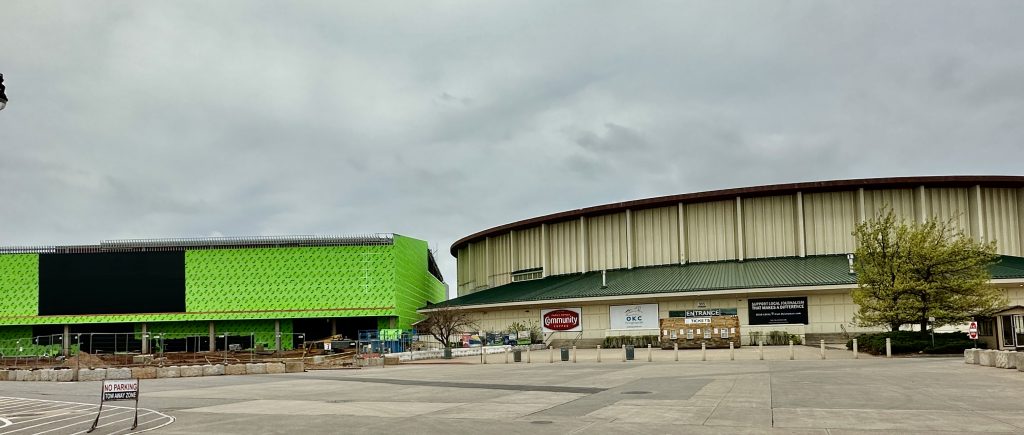
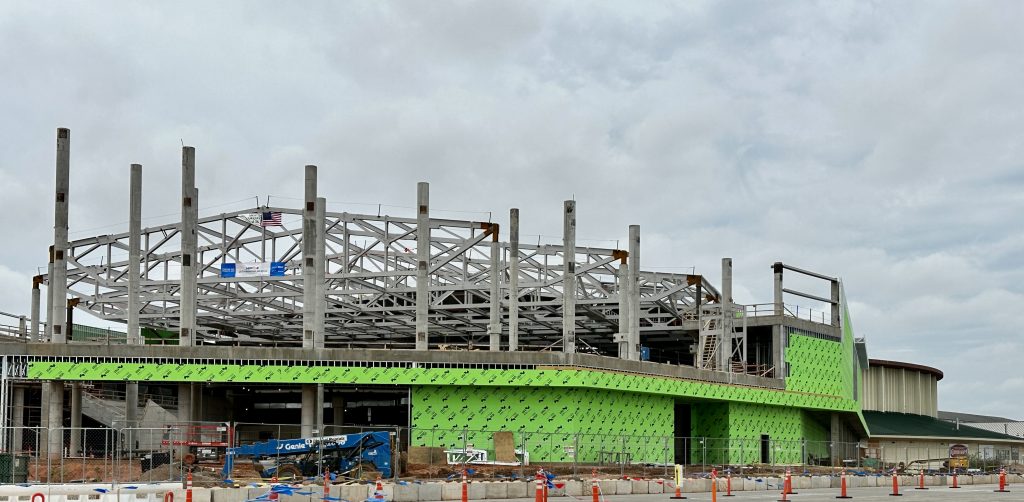
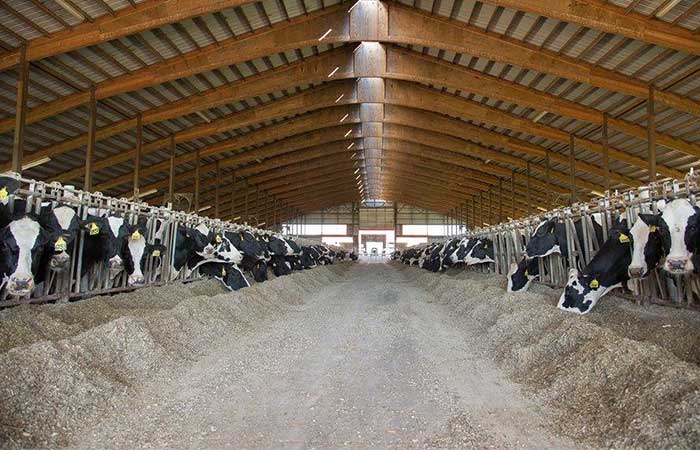
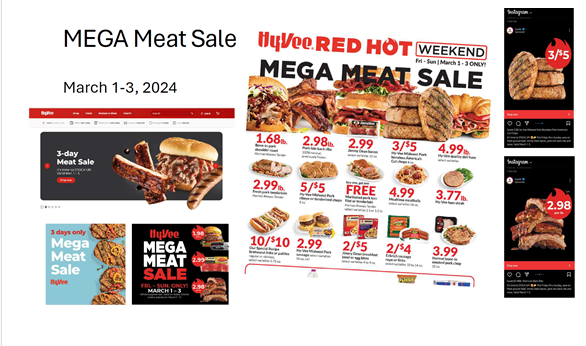
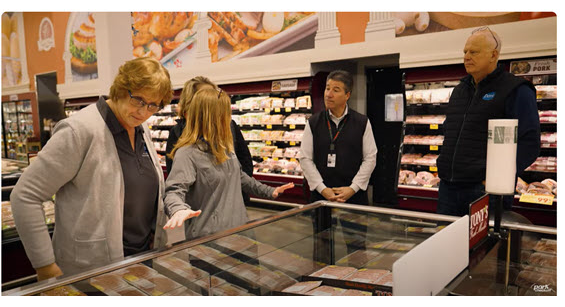
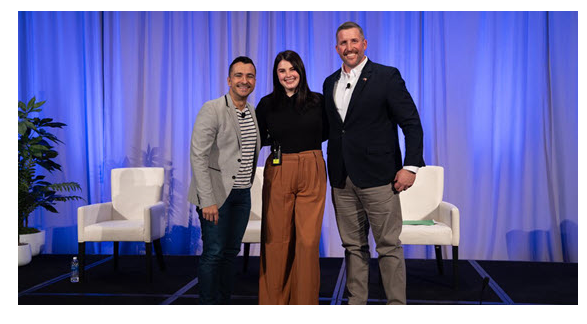
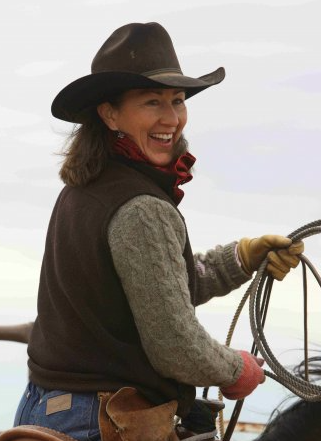








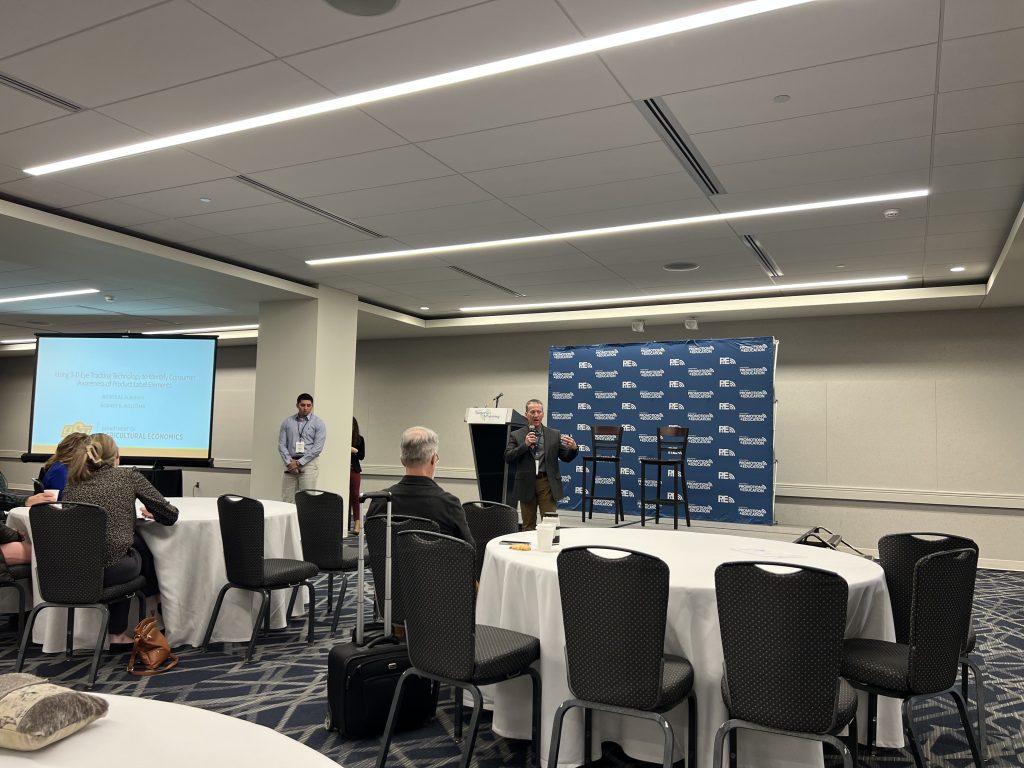
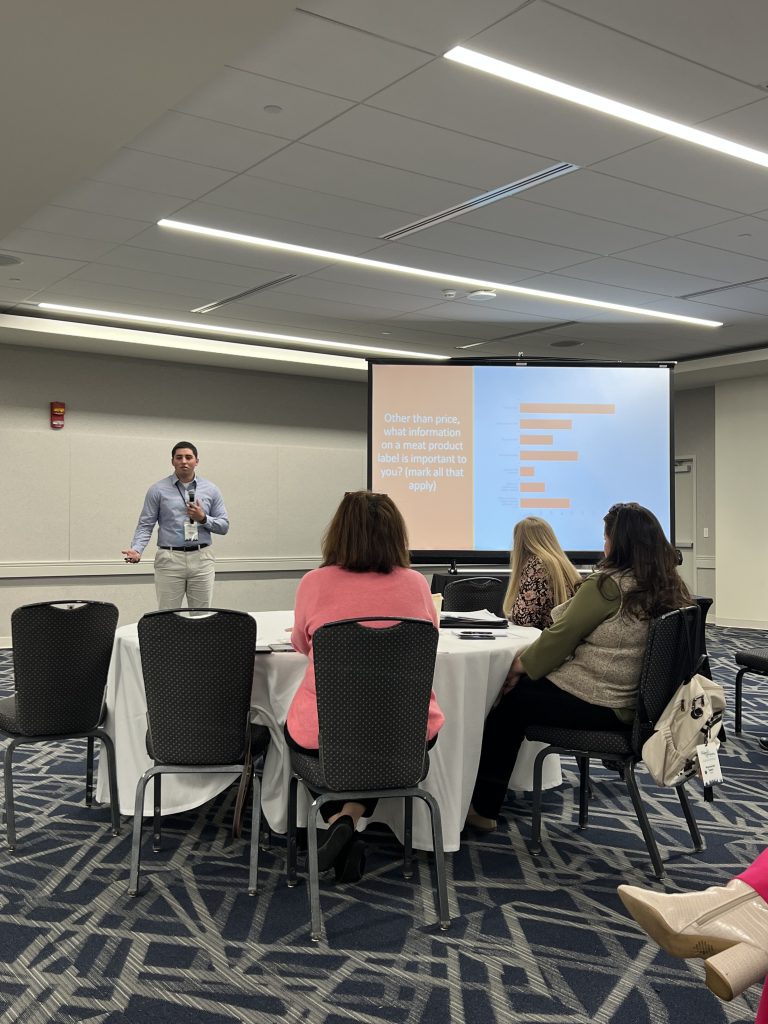
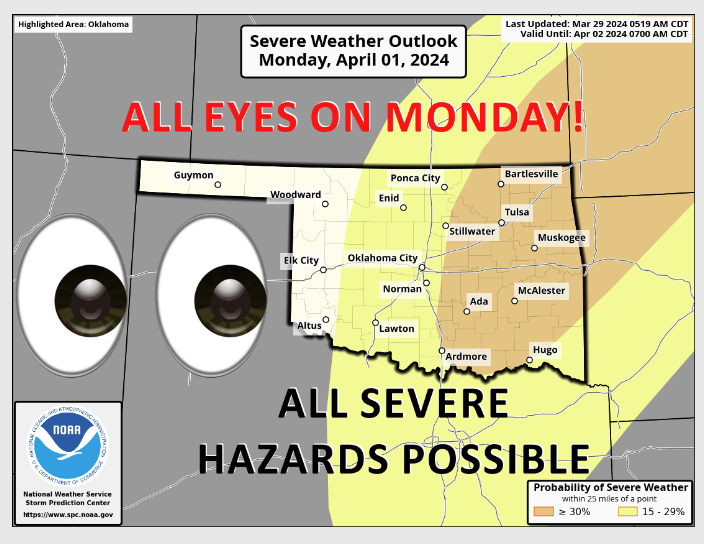
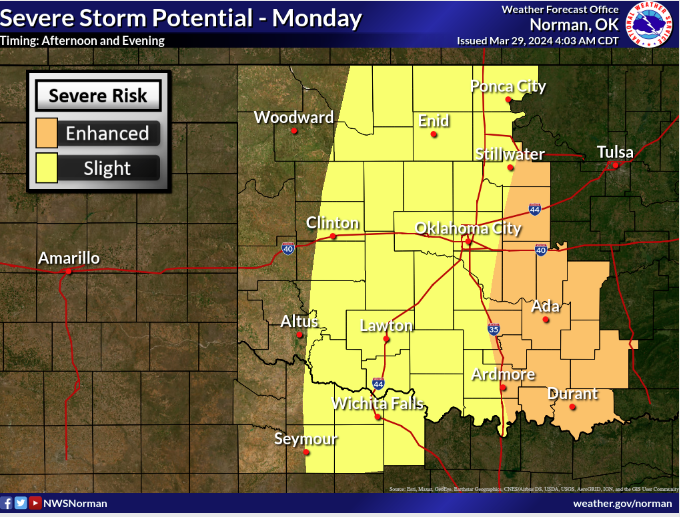
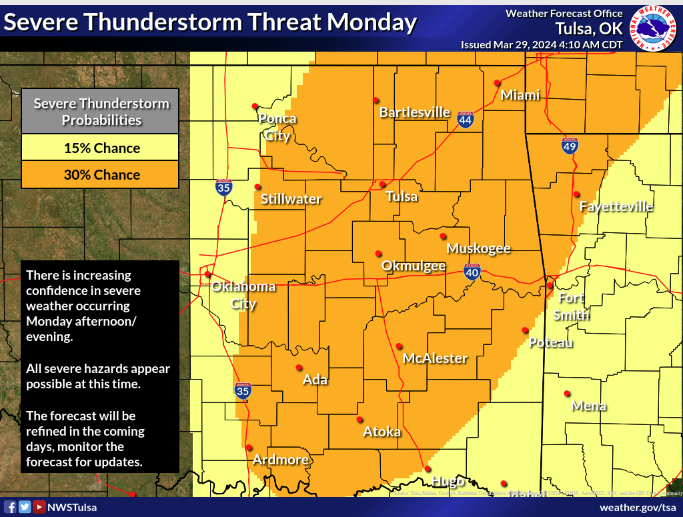
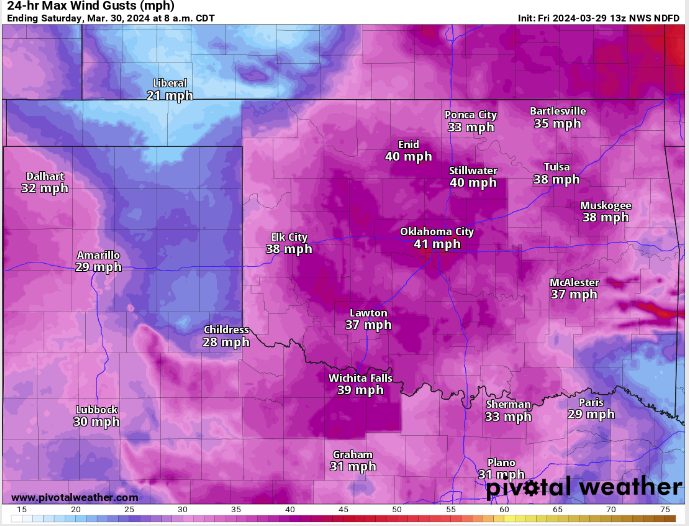
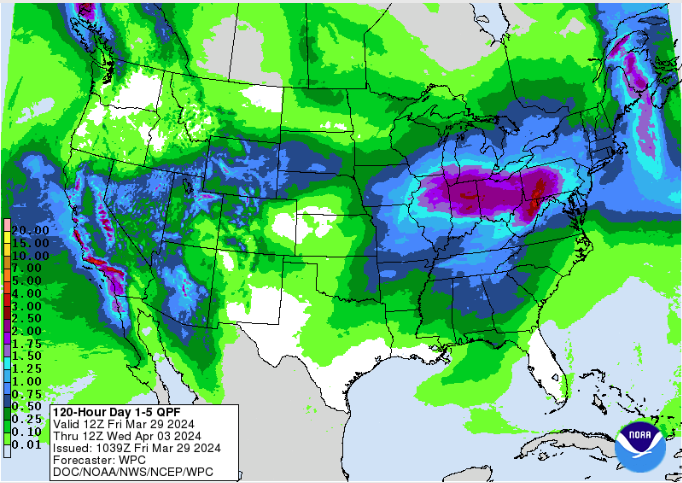
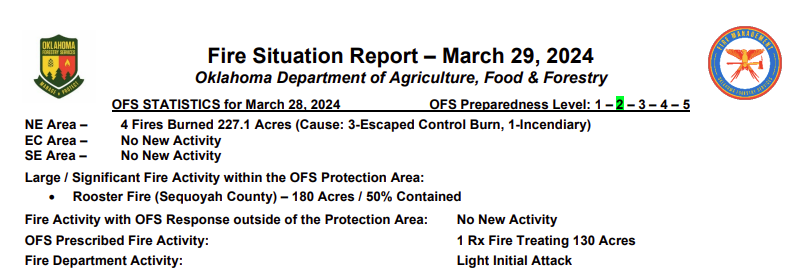
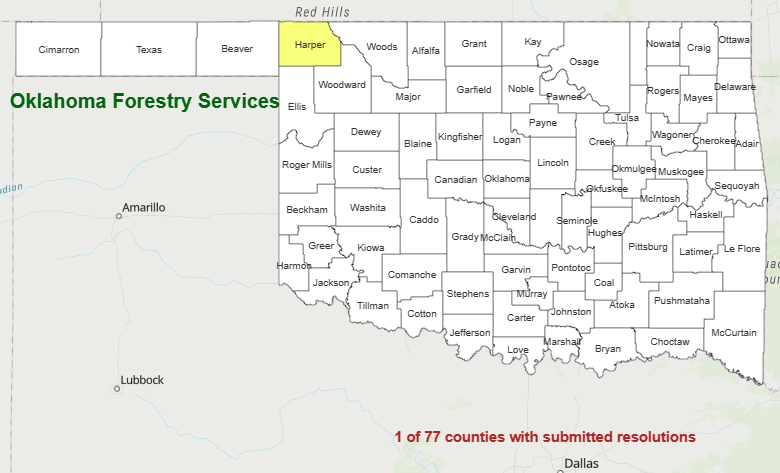
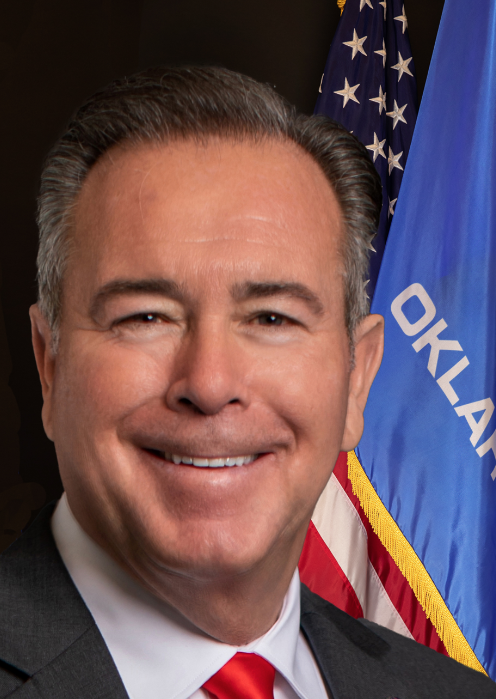
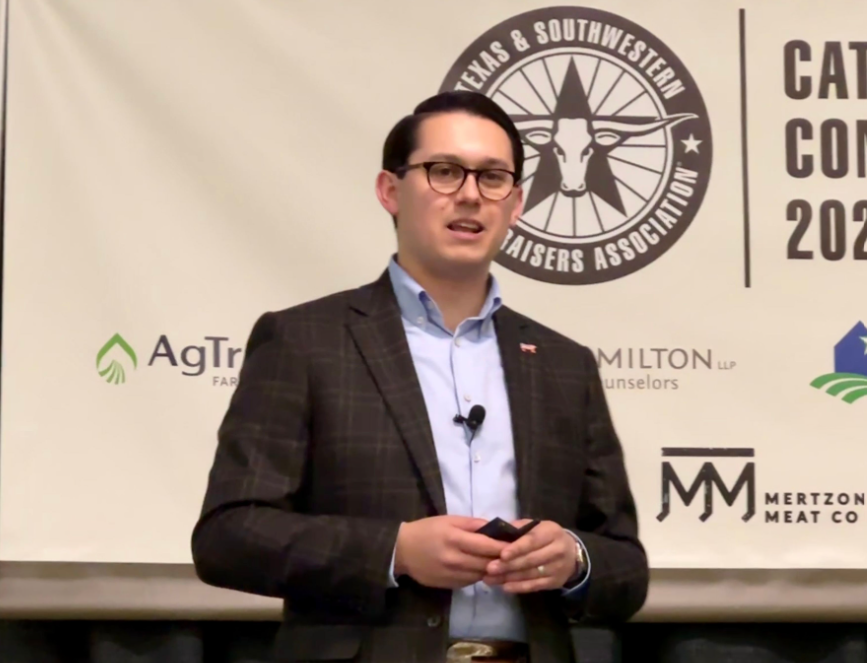
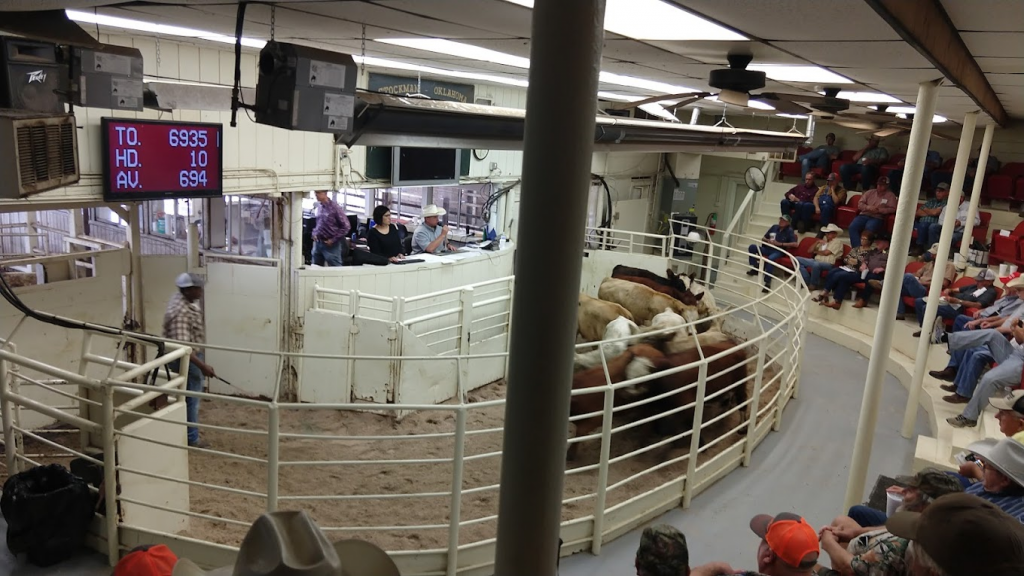
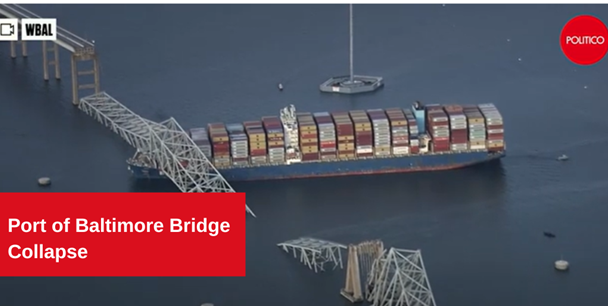

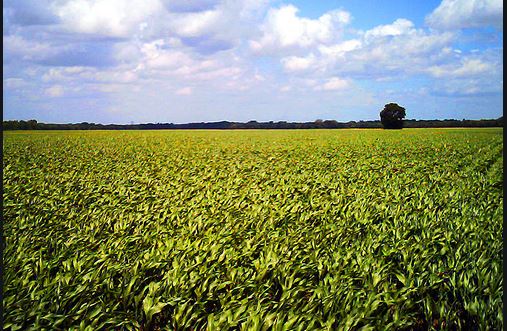

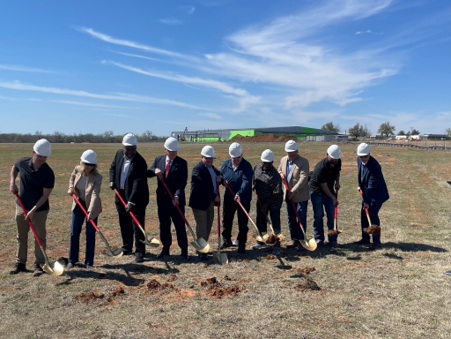
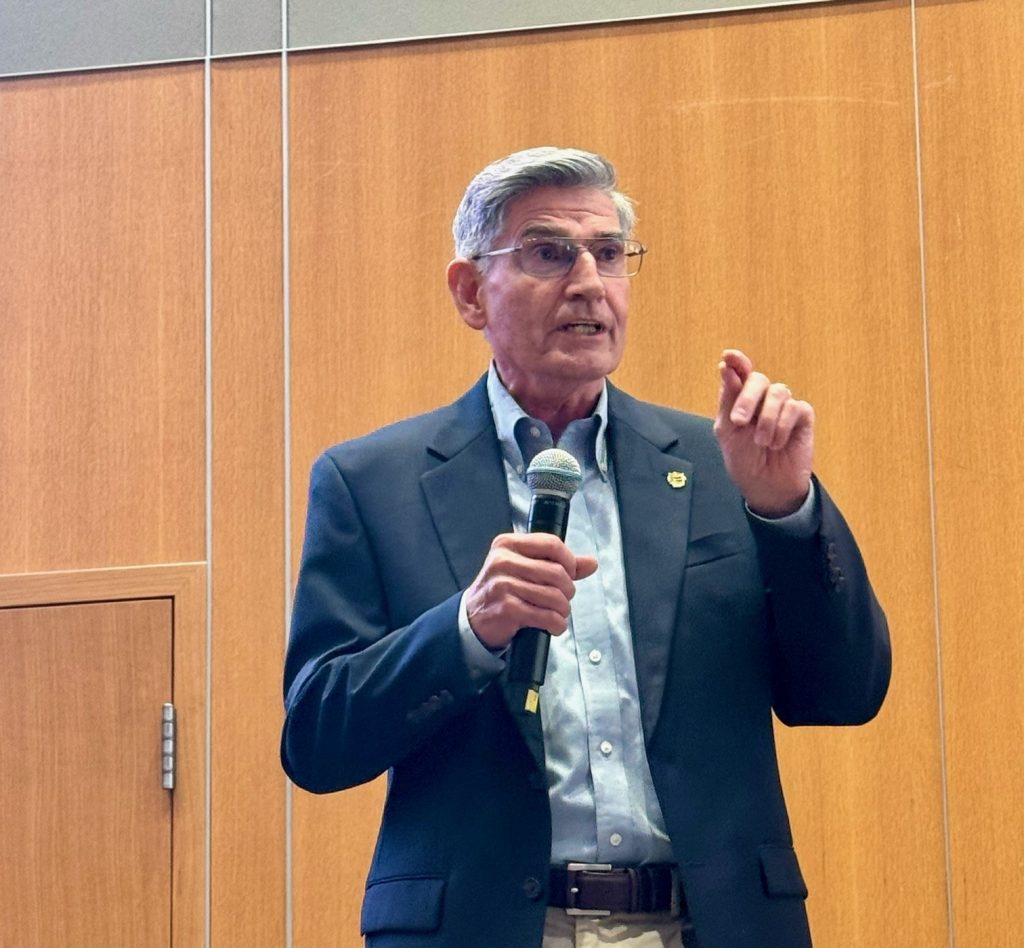
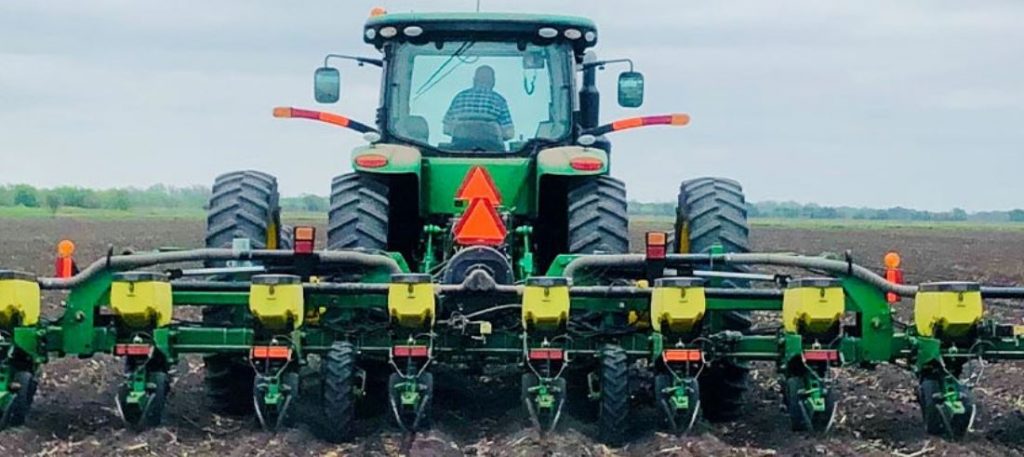



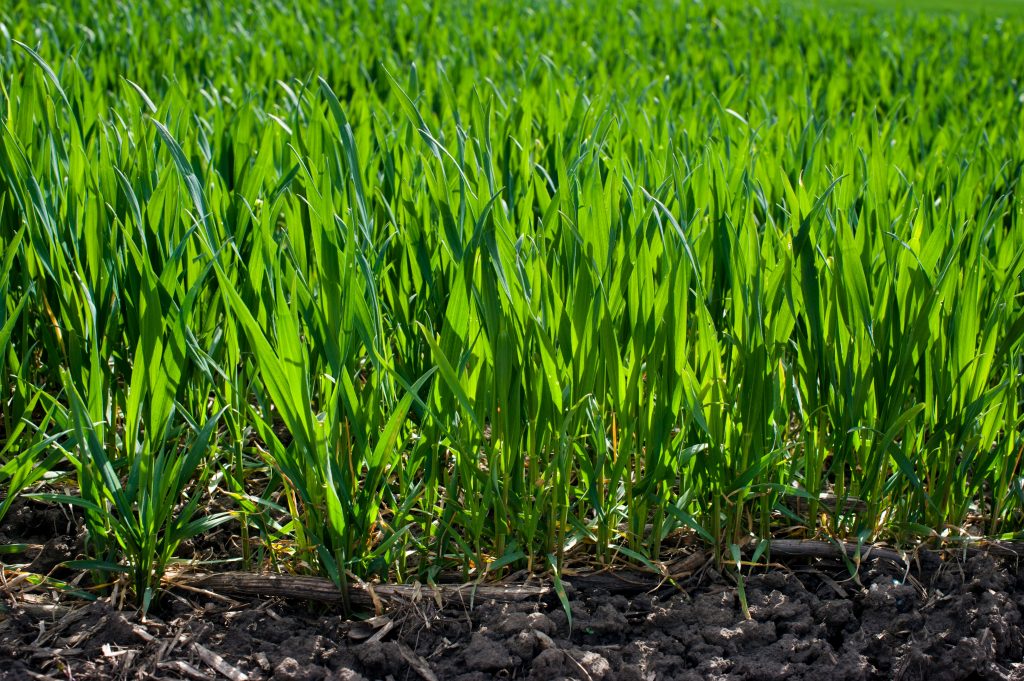

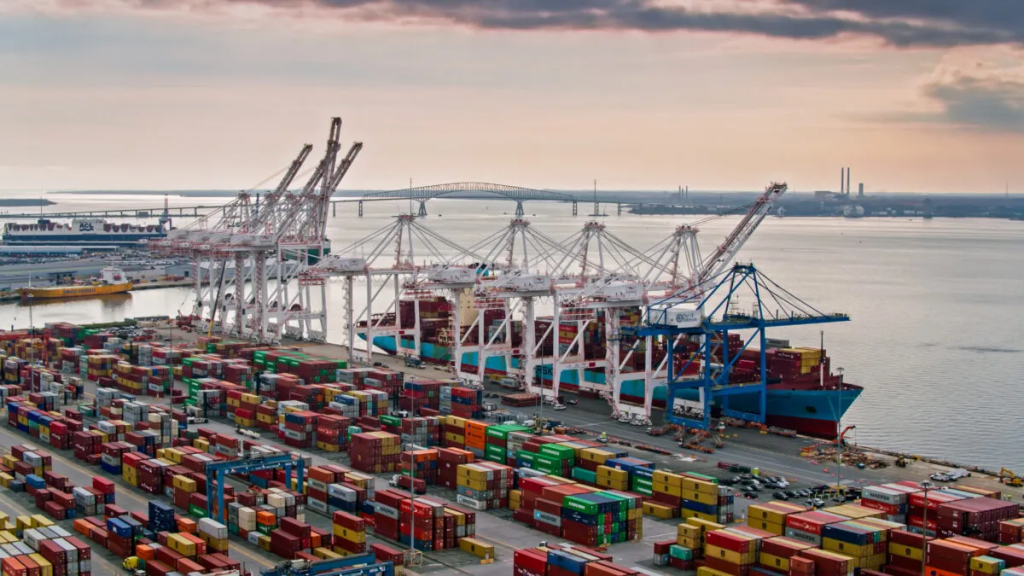


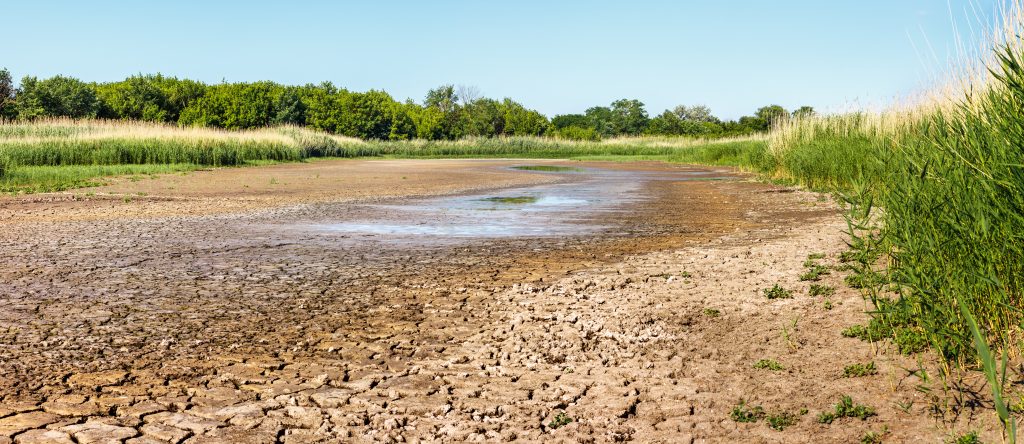
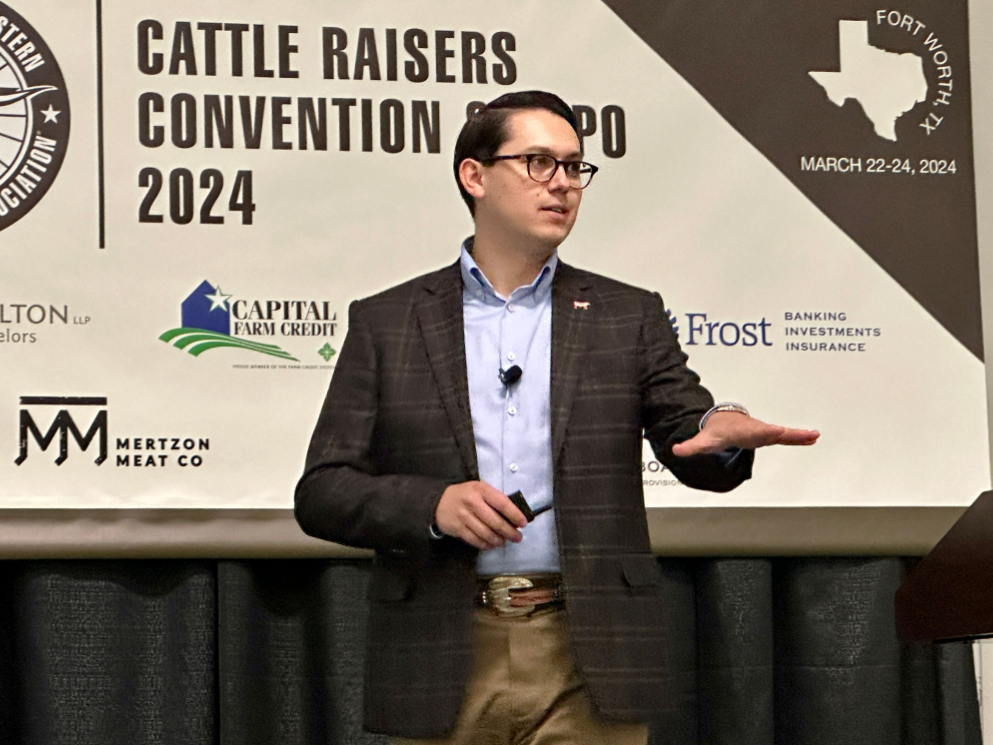
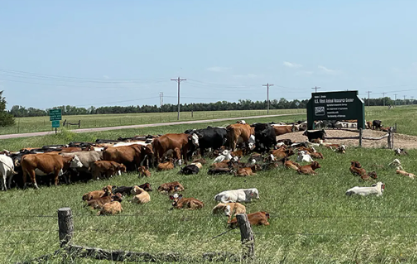
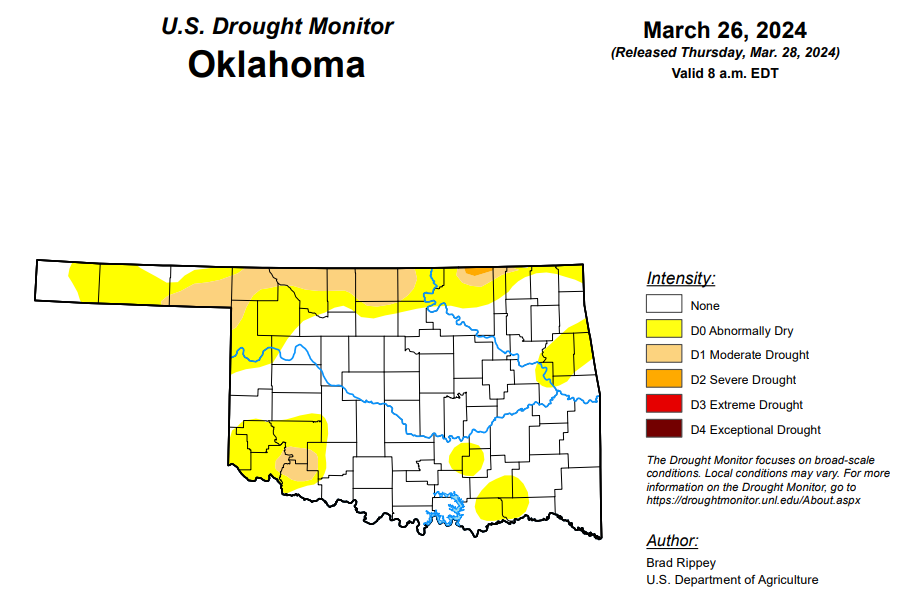
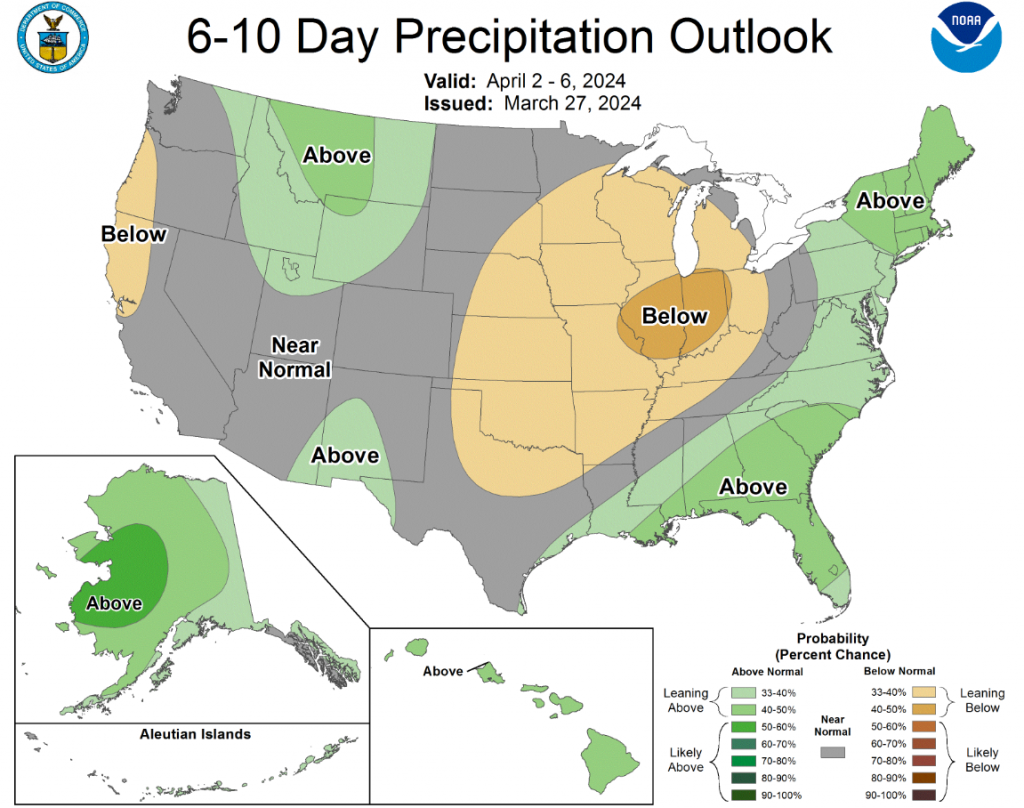
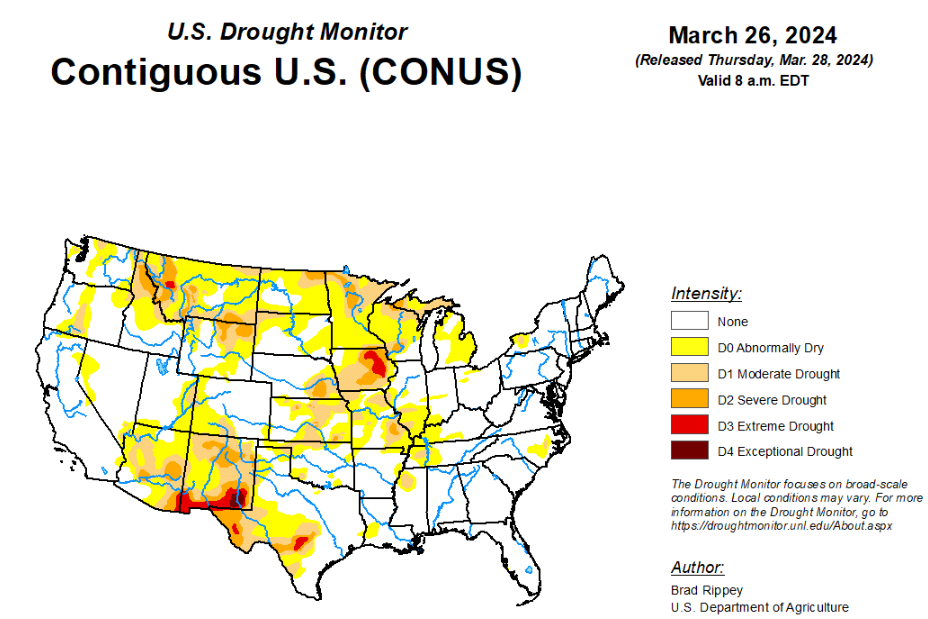
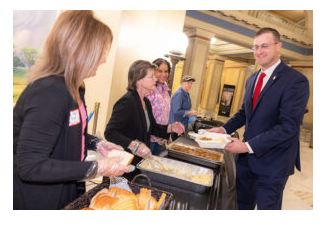

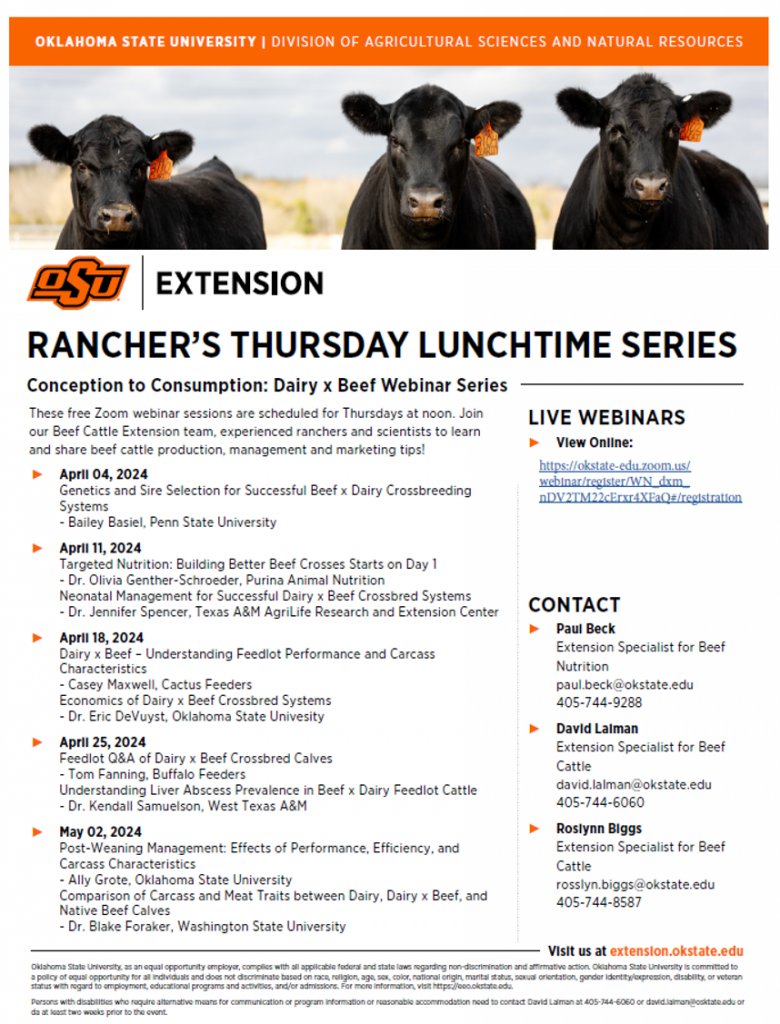




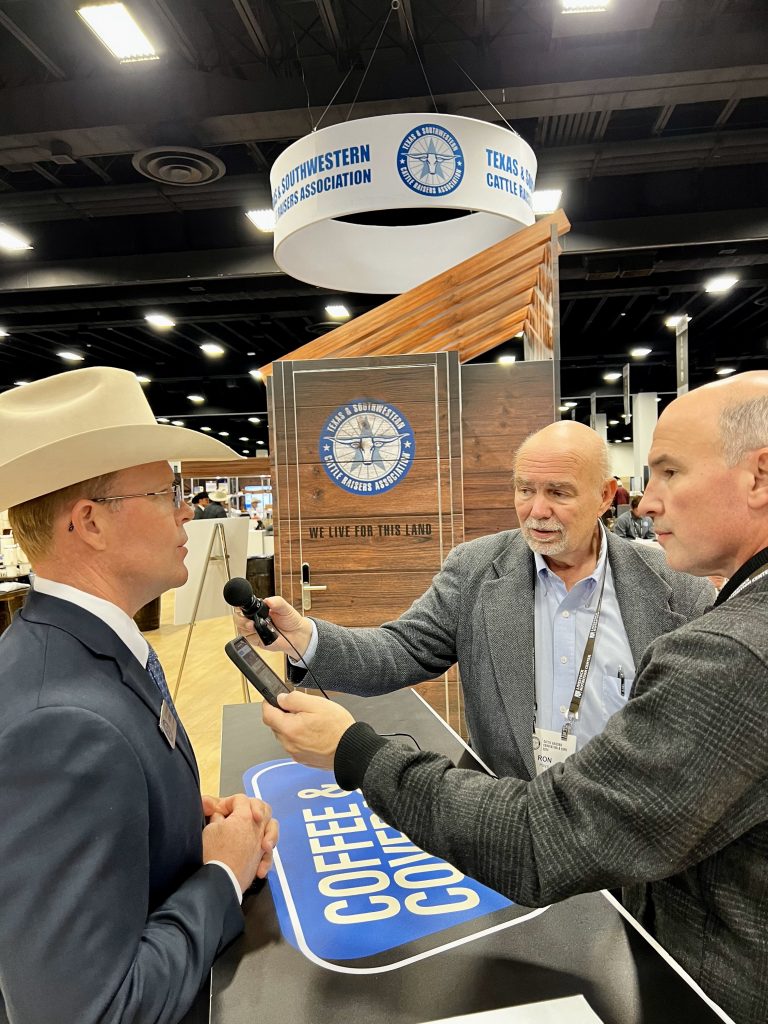
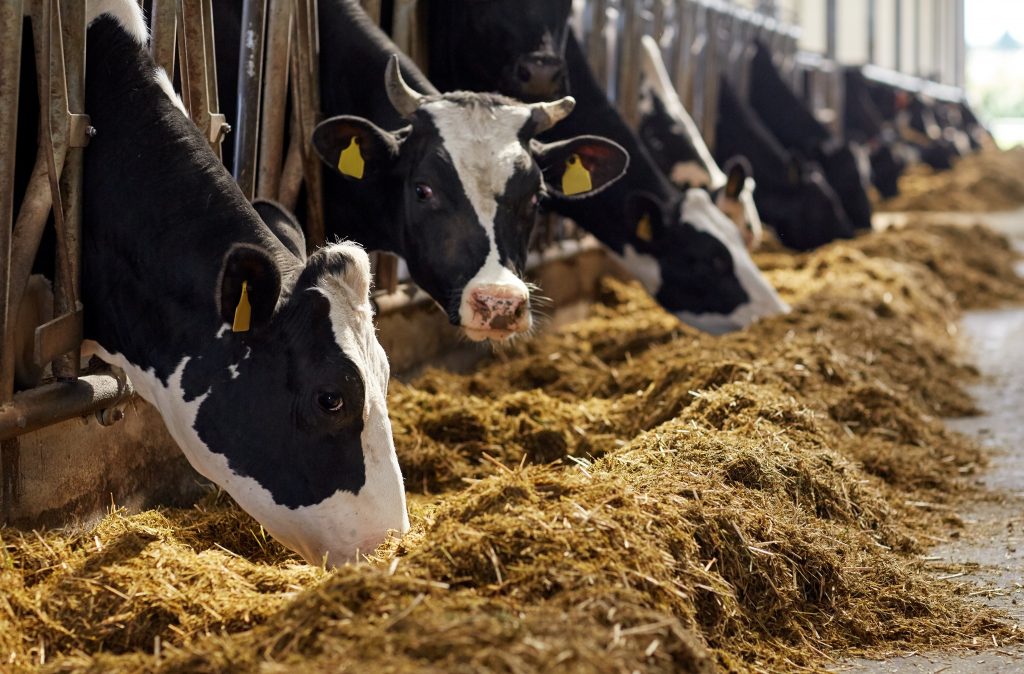



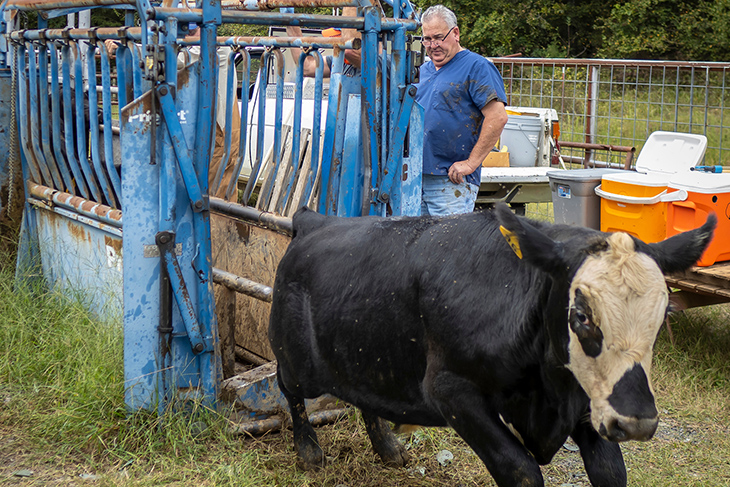
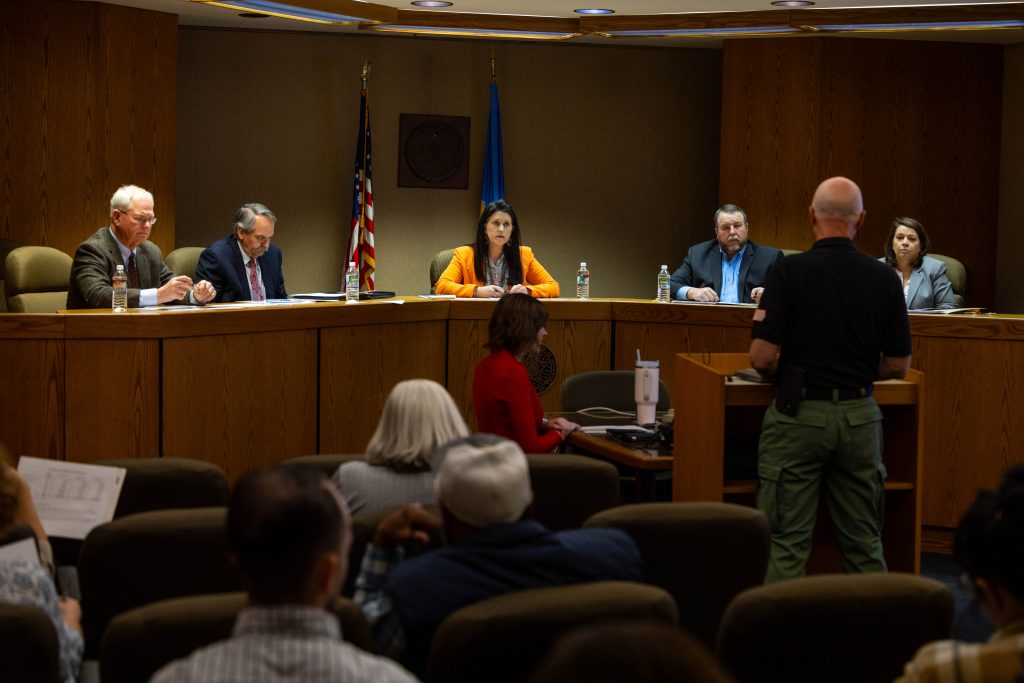
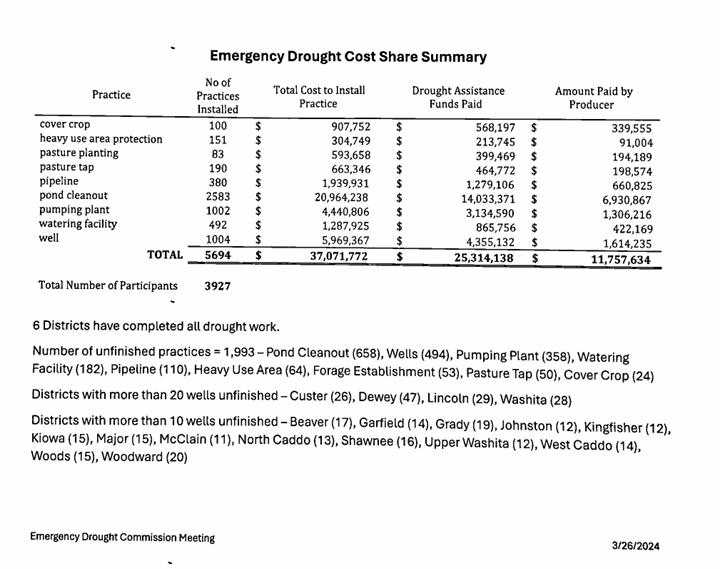
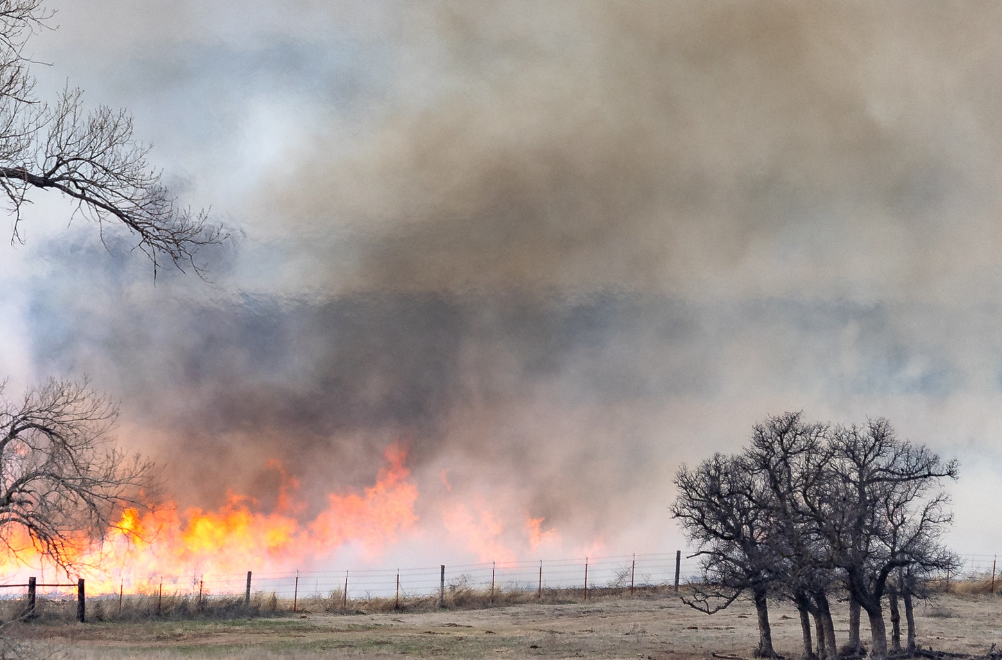
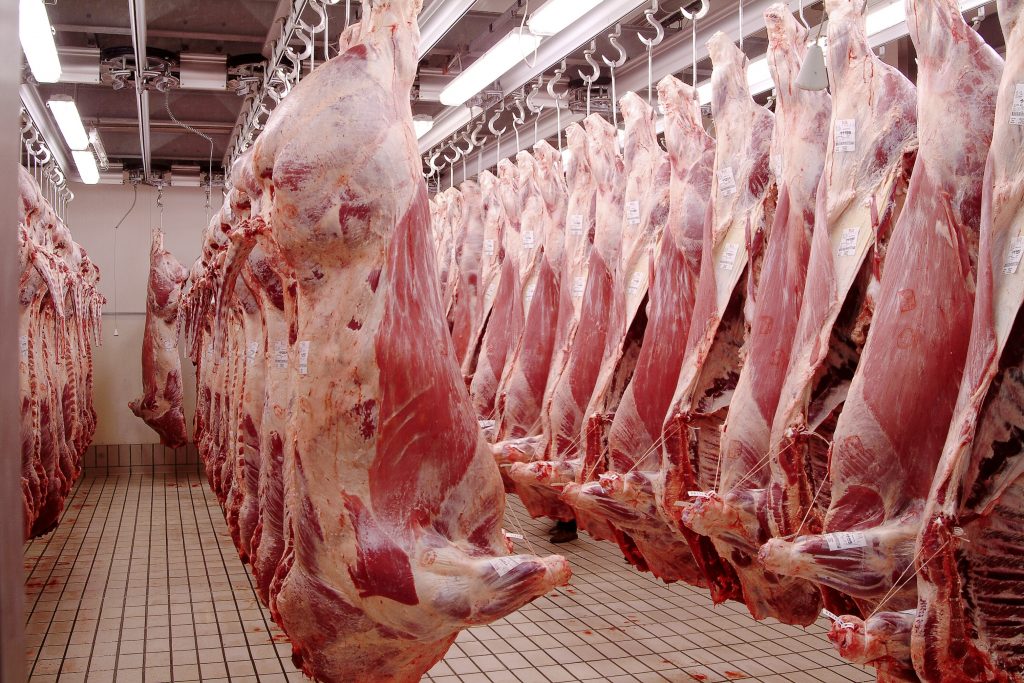
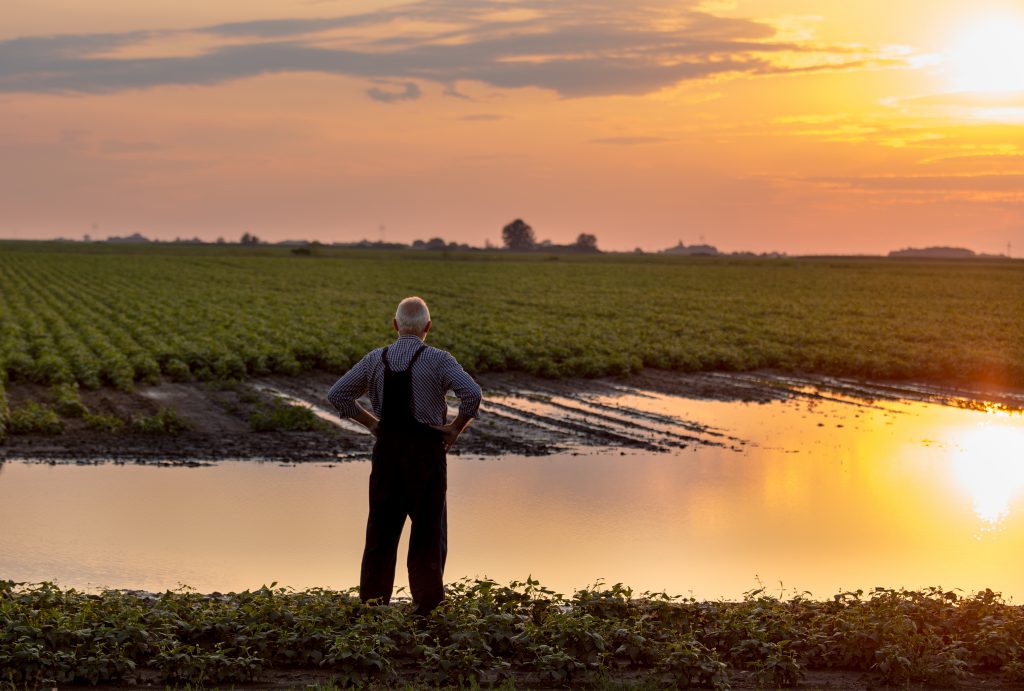
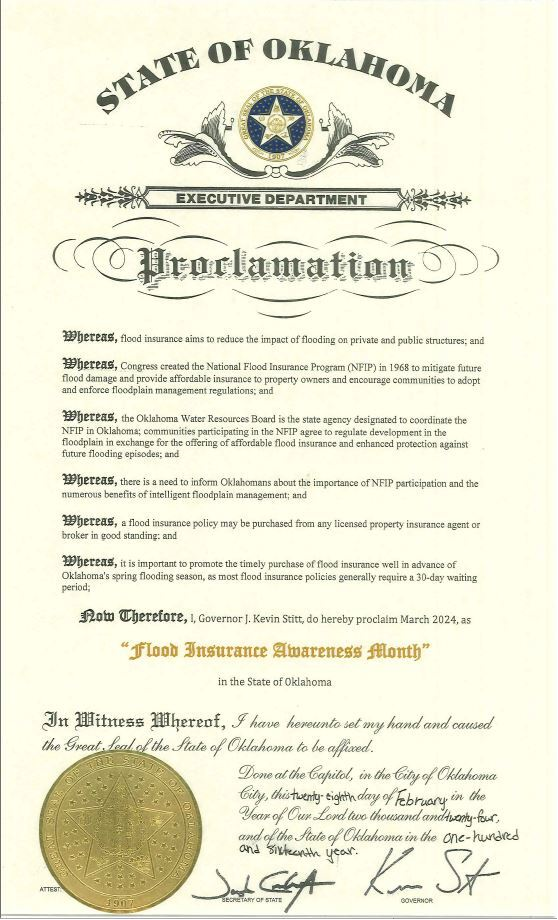
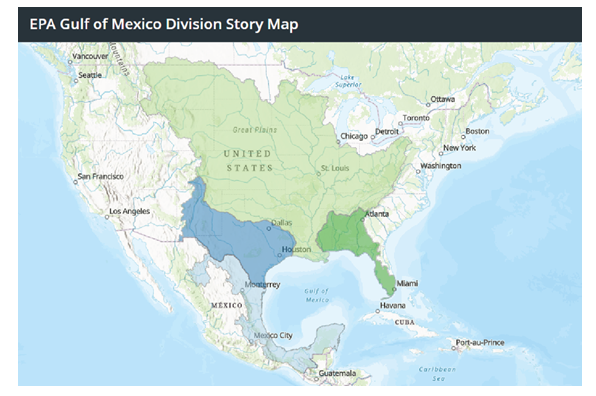
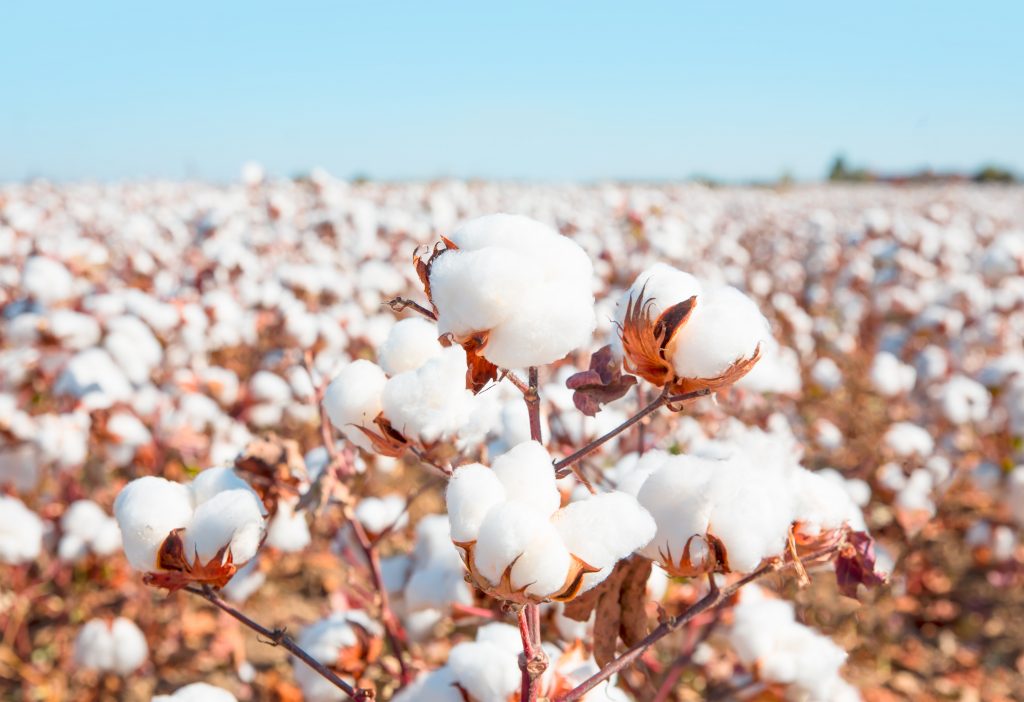


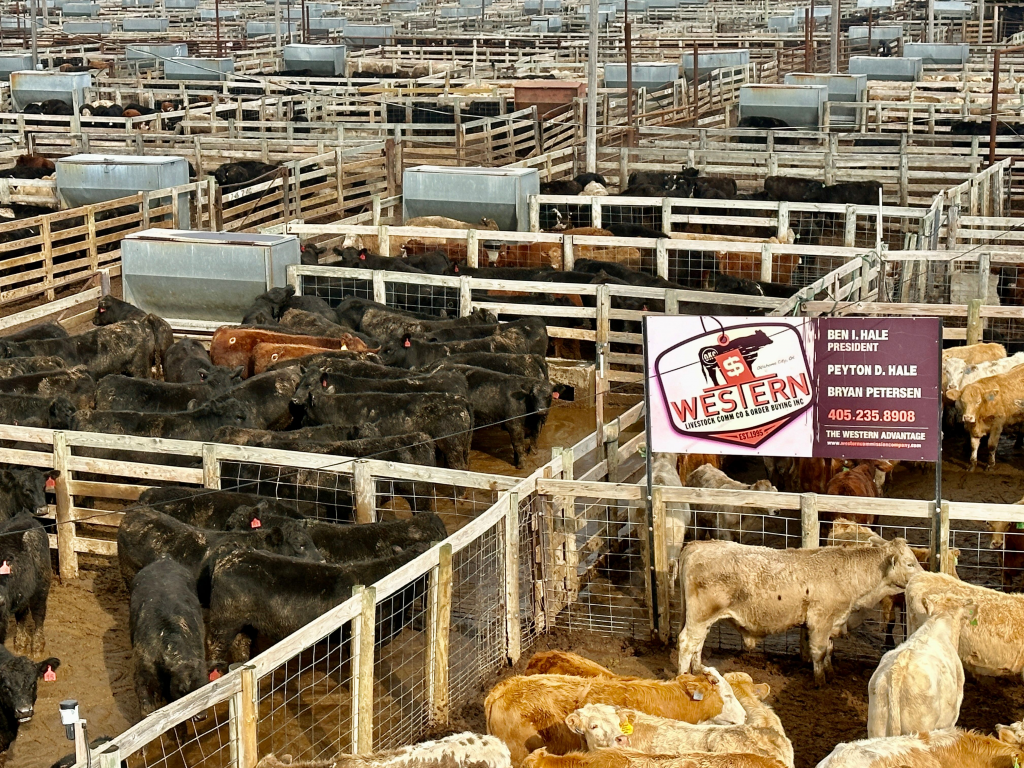
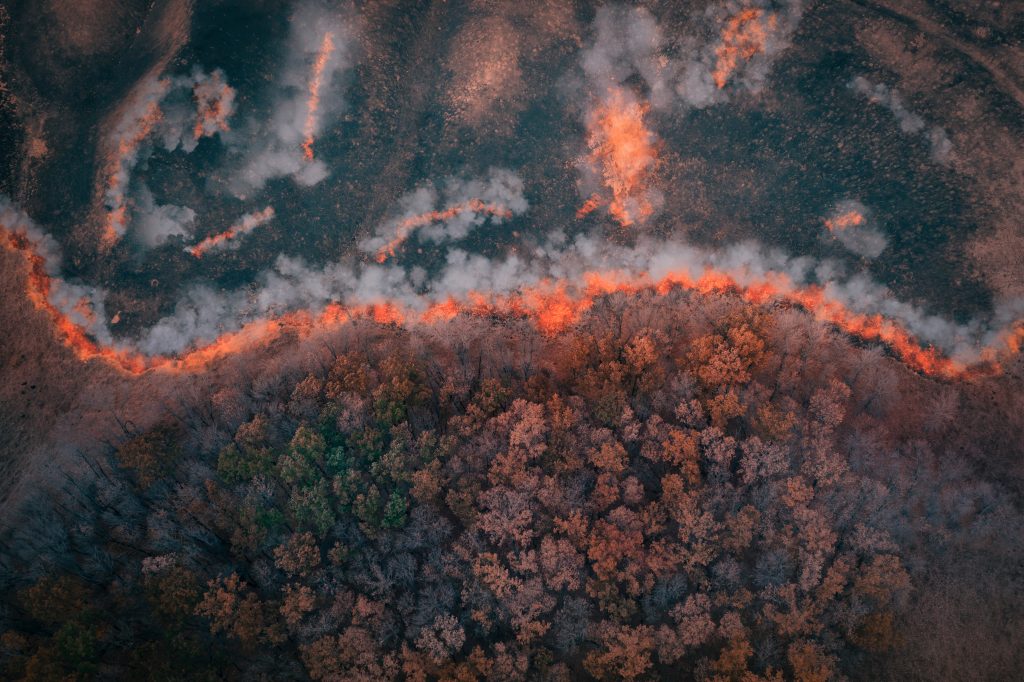

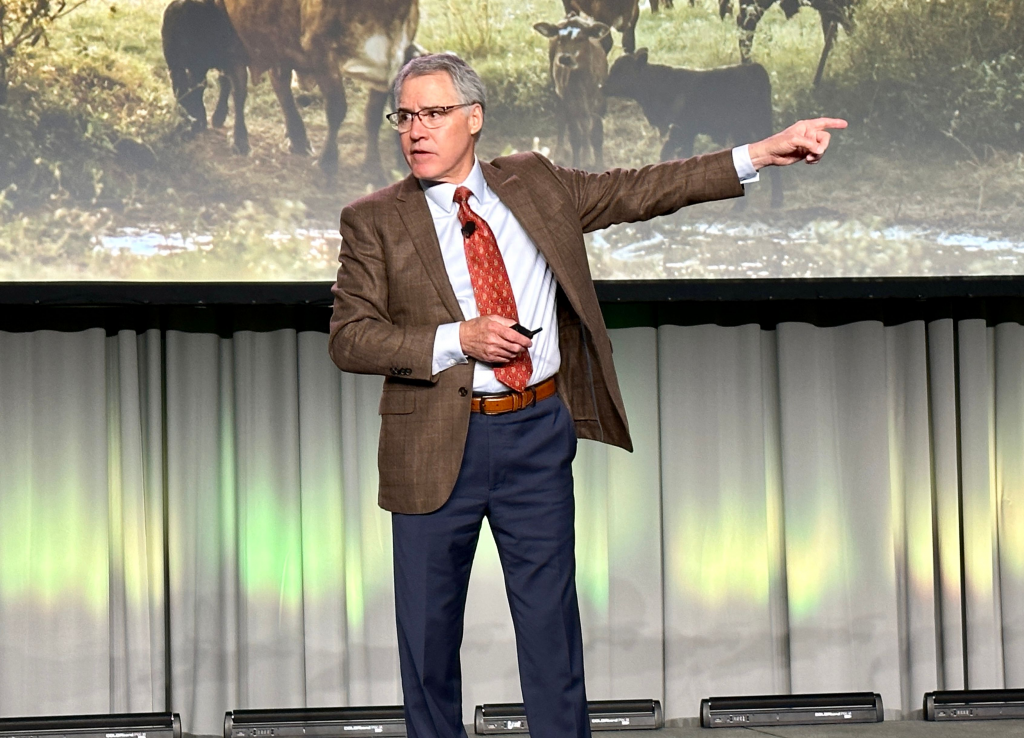
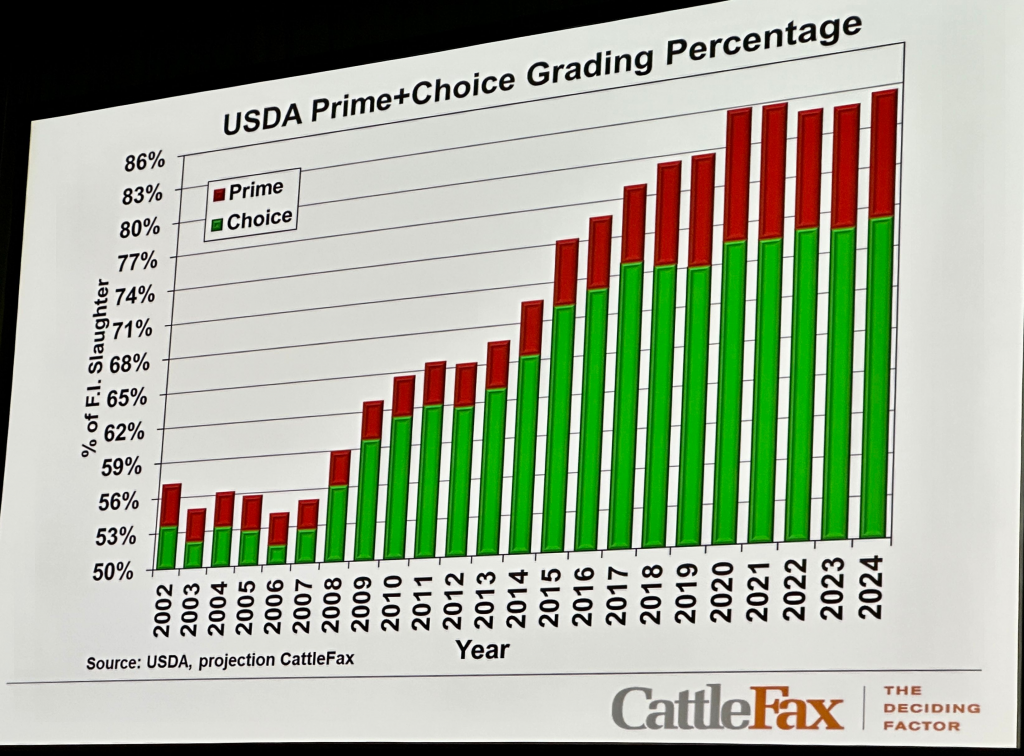
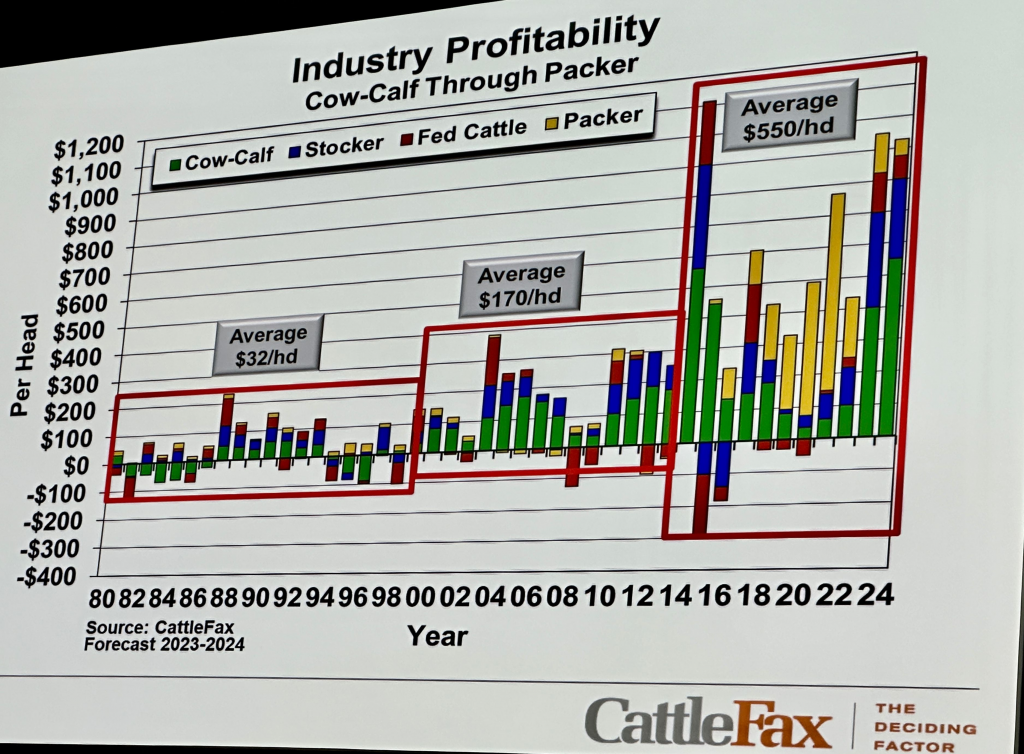
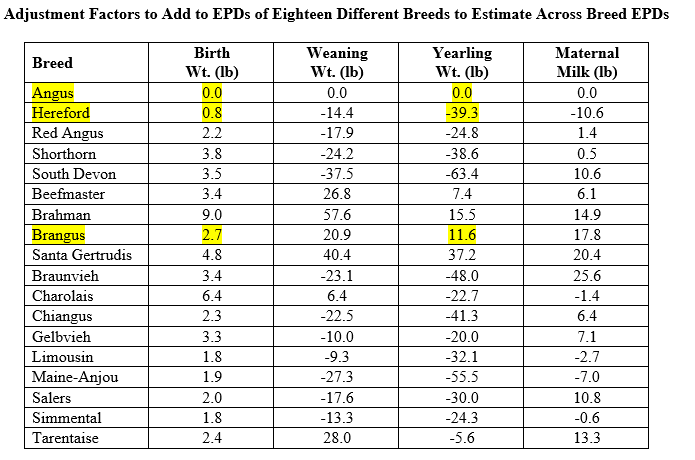
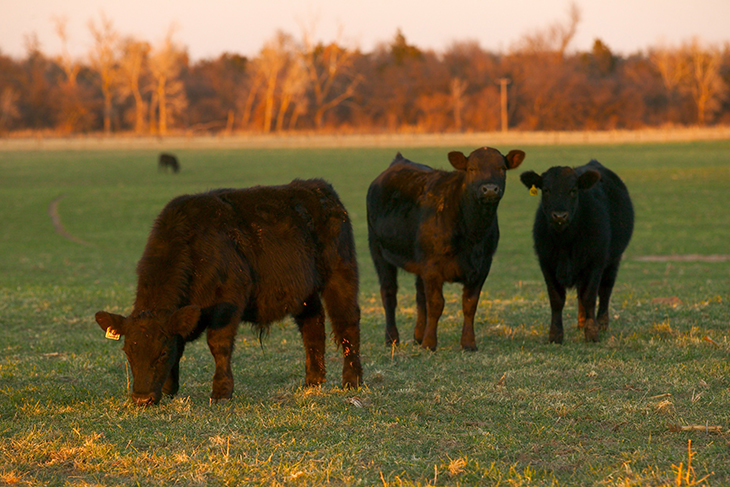




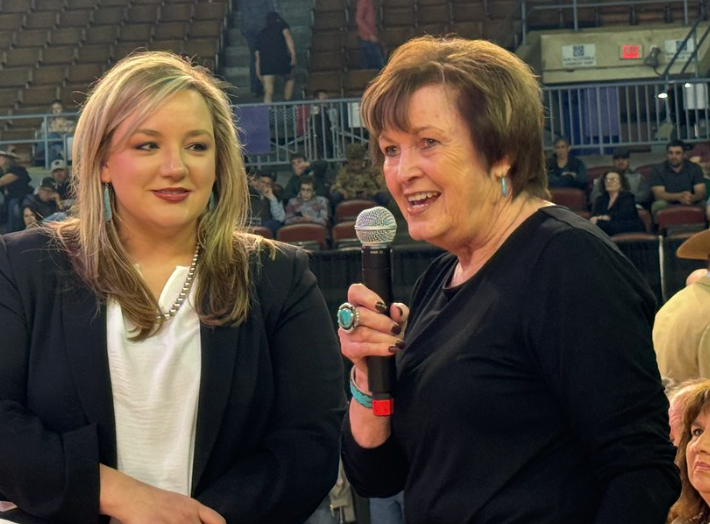
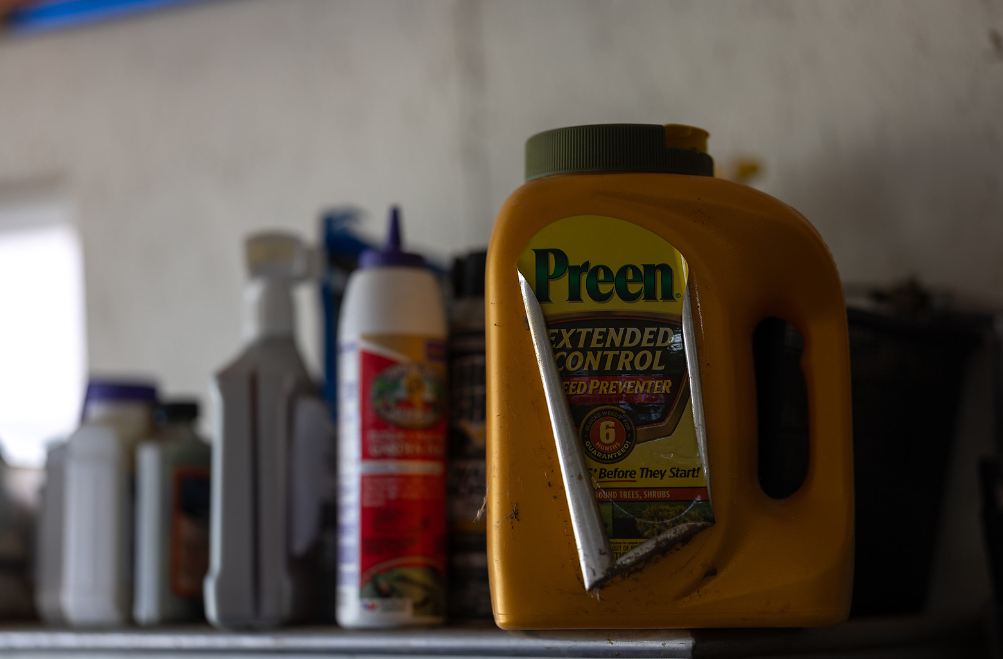
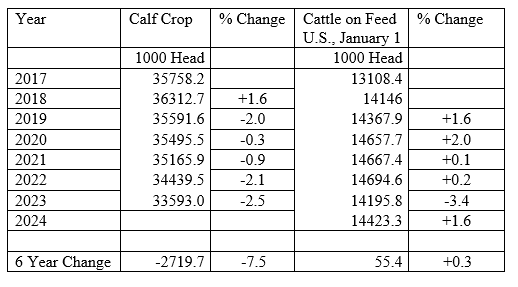
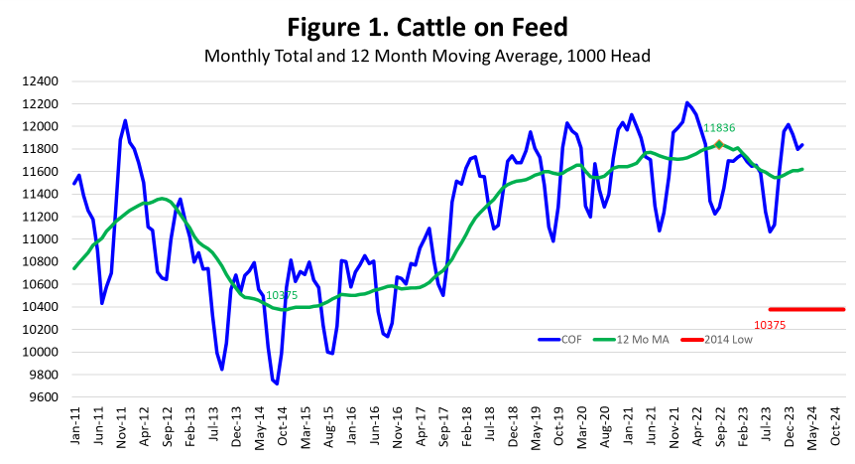
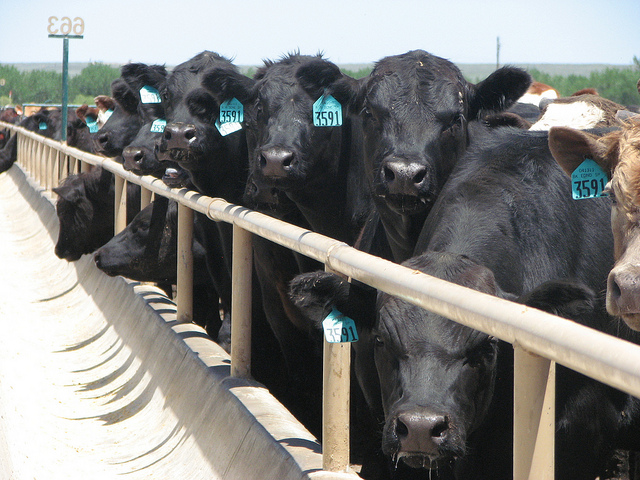
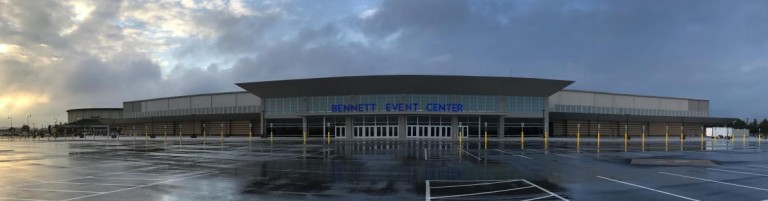
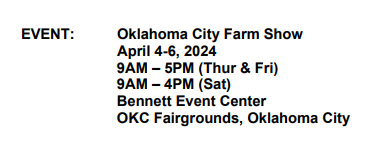
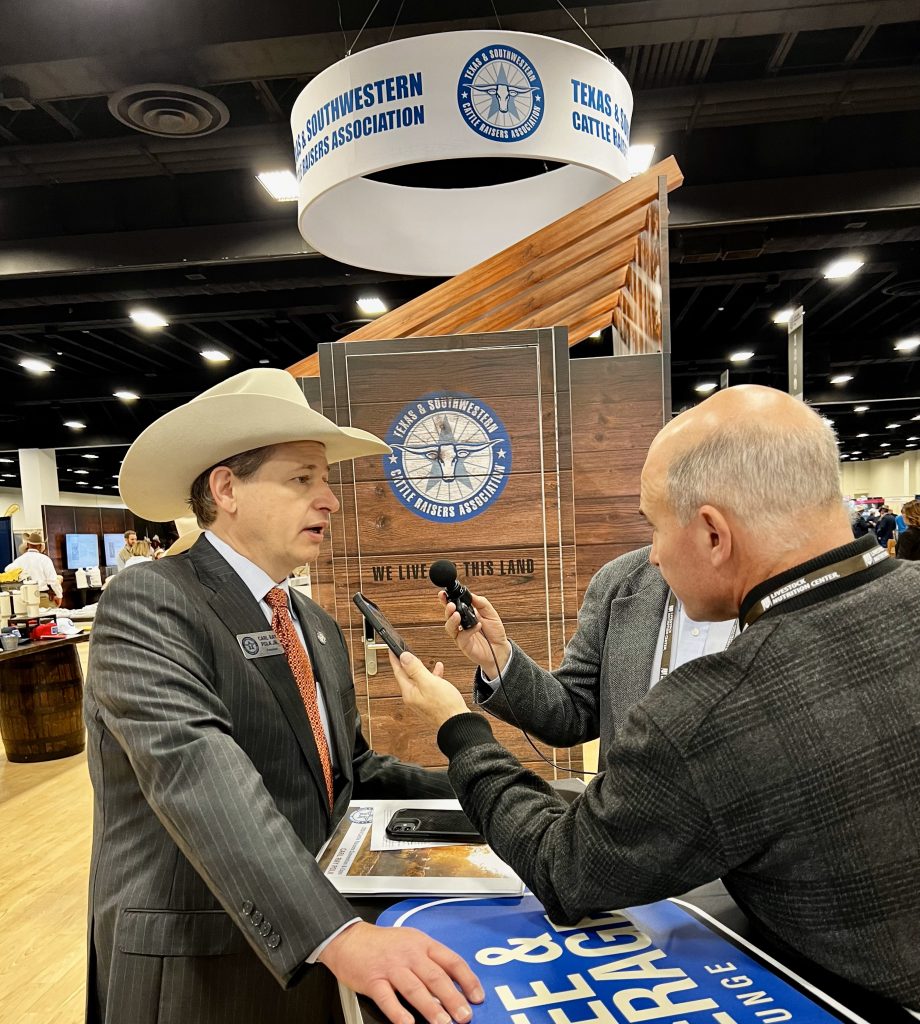
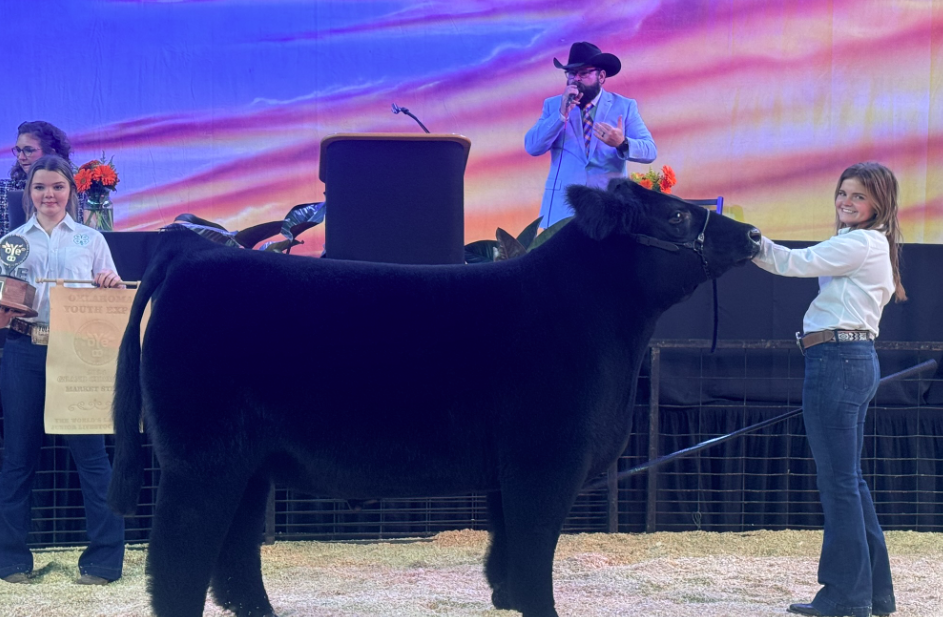
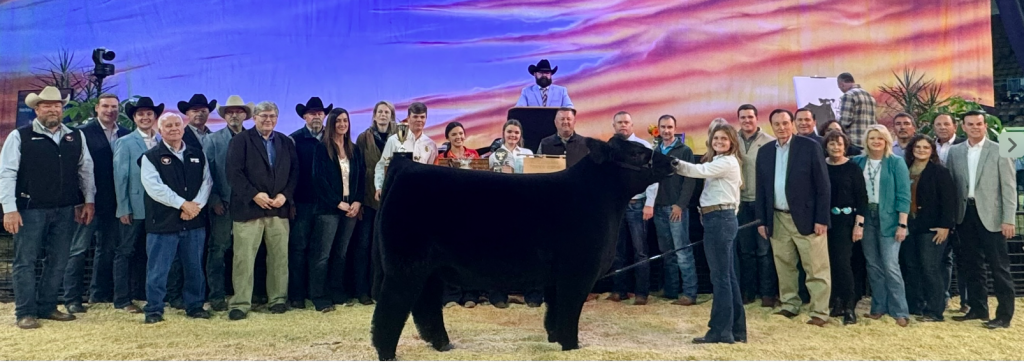
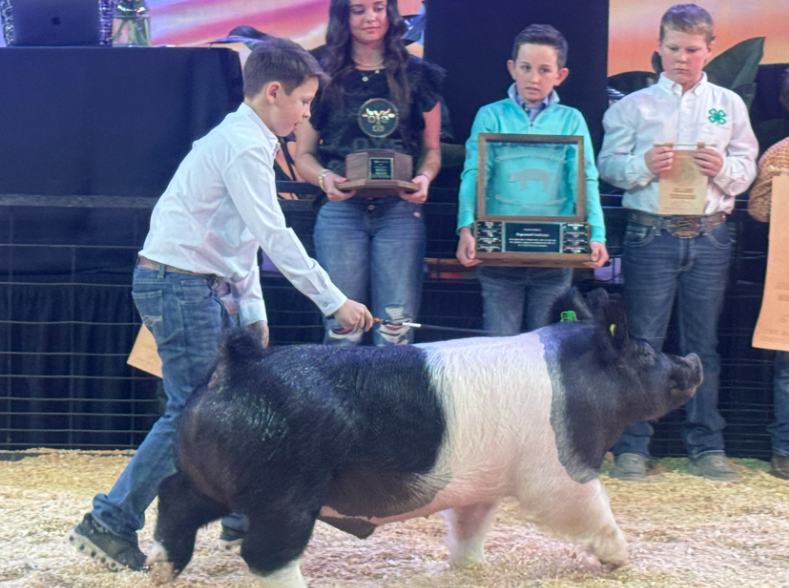
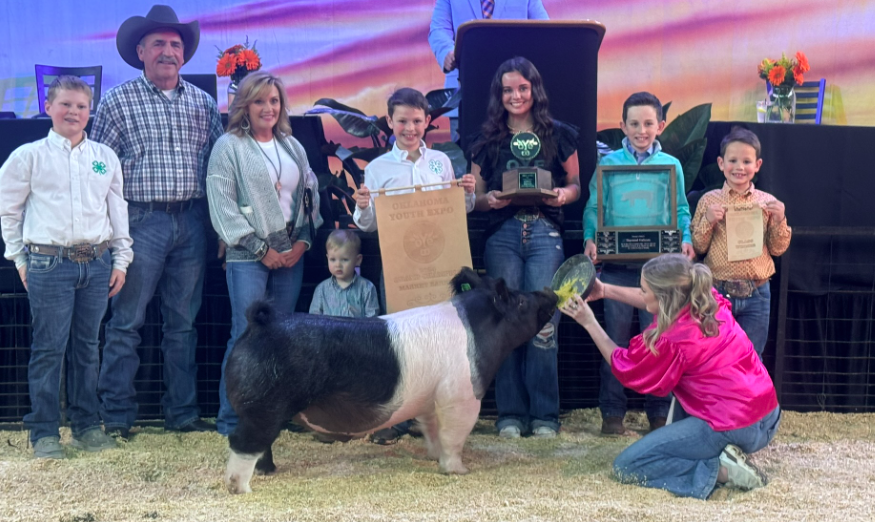
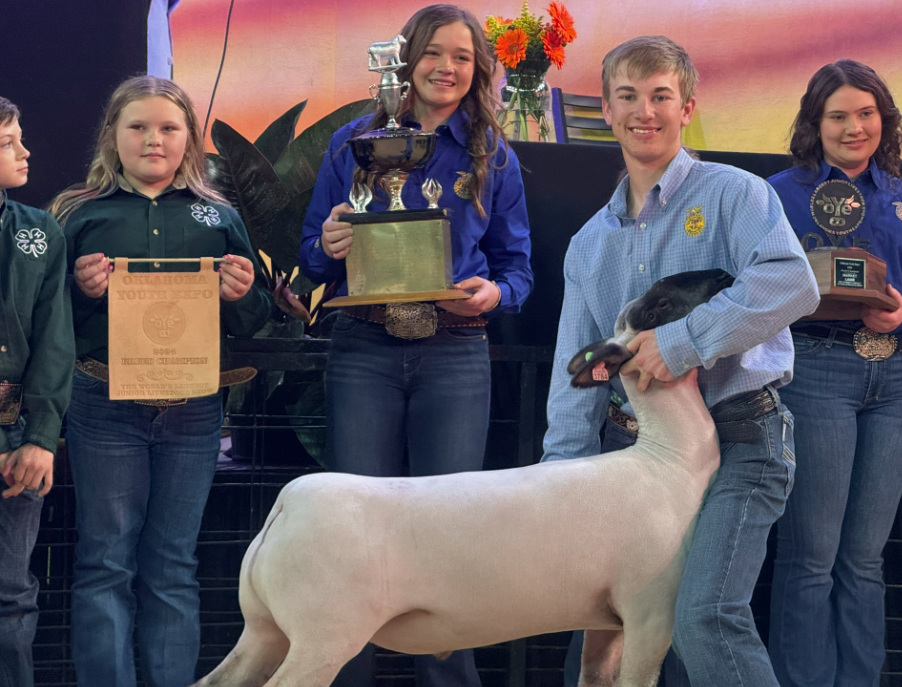
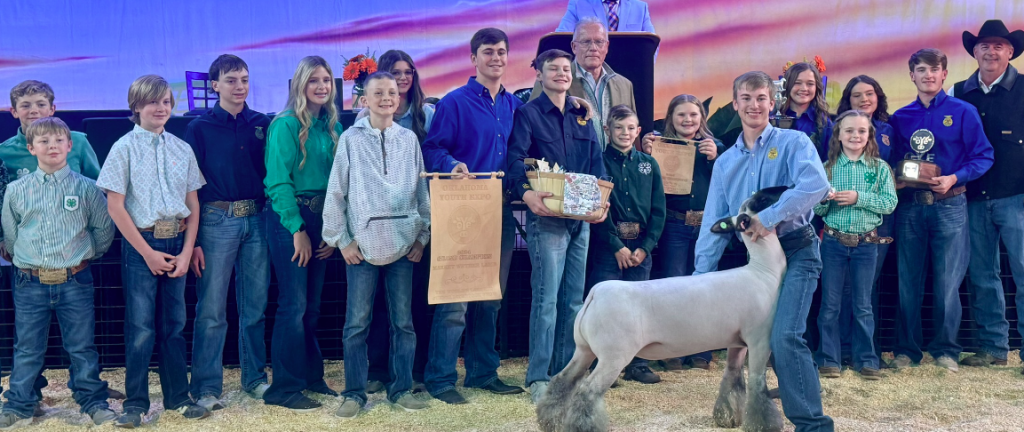
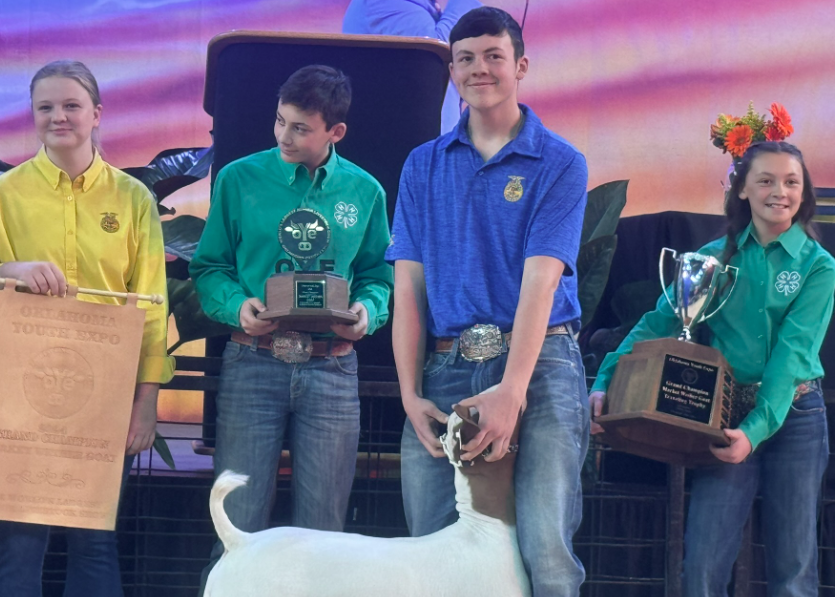
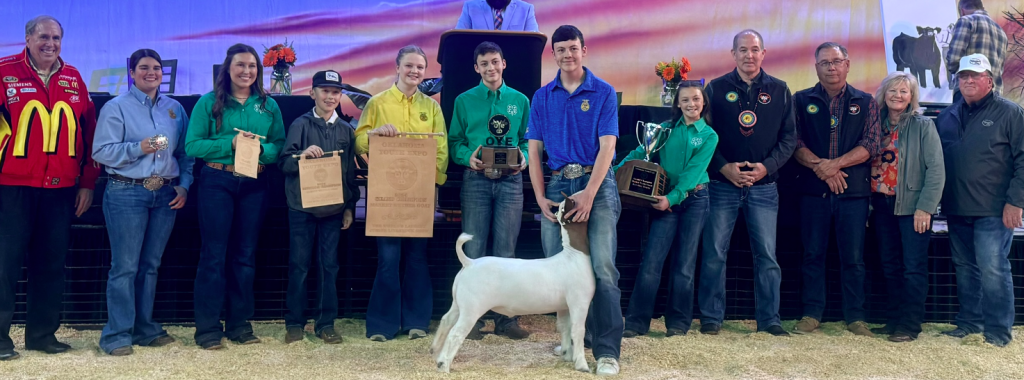
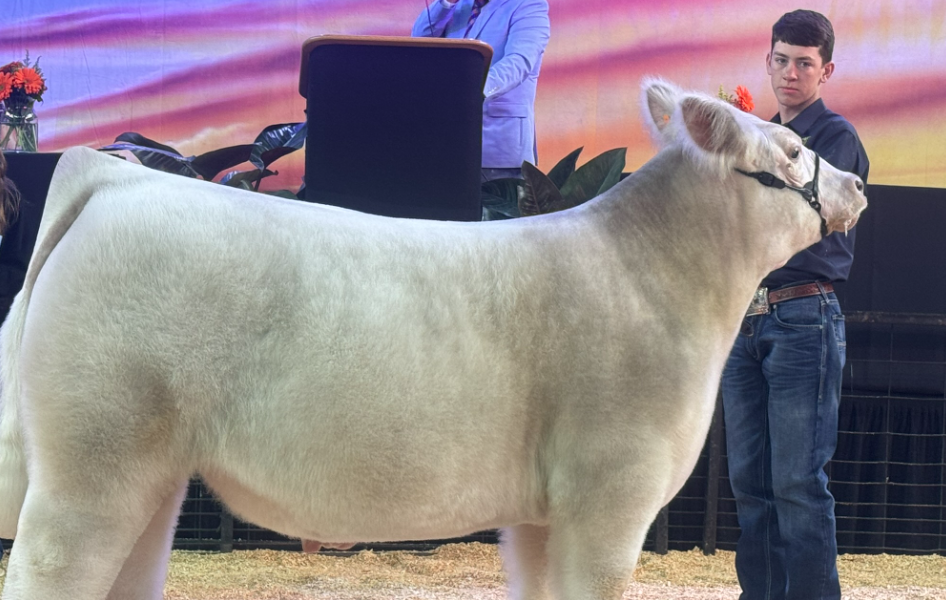
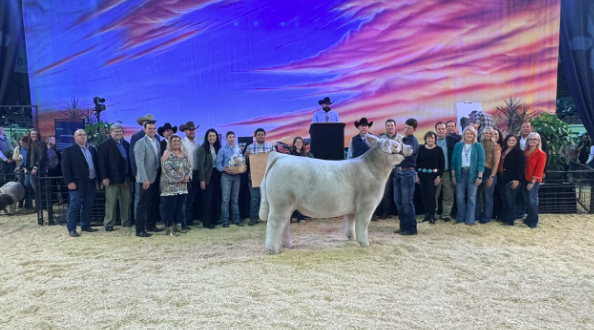
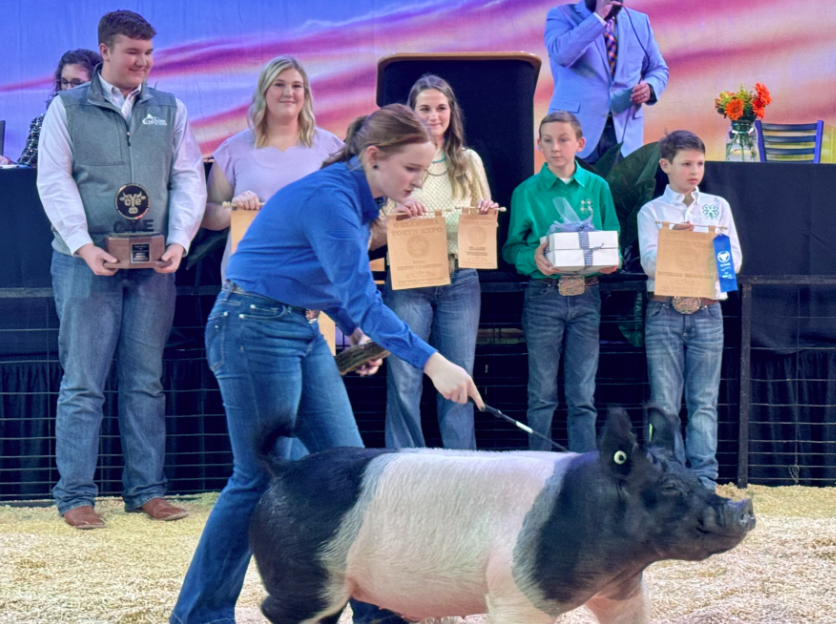
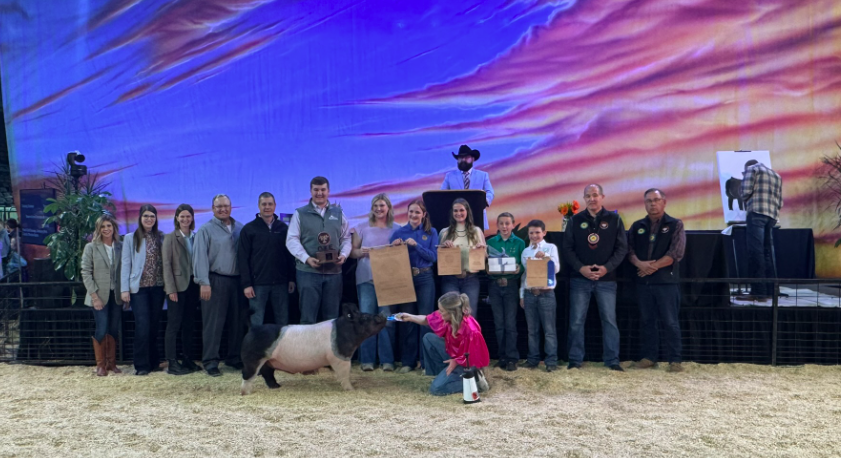
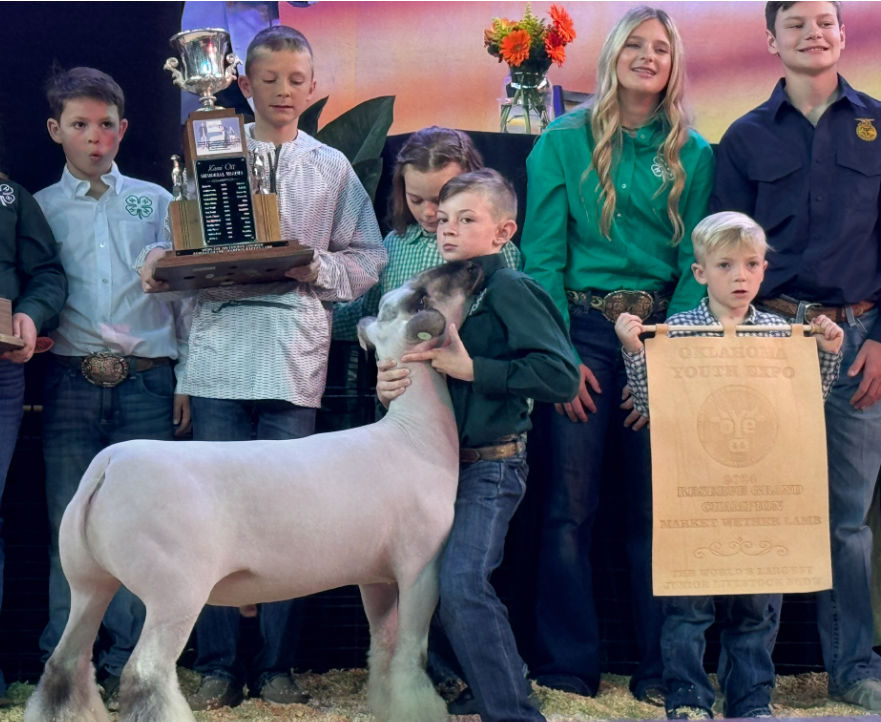
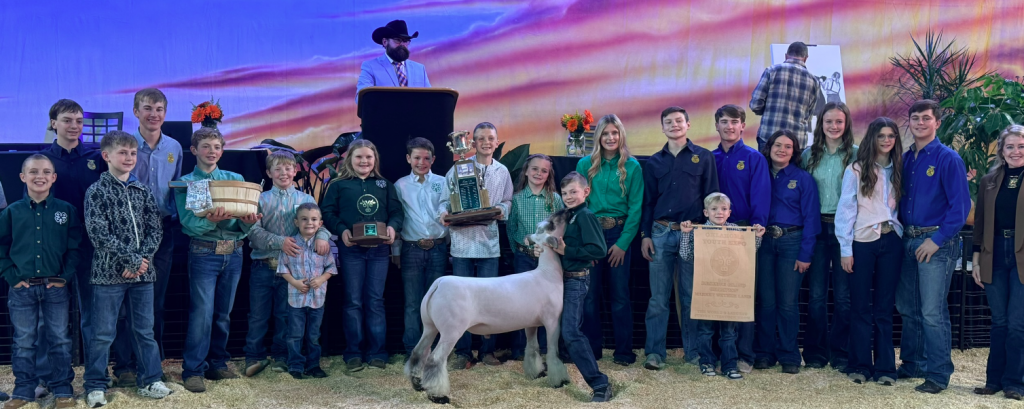
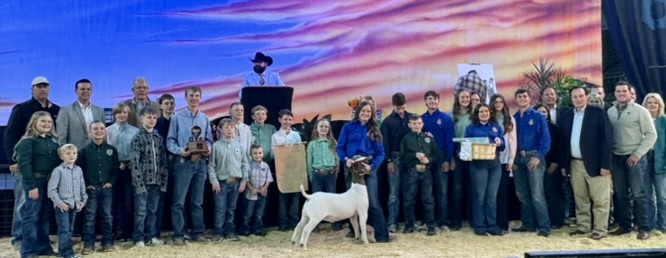
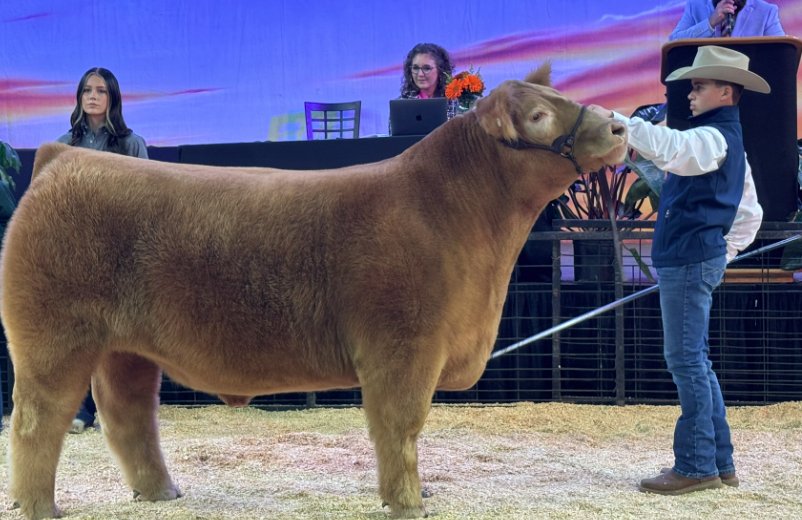
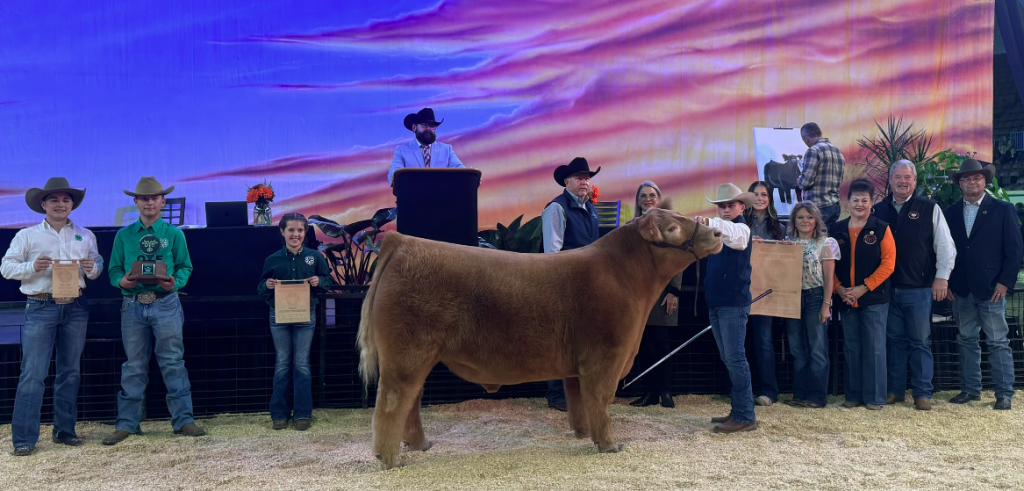




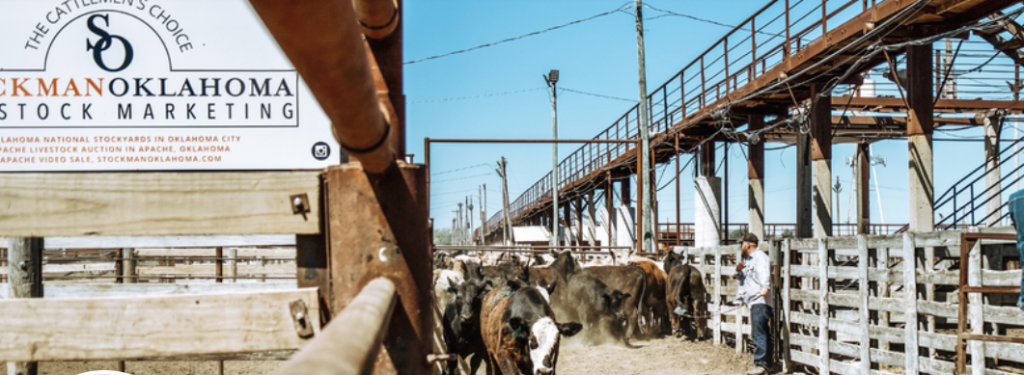
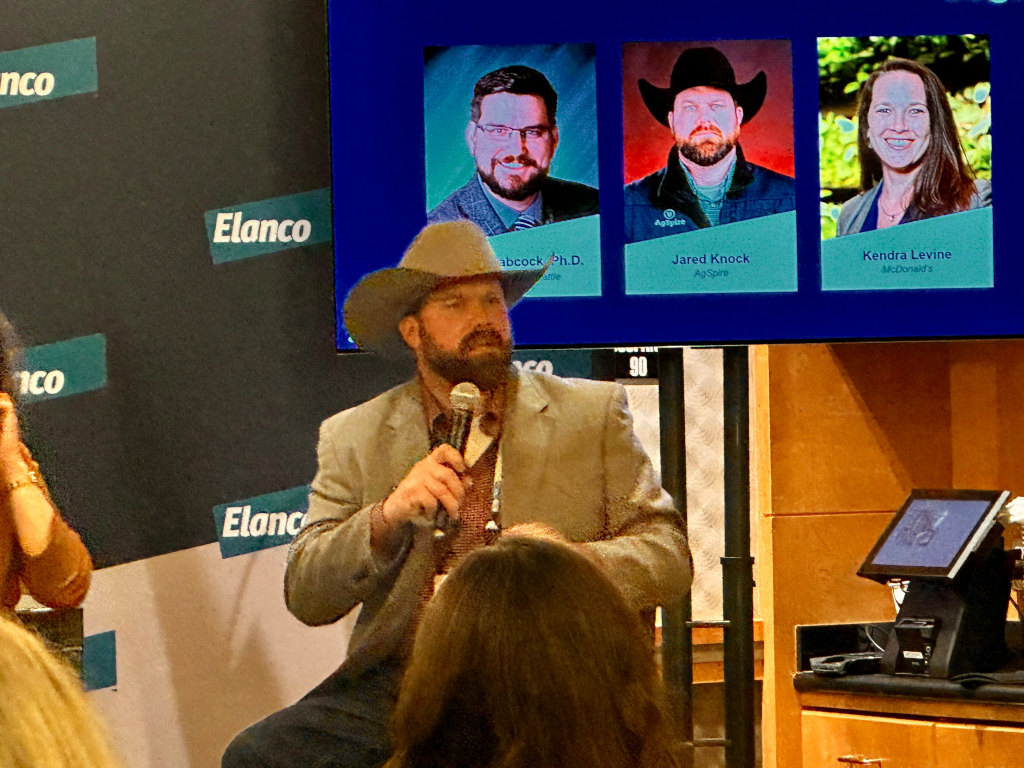
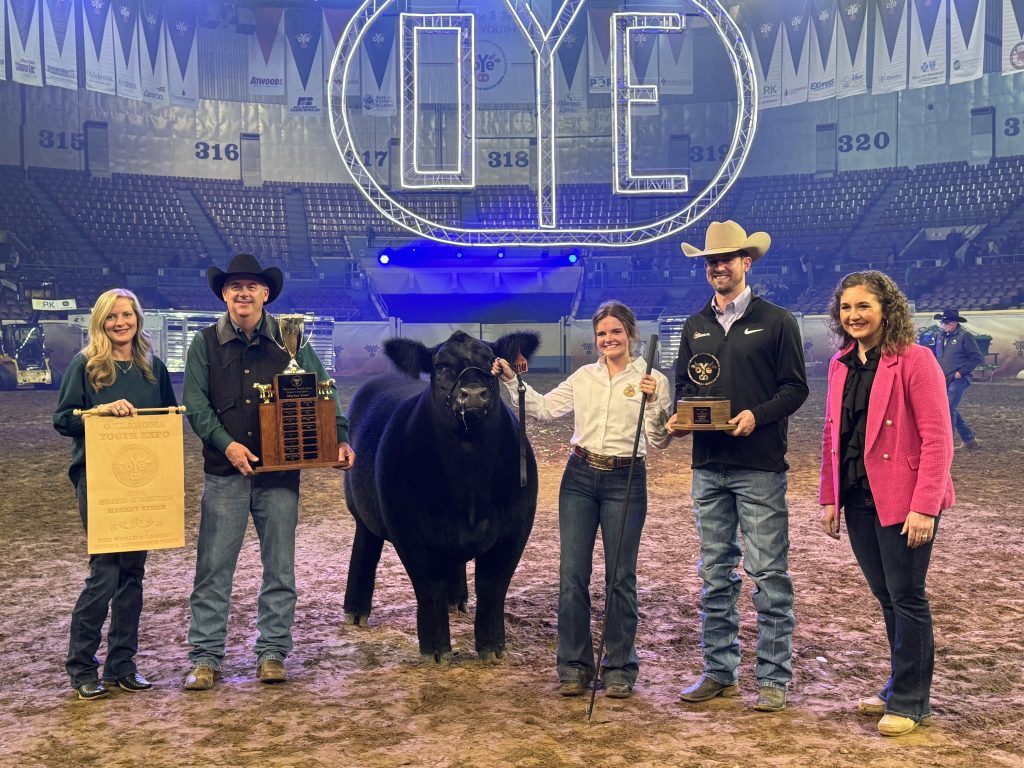
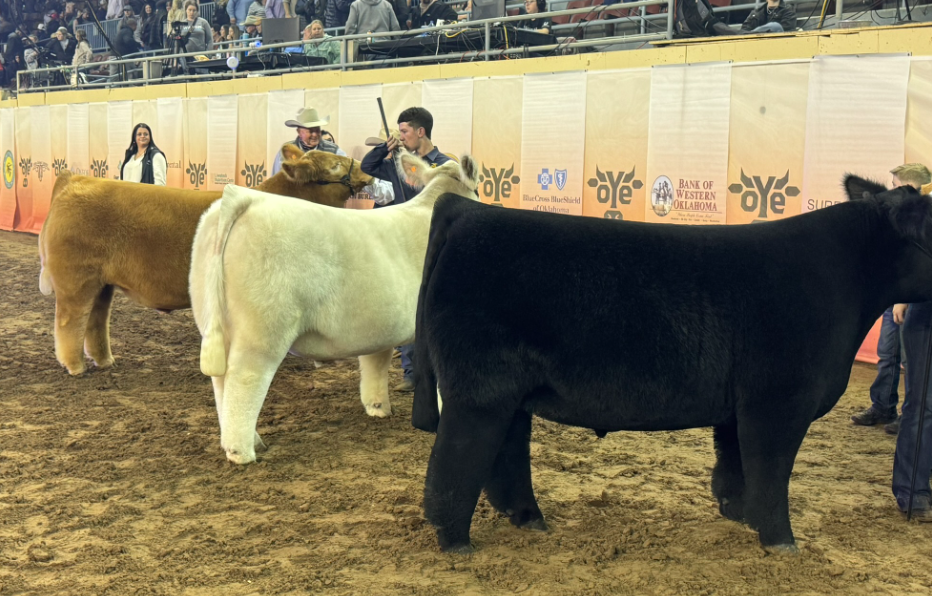
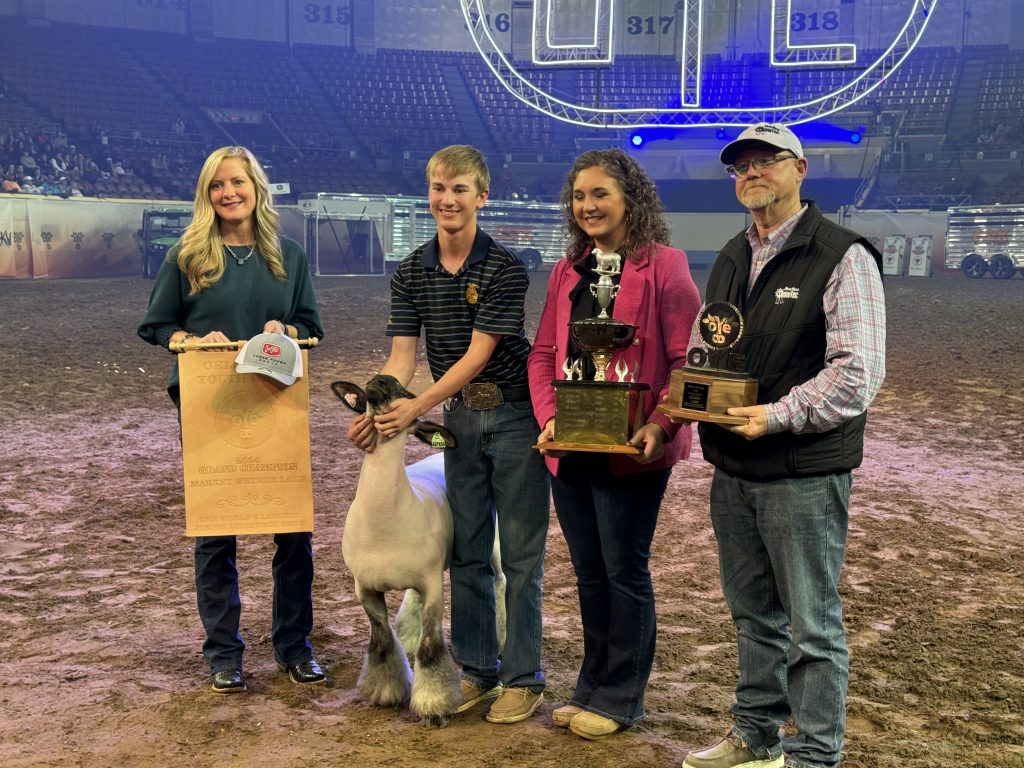
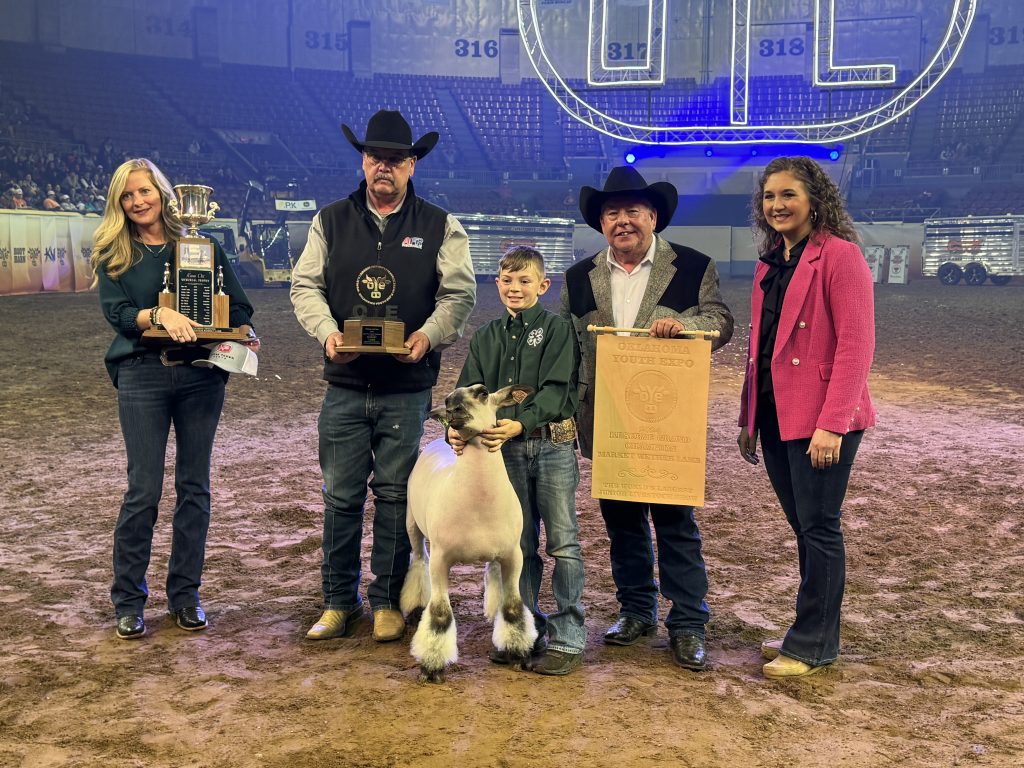
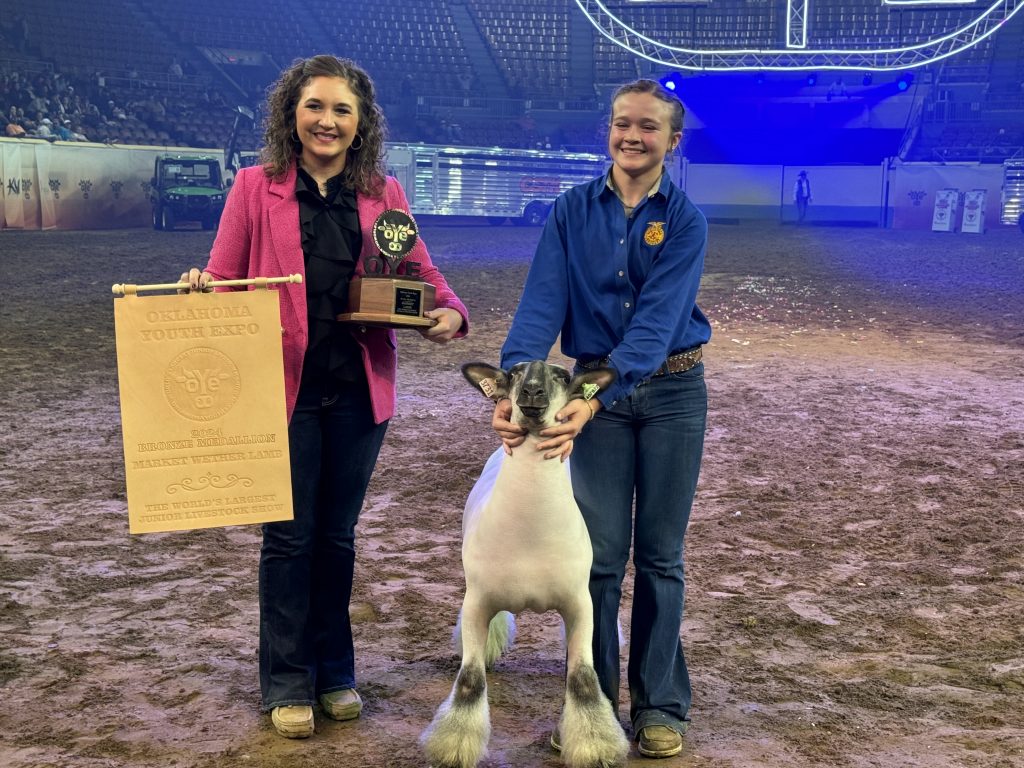
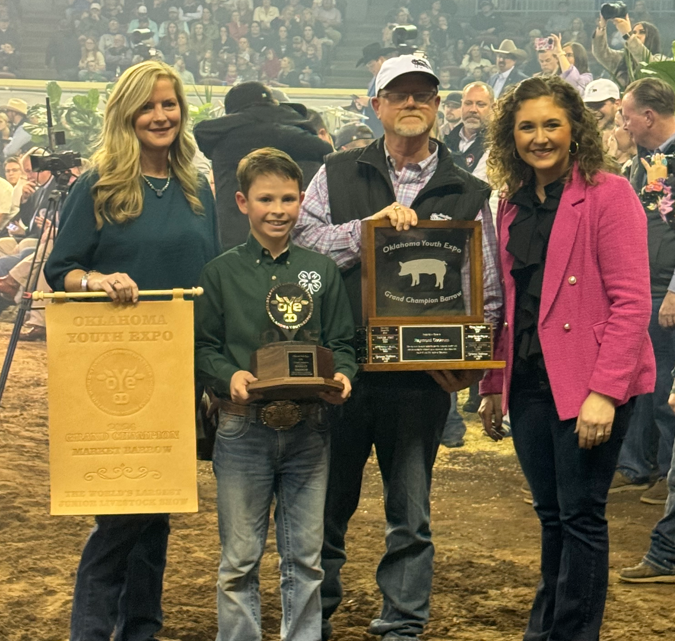
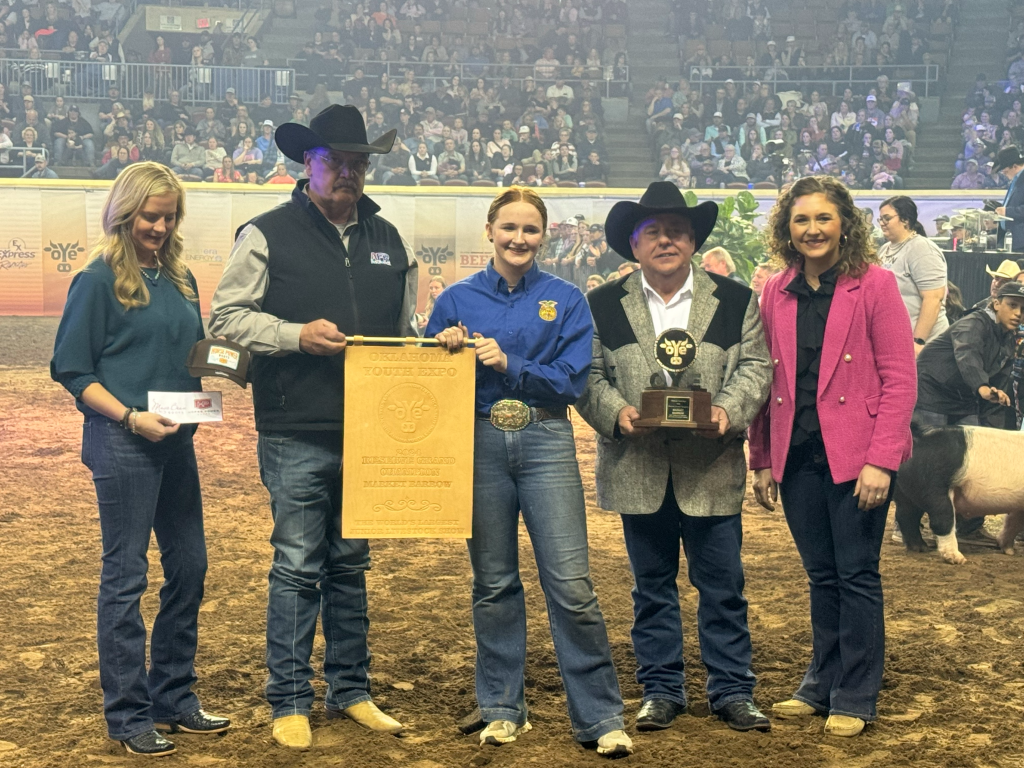

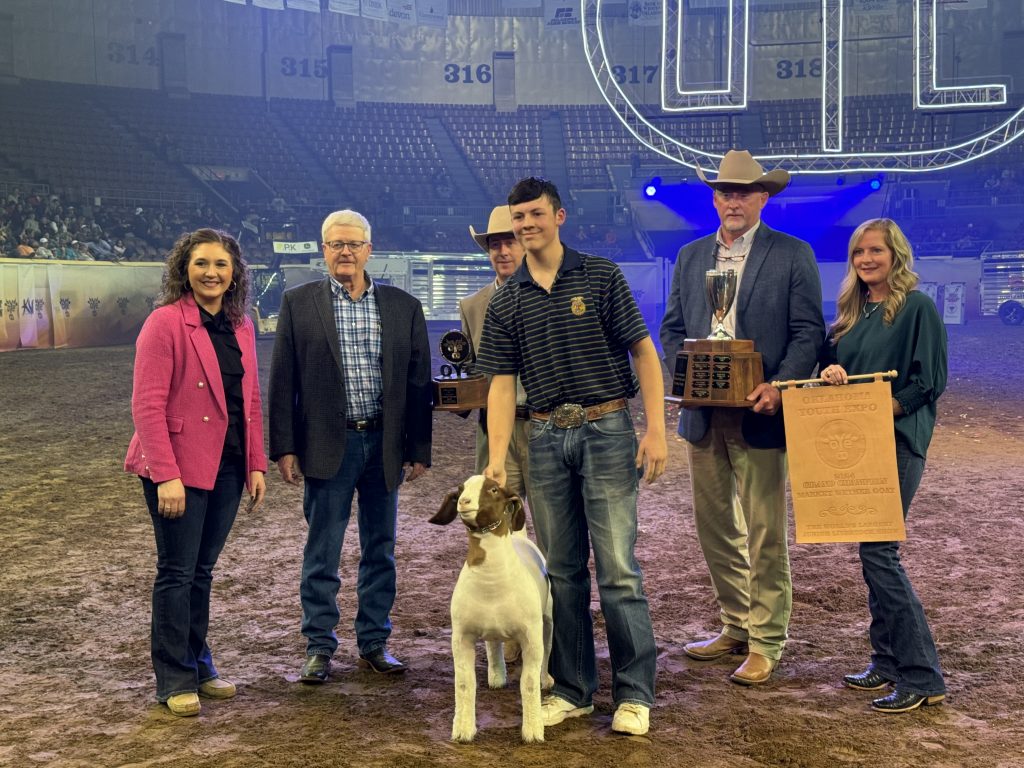
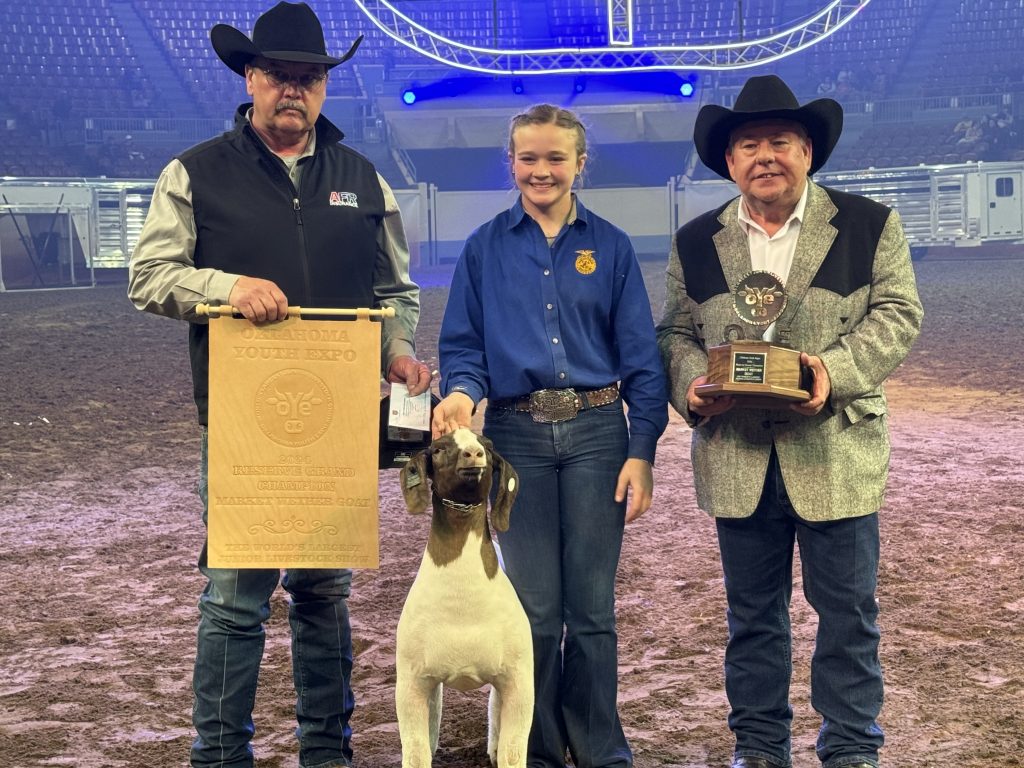
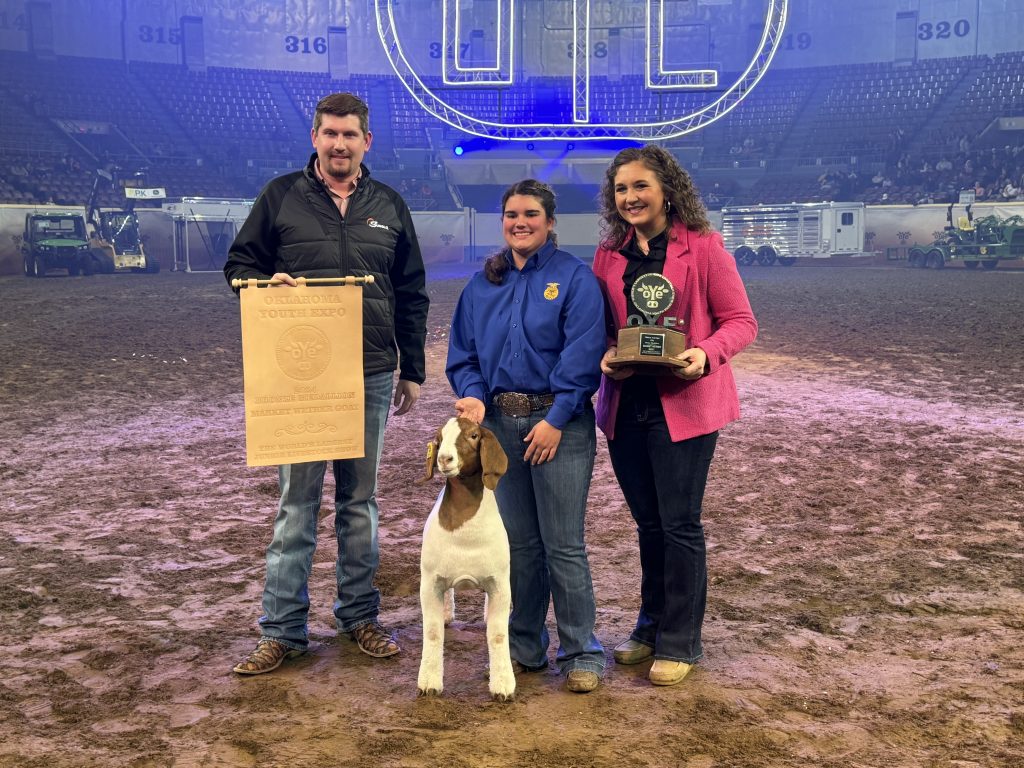


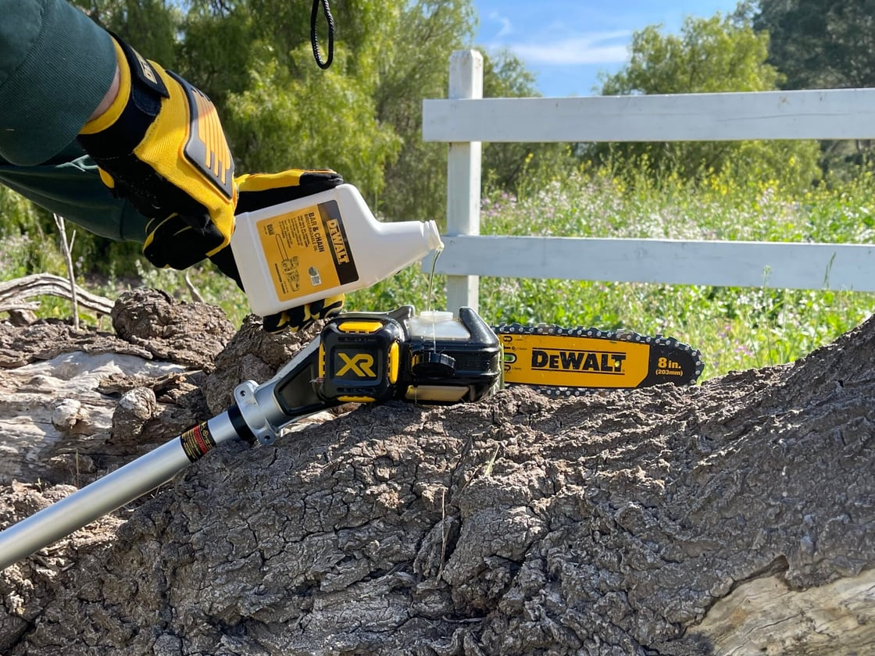


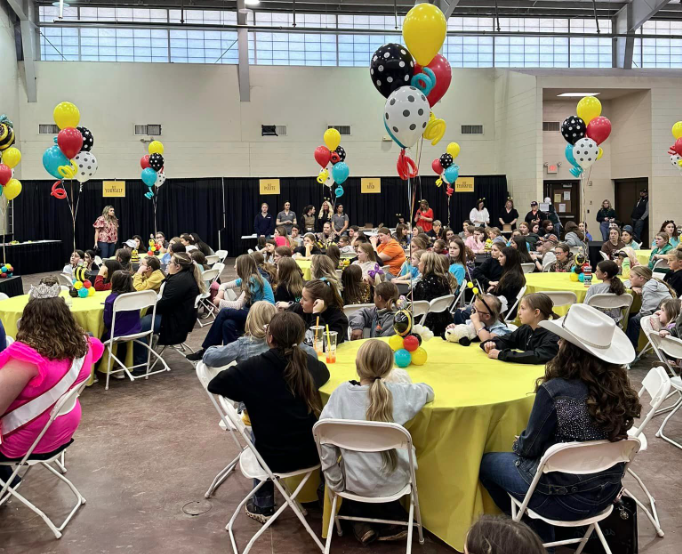



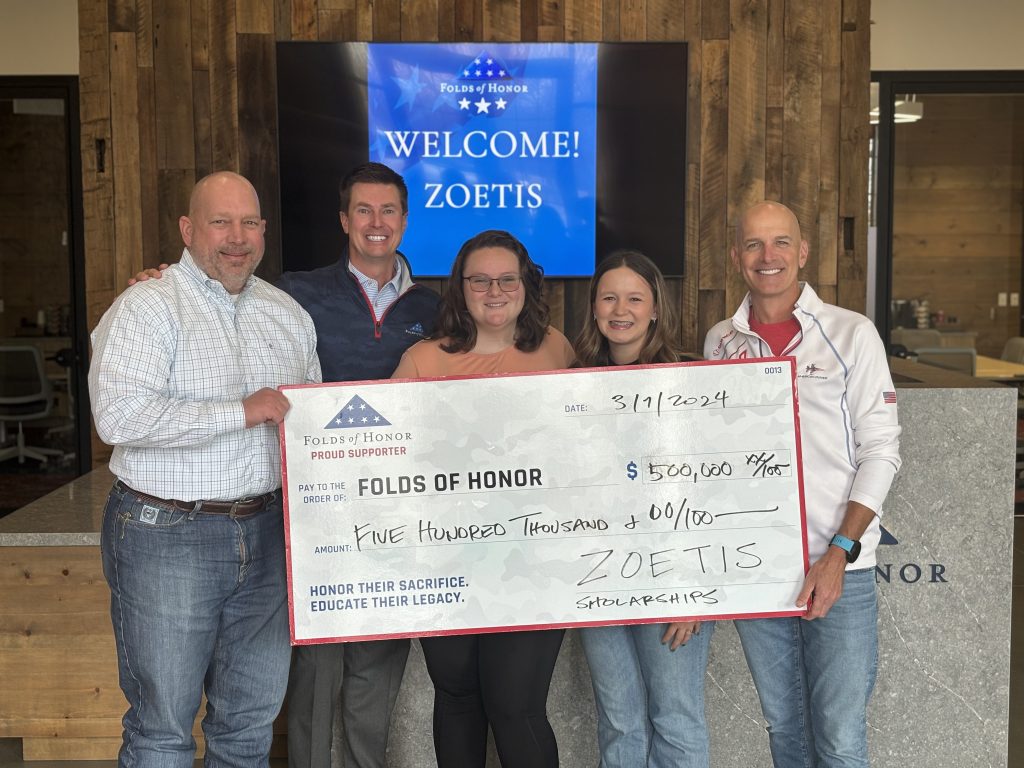
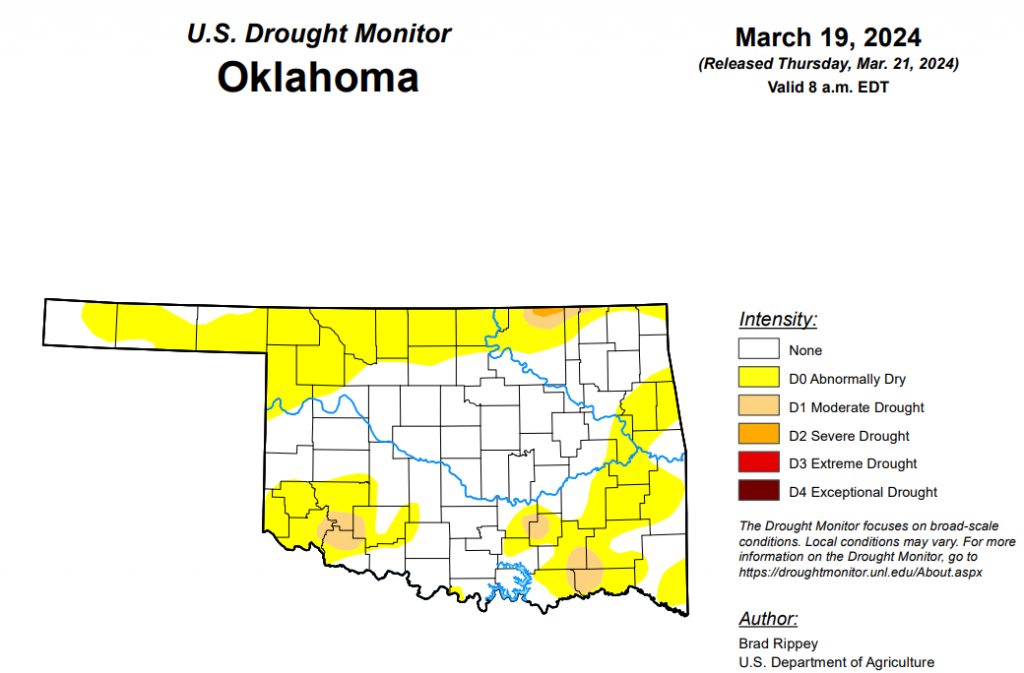
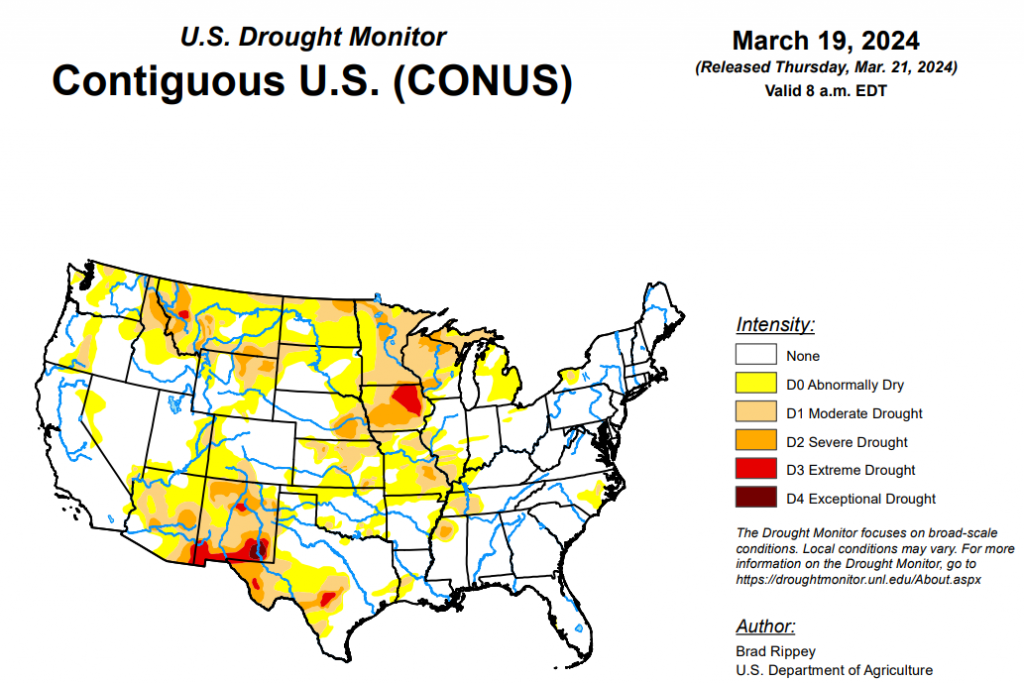
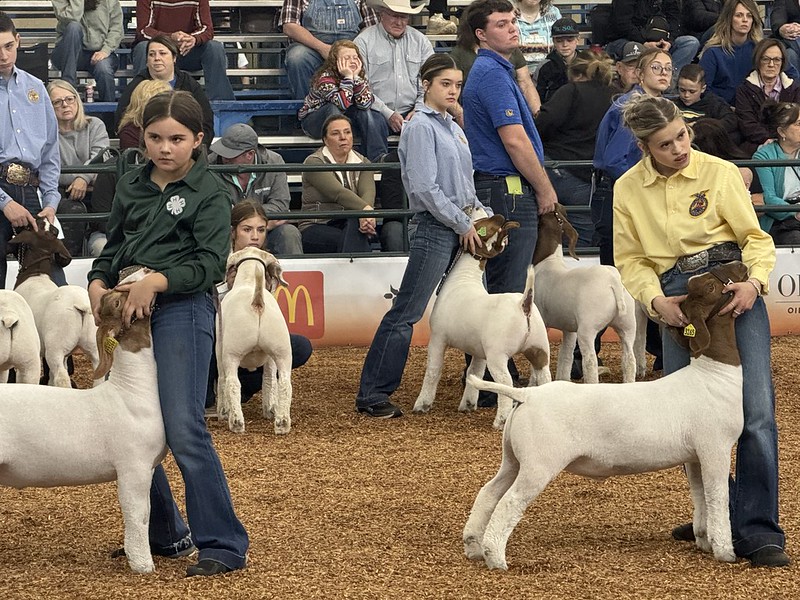
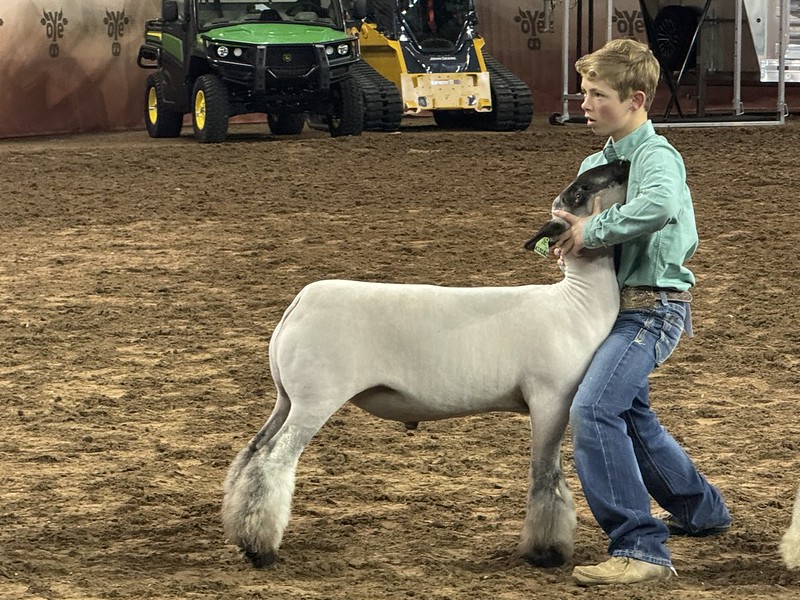
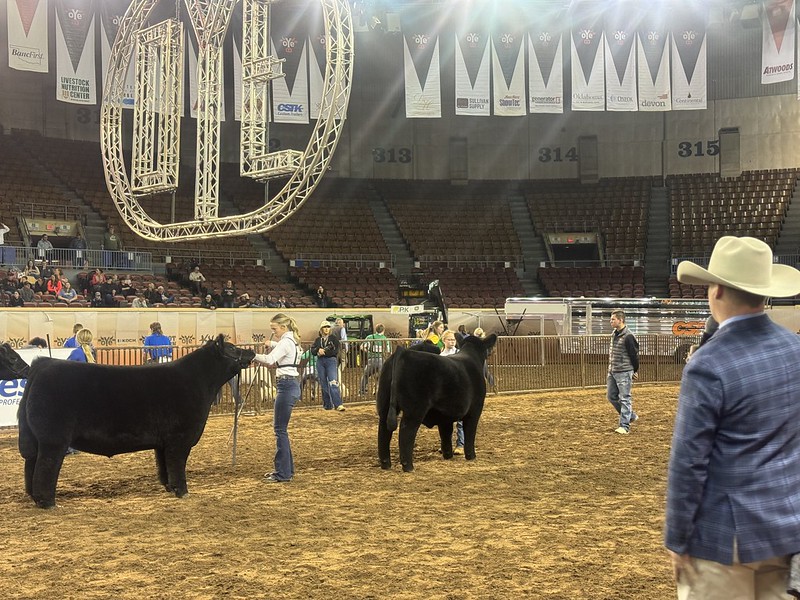
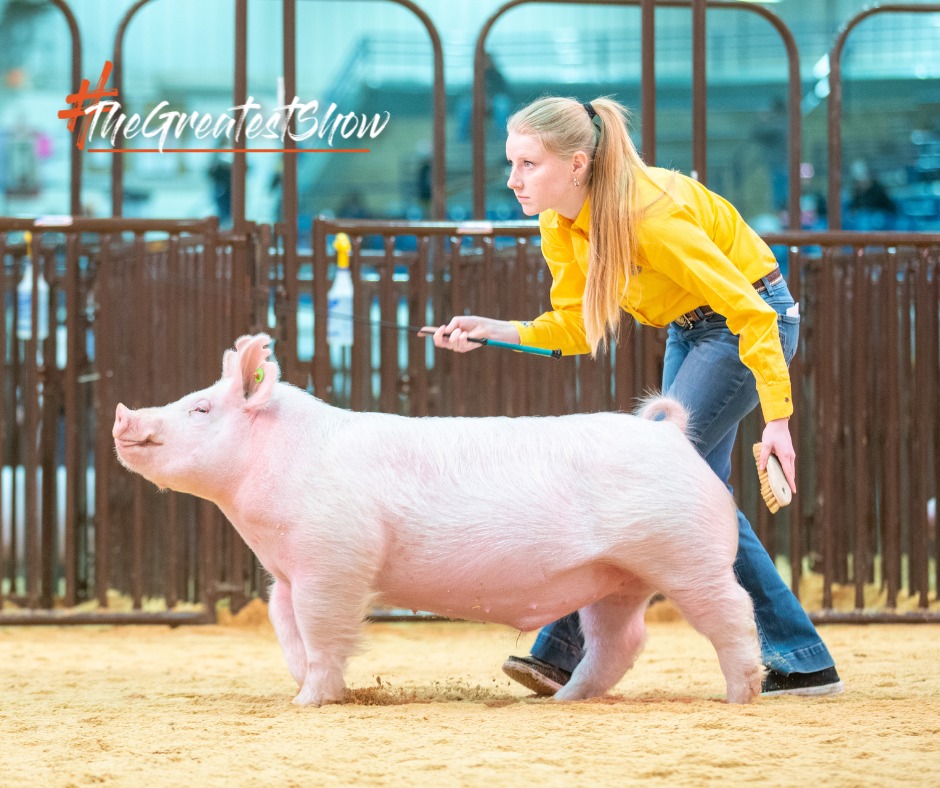

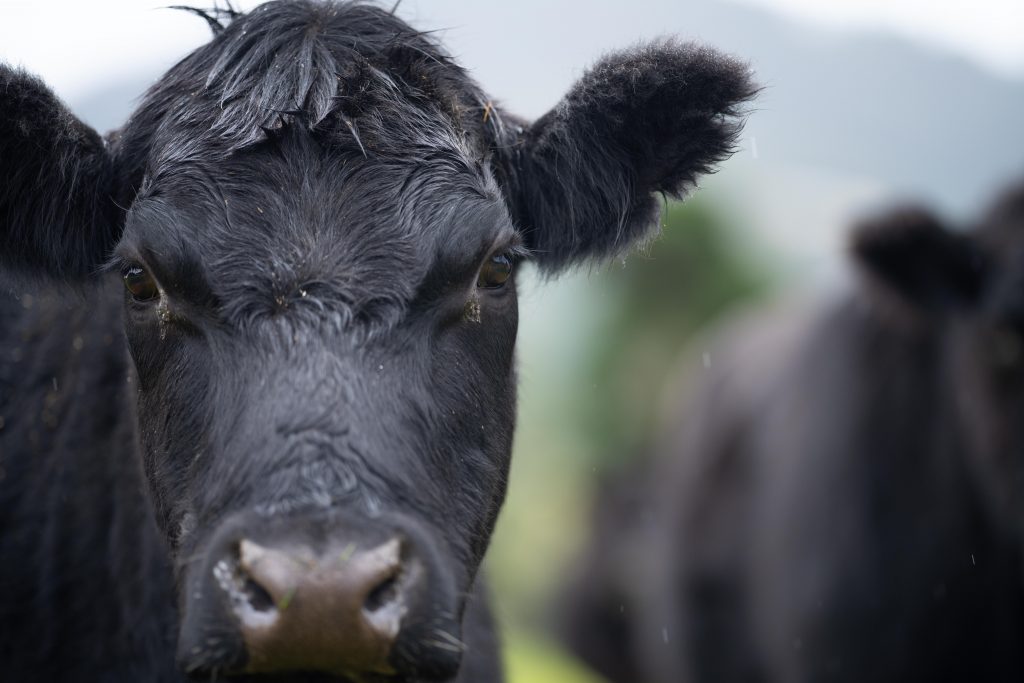


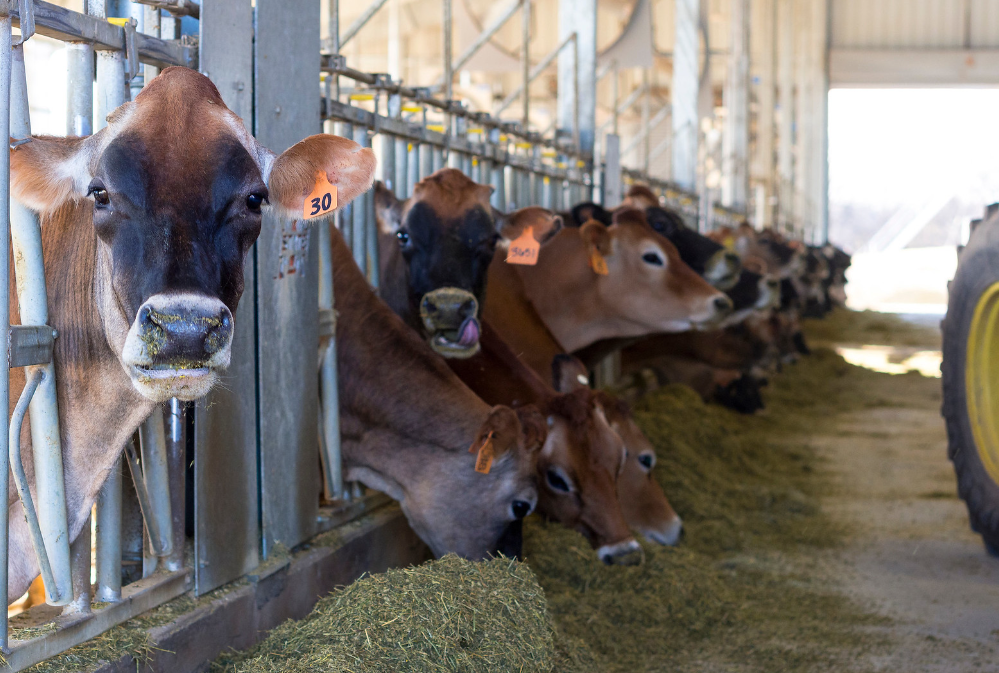


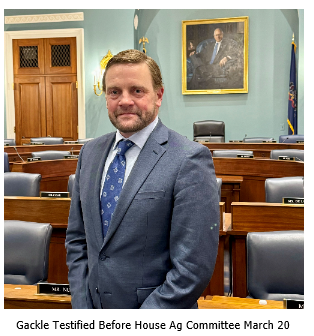
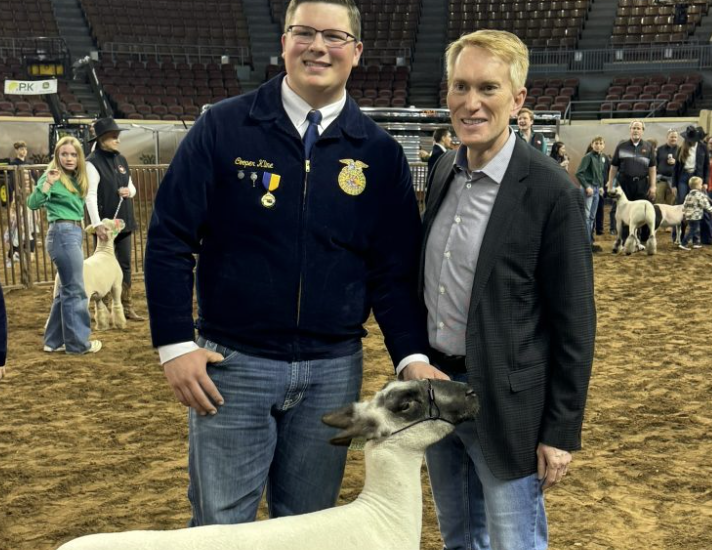
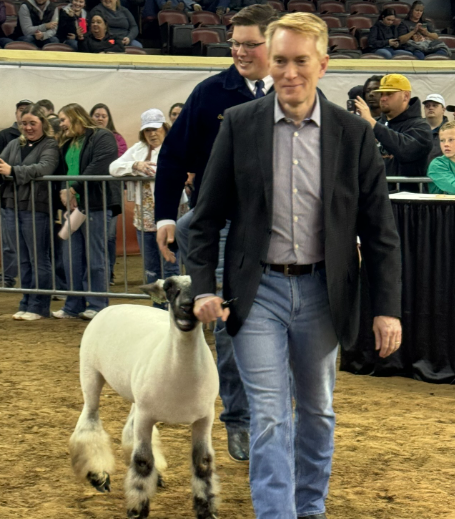
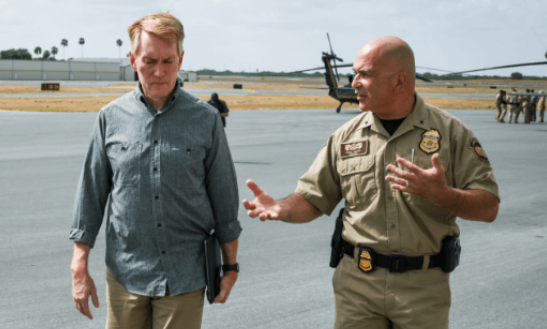






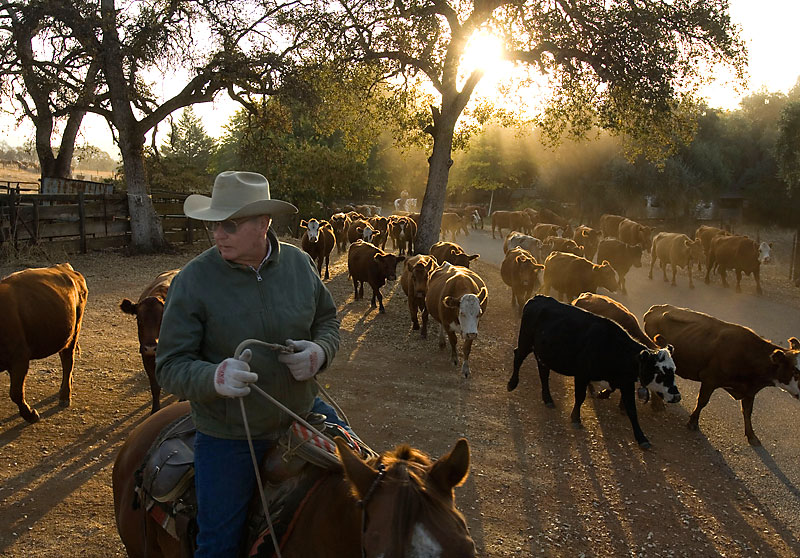
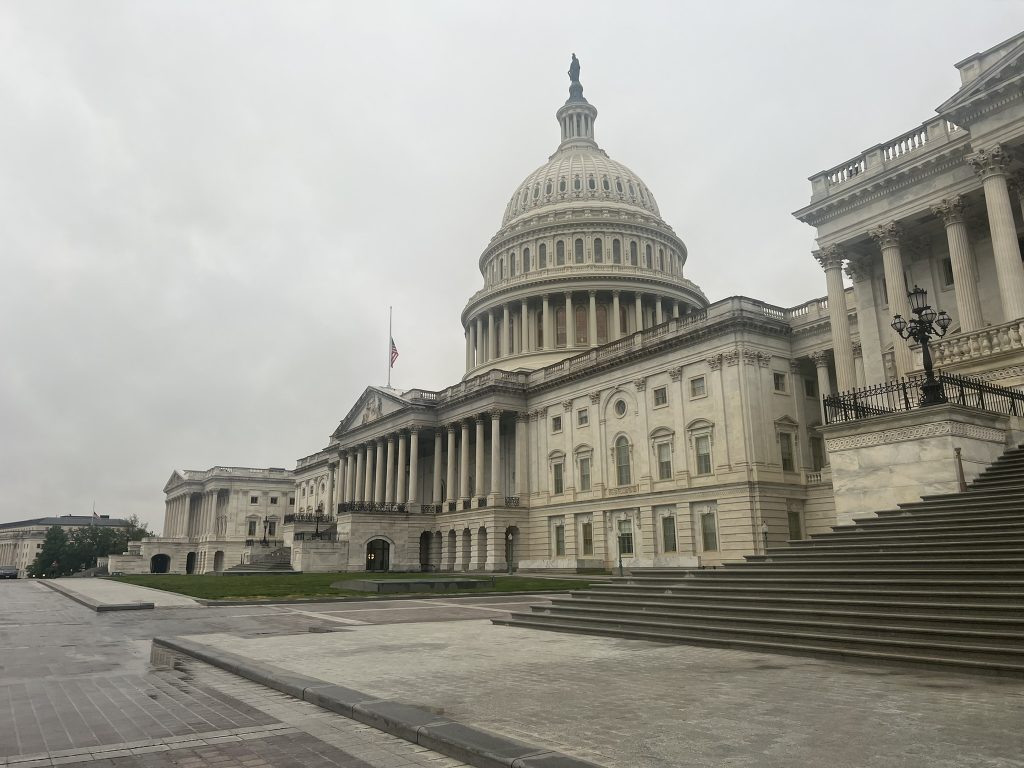
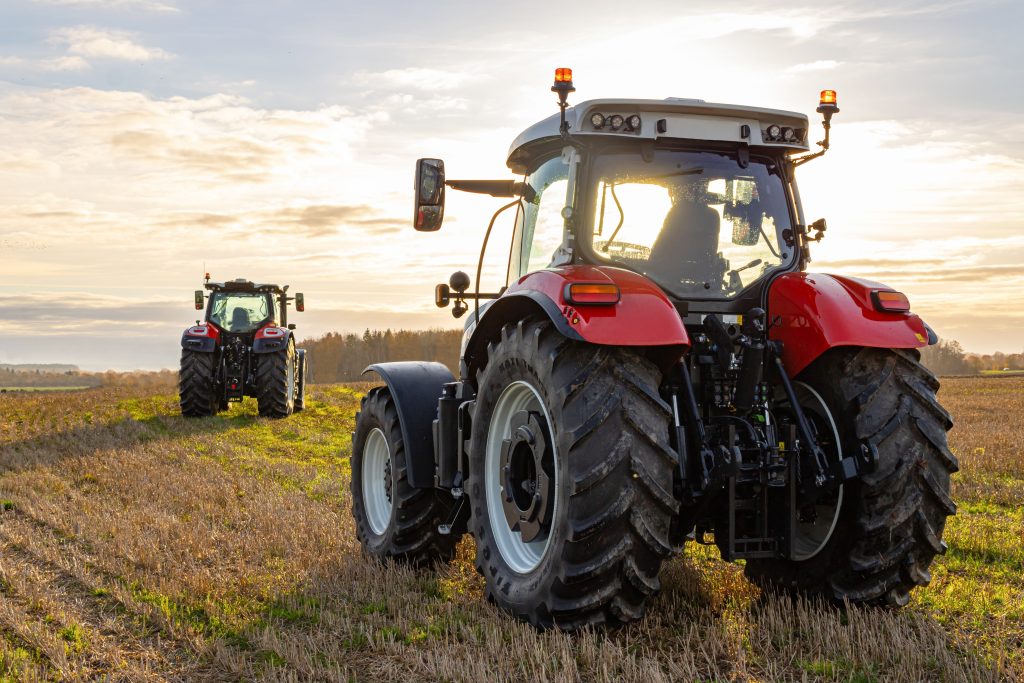

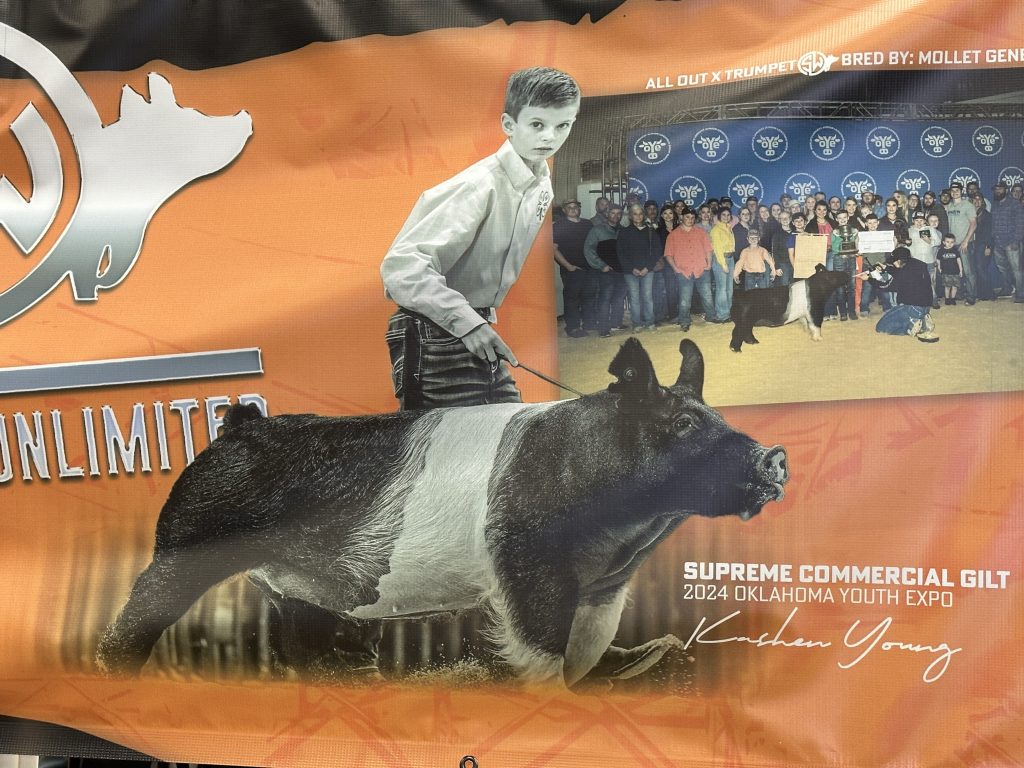
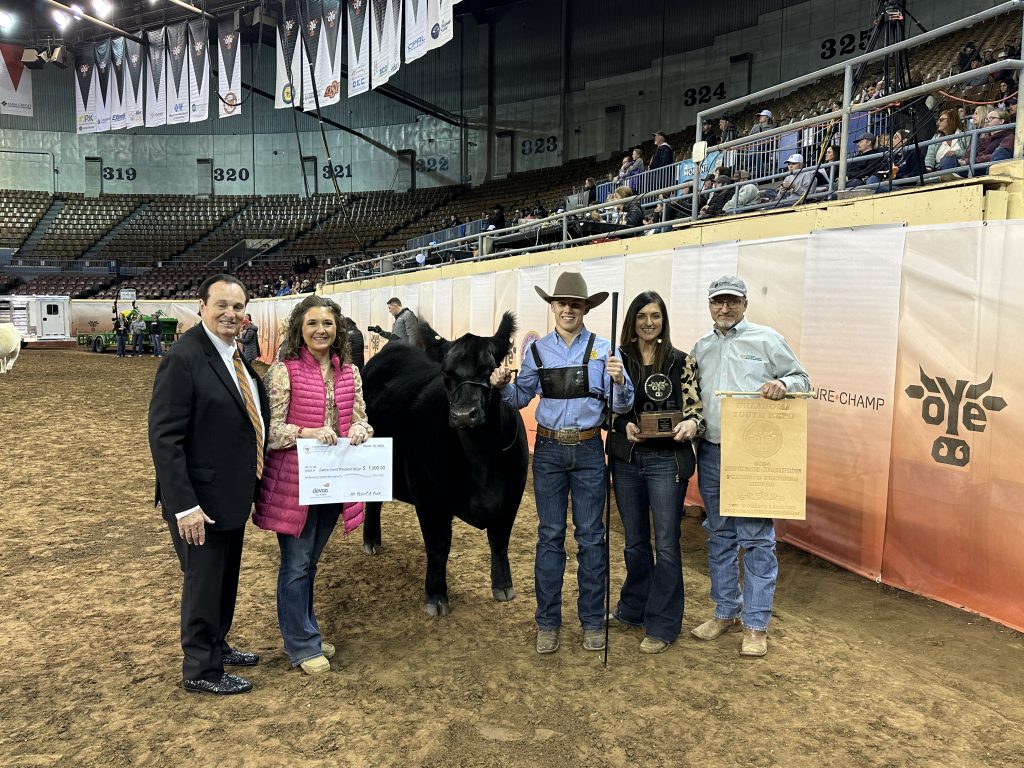
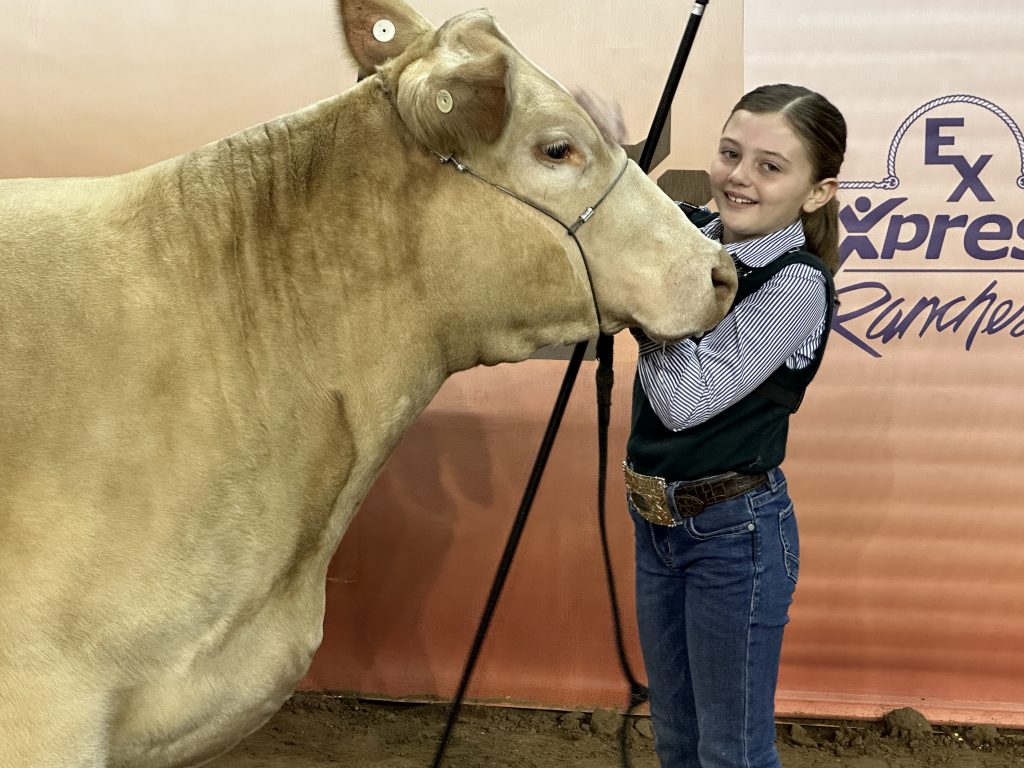


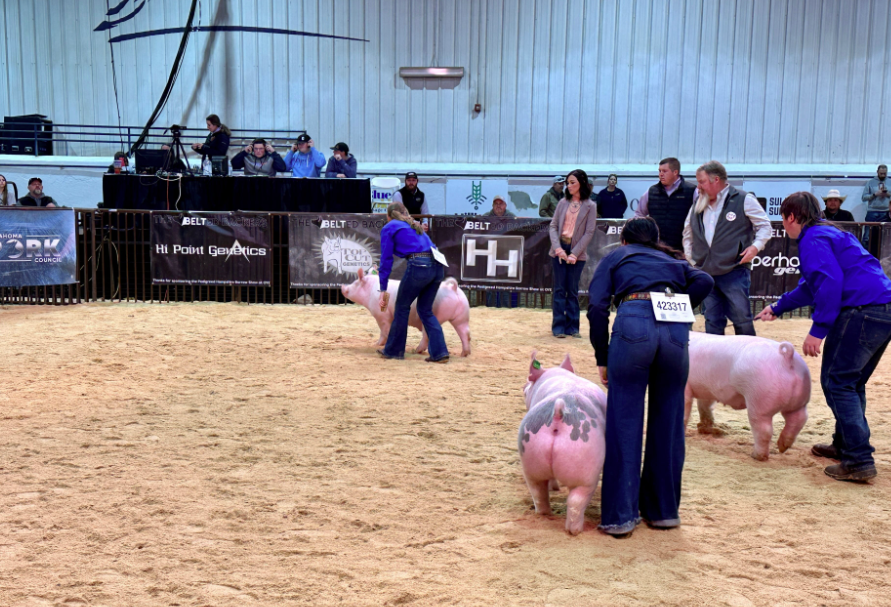
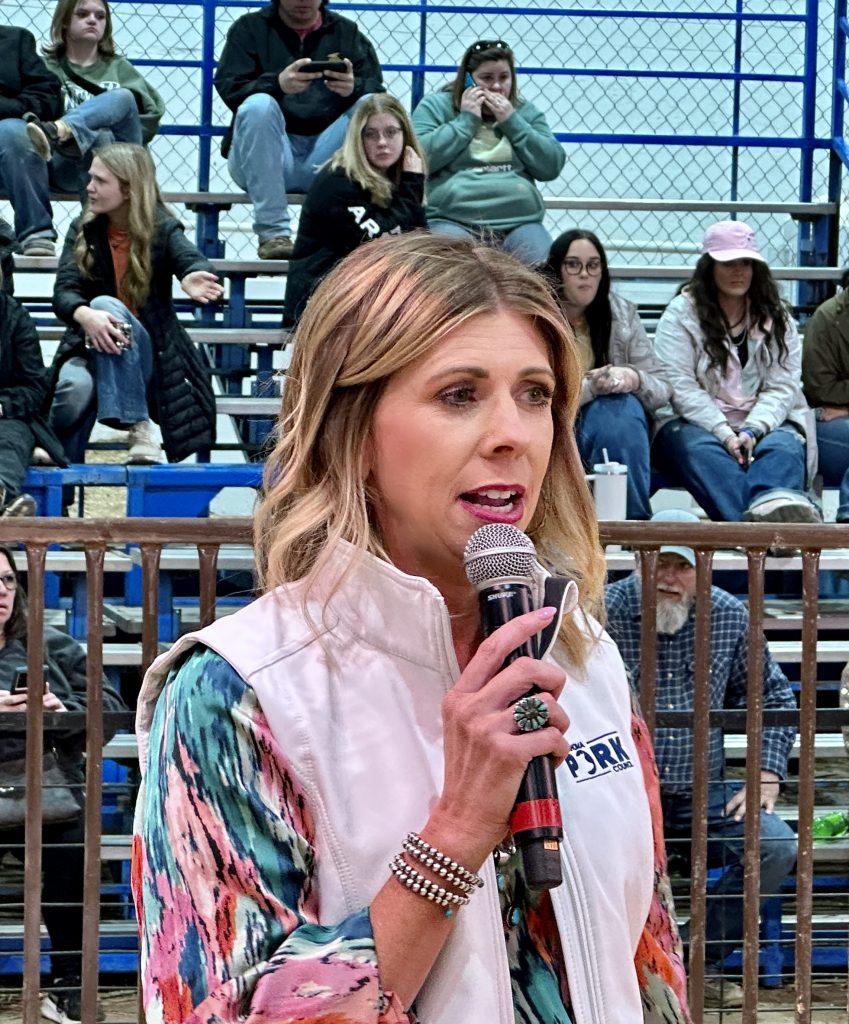
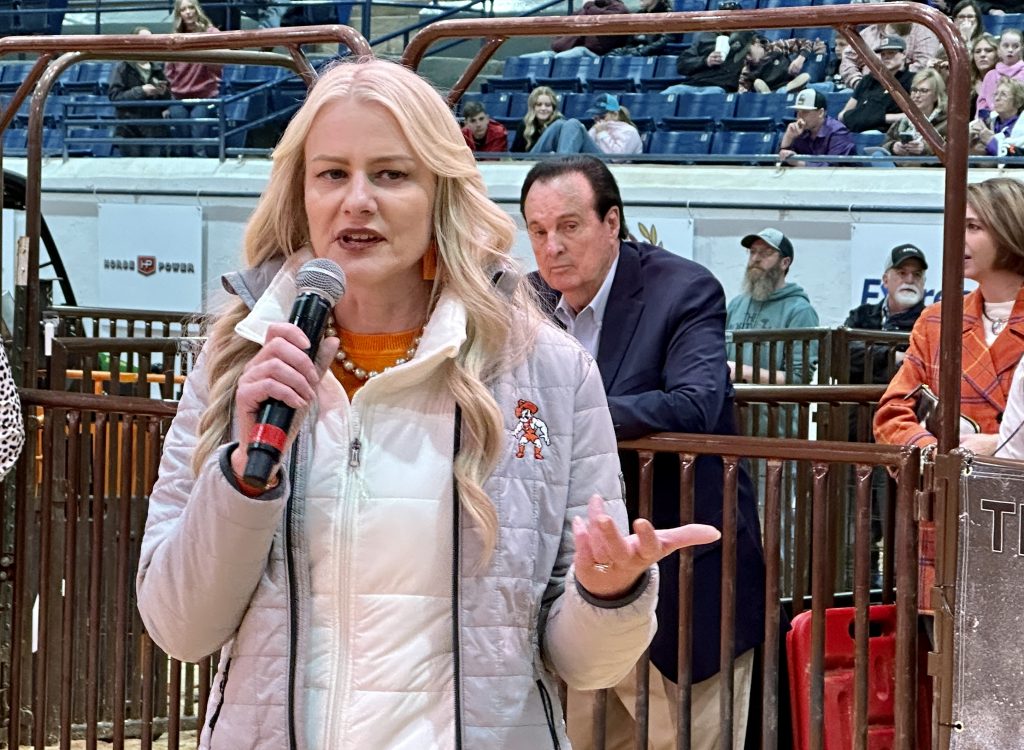




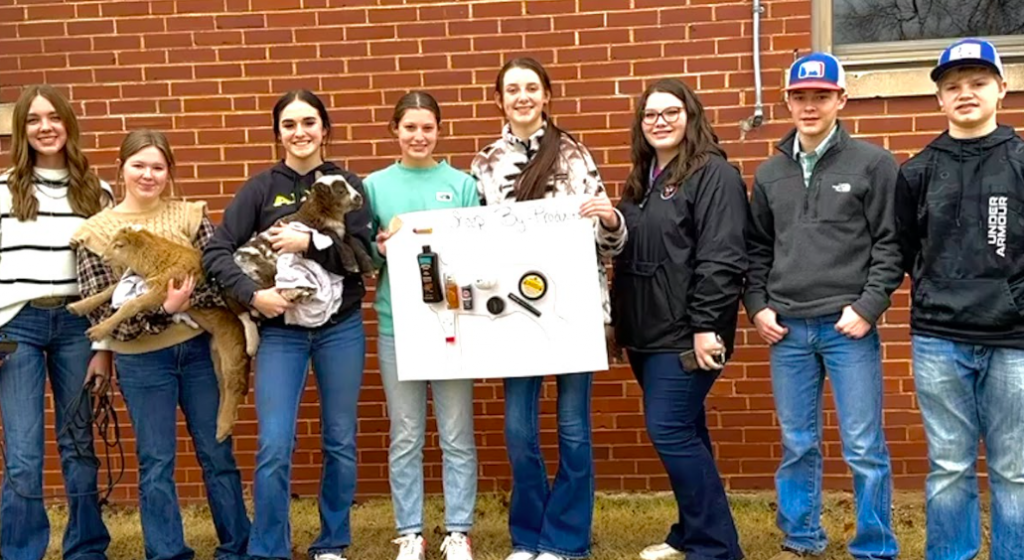
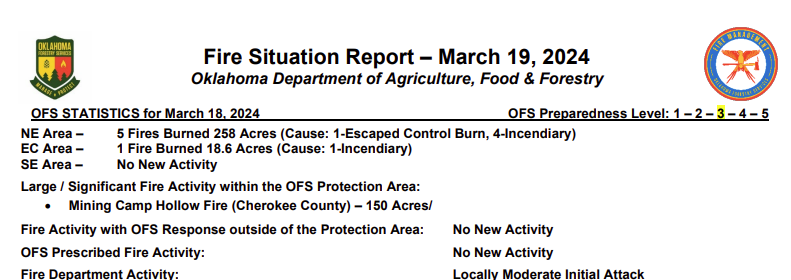
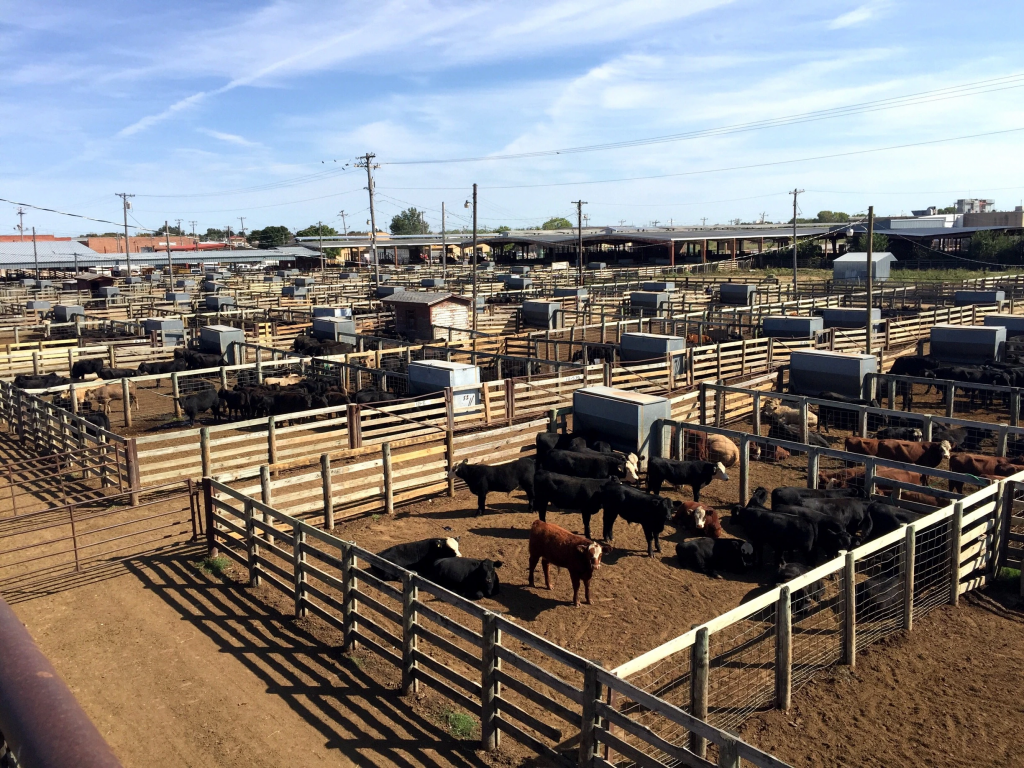
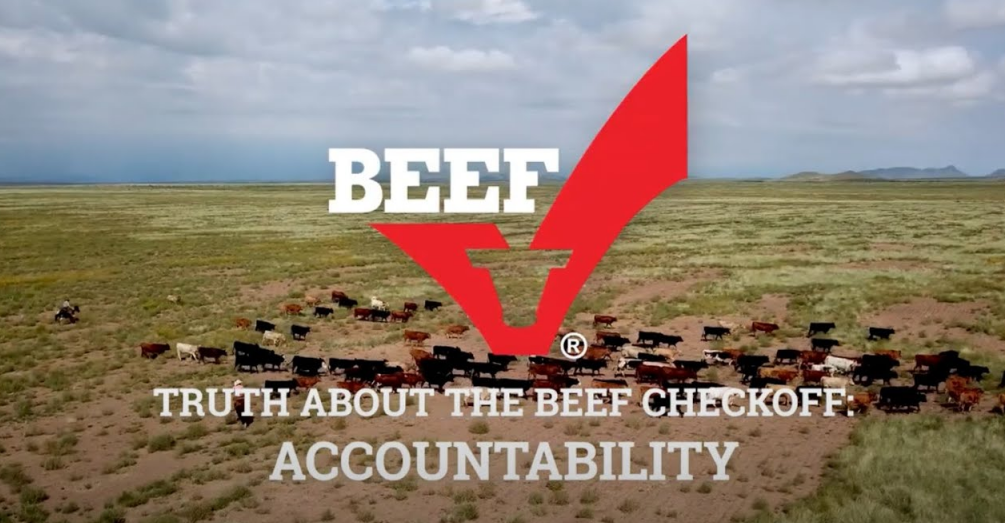


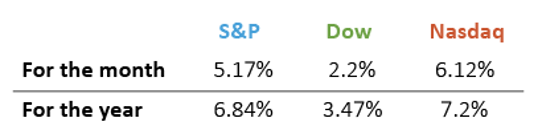
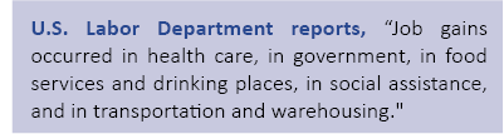
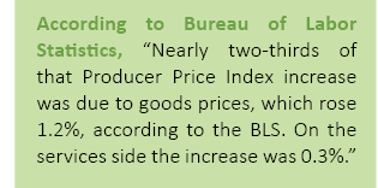
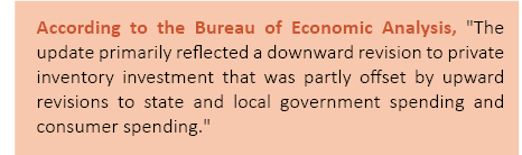
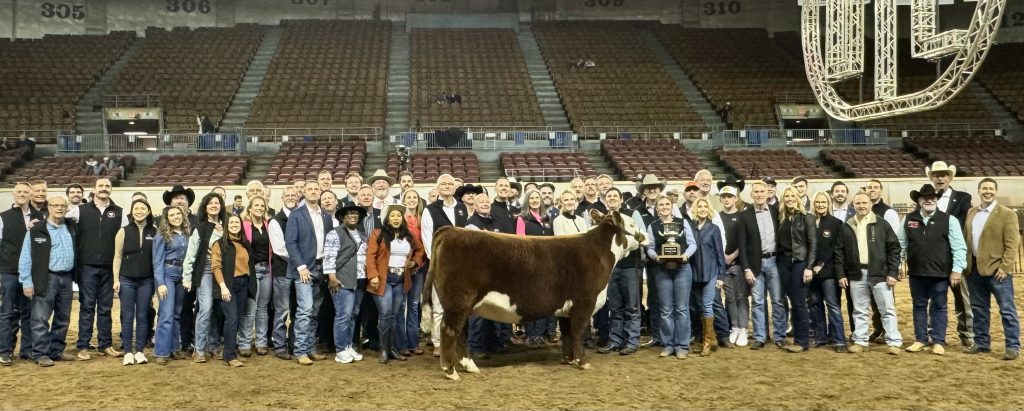
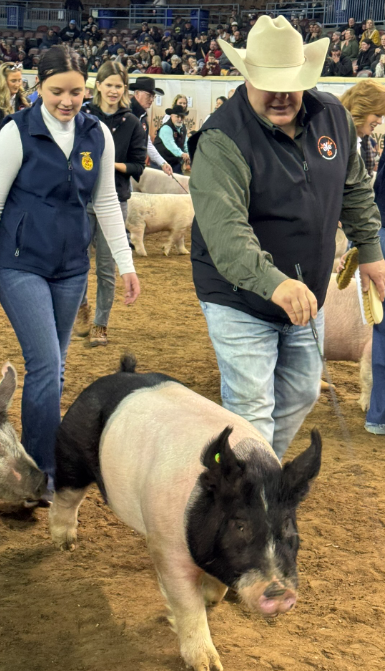
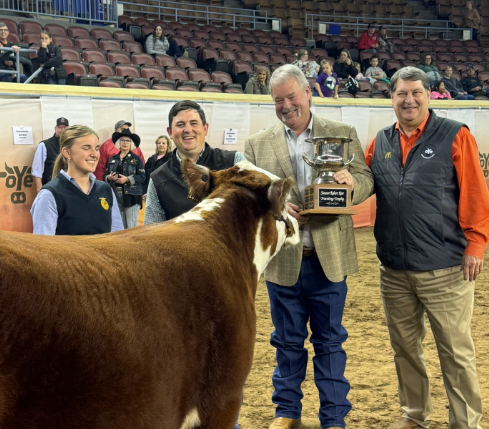
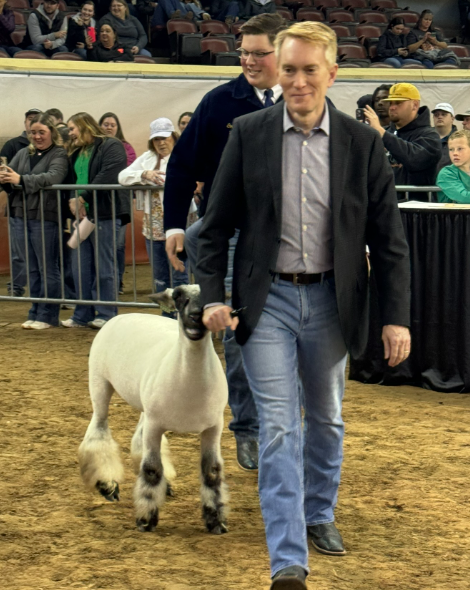
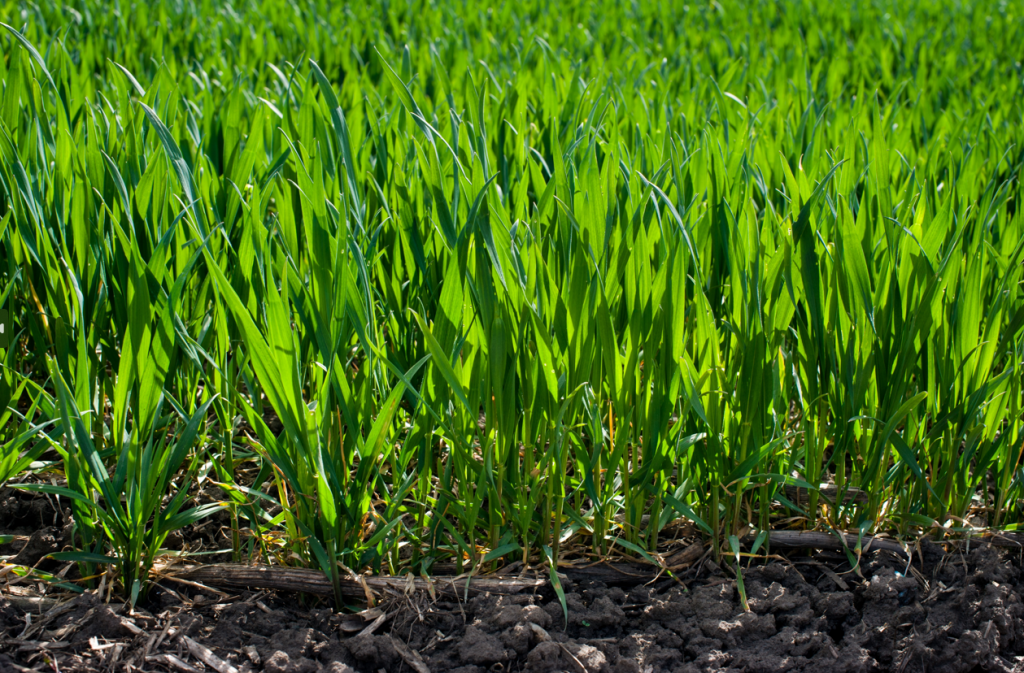



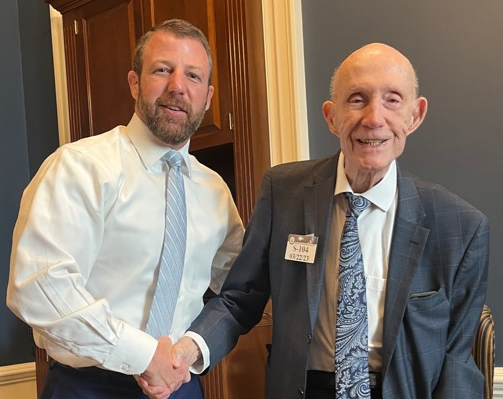
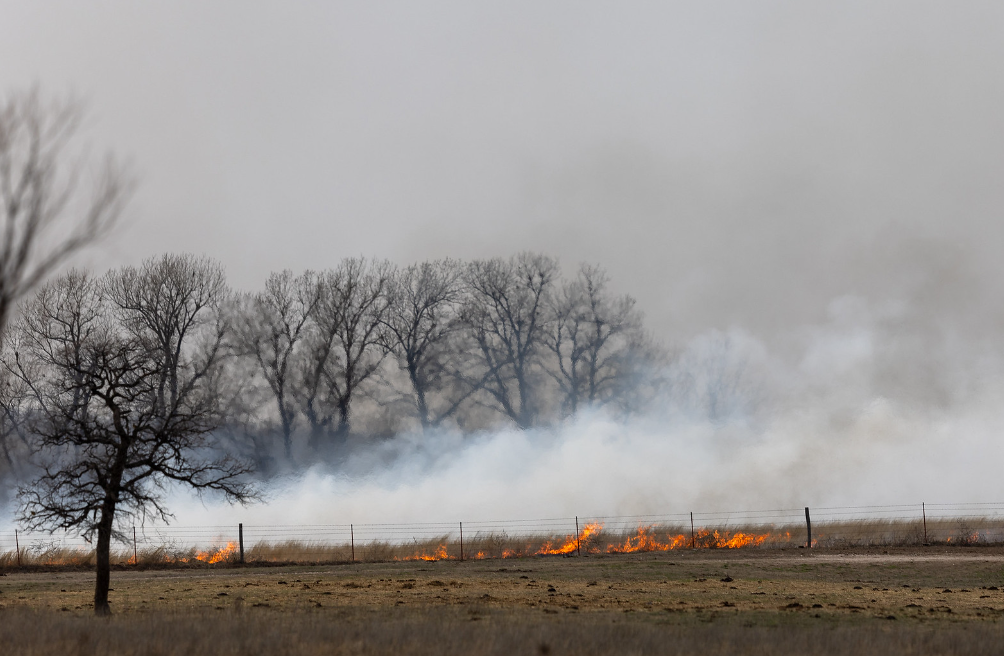
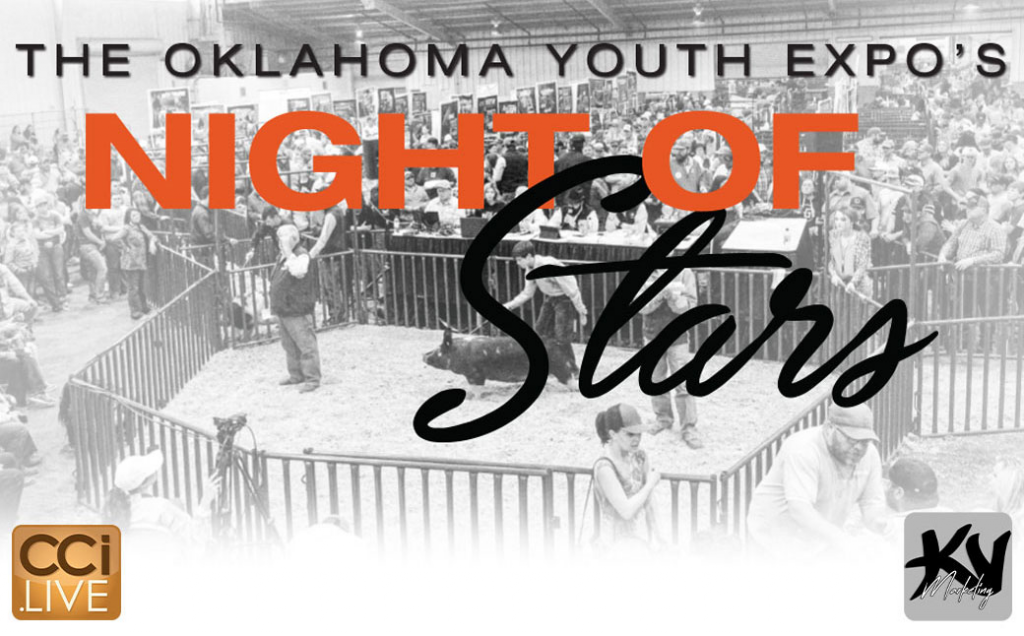
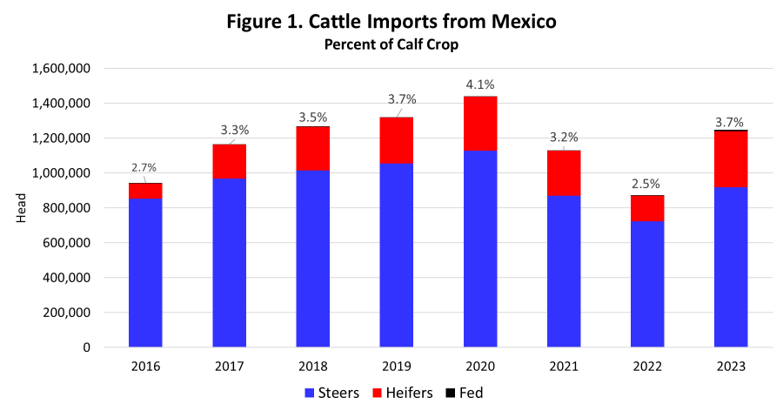
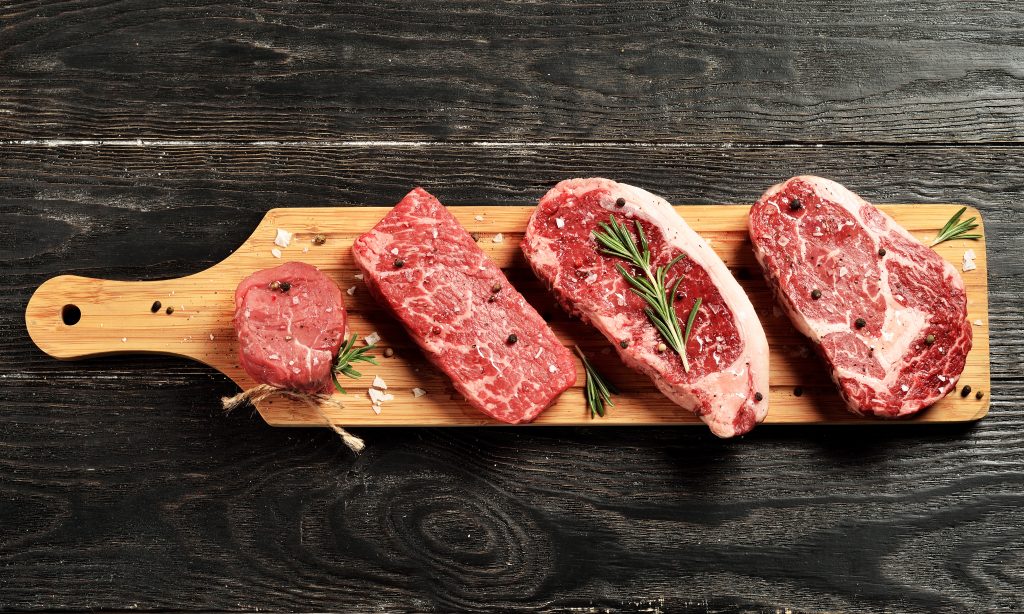



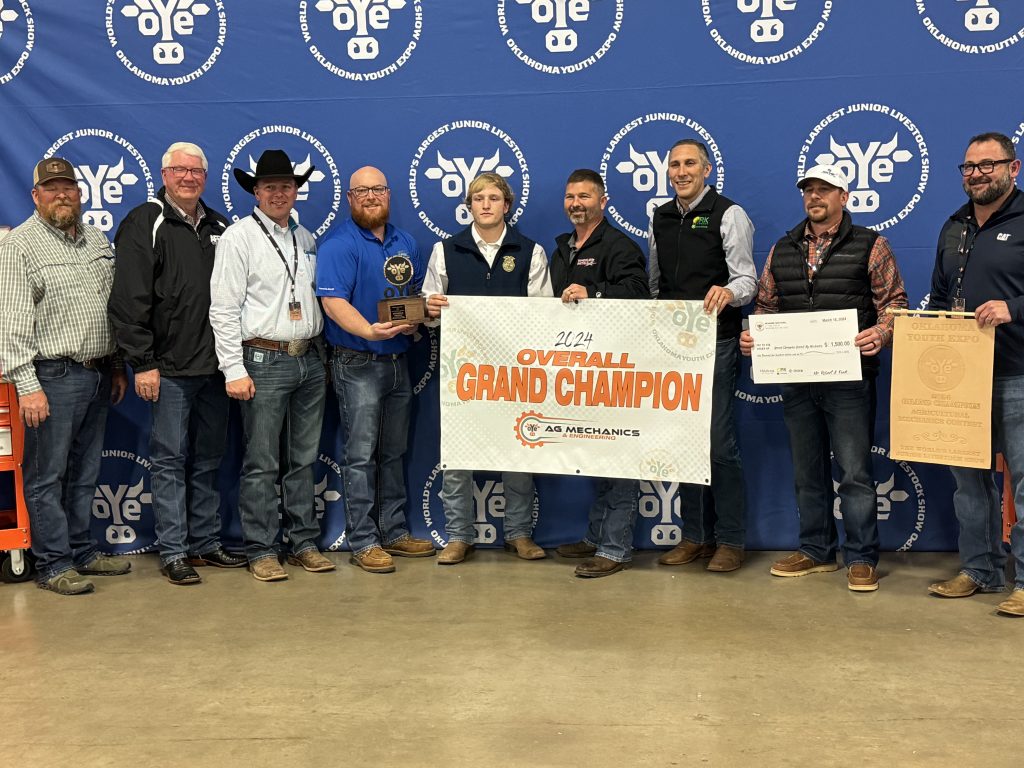
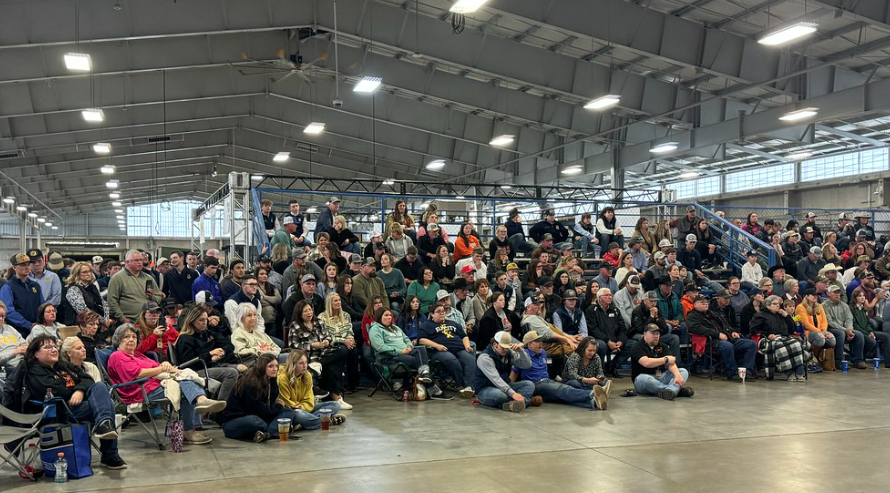
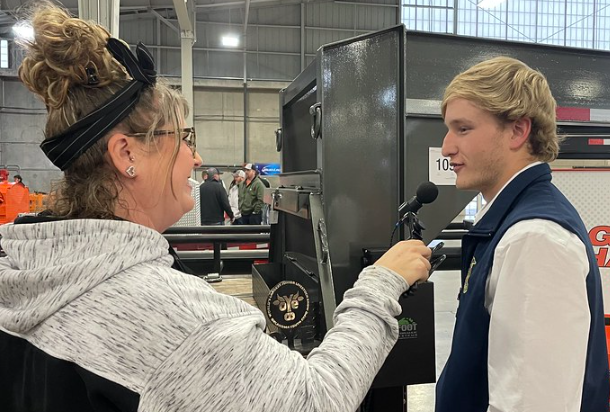
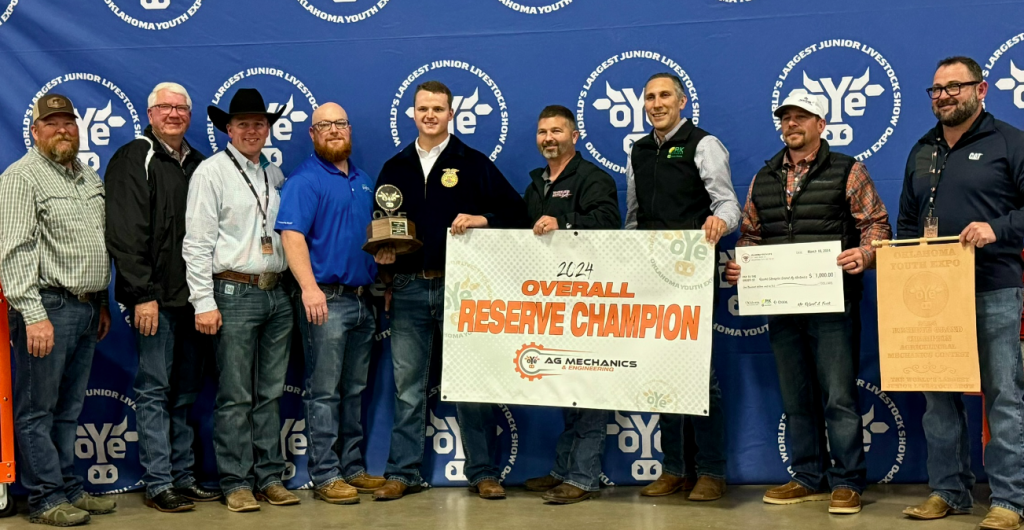
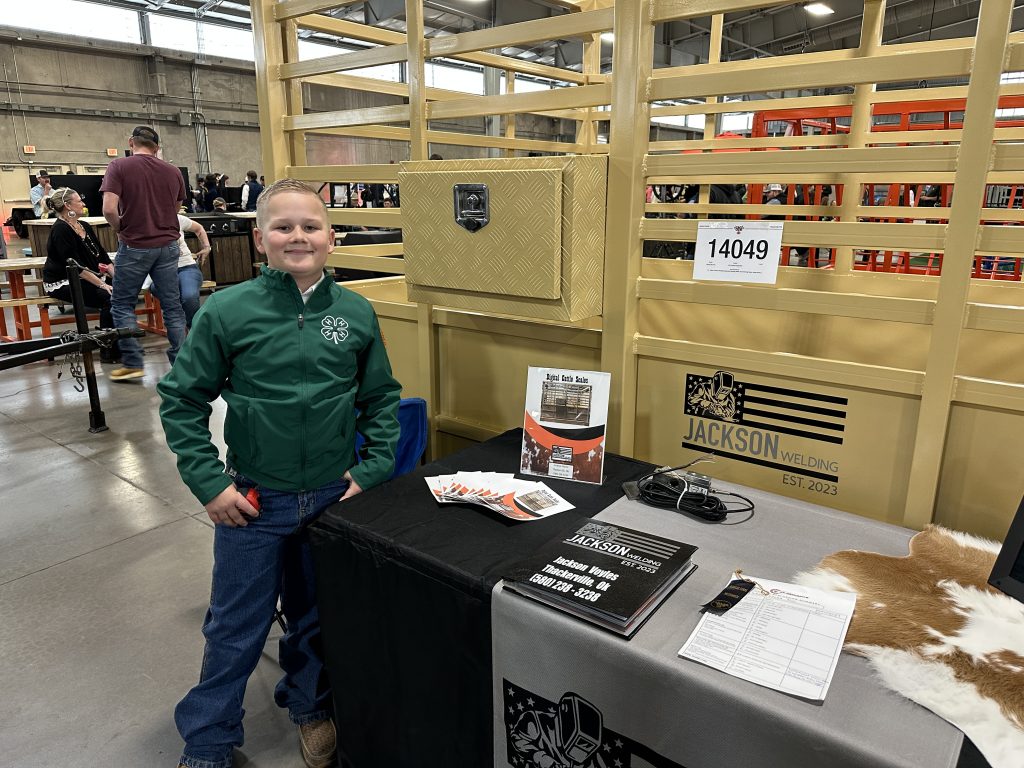
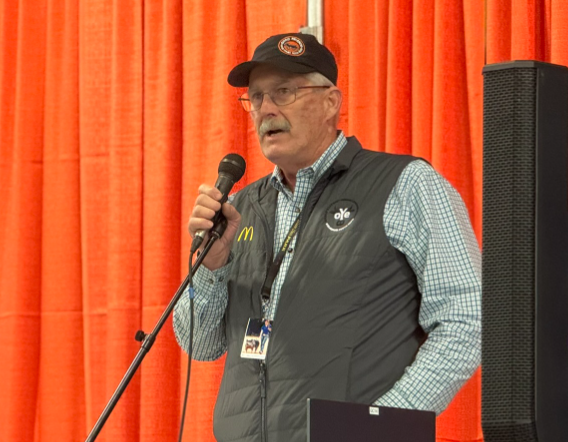
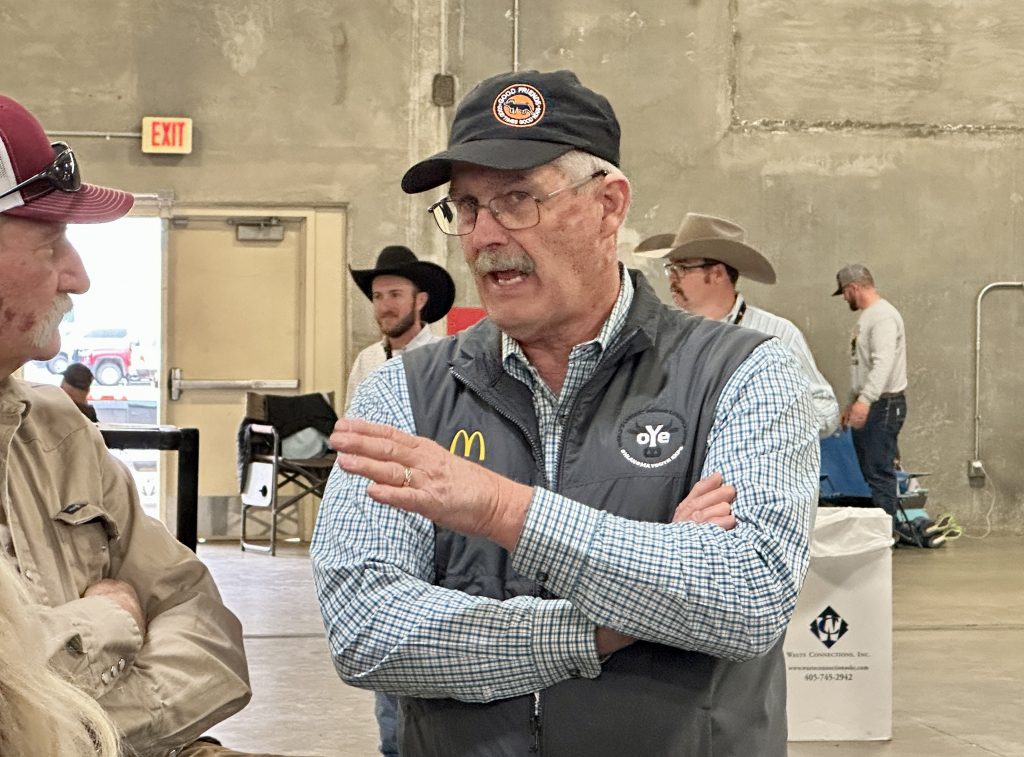
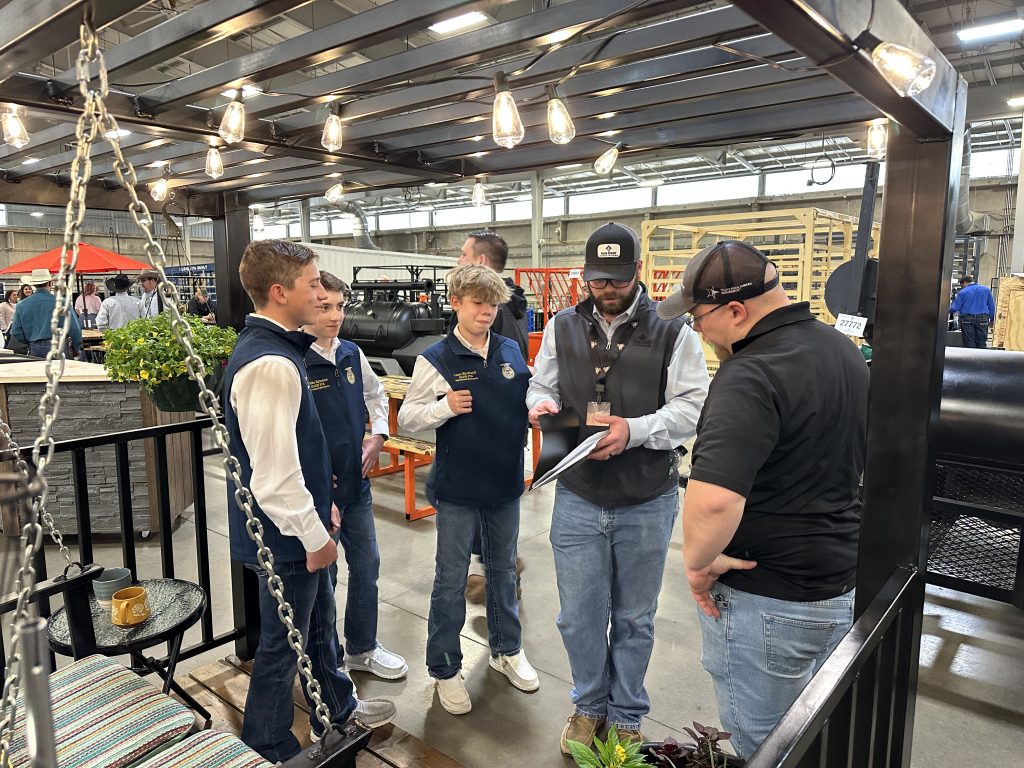
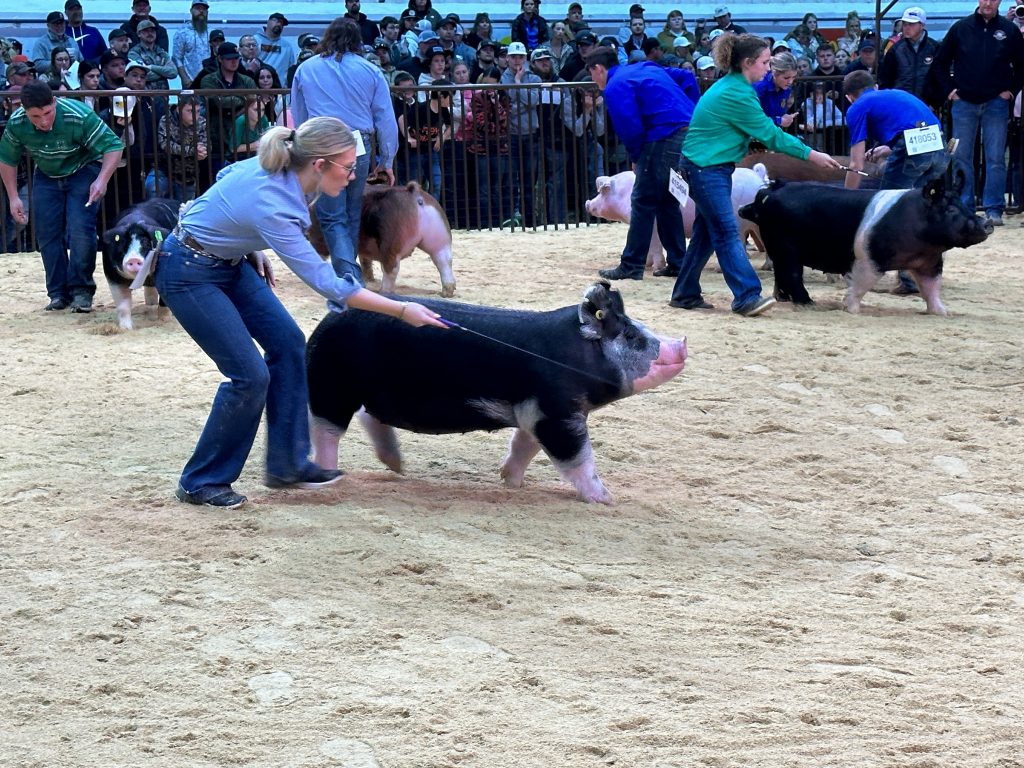
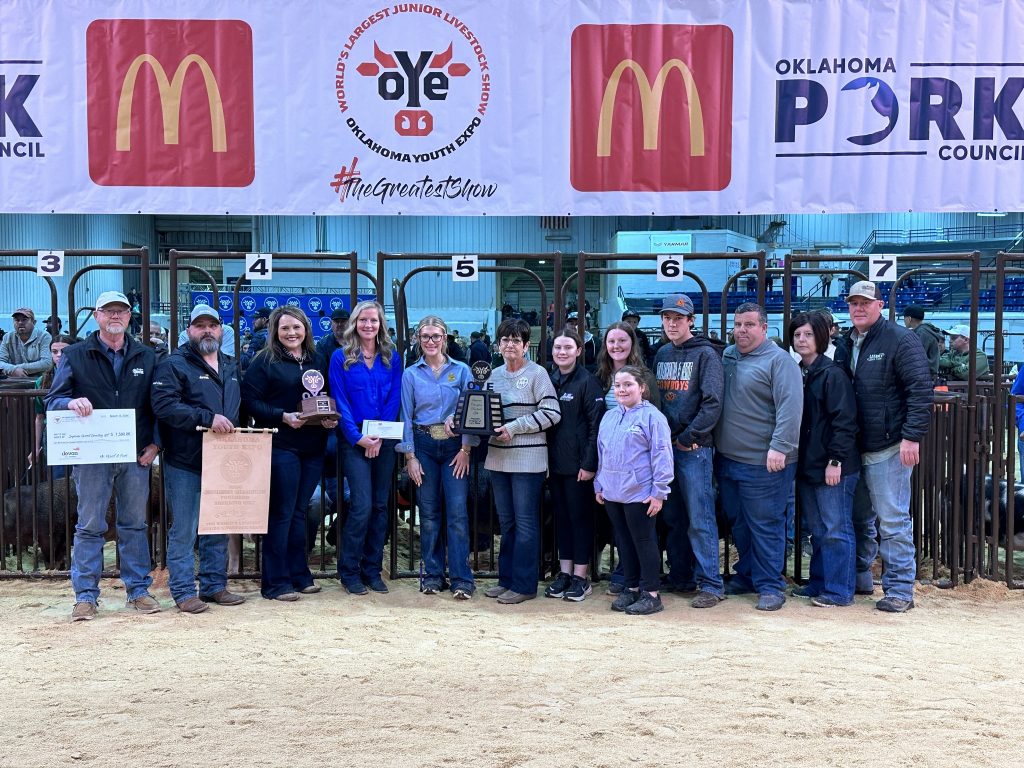
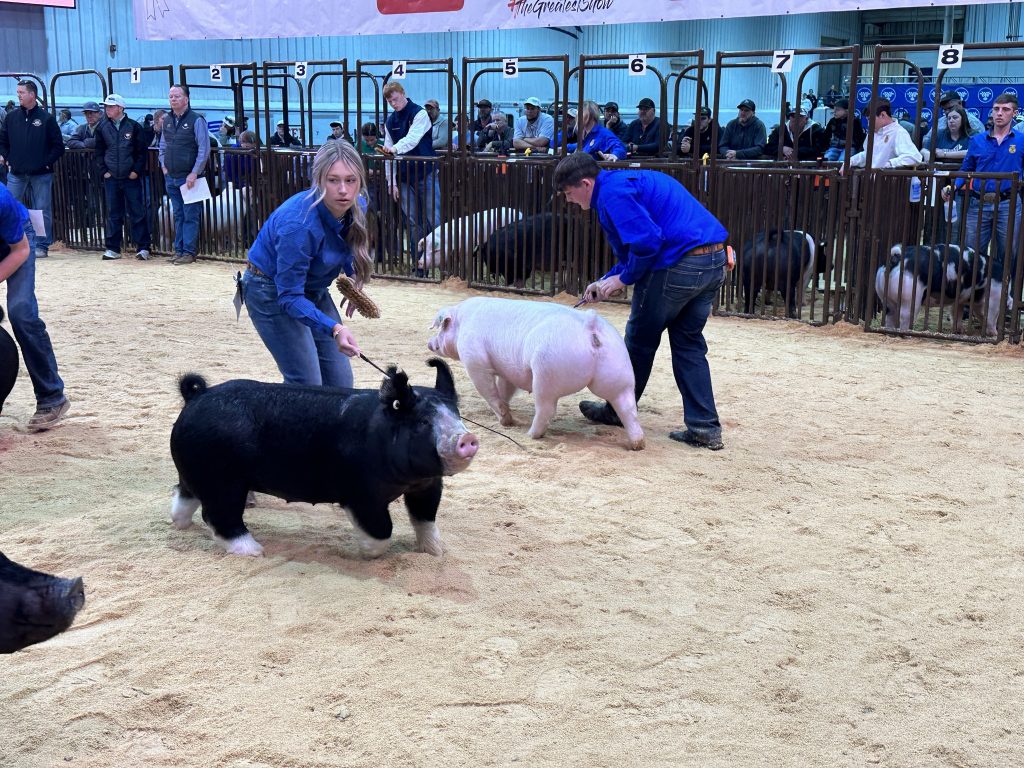

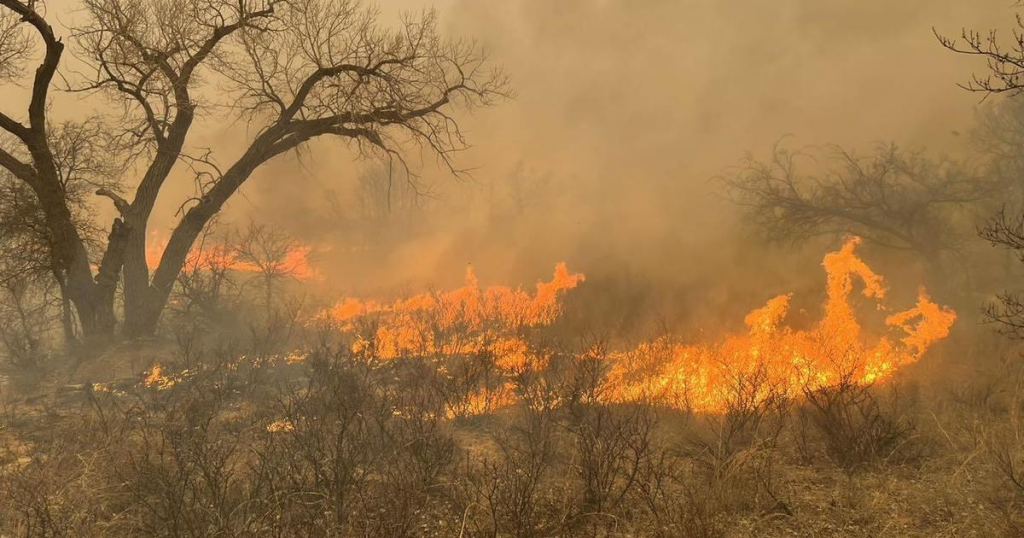
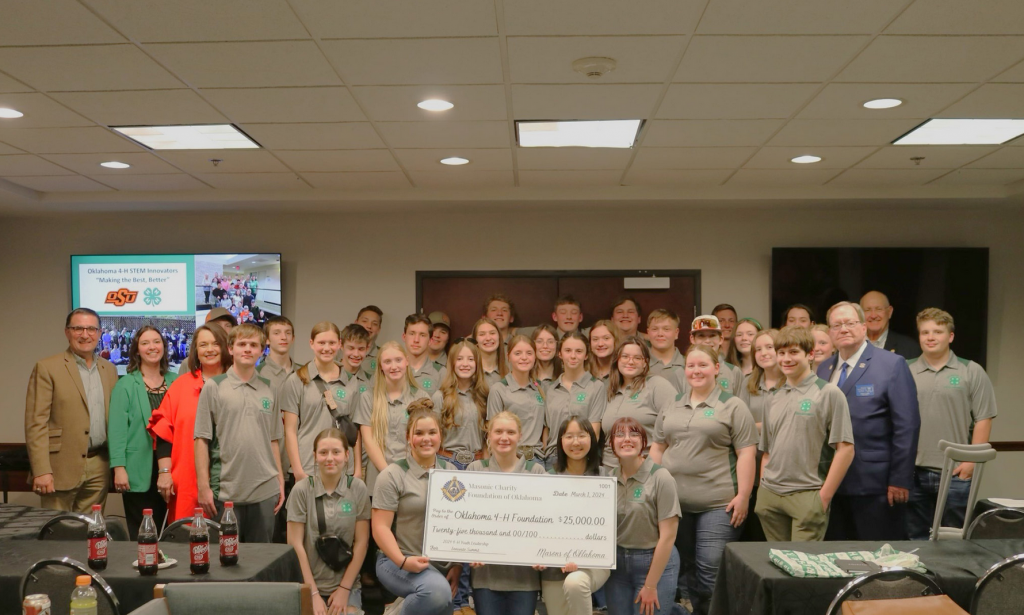
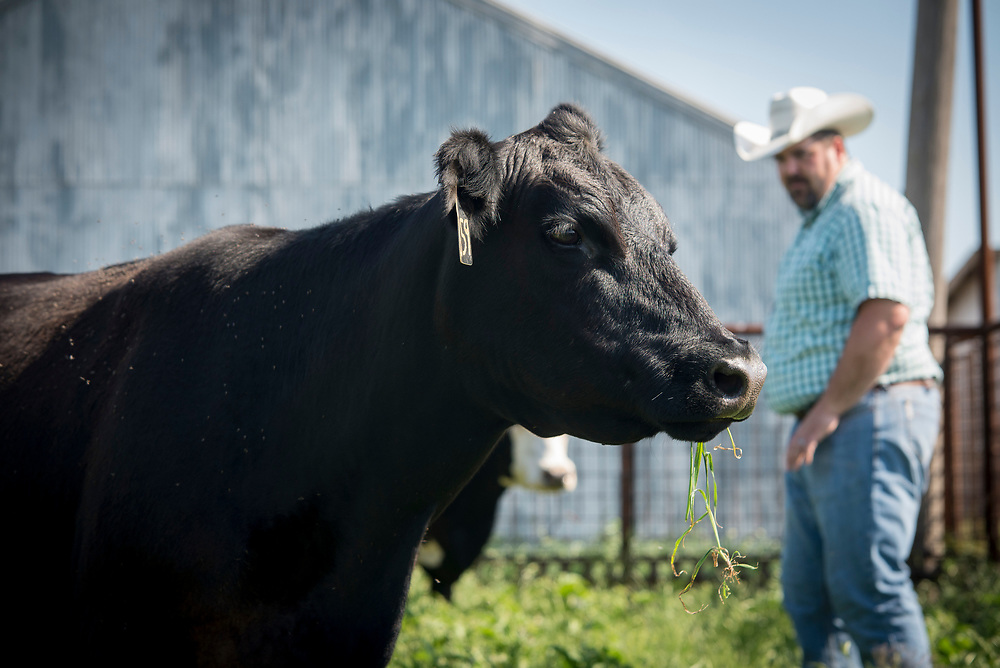



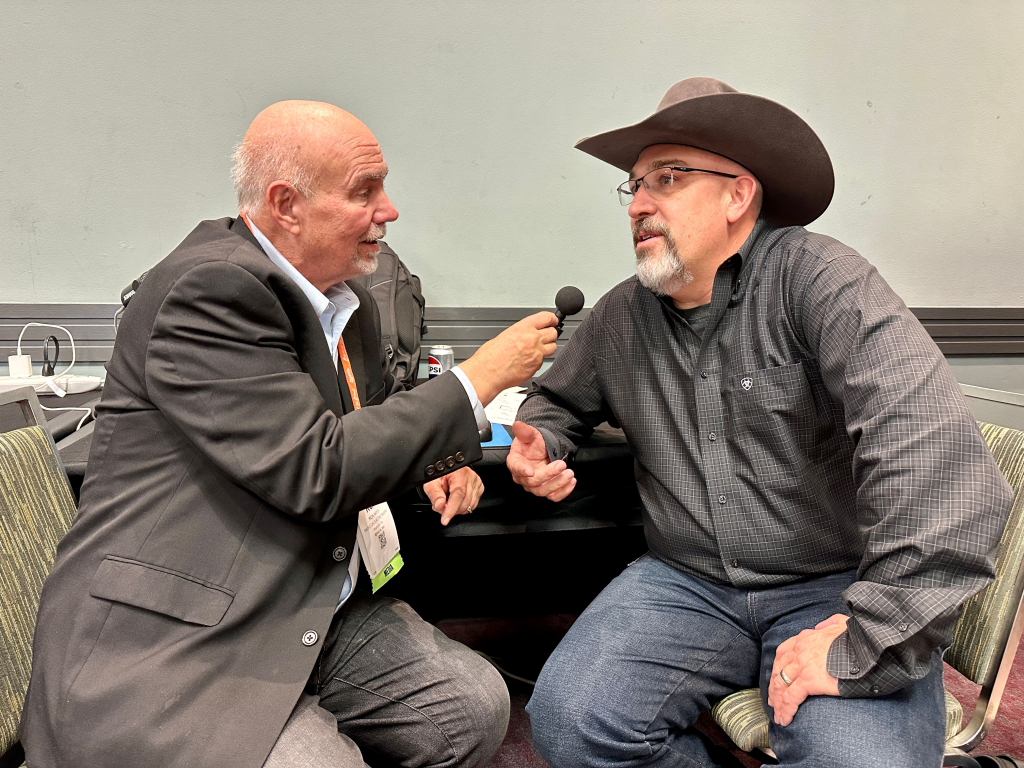

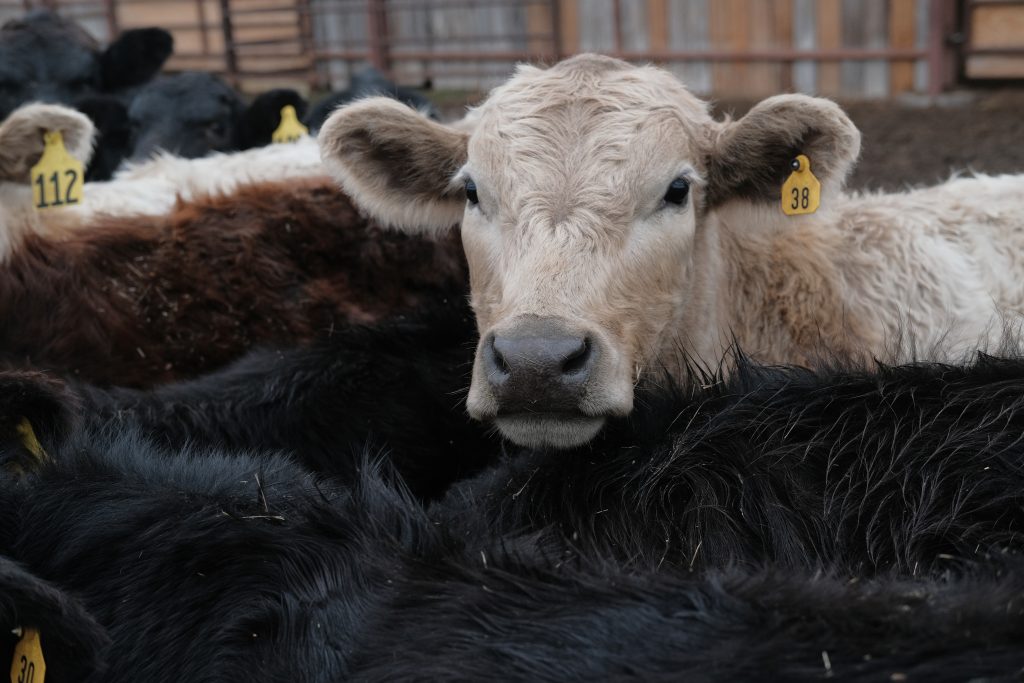
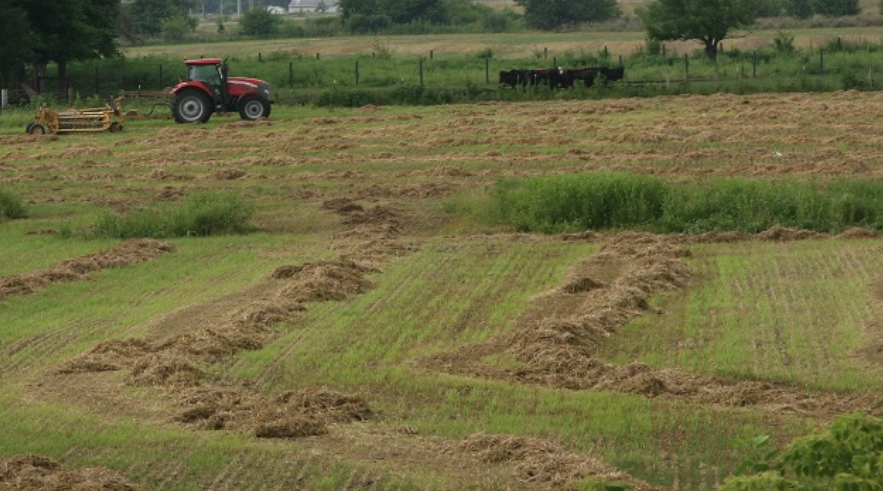
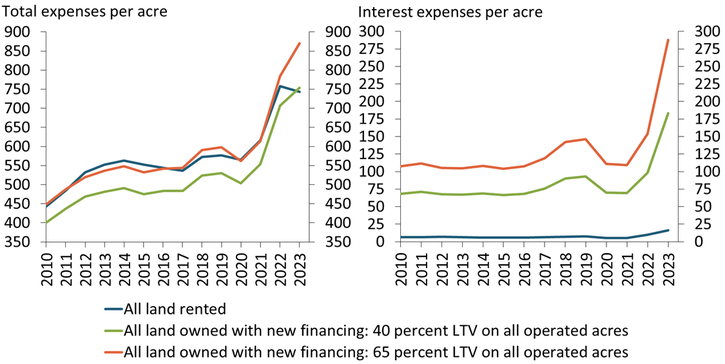
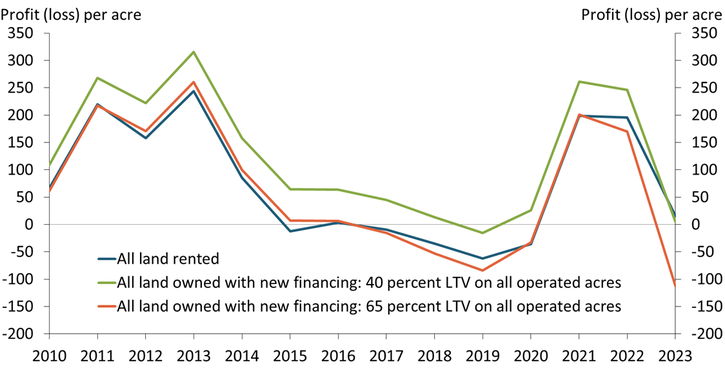
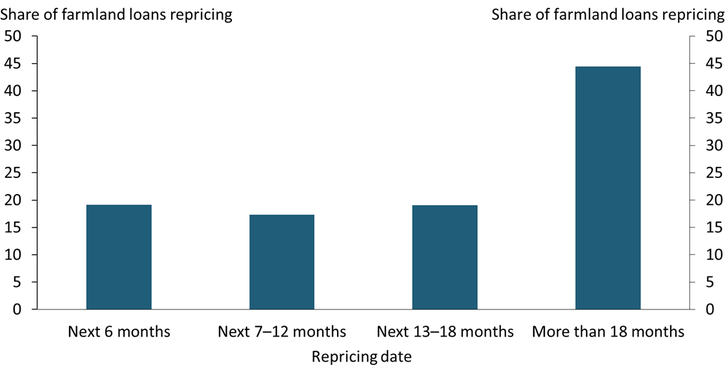
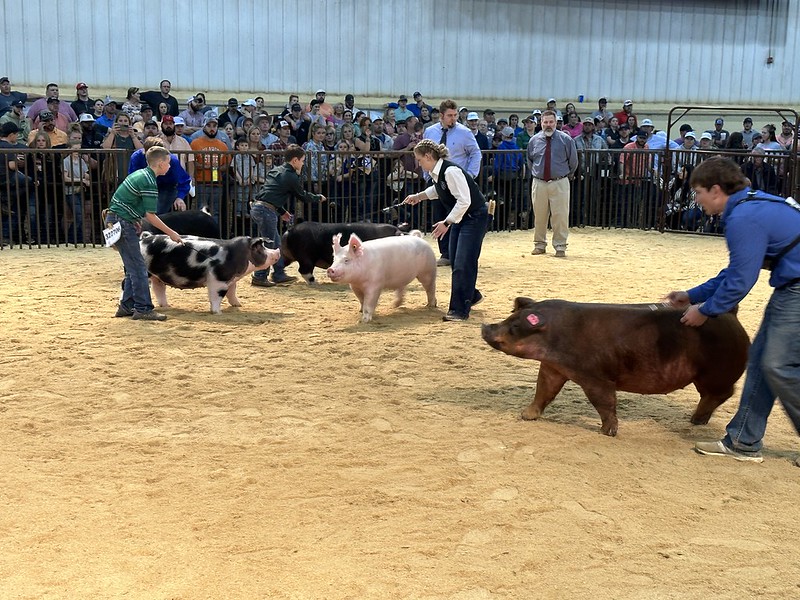
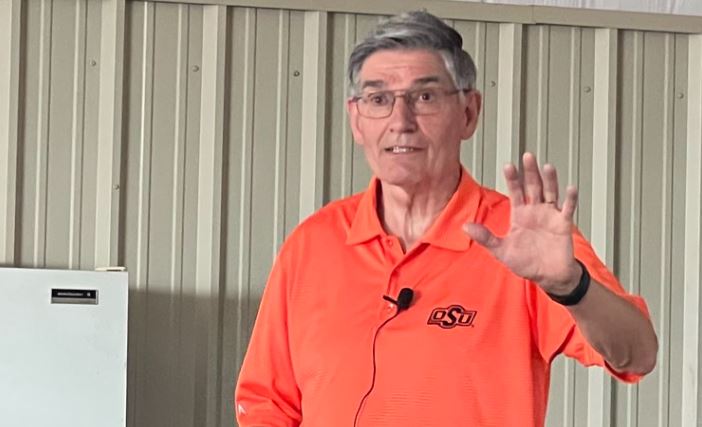
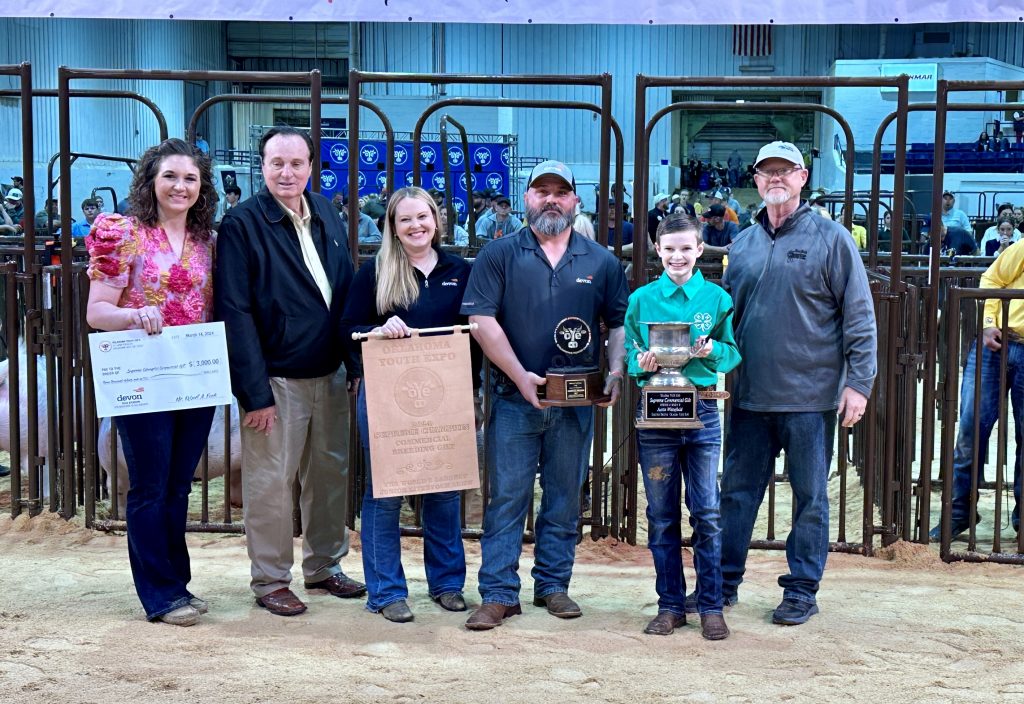
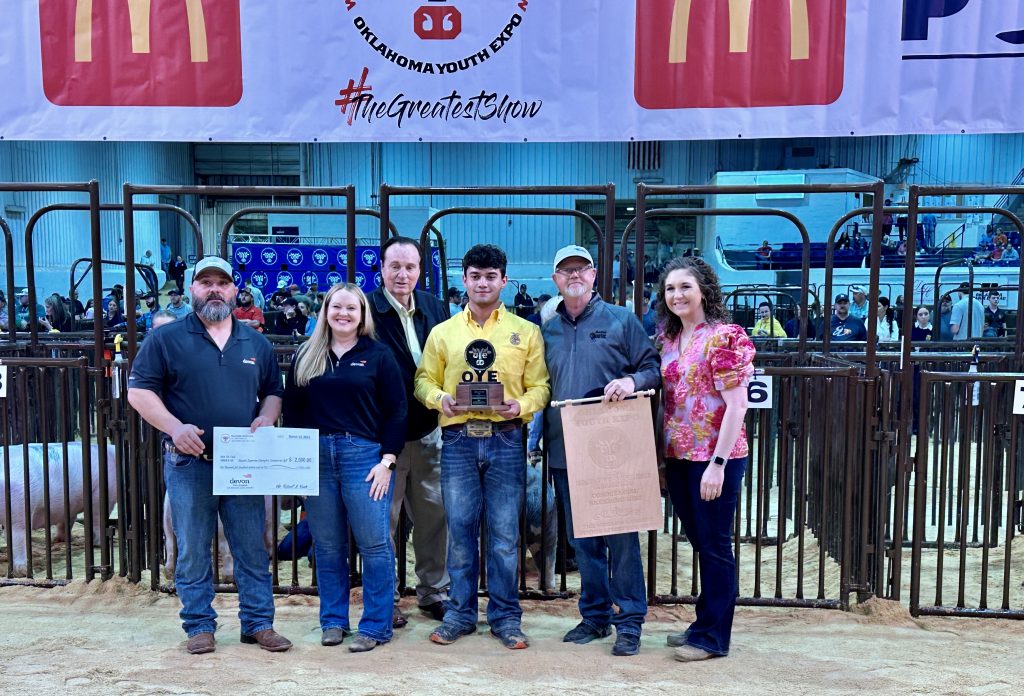
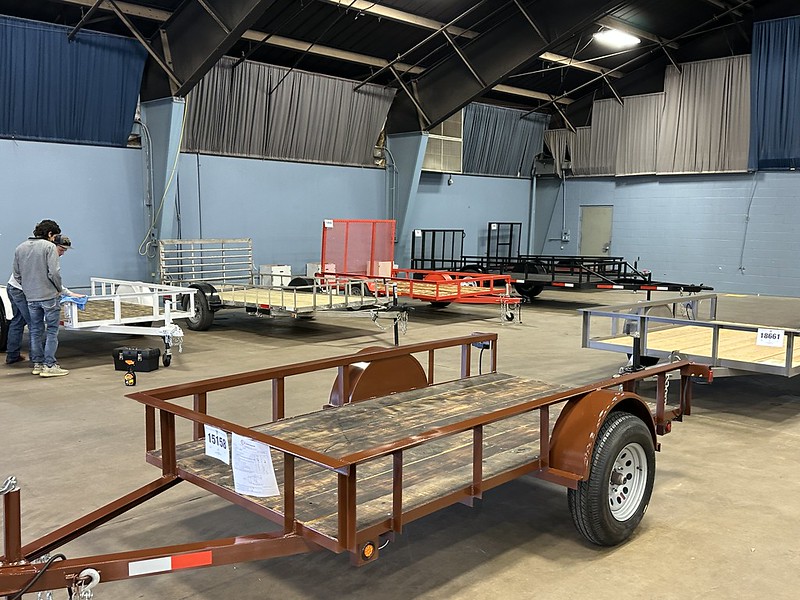
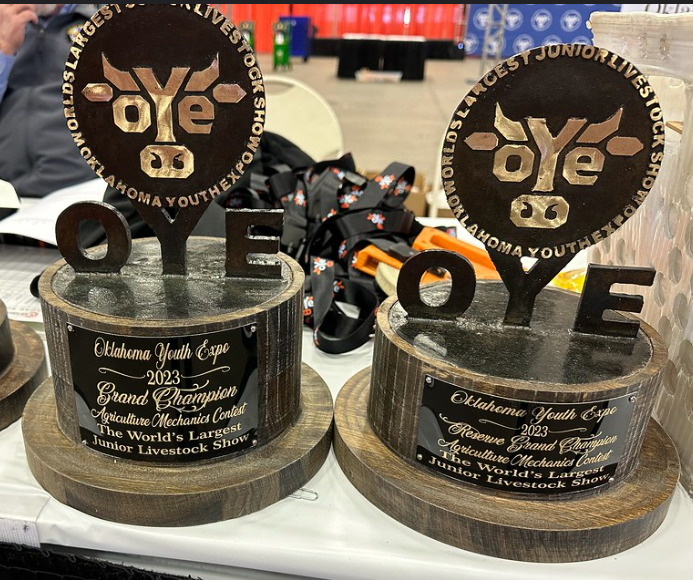
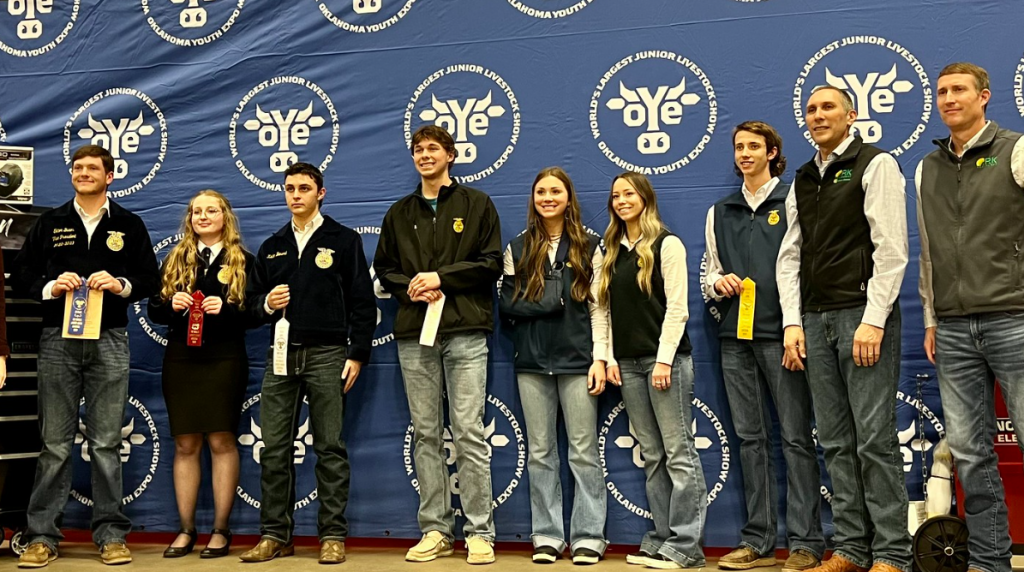
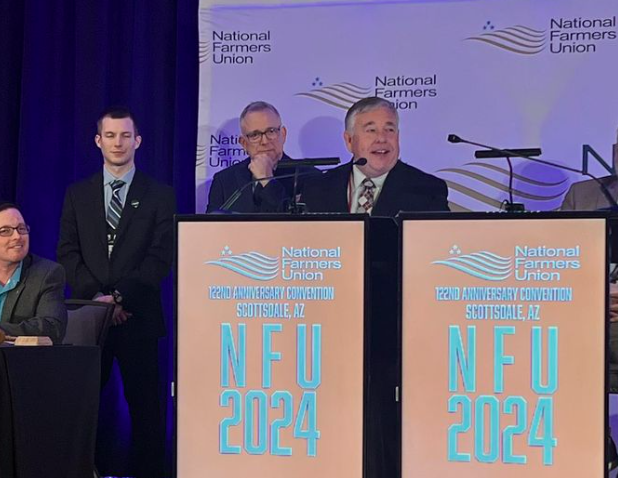
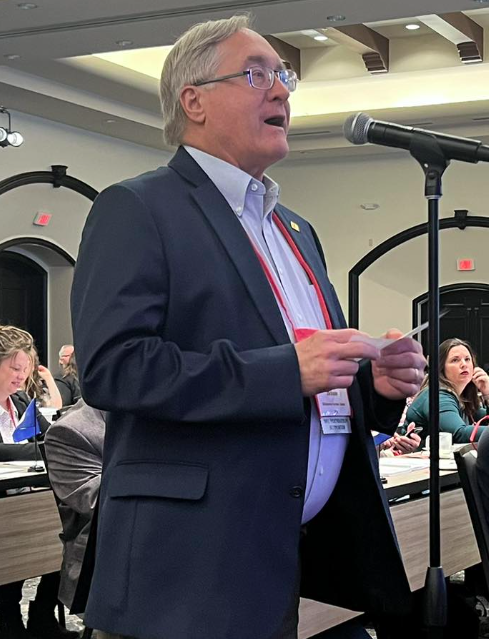
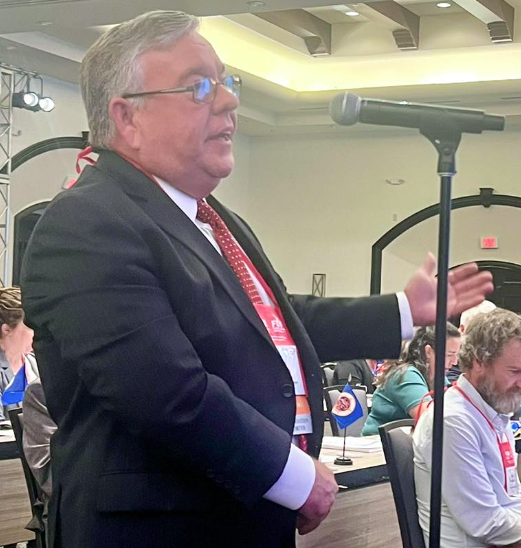
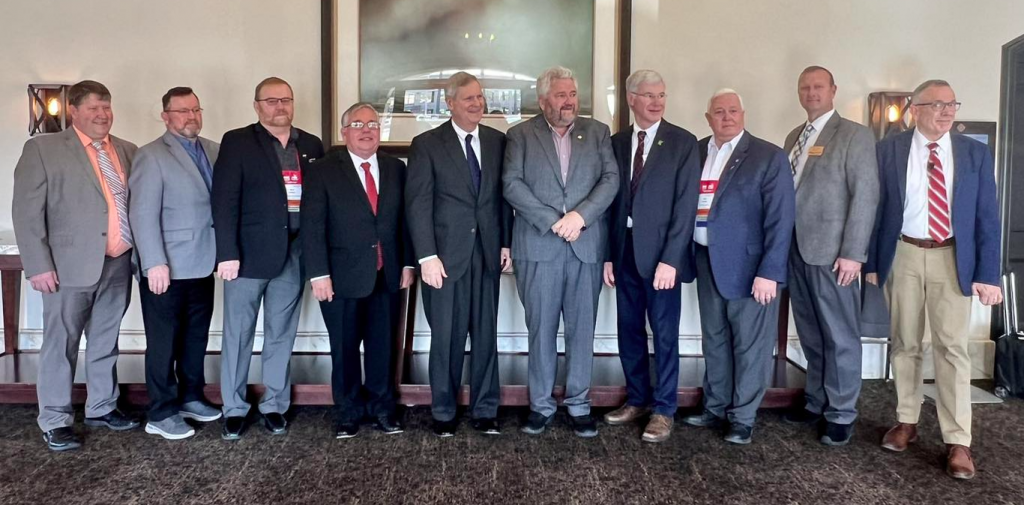



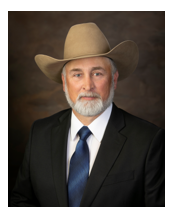
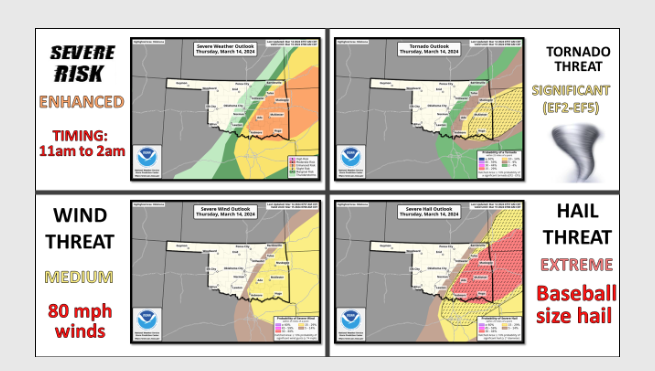
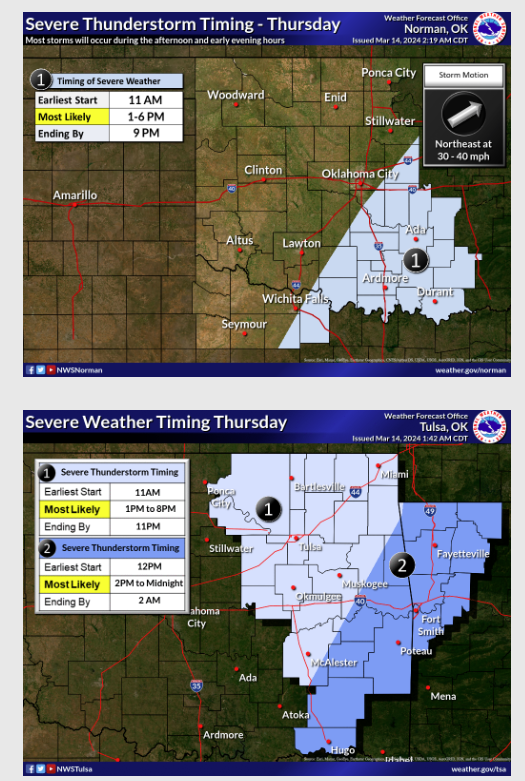
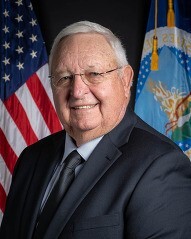 Hello Oklahoma agriculture enthusiasts!